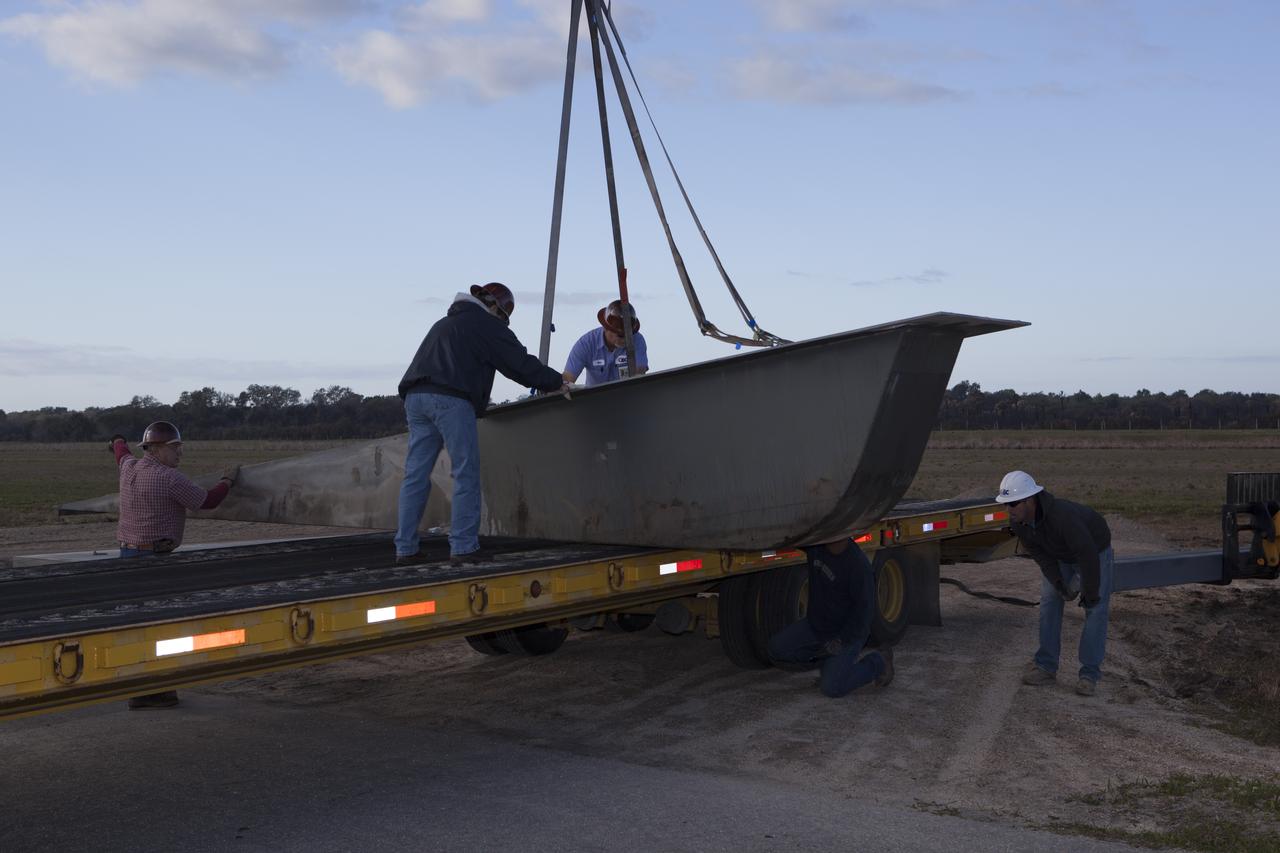
CAPE CANAVERAL, Fla. – Construction workers assist as a crane lowers a portion of the launch pad for the Project Morpheus prototype lander onto a transporter at the north end of the Shuttle Landing Facility at NASA’s Kennedy Space Center in Florida. The launch pad is being moved to a different location at the landing facility to support the next phase of flight testing. Morpheus completed its seventh free flight test on March 11. The 83-second test began at 3:41 p.m. EDT with the Morpheus lander launching from the ground over a flame trench and ascending to 580 feet. Morpheus then flew its fastest downrange trek at 30 mph, travelling farther than before, 837 feet. The lander performed a 42-foot divert to emulate a hazard avoidance maneuver before descending and touching down on Landing Site 2, at the northern landing pad inside the automated landing and hazard avoidance technology ALHAT hazard field. Morpheus landed within one foot of its intended target. Project Morpheus tests NASA’s ALHAT and an engine that runs on liquid oxygen and methane, or green propellants, into a fully-operational lander that could deliver cargo to other planetary surfaces. The landing facility provides the lander with the kind of field necessary for realistic testing, complete with rocks, craters and hazards to avoid. Morpheus’ ALHAT payload allows it to navigate to clear landing sites amidst rocks, craters and other hazards during its descent. Project Morpheus is being managed under the Advanced Exploration Systems, or AES, Division in NASA’s Human Exploration and Operations Mission Directorate. The efforts in AES pioneer new approaches for rapidly developing prototype systems, demonstrating key capabilities and validating operational concepts for future human missions beyond Earth orbit. For more information on Project Morpheus, visit http://morpheuslander.jsc.nasa.gov/. Photo credit: NASA/Dimitri Gerondidakis
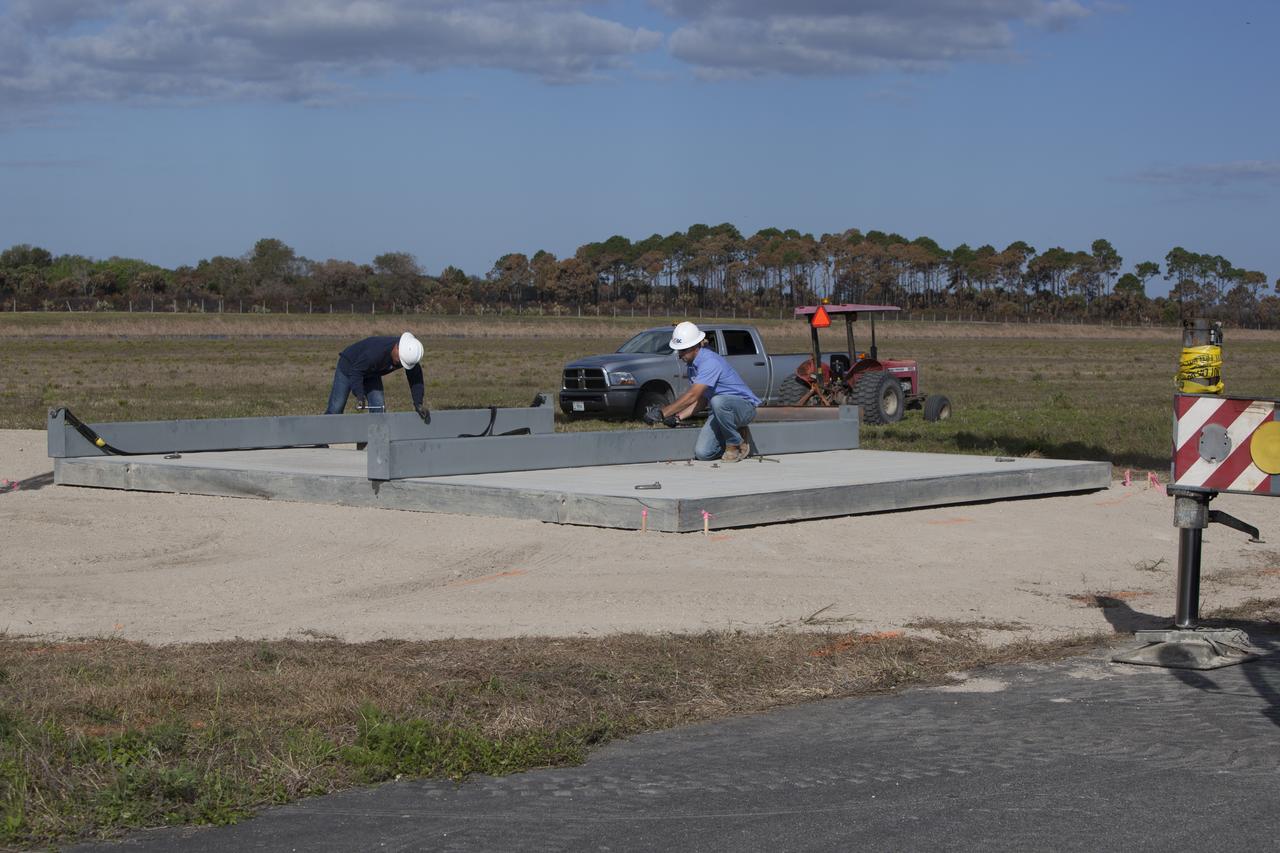
CAPE CANAVERAL, Fla. – Construction workers begin to reassemble the launch pad for the Project Morpheus prototype lander at a new location at the north end of the Shuttle Landing Facility at NASA’s Kennedy Space Center in Florida. The launch pad was moved to a different location to support the next phase of flight testing. Morpheus completed its seventh free flight test on March 11. The 83-second test began at 3:41 p.m. EDT with the Morpheus lander launching from the ground over a flame trench and ascending to 580 feet. Morpheus then flew its fastest downrange trek at 30 mph, travelling farther than before, 837 feet. The lander performed a 42-foot divert to emulate a hazard avoidance maneuver before descending and touching down on Landing Site 2, at the northern landing pad inside the automated landing and hazard avoidance technology ALHAT hazard field. Morpheus landed within one foot of its intended target. Project Morpheus tests NASA’s ALHAT and an engine that runs on liquid oxygen and methane, or green propellants, into a fully-operational lander that could deliver cargo to other planetary surfaces. The landing facility provides the lander with the kind of field necessary for realistic testing, complete with rocks, craters and hazards to avoid. Morpheus’ ALHAT payload allows it to navigate to clear landing sites amidst rocks, craters and other hazards during its descent. Project Morpheus is being managed under the Advanced Exploration Systems, or AES, Division in NASA’s Human Exploration and Operations Mission Directorate. The efforts in AES pioneer new approaches for rapidly developing prototype systems, demonstrating key capabilities and validating operational concepts for future human missions beyond Earth orbit. For more information on Project Morpheus, visit http://morpheuslander.jsc.nasa.gov/. Photo credit: NASA/Dimitri Gerondidakis
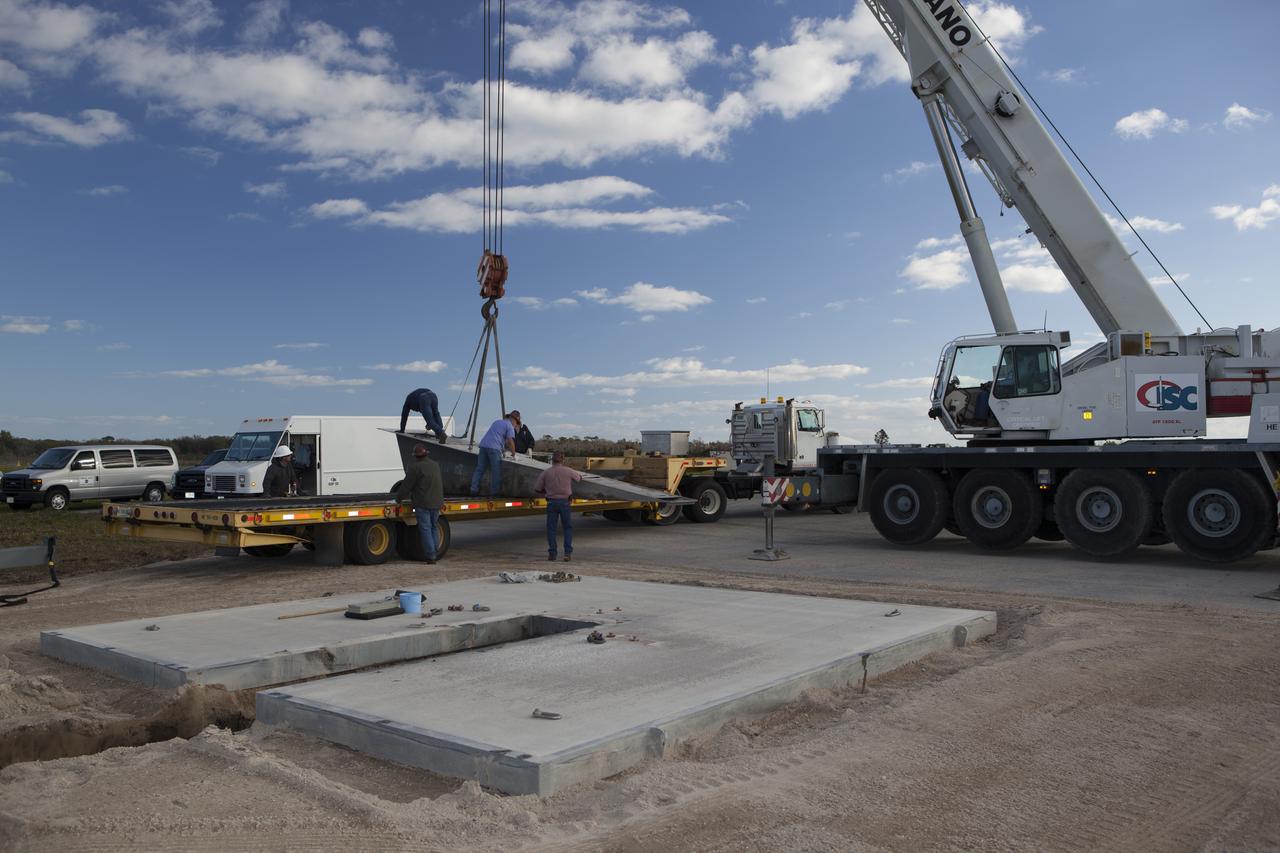
CAPE CANAVERAL, Fla. – Construction workers assist as a crane lowers a portion of the launch pad for the Project Morpheus prototype lander onto a transporter at the north end of the Shuttle Landing Facility at NASA’s Kennedy Space Center in Florida. The launch pad is being moved to a different location at the landing facility to support the next phase of flight testing. Morpheus completed its seventh free flight test on March 11. The 83-second test began at 3:41 p.m. EDT with the Morpheus lander launching from the ground over a flame trench and ascending to 580 feet. Morpheus then flew its fastest downrange trek at 30 mph, travelling farther than before, 837 feet. The lander performed a 42-foot divert to emulate a hazard avoidance maneuver before descending and touching down on Landing Site 2, at the northern landing pad inside the automated landing and hazard avoidance technology ALHAT hazard field. Morpheus landed within one foot of its intended target. Project Morpheus tests NASA’s ALHAT and an engine that runs on liquid oxygen and methane, or green propellants, into a fully-operational lander that could deliver cargo to other planetary surfaces. The landing facility provides the lander with the kind of field necessary for realistic testing, complete with rocks, craters and hazards to avoid. Morpheus’ ALHAT payload allows it to navigate to clear landing sites amidst rocks, craters and other hazards during its descent. Project Morpheus is being managed under the Advanced Exploration Systems, or AES, Division in NASA’s Human Exploration and Operations Mission Directorate. The efforts in AES pioneer new approaches for rapidly developing prototype systems, demonstrating key capabilities and validating operational concepts for future human missions beyond Earth orbit. For more information on Project Morpheus, visit http://morpheuslander.jsc.nasa.gov/. Photo credit: NASA/Dimitri Gerondidakis
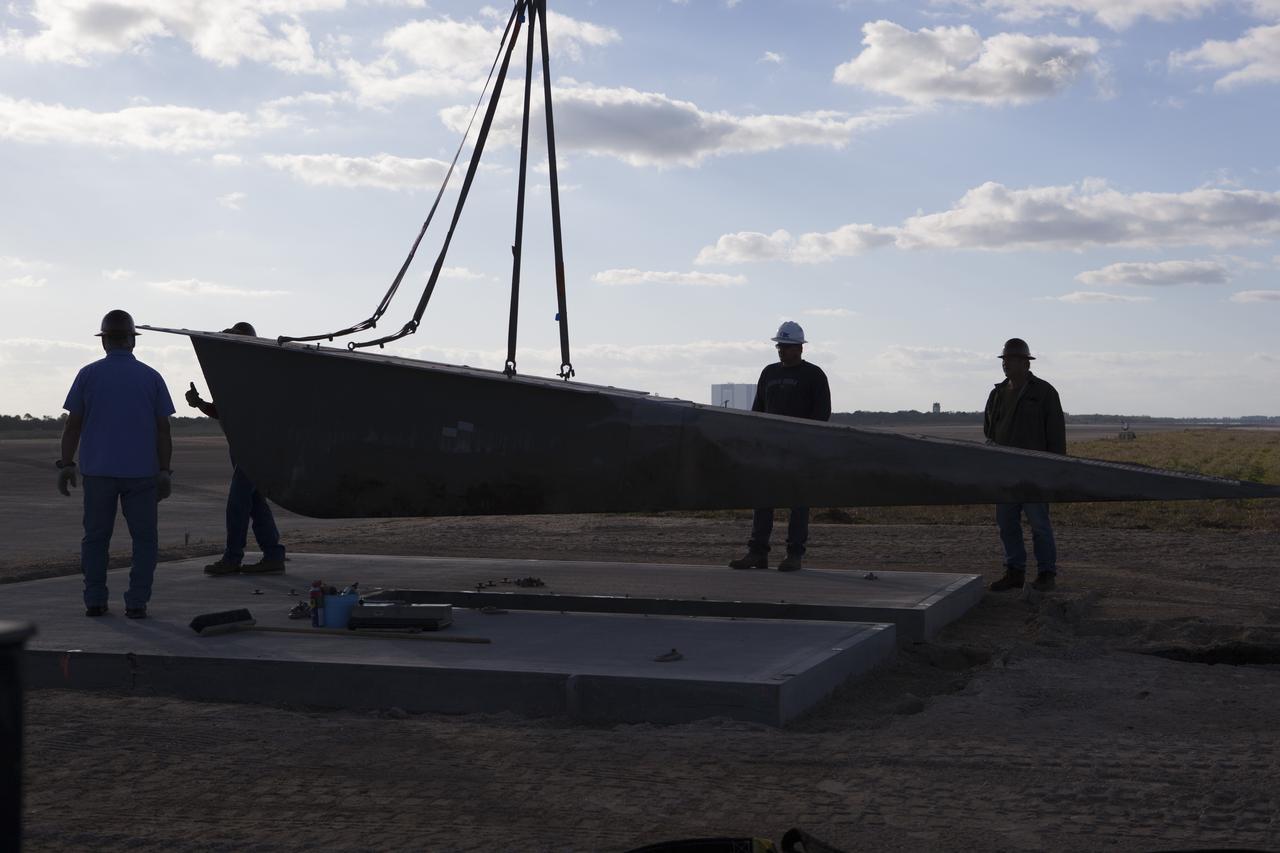
CAPE CANAVERAL, Fla. – Construction workers monitor the progress as a crane is used to lift a portion of the launch pad for the Project Morpheus prototype lander at the north end of the Shuttle Landing Facility at NASA’s Kennedy Space Center in Florida. The launch pad will be moved to a different location at the landing facility to support the next phase of flight testing. The seventh free flight test of Morpheus occurred on March 11. The 83-second test began at 3:41 p.m. EDT with the Morpheus lander launching from the ground over a flame trench and ascending to 580 feet. Morpheus then flew its fastest downrange trek at 30 mph, travelling farther than before, 837 feet. The lander performed a 42-foot divert to emulate a hazard avoidance maneuver before descending and touching down on Landing Site 2, at the northern landing pad inside the automated landing and hazard avoidance technology ALHAT hazard field. Morpheus landed within one foot of its intended target. Project Morpheus tests NASA’s ALHAT and an engine that runs on liquid oxygen and methane, or green propellants, into a fully-operational lander that could deliver cargo to other planetary surfaces . The landing facility provides the lander with the kind of field necessary for realistic testing, complete with rocks, craters and hazards to avoid. Morpheus’ ALHAT payload allows it to navigate to clear landing sites amidst rocks, craters and other hazards during its descent. Project Morpheus is being managed under the Advanced Exploration Systems, or AES, Division in NASA’s Human Exploration and Operations Mission Directorate. The efforts in AES pioneer new approaches for rapidly developing prototype systems, demonstrating key capabilities and validating operational concepts for future human missions beyond Earth orbit. For more information on Project Morpheus, visit http://morpheuslander.jsc.nasa.gov/. Photo credit: NASA/Dimitri Gerondidakis
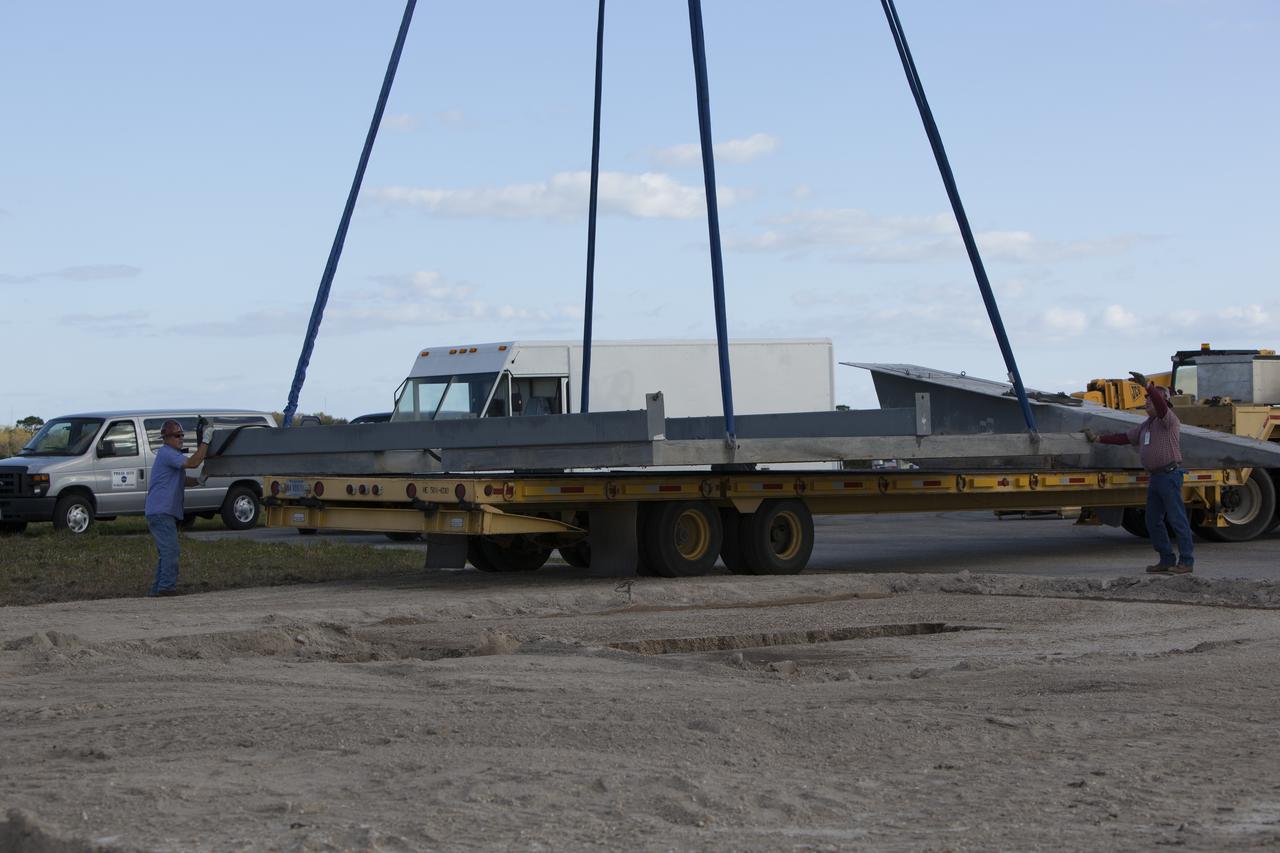
CAPE CANAVERAL, Fla. – Construction workers assist as a crane lowers a large portion of the launch pad for the Project Morpheus prototype lander onto a transporter at the north end of the Shuttle Landing Facility at NASA’s Kennedy Space Center in Florida. The launch pad is being moved to a different location at the landing facility to support the next phase of flight testing. Morpheus completed its seventh free flight test on March 11. The 83-second test began at 3:41 p.m. EDT with the Morpheus lander launching from the ground over a flame trench and ascending to 580 feet. Morpheus then flew its fastest downrange trek at 30 mph, travelling farther than before, 837 feet. The lander performed a 42-foot divert to emulate a hazard avoidance maneuver before descending and touching down on Landing Site 2, at the northern landing pad inside the automated landing and hazard avoidance technology ALHAT hazard field. Morpheus landed within one foot of its intended target. Project Morpheus tests NASA’s ALHAT and an engine that runs on liquid oxygen and methane, or green propellants, into a fully-operational lander that could deliver cargo to other planetary surfaces. The landing facility provides the lander with the kind of field necessary for realistic testing, complete with rocks, craters and hazards to avoid. Morpheus’ ALHAT payload allows it to navigate to clear landing sites amidst rocks, craters and other hazards during its descent. Project Morpheus is being managed under the Advanced Exploration Systems, or AES, Division in NASA’s Human Exploration and Operations Mission Directorate. The efforts in AES pioneer new approaches for rapidly developing prototype systems, demonstrating key capabilities and validating operational concepts for future human missions beyond Earth orbit. For more information on Project Morpheus, visit http://morpheuslander.jsc.nasa.gov/. Photo credit: NASA/Dimitri Gerondidakis
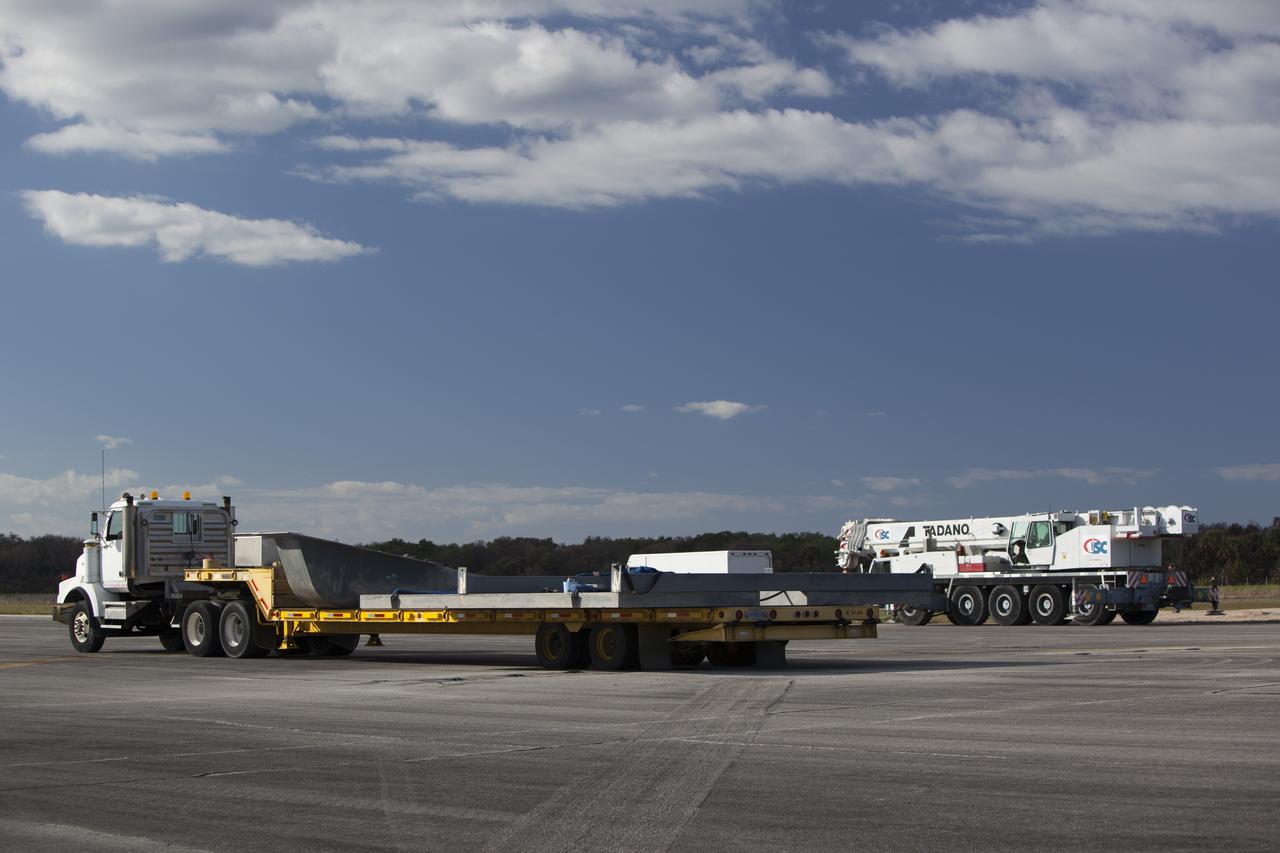
CAPE CANAVERAL, Fla. – A flatbed truck carries the launch pad for the Project Morpheus prototype lander to a new location at the north end of the Shuttle Landing Facility at NASA’s Kennedy Space Center in Florida. The launch pad is being moved to a different location to support the next phase of flight testing. Morpheus completed its seventh free flight test on March 11. The 83-second test began at 3:41 p.m. EDT with the Morpheus lander launching from the ground over a flame trench and ascending to 580 feet. Morpheus then flew its fastest downrange trek at 30 mph, travelling farther than before, 837 feet. The lander performed a 42-foot divert to emulate a hazard avoidance maneuver before descending and touching down on Landing Site 2, at the northern landing pad inside the automated landing and hazard avoidance technology ALHAT hazard field. Morpheus landed within one foot of its intended target. Project Morpheus tests NASA’s ALHAT and an engine that runs on liquid oxygen and methane, or green propellants, into a fully-operational lander that could deliver cargo to other planetary surfaces. The landing facility provides the lander with the kind of field necessary for realistic testing, complete with rocks, craters and hazards to avoid. Morpheus’ ALHAT payload allows it to navigate to clear landing sites amidst rocks, craters and other hazards during its descent. Project Morpheus is being managed under the Advanced Exploration Systems, or AES, Division in NASA’s Human Exploration and Operations Mission Directorate. The efforts in AES pioneer new approaches for rapidly developing prototype systems, demonstrating key capabilities and validating operational concepts for future human missions beyond Earth orbit. For more information on Project Morpheus, visit http://morpheuslander.jsc.nasa.gov/. Photo credit: NASA/Dimitri Gerondidakis
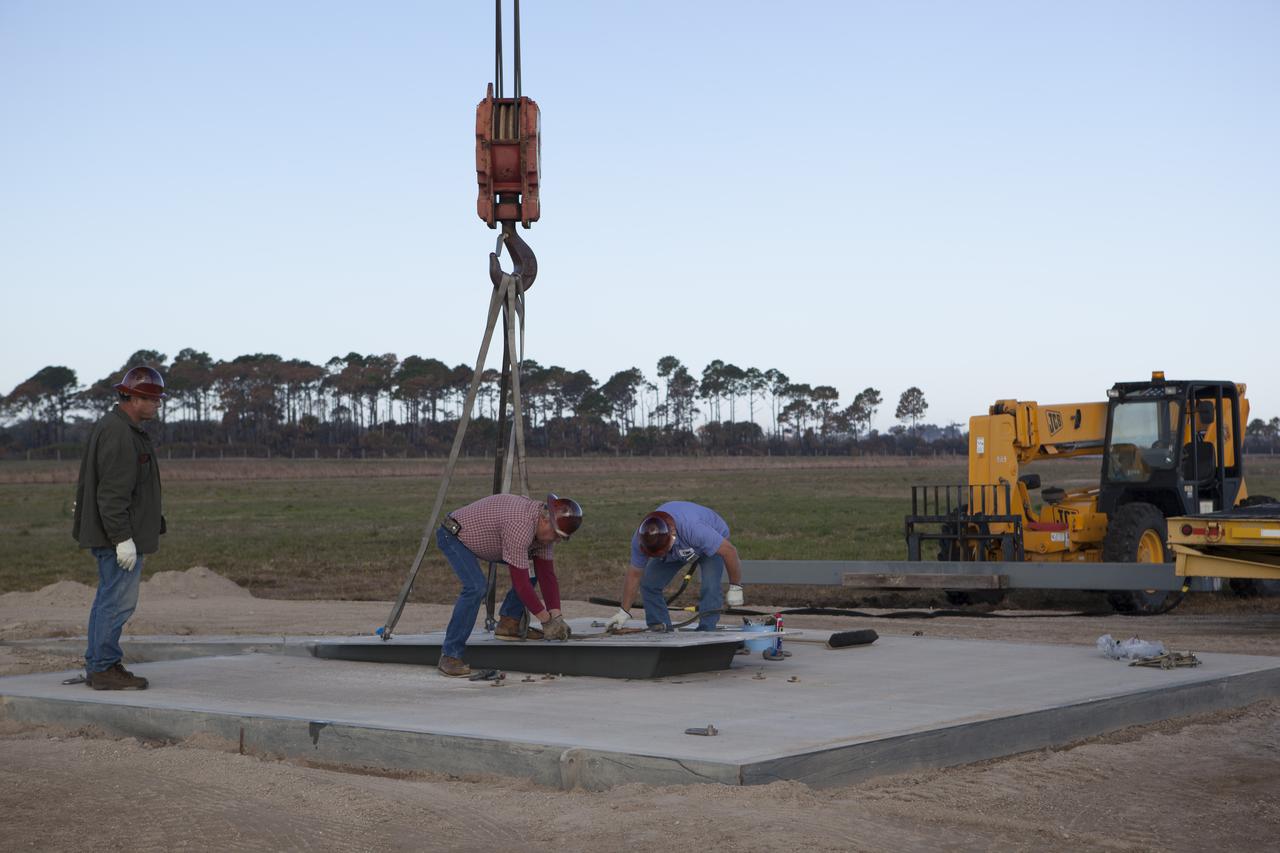
CAPE CANAVERAL, Fla. – Construction workers attach a crane to part of the launch pad for the Project Morpheus prototype lander at the north end of the Shuttle Landing Facility at NASA’s Kennedy Space Center in Florida. The launch pad will be moved to a different location at the landing facility to support the next phase of flight testing. The seventh free flight test of Morpheus occurred on March 11. The 83-second test began at 3:41 p.m. EDT with the Morpheus lander launching from the ground over a flame trench and ascending to 580 feet. Morpheus then flew its fastest downrange trek at 30 mph, travelling farther than before, 837 feet. The lander performed a 42-foot divert to emulate a hazard avoidance maneuver before descending and touching down on Landing Site 2, at the northern landing pad inside the automated landing and hazard avoidance technology ALHAT hazard field. Morpheus landed within one foot of its intended target. Project Morpheus tests NASA’s ALHAT and an engine that runs on liquid oxygen and methane, or green propellants, into a fully-operational lander that could deliver cargo to other planetary surfaces. The landing facility provides the lander with the kind of field necessary for realistic testing, complete with rocks, craters and hazards to avoid. Morpheus’ ALHAT payload allows it to navigate to clear landing sites amidst rocks, craters and other hazards during its descent. Project Morpheus is being managed under the Advanced Exploration Systems, or AES, Division in NASA’s Human Exploration and Operations Mission Directorate. The efforts in AES pioneer new approaches for rapidly developing prototype systems, demonstrating key capabilities and validating operational concepts for future human missions beyond Earth orbit. For more information on Project Morpheus, visit http://morpheuslander.jsc.nasa.gov/. Photo credit: NASA/Dimitri Gerondidakis
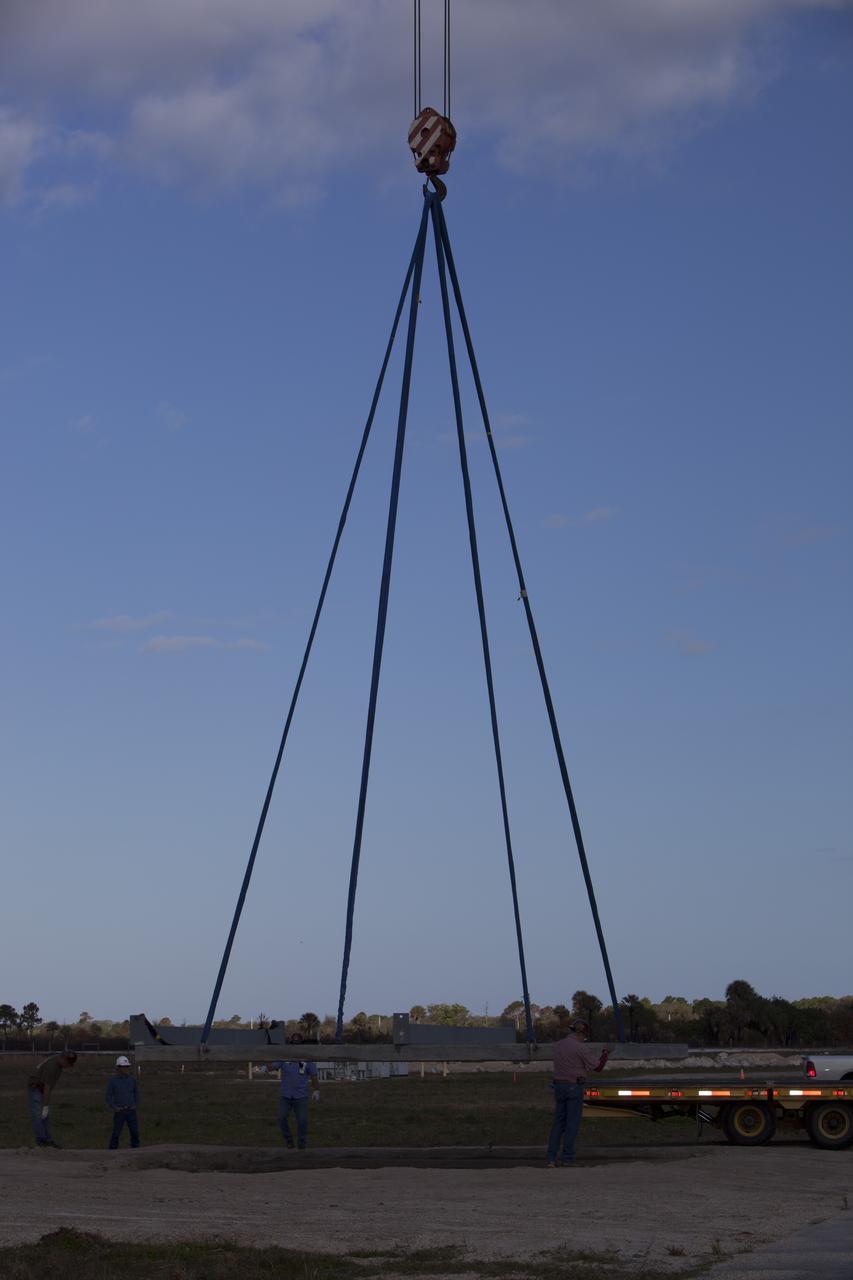
CAPE CANAVERAL, Fla. – Construction workers assist as a crane is used to lift a large portion of the launch pad for the Project Morpheus prototype lander onto a transporter at the north end of the Shuttle Landing Facility at NASA’s Kennedy Space Center in Florida. The launch pad is being moved to a different location at the landing facility to support the next phase of flight testing. Morpheus completed its seventh free flight test on March 11. The 83-second test began at 3:41 p.m. EDT with the Morpheus lander launching from the ground over a flame trench and ascending to 580 feet. Morpheus then flew its fastest downrange trek at 30 mph, travelling farther than before, 837 feet. The lander performed a 42-foot divert to emulate a hazard avoidance maneuver before descending and touching down on Landing Site 2, at the northern landing pad inside the automated landing and hazard avoidance technology ALHAT hazard field. Morpheus landed within one foot of its intended target. Project Morpheus tests NASA’s ALHAT and an engine that runs on liquid oxygen and methane, or green propellants, into a fully-operational lander that could deliver cargo to other planetary surfaces. The landing facility provides the lander with the kind of field necessary for realistic testing, complete with rocks, craters and hazards to avoid. Morpheus’ ALHAT payload allows it to navigate to clear landing sites amidst rocks, craters and other hazards during its descent. Project Morpheus is being managed under the Advanced Exploration Systems, or AES, Division in NASA’s Human Exploration and Operations Mission Directorate. The efforts in AES pioneer new approaches for rapidly developing prototype systems, demonstrating key capabilities and validating operational concepts for future human missions beyond Earth orbit. For more information on Project Morpheus, visit http://morpheuslander.jsc.nasa.gov/. Photo credit: NASA/Dimitri Gerondidakis
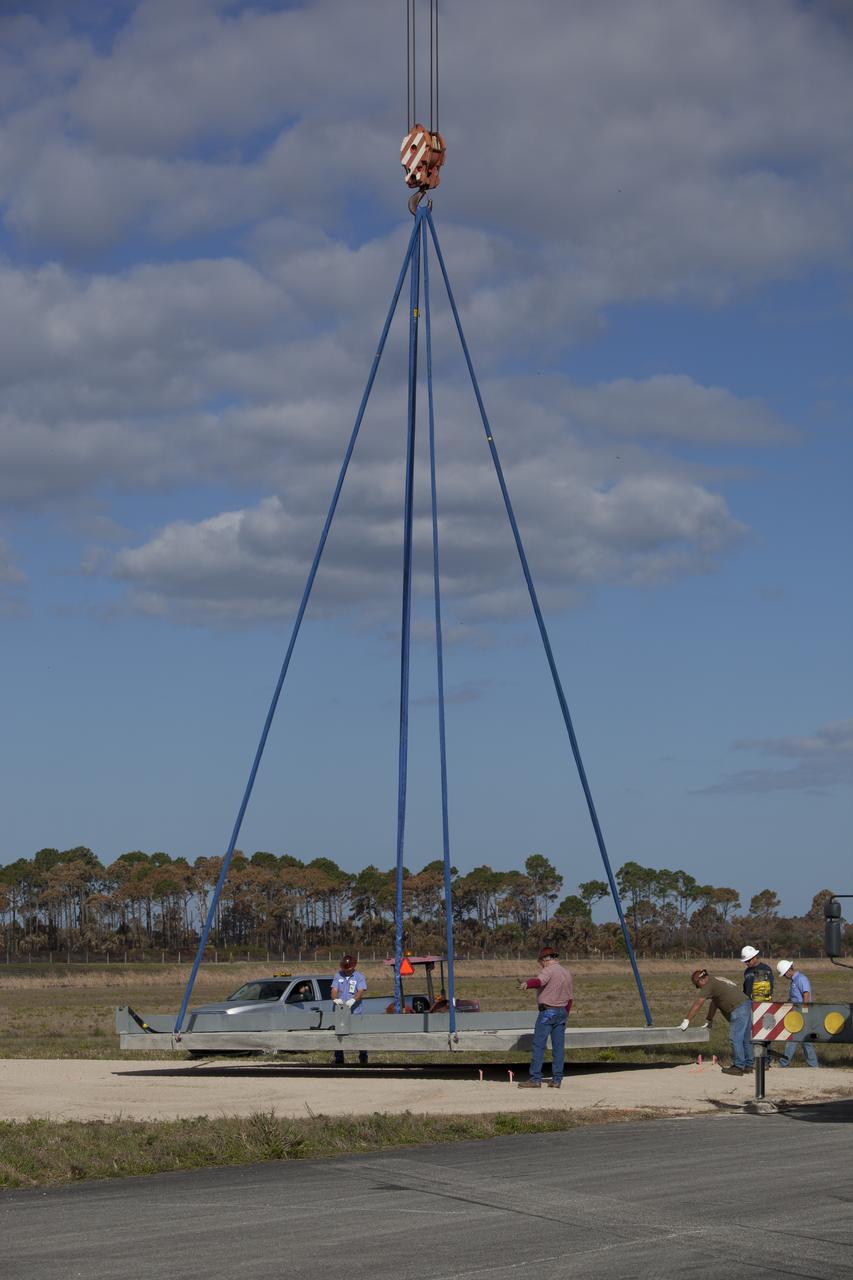
CAPE CANAVERAL, Fla. – A crane is used to lower the launch pad for the Project Morpheus prototype lander onto a new location at the north end of the Shuttle Landing Facility at NASA’s Kennedy Space Center in Florida. The launch pad was moved to a different location to support the next phase of flight testing. Morpheus completed its seventh free flight test on March 11. The 83-second test began at 3:41 p.m. EDT with the Morpheus lander launching from the ground over a flame trench and ascending to 580 feet. Morpheus then flew its fastest downrange trek at 30 mph, travelling farther than before, 837 feet. The lander performed a 42-foot divert to emulate a hazard avoidance maneuver before descending and touching down on Landing Site 2, at the northern landing pad inside the automated landing and hazard avoidance technology ALHAT hazard field. Morpheus landed within one foot of its intended target. Project Morpheus tests NASA’s ALHAT and an engine that runs on liquid oxygen and methane, or green propellants, into a fully-operational lander that could deliver cargo to other planetary surfaces. The landing facility provides the lander with the kind of field necessary for realistic testing, complete with rocks, craters and hazards to avoid. Morpheus’ ALHAT payload allows it to navigate to clear landing sites amidst rocks, craters and other hazards during its descent. Project Morpheus is being managed under the Advanced Exploration Systems, or AES, Division in NASA’s Human Exploration and Operations Mission Directorate. The efforts in AES pioneer new approaches for rapidly developing prototype systems, demonstrating key capabilities and validating operational concepts for future human missions beyond Earth orbit. For more information on Project Morpheus, visit http://morpheuslander.jsc.nasa.gov/. Photo credit: NASA/Dimitri Gerondidakis
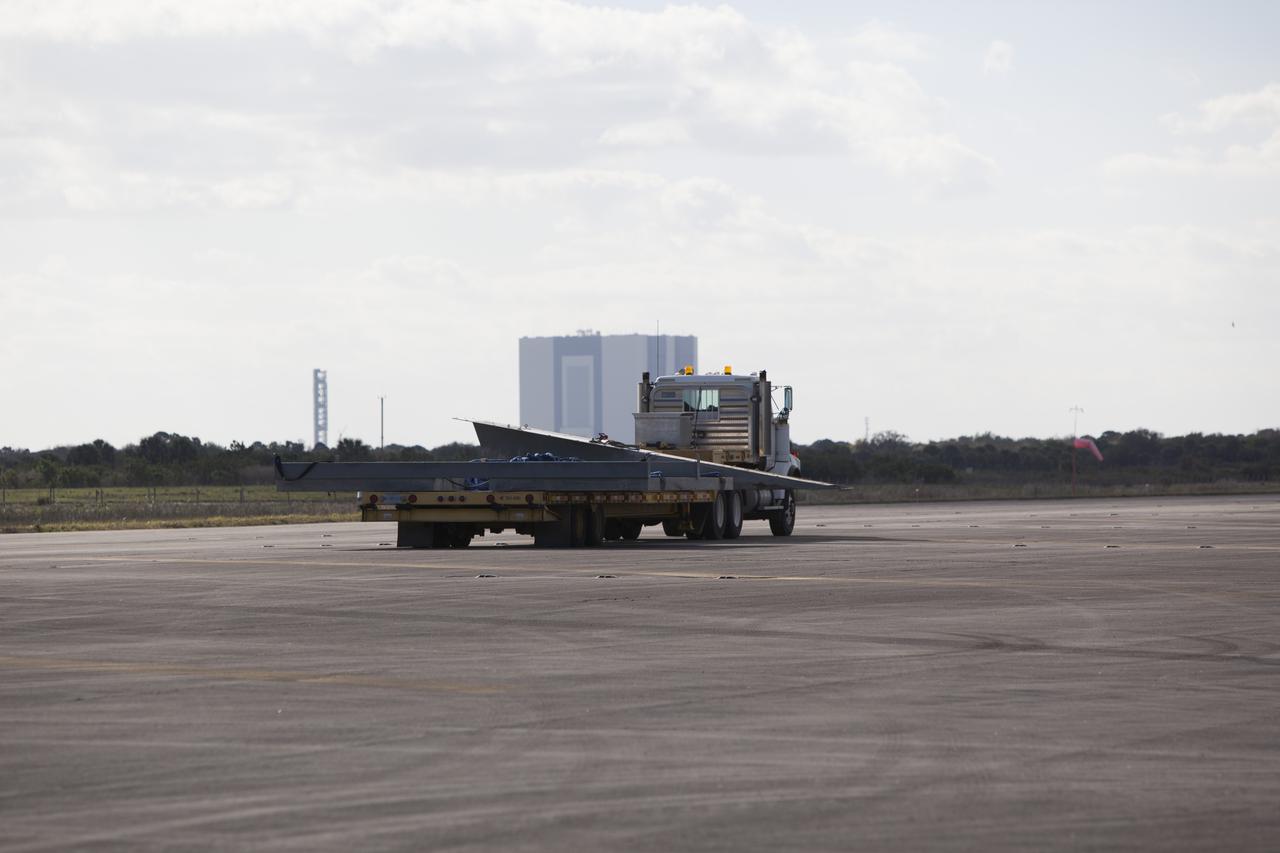
CAPE CANAVERAL, Fla. – A flatbed truck carries the launch pad for the Project Morpheus prototype lander to a new location at the north end of the Shuttle Landing Facility at NASA’s Kennedy Space Center in Florida. The launch pad is being moved to a different location to support the next phase of flight testing. Morpheus completed its seventh free flight test on March 11. The 83-second test began at 3:41 p.m. EDT with the Morpheus lander launching from the ground over a flame trench and ascending to 580 feet. Morpheus then flew its fastest downrange trek at 30 mph, travelling farther than before, 837 feet. The lander performed a 42-foot divert to emulate a hazard avoidance maneuver before descending and touching down on Landing Site 2, at the northern landing pad inside the automated landing and hazard avoidance technology ALHAT hazard field. Morpheus landed within one foot of its intended target. Project Morpheus tests NASA’s ALHAT and an engine that runs on liquid oxygen and methane, or green propellants, into a fully-operational lander that could deliver cargo to other planetary surfaces. The landing facility provides the lander with the kind of field necessary for realistic testing, complete with rocks, craters and hazards to avoid. Morpheus’ ALHAT payload allows it to navigate to clear landing sites amidst rocks, craters and other hazards during its descent. Project Morpheus is being managed under the Advanced Exploration Systems, or AES, Division in NASA’s Human Exploration and Operations Mission Directorate. The efforts in AES pioneer new approaches for rapidly developing prototype systems, demonstrating key capabilities and validating operational concepts for future human missions beyond Earth orbit. For more information on Project Morpheus, visit http://morpheuslander.jsc.nasa.gov/. Photo credit: NASA/Dimitri Gerondidakis
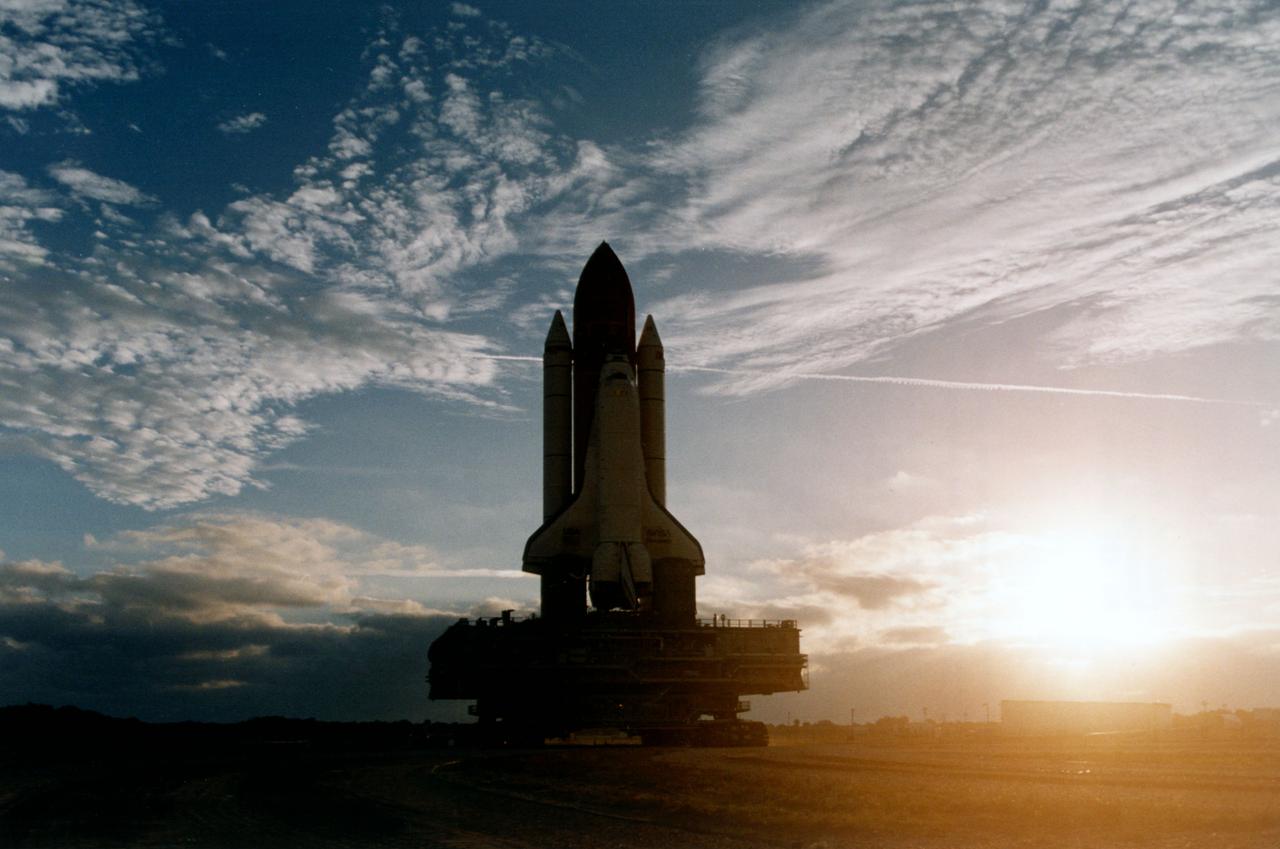
KENNEDY SPACE CENTER, FLORIDA STS-82 PREPARATIONS VIEW --- Scattered clouds at dawn provide the backdrop for the Space Shuttle Discovery as it moves along the Kennedy Space Center (KSC) Crawlerway toward Launch Pad 39A in preparation for the STS-82 mission. The Space Shuttle is on a mobile launch platform, and the entire assemblage is being carried by a large tracked vehicle called the Crawler Transporter. A seven-member crew of astronauts will perform the second servicing of the orbiting Hubble Space Telescope (HST) during the scheduled ten-day STS-82 flight. Launch is currently targeted for February 11, 1997.
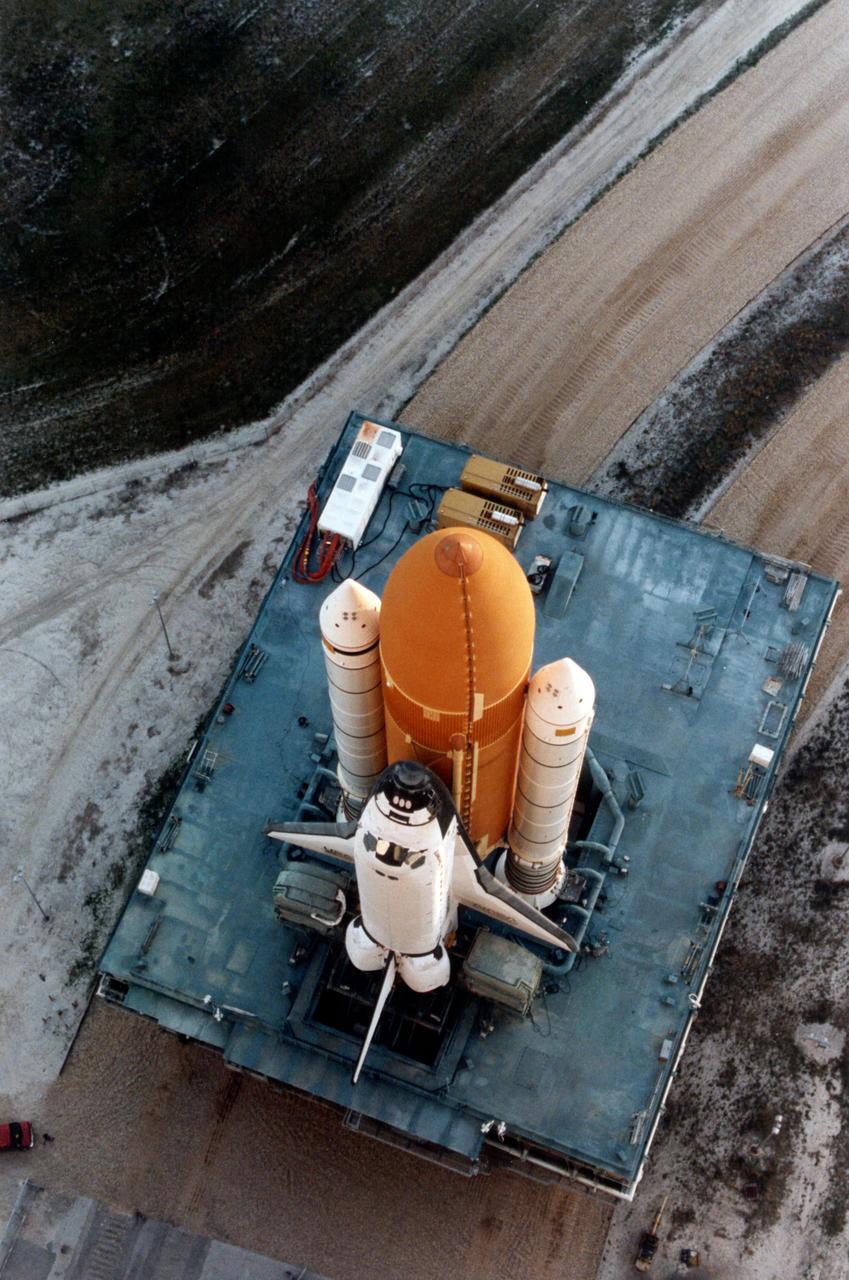
KENNEDY SPACE CENTER, FLORIDA STS-82 ROLL-OUT VIEW --- After departing the Vehicle Assembly Building (VAB), the Space Shuttle Discovery moves slowly - about one mile per hour - along the Kennedy Space Center (KSC) Crawlerway toward Launch Pad 39A in preparation for the STS-82 mission. The Shuttle is on a mobile launch platform, and the entire assemblage is being carried by a large tracked vehicle called the Crawler Transporter. A seven-member crew of astronauts will perform the second servicing of the orbiting Hubble Space Telescope (HST) during the scheduled ten-day STS-82 flight. Launch is currently targeted for February 11, 1997.
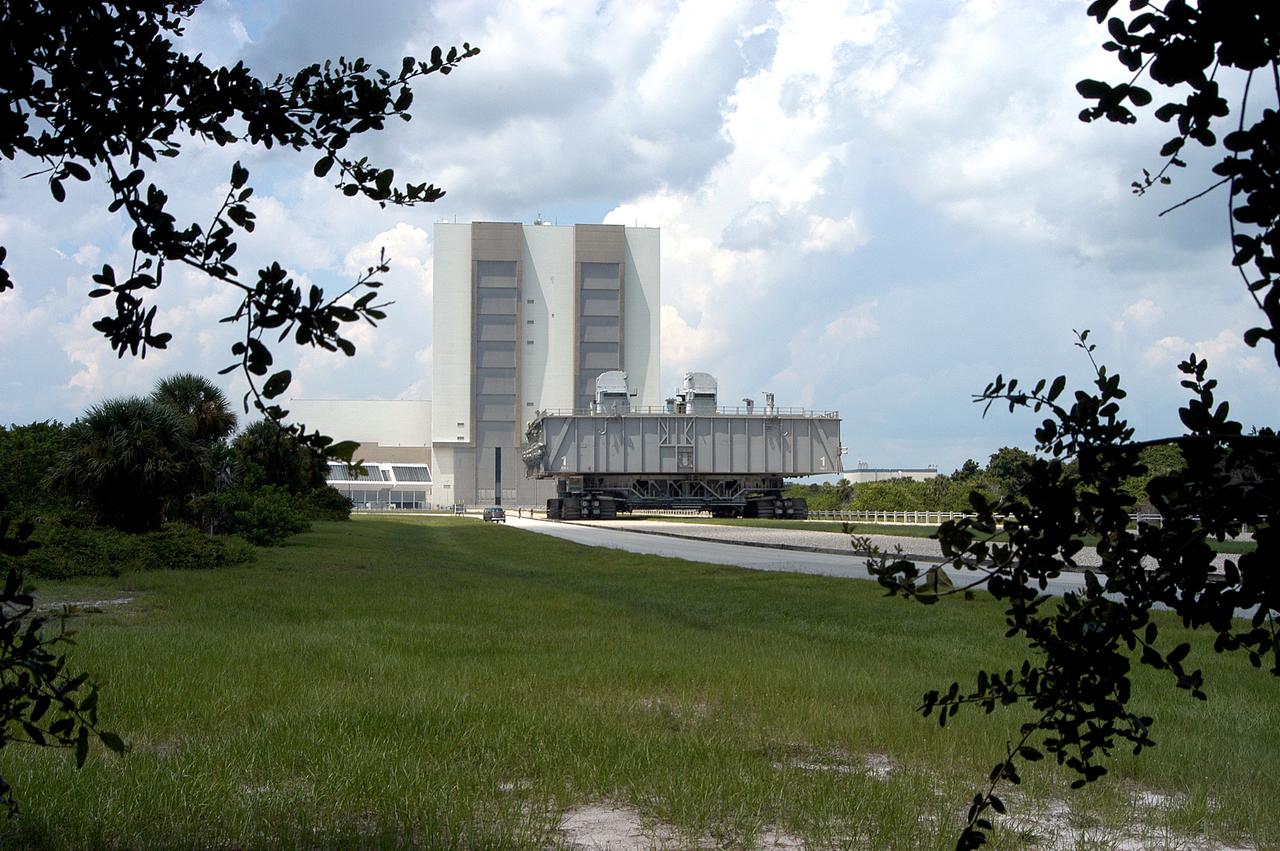
KENNEDY SPACE CENTER, FLA. -Crawler-transporter (CT) number 2, moves away from the Vehicle Assembly Building, with a Mobile Launcher Platform on top, on a test run to the launch pad. The CT recently underwent modifications to the cab. The CT moves Space Shuttle vehicles between the VAB and launch pad. Moving on four double-tracked crawlers, the CT uses a laser guidance system and a leveling system for the journey that keeps the top of a Space Shuttle vertical within plus- or minus-10 minutes of arc. The system enables the CT-MLP-Shuttle to negotiate the ramp leading to the launch pads and keep the load level. Unloaded, the CT weighs 6 million pounds.
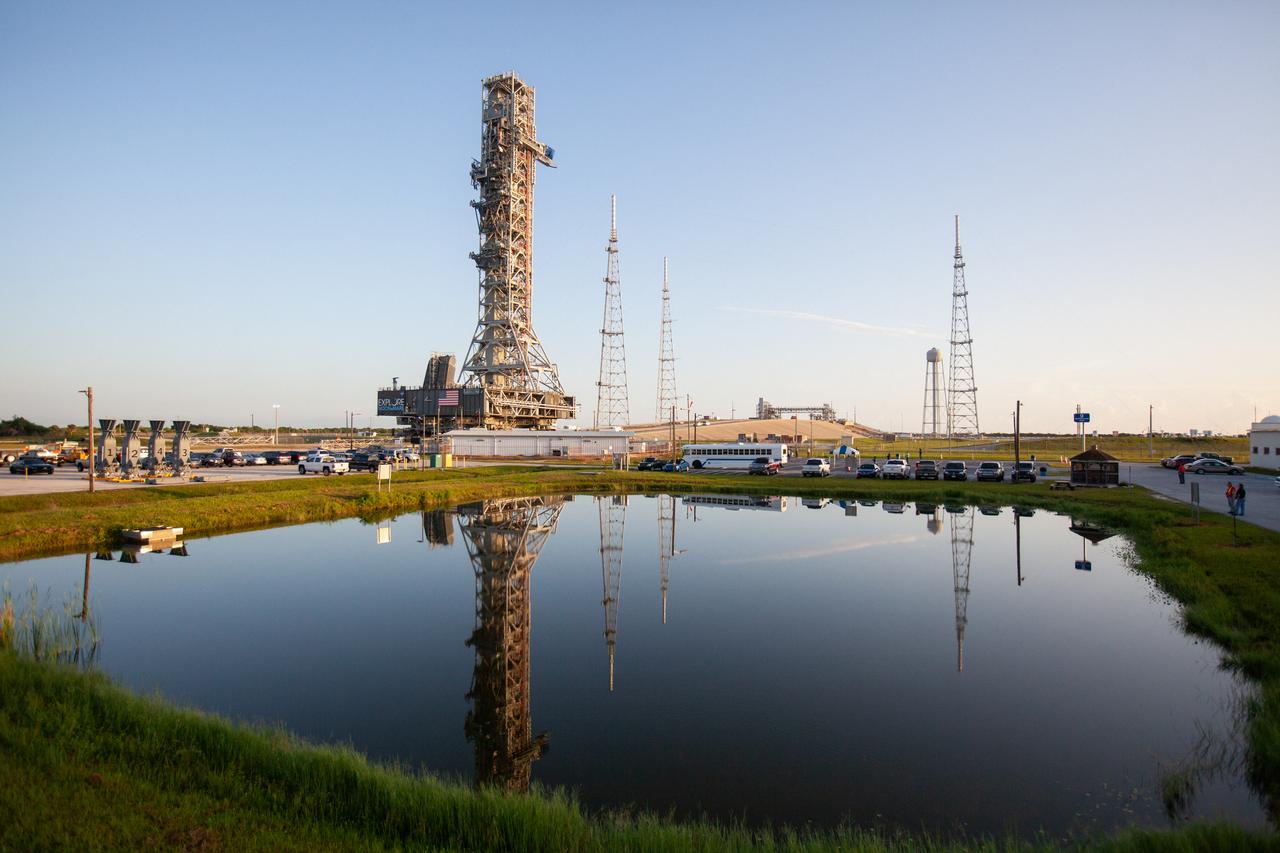
After successfully arriving at Kennedy Space Center’s Launch Complex 39B, Exploration Ground Systems’ mobile launcher continues its journey atop crawler-transporter 2 up to the pad surface on June 28, 2019. The mobile launcher began its final solo trek to the pad at midnight on June 27, departing from NASA’s Vehicle Assembly Building. The mobile launcher will remain at the pad over the summer, undergoing final testing and checkouts. Its next roll to the pad will be with the agency’s Space Launch System rocket and Orion in preparation for the launch of Artemis 1.
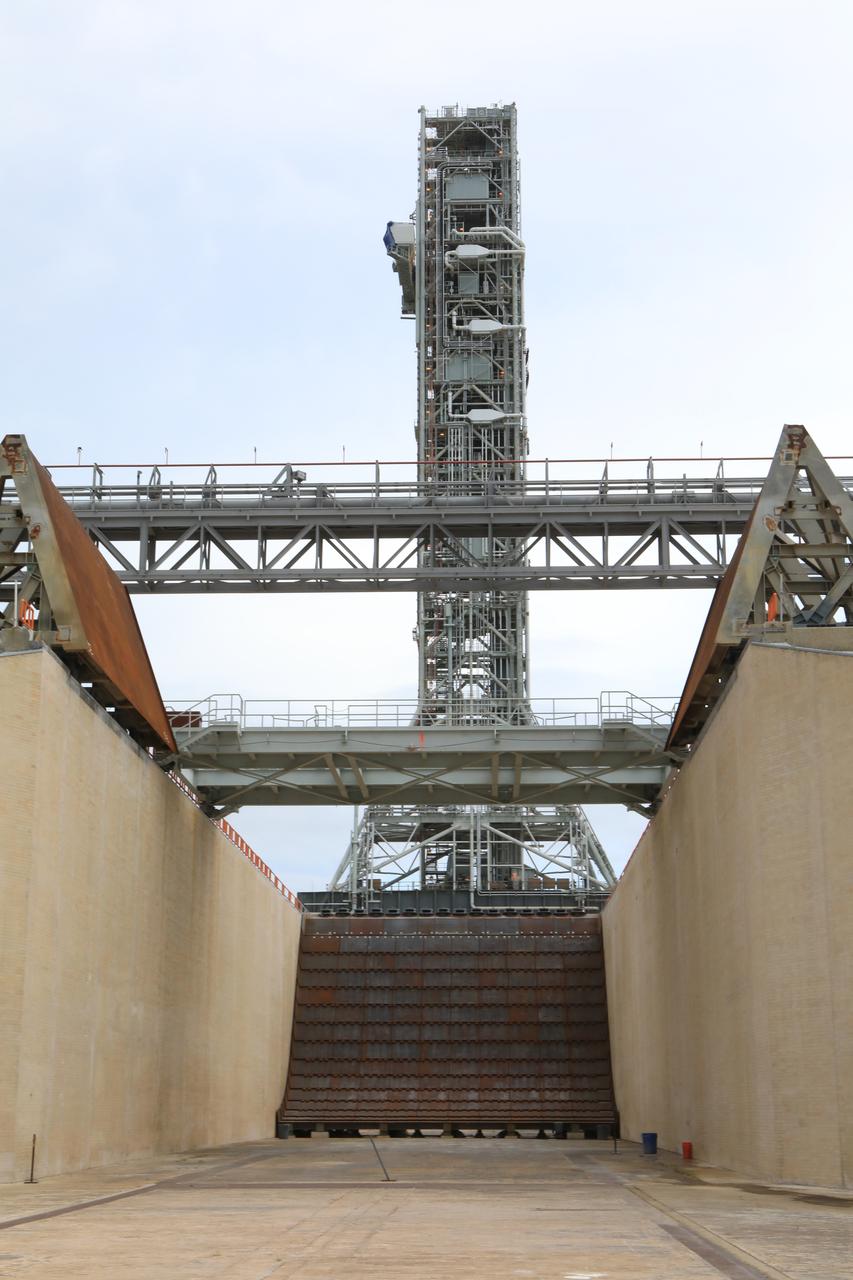
In this view from the flame trench at Kennedy Space Center’s Launch Complex 39B in Florida, Exploration Ground Systems’ mobile launcher can be seen on the pad surface on June 28, 2019. The mobile launcher began its final solo trek – atop crawler-transporter 2 – to the pad at midnight on June 27, departing from NASA’s Vehicle Assembly Building and continuing up to the pad surface on June 28. The mobile launcher will remain at the pad over the summer, undergoing final testing and checkouts. Its next roll to the pad will be with the agency’s Space Launch System rocket and Orion in preparation for the launch of Artemis 1.
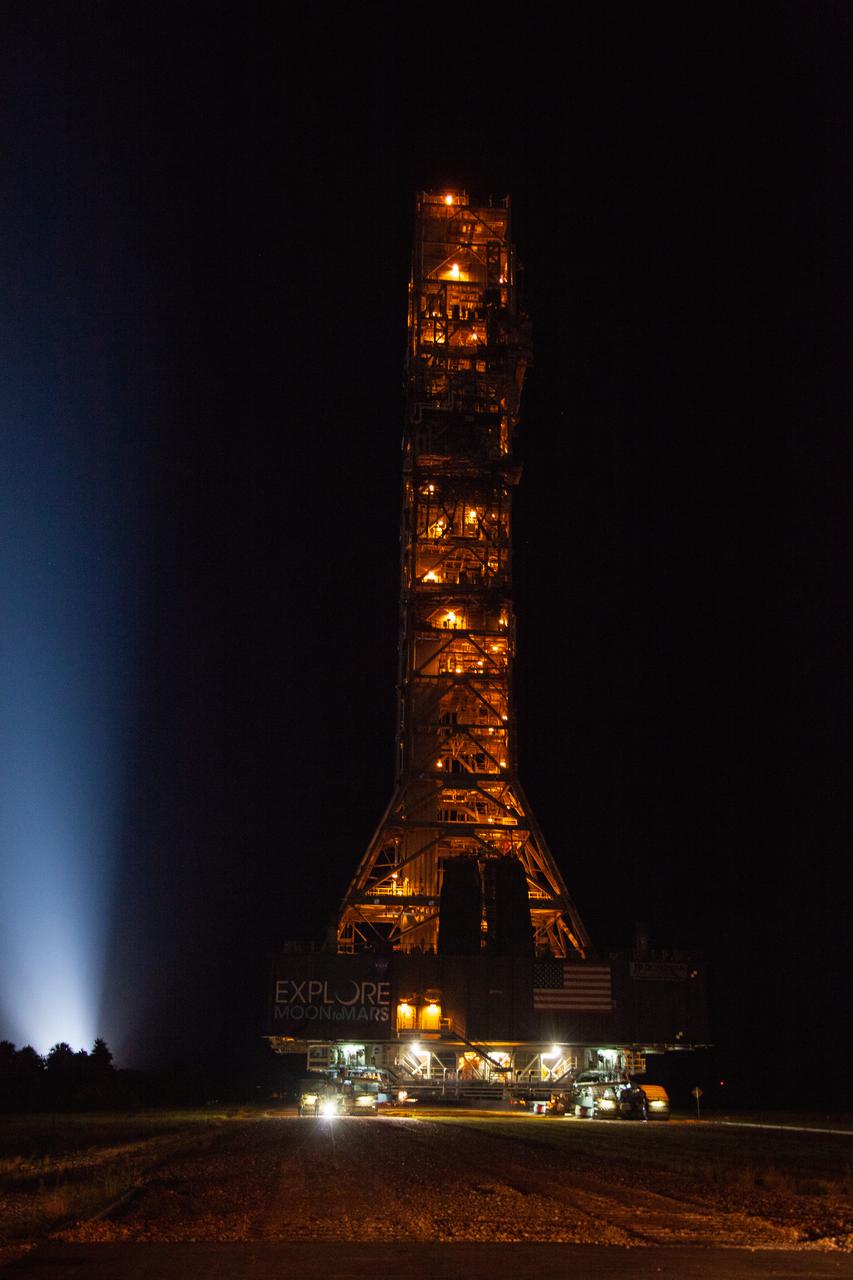
Exploration Ground Systems’ mobile launcher makes its last solo trek along the crawlerway atop crawler-transporter 2 to Kennedy Space Center’s Launch Complex 39B in Florida on June 27, 2019. The mobile launcher departed from the Vehicle Assembly Building at midnight on June 27 for the 10-hour journey to the pad, where it will remain for the summer, undergoing final testing and checkouts. Its next roll to the pad will be with the agency’s Space Launch System rocket and Orion spacecraft in preparation for the launch of Artemis 1.
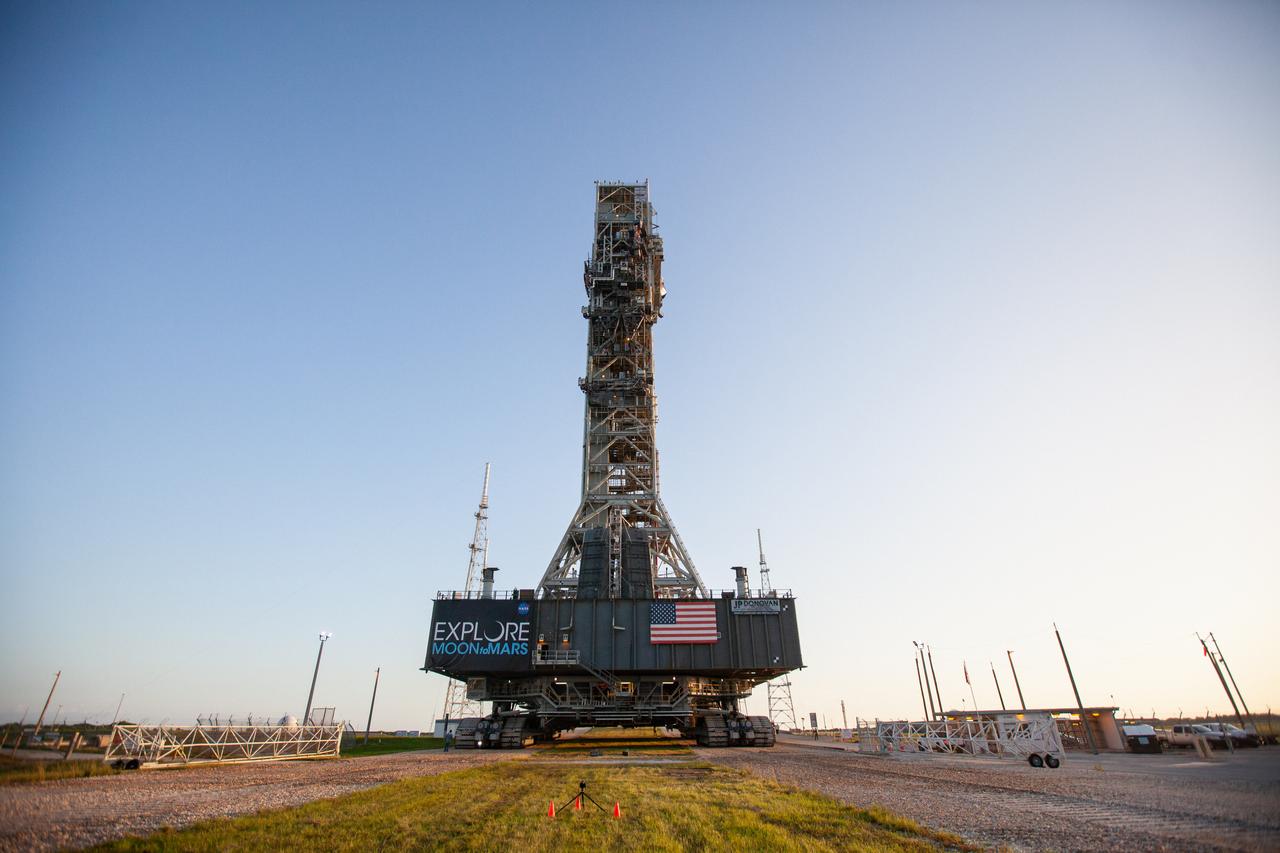
After successfully arriving at Kennedy Space Center’s Launch Complex 39B, Exploration Ground Systems’ mobile launcher continues its journey atop crawler-transporter 2 up to the pad surface on June 28, 2019. The mobile launcher began its final solo trek to the pad at midnight on June 27, departing from NASA’s Vehicle Assembly Building. The mobile launcher will remain at the pad over the summer, undergoing final testing and checkouts. Its next roll to the pad will be with the agency’s Space Launch System rocket and Orion in preparation for the launch of Artemis 1.
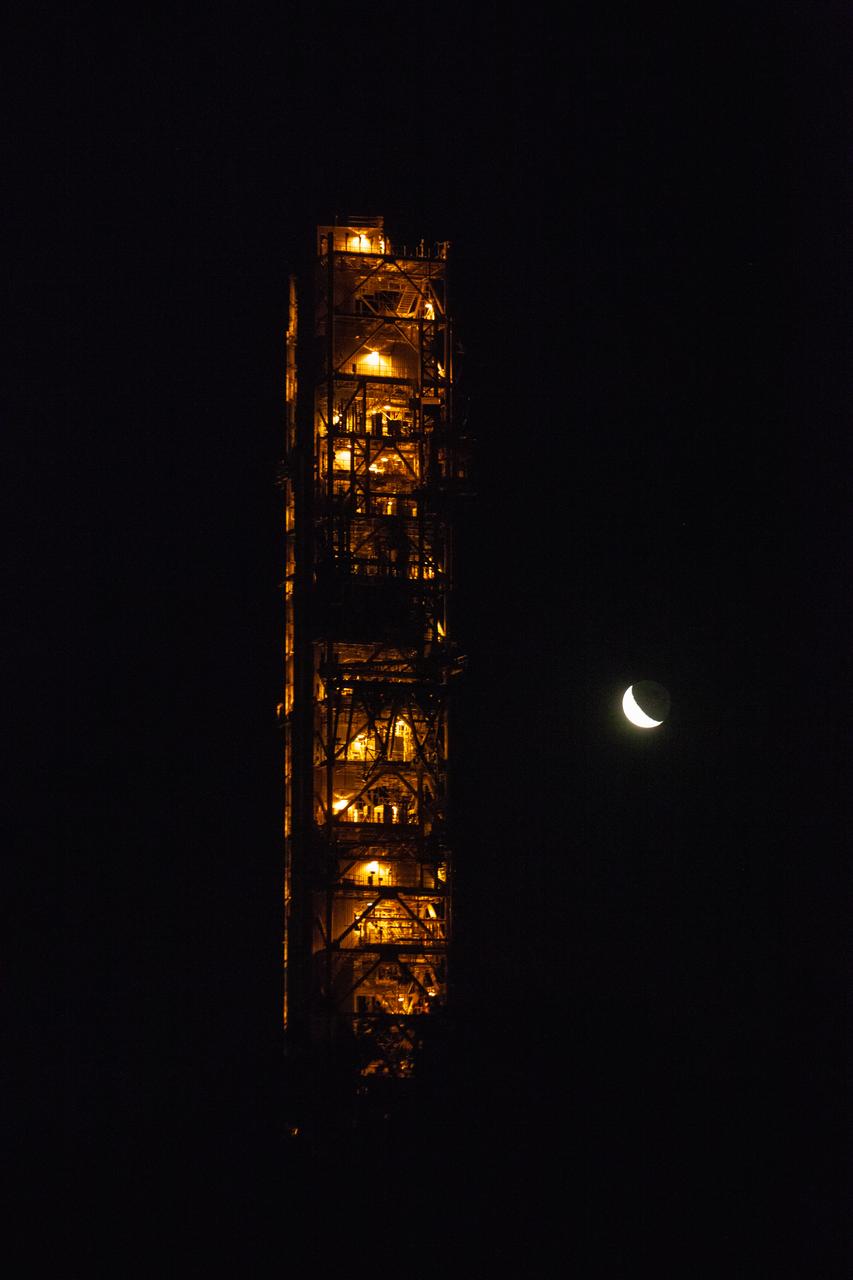
With the Moon and nighttime sky serving as the backdrop, Exploration Ground Systems’ mobile launcher is illuminated in the night as it makes its last solo trek to Kennedy Space Center’s Launch Complex 39B in Florida on June 27, 2019. The mobile launcher departed from the Vehicle Assembly Building at midnight on June 27 for the 10-hour journey to the pad, where it will remain for the summer, undergoing final testing and checkouts. Its next roll to the pad will be with the agency’s Space Launch System rocket and Orion spacecraft in preparation for the launch of Artemis 1.
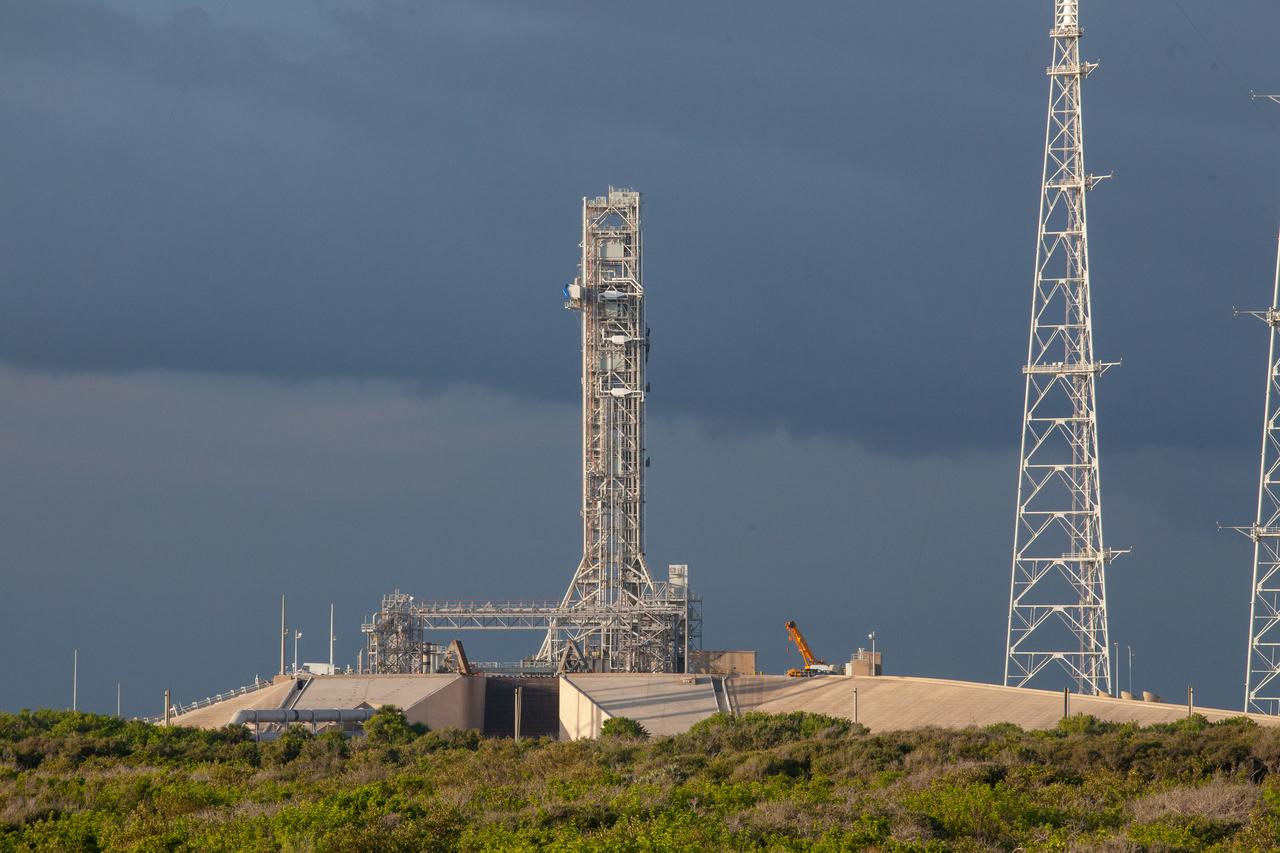
After successfully arriving at Kennedy Space Center’s Launch Complex 39B, Exploration Ground Systems’ mobile launcher is photographed at the pad surface on June 28, 2019. The mobile launcher began its final solo trek to the pad at midnight on June 27, departing from NASA’s Vehicle Assembly Building. The mobile launcher will remain at the pad over the summer, undergoing final testing and checkouts. Its next roll to the pad will be with the agency’s Space Launch System rocket and Orion in preparation for the launch of Artemis 1.
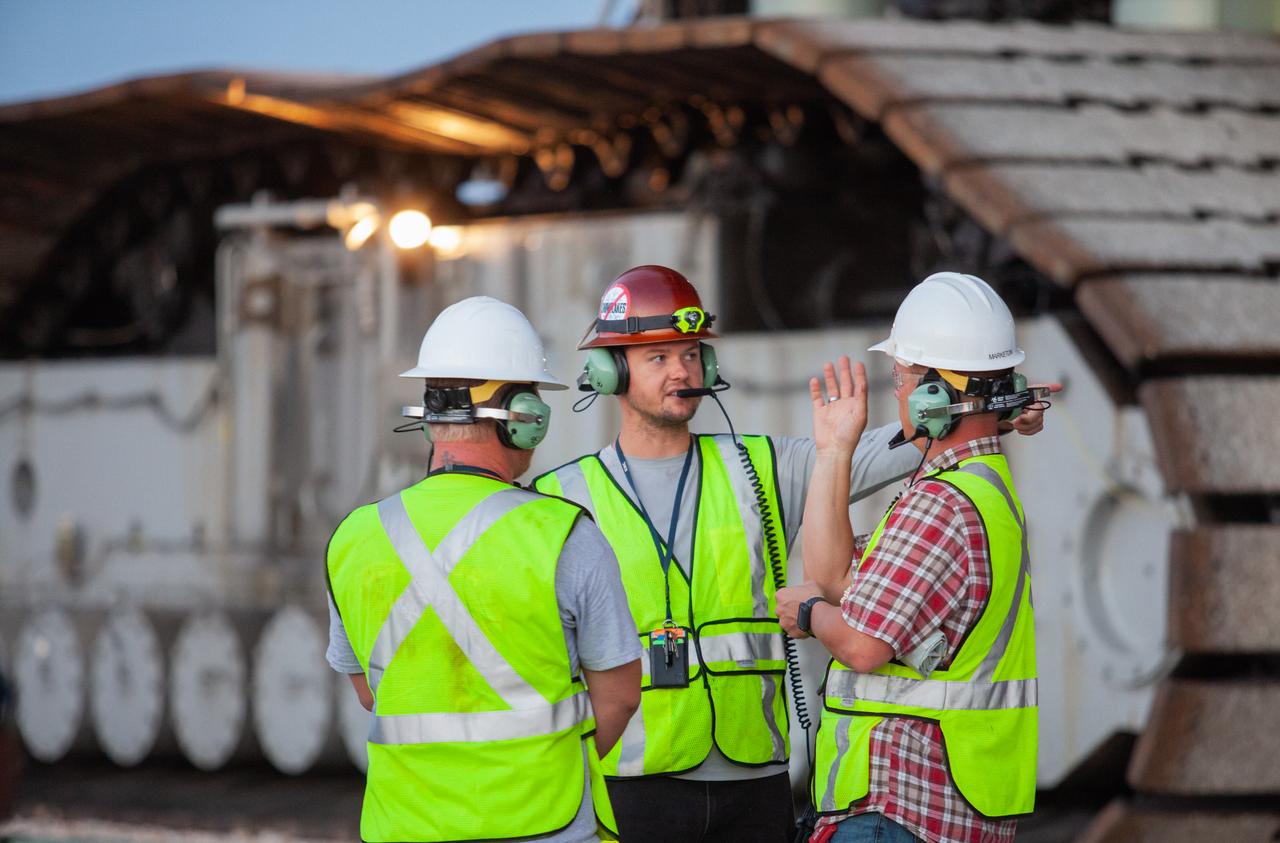
Kennedy Space Center employees stand near NASA’s crawler-transporter 2 at Kennedy’s Launch Complex 39B area in Florida on June 28, 2019. The crawler-transporter 2 successfully carried the Exploration Ground Systems’ mobile launcher to the pad from the Vehicle Assembly Building, departing at midnight on June 27. On June 28, the mobile launcher continued its journey up to the pad surface, where it will remain for the summer, undergoing final testing and checkouts. Its next roll to the pad will be with the agency’s Space Launch System rocket and Orion in preparation for the launch of Artemis 1.
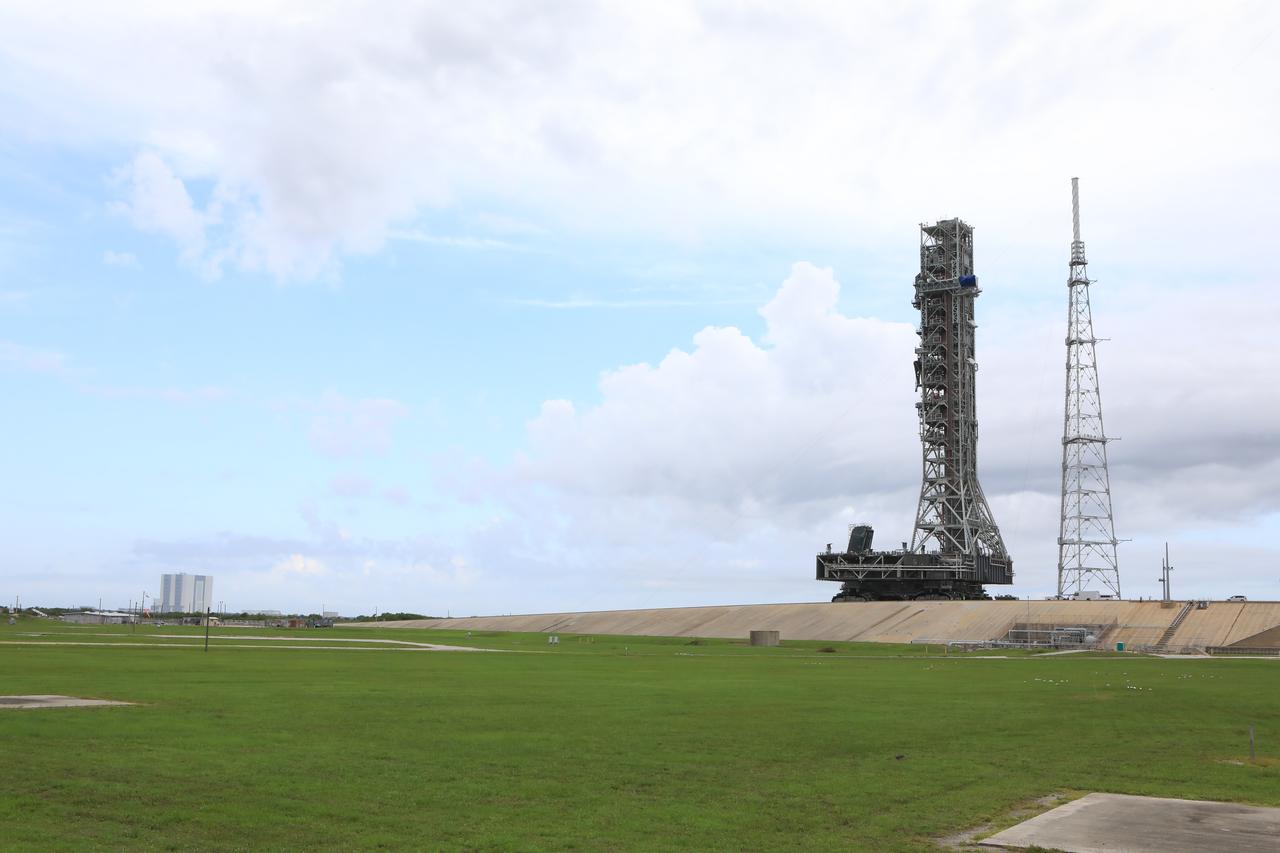
After successfully arriving at Kennedy Space Center’s Launch Complex 39B, Exploration Ground Systems’ mobile launcher is photographed at the pad surface atop crawler-transporter 2 on June 28, 2019. The mobile launcher began its final solo trek to the pad at midnight on June 27, departing from NASA’s Vehicle Assembly Building. The mobile launcher will remain at the pad over the summer, undergoing final testing and checkouts. Its next roll to the pad will be with the agency’s Space Launch System rocket and Orion in preparation for the launch of Artemis 1.
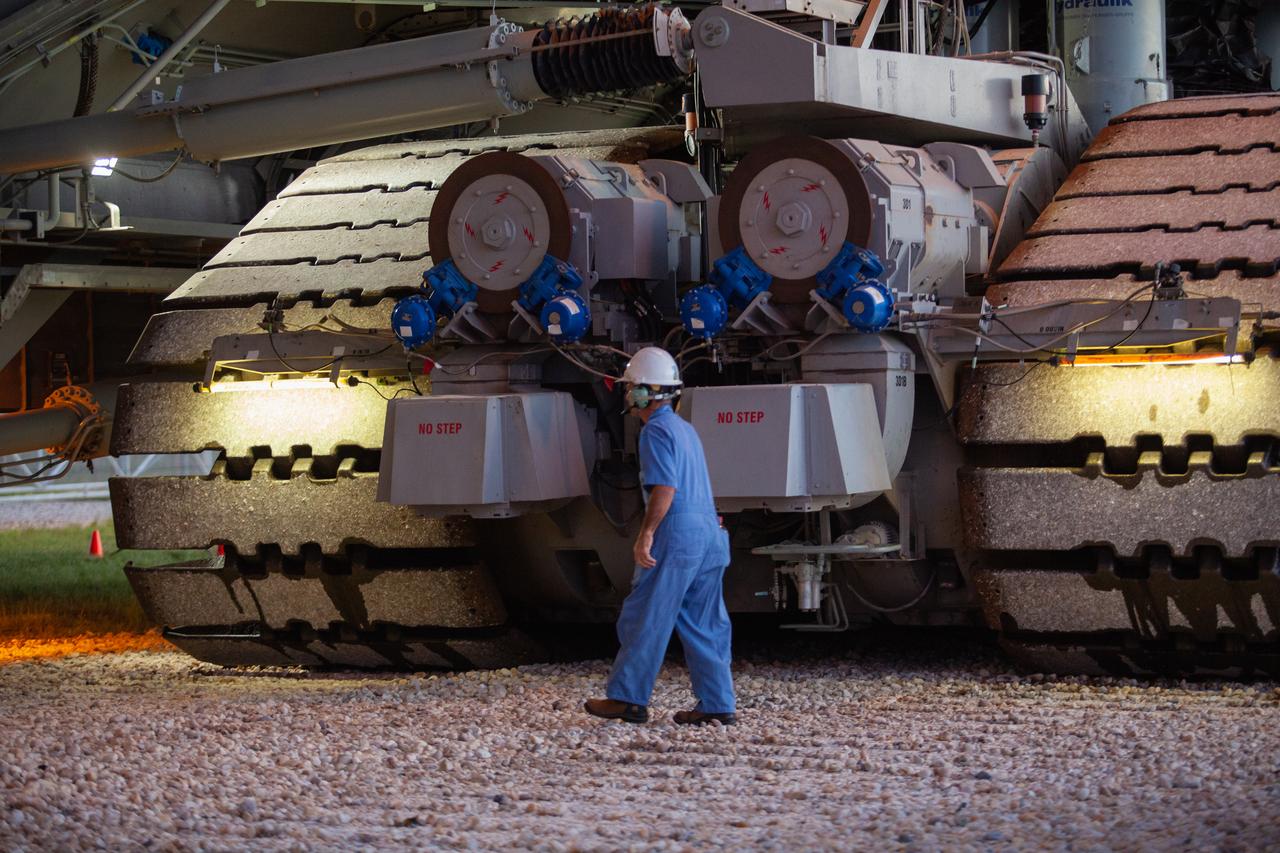
A Kennedy Space Center employee walks near NASA’s crawler-transporter 2 at Kennedy’s Launch Complex 39B area in Florida on June 28, 2019. The crawler-transporter 2 successfully carried Exploration Ground Systems’ mobile launcher to the pad from the Vehicle Assembly Building, departing at midnight on June 27. On June 28, the mobile launcher continued its journey up to the pad surface, where it will remain for the summer, undergoing final testing and checkouts. Its next roll to the pad will be with the agency’s Space Launch System rocket and Orion in preparation for the launch of Artemis 1.
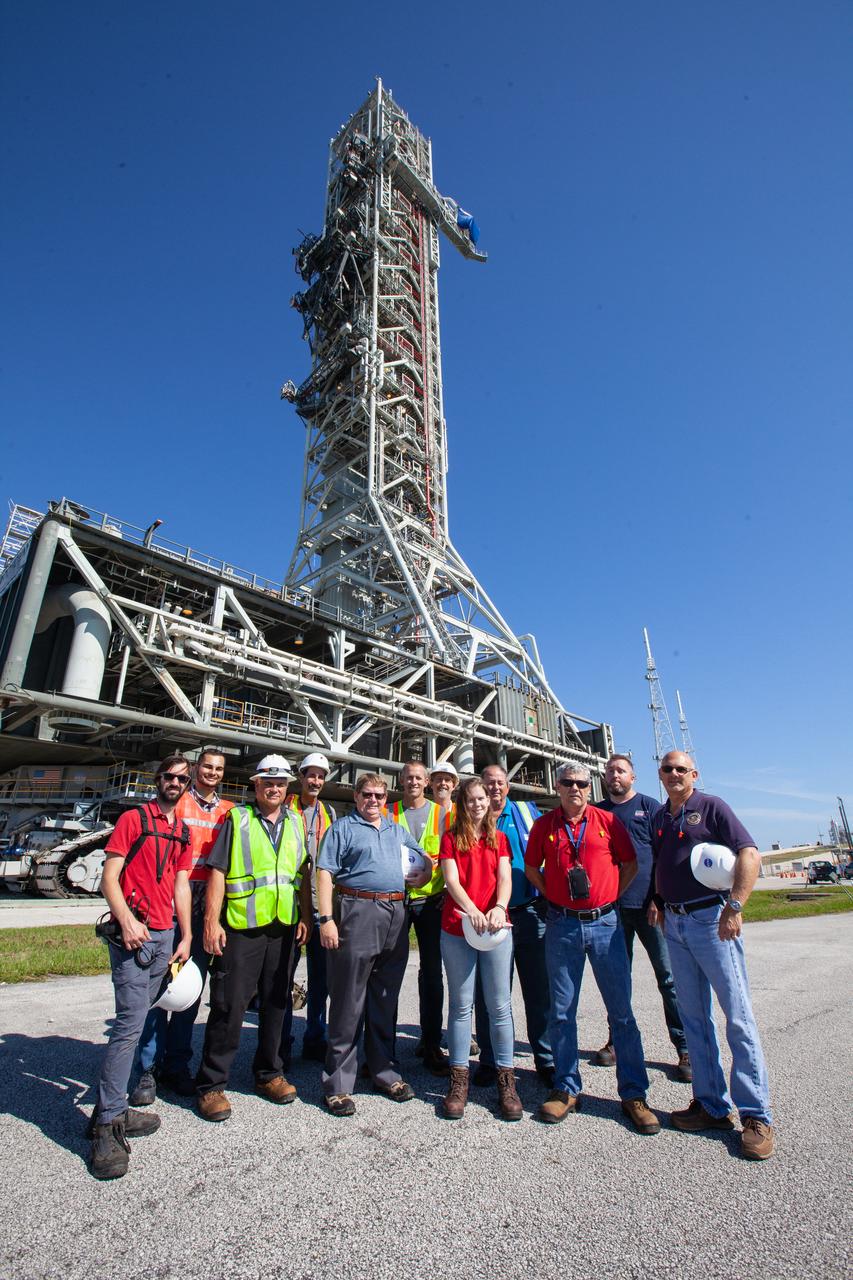
NASA’s Kennedy Space Center crawler team is photographed in front of the agency’s mobile launcher at Launch Complex 39B in Florida on June 27, 2019. After departing from the Vehicle Assembly Building at midnight on June 27, the mobile launcher made its final solo trek to the pad, where it will remain for the summer, undergoing final testing and checkouts. Its next roll to the pad will be with the agency’s Space Launch System rocket and Orion spacecraft in preparation for the launch of Artemis 1.
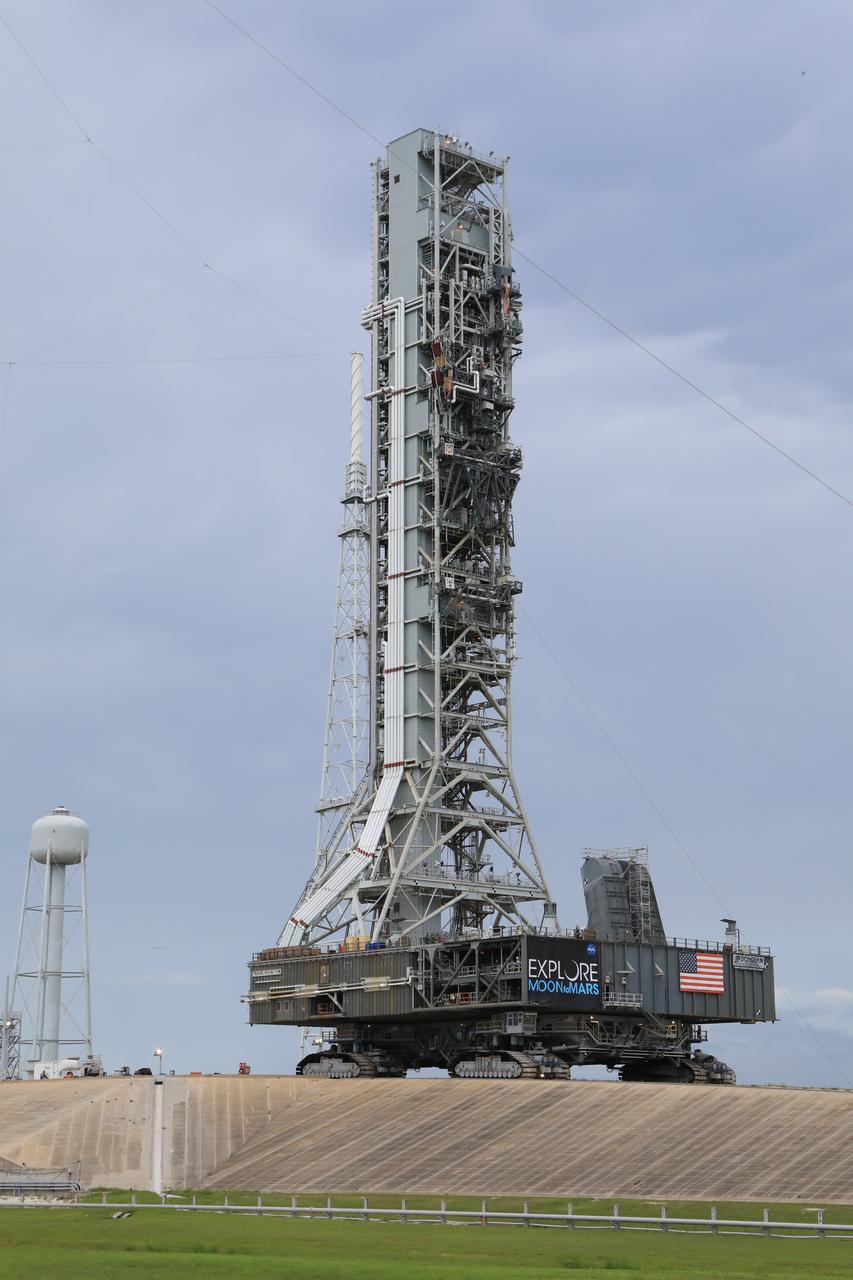
After successfully arriving at Kennedy Space Center’s Launch Complex 39B, Exploration Ground Systems’ mobile launcher is photographed at the pad surface atop crawler-transporter 2 on June 28, 2019. The mobile launcher began its final solo trek to the pad at midnight on June 27, departing from NASA’s Vehicle Assembly Building. The mobile launcher will remain at the pad over the summer, undergoing final testing and checkouts. Its next roll to the pad will be with the agency’s Space Launch System rocket and Orion in preparation for the launch of Artemis 1.
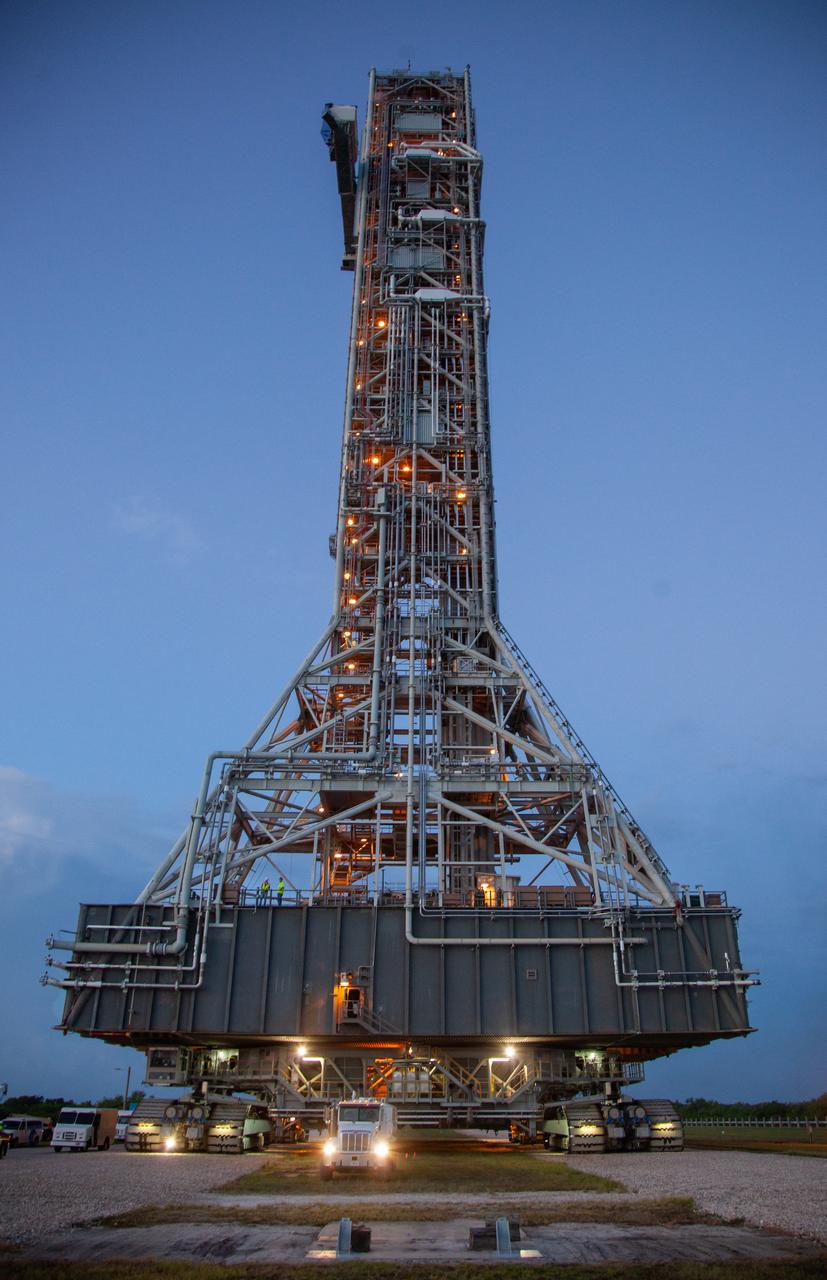
Exploration Ground Systems’ mobile launcher is photographed atop crawler-transporter 2 on its final solo trek to Kennedy Space Center’s Launch Complex 39B in Florida on June 28, 2019. The mobile launcher began its journey to the pad at midnight on June 27, departing from NASA’s Vehicle Assembly Building and continuing up to the pad surface on June 28. The mobile launcher will remain at the pad over the summer, undergoing final testing and checkouts. Its next roll to the pad will be with the agency’s Space Launch System rocket and Orion in preparation for the launch of Artemis 1.
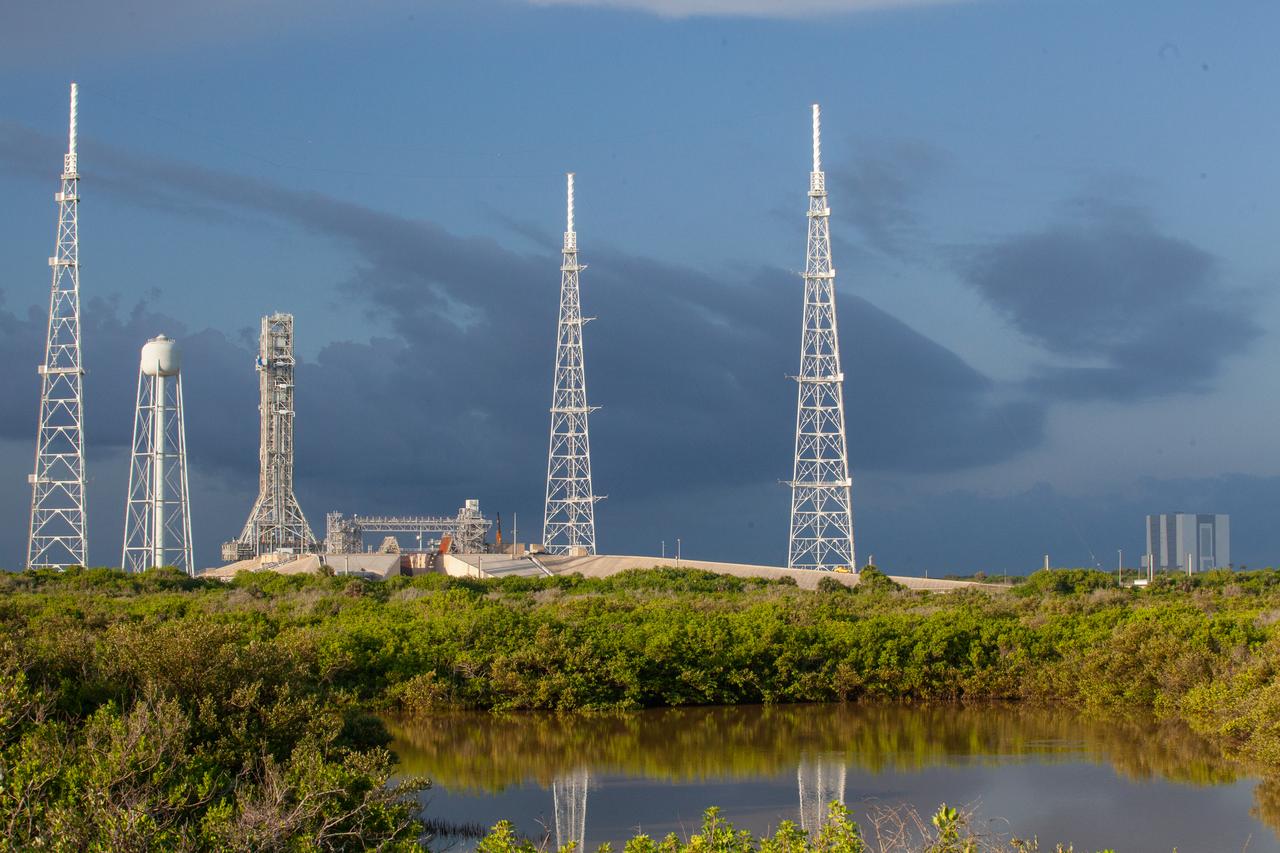
After successfully arriving at Kennedy Space Center’s Launch Complex 39B, Exploration Ground Systems’ mobile launcher continues its journey atop crawler-transporter 2 up to the pad surface on June 28, 2019. The mobile launcher began its final solo trek to the pad at midnight on June 27, departing from NASA’s Vehicle Assembly Building. The mobile launcher will remain at the pad over the summer, undergoing final testing and checkouts. Its next roll to the pad will be with the agency’s Space Launch System rocket and Orion in preparation for the launch of Artemis 1.
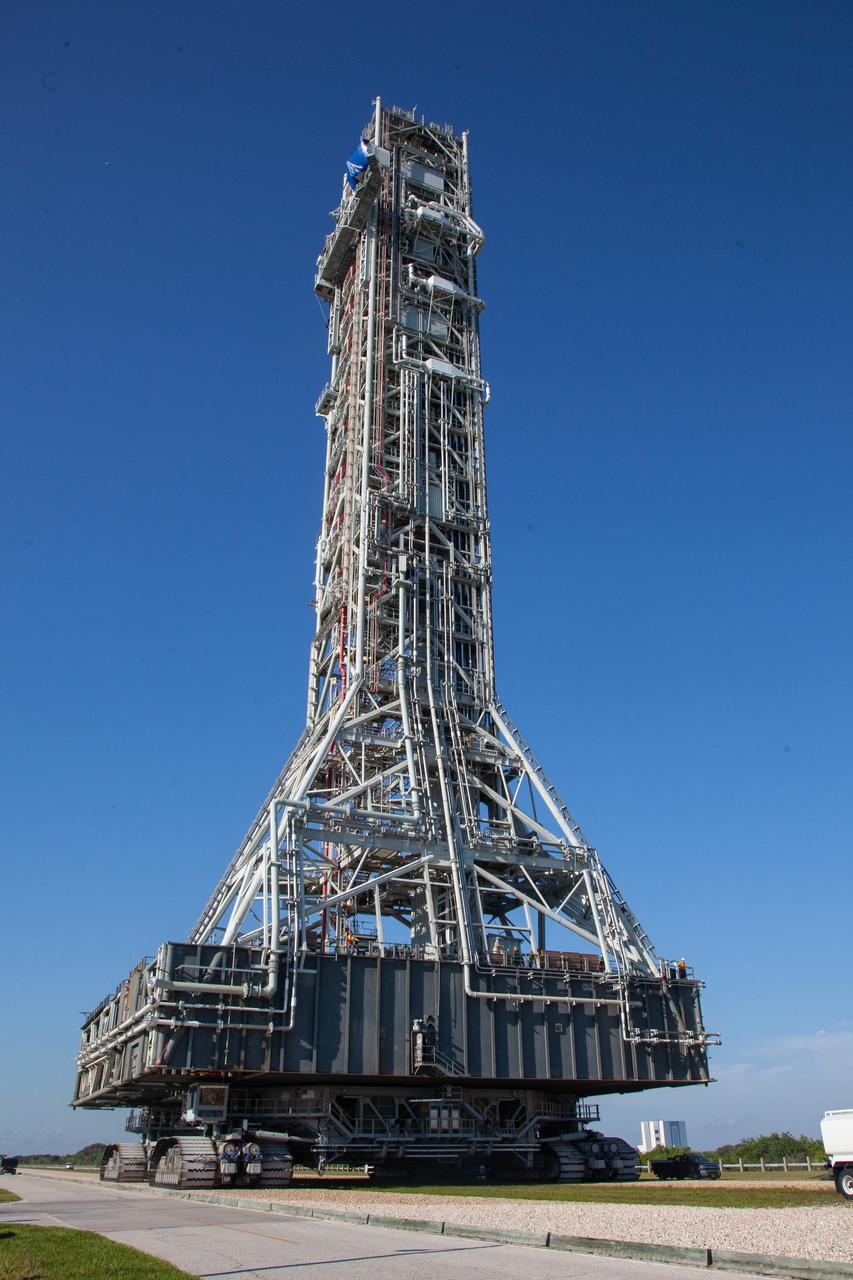
On June 27, 2019, Exploration Ground Systems’ mobile launcher, atop crawler-transporter 2, makes its last solo trek to Kennedy Space Center’s Launch Complex 39B in Florida, where it will remain for the summer, undergoing final testing and checkouts. The mobile launcher departed from the Vehicle Assembly Building at midnight on June 27 for the 10-hour journey to the pad. Its next roll to the pad will be with the agency’s Space Launch System rocket and Orion spacecraft in preparation for the launch of Artemis 1.
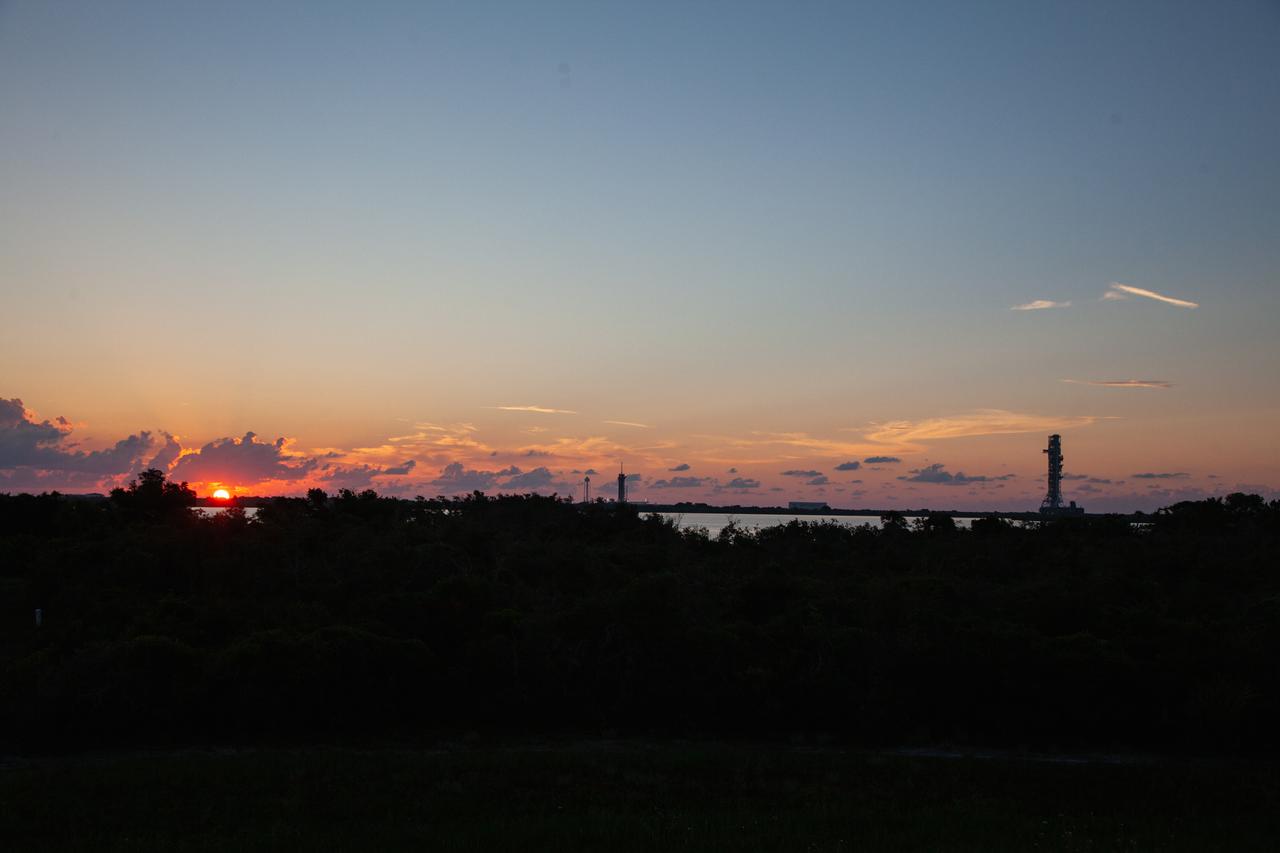
With a sunrise serving as the backdrop, Exploration Ground Systems' mobile launcher makes its last solo trek to Kennedy Space Center’s Launch Complex 39B in Florida on June 27, 2019. It will remain there for the summer, undergoing final testing and checkouts. The mobile launcher departed from the Vehicle Assembly Building at midnight on June 27 for the 10-hour journey to the pad. Its next roll to the pad will be with the agency’s Space Launch System rocket and Orion spacecraft in preparation for the launch of Artemis 1.
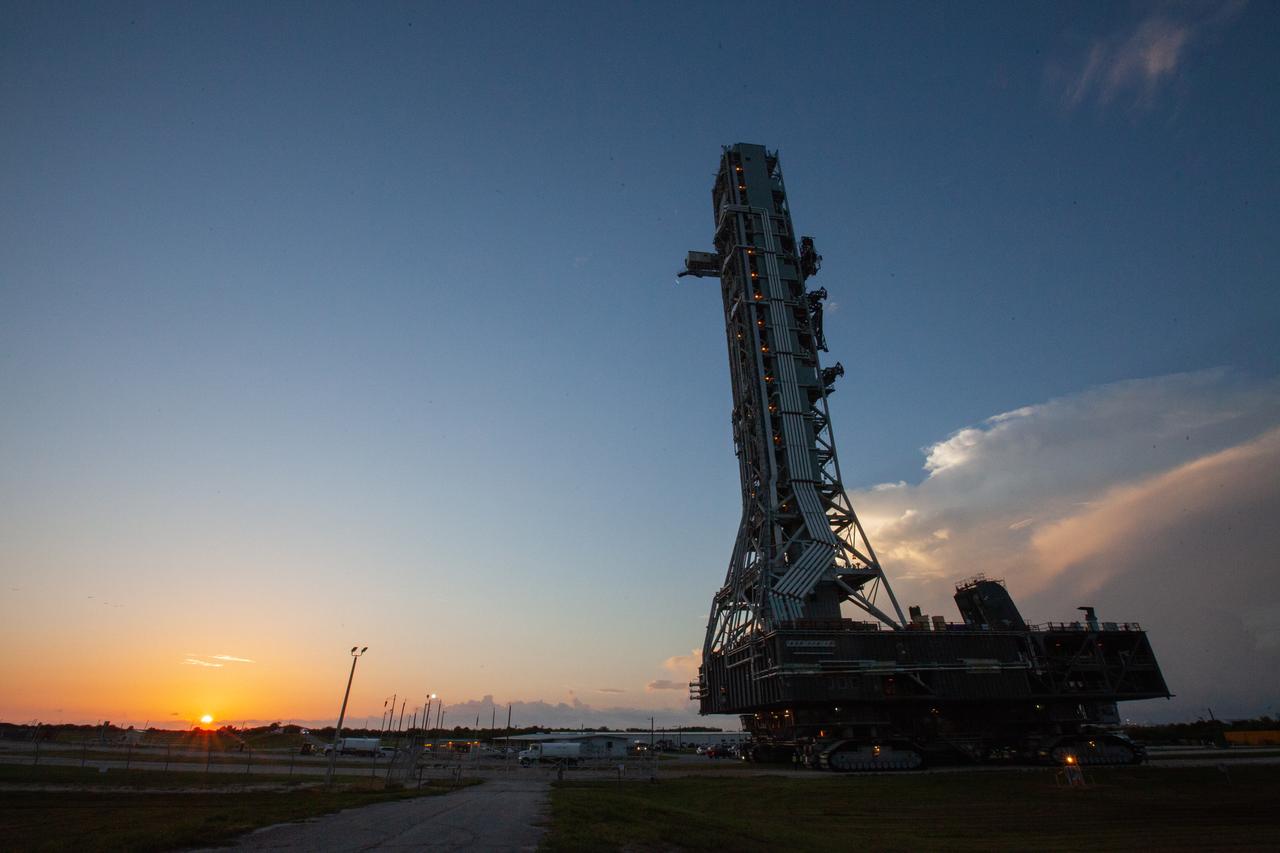
With a sunrise serving as the backdrop, Exploration Ground Systems’ mobile launcher is photographed atop crawler-transporter 2 at Kennedy Space Center’s Launch Complex 39B in Florida on June 28, 2019. The mobile launcher began its final solo trek to the pad at midnight on June 27, departing from NASA’s Vehicle Assembly Building and continuing its journey up to the pad surface on June 28. The mobile launcher will remain at the pad over the summer, undergoing final testing and checkouts. Its next roll to the pad will be with the agency’s Space Launch System rocket and Orion in preparation for the launch of Artemis 1.
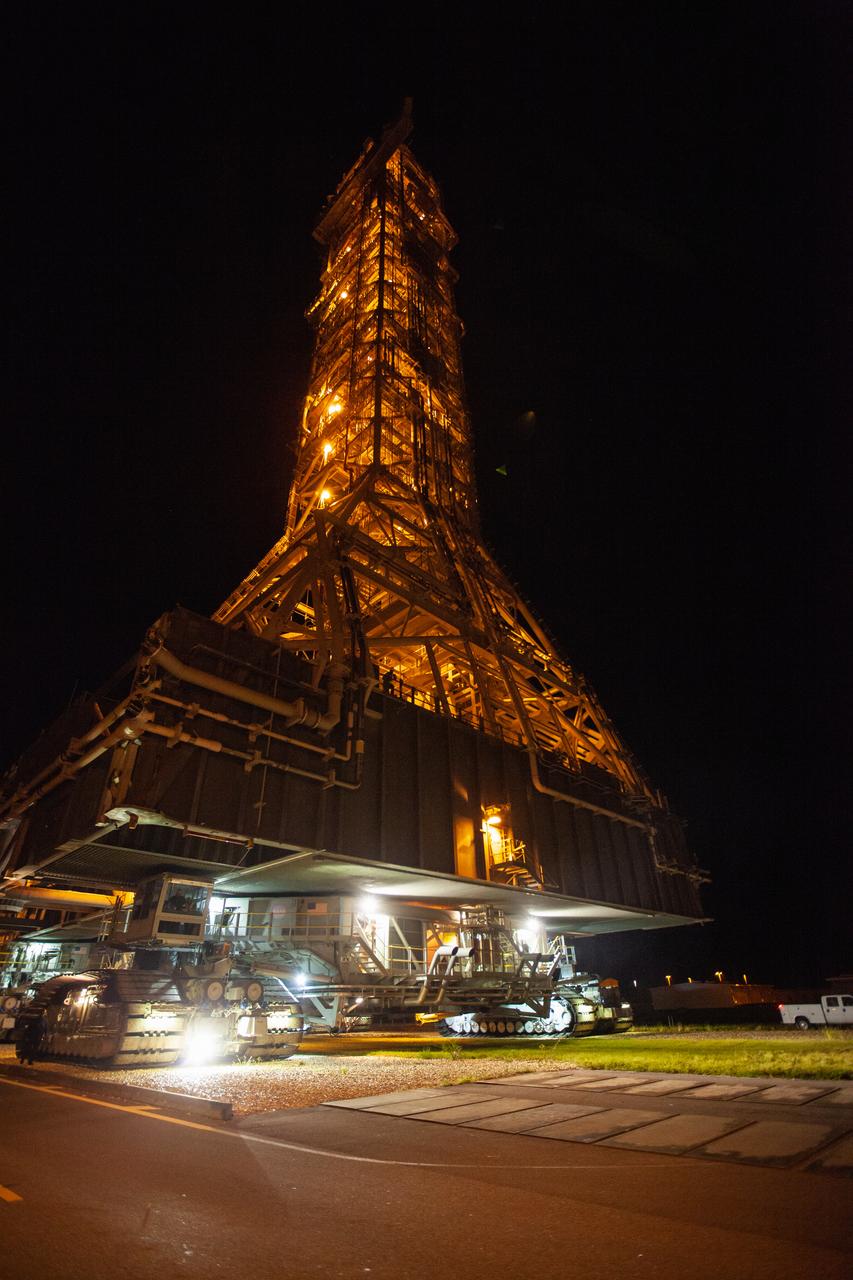
Exploration Ground Systems’ mobile launcher is illuminated in the night as it makes its last solo trek to Kennedy Space Center’s Launch Complex 39B in Florida on June 27, 2019. The mobile launcher departed from the Vehicle Assembly Building at midnight on June 27 for the 10-hour journey to the pad, where it will remain for the summer, undergoing final testing and checkouts. Its next roll to the pad will be with the agency’s Space Launch System rocket and Orion spacecraft in preparation for the launch of Artemis 1.
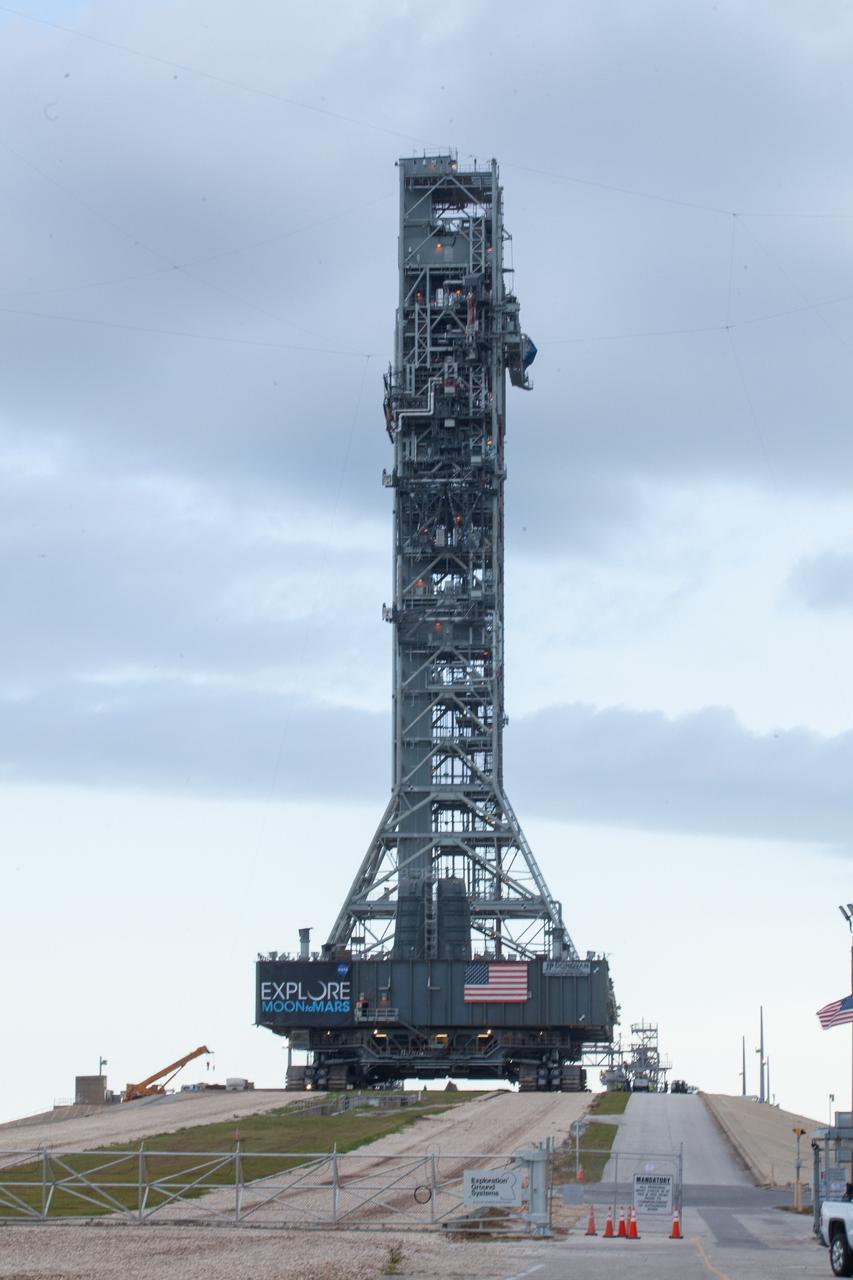
After successfully arriving at Kennedy Space Center’s Launch Complex 39B, Exploration Ground Systems’ mobile launcher continues its journey atop crawler-transporter 2 up to the pad surface on June 28, 2019. The mobile launcher began its final solo trek to the pad at midnight on June 27, departing from NASA’s Vehicle Assembly Building. The mobile launcher will remain at the pad over the summer, undergoing final testing and checkouts. Its next roll to the pad will be with the agency’s Space Launch System rocket and Orion in preparation for the launch of Artemis 1.
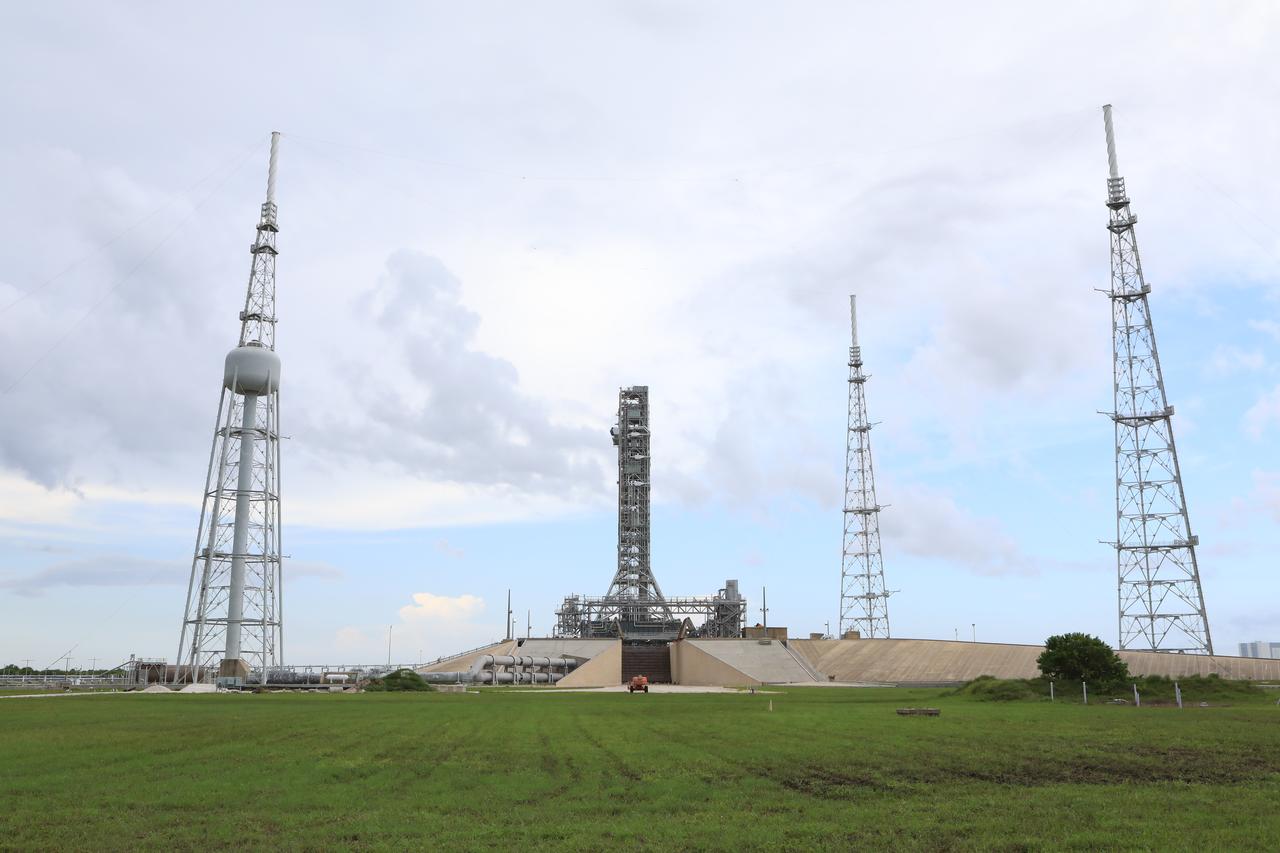
After successfully arriving at Kennedy Space Center’s Launch Complex 39B, Exploration Ground Systems’ mobile launcher is photographed at the pad surface atop crawler-transporter 2 on June 28, 2019. The mobile launcher began its final solo trek to the pad at midnight on June 27, departing from NASA’s Vehicle Assembly Building. The mobile launcher will remain at the pad over the summer, undergoing final testing and checkouts. Its next roll to the pad will be with the agency’s Space Launch System rocket and Orion in preparation for the launch of Artemis 1.
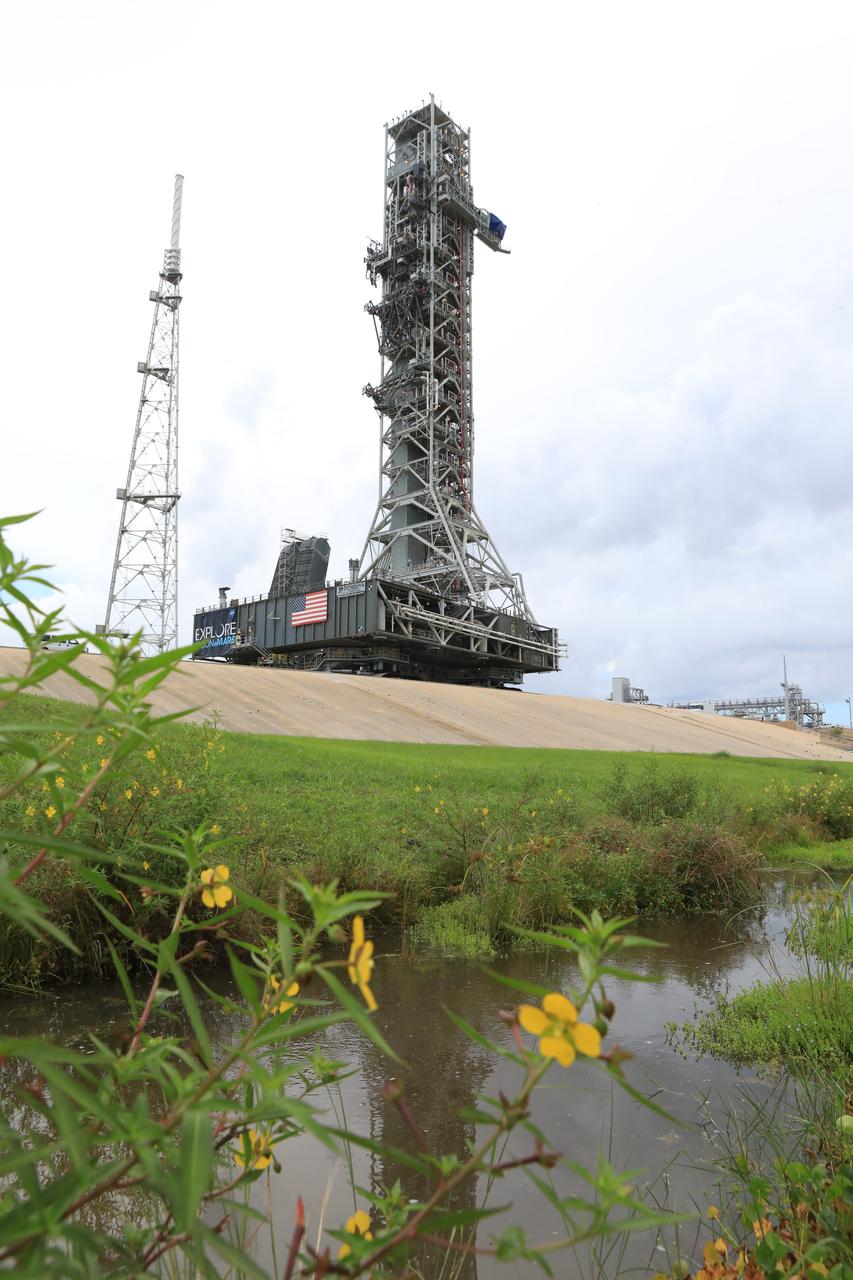
After successfully arriving at Kennedy Space Center’s Launch Complex 39B, Exploration Ground Systems’ mobile launcher is photographed at the pad surface atop crawler-transporter 2 on June 28, 2019. The mobile launcher began its final solo trek to the pad at midnight on June 27, departing from NASA’s Vehicle Assembly Building. The mobile launcher will remain at the pad over the summer, undergoing final testing and checkouts. Its next roll to the pad will be with the agency’s Space Launch System rocket and Orion in preparation for the launch of Artemis 1.
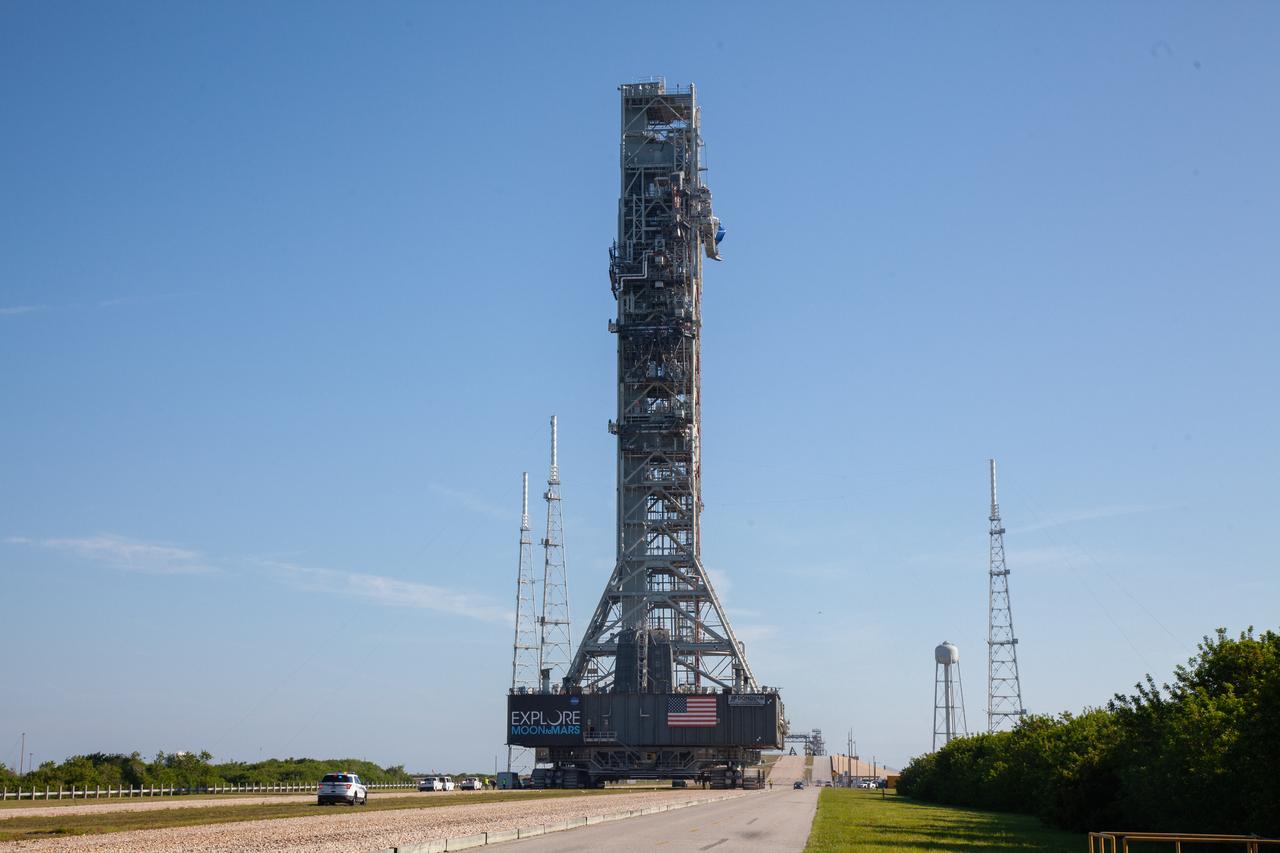
On June 27, 2019, Exploration Ground Systems’ mobile launcher, atop crawler-transporter 2, approaches Kennedy Space Center’s Launch Complex 39B in Florida, where it will remain for the summer, undergoing final testing and checkouts. The mobile launcher departed from the Vehicle Assembly Building at midnight on June 27 for the 10-hour journey to the pad. Its next roll to the pad will be with the agency’s Space Launch System rocket and Orion spacecraft in preparation for the launch of Artemis 1.
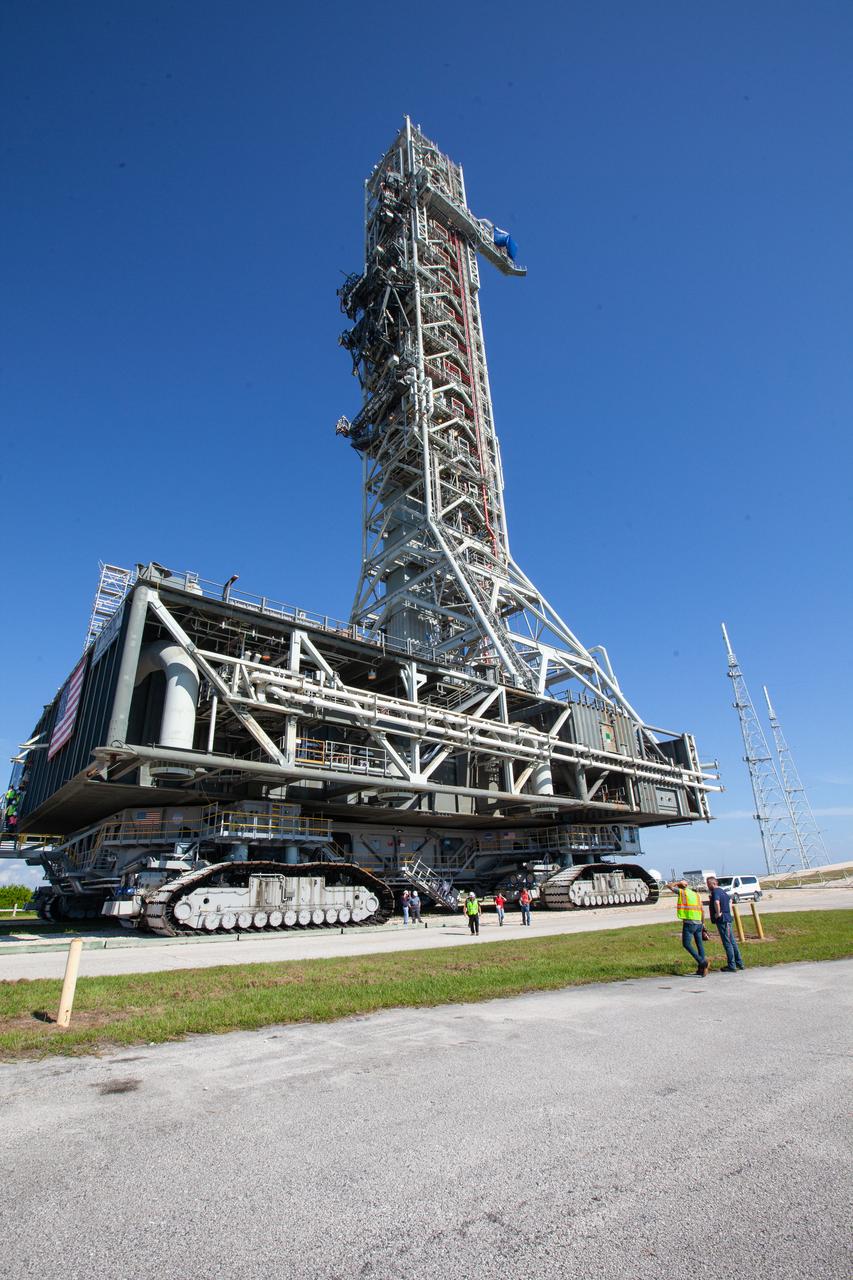
Exploration Ground Systems’ mobile launcher is seen atop crawler-transporter 2 at Kennedy Space Center’s Launch Complex 39B in Florida on June 27, 2019. The mobile launcher departed from the Vehicle Assembly Building at midnight on June 27 for its last solo trek to the pad, where it will remain for the summer, undergoing final testing and checkouts. Its next roll to the pad will be with the agency’s Space Launch System rocket and Orion spacecraft in preparation for the launch of Artemis 1.
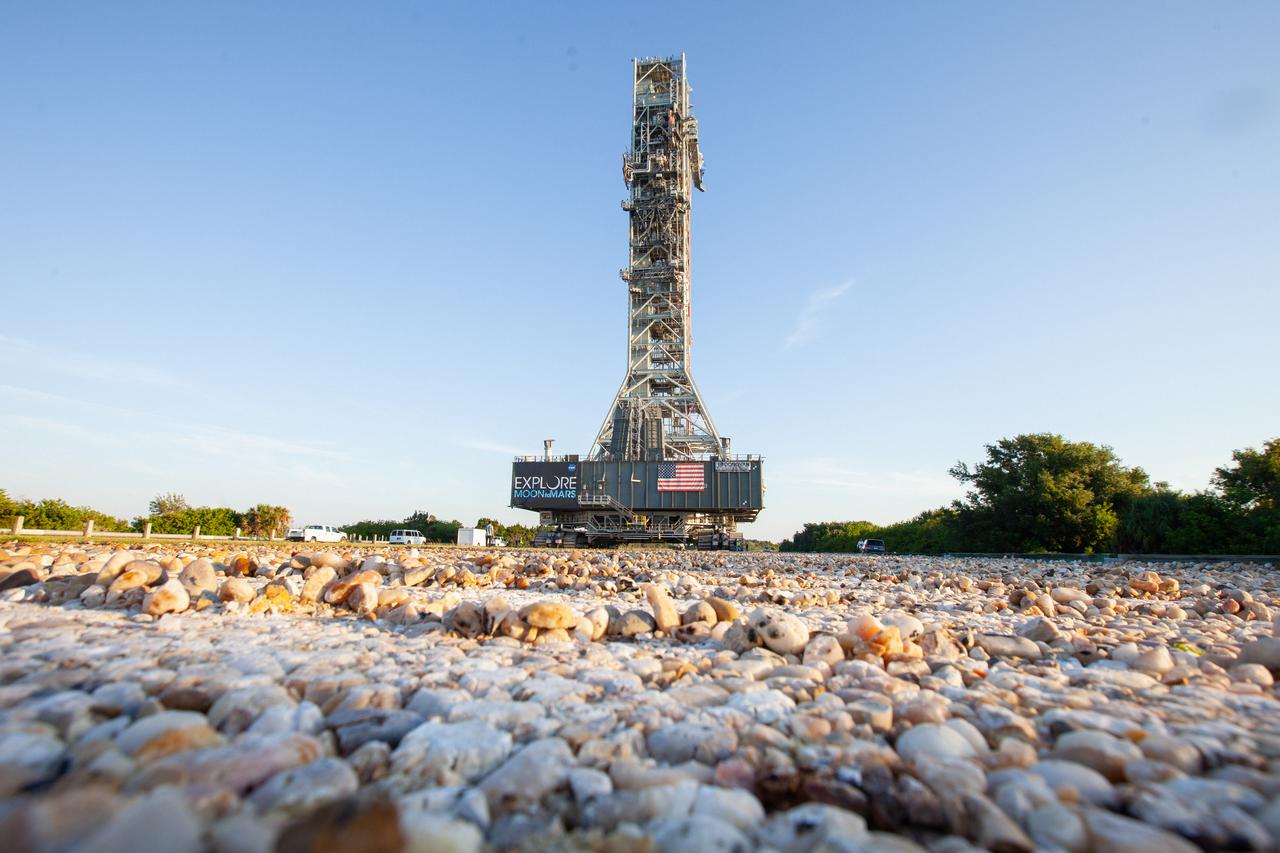
Exploration Ground Systems’ mobile launcher makes its last solo trek along the crawlerway atop crawler-transporter 2 to Kennedy Space Center’s Launch Complex 39B in Florida on June 27, 2019. The mobile launcher departed from the Vehicle Assembly Building at midnight on June 27 for the 10-hour journey to the pad and will remain there for the summer, undergoing final testing and checkouts. Its next roll to the pad will be with the agency’s Space Launch System rocket and Orion spacecraft in preparation for the launch of Artemis 1.
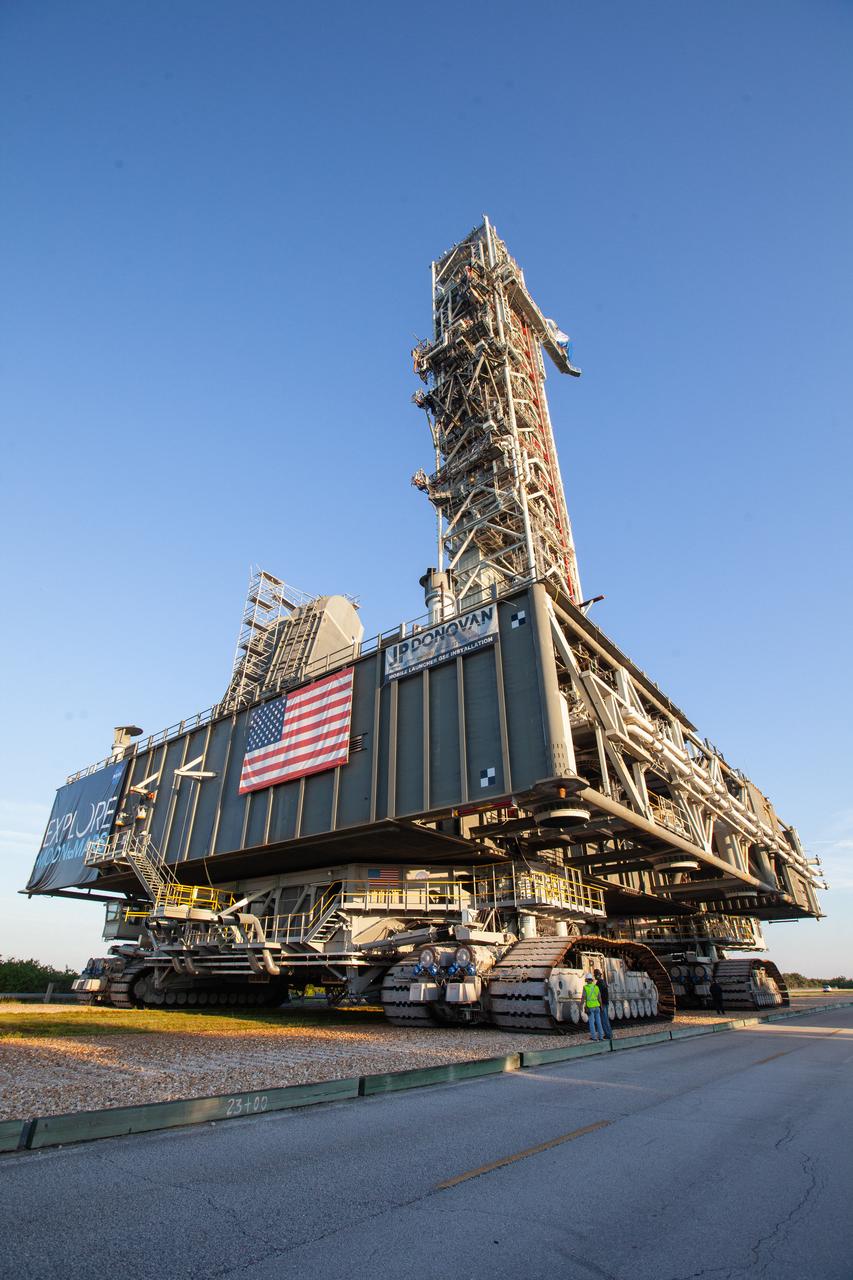
Exploration Ground Systems’ mobile launcher makes its last solo trek along the crawlerway atop crawler-transporter 2 to Kennedy Space Center’s Launch Complex 39B in Florida on June 27, 2019. The mobile launcher departed from the Vehicle Assembly Building at midnight on June 27 for the 10-hour journey to the pad and will remain there for the summer, undergoing final testing and checkouts. Its next roll to the pad will be with the agency’s Space Launch System rocket and Orion spacecraft in preparation for the launch of Artemis 1.
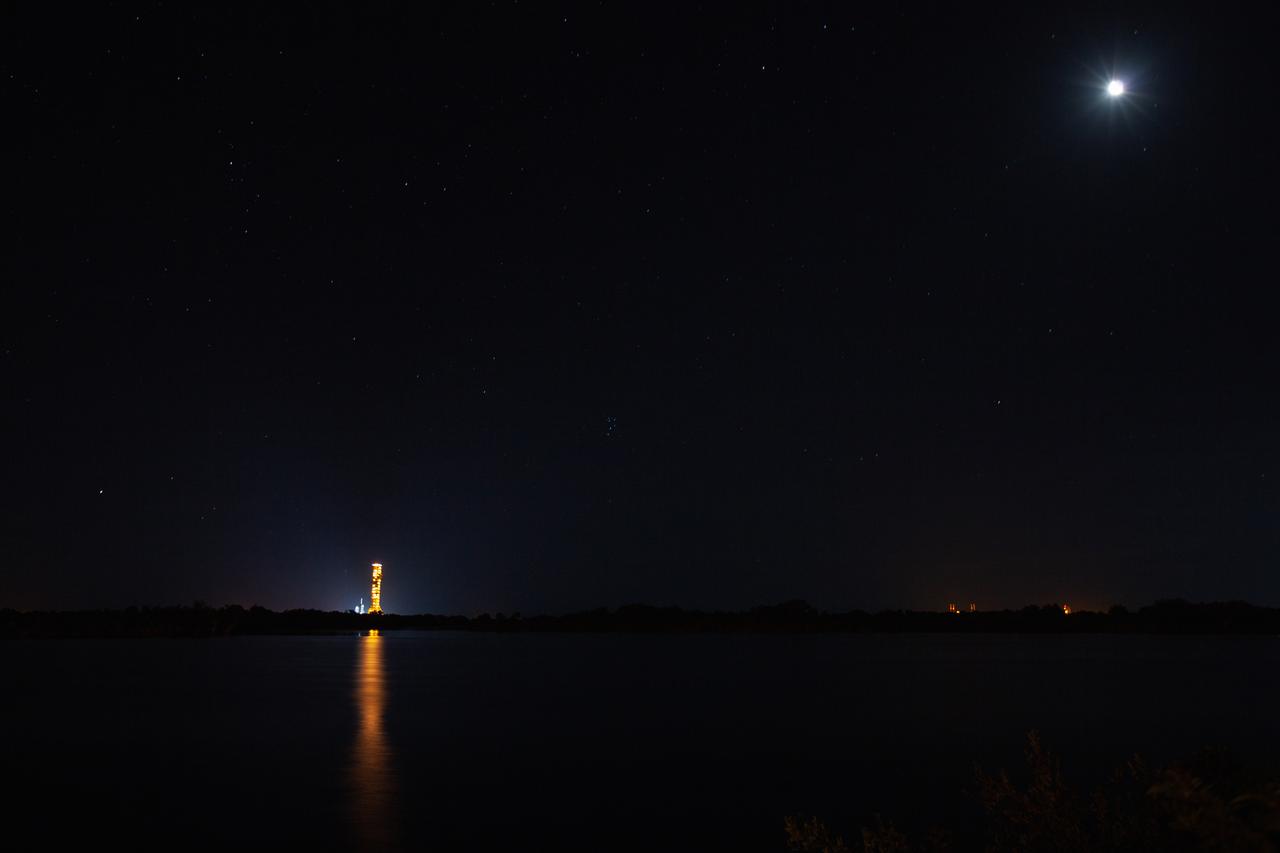
With the nighttime sky serving as the backdrop, Exploration Ground Systems’ mobile launcher makes its last solo trek to Kennedy Space Center’s Launch Complex 39B in Florida on June 27, 2019. The mobile launcher departed from the Vehicle Assembly Building at midnight on June 27 for the 10-hour journey to the pad and will remain there for the summer, undergoing final testing and checkouts. Its next roll to the pad will be with the agency’s Space Launch System rocket and Orion spacecraft in preparation for the launch of Artemis 1.
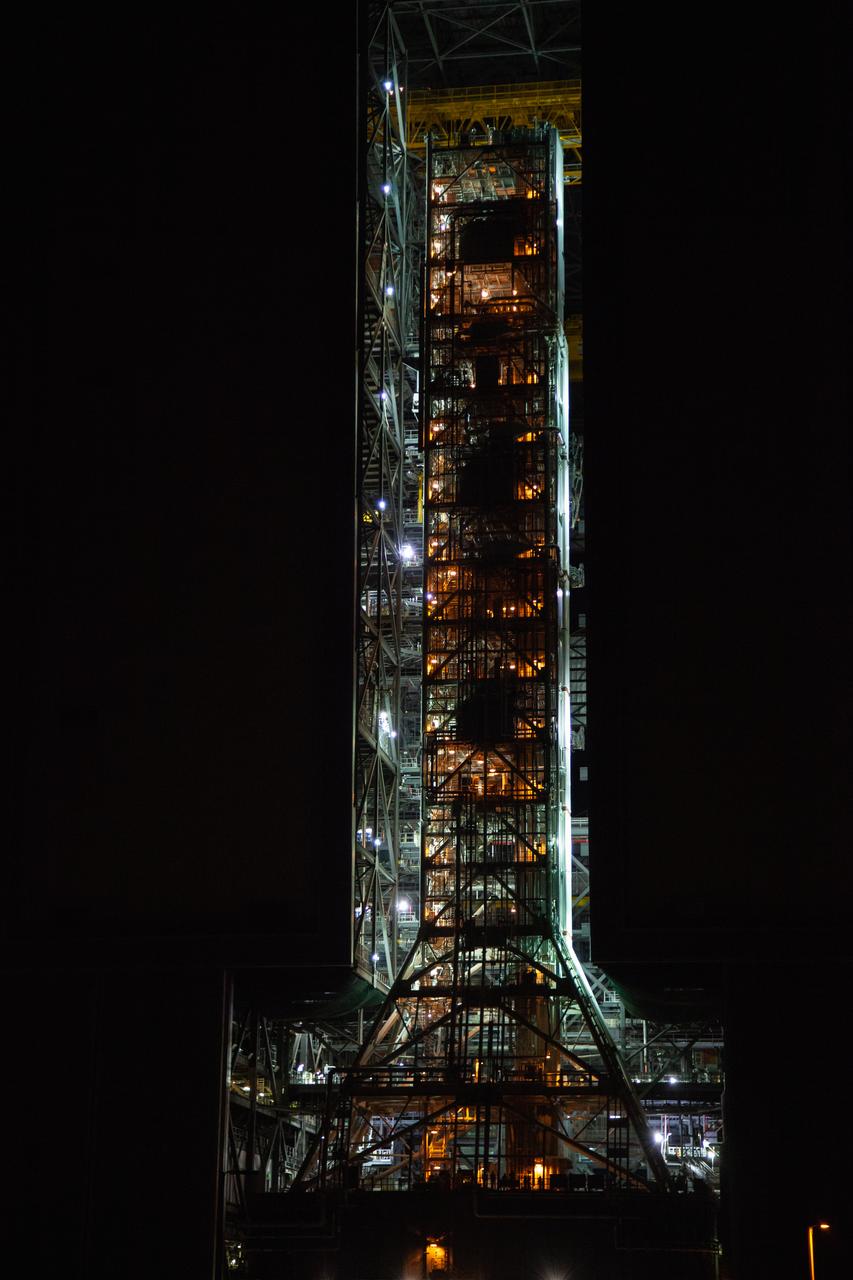
Exploration Ground Systems’ mobile launcher is illuminated in the night as it makes its last solo trek to Kennedy Space Center’s Launch Complex 39B in Florida on June 27, 2019. The mobile launcher departed from the Vehicle Assembly Building at midnight on June 27 for the 10-hour journey to the pad, where it will remain for the summer, undergoing final testing and checkouts. Its next roll to the pad will be with the agency’s Space Launch System rocket and Orion spacecraft in preparation for the launch of Artemis 1.
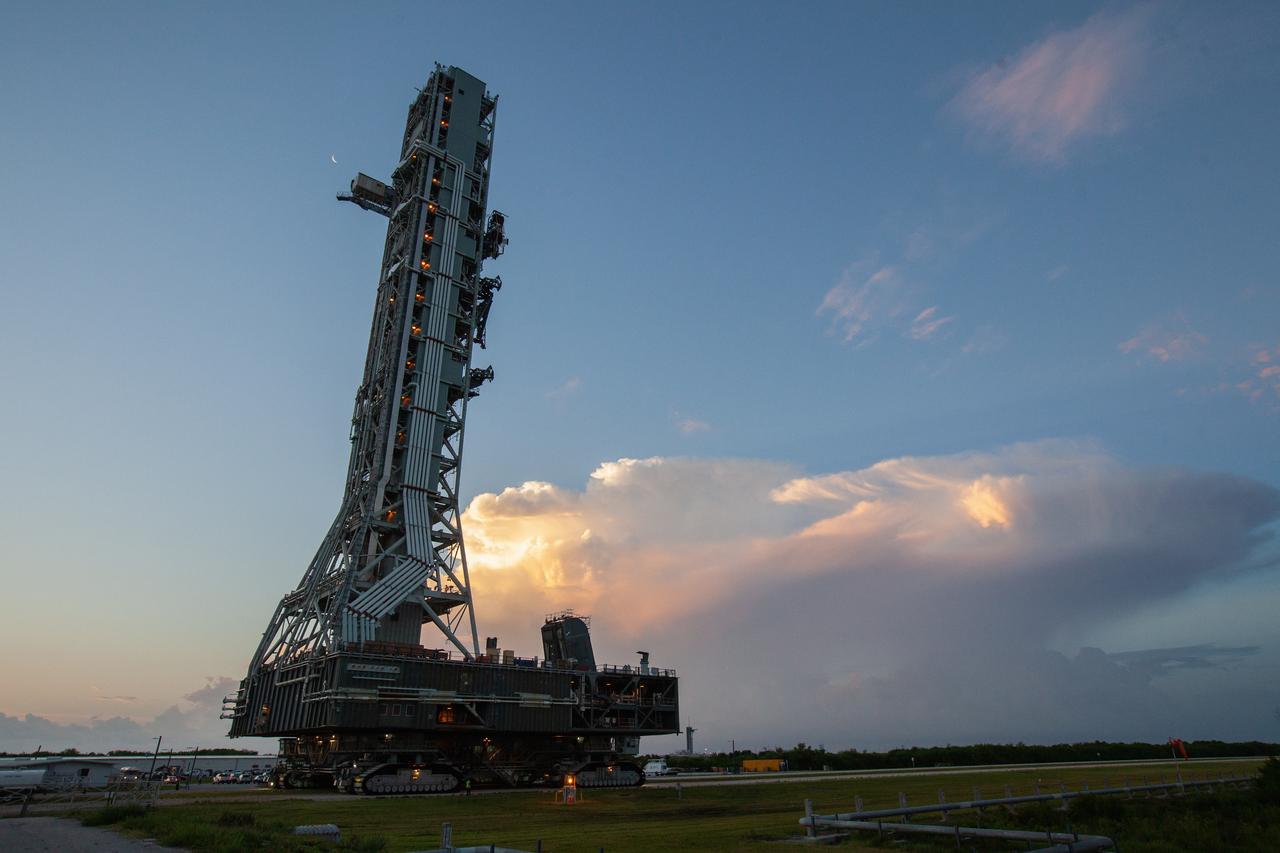
After successfully arriving at Kennedy Space Center’s Launch Complex 39B, Exploration Ground Systems’ mobile launcher continues its journey atop crawler-transporter 2 up to the pad surface on June 28, 2019. The mobile launcher began its final solo trek to the pad at midnight on June 27, departing from NASA’s Vehicle Assembly Building. The mobile launcher will remain at the pad over the summer, undergoing final testing and checkouts. Its next roll to the pad will be with the agency’s Space Launch System rocket and Orion in preparation for the launch of Artemis 1.
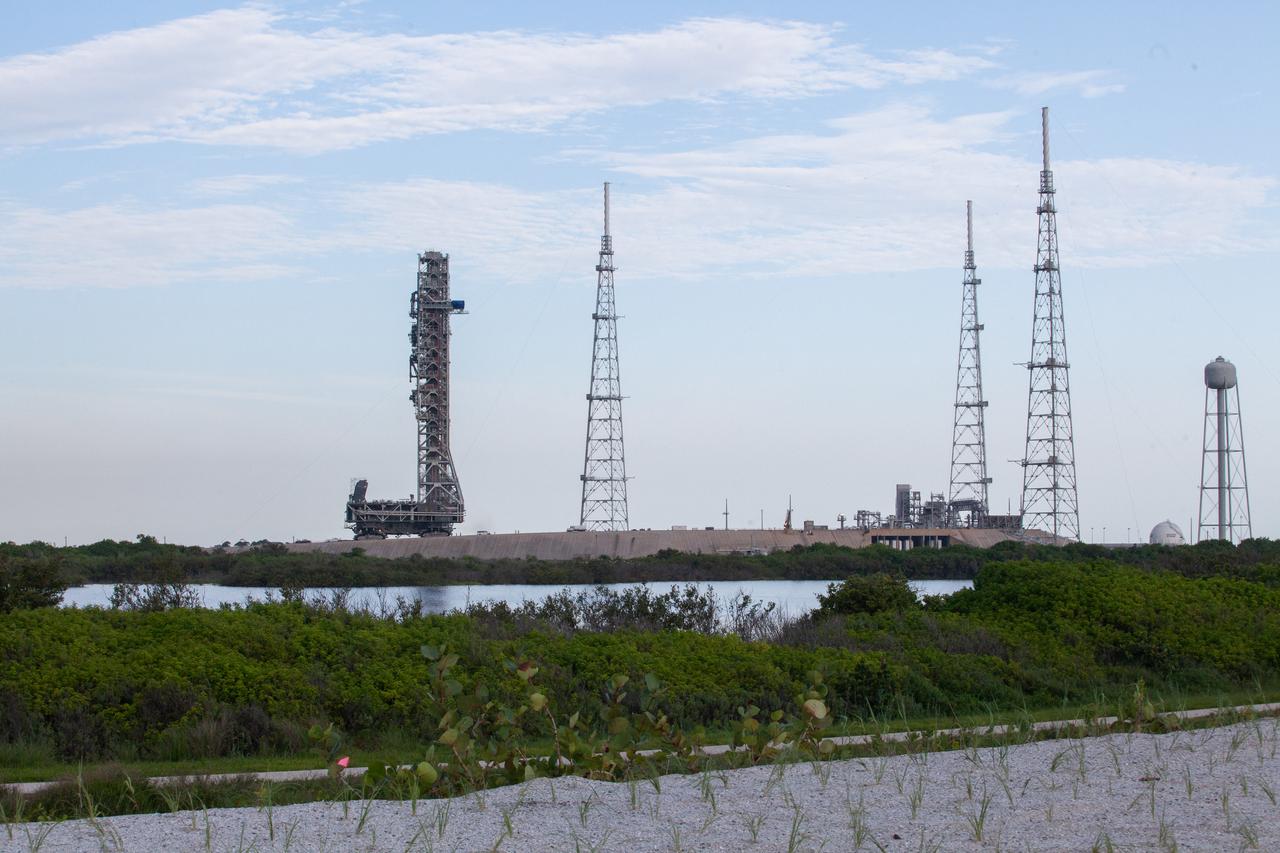
After successfully arriving at Kennedy Space Center’s Launch Complex 39B, Exploration Ground Systems’ mobile launcher continues its journey atop crawler-transporter 2 up to the pad surface on June 28, 2019. The mobile launcher began its final solo trek to the pad at midnight on June 27, departing from NASA’s Vehicle Assembly Building. The mobile launcher will remain at the pad over the summer, undergoing final testing and checkouts. Its next roll to the pad will be with the agency’s Space Launch System rocket and Orion in preparation for the launch of Artemis 1.
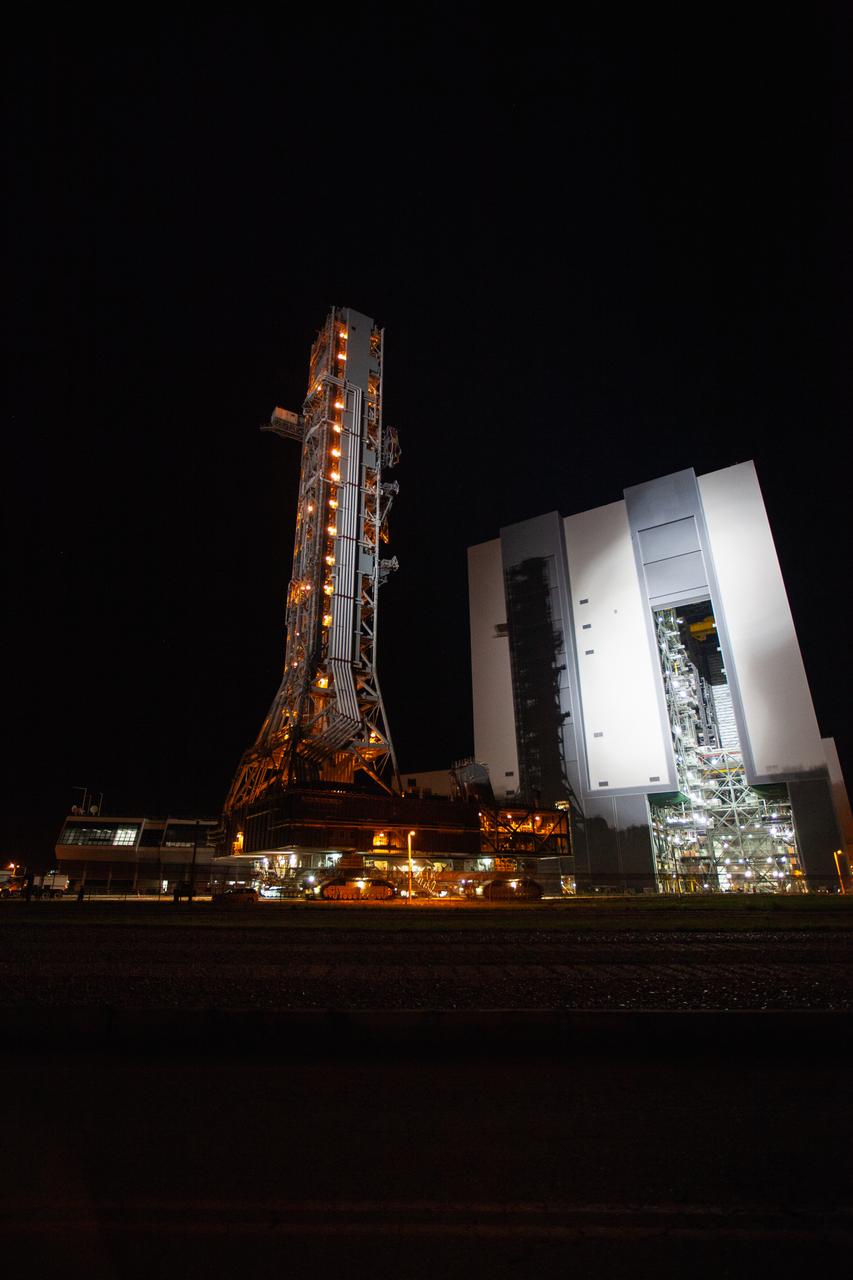
Exploration Ground Systems’ mobile launcher departs from Kennedy Space Center’s Vehicle Assembly Building (VAB) on June 27, 2019, for its final solo trek to Launch Complex 39B in Florida. The mobile launcher departed from the VAB at midnight for the 10-hour journey to the pad, where it will remain for the summer, undergoing final testing and checkouts. Its next roll to the pad will be with the agency’s Space Launch System rocket and Orion spacecraft in preparation for the launch of Artemis 1.
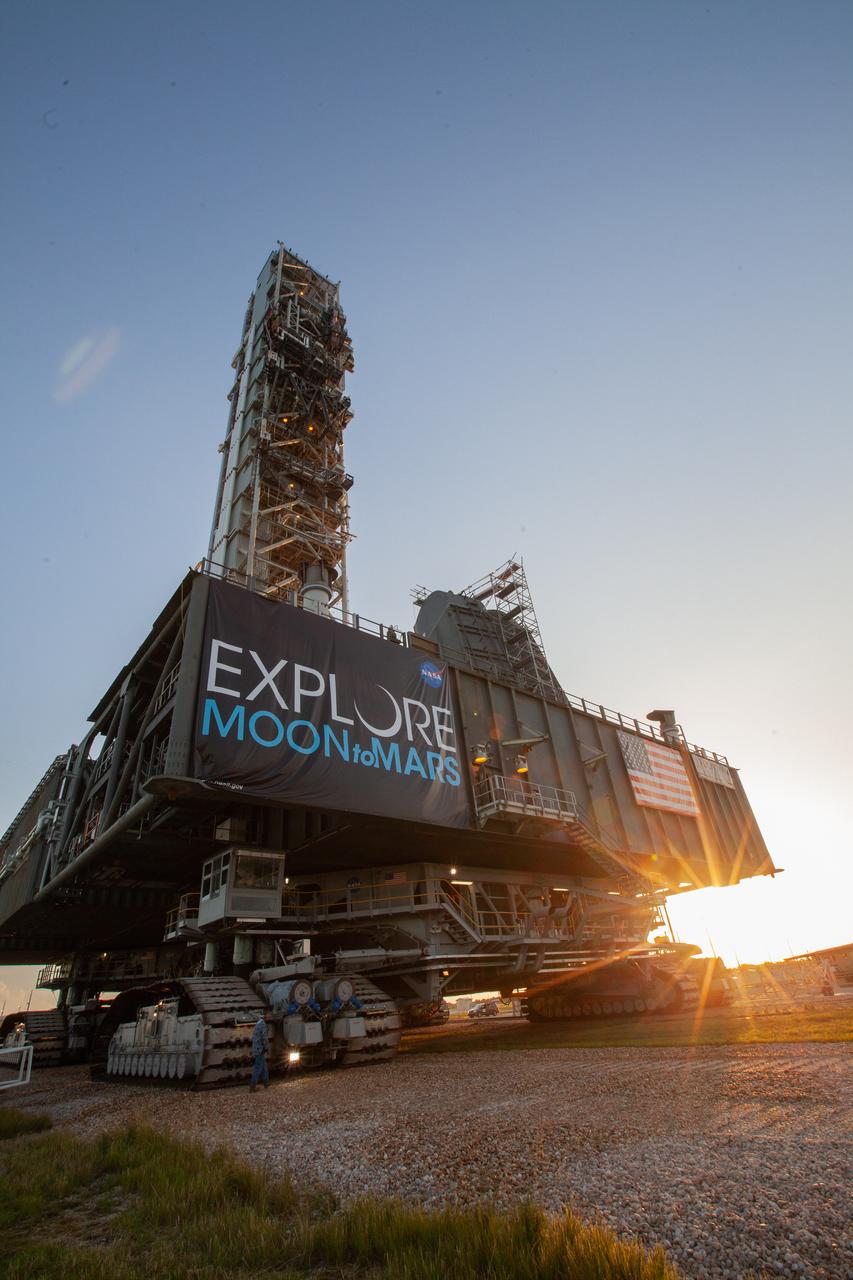
After successfully arriving at Kennedy Space Center’s Launch Complex 39B, Exploration Ground Systems’ mobile launcher continues its journey atop crawler-transporter 2 up to the pad surface on June 28, 2019. The mobile launcher began its final solo trek to the pad at midnight on June 27, departing from NASA’s Vehicle Assembly Building. The mobile launcher will remain at the pad over the summer, undergoing final testing and checkouts. Its next roll to the pad will be with the agency’s Space Launch System rocket and Orion in preparation for the launch of Artemis 1.
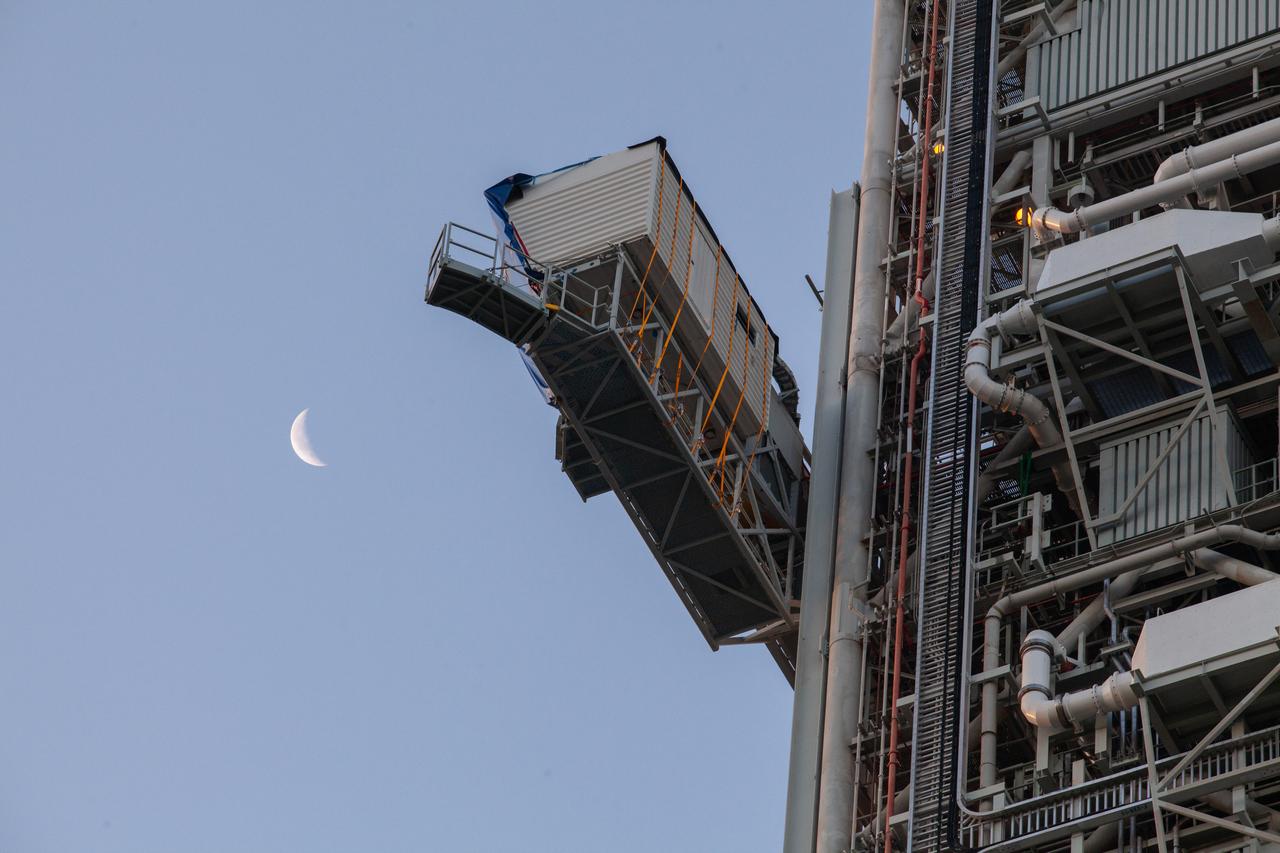
In this view, Exploration Ground Systems’ mobile launcher’s crew access arm (CAA) can be seen. The CAA will interface with the agency’s Space Launch System (SLS) rocket at the Orion crew hatch, providing entry and exit from the Orion crew module. The first crewed flight aboard Orion will be Artemis 2, after the uncrewed Artemis 1 launch verifies SLS and Orion as an integrated system.
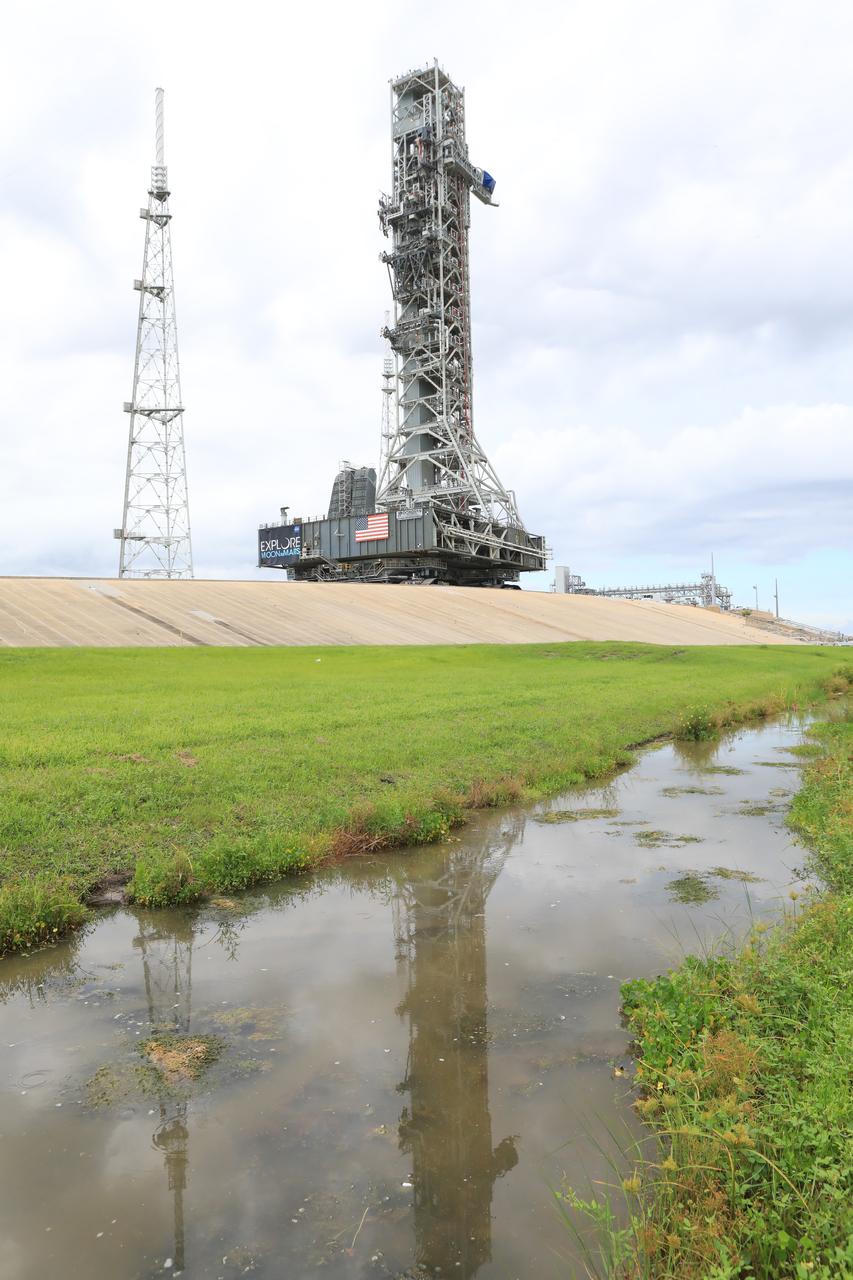
After successfully arriving at Kennedy Space Center’s Launch Complex 39B, Exploration Ground Systems’ mobile launcher is photographed at the pad surface atop crawler-transporter 2 on June 28, 2019. The mobile launcher began its final solo trek to the pad at midnight on June 27, departing from NASA’s Vehicle Assembly Building. The mobile launcher will remain at the pad over the summer, undergoing final testing and checkouts. Its next roll to the pad will be with the agency’s Space Launch System rocket and Orion in preparation for the launch of Artemis 1.
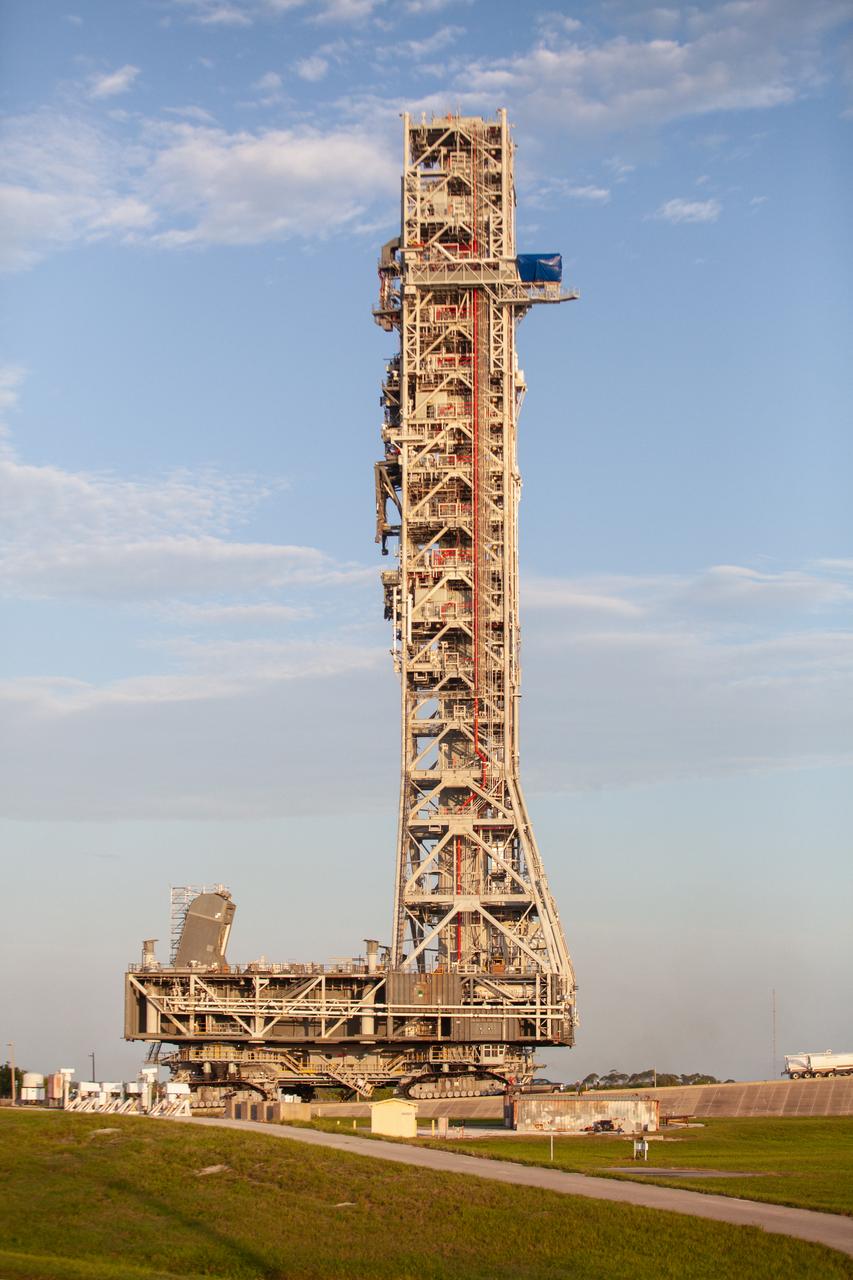
After successfully arriving at Kennedy Space Center’s Launch Complex 39B, Exploration Ground Systems’ mobile launcher continues its journey atop crawler-transporter 2 up to the pad surface on June 28, 2019. The mobile launcher began its final solo trek to the pad at midnight on June 27, departing from NASA’s Vehicle Assembly Building. The mobile launcher will remain at the pad over the summer, undergoing final testing and checkouts. Its next roll to the pad will be with the agency’s Space Launch System rocket and Orion in preparation for the launch of Artemis 1.
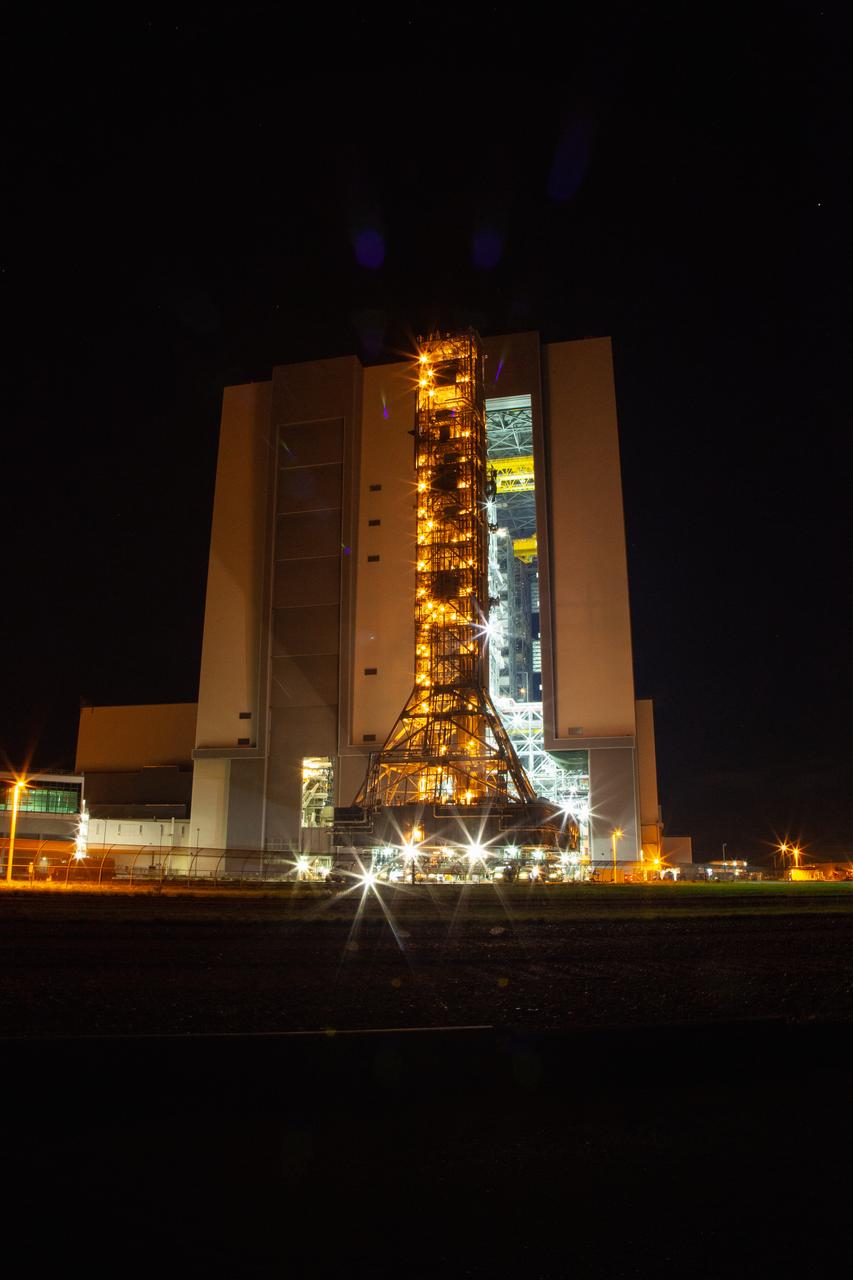
Exploration Ground Systems’ mobile launcher departs from Kennedy Space Center’s Vehicle Assembly Building at midnight on June 27, 2019, for its final solo trek to Launch Complex 39B in Florida. After the 10-hour journey to the pad, the mobile launcher will remain there for the summer, undergoing final testing and checkouts. Its next roll to the pad will be with the agency’s Space Launch System rocket and Orion spacecraft in preparation for the launch of Artemis 1.
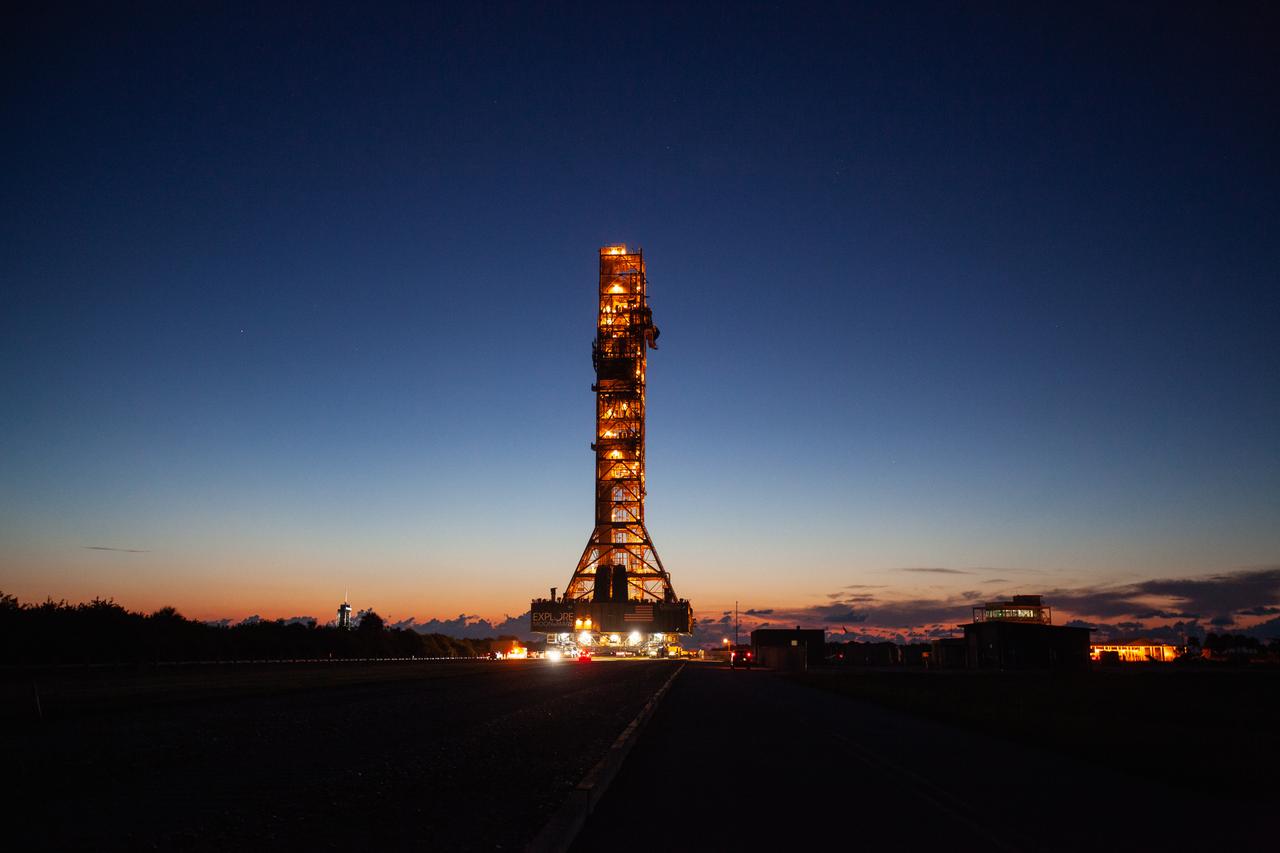
With a sunrise serving as the backdrop, Exploration Ground Systems’ mobile launcher makes its last solo trek to Kennedy Space Center’s Launch Complex 39B in Florida on June 27, 2019. It will remain there for the summer, undergoing final testing and checkouts. The mobile launcher departed from the Vehicle Assembly Building at midnight on June 27 for the 10-hour journey to the pad. Its next roll to the pad will be with the agency’s Space Launch System rocket and Orion spacecraft in preparation for the launch of Artemis 1.
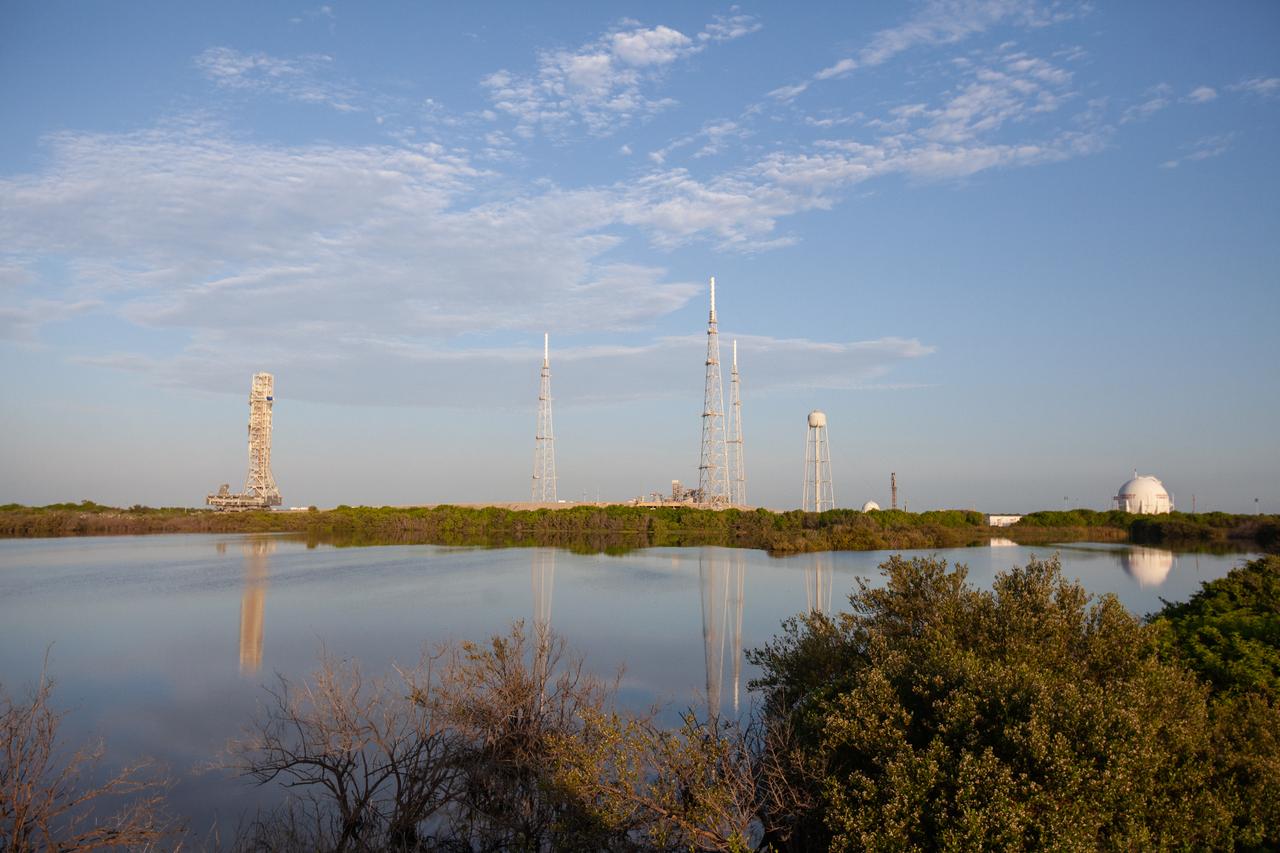
After successfully arriving at Kennedy Space Center’s Launch Complex 39B, Exploration Ground Systems’ mobile launcher continues its journey atop crawler-transporter 2 up to the pad surface on June 28, 2019. The mobile launcher began its final solo trek to the pad at midnight on June 27, departing from NASA’s Vehicle Assembly Building. The mobile launcher will remain at the pad over the summer, undergoing final testing and checkouts. Its next roll to the pad will be with the agency’s Space Launch System rocket and Orion in preparation for the launch of Artemis 1.
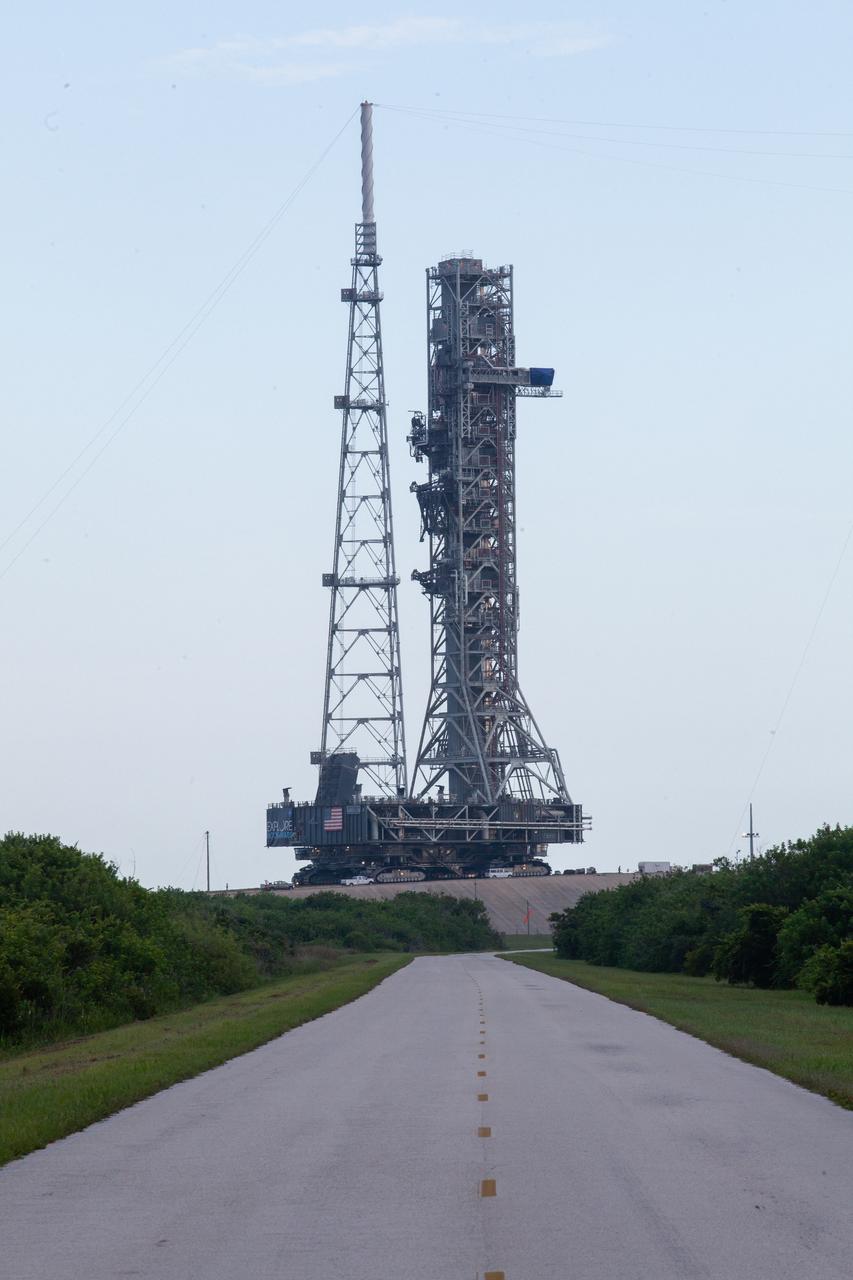
After successfully arriving at Kennedy Space Center’s Launch Complex 39B, Exploration Ground Systems’ mobile launcher is photographed at the pad surface atop crawler-transporter 2 on June 28, 2019. The mobile launcher began its final solo trek to the pad at midnight on June 27, departing from NASA’s Vehicle Assembly Building. The mobile launcher will remain at the pad over the summer, undergoing final testing and checkouts. Its next roll to the pad will be with the agency’s Space Launch System rocket and Orion in preparation for the launch of Artemis 1.
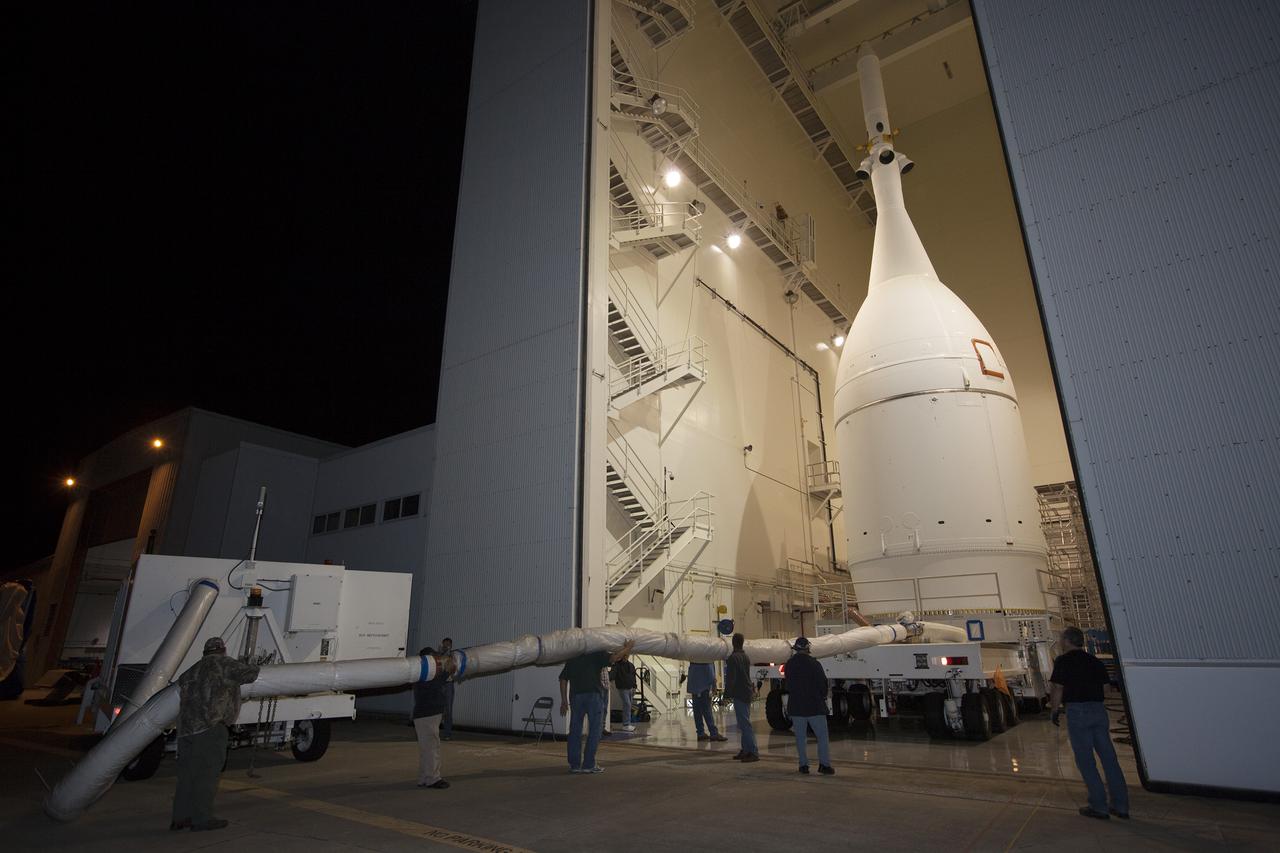
Orion is Coming out of the LASF
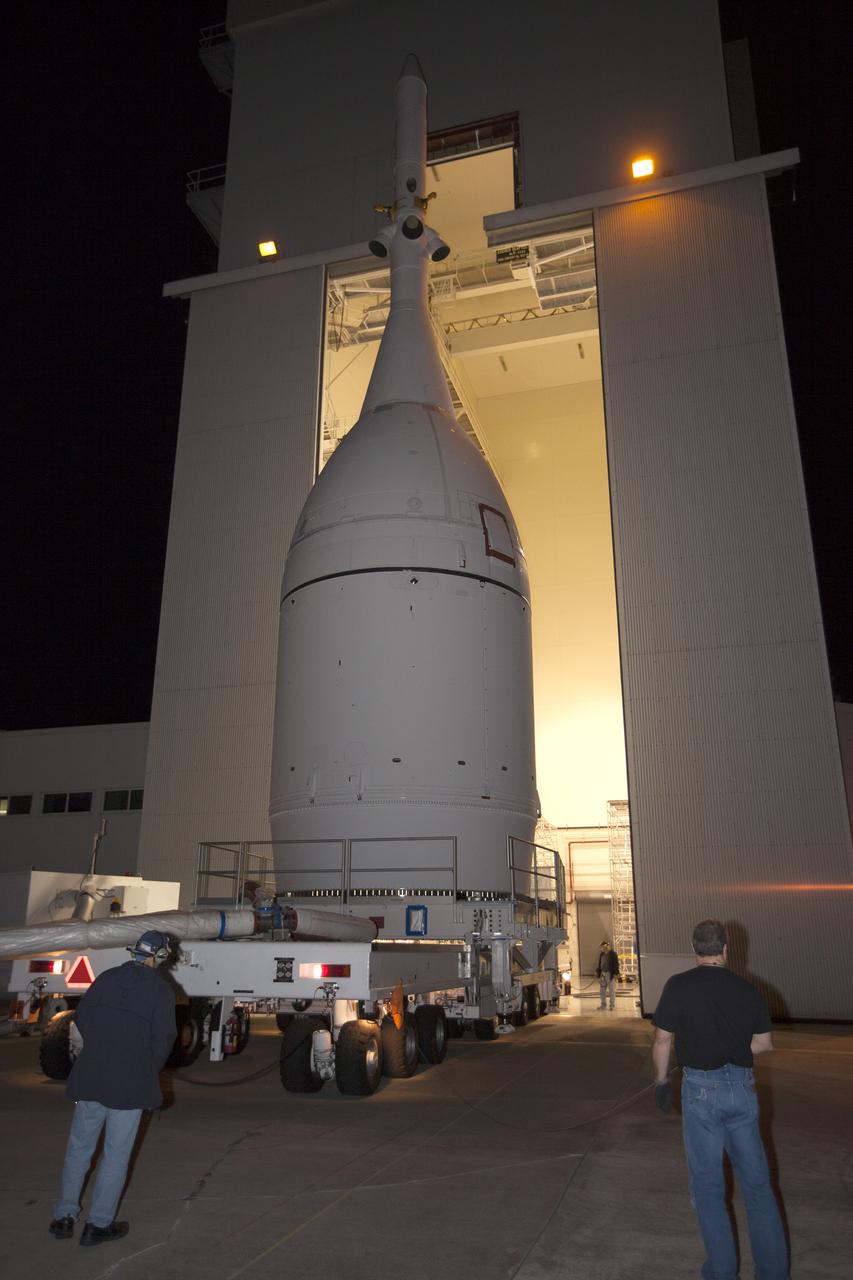
Orion is Coming out of the LASF
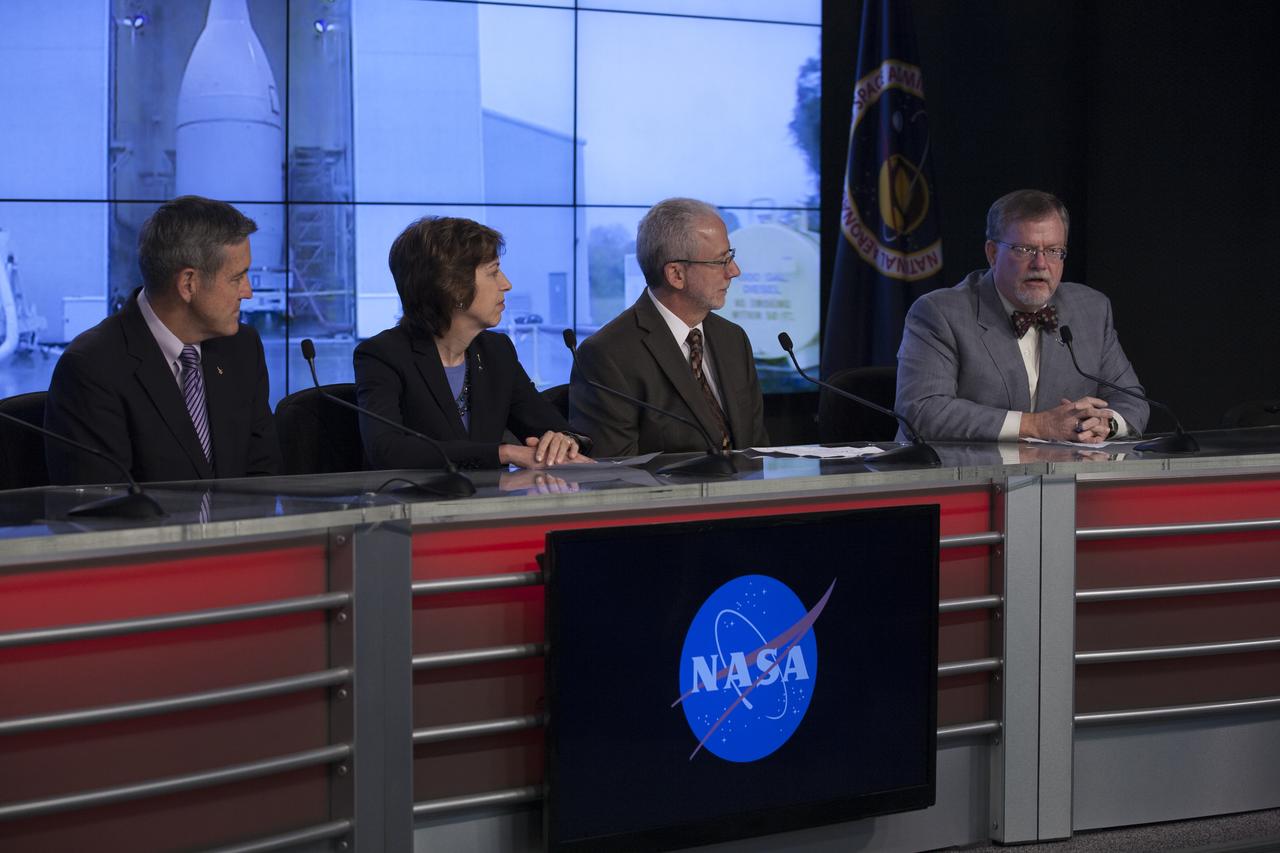
In the Kennedy Space Center’s Press Site auditorium, agency leaders spoke to members of the news media as the completed Orion spacecraft was being prepared for its trip from the Launch Abort System Facility to Launch Complex 37 at Cape Canaveral Air Force Station. From left are: Kennedy Director Bob Cabana, Johnson Space Center Director Ellen Ochoa, NASA Orion Program manager Mark Geyer, and Lockheed Martin Orion Program manager Mike Hawes. Orion is the exploration spacecraft designed to carry astronauts to destinations not yet explored by humans, including an asteroid and Mars. It will have emergency abort capability, sustain the crew during space travel and provide safe re-entry from deep space return velocities. The first unpiloted flight test of Orion is scheduled to launch Dec. 4, 2014 atop a United Launch Alliance Delta IV Heavy rocket, and in 2018 on NASA’s Space Launch System rocket.
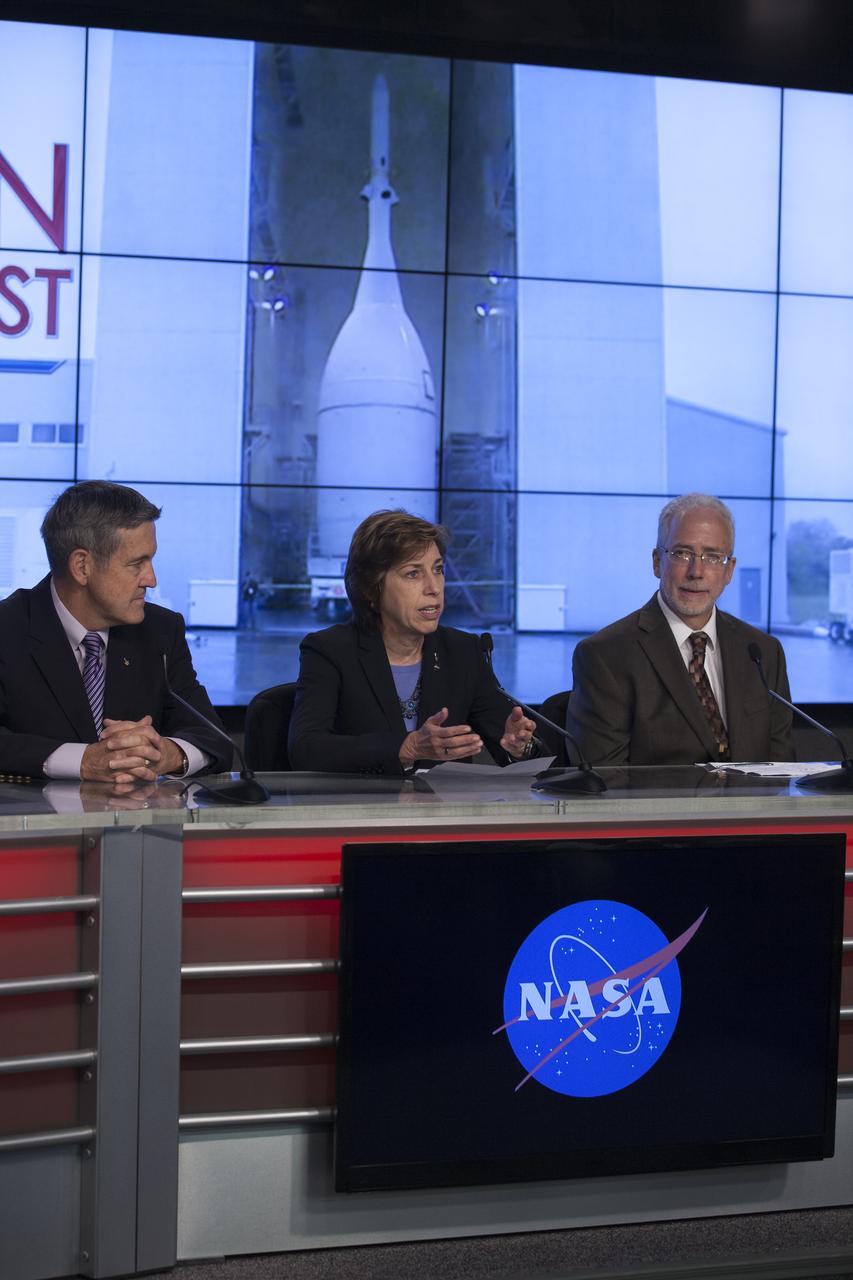
In the Kennedy Space Center’s Press Site auditorium, agency leaders spoke to members of the news media as the completed Orion spacecraft was being prepared for its trip from the Launch Abort System Facility to Launch Complex 37 at Cape Canaveral Air Force Station. From left are: Kennedy Director Bob Cabana, Johnson Space Center Director Ellen Ochoa, and NASA Orion Program manager Mark Geyer. Orion is the exploration spacecraft designed to carry astronauts to destinations not yet explored by humans, including an asteroid and Mars. It will have emergency abort capability, sustain the crew during space travel and provide safe re-entry from deep space return velocities. The first unpiloted flight test of Orion is scheduled to launch Dec. 4, 2014 atop a United Launch Alliance Delta IV Heavy rocket, and in 2018 on NASA’s Space Launch System rocket.

In the Kennedy Space Center’s Press Site auditorium, center director Bob Cabana spoke to members of the news media as the completed Orion spacecraft was being prepared for its trip from the Launch Abort System Facility to Launch Complex 37 at Cape Canaveral Air Force Station. Orion is the exploration spacecraft designed to carry astronauts to destinations not yet explored by humans, including an asteroid and Mars. It will have emergency abort capability, sustain the crew during space travel and provide safe re-entry from deep space return velocities. The first unpiloted flight test of Orion is scheduled to launch Dec. 4, 2014 atop a United Launch Alliance Delta IV Heavy rocket, and in 2018 on NASA’s Space Launch System rocket.
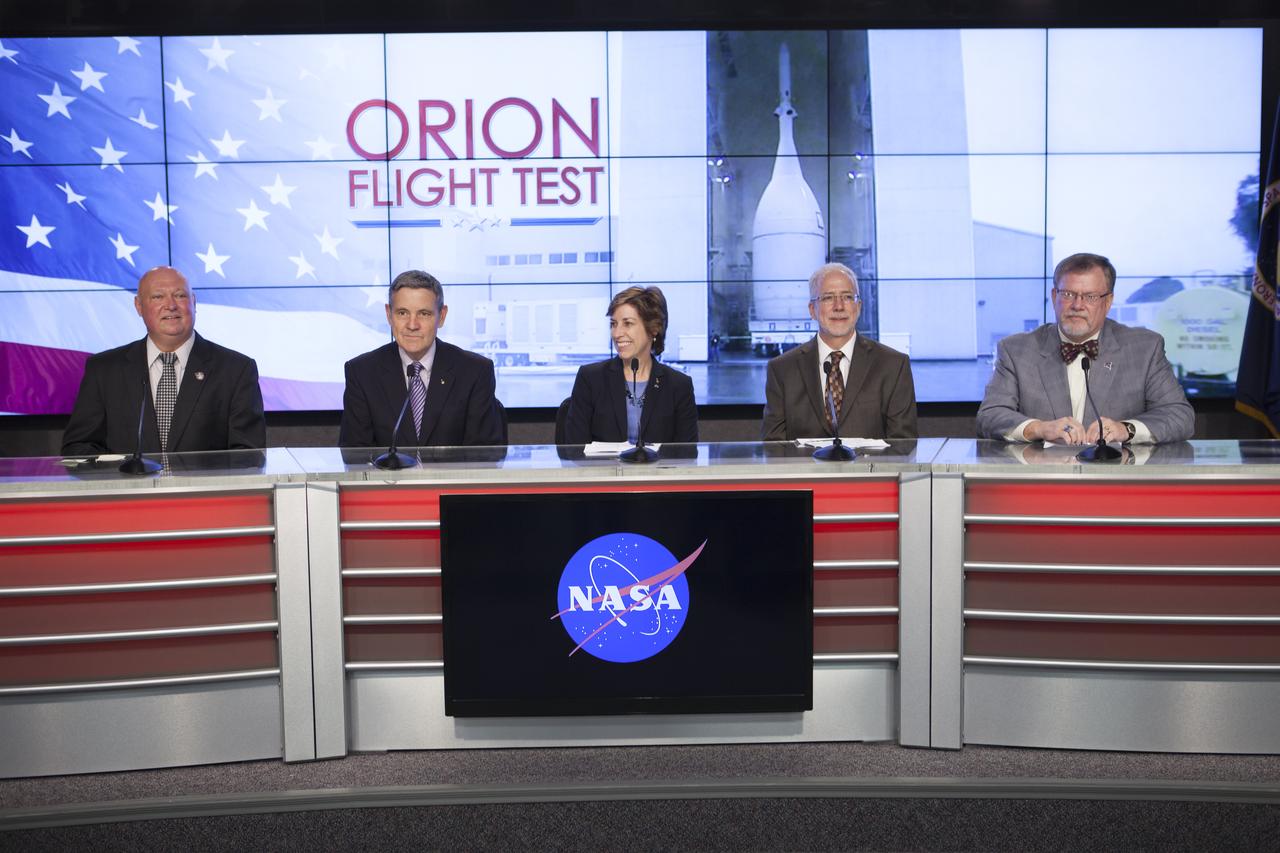
In the Kennedy Space Center’s Press Site auditorium, agency leaders spoke to members of the news media as the completed Orion spacecraft was being prepared for its trip from the Launch Abort System Facility to Launch Complex 37 at Cape Canaveral Air Force Station. From left are: Mike Curie of NASA Public Affairs, Kennedy Director Bob Cabana, Johnson Space Center Director Ellen Ochoa, NASA Orion Program manager Mark Geyer, and Lockheed Martin Orion Program manager Mike Hawes. Orion is the exploration spacecraft designed to carry astronauts to destinations not yet explored by humans, including an asteroid and Mars. It will have emergency abort capability, sustain the crew during space travel and provide safe re-entry from deep space return velocities. The first unpiloted flight test of Orion is scheduled to launch Dec. 4, 2014 atop a United Launch Alliance Delta IV Heavy rocket, and in 2018 on NASA’s Space Launch System rocket.

In the Kennedy Space Center’s Press Site auditorium, Kennedy's director Bob Cabana and Johnson Space Center Director Ellen Ochoa spoke to members of the news media as the completed Orion spacecraft was being prepared for its trip from the Launch Abort System Facility to Launch Complex 37 at Cape Canaveral Air Force Station. Orion is the exploration spacecraft designed to carry astronauts to destinations not yet explored by humans, including an asteroid and Mars. It will have emergency abort capability, sustain the crew during space travel and provide safe re-entry from deep space return velocities. The first unpiloted flight test of Orion is scheduled to launch Dec. 4, 2014 atop a United Launch Alliance Delta IV Heavy rocket, and in 2018 on NASA’s Space Launch System rocket.
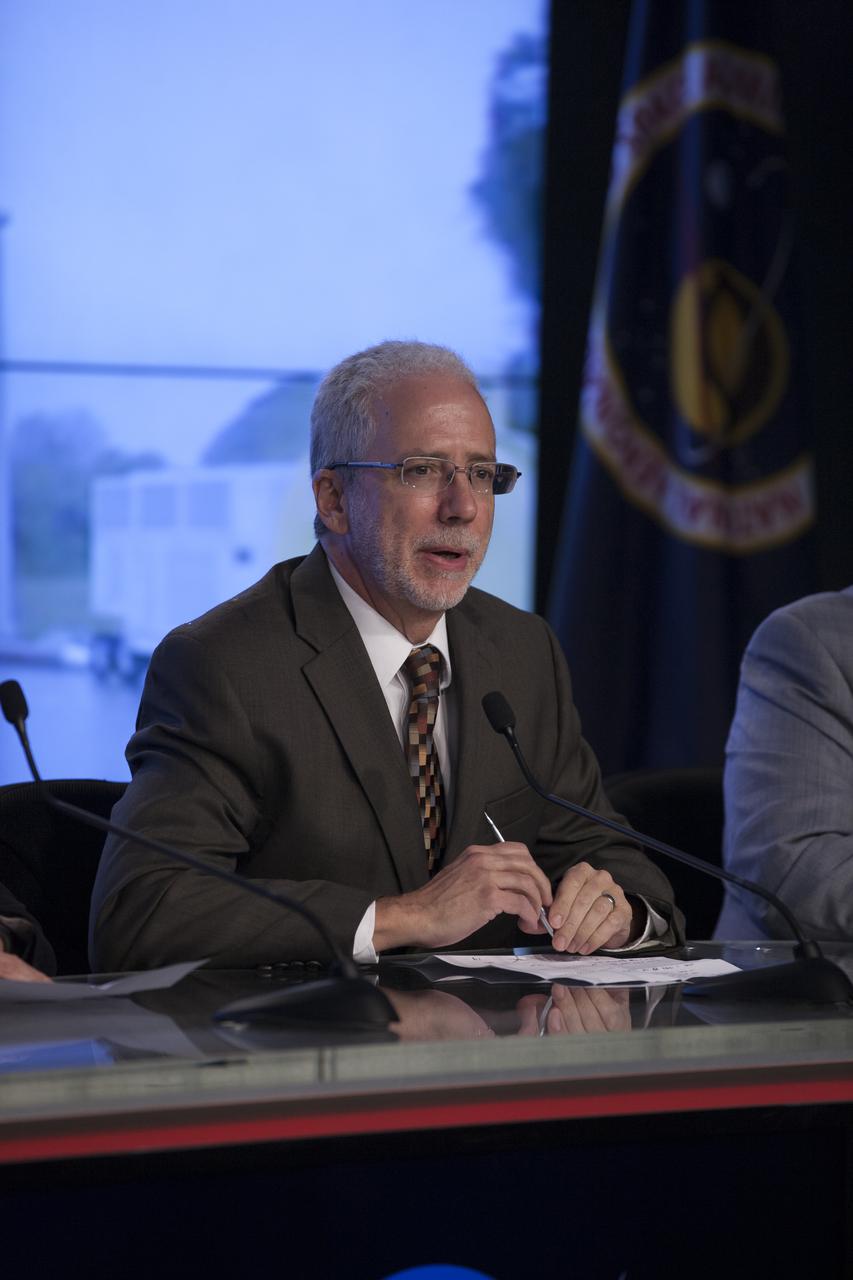
In the Kennedy Space Center’s Press Site auditorium, NASA Orion Program manager Mark Geyer spoke to members of the news media as the completed Orion spacecraft was being prepared for its trip from the Launch Abort System Facility to Launch Complex 37 at Cape Canaveral Air Force Station. Orion is the exploration spacecraft designed to carry astronauts to destinations not yet explored by humans, including an asteroid and Mars. It will have emergency abort capability, sustain the crew during space travel and provide safe re-entry from deep space return velocities. The first unpiloted flight test of Orion is scheduled to launch Dec. 4, 2014 atop a United Launch Alliance Delta IV Heavy rocket, and in 2018 on NASA’s Space Launch System rocket.
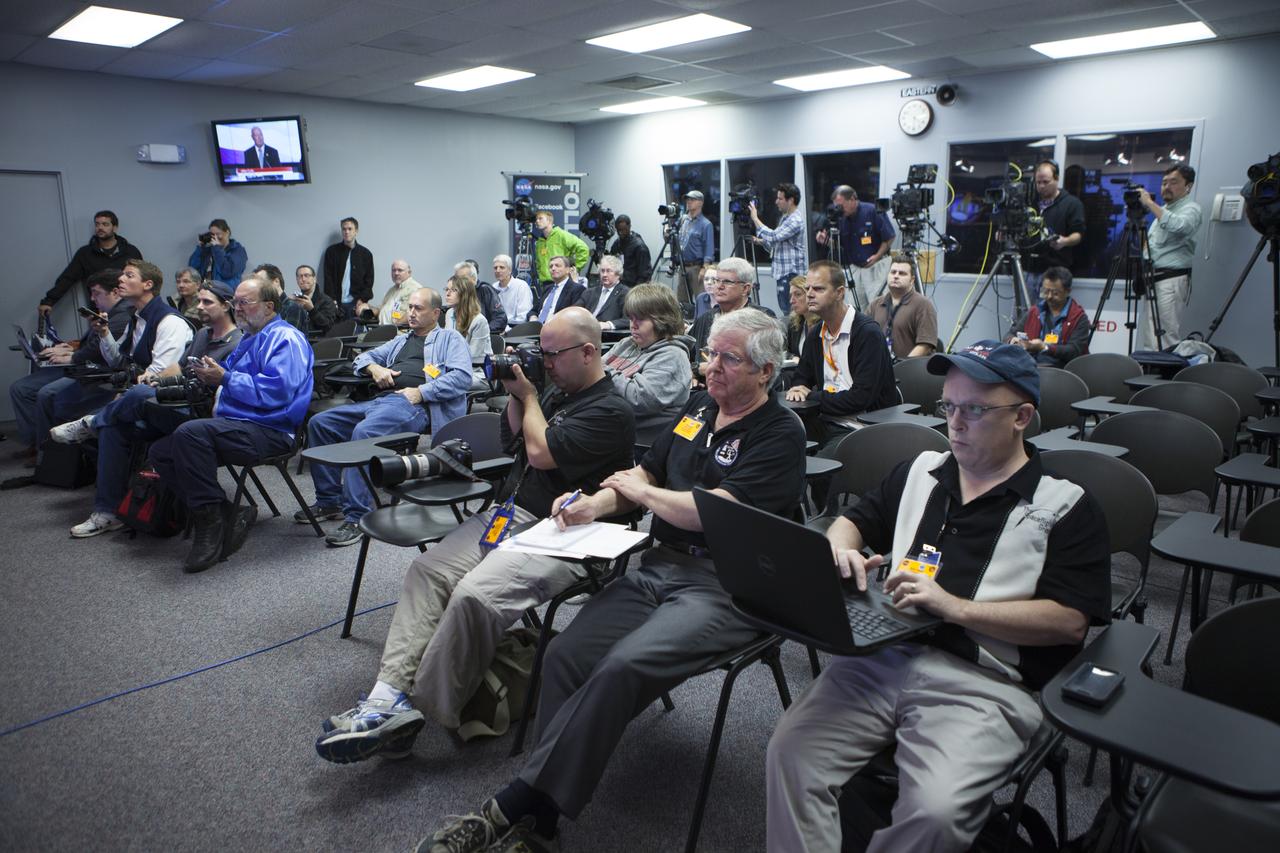
In the Kennedy Space Center’s Press Site auditorium, members of the news media listen as NASA and contractor officials discuss plans for moving the completed Orion spacecraft from the Launch Abort System Facility to Launch Complex 37 at Cape Canaveral Air Force Station. Orion is the exploration spacecraft designed to carry astronauts to destinations not yet explored by humans, including an asteroid and Mars. It will have emergency abort capability, sustain the crew during space travel and provide safe re-entry from deep space return velocities. The first unpiloted flight test of Orion is scheduled to launch Dec. 4, 2014 atop a United Launch Alliance Delta IV Heavy rocket, and in 2018 on NASA’s Space Launch System rocket.
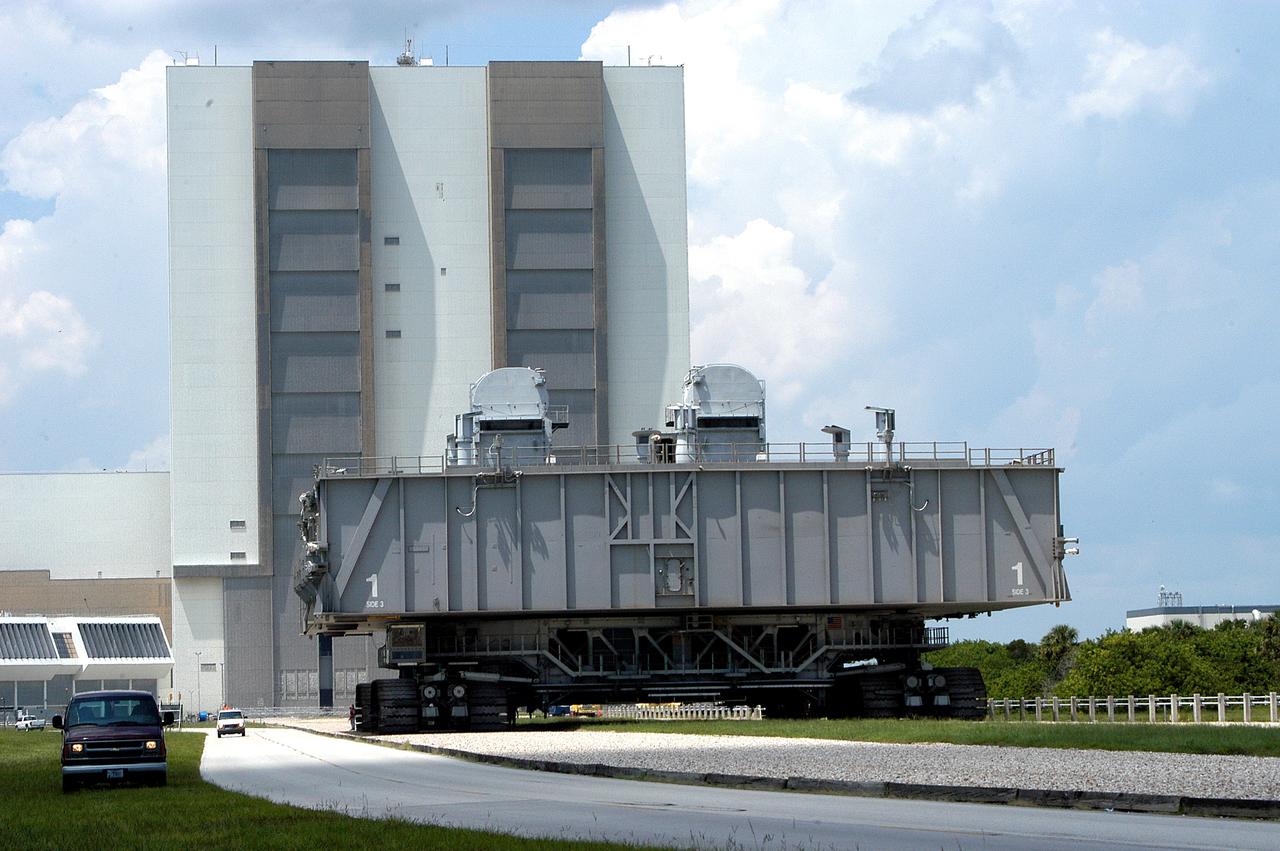
KENNEDY SPACE CENTER, FLA. - Crawler-transporter (CT) number 2, moves away from the Vehicle Assembly Building with a Mobile Launcher Platform (MLP) on top on a test run to the launch pad. The CT recently underwent modifications to the cab. The CT moves Space Shuttle vehicles, situated on the MLP, between the VAB and launch pad. Moving on four double-tracked crawlers, the CT uses a laser guidance system and a leveling system for the journey that keeps the top of a Space Shuttle vertical within plus- or minus-10 minutes of arc. The system enables the CT-MLP-Shuttle to negotiate the ramp leading to the launch pads and keep the load level. Unloaded, the CT weighs 6 million pounds. Seen on top of the MLP are two tail service masts that support the fluid, gas and electrical requirements of the orbiter’s liquid oxygen and liquid hydrogen aft umbilicals.
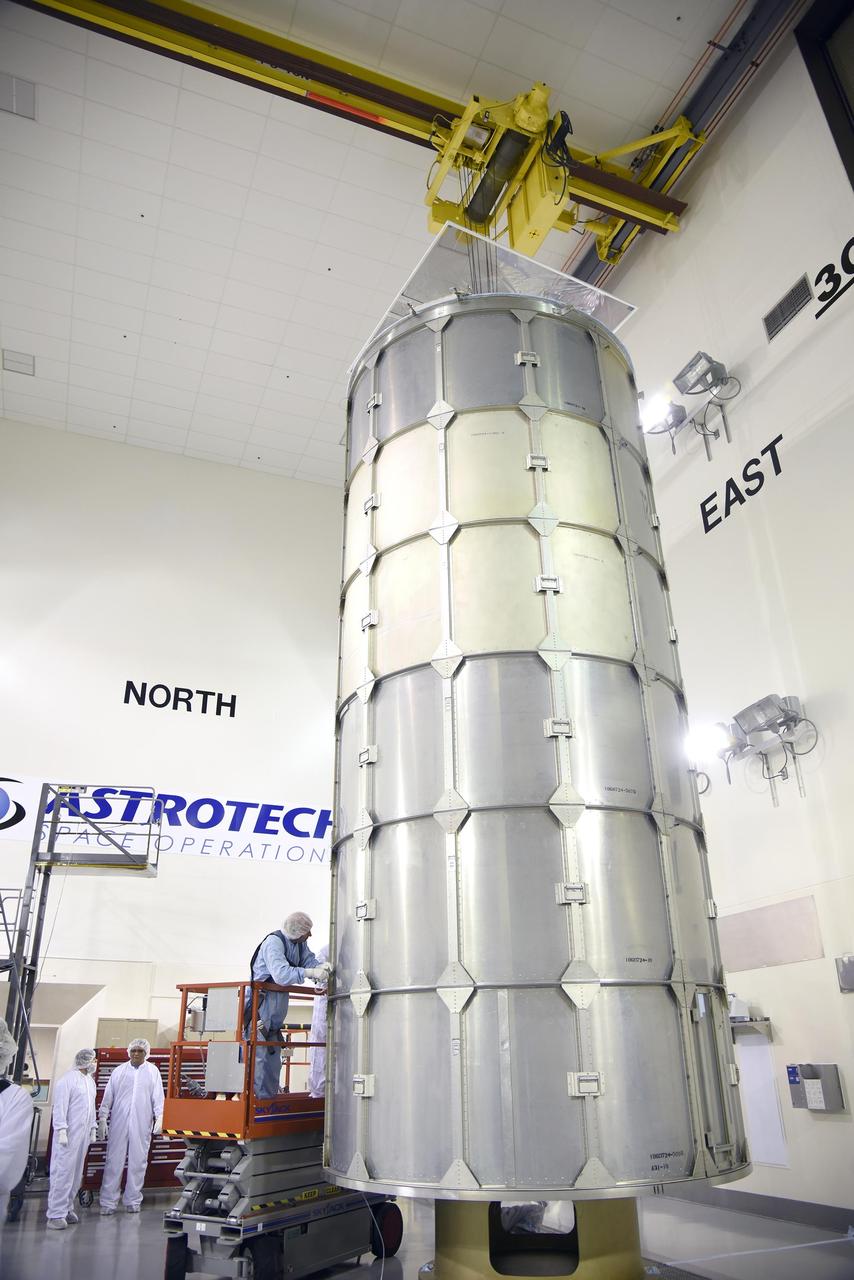
In the Astrotech payload processing facility on Vandenberg Air Force Base in California, technicians secure a transportation canister around NASA Soil Moisture Active Passive SMAP spacecraft for its move to the launch pad.
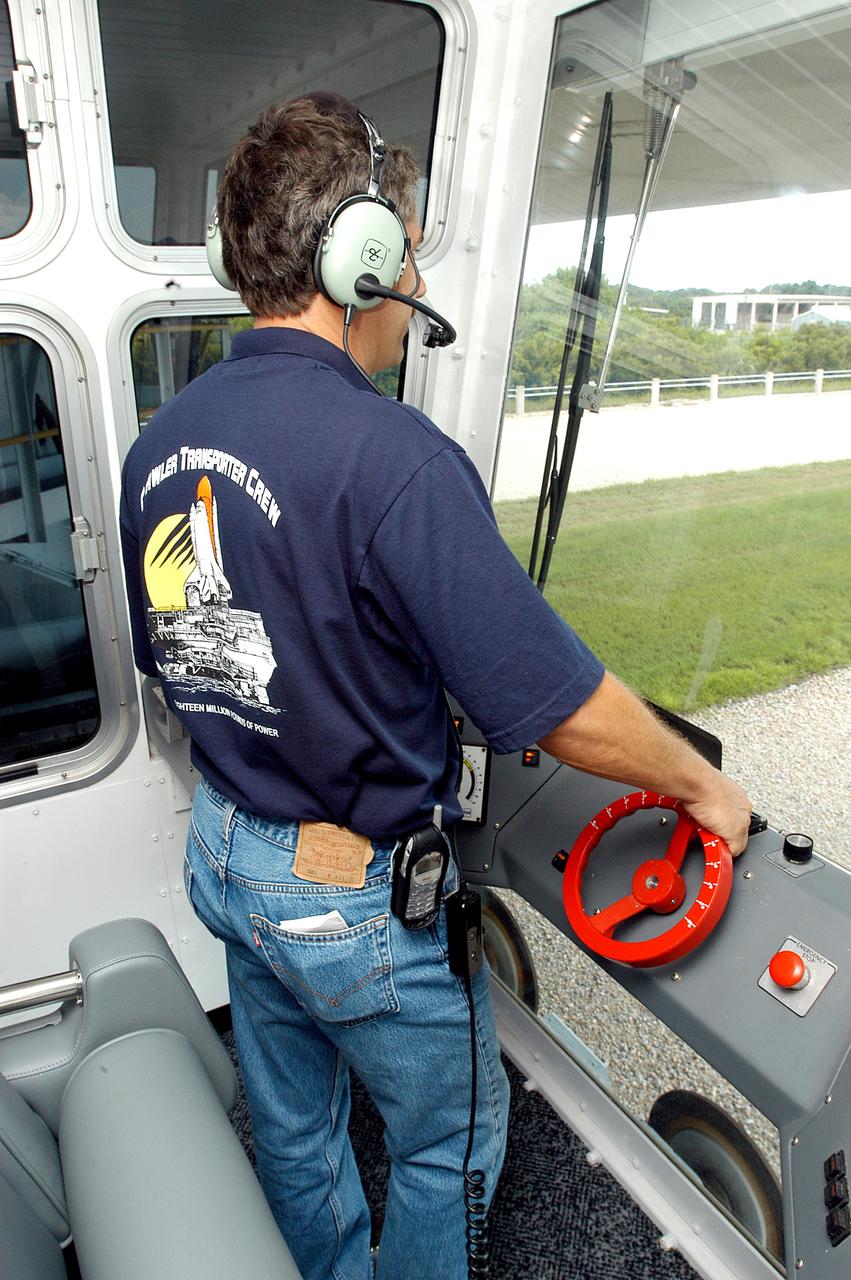
KENNEDY SPACE CENTER, FLA. - Inside the cab of crawler-transporter (CT) number 2, driver Sam Dove, with United Space Alliance, operates the vehicle on a test run to the launch pad. The CT recently underwent modifications to the cab. The CT is transporting a Mobile Launch Platform (MLP). The CT moves Space Shuttle vehicles, situated on the MLP, between the VAB and launch pad. Moving on four double-tracked crawlers, the CT uses a laser guidance system and a leveling system for the journey that keeps the top of a Space Shuttle vertical within plus- or minus-10 minutes of arc. The system enables the CT-MLP-Shuttle to negotiate the ramp leading to the launch pads and keep the load level. Unloaded, the CT weighs 6 million pounds. Seen on top of the MLP are two tail service masts that support the fluid, gas and electrical requirements of the orbiter’s liquid oxygen and liquid hydrogen aft umbilicals.
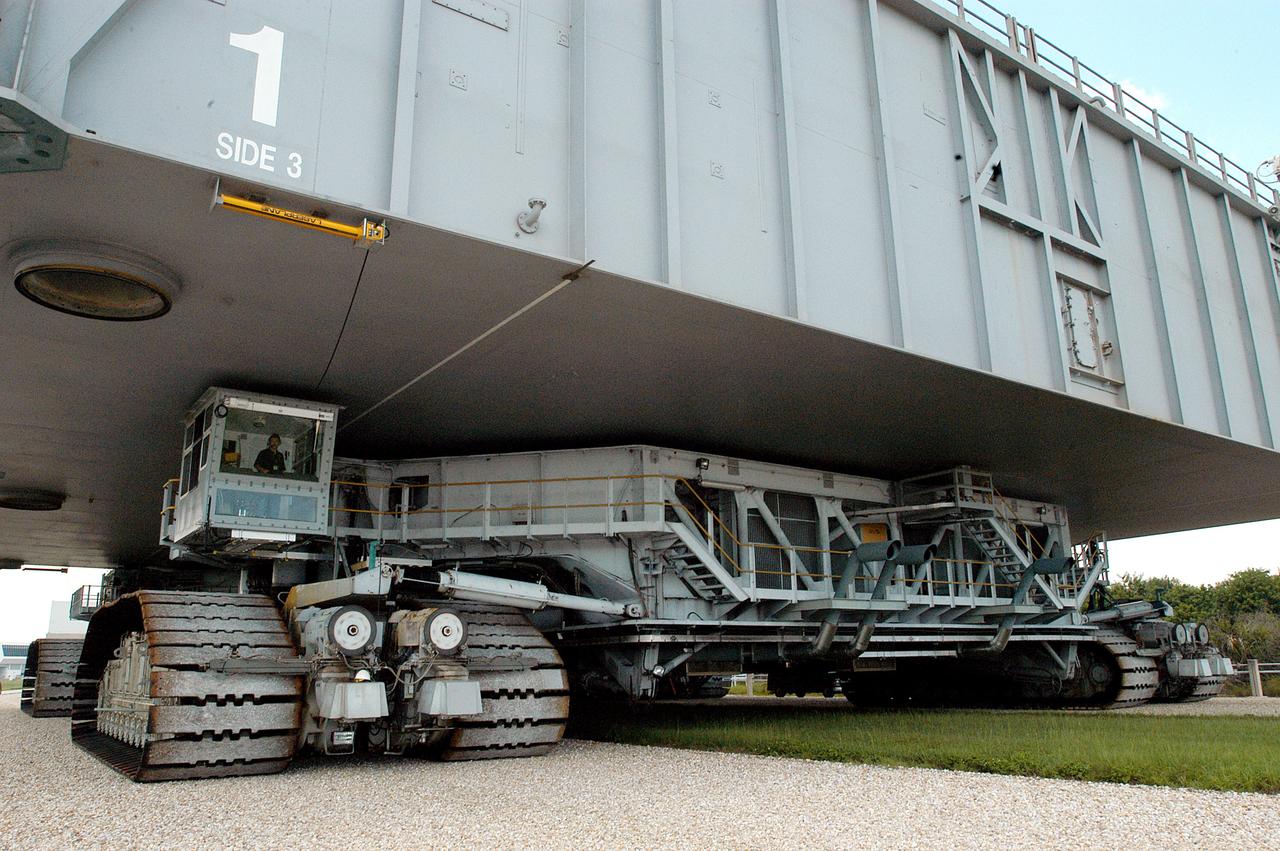
KENNEDY SPACE CENTER, FLA. - A closeup of crawler-transporter (CT) number 2 shows the cab (left, above the tracks) that recently underwent modifications. The CT is transporting a Mobile Launch Platform (MLP) on a test run to the pad. The CT moves Space Shuttle vehicles, situated on the MLP, between the VAB and launch pad. Moving on four double-tracked crawlers, the CT uses a laser guidance system and a leveling system for the journey that keeps the top of a Space Shuttle vertical within plus- or minus-10 minutes of arc. The system enables the CT-MLP-Shuttle to negotiate the ramp leading to the launch pads and keep the load level. Unloaded, the CT weighs 6 million pounds. Seen on top of the MLP are two tail service masts that support the fluid, gas and electrical requirements of the orbiter’s liquid oxygen and liquid hydrogen aft umbilicals.
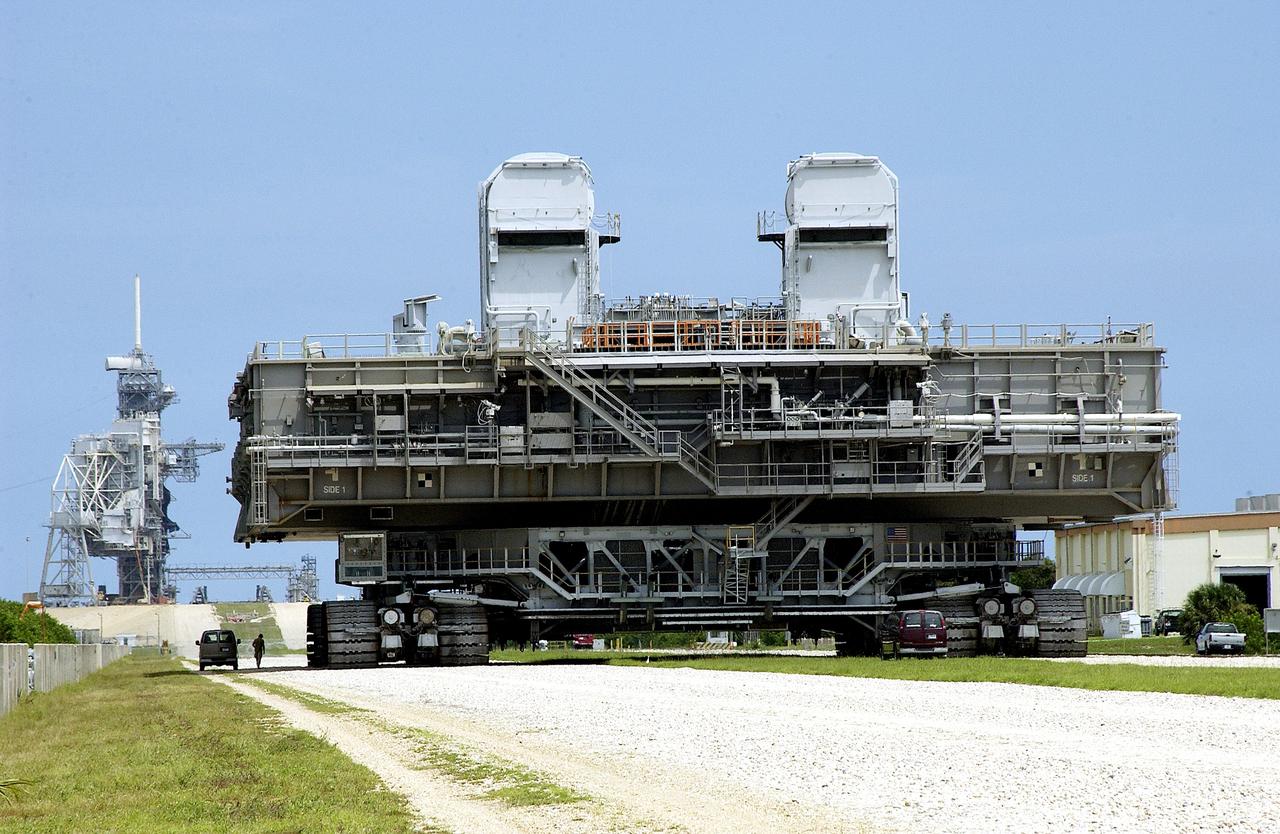
KENNEDY SPACE CENTER, FLA. - Crawler-transporter (CT) number 2 nears the launch pad with a Mobile Launcher Platform (MLP) on top. After recent modifications to the cab and muffler system, the CT was taken on a test run. The CT moves Space Shuttle vehicles, situated on the MLP, between the VAB and launch pad. Moving on four double-tracked crawlers, the CT uses a laser guidance system and a leveling system for the journey that keeps the top of a Space Shuttle vertical within plus- or minus-10 minutes of arc. The system enables the CT-MLP-Shuttle to negotiate the ramp leading to the launch pads and keep the load level. Unloaded, the CT weighs 6 million pounds. Seen on top of the MLP are two tail service masts that support the fluid, gas and electrical requirements of the orbiter’s liquid oxygen and liquid hydrogen aft umbilicals.
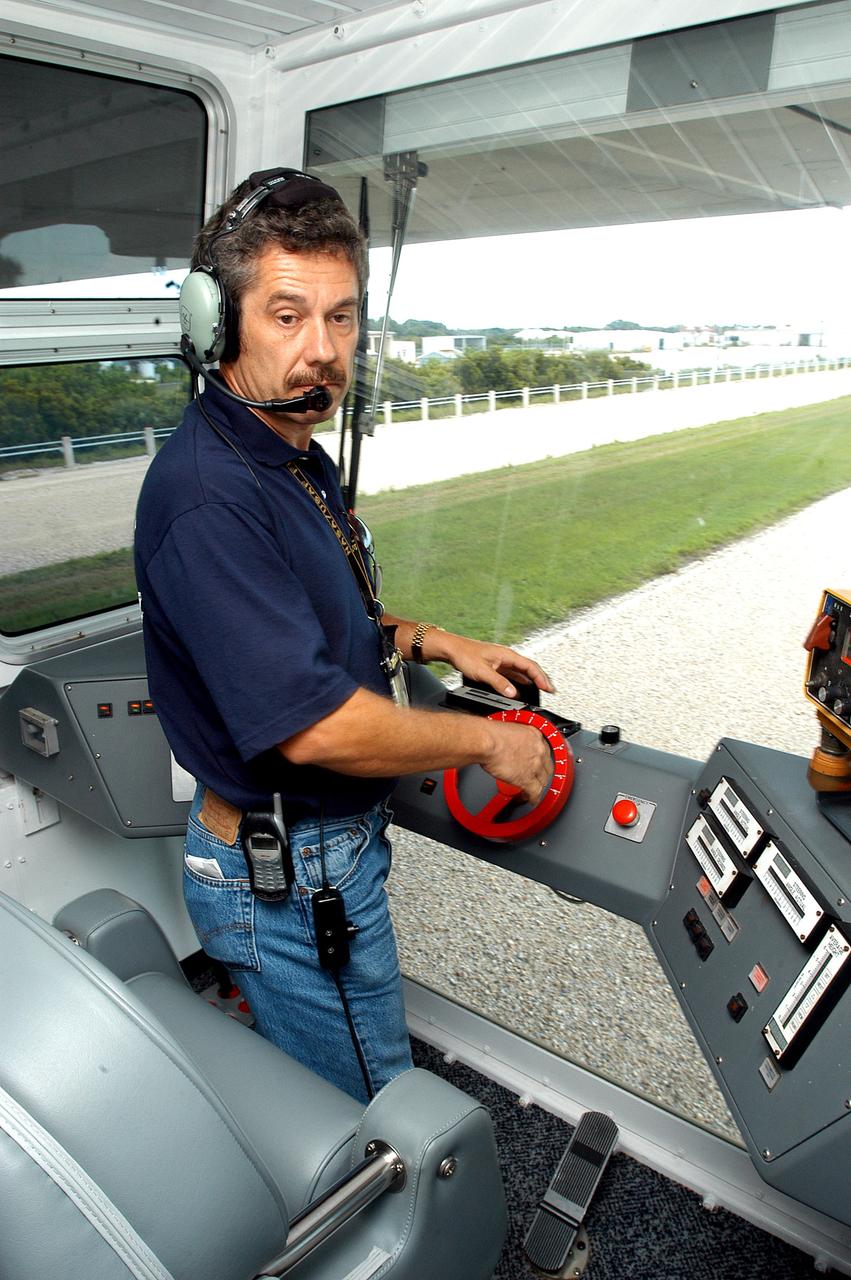
KENNEDY SPACE CENTER, FLA. - Inside the cab of crawler-transporter (CT) number 2, driver Sam Dove, with United Space Alliance, operates the vehicle on a test run to the launch pad. The CT recently underwent modifications to the cab. The CT is transporting a Mobile Launch Platform (MLP). The CT moves Space Shuttle vehicles, situated on the MLP, between the VAB and launch pad. Moving on four double-tracked crawlers, the CT uses a laser guidance system and a leveling system for the journey that keeps the top of a Space Shuttle vertical within plus- or minus-10 minutes of arc. The system enables the CT-MLP-Shuttle to negotiate the ramp leading to the launch pads and keep the load level. Unloaded, the CT weighs 6 million pounds. Seen on top of the MLP are two tail service masts that support the fluid, gas and electrical requirements of the orbiter’s liquid oxygen and liquid hydrogen aft umbilicals.
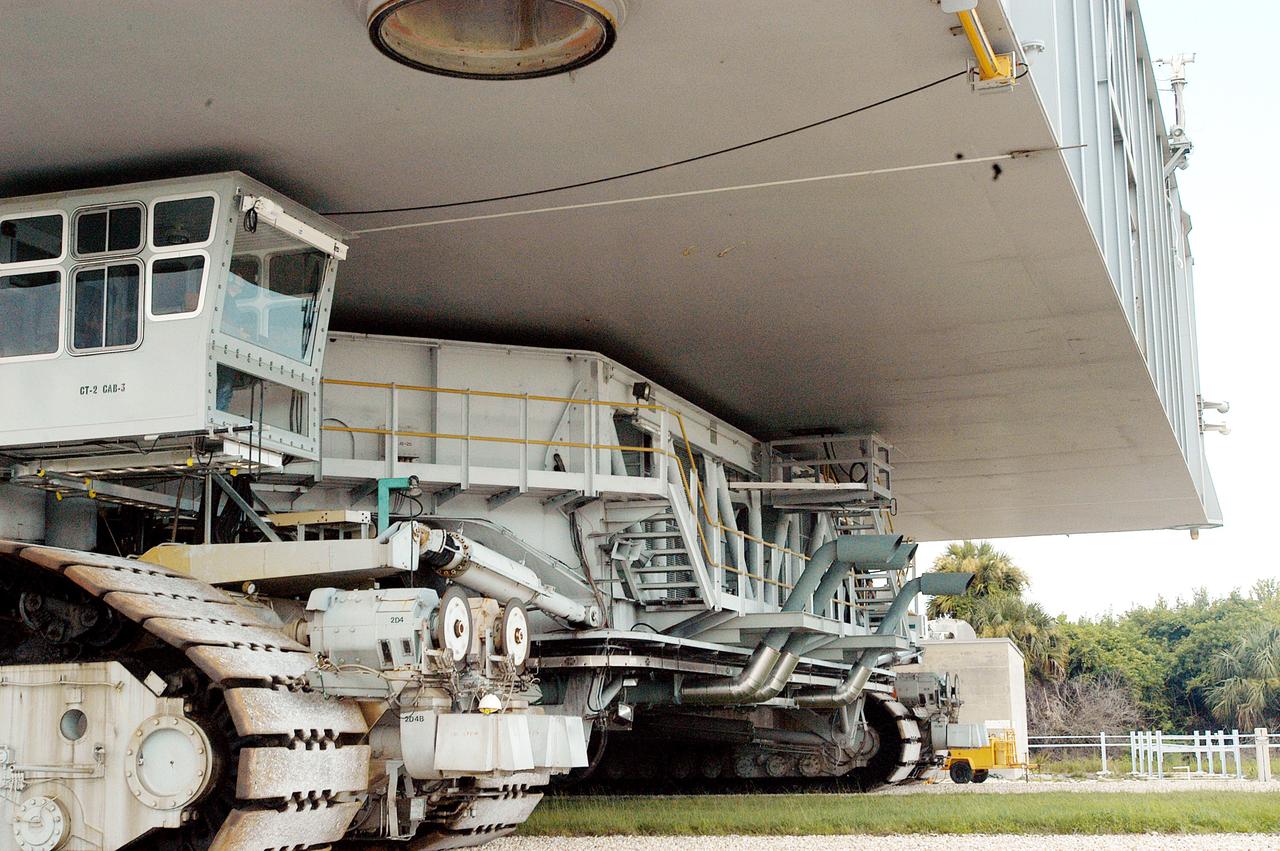
KENNEDY SPACE CENTER, FLA. - A closeup of crawler-transporter (CT) number 2 shows the cab, at left, that recently underwent modifications. The CT is transporting a Mobile Launch Platform (MLP) on a test run to the pad. The CT moves Space Shuttle vehicles, situated on the MLP, between the VAB and launch pad. Moving on four double-tracked crawlers, the CT uses a laser guidance system and a leveling system for the journey that keeps the top of a Space Shuttle vertical within plus- or minus-10 minutes of arc. The system enables the CT-MLP-Shuttle to negotiate the ramp leading to the launch pads and keep the load level. Unloaded, the CT weighs 6 million pounds. Seen on top of the MLP are two tail service masts that support the fluid, gas and electrical requirements of the orbiter’s liquid oxygen and liquid hydrogen aft umbilicals.
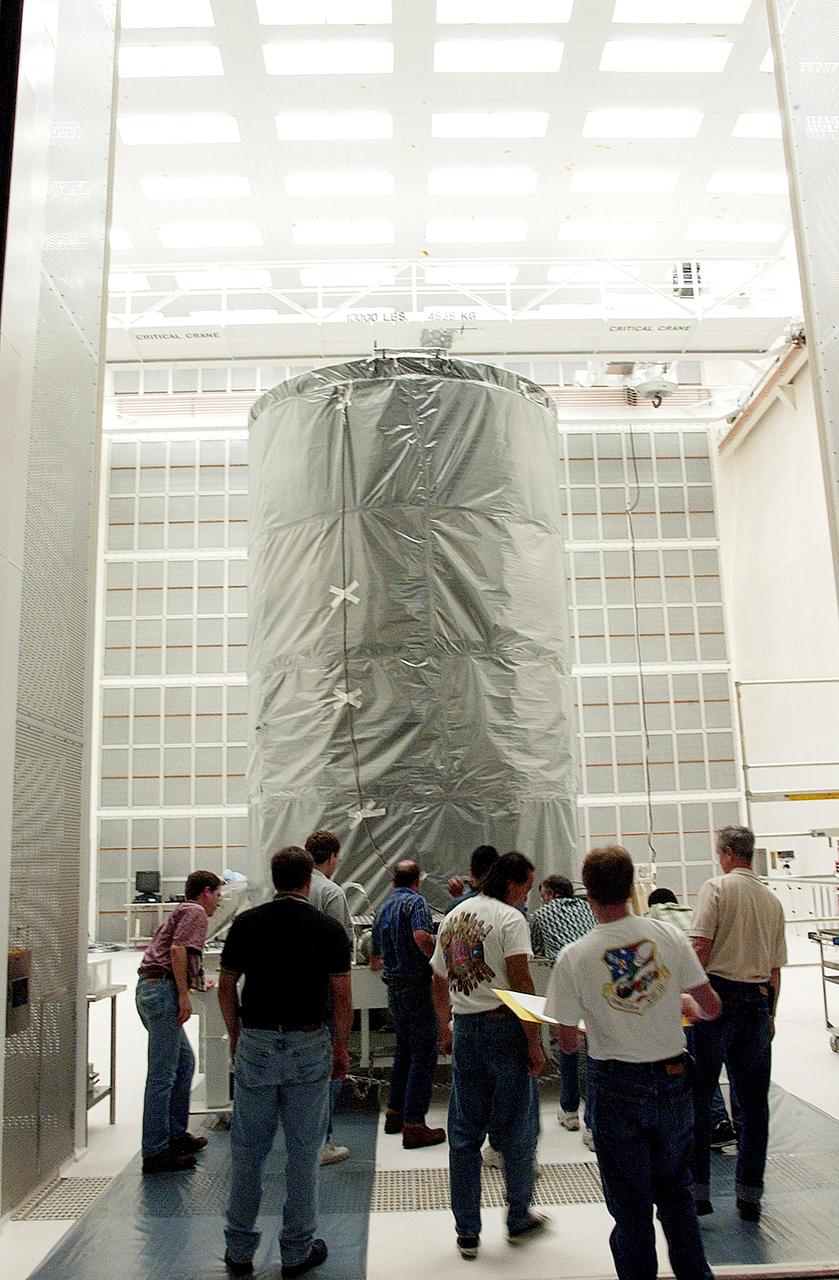
KENNEDY SPACE CENTER, FLA. - At Cape Canaveral Air Force Station, the Space Infrared Telescope Facility (SIRTF) observatory is moved into NASA Spacecraft Hangar AE. SIRTF will remain in the clean room at Hangar AE until it returns to the pad in early August.
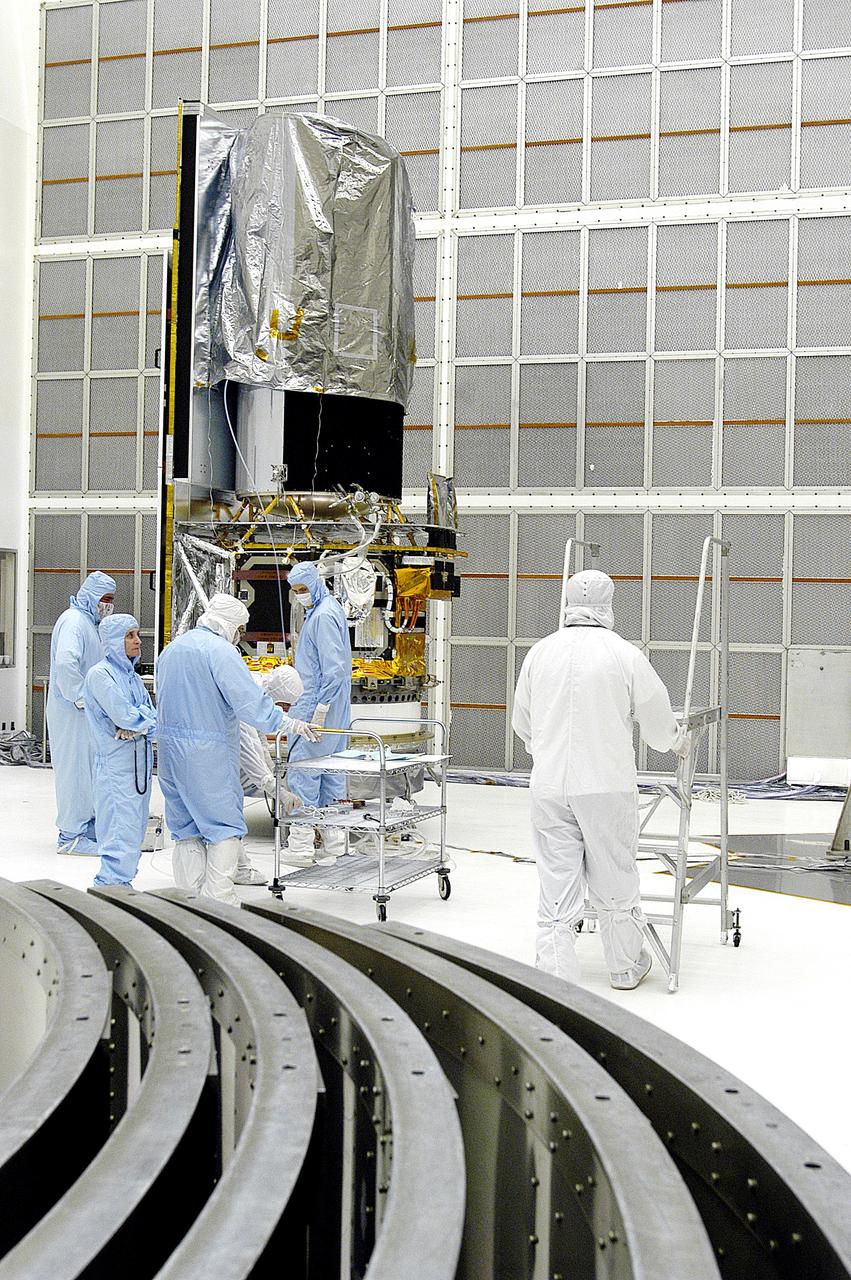
KENNEDY SPACE CENTER, FLA. - Workers in NASA Spacecraft Hangar AE prepare to begin further processing of the Space Infrared Telescope Facility (SIRTF), which has been returned to the hangar from the launch pad. Sections of the transportation canister used in the move are in the foreground. SIRTF will remain in the clean room until it returns to the pad in early August. One of NASA's largest infrared telescopes to be launched, SIRTF will obtain images and spectra by detecting the infrared energy, or heat, radiated by objects in space.
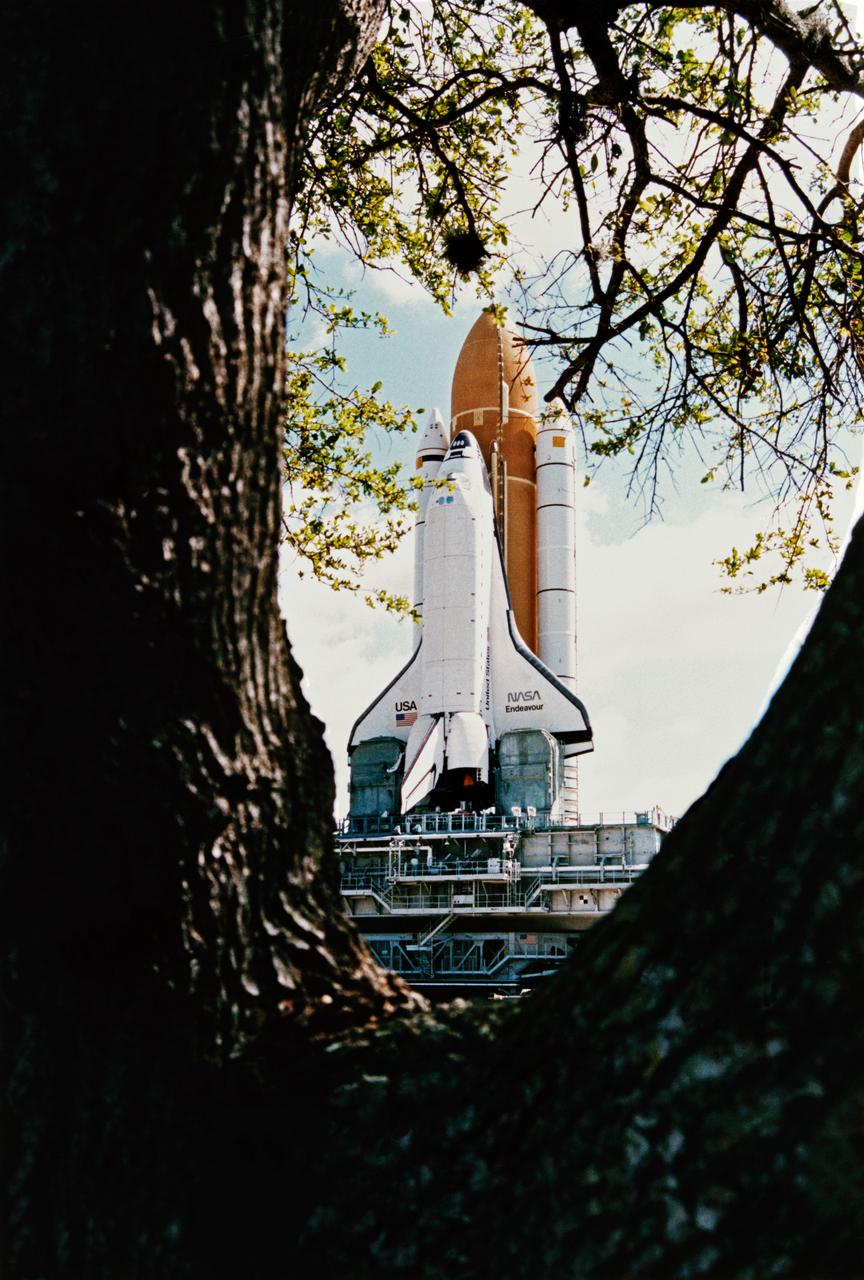
STS077-S-044 (16 April 1996) --- The Space Shuttle Endeavour atop the Mobile Launcher Platform and Crawler-Transporter (MLP/CT) slowly lumbers past a tree alongside the crawlerway, at the Kennedy Space Center (KSC). The journey from the Vehicle Assembly Building (VAB) to Launch Pad 39B will take about five to six hours to complete. Once hard down at the pad, preparations will continue to ready Endeavour for its upcoming spaceflight on STS-77.
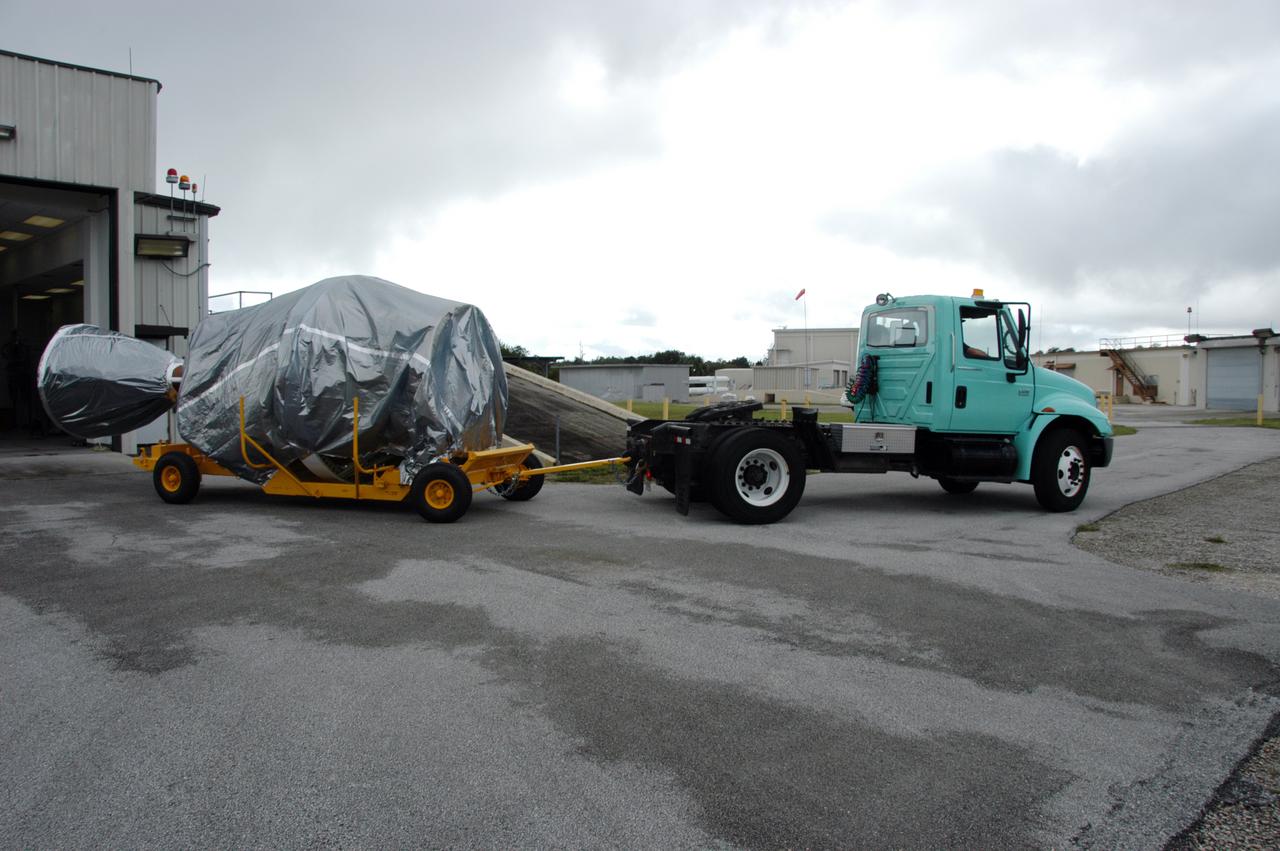
The covered Delta II second stage arrives at a checkout hangar on Cape Canaveral Air Force Station in Florida in preparation for transfer to Pad 17-B. At the pad, it will be lifted into the mobile service tower and mated with the first stage already in place. The Delta II is the launch vehicle for the THEMIS spacecraft. THEMIS consists of five identical probes, the largest number of scientific satellites ever launched into orbit aboard a single rocket. This unique constellation of satellites will resolve the tantalizing mystery of what causes the spectacular sudden brightening of the aurora borealis and aurora australis - the fiery skies over the Earth's northern and southern polar regions. THEMIS is scheduled to launch Feb. 15 from Cape Canaveral Air Force Station.
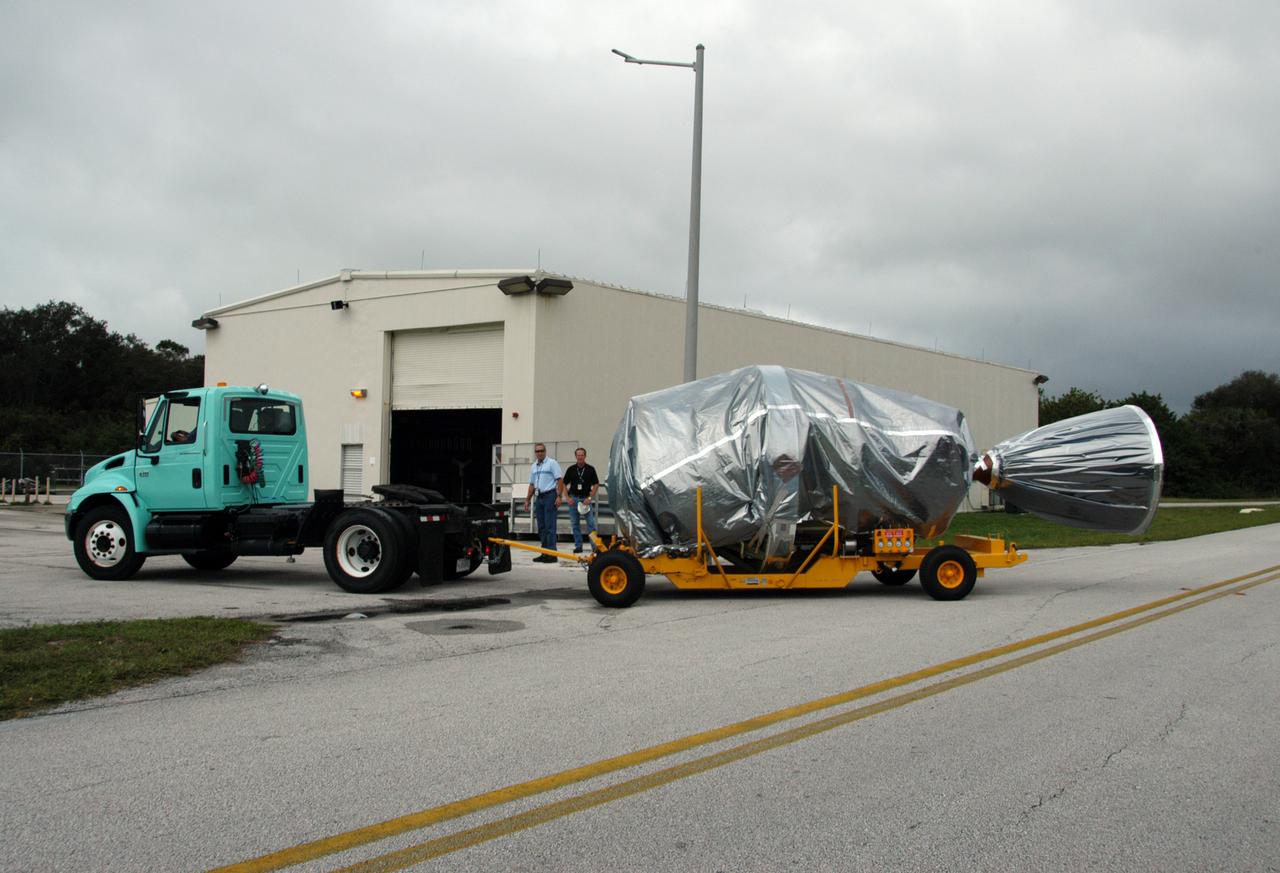
The covered Delta II second stage arrives at a checkout hangar on Cape Canaveral Air Force Station in Florida in preparation for transfer to Pad 17-B. At the pad, it will be lifted into the mobile service tower and mated with the first stage already in place. The Delta II is the launch vehicle for the THEMIS spacecraft. THEMIS consists of five identical probes, the largest number of scientific satellites ever launched into orbit aboard a single rocket. This unique constellation of satellites will resolve the tantalizing mystery of what causes the spectacular sudden brightening of the aurora borealis and aurora australis - the fiery skies over the Earth's northern and southern polar regions. THEMIS is scheduled to launch Feb. 15 from Cape Canaveral Air Force Station.
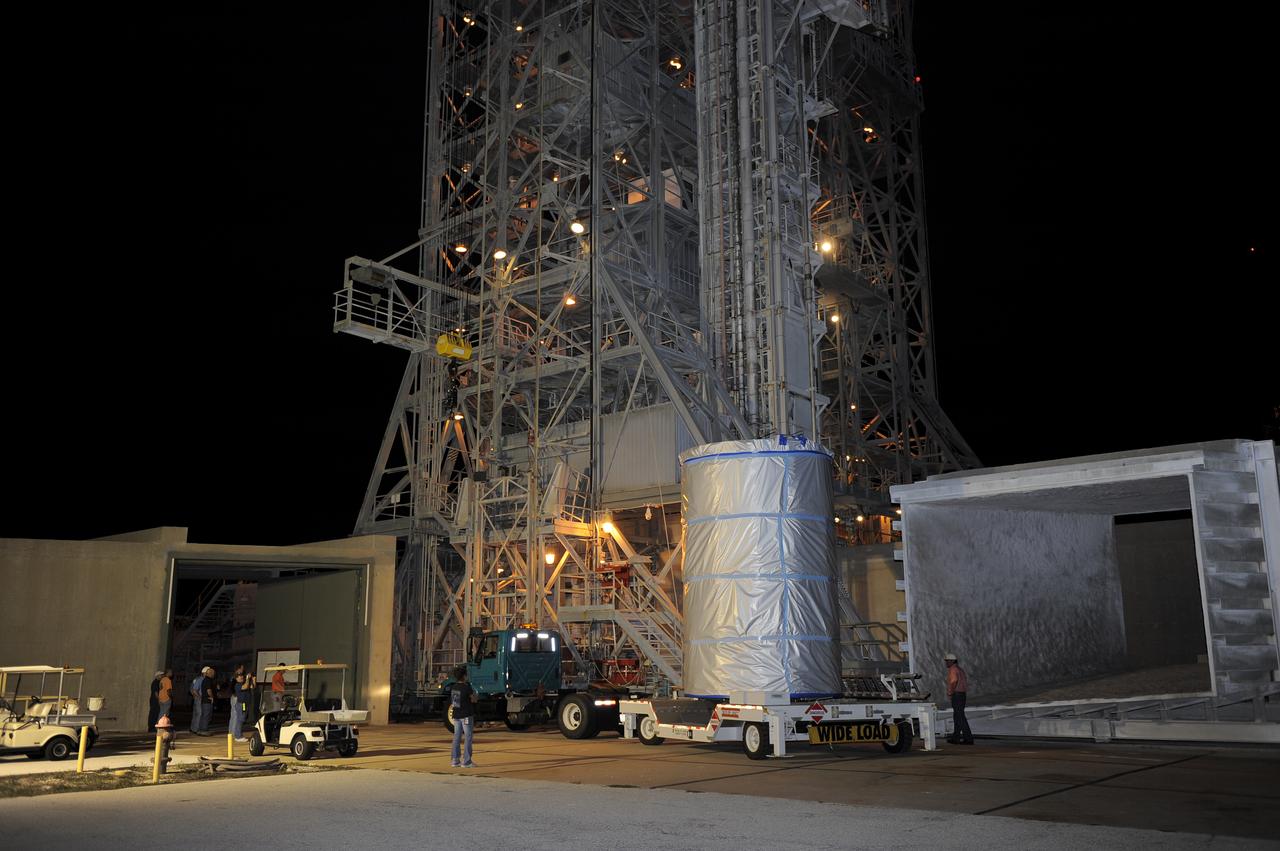
GRAIL Move from Astrotech to Pad 17B
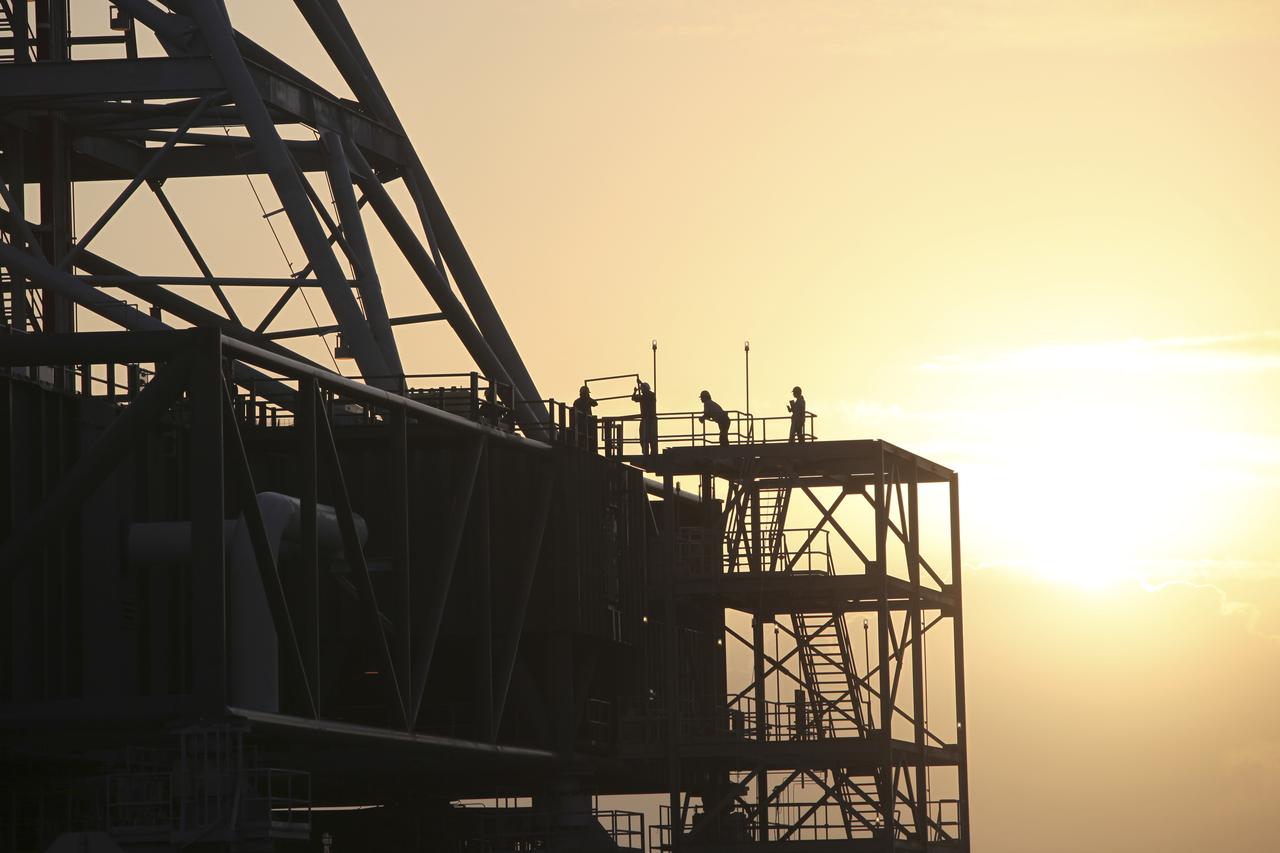
First motion move of ML to Pad 39B

First motion move of ML to Pad 39B
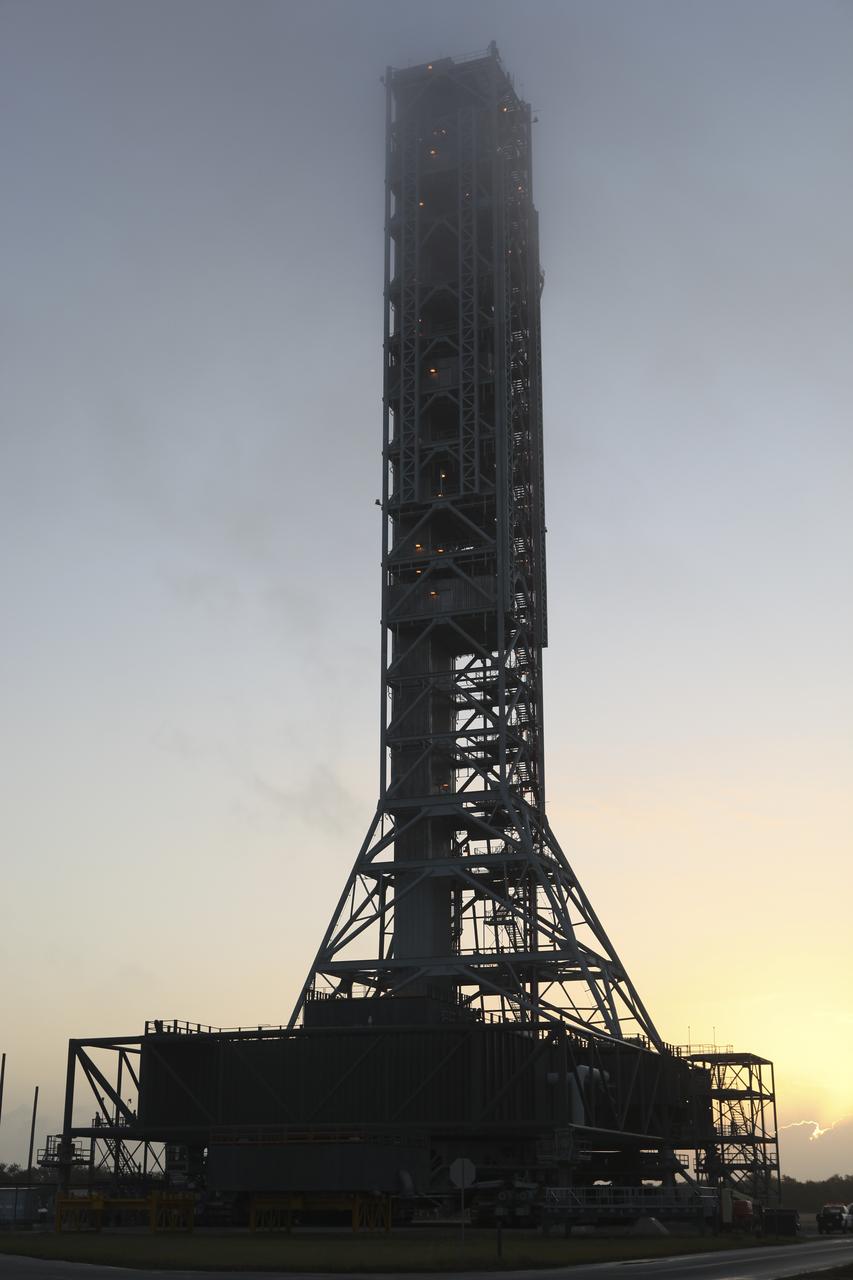
First motion move of ML to Pad 39B
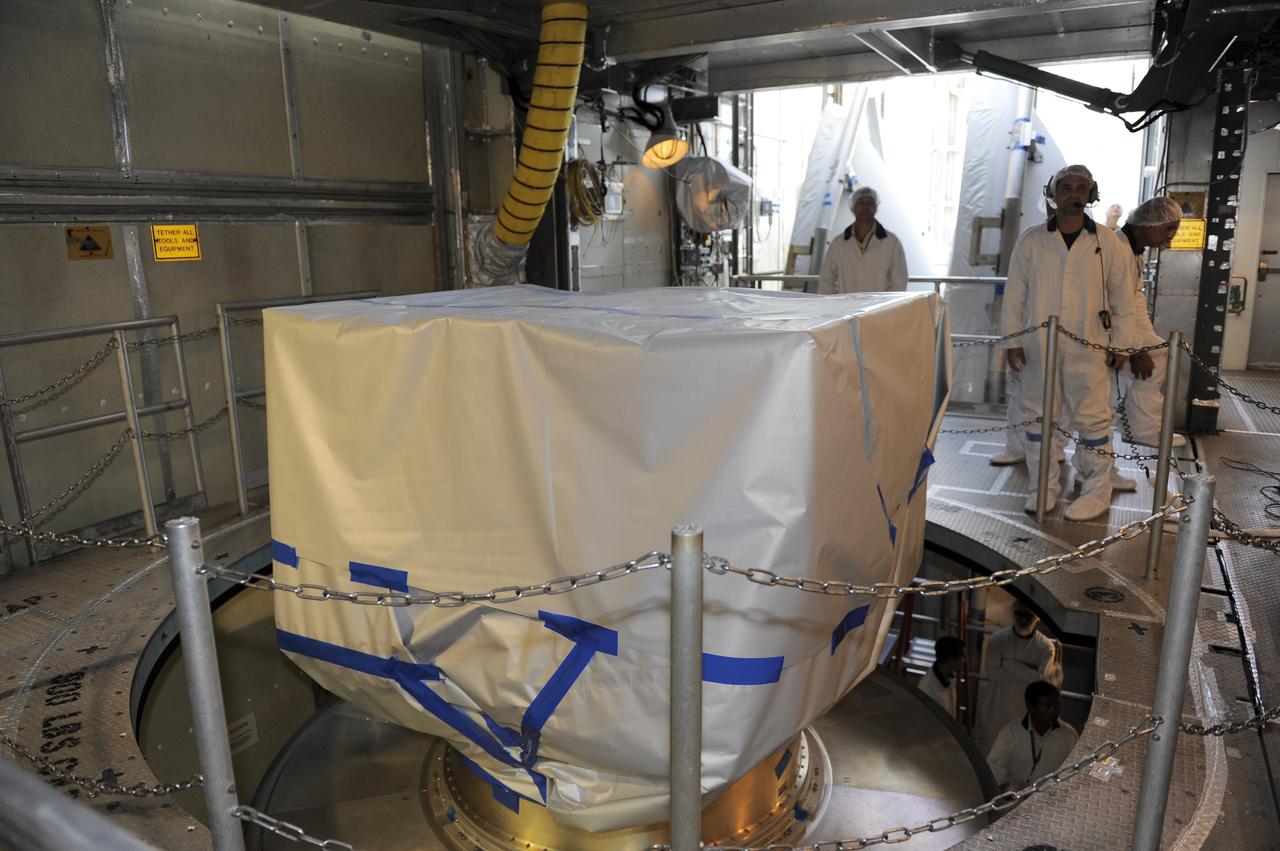
GRAIL Move from Astrotech to Pad 17B
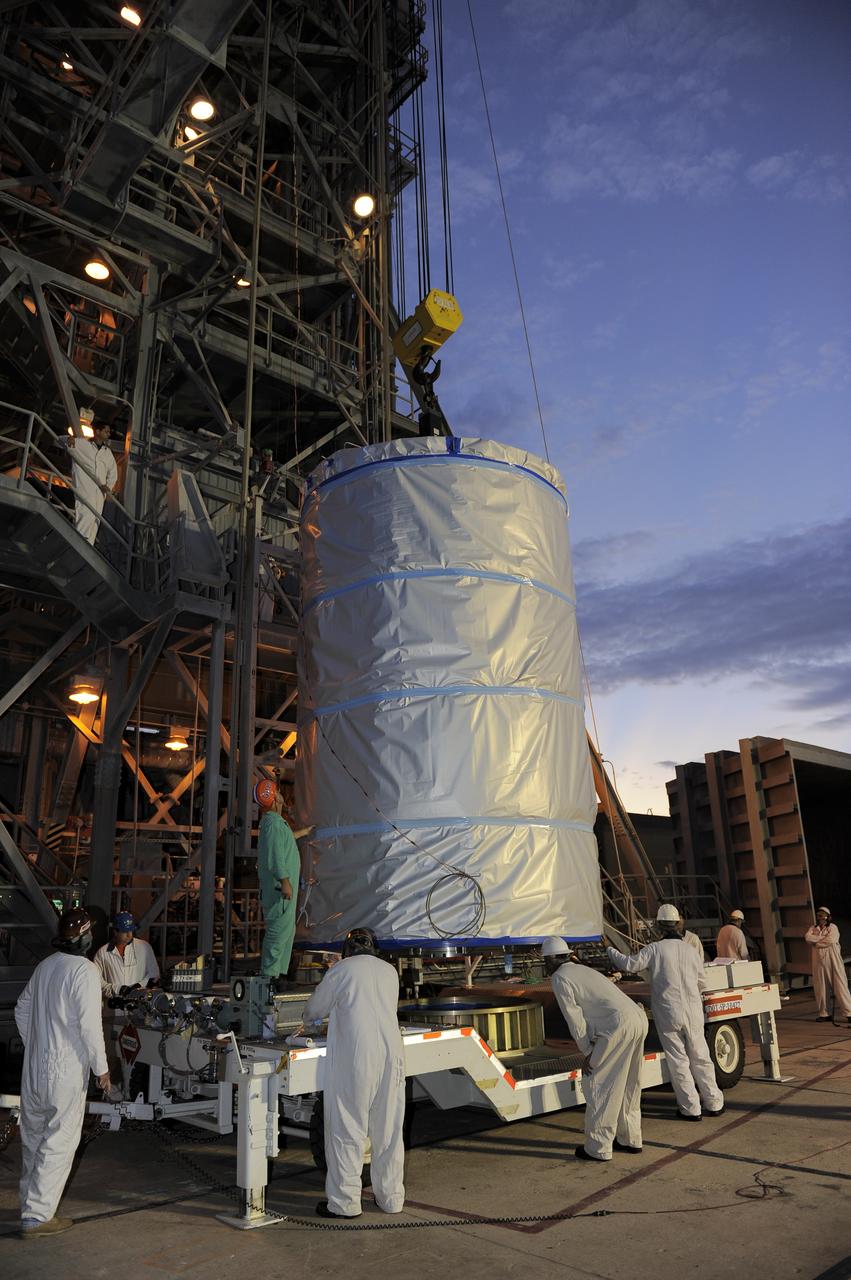
GRAIL Move from Astrotech to Pad 17B
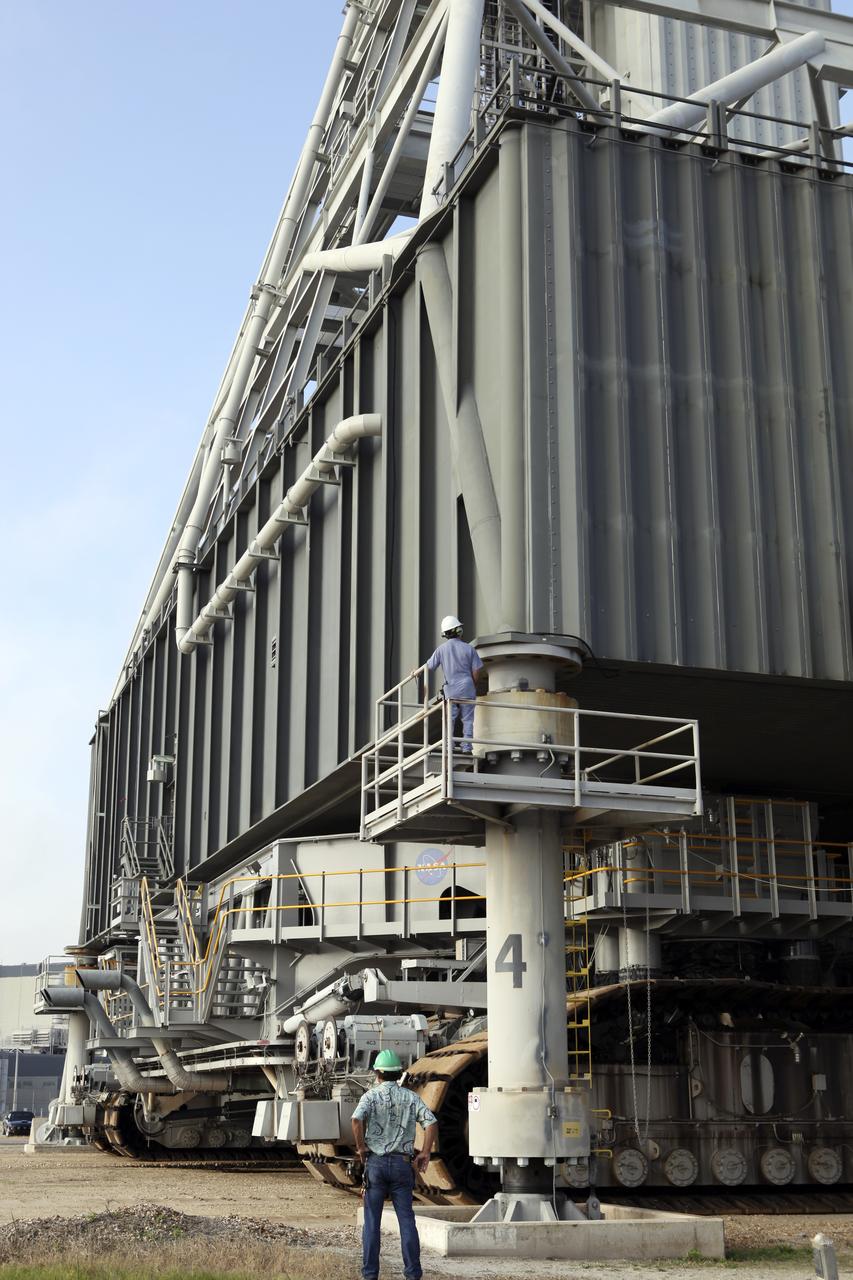
First motion move of ML to Pad 39B
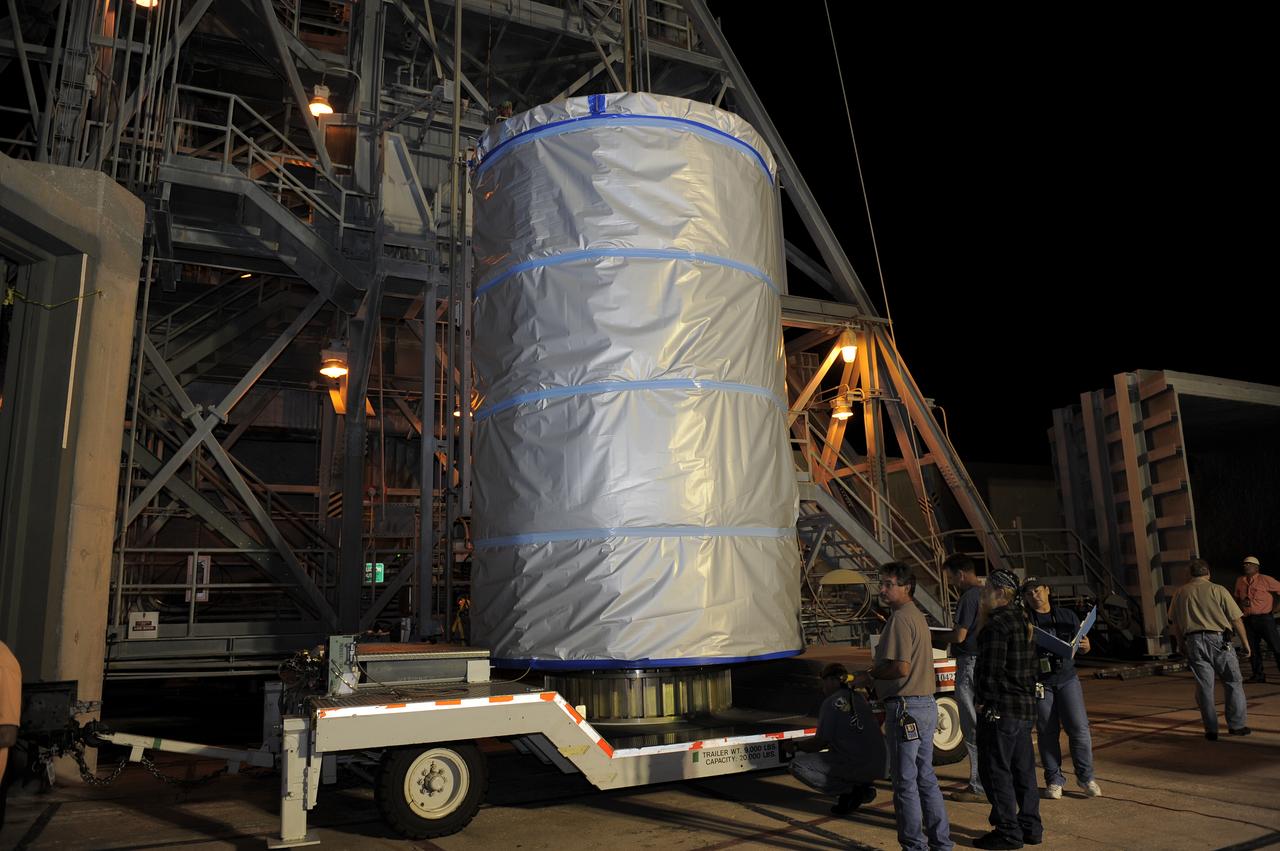
GRAIL Move from Astrotech to Pad 17B
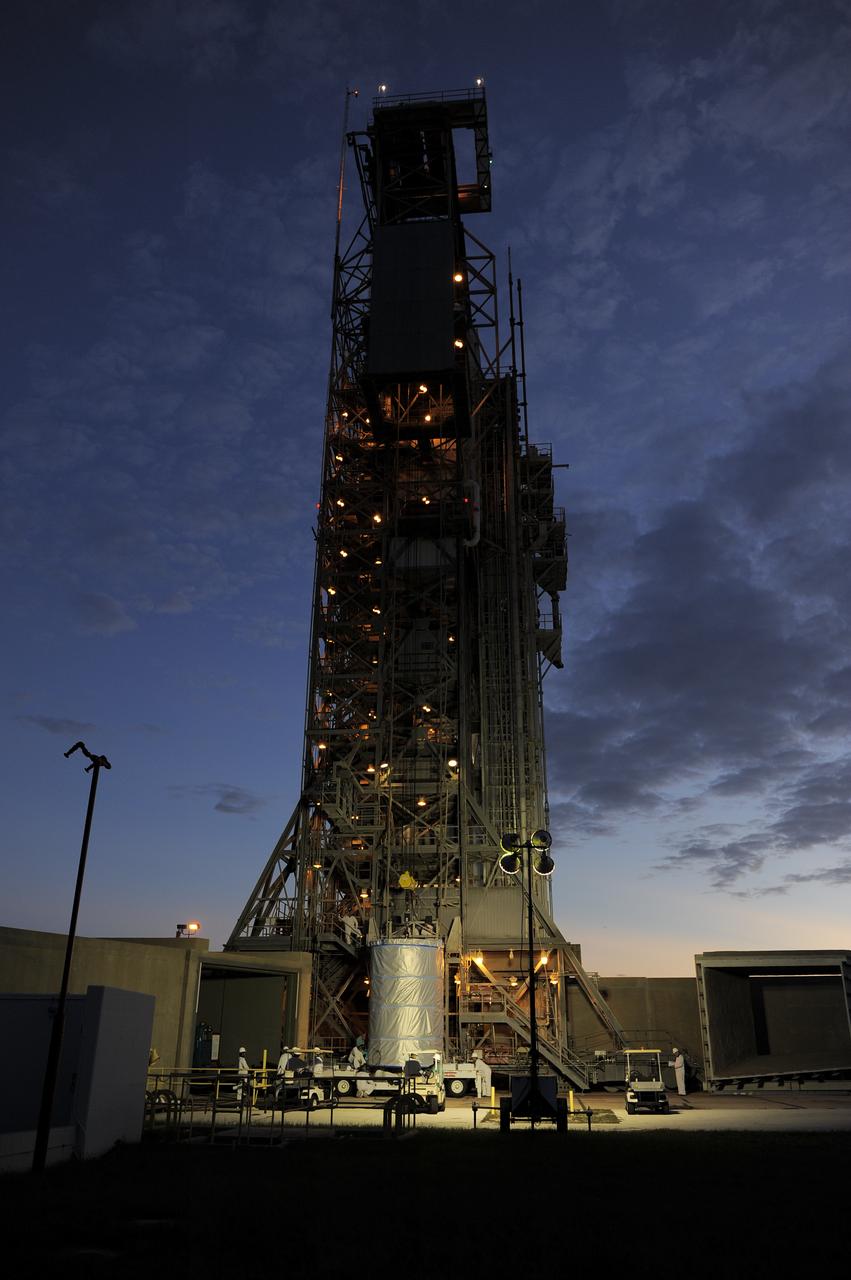
GRAIL Move from Astrotech to Pad 17B

First motion move of ML to Pad 39B
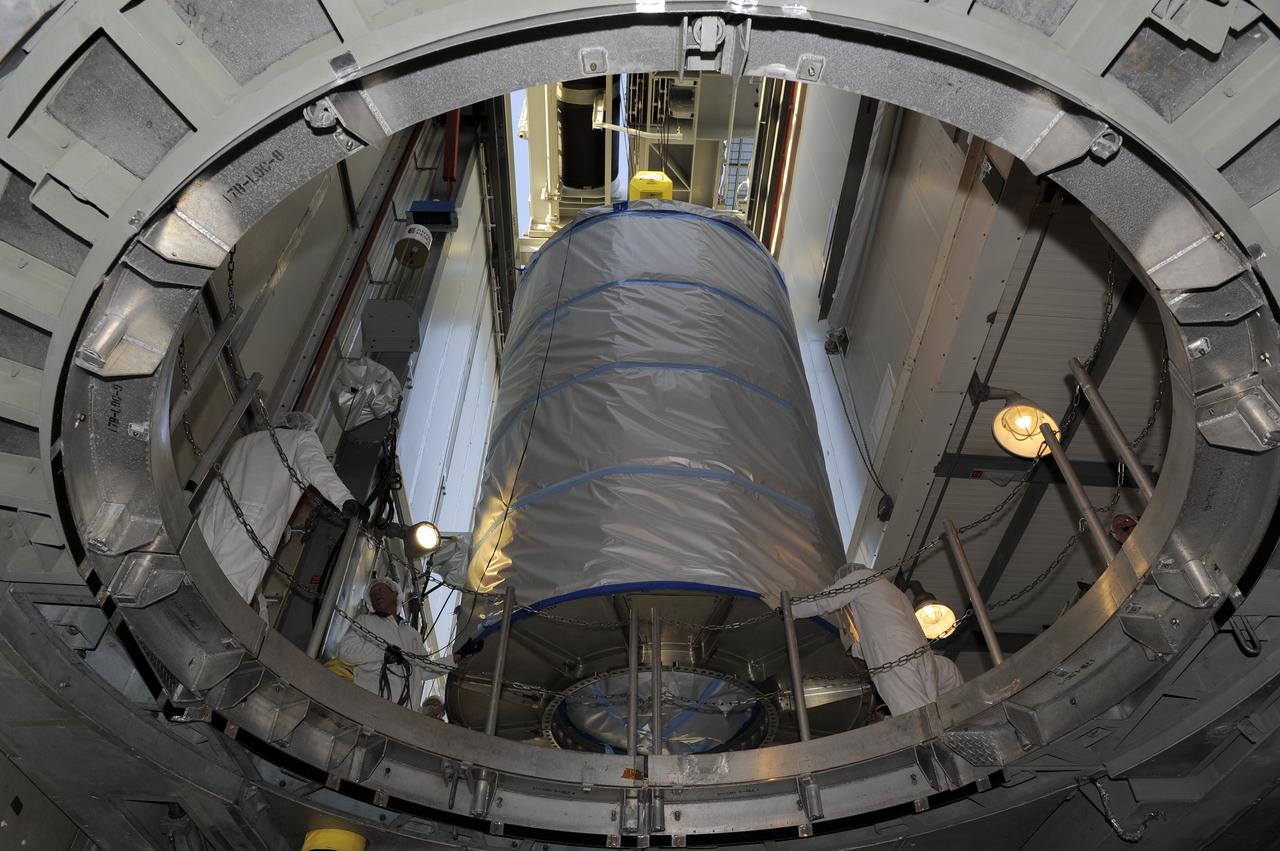
GRAIL Move from Astrotech to Pad 17B

GRAIL Move from Astrotech to Pad 17B
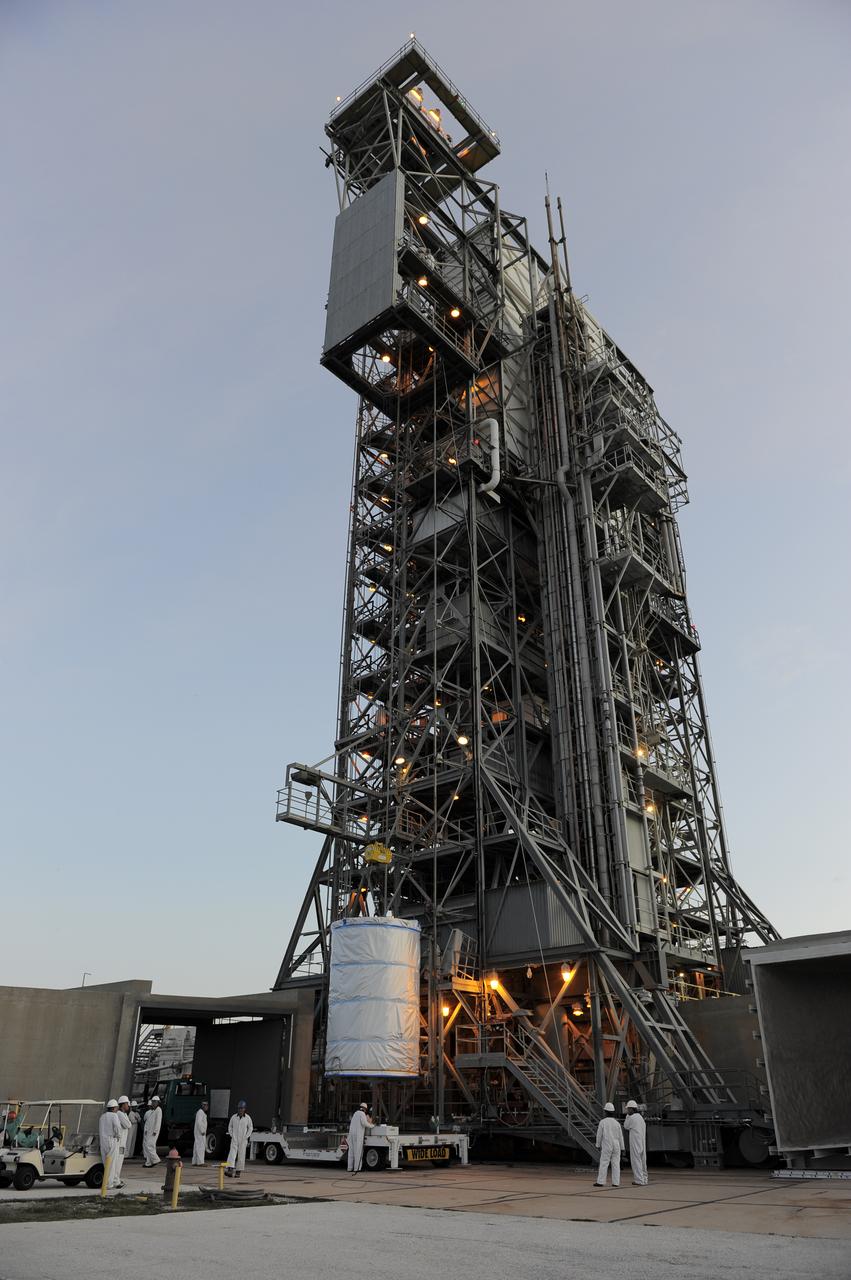
GRAIL Move from Astrotech to Pad 17B

First motion move of ML to Pad 39B

First motion move of ML to Pad 39B
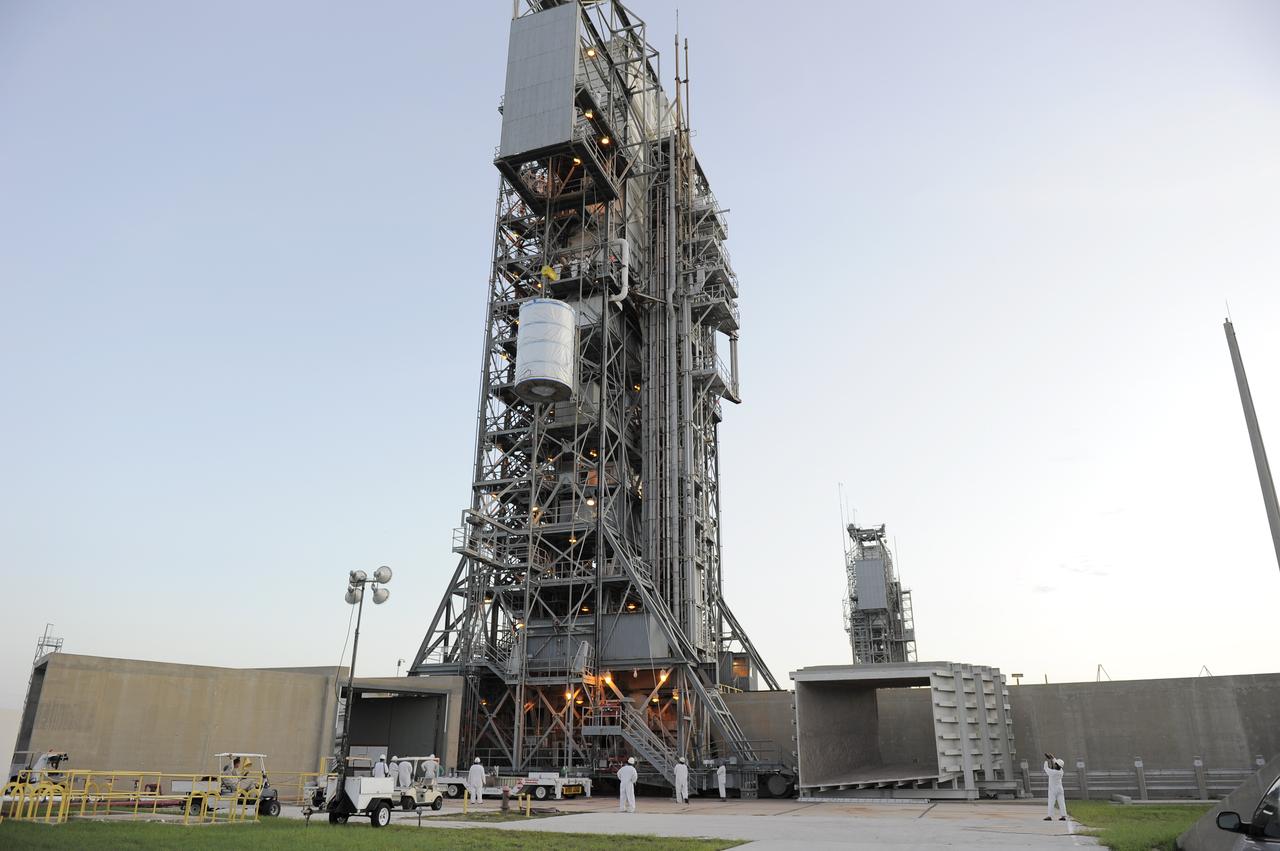
GRAIL Move from Astrotech to Pad 17B
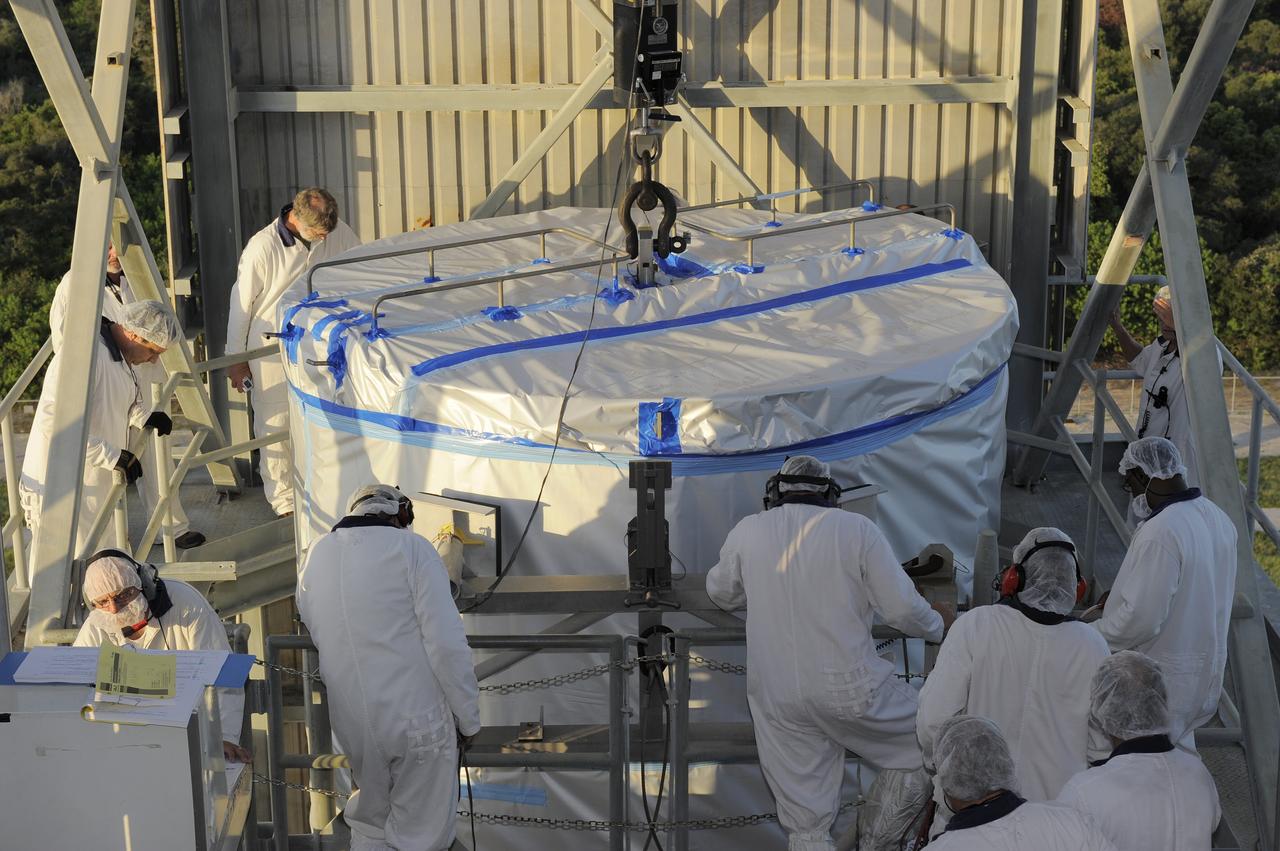
GRAIL Move from Astrotech to Pad 17B
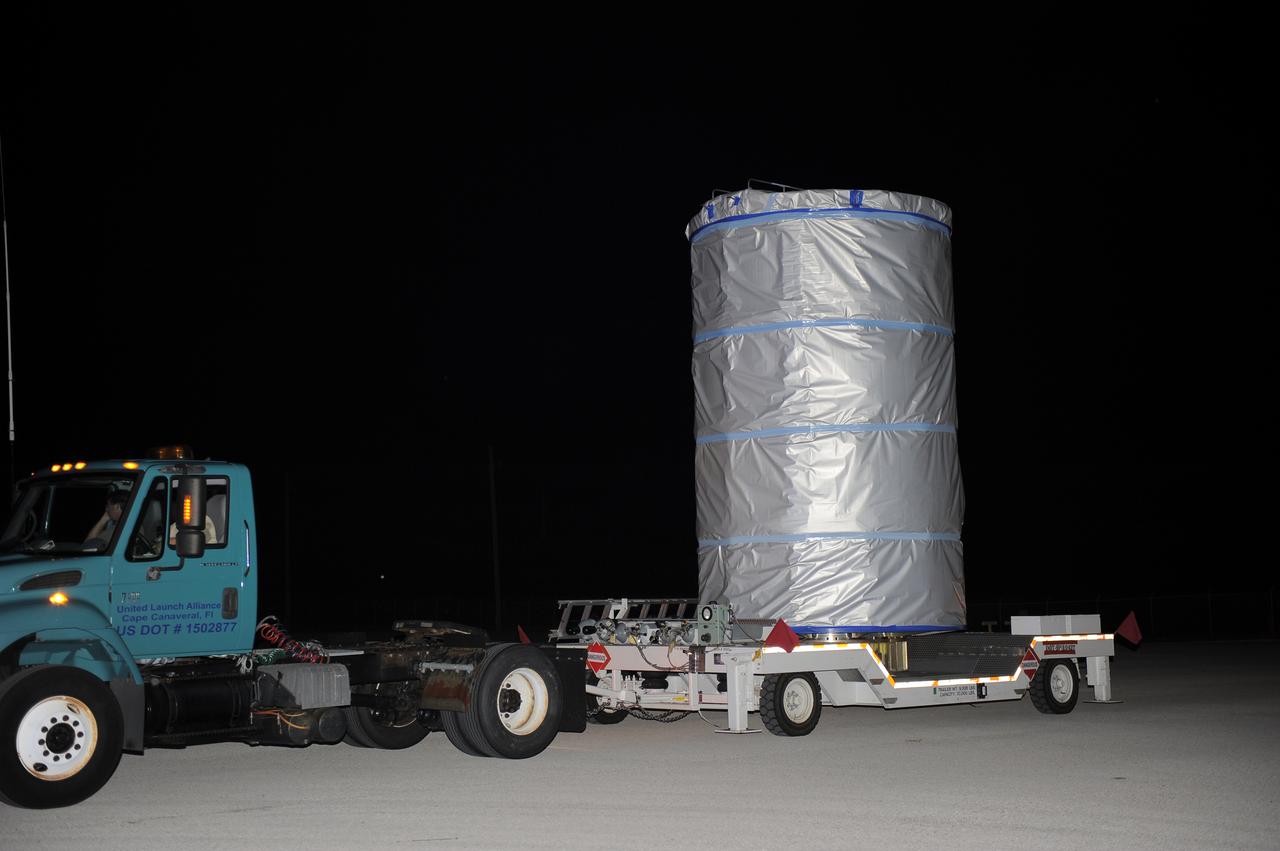
GRAIL Move from Astrotech to Pad 17B
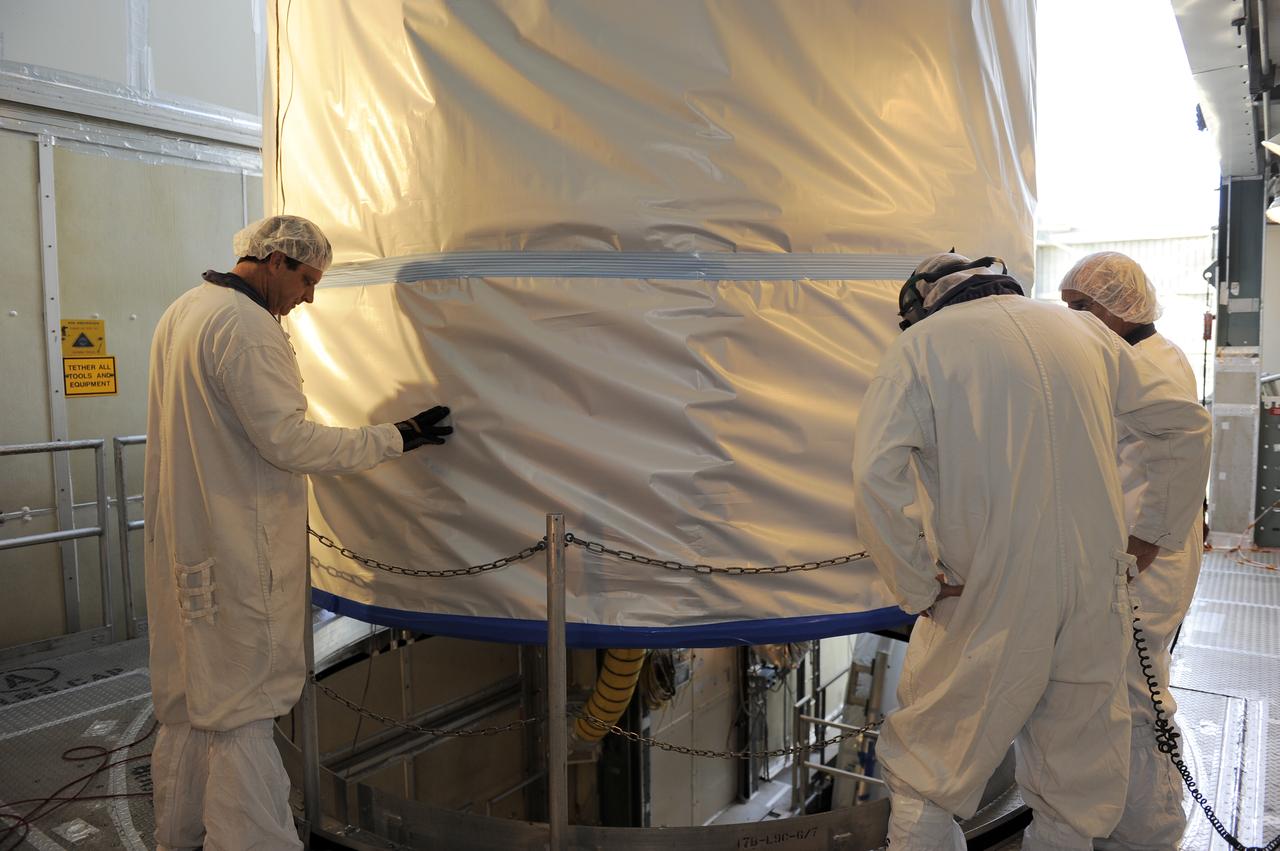
GRAIL Move from Astrotech to Pad 17B

First motion move of ML to Pad 39B
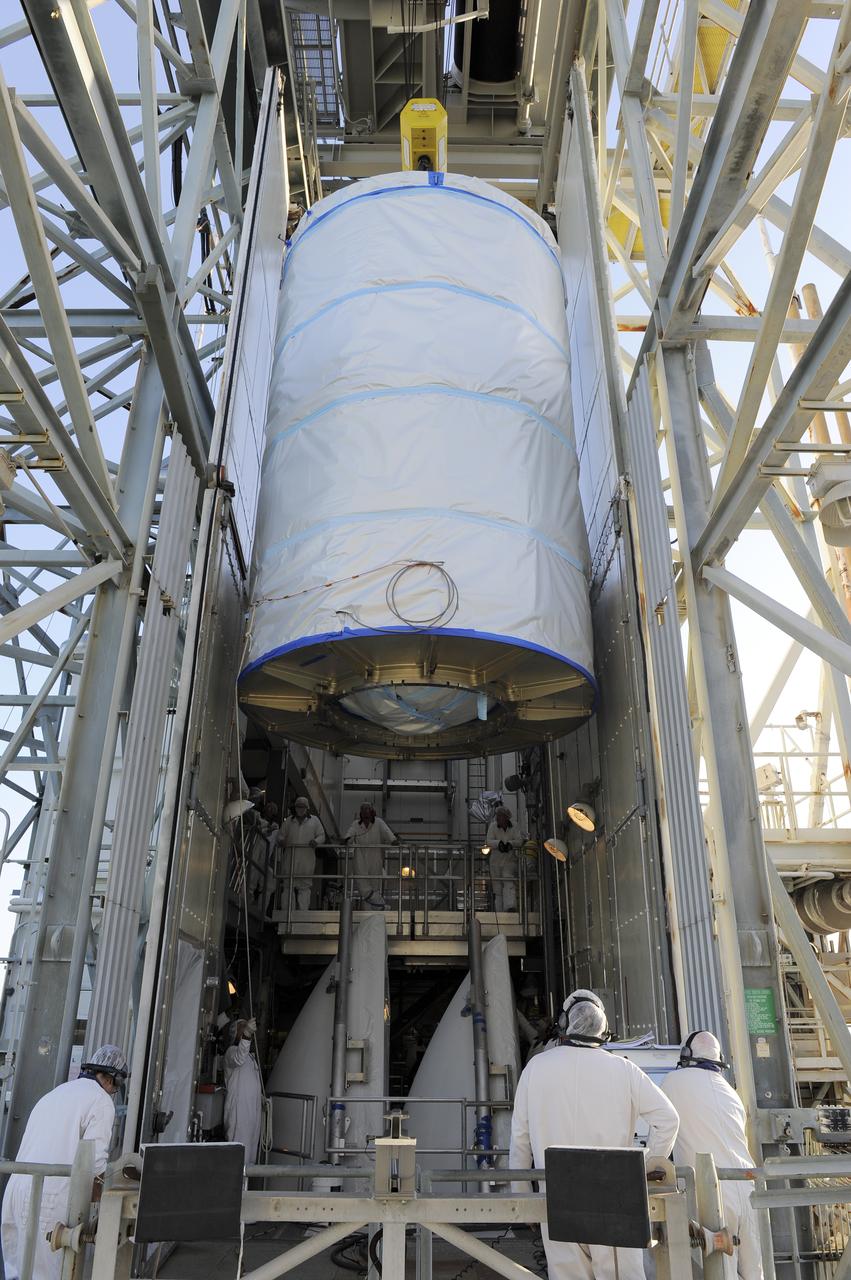
GRAIL Move from Astrotech to Pad 17B
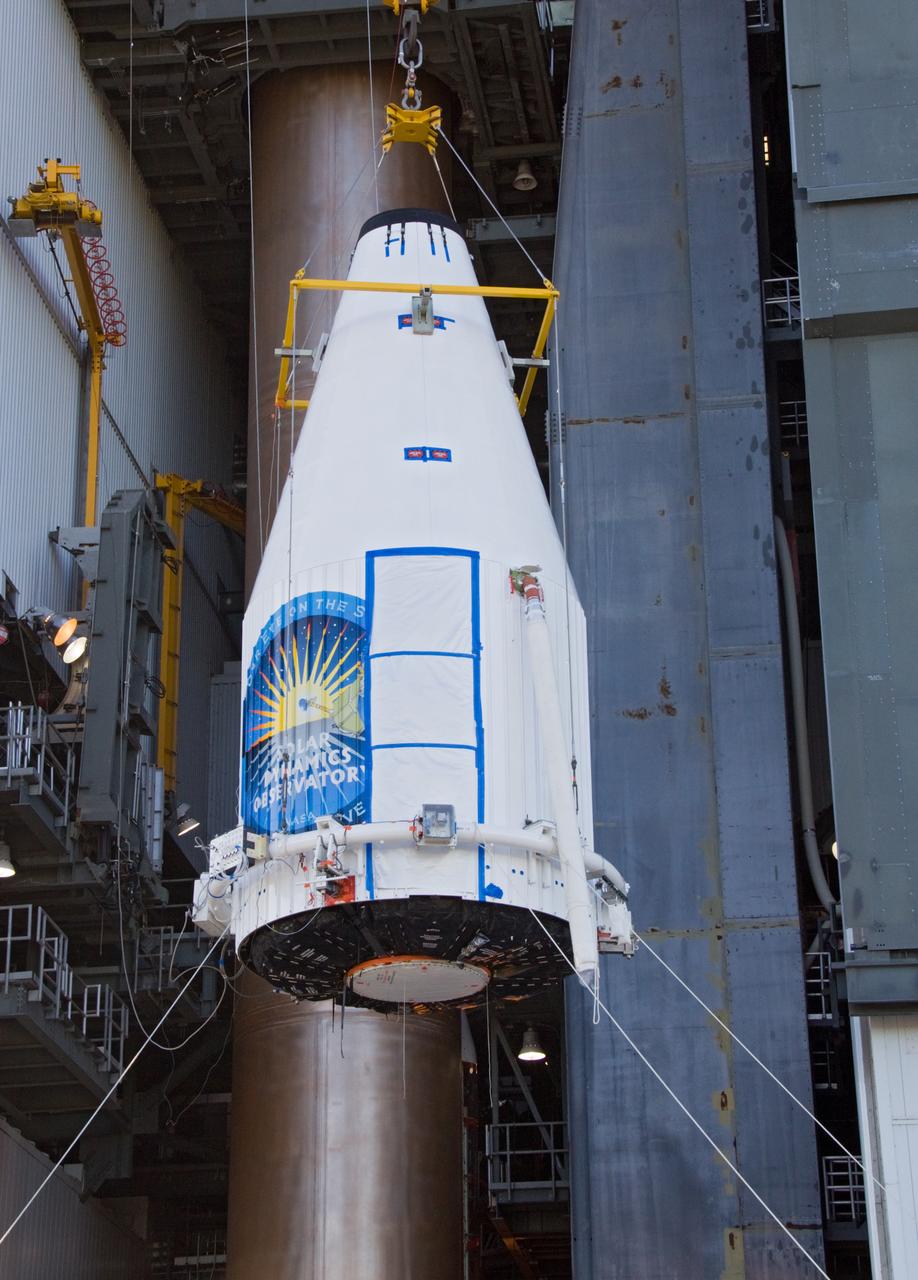
SDO MOVE FROM ASTROTECH TO PAD 41 - LIFT & MATE
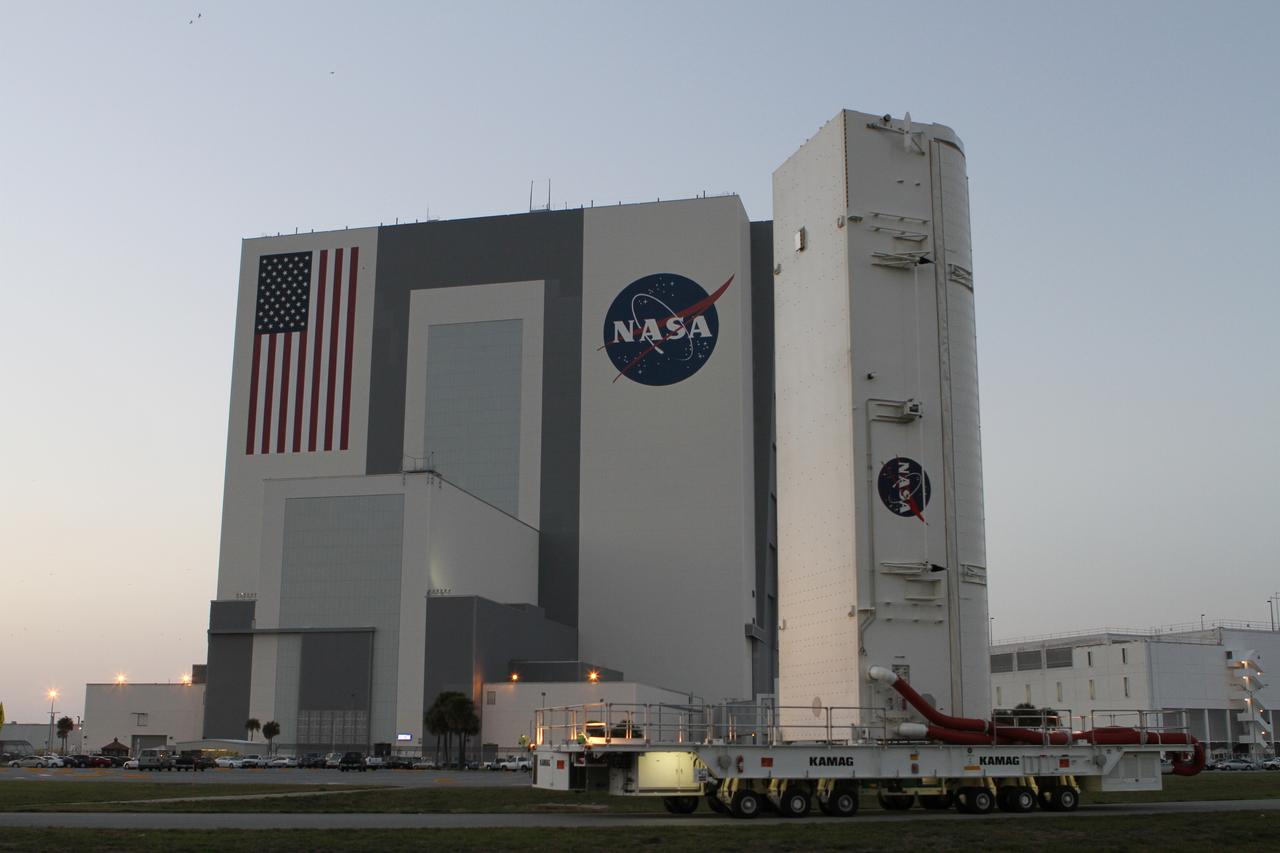
STS-134 Payload Canister Move from Press Site to Pad 39A
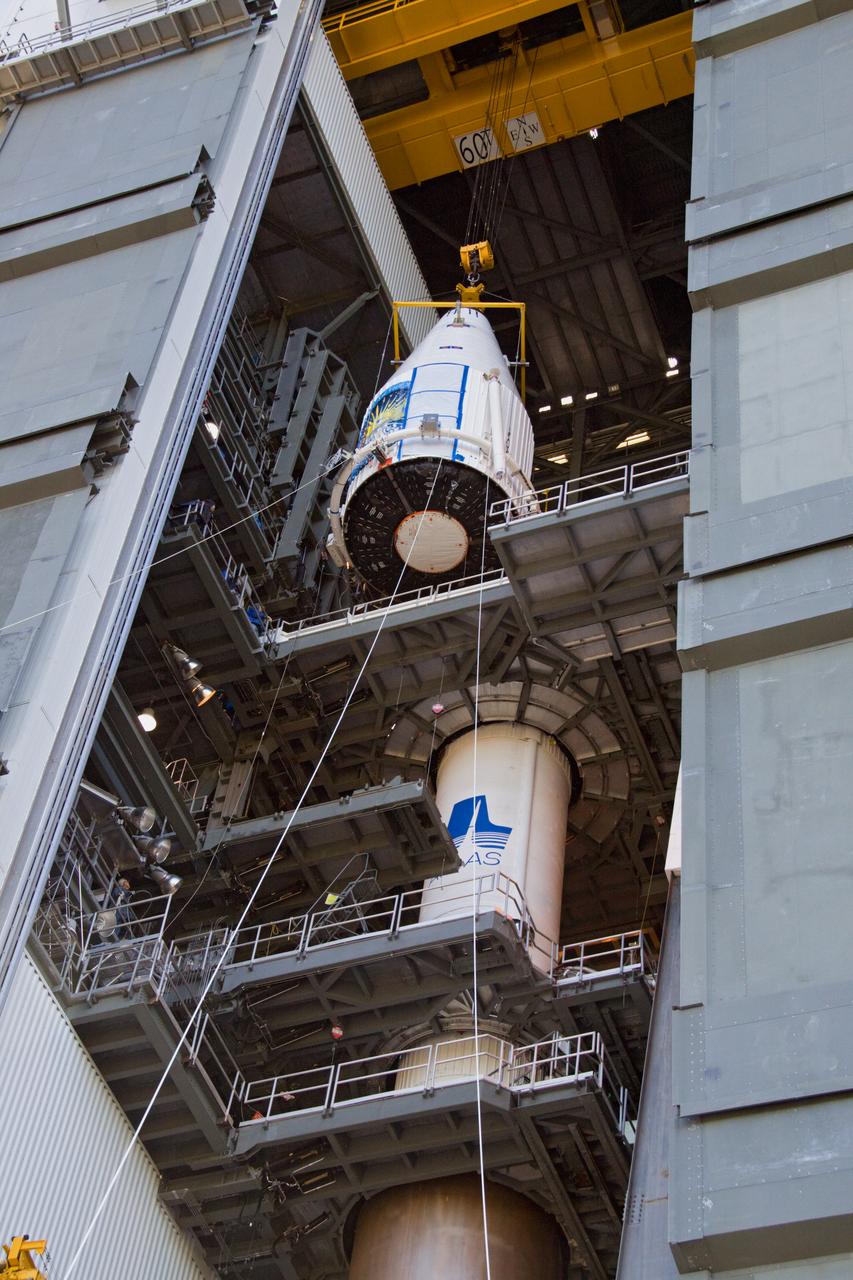
SDO MOVE FROM ASTROTECH TO PAD 41 - LIFT & MATE
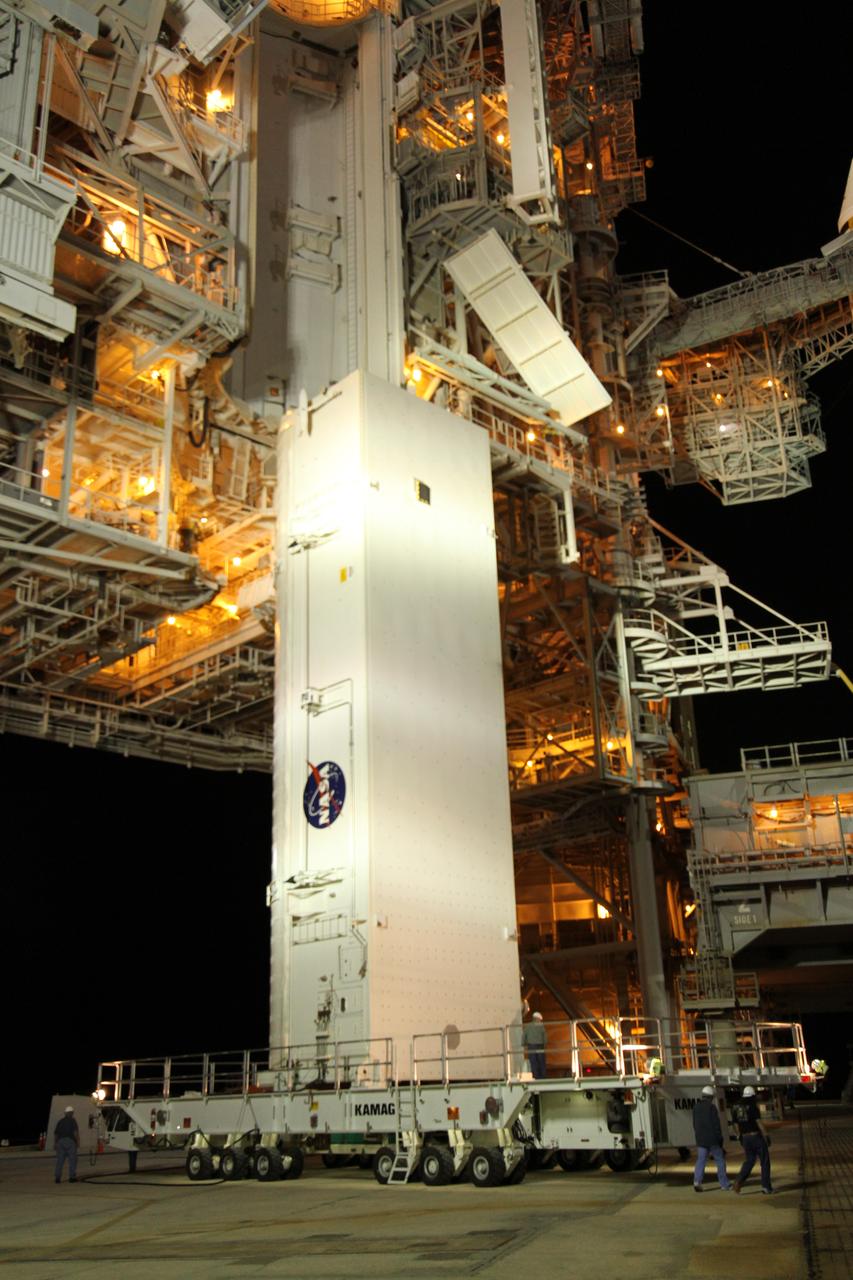
STS-134 Payload Canister Move from Press Site to Pad 39A
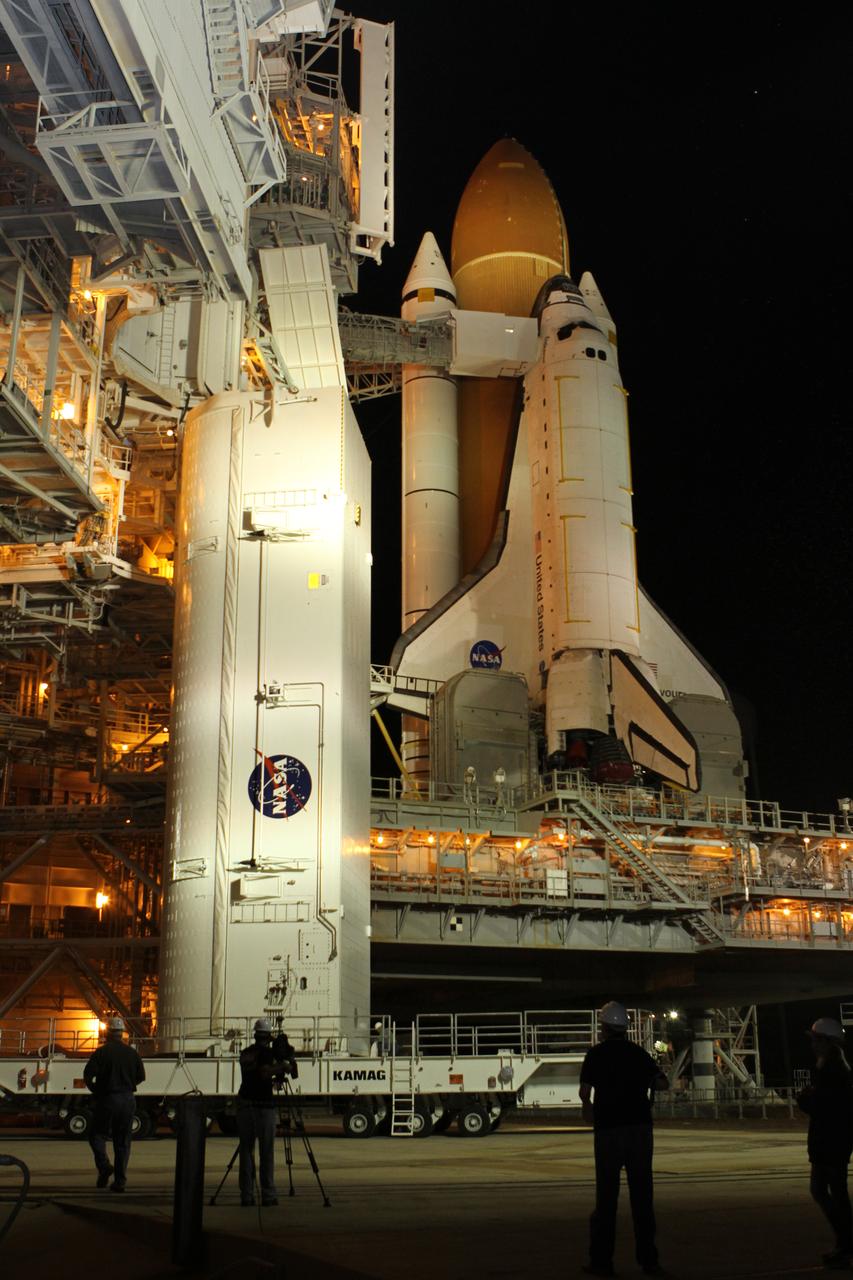
STS-134 Payload Canister Move from Press Site to Pad 39A
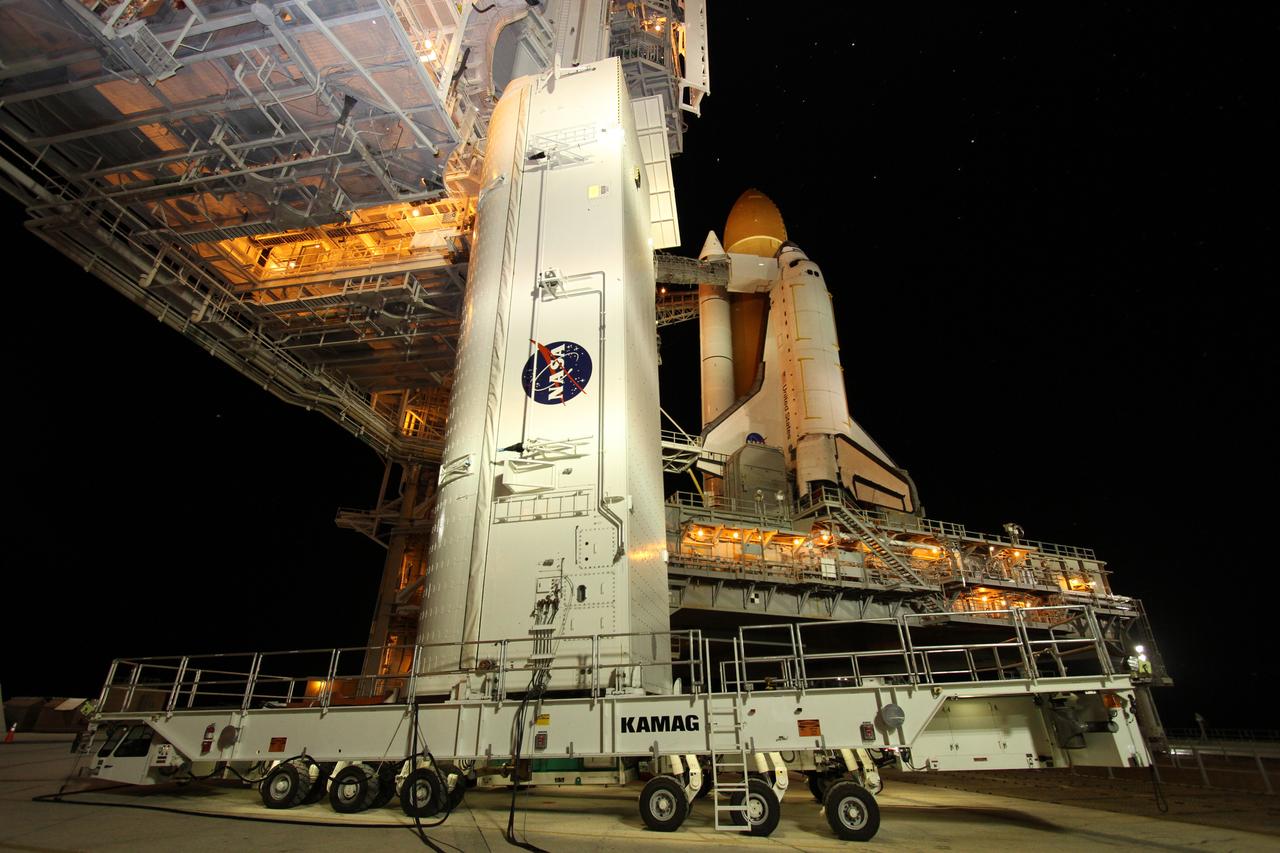
STS-134 Payload Canister Move from Press Site to Pad 39A
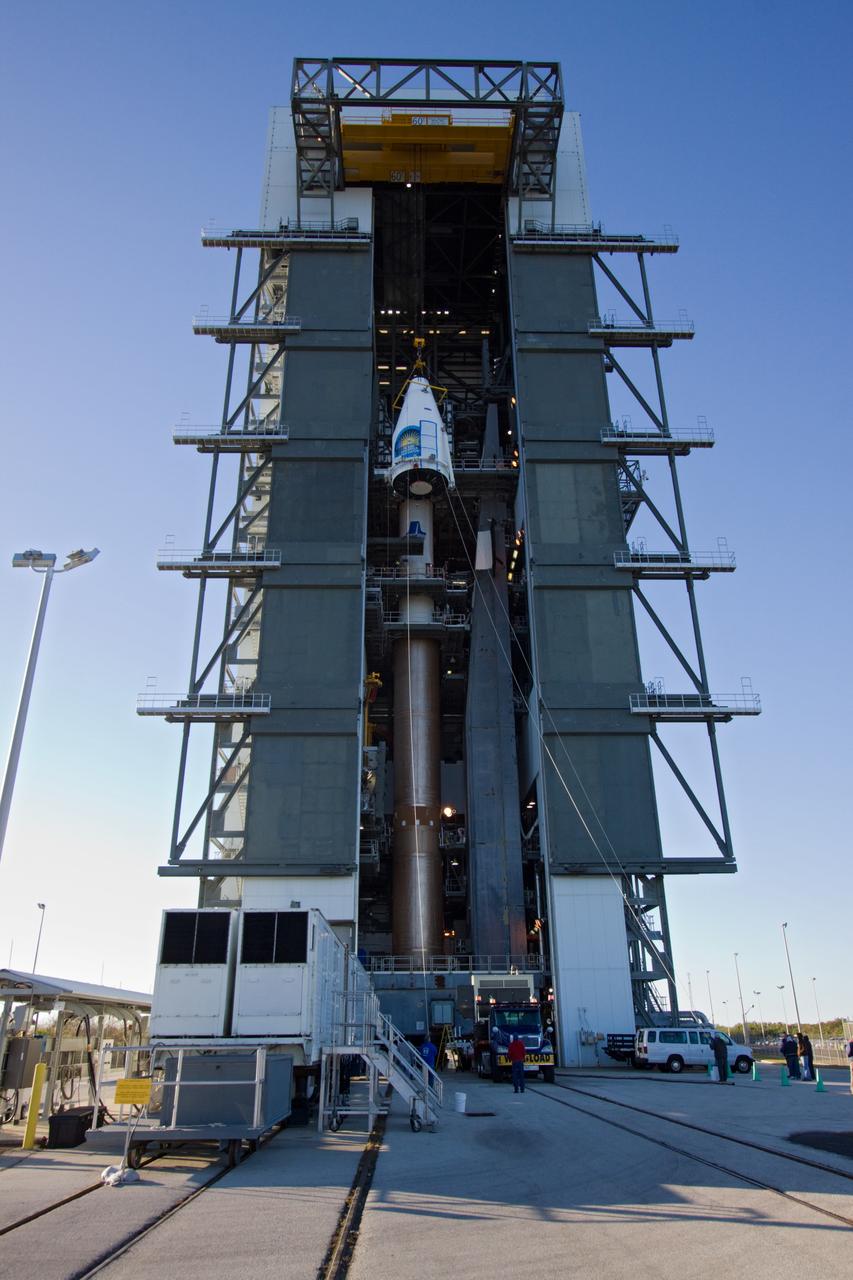
SDO MOVE FROM ASTROTECH TO PAD 41 - LIFT & MATE
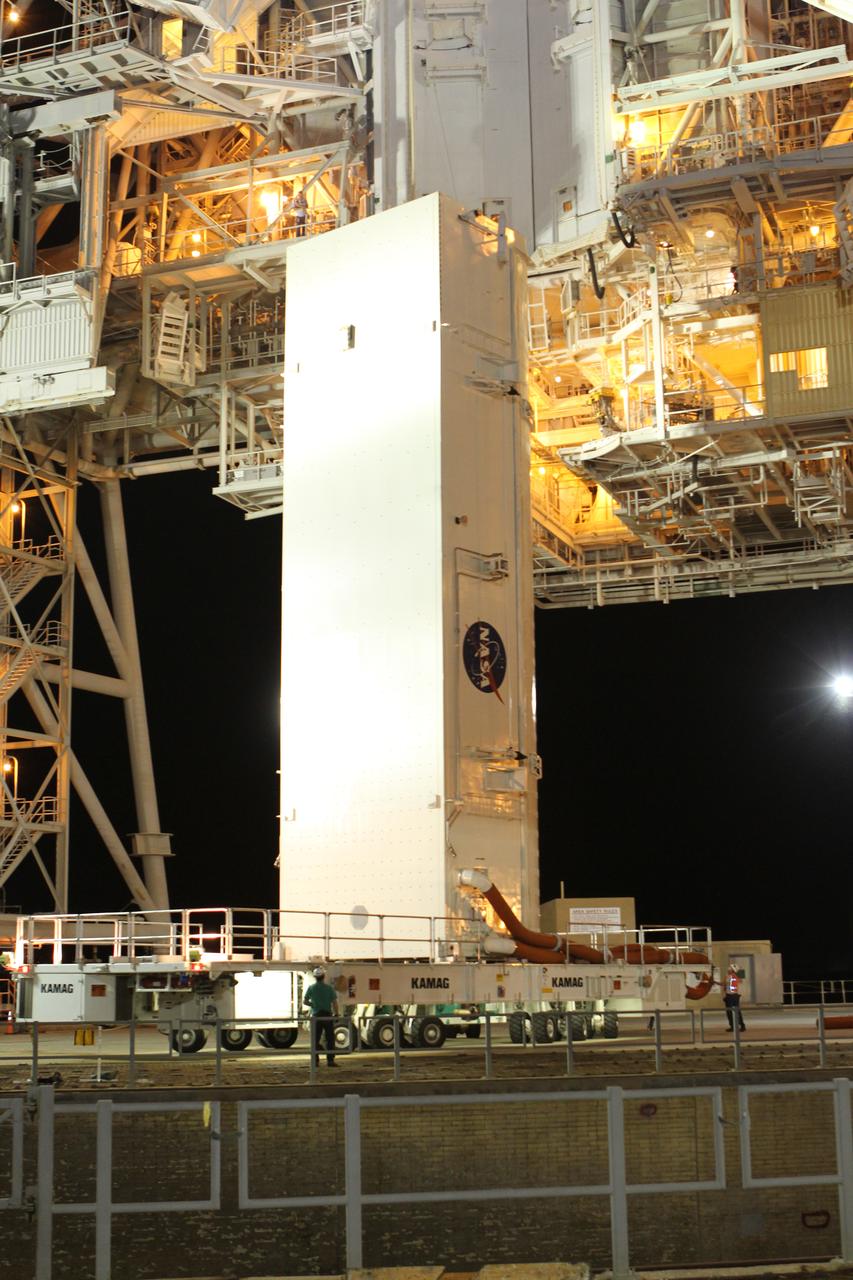
STS-134 Payload Canister Move from Press Site to Pad 39A