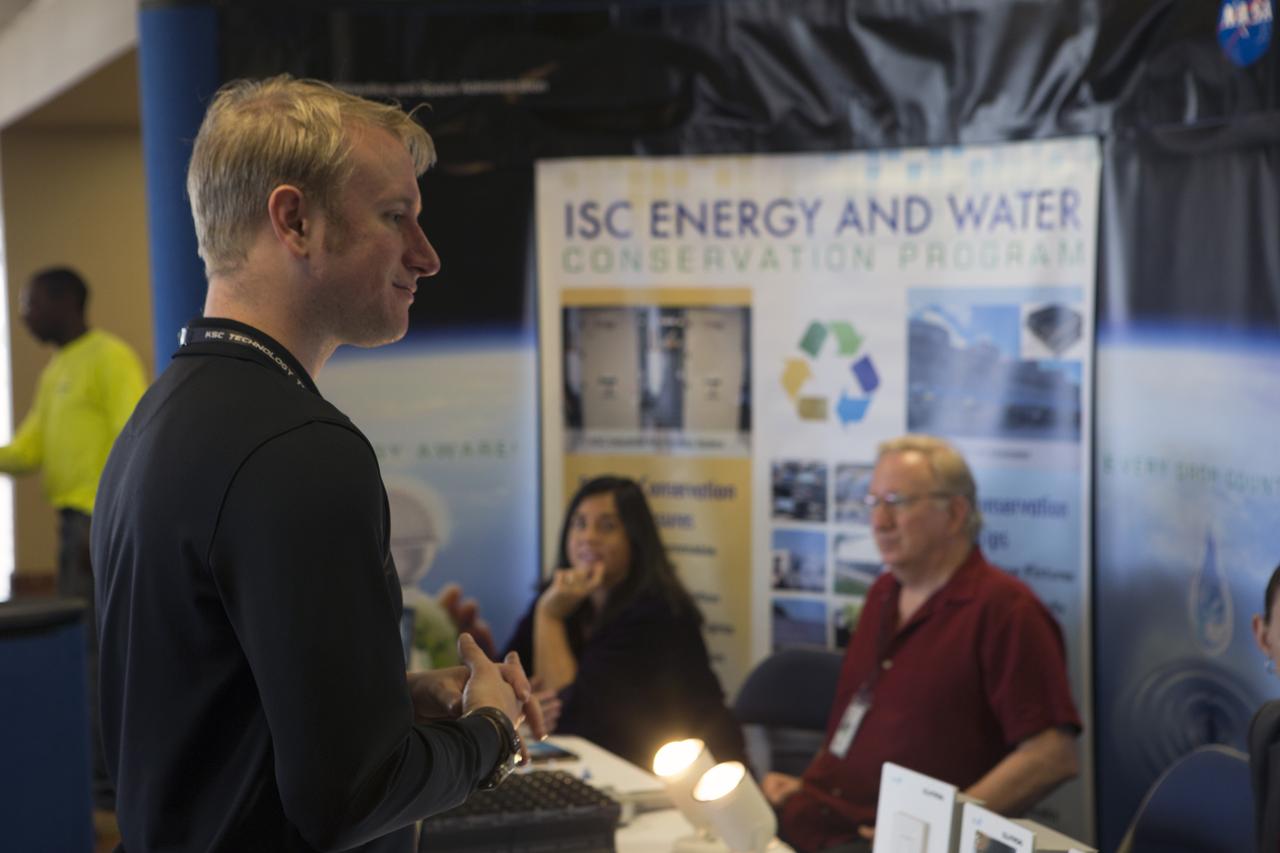
Cory Taylor, an energy and water conservation specialist at Kennedy Space Center, absorbs information at the Multi-Function Facility on Oct. 20. Every third Thursday of October, civil servants, contractors and several energy utilities promote the awareness of our sustainability goals at Kennedy Space Center and at home. Photo credit: Cory Huston
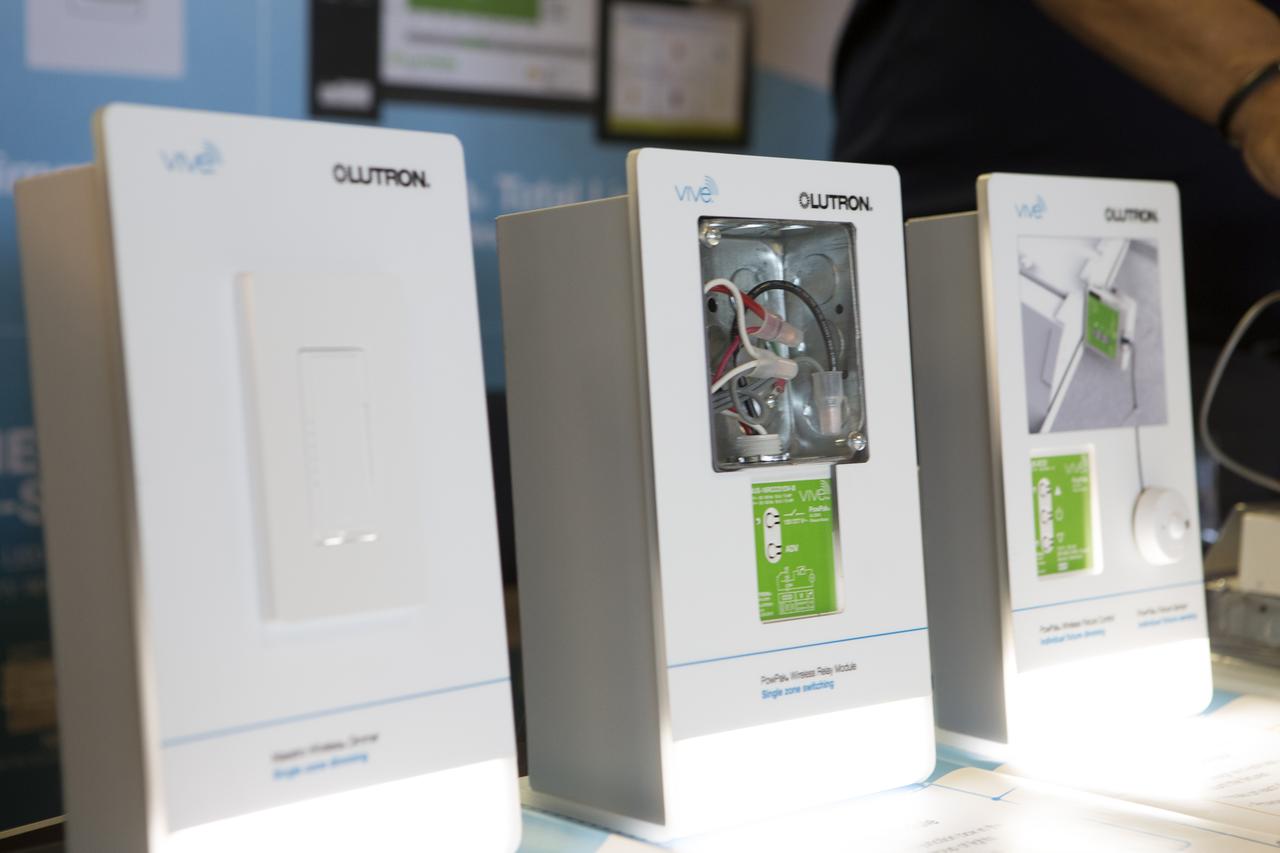
Shown are some of the devices from Lutron Electronics Co., a lighting control company, during Energy Awareness Day at the Multi-Function Facility on Oct. 20. Every third Thursday of October, civil servants, contractors and several energy utilities promote the awareness of our sustainability goals at Kennedy Space Center and at home. Photo credit: Cory Huston

Cory Taylor, an energy and water conservation specialist at Kennedy Space Center, absorbs information from Mark Gonzalez, a sales engineer with MC2 during Energy Awareness Day at the Multi-Function Facility on Oct. 20. Every third Thursday of October, civil servants, contractors and several energy utilities promote the awareness of our sustainability goals at Kennedy Space Center and at home. Photo credit: Cory Huston

Michelle Sipe Exaros, with Lutron Electronics Co., is seen behind pamphlets and brochures of information during Energy Awareness Day at the Multi-Function Facility on Oct. 20. Every third Thursday of October, civil servants, contractors and several energy utilities promote the awareness of our sustainability goals at Kennedy Space Center and at home. Photo credit: Cory Huston

Cory Taylor, an energy and water conservation specialist at Kennedy Space Center, absorbs information from Mark Gonzalez, a sales engineer with MC2 during Energy Awareness Day at the Multi-Function Facility on Oct. 20. Every third Thursday of October, civil servants, contractors and several energy utilities promote the awareness of our sustainability goals at Kennedy Space Center and at home. Photo credit: Cory Huston

Cory Taylor, an energy and water conservation specialist at Kennedy Space Center, absorbs information from Mark Gonzalez, a sales engineer with MC2 during Energy Awareness Day at the Multi-Function Facility on Oct. 20. Every third Thursday of October, civil servants, contractors and several energy utilities promote the awareness of our sustainability goals at Kennedy Space Center and at home. Photo credit: Cory Huston
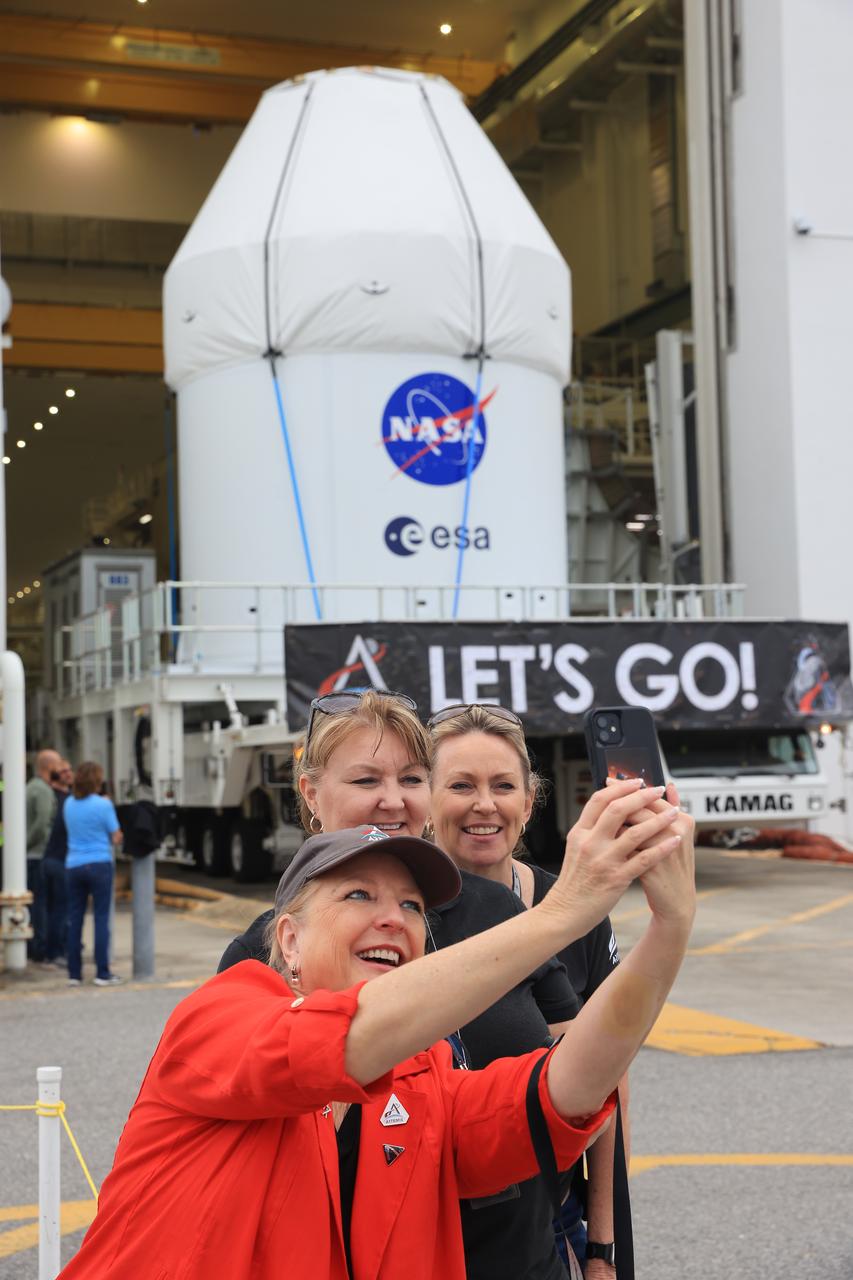
NASA’s KAMAG transporter carries the agency’s Artemis II Orion spacecraft from the Neil A. Armstrong Operations and Checkout Building to the Multi-Payload Processing Facility at Kennedy Space Center in Florida on Saturday, May 3, 2025. The Orion spacecraft will undergo fueling and processing operations at the Multi-Function Facility. The Artemis II test flight is the first crewed flight under NASA’s Artemis campaign and is another step toward missions on the lunar surface and helping the agency prepare for future human missions to Mars.
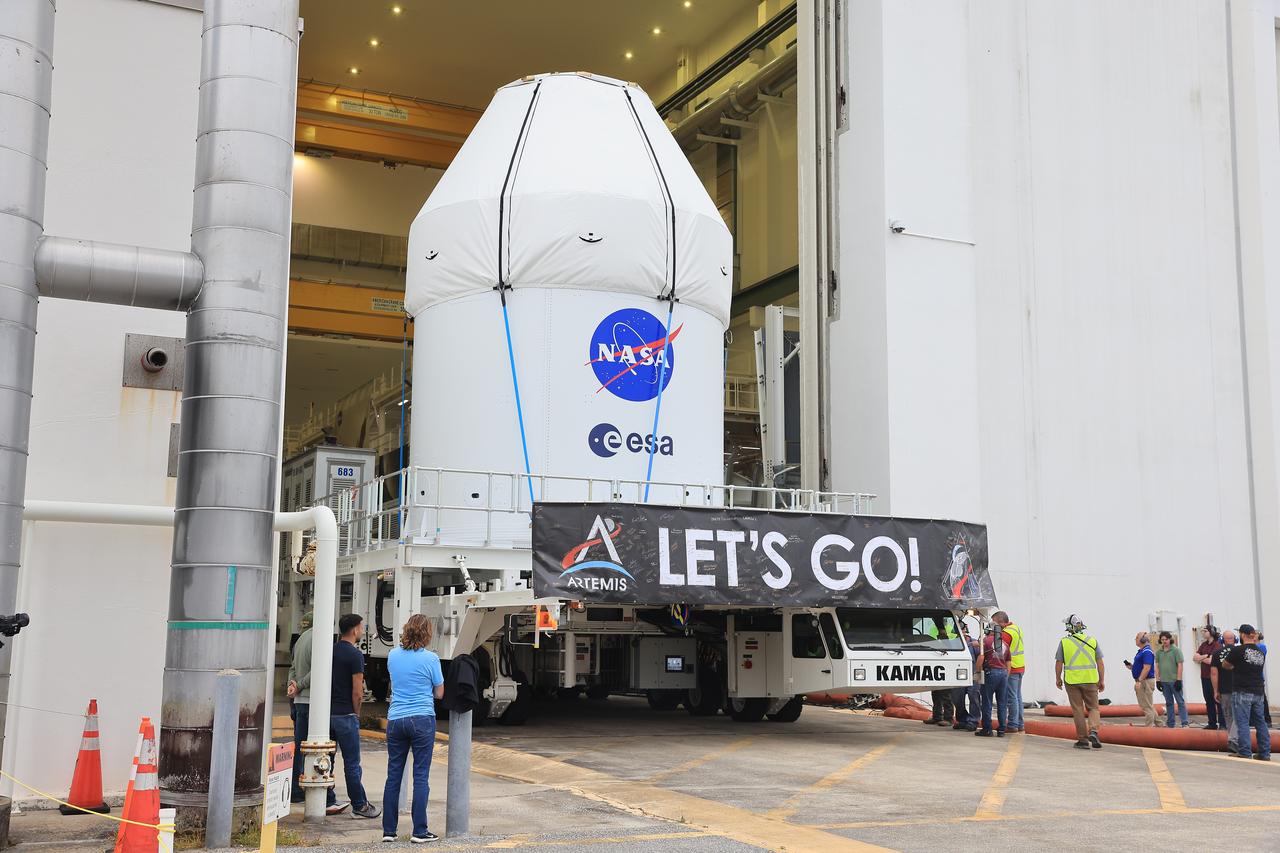
NASA’s KAMAG transporter carries the agency’s Artemis II Orion spacecraft from the Neil A. Armstrong Operations and Checkout Building to the Multi-Payload Processing Facility at Kennedy Space Center in Florida on Saturday, May 3, 2025. The Orion spacecraft will undergo fueling and processing operations at the Multi-Function Facility. The Artemis II test flight is the first crewed flight under NASA’s Artemis campaign and is another step toward missions on the lunar surface and helping the agency prepare for future human missions to Mars.
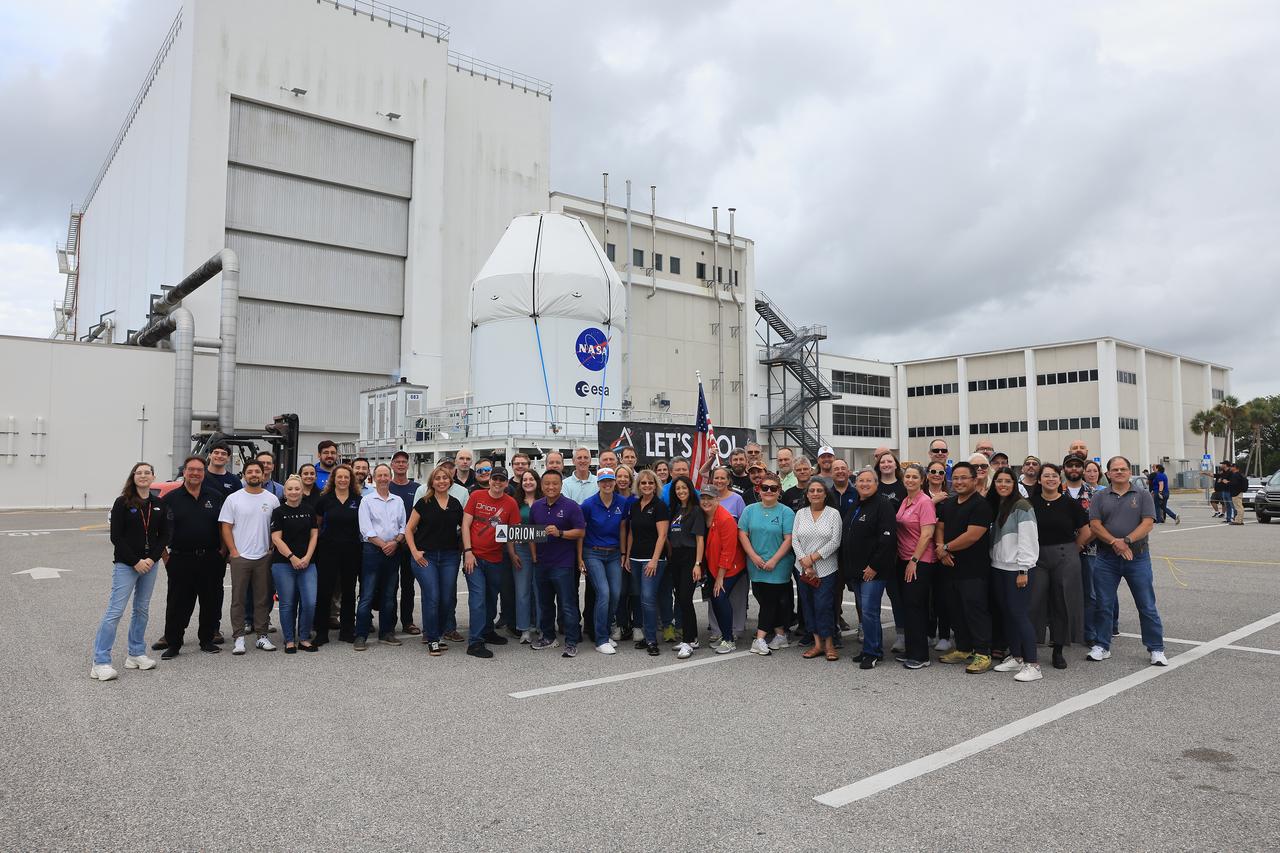
NASA’s KAMAG transporter carries the agency’s Artemis II Orion spacecraft from the Neil A. Armstrong Operations and Checkout Building to the Multi-Payload Processing Facility at Kennedy Space Center in Florida on Saturday, May 3, 2025. The Orion spacecraft will undergo fueling and processing operations at the Multi-Function Facility. The Artemis II test flight is the first crewed flight under NASA’s Artemis campaign and is another step toward missions on the lunar surface and helping the agency prepare for future human missions to Mars.

NASA’s KAMAG transporter carries the agency’s Artemis II Orion spacecraft from the Neil A. Armstrong Operations and Checkout Building to the Multi-Payload Processing Facility at Kennedy Space Center in Florida on Saturday, May 3, 2025. The Orion spacecraft will undergo fueling and processing operations at the Multi-Function Facility. The Artemis II test flight is the first crewed flight under NASA’s Artemis campaign and is another step toward missions on the lunar surface and helping the agency prepare for future human missions to Mars.
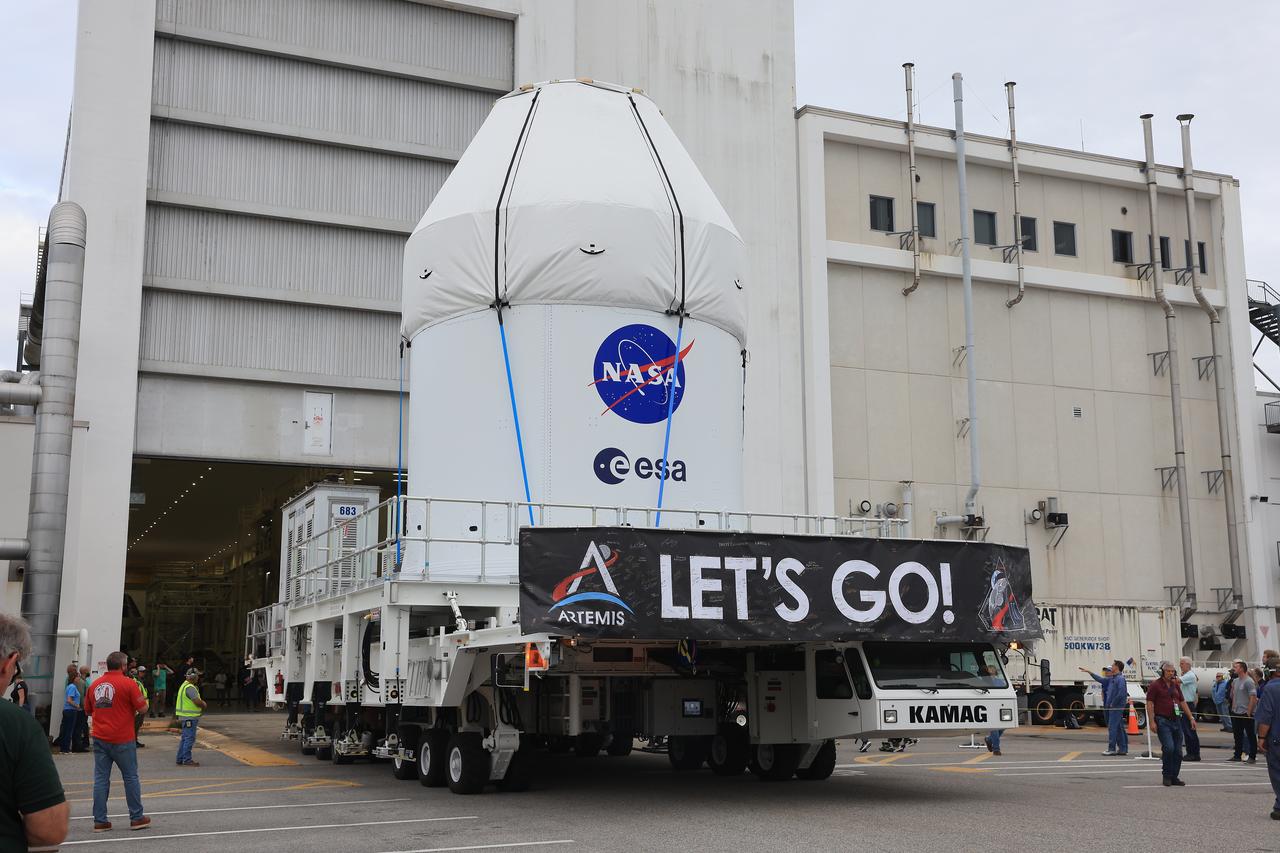
NASA’s KAMAG transporter carries the agency’s Artemis II Orion spacecraft from the Neil A. Armstrong Operations and Checkout Building to the Multi-Payload Processing Facility at Kennedy Space Center in Florida on Saturday, May 3, 2025. The Orion spacecraft will undergo fueling and processing operations at the Multi-Function Facility. The Artemis II test flight is the first crewed flight under NASA’s Artemis campaign and is another step toward missions on the lunar surface and helping the agency prepare for future human missions to Mars.
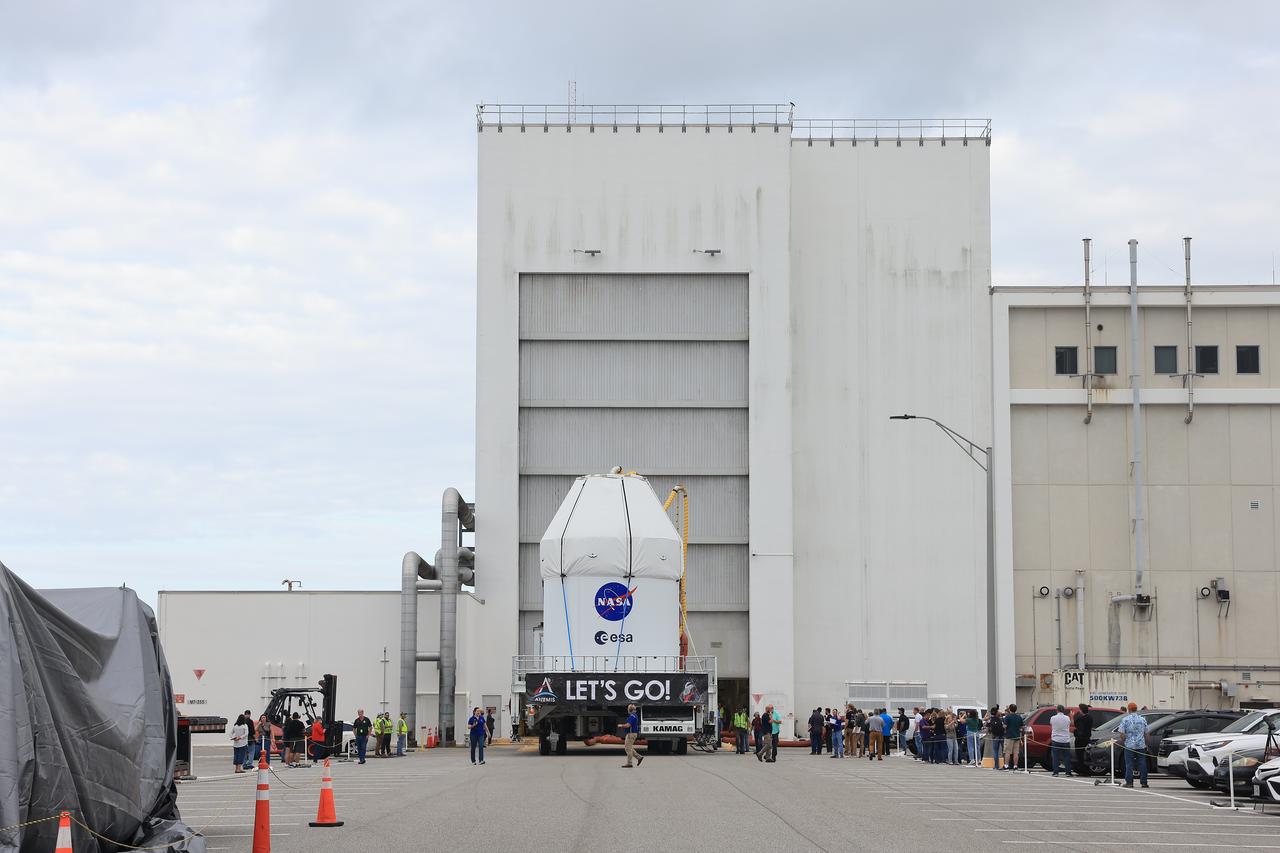
NASA’s KAMAG transporter carries the agency’s Artemis II Orion spacecraft from the Neil A. Armstrong Operations and Checkout Building to the Multi-Payload Processing Facility at Kennedy Space Center in Florida on Saturday, May 3, 2025. The Orion spacecraft will undergo fueling and processing operations at the Multi-Function Facility. The Artemis II test flight is the first crewed flight under NASA’s Artemis campaign and is another step toward missions on the lunar surface and helping the agency prepare for future human missions to Mars.
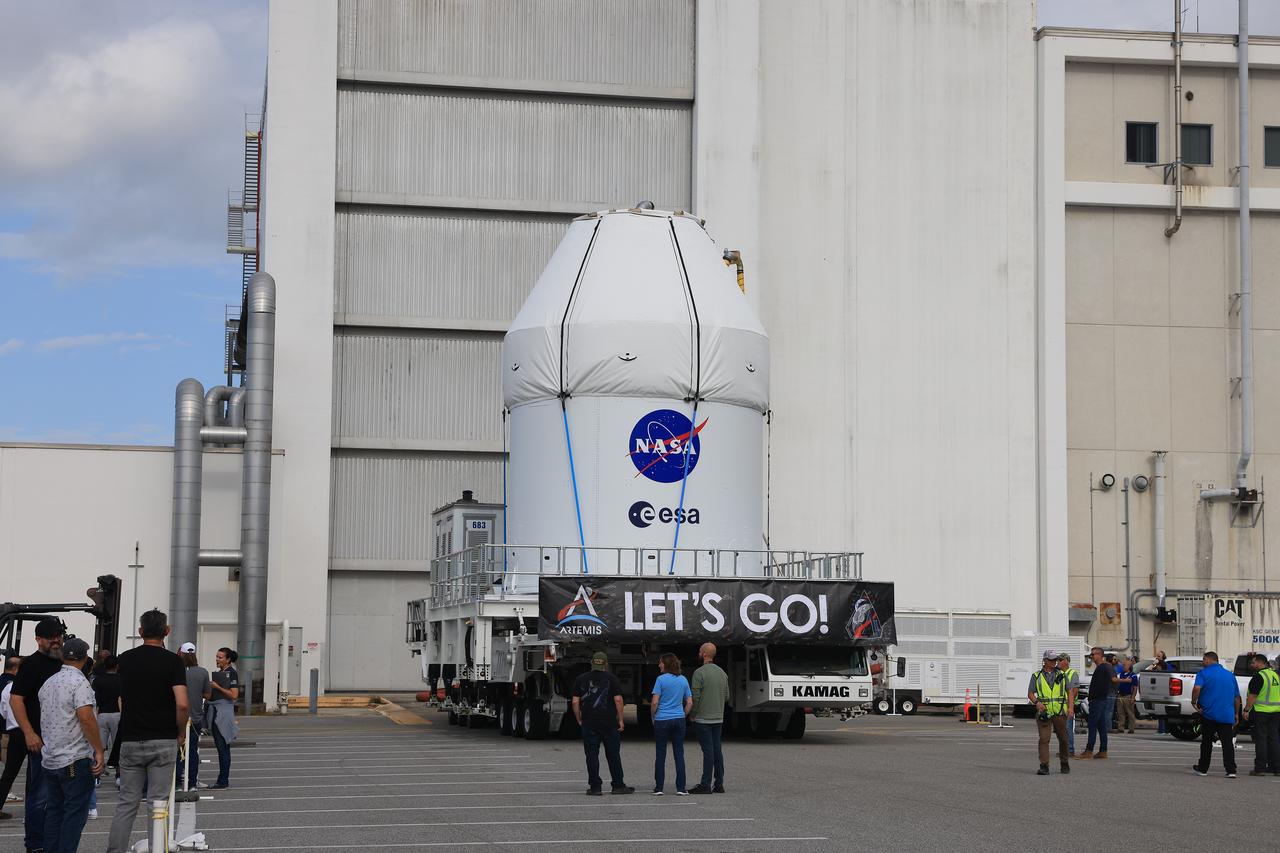
NASA’s KAMAG transporter carries the agency’s Artemis II Orion spacecraft from the Neil A. Armstrong Operations and Checkout Building to the Multi-Payload Processing Facility at Kennedy Space Center in Florida on Saturday, May 3, 2025. The Orion spacecraft will undergo fueling and processing operations at the Multi-Function Facility. The Artemis II test flight is the first crewed flight under NASA’s Artemis campaign and is another step toward missions on the lunar surface and helping the agency prepare for future human missions to Mars.
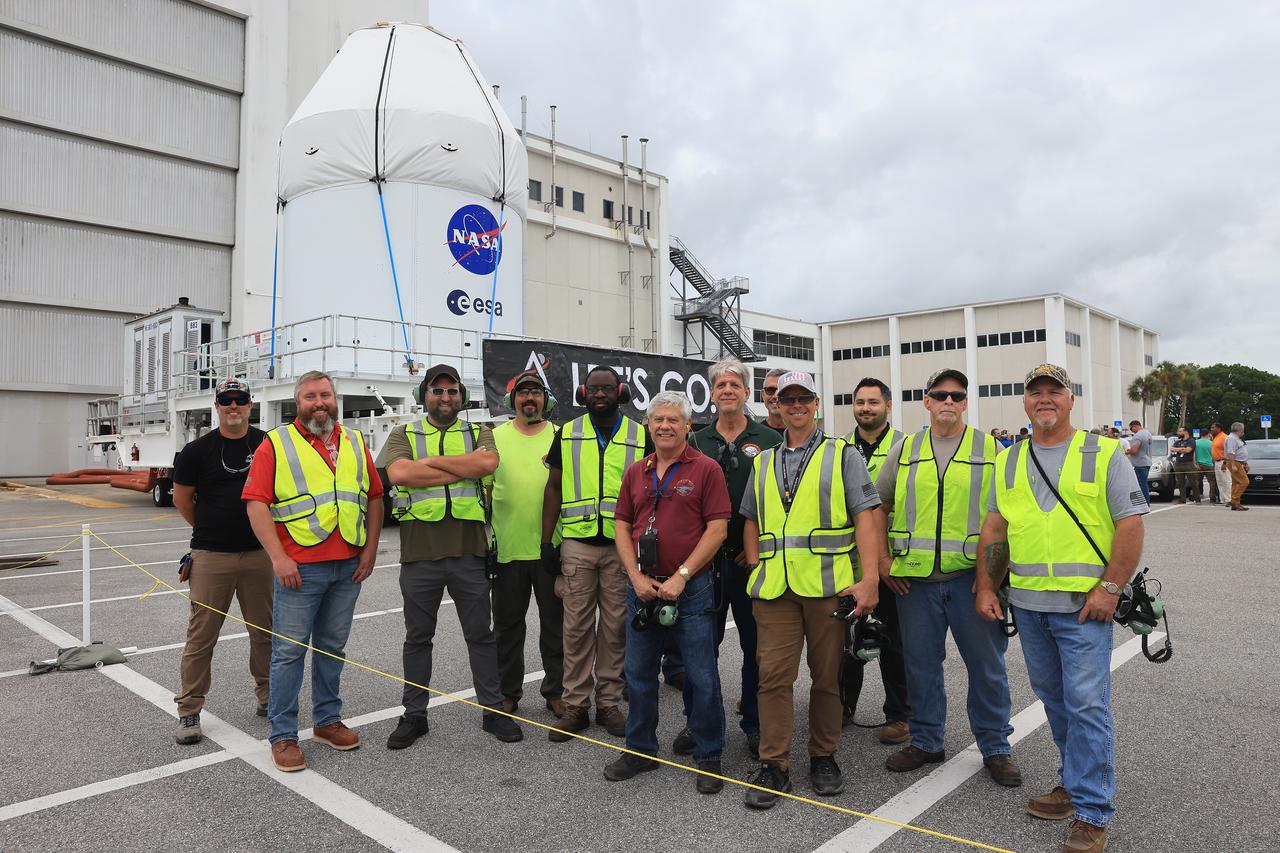
NASA’s KAMAG transporter carries the agency’s Artemis II Orion spacecraft from the Neil A. Armstrong Operations and Checkout Building to the Multi-Payload Processing Facility at Kennedy Space Center in Florida on Saturday, May 3, 2025. The Orion spacecraft will undergo fueling and processing operations at the Multi-Function Facility. The Artemis II test flight is the first crewed flight under NASA’s Artemis campaign and is another step toward missions on the lunar surface and helping the agency prepare for future human missions to Mars.
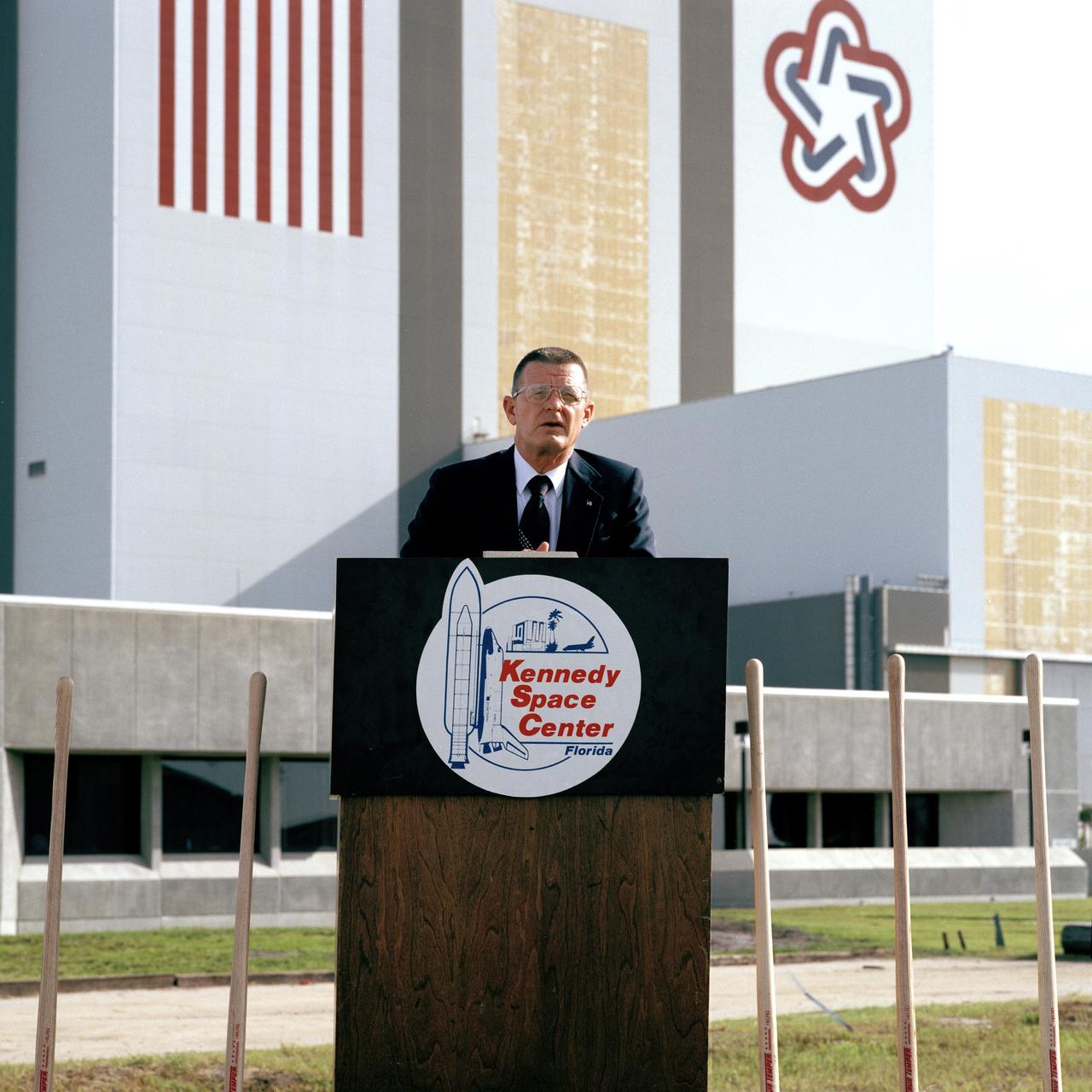
CAPE CANAVERAL, Fla. - Kennedy Space Center Director Forrest McCartney speaks at the ground-breaking ceremonies for the new Operations Support Building. This new facility will provide office accommodations for 1,700 NASA and contractor personnel. The $20,695,000, six-story, 300,000-square-foot building is located southwest of the Multi-Function Facility near the corner of the Saturn Causeway and Kennedy Parkway Roads. Construction is due to be completed by June 1990. Photo credit: NASA
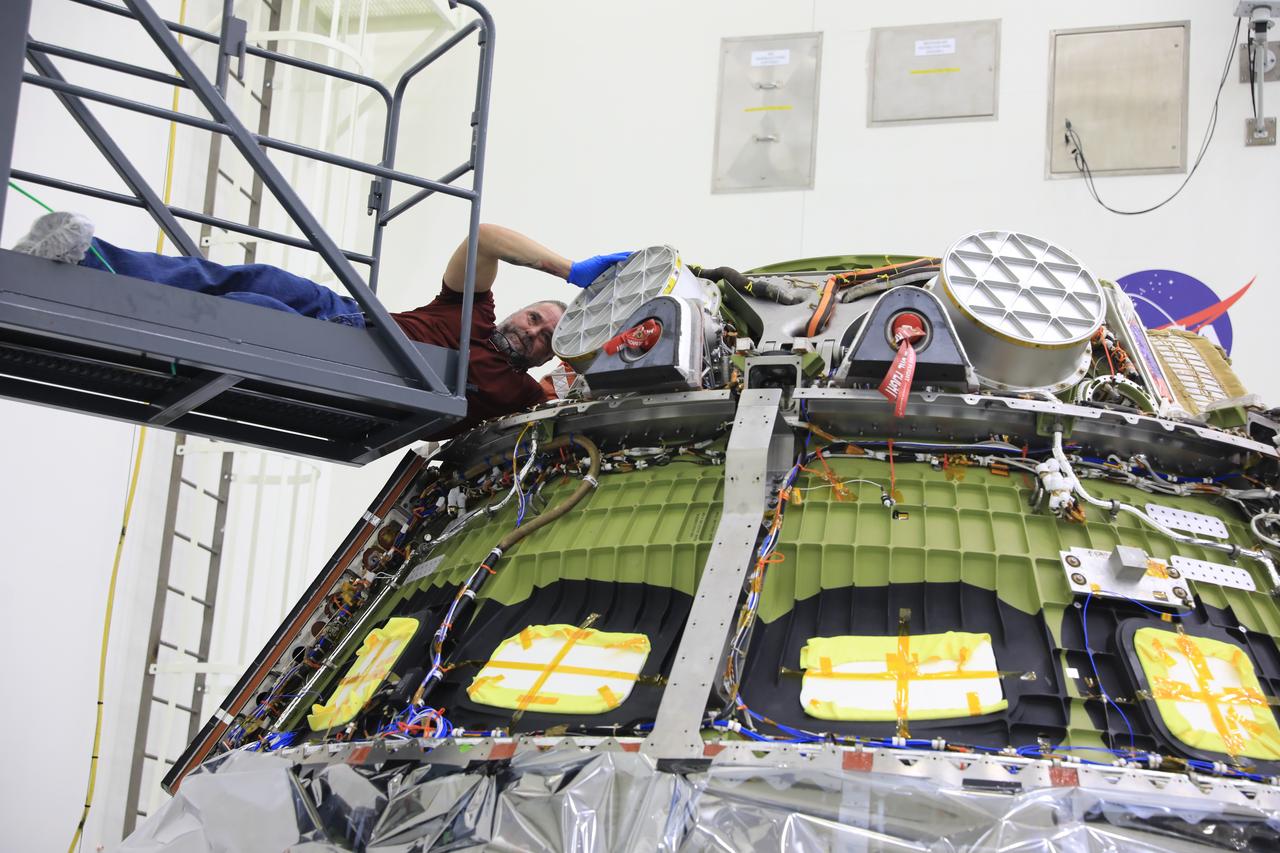
The Artemis I Orion crew module, now known as the Orion Environmental Test Article (ETA), arrives to NASA’s Kennedy Space Center in Florida on Saturday, Dec. 21, 2024, following an 11-month test campaign at NASA’s Neil Armstrong Test Facility in Sandusky, Ohio. The ETA will undergo propulsion functional testing at Kennedy’s Multi Payload Processing Facility. The ETA splashed down in the Pacific Ocean on Sunday, Dec. 11, 2022, following its journey around the Moon during the Artemis I mission.
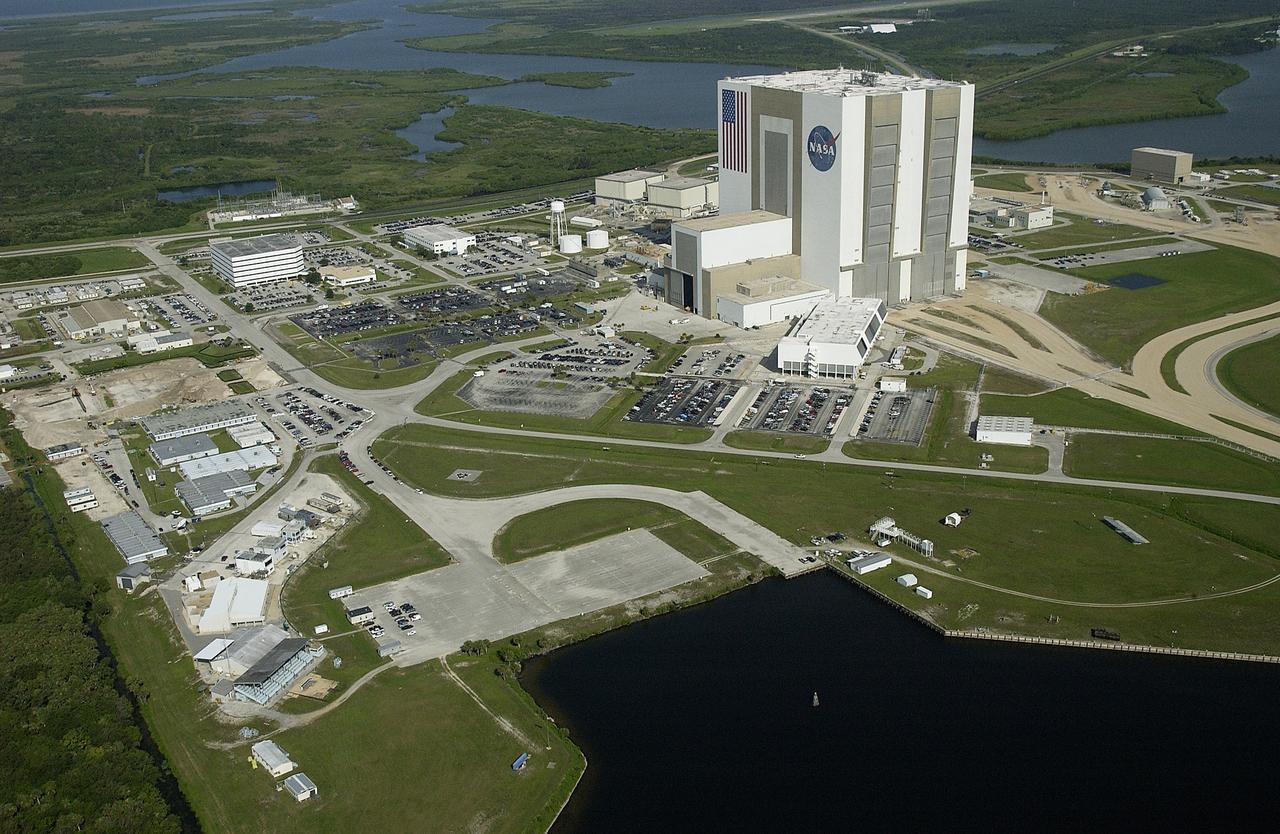
CAPE CANAVERAL, Fla. -- This view shows much of the Launch Complex 39 Area stretching beyond the Turn Basin in the foreground. The largest building is the 525-foot-tall Vehicle Assembly Building. In front of it is the Launch Control Center. Behind and to the left of the VAB are the Orbiter Processing Facility bays. At left are the Multi-Function Facility and Operations Support Building. At left of the Turn Basin is the Press Site, which comprises the NASA News Center, grandstand, TV studio and media buildings. Photo credit: NASA
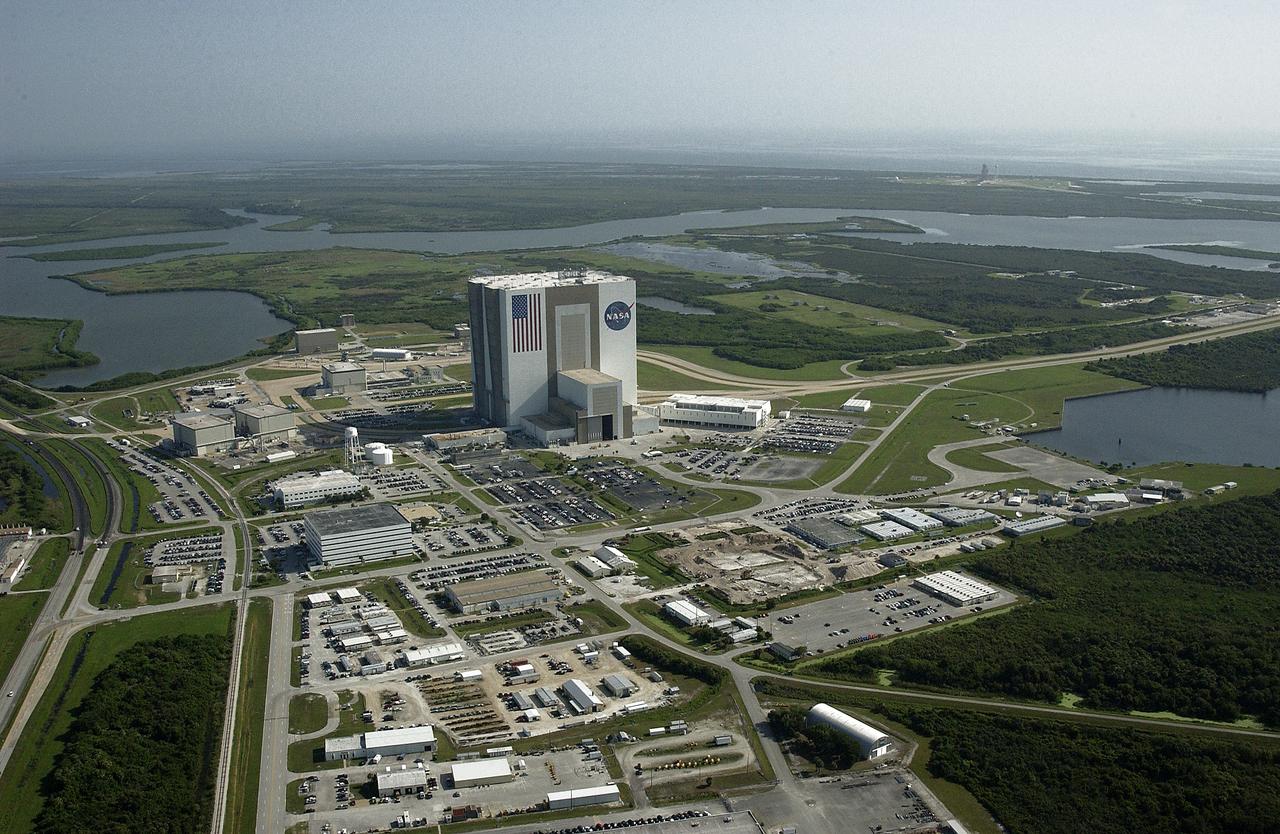
KENNEDY SPACE CENTER, FLA. – This view shows much of the Launch Complex 39 Area looking north. At center is the 525-foot-tall Vehicle Assembly Building. Other buildings surrounding it are (counter clockwise from left) the Orbiter Processing Facility, Multi-Function Facility, Operations Support Building and Launch Control Center (next to VAB). The crawlerway leads from the VAB toward the launch pads. In the background are the waters of the Banana Creek.
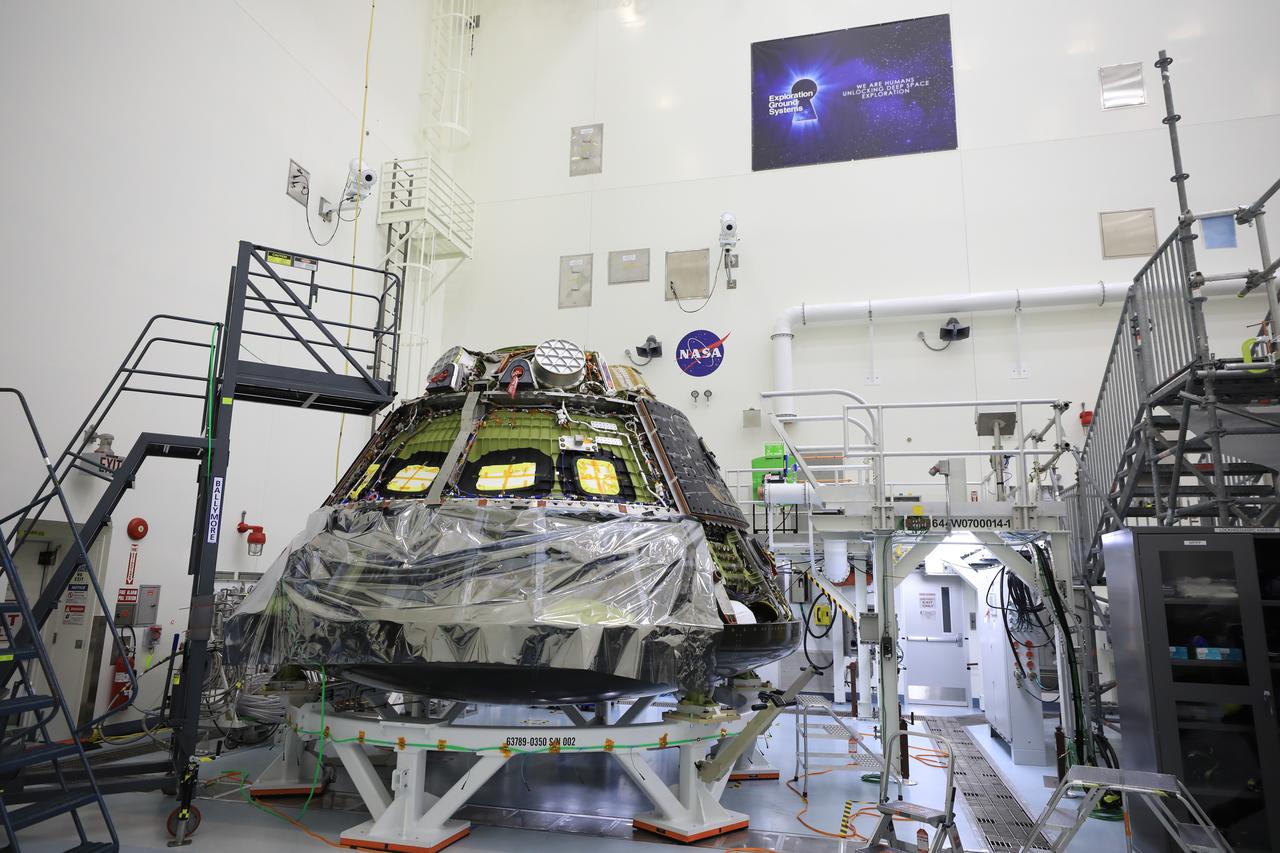
The Artemis I Orion crew module, now known as the Orion Environmental Test Article (ETA), arrives to NASA’s Kennedy Space Center in Florida on Saturday, Dec. 21, 2024, following an 11-month test campaign at NASA’s Neil Armstrong Test Facility in Sandusky, Ohio. The ETA will undergo propulsion functional testing at Kennedy’s Multi Payload Processing Facility. The ETA splashed down in the Pacific Ocean on Sunday, Dec. 11, 2022, following its journey around the Moon during the Artemis I mission.
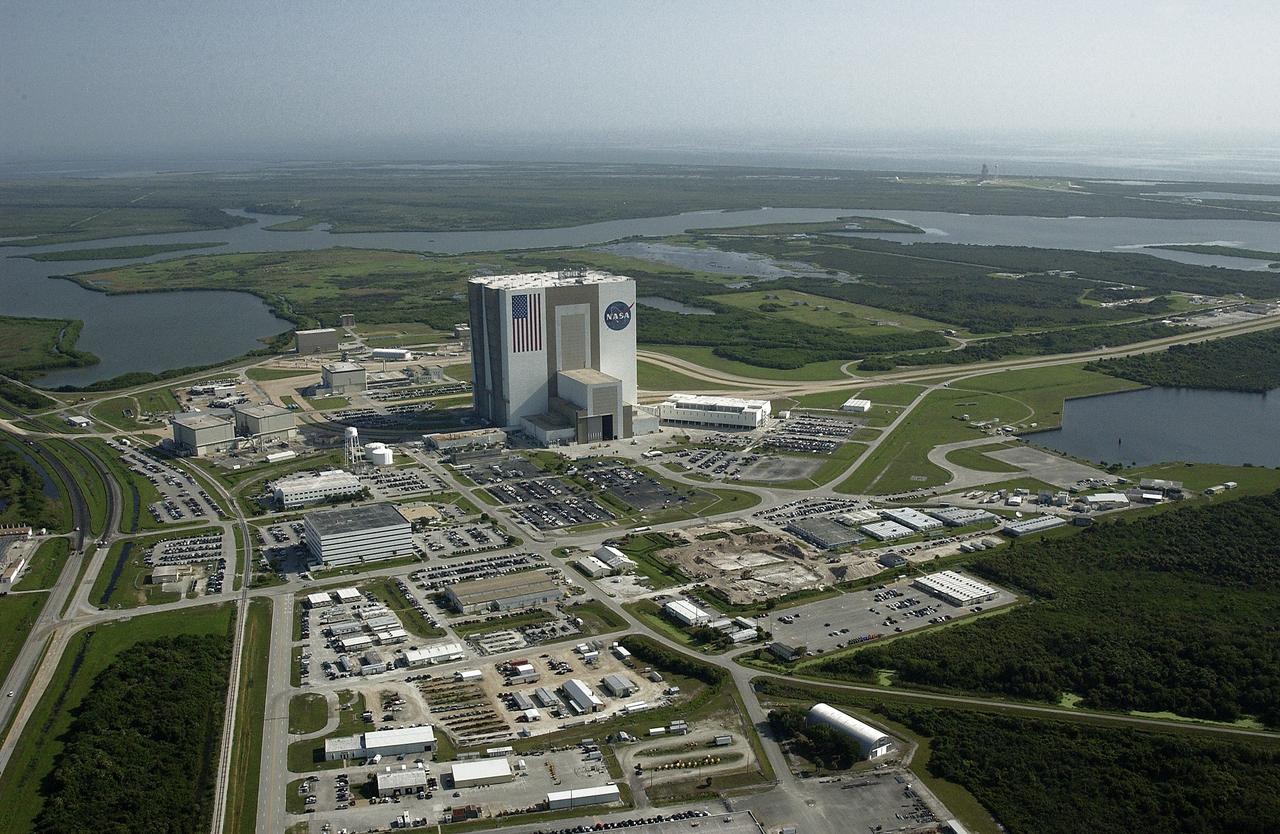
CAPE CANAVERAL, Fla. -- This view shows much of the Launch Complex 39 Area looking north. At center is the 525-foot-tall Vehicle Assembly Building. Other buildings surrounding it are counter clockwise from left the Orbiter Processing Facility, Multi-Function Facility, Operations Support Building and Launch Control Center, next to the VAB. The crawlerway leads from the VAB toward the launch pads. In the background are the waters of the Banana Creek. Photo credit: NASA
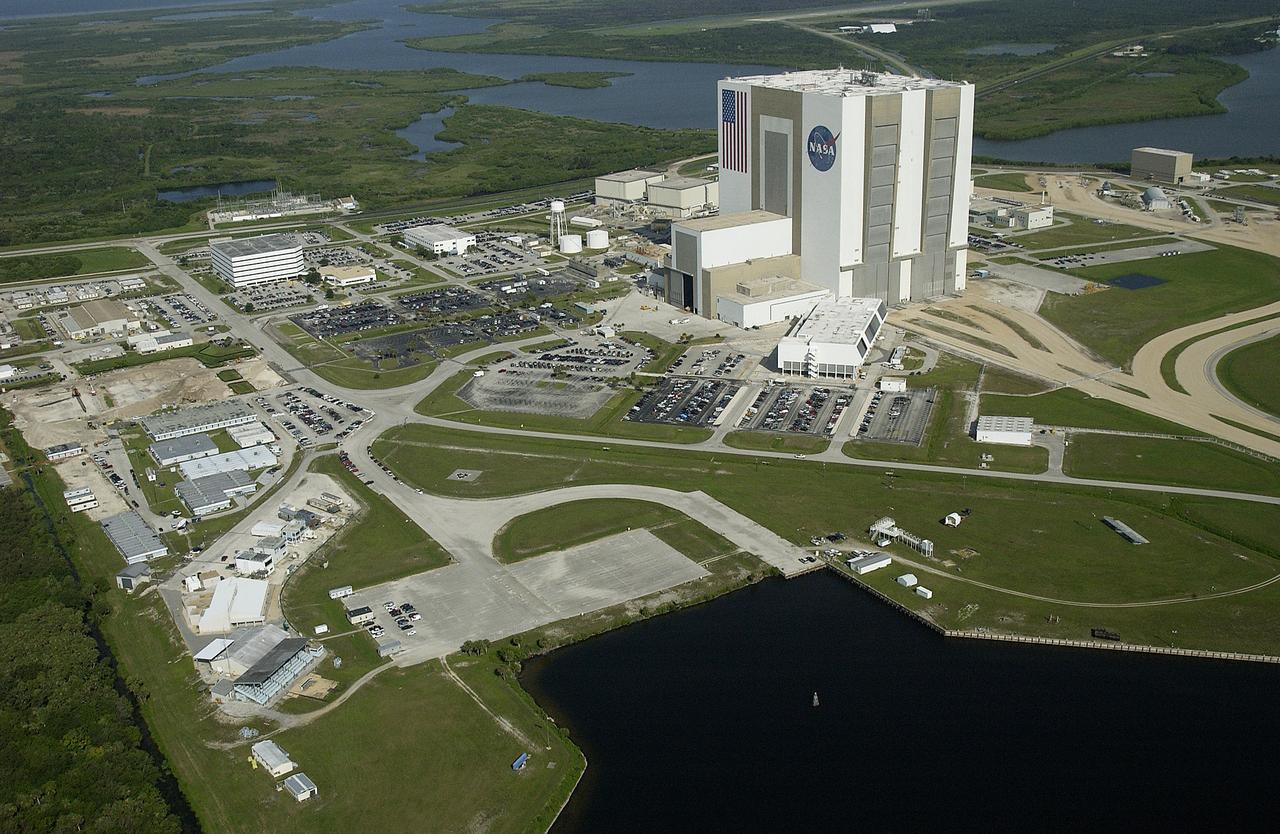
KENNEDY SPACE CENTER, FLA. – This view shows much of the Launch Complex 39 Area stretching beyond the Turn Basin in the foreground. The largest building is the 525-foot-tall Vehicle Assembly Building. In front of it is the Launch Control Center. Behind and to the left of the VAB are the Orbiter Processing Facility bays. At left are the Multi-Function Facility and Operations Support Building. At left of the Turn Basin is the Press Site, which comprises the NASA News Center, grandstand, TV studio and media buildings.
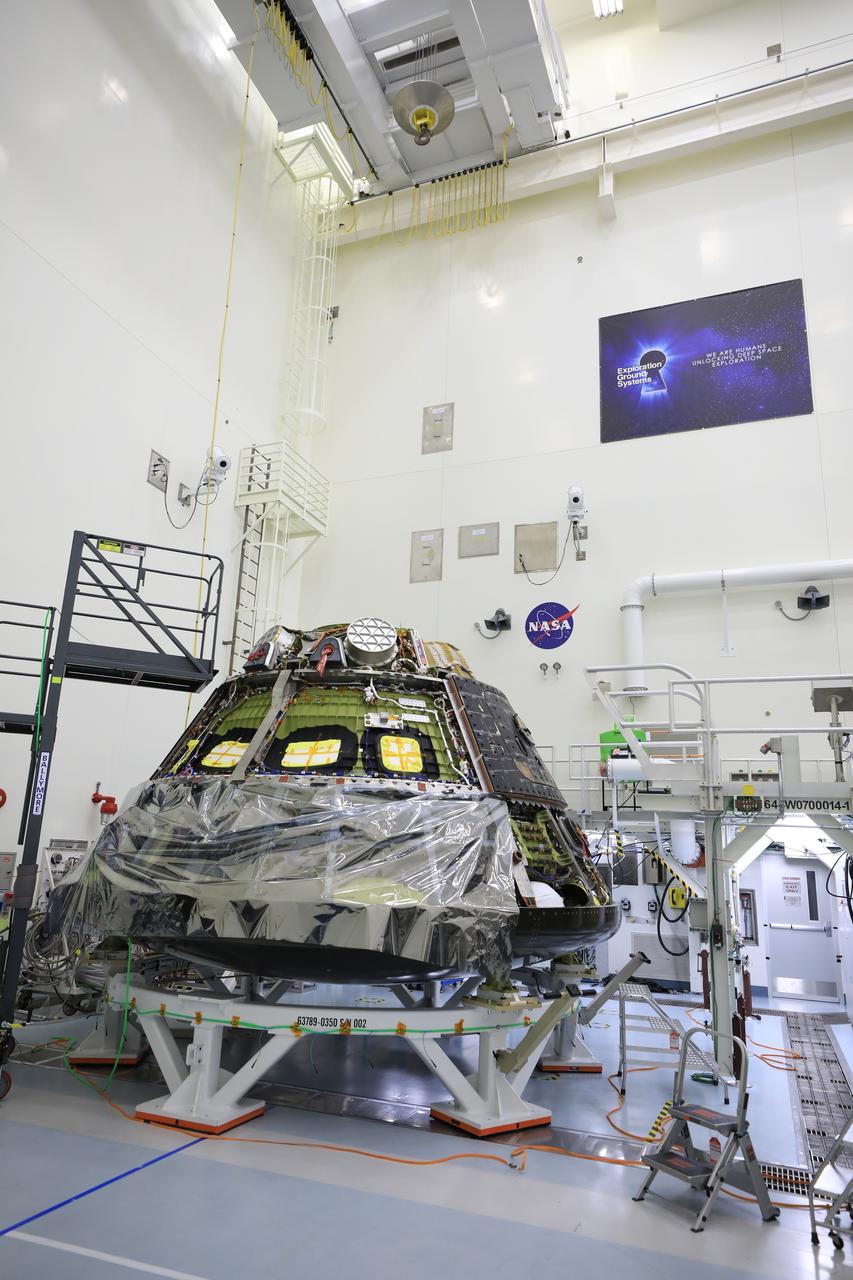
The Artemis I Orion crew module, now known as the Orion Environmental Test Article (ETA), arrives to NASA’s Kennedy Space Center in Florida on Saturday, Dec. 21, 2024, following an 11-month test campaign at NASA’s Neil Armstrong Test Facility in Sandusky, Ohio. The ETA will undergo propulsion functional testing at Kennedy’s Multi Payload Processing Facility. The ETA splashed down in the Pacific Ocean on Sunday, Dec. 11, 2022, following its journey around the Moon during the Artemis I mission.
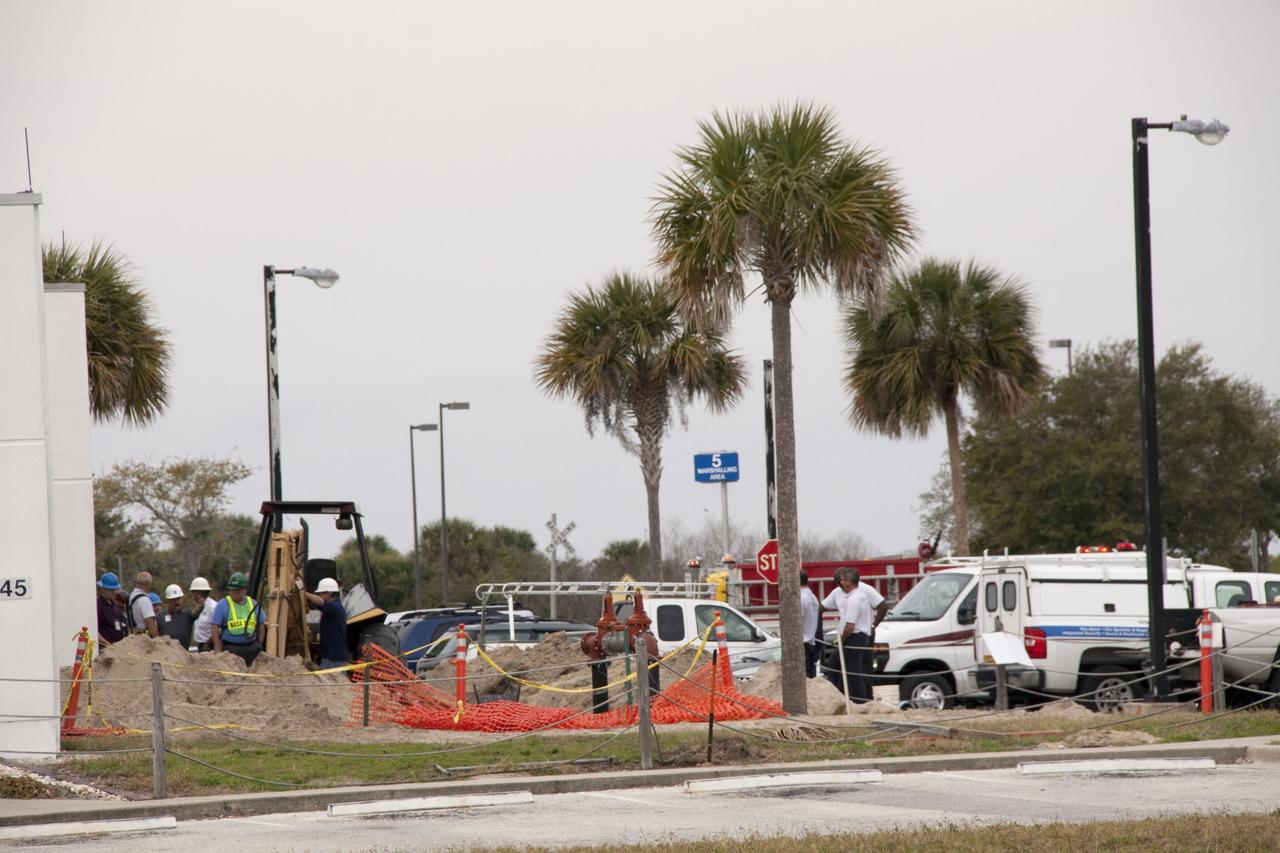
CAPE CANAVERAL, Fla. -- At NASA's Kennedy Space Center in Florida, a backhoe inadvertently struck a natural gas line in the area north of the Multi Function Facility (MFF), at around 8:40 a.m. EST. As a precaution, personnel were evacuated from Orbiter Processing Facilities 1 and 2, the MFF, Processing Control Center and the Operations Support Building (OSB) I. All traffic was blocked on the Saturn Causeway near the facilities. There were no injuries or damage to any facilities and personnel were allowed back into their buildings before mid-day and the roadway open to traffic. With the backhoe idle, workers assess the area where the break in the gas line occurred. Photo credit: NASA/Jack Pfaller
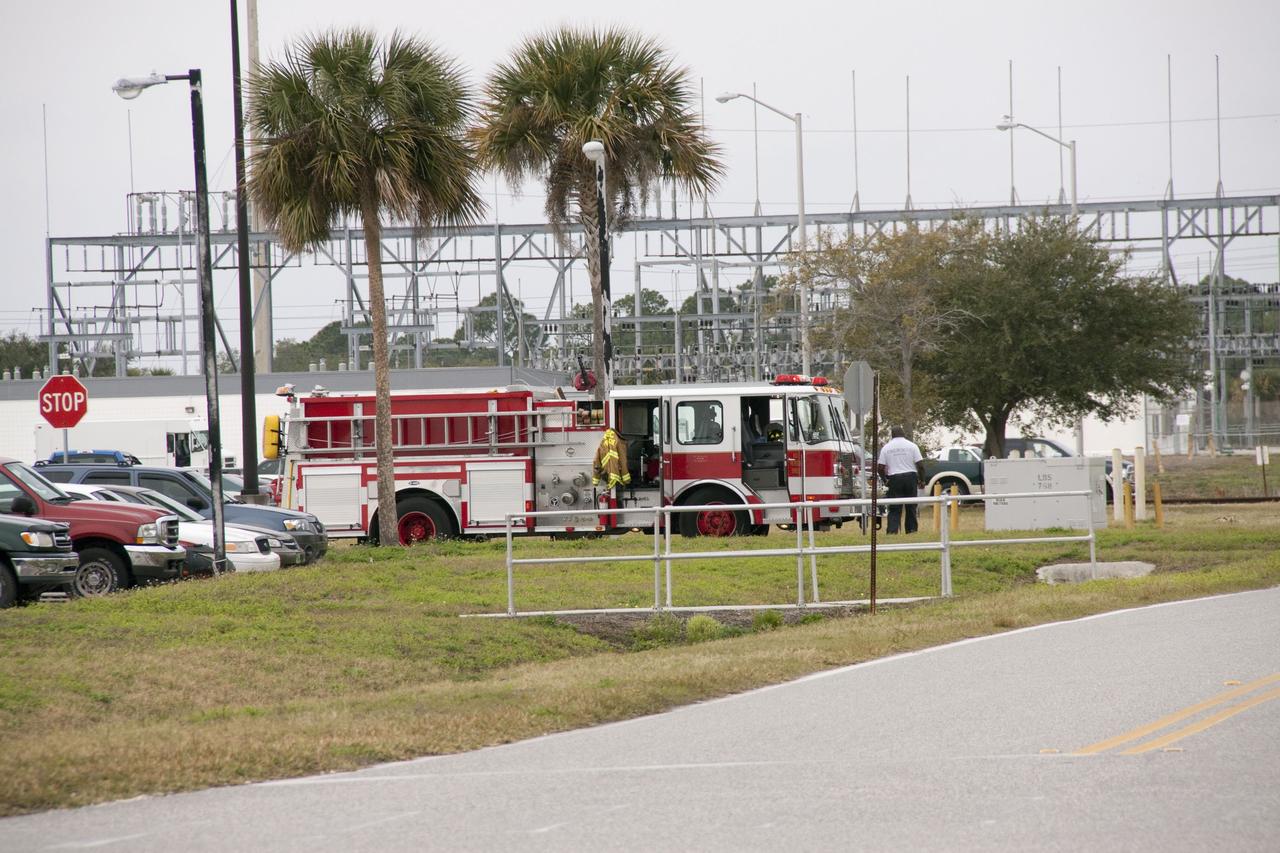
CAPE CANAVERAL, Fla. -- At NASA's Kennedy Space Center in Florida, KSC firefighters were on the scene after a backhoe inadvertently struck a natural gas line at around 8:40 a.m. EST in the area north of the Multi Function Facility (MFF). As a precaution, personnel were evacuated from Orbiter Processing Facilities 1 and 2, the MFF, Processing Control Center and Operations Support Building (OSB) I. All traffic was blocked on the Saturn Causeway near the facilities. There were no injuries or damage to any facilities and personnel were allowed back into their buildings before mid-day and the roadway open to traffic. Photo credit: NASA/Jack Pfaller
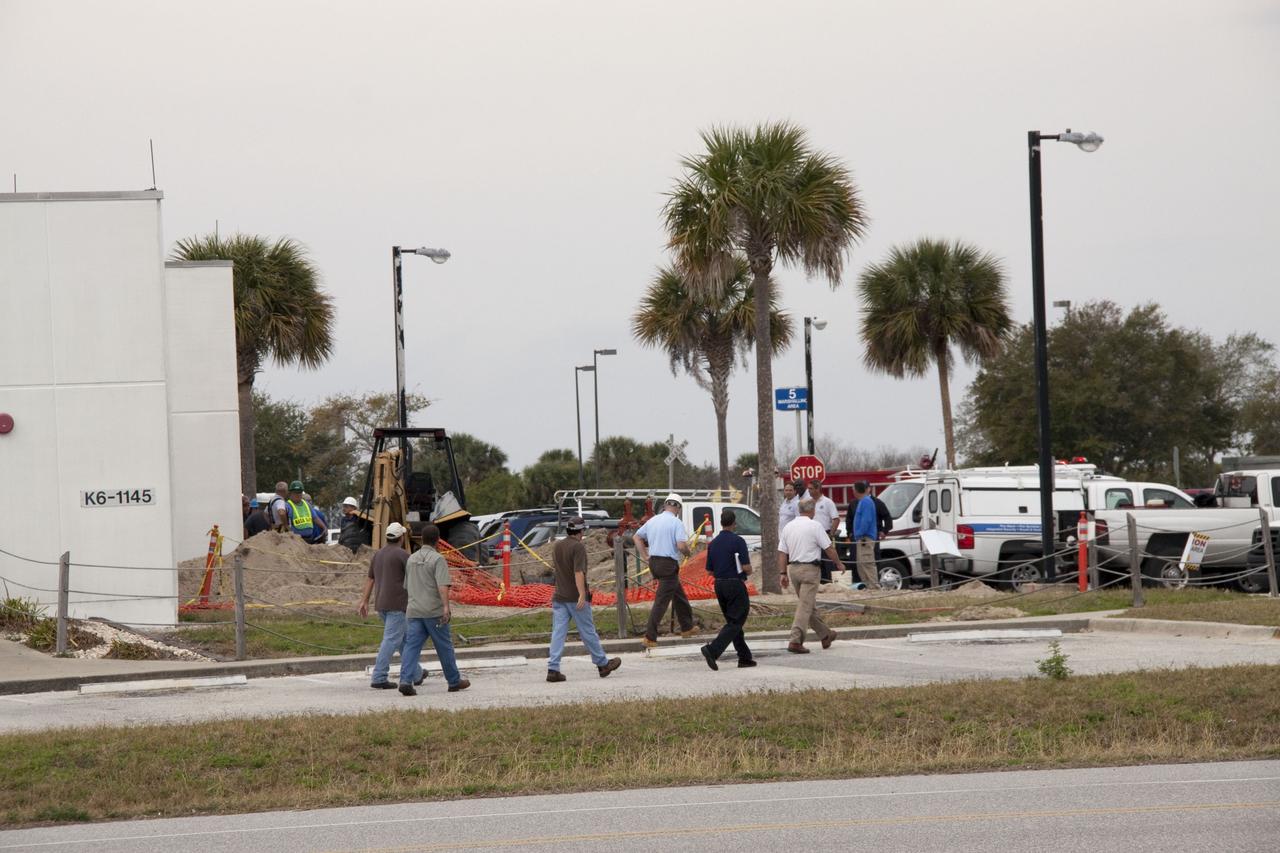
CAPE CANAVERAL, Fla. -- At NASA's Kennedy Space Center in Florida, a backhoe inadvertently struck a natural gas line in the area north of the Multi Function Facility (MFF), at around 8:40 a.m. EST. As a precaution, personnel were evacuated from Orbiter Processing Facilities 1 and 2, the MFF, Processing Control Center and the Operations Support Building (OSB) I. All traffic was blocked on the Saturn Causeway near the facilities. There were no injuries or damage to any facilities and personnel were allowed back into their buildings before mid-day and the roadway open to traffic. With the backhoe idle, workers assess the area where the break in the gas line occurred. Photo credit: NASA/Jack Pfaller
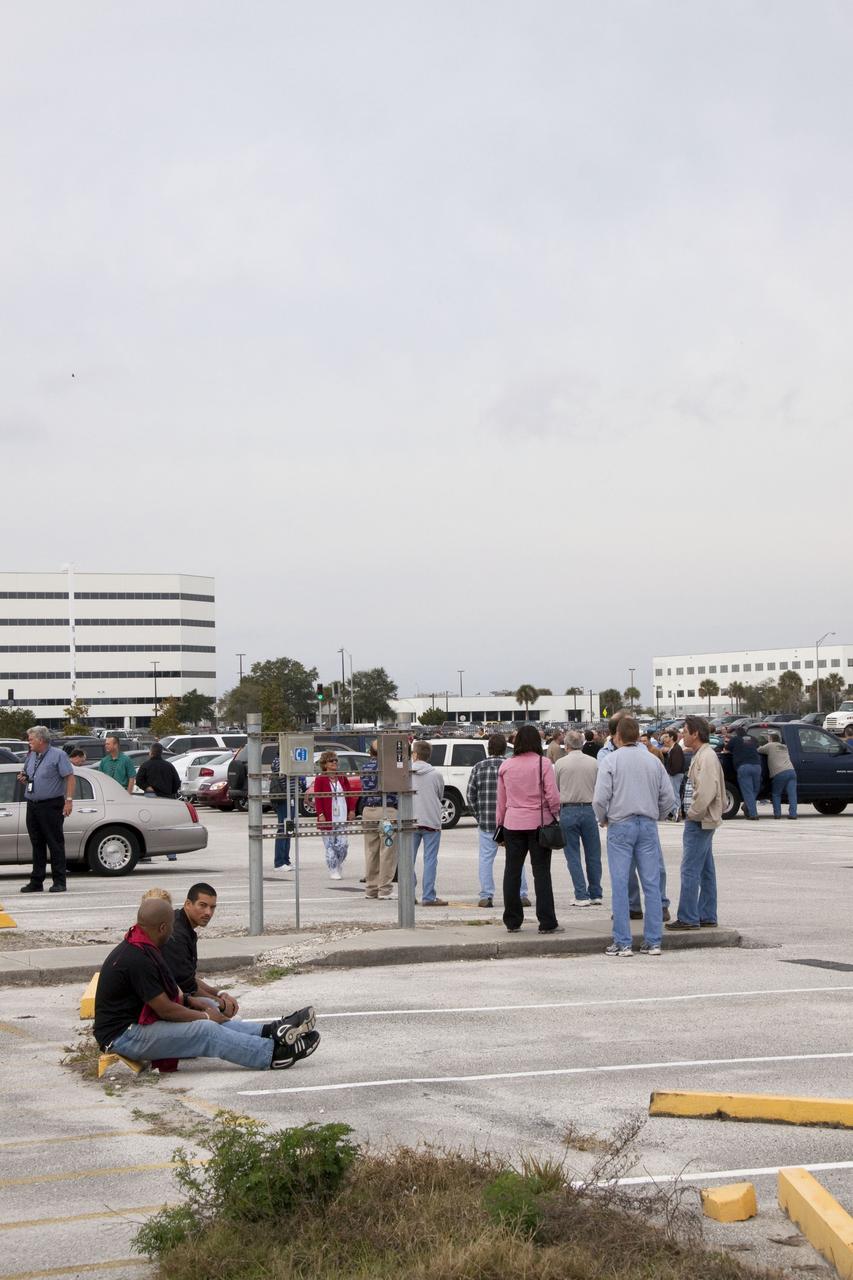
CAPE CANAVERAL, Fla. -- Workers wait to return to their buildings at NASA's Kennedy Space Center in Florida, after a backhoe inadvertently struck a natural gas line at around 8:40 a.m. EST in the area north of the Multi Function Facility (MFF). As a precaution, personnel were evacuated from Orbiter Processing Facilities 1 and 2, the MFF, Processing Control Center and Operations Support Building (OSB) I. All traffic was blocked on the Saturn Causeway near the facilities. There were no injuries or damage to any facilities and personnel were allowed back into their buildings before mid-day and the roadway open to traffic. Photo credit: NASA/Jack Pfaller
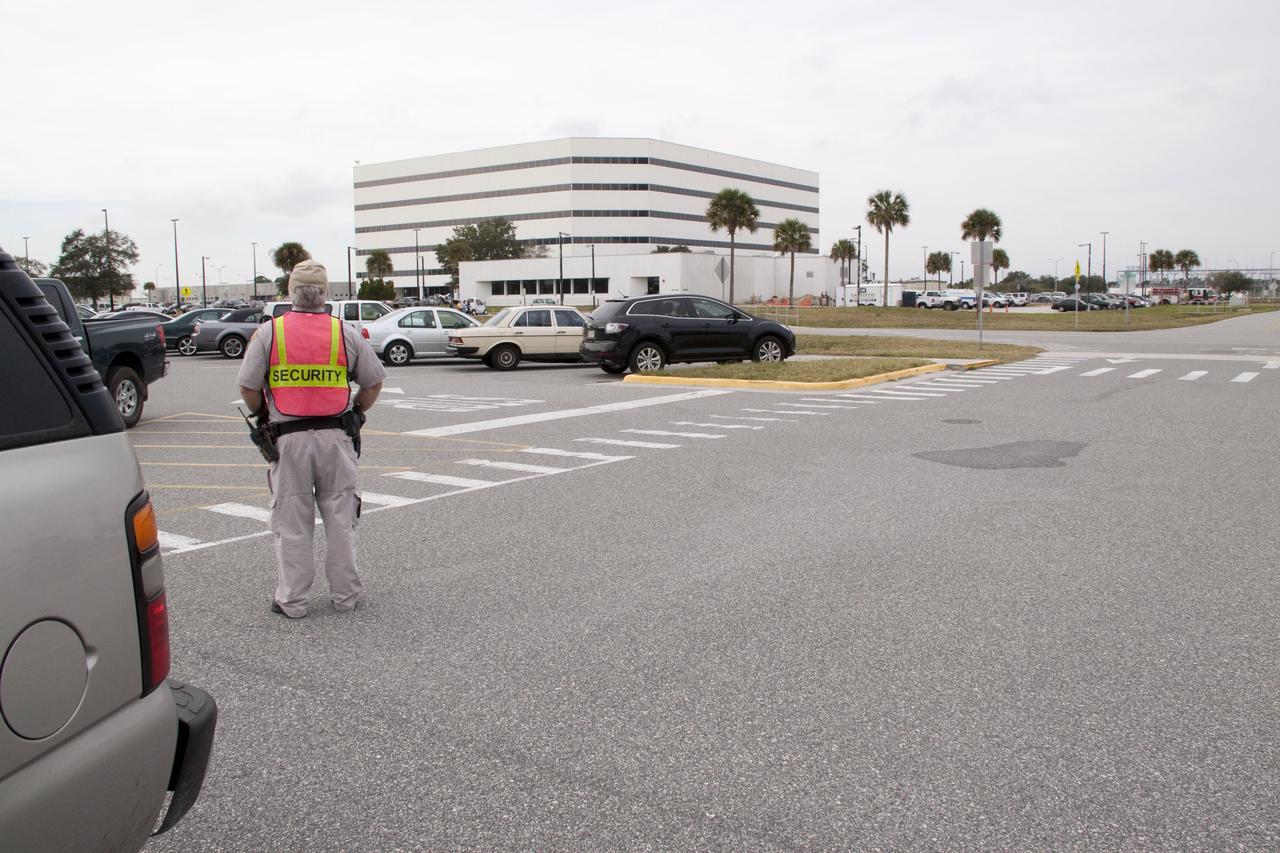
CAPE CANAVERAL, Fla. -- At NASA's Kennedy Space Center in Florida, a security officer monitors the area after a backhoe inadvertently struck a natural gas line at around 8:40 a.m. EST in the area north of the Multi Function Facility (MFF). As a precaution, personnel were evacuated from Orbiter Processing Facilities 1 and 2, the MFF, Processing Control Center and Operations Support Building (OSB) I. All traffic was blocked on the Saturn Causeway near the facilities. There were no injuries or damage to any facilities and personnel were allowed back into their buildings before mid-day and the roadway open to traffic. Photo credit: NASA/Jack Pfaller
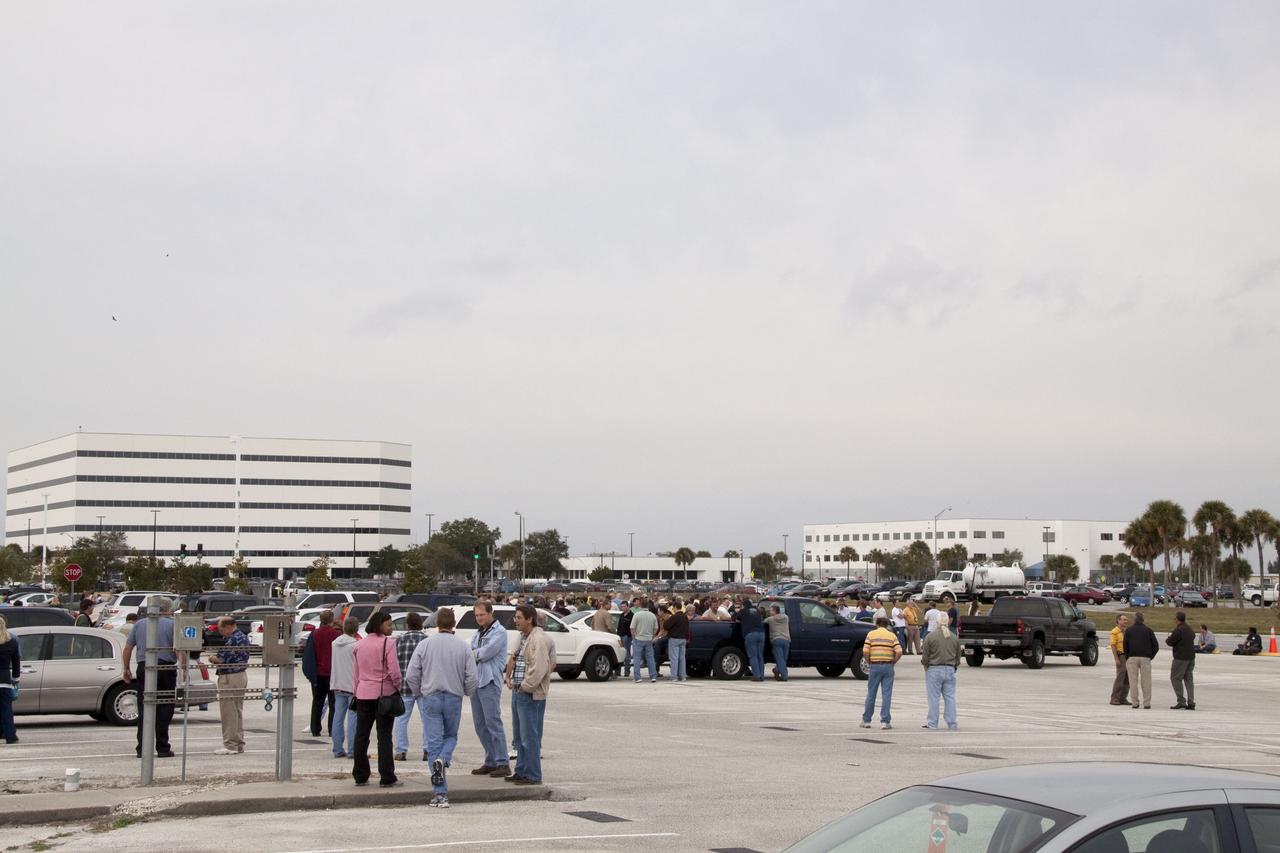
CAPE CANAVERAL, Fla. -- Workers wait to return to their buildings at NASA's Kennedy Space Center in Florida, after a backhoe inadvertently struck a natural gas line at around 8:40 a.m. EST in the area north of the Multi Function Facility (MFF). As a precaution, personnel were evacuated from Orbiter Processing Facilities 1 and 2, the MFF, Processing Control Center and Operations Support Building (OSB) I. All traffic was blocked on the Saturn Causeway near the facilities. There were no injuries or damage to any facilities and personnel were allowed back into their buildings before mid-day and the roadway open to traffic. Photo credit: NASA/Jack Pfaller
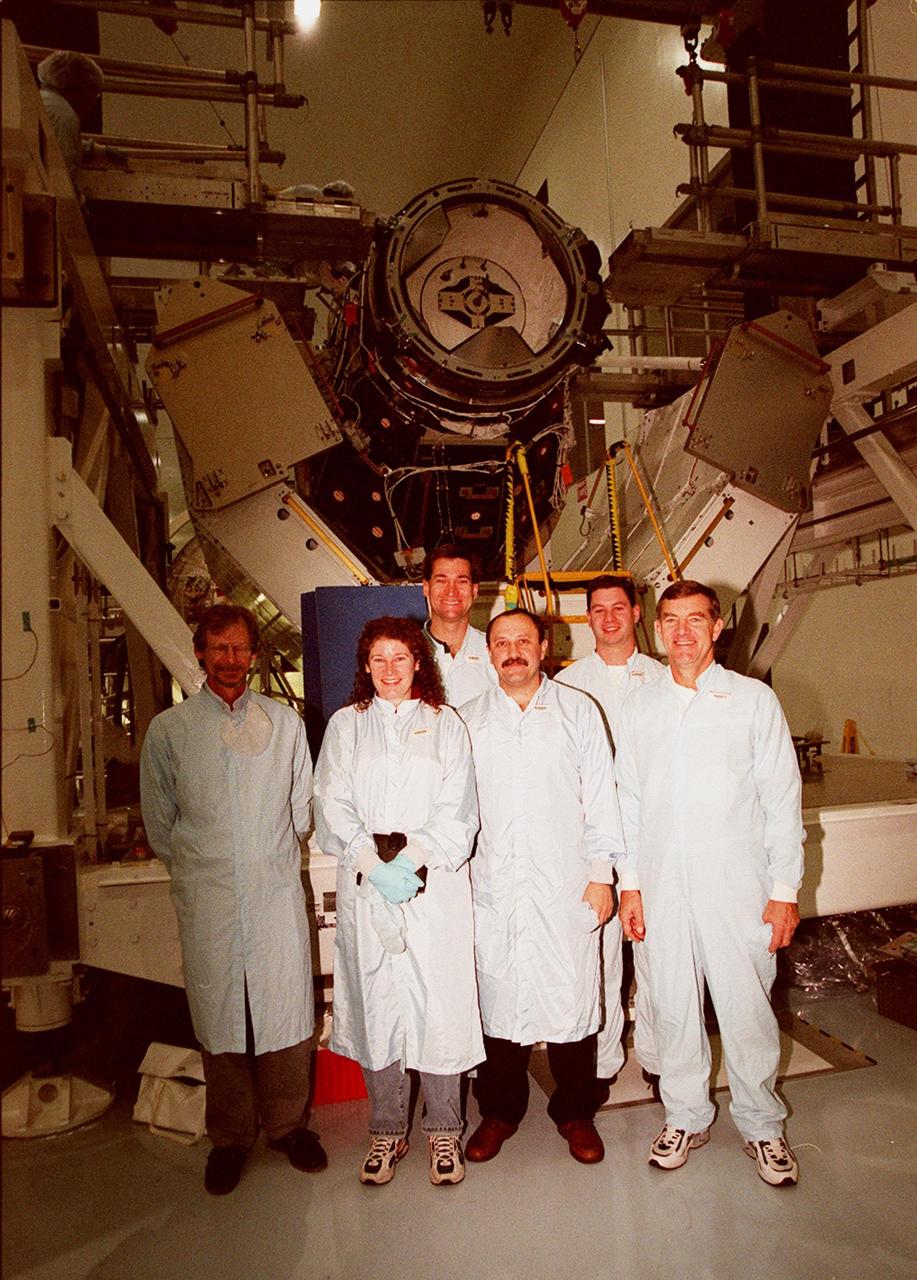
KENNEDY SPACE CENTER, FLA. -- In the Space Station Processing Facility, members of the STS-102 crew pose with workers from Johnson Space Center in front of the Pressurized Mating Adapter (PMA-3), a component of the International Space Station (ISS). From left are Dave Moore (JSC), Susan J. Helms, Arne Aamodt (JSC), Yuriy Vladimirovich Usachev, Matt Myers (JSC) and James S. Voss. Voss, Helms and Usachev, known as the Expedition II crew, will be staying on the ISS, replacing the Expedition I crew, Bill Shepherd, Sergei Krikalev and Yuri Gidzenko. Along with the crew, Mission STS-102 also will be carrying the Leonardo Multi-Purpose Logistics Module (MPLM) to the ISS. The Leonardo will be filled with equipment and supplies to outfit the U.S. laboratory module, which will have been carried to the ISS on a preceding Shuttle flight. In order to function as an attached station module as well as a cargo transport, logistics modules (there are three) also include components that provide some life support, fire detection and suppression, electrical distribution and computer functions. Eventually, the modules also will carry refrigerator freezers for transporting experiment samples and food to and from the station. STS-102 is scheduled to launch no earlier than Oct. 19, 2000, from Launch Pad 39A, Kennedy Space Center
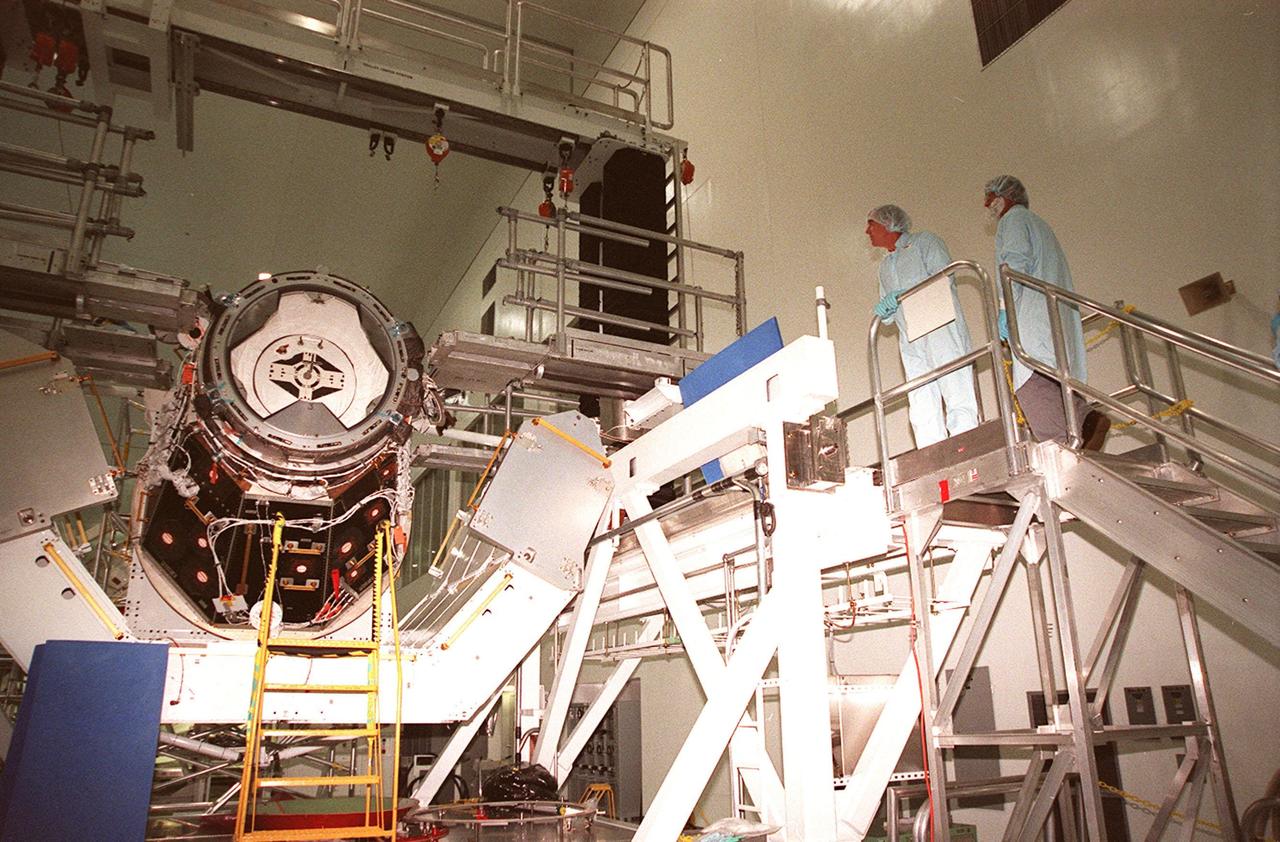
KENNEDY SPACE CENTER, FLA. -- From a work stand in the Space Station Processing Facility, STS-102 crew members James S. Voss (left) and Yuriy Vladimirovich Usachev (right), of Russia, look over the Pressurized Mating Adapter (PMA-3). The PMA-3 is a component of the International Space Station (ISS). Voss and Usachev are two crew members who will be staying on the ISS as the Expedition II crew. The third is Susan J. Helms. Along with the crew, Mission STS-102 also will be carrying the Leonardo Multi-Purpose Logistics Module (MPLM) to the ISS. The Leonardo will be filled with equipment and supplies to outfit the U.S. laboratory module, which will have been carried to the ISS on a preceding Shuttle flight. In order to function as an attached station module as well as a cargo transport, logistics modules (there are three) also include components that provide some life support, fire detection and suppression, electrical distribution and computer functions. Eventually, the modules also will carry refrigerator freezers for transporting experiment samples and food to and from the station. On the return of STS-102 to Earth, it will bring back the first crew on the station: Bill Shepherd, Sergei Krikalev and Yuri Gidzenko. STS-102 is scheduled to launch no earlier than Oct. 19, 2000, from Launch Pad 39A, Kennedy Space Center
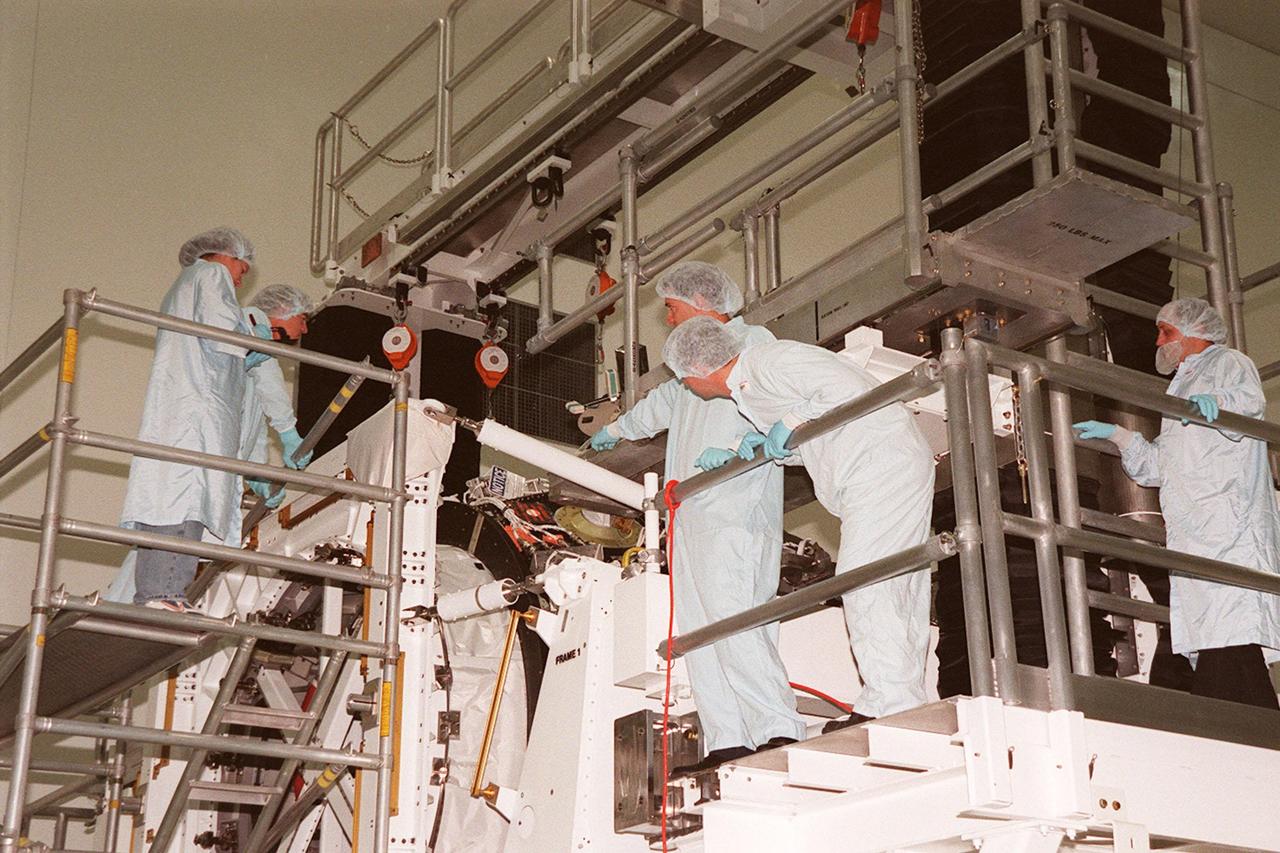
KENNEDY SPACE CENTER, FLA. -- Members of the STS-102 crew, known as the Expedition II crew, and workers from Johnson Space Center get a close look at the Pressurized Mating Adapter (PMA-3) in the Space Station Processing Facility. The PMA-3 is a component of the International Space Station (ISS). Making up the Expedition II crew are James S. Voss, Susan J. Helms and Yuriy Vladimirovich Usachev, of Russia. Along with the crew, Mission STS-102 also will be carrying the Leonardo Multi-Purpose Logistics Module (MPLM) to the ISS. The Leonardo will be filled with equipment and supplies to outfit the U.S. laboratory module, which will have been carried to the ISS on a preceding Shuttle flight. In order to function as an attached station module as well as a cargo transport, logistics modules (there are three) also include components that provide some life support, fire detection and suppression, electrical distribution and computer functions. Eventually, the modules also will carry refrigerator freezers for transporting experiment samples and food to and from the station. On the return of STS-102 to Earth, it will bring back the first crew on the station: Bill Shepherd, Sergei Krikalev and Yuri Gidzenko. STS-102 is scheduled to launch no earlier than Oct. 19, 2000, from Launch Pad 39A, Kennedy Space Center
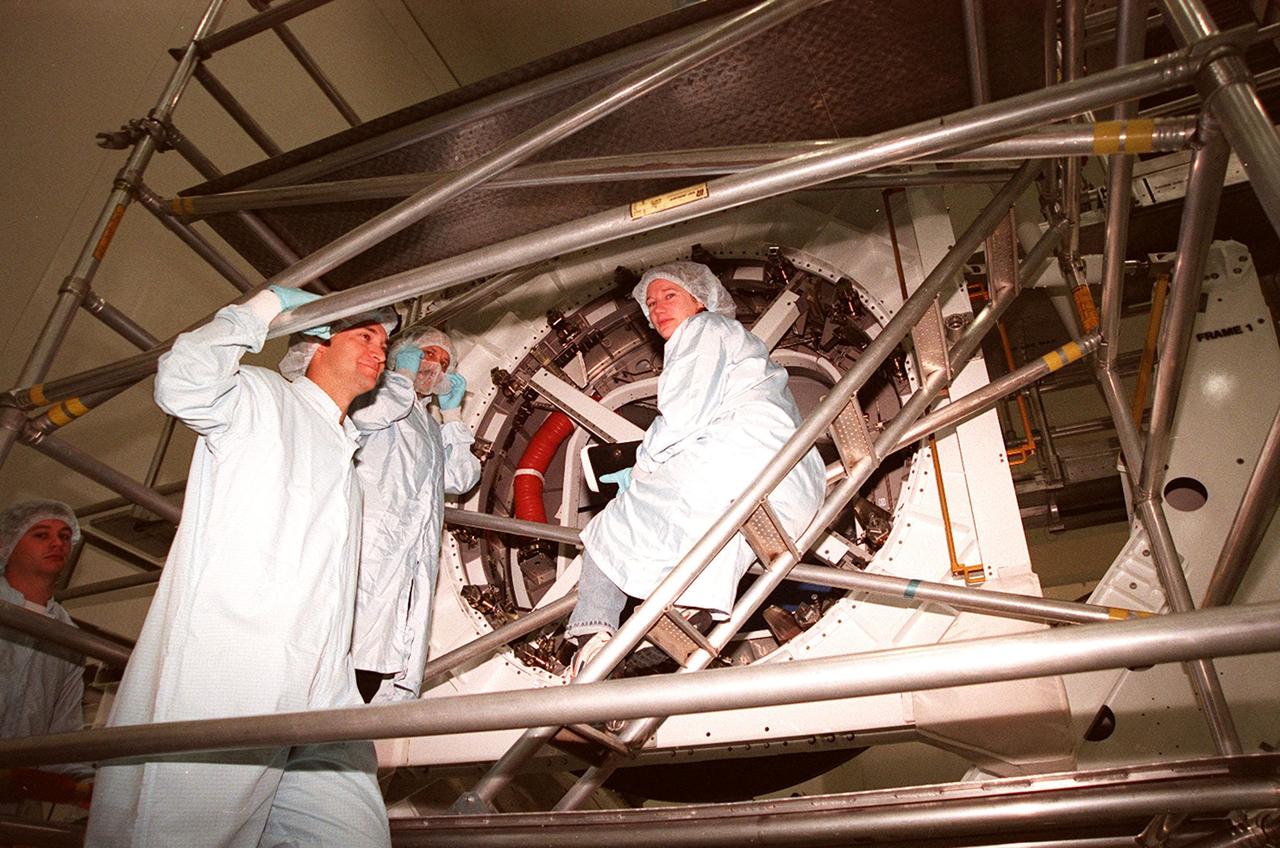
KENNEDY SPACE CENTER, FLA. -- Looking over a Pressurized Mating Adapter (PMA-3) in the Space Station Processing Facility are Arne Aamodt, with Johnson Space Center, Yuriy Vladimirovich Usachev and Susan J. Helms. Usachev and Helms are two members of the STS-102 crew, who will be staying on the International Space Station (ISS). The third crew member is James S. Voss. They have been designated the Expedition II crew. Mission STS-102 also will be carrying the Leonardo Multi-Purpose Logistics Module (MPLM) to the ISS. The Leonardo will be filled with equipment and supplies to outfit the U.S. laboratory module, which will have been carried to the ISS on a preceding Shuttle flight. In order to function as an attached station module as well as a cargo transport, logistics modules (there are three) also include components that provide some life support, fire detection and suppression, electrical distribution and computer functions. Eventually, the modules also will carry refrigerator freezers for transporting experiment samples and food to and from the station. On the return of STS-102 to Earth, it will bring back the first crew on the station: Bill Shepherd, Sergei Krikalev and Yuri Gidzenko. STS-102 is scheduled to launch no earlier than Oct. 19, 2000, from Launch Pad 39A, Kennedy Space Center
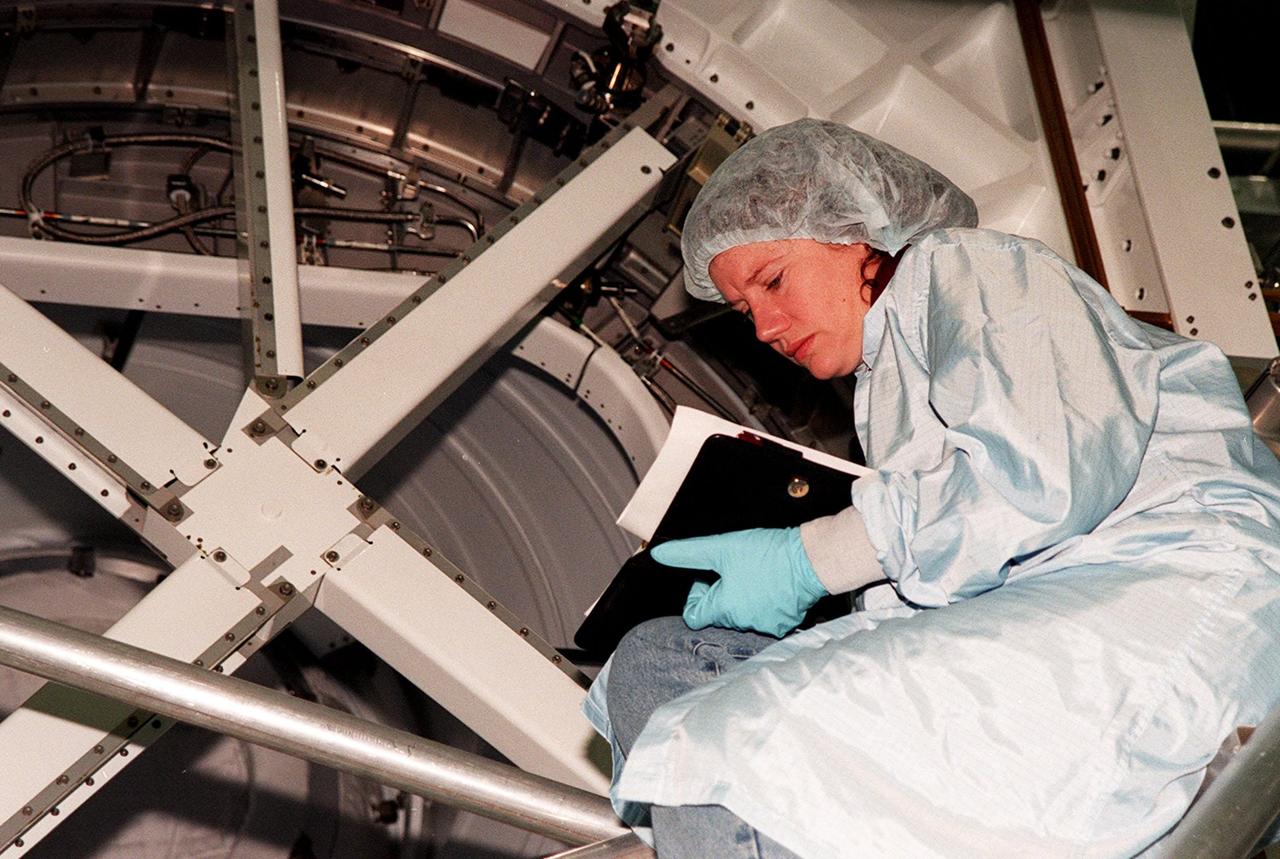
KENNEDY SPACE CENTER, FLA. -- STS-102 crew member Susan J. Helms looks over a Pressurized Mating Adapter (PMA-3) in the Space Station Processing Facility. The PMA-3 is a component of the International Space Station (ISS). Helms is one of three who will be staying on the ISS as the Expedition II crew. The others are Yuriy Vladimirovich Usachev and James S. Voss. Along with the crew, Mission STS-102 also will be carrying the Leonardo Multi-Purpose Logistics Module (MPLM) to the ISS. The Leonardo will be filled with equipment and supplies to outfit the U.S. laboratory module, which will have been carried to the ISS on a preceding Shuttle flight. In order to function as an attached station module as well as a cargo transport, logistics modules (there are three) also include components that provide some life support, fire detection and suppression, electrical distribution and computer functions. Eventually, the modules also will carry refrigerator freezers for transporting experiment samples and food to and from the station. On the return of STS-102 to Earth, it will bring back the first crew on the station: Bill Shepherd, Sergei Krikalev and Yuri Gidzenko. STS-102 is scheduled to launch no earlier than Oct. 19, 2000, from Launch Pad 39A, Kennedy Space Center
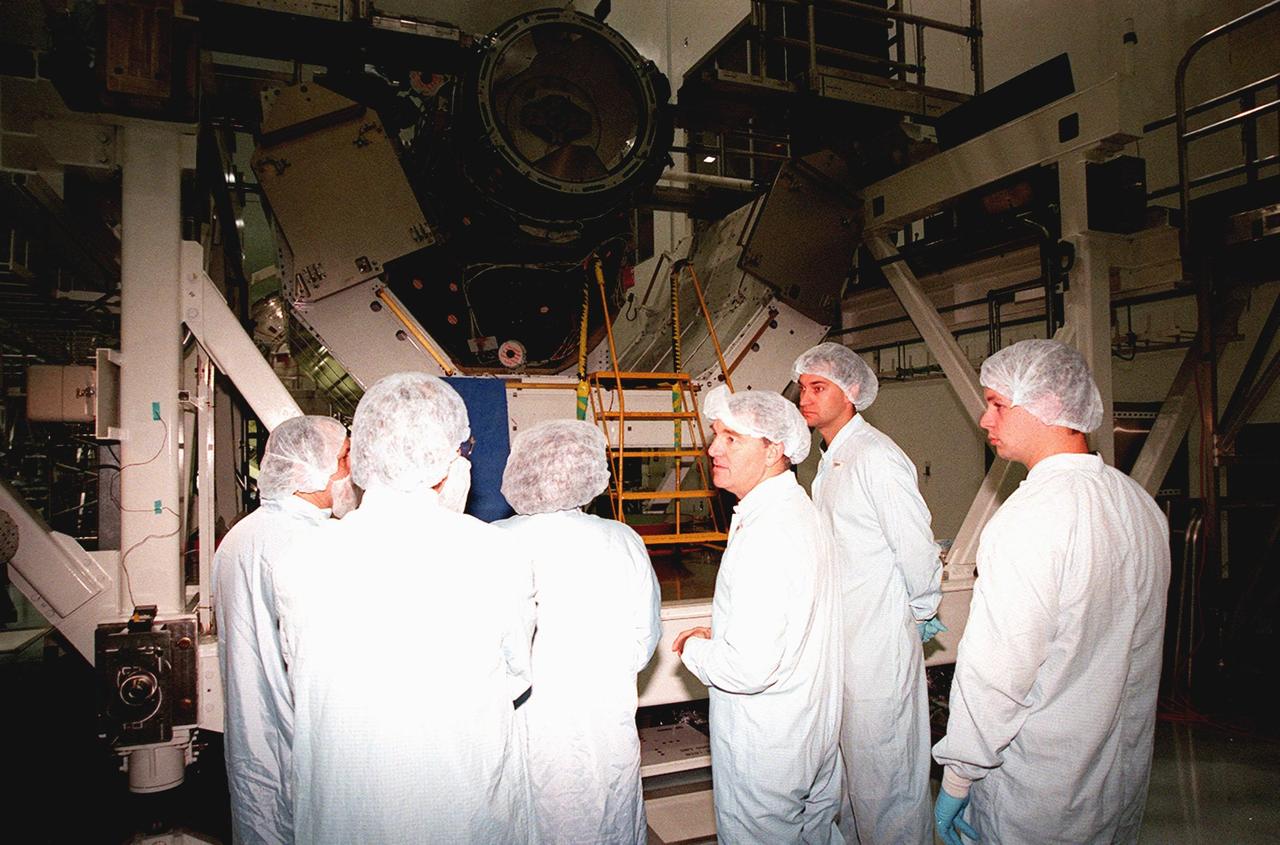
KENNEDY SPACE CENTER, FLA. -- In the Space Station Processing Facility, STS-102's Expedition II discuss the Pressurized Mating Adapter (PMA-3) (top of photo) with workers from Johnson Space Center. From left are Yuriy Vladimirovich Usachev, Dave Moore (JSC), Susan J. Helms, James S. Voss, Arne Aamodt and Matt Myers (both of JSC). The PMA-3 is a component of the International Space Station (ISS). Voss, Helms and Usachev will be staying on the ISS, replacing the Expedition I crew, Bill Shepherd, Sergei Krikalev and Yuri Gidzenko. Along with the crew, Mission STS-102 also will be carrying the Leonardo Multi-Purpose Logistics Module (MPLM) to the ISS. The Leonardo will be filled with equipment and supplies to outfit the U.S. laboratory module, which will have been carried to the ISS on a preceding Shuttle flight. In order to function as an attached station module as well as a cargo transport, logistics modules (there are three) also include components that provide some life support, fire detection and suppression, electrical distribution and computer functions. Eventually, the modules also will carry refrigerator freezers for transporting experiment samples and food to and from the station. STS-102 is scheduled to launch no earlier than Oct. 19, 2000, from Launch Pad 39A, Kennedy Space Center
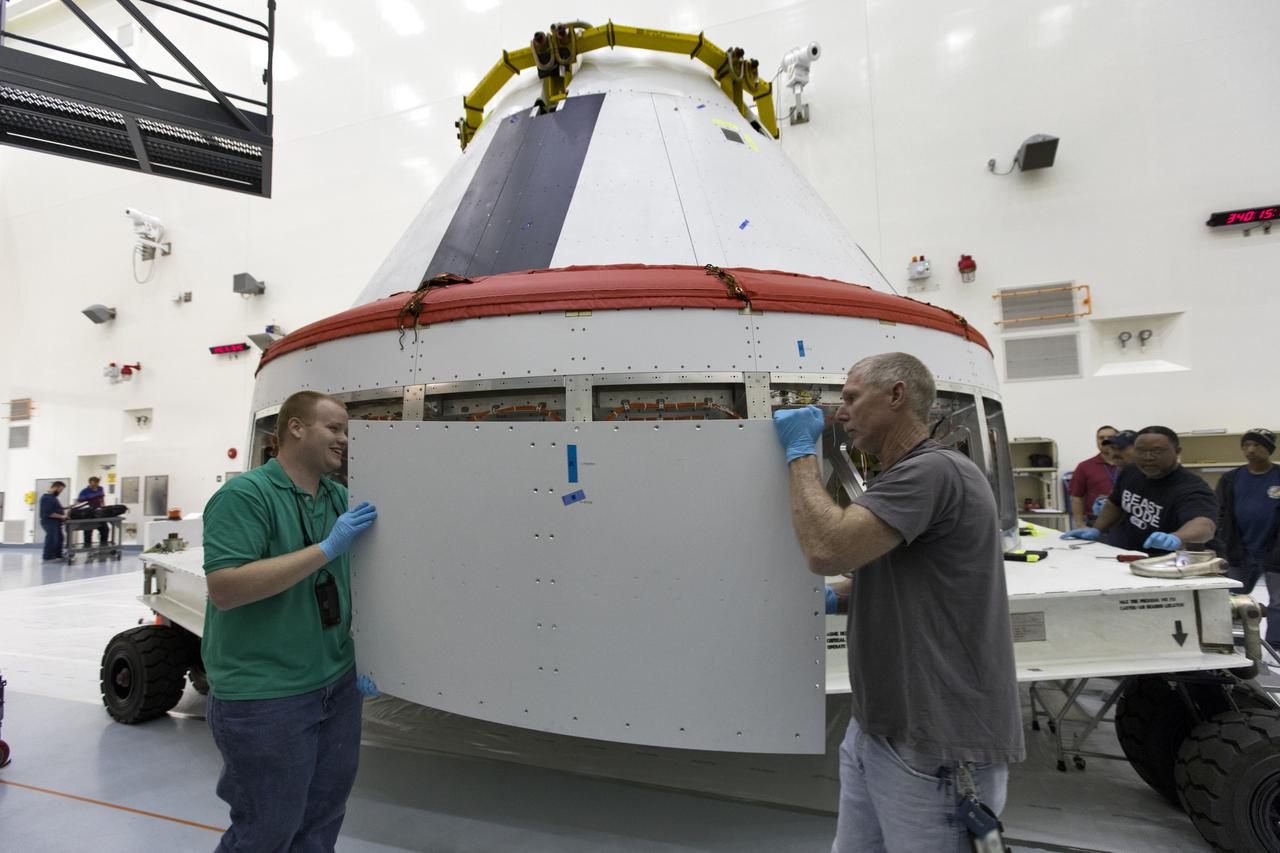
Workers remove cover plates from a mock Orion crew module inside the Multi-Payload Processing Facility at NASA’s Kennedy Space Center in Florida on Dec. 6, 2018. The crew module will be used during a full stress test of the Launch Abort System (LAS), called Ascent Abort-2 (AA-2), scheduled for April 2019. During the test, the Northrop Grumman booster will launch from Space Launch Complex 46, carrying a fully functional LAS and the 22,000-pound Orion test vehicle to an altitude of 31,000 feet and traveling at more than 1,000 miles an hour. The test will verify the LAS can steer the crew module and astronauts aboard to safety in the event of an issue with the Space Launch System (SLS) rocket when the spacecraft is under the highest aerodynamic loads it will experience during a rapid climb into space.
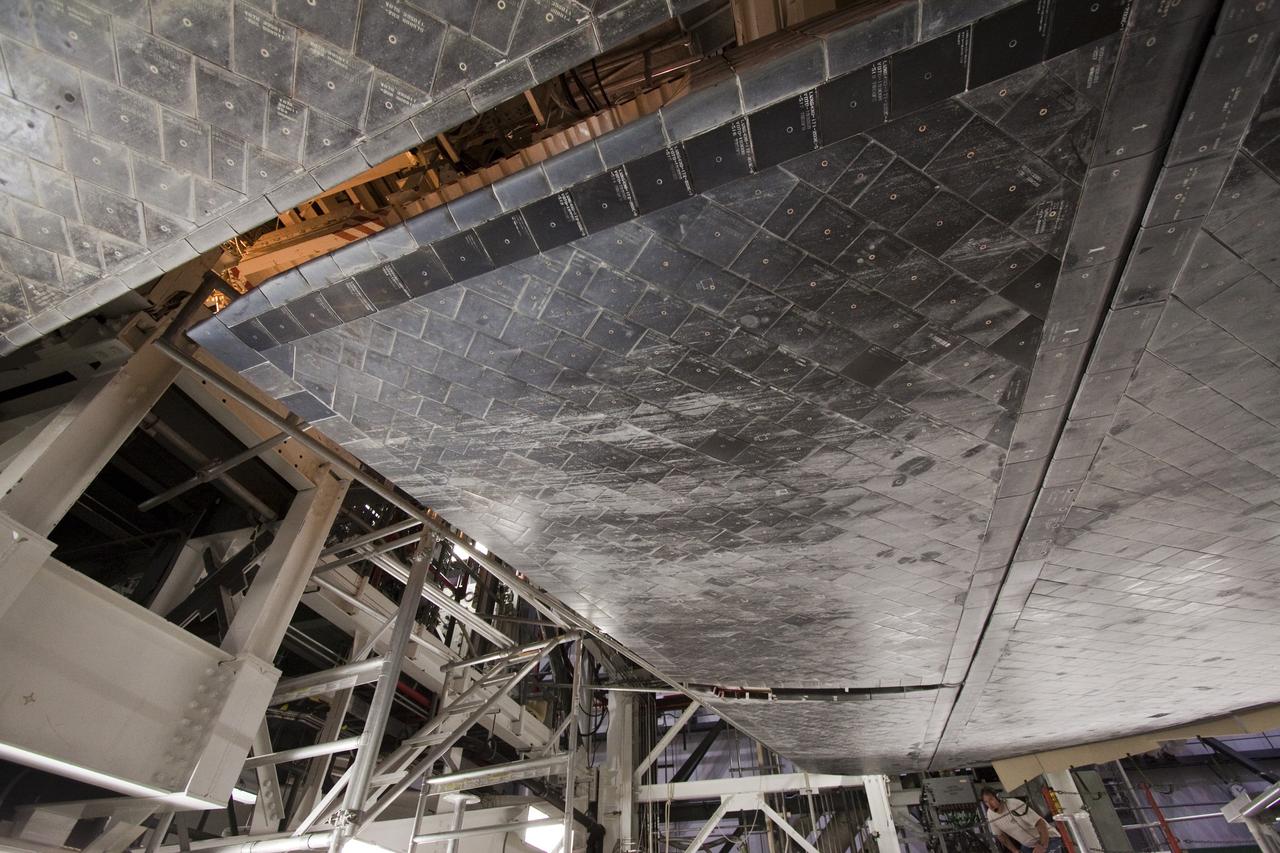
CAPE CANAVERAL, Fla. -- Space shuttle Atlantis goes through a routine landing gear test in Orbiter Processing Facility-1 at NASA's Kennedy Space Center in Florida. Technicians are checking to make sure the shuttle's wheels, brakes, elevons and body flap function properly. Seen here, an elevon is tested. Elevons are located on the trailing edge of each wing and help control pitch of the shuttle as it comes in for landing. Atlantis is being prepared for the STS-135 mission, which will deliver the Raffaello multi-purpose logistics module packed with supplies, logistics and spare parts to the International Space Station. STS-135 is targeted to launch June 28, and will be the last spaceflight for the Space Shuttle Program. Photo credit: NASA/Jack Pfaller
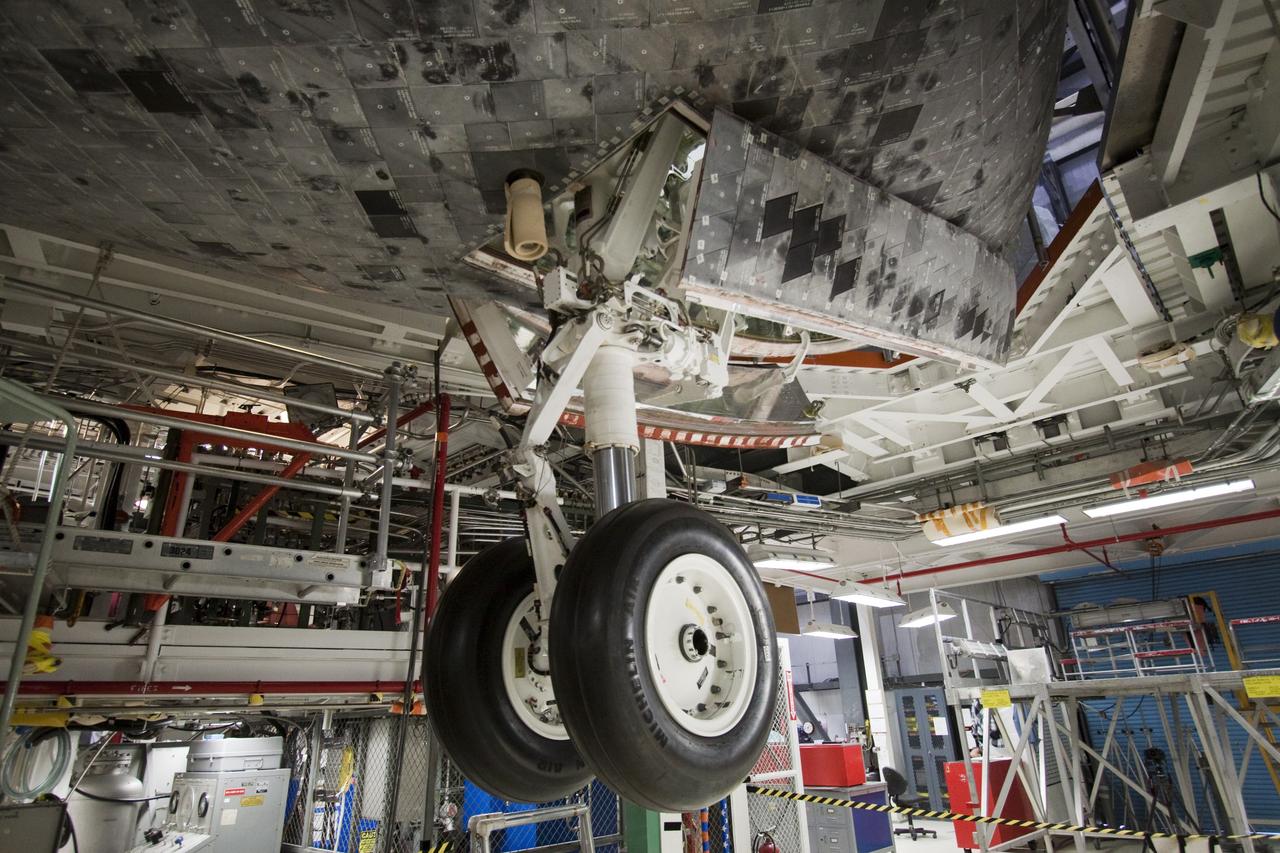
CAPE CANAVERAL, Fla. -- Space shuttle Atlantis goes through a routine landing gear test in Orbiter Processing Facility-1 at NASA's Kennedy Space Center in Florida. Technicians are checking to make sure the shuttle's wheels, brakes, elevons and body flap function properly. Seen here, the nose landing gear is deployed. During a shuttle landing, the nose gear comes down after the main gear and helps the shuttle coast to a stop. Atlantis is being prepared for the STS-135 mission, which will deliver the Raffaello multi-purpose logistics module packed with supplies, logistics and spare parts to the International Space Station. STS-135 is targeted to launch June 28, and will be the last spaceflight for the Space Shuttle Program. Photo credit: NASA/Jack Pfaller
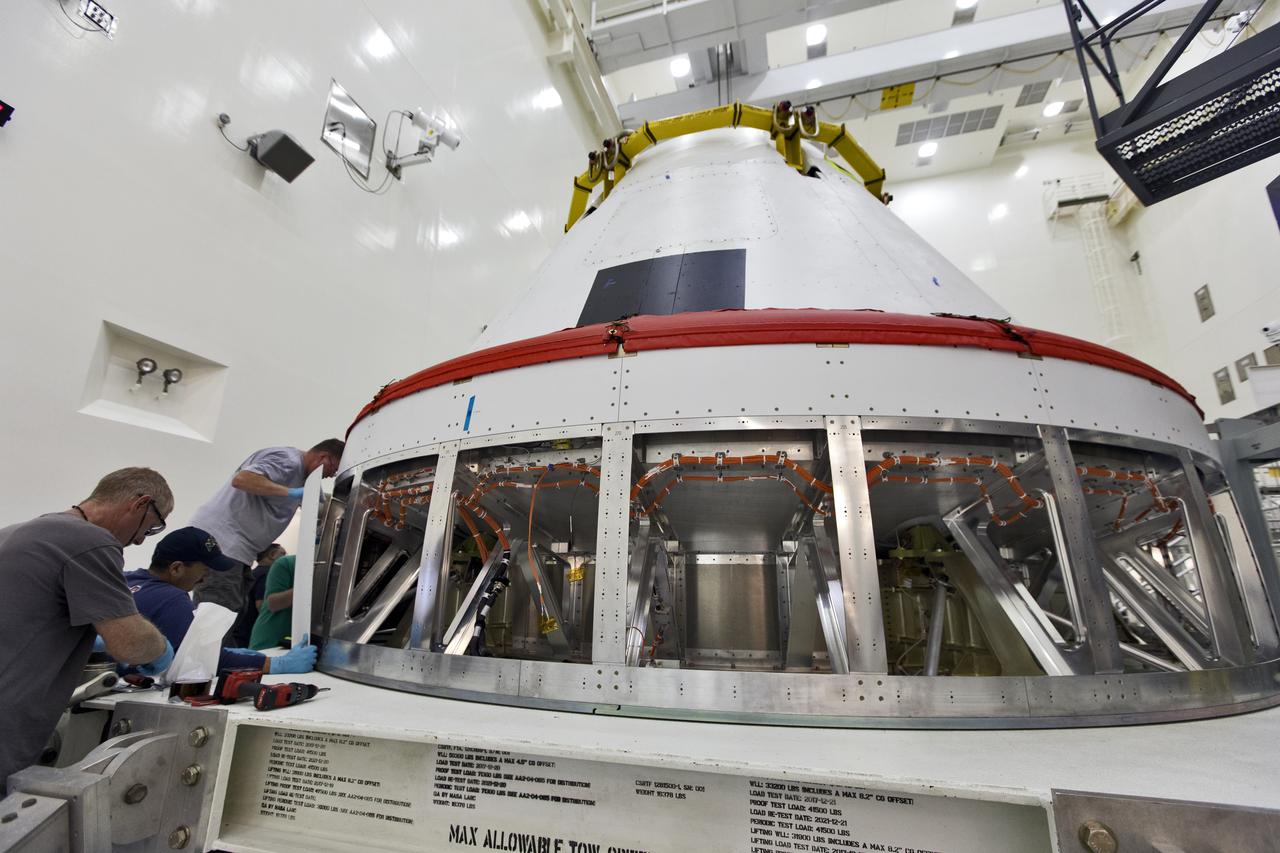
Workers remove cover plates from a mock Orion crew module inside the Multi-Payload Processing Facility at NASA’s Kennedy Space Center in Florida on Dec. 6, 2018. The crew module will be used during a full stress test of the Launch Abort System (LAS), called Ascent Abort-2 (AA-2), scheduled for April 2019. During the test, the booster will launch from Space Launch Complex 46, carrying a fully functional LAS and the 22,000-pound Orion test vehicle to an altitude of 31,000 feet and traveling at more than 1,000 miles an hour. The test will verify the LAS can steer the crew module and astronauts aboard to safety in the event of an issue with the Space Launch System (SLS) rocket when the spacecraft is under the highest aerodynamic loads it will experience during a rapid climb into space.
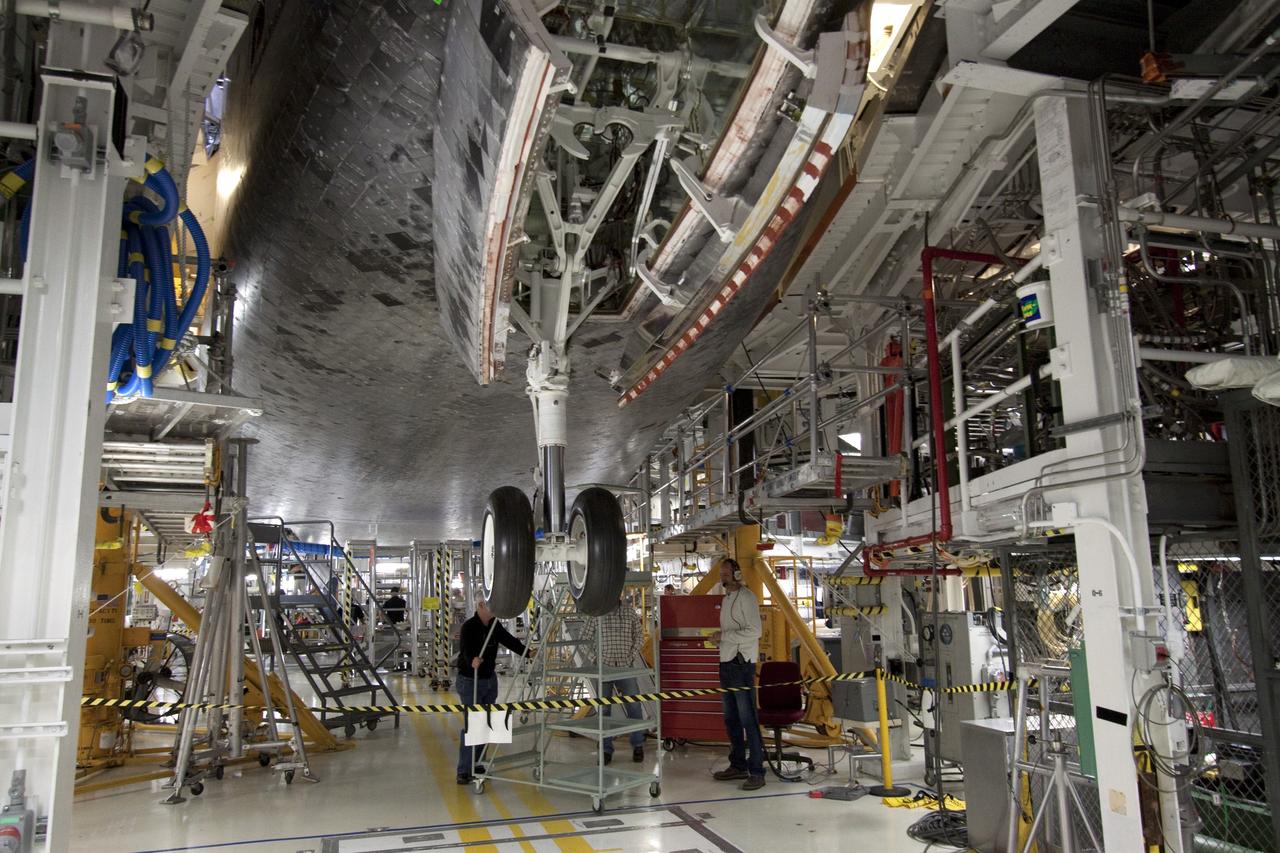
CAPE CANAVERAL, Fla. -- Space shuttle Atlantis goes through a routine landing gear test in Orbiter Processing Facility-1 at NASA's Kennedy Space Center in Florida. Technicians are checking to make sure the shuttle's wheels, brakes, elevons and body flap function properly. Seen here, the nose landing gear is deployed. During a shuttle landing, the nose gear comes down after the main gear and helps the shuttle coast to a stop. Atlantis is being prepared for the STS-135 mission, which will deliver the Raffaello multi-purpose logistics module packed with supplies, logistics and spare parts to the International Space Station. STS-135 is targeted to launch June 28, and will be the last spaceflight for the Space Shuttle Program. Photo credit: NASA/Jack Pfaller
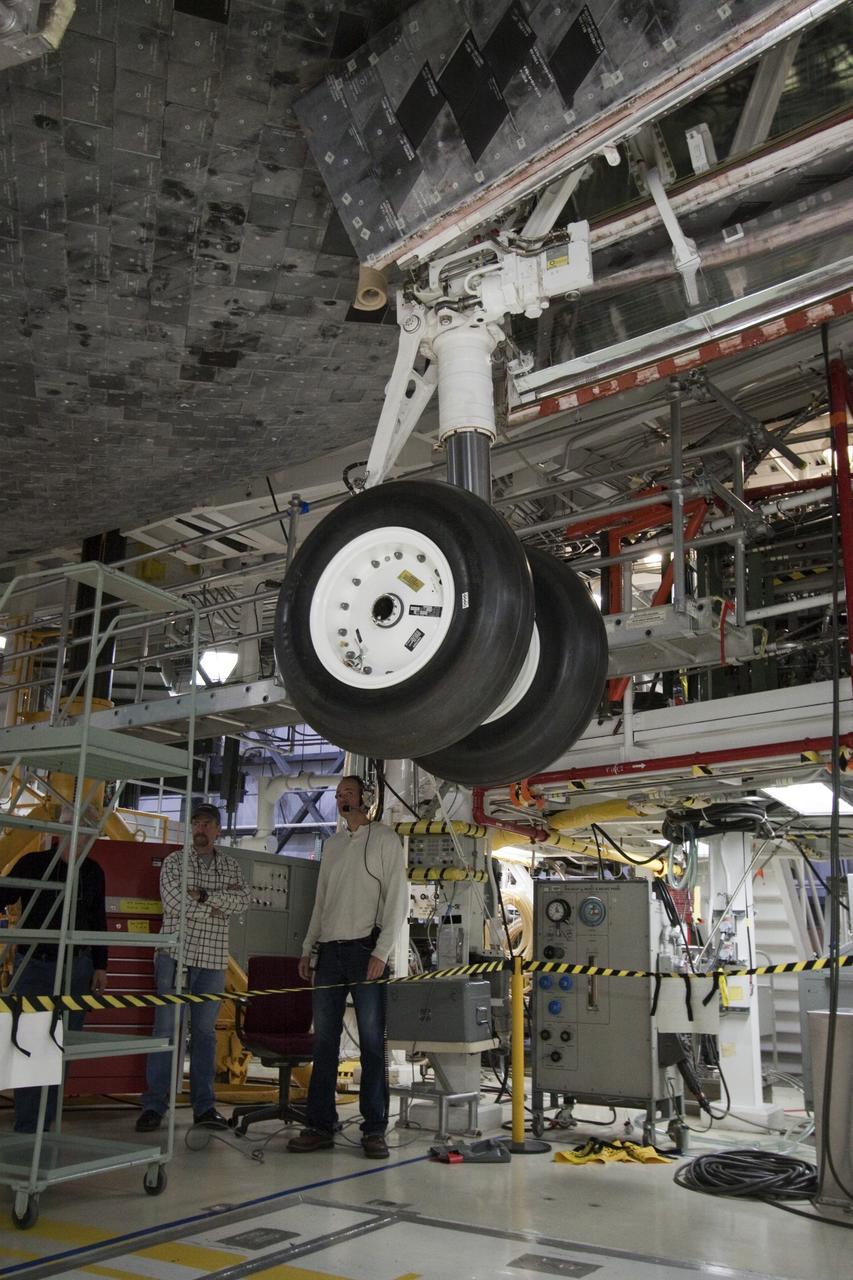
CAPE CANAVERAL, Fla. -- Space shuttle Atlantis goes through a routine landing gear test in Orbiter Processing Facility-1 at NASA's Kennedy Space Center in Florida. Technicians are checking to make sure the shuttle's wheels, brakes, elevons and body flap function properly. Seen here, the nose landing gear is deployed. During a shuttle landing, the nose gear comes down after the main gear and helps the shuttle coast to a stop. Atlantis is being prepared for the STS-135 mission, which will deliver the Raffaello multi-purpose logistics module packed with supplies, logistics and spare parts to the International Space Station. STS-135 is targeted to launch June 28, and will be the last spaceflight for the Space Shuttle Program. Photo credit: NASA/Jack Pfaller
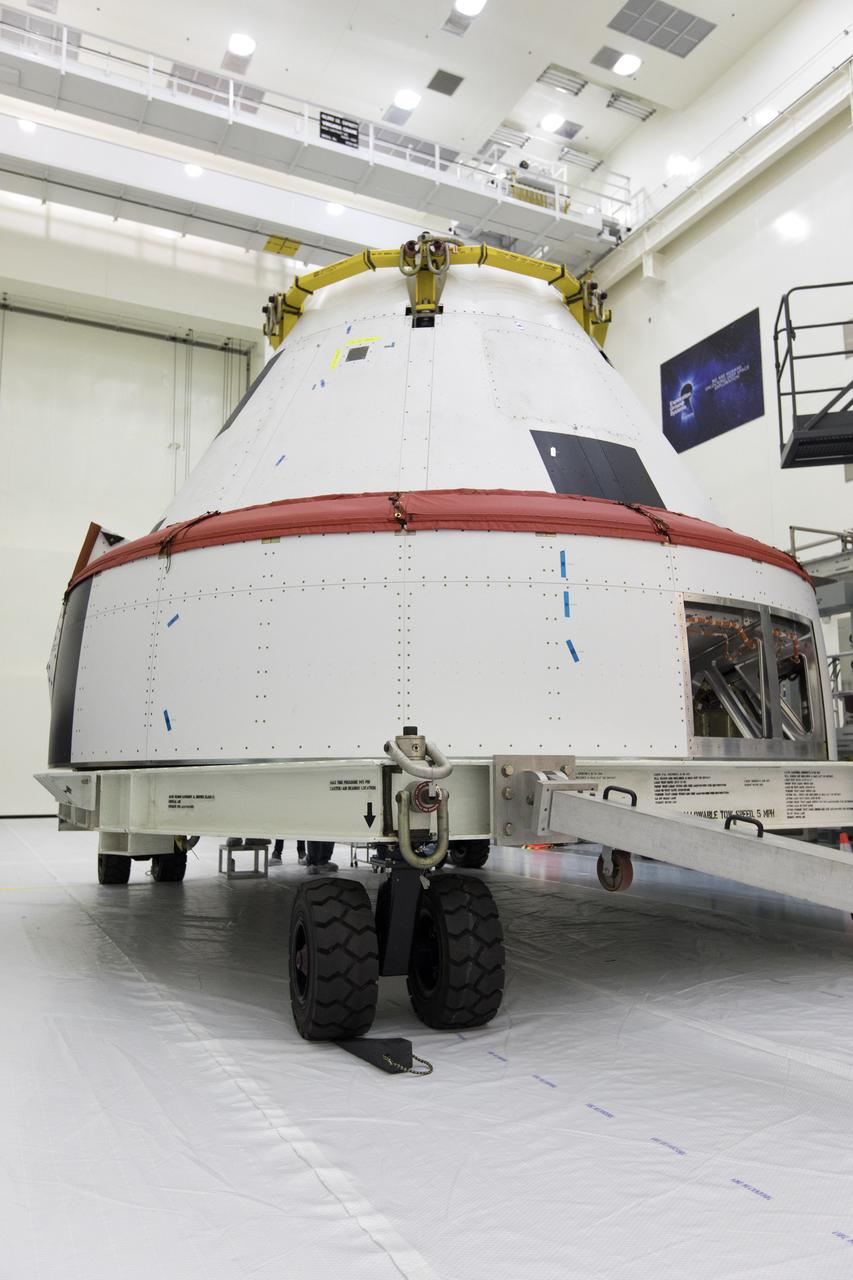
A mock Orion crew module is inside the Multi-Payload Processing Facility at NASA’s Kennedy Space Center in Florida on Dec. 6, 2018. The crew module will be used during a full stress test of the Launch Abort System (LAS), called Ascent Abort-2 (AA-2), scheduled for April 2019. During the test, the Northrop Grumman booster will launch from Space Launch Complex 46, carrying a fully functional LAS and the 22,000-pound Orion test vehicle to an altitude of 31,000 feet and traveling at more than 1,000 miles an hour. The test will verify the LAS can steer the crew module and astronauts aboard to safety in the event of an issue with the Space Launch System (SLS) rocket when the spacecraft is under the highest aerodynamic loads it will experience during a rapid climb into space.
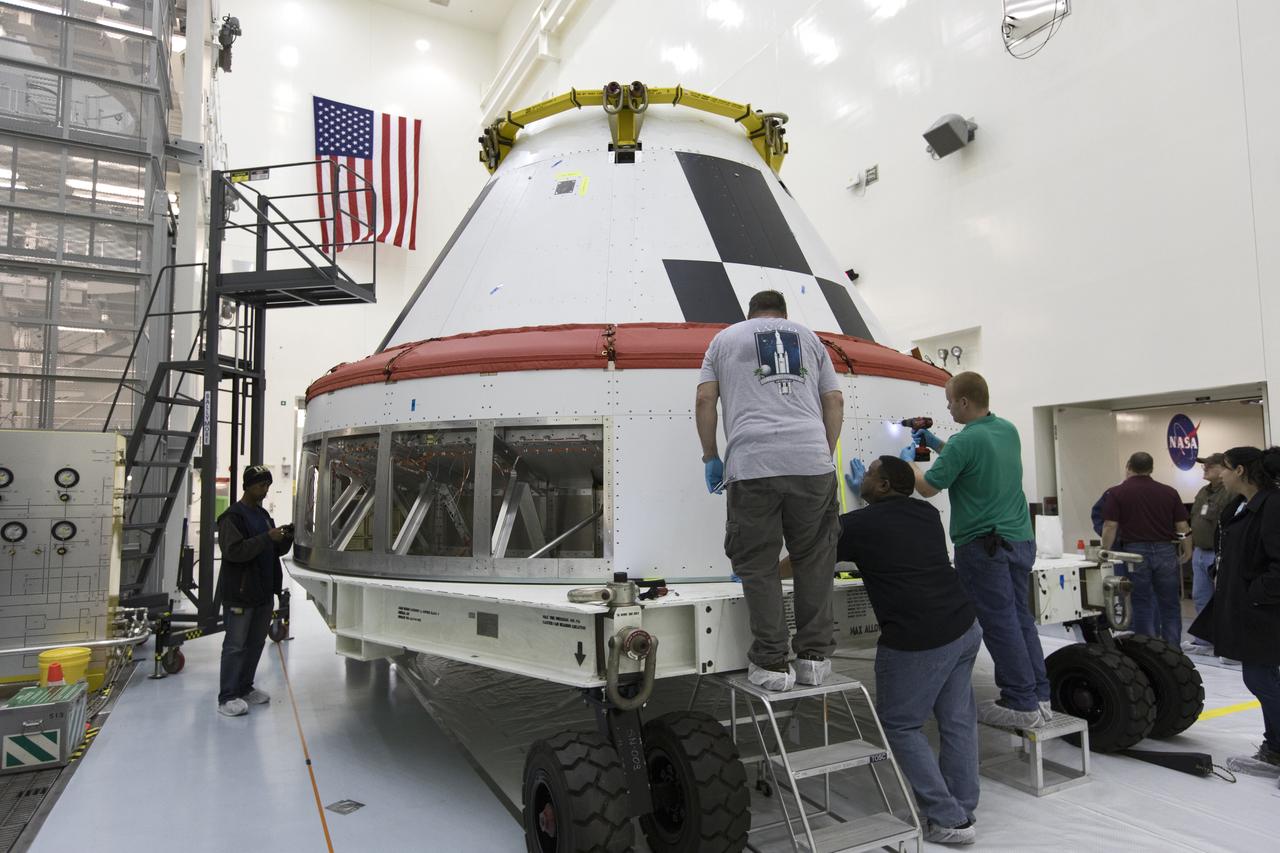
Workers remove cover plates from a mock Orion crew module inside the Multi-Payload Processing Facility at NASA’s Kennedy Space Center in Florida on Dec. 6, 2018. The crew module will be used during a full stress test of the Launch Abort System (LAS), called Ascent Abort-2 (AA-2), scheduled for April 2019. During the test, the Northrop Grumman booster will launch from Space Launch Complex 46, carrying a fully functional LAS and the 22,000-pound Orion test vehicle to an altitude of 31,000 feet and traveling at more than 1,000 miles an hour. The test will verify the LAS can steer the crew module and astronauts aboard to safety in the event of an issue with the Space Launch System (SLS) rocket when the spacecraft is under the highest aerodynamic loads it will experience during a rapid climb into space.
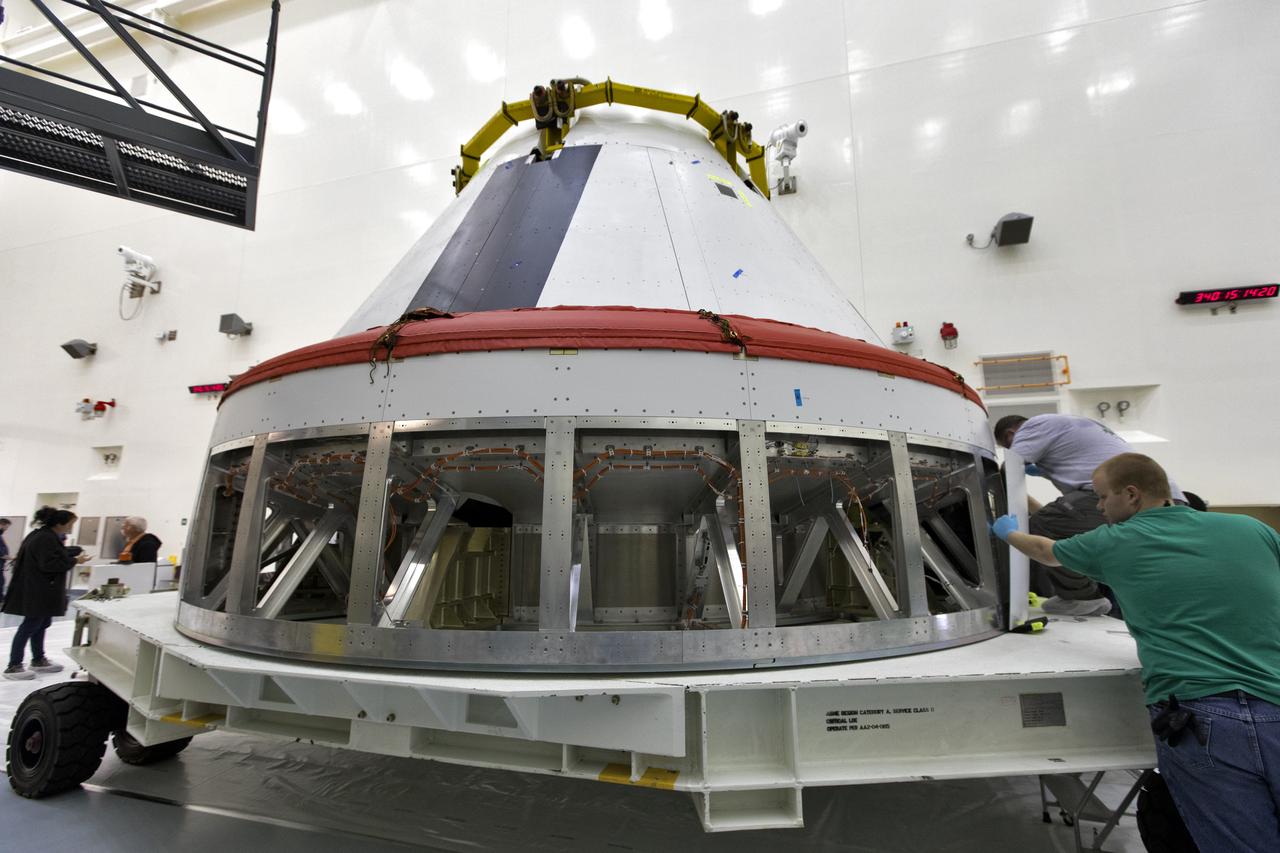
Workers remove cover plates from a mock Orion crew module inside the Multi-Payload Processing Facility at NASA’s Kennedy Space Center in Florida on Dec. 6, 2018. The crew module will be used during a full stress test of the Launch Abort System (LAS), called Ascent Abort-2 (AA-2), scheduled for April 2019. During the test, the Northrop Grumman booster will launch from Space Launch Complex 46, carrying a fully functional LAS and the 22,000-pound Orion test vehicle to an altitude of 31,000 feet and traveling at more than 1,000 miles an hour. The test will verify the LAS can steer the crew module and astronauts aboard to safety in the event of an issue with the Space Launch System (SLS) rocket when the spacecraft is under the highest aerodynamic loads it will experience during a rapid climb into space.
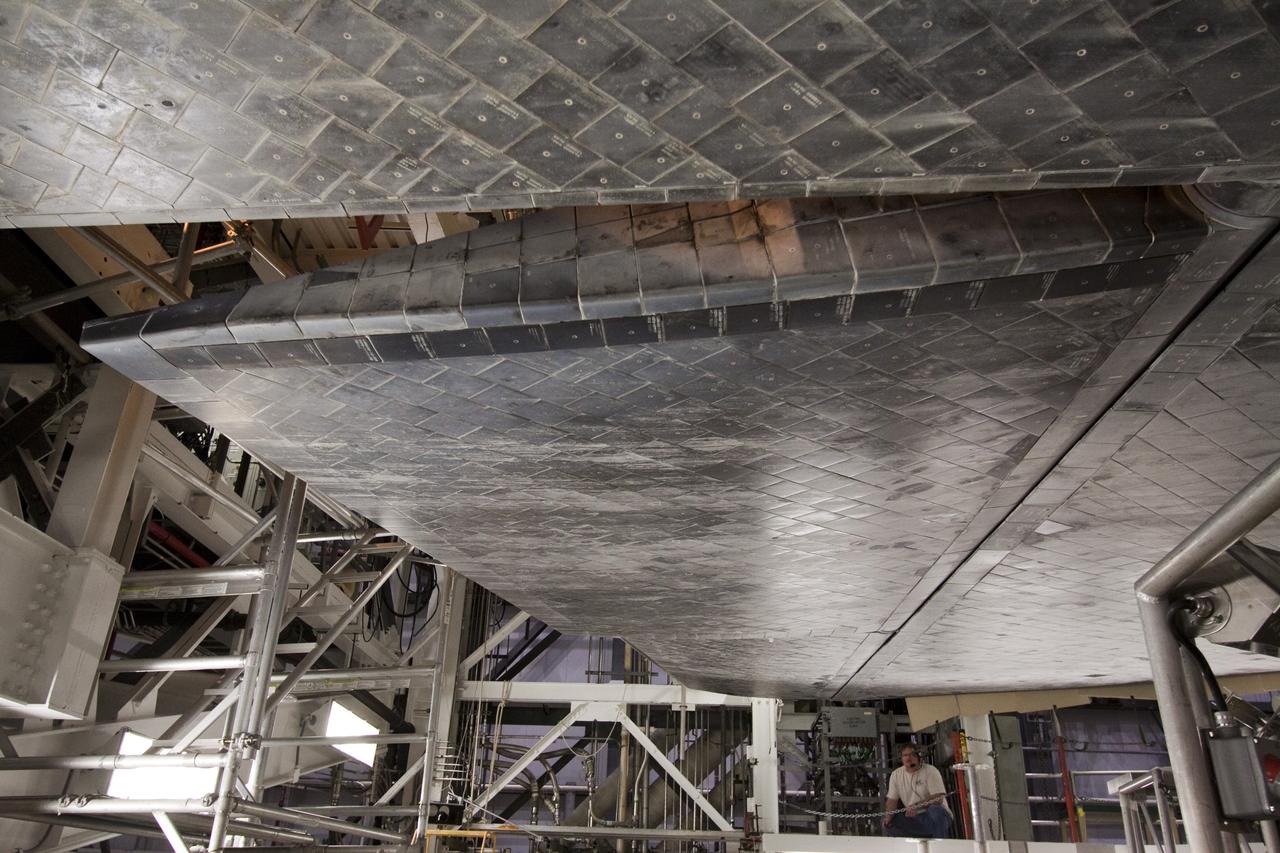
CAPE CANAVERAL, Fla. -- Space shuttle Atlantis goes through a routine landing gear test in Orbiter Processing Facility-1 at NASA's Kennedy Space Center in Florida. Technicians are checking to make sure the shuttle's wheels, brakes, elevons and body flap function properly. Seen here, the body flap is tested. The body flap blocks heat and air flow during the shuttle's re-entry into Earth's atmosphere. Atlantis is being prepared for the STS-135 mission, which will deliver the Raffaello multi-purpose logistics module packed with supplies, logistics and spare parts to the International Space Station. STS-135 is targeted to launch June 28, and will be the last spaceflight for the Space Shuttle Program. Photo credit: NASA/Jack Pfaller
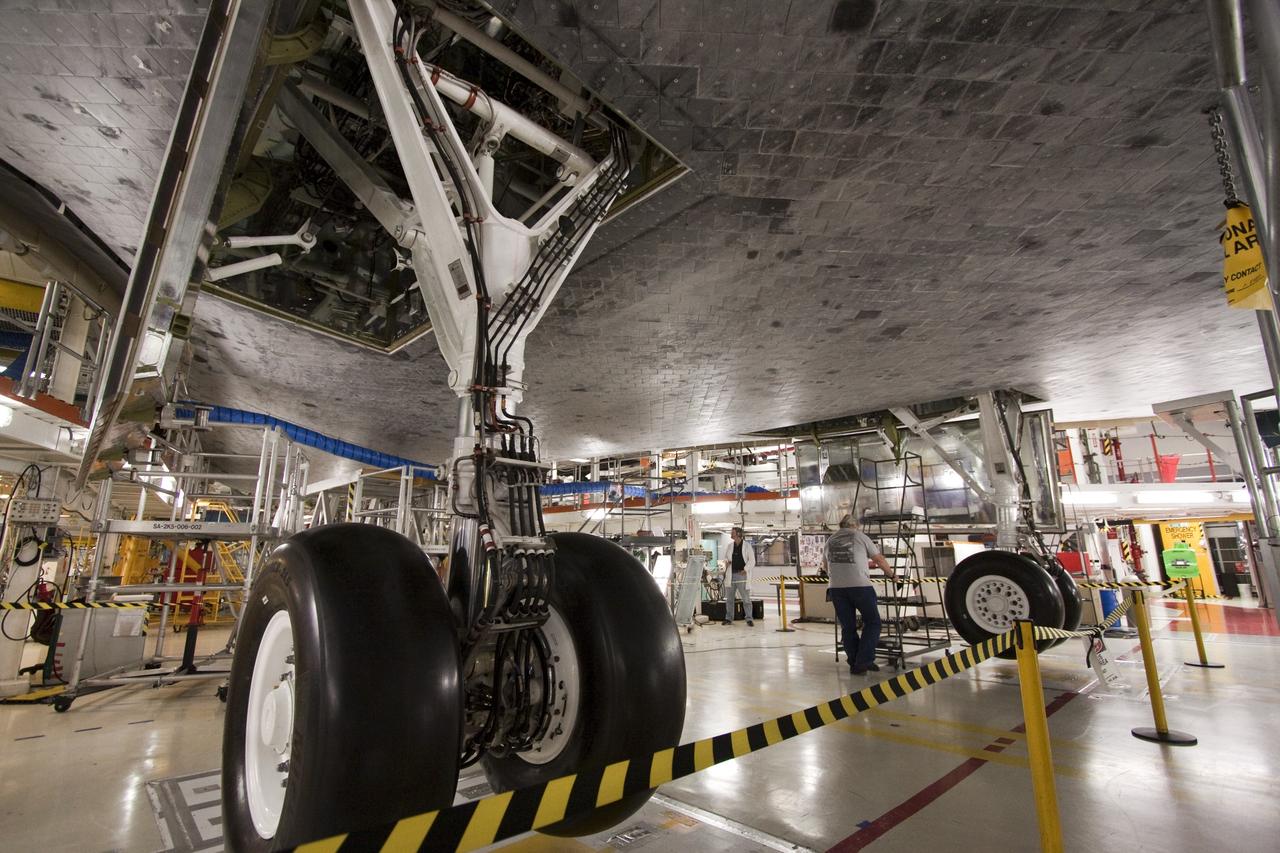
CAPE CANAVERAL, Fla. -- Space shuttle Atlantis goes through a routine landing gear test in Orbiter Processing Facility-1 at NASA's Kennedy Space Center in Florida. Technicians are checking to make sure the shuttle's wheels, brakes, elevons and body flap function properly. Seen here, the nose landing gear is deployed. During a shuttle landing, the nose gear comes down after the main gear and helps the shuttle coast to a stop. Atlantis is being prepared for the STS-135 mission, which will deliver the Raffaello multi-purpose logistics module packed with supplies, logistics and spare parts to the International Space Station. STS-135 is targeted to launch June 28, and will be the last spaceflight for the Space Shuttle Program. Photo credit: NASA/Jack Pfaller
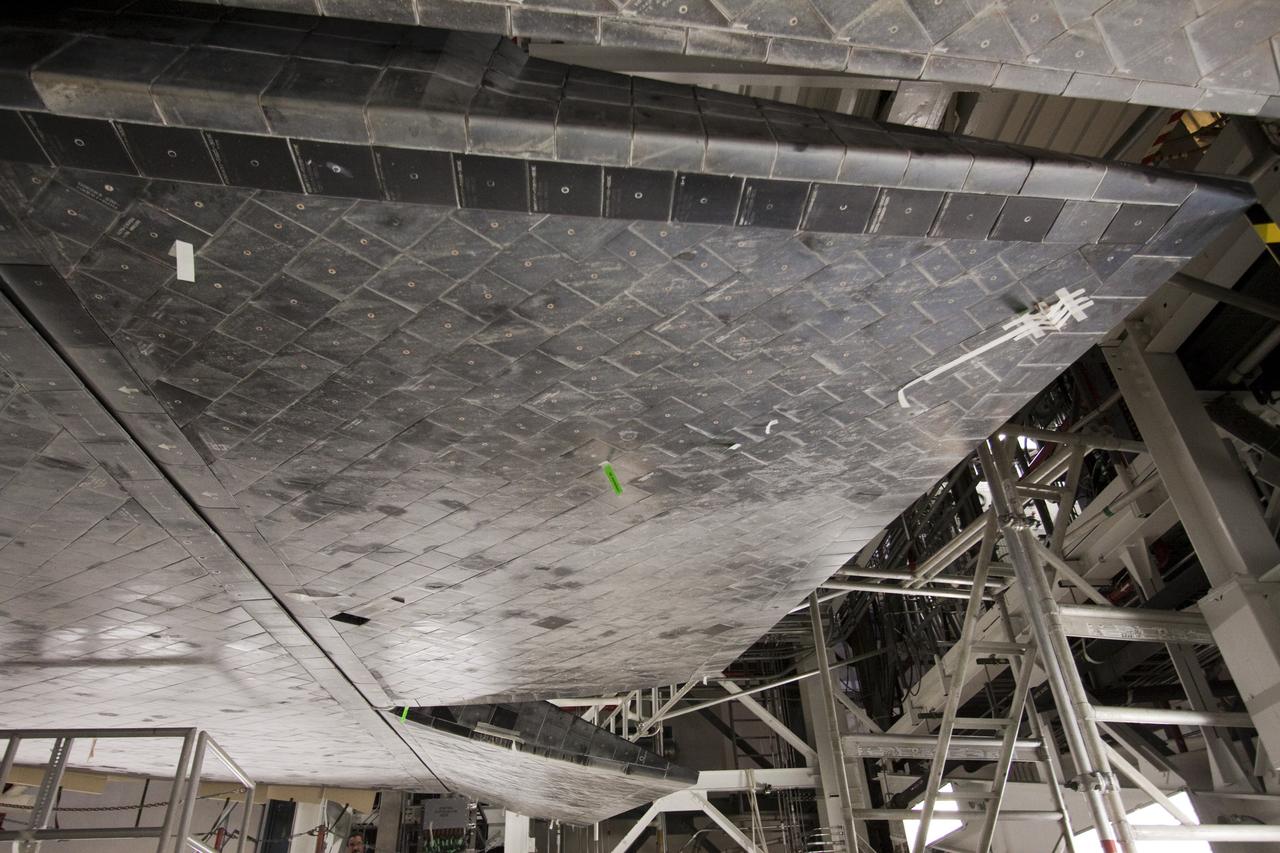
CAPE CANAVERAL, Fla. -- Space shuttle Atlantis goes through a routine landing gear test in Orbiter Processing Facility-1 at NASA's Kennedy Space Center in Florida. Technicians are checking to make sure the shuttle's wheels, brakes, elevons and body flap function properly. Seen here, an elevon is tested. Elevons are located on the trailing edge of each wing and help control pitch of the shuttle as it comes in for landing. Atlantis is being prepared for the STS-135 mission, which will deliver the Raffaello multi-purpose logistics module packed with supplies, logistics and spare parts to the International Space Station. STS-135 is targeted to launch June 28, and will be the last spaceflight for the Space Shuttle Program. Photo credit: NASA/Jack Pfaller
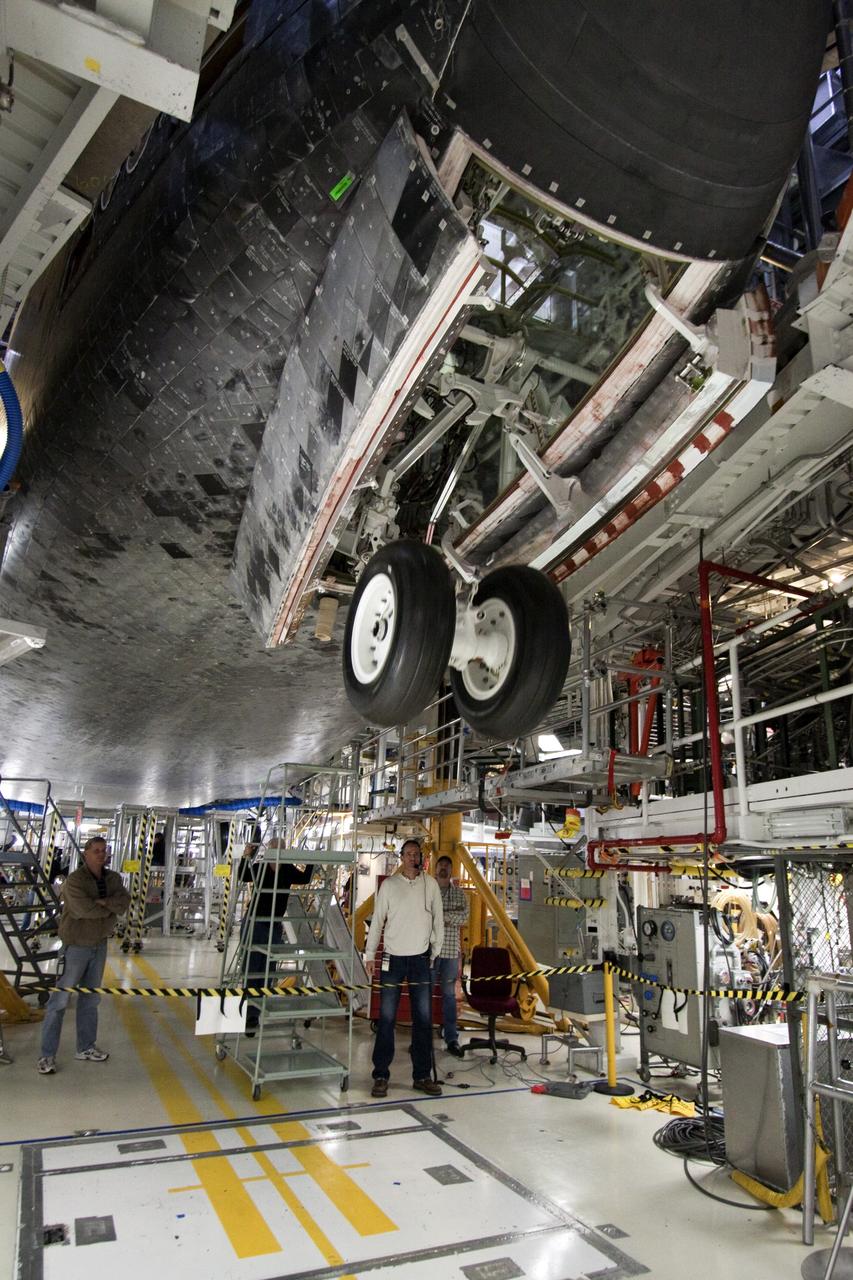
CAPE CANAVERAL, Fla. -- Space shuttle Atlantis goes through a routine landing gear test in Orbiter Processing Facility-1 at NASA's Kennedy Space Center in Florida. Technicians are checking to make sure the shuttle's wheels, brakes, elevons and body flap function properly. Seen here, the nose landing gear is deployed. During a shuttle landing, the nose gear comes down after the main gear and helps the shuttle coast to a stop. Atlantis is being prepared for the STS-135 mission, which will deliver the Raffaello multi-purpose logistics module packed with supplies, logistics and spare parts to the International Space Station. STS-135 is targeted to launch June 28, and will be the last spaceflight for the Space Shuttle Program. Photo credit: NASA/Jack Pfaller
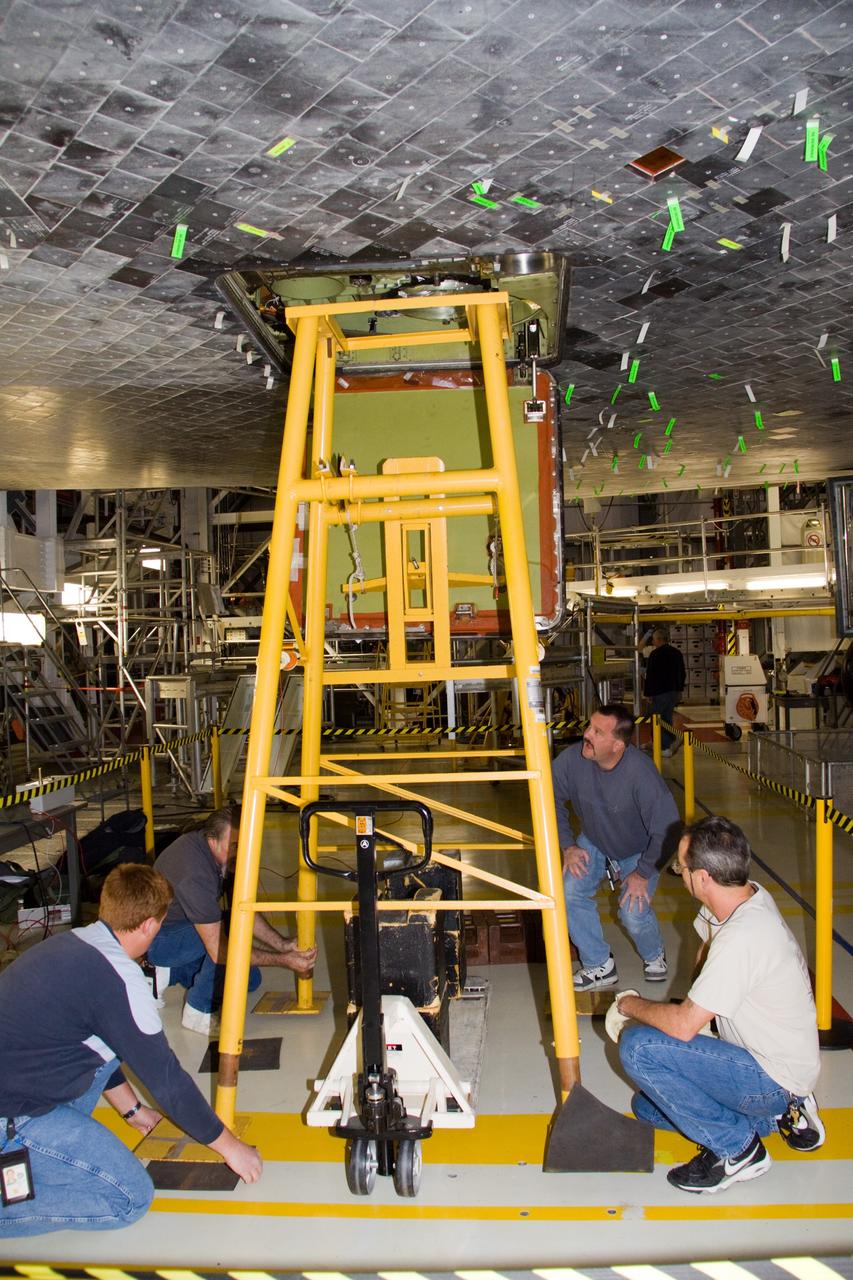
CAPE CANAVERAL, Fla. - In Orbiter Processing Facility 1 at NASA's Kennedy Space Center in Florida, United Space Alliance technicians verify the alignment of the test equipment that will be used to perform a push test on an external tank door on space shuttle Atlantis. Two umbilical doors, located on the shuttle's aft fuselage, close after external tank separation following launch. The test confirms that the door's actuators are functioning properly and that signals sent from the actuators correctly indicate that the doors have closed, creating the necessary thermal barrier for reentry. Atlantis is next slated to deliver an Integrated Cargo Carrier and Russian-built Mini Research Module to the International Space Station on the STS-132 mission. The second in a series of new pressurized components for Russia, the module will be permanently attached to the Zarya module. Three spacewalks are planned to store spare components outside the station, including six spare batteries, a boom assembly for the Ku-band antenna and spares for the Canadian Dextre robotic arm extension. A radiator, airlock and European robotic arm for the Russian Multi-purpose Laboratory Module also are payloads on the flight. Launch is targeted for May 14, 2010. Photo credit: NASA/Troy Cryder
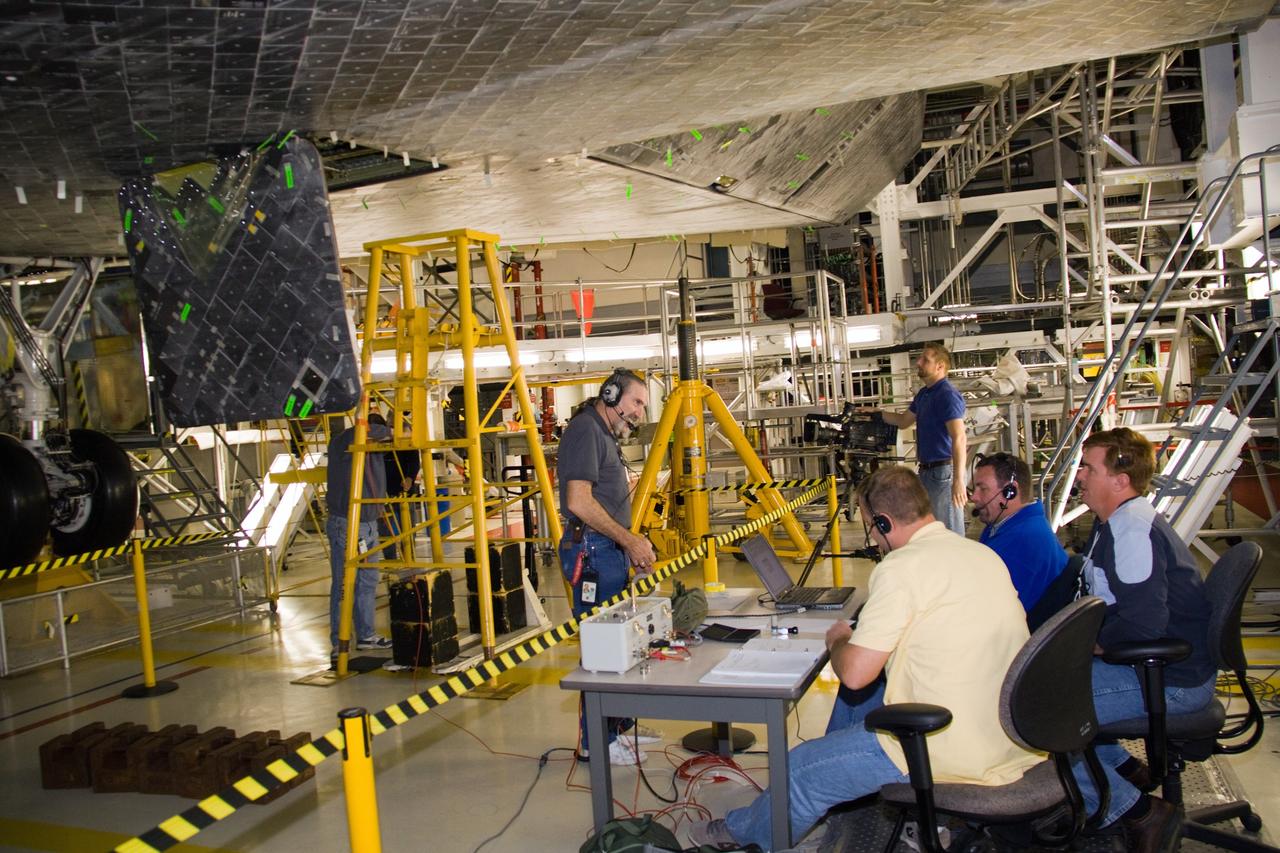
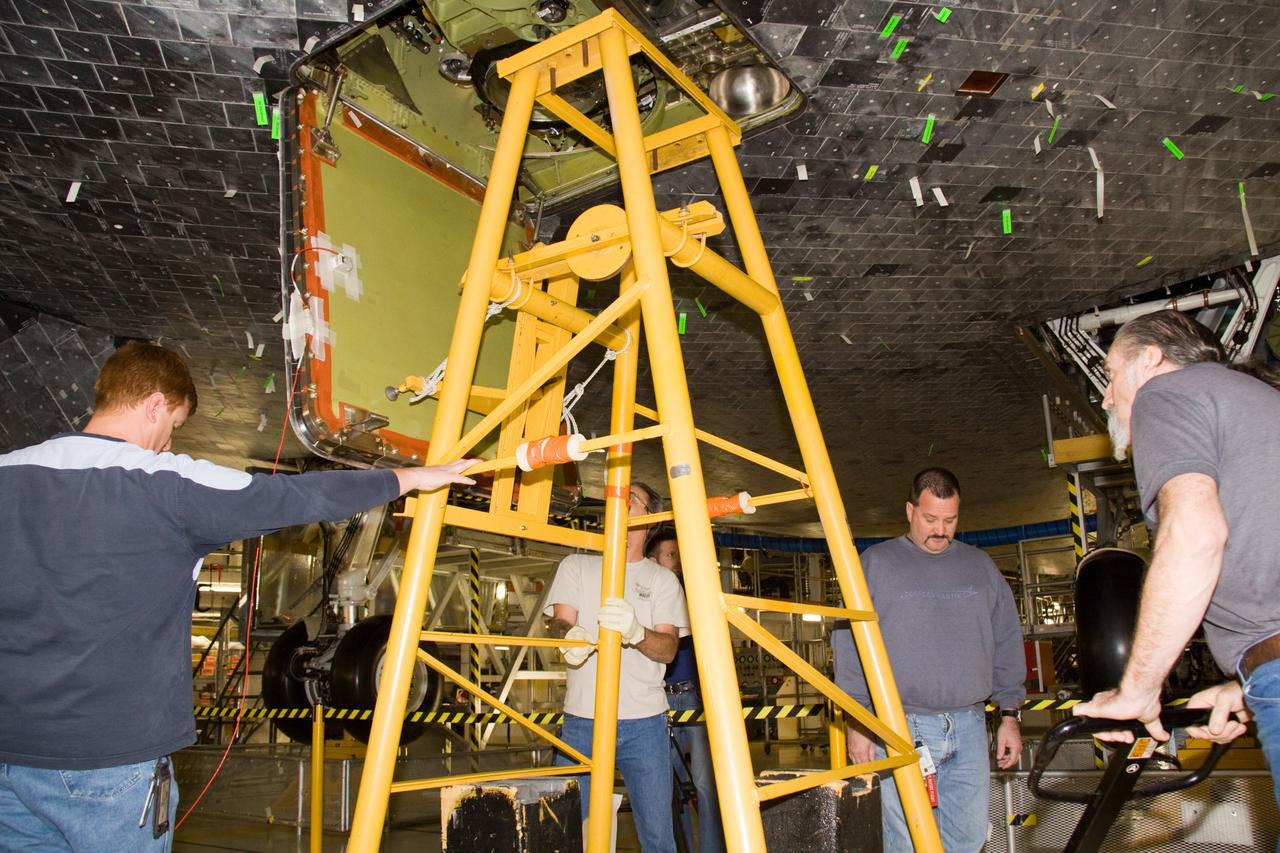
CAPE CANAVERAL, Fla. - In Orbiter Processing Facility 1 at NASA's Kennedy Space Center in Florida, United Space Alliance technicians prepare to perform a push test on an external tank door beneath space shuttle Atlantis. Two umbilical doors, located on the shuttle's aft fuselage, close after external tank separation following launch. The test confirms that the door's actuators are functioning properly and that signals sent from the actuators correctly indicate that the doors have closed, creating the necessary thermal barrier for reentry. Atlantis is next slated to deliver an Integrated Cargo Carrier and Russian-built Mini Research Module to the International Space Station on the STS-132 mission. The second in a series of new pressurized components for Russia, the module will be permanently attached to the Zarya module. Three spacewalks are planned to store spare components outside the station, including six spare batteries, a boom assembly for the Ku-band antenna and spares for the Canadian Dextre robotic arm extension. A radiator, airlock and European robotic arm for the Russian Multi-purpose Laboratory Module also are payloads on the flight. Launch is targeted for May 14, 2010. Photo credit: NASA/Troy Cryder
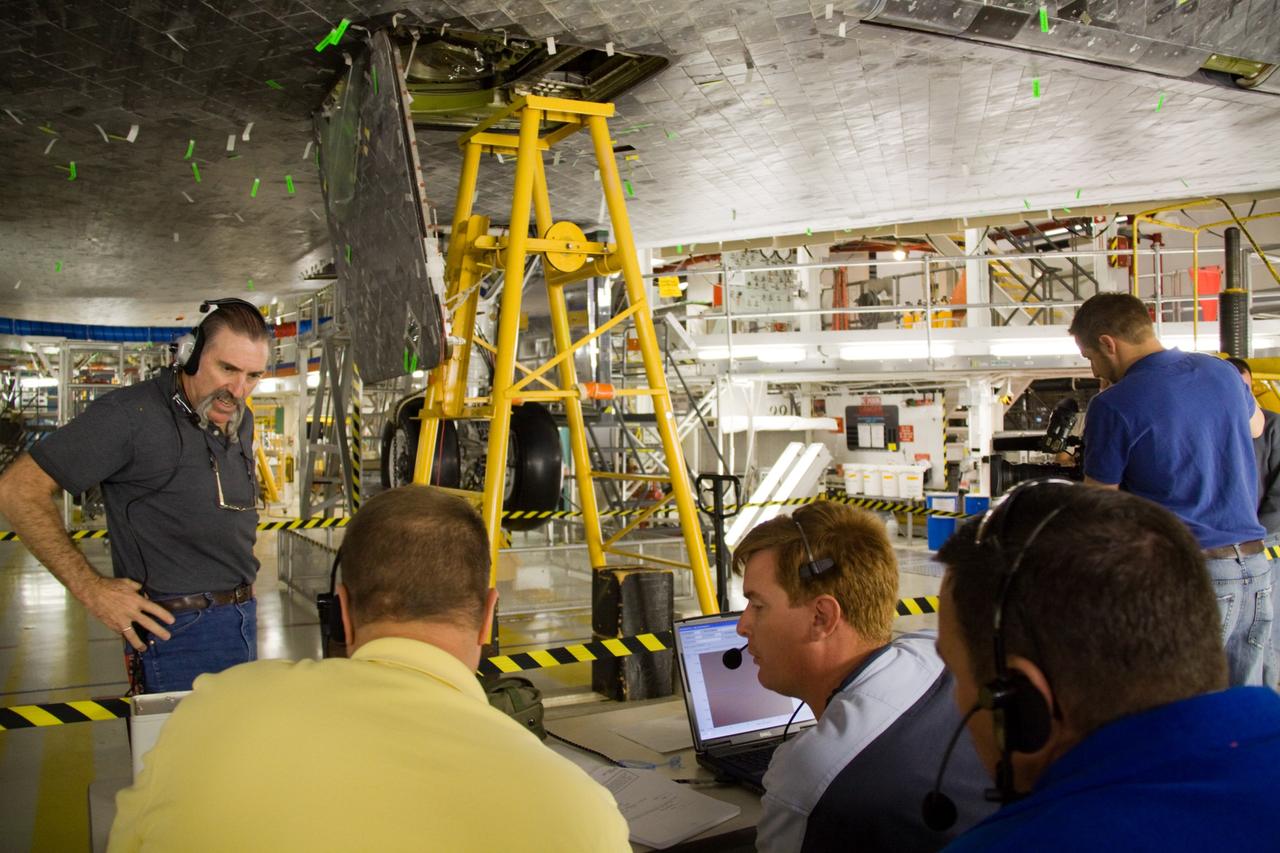
CAPE CANAVERAL, Fla. - In Orbiter Processing Facility 1 at NASA's Kennedy Space Center in Florida, United Space Alliance technicians study the results of a push test performed on an external tank door on space shuttle Atlantis. Two umbilical doors, located on the shuttle's aft fuselage, close after external tank separation following launch. The test confirms that the door's actuators are functioning properly and that signals sent from the actuators correctly indicate that the doors have closed, creating the necessary thermal barrier for reentry. Atlantis is next slated to deliver an Integrated Cargo Carrier and Russian-built Mini Research Module to the International Space Station on the STS-132 mission. The second in a series of new pressurized components for Russia, the module will be permanently attached to the Zarya module. Three spacewalks are planned to store spare components outside the station, including six spare batteries, a boom assembly for the Ku-band antenna and spares for the Canadian Dextre robotic arm extension. A radiator, airlock and European robotic arm for the Russian Multi-purpose Laboratory Module also are payloads on the flight. Launch is targeted for May 14, 2010. Photo credit: NASA/Troy Cryder
CAPE CANAVERAL, Fla. - In Orbiter Processing Facility 1 at NASA's Kennedy Space Center in Florida, United Space Alliance technicians remove the test equipment that was used to perform a push test on an external tank door on space shuttle Atlantis. Two umbilical doors, located on the shuttle's aft fuselage, close after external tank separation following launch. The test confirms that the door's actuators are functioning properly and that signals sent from the actuators correctly indicate that the doors have closed, creating the necessary thermal barrier for reentry. Atlantis is next slated to deliver an Integrated Cargo Carrier and Russian-built Mini Research Module to the International Space Station on the STS-132 mission. The second in a series of new pressurized components for Russia, the module will be permanently attached to the Zarya module. Three spacewalks are planned to store spare components outside the station, including six spare batteries, a boom assembly for the Ku-band antenna and spares for the Canadian Dextre robotic arm extension. A radiator, airlock and European robotic arm for the Russian Multi-purpose Laboratory Module also are payloads on the flight. Launch is targeted for May 14, 2010. Photo credit: NASA/Troy Cryder
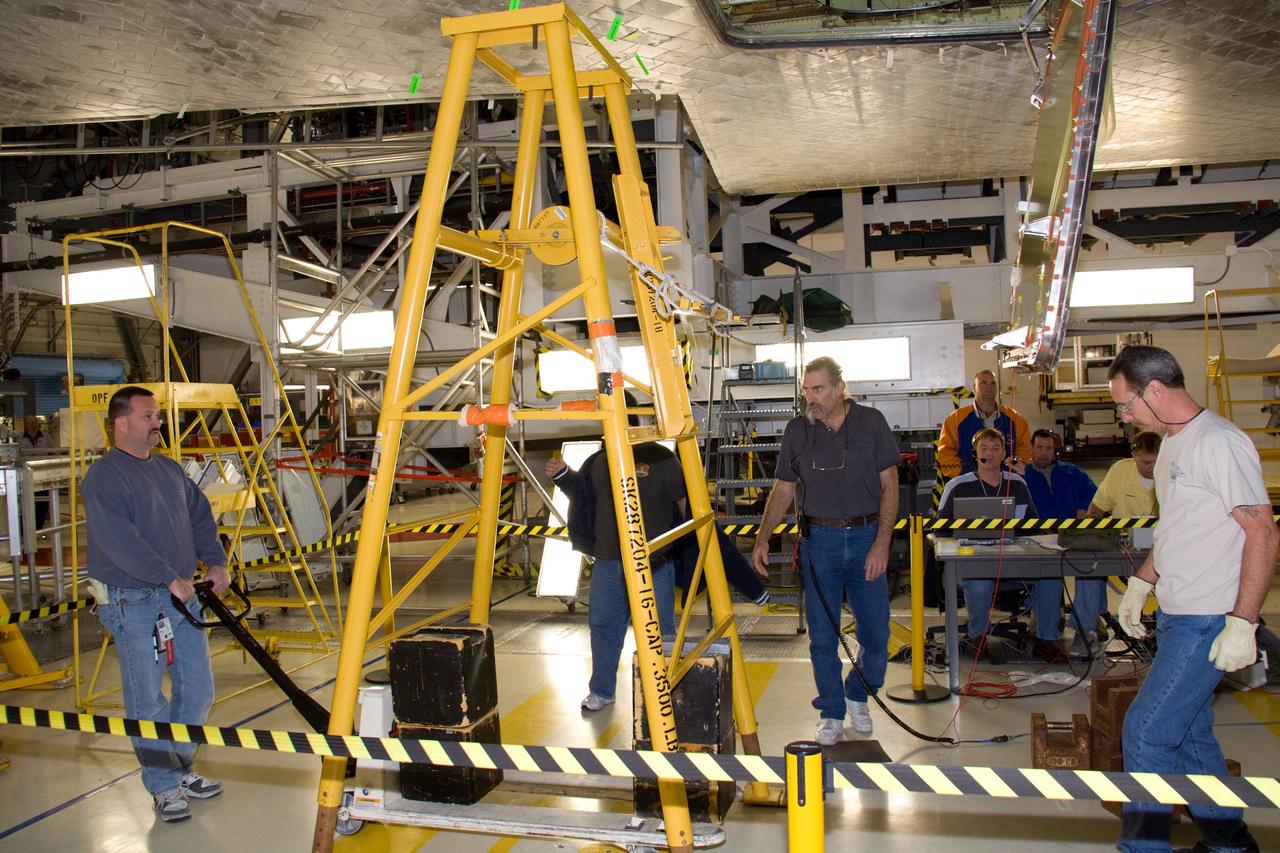
CAPE CANAVERAL, Fla. - In Orbiter Processing Facility 1 at NASA's Kennedy Space Center in Florida, United Space Alliance technicians roll the test equipment away from an external tank door on space shuttle Atlantis following the successful completion of a push test. Two umbilical doors, located on the shuttle's aft fuselage, close after external tank separation following launch. The test confirms that the door's actuators are functioning properly and that signals sent from the actuators correctly indicate that the doors have closed, creating the necessary thermal barrier for reentry. Atlantis is next slated to deliver an Integrated Cargo Carrier and Russian-built Mini Research Module to the International Space Station on the STS-132 mission. The second in a series of new pressurized components for Russia, the module will be permanently attached to the Zarya module. Three spacewalks are planned to store spare components outside the station, including six spare batteries, a boom assembly for the Ku-band antenna and spares for the Canadian Dextre robotic arm extension. A radiator, airlock and European robotic arm for the Russian Multi-purpose Laboratory Module also are payloads on the flight. Launch is targeted for May 14, 2010. Photo credit: NASA/Troy Cryder
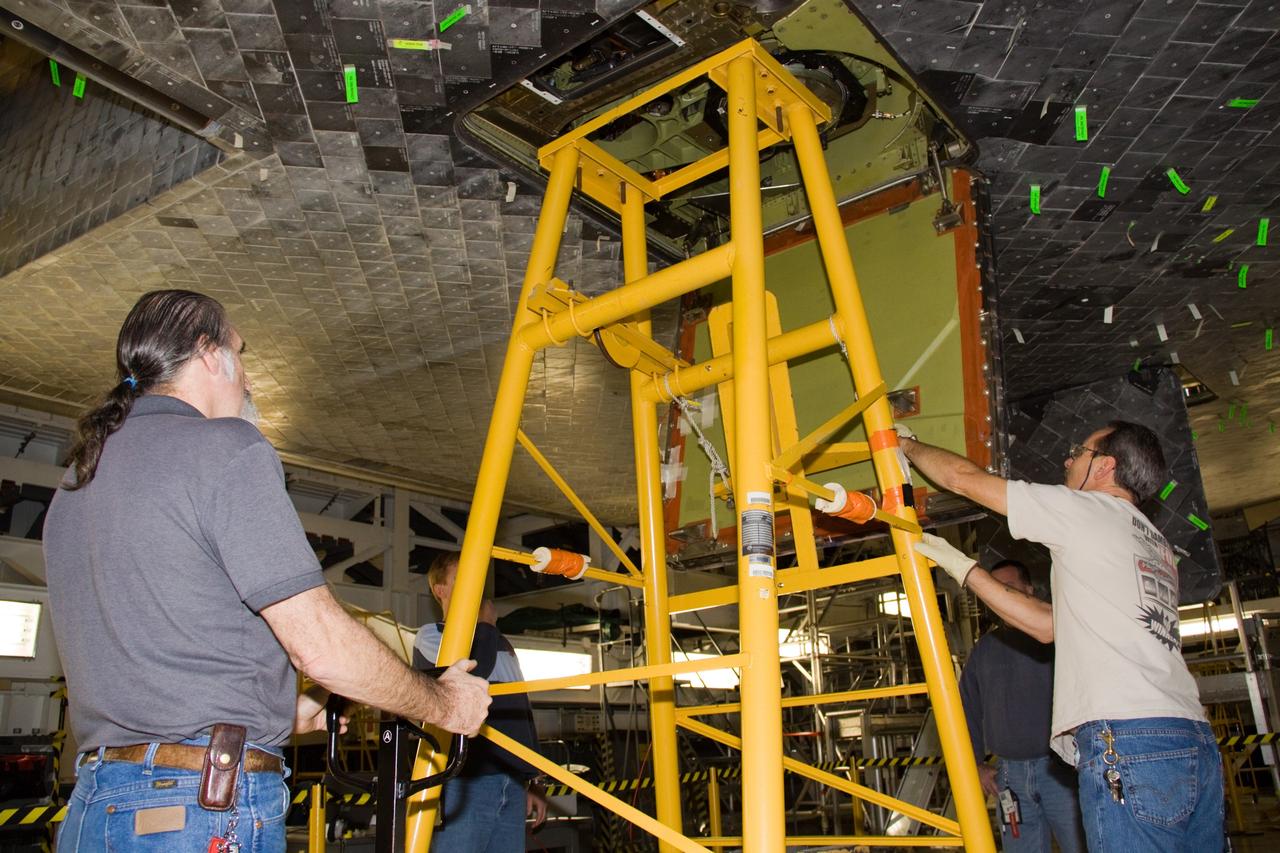
CAPE CANAVERAL, Fla. - In Orbiter Processing Facility 1 at NASA's Kennedy Space Center in Florida, United Space Alliance technicians perform a push test on an external tank door on space shuttle Atlantis. Two umbilical doors, located on the shuttle's aft fuselage, close after external tank separation following launch. The test confirms that the door's actuators are functioning properly and that signals sent from the actuators correctly indicate that the doors have closed, creating the necessary thermal barrier for reentry. Atlantis is next slated to deliver an Integrated Cargo Carrier and Russian-built Mini Research Module to the International Space Station on the STS-132 mission. The second in a series of new pressurized components for Russia, the module will be permanently attached to the Zarya module. Three spacewalks are planned to store spare components outside the station, including six spare batteries, a boom assembly for the Ku-band antenna and spares for the Canadian Dextre robotic arm extension. A radiator, airlock and European robotic arm for the Russian Multi-purpose Laboratory Module also are payloads on the flight. Launch is targeted for May 14, 2010. Photo credit: NASA/Troy Cryder
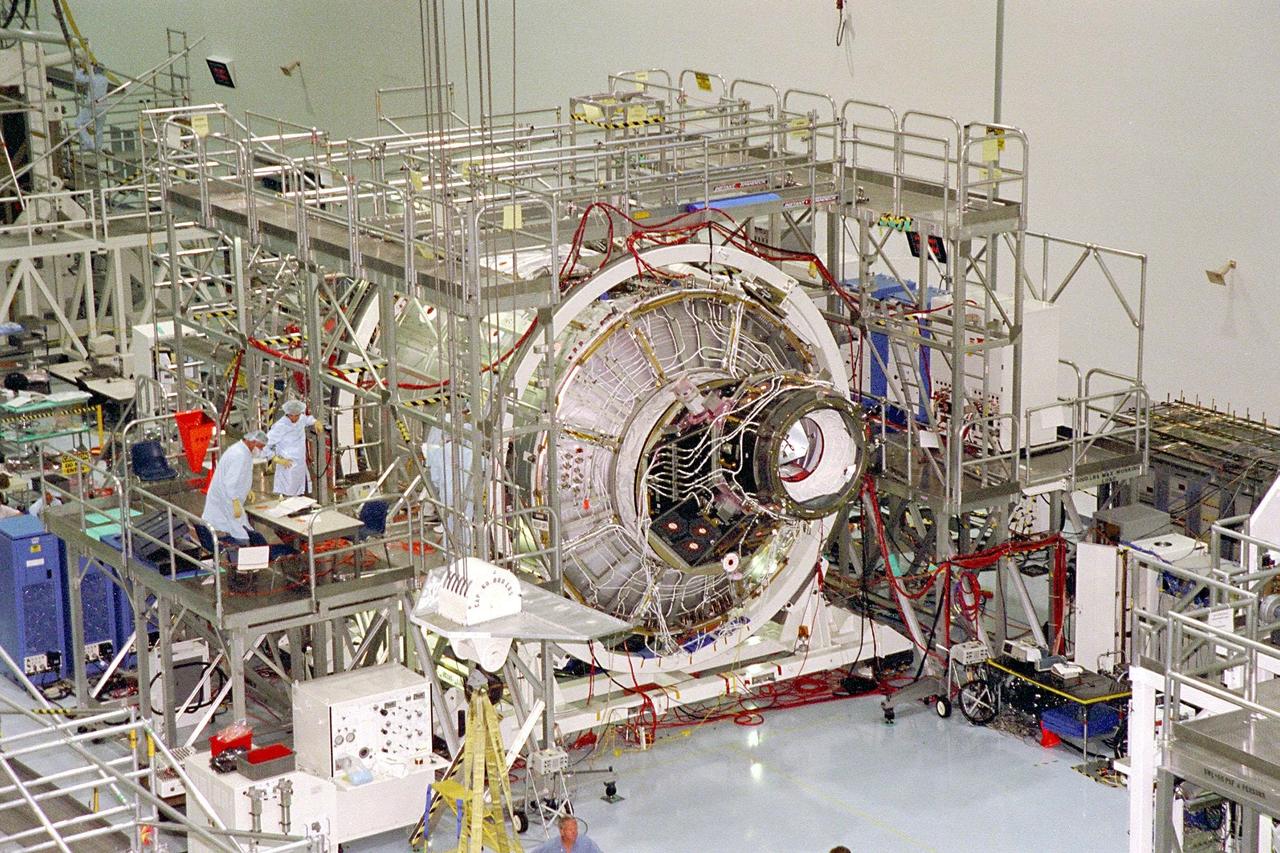
KENNEDY SPACE CENTER, FLA. -- The International Space Station's (ISS) Unity node, with Pressurized Mating Adapter (PMA)-2 attached, awaits further processing by Boeing technicians in its workstand in the Space Station Processing Facility (SSPF). The Unity node is the first element of the ISS to be manufactured in the United States and is currently scheduled to lift off aboard the Space Shuttle Endeavour on STS-88 later this year. Unity has two PMAs attached to it now that this mate is completed. PMAs are conical docking adapters which will allow the docking systems used by the Space Shuttle and by Russian modules to attach to the node's hatches and berthing mechanisms. Once in orbit, Unity, which has six hatches, will be mated with the already orbiting Control Module and will eventually provide attachment points for the U.S. laboratory module; Node 3; an early exterior framework or truss for the station; an airlock; and a multi-windowed cupola. The Control Module, or Functional Cargo Block, is a U.S.-funded and Russian-built component that will be launched aboard a Russian rocket from Kazakstan
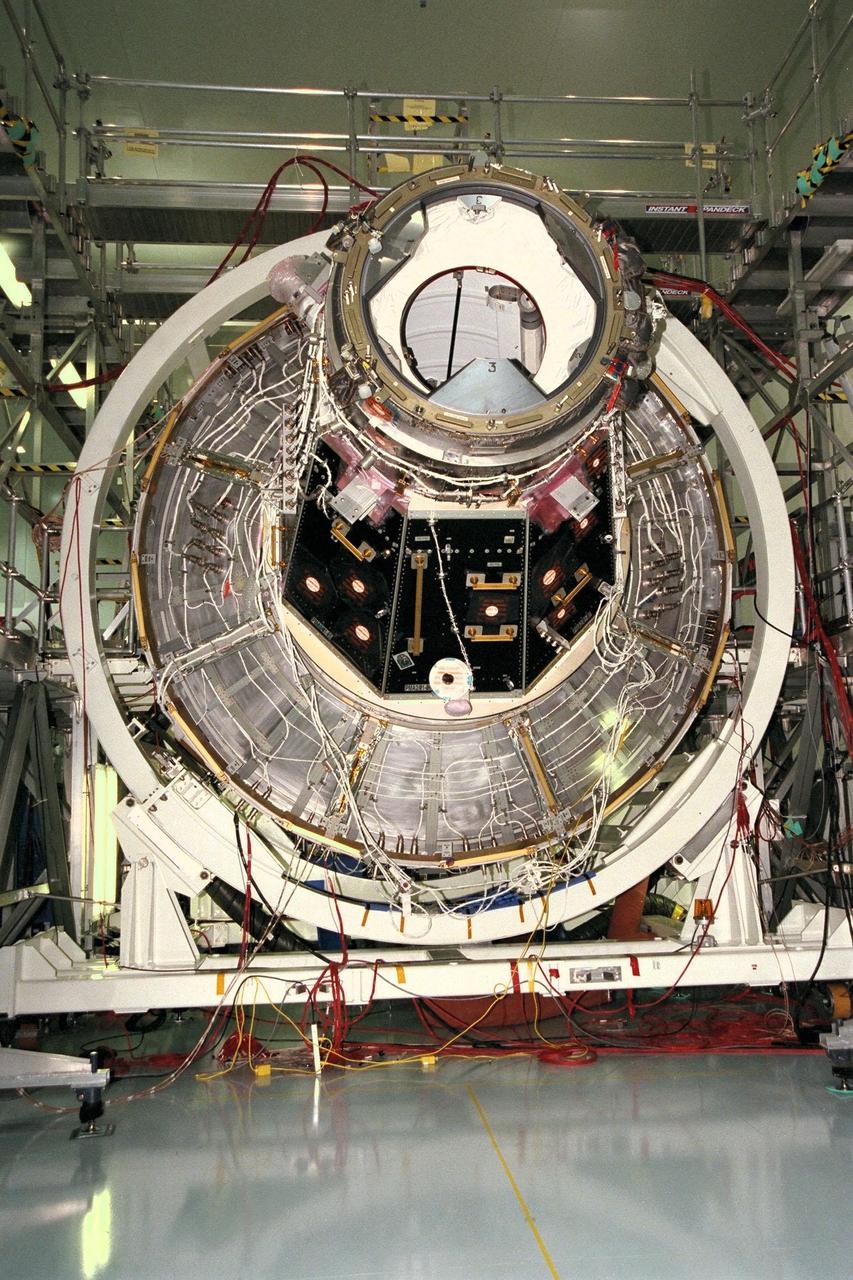
KENNEDY SPACE CENTER, FLA. -- The International Space Station's (ISS) Unity node, with Pressurized Mating Adapter (PMA)-2 attached, awaits further processing in the Space Station Processing Facility (SSPF). The Unity node is the first element of the ISS to be manufactured in the United States and is currently scheduled to lift off aboard the Space Shuttle Endeavour on STS-88 later this year. Unity has two PMAs attached to it now that this mate is completed. PMAs are conical docking adapters which will allow the docking systems used by the Space Shuttle and by Russian modules to attach to the node's hatches and berthing mechanisms. Once in orbit, Unity, which has six hatches, will be mated with the already orbiting Control Module and will eventually provide attachment points for the U.S. laboratory module; Node 3; an early exterior framework or truss for the station; an airlock; and a multi-windowed cupola. The Control Module, or Functional Cargo Block, is a U.S.-funded and Russian-built component that will be launched aboard a Russian rocket from Kazakstan
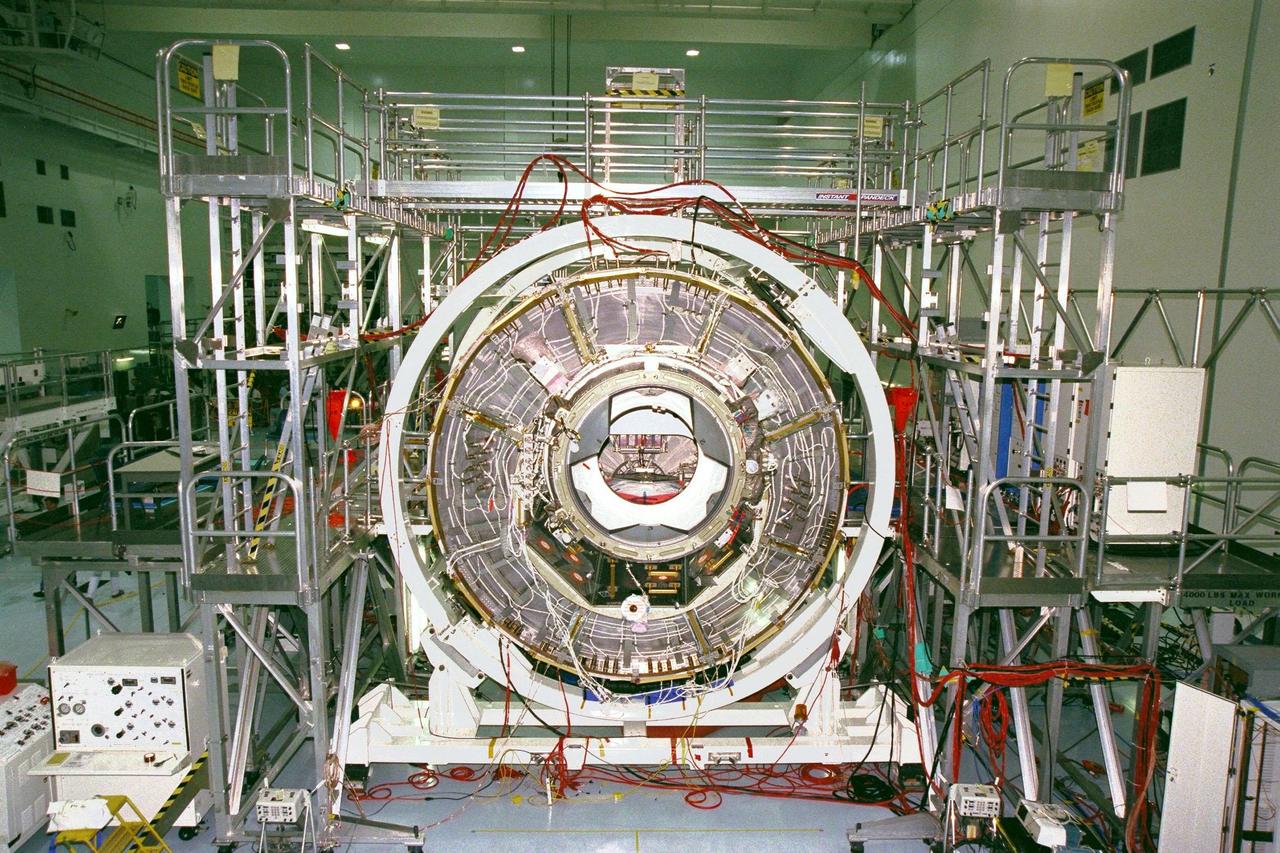
KENNEDY SPACE CENTER, FLA. -- The International Space Station's (ISS) Unity node, with Pressurized Mating Adapter (PMA)-2 attached, awaits further processing in the Space Station Processing Facility (SSPF). The Unity node is the first element of the ISS to be manufactured in the United States and is currently scheduled to lift off aboard the Space Shuttle Endeavour on STS-88 later this year. Unity has two PMAs attached to it now that this mate is completed. PMAs are conical docking adapters which will allow the docking systems used by the Space Shuttle and by Russian modules to attach to the node's hatches and berthing mechanisms. Once in orbit, Unity, which has six hatches, will be mated with the already orbiting Control Module and will eventually provide attachment points for the U.S. laboratory module; Node 3; an early exterior framework or truss for the station; an airlock; and a multi-windowed cupola. The Control Module, or Functional Cargo Block, is a U.S.-funded and Russian-built component that will be launched aboard a Russian rocket from Kazakstan
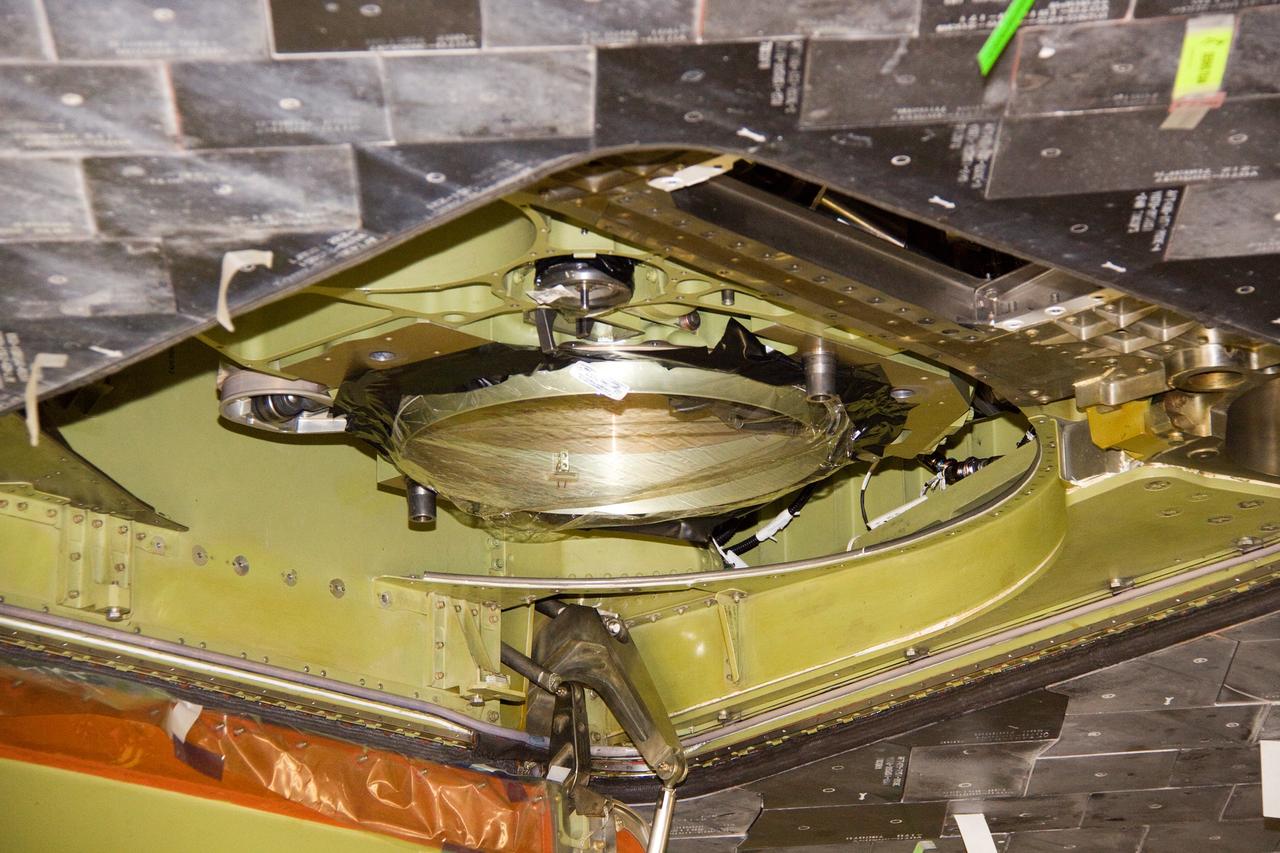
CAPE CANAVERAL, Fla. - In Orbiter Processing Facility 1 at NASA's Kennedy Space Center in Florida, preparations are under way to perform a push test on an external tank door, shown in this close-up, of space shuttle Atlantis. Two umbilical doors, located on the shuttle's aft fuselage, close after external tank separation following launch. The test confirms that the door's actuators are functioning properly and that signals sent from the actuators correctly indicate that the doors have closed, creating the necessary thermal barrier for reentry. Atlantis is next slated to deliver an Integrated Cargo Carrier and Russian-built Mini Research Module to the International Space Station on the STS-132 mission. The second in a series of new pressurized components for Russia, the module will be permanently attached to the Zarya module. Three spacewalks are planned to store spare components outside the station, including six spare batteries, a boom assembly for the Ku-band antenna and spares for the Canadian Dextre robotic arm extension. A radiator, airlock and European robotic arm for the Russian Multi-purpose Laboratory Module also are payloads on the flight. Launch is targeted for May 14, 2010. Photo credit: NASA/Troy Cryder
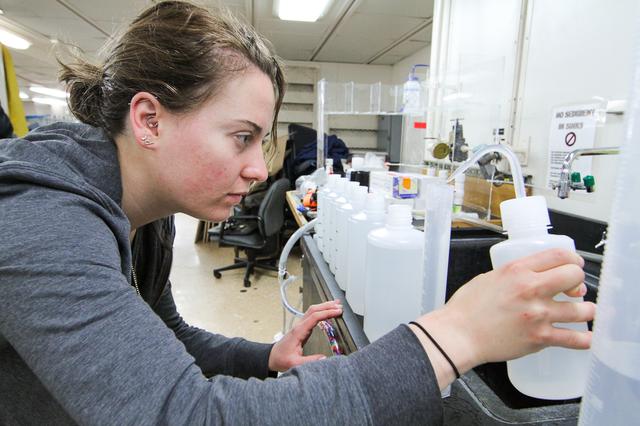
A researcher prepares lab facilities onboard the R/V Atlantis. --- The <b><a href="http://naames.larc.nasa.gov/" rel="nofollow">North Atlantic Aerosols and Marine Ecosystems Study </a></b> (NAAMES) is a five year investigation to resolve key processes controlling ocean system function, their influences on atmospheric aerosols and clouds and their implications for climate. Michael Starobin joined the NAAMES field campaign on behalf of Earth Expeditions and NASA Goddard Space Flight Center’s Office of Communications. He presented stories about the important, multi-disciplinary research being conducted by the NAAMES team, with an eye towards future missions on the NASA drawing board. This is a NAAMES photo essay put together by Starobin, a collection of 49 photographs and captions. Photo and Caption Credit: Michael Starobin <b><a href="http://www.nasa.gov/audience/formedia/features/MP_Photo_Guidelines.html" rel="nofollow">NASA image use policy</a></b> <b><a href="http://www.nasa.gov/centers/goddard/home/index.html" rel="nofollow">NASA Goddard Space Flight Center</a></b> enables NASA’s mission through four scientific endeavors: Earth Science, Heliophysics, Solar System Exploration, and Astrophysics. Goddard plays a leading role in NASA’s accomplishments by contributing compelling scientific knowledge to advance the Agency’s mission. <b>Follow us on <a href="http://twitter.com/NASAGoddardPix" rel="nofollow">Twitter</a></b> <b>Like us on <a href="http://www.facebook.com/pages/Greenbelt-MD/NASA-Goddard/395013845897?ref=tsd" rel="nofollow">Facebook</a></b> <b>Find us on <a href="https://www.instagram.com/nasagoddard/?hl=en" rel="nofollow">Instagram</a></b>
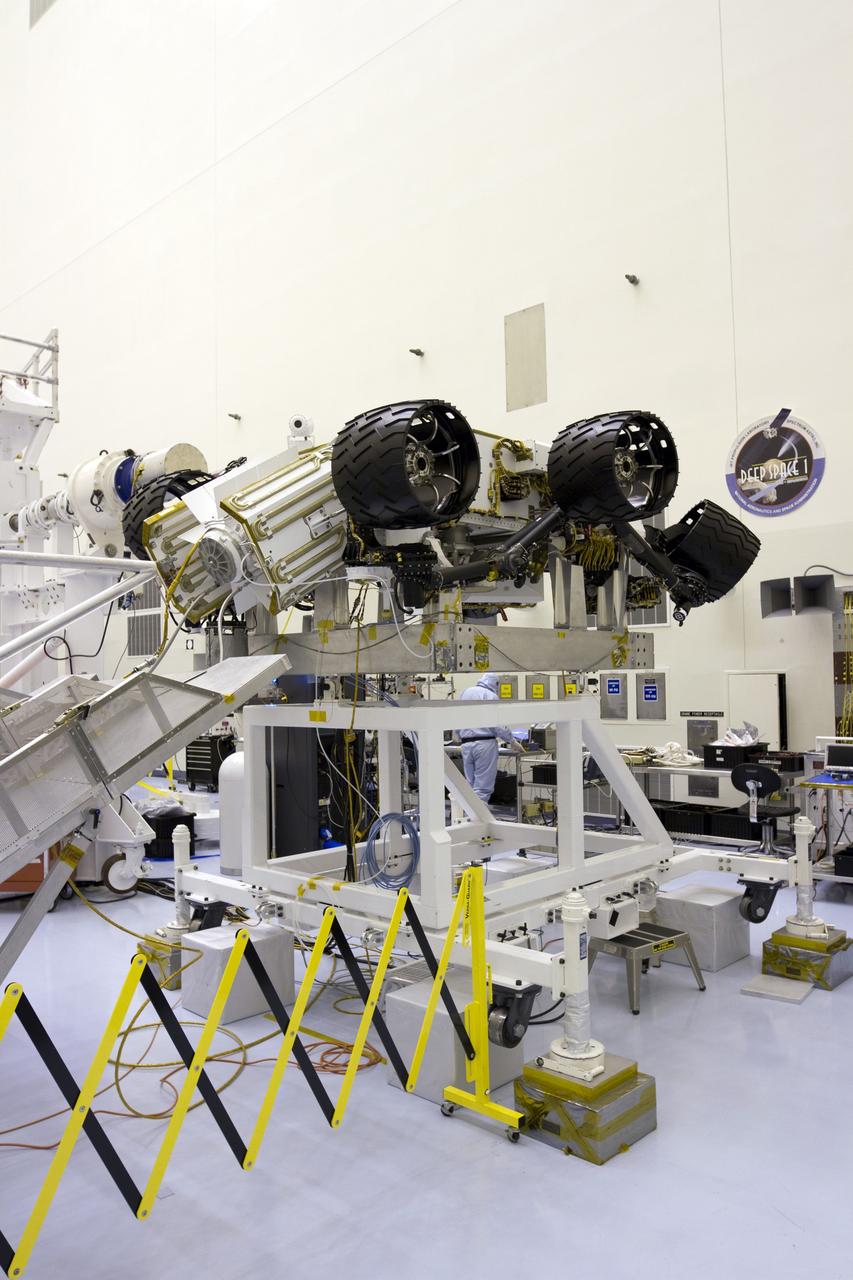
CAPE CANAVERAL, Fla. -- In the high bay of the Payload Hazardous Servicing Facility (PHSF) at NASA's Kennedy Space Center in Florida, the multi-mission radioisotope thermoelectric generator (MMRTG) for NASA's Mars Science Laboratory (MSL) mission is installed onto the aft of the Curiosity rover for a fit check. In view are the MMRTG's cooling fins which function like the radiator on a car and will reflect any excess heat generated by the MMRTG to prevent interference with the rover's electronics. Next, the MMRTG will be removed and later installed on the rover for launch at the pad. The MMRTG will generate the power needed for the mission from the natural decay of plutonium-238, a non-weapons-grade form of the radioisotope. Heat given off by this natural decay will provide constant power through the day and night during all seasons. Curiosity, MSL's car-sized rover, has 10 science instruments designed to search for signs of life, including methane, and help determine if the gas is from a biological or geological source. Waste heat from the MMRTG will be circulated throughout the rover system to keep instruments, computers, mechanical devices and communications systems within their operating temperature ranges. Launch of MSL aboard a United Launch Alliance Atlas V rocket is planned for Nov. 25 from Space Launch Complex 41 on Cape Canaveral Air Force Station. For more information, visit http://www.nasa.gov/msl. Photo credit: NASA/Cory Huston
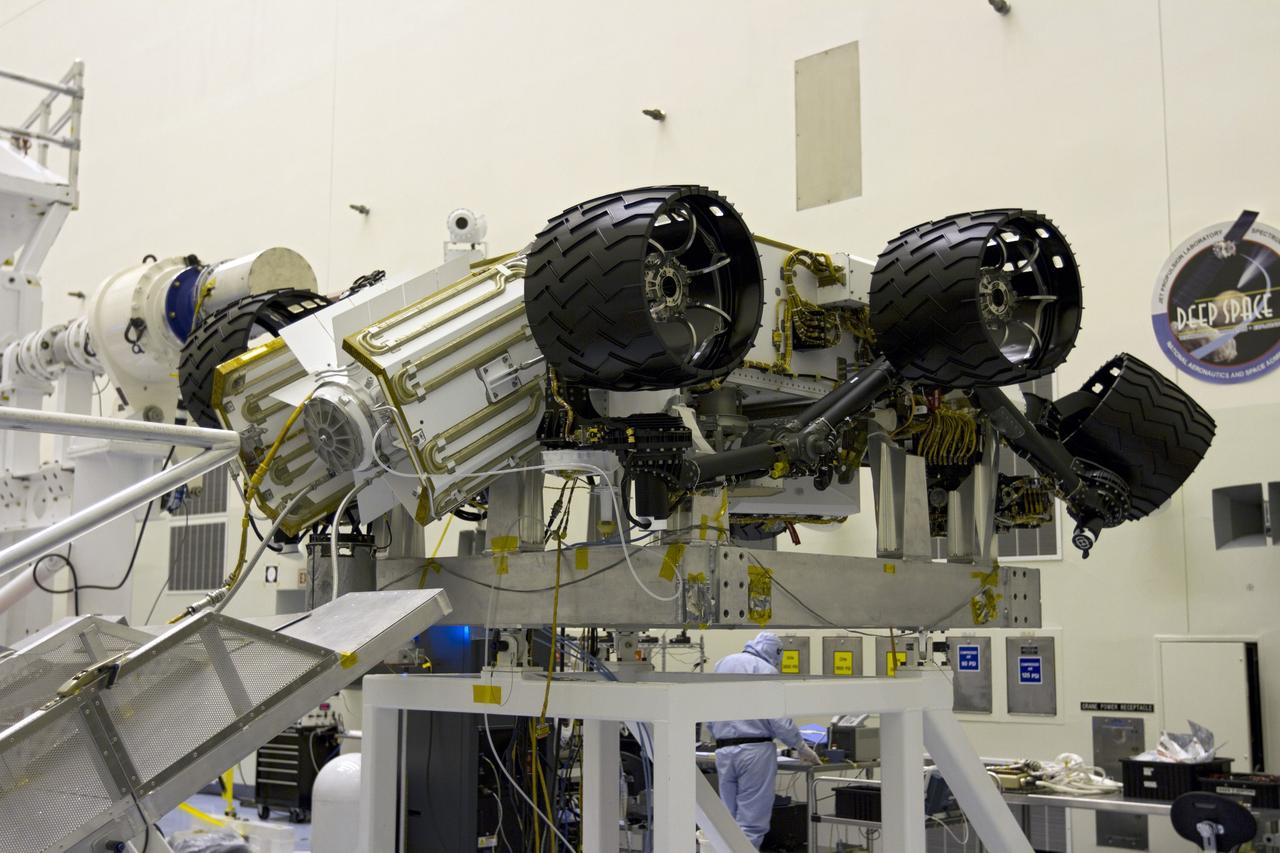
CAPE CANAVERAL, Fla. -- In the high bay of the Payload Hazardous Servicing Facility (PHSF) at NASA's Kennedy Space Center in Florida, the multi-mission radioisotope thermoelectric generator (MMRTG) for NASA's Mars Science Laboratory (MSL) mission is installed onto the aft of the Curiosity rover for a fit check. In view are the MMRTG's cooling fins which function like the radiator on a car and will reflect any excess heat generated by the MMRTG to prevent interference with the rover's electronics. Next, the MMRTG will be removed and later installed on the rover for launch at the pad. The MMRTG will generate the power needed for the mission from the natural decay of plutonium-238, a non-weapons-grade form of the radioisotope. Heat given off by this natural decay will provide constant power through the day and night during all seasons. Curiosity, MSL's car-sized rover, has 10 science instruments designed to search for signs of life, including methane, and help determine if the gas is from a biological or geological source. Waste heat from the MMRTG will be circulated throughout the rover system to keep instruments, computers, mechanical devices and communications systems within their operating temperature ranges. Launch of MSL aboard a United Launch Alliance Atlas V rocket is planned for Nov. 25 from Space Launch Complex 41 on Cape Canaveral Air Force Station. For more information, visit http://www.nasa.gov/msl. Photo credit: NASA/Cory Huston