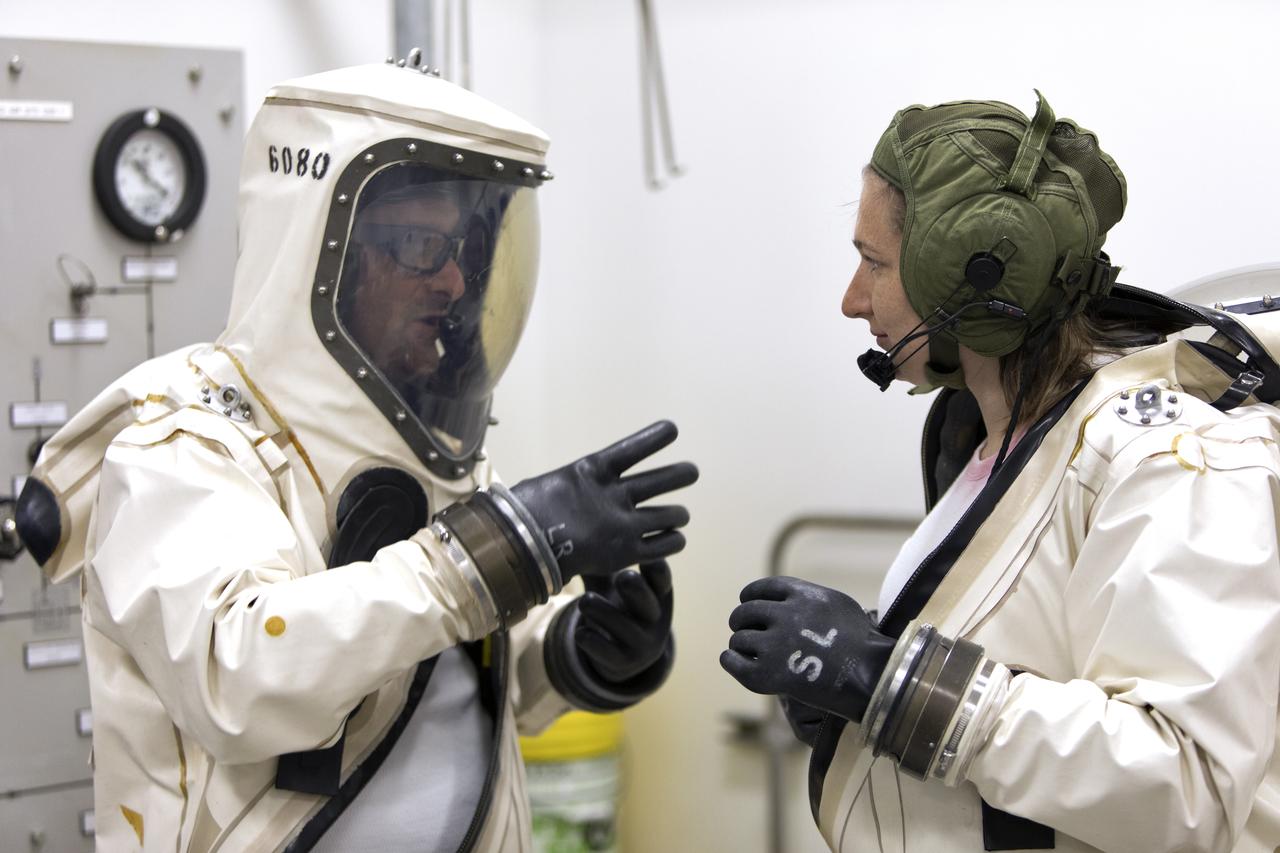
Technicans inside Kennedy's Multi-Payload Processing Facility do testing in SCAPE (Self-Contained Atmospheric Protective Ensemble) suits.
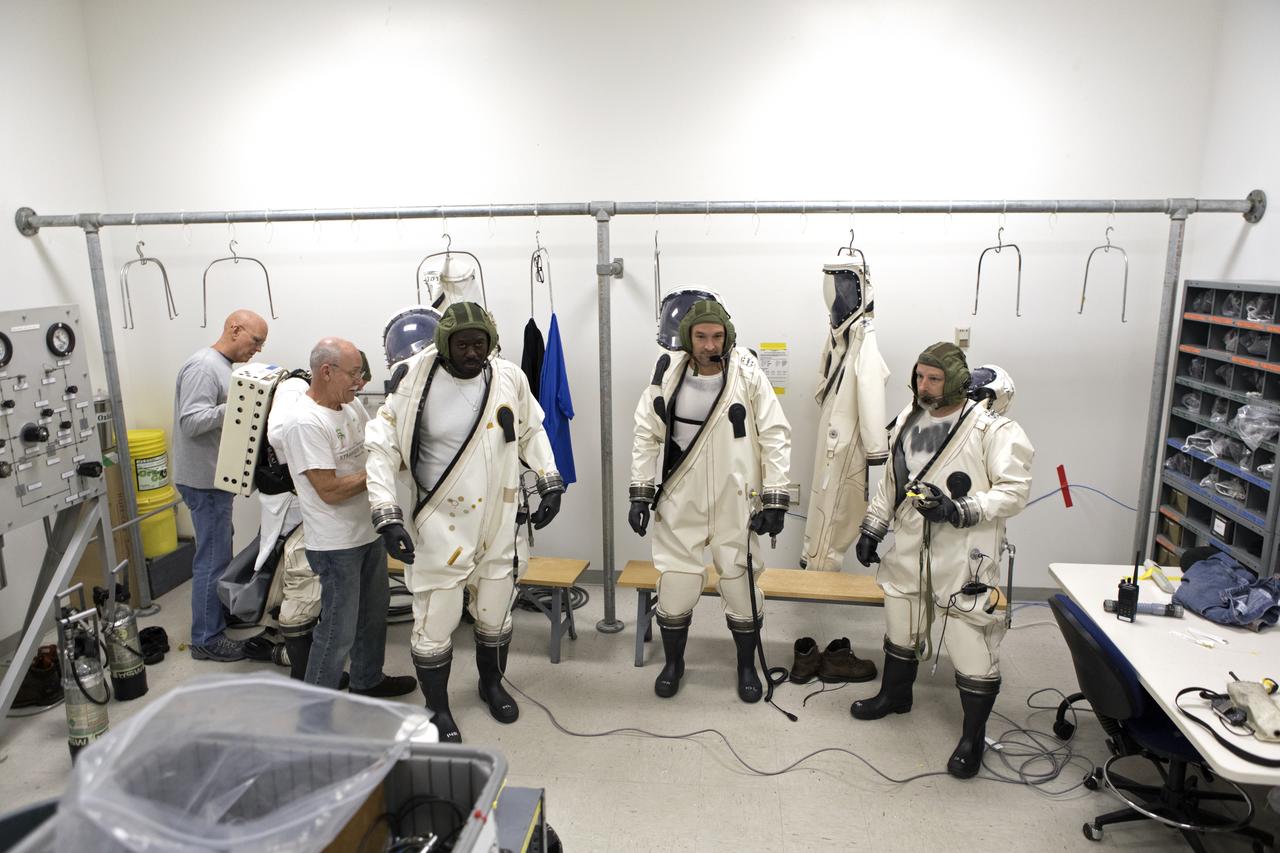
Technicans inside Kennedy's Multi-Payload Processing Facility do testing in SCAPE (Self-Contained Atmospheric Protective Ensemble) suits.
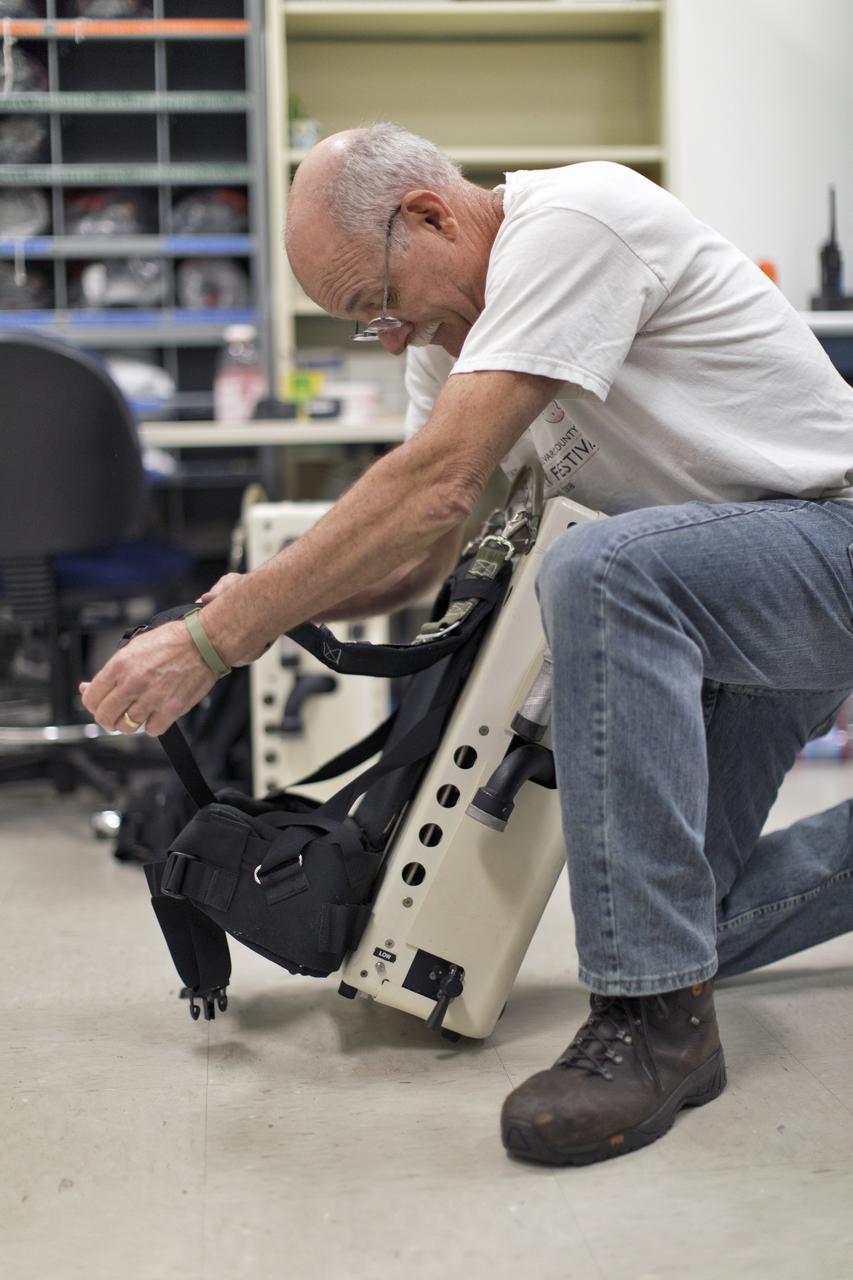
Technicans inside Kennedy's Multi-Payload Processing Facility do testing in SCAPE (Self-Contained Atmospheric Protective Ensemble) suits.
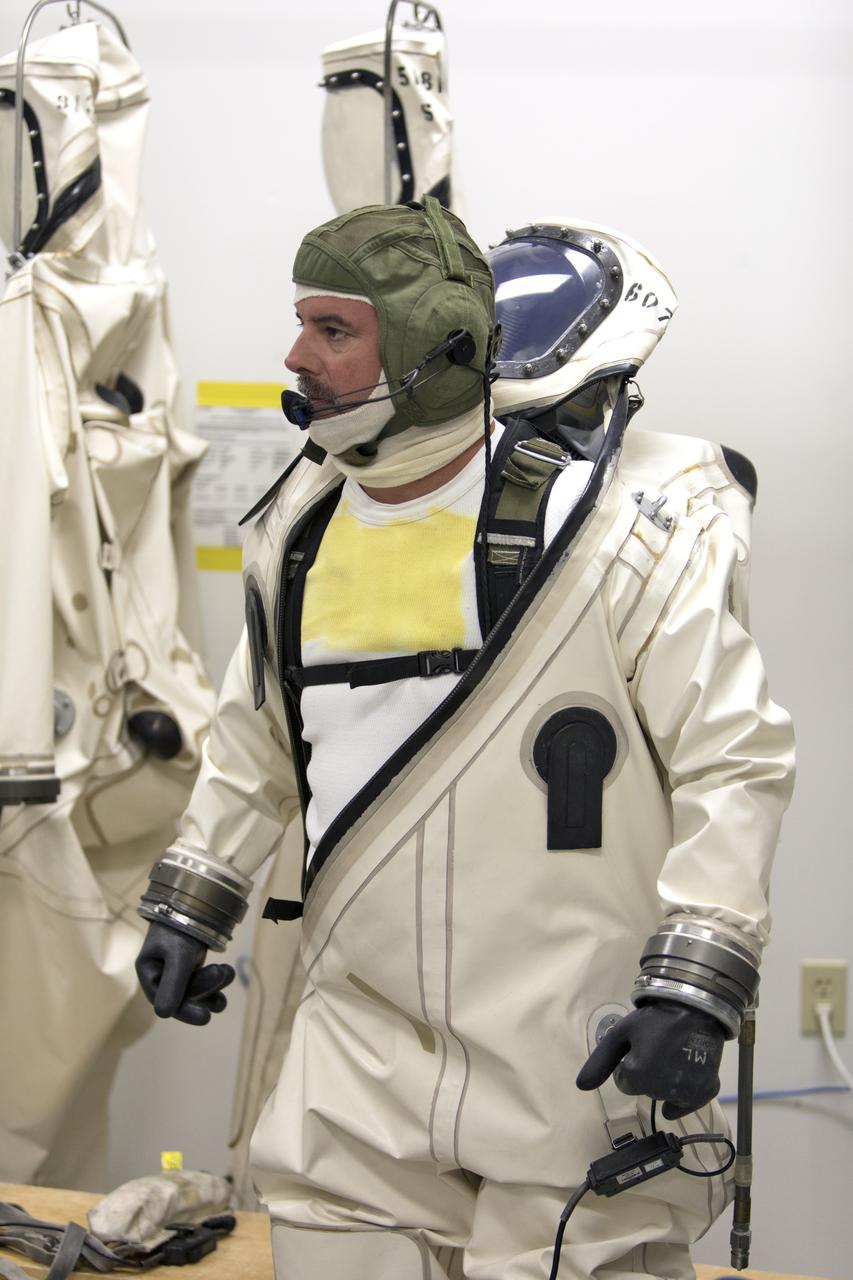
Technicans inside Kennedy's Multi-Payload Processing Facility do testing in SCAPE (Self-Contained Atmospheric Protective Ensemble) suits.
Technicans inside Kennedy's Multi-Payload Processing Facility do testing in SCAPE (Self-Contained Atmospheric Protective Ensemble) suits.
Technicans inside Kennedy's Multi-Payload Processing Facility do testing in SCAPE (Self-Contained Atmospheric Protective Ensemble) suits.
Technicans inside Kennedy's Multi-Payload Processing Facility do testing in SCAPE (Self-Contained Atmospheric Protective Ensemble) suits.
Technicans inside Kennedy's Multi-Payload Processing Facility do testing in SCAPE (Self-Contained Atmospheric Protective Ensemble) suits.
Technicans inside Kennedy's Multi-Payload Processing Facility do testing in SCAPE (Self-Contained Atmospheric Protective Ensemble) suits.
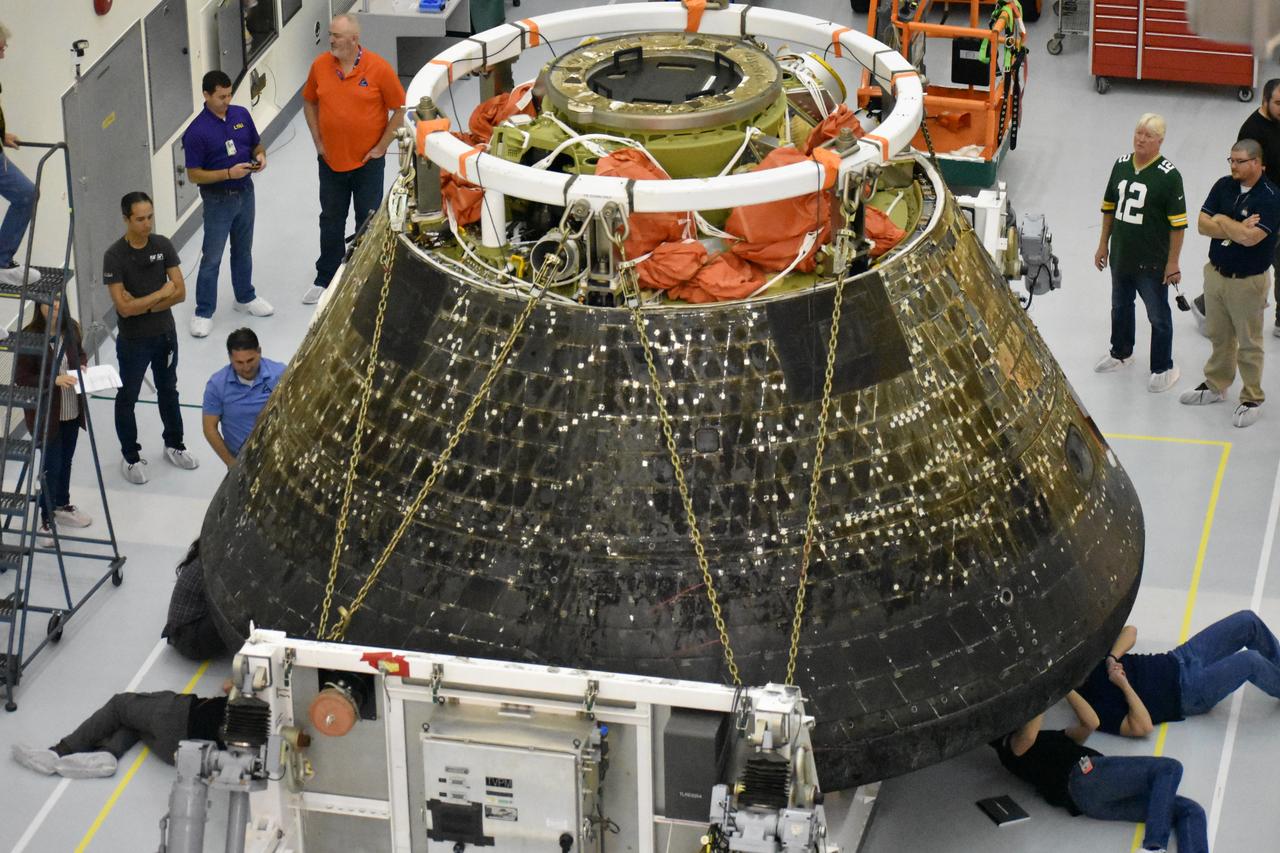
Inside the Multi Payload Processing Facility at NASA’s Kennedy Space Center in Florida, engineers and technicians conduct inspections of the heat shield on the Orion spacecraft for the Artemis I mission. Orion returned to Kennedy on Dec. 30, 2022, after splashing down in the Pacific Ocean on Dec. 11 following a 25-day mission around the Moon.
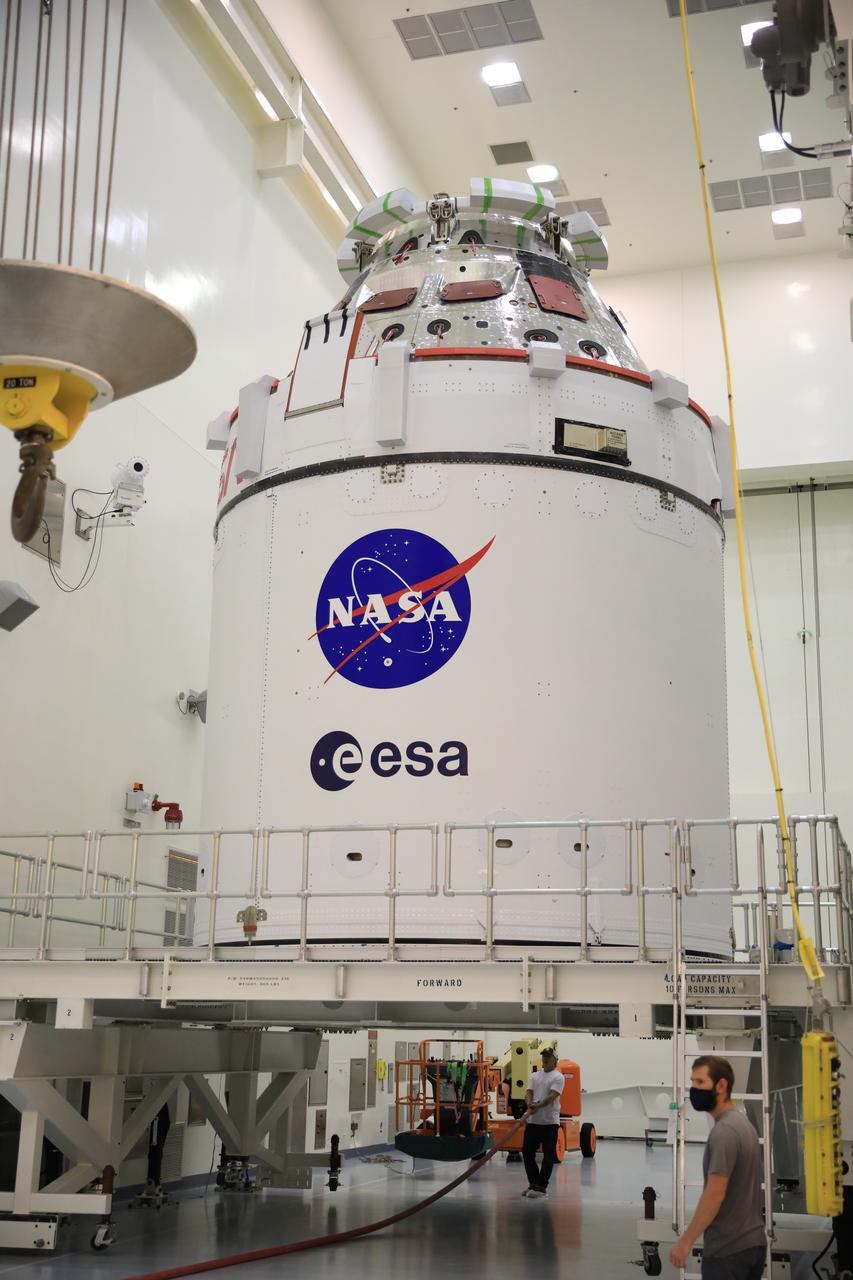
Fueling and servicing checks on the Orion spacecraft for the Artemis I mission are completed inside Kennedy Space Center’s Multi-Payload Processing Facility on July 8, 2021. The capsule will be transported to the Florida spaceport’s Launch Abort System Facility, where teams with Exploration Ground Systems and contractor Jacobs will work to add parts of the launch abort system onto the spacecraft. Launching later this year, Artemis I will be a test of the Orion spacecraft and SLS rocket as an integrated system ahead of crewed flights to the Moon.
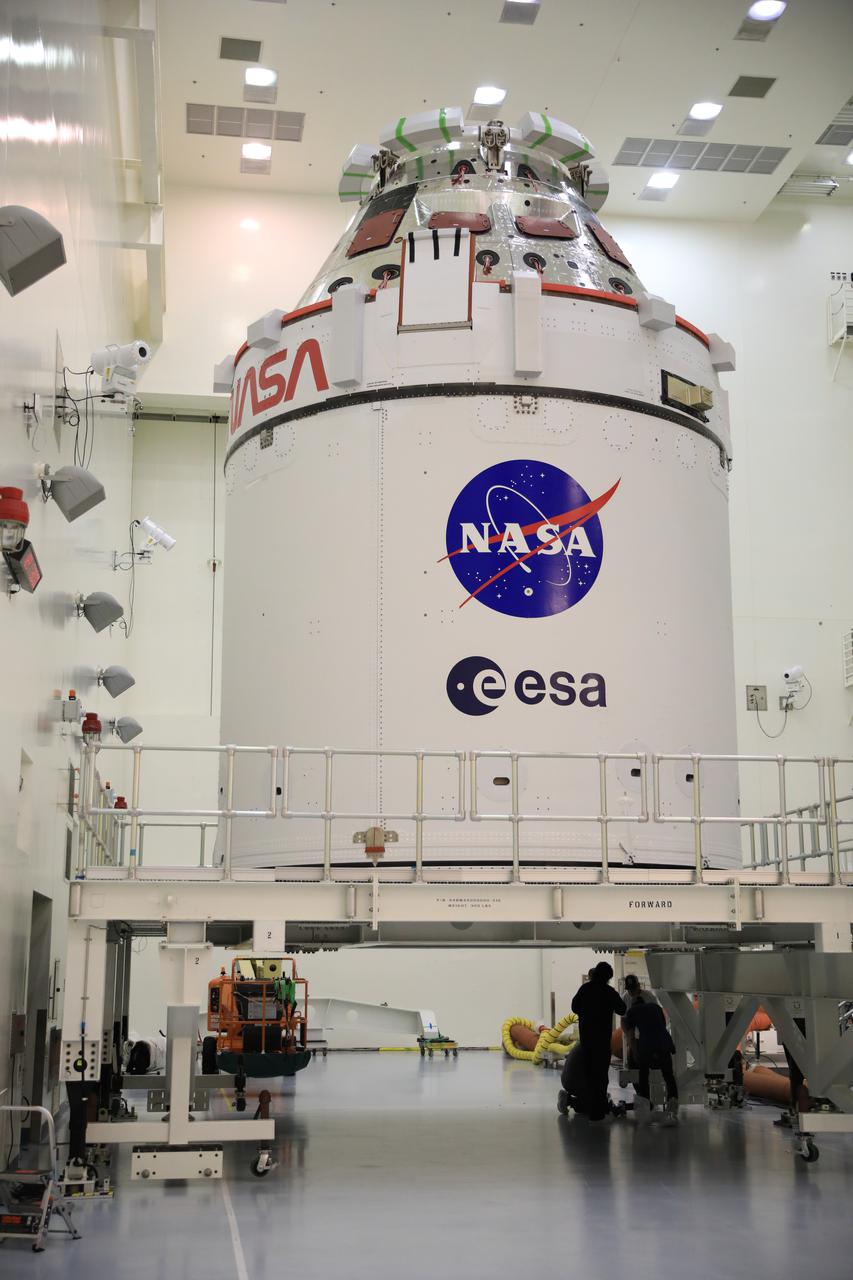
Fueling and servicing checks on the Orion spacecraft for the Artemis I mission are completed inside Kennedy Space Center’s Multi-Payload Processing Facility on July 8, 2021. The capsule will be transported to the Florida spaceport’s Launch Abort System Facility, where teams with Exploration Ground Systems and contractor Jacobs will work to add parts of the launch abort system onto the spacecraft. Launching later this year, Artemis I will be a test of the Orion spacecraft and SLS rocket as an integrated system ahead of crewed flights to the Moon.
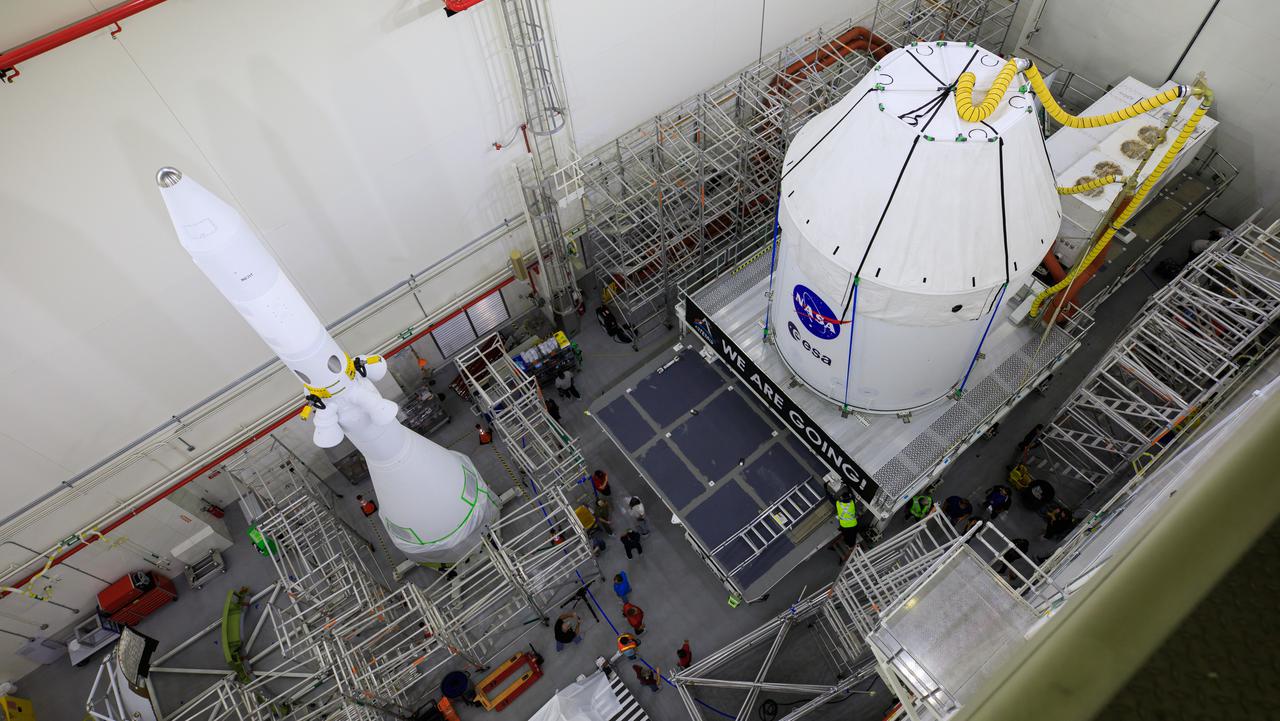
The Orion spacecraft for the Artemis I mission arrives at Kennedy Space Center’s Launch Abort System facility on July 10, 2021, after being transported from the Florida spaceport’s Multi-Payload Processing Facility earlier in the day. Teams with Exploration Ground Systems and contractor Jacobs will integrate components of the launch abort system onto the spacecraft. Launching later this year, Artemis I will be a test of the Orion spacecraft and SLS rocket as an integrated system ahead of crewed flights to the Moon.
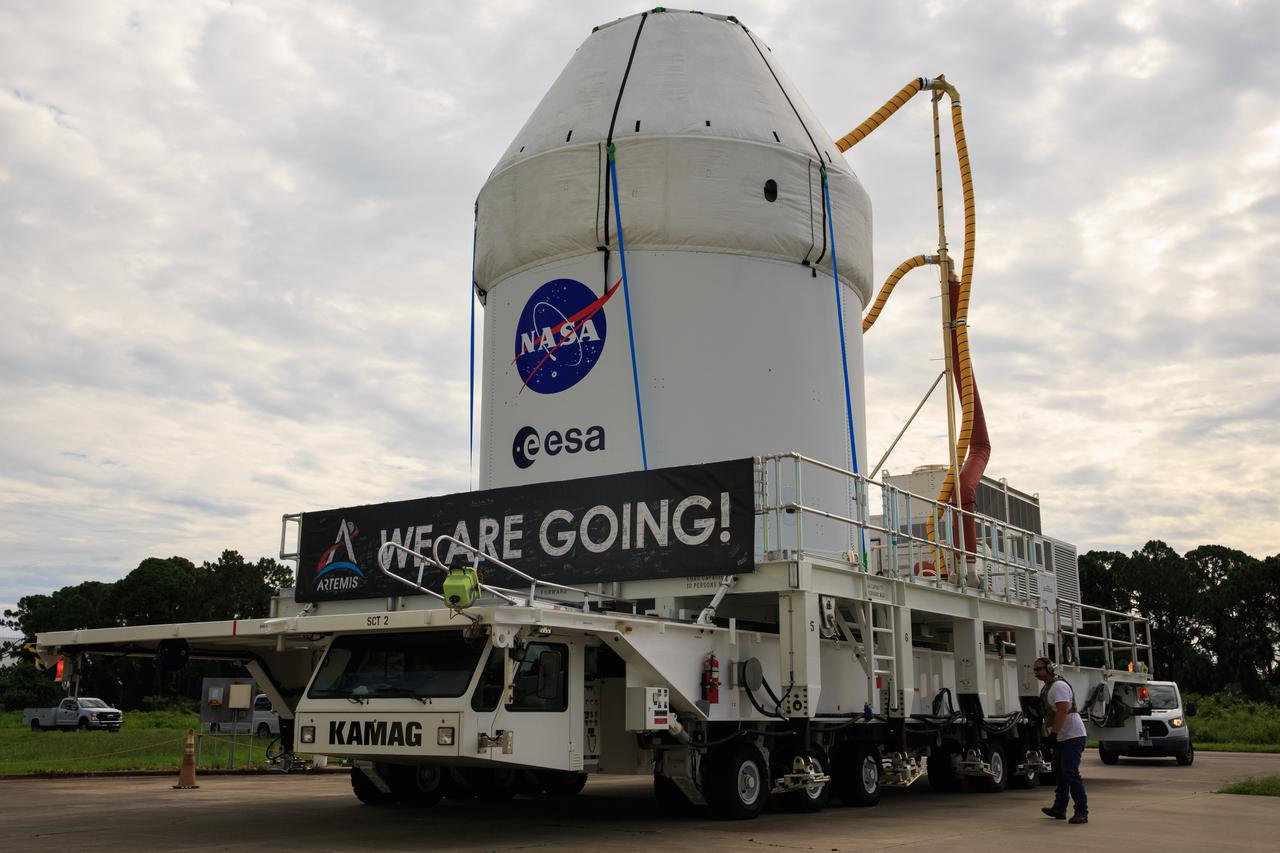
The Orion spacecraft for the Artemis I mission is transported from Kennedy Space Center’s Multi-Payload Processing Facility to the Florida spaceport’s Launch Abort System Facility on July 10, 2021. Teams with Exploration Ground Systems and contractor Jacobs will integrate components of the launch abort system onto the spacecraft. Launching later this year, Artemis I will be a test of the Orion spacecraft and SLS rocket as an integrated system ahead of crewed flights to the Moon.
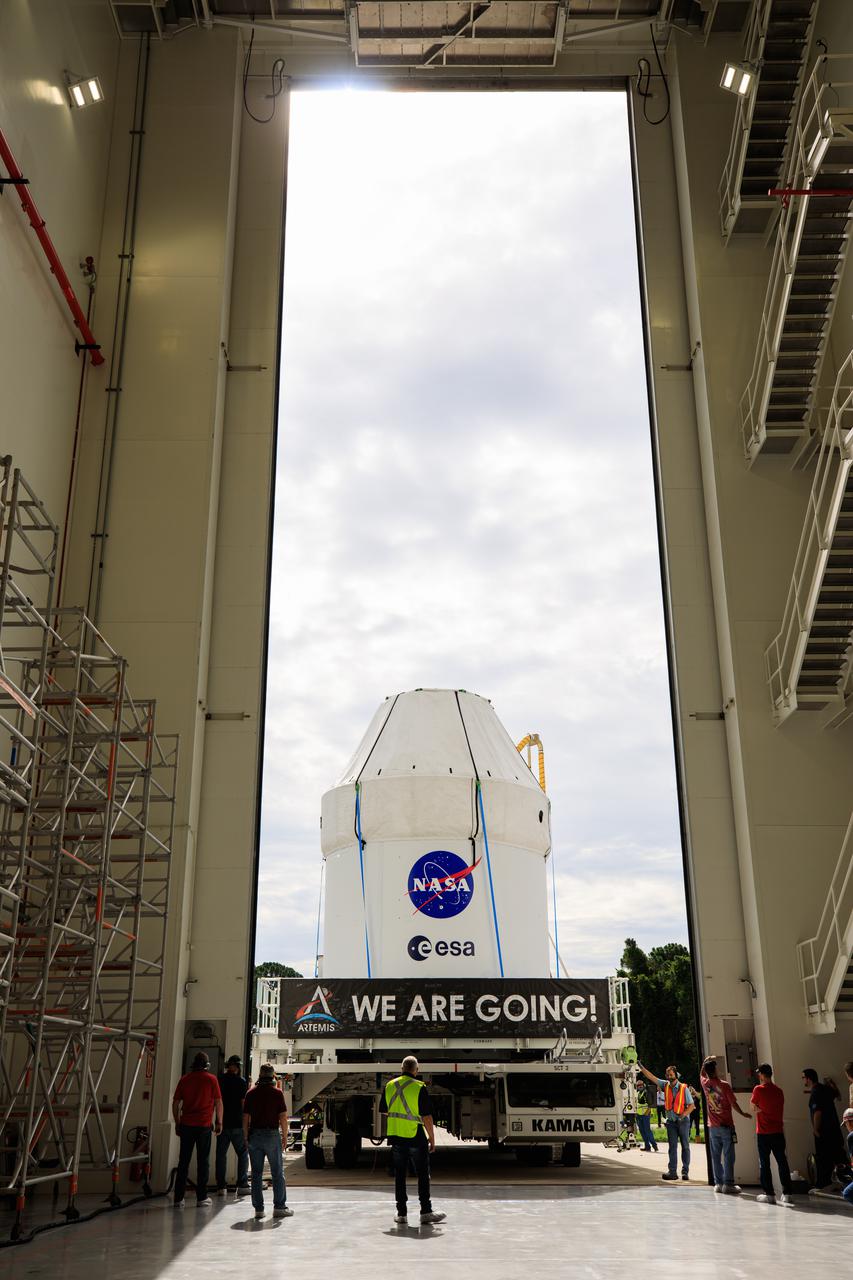
The Orion spacecraft for the Artemis I mission arrives at Kennedy Space Center’s Launch Abort System facility on July 10, 2021, after being transported from the Florida spaceport’s Multi-Payload Processing Facility earlier in the day. Teams with Exploration Ground Systems and contractor Jacobs will integrate components of the launch abort system onto the spacecraft. Launching later this year, Artemis I will be a test of the Orion spacecraft and SLS rocket as an integrated system ahead of crewed flights to the Moon.
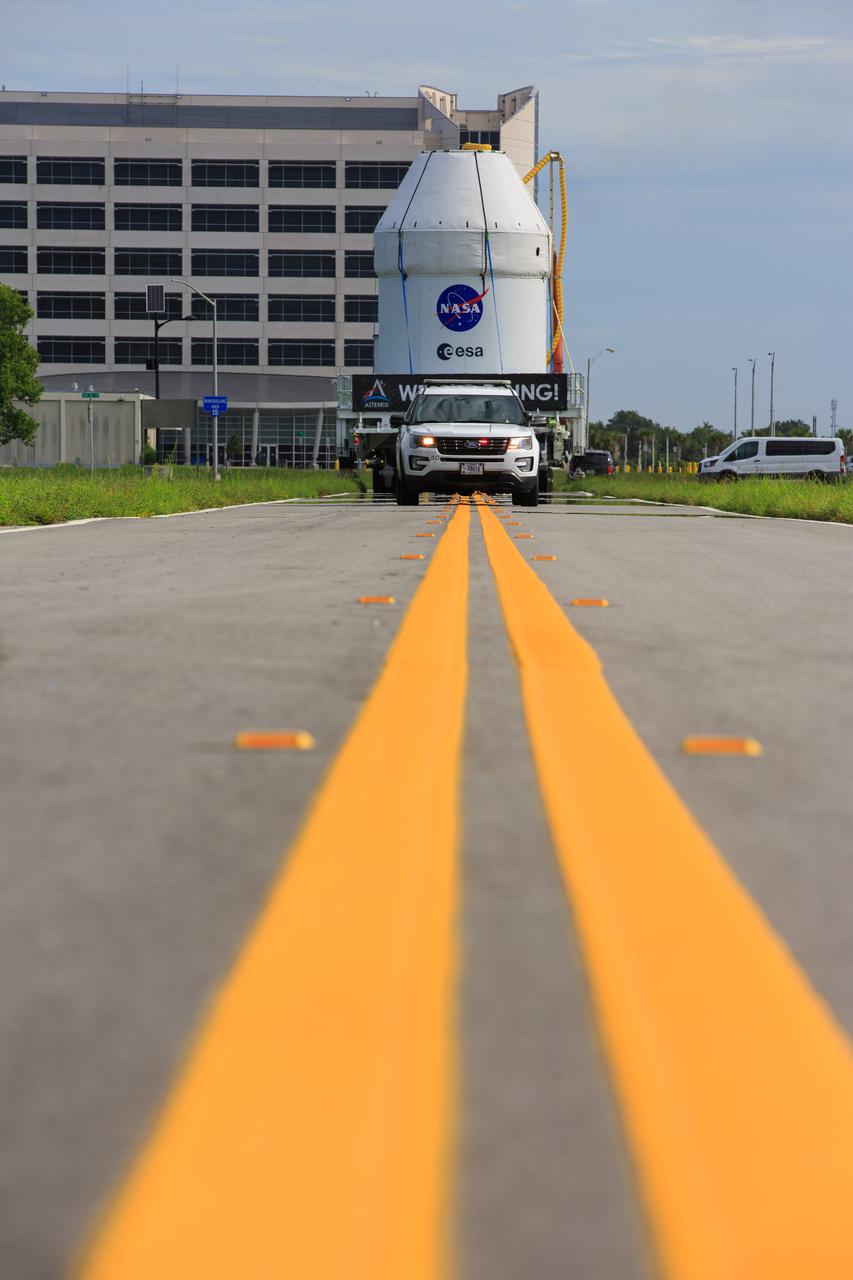
The Orion spacecraft for the Artemis I mission is transported from Kennedy Space Center’s Multi-Payload Processing Facility to the Florida spaceport’s Launch Abort System Facility on July 10, 2021. Teams with Exploration Ground Systems and contractor Jacobs will integrate components of the launch abort system onto the spacecraft. Launching later this year, Artemis I will be a test of the Orion spacecraft and SLS rocket as an integrated system ahead of crewed flights to the Moon.
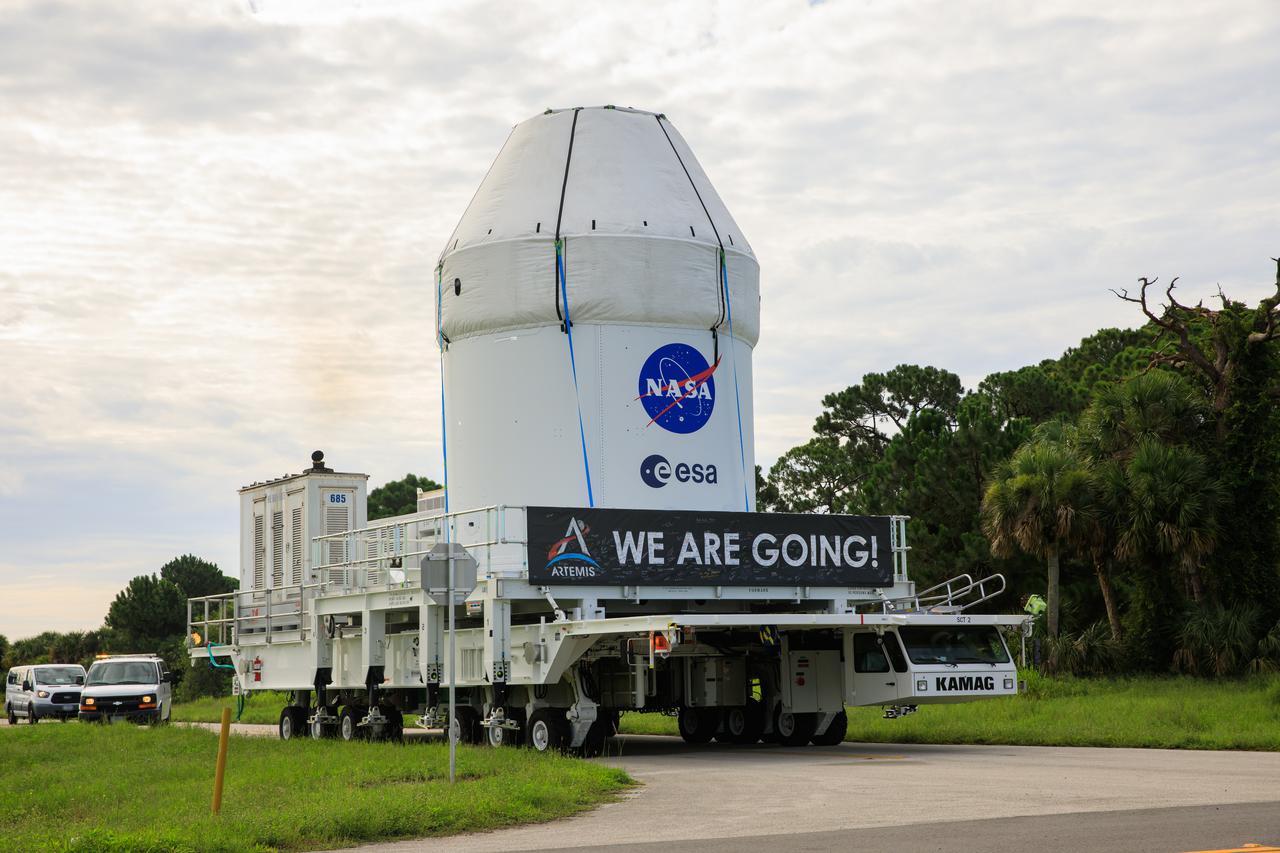
The Orion spacecraft for the Artemis I mission is transported from Kennedy Space Center’s Multi-Payload Processing Facility to the Florida spaceport’s Launch Abort System Facility on July 10, 2021. Teams with Exploration Ground Systems and contractor Jacobs will integrate components of the launch abort system onto the spacecraft. Launching later this year, Artemis I will be a test of the Orion spacecraft and SLS rocket as an integrated system ahead of crewed flights to the Moon.
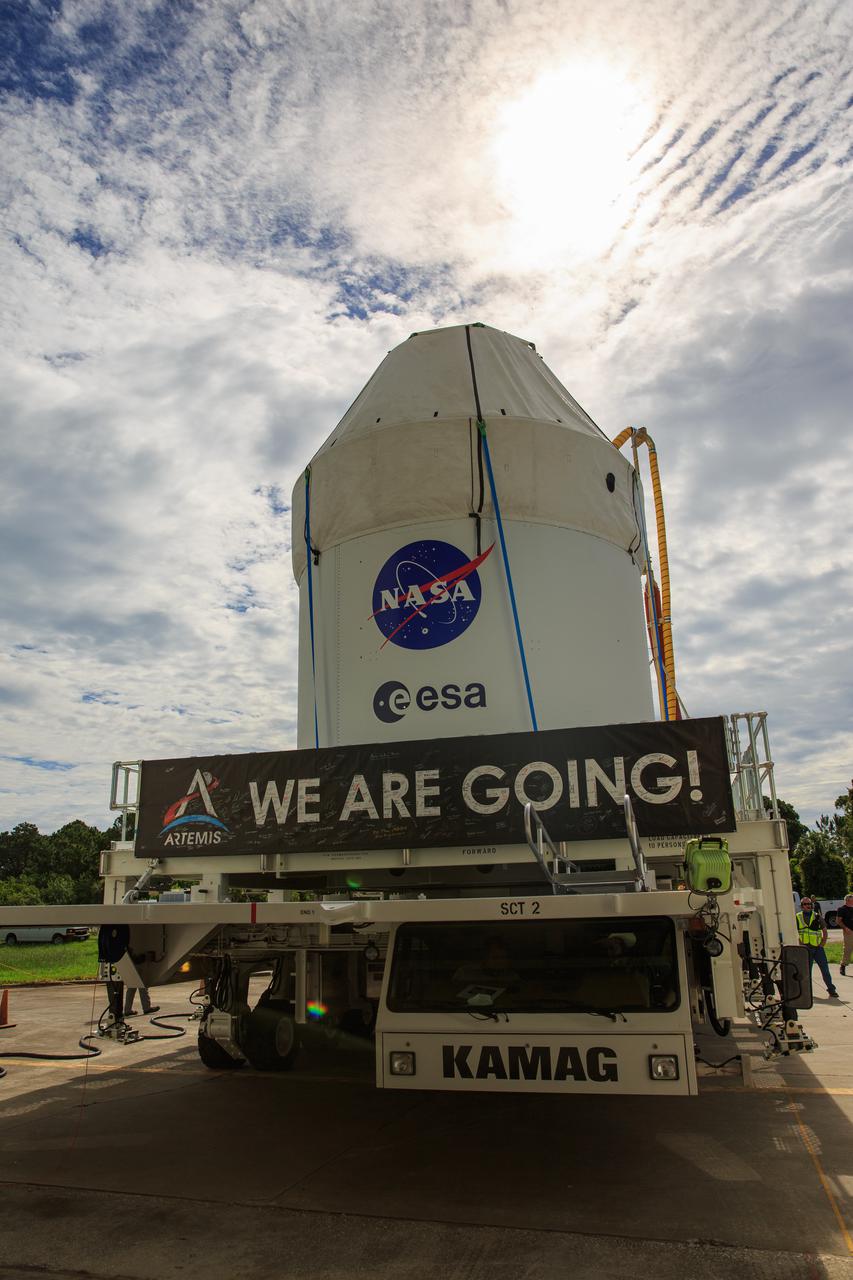
The Orion spacecraft for the Artemis I mission is transported from Kennedy Space Center’s Multi-Payload Processing Facility to the Florida spaceport’s Launch Abort System Facility on July 10, 2021. Teams with Exploration Ground Systems and contractor Jacobs will integrate components of the launch abort system onto the spacecraft. Launching later this year, Artemis I will be a test of the Orion spacecraft and SLS rocket as an integrated system ahead of crewed flights to the Moon.
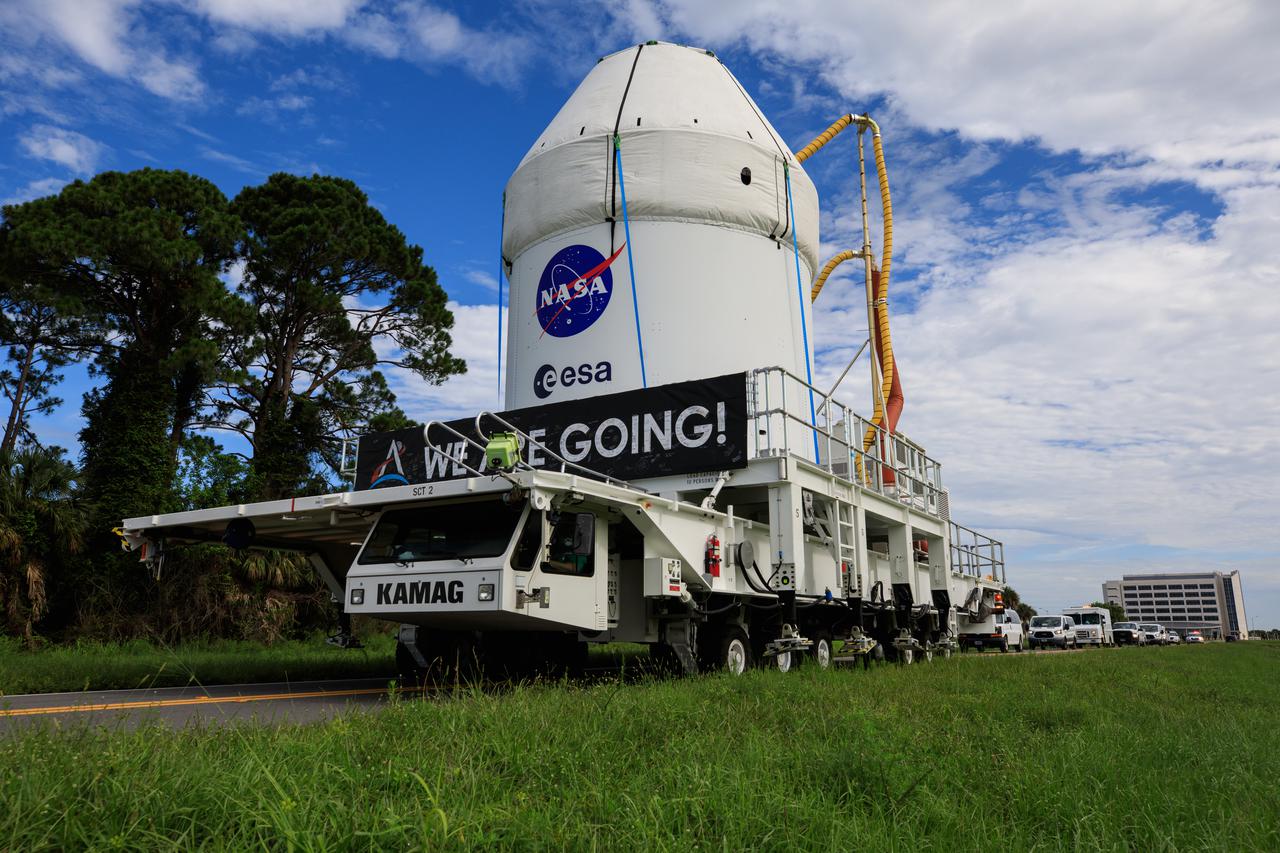
The Orion spacecraft for the Artemis I mission is transported from Kennedy Space Center’s Multi-Payload Processing Facility to the Florida spaceport’s Launch Abort System Facility on July 10, 2021. Teams with Exploration Ground Systems and contractor Jacobs will integrate components of the launch abort system onto the spacecraft. Launching later this year, Artemis I will be a test of the Orion spacecraft and SLS rocket as an integrated system ahead of crewed flights to the Moon.
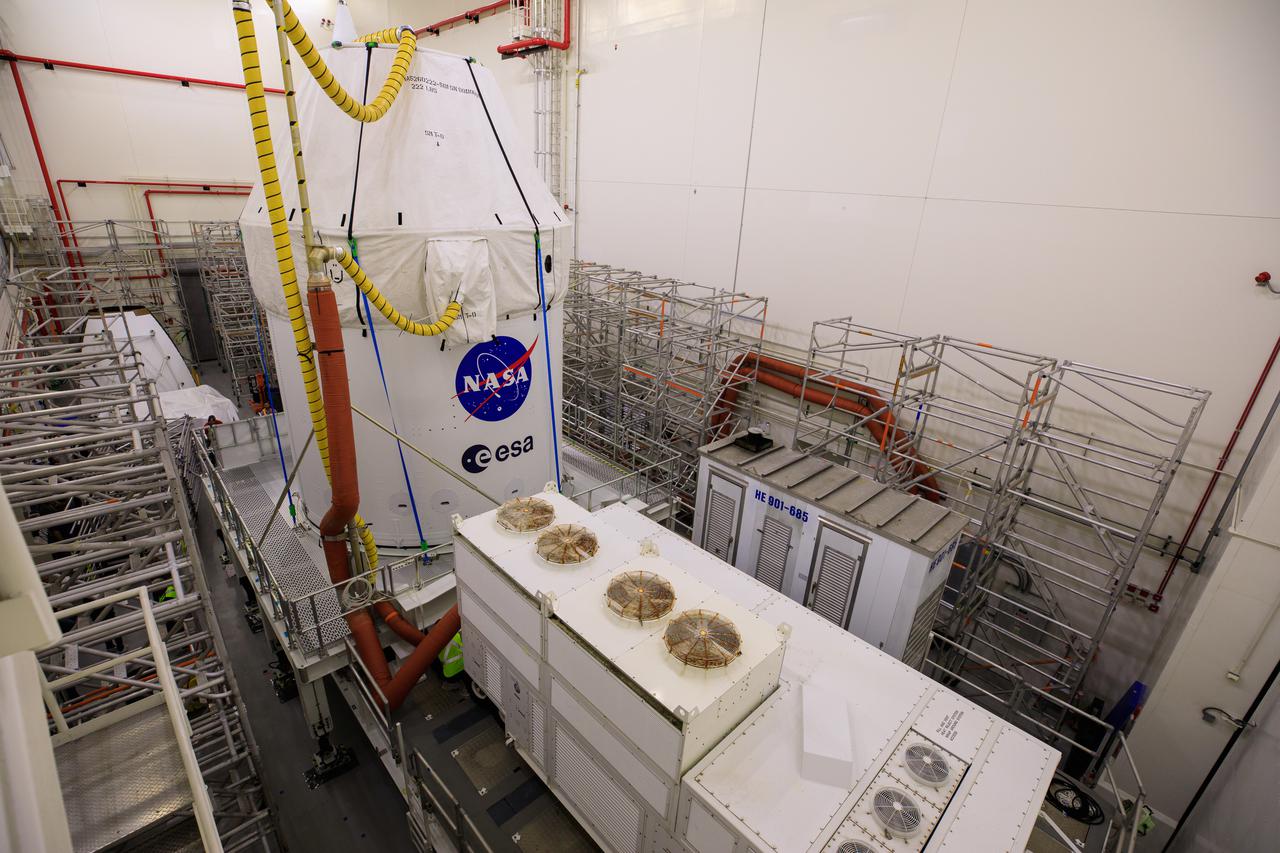
The Orion spacecraft for the Artemis I mission arrives at Kennedy Space Center’s Launch Abort System facility on July 10, 2021, after being transported from the Florida spaceport’s Multi-Payload Processing Facility earlier in the day. Teams with Exploration Ground Systems and contractor Jacobs will integrate components of the launch abort system onto the spacecraft. Launching later this year, Artemis I will be a test of the Orion spacecraft and SLS rocket as an integrated system ahead of crewed flights to the Moon.
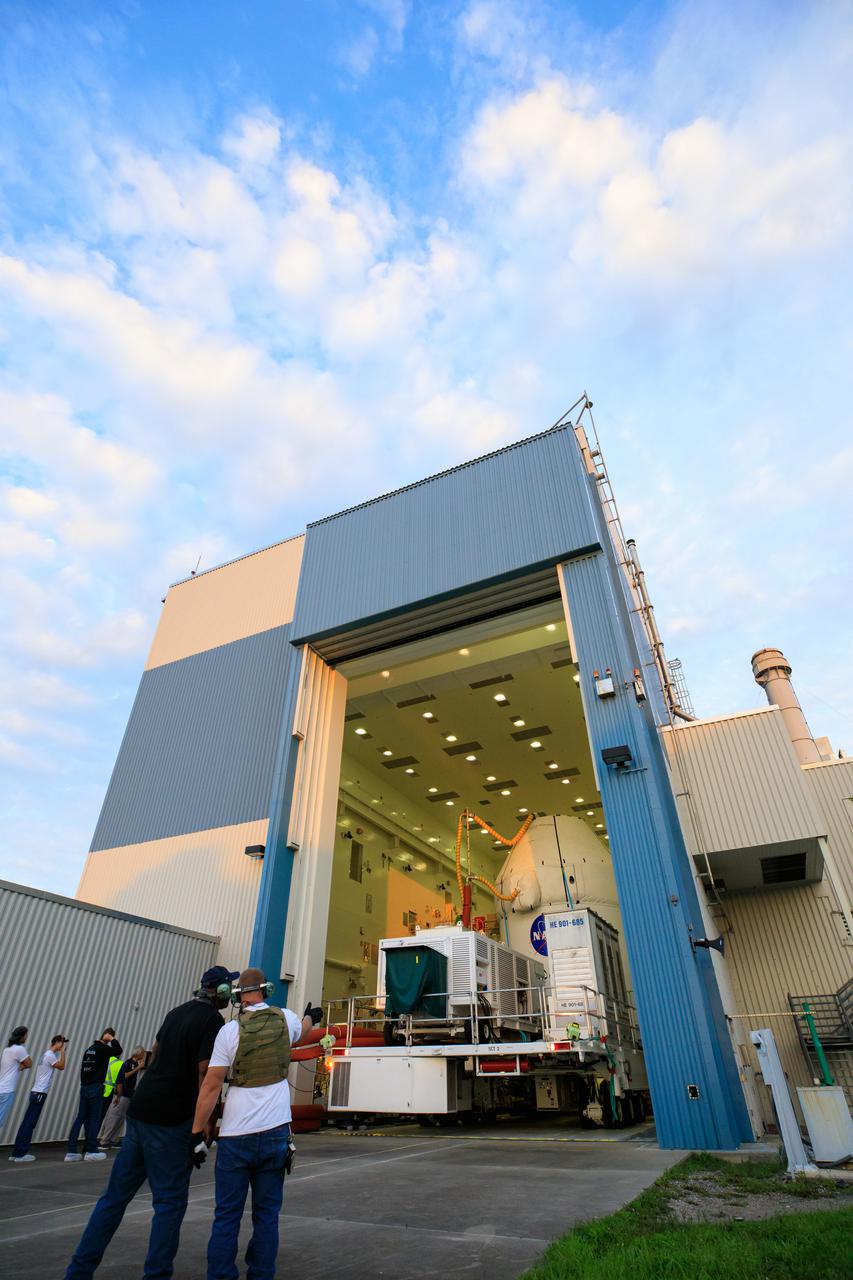
After recently completing fueling and servicing checks, the Orion spacecraft for the Artemis I mission departs from Kennedy Space Center’s Multi-Payload Processing on July 10, 2021. It is being transported to the Florida spaceport’s Launch Abort System Facility, where teams with Exploration Ground Systems and contractor Jacobs will integrate components of the launch abort system onto the spacecraft. Launching later this year, Artemis I will be a test of the Orion spacecraft and SLS rocket as an integrated system ahead of crewed flights to the Moon.
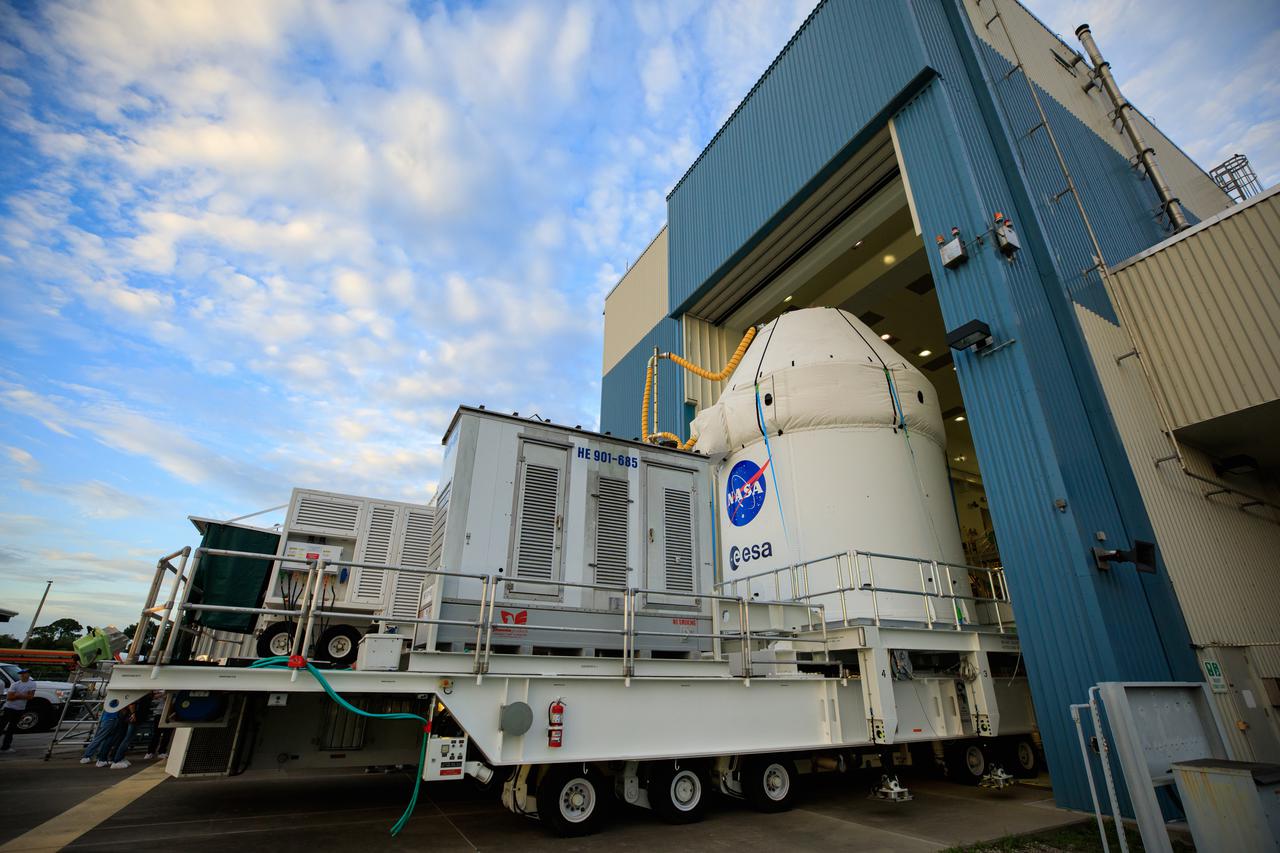
After recently completing fueling and servicing checks, the Orion spacecraft for the Artemis I mission departs from Kennedy Space Center’s Multi-Payload Processing on July 10, 2021. It is being transported to the Florida spaceport’s Launch Abort System Facility, where teams with Exploration Ground Systems and contractor Jacobs will integrate components of the launch abort system onto the spacecraft. Launching later this year, Artemis I will be a test of the Orion spacecraft and SLS rocket as an integrated system ahead of crewed flights to the Moon.
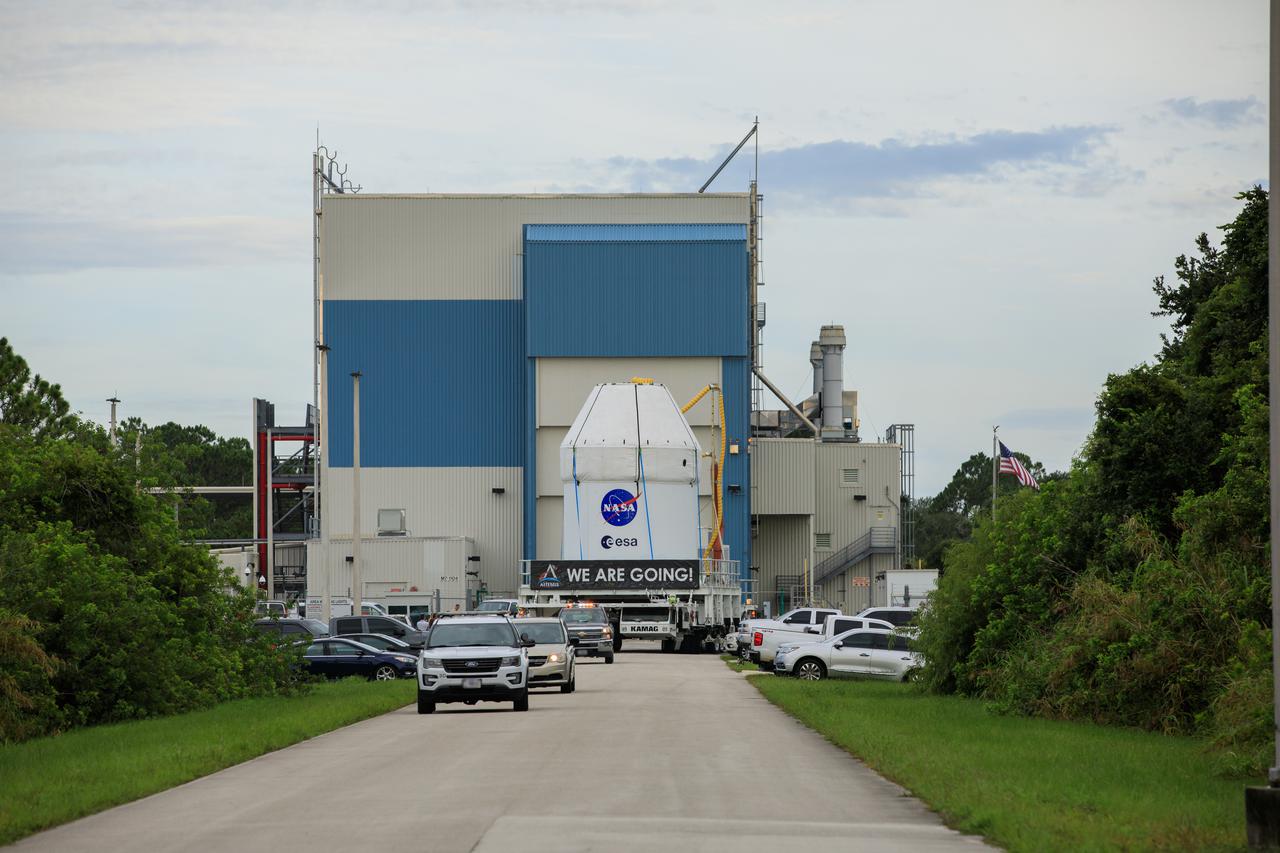
After recently completing fueling and servicing checks, the Orion spacecraft for the Artemis I mission departs Kennedy Space Center’s Multi-Payload Processing on July 10, 2021. The capsule is being transported to the Florida spaceport’s Launch Abort System Facility, where teams with Exploration Ground Systems and contractor Jacobs will integrate components of the launch abort system onto the spacecraft. Launching later this year, Artemis I will be a test of the Orion spacecraft and SLS rocket as an integrated system ahead of crewed flights to the Moon.
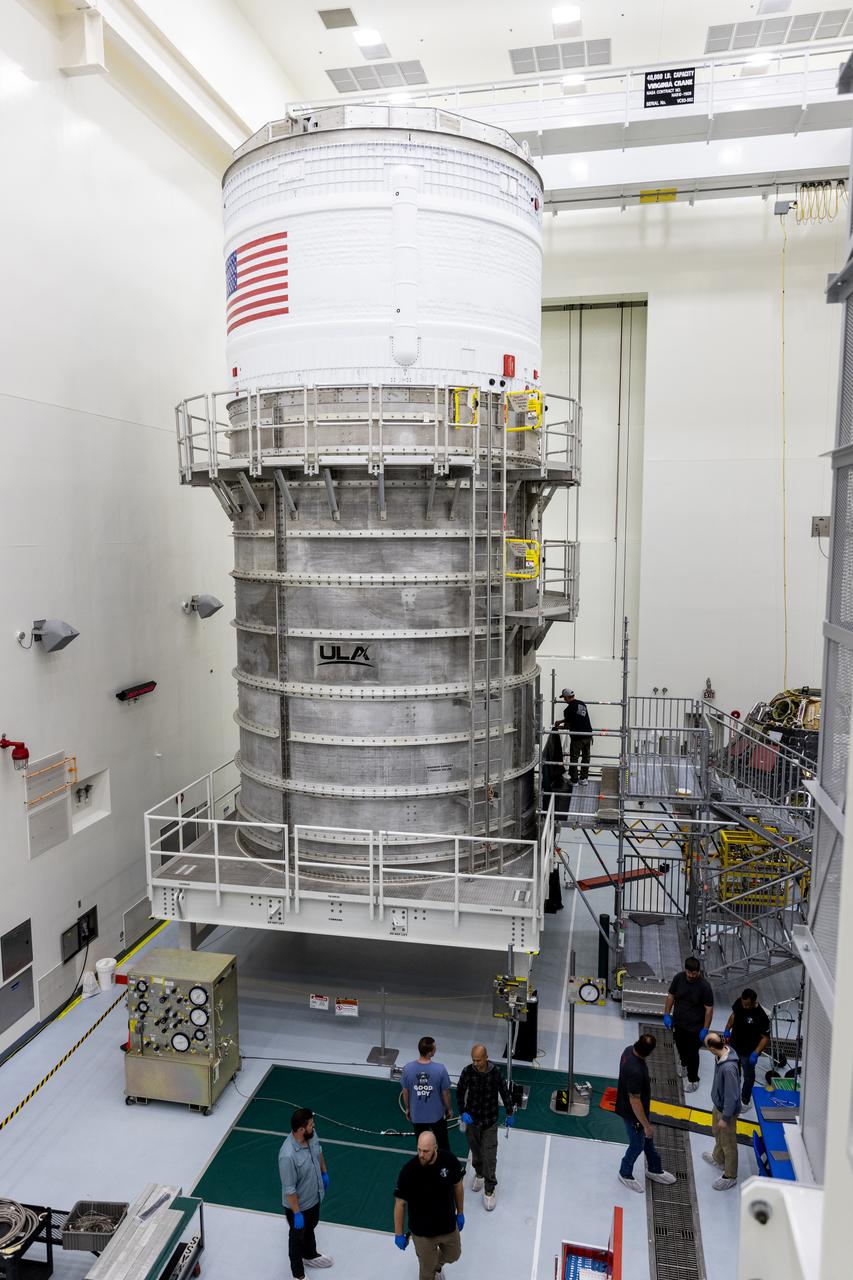
The upper stage for NASA’s SLS (Space Launch System) Moon rocket that will power the agency’s Artemis II mission and send astronauts around the Moon is shown inside the Multi-Payload Processing Facility at NASA’s Kennedy Space Center in Florida on Monday, March 10, 2025, after being transported from United Launch Alliance’s Delta Operations Center at nearby Cape Canaveral Space Force Station. The interim cryogenic propulsion stage is a liquid oxygen and liquid hydrogen-based system that will fire its RL10 engine to give the Orion spacecraft the big in-space push needed to fly around the Moon and back.
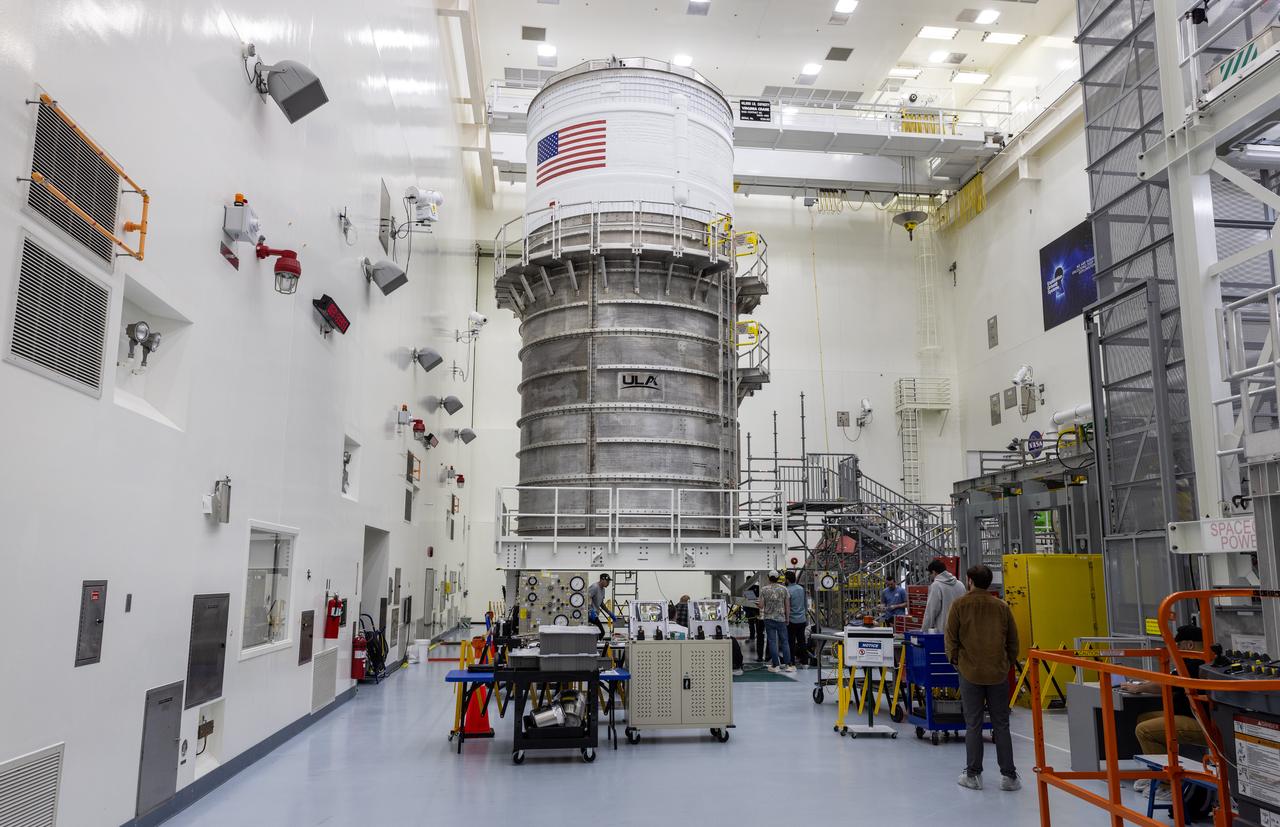
The upper stage for NASA’s SLS (Space Launch System) Moon rocket that will power the agency’s Artemis II mission and send astronauts around the Moon is shown inside the Multi-Payload Processing Facility at NASA’s Kennedy Space Center in Florida on Monday, March 10, 2025, after being transported from United Launch Alliance’s Delta Operations Center at nearby Cape Canaveral Space Force Station. The interim cryogenic propulsion stage is a liquid oxygen and liquid hydrogen-based system that will fire its RL10 engine to give the Orion spacecraft the big in-space push needed to fly around the Moon and back.
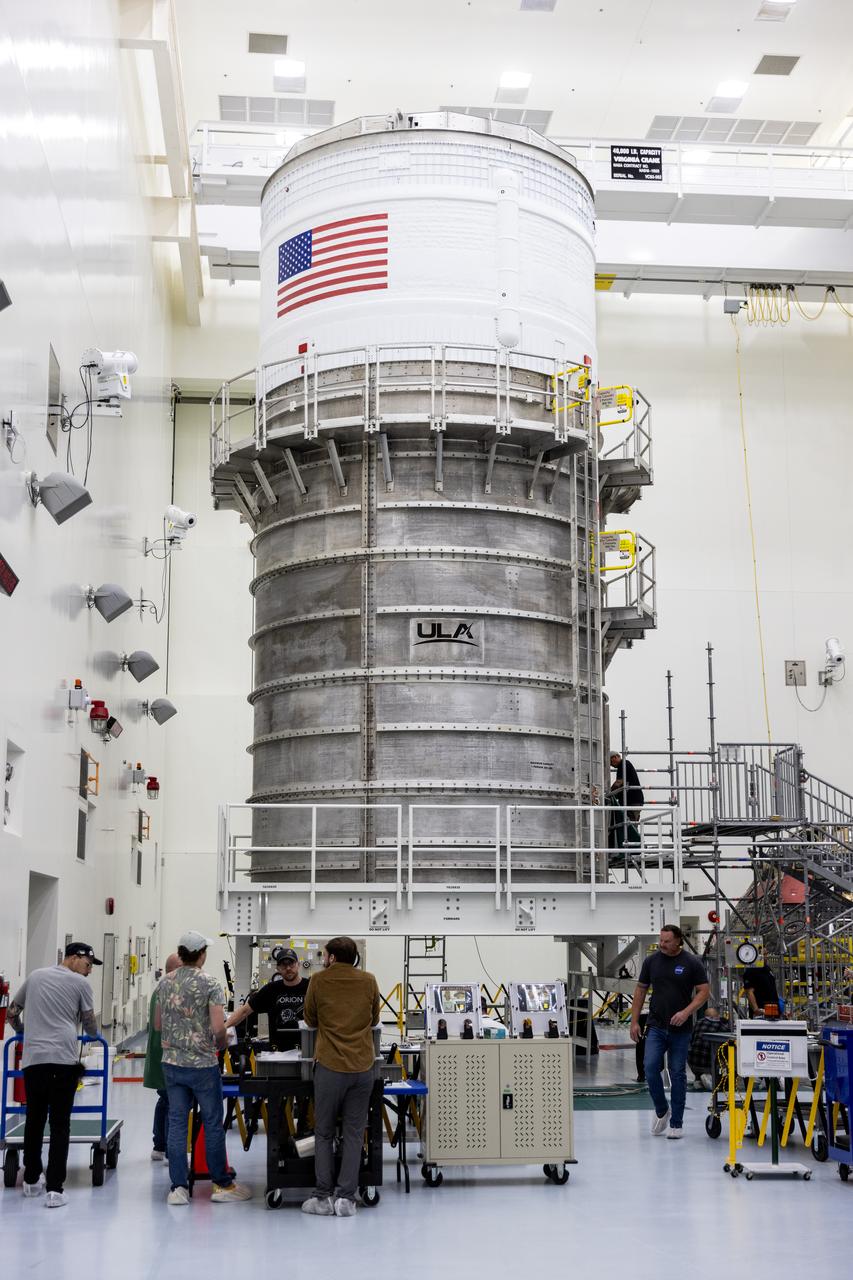
The upper stage for NASA’s SLS (Space Launch System) Moon rocket that will power the agency’s Artemis II mission and send astronauts around the Moon is shown inside the Multi-Payload Processing Facility at NASA’s Kennedy Space Center in Florida on Monday, March 10, 2025, after being transported from United Launch Alliance’s Delta Operations Center at nearby Cape Canaveral Space Force Station. The interim cryogenic propulsion stage is a liquid oxygen and liquid hydrogen-based system that will fire its RL10 engine to give the Orion spacecraft the big in-space push needed to fly around the Moon and back.
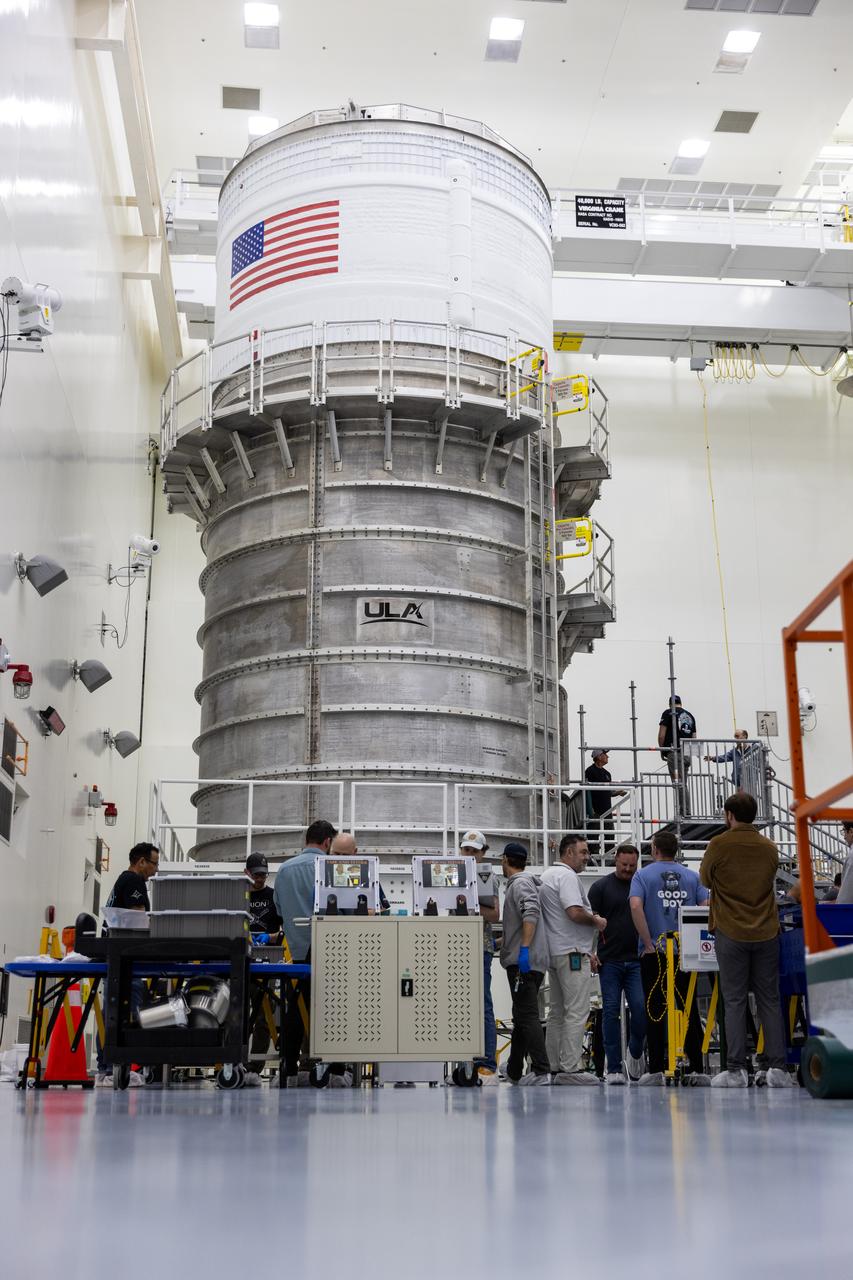
The upper stage for NASA’s SLS (Space Launch System) Moon rocket that will power the agency’s Artemis II mission and send astronauts around the Moon is shown inside the Multi-Payload Processing Facility at NASA’s Kennedy Space Center in Florida on Monday, March 10, 2025, after being transported from United Launch Alliance’s Delta Operations Center at nearby Cape Canaveral Space Force Station. The interim cryogenic propulsion stage is a liquid oxygen and liquid hydrogen-based system that will fire its RL10 engine to give the Orion spacecraft the big in-space push needed to fly around the Moon and back.
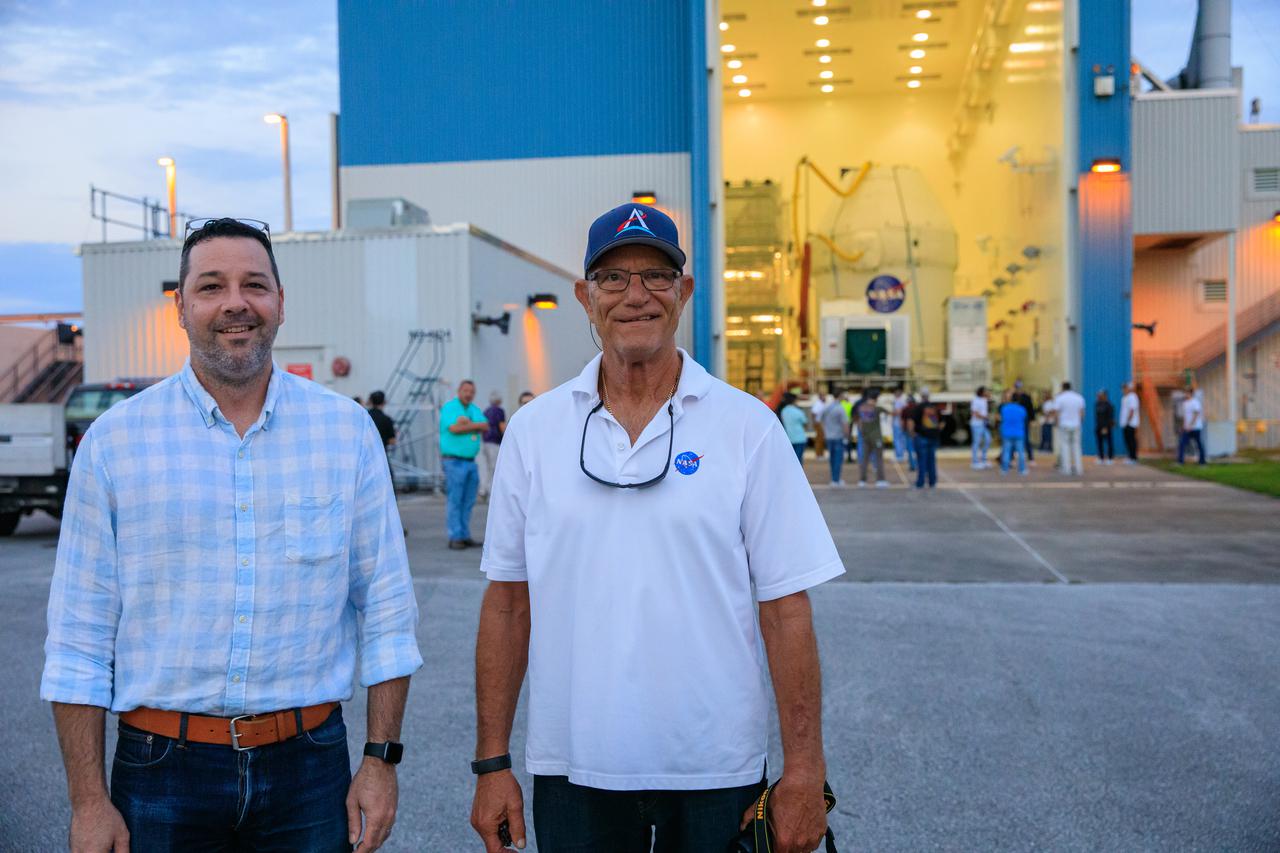
Mike Collins, NASA Operations manager for Spacecraft Offline Operations, left, and Skip Williams, operations manager for the Multi-Payload Processing Facility (MPPF) spacecraft offline element integration team, stand in front of the Orion spacecraft for the Artemis I mission, as the capsule moves out from Kennedy Space Center’s MFFP on July 10, 2021. Orion is being transported to the Florida spaceport’s Launch Abort System Facility, where teams with Exploration Ground Systems and contractor Jacobs will integrate components of the launch abort system onto the spacecraft. Launching later this year, Artemis I will be a test of the Orion spacecraft and SLS rocket as an integrated system ahead of crewed flights to the Moon.
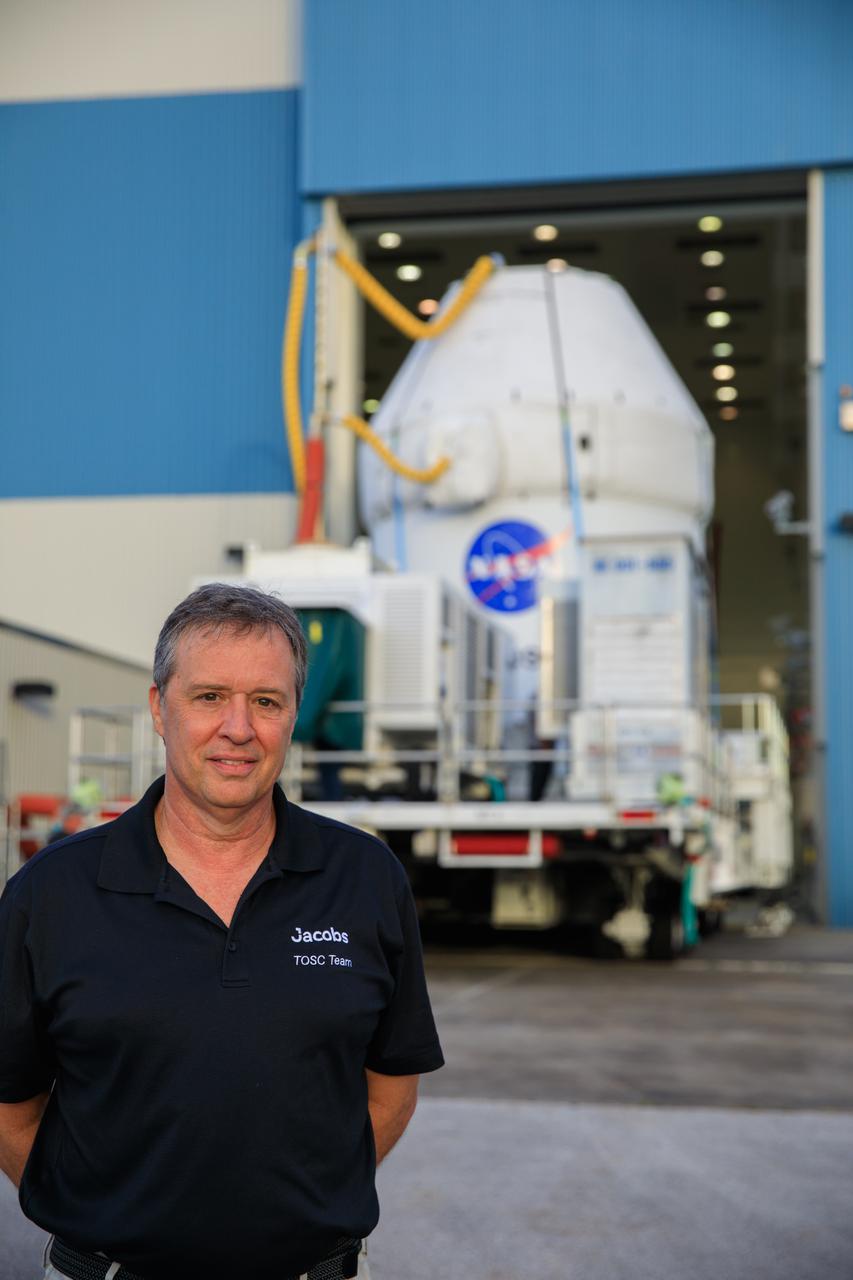
Nick Kindred, Jacobs flow manager, stands in front of the Orion spacecraft for the Artemis I mission, as the capsule moves out from Kennedy Space Center’s Multi-Payload Processing Facility on July 10, 2021. Orion is being transported to the Florida spaceport’s Launch Abort System Facility, where teams with Exploration Ground Systems and contractor Jacobs will integrate components of the launch abort system onto the spacecraft. Launching later this year, Artemis I will be a test of the Orion spacecraft and SLS rocket as an integrated system ahead of crewed flights to the Moon.
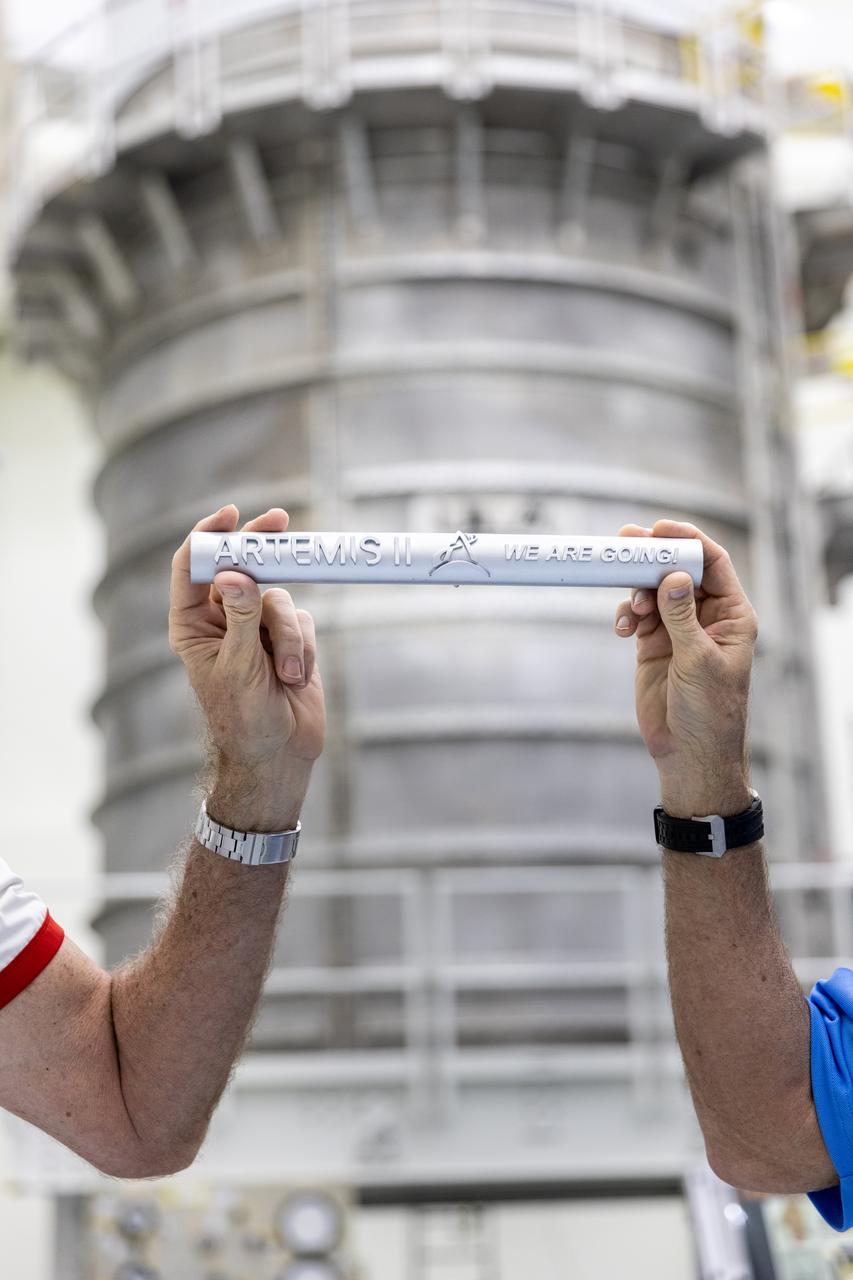
Managers from NASA’s Exploration Ground Systems (EGS) and SLS (Space Launch System) Programs hold a baton signifying the hand off of the SLS interim cryogenic propulsion stage to Kennedy’s EGS Program inside the Multi-Payload Processing Facility at NASA’s Kennedy Space Center in Florida on Monday, March 10, 2025, after being transported from United Launch Alliance’s Delta Operations Center at nearby Cape Canaveral Space Force Station. Teams with EGS will begin fueling the upper stage inside the facility ahead of the agency’s Artemis II mission. The interim cryogenic propulsion stage is a liquid oxygen and liquid hydrogen-based system that will fire its RL10 engine to give the Orion spacecraft the big in-space push needed to fly around the Moon and back.
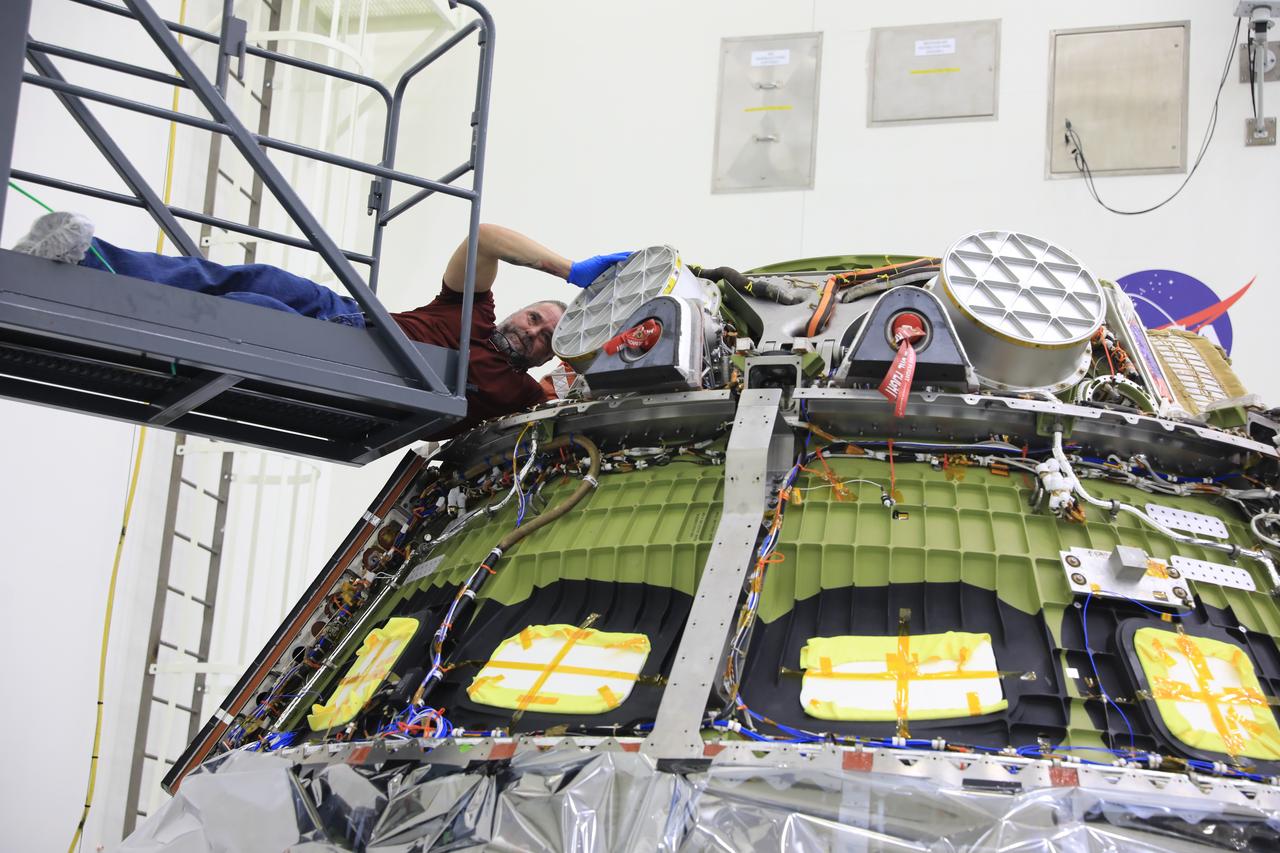
The Artemis I Orion crew module, now known as the Orion Environmental Test Article (ETA), arrives to NASA’s Kennedy Space Center in Florida on Saturday, Dec. 21, 2024, following an 11-month test campaign at NASA’s Neil Armstrong Test Facility in Sandusky, Ohio. The ETA will undergo propulsion functional testing at Kennedy’s Multi Payload Processing Facility. The ETA splashed down in the Pacific Ocean on Sunday, Dec. 11, 2022, following its journey around the Moon during the Artemis I mission.
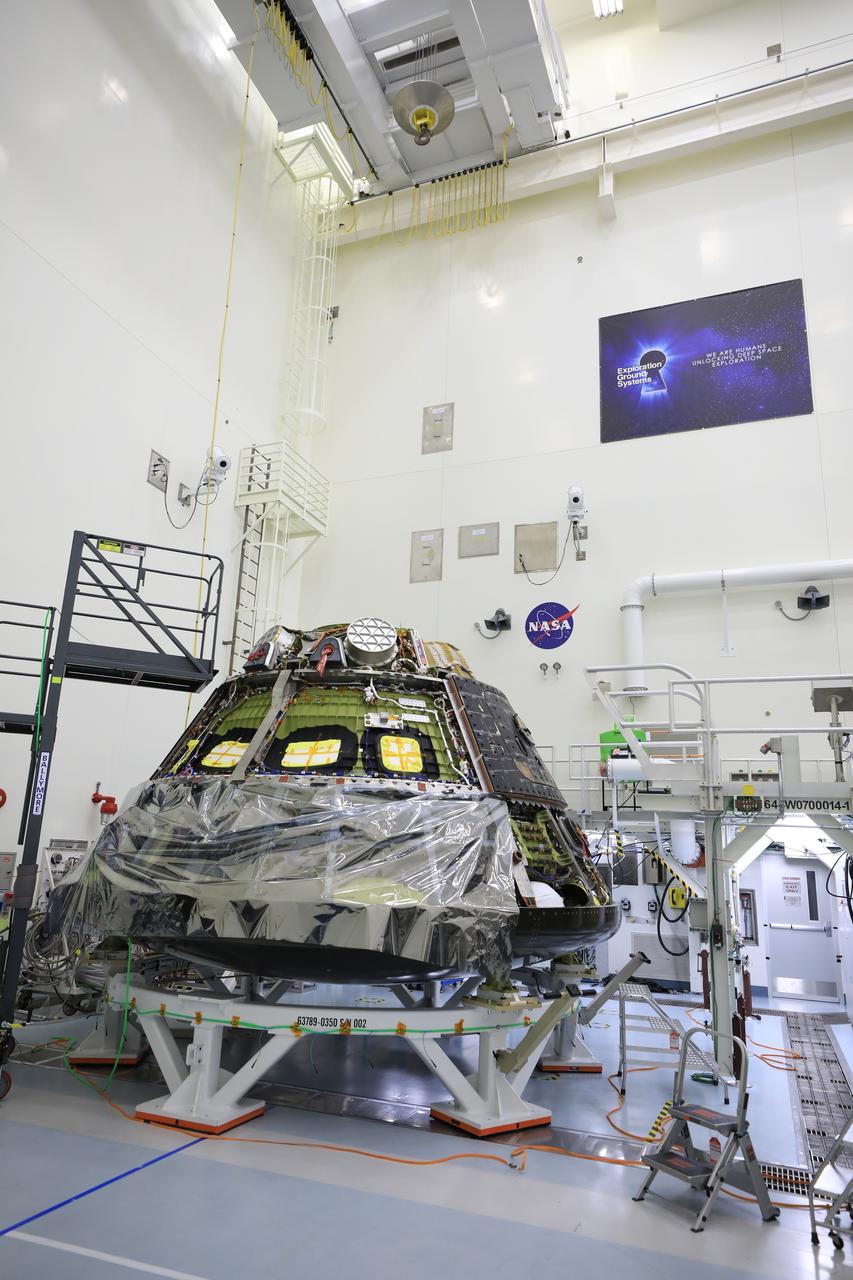
The Artemis I Orion crew module, now known as the Orion Environmental Test Article (ETA), arrives to NASA’s Kennedy Space Center in Florida on Saturday, Dec. 21, 2024, following an 11-month test campaign at NASA’s Neil Armstrong Test Facility in Sandusky, Ohio. The ETA will undergo propulsion functional testing at Kennedy’s Multi Payload Processing Facility. The ETA splashed down in the Pacific Ocean on Sunday, Dec. 11, 2022, following its journey around the Moon during the Artemis I mission.
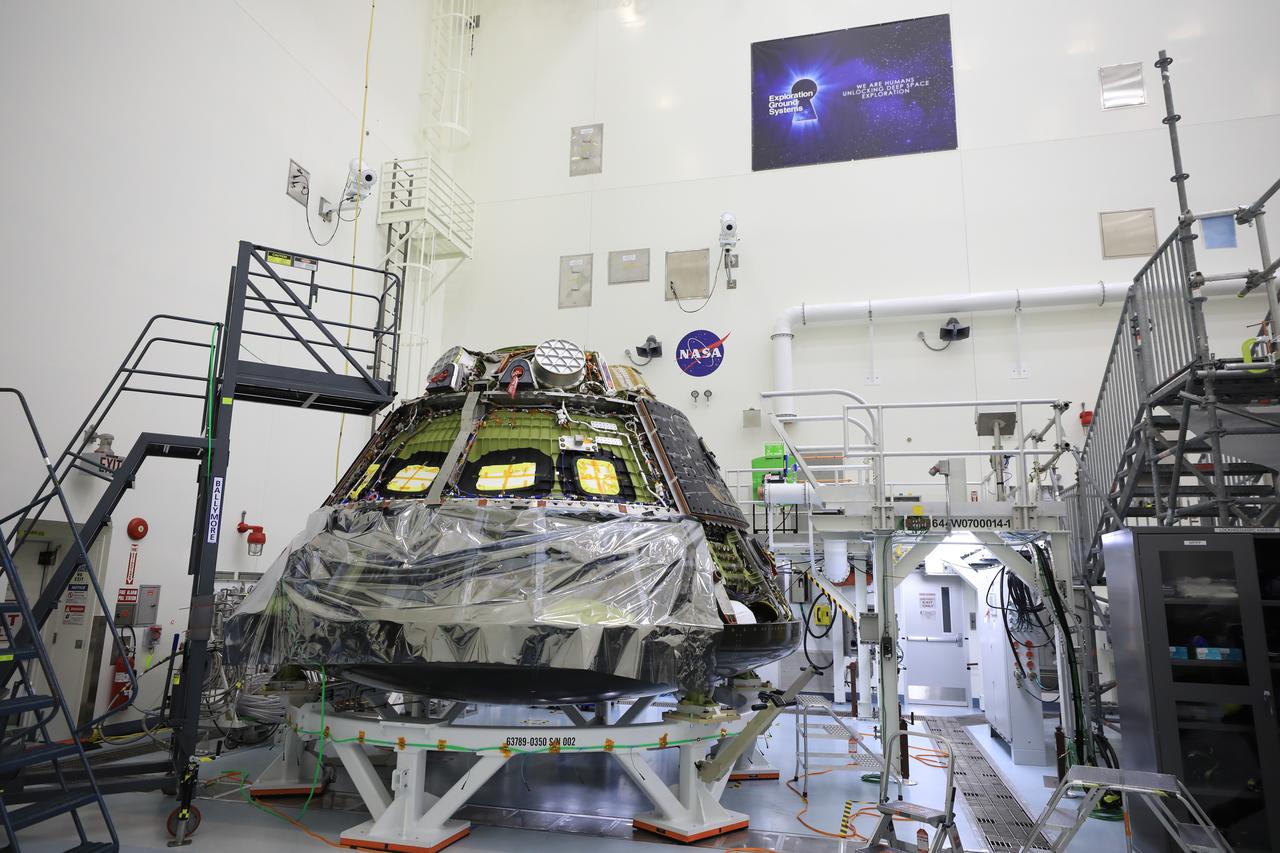
The Artemis I Orion crew module, now known as the Orion Environmental Test Article (ETA), arrives to NASA’s Kennedy Space Center in Florida on Saturday, Dec. 21, 2024, following an 11-month test campaign at NASA’s Neil Armstrong Test Facility in Sandusky, Ohio. The ETA will undergo propulsion functional testing at Kennedy’s Multi Payload Processing Facility. The ETA splashed down in the Pacific Ocean on Sunday, Dec. 11, 2022, following its journey around the Moon during the Artemis I mission.

In the Multi-Payload Processing Facility, workers check the deployment of the cover of the telescope on NASA Galaxy Evolution Explorer, an orbiting space telescope observing galaxies in ultraviolet light across 10 billion years of cosmic history.
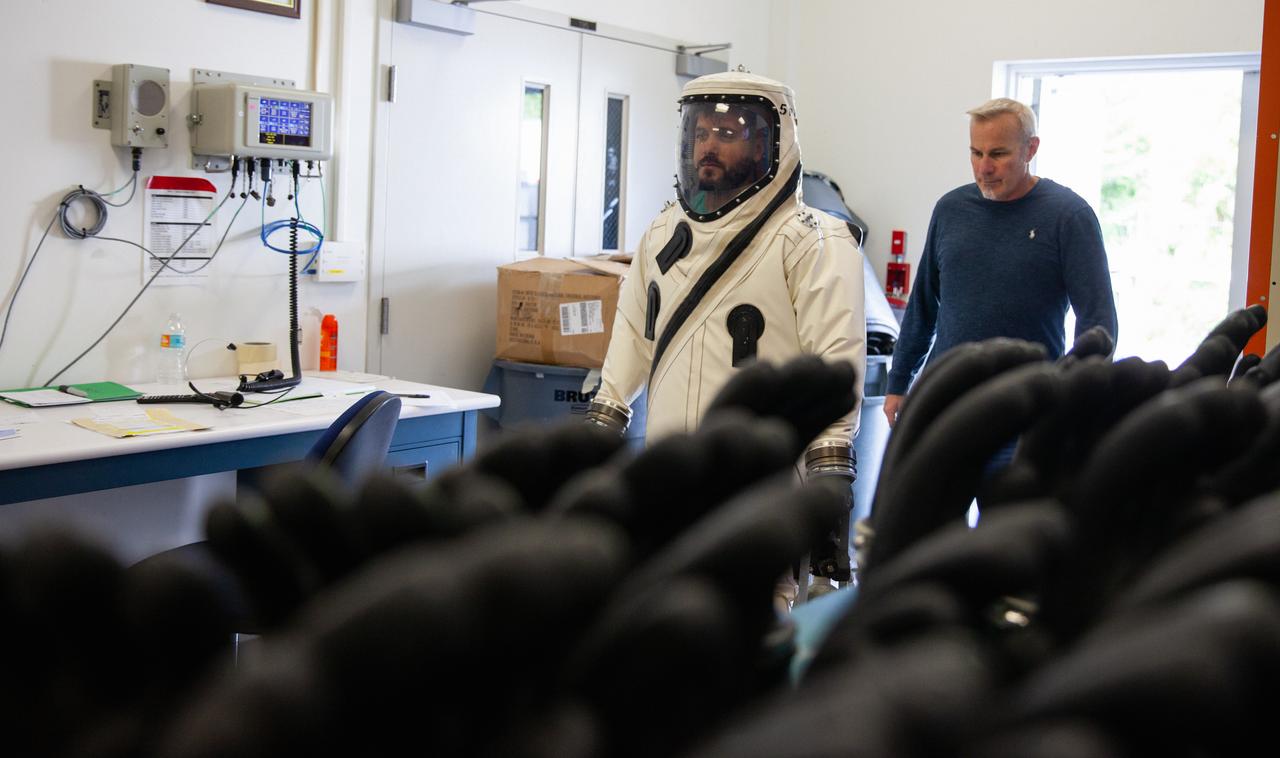
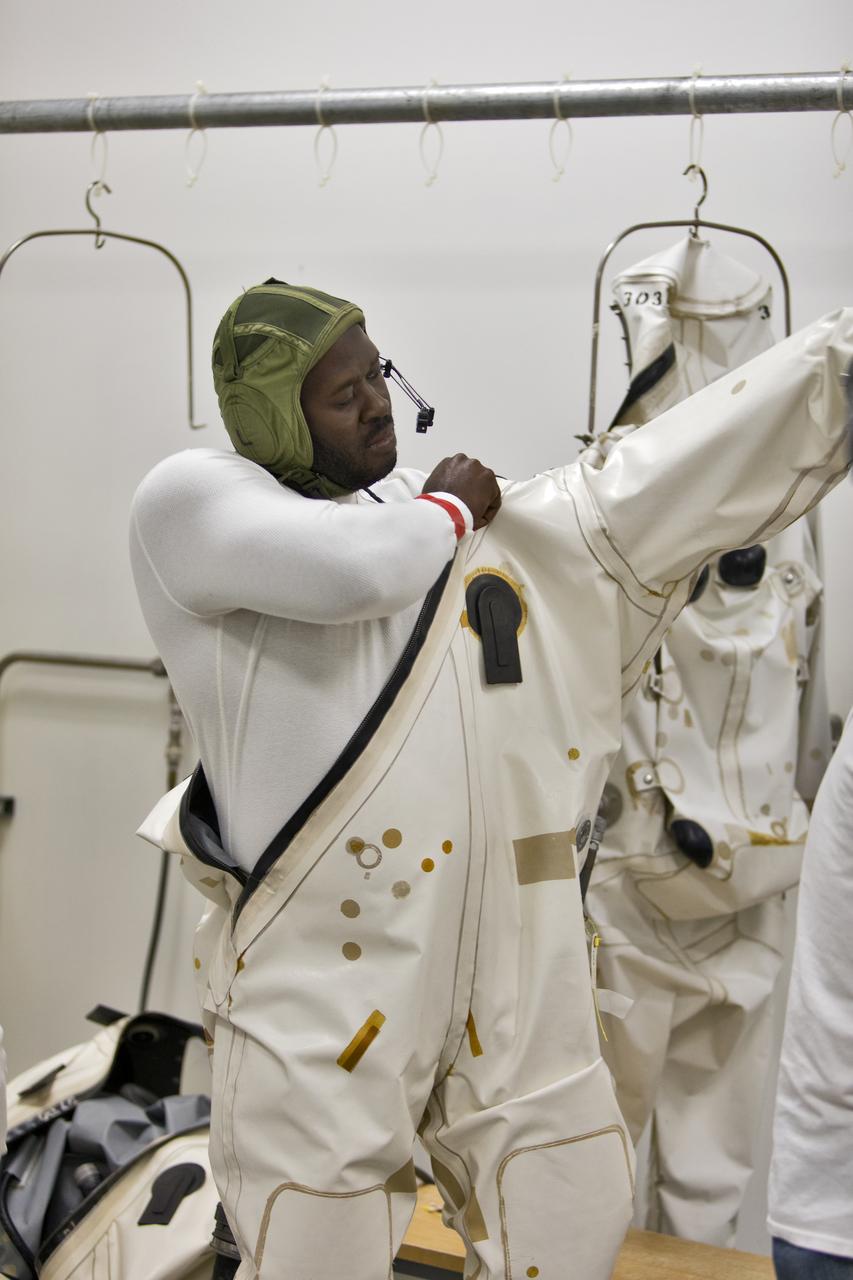
Inside the Multi-Operations Support Building near the Multi-Payload Processing Facility (MPPF) at NASA’s Kennedy Space Center in Florida, a technician is wearing a Self-Contained Atmospheric Protective Ensemble (SCAPE) suit to prepare for a test simulation of loading propellants into a replicated test tank for Orion, on Aug. 16, 2019. Exploration Ground Systems is preparing for Artemis 1 with a series of hazardous hyper test events at the MPPF. After donning their suits, the technicians will complete a tanking to test the system before Orion arrives for processing. During preparations for launch, these teams will be responsible for loading the Orion vehicle with propellants prior to transportation to the Vehicle Assembly Building, where it will be secured atop the Space Launch System rocket. SCAPE suits are used in operations involving toxic propellants and are supplied with air either through a hardline or through a self-contained environmental control unit.
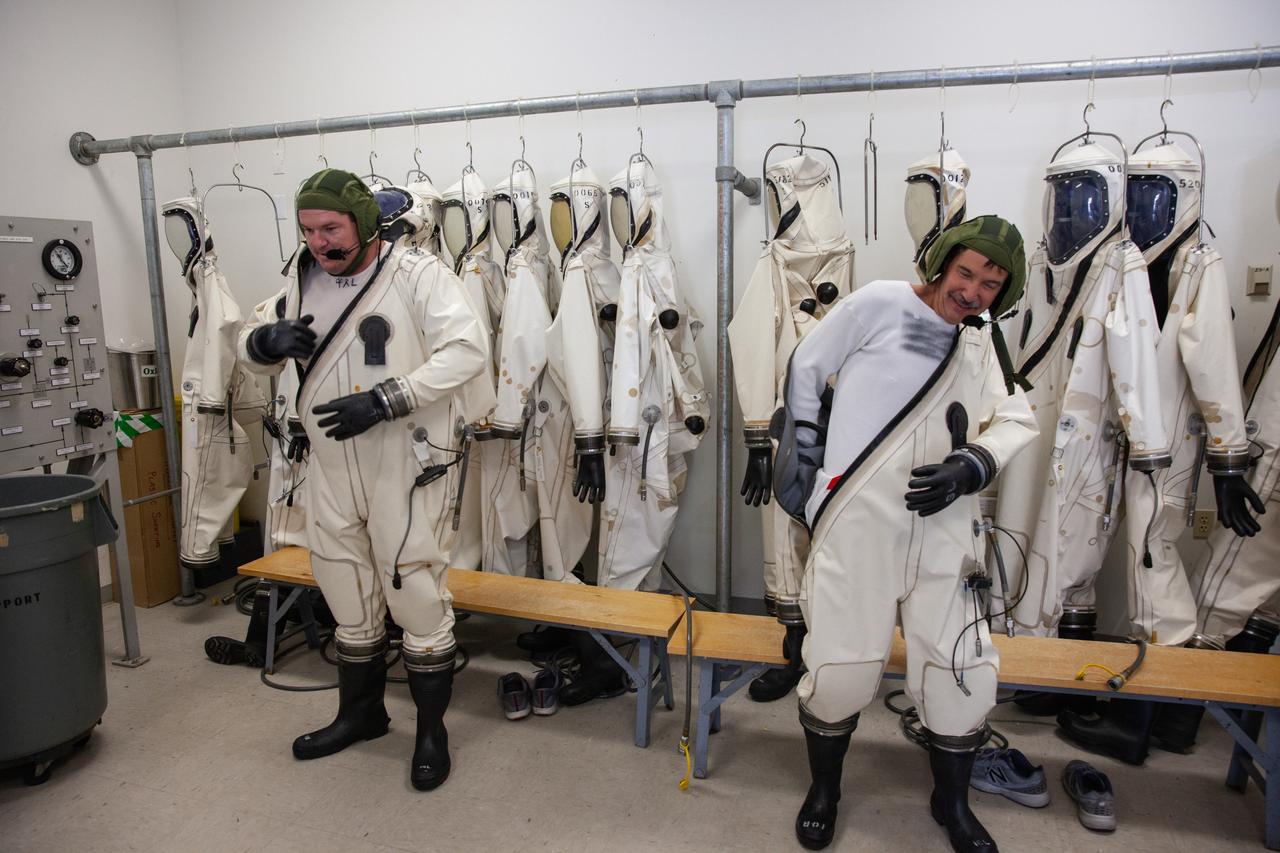
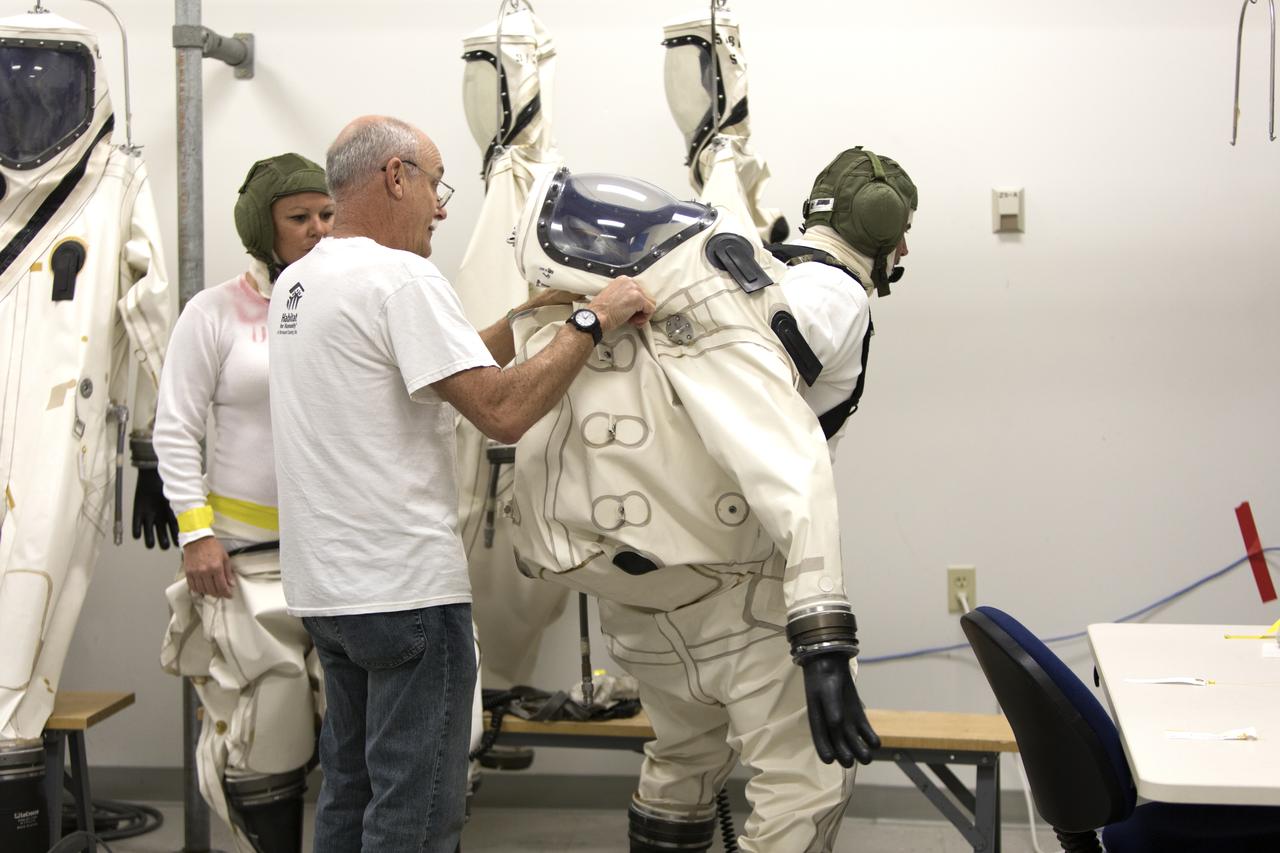
Inside the Multi-Operations Support Building near the Multi-Payload Processing Facility (MPPF) at NASA’s Kennedy Space Center in Florida, technicians put on Self-Contained Atmospheric Protective Ensemble (SCAPE) suits inside a changing room on Aug. 16, 2019. SCAPE technicians are practicing putting on the suits for a test simulation of loading propellants into a replicated test tank for Orion. Exploration Ground Systems is preparing for Artemis 1 with a series of hazardous hyper test events at the MPPF. After donning their suits, the technicians will complete a tanking to test the system before Orion arrives for processing. During preparations for launch, these teams will be responsible for loading the Orion vehicle with propellants prior to transportation to the Vehicle Assembly Building, where it will be secured atop the Space Launch System rocket. SCAPE suits are used in operations involving toxic propellants and are supplied with air either through a hardline or through a self-contained environmental control unit.
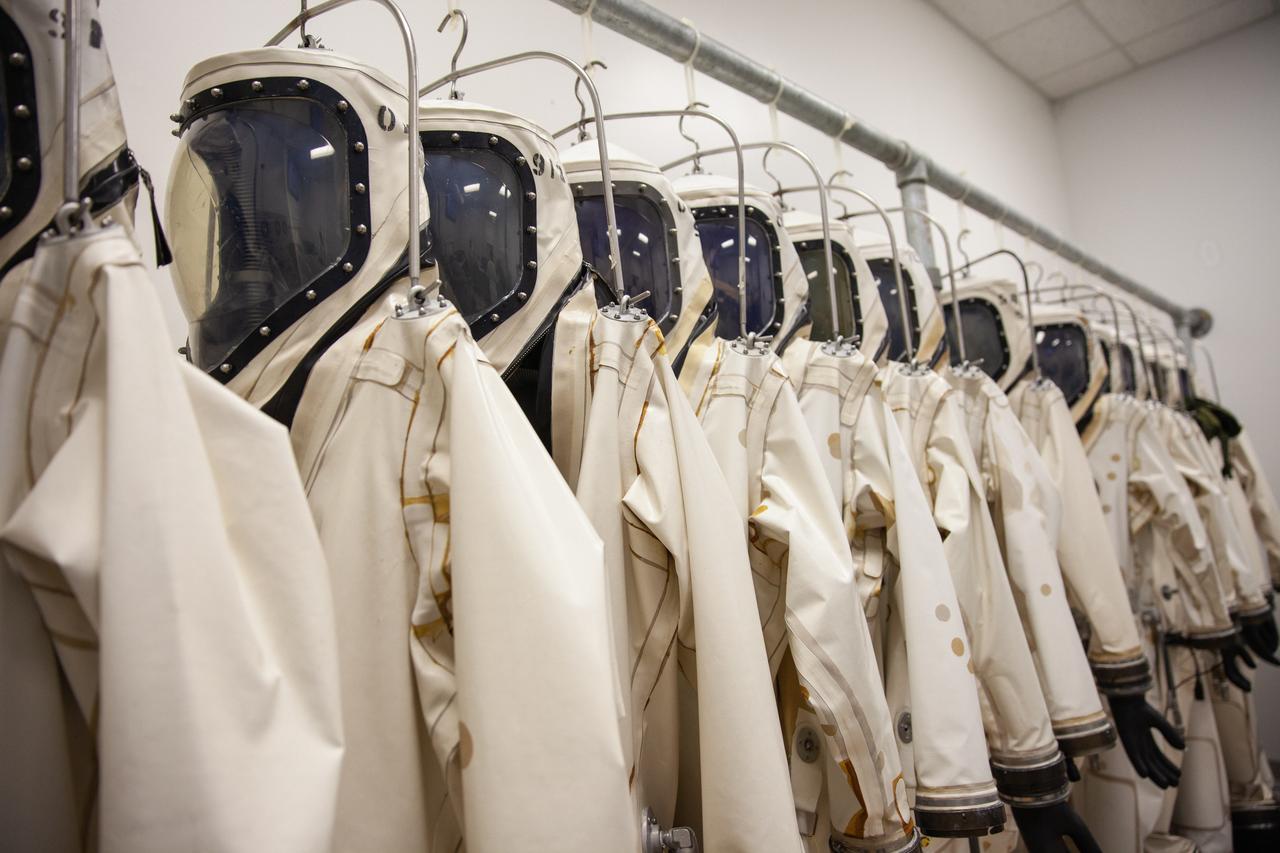
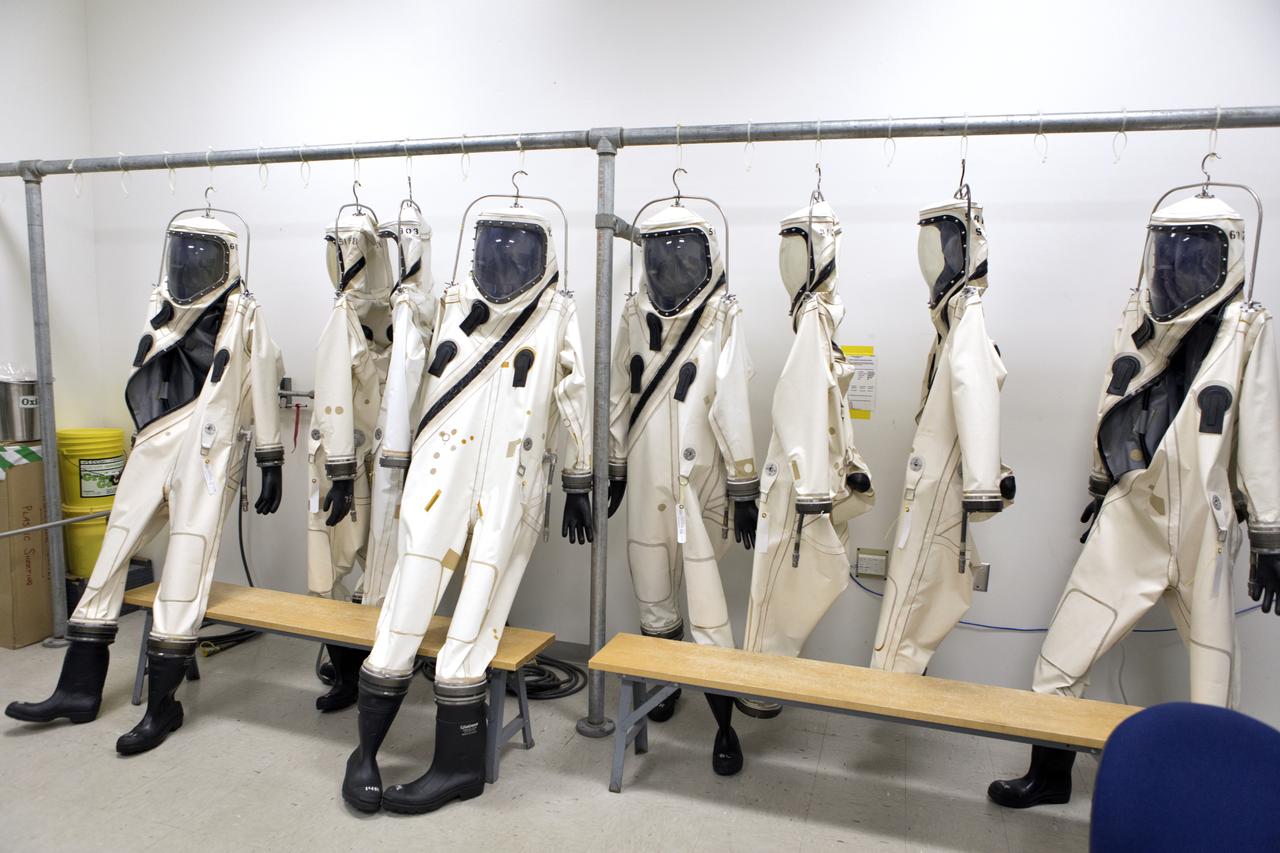
Inside the Multi-Operations Support Building near the Multi-Payload Processing Facility (MPPF) at NASA’s Kennedy Space Center in Florida on Aug. 16, 2019, a row of Self-Contained Atmospheric Protective Ensemble (SCAPE) suits are hanging inside a changing room. SCAPE technicians are practicing putting on the suits for a test simulation of loading propellants into a replicated test tank for Orion. Exploration Ground Systems is preparing for Artemis 1 with a series of hazardous hyper test events at the MPPF. After donning their suits, the technicians will complete a tanking to test the system before Orion arrives for processing. During preparations for launch, these teams will be responsible for loading the Orion vehicle with propellants prior to transportation to the Vehicle Assembly Building, where it will be secured atop the Space Launch System rocket. SCAPE suits are used in operations involving toxic propellants and are supplied with air either through a hardline or through a self-contained environmental control unit.

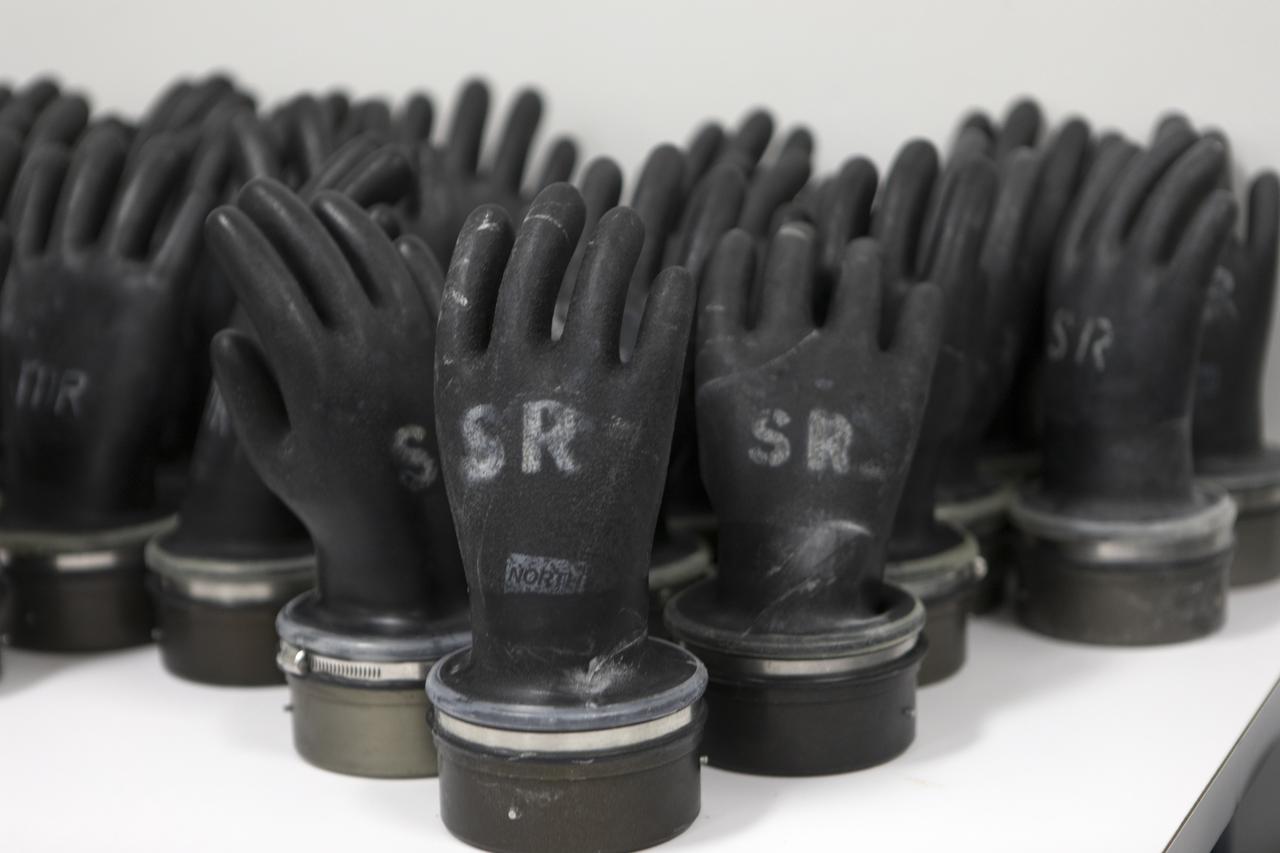
Inside the Multi-Operations Support Building near the Multi-Payload Processing Facility (MPPF) at NASA’s Kennedy Space Center in Florida on Aug. 16, 2019, rows of gloves that are part of Self-Contained Atmospheric Protective Ensemble (SCAPE) suits are in view inside a changing room. SCAPE technicians will practice putting on SCAPE suits for a test simulation of loading propellants into a replicated test tank for Orion. Exploration Ground Systems is preparing for Artemis 1 with a series of hazardous hyper test events at the MPPF. After donning their suits, the technicians will complete a tanking to test the system before Orion arrives for processing. During preparations for launch, these teams will be responsible for loading the Orion vehicle with propellants prior to transportation to the Vehicle Assembly Building, where it will be secured atop the Space Launch System rocket. SCAPE suits are used in operations involving toxic propellants and are supplied with air either through a hardline or through a self-contained environmental control unit.
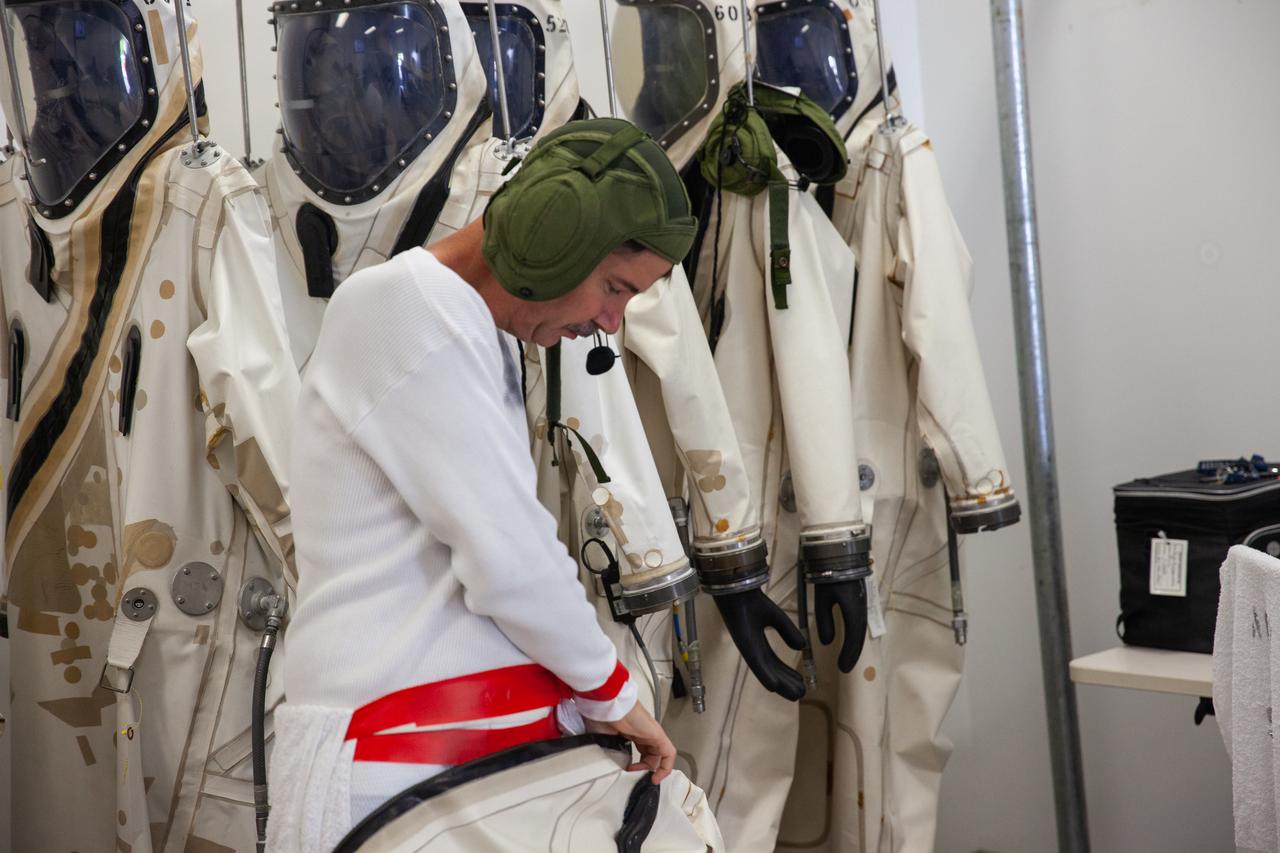
Inside the Multi-Operations Support Building near the Multi-Payload Processing Facility (MPPF) at NASA’s Kennedy Space Center in Florida, a technician prepares to put on a Self-Contained Atmospheric Protective Ensemble (SCAPE) suit inside a changing room on Aug. 16, 2019. SCAPE technicians are practicing putting on the suits for a test simulation of loading propellants into a replicated test tank for Orion. Exploration Ground Systems is preparing for Artemis 1 with a series of hazardous hyper test events at the MPPF. After donning their suits, the technicians will complete a tanking to test the system before Orion arrives for processing. During preparations for launch, these teams will be responsible for loading the Orion vehicle with propellants prior to transportation to the Vehicle Assembly Building, where it will be secured atop the Space Launch System rocket. SCAPE suits are used in operations involving toxic propellants and are supplied with air either through a hardline or through a self-contained environmental control unit.
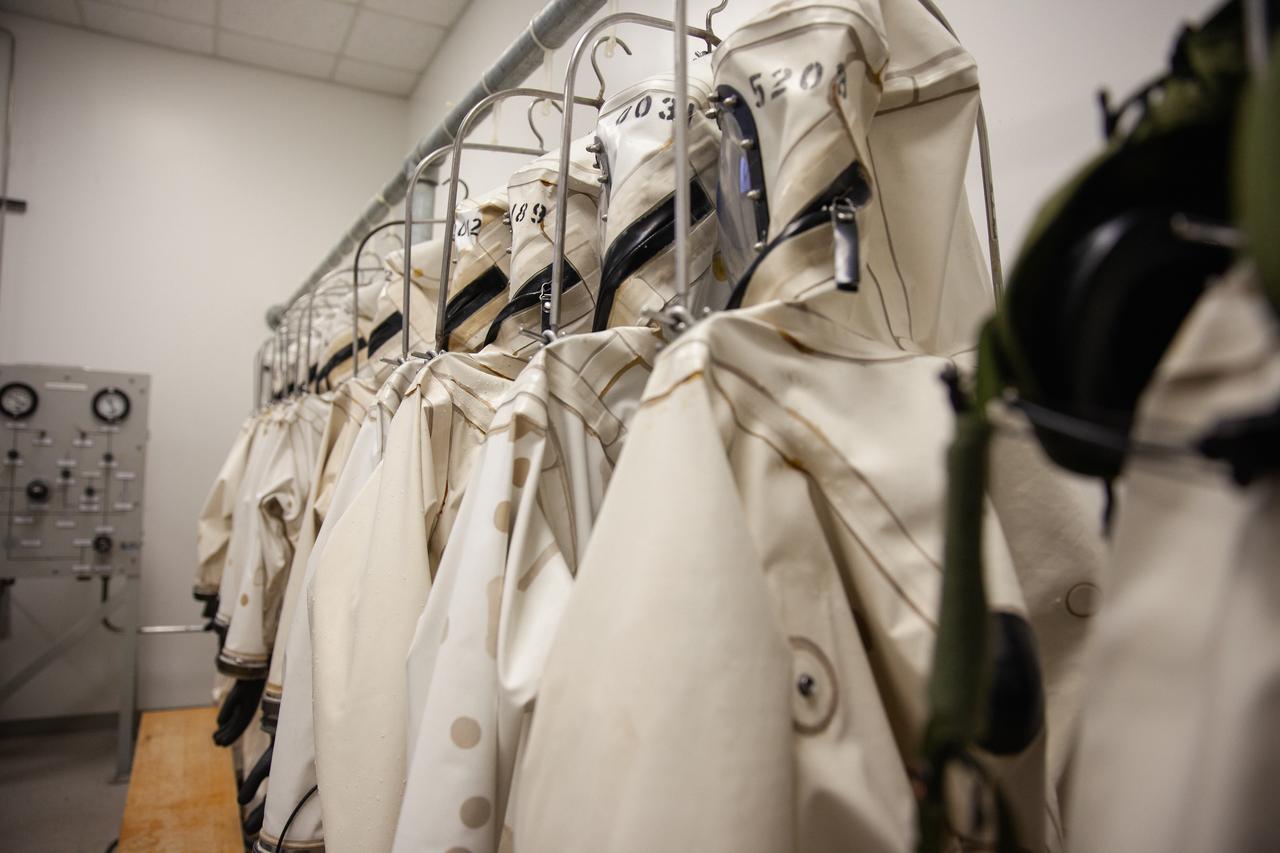
Inside the Multi-Operations Support Building near the Multi-Payload Processing Facility (MPPF) at NASA’s Kennedy Space Center in Florida on Aug. 16, 2019, a row of Self-Contained Atmospheric Protective Ensemble (SCAPE) suits are hanging inside a changing room. SCAPE technicians are practicing putting on their suits for a test simulation of loading propellants into a replicated test tank for Orion. Exploration Ground Systems is preparing for Artemis 1 with a series of hazardous hyper test events at the MPPF. After donning their suits, the technicians will complete a tanking to test the system before Orion arrives for processing. During preparations for launch, these teams will be responsible for loading the Orion vehicle with propellants prior to transportation to the Vehicle Assembly Building, where it will be secured atop the Space Launch System rocket. SCAPE suits are used in operations involving toxic propellants and are supplied with air either through a hardline or through a self-contained environmental control unit.
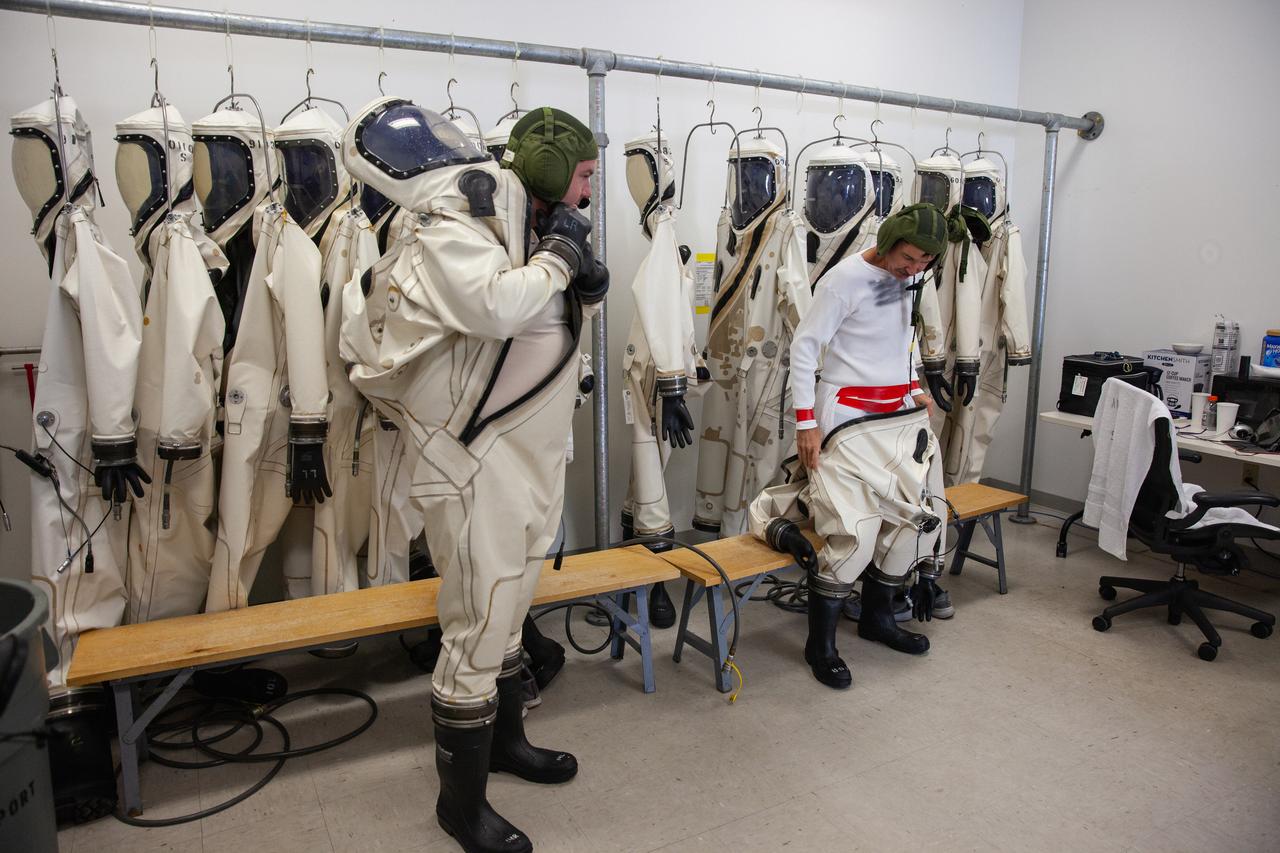
Inside the Multi-Operations Support Building near the Multi-Payload Processing Facility (MPPF) at NASA’s Kennedy Space Center in Florida, technicians put on Self-Contained Atmospheric Protective Ensemble (SCAPE) suits inside a changing room on Aug. 16, 2019. SCAPE technicians are practicing putting on the suits for a test simulation of loading propellants into a replicated test tank for Orion. Exploration Ground Systems is preparing for Artemis 1 with a series of hazardous hyper test events at the MPPF. After donning their suits, the technicians will complete a tanking to test the system before Orion arrives for processing. During preparations for launch, these teams will be responsible for loading the Orion vehicle with propellants prior to transportation to the Vehicle Assembly Building, where it will be secured atop the Space Launch System rocket. SCAPE suits are used in operations involving toxic propellants and are supplied with air either through a hardline or through a self-contained environmental control unit.
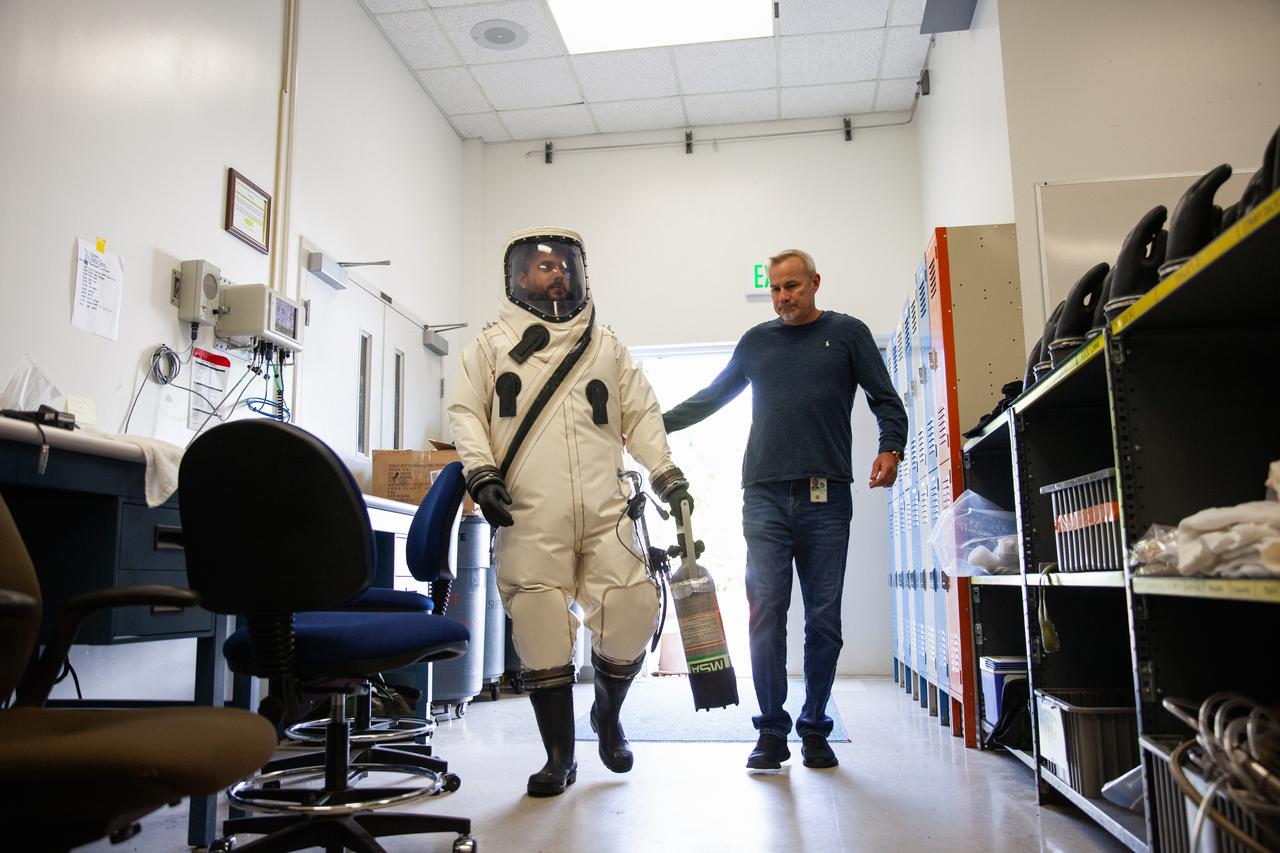
Inside the Multi-Operations Support Building near the Multi-Payload Processing Facility (MPPF) at NASA’s Kennedy Space Center in Florida, a technician is wearing a Self-Contained Atmospheric Protective Ensemble (SCAPE) suit to prepare for a test simulation of loading propellants into a replicated test tank for Orion, on Aug. 16, 2019. Exploration Ground Systems is preparing for Artemis 1 with a series of hazardous hyper test events at the MPPF. After donning their suits, the technicians will complete tanking to test the system before Orion arrives for processing. During preparations for launch, these teams will be responsible for loading the Orion vehicle with propellants prior to transportation to the Vehicle Assembly Building, where it will be secured atop the Space Launch System rocket. SCAPE suits are used in operations involving toxic propellants and are supplied with air either through a hardline or through a self-contained environmental control unit.
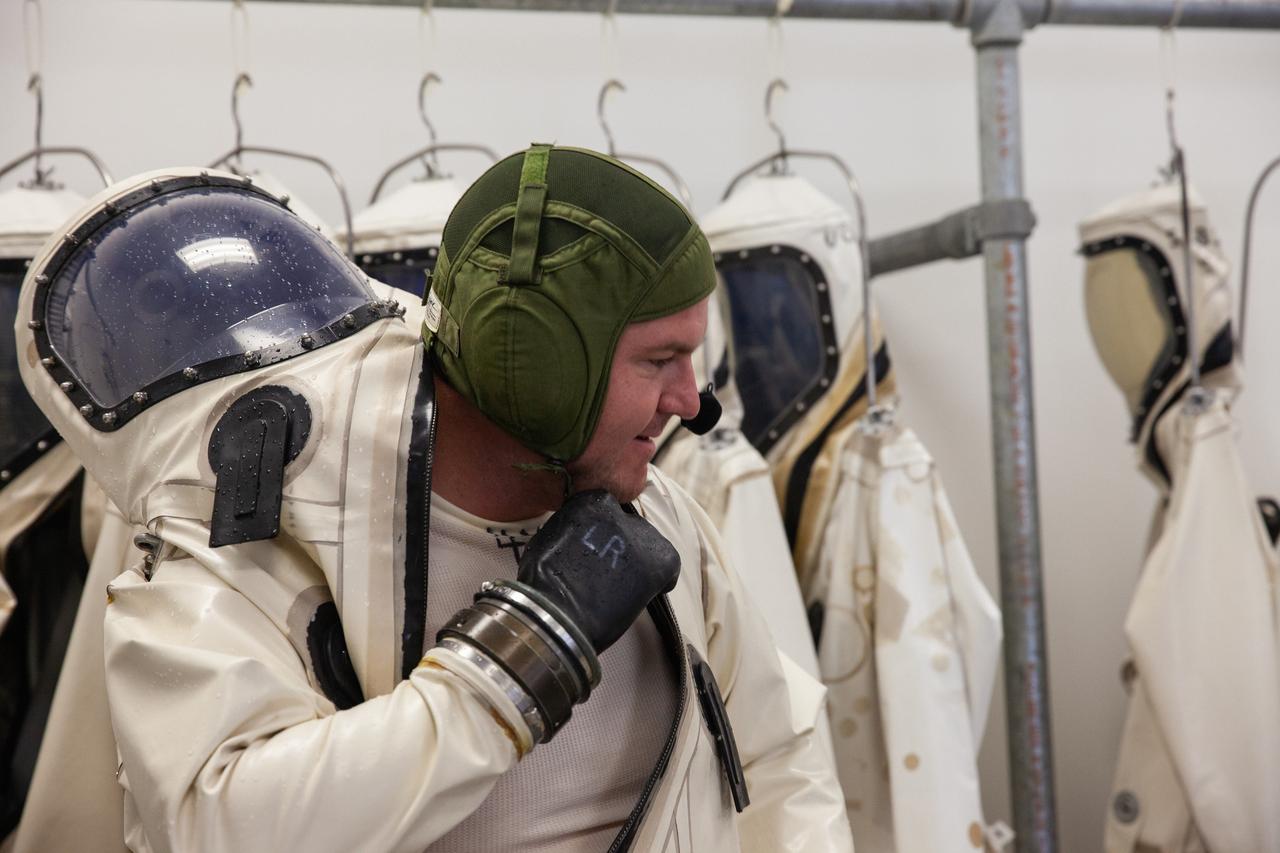
Inside the Multi-Operations Support Building near the Multi-Payload Processing Facility (MPPF) at NASA’s Kennedy Space Center in Florida, a technician puts on a Self-Contained Atmospheric Protective Ensemble (SCAPE) suit inside a changing room on Aug. 16, 2019. SCAPE technicians are practicing putting on the suits for a test simulation of loading propellants into a replicated test tank for Orion. Exploration Ground Systems is preparing for Artemis 1 with a series of hazardous hyper test events at the MPPF. After donning their suits, the technicians will complete a tanking to test the system before Orion arrives for processing. During preparations for launch, these teams will be responsible for loading the Orion vehicle with propellants prior to transportation to the Vehicle Assembly Building, where it will be secured atop the Space Launch System rocket. SCAPE suits are used in operations involving toxic propellants and are supplied with air either through a hardline or through a self-contained environmental control unit.
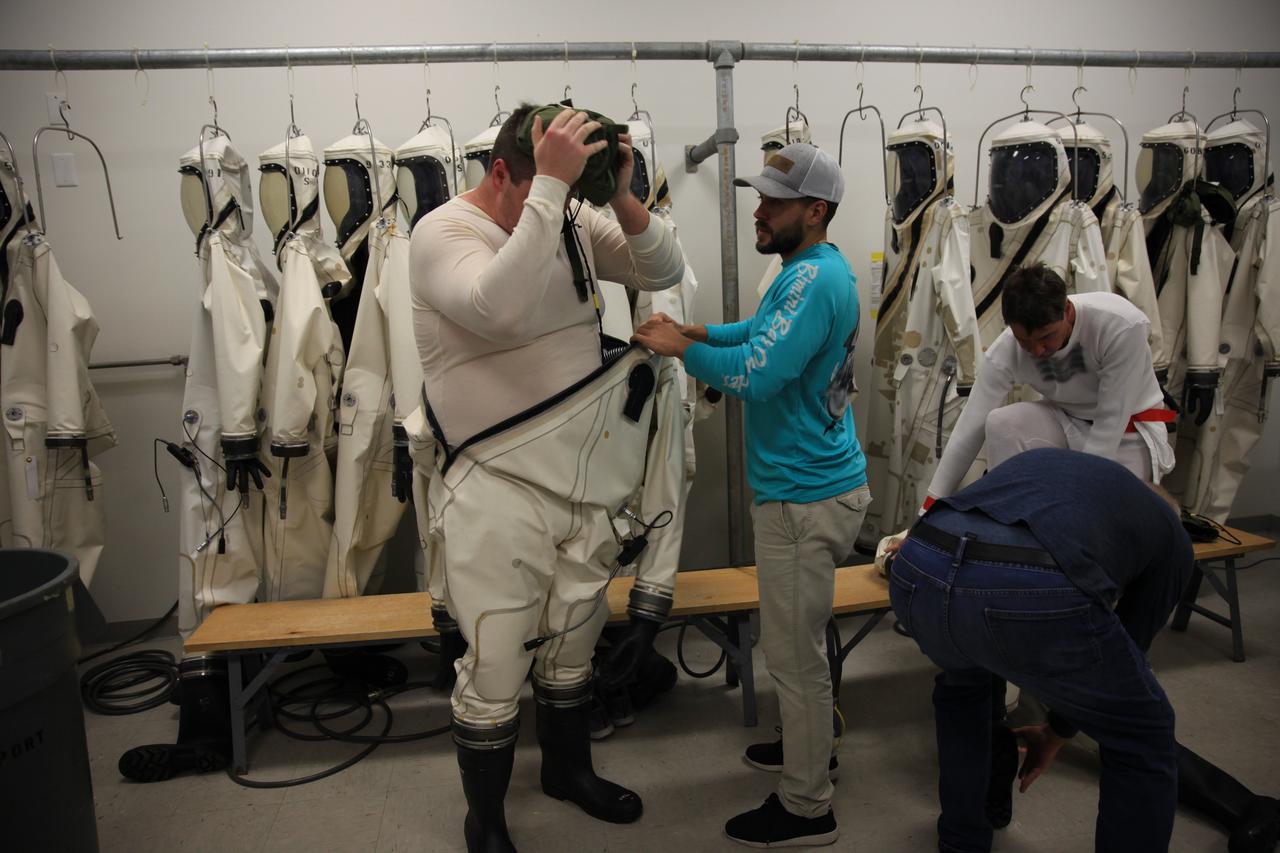
Inside the Multi-Operations Support Building near the Multi-Payload Processing Facility (MPPF) at NASA’s Kennedy Space Center in Florida, technicians put on Self-Contained Atmospheric Protective Ensemble (SCAPE) suits inside a changing room on Aug. 16, 2019. SCAPE technicians are practicing by putting on the suits for a test simulation of loading propellants into a replicated test tank for Orion. Exploration Ground Systems is preparing for Artemis 1 with a series of hazardous hyper test events at the MPPF. After donning their suits, the technicians will complete a tanking to test the system before Orion arrives for processing. During preparations for launch, these teams will be responsible for loading the Orion vehicle with propellants prior to transportation to the Vehicle Assembly Building, where it will be secured atop the Space Launch System rocket. SCAPE suits are used in operations involving toxic propellants and are supplied with air either through a hardline or through a self-contained environmental control unit.
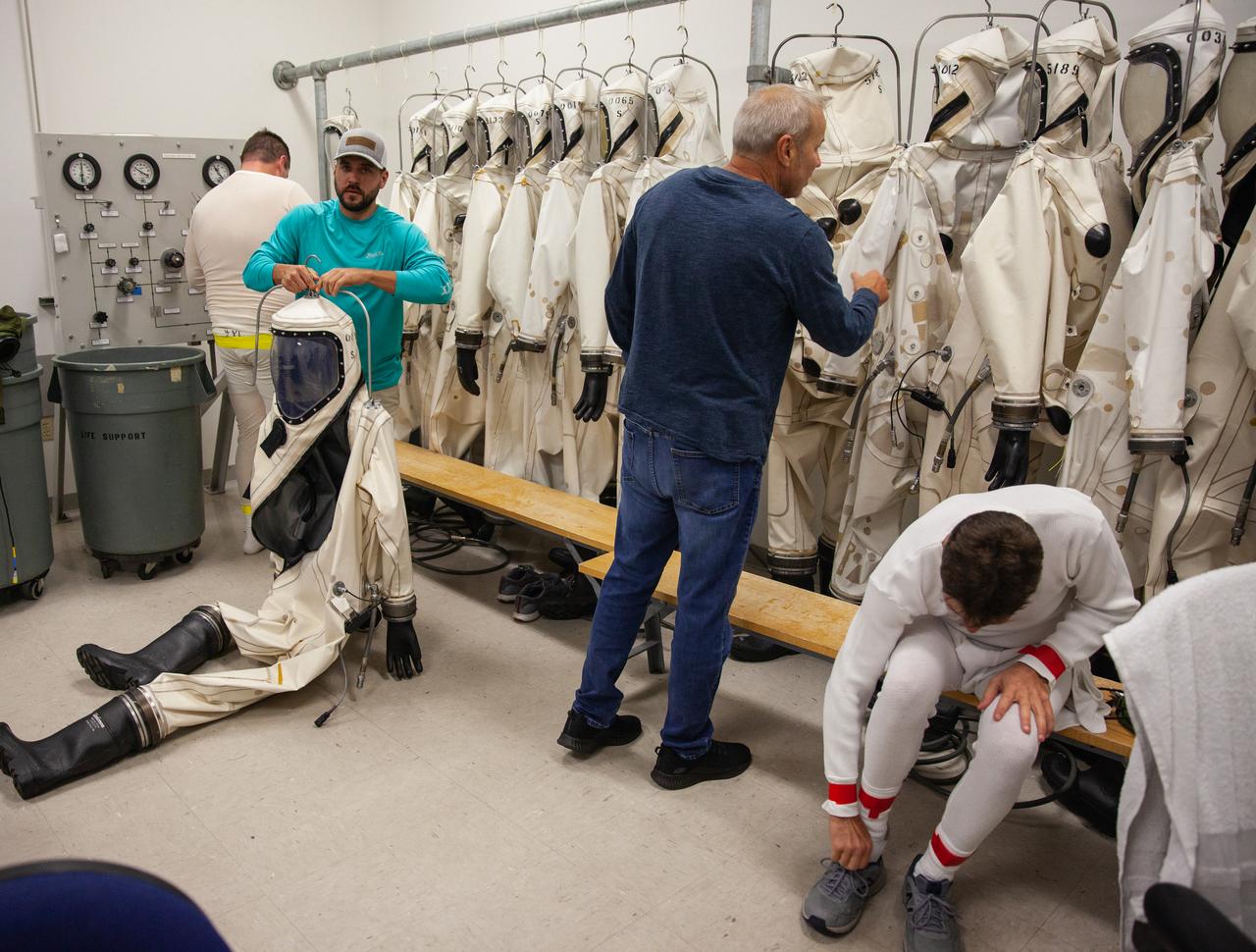
Inside the Multi-Operations Support Building near the Multi-Payload Processing Facility (MPPF) at NASA’s Kennedy Space Center in Florida, technicians are putting on Self-Contained Atmospheric Protective Ensemble (SCAPE) suits inside a changing room on Aug. 16, 2019. SCAPE technicians are practicing by putting on the suits for a test simulation of loading propellants into a replicated test tank for Orion. Exploration Ground Systems is preparing for Artemis 1 with a series of hazardous hyper test events at the MPPF. After donning their suits, the technicians will complete a tanking to test the system before Orion arrives for processing. During preparations for launch, these teams will be responsible for loading the Orion vehicle with propellants prior to transportation to the Vehicle Assembly Building, where it will be secured atop the Space Launch System rocket. SCAPE suits are used in operations involving toxic propellants and are supplied with air either through a hardline or through a self-contained environmental control unit.
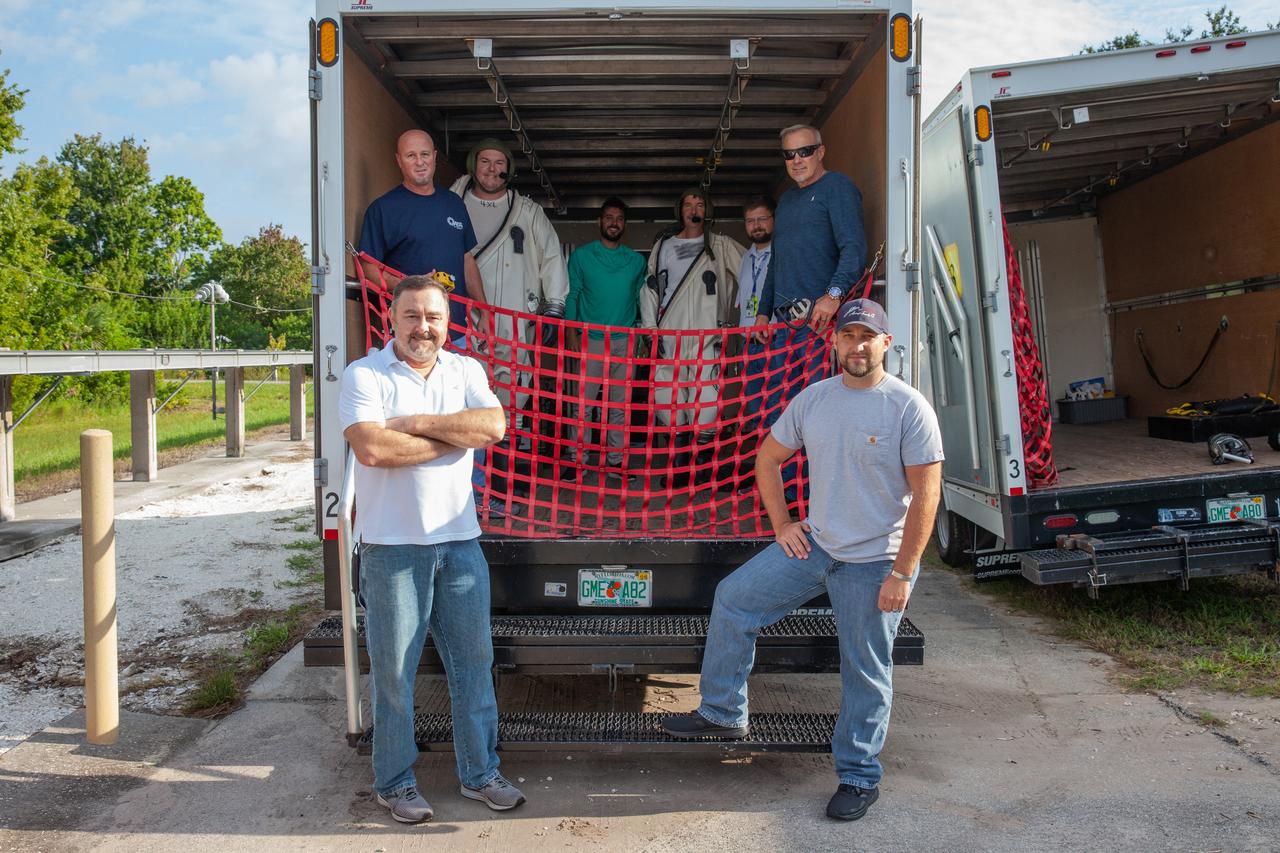
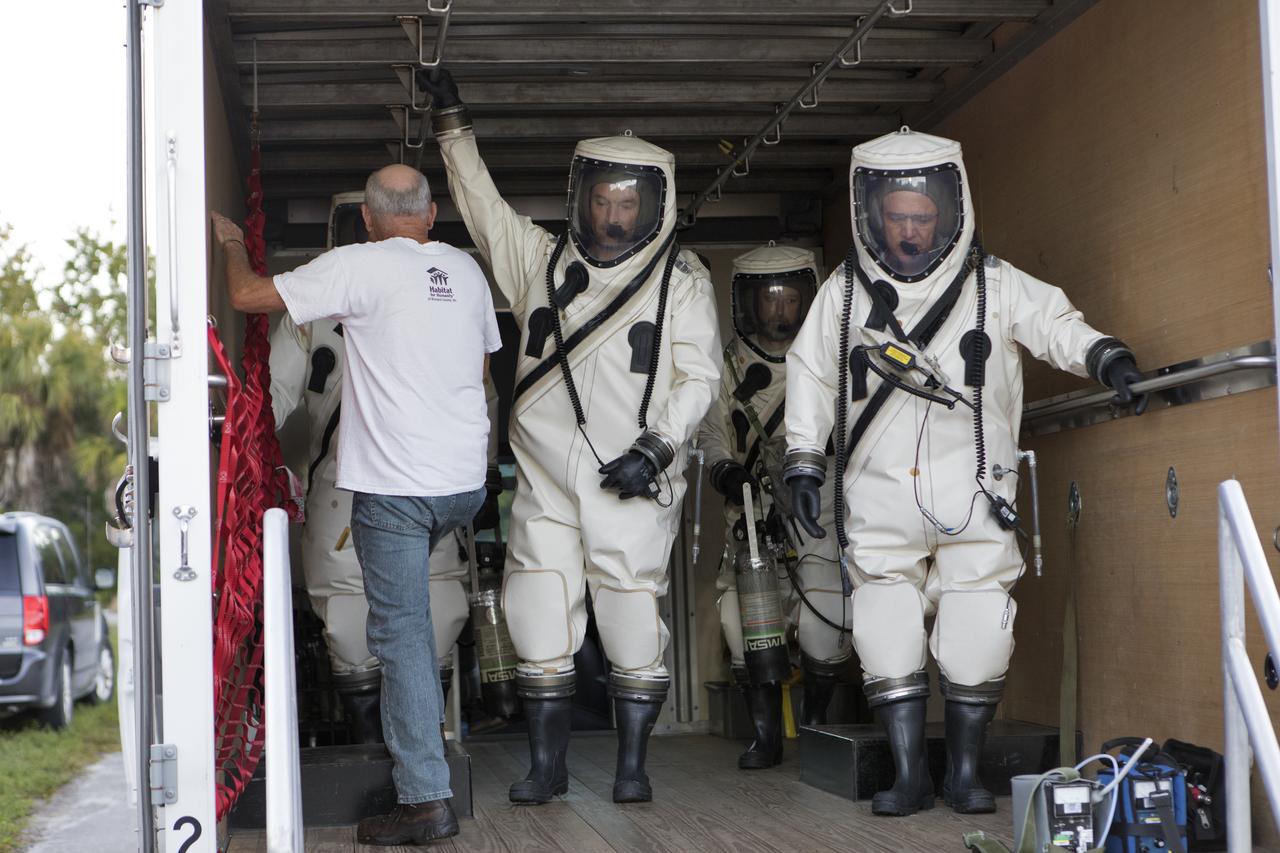
Technicians wearing Self-Contained Atmospheric Protective Ensemble (SCAPE) suits and operations support personnel prepare for a test simulation of loading propellants into a replicated test tank for Orion on Aug. 16, 2019, at NASA’s Kennedy Space Center in Florida. They are in a transport truck at the Multi-Operations Support Building near the Multi-Payload Processing Facility (MPPF). Exploration Ground Systems is preparing for Artemis 1 with a series of hazardous hyper test events at the MPPF. The technicians will complete a tanking to test the system before Orion arrives for processing. During preparations for launch, these teams will be responsible for loading the Orion vehicle with propellants prior to transportation to the Vehicle Assembly Building, where it will be secured atop the Space Launch System rocket. SCAPE suits are used in operations involving toxic propellants and are supplied with air either through a hardline or through a self-contained environmental control unit.
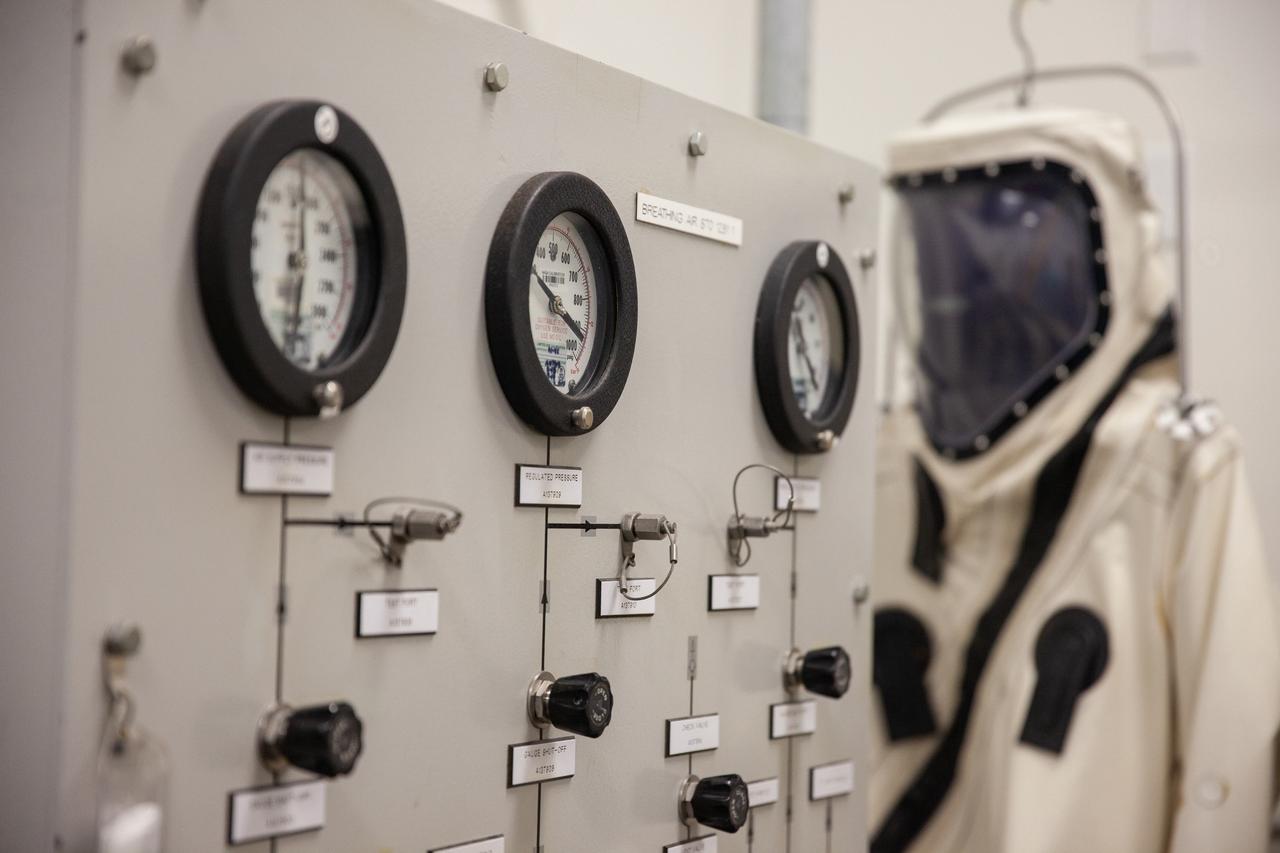
Inside the Multi-Operations Support Building near the Multi-Payload Processing Facility (MPPF) at NASA’s Kennedy Space Center in Florida on Aug. 16, 2019, a Self-Contained Atmospheric Protective Ensemble (SCAPE) suit is in view inside a changing room. SCAPE technicians are practicing putting on SCAPE suits and preparing for a test simulation of loading propellants into a replicated test tank for Orion. Exploration Ground Systems is preparing for Artemis 1 with a series of hazardous hyper test events at the MPPF. After donning their suits, the technicians will complete a tanking to test the system before Orion arrives for processing. During preparations for launch, these teams will be responsible for loading the Orion vehicle with propellants prior to transportation to the Vehicle Assembly Building, where it will be secured atop the Space Launch System rocket. SCAPE suits are used in operations involving toxic propellants and are supplied with air either through a hardline or through a self-contained environmental control unit.
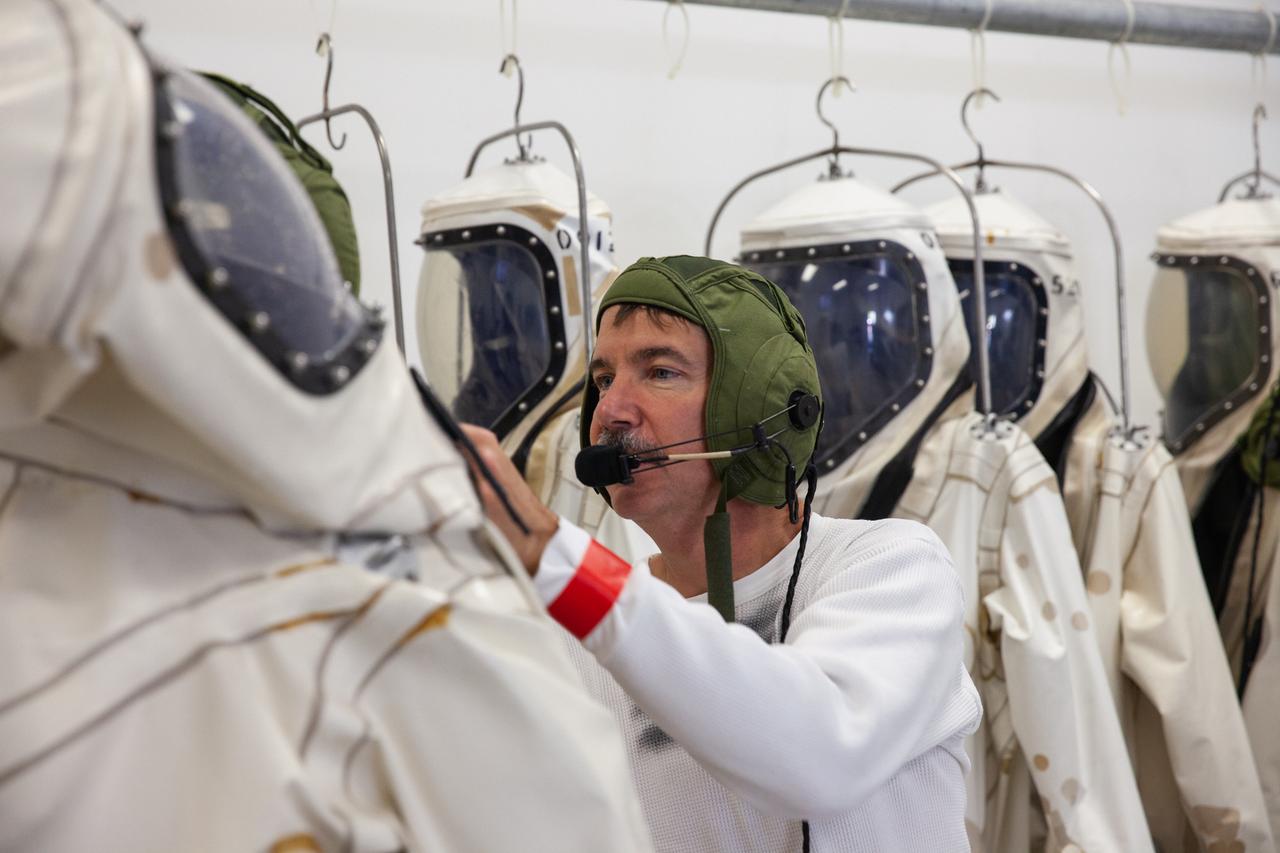
Inside the Multi-Operations Support Building near the Multi-Payload Processing Facility (MPPF) at NASA’s Kennedy Space Center in Florida, a technician prepares to put on a Self-Contained Atmospheric Protective Ensemble (SCAPE) suit inside a changing room on Aug. 16, 2019. SCAPE technicians are practicing putting on their suits for a test simulation of loading propellants into a replicated test tank for Orion. Exploration Ground Systems is preparing for Artemis 1 with a series of hazardous hyper test events at the MPPF. After donning their suits, the technicians will complete a tanking to test the system before Orion arrives for processing. During preparations for launch, these teams will be responsible for loading the Orion vehicle with propellants prior to transportation to the Vehicle Assembly Building, where it will be secured atop the Space Launch System rocket. SCAPE suits are used in operations involving toxic propellants and are supplied with air either through a hardline or through a self-contained environmental control unit.
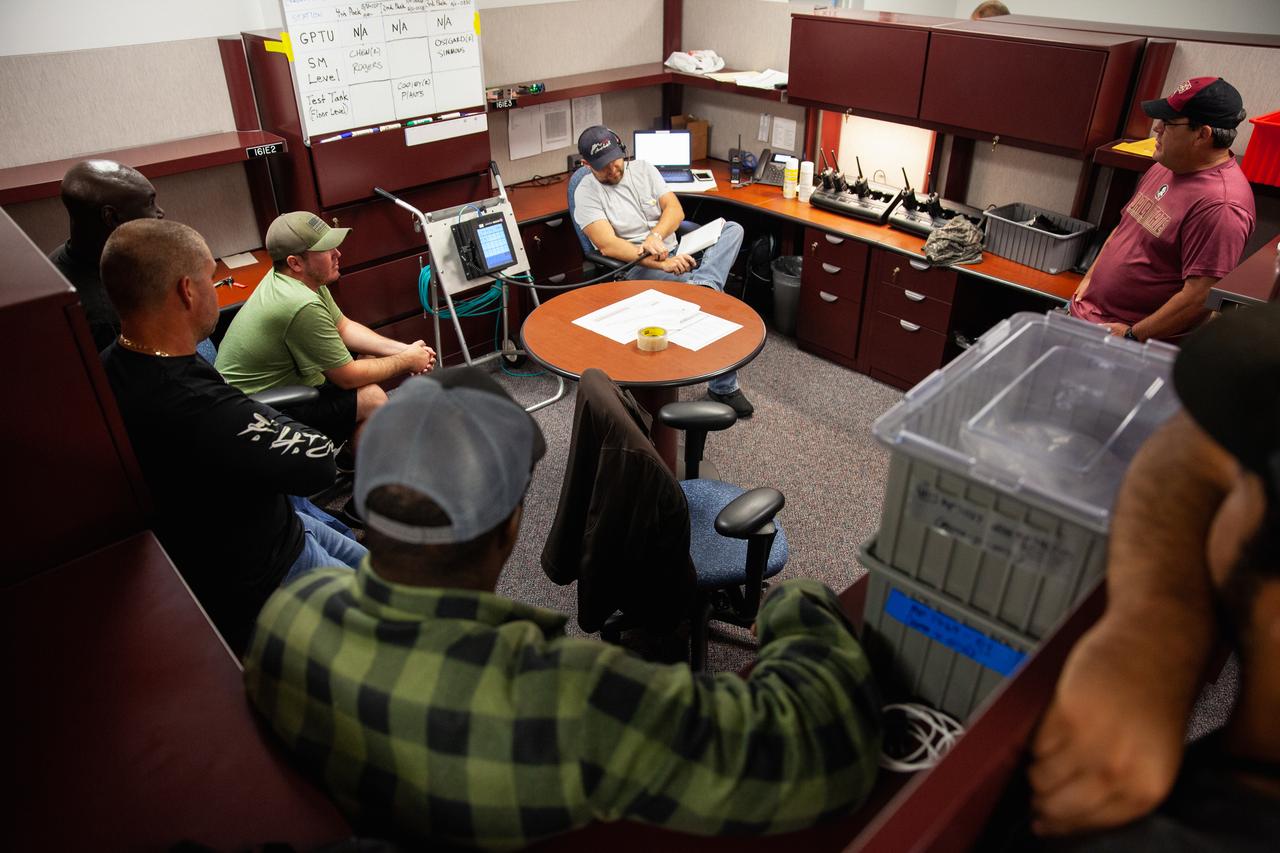
Inside the Multi-Operations Support Building near the Multi-Payload Processing Facility (MPPF) at NASA’s Kennedy Space Center in Florida, technicians and operations personnel review procedures for a test simulation of loading propellants into a replicated test tank for Orion, on Aug. 16, 2019. Exploration Ground Systems is preparing for Artemis 1 with a series of hazardous hyper test events at the MPPF. Technicians will practice putting on Self-Contained Atmospheric Protective Ensemble (SCAPE) suits and then complete tanking to test the system before Orion arrives for processing. During preparations for launch, these teams will be responsible for loading the Orion vehicle with propellants prior to transportation to the Vehicle Assembly Building, where it will be secured atop the Space Launch System rocket. SCAPE suits are used in operations involving toxic propellants and are supplied with air either through a hardline or through a self-contained environmental control unit.
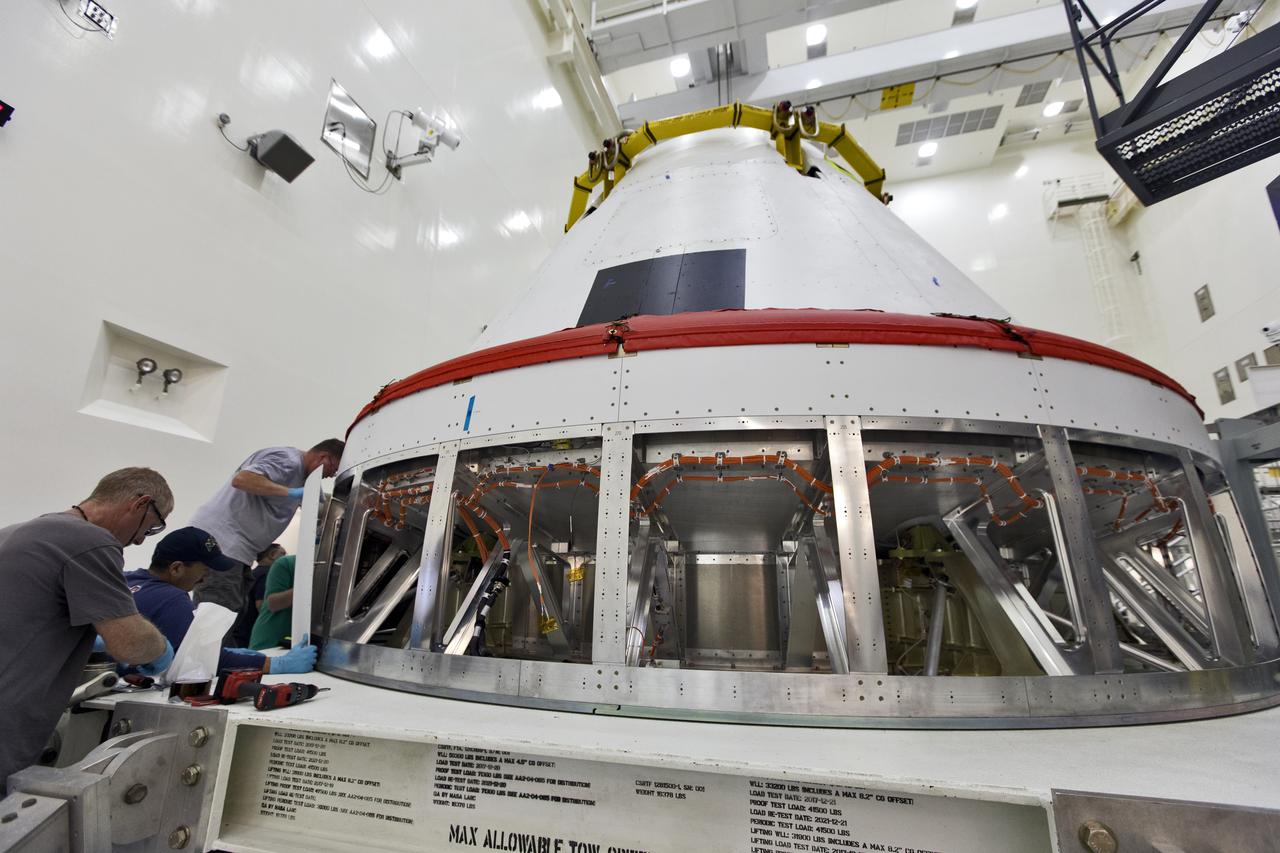
Workers remove cover plates from a mock Orion crew module inside the Multi-Payload Processing Facility at NASA’s Kennedy Space Center in Florida on Dec. 6, 2018. The crew module will be used during a full stress test of the Launch Abort System (LAS), called Ascent Abort-2 (AA-2), scheduled for April 2019. During the test, the booster will launch from Space Launch Complex 46, carrying a fully functional LAS and the 22,000-pound Orion test vehicle to an altitude of 31,000 feet and traveling at more than 1,000 miles an hour. The test will verify the LAS can steer the crew module and astronauts aboard to safety in the event of an issue with the Space Launch System (SLS) rocket when the spacecraft is under the highest aerodynamic loads it will experience during a rapid climb into space.
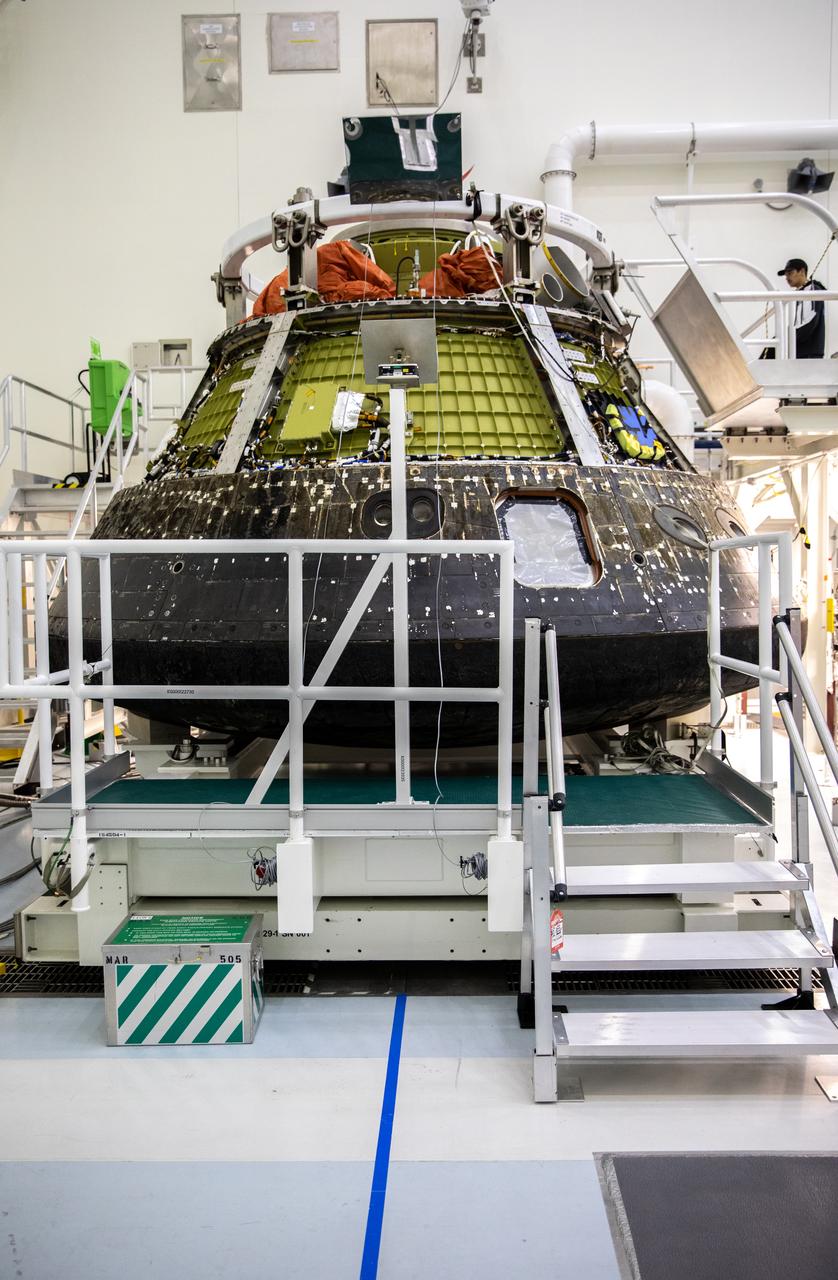
NASA’s Artemis I Orion capsule is secured on a platform inside the Multi-Payload Processing Facility (MPPF) at Kennedy Space Center in Florida on Jan. 6, 2023. Orion splashed down in the Pacific Ocean at 12:40 p.m. EST on Dec. 11, 2022. The spacecraft was secured inside the well deck of the USS Portland for the voyage to U.S. Naval Base Sand Diego, arriving on Dec. 13, 2022. Orion was offloaded and transported back to Kennedy for deservicing inside the MPPF. Orion launched atop the Space Launch System rocket on Nov. 16, 2022 at 1:47 a.m. EST from Kennedy’s Launch Complex 39B for a 25-day trip beyond the Moon and back. During the flight, Orion flew farther than any human-rated spacecraft has ever flown, paving the way for human deep space exploration and demonstrating NASA’s commitment and capability to extend human presence to the Moon and beyond.
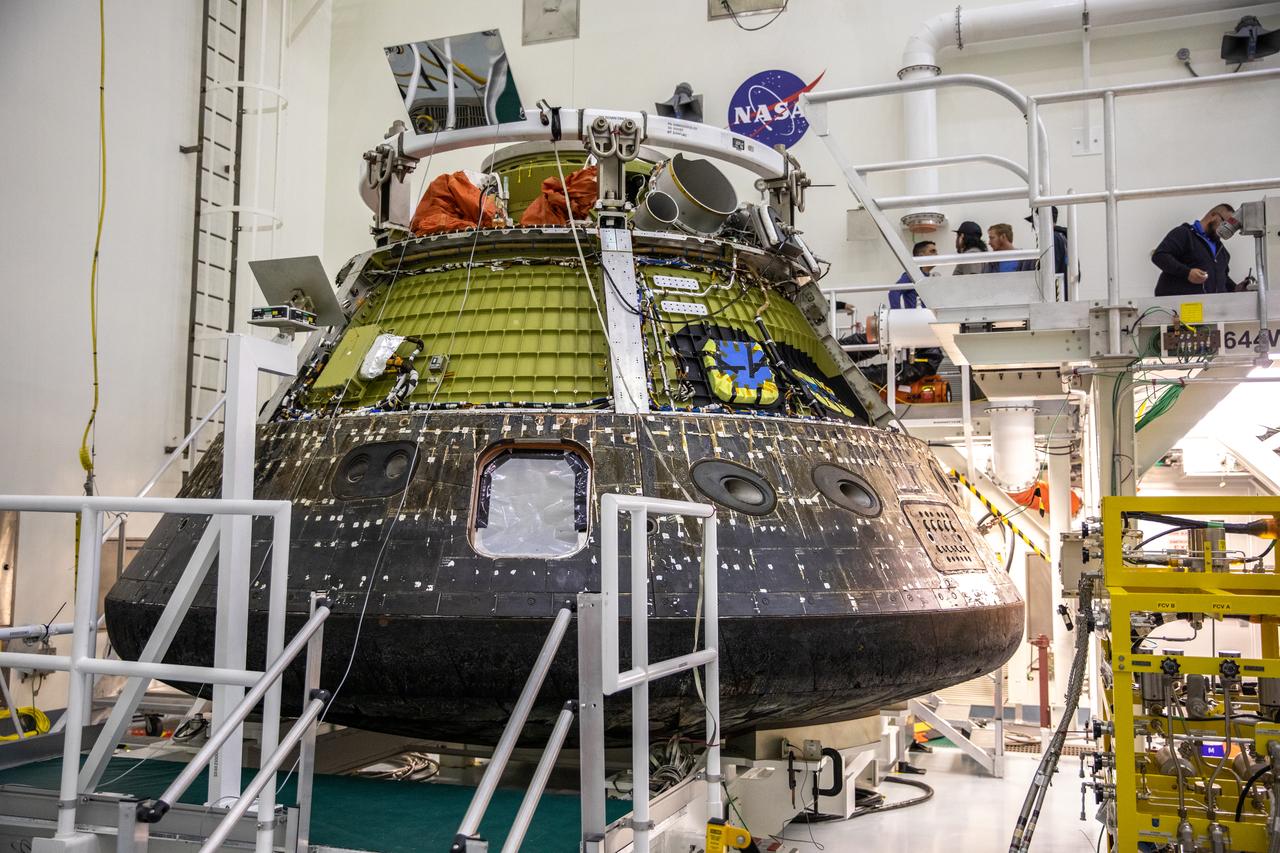
NASA’s Artemis I Orion capsule is secured on a platform inside the Multi-Payload Processing Facility (MPPF) at Kennedy Space Center in Florida on Jan. 6, 2023. Orion splashed down in the Pacific Ocean at 12:40 p.m. EST on Dec. 11, 2022. The spacecraft was secured inside the well deck of the USS Portland for the voyage to U.S. Naval Base Sand Diego, arriving on Dec. 13, 2022. Orion was offloaded and transported back to Kennedy for deservicing inside the MPPF. Orion launched atop the Space Launch System rocket on Nov. 16, 2022 at 1:47 a.m. EST from Kennedy’s Launch Complex 39B for a 25-day trip beyond the Moon and back. During the flight, Orion flew farther than any human-rated spacecraft has ever flown, paving the way for human deep space exploration and demonstrating NASA’s commitment and capability to extend human presence to the Moon and beyond.
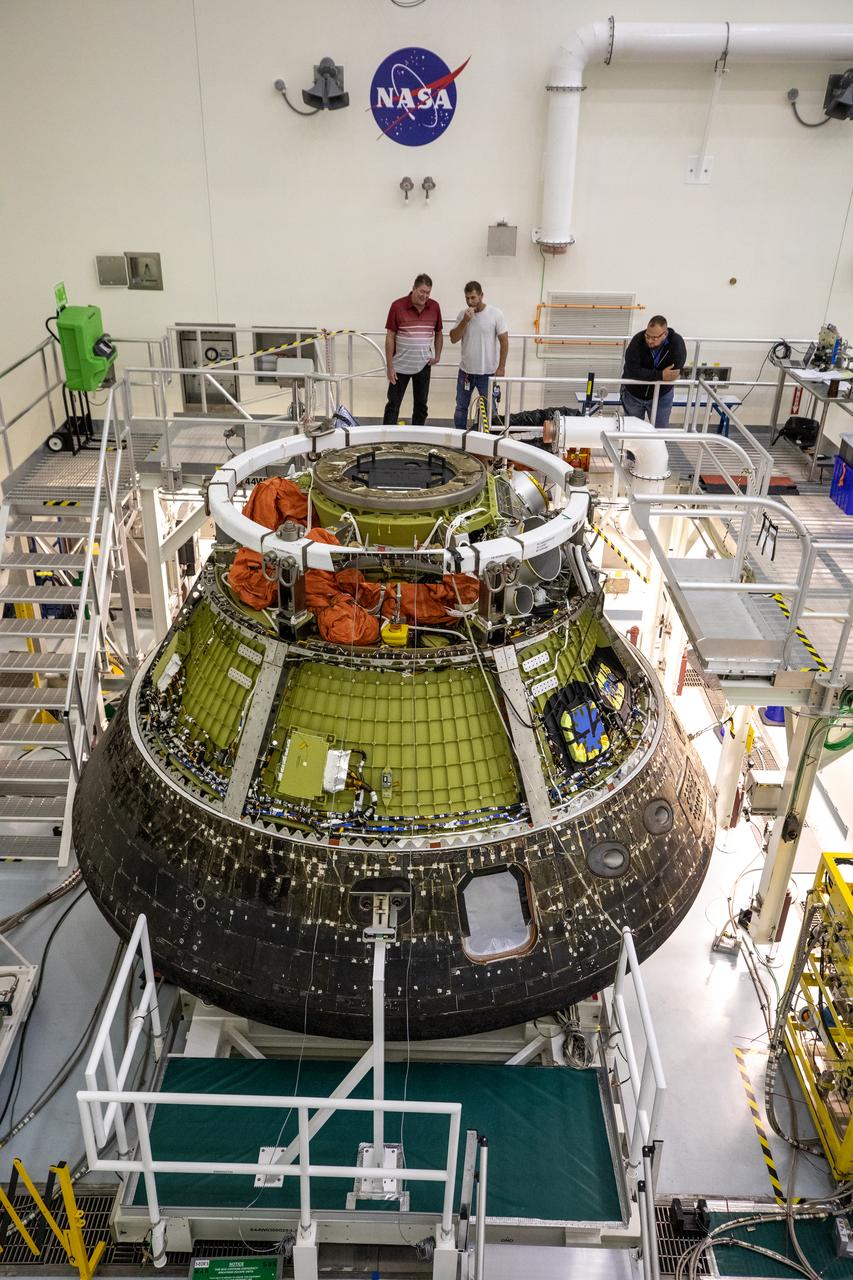
NASA’s Artemis I Orion capsule is secured on a platform inside the Multi-Payload Processing Facility (MPPF) at Kennedy Space Center in Florida on Jan. 6, 2023. Orion splashed down in the Pacific Ocean at 12:40 p.m. EST on Dec. 11, 2022. The spacecraft was secured inside the well deck of the USS Portland for the voyage to U.S. Naval Base Sand Diego, arriving on Dec. 13, 2022. Orion was offloaded and transported back to Kennedy for deservicing inside the MPPF. Orion launched atop the Space Launch System rocket on Nov. 16, 2022 at 1:47 a.m. EST from Kennedy’s Launch Complex 39B for a 25-day trip beyond the Moon and back. During the flight, Orion flew farther than any human-rated spacecraft has ever flown, paving the way for human deep space exploration and demonstrating NASA’s commitment and capability to extend human presence to the Moon and beyond.
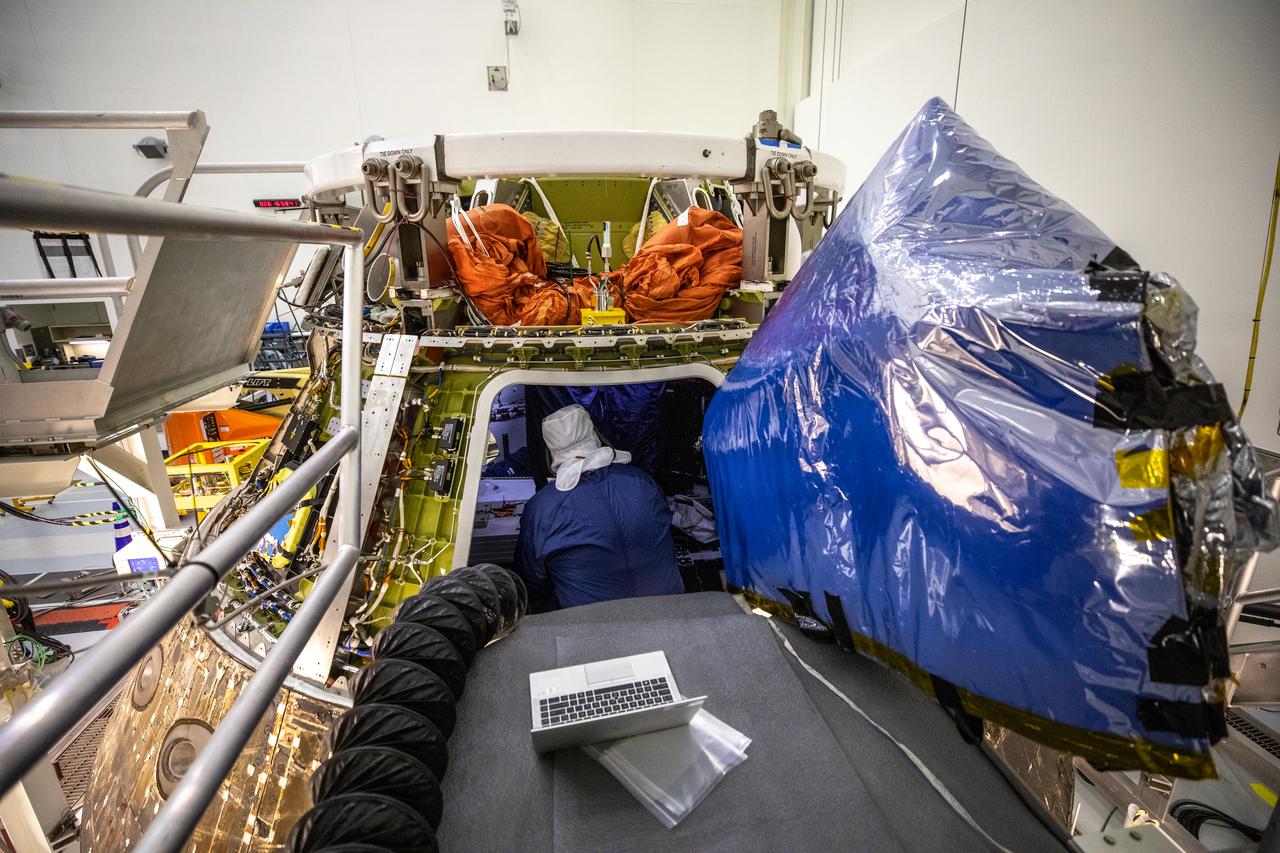
A technician unpacks NASA’s Artemis I Orion capsule inside the Multi-Payload Processing Facility (MPPF) at Kennedy Space Center in Florida on Jan. 6, 2023. Orion splashed down in the Pacific Ocean at 12:40 p.m. EST on Dec. 11, 2022. The spacecraft was secured inside the well deck of the USS Portland for the voyage to U.S. Naval Base Sand Diego, arriving on Dec. 13, 2022. Orion was offloaded and transported back to Kennedy for deservicing inside the MPPF. Orion launched atop the Space Launch System rocket on Nov. 16, 2022 at 1:47 a.m. EST from Kennedy’s Launch Complex 39B for a 25-day trip beyond the Moon and back. During the flight, Orion flew farther than any human-rated spacecraft has ever flown, paving the way for human deep space exploration and demonstrating NASA’s commitment and capability to extend human presence to the Moon and beyond.
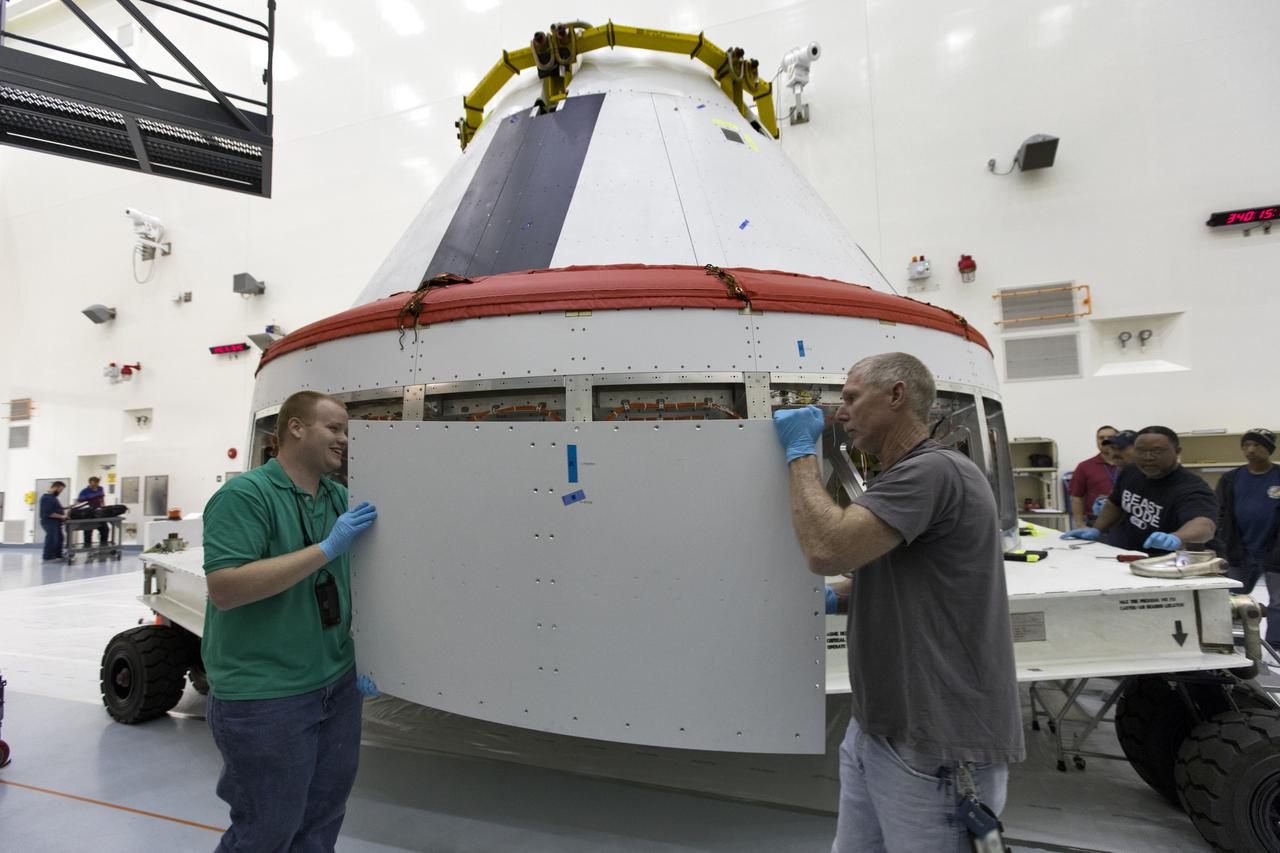
Workers remove cover plates from a mock Orion crew module inside the Multi-Payload Processing Facility at NASA’s Kennedy Space Center in Florida on Dec. 6, 2018. The crew module will be used during a full stress test of the Launch Abort System (LAS), called Ascent Abort-2 (AA-2), scheduled for April 2019. During the test, the Northrop Grumman booster will launch from Space Launch Complex 46, carrying a fully functional LAS and the 22,000-pound Orion test vehicle to an altitude of 31,000 feet and traveling at more than 1,000 miles an hour. The test will verify the LAS can steer the crew module and astronauts aboard to safety in the event of an issue with the Space Launch System (SLS) rocket when the spacecraft is under the highest aerodynamic loads it will experience during a rapid climb into space.
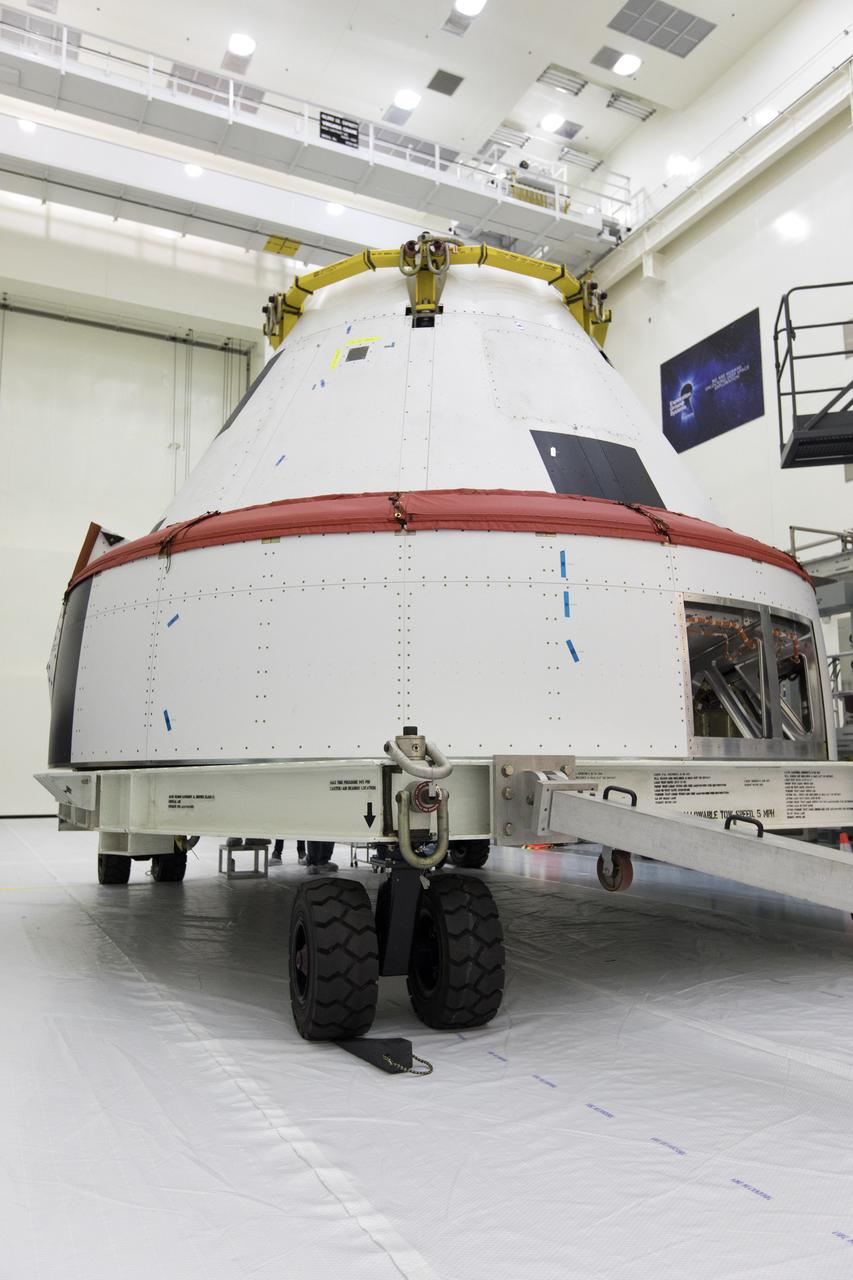
A mock Orion crew module is inside the Multi-Payload Processing Facility at NASA’s Kennedy Space Center in Florida on Dec. 6, 2018. The crew module will be used during a full stress test of the Launch Abort System (LAS), called Ascent Abort-2 (AA-2), scheduled for April 2019. During the test, the Northrop Grumman booster will launch from Space Launch Complex 46, carrying a fully functional LAS and the 22,000-pound Orion test vehicle to an altitude of 31,000 feet and traveling at more than 1,000 miles an hour. The test will verify the LAS can steer the crew module and astronauts aboard to safety in the event of an issue with the Space Launch System (SLS) rocket when the spacecraft is under the highest aerodynamic loads it will experience during a rapid climb into space.
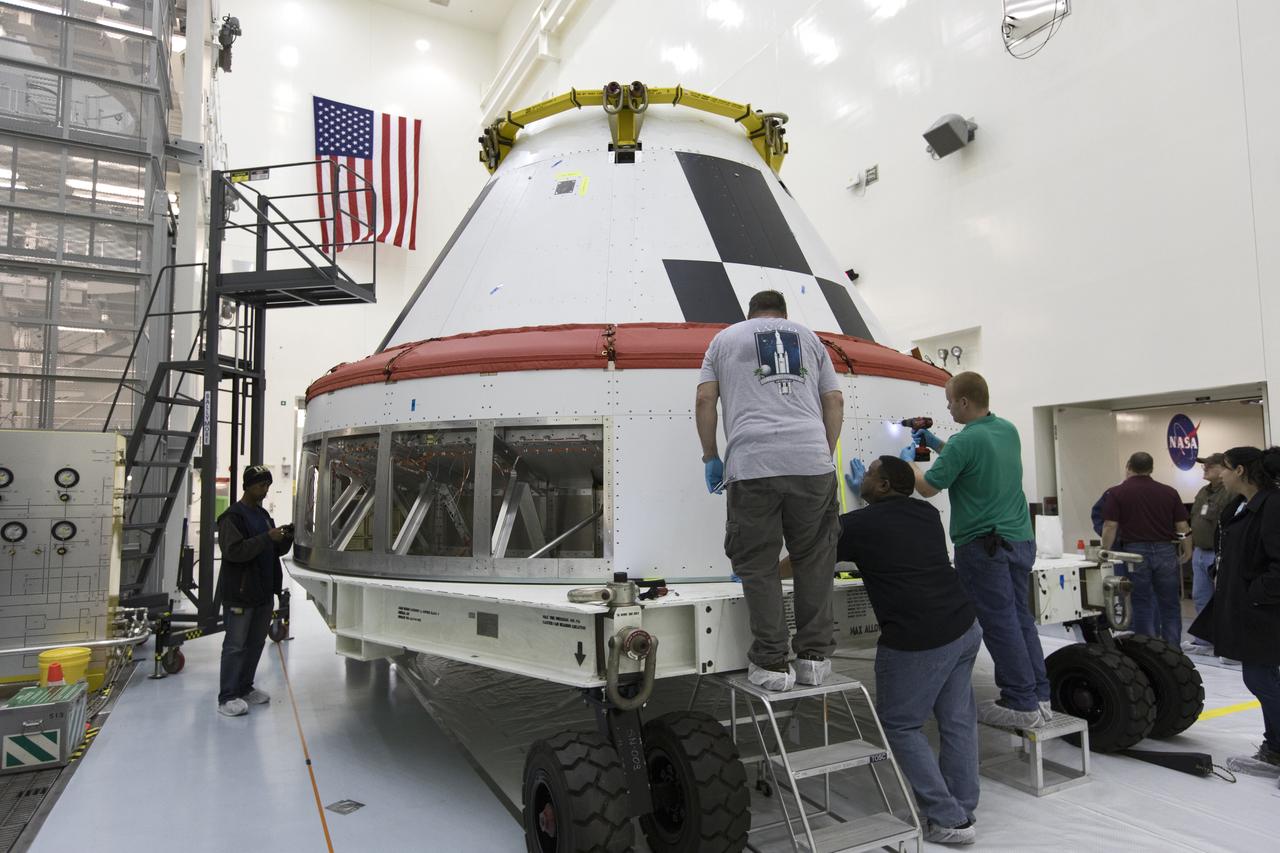
Workers remove cover plates from a mock Orion crew module inside the Multi-Payload Processing Facility at NASA’s Kennedy Space Center in Florida on Dec. 6, 2018. The crew module will be used during a full stress test of the Launch Abort System (LAS), called Ascent Abort-2 (AA-2), scheduled for April 2019. During the test, the Northrop Grumman booster will launch from Space Launch Complex 46, carrying a fully functional LAS and the 22,000-pound Orion test vehicle to an altitude of 31,000 feet and traveling at more than 1,000 miles an hour. The test will verify the LAS can steer the crew module and astronauts aboard to safety in the event of an issue with the Space Launch System (SLS) rocket when the spacecraft is under the highest aerodynamic loads it will experience during a rapid climb into space.

NASA’s Artemis I Orion capsule is secured on a platform inside the Multi-Payload Processing Facility (MPPF) at Kennedy Space Center in Florida on Jan. 6, 2023. Orion splashed down in the Pacific Ocean at 12:40 p.m. EST on Dec. 11, 2022. The spacecraftwas secured inside the well deck of the USS Portland for the voyage to U.S. Naval Base Sand Diego, arriving on Dec. 13, 2022. Orion was offloaded and transported back to Kennedy for deservicing inside the MPPF. Orion launched atop the Space Launch System rocket on Nov. 16, 2022 at 1:47 a.m. EST from Kennedy’s Launch Complex 39B for a 25-day trip beyond the Moon and back. During the flight, Orion flew farther than any human-rated spacecraft has ever flown, paving the way for human deep space exploration and demonstrating NASA’s commitment and capability to extend human presence to the Moon and beyond.
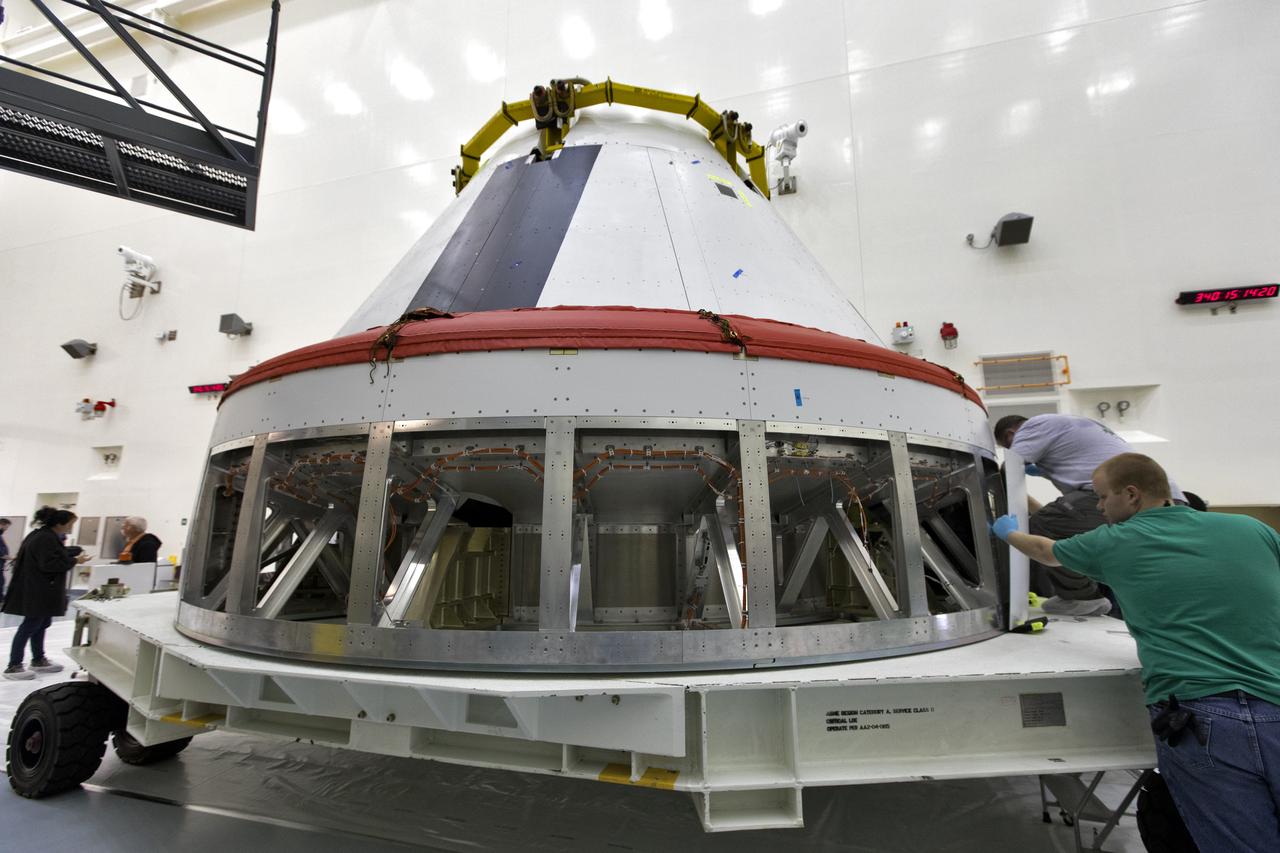
Workers remove cover plates from a mock Orion crew module inside the Multi-Payload Processing Facility at NASA’s Kennedy Space Center in Florida on Dec. 6, 2018. The crew module will be used during a full stress test of the Launch Abort System (LAS), called Ascent Abort-2 (AA-2), scheduled for April 2019. During the test, the Northrop Grumman booster will launch from Space Launch Complex 46, carrying a fully functional LAS and the 22,000-pound Orion test vehicle to an altitude of 31,000 feet and traveling at more than 1,000 miles an hour. The test will verify the LAS can steer the crew module and astronauts aboard to safety in the event of an issue with the Space Launch System (SLS) rocket when the spacecraft is under the highest aerodynamic loads it will experience during a rapid climb into space.
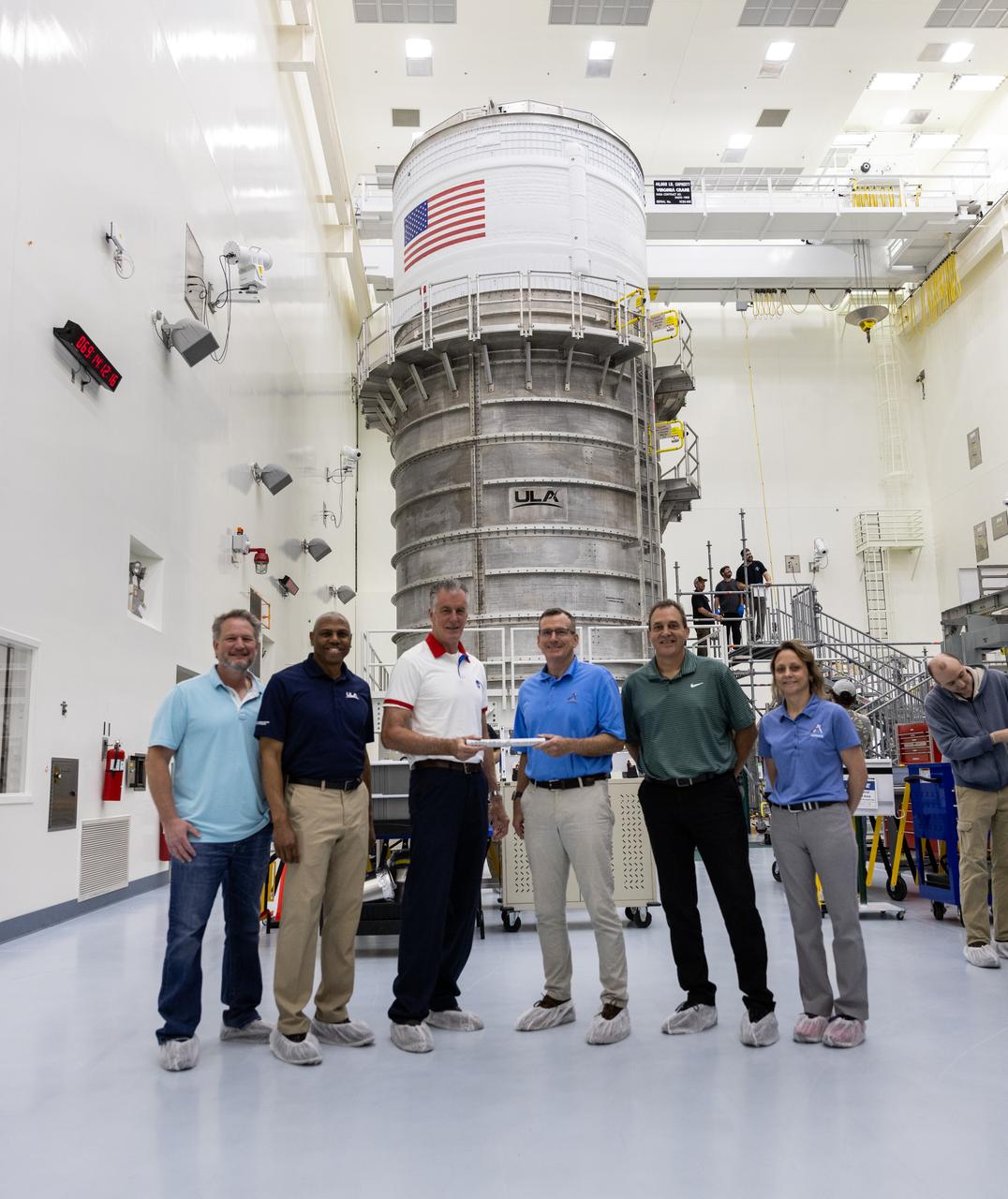
Managers from NASA and industry partners for NASA’s SLS (Space Launch System) rocket upper stage hand off the baton to managers from the agency’s Exploration Ground Systems (EGS) are shown with the SLS interim cryogenic propulsion stage inside the Multi-Payload Processing Facility at NASA’s Kennedy Space Center in Florida on Monday, March 10, 2025, after being transported from United Launch Alliance’s (ULA) Delta Operations Center at nearby Cape Canaveral Space Force Station. From left to right are Jim Bonato, ICPS Mission Manager, ULA; Ron Fortson, Director and General Manager, ULA; Chris Calfee, Spacecraft/Payload Integration and Evolution element manager, SLS; Cliff Lanham, senior vehicle operations manager, EGS; Todd Lamond, Strategic Planning and Integration, Amentum; and Natasha Wiest, Interim Director, Boeing Core Stage Integrated Product Team; The interim cryogenic propulsion stage is a liquid oxygen and liquid hydrogen-based system that will fire its RL10 engine to give the Orion spacecraft the big in-space push needed to fly around the Moon and back.
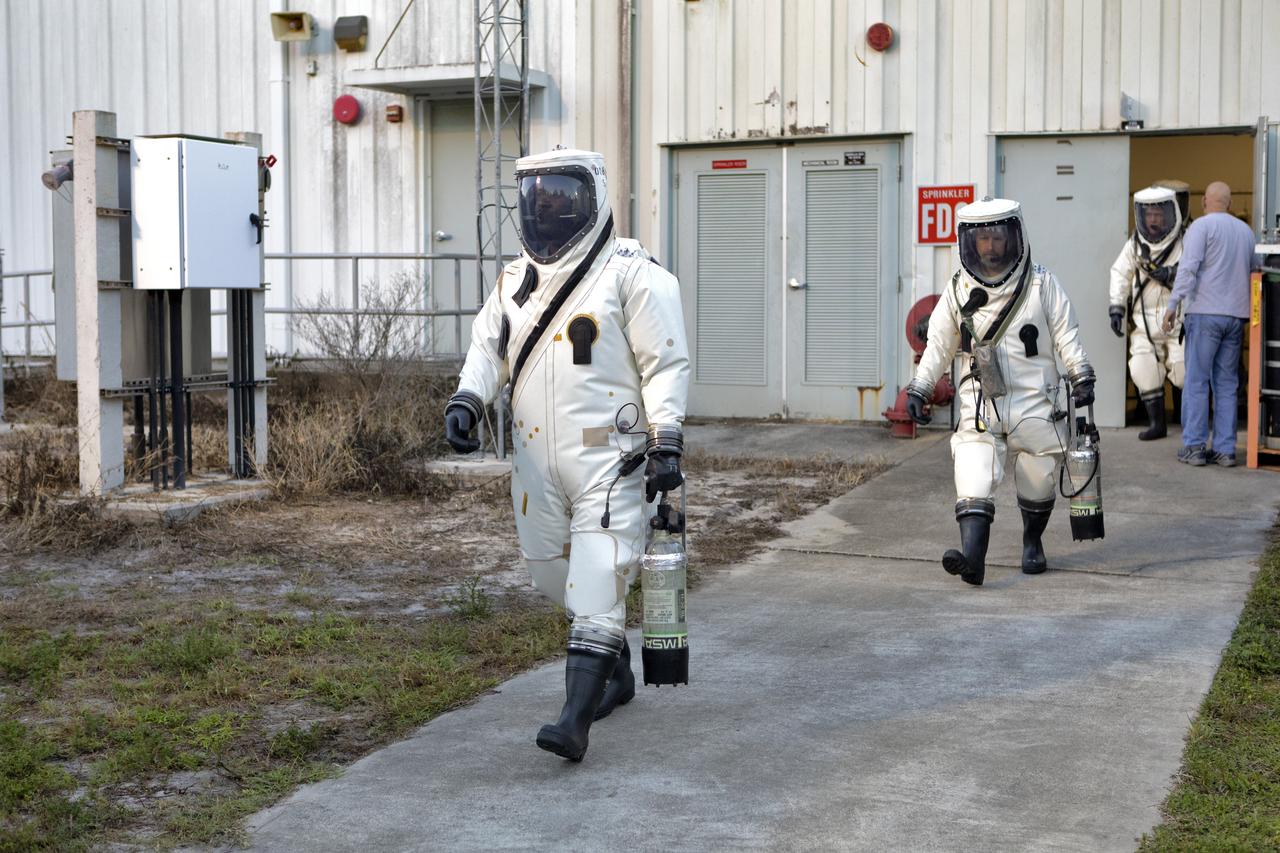
Operators wearing Self-Contained Atmospheric Protective Ensemble (SCAPE) suits depart the suit-up room at the Multi-Payload Processing Facility (MPPF) at NASA's Kennedy Space Center in Florida on Oct. 31, 2018. SCAPE operators are preparing to participate in a hypergolic systems hot flow test at the MPPF. The test will serve as operational validation of the hypergol subsystem and demonstrate that the hypergols subsystem can service the Orion spacecraft, flow fuel at the required rates, drain and de-service the system, and meet the intended timeline. SCAPE suite are used in operations involving toxic propellants and are supplied with air either through a hardline or through a self-contained environmental control unit.
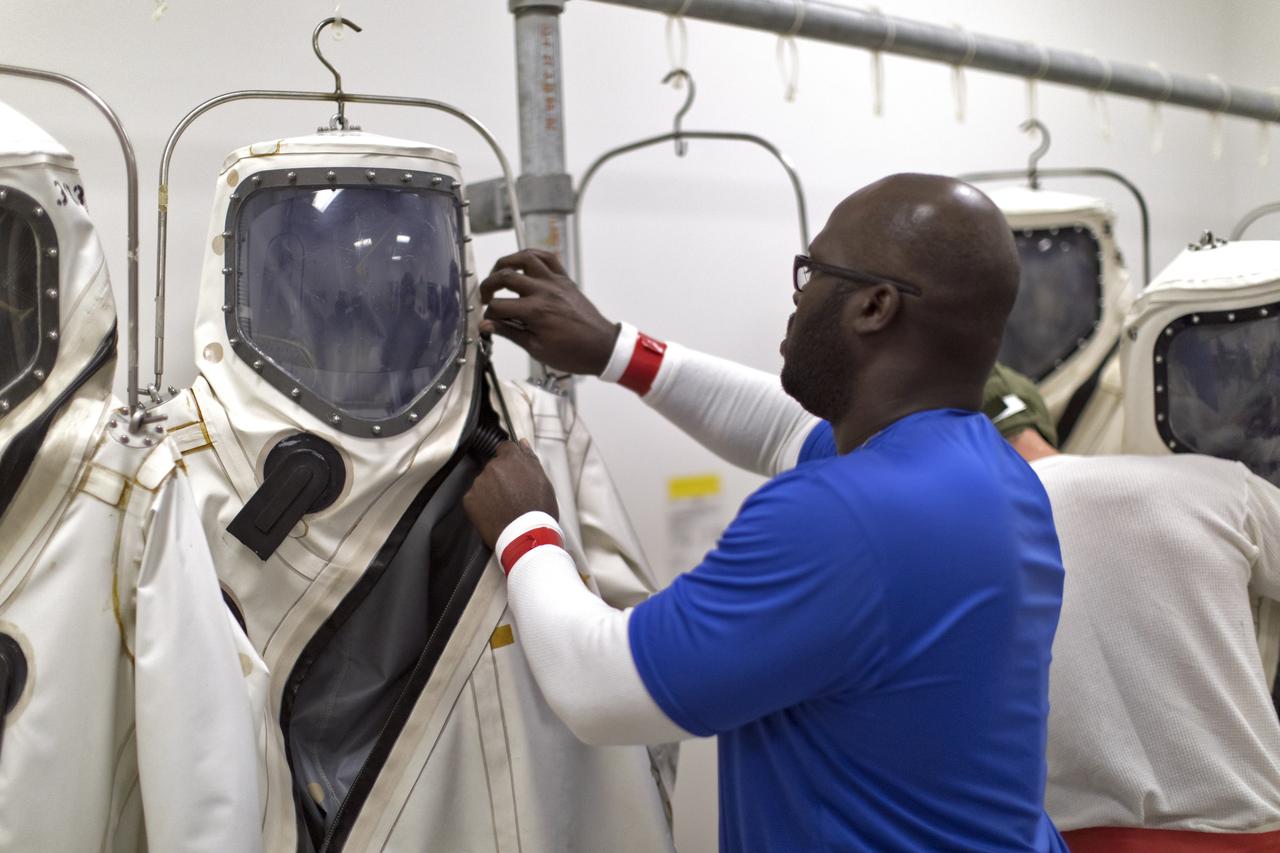
An operator prepares to don a Self-Contained Atmospheric Protective Ensemble (SCAPE) suit inside a room in the Multi-Payload Processing Facility (MPPF) at NASA's Kennedy Space Center in Florida on Oct. 31, 2018. SCAPE operators, wearing the suits, will participate in a hypergolic systems hot flow test at the MPPF. The test will serve as operational validation of the hypergol subsystem and demonstrate that the hypergols subsystem can service the Orion spacecraft, flow fuel at the required rates, drain and de-service the system, and meet the intended timeline. SCAPE suite are used in operations involving toxic propellants and are supplied with air either through a hardline or through a self-contained environmental control unit.
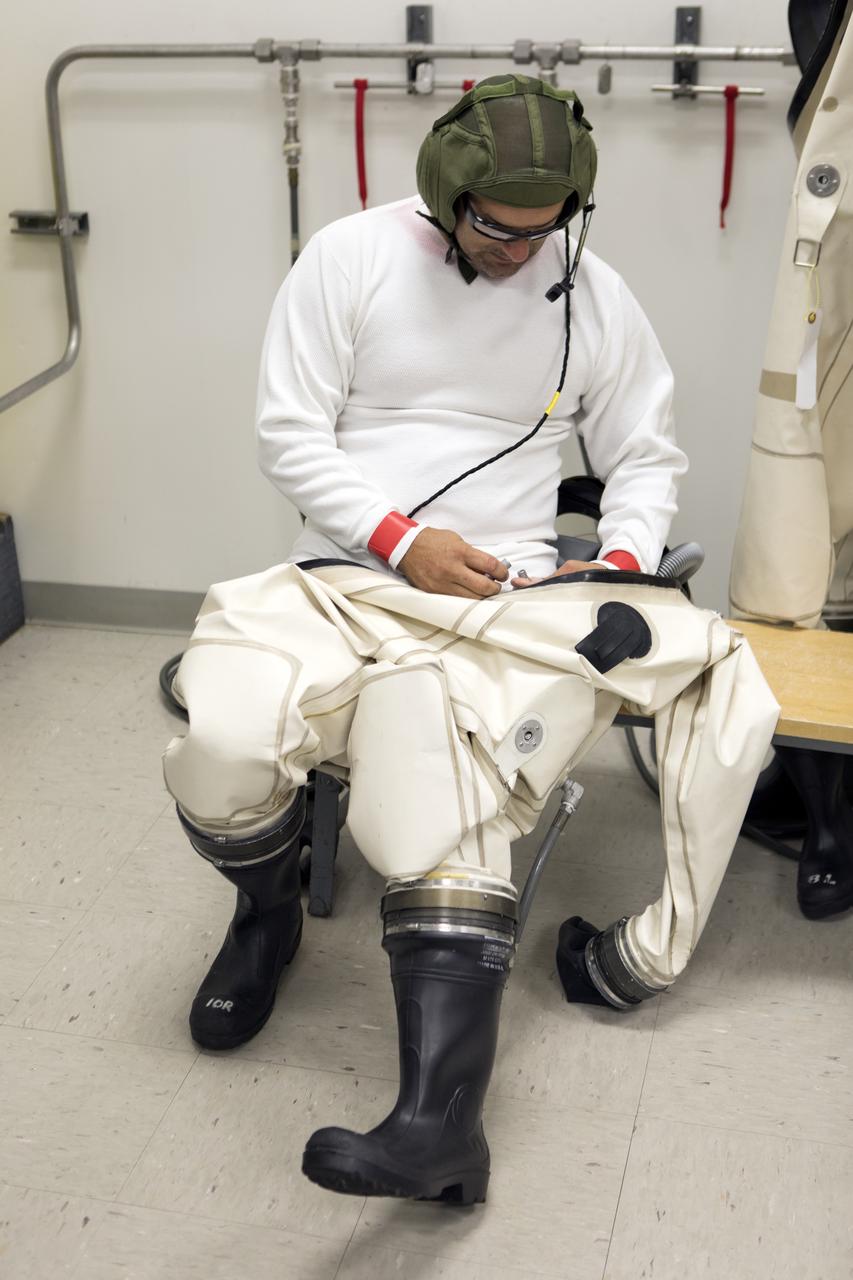
An operator dons a Self-Contained Atmospheric Protective Ensemble (SCAPE) suit inside a room in the Multi-Payload Processing Facility (MPPF) at NASA's Kennedy Space Center in Florida on Oct. 31, 2018. SCAPE operators, wearing the suits, will participate in a hypergolic systems hot flow test at the MPPF. The test will serve as operational validation of the hypergol subsystem and demonstrate that the hypergols subsystem can service the Orion spacecraft, flow fuel at the required rates, drain and de-service the system, and meet the intended timeline. SCAPE suite are used in operations involving toxic propellants and are supplied with air either through a hardline or through a self-contained environmental control unit.
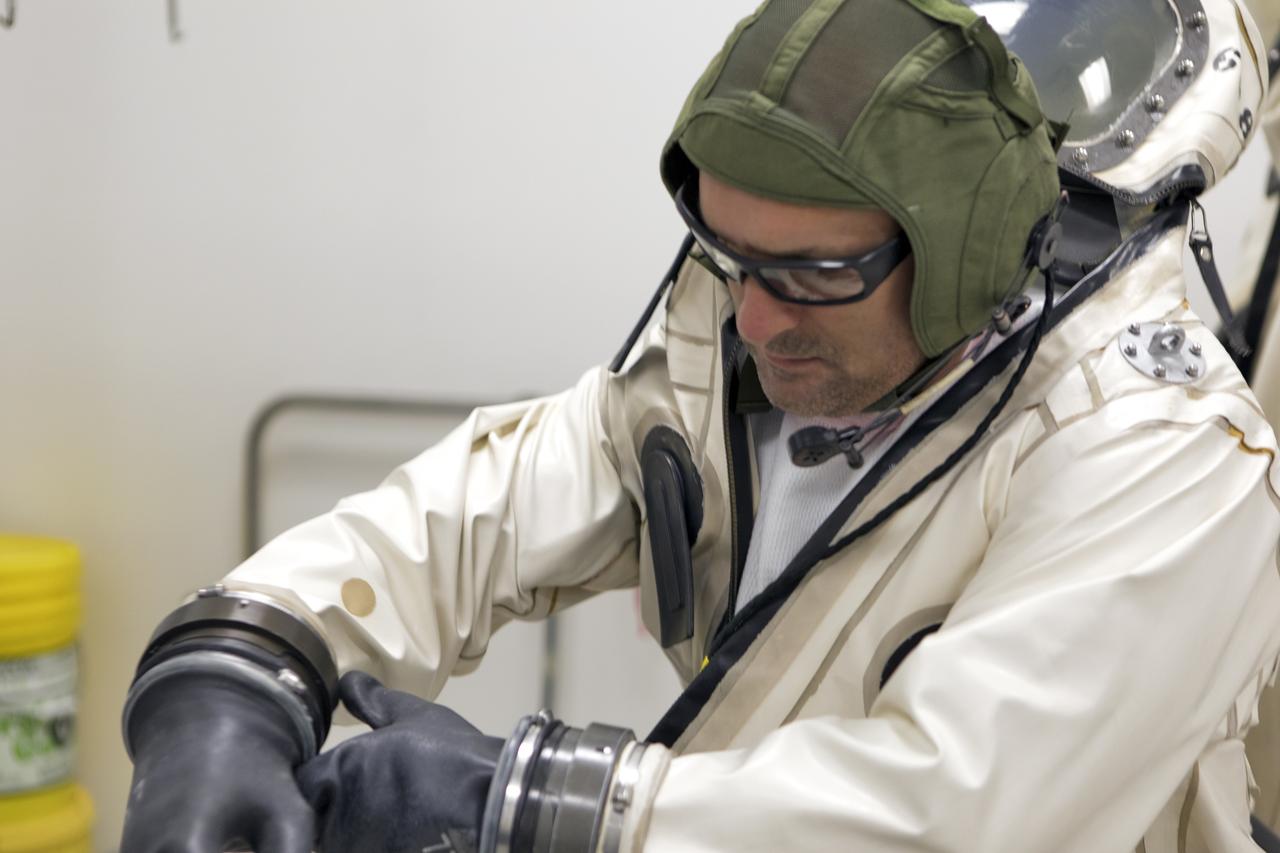
An operator dons a Self-Contained Atmospheric Protective Ensemble (SCAPE) suit inside a room in the Multi-Payload Processing Facility (MPPF) at NASA's Kennedy Space Center in Florida on Oct. 31, 2018. SCAPE operators, wearing the suits, will participate in a hypergolic systems hot flow test at the MPPF. The test will serve as operational validation of the hypergol subsystem and demonstrate that the hypergols subsystem can service the Orion spacecraft, flow fuel at the required rates, drain and de-service the system, and meet the intended timeline. SCAPE suite are used in operations involving toxic propellants and are supplied with air either through a hardline or through a self-contained environmental control unit.
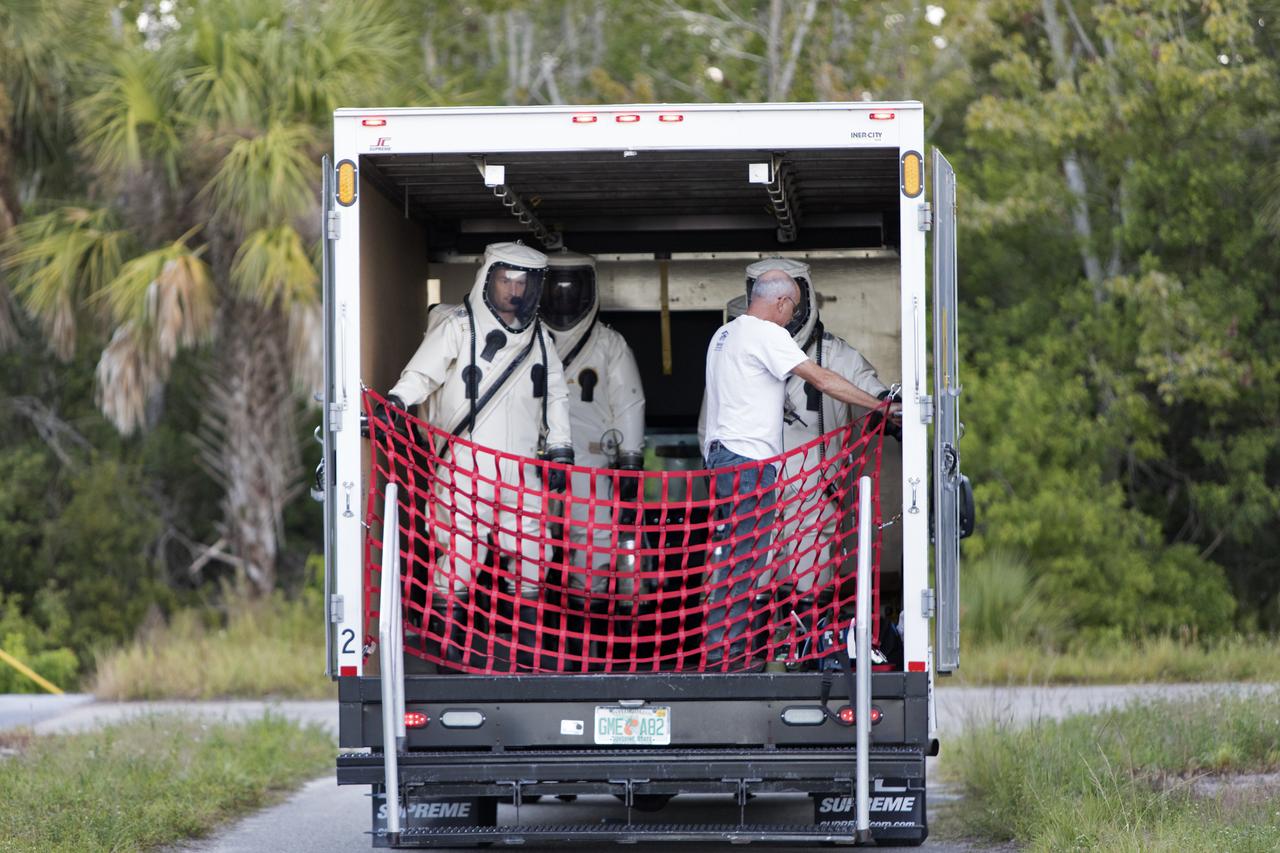
Operators wearing Self-Contained Atmospheric Protective Ensemble (SCAPE) suits are inside a transport vehicle near the Multi-Payload Processing Facility (MPPF) at NASA's Kennedy Space Center in Florida on Oct. 31, 2018. SCAPE operators, wearing the suits, will participate in a hypergolic systems hot flow test at the MPPF. The test will serve as operational validation of the hypergol subsystem and demonstrate that the hypergols subsystem can service the Orion spacecraft, flow fuel at the required rates, drain and de-service the system, and meet the intended timeline. SCAPE suite are used in operations involving toxic propellants and are supplied with air either through a hardline or through a self-contained environmental control unit.
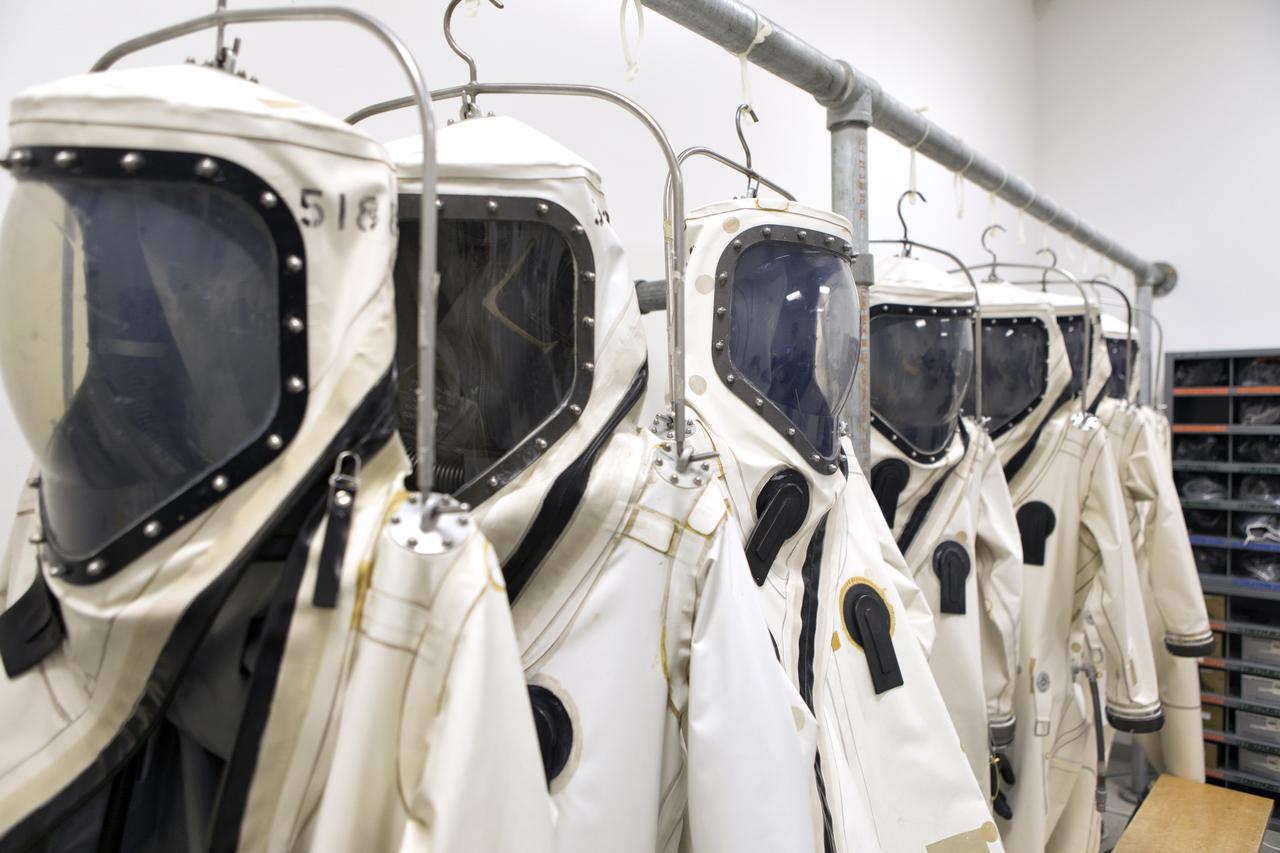
Self-Contained Atmospheric Protective Ensemble (SCAPE) suits are hanging in a row inside the Multi-Payload Processing Facility (MPPF) at NASA's Kennedy Space Center in Florida on Oct. 31, 2018. SCAPE operators will don the suits and then participate in a hypergolic systems hot flow test at the MPPF. The test will serve as operational validation of the hypergol subsystem and demonstrate that the hypergols subsystem can service the Orion spacecraft, flow fuel at the required rates, drain and de-service the system, and meet the intended timeline. SCAPE suite are used in operations involving toxic propellants and are supplied with air either through a hardline or through a self-contained environmental control unit.
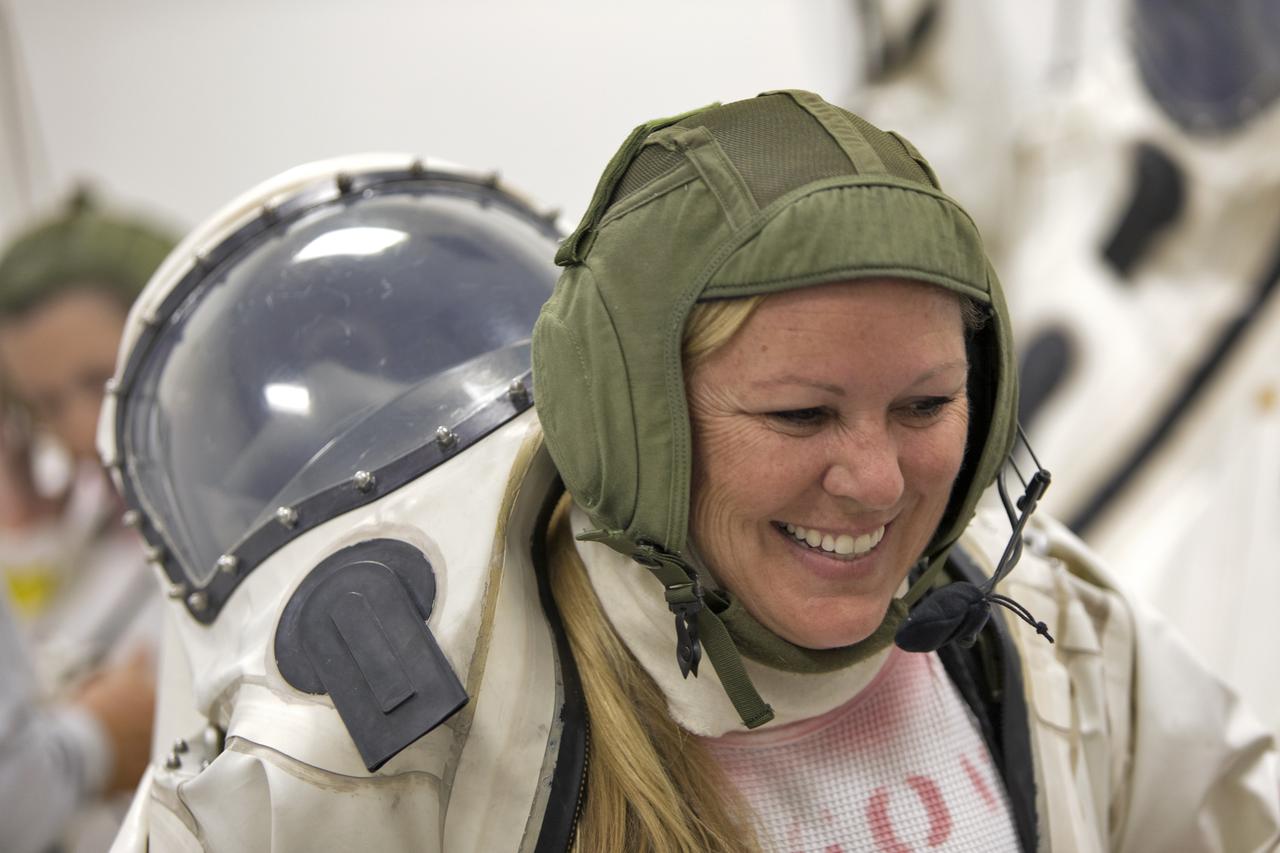
An operator dons a Self-Contained Atmospheric Protective Ensemble (SCAPE) suit inside a room in the Multi-Payload Processing Facility (MPPF) at NASA's Kennedy Space Center in Florida on Oct. 31, 2018. SCAPE operators, wearing the suits, will participate in a hypergolic systems hot flow test at the MPPF. The test will serve as operational validation of the hypergol subsystem and demonstrate that the hypergols subsystem can service the Orion spacecraft, flow fuel at the required rates, drain and de-service the system, and meet the intended timeline. SCAPE suite are used in operations involving toxic propellants and are supplied with air either through a hardline or through a self-contained environmental control unit.
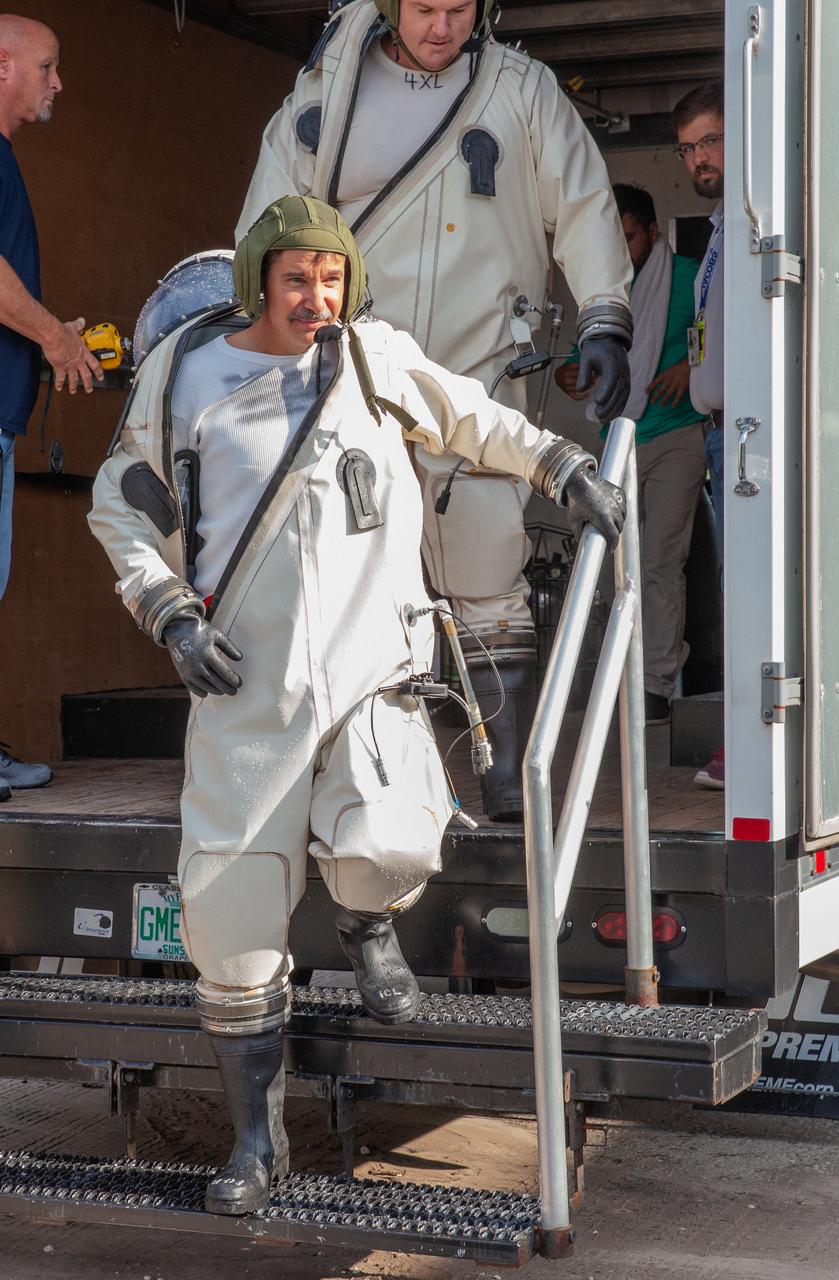
Technicians in Self-Contained Atmospheric Protective Ensemble (SCAPE) suits exit a truck near the Multi-Payload Processing Facility (MPPF) at NASA’s Kennedy Space Center in Florida, for a test simulation of loading propellants into a replicated test tank for Orion on Aug. 16, 2019. Exploration Ground Systems is preparing for Artemis 1 with a series of hazardous hyper test events at the MPPF. The technicians will complete a tanking to test the system before Orion arrives for processing. During preparations for launch, these teams will be responsible for loading the Orion vehicle with propellants prior to transportation to the Vehicle Assembly Building, where it will be secured atop the Space Launch System rocket. SCAPE suits are used in operations involving toxic propellants and are supplied with air either through a hardline or through a self-contained environmental control unit.
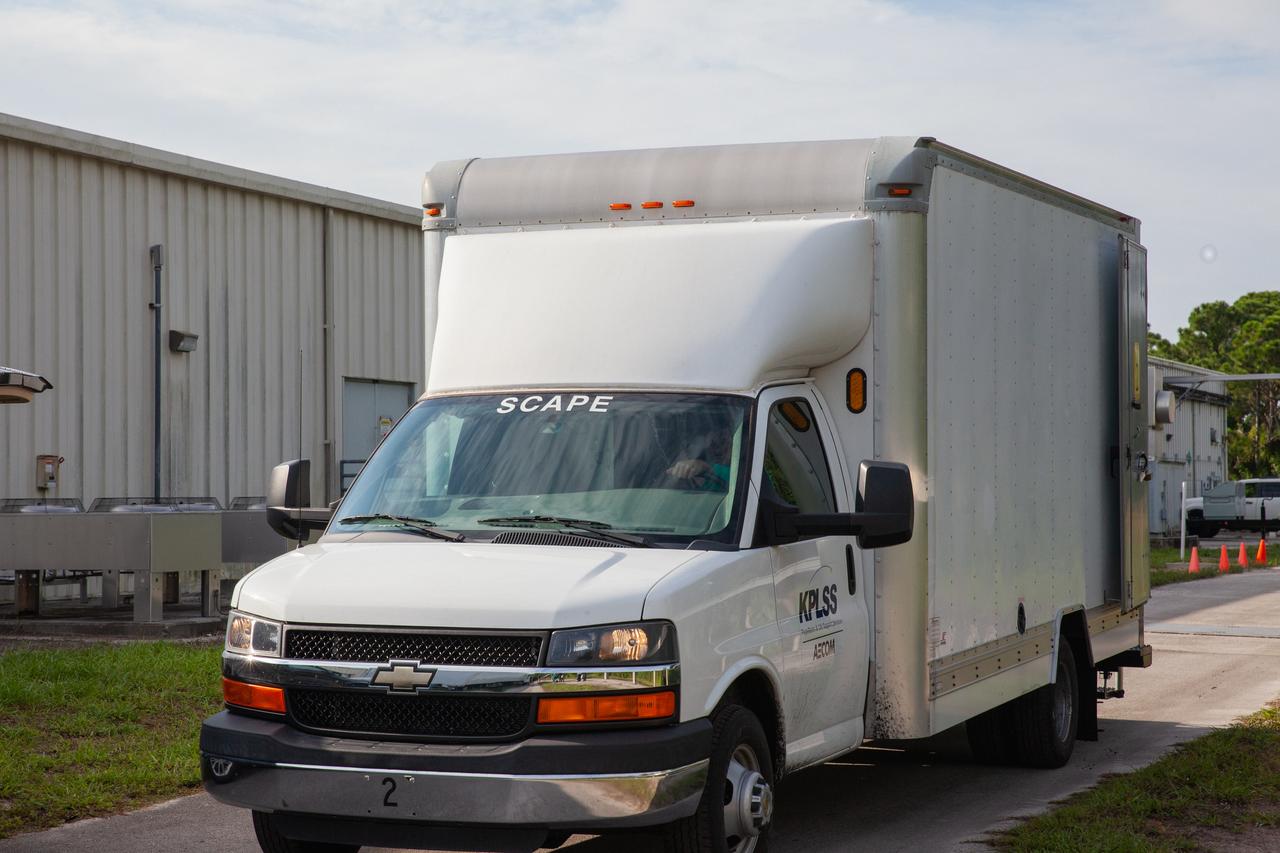
A truck transports technicians wearing Self-Contained Atmospheric Protective Ensemble (SCAPE) suits and operations support personnel to the Multi-Payload Processing Facility (MPPF) at NASA’s Kennedy Space Center in Florida, for a test simulation of loading propellants into a replicated test tank for Orion on Aug. 16, 2019. Exploration Ground Systems is preparing for Artemis 1 with a series of hazardous hyper test events at the MPPF. The technicians will complete a tanking to test the system before Orion arrives for processing. During preparations for launch, these teams will be responsible for loading the Orion vehicle with propellants prior to transportation to the Vehicle Assembly Building, where it will be secured atop the Space Launch System rocket. SCAPE suits are used in operations involving toxic propellants and are supplied with air either through a hardline or through a self-contained environmental control unit.
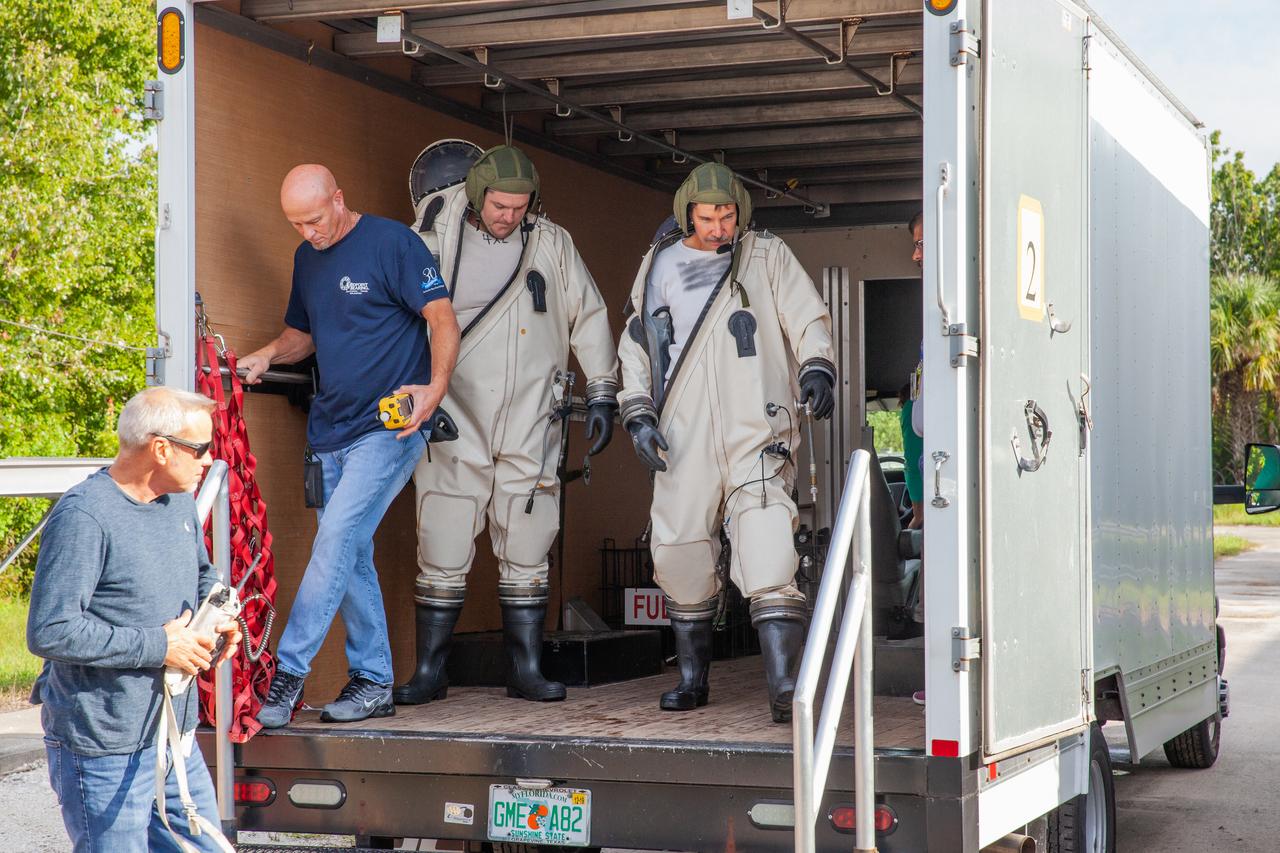
Technicians in Self-Contained Atmospheric Protective Ensemble (SCAPE) suits exit a truck near the Multi-Payload Processing Facility (MPPF) at NASA’s Kennedy Space Center in Florida, for a test simulation of loading propellants into a replicated test tank for Orion on Aug. 16, 2019. Exploration Ground Systems is preparing for Artemis 1 with a series of hazardous hyper test events at the MPPF. The technicians will complete a tanking to test the system before Orion arrives for processing. During preparations for launch, these teams will be responsible for loading the Orion vehicle with propellants prior to transportation to the Vehicle Assembly Building, where it will be secured atop the Space Launch System rocket. SCAPE suits are used in operations involving toxic propellants and are supplied with air either through a hardline or through a self-contained environmental control unit.
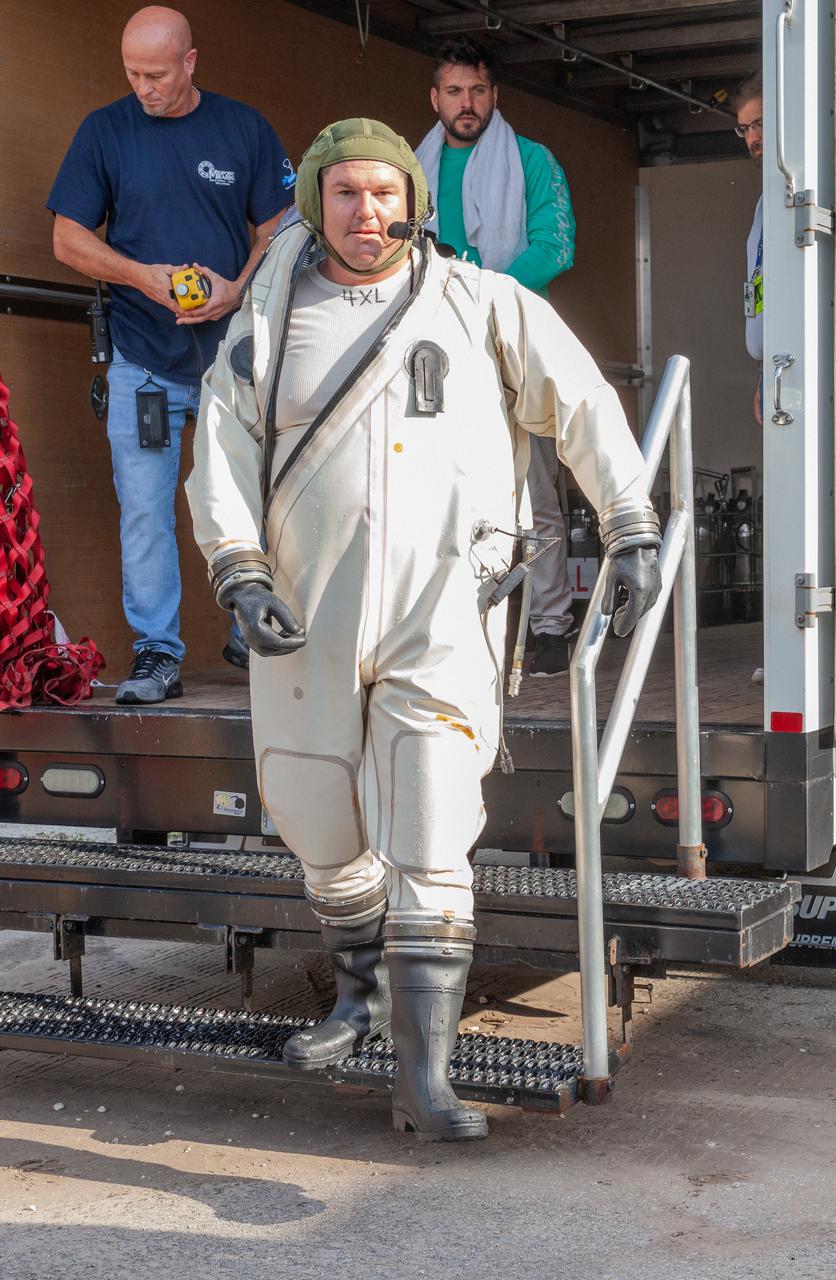
A technician in a Self-Contained Atmospheric Protective Ensemble (SCAPE) suit exits a truck near the Multi-Payload Processing Facility (MPPF) at NASA’s Kennedy Space Center in Florida on Aug. 16, 2019. SCAPE technicians are practicing by putting on the suits for a test simulation of loading propellants into a replicated test tank for Orion. Exploration Ground Systems is preparing for Artemis 1 with a series of hazardous hyper test events at the MPPF. After donning their suits, the technicians will complete a tanking to test the system before Orion arrives for processing. During preparations for launch, these teams will be responsible for loading the Orion vehicle with propellants prior to transportation to the Vehicle Assembly Building, where it will be secured atop the Space Launch System rocket. SCAPE suits are used in operations involving toxic propellants and are supplied with air either through a hardline or through a self-contained environmental control unit.
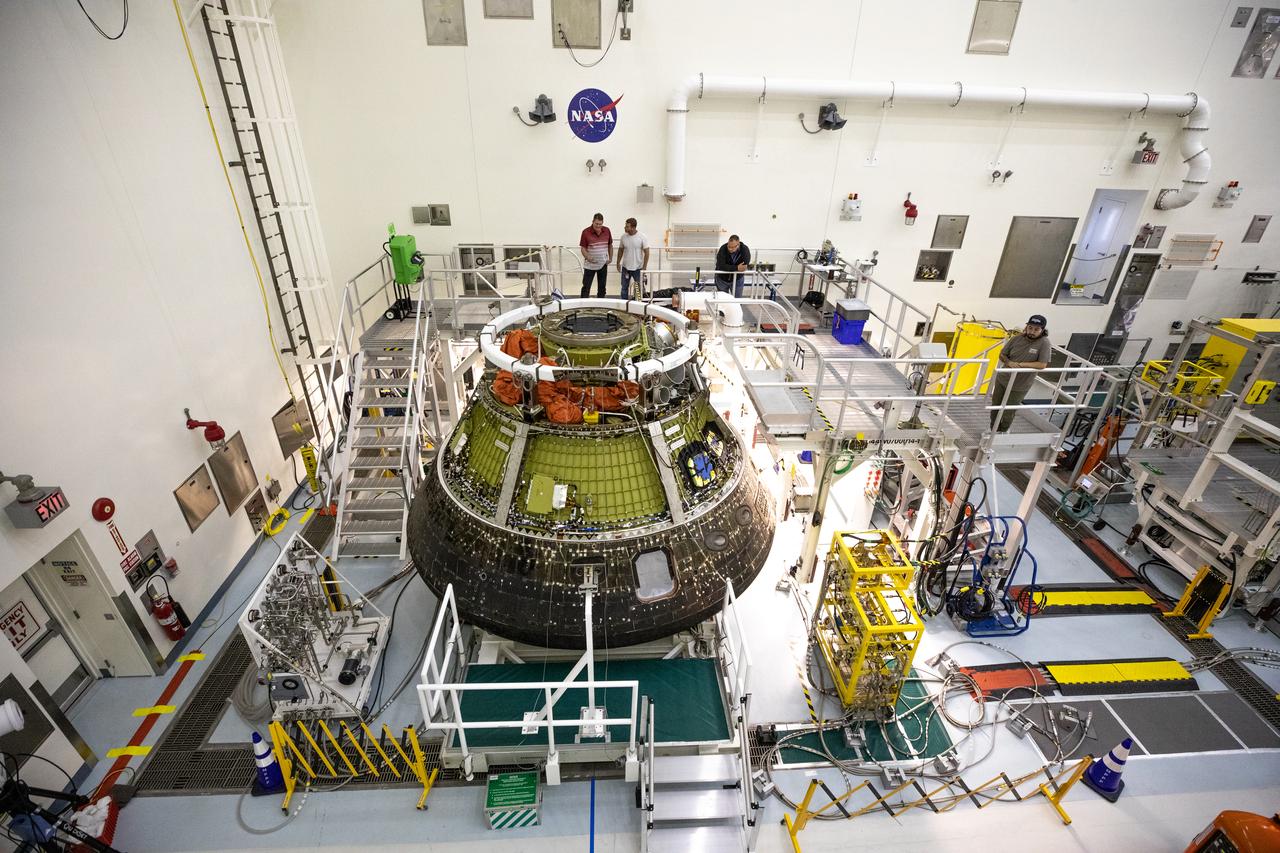
A view from above shows NASA’s Artemis I Orion capsule secured on a platform inside the Multi-Payload Processing Facility (MPPF) at Kennedy Space Center in Florida on Jan. 6, 2023. Orion splashed down in the Pacific Ocean at 12:40 p.m. EST on Dec. 11, 2022. The spacecraft was secured inside the well deck of the USS Portland for the voyage to U.S. Naval Base Sand Diego, arriving on Dec. 13, 2022. Orion was offloaded and transported back to Kennedy for deservicing inside the MPPF. Orion launched atop the Space Launch System rocket on Nov. 16, 2022 at 1:47 a.m. EST from Kennedy’s Launch Complex 39B for a 25-day trip beyond the Moon and back. During the flight, Orion flew farther than any human-rated spacecraft has ever flown, paving the way for human deep space exploration and demonstrating NASA’s commitment and capability to extend human presence to the Moon and beyond.
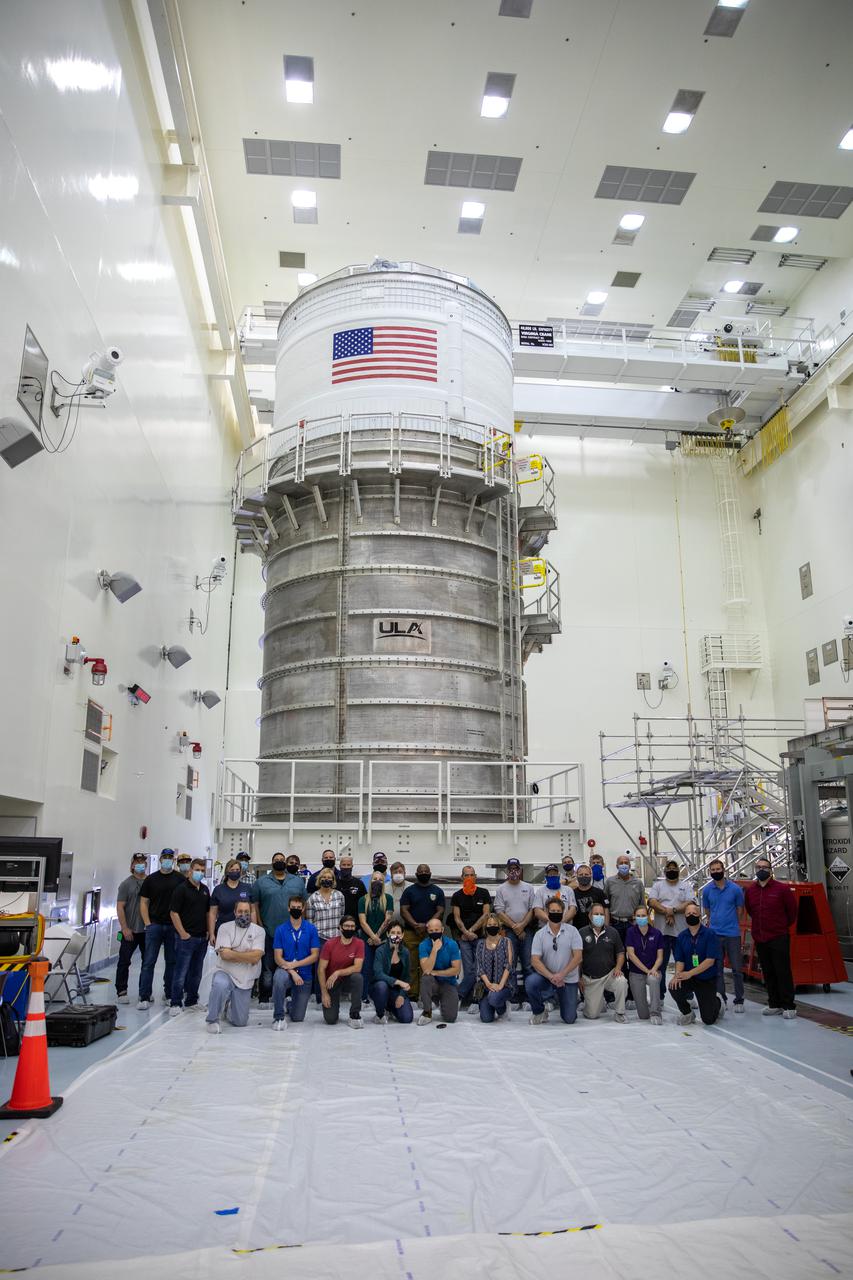
The Space Launch System (SLS) rocket’s interim cryogenic propulsion stage (ICPS) moved into the Multi-Payload Processing Facility February 18, 2021, at NASA’s Kennedy Space Center in Florida for the Artemis I mission. It will undergo fueling and servicing in the facility ahead of launch by teams from NASA’s Exploration Ground Systems and their primary contractor, Jacobs Technology. Artemis I will be an integrated flight test of the SLS rocket and Orion spacecraft ahead of the crewed flights to the Moon. Under the Artemis program, NASA will land the first woman and the next man on the lunar surface and establish a sustainable presence at the Moon to prepare for human missions to Mars.
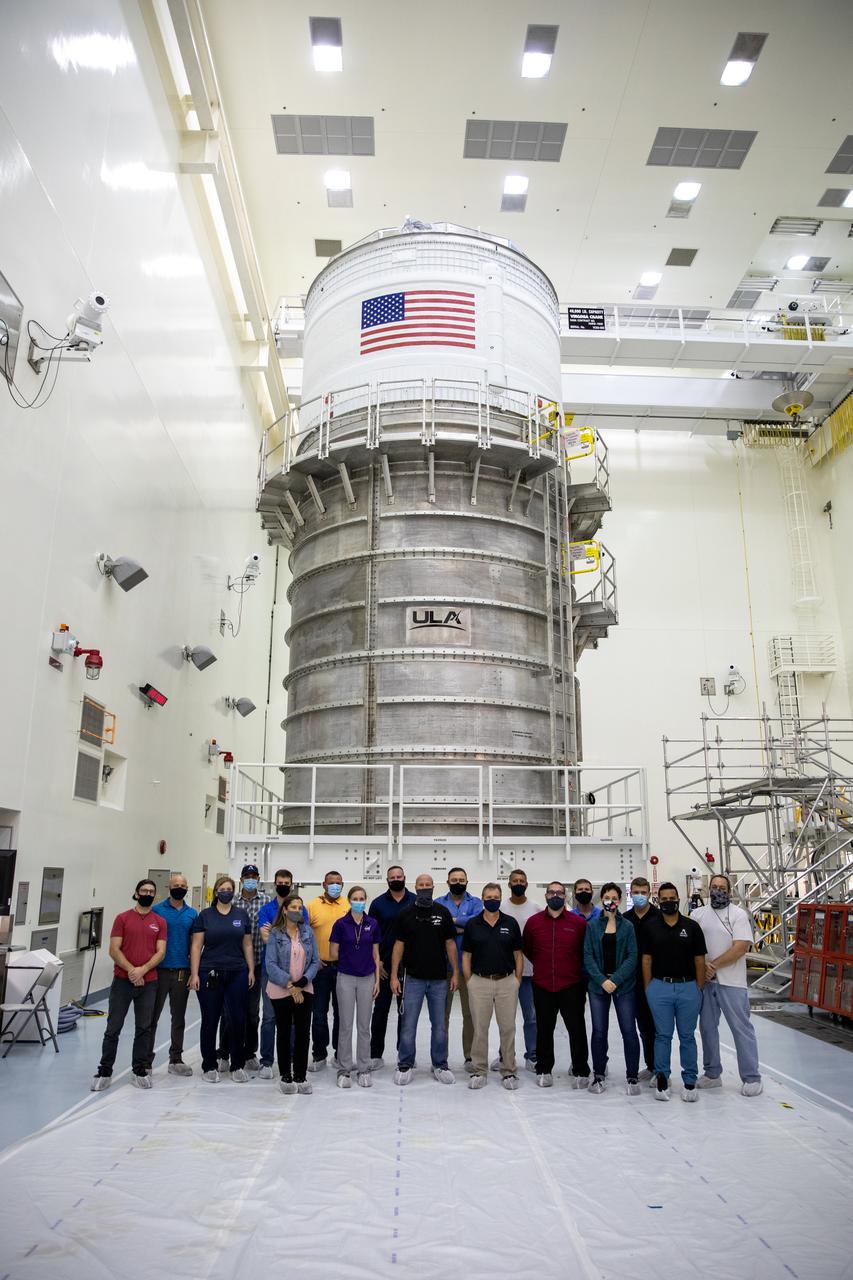
The Space Launch System (SLS) rocket’s interim cryogenic propulsion stage (ICPS) moved into the Multi-Payload Processing Facility February 18, 2021, at NASA’s Kennedy Space Center in Florida for the Artemis I mission. It will undergo fueling and servicing in the facility ahead of launch by teams from NASA’s Exploration Ground Systems and their primary contractor, Jacobs Technology. Artemis I will be an integrated flight test of the SLS rocket and Orion spacecraft ahead of the crewed flights to the Moon. Under the Artemis program, NASA will land the first woman and the next man on the lunar surface and establish a sustainable presence at the Moon to prepare for human missions to Mars.
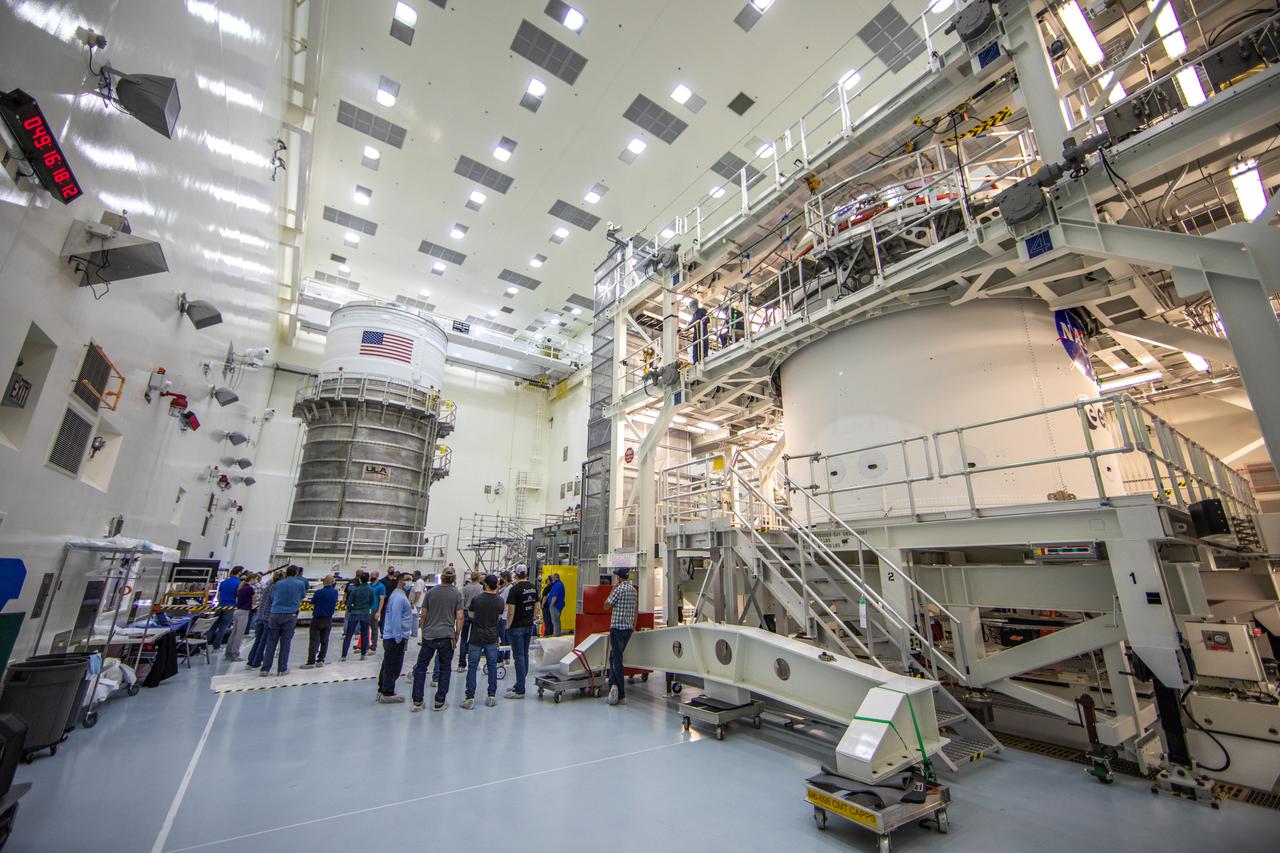
The Space Launch System (SLS) rocket’s interim cryogenic propulsion stage (ICPS) moved into the Multi-Payload Processing Facility February 18, 2021, at NASA’s Kennedy Space Center in Florida for the Artemis I mission. It will undergo fueling and servicing in the facility ahead of launch by teams from NASA’s Exploration Ground Systems and their primary contractor, Jacobs Technology. Artemis I will be an integrated flight test of the SLS rocket and Orion spacecraft ahead of the crewed flights to the Moon. Under the Artemis program, NASA will land the first woman and the next man on the lunar surface and establish a sustainable presence at the Moon to prepare for human missions to Mars.
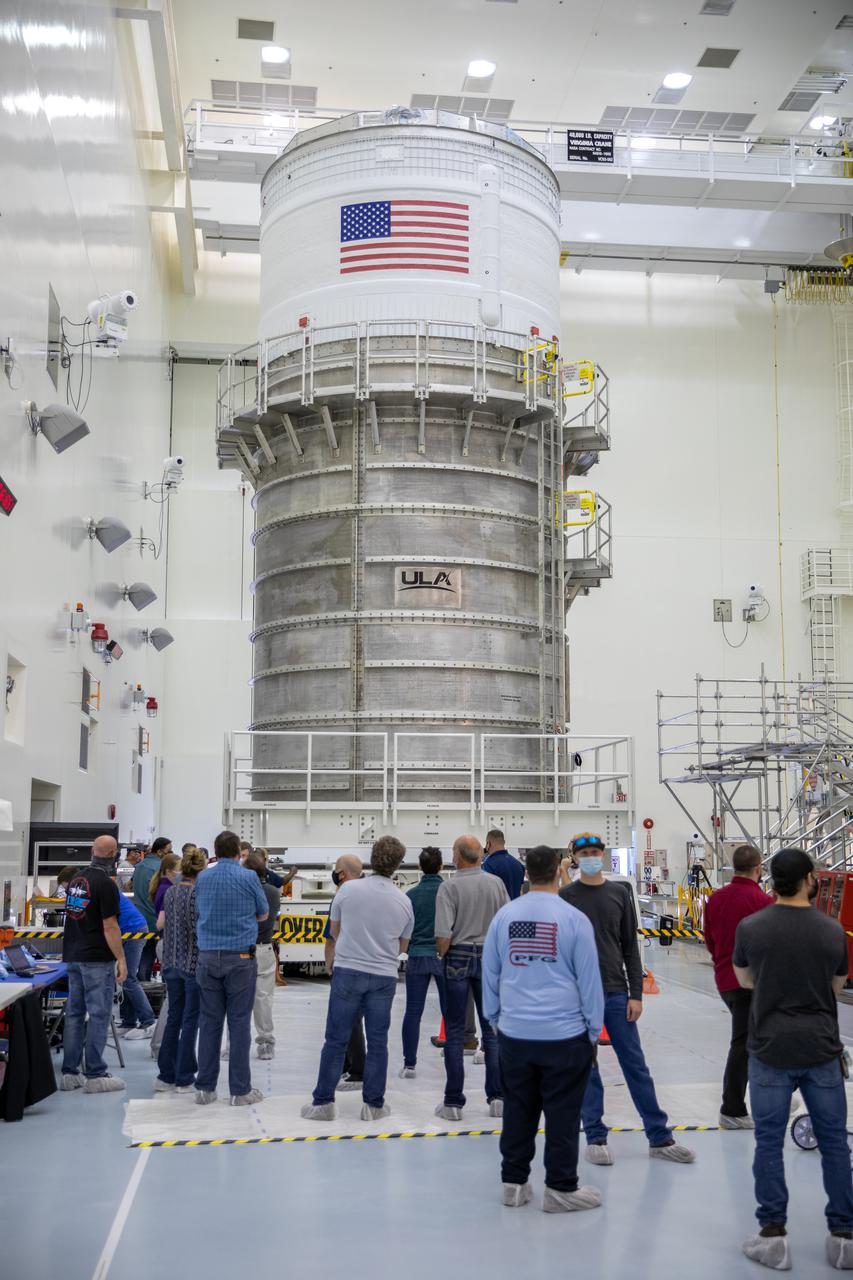
The Space Launch System (SLS) rocket’s interim cryogenic propulsion stage (ICPS) moved into the Multi-Payload Processing Facility February 18, 2021, at NASA’s Kennedy Space Center in Florida for the Artemis I mission. It will undergo fueling and servicing in the facility ahead of launch by teams from NASA’s Exploration Ground Systems and their primary contractor, Jacobs Technology. Artemis I will be an integrated flight test of the SLS rocket and Orion spacecraft ahead of the crewed flights to the Moon. Under the Artemis program, NASA will land the first woman and the next man on the lunar surface and establish a sustainable presence at the Moon to prepare for human missions to Mars.
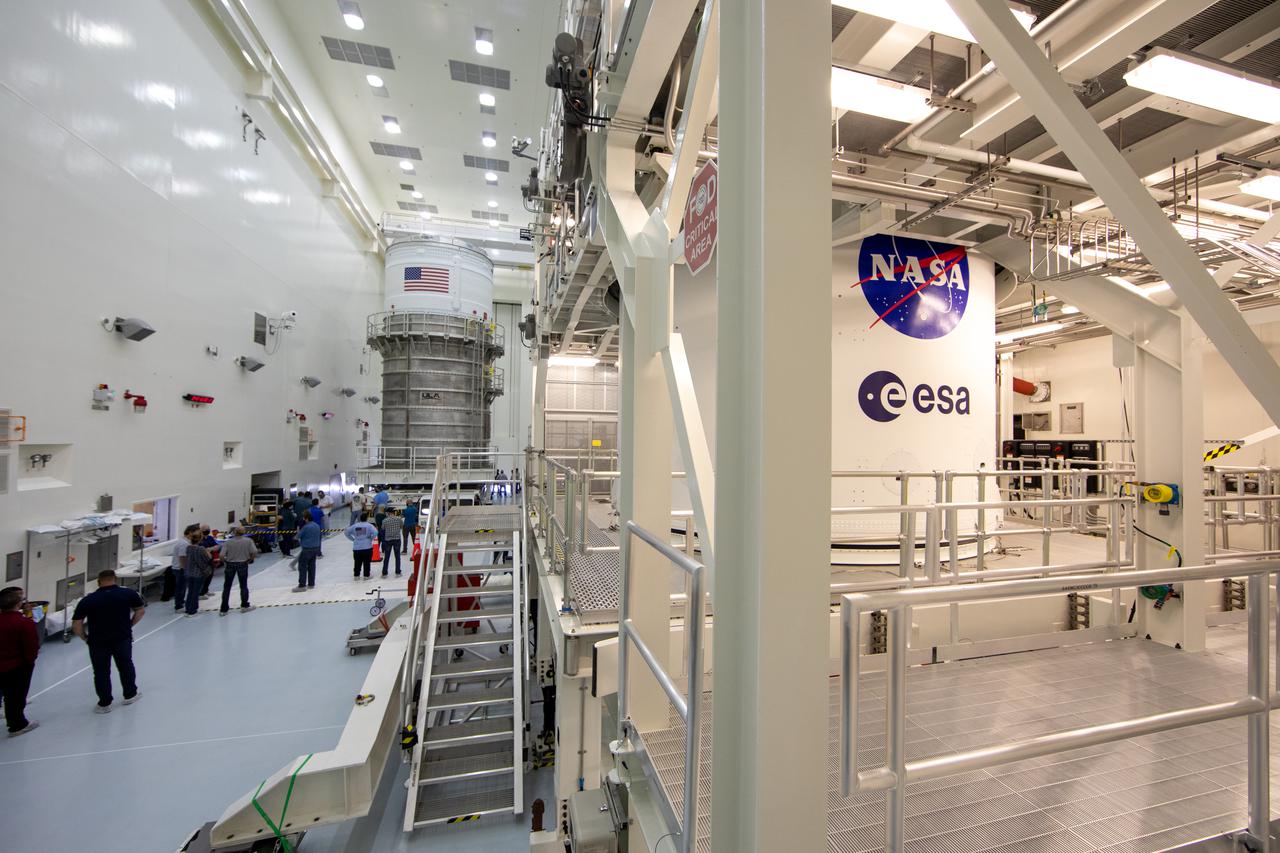
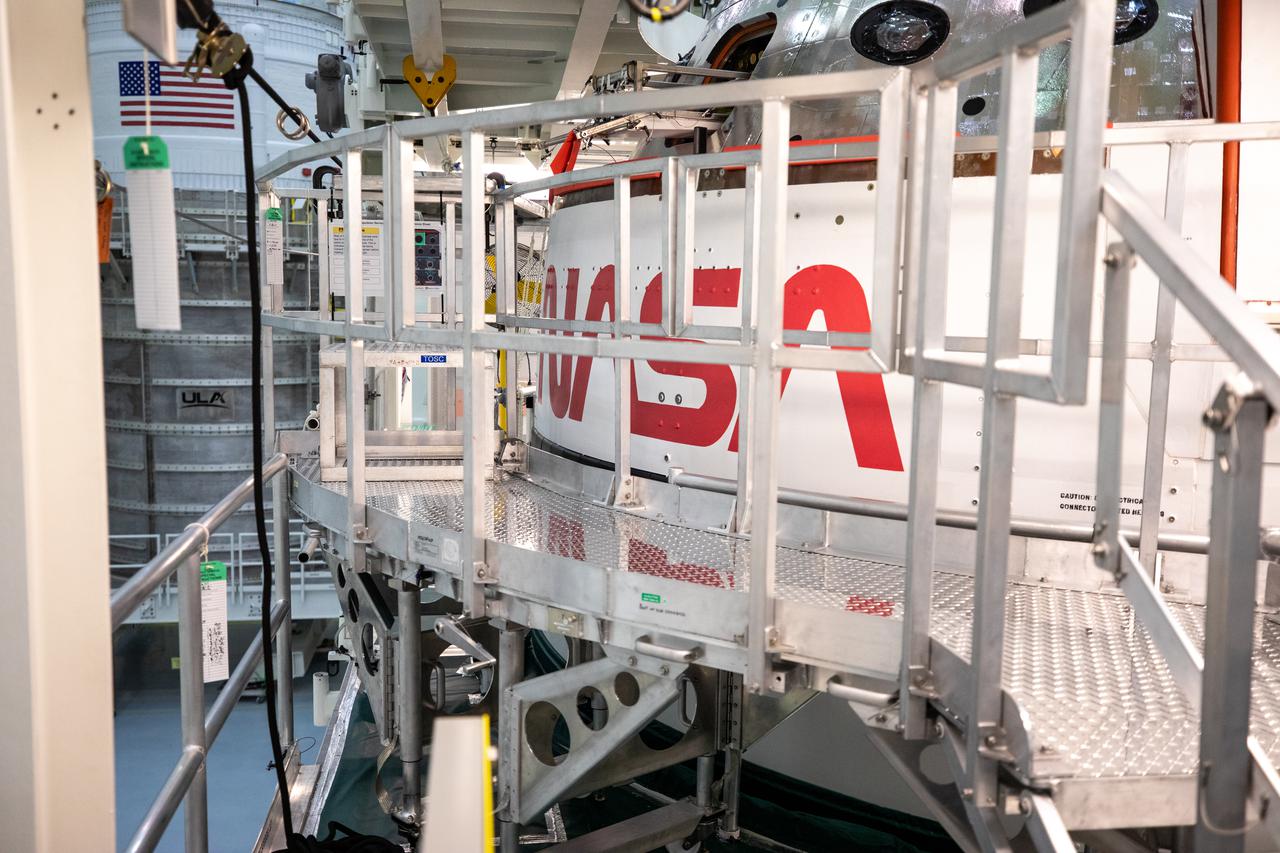
The Space Launch System (SLS) rocket’s interim cryogenic propulsion stage (ICPS) moved into the Multi-Payload Processing Facility February 18, 2021, at NASA’s Kennedy Space Center in Florida alongside one of its flight partners for the Artemis I mission, the Orion spacecraft. Both pieces of hardware will undergo fueling and servicing in the facility ahead of launch by teams from NASA’s Exploration Ground Systems and their primary contractor, Jacobs Technology. In view, at right, are the NASA insignia and ESA (European Space Agency) logos on the European-built service module. Artemis I will be an integrated flight test of the SLS rocket and Orion spacecraft ahead of the crewed flights to the Moon. Under the Artemis program, NASA will land the first woman and the next man on the lunar surface and establish a sustainable presence at the Moon to prepare for human missions to Mars.
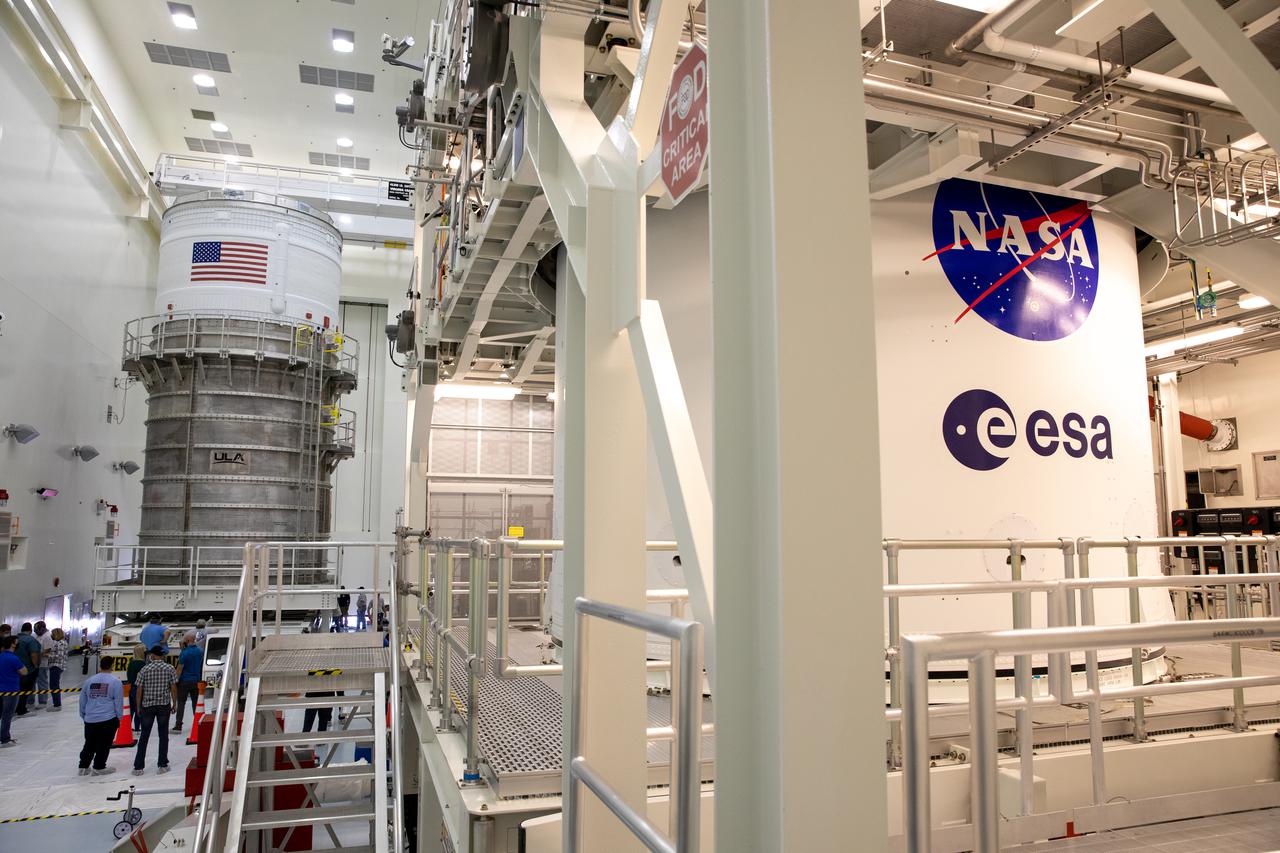
The Space Launch System (SLS) rocket’s interim cryogenic propulsion stage (ICPS) moved into the Multi-Payload Processing Facility February 18, 2021, at NASA’s Kennedy Space Center in Florida alongside one of its flight partners for the Artemis I mission, the Orion spacecraft. Both pieces of hardware will undergo fueling and servicing in the facility ahead of launch by teams from NASA’s Exploration Ground Systems and their primary contractor, Jacobs Technology. In view, at right, are the NASA insignia and ESA (European Space Agency) logos on the European-built service module. Artemis I will be an integrated flight test of the SLS rocket and Orion spacecraft ahead of the crewed flights to the Moon. Under the Artemis program, NASA will land the first woman and the next man on the lunar surface and establish a sustainable presence at the Moon to prepare for human missions to Mars.

From left, Meagan Jones, engineer, NASA’s Kennedy Space Center, and Howard Hu, manager, Orion Program, looks at NASA’s Orion spacecraft following its arrival at the NASA’s Kennedy Multi-Payload Processing Facility in Florida on Thursday, April 30, 2026, for de-servicing operations on the spacecraft. The Orion spacecraft successfully splashed down on Friday, April 10, 2026, in the Pacific Ocean following its approximate 10-day journey around the Moon carrying NASA astronauts Reid Wiseman, Victor Glover, and Christina Koch, and CSA (Canadian Space Agency) astronaut Jeremy Hansen for the Artemis II test flight mission.

Howard Hu, manager, Orion Program, inspects NASA’s Orion spacecraft following its arrival at the agency’s Kennedy Space Center Multi-Payload Processing Facility in Florida on Thursday, April 30, 2026, for de-servicing operations on the spacecraft. The Orion spacecraft successfully splashed down on Friday, April 10, 2026, in the Pacific Ocean following its approximate 10-day journey around the Moon carrying NASA astronauts Reid Wiseman, Victor Glover, and Christina Koch, and CSA (Canadian Space Agency) astronaut Jeremy Hansen for the Artemis II test flight mission.

This close-up photograph shows NASA’s Orion spacecraft inside the agency’s Kennedy Space Center Multi-Payload Processing Facility in Florida on Thursday, April 30, 2026, for de-servicing operations on the spacecraft. The Orion spacecraft successfully splashed down on Friday, April 10, 2026, in the Pacific Ocean following its approximate 10-day journey around the Moon carrying NASA astronauts Reid Wiseman, Victor Glover, and Christina Koch, and CSA (Canadian Space Agency) astronaut Jeremy Hansen for the Artemis II test flight mission. During reentry, the Orion spacecraft hits Earth’s atmosphere at 25,000 mph.
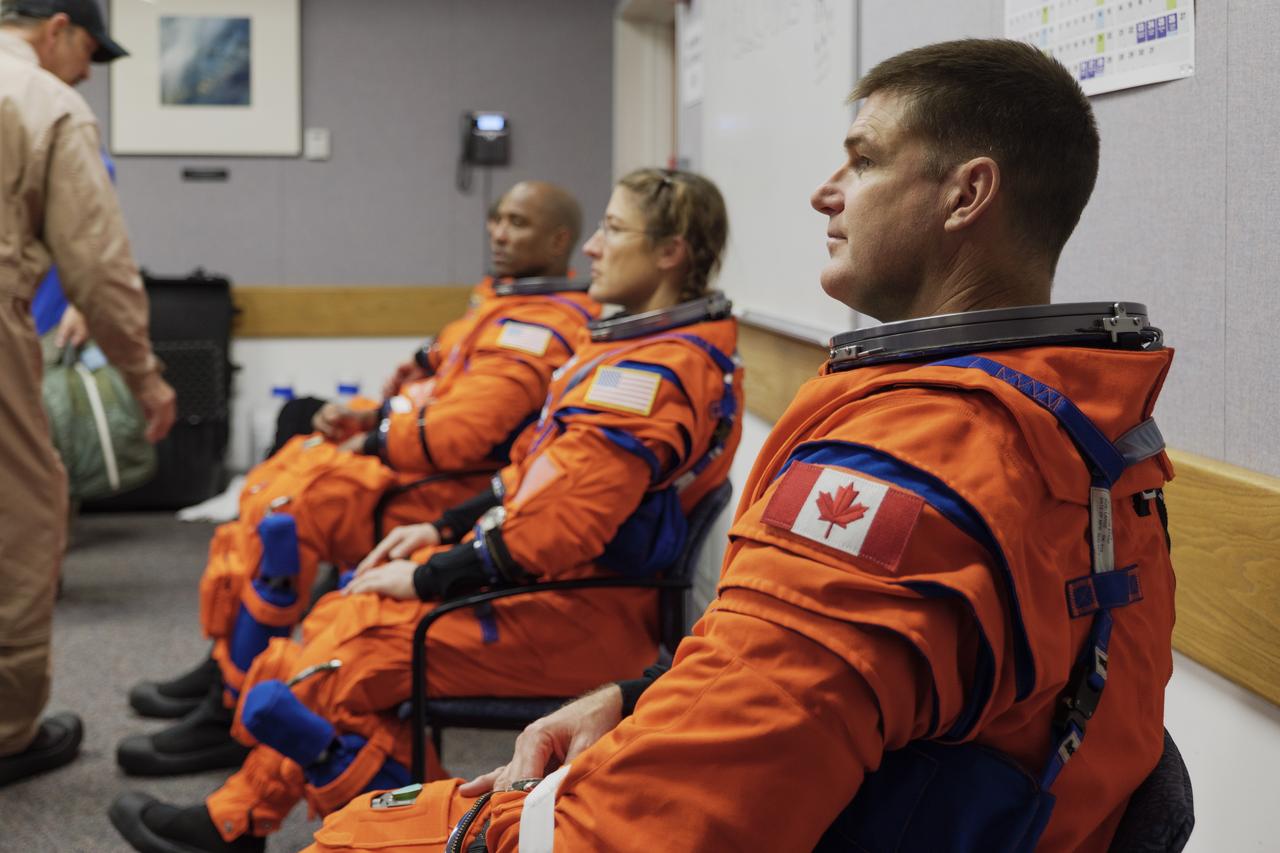
The crew of NASA’s Artemis II mission participates in a suited crew test on Thursday, July 31, 2025, at the agency’s Kennedy Space Center in Florida. From left, NASA astronauts Reid Wiseman, Artemis II commander; Victor Glover, Artemis II pilot; and Christina Koch, mission specialist; along with CSA (Canadian Space Agency) astronaut Jeremy Hansen donned their Orion crew survival system spacesuits for training at NASA’s Kennedy’s Multi-Payload Processing Facility, where they entered their fully powered Orion spacecraft as part of the test. Artemis II will take the four astronauts around the Moon, as the first crewed mission on NASA’s path to establishing a long-term presence for science and exploration through Artemis.
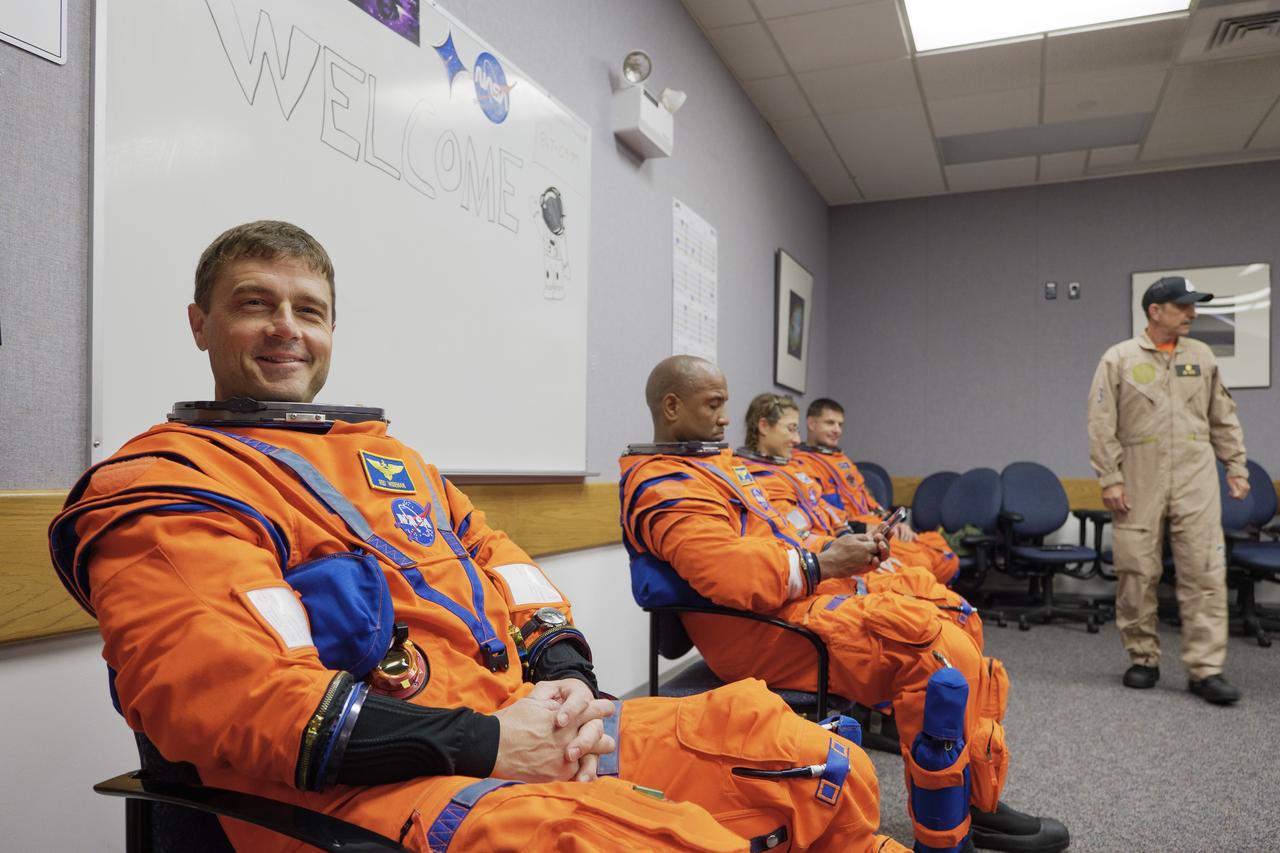
The crew of NASA’s Artemis II mission participates in a suited crew test on Thursday, July 31, 2025, at the agency’s Kennedy Space Center in Florida. From left, NASA astronauts Reid Wiseman, Artemis II commander; Victor Glover, Artemis II pilot; and Christina Koch, mission specialist; along with CSA (Canadian Space Agency) astronaut Jeremy Hansen,. mission specialist, donned their Orion crew survival system spacesuits for training at NASA’s Kennedy’s Multi-Payload Processing Facility, where they entered their fully powered Orion spacecraft as part of the test. Artemis II will take the four astronauts around the Moon, as the first crewed mission on NASA’s path to establishing a long-term presence for science and exploration through Artemis.
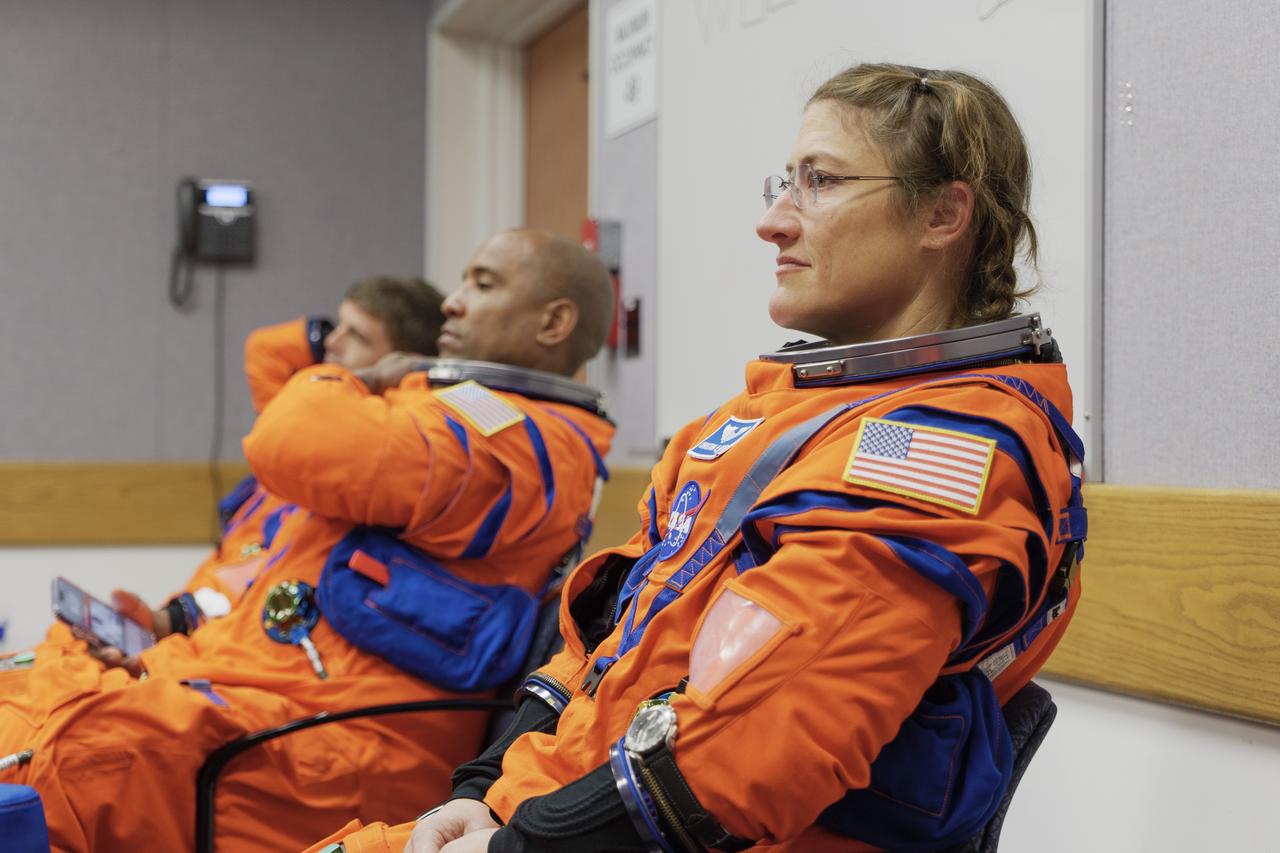
The crew of NASA’s Artemis II mission participates in a suited crew test on Thursday, July 31, 2025, at the agency’s Kennedy Space Center in Florida. From left, NASA astronauts Reid Wiseman, Artemis II commander; Victor Glover, Artemis II pilot; and Christina Koch, mission specialist, and CSA (Canadian Space Agency) Jeremy Hansen (not pictured), donned their Orion crew survival system spacesuits, for training at NASA’s Kennedy’s Multi-Payload Processing Facility, where they entered their fully powered Orion spacecraft as part of the test. Artemis II will take the four astronauts around the Moon, as the first crewed mission on NASA’s path to establishing a long-term presence for science and exploration through Artemis.
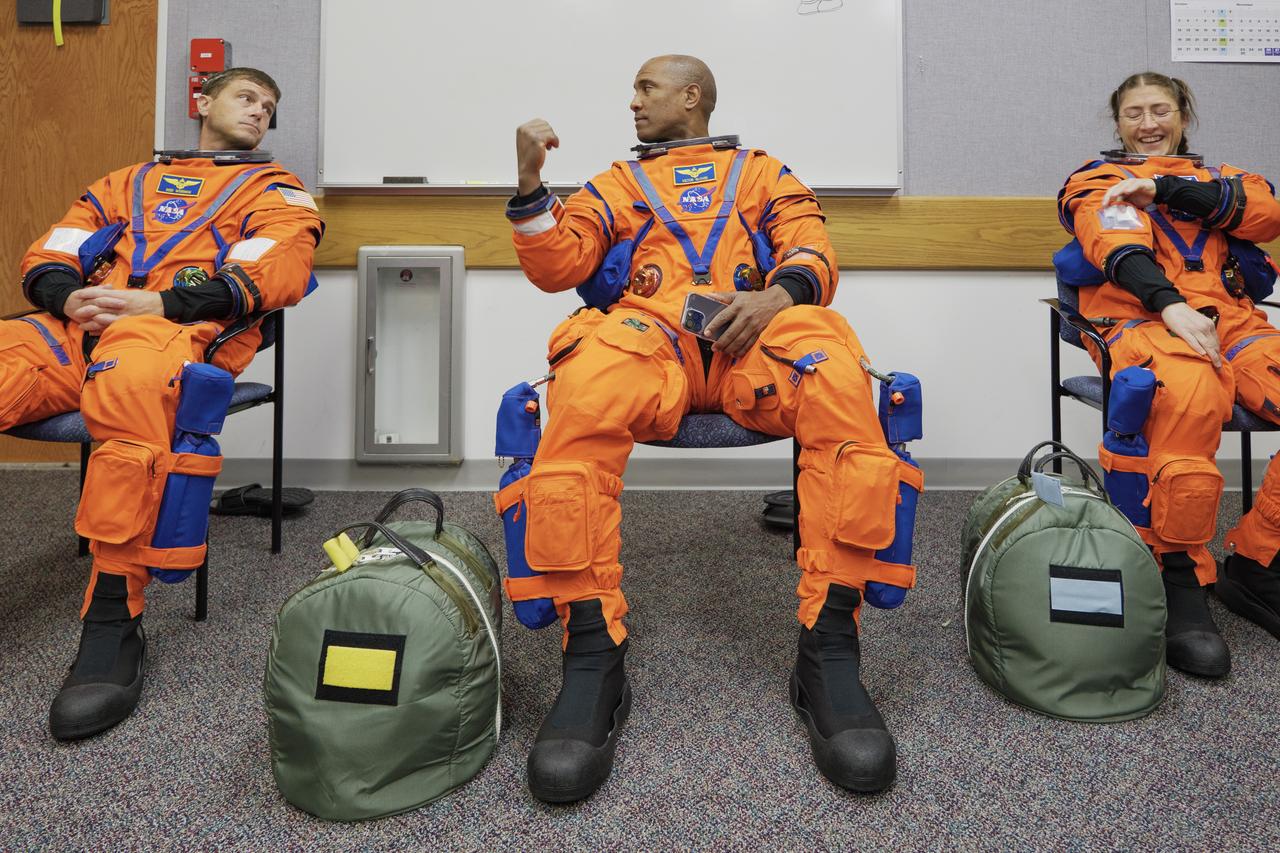
From left, NASA astronauts Reid Wiseman, Artemis II commander; Victor Glover, Artemis II pilot; and Christina Koch, mission specialist, participate in a suited crew test on Thursday, July 31, 2025, at the agency’s Kennedy Space Center in Florida. Along with CSA (Canadian Space Agency) astronaut Jeremy Hansen, mission specialist, the crew of NASA’s Artemis II mission donned their Orion crew survival system spacesuits for training at NASA’s Kennedy’s Multi-Payload Processing Facility, where they entered their fully powered Orion spacecraft as part of the test. Artemis II will take the four astronauts around the Moon, as the first crewed mission on NASA’s path to establishing a long-term presence for science and exploration through Artemis.
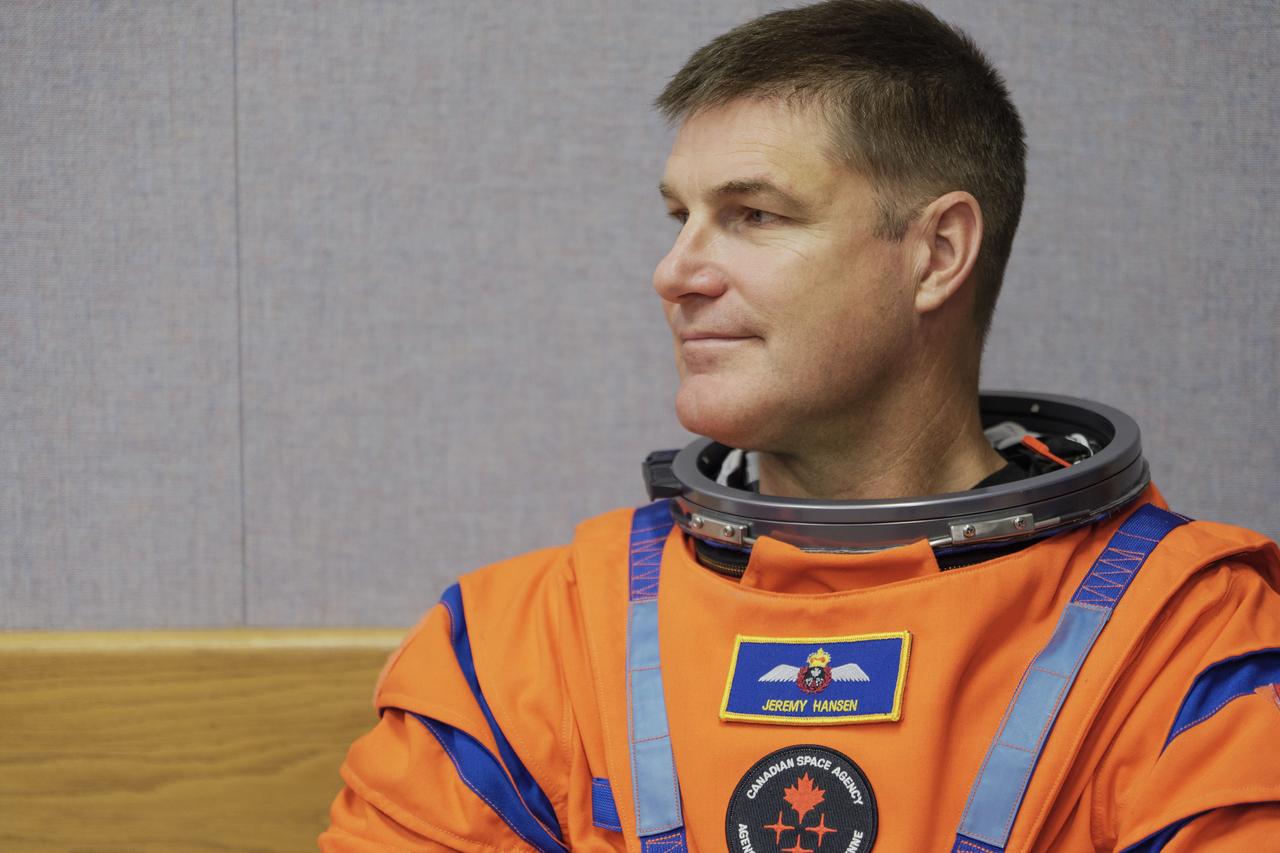
CSA (Canadian Space Agency) astronaut Jeremy Hansen, mission specialist for NASA’s Artemis II mission, participates in a suited crew test on Thursday, July 31, 2025, at the agency’s Kennedy Space Center in Florida. Hansen and fellow Artemis II crew members, NASA astronauts Reid Wiseman, Artemis II commander; Victor Glover, Artemis II pilot; and Christina Koch, mission specialist, donned their Orion crew survival system spacesuits for training at NASA’s Kennedy’s Multi-Payload Processing Facility, where they entered their fully powered Orion spacecraft as part of the test. Artemis II will take the four astronauts around the Moon, as the first crewed mission on NASA’s path to establishing a long-term presence for science and exploration through Artemis.
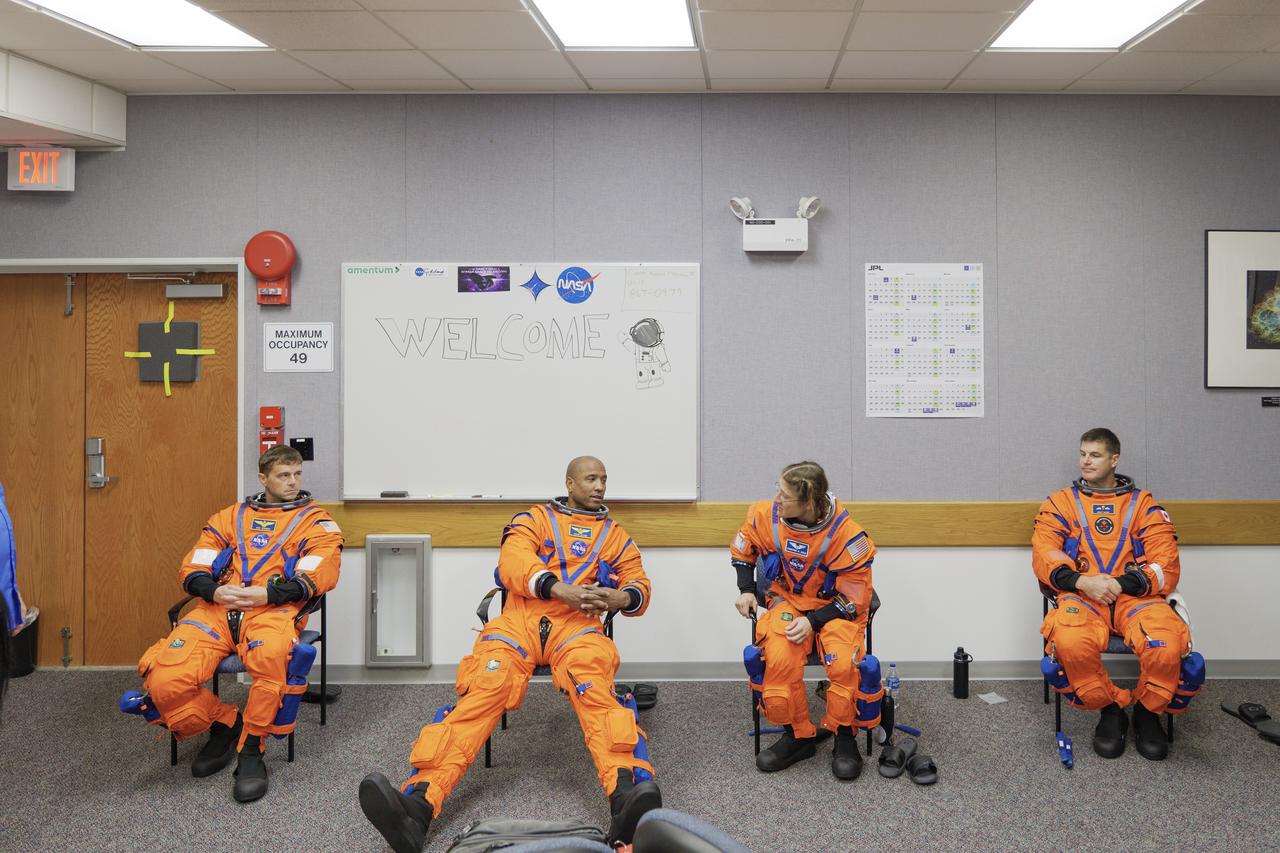
The crew of NASA’s Artemis II mission participates in a suited crew test on Thursday, July 31, 2025, at the agency’s Kennedy Space Center in Florida. From left, NASA astronauts Reid Wiseman, Artemis II commander; Victor Glover, Artemis II pilot; and Christina Koch, mission specialist; along with CSA (Canadian Space Agency) astronaut Jeremy Hansen,. mission specialist, donned their Orion crew survival system spacesuits for training at NASA’s Kennedy’s Multi-Payload Processing Facility, where they entered their fully powered Orion spacecraft as part of the test. Artemis II will take the four astronauts around the Moon, as the first crewed mission on NASA’s path to establishing a long-term presence for science and exploration through Artemis.

The crew of NASA’s Artemis II mission participates in a suited crew test on Thursday, July 31, 2025, at the agency’s Kennedy Space Center in Florida. From left, NASA astronauts Reid Wiseman, Artemis II commander; Victor Glover, Artemis II pilot; and Christina Koch, mission specialist; along with CSA (Canadian Space Agency) astronaut Jeremy Hansen,. mission specialist, donned their Orion crew survival system spacesuits for training at NASA’s Kennedy’s Multi-Payload Processing Facility, where they entered their fully powered Orion spacecraft as part of the test. Artemis II will take the four astronauts around the Moon, as the first crewed mission on NASA’s path to establishing a long-term presence for science and exploration through Artemis.
Charlie Duke and Nicole Stott visit the Multi-Payload Processing Facility (MPPF) and Vehicle Assembly Building (VAB) at NASA's Kennedy Space Center.
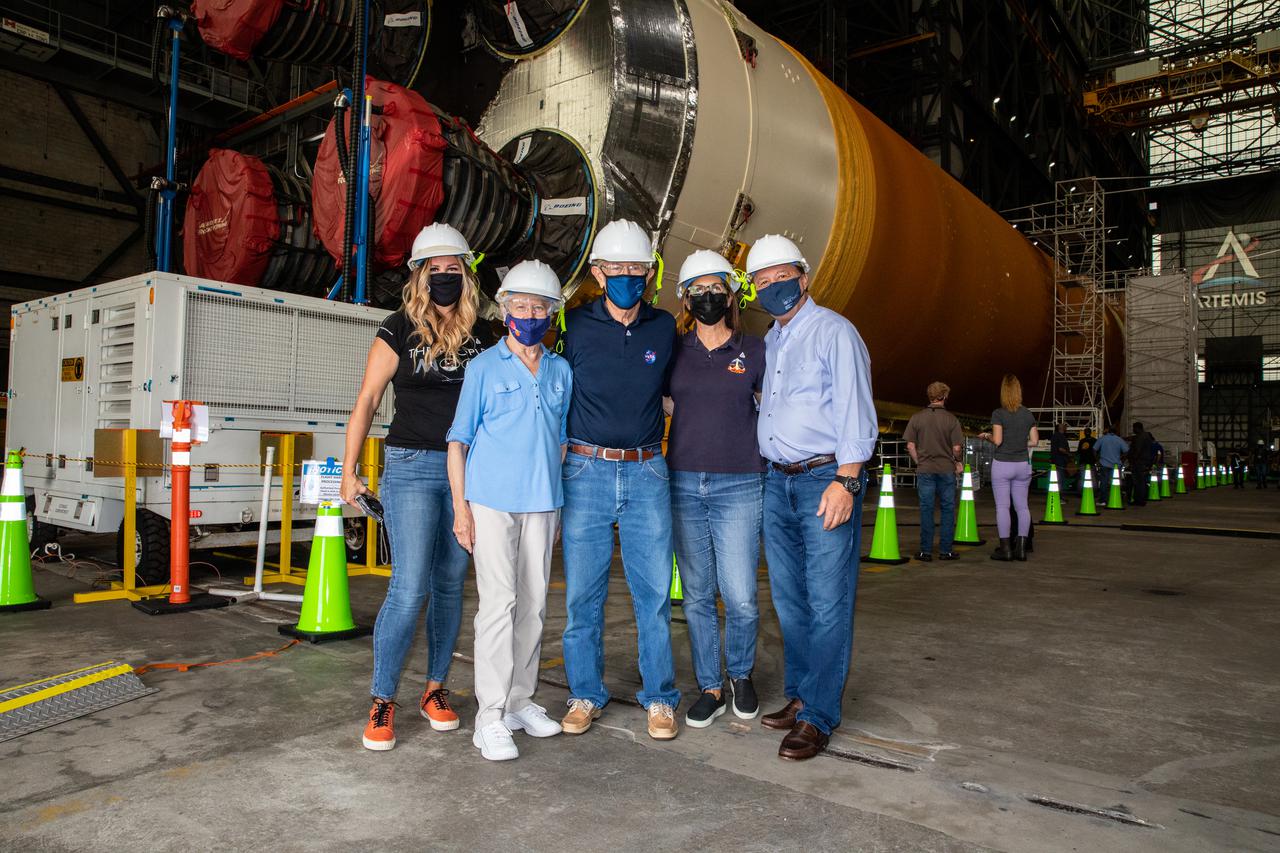
Charlie Duke and Nicole Stott visit the Multi-Payload Processing Facility (MPPF) and Vehicle Assembly Building (VAB) at NASA's Kennedy Space Center.
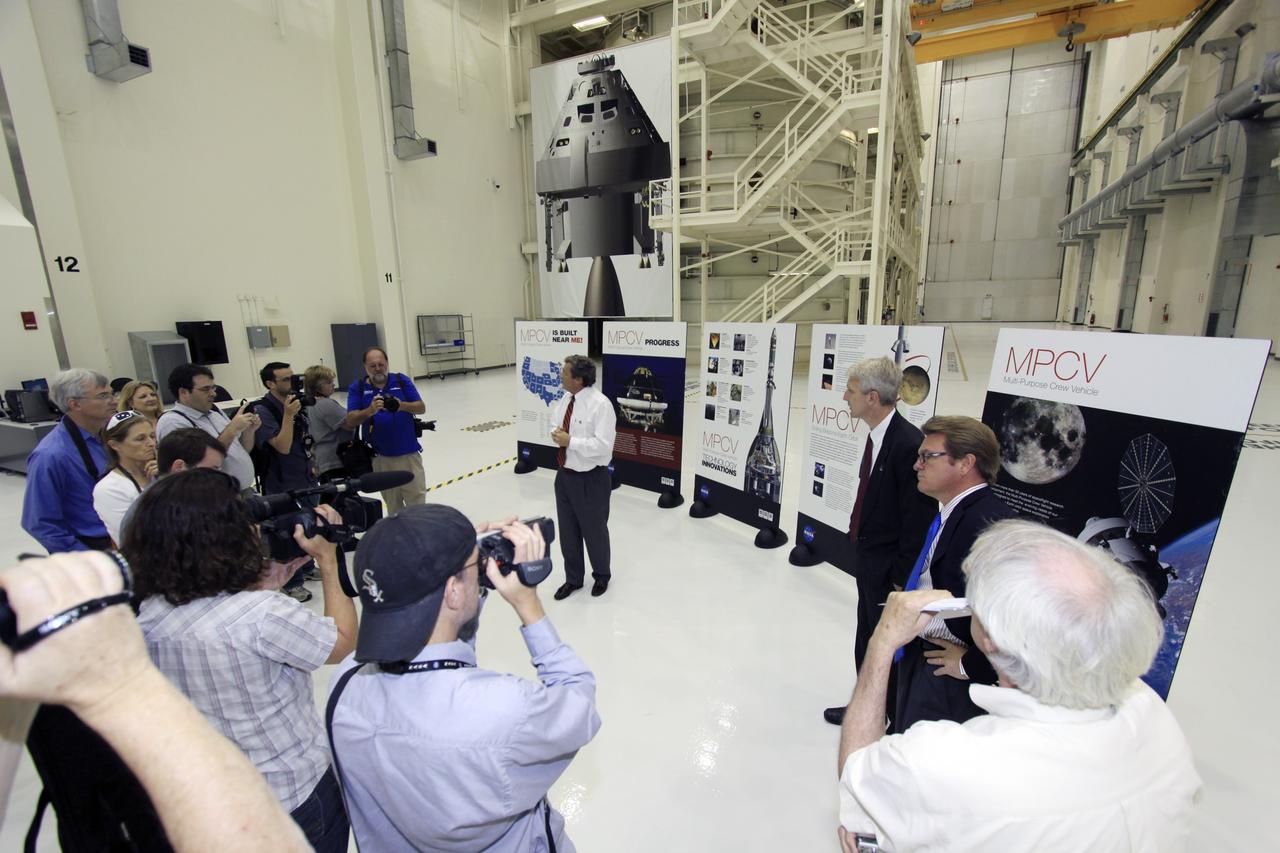
CAPE CANAVERAL, Fla. – Members of the media tour several facilities, including the Operations & Checkout Building high bay where NASA’s Multi-Purpose Crew Vehicle Orion will be processed, during the 21st Century Ground Systems Program Tour at Kennedy Space Center in Florida. Other tour stops were the Launch Equipment Test Facility, the Multi-Payload Processing Facility and the Canister Rotation Facility. NASA’s 21st Century Ground Systems Program was initiated at Kennedy Space Center to establish the needed launch and processing infrastructure to support the Space Launch System Program and to work toward transforming the landscape of the launch site for a multi-faceted user community. Photo credit: NASA/Jim Grossmann
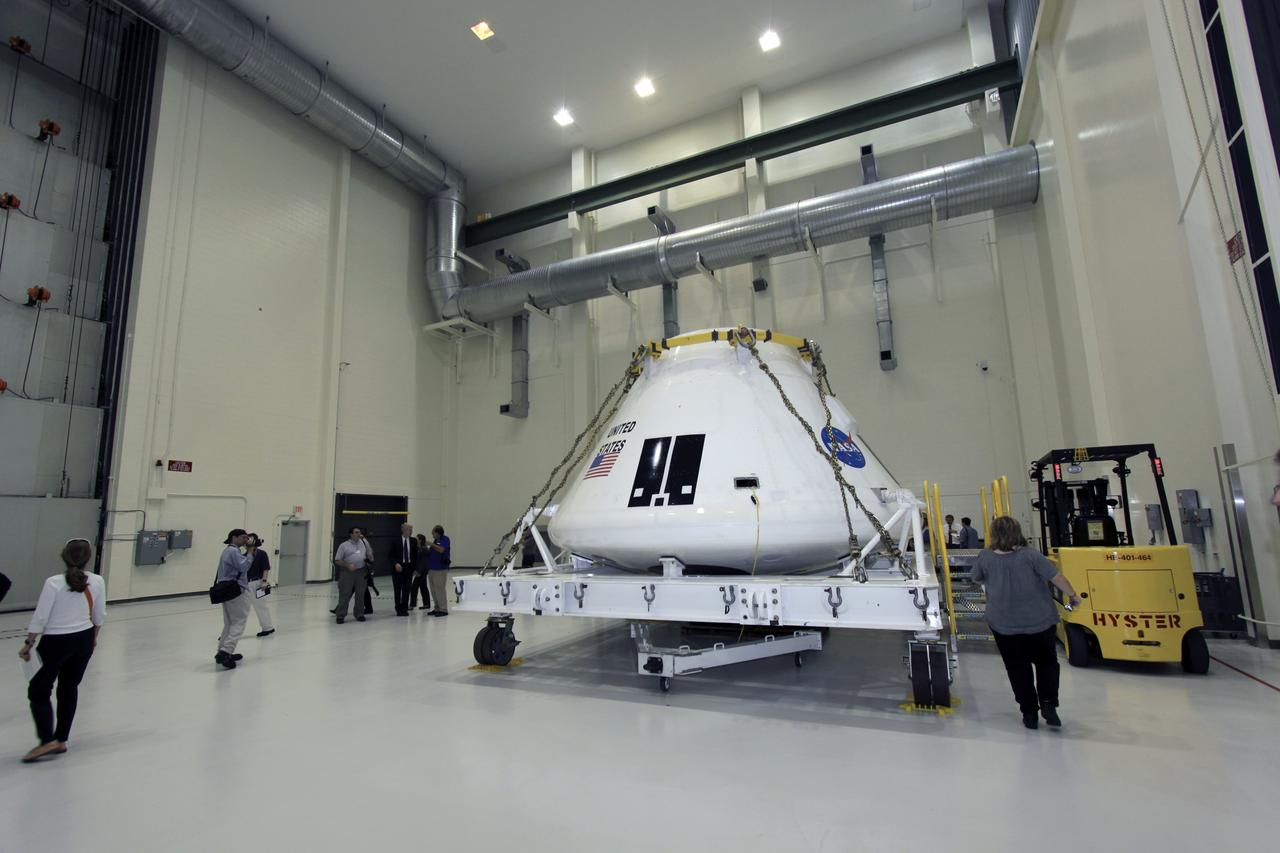
CAPE CANAVERAL, Fla. – Members of the media tour several facilities, including the Operations & Checkout Building high bay where NASA’s Multi-Purpose Crew Vehicle Orion will be processed, during the 21st Century Ground Systems Program Tour at Kennedy Space Center in Florida. Other tour stops were the Launch Equipment Test Facility, the Multi-Payload Processing Facility and the Canister Rotation Facility. NASA’s 21st Century Ground Systems Program was initiated at Kennedy Space Center to establish the needed launch and processing infrastructure to support the Space Launch System Program and to work toward transforming the landscape of the launch site for a multi-faceted user community. Photo credit: NASA/Jim Grossmann

NASA’s Orion spacecraft for the agency’s Artemis II mission arrives at the NASA’s Kennedy Space Center Multi-Payload Processing Facility in Florida on Thursday, April 30, 2026, for de-servicing operations on the spacecraft. The Orion spacecraft successfully splashed down on Friday, April 10, 2026, in the Pacific Ocean following its approximate 10-day journey around the Moon carrying NASA astronauts Reid Wiseman, Victor Glover, and Christina Koch, and CSA (Canadian Space Agency) astronaut Jeremy Hansen. As part of a Golden Age of innovation and exploration, Artemis II marked another step toward new U.S.-crewed missions on the Moon’s surface that will help the agency prepare to send the first astronauts – Americans – to Mars.

NASA’s Orion spacecraft for the agency’s Artemis II mission arrives at the NASA’s Kennedy Space Cen-ter Multi Payload Processing Facility in Florida on Thursday, April 30, 2026, for de-servicing operations on the spacecraft. The Orion spacecraft successfully splashed down on Friday April 10, 2026, in the Pacific Ocean following its approximate 10-day journey around the Moon carrying NASA astronauts Reid Wiseman, Victor Glover, and Christina Koch, and CSA (Canadian Space Agency) astronaut Jeremy Hansen. As part of a Golden Age of innovation and exploration, Artemis II marked another step toward new U.S.-crewed missions on the Moon’s surface that will help the agency prepare to send the first astronauts – Americans – to Mars.

NASA’s Orion spacecraft for the agency’s Artemis II mission arrives at the NASA’s Kennedy Space Center Multi-Payload Processing Facility in Florida on Thursday, April 30, 2026, for de-servicing operations on the spacecraft. The Orion spacecraft successfully splashed down on Friday, April 10, 2026, in the Pacific Ocean following its approximate 10-day journey around the Moon carrying NASA astronauts Reid Wiseman, Victor Glover, and Christina Koch, and CSA (Canadian Space Agency) astronaut Jeremy Hansen. As part of a Golden Age of innovation and exploration, Artemis II marked another step toward new U.S.-crewed missions on the Moon’s surface that will help the agency prepare to send the first astronauts – Americans – to Mars.
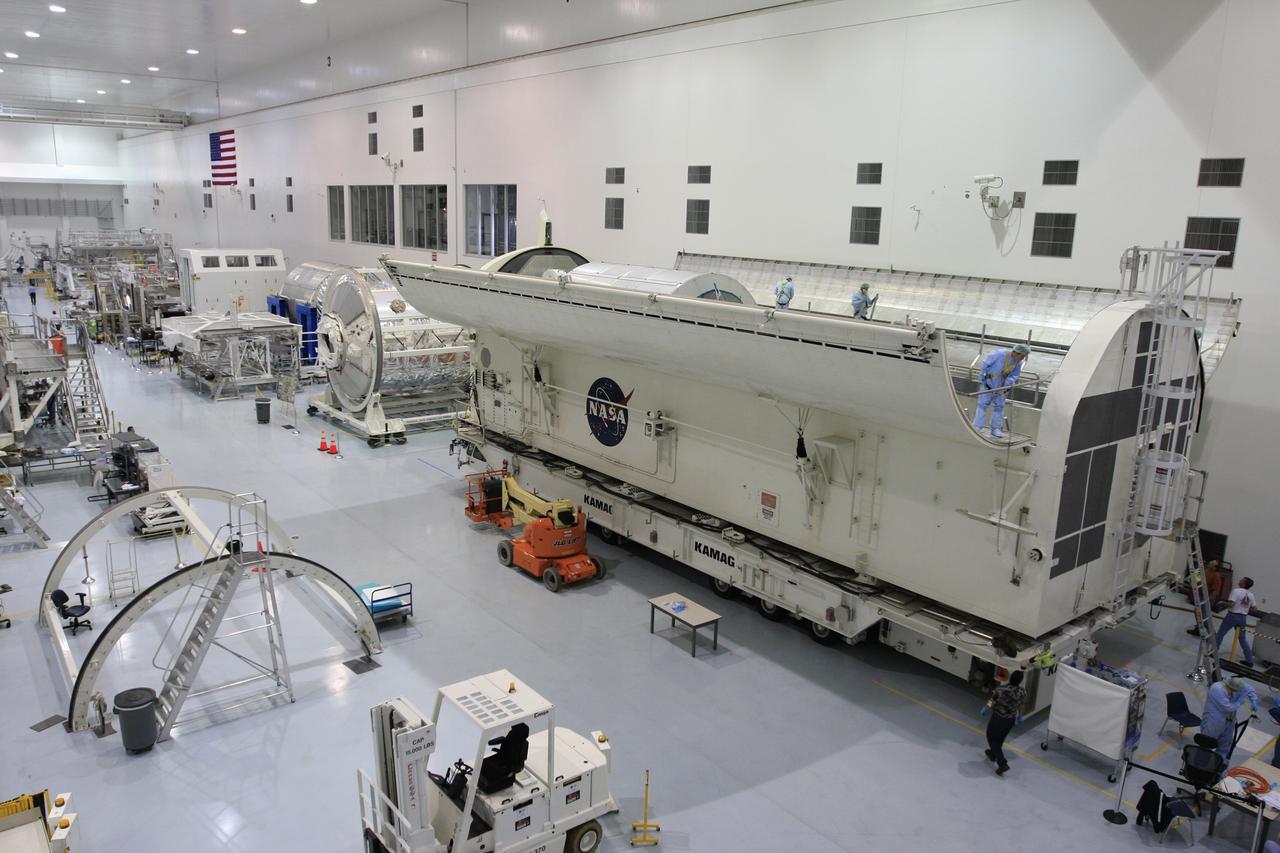
CAPE CANAVERAL, Fla. - In the Space Station Processing Facility at NASA's Kennedy Space Center in Florida, workers prepare to close the payload canister containing the payload for space shuttle Endeavour's STS-126 mission. Inside the canister are the Multi-Purpose Logistics Module Leonardo and the Lightweight Multi-Purpose Experiment Support Structure Carrier. The canister next will be transported to the Canister Rotation Facility to raise it to vertical and then will be taken to Launch Pad 39A. At the pad, the payload canister will release its cargo into the Payload Changeout Room. Later, the payload will be installed in Endeavour's payload bay. Endeavour is targeted for launch on Nov. 14. Photo credit: NASA/Troy Cryder

CAPE CANAVERAL, Fla. - The payload canister containing the payload for space shuttle Endeavour's STS-126 mission rolls out of the Space Station Processing Facility at NASA's Kennedy Space Center in Florida. Inside the canister are the Multi-Purpose Logistics Module Leonardo and the Lightweight Multi-Purpose Experiment Support Structure Carrier. The canister next will be transported to the Canister Rotation Facility to raise it to vertical and then will be taken to Launch Pad 39A. At the pad, the payload canister will release its cargo into the Payload Changeout Room. Later, the payload will be installed in Endeavour's payload bay. Endeavour is targeted for launch on Nov. 14. Photo credit: NASA/Troy Cryder
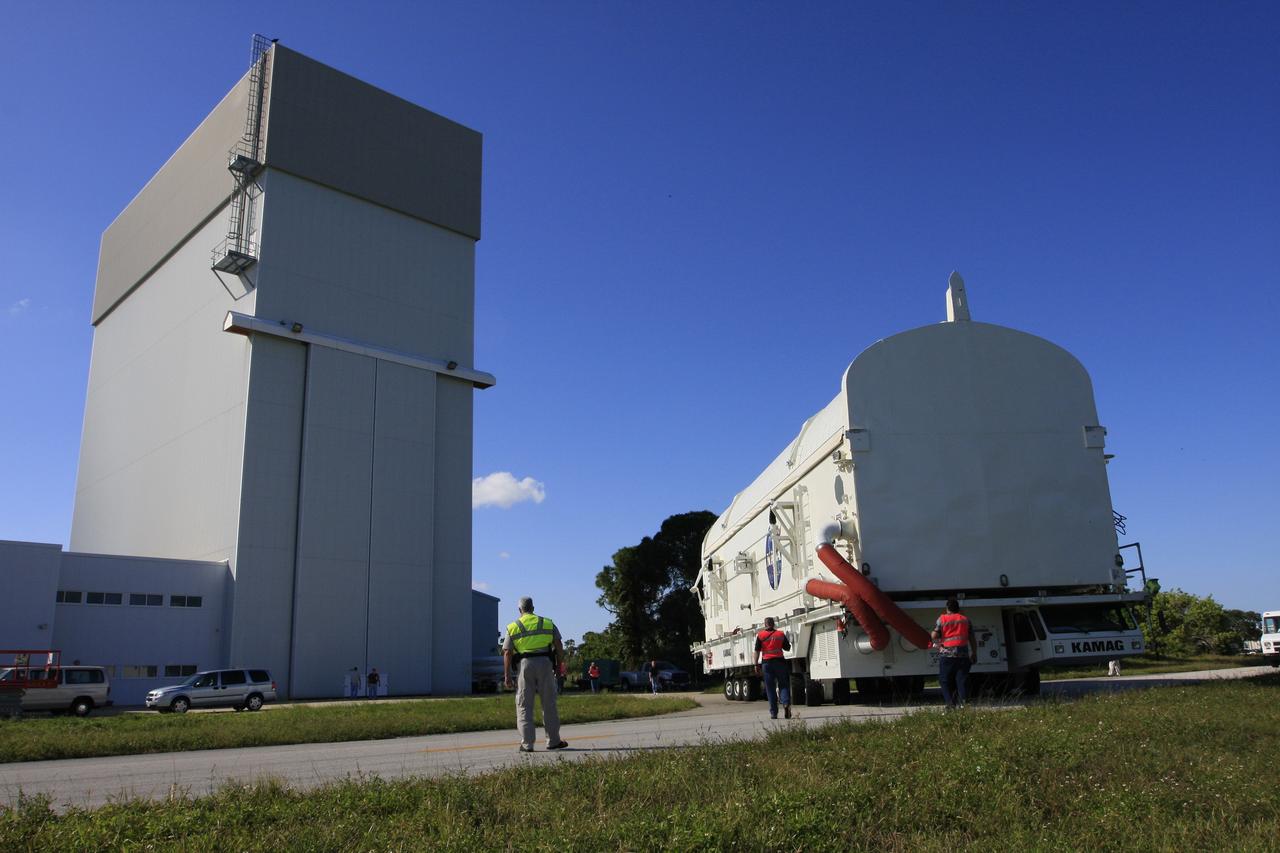
CAPE CANAVERAL, Fla. - The payload canister containing the payload for space shuttle Endeavour's STS-126 mission backs away from the Space Station Processing Facility at NASA's Kennedy Space Center in Florida. Inside the canister are the Multi-Purpose Logistics Module Leonardo and the Lightweight Multi-Purpose Experiment Support Structure Carrier. The canister will be transported to the Canister Rotation Facility to raise it to vertical and then will be taken to Launch Pad 39A. At the pad, the payload canister will release its cargo into the Payload Changeout Room. Later, the payload will be installed in Endeavour's payload bay. Endeavour is targeted for launch on Nov. 14. Photo credit: NASA/Troy Cryder
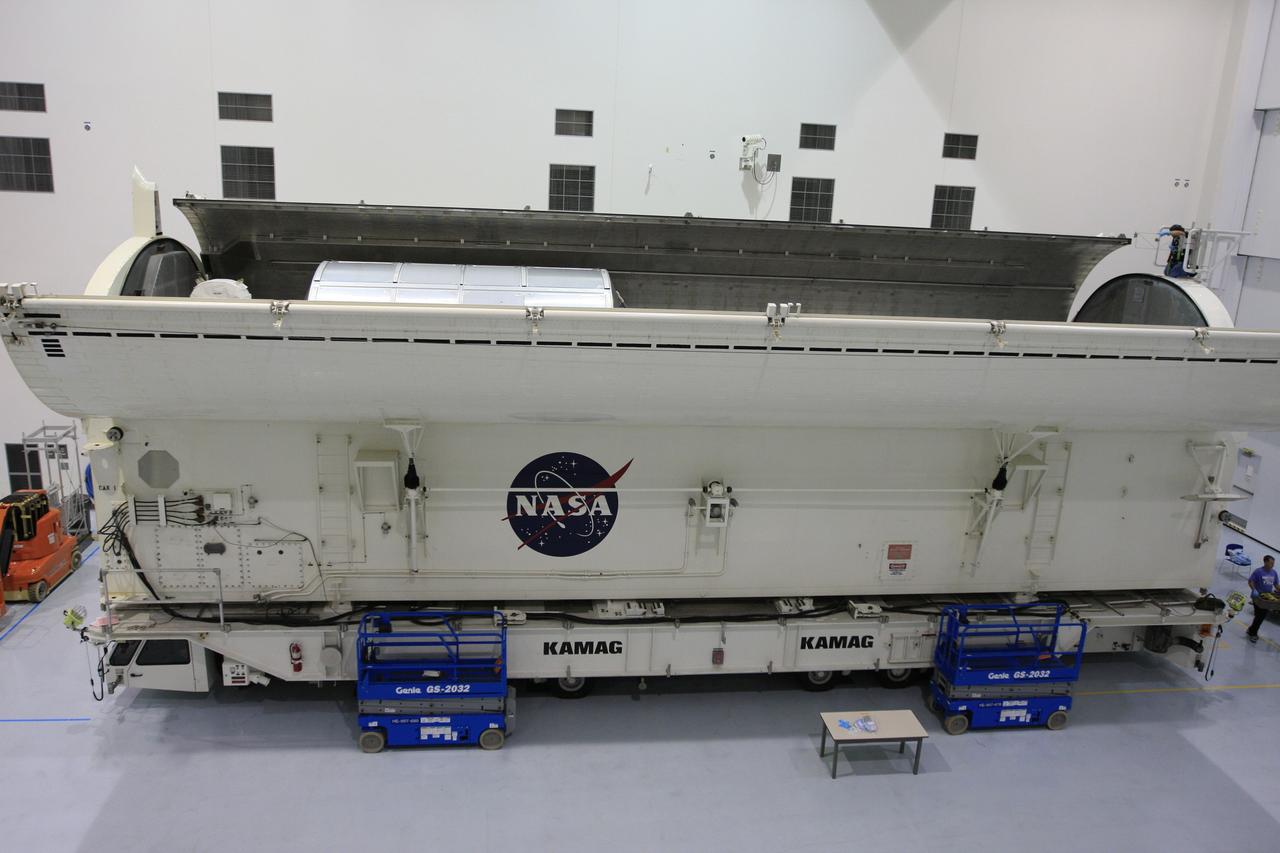
CAPE CANAVERAL, Fla. - In the Space Station Processing Facility at NASA's Kennedy Space Center in Florida, the doors of the payload canister are closing over the payload for space shuttle Endeavour's STS-126 mission. Inside the canister are the Multi-Purpose Logistics Module Leonardo and the Lightweight Multi-Purpose Experiment Support Structure Carrier. The canister next will be transported to the Canister Rotation Facility to raise it to vertical and then will be taken to Launch Pad 39A. At the pad, the payload canister will release its cargo into the Payload Changeout Room. Later, the payload will be installed in Endeavour's payload bay. Endeavour is targeted for launch on Nov. 14. Photo credit: NASA/Troy Cryder
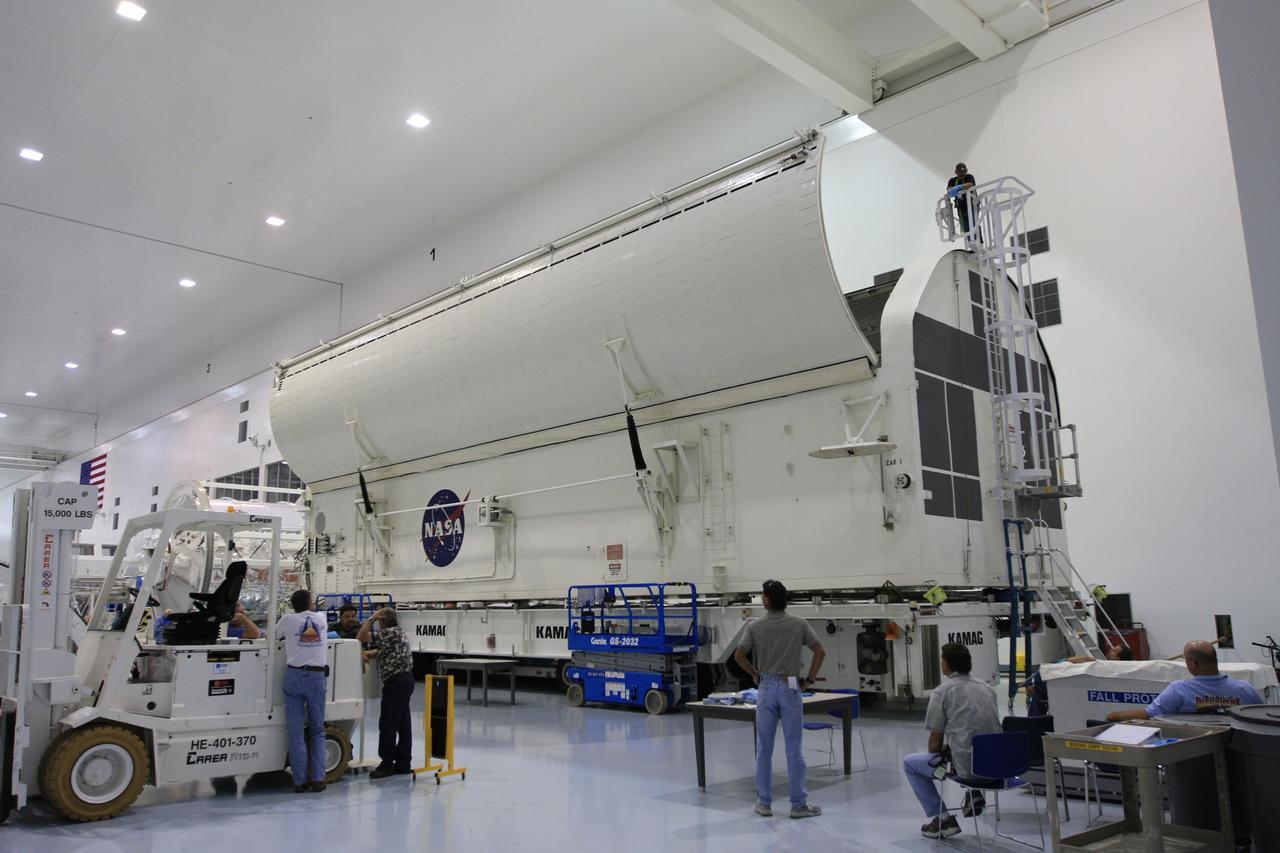
CAPE CANAVERAL, Fla. - In the Space Station Processing Facility at NASA's Kennedy Space Center in Florida, the doors of the payload canister are closing over the payload for space shuttle Endeavour's STS-126 mission. Inside the canister are the Multi-Purpose Logistics Module Leonardo and the Lightweight Multi-Purpose Experiment Support Structure Carrier. The canister next will be transported to the Canister Rotation Facility to raise it to vertical and then will be taken to Launch Pad 39A. At the pad, the payload canister will release its cargo into the Payload Changeout Room. Later, the payload will be installed in Endeavour's payload bay. Endeavour is targeted for launch on Nov. 14. Photo credit: NASA/Troy Cryder