
NASA Administrator Jared Isaacman provides remarks at NASA’s Air and Space Innovation Day event, Wednesday, June 3, 2026, in the Cannon House Office Building in Washington. Photo Credit: (NASA/Joel Kowsky)

NASA Administrator Jared Isaacman provides remarks at NASA’s Air and Space Innovation Day event, Wednesday, June 3, 2026, in the Cannon House Office Building in Washington. Photo Credit: (NASA/Joel Kowsky)

NASA astronaut Mike Fincke speaks with attendees at NASA’s Air and Space Innovation Day event, Wednesday, June 3, 2026, in the Cannon House Office Building in Washington. Photo Credit: (NASA/Joel Kowsky)

Attendees view exhibits at NASA’s Air and Space Innovation Day event , Wednesday, June 3, 2026, in the Cannon House Office Building in Washington. Photo Credit: (NASA/Joel Kowsky)

Attendees view exhibits at NASA’s Air and Space Innovation Day event , Wednesday, June 3, 2026, in the Cannon House Office Building in Washington. Photo Credit: (NASA/Joel Kowsky)

Attendees view exhibits at NASA’s Air and Space Innovation Day event , Wednesday, June 3, 2026, in the Cannon House Office Building in Washington. Photo Credit: (NASA/Joel Kowsky)

Attendees view exhibits at NASA’s Air and Space Innovation Day event , Wednesday, June 3, 2026, in the Cannon House Office Building in Washington. Photo Credit: (NASA/Joel Kowsky)

Attendees view exhibits at NASA’s Air and Space Innovation Day event , Wednesday, June 3, 2026, in the Cannon House Office Building in Washington. Photo Credit: (NASA/Joel Kowsky)

Attendees view exhibits at NASA’s Air and Space Innovation Day event , Wednesday, June 3, 2026, in the Cannon House Office Building in Washington. Photo Credit: (NASA/Joel Kowsky)

Attendees view exhibits at NASA’s Air and Space Innovation Day event , Wednesday, June 3, 2026, in the Cannon House Office Building in Washington. Photo Credit: (NASA/Joel Kowsky)

Attendees view exhibits at NASA’s Air and Space Innovation Day event , Wednesday, June 3, 2026, in the Cannon House Office Building in Washington. Photo Credit: (NASA/Joel Kowsky)
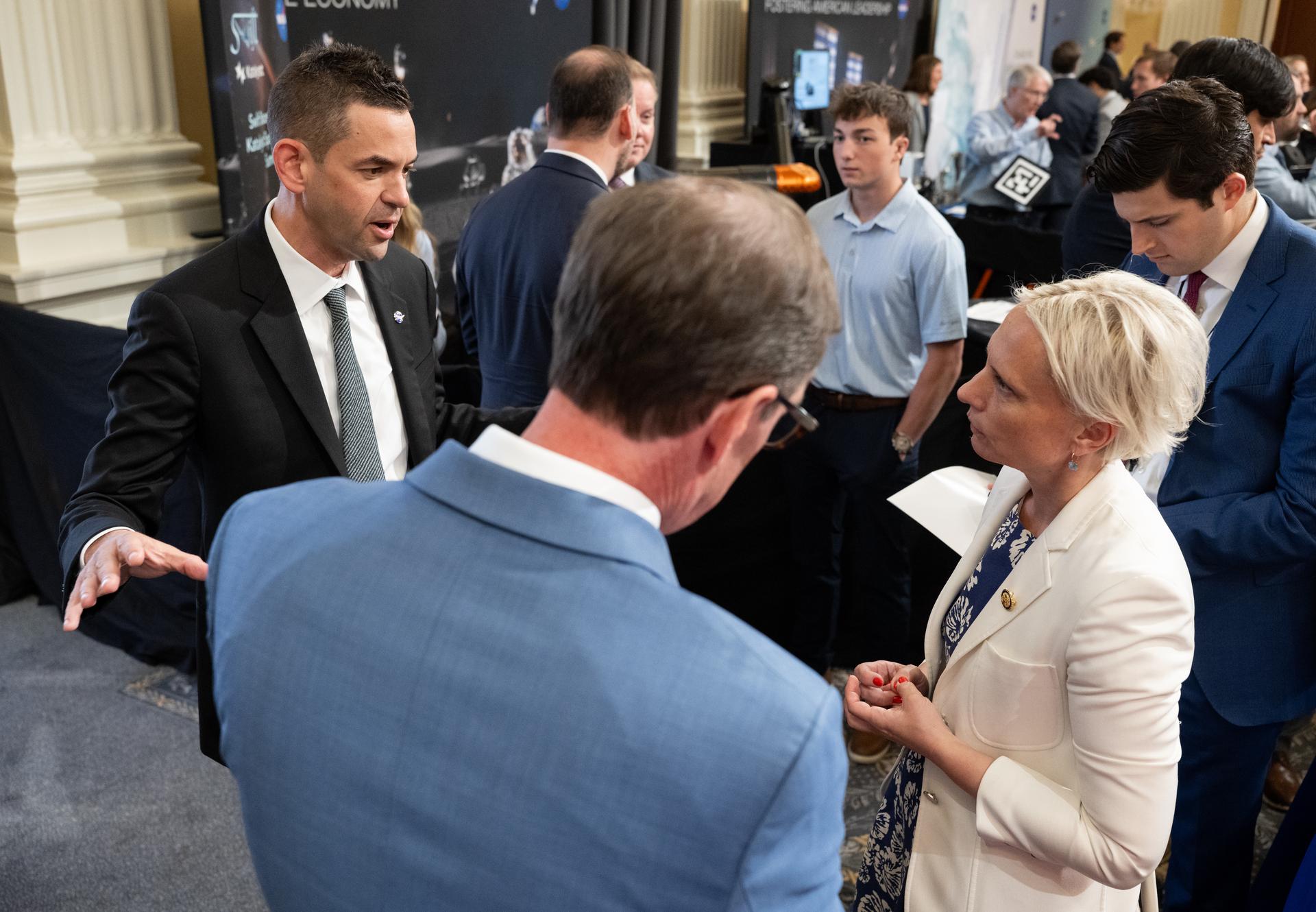
NASA Administrator Jared Isaacman, left, speaks with U.S. Rep. Victoria Spartz, R-Ind., at NASA’s Air and Space Innovation Day event, Wednesday, June 3, 2026, in the Cannon House Office Building in Washington. Photo Credit: (NASA/Joel Kowsky)
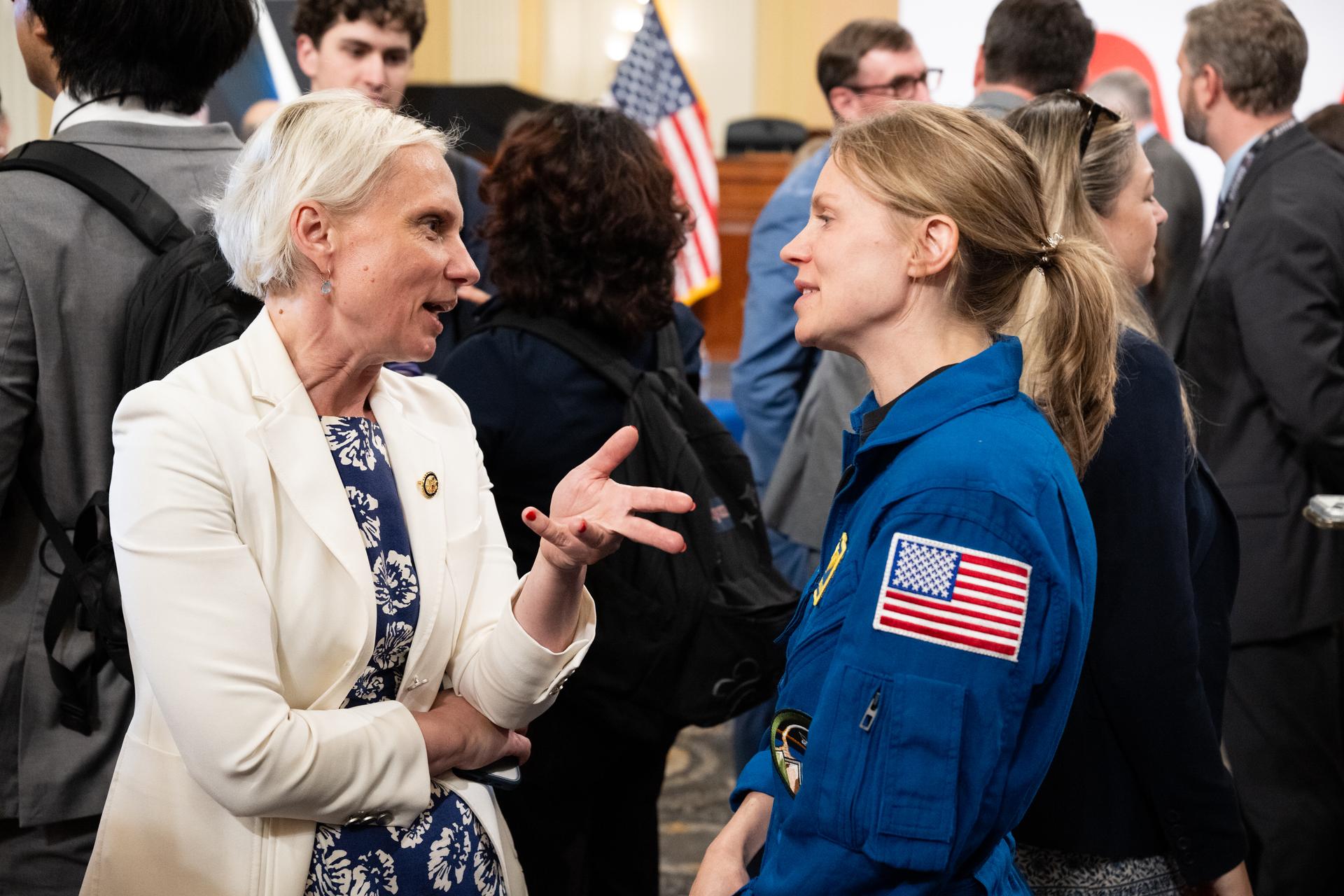
NASA astronaut Zena Cardman, right, speaks with U.S. Rep. Victoria Spartz, R-Ind., at NASA’s Air and Space Innovation Day event, Wednesday, June 3, 2026, in the Cannon House Office Building in Washington. Photo Credit: (NASA/Joel Kowsky)

NASA astronaut Mike Fincke provides remarks at NASA’s Air and Space Innovation Day event alongside his Expedition 73 and 74 crew mates NASA astronaut Zena Cardman and Japan Aerospace Exploration Agency (JAXA) astronaut Kimiya Yui, Wednesday, June 3, 2026, in the Cannon House Office Building in Washington. Photo Credit: (NASA/Joel Kowsky)

NASA astronaut Zena Cardman, left, provides remarks at NASA’s Air and Space Innovation Day event alongside her Expedition 73 and 74 crew mates NASA astronaut Mike Fincke, center, and Japan Aerospace Exploration Agency (JAXA) astronaut Kimiya Yui, right, Wednesday, June 3, 2026, in the Cannon House Office Building in Washington. Photo Credit: (NASA/Joel Kowsky)

Japan Aerospace Exploration Agency (JAXA) astronaut Kimiya Yui provides remarks at NASA’s Air and Space Innovation Day event alongside his Expedition 73 and 74 crew mates NASA astronauts Zena Cardman Mike Fincke, Wednesday, June 3, 2026, in the Cannon House Office Building in Washington. Photo Credit: (NASA/Joel Kowsky)
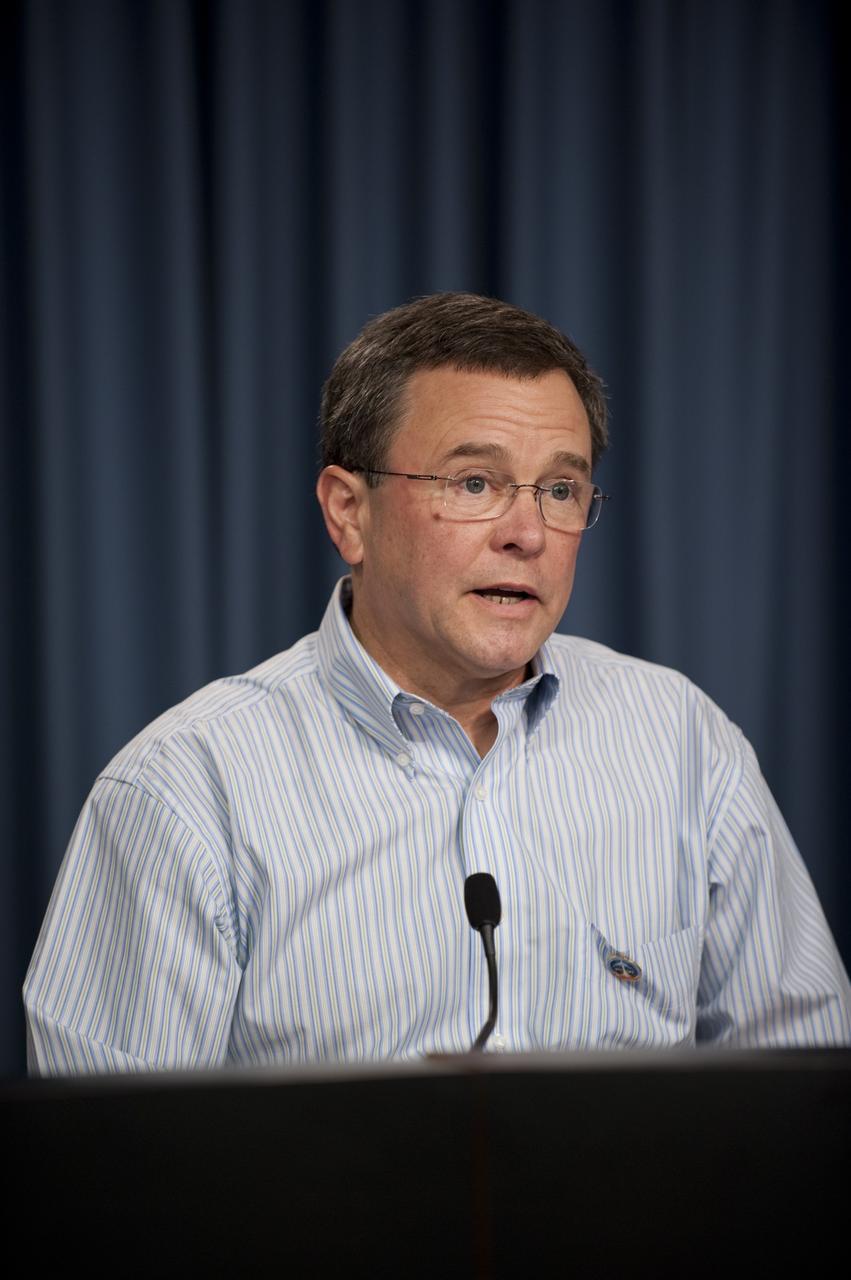
CAPE CANAVERAL, Fla. -- Dr. Jeff Davis, the director of Space and Life Sciences at NASA's Johnson Space Center in Houston, participates in a news conference at NASA's Kennedy Space Center in Florida following the "LAUNCH: Health" forum. During the two-day forum, 10 international participants showcased new innovations that could address health problems on Earth and in space. LAUNCH is a global initiative to identify and support innovative work that will contribute to a sustainable future. Through a series of forums focused on key challenge areas, including water, air, food, energy, mobility and sustainable cities, LAUNCH gives leaders an opportunity to present innovative ideas among peers and join in collaborative, solution-driven discussions. This is the second forum hosted at Kennedy. The first was "LAUNCH: Water" in March 2010. Photo credit: NASA/Kim Shiflett

CAPE CANAVERAL, Fla. -- Mikkel Vestergaard, the president of Vestergaard Frandsen in Lausanne, Switzerland, participates in a news conference at NASA's Kennedy Space Center in Florida following the "LAUNCH: Health" forum. During the two-day forum, 10 international participants showcased new innovations that could address health problems on Earth and in space. LAUNCH is a global initiative to identify and support innovative work that will contribute to a sustainable future. Through a series of forums focused on key challenge areas, including water, air, food, energy, mobility and sustainable cities, LAUNCH gives leaders an opportunity to present innovative ideas among peers and join in collaborative, solution-driven discussions. This is the second forum hosted at Kennedy. The first was "LAUNCH: Water" in March 2010. Photo credit: NASA/Kim Shiflett

CAPE CANAVERAL, Fla. -- Dave Ferguson, the director of Global Development Common for the U.S. Agency for International Development, participates in a news conference at NASA's Kennedy Space Center in Florida following the "LAUNCH: Health" forum. During the two-day forum, 10 international participants showcased new innovations that could address health problems on Earth and in space. LAUNCH is a global initiative to identify and support innovative work that will contribute to a sustainable future. Through a series of forums focused on key challenge areas, including water, air, food, energy, mobility and sustainable cities, LAUNCH gives leaders an opportunity to present innovative ideas among peers and join in collaborative, solution-driven discussions. This is the second forum hosted at Kennedy. The first was "LAUNCH: Water" in March 2010. Photo credit: NASA/Kim Shiflett

NASA Deputy Administrator Matt Anderson, second from left, speaks with NASA astronaut Mike Fincke, right, Japan Aerospace Exploration Agency (JAXA) astronaut Kimiya Yui, second from right, and NASA astronaut Zena Cardman, left, before attending NASA’s Air and Space Innovation Day event, Wednesday, June 3, 2026, in the Cannon House Office Building in Washington. Cardman, Fincke, and Yui spent 167 days onboard the orbiting laboratory as part of Expeditions 73 and 74. Photo Credit: (NASA/Joel Kowsky)
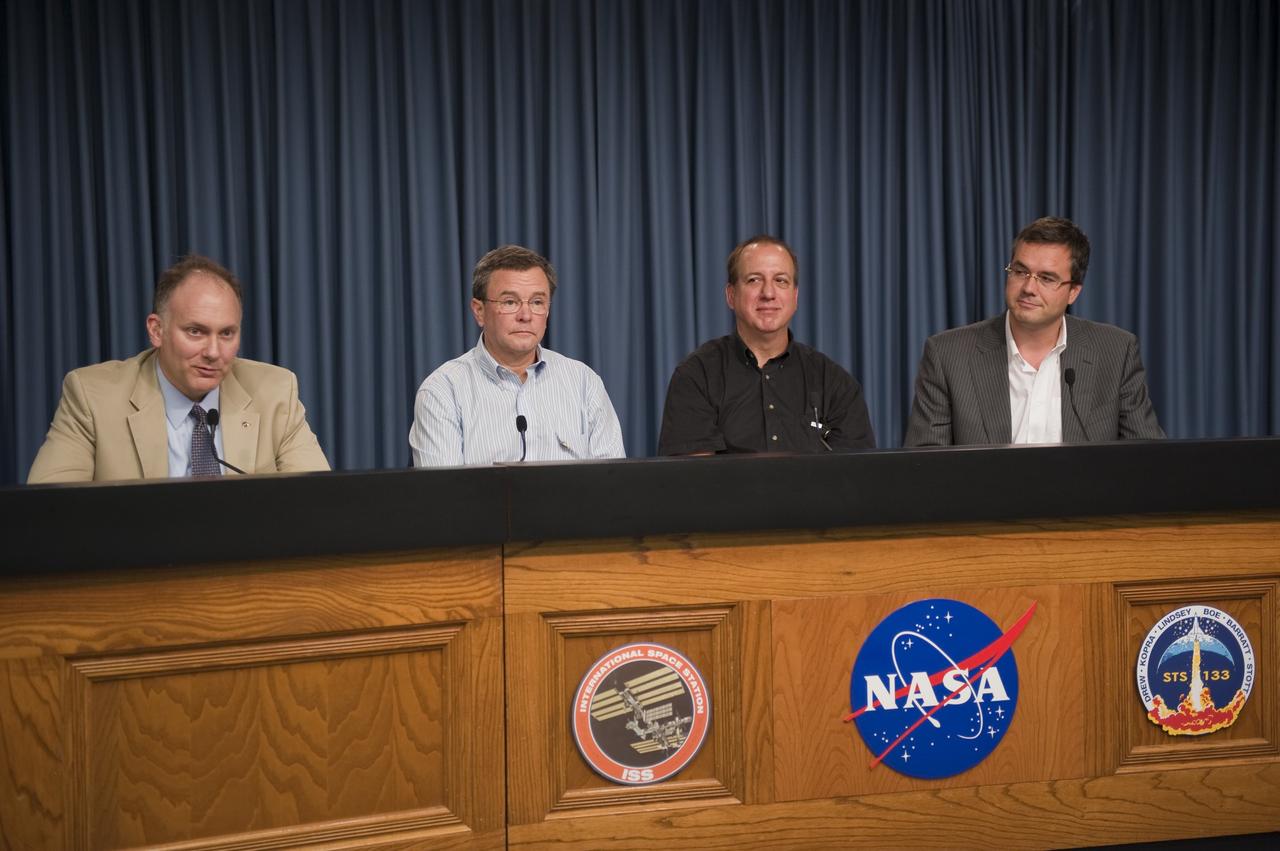
CAPE CANAVERAL, Fla. -- Attendees from the "LAUNCH: Health" forum participate in a news conference at NASA's Kennedy Space Center in Florida. From left, are NASA Public Affairs Officer David Steitz, Dr. Jeff Davis, the director of Space and Life Sciences at NASA's Johnson Space Center in Houston, Dave Ferguson, the director of Global Development Common for the U.S. Agency for International Development, and Mikkel Vestergaard, the president of Vestergaard Frandsen in Lausanne, Switzerland. During the two-day forum, 10 international participants showcased new innovations that could address health problems on Earth and in space. LAUNCH is a global initiative to identify and support innovative work that will contribute to a sustainable future. Through a series of forums focused on key challenge areas, including water, air, food, energy, mobility and sustainable cities, LAUNCH gives leaders an opportunity to present innovative ideas among peers and join in collaborative, solution-driven discussions. This is the second forum hosted at Kennedy. The first was "LAUNCH: Water" in March 2010. Photo credit: NASA/Kim Shiflett
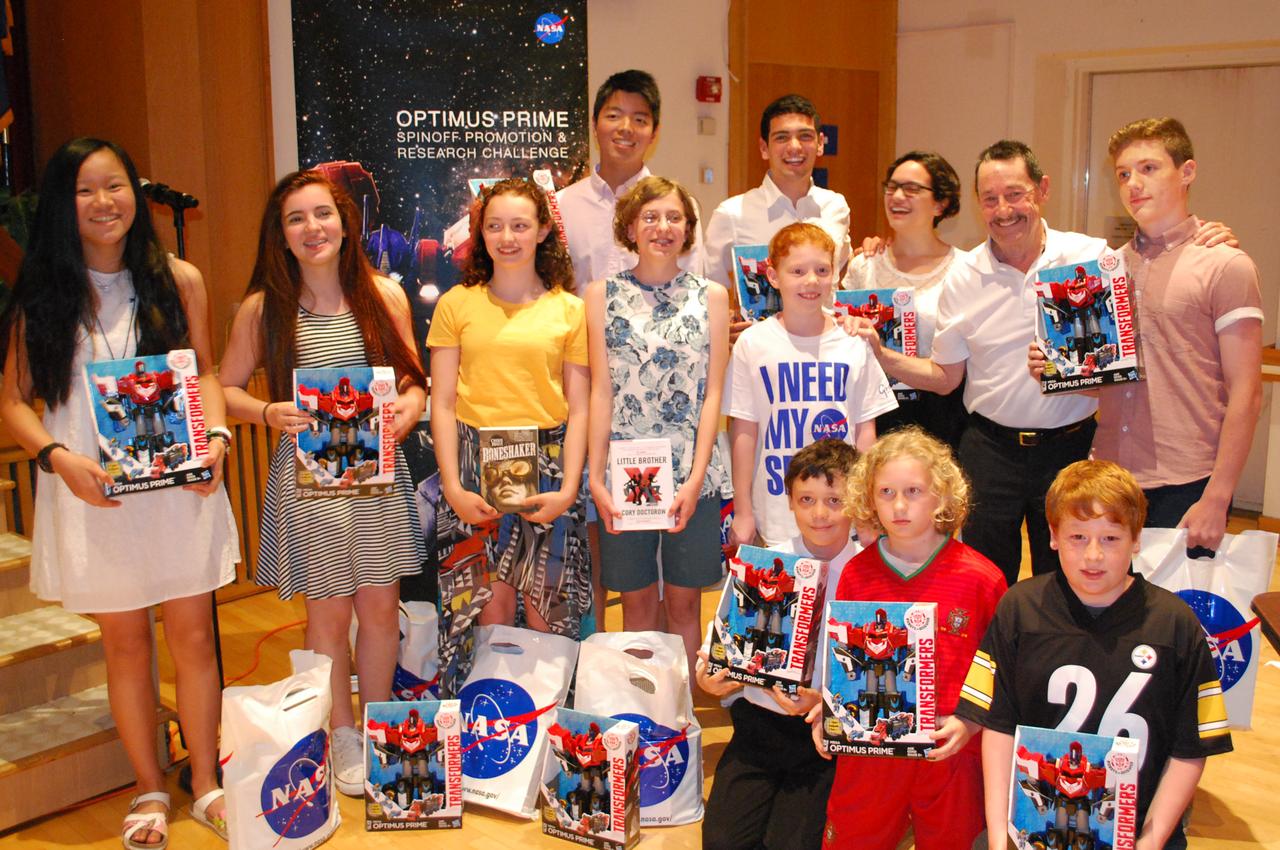
From June 28 through 30, 2016, the OPTIMUS PRIME Spinoff Promotion and Research Challenge (OPSPARC) gave the contest’s winning students the opportunity to explore NASA’s Goddard Space Flight Center in Greenbelt, Maryland. Three teams of students from elementary, middle and high school won the contest by creating the most popular ideas to use NASA technology in new and innovative ways. The students used an online platform called Glogster to make posters about their ideas, and the general public voted for their favorites. Sophia Sheehan won the elementary school prize for her invention of the “blow coat,” which would be powered by solar panels and blow warm air into winter coats, helping people in her hometown of Chicago stay warm in the winter. Heidi Long, Aubrey Nesti, Katherine Valbuena and Jasmine Wu won in the middle school category for their idea called Tent-cordion, which would use spacesuit and satellite insulation materials in a foldable tent to house refugees and the homeless. Finally, Jake Laddis, Alex Li, Isaac Wecht and Isabel Wecht won in the high school category for their idea to use James Webb Space Telescope sunshield technology to shield houses from summer heat and reduce the need for air conditioning around the world. The high school winners also had the opportunity to compete in the NASA InWorld challenge, sponsored by the James Webb Space Telescope project, and continued developing their idea in a virtual world and gaming environment. During their three-day workshop at Goddard, the students toured the center, met with scientists and engineers, took a look at the James Webb Space Telescope in Goddard’s clean room, and even made their own videos in Goddard’s TV studio. One of the students talked about how the experience inspired her. Read more: <a href="http://go.nasa.gov/298fGdQ" rel="nofollow">go.nasa.gov/298fGdQ</a>
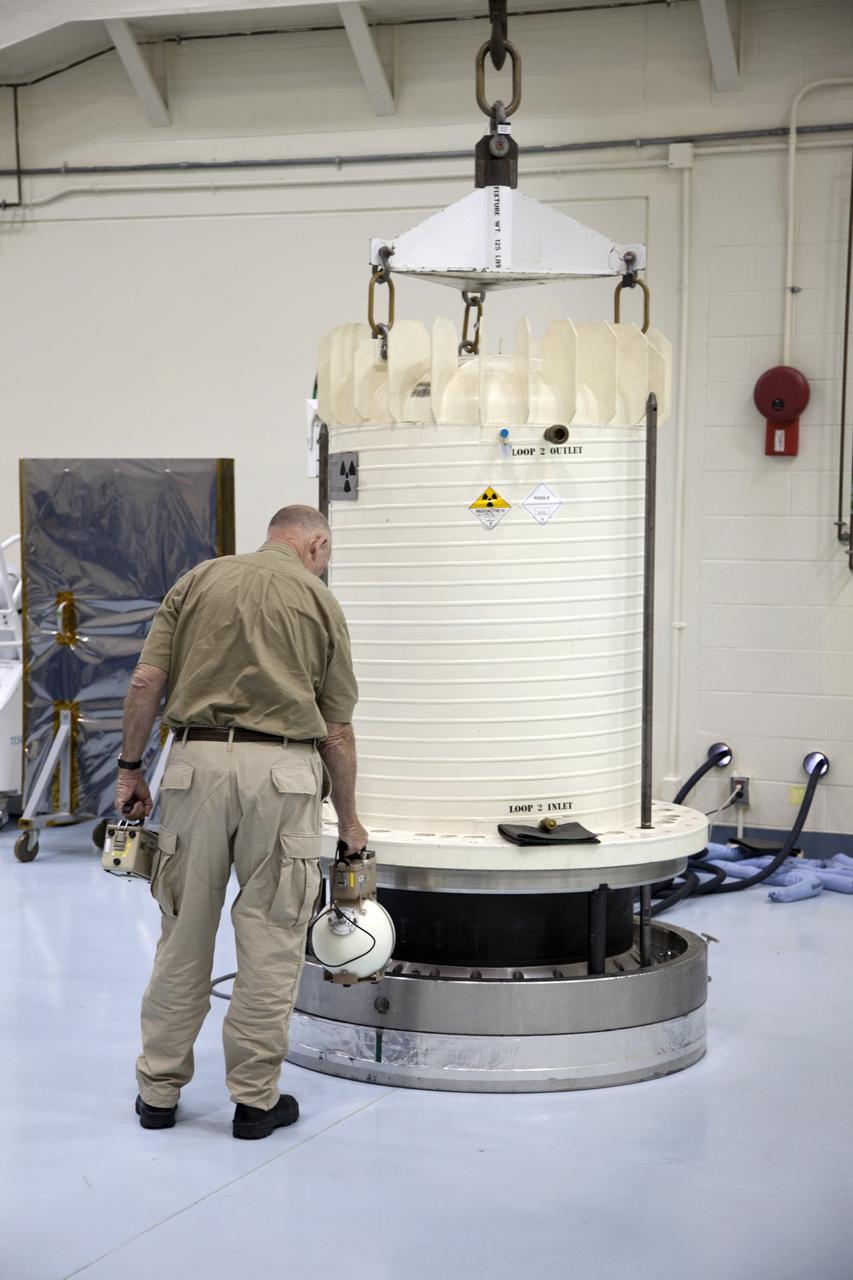
CAPE CANAVERAL, Fla. -- In the high bay of the RTG storage facility at NASA's Kennedy Space Center in Florida, Innovative Health Applications employee David Lake measures the level of radioactivity emitted from the multi-mission radioisotope thermoelectric generator (MMRTG) for NASA's Mars Science Laboratory mission as the external protective layer of the shipping cask is removed. The MMRTG will generate the power needed for the mission from the natural decay of plutonium-238, a non-weapons-grade form of the radioisotope. Heat given off by this natural decay will provide constant power through the day and night during all seasons. Waste heat from the MMRTG will be circulated throughout the rover system to keep instruments, computers, mechanical devices and communications systems within their operating temperature ranges. MSL's components include a compact car-sized rover, Curiosity, which has 10 science instruments designed to search for evidence on whether Mars has had environments favorable to microbial life, including chemical ingredients for life. The unique rover will use a laser to look inside rocks and release its gasses so that the rover’s spectrometer can analyze and send the data back to Earth. Launch of MSL aboard a United Launch Alliance Atlas V rocket is scheduled for Nov. 25 from Space Launch Complex 41 on Cape Canaveral Air Force Station in Florida. For more information, visit http://www.nasa.gov/msl. Photo credit: NASA/Frankie Martin
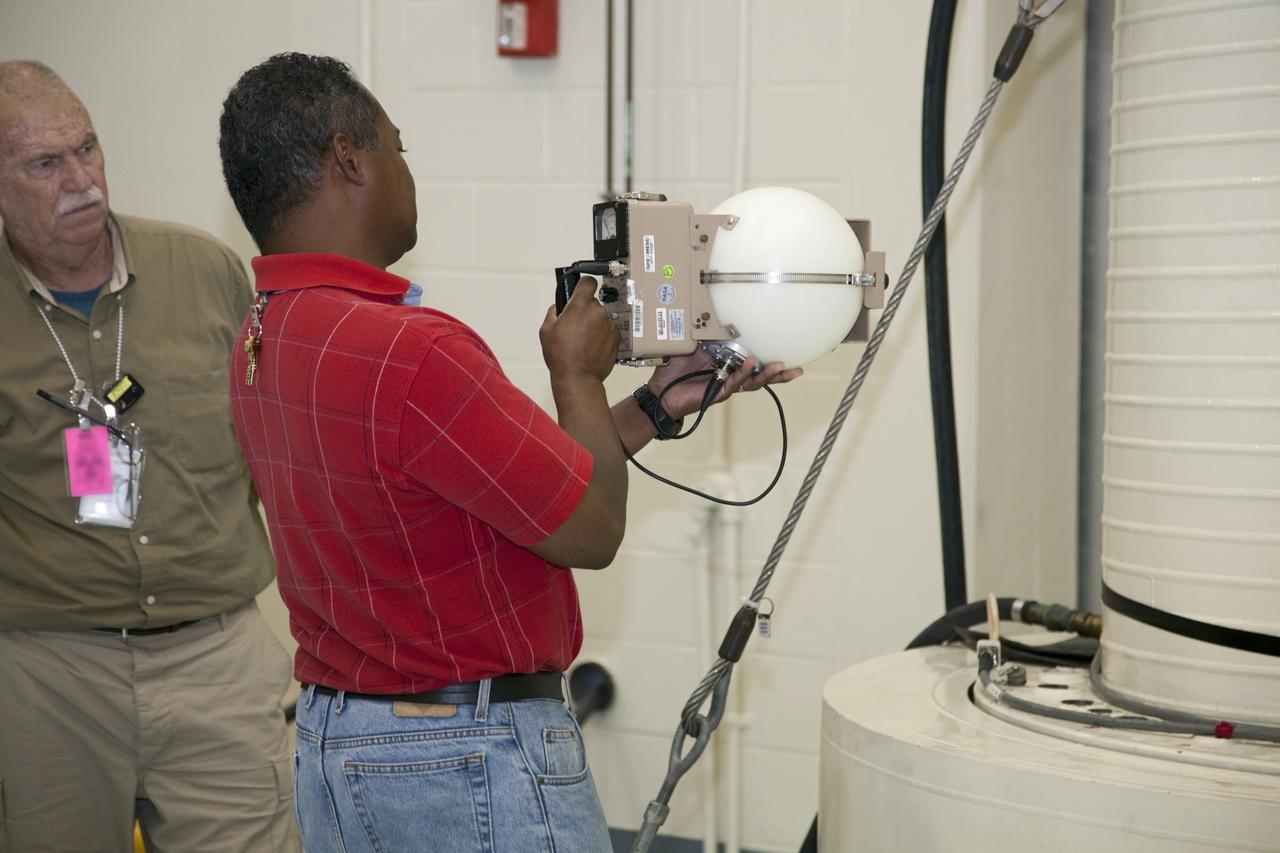
CAPE CANAVERAL, Fla. -- In the high bay of the RTG storage facility at NASA's Kennedy Space Center in Florida, Innovative Health Applications employee Mike McPherson measures the level of radioactivity emitted from the multi-mission radioisotope thermoelectric generator (MMRTG) for NASA's Mars Science Laboratory mission, enclosed in a shipping cask at right. The MMRTG will generate the power needed for the mission from the natural decay of plutonium-238, a non-weapons-grade form of the radioisotope. Heat given off by this natural decay will provide constant power through the day and night during all seasons. Waste heat from the MMRTG will be circulated throughout the rover system to keep instruments, computers, mechanical devices and communications systems within their operating temperature ranges. MSL's components include a compact car-sized rover, Curiosity, which has 10 science instruments designed to search for evidence on whether Mars has had environments favorable to microbial life, including chemical ingredients for life. The unique rover will use a laser to look inside rocks and release its gasses so that the rover’s spectrometer can analyze and send the data back to Earth. Launch of MSL aboard a United Launch Alliance Atlas V rocket is scheduled for Nov. 25 from Space Launch Complex 41 on Cape Canaveral Air Force Station in Florida. For more information, visit http://www.nasa.gov/msl. Photo credit: NASA/Frankie Martin