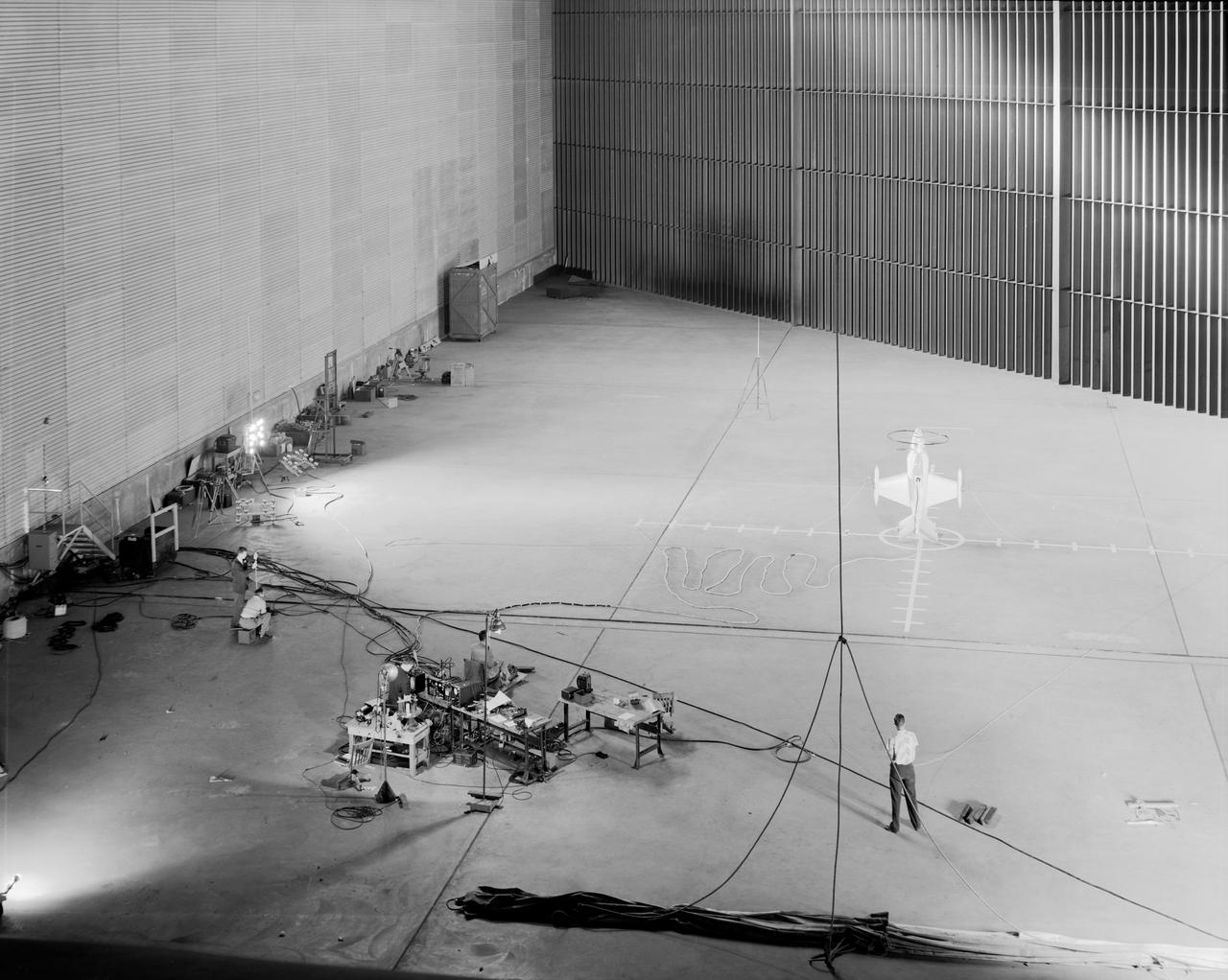
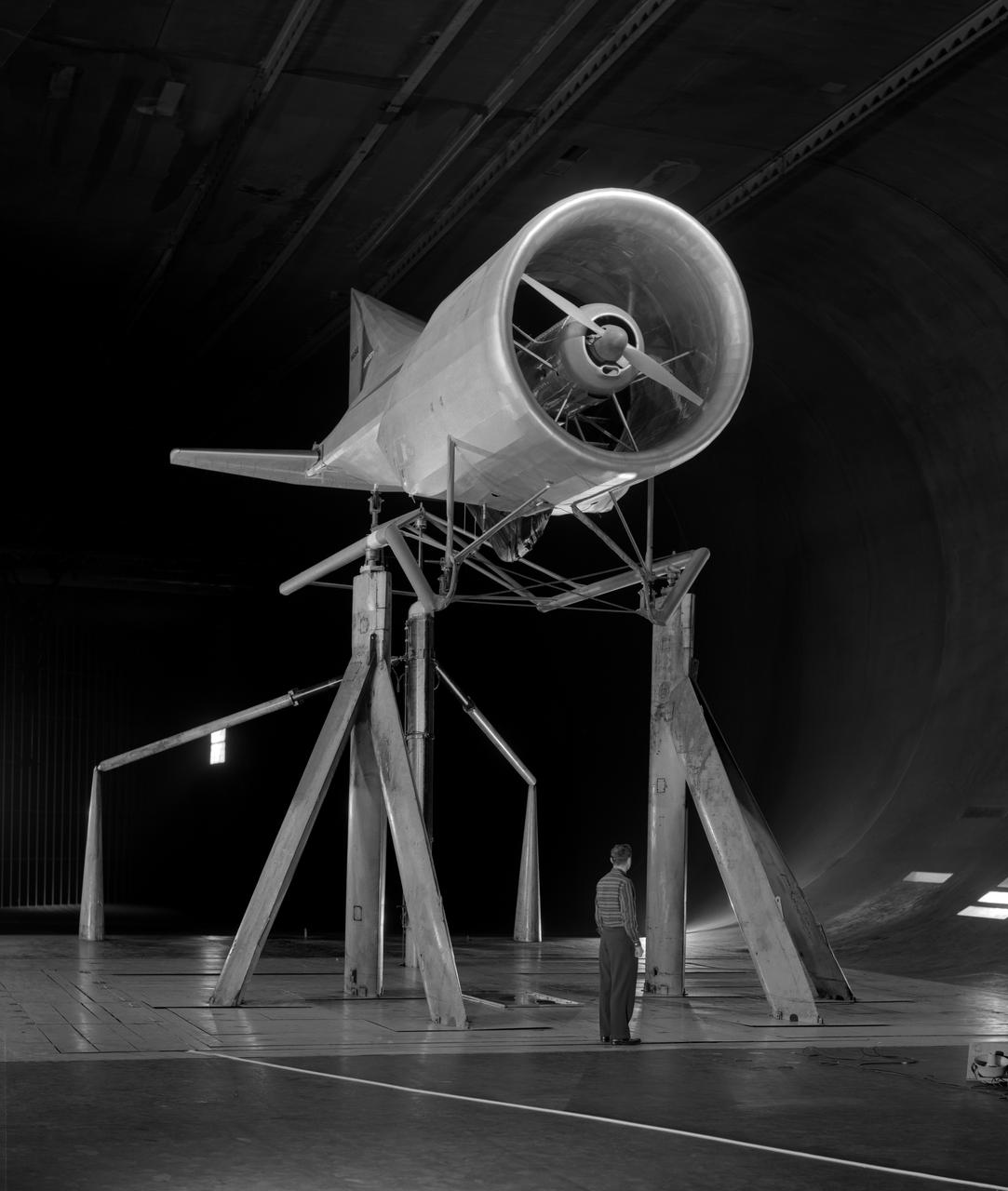
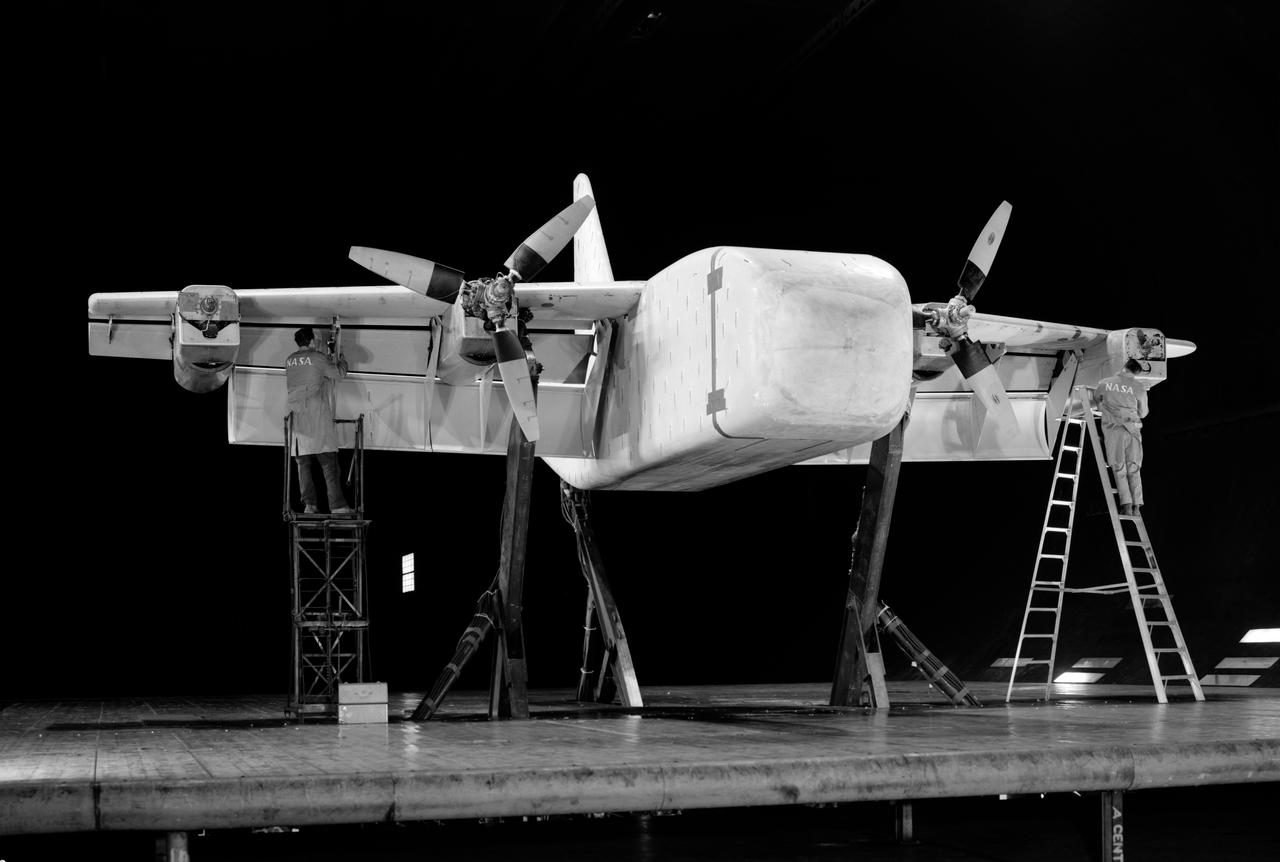
Wide shot of 40x 80 wind tunnel settling chamber with Lockheed XFV-1 model.  Project engineer Mark Kelly (not shown). Remote controlled model flown in the settling chamber of the 40x80 wind tunnel. Electric motors in the model, controlled the counter-rotating propellers to test vertical takeoff. Test no. 71
Lockheed XFV-1 model in the 40x80 foot wind tunnel at NASA Ames Research Center
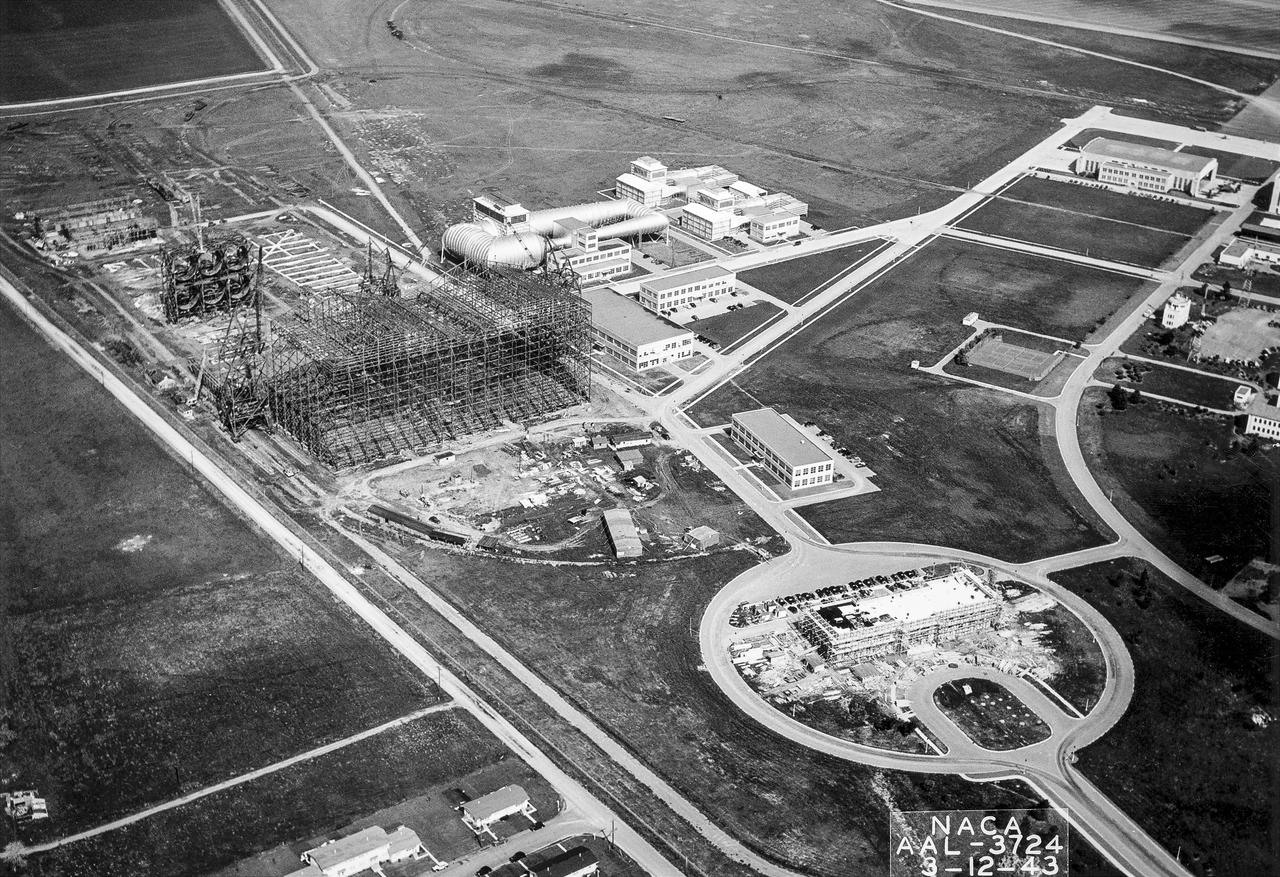
(03/12/1943) Aerial view of the site from the 40x80 wind tunnel At NASA Ames Research Center. Site includes the 16 foot and 7x10 wind tunnels in the background.  Building 200 also under construction.  Framing for the drive fans of the 40x80 in scene.
Aerial View Of The Site From The 40x80 Foot Wind Tunnel At Nasa Ames Research Center.
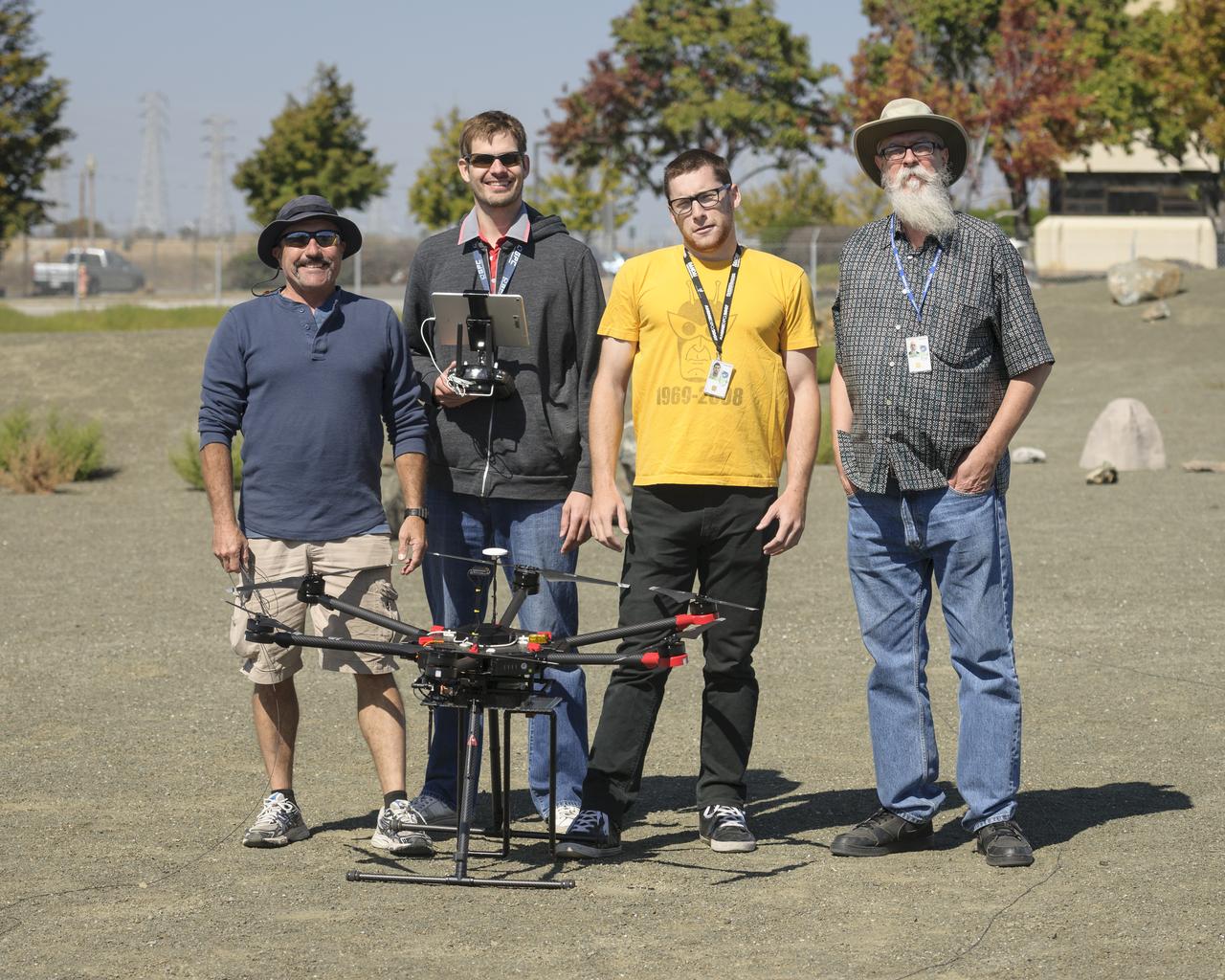
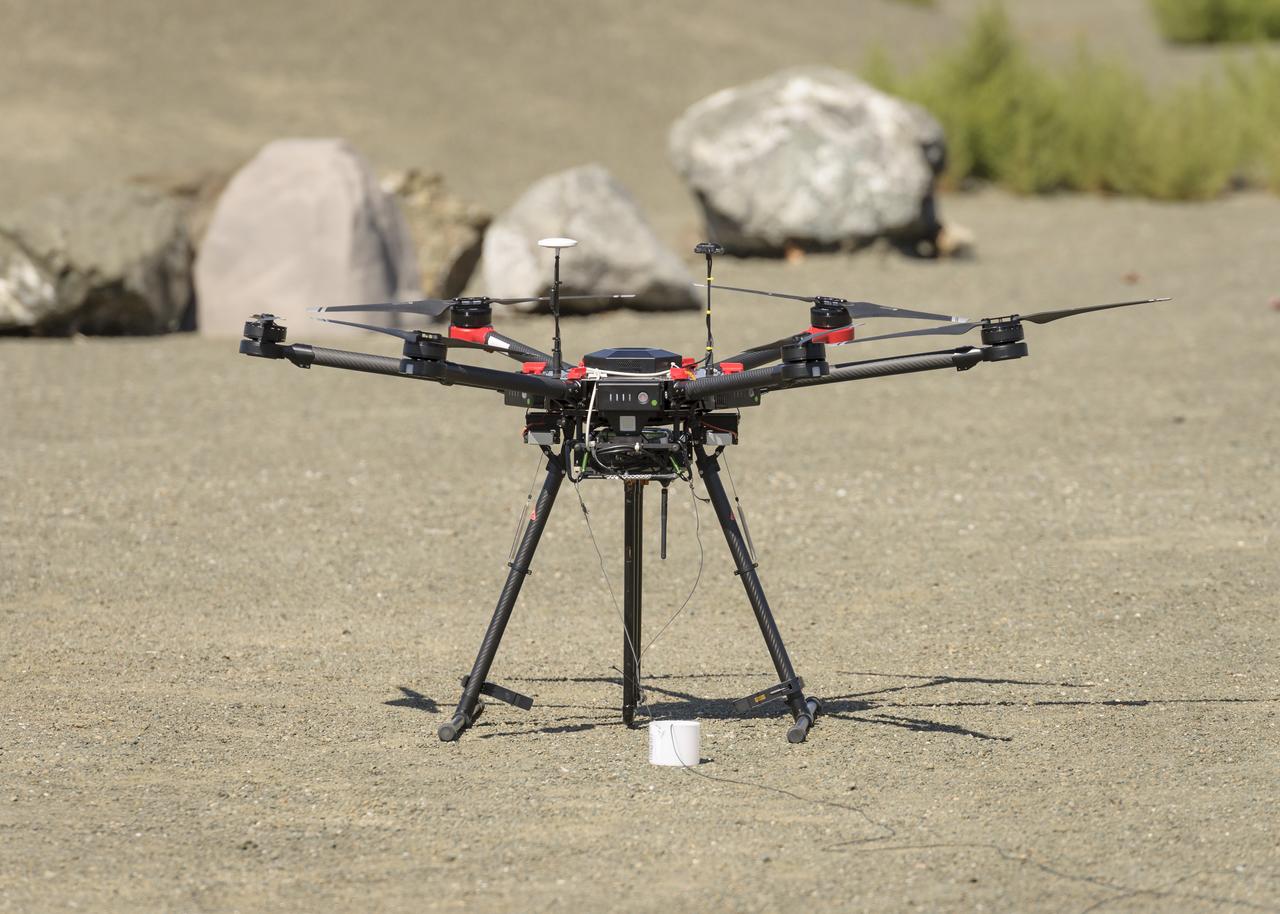
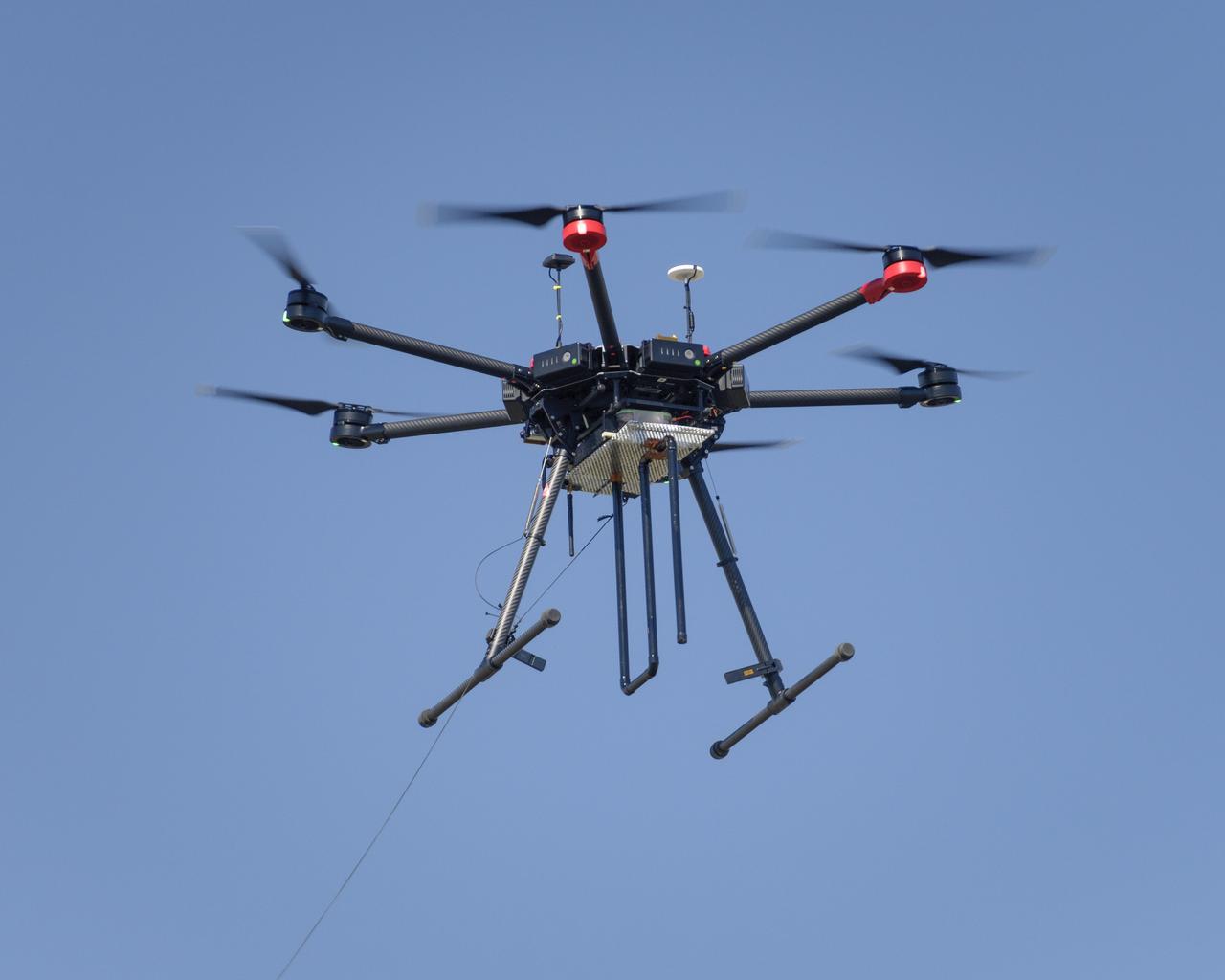
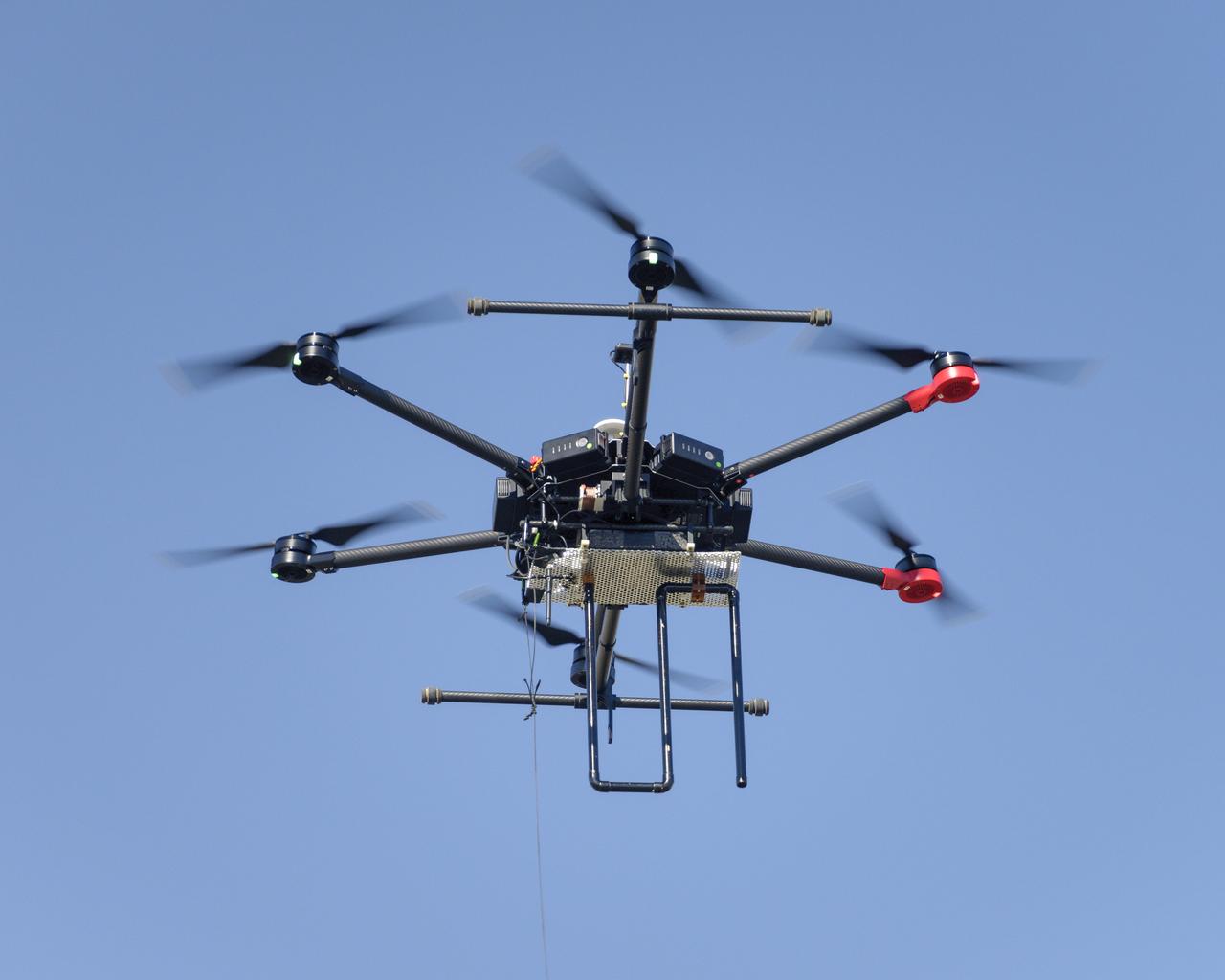
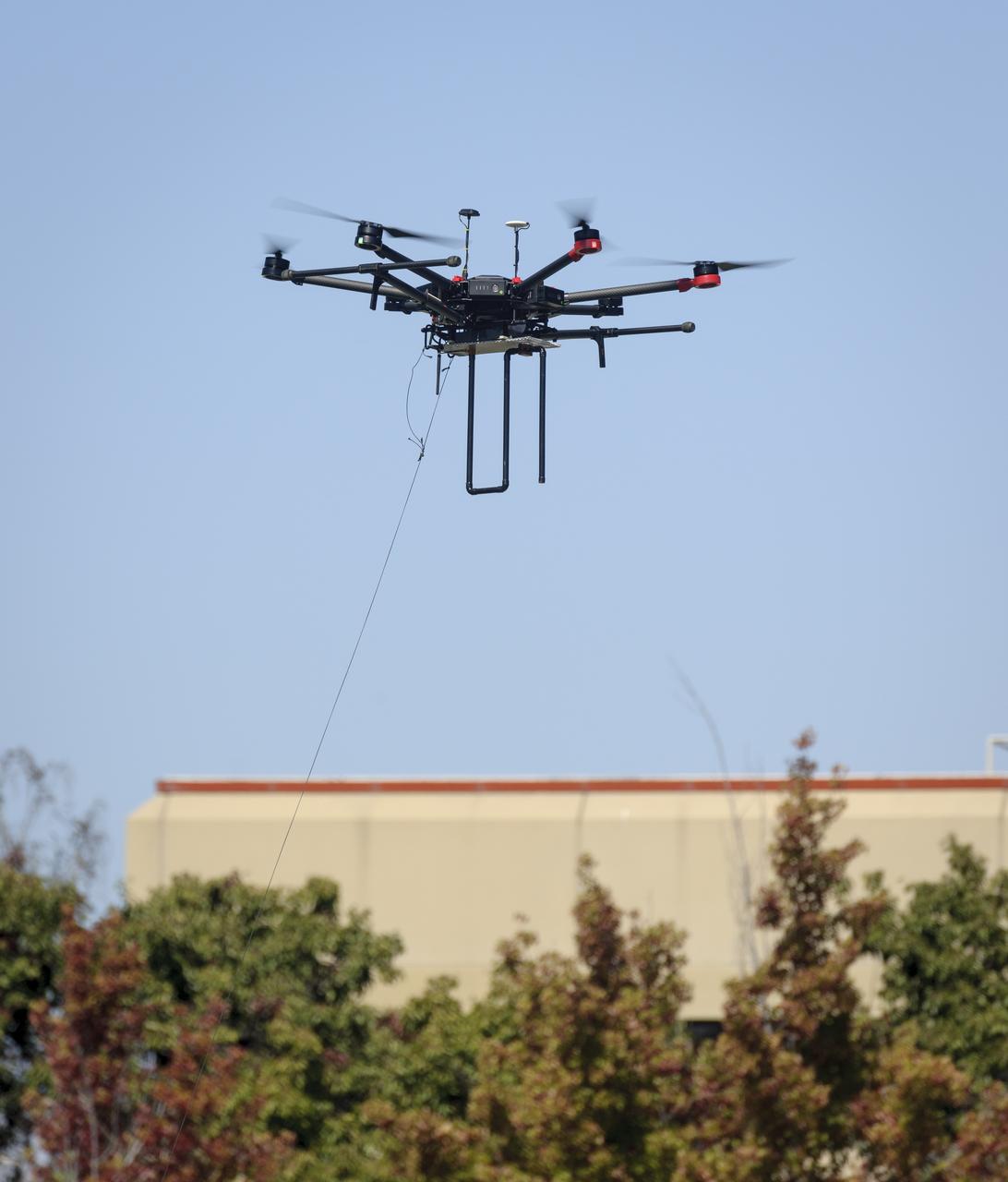
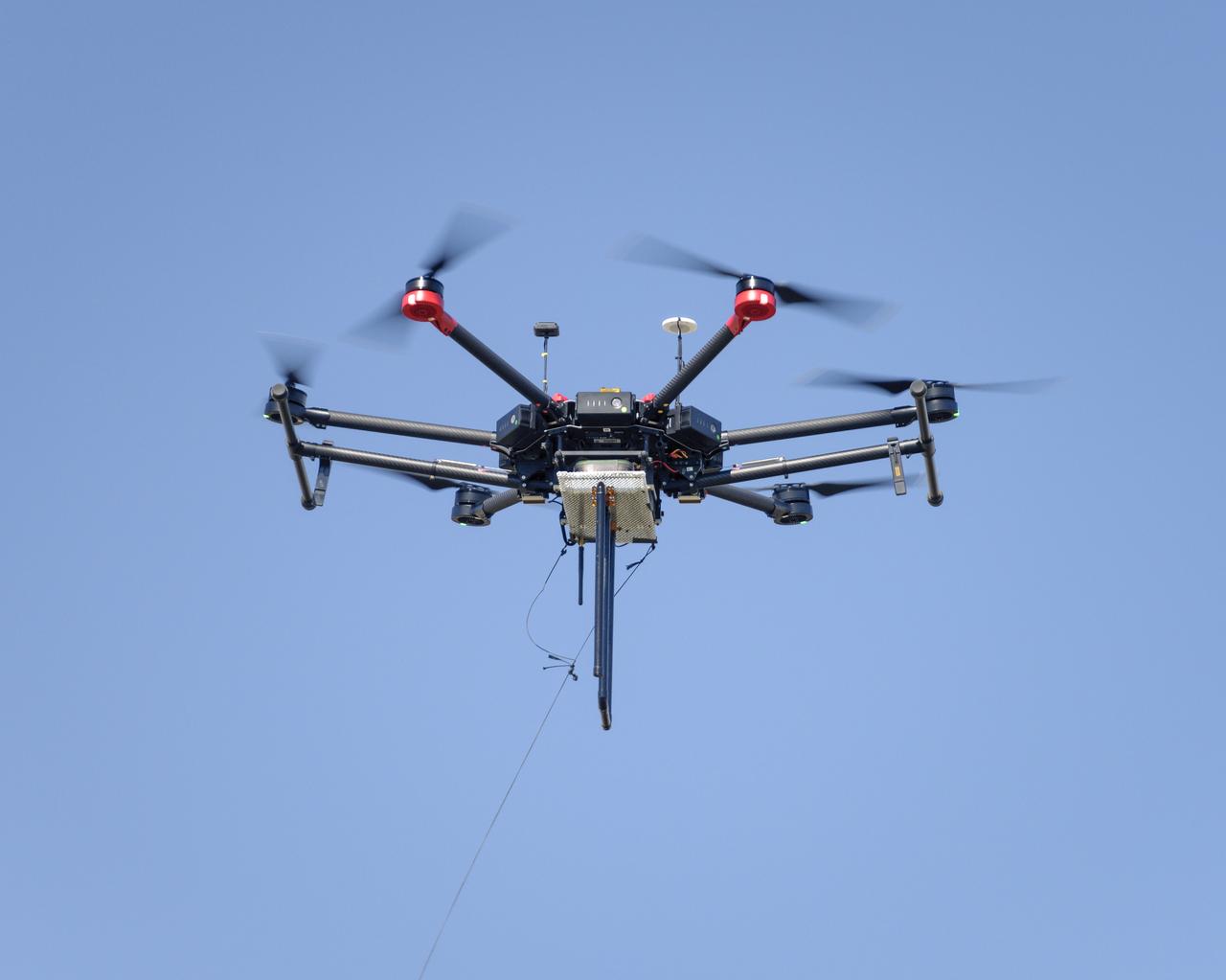
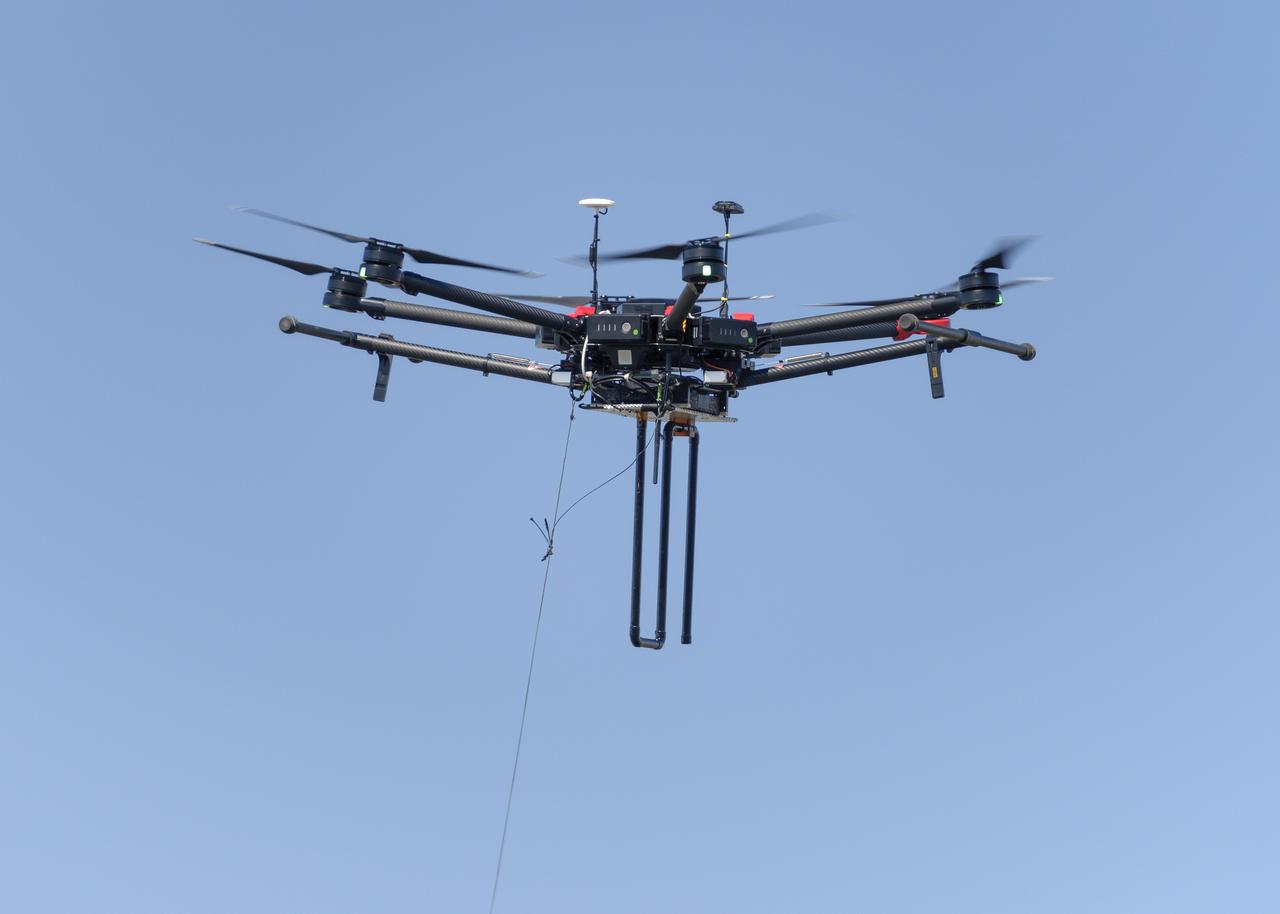
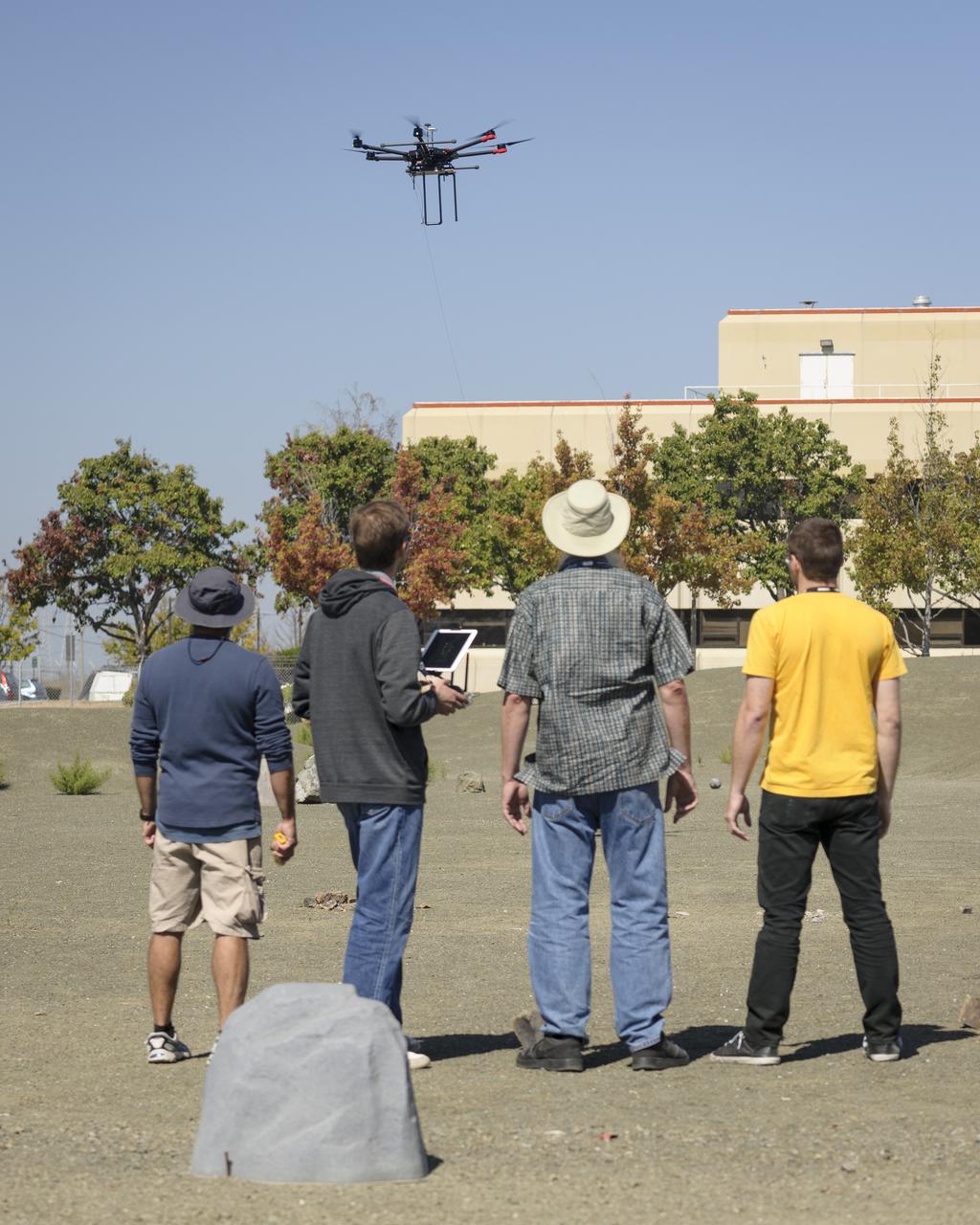
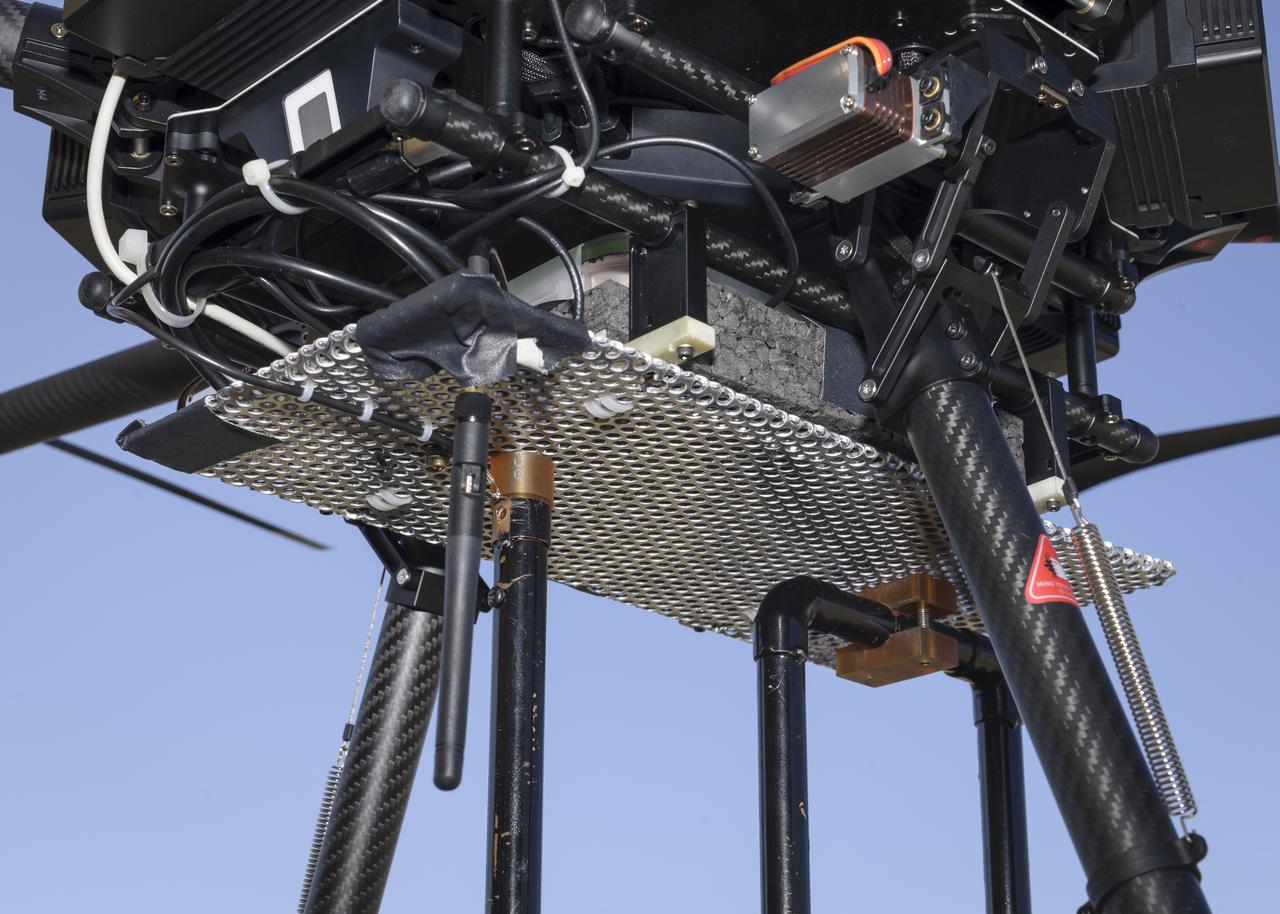
Flight Test in the Roverscape (N-269) at NASA's Ames Research Center, the project team tests the DJI Matrice 600 Unmanned Aerial Vehicle (UAV) equipped with a radio tracking receiver to study the invasive asian carp in the Mississippi River.
The Earth Science Unmanned Aerial System (UAS) Demonstration in the Rover Scape at NASA's Ames Research Center.
Flight Test in the Roverscape (N-269) at NASA's Ames Research Center, the project team tests the DJI Matrice 600 Unmanned Aerial Vehicle (UAV) equipped with a radio tracking receiver to study the invasive asian carp in the Mississippi River.  Rick, Kolyer, Jonas Jonsson, Ethan, Pinsker, Bob Dahlgren.
The Earth Science Unmanned Aerial System (UAS) Demonstration in the Rover Scape at NASA's Ames Research Center.
Flight Test in the Roverscape (N-269) at NASA's Ames Research Center, the project team tests the DJI Matrice 600 Unmanned Aerial Vehicle (UAV) equipped with a radio tracking receiver to study the invasive asian carp in the Mississippi River.
The Earth Science Unmanned Aerial System (UAS) Demonstration in the Rover Scape at NASA's Ames Research Center.
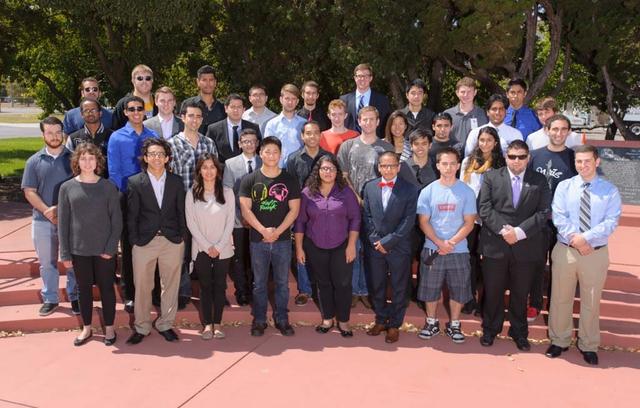
2014 Fall Intern Orientation at NASA Ames Research Center.
2014 Fall Intern Orientation at NASA Ames Research Center
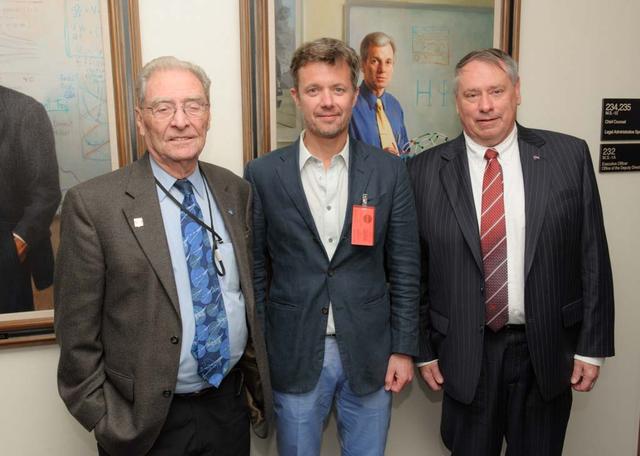
HRH Prince Frederik of Denmark visit and tour of NASA Ames Research Center.  from Left to right Shown the with Ames Special Advisor to the Director John W. 'Jack' Boyd, HRH, and Ames Center Director S. Pete Worden.
HRH Prince Frederik of Denmark visit and tour of NASA Ames Research Center.
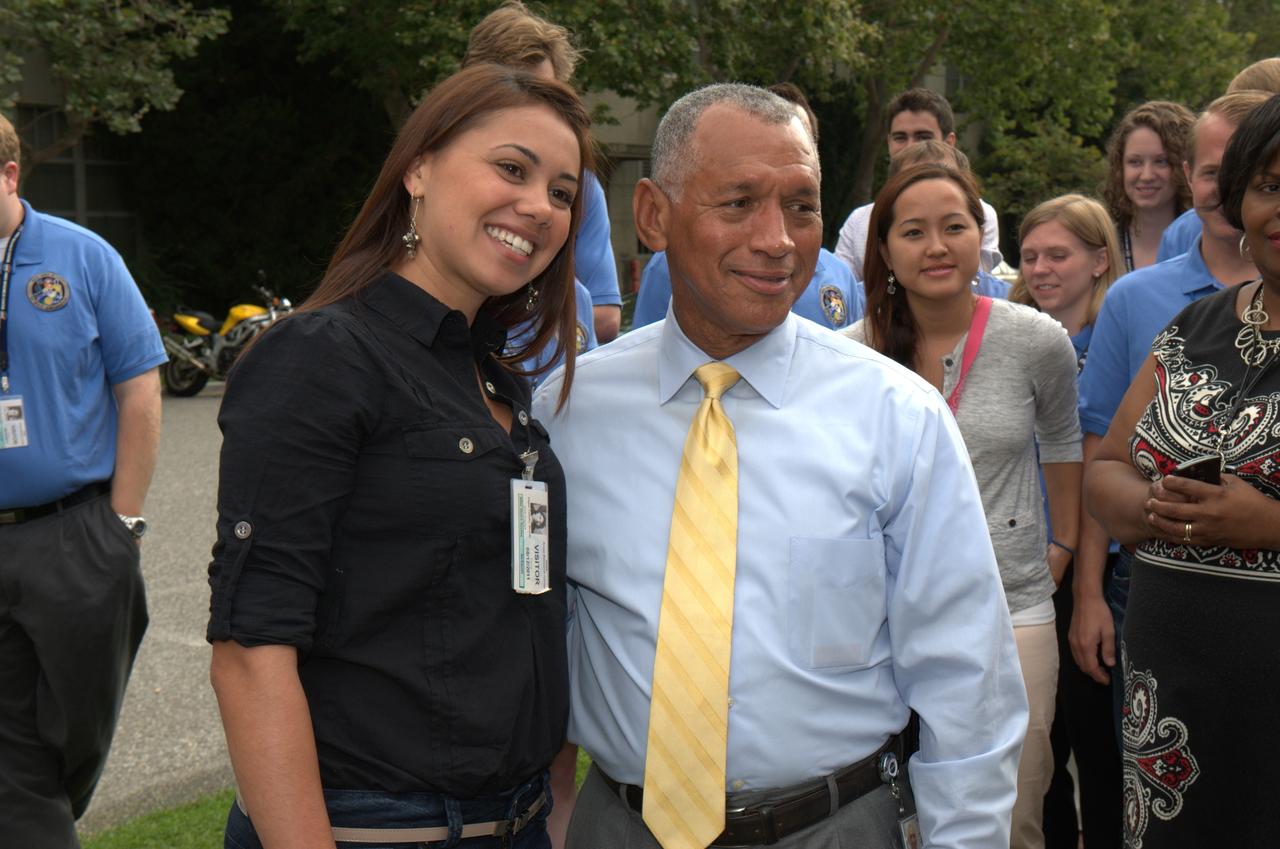
NASA Administrator Charlie Bolden, Jr. visits NASA Ames Research Center: meets  with students and delivers a briefing to staff at a  all-hands meeting
NASA Administrator Charlie Bolden, Jr. visits Ames Research Center
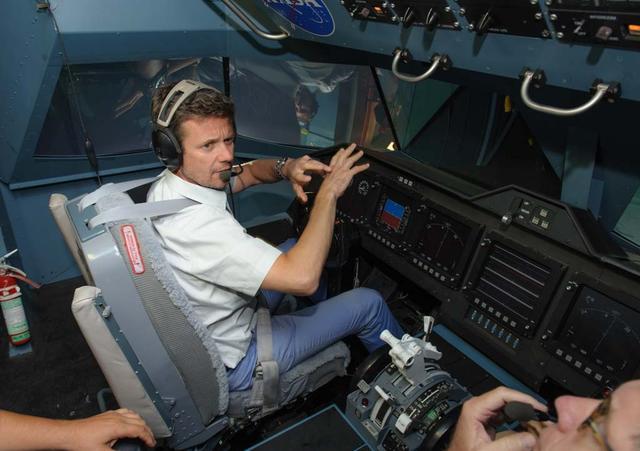
HRH Prince Frederik of Denmark visit and tour of NASA Ames Research Center. shown here at the Vertical Motion Simulator in the cockpit flying a sim.
HRH Prince Frederik of Denmark visit and tour of NASA Ames Research Center.
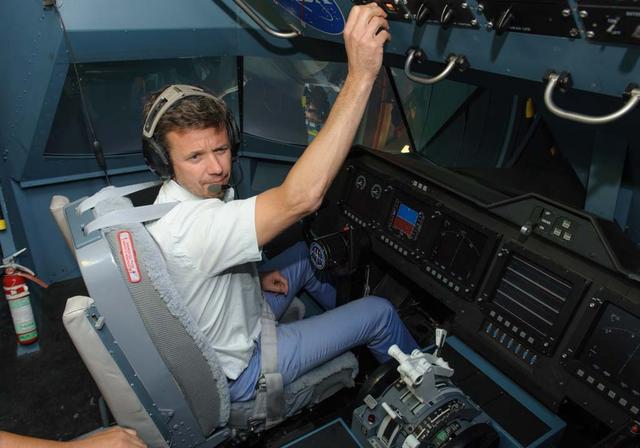
HRH Prince Frederik of Denmark visit and tour of NASA Ames Research Center. shown here at the Vertical Motion Simulator in the cockpit flying a sim.
HRH Prince Frederik of Denmark visit and tour of NASA Ames Research Center.
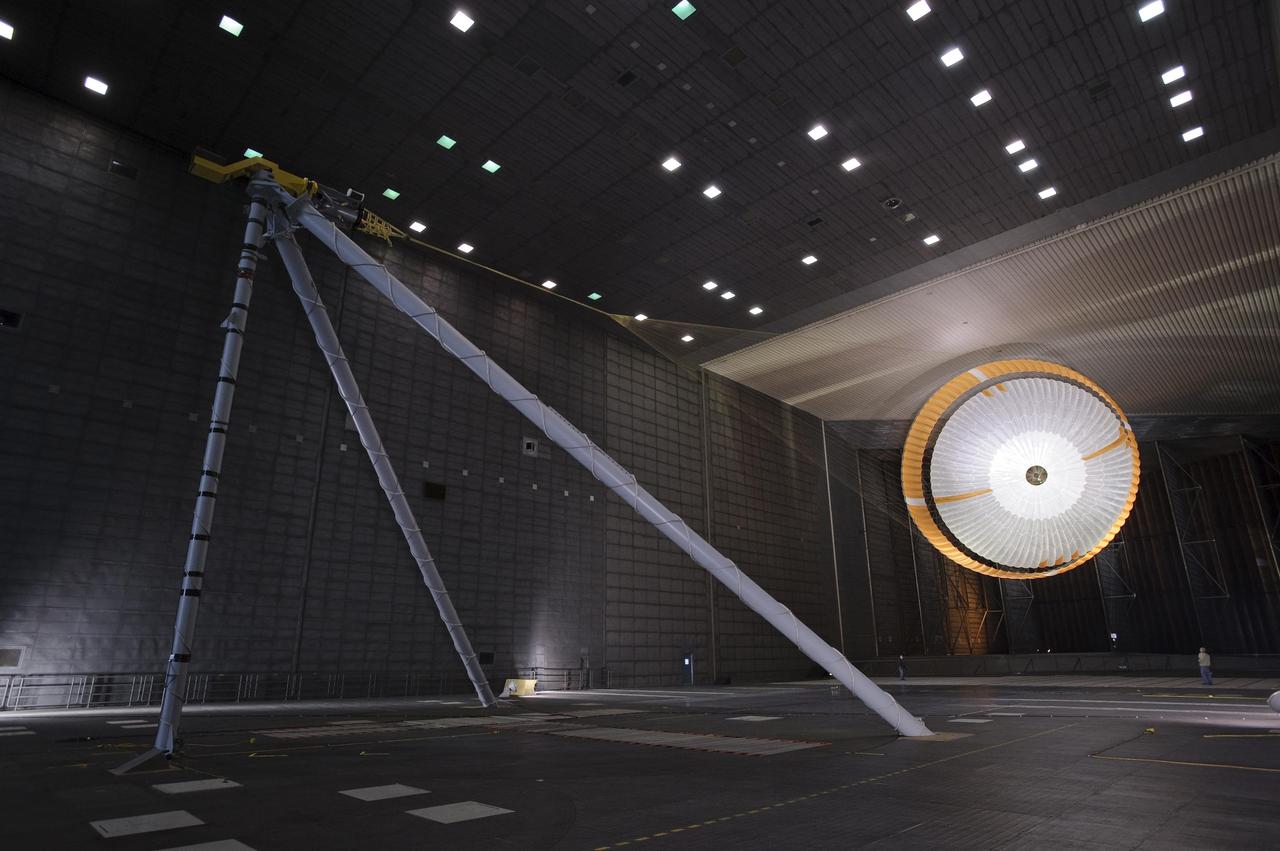
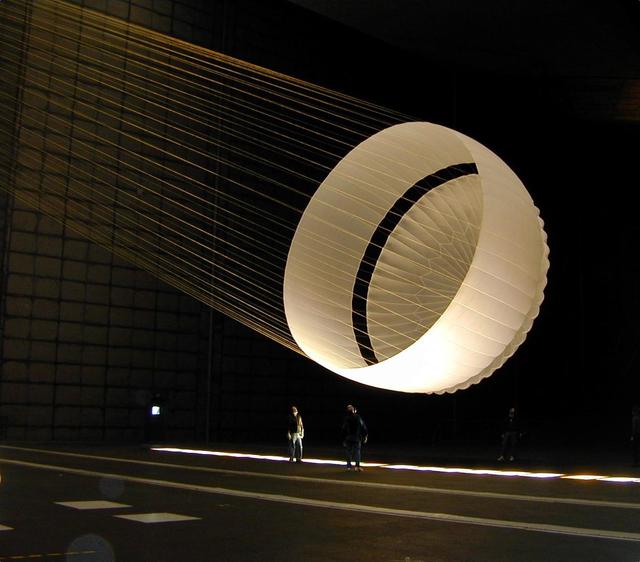
The parachute for NASA Mars Science Laboratory passed flight-qualification testing in March and April 2009 inside the world largest wind tunnel, at NASA Ames Research Center, Moffett Field, Calif.
Mars Science Laboratory Parachute Qualification Testing
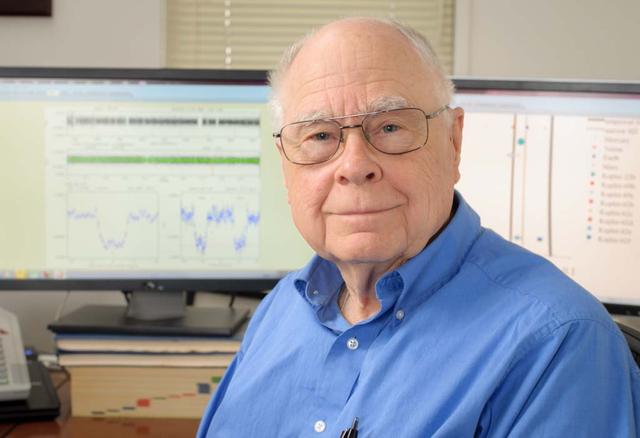
The Kepler Mission Science Principal Investigator Dr William 'Bill' Borucki in his office at NASA Ames Research center.
The Kepler Mission Science Principal Investigator Dr William 'Bill' Borucki in his office at NASA Ames Research center
The Kepler Mission Science Principal Investigator Dr William 'Bill' Borucki in his office at NASA Ames Research center.
The Kepler Mission Science Principal Investigator Dr William 'Bill' Borucki in his office at NASA Ames Research center
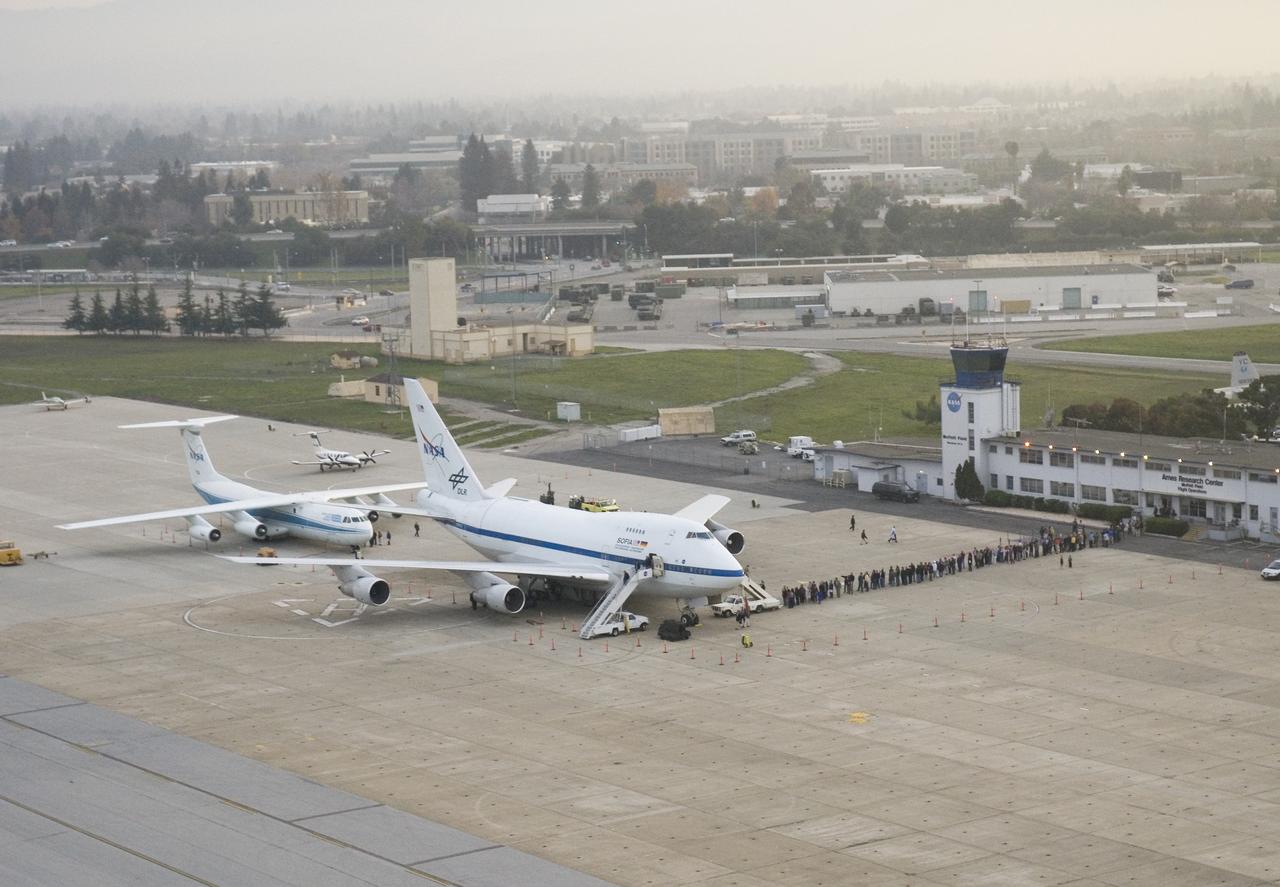
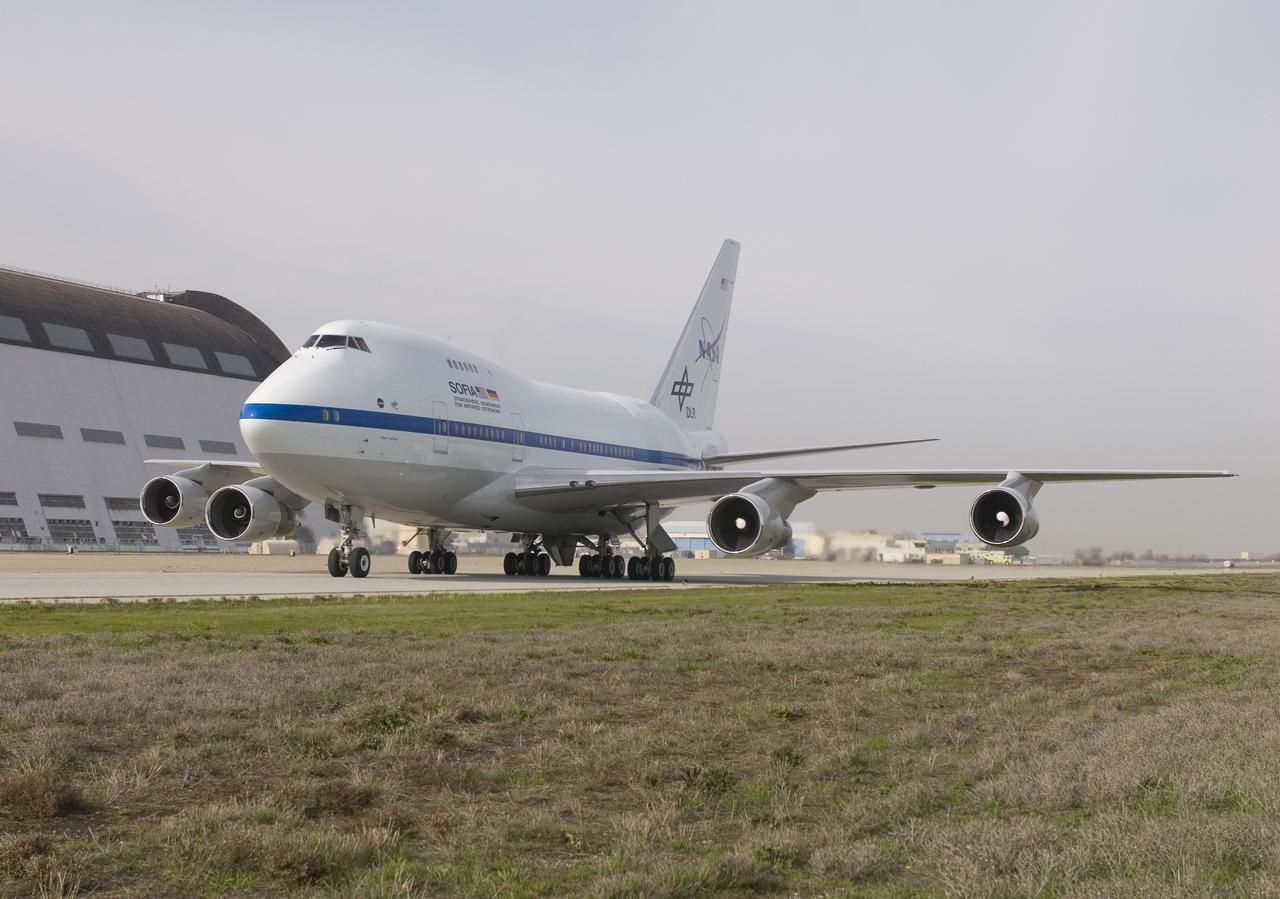
Thousands of NASA Ames employees and their families toured NASA's SOFIA flying observatory during its first visit to NASA Ames Research Center, Jan. 14, 2008.
Thousands of NASA Ames employees and their families toured NASA's SOFIA flying observatory during its first visit to NASA Ames Research Center, Jan. 14, 2008
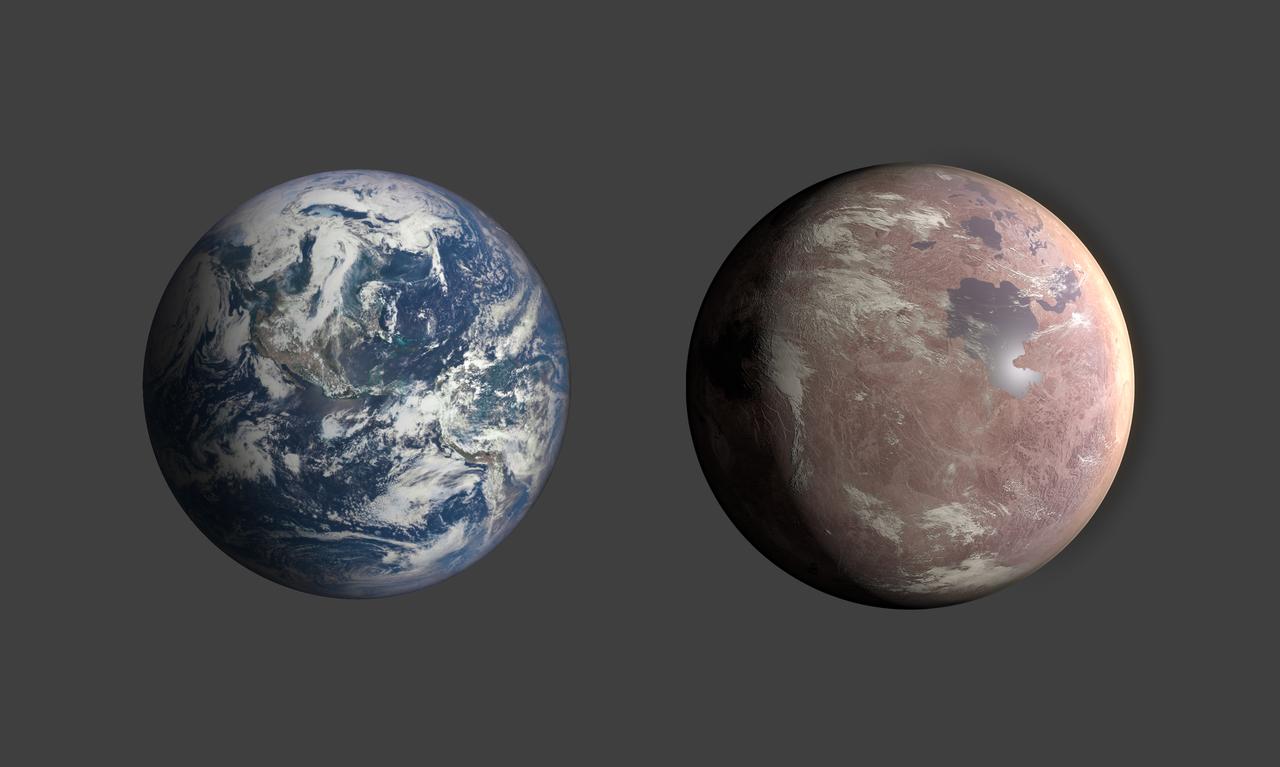
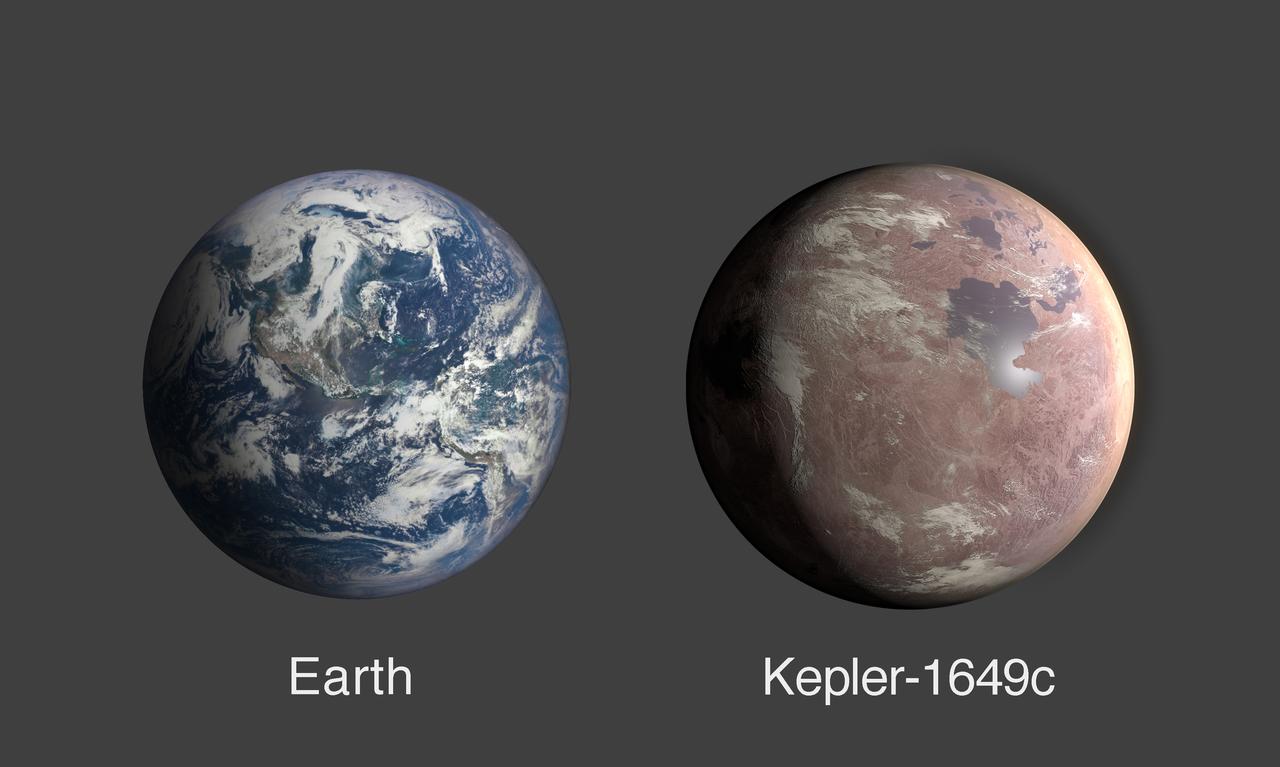
A comparison of Earth and Kepler-1649c, an exoplanet only 1.06 times Earth's radius. Labeled Art Credit: NASA/Ames Research Center/Daniel Rutter
ACD20-0044-003_1
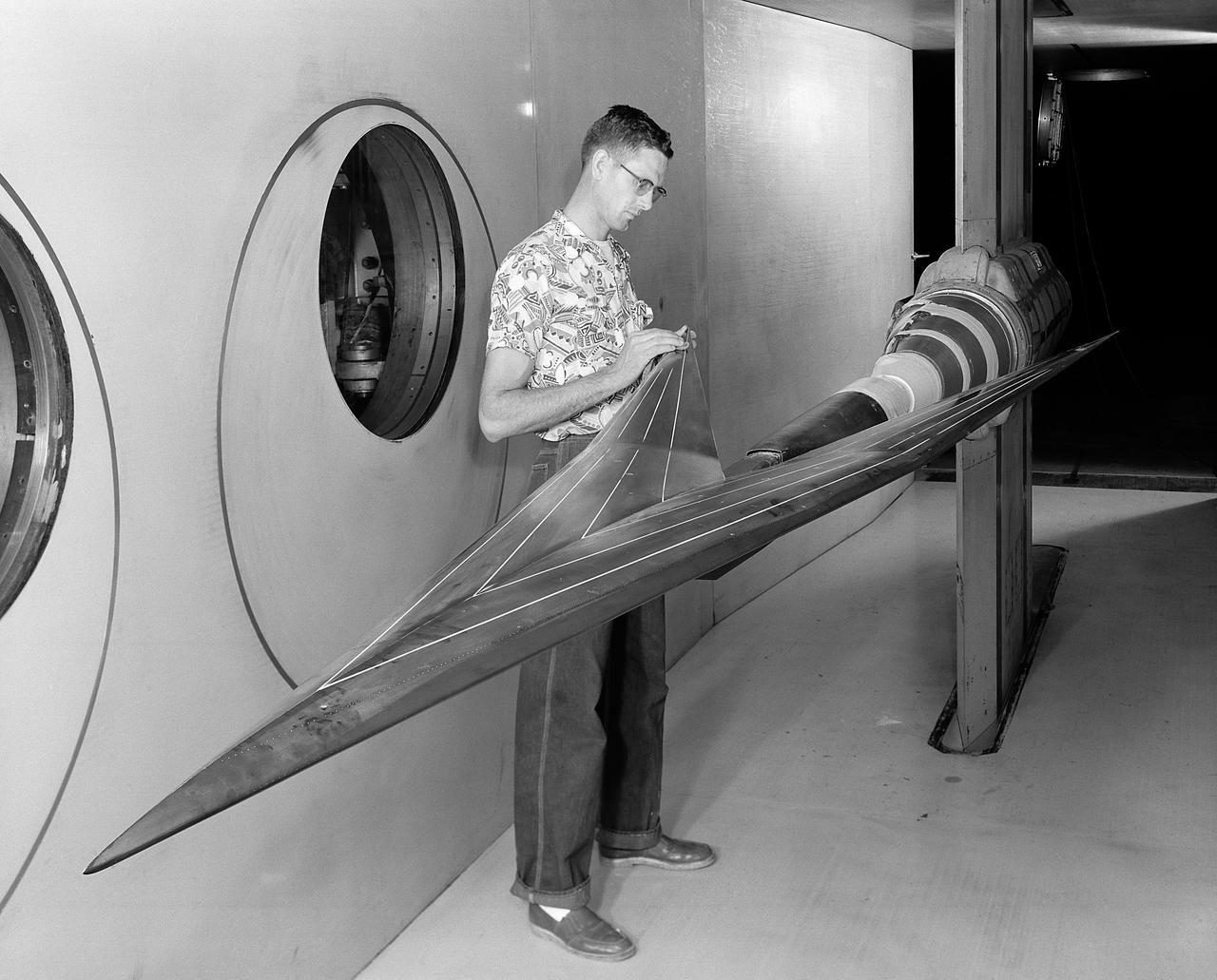
A chambered and twisted wing-body. Arrow wing hypersonic model tested in the 6x6 foot wind tunnel at the NASA Ames Research Center.
Arrow Wing Model in the 6x6 Foot Wind Tunnel at NASA Ames.
A comparison of Earth and Kepler-1649c, an exoplanet only 1.06 times Earth's radius Credit: NASA/Ames Research Center/Daniel Rutter
ACD20-0044-003
Collins Aerodyne VTOL Vertical take off and landing model in the 40x80 foot wind tunnel at NASA's Ames Research Center. Designed by Alexander Lippisch.
Collins Aerodyne VTOL model.
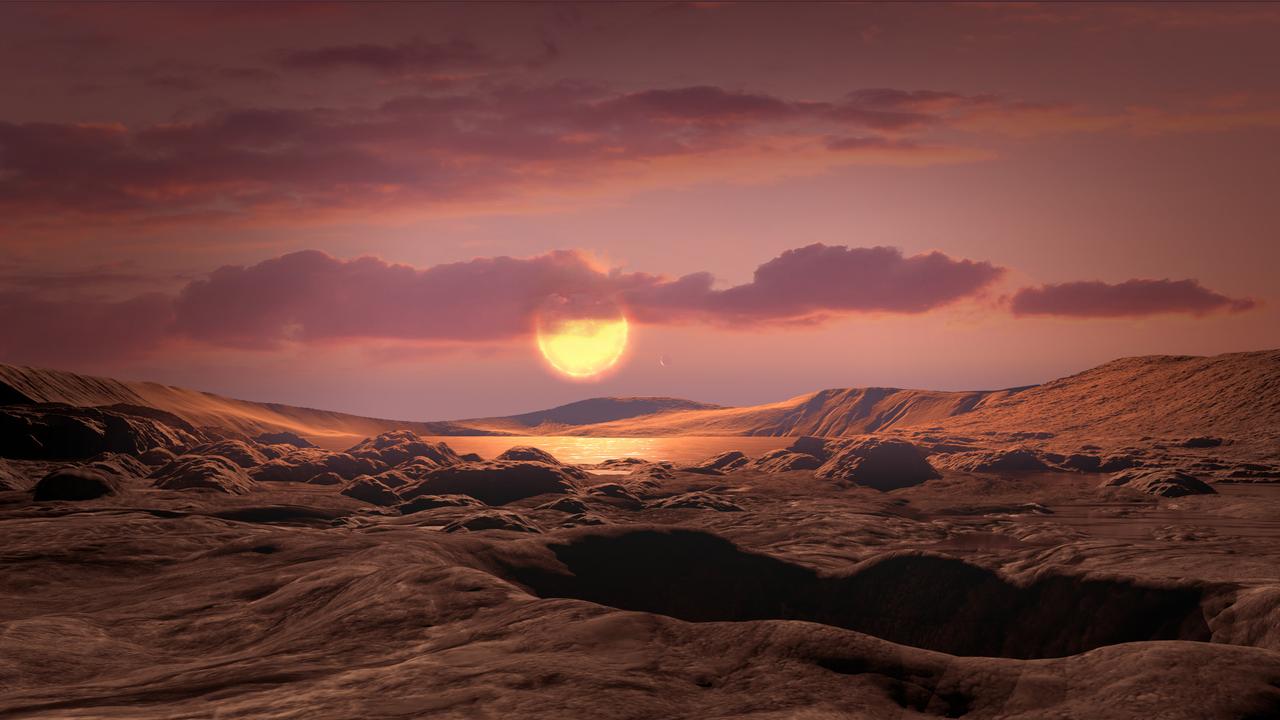
An illustration of what Kepler-1649c could look like from its surface. Credits: NASA/Ames Research Center/Daniel Rutter
ACD20-0044-002
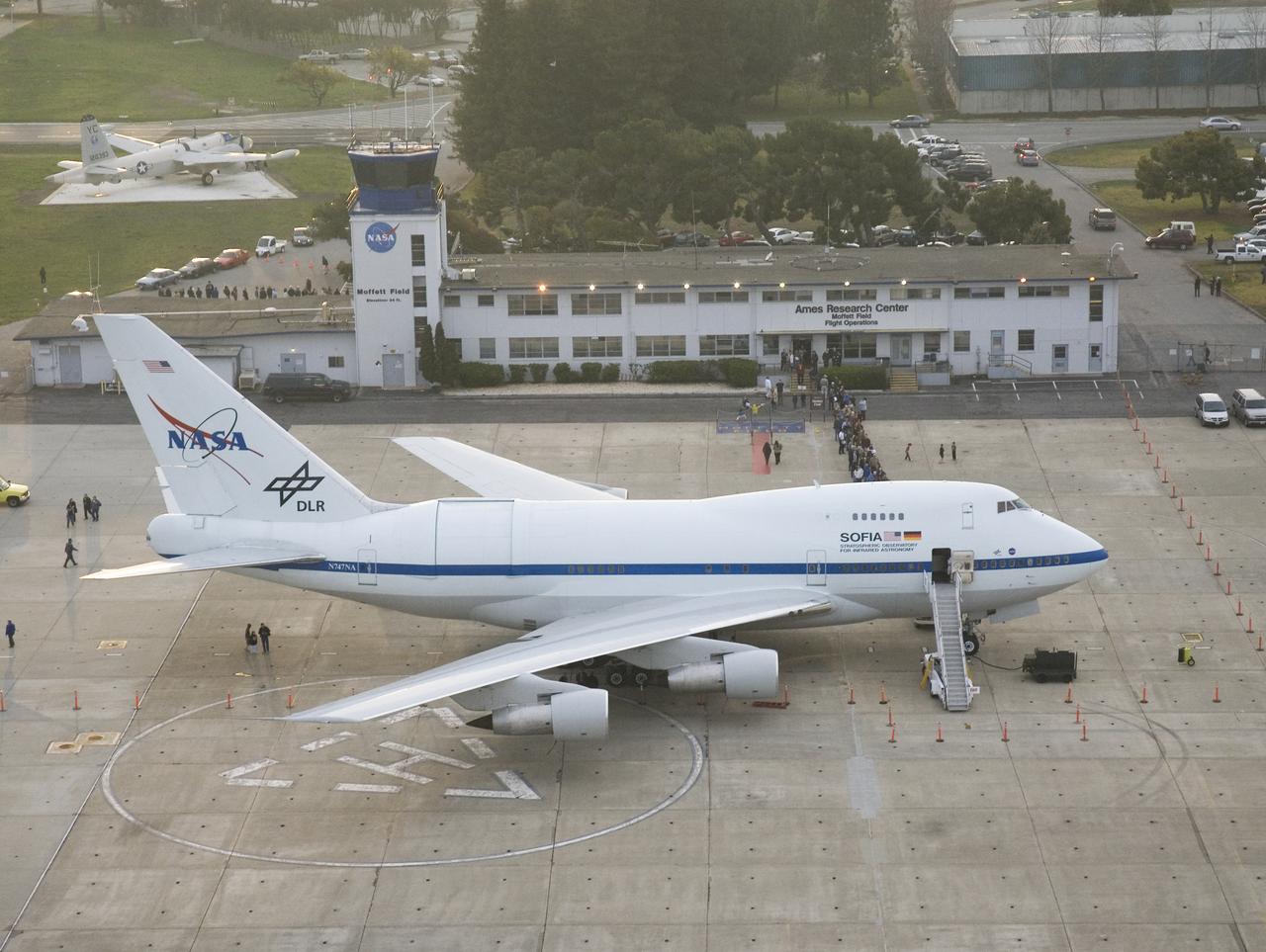
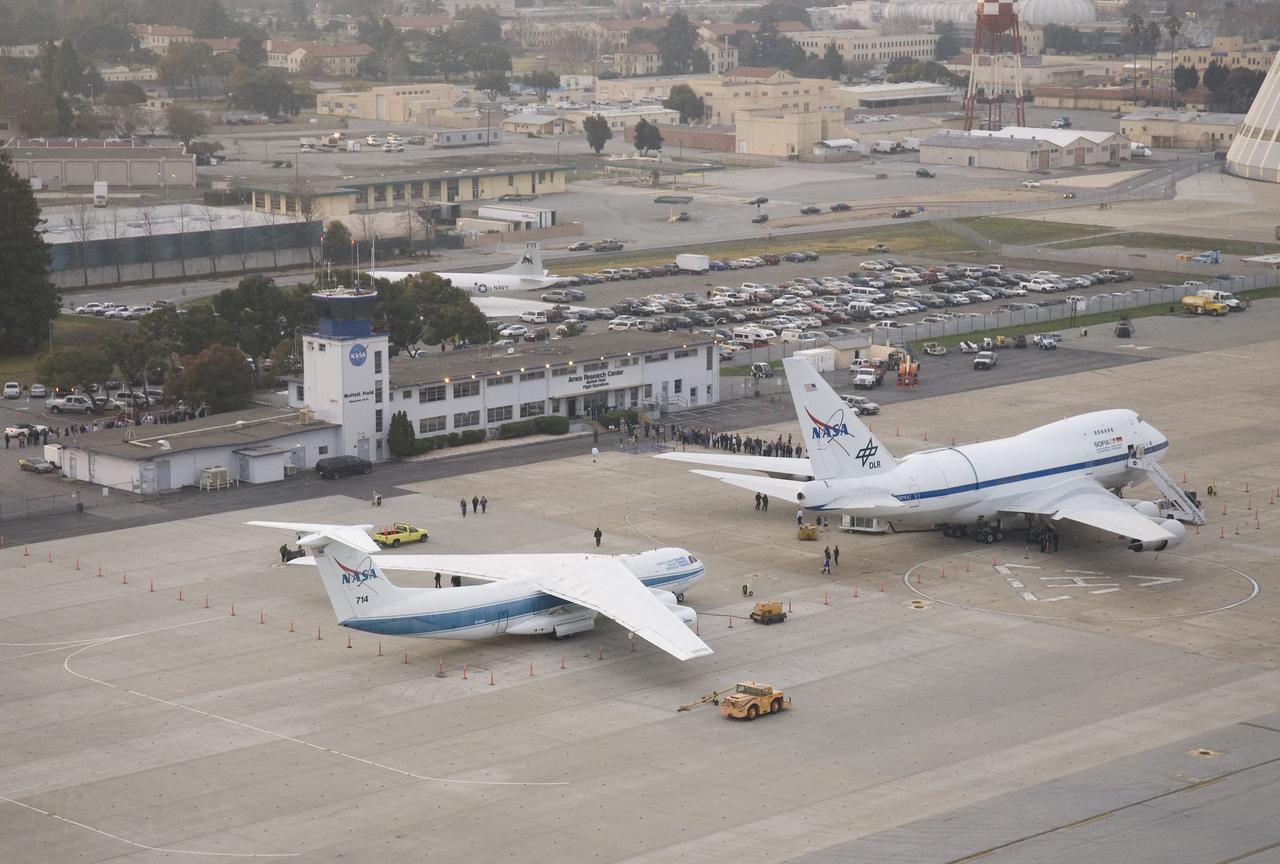
NASA's new SOFIA observatory shared the ramp with its predecessor, the now-retired Kuiper Airborne Observatory, during open house at NASA Ames Research Center.
NASA's new SOFIA observatory shared the ramp with its predecessor, the now-retired Kuiper Airborne Observatory, during open house at NASA Ames Research Center
NASA's Stratospheric Observatory for Infrared Astronomy touches down at Moffett Field, Calif., for its first visit to NASA Ames Research Center, Jan. 14, 2008.
NASA's Stratospheric Observatory for Infrared Astronomy touches down at Moffett Field, Calif., for its first visit to NASA Ames Research Center, Jan. 14, 2008
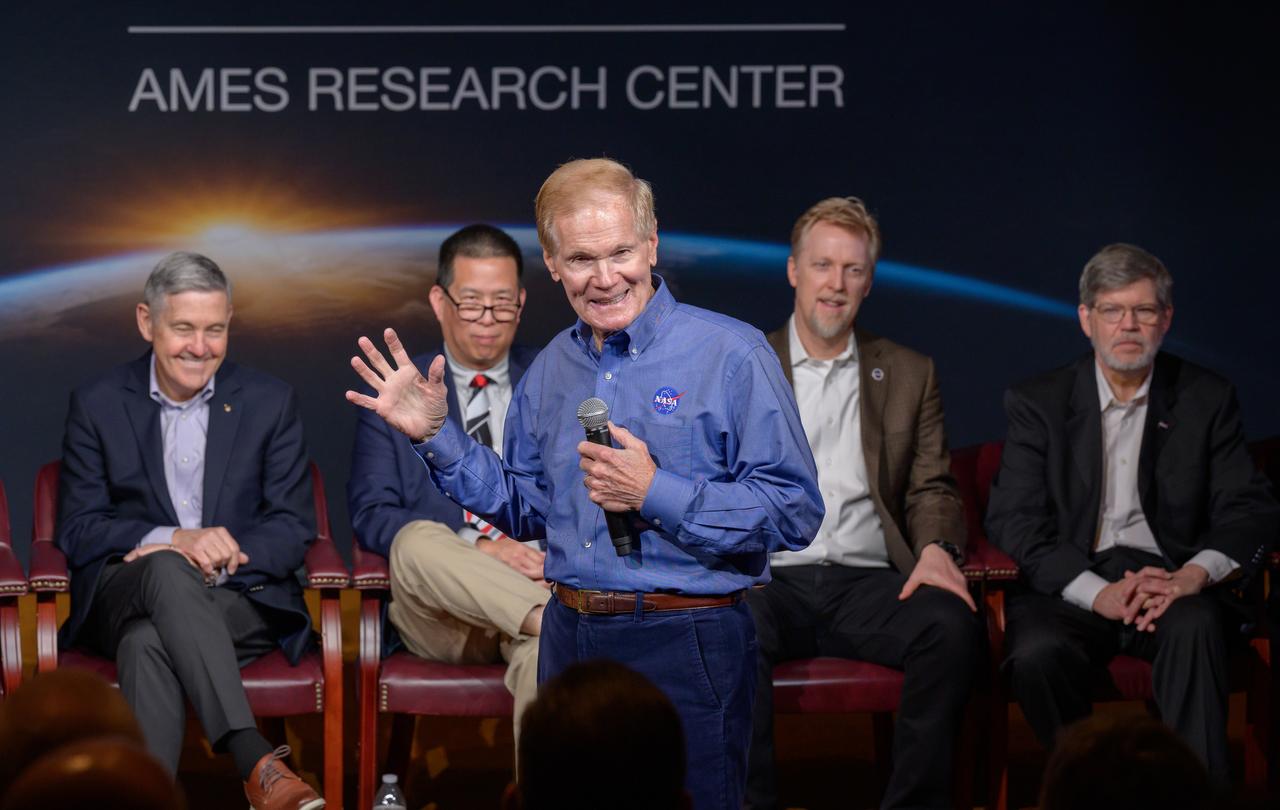
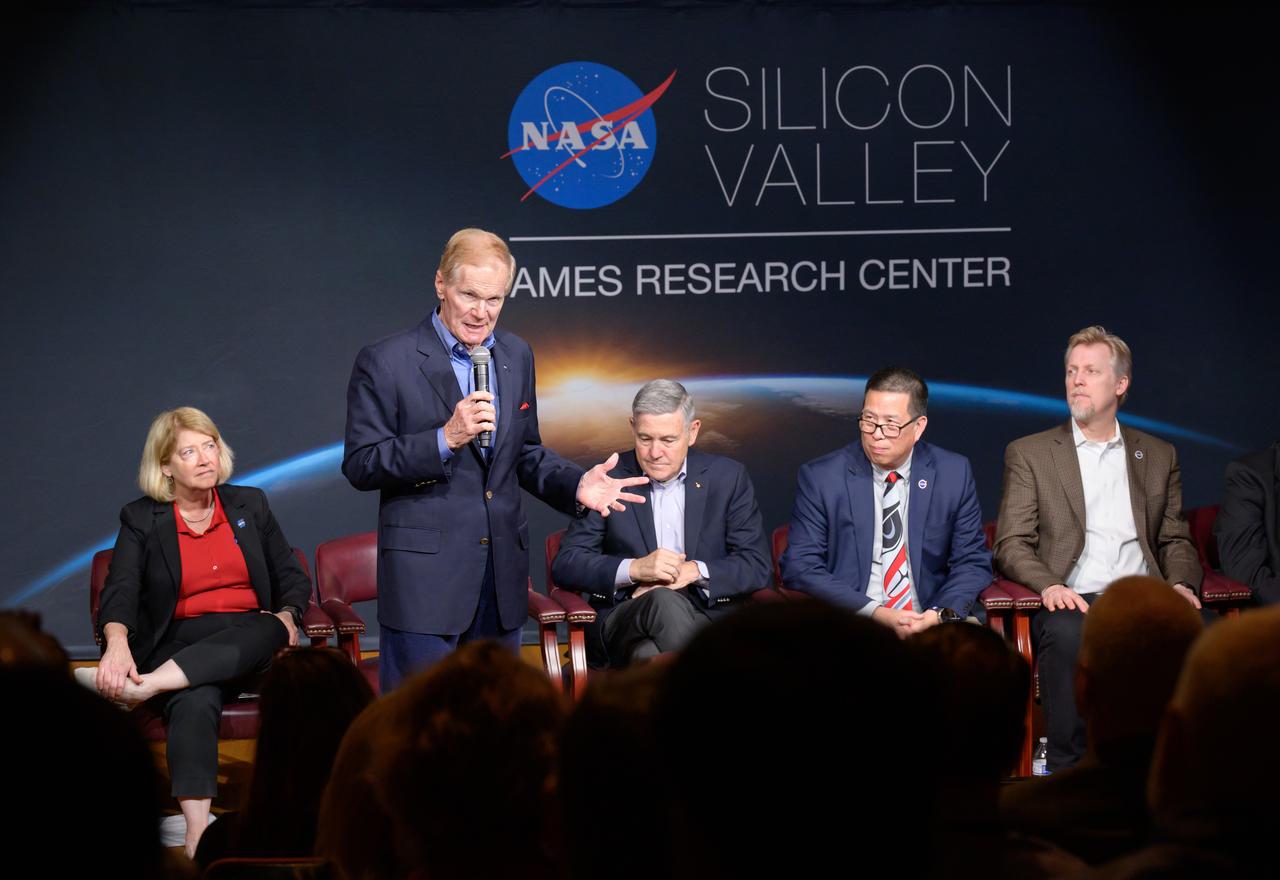
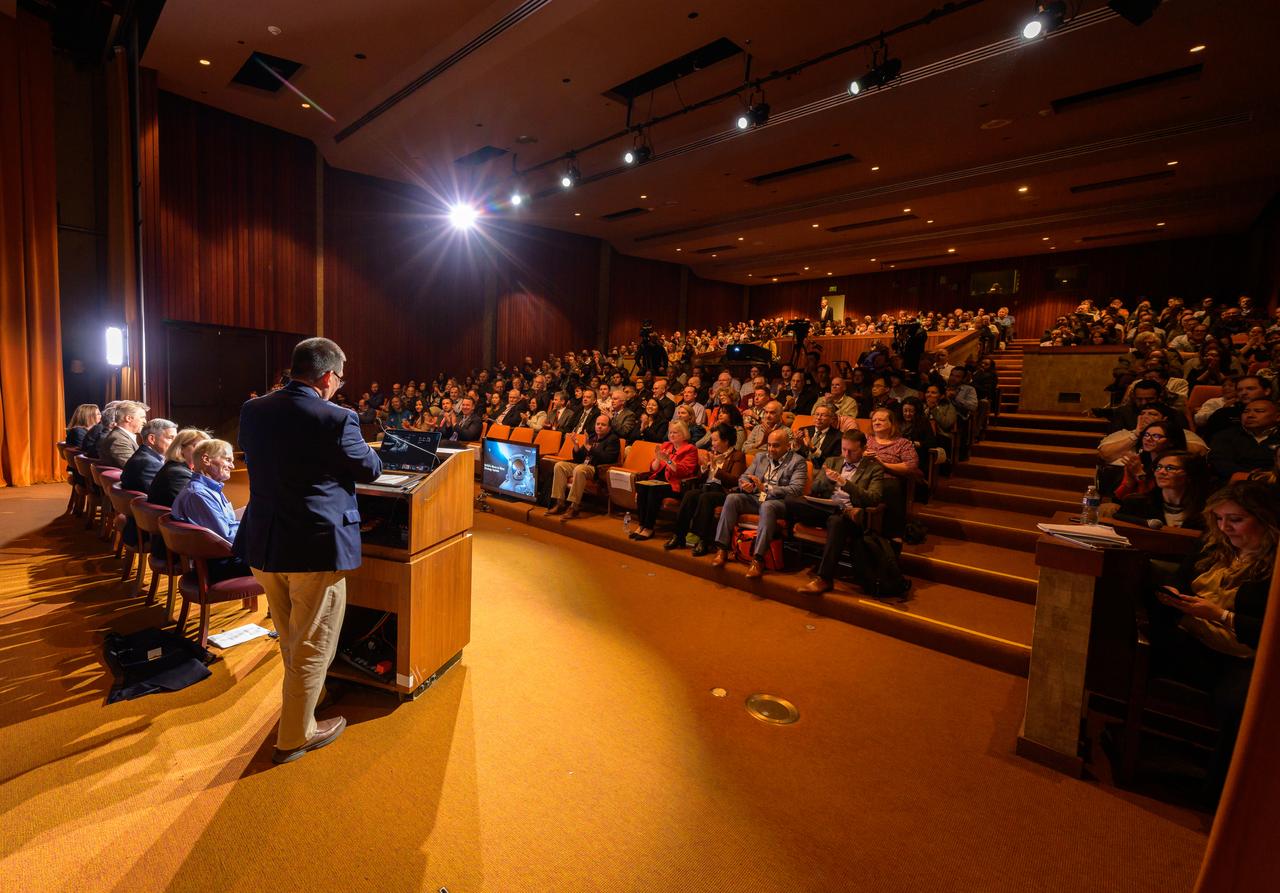
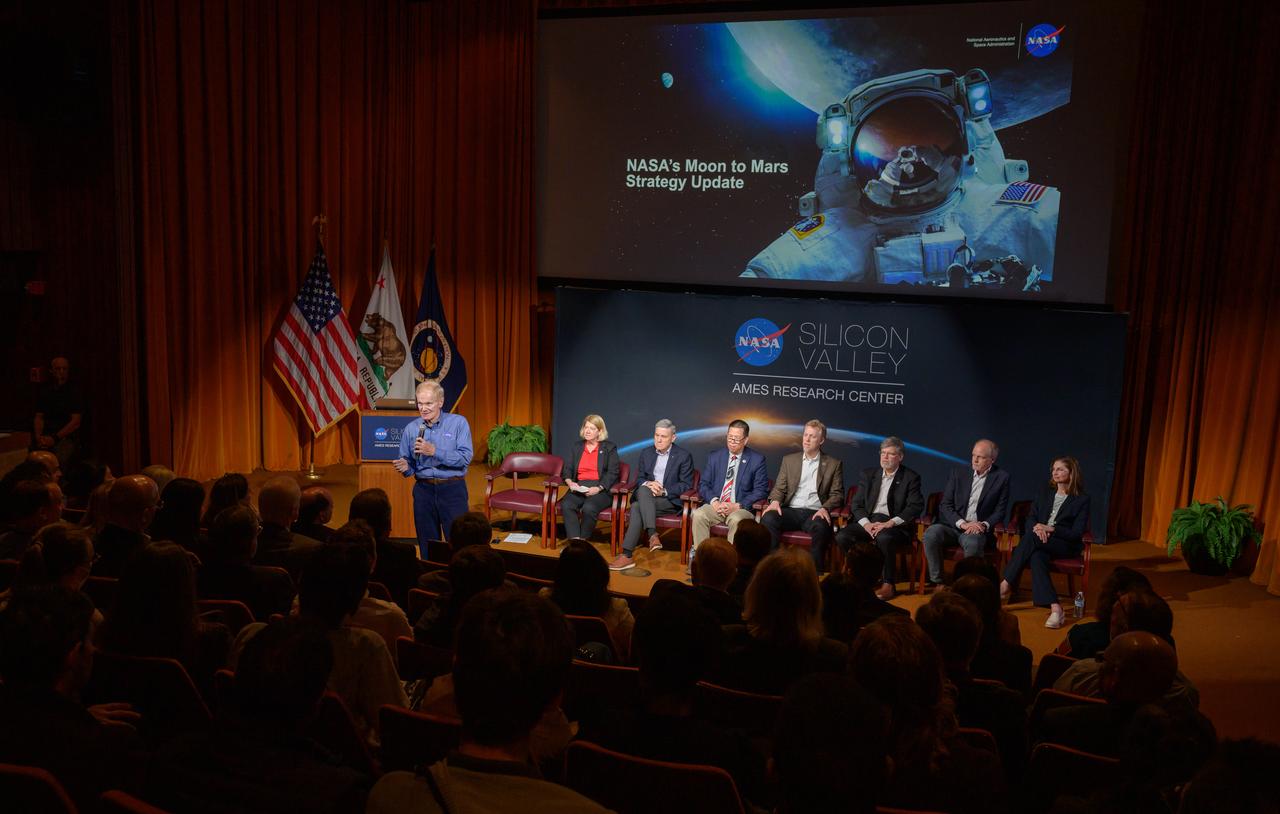
NASA Administrator Bill Nelson, front, talks to the workforce at NASA’s Ames Research Center in California’s Silicon Valley during the “Moon to Mars” town hall in the N201 Syvertson Auditorium.  Behind him, left to right, are Deputy Administrator Pam Melroy, Associate Administrator Bob Cabana, Ames Center Director Eugene Tu, and Director of Space Architectures Kurt “Spuds” Vogel.
NASA Administrator Bill Nelson, Deputy Administrator Pam Melroy,
NASA Administrator Bill Nelson, front, talks to the workforce at NASA’s Ames Research Center in California’s Silicon Valley during the “Moon to Mars” town hall in the N201 Syvertson Auditorium.  Behind, left to right, are Deputy Administrator Pam Melroy, Associate Administrator Bob Cabana, Ames Center Director Eugene Tu, Director of Space Architectures Kurt “Spuds” Vogel, Deputy Associate Administrator for Exploration in the Science Mission Directorate Joel Kearns.
NASA Administrator Bill Nelson, Deputy Administrator Pam Melroy,
An illustration of Kepler-1649c orbiting around its host red dwarf star. This newly discovered exoplanet is in its star’s habitable zone and is the closest to Earth in size and temperature found yet in Kepler's data. Credits: NASA/Ames Research Center/Daniel Rutter
ACD20-0044-001
Eugene Tu, center director at NASA’s Ames Research Center in California’s Silicon Valley, offers his opening remarks to the   Ames workforce during the “Moon to Mars” town hall in the N201 Syvertson Auditorium. Town hall panel, seated right to left, are  NASA Administrator Bill Nelson, Deputy Administrator Pam Melroy, Associate Administrator Bob Cabana, Director of Space Architectures Kurt “Spuds” Vogel, Deputy Associate Administrator for Exploration in the Science Mission Directorate Joel Kearns, Deputy Associate Administrator for Programs in the Space Technology Mission Directorate Walt Engelund, and Deputy Associate Administrator for Exploration Systems Development Cathy Koerner.
NASA Administrator Bill Nelson, Deputy Administrator Pam Melroy,
Flight Test in the Roverscape (N-269) at NASA's Ames Research Center, the project team tests the DJI Matrice 600 Unmanned Aerial Vehicle (UAV) equipped with a radio tracking receiver to study the invasive asian carp in the Mississippi River.
The Earth Science Unmanned Aerial System (UAS) Demonstration in the Rover Scape at NASA's Ames Research Center.
Flight Test in the Roverscape (N-269) at NASA's Ames Research Center, the project team tests the DJI Matrice 600 Unmanned Aerial Vehicle (UAV) equipped with a radio tracking receiver to study the invasive asian carp in the Mississippi River.
The Earth Science Unmanned Aerial System (UAS) Demonstration in the Rover Scape at NASA's Ames Research Center.
Flight Test in the Roverscape (N-269) at NASA's Ames Research Center, the project team tests the DJI Matrice 600 Unmanned Aerial Vehicle (UAV) equipped with a radio tracking receiver to study the invasive asian carp in the Mississippi River.
The Earth Science Unmanned Aerial System (UAS) Demonstration in the Rover Scape at NASA's Ames Research Center.
Flight Test in the Roverscape (N-269) at NASA's Ames Research Center, the project team tests the DJI Matrice 600 Unmanned Aerial Vehicle (UAV) equipped with a radio tracking receiver to study the invasive asian carp in the Mississippi River.
The Earth Science Unmanned Aerial System (UAS) Demonstration in the Rover Scape at NASA's Ames Research Center.
Flight Test in the Roverscape (N-269) at NASA's Ames Research Center, the project team tests the DJI Matrice 600 Unmanned Aerial Vehicle (UAV) equipped with a radio tracking receiver to study the invasive asian carp in the Mississippi River.
The Earth Science Unmanned Aerial System (UAS) Demonstration in the Rover Scape at NASA's Ames Research Center.
Flight Test in the Roverscape (N-269) at NASA's Ames Research Center, the project team tests the DJI Matrice 600 Unmanned Aerial Vehicle (UAV) equipped with a radio tracking receiver to study the invasive asian carp in the Mississippi River.
The Earth Science Unmanned Aerial System (UAS) Demonstration in the Rover Scape at NASA's Ames Research Center.
Flight Test in the Roverscape (N-269) at NASA's Ames Research Center, the project team tests the DJI Matrice 600 Unmanned Aerial Vehicle (UAV) equipped with a radio tracking receiver to study the invasive asian carp in the Mississippi River.
The Earth Science Unmanned Aerial System (UAS) Demonstration in the Rover Scape at NASA's Ames Research Center.
Flight Test in the Roverscape (N-269) at NASA's Ames Research Center, the project team tests the DJI Matrice 600 Unmanned Aerial Vehicle (UAV) equipped with a radio tracking receiver to study the invasive asian carp in the Mississippi River.
The Earth Science Unmanned Aerial System (UAS) Demonstration in the Rover Scape at NASA's Ames Research Center.
NASA's now-retired Kuiper Airborne Observatory shared the limelight with its successor, the SOFIA observatory, during an open house at Ames Research Center.
NASA's now-retired Kuiper Airborne Observatory shared the limelight with its successor, the SOFIA observatory, during an open house at Ames Research Center
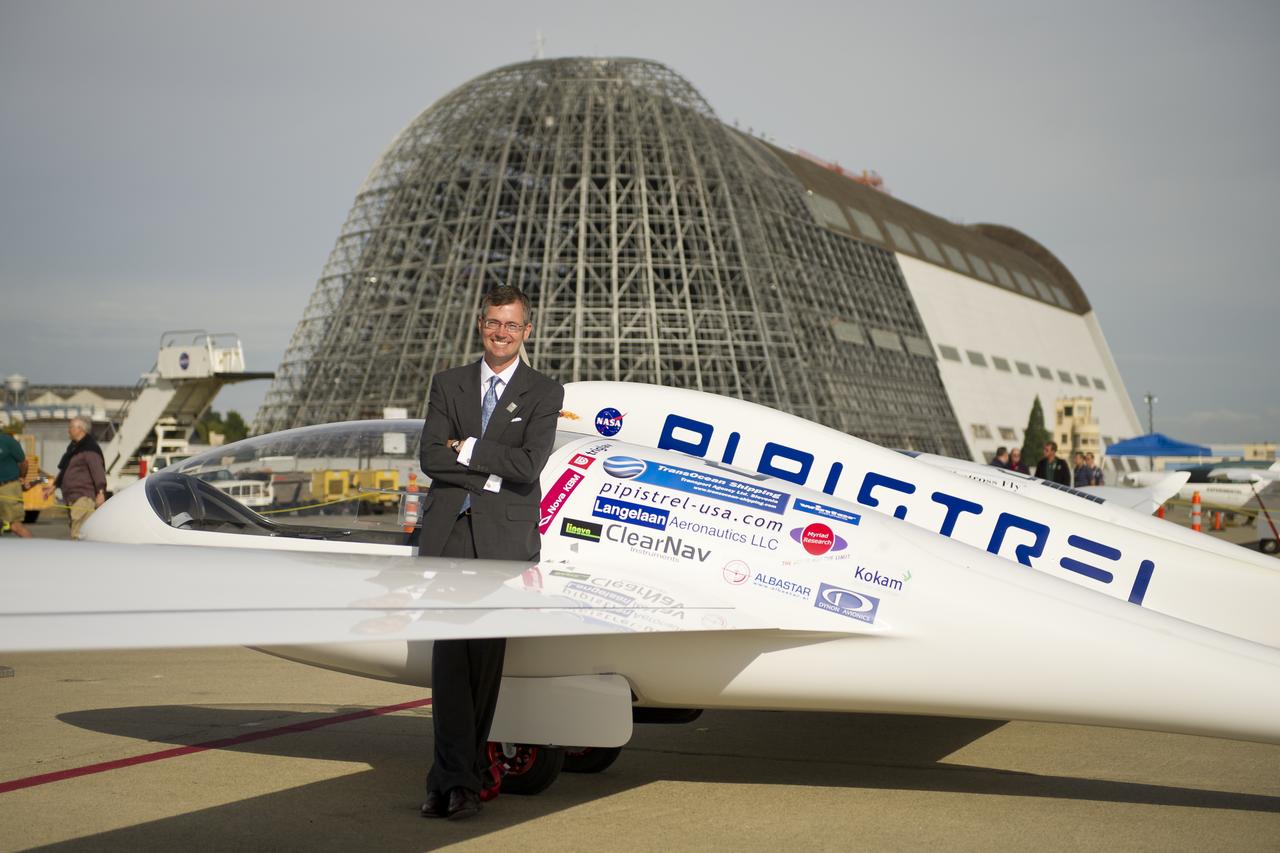
Team Lead Jack Langelaan poses for a photograph next to the Pipistrel-USA, Taurus G4, aircraft prior to winning the 2011 Green Flight Challenge, sponsored by Google, on Monday, Oct. 3, 2011 at the NASA Ames Research Center, Mountain View, Calif.  The all electric Taurus G4 aircraft achieved the equivalency of more than 400 miles per gallon.  NASA and CAFE held the challenge to advance technologies in fuel efficiency and reduced emissions with cleaner renewable fuels and electric aircraft. Photo Credit: (NASA/Bill Ingalls)
Green Flight Challenge
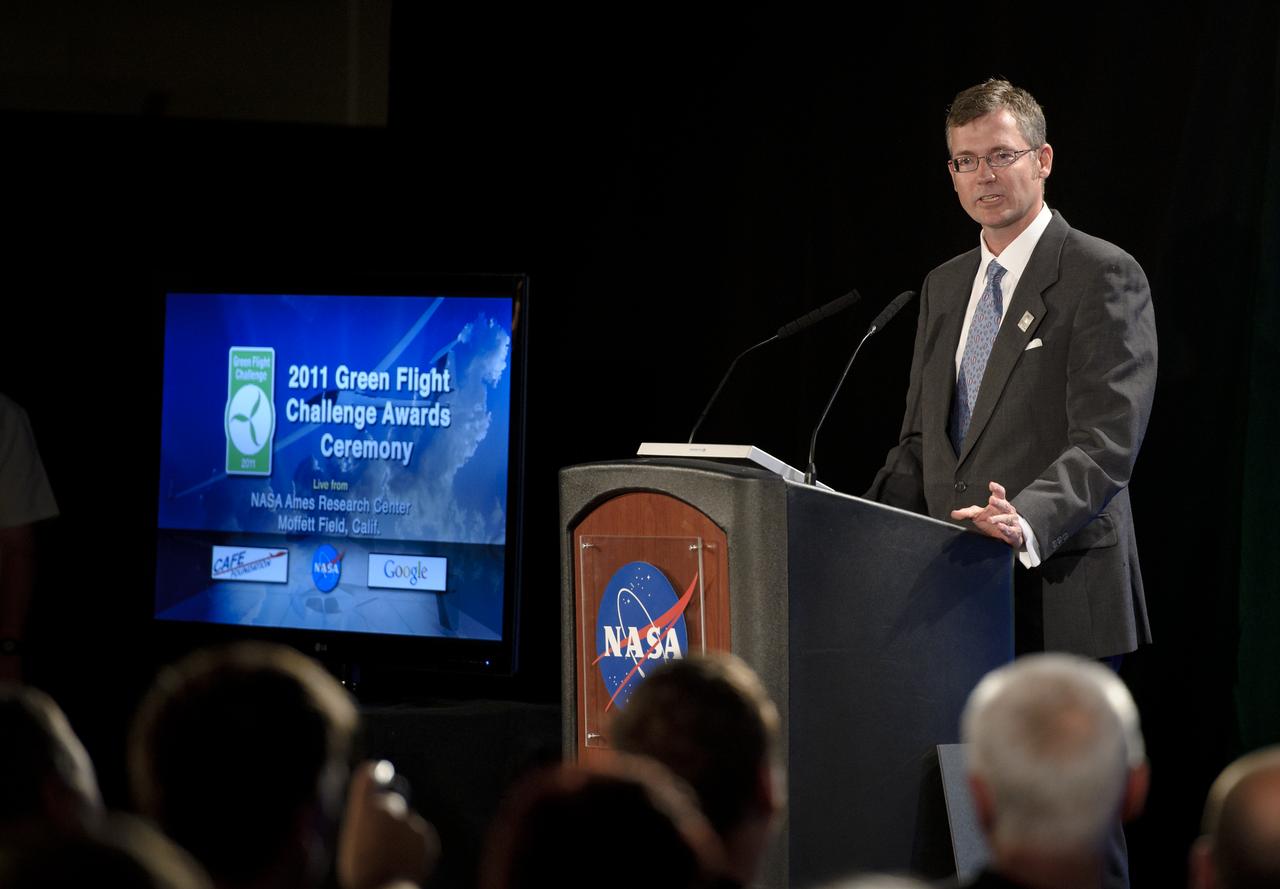
Pipistrel-USA Team Lead Jack Langelaan talks after his team won the 2011 Green Flight Challenge, sponsored by Google, on Monday, Oct. 3, 2011 at the NASA Ames Research Center, Mountain View, Calif.  The all electric Taurus G4 aircraft achieved the equivalency of more than 400 miles per gallon.  NASA and CAFE Foundation held the challenge to advance technologies in fuel efficiency and reduced emissions with cleaner renewable fuels and electric aircraft. Photo Credit: (NASA/Bill Ingalls)
Green Flight Challenge
NASA Mars Exploration Rover parachute deployment testing in the world largest wind tunnel at NASA Ames Research Center, Moffet Field, Calif.
Parachute Test
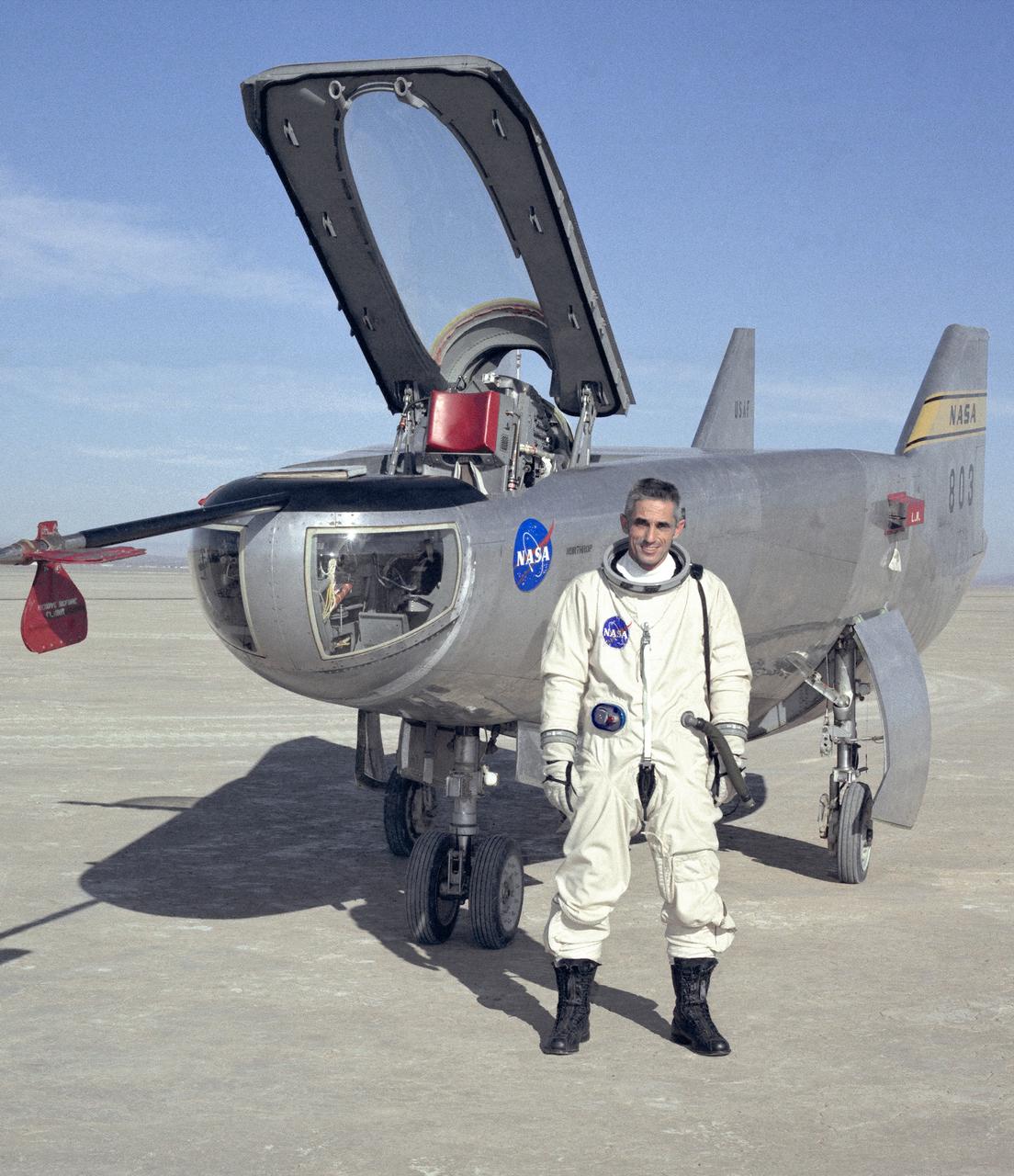
NASA research pilot John A. Manke is seen here in front of the M2-F3 Lifting Body. Manke was hired by NASA on May 25, 1962, as a flight research engineer. He was later assigned to the pilot's office and flew various support aircraft including the F-104, F5D, F-111 and C-47. After leaving the Marine Corps in 1960, Manke worked for Honeywell Corporation as a test engineer for two years before coming to NASA. He was project pilot on the X-24B and also flew the HL-10, M2-F3, and X-24A lifting bodies. John made the first supersonic flight of a lifting body and the first landing of a lifting body on a hard surface runway. Manke served as Director of the Flight Operations and Support Directorate at the Dryden Flight Research Center prior to its integration with Ames Research Center in October 1981. After this date John was named to head the joint Ames-Dryden Directorate of Flight Operations. He also served as site manager of the NASA Ames-Dryden Flight Research Facility.  John is a member of the Society of Experimental Test Pilots. He retired on April 27, 1984.
M2-F3 with test pilot John A. Manke
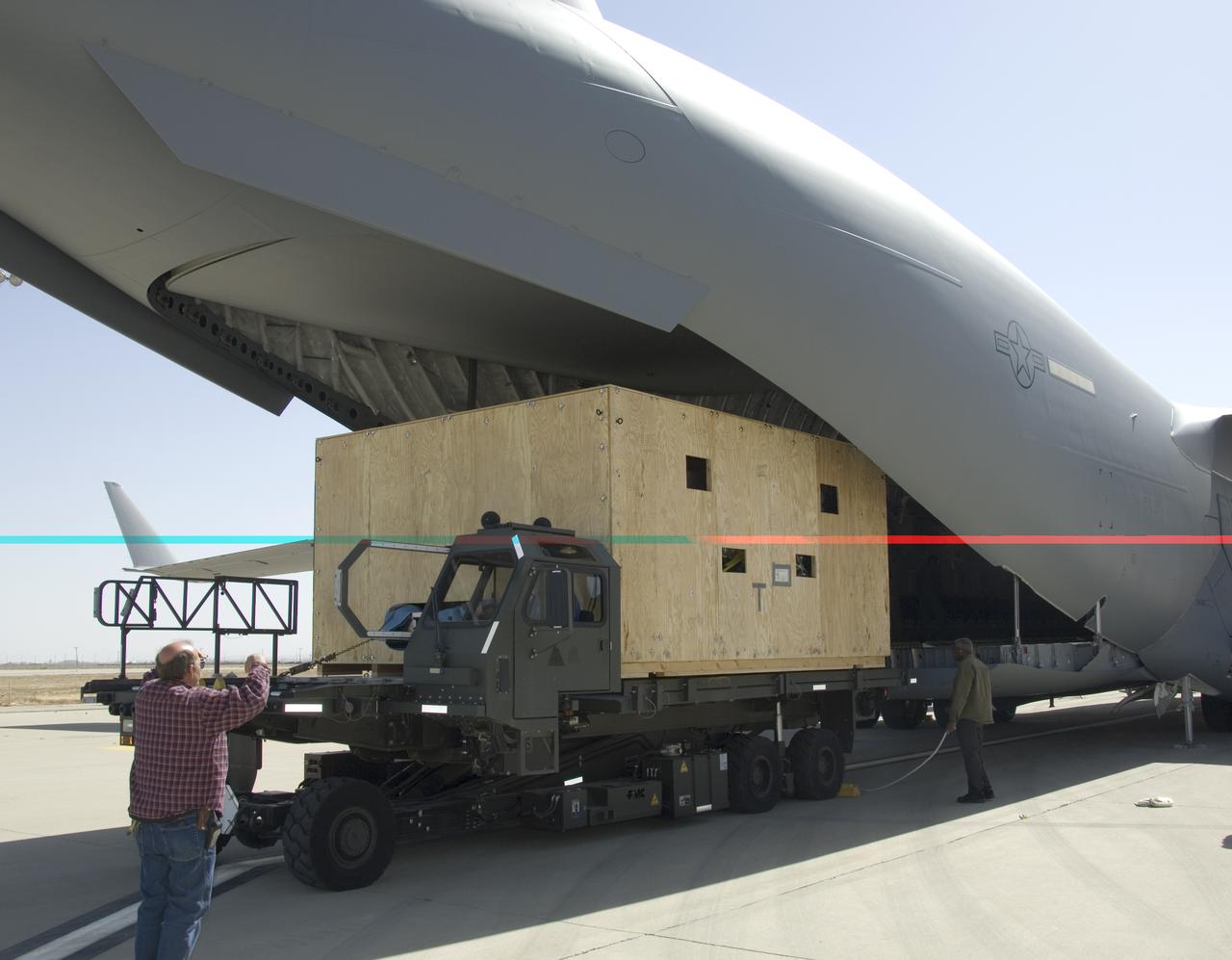
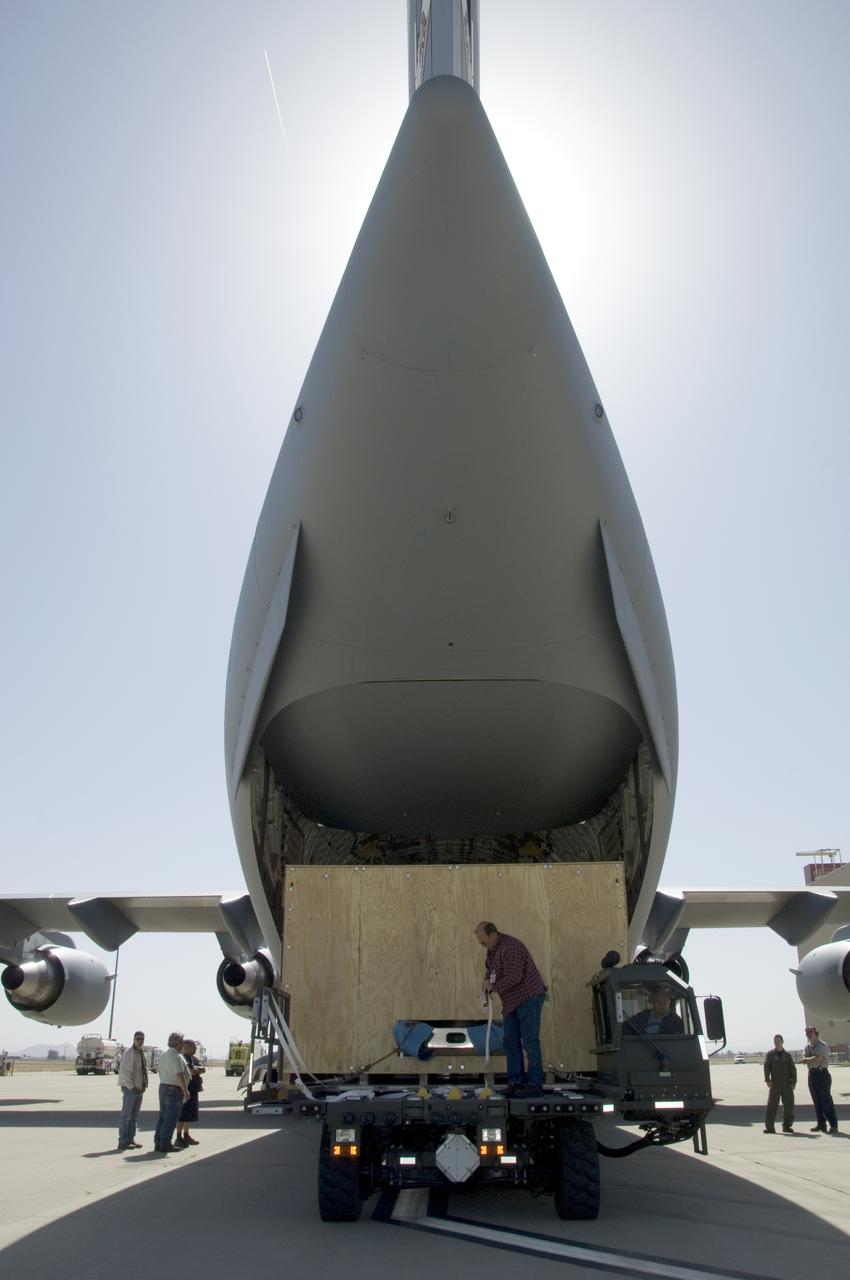
Technicians at NASA's Dryden Aircraft Operations Facility in Palmdale, Calif., loaded the German-built primary mirror assembly of the Stratospheric Observatory for Infrared Astronomy, or SOFIA, onto an Air Force C-17 for shipment to NASA's Ames Research Center on May 1, 2008. In preparation for the final finish coating of the mirror, the more than two-ton mirror assembly had been removed from its cavity in the rear fuselage of the highly modified SOFIA Boeing 747SP two weeks earlier. After arrival at NASA Ames at Moffett Field near Mountain View, Calif., the mirror would receive its aluminized finish coating before being re-installed in the SOFIA aircraft.
A NASA Technician directs loading of the crated SOFIA primary mirror assembly into a C-17 for shipment to NASA Ames Research Center for finish coating
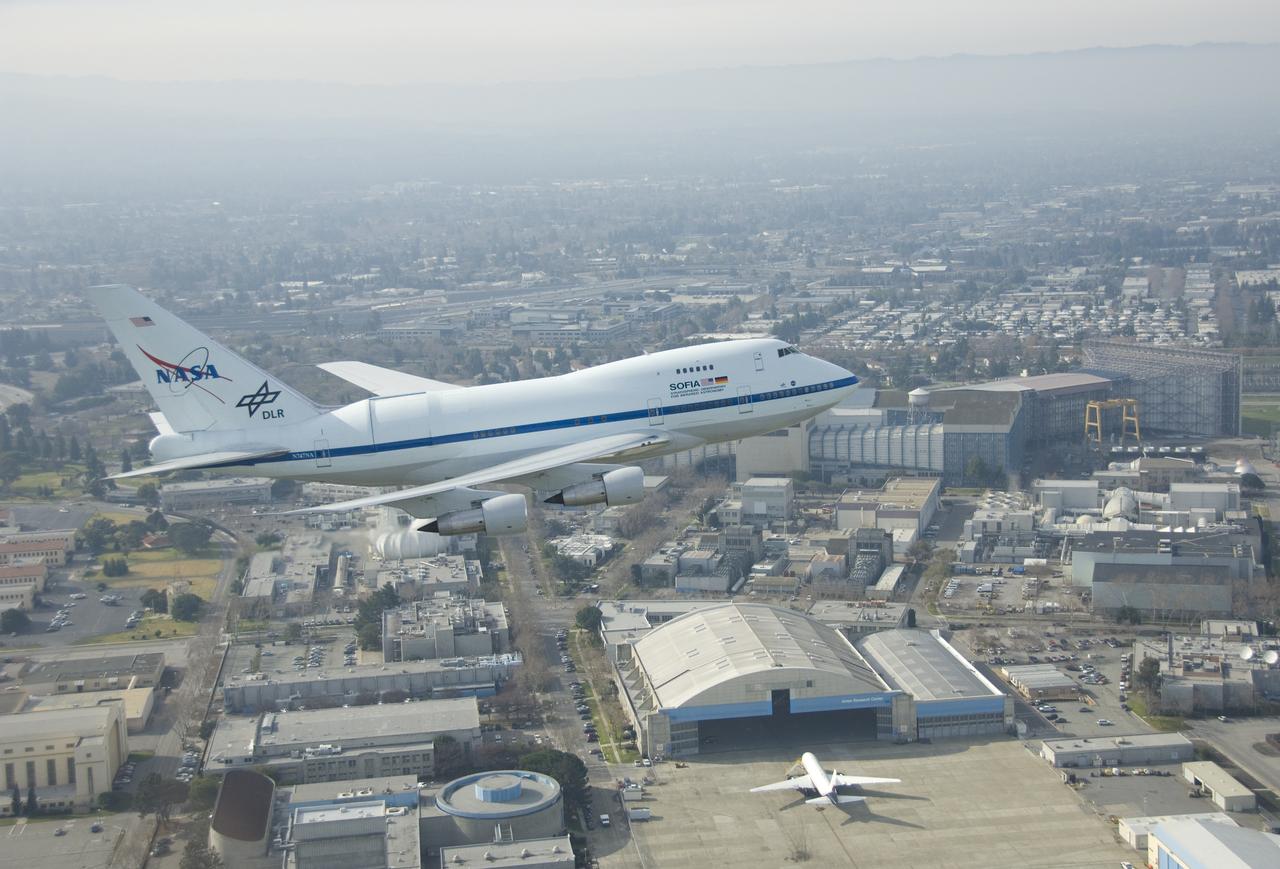
NASA's SOFIA flying observatory makes a low pass over NASA Ames Research Center prior to landing at Moffett Field for a brief visit on Jan. 14, 2008.
NASA's SOFIA flying observatory makes a low pass over NASA Ames Research Center prior to landing at Moffett Field for a brief visit on Jan. 14, 2008
NASA's SOFIA airborne observatory taxis past Hangar 1, the 1930s-era dirigible hangar at Moffett Field, during its first visit to NASA Ames Research Center.
NASA's SOFIA airborne observatory taxis past Hangar 1, the 1930s-era dirigible hangar at Moffett Field, during its first visit to NASA Ames Research Center
3/4 front right side only with Tim Wills on right and Charles Greco, mechanic. Large flaps on Variable height struts.  XC-142 was a tri-service tiltwing experimental aircraft designed to investigate the operational suitability of vertical/short takeoff and landing (V/STOL) transports.
XC-142 Tilt Wing; 0.6 Scale Model in the 40x80 Foot Wind Tunnel at NASA Ames Research Center.
NASA Administrator Bill Nelson, front, talks to the workforce at NASA’s Ames Research Center in California’s Silicon Valley during the “Moon to Mars” town hall in the N201 Syvertson Auditorium.  Behind him, left to right, are Deputy Administrator Pam Melroy, Associate Administrator Bob Cabana, AmesCenter Director Eugene Tu, Director of Space Architectures Kurt “Spuds” Vogel, Deputy Associate Administrator for Exploration in the Science Mission Directorate Joel Kearns, Deputy Associate Administrator for Programs in the Space Technology Mission Directorate Walt Engelund, and Deputy Associate Administrator for Exploration Systems Development Cathy Koerner.
NASA Administrator Bill Nelson, Deputy Administrator Pam Melroy,
Technicians at NASA's Dryden Aircraft Operations Facility in Palmdale, Calif., loaded the German-built primary mirror assembly of the Stratospheric Observatory for Infrared Astronomy, or SOFIA, onto an Air Force C-17 for shipment to NASA's Ames Research Center on May 1, 2008. In preparation for the final finish coating of the mirror, the more than two-ton mirror assembly had been removed from its cavity in the rear fuselage of the highly modified SOFIA Boeing 747SP two weeks earlier. After arrival at NASA Ames at Moffett Field near Mountain View, Calif., the mirror would receive its aluminized finish coating before being re-installed in the SOFIA aircraft.
Ground crewmen prepare to load the crated SOFIA primary mirror assembly into an Air Force C-17 for shipment to NASA Ames Research Center for finish coating
The Kepler space telescope examined twenty-one patches of the sky during it’s nine and a half years of operation. Within these regions, Kepler gathered high precision brightness measurements of over half a million stars facilitating the discovery of thousands of exoplanets and yielding insight into a multitude of other astrophysical phenomena. Illustration by Wendy Stenzel. Science content: Jeff Coughlin, Kenneth Mighell, Doug Caldwell, all of NASA Ames. Key words: Kepler, K2, Missions, nasa, Ames research center, spacecraft, FFI, Full Frame Image, fields of view, science.
Kepler's and K2's Fields of View
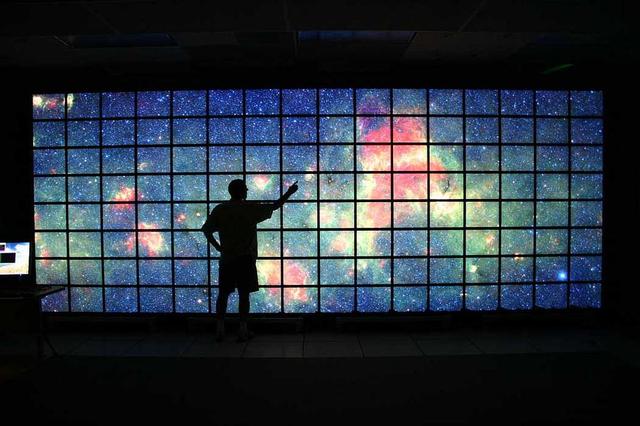
The center of the Milky Way galaxy imaged by NASA Spitzer Space Telescope is displayed on a quarter-of-a-billion-pixel, high-definition 23-foot-wide 7-meter LCD science visualization screen at NASA Ames Research Center.
Big Data on the Big Screen
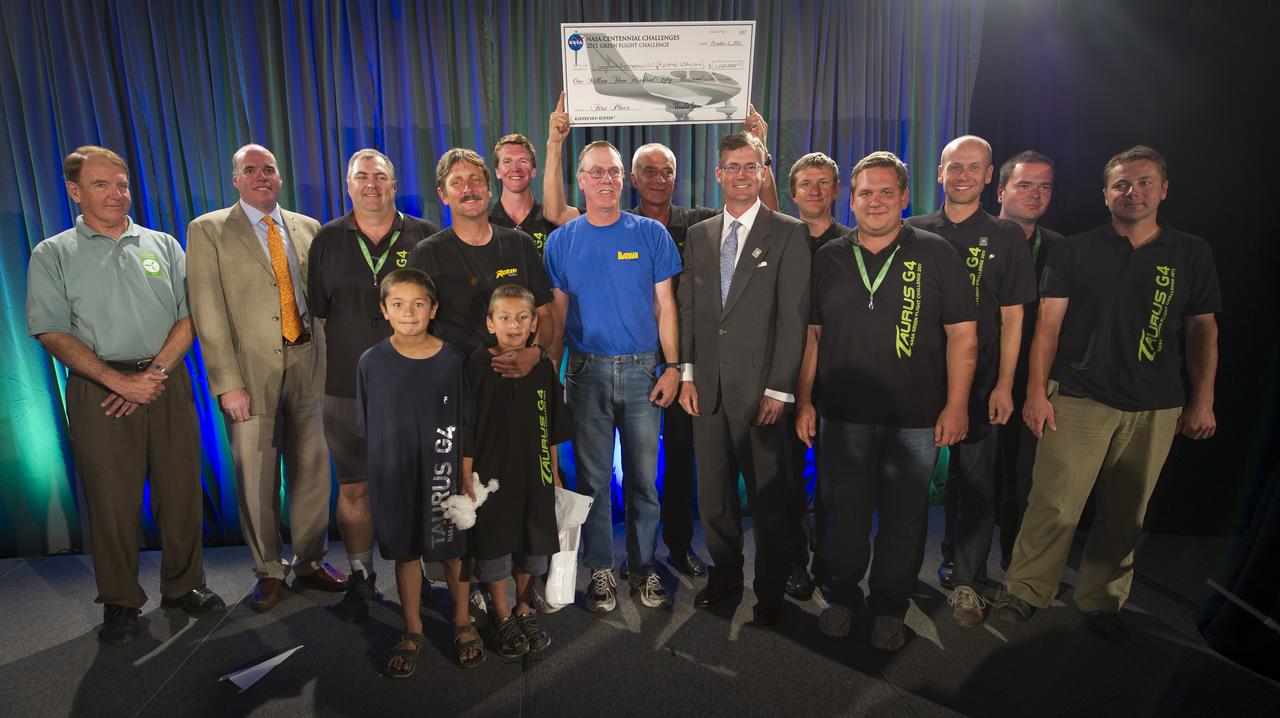
Comparative Aircraft Flight Efficiency (CAFE) Foundation President Brien A. Seeley M.D., left, NASA Acting Chief Technologist Joe Parrish, 2nd from left, and Pipistrel-USA Team Lead Jack Langelaan, center with suit, and the entire Pipistrel-USA, Taurus G4 aircraft team pose for a photograph shortly after winning the 2011 Green Flight Challenge, sponsored by Google, on Monday, Oct. 3, 2011 at the NASA Ames Research Center, Mountain View, Calif.  The all electric Taurus G4 aircraft achieved the equivalency of more than 400 miles per gallon.  NASA and CAFE held the challenge to advance technologies in fuel efficiency and reduced emissions with cleaner renewable fuels and electric aircraft. Photo Credit: (NASA/Bill Ingalls)
Green Flight Challenge
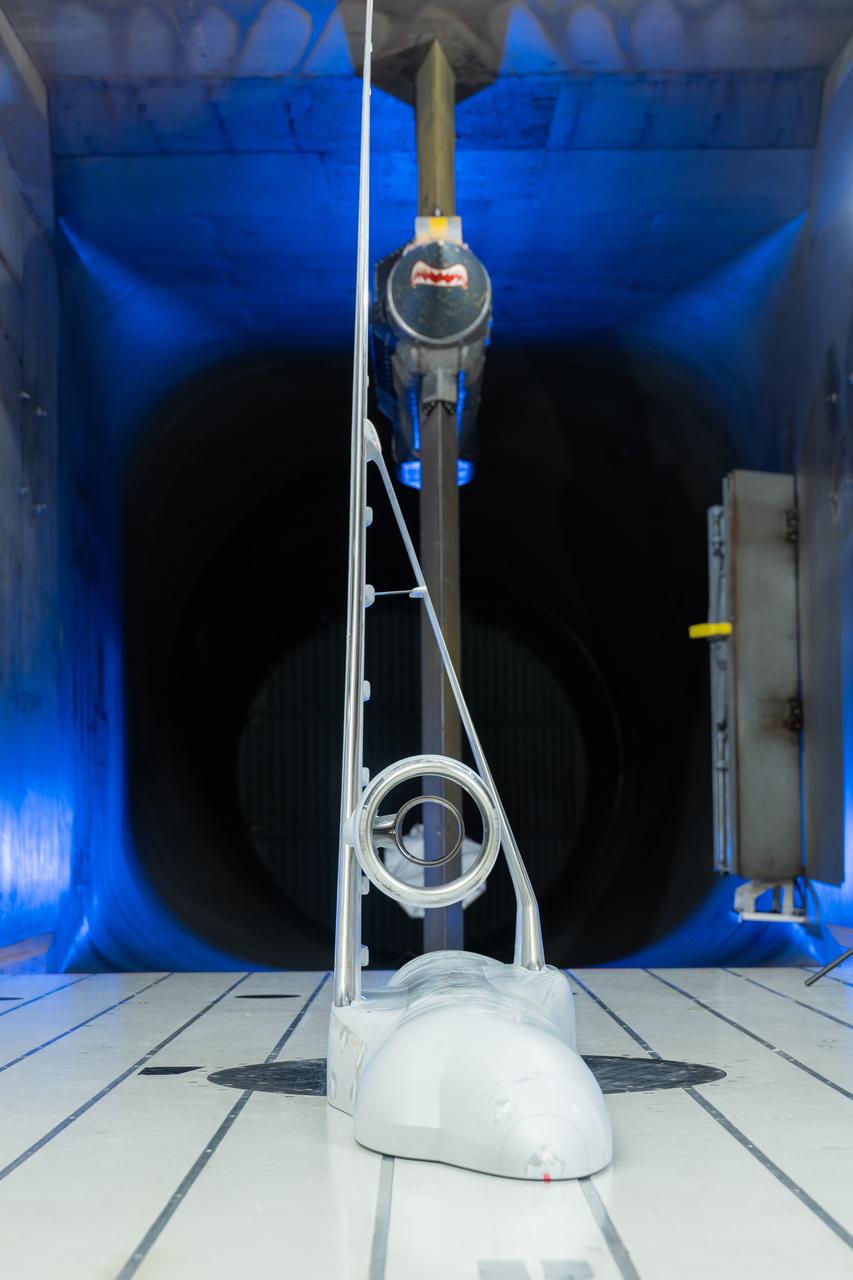
NASA’s Sustainable Flight Demonstrator project concluded wind tunnel testing in the fall of 2024. Tests on a Boeing-built X-66 model were completed at NASA’s Ames Research Center in California’s Silicon Valley in the 11-Foot Transonic Unitary Plan Facility. The model underwent tests representing expected flight conditions to obtain engineering information to influence design of the wing and provide data for flight simulators.
Wind Over Its Wing: NASA’s X-66 Model Tests Airflow
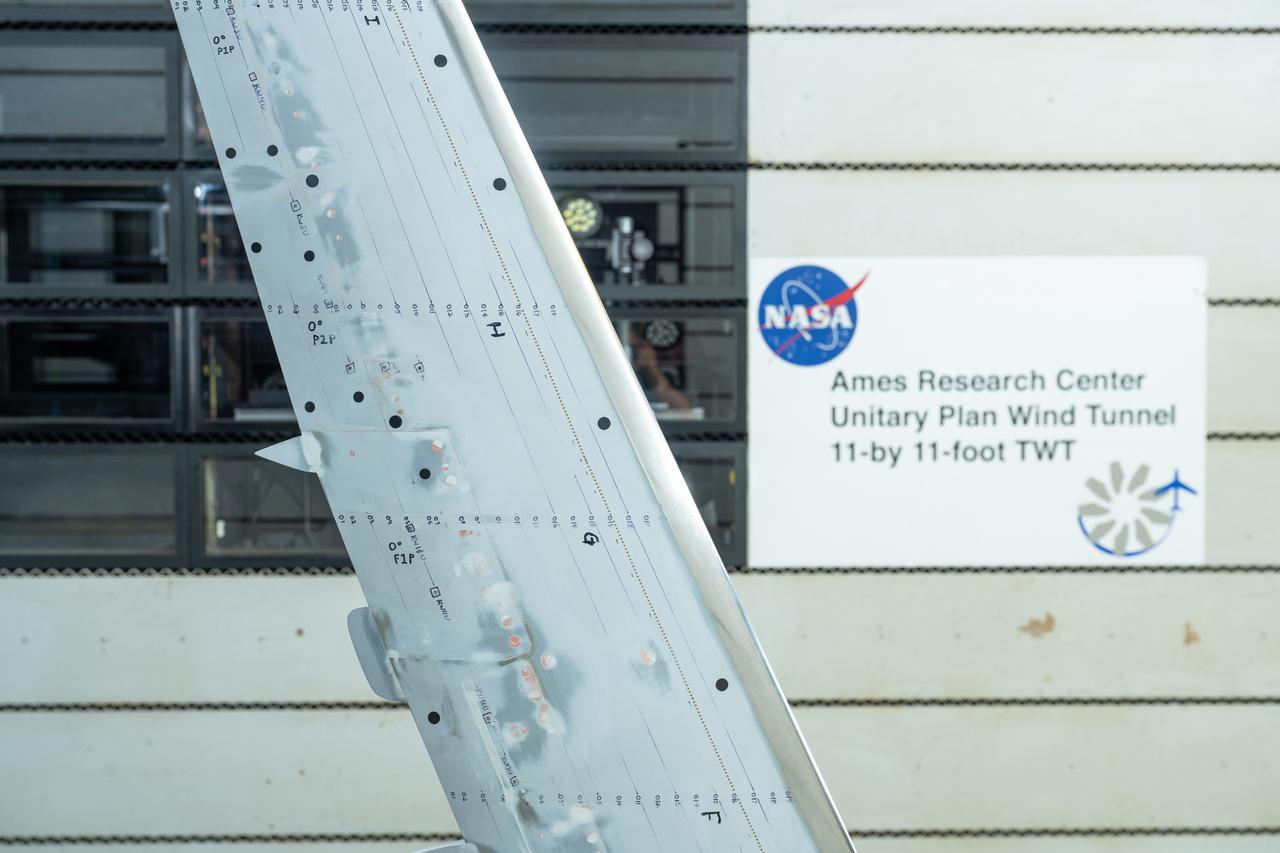
NASA’s Sustainable Flight Demonstrator project concluded wind tunnel testing in the fall of 2024. Tests on a Boeing-built X-66 model were completed at NASA’s Ames Research Center in Silicon Valley, California, in the 11-Foot Transonic Unitary Plan Facility. Pressure points, which are drilled holes with data sensors attached, are installed along the edge of the wing and allow engineers to understand the characteristics of airflow and will influence the final design of the wing.
Wind Over Its Wing: NASA’s X-66 Model Tests Airflow
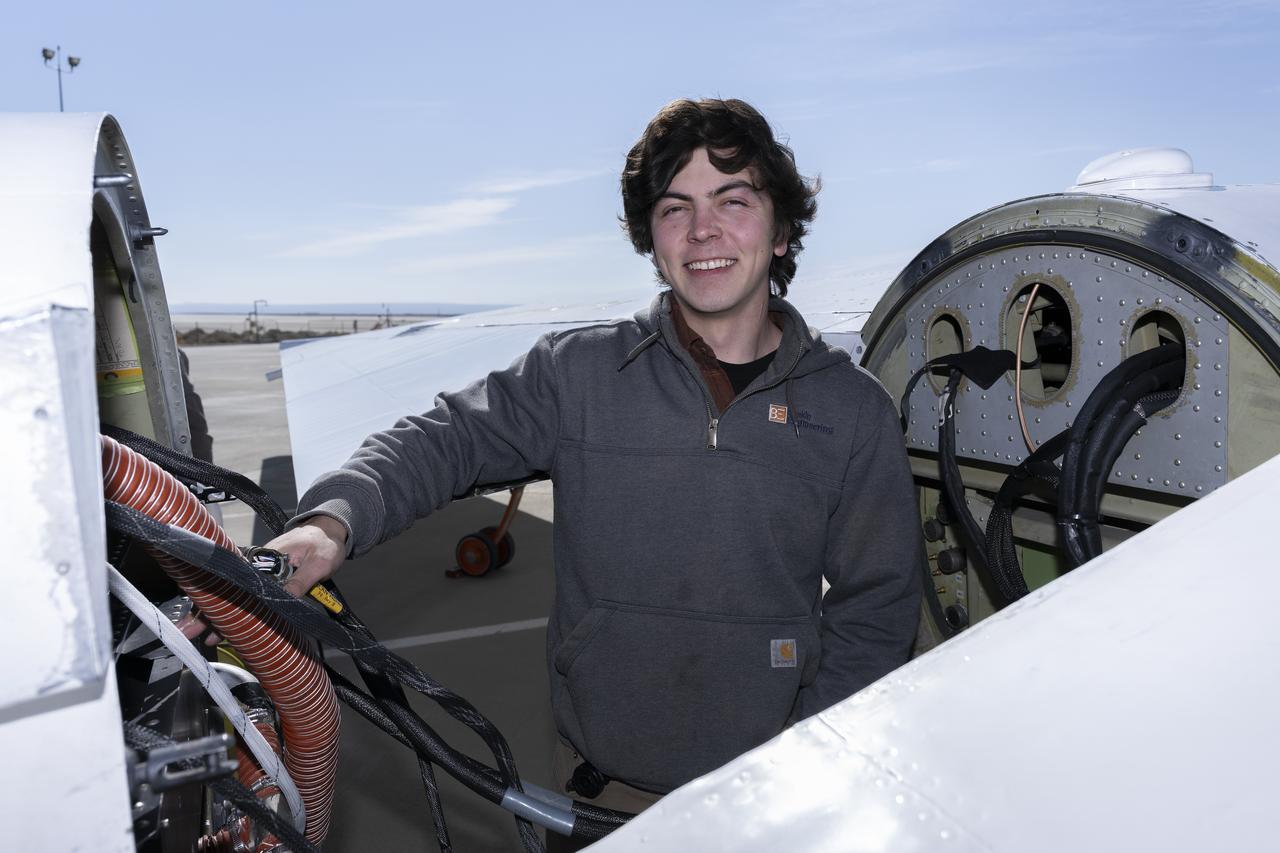
A team of experts wrap up science flights on the ER-2 aircraft at Armstrong Flight Research Center in Edwards, California after the GSFC Lidar Observation and Validation Experiment (GLOVE) in February 2025. Nikolas Gibson from NASA Ames Research Center integrates the enhanced MODIS Airbrone Simulator (eMAS) instrument onto the ER-2. As a collaboration between engineers, scientists, and aircraft professionals, GLOVE aims to improve satellite data products for Earth Science applications.
Engineers prepare for data download from the ER-2 for airborne science mission, GLOVE
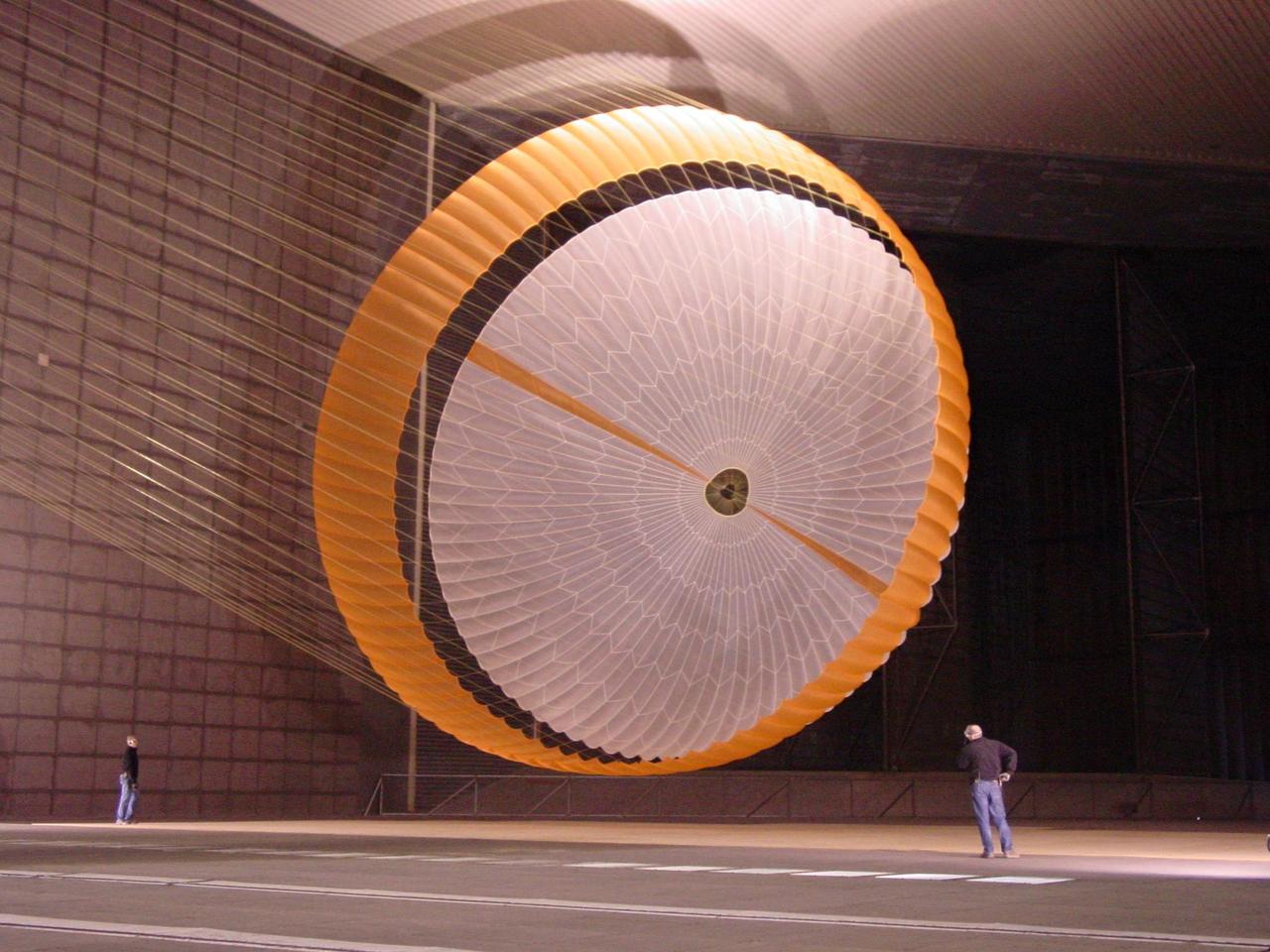
The team developing the landing system for NASA Mars Science Laboratory tested the deployment of an early parachute design in mid-October 2007 inside the world largest wind tunnel, at NASA Ames Research Center, Moffett Field, California.
Parachute Testing for Mars Science Laboratory
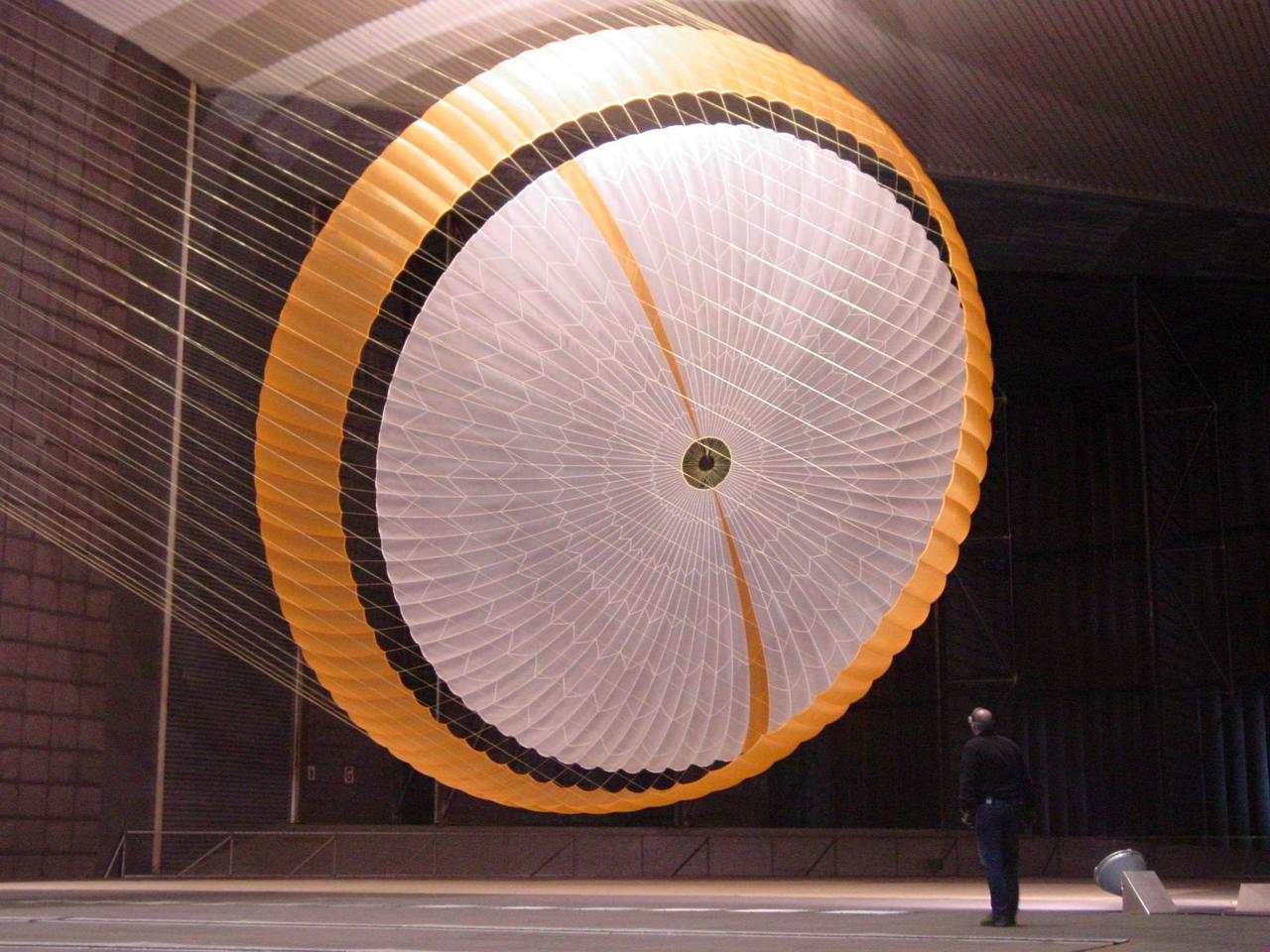
The team developing the landing system for NASA Mars Science Laboratory tested the deployment of an early parachute design in mid-October 2007 inside the world largest wind tunnel, at NASA Ames Research Center, Moffett Field, California.
Testing a Parachute for Mars in World Largest Wind Tunnel
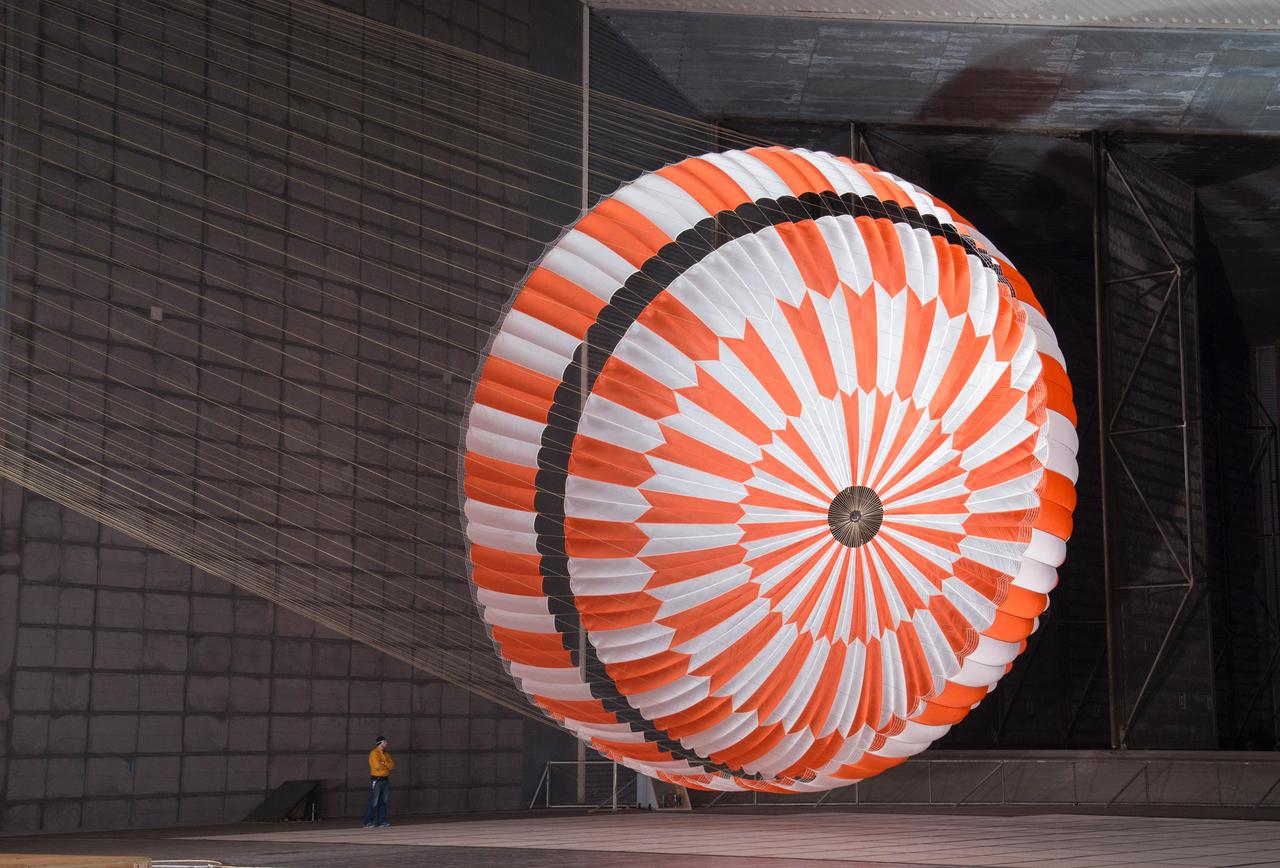
In this June 2017 photo, the supersonic parachute design that will land NASA's Perseverance rover on Mars on Feb. 18, 2021, undergoes testing in a wind tunnel at NASA's Ames Research Center in California's Silicon Valley.  https://photojournal.jpl.nasa.gov/catalog/PIA23916
Wind Tunnel Testing Perseverance's Parachute
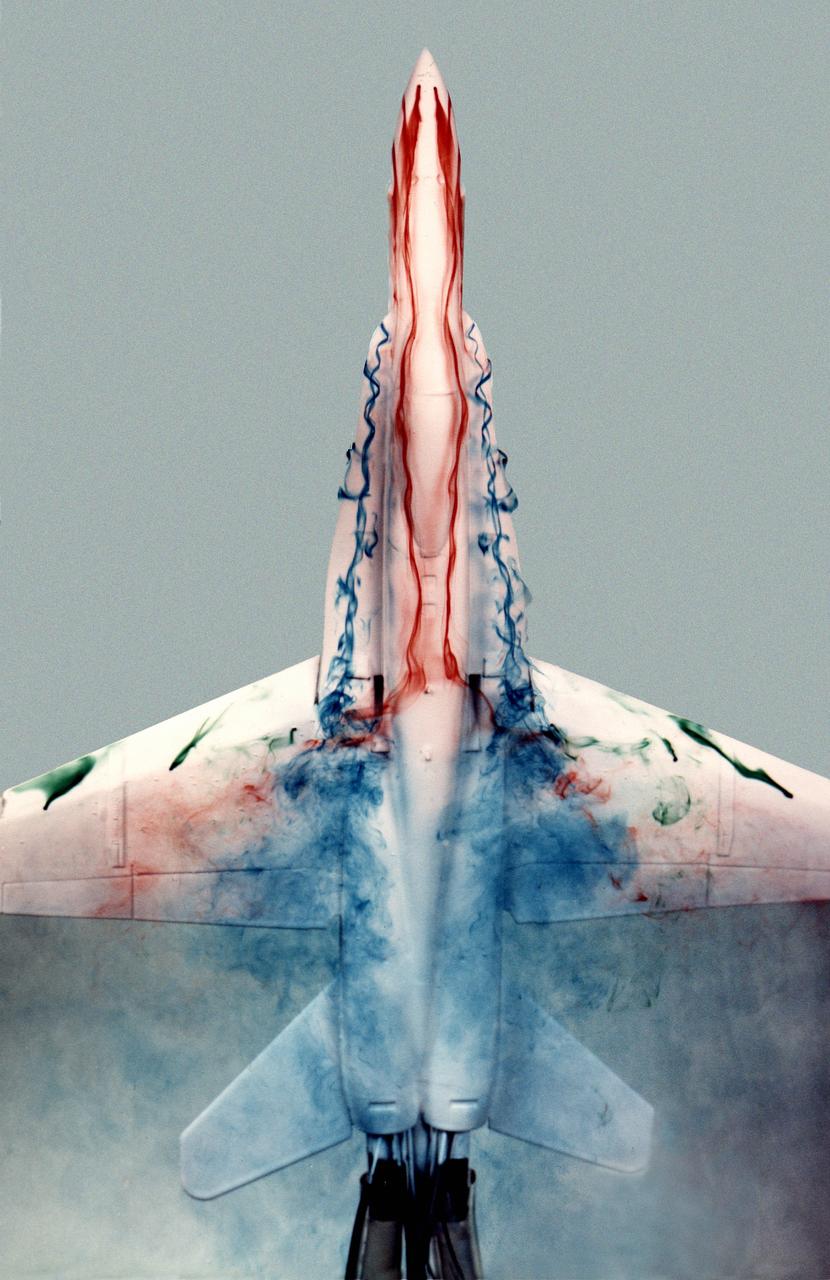
This image shows a plastic 1/48-scale model of an F-18 aircraft inside the "Water Tunnel" more formally known as the NASA Dryden Flow Visualization Facility. Water is pumped through the tunnel in the direction of normal airflow over the aircraft; then, colored dyes are pumped through tubes with needle valves. The dyes flow back along the airframe and over the airfoils highlighting their aerodynamic characteristics. The aircraft can also be moved through its pitch axis to observe airflow disruptions while simulating actual flight at high angles of attack. The Water Tunnel at NASA's Dryden Flight Research Center, Edwards, CA, became operational in 1983 when Dryden was a Flight Research Facility under the management of the Ames Research Center in Mountain View, CA. As a medium for visualizing fluid flow, water has played a significant role. Its use dates back to Leonardo da Vinci (1452-1519), the Renaissance Italian engineer, architect, painter, and sculptor. In more recent times, water tunnels have assisted the study of complex flows and flow-field interactions on aircraft shapes that generate strong vortex flows. Flow visualization in water tunnels assists in determining the strength of vortices, their location, and possible methods of controlling them.  The design of the Dryden Water Tunnel imitated that of the Northrop Corporation's tunnel in Hawthorne, CA. Called the Flow Visualization Facility, the Dryden tunnel was built to assist researchers in understanding the aerodynamics of aircraft configured in such a way that they create strong vortex flows, particularly at high angles of attack. The tunnel provides results that compare well with data from aircraft in actual flight in another fluid-air. Other uses of the tunnel have included study of how such flight hardware as antennas, probes, pylons, parachutes, and experimental fixtures affect airflow. The facility has also been helpful in finding the best locations for emitting smoke from flight vehicles for flow vi
ECN-33298-03
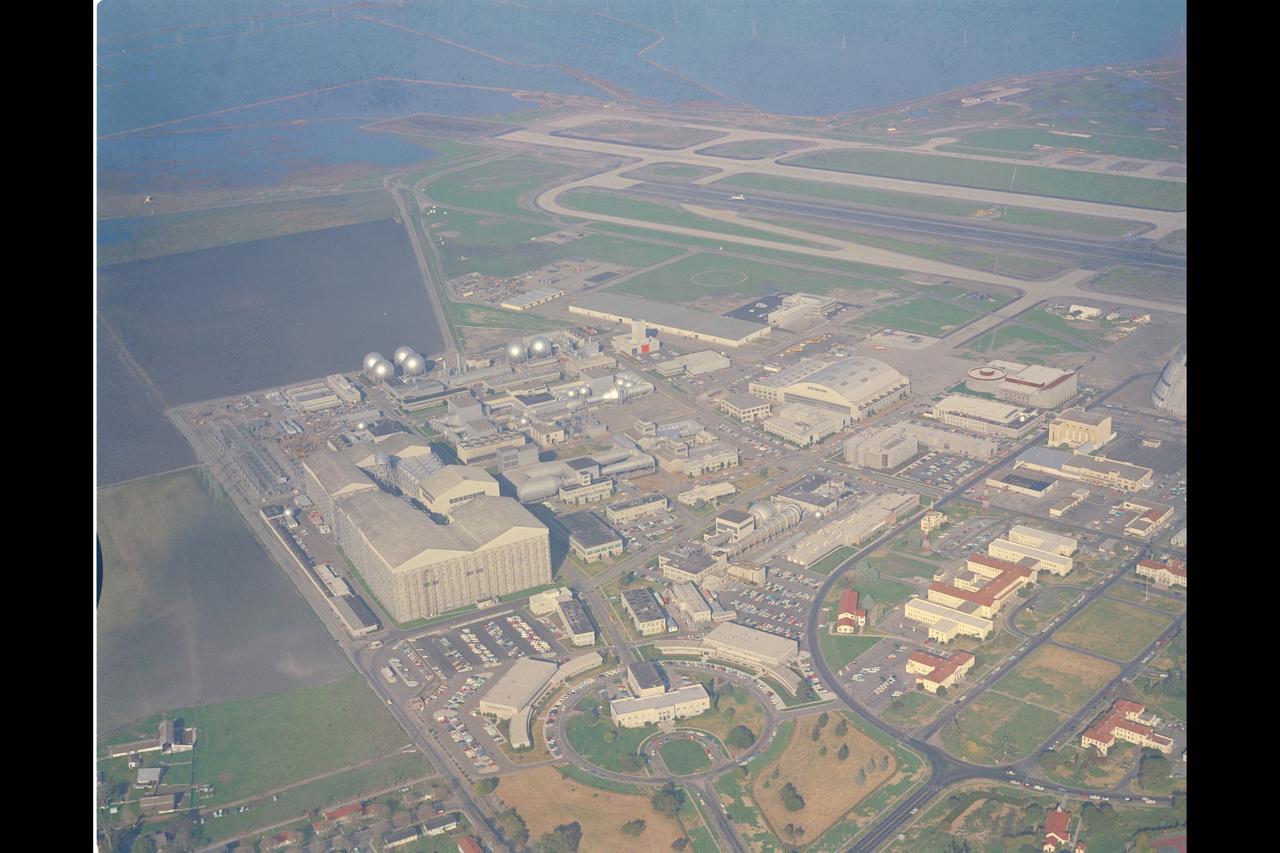
Aerial Survey of Ames Research Center (Used in NASA/AMES publication  'Adventures in Research' A history of Ames Research Center 1940 - 1965 by Edwin P. Hartman - SP-4302)
ARC-1967-AC-38286-1
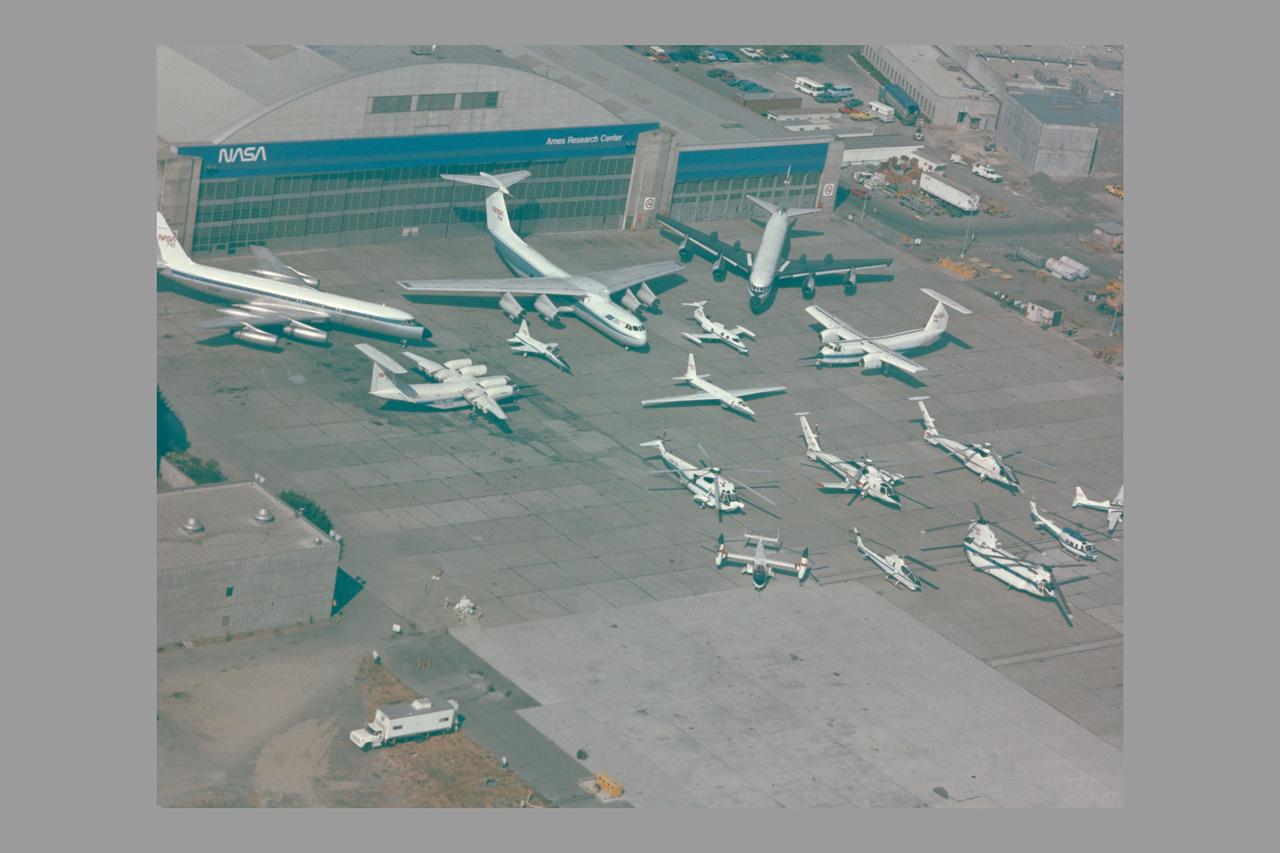
NASA Ames Research Center Aircraft on ramp. Photographed front of Ames hangar.
ARC-1981-AC81-0580-38
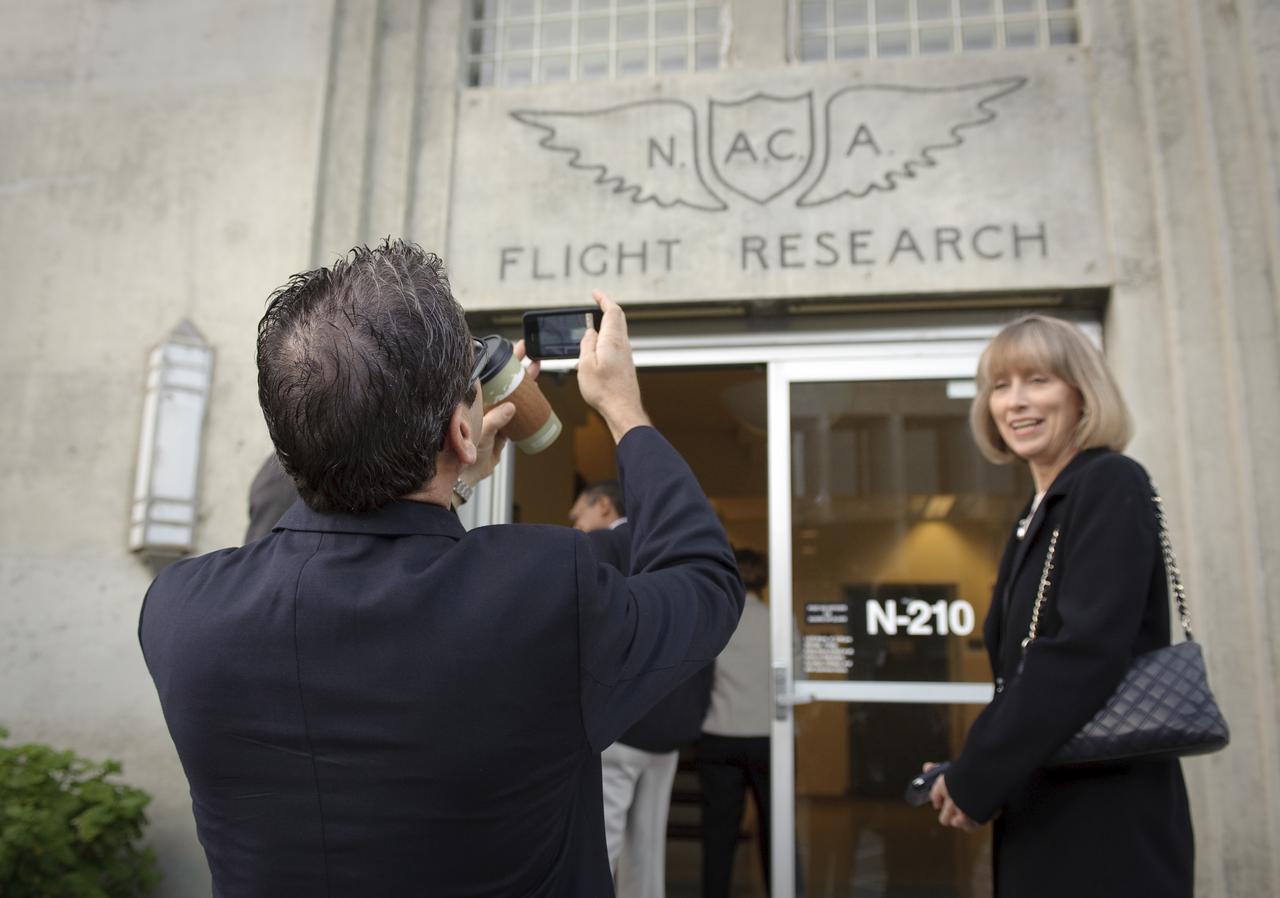
NASA Advisory Council Meeting at NASA Ames Research Center NRP Conference Center. Diane Rausch, Executive Director NASA Advisory Council, NASA HQ in front of Ames Flight Research Building N-210
ARC-2009-ACD09-0238-010
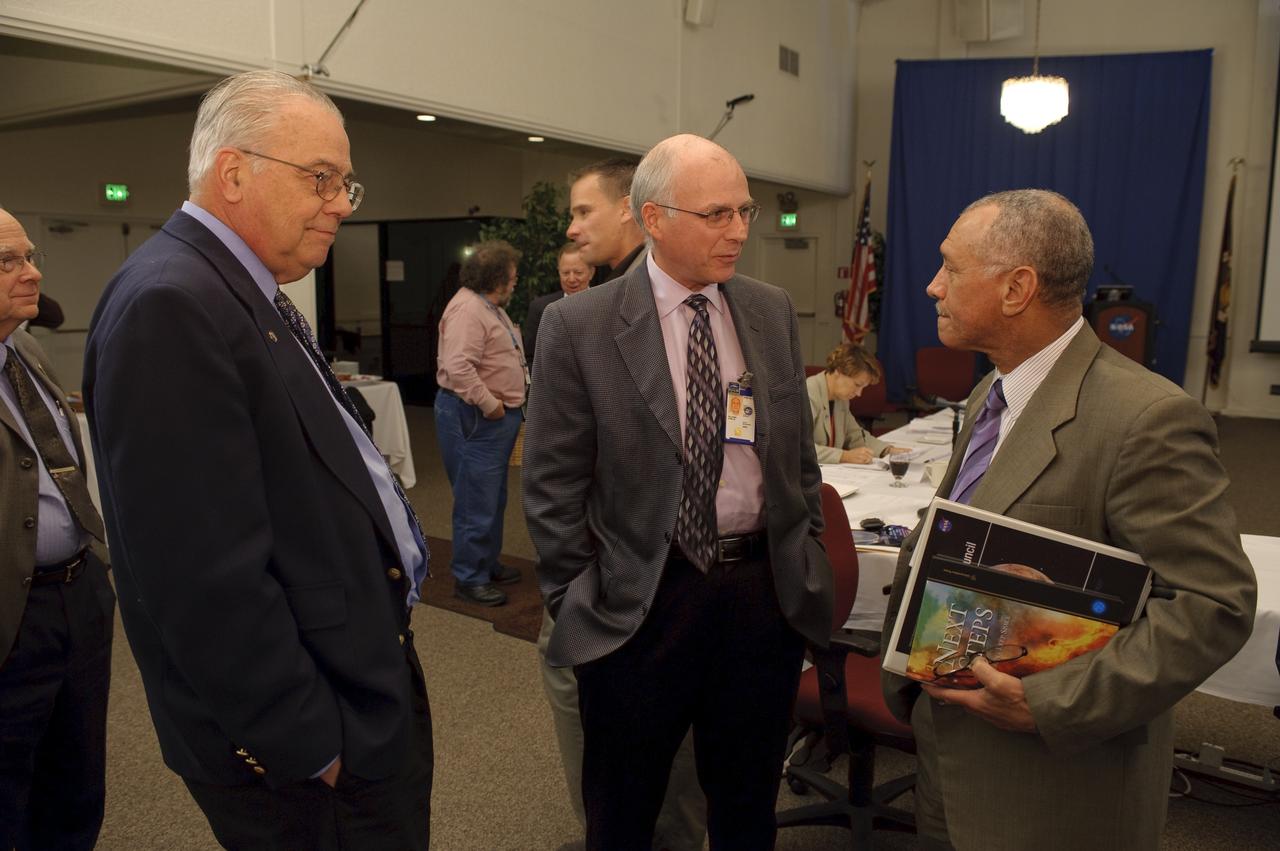
NASA Advisory Council Meeting at NASA Ames Research Center NRP Conference Center. Left to right; David Morrison, Ames, Carl Piltcher, Ames with  Charlie Bolden, NASA Administrator.
ARC-2009-ACD09-0238-065
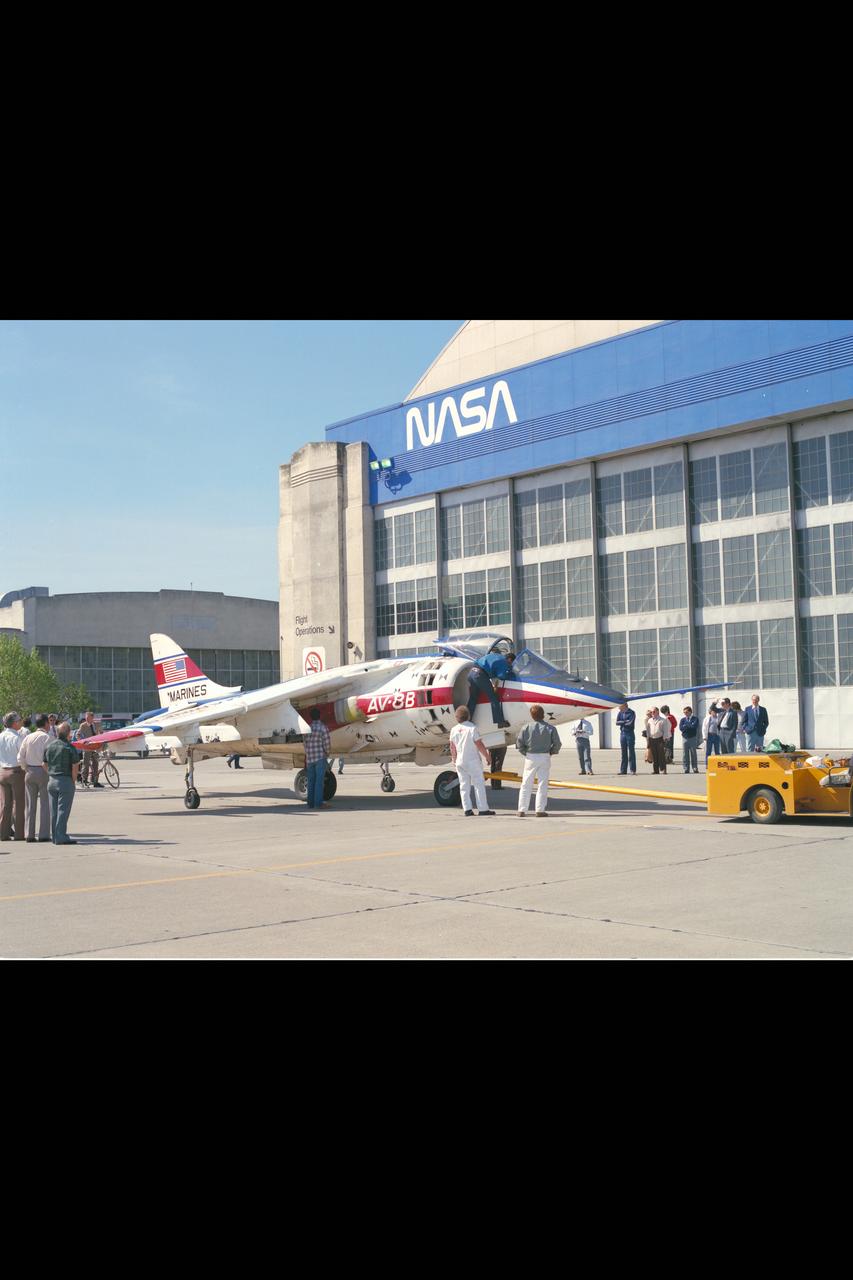
YAV-8B Aircraft arrival at NASA Ames Research Center (on loan to Ames from US Marines - in Marine colors)
ARC-1984-AC84-0253-2
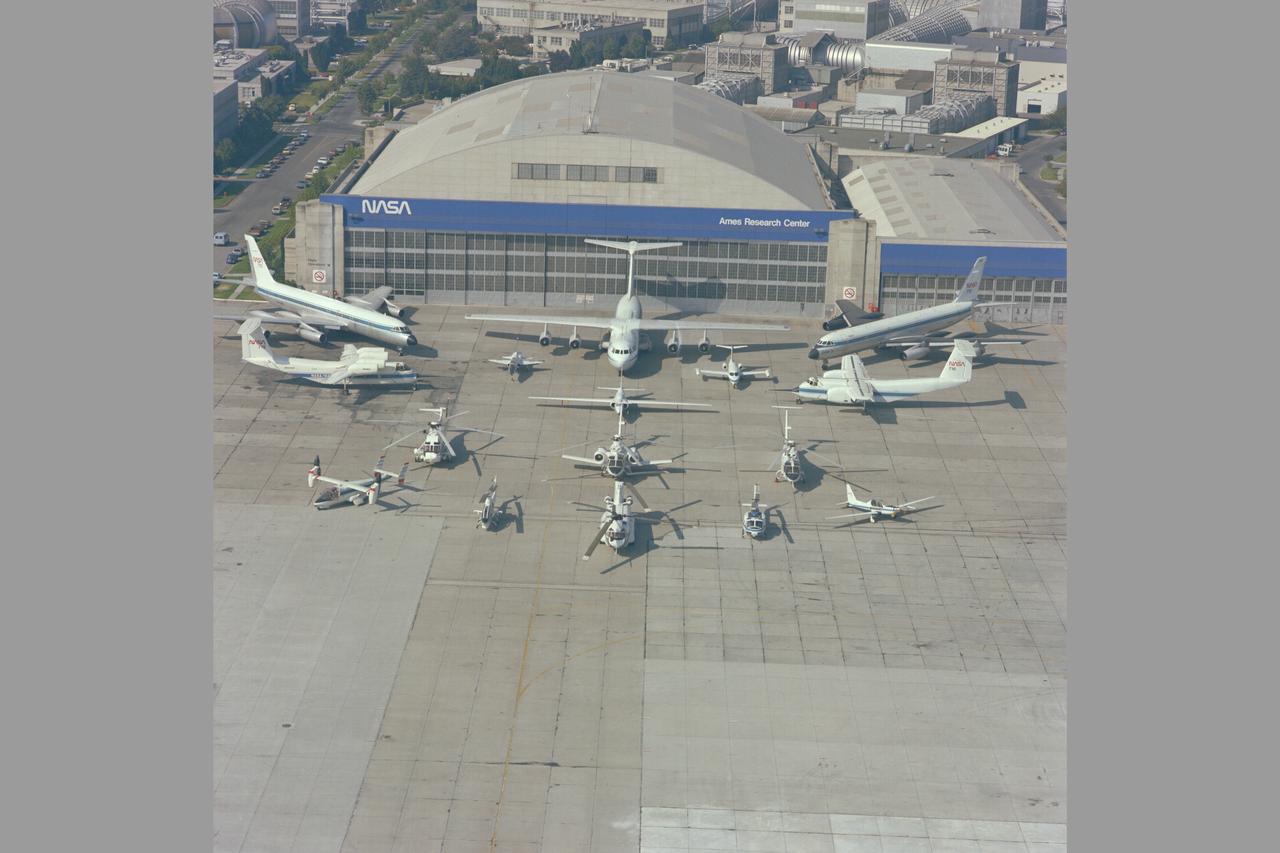
NASA Ames Research Center Aircraft and Helicopter compliment on ramp in front of Ames hangar.
ARC-1981-AC81-0580-6
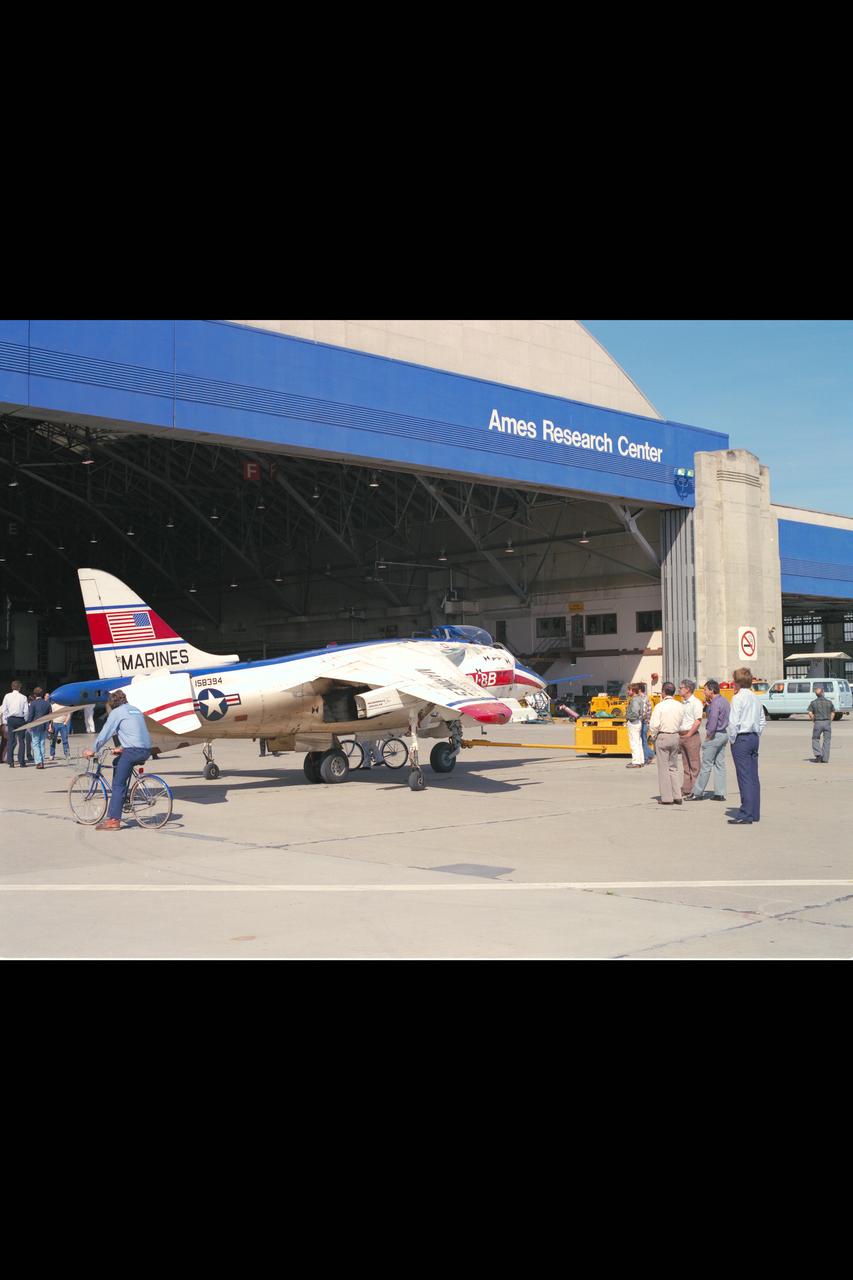
YAV-8B Aircraft arrival at NASA Ames Research Center (on loan to Ames from US Marines - a/c in Marine colors)
ARC-1984-AC84-0253-3
New renovated NASA Ames Research Center Ames 12ft Pressure Wind Tunnel view of test section
ARC-1995-AC95-0203-15
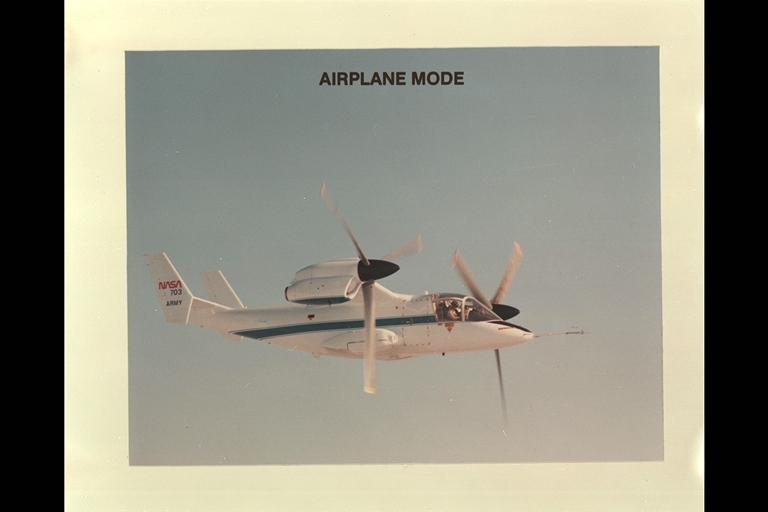
XV-15 Tilt Rotor (NASA-703) in flight at Ames Research Center Note:  Used in publication in Flight Research at Ames;  57 Years of Development and Validation of Aeronautical Technology NASA SP-1998-3300 fig 122
ARC-1985-AC85-0186-2
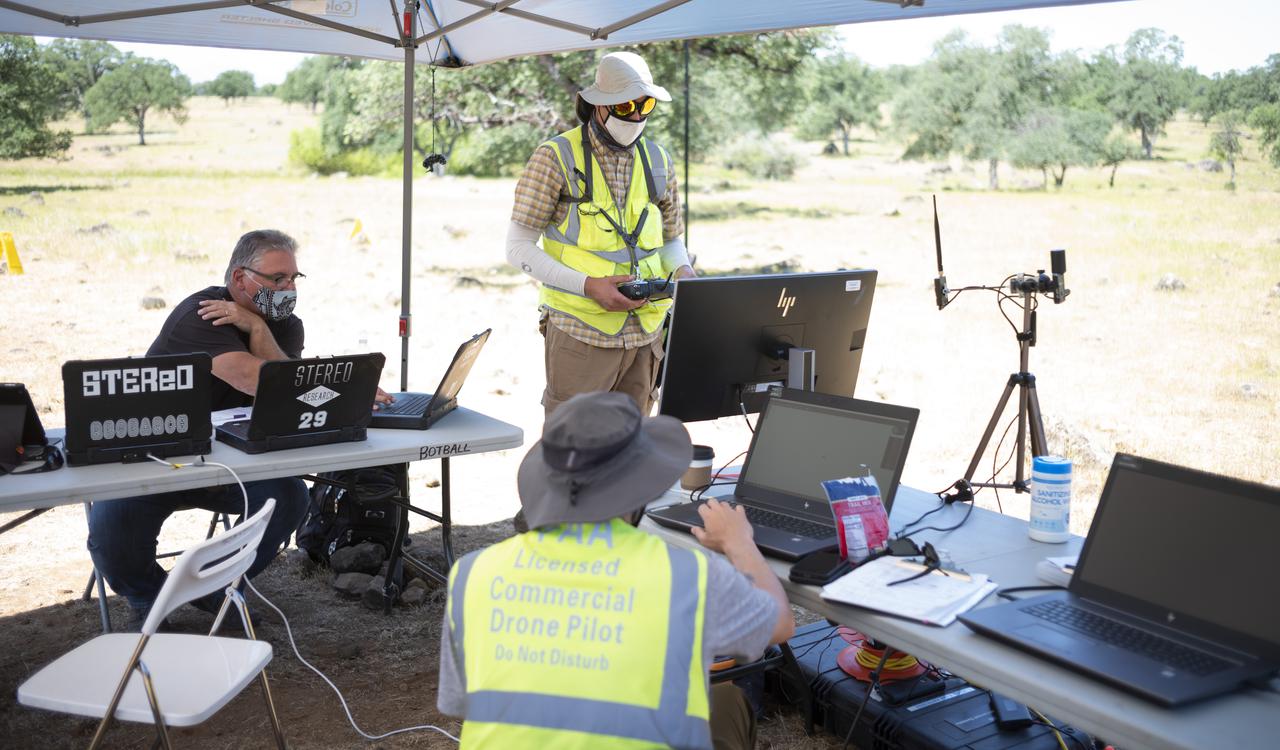
Bill McCarthy, software engineer and research laptop operator for STEReO, the Scalable Traffic Management for Emergency Response Operations project, at NASA's Ames Research Center, left, Jonas Jonsson, pilot in command for STEReO, at NASA's Ames Research Center, standing center, and Zach Roberts, pilot computer operator for STEReO, at NASA's Ames Research Center, seated center, are seen during STEReO field testing, Wednesday, May 5, 2021 as Cal Fire conducts aerial fire fighting training exercises near Redding, California.  STEReO, the Scalable Traffic Management for Emergency Response Operations project, led by NASA’s Ames Research Center, builds on NASA’s expertise in air traffic management, human factors research, and autonomous technology development to apply the agency’s work in Unmanned Aircraft Systems Traffic Management, or UTM, to public safety uses. Photo Credit: (NASA/Joel Kowsky)
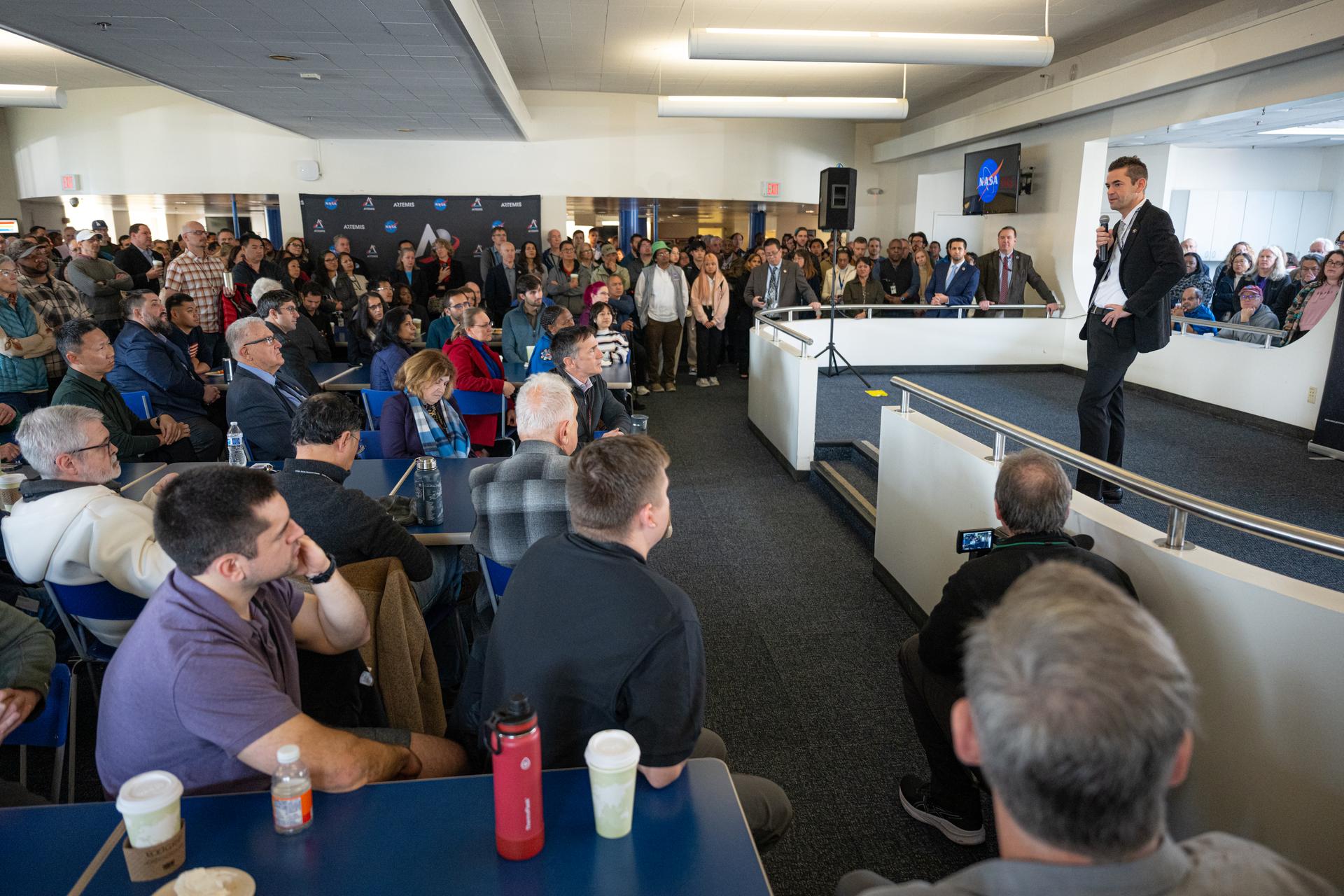
STEReO Field Testing
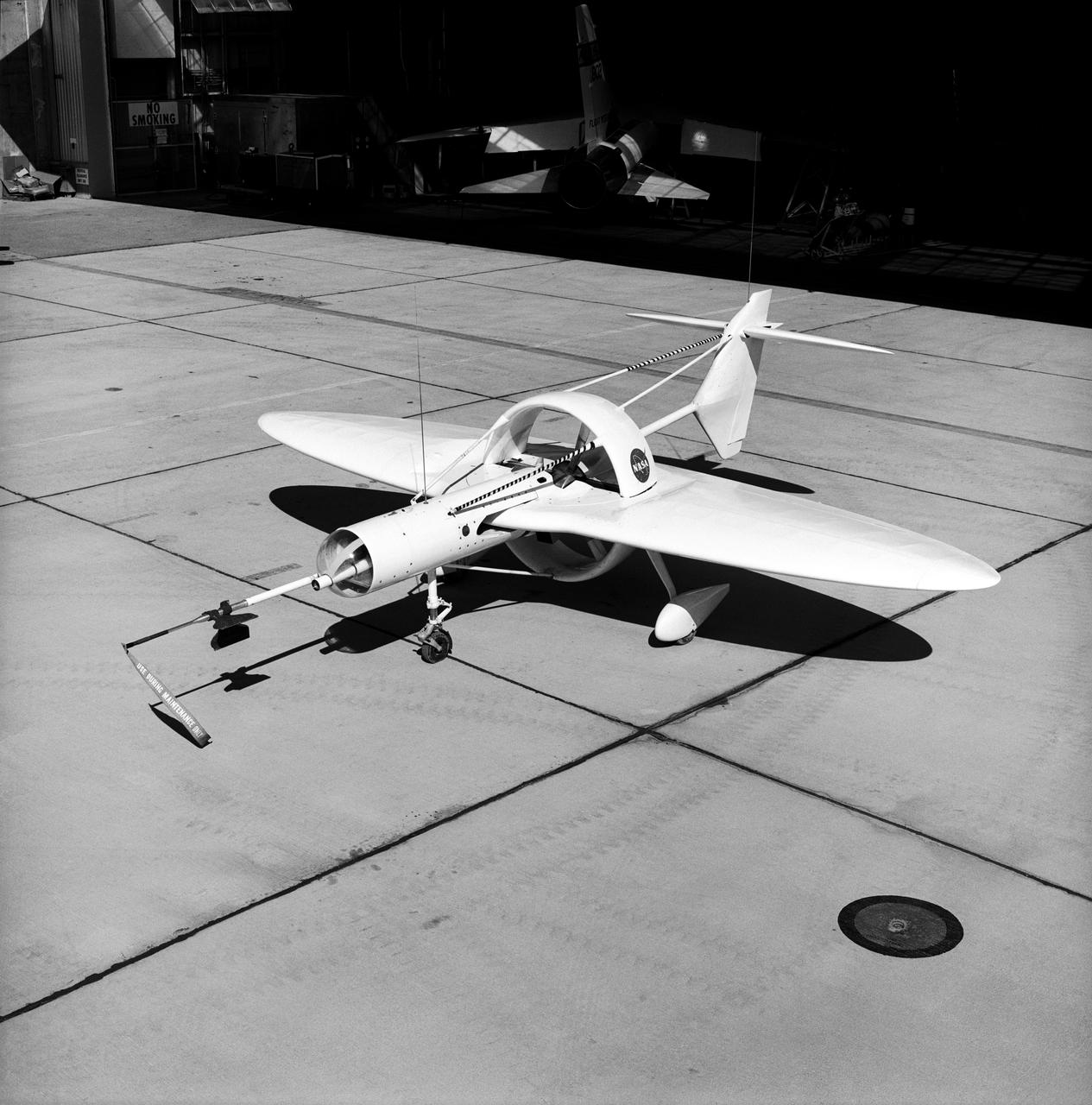
This 1976 photograph of the Oblique Wing Research Aircraft was taken in front of the NASA Flight Research Center hangar, located at Edwards Air Force Base, California. In the photograph the noseboom, pitot-static probe, and angles-of-attack and sideslip flow vanes(covered-up) are attached to the front of the vehicle. The clear nose dome for the television camera, and the shrouded propellor for the 90 horsepower engine are clearly seen.
Oblique Wing Research Aircraft on ramp
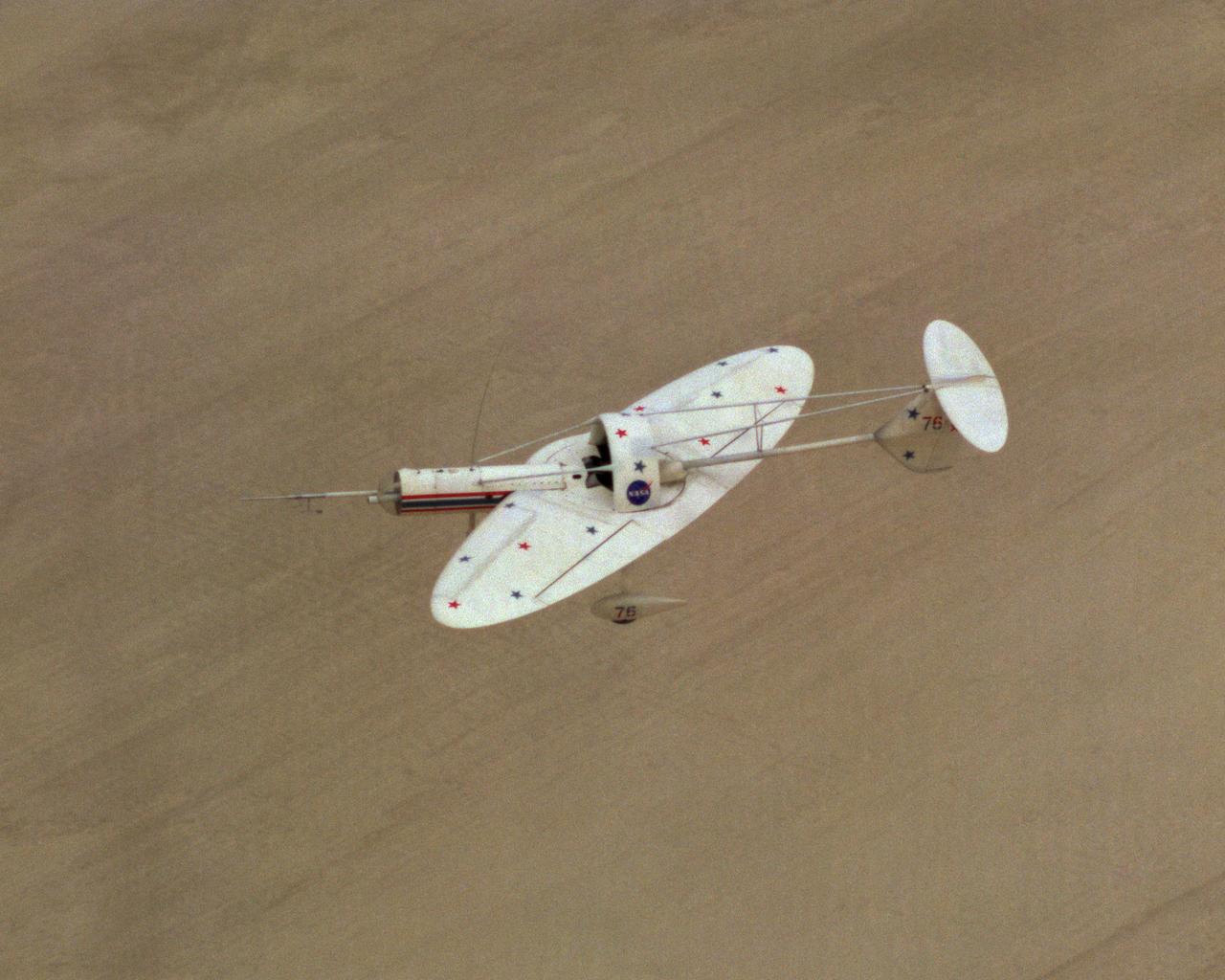
Oblique Wing Research Aircraft in flight
Nebula Containerized Server at the NASA Ames Research Center.
ARC-2010-ACD10-0054-004
Nebula Containerized Server at the NASA Ames Research Center.
ARC-2010-ACD10-0054-011
Nebula Containerized Server at the NASA Ames Research Center.
ARC-2010-ACD10-0054-007
Joey Mercer, principle investigator for STEReO, the Scalable Traffic Management for Emergency Response Operations project, at NASA's Ames Research Center, left, Huy Tran, director of aeronautics at NASA's Ames Research Center, center, and Richard Barhydt, station director of the U.S. Forest Service's Pacific Southwest Research Station, standing right, speak with George Lawton, system architect for STEReO at NASA's Ames Research Center, seated right, during STEReO test activities, Tuesday, May 4, 2021 as Cal Fire conducts aerial fire fighting training exercises near Redding, California.  STEReO, the Scalable Traffic Management for Emergency Response Operations project, led by NASA’s Ames Research Center, builds on NASA’s expertise in air traffic management, human factors research, and autonomous technology development to apply the agency’s work in Unmanned Aircraft Systems Traffic Management, or UTM, to public safety uses. Photo Credit: (NASA/Joel Kowsky)
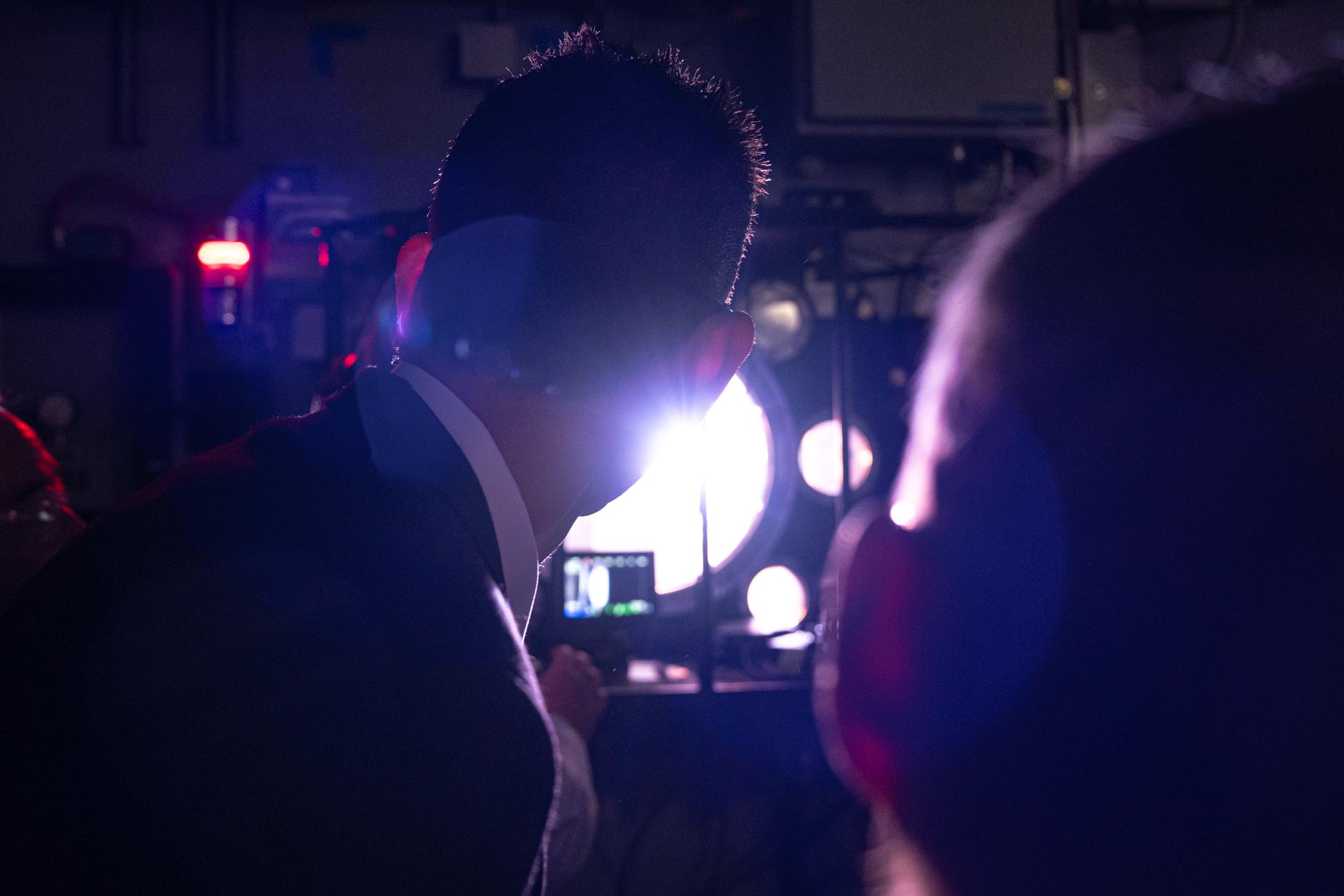
STEReO Field Testing
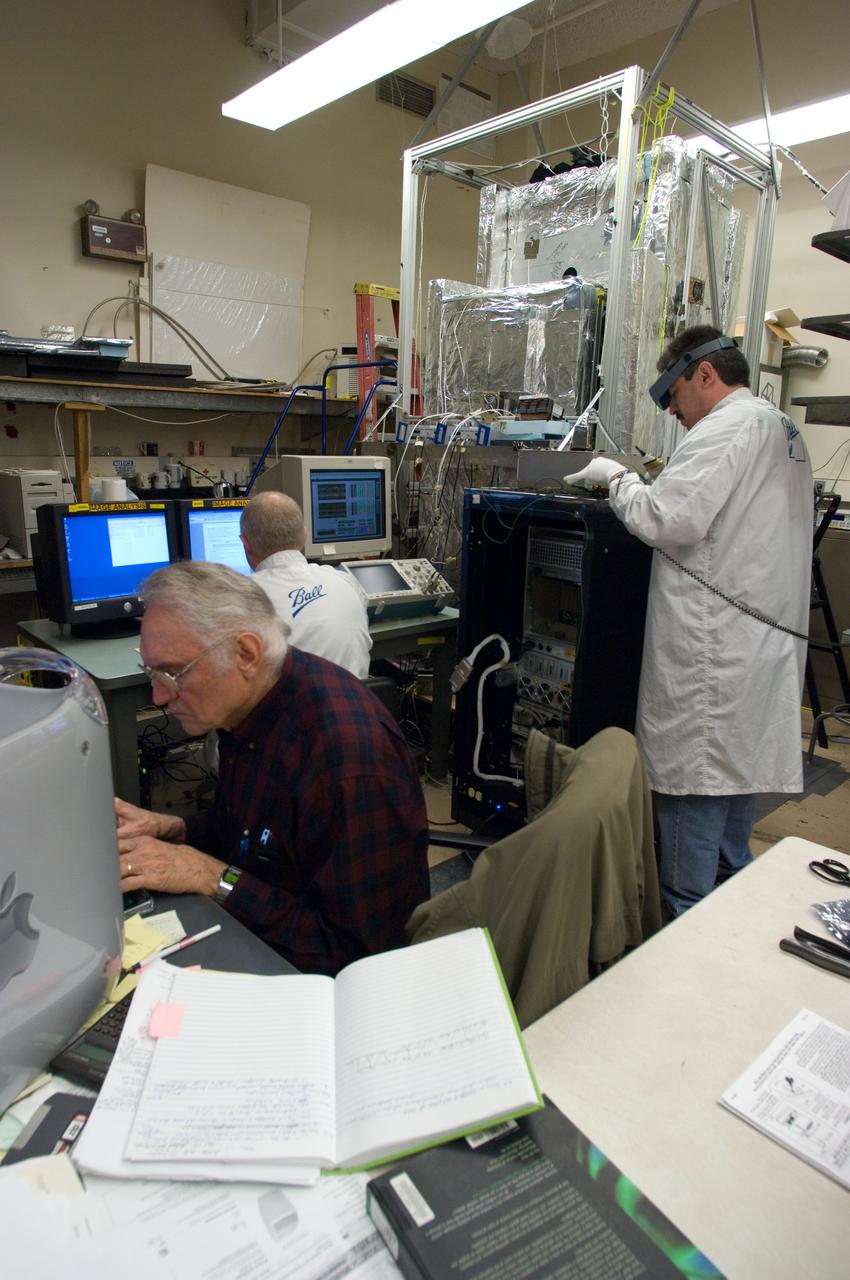
Kepler project; technicians from Ball Aerospace work on  and in the test chamber assembled at Nasa Ames Research center testing components  with Fred Witterborn of NASA Ames
ARC-2008-ACD07-0203-174
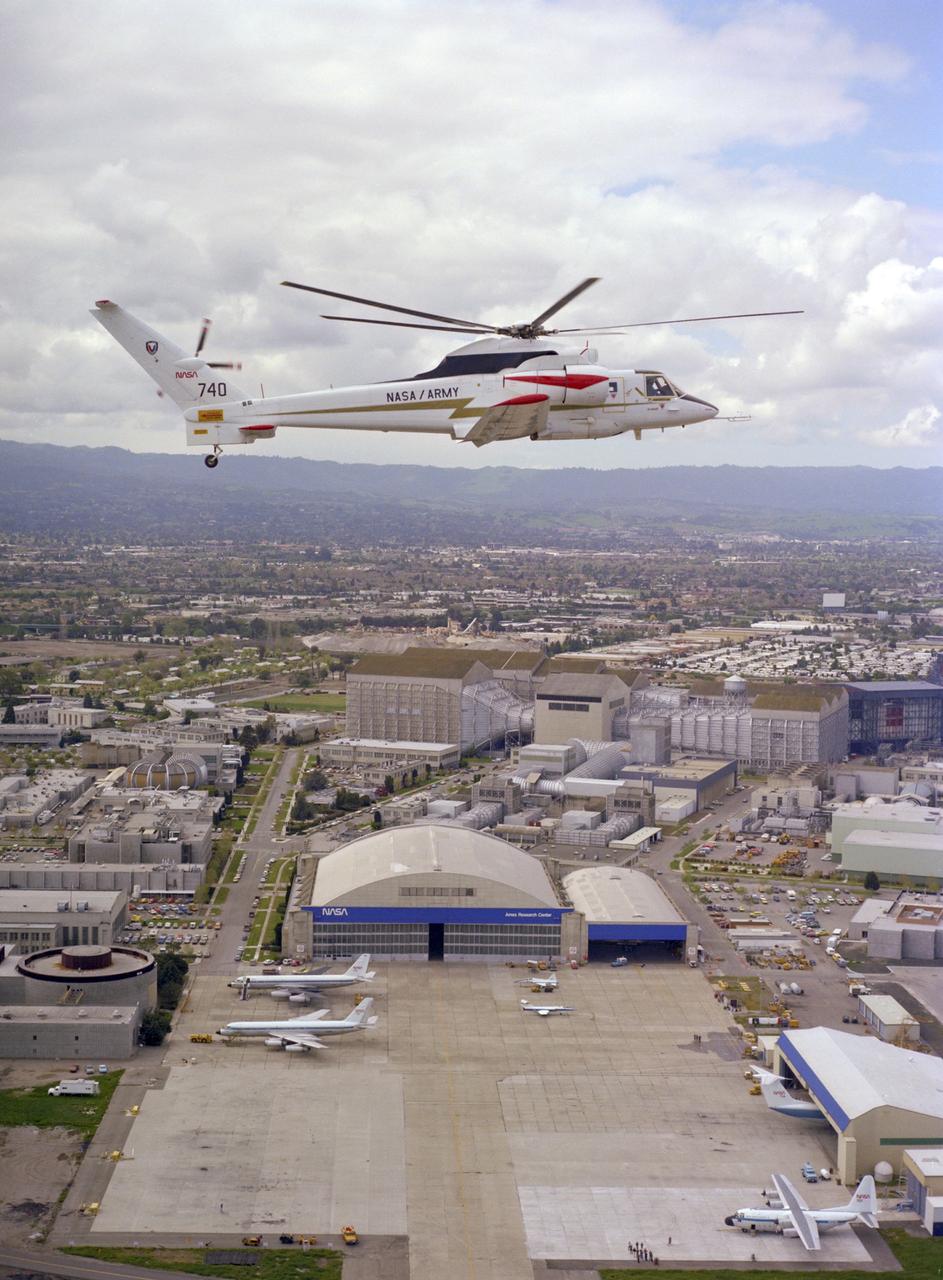
Sikorsky Rotor Systems Research Aircraft ' RSRA' (72-001 NASA-740) compound configuration in flight:  NASA Ames Research Center, Hangar and 40x 80x120ft W.T. in the background. Note:  Used in publication in Flight Research at Ames;  57 Years of Development and Validation of Aeronautical Technology NASA SP-1998-3300 fig. 132
ARC-1982-AC82-0253-11
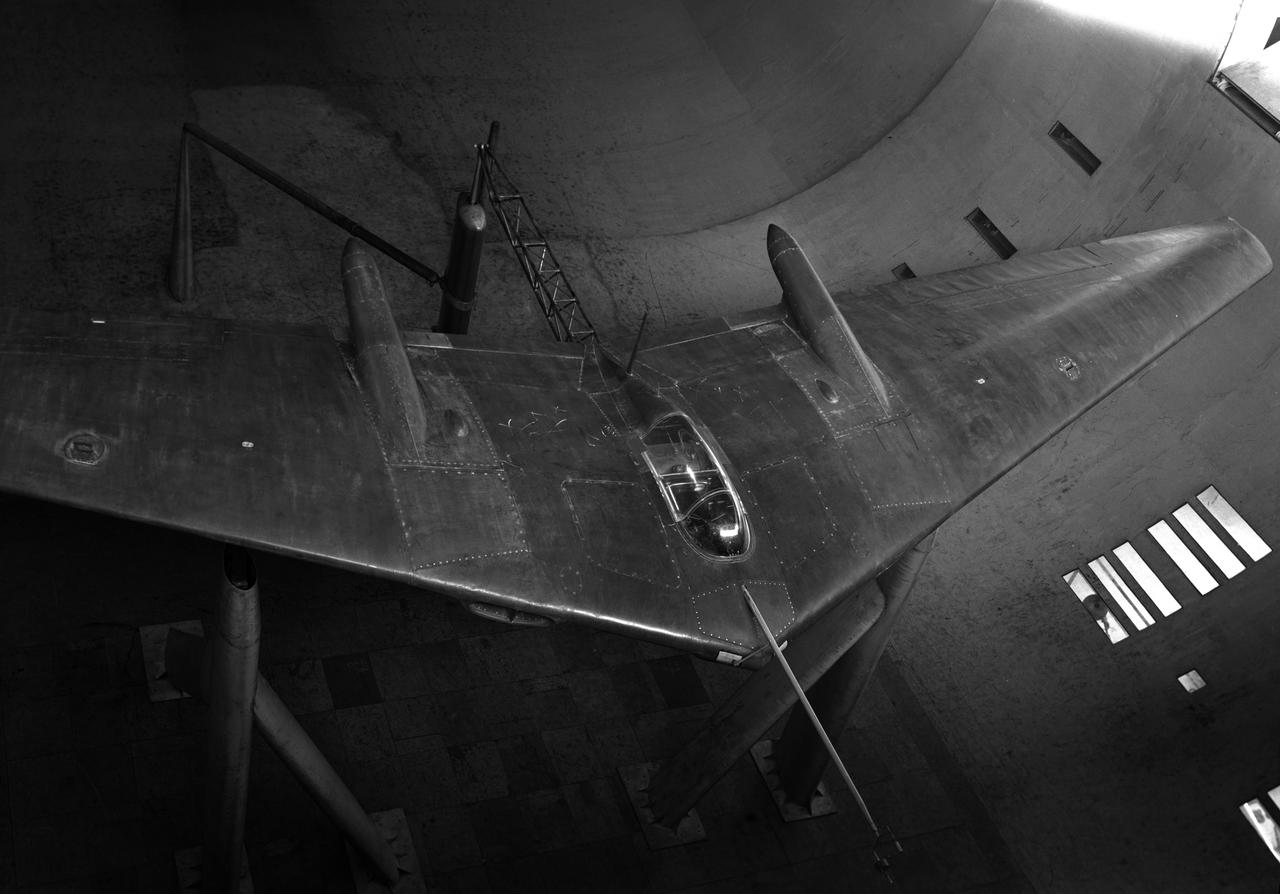
Northrop N9M-2 airplane; 3/4 front view from above.
Northrop N9M-2 Airplane.
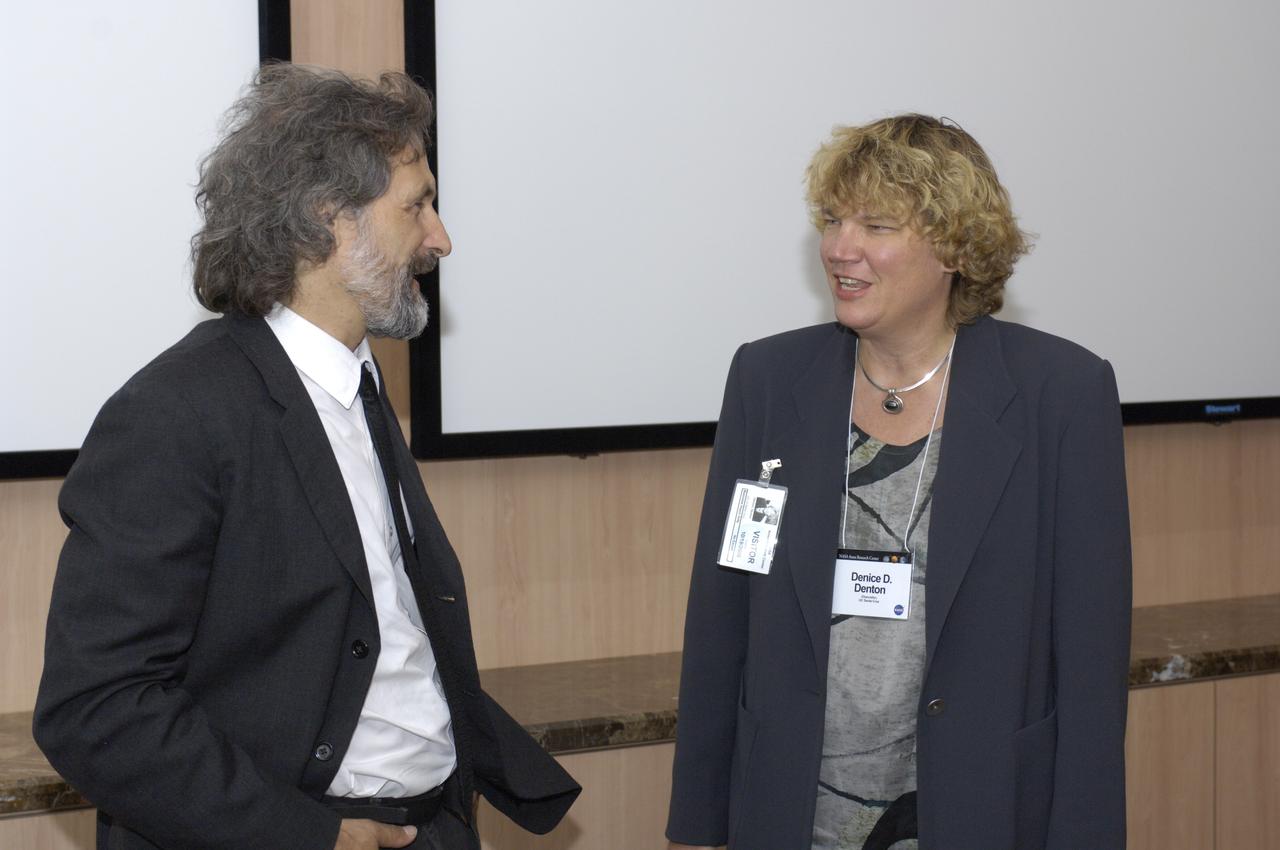
Universtiy of California Santa Cruz Chancellor Denice Denten (and other guests) visit NASA Ames Research Center to meet with Directors and have a briefing on Ames Projects and Programs. Jonathan Trent, Ames Research Scientist, Bioengineering Branch (L) and  Denice Denton, Chancellor of UCSC (R)
ARC-2005-ACD05-0194-001
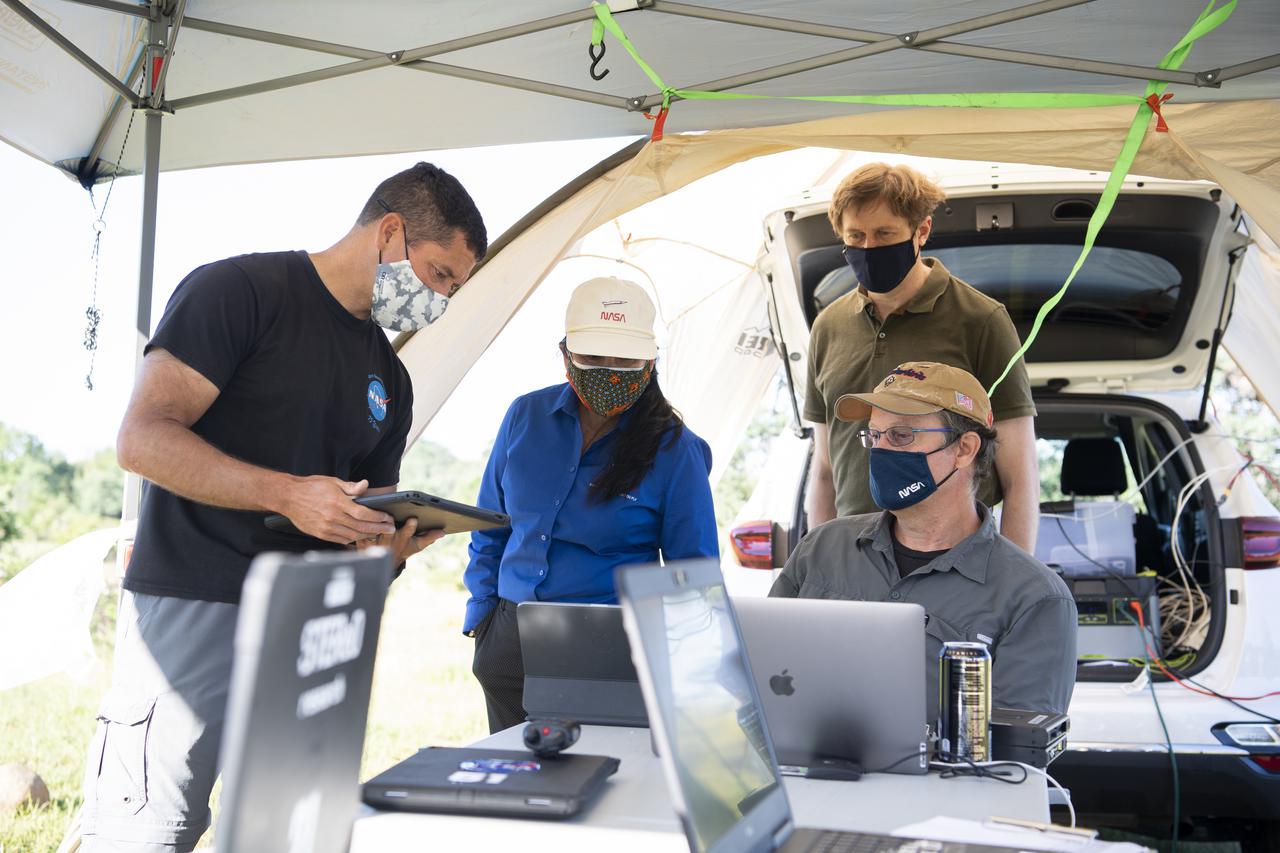
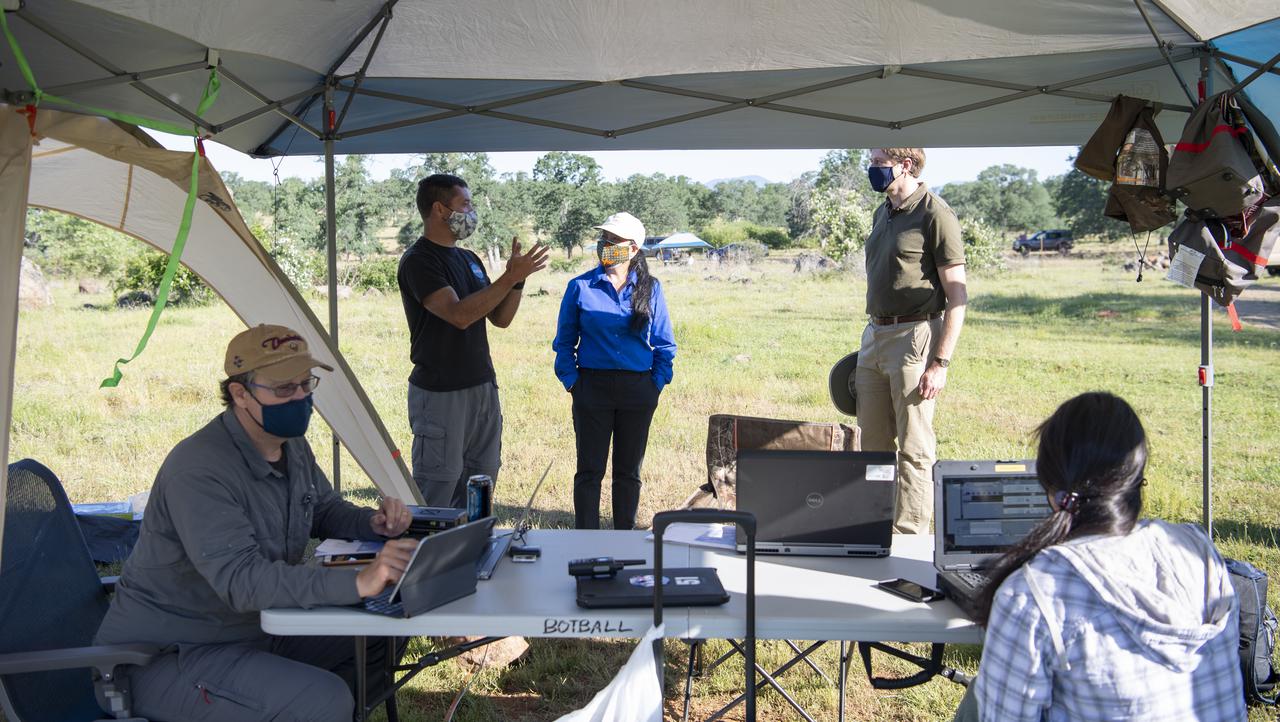
George Lawton, system architect for STEReO, the Scalable Traffic Management for Emergency Response Operations project, at NASA's Ames Research Center, seated left, and Yasmin Arbab, human factors researcher and research laptop operator for STEReO at NASA's Ames Research Center, seated right, are seen as Joey Mercer, principle investigator for STEReO at NASA's Ames Research Center, standing left, speaks with Huy Tran, director of aeronautics at NASA's Ames Research Center, center, and Richard Barhydt, station director of the U.S. Forest Service's Pacific Southwest Research Station, right, during STEReO test activities, Tuesday, May 4, 2021 as Cal Fire conducts aerial fire fighting training exercises near Redding, California.  STEReO, the Scalable Traffic Management for Emergency Response Operations project, led by NASA’s Ames Research Center, builds on NASA’s expertise in air traffic management, human factors research, and autonomous technology development to apply the agency’s work in Unmanned Aircraft Systems Traffic Management, or UTM, to public safety uses. Photo Credit: (NASA/Joel Kowsky)
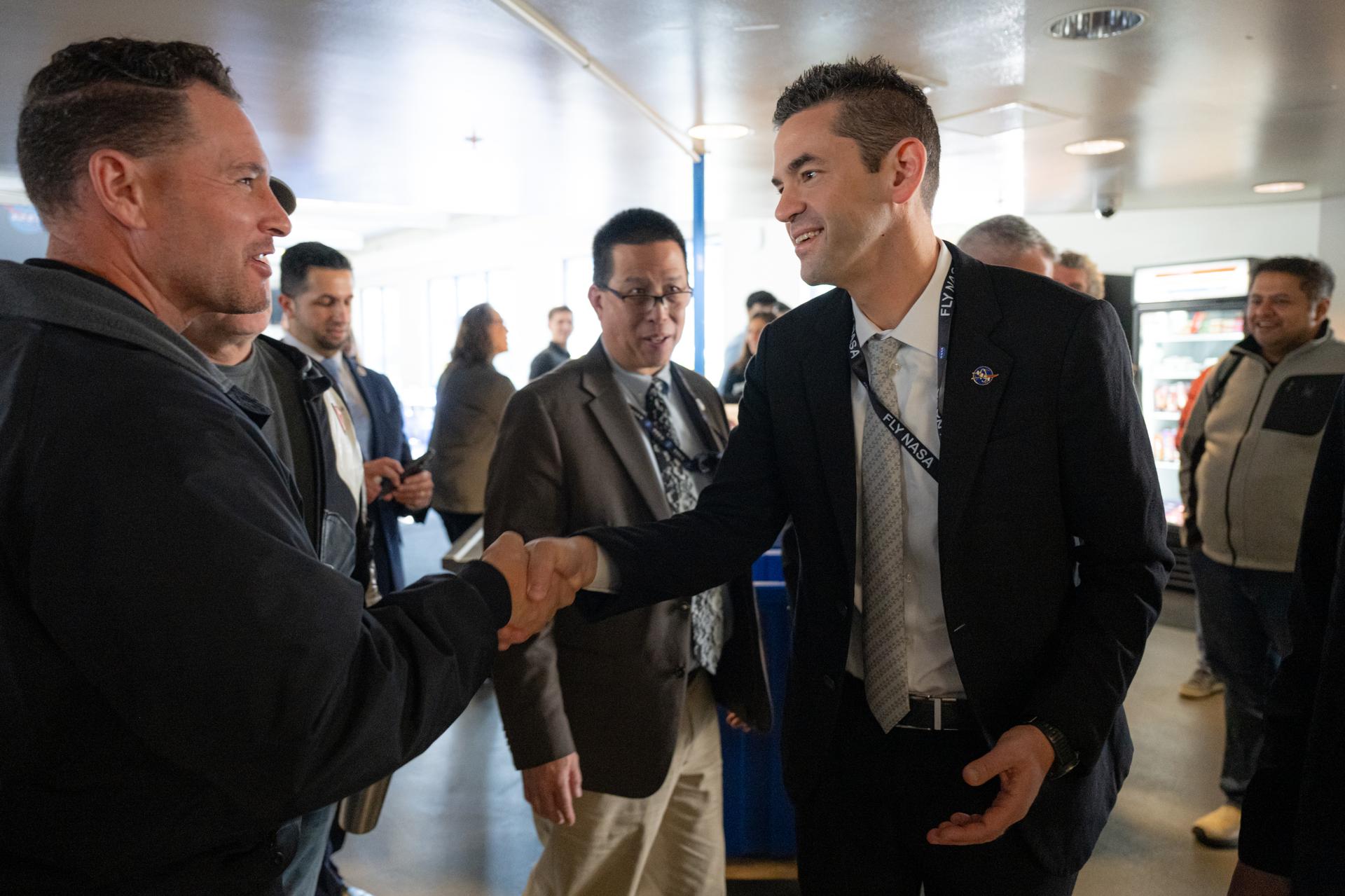
STEReO Field Testing
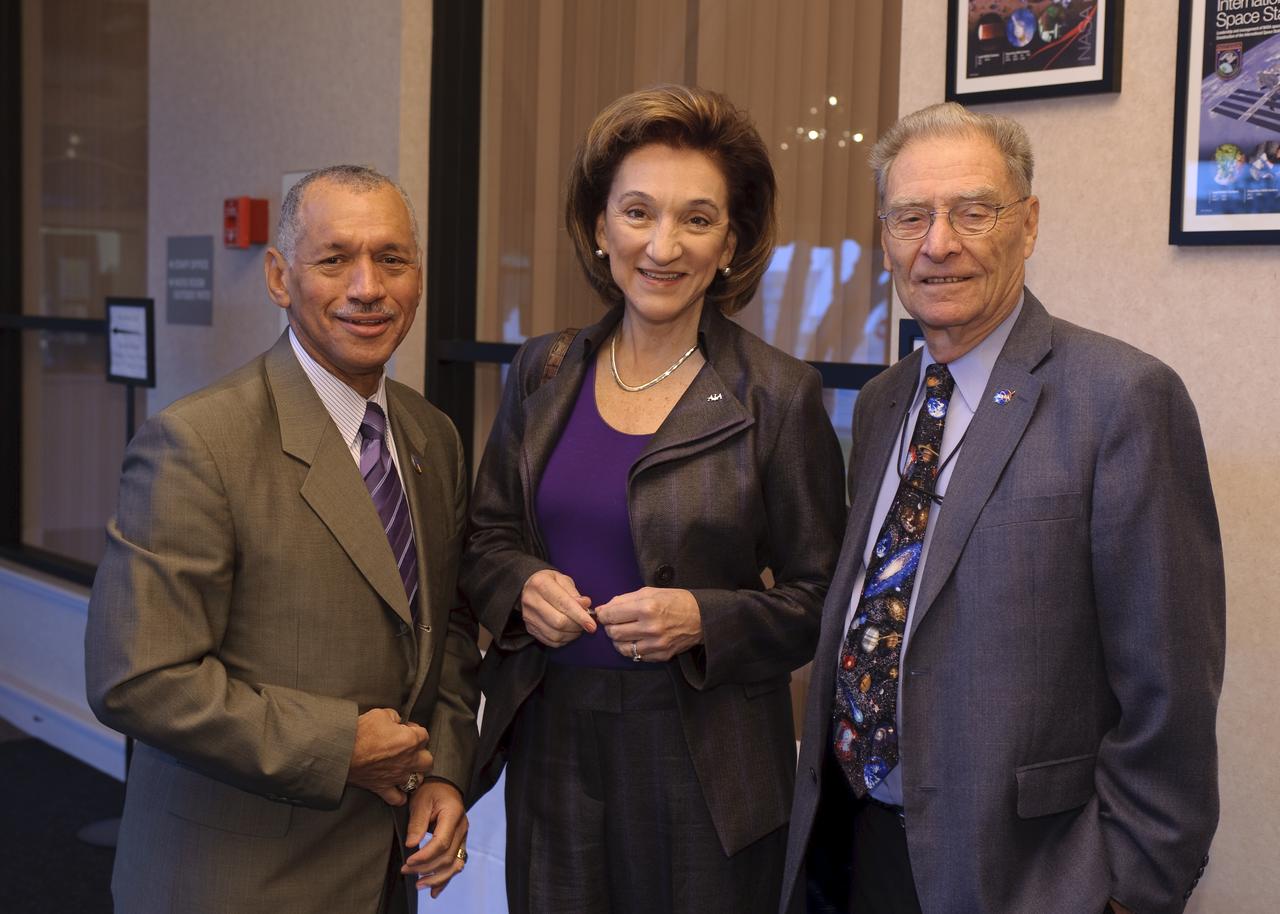
NASA Advisory Council Meeting at NASA Ames Research Center NRP Conference Center. Charlie Bolden, NASA Administrator, Marion Blakey, Chair, Aeronautics Committee and Jack Boyd, Ames Senior Advisor to Center Director/Historian
ARC-2009-ACD09-0238-001
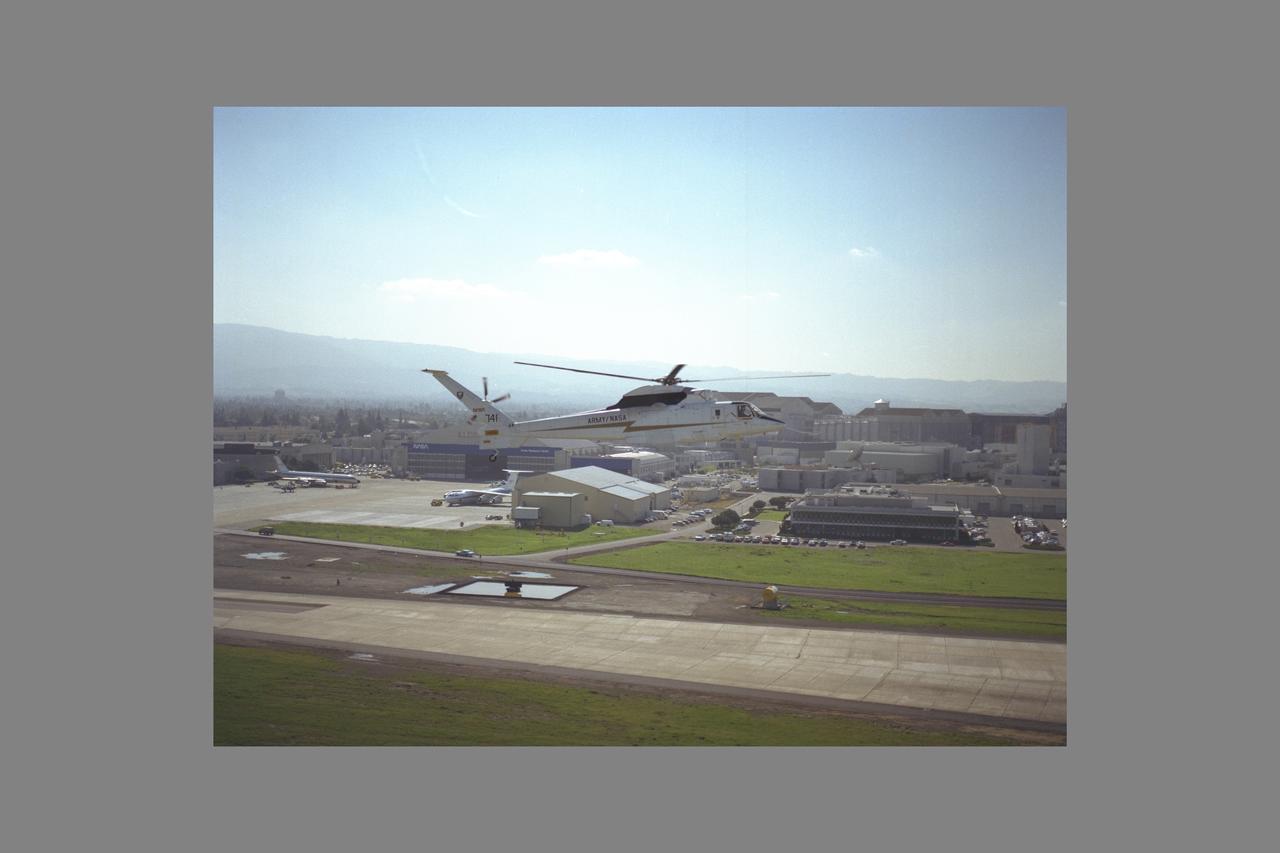
RSRA (NASA-741) in flight with NASA Ames Research Center in the background.
ARC-1982-AC82-0198-9
Taking a break from his duties at Ames Research Center Jacob Cohen, Ames Chief Scientist grabs his own view of the 2017 Solar Eclipse with his cellphone at 09:16:11 on August 21, 2017.
2017 Solar Eclipse, Ames Research Center
Taking a break from his duties at the Ames Vertical Gun Range to look up at the eclipse over Ames Research Center in Mountain View Adam Parrish not only views but wears, on his forehead, the image of the 2017 Solar eclipse at 09:20:56 on August 21, 2017.
2017 Solar Eclipse, Ames Research Center
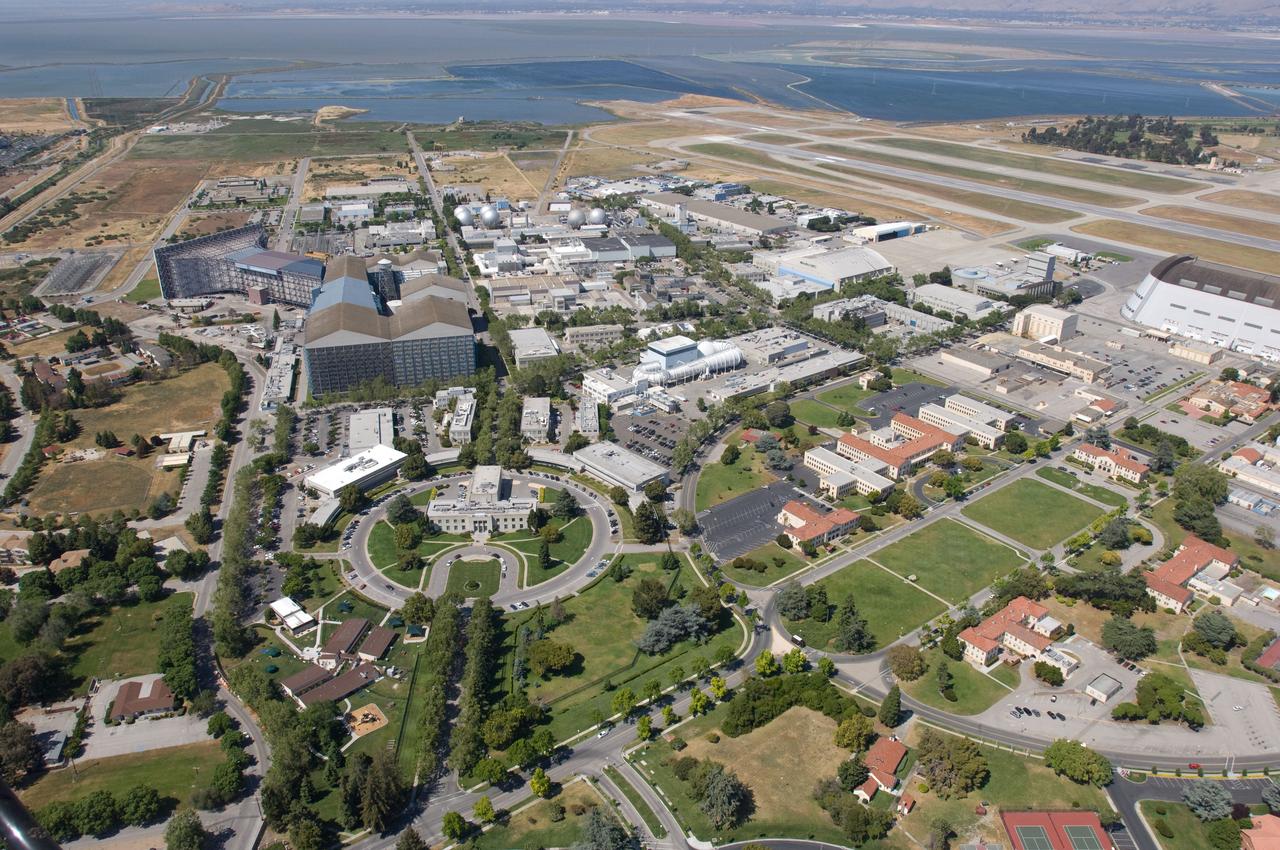
Aerial views of Ames Research Center, Nasa Research Park, Moffett Airfield California
ARC-2008-ACD08-0105-028
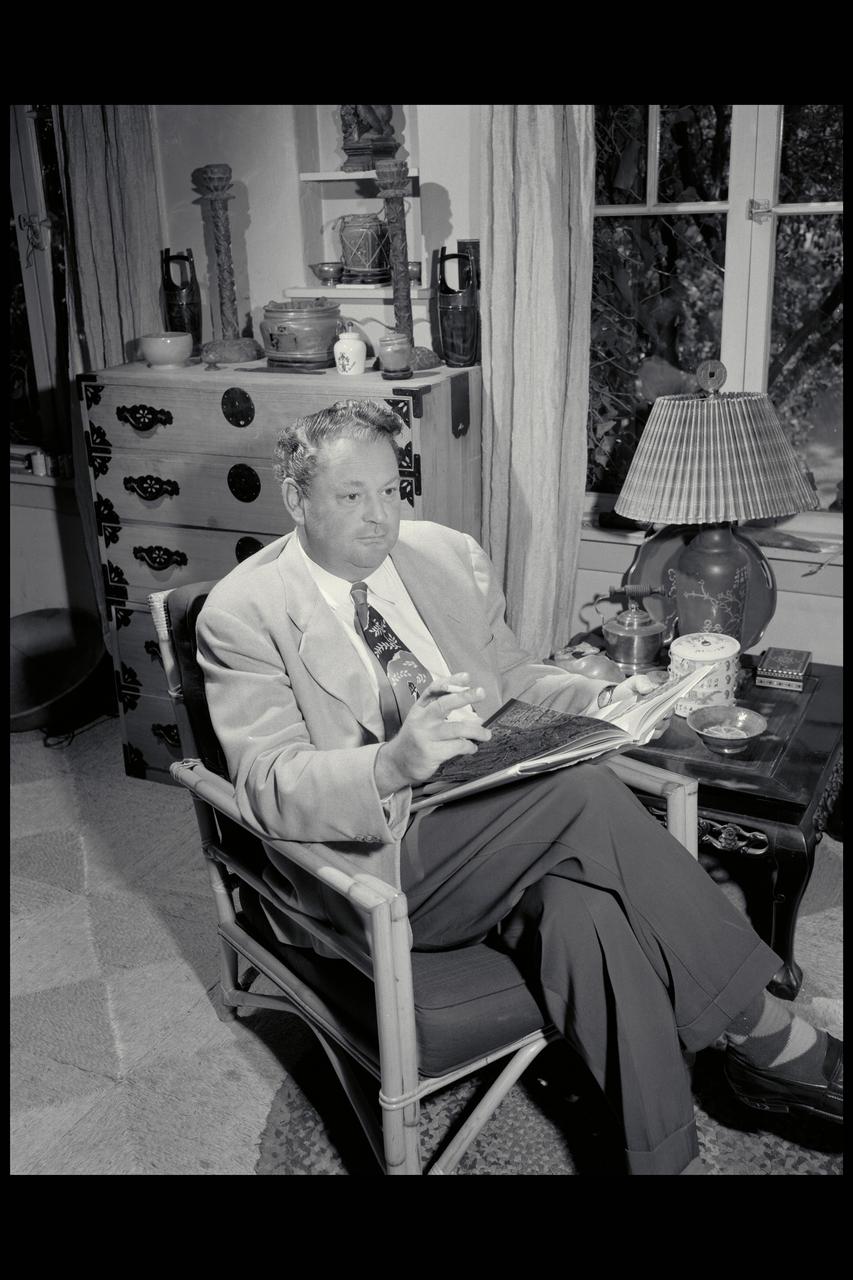
Harvey Allen, Chief of the High-Speed Research Division at NASA Ames Research Center, in his home.
Harvey Allen in his Home.
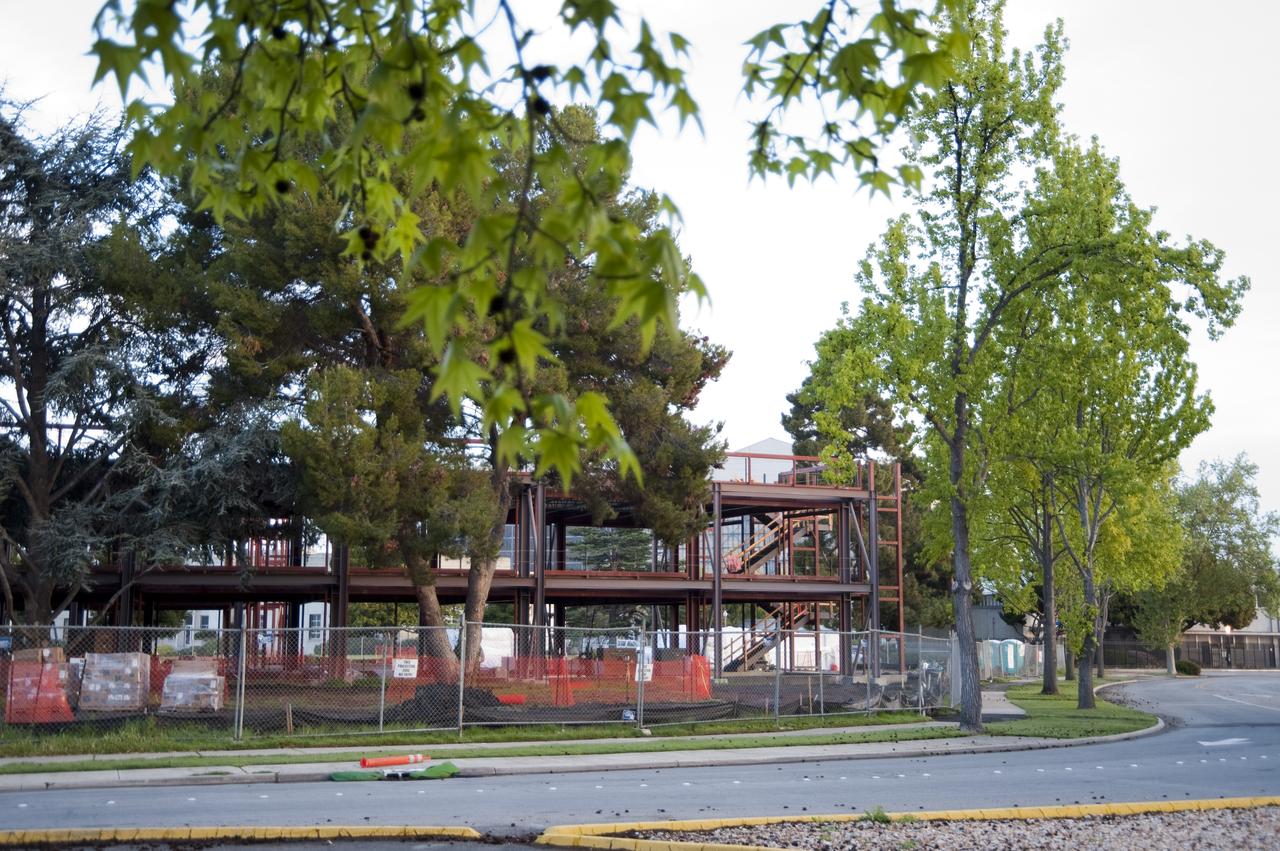
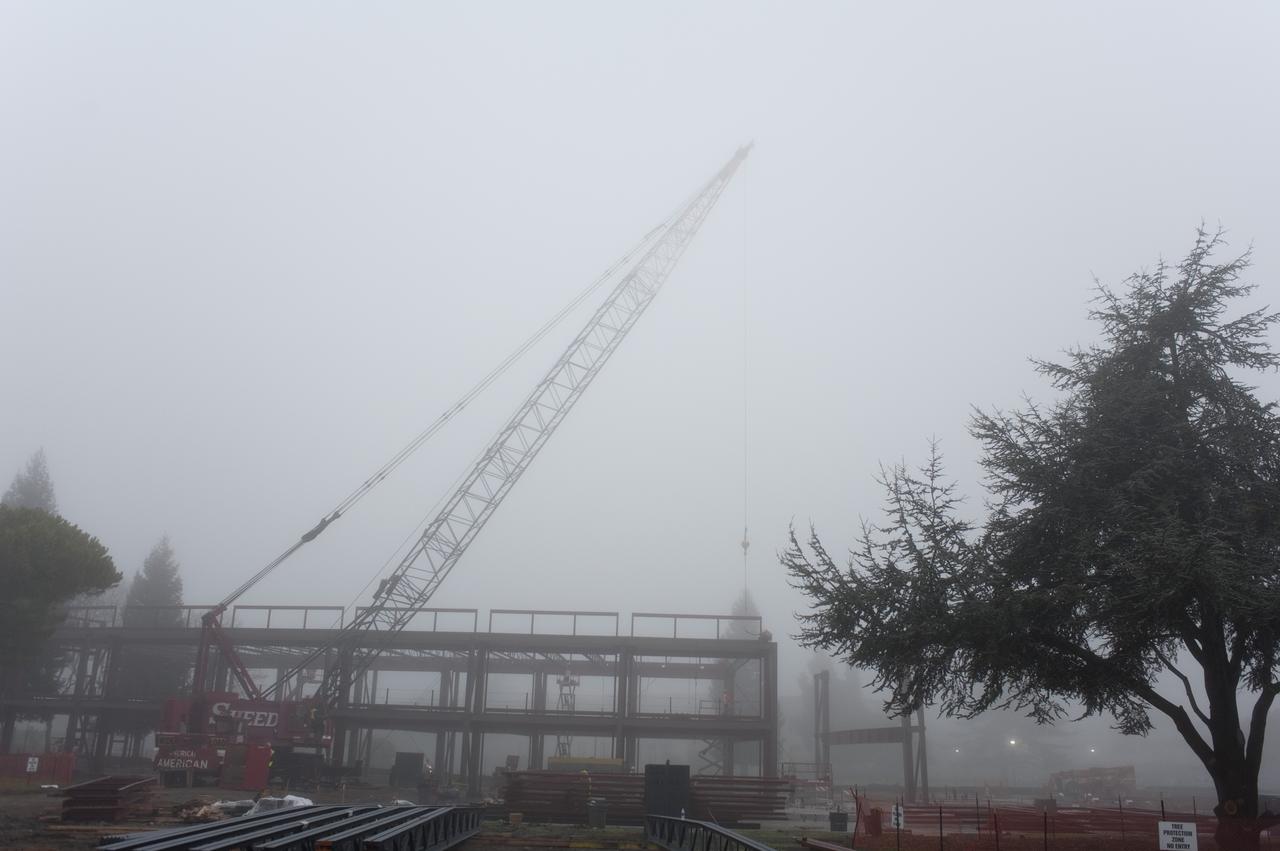
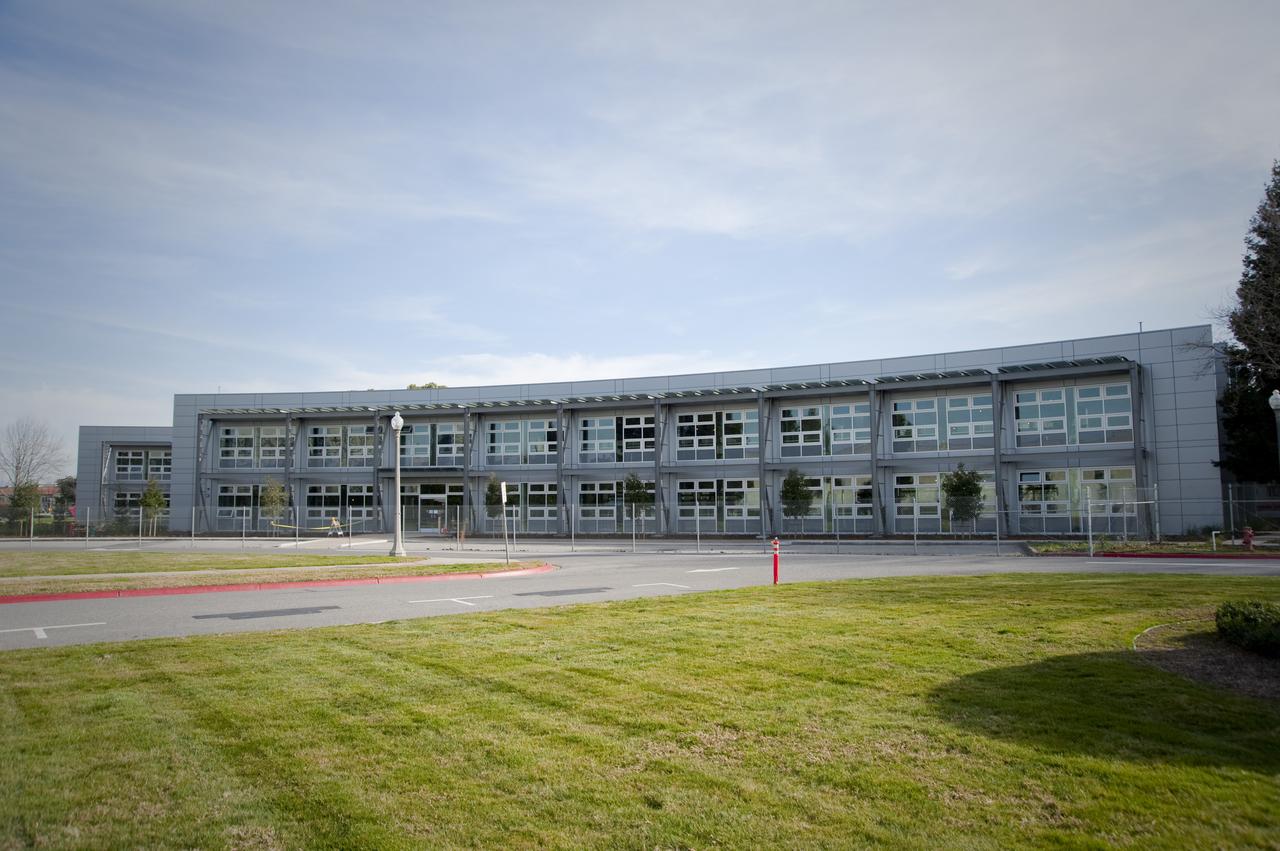
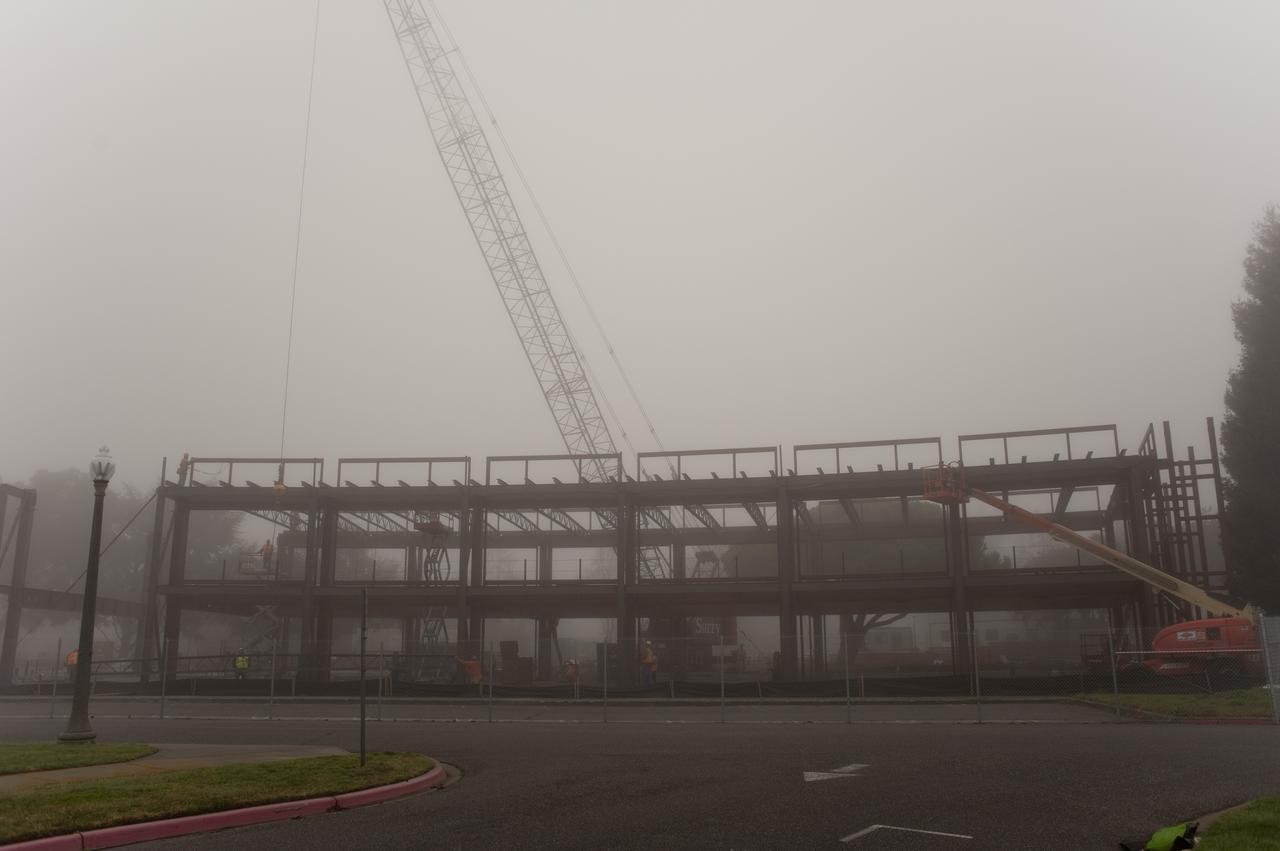
Construction of the new NASA Ames Green Building dubbed Sustainability Base located on the Ames Research Center campus at Moffett Field, CA.
ARC-2010-ACD10-0037-089
Construction of the new NASA Ames Green Building dubbed Sustainability Base located on the Ames Research Center campus at Moffett Field, CA.
ARC-2010-ACD10-0037-107
Construction of the new NASA Ames Green Building dubbed Sustainability Base located on the Ames Research Center campus at Moffett Field, CA.
ARC-2010-ACD10-0037-147
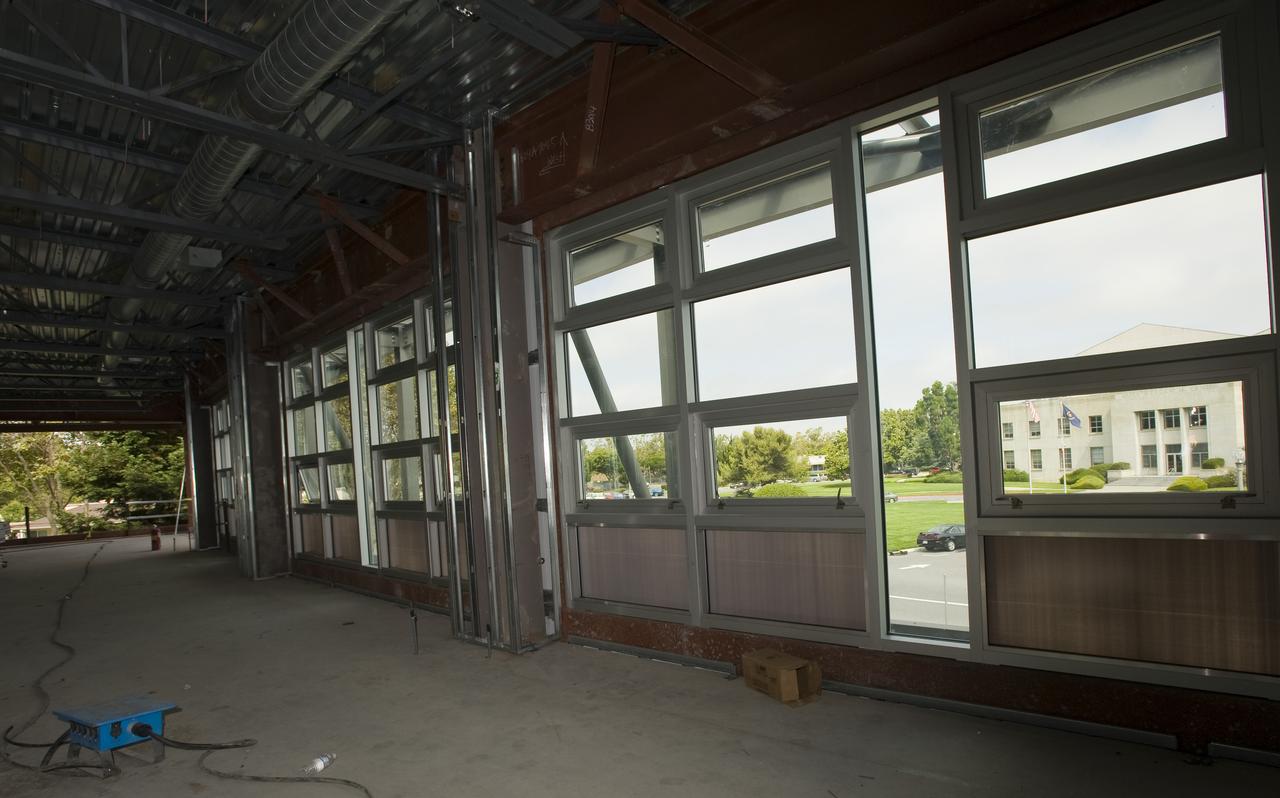
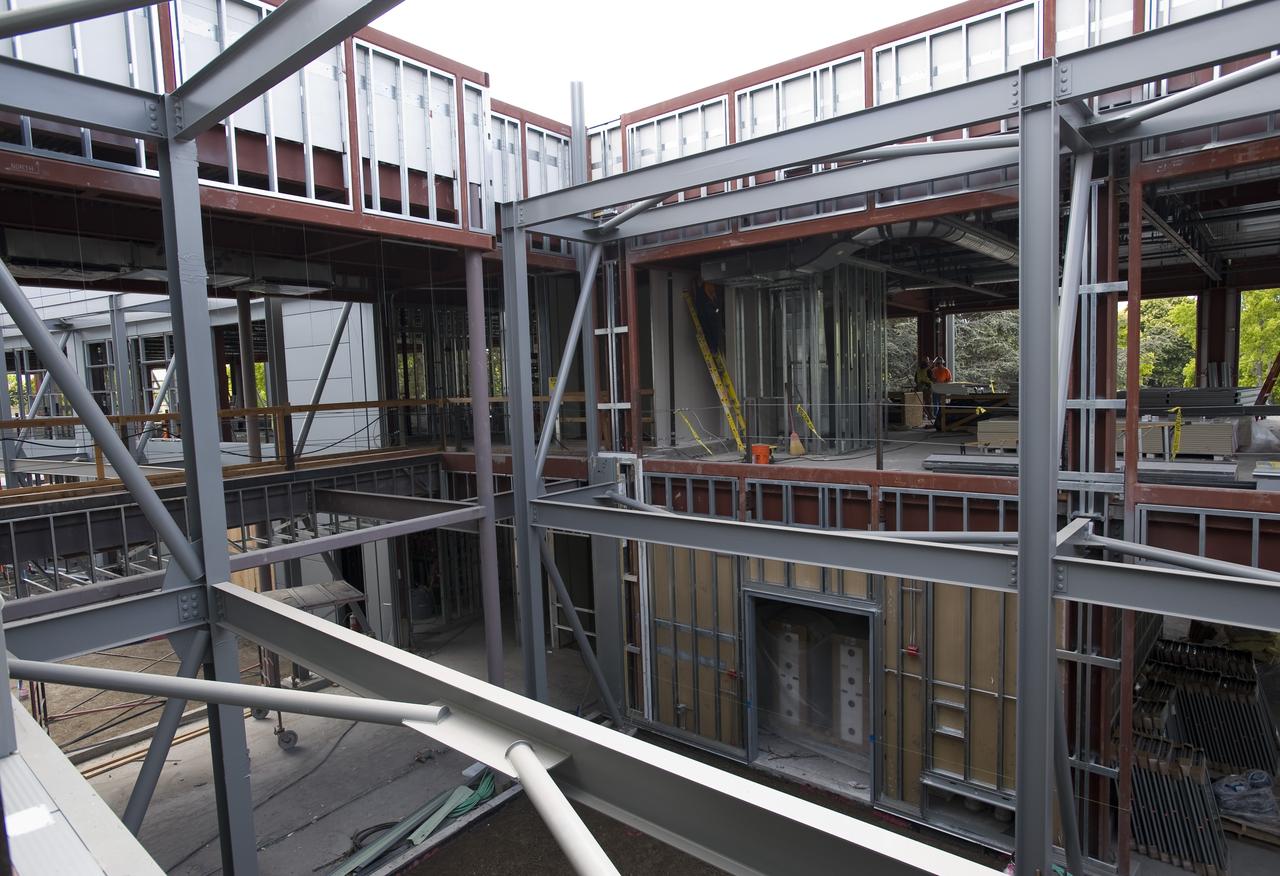
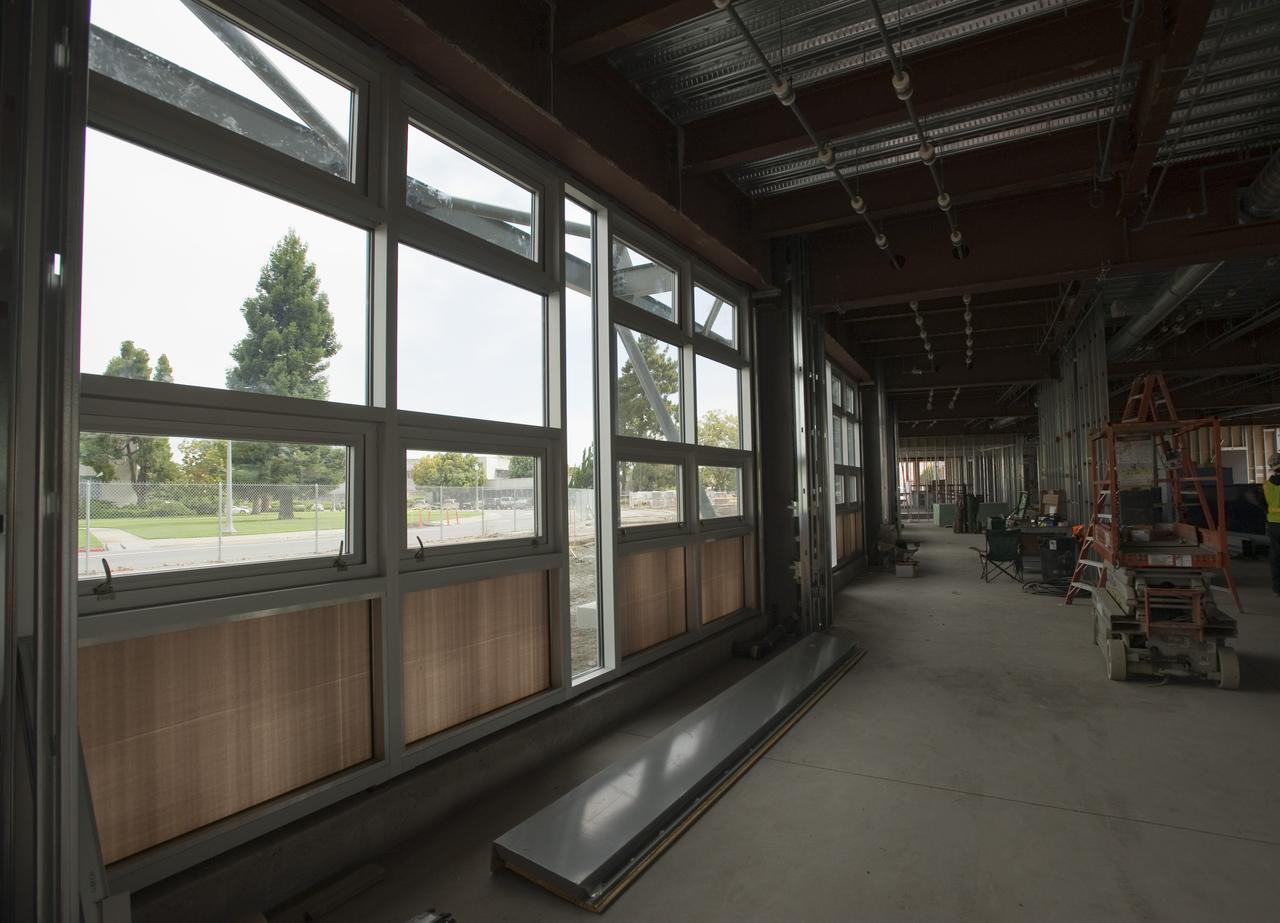
Construction of the new NASA Ames Green Building dubbed Sustainability Base located on the Ames Research Center campus at Moffett Field, CA. Interior windows.
ARC-2011-ACD10-0037-250
Construction of the new NASA Ames Green Building dubbed Sustainability Base located on the Ames Research Center campus at Moffett Field, CA.
ARC-2010-ACD10-0037-140
Accident: X-14B crash on VTOL Pad Ames Research Center, Moffett Field, CA  Photo Credit: NASA Ames student photographer Jim Huss
ARC-1981-A81-0348-12
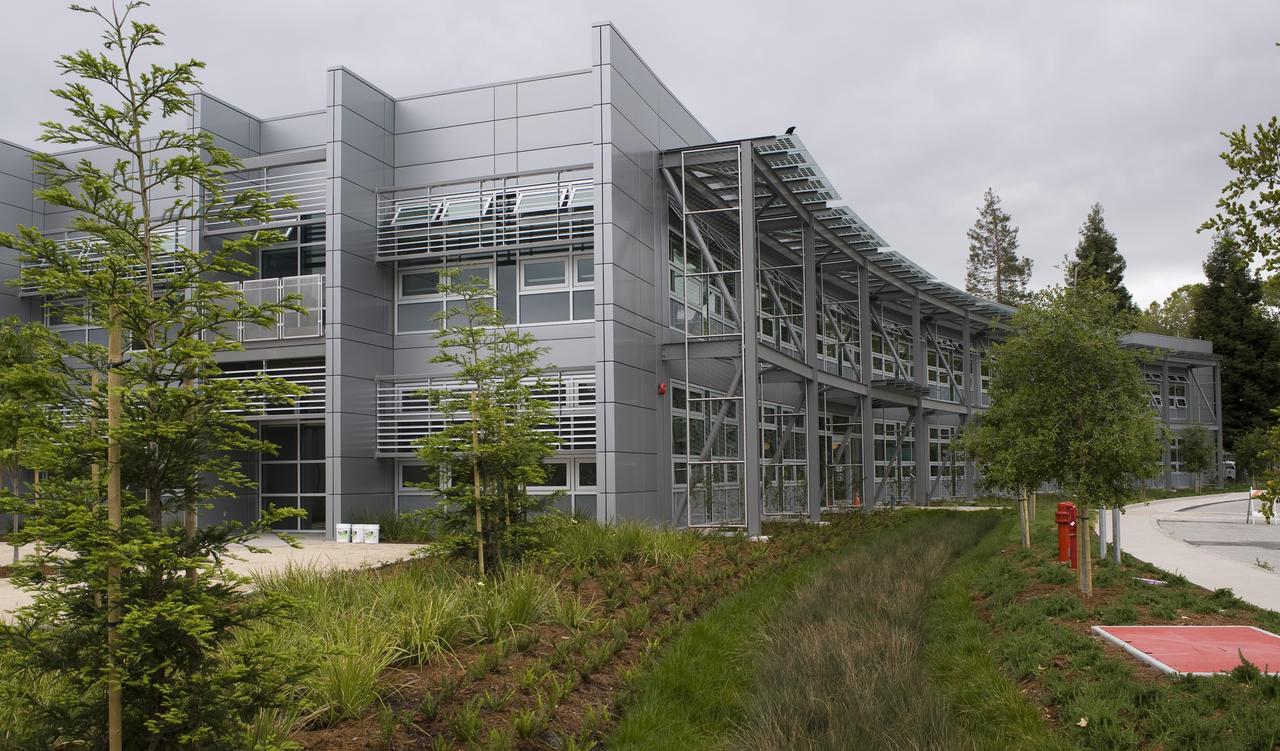
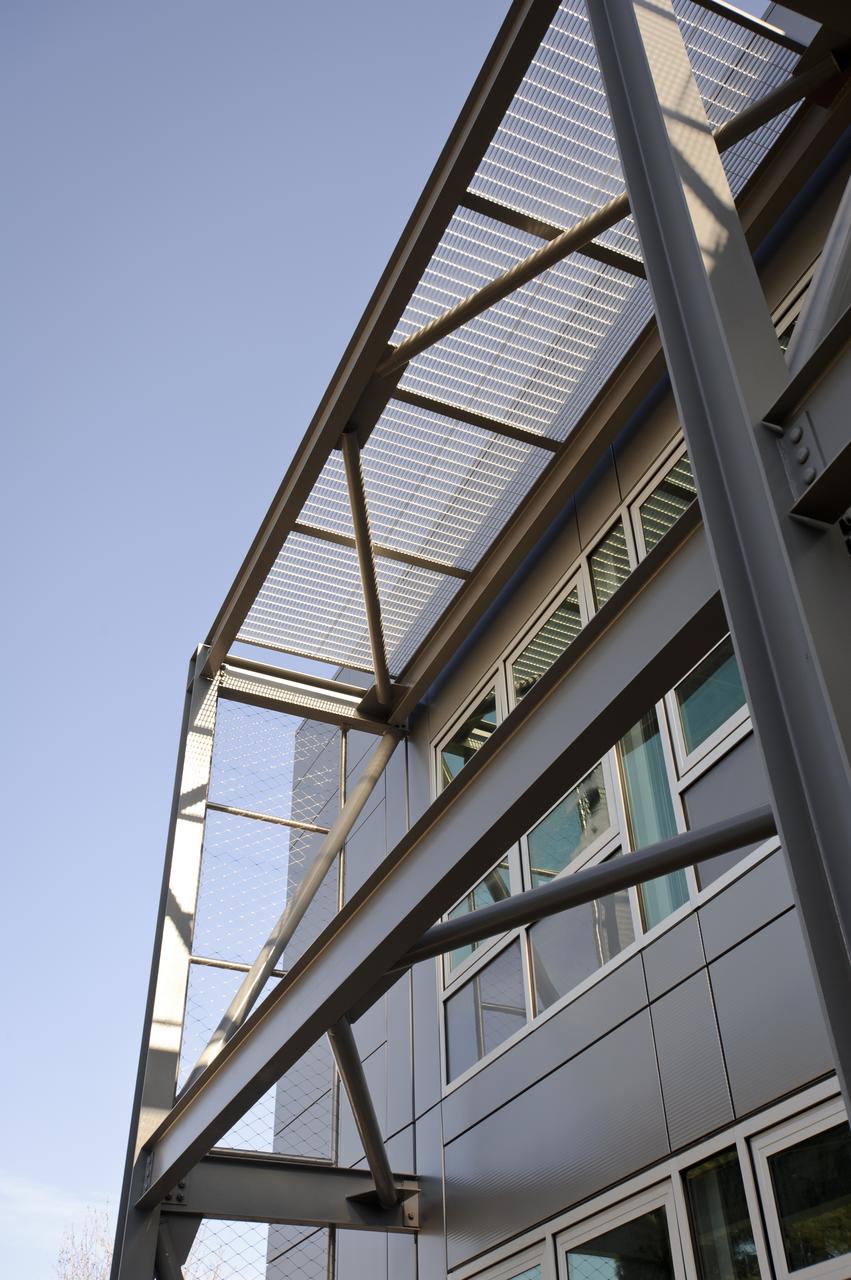
Construction of the new NASA Ames Green Building dubbed Sustainability Base located on the Ames Research Center campus at Moffett Field, CA. windows exterior
ARC-2011-ACD10-0037-235
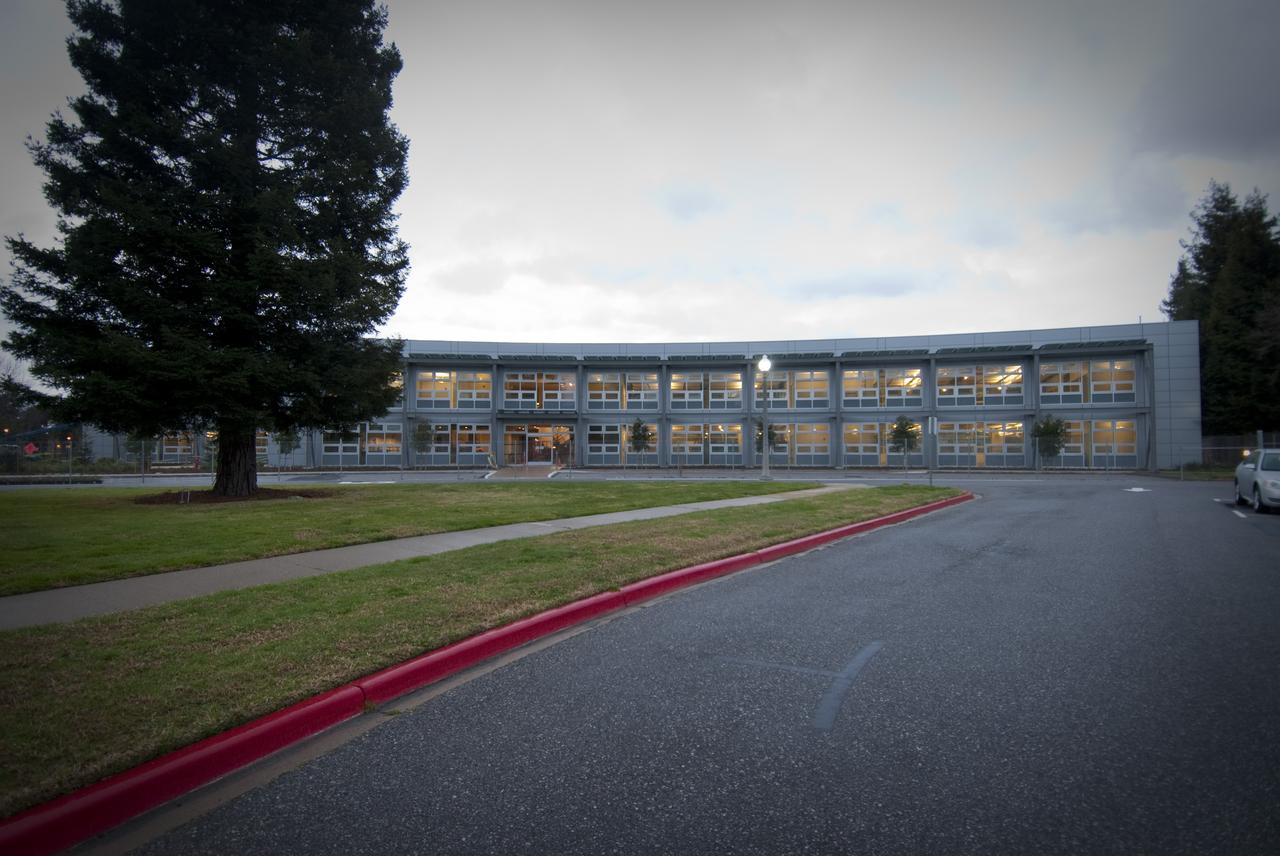
Construction of the new NASA Ames Green Building dubbed Sustainability Base located on the Ames Research Center campus at Moffett Field, CA.
ARC-2011-ACD10-0037-226
Construction of the new NASA Ames Green Building dubbed Sustainability Base located on the Ames Research Center campus at Moffett Field, CA. skylights on roof
ARC-2011-ACD10-0037-207
Construction of the new NASA Ames Green Building dubbed Sustainability Base located on the Ames Research Center campus at Moffett Field, CA.
ARC-2010-ACD10-0037-144
Construction of the new NASA Ames Green Building dubbed Sustainability Base located on the Ames Research Center campus at Moffett Field, CA. drain on roof
ARC-2011-ACD10-0037-208
Construction of the new NASA Ames Green Building dubbed Sustainability Base located on the Ames Research Center campus at Moffett Field, CA.
ARC-2010-ACD10-0037-076
Construction of the new NASA Ames Green Building dubbed Sustainability Base located on the Ames Research Center campus at Moffett Field, CA.
ARC-2010-ACD10-0037-177
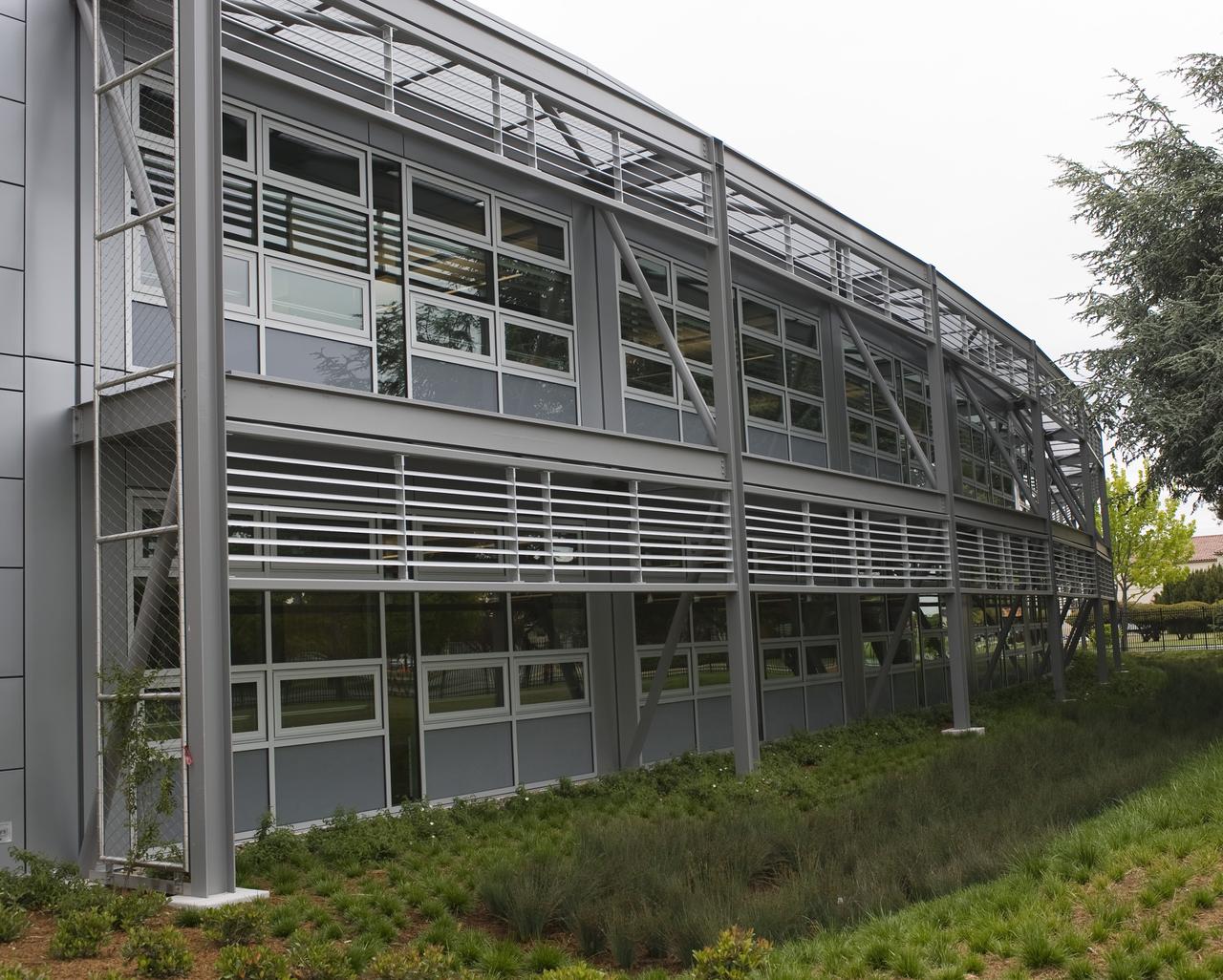
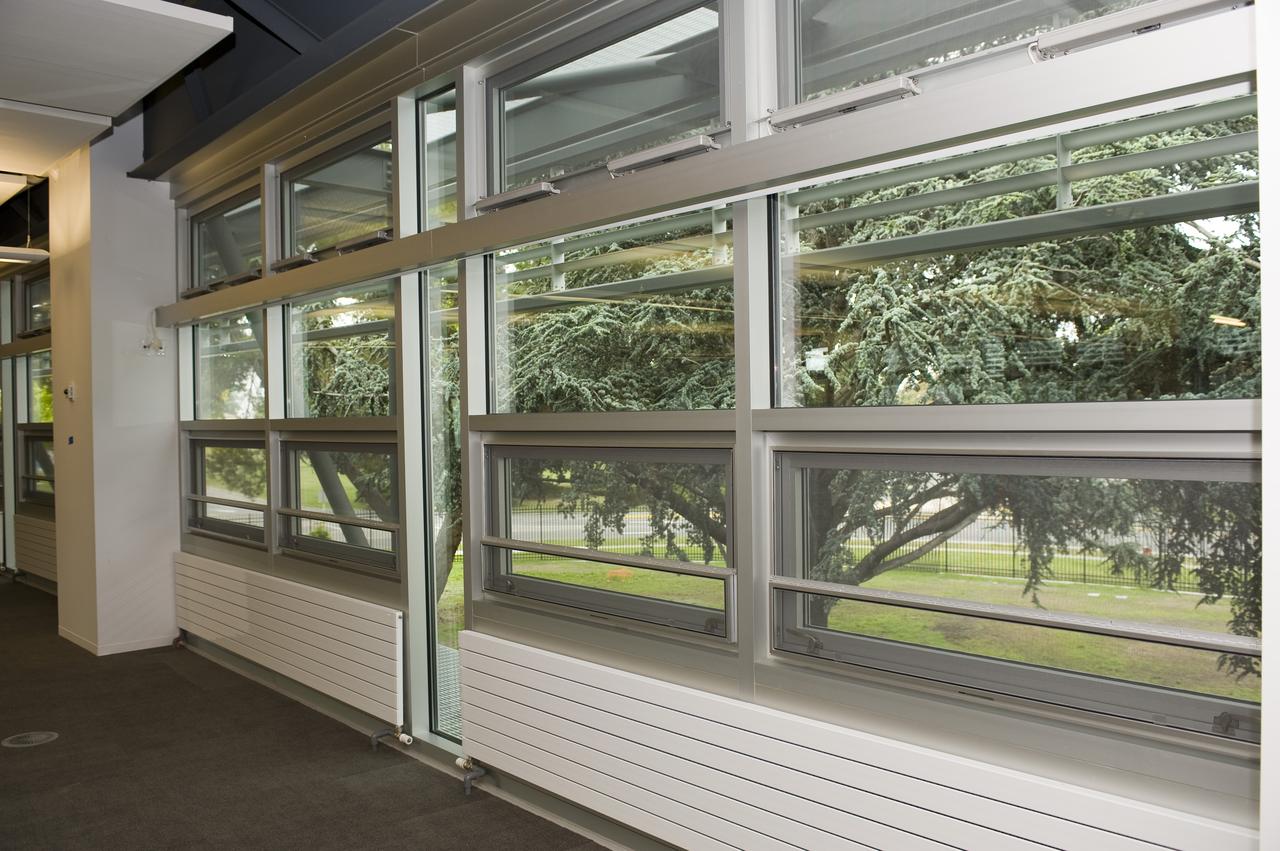
Construction of the new NASA Ames Green Building dubbed Sustainability Base located on the Ames Research Center campus at Moffett Field, CA. windows and shading
ARC-2011-ACD10-0037-186
Accident: X-14B crash on VTOL Pad Ames Research Center, Moffett Field, CA  Photo Credit: NASA Ames student photographer Jim Huss
ARC-1981-A81-0348-14
Construction of the new NASA Ames Green Building dubbed Sustainability Base located on the Ames Research Center campus at Moffett Field, CA. windows and shading
ARC-2011-ACD10-0037-185
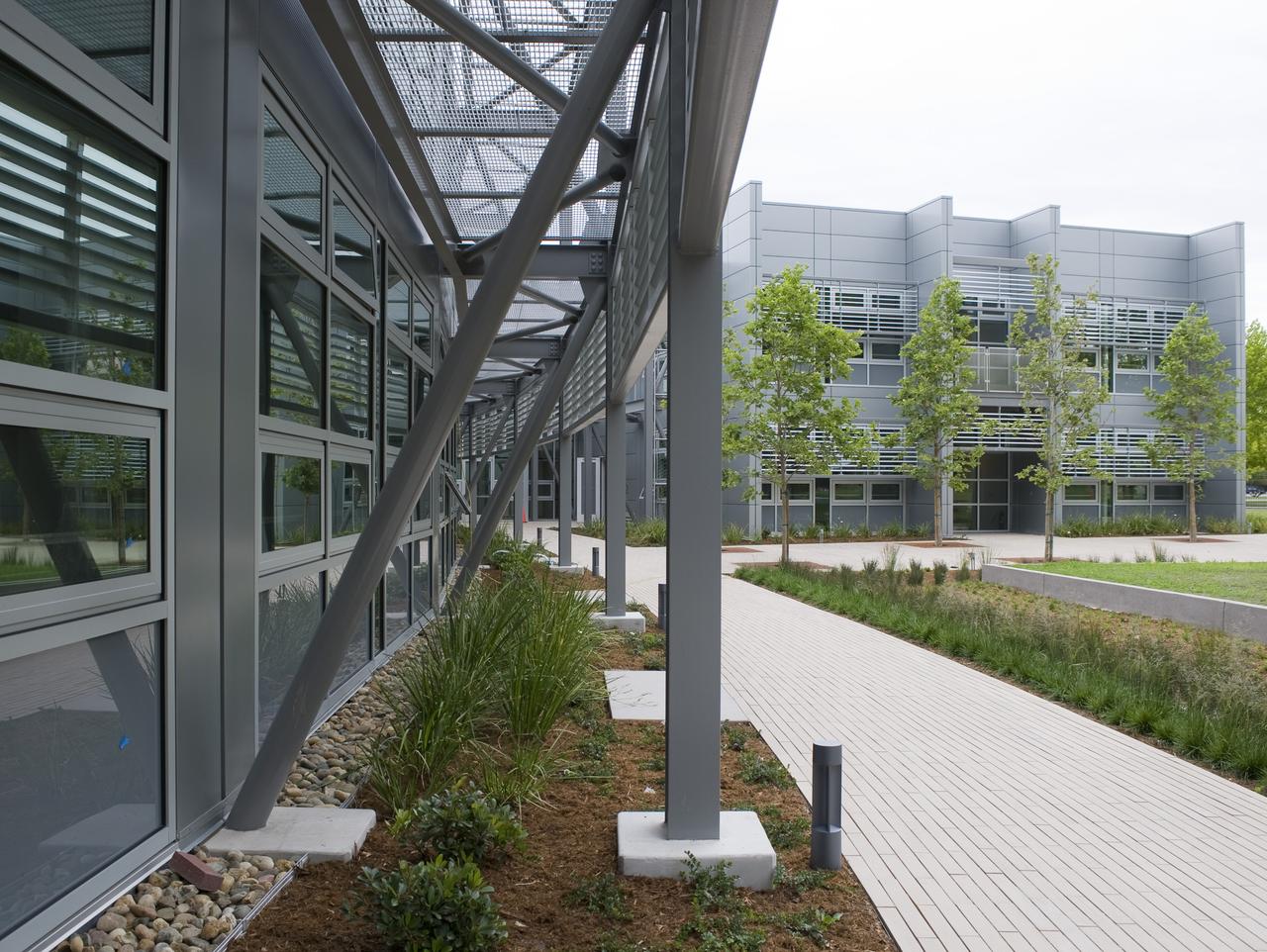
Construction of the new NASA Ames Green Building dubbed Sustainability Base located on the Ames Research Center campus at Moffett Field, CA. Landscaping.
ARC-2011-ACD10-0037-243
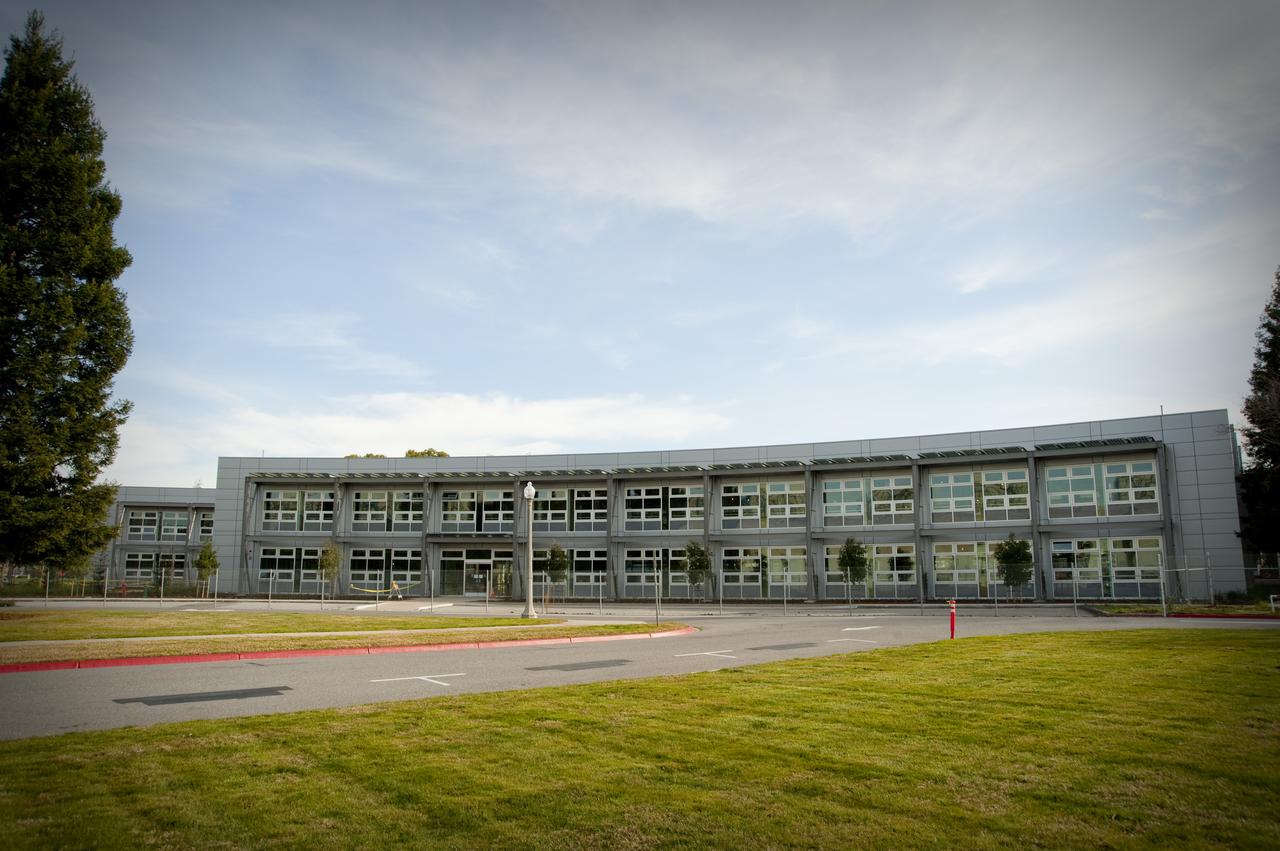
Construction of the new NASA Ames Green Building dubbed Sustainability Base located on the Ames Research Center campus at Moffett Field, CA.
ARC-2011-ACD10-0037-218
Construction of the new NASA Ames Green Building dubbed Sustainability Base located on the Ames Research Center campus at Moffett Field, CA.
ARC-2010-ACD10-0037-005