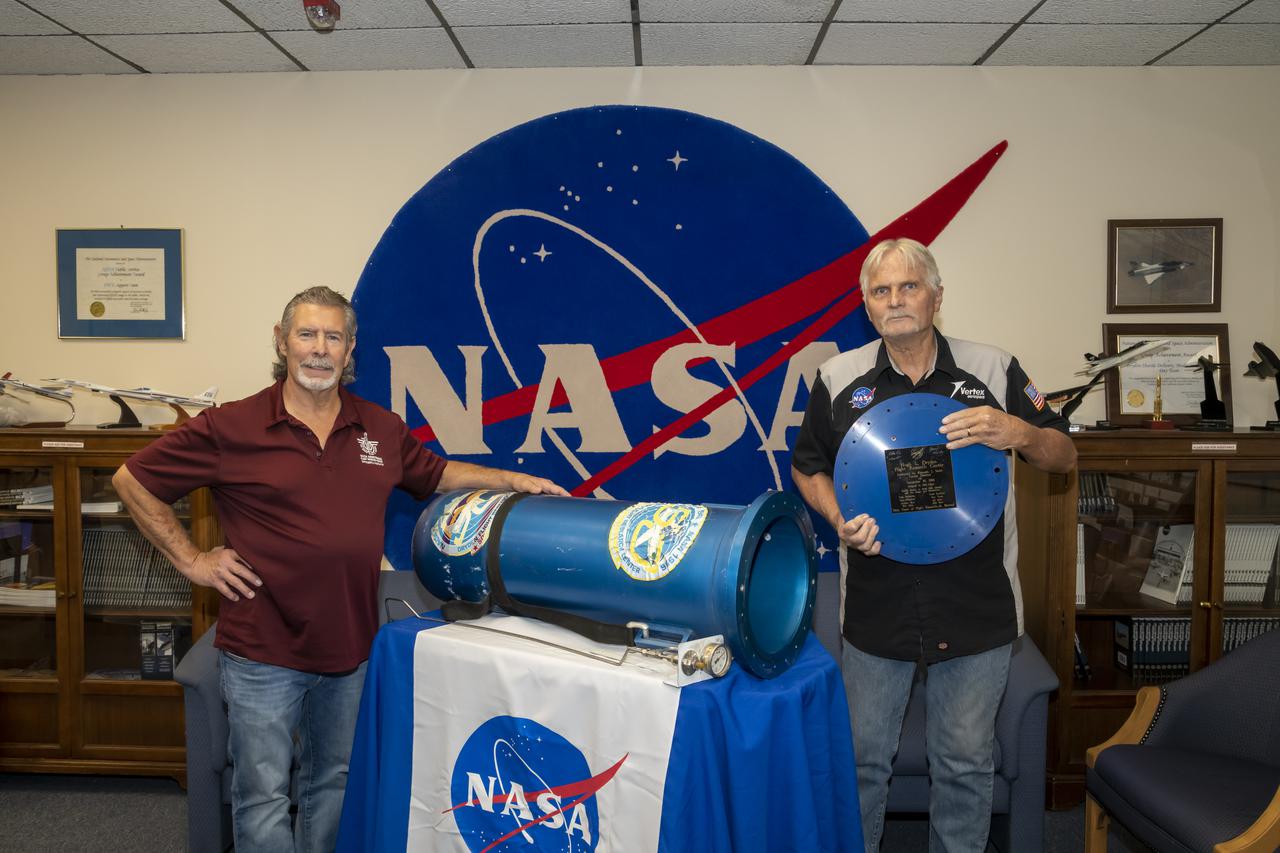
Andy Blua and Don Whitfield stand by the time capsule they helped construct 25 years ago on NASA Armstrong Flight Research Center's 50th anniversary. It was recently opened at the center, located in Edwards, California, on Oct. 13, 2021. The time capsule was opened as part of the activities commemorating the center's 75th anniversary.
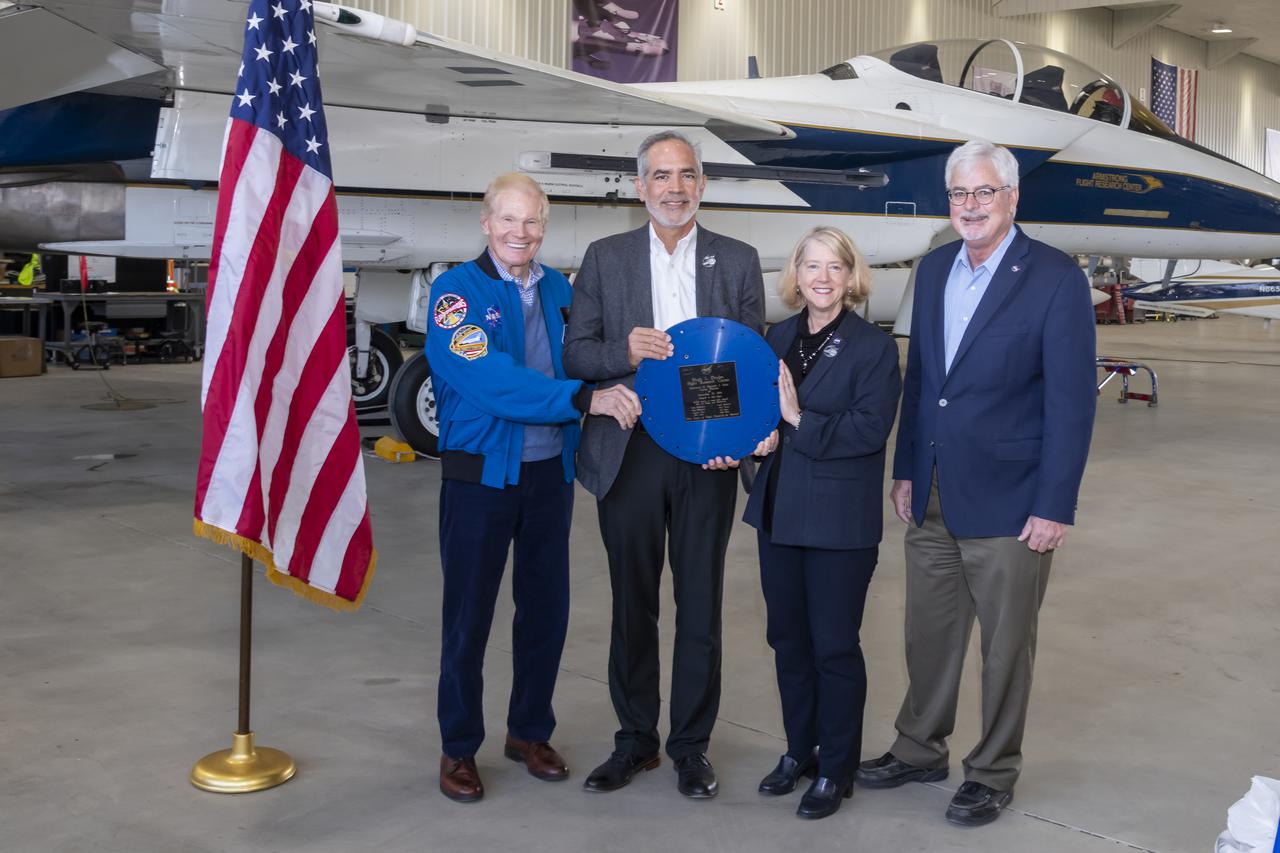
NASA Administrator Bill Nelson, from left, NASA Armstrong Flight Research Center Director David McBride, NASA Deputy Administrator Pam Melroy, and NASA Armstrong Deputy Center Director Patrick Stoliker, display the lid to a time capsule on Oct. 13. The time capsule was sealed on the center's 50th anniversary and opened to commemorate its 75th anniversary. NASA Armstrong is in Edwards, California.
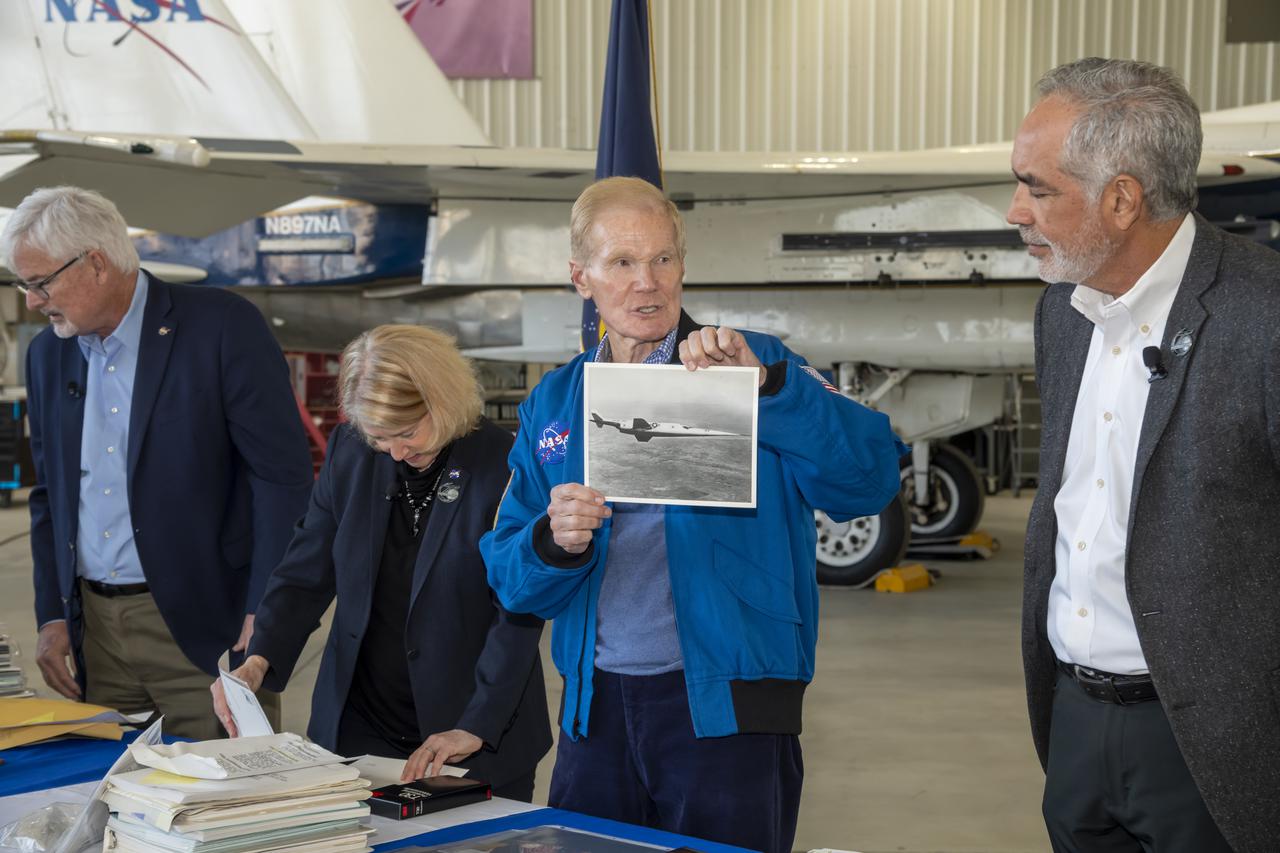
NASA Administrator Bill Nelson shows a picture of the X-3 to NASA Armstrong Flight Research Center Director David McBride on Oct. 13. NASA Armstrong Deputy Center Director Patrick Stoliker and NASA Deputy Administrator Pam Melroy also are with Nelson and McBride. The photo was contained in a time capsule that was sealed on the center's 50th anniversary and opened to commemorate its 75th anniversary. NASA Armstrong is in Edwards, California.
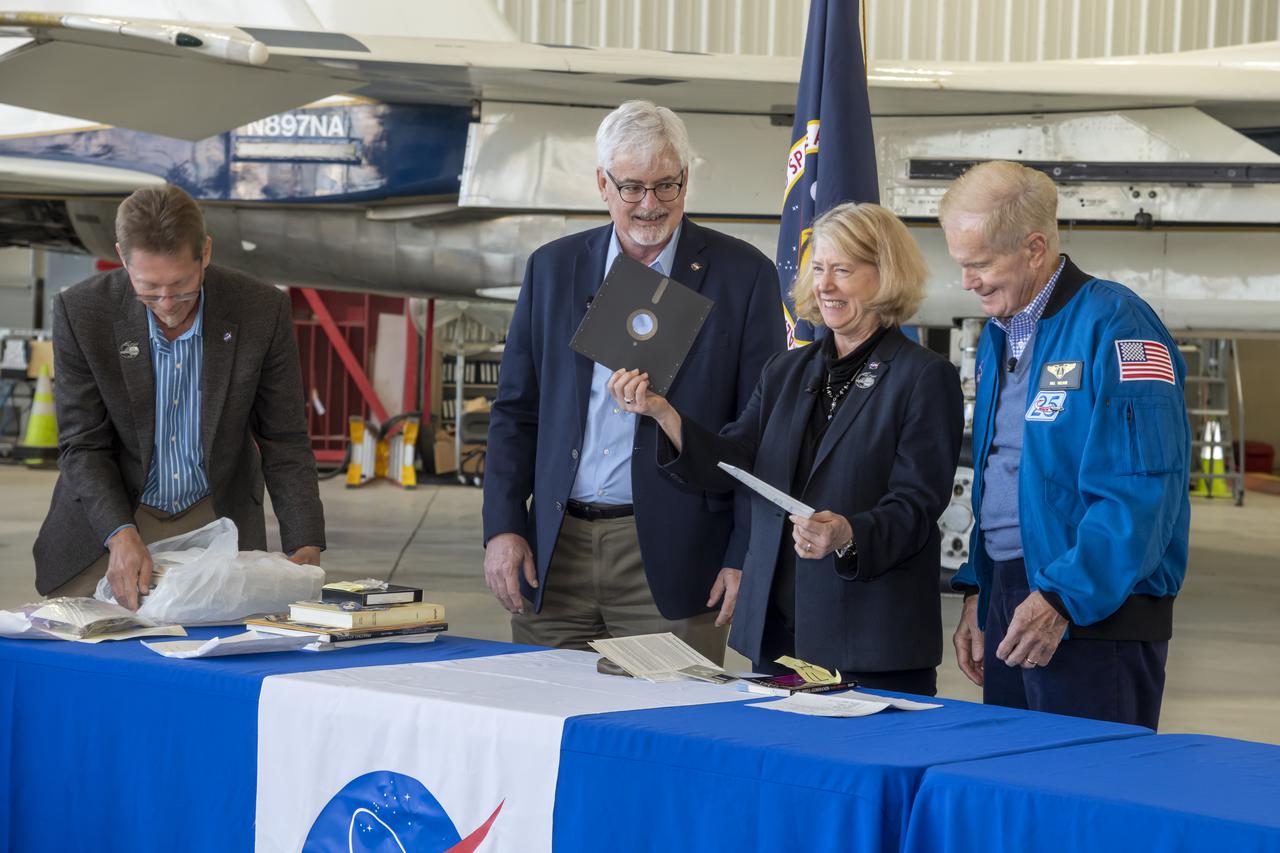
NASA Deputy Administrator Pam Melroy shows NASA Administrator Bill Nelson and NASA Armstrong Flight Research Center Deputy Director Patrick Stolicker a floppy disk, one of the treasures contained in a time capsule opened Oct. 13. The capsule was sealed on the center's 50th anniversary and opened to commemorate its 75th anniversary. NASA Armstrong is in Edwards, California.
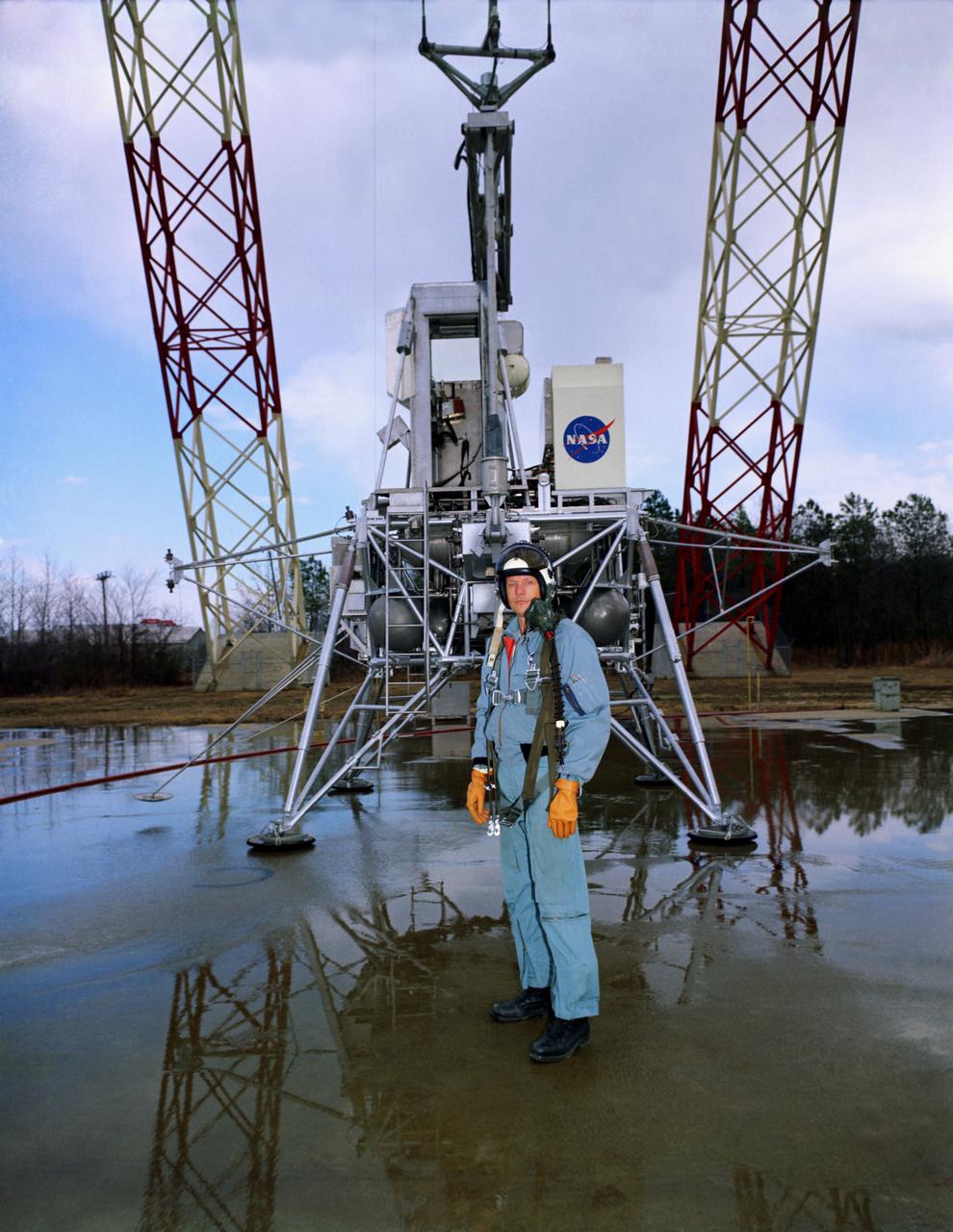
Neil Armstrong with the Lunar Excursion Module (LEM). Caption: "Not long after this photo was taken in front of the Lunar Landing Research Facility, astronaut Neil Armstrong became the first human to step upon the surface of the Moon." Photograph published in Winds of Change, 75th Anniversary NASA publication, by James Schultz, page 91. Also published in " A Century at Langley" by Joseph Chambers, pg. 95
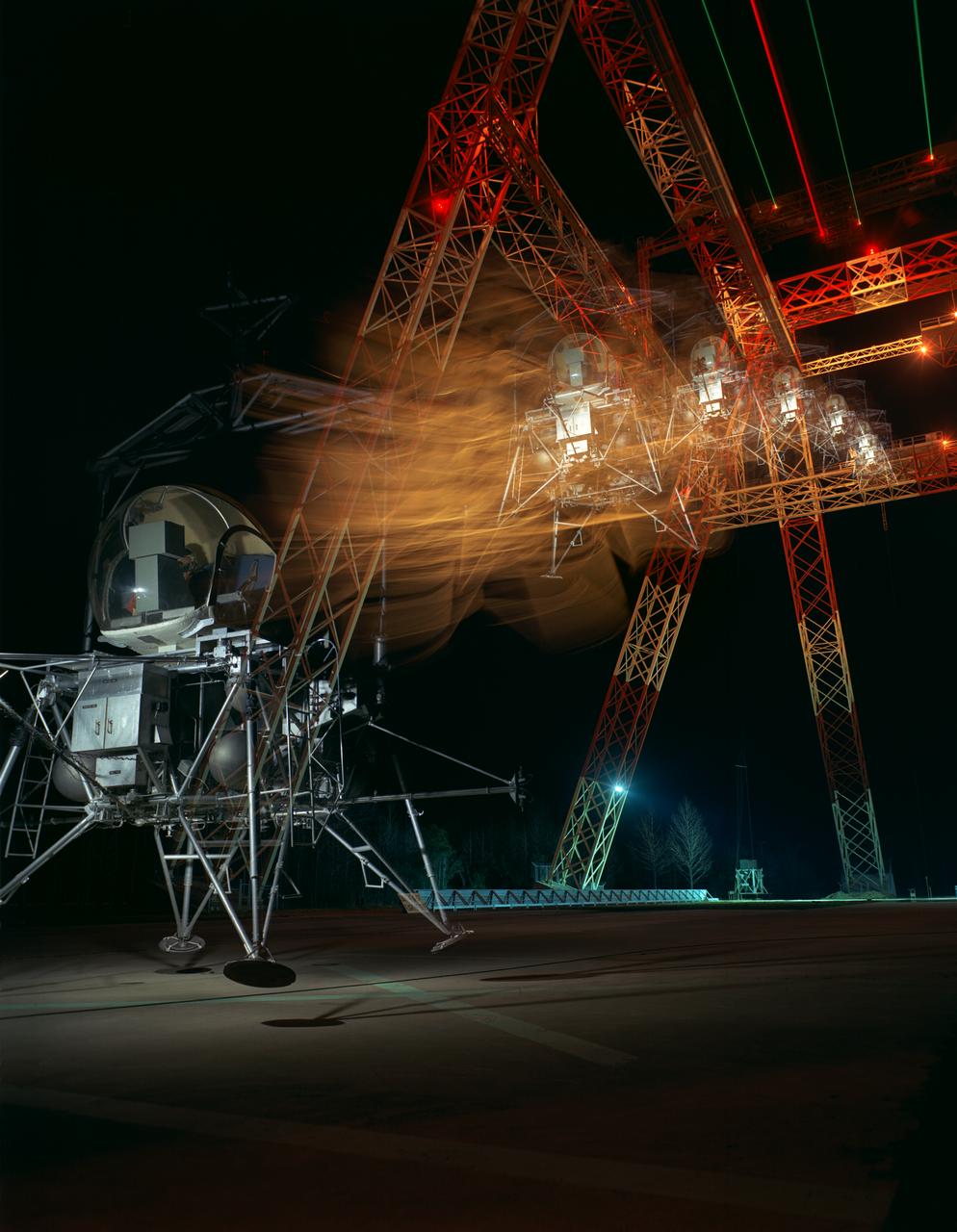
During a nighttime training session, a multiple exposure captures the movement of the Lunar Excursion Module Simulator (LEMS). The LEMS was a manned vehicle used to familiarize the Apollo astronauts with the handling characteristics of lunar-landing type vehicle. The Apollo Program is best known for the astronaut Neal Armstrong s first step on the Moon July 20, 1969. In its earliest test period, the LEMS featured a helicopter crew cabin atop the lunar landing module. Later, the helicopter crew cabin was replaced with a stand-up rectangular cabin which was more efficient for controlling maneuvers and for better viewing by the pilot. The vehicle was designed at Langley Research Center in Hampton, VA. This multiple exposure shows a simulated Moon landing of the (LEMS) trainer at Langley s Lunar Landing Research Facility. -- Photograph published in Winds of Change, 75th Anniversary NASA publication (page 70), by James Shultz. Also published in " A Century at Langley" by Joseph Chambers, pg. 93.
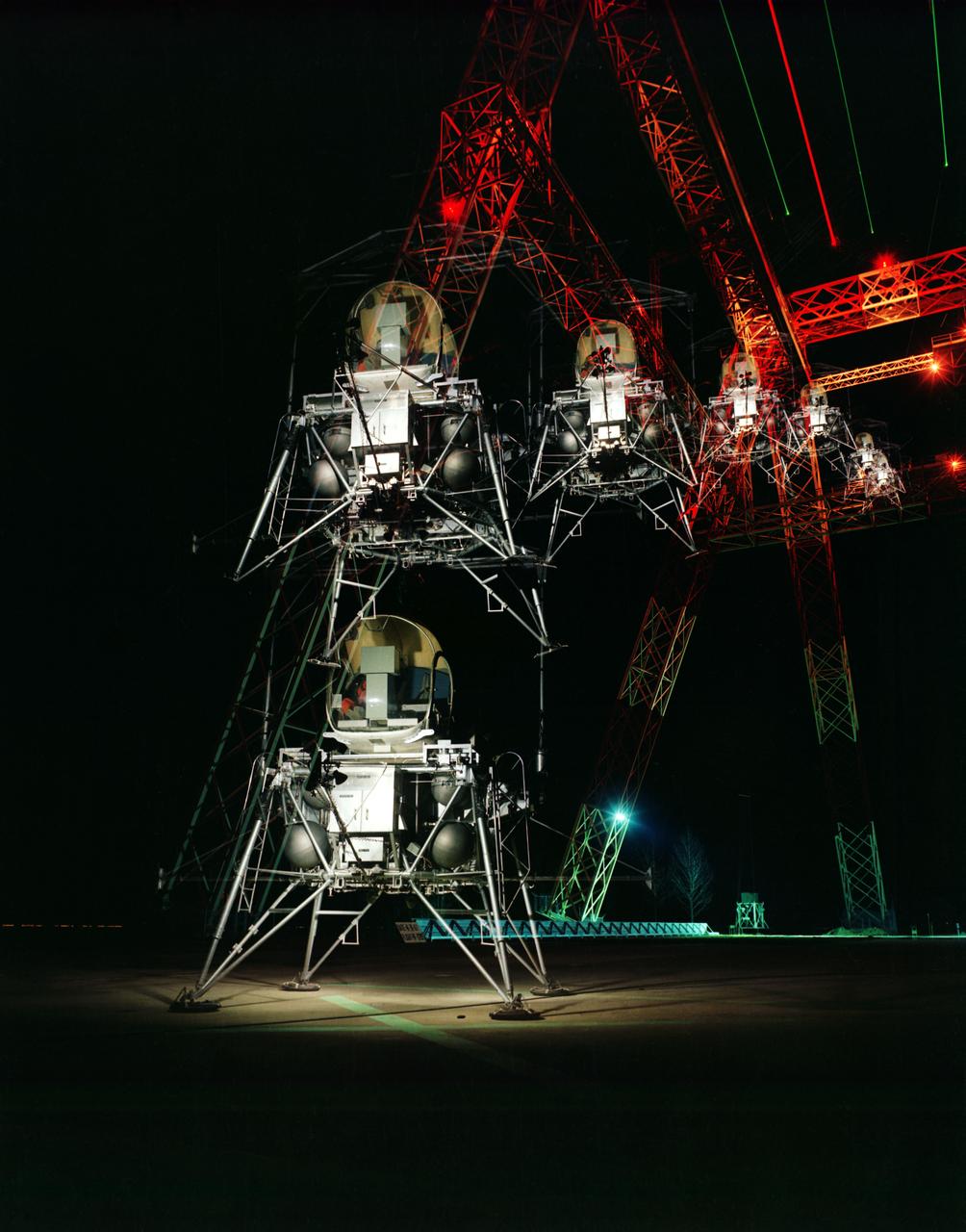
During a nighttime training session, a multiple exposure captures the movement of the Lunar Excursion Module Simulator (LEMS). The LEMS was a manned vehicle used to familiarize the Apollo astronauts with the handling characteristics of lunar-landing type vehicle. The Apollo Program is best known for the astronaut Neal Armstrong s first step on the Moon July 20, 1969. In its earliest test period, the LEMS featured a helicopter crew cabin atop the lunar landing module. Later, the helicopter crew cabin was replaced with a stand-up rectangular cabin which was more efficient for controlling maneuvers and for better viewing by the pilot. The vehicle was designed at Langley Research Center in Hampton, VA. This multiple exposure shows a simulated Moon landing of the (LEMS) trainer at Langley s Lunar Landing Research Facility. -- Photograph published in Winds of Change, 75th Anniversary NASA publication (page 70), by James Shultz. Also published in " A Century at Langley" by Joseph Chambers, pg. 93.
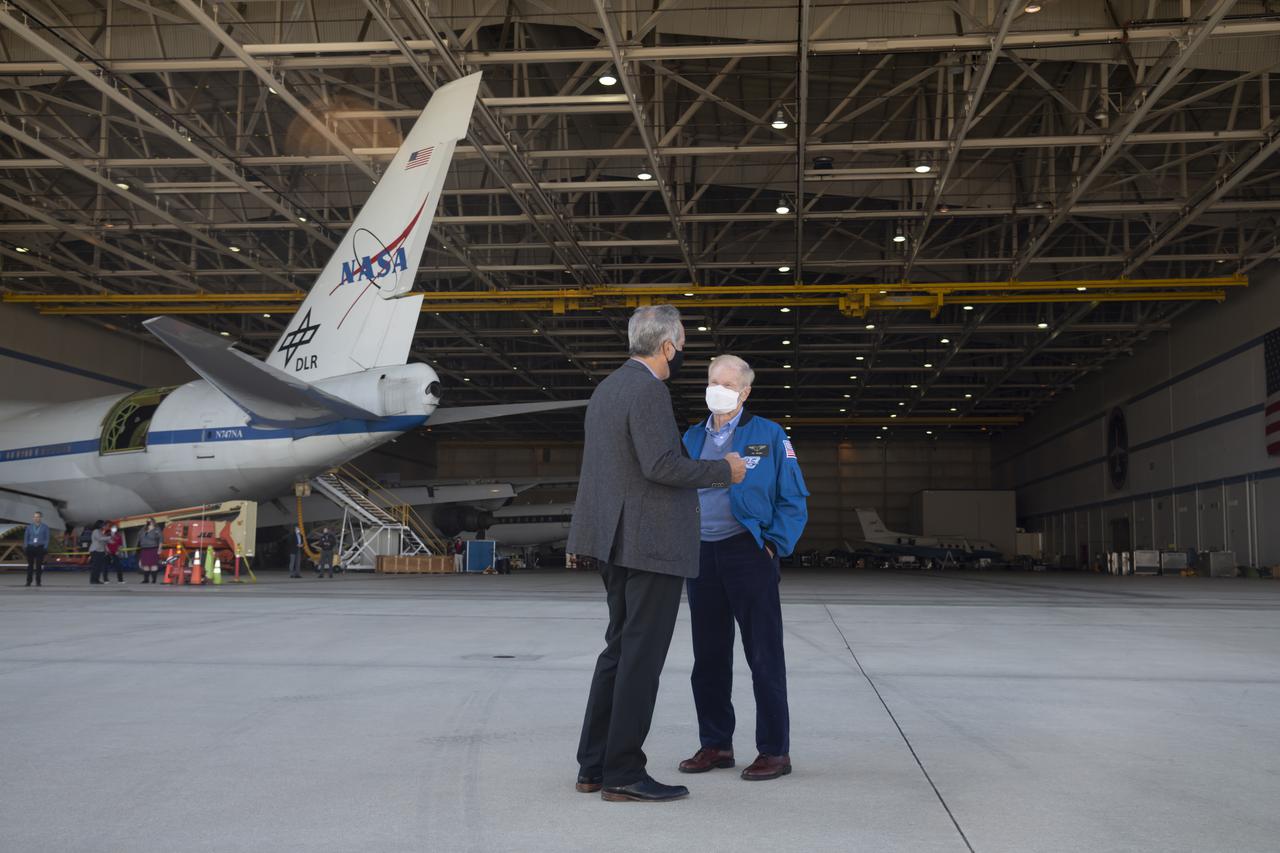
NASA Administrator Bill Nelson, right, and David McBride, center director at NASA’s Armstrong Flight Research Center in Edwards, California, talk by the Stratospheric Observatory for Infrared Science during the administrator’s visit to NASA Armstrong’s Building 703 in Palmdale, California, on Oct. 12.
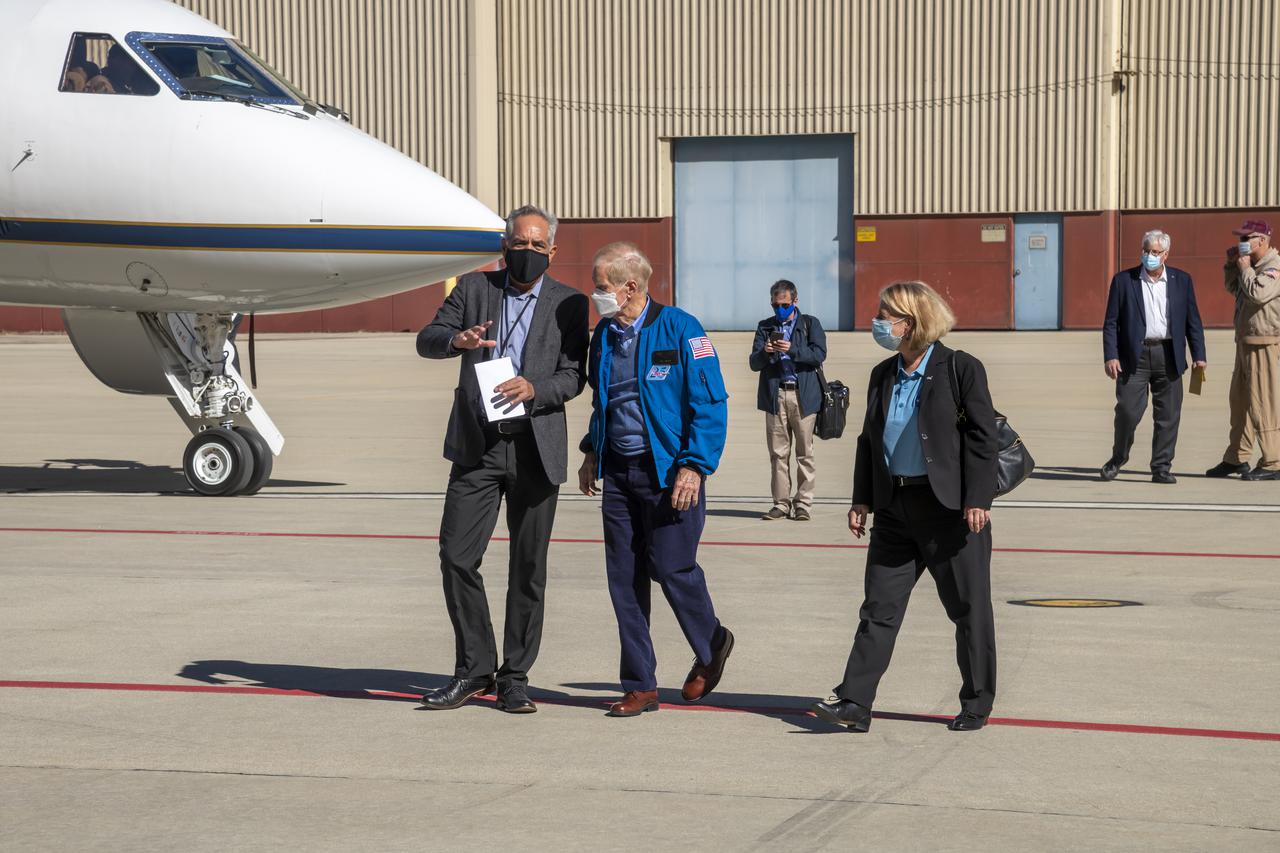
NASA Administrator Bill Nelson and NASA Deputy Administrator Pam Melroy land at the U.S. Air Force Base Plant 42 in Palmdale, California, near Building 703 on Oct. 12. That building is part of NASA’s Armstrong Flight Research Center in Edwards, California. NASA Armstrong Center Director David McBride, at left, talks to Nelson and Melroy as they begin a tour.

NASA Administrator Bill Nelson and NASA Deputy Administrator Pam Melroy listen to NASA Armstrong Flight Research Center Director David McBride, at left, tell them about Building 703 in Palmdale, California. The building houses many of NASA's science aircraft. NASA Armstrong's main campus is in nearby Edwards, California.
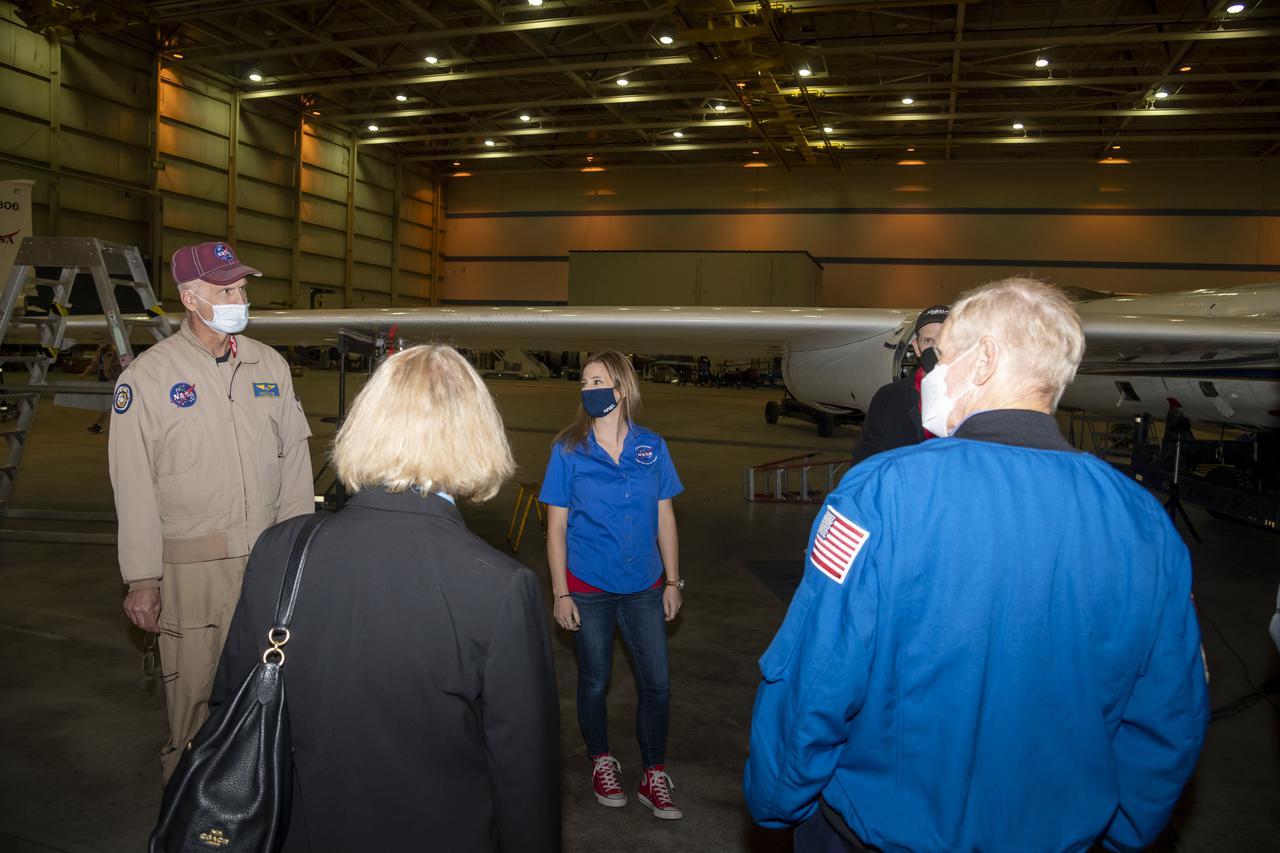
NASA Administrator Bill Nelson and NASA Deputy Administrator Pam Melroy receive a briefing on the high-altitude ER-2 aircraft and its missions from ER-2 pilot Greg "Coach" Nelson and ER-2 deputy project manager Fran Becker, and ER-2 pilot Tim Williams at Building 703 in Palmdale, California. The building is part of NASA's Armstrong Flight Research Center, which has its main campus in Edwards, California.