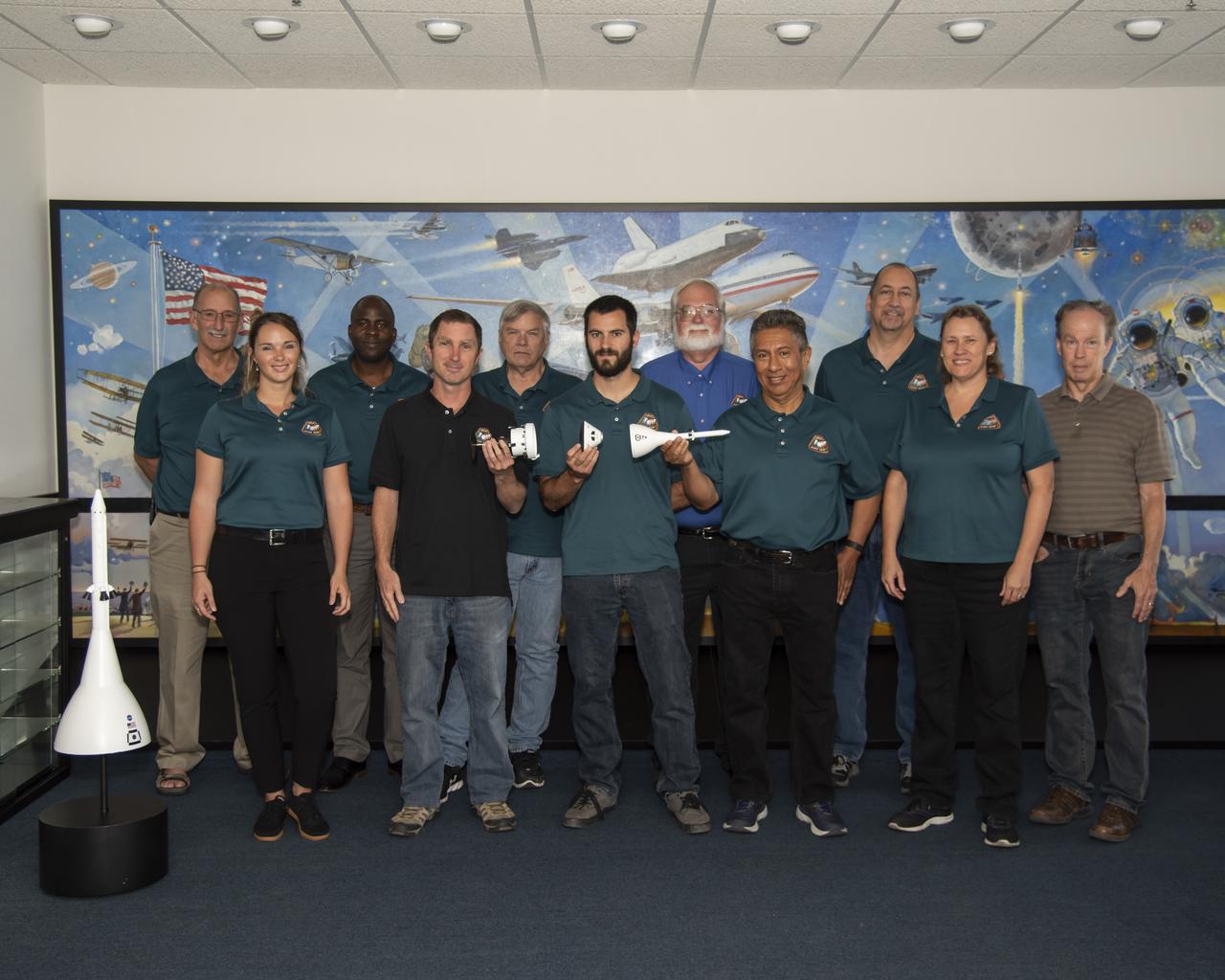
Members of the NASA Armstrong Flight Research Center Ascent Abort-2 management and engineering team contributed to the AA-2 launch at Cape Canaveral in Florida July 2, 2019. From left are Gary Martin, Rose Blomquist, Ernest Mwajagu, Lucas Moxey, Leo Gross, Jeff Sutherland, Chuck Rogers, Joe Hernandez, David Dowdell, Jeri Myers and Dan Nolan. Additional engineering team members include Paul Aristo, Bob Clark and Nikki Martin. Team members hold elements of the stack that was launched to show how the separation ring, crew module and Launch Abort System fit together.

NASA’s Armstrong Flight Research Center in Edwards, California, and NASA’s Jet Propulsion Laboratory in Pasadena, California marched in the LA Pride Parade in June 2023. This was NASA Armstrong’s first time participating in the parade, and many NASA employees attended to celebrate the LGBTQIA+ community and allyship. NASA’s team included engineers, scientists, technicians, and mission support folks who enrich the organization by showing up as themselves. On Earth and at NASA, there is space for everyone.

NASA’s Armstrong Flight Research Center in Edwards, California, and NASA’s Jet Propulsion Laboratory in Pasadena, California marched in the LA Pride Parade in June 2023. This was NASA Armstrong’s first time participating in the parade, and many NASA employees attended to celebrate the LGBTQIA+ community and allyship. NASA’s team included engineers, scientists, technicians, and mission support folks who enrich the organization by showing up as themselves. On Earth and at NASA, there is space for everyone.

NASA’s Armstrong Flight Research Center in Edwards, California, and NASA’s Jet Propulsion Laboratory in Pasadena, California marched in the LA Pride Parade in June 2023. This was NASA Armstrong’s first time participating in the parade, and many NASA employees attended to celebrate the LGBTQIA+ community and allyship. NASA’s team included engineers, scientists, technicians, and mission support folks who enrich the organization by showing up as themselves. On Earth and at NASA, there is space for everyone.
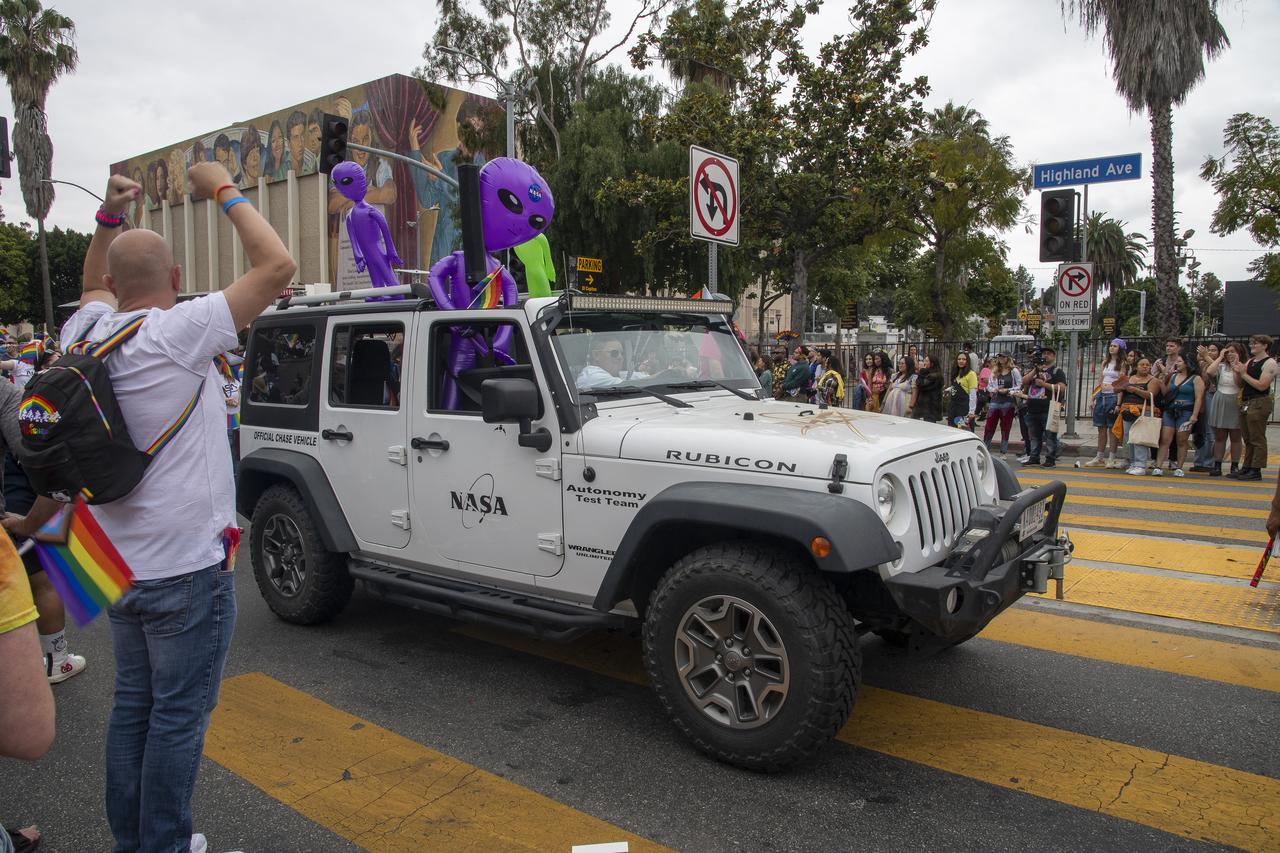
NASA’s Armstrong Flight Research Center in Edwards, California, and NASA’s Jet Propulsion Laboratory in Pasadena, California marched in the LA Pride Parade in June 2023. This was NASA Armstrong’s first time participating in the parade, and many NASA employees attended to celebrate the LGBTQIA+ community and allyship. NASA’s team included engineers, scientists, technicians, and mission support folks who enrich the organization by showing up as themselves. On Earth and at NASA, there is space for everyone.

NASA’s Armstrong Flight Research Center in Edwards, California, and NASA’s Jet Propulsion Laboratory in Pasadena, California marched in the LA Pride Parade in June 2023. This was NASA Armstrong’s first time participating in the parade, and many NASA employees attended to celebrate the LGBTQIA+ community and allyship. NASA’s team included engineers, scientists, technicians, and mission support folks who enrich the organization by showing up as themselves. On Earth and at NASA, there is space for everyone.
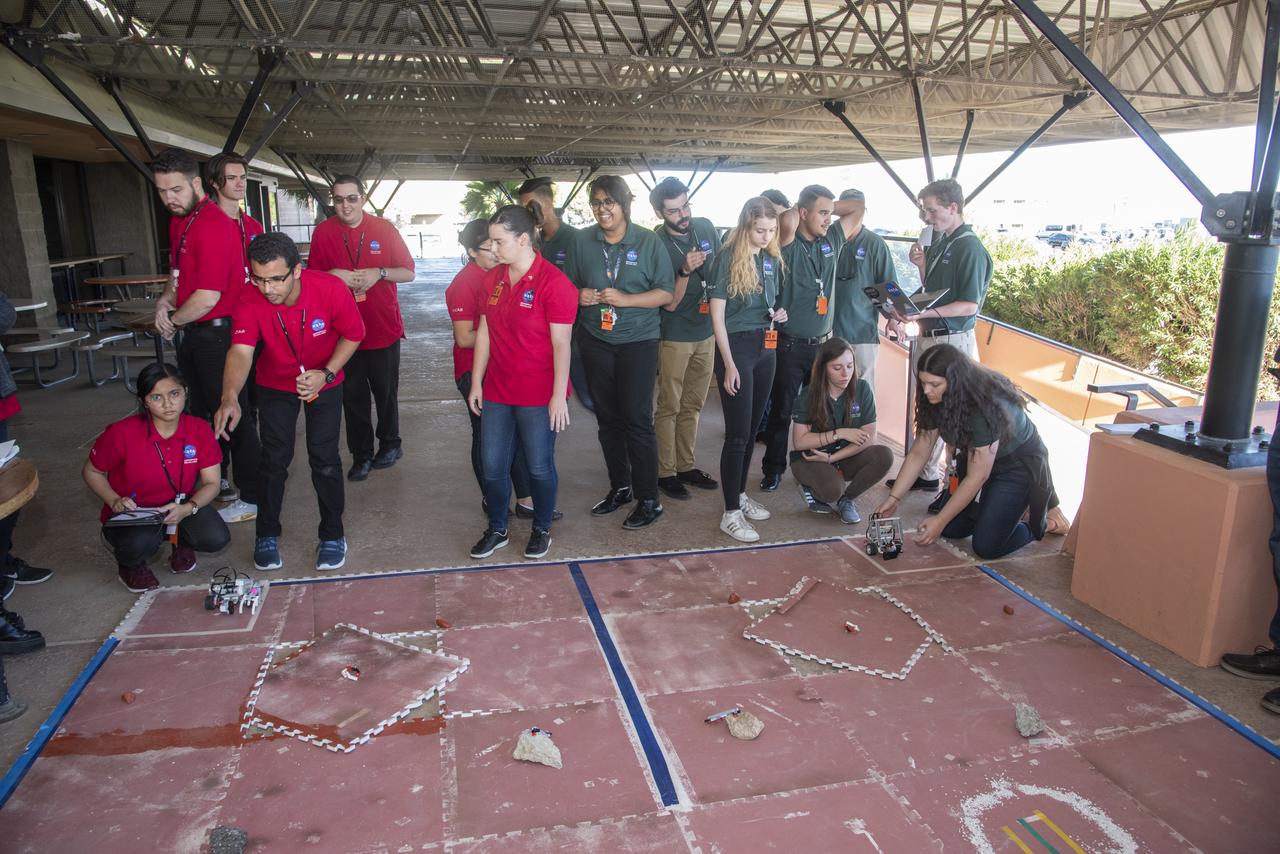
Four student teams: Blue, Gold, Green and Red built, designed and tested a LEGO robotic Martian rover prototype at NASA's Armstrong Flight Research Center. The teams competed against each other during a four-day workshop coordinated by the NASA Community College Aerospace Scholars. Each team prepared a marketing package to "sell" their design to NASA based on the performance of its Martian rover.
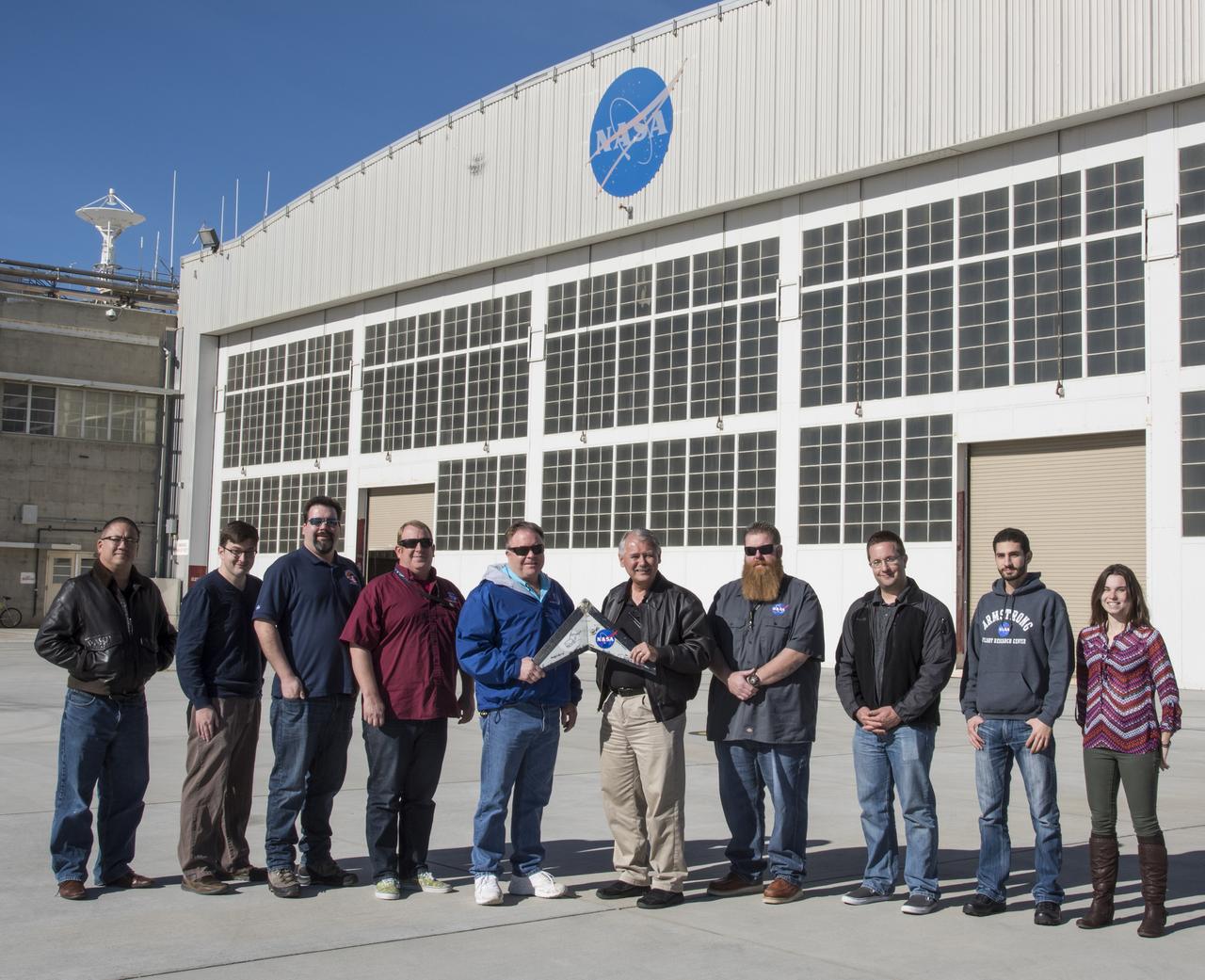
The WHAATRR team from NASA Armstrong includes, from left, Derek Abramson Dave Berger, John Bodylski, Robert “Red” Jensen, Scott Wiley, Al Bowers, Justin Hall, Luke Bard, Hussein Nasr and Samantha Ingersoll.

The No Chase COA (NCC) team at NASA Armstrong Flight Research Center pose for a group photo with the unmanned aircraft system the Ikhana.
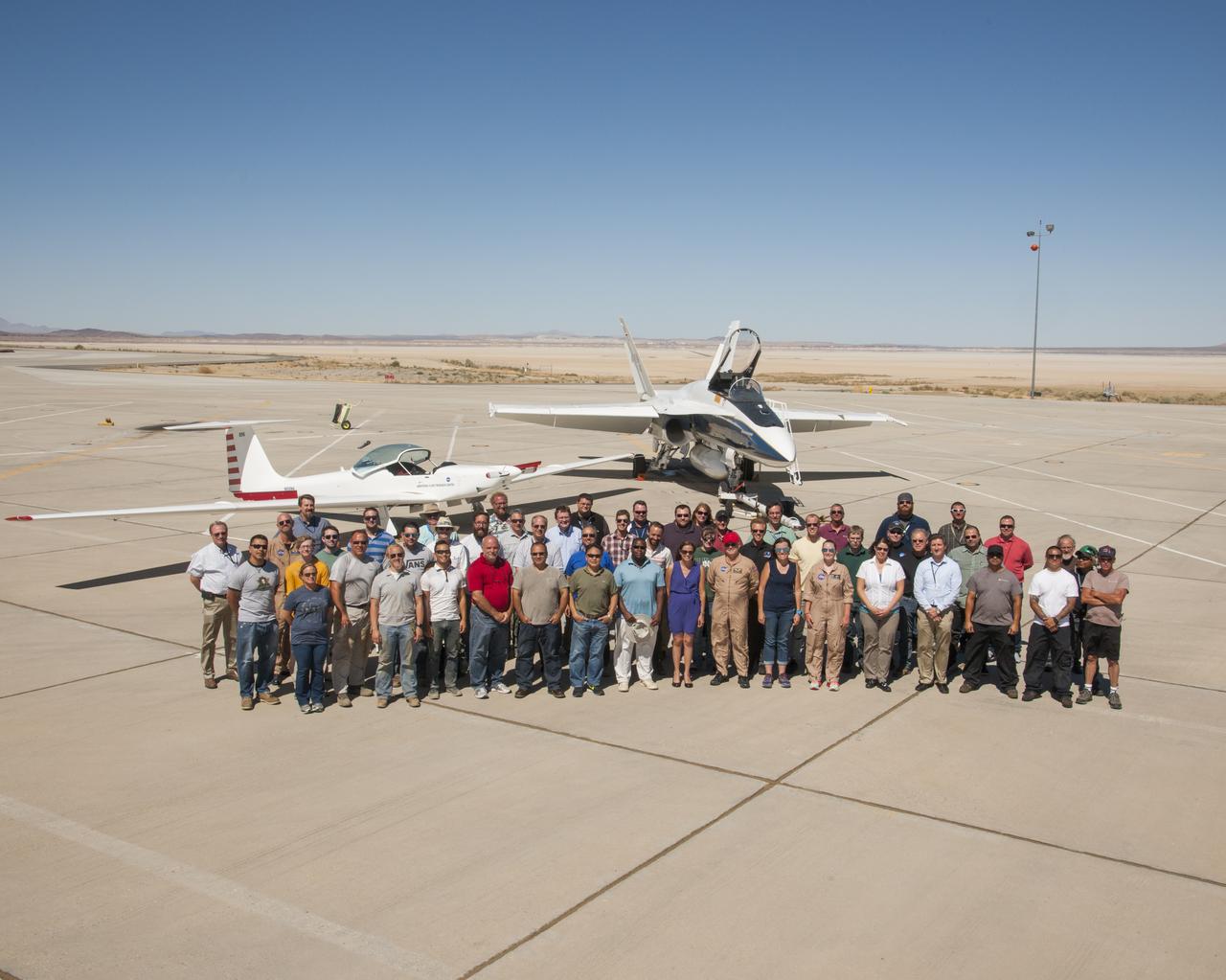
NASA’s SonicBAT team poses in front of the TG-14 motor glider and F/A-18 research aircraft, sitting side-by-side in front of Rogers Dry Lake prior to a SonicBAT flight at Armstrong Flight Research Center on Edwards Air Force Base, California. The TG-14 collected sound signatures of shockwaves created by the F/A-18, to compare with signatures collected on the ground.
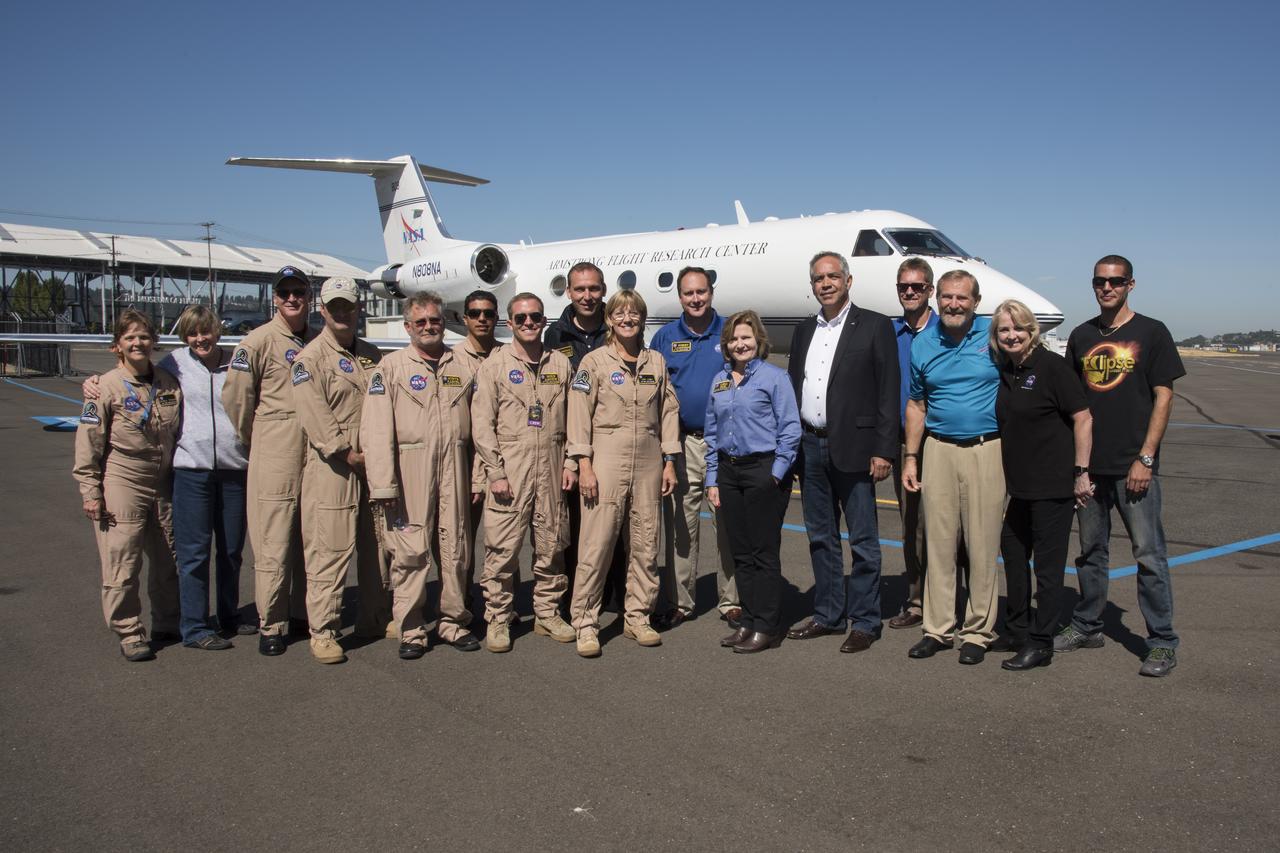
NASA Armstrong and NASA senior management Gulfstream III team pose for group shot by aircraft after return from covering Total solar eclipse. Photo Credit: (NASA/Carla Thomas)
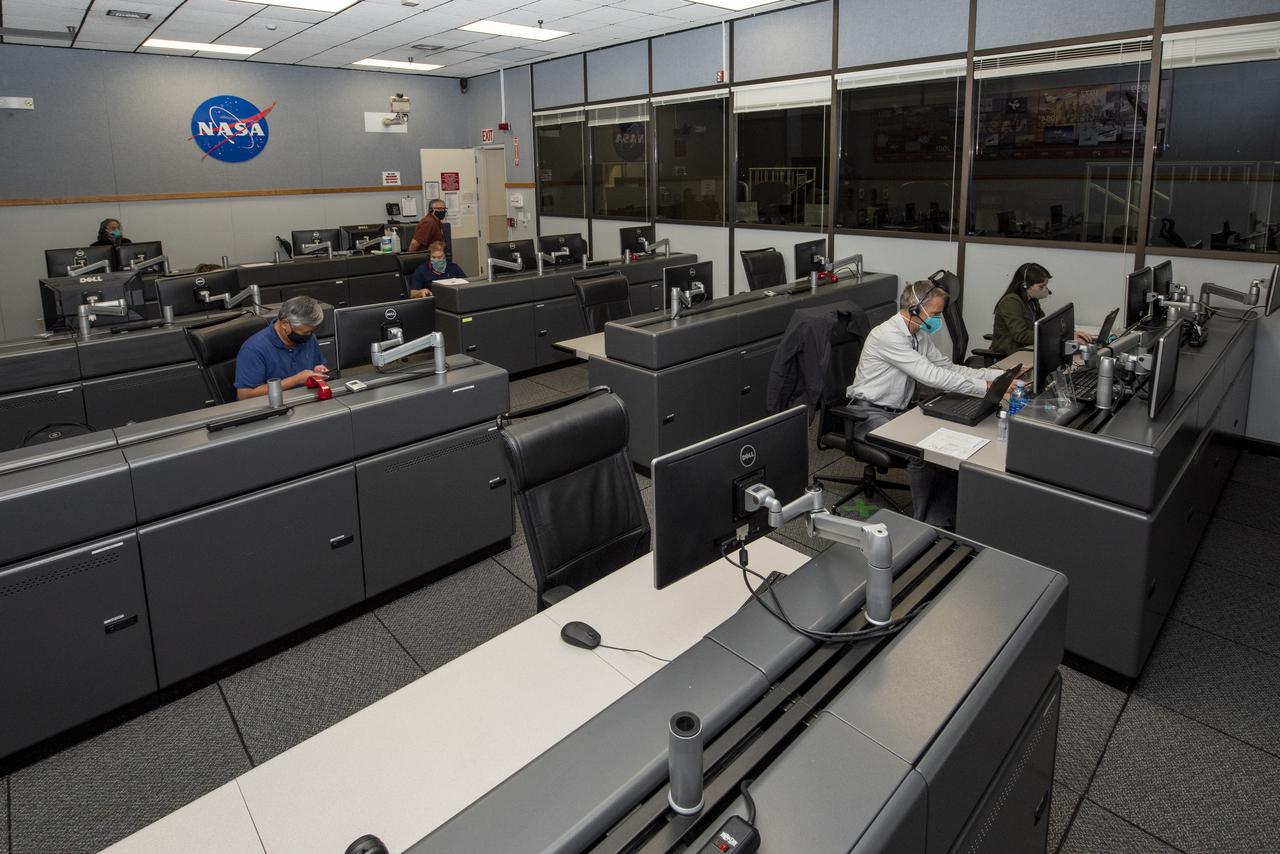
Ames Research Center researchers on the Advanced Air Mobility National Campaign project's Airspace Test Infrastructure (ATI) team monitor surveillance data and metrics from the helicopter in real time during the NC Integrated Dry Run Test team the first week of December 2020 at NASA's Armstrong Flight Research Center in California.
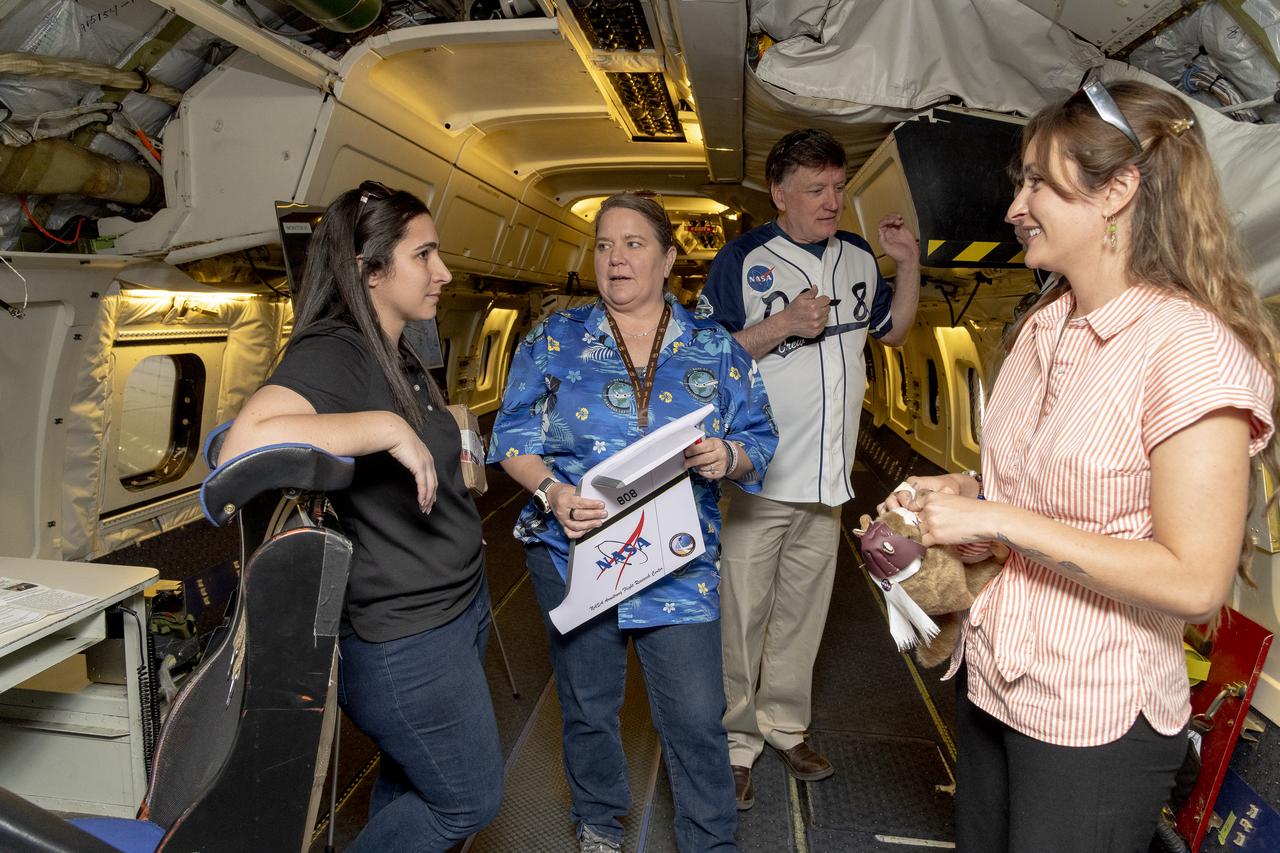
Members of the DC-8 program team tour an empty aircraft and recall past missions. Usually the DC-8 has between 15 and 30 instrument racks installed for a given science mission. The aircraft was spacious by comparison on May 2, 2024, when NASA personnel, friends, and family gathered at NASA’s Armstrong Flight Research Center Building 703 in Palmdale, California to celebrate the DC-8 staff, aircraft, and science campaigns. Conversing here are DC-8 aircraft deputy manager Kirsten Boogaard, left, with NASA Armstrong pilot Carrie Worth, Mike Zimmerman, and NASA Armstrong public affairs specialist for airborne science, Erica Heim.

NASA’s Armstrong Flight Research Center Director Brad Flick smiles as members of the DC-8 team gather and exchange congratulations after the aircraft and crew return to NASA Armstrong’s Building 703 in Palmdale, California, on April 1, 2024, following the aircraft’s final mission in support of the Airborne and Satellite Investigation of Asian Air Quality (ASIA-AQ).
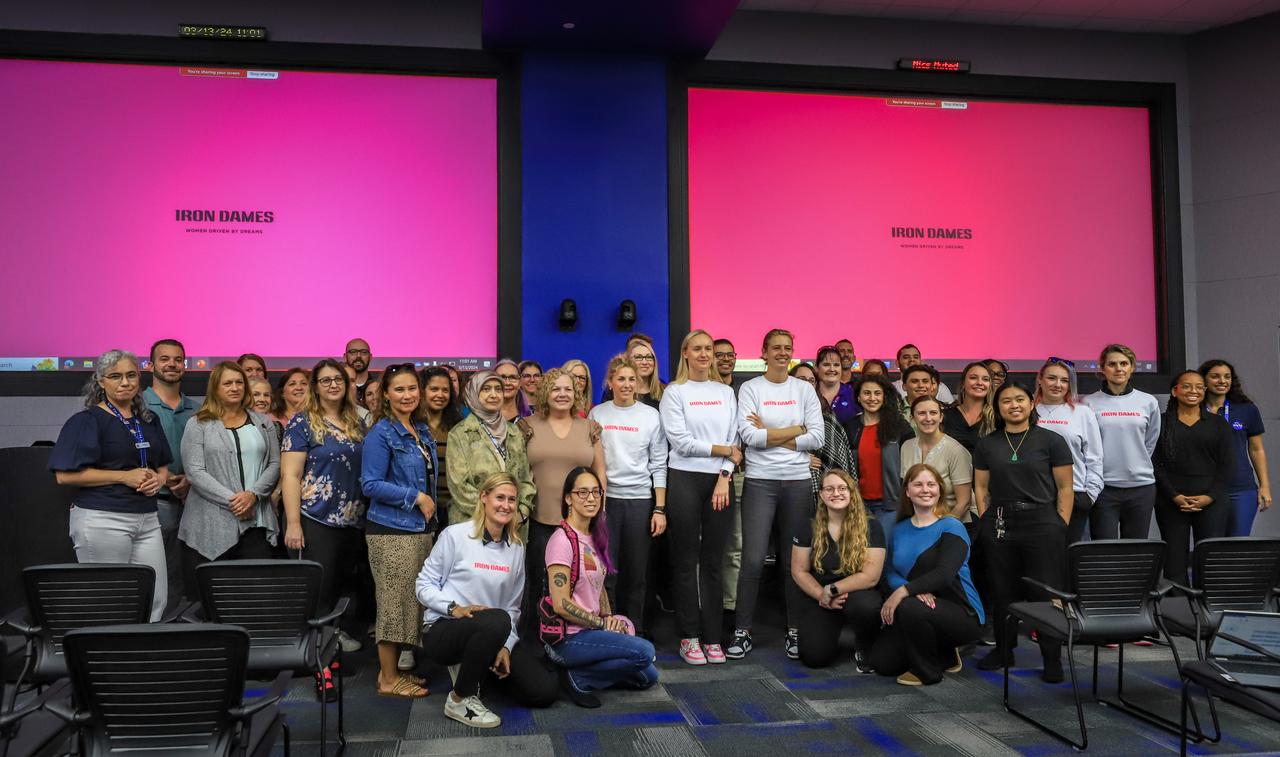
NASA’s Office of Communication, along with Kennedy Space Center's Network of Women and New Americans Employee Resource Groups host a special presentation with guests of the Iron Dames, an all-female motorsports team on Wednesday, March 13, 2024, inside the Neil A. Armstrong Operations and Checkout Building at the agency's Kennedy Space Center in Florida. The all-female team started in motorsports and became the first all-female team to win a race in the 2023 FIA World Endurance Championships at Sebring International Raceway in Sebring, Florida.
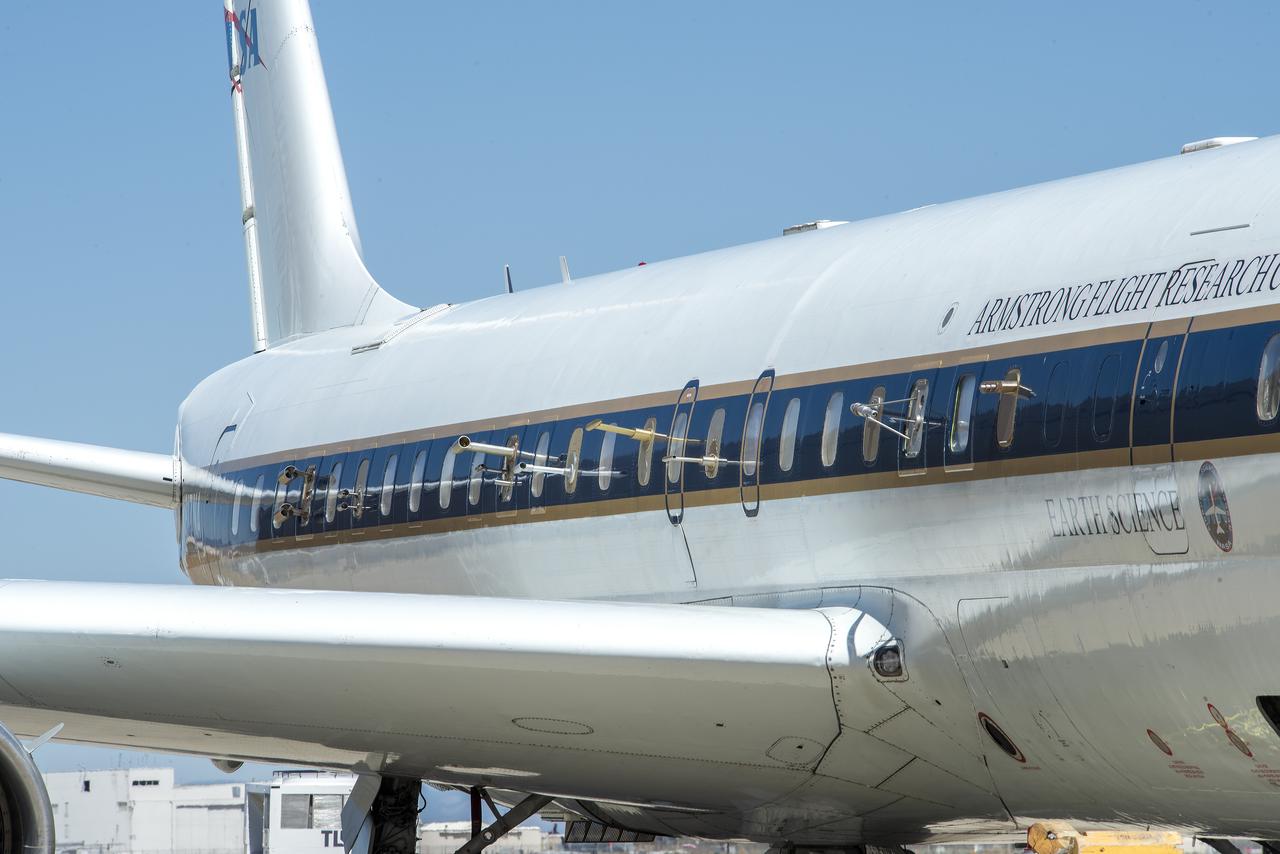
NASA’s DC-8 flying laboratory carried the Fire Influence on Regional to Global Environments and Air Quality, or FIREX-AQ, science team and a suite of state-of-the-art instrumentation to observe different components of fire smoke in varying altitudes and weather. The aircraft is based at NASA’s Armstrong Flight Research Center in California.
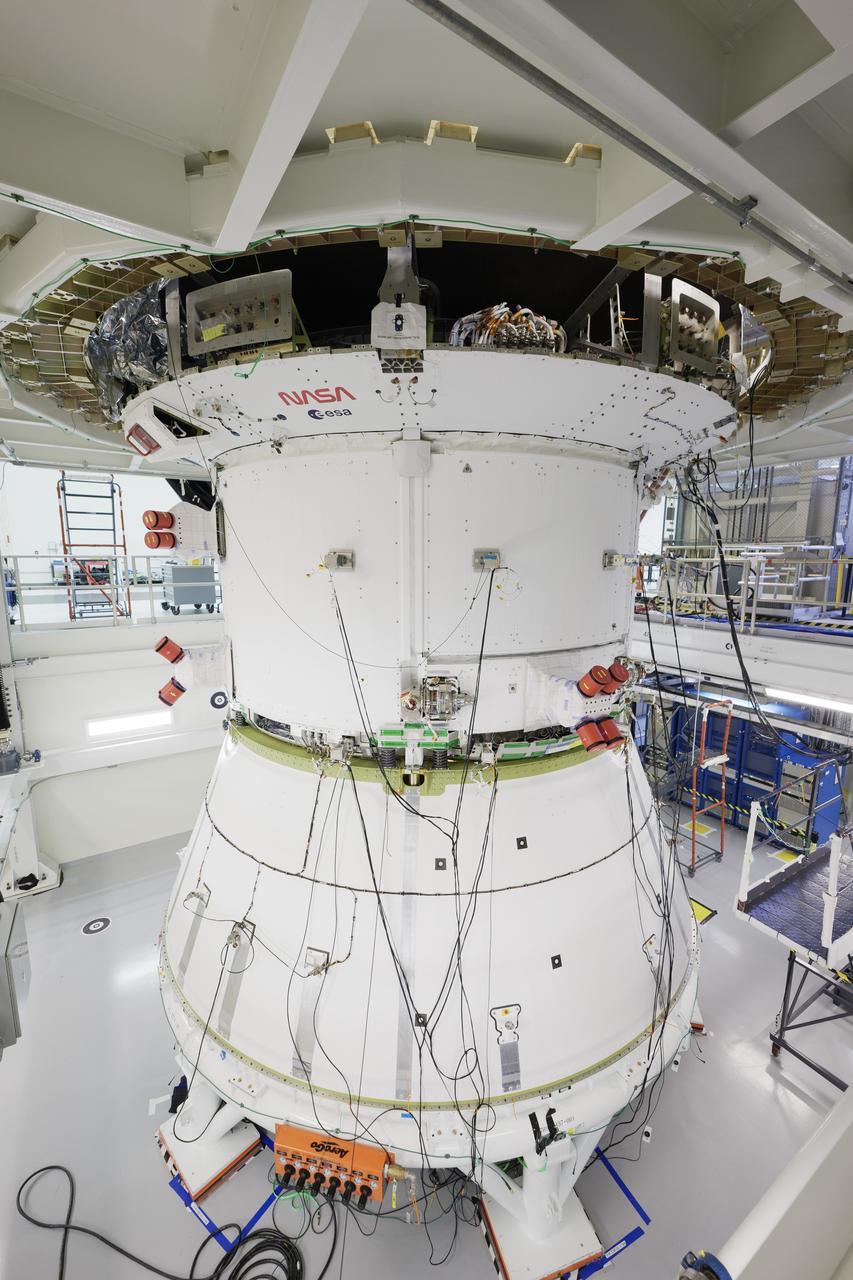
The Orion spacecraft for NASA’s Artemis II mission received its latest makeover. Teams adhered the agency’s iconic “worm” logo and ESA (European Space Agency) insignia on the spacecraft’s crew module adapter on Sunday, Jan. 28, inside the Neil Armstrong Operations and Checkout Building at NASA’s Kennedy Space Center in Florida.
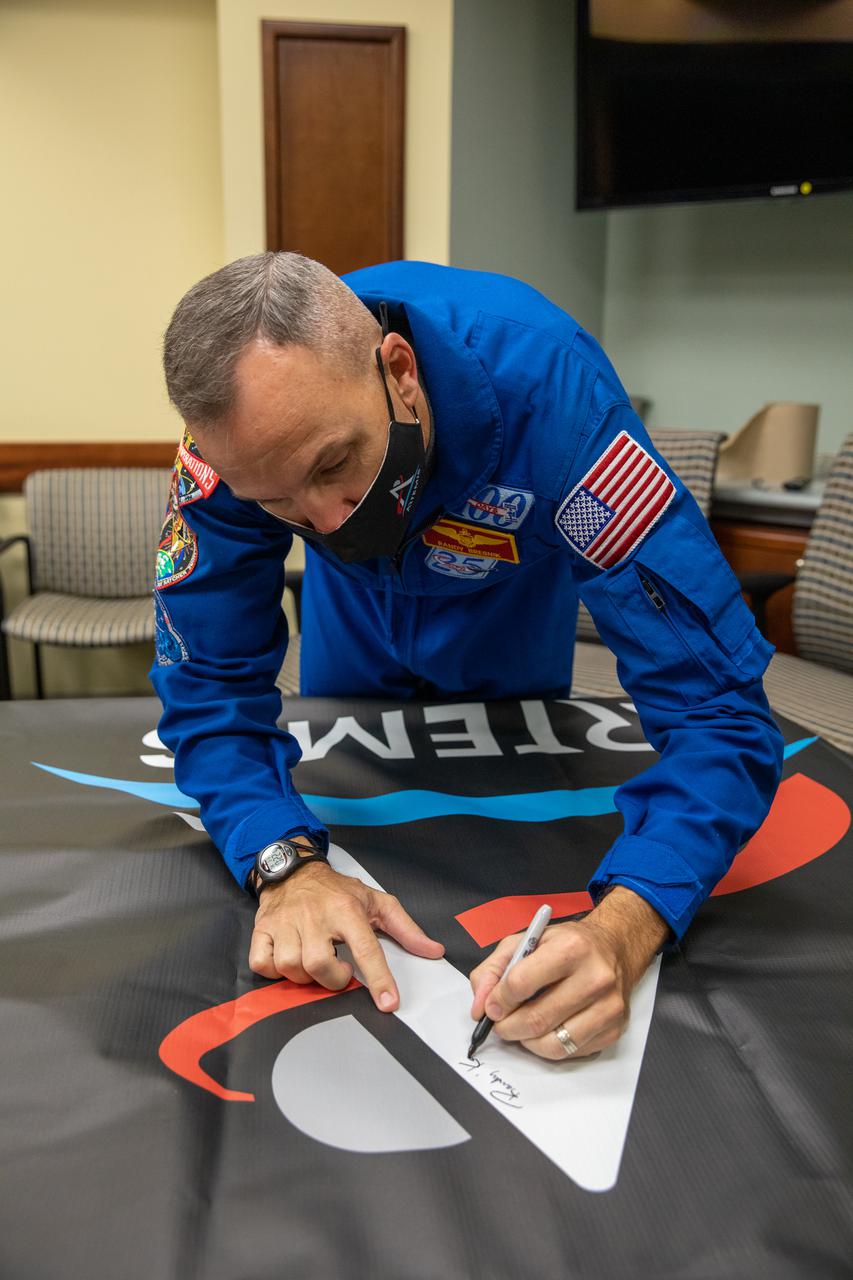
NASA astronaut Randy Bresnik signs an Artemis banner inside the Neil Armstrong Operations and Checkout Building at NASA’s Kennedy Space Center in Florida on Jan. 14, 2021. The banner will be hung on the KAMAG transporter ahead of the spacecraft’s journey to the Multi-Payload Processing Facility to begin ground processing by the Exploration Ground Systems and Jacobs teams.
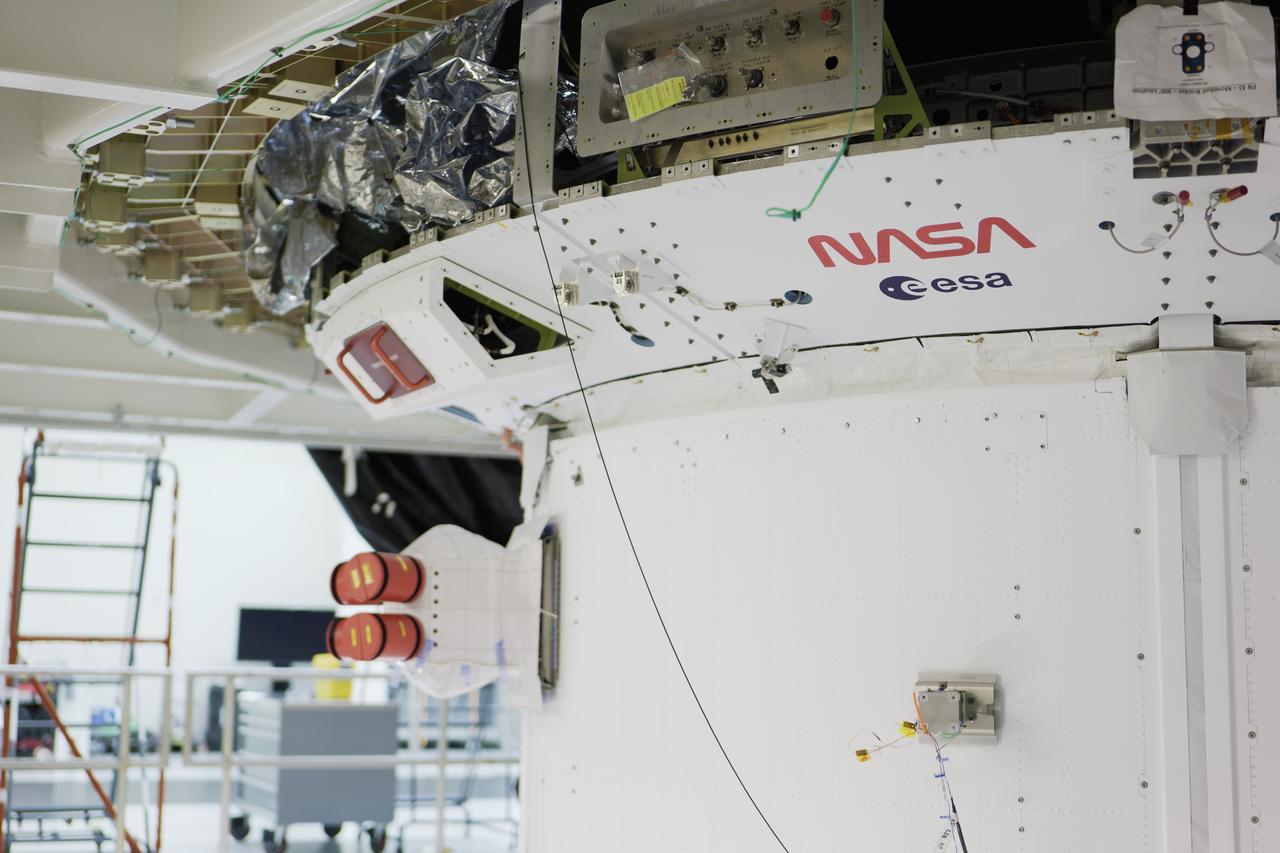
The Orion spacecraft for NASA’s Artemis II mission received its latest makeover. Teams adhered the agency’s iconic “worm” logo and ESA (European Space Agency) insignia on the spacecraft’s crew module adapter on Sunday, Jan. 28, inside the Neil Armstrong Operations and Checkout Building at NASA’s Kennedy Space Center in Florida.
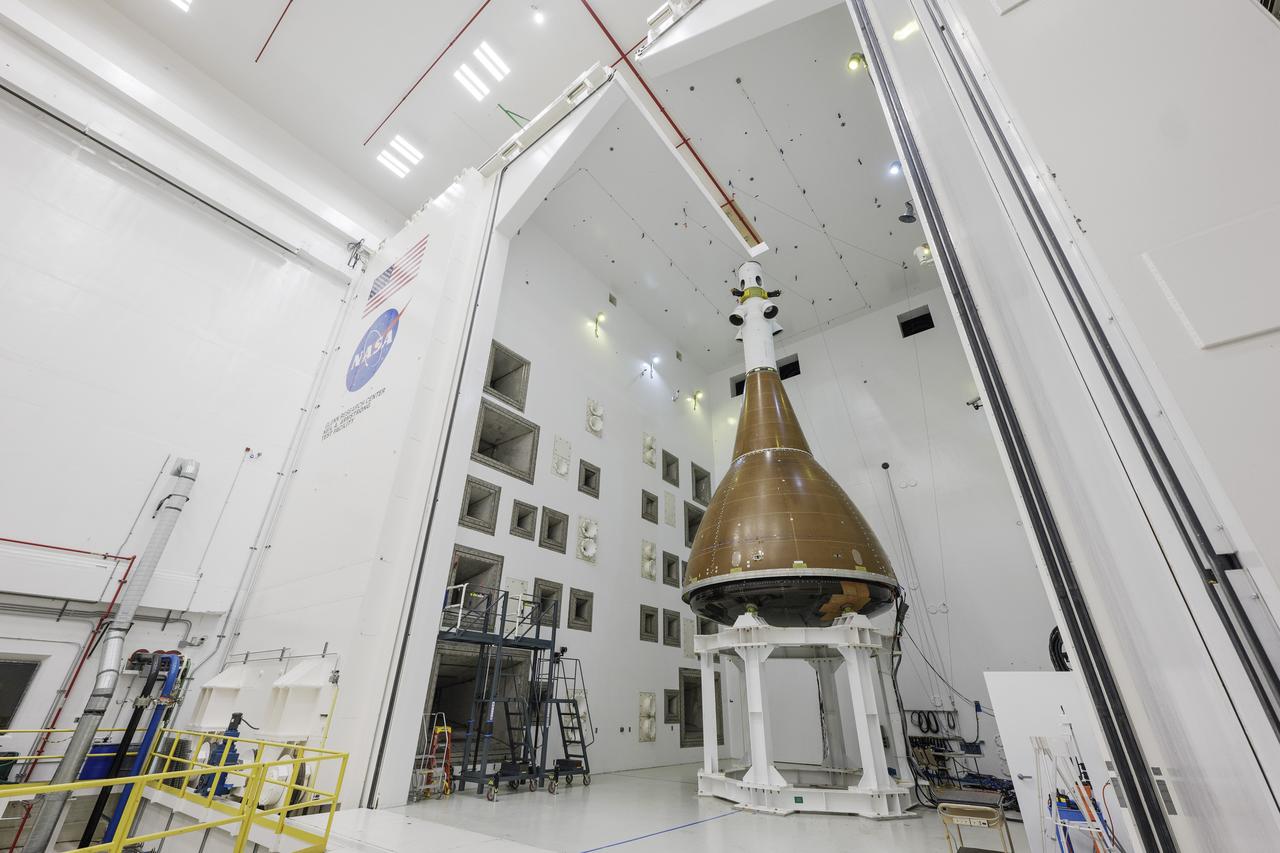
The team at NASA's Armstrong Test Facility in Sandusky, Ohio has begun vibro-acoustic testing on the Orion spacecraft that flew around the Moon on Artemis I, now known as the Environmental Test Article. The testing will help ensure the safety of future crews aboard Orion. Photo credit: NASA / Rad Sinyak
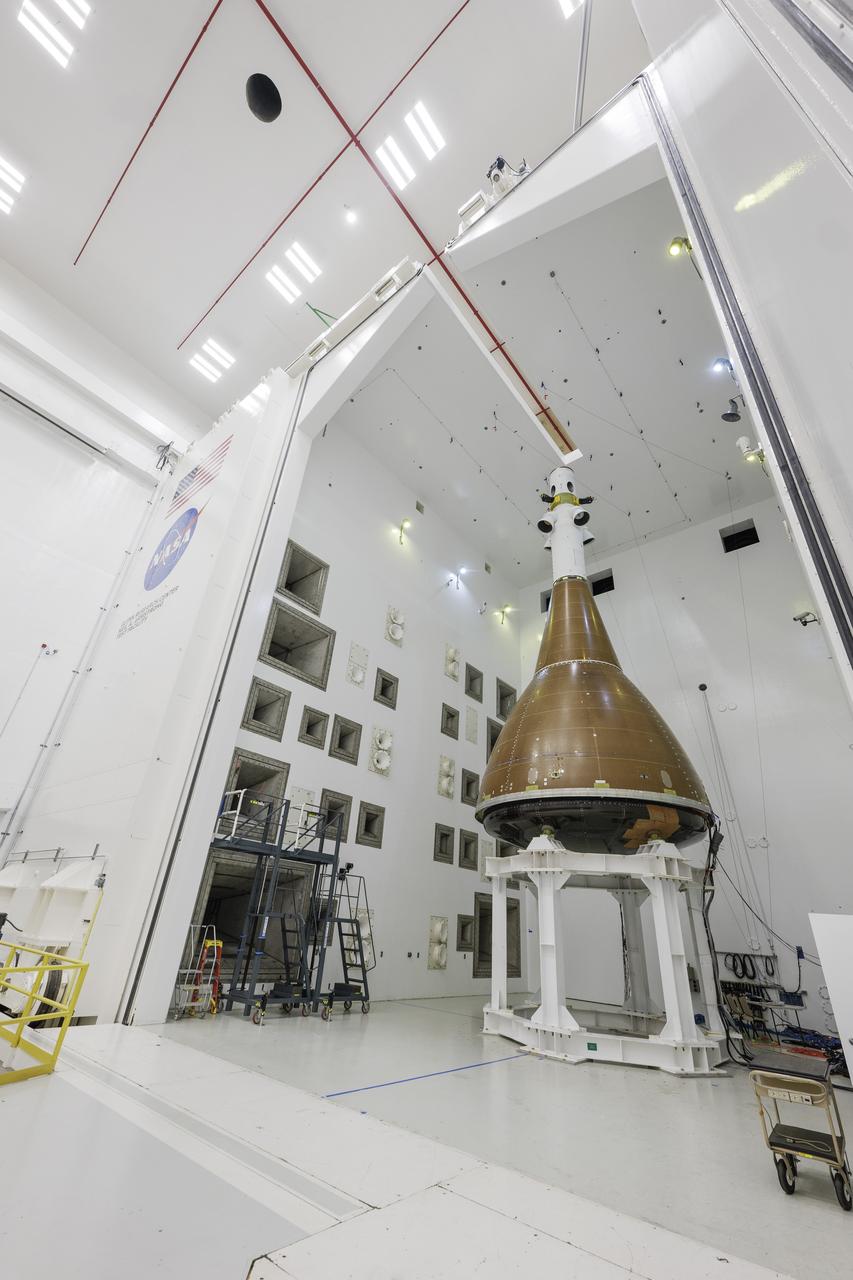
The team at NASA's Armstrong Test Facility in Sandusky, Ohio has begun vibro-acoustic testing on the Orion spacecraft that flew around the Moon on Artemis I, now known as the Environmental Test Article. The testing will help ensure the safety of future crews aboard Orion. Photo credit: NASA / Rad Sinyak
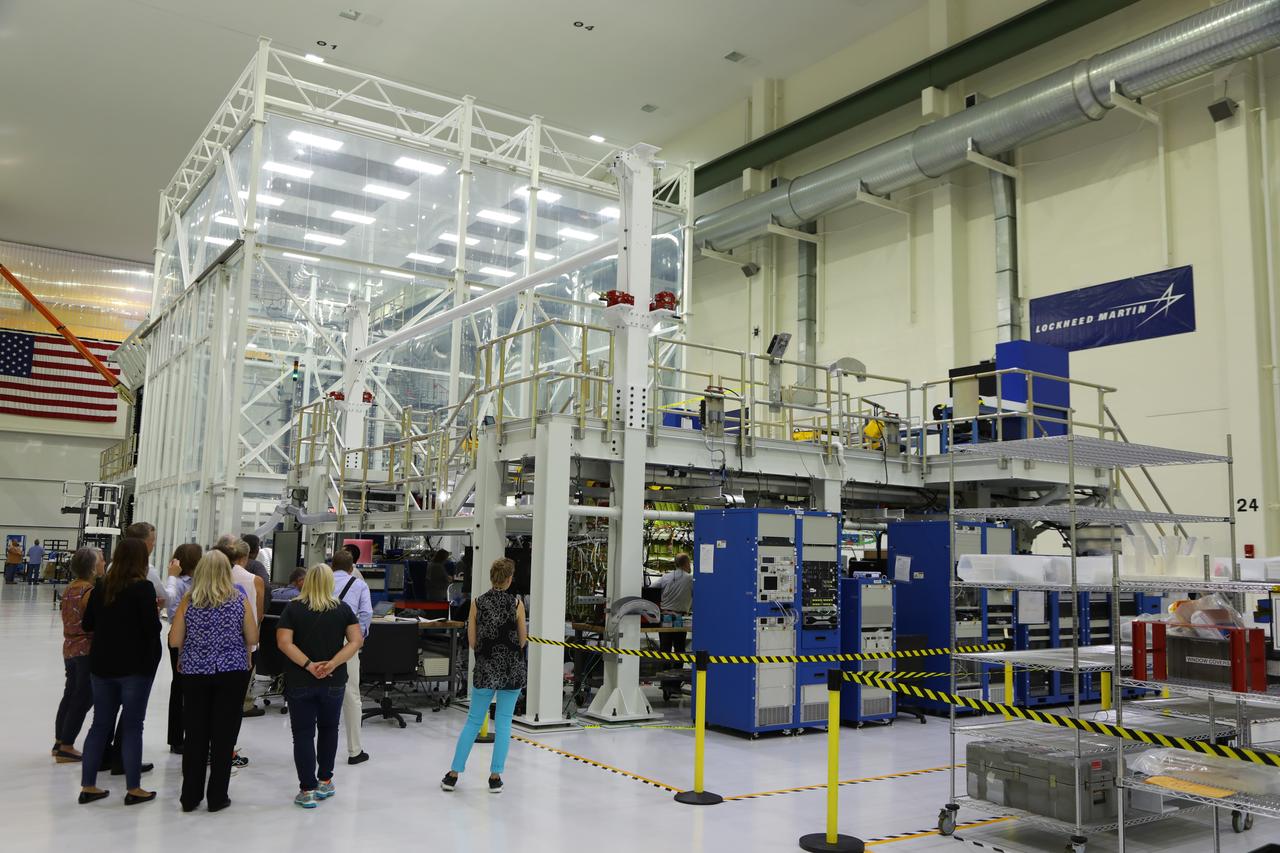
Representatives from the European Space Agency, or ESA, and members of NASA's Communication team, toured the Neil Armstrong Operations and Checkout Building high bay and viewed the Orion crew module for Exploration Mission-1 at NASA’s Kennedy Space Center in Florida.
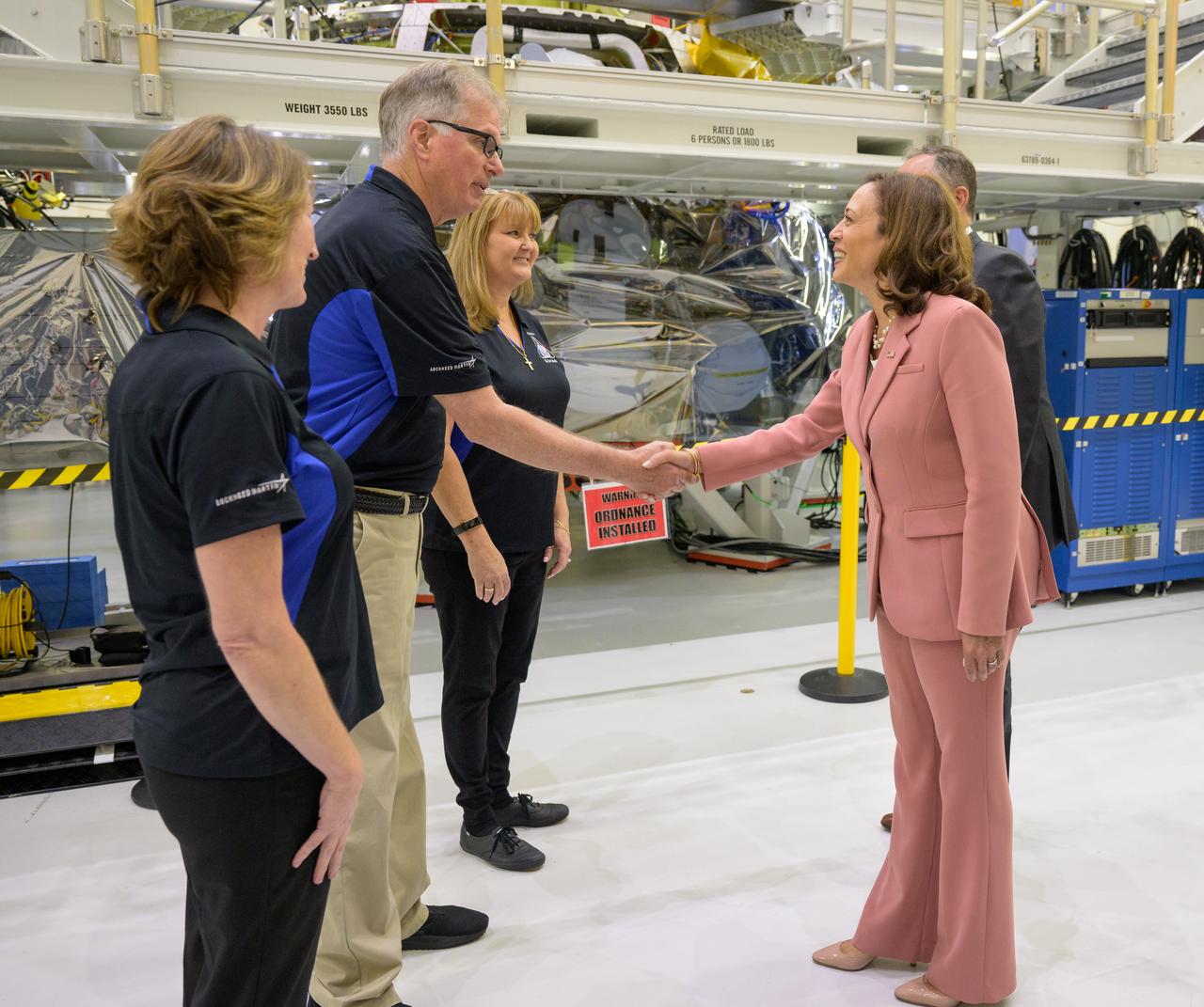
Vice President Kamala Harris is shakes hands with teams working on the Artemis II flight crew module, during a visit, Monday, Aug. 29, 2022, at the Neil A. Armstrong Operations and Checkout Building at NASA’s Kennedy Space Center in Florida. Photo Credit: (NASA/Bill Ingalls)

NASA engineers put the X-57 Maxwell, NASA's first all-electric X-plane, through its initial telemetry tests at NASA's Armstrong Flight Research Center in California, testing the aircraft's ability to transmit data to teams on the ground. The data is packaged and transmitted down to ground assets, where it's decoded into a format that can be presented to a flight control team to look at screens in real time for flight operations. X-57's goal is to help set certification standards for emerging electric aircraft markets.
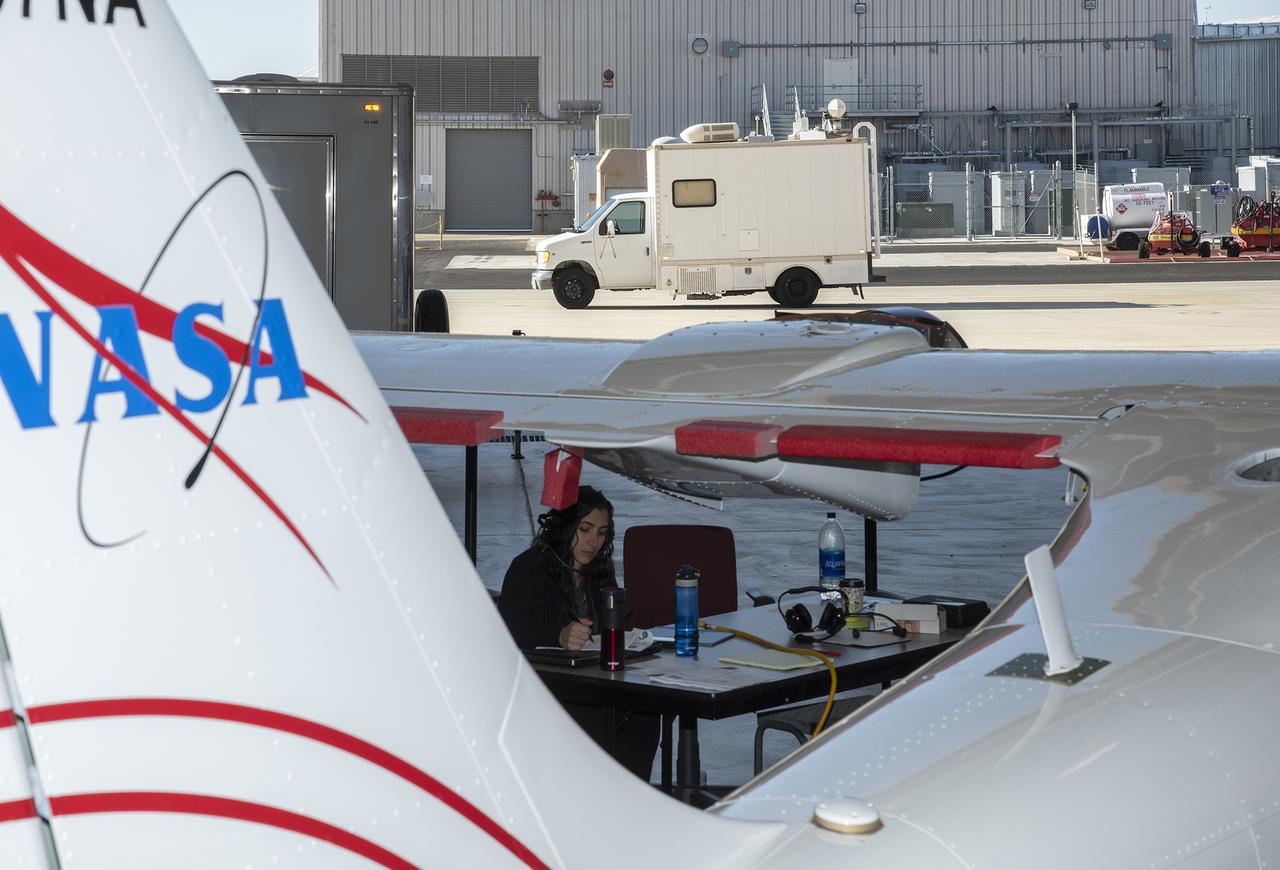
NASA engineers put the X-57 Maxwell, NASA's first all-electric X-plane, through its initial telemetry tests at NASA's Armstrong Flight Research Center in California, testing the aircraft's ability to transmit data to teams on the ground. The data is packaged and transmitted down to ground assets, where it's decoded into a format that can be presented to a flight control team to look at screens in real time for flight operations. X-57's goal is to help set certification standards for emerging electric aircraft markets.
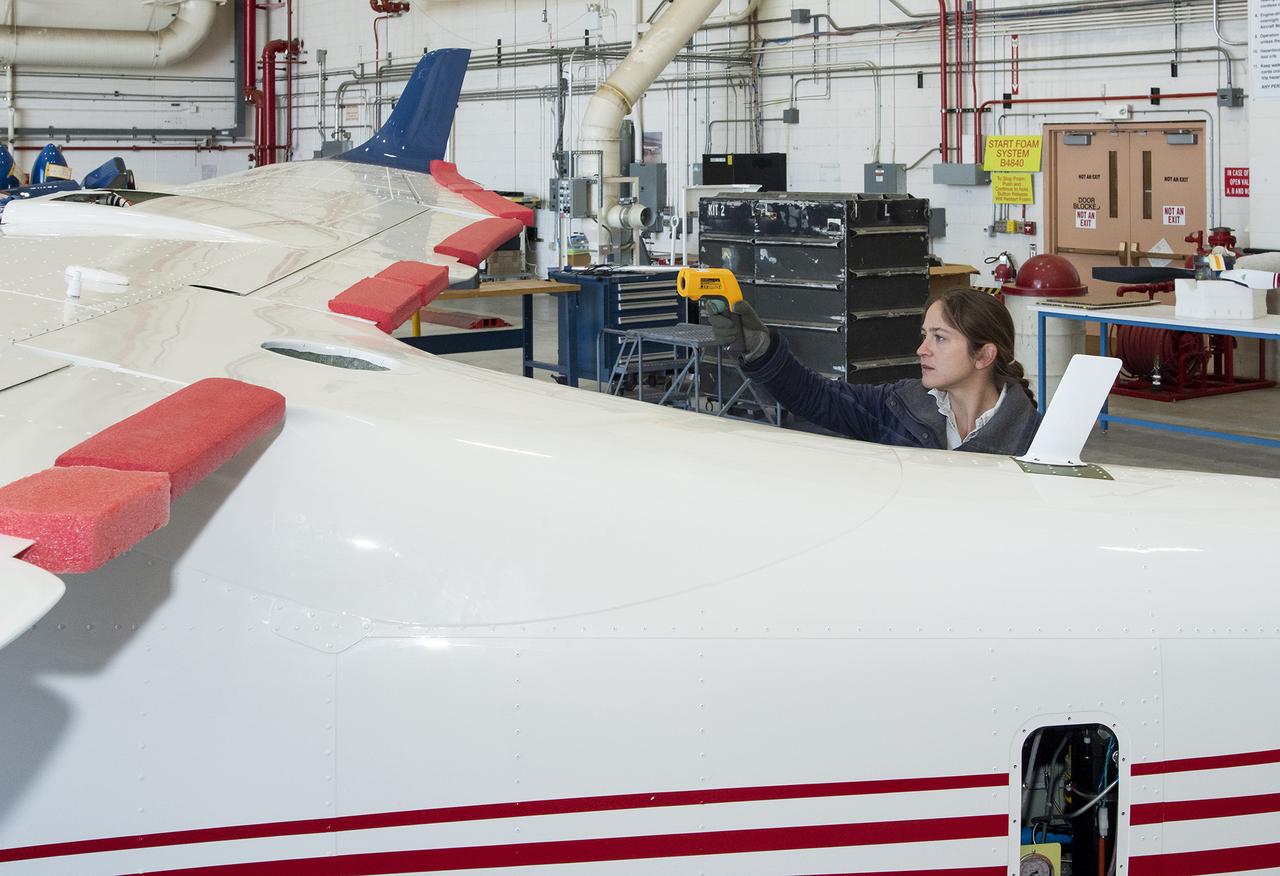
NASA engineers put the X-57 Maxwell, NASA’s first all-electric X-plane, through its initial telemetry tests at NASA’s Armstrong Flight Research Center in California, testing the aircraft’s ability to transmit data to teams on the ground. The data is packaged and transmitted down to ground assets, where it’s decoded into a format that can be presented to a flight control team to look at screens in real time for flight operations. X-57’s goal is to help set certification standards for emerging electric aircraft markets.
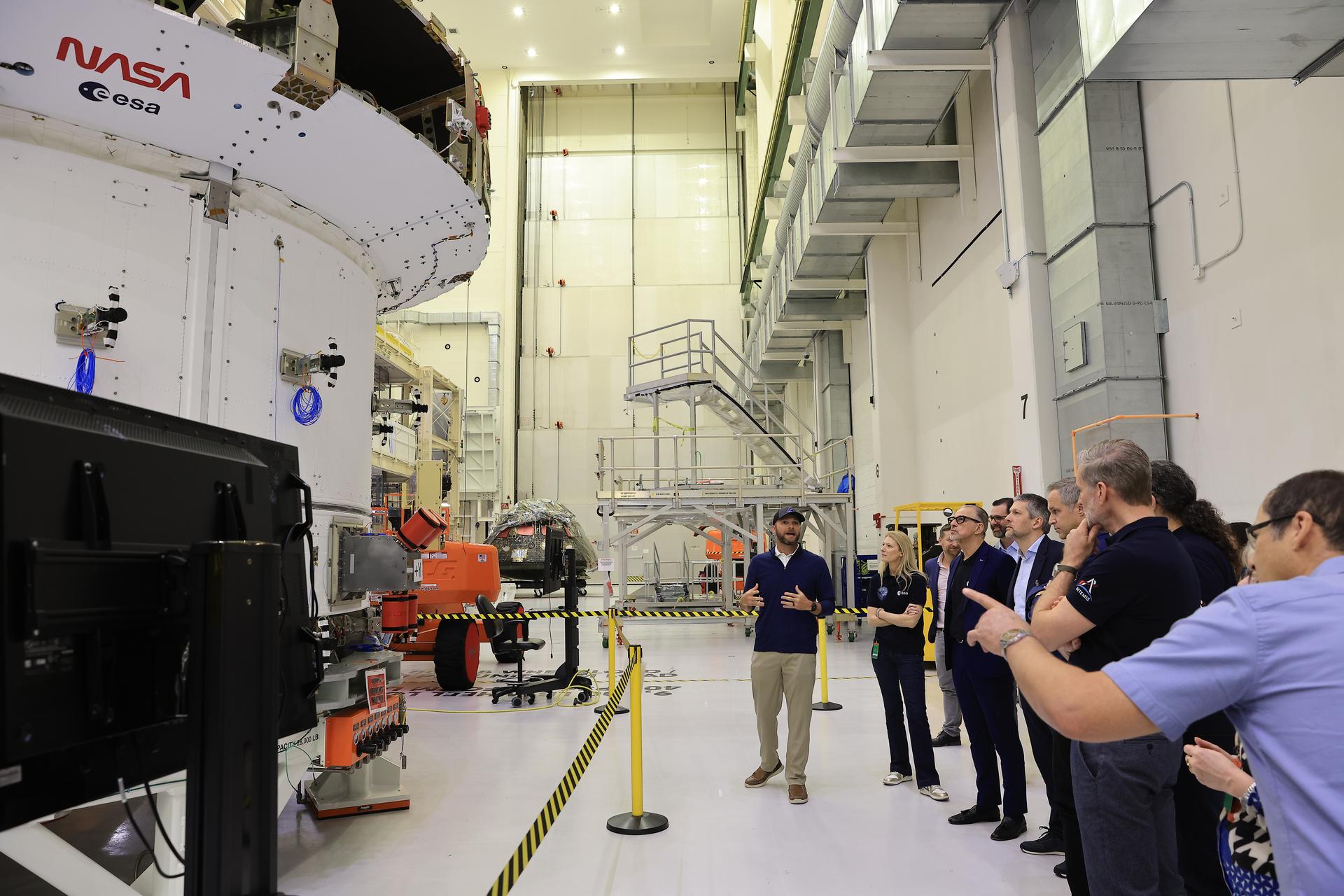
Members of the ESA (European Space Agency) leadership team and NASA Orion program team stand by European Service Module with the Orion spacecraft in the background for NASA’s Artemis III mission on Tuesday, Feb. 10, 2026, inside the high bay of the Neil A. Armstrong Operations and Checkout Building at NASA’s Kennedy Space Center in Florida. The service module provides the Orion spacecraft’s propulsion, thermal control, electrical power, and life support systems during the Artemis III mission to send humans to explore the lunar South Pole region.
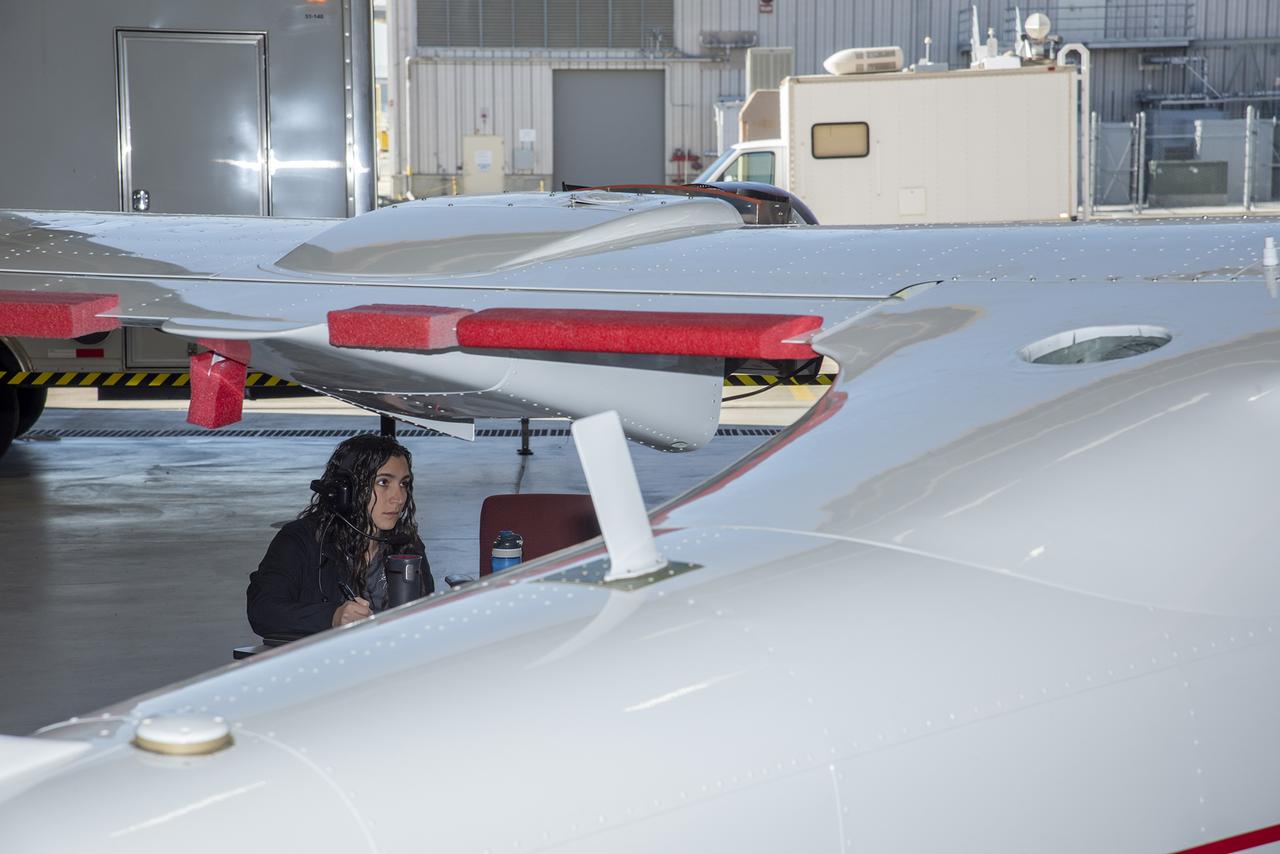
NASA engineers put the X-57 Maxwell, NASA’s first all-electric X-plane, through its initial telemetry tests at NASA’s Armstrong Flight Research Center in California, testing the aircraft’s ability to transmit data to teams on the ground. The data is packaged and transmitted down to ground assets, where it’s decoded into a format that can be presented to a flight control team to look at screens in real time for flight operations. X-57’s goal is to help set certification standards for emerging electric aircraft markets.
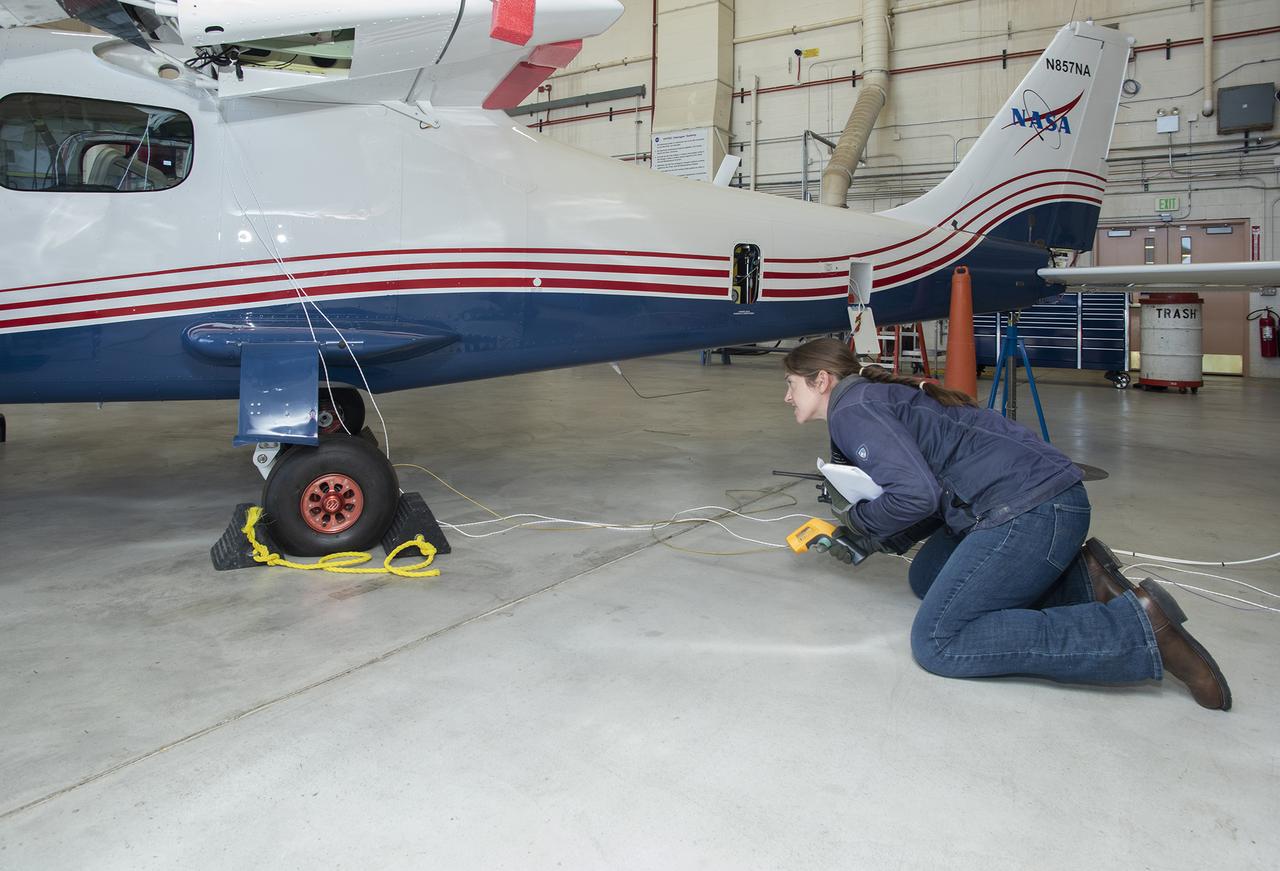
NASA engineers put the X-57 Maxwell, NASA’s first all-electric X-plane, through its initial telemetry tests at NASA’s Armstrong Flight Research Center in California, testing the aircraft’s ability to transmit data to teams on the ground. The data is packaged and transmitted down to ground assets, where it’s decoded into a format that can be presented to a flight control team to look at screens in real time for flight operations. X-57’s goal is to help set certification standards for emerging electric aircraft markets.
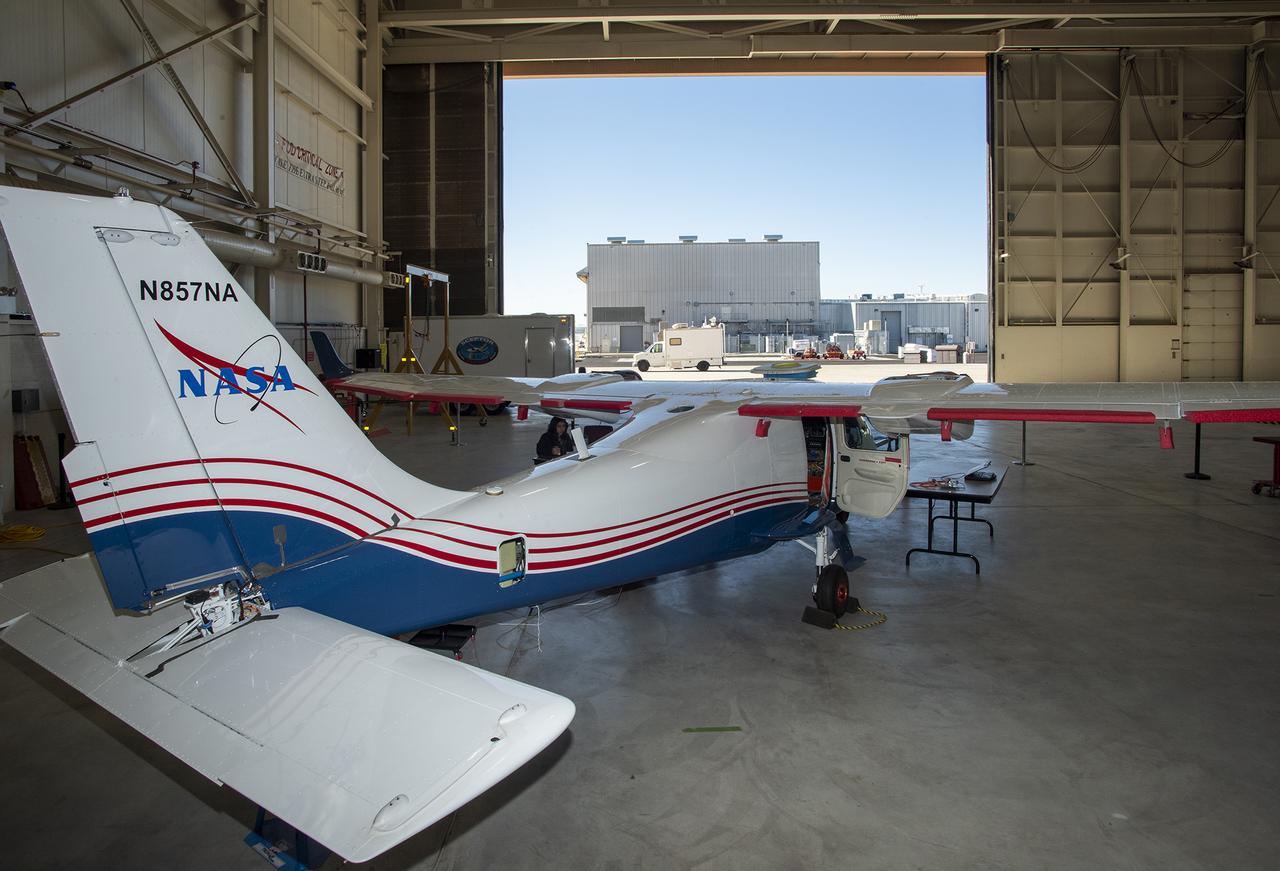
NASA engineers put the X-57 Maxwell, NASA's first all-electric X-plane, through its initial telemetry tests at NASA's Armstrong Flight Research Center in California, testing the aircraft's ability to transmit data to teams on the ground. The data is packaged and transmitted down to ground assets, where it's decoded into a format that can be presented to a flight control team to look at screens in real time for flight operations. X-57's goal is to help set certification standards for emerging electric aircraft markets.
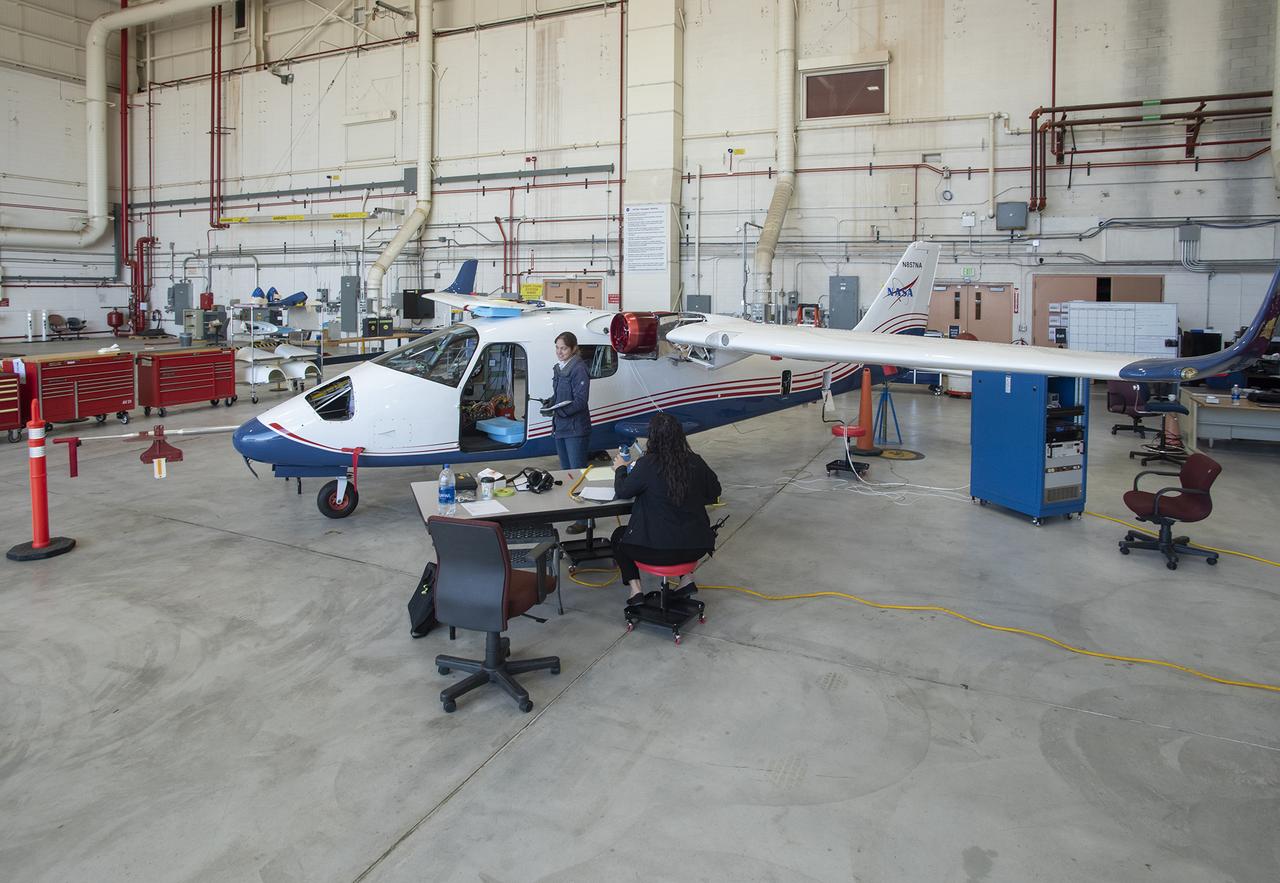
NASA engineers put the X-57 Maxwell, NASA’s first all-electric X-plane, through its initial telemetry tests at NASA’s Armstrong Flight Research Center in California, testing the aircraft’s ability to transmit data to teams on the ground. The data is packaged and transmitted down to ground assets, where it’s decoded into a format that can be presented to a flight control team to look at screens in real time for flight operations. X-57’s goal is to help set certification standards for emerging electric aircraft markets.
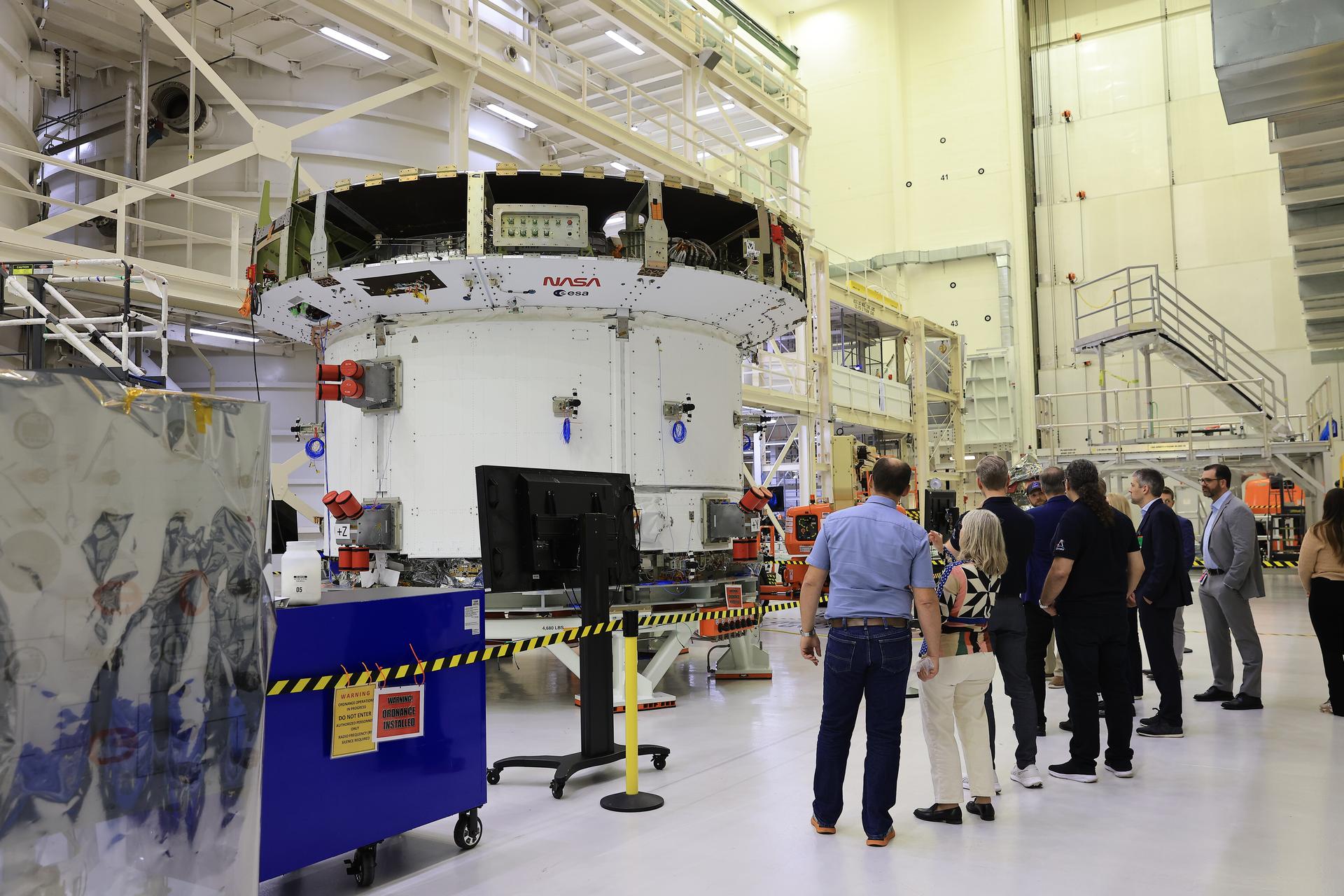
Members of the ESA (European Space Agency) leadership team and NASA Orion program team stand by European Service Module for NASA’s Artemis III mission on Tuesday, Feb. 10, 2026, inside the high bay of the Neil A. Armstrong Operations and Checkout Building at NASA’s Kennedy Space Center in Florida. The service module provides the Orion spacecraft’s propulsion, thermal control, electrical power, and life support systems during the Artemis III mission to send humans to explore the lunar South Pole region.
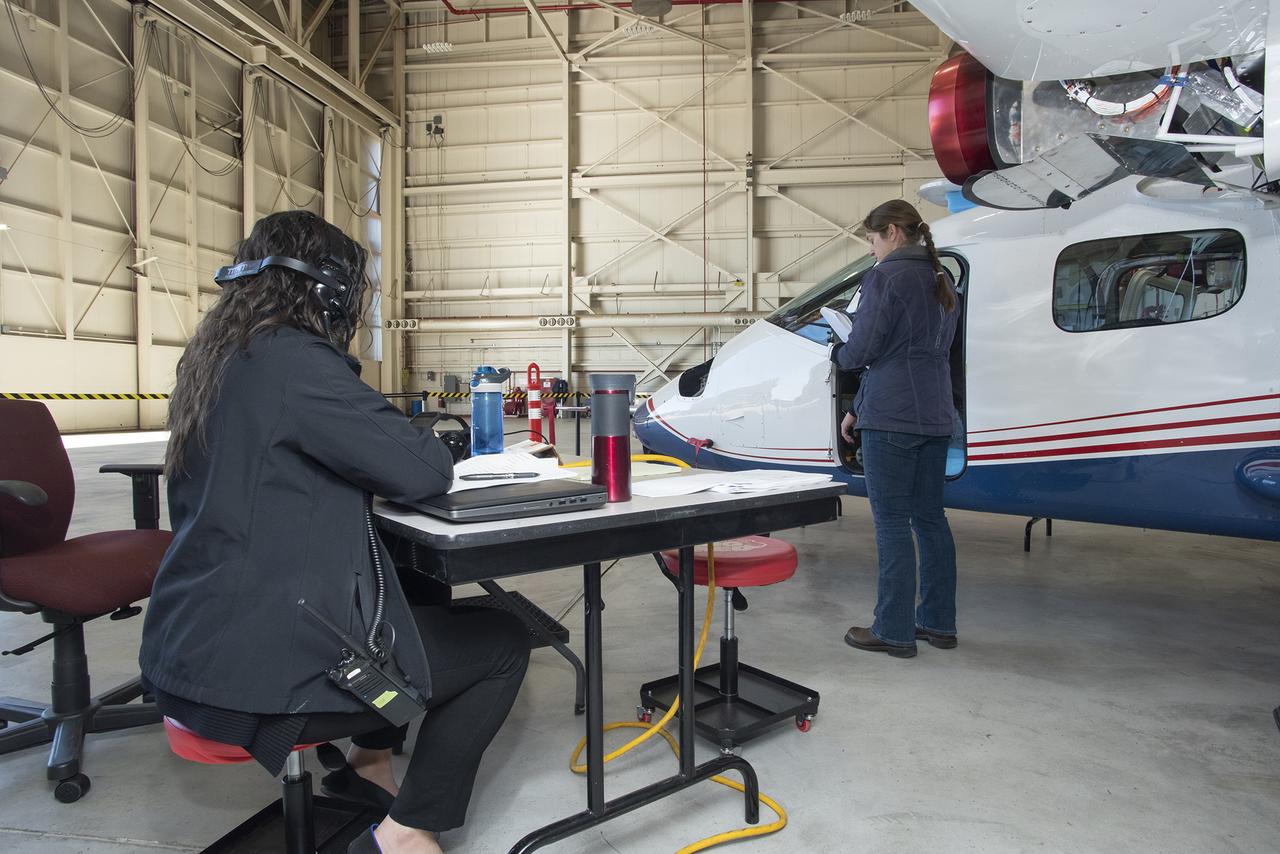
NASA engineers put the X-57 Maxwell, NASA's first all-electric X-plane, through its initial telemetry tests at NASA's Armstrong Flight Research Center in California, testing the aircraft's ability to transmit data to teams on the ground. The data is packaged and transmitted down to ground assets, where it's decoded into a format that can be presented to a flight control team to look at screens in real time for flight operations. X-57's goal is to help set certification standards for emerging electric aircraft markets.
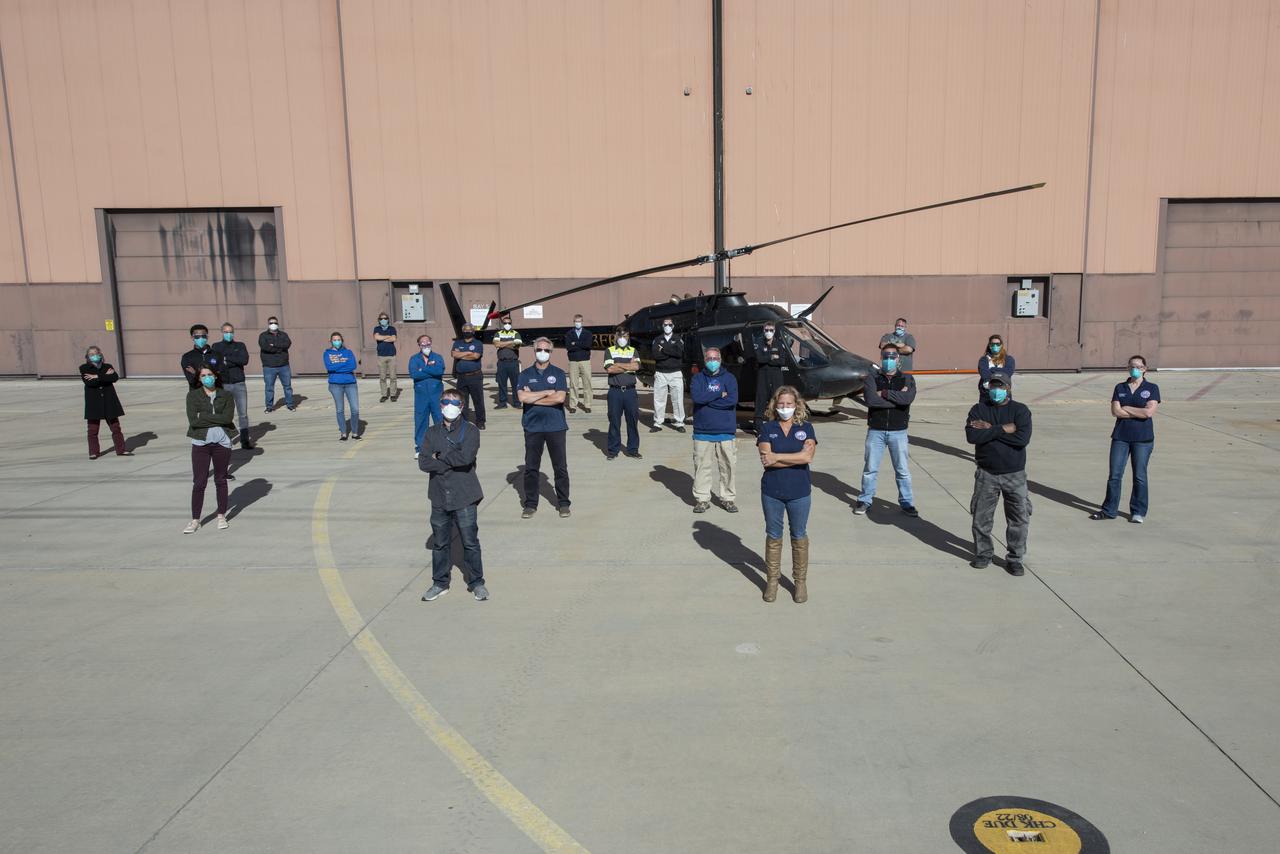
The Advanced Air Mobility National Campaign project’s NC Integrated Dry Run Test team is pictured in front of a Bell OH-58C Kiowa helicopter provided by Flight Research Inc. in Mojave, California the first week of December 2020 at NASA’s Armstrong Flight Research Center in California.
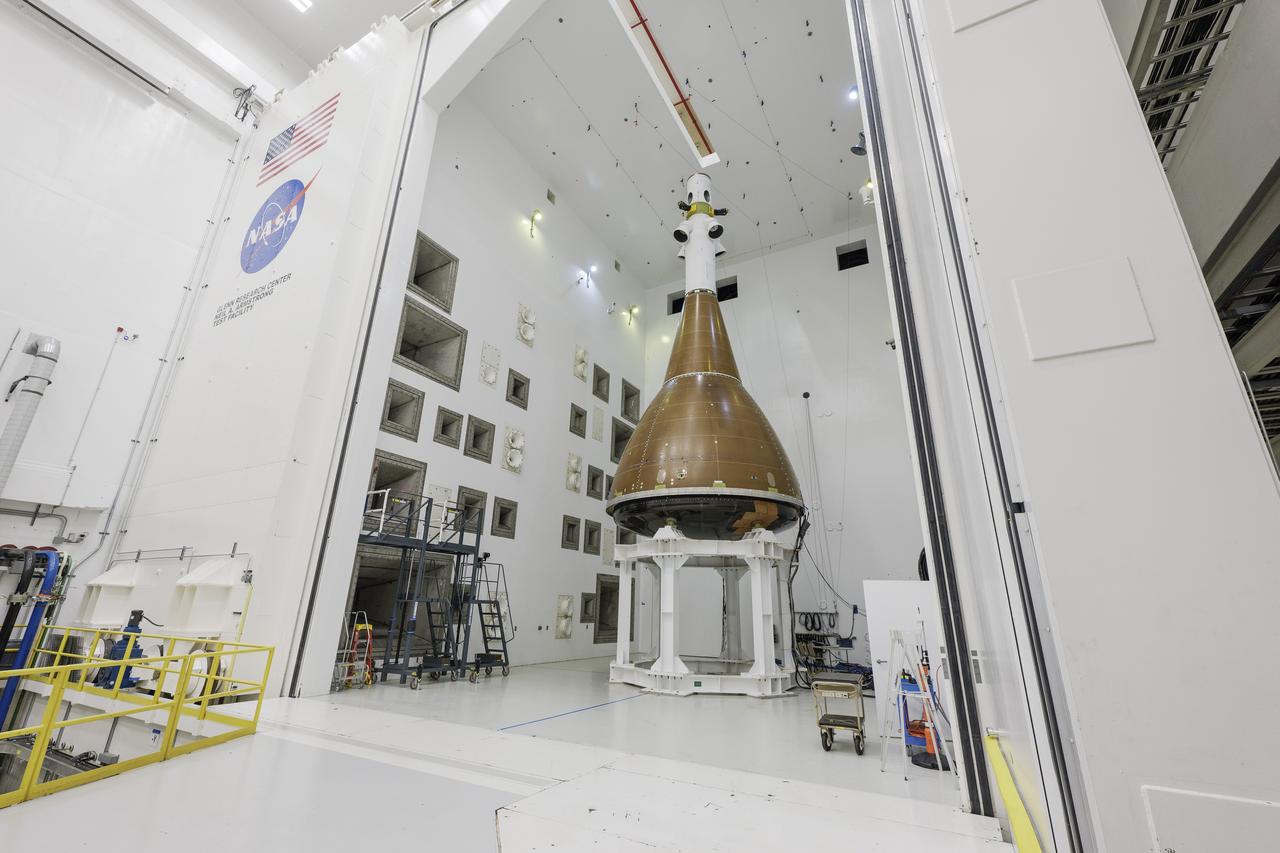
The team at NASA's Armstrong Test Facility in Sandusky, Ohio has begun vibro-acoustic testing on the Orion spacecraft that flew around the Moon on Artemis I, now known as the Environmental Test Article. The testing will help ensure the safety of future crews aboard Orion.
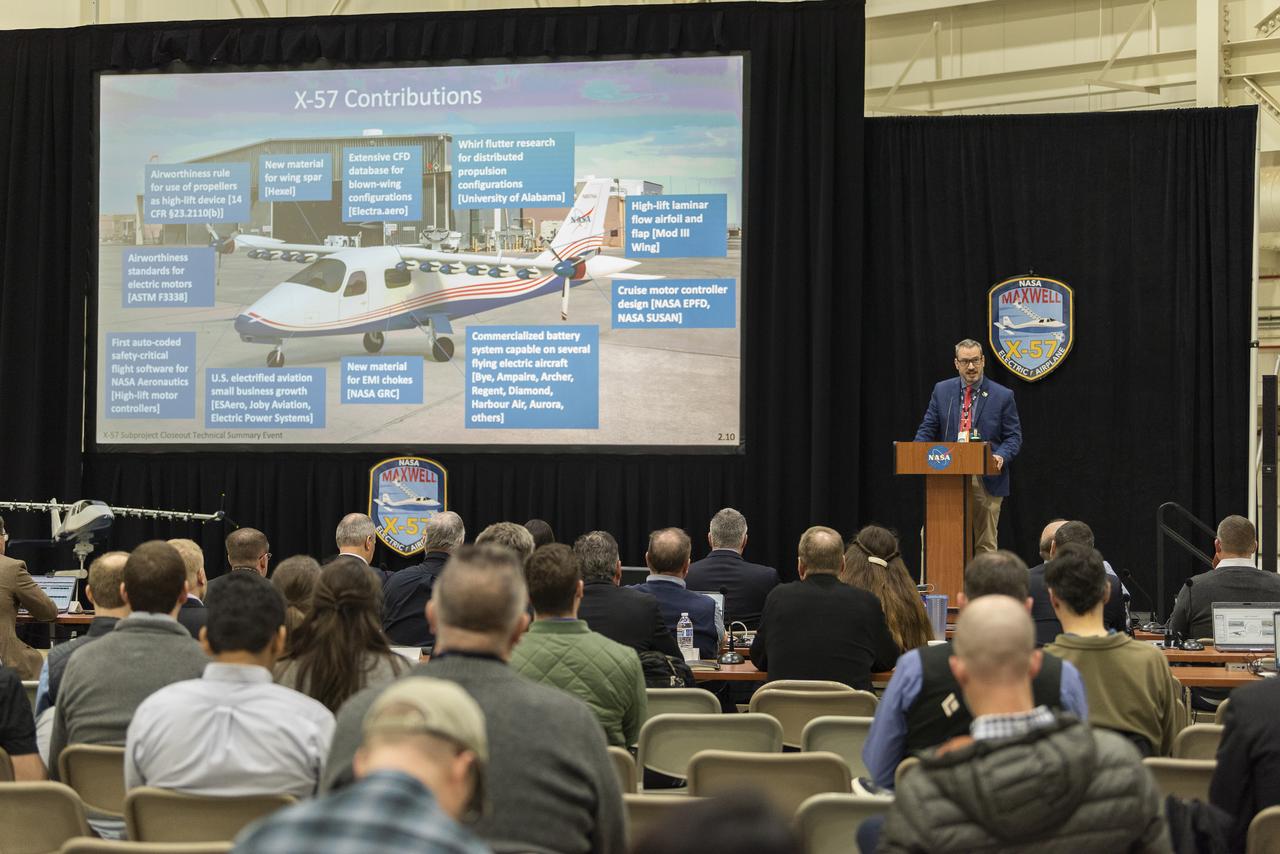
X-57 Maxwell principal investigator, Sean Clarke, talks about the innovative contributions the X-57 research team made to the electric propulsion community during a knowledge sharing event at NASA’s Armstrong Flight Research Center in Edwards, California.
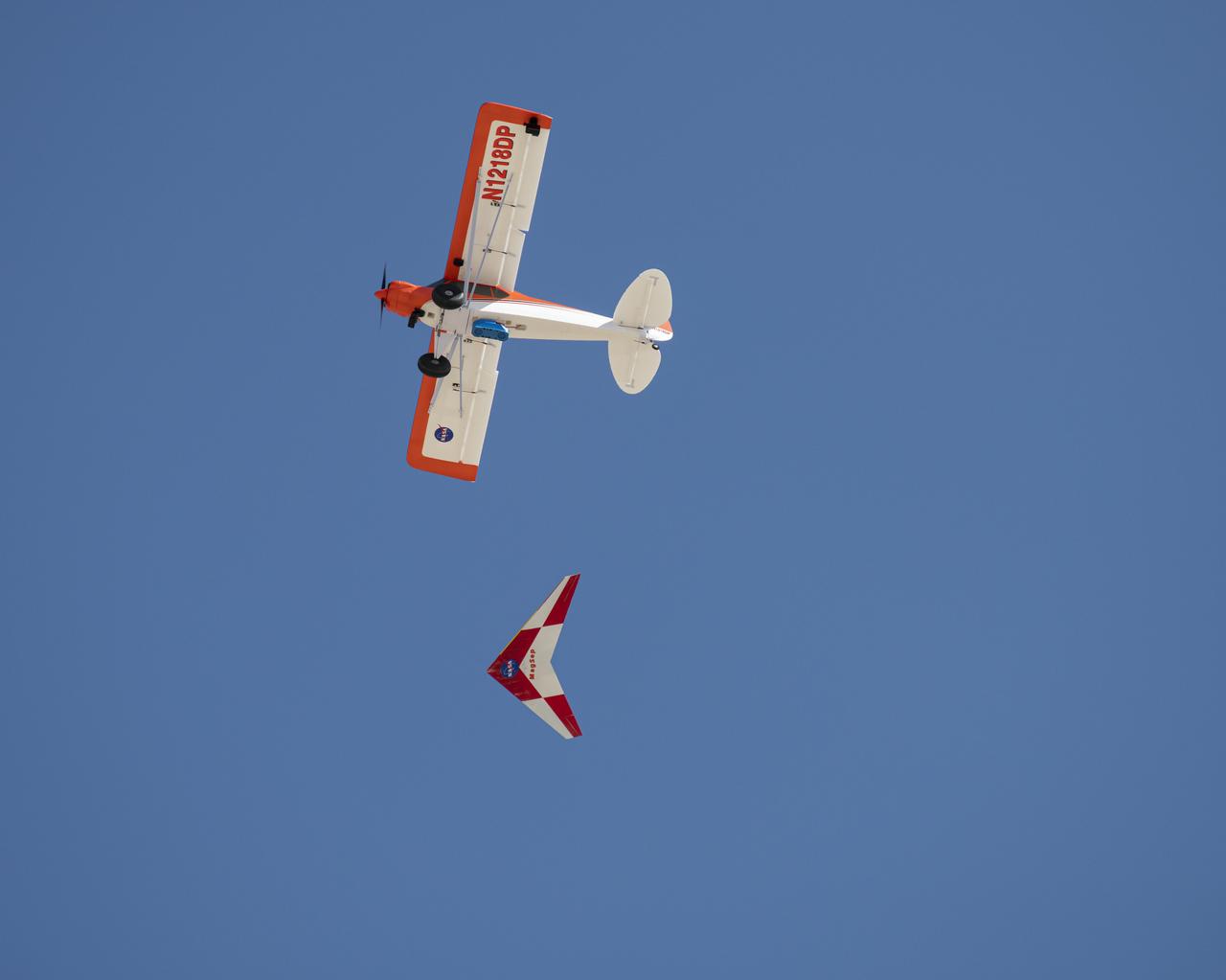
The Preliminary Research Aerodynamic Design to Land on Mars, or Prandtl-M, glider flies after a magnetic release mechanism on the Carbon-Z Cub was activated to air launch the aircraft. A team from NASA's Armstrong Flight Research Center in Edwards, California, conducted the successful research flight.
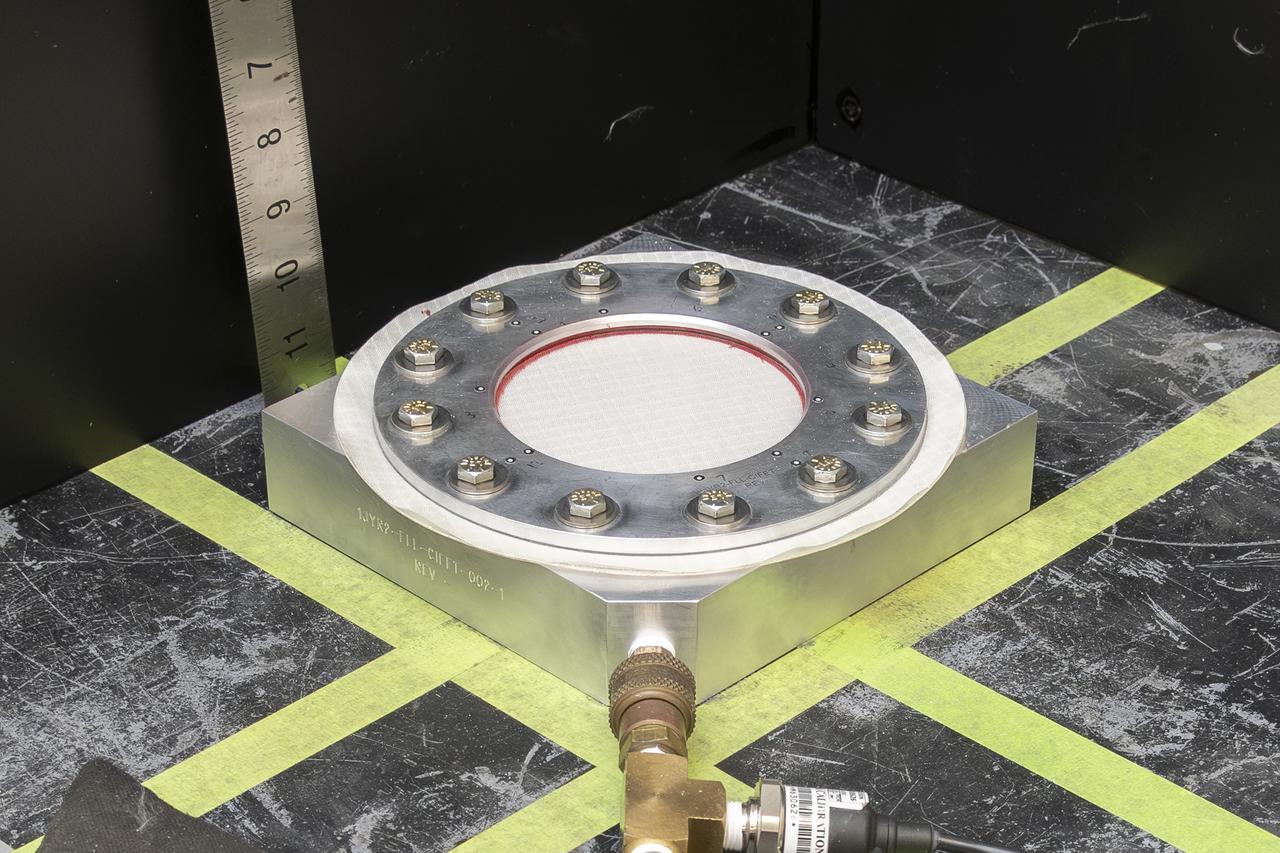
The test team prepares a test fixture with a nylon fabric sample at NASA’s Armstrong Flight Research Center in Edwards, California. The fabric in the test fixture forms a bubble when pressure is applied to the silicone bladder underneath. A similar test can be performed with a sensor on the fabric to verify the sensor will work when stretched in three dimensions.
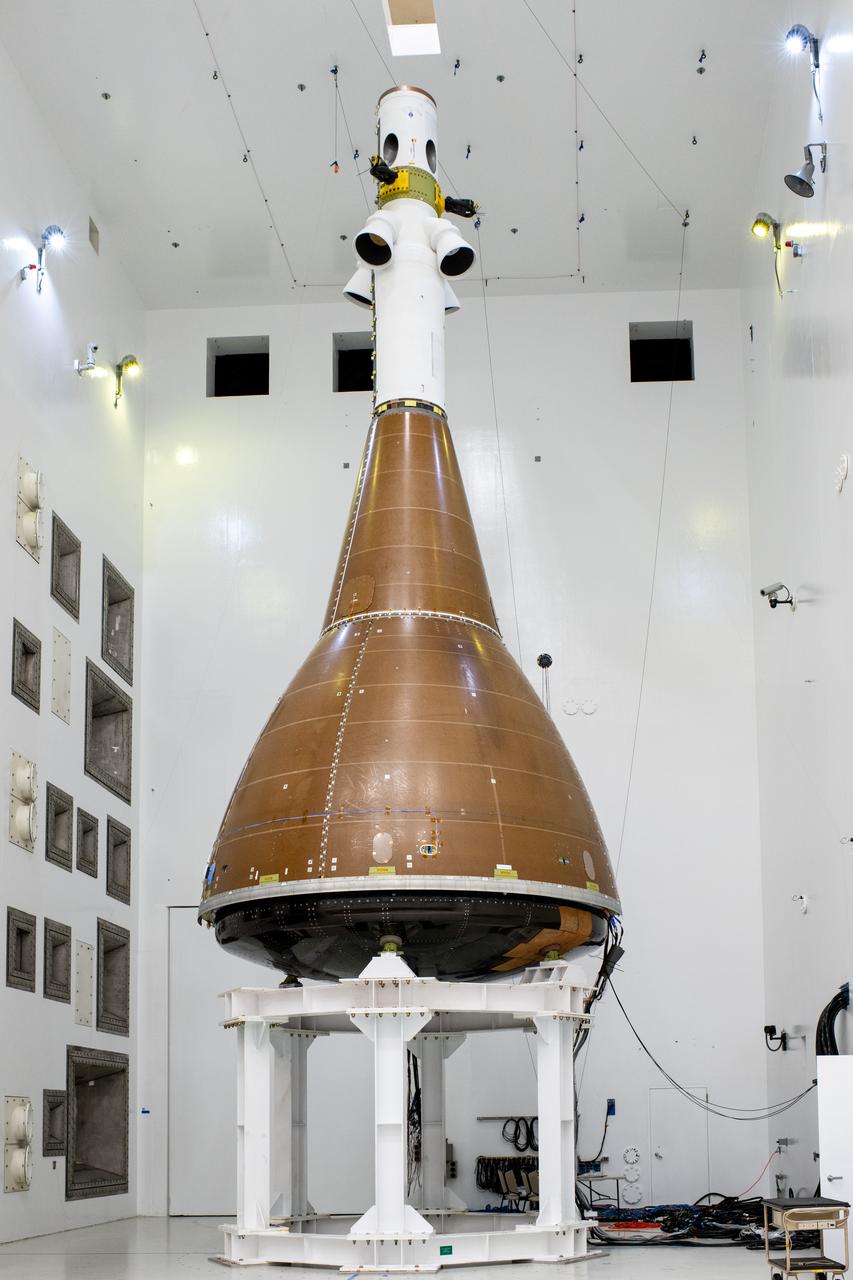
The team at NASA's Armstrong Test Facility in Sandusky, Ohio has begun vibro-acoustic testing on the Orion spacecraft that flew around the Moon on Artemis I, now known as the Environmental Test Article. The testing will help ensure the safety of future crews aboard Orion.
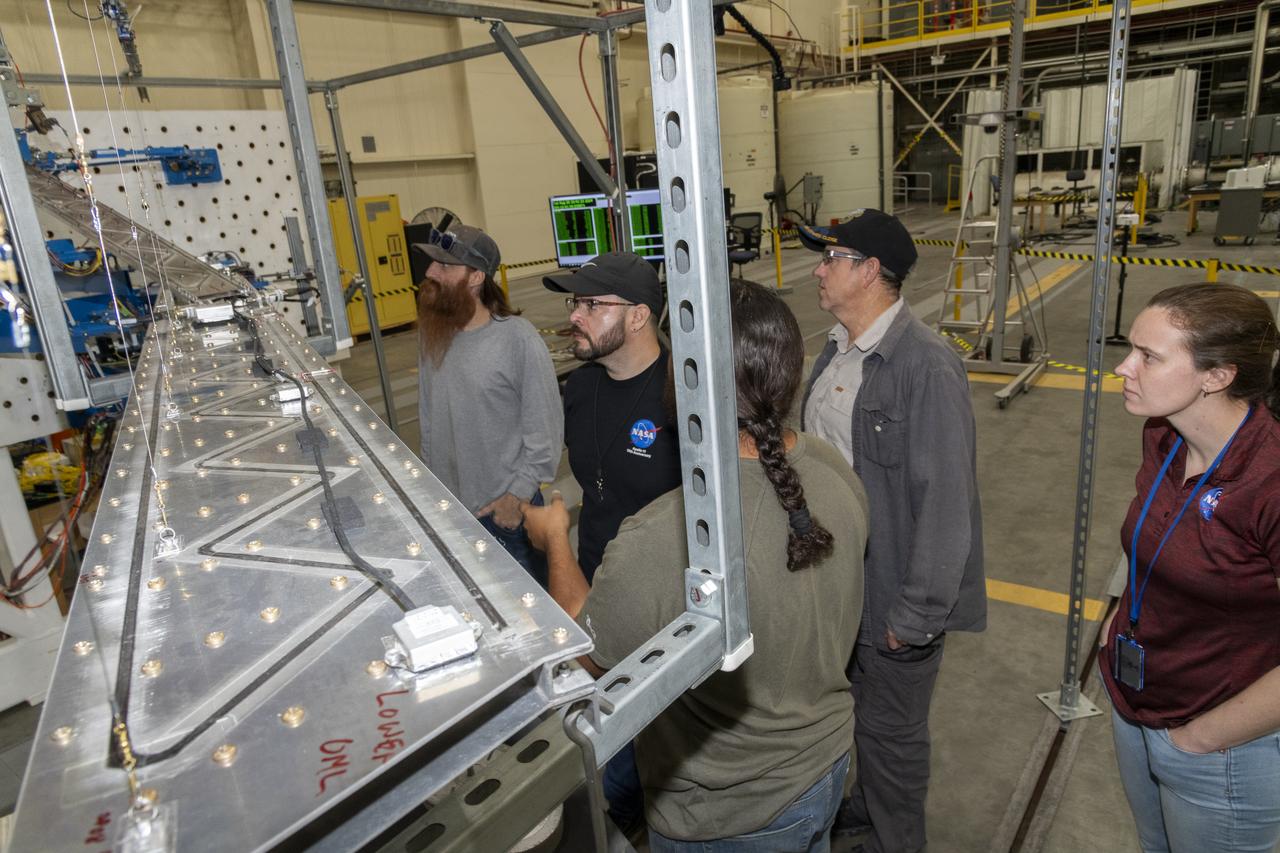
Researchers test a 10-foot Mock Truss-Braced Wing at NASA’s Armstrong Flight Research Center in Edwards, California. The test team makes observations between tests. The aircraft concept involves a wing braced on an aircraft using diagonal struts that also add lift and could result in significantly improved aerodynamics.
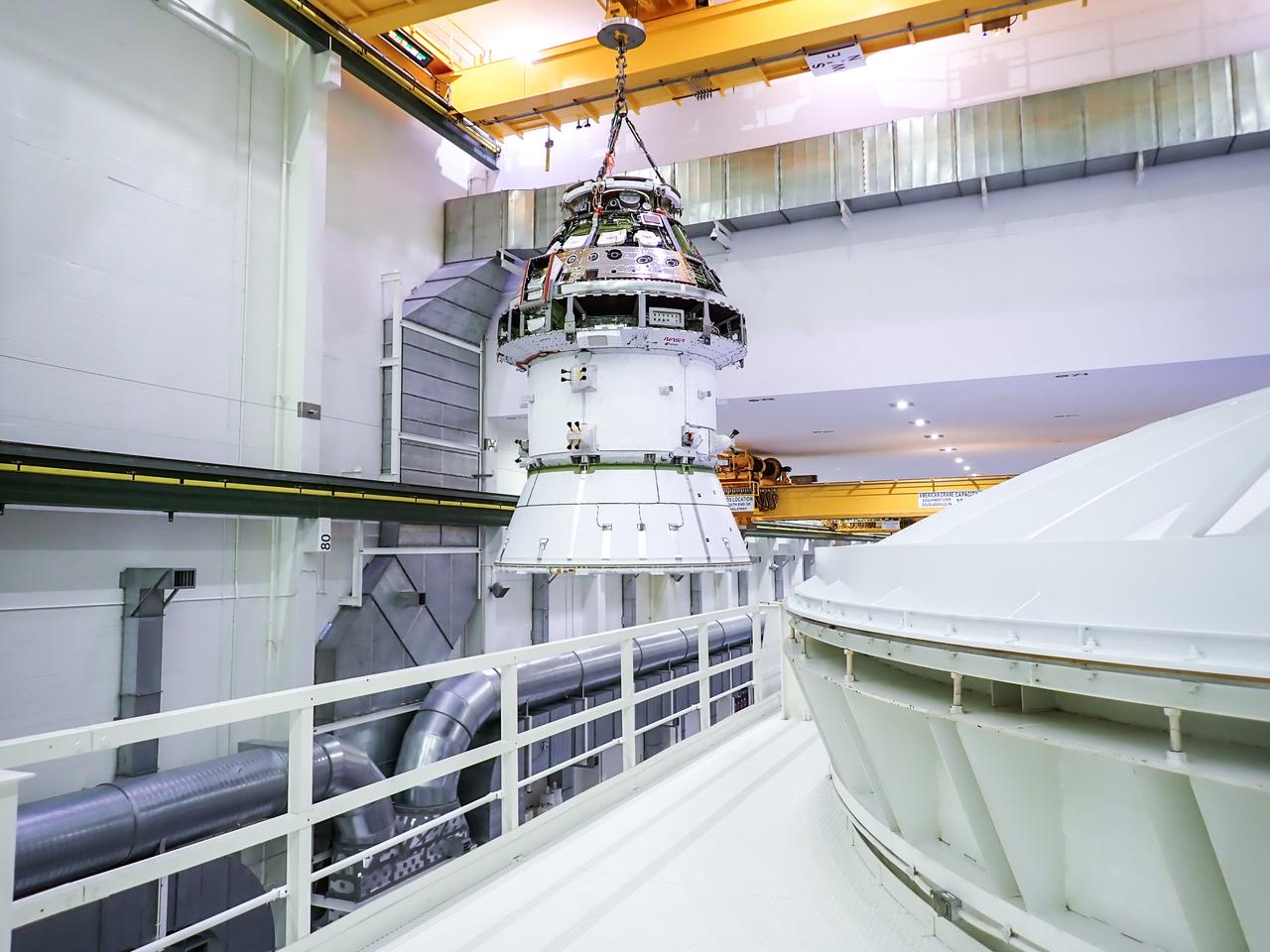
On Thursday, Dec. 5, 2024, a team returns the Artemis II Orion spacecraft to the Final Assembly and Test cell from a vacuum chamber inside the Neil A. Armstrong Operations and Checkout Building at NASA's Kennedy Space Center in Florida where it underwent vacuum testing.
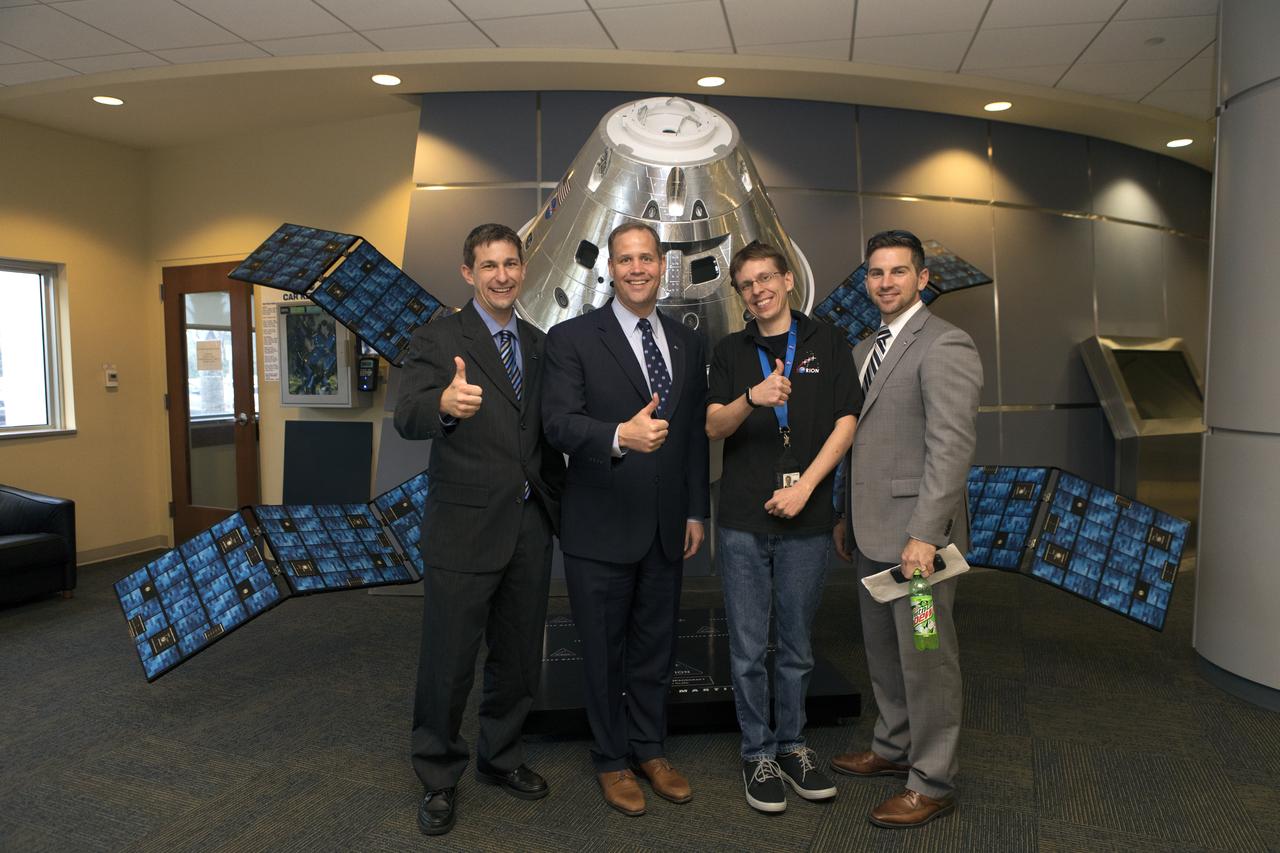
NASA Administrator Jim Bridenstine, second from left, poses with members of the Orion/Lockheed Martin team during a tour of Kennedy Space Center’s Neil Armstrong Operations and Checkout Building on Tuesday, Aug. 7, 2018. It was Bridenstine’s first official visit to the Florida spaceport.
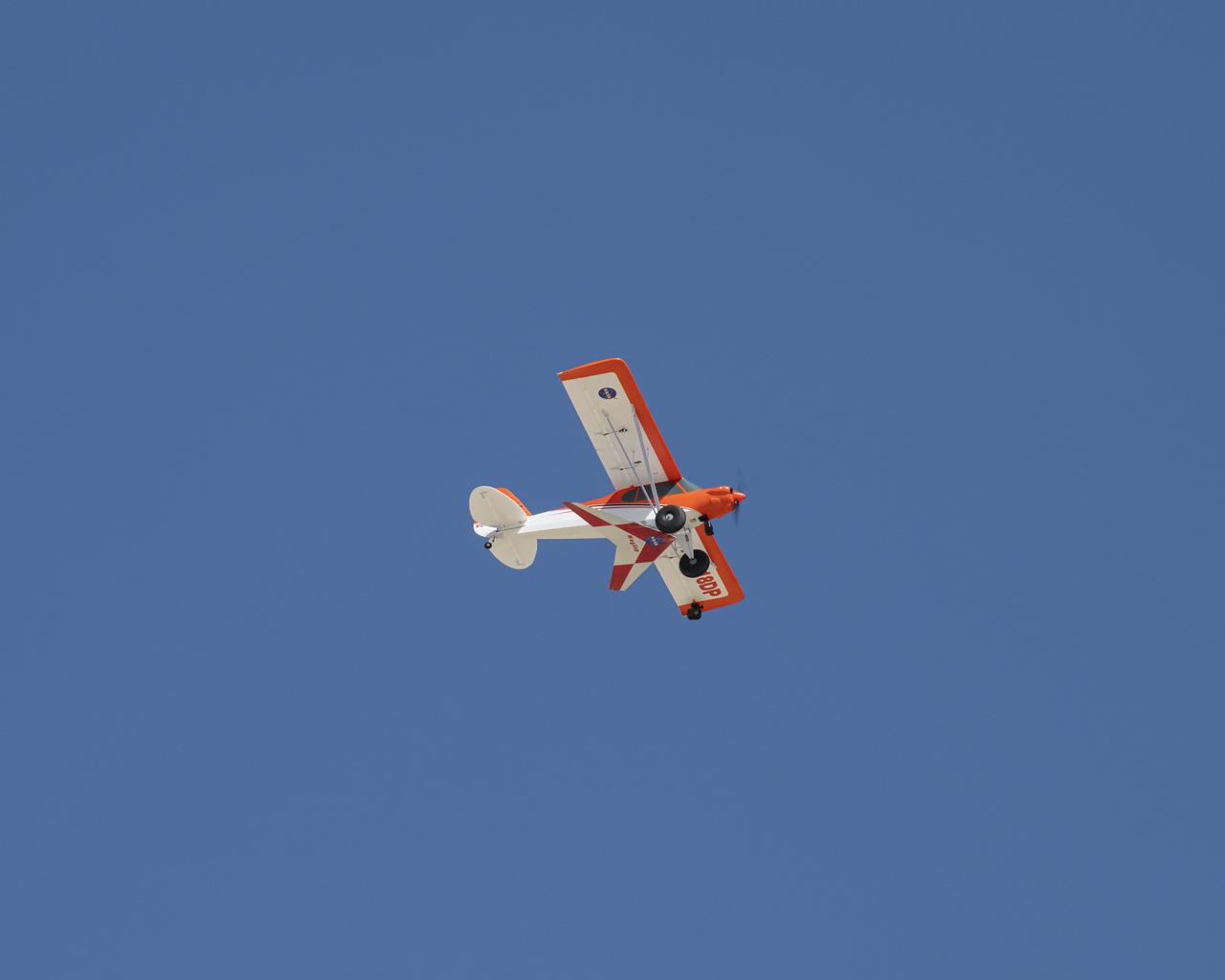
A team from NASA's Armstrong Flight Research Center in Edwards, California, prepares a Carbon-Z Cub to air launch the Preliminary Research Aerodynamic Design to Land on Mars, or Prandtl-M, glider from a magnetic release mechanism on the cub.
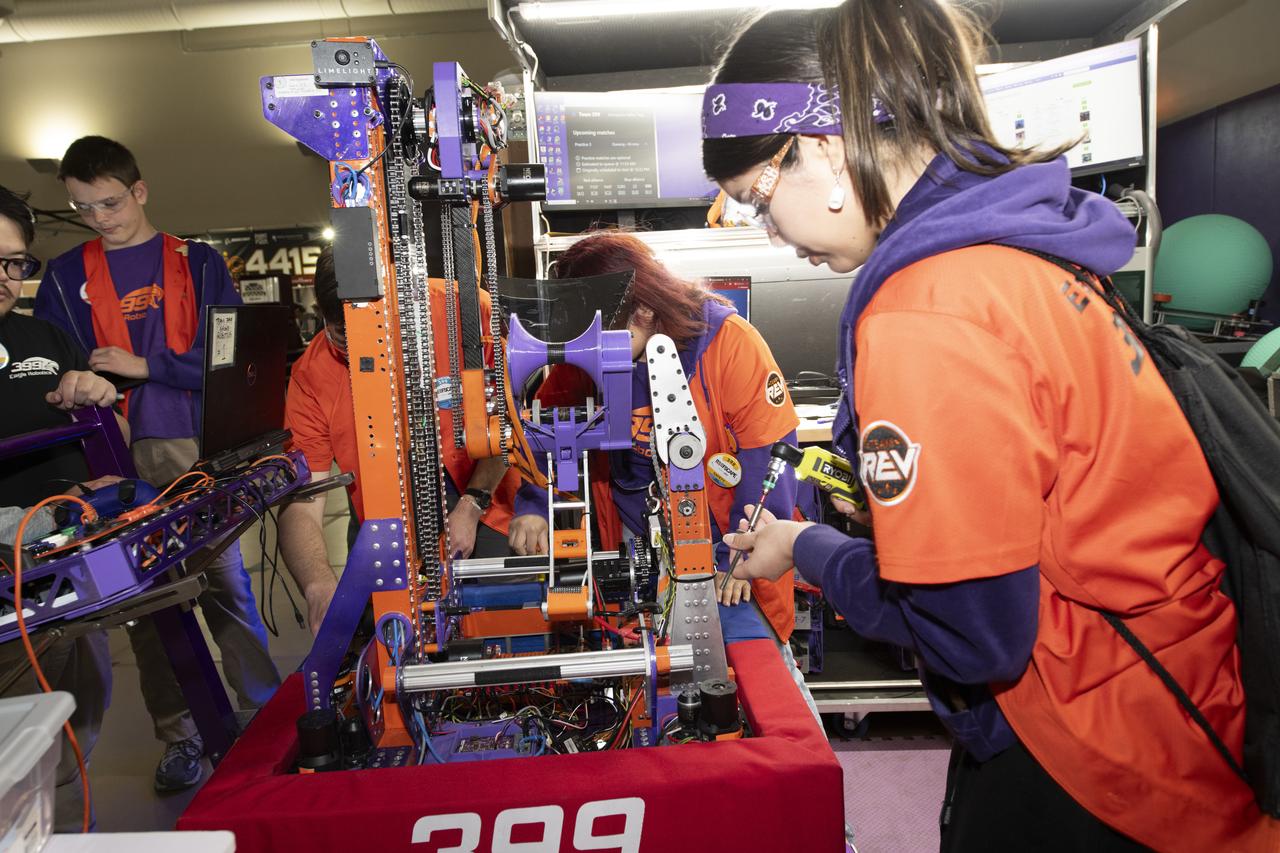
Students from Eagle Robotics, Team 399, supported by volunteers from NASA’s Armstrong Flight Research Center in Edwards, California, adjust their robot during the 2025 Aerospace Valley FIRST Robotics Competition in Lancaster, California, on April 3, 2025.
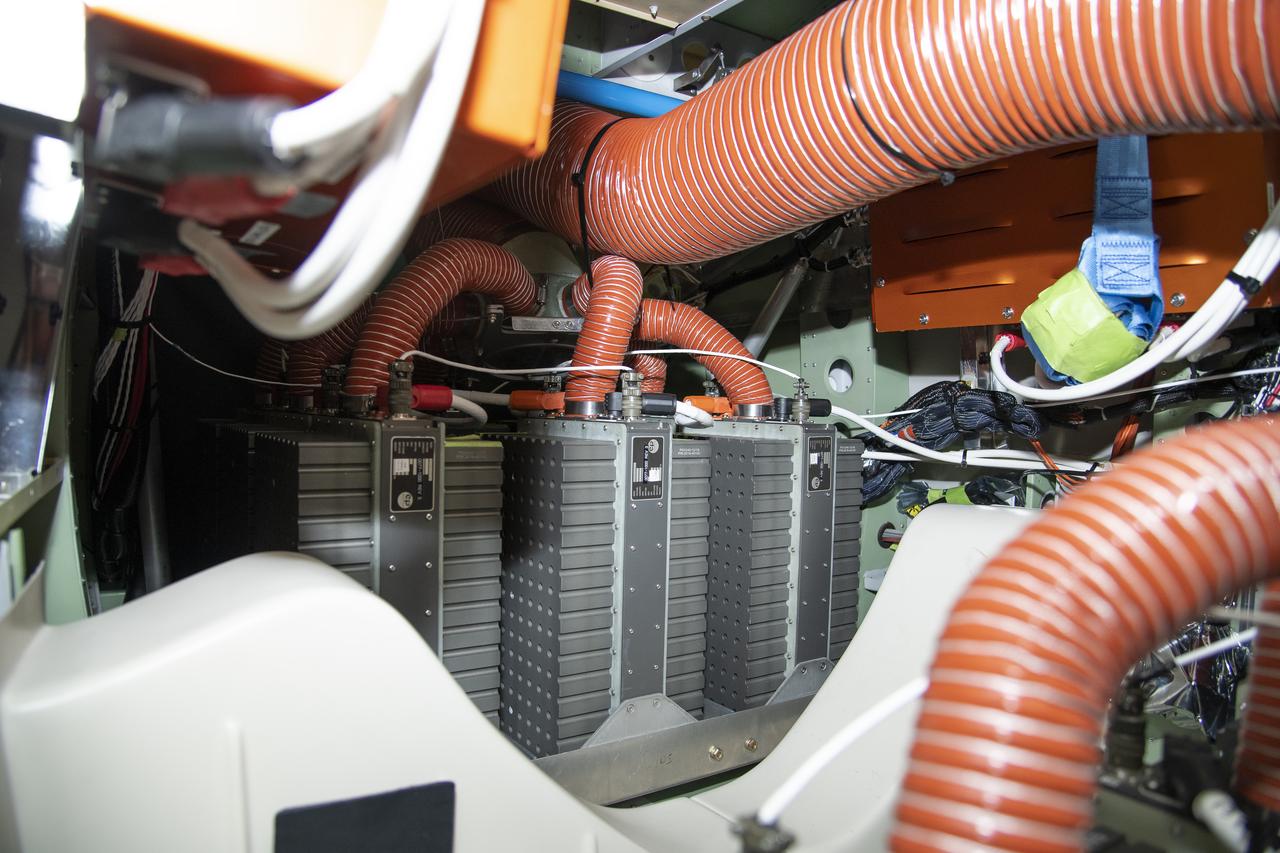
NASA's all-electric X-57 project team installed two 400-pound lithium-ion battery packs in the cabin of the plane in 2022 at NASA's Armstrong Flight Research Center in California. The X-57 project team repeatedly tested the batteries to ensure they can safely power the aircraft for an entire flight, and designed custom, lightweight cases to keep the batteries secure.
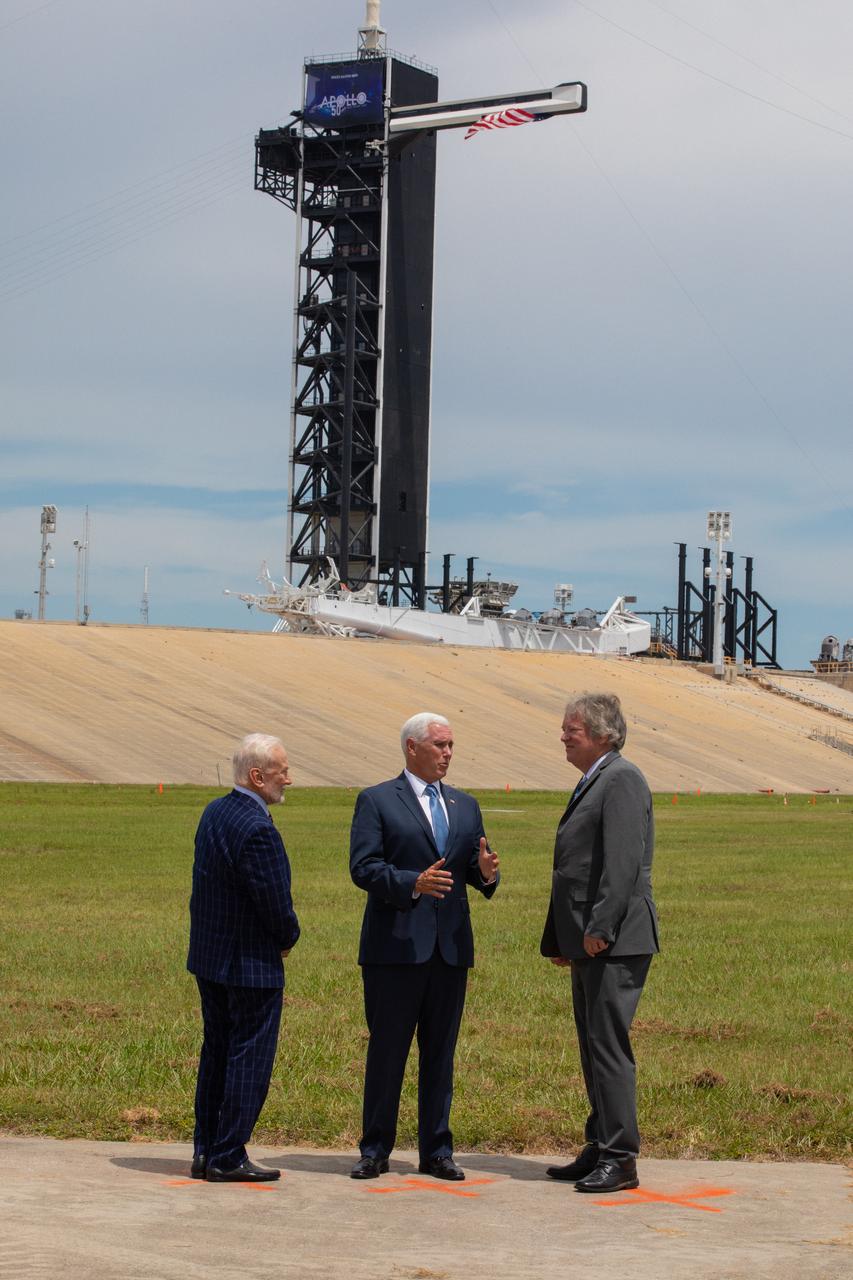
Vice President Mike Pence, center, celebrates the 50th anniversary of the Apollo 11 Moon landing during a visit to Kennedy Space Center’s Launch Complex 39A on July 20, 2019. Neil Armstrong, Buzz Aldrin and Michael Collins launched from Pad 39A aboard a Saturn V rocket on July 16, 1969. Four days later, Armstrong and Aldrin landed the Apollo Lunar Module Eagle on the Moon, becoming the first two humans to walk on the lunar surface. Pence recognized the extraordinary achievements of the Apollo 11 team, while looking forward to NASA’s plans to return to the Moon and on to Mars. At left is Apollo 11 Lunar Module Pilot Buzz Aldrin. At right is Rick Armstrong, Apollo 11 Commander Neil Armstrong's son.
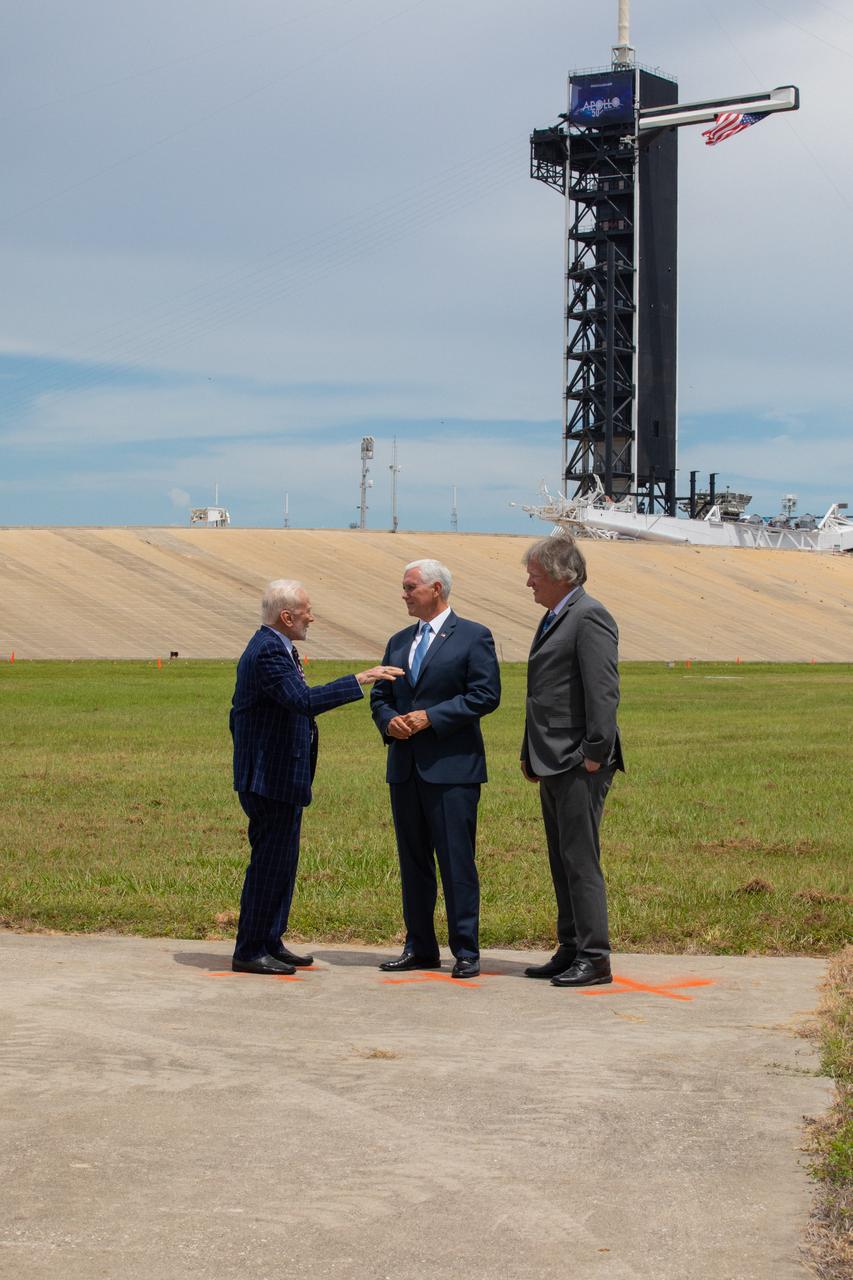
Vice President Mike Pence, center, celebrates the 50th anniversary of the Apollo 11 Moon landing during a visit to Kennedy Space Center’s Launch Complex 39A on July 20, 2019. Neil Armstrong, Buzz Aldrin and Michael Collins launched from Pad 39A aboard a Saturn V rocket on July 16, 1969. Four days later, Armstrong and Aldrin landed the Apollo Lunar Module Eagle on the Moon, becoming the first two humans to walk on the lunar surface. Pence recognized the extraordinary achievements of the Apollo 11 team, while looking forward to NASA’s plans to return to the Moon and on to Mars. At left is Apollo 11 Lunar Module Pilot Buzz Aldrin. At right is Rick Armstrong, Apollo 11 Commander Neil Armstrong's son.
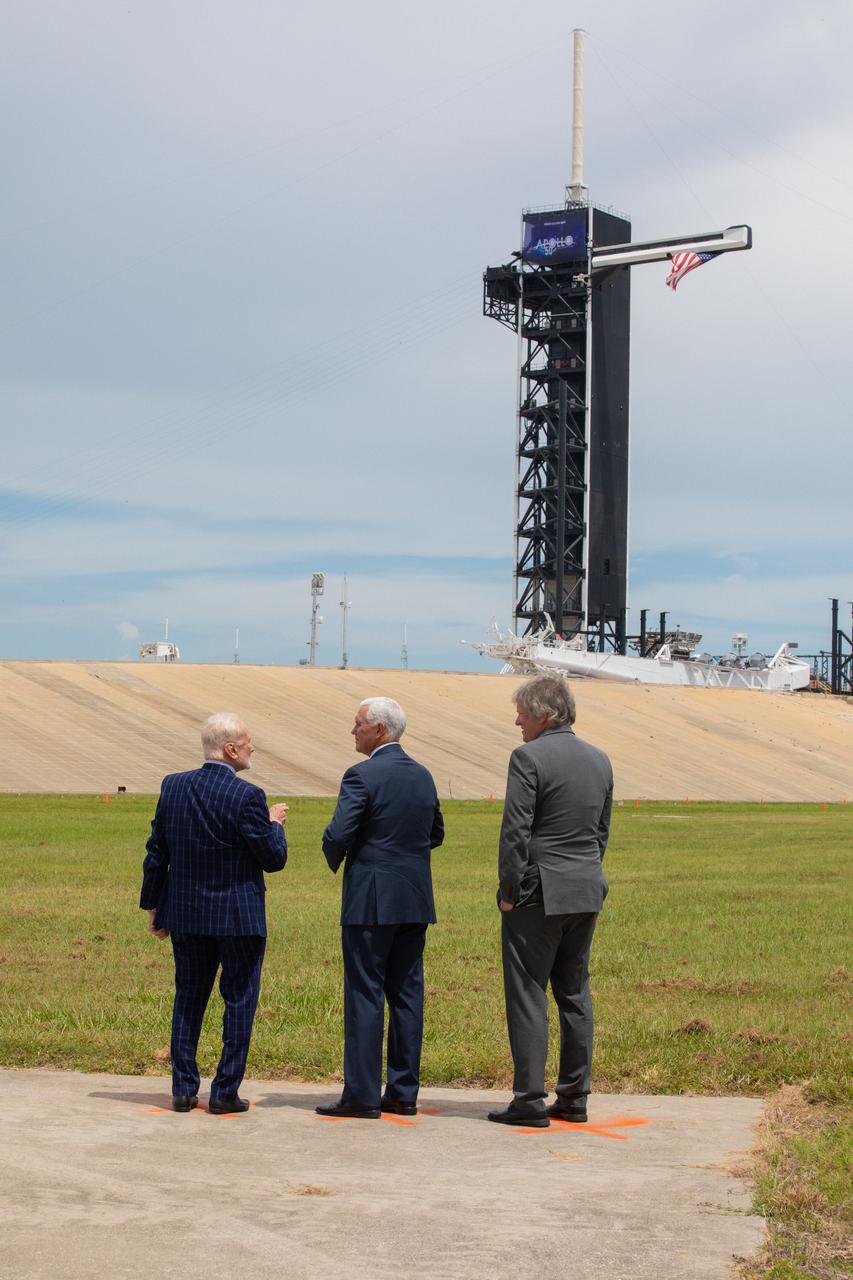
Vice President Mike Pence, center, celebrates the 50th anniversary of the Apollo 11 Moon landing during a visit to Kennedy Space Center’s Launch Complex 39A on July 20, 2019. Neil Armstrong, Buzz Aldrin and Michael Collins launched from Pad 39A aboard a Saturn V rocket on July 16, 1969. Four days later, Armstrong and Aldrin landed the Apollo Lunar Module Eagle on the Moon, becoming the first two humans to walk on the lunar surface. Pence recognized the extraordinary achievements of the Apollo 11 team, while looking forward to NASA’s plans to return to the Moon and on to Mars. At left is Apollo 11 Lunar Module Pilot Buzz Aldrin. At right is Rick Armstrong, son of Apollo 11 Commander Neil Armstrong.
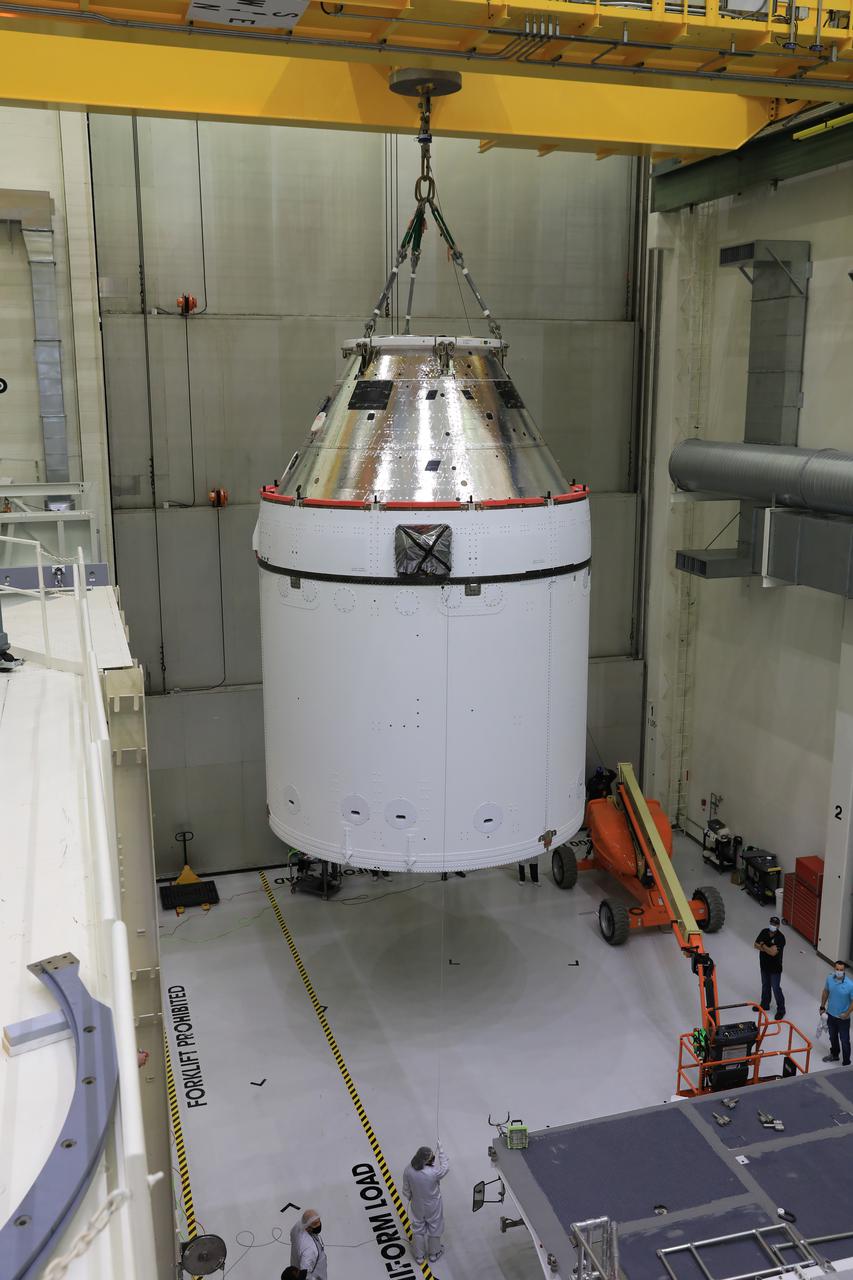
Orion is revealed for one of the final times on Jan. 14, as it is lowered by crane onto its transport pallet inside the Neil Armstrong Operations and Checkout Building at NASA’s Kennedy Space Center in Florida, along its path to the pad ahead of the Artemis I launch. Teams across the globe have worked tirelessly to assemble the spacecraft which will receive a protective covering prior to departing for the Multi-Payload Processing Facility to begin ground processing by the Exploration Ground Systems and Jacobs teams.
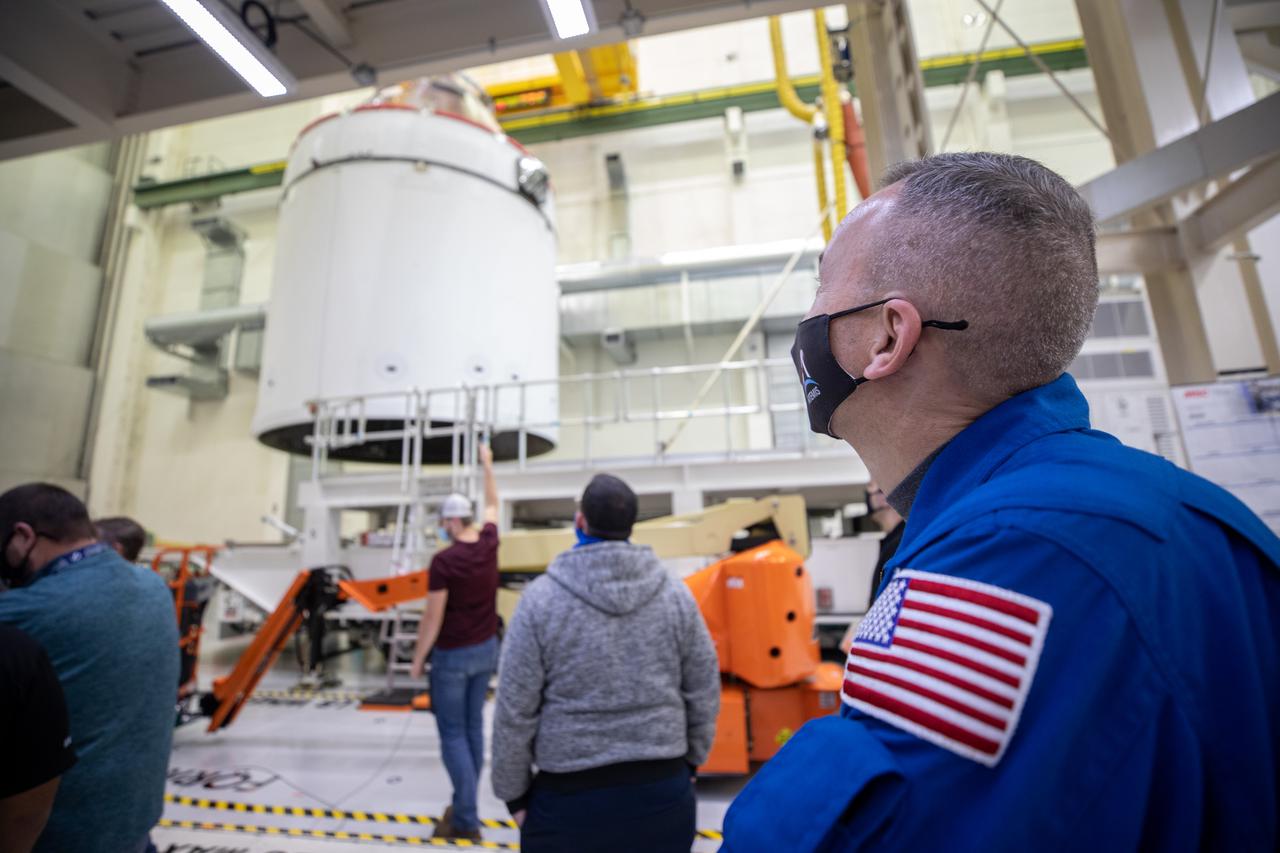
Orion is revealed for one of the final times on Jan. 14, as it is moved by crane to its transport pallet inside the Neil Armstrong Operations and Checkout Building at NASA’s Kennedy Space Center in Florida, along its path to the pad ahead of the Artemis I launch. Teams across the globe have worked tirelessly to assemble the spacecraft which will receive a protective covering prior to departing for the Multi-Payload Processing Facility to begin ground processing by the Exploration Ground Systems and Jacobs teams.

Orion is revealed for one of the final times on Jan. 14, as it is moved by crane to its transport pallet inside the Neil Armstrong Operations and Checkout Building at NASA’s Kennedy Space Center in Florida, along its path to the pad ahead of the Artemis I launch. Teams across the globe have worked tirelessly to assemble the spacecraft, which will receive a protective covering prior to departing for the Multi-Payload Processing Facility to begin ground processing by the Exploration Ground Systems and Jacobs teams.

Orion is revealed for one of the final times on Jan. 14, as it is readied atop its transport pallet from the Neil Armstrong Operations and Checkout Building at NASA’s Kennedy Space Center in Florida, along its path to the pad ahead of the Artemis I launch. Teams across the globe have worked tirelessly to assemble the spacecraft which will receive a protective covering prior to departing for the Multi-Payload Processing Facility to begin ground processing by the Exploration Ground Systems and Jacobs teams.
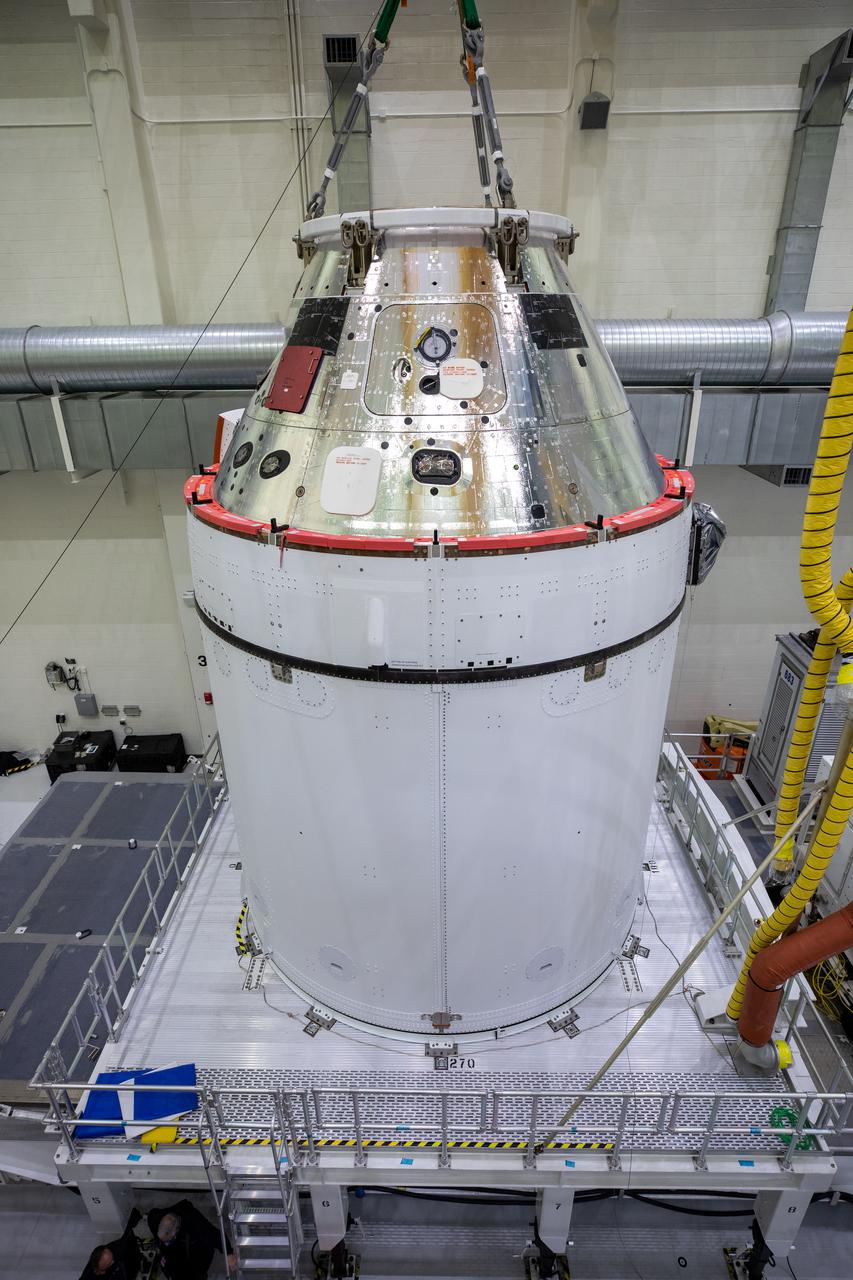
Orion is revealed for one of the final times on Jan. 14, as it is readied atop its transport pallet from the Neil Armstrong Operations and Checkout Building at NASA’s Kennedy Space Center in Florida, along its path to the pad ahead of the Artemis I launch. Teams across the globe have worked tirelessly to assemble the spacecraft, which will receive a protective covering prior to departing for the Multi-Payload Processing Facility to begin ground processing by the Exploration Ground Systems and Jacobs teams.
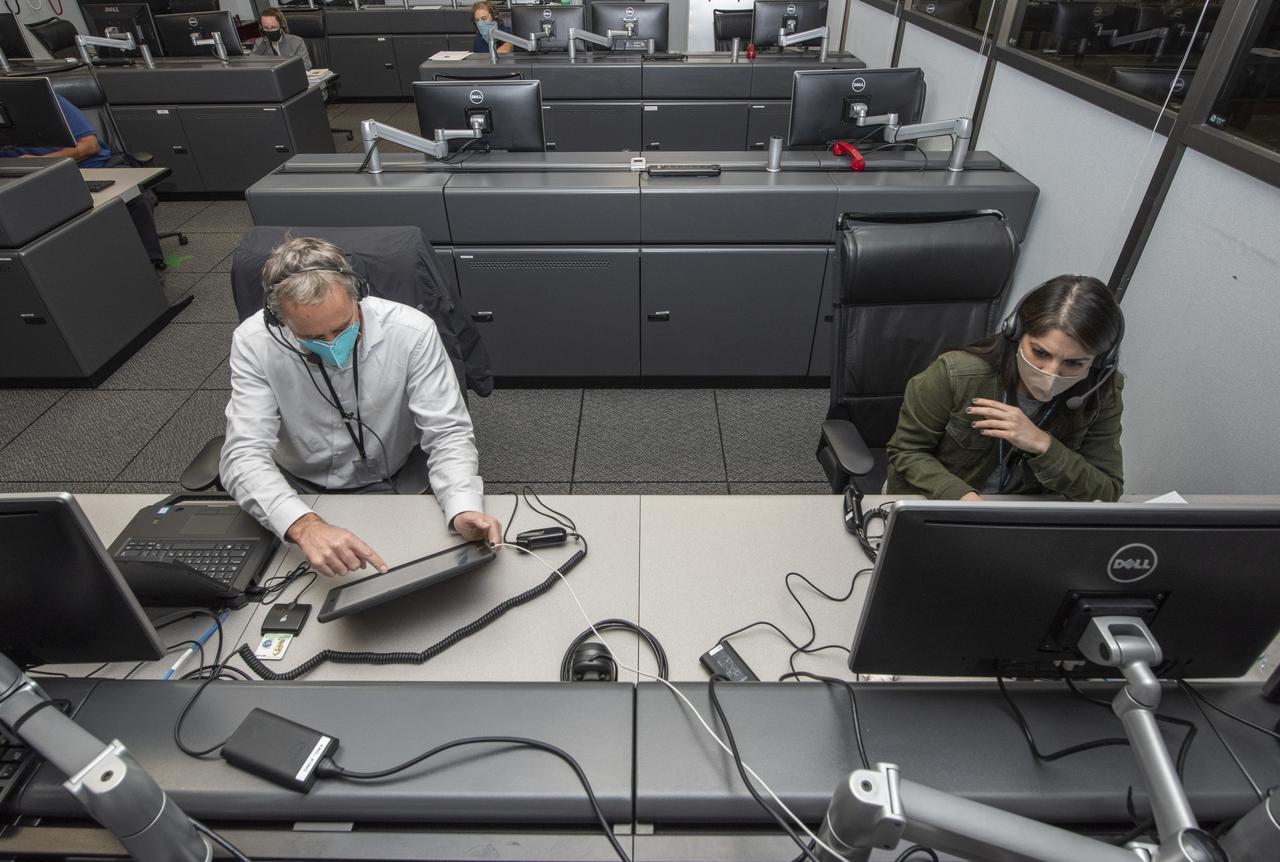
Ames Research Center researchers Yasmin Arbab and Mark Snycerski on the Advanced Air Mobility National Campaign project's Airspace Test Infrastructure (ATI) team monitor surveillance data and connectivity of the flight test infrastructure to a cloud based system in real time during the NC Integrated Dry Run Test team the first week of December 2020 at NASA's Armstrong Flight Research Center in California.
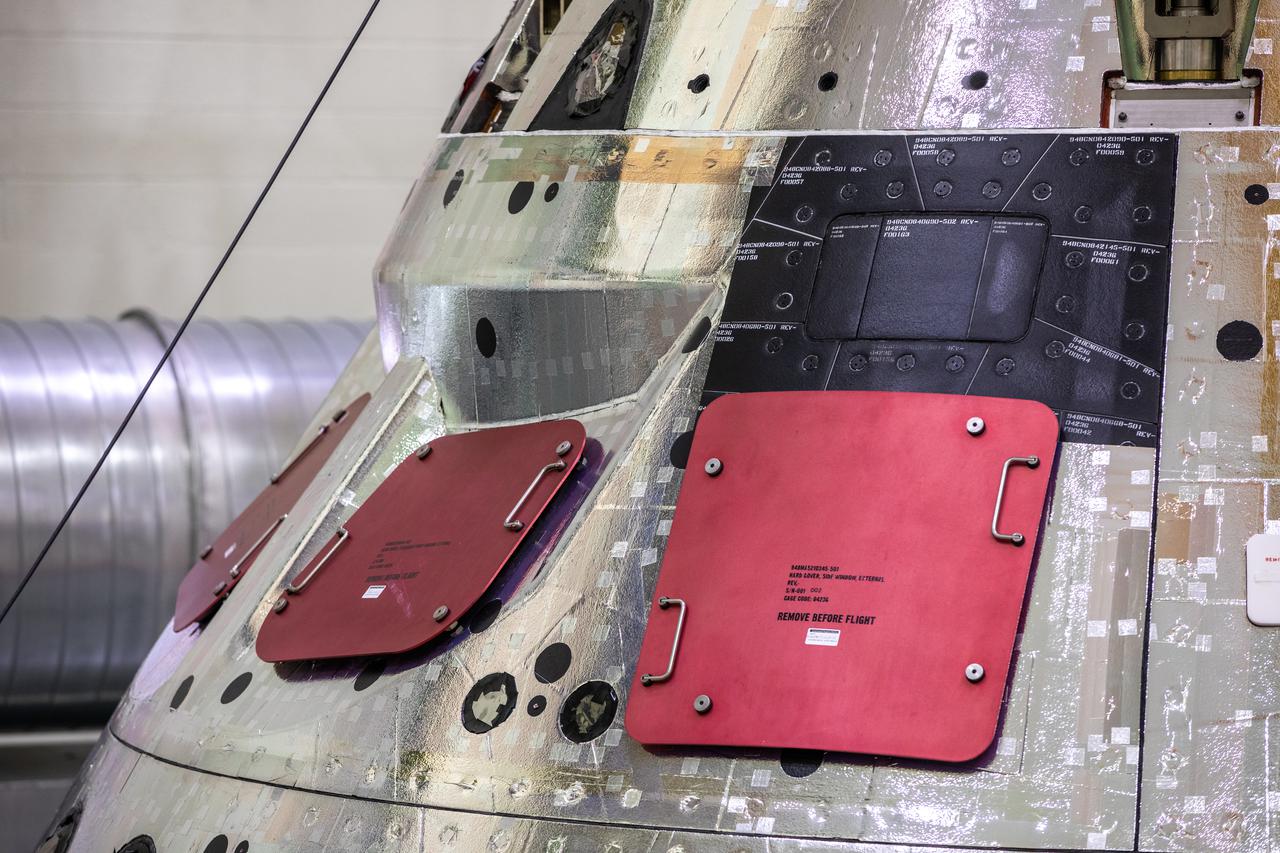
Orion is revealed for one of the final times on Jan. 14, as it is readied atop its transport pallet from the Neil Armstrong Operations and Checkout Building at NASA’s Kennedy Space Center in Florida, along its path to the pad ahead of the Artemis I launch. Teams across the globe have worked tirelessly to assemble the spacecraft which will receive a protective covering prior to departing for the Multi-Payload Processing Facility to begin ground processing by the Exploration Ground Systems and Jacobs teams.

Orion is revealed for one of the final times on Jan. 14, as it is moved by crane to its transport pallet inside the Neil Armstrong Operations and Checkout Building at NASA’s Kennedy Space Center in Florida, along its path to the pad ahead of the Artemis I launch. Teams across the globe have worked tirelessly to assemble the spacecraft which will receive a protective covering prior to departing for the Multi-Payload Processing Facility to begin ground processing by the Exploration Ground Systems and Jacobs teams.
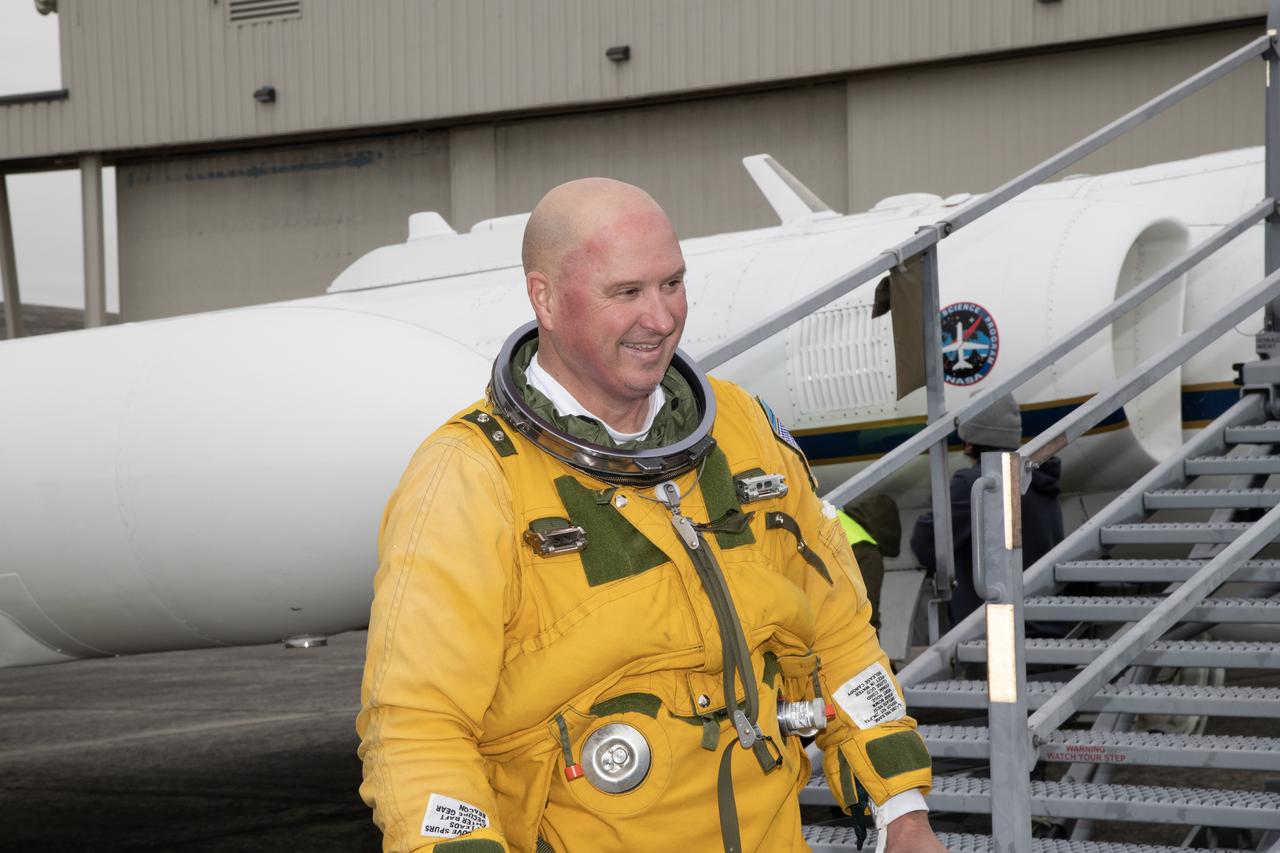
Kirt Stallings, an ER-2 pilot from NASA’s Armstrong Flight Research Center in Edwards California, completed a flight in support of the Investigation of Microphysics and Precipitation for Atlantic Coast-Threatening Storms (IMPACTS) mission. The IMPACTS team tracked storms across the Eastern United States to help understand how winter storms form and develop. The aircraft, which is based at NASA’s Armstrong Flight Research Center Building 703 in Palmdale, California, was temporarily based at Dobbins Air Reserve Base in Marietta, Georgia. The three-year IMPACTS campaign concluded on Feb. 28, 2023.
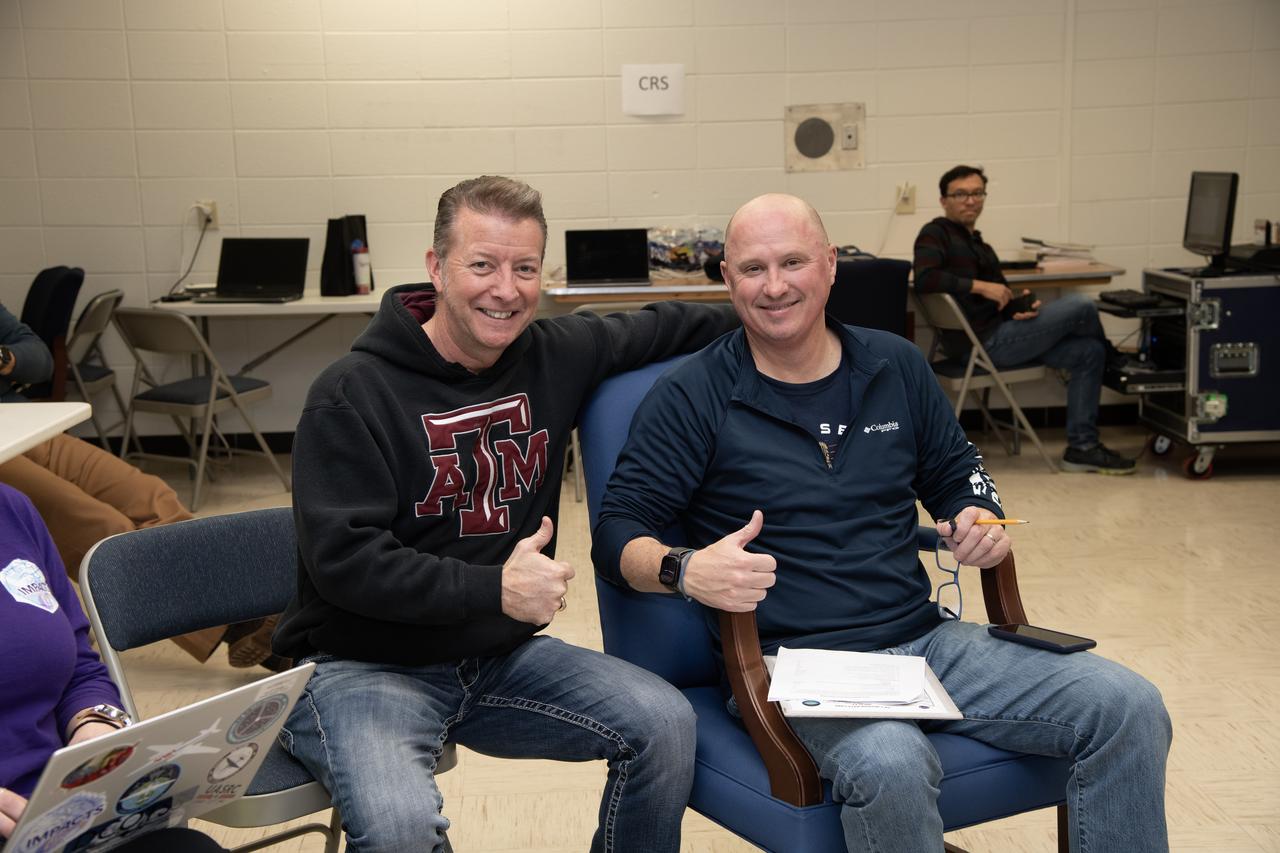
Dean Neeley and Kirt Stallings, ER-2 pilots from NASA’s Armstrong Flight Research Center in Edwards California, completed flights in support of the Investigation of Microphysics and Precipitation for Atlantic Coast-Threatening Storms (IMPACTS) mission. The IMPACTS team tracked storms across the Eastern United States to help understand how winter storms form and develop. Here Neeley and Stallings are seen in a lighter moment at debrief. The aircraft, which is based at NASA’s Armstrong Flight Research Center Building 703 in Palmdale, California, was temporarily based at Dobbins Air Reserve Base in Marietta, Georgia. The three-year IMPACTS campaign concluded on Feb. 28, 2023.
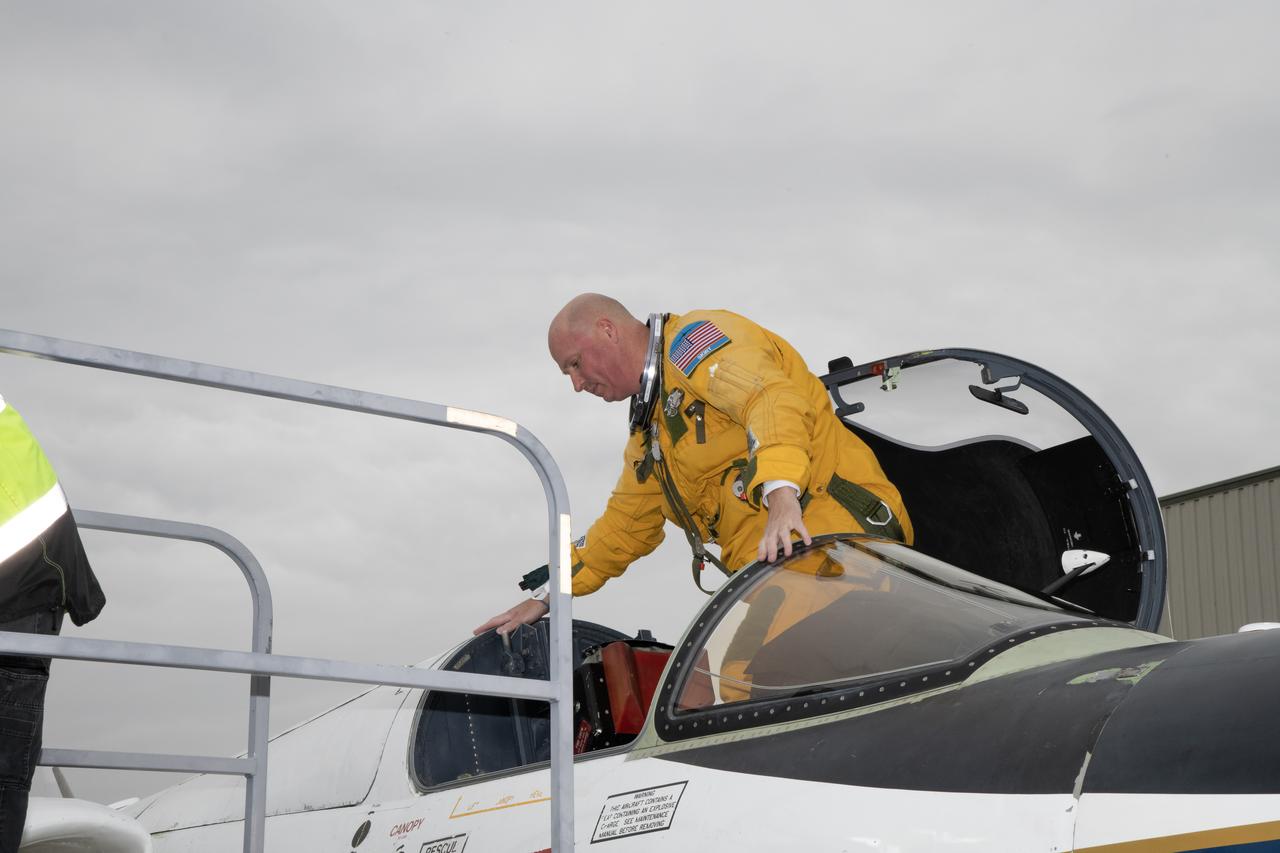
Kirt Stallings, an ER-2 pilot from NASA’s Armstrong Flight Research Center in Edwards California, completed a flight in support of the Investigation of Microphysics and Precipitation for Atlantic Coast-Threatening Storms (IMPACTS) mission. The IMPACTS team tracked storms across the Eastern United States to help understand how winter storms form and develop. The aircraft, which is based at NASA’s Armstrong Flight Research Center Building 703 in Palmdale, California, was temporarily based at Dobbins Air Reserve Base in Marietta, Georgia. The three-year IMPACTS campaign concluded on Feb. 28, 2023.
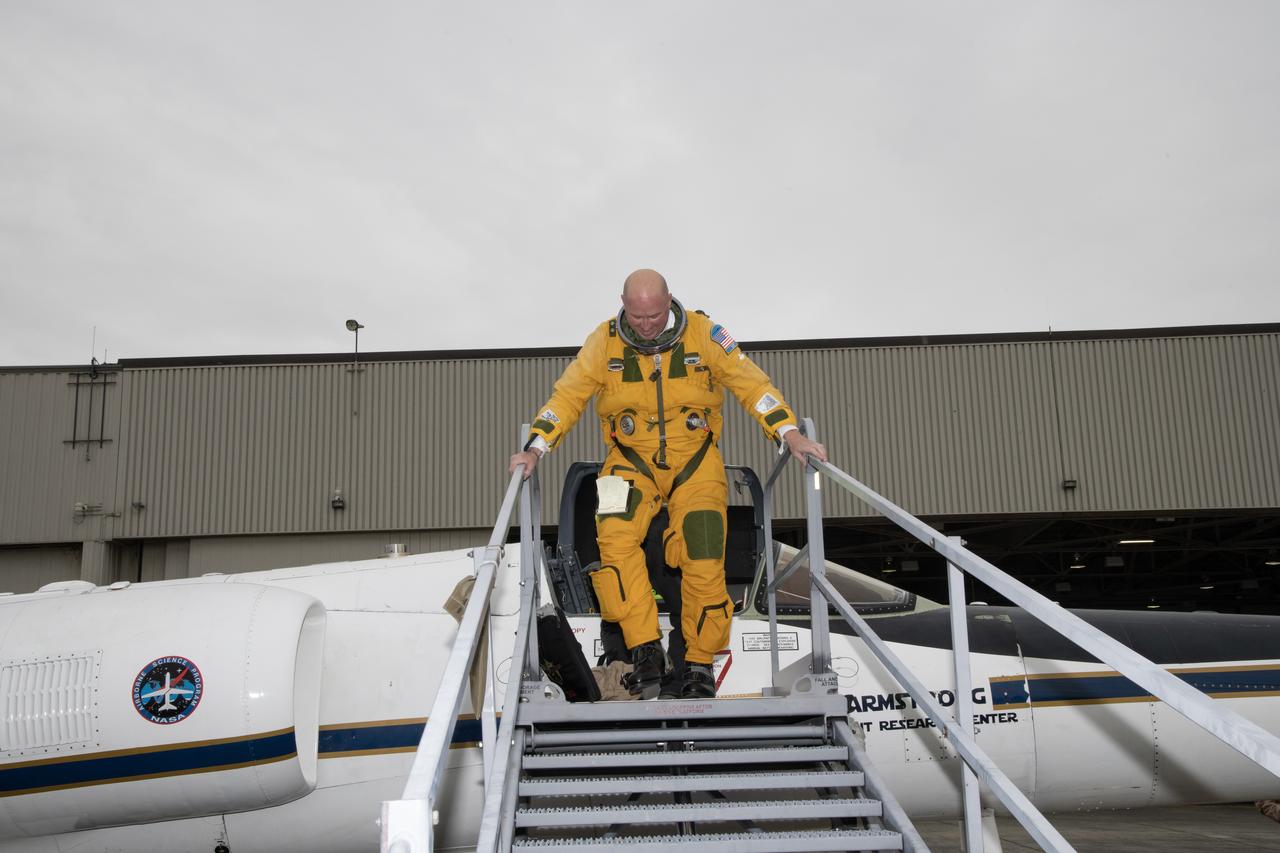
Kirt Stallings, an ER-2 pilot from NASA’s Armstrong Flight Research Center in Edwards California, completed a flight in support of the Investigation of Microphysics and Precipitation for Atlantic Coast-Threatening Storms (IMPACTS) mission. The IMPACTS team tracked storms across the Eastern United States to help understand how winter storms form and develop. The aircraft, which is based at NASA’s Armstrong Flight Research Center Building 703 in Palmdale, California, was temporarily based at Dobbins Air Reserve Base in Marietta, Georgia. The three-year IMPACTS campaign concluded on Feb. 28, 2023.
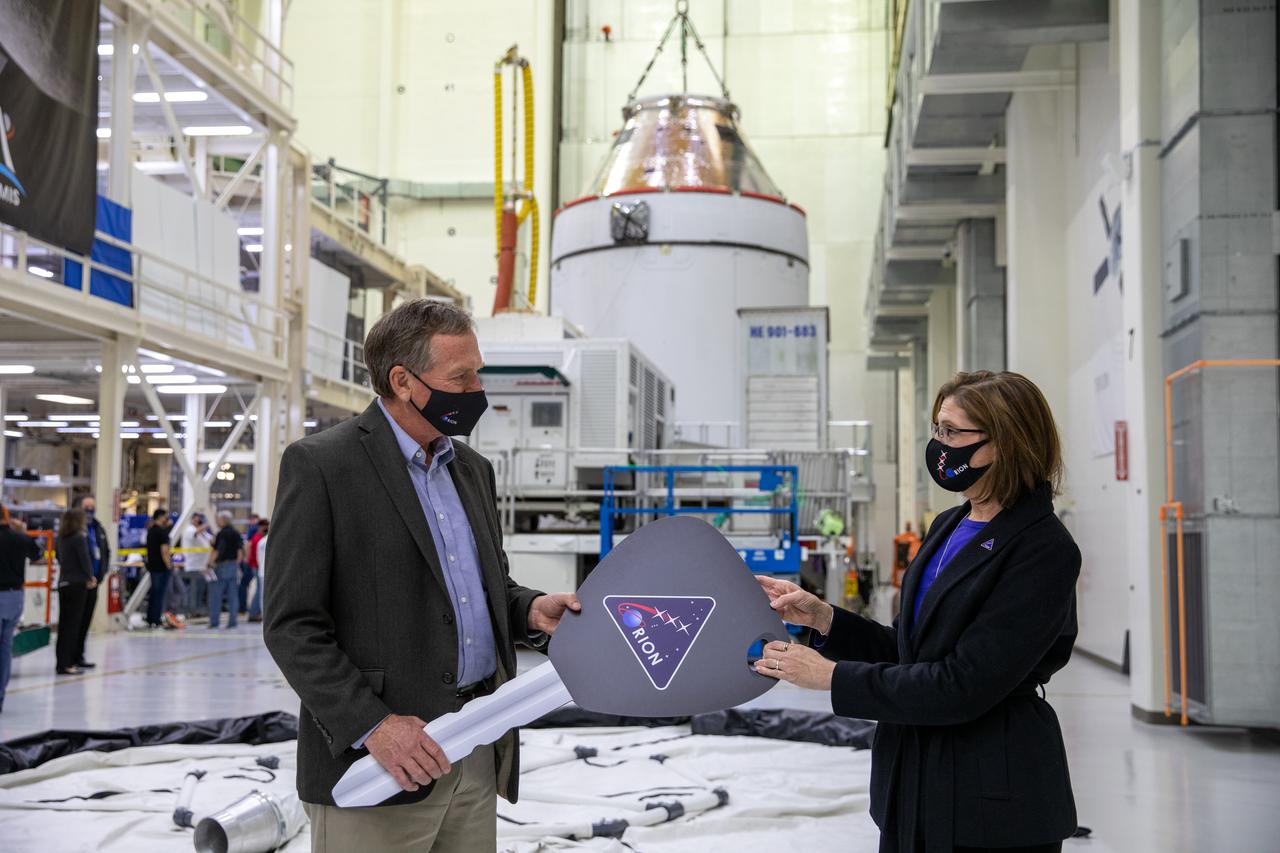
Orion is revealed for one of the final times on Jan. 14, as it is readied atop its transport pallet from the Neil Armstrong Operations and Checkout Building at NASA’s Kennedy Space Center in Florida, along its path to the pad ahead of the Artemis I launch. Mike Bolger, at left, manager of Exploration Ground Systems (EGS), receives the “key” to Orion from Cathy Koerner, Orion Program manager signifying the transfer of the spacecraft from the assembly to the ground system processing team. Teams across the globe have worked tirelessly to assemble the spacecraft, which will receive a protective covering prior to departing for the Multi-Payload Processing Facility to begin ground processing by the EGS and Jacobs teams.
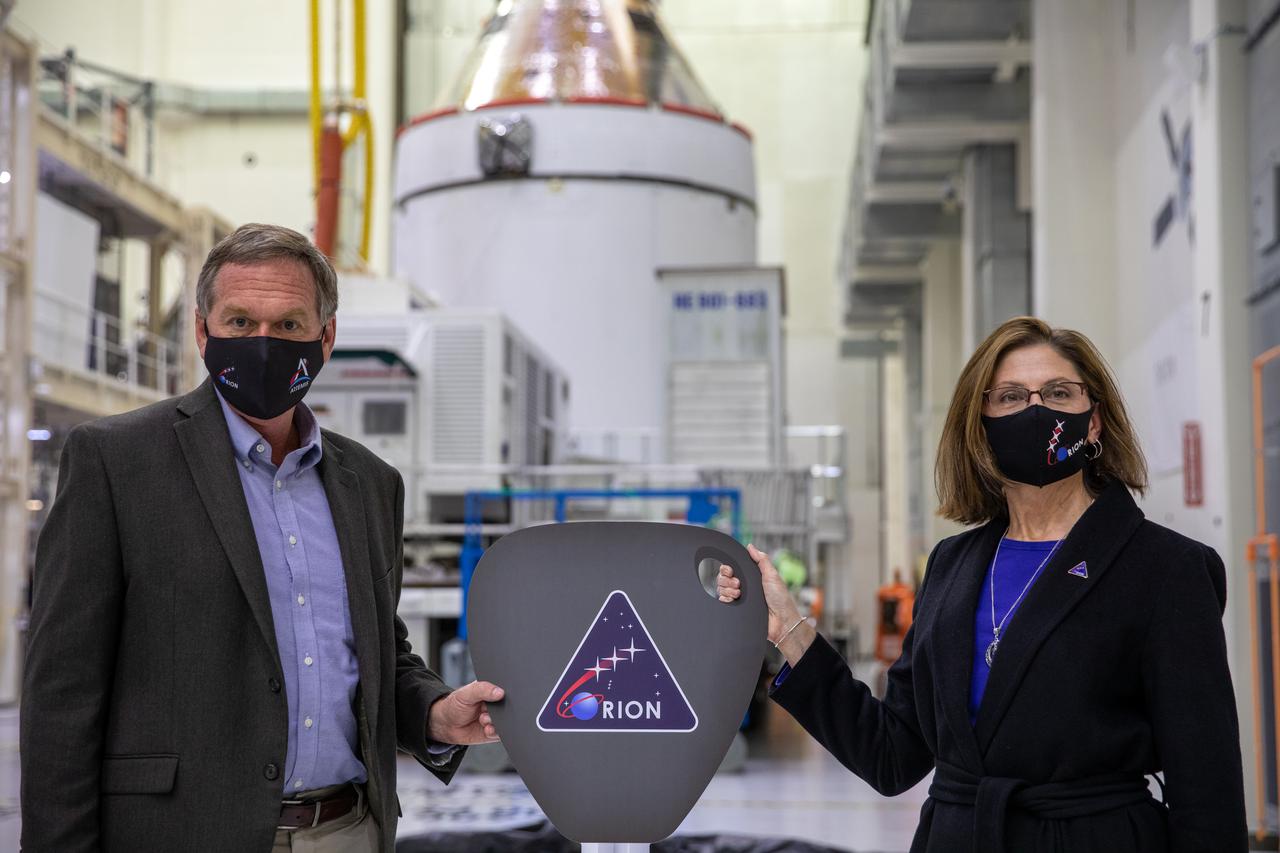
Orion is revealed for one of the final times on Jan. 14, as it is readied atop its transport pallet from the Neil Armstrong Operations and Checkout Building at NASA’s Kennedy Space Center in Florida, along its path to the pad ahead of the Artemis I launch. Mike Bolger, at left, manager of Exploration Ground Systems (EGS), receives the “key” to Orion from Cathy Koerner, Orion Program manager, signifying the transfer of the spacecraft from the assembly to the ground system processing team. Teams across the globe have worked tirelessly to assemble the spacecraft, which will receive a protective covering prior to departing for the Multi-Payload Processing Facility to begin ground processing by the EGS and Jacobs teams.
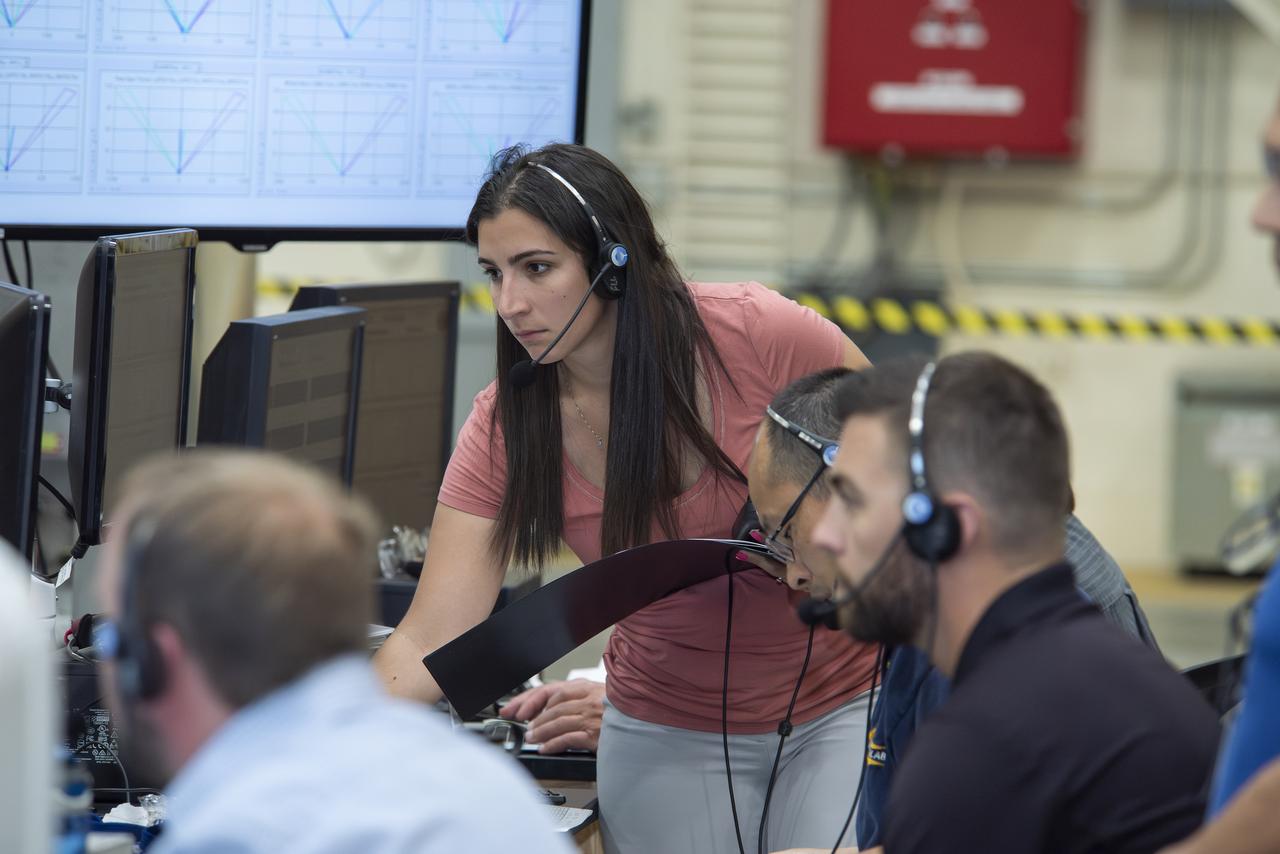
Kirsten Boogaard, Deputy Project Manager for the DC-8 aircraft, leads and manages project planning, integration and resources for airborne science missions since 2020
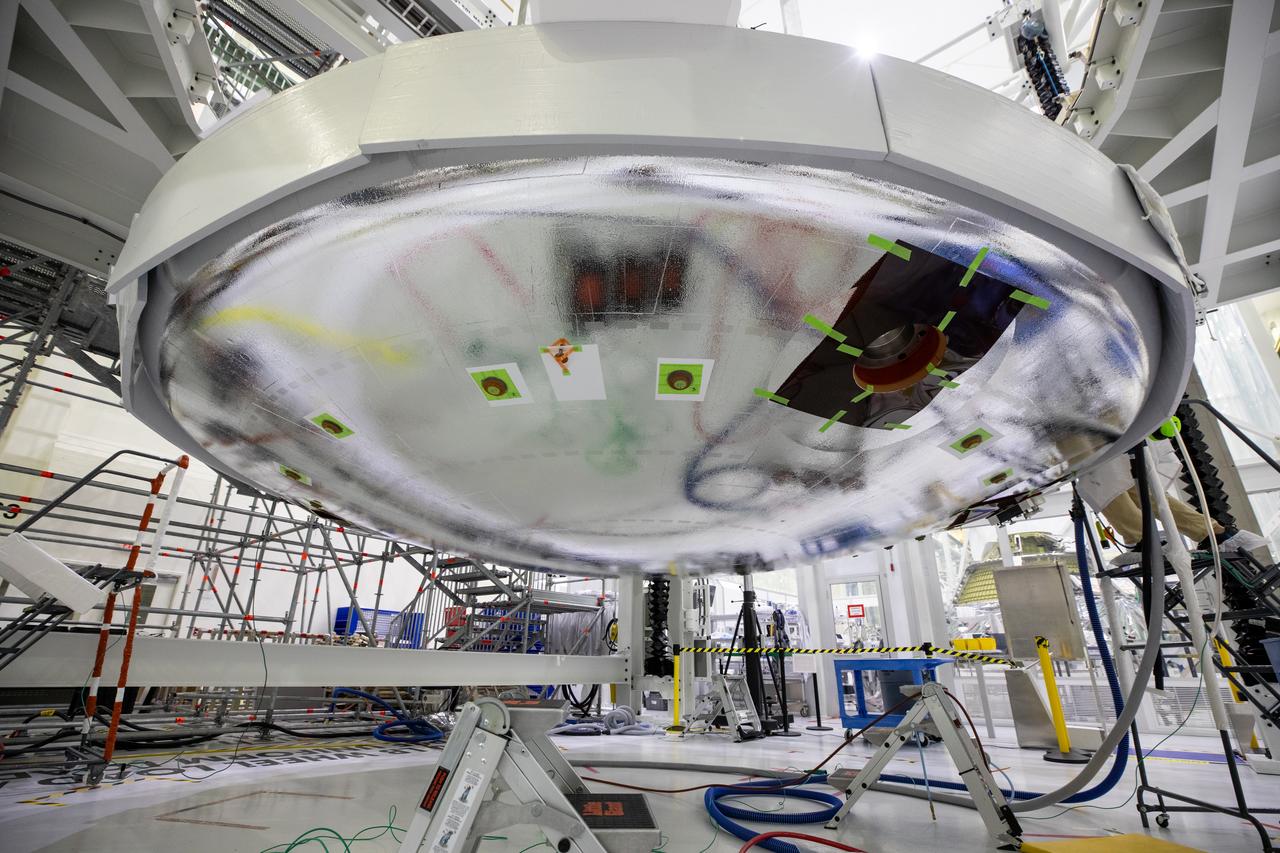
Teams install the heat shield on the Artemis II Orion spacecraft inside the high bay of the Neil Armstrong Operations and Checkout Building at NASA’s Kennedy Space Center in Florida on June 22, 2023. The 16.5-foot-wide shield will ensure the safe return of the astronauts on board as the spacecraft travels at speeds of about 25,000 miles per hour and experiences outside temperatures of nearly 5,000 degrees Fahrenheit. Artemis II will be the first mission with astronauts under Artemis that will test and check out all of Orion’s systems needed for future crewed missions.
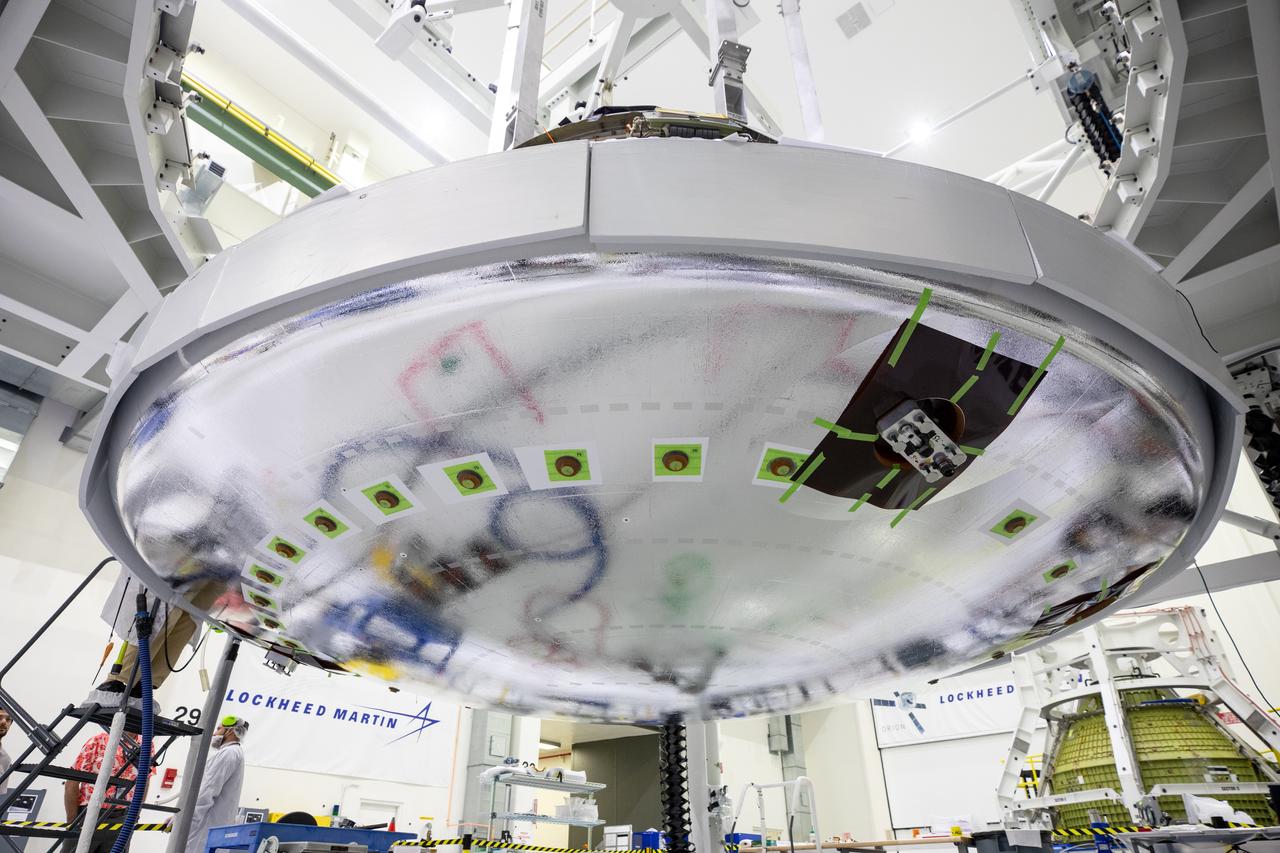
Teams install the heat shield on the Artemis II Orion spacecraft inside the high bay of the Neil Armstrong Operations and Checkout Building at NASA’s Kennedy Space Center in Florida on June 22, 2023. The 16.5-foot-wide shield will ensure the safe return of the astronauts on board as the spacecraft travels at speeds of about 25,000 miles per hour and experiences outside temperatures of nearly 5,000 degrees Fahrenheit. Artemis II will be the first mission with astronauts under Artemis that will test and check out all of Orion’s systems needed for future crewed missions.
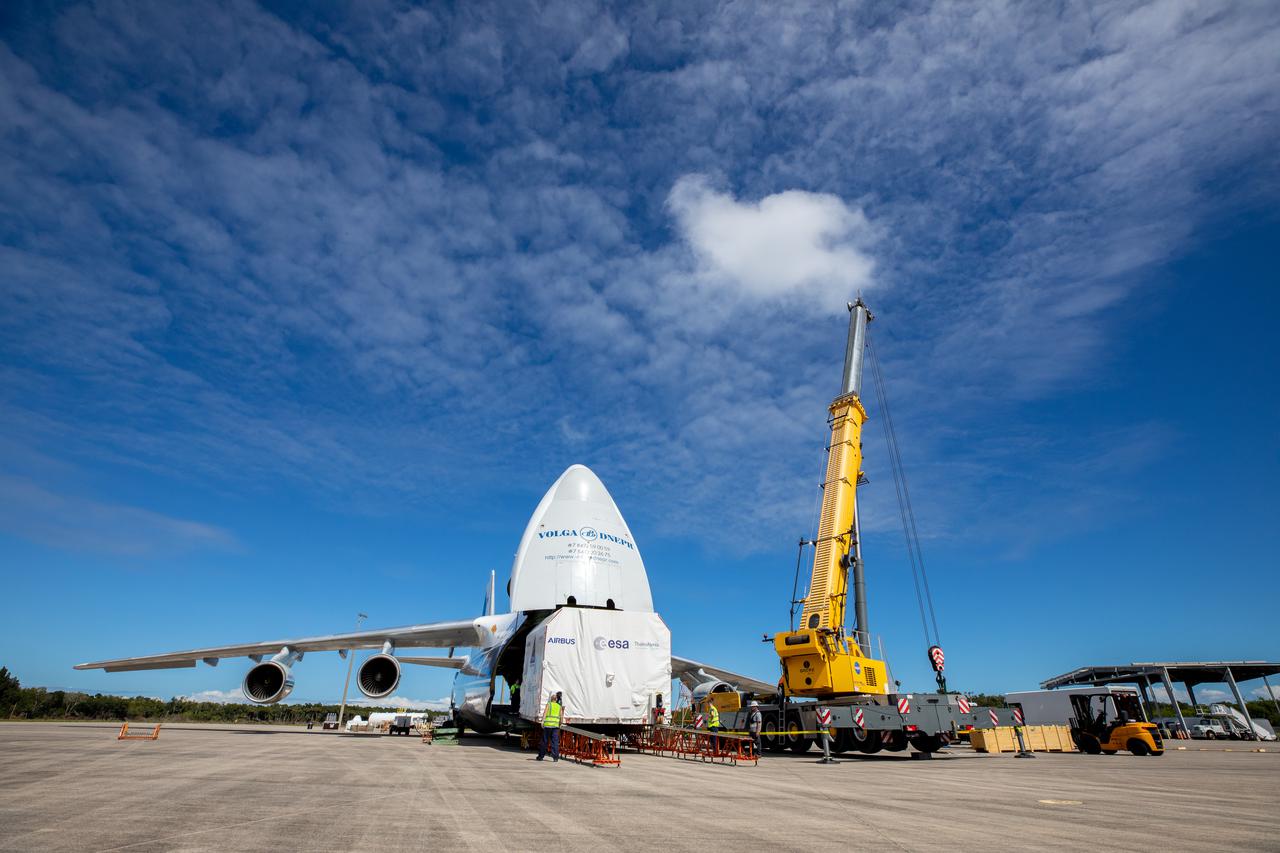
The European Service Module (ESM) for NASA’s Orion spacecraft arrived at the Launch and Landing Facility at NASA’s Kennedy Space Center in Florida on Thursday, Oct. 14, 2021, and was offloaded. Making the journey from the Airbus Facility in Bremen, Germany, aboard a Russian Antonov aircraft, the ESM will be transferred to Kennedy’s Neil A. Armstrong Operations and Checkout Facility. There, teams from NASA and Lockheed Martin will integrate the service module with the crew module adapter and crew module, already housed in the facility. The powerhouse that will fuel and propel Orion in space, the ESM will be used for Artemis II, the first Artemis mission flying crew aboard Orion. Teams with the European Space Agency and Airbus built the service module.
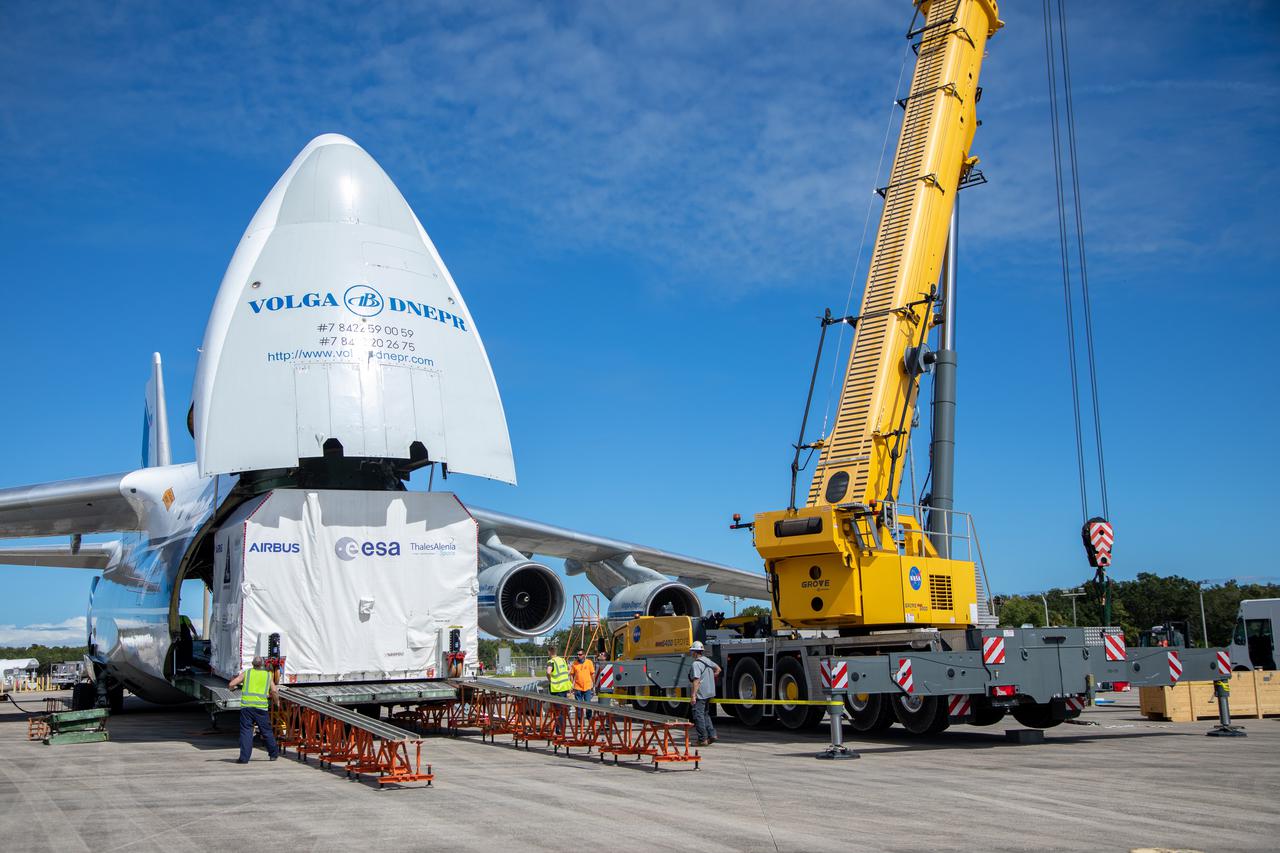
The European Service Module (ESM) for NASA’s Orion spacecraft arrived at the Launch and Landing Facility at NASA’s Kennedy Space Center in Florida on Thursday, Oct. 14, 2021, and was offloaded. Making the journey from the Airbus Facility in Bremen, Germany, aboard a Russian Antonov aircraft, the ESM will be transferred to Kennedy’s Neil A. Armstrong Operations and Checkout Facility. There, teams from NASA and Lockheed Martin will integrate the service module with the crew module adapter and crew module, already housed in the facility. The powerhouse that will fuel and propel Orion in space, the ESM will be used for Artemis II, the first Artemis mission flying crew aboard Orion. Teams with the European Space Agency and Airbus built the service module.
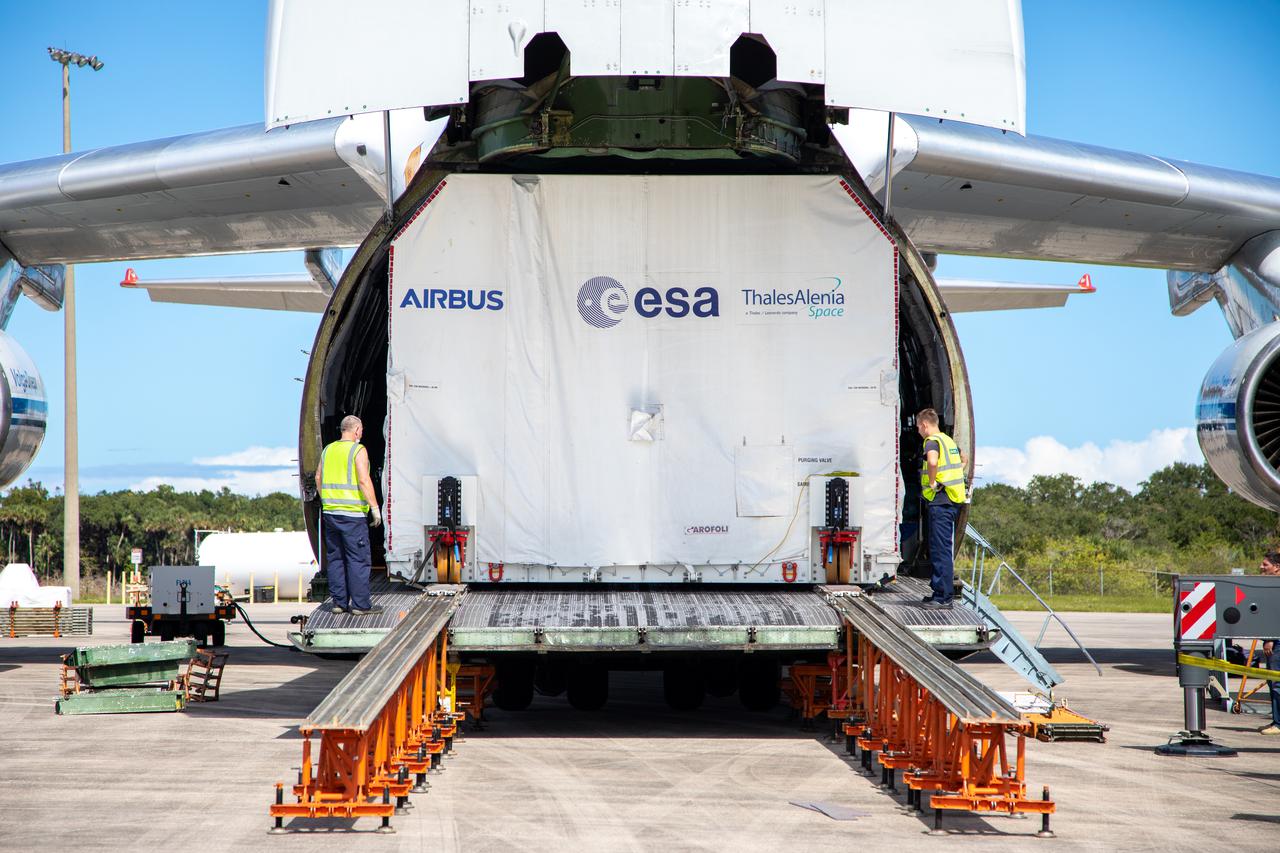
The European Service Module (ESM) for NASA’s Orion spacecraft arrived at the Launch and Landing Facility at NASA’s Kennedy Space Center in Florida on Thursday, Oct. 14, 2021, and was offloaded. Making the journey from the Airbus Facility in Bremen, Germany, aboard a Russian Antonov aircraft, the ESM will be transferred to Kennedy’s Neil A. Armstrong Operations and Checkout Facility. There, teams from NASA and Lockheed Martin will integrate the service module with the crew module adapter and crew module, already housed in the facility. The powerhouse that will fuel and propel Orion in space, the ESM will be used for Artemis II, the first Artemis mission flying crew aboard Orion. Teams with the European Space Agency and Airbus built the service module.
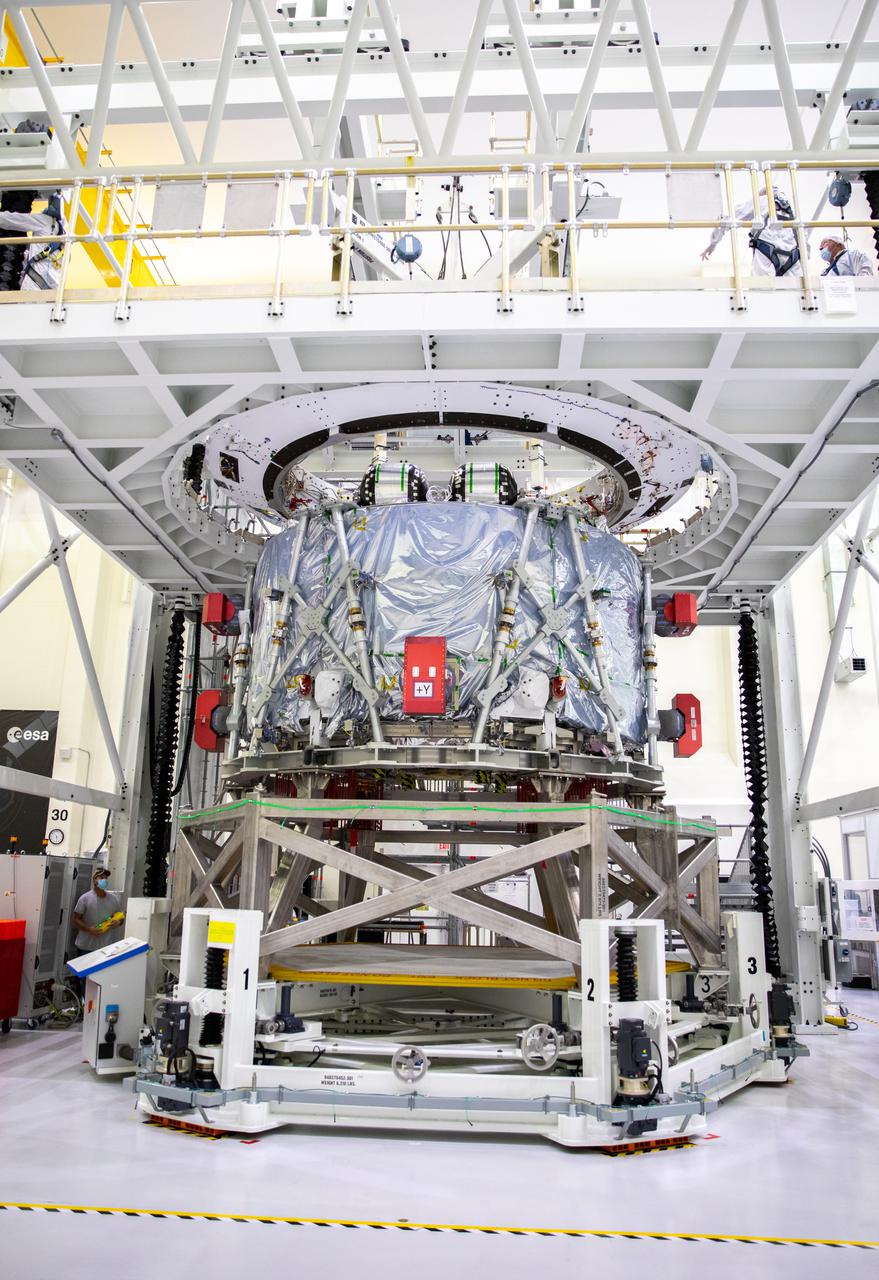
The European-built Service Module (ESM) for NASA’s Artemis II mission shown in a work stand inside the high bay of the Neil A. Armstrong Operations and Checkout Building at NASA’s Kennedy Space Center in Florida on Oct. 15, 2021. Teams from NASA, Lockheed Martin, the European Space Agency and Airbus prepare the service module to be integrated with the Orion crew module adapter and crew module, already housed in the facility. The powerhouse that will fuel and propel Orion in space, the ESM for Artemis II will be the first Artemis mission flying crew aboard Orion. Teams with the European Space Agency and Airbus built the service module.
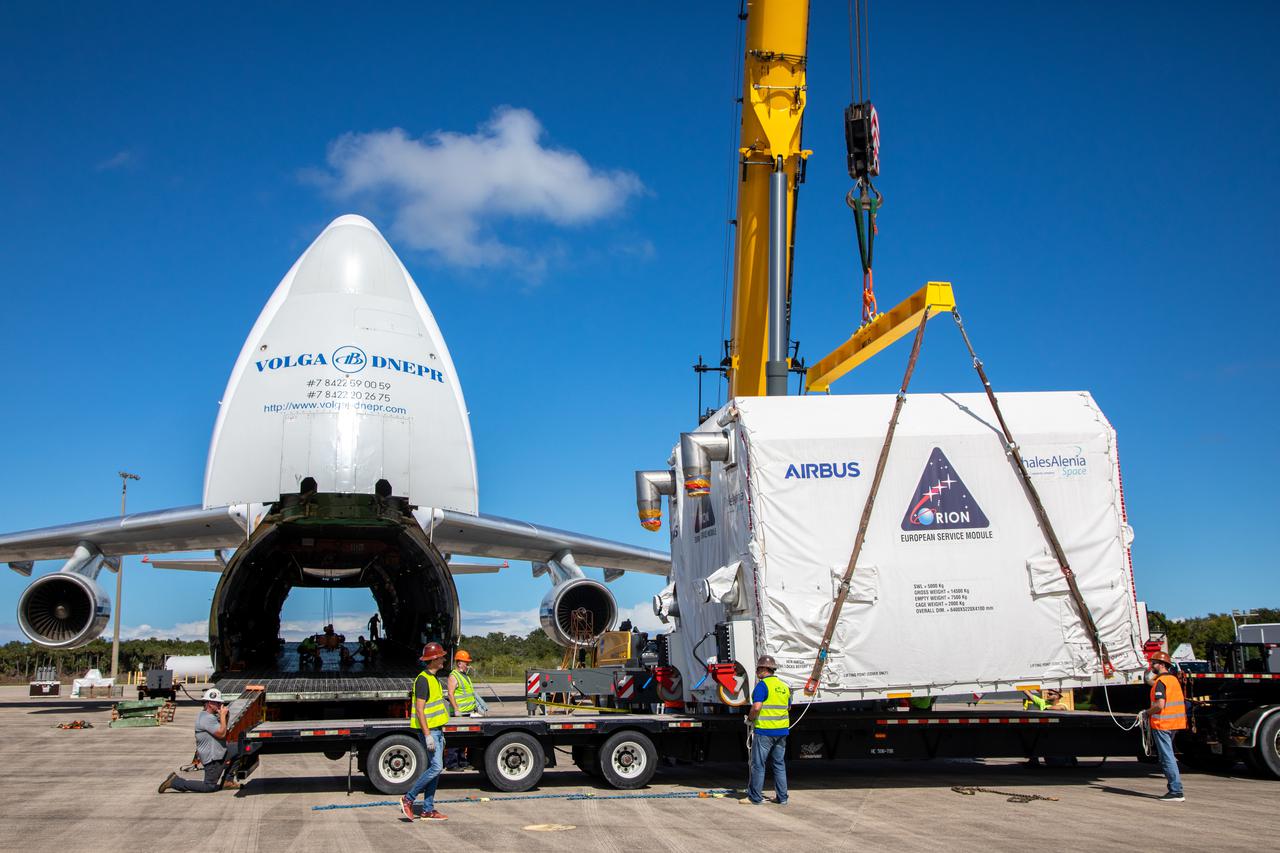
The European Service Module (ESM) for NASA’s Orion spacecraft arrived at the Launch and Landing Facility at NASA’s Kennedy Space Center in Florida on Thursday, Oct. 14, 2021, and was offloaded. Making the journey from the Airbus Facility in Bremen, Germany, aboard a Russian Antonov aircraft, the ESM will be transferred to Kennedy’s Neil A. Armstrong Operations and Checkout Facility. There, teams from NASA and Lockheed Martin will integrate the service module with the crew module adapter and crew module, already housed in the facility. The powerhouse that will fuel and propel Orion in space, the ESM will be used for Artemis II, the first Artemis mission flying crew aboard Orion. Teams with the European Space Agency and Airbus built the service module.
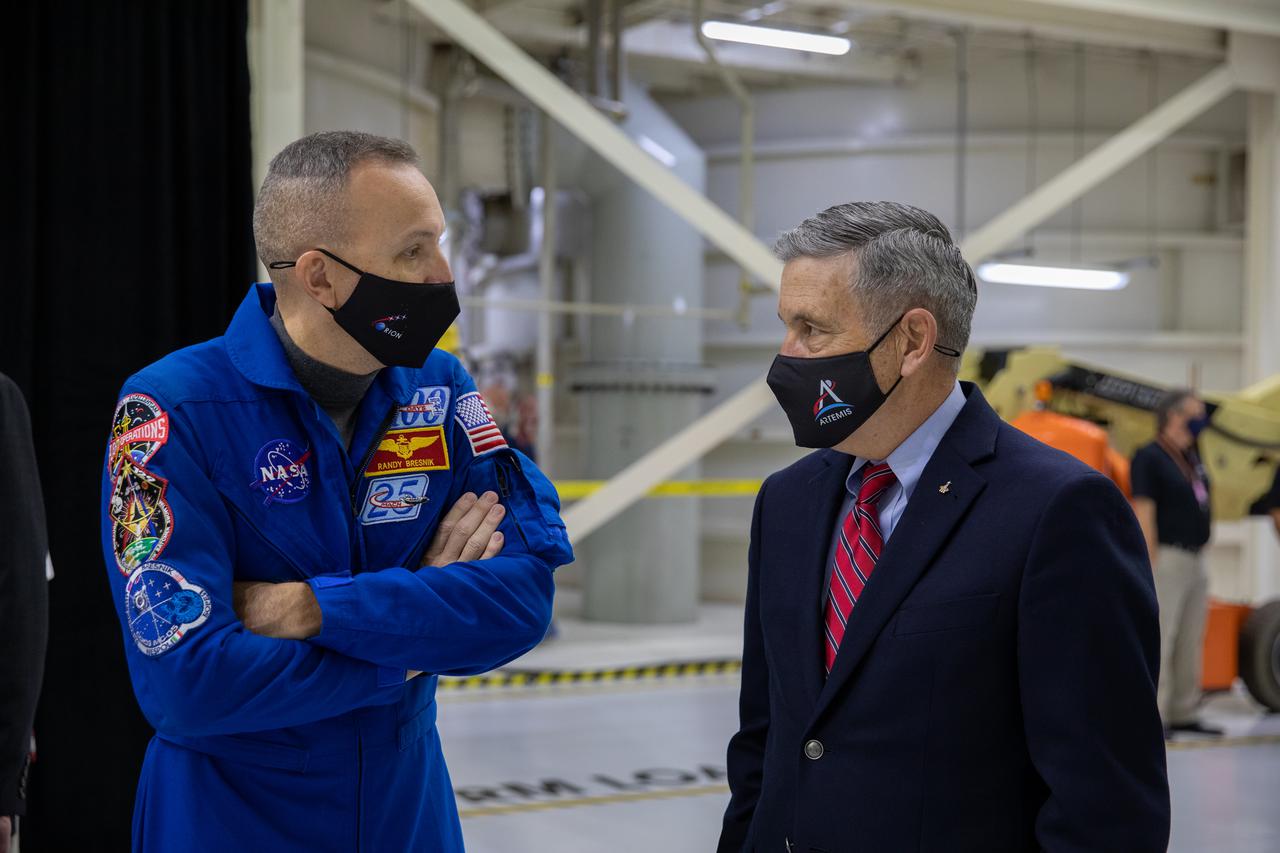
Orion is revealed for one of the final times on Jan. 14, as it is readied atop its transport pallet from the Neil Armstrong Operations and Checkout Building at NASA’s Kennedy Space Center in Florida, along its path to the pad ahead of the Artemis I launch. Orion was officially transferred from the Orion Program to Exploration Ground Systems (EGS) during a handover ceremony. NASA astronaut Randy Bresnik speaks with Kennedy Center Director Bob Cabana inside the high bay. Teams across the globe have worked tirelessly to assemble the spacecraft, which will receive a protective covering prior to departing for the Multi-Payload Processing Facility to begin ground processing by the EGS and Jacobs teams.
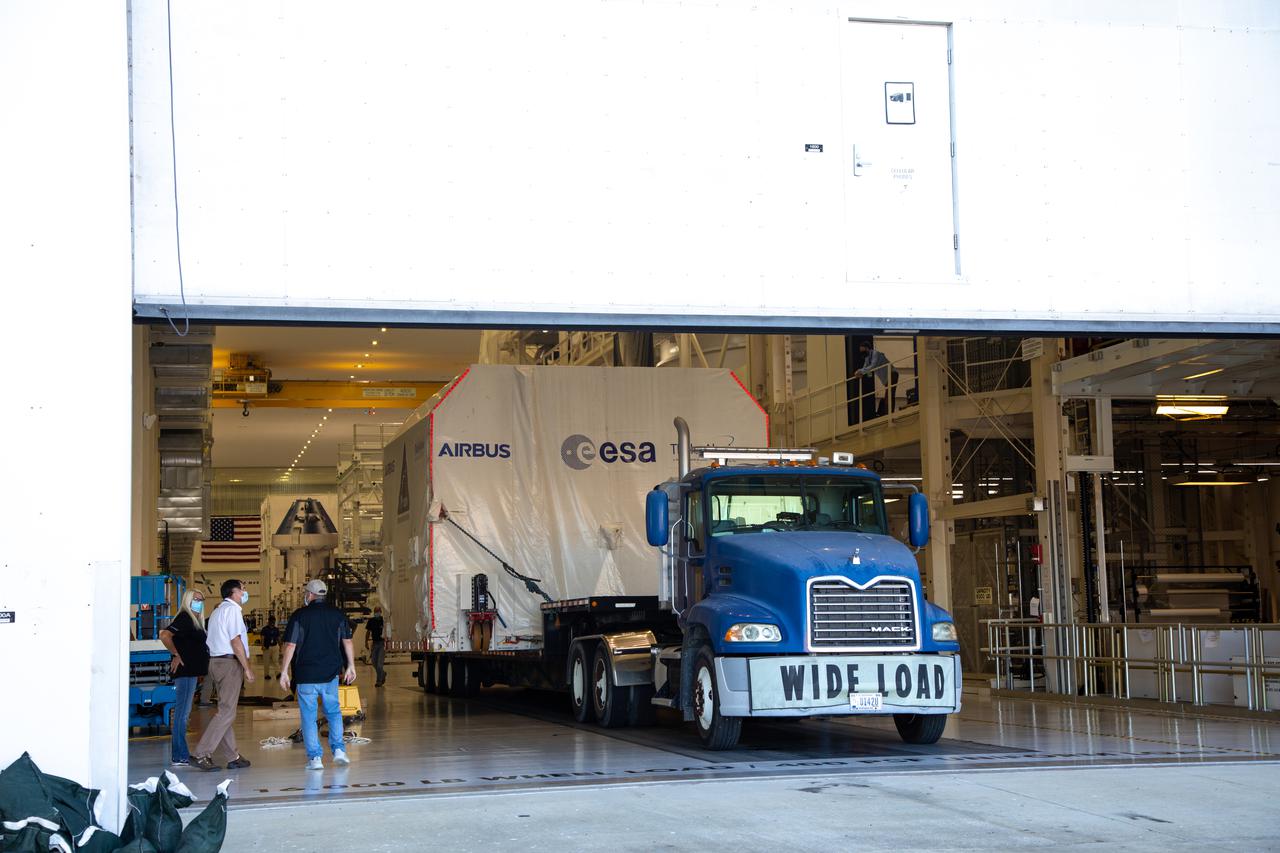
The European Service Module (ESM) for NASA’s Orion spacecraft arrived at the Neil A. Armstrong Operations and Checkout Facility at Kennedy Space Center in Florida on Oct 14, 2021. Earlier in the day the ESM arrived at the Launch and Landing Facility at Kennedy after making the journey from the Airbus Facility in Bremen, Germany, aboard a Russian Antonov aircraft. There, teams from NASA and Lockheed Martin will integrate the service module with the crew module adapter and crew module, already housed in the facility. The powerhouse that will fuel and propel Orion in space, the ESM will be used for Artemis II, the first Artemis mission flying crew aboard Orion. Teams with the European Space Agency and Airbus built the service module.
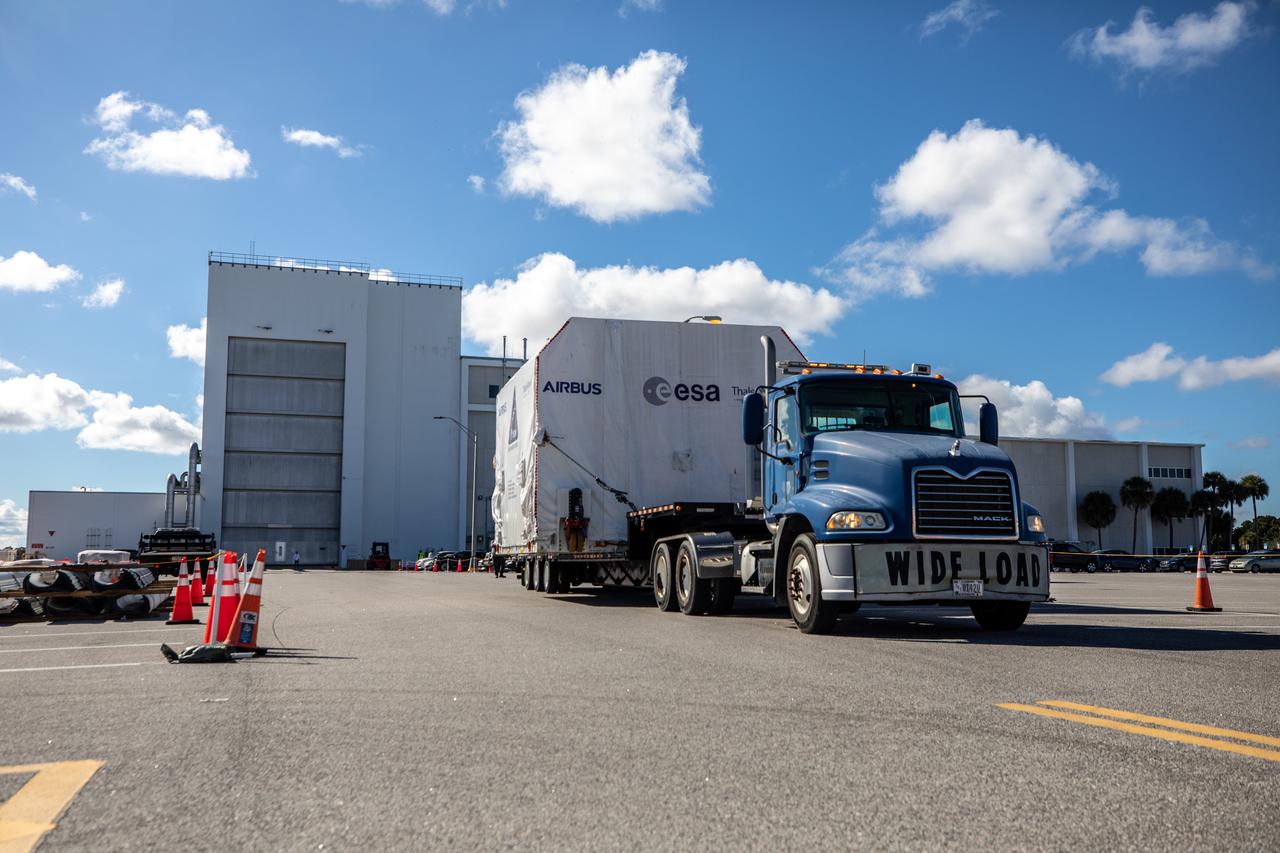
The European Service Module (ESM) for NASA’s Orion spacecraft arrived at the Neil A. Armstrong Operations and Checkout Facility at Kennedy Space Center in Florida on Oct 14, 2021. Earlier in the day the ESM arrived at the Launch and Landing Facility at Kennedy after making the journey from the Airbus Facility in Bremen, Germany, aboard a Russian Antonov aircraft. There, teams from NASA and Lockheed Martin will integrate the service module with the crew module adapter and crew module, already housed in the facility. The powerhouse that will fuel and propel Orion in space, the ESM will be used for Artemis II, the first Artemis mission flying crew aboard Orion. Teams with the European Space Agency and Airbus built the service module.
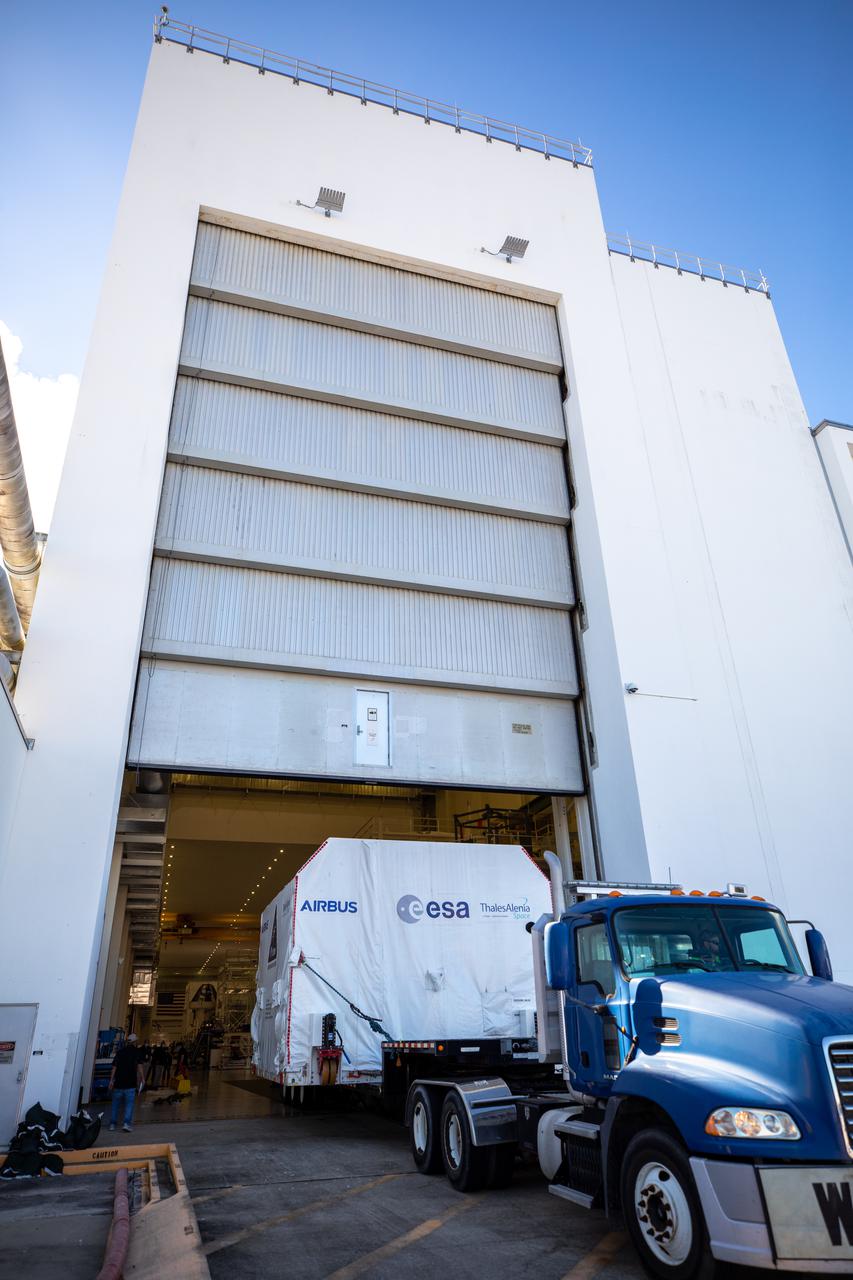
The European Service Module (ESM) for NASA’s Orion spacecraft arrived at the Neil A. Armstrong Operations and Checkout Facility at Kennedy Space Center in Florida on Oct 14, 2021. Earlier in the day the ESM arrived at the Launch and Landing Facility at Kennedy after making the journey from the Airbus Facility in Bremen, Germany, aboard a Russian Antonov aircraft. There, teams from NASA and Lockheed Martin will integrate the service module with the crew module adapter and crew module, already housed in the facility. The powerhouse that will fuel and propel Orion in space, the ESM will be used for Artemis II, the first Artemis mission flying crew aboard Orion. Teams with the European Space Agency and Airbus built the service module.
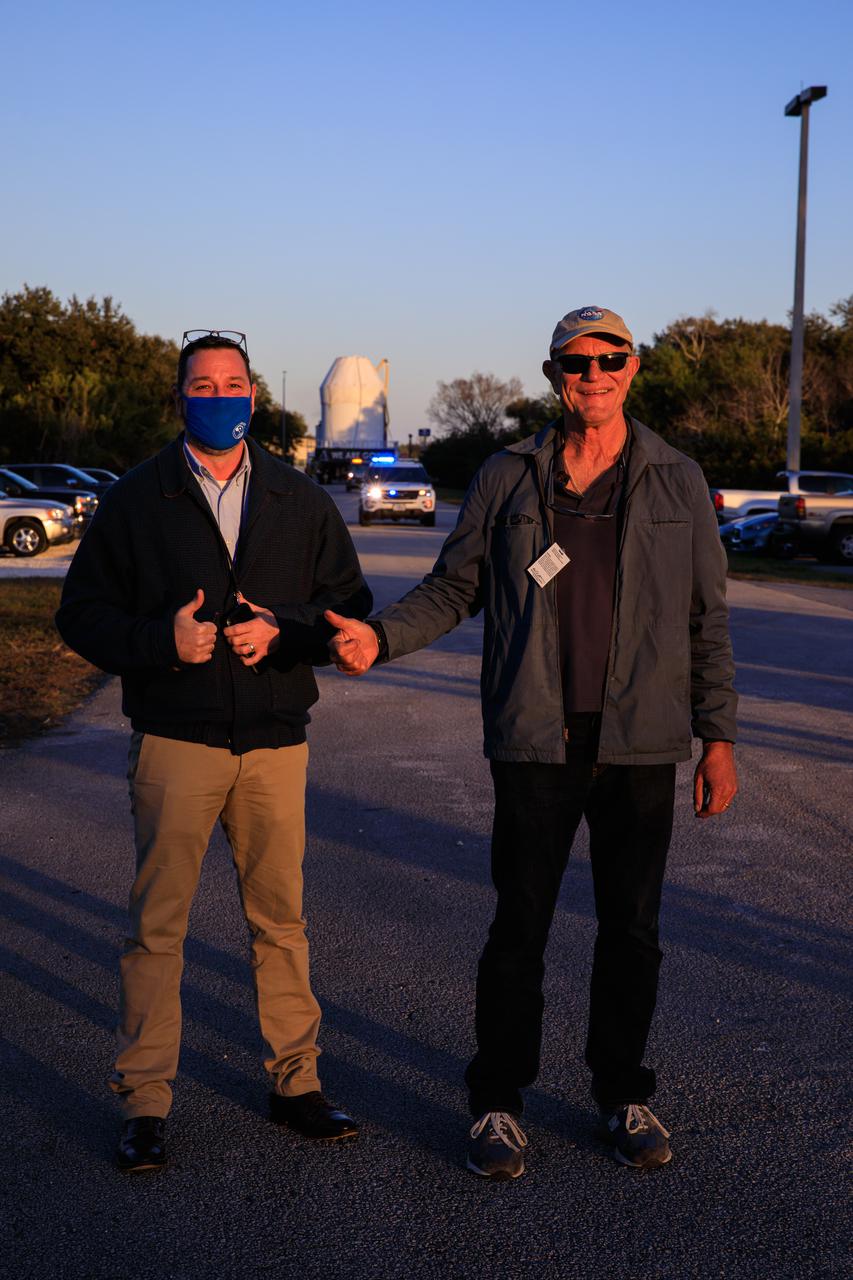
Secured atop a transport vehicle, Orion moves along the route to the Multi-Payload Processing Facility (MPPF) on Jan. 16, 2021, after departing from the Neil Armstrong Operations and Checkout Building at NASA’s Kennedy Space Center in Florida. Watching Orion move, from left are Mike Collins, NASA Operations manager for Spacecraft Offline Operations at Kennedy, and Skip Williams, operations manager for the MPPF spacecraft offline element integration team. In the MPPF, Orion will undergo processing with the Exploration Ground Systems team taking over ground processing ahead of the Artemis I launch.
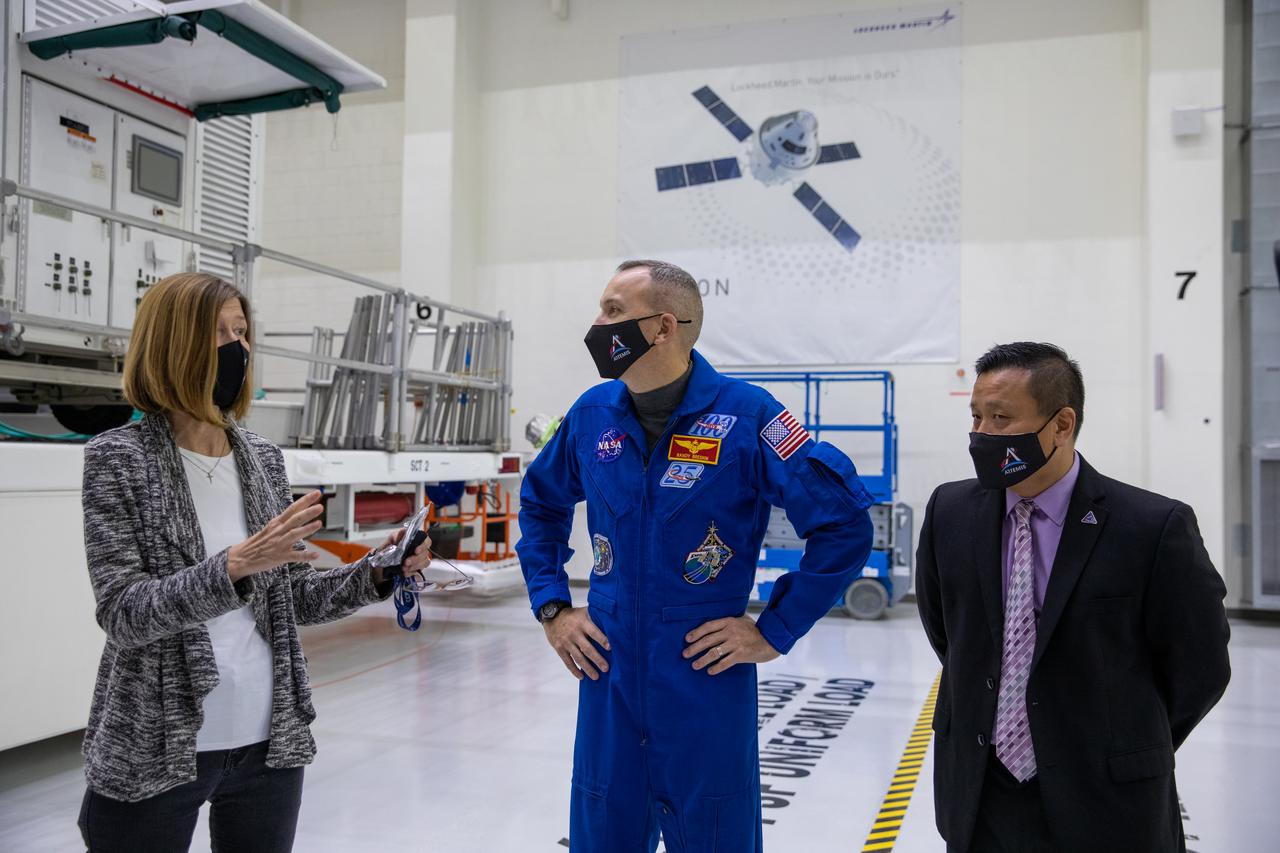
Orion is revealed for one of the final times on Jan. 14, as it is readied atop its transport pallet from the Neil Armstrong Operations and Checkout Building at NASA’s Kennedy Space Center in Florida, along its path to the pad ahead of the Artemis I launch. Touring the high bay, from left, are Kathy Lueders, associate administrator of the Human Exploration and Operations Mission Directorate, NASA astronaut Randy Bresnik, and Howard Hu, Orion Deputy Program manager. Teams across the globe have worked tirelessly to assemble the spacecraft, which will receive a protective covering prior to departing for the Multi-Payload Processing Facility to begin ground processing by the Exploration Ground Systems and Jacobs teams.
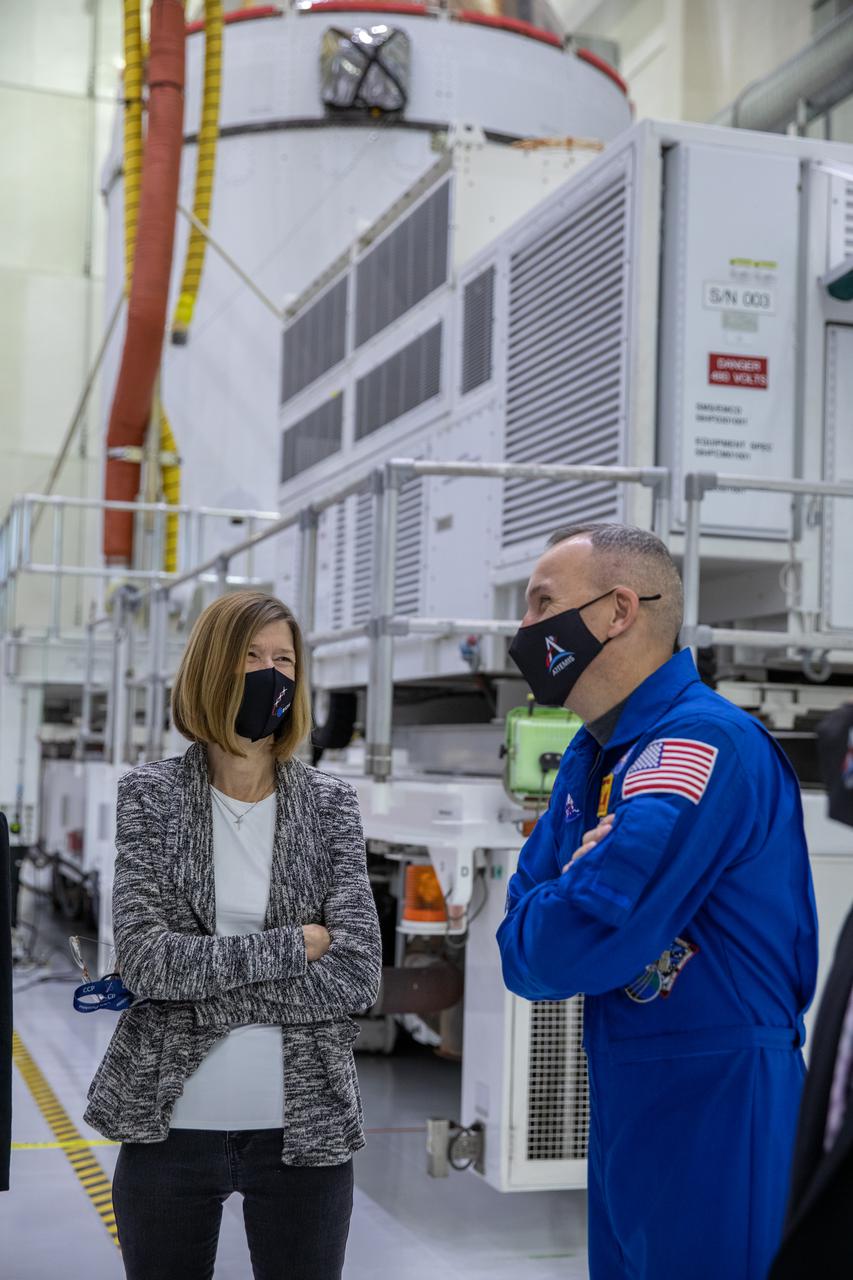
Orion is revealed for one of the final times on Jan. 14, as it is readied atop its transport pallet from the Neil Armstrong Operations and Checkout Building at NASA’s Kennedy Space Center in Florida, along its path to the pad ahead of the Artemis I launch. Touring the high bay, from left, are Kathy Lueders, associate administrator of the Human Exploration and Operations Mission Directorate, and NASA astronaut Randy Bresnik. Teams across the globe have worked tirelessly to assemble the spacecraft, which will receive a protective covering prior to departing for the Multi-Payload Processing Facility to begin ground processing by the Exploration Ground Systems and Jacobs teams.
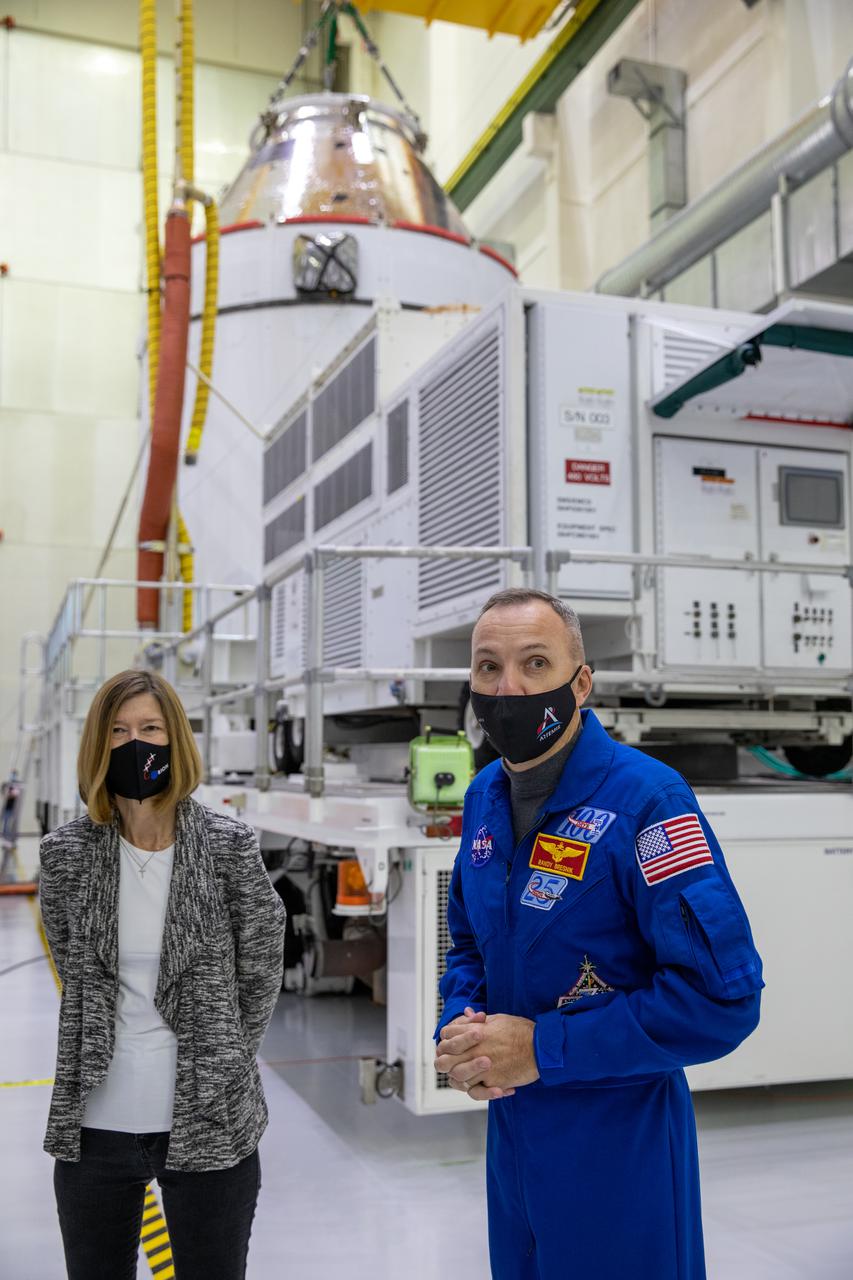
Orion is revealed for one of the final times on Jan. 14, as it is readied atop its transport pallet from the Neil Armstrong Operations and Checkout Building at NASA’s Kennedy Space Center in Florida, along its path to the pad ahead of the Artemis I launch. Viewing Orion in the high bay, from left, are Kathy Lueders, associate administrator of the Human Exploration and Operations Mission Directorate, and NASA astronaut Randy Bresnik. Teams across the globe have worked tirelessly to assemble the spacecraft, which will receive a protective covering prior to departing for the Multi-Payload Processing Facility to begin ground processing by the Exploration Ground Systems and Jacobs teams.
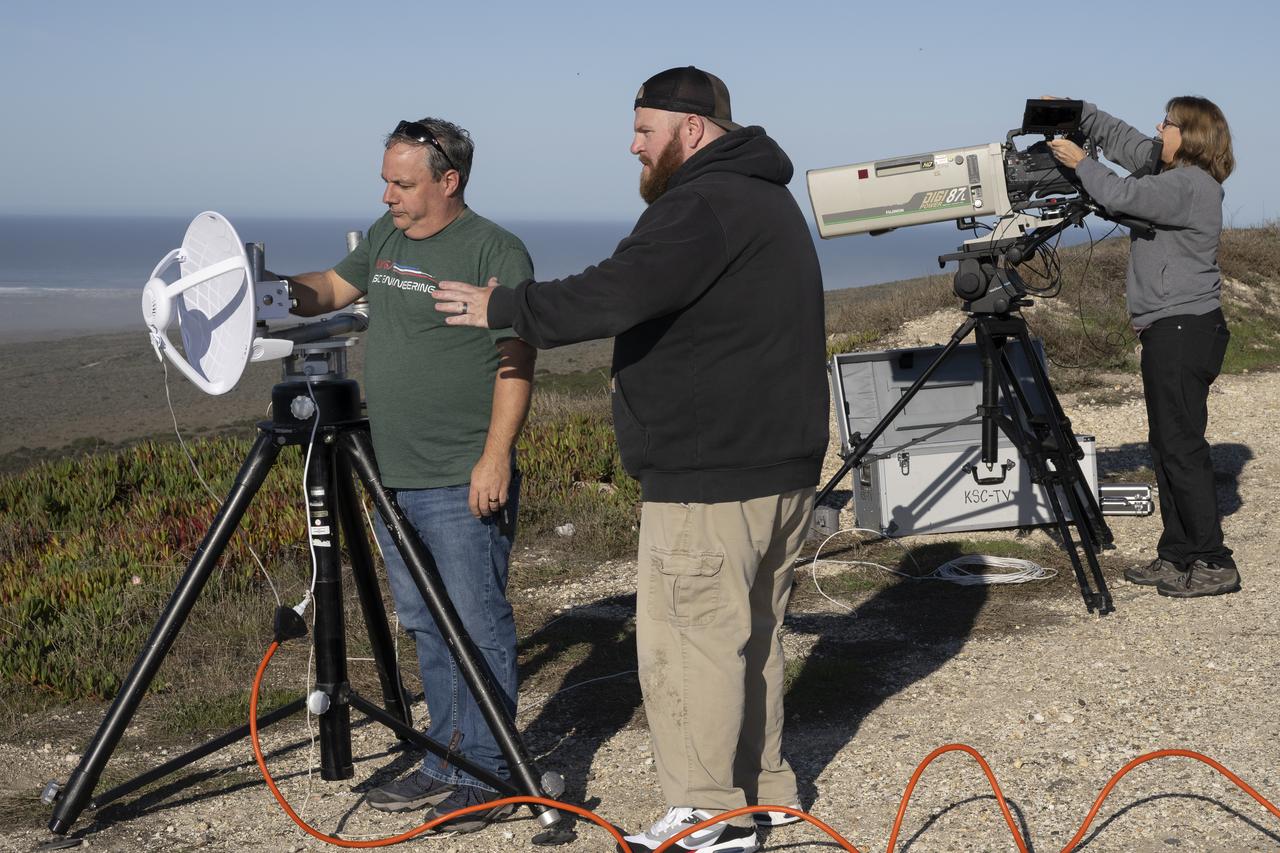
NASA videographer Jacob Shaw and the video team from NASA’s Armstrong Flight Research Center in Edwards, California, prepare to film the launch of NASA’s SPHEREx mission at Vandenberg Space Force Base. The mission, short for Specto-Photometer for the History of the Universe, Epoch of Reionization, and Ices Explorer, launched on March 11, 2025, aboard a SpaceX Falcon 9 rocket, continuing NASA’s exploration of the cosmos – and its commitment to visual storytelling.
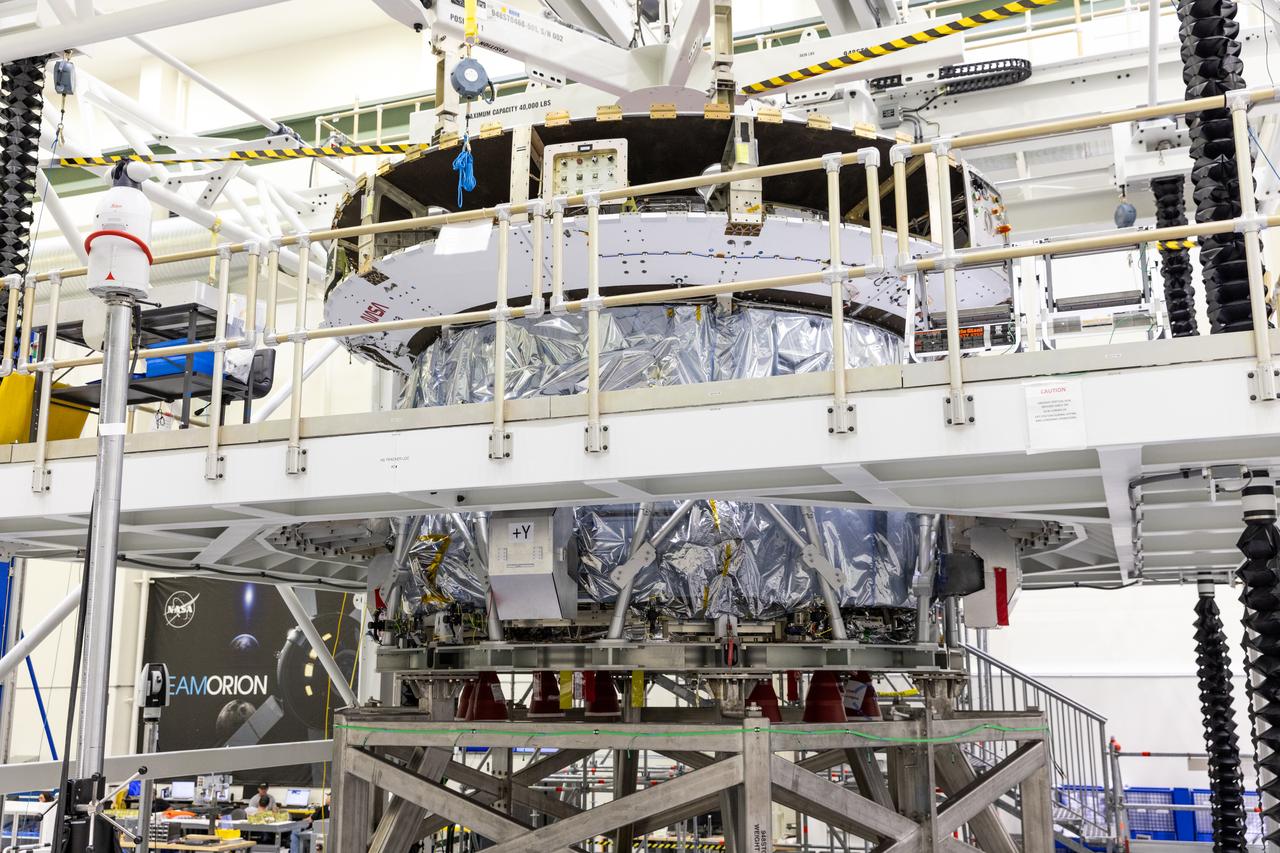
Teams began connecting the European Service Module 3 to the crew module adapter on Tuesday, Sept. 24, 2024, inside the Neil A. Armstrong Operations and Checkout Building at NASA’s Kennedy Space Center in Florida. The integrated hardware will provide propulsion, thermal control, and electrical power for NASA’s Orion spacecraft set to carry four NASA astronauts to the lunar South Pole region of the Moon for the agency’s Artemis III campaign.
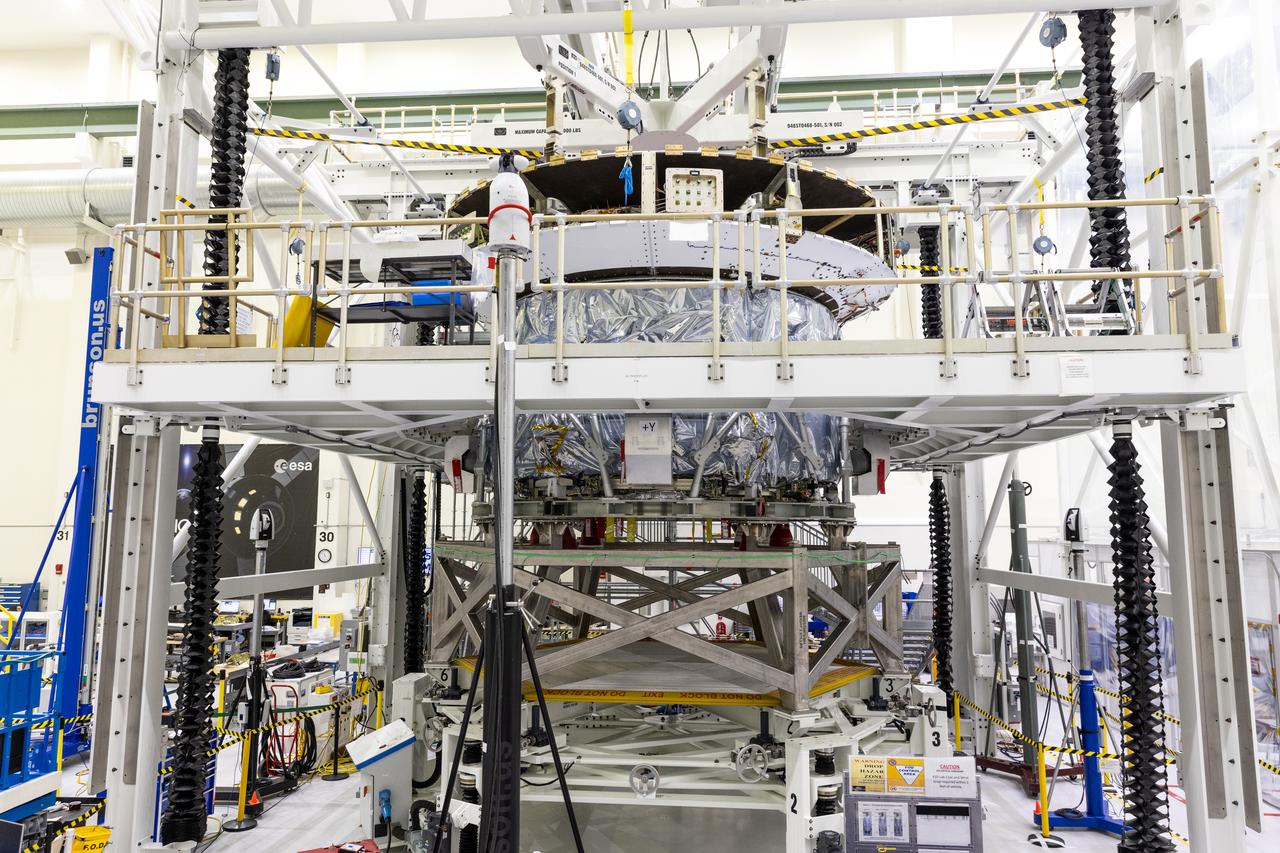
Teams began connecting European Service Module 3 to the crew module adapter on Tuesday, Sept. 24, 2024, inside the Neil A. Armstrong Operations and Checkout Building at NASA’s Kennedy Space Center in Florida. The integrated hardware will provide propulsion, thermal control, and electrical power for NASA’s Orion spacecraft set to carry four NASA astronauts to the lunar South Pole region of the Moon for the agency’s Artemis III campaign.
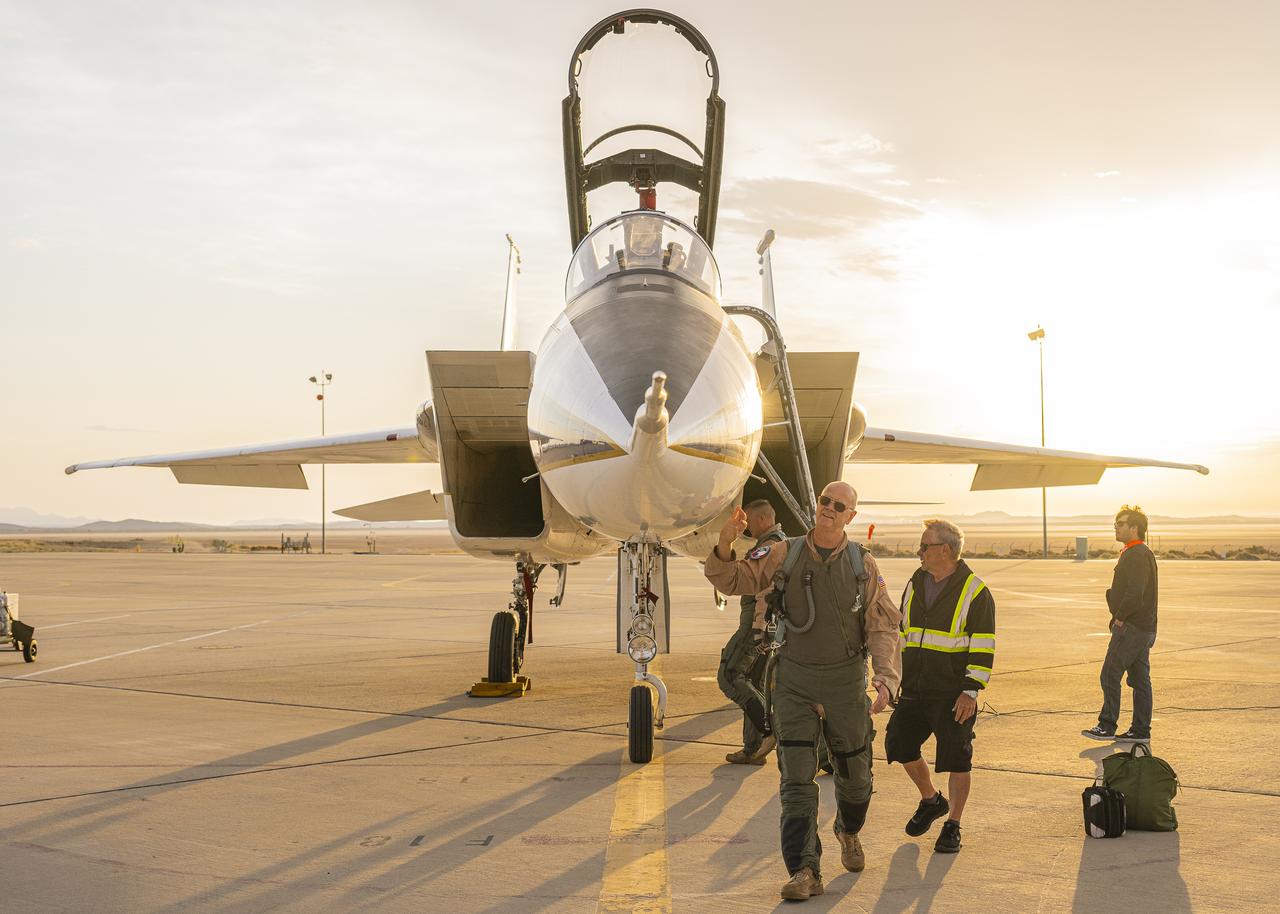
NASA test pilot Nils Larson walks around an F-15B research aircraft for a rehearsal flight supporting the agency’s Quesst mission at NASA’s Armstrong Flight Research Center in Edwards, California. The flight was part of a full-scale dress rehearsal for Phase 2 of the mission, which will eventually measure quiet sonic thumps generated by the X-59. The flight series helped NASA teams refine procedures and practice data collection ahead of future X-59 flights.
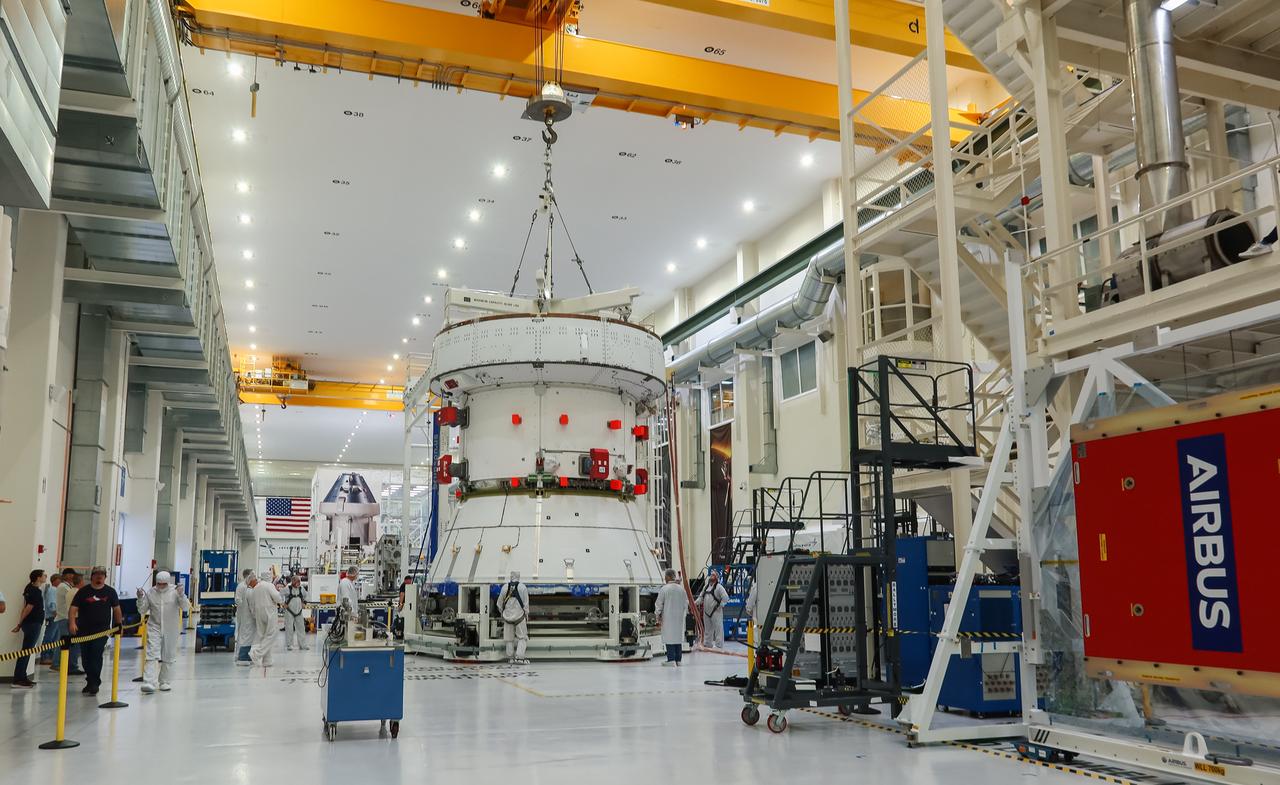
The European Service Module (ESM) for NASA’s Artemis II mission is lifted by crane inside the high bay of the Neil A. Armstrong Operations and Checkout Building at NASA’s Kennedy Space Center in Florida on May 22, 2023. Teams from NASA and Lockheed Martin are preparing the service module for transfer to the FAST (final assembly and system testing) cell for final checkouts before it is stacked with the Orion crew module. The powerhouse that will fuel and propel Orion in space, the ESM will be used for Artemis II, the first Artemis mission flying crew aboard Orion.

Teams began connecting the European Service Module 3 to the crew module adapter on Tuesday, Sept. 24, 2024, inside the Neil A. Armstrong Operations and Checkout Building at NASA’s Kennedy Space Center in Florida. The integrated hardware will provide propulsion, thermal control, and electrical power for NASA’s Orion spacecraft set to carry four NASA astronauts to the lunar South Pole region of the Moon for the agency’s Artemis III campaign.
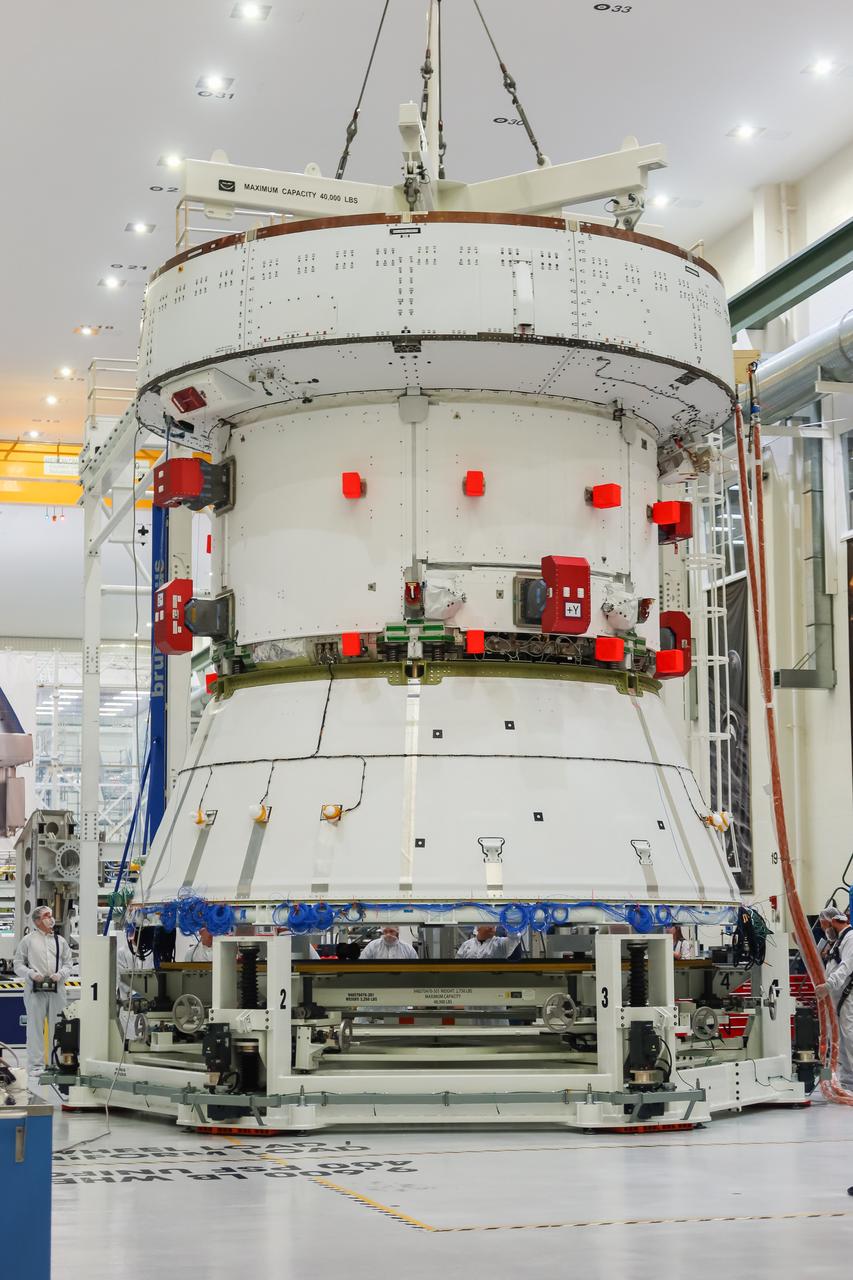
The European Service Module (ESM) for NASA’s Artemis II mission is lifted by crane inside the high bay of the Neil A. Armstrong Operations and Checkout Building at NASA’s Kennedy Space Center in Florida on May 22, 2023. Teams from NASA and Lockheed Martin are preparing the service module for transfer to the FAST (final assembly and system testing) cell for final checkouts before it is stacked with the Orion crew module. The powerhouse that will fuel and propel Orion in space, the ESM will be used for Artemis II, the first Artemis mission flying crew aboard Orion.
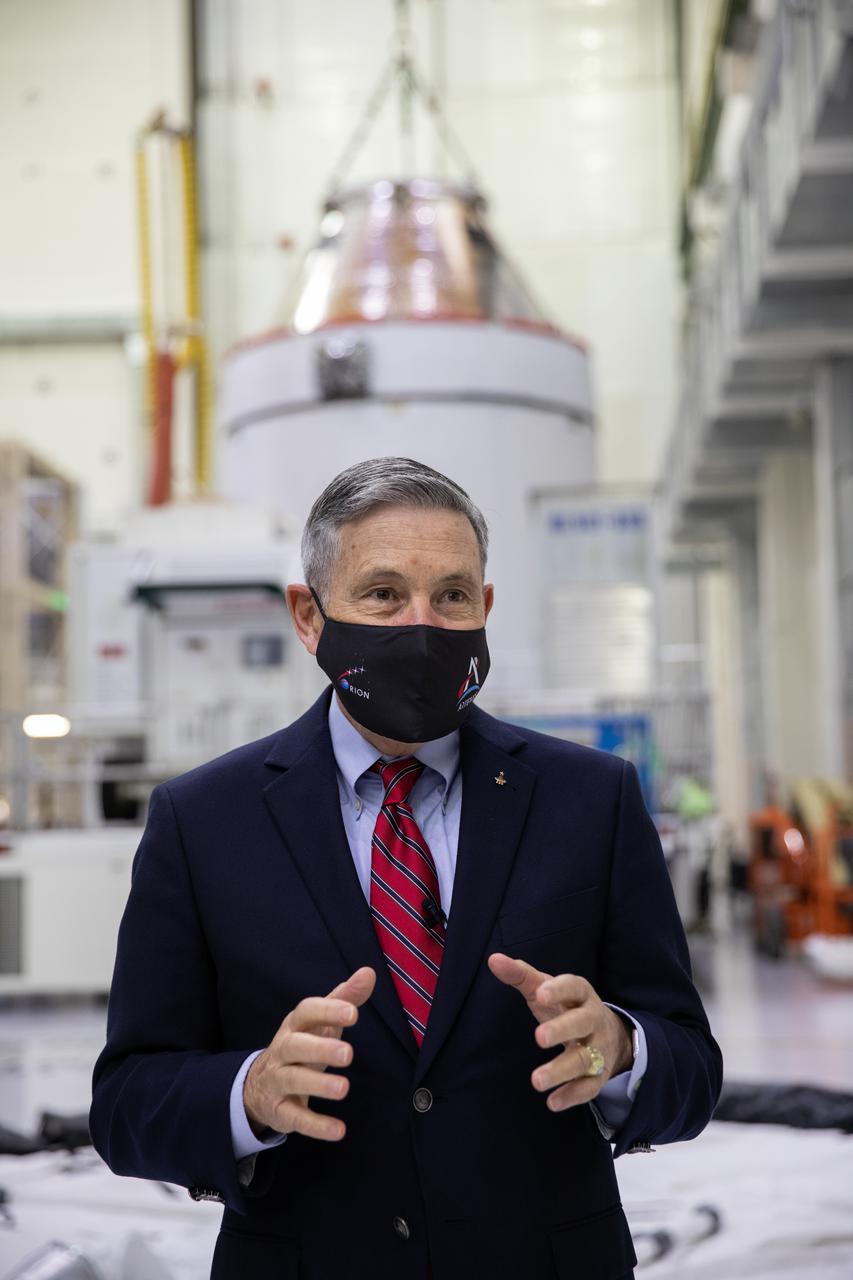
Orion is revealed for one of the final times on Jan. 14, as it is readied atop its transport pallet from the Neil Armstrong Operations and Checkout Building at NASA’s Kennedy Space Center in Florida, along its path to the pad ahead of the Artemis I launch. Kennedy Center Director Bob Cabana speaks to workers in front of Orion in the high bay. Teams across the globe have worked tirelessly to assemble the spacecraft, which will receive a protective covering prior to departing for the Multi-Payload Processing Facility to begin ground processing by the Exploration Ground Systems and Jacobs teams.
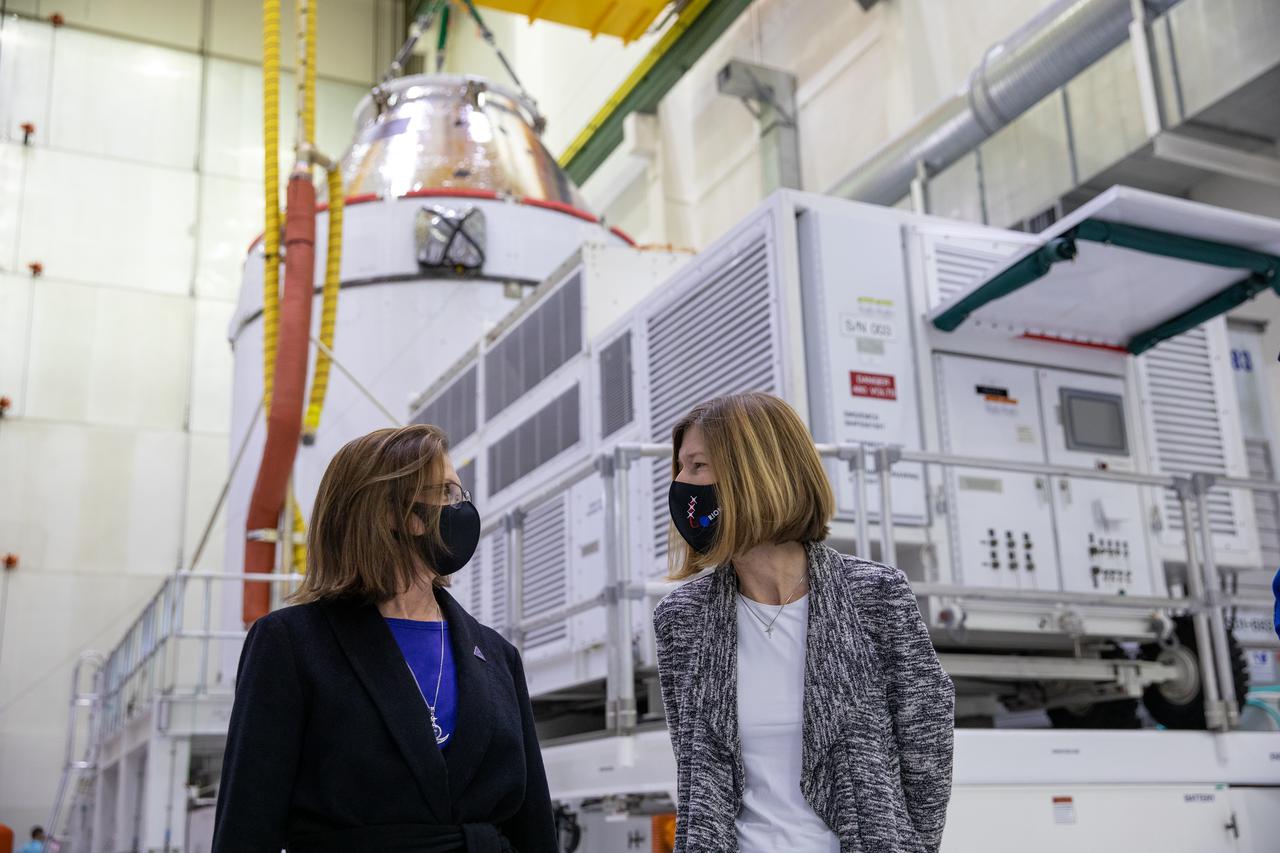
Orion is revealed for one of the final times on Jan. 14, as it is readied atop its transport pallet from the Neil Armstrong Operations and Checkout Building at NASA’s Kennedy Space Center in Florida, along its path to the pad ahead of the Artemis I launch. Viewing Orion in the high bay, from left, are Cathy Koerner, Orion Program Manager, and Kathy Lueders, associated administrator of the Human Exploration and Operations Mission Directorate. Teams across the globe have worked tirelessly to assemble the spacecraft, which will receive a protective covering prior to departing for the Multi-Payload Processing Facility to begin ground processing by the Exploration Ground Systems and Jacobs teams.

Orion is revealed for one of the final times on Jan. 14, as it is readied atop its transport pallet from the Neil Armstrong Operations and Checkout Building at NASA’s Kennedy Space Center in Florida, along its path to the pad ahead of the Artemis I launch. Orion was officially transferred from the Orion Program to Exploration Ground Systems (EGS). Mike Bolger, EGS manager, stands inside the high bay with Orion in the background. Teams across the globe have worked tirelessly to assemble the spacecraft which, will receive a protective covering prior to departing for the Multi-Payload Processing Facility to begin ground processing by the EGS and Jacobs teams.
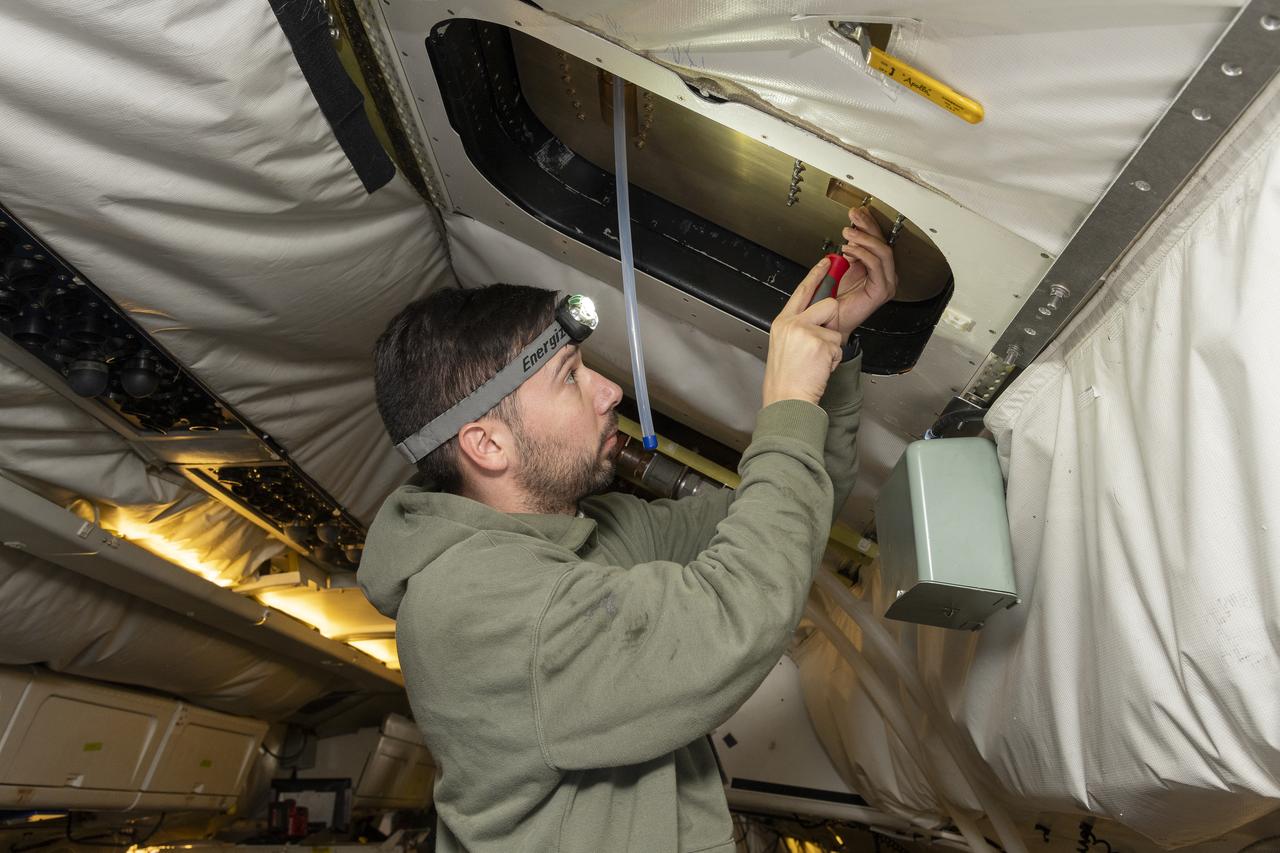
Isac Mata, engineering technician at NASA’s Armstrong Flight Research Center, attends to the interior of the DC-8 aircraft at Building 703 in Palmdale, CA. The DC-8 aircraft is prepared for its last mission, ASIA-AQ (Airborne and Satellite Investigation of Asian Air Quality), that will collect detailed air quality data over several locations in Asia to improve the understanding of local air quality in collaboration with local scientists, air quality agencies, and government partners
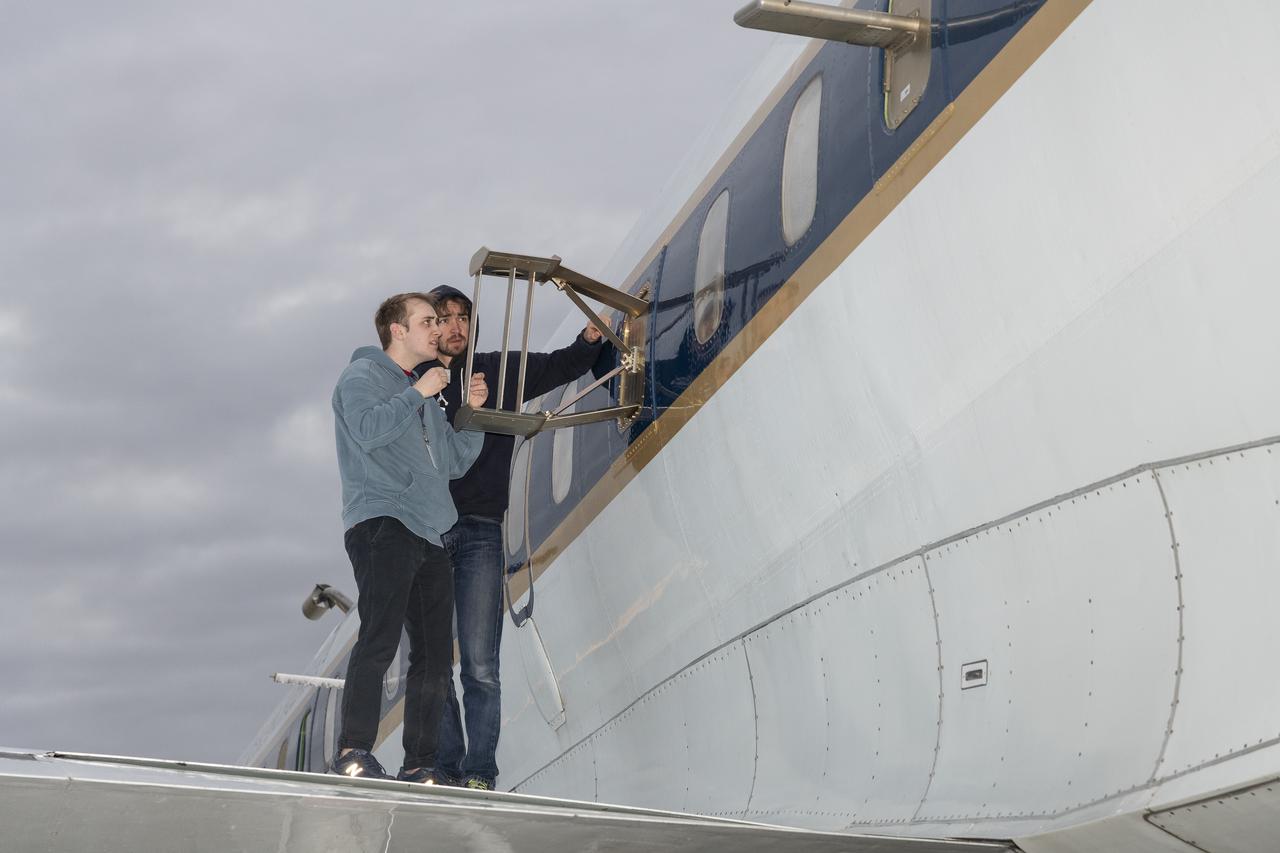
Scientists Ryan Boyd (left) and Vladislav Sevostianov (right) attend to the Optical Payload for Lasercomm Science (OPALS) instrument on the exterior the DC-8 aircraft at Building 703 in Palmdale, CA. The DC-8 aircraft is prepared for its last mission, ASIA-AQ (Airborne and Satellite Investigation of Asian Air Quality), that will collect detailed air quality data over several locations in Asia to improve the understanding of local air quality in collaboration with local scientists, air quality agencies, and government partners
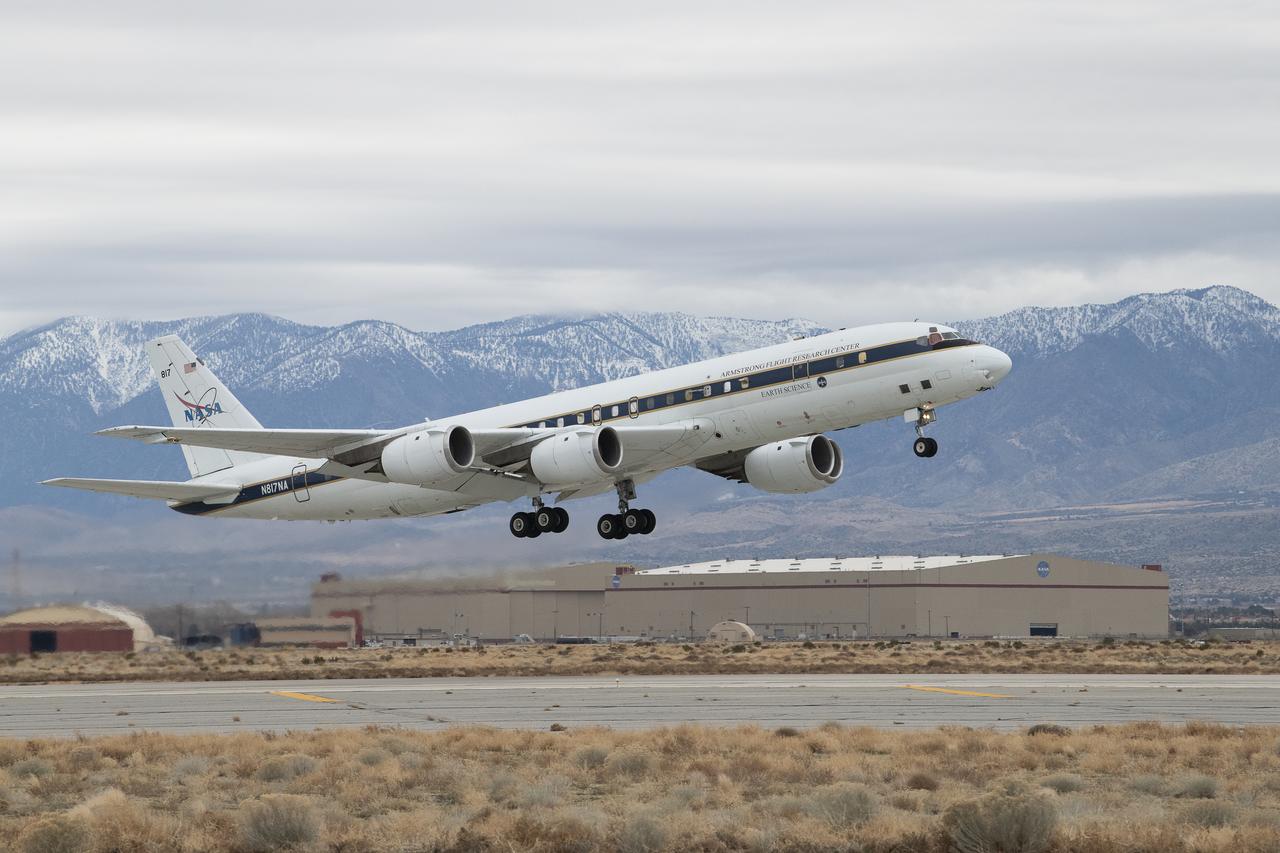
DC-8 aircraft conducts test flights at Building 703 in Palmdale, CA. The DC-8 aircraft is prepared for its last mission, ASIA-AQ (Airborne and Satellite Investigation of Asian Air Quality), that will collect detailed air quality data over several locations in Asia to improve the understanding of local air quality in collaboration with local scientists, air quality agencies, and government partners
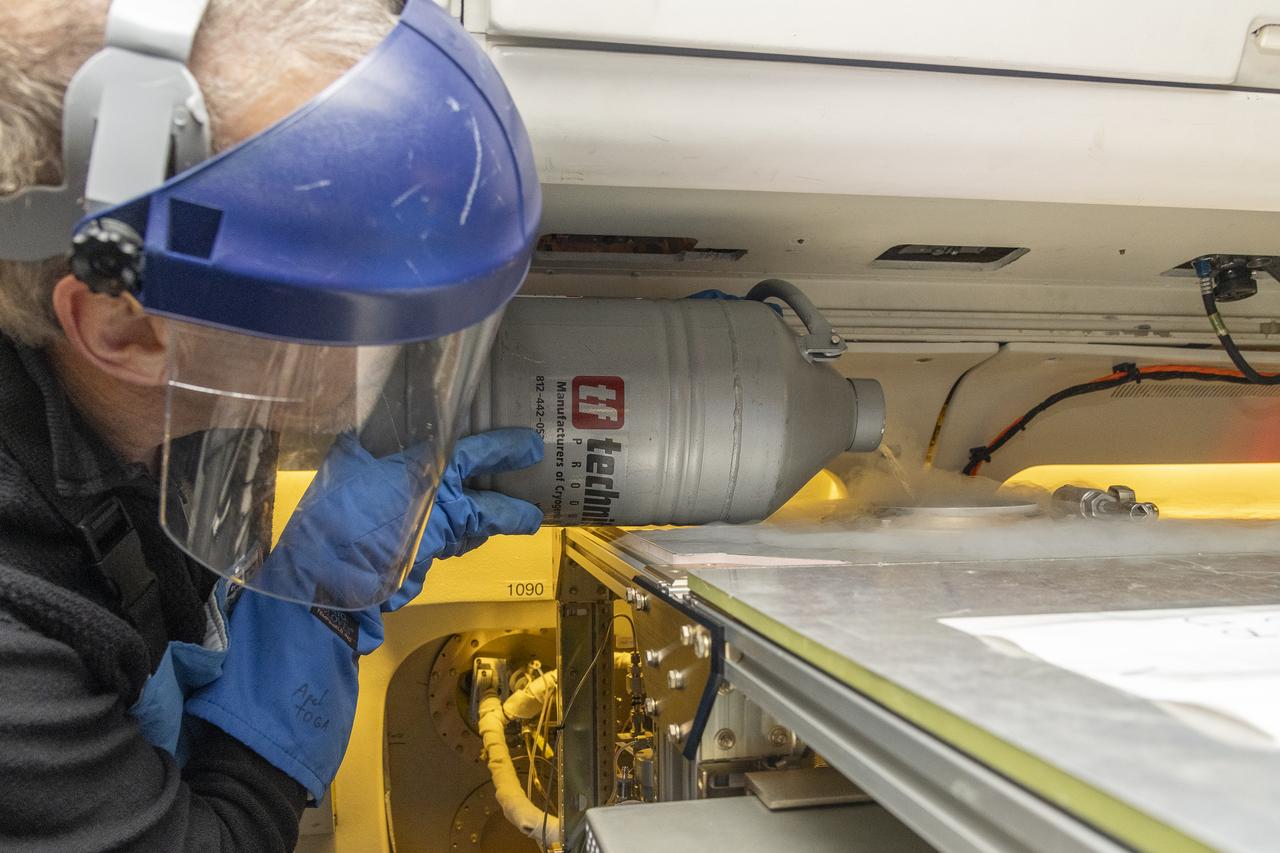
Alan Hills fills liquid nitrogen in the Trace Organic Gas Analyzer (TOGA) instrument onboard the DC-8 aircraft at Building 703 in Palmdale, CA. This instrument measures volatile organic compounds (VOCs) in the atmosphere. The DC-8 aircraft is prepared for its last mission, ASIA-AQ (Airborne and Satellite Investigation of Asian Air Quality), that will collect detailed air quality data over several locations in Asia to improve the understanding of local air quality in collaboration with local scientists, air quality agencies, and government partners
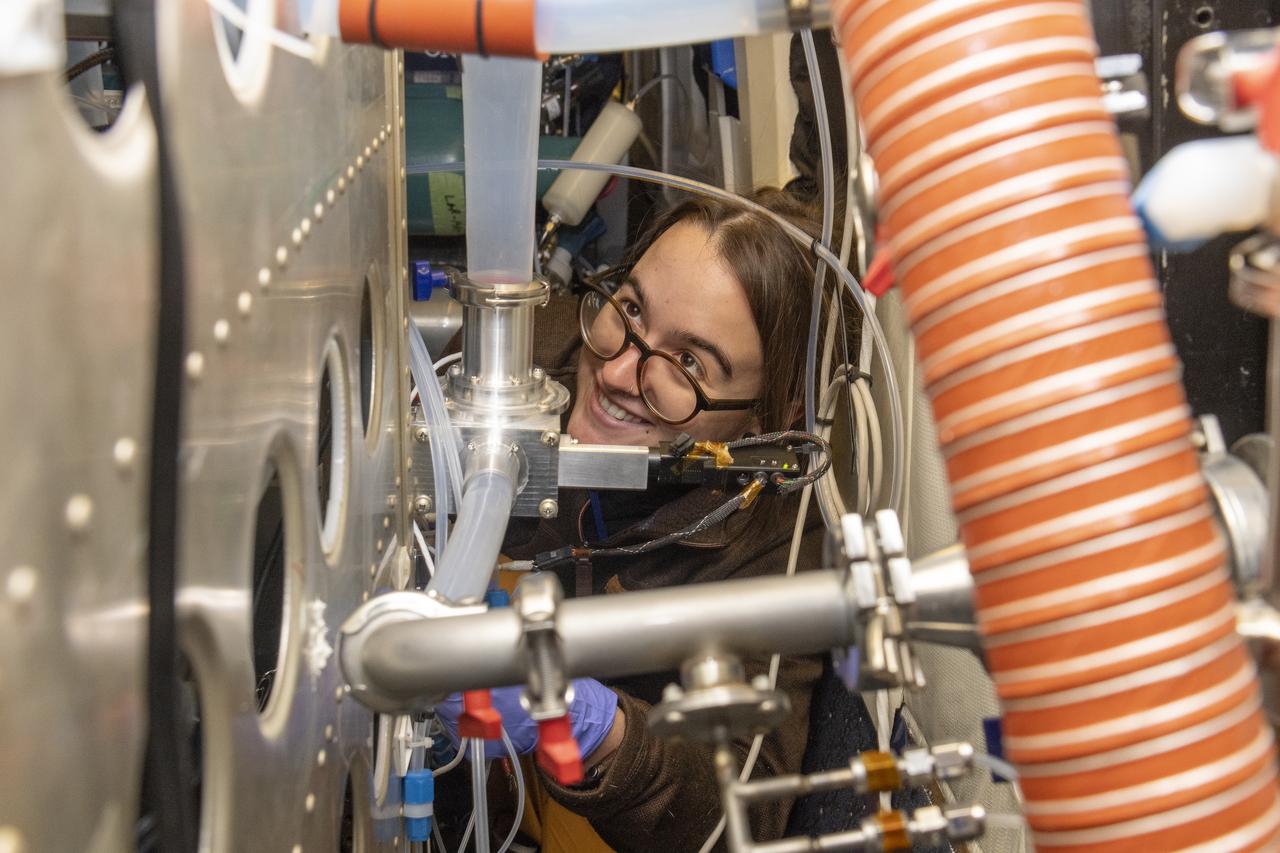
Kat Ball, Chemical Engineering Ph.D candidate at Caltech, attends to the Chemical Ionization Mass Spectrometer (CIMS) rack onboard the DC-8 aircraft at Building 703 in Palmdale, CA. The DC-8 aircraft is prepared for its last mission, ASIA-AQ (Airborne and Satellite Investigation of Asian Air Quality), that will collect detailed air quality data over several locations in Asia to improve the understanding of local air quality in collaboration with local scientists, air quality agencies, and government partners
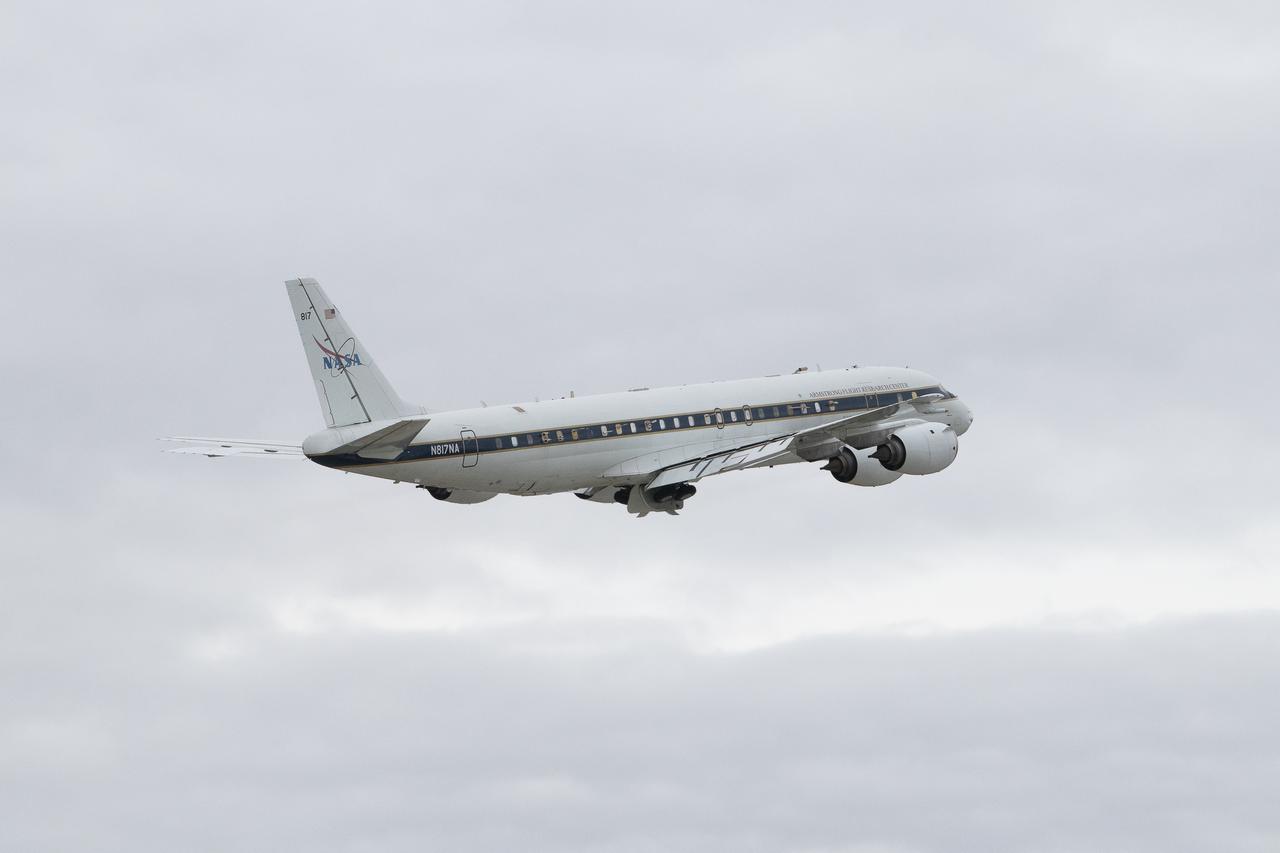
DC-8 aircraft conducts test flights at Building 703 in Palmdale, CA. The DC-8 aircraft is prepared for its last mission, ASIA-AQ (Airborne and Satellite Investigation of Asian Air Quality), that will collect detailed air quality data over several locations in Asia to improve the understanding of local air quality in collaboration with local scientists, air quality agencies, and government partners
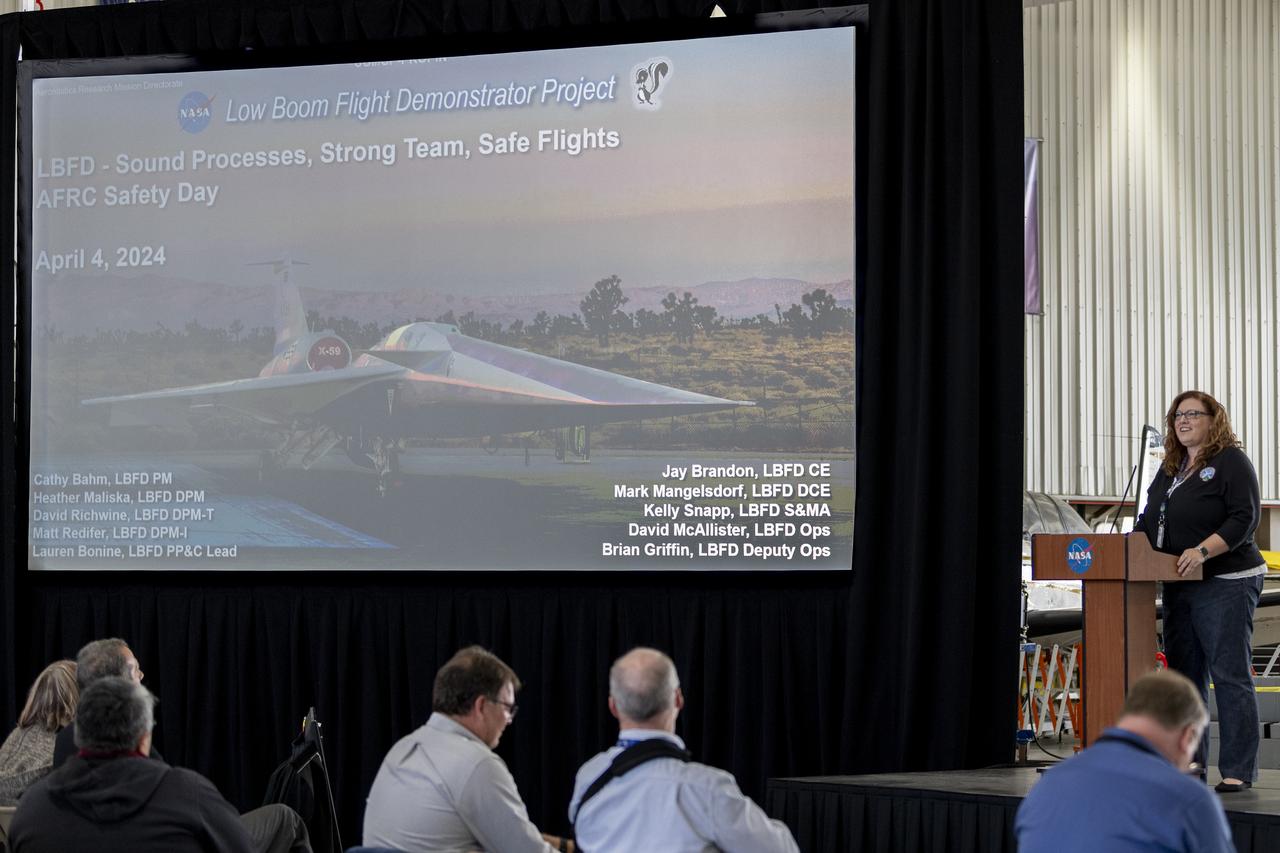
Cathy Bahm, Low Boom Flight Demonstrator project manager at NASA’s Armstrong Flight Research Center in Edwards, California, presents a look at how the X-59 aircraft team addresses safety. Bahm manages the effort to design, build, and test the X-59 aircraft, which will use quiet supersonic technologies to fly over communities as part of NASA’s Quesst mission.
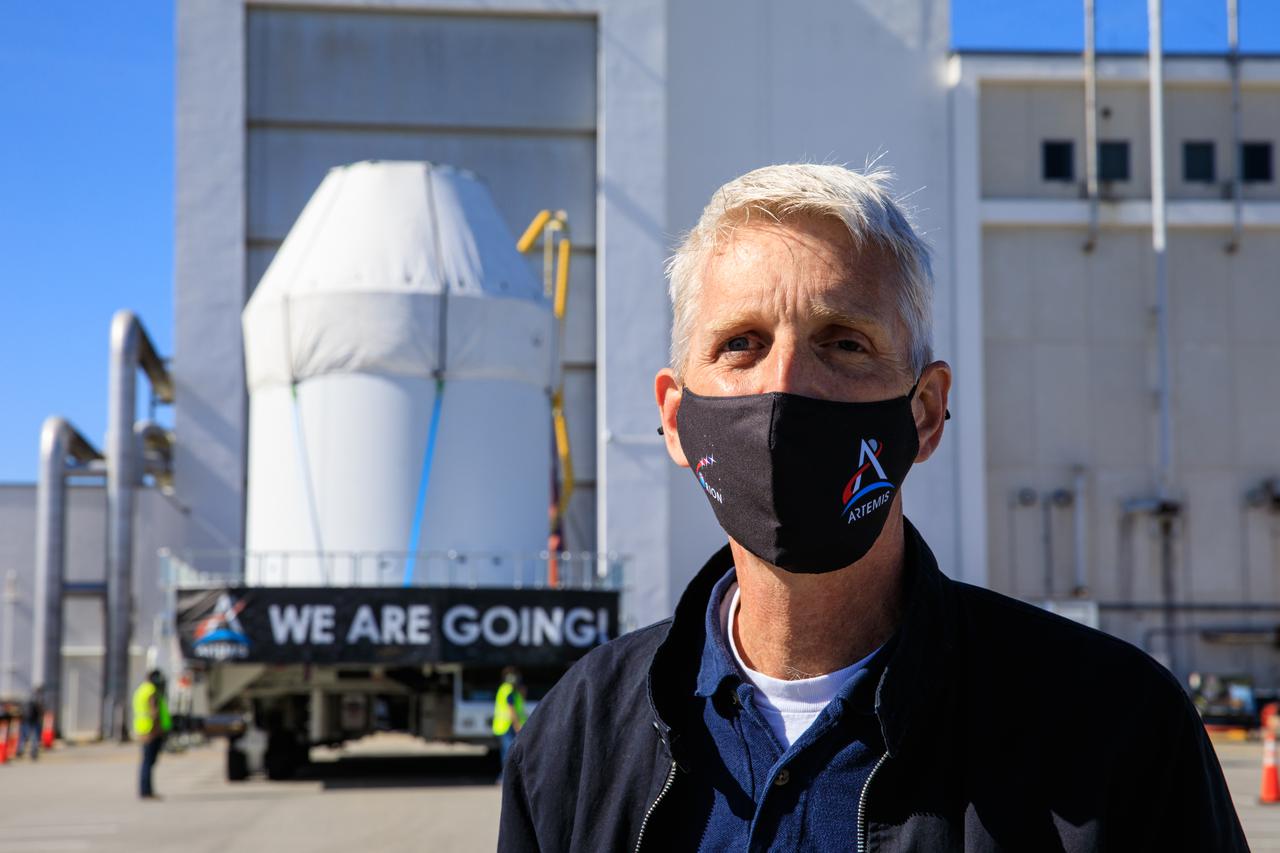
Orion sits atop a transport vehicle as it departs from its home at the Neil Armstrong Operations and Checkout Building at NASA’s Kennedy Space Center in Florida on Jan.16, 2021. In view is Scott Wilson, manager of production operations for NASA’s Orion Program. Orion will begin its trek to the Multi-Payload Processing Facility. There it will undergo ground processing with the Exploration Ground Systems team taking over ground processing ahead of the Artemis I launch.
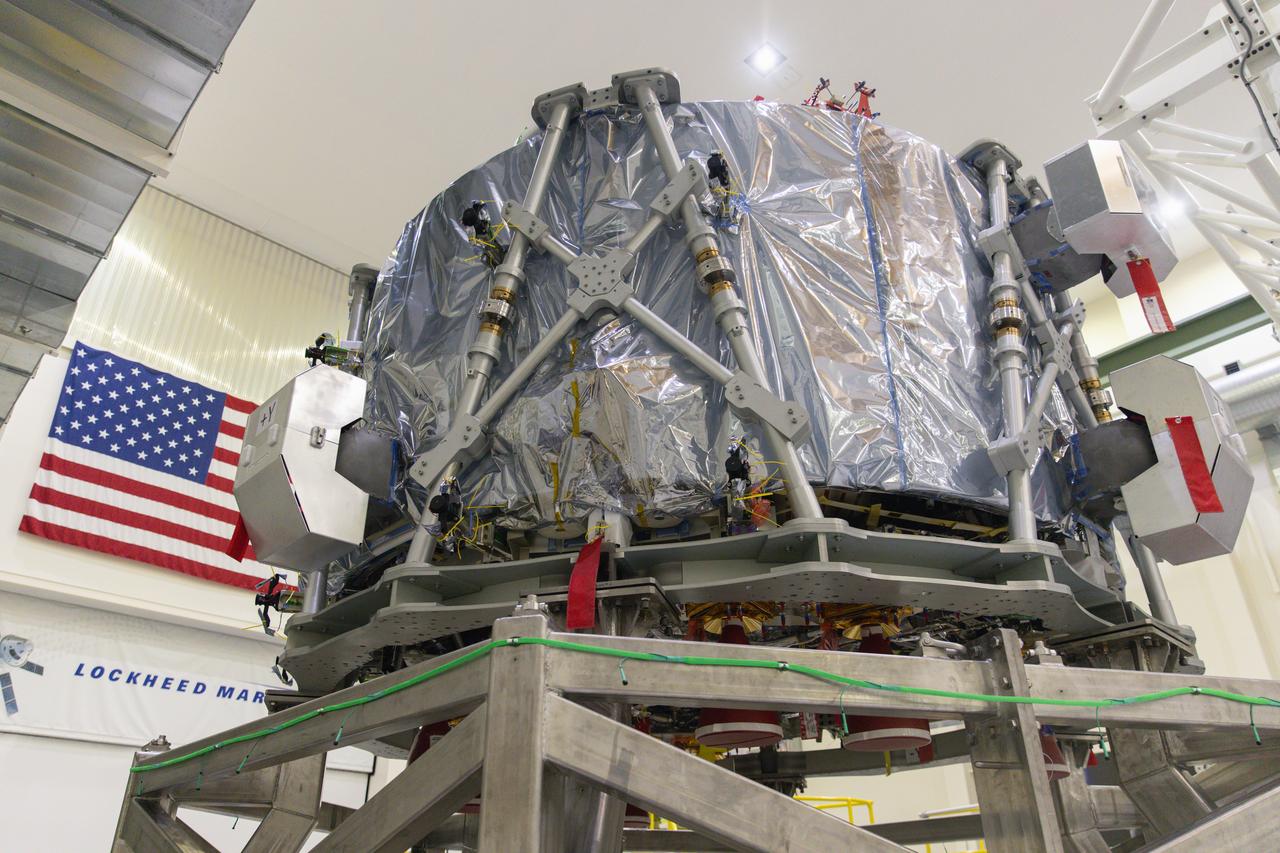
Teams from NASA, ESA (European Space Agency), and Airbus prepare to integrate European Service Module 3 to the crew module adapter on Tuesday, Sept. 17, 2024, inside the Neil A. Armstrong Operations and Checkout Building at NASA’s Kennedy Space Center in Florida. The integrated hardware provides propulsion, electrical power, and other important elements for the Orion spacecraft’s Artemis III campaign to the lunar South Pole region of the Moon.
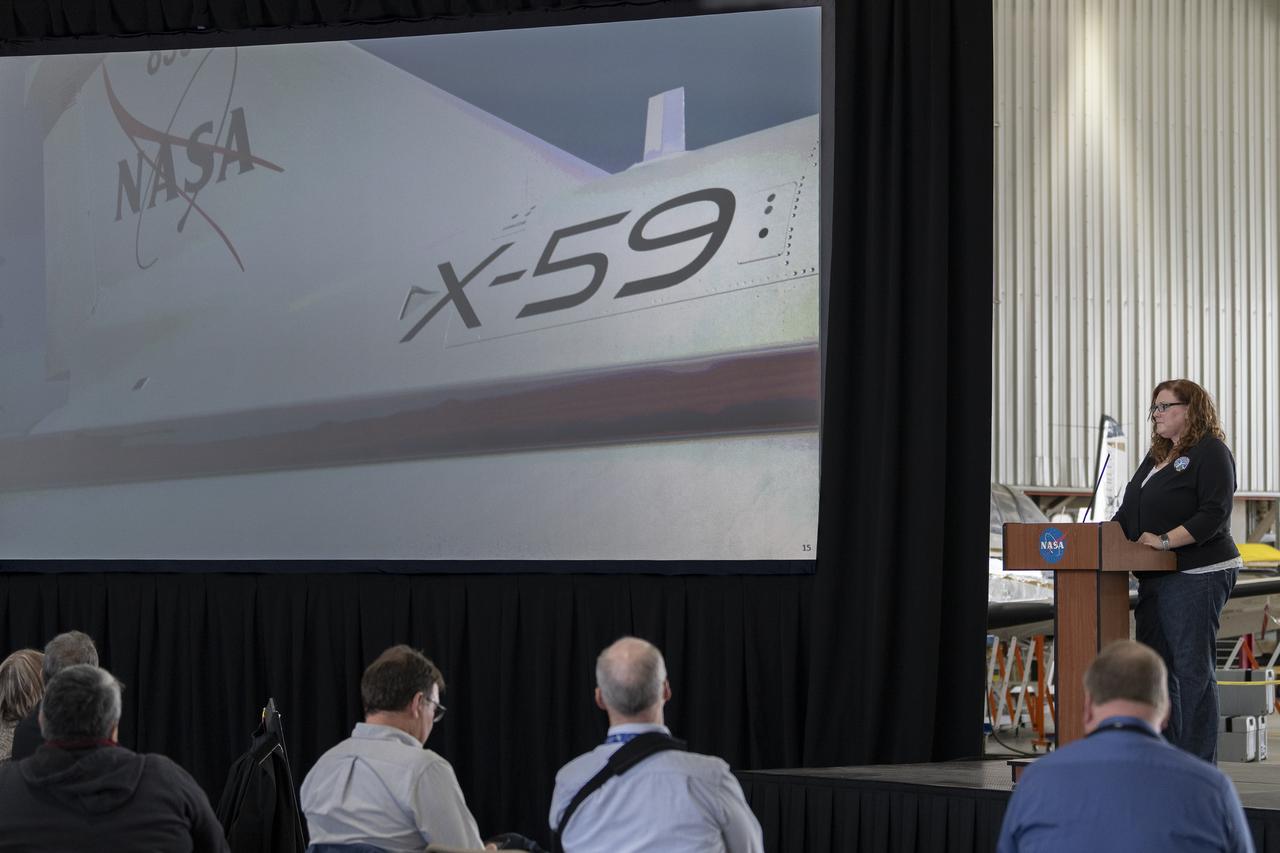
Cathy Bahm, Low Boom Flight Demonstrator project manager at NASA’s Armstrong Flight Research Center in Edwards, California, presents a look at how the X-59 aircraft team addresses safety. Bahm manages the effort to design, build, and test the X-59 aircraft, which will use quiet supersonic technologies to fly over communities as part of NASA’s Quesst mission.
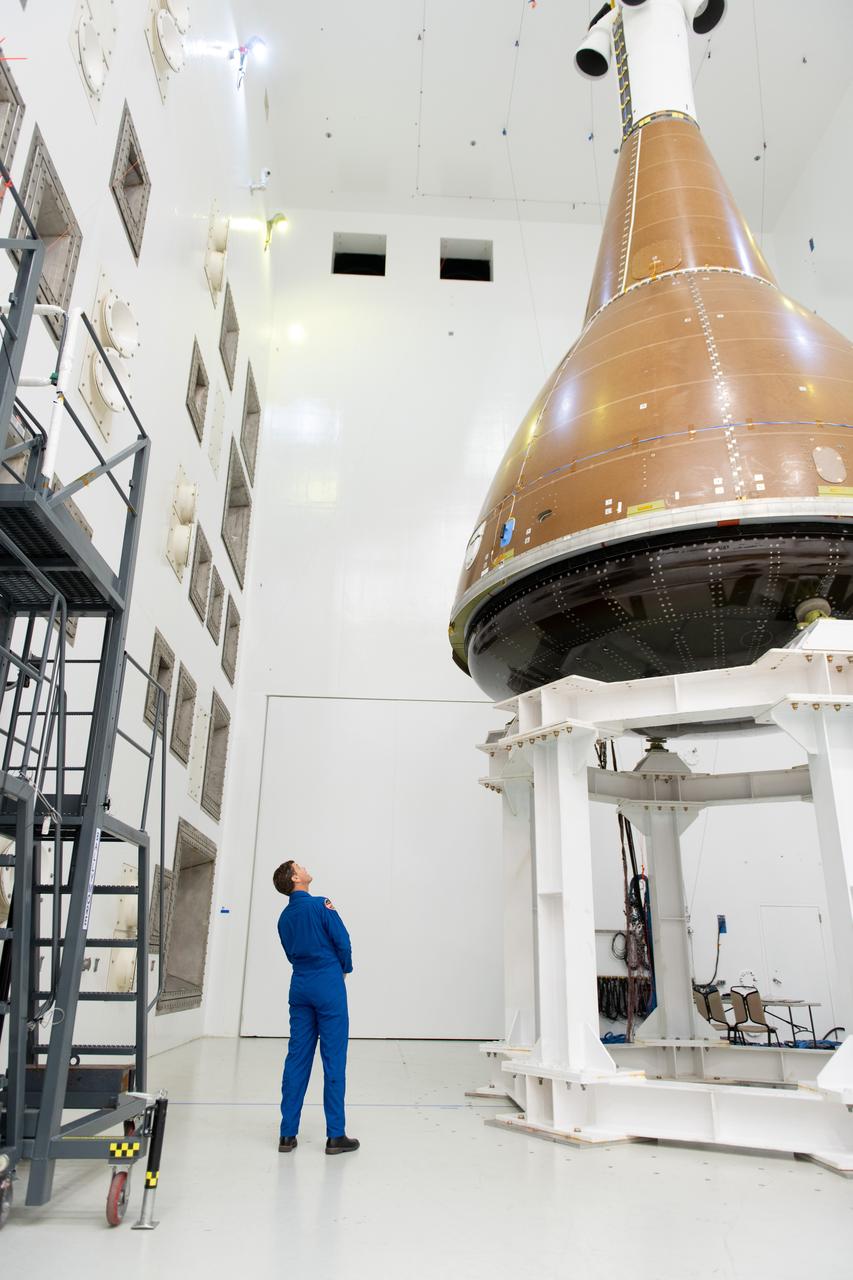
The team at NASA's Armstrong Test Facility in Sandusky, Ohio has begun vibro-acoustic testing on the Orion spacecraft that flew around the Moon on Artemis I, now known as the Environmental Test Article. The testing will help ensure the safety of future crews aboard Orion. Commander Reid Wiseman looks up at the Orion capsule during tours on September 11, 2024 of the acoustic lab. Photo Credit: (NASA/Sara Lowthian-Hanna)
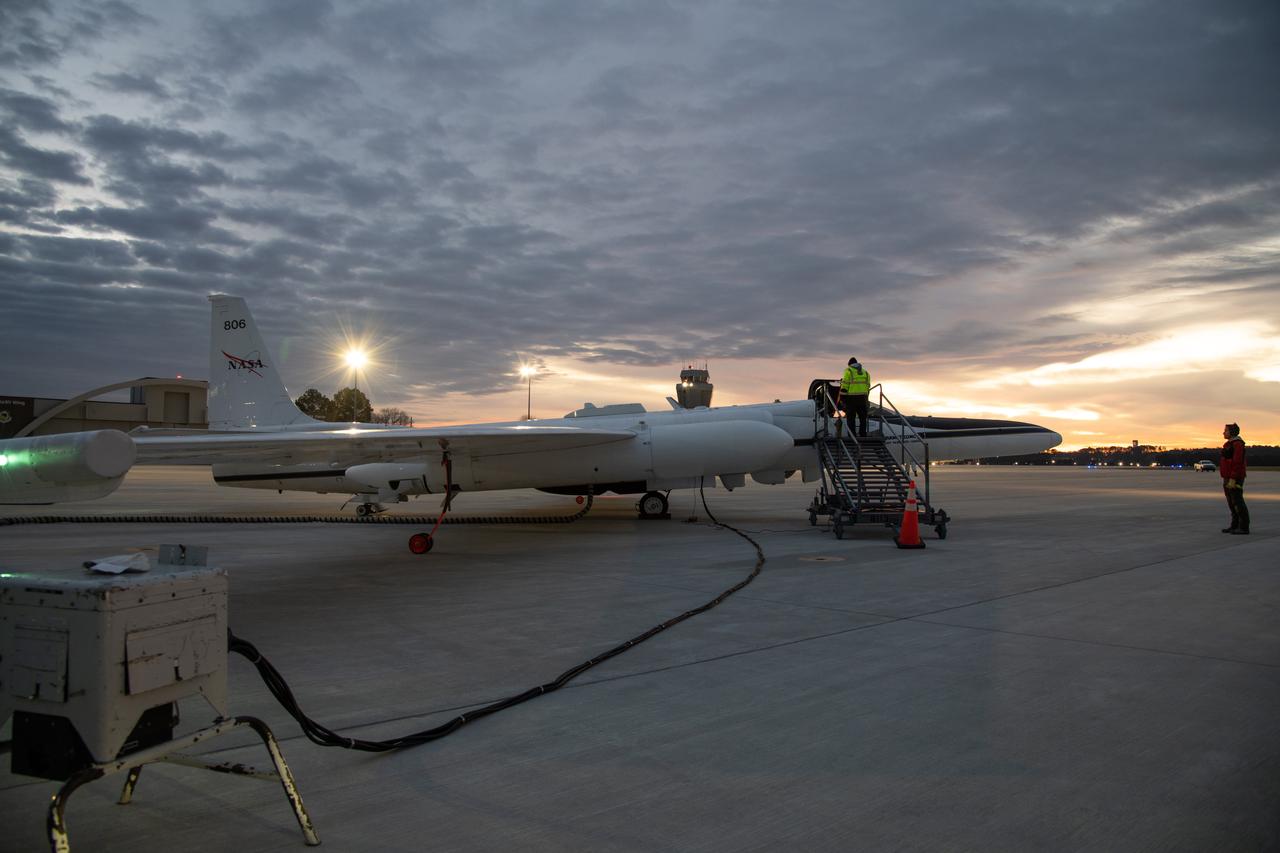
The NASA ER-2 high-altitude aircraft was prepared to support the Investigation of Microphysics and Precipitation for Atlantic Coast-Threatening Storms (IMPACTS) mission. For this mission, the IMPACTS team tracked storms across the Eastern United States to help understand how winter storms form and develop. The aircraft, which is based at NASA’s Armstrong Flight Research Center Building 703 in Palmdale, California, was temporarily based at Dobbins Air Reserve Base in Marietta, Georgia. The three-year IMPACTS campaign concluded on Feb. 28, 2023.