
Artist Geraluz talks to a member of the media in front of the mural “To the Moon, and Back” by the New York-based artist team Geraluz and WERC that was created as part of the reimagined NASA Art Program, Tuesday, September 24, 2024, in New York City’s Hudson Square neighborhood. For the inaugural project of the reestablished NASA Art Program the agency collaborated with the Hudson Square Business Improvement District on an open call for New York-based artists to design and install a large-scale mural inspired by NASA’s work and missions. Photo Credit: (NASA/Joel Kowsky)
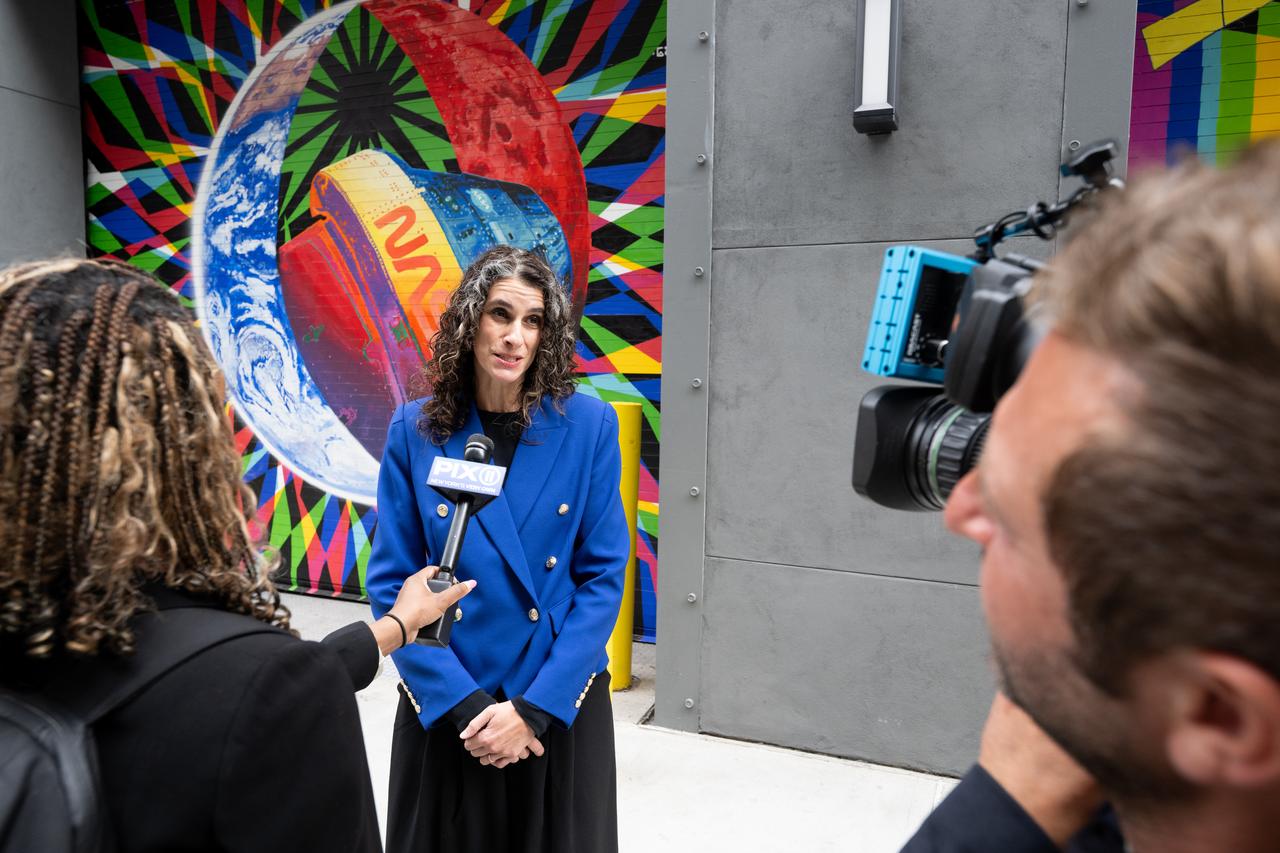
Samara Karasyk, President and CEO of the Hudson Square Business Improvement District talks to a member of the media in front of the mural “To the Moon, and Back” by the New York-based artist team Geraluz and WERC that was created as part of the reimagined NASA Art Program, Tuesday, September 24, 2024, in New York City’s Hudson Square neighborhood. For the inaugural project of the reestablished NASA Art Program the agency collaborated with the Hudson Square Business Improvement District on an open call for New York-based artists to design and install a large-scale mural inspired by NASA’s work and missions. Photo Credit: (NASA/Joel Kowsky)
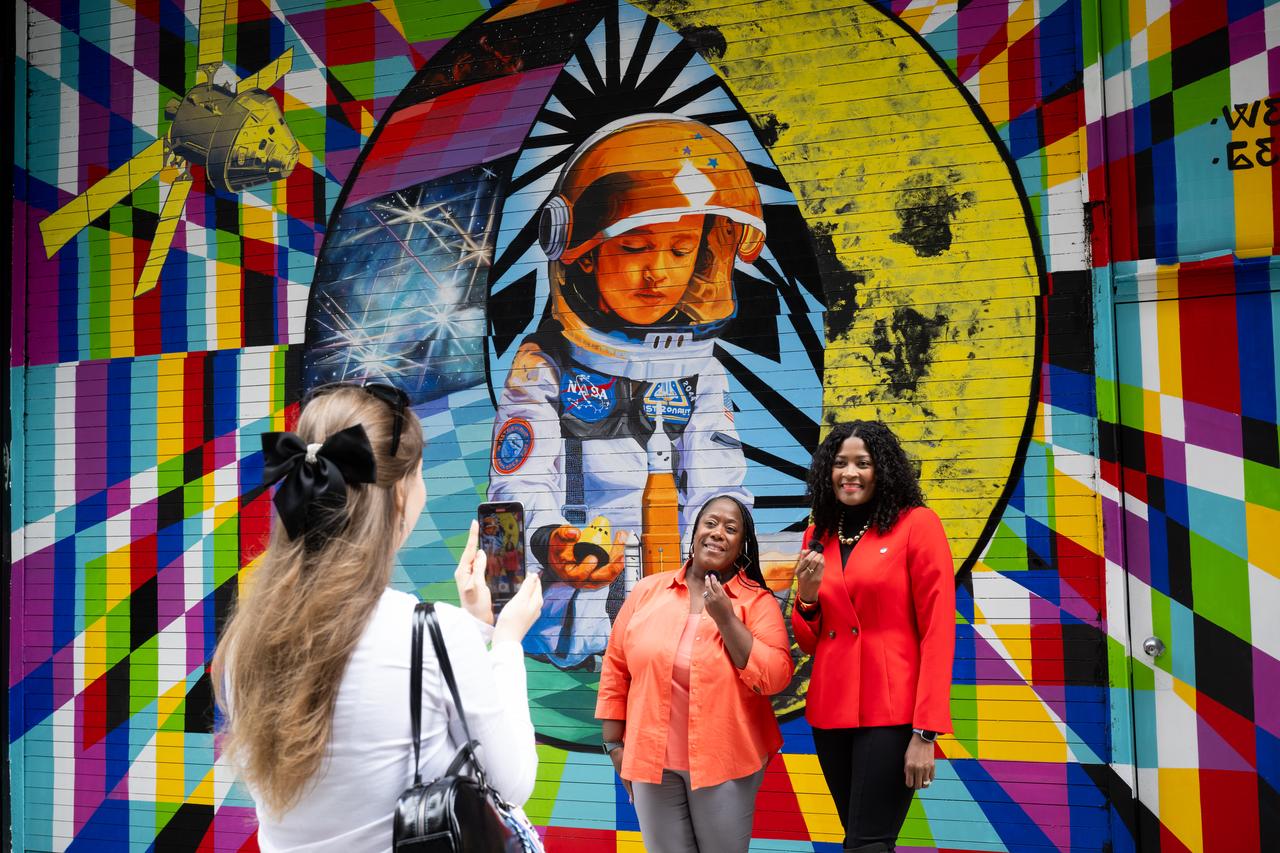
Michelle Jones, NASA’s deputy associate administrator for communications, left, and Aya Collins, director of the engagement division of NASA’s Office of Communications, record a video for social media in front of the mural “To the Moon, and Back” by the New York-based artist team Geraluz and WERC that was created as part of the reimagined NASA Art Program, Tuesday, September 24, 2024, in New York City’s Hudson Square neighborhood. For the inaugural project of the reestablished NASA Art Program the agency collaborated with the Hudson Square Business Improvement District on an open call for New York-based artists to design and install a large-scale mural inspired by NASA’s work and missions. Photo Credit: (NASA/Joel Kowsky)
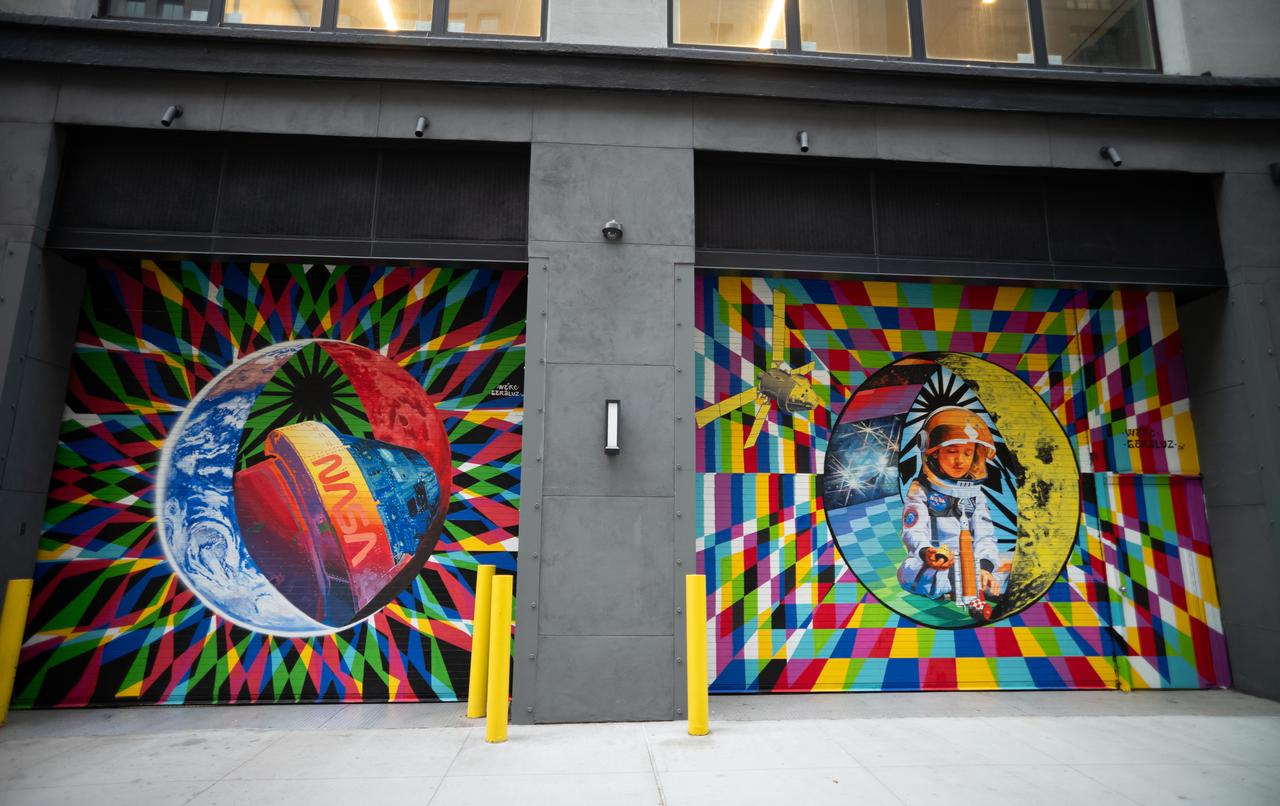
The inaugural murals for the relaunched NASA Art Program appear side-by-side at 350 Hudson Street, Monday, Sept. 23, 2024, in New York City. The murals, titled “To the Moon, and Back,” were created by New York-based artist team Geraluz and WERC and use geometrical patterns to invite deeper reflection on the exploration, creativity, and connection with the cosmos. Photo Credit: (NASA/Joel Kowsky)
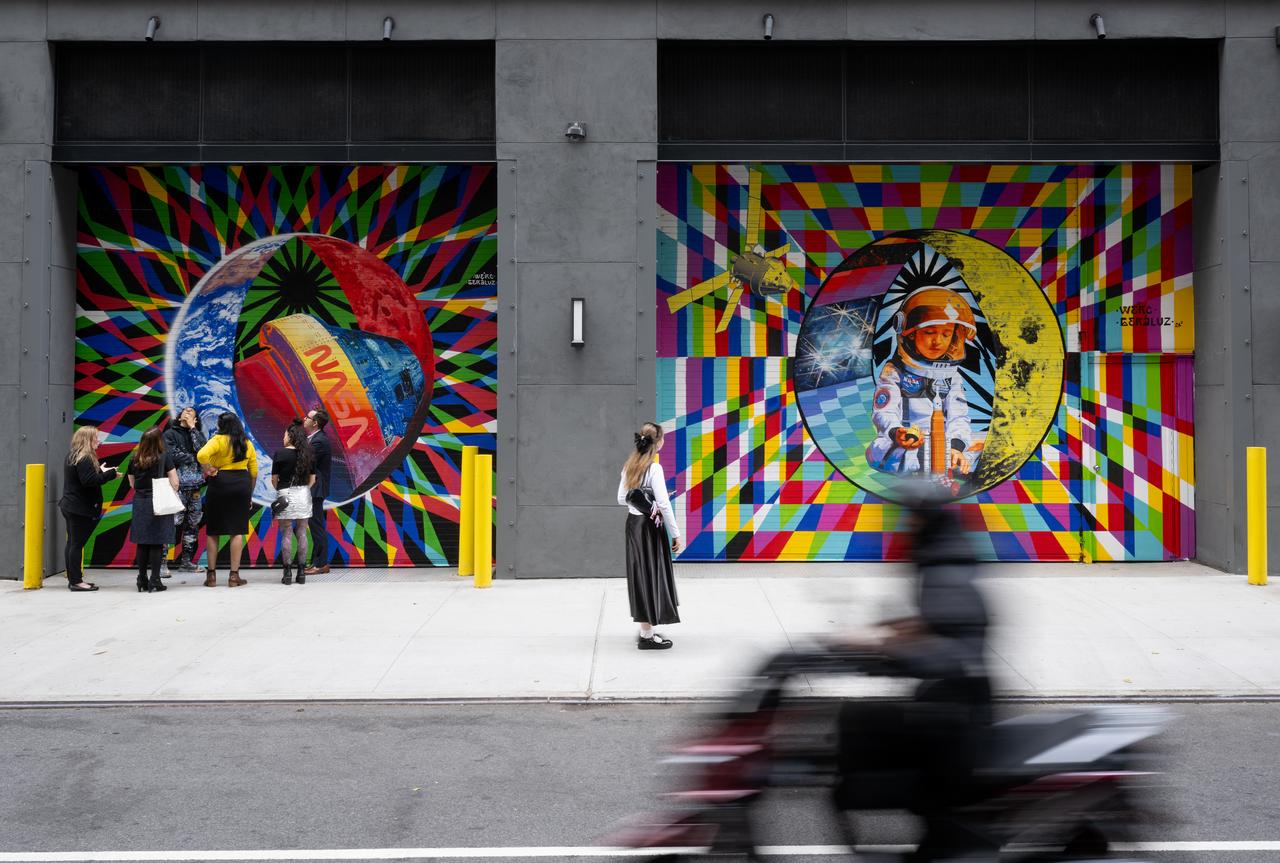
The inaugural murals for the relaunched NASA Art Program appear side-by-side at 350 Hudson Street, Tuesday, Sept. 24, 2024, in New York City. The murals, titled “To the Moon, and Back,” were created by New York-based artist team Geraluz and WERC and use geometrical patterns to invite deeper reflection on the exploration, creativity, and connection with the cosmos. Photo Credit: (NASA/Joel Kowsky)
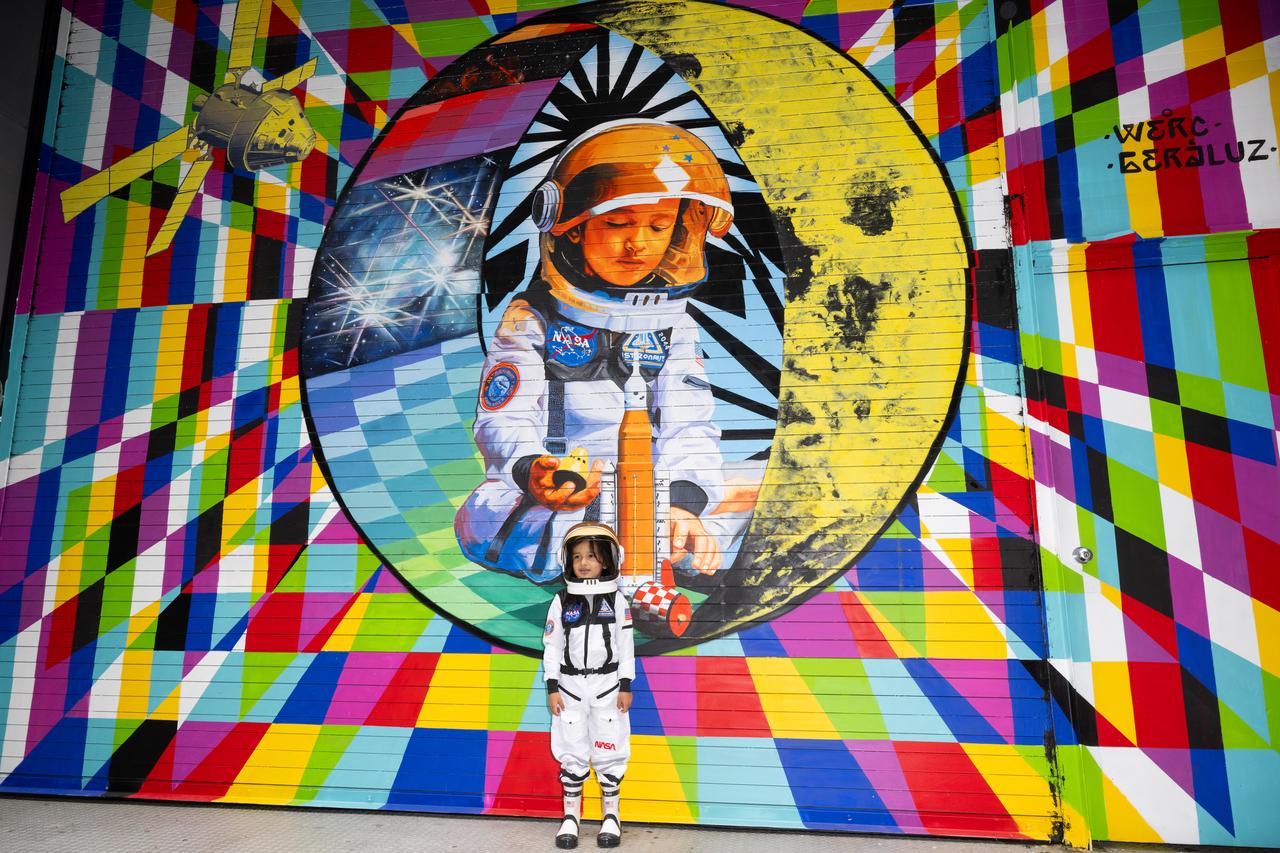
Amaru Alvarez, 5, the son of the artist team Geraluz and WERC and model for the mural, poses for picture with the mural “To the Moon, and Back” by the New York-based artist team that was created as part of the reimagined NASA Art Program, Tuesday, September 24, 2024, at 350 Hudson Street in New York City. The murals use geometrical patterns to invite deeper reflection on the exploration, creativity, and connection with the cosmos. Photo Credit: (NASA/Joel Kowsky)
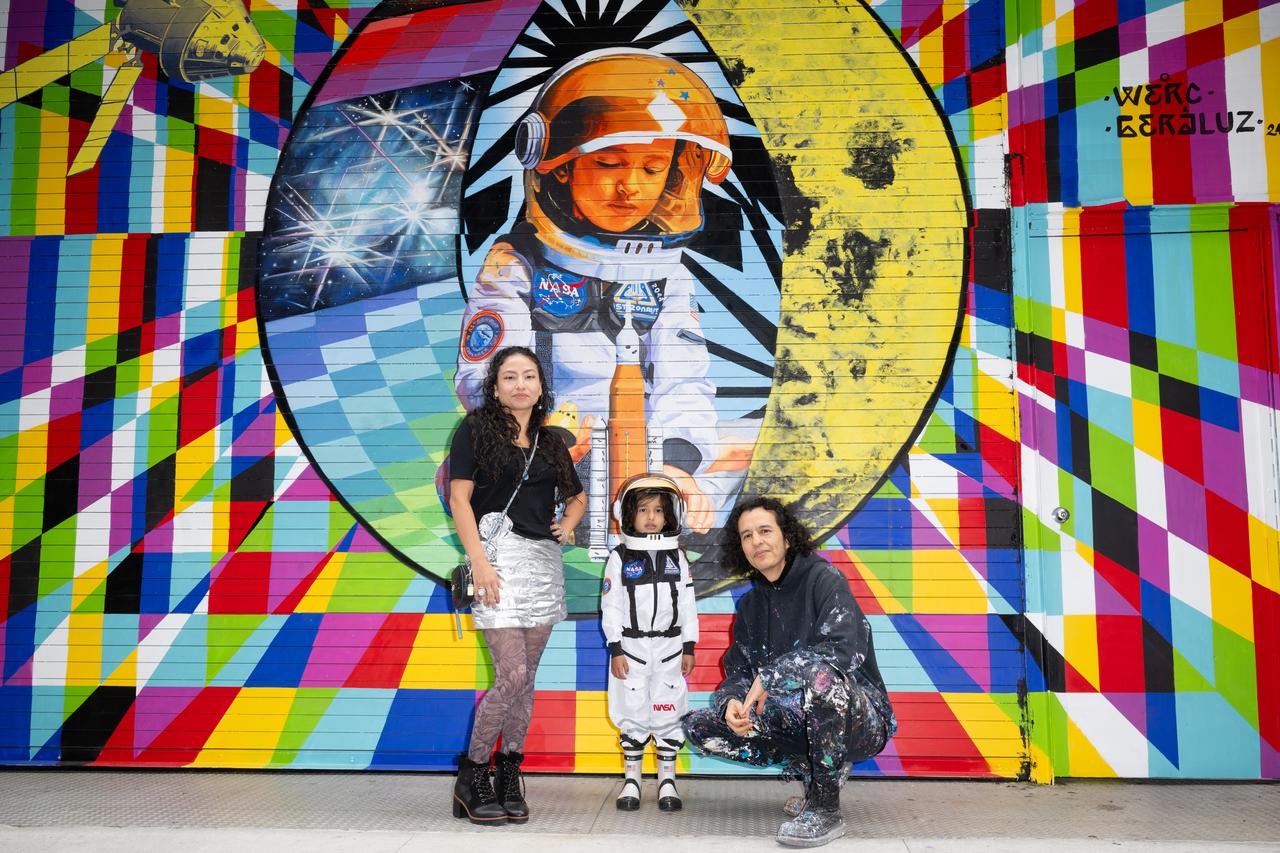
The New York-based artist team Geraluz, left, and WERC, right, and their son Amaru Alvarez, 5, pose for picture with the mural “To the Moon, and Back” by the artist team that was created as part of the reimagined NASA Art Program, Tuesday, September 24, 2024, at 350 Hudson Street in New York City. The murals use geometrical patterns to invite deeper reflection on the exploration, creativity, and connection with the cosmos. Photo Credit: (NASA/Joel Kowsky)
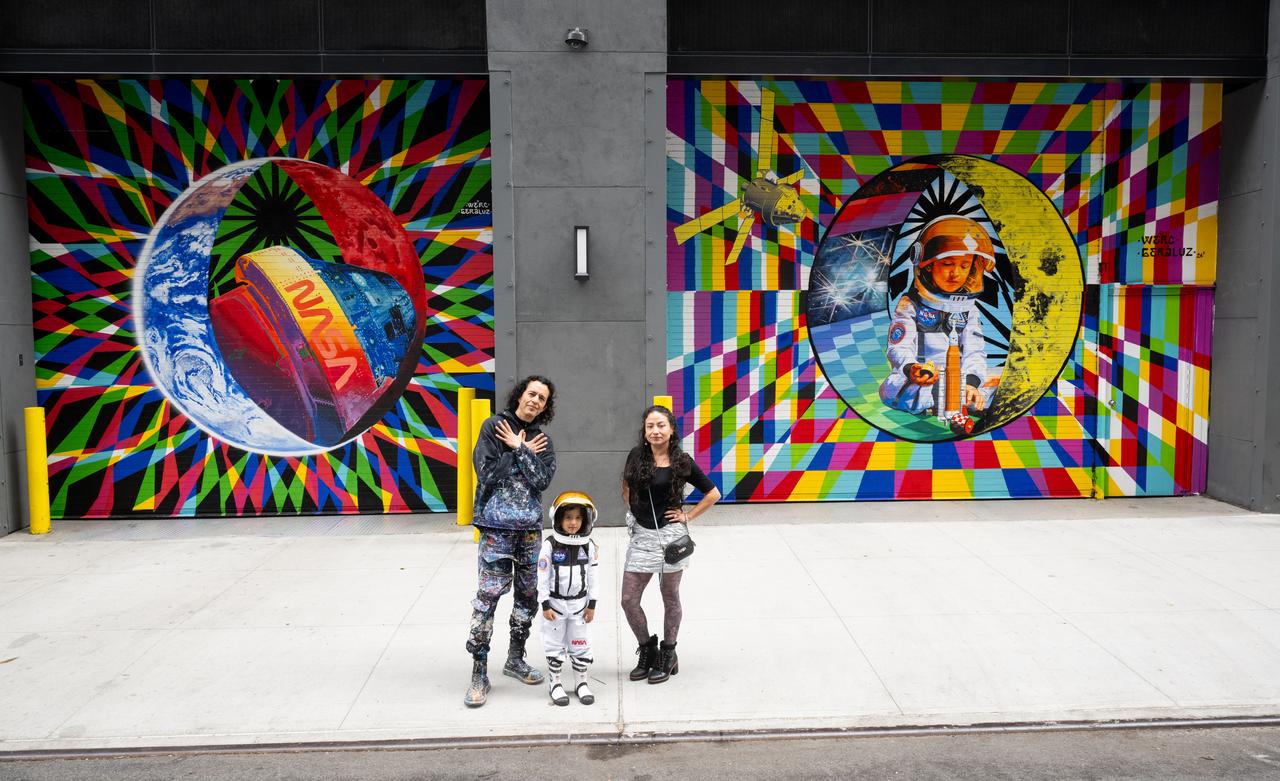
The New York-based artist team Geraluz, left, and WERC, right, and their son Amaru Alvarez, 5, pose for picture with the mural “To the Moon, and Back” by the artist team that was created as part of the reimagined NASA Art Program, Tuesday, September 24, 2024, at 350 Hudson Street in New York City. The murals use geometrical patterns to invite deeper reflection on the exploration, creativity, and connection with the cosmos. Photo Credit: (NASA/Joel Kowsky)
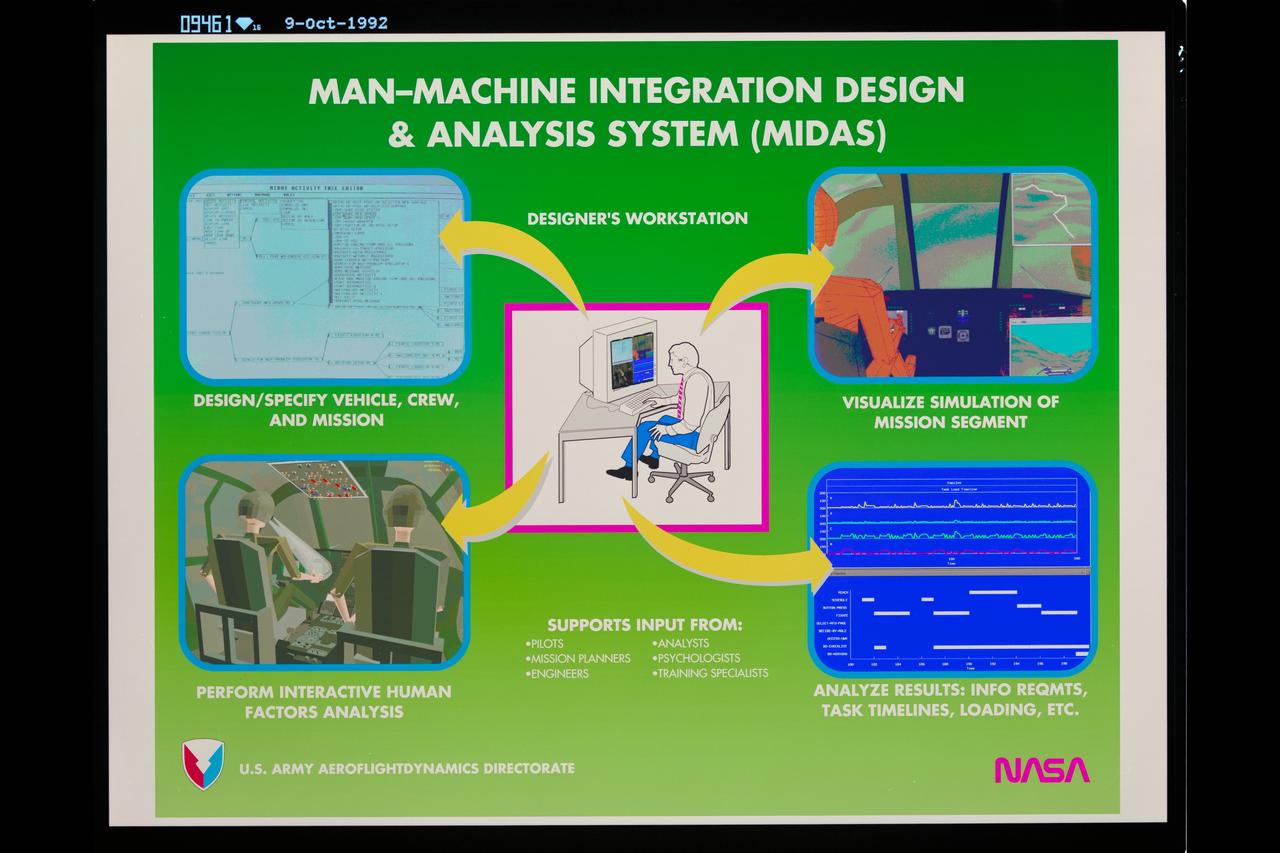
Composite Art NASA Army Aircrew Aircraft Integration (A3I) Program Composite with Midas Workstation
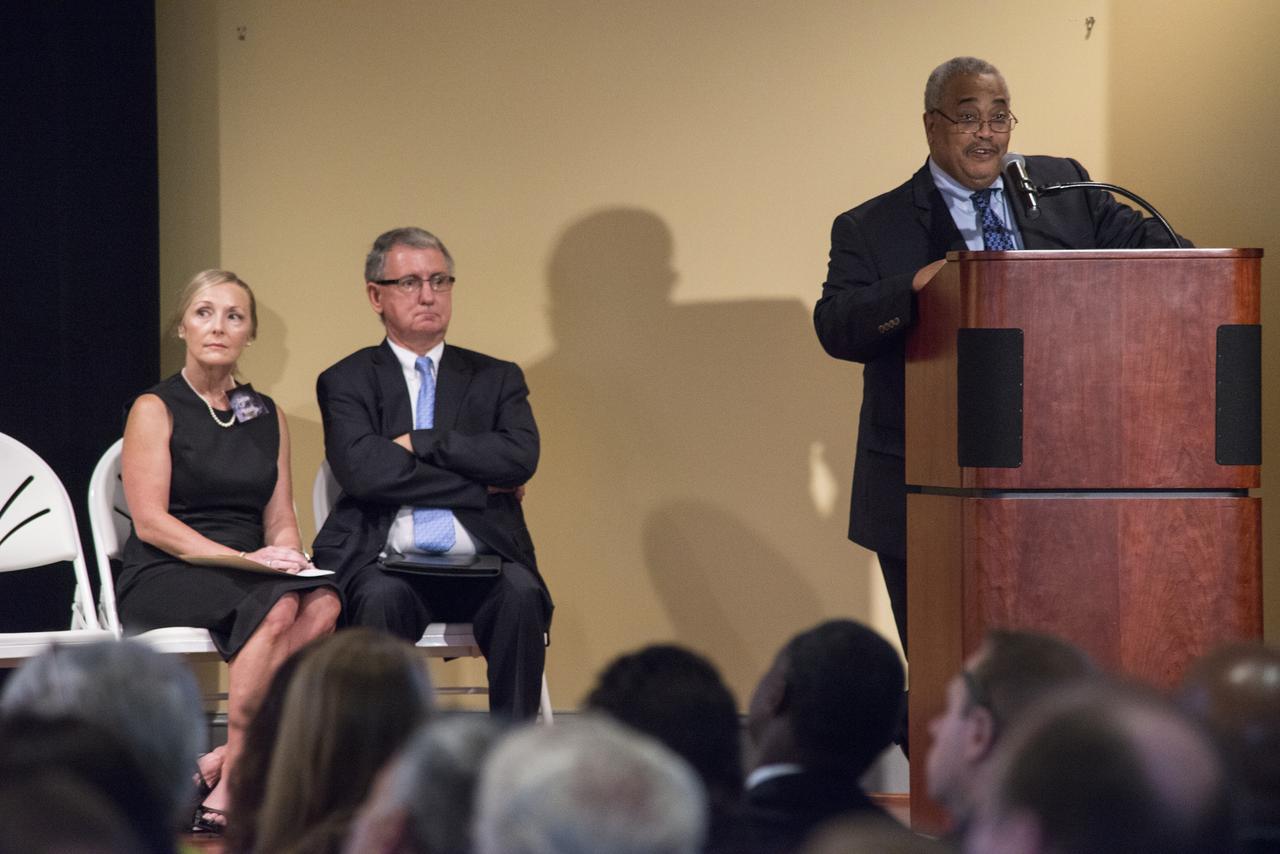
GLENN DELGADO, ASSOCIATE ADMINISTRATOR OFFICE OF SMALL BUSINESS PROGRAMS, NASA HQ, ADDRESSES THE ATTENDEES AT THE SMBA ESD-HUB ZONE EVENT AT THE HUNTSVILLE MUSEUM OF ART.
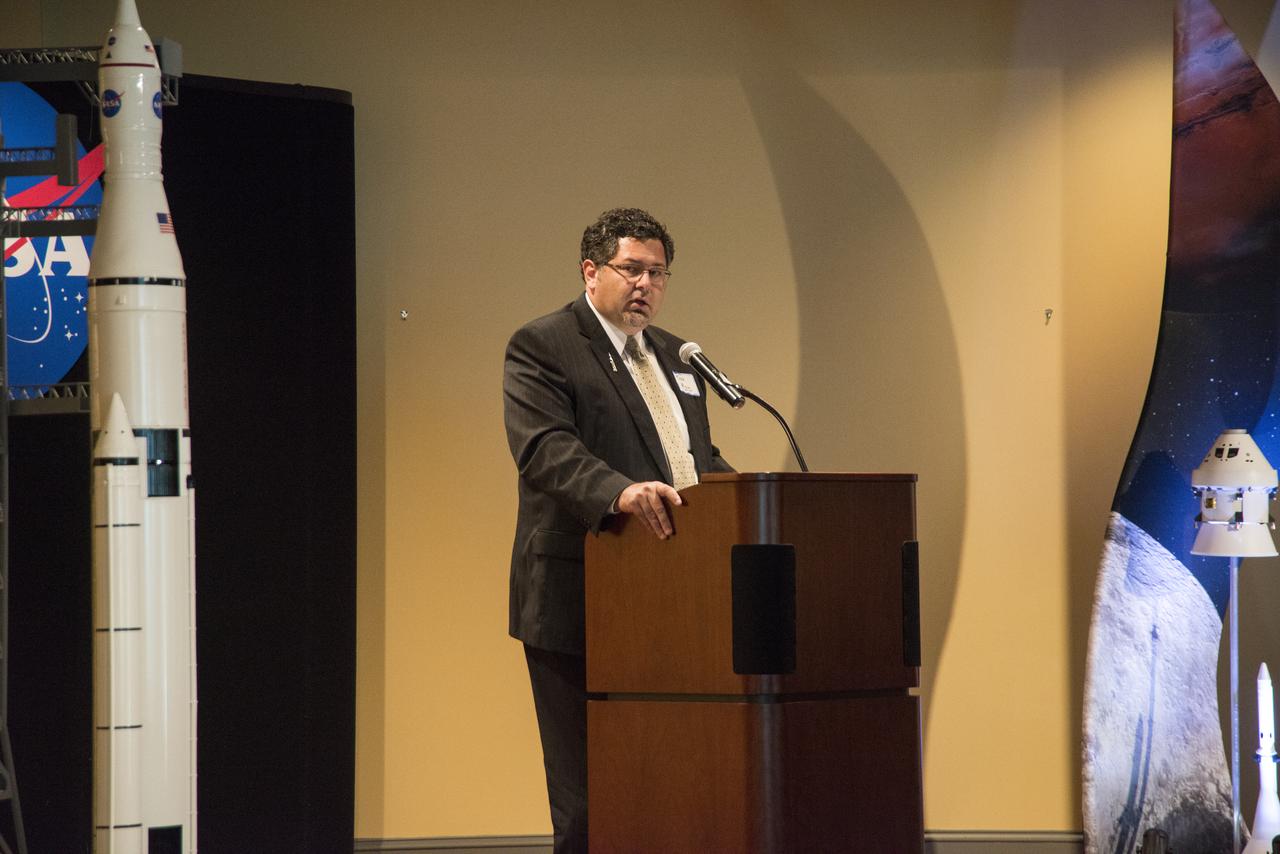
TODD MAY, PROGRAM MANAGER, SPACE LAUNCH SYSTEMS AT NASA, ADDRESSES THE SMBA ESD-HUB ZONE EVENT AT THE HUNTSVILLE MUSEUM OF ART.
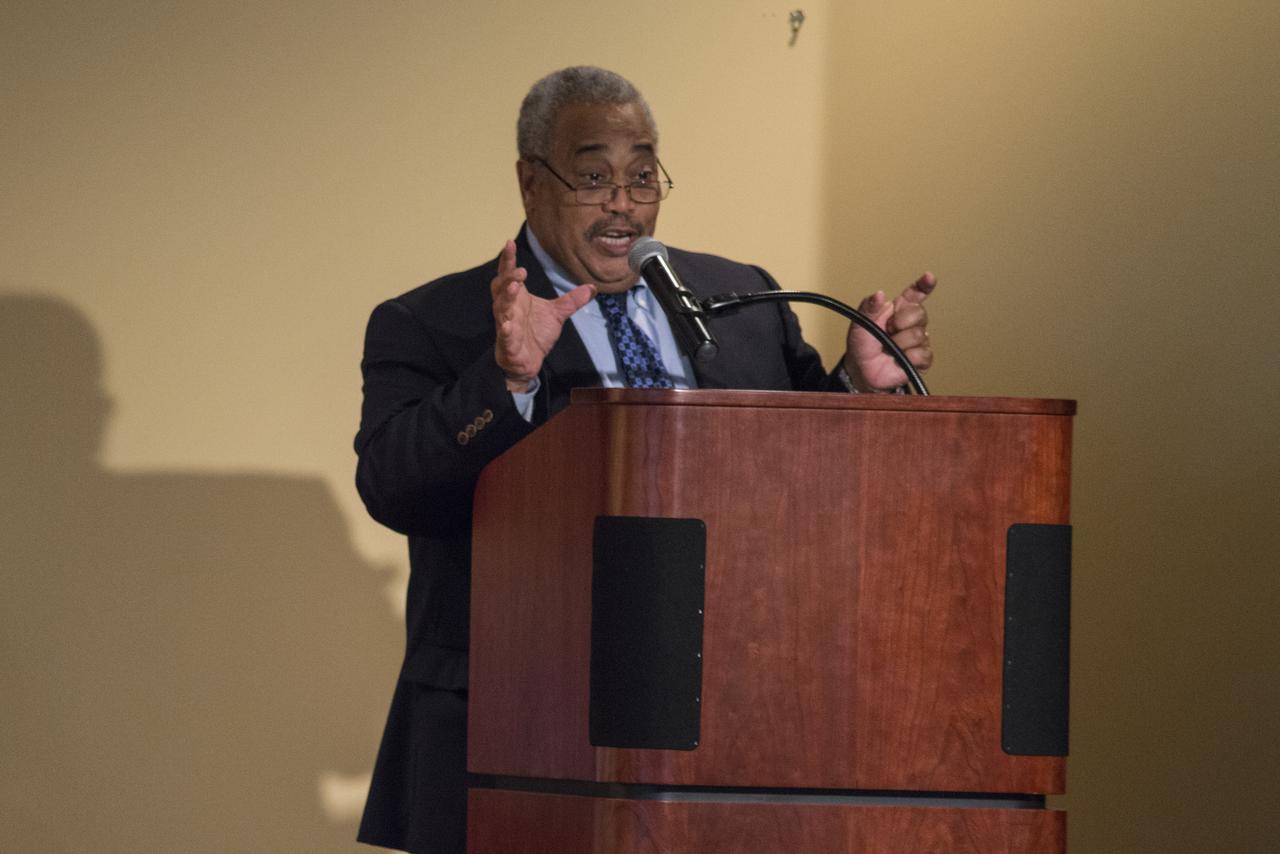
GLENN DELGADO, ASSOCIATE ADMINISTRATOR OFFICE OF SMALL BUSINESS PROGRAMS, NASA HQ, ADDRESSES THE ATTENDEES AT THE SMBA ESD-HUB ZONE EVENT AT THE HUNTSVILLE MUSEUM OF ART.
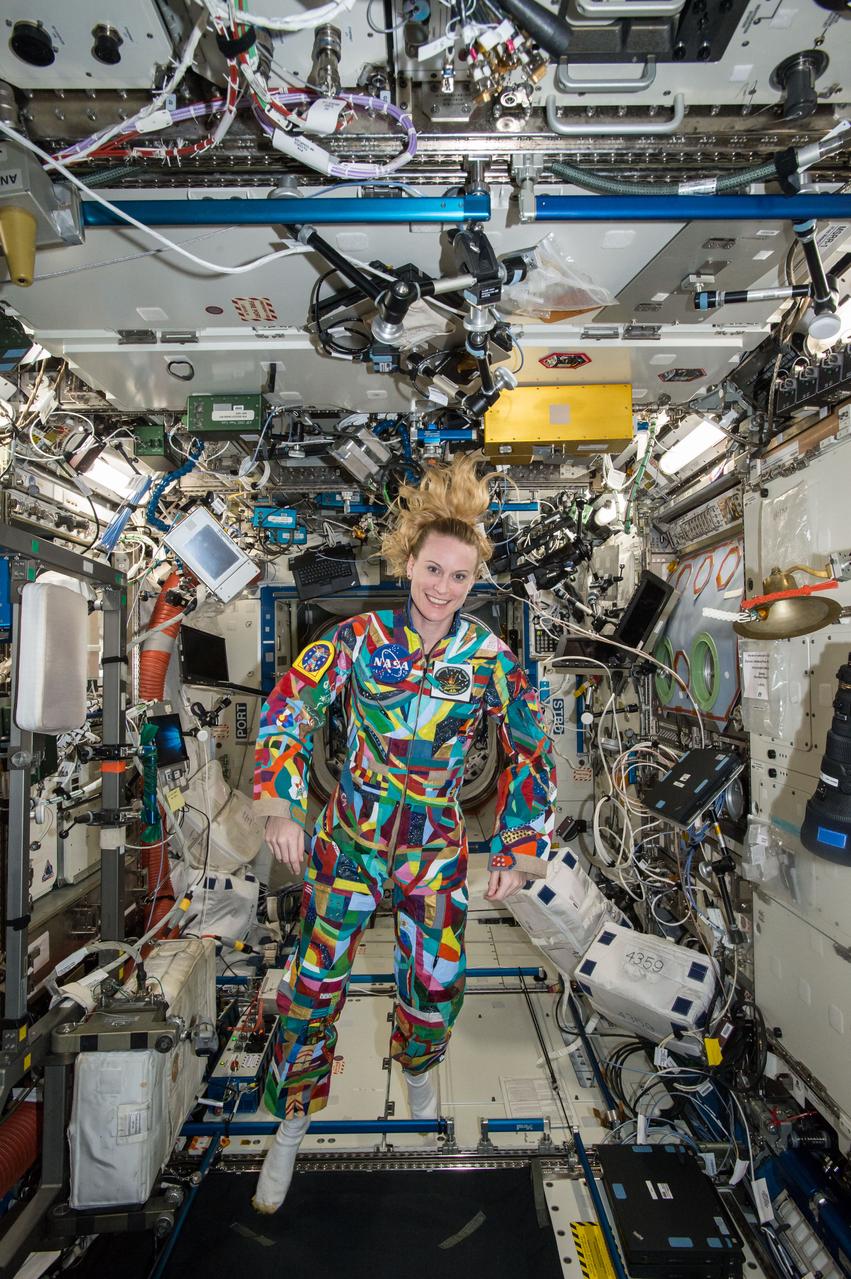
iss049e000758 (9/9/2016) --- NASA Astronaut Kate Rubins, wearing the colorful "Courage" flight suit, is photographed in the Destiney laboratory abroad the International Space Station (ISS). The suit was painted by children in the M. D. Anderson cancer ward through the hospital’s Arts in Medicine Program, which helps pediatric patients cope with cancer treatment through art.
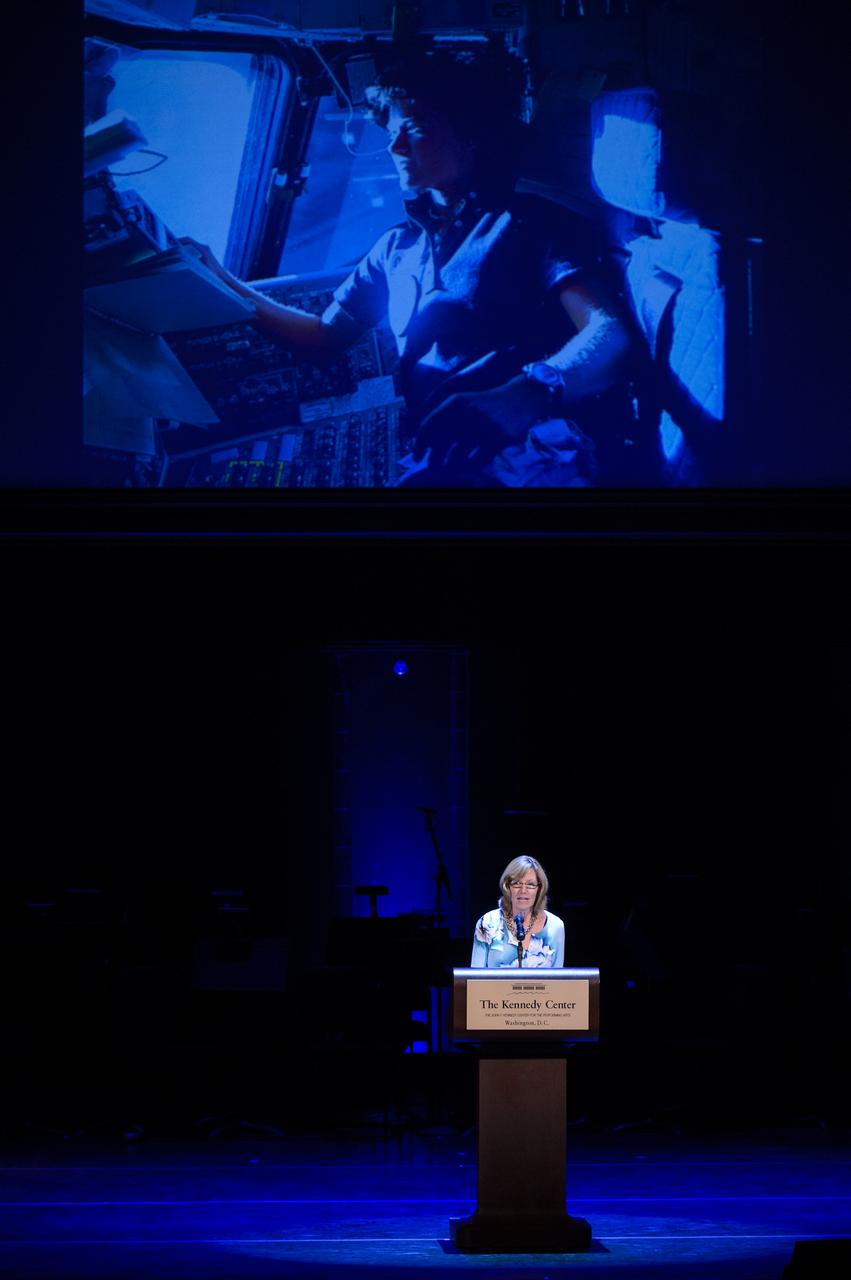
Co-Founder of Sally Ride Science Karen Flammer talks about educational outreach programs for NASA, ISS EarthKAM, and Grail MoonKAM during the National Tribute to Sally Ride at the John F. Kennedy Center for the Performing Arts, Monday, May 20, 2013 in Washington. Photo Credit: (NASA/Bill Ingalls)

Kepler Program VIP's from left Natalie Batalha, Bill Borucki and Jon Jenkins in front of a NASA Ames Hyperwall display of newly discovered planet K-22B art at the NAS (NASA Advanced Supercomputing) Facility, Moffett Field, CA (for aviation week)
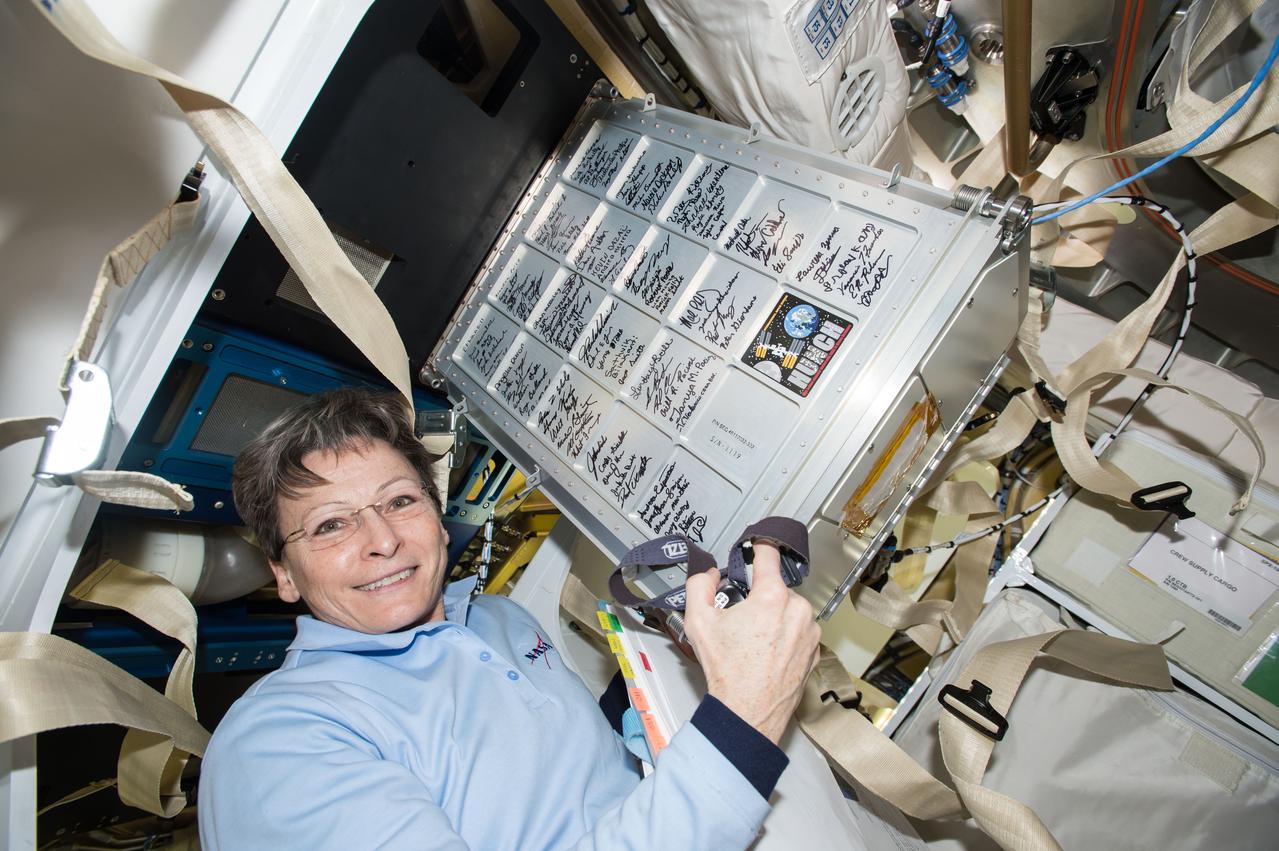
iss050e056553 (03/09/2017) --- NASA astronaut Peggy Whitson unloads spaceflight hardware delivered on SpaceX CRS-10 that was built as part of the NASA High School Students United with NASA to Create Hardware (HUNCH) program. Students in the HUNCH program receive valuable experience creating goods for NASA from hardware to the culinary arts, while NASA receives the creativity of the High School students.
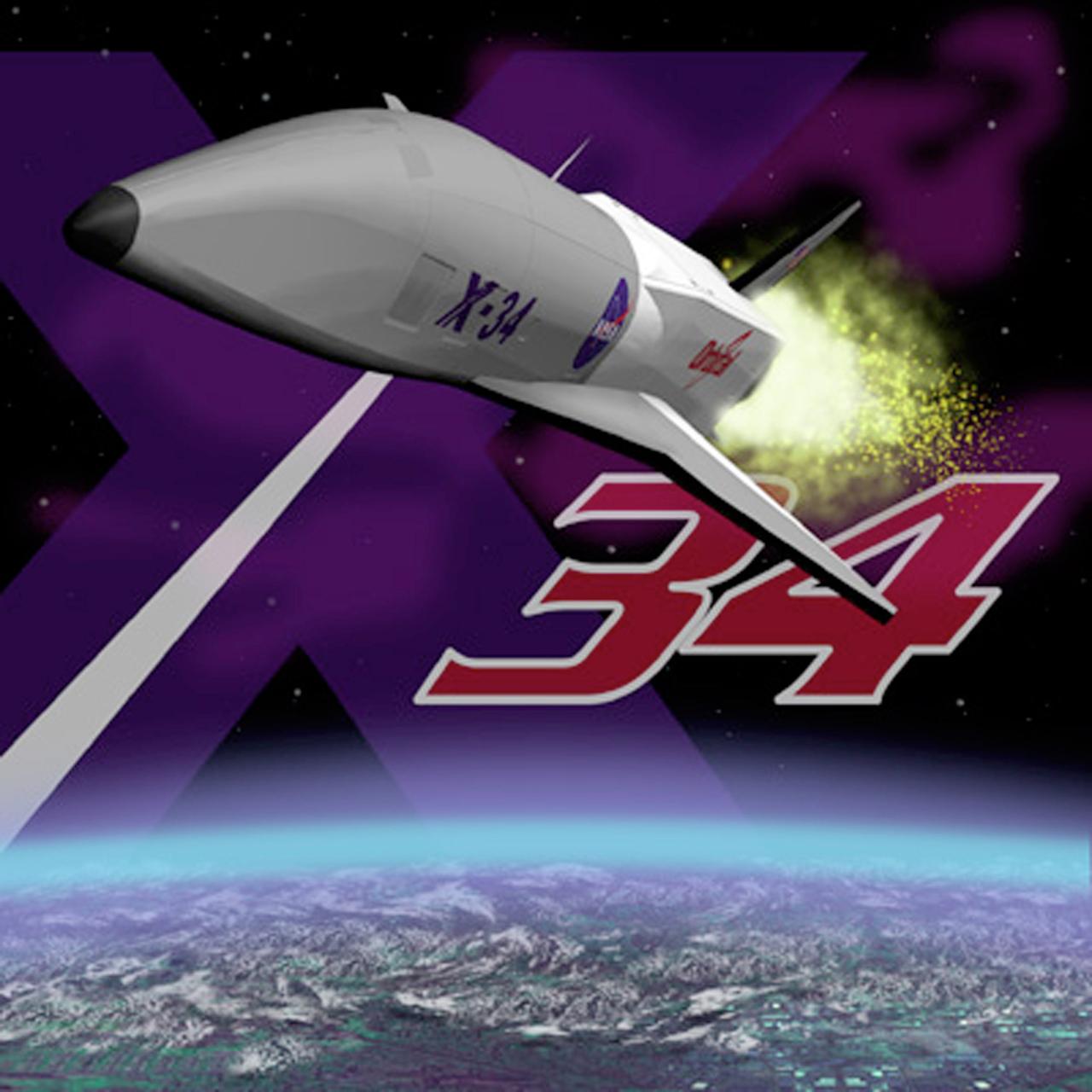
Pictured is NASA's poster art for the X-34 technology Demonstrator. The X-34 was part of NASA's Pathfinder Program which demonstrated advanced space transportation technologies through the use of flight experiments and experimental vehicles. These technology demonstrators and flight experiments would support the Agency's goal of dramatically reducing the cost of access to space and would define the future of space transportation pushing technology into a new era of space development and exploration at the dawn of the new century. The X-34 program was cancelled in 2001.
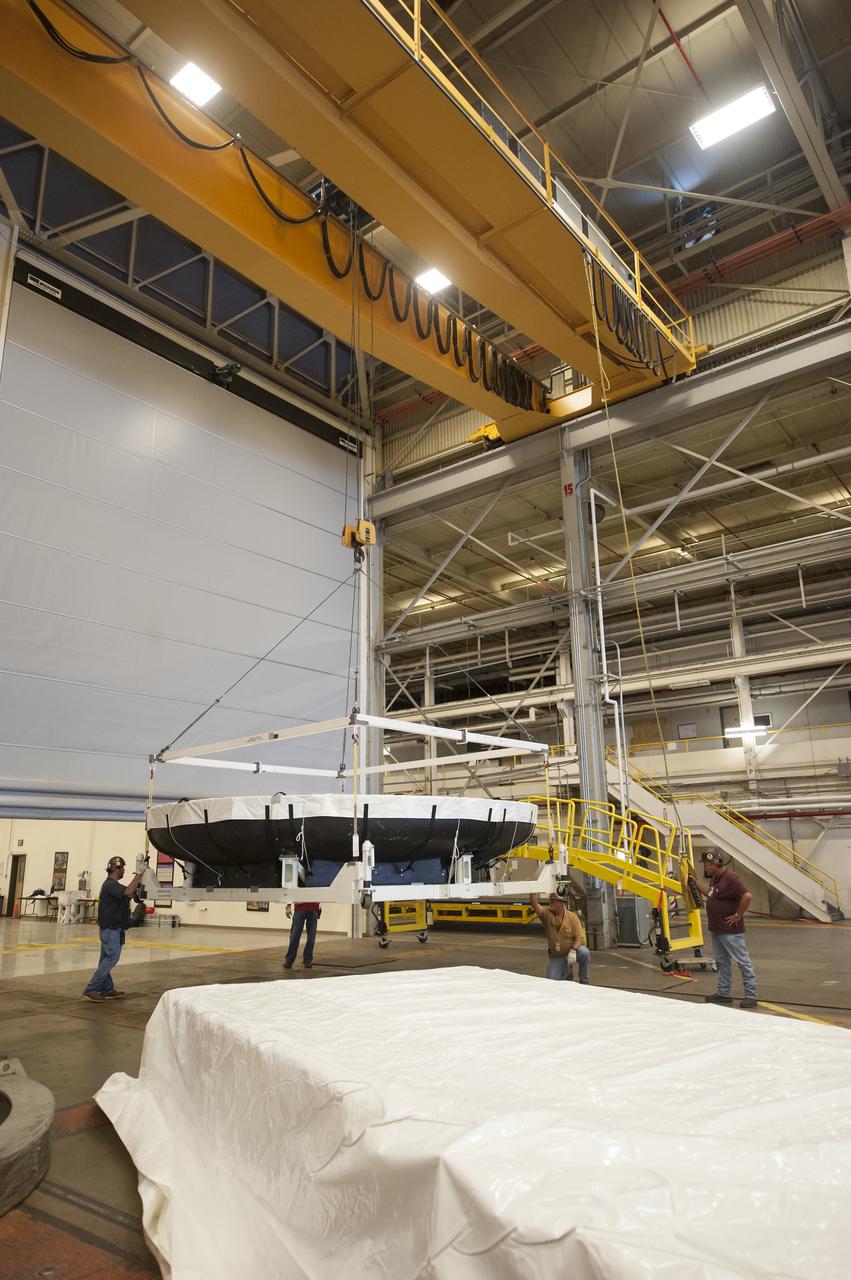
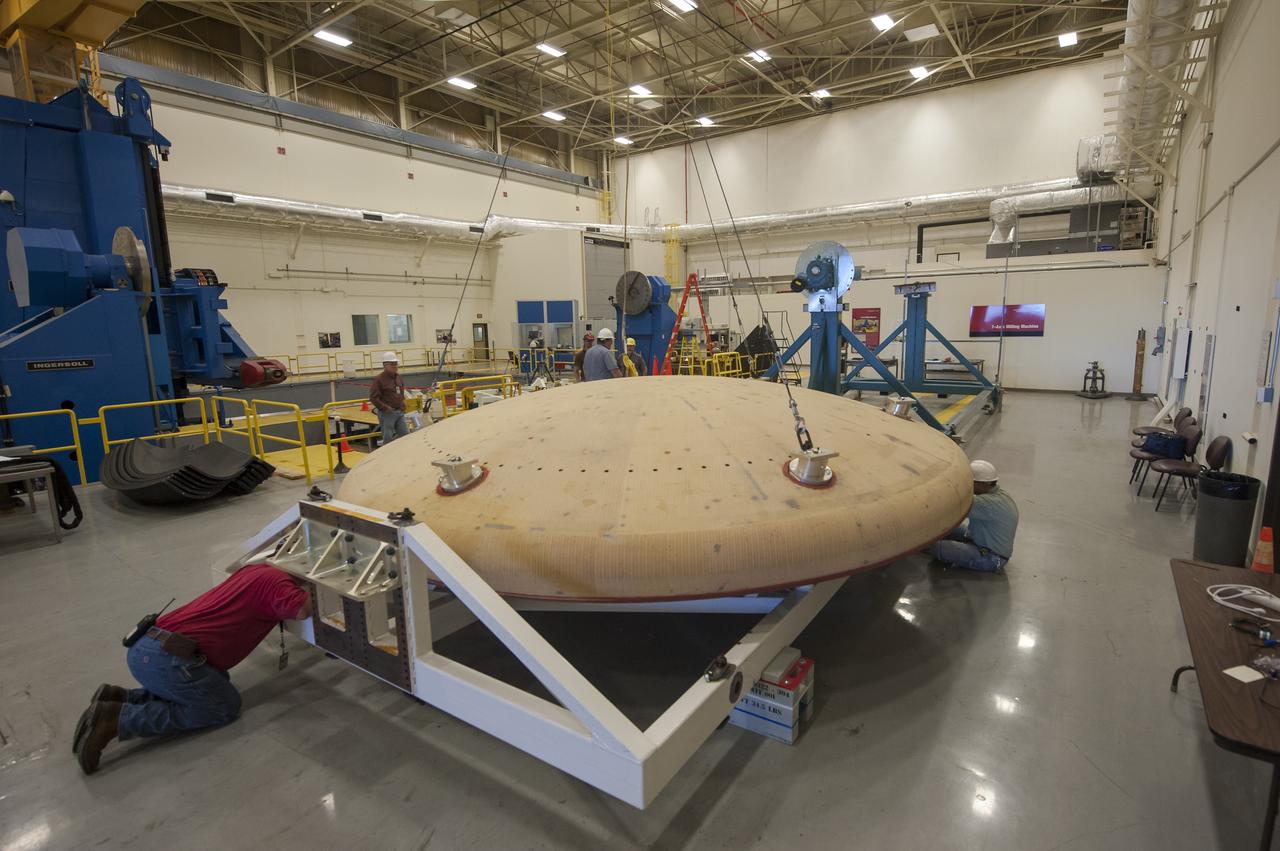
THE ORION HEAT SHIELD, WHICH WAS AT NASA’S MARSHALL SPACE FLIGHT CENTER FROM MARCH-MAY 2015 FOR ENGINEERING AND ANALYSIS, IS READIED FOR DEPARTURE AT THE END OF ITS STAY. THE HEAT SHIELD’S ABLATED SURFACE MATERIAL WAS REMOVED AT MARSHALL FOR ANALYSIS, USING THE CENTER’S STATE-OF-THE-ART SEVEN-AXIS MILLING MACHINE. IT NEXT WILL GO TO NASA’S LANGLEY RESEARCH CENTER FOR WATER-IMPACT TESTING. NASA’S JOHNSON SPACE CENTER LEADS THE ORION PROGRAM FOR NASA.
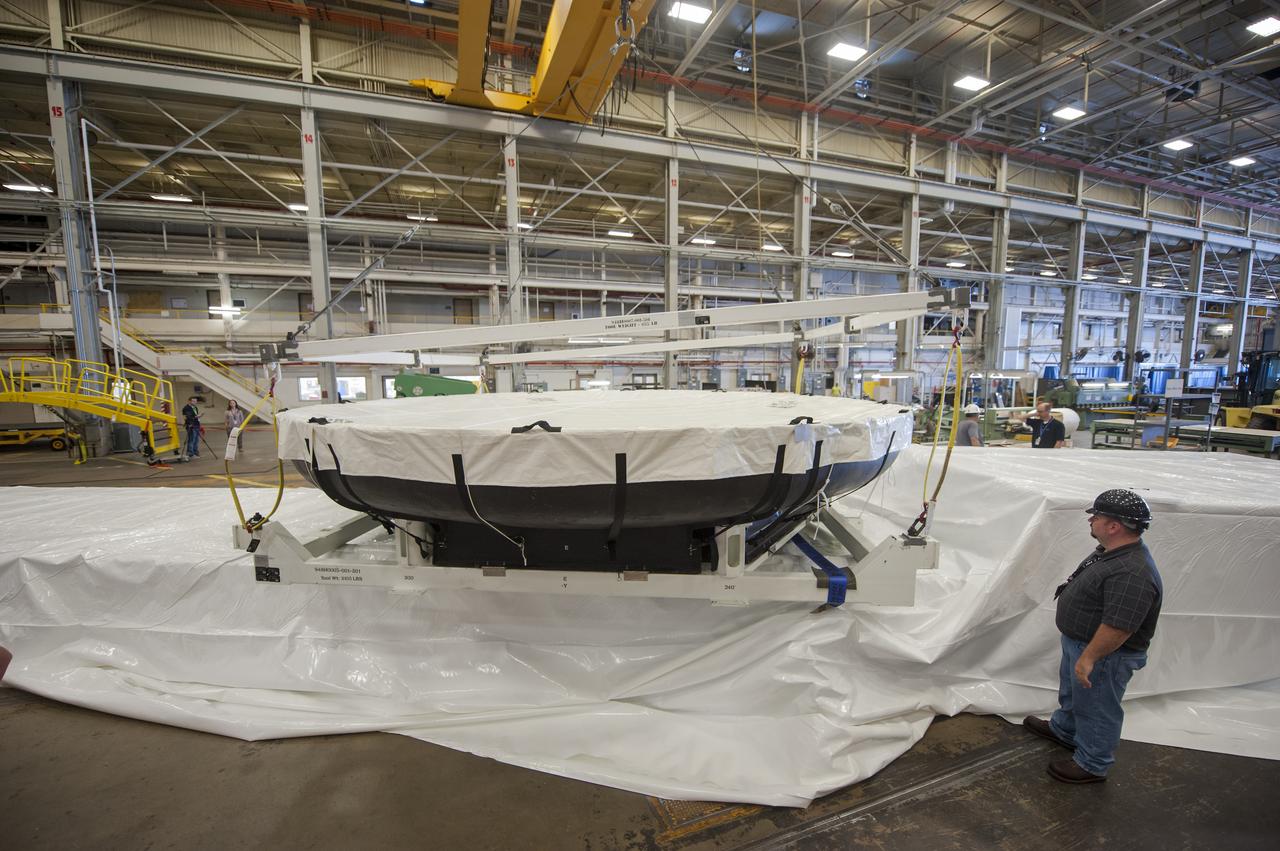
THE ORION HEAT SHIELD, WHICH WAS AT NASA’S MARSHALL SPACE FLIGHT CENTER FROM MARCH-MAY 2015 FOR ENGINEERING AND ANALYSIS, IS READIED FOR DEPARTURE AT THE END OF ITS STAY. THE HEAT SHIELD’S ABLATED SURFACE MATERIAL WAS REMOVED AT MARSHALL FOR ANALYSIS, USING THE CENTER’S STATE-OF-THE-ART SEVEN-AXIS MILLING MACHINE. IT NEXT WILL GO TO NASA’S LANGLEY RESEARCH CENTER FOR WATER-IMPACT TESTING. NASA’S JOHNSON SPACE CENTER LEADS THE ORION PROGRAM FOR NASA.
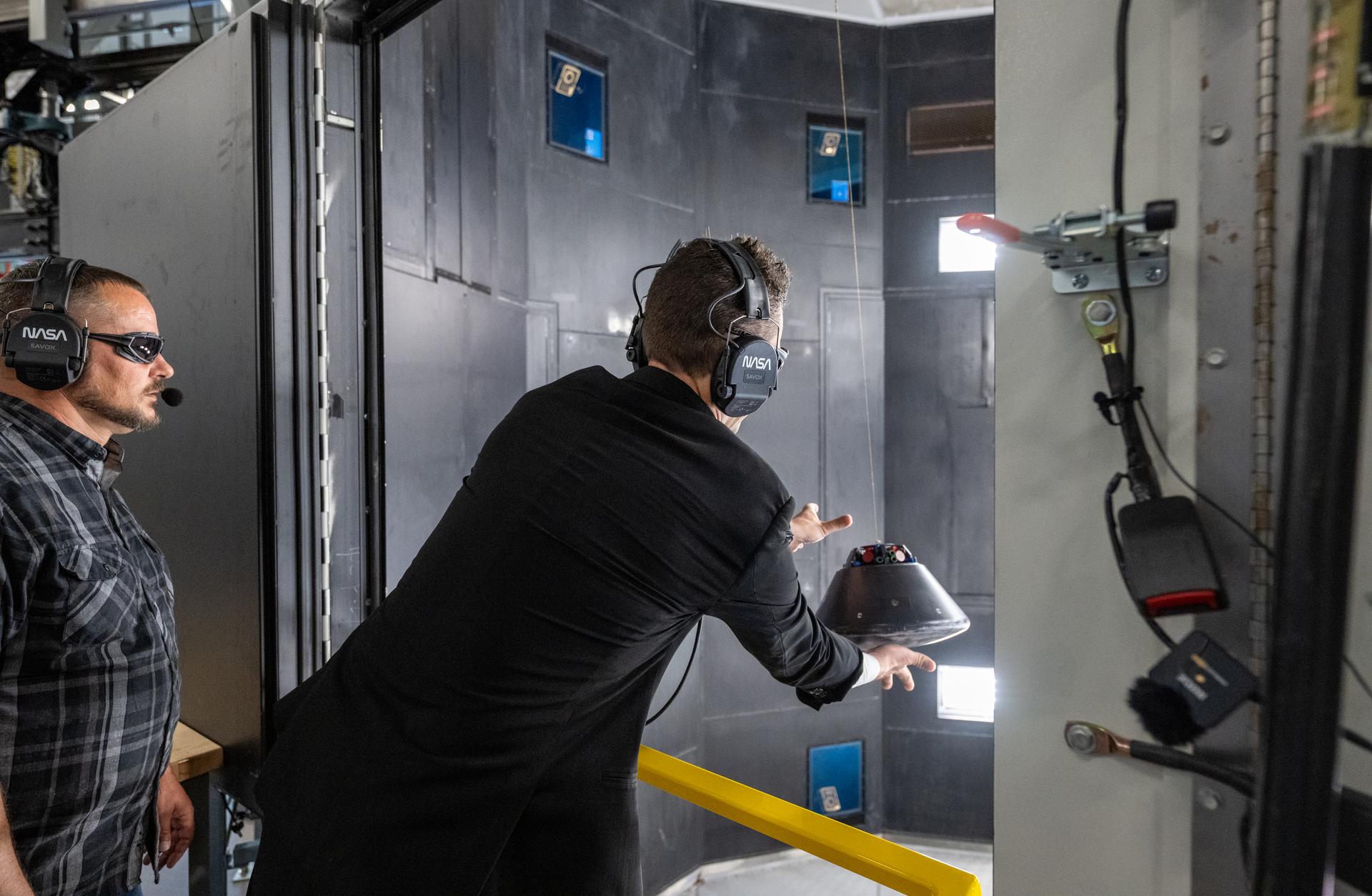
NASA Administrator Jared Isaacman launches a scale model of the Orion capsule during a demonstration at the Flight Dynamics Research Facility, NASA's newest wind tunnel, Friday, July 31, 2026, at NASA’s Langley Research Center in Hampton, Virginia. The state-of-the-art facility will support research and technology development that will advance the agency’s aeronautics, exploration, and science goals, including establishing a sustained human presence on the lunar surface through the Artemis program and the development of a Moon Base. Photo Credit: (NASA/Keegan Barber)
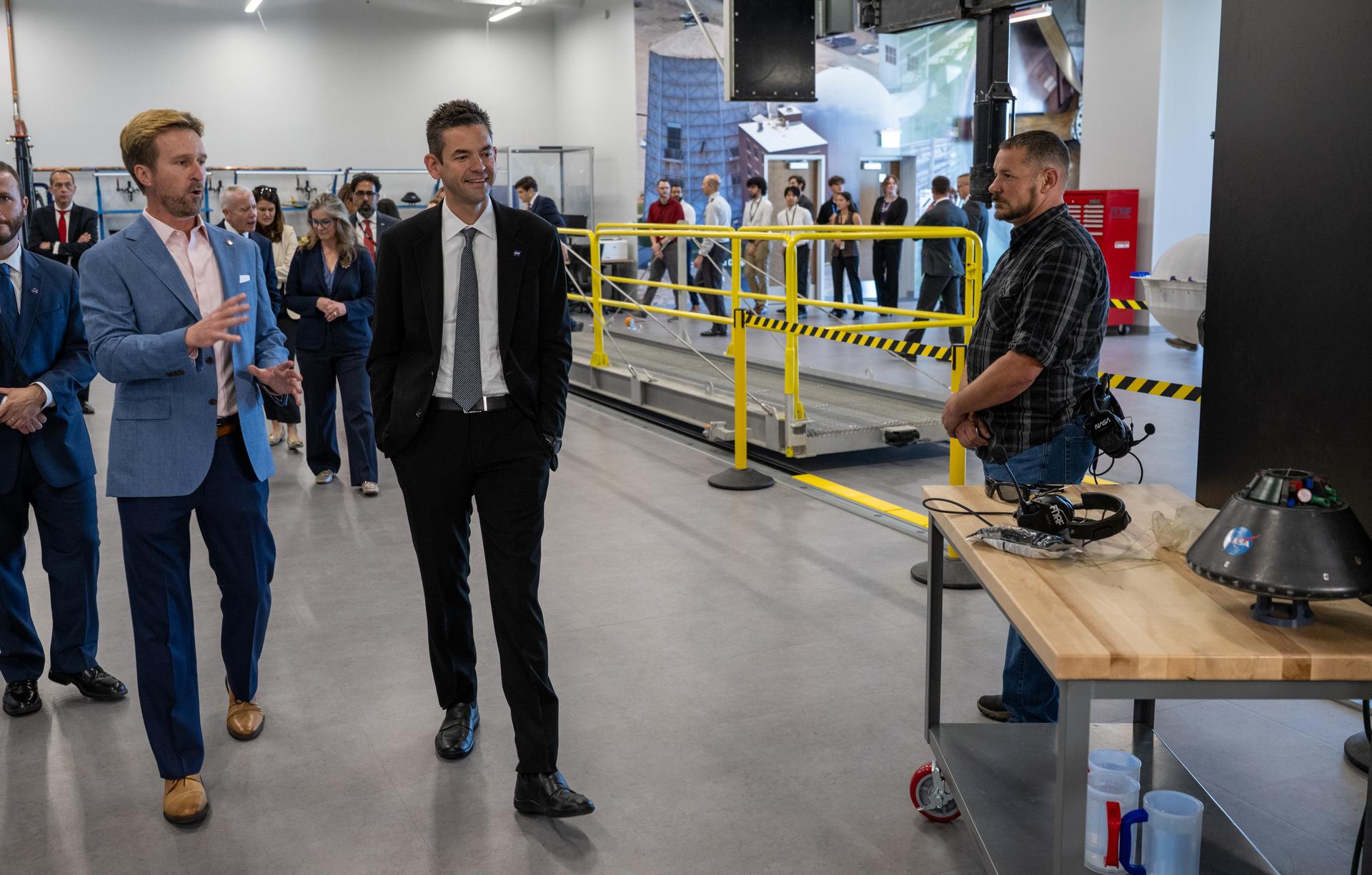
NASA Administrator Jared Isaacman, center, speaks with Corey Diebler, facility manager, left, during a tour of the Flight Dynamics Research Facility, NASA's newest wind tunnel, Friday, July 31, 2026, at NASA’s Langley Research Center in Hampton, Virginia. The state-of-the-art facility will support research and technology development that will advance the agency’s aeronautics, exploration, and science goals, including establishing a sustained human presence on the lunar surface through the Artemis program and the development of a Moon Base. Photo Credit: (NASA/Keegan Barber)
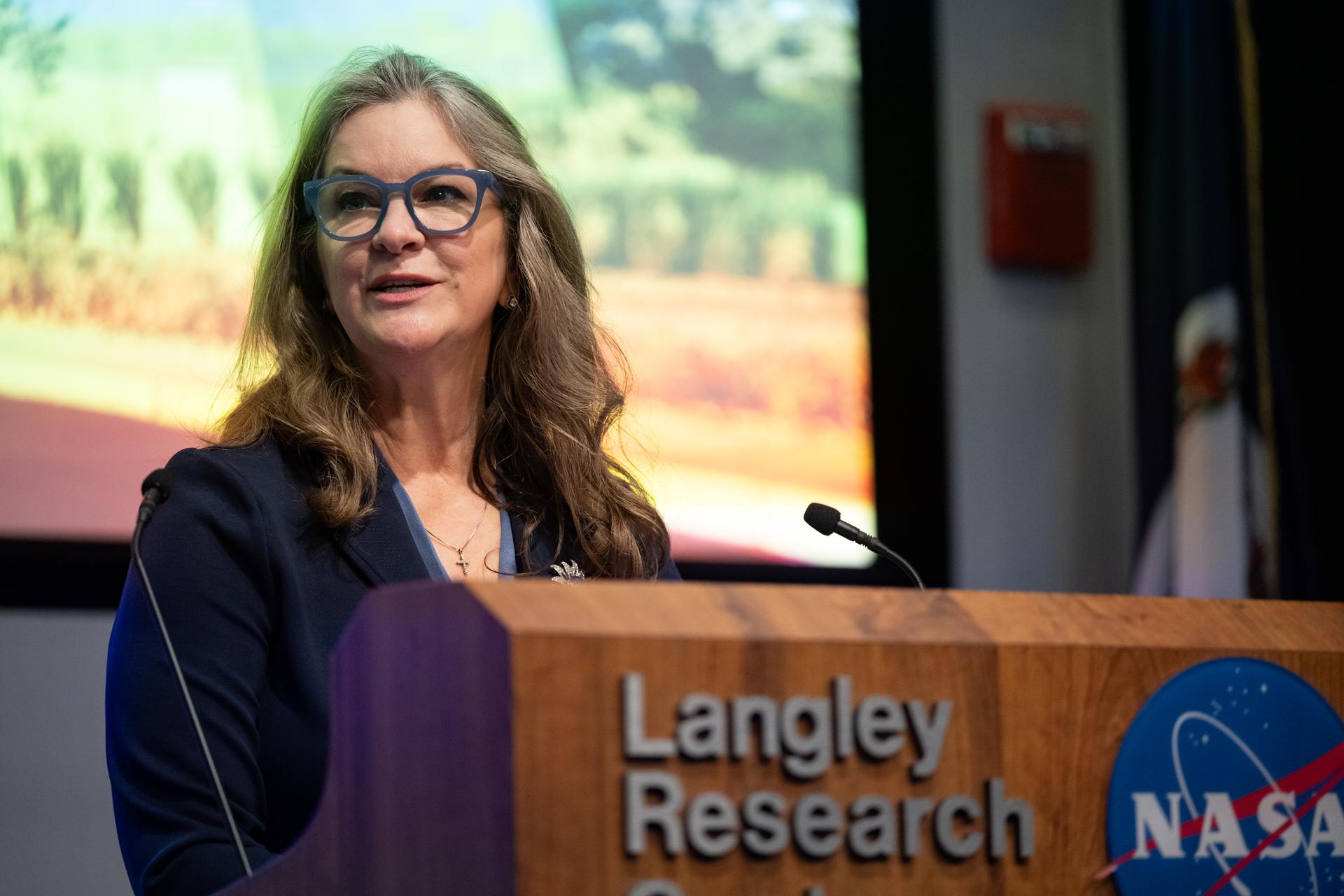
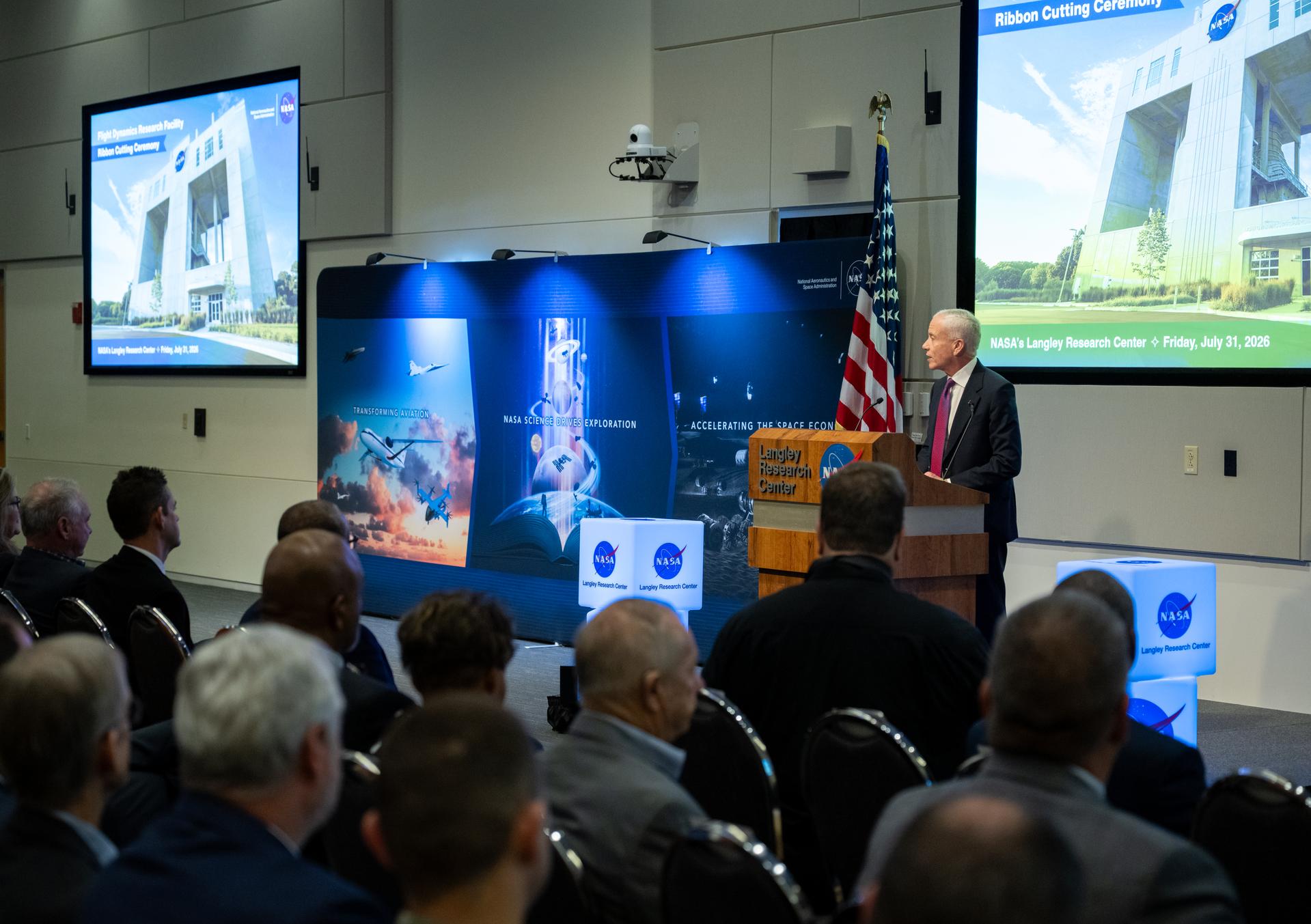
Dr. Trina Dyal, director of NASA's Langley Research Center, delivers remarks during a ribbon cutting ceremony for the Flight Dynamics Research Facility, NASA's newest wind tunnel, Friday, July 31, 2026, at NASA’s Langley Research Center in Hampton, Virginia. The state-of-the-art facility will support research and technology development that will advance the agency’s aeronautics, exploration, and science goals, including establishing a sustained human presence on the lunar surface through the Artemis program and the development of a Moon Base. Photo Credit: (NASA/Keegan Barber)
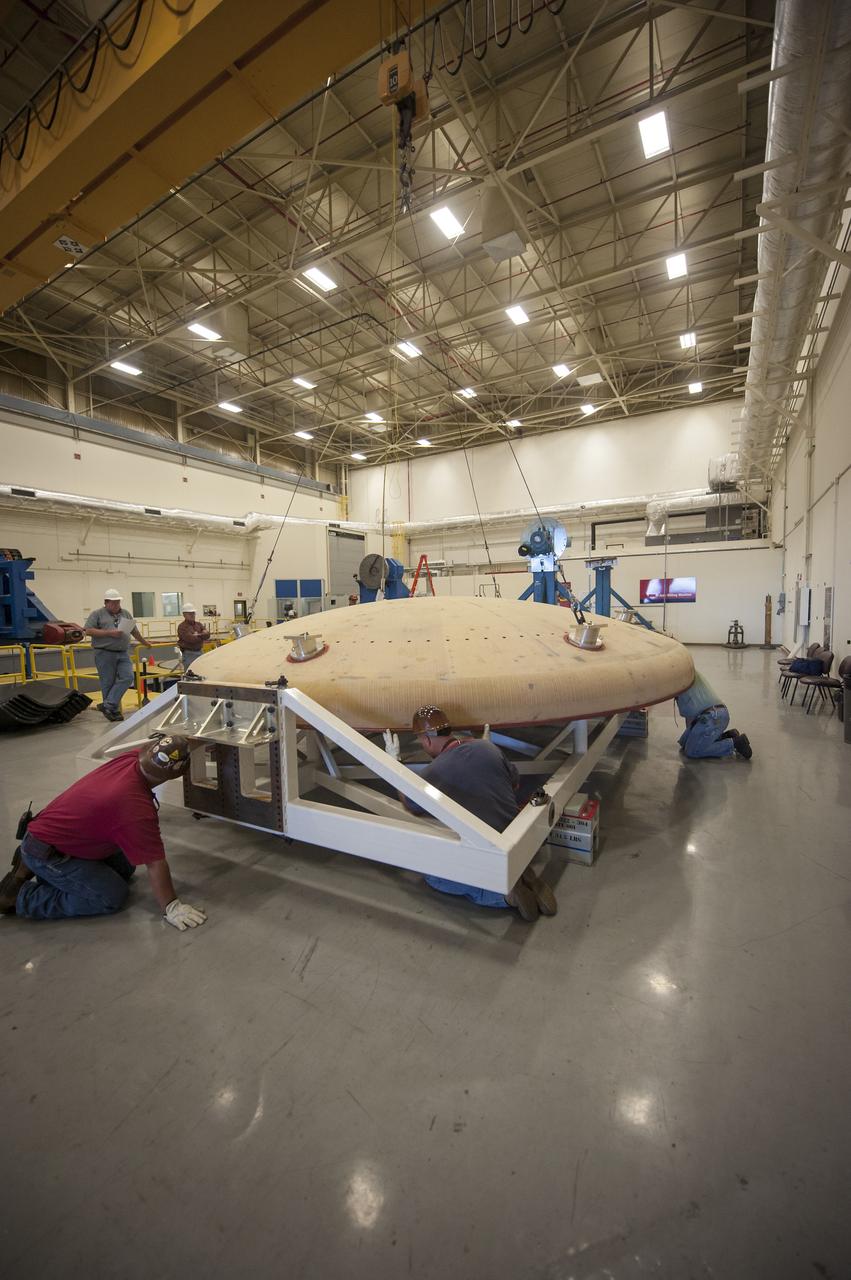
THE ORION HEAT SHIELD, WHICH WAS AT NASA’S MARSHALL SPACE FLIGHT CENTER FROM MARCH-MAY 2015 FOR ENGINEERING AND ANALYSIS, IS READIED FOR DEPARTURE AT THE END OF ITS STAY. THE HEAT SHIELD’S ABLATED SURFACE MATERIAL WAS REMOVED AT MARSHALL FOR ANALYSIS, USING THE CENTER’S STATE-OF-THE-ART SEVEN-AXIS MILLING MACHINE. IT NEXT WILL GO TO NASA’S LANGLEY RESEARCH CENTER FOR WATER-IMPACT TESTING. NASA’S JOHNSON SPACE CENTER LEADS THE ORION PROGRAM FOR NASA.
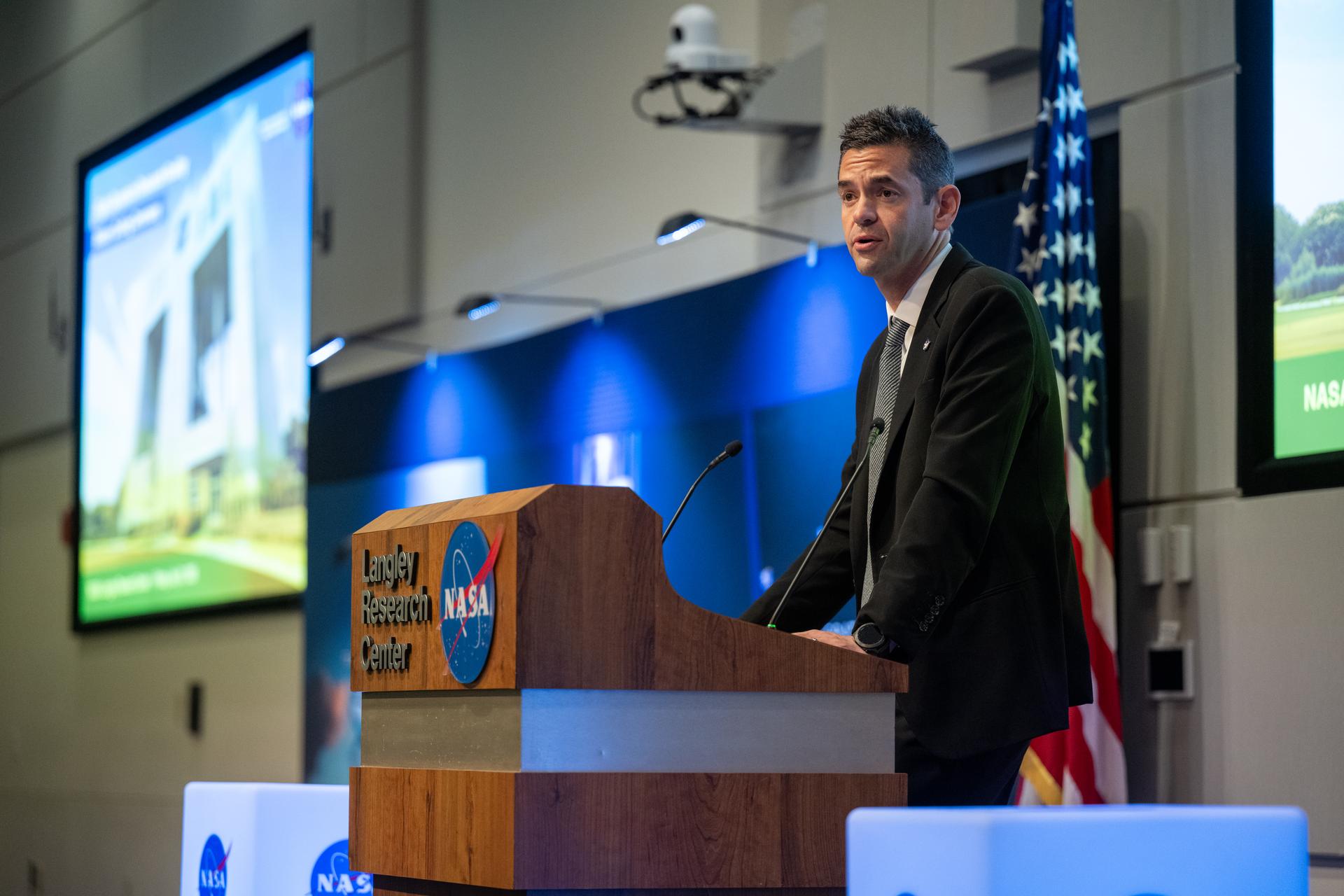
NASA Administrator Jared Isaacman delivers remarks during a ribbon cutting ceremony for the Flight Dynamics Research Facility, NASA's newest wind tunnel, Friday, July 31, 2026, at NASA’s Langley Research Center in Hampton, Virginia. The state-of-the-art facility will support research and technology development that will advance the agency’s aeronautics, exploration, and science goals, including establishing a sustained human presence on the lunar surface through the Artemis program and the development of a Moon Base. Photo Credit: (NASA/Keegan Barber)
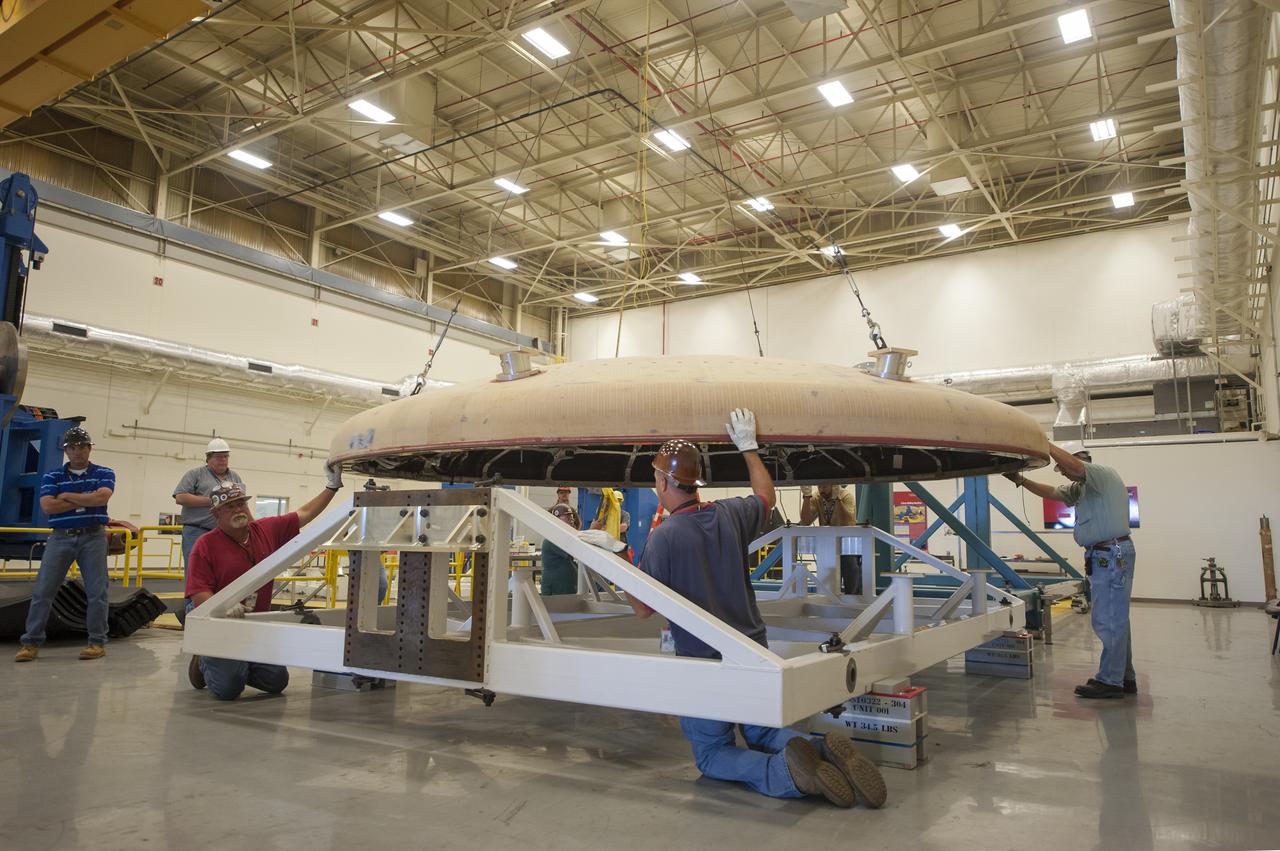
THE ORION HEAT SHIELD, WHICH WAS AT NASA’S MARSHALL SPACE FLIGHT CENTER FROM MARCH-MAY 2015 FOR ENGINEERING AND ANALYSIS, IS READIED FOR DEPARTURE AT THE END OF ITS STAY. THE HEAT SHIELD’S ABLATED SURFACE MATERIAL WAS REMOVED AT MARSHALL FOR ANALYSIS, USING THE CENTER’S STATE-OF-THE-ART SEVEN-AXIS MILLING MACHINE. IT NEXT WILL GO TO NASA’S LANGLEY RESEARCH CENTER FOR WATER-IMPACT TESTING. NASA’S JOHNSON SPACE CENTER LEADS THE ORION PROGRAM FOR NASA.
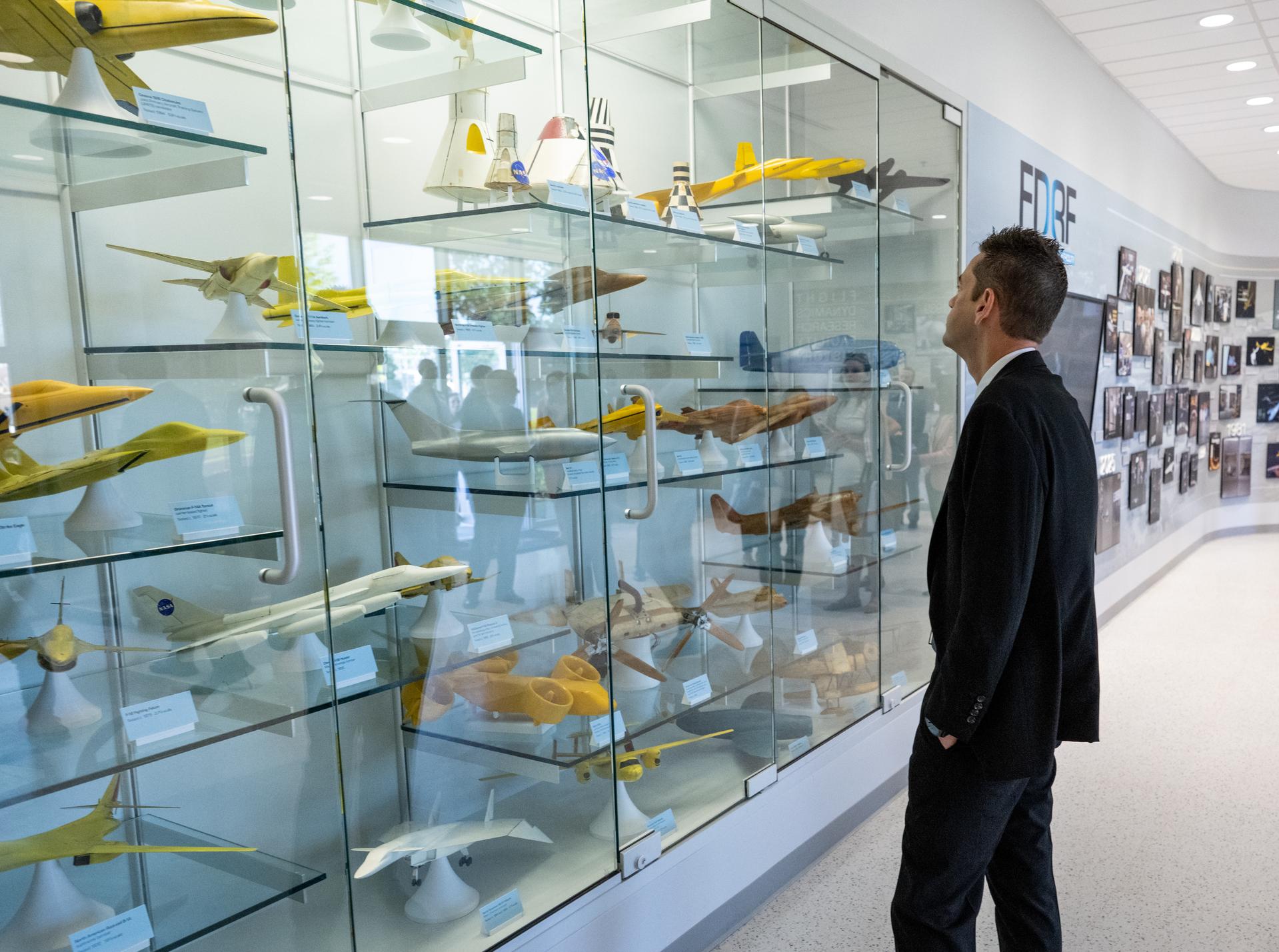
NASA Administrator Jared Isaacman views scale models of aircraft during a tour of the Flight Dynamics Research Facility, NASA's newest wind tunnel, Friday, July 31, 2026, at NASA’s Langley Research Center in Hampton, Virginia. The state-of-the-art facility will support research and technology development that will advance the agency’s aeronautics, exploration, and science goals, including establishing a sustained human presence on the lunar surface through the Artemis program and the development of a Moon Base. Photo Credit: (NASA/Keegan Barber)
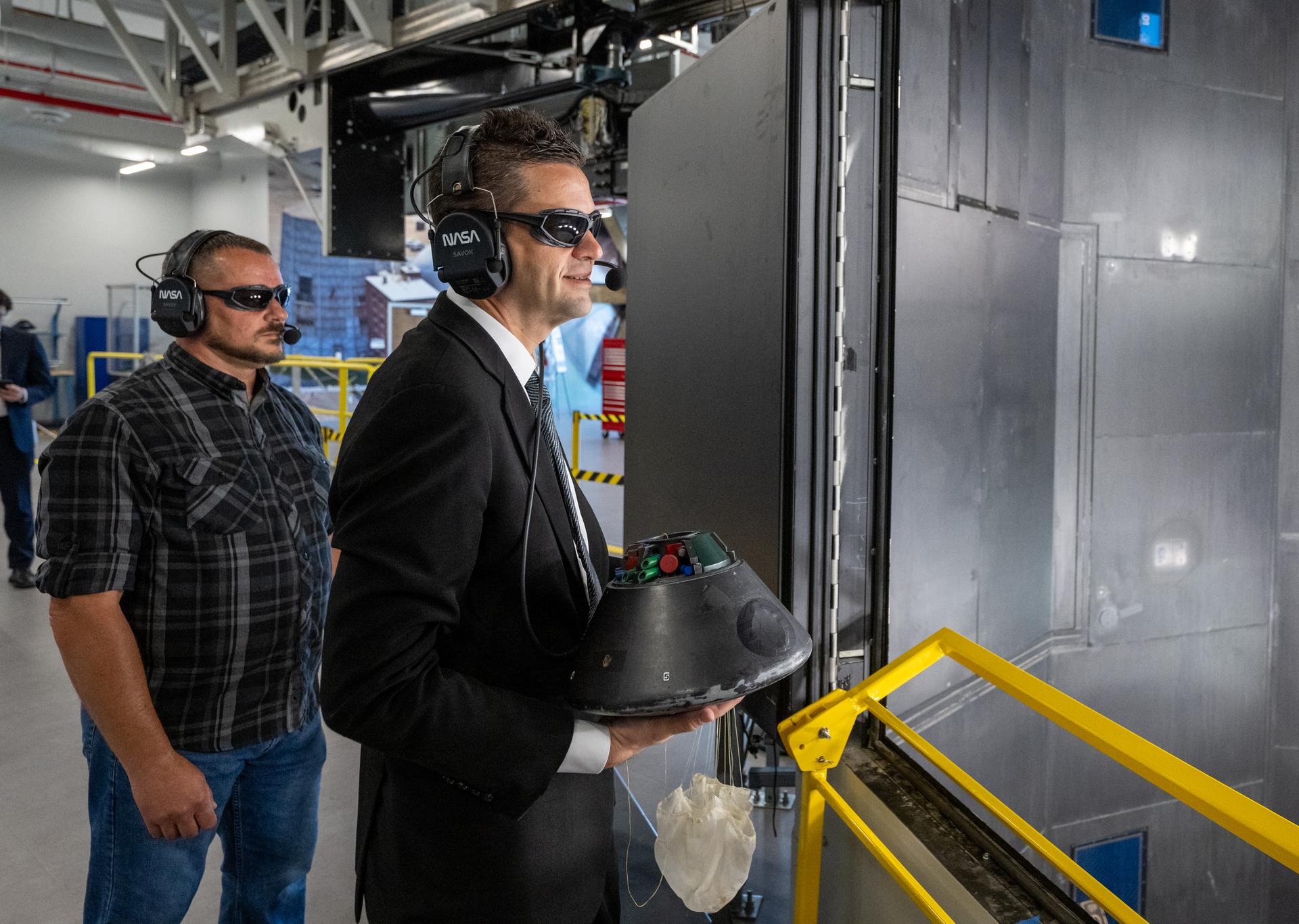
NASA Administrator Jared Isaacman prepares to launch a scale model of the Orion capsule for a demonstration at the Flight Dynamics Research Facility, NASA's newest wind tunnel, Friday, July 31, 2026, at NASA’s Langley Research Center in Hampton, Virginia. The state-of-the-art facility will support research and technology development that will advance the agency’s aeronautics, exploration, and science goals, including establishing a sustained human presence on the lunar surface through the Artemis program and the development of a Moon Base. Photo Credit: (NASA/Keegan Barber)
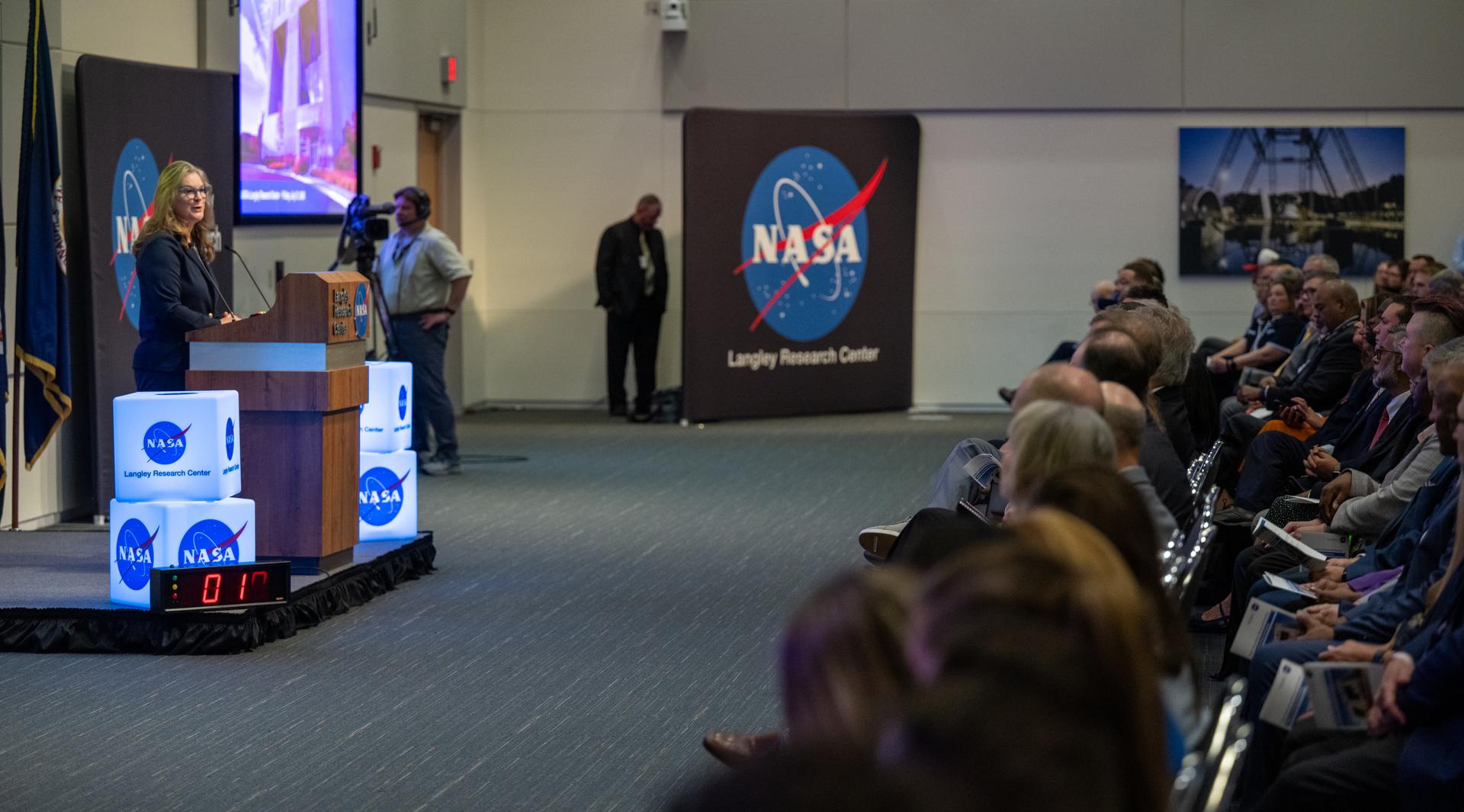
Dr. Trina Dyal, director of NASA's Langley Research Center, delivers remarks during a ribbon cutting ceremony for the Flight Dynamics Research Facility, NASA's newest wind tunnel, Friday, July 31, 2026, at NASA’s Langley Research Center in Hampton, Virginia. The state-of-the-art facility will support research and technology development that will advance the agency’s aeronautics, exploration, and science goals, including establishing a sustained human presence on the lunar surface through the Artemis program and the development of a Moon Base. Photo Credit: (NASA/Keegan Barber)
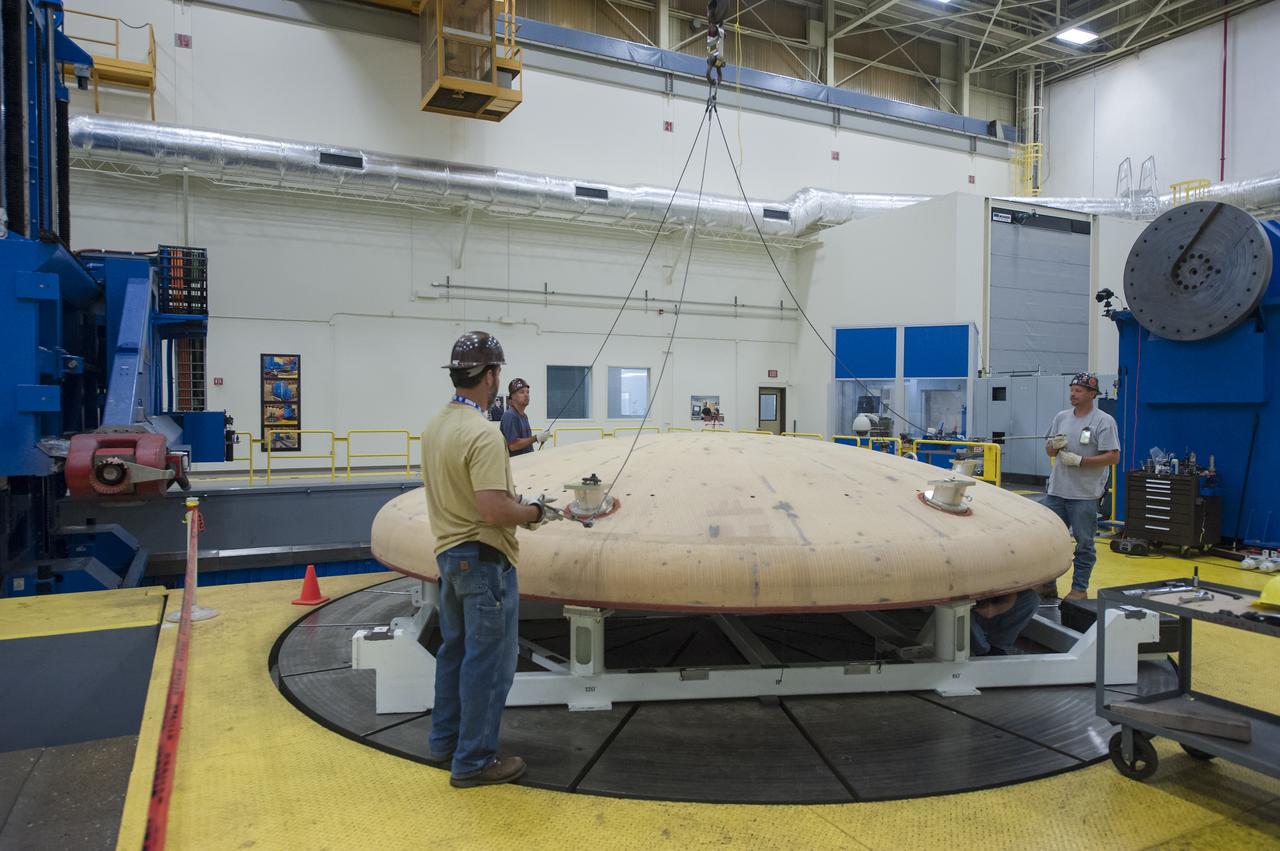
THE ORION HEAT SHIELD, WHICH WAS AT NASA’S MARSHALL SPACE FLIGHT CENTER FROM MARCH-MAY 2015 FOR ENGINEERING AND ANALYSIS, IS READIED FOR DEPARTURE AT THE END OF ITS STAY. THE HEAT SHIELD’S ABLATED SURFACE MATERIAL WAS REMOVED AT MARSHALL FOR ANALYSIS, USING THE CENTER’S STATE-OF-THE-ART SEVEN-AXIS MILLING MACHINE. IT NEXT WILL GO TO NASA’S LANGLEY RESEARCH CENTER FOR WATER-IMPACT TESTING. NASA’S JOHNSON SPACE CENTER LEADS THE ORION PROGRAM FOR NASA.
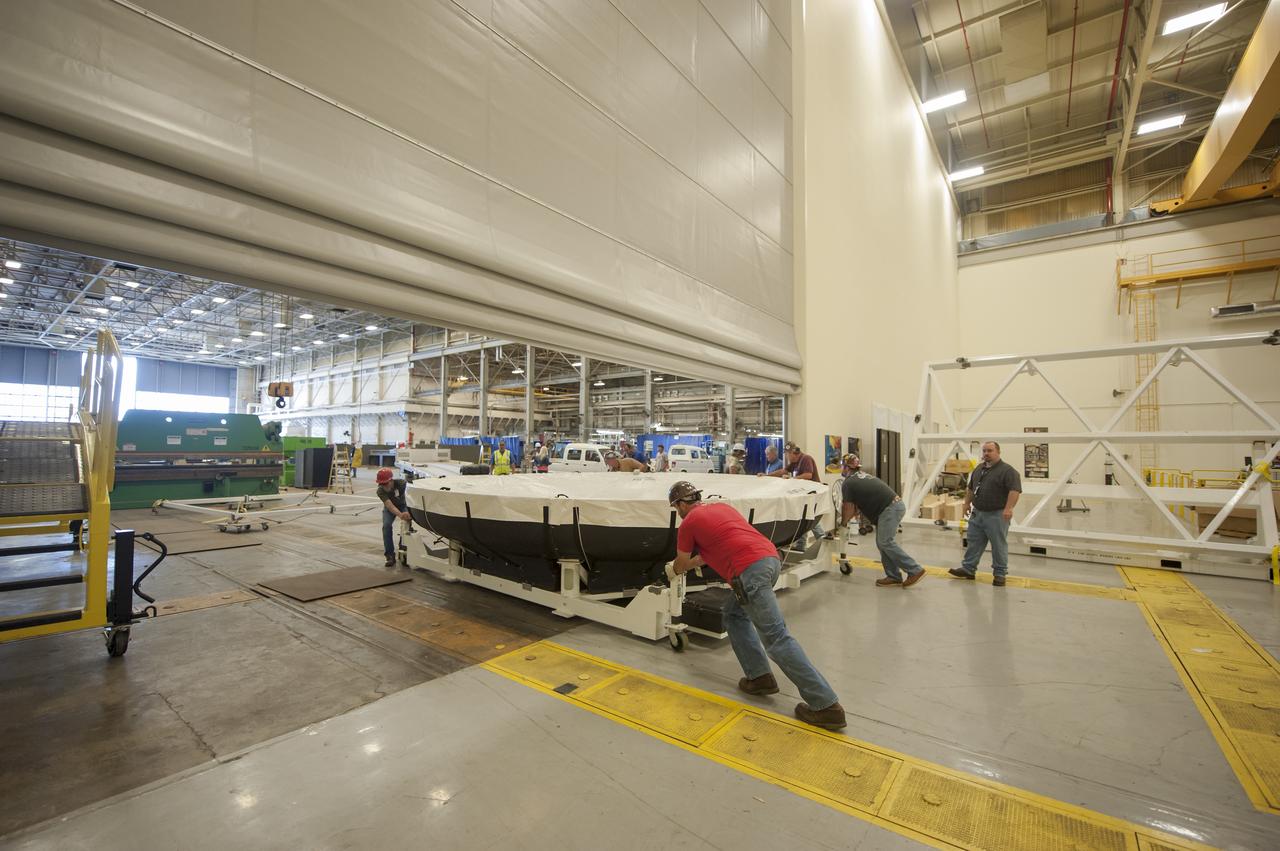
THE ORION HEAT SHIELD, WHICH WAS AT NASA’S MARSHALL SPACE FLIGHT CENTER FROM MARCH-MAY 2015 FOR ENGINEERING AND ANALYSIS, IS READIED FOR DEPARTURE AT THE END OF ITS STAY. THE HEAT SHIELD’S ABLATED SURFACE MATERIAL WAS REMOVED AT MARSHALL FOR ANALYSIS, USING THE CENTER’S STATE-OF-THE-ART SEVEN-AXIS MILLING MACHINE. IT NEXT WILL GO TO NASA’S LANGLEY RESEARCH CENTER FOR WATER-IMPACT TESTING. NASA’S JOHNSON SPACE CENTER LEADS THE ORION PROGRAM FOR NASA.
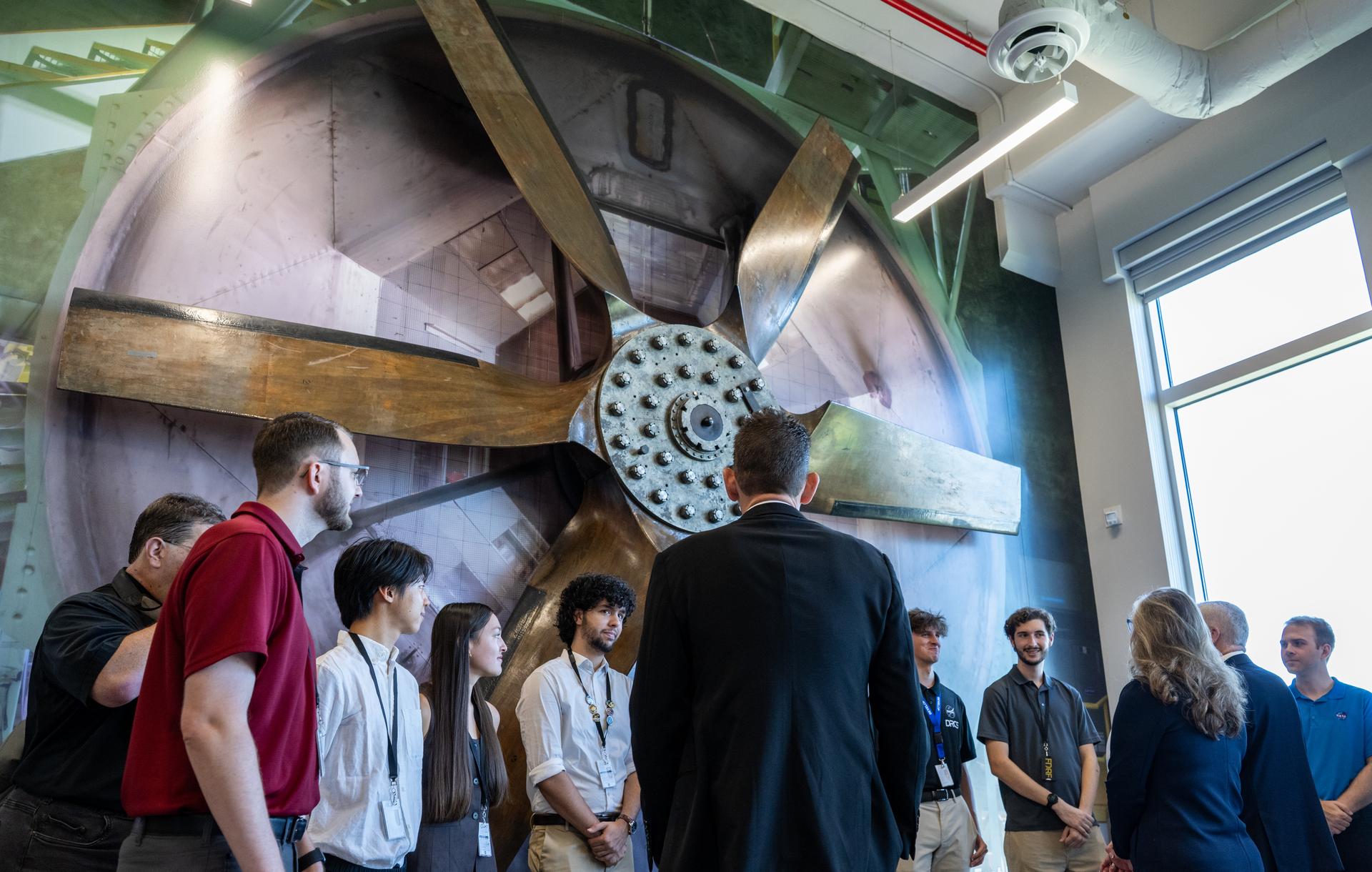
NASA Administrator Jared Isaacman, center, meets with interns during a tour of the Flight Dynamics Research Facility, NASA's newest wind tunnel, Friday, July 31, 2026, at NASA’s Langley Research Center in Hampton, Virginia. The state-of-the-art facility will support research and technology development that will advance the agency’s aeronautics, exploration, and science goals, including establishing a sustained human presence on the lunar surface through the Artemis program and the development of a Moon Base. Photo Credit: (NASA/Keegan Barber)
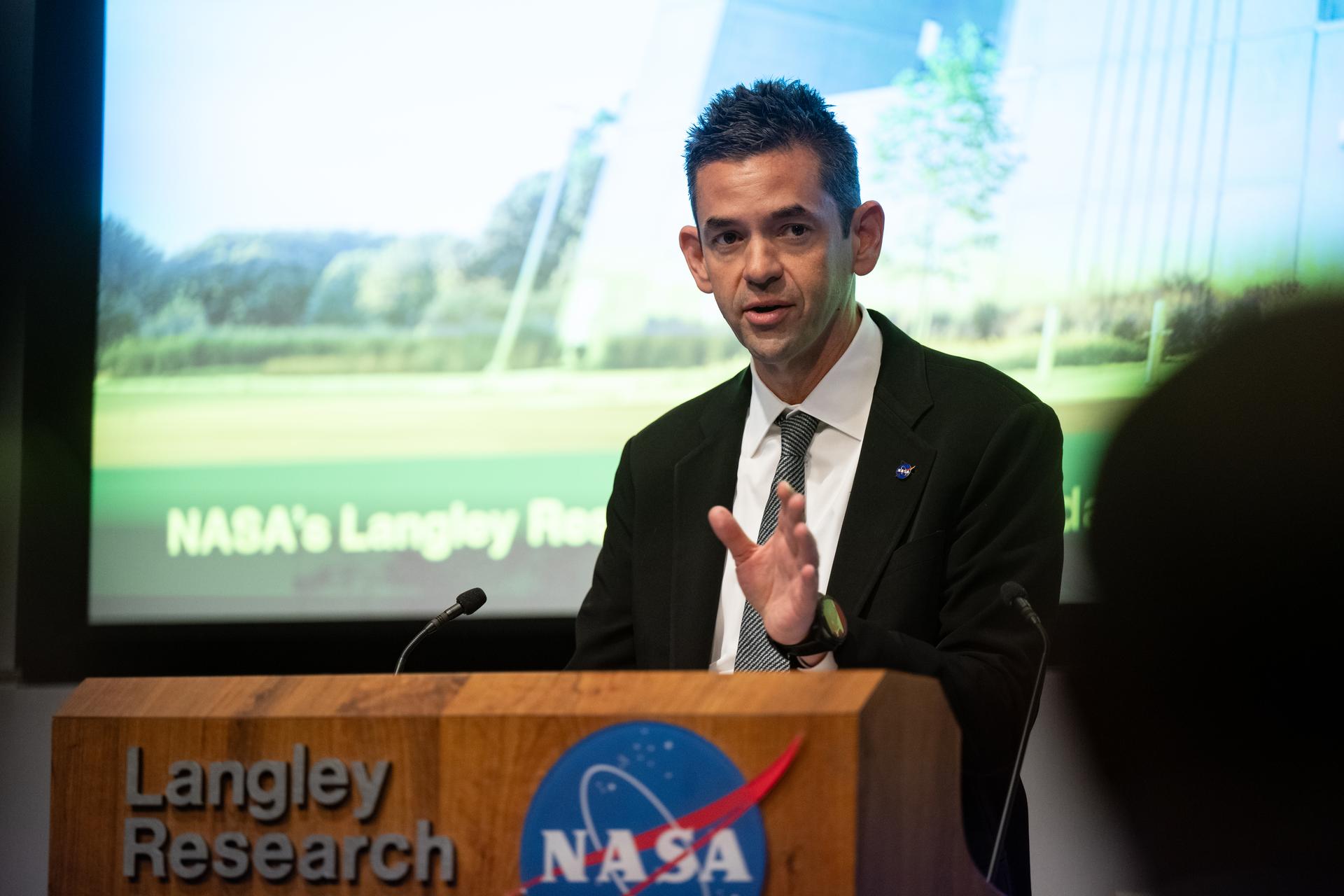
NASA Administrator Jared Isaacman delivers remarks during a ribbon cutting ceremony for the Flight Dynamics Research Facility, NASA's newest wind tunnel, Friday, July 31, 2026, at NASA’s Langley Research Center in Hampton, Virginia. The state-of-the-art facility will support research and technology development that will advance the agency’s aeronautics, exploration, and science goals, including establishing a sustained human presence on the lunar surface through the Artemis program and the development of a Moon Base. Photo Credit: (NASA/Keegan Barber)
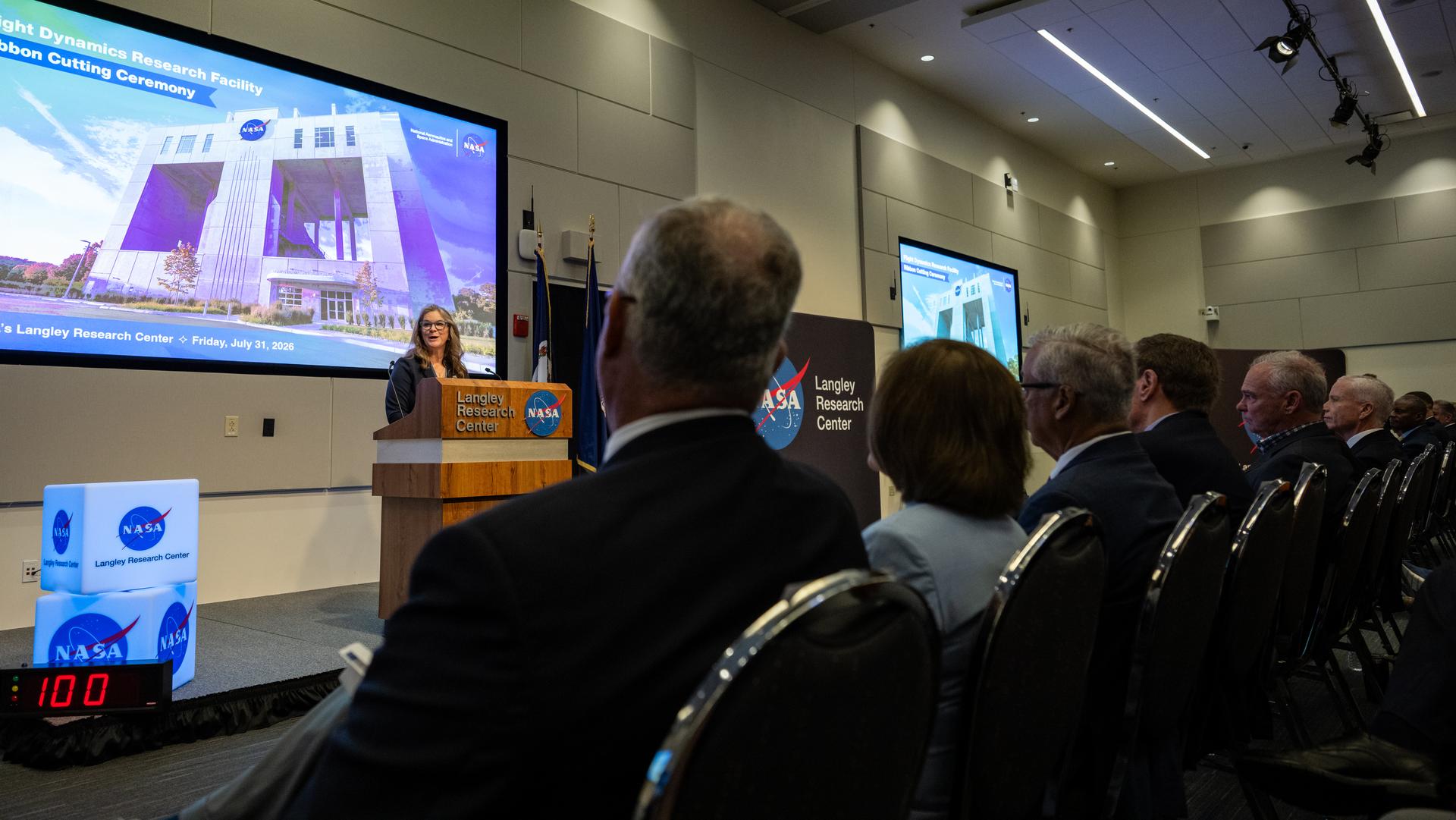
Dr. Trina Dyal, director of NASA's Langley Research Center, delivers remarks during a ribbon cutting ceremony for the Flight Dynamics Research Facility, NASA's newest wind tunnel, Friday, July 31, 2026, at NASA’s Langley Research Center in Hampton, Virginia. The state-of-the-art facility will support research and technology development that will advance the agency’s aeronautics, exploration, and science goals, including establishing a sustained human presence on the lunar surface through the Artemis program and the development of a Moon Base. Photo Credit: (NASA/Keegan Barber)
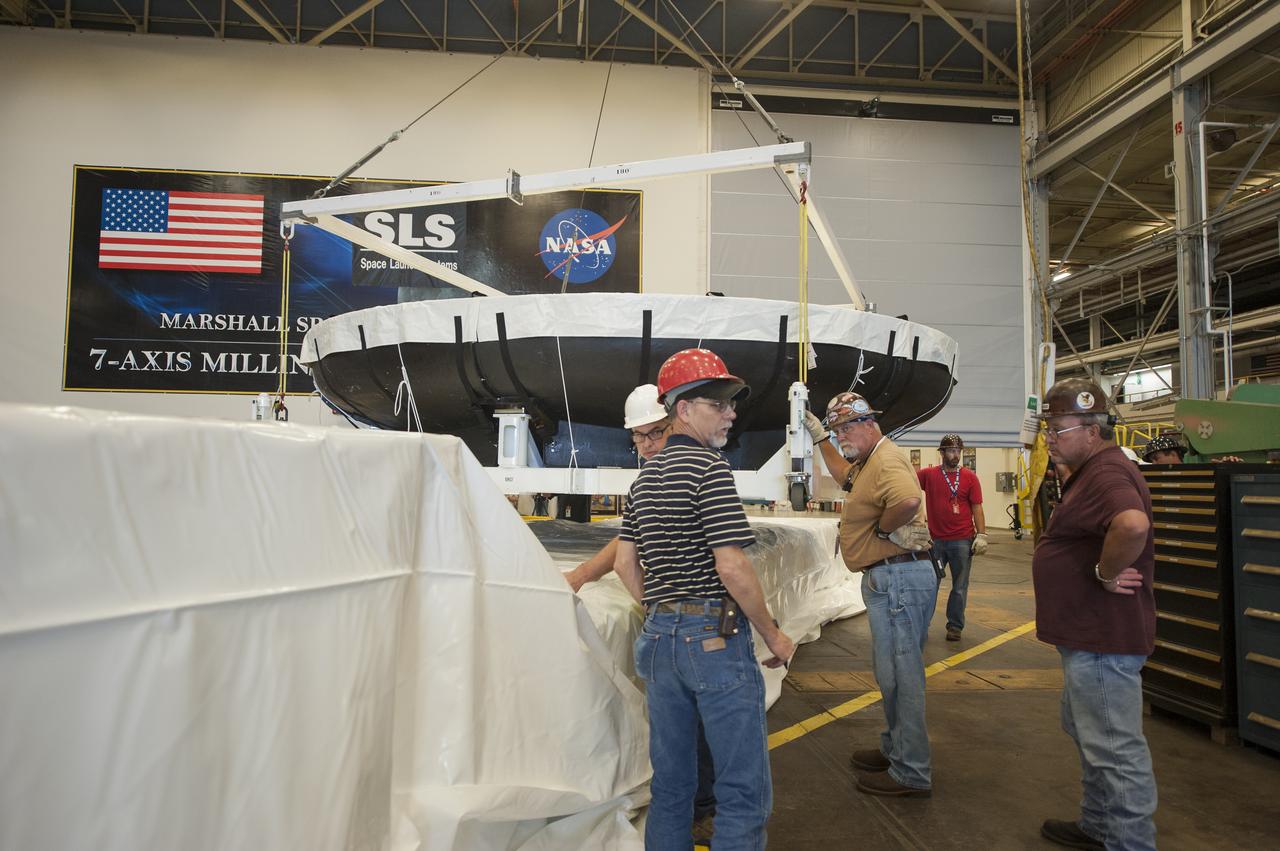
THE ORION HEAT SHIELD, WHICH WAS AT NASA’S MARSHALL SPACE FLIGHT CENTER FROM MARCH-MAY 2015 FOR ENGINEERING AND ANALYSIS, IS READIED FOR DEPARTURE AT THE END OF ITS STAY. THE HEAT SHIELD’S ABLATED SURFACE MATERIAL WAS REMOVED AT MARSHALL FOR ANALYSIS, USING THE CENTER’S STATE-OF-THE-ART SEVEN-AXIS MILLING MACHINE. IT NEXT WILL GO TO NASA’S LANGLEY RESEARCH CENTER FOR WATER-IMPACT TESTING. NASA’S JOHNSON SPACE CENTER LEADS THE ORION PROGRAM FOR NASA.
THE ORION HEAT SHIELD, WHICH WAS AT NASA’S MARSHALL SPACE FLIGHT CENTER FROM MARCH-MAY 2015 FOR ENGINEERING AND ANALYSIS, IS READIED FOR DEPARTURE AT THE END OF ITS STAY. THE HEAT SHIELD’S ABLATED SURFACE MATERIAL WAS REMOVED AT MARSHALL FOR ANALYSIS, USING THE CENTER’S STATE-OF-THE-ART SEVEN-AXIS MILLING MACHINE. IT NEXT WILL GO TO NASA’S LANGLEY RESEARCH CENTER FOR WATER-IMPACT TESTING. NASA’S JOHNSON SPACE CENTER LEADS THE ORION PROGRAM FOR NASA.
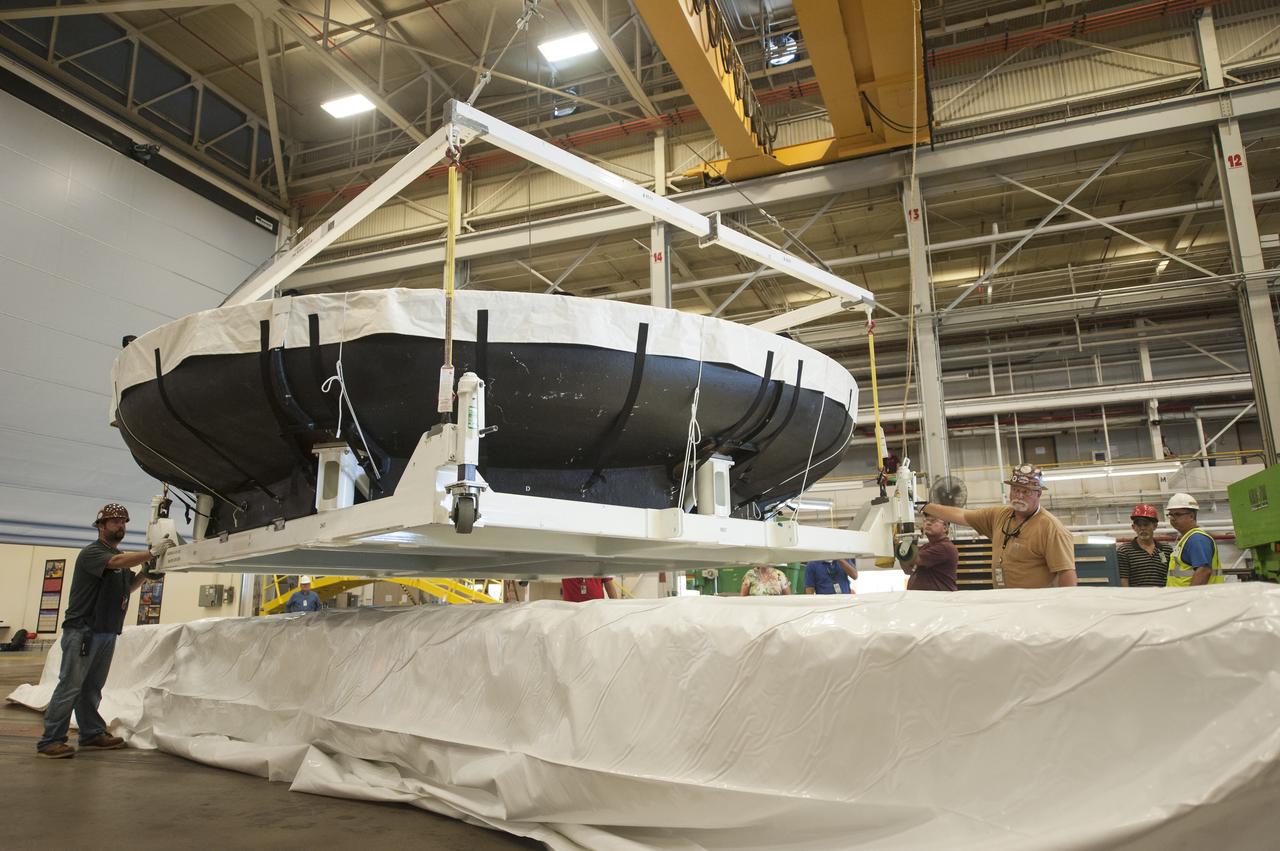
THE ORION HEAT SHIELD, WHICH WAS AT NASA’S MARSHALL SPACE FLIGHT CENTER FROM MARCH-MAY 2015 FOR ENGINEERING AND ANALYSIS, IS READIED FOR DEPARTURE AT THE END OF ITS STAY. THE HEAT SHIELD’S ABLATED SURFACE MATERIAL WAS REMOVED AT MARSHALL FOR ANALYSIS, USING THE CENTER’S STATE-OF-THE-ART SEVEN-AXIS MILLING MACHINE. IT NEXT WILL GO TO NASA’S LANGLEY RESEARCH CENTER FOR WATER-IMPACT TESTING. NASA’S JOHNSON SPACE CENTER LEADS THE ORION PROGRAM FOR NASA.
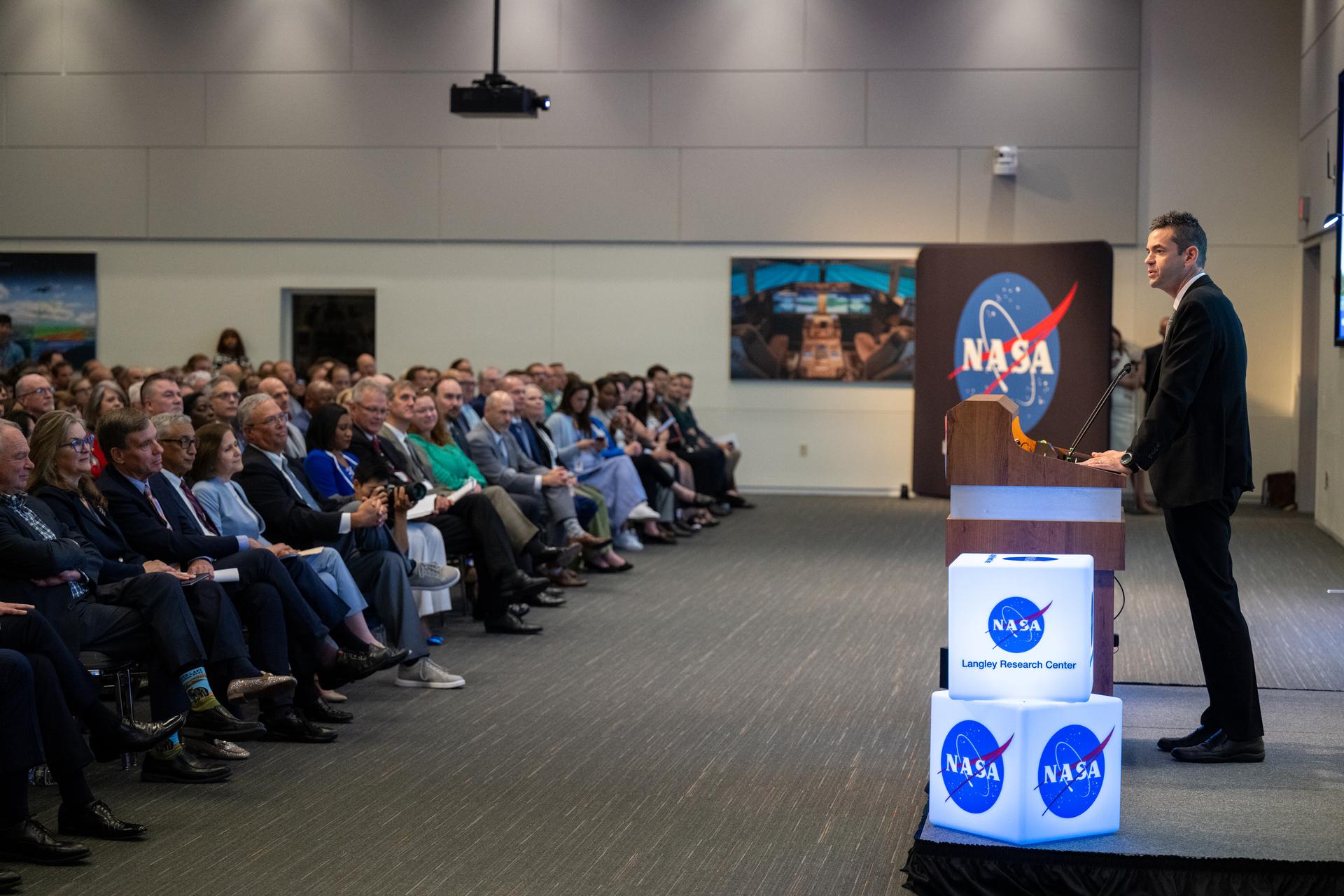
NASA Administrator Jared Isaacman delivers remarks during a ribbon cutting ceremony for the Flight Dynamics Research Facility, NASA's newest wind tunnel, Friday, July 31, 2026, at NASA’s Langley Research Center in Hampton, Virginia. The state-of-the-art facility will support research and technology development that will advance the agency’s aeronautics, exploration, and science goals, including establishing a sustained human presence on the lunar surface through the Artemis program and the development of a Moon Base. Photo Credit: (NASA/Keegan Barber)
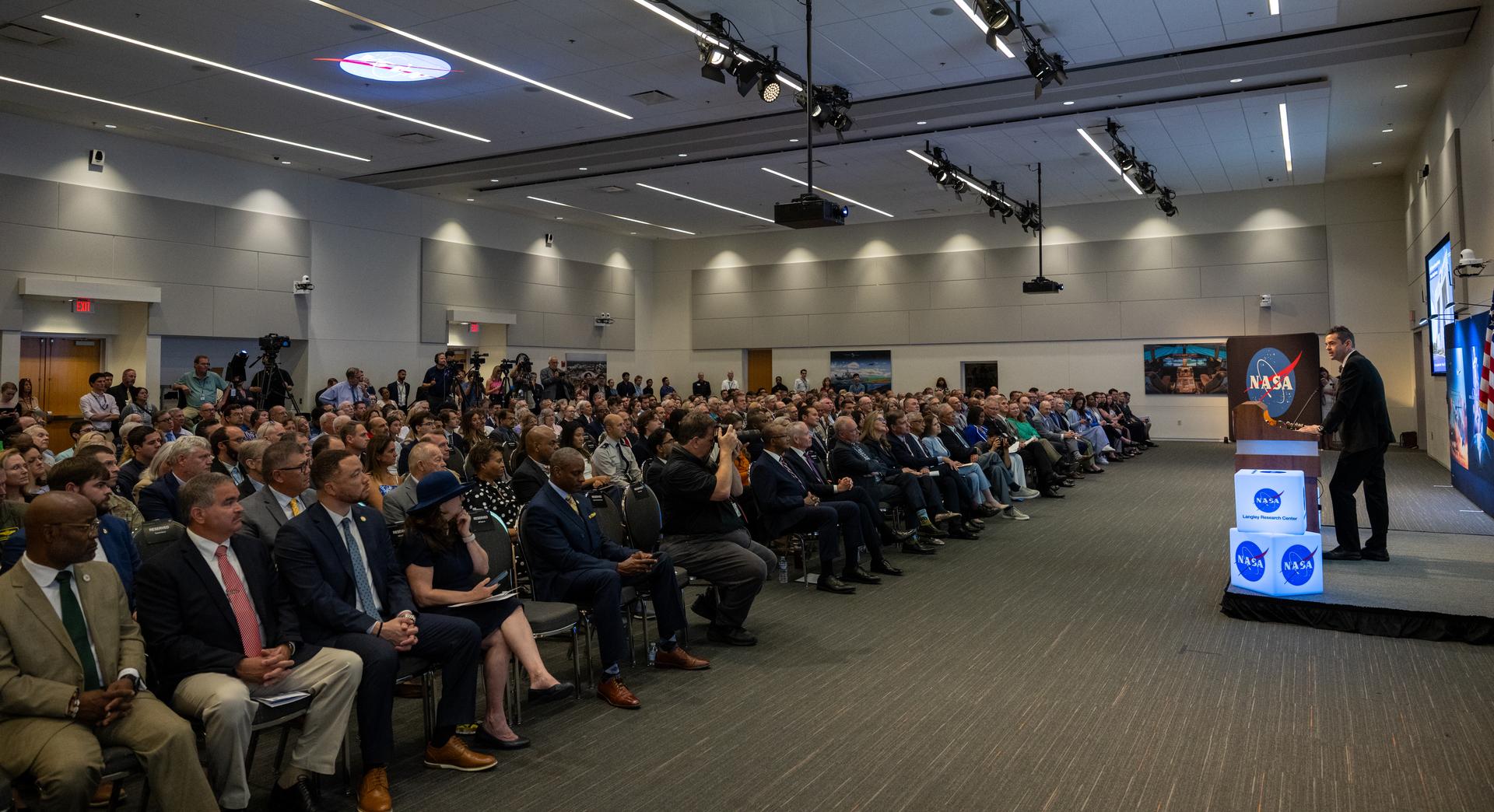
NASA Administrator Jared Isaacman delivers remarks during a ribbon cutting ceremony for the Flight Dynamics Research Facility, NASA's newest wind tunnel, Friday, July 31, 2026, at NASA’s Langley Research Center in Hampton, Virginia. The state-of-the-art facility will support research and technology development that will advance the agency’s aeronautics, exploration, and science goals, including establishing a sustained human presence on the lunar surface through the Artemis program and the development of a Moon Base. Photo Credit: (NASA/Keegan Barber)
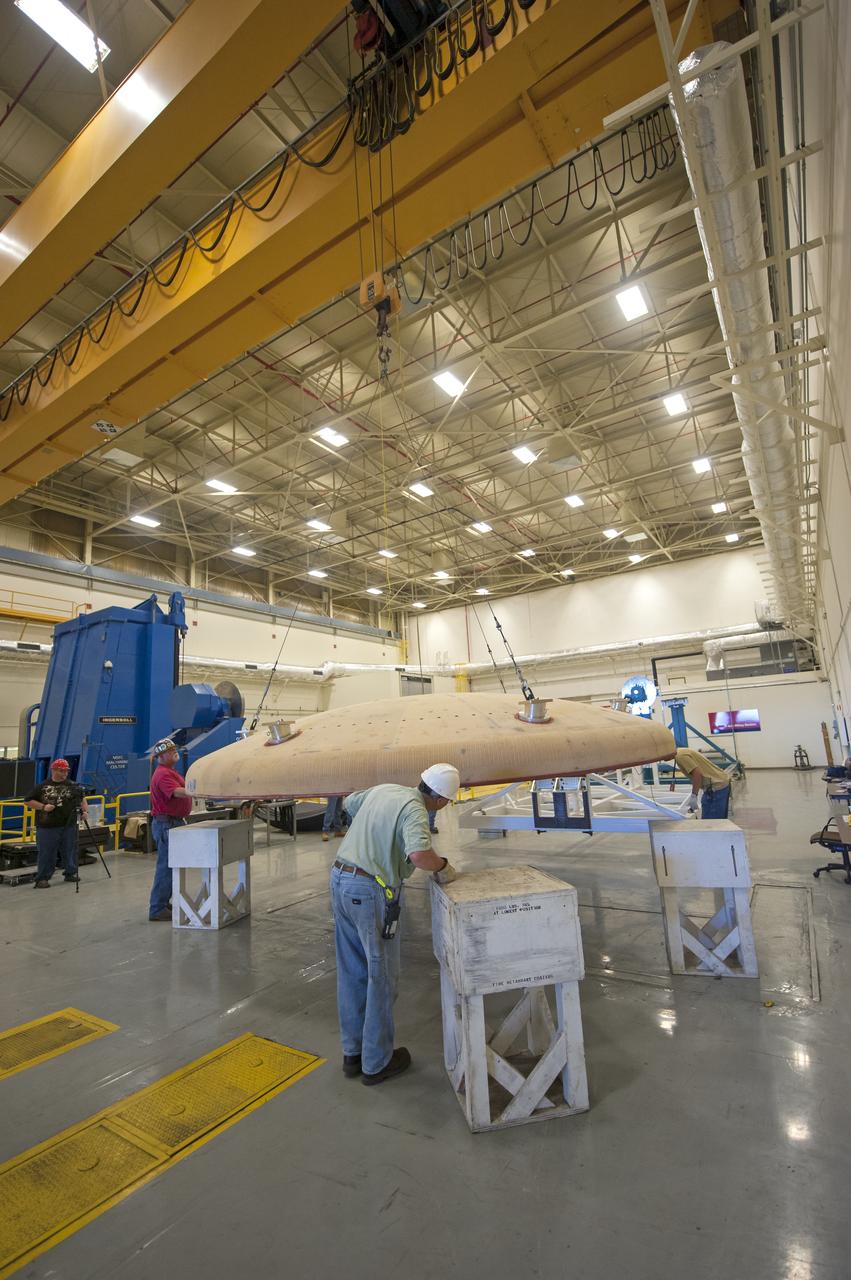
THE ORION HEAT SHIELD, WHICH WAS AT NASA’S MARSHALL SPACE FLIGHT CENTER FROM MARCH-MAY 2015 FOR ENGINEERING AND ANALYSIS, IS READIED FOR DEPARTURE AT THE END OF ITS STAY. THE HEAT SHIELD’S ABLATED SURFACE MATERIAL WAS REMOVED AT MARSHALL FOR ANALYSIS, USING THE CENTER’S STATE-OF-THE-ART SEVEN-AXIS MILLING MACHINE. IT NEXT WILL GO TO NASA’S LANGLEY RESEARCH CENTER FOR WATER-IMPACT TESTING. NASA’S JOHNSON SPACE CENTER LEADS THE ORION PROGRAM FOR NASA.
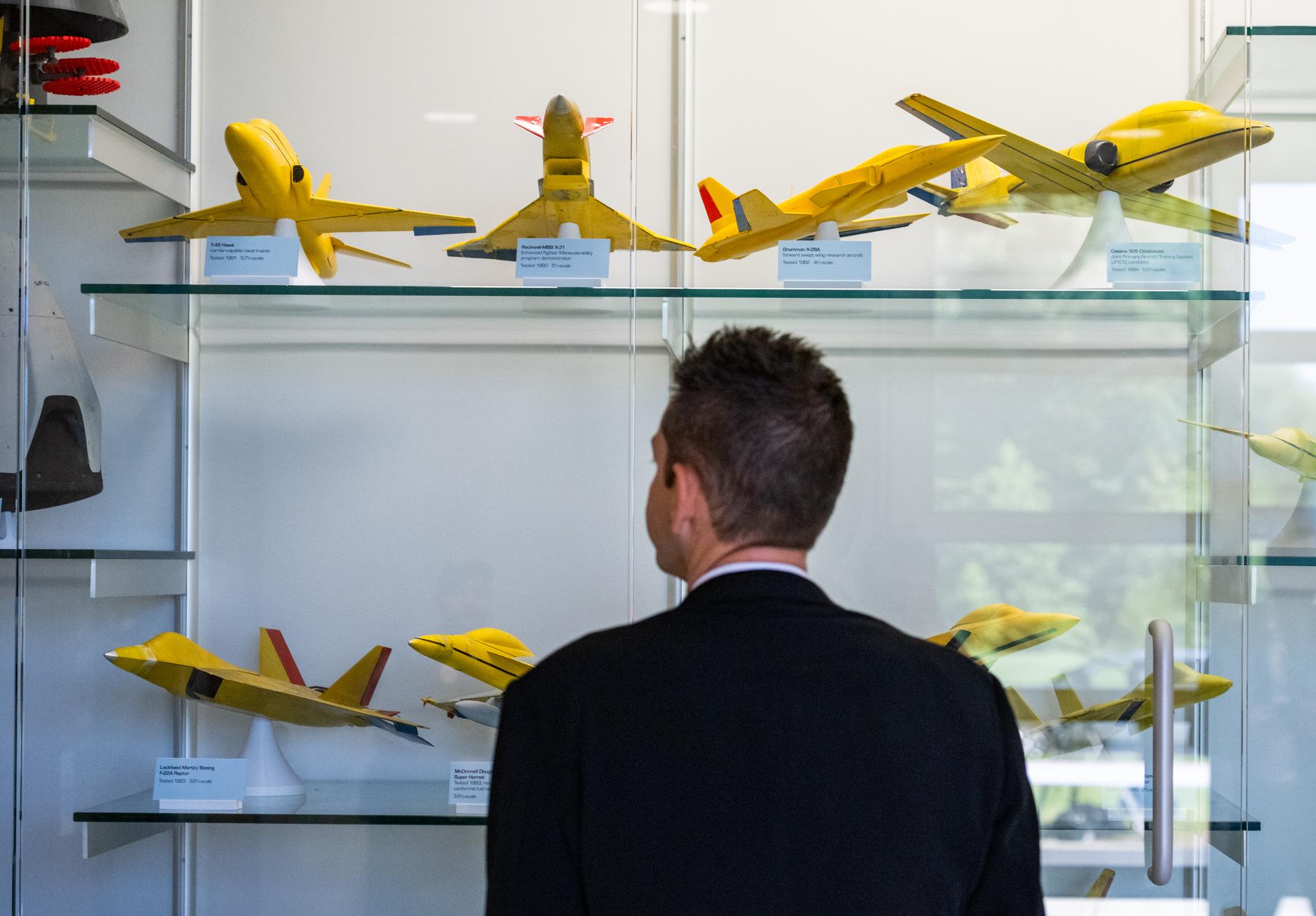
NASA Administrator Jared Isaacman views scale models of aircraft during a tour of the Flight Dynamics Research Facility, NASA's newest wind tunnel, Friday, July 31, 2026, at NASA’s Langley Research Center in Hampton, Virginia. The state-of-the-art facility will support research and technology development that will advance the agency’s aeronautics, exploration, and science goals, including establishing a sustained human presence on the lunar surface through the Artemis program and the development of a Moon Base. Photo Credit: (NASA/Keegan Barber)
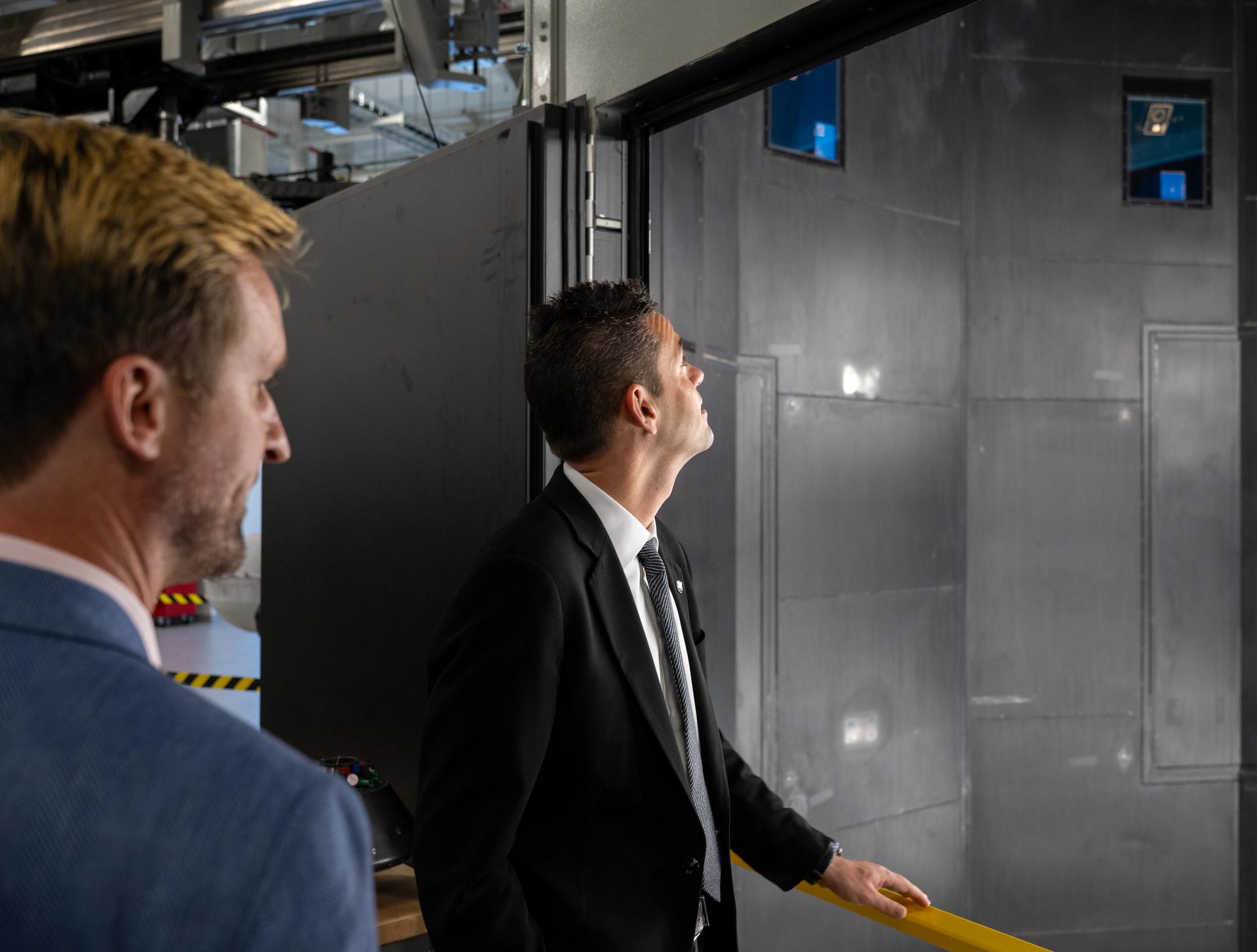
NASA Administrator Jared Isaacman is seen during a tour of the Flight Dynamics Research Facility, NASA's newest wind tunnel, Friday, July 31, 2026, at NASA’s Langley Research Center in Hampton, Virginia. The state-of-the-art facility will support research and technology development that will advance the agency’s aeronautics, exploration, and science goals, including establishing a sustained human presence on the lunar surface through the Artemis program and the development of a Moon Base. Photo Credit: (NASA/Keegan Barber)
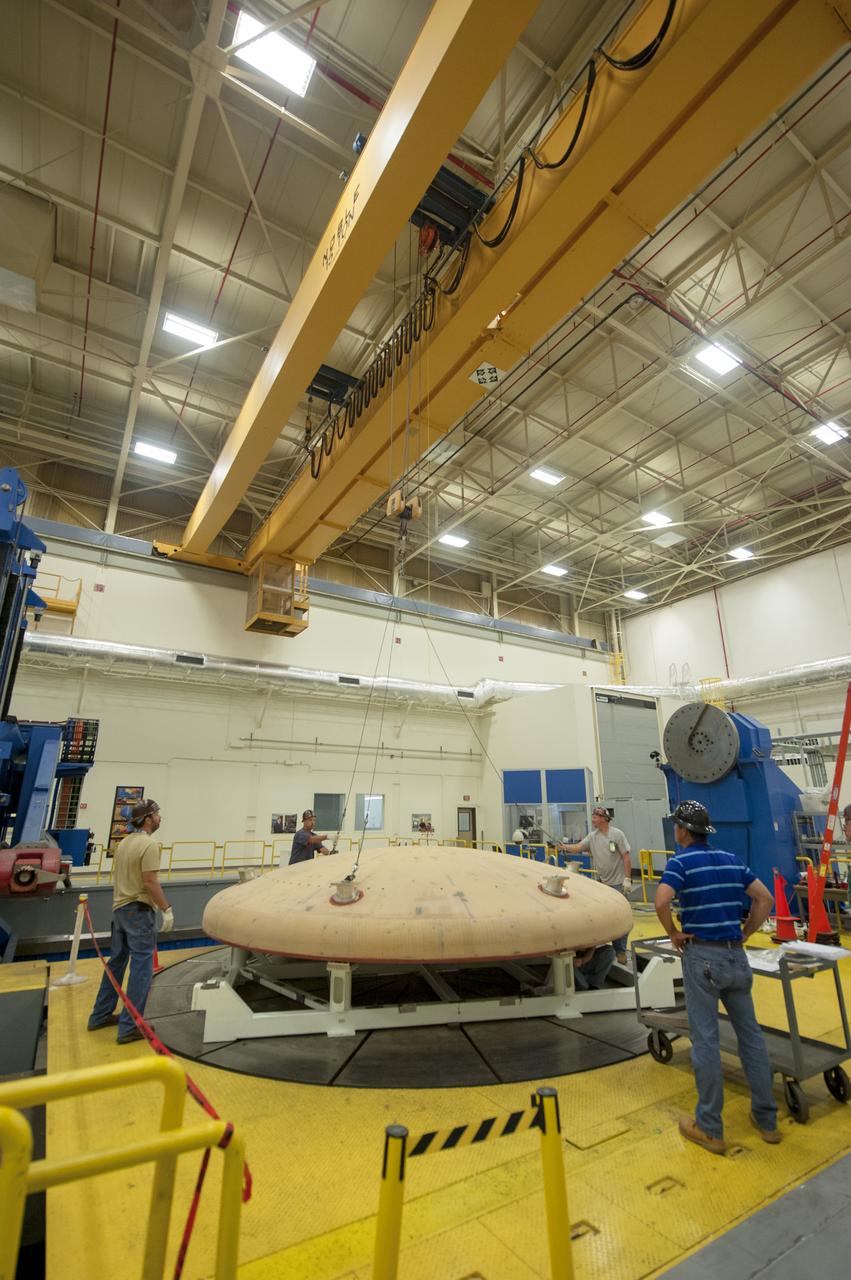
THE ORION HEAT SHIELD, WHICH WAS AT NASA’S MARSHALL SPACE FLIGHT CENTER FROM MARCH-MAY 2015 FOR ENGINEERING AND ANALYSIS, IS READIED FOR DEPARTURE AT THE END OF ITS STAY. THE HEAT SHIELD’S ABLATED SURFACE MATERIAL WAS REMOVED AT MARSHALL FOR ANALYSIS, USING THE CENTER’S STATE-OF-THE-ART SEVEN-AXIS MILLING MACHINE. IT NEXT WILL GO TO NASA’S LANGLEY RESEARCH CENTER FOR WATER-IMPACT TESTING. NASA’S JOHNSON SPACE CENTER LEADS THE ORION PROGRAM FOR NASA.
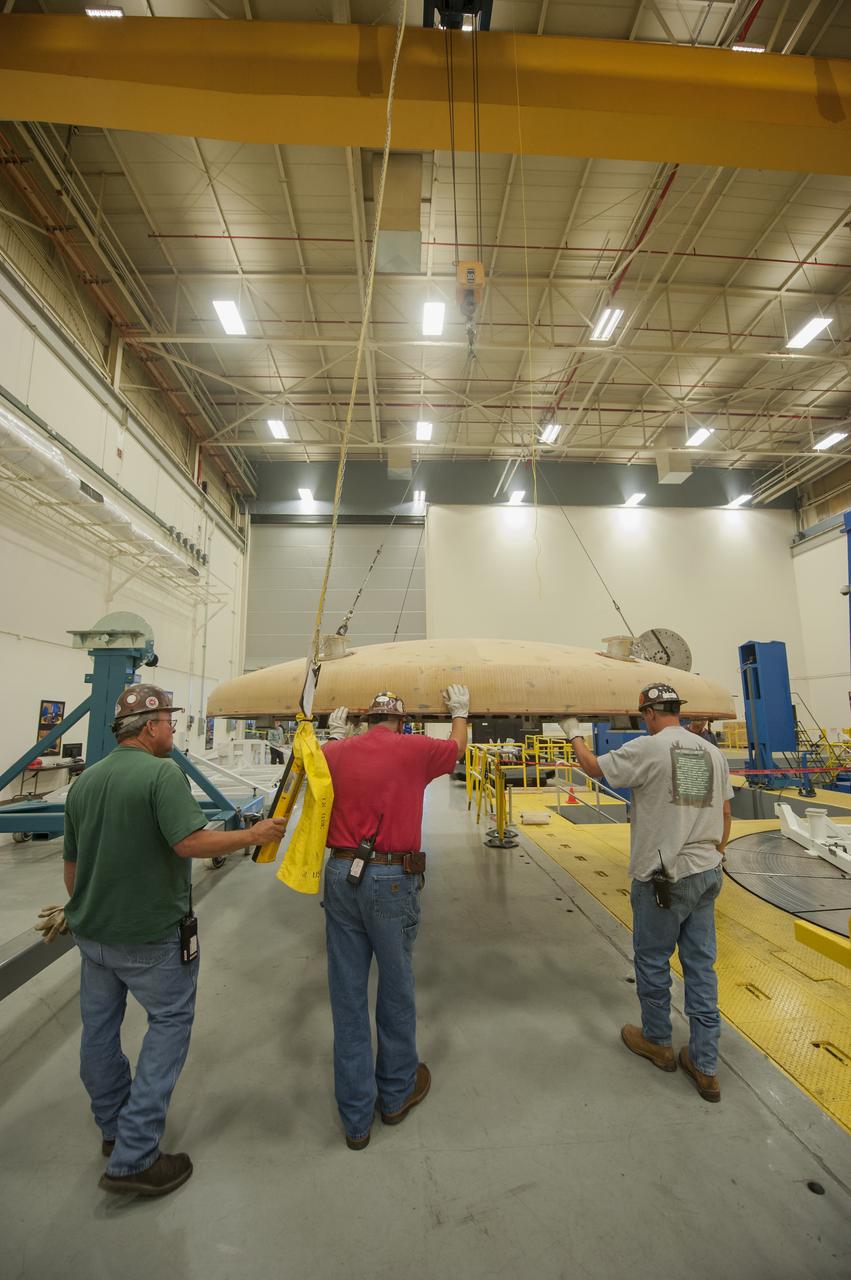
THE ORION HEAT SHIELD, WHICH WAS AT NASA’S MARSHALL SPACE FLIGHT CENTER FROM MARCH-MAY 2015 FOR ENGINEERING AND ANALYSIS, IS READIED FOR DEPARTURE AT THE END OF ITS STAY. THE HEAT SHIELD’S ABLATED SURFACE MATERIAL WAS REMOVED AT MARSHALL FOR ANALYSIS, USING THE CENTER’S STATE-OF-THE-ART SEVEN-AXIS MILLING MACHINE. IT NEXT WILL GO TO NASA’S LANGLEY RESEARCH CENTER FOR WATER-IMPACT TESTING. NASA’S JOHNSON SPACE CENTER LEADS THE ORION PROGRAM FOR NASA.
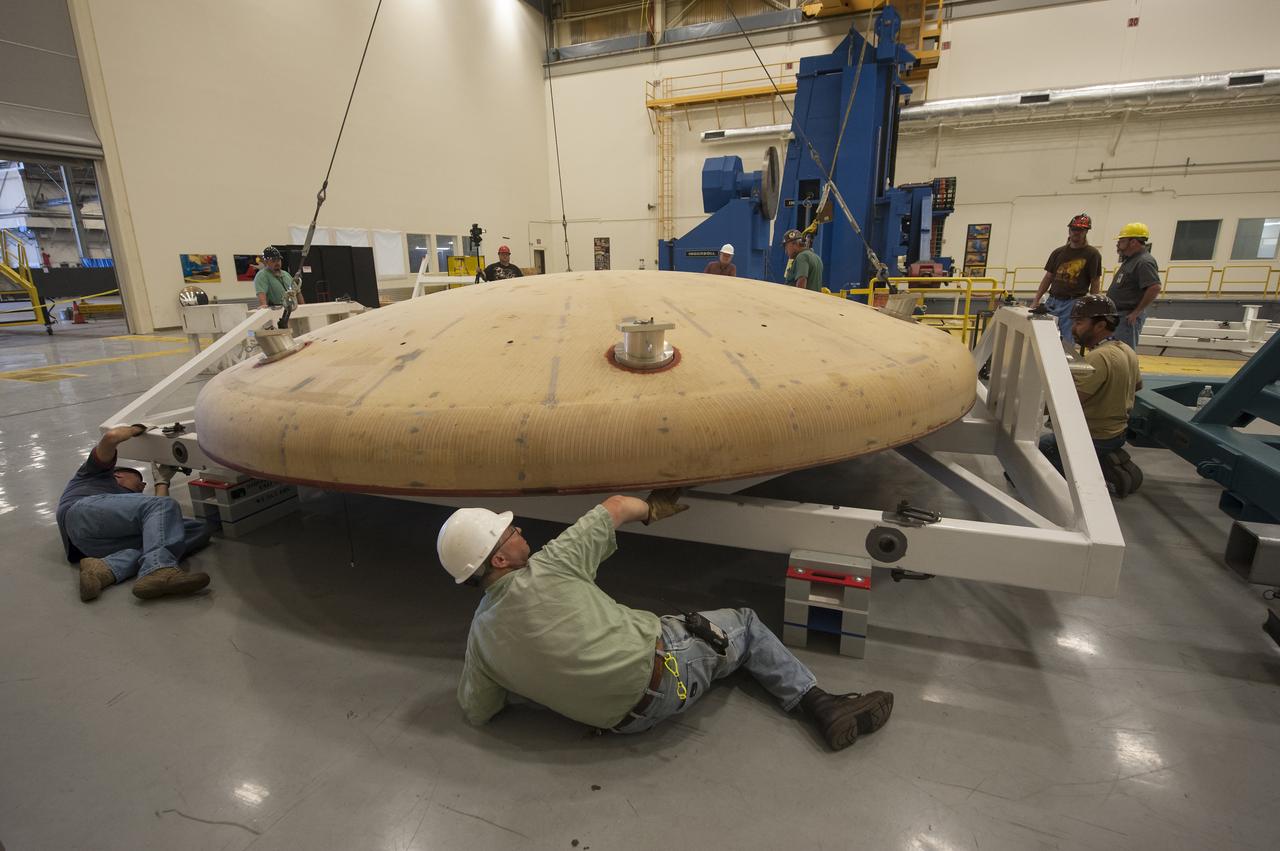
THE ORION HEAT SHIELD, WHICH WAS AT NASA’S MARSHALL SPACE FLIGHT CENTER FROM MARCH-MAY 2015 FOR ENGINEERING AND ANALYSIS, IS READIED FOR DEPARTURE AT THE END OF ITS STAY. THE HEAT SHIELD’S ABLATED SURFACE MATERIAL WAS REMOVED AT MARSHALL FOR ANALYSIS, USING THE CENTER’S STATE-OF-THE-ART SEVEN-AXIS MILLING MACHINE. IT NEXT WILL GO TO NASA’S LANGLEY RESEARCH CENTER FOR WATER-IMPACT TESTING. NASA’S JOHNSON SPACE CENTER LEADS THE ORION PROGRAM FOR NASA.
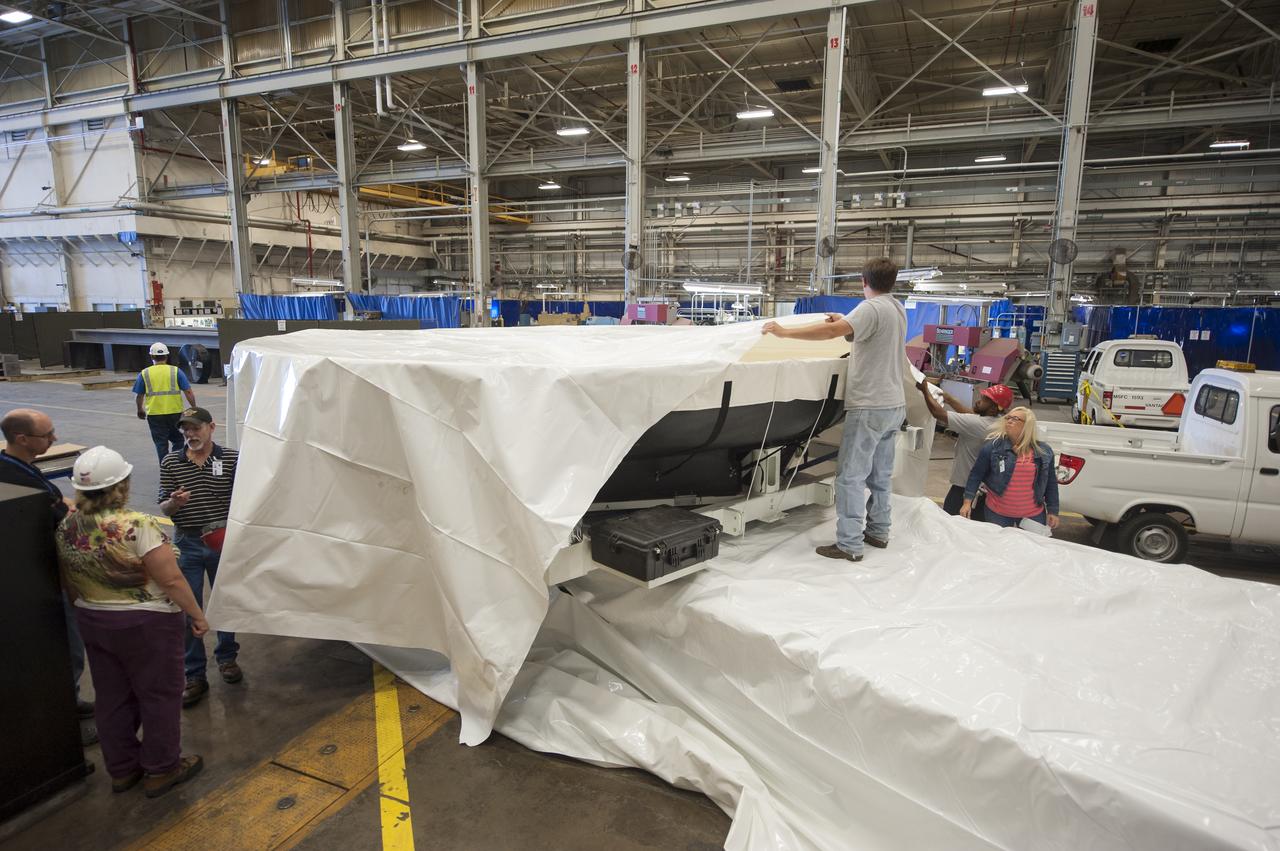
THE ORION HEAT SHIELD, WHICH WAS AT NASA’S MARSHALL SPACE FLIGHT CENTER FROM MARCH-MAY 2015 FOR ENGINEERING AND ANALYSIS, IS READIED FOR DEPARTURE AT THE END OF ITS STAY. THE HEAT SHIELD’S ABLATED SURFACE MATERIAL WAS REMOVED AT MARSHALL FOR ANALYSIS, USING THE CENTER’S STATE-OF-THE-ART SEVEN-AXIS MILLING MACHINE. IT NEXT WILL GO TO NASA’S LANGLEY RESEARCH CENTER FOR WATER-IMPACT TESTING. NASA’S JOHNSON SPACE CENTER LEADS THE ORION PROGRAM FOR NASA.
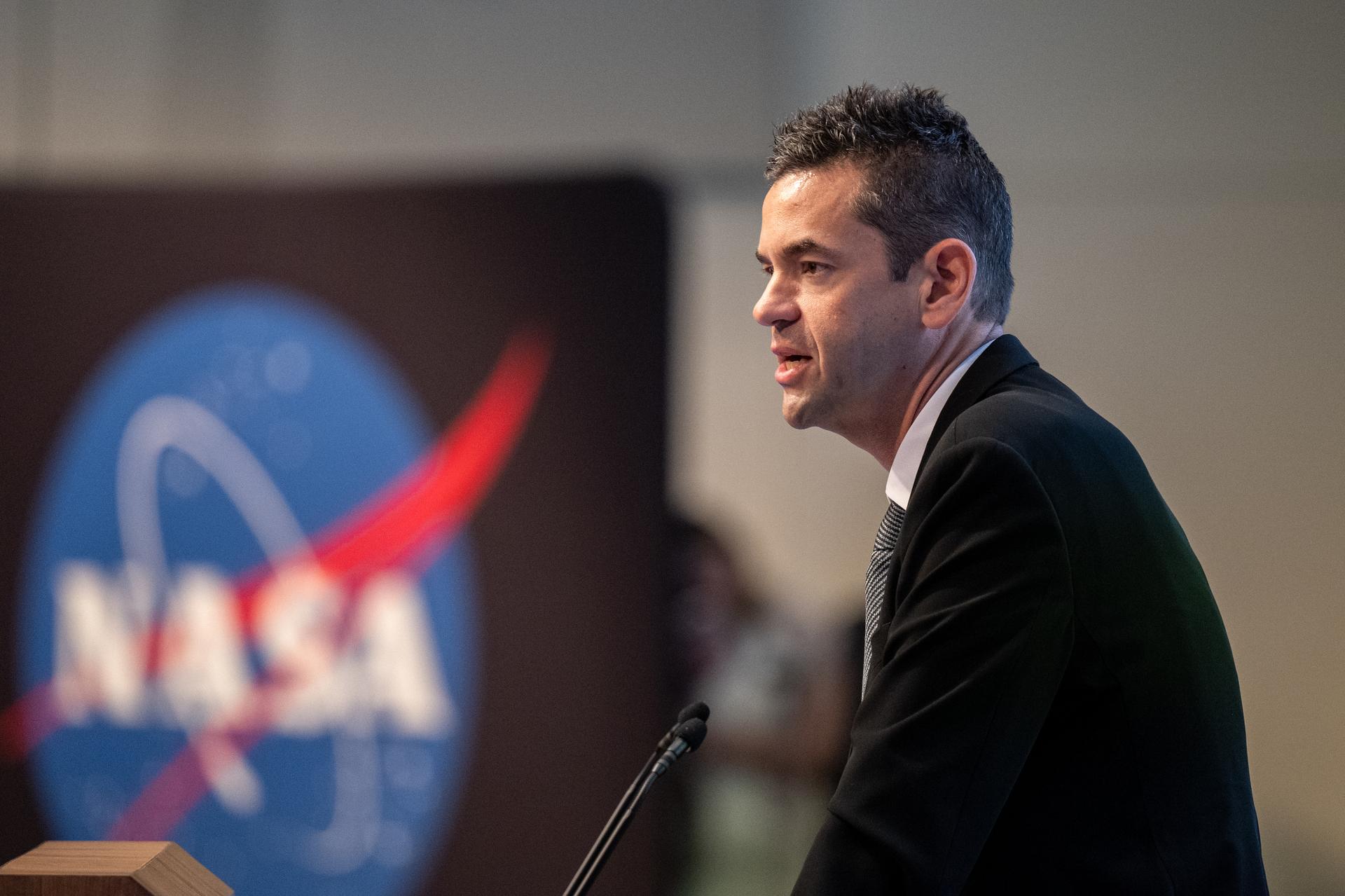
NASA Administrator Jared Isaacman delivers remarks during a ribbon cutting ceremony for the Flight Dynamics Research Facility, NASA's newest wind tunnel, Friday, July 31, 2026, at NASA’s Langley Research Center in Hampton, Virginia. The state-of-the-art facility will support research and technology development that will advance the agency’s aeronautics, exploration, and science goals, including establishing a sustained human presence on the lunar surface through the Artemis program and the development of a Moon Base. Photo Credit: (NASA/Keegan Barber)
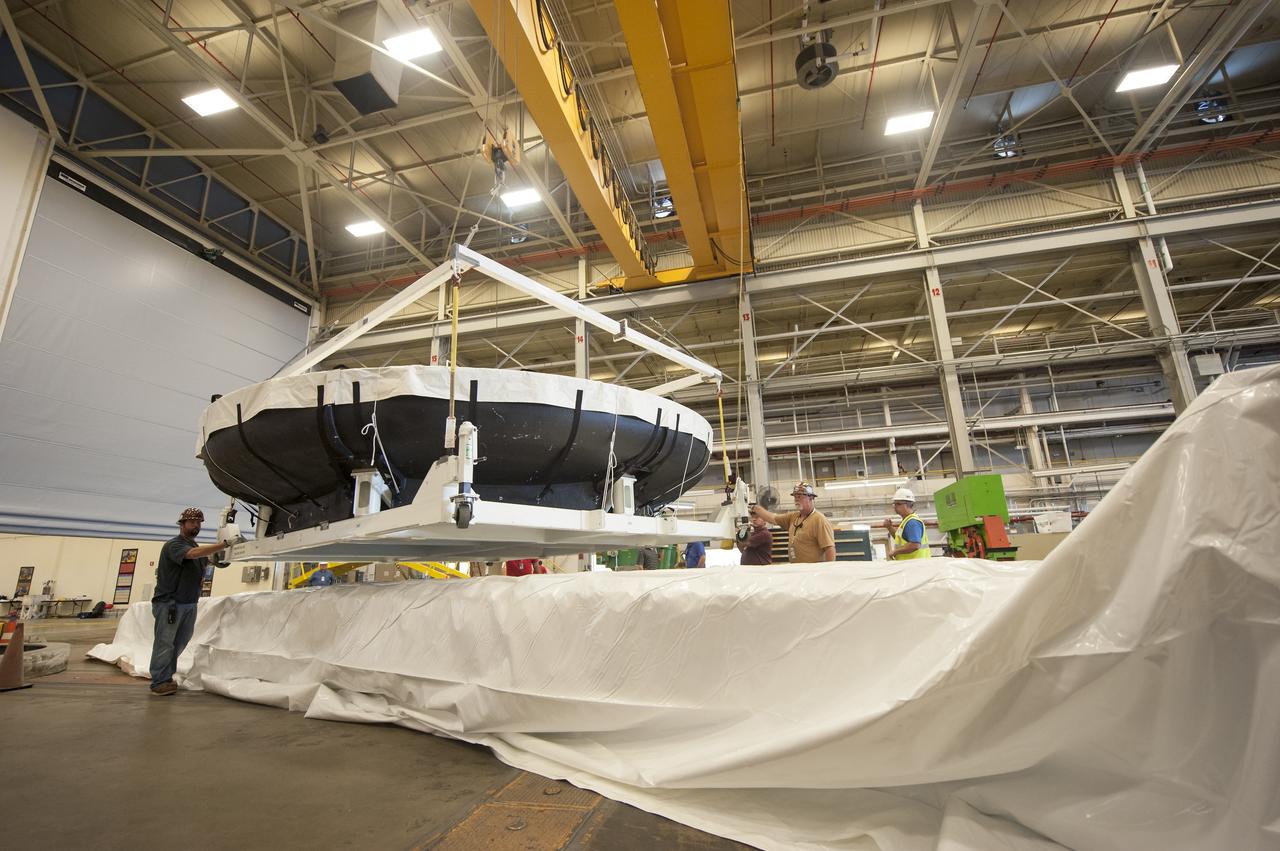
THE ORION HEAT SHIELD, WHICH WAS AT NASA’S MARSHALL SPACE FLIGHT CENTER FROM MARCH-MAY 2015 FOR ENGINEERING AND ANALYSIS, IS READIED FOR DEPARTURE AT THE END OF ITS STAY. THE HEAT SHIELD’S ABLATED SURFACE MATERIAL WAS REMOVED AT MARSHALL FOR ANALYSIS, USING THE CENTER’S STATE-OF-THE-ART SEVEN-AXIS MILLING MACHINE. IT NEXT WILL GO TO NASA’S LANGLEY RESEARCH CENTER FOR WATER-IMPACT TESTING. NASA’S JOHNSON SPACE CENTER LEADS THE ORION PROGRAM FOR NASA.
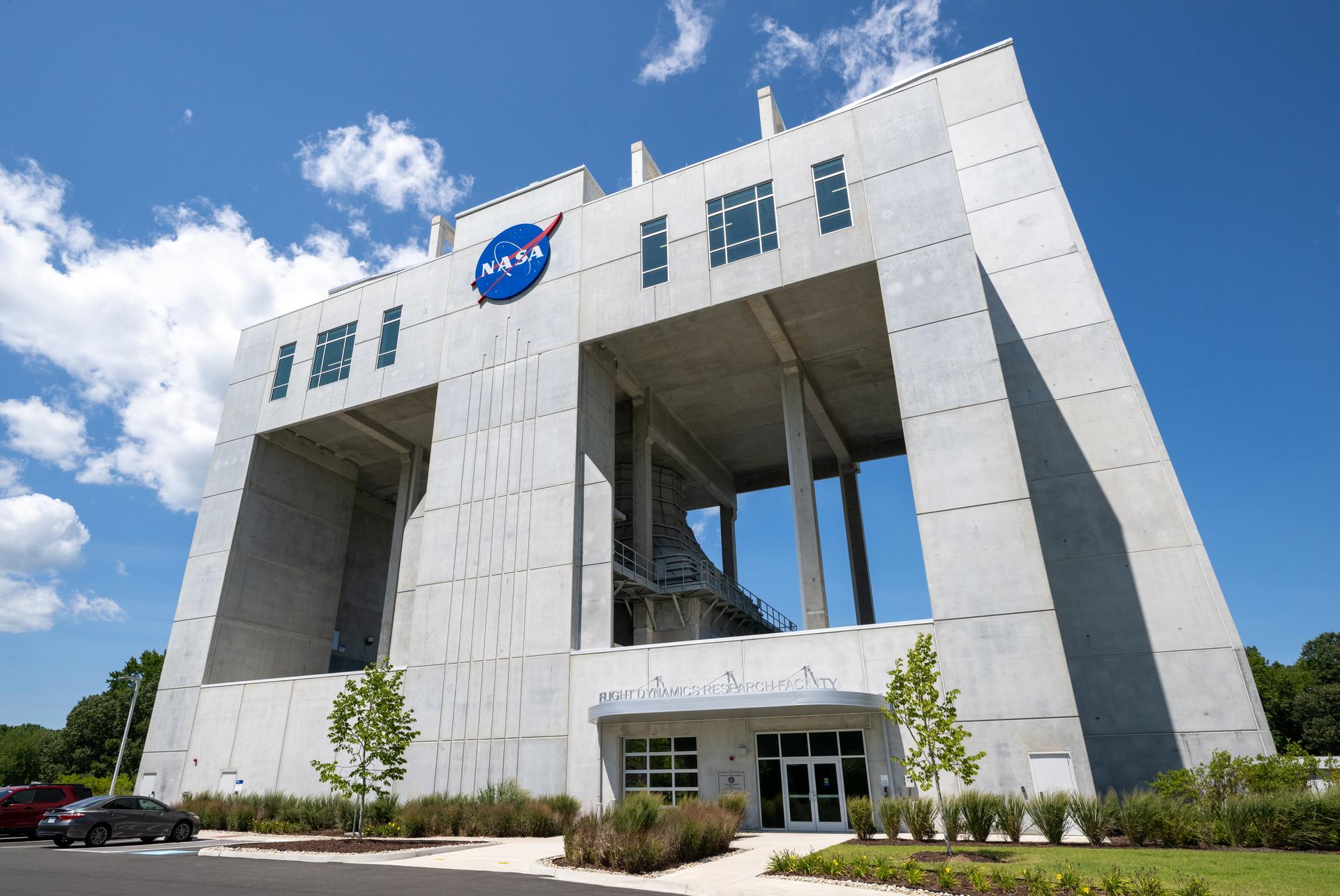
The Flight Dynamics Research Facility, NASA's newest wind tunnel, is seen Thursday, July 30, 2026, at NASA’s Langley Research Center in Hampton, Virginia. The state-of-the-art facility will support research and technology development that will advance the agency’s aeronautics, exploration, and science goals, including establishing a sustained human presence on the lunar surface through the Artemis program and the development of a Moon Base. Photo Credit: (NASA/Keegan Barber)
Edward C. Forst, Administrator of the General Services Administration delivers remarks during a ribbon cutting ceremony for the Flight Dynamics Research Facility, NASA's newest wind tunnel, Friday, July 31, 2026, at NASA’s Langley Research Center in Hampton, Virginia. The state-of-the-art facility will support research and technology development that will advance the agency’s aeronautics, exploration, and science goals, including establishing a sustained human presence on the lunar surface through the Artemis program and the development of a Moon Base. Photo Credit: (NASA/Keegan Barber)
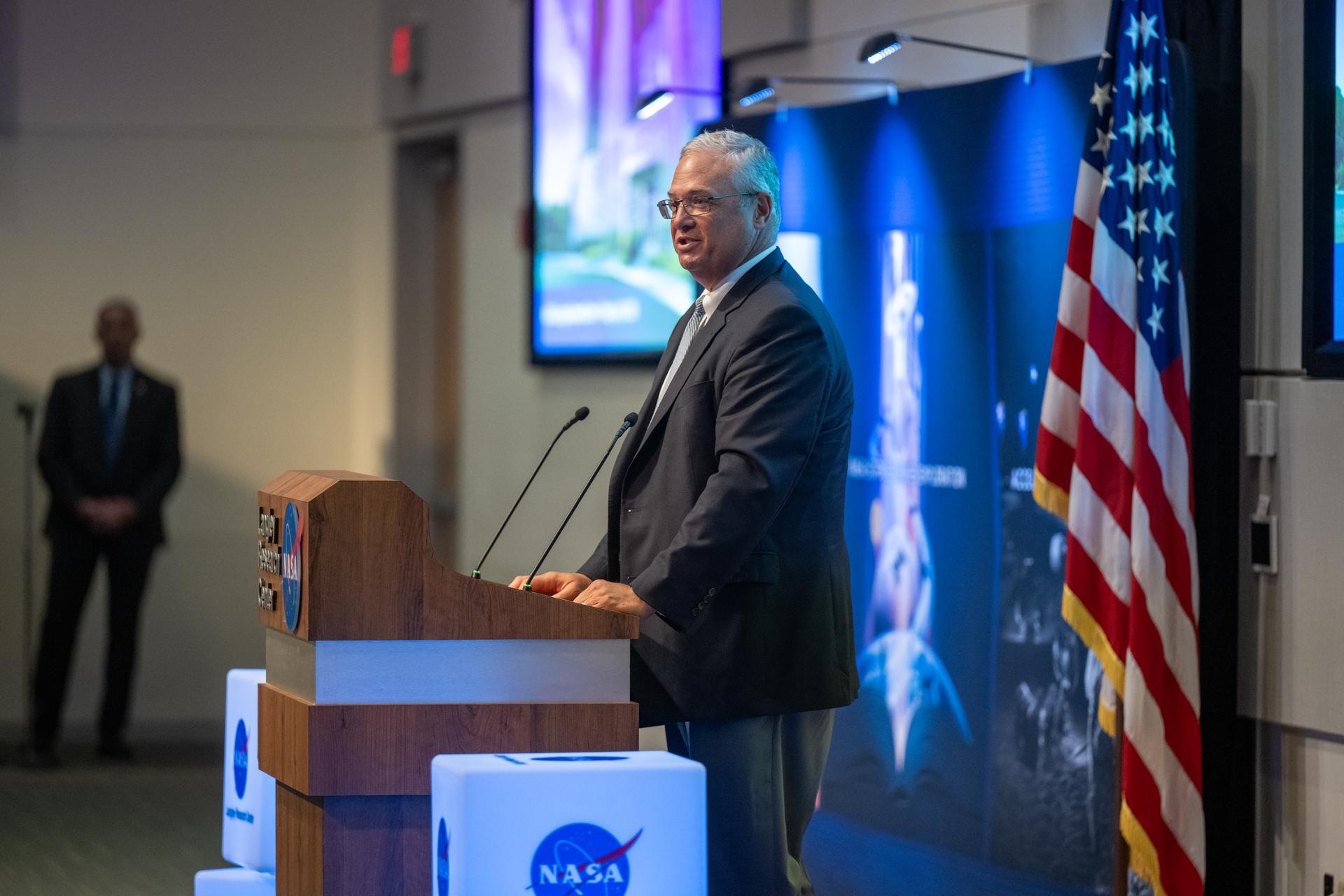
Mike Waller, vice president of BL Harbert International Federal Division delivers remarks during a ribbon cutting ceremony for the Flight Dynamics Research Facility, NASA's newest wind tunnel, Friday, July 31, 2026, at NASA’s Langley Research Center in Hampton, Virginia. The state-of-the-art facility will support research and technology development that will advance the agency’s aeronautics, exploration, and science goals, including establishing a sustained human presence on the lunar surface through the Artemis program and the development of a Moon Base. Photo Credit: (NASA/Keegan Barber)
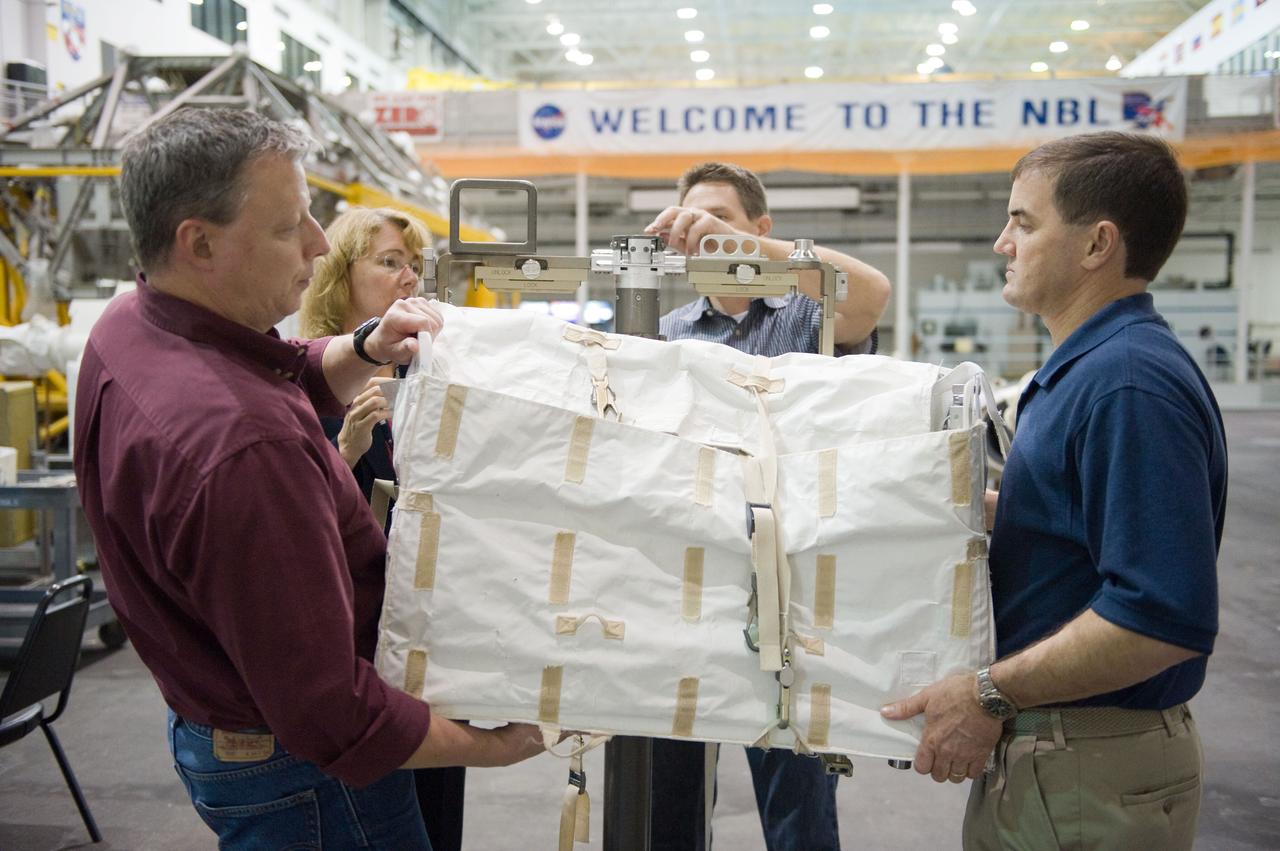
JSC2011-E-029056 (21 March 2011) --- NASA astronauts Rex Walheim (right) and Sandy Magnus, both STS-135 mission specialists, participate in an extravehicular activity (EVA) hardware training session in the Neutral Buoyancy Laboratory (NBL) near NASA's Johnson Space Center. EVA instructors John Ray (left foreground) and Art Thomason assisted Walheim and Magnus. STS-135 is planned to be the final mission of the space shuttle program. Photo credit: NASA or National Aeronautics and Space Administration
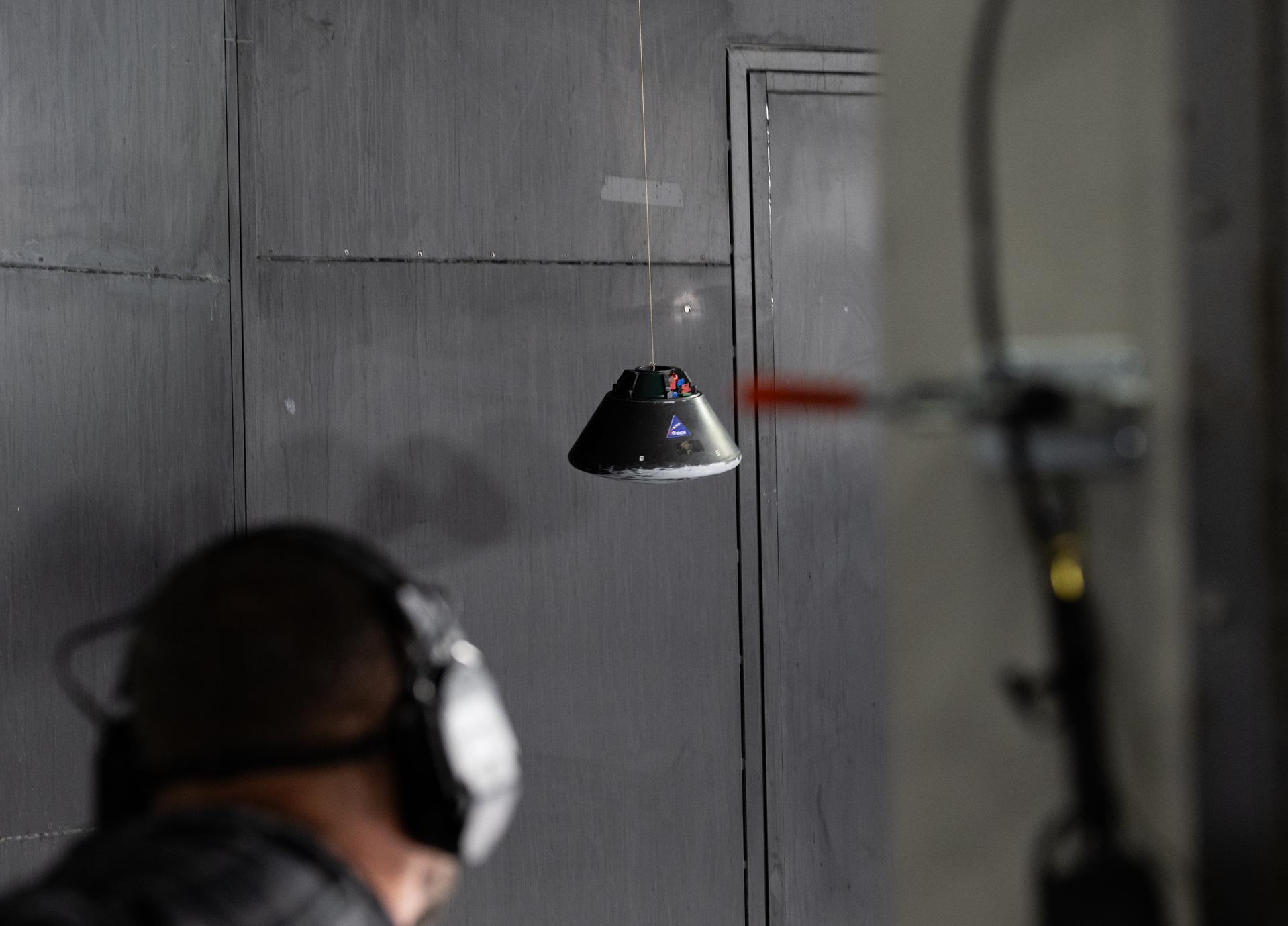
A scale model of the Orion capsule is seen during a demonstration at the Flight Dynamics Research Facility, NASA's newest wind tunnel, Friday, July 31, 2026, at NASA’s Langley Research Center in Hampton, Virginia. The state-of-the-art facility will support research and technology development that will advance the agency’s aeronautics, exploration, and science goals, including establishing a sustained human presence on the lunar surface through the Artemis program and the development of a Moon Base. Photo Credit: (NASA/Keegan Barber)
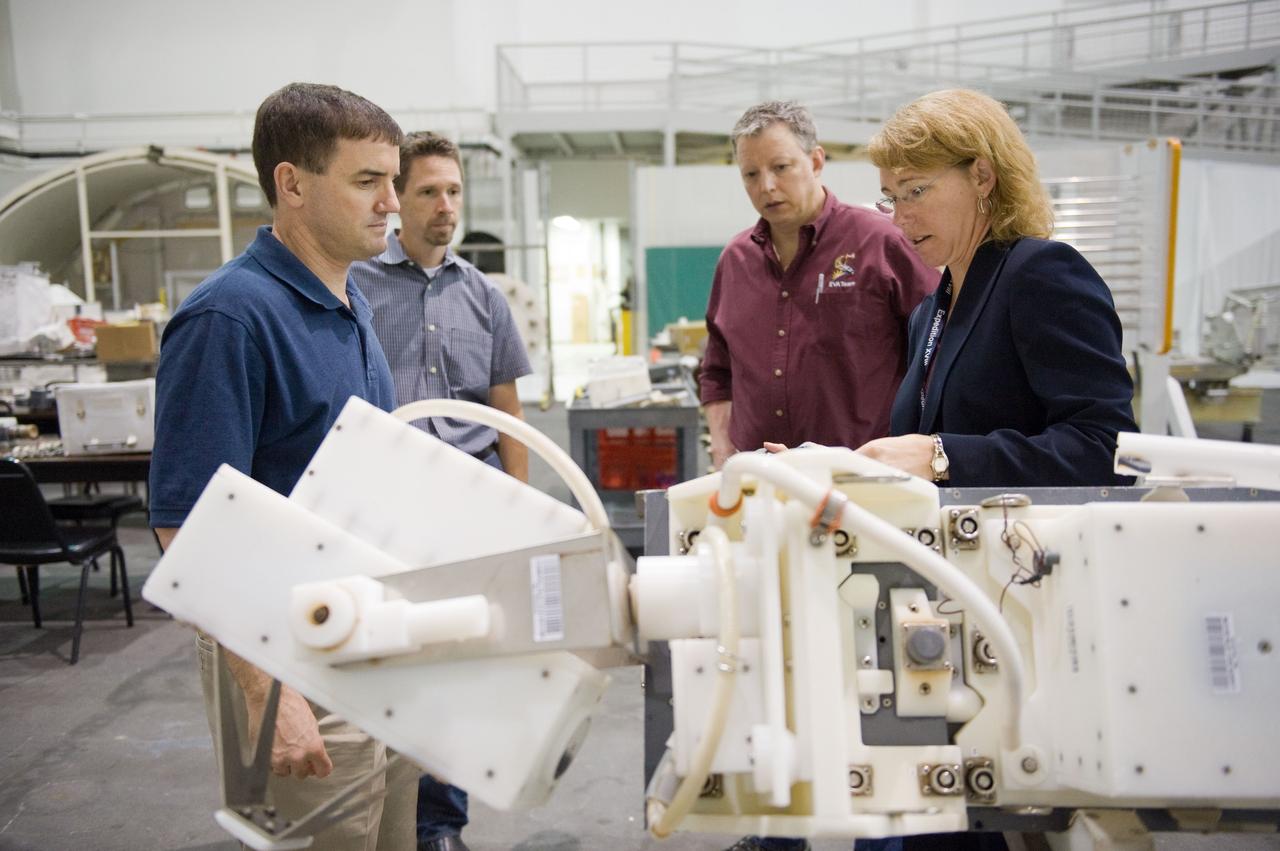
JSC2011-E-029044 (21 March 2011) --- NASA astronauts Rex Walheim (left) and Sandy Magnus, both STS-135 mission specialists, participate in an extravehicular activity (EVA) hardware training session in the Neutral Buoyancy Laboratory (NBL) near NASA's Johnson Space Center. EVA instructors John Ray (right background) and Art Thomason assisted Walheim and Magnus. STS-135 is planned to be the final mission of the space shuttle program. Photo credit: NASA or National Aeronautics and Space Administration
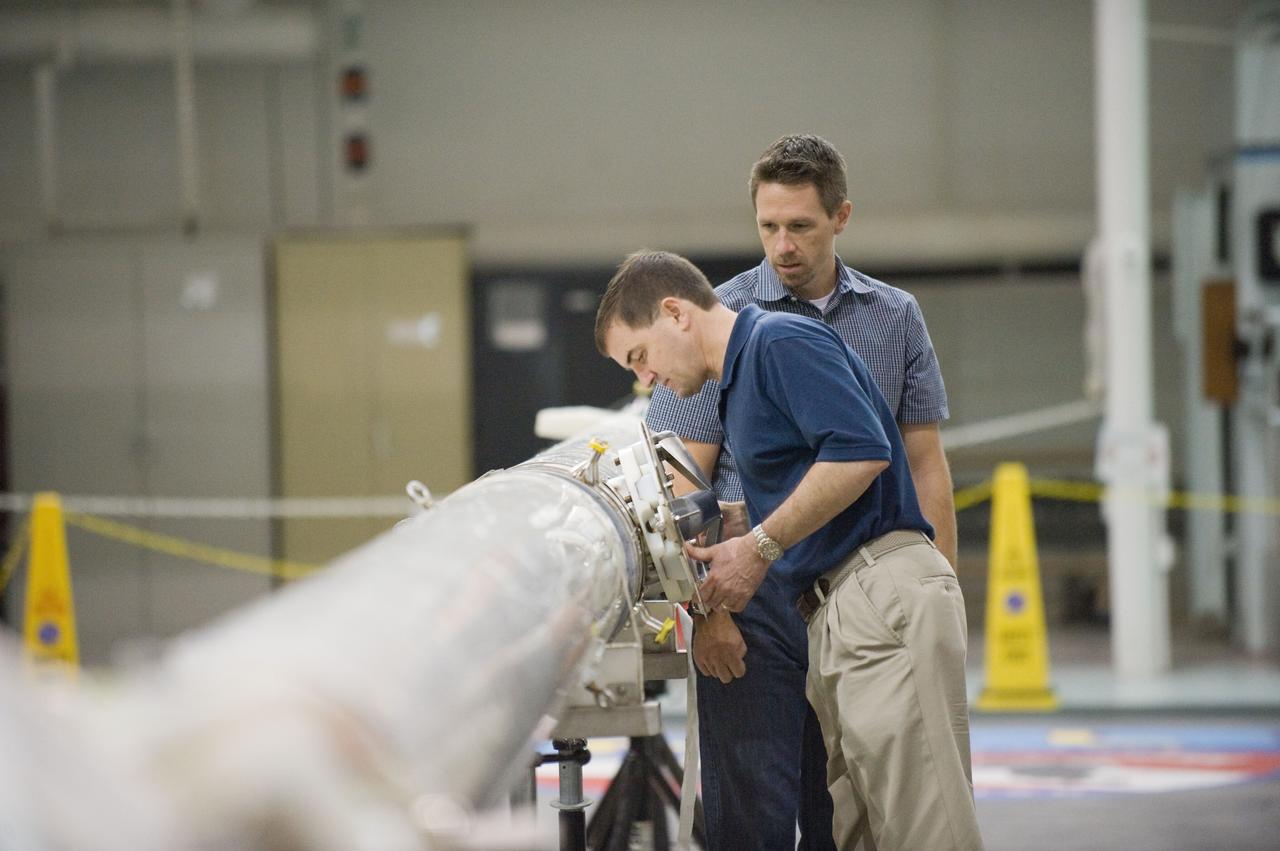
JSC2011-E-029049 (21 March 2011) --- NASA astronaut Rex Walheim (foreground), STS-135 mission specialist, participates in an extravehicular activity (EVA) hardware training session in the Neutral Buoyancy Laboratory (NBL) near NASA's Johnson Space Center. EVA instructor Art Thomason assisted Walheim. STS-135 is planned to be the final mission of the space shuttle program. Photo credit: NASA or National Aeronautics and Space Administration
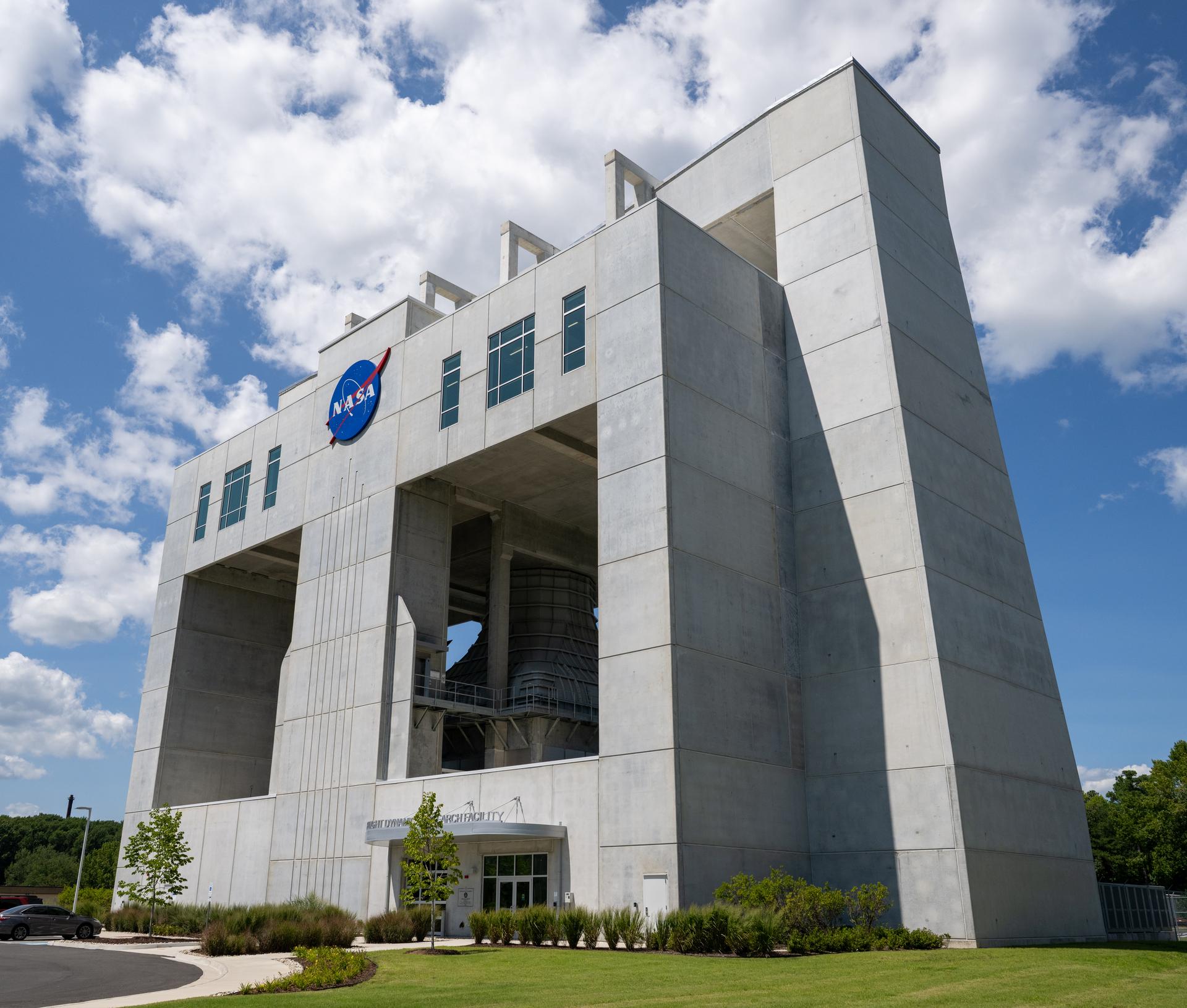
The Flight Dynamics Research Facility, NASA's newest wind tunnel, is seen Thursday, July 30, 2026, at NASA’s Langley Research Center in Hampton, Virginia. The state-of-the-art facility will support research and technology development that will advance the agency’s aeronautics, exploration, and science goals, including establishing a sustained human presence on the lunar surface through the Artemis program and the development of a Moon Base. Photo Credit: (NASA/Keegan Barber)
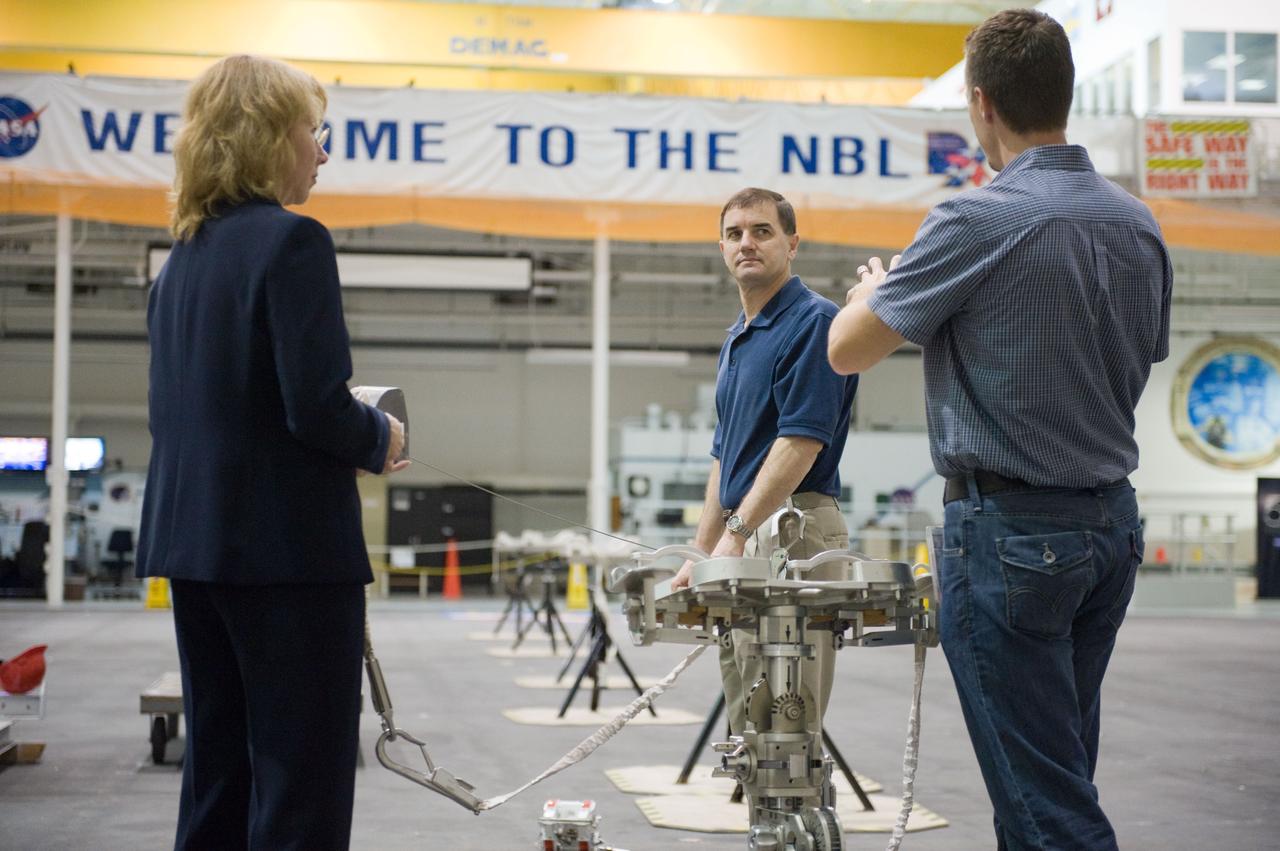
JSC2011-E-029017 (21 March 2011) --- NASA astronauts Rex Walheim (center) and Sandy Magnus, both STS-135 mission specialists, participate in an extravehicular activity (EVA) hardware training session in the Neutral Buoyancy Laboratory (NBL) near NASA's Johnson Space Center. EVA instructor Art Thomason assisted Walheim and Magnus. STS-135 is planned to be the final mission of the space shuttle program. Photo credit: NASA or National Aeronautics and Space Administration
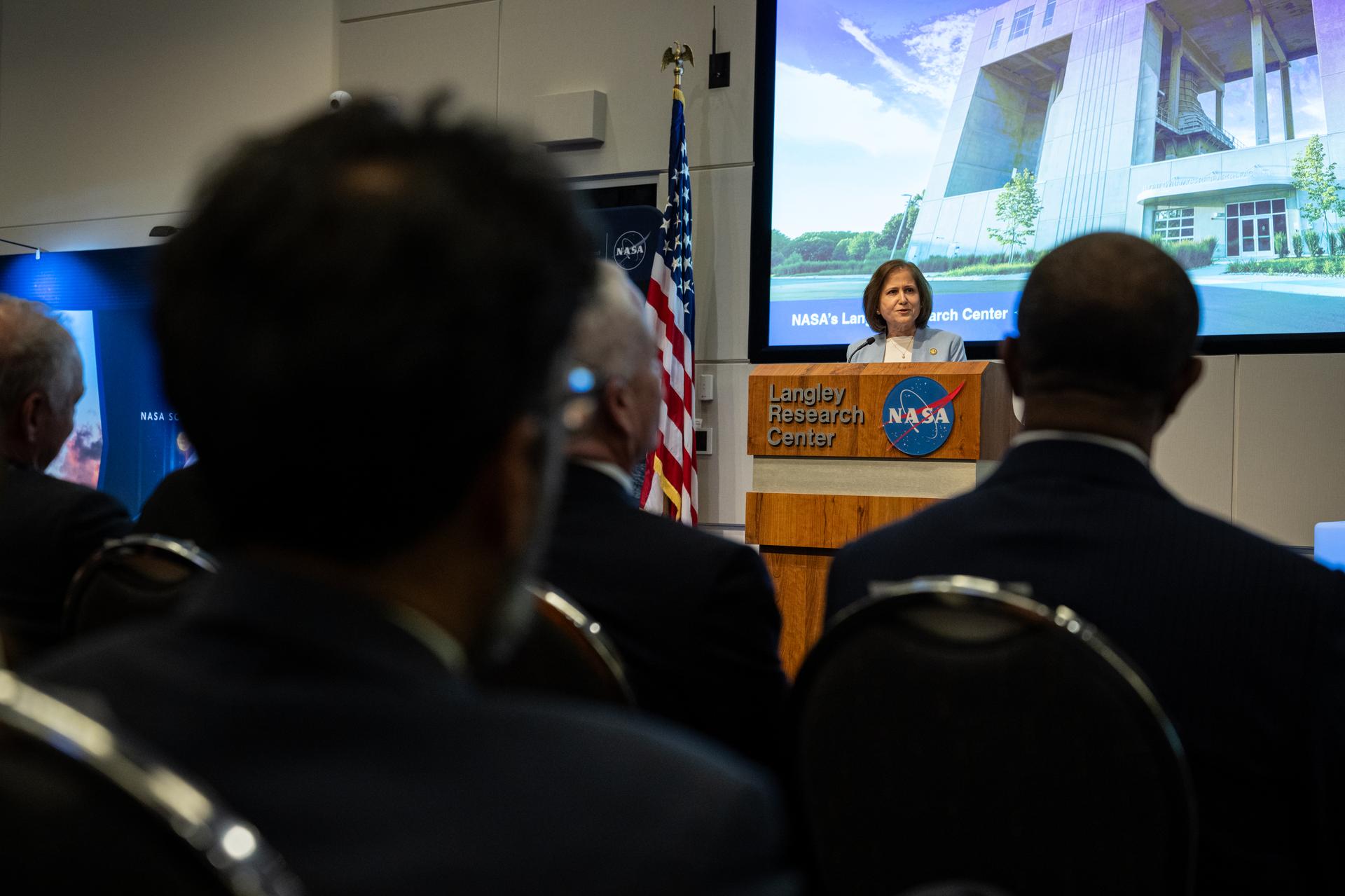
City of Hampton Mayor Jimmy Gray delivers remarks during a ribbon cutting ceremony for the Flight Dynamics Research Facility, NASA's newest wind tunnel, Friday, July 31, 2026, at NASA’s Langley Research Center in Hampton, Virginia. The state-of-the-art facility will support research and technology development that will advance the agency’s aeronautics, exploration, and science goals, including establishing a sustained human presence on the lunar surface through the Artemis program and the development of a Moon Base. Photo Credit: (NASA/Keegan Barber)
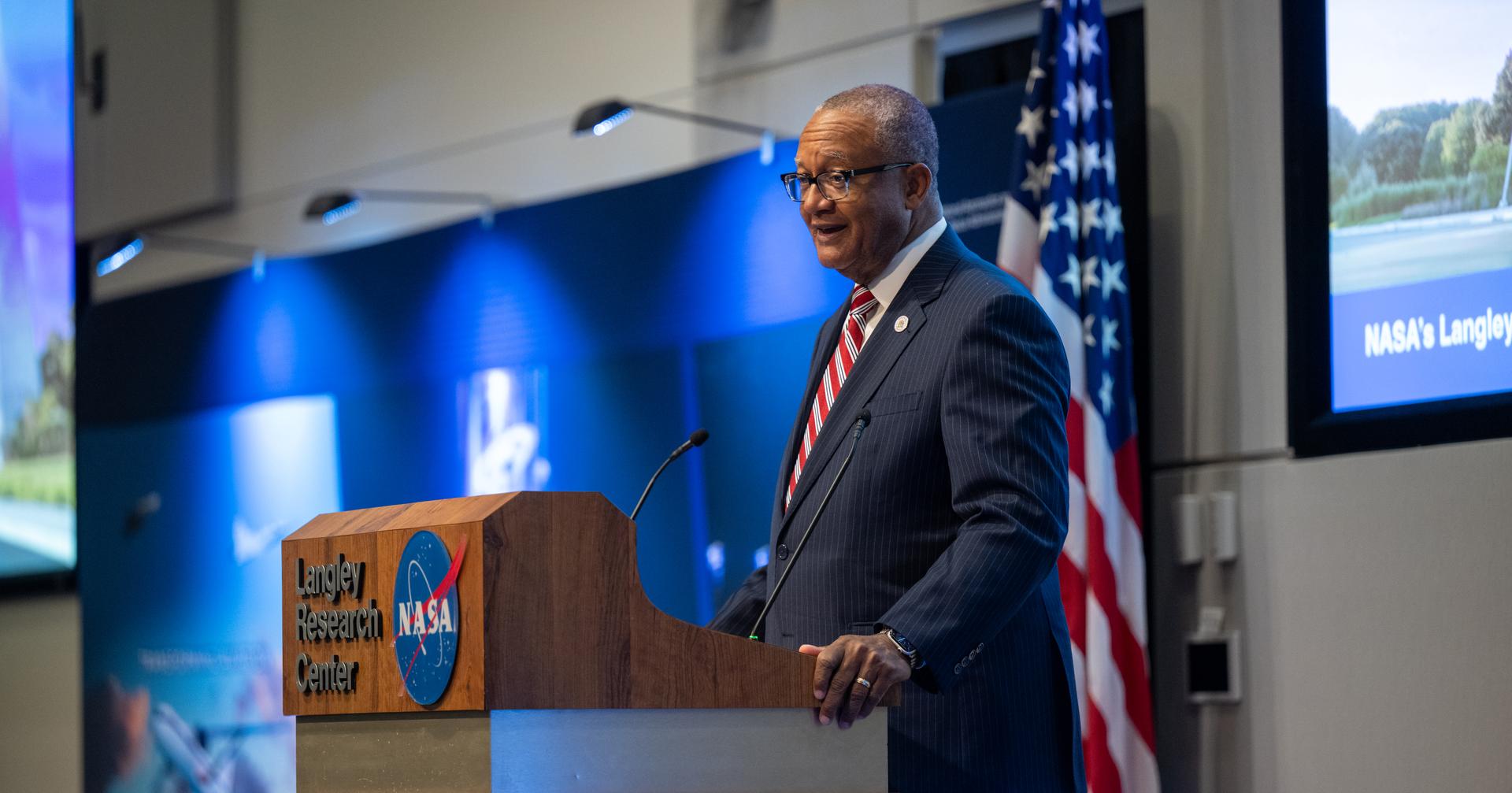
Virginia Lt. Governor Ghazala F. Hashmi delivers remarks during a ribbon cutting ceremony for the Flight Dynamics Research Facility, NASA's newest wind tunnel, Friday, July 31, 2026, at NASA’s Langley Research Center in Hampton, Virginia. The state-of-the-art facility will support research and technology development that will advance the agency’s aeronautics, exploration, and science goals, including establishing a sustained human presence on the lunar surface through the Artemis program and the development of a Moon Base. Photo Credit: (NASA/Keegan Barber)
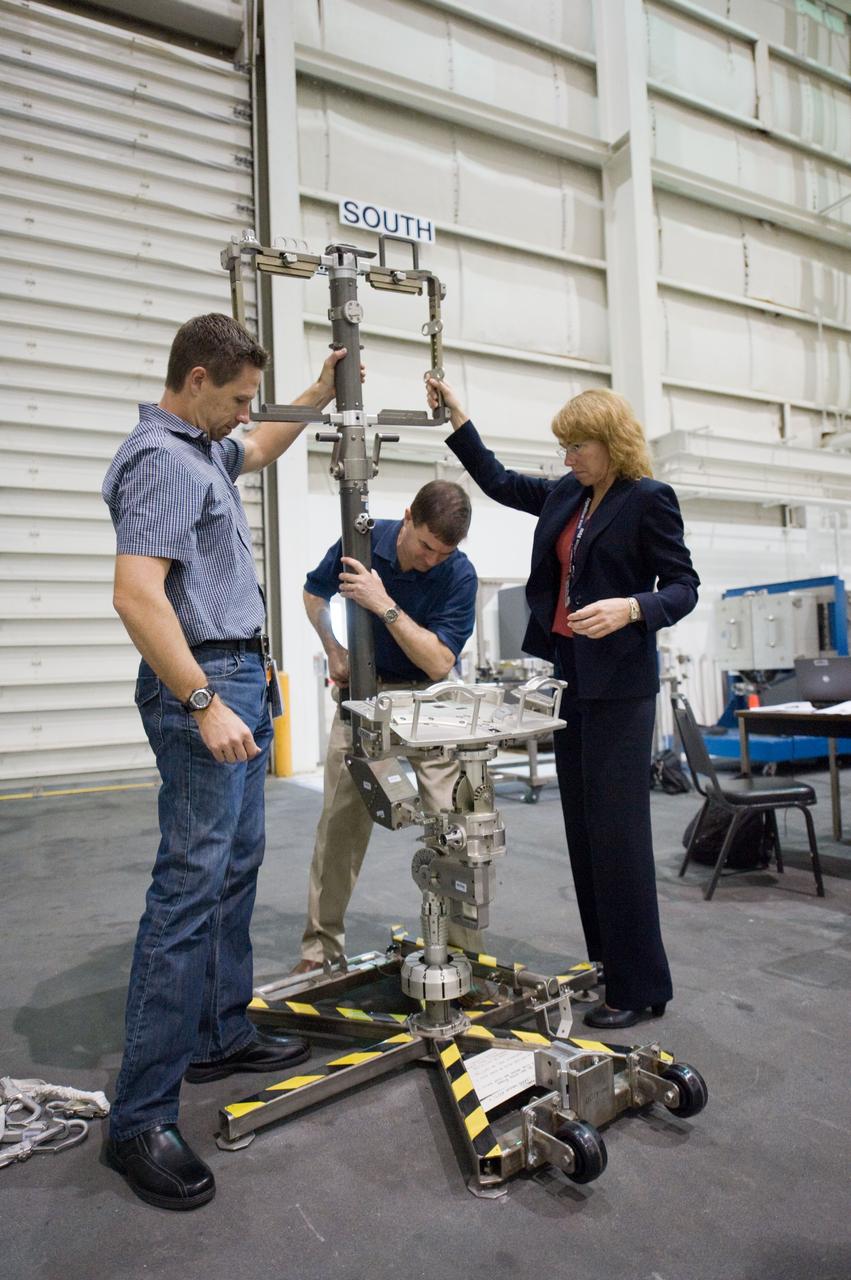
JSC2011-E-029027 (21 March 2011) --- NASA astronauts Rex Walheim (center) and Sandy Magnus, both STS-135 mission specialists, participate in an extravehicular activity (EVA) hardware training session in the Neutral Buoyancy Laboratory (NBL) near NASA's Johnson Space Center. EVA instructor Art Thomason assisted Walheim and Magnus. STS-135 is planned to be the final mission of the space shuttle program. Photo credit: NASA or National Aeronautics and Space Administration
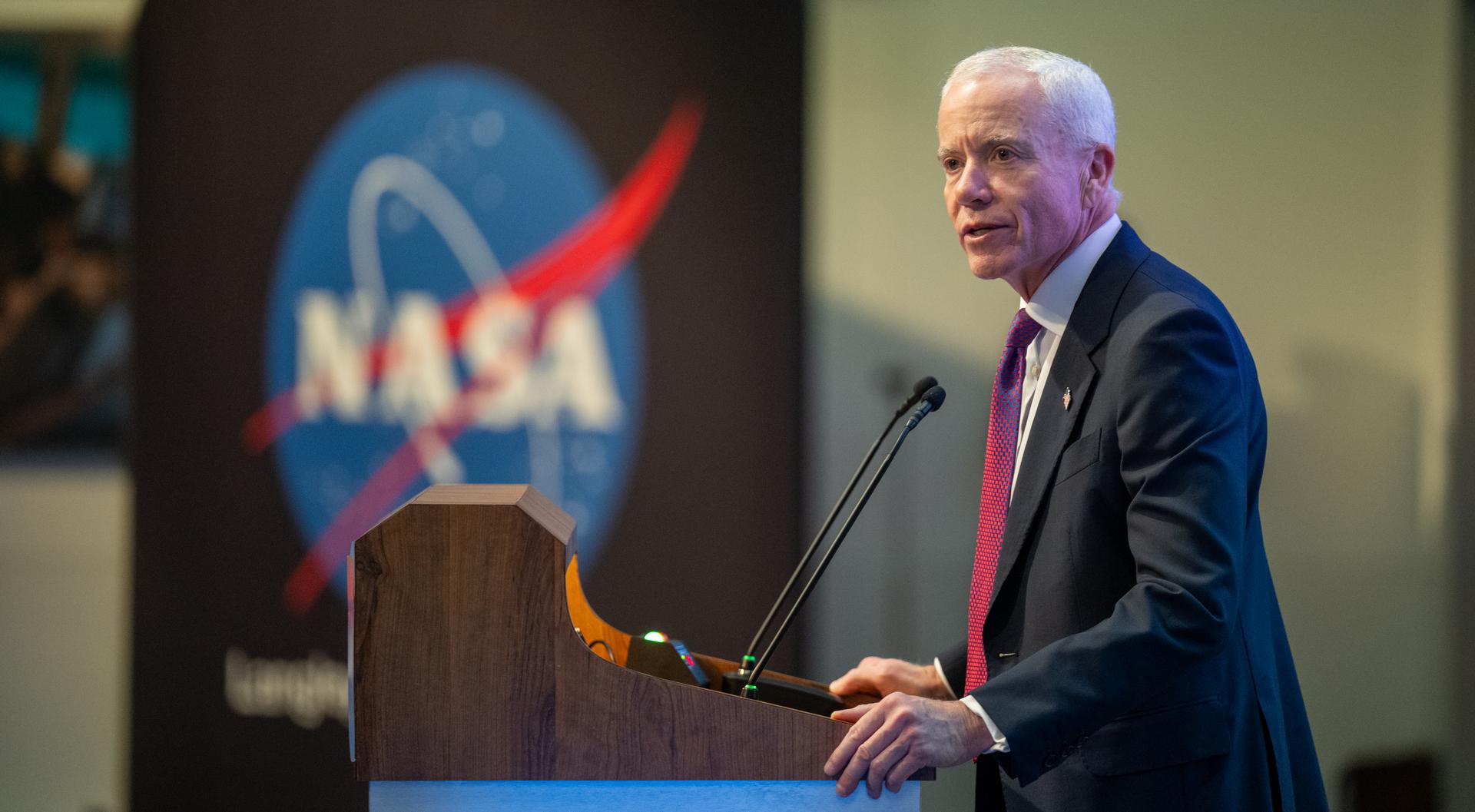
Edward C. Forst, Administrator of the General Services Administration delivers remarks during a ribbon cutting ceremony for the Flight Dynamics Research Facility, NASA's newest wind tunnel, Friday, July 31, 2026, at NASA’s Langley Research Center in Hampton, Virginia. The state-of-the-art facility will support research and technology development that will advance the agency’s aeronautics, exploration, and science goals, including establishing a sustained human presence on the lunar surface through the Artemis program and the development of a Moon Base. Photo Credit: (NASA/Keegan Barber)
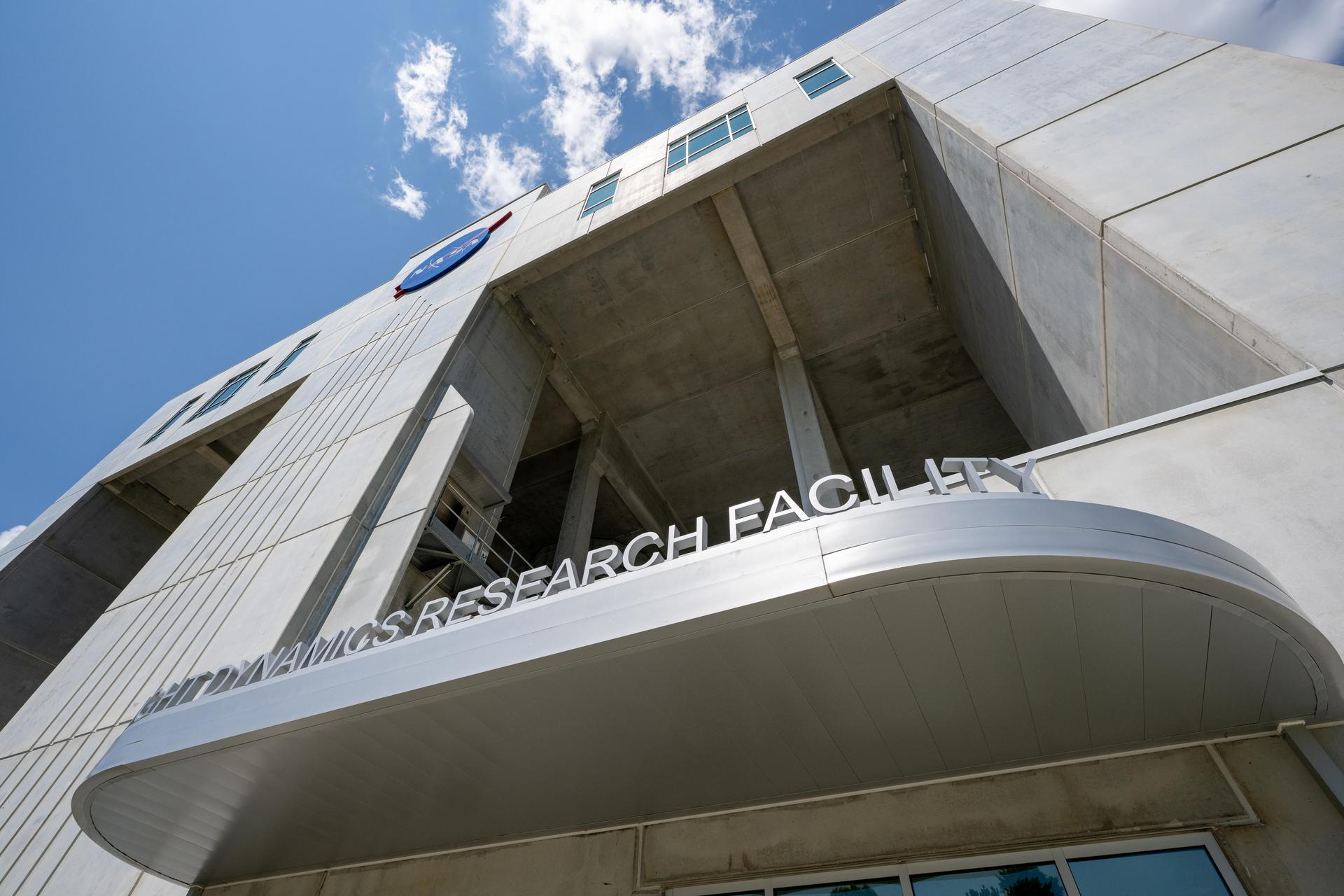
The Flight Dynamics Research Facility, NASA's newest wind tunnel, is seen Thursday, July 30, 2026, at NASA’s Langley Research Center in Hampton, Virginia. The state-of-the-art facility will support research and technology development that will advance the agency’s aeronautics, exploration, and science goals, including establishing a sustained human presence on the lunar surface through the Artemis program and the development of a Moon Base. Photo Credit: (NASA/Keegan Barber)
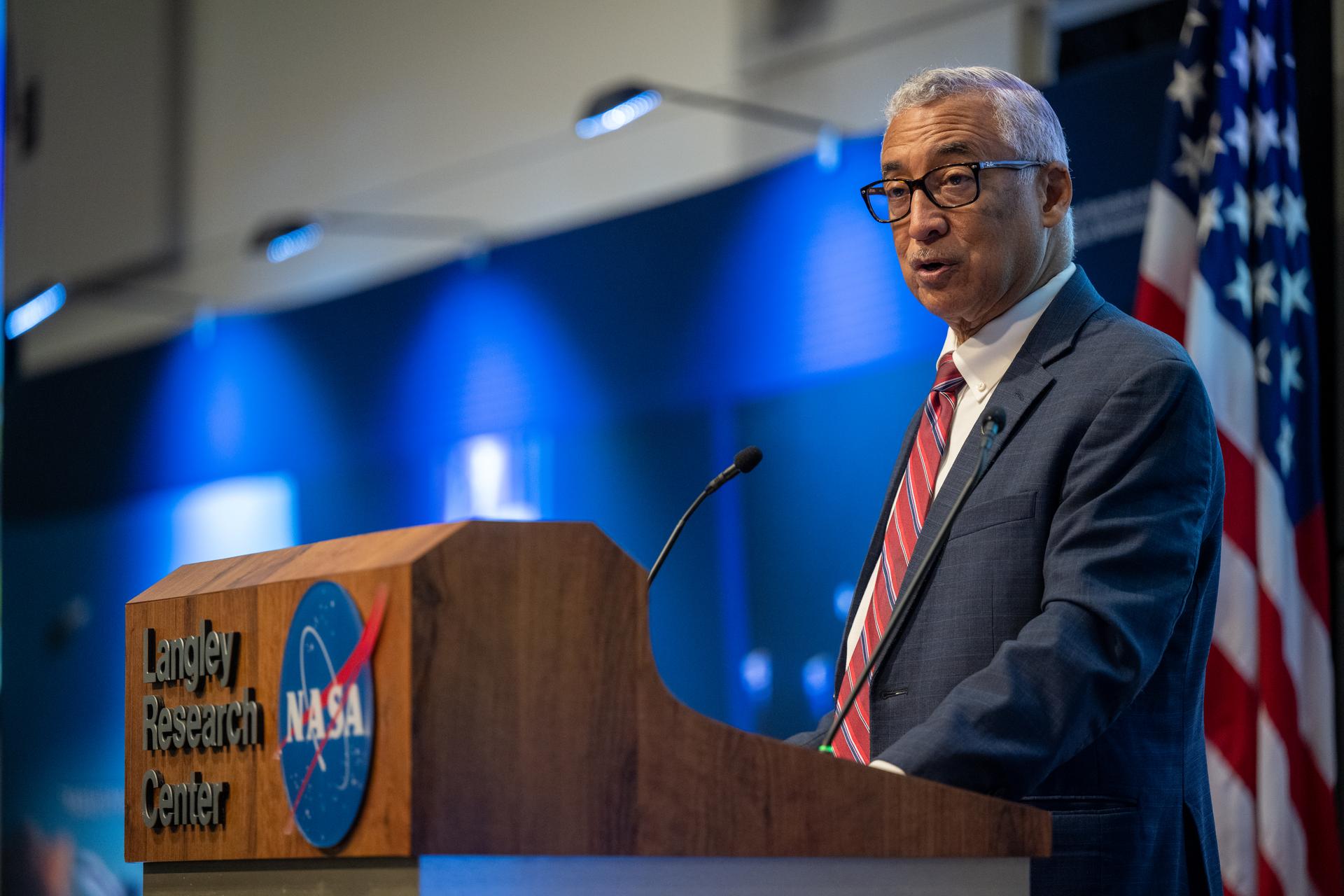
Congressman Robert “Bobby” Scott (D-Va.) delivers remarks during a ribbon cutting ceremony for the Flight Dynamics Research Facility, NASA's newest wind tunnel, Friday, July 31, 2026, at NASA’s Langley Research Center in Hampton, Virginia. The state-of-the-art facility will support research and technology development that will advance the agency’s aeronautics, exploration, and science goals, including establishing a sustained human presence on the lunar surface through the Artemis program and the development of a Moon Base. Photo Credit: (NASA/Keegan Barber)
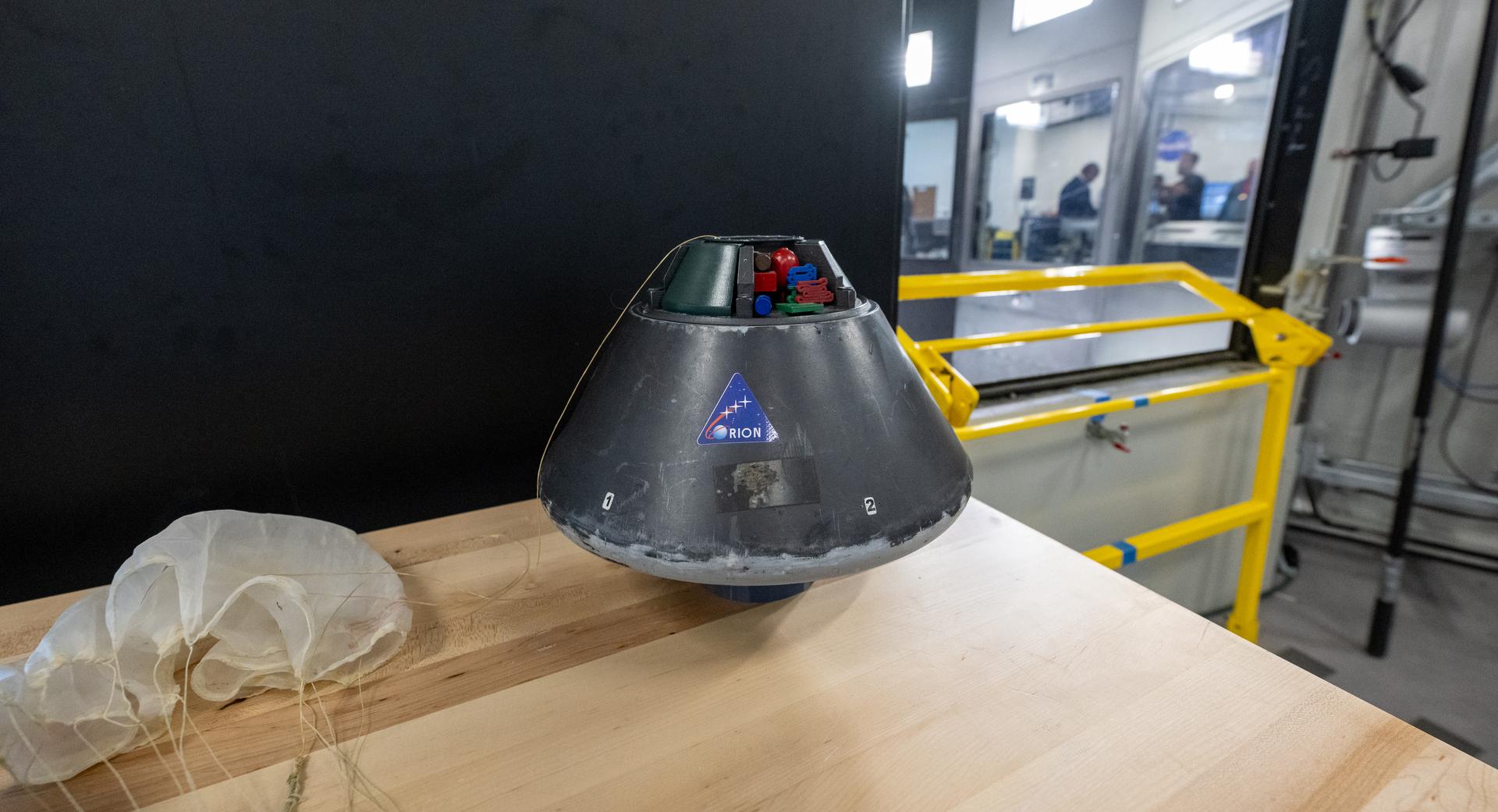
A scale model of the Orion capsule is seen prior to a demonstration at the Flight Dynamics Research Facility, NASA's newest wind tunnel, Friday, July 31, 2026, at NASA’s Langley Research Center in Hampton, Virginia. The state-of-the-art facility will support research and technology development that will advance the agency’s aeronautics, exploration, and science goals, including establishing a sustained human presence on the lunar surface through the Artemis program and the development of a Moon Base. Photo Credit: (NASA/Keegan Barber)
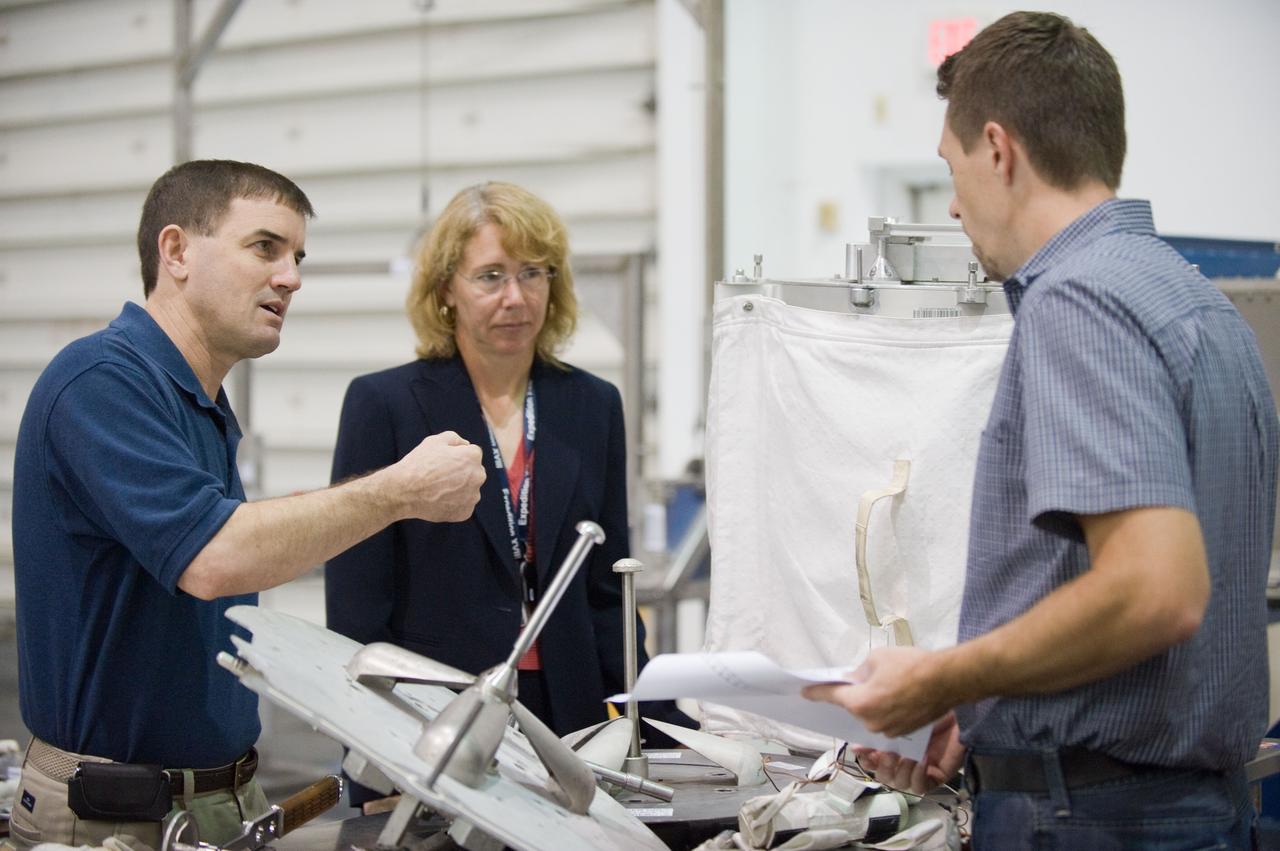
JSC2011-E-029013 (21 March 2011) --- NASA astronauts Rex Walheim (left) and Sandy Magnus, both STS-135 mission specialists, participate in an extravehicular activity (EVA) hardware training session in the Neutral Buoyancy Laboratory (NBL) near NASA's Johnson Space Center. EVA instructor Art Thomason assisted Walheim and Magnus. STS-135 is planned to be the final mission of the space shuttle program. Photo credit: NASA or National Aeronautics and Space Administration
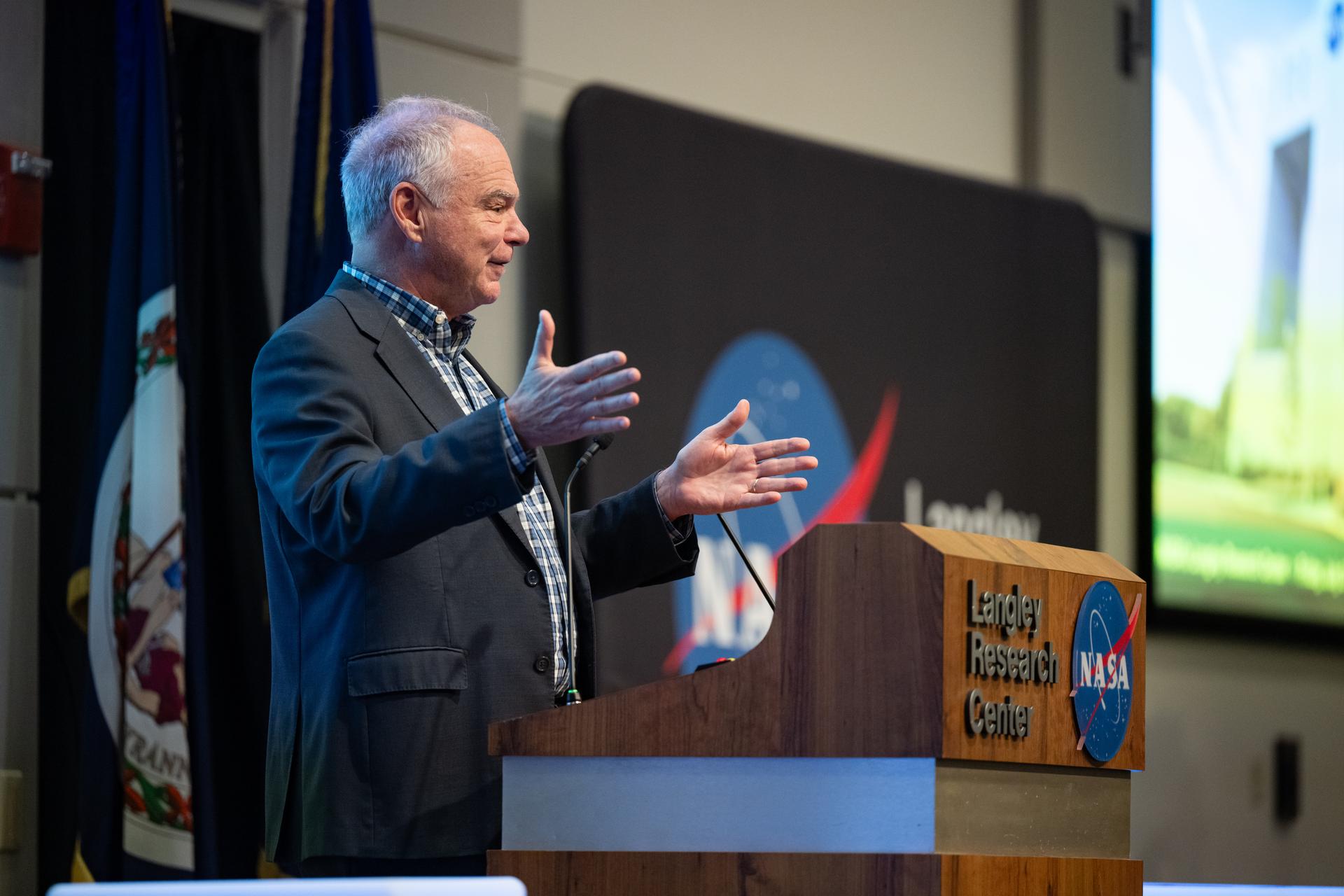
Senator Tim Kaine (D-Va.) delivers remarks during a ribbon cutting ceremony for the Flight Dynamics Research Facility, NASA's newest wind tunnel, Friday, July 31, 2026, at NASA’s Langley Research Center in Hampton, Virginia. The state-of-the-art facility will support research and technology development that will advance the agency’s aeronautics, exploration, and science goals, including establishing a sustained human presence on the lunar surface through the Artemis program and the development of a Moon Base. Photo Credit: (NASA/Keegan Barber)
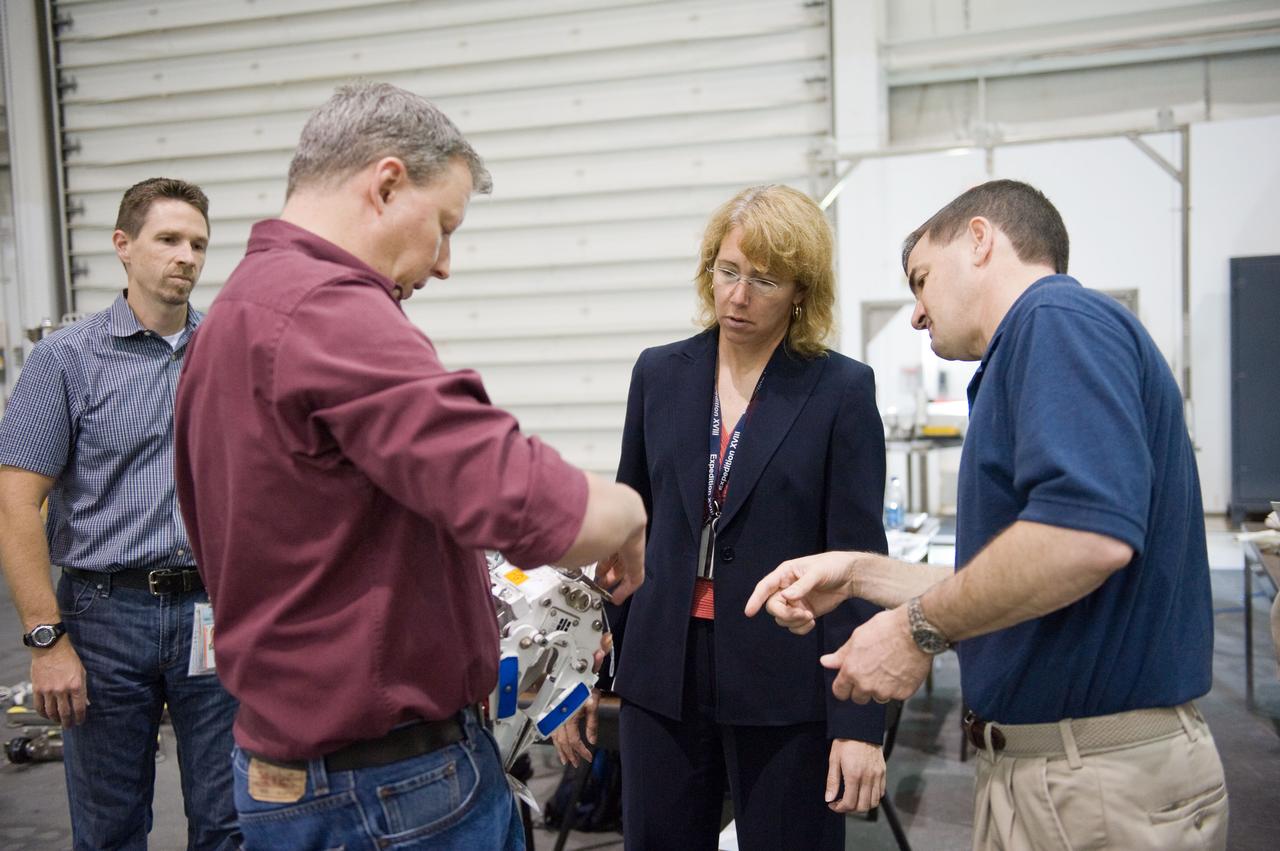
JSC2011-E-029041 (21 March 2011) --- NASA astronauts Rex Walheim (right) and Sandy Magnus, both STS-135 mission specialists, participate in an extravehicular activity (EVA) hardware training session in the Neutral Buoyancy Laboratory (NBL) near NASA's Johnson Space Center. EVA instructors John Ray (left foreground) and Art Thomason assisted Walheim and Magnus. STS-135 is planned to be the final mission of the space shuttle program. Photo credit: NASA or National Aeronautics and Space Administration
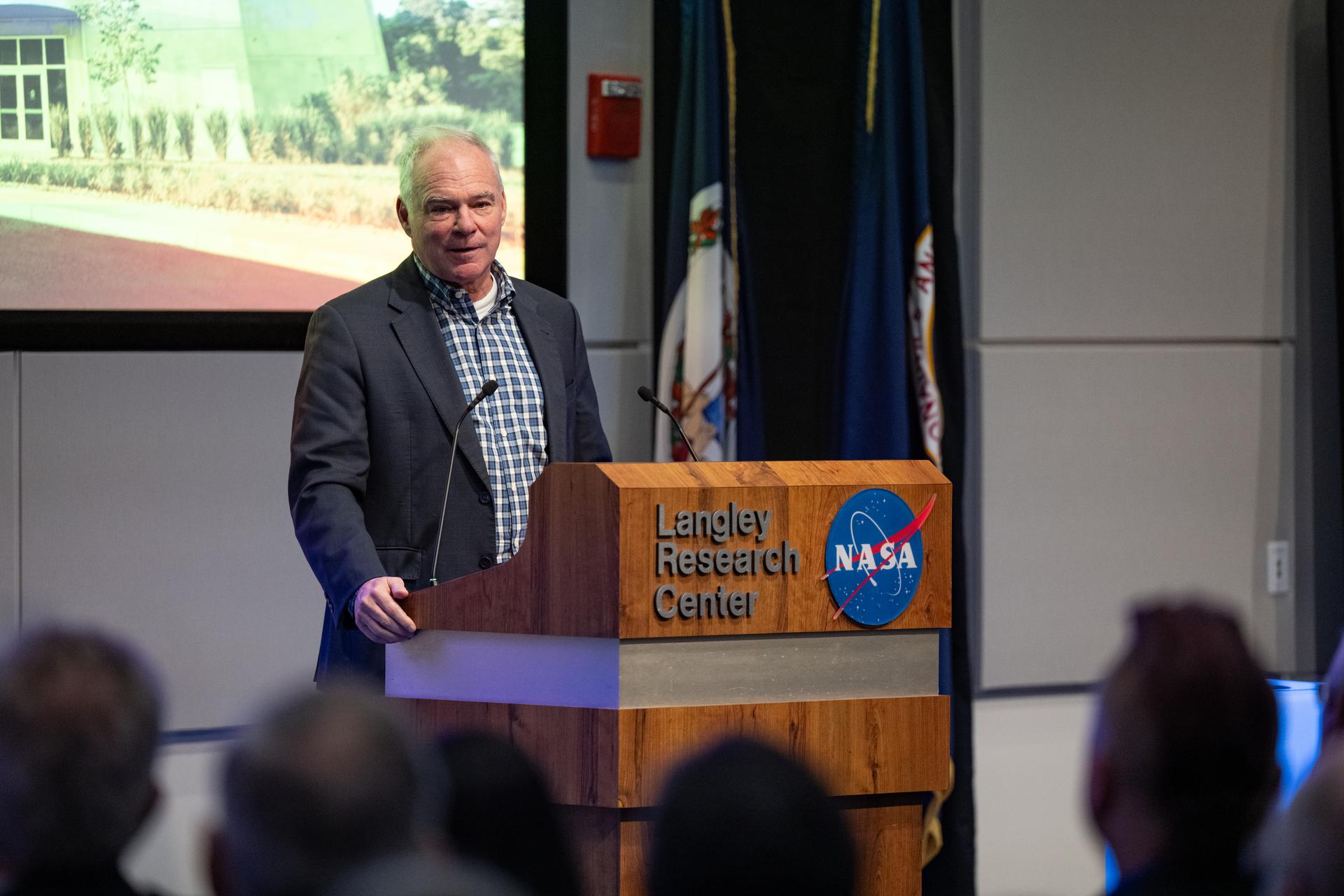
Senator Tim Kaine (D-Va.) delivers remarks during a ribbon cutting ceremony for the Flight Dynamics Research Facility, NASA's newest wind tunnel, Friday, July 31, 2026, at NASA’s Langley Research Center in Hampton, Virginia. The state-of-the-art facility will support research and technology development that will advance the agency’s aeronautics, exploration, and science goals, including establishing a sustained human presence on the lunar surface through the Artemis program and the development of a Moon Base. Photo Credit: (NASA/Keegan Barber)
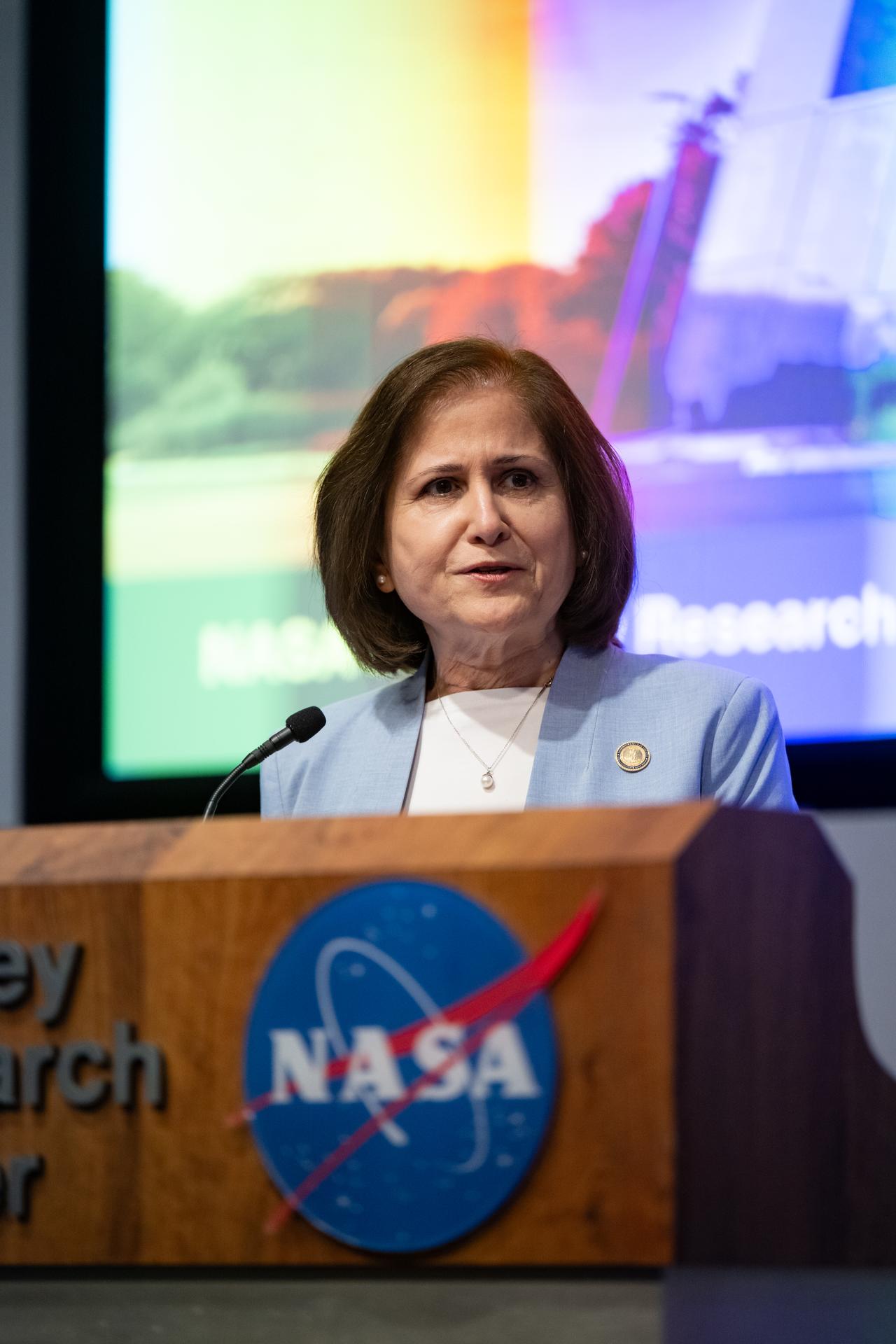
Virginia Lt. Governor Ghazala F. Hashmi delivers remarks during a ribbon cutting ceremony for the Flight Dynamics Research Facility, NASA's newest wind tunnel, Friday, July 31, 2026, at NASA’s Langley Research Center in Hampton, Virginia. The state-of-the-art facility will support research and technology development that will advance the agency’s aeronautics, exploration, and science goals, including establishing a sustained human presence on the lunar surface through the Artemis program and the development of a Moon Base. Photo Credit: (NASA/Keegan Barber)
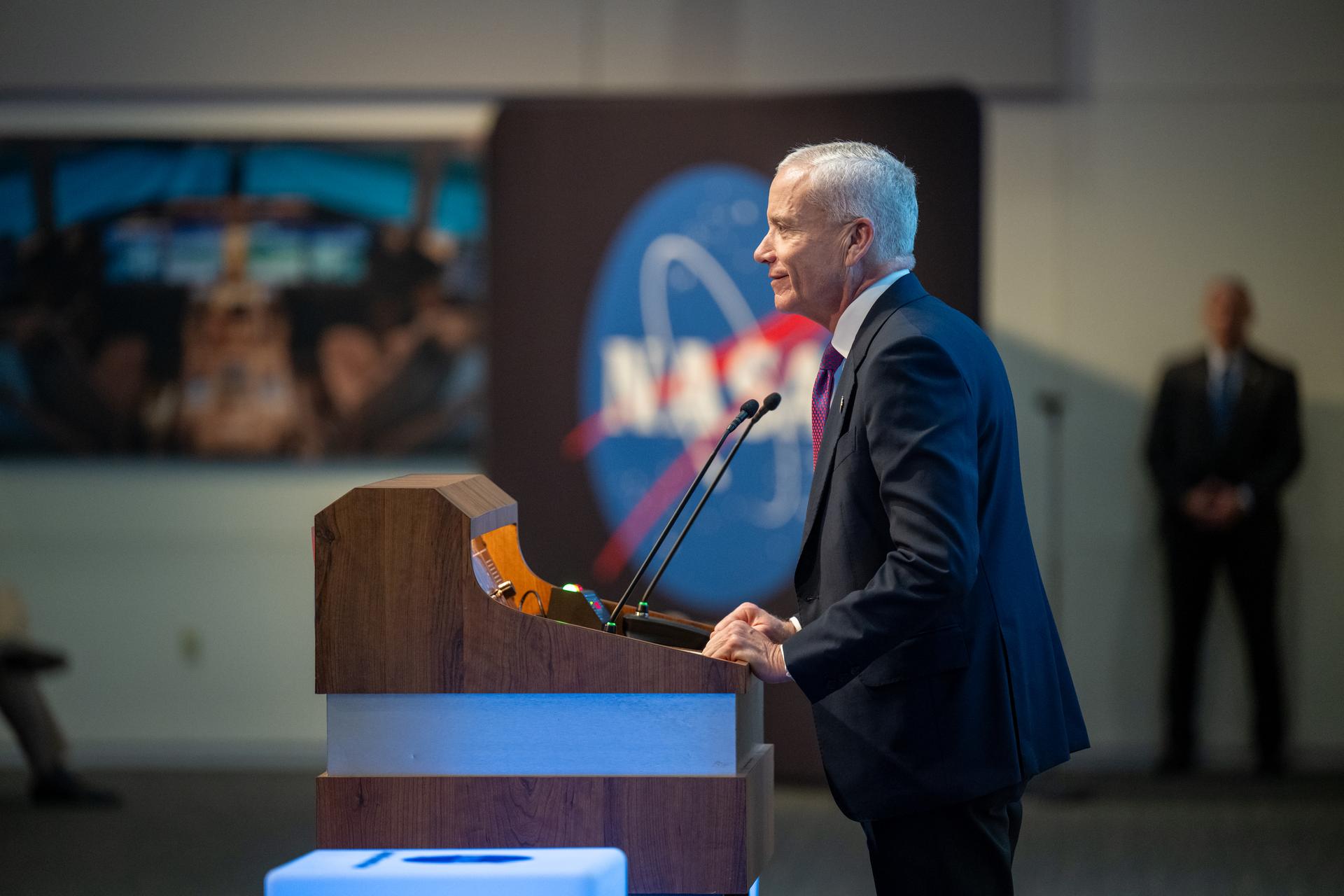
Edward C. Forst, Administrator of the General Services Administration delivers remarks during a ribbon cutting ceremony for the Flight Dynamics Research Facility, NASA's newest wind tunnel, Friday, July 31, 2026, at NASA’s Langley Research Center in Hampton, Virginia. The state-of-the-art facility will support research and technology development that will advance the agency’s aeronautics, exploration, and science goals, including establishing a sustained human presence on the lunar surface through the Artemis program and the development of a Moon Base. Photo Credit: (NASA/Keegan Barber)
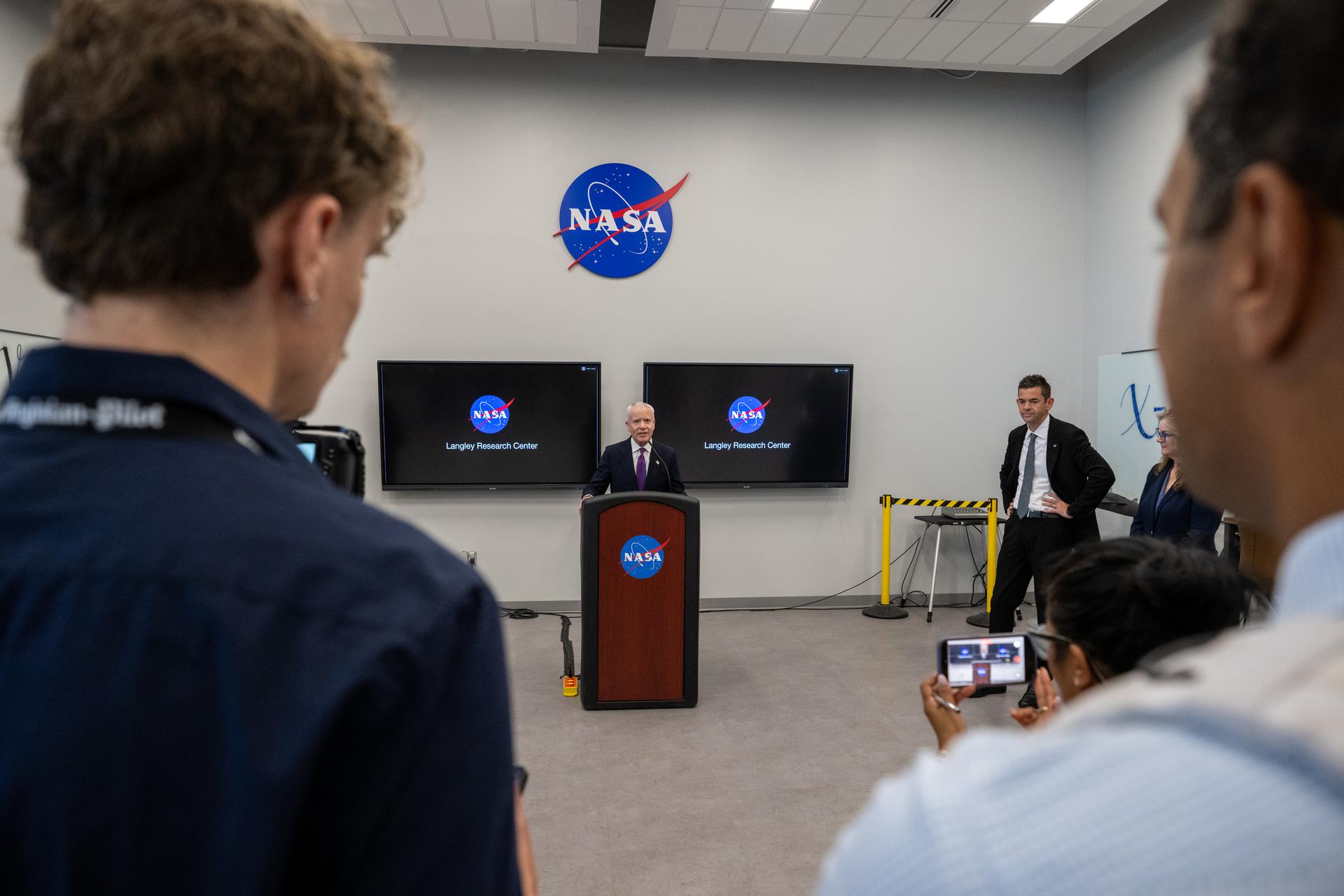
Edward C. Forst, Administrator of the General Services Administration, speaks with members of the media at the Flight Dynamics Research Facility, NASA's newest wind tunnel, Friday, July 31, 2026, at NASA’s Langley Research Center in Hampton, Virginia. The state-of-the-art facility will support research and technology development that will advance the agency’s aeronautics, exploration, and science goals, including establishing a sustained human presence on the lunar surface through the Artemis program and the development of a Moon Base. Photo Credit: (NASA/Keegan Barber)
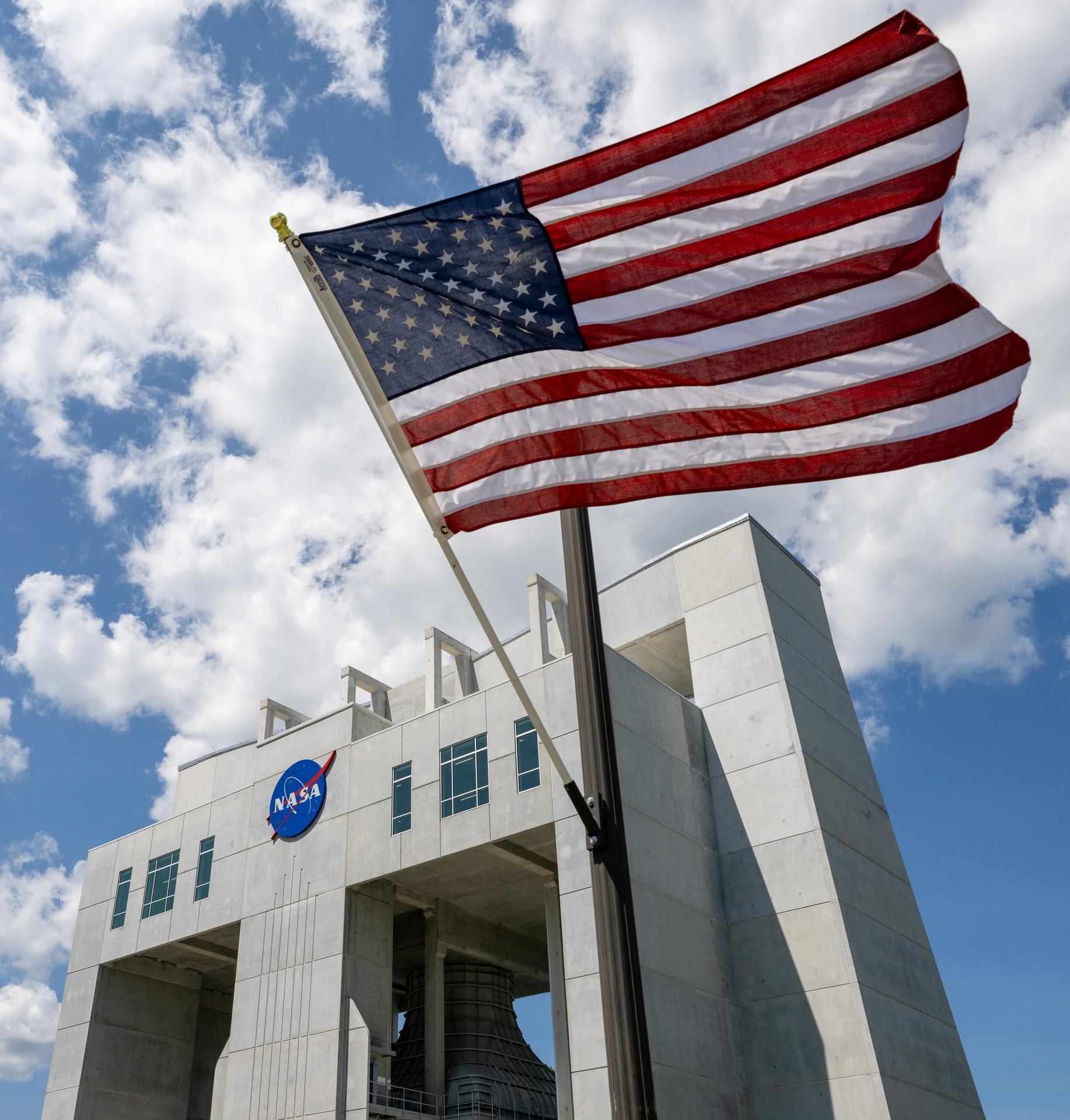
The Flight Dynamics Research Facility, NASA's newest wind tunnel, is seen Thursday, July 30, 2026, at NASA’s Langley Research Center in Hampton, Virginia. The state-of-the-art facility will support research and technology development that will advance the agency’s aeronautics, exploration, and science goals, including establishing a sustained human presence on the lunar surface through the Artemis program and the development of a Moon Base. Photo Credit: (NASA/Keegan Barber)
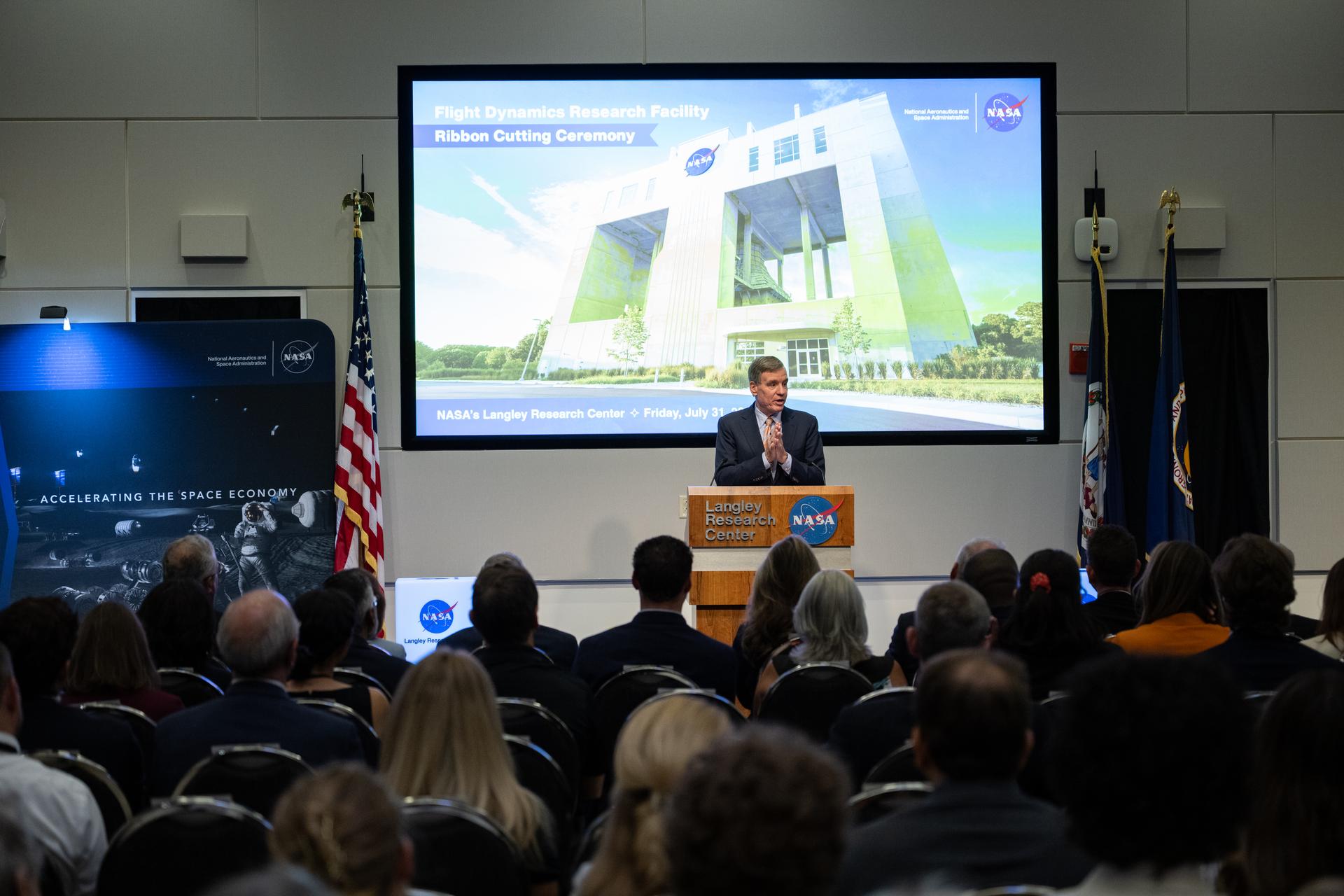
Senator Mark Warner (D-Va.) delivers remarks during a ribbon cutting ceremony for the Flight Dynamics Research Facility, NASA's newest wind tunnel, Friday, July 31, 2026, at NASA’s Langley Research Center in Hampton, Virginia. The state-of-the-art facility will support research and technology development that will advance the agency’s aeronautics, exploration, and science goals, including establishing a sustained human presence on the lunar surface through the Artemis program and the development of a Moon Base. Photo Credit: (NASA/Keegan Barber)
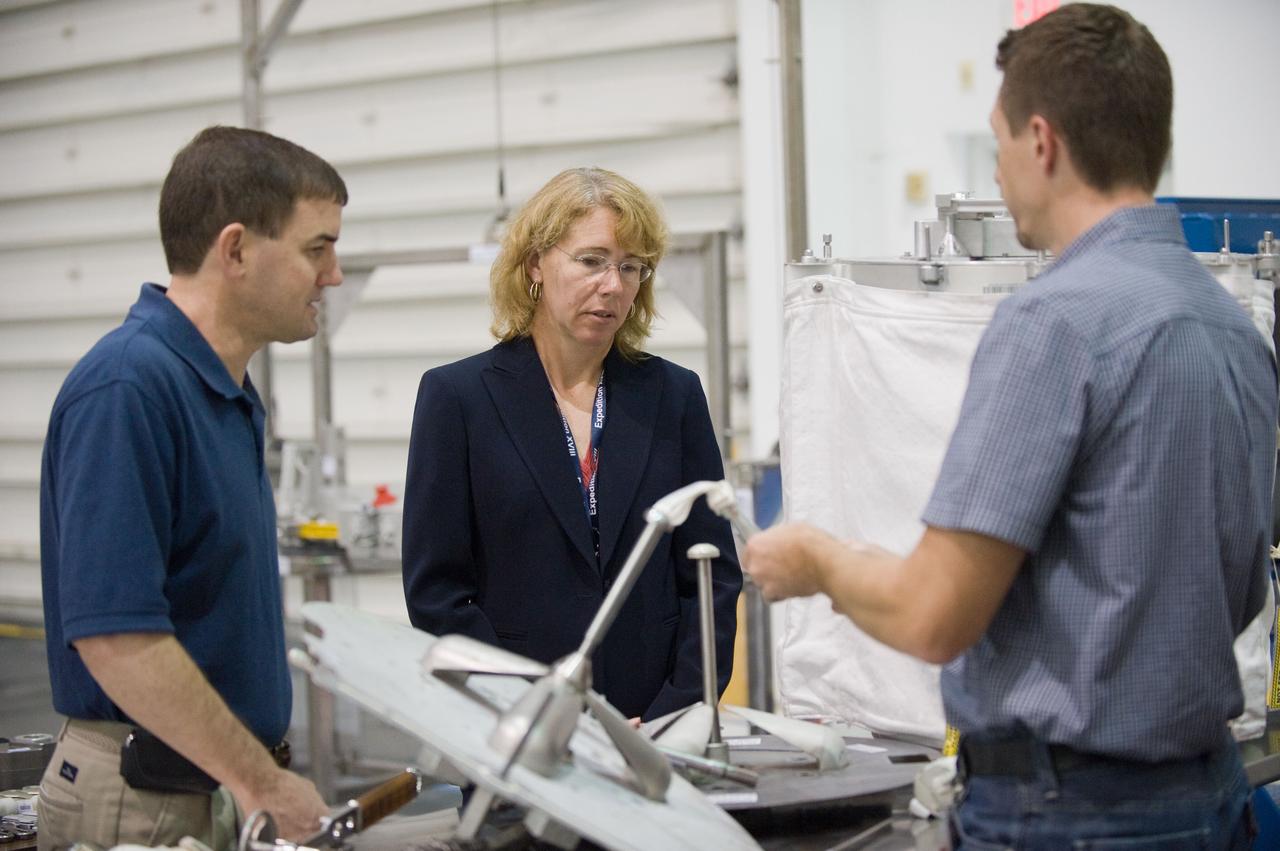
JSC2011-E-029011 (21 March 2011) --- NASA astronauts Rex Walheim (left) and Sandy Magnus, both STS-135 mission specialists, participate in an extravehicular activity (EVA) hardware training session in the Neutral Buoyancy Laboratory (NBL) near NASA's Johnson Space Center. EVA instructor Art Thomason assisted Walheim and Magnus. STS-135 is planned to be the final mission of the space shuttle program. Photo credit: NASA or National Aeronautics and Space Administration
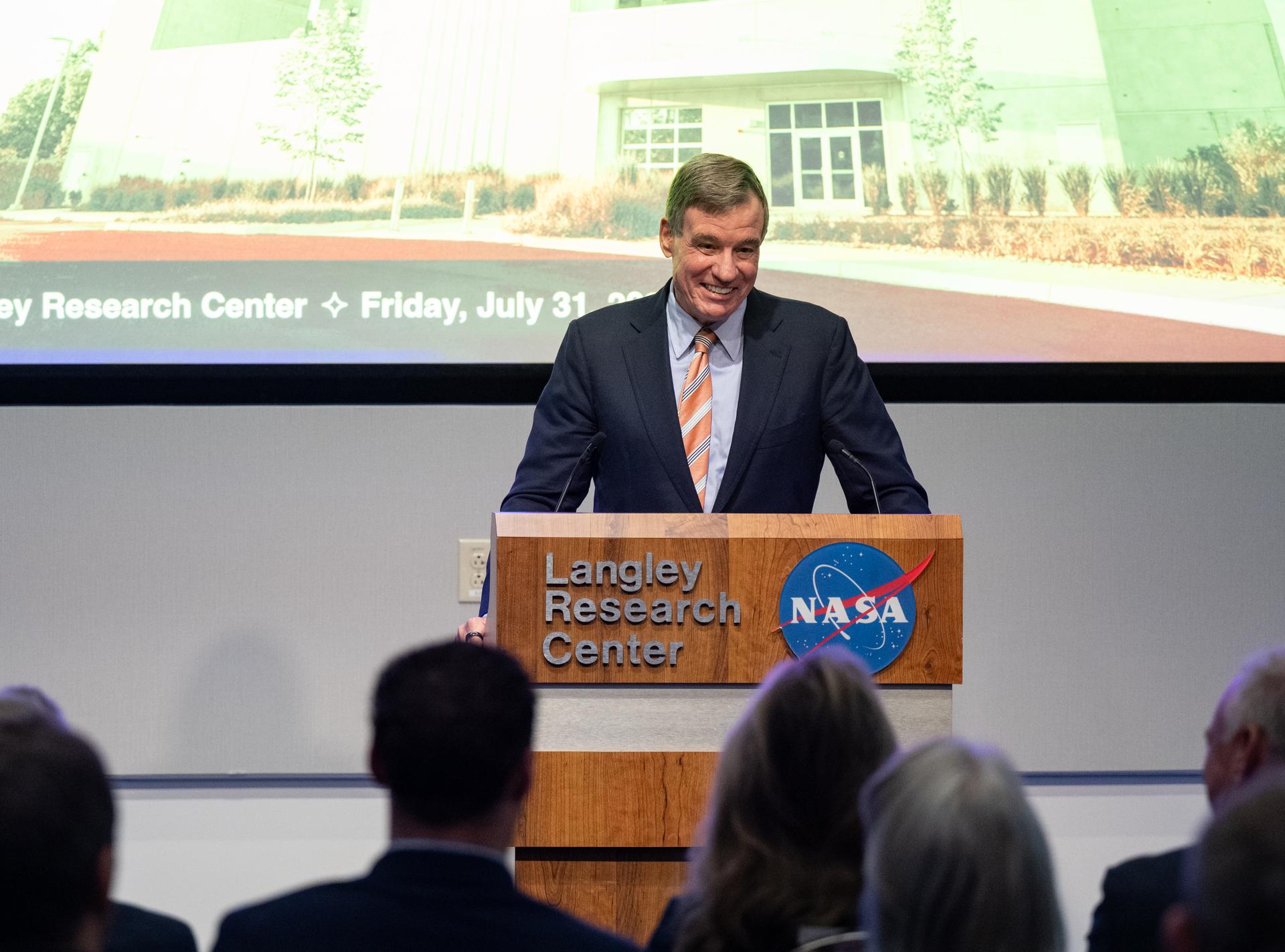
Senator Mark Warner (D-Va.) delivers remarks during a ribbon cutting ceremony for the Flight Dynamics Research Facility, NASA's newest wind tunnel, Friday, July 31, 2026, at NASA’s Langley Research Center in Hampton, Virginia. The state-of-the-art facility will support research and technology development that will advance the agency’s aeronautics, exploration, and science goals, including establishing a sustained human presence on the lunar surface through the Artemis program and the development of a Moon Base. Photo Credit: (NASA/Keegan Barber)
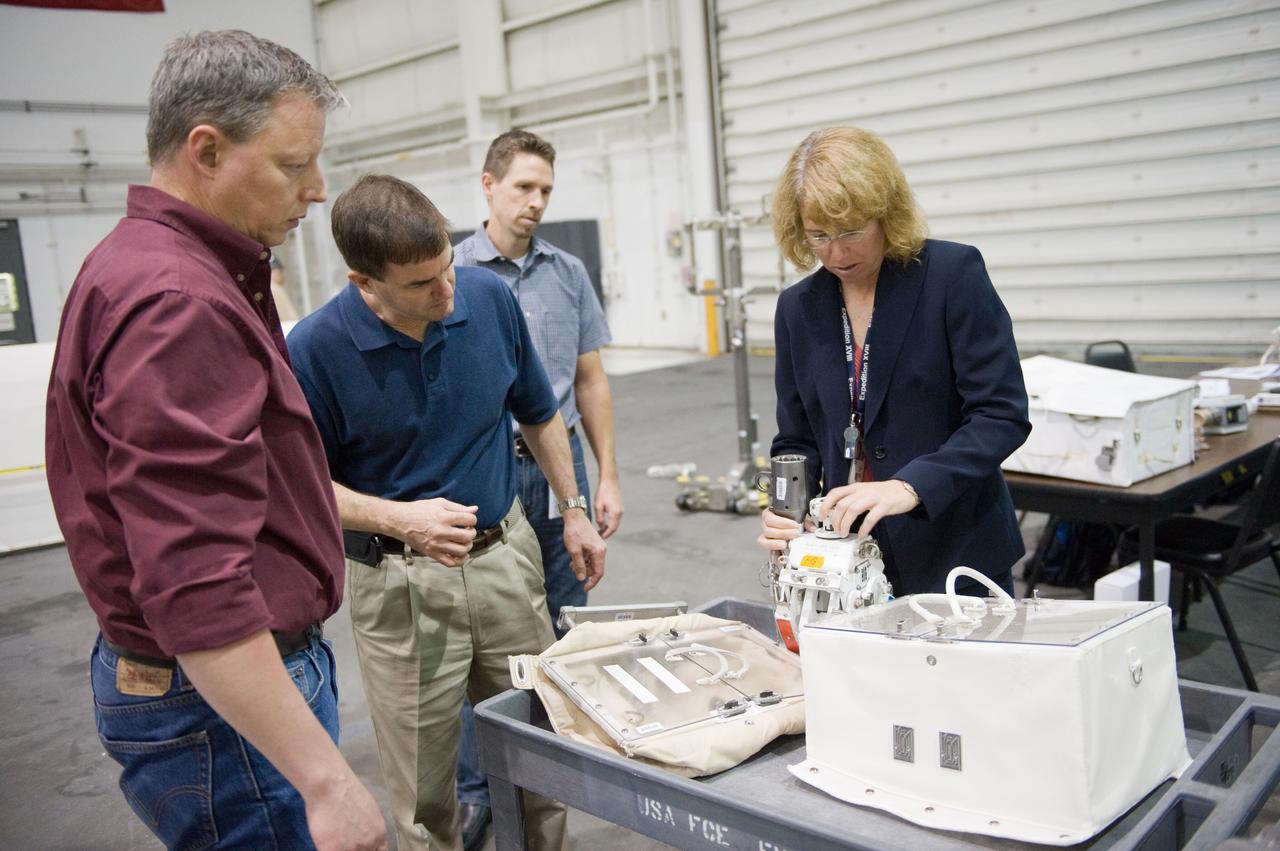
JSC2011-E-029042 (21 March 2011) --- NASA astronauts Rex Walheim (second left) and Sandy Magnus, both STS-135 mission specialists, participate in an extravehicular activity (EVA) hardware training session in the Neutral Buoyancy Laboratory (NBL) near NASA's Johnson Space Center. EVA instructors John Ray (left foreground) and Art Thomason assisted Walheim and Magnus. STS-135 is planned to be the final mission of the space shuttle program. Photo credit: NASA or National Aeronautics and Space Administration

LeVar Burton speaks during the "National Symphony Orchestra Pops, Apollo 11: A 50th Anniversary, One Small Step, One Giant Leap" a program including musical acts, speakers, and images and video related to space, on Saturday, July 20, 2019 at the John F. Kennedy Center for the Performing Arts in Washington. NASA and the country are recognizing the 50th anniversary of Apollo 11, in which astronauts Neil Armstrong, Michael Collins, and Buzz Aldrin crewed the first mission to land astronauts on the Moon. Photo Credit: (NASA/Aubrey Gemignani)
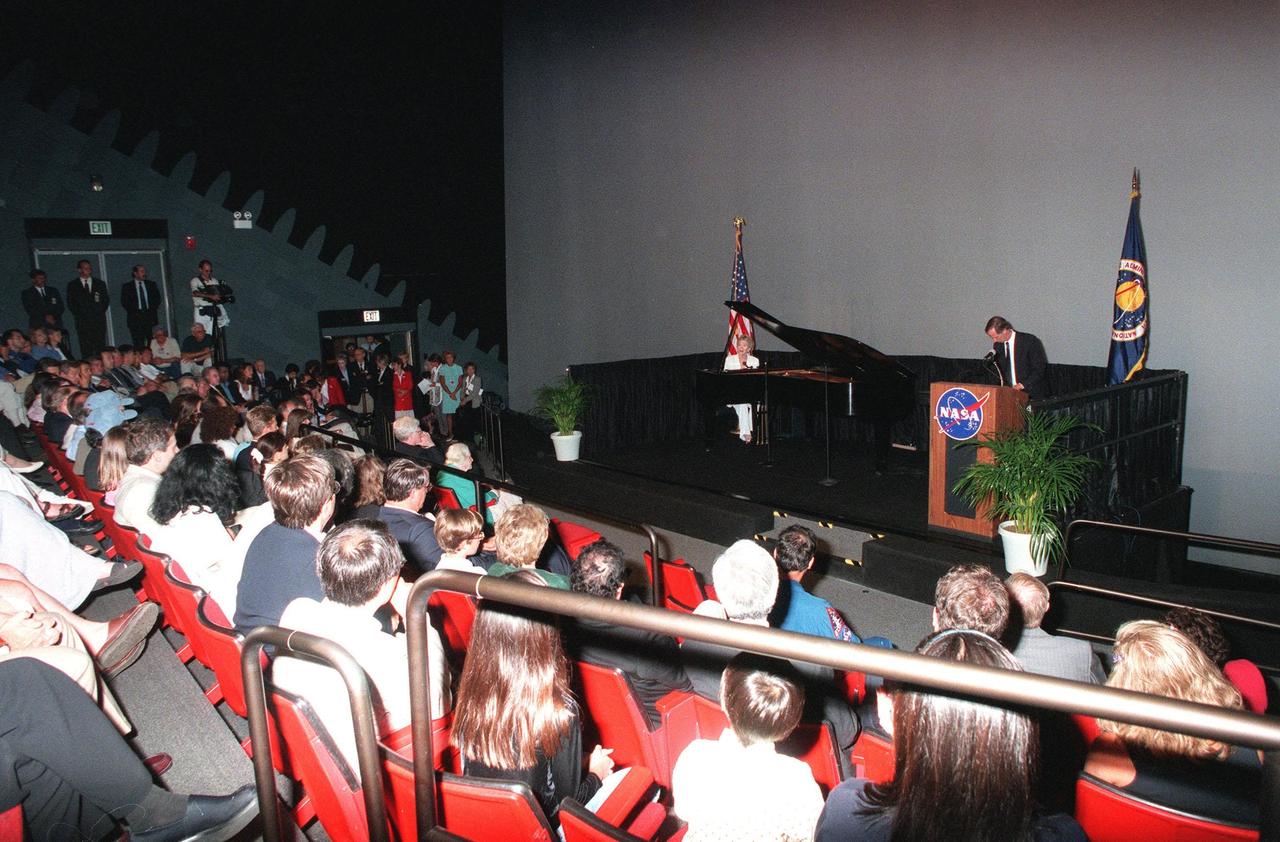
At the piano, singer-songwriter Judy Collins performs her original song, "Beyond the Sky," at the KSC Visitor Complex's Imax Theater for an audience waiting for the launch of STS-93. The song, commissioned by NASA through the Nasa Art Program, honored Eileen Collins, the first woman to command a Space Shuttle. The attendees are planning to view the launch at the Banana Creek viewing sight. Liftoff is scheduled for July 20 at 12:36 a.m. EDT

Meredith Vieira speaks during the "National Symphony Orchestra Pops, Apollo 11: A 50th Anniversary, One Small Step, One Giant Leap" a program including musical acts, speakers, and images and video related to space, on Saturday, July 20, 2019 at the John F. Kennedy Center for the Performing Arts in Washington. NASA and the country are recognizing the 50th anniversary of Apollo 11, in which astronauts Neil Armstrong, Michael Collins, and Buzz Aldrin crewed the first mission to land astronauts on the Moon. Photo Credit: (NASA/Aubrey Gemignani)

Herbie Hancock speaks during the "National Symphony Orchestra Pops, Apollo 11: A 50th Anniversary, One Small Step, One Giant Leap" a program including musical acts, speakers, and images and video related to space, on Saturday, July 20, 2019 at the John F. Kennedy Center for the Performing Arts in Washington. NASA and the country are recognizing the 50th anniversary of Apollo 11, in which astronauts Neil Armstrong, Michael Collins, and Buzz Aldrin crewed the first mission to land astronauts on the Moon. Photo Credit: (NASA/Aubrey Gemignani)

Actress June Lockhart livens up the audience after donning a NASA cap during a program entitled Human Spaceflight: The Kennedy Legacy, Wednesday, May 25, 2011, in the concert hall at the John F. Kennedy Center for the Performing Arts in Washington. The event marked the 50th Anniversary of President John F. Kennedy's Special Message to the Congress on Urgent National Needs in which he stated "landing a man on the moon and returning him safely to earth". Photo Credit: (NASA/Paul E. Alers)

Natasha Bedingfield performs during the "National Symphony Orchestra Pops, Apollo 11: A 50th Anniversary, One Small Step, One Giant Leap" a program including musical acts, speakers, and images and video related to space, on Saturday, July 20, 2019 at the John F. Kennedy Center for the Performing Arts in Washington. NASA and the country are recognizing the 50th anniversary of Apollo 11, in which astronauts Neil Armstrong, Michael Collins, and Buzz Aldrin crewed the first mission to land astronauts on the Moon. Photo Credit: (NASA/Aubrey Gemignani)
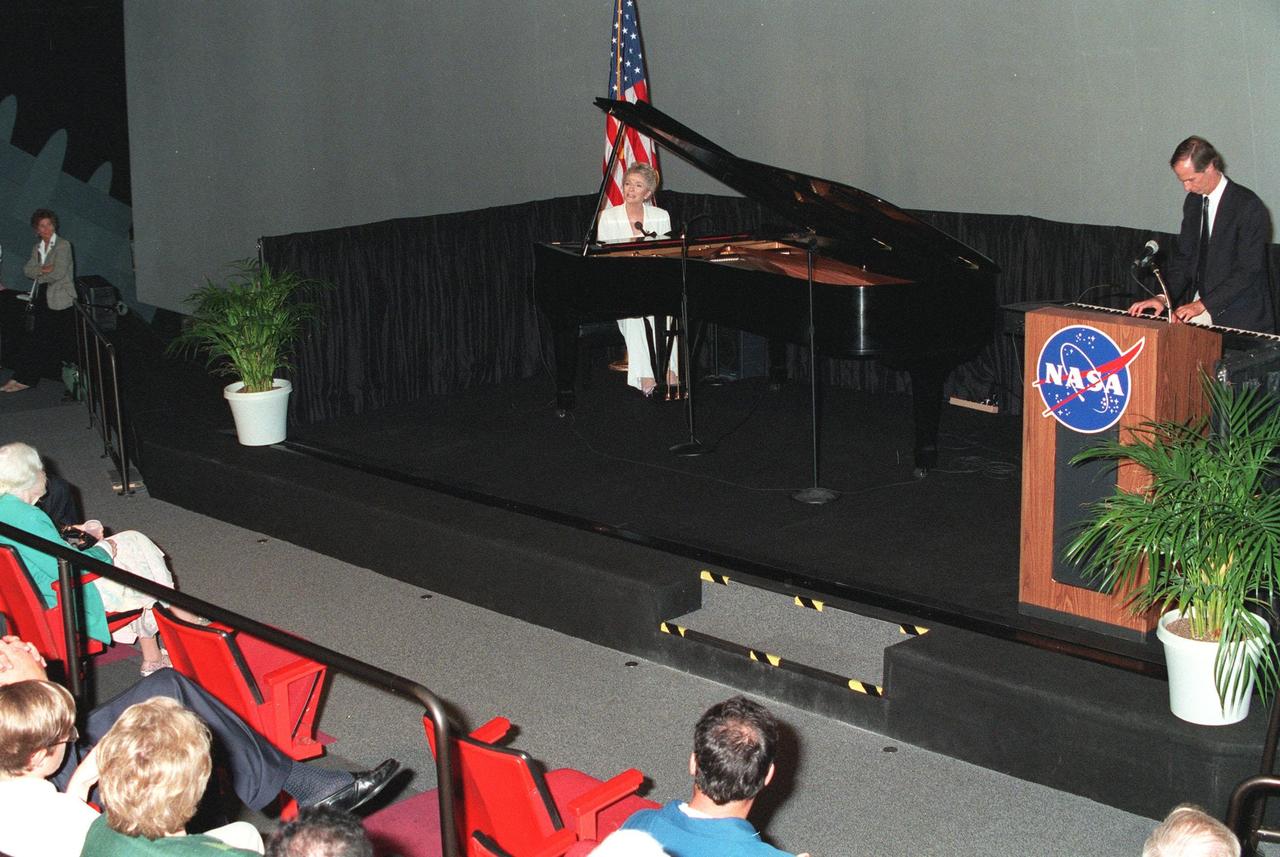
At the piano, singer-songwriter Judy Collins performs her original song, "Beyond the Sky," at the KSC Visitor Complex's Imax Theater for an audience waiting for the launch of STS-93. The song, commissioned by NASA through the Nasa Art Program, honored Eileen Collins, the first woman to command a Space Shuttle. The attendees are planning to view the launch at the Banana Creek viewing sight. Liftoff is scheduled for July 20 at 12:36 a.m. EDT

Singer-songwriter Judy Collins performs her original song, "Beyond the Sky," at the KSC Visitor Complex's Imax Theater for an audience waiting for the launch of STS-93. The song, commissioned by NASA through the nASA Art Program, honored Eileen Collins, the first woman to command a Space Shuttle. The attendees are planning to view the launch at the Banana Creek viewing sight. Liftoff is scheduled for July 20 at 12:36 a.m. EDT
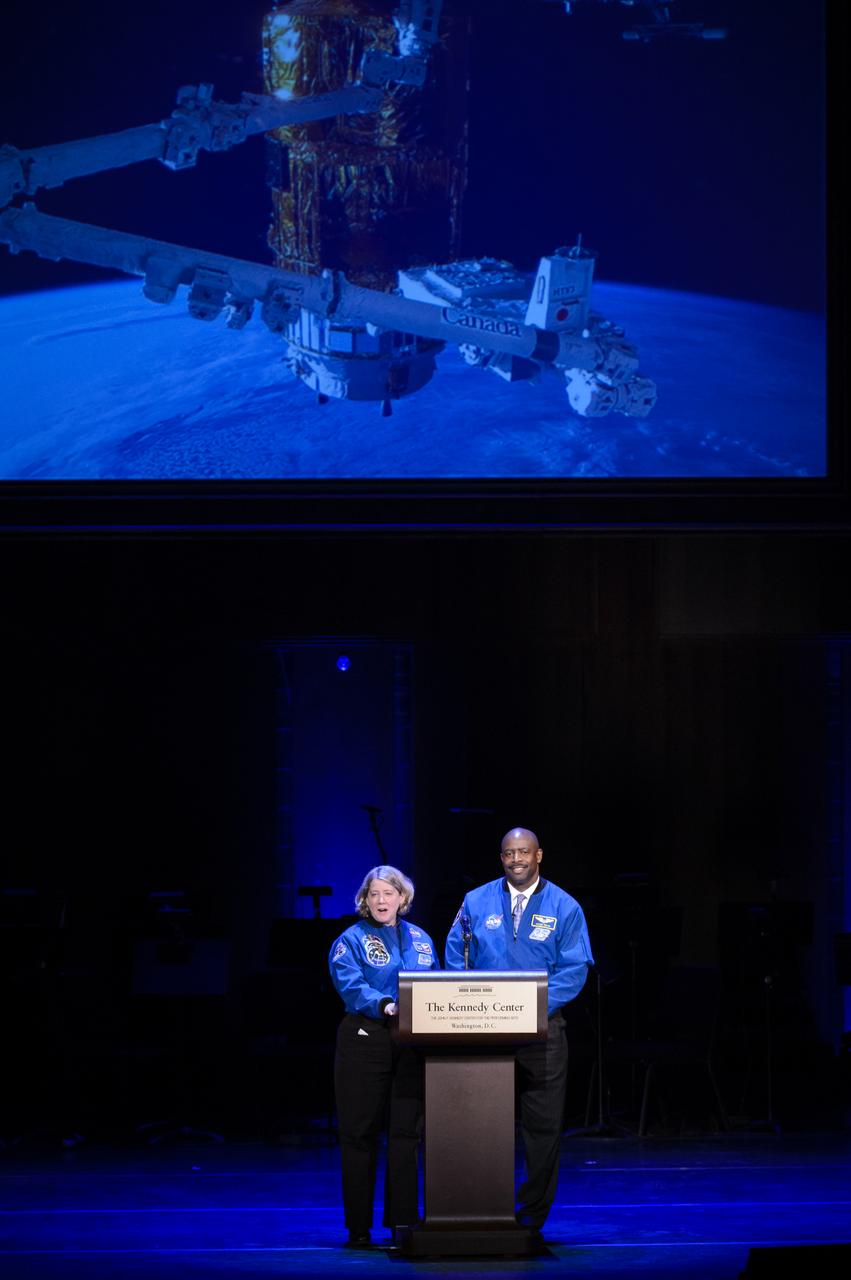
NASA's Associate Administrator for Education and former astronaut Leland Melvin and former astronaut and space shuttle commander Pam Melroy, speak about Sally Ride's impact on the astronaut corps, the space program and beyond during a National Tribute to Sally Ride at the John F. Kennedy Center for the Performing Arts, Monday, May 20, 2013 in Washington. Photo Credit: (NASA/Bill Ingalls)
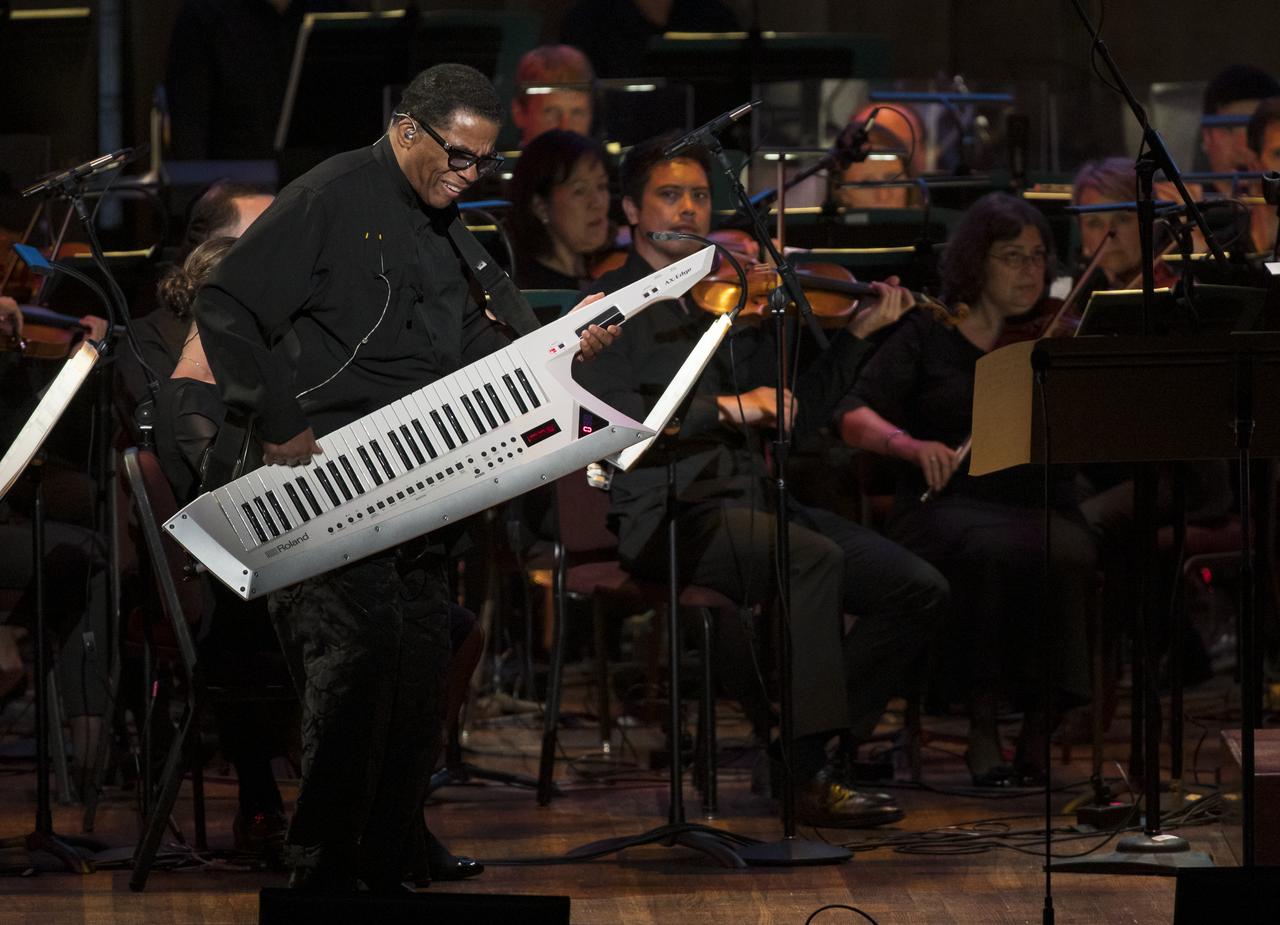
Herbie Hancock performs during the "National Symphony Orchestra Pops, Apollo 11: A 50th Anniversary, One Small Step, One Giant Leap" a program including musical acts, speakers, and images and video related to space, on Saturday, July 20, 2019 at the John F. Kennedy Center for the Performing Arts in Washington. NASA and the country are recognizing the 50th anniversary of Apollo 11, in which astronauts Neil Armstrong, Michael Collins, and Buzz Aldrin crewed the first mission to land astronauts on the Moon. Photo Credit: (NASA/Aubrey Gemignani)

Meredith Vieira speaks during the "National Symphony Orchestra Pops, Apollo 11: A 50th Anniversary, One Small Step, One Giant Leap" a program including musical acts, speakers, and images and video related to space, on Saturday, July 20, 2019 at the John F. Kennedy Center for the Performing Arts in Washington. NASA and the country are recognizing the 50th anniversary of Apollo 11, in which astronauts Neil Armstrong, Michael Collins, and Buzz Aldrin crewed the first mission to land astronauts on the Moon. Photo Credit: (NASA/Aubrey Gemignani)
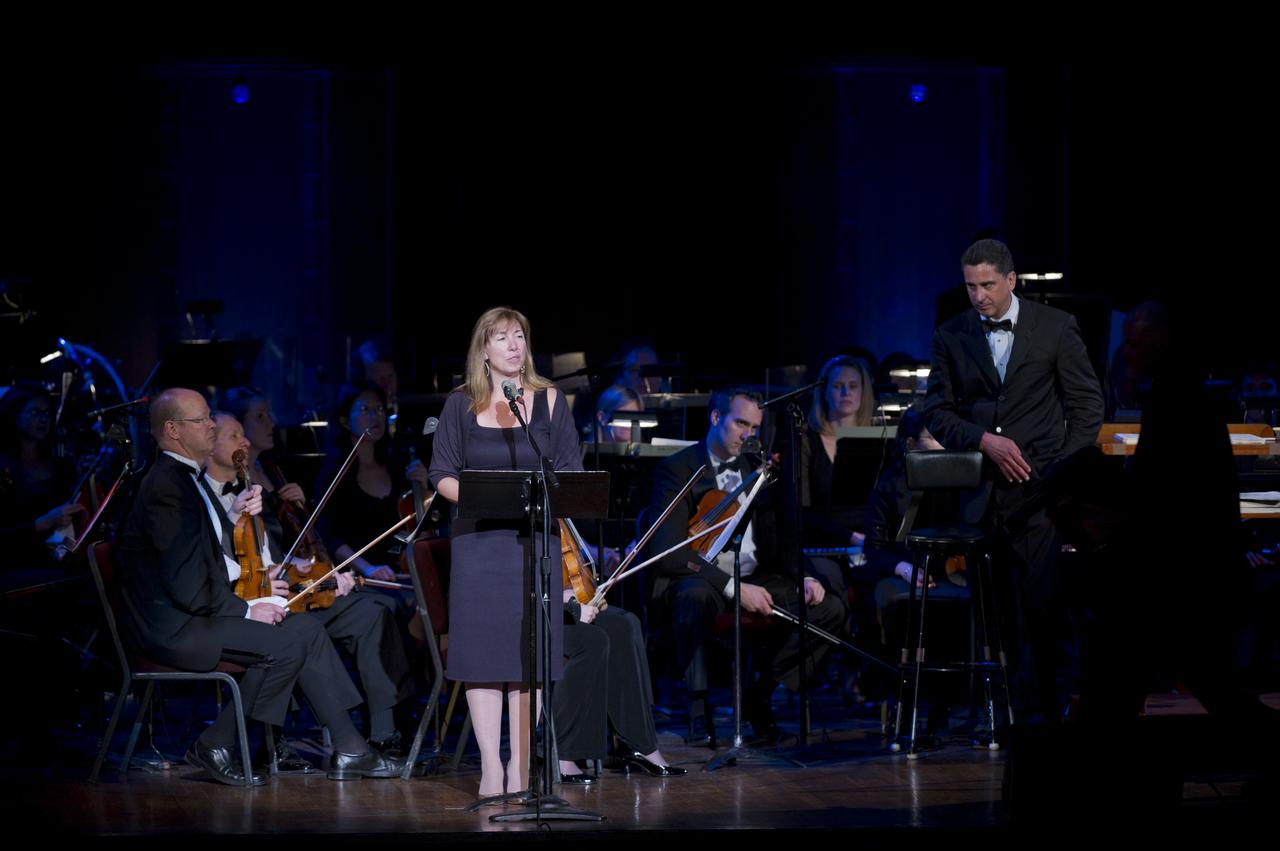
Deputy Administrator Lori Garver delivers remarks as Emil de Cou, right, looks on during a program commemorating Human Spaceflight and the Kennedy Legacy, Wednesday, May 25, 2011, in the concert hall at the John F. Kennedy Center for the Performing Arts in Washington. The event marked the 50th Anniversary of President John F. Kennedy's Special Message to the Congress on Urgent National Needs in which he stated "landing a man on the moon and returning him safely to earth". Photo Credit: (NASA/Paul E. Alers)

Musician Herbie Hancock plays a piece on the piano during a program commemorating Human Spaceflight and the Kennedy Legacy, Wednesday, May 25, 2011, in the concert hall at the John F. Kennedy Center for the Performing Arts in Washington. The event marked the 50th Anniversary of President John F. Kennedy's Special Message to the Congress on Urgent National Needs in which he stated "landing a man on the moon and returning him safely to earth". Photo Credit: (NASA/Paul E. Alers)
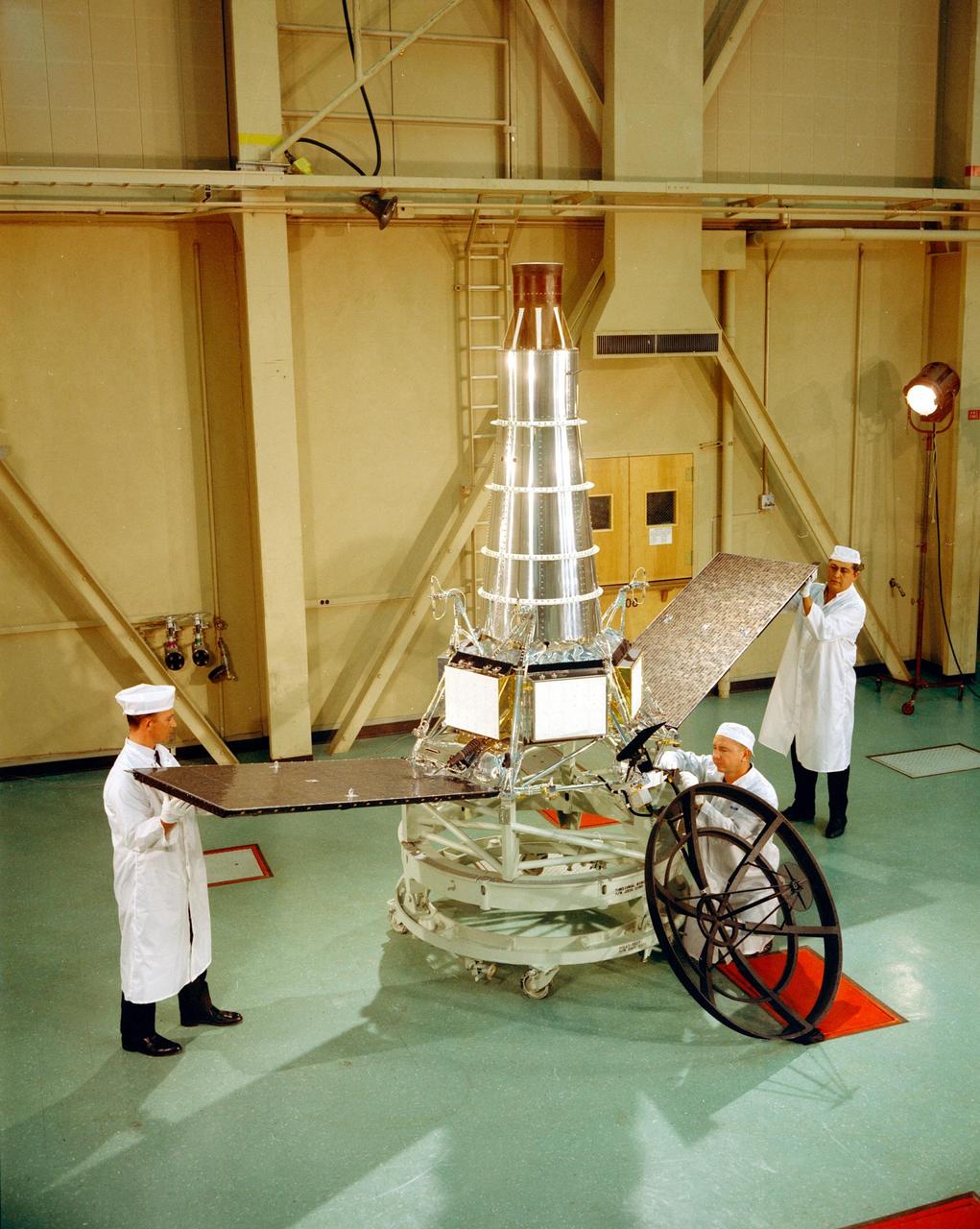
Engineers stand with Ranger 7 on Dec. 10, 1963, in High Bay 1, located at NASA's Jet Propulsion Laboratory. Ranger 7 was the first U.S. mission to transmit images from the surface of the Moon. The Ranger program included a series of robotic spacecraft launched at the Moon. JPL developed the art of spacecraft assembly and testing with each iteration of the Ranger spacecraft. https://photojournal.jpl.nasa.gov/catalog/PIA23520
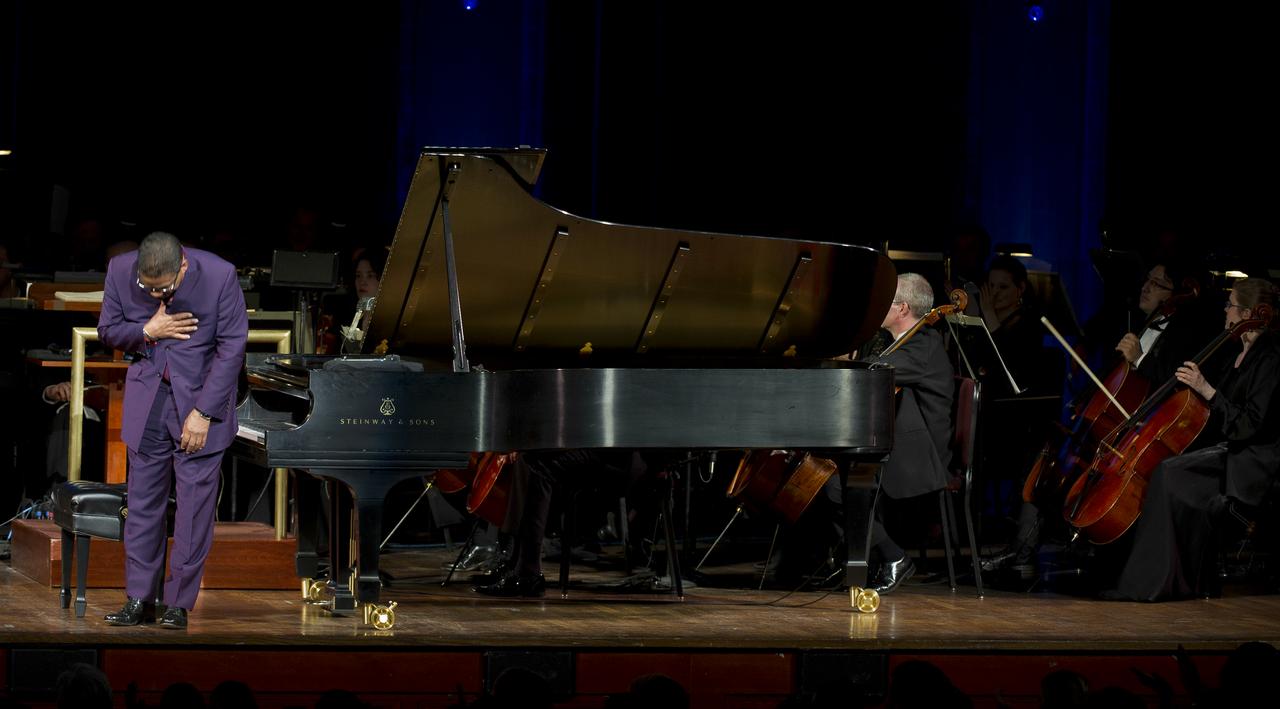
Musician Herbie Hancock bows to the audience after perfrorming during a program commemorating Human Spaceflight and the Kennedy Legacy, Wednesday, May 25, 2011, in the concert hall at the John F. Kennedy Center for the Performing Arts in Washington. The event marked the 50th Anniversary of President John F. Kennedy's Special Message to the Congress on Urgent National Needs in which he stated "landing a man on the moon and returning him safely to earth". Photo Credit: (NASA/Paul E. Alers)
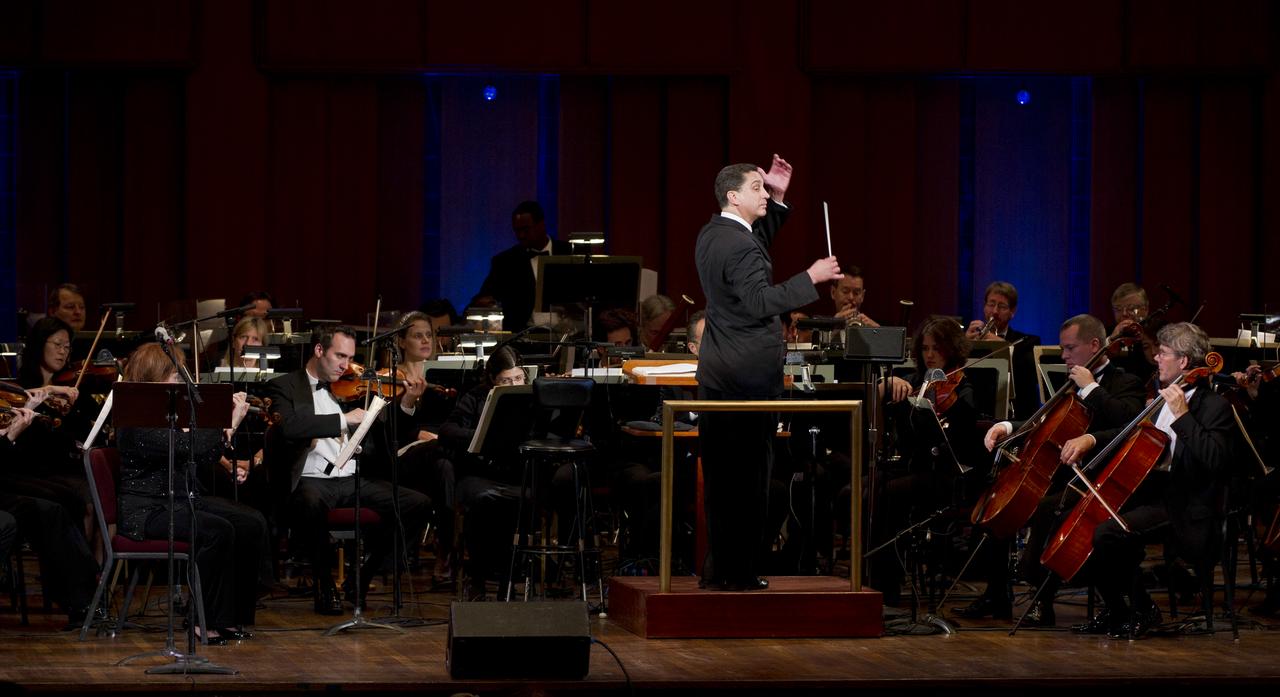
Emil de Cou conducts the Space Philharmonic during a program entitled Human Spaceflight: The Kennedy Legacy, Wednesday, May 25, 2011, in the concert hall at the John F. Kennedy Center for the Performing Arts in Washington. The event marked the 50th Anniversary of President John F. Kennedy's Special Message to the Congress on Urgent National Needs in which he stated "landing a man on the moon and returning him safely to earth". Photo Credit: (NASA/Paul E. Alers)
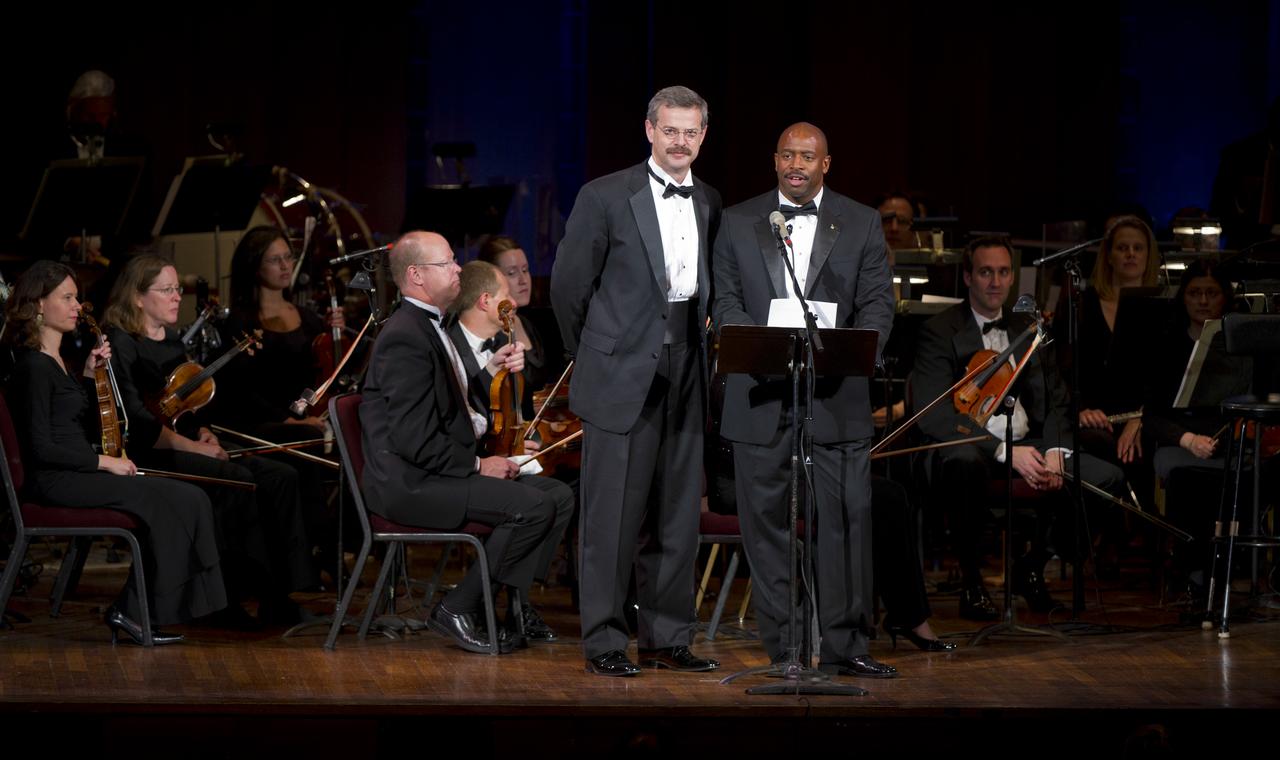
Astronauts Scott Altman, left, and Leland Melvin speak of their fallen comrades during a program commemorating Human Spaceflight and the Kennedy Legacy, Wednesday, May 25, 2011, in the concert hall at the John F. Kennedy Center for the Performing Arts in Washington. The event marked the 50th Anniversary of President John F. Kennedy's Special Message to the Congress on Urgent National Needs in which he stated "landing a man on the moon and returning him safely to earth". Photo Credit: (NASA/Paul E. Alers)
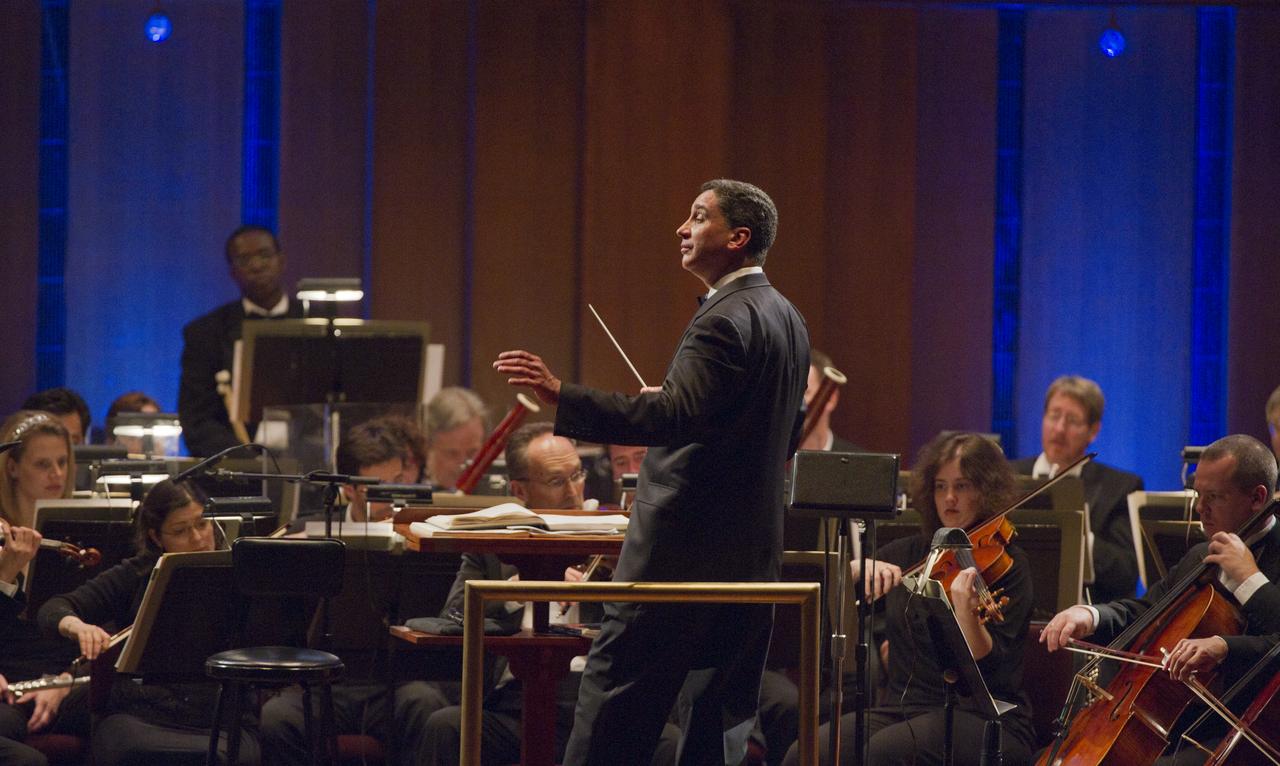
Emil de Cou conducts the Space Philharmonic during a program entitled Human Spaceflight: The Kennedy Legacy, Wednesday, May 25, 2011, in the concert hall at the John F. Kennedy Center for the Performing Arts in Washington. The event marked the 50th Anniversary of President John F. Kennedy's Special Message to the Congress on Urgent National Needs in which he stated "landing a man on the moon and returning him safely to earth". Photo Credit: (NASA/Paul E. Alers)
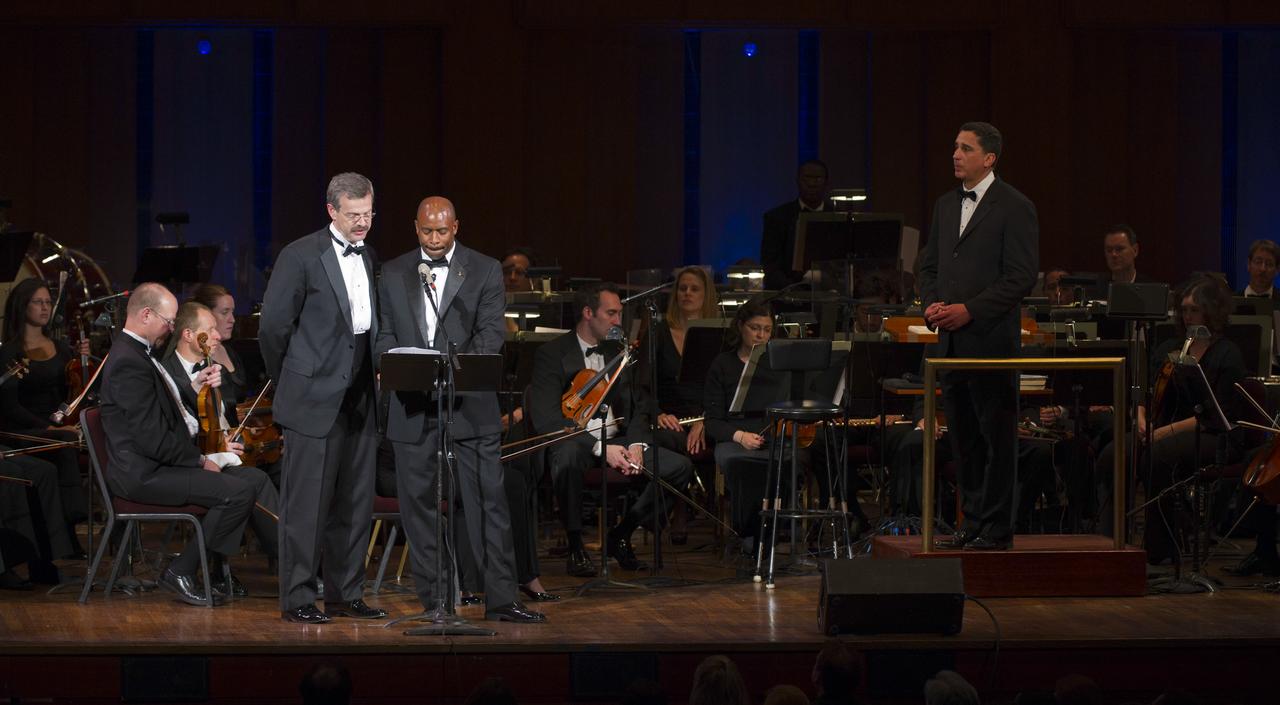
Astronauts Scott Altman, left, and Leland Melvin speak of their fallen comrades as Emil de Cou, right, looks on during a program commemorating Human Spaceflight and the Kennedy Legacy, Wednesday, May 25, 2011, in the concert hall at the John F. Kennedy Center for the Performing Arts in Washington. The event marked the 50th Anniversary of President John F. Kennedy's Special Message to the Congress on Urgent National Needs in which he stated "landing a man on the moon and returning him safely to earth". Photo Credit: (NASA/Paul E. Alers)

Musician Herbie Hancock delivers remarks as members of the Space Philharmonic look on during a program commemorating Human Spaceflight and the Kennedy Legacy, Wednesday, May 25, 2011, in the concert hall at the John F. Kennedy Center for the Performing Arts in Washington. The event marked the 50th Anniversary of President John F. Kennedy's Special Message to the Congress on Urgent National Needs in which he stated "landing a man on the moon and returning him safely to earth". Photo Credit: (NASA/Paul E. Alers)
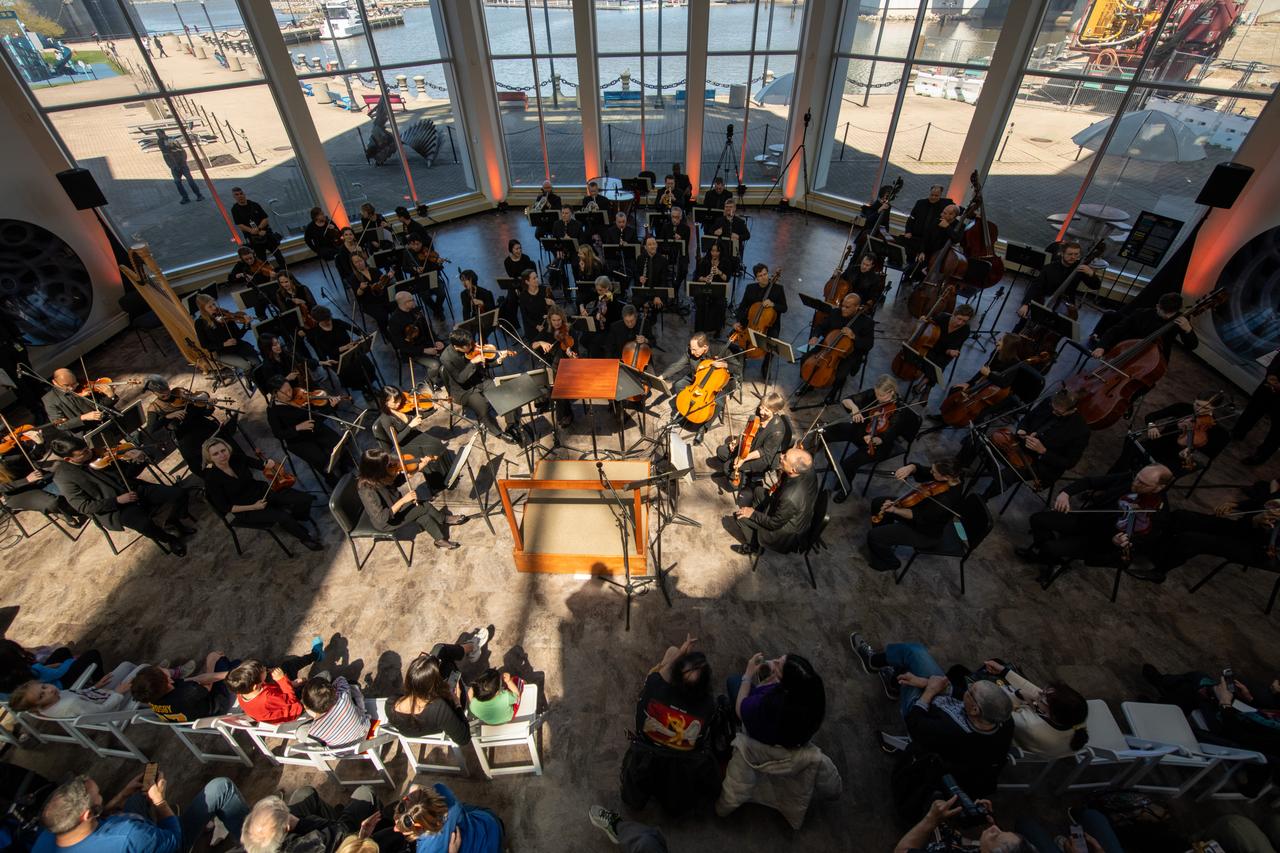
The Cleveland Orchestra performed an “Out of this World” concert program of galactic proportions featuring music by Mozart, Vivaldi, Debussy, Jessie Montgomery, and the first movement from Beethoven’s Symphony No. 5 on April 7, 2024. NASA Glenn Research Center and the Great Lakes Science Center hosted a three-day celestial celebration in downtown Cleveland, OH. This free, outdoor, family-friendly science and arts festival will feature free concerts, performances, speakers, and hands-on science activities with community partners.

Actress June Lockhart delivers remarks during a program entitled Human Spaceflight: The Kennedy Legacy, Wednesday, May 25, 2011, in the concert hall at the John F. Kennedy Center for the Performing Arts in Washington. The event marked the 50th Anniversary of President John F. Kennedy's Special Message to the Congress on Urgent National Needs in which he stated "landing a man on the moon and returning him safely to earth". Photo Credit: (NASA/Paul E. Alers)
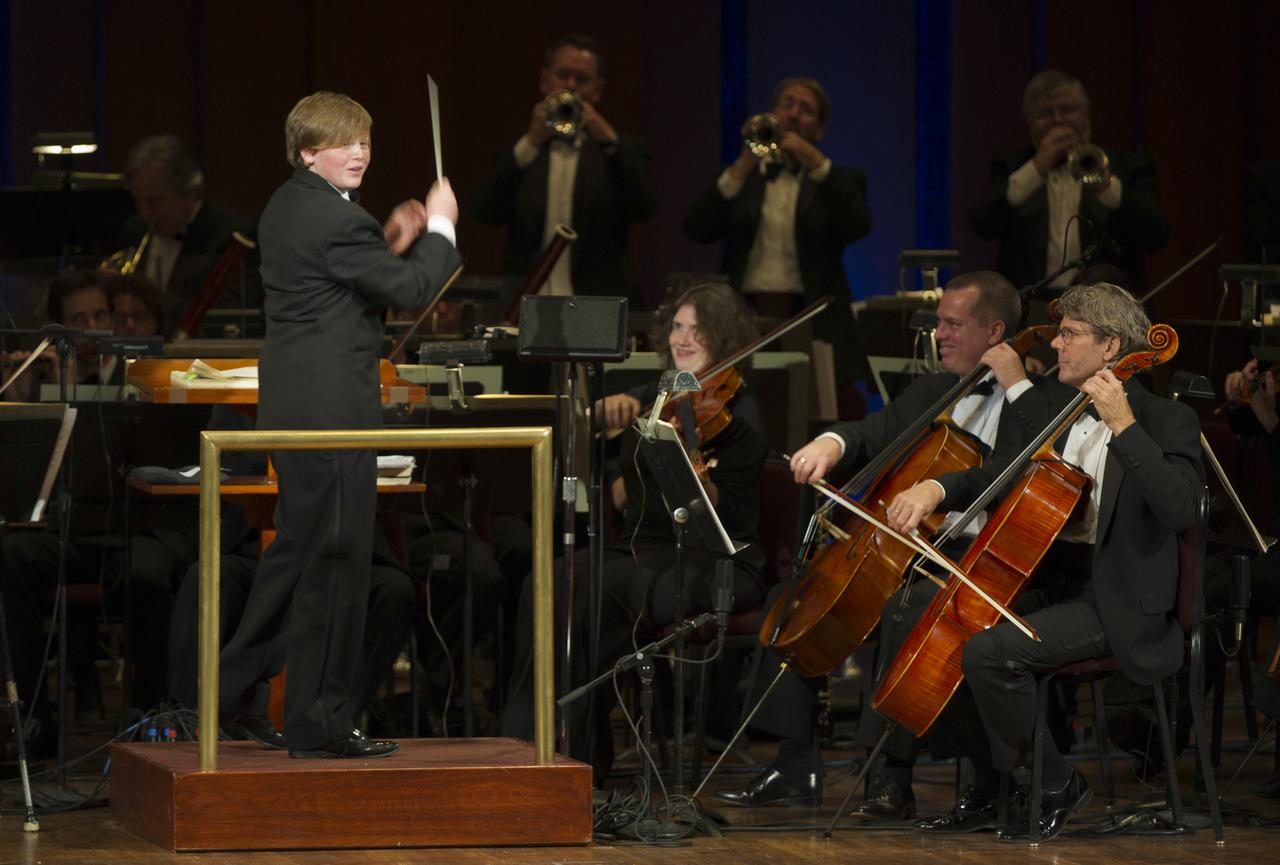
Ted Kennedy III guest conducts the Space Philharmonic during a program commemorating Human Spaceflight and the Kennedy Legacy, Wednesday, May 25, 2011, in the concert hall at the John F. Kennedy Center for the Performing Arts in Washington. The event marked the 50th Anniversary of President John F. Kennedy's Special Message to the Congress on Urgent National Needs in which he stated "landing a man on the moon and returning him safely to earth". Photo Credit: (NASA/Paul E. Alers)
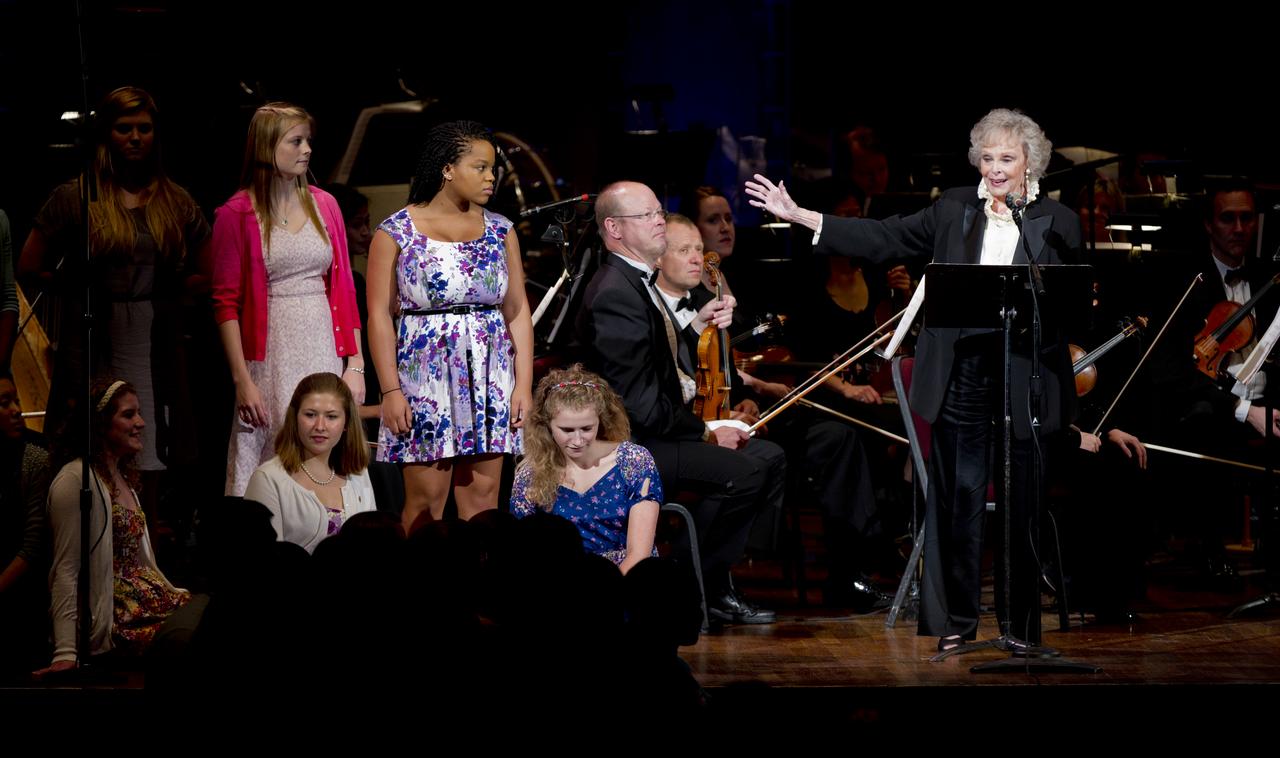
Actress June Lockhart speaks at a program entitled Human Spaceflight: The Kennedy Legacy, Wednesday, May 25, 2011, in the concert hall at the John F. Kennedy Center for the Performing Arts in Washington. The event marked the 50th Anniversary of President John F. Kennedy's Special Message to the Congress on Urgent National Needs in which he stated "landing a man on the moon and returning him safely to earth". Photo Credit: (NASA/Paul E. Alers)

Members of the 2007 class of Partners in Leadership toured NASA Stennis Space Center in Hancock County, Miss., on Jan. 11. They visited the center's B Test Stand, part of the center's rocket engine test complex. The Partners in Leadership training program is designed to teach Pearl River County leaders about their county's government, economic development, health and human services, history and arts, environment and education during a 10-month period. The program, sponsored by the Partners for Pearl River County, helps fulfill the mission of the economic and community development agency.