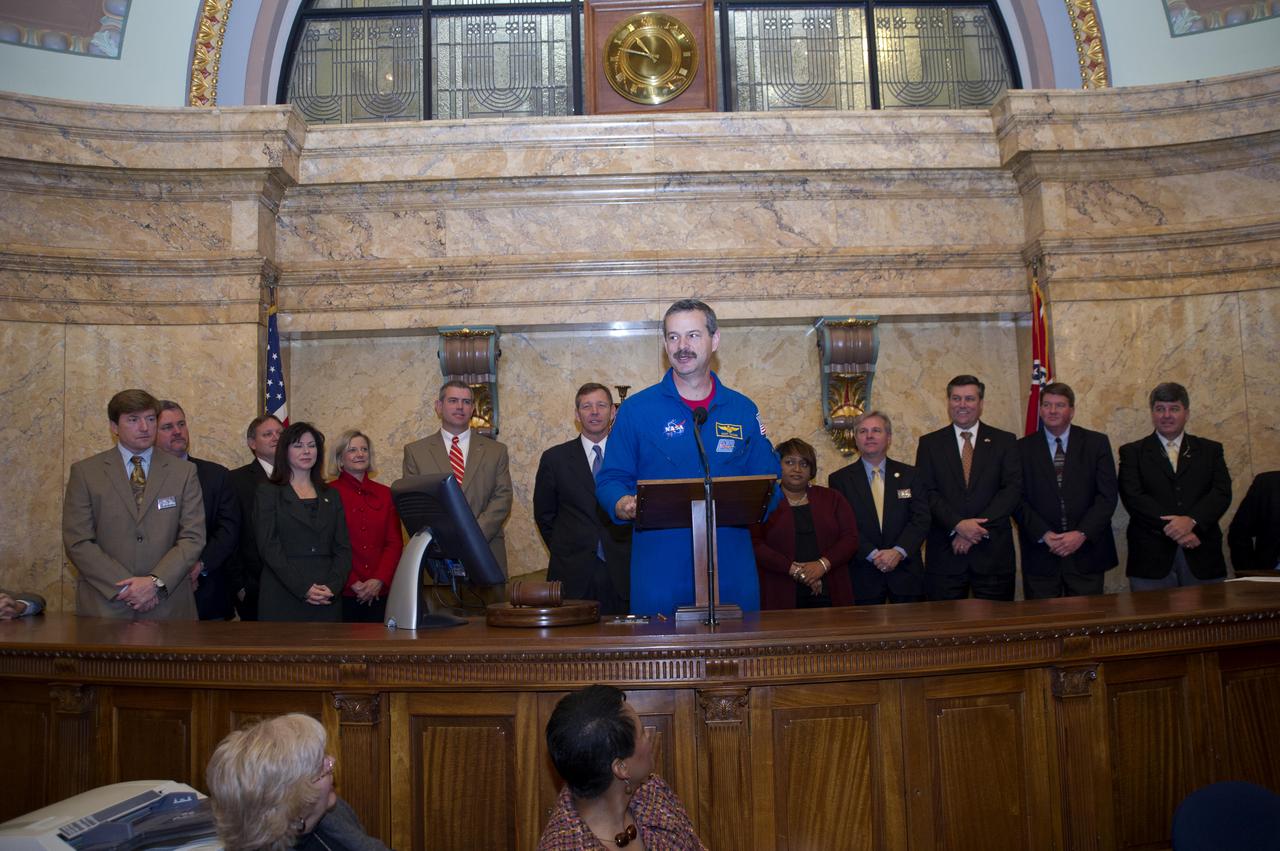
Former astronaut Scott Altman addresses legislators in the Mississippi House of Representatives during NASA Day at the Capitol activities in Jackson on Jan. 12, 2012. During his remarks, Altman was flanked by members of the Mississippi Gulf Coast delegation, as well as Stennis Director Patrick Scheuermann (third from right).
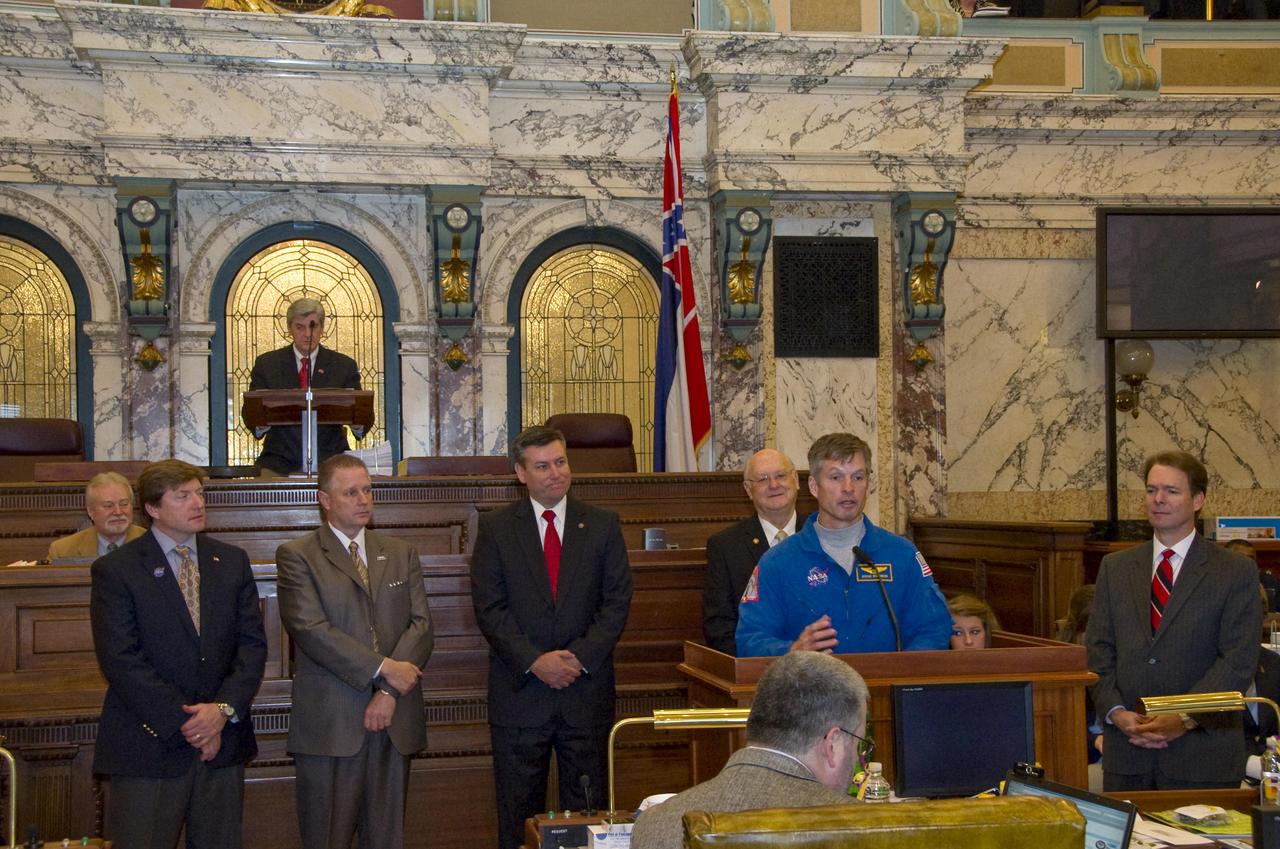
Astronaut Steven Swanson (front) speaks to members of the Mississippi Senate in chambers, with Lt. Gov. Phil Bryant presiding (rear), during NASA Day at the Capitol in Jackson on Feb. 10. Swanson was joined at the podium by Sen. David Baria, D-Bay St. Louis (l to r), NASA Shared Services Center Executive Director Rick Arbuthnot, Stennis Director Patrick Scheuermann, Sen. Ezell Lee, D-Picayune, and Sen. Billy Hewes, R-Gulfport. Baria, Lee and Hewes all are members of the Mississippi Senate Gulf Coast delegation.
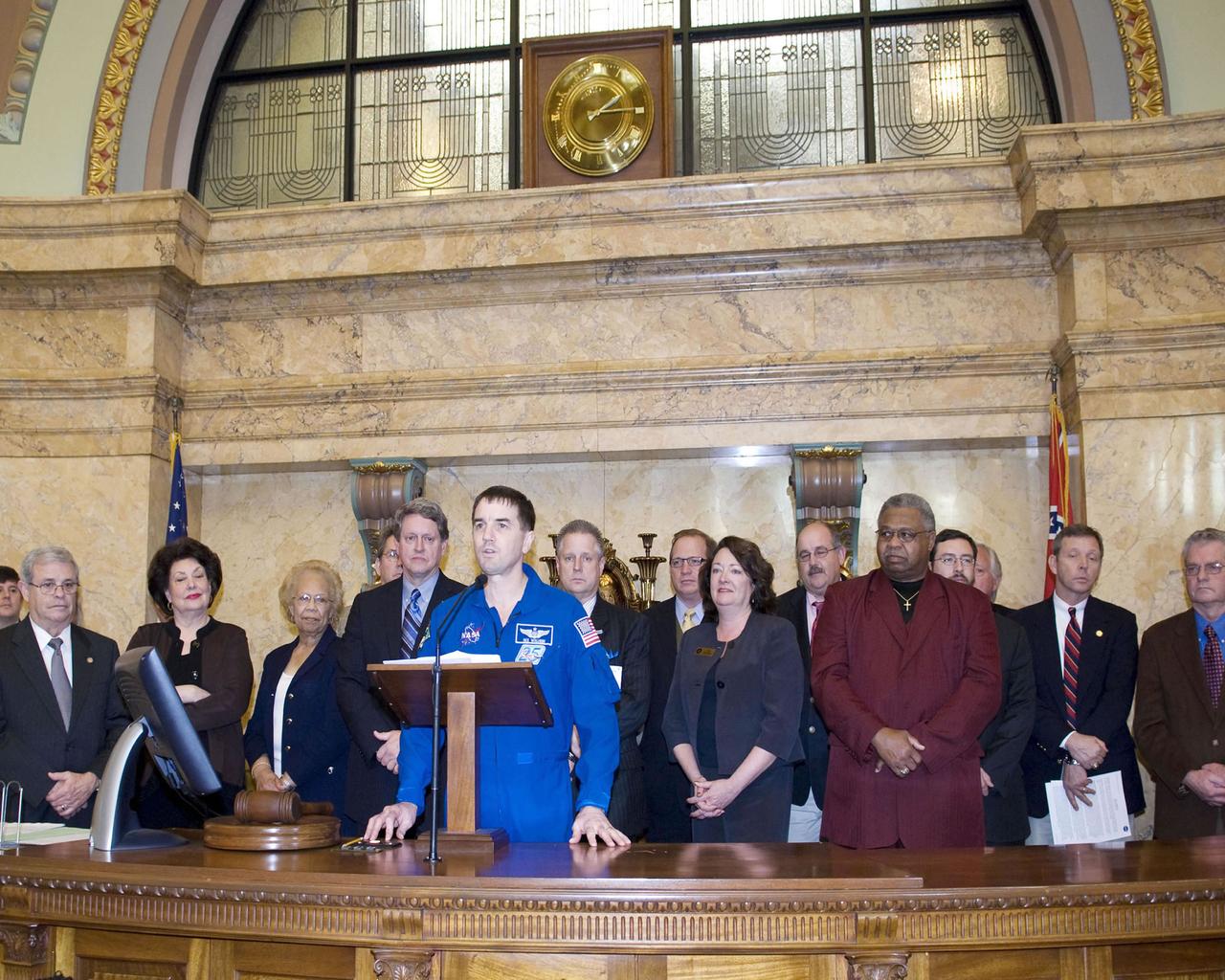
Astronaut Rex Walheim (center) speaks to members of the Mississippi House of Representatives in chambers during NASA Day at the Capitol in Jackson on Feb. 19. Walheim was joined at the podium by members of the Mississippi House of Representatives Gulf Coast delegation, as well as Stennis Space Center Director Gene Goldman (astronaut's immediate right) and NASA's Shared Services Center Director Rick Arbuthnot and Partners for Stennis Executive Director Tish Williams (astronaut's immediate left).
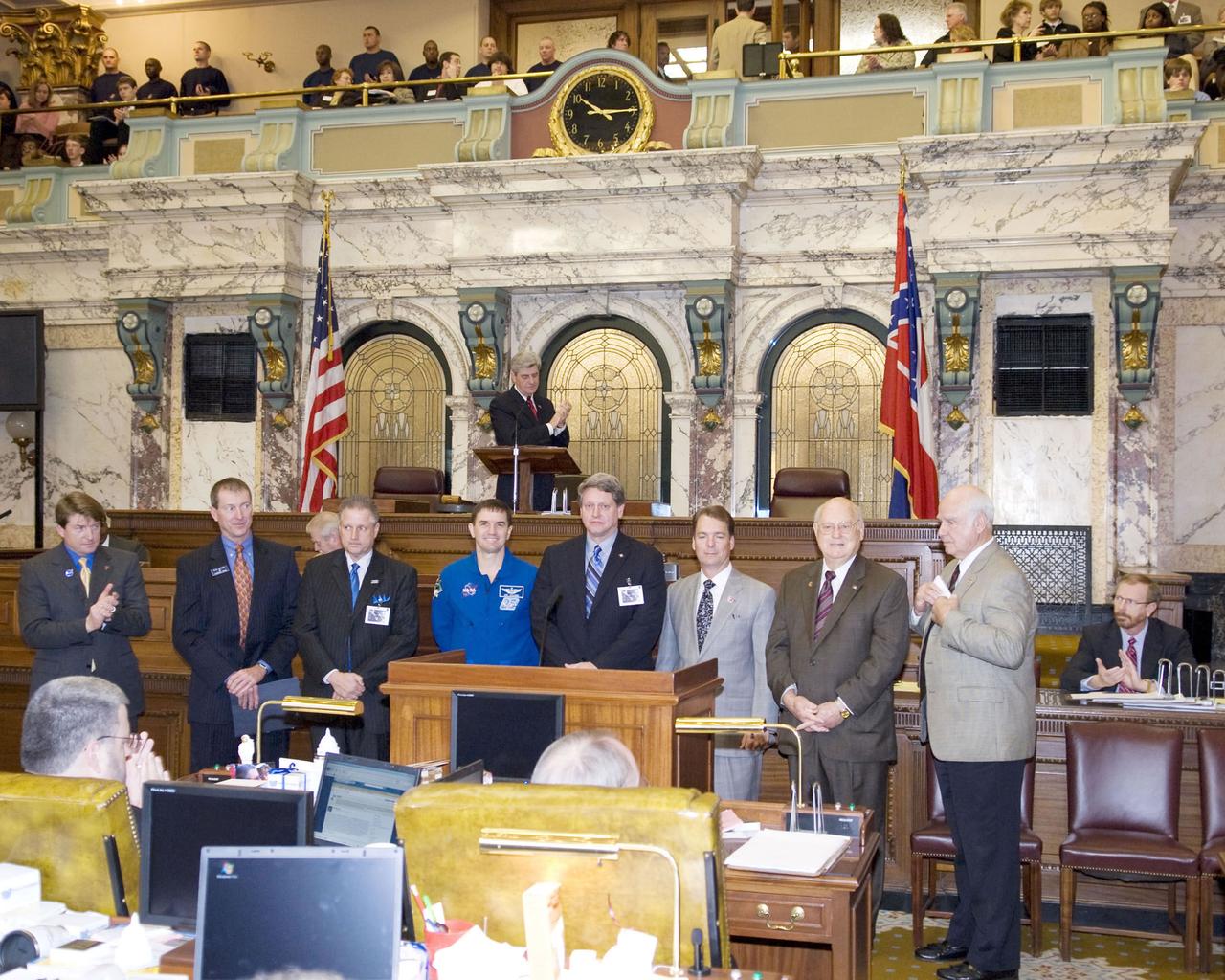
Stennis Space Center leaders and guests visit with Mississippi Senate members in chambers during NASA Day at the Capitol events in Jackson on Feb. 19. Standing at the Senate podium (rear) is Mississippi Lt. Gov. Phil Bryant. Standing at the lectern below are (l to r): Sen. David Baria, D-Bay St. Louis; Partners for Stennis Chair Clay Wagner; NASA Shared Services Center Director Rick Arbuthnot; astronaut Rex Walheim; Stennis Space Center Director Gene Goldman; President Pro Tempore Billy Hewes, R-Gulfport; Sen. Ezell Lee, D-Picayune; and Sen. Tommy Gollott, R-Biloxi.
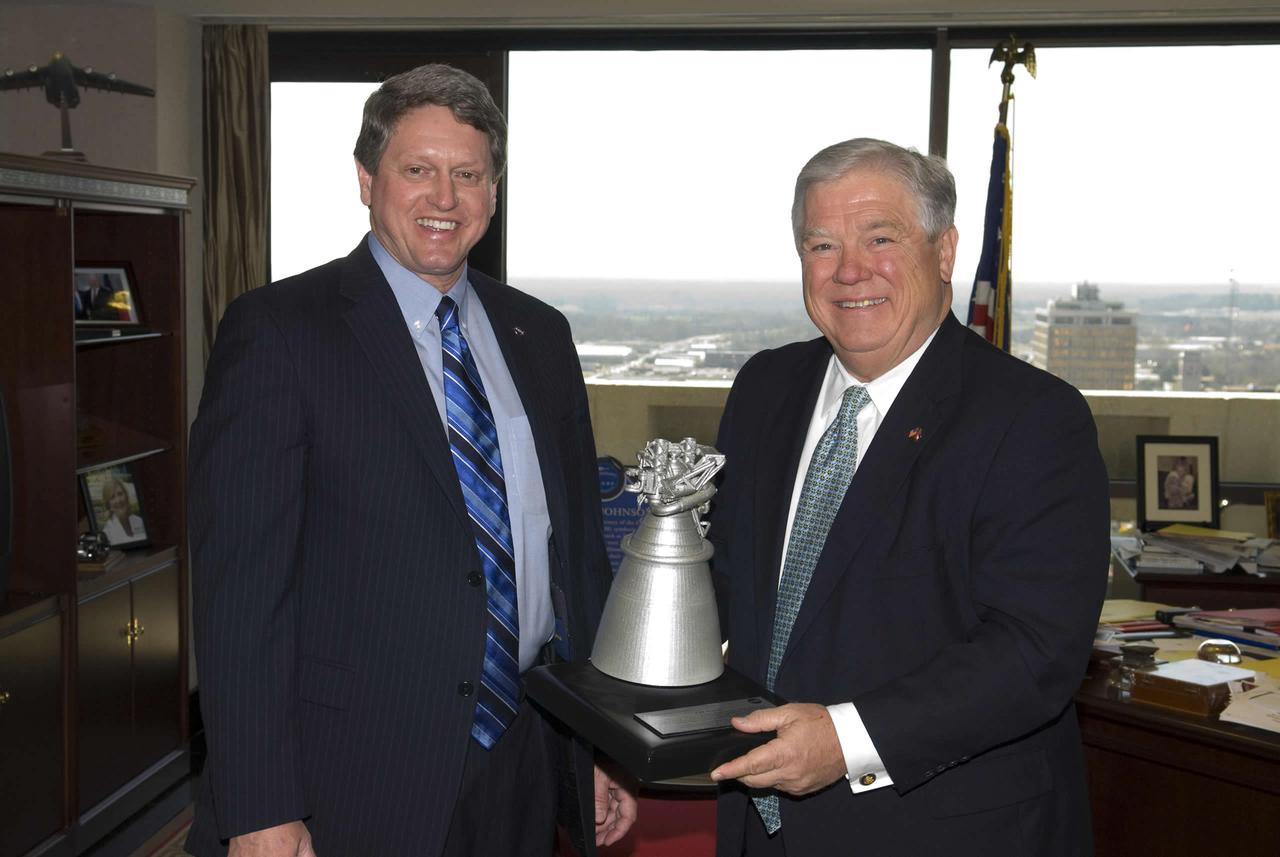
Stennis Space Center Director Gene Goldman visits with Mississippi Gov. Haley Barbour during NASA Day at the Capitol activities on Feb. 19. During the visit, Goldman presented the governor with a model of the J-2X rocket engine currently in development. Stennis engineers did early component testing for the new engine.
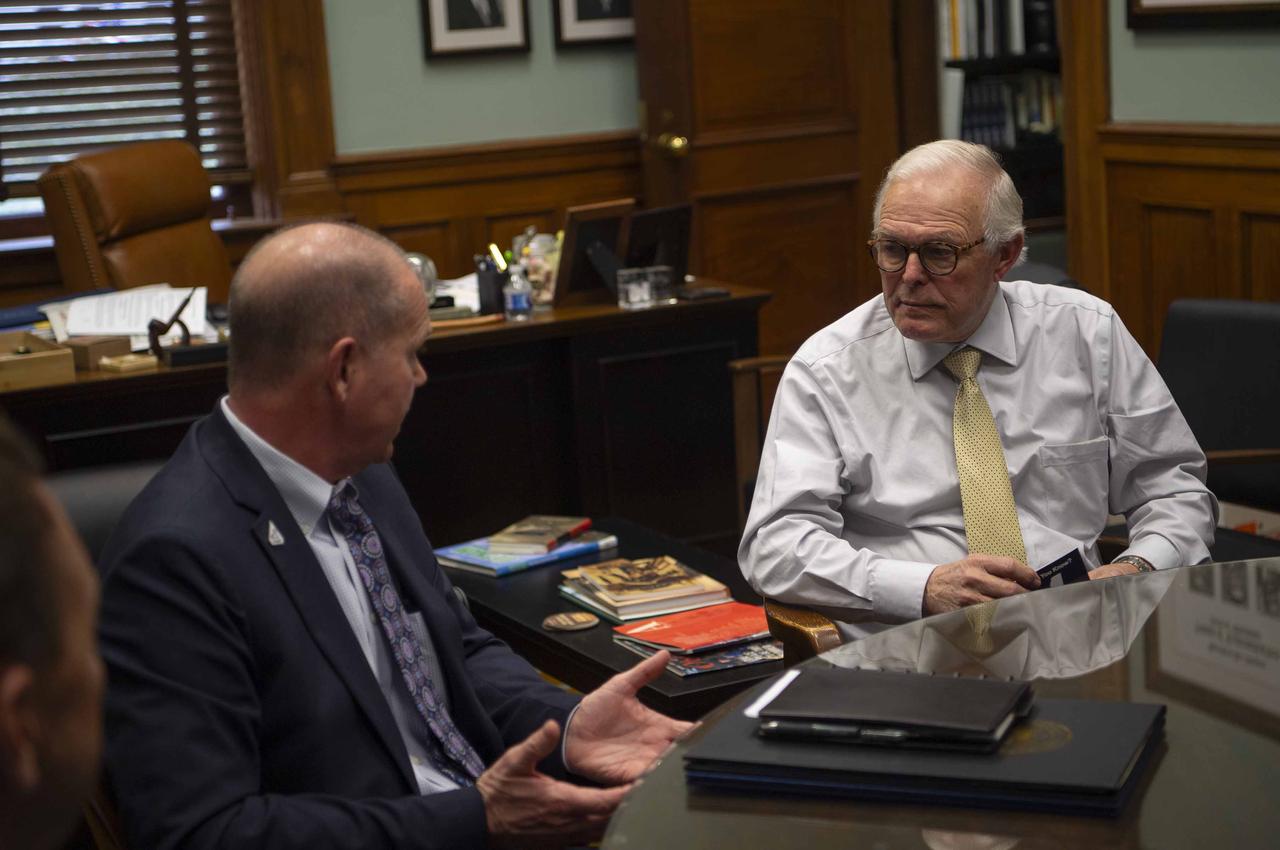
Leaders from NASA’s Stennis Space Center and NASA Shared Services Center visit Jackson, Mississippi, on Feb. 28-29 to share site updates with state leaders during the annual Stennis Day at the Capitol. NASA Stennis is on the front line of the next great era of human space exploration as NASA explores the secrets of the universe for the benefit of all. The south Mississippi center tests propulsion systems and engines helping power Artemis missions on the SLS (Space Launch System) rocket to deep space. Through Artemis, NASA will establish the foundation for long-term scientific exploration at the Moon, land the first woman, first person of color, and first international partner astronaut on the lunar surface, and prepare for human expeditions to Mars. Moving forward, NASA Stennis is working to accelerate the exploration and commercialization of space, innovate to benefit NASA and industry, and leverage assets to stimulate the economy and enhance national security.
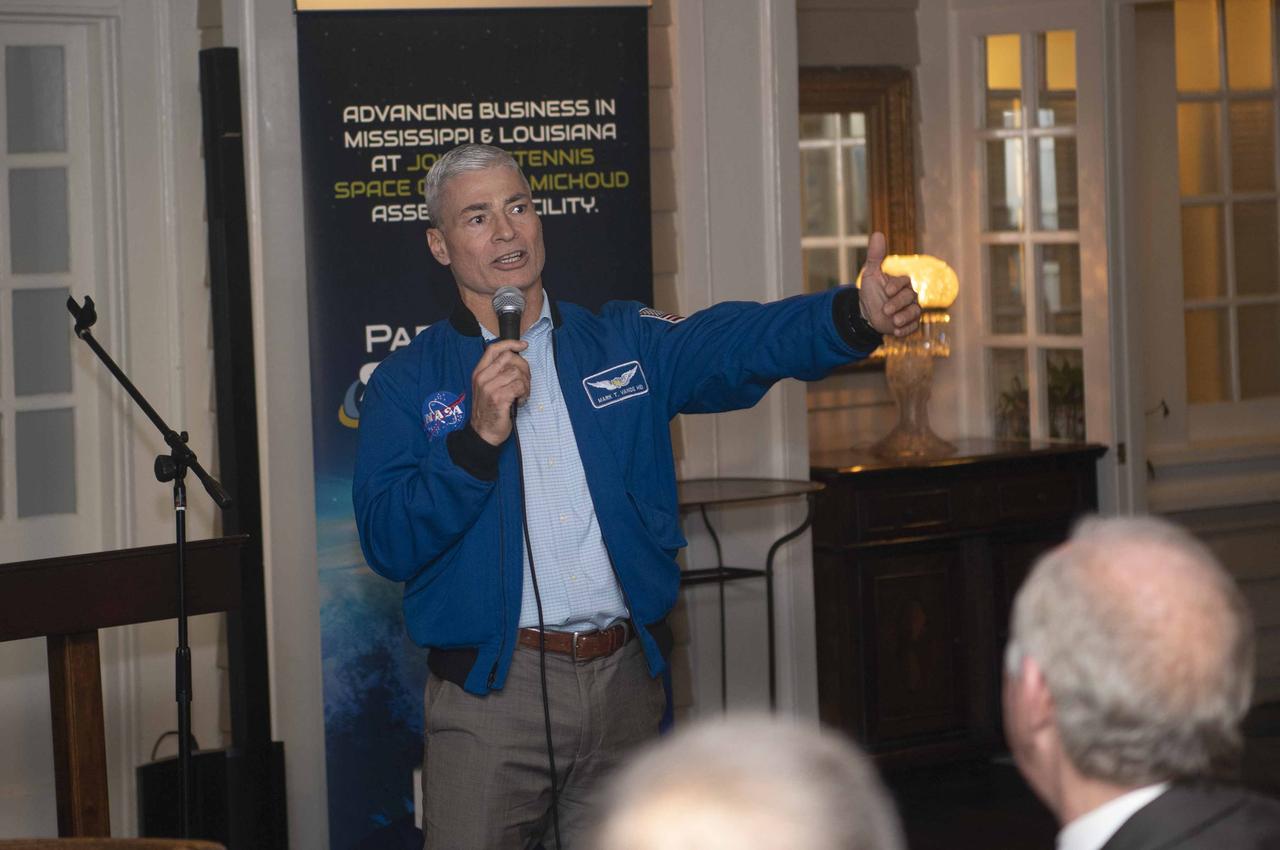
Leaders from NASA’s Stennis Space Center and NASA Shared Services Center visit Jackson, Mississippi, on Feb. 28-29 to share site updates with state leaders during the annual Stennis Day at the Capitol. NASA Stennis is on the front line of the next great era of human space exploration as NASA explores the secrets of the universe for the benefit of all. The south Mississippi center tests propulsion systems and engines helping power Artemis missions on the SLS (Space Launch System) rocket to deep space. Through Artemis, NASA will establish the foundation for long-term scientific exploration at the Moon, land the first woman, first person of color, and first international partner astronaut on the lunar surface, and prepare for human expeditions to Mars. Moving forward, NASA Stennis is working to accelerate the exploration and commercialization of space, innovate to benefit NASA and industry, and leverage assets to stimulate the economy and enhance national security.
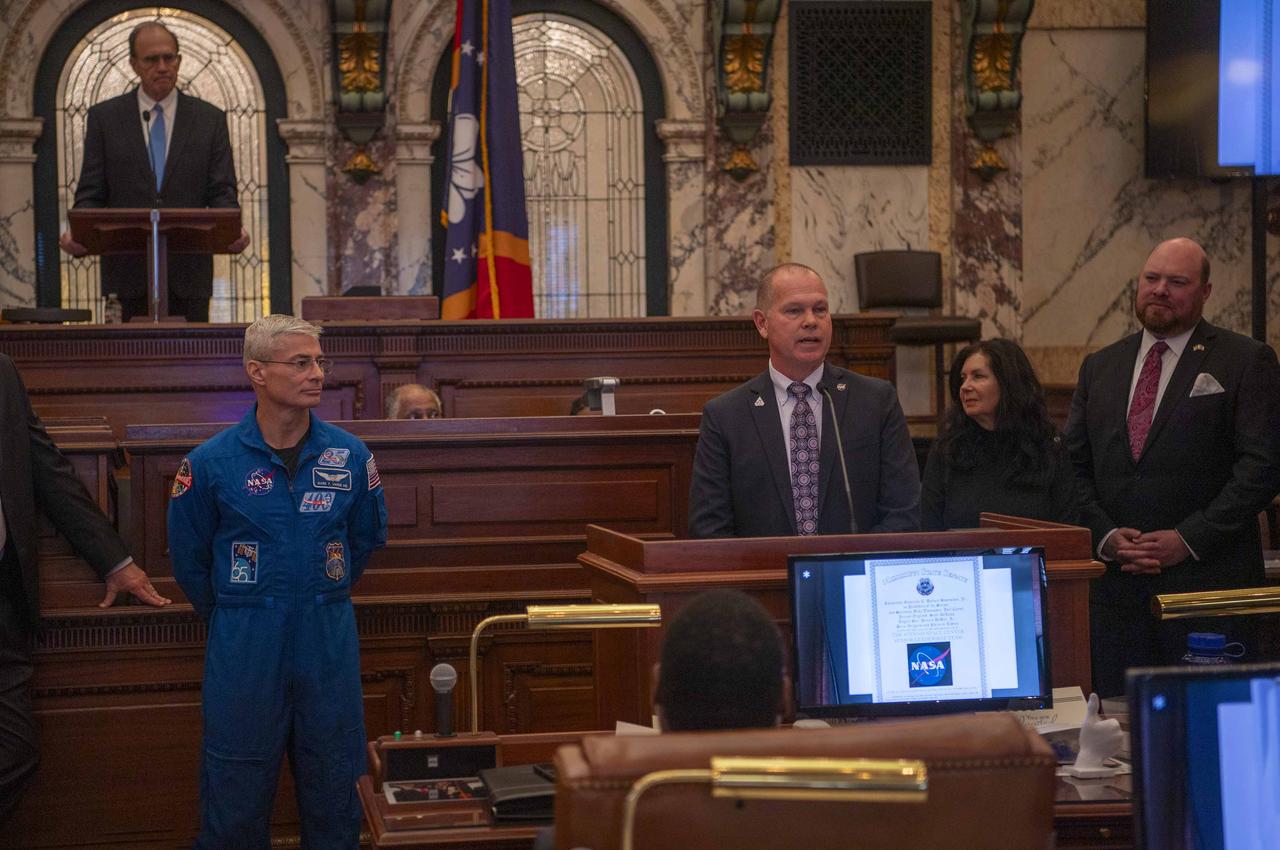
Leaders from NASA’s Stennis Space Center and NASA Shared Services Center visit Jackson, Mississippi, on Feb. 28-29 to share site updates with state leaders during the annual Stennis Day at the Capitol. NASA Stennis is on the front line of the next great era of human space exploration as NASA explores the secrets of the universe for the benefit of all. The south Mississippi center tests propulsion systems and engines helping power Artemis missions on the SLS (Space Launch System) rocket to deep space. Through Artemis, NASA will establish the foundation for long-term scientific exploration at the Moon, land the first woman, first person of color, and first international partner astronaut on the lunar surface, and prepare for human expeditions to Mars. Moving forward, NASA Stennis is working to accelerate the exploration and commercialization of space, innovate to benefit NASA and industry, and leverage assets to stimulate the economy and enhance national security.
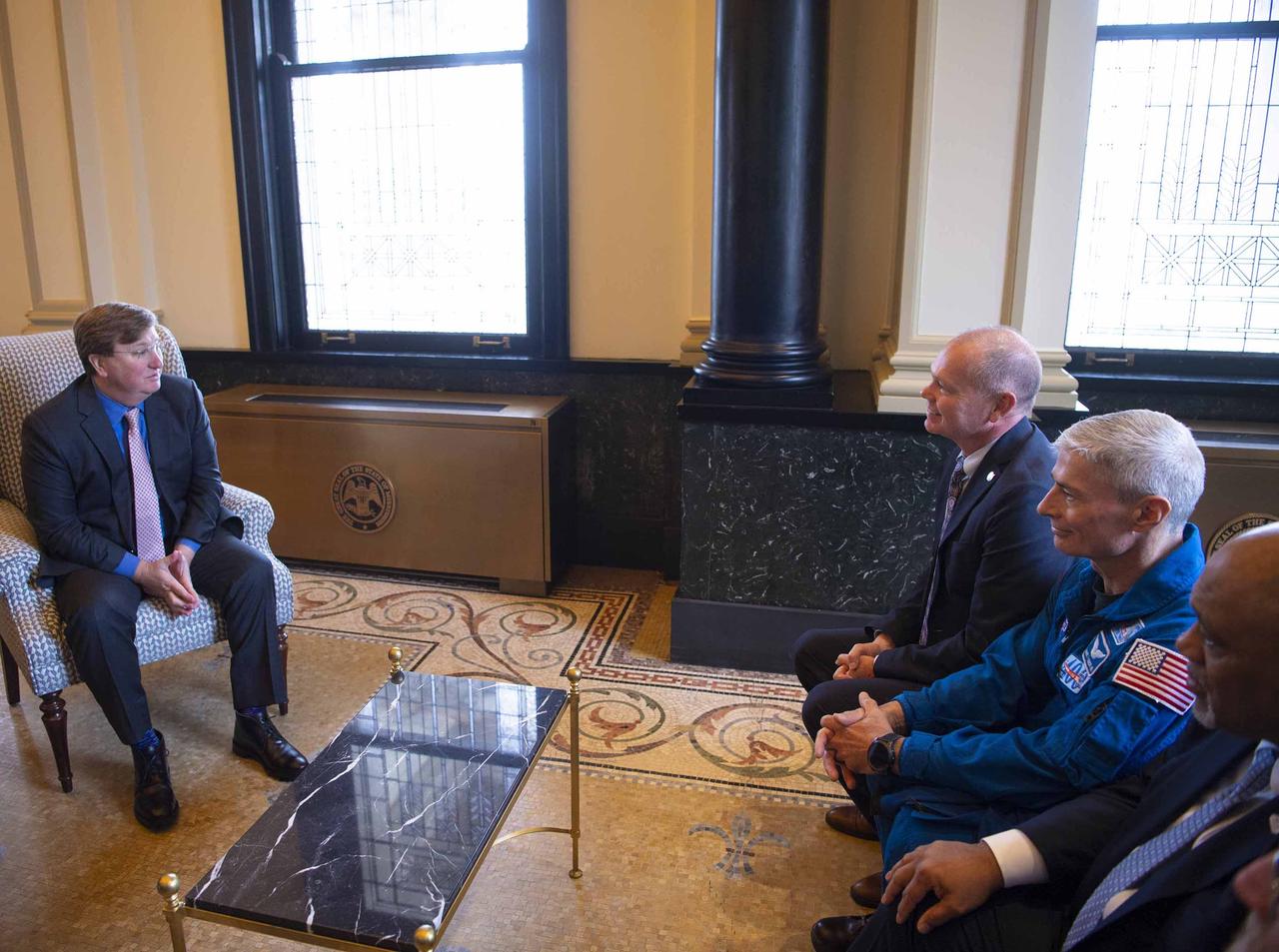
Leaders from NASA’s Stennis Space Center and NASA Shared Services Center visit Jackson, Mississippi, on Feb. 28-29 to share site updates with state leaders during the annual Stennis Day at the Capitol. NASA Stennis is on the front line of the next great era of human space exploration as NASA explores the secrets of the universe for the benefit of all. The south Mississippi center tests propulsion systems and engines helping power Artemis missions on the SLS (Space Launch System) rocket to deep space. Through Artemis, NASA will establish the foundation for long-term scientific exploration at the Moon, land the first woman, first person of color, and first international partner astronaut on the lunar surface, and prepare for human expeditions to Mars. Moving forward, NASA Stennis is working to accelerate the exploration and commercialization of space, innovate to benefit NASA and industry, and leverage assets to stimulate the economy and enhance national security.
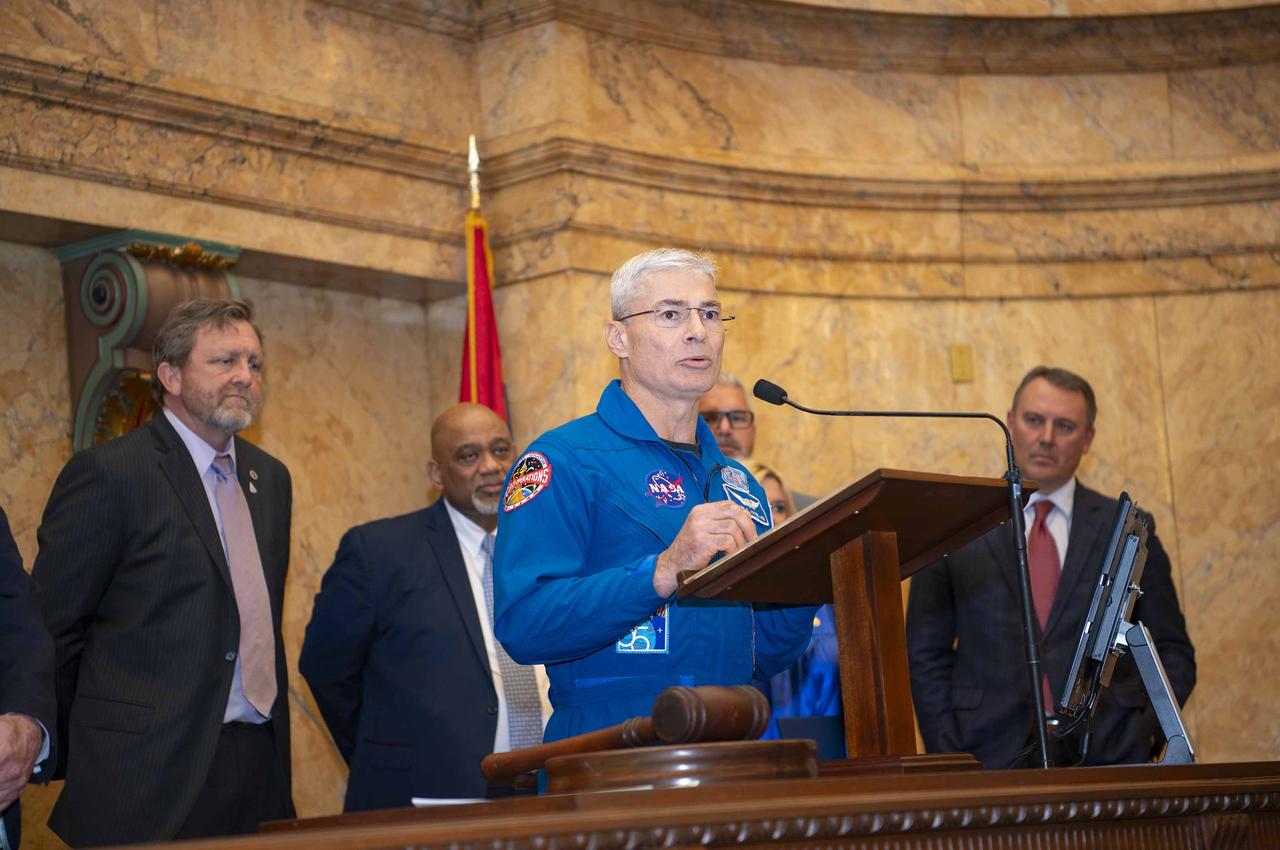
Leaders from NASA’s Stennis Space Center and NASA Shared Services Center visit Jackson, Mississippi, on Feb. 28-29 to share site updates with state leaders during the annual Stennis Day at the Capitol. NASA Stennis is on the front line of the next great era of human space exploration as NASA explores the secrets of the universe for the benefit of all. The south Mississippi center tests propulsion systems and engines helping power Artemis missions on the SLS (Space Launch System) rocket to deep space. Through Artemis, NASA will establish the foundation for long-term scientific exploration at the Moon, land the first woman, first person of color, and first international partner astronaut on the lunar surface, and prepare for human expeditions to Mars. Moving forward, NASA Stennis is working to accelerate the exploration and commercialization of space, innovate to benefit NASA and industry, and leverage assets to stimulate the economy and enhance national security.
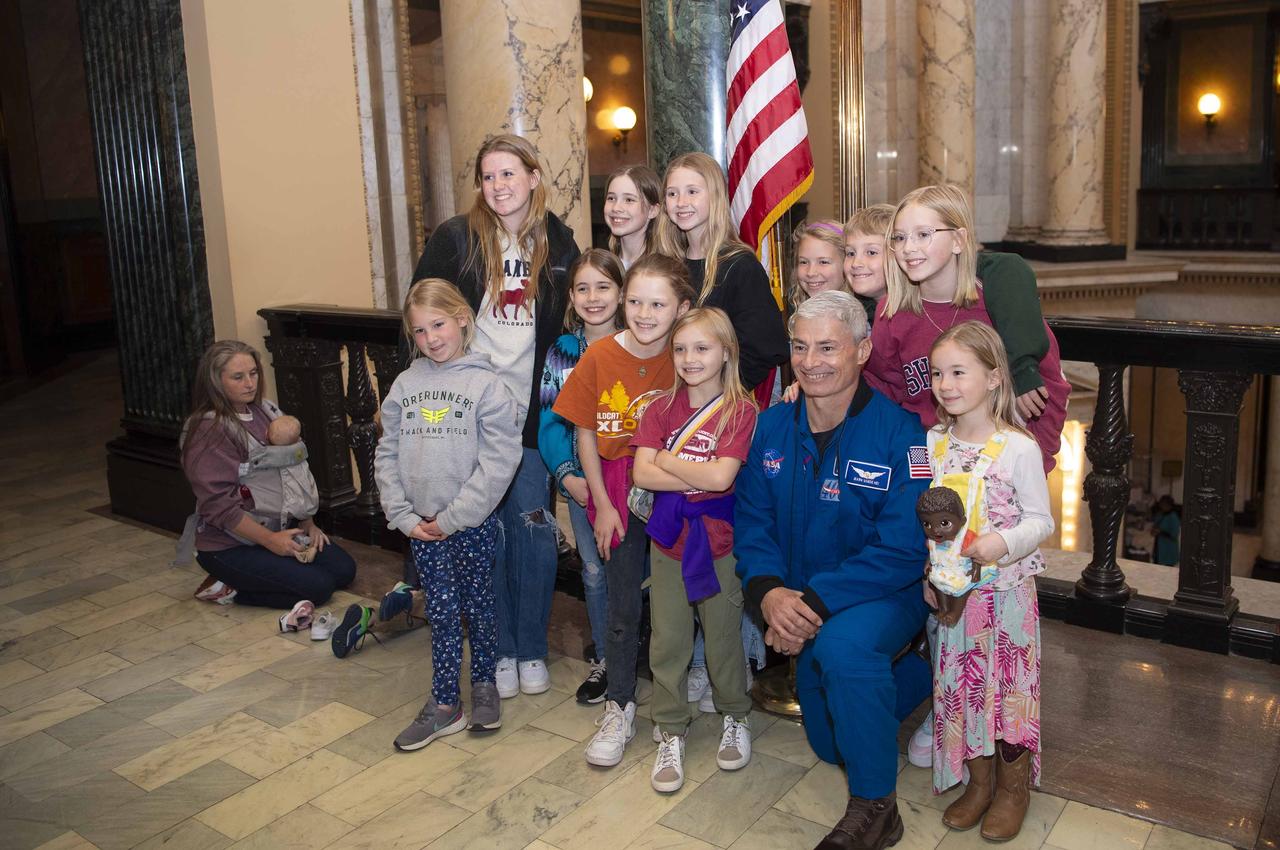
Leaders from NASA’s Stennis Space Center and NASA Shared Services Center visit Jackson, Mississippi, on Feb. 28-29 to share site updates with state leaders during the annual Stennis Day at the Capitol. NASA Stennis is on the front line of the next great era of human space exploration as NASA explores the secrets of the universe for the benefit of all. The south Mississippi center tests propulsion systems and engines helping power Artemis missions on the SLS (Space Launch System) rocket to deep space. Through Artemis, NASA will establish the foundation for long-term scientific exploration at the Moon, land the first woman, first person of color, and first international partner astronaut on the lunar surface, and prepare for human expeditions to Mars. Moving forward, NASA Stennis is working to accelerate the exploration and commercialization of space, innovate to benefit NASA and industry, and leverage assets to stimulate the economy and enhance national security.
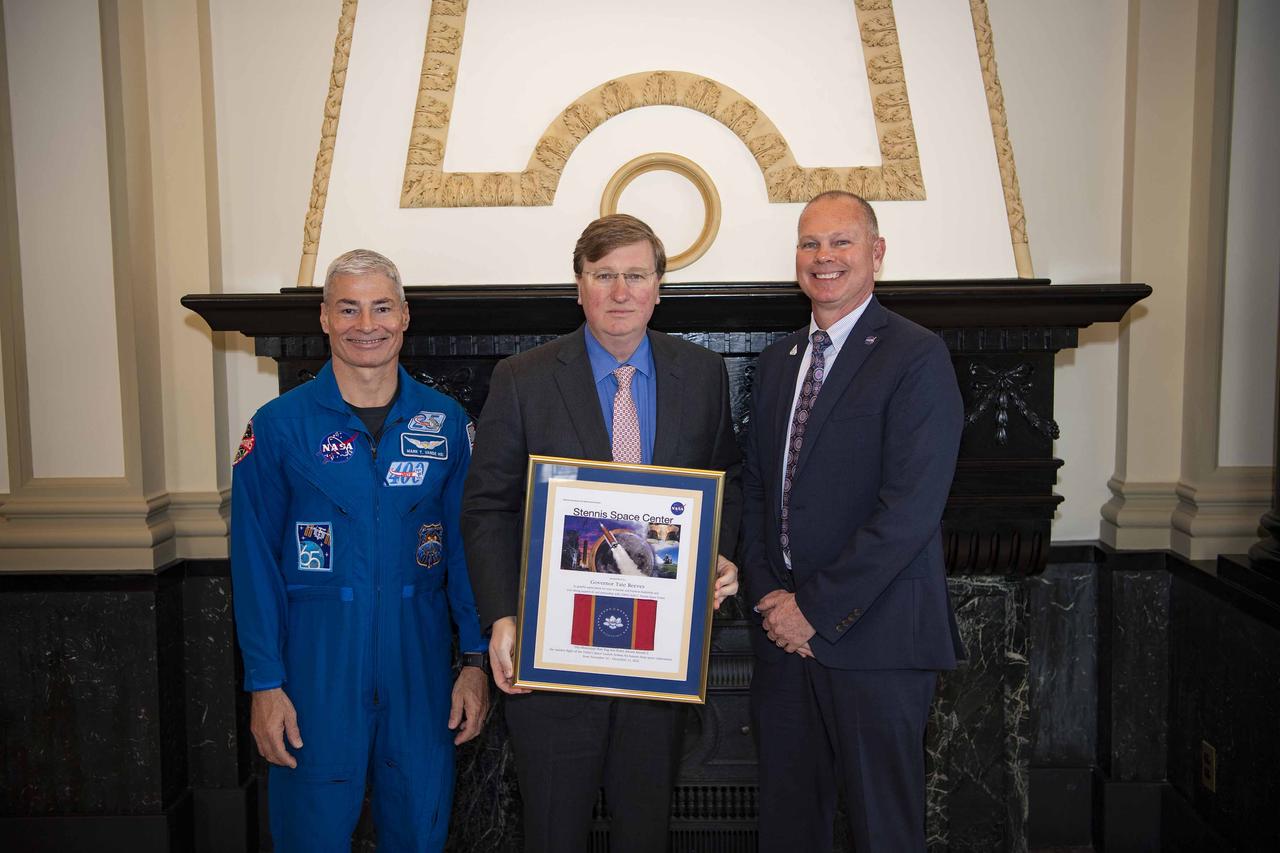
Leaders from NASA’s Stennis Space Center and NASA Shared Services Center visit Jackson, Mississippi, on Feb. 28-29 to share site updates with state leaders during the annual Stennis Day at the Capitol. NASA Stennis is on the front line of the next great era of human space exploration as NASA explores the secrets of the universe for the benefit of all. The south Mississippi center tests propulsion systems and engines helping power Artemis missions on the SLS (Space Launch System) rocket to deep space. Through Artemis, NASA will establish the foundation for long-term scientific exploration at the Moon, land the first woman, first person of color, and first international partner astronaut on the lunar surface, and prepare for human expeditions to Mars. Moving forward, NASA Stennis is working to accelerate the exploration and commercialization of space, innovate to benefit NASA and industry, and leverage assets to stimulate the economy and enhance national security.
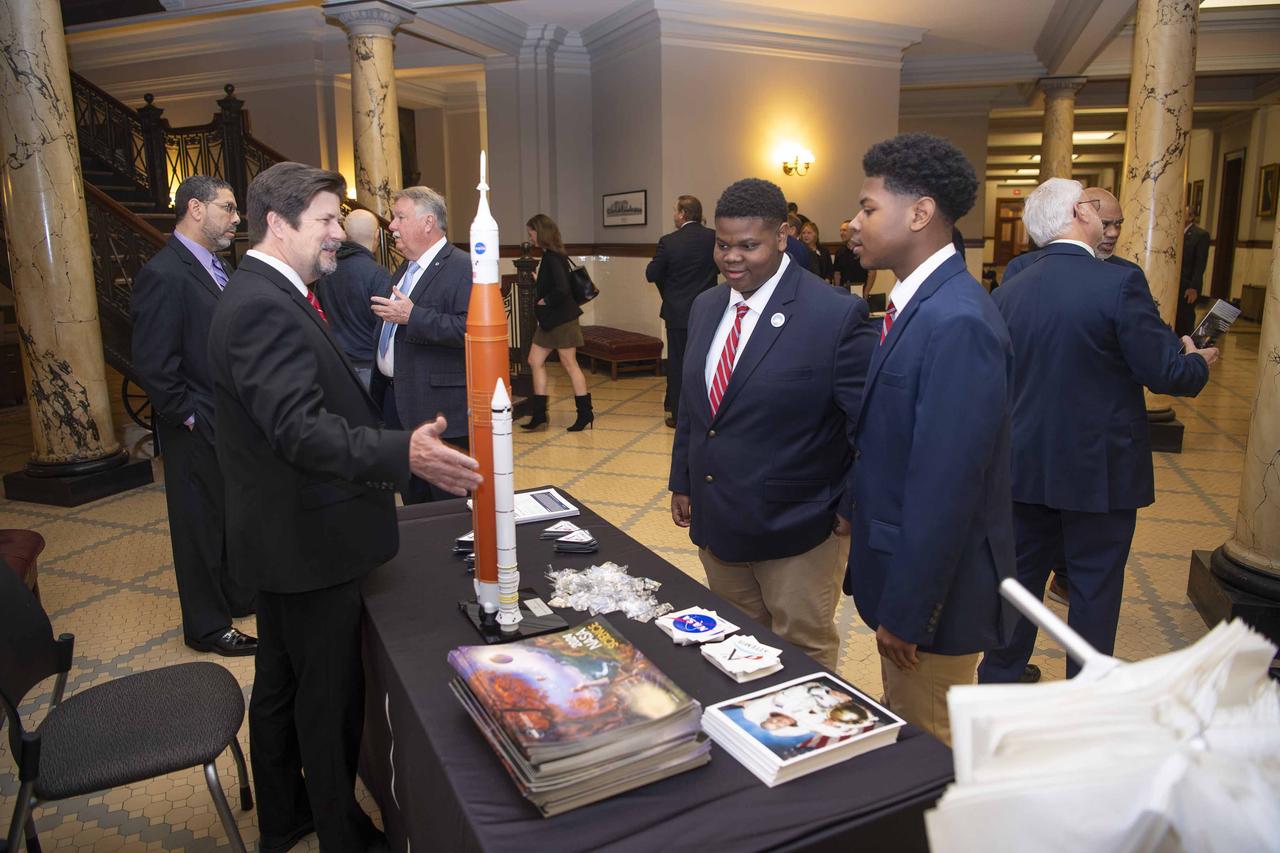
Leaders from NASA’s Stennis Space Center and NASA Shared Services Center visit Jackson, Mississippi, on Feb. 28-29 to share site updates with state leaders during the annual Stennis Day at the Capitol. NASA Stennis is on the front line of the next great era of human space exploration as NASA explores the secrets of the universe for the benefit of all. The south Mississippi center tests propulsion systems and engines helping power Artemis missions on the SLS (Space Launch System) rocket to deep space. Through Artemis, NASA will establish the foundation for long-term scientific exploration at the Moon, land the first woman, first person of color, and first international partner astronaut on the lunar surface, and prepare for human expeditions to Mars. Moving forward, NASA Stennis is working to accelerate the exploration and commercialization of space, innovate to benefit NASA and industry, and leverage assets to stimulate the economy and enhance national security.
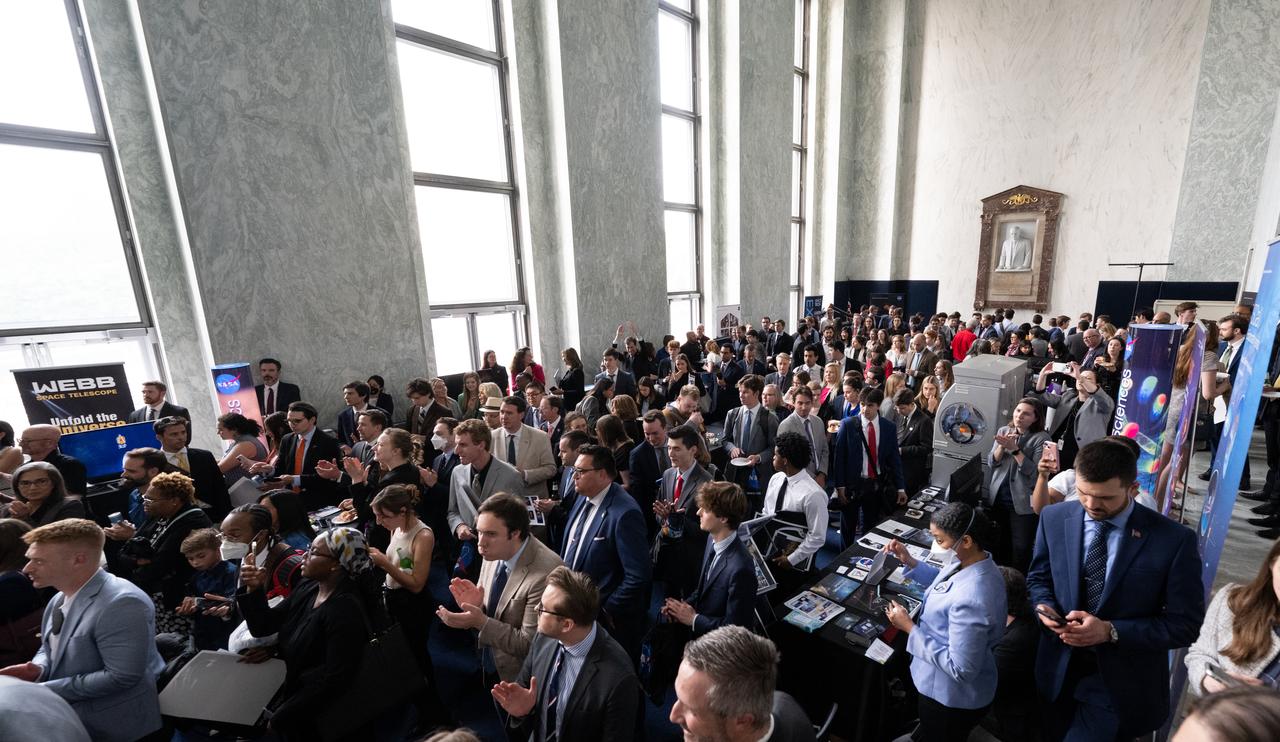
Attendees view exhibits and listen to speakers during NASA’s Science Day on the Hill event, Wednesday, June 7, 2023, at the Rayburn House Office Building in Washington. Photo Credit: (NASA/Joel Kowsky)
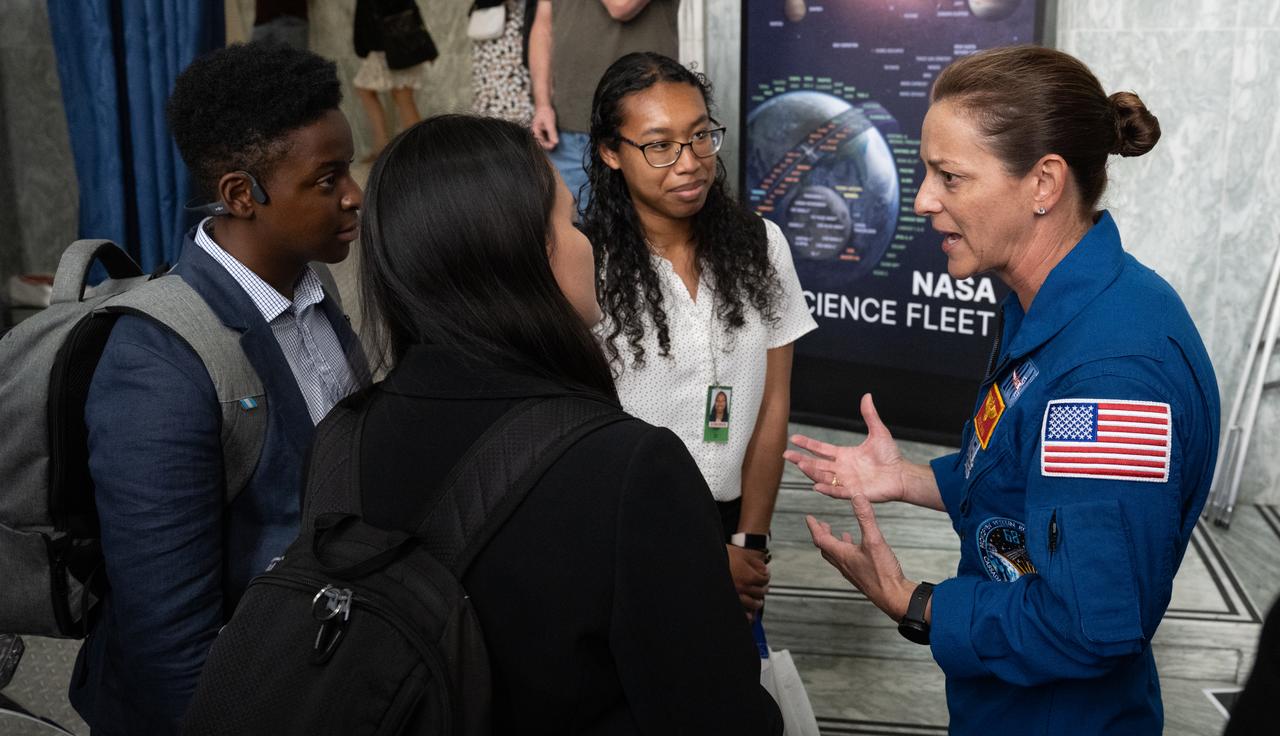
NASA’s SpaceX Crew-5 astronaut Nicole Mann of NASA speaks to attendees of NASA’s Science Day on the Hill event, Wednesday, June 7, 2023, at the Rayburn House Office Building in Washington. Mann and fellow crewmates Josh Cassada of NASA and Koichi Wakata of the Japan Aerospace Exploration Agency (JAXA) spent 157 days in space as part of Expedition 68 aboard the International Space Station. Photo Credit: (NASA/Joel Kowsky)
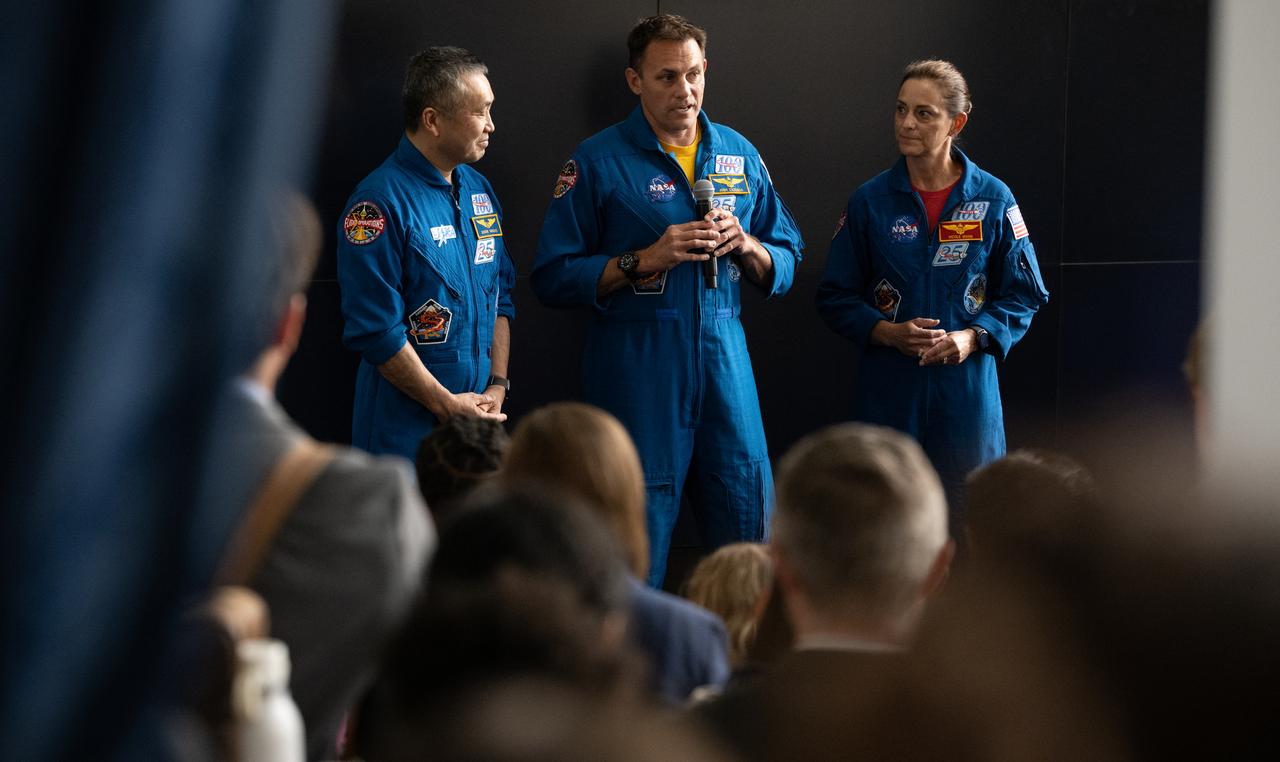
NASA’s SpaceX Crew-5 astronauts Koichi Wakata of the Japan Aerospace Exploration Agency (JAXA), left, and Josh Cassada and Nicole Mann of NASA, speak during NASA’s Science Day on the Hill event, Wednesday, June 7, 2023, at the Rayburn House Office Building in Washington. Mann, Cassada, and Wakata spent 157 days in space as part of Expedition 68 aboard the International Space Station. Photo Credit: (NASA/Joel Kowsky)
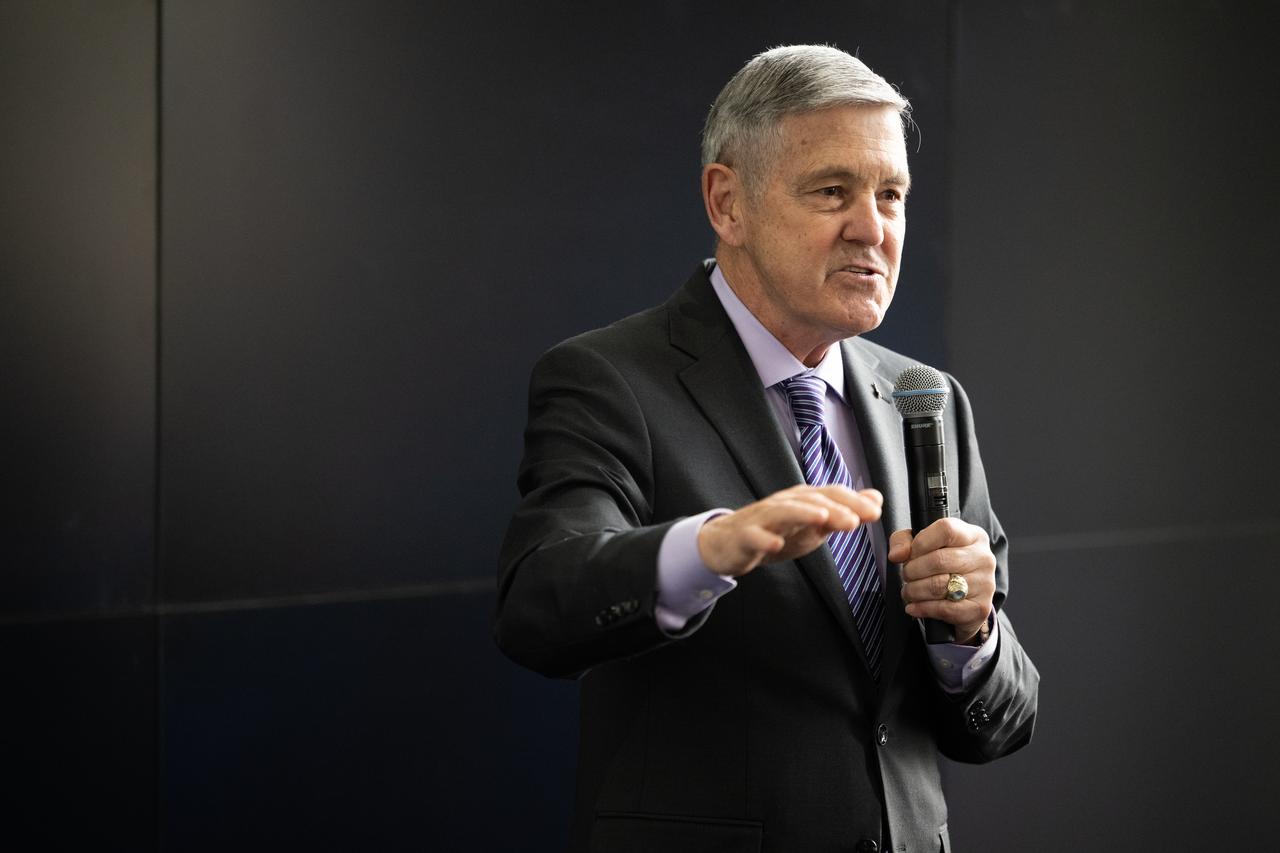
NASA Associate administrator Bob Cabana speaks during NASA’s Science Day on the Hill event, Wednesday, June 7, 2023, at the Rayburn House Office Building in Washington. Photo Credit: (NASA/Joel Kowsky)
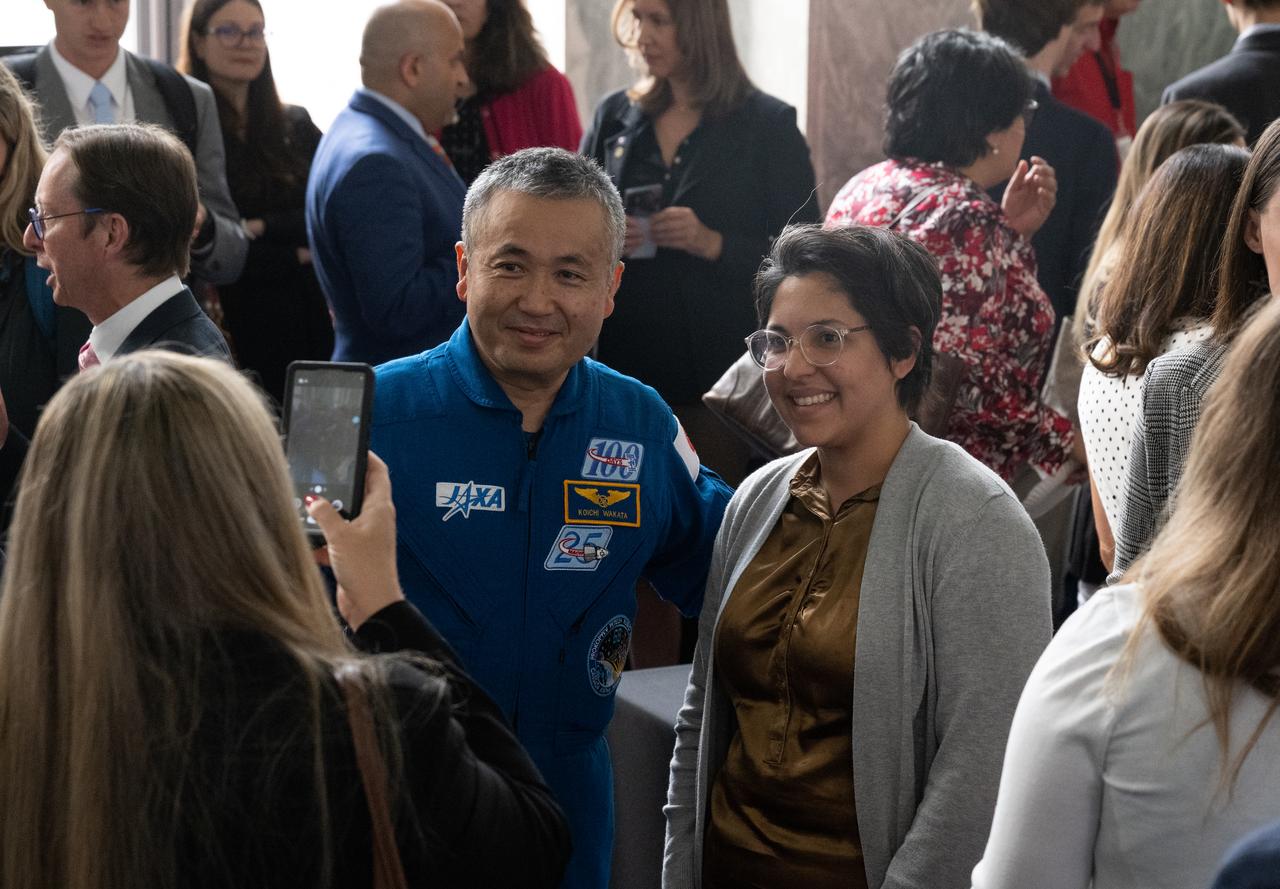
NASA’s SpaceX Crew-5 astronaut Koichi Wakata of the Japan Aerospace Exploration Agency (JAXA) takes a picture with an attendee during NASA’s Science Day on the Hill event, Wednesday, June 7, 2023, at the Rayburn House Office Building in Washington. Photo Credit: (NASA/Joel Kowsky)
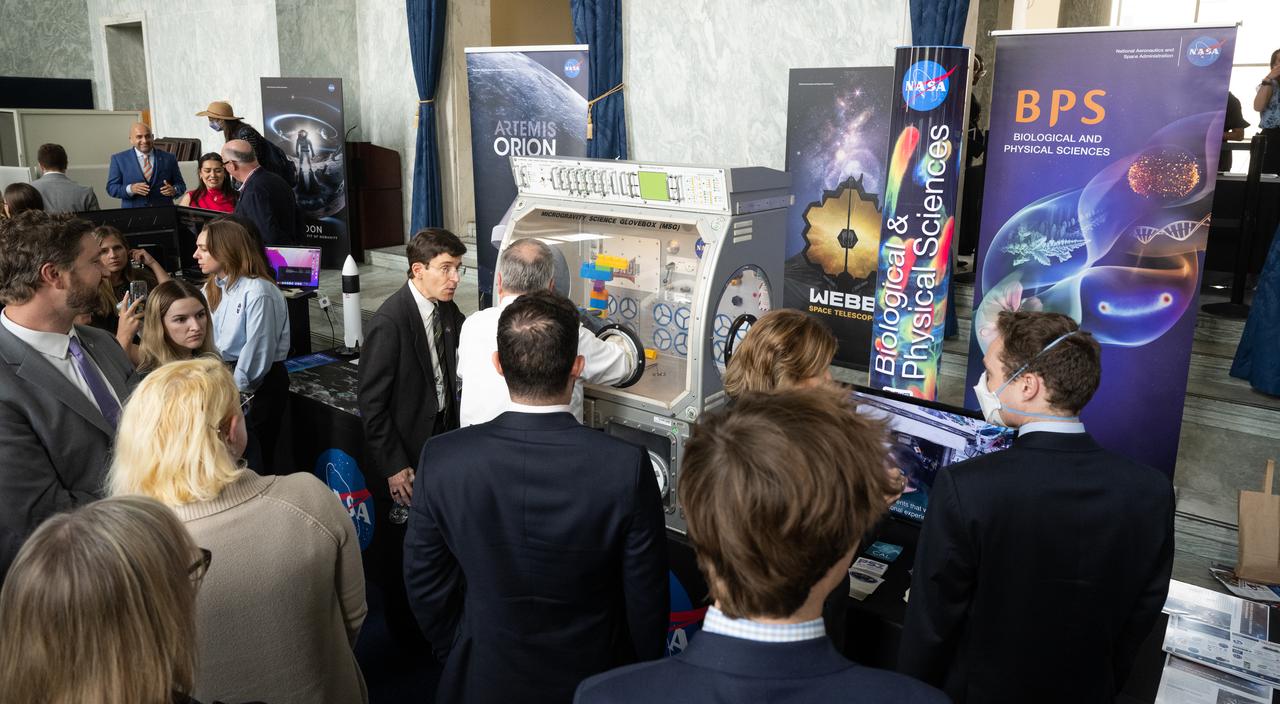
Attendees view exhibits during NASA’s Science Day on the Hill event, Wednesday, June 7, 2023, at the Rayburn House Office Building in Washington. Photo Credit: (NASA/Joel Kowsky)
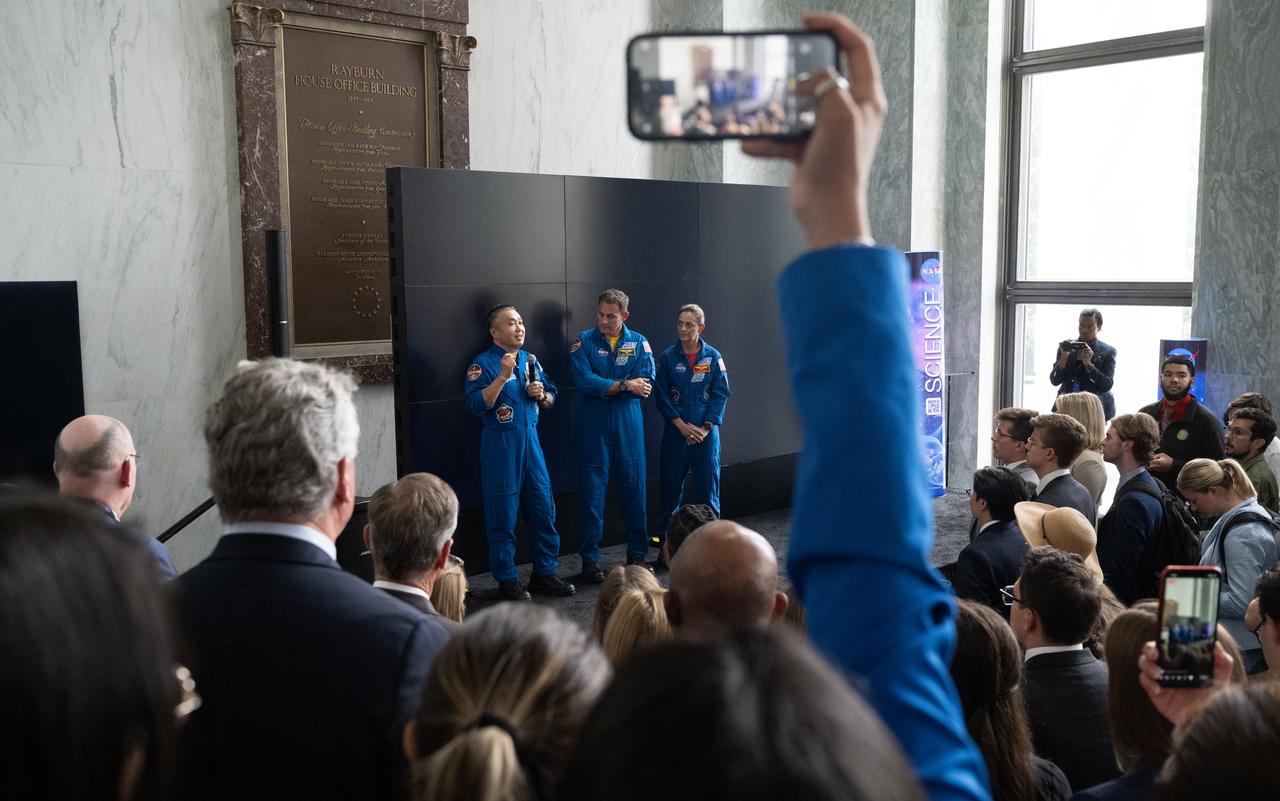
NASA’s SpaceX Crew-5 astronauts Koichi Wakata of the Japan Aerospace Exploration Agency (JAXA), left, and Josh Cassada and Nicole Mann of NASA, speak during NASA’s Science Day on the Hill event, Wednesday, June 7, 2023, at the Rayburn House Office Building in Washington. Mann, Cassada, and Wakata spent 157 days in space as part of Expedition 68 aboard the International Space Station. Photo Credit: (NASA/Joel Kowsky)
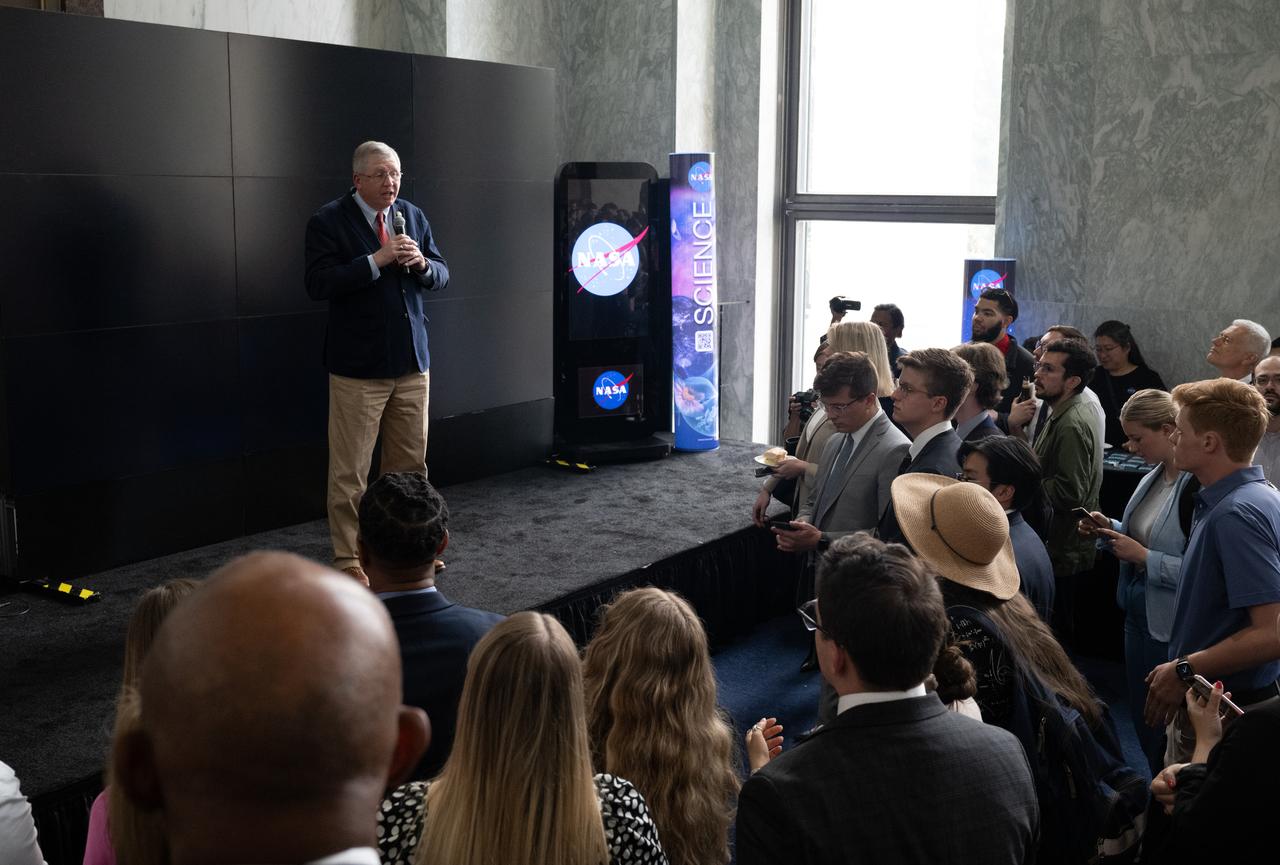
Rep. Frank Lucas, R-Okla., speaks during NASA’s Science Day on the Hill event, Wednesday, June 7, 2023, at the Rayburn House Office Building in Washington. Photo Credit: (NASA/Joel Kowsky)
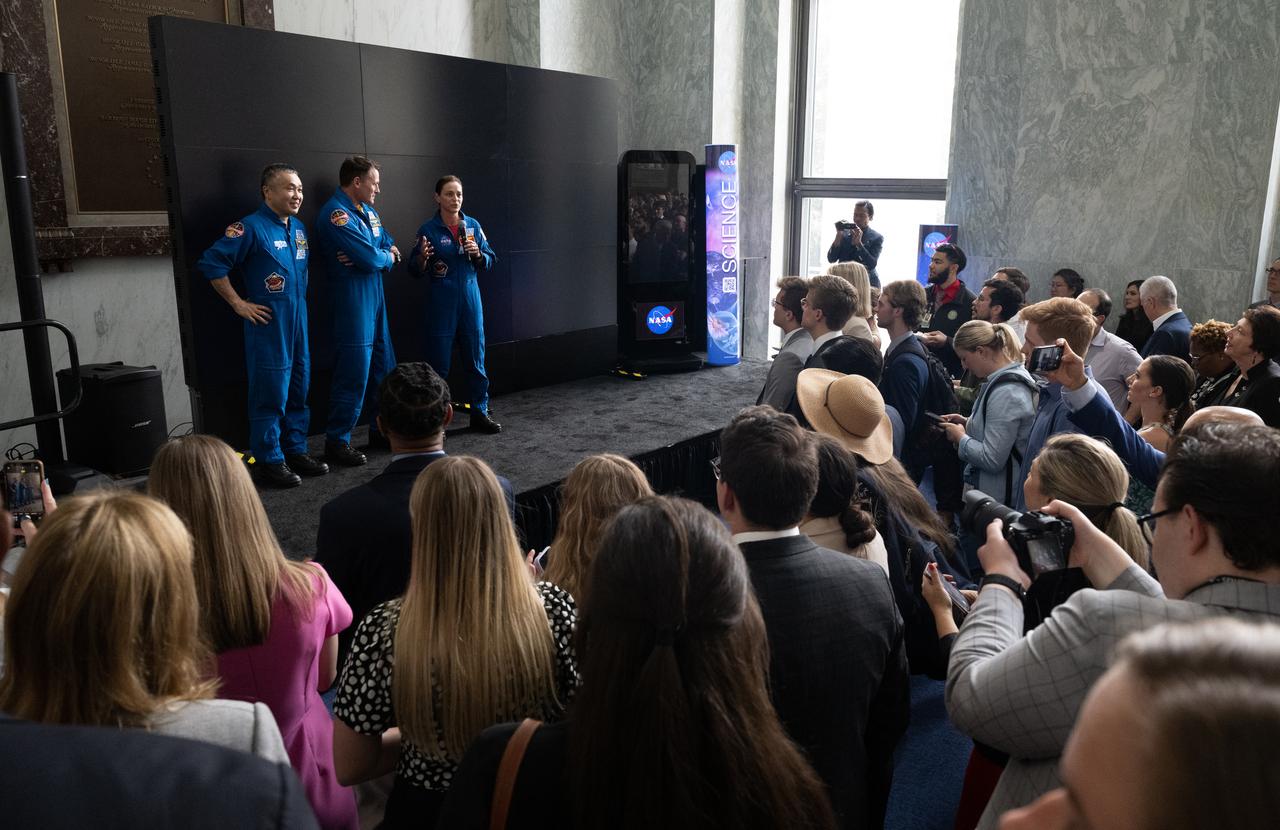
NASA’s SpaceX Crew-5 astronauts Koichi Wakata of the Japan Aerospace Exploration Agency (JAXA), left, and Josh Cassada and Nicole Mann of NASA, speak during NASA’s Science Day on the Hill event, Wednesday, June 7, 2023, at the Rayburn House Office Building in Washington. Mann, Cassada, and Wakata spent 157 days in space as part of Expedition 68 aboard the International Space Station. Photo Credit: (NASA/Joel Kowsky)
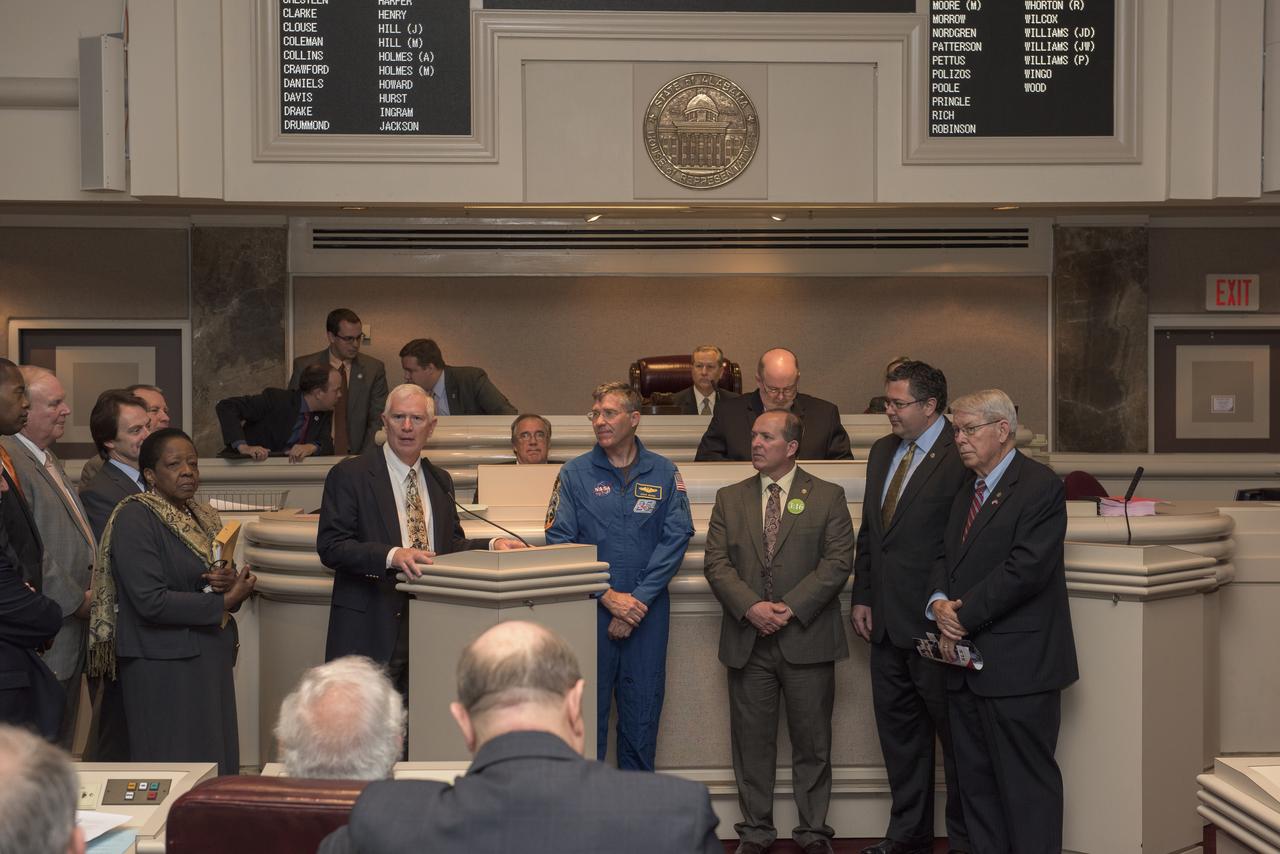
NASA DAY ACTIVITIES IN MONTGOMERY

In conjunction with NASA Stennis Capitol Day and Black History Month, NASA Stennis representatives provided information on NASA internships and career opportunities at Jackson State University’s Spring Career Expo on Feb. 22 and participated in the National Society of Black Engineers networking reception on campus Feb. 21. At NASA, space is for everybody.

In conjunction with NASA Stennis Capitol Day and Black History Month, NASA Stennis representatives provided information on NASA internships and career opportunities at Jackson State University’s Spring Career Expo on Feb. 22 and participated in the National Society of Black Engineers networking reception on campus Feb. 21. At NASA, space is for everybody.

: In conjunction with NASA Stennis Capitol Day and Black History Month, NASA Stennis representatives provided information on NASA internships and career opportunities at Jackson State University’s Spring Career Expo on Feb. 22 and participated in the National Society of Black Engineers networking reception on campus Feb. 21. At NASA, space is for everybody.

In conjunction with NASA Stennis Capitol Day and Black History Month, NASA Stennis representatives provided information on NASA internships and career opportunities at Jackson State University’s Spring Career Expo on Feb. 22 and participated in the National Society of Black Engineers networking reception on campus Feb. 21. At NASA, space is for everybody.

In conjunction with NASA Stennis Capitol Day and Black History Month, NASA Stennis representatives provided information on NASA internships and career opportunities at Jackson State University’s Spring Career Expo on Feb. 22 and participated in the National Society of Black Engineers networking reception on campus Feb. 21. At NASA, space is for everybody.
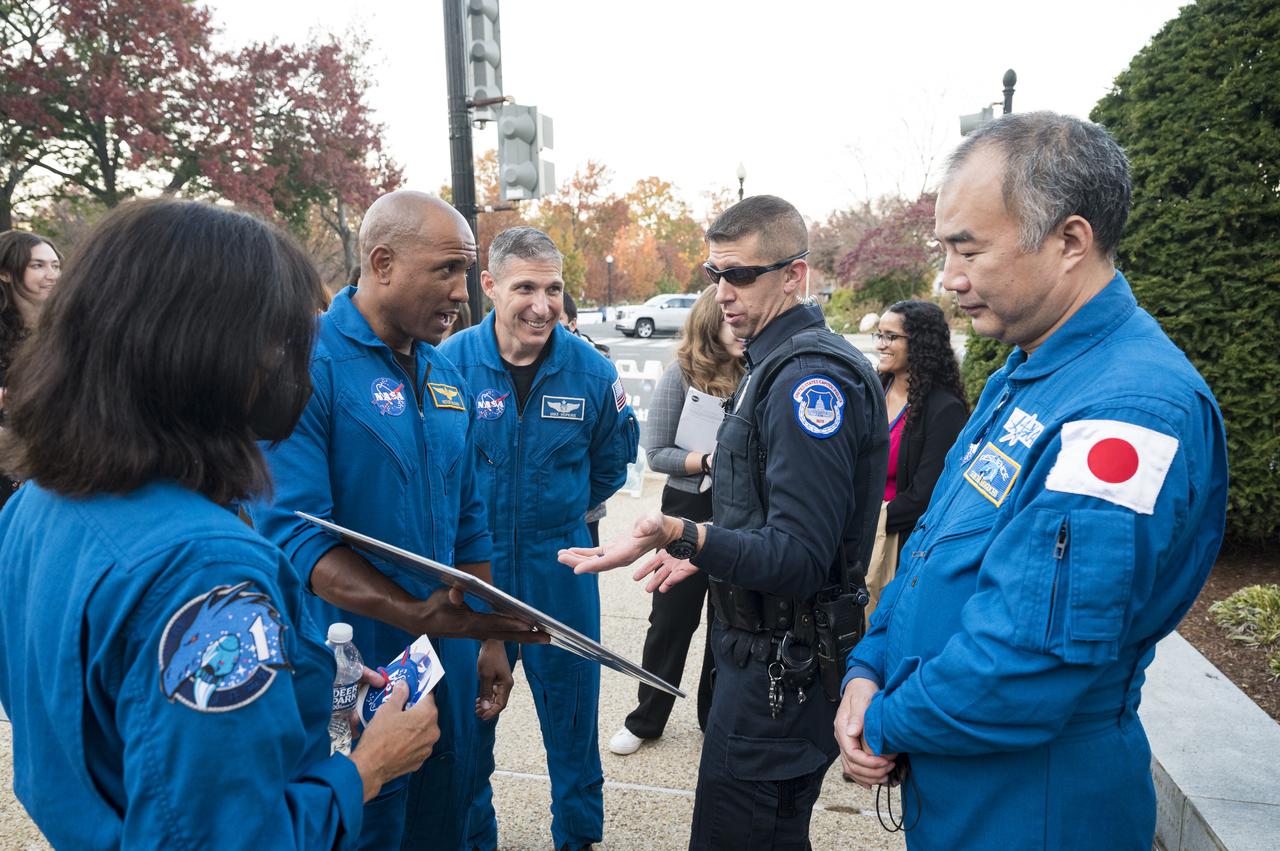
SpaceX Crew-1 NASA astronauts, from left to right, Shannon Walker, Victor Glover, Mike Hopkins, and Japan Aerospace Exploration Agency (JAXA) astronaut Soichi Noguchi, right, presents a montage from their mission to Capitol Police officer Jason Conlon at the Destination Station mobile exhibition on Capitol Hill, Wednesday, Nov. 17, 2021, in Washington. Walker, Glover, Hopkins, and Noguchi launched on the first crew rotation mission to the International Space Station for SpaceX’s Falcon 9 and Crew Dragon spacecraft as part of the agency’s Commercial Crew Program and spent 168 days in space across Expeditions 64 and 65. Photo Credit: (NASA/Aubrey Gemignani)
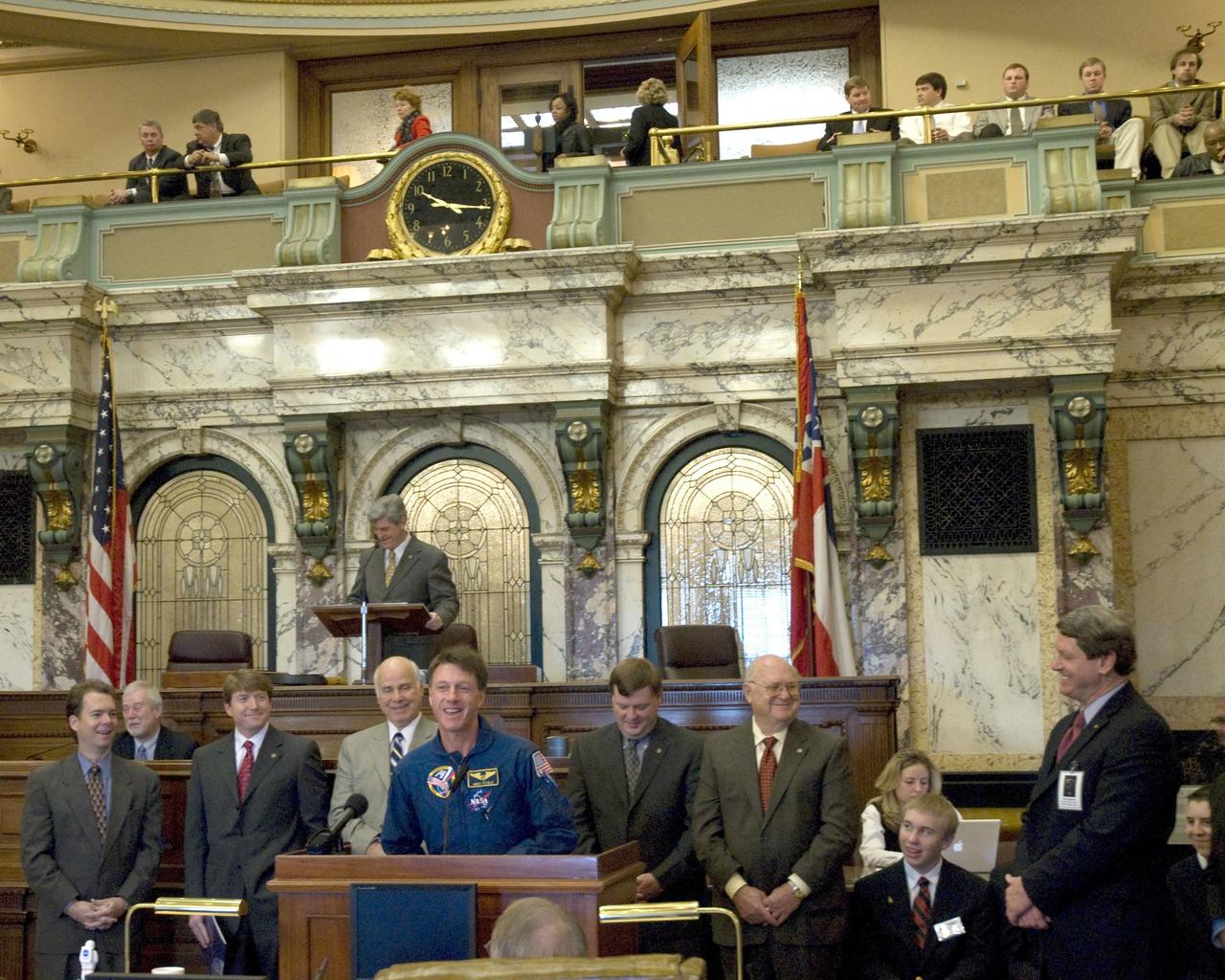
Astronaut Michael Foale (center) and Stennis Space Center officials met with Mississippi Lt. Gov. Phil Bryant (at rear podium) and Gulf Coast delegation members in Mississippi Senate chambers during NASA Space Day in Mississippi activities at the Capitol on January 30.

National Symphony Orchestra Conductor Emil de Cou leads the National Symphony Orchestra during the Labor Day Weekend concert on the West Lawn of the U.S. Capitol, Sunday, September 5, 2010 in Washington. NASA Administrator Charles Bolden joined the Orchestra to introduce one the program's segments, music from the film "Apollo 13". Photo Credit: (NASA/Bill Ingalls)
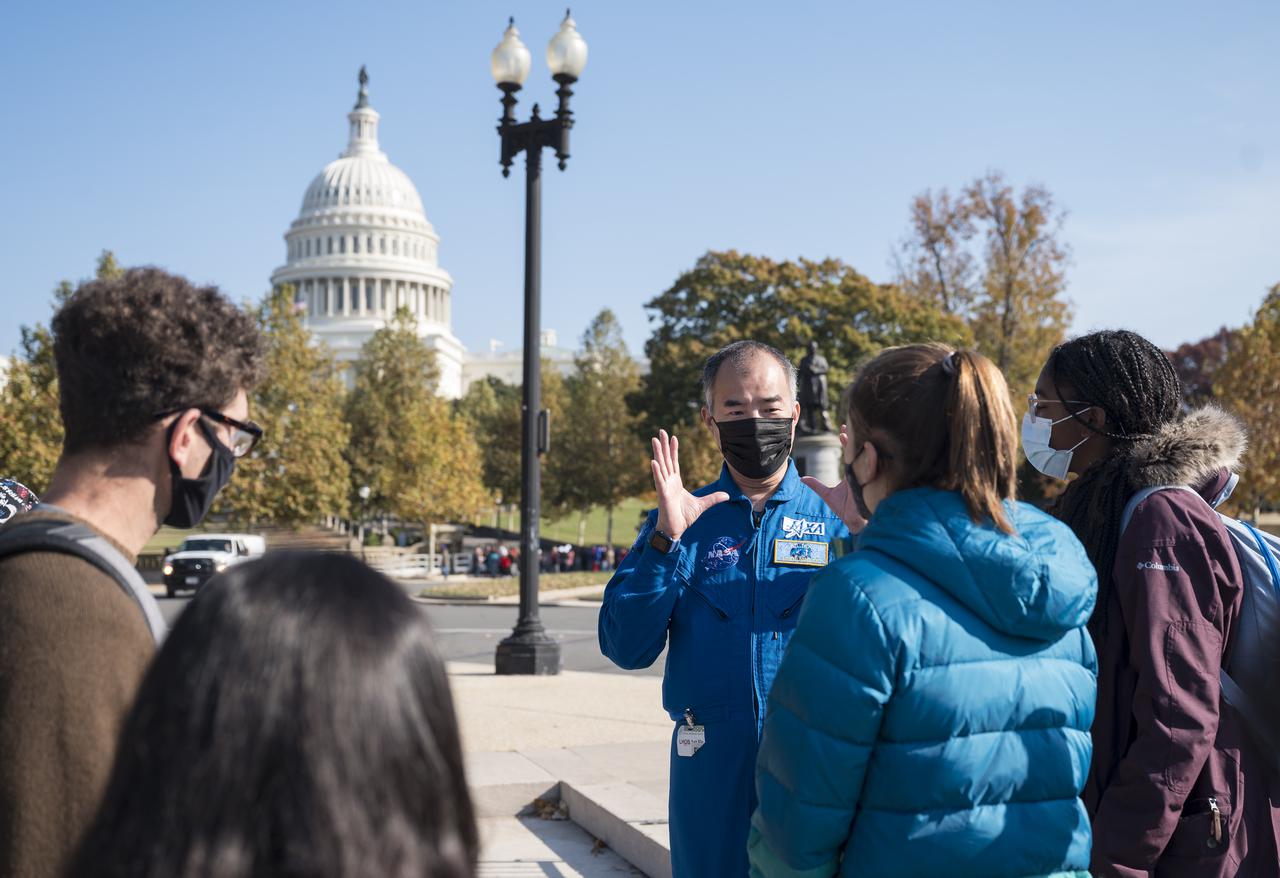
Japan Aerospace Exploration Agency (JAXA) astronaut Soichi Noguchi speaks with visitors at the Destination Station mobile exhibition on Capitol Hill, Wednesday, Nov. 17, 2021, in Washington. Noguchi and crew mates NASA astronauts Mike Hopkins, Victor Glover, and Shannon Walker, launched on the first crew rotation mission to the International Space Station for SpaceX’s Falcon 9 and Crew Dragon spacecraft as part of the agency’s Commercial Crew Program and spent 168 days in space across Expeditions 64 and 65. Photo Credit: (NASA/Aubrey Gemignani)
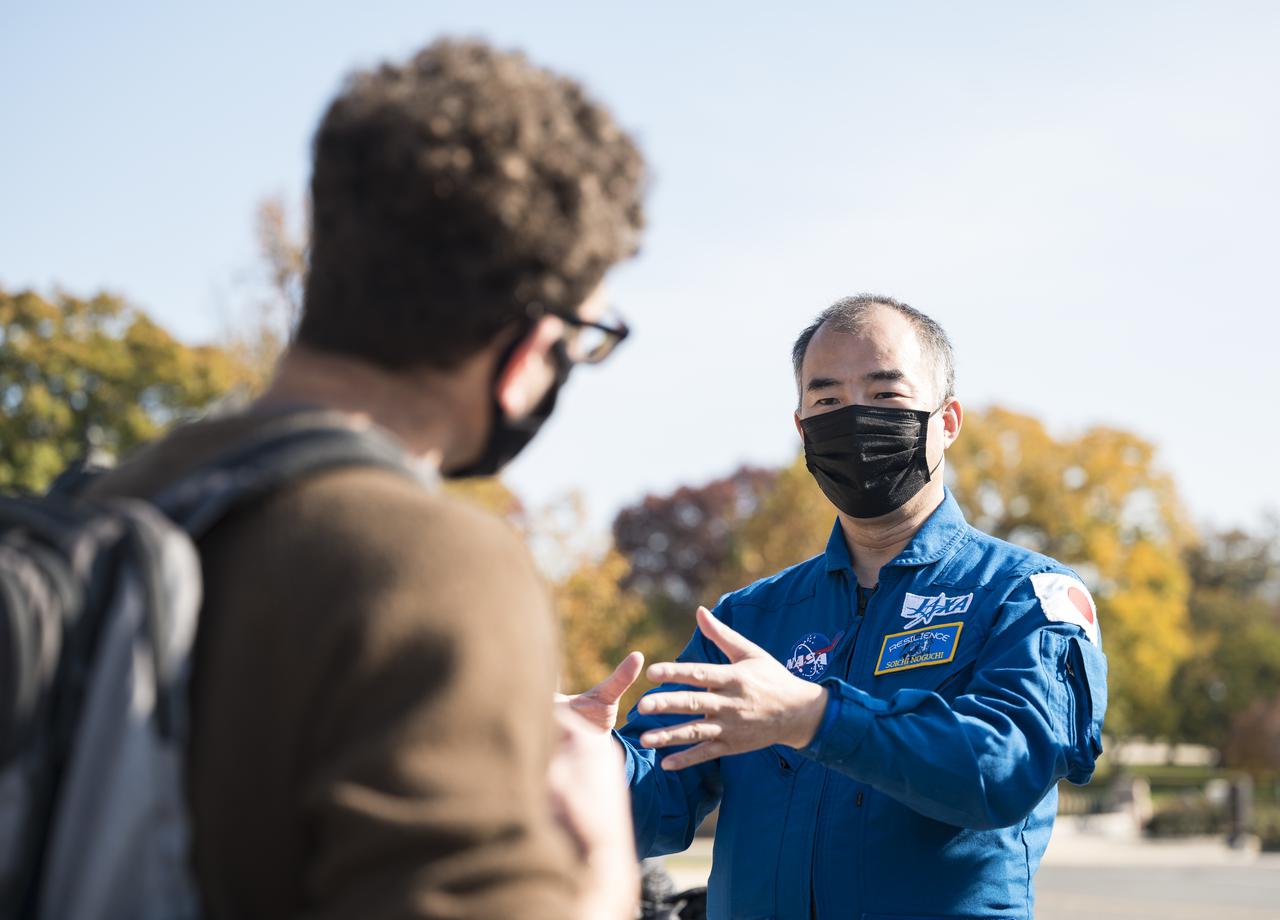
Japan Aerospace Exploration Agency (JAXA) astronaut Soichi Noguchi speaks with visitors at the Destination Station mobile exhibition on Capitol Hill, Wednesday, Nov. 17, 2021, in Washington. Noguchi and crew mates NASA astronauts Mike Hopkins, Victor Glover, and Shannon Walker, launched on the first crew rotation mission to the International Space Station for SpaceX’s Falcon 9 and Crew Dragon spacecraft as part of the agency’s Commercial Crew Program and spent 168 days in space across Expeditions 64 and 65. Photo Credit: (NASA/Aubrey Gemignani)

National Symphony Orchestra Conductor Emil de Cou leads the National Symphony Orchestra during the Labor Day Weekend concert on the West Lawn of the U.S. Capitol, Sunday, September 5, 2010 in Washington. NASA Administrator Charles Bolden joined the Orchestra to introduce one the program's segments, music from the film "Apollo 13". Photo Credit: (NASA/Bill Ingalls)

National Symphony Orchestra Conductor Emil de Cou leads the National Symphony Orchestra during the Labor Day Weekend concert on the West Lawn of the U.S. Capitol, Sunday, September 5, 2010 in Washington. NASA Administrator Charles Bolden joined the Orchestra to introduce one the program's segments, music from the film "Apollo 13". Photo Credit: (NASA/Bill Ingalls)
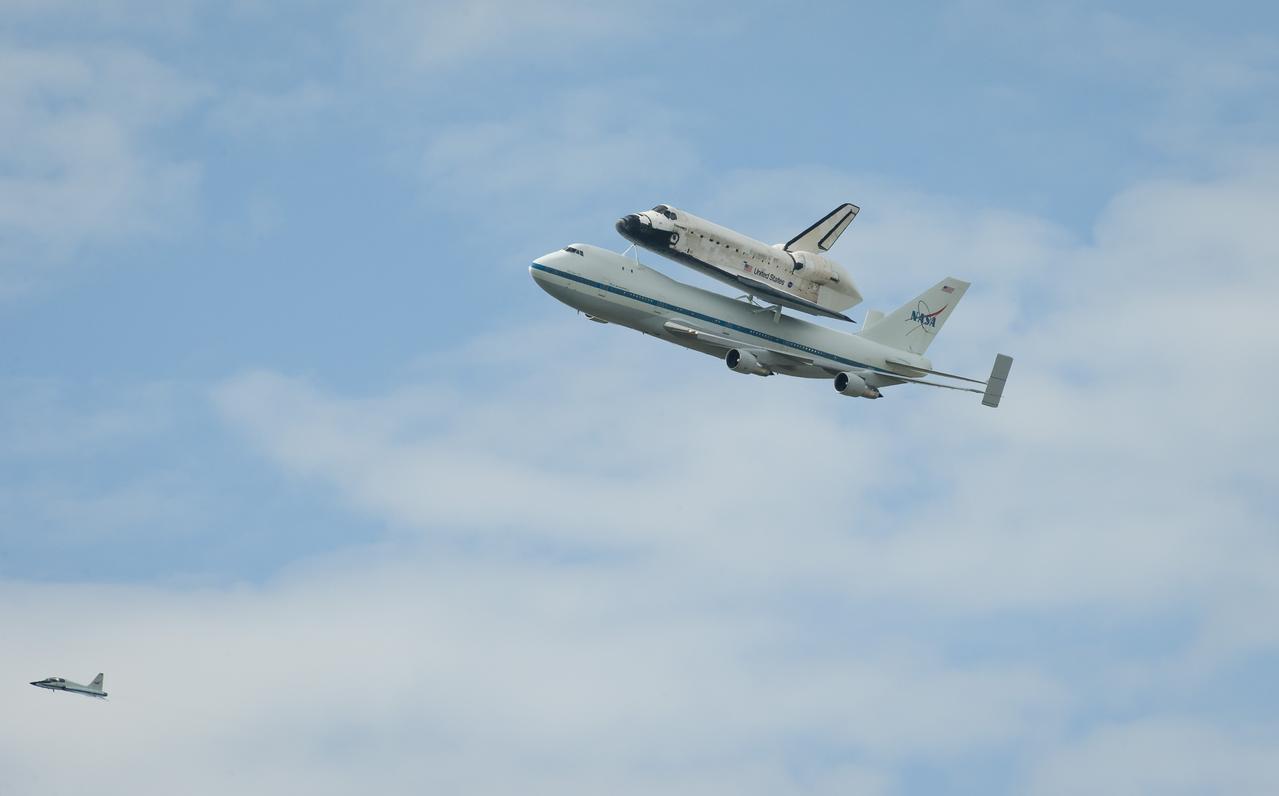
Space shuttle Discovery, mounted atop a NASA 747 Shuttle Carrier Aircraft (SCA) flies near the U.S. Capitol, Tuesday, April 17, 2012, in Washington. Discovery, the first orbiter retired from NASA’s shuttle fleet, completed 39 missions, spent 365 days in space, orbited the Earth 5,830 times, and traveled 148,221,675 miles. NASA will transfer Discovery to the National Air and Space Museum to begin its new mission to commemorate past achievements in space and to educate and inspire future generations of explorers. Photo Credit: (NASA/Rebecca Roth)
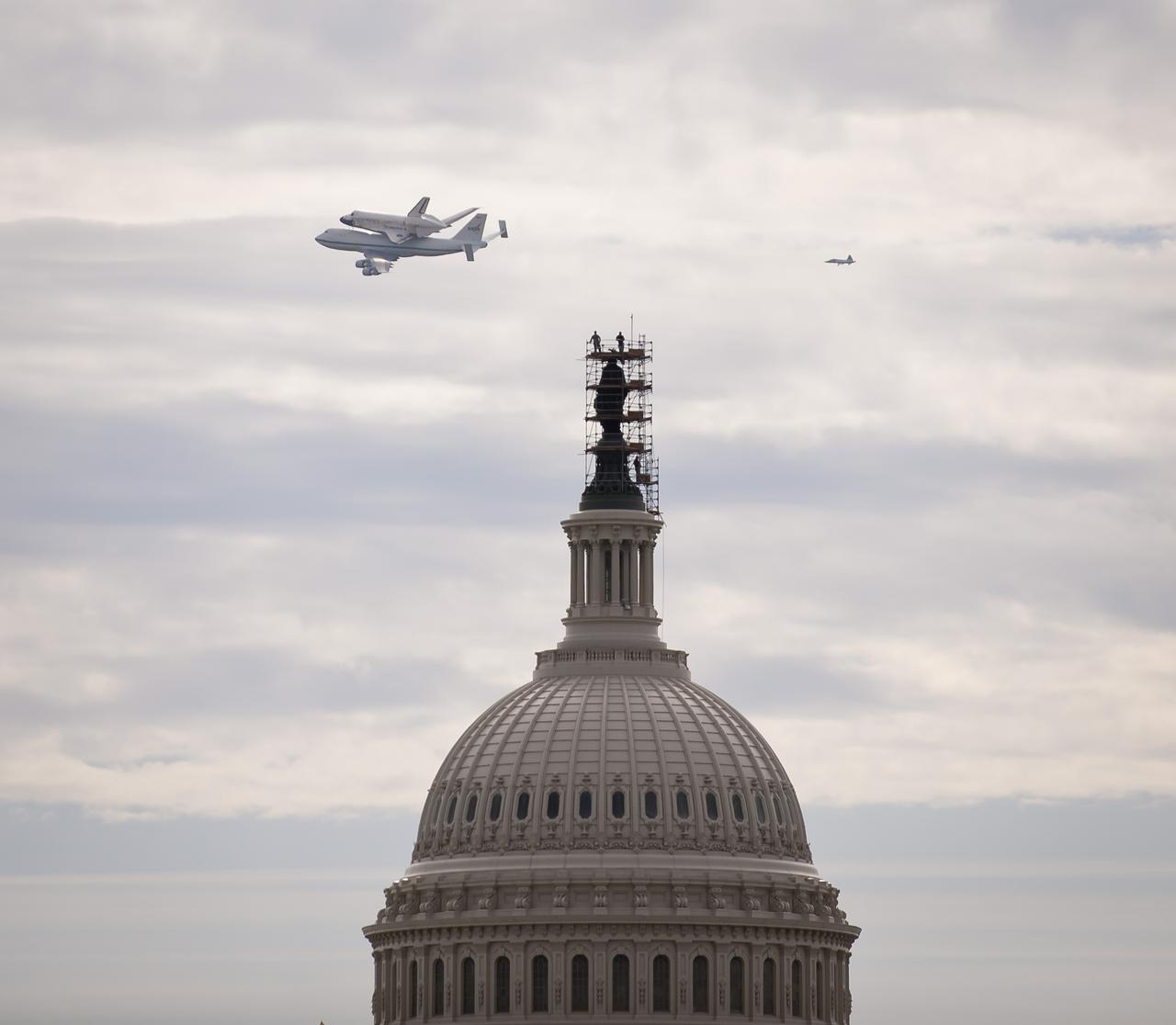
Space shuttle Discovery, mounted atop a NASA 747 Shuttle Carrier Aircraft (SCA) is seen as it flies near the U.S. Capitol, Tuesday, April 17, 2012, in Washington. Discovery, the first orbiter retired from NASA’s shuttle fleet, completed 39 missions, spent 365 days in space, orbited the Earth 5,830 times, and traveled 148,221,675 miles. NASA will transfer Discovery to the National Air and Space Museum to begin its new mission to commemorate past achievements in space and to educate and inspire future generations of explorers. Photo Credit: (NASA/Smithsonian Institution/Harold Dorwin)
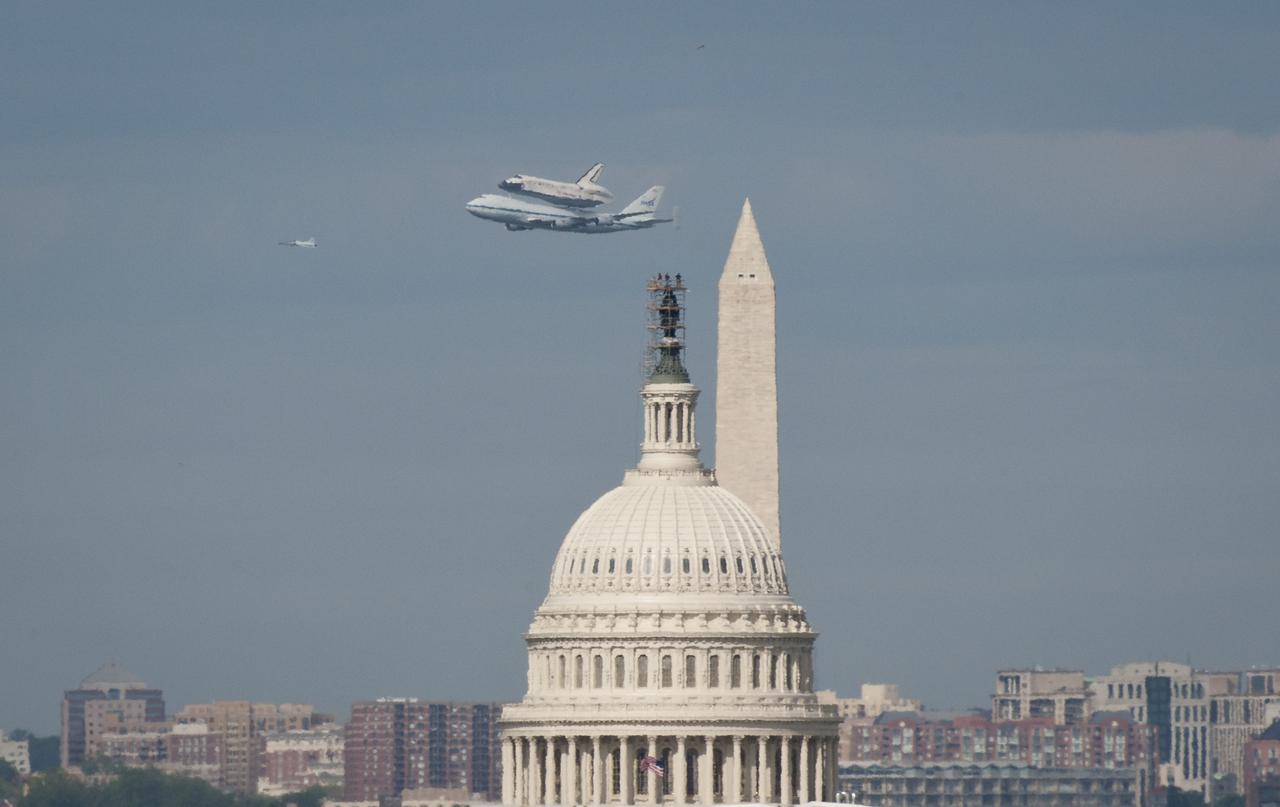
Space shuttle Discovery, mounted atop a NASA 747 Shuttle Carrier Aircraft (SCA) flies near the U.S. Capitol, Tuesday, April 17, 2012, in Washington. Discovery, the first orbiter retired from NASA’s shuttle fleet, completed 39 missions, spent 365 days in space, orbited the Earth 5,830 times, and traveled 148,221,675 miles. NASA will transfer Discovery to the National Air and Space Museum to begin its new mission to commemorate past achievements in space and to educate and inspire future generations of explorers. Photo Credit: (NASA/Rebecca Roth)
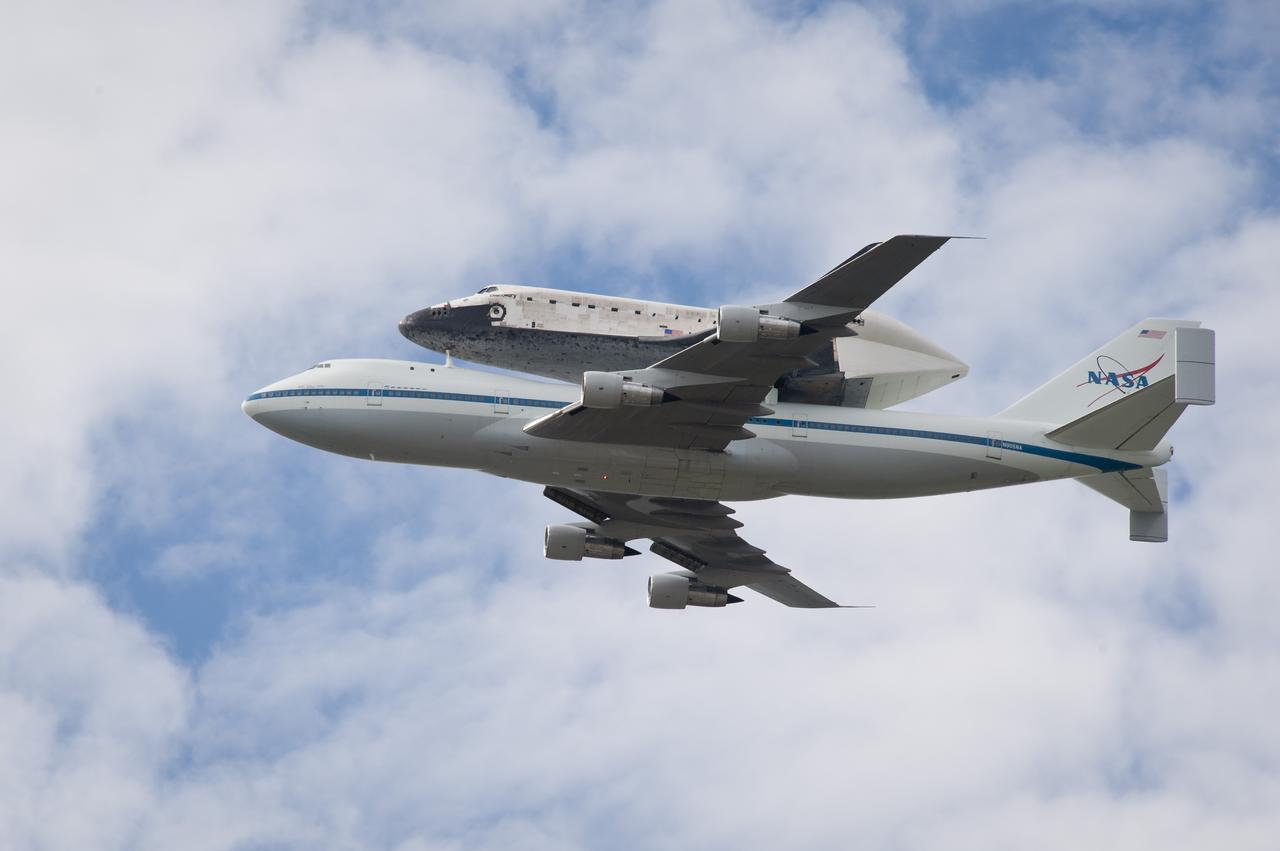
Space shuttle Discovery, mounted atop a NASA 747 Shuttle Carrier Aircraft (SCA) flies near the U.S. Capitol, Tuesday, April 17, 2012, in Washington. Discovery, the first orbiter retired from NASA’s shuttle fleet, completed 39 missions, spent 365 days in space, orbited the Earth 5,830 times, and traveled 148,221,675 miles. NASA will transfer Discovery to the National Air and Space Museum to begin its new mission to commemorate past achievements in space and to educate and inspire future generations of explorers. Photo Credit: (NASA/Michael Porterfield)
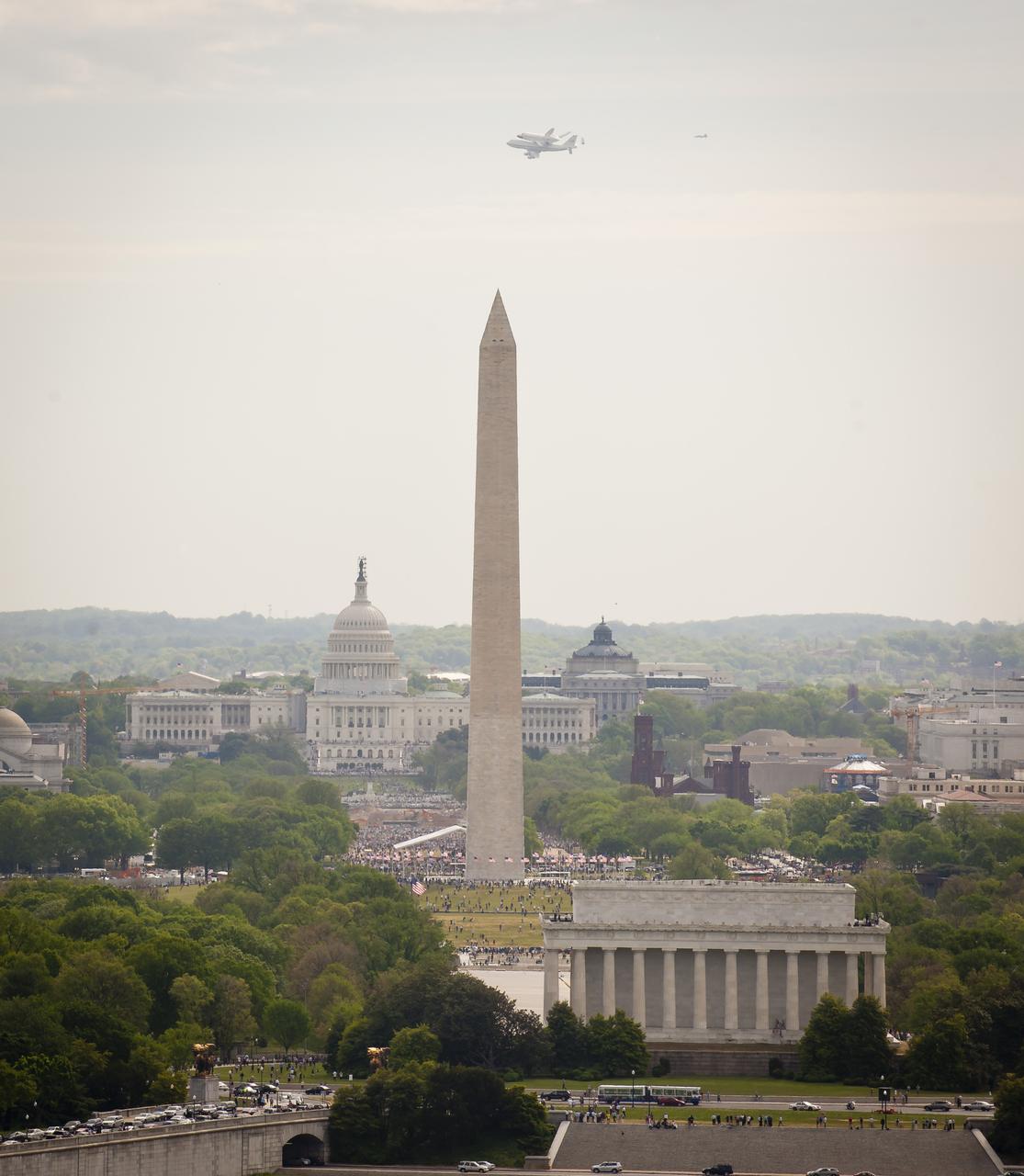
Space shuttle Discovery, mounted atop a NASA 747 Shuttle Carrier Aircraft (SCA) is seen from Top of the Town in Arlington, Virginia as it flies near the U.S. Capitol, Tuesday, April 17, 2012, in Washington. Discovery, the first orbiter retired from NASA’s shuttle fleet, completed 39 missions, spent 365 days in space, orbited the Earth 5,830 times, and traveled 148,221,675 miles. NASA will transfer Discovery to the National Air and Space Museum to begin its new mission to commemorate past achievements in space and to educate and inspire future generations of explorers. Photo Credit: (NASA/Chris Gunn)
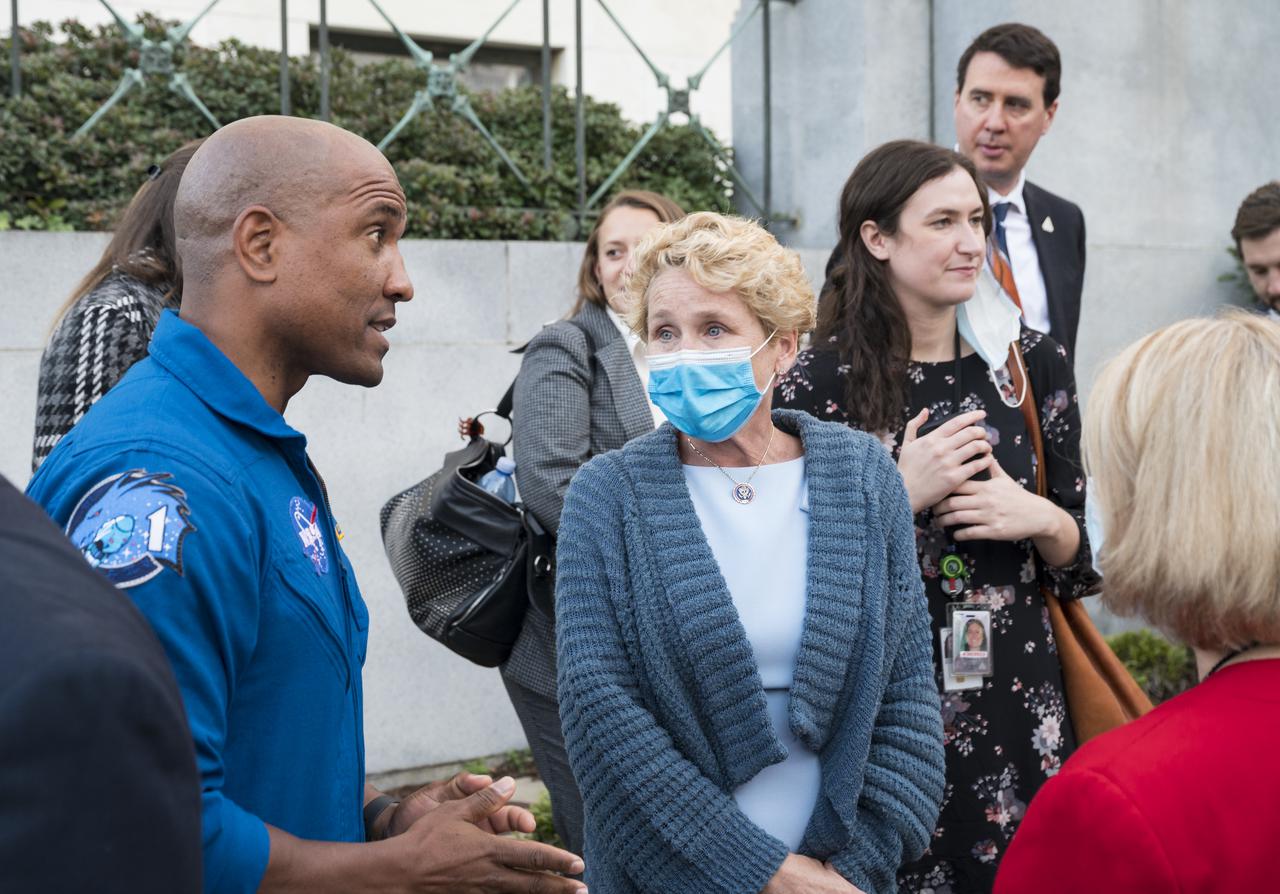
SpaceX Crew-1 NASA astronaut Victor Glover, left, speaks with Rep. Chrissy Houlahan, D-Pa., center, and NASA Deputy Administrator Pam Melroy, at the Destination Station mobile exhibition on Capitol Hill, Wednesday, Nov. 17, 2021, in Washington. Glover, and NASA astronauts Mike Hopkins, and Shannon Walker, and Japan Aerospace Exploration Agency (JAXA) astronaut Soichi Noguchi launched on the first crew rotation mission to the International Space Station for SpaceX’s Falcon 9 and Crew Dragon spacecraft as part of the agency’s Commercial Crew Program and spent 168 days in space across Expeditions 64 and 65. Photo Credit: (NASA/Aubrey Gemignani)
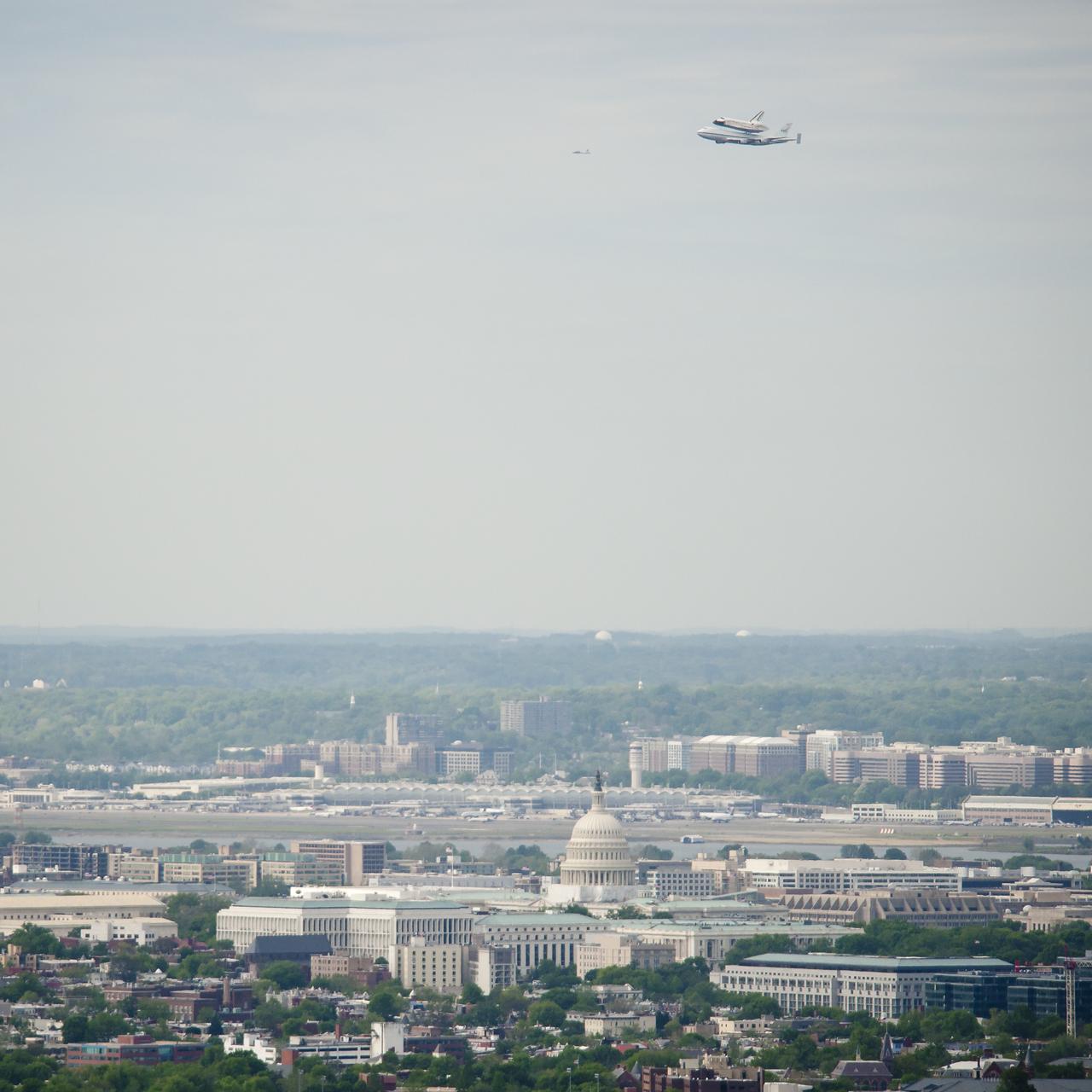
Space shuttle Discovery, mounted atop a NASA 747 Shuttle Carrier Aircraft (SCA) flies near the U.S. Capitol, Tuesday, April 17, 2012, in Washington. Discovery, the first orbiter retired from NASA’s shuttle fleet, completed 39 missions, spent 365 days in space, orbited the Earth 5,830 times, and traveled 148,221,675 miles. NASA will transfer Discovery to the National Air and Space Museum to begin its new mission to commemorate past achievements in space and to educate and inspire future generations of explorers. Photo Credit: (NASA/Bill Ingalls)

NASA astronauts Reid Wiseman, commander, right; Victor Glover, pilot, second from right; Christina Koch, mission specialist, left; and CSA (Canadian Space Agency) astronaut Jeremy Hansen, mission specialist, third from left, are seen as they speak with House Majority Leader Steve Scalise, R-La., second from left, and NASA Administrator Jared Isaacman, third from right, Tuesday, May 12, 2026, at the U.S. Capitol in Washington. NASA’s Artemis II mission took Wiseman, Glover, Koch, and Hansen on a nearly 10-day journey around the Moon and back to Earth in April 2026. Photo Credit: (NASA/Joel Kowsky)

NASA astronauts Reid Wiseman, commander, left; Victor Glover, pilot, second from left; Christina Koch, mission specialist, third from right; and CSA (Canadian Space Agency) astronaut Jeremy Hansen, mission specialist, third from left, are seen as they speak with House Majority Leader Steve Scalise, R-La., right, and NASA Administrator Jared Isaacman, second from right, Tuesday, May 12, 2026, at the U.S. Capitol in Washington. NASA’s Artemis II mission took Wiseman, Glover, Koch, and Hansen on a nearly 10-day journey around the Moon and back to Earth in April 2026. Photo Credit: (NASA/Joel Kowsky)
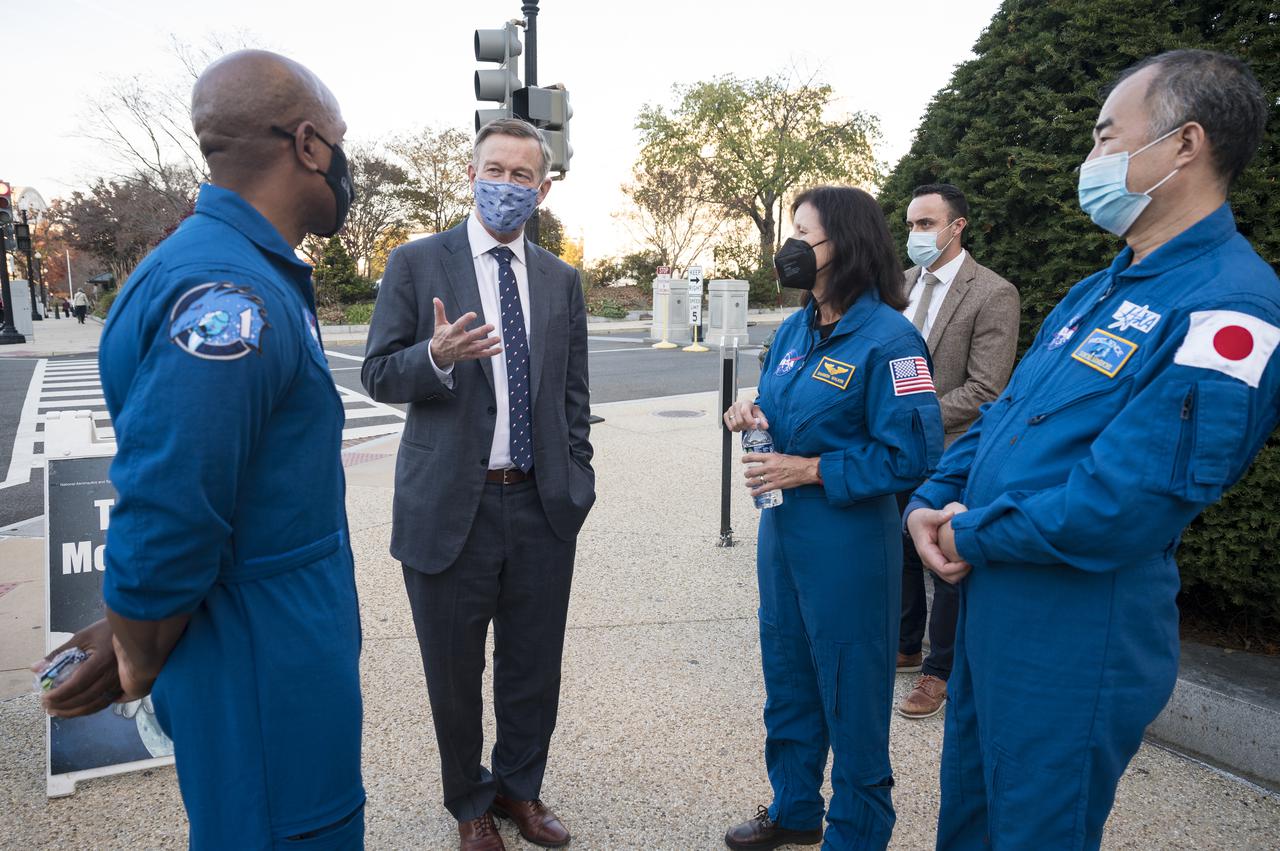
SpaceX Crew-1 NASA astronauts Victor Glover, left, and Shannon Walker, second from right, and Japan Aerospace Exploration Agency (JAXA) astronaut Soichi Noguchi, right, speak with Senator John Hickenlooper, D-Colo, at the Destination Station mobile exhibition on Capitol Hill, Wednesday, Nov. 17, 2021, in Washington. Walker, Glover, Noguchi, and NASA astronaut Mike Hopkins, launched on the first crew rotation mission to the International Space Station for SpaceX’s Falcon 9 and Crew Dragon spacecraft as part of the agency’s Commercial Crew Program and spent 168 days in space across Expeditions 64 and 65. Photo Credit: (NASA/Aubrey Gemignani)
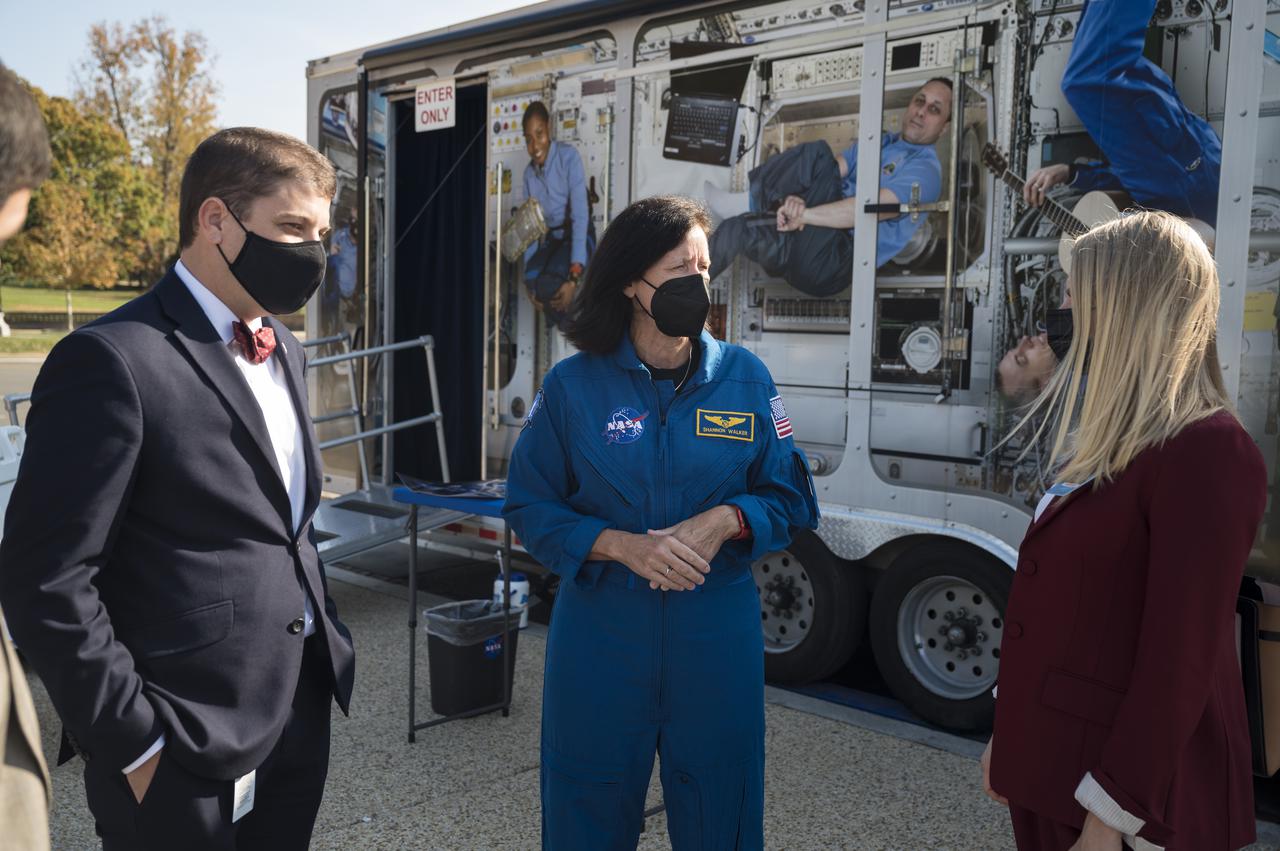
SpaceX Crew-1 NASA astronaut Shannon Walker speaks with visitors at the Destination Station mobile exhibition on Capitol Hill, Wednesday, Nov. 17, 2021, in Washington. Walker, and NASA astronauts Mike Hopkins, and Victor Glover, and Japan Aerospace Exploration Agency (JAXA) astronaut Soichi Noguchi launched on the first crew rotation mission to the International Space Station for SpaceX’s Falcon 9 and Crew Dragon spacecraft as part of the agency’s Commercial Crew Program and spent 168 days in space across Expeditions 64 and 65. Photo Credit: (NASA/Aubrey Gemignani)
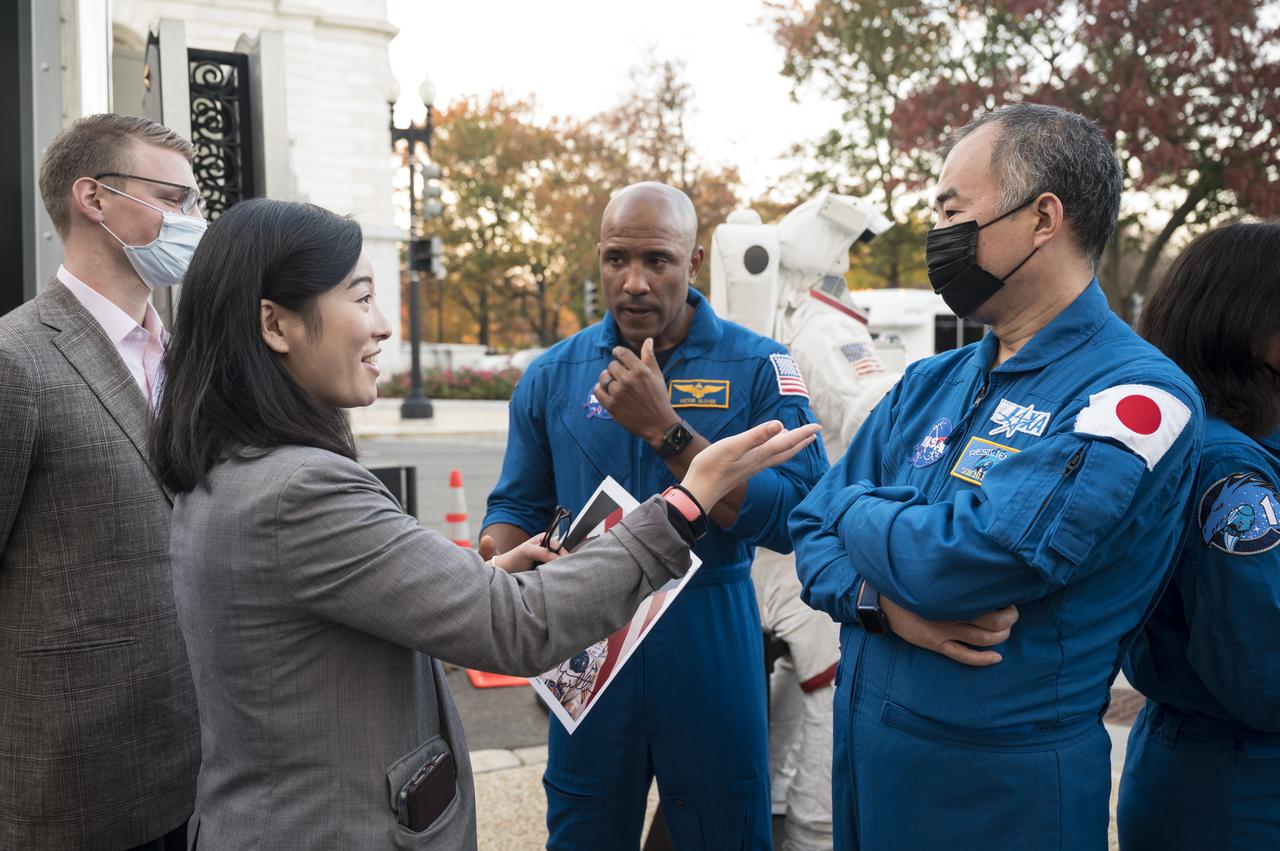
SpaceX Crew-1 NASA astronaut Victor Glover, center, and Japan Aerospace Exploration Agency (JAXA) astronaut Soichi Noguchi, right, speak with visitors at the Destination Station mobile exhibition on Capitol Hill, Wednesday, Nov. 17, 2021, in Washington.Glover, Noguchi, and NASA astronauts Mike Hopkins and Shannon Walker, launched on the first crew rotation mission to the International Space Station for SpaceX’s Falcon 9 and Crew Dragon spacecraft as part of the agency’s Commercial Crew Program and spent 168 days in space across Expeditions 64 and 65. Photo Credit: (NASA/Aubrey Gemignani)
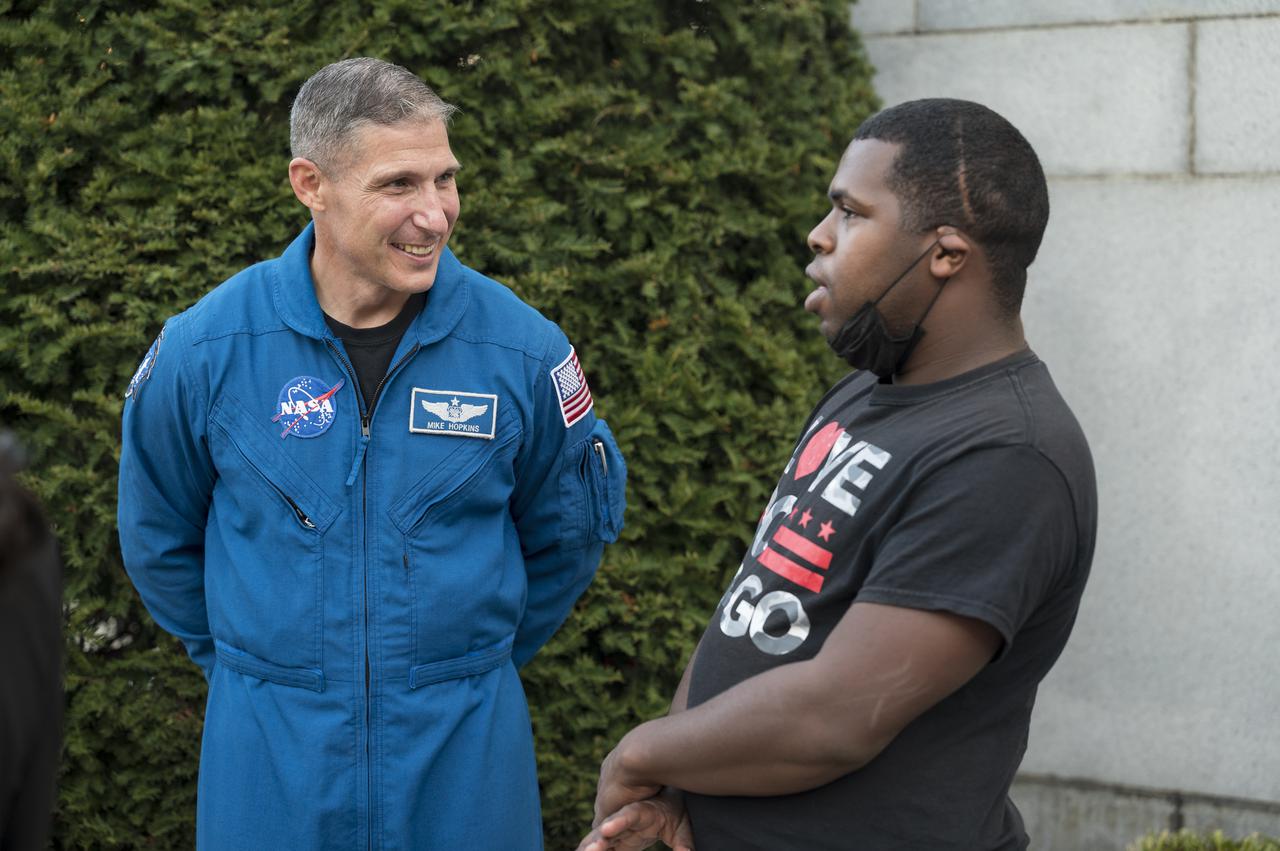
SpaceX Crew-1 NASA astronaut Mike Hopkins speaks with visitors at the Destination Station mobile exhibition on Capitol Hill, Wednesday, Nov. 17, 2021, in Washington. Hopkins and NASA astronauts Shannon Walker and Victor Glover, and Japan Aerospace Exploration Agency (JAXA) astronaut Soichi Noguchi launched on the first crew rotation mission to the International Space Station for SpaceX’s Falcon 9 and Crew Dragon spacecraft as part of the agency’s Commercial Crew Program and spent 168 days in space across Expeditions 64 and 65. Photo Credit: (NASA/Aubrey Gemignani)
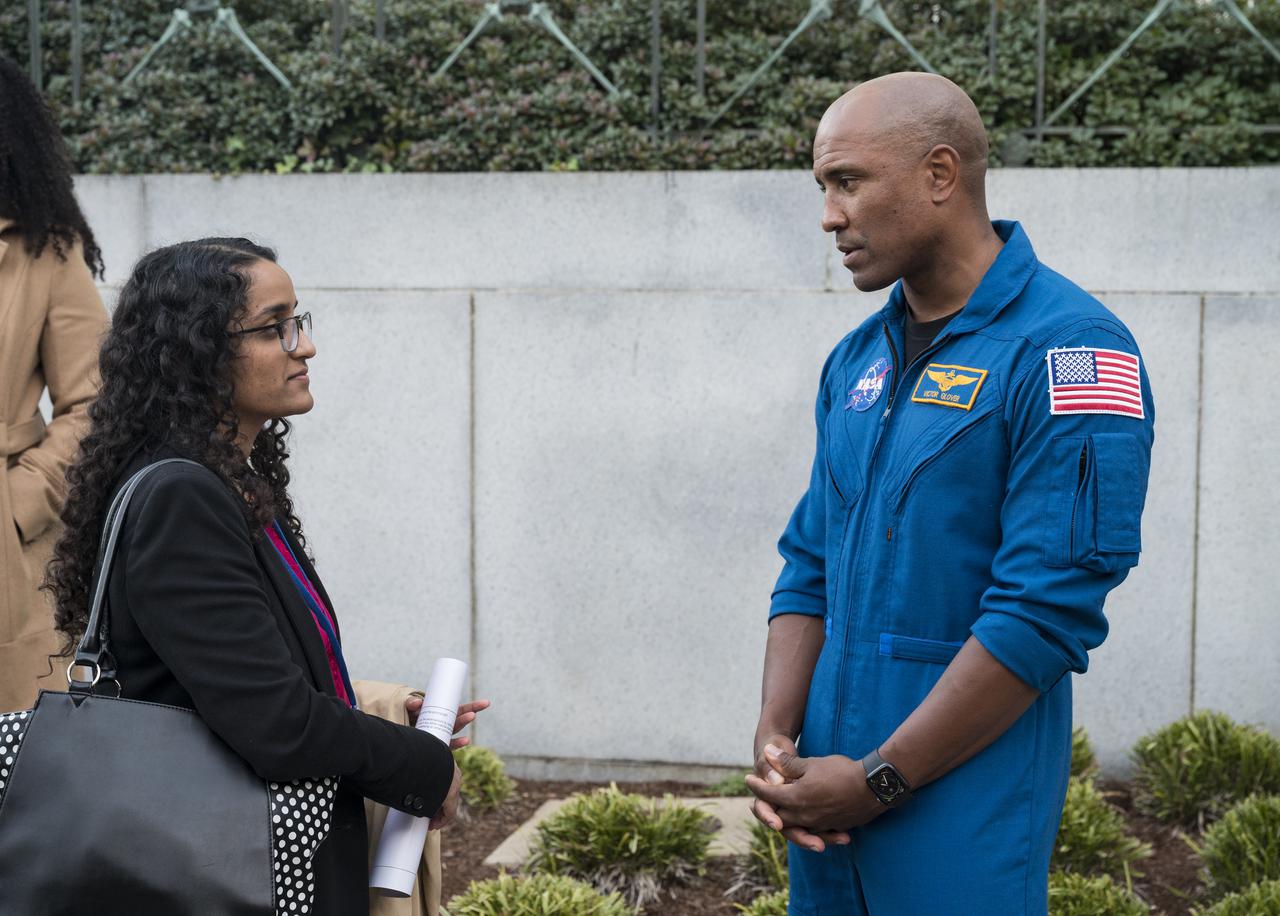
SpaceX Crew-1 NASA astronaut Victor Glover speaks with visitors at the Destination Station mobile exhibition on Capitol Hill, Wednesday, Nov. 17, 2021, in Washington. Glover, and NASA astronauts Mike Hopkins, and Shannon Walker, and Japan Aerospace Exploration Agency (JAXA) astronaut Soichi Noguchi launched on the first crew rotation mission to the International Space Station for SpaceX’s Falcon 9 and Crew Dragon spacecraft as part of the agency’s Commercial Crew Program and spent 168 days in space across Expeditions 64 and 65. Photo Credit: (NASA/Aubrey Gemignani)
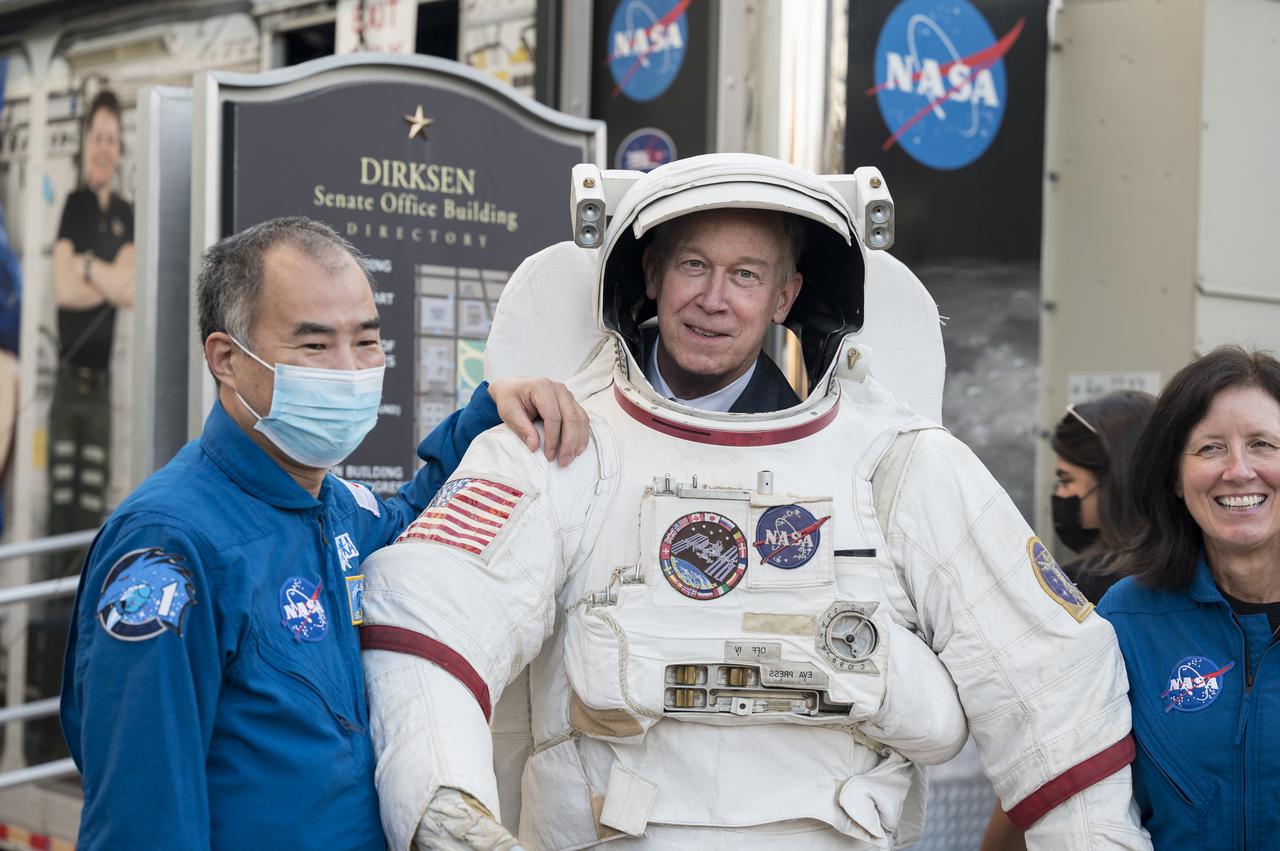
SpaceX Crew-1 Japan Aerospace Exploration Agency (JAXA) astronaut Soichi Noguchi, left, and NASA astronaut Shannon Walker, right, pose for a photo with Senator John Hickenlooper, D-Colo, at the Destination Station mobile exhibition on Capitol Hill, Wednesday, Nov. 17, 2021, in Washington. Walker, Noguchi, and NASA astronauts Mike Hopkins and Victor Glover launched on the first crew rotation mission to the International Space Station for SpaceX’s Falcon 9 and Crew Dragon spacecraft as part of the agency’s Commercial Crew Program and spent 168 days in space across Expeditions 64 and 65. Photo Credit: (NASA/Aubrey Gemignani)
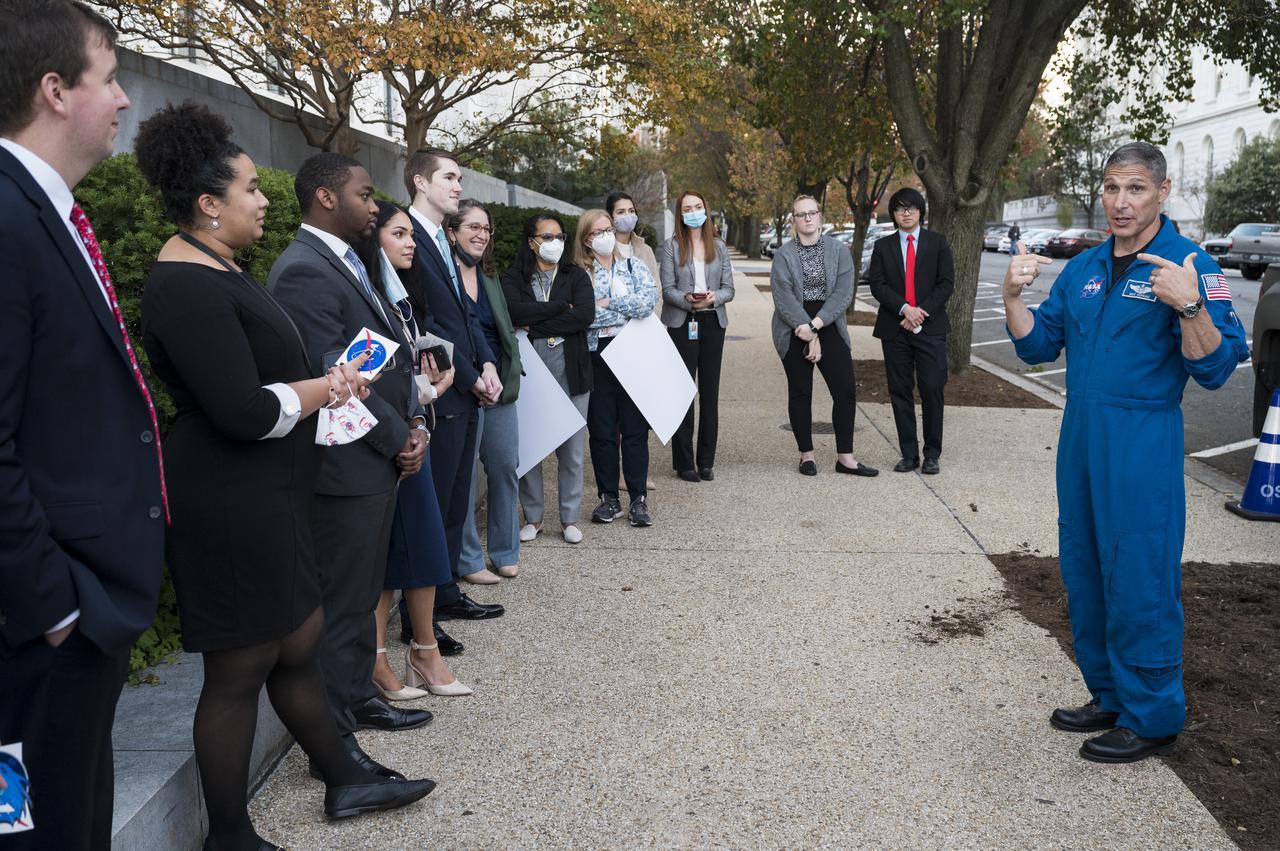
SpaceX Crew-1 NASA astronaut Mike Hopkins speaks with visitors at the Destination Station mobile exhibition on Capitol Hill, Wednesday, Nov. 17, 2021, in Washington. Hopkins, and NASA astronauts Shannon Walker and Victor Glover, and Japan Aerospace Exploration Agency (JAXA) astronaut Soichi Noguchi launched on the first crew rotation mission to the International Space Station for SpaceX’s Falcon 9 and Crew Dragon spacecraft as part of the agency’s Commercial Crew Program and spent 168 days in space across Expeditions 64 and 65. Photo Credit: (NASA/Aubrey Gemignani)
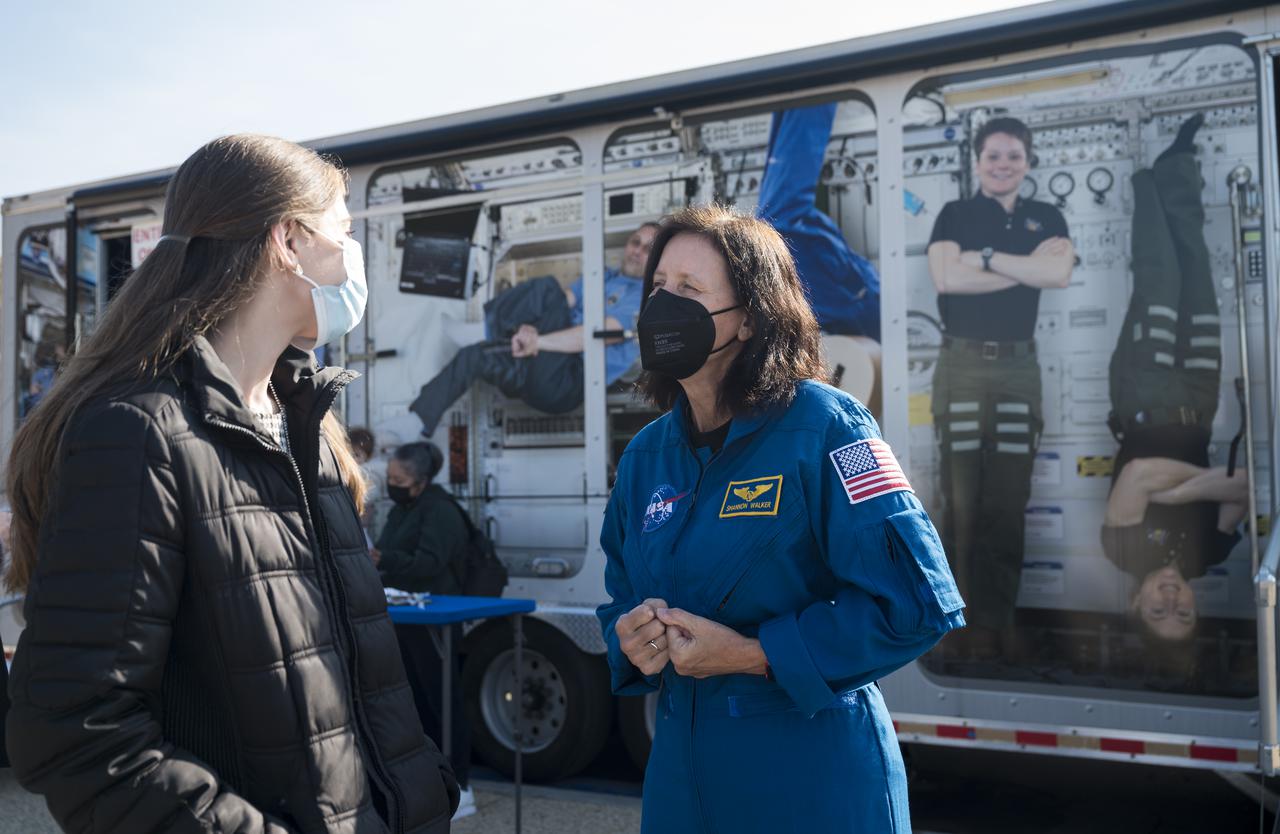
SpaceX Crew-1 NASA astronaut Shannon Walker speaks with visitors at the Destination Station mobile exhibition on Capitol Hill, Wednesday, Nov. 17, 2021, in Washington. Walker, and NASA astronauts Mike Hopkins, and Victor Glover, and Japan Aerospace Exploration Agency (JAXA) astronaut Soichi Noguchi launched on the first crew rotation mission to the International Space Station for SpaceX’s Falcon 9 and Crew Dragon spacecraft as part of the agency’s Commercial Crew Program and spent 168 days in space across Expeditions 64 and 65. Photo Credit: (NASA/Aubrey Gemignani)
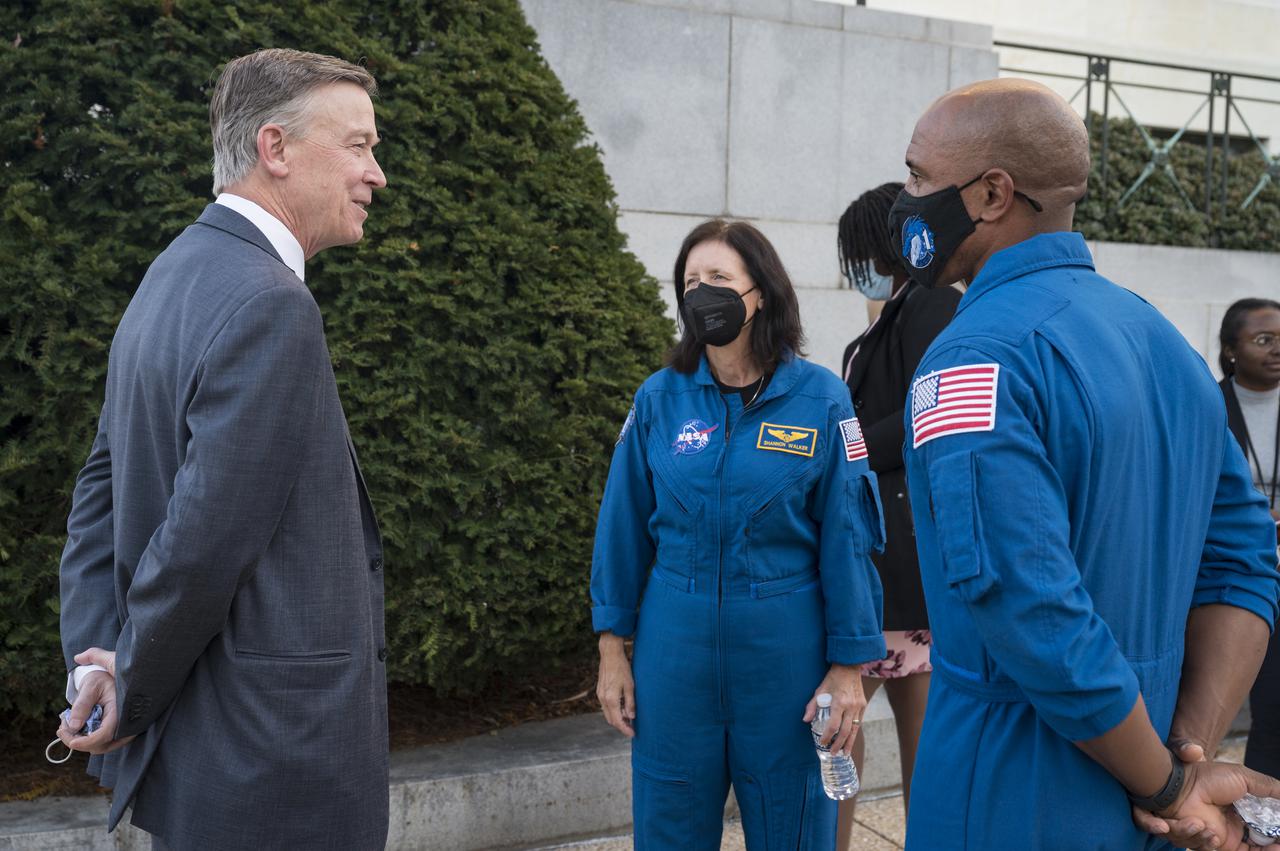
SpaceX Crew-1 NASA astronauts Shannon Walker, center, and Victor Glover, right, speak with Senator John Hickenlooper, D-Colo, at the Destination Station mobile exhibition on Capitol Hill, Wednesday, Nov. 17, 2021, in Washington. Walker, Glover, NASA astronaut Mike Hopkins, and Japan Aerospace Exploration Agency (JAXA) astronaut Soichi Noguchi launched on the first crew rotation mission to the International Space Station for SpaceX’s Falcon 9 and Crew Dragon spacecraft as part of the agency’s Commercial Crew Program and spent 168 days in space across Expeditions 64 and 65. Photo Credit: (NASA/Aubrey Gemignani)
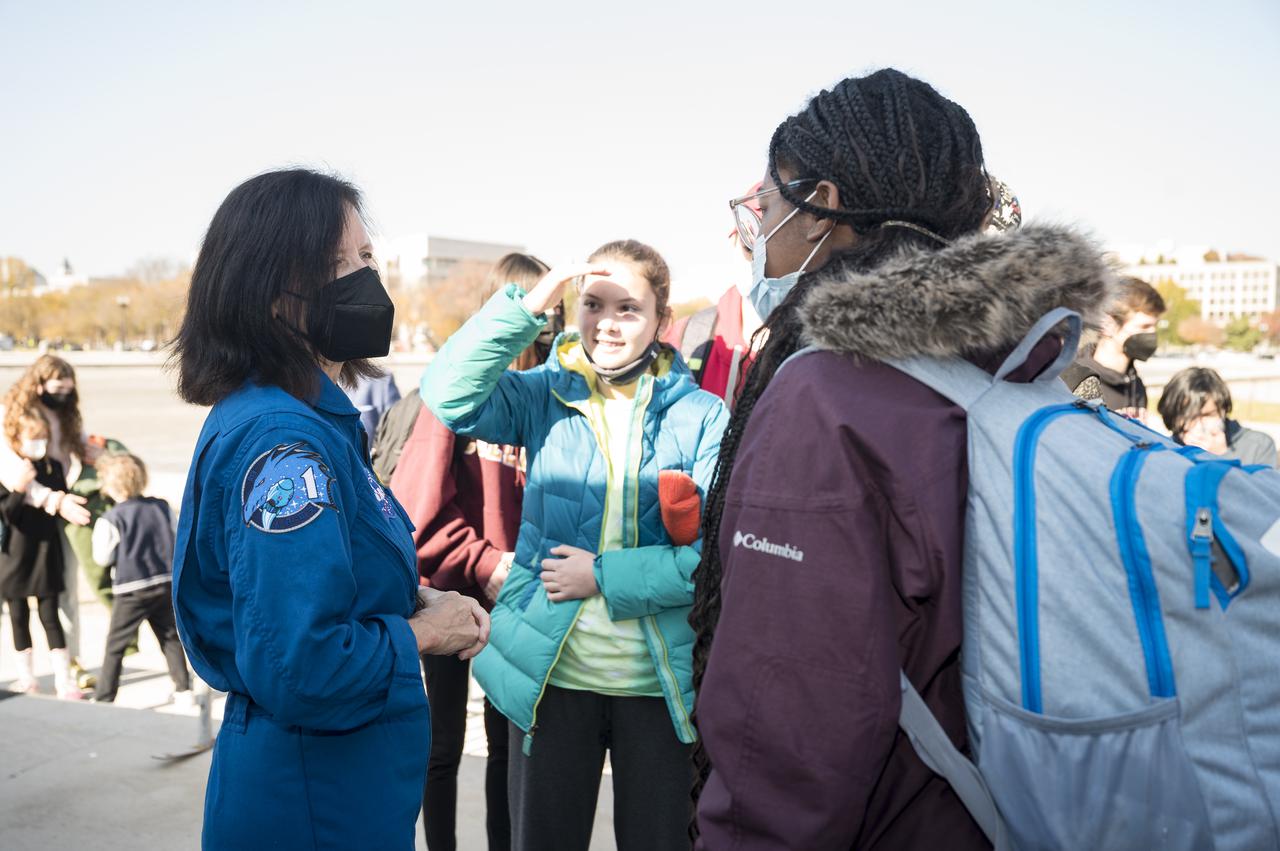
SpaceX Crew-1 NASA astronaut Shannon Walker speaks with visitors at the Destination Station mobile exhibition on Capitol Hill, Wednesday, Nov. 17, 2021, in Washington. Walker, and NASA astronauts Mike Hopkins, and Victor Glover, and Japan Aerospace Exploration Agency (JAXA) astronaut Soichi Noguchi launched on the first crew rotation mission to the International Space Station for SpaceX’s Falcon 9 and Crew Dragon spacecraft as part of the agency’s Commercial Crew Program and spent 168 days in space across Expeditions 64 and 65. Photo Credit: (NASA/Aubrey Gemignani)
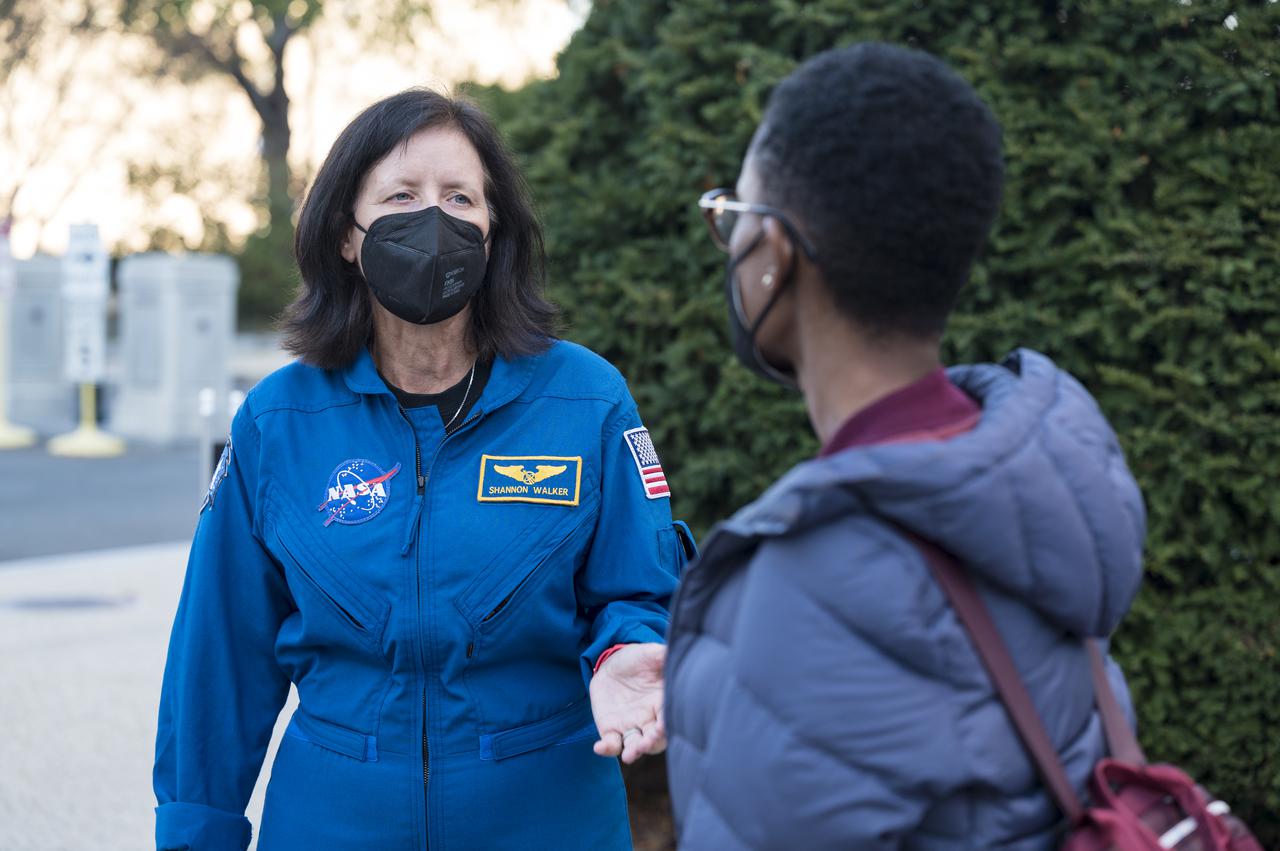
SpaceX Crew-1 NASA astronaut Shannon Walker speaks with visitors at the Destination Station mobile exhibition on Capitol Hill, Wednesday, Nov. 17, 2021, in Washington. Walker, and NASA astronauts Mike Hopkins, and Victor Glover, and Japan Aerospace Exploration Agency (JAXA) astronaut Soichi Noguchi launched on the first crew rotation mission to the International Space Station for SpaceX’s Falcon 9 and Crew Dragon spacecraft as part of the agency’s Commercial Crew Program and spent 168 days in space across Expeditions 64 and 65. Photo Credit: (NASA/Aubrey Gemignani)
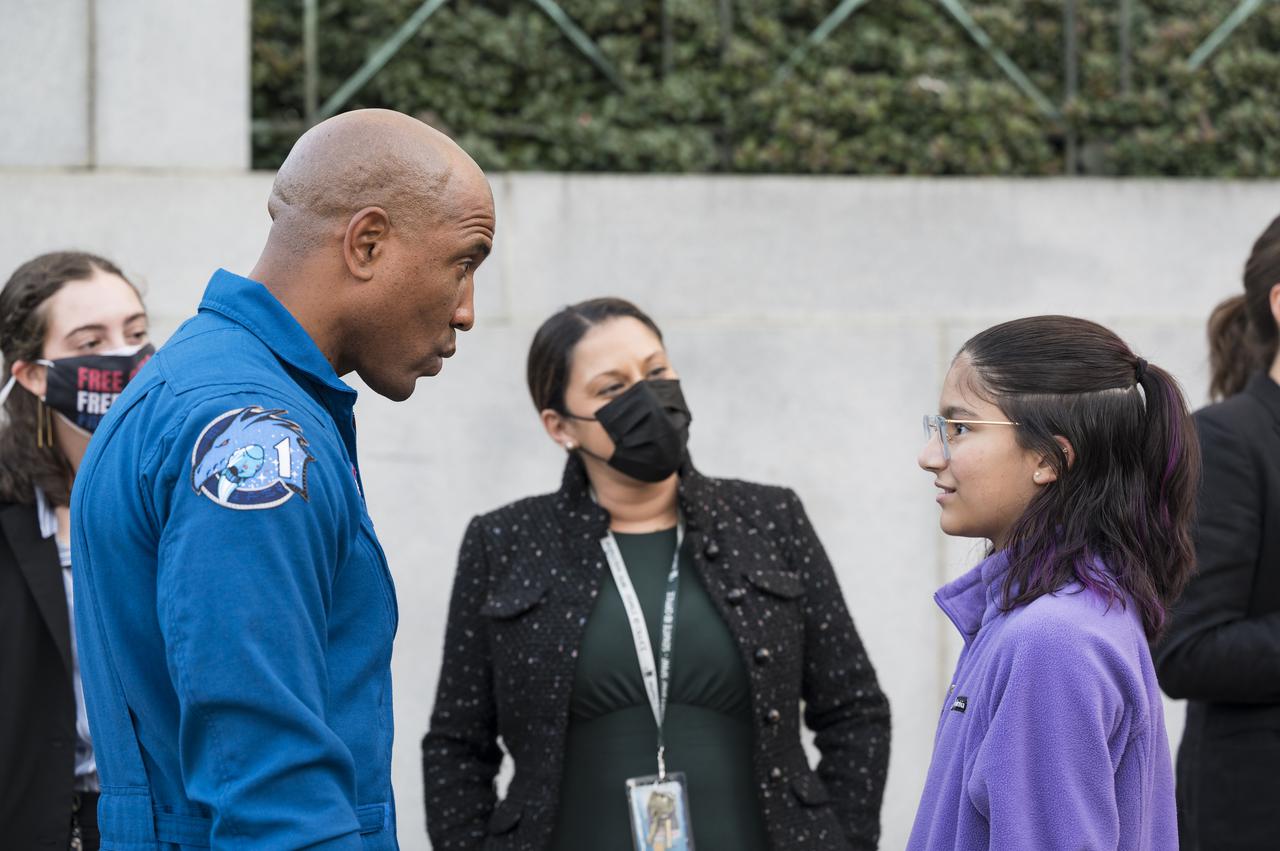
SpaceX Crew-1 NASA astronaut Victor Glover speaks with visitors at the Destination Station mobile exhibition on Capitol Hill, Wednesday, Nov. 17, 2021, in Washington. Glover, and NASA astronauts Mike Hopkins, and Shannon Walker, and Japan Aerospace Exploration Agency (JAXA) astronaut Soichi Noguchi launched on the first crew rotation mission to the International Space Station for SpaceX’s Falcon 9 and Crew Dragon spacecraft as part of the agency’s Commercial Crew Program and spent 168 days in space across Expeditions 64 and 65. Photo Credit: (NASA/Aubrey Gemignani)

NASA astronauts Reid Wiseman, commander, left; Christina Koch, mission specialist, second from left; Victor Glover, pilot, second from right; and CSA (Canadian Space Agency) astronaut Jeremy Hansen, mission specialist, right, pose for a picture with House Majority Leader Steve Scalise, R-La., Tuesday, May 12, 2026, at the U.S. Capitol in Washington. NASA’s Artemis II mission took Wiseman, Glover, Koch, and Hansen on a nearly 10-day journey around the Moon and back to Earth in April 2026. Photo Credit: (NASA/Joel Kowsky)

House Majority Leader Steve Scalise, R-La., right, and NASA astronauts Reid Wiseman, commander; Victor Glover, pilot; Christina Koch, mission specialist; and CSA (Canadian Space Agency) astronaut Jeremy Hansen, mission specialist are seen as they look out the window of the majority leaders office, Tuesday, May 12, 2026, at the U.S. Capitol in Washington. NASA’s Artemis II mission took Wiseman, Glover, Koch, and Hansen on a nearly 10-day journey around the Moon and back to Earth in April 2026. Photo Credit: (NASA/Joel Kowsky)
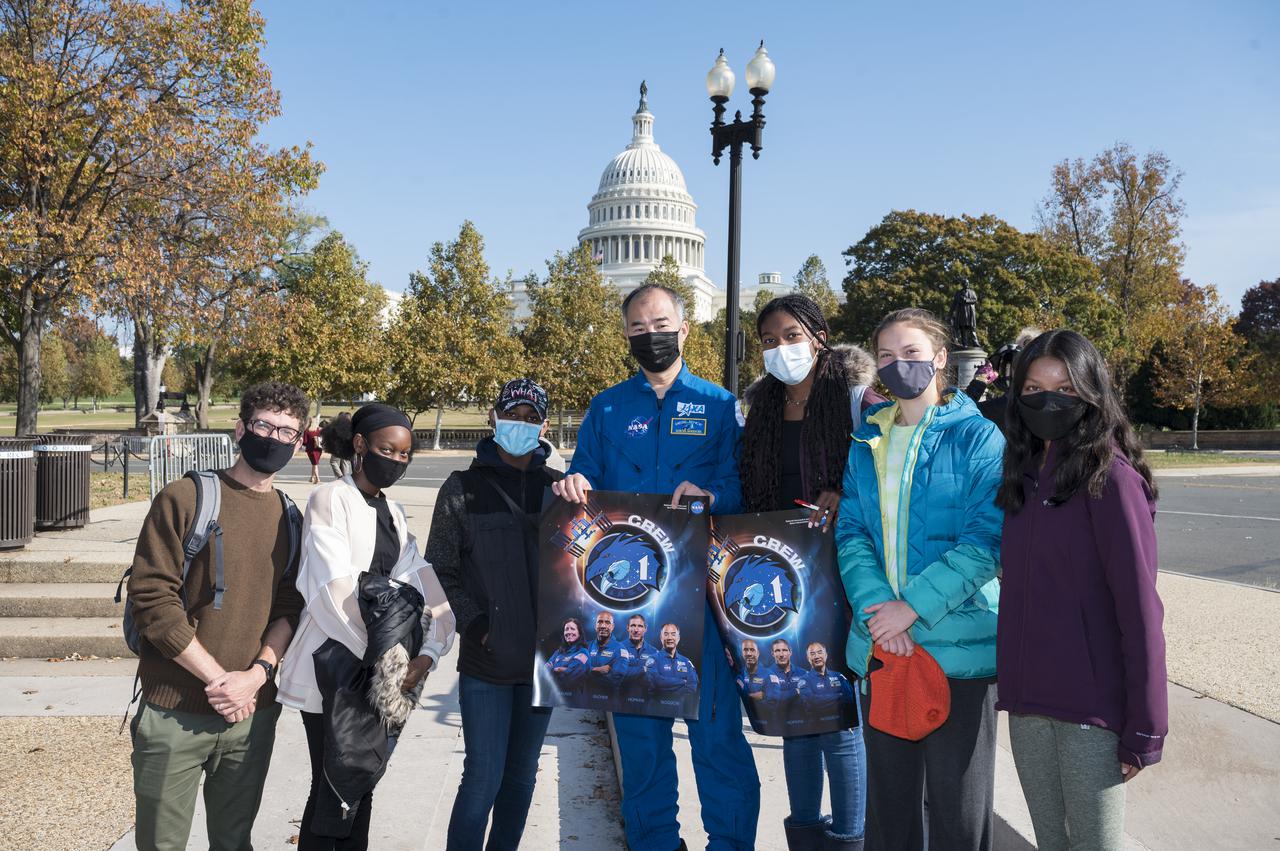
Japan Aerospace Exploration Agency (JAXA) astronaut Soichi Noguchi poses for a photo with visitors at the Destination Station mobile exhibition on Capitol Hill, Wednesday, Nov. 17, 2021, in Washington. Noguchi and crew mates NASA astronauts Mike Hopkins, Victor Glover, and Shannon Walker, launched on the first crew rotation mission to the International Space Station for SpaceX’s Falcon 9 and Crew Dragon spacecraft as part of the agency’s Commercial Crew Program and spent 168 days in space across Expeditions 64 and 65. Photo Credit: (NASA/Aubrey Gemignani)
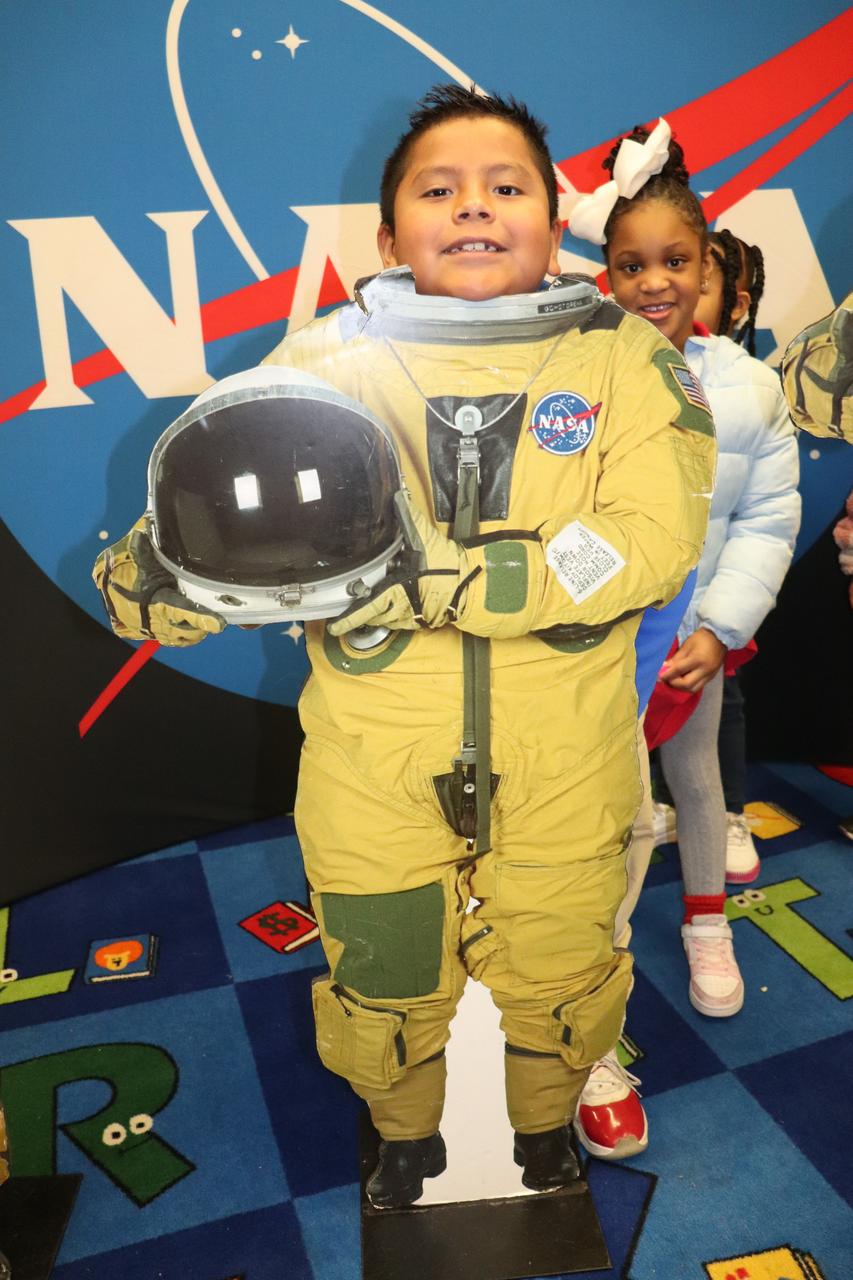
Representatives from NASA’s Stennis Space Center and NASA Shared Services Center participate in multiple related outreach events throughout Jackson, Mississippi, as part of the annual Stennis Day at the Capitol activities on Feb. 29. NASA personnel inspired the Artemis Generation with visits to Spann Elementary and Blackburn Middle schools. Activities included students learning about life as a NASA astronaut and a hands-on STEM (science, technology, engineering, and mathematics) activity. Sending the first woman and first person of color to the Moon on future Artemis missions will inspire the Artemis Generation to see themselves in space and understand the importance of STEM studies and careers. As NASA takes giant leaps to bridge disparities and break barriers in STEM, the agency’s efforts in the future workforce advances the nation’s space exploration.
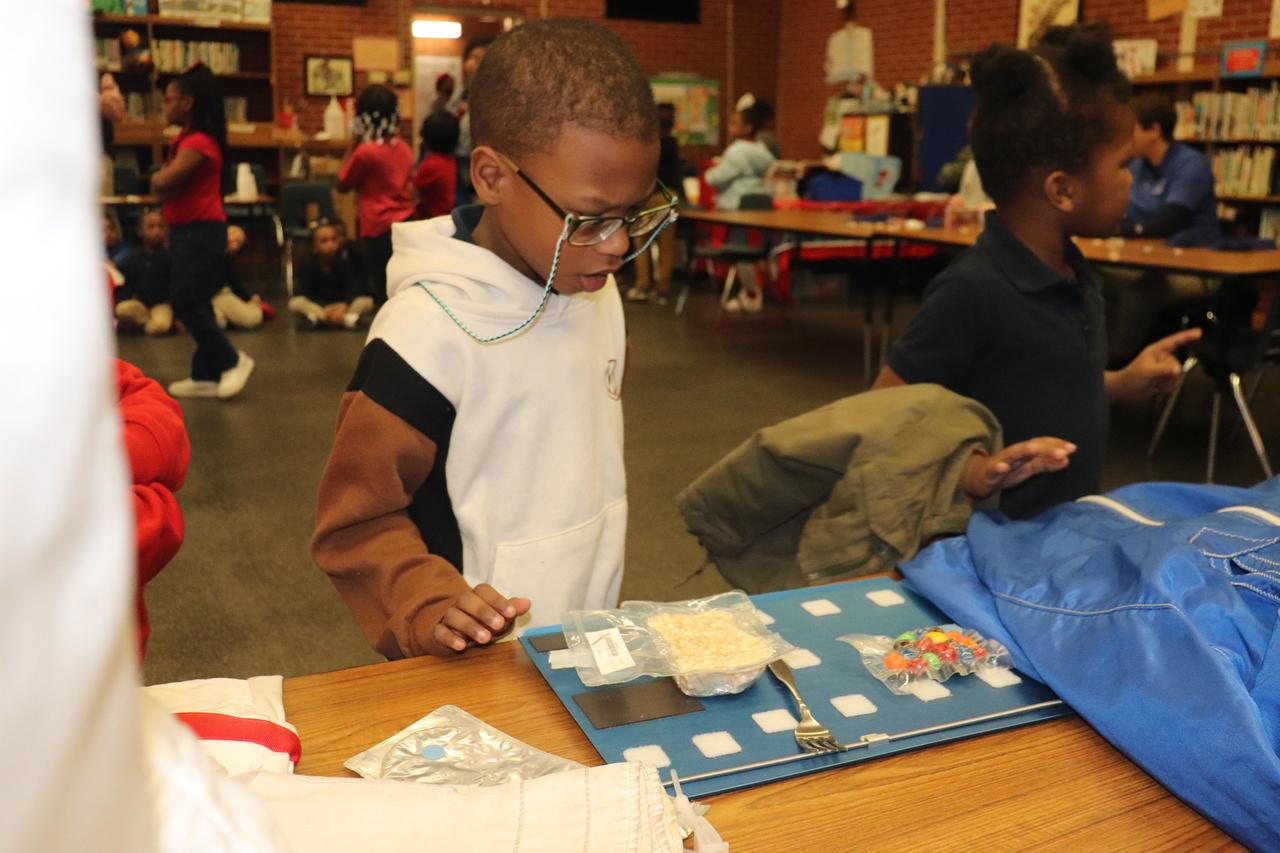
Representatives from NASA’s Stennis Space Center and NASA Shared Services Center participate in multiple related outreach events throughout Jackson, Mississippi, as part of the annual Stennis Day at the Capitol activities on Feb. 29. NASA personnel inspired the Artemis Generation with visits to Spann Elementary and Blackburn Middle schools. Activities included students learning about life as a NASA astronaut and a hands-on STEM (science, technology, engineering, and mathematics) activity. Sending the first woman and first person of color to the Moon on future Artemis missions will inspire the Artemis Generation to see themselves in space and understand the importance of STEM studies and careers. As NASA takes giant leaps to bridge disparities and break barriers in STEM, the agency’s efforts in the future workforce advances the nation’s space exploration.
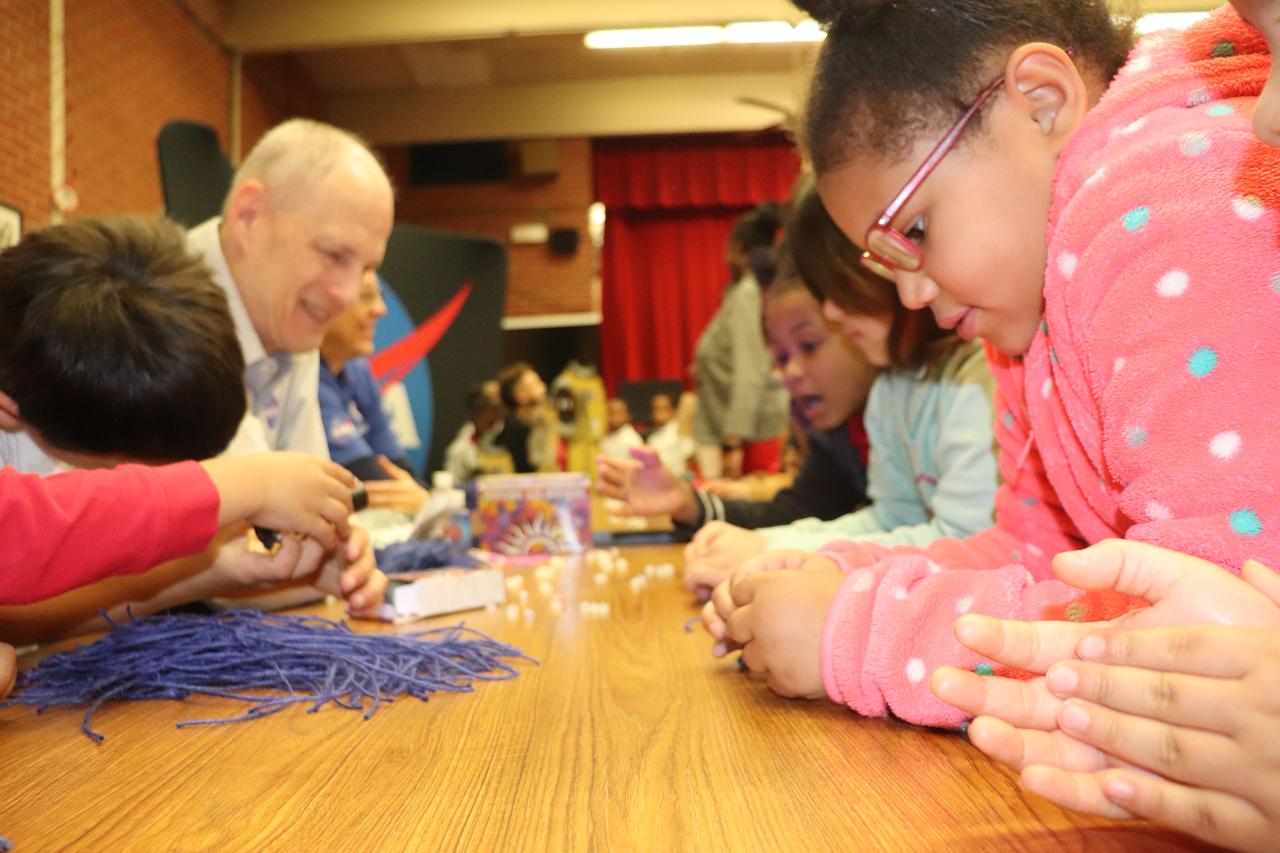
Representatives from NASA’s Stennis Space Center and NASA Shared Services Center participate in multiple related outreach events throughout Jackson, Mississippi, as part of the annual Stennis Day at the Capitol activities on Feb. 29. NASA personnel inspired the Artemis Generation with visits to Spann Elementary and Blackburn Middle schools. Activities included students learning about life as a NASA astronaut and a hands-on STEM (science, technology, engineering, and mathematics) activity. Sending the first woman and first person of color to the Moon on future Artemis missions will inspire the Artemis Generation to see themselves in space and understand the importance of STEM studies and careers. As NASA takes giant leaps to bridge disparities and break barriers in STEM, the agency’s efforts in the future workforce advances the nation’s space exploration.
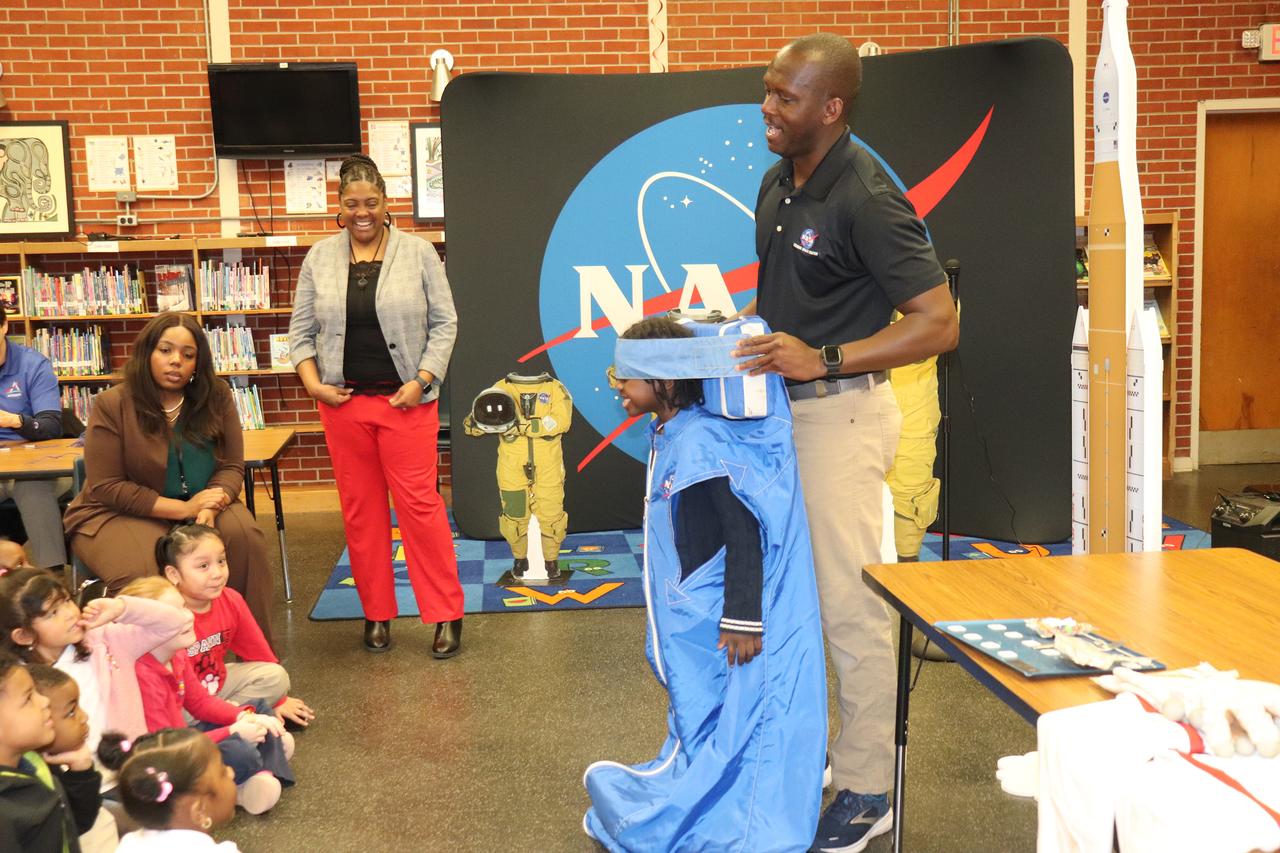
Representatives from NASA’s Stennis Space Center and NASA Shared Services Center participate in multiple related outreach events throughout Jackson, Mississippi, as part of the annual Stennis Day at the Capitol activities on Feb. 29. NASA personnel inspired the Artemis Generation with visits to Spann Elementary and Blackburn Middle schools. Activities included students learning about life as a NASA astronaut and a hands-on STEM (science, technology, engineering, and mathematics) activity. Sending the first woman and first person of color to the Moon on future Artemis missions will inspire the Artemis Generation to see themselves in space and understand the importance of STEM studies and careers. As NASA takes giant leaps to bridge disparities and break barriers in STEM, the agency’s efforts in the future workforce advances the nation’s space exploration.
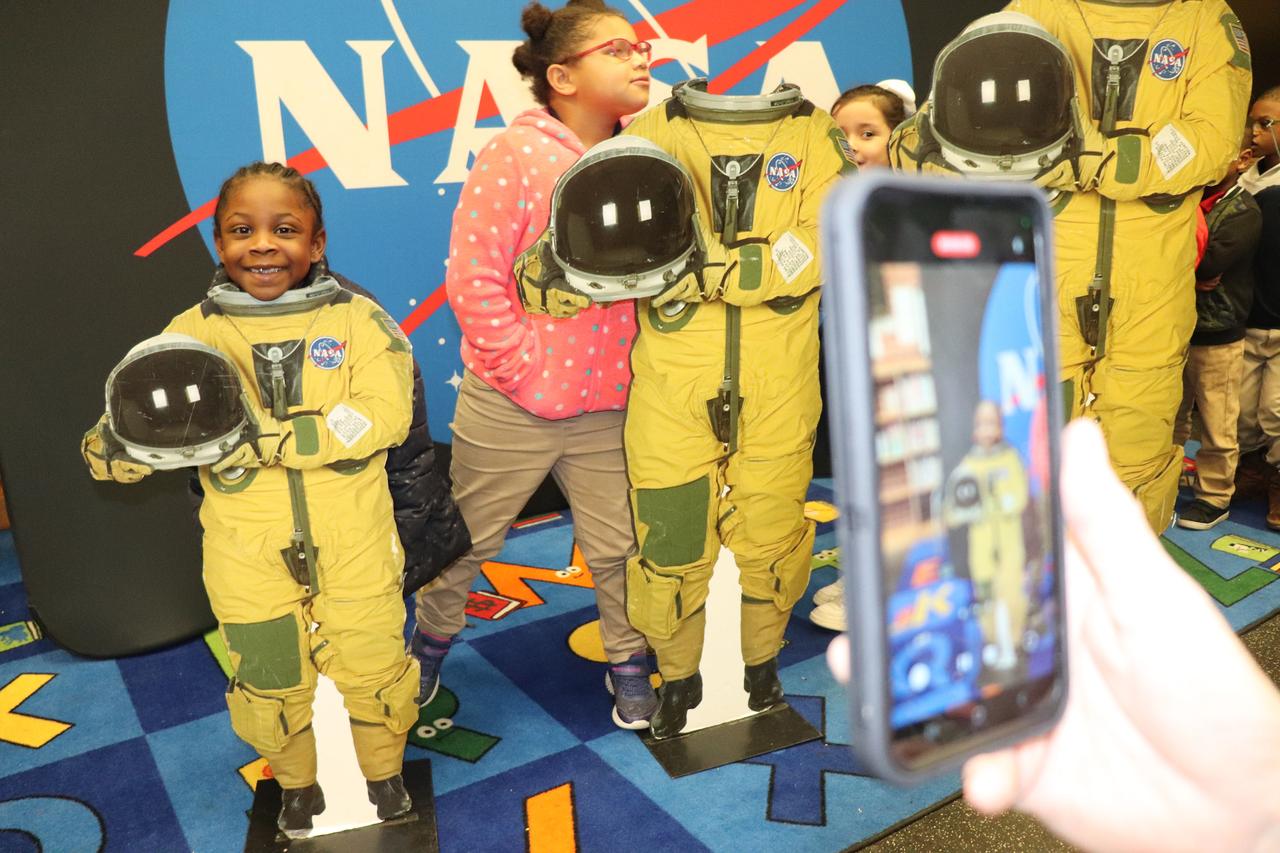
Representatives from NASA’s Stennis Space Center and NASA Shared Services Center participate in multiple related outreach events throughout Jackson, Mississippi, as part of the annual Stennis Day at the Capitol activities on Feb. 29. NASA personnel inspired the Artemis Generation with visits to Spann Elementary and Blackburn Middle schools. Activities included students learning about life as a NASA astronaut and a hands-on STEM (science, technology, engineering, and mathematics) activity. Sending the first woman and first person of color to the Moon on future Artemis missions will inspire the Artemis Generation to see themselves in space and understand the importance of STEM studies and careers. As NASA takes giant leaps to bridge disparities and break barriers in STEM, the agency’s efforts in the future workforce advances the nation’s space exploration.
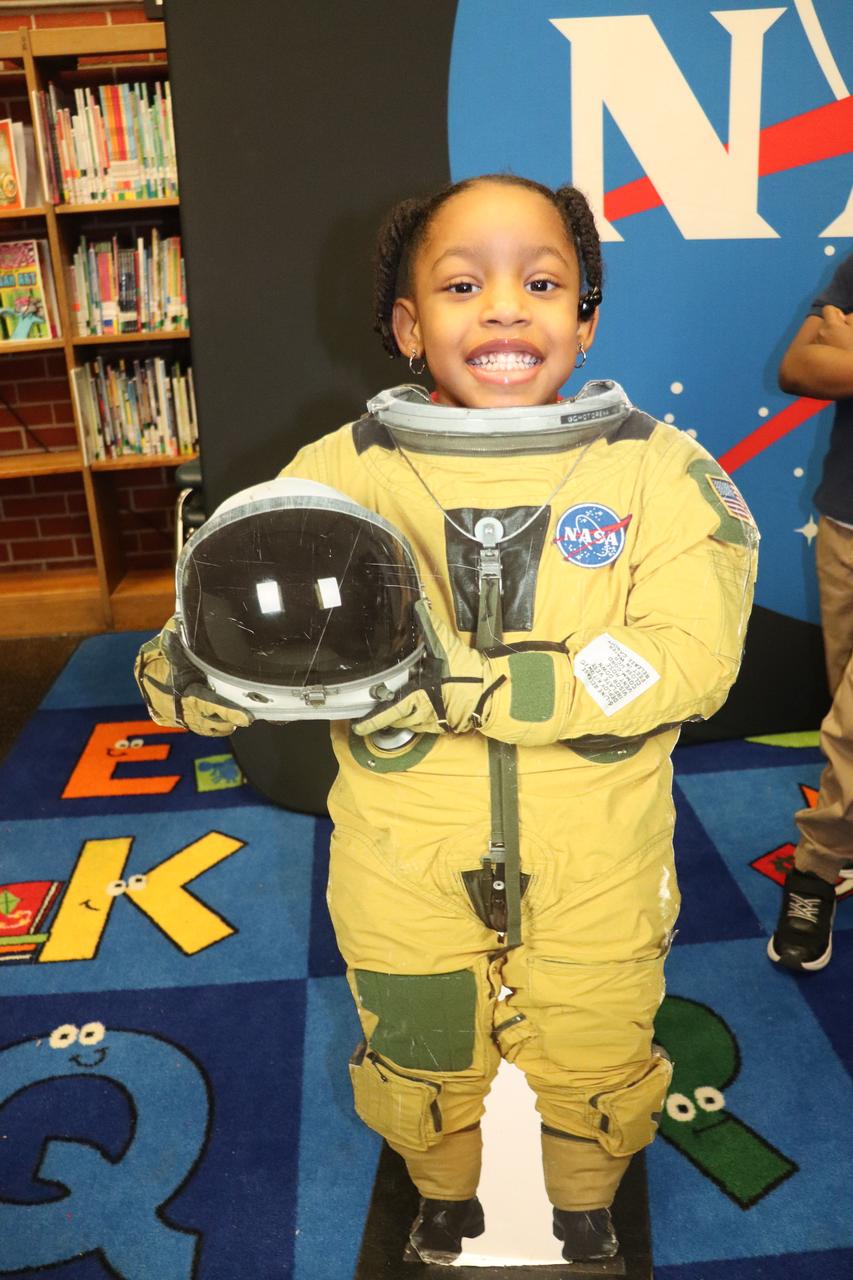
Representatives from NASA’s Stennis Space Center and NASA Shared Services Center participate in multiple related outreach events throughout Jackson, Mississippi, as part of the annual Stennis Day at the Capitol activities on Feb. 29. NASA personnel inspired the Artemis Generation with visits to Spann Elementary and Blackburn Middle schools. Activities included students learning about life as a NASA astronaut and a hands-on STEM (science, technology, engineering, and mathematics) activity. Sending the first woman and first person of color to the Moon on future Artemis missions will inspire the Artemis Generation to see themselves in space and understand the importance of STEM studies and careers. As NASA takes giant leaps to bridge disparities and break barriers in STEM, the agency’s efforts in the future workforce advances the nation’s space exploration.

Representatives from NASA’s Stennis Space Center and NASA Shared Services Center participate in multiple related outreach events throughout Jackson, Mississippi, as part of the annual Stennis Day at the Capitol activities on Feb. 29. NASA personnel inspired the Artemis Generation with visits to Spann Elementary and Blackburn Middle schools. Activities included students learning about life as a NASA astronaut and a hands-on STEM (science, technology, engineering, and mathematics) activity. Sending the first woman and first person of color to the Moon on future Artemis missions will inspire the Artemis Generation to see themselves in space and understand the importance of STEM studies and careers. As NASA takes giant leaps to bridge disparities and break barriers in STEM, the agency’s efforts in the future workforce advances the nation’s space exploration.
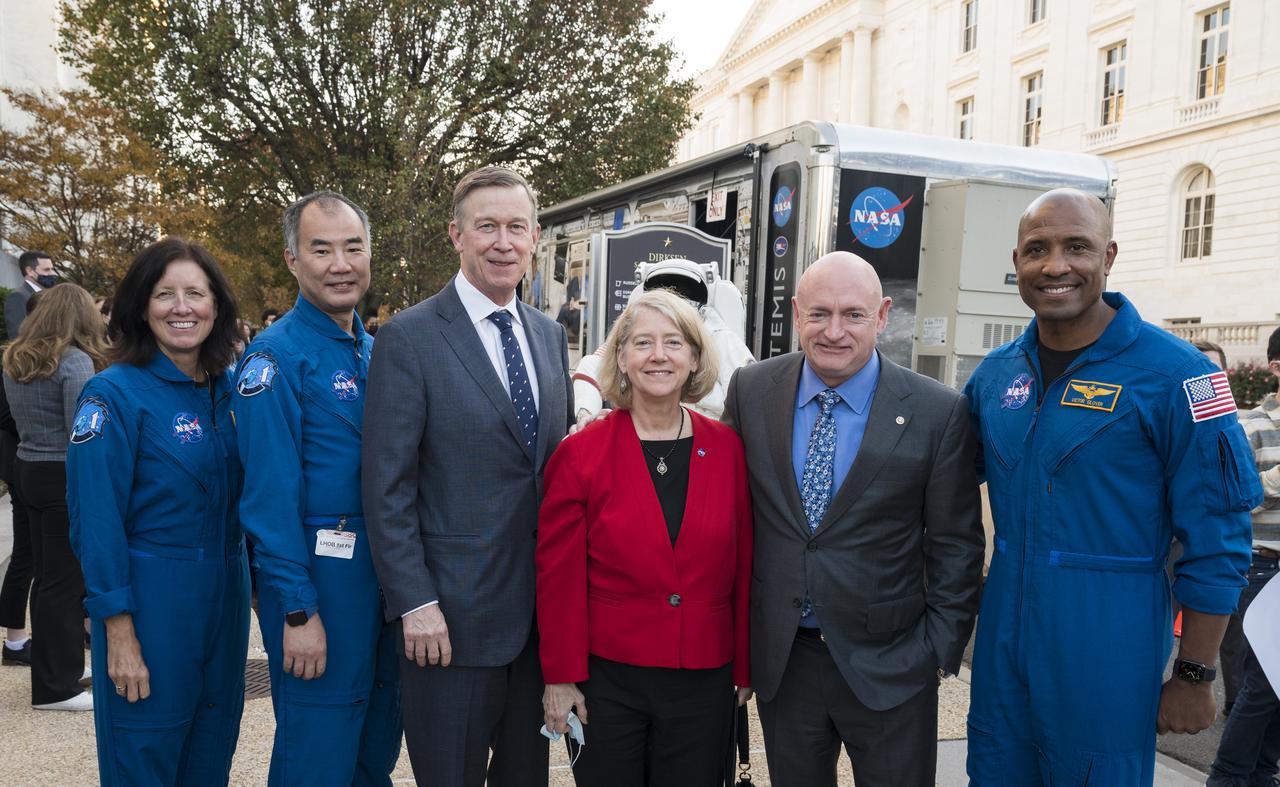
From left to right, SpaceX Crew-1 NASA astronaut Shannon Walker, Japan Aerospace Exploration Agency (JAXA) astronaut Soichi Noguchi, Senator John Hickenlooper, D-Colo, NASA Deputy Administrator Pam Melroy, Senator Mark Kelly, D-Ariz., and NASA astronaut Victor Glover, pose for a photo at the Destination Station mobile exhibition on Capitol Hill, Wednesday, Nov. 17, 2021, in Washington. Walker, Glover, Noguchi, and NASA astronaut Mike Hopkins, launched on the first crew rotation mission to the International Space Station for SpaceX’s Falcon 9 and Crew Dragon spacecraft as part of the agency’s Commercial Crew Program and spent 168 days in space across Expeditions 64 and 65. Photo Credit: (NASA/Aubrey Gemignani)
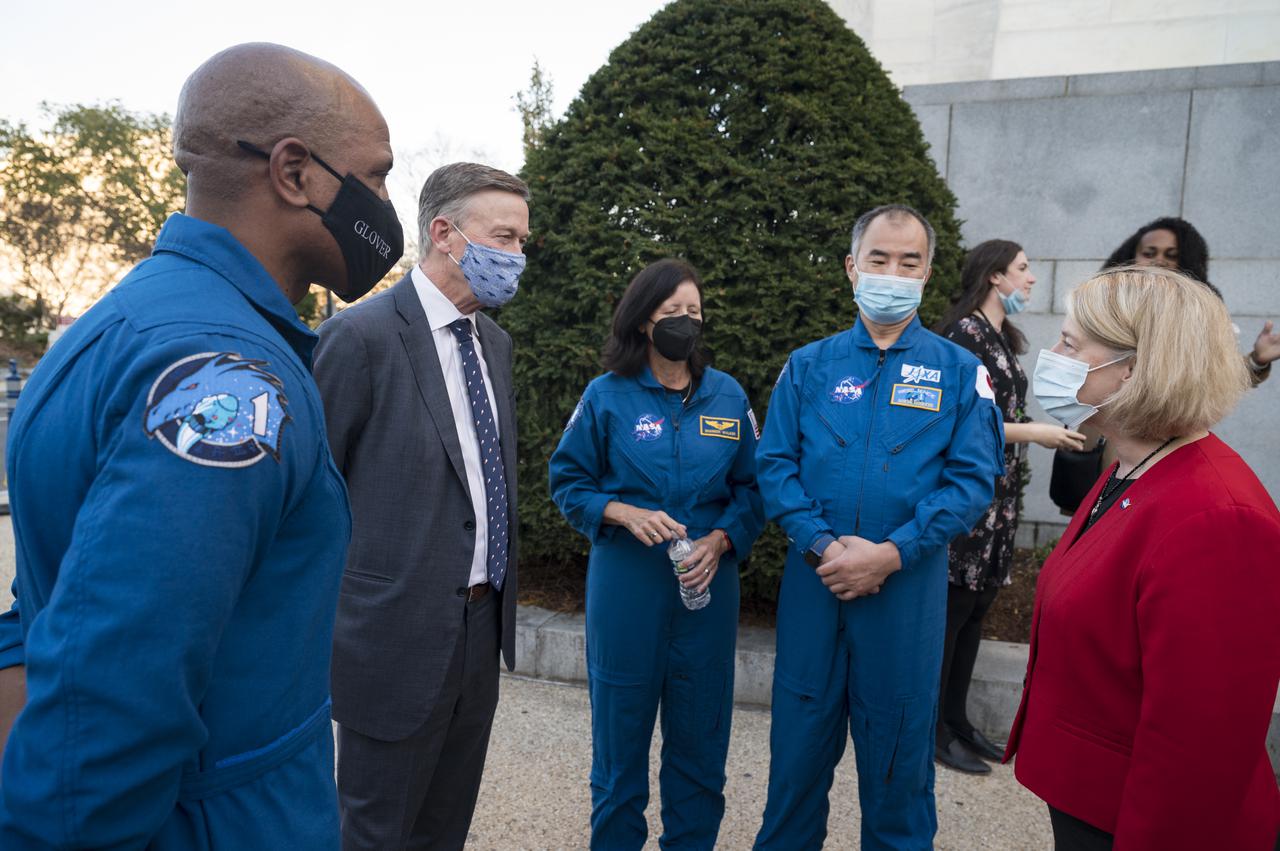
NASA Deputy Administrator Pam Melroy, right, SpaceX Crew-1 NASA astronauts Victor Glover, left, and Shannon Walker, third from right, and Japan Aerospace Exploration Agency (JAXA) astronaut Soichi Noguchi, second from right, speak with Senator John Hickenlooper, D-Colo, at the Destination Station mobile exhibition on Capitol Hill, Wednesday, Nov. 17, 2021, in Washington. Walker, Glover, Noguchi, and NASA astronaut Mike Hopkins, launched on the first crew rotation mission to the International Space Station for SpaceX’s Falcon 9 and Crew Dragon spacecraft as part of the agency’s Commercial Crew Program and spent 168 days in space across Expeditions 64 and 65. Photo Credit: (NASA/Aubrey Gemignani)
NASA launched a Terrier-Improved Malemute suborbital sounding rocket carrying the RockSat-X payload with university and community college student experiments at 6:04 a.m. EDT Wednesday, Aug. 12, from NASA’s Wallops Flight Facilityin Virginia. More than 60 students and instructors from across the continental United States, Hawaii and Puerto Rico were on hand to witness the launch of their experiments. The payload flew to an altitude of about 97 miles and descended via parachute into the Atlantic Ocean off the coast of Wallops. Payload recovery operations began after lift-off. Developed by students from seven higher education programs, the experiments flew through the RockSat-X program in conjunction with the Colorado Space Grant Consortium. Participating institutions in this flight are the University of Colorado, Boulder; Northwest Nazarene University, Nampa, Idaho; the University of Puerto Rico; the University of Nebraska, Lincoln; Virginia Tech University, Blacksburg; Capitol Technology University, Laurel, Maryland; and University of Hawai'i Community Colleges at the Honolulu, Kapi'olani, Kaua'i, and Windward campuses. The next launch scheduled from Wallops is a NASA Black Brant IX suborbital sounding rocket carrying several technology development instruments. The launch is scheduled between 7 and 7:41 p.m. Sept. 29. The backup launch days are Sept. 30 through Oct. 12. <b><a href="http://www.nasa.gov/audience/formedia/features/MP_Photo_Guidelines.html" rel="nofollow">NASA image use policy.</a></b> <b><a href="http://www.nasa.gov/centers/goddard/home/index.html" rel="nofollow">NASA Goddard Space Flight Center</a></b> enables NASA’s mission through four scientific endeavors: Earth Science, Heliophysics, Solar System Exploration, and Astrophysics. Goddard plays a leading role in NASA’s accomplishments by contributing compelling scientific knowledge to advance the Agency’s mission. <b>Follow us on <a href="http://twitter.com/NASAGoddardPix" rel="nofollow">Twitter</a></b> <b>Like us on <a href="http://www.facebook.com/pages/Greenbelt-MD/NASA-Goddard/395013845897?ref=tsd" rel="nofollow">Facebook</a></b> <b>Find us on <a href="http://instagrid.me/nasagoddard/?vm=grid" rel="nofollow">Instagram</a></b>