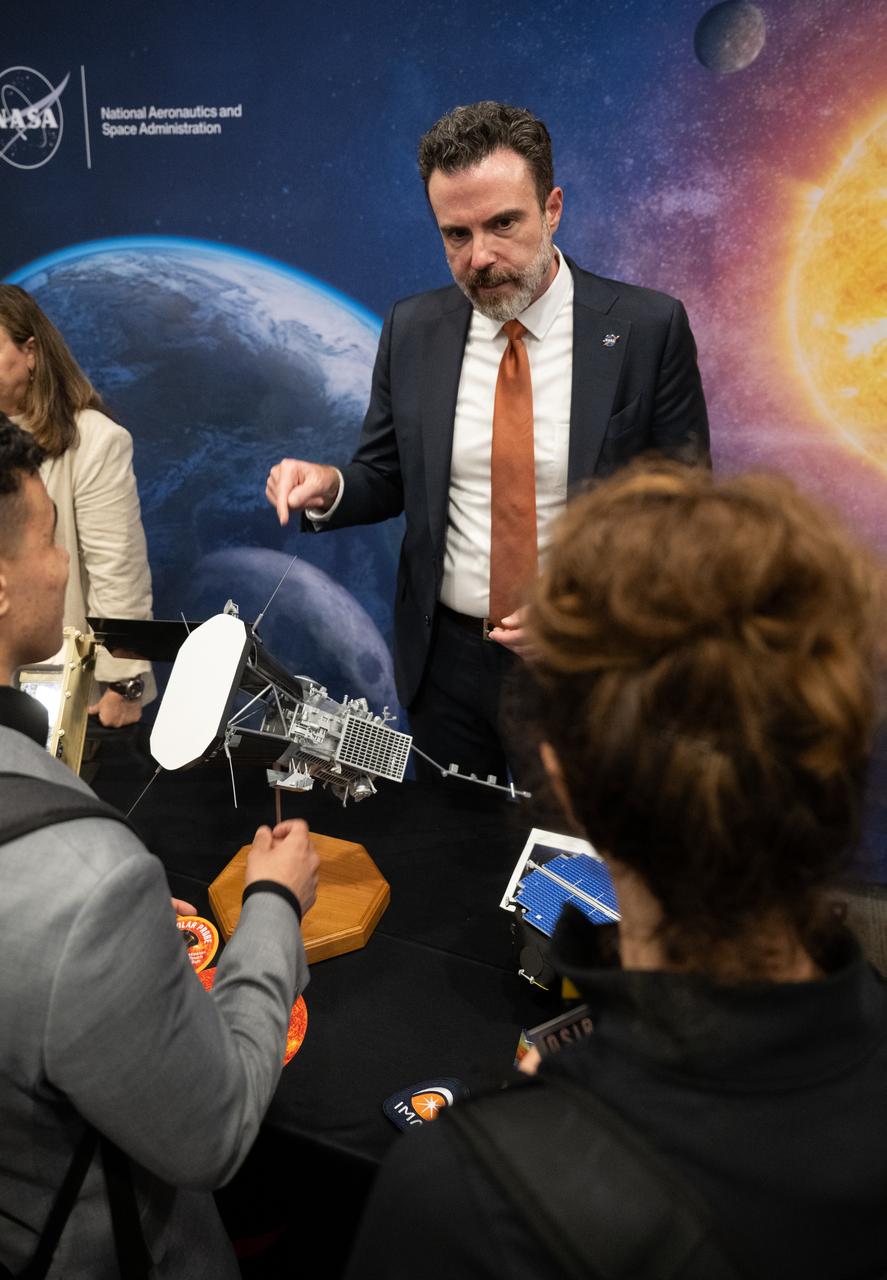
Attendees view exhibits during NASA’s Day on the Hill, Tuesday, Sept. 16, 2025, at the Hart Senate Office Building in Washington. Photo Credit: (NASA/Joel Kowsky)
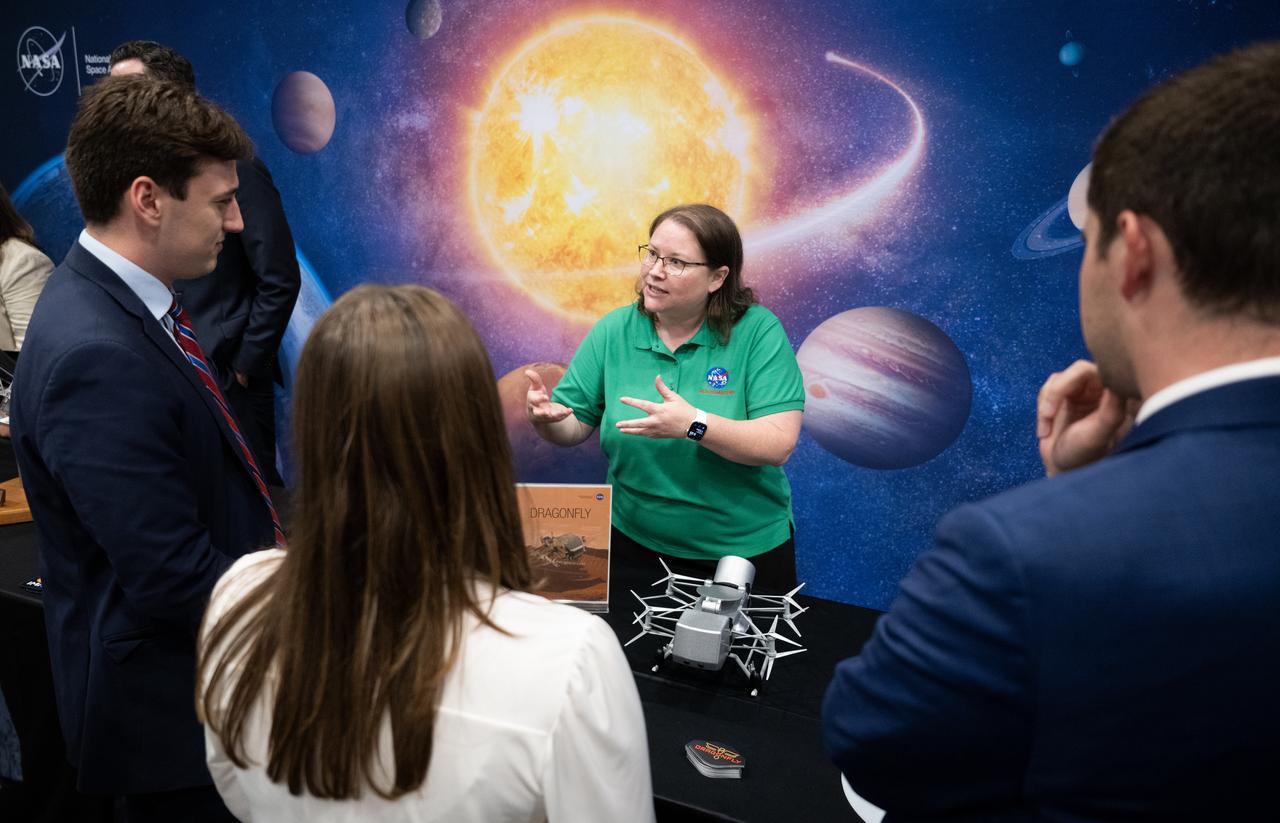
Attendees view exhibits during NASA’s Day on the Hill, Tuesday, Sept. 16, 2025, at the Hart Senate Office Building in Washington. Photo Credit: (NASA/Joel Kowsky)

Attendees view exhibits during NASA’s Day on the Hill, Tuesday, Sept. 16, 2025, at the Hart Senate Office Building in Washington. Photo Credit: (NASA/Joel Kowsky)

Attendees view exhibits during NASA’s Day on the Hill, Tuesday, Sept. 16, 2025, at the Hart Senate Office Building in Washington. Photo Credit: (NASA/Joel Kowsky)
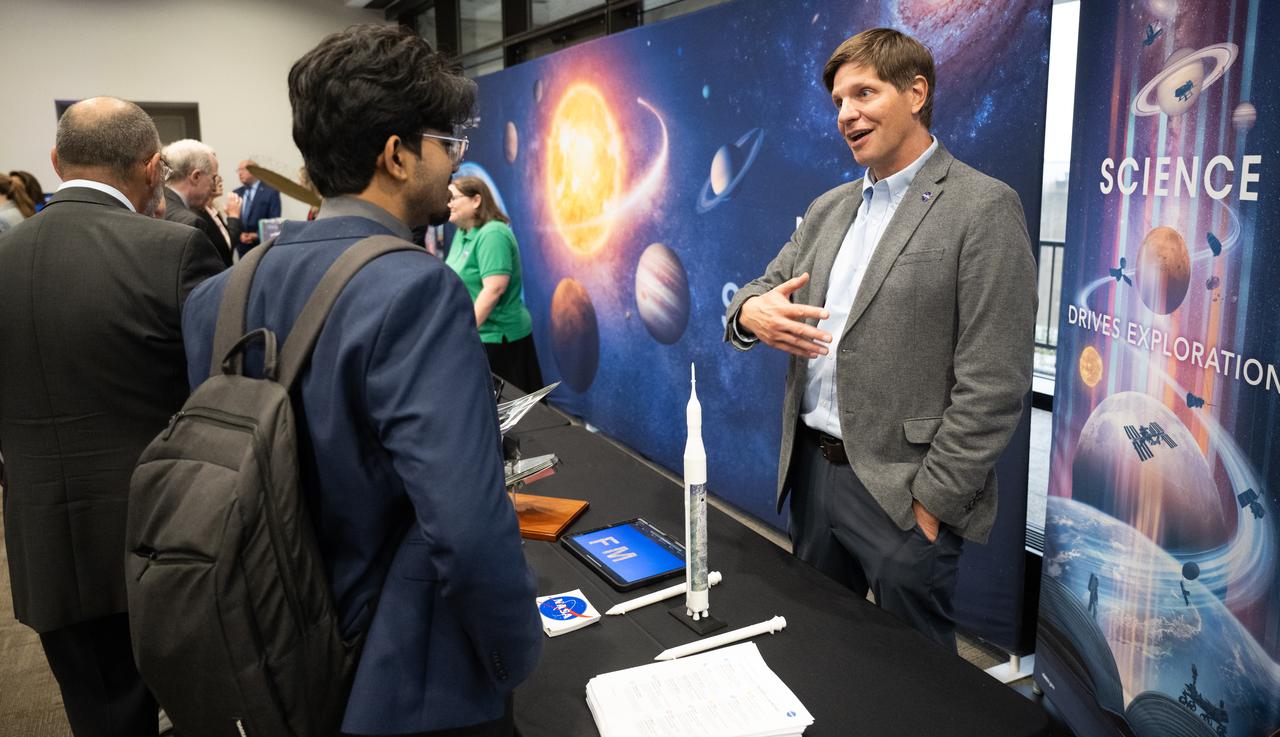
Attendees view exhibits during NASA’s Day on the Hill, Tuesday, Sept. 16, 2025, at the Hart Senate Office Building in Washington. Photo Credit: (NASA/Joel Kowsky)

Attendees view exhibits during NASA’s Day on the Hill, Tuesday, Sept. 16, 2025, at the Hart Senate Office Building in Washington. Photo Credit: (NASA/Joel Kowsky)
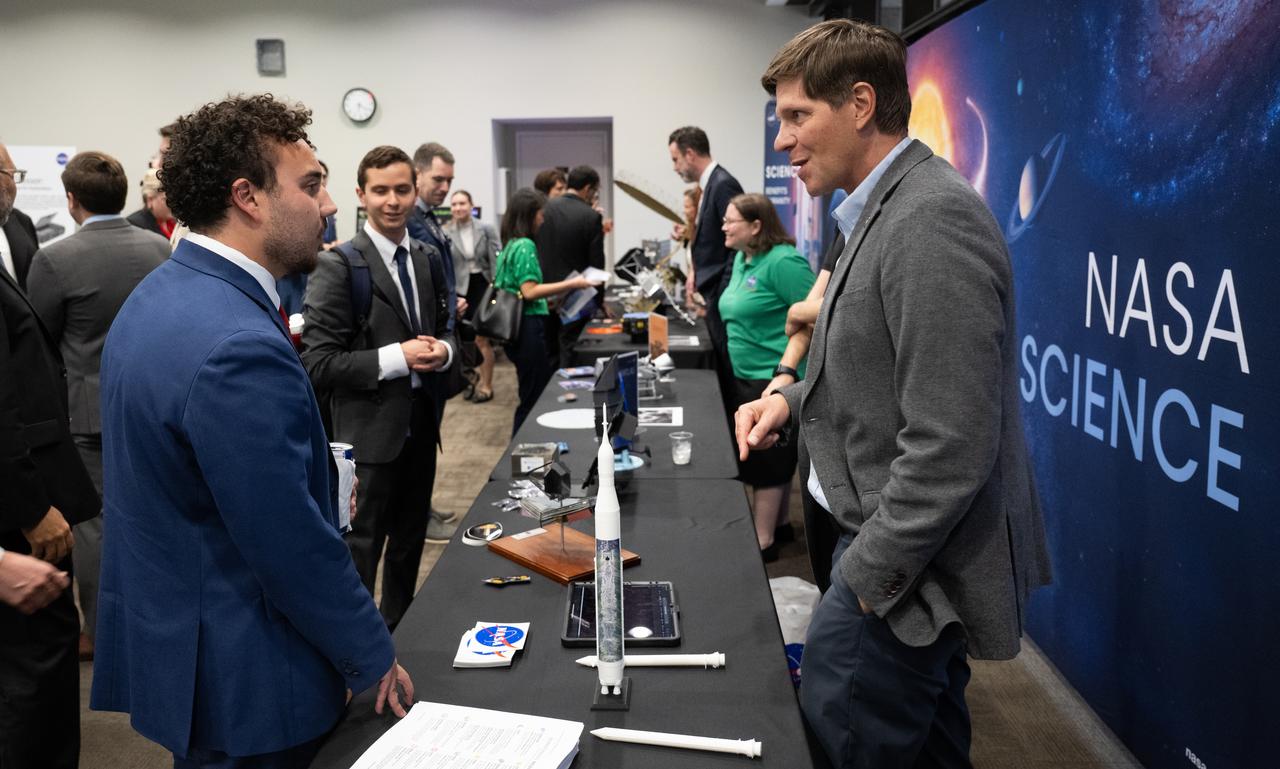
Attendees view exhibits during NASA’s Day on the Hill, Tuesday, Sept. 16, 2025, at the Hart Senate Office Building in Washington. Photo Credit: (NASA/Joel Kowsky)
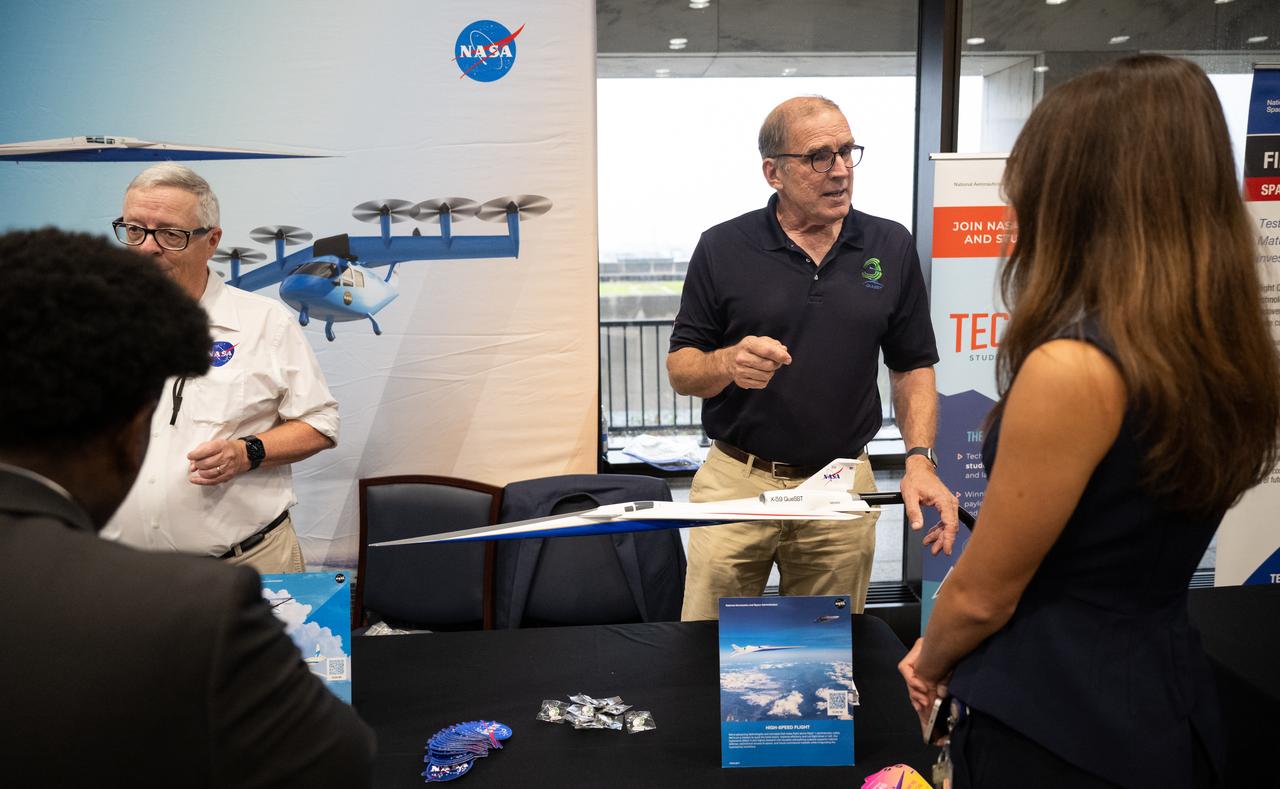
Attendees view exhibits during NASA’s Day on the Hill, Tuesday, Sept. 16, 2025, at the Hart Senate Office Building in Washington. Photo Credit: (NASA/Joel Kowsky)

Attendees view exhibits and listen to speakers during NASA’s Science Day on the Hill event, Wednesday, June 7, 2023, at the Rayburn House Office Building in Washington. Photo Credit: (NASA/Joel Kowsky)
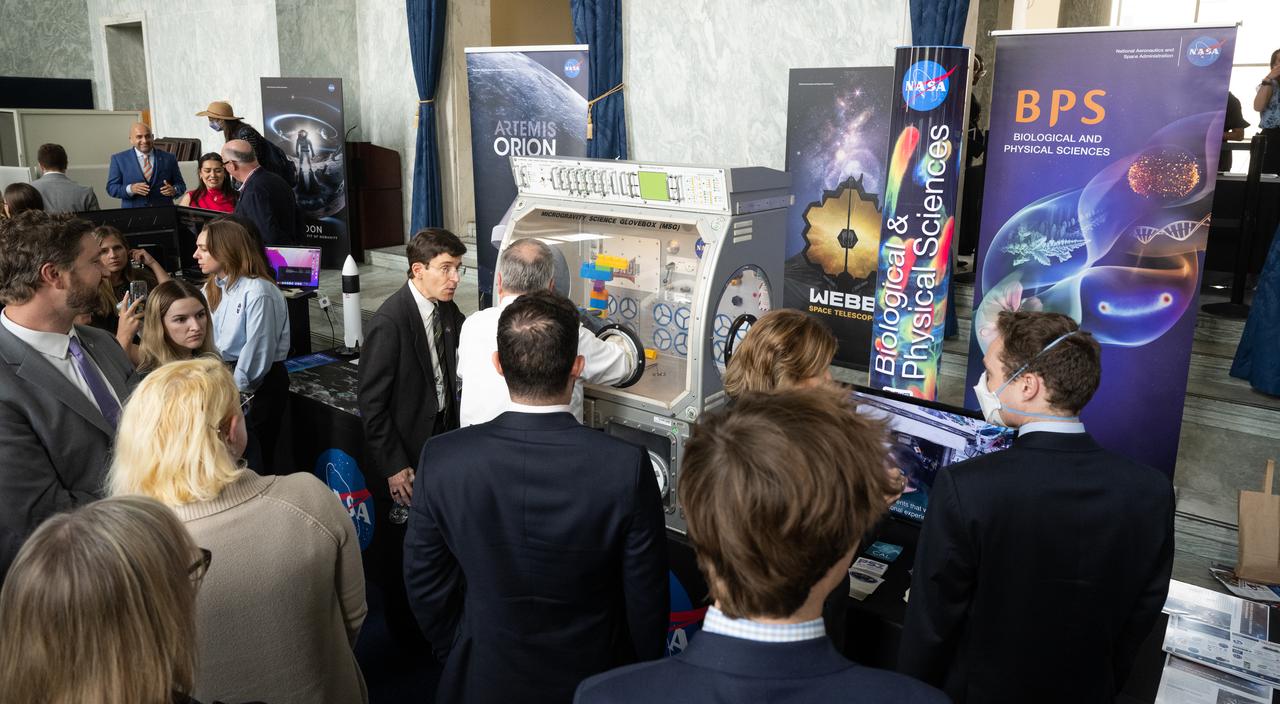
Attendees view exhibits during NASA’s Science Day on the Hill event, Wednesday, June 7, 2023, at the Rayburn House Office Building in Washington. Photo Credit: (NASA/Joel Kowsky)

Acting NASA Administrator Sean Duffy delivers remarks during NASA’s Day on the Hill, Tuesday, Sept. 16, 2025, at the Hart Senate Office Building in Washington. Photo Credit: (NASA/Joel Kowsky)

Acting NASA Administrator Sean Duffy delivers remarks during NASA’s Day on the Hill, Tuesday, Sept. 16, 2025, at the Hart Senate Office Building in Washington. Photo Credit: (NASA/Joel Kowsky)

Acting NASA Administrator Sean Duffy delivers remarks during NASA’s Day on the Hill, Tuesday, Sept. 16, 2025, at the Hart Senate Office Building in Washington. Photo Credit: (NASA/Joel Kowsky)

NASA astronaut Nick Hague speaks with attendees of NASA’s Day on the Hill, Tuesday, Sept. 16, 2025, at the Hart Senate Office Building in Washington. Photo Credit: (NASA/Joel Kowsky)
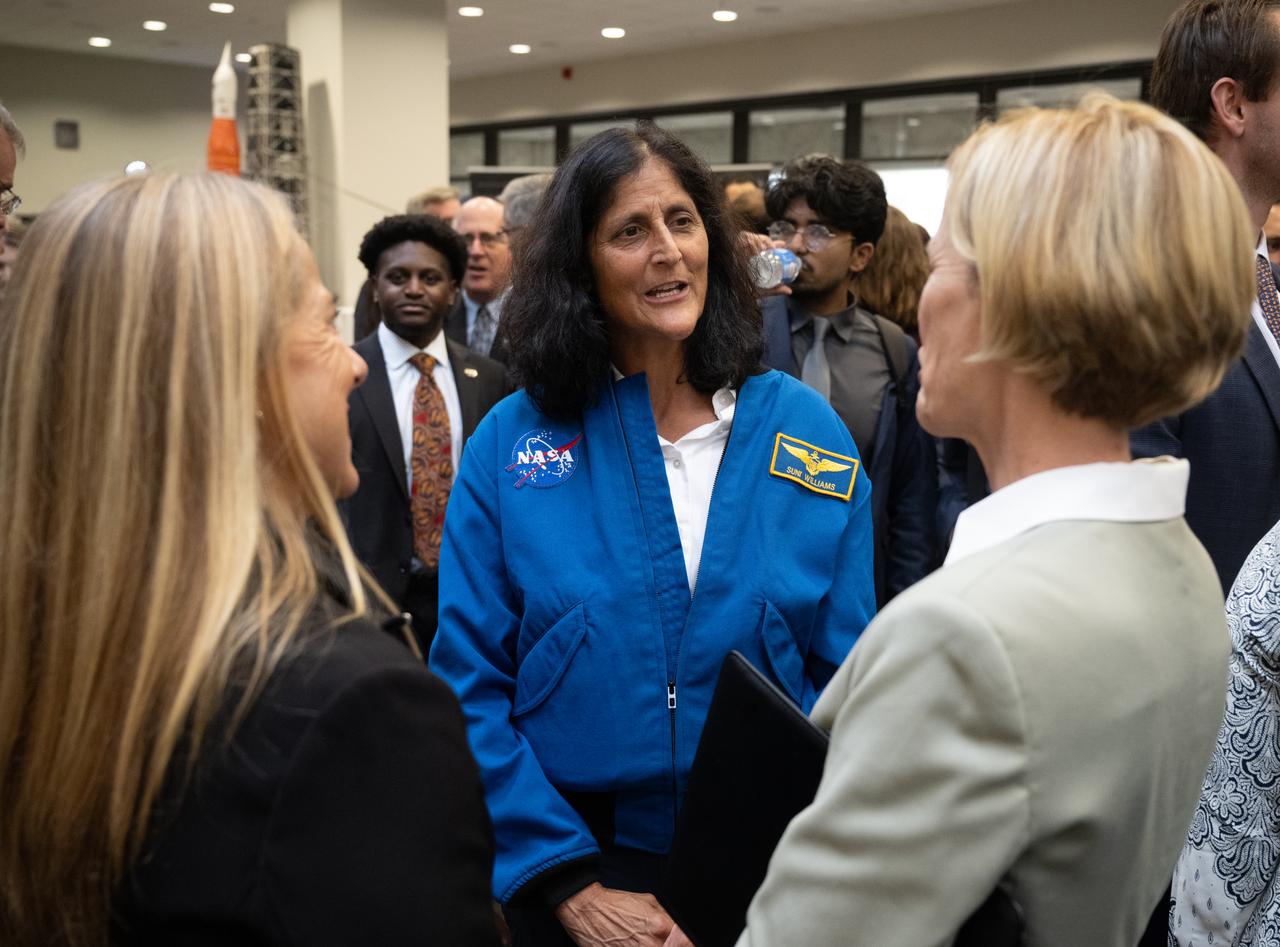
NASA astronaut Suni Williams speaks with attendees of NASA’s Day on the Hill, Tuesday, Sept. 16, 2025, at the Hart Senate Office Building in Washington. Photo Credit: (NASA/Joel Kowsky)
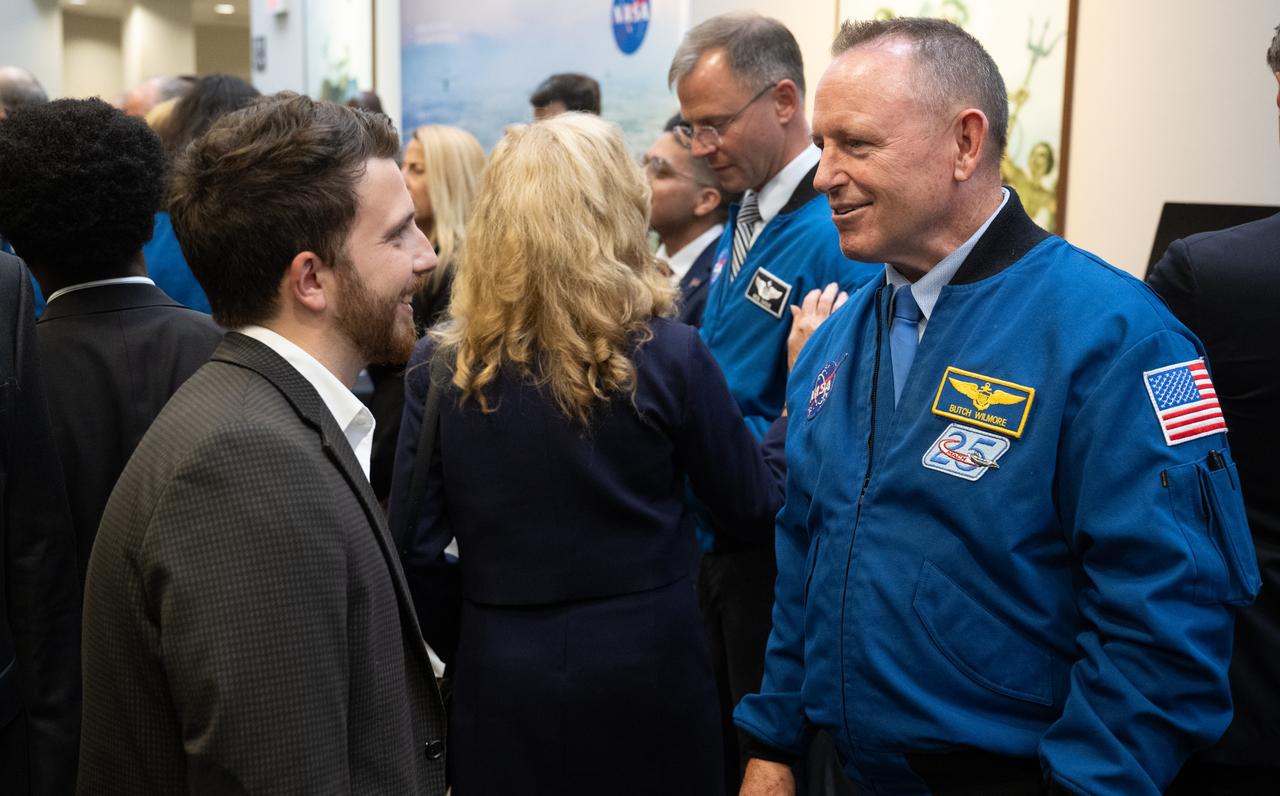
NASA astronaut Butch Wilmore speaks with attendees of NASA’s Day on the Hill, Tuesday, Sept. 16, 2025, at the Hart Senate Office Building in Washington. Photo Credit: (NASA/Joel Kowsky)

Heather Pringle, CEO of Space Foundation, gives remarks during NASA’s Day on the Hill, Tuesday, Sept. 16, 2025, at the Hart Senate Office Building in Washington. Photo Credit: (NASA/Joel Kowsky)

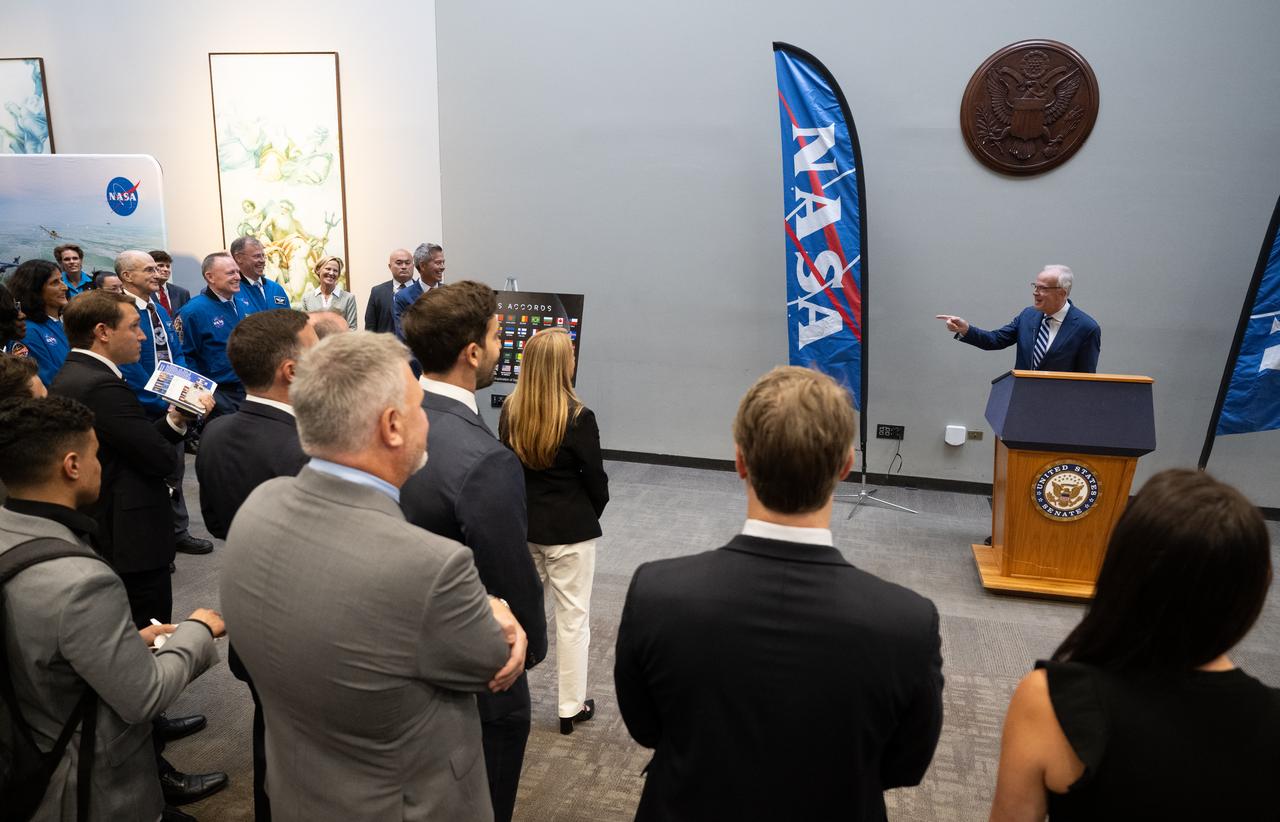
U.S. Senator Jerry Moran, R-Kan., gives remarks during NASA’s Day on the Hill, Tuesday, Sept. 16, 2025, at the Hart Senate Office Building in Washington. Photo Credit: (NASA/Joel Kowsky)
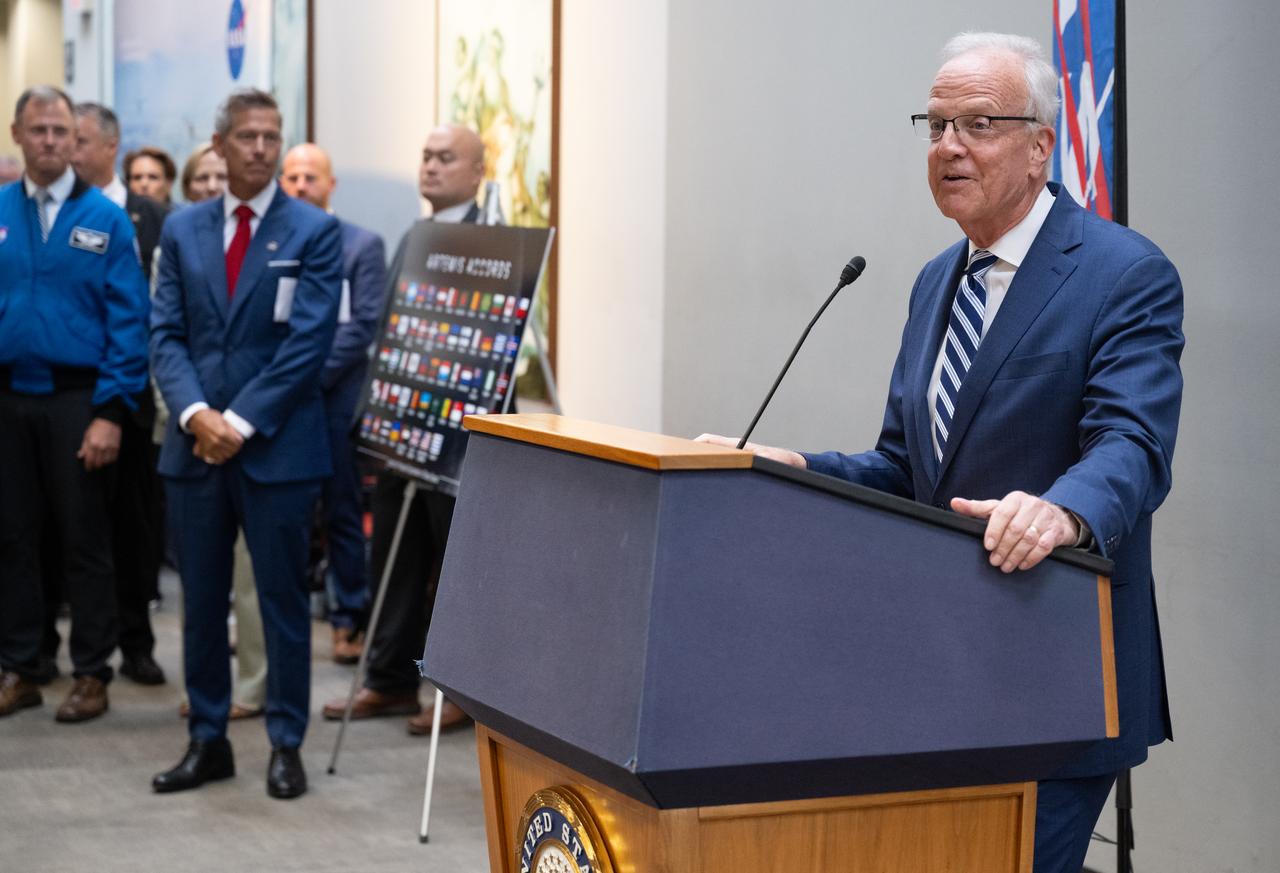
U.S. Senator Jerry Moran, R-Kan., gives remarks during NASA’s Day on the Hill, Tuesday, Sept. 16, 2025, at the Hart Senate Office Building in Washington. Photo Credit: (NASA/Joel Kowsky)
U.S. Senator Jerry Moran, R-Kan., gives remarks during NASA’s Day on the Hill, Tuesday, Sept. 16, 2025, at the Hart Senate Office Building in Washington. Photo Credit: (NASA/Joel Kowsky)
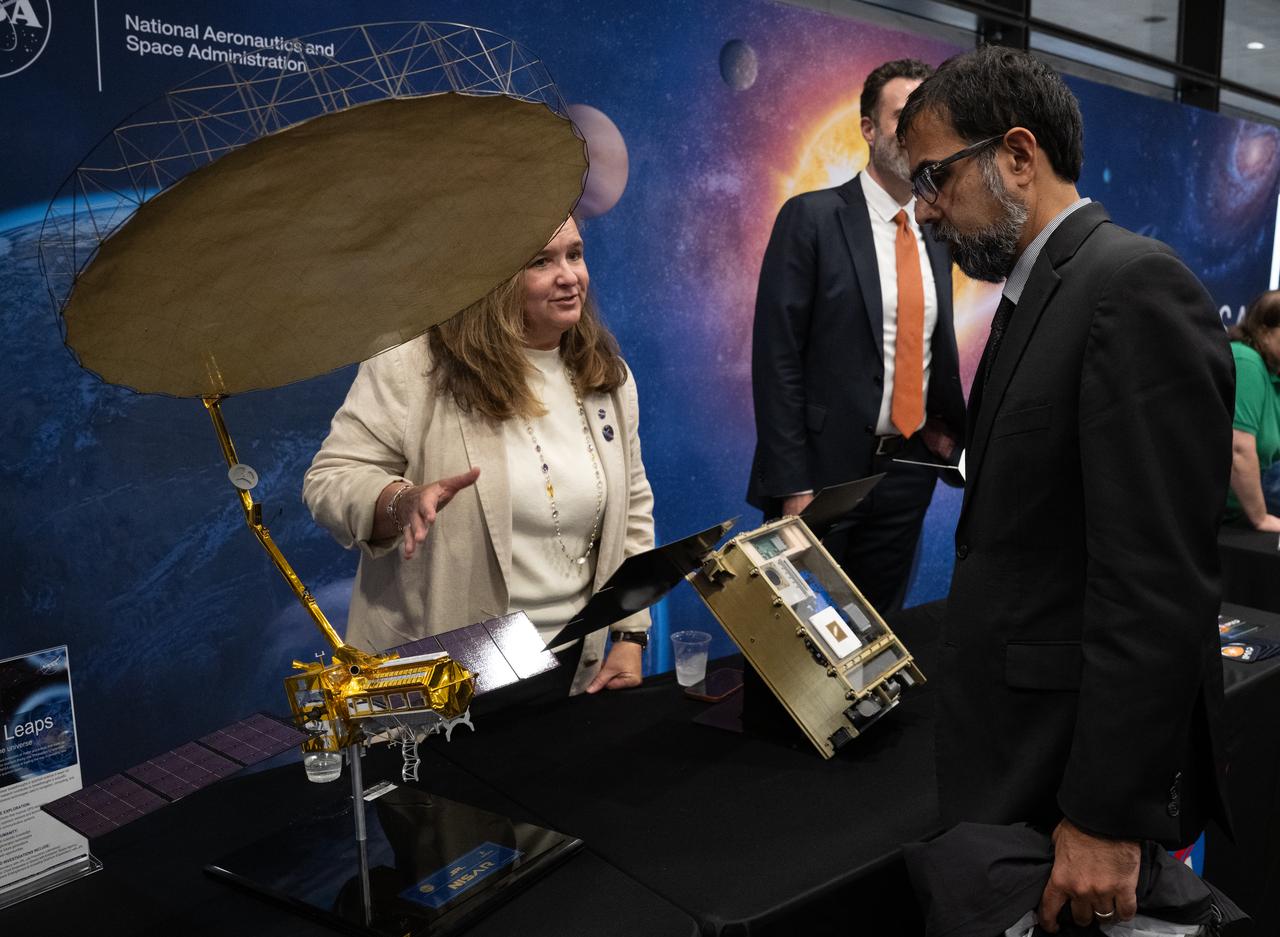
Karen St. Germain, director of the Earth Science Division of NASA’s Science Mission Directorate, left, speaks with NASA Associate Administrator Amit Kshatriya during NASA’s Day on the Hill, Tuesday, Sept. 16, 2025, at the Hart Senate Office Building in Washington. Photo Credit: (NASA/Joel Kowsky)
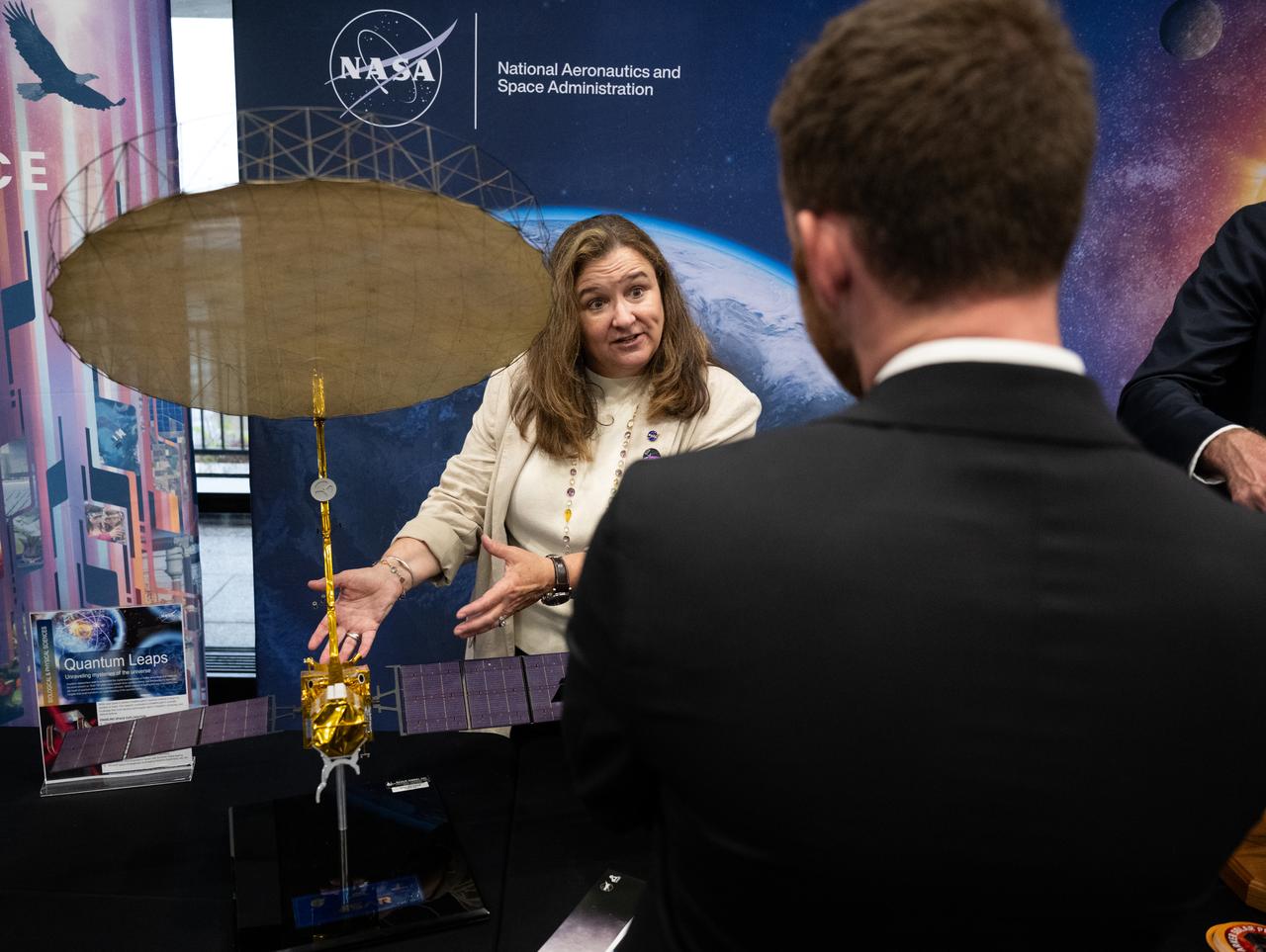
Karen St. Germain, director of the Earth Science Division of NASA’s Science Mission Directorate speaks with an attendee as he views exhibits during NASA’s Day on the Hill, Tuesday, Sept. 16, 2025, at the Hart Senate Office Building in Washington. Photo Credit: (NASA/Joel Kowsky)

NASA Associate administrator Bob Cabana speaks during NASA’s Science Day on the Hill event, Wednesday, June 7, 2023, at the Rayburn House Office Building in Washington. Photo Credit: (NASA/Joel Kowsky)
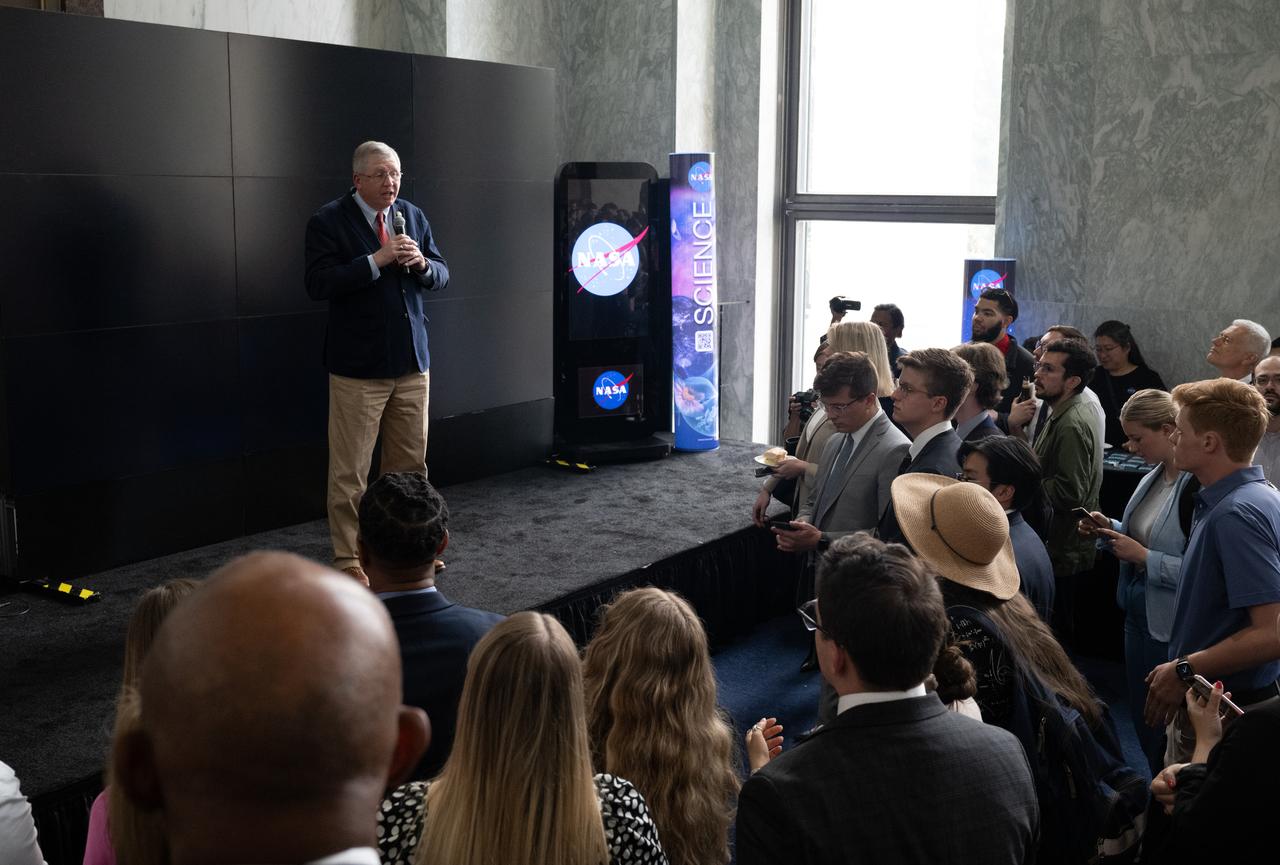
Rep. Frank Lucas, R-Okla., speaks during NASA’s Science Day on the Hill event, Wednesday, June 7, 2023, at the Rayburn House Office Building in Washington. Photo Credit: (NASA/Joel Kowsky)
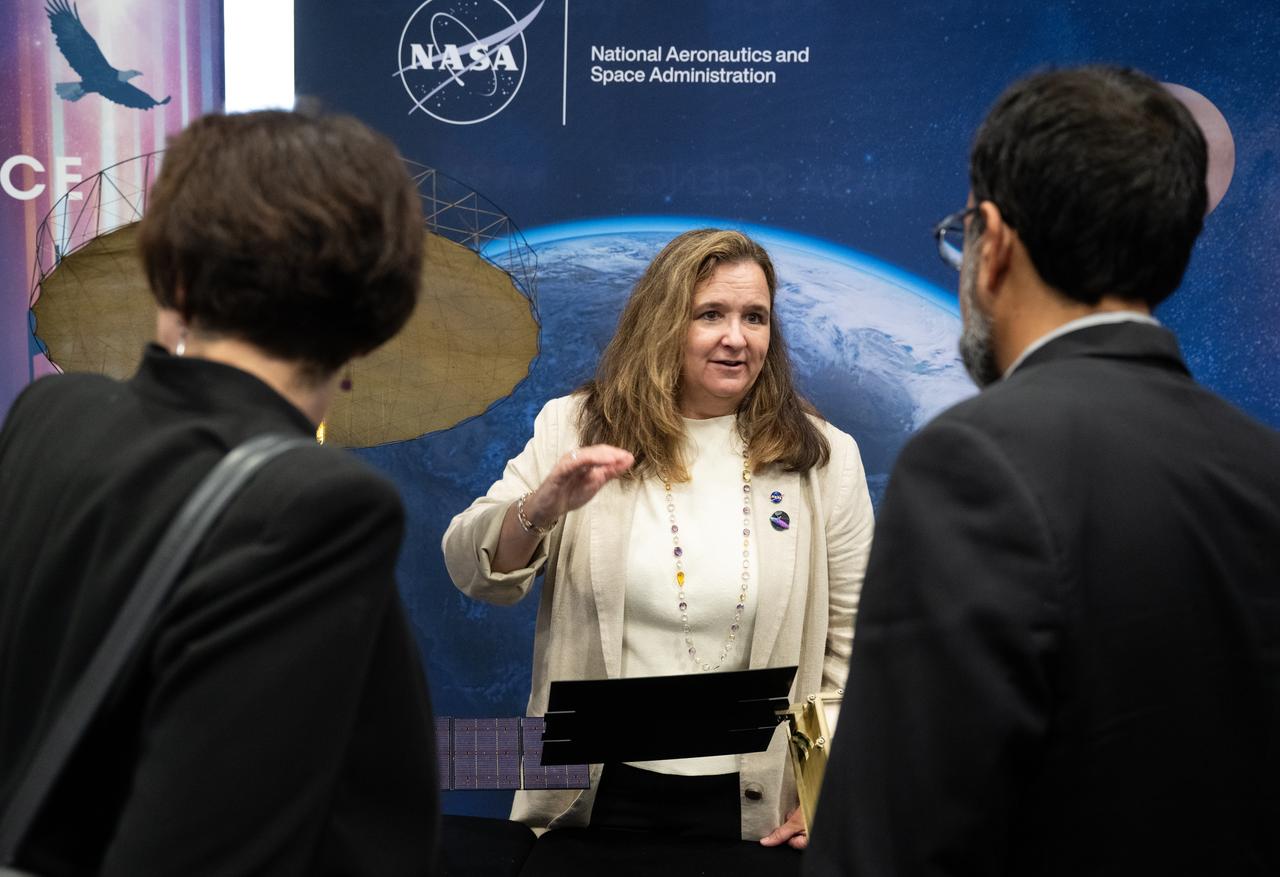
Karen St. Germain, director of the Earth Science Division of NASA’s Science Mission Directorate, center, speaks with Nicola Fox, associate administrator of NASA’s Science Mission Directorate, left, and NASA Associate Administrator Amit Kshatriya during NASA’s Day on the Hill, Tuesday, Sept. 16, 2025, at the Hart Senate Office Building in Washington. Photo Credit: (NASA/Joel Kowsky)
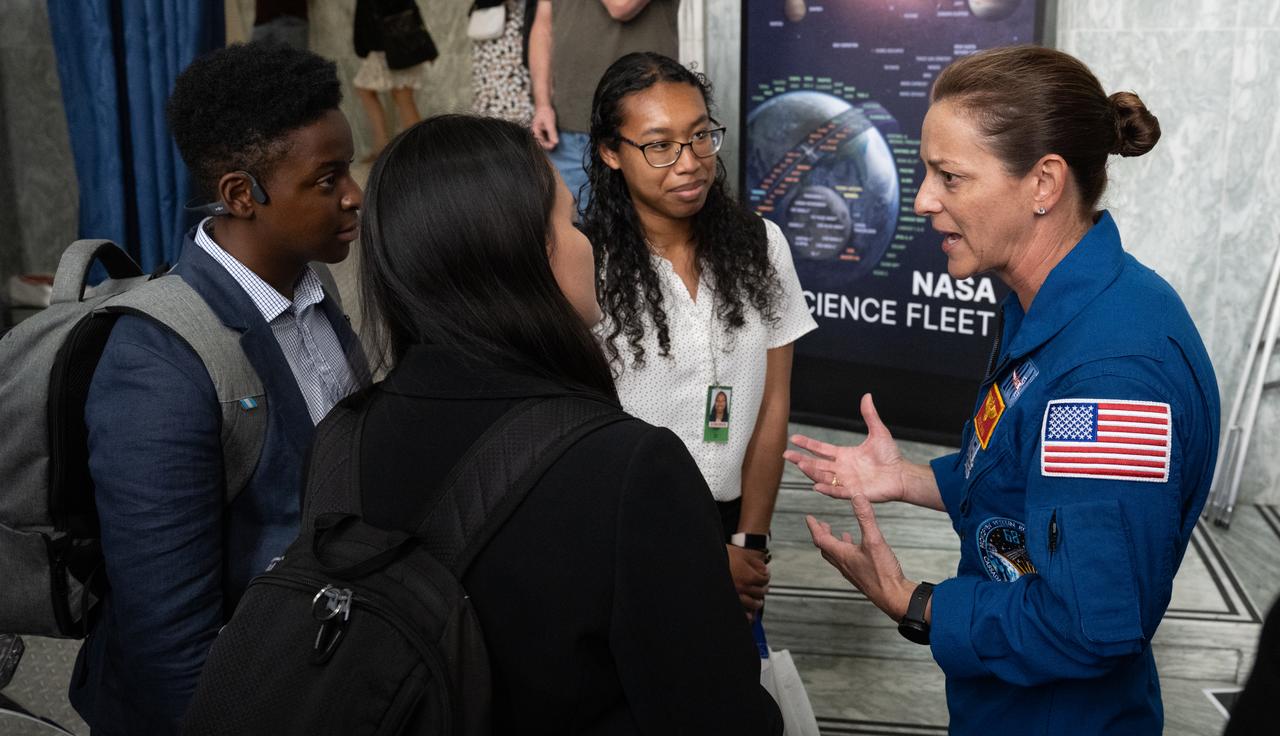
NASA’s SpaceX Crew-5 astronaut Nicole Mann of NASA speaks to attendees of NASA’s Science Day on the Hill event, Wednesday, June 7, 2023, at the Rayburn House Office Building in Washington. Mann and fellow crewmates Josh Cassada of NASA and Koichi Wakata of the Japan Aerospace Exploration Agency (JAXA) spent 157 days in space as part of Expedition 68 aboard the International Space Station. Photo Credit: (NASA/Joel Kowsky)
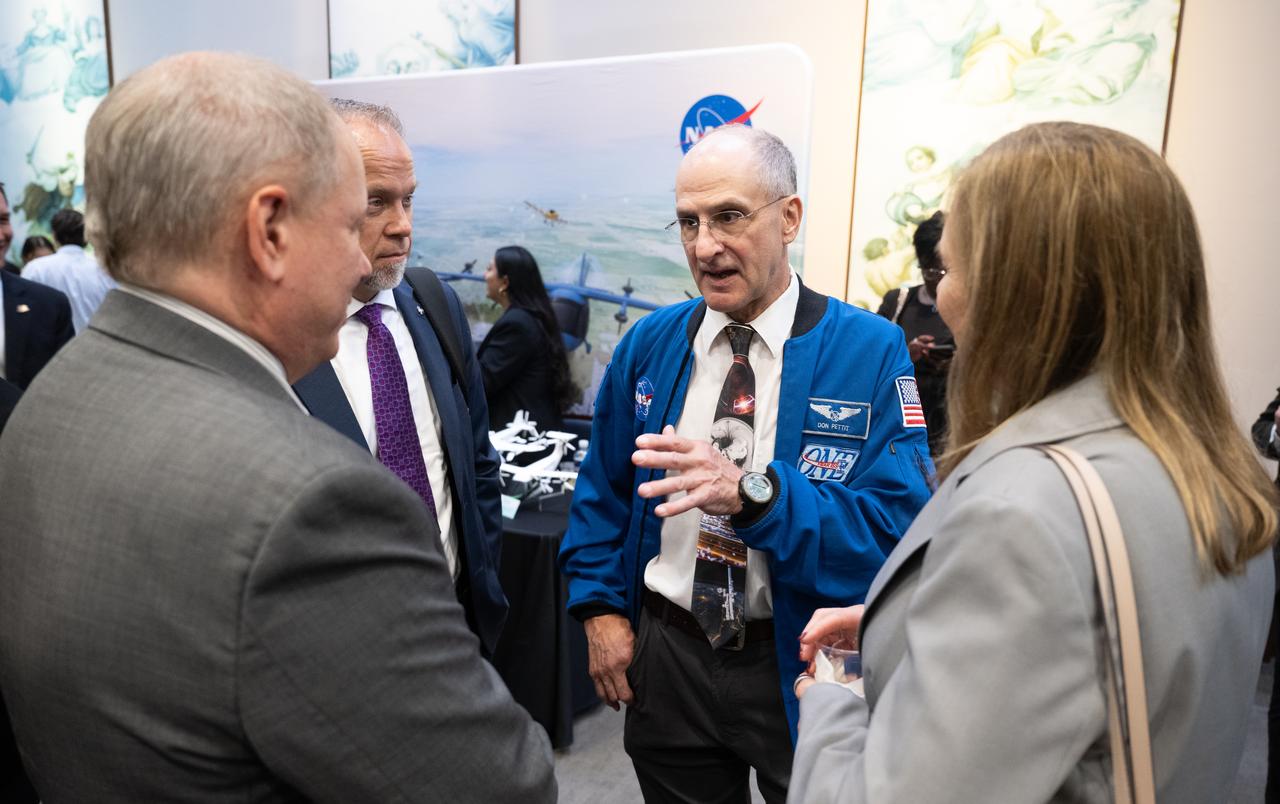
NASA astronaut Don Pettit speaks with Trey Carlson, chief of staff for NASA’s Kennedy Space Center, left, John McCullough, deputy associate administrator for integration in NASA’s Exploration Systems Development Mission Directorate, and Janet Petro, director of NASA’s Kennedy Space Center during NASA’s Day on the Hill, Tuesday, Sept. 16, 2025, at the Hart Senate Office Building in Washington. Photo Credit: (NASA/Joel Kowsky)

Expedition 72 NASA astronauts Suni Williams, left, Don Pettit, Butch Wilmore, and Nick Hague, are seen as acting NASA Administrator Sean Duffy delivers remarks during NASA’s Day on the Hill, Tuesday, Sept. 16, 2025, at the Hart Senate Office Building in Washington. Photo Credit: (NASA/Joel Kowsky)
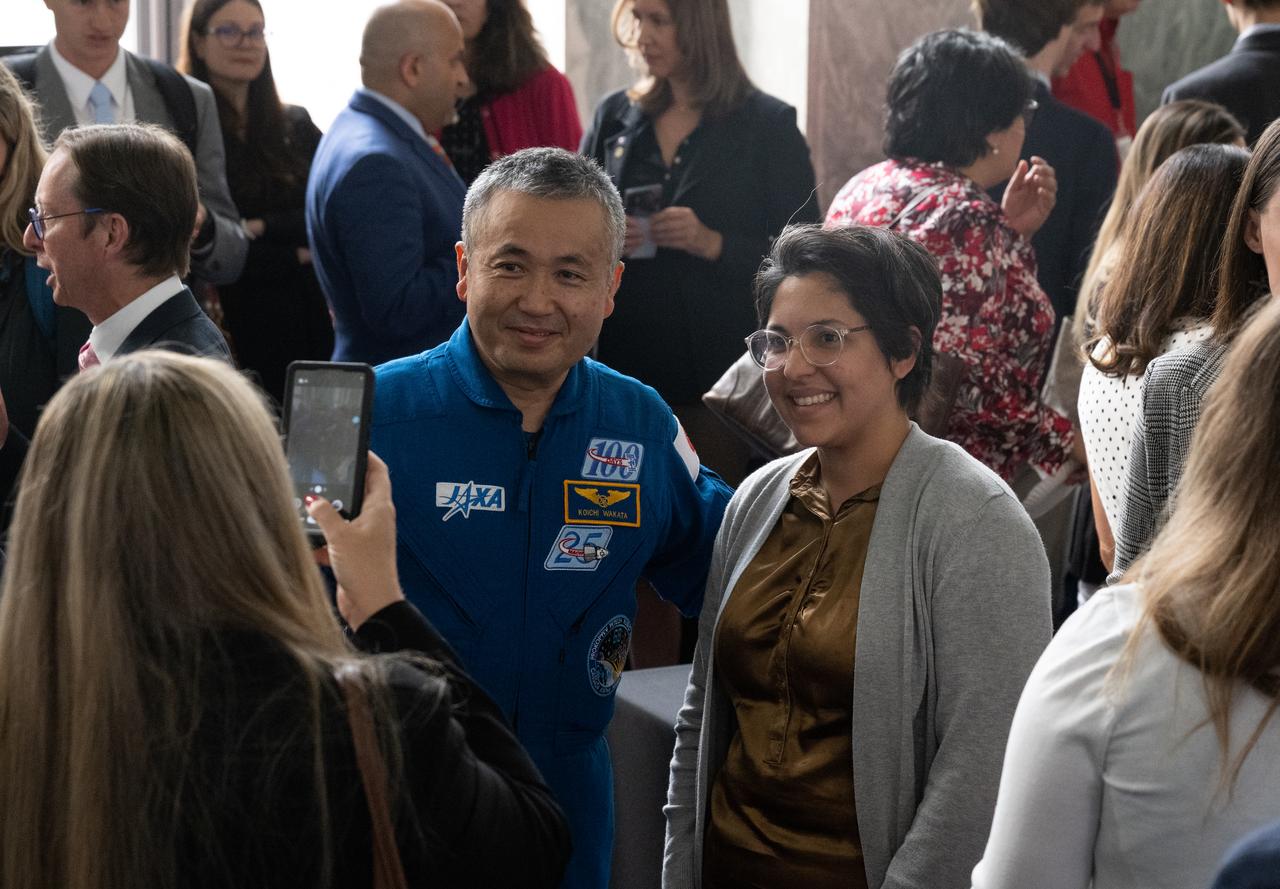
NASA’s SpaceX Crew-5 astronaut Koichi Wakata of the Japan Aerospace Exploration Agency (JAXA) takes a picture with an attendee during NASA’s Science Day on the Hill event, Wednesday, June 7, 2023, at the Rayburn House Office Building in Washington. Photo Credit: (NASA/Joel Kowsky)

NASA’s SpaceX Crew-5 astronauts Koichi Wakata of the Japan Aerospace Exploration Agency (JAXA), left, and Josh Cassada and Nicole Mann of NASA, speak during NASA’s Science Day on the Hill event, Wednesday, June 7, 2023, at the Rayburn House Office Building in Washington. Mann, Cassada, and Wakata spent 157 days in space as part of Expedition 68 aboard the International Space Station. Photo Credit: (NASA/Joel Kowsky)
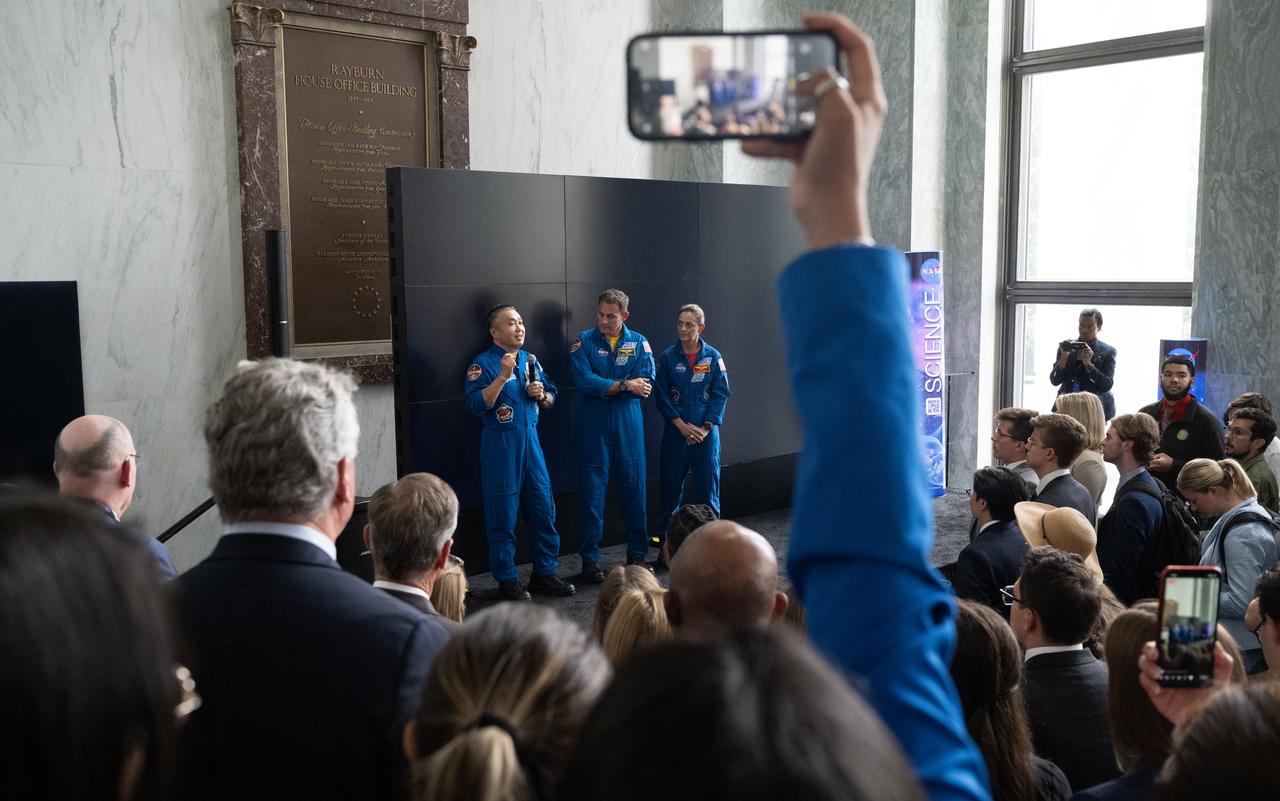
NASA’s SpaceX Crew-5 astronauts Koichi Wakata of the Japan Aerospace Exploration Agency (JAXA), left, and Josh Cassada and Nicole Mann of NASA, speak during NASA’s Science Day on the Hill event, Wednesday, June 7, 2023, at the Rayburn House Office Building in Washington. Mann, Cassada, and Wakata spent 157 days in space as part of Expedition 68 aboard the International Space Station. Photo Credit: (NASA/Joel Kowsky)
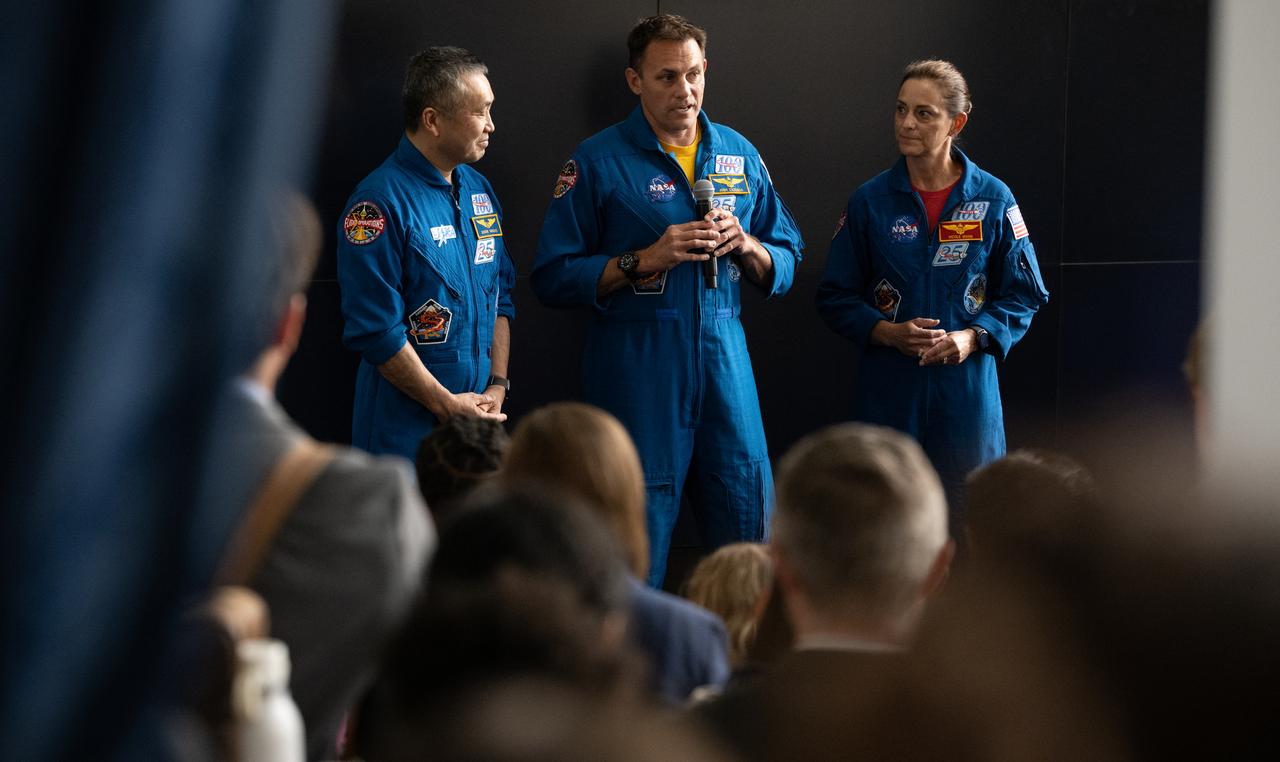
NASA’s SpaceX Crew-5 astronauts Koichi Wakata of the Japan Aerospace Exploration Agency (JAXA), left, and Josh Cassada and Nicole Mann of NASA, speak during NASA’s Science Day on the Hill event, Wednesday, June 7, 2023, at the Rayburn House Office Building in Washington. Mann, Cassada, and Wakata spent 157 days in space as part of Expedition 68 aboard the International Space Station. Photo Credit: (NASA/Joel Kowsky)

NASA Mars Exploration Rover Spirit looked up at the Columbia Hills from its location on the 265th martian day, or sol, of its mission Sept. 30, 2004 and captured this 3-D view. 3D glasses are necessary to view this image.
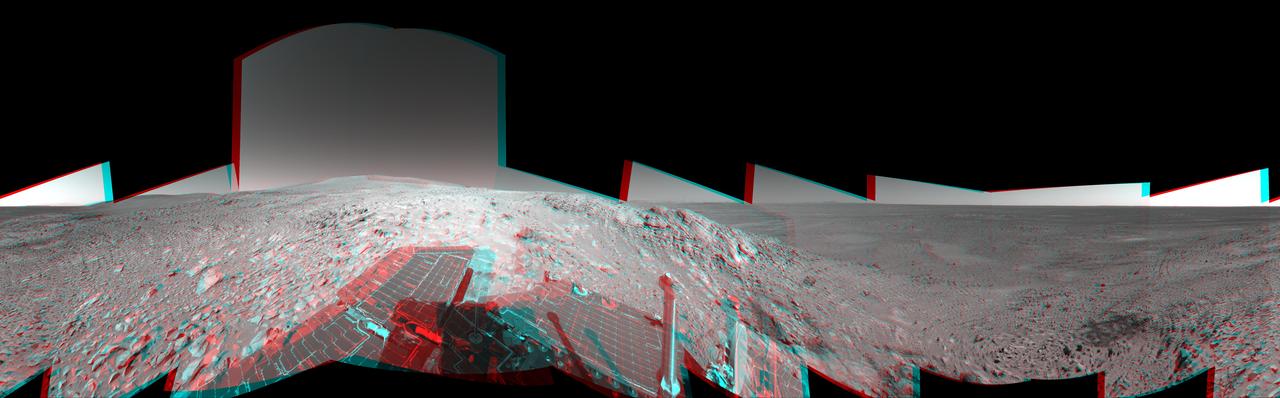
NASA Mars Exploration Rover Spirit has been making tracks on Mars for seven months now, well beyond its original 90-day mission, when it reached Columbia Hills. 3D glasses are necessary to view this image.
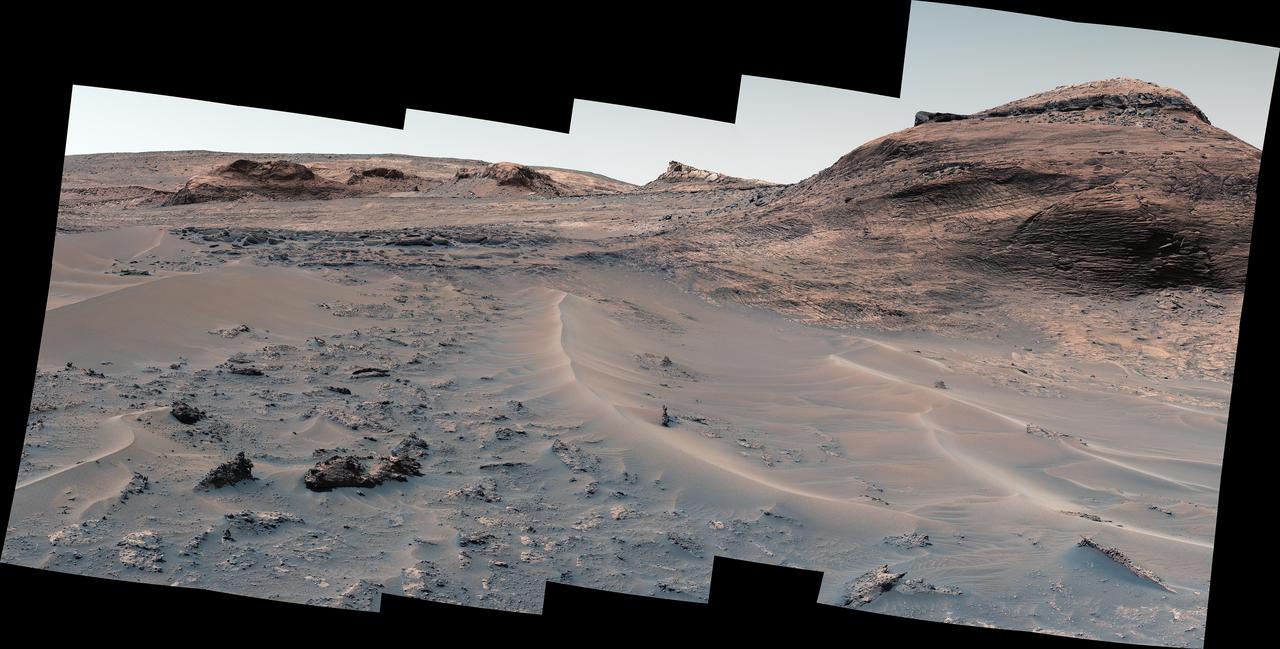
NASA's Curiosity Mars rover used its Mast Camera, or Mastcam, to capture this panorama of a hill nicknamed "Bolívar" and adjacent sand ridges on Aug. 23, 2022, the 3,572nd Martian day, or sol, of the mission. This panorama was stitched together from 23 images once they were sent back to Earth. The color has been adjusted to match the lighting conditions as the human eye would perceive them on Earth. https://photojournal.jpl.nasa.gov/catalog/PIA25414

Attendees view exhibits at NASA’s Air and Space Innovation Day event , Wednesday, June 3, 2026, in the Cannon House Office Building in Washington. Photo Credit: (NASA/Joel Kowsky)

Japan Aerospace Exploration Agency (JAXA) astronaut Kimiya Yui provides remarks at NASA’s Air and Space Innovation Day event alongside his Expedition 73 and 74 crew mates NASA astronauts Zena Cardman Mike Fincke, Wednesday, June 3, 2026, in the Cannon House Office Building in Washington. Photo Credit: (NASA/Joel Kowsky)

Attendees view exhibits at NASA’s Air and Space Innovation Day event , Wednesday, June 3, 2026, in the Cannon House Office Building in Washington. Photo Credit: (NASA/Joel Kowsky)

NASA astronaut Mike Fincke provides remarks at NASA’s Air and Space Innovation Day event alongside his Expedition 73 and 74 crew mates NASA astronaut Zena Cardman and Japan Aerospace Exploration Agency (JAXA) astronaut Kimiya Yui, Wednesday, June 3, 2026, in the Cannon House Office Building in Washington. Photo Credit: (NASA/Joel Kowsky)

NASA Administrator Jared Isaacman, left, speaks with U.S. Rep. Victoria Spartz, R-Ind., at NASA’s Air and Space Innovation Day event, Wednesday, June 3, 2026, in the Cannon House Office Building in Washington. Photo Credit: (NASA/Joel Kowsky)

NASA Administrator Jared Isaacman provides remarks at NASA’s Air and Space Innovation Day event, Wednesday, June 3, 2026, in the Cannon House Office Building in Washington. Photo Credit: (NASA/Joel Kowsky)

NASA astronaut Mike Fincke speaks with attendees at NASA’s Air and Space Innovation Day event, Wednesday, June 3, 2026, in the Cannon House Office Building in Washington. Photo Credit: (NASA/Joel Kowsky)

Attendees view exhibits at NASA’s Air and Space Innovation Day event , Wednesday, June 3, 2026, in the Cannon House Office Building in Washington. Photo Credit: (NASA/Joel Kowsky)

NASA astronaut Zena Cardman, left, provides remarks at NASA’s Air and Space Innovation Day event alongside her Expedition 73 and 74 crew mates NASA astronaut Mike Fincke, center, and Japan Aerospace Exploration Agency (JAXA) astronaut Kimiya Yui, right, Wednesday, June 3, 2026, in the Cannon House Office Building in Washington. Photo Credit: (NASA/Joel Kowsky)

NASA astronaut Zena Cardman, right, speaks with U.S. Rep. Victoria Spartz, R-Ind., at NASA’s Air and Space Innovation Day event, Wednesday, June 3, 2026, in the Cannon House Office Building in Washington. Photo Credit: (NASA/Joel Kowsky)

Attendees view exhibits at NASA’s Air and Space Innovation Day event , Wednesday, June 3, 2026, in the Cannon House Office Building in Washington. Photo Credit: (NASA/Joel Kowsky)

Attendees view exhibits at NASA’s Air and Space Innovation Day event , Wednesday, June 3, 2026, in the Cannon House Office Building in Washington. Photo Credit: (NASA/Joel Kowsky)

Attendees view exhibits at NASA’s Air and Space Innovation Day event , Wednesday, June 3, 2026, in the Cannon House Office Building in Washington. Photo Credit: (NASA/Joel Kowsky)

Attendees view exhibits at NASA’s Air and Space Innovation Day event , Wednesday, June 3, 2026, in the Cannon House Office Building in Washington. Photo Credit: (NASA/Joel Kowsky)

Attendees view exhibits at NASA’s Air and Space Innovation Day event , Wednesday, June 3, 2026, in the Cannon House Office Building in Washington. Photo Credit: (NASA/Joel Kowsky)

NASA Administrator Jared Isaacman provides remarks at NASA’s Air and Space Innovation Day event, Wednesday, June 3, 2026, in the Cannon House Office Building in Washington. Photo Credit: (NASA/Joel Kowsky)
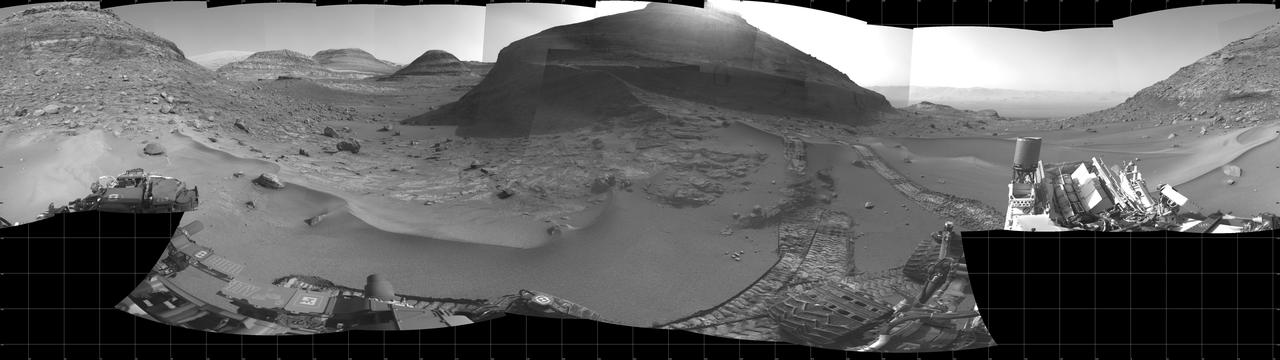
NASA's Curiosity Mars rover used its navigation cameras, or Navcams, to capture this panorama of the narrow "Paraitepuy Pass" on Aug. 11, 2022, the 3,560th Martian day, or sol, of the mission. The pass, with hills in the distance, can be seen on the left side of the scene. The hill in the center of this scene is "Bolívar"; "Deepdale" is on the far left of the scene. The crater floor is visible in the background of the right side of the panorama. https://photojournal.jpl.nasa.gov/catalog/PIA25417

First Robotics Team 122, NASA Knights share about STEM and their robotics program during an aerospace technical field career day event at in the in gym at Langley Research Center, Hampton Va., Wednesday, April 29, 2026. Photo Credit (NASA/Ryan H. Hill)

First Robotics Team 122, NASA Knights share about STEM and their robotics program during an aerospace technical field career day event at in the in gym at Langley Research Center, Hampton Va., Wednesday, April 29, 2026. Photo Credit (NASA/Ryan H. Hill)

NASA Astronaut Joe Acaba addresses students and educators on a panel, during a aerospace technical field career day event held at Langley Research Center, Wednesday, April 29, 2026. Photo Credit (NASA/Ryan H. Hill)

First Robotics Team 122, NASA Knights share about STEM and their robotics program during an aerospace technical field career day event at in the in gym at Langley Research Center, Hampton Va., Wednesday, April 29, 2026. Photo Credit (NASA/Ryan H. Hill)
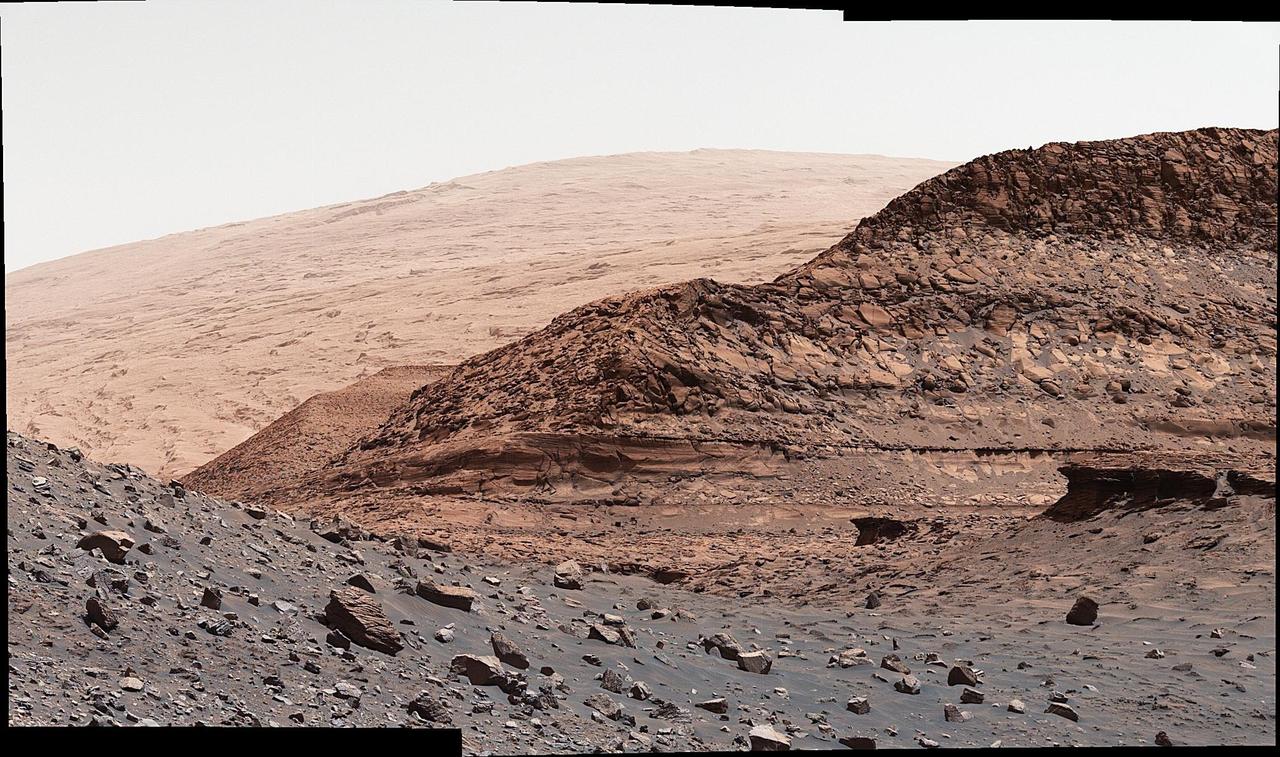
NASA's Curiosity Mars rover used its Mast Camera, or Mastcam, to capture geologic details within "Paraitepuy Pass," a sandy, hill-lined area the rover traversed to reach the "sulfate-bearing unit" in August 2022. In the this scene is a hill nicknamed "Orinoco" within the sulfate region, and upper Mount Sharp in the distance. This image was taken on Aug. 15, 2022, the 3,564rd Martian day, or sol, of the mission. This scene is made up of three individual images that were stitched together once they were sent back to Earth. The color has been adjusted to match the lighting conditions as the human eye would perceive them on Earth. https://photojournal.jpl.nasa.gov/catalog/PIA25415
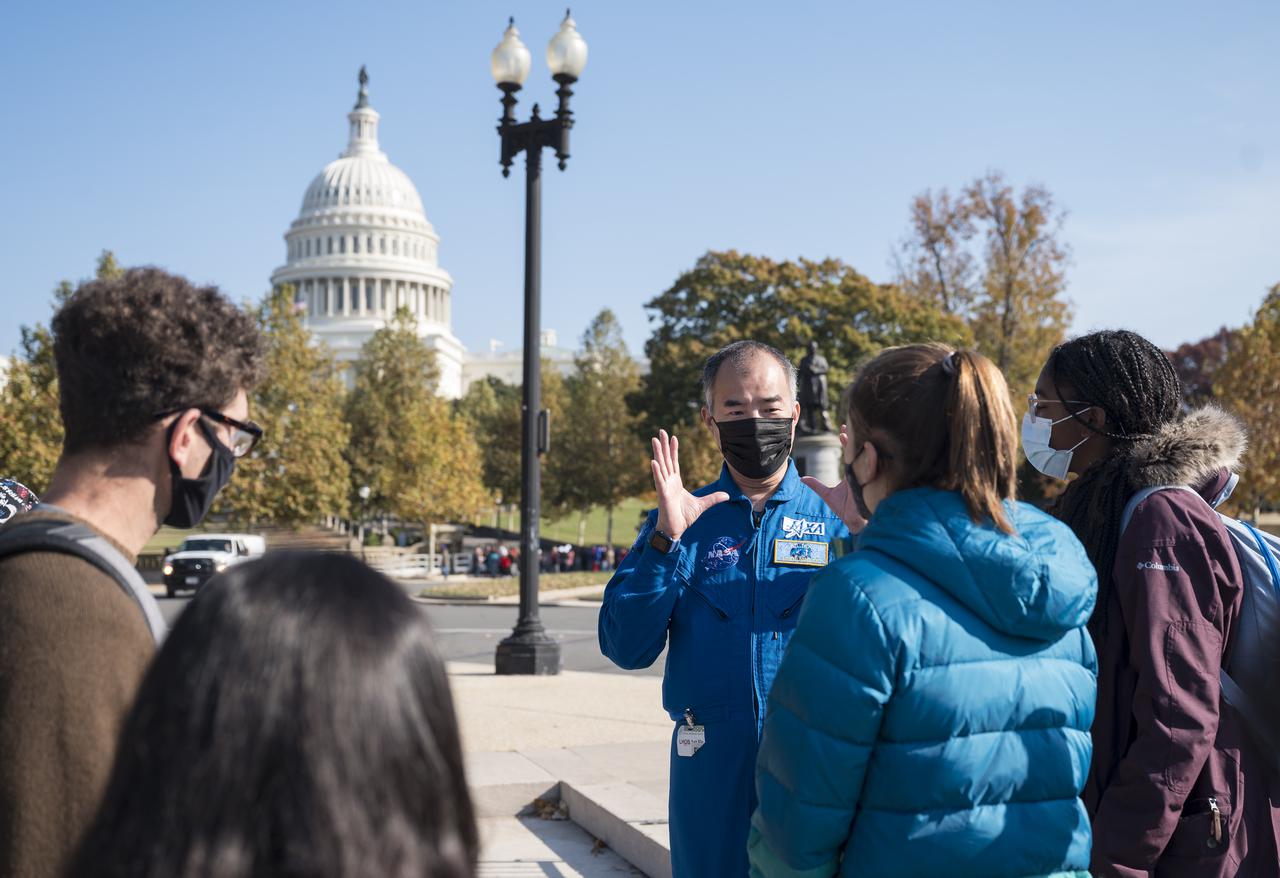
Japan Aerospace Exploration Agency (JAXA) astronaut Soichi Noguchi speaks with visitors at the Destination Station mobile exhibition on Capitol Hill, Wednesday, Nov. 17, 2021, in Washington. Noguchi and crew mates NASA astronauts Mike Hopkins, Victor Glover, and Shannon Walker, launched on the first crew rotation mission to the International Space Station for SpaceX’s Falcon 9 and Crew Dragon spacecraft as part of the agency’s Commercial Crew Program and spent 168 days in space across Expeditions 64 and 65. Photo Credit: (NASA/Aubrey Gemignani)
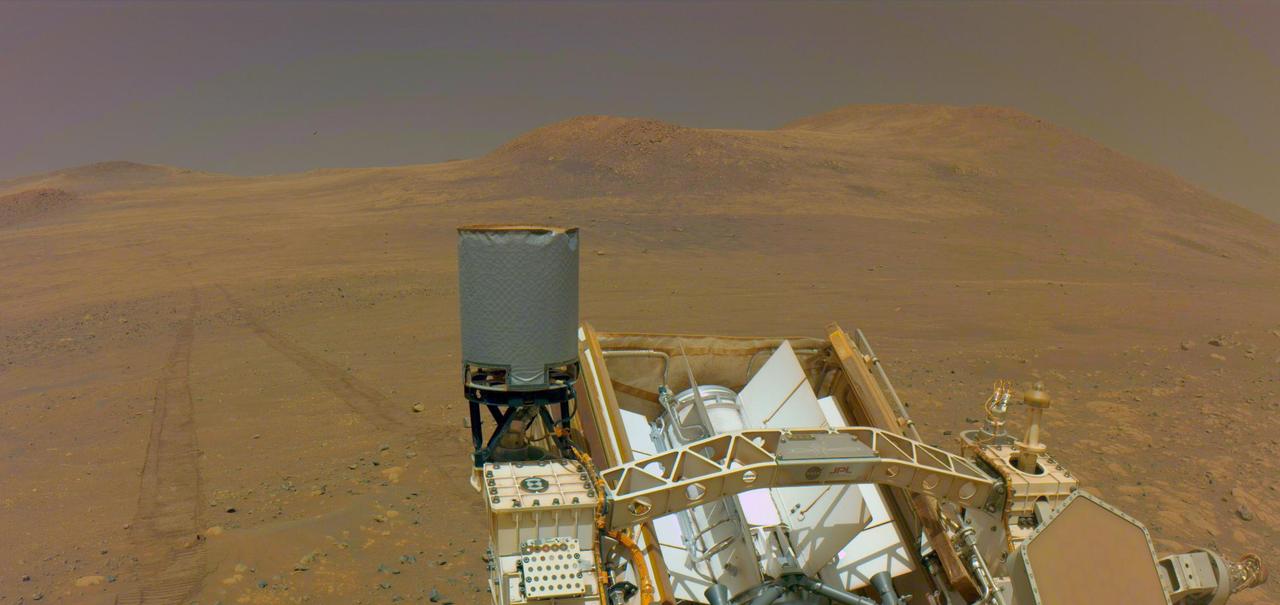
One of the navigation cameras on NASA's Perseverance captured the rover's tracks coming from an area called "Witch Hazel Hill," on May 13, 2025, the 1,503rd Martian day, or sol, of the mission. The Mars 2020 Perseverance mission is part of NASA's Moon to Mars exploration approach, which includes Artemis missions to the Moon that will help prepare for human exploration of the Red Planet. https://photojournal.jpl.nasa.gov/catalog/PIA26573
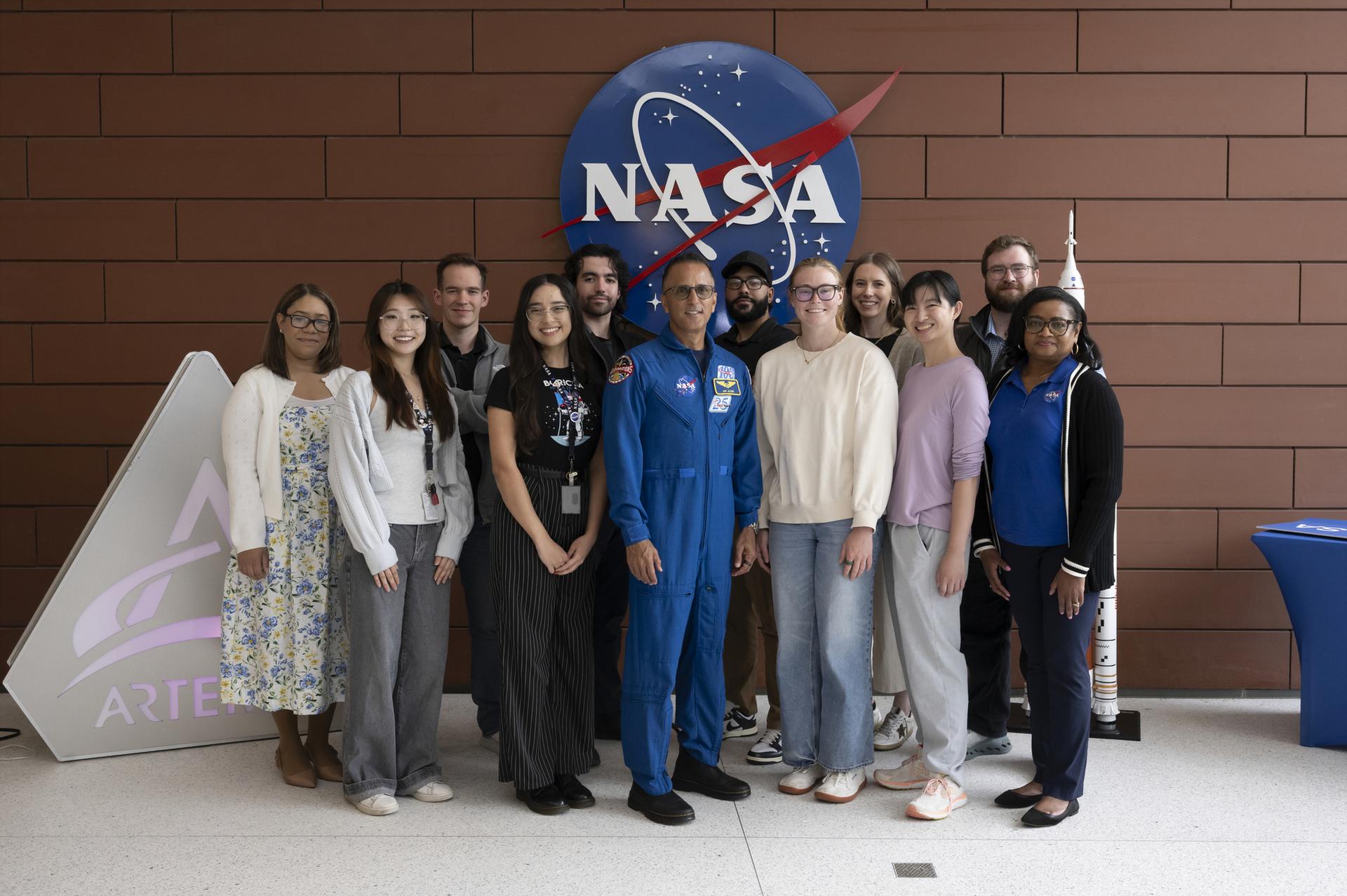
High school and college students, and educators spent a day learning about careers in technical fields in aerospace. They engaged in hands-on activities, tours, and listening to keynote presentations and panels, interacting with NASA’s subject matter experts at Langley Research Center, Hampton Va, Wednesday, April 29, 2026. Photo Credit (NASA/Ryan H. Hill)

High school and college students, and educators spent a day learning about careers in technical fields in aerospace. They engaged in hands-on activities, tours, and listening to keynote presentations and panels, interacting with NASA’s subject matter experts at Langley Research Center, Hampton Va, Wednesday, April 29, 2026. Photo Credit (NASA/Ryan H. Hill)

High school and college students, and educators spent a day learning about careers in technical fields in aerospace. They engaged in hands-on activities, tours, and listening to keynote presentations and panels, interacting with NASA’s subject matter experts at Langley Research Center, Hampton Va, Wednesday, April 29, 2026. Photo Credit (NASA/Ryan H. Hill)
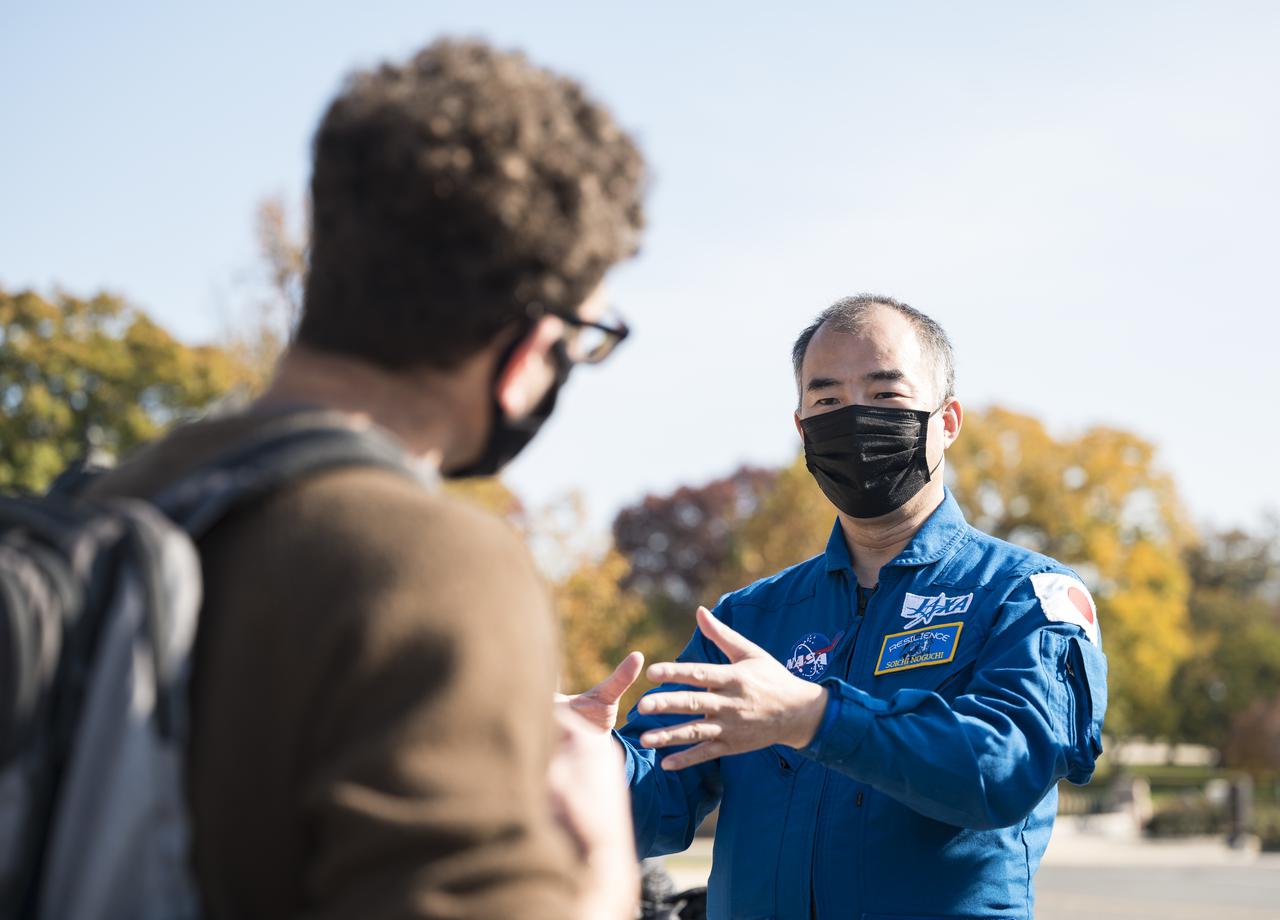
Japan Aerospace Exploration Agency (JAXA) astronaut Soichi Noguchi speaks with visitors at the Destination Station mobile exhibition on Capitol Hill, Wednesday, Nov. 17, 2021, in Washington. Noguchi and crew mates NASA astronauts Mike Hopkins, Victor Glover, and Shannon Walker, launched on the first crew rotation mission to the International Space Station for SpaceX’s Falcon 9 and Crew Dragon spacecraft as part of the agency’s Commercial Crew Program and spent 168 days in space across Expeditions 64 and 65. Photo Credit: (NASA/Aubrey Gemignani)

High school and college students, and educators spent a day learning about careers in technical fields in aerospace. They engaged in hands-on activities, tours, and listening to keynote presentations and panels, interacting with NASA’s subject matter experts at Langley Research Center, Hampton Va, Wednesday, April 29, 2026. Photo Credit (NASA/Ryan H. Hill)
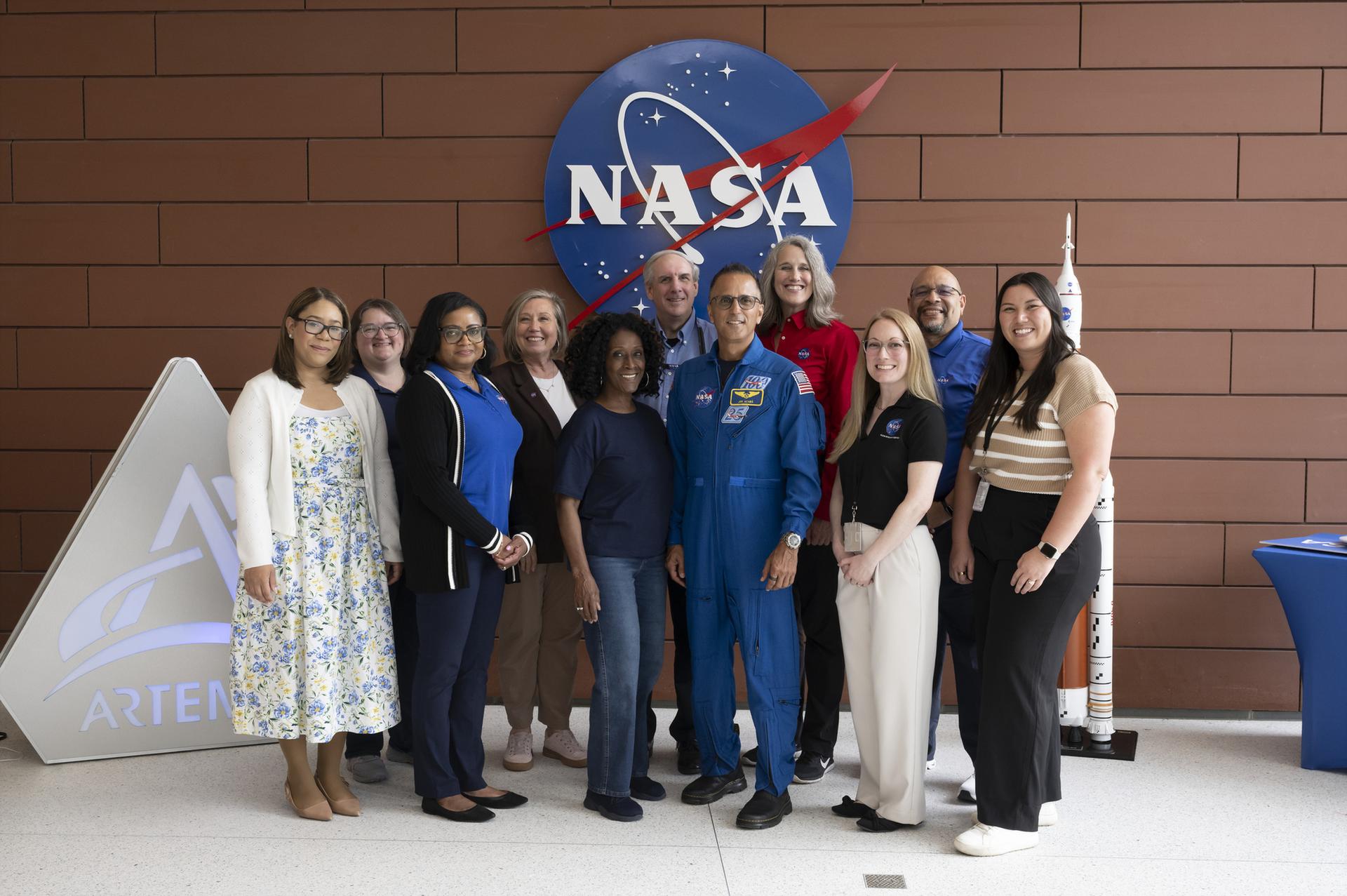
High school and college students, and educators spent a day learning about careers in technical fields in aerospace. They engaged in hands-on activities, tours, and listening to keynote presentations and panels, interacting with NASA’s subject matter experts at Langley Research Center, Hampton Va, Wednesday, April 29, 2026. Photo Credit (NASA/Ryan H. Hill)

High school and college students, and educators spent a day learning about careers in technical fields in aerospace. They engaged in hands-on activities, tours, and listening to keynote presentations and panels, interacting with NASA’s subject matter experts at Langley Research Center, Hampton Va, Wednesday, April 29, 2026. Photo Credit (NASA/Ryan H. Hill)
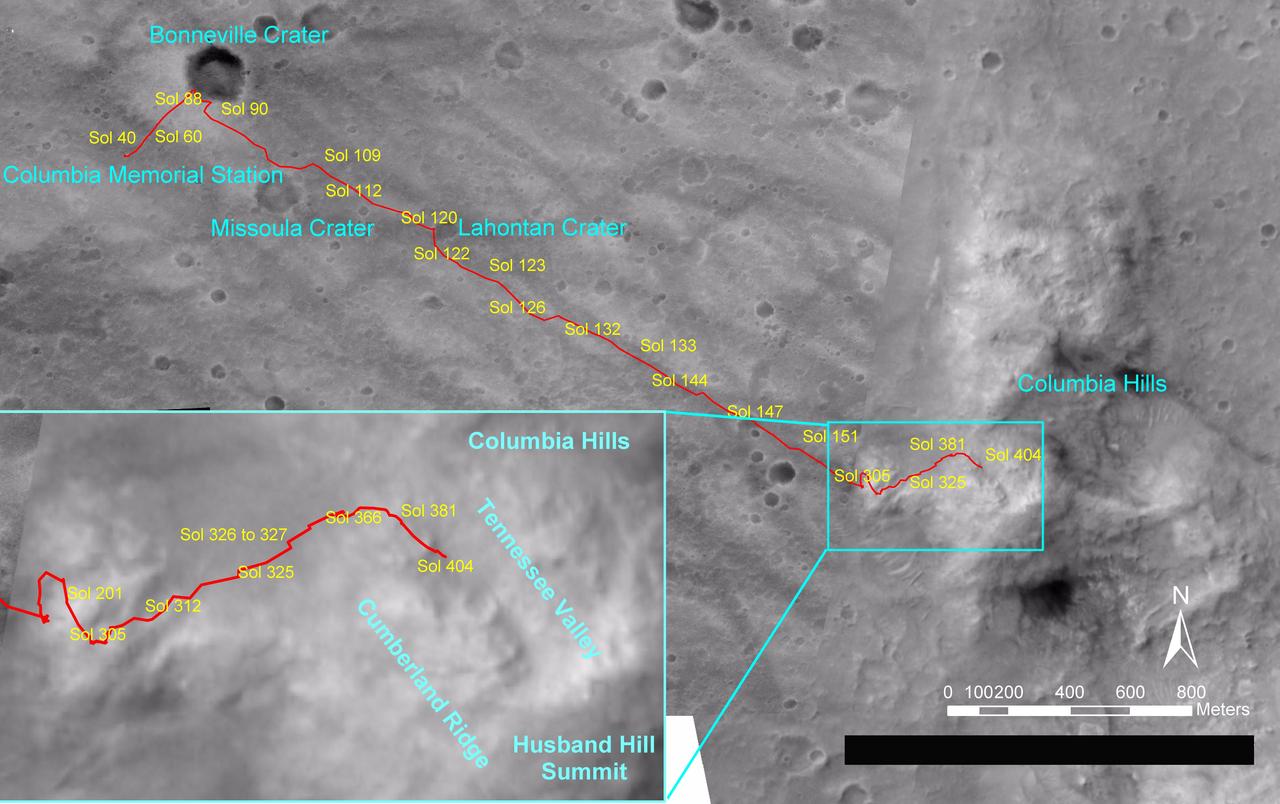
NASA's Mars Exploration Rover Spirit drove a total of 4,143 meters (2.57 miles) between its landing in January 2004 and its 404th martian day, or sol (Feb. 20, 2005). This map on an image taken by the Mars Orbiter Camera on NASA's Mars Global Surveyor shows the course the rover drove during that time. The rover has recently been approaching a ridge overlooking "Tennessee Valley" on the north flank of "Husband Hill." http://photojournal.jpl.nasa.gov/catalog/PIA07393

High school and college students, and educators spent a day learning about careers in technical fields in aerospace. They engaged in hands-on activities, tours, and listening to keynote presentations and panels, interacting with NASA’s subject matter experts at Langley Research Center, Hampton Va, Wednesday, April 29, 2026. Photo Credit (NASA/Ryan H. Hill)
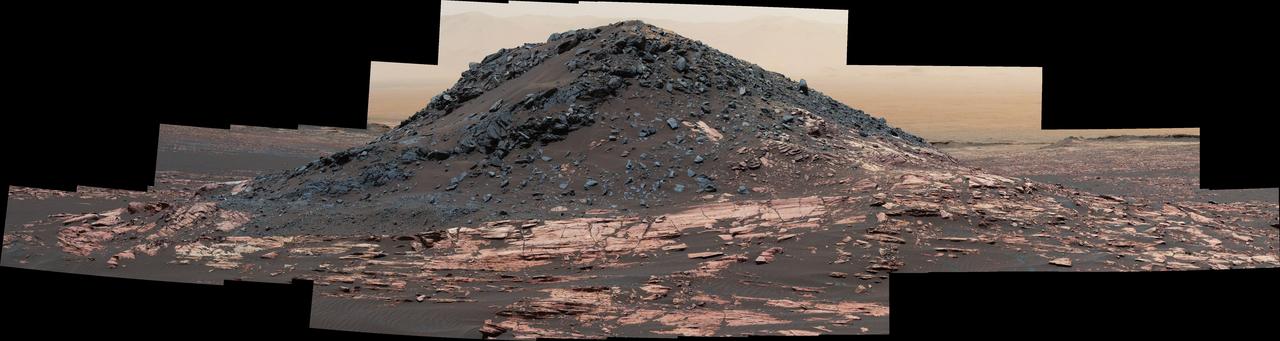
This dark mound, called "Ireson Hill," rises about 16 feet (5 meters) above redder layered outcrop material of the Murray formation on lower Mount Sharp, Mars, near a location where NASA's Curiosity rover examined a linear sand dune in February 2017. Researchers used the rover's Mast Camera (Mastcam) on Feb. 2, 2017, during the 1,598th Martian day, or sol, of Curiosity's work on Mars, to take the 41 images combined into this scene. The mosaic has been white-balanced so that the colors of the rock and sand materials resemble how they would appear under daytime lighting conditions on Earth. The view extends from west-southwest on the left to north-northwest on the right. The faint horizon in the distance beyond Ireson Hill is part of the rim of Gale Crater. An annotated figure is available at https://photojournal.jpl.nasa.gov/catalog/PIA21718
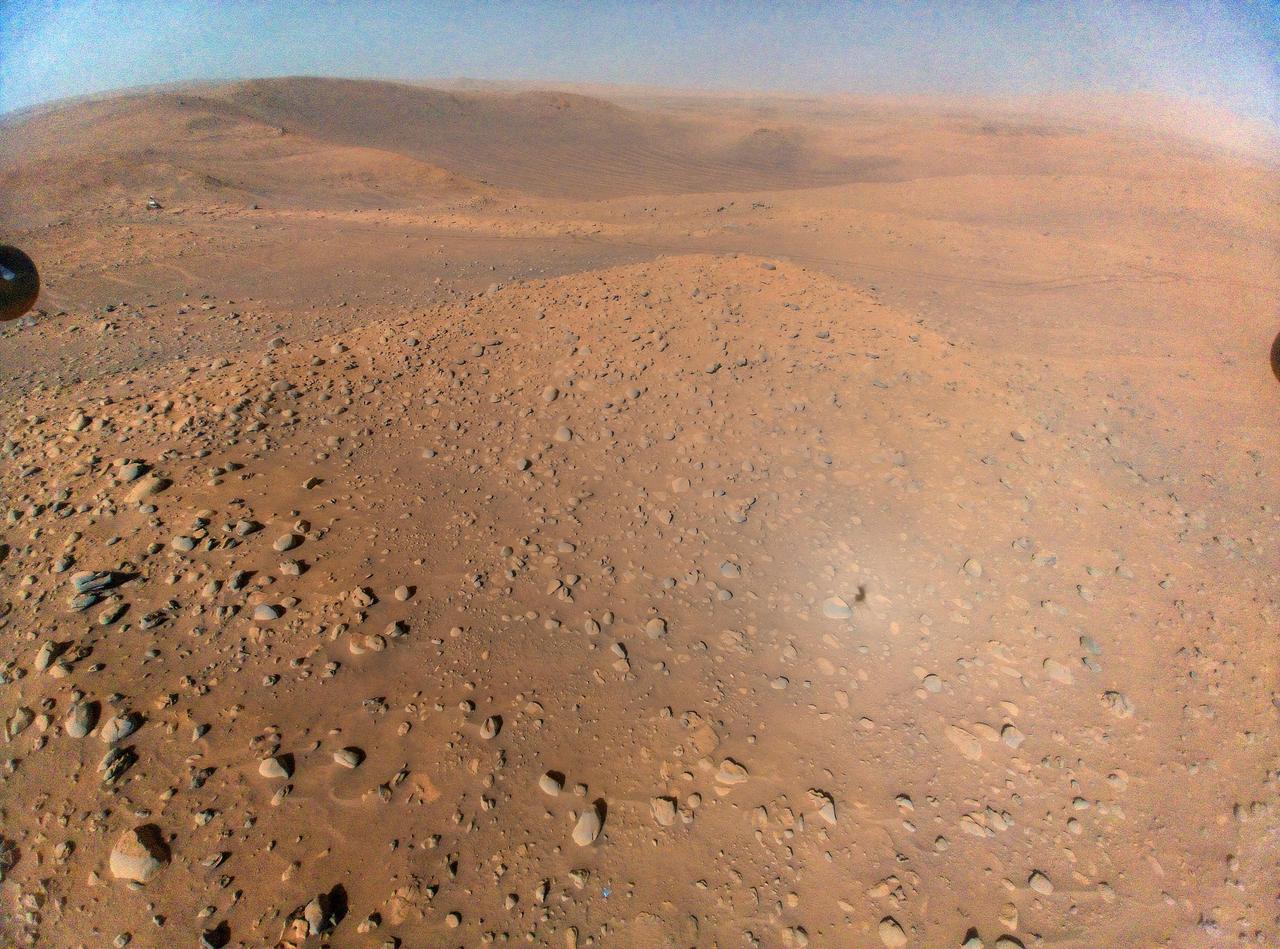
This image of NASA's Perseverance Mars rover at the rim of Belva Crater was taken by the agency's Ingenuity Mars Helicopter during the rotorcraft's 51st flight on April 22, 2023, the 772nd Martian day, or sol, of the rover's mission. At the time the image was taken, the helicopter was at an altitude of about 40 feet (12 meters). The rover is in the upper left of the image, parked at a light-toned rocky outcrop the science team is calling "Echo Creek." Perseverance's tracks can be seen extending from its location to the upper-right side of image. The helicopter's shadow can be seen on the rocky hill in the foreground, just to the right and below the image's center. The hill, designated "Mount Julian" by the science team, is a planned future stop for the rover. A small triangular piece of debris from the rover's entry, descent, and landing system can be seen at the lower center of image. https://photojournal.jpl.nasa.gov/catalog/PIA25884
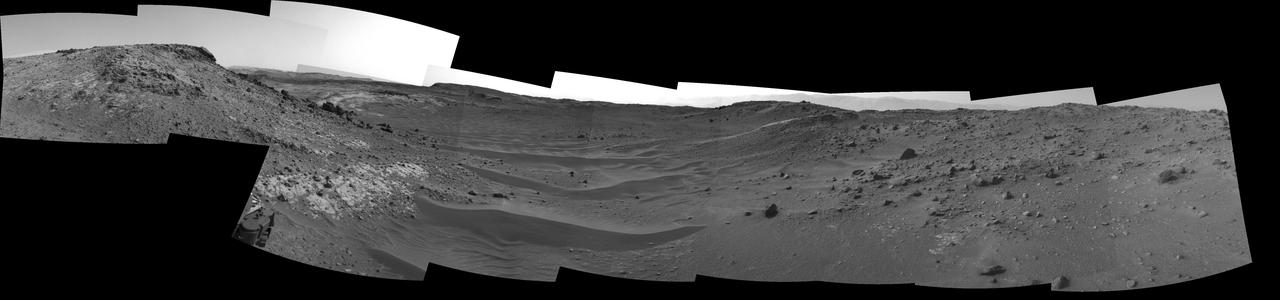
This view from the Navigation Camera (Navcam) on NASA's Curiosity Mars rover shows the terrain ahead of the rover as it makes its way westward through a valley called "Artist's Drive." The Navcam recorded the component images of this mosaic on April 10, 2015, during the 951st Martian Day, or sol, of Curiosity's work on Mars. The valley is on the rover's route toward a higher site on Mount Sharp than the "Pahrump Hills" area the mission investigated at the base of the layered mountain. http://photojournal.jpl.nasa.gov/catalog/PIA19163
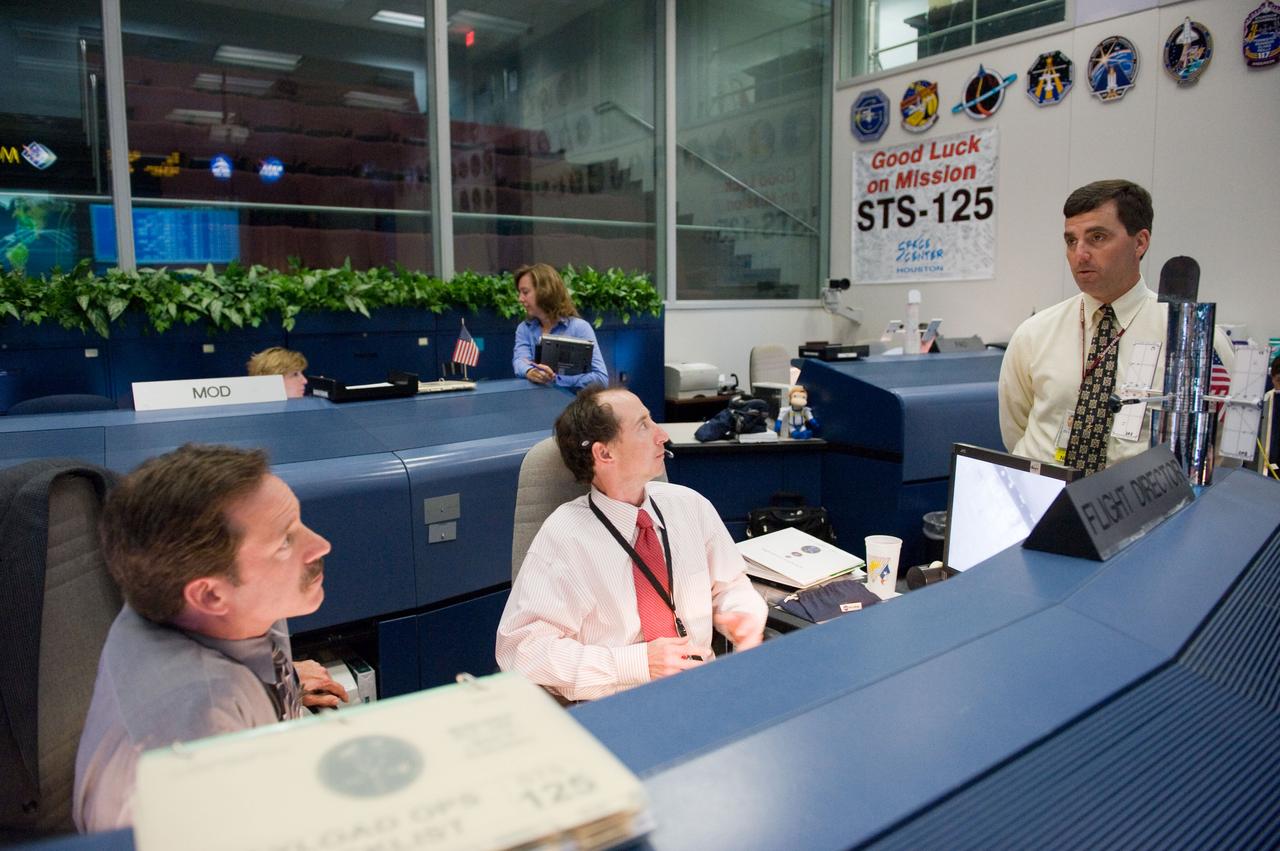
JSC2009-E-119383 (12 May 2009) --- Flight directors Rick LaBrode (left) and Chris Edelen; along with Paul Hill (standing at right), Space Shuttle Mission Operations manager, are pictured in the space shuttle flight control room in the Mission Control Center at NASA's Johnson Space Center during STS-125 flight day two activities.
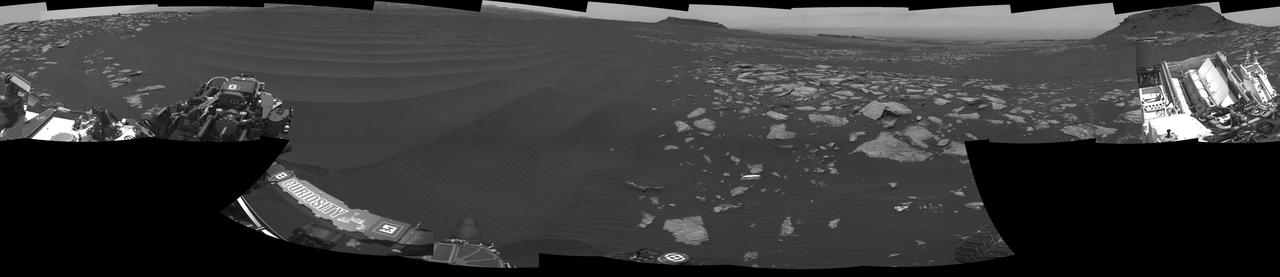
The left side of this 360-degree panorama from NASA's Curiosity Mars rover shows the long rows of ripples on a linear shaped dune in the Bagnold Dune Field on the northwestern flank of Mount Sharp. The view is a mosaic of images taken with Curiosity's Navigation Camera (Navcam) on Feb. 5, 2017, during the 1,601st Martian day, or sol, of the rover's work on Mars. The view is centered toward west-southwest, with east-southeast on either end. A capped mound called "Ireson Hill" is on the right. http://photojournal.jpl.nasa.gov/catalog/PIA21268

SpaceX Crew-1 NASA astronaut Victor Glover, left, speaks with Rep. Chrissy Houlahan, D-Pa., center, and NASA Deputy Administrator Pam Melroy, at the Destination Station mobile exhibition on Capitol Hill, Wednesday, Nov. 17, 2021, in Washington. Glover, and NASA astronauts Mike Hopkins, and Shannon Walker, and Japan Aerospace Exploration Agency (JAXA) astronaut Soichi Noguchi launched on the first crew rotation mission to the International Space Station for SpaceX’s Falcon 9 and Crew Dragon spacecraft as part of the agency’s Commercial Crew Program and spent 168 days in space across Expeditions 64 and 65. Photo Credit: (NASA/Aubrey Gemignani)
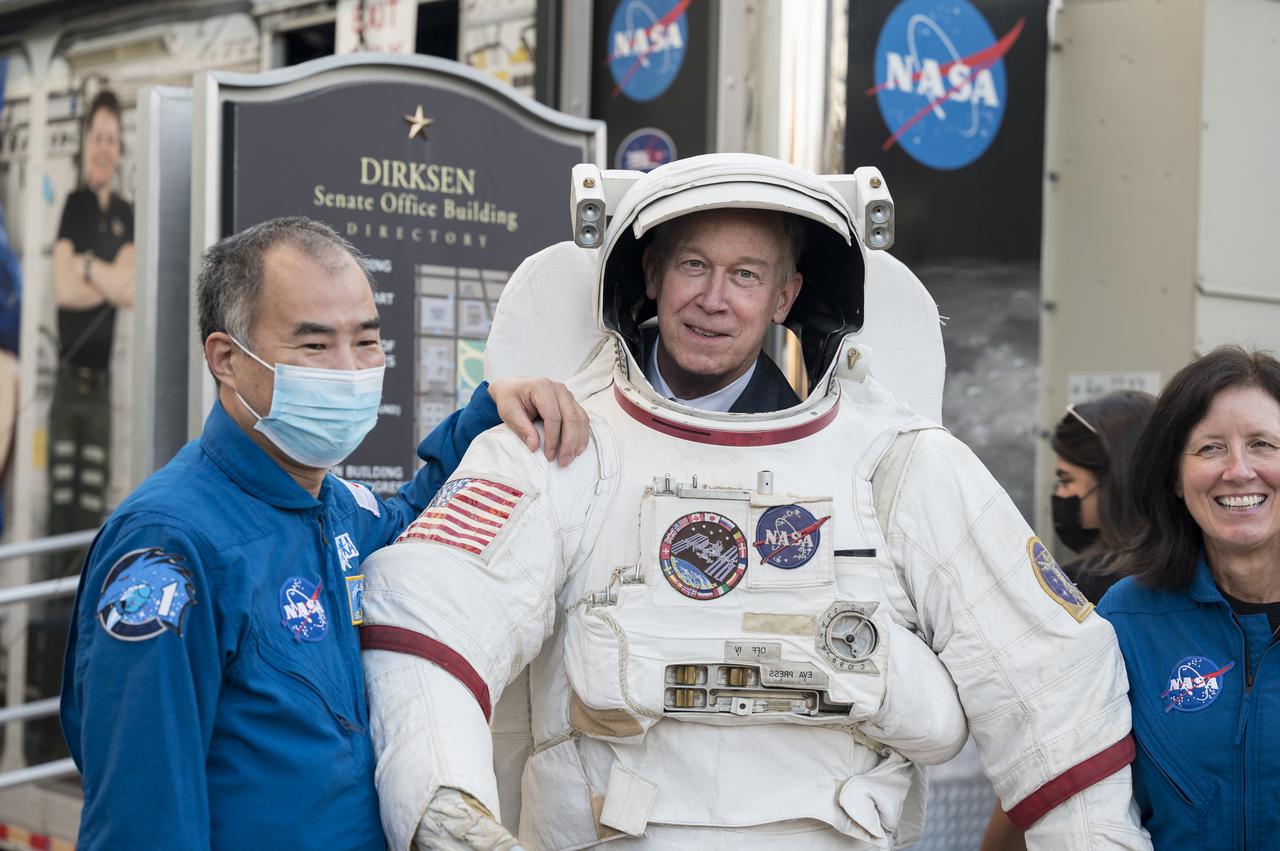
SpaceX Crew-1 Japan Aerospace Exploration Agency (JAXA) astronaut Soichi Noguchi, left, and NASA astronaut Shannon Walker, right, pose for a photo with Senator John Hickenlooper, D-Colo, at the Destination Station mobile exhibition on Capitol Hill, Wednesday, Nov. 17, 2021, in Washington. Walker, Noguchi, and NASA astronauts Mike Hopkins and Victor Glover launched on the first crew rotation mission to the International Space Station for SpaceX’s Falcon 9 and Crew Dragon spacecraft as part of the agency’s Commercial Crew Program and spent 168 days in space across Expeditions 64 and 65. Photo Credit: (NASA/Aubrey Gemignani)
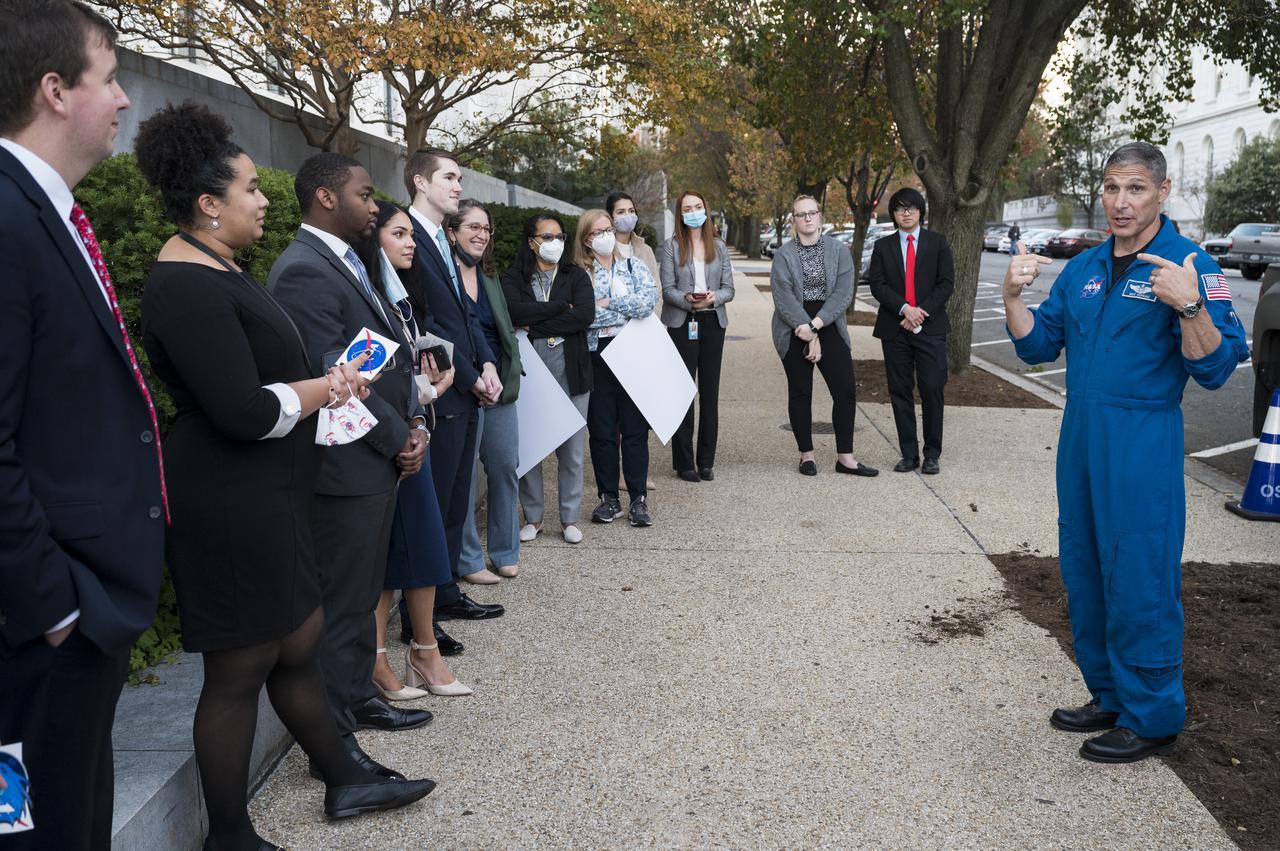
SpaceX Crew-1 NASA astronaut Mike Hopkins speaks with visitors at the Destination Station mobile exhibition on Capitol Hill, Wednesday, Nov. 17, 2021, in Washington. Hopkins, and NASA astronauts Shannon Walker and Victor Glover, and Japan Aerospace Exploration Agency (JAXA) astronaut Soichi Noguchi launched on the first crew rotation mission to the International Space Station for SpaceX’s Falcon 9 and Crew Dragon spacecraft as part of the agency’s Commercial Crew Program and spent 168 days in space across Expeditions 64 and 65. Photo Credit: (NASA/Aubrey Gemignani)
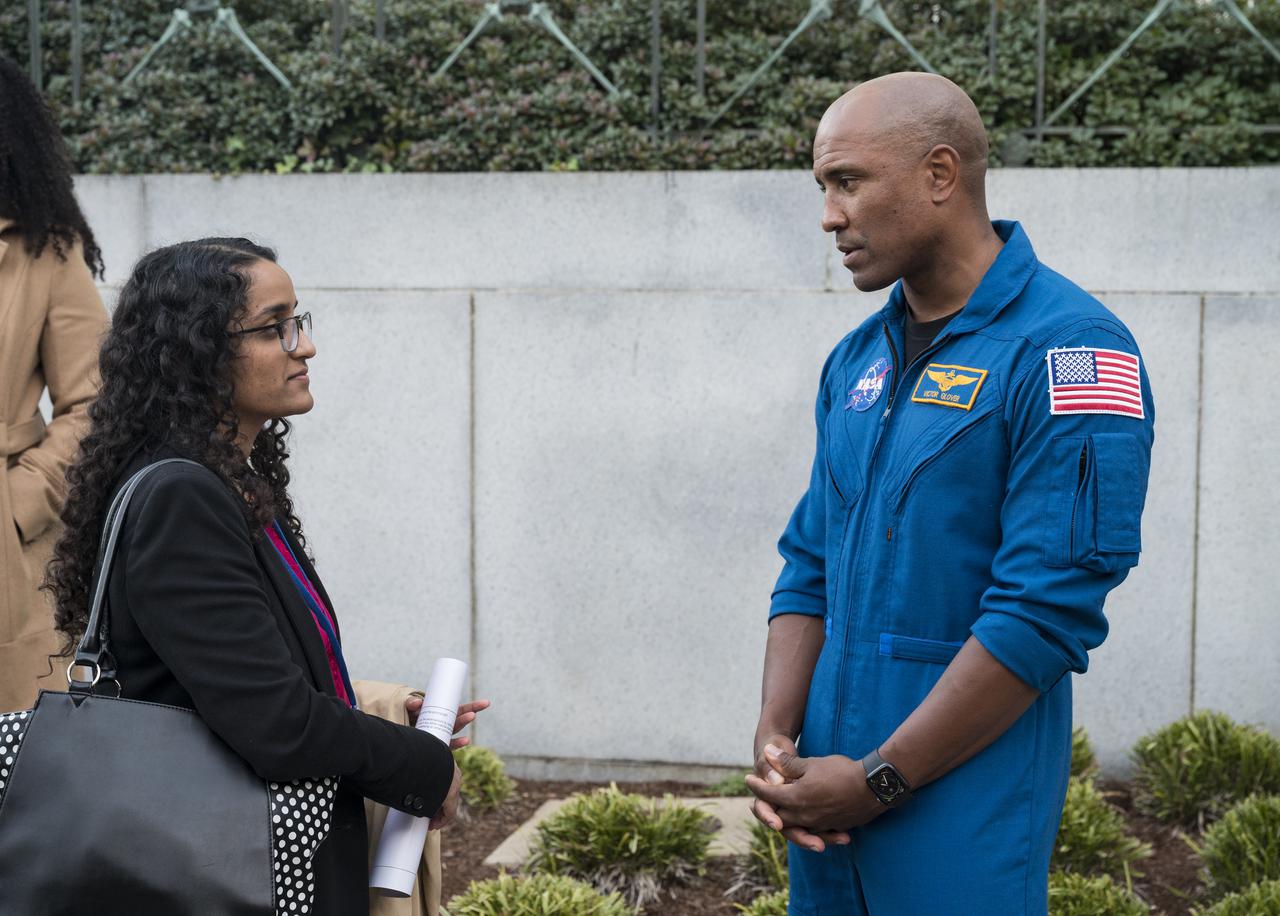
SpaceX Crew-1 NASA astronaut Victor Glover speaks with visitors at the Destination Station mobile exhibition on Capitol Hill, Wednesday, Nov. 17, 2021, in Washington. Glover, and NASA astronauts Mike Hopkins, and Shannon Walker, and Japan Aerospace Exploration Agency (JAXA) astronaut Soichi Noguchi launched on the first crew rotation mission to the International Space Station for SpaceX’s Falcon 9 and Crew Dragon spacecraft as part of the agency’s Commercial Crew Program and spent 168 days in space across Expeditions 64 and 65. Photo Credit: (NASA/Aubrey Gemignani)
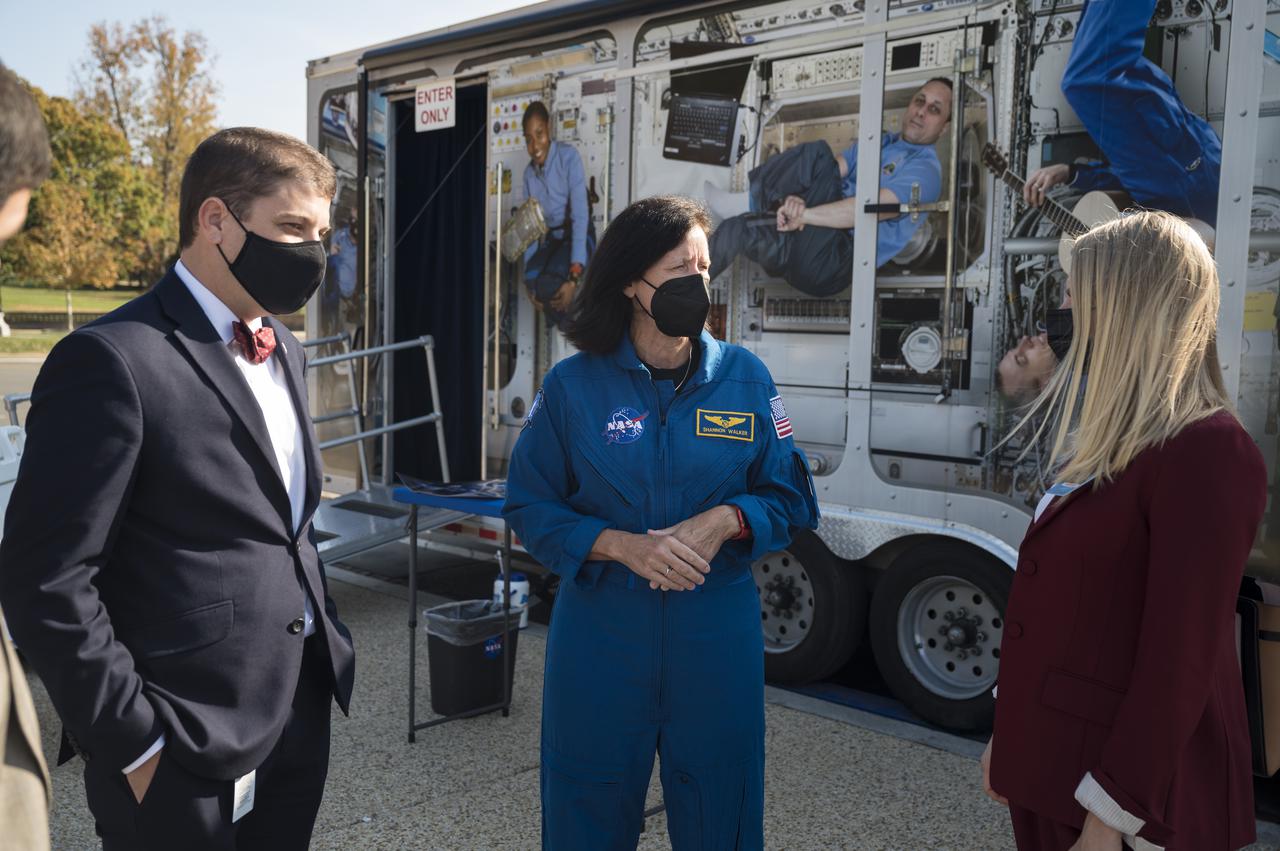
SpaceX Crew-1 NASA astronaut Shannon Walker speaks with visitors at the Destination Station mobile exhibition on Capitol Hill, Wednesday, Nov. 17, 2021, in Washington. Walker, and NASA astronauts Mike Hopkins, and Victor Glover, and Japan Aerospace Exploration Agency (JAXA) astronaut Soichi Noguchi launched on the first crew rotation mission to the International Space Station for SpaceX’s Falcon 9 and Crew Dragon spacecraft as part of the agency’s Commercial Crew Program and spent 168 days in space across Expeditions 64 and 65. Photo Credit: (NASA/Aubrey Gemignani)
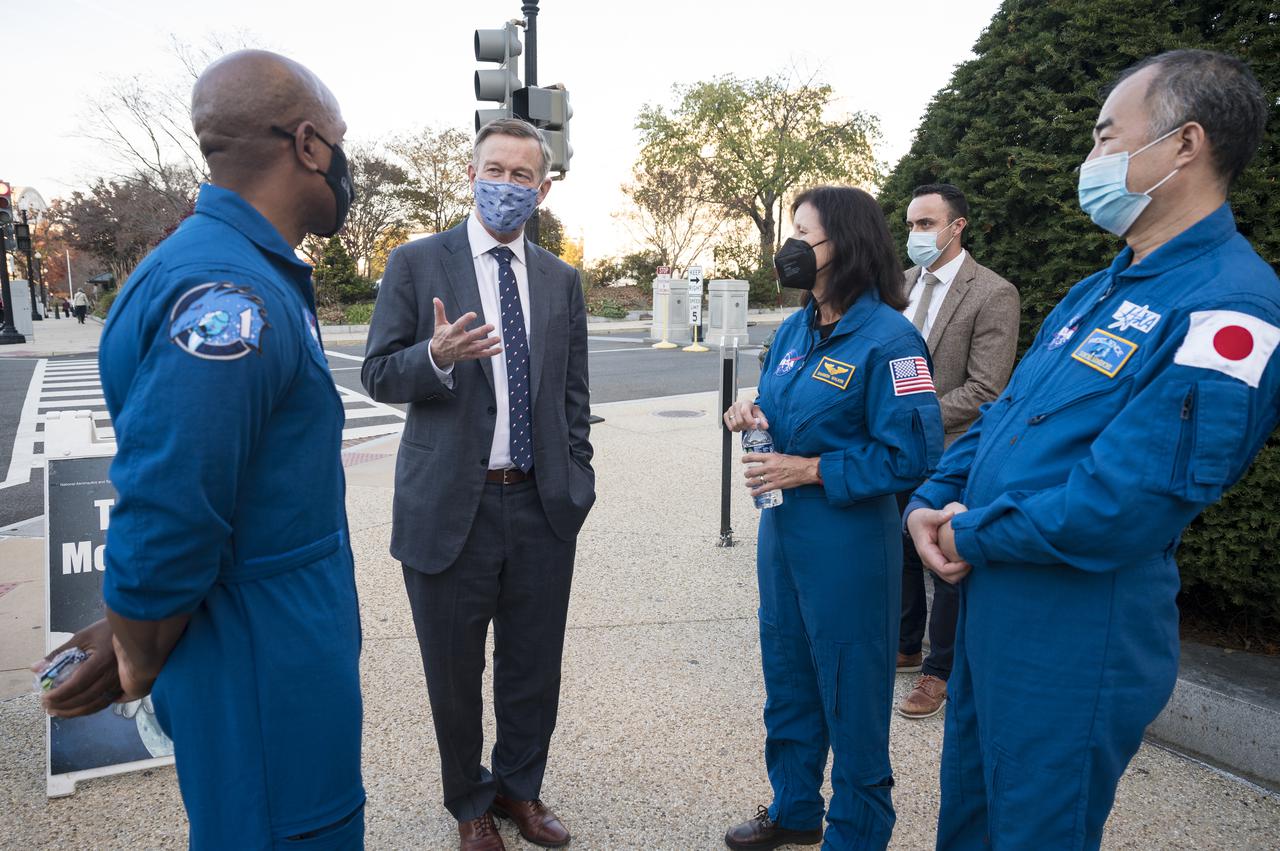
SpaceX Crew-1 NASA astronauts Victor Glover, left, and Shannon Walker, second from right, and Japan Aerospace Exploration Agency (JAXA) astronaut Soichi Noguchi, right, speak with Senator John Hickenlooper, D-Colo, at the Destination Station mobile exhibition on Capitol Hill, Wednesday, Nov. 17, 2021, in Washington. Walker, Glover, Noguchi, and NASA astronaut Mike Hopkins, launched on the first crew rotation mission to the International Space Station for SpaceX’s Falcon 9 and Crew Dragon spacecraft as part of the agency’s Commercial Crew Program and spent 168 days in space across Expeditions 64 and 65. Photo Credit: (NASA/Aubrey Gemignani)
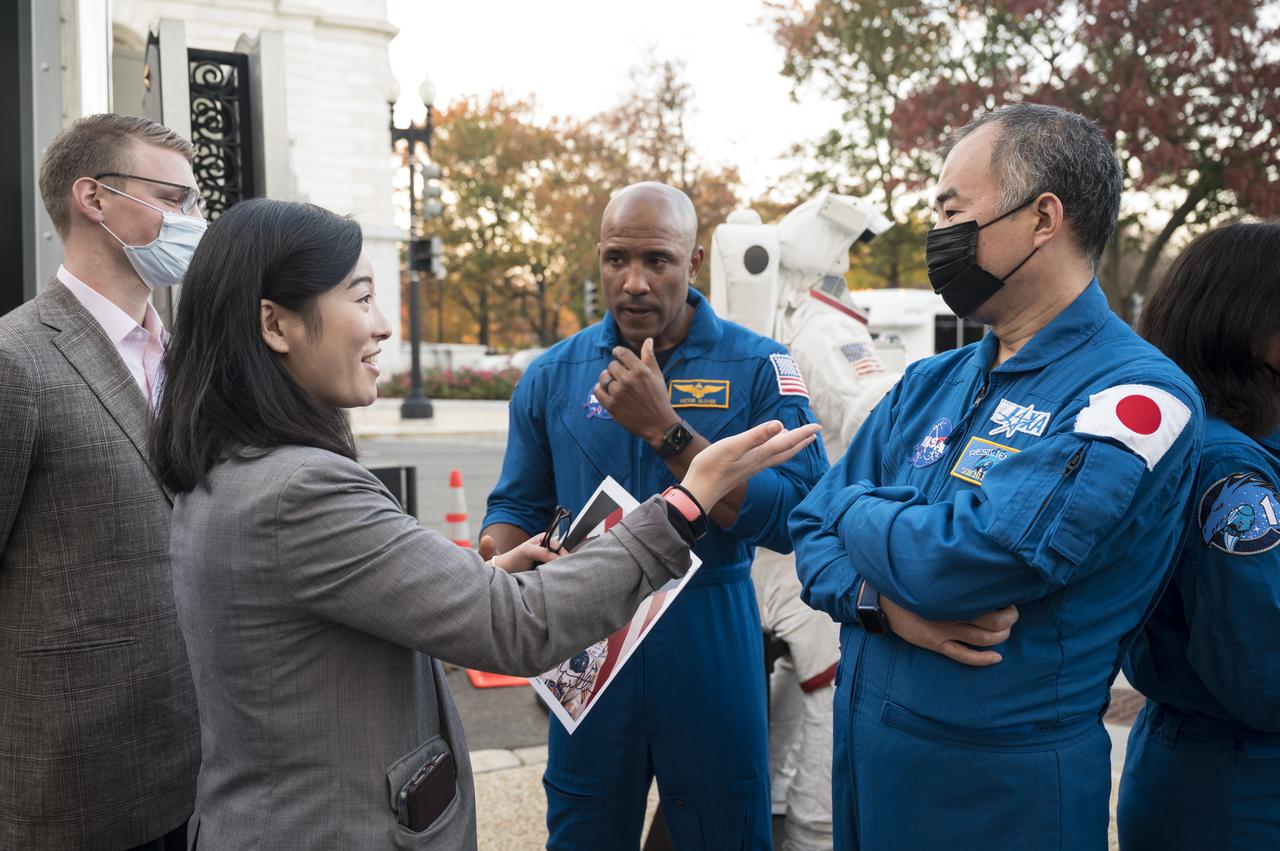
SpaceX Crew-1 NASA astronaut Victor Glover, center, and Japan Aerospace Exploration Agency (JAXA) astronaut Soichi Noguchi, right, speak with visitors at the Destination Station mobile exhibition on Capitol Hill, Wednesday, Nov. 17, 2021, in Washington.Glover, Noguchi, and NASA astronauts Mike Hopkins and Shannon Walker, launched on the first crew rotation mission to the International Space Station for SpaceX’s Falcon 9 and Crew Dragon spacecraft as part of the agency’s Commercial Crew Program and spent 168 days in space across Expeditions 64 and 65. Photo Credit: (NASA/Aubrey Gemignani)

SpaceX Crew-1 NASA astronaut Mike Hopkins speaks with visitors at the Destination Station mobile exhibition on Capitol Hill, Wednesday, Nov. 17, 2021, in Washington. Hopkins and NASA astronauts Shannon Walker and Victor Glover, and Japan Aerospace Exploration Agency (JAXA) astronaut Soichi Noguchi launched on the first crew rotation mission to the International Space Station for SpaceX’s Falcon 9 and Crew Dragon spacecraft as part of the agency’s Commercial Crew Program and spent 168 days in space across Expeditions 64 and 65. Photo Credit: (NASA/Aubrey Gemignani)
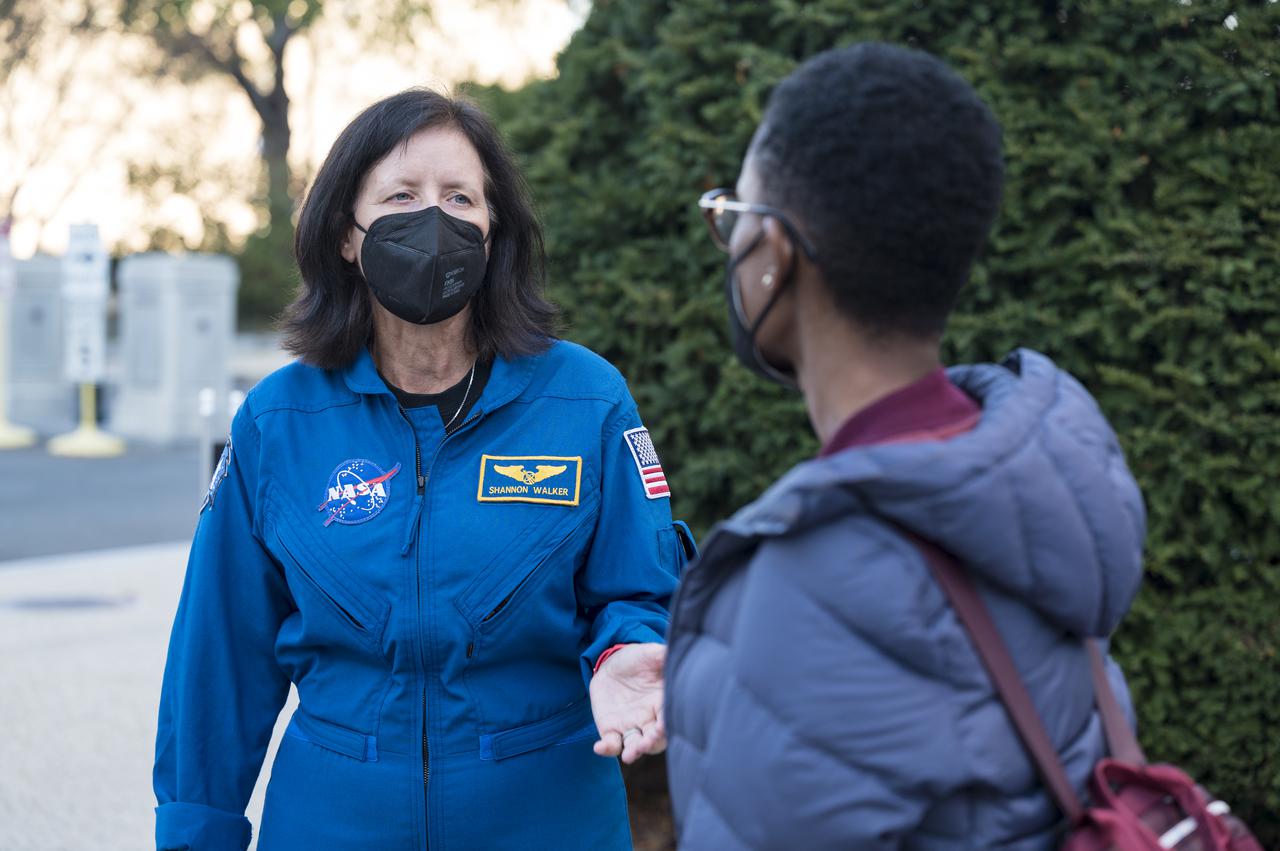
SpaceX Crew-1 NASA astronaut Shannon Walker speaks with visitors at the Destination Station mobile exhibition on Capitol Hill, Wednesday, Nov. 17, 2021, in Washington. Walker, and NASA astronauts Mike Hopkins, and Victor Glover, and Japan Aerospace Exploration Agency (JAXA) astronaut Soichi Noguchi launched on the first crew rotation mission to the International Space Station for SpaceX’s Falcon 9 and Crew Dragon spacecraft as part of the agency’s Commercial Crew Program and spent 168 days in space across Expeditions 64 and 65. Photo Credit: (NASA/Aubrey Gemignani)

SpaceX Crew-1 NASA astronaut Victor Glover speaks with visitors at the Destination Station mobile exhibition on Capitol Hill, Wednesday, Nov. 17, 2021, in Washington. Glover, and NASA astronauts Mike Hopkins, and Shannon Walker, and Japan Aerospace Exploration Agency (JAXA) astronaut Soichi Noguchi launched on the first crew rotation mission to the International Space Station for SpaceX’s Falcon 9 and Crew Dragon spacecraft as part of the agency’s Commercial Crew Program and spent 168 days in space across Expeditions 64 and 65. Photo Credit: (NASA/Aubrey Gemignani)
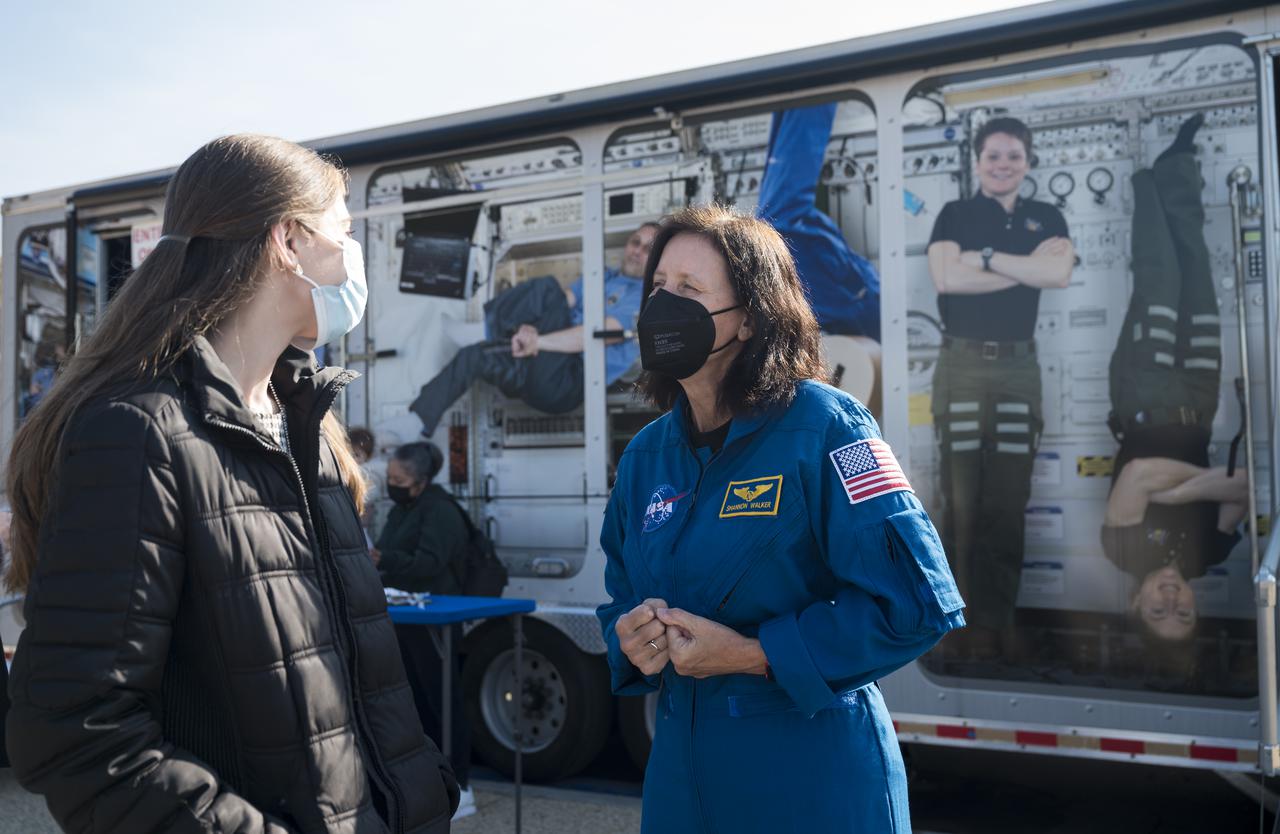
SpaceX Crew-1 NASA astronaut Shannon Walker speaks with visitors at the Destination Station mobile exhibition on Capitol Hill, Wednesday, Nov. 17, 2021, in Washington. Walker, and NASA astronauts Mike Hopkins, and Victor Glover, and Japan Aerospace Exploration Agency (JAXA) astronaut Soichi Noguchi launched on the first crew rotation mission to the International Space Station for SpaceX’s Falcon 9 and Crew Dragon spacecraft as part of the agency’s Commercial Crew Program and spent 168 days in space across Expeditions 64 and 65. Photo Credit: (NASA/Aubrey Gemignani)
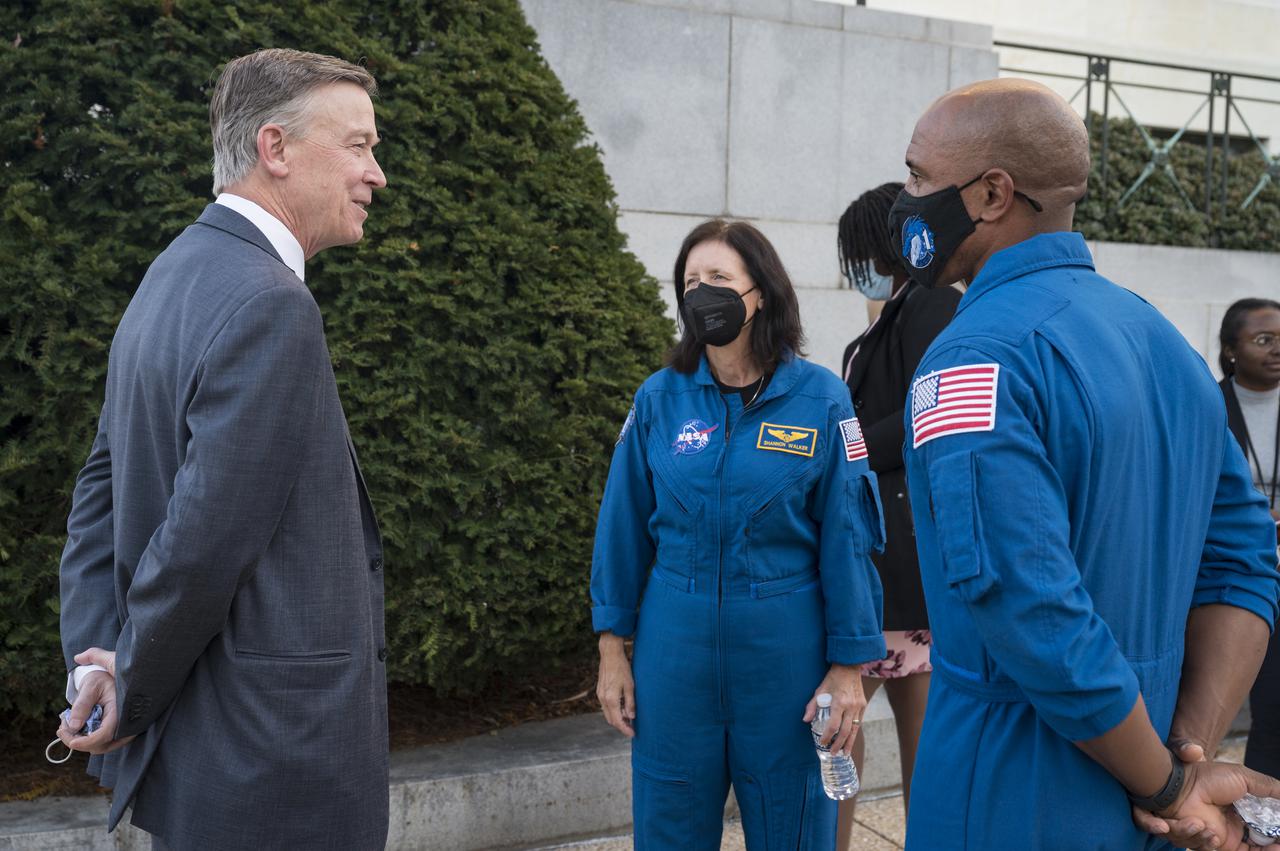
SpaceX Crew-1 NASA astronauts Shannon Walker, center, and Victor Glover, right, speak with Senator John Hickenlooper, D-Colo, at the Destination Station mobile exhibition on Capitol Hill, Wednesday, Nov. 17, 2021, in Washington. Walker, Glover, NASA astronaut Mike Hopkins, and Japan Aerospace Exploration Agency (JAXA) astronaut Soichi Noguchi launched on the first crew rotation mission to the International Space Station for SpaceX’s Falcon 9 and Crew Dragon spacecraft as part of the agency’s Commercial Crew Program and spent 168 days in space across Expeditions 64 and 65. Photo Credit: (NASA/Aubrey Gemignani)
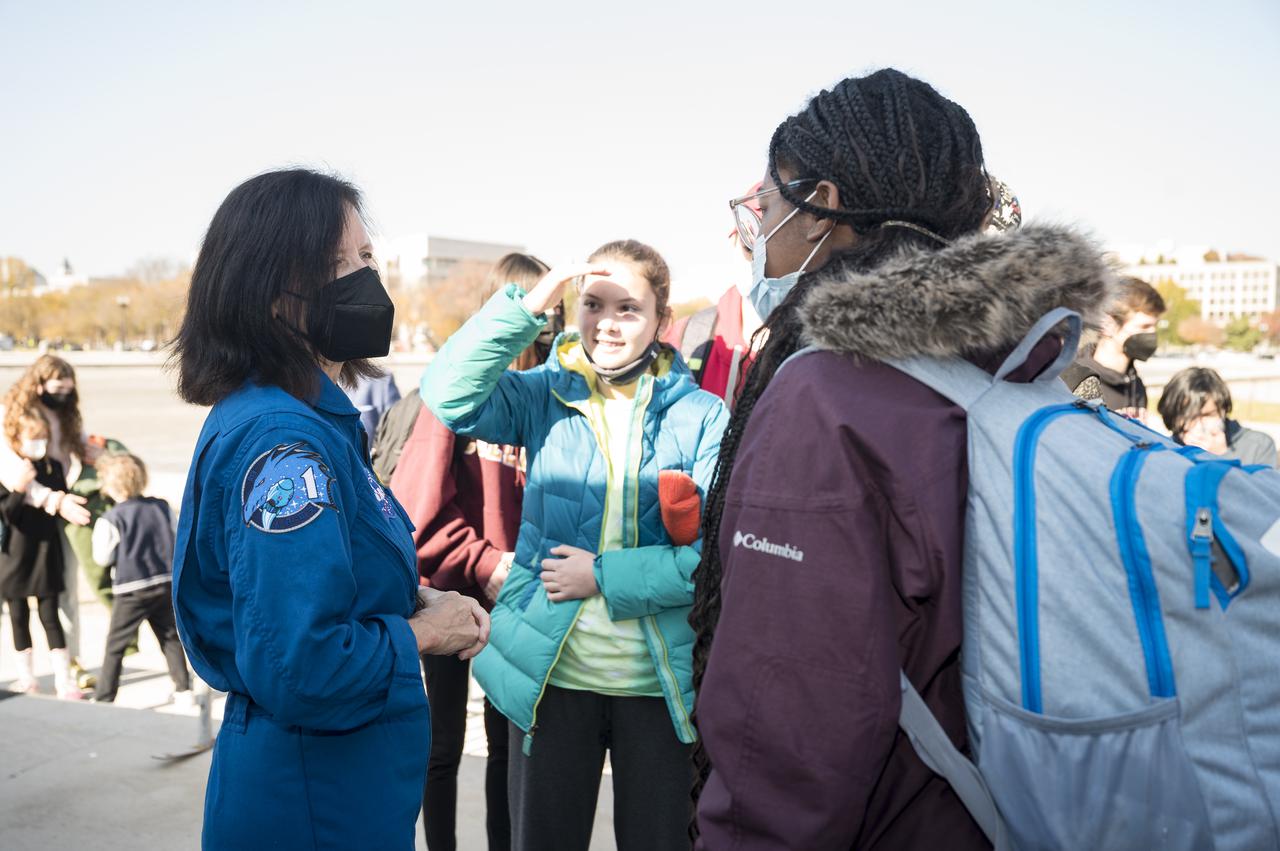
SpaceX Crew-1 NASA astronaut Shannon Walker speaks with visitors at the Destination Station mobile exhibition on Capitol Hill, Wednesday, Nov. 17, 2021, in Washington. Walker, and NASA astronauts Mike Hopkins, and Victor Glover, and Japan Aerospace Exploration Agency (JAXA) astronaut Soichi Noguchi launched on the first crew rotation mission to the International Space Station for SpaceX’s Falcon 9 and Crew Dragon spacecraft as part of the agency’s Commercial Crew Program and spent 168 days in space across Expeditions 64 and 65. Photo Credit: (NASA/Aubrey Gemignani)
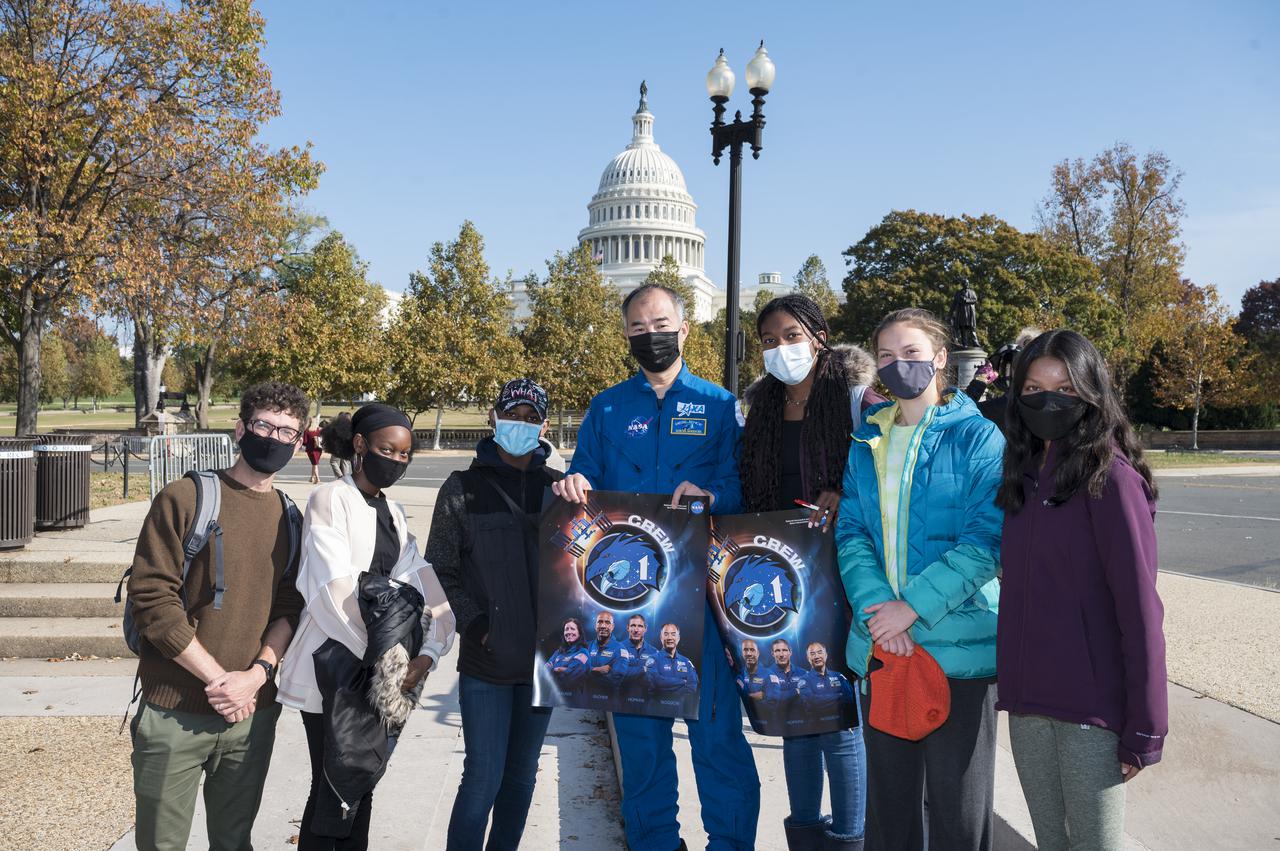
Japan Aerospace Exploration Agency (JAXA) astronaut Soichi Noguchi poses for a photo with visitors at the Destination Station mobile exhibition on Capitol Hill, Wednesday, Nov. 17, 2021, in Washington. Noguchi and crew mates NASA astronauts Mike Hopkins, Victor Glover, and Shannon Walker, launched on the first crew rotation mission to the International Space Station for SpaceX’s Falcon 9 and Crew Dragon spacecraft as part of the agency’s Commercial Crew Program and spent 168 days in space across Expeditions 64 and 65. Photo Credit: (NASA/Aubrey Gemignani)
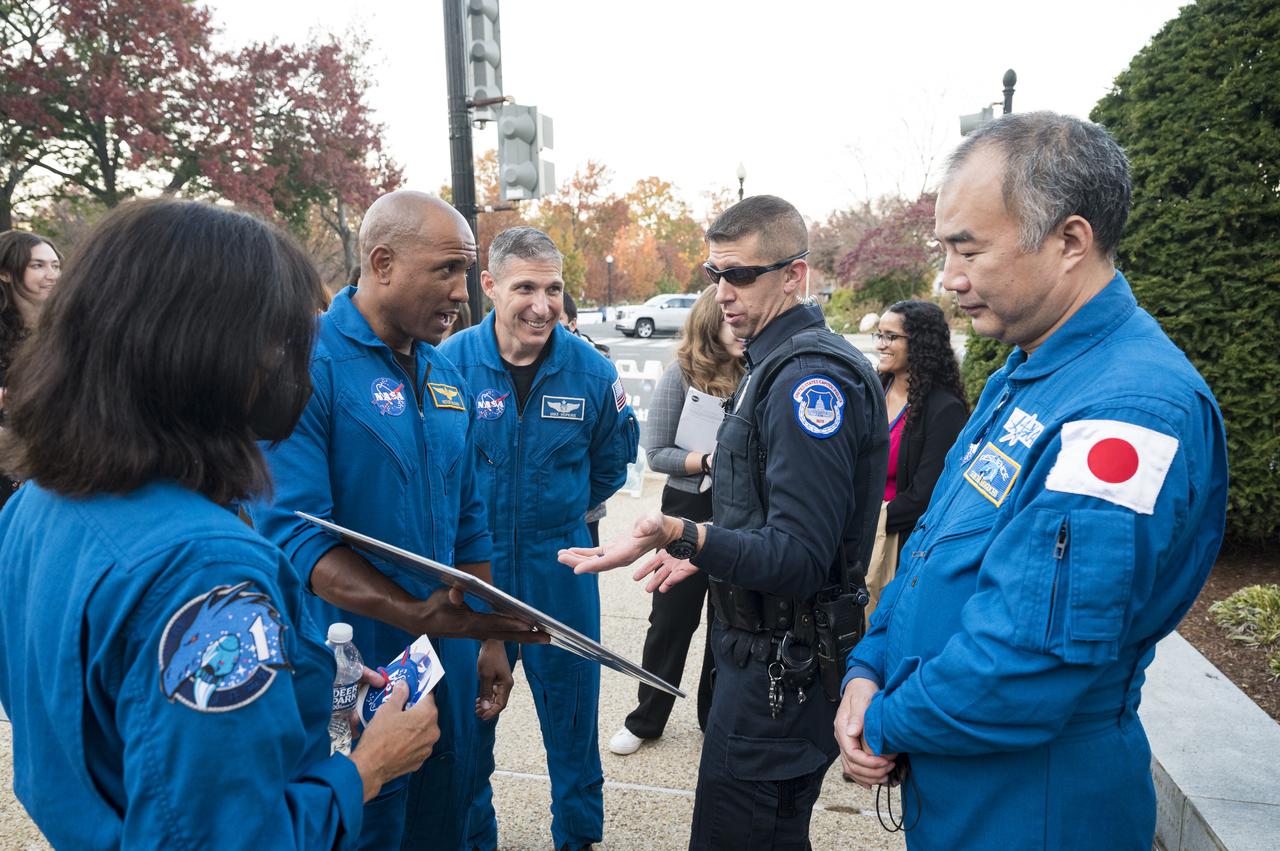
SpaceX Crew-1 NASA astronauts, from left to right, Shannon Walker, Victor Glover, Mike Hopkins, and Japan Aerospace Exploration Agency (JAXA) astronaut Soichi Noguchi, right, presents a montage from their mission to Capitol Police officer Jason Conlon at the Destination Station mobile exhibition on Capitol Hill, Wednesday, Nov. 17, 2021, in Washington. Walker, Glover, Hopkins, and Noguchi launched on the first crew rotation mission to the International Space Station for SpaceX’s Falcon 9 and Crew Dragon spacecraft as part of the agency’s Commercial Crew Program and spent 168 days in space across Expeditions 64 and 65. Photo Credit: (NASA/Aubrey Gemignani)
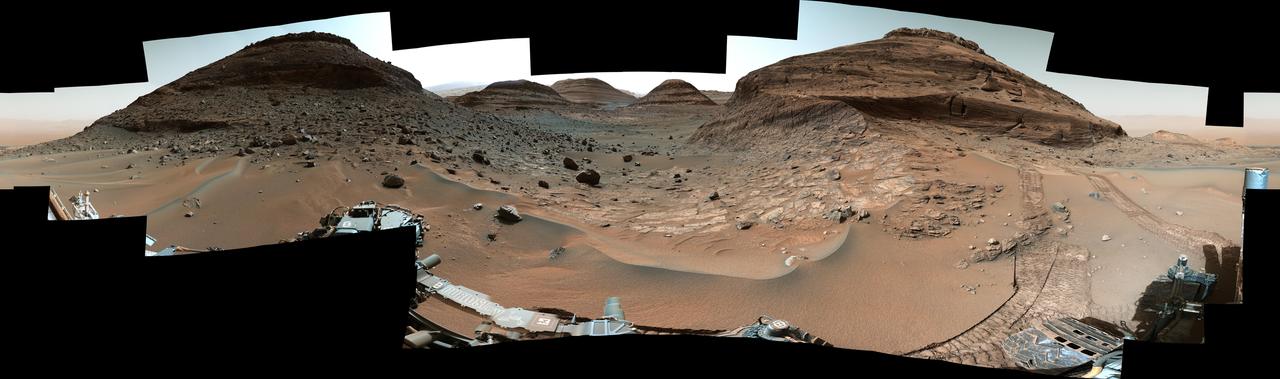
NASA's Curiosity Mars rover used its Mast Camera, or Mastcam, to capture this panorama while driving toward the center of this scene, an area that forms the narrow "Paraitepuy Pass," on Aug. 14, the 3,563rd Martian day, or sol, of the mission. The hill on the right is "Bolívar"; on the left of is "Deepdale." The floor of the vast Gale Crater is visible in the background in the upper right. This panorama was stitched together from 146 images after they were sent back to Earth. The color has been adjusted to match the lighting conditions as the human eye would perceive them on Earth. https://photojournal.jpl.nasa.gov/catalog/PIA25413
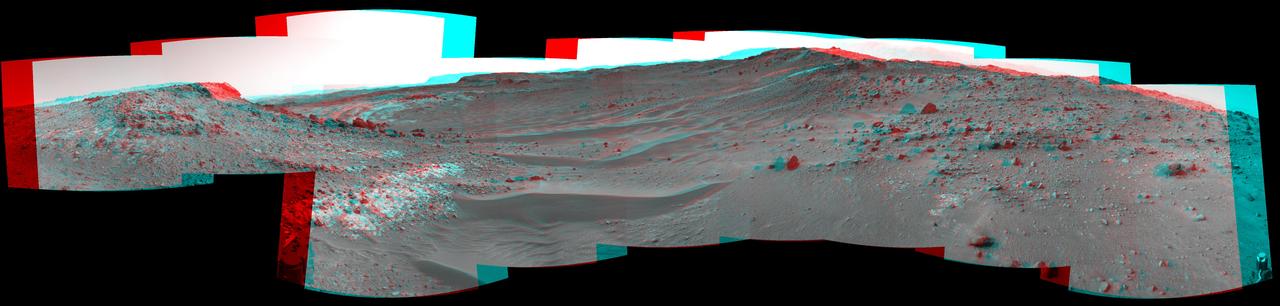
This stereo view from the Navigation Camera (Navcam) on NASA's Curiosity Mars rover shows the terrain ahead of the rover as it makes its way westward through a valley called "Artist's Drive." The image appears three-dimensional when viewed through red-blue glasses with the red lens on the left. The Navcam recorded the component images of this mosaic on April 10, 2015, during the 951st Martian Day, or sol, of Curiosity's work on Mars. The valley is on the rover's route toward a higher site on Mount Sharp than the "Pahrump Hills" area the mission investigated at the base of the layered mountain. http://photojournal.jpl.nasa.gov/catalog/PIA19165
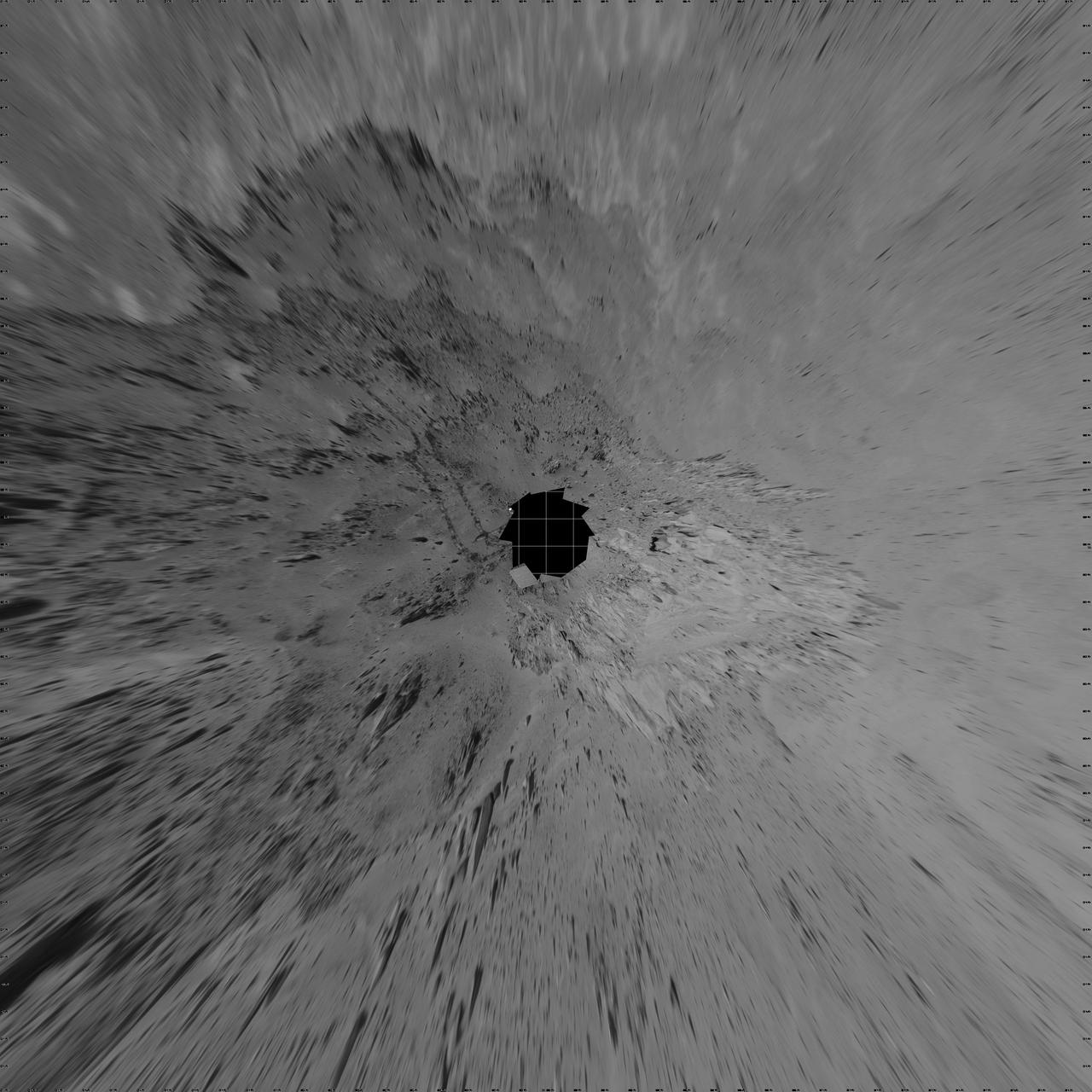
NASA's Mars Exploration Rover Spirit used its navigation camera to take the images combined into this 360-degree view of the rover's surroundings on Spirit's 409th martian day, or sol (Feb. 26, 2005). Spirit had driven 2 meters (7 feet) on this sol to get in position on "Cumberland Ridge" for looking into "Tennessee Valley" to the east. This location is catalogued as Spirit's Site 108. Rover-wheel tracks from climbing the ridge are visible on the right. The summit of "Husband Hill" is at the center, to the south. This view is presented in a vertical projection with geometric and brightness seam correction. http://photojournal.jpl.nasa.gov/catalog/PIA07410
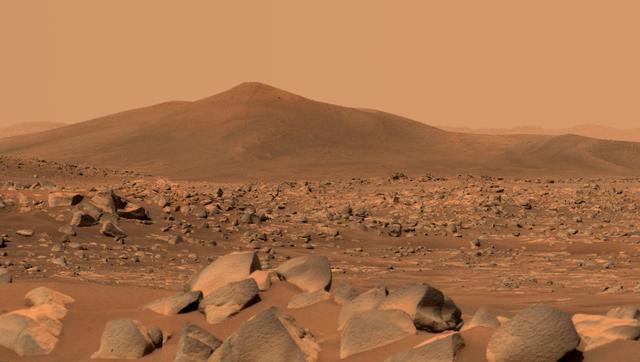
NASA's Perseverance Mars rover used its dual-camera Mastcam-Z imager to capture this image of "Santa Cruz," a hill about 1.5 miles (2.5 kilometers) away from the rover, on April 29, 2021, the 68th Martian day, or sol, of the mission. The entire scene is inside of Mars' Jezero Crater; the crater's rim can be seen on the horizon line beyond the hill. This scene is not white balanced; instead, it is displayed in a preliminary calibrated version of a natural-color composite, approximately simulating the colors of the scene as it would appear to a person on Mars. Arizona State University in Tempe leads the operations of the Mastcam-Z instrument, working in collaboration with Malin Space Science Systems in San Diego. A key objective for Perseverance's mission on Mars is astrobiology, including the search for signs of ancient microbial life. The rover will characterize the planet's geology and past climate, pave the way for human exploration of the Red Planet, and be the first mission to collect and cache Martian rock and regolith (broken rock and dust). Subsequent NASA missions, in cooperation with ESA (European Space Agency), would send spacecraft to Mars to collect these sealed samples from the surface and return them to Earth for in-depth analysis. The Mars 2020 Perseverance mission is part of NASA's Moon to Mars exploration approach, which includes Artemis missions to the Moon that will help prepare for human exploration of the Red Planet. https://photojournal.jpl.nasa.gov/catalog/PIA24546
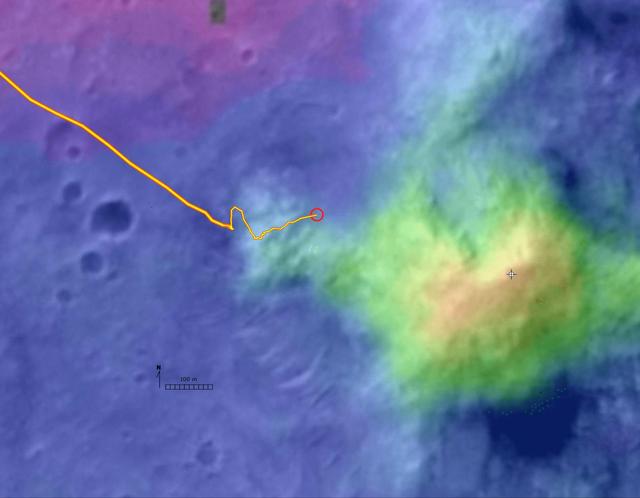
This digital elevation map, produced from satellite data overlain on an image taken by the Mars Orbital Camera on NASA's Mars Global Surveyor spacecraft, shows changes in elevation along the trek of NASA's Mars Exploration Rover Spirit as of the rover's 328th martian day, or sol (Dec. 4, 2004). To that point, Spirit had driven a total of 3.89 kilometers (2.42 miles). The blue area represents the basaltic plains on the floor of Gusev Crater, about 20 meters (66 feet) below the rover's present location. Spirit crossed those plains for several months after landing to the west, off the left edge of this image. The greenish-blue area is the "West Spur" of the "Columbia Hills," which Spirit reached on sol 156 (June 11, 2004). Since then, Spirit has been gradually ascending the slopes of the "West Spur" in an east-northeasterly direction. Southeast of the rover's current position is a brighter green area that represents an abrupt increase in slope where the "West Spur" meets the steeper flanks of the "Columbia Hills." The yellow and red areas represent the highest slopes and peaks. A steep valley east of the rover's location appears, from orbiter images, to have layered outcrops. Scientists are directing the rover to a ridge overlooking the valley to get a better look at what lies ahead. http://photojournal.jpl.nasa.gov/catalog/PIA07089
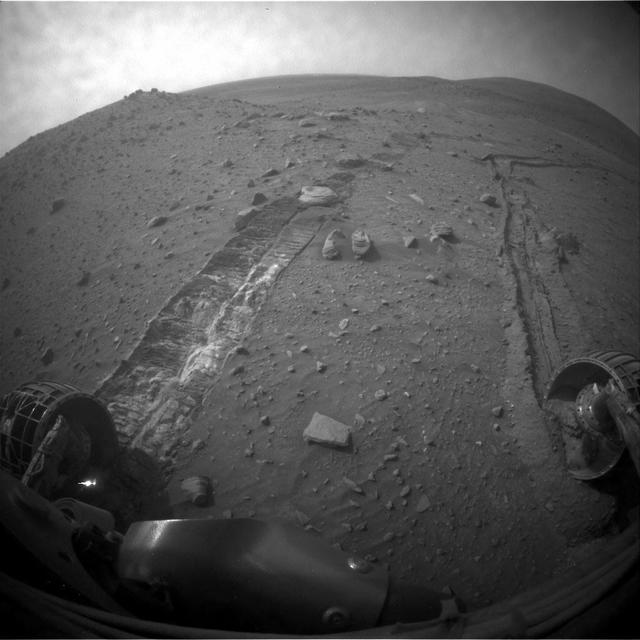
NASA's Mars Exploration Rover Spirit drove 6.98 meters (22.9 feet) southeastward on the 1,871st Martian day, or sol, of the rover's mission on Mars (April 8, 2009). As usual since losing the use of its right-front wheel in 2006, Spirit drove backward, dragging the immobile wheel. The rover used its front hazard-avoidance camera after the drive to capture this view looking back at the ground covered. For scale, the distance between the parallel wheel tracks is about 1 meter (40 inches). The drive added to progress in trekking counterclockwise around a low plateau called "Home Plate." Spirit is driving through a valley on the west side of the plateau. Home Plate is not within this image. The hill on the horizon in the upper right is Husband Hill, the summit of which is about 750 meters (nearly half a mile) to the north of Spirit's position. Following this drive, Spirit experienced difficulties that prevented driving during the subsequent week. http://photojournal.jpl.nasa.gov/catalog/PIA11990
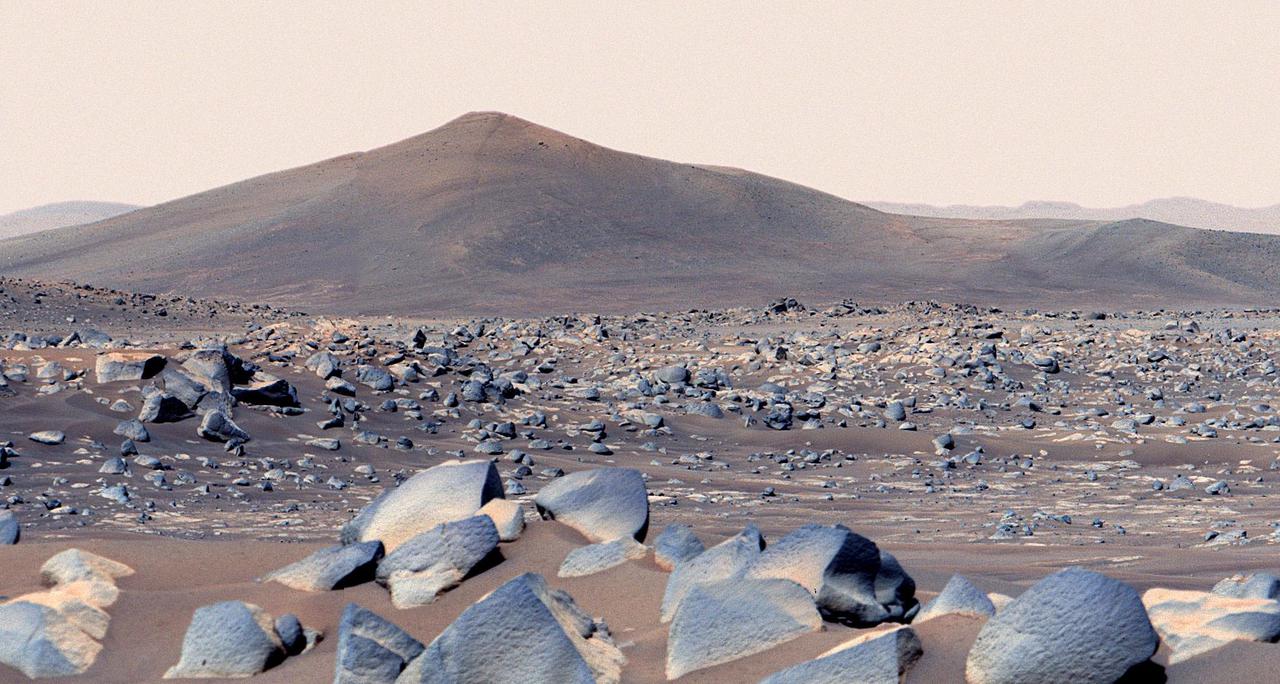
NASA's Perseverance Mars rover snapped this view of a hill in Mars' Jezero Crater called "Santa Cruz" on April 29, 2021, the 68th Martian day, or sol, of the mission. About 20 inches (50 centimeters) across on average, the boulders in the foreground are among the type of rocks the rover team has named "Ch'al" (the Navajo term for "frog" and pronounced "chesh"). Perseverance will return to the area in the next week or so. Composed of multiple images, this enhanced-color mosaic was created using the left- and right-eye views of Perseverance's Mastcam-Z camera system, merging the scene into a single, wider view. Santa Cruz hill is a possible eroded remnant of Jezero Crater's western delta. The hill is about 164 feet (50 meters) tall and was roughly 1.6 miles (2.5 kilometers) east of the rover when the photo was taken, viewed from "Van Zyl Overlook." A key objective for Perseverance's mission on Mars is astrobiology, including the search for signs of ancient microbial life. The rover will characterize the planet's geology and past climate, pave the way for human exploration of the Red Planet, and be the first mission to collect and cache Martian rock and regolith (broken rock and dust). Subsequent NASA missions, in cooperation with ESA (European Space Agency), would send spacecraft to Mars to collect these sealed samples from the surface and return them to Earth for in-depth analysis. The Mars 2020 Perseverance mission is part of NASA's Moon to Mars exploration approach, which includes Artemis missions to the Moon that will help prepare for human exploration of the Red Planet. https://photojournal.jpl.nasa.gov/catalog/PIA25075
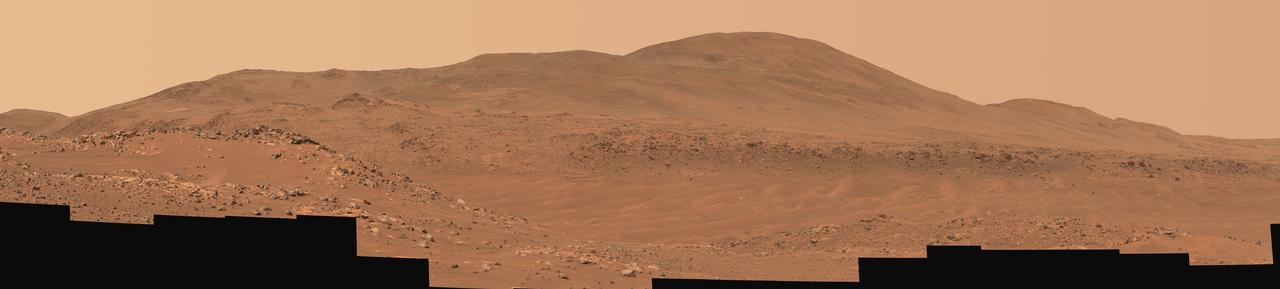
This natural-color mosaic showing NASA's Ingenuity Mars Helicopter at "Valinor Hills" was acquired by the agency's Perseverance Mars rover on Feb. 21, 2024, the 1,068th Martian day, or sol, of the mission. The helicopter – the first aircraft to achieve powered, controlled flight on another world – sits just left of center, a speck-like figure amid a field of sand ripples. Ingenuity damaged its rotor blades during landing on its 72nd and final flight on Jan. 18, 2024. The helicopter team nicknamed the spot where the last flight concluded Valinor Hills after the fictional location in J.R.R. Tolkien's fantasy novels, which include "The Lord of the Rings" trilogy. The 67 images that were stitched together to make this mosaic were captured from about 1,365 feet (415 meters) away by the rover's Mastcam-Z camera. This is a wider and more detailed view of Valinor Hills than was shown in a previously released six-image Mastcam-Z mosaic that was taken from farther away. Arizona State University leads the operations of the Mastcam-Z instrument, working in collaboration with Malin Space Science Systems in San Diego, on the design, fabrication, testing, and operation of the cameras, and in collaboration with the Niels Bohr Institute of the University of Copenhagen on the design, fabrication, and testing of the calibration targets. A key objective for Perseverance's mission on Mars is astrobiology, including the search for signs of ancient microbial life. The rover will characterize the planet's geology and past climate, pave the way for human exploration of the Red Planet, and be the first mission to collect and cache Martian rock and regolith (broken rock and dust). Subsequent NASA missions, in cooperation with ESA (European Space Agency), would send spacecraft to Mars to collect these sealed samples from the surface and return them to Earth for in-depth analysis. The Mars 2020 Perseverance mission is part of NASA's Moon to Mars exploration approach, which includes Artemis missions to the Moon that will help prepare for human exploration of the Red Planet. https://photojournal.jpl.nasa.gov/catalog/PIA26237
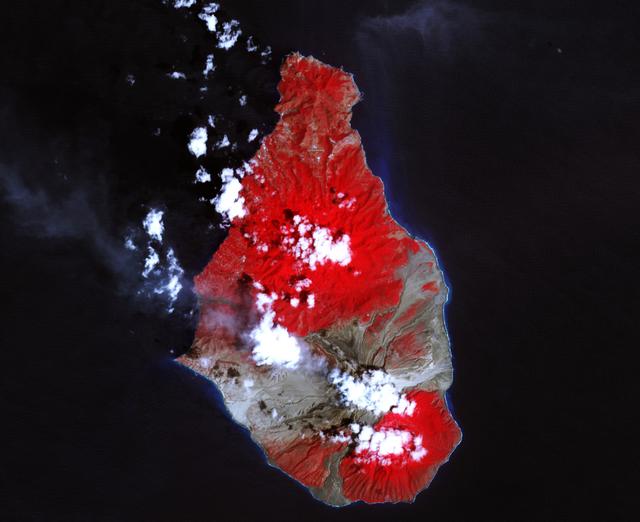
A massive eruption of Montserrat’s Soufrière Hills Volcano covered large portions of the island in debris. The eruption was triggered by a collapse of Soufrière Hills’ summit lava dome on February 11, 2010. Pyroclastic flows raced down the northern flank of the volcano, leveling trees and destroying buildings in the village of Harris, which was abandoned after Soufrière Hills became active in 1995. The Montserrat Volcano Observatory reported that some flows, about 15 meters (49 feet) thick, reached the sea at Trant’s Bay. These flows extended the island’s coastline up to 650 meters (2,100 feet). These false-color satellite images show the southern half of Montserrat before and after the dome collapse. The top image shows Montserrat on February 21, 2010, just 10 days after the event. For comparison, the bottom image shows the same area on March 17, 2007. Red areas are vegetated, clouds are white, blue/black areas are ocean water, and gray areas are covered by flow deposits. Fresh deposits tend to be lighter than older deposits. On February 21, the drainages leading down from Soufrière Hills, including the White River Valley, the Tar River Valley, and the Belham River Valley, were filled with fresh debris. According to the Montserrat Volcano Observatory, pyroclastic flows reached the sea through Aymers Ghaut on January 18, 2010, and flows entered the sea near Plymouth on February 5, 2010. NASA Earth Observatory image by Robert Simmon, using data from the NASA/GSFC/METI/ERSDAC/JAROS, and U.S./Japan ASTER Science Team. Caption by Robert Simmon. To read more go to: <a href="http://earthobservatory.nasa.gov/IOTD/view.php?id=42792" rel="nofollow">earthobservatory.nasa.gov/IOTD/view.php?id=42792</a> <b><a href="http://www.nasa.gov/centers/goddard/home/index.html" rel="nofollow">NASA Goddard Space Flight Center</a></b> is home to the nation's largest organization of combined scientists, engineers and technologists that build spacecraft, instruments and new technology to study the Earth, the sun, our solar system, and the universe. <b>Follow us on <a href="http://twitter.com/NASA_GoddardPix" rel="nofollow">Twitter</a></b> <b>Join us on <a href="http://www.facebook.com/pages/Greenbelt-MD/NASA-Goddard/395013845897?ref=tsd" rel="nofollow">Facebook</a><b> </b></b>

CAPE CANAVERAL, Fla. – At NASA's Kennedy Space Center in Florida, Aly Mendoza-Hill, NASA Launch Services Program mission manager, talks to agency social media followers during the second day of NASA Social activities revolving around NASA's Radiation Belt Storm Probes, or RBSP, mission. The probes are set to launch aboard a United Launch Alliance, or ULA, Atlas V rocket from nearby Cape Canaveral Air Force Station. About 40 followers were selected to participate in RBSP's prelaunch and launch activities. The RBSP mission will help us understand the sun’s influence on Earth and near-Earth space by studying the Earth’s radiation belts on various scales of space and time. RBSP will begin its mission of exploration of Earth’s Van Allen radiation belts and the extremes of space weather. For more information, visit http://www.nasa.gov/rbsp. Photo credit: NASA/Frankie Martin
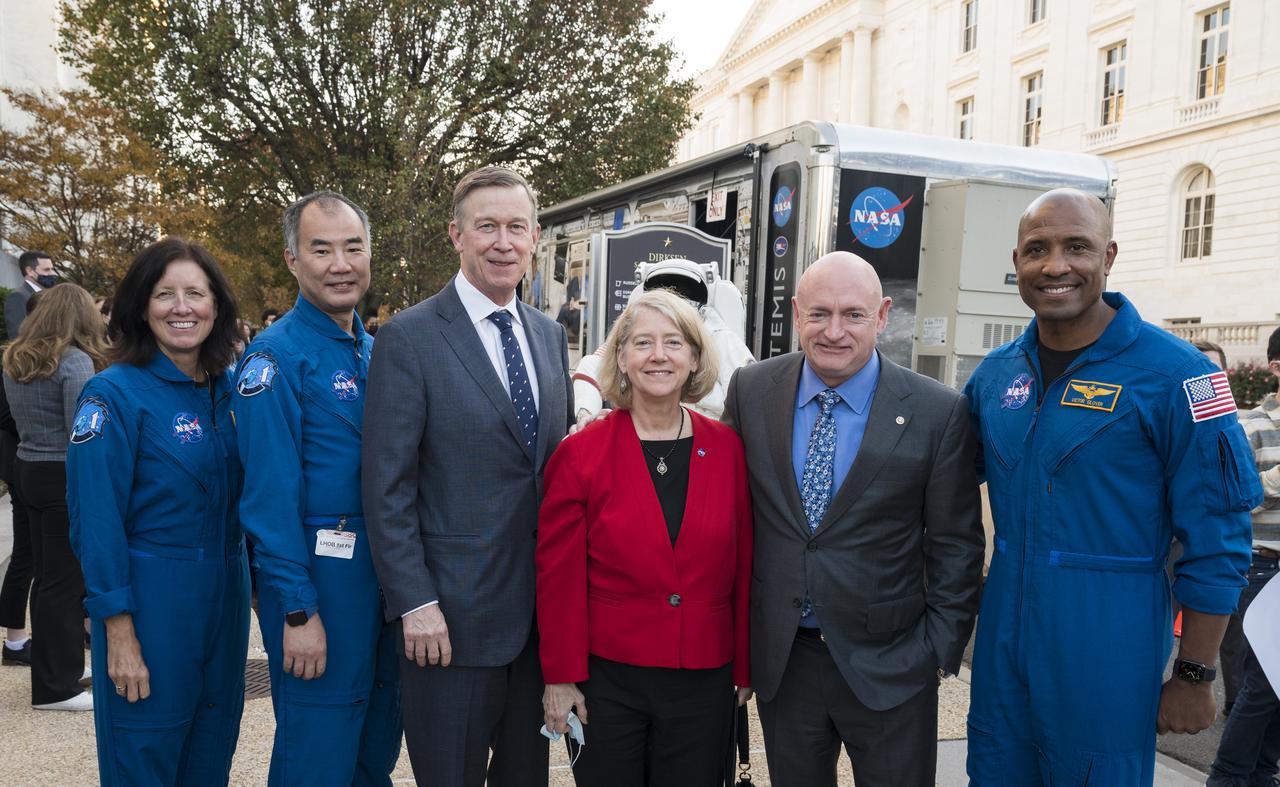
From left to right, SpaceX Crew-1 NASA astronaut Shannon Walker, Japan Aerospace Exploration Agency (JAXA) astronaut Soichi Noguchi, Senator John Hickenlooper, D-Colo, NASA Deputy Administrator Pam Melroy, Senator Mark Kelly, D-Ariz., and NASA astronaut Victor Glover, pose for a photo at the Destination Station mobile exhibition on Capitol Hill, Wednesday, Nov. 17, 2021, in Washington. Walker, Glover, Noguchi, and NASA astronaut Mike Hopkins, launched on the first crew rotation mission to the International Space Station for SpaceX’s Falcon 9 and Crew Dragon spacecraft as part of the agency’s Commercial Crew Program and spent 168 days in space across Expeditions 64 and 65. Photo Credit: (NASA/Aubrey Gemignani)
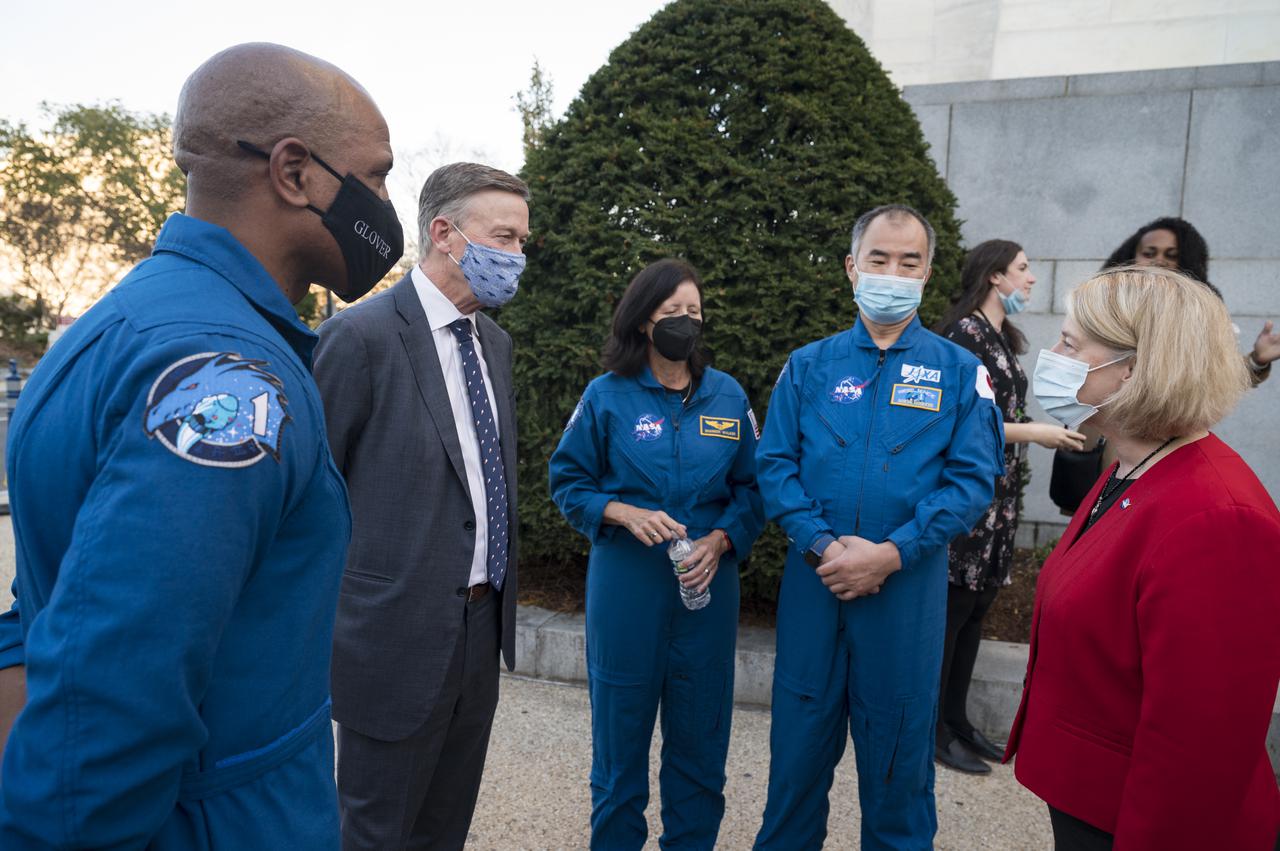
NASA Deputy Administrator Pam Melroy, right, SpaceX Crew-1 NASA astronauts Victor Glover, left, and Shannon Walker, third from right, and Japan Aerospace Exploration Agency (JAXA) astronaut Soichi Noguchi, second from right, speak with Senator John Hickenlooper, D-Colo, at the Destination Station mobile exhibition on Capitol Hill, Wednesday, Nov. 17, 2021, in Washington. Walker, Glover, Noguchi, and NASA astronaut Mike Hopkins, launched on the first crew rotation mission to the International Space Station for SpaceX’s Falcon 9 and Crew Dragon spacecraft as part of the agency’s Commercial Crew Program and spent 168 days in space across Expeditions 64 and 65. Photo Credit: (NASA/Aubrey Gemignani)