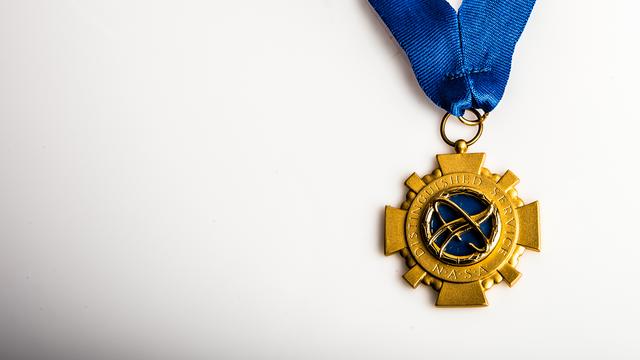
NASA Honors awards medal - Distinguished Service
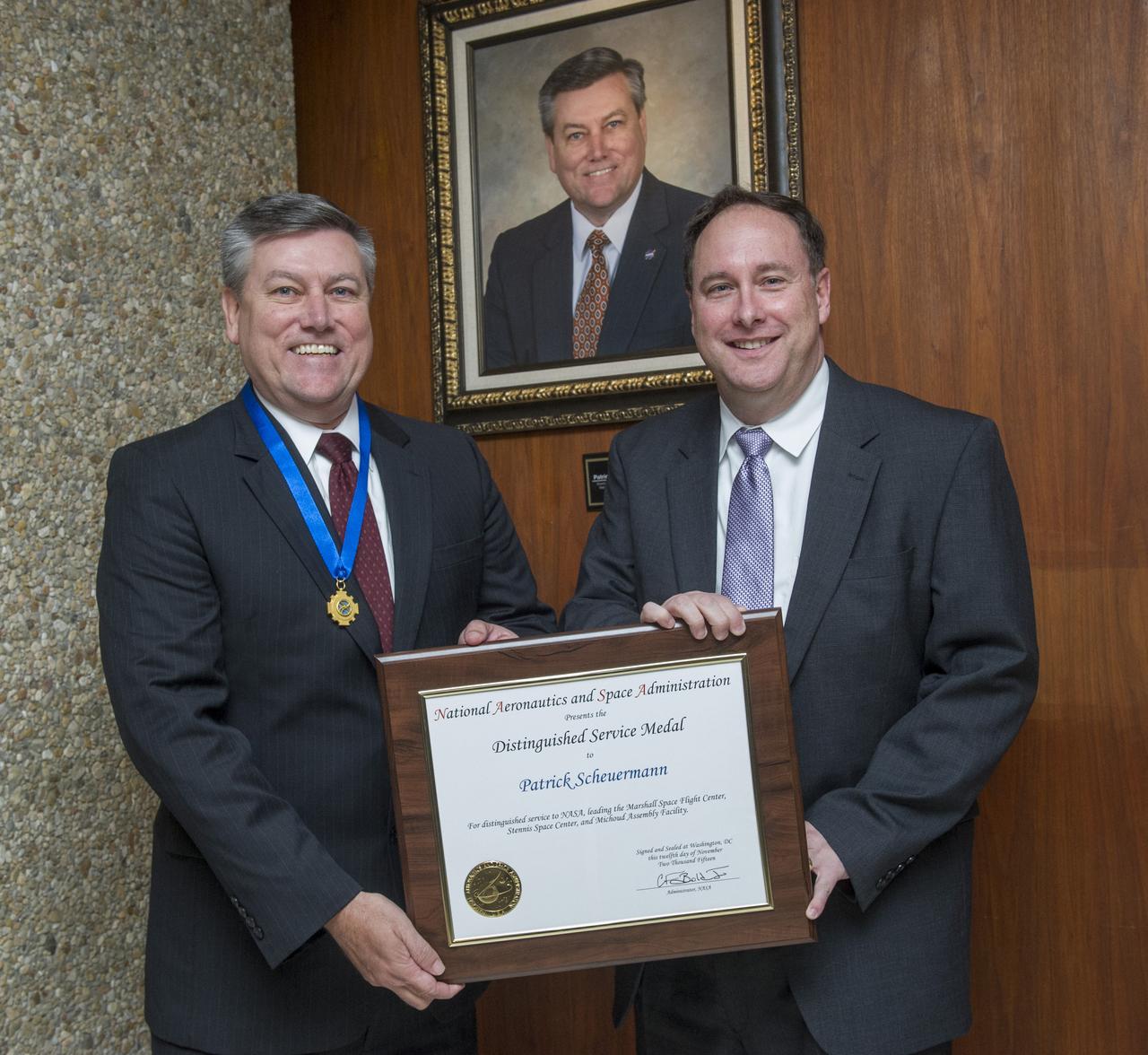
Robert Lightfoot presents NASA Distinguished Service Medal to Patrick Scheuermann
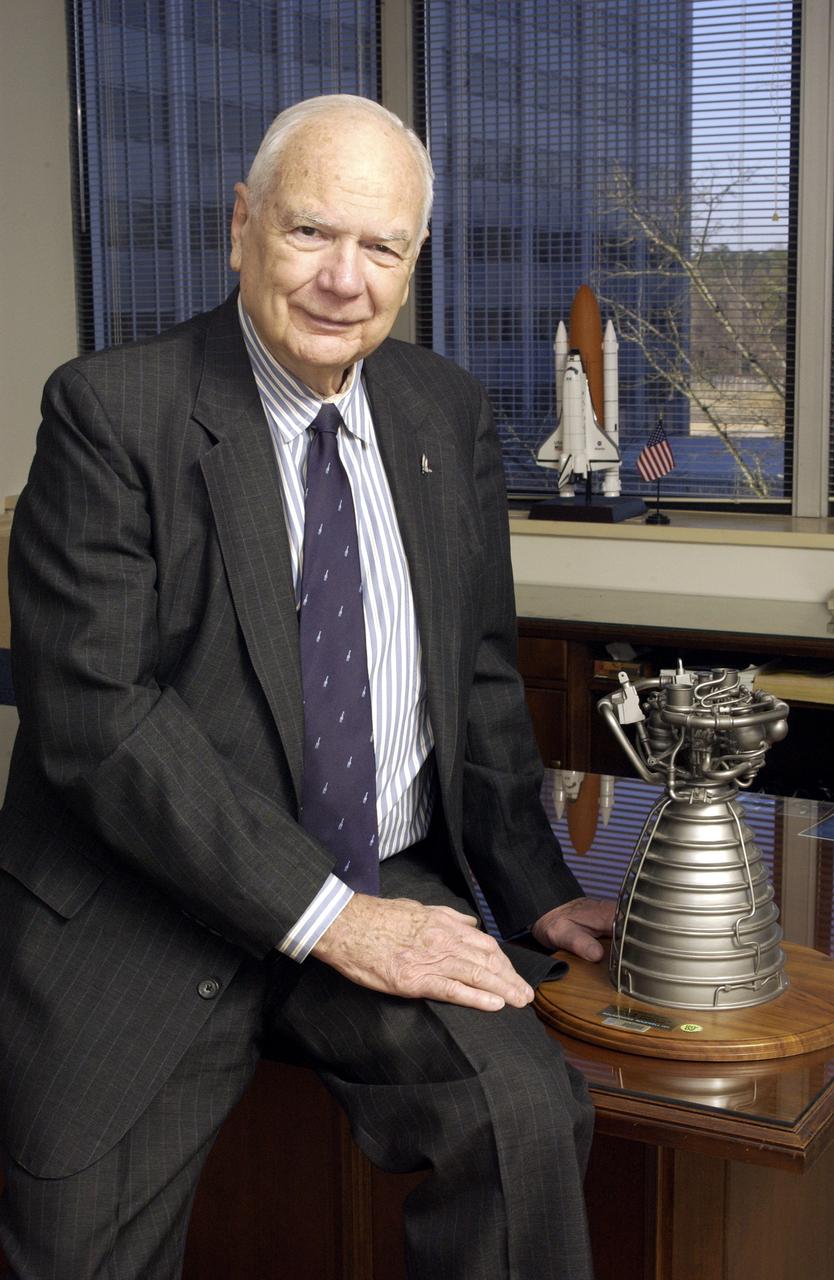
After four decades of contribution to America's space program, George Hopson, manager of the Space Shuttle Main Engine Project at Marshall Space Flight Center, accepted NASA's Distinguished Service Medal. Awarded to those who, by distinguished ability or courage, have made a personal contribution to the NASA mission, NASA's Distinguished Service Medal is the highest honor NASA confers. Hopson's contributions to America's space program include work on the country's first space station, Skylab; the world's first reusable space vehicle, the Space Shuttle; and the International Space Station. Hopson joined NASA's Marshall team as chief of the Fluid and Thermal Systems Branch in the Propulsion Division in 1962, and later served as chief of the Engineering Analysis Division of the Structures and Propulsion Laboratory. In 1979, he was named director of Marshall's Systems Dynamics Laboratory. In 1981, he was chosen to head the Center's Systems Analysis and Integration. Seven years later, in 1988, Hopson was appointed associate director for Space Transportation Systems and one year later became the manager of the Space Station Projects Office at Marshall. In 1994, Hopson was selected as deputy director for Space Systems in the Science and Engineering Directorate at Marshall where he supervised the Chief Engineering Offices of both marned and unmanned space systems. He was named manager of the Space Shuttle Main Engine Project in 1997. In addition to the Distinguished Service Medal, Hopson has also been recognized with the NASA Outstanding Leadership Medal and NASA's Exceptional Service Medal.
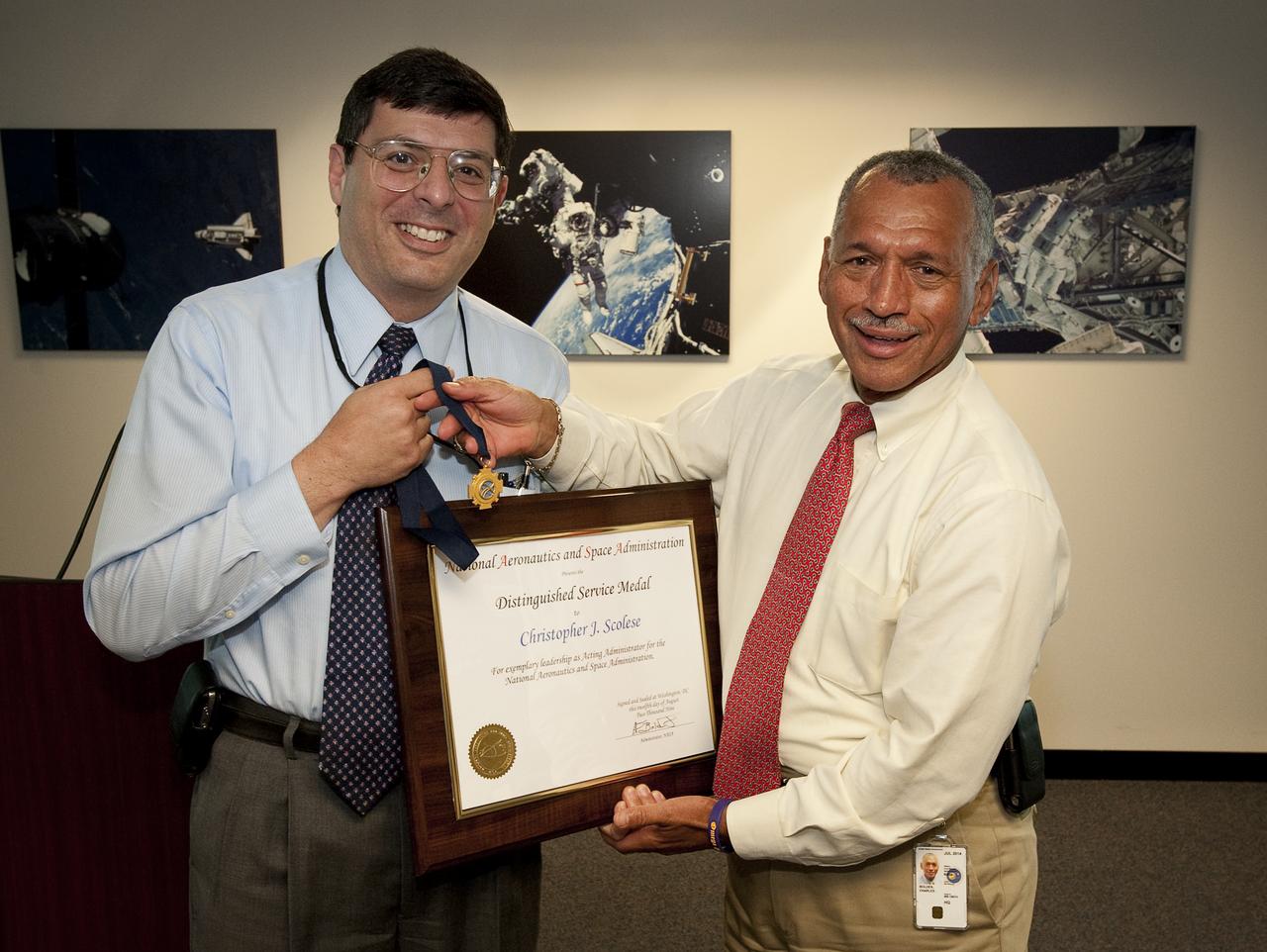
NASA Associate Administrator Christopher Scolese, left, receives the NASA Distinguished Service Medal from NASA Administrator Charles F. Bolden, Thursday, August 12, 2009 at NASA Headquarters in Washington. Photo Credit: (NASA/Bill Ingalls)
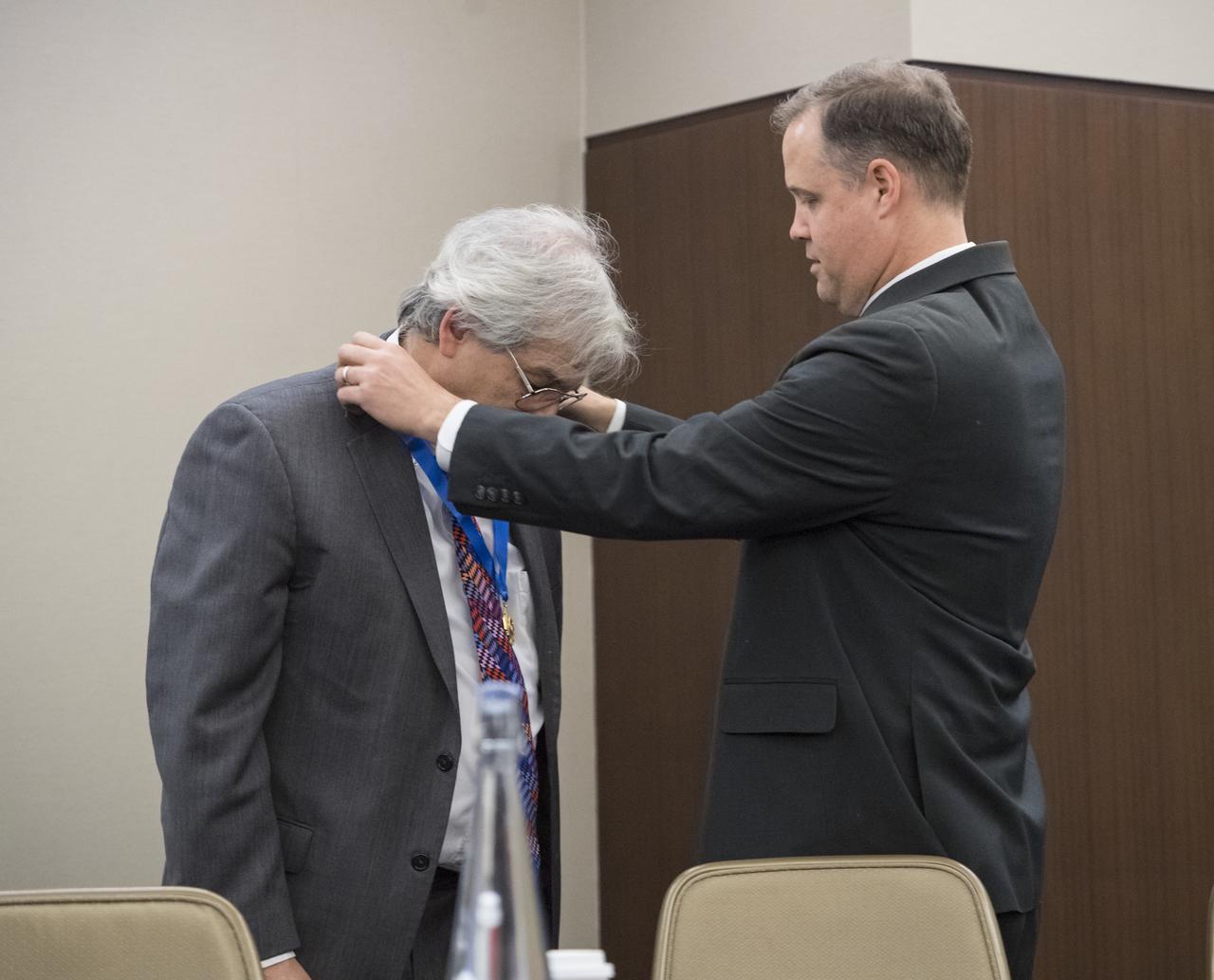
NASA Administrator Jim Bridenstine awards Dr. Michael Freilich, Earth Science Director, Science Mission Directorate, NASA, the NASA Distinguished Service Medal at the Earth Science Town Hall at the American Geophysical Union (AGU) annual meeting, Tuesday, December 11, 2018 at the Marriott Marquis in Washington. Photo Credit: (NASA/Aubrey Gemignani)
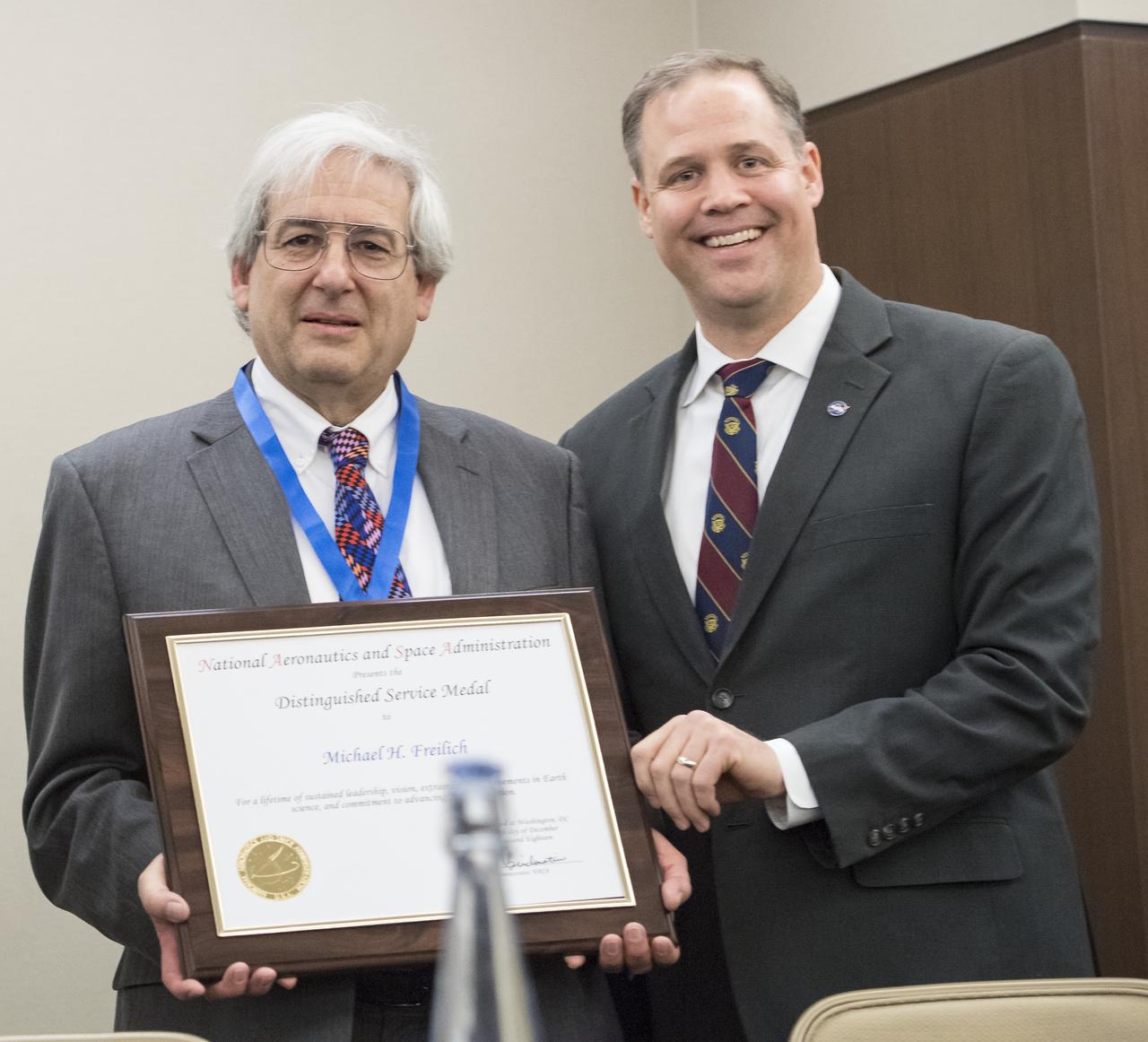
NASA Administrator Jim Bridenstine, right, and Dr. Michael Freilich, Earth Science Director, Science Mission Directorate, NASA, pose for a photo after Dr. Freilich was awarded the NASA Distinguished Service Medal at the Earth Science Town Hall at the American Geophysical Union (AGU) annual meeting, Tuesday, December 11, 2018 at the Marriott Marquis in Washington. Photo Credit: (NASA/Aubrey Gemignani)
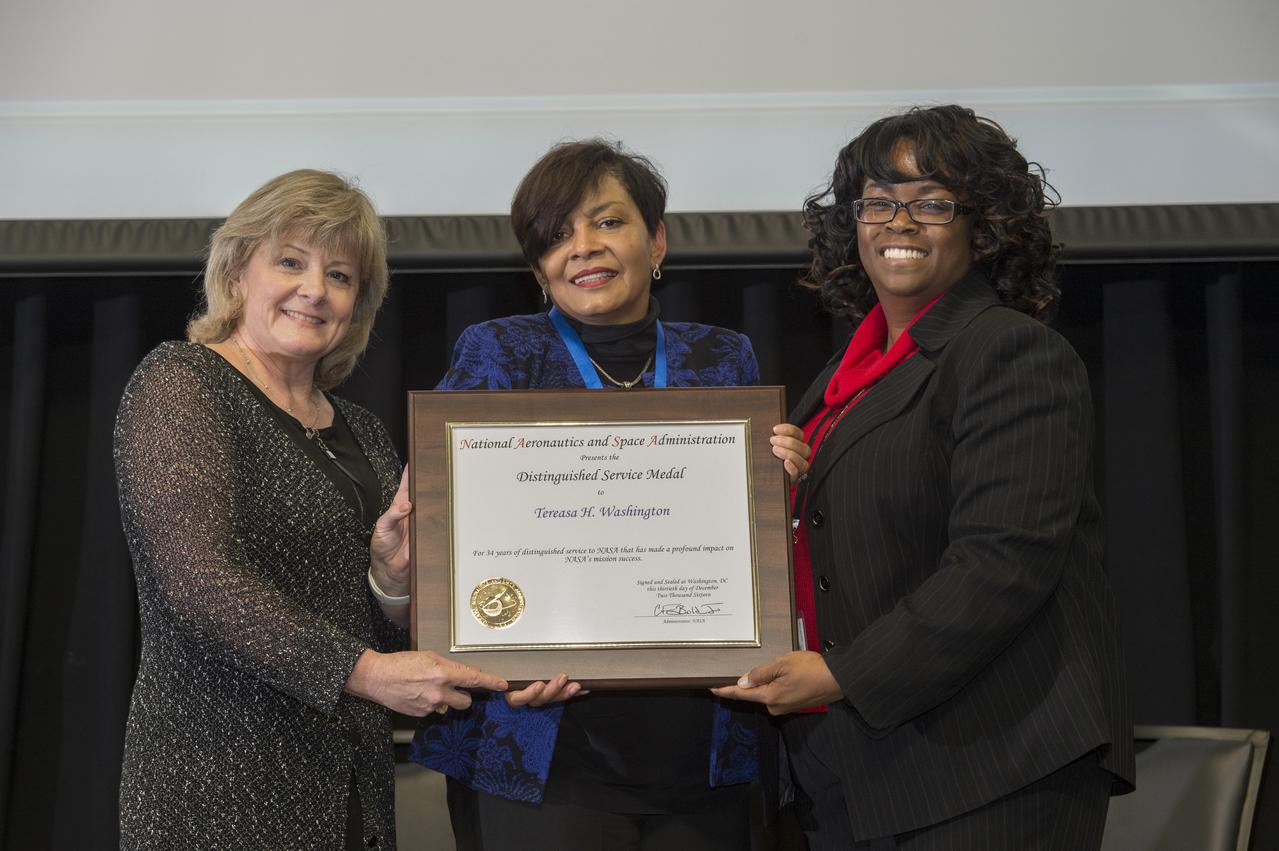
TEREASA WASHINGTON RECEIVES THE NASA DISTINGUISHED SERVICE MEDAL FROM JODY SINGER AND AUDREY ROBINSON ON THE OCCASION OF HER RETIREMENT.
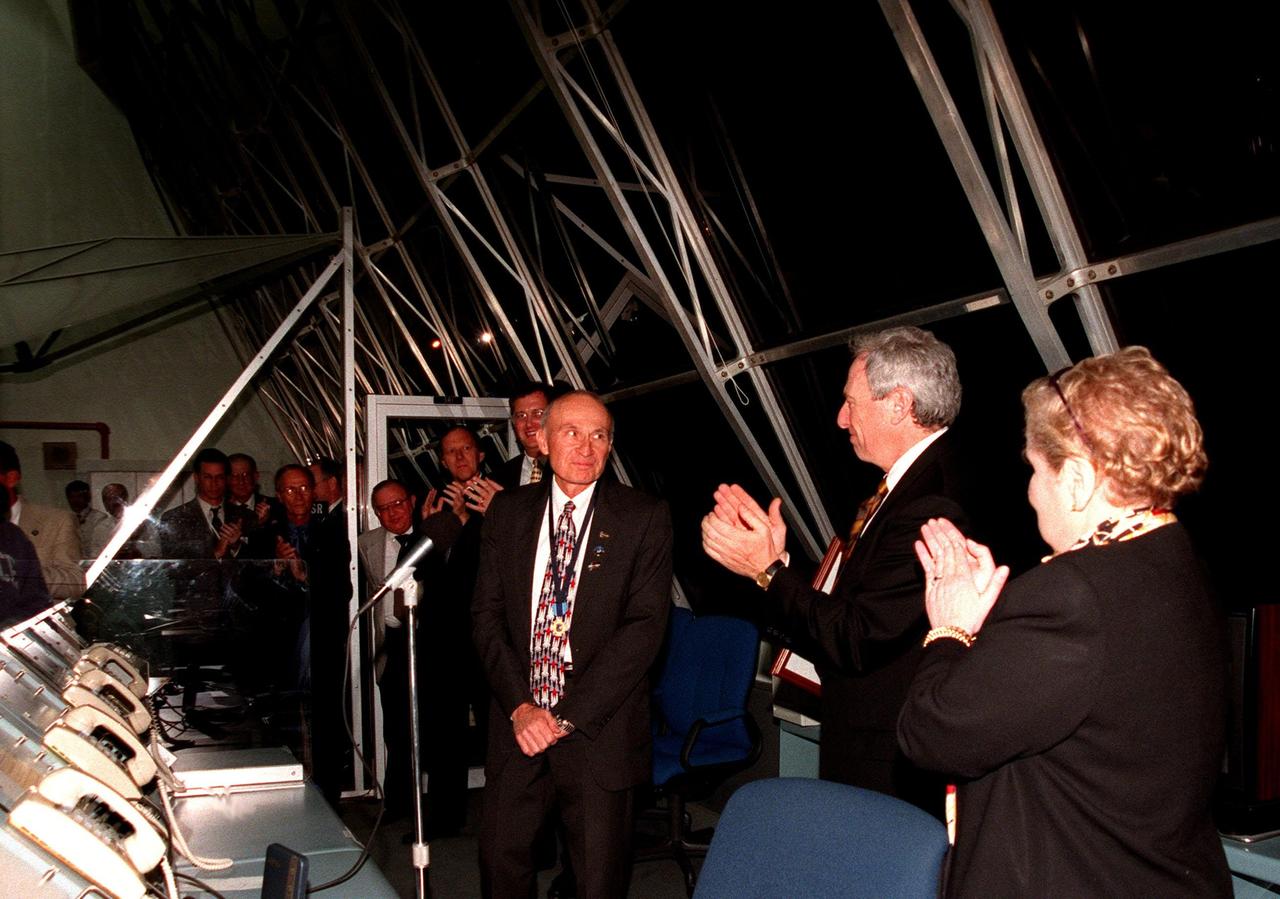
In a firing room in the Launch Control Center, KSC Director of Shuttle Operations Robert B. Sieck (left) is applauded by NASA Administrator Daniel Goldin (center) and U.S. Secretary of State Madeleine Albright for receiving the Distinguished Service Medal (seen around Sieck's neck). Goldin conferred the medal after the successful launch of STS-88, citing Sieck's distinguished service as the Kennedy Space Center launch director and director of Shuttle Processing, outstanding leadership and total dedication to the success of the Space Shuttle Program. The medal is the highest honor NASA gives a government employee
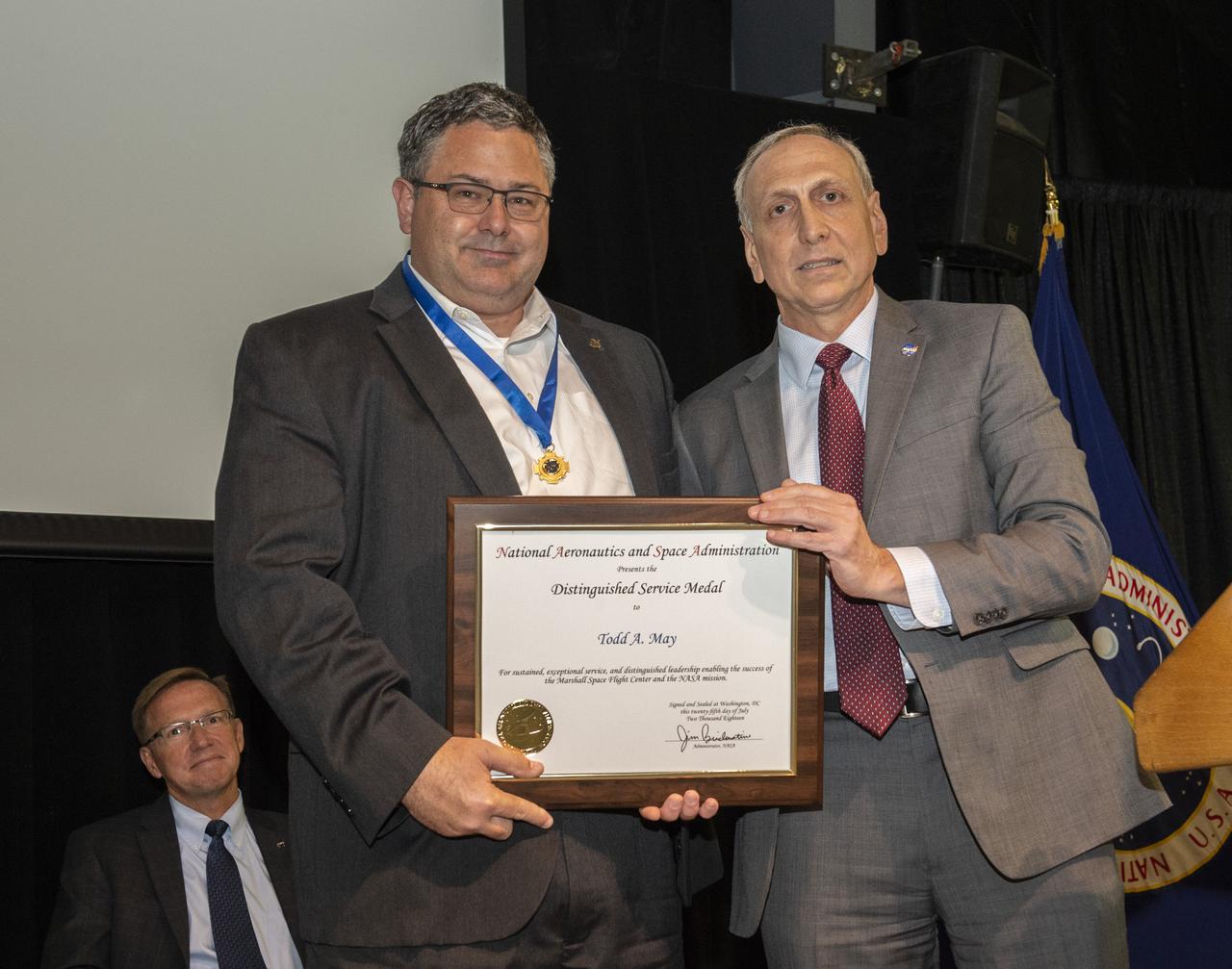
NASA Associate Administrator Steve Jurczyk presents retiring Marshall Space Flight Center Todd May with the NASA Distinguished Service Medal at the retirement ceremony for Mr. May.

Former Congressman John Culberson gives remarks after having received the NASA Distinguished Public Service medal, which is NASA’s highest award for a non-NASA individual, by NASA Administrator Jim Bridenstine during the 70th International Astronautical Congress, Friday, Oct. 25, 2019, in Washington. Photo Credit: (NASA/Bill Ingalls)
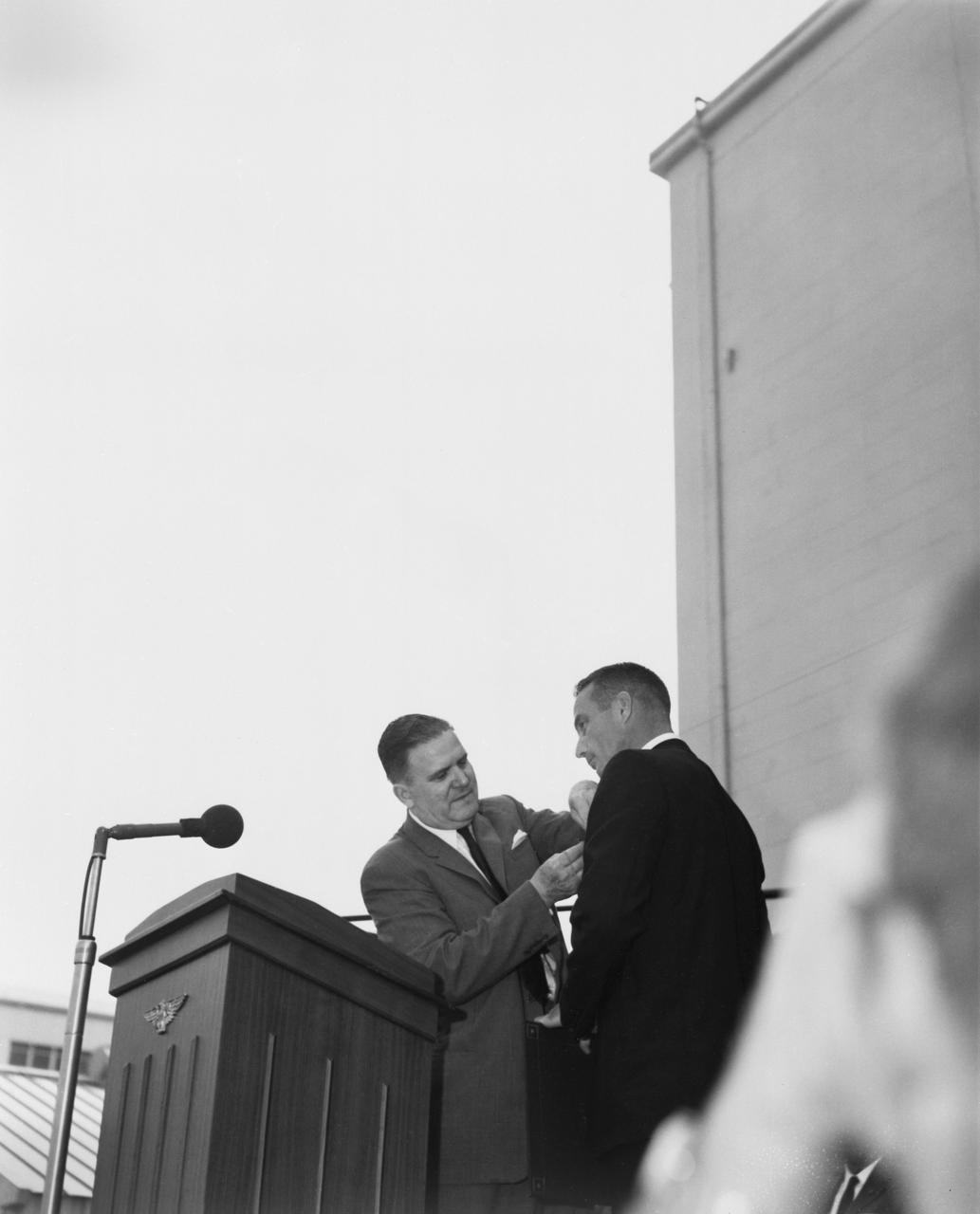
S62-04114 (1962) --- Astronaut M. Scott Carpenter, pilot of the Mercury-Atlas 7 (MA-7) mission, receives the NASA Distinguished Service Medal from NASA Adminstrator James E. Webb during ceremonies at Cape Canaveral, Florida. Photo credit: NASA
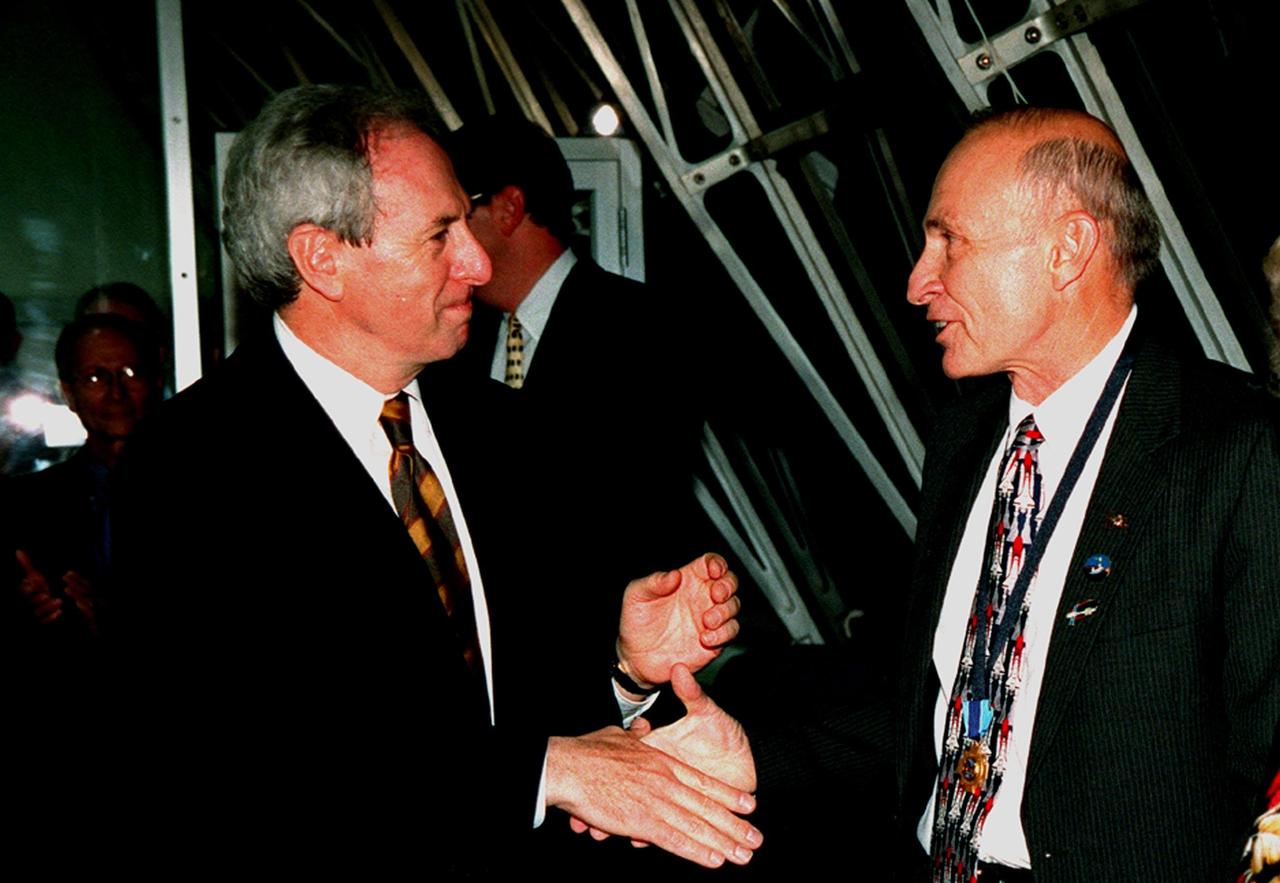
In the firing room of the Launch Control Center after the successful launch of Space Shuttle Endeavour at 3:35:34 a.m. EST, NASA Administrator Daniel Goldin congratulates KSC Director of Shuttle Operations Robert B. Sieck, who is wearing around his neck the Distinguished Service Medal just presented him. Goldin conferred the medal, the highest honor NASA gives a government employee, which recognizes someone who has personally made a contribution representing substantial and extraordinary progress to the mission of NASA
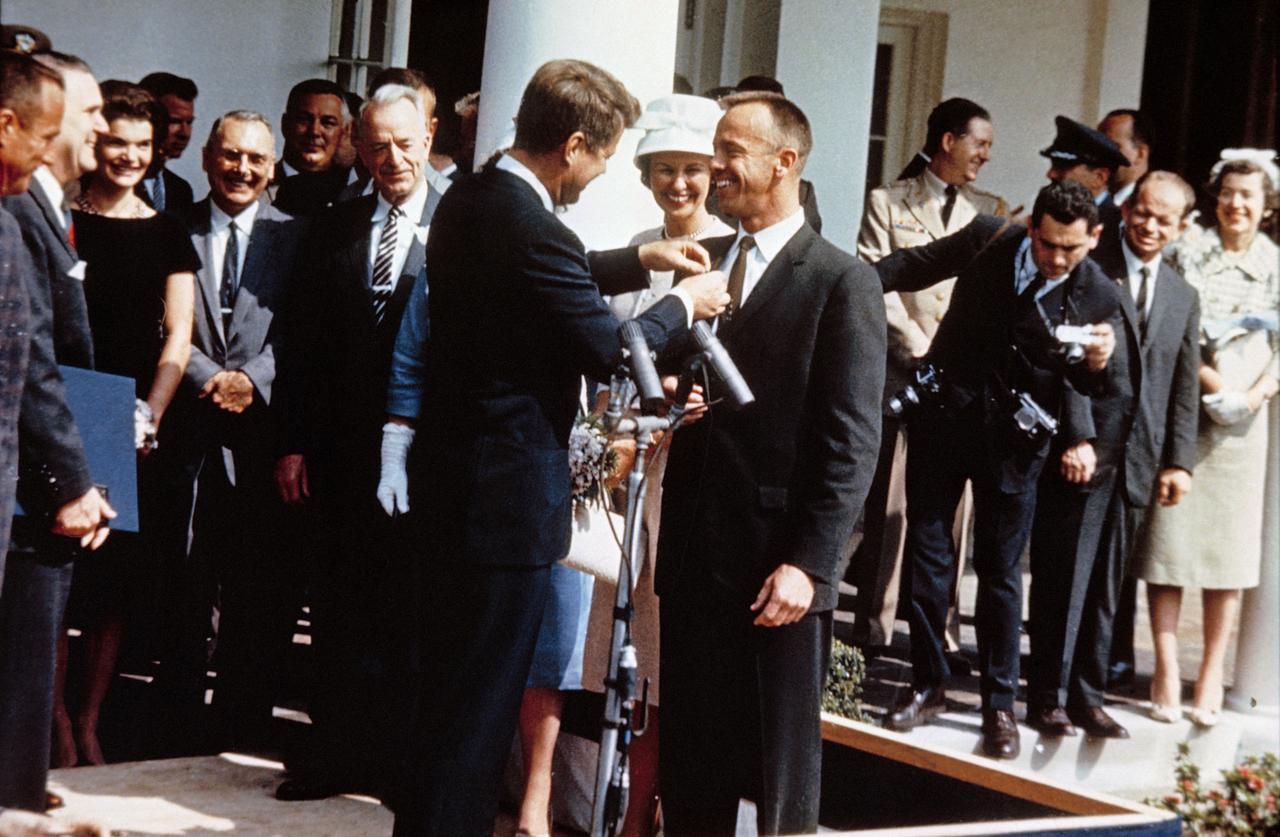
S63-06268 (8 May 1963) --- Astronaut Alan B. Shepard, Jr., receives his NASA's Distinguished Service Medal from President John F. Kennedy, after his Mercury-Redstone 3 (MR-3) flight, in a Rose Garden ceremony on May 8, 1961 at the White House.
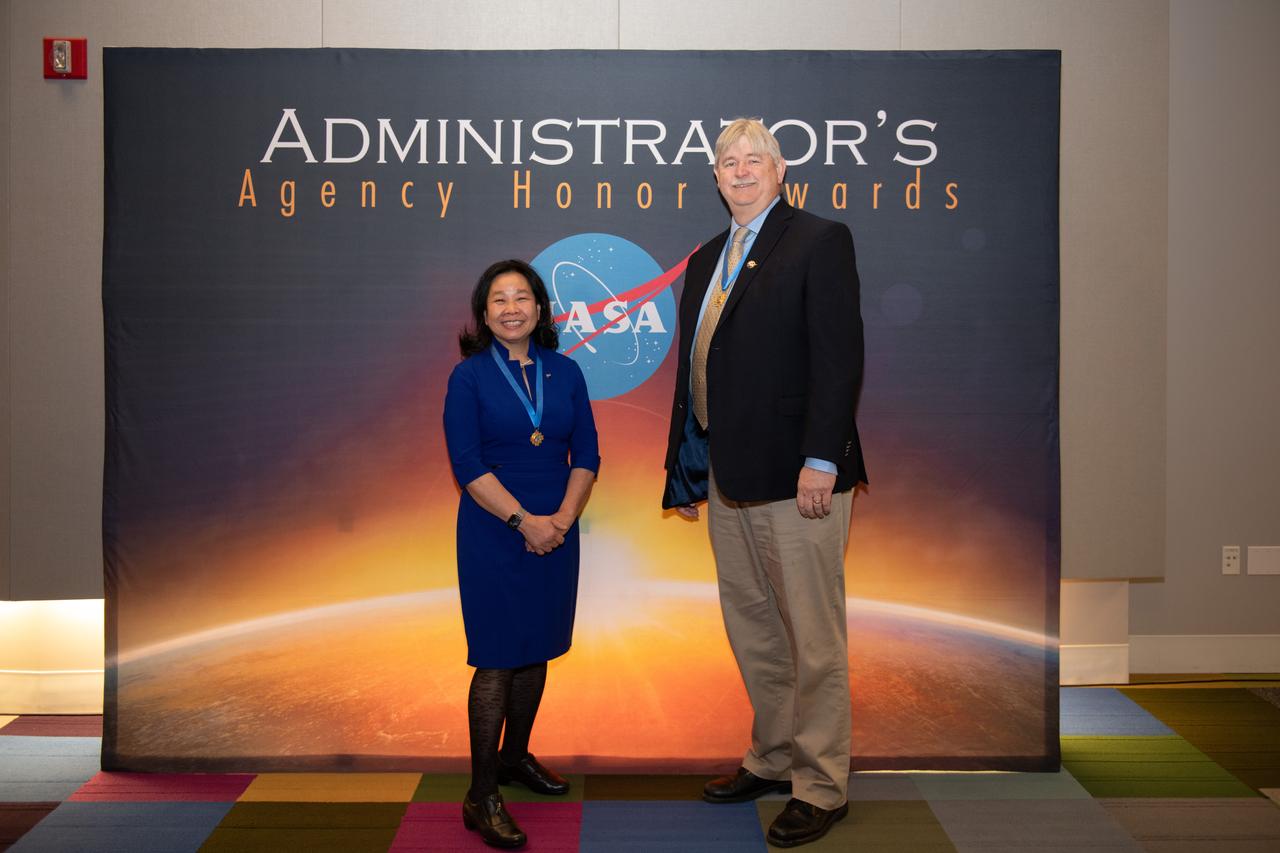
On March 28, 2024 NASA held its 2023 Administrator’s Agency Honor Awards at the Glenn Research Center in Cleveland, OH. Huy Tran and Thomas Norman from Ames Research Center both received Distinguished Service Medals. This celebratory event recognized the invaluable contributions of civil servants and contractors alike, each one instrumental in propelling humanity further into the realms of space exploration, understanding, and discoverThis is NASA's highest form of recognition that is awarded to any Government employee who, by distinguished service, ability, or vision has personally contributed to NASA's advancement of United States' interests.
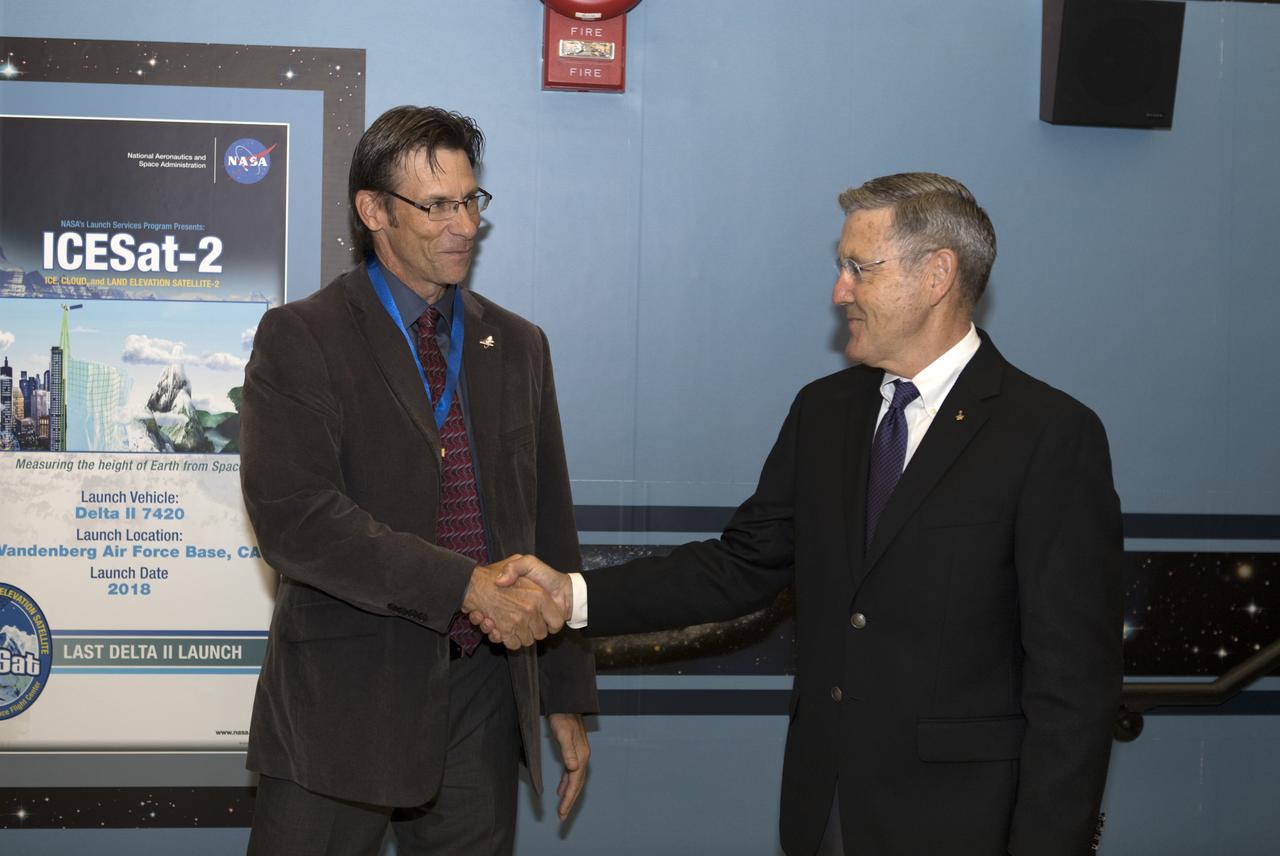
NASA Kennedy Space Center Director Bob Cabana, at right, congratulates Chuck Dovale, deputy program manager for the Launch Services Program (LSP), on Aug. 7, 2018. During a visit to the center, NASA Administrator Jim Bridenstine presents a NASA Distinguished Service Medal to Dovale. During his tour of Hangar AE and LSP's Mission Director's Center, Bridenstine received updates on LSP missions and accomplishments.
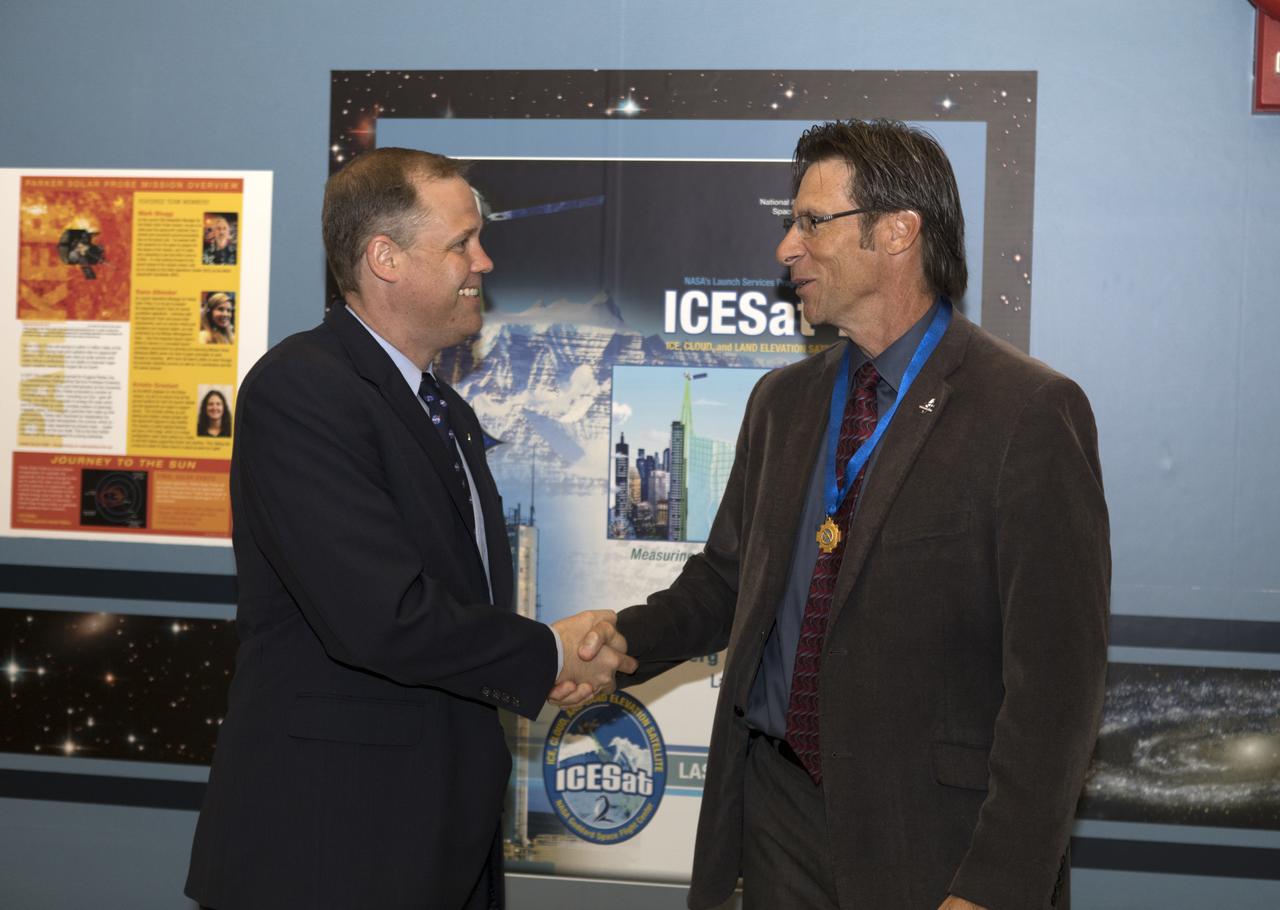
NASA Administrator Jim Bridenstine, left, congratulates Chuck Dovale, deputy program manager for the Launch Services Program (LSP), on Aug. 7, 2018, during a visit to the agency's Kennedy Space Center in Florida. Bridenstine presented a NASA Distinguished Service Medal to Dovale. During his tour of Hangar AE and LSP's Mission Director's Center, Bridenstine received updates on LSP missions and accomplishments.
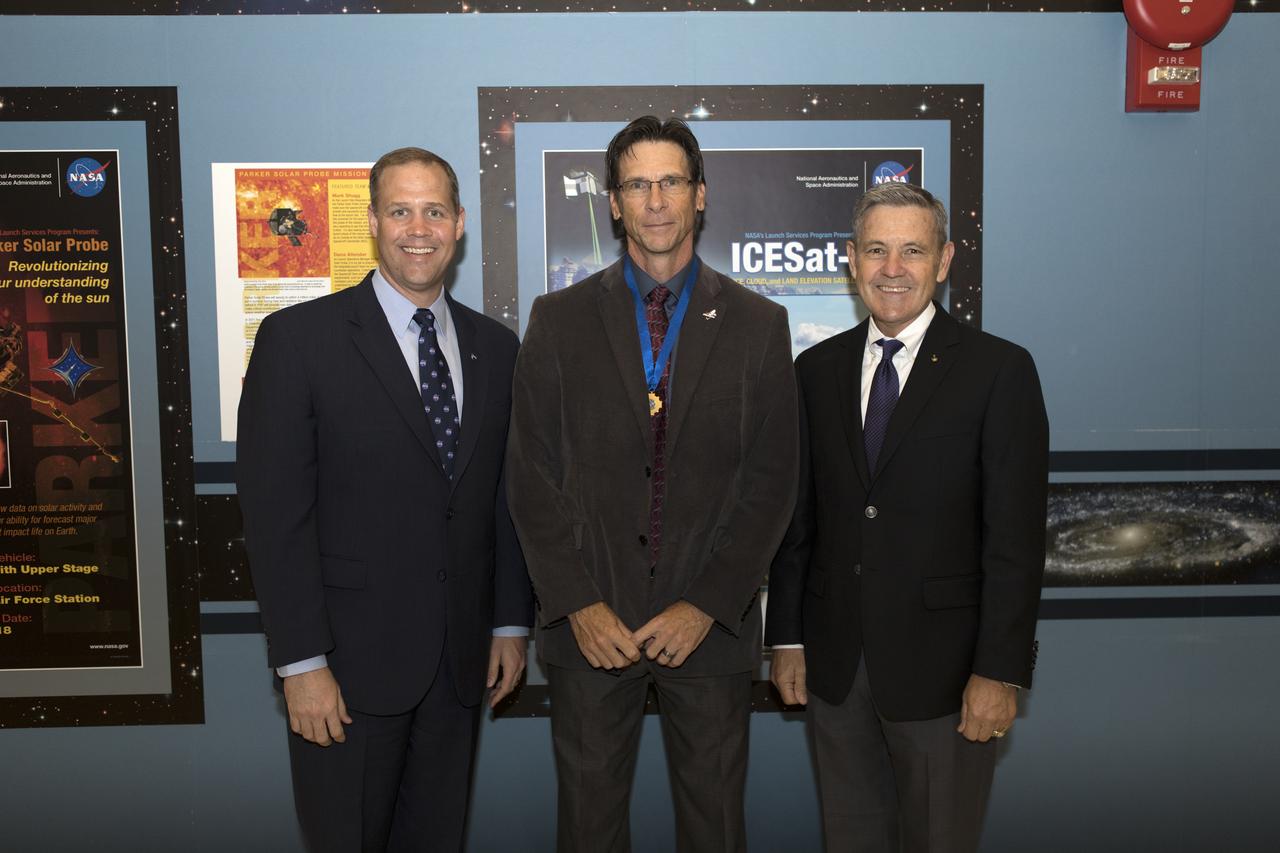
NASA Administrator Jim Bridenstine, left, tours Kennedy Space Center facilities and awards Chuck Dovale, center, deputy program manager for the Launch Services Program (LSP), a NASA Distinguished Service Medal on Aug. 7, 2018. At right is Kennedy Center Director Bob Cabana. During his tour of Hangar AE and LSP's Mission Director's Center, Bridenstine received updates on LSP missions and accomplishments.
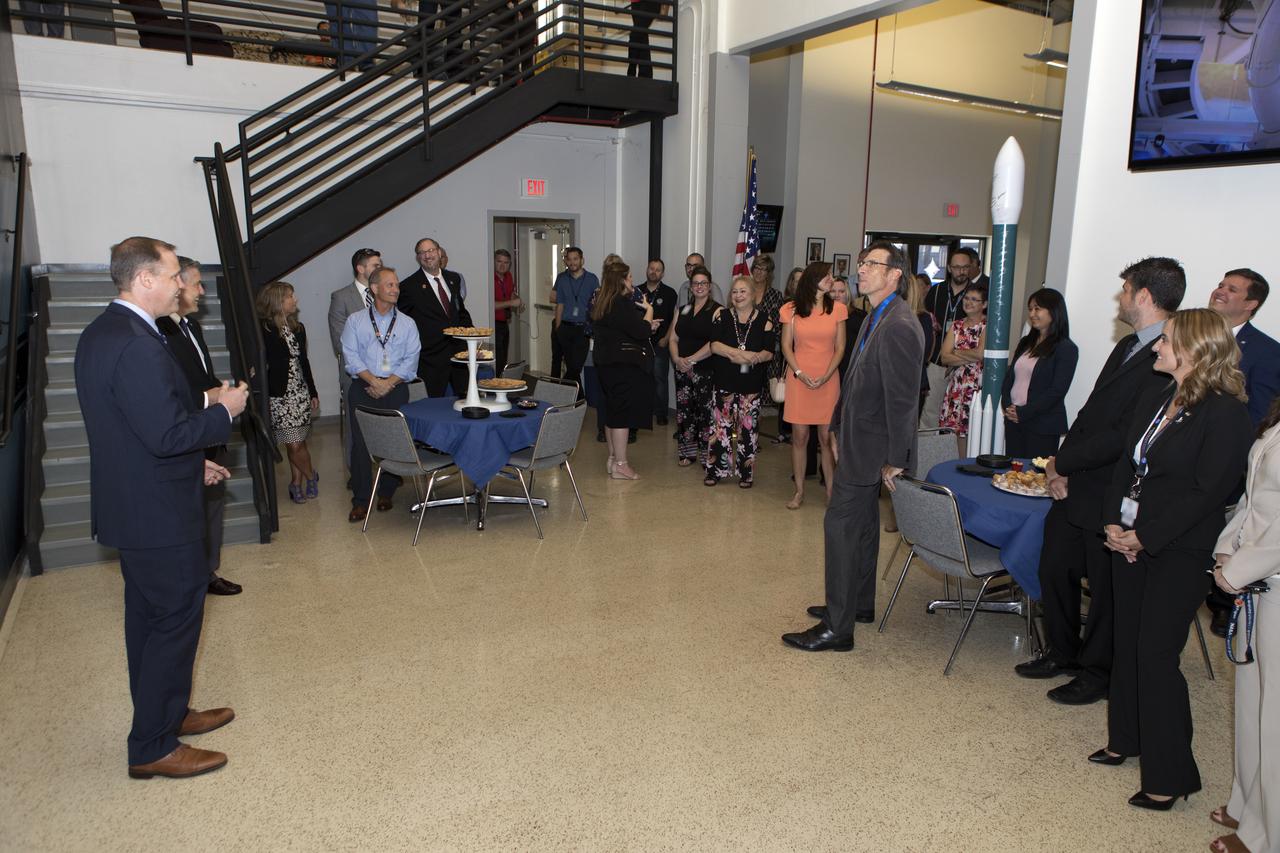
NASA Administrator Jim Bridenstine, left, tours Hangar AE and the Launch Services Program's (LSP) Mission Director's Center at Cape Canaveral Air Force Station in Florida on Aug. 7, 2018. Bridenstine spoke to workers and received updates on LSP missions and accomplishments. At right, standing near a chair, is Chuck Dovale, deputy program manager for LSP. Bridenstine presented a NASA Distinguished Service Medal to Dovale.
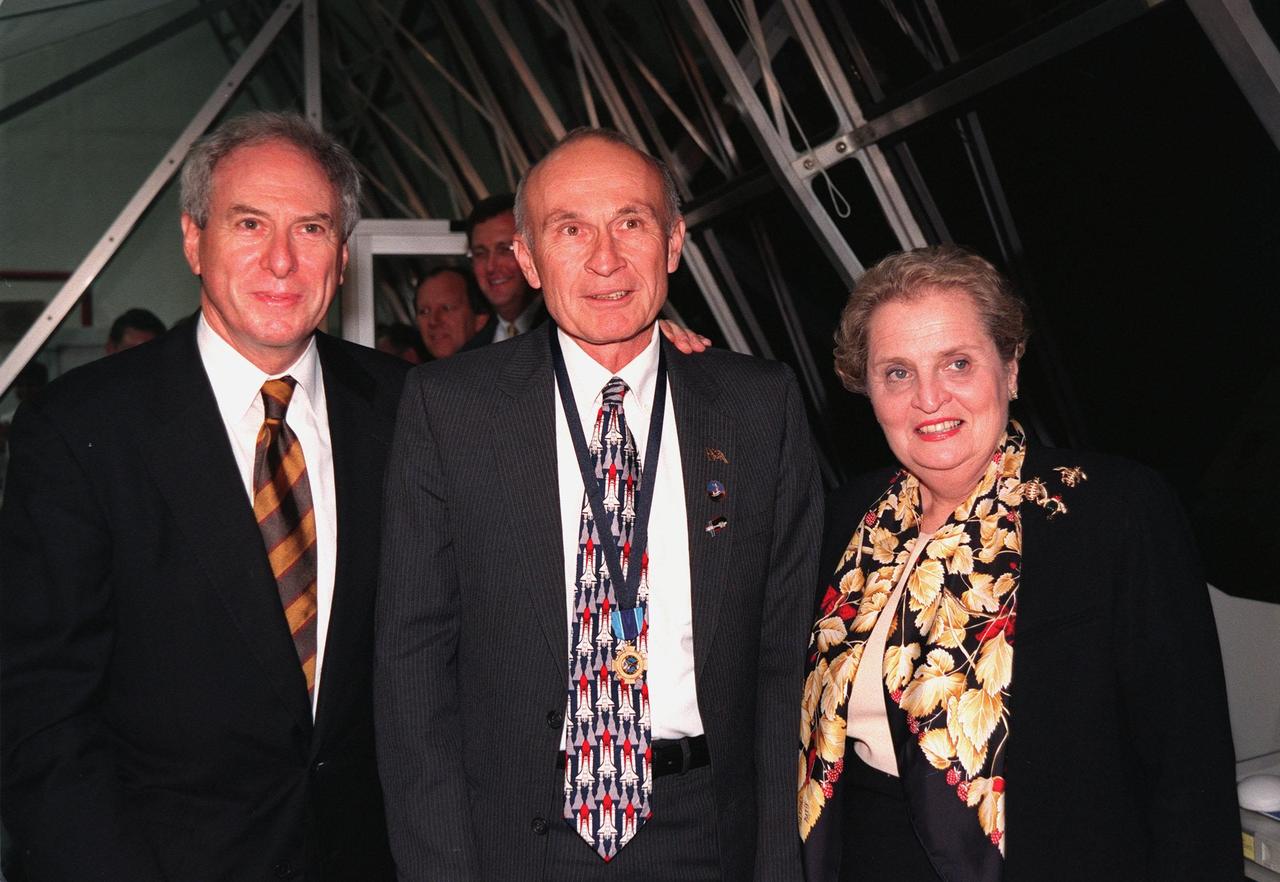
NASA Administrator Daniel Goldin (left), KSC Director of Shuttle Operations Robert B. Sieck (center) and Secretary of State Madeleine Albright (right) pose in the firing room of the Launch Control Center following the successful launch of Space Shuttle Endeavour on mission STS-88 at 3:35:34 a.m. EST. Sieck is wearing around his neck the Distinguished Service Medal presented him by Goldin just after launch. The medal, the highest honor NASA confers on a government employee, recognizes someone who has personally made a contribution representing substantial and extraordinary progress to the mission of NASA
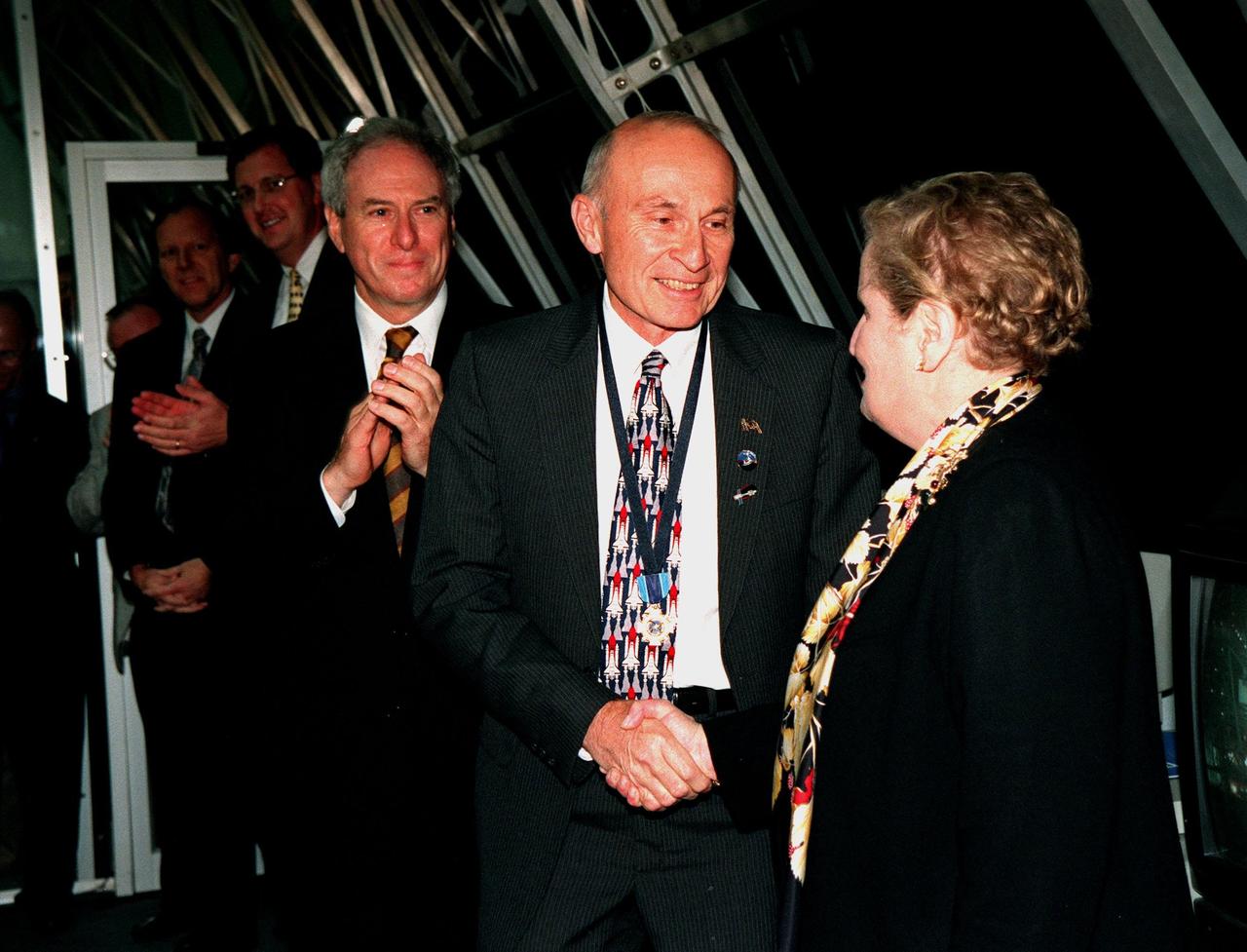
In a firing room of the Launch Control Center , KSC Director of Shuttle Operations Robert B. Sieck (center) shakes hands with Secretary of State Madeleine Albright (right) after the successful launch of Space Shuttle Endeavour on mission STS-88 at 3:35:34 a.m. EST. At left is NASA Administrator Daniel Goldin. Sieck is wearing around his neck the Distinguished Service Medal presented him by Goldin following the launch. The medal, the highest honor NASA confers on a government employee, recognizes someone who has personally made a contribution representing substantial and extraordinary progress to the mission of NASA
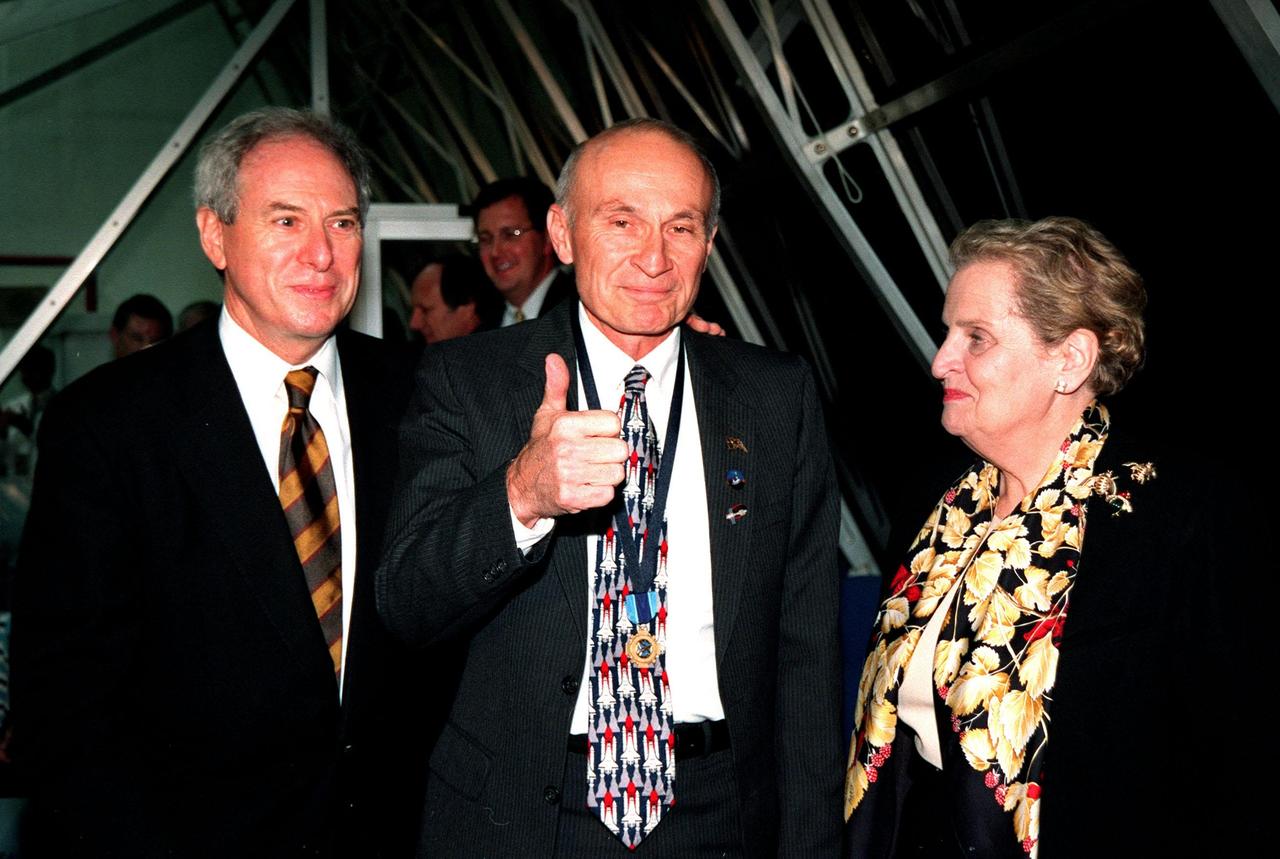
In a firing room of the Launch Control Center, KSC Director of Shuttle Operations Robert B. Sieck (center) gives a thumbs up after the successful launch of Space Shuttle Endeavour on mission STs-88 at 3:35:34 a.m. EST. With him are NASA Administrator Daniel Goldin (left) and U.S. Secretary of State Madeleine Albright (right). Sieck is wearing around his neck the Distinguished Service Medal presented to him by Goldin following the launch. The medal, the highest honor NASA confers on a government employee, recognizes someone who has personally made a contribution representing substantial and extraordinary progress to the mission of NASA
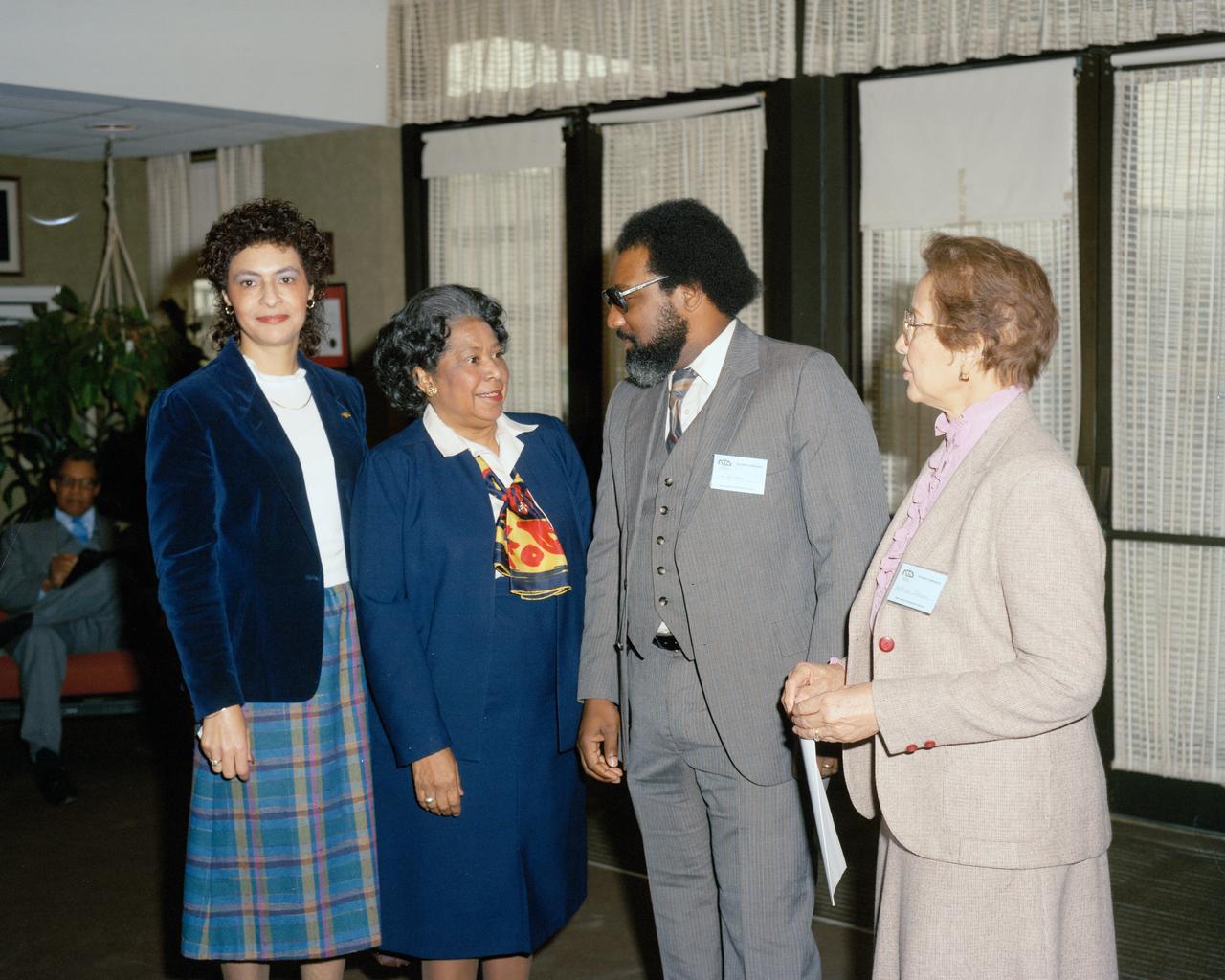
Photograph taken November 8,1984. Student Symposium Meeting Left to right Vivian Merritt, Office of Equal Opportunity Programs, Mary Jackson, Manger, Federal Woman’s Program, guest speaker Mr. James Jennings, and Katherine Johnson, Flight Dynamics and Control Division. Jennings’ career has included management and analyst positions at the Marshall Space Flight Center and NASA Headquarters. He is known for his ability to work with people and get things done. Jennings is a member of numerous professional and community organizations. He has served as Chairman of the KSC Combined Federal Campaign and Savings Bond Drive. Jennings has received numerous awards during his NASA career including an Equal Employment Opportunity Award in 1975, an Exceptional Service Medal in 1988, the Equal Employment Opportunity Medal in 1989, and an Outstanding Leadership Medal in 1994. Jennings also received the Distinguished Service Award in 1989 and the President's Award in 1999 from the Space Coast Chapter of the Federally Employed Women. He was conferred the rank of Meritorious Executive in 1997, and received the 1999 Presidential Distinguished Rank Award.
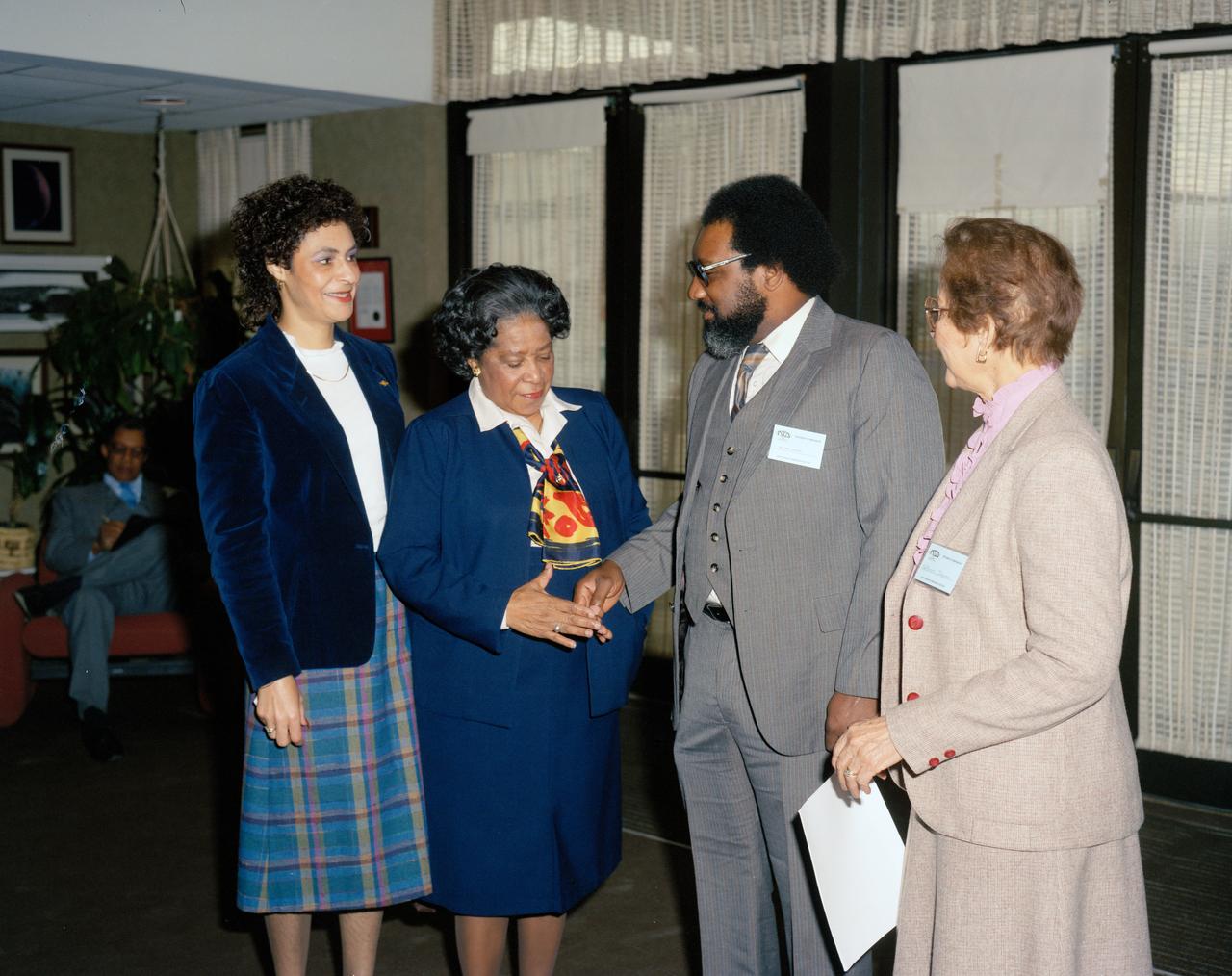
Photograph taken November 8,1984. Student Symposium Meeting Left to right Vivian Merritt, Office of Equal Opportunity Programs, Mary Jackson, Manger, Federal Woman’s Program, guest speaker Mr. James Jennings, and Katherine Johnson, Flight Dynamics and Control Division. Jennings’ career has included management and analyst positions at the Marshall Space Flight Center and NASA Headquarters. He is known for his ability to work with people and get things done. Jennings is a member of numerous professional and community organizations. He has served as Chairman of the KSC Combined Federal Campaign and Savings Bond Drive. Jennings has received numerous awards during his NASA career including an Equal Employment Opportunity Award in 1975, an Exceptional Service Medal in 1988, the Equal Employment Opportunity Medal in 1989, and an Outstanding Leadership Medal in 1994. Jennings also received the Distinguished Service Award in 1989 and the President's Award in 1999 from the Space Coast Chapter of the Federally Employed Women. He was conferred the rank of Meritorious Executive in 1997, and received the 1999 Presidential Distinguished Rank Award.
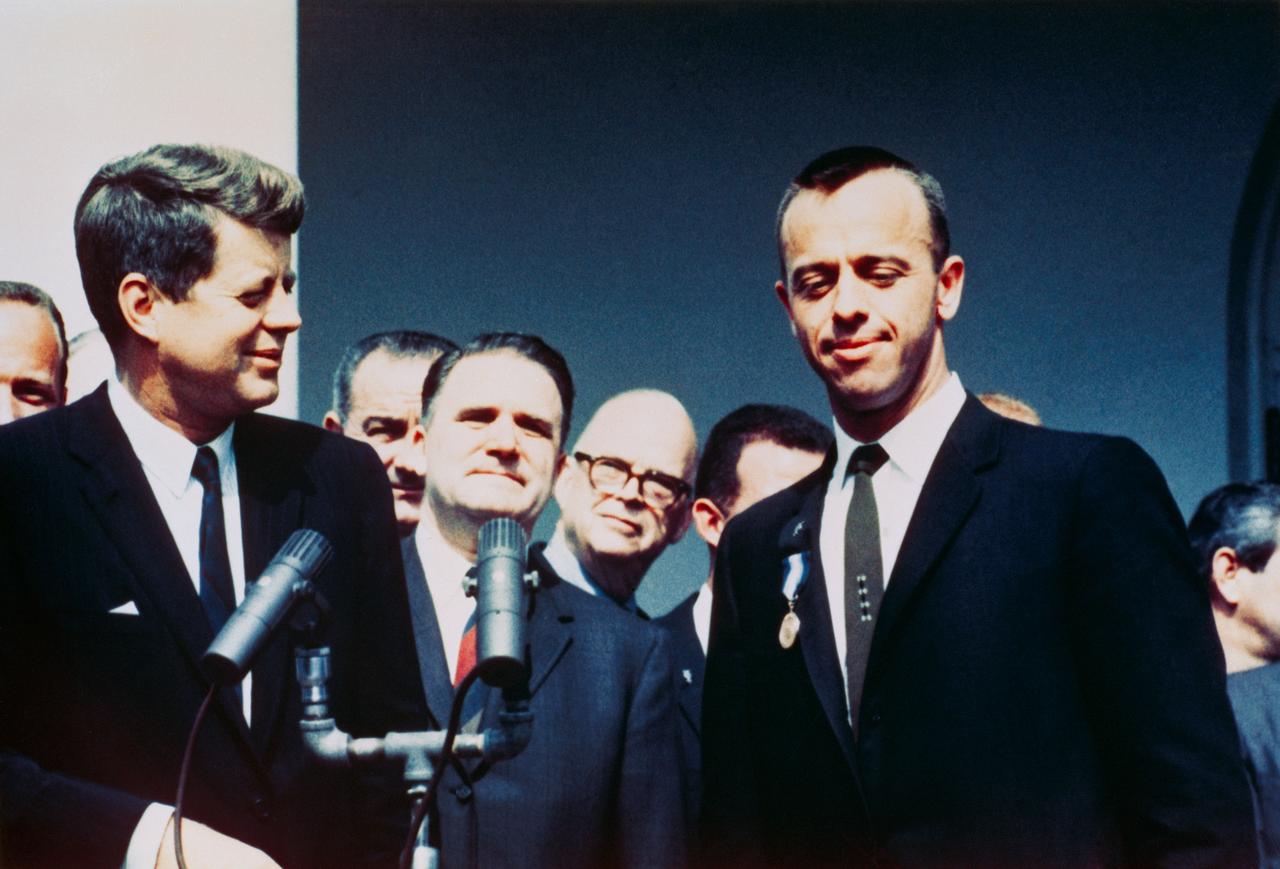
S88-31387 (8 May 1961) --- President John F. Kennedy (left) congratulates NASA's Distinguished Service Medal Award recipient astronaut Alan B. Shepard Jr. in a Rose Garden ceremony on May 8, 1961, at the White House. Vice-President Lyndon B. Johnson, NASA Administrator James E. Webb and several NASA astronauts are in the background. Three days earlier, Shepard made history with a 15-minute suborbital space mission in the Freedom 7, Mercury-Redstone 3 spacecraft. Photo credit: NASA
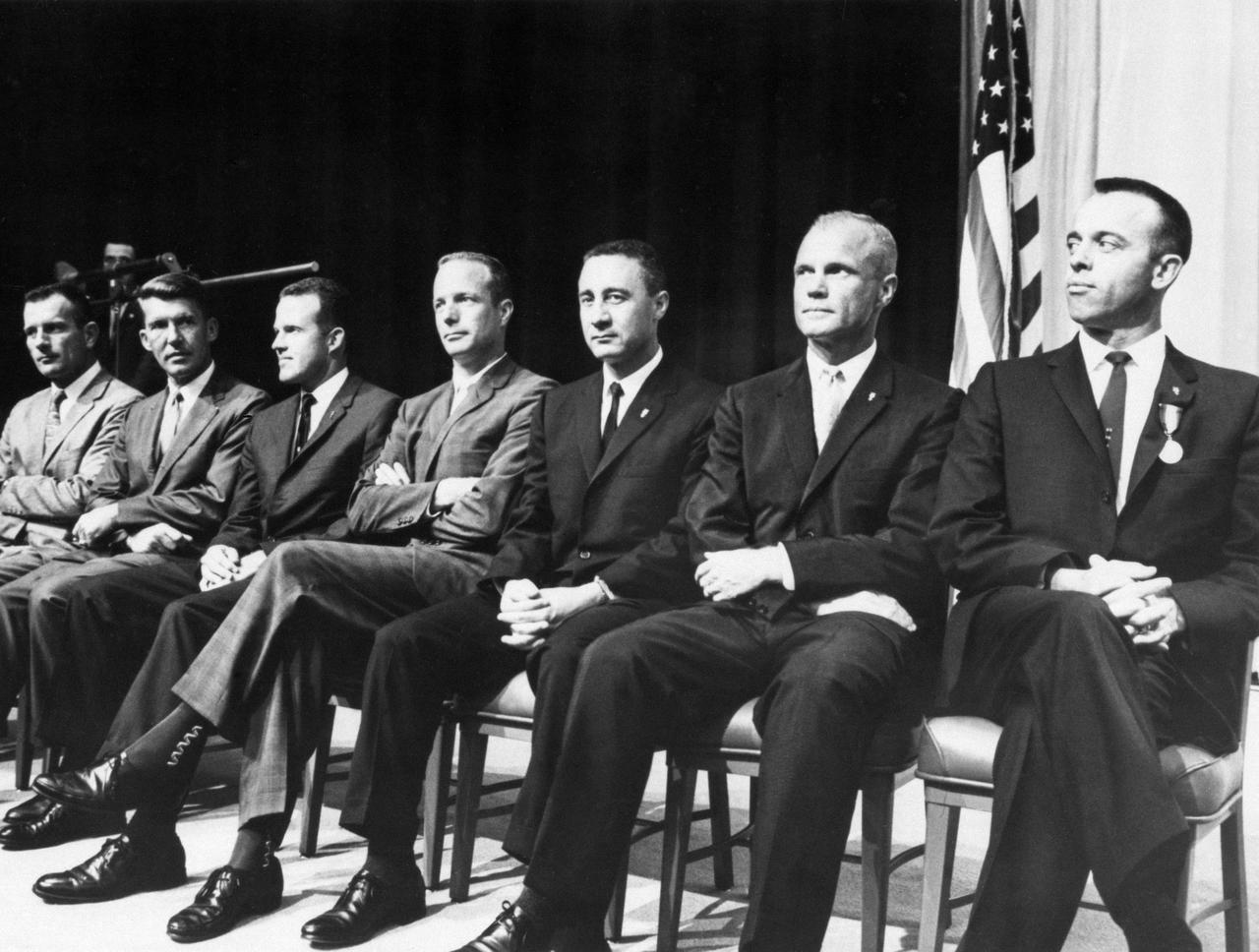
S61-02357 (8 May 1961) --- The original seven Mercury astronauts at the State Department Auditorium on May 8, 1961. The astronauts are (left to right) Donald K. Slayton, Walter M. Schirra, Jr., L. Gordon Cooper, Jr., M. Scott Carpenter, Virgil I. Grissom, John H. Glenn, Jr. and Alan B. Shepard, Jr. Earlier President John F. Kennedy had presented astronaut Shepard with the NASA Distinguished Service Medal (note it on his lapel) in the White House Rose Garden.
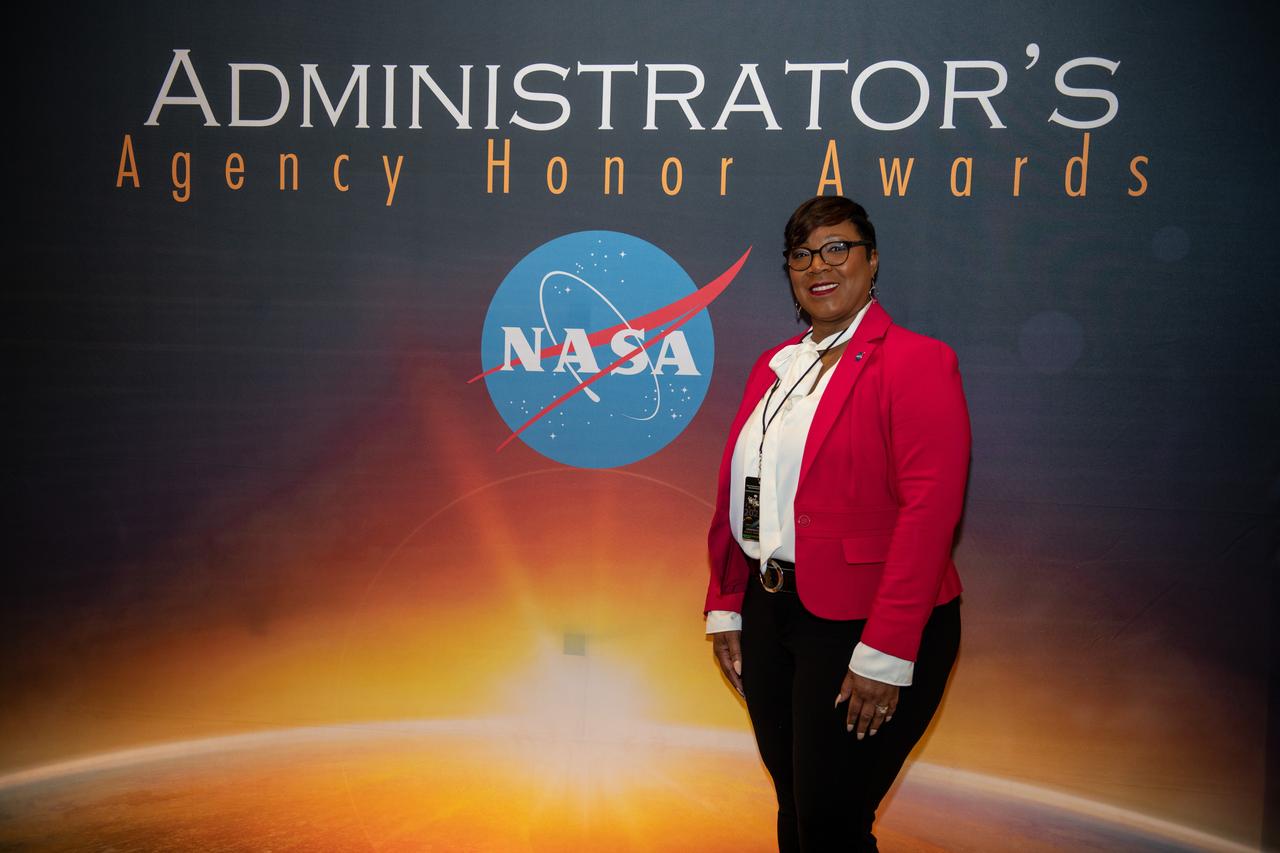
On March 28, 2024 NASA held its 2023 Administrator’s Agency Honor Awards at the Glenn Research Center in Cleveland, OH. Donya Douglas-Bradshaw from Goddard Space Flight Center was recognized for exceptional leadership, engineering and programmatic expertise, and project execution for several of NASA's highest profile missions and organizations. She received the Distinguished Service Medal. This celebratory event recognized the invaluable contributions of civil servants and contractors alike, each one instrumental in propelling humanity further into the realms of space exploration, understanding, and discoverThis is NASA's highest form of recognition that is awarded to any Government employee who, by distinguished service, ability, or vision has personally contributed to NASA's advancement of United States' interests. Photo Credit: (NASA/Sara Lowthian-Hanna)
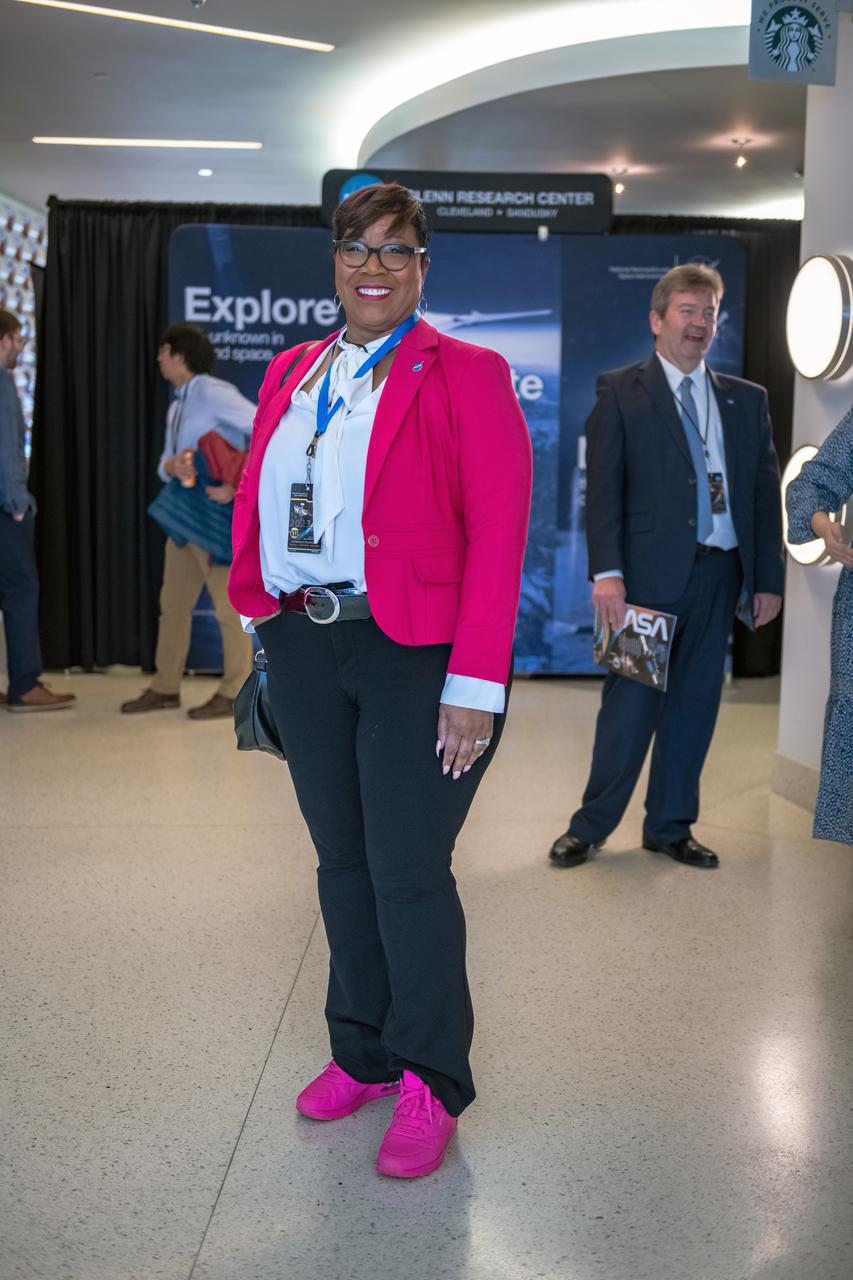
On March 28, 2024 NASA held its 2023 Administrator’s Agency Honor Awards at the Glenn Research Center in Cleveland, OH. Donya Douglas-Bradshaw from Goddard Space Flight Center was recognized for exceptional leadership, engineering and programmatic expertise, and project execution for several of NASA's highest profile missions and organizations. She received the Distinguished Service Medal. This celebratory event recognized the invaluable contributions of civil servants and contractors alike, each one instrumental in propelling humanity further into the realms of space exploration, understanding, and discoverThis is NASA's highest form of recognition that is awarded to any Government employee who, by distinguished service, ability, or vision has personally contributed to NASA's advancement of United States' interests.
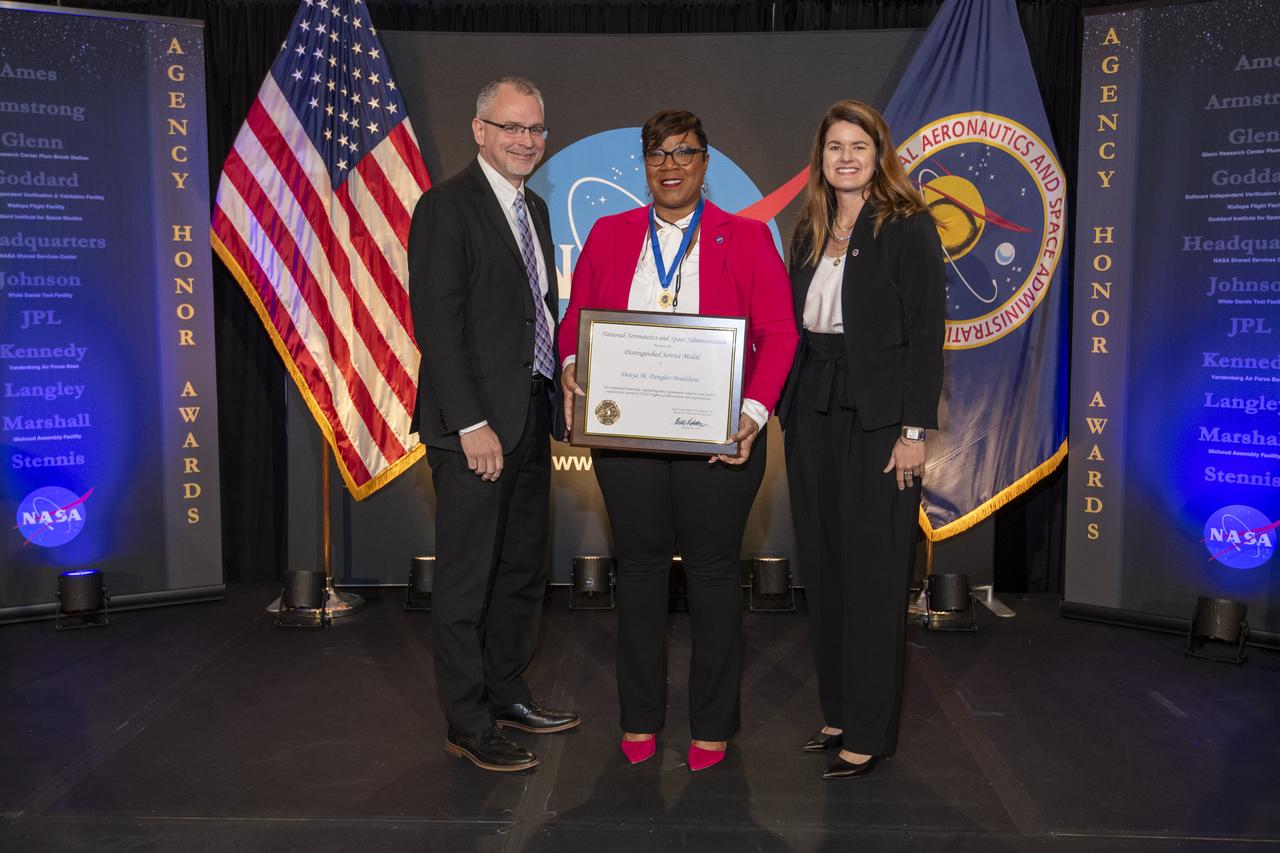
On March 28, 2024 NASA held its 2023 Administrator’s Agency Honor Awards at the Glenn Research Center in Cleveland, OH. Donya Douglas-Bradshaw from Goddard Space Flight Center was recognized for exceptional leadership, engineering and programmatic expertise, and project execution for several of NASA's highest profile missions and organizations. She received the Distinguished Service Medal. Associate Administrator, James Free and Deputy Associate Administrator Casey Swails present the award to Mrs. Douglas-Bradshaw. This celebratory event recognized the invaluable contributions of civil servants and contractors alike, each one instrumental in propelling humanity further into the realms of space exploration, understanding, and discoverThis is NASA's highest form of recognition that is awarded to any Government employee who, by distinguished service, ability, or vision has personally contributed to NASA's advancement of United States' interests.
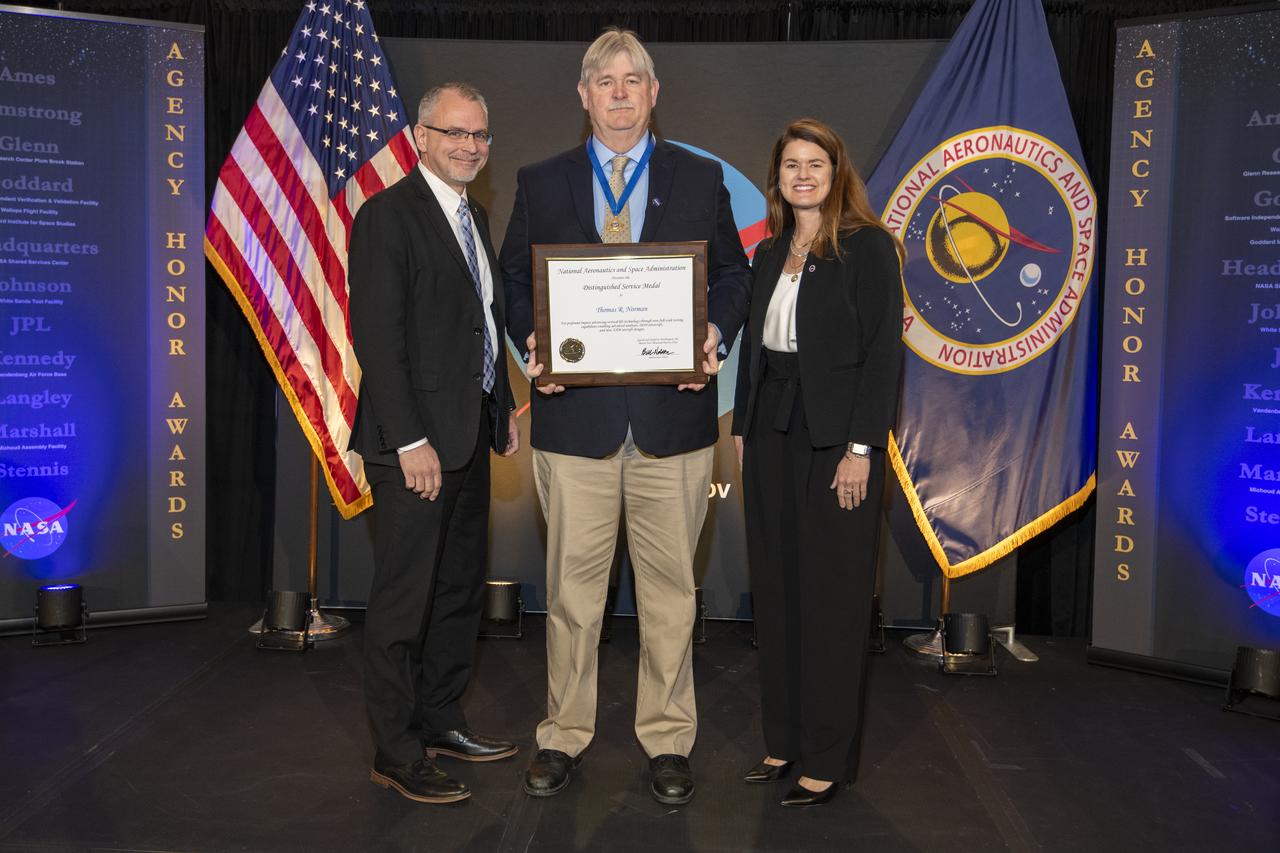
On March 28, 2024 NASA held its 2023 Administrator’s Agency Honor Awards at the Glenn Research Center in Cleveland, OH. Thomas Norman is being recognized for profound impact advancing vertical lift technology through new full-scale testing capabilities enabling advanced analyses, DOD rotorcraft, and new AAM aircraft designs. He received a Distinguished Service Medal. Associate Administrator, James Free and Deputy Associate Administrator Casey Swails present the award to Mr. Norman. This celebratory event recognized the invaluable contributions of civil servants and contractors alike, each one instrumental in propelling humanity further into the realms of space exploration, understanding, and discoverThis is NASA's highest form of recognition that is awarded to any Government employee who, by distinguished service, ability, or vision has personally contributed to NASA's advancement of United States' interests.
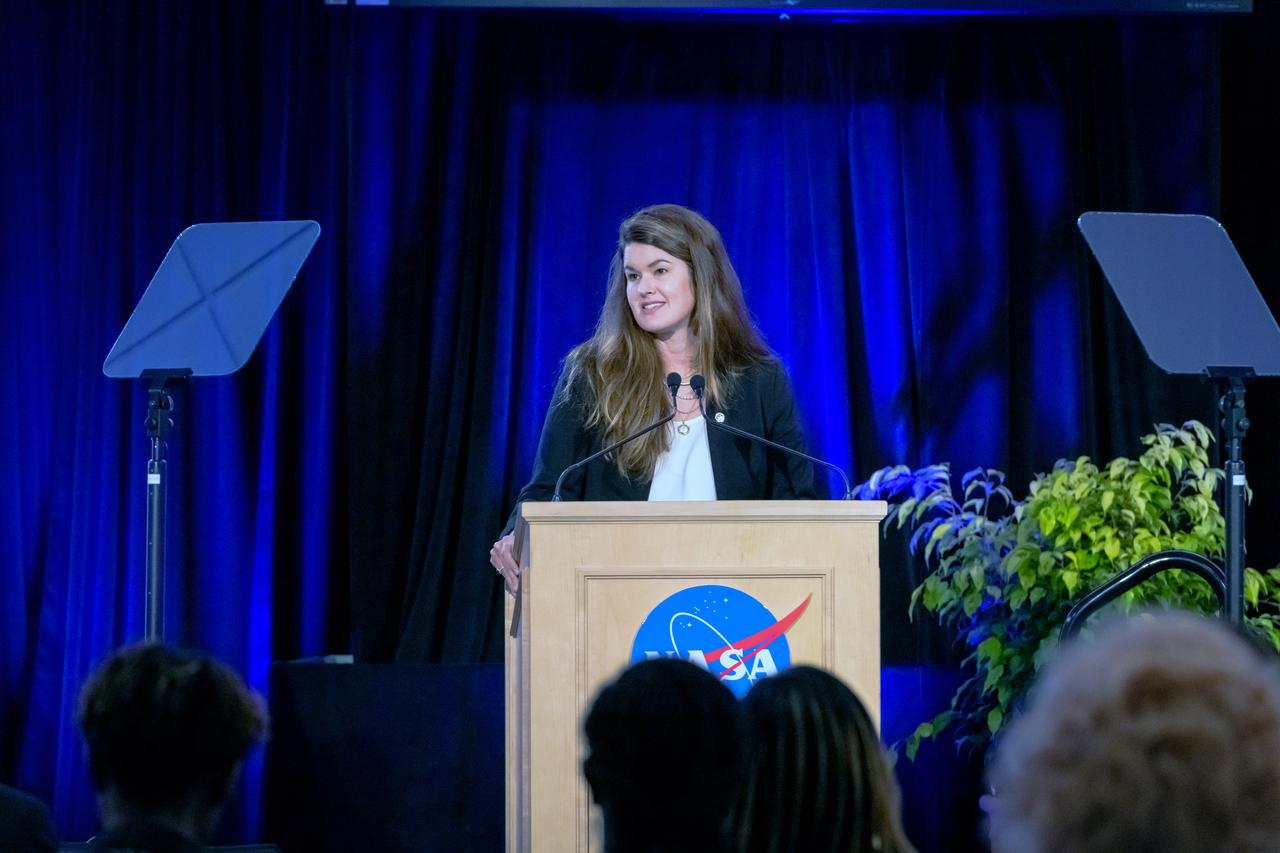
On March 28, 2024 NASA held its 2023 Administrator’s Agency Honor Awards at the Glenn Research Center in Cleveland, OH. Casey Swails, NASA’s Deputy Associate Administrator talks about the criteria of medals. This celebratory event recognized the invaluable contributions of civil servants and contractors alike, each one instrumental in propelling humanity further into the realms of space exploration, understanding, and discoverThis is NASA's highest form of recognition that is awarded to any Government employee who, by distinguished service, ability, or vision has personally contributed to NASA's advancement of United States' interests.
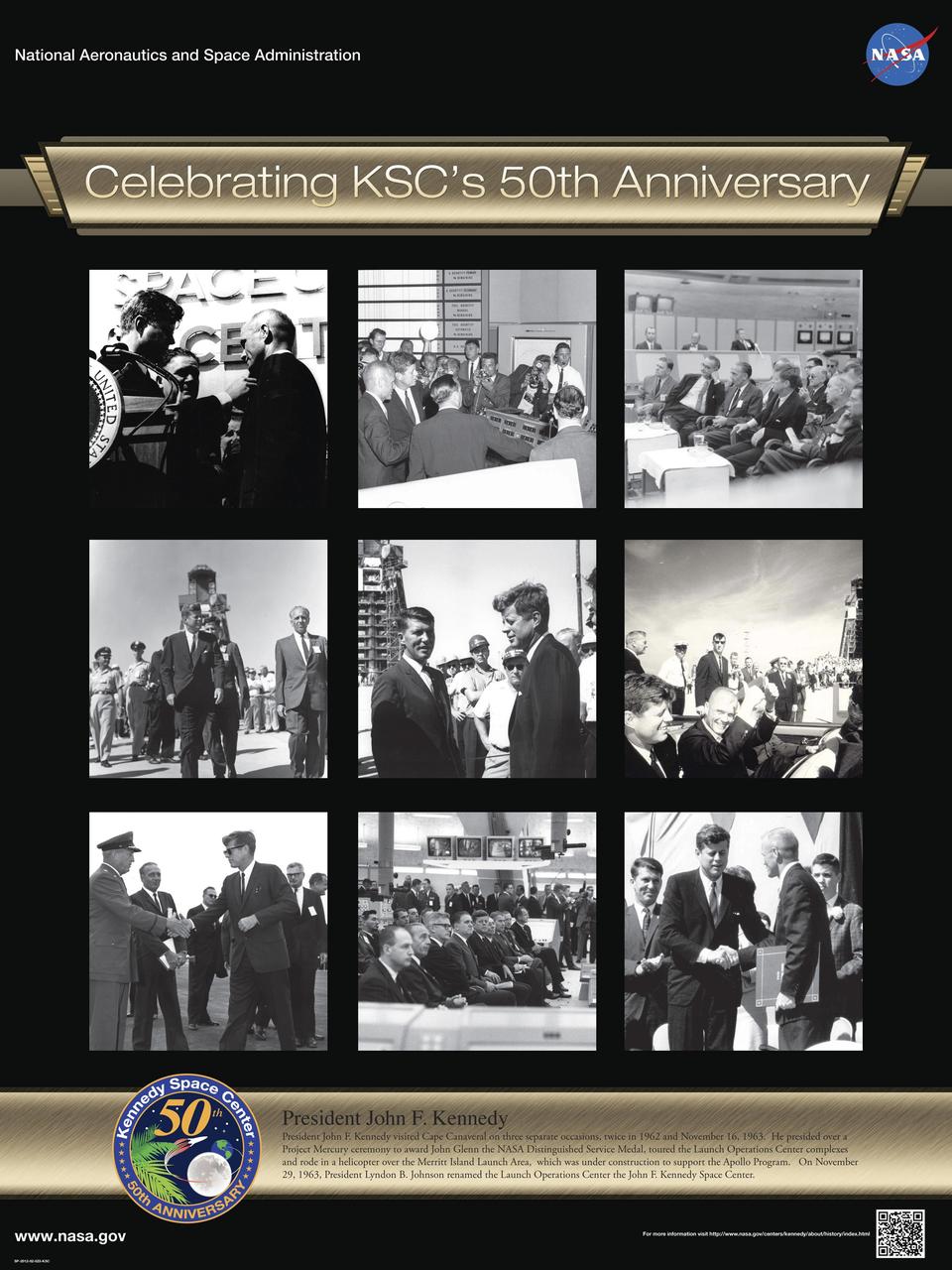
President John F. Kennedy: President John F. Kennedy visited Cape Canaveral on three separate occasions, twice in 1962 and November 16, 1963. He presided over a Project Mercury ceremony to award John Glenn the NASA Distinguished Service Medal, toured the Launch Operations Center complexes and rode in a helicopter over the Merritt Island Launch Area, which was under construction to support the Apollo Program. On November 29, 1963, President Lyndon B. Johnson renamed the Launch Operations Center the John F. Kennedy Space Center. Poster designed by Kennedy Space Center Graphics Department/Greg Lee. Credit: NASA
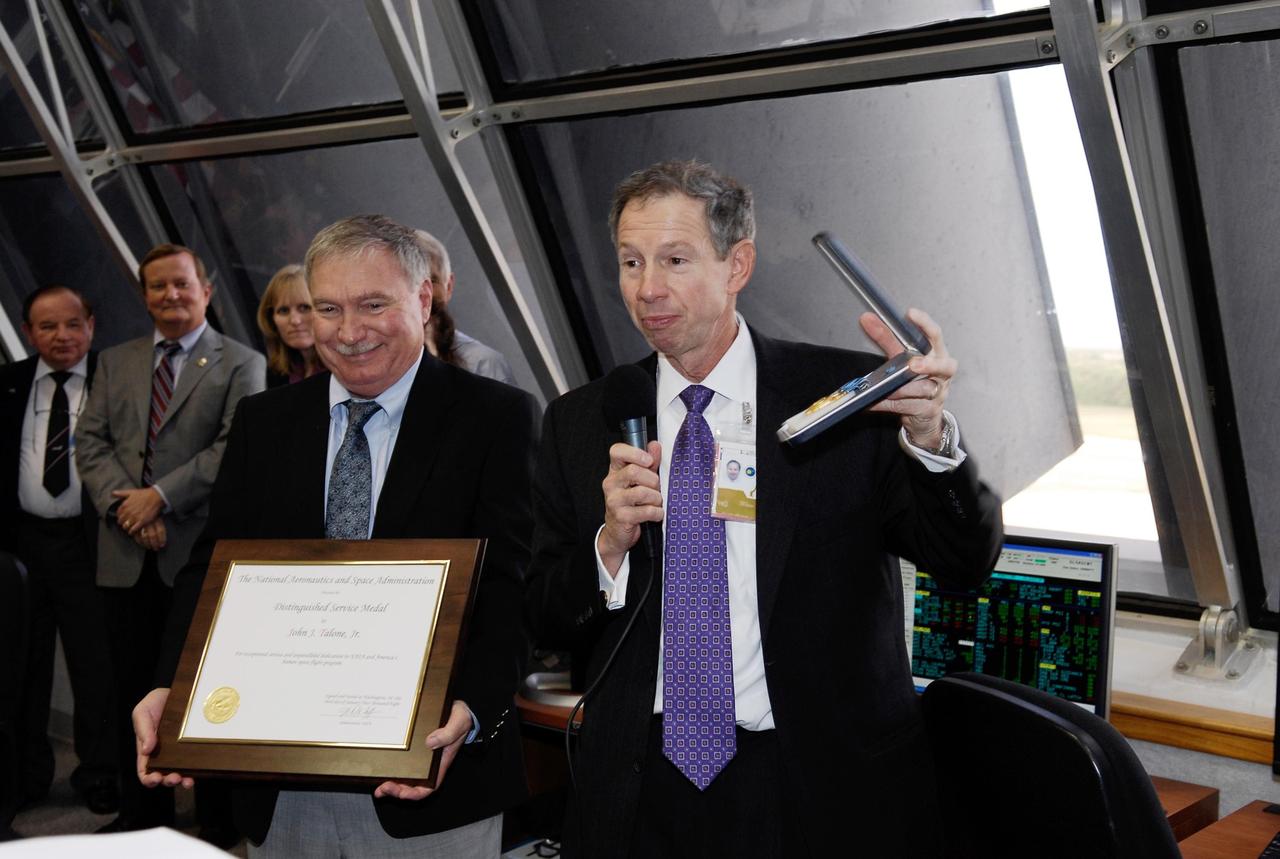
KENNEDY SPACE CENTER, FLA. -- Inside the Launch Control Center Firing Room at NASA's Kennedy Space Center, NASA Administrator Michael Griffin (right) presents a special distinguished service medal to John J. "Tip" Talone Jr. for exceptional service and unparalleled dedication to NASA and America's human space flight program. Currently, John J. "Tip" Talone Jr. serves as the director of the Kennedy Space Center Constellation Project Office of the NASA Constellation Program. From 1996 to 2005, he was director of the International Space Station Hardware Integration Office, which became the ISS/Payloads Processing Directorate in May 2000. The presentation followed the launch of space shuttle Atlantis on mission STS-122, which lifted off at 2:45 p.m. EST. Photo credit: NASA/Kim Shiflett
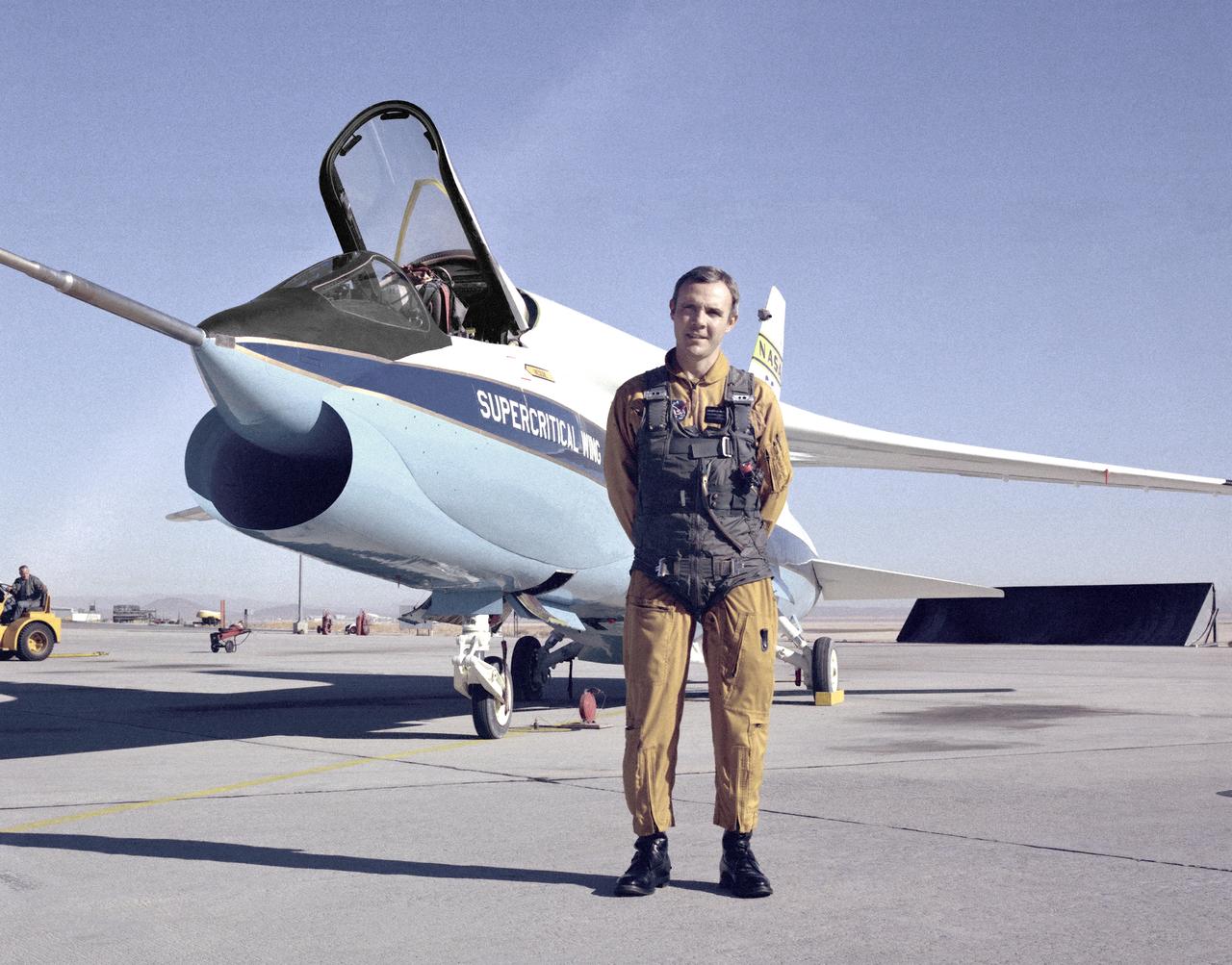
A Vought F-8A Crusader was selected by NASA as the testbed aircraft (designated TF-8A) to install an experimental Supercritical Wing (SCW) in place of the conventional wing. The unique design of the Supercritical Wing reduces the effect of shock waves on the upper surface near Mach 1, which in turn reduces drag. In this photograph the TF-8A Crusader with Supercritical Wing is shown on the ramp with project pilot Tom McMurtry standing beside it. McMurtry received NASA's Exceptional Service Medal for his work on the F-8 SCW aircraft. He also flew the AD-1, F-15 Digital Electronic Engine Control, the KC-130 winglets, the F-8 Digital Fly-By-Wire and other flight research aircraft including the remotely piloted 720 Controlled Impact Demonstration and sub-scale F-15 research projects. In addition, McMurtry was the 747 co-pilot for the Shuttle Approach and Landing Tests and made the last glide flight in the X-24B. McMurtry was Dryden’s Director for Flight Operations from 1986 to 1998, when he became Associate Director for Operations at NASA Dryden. In 1982, McMurtry received the Iven C. Kincheloe Award from the Society of Experimental Test Pilots for his contributions as project pilot on the AD-1 Oblique Wing program. In 1998 he was named as one of the honorees at the Lancaster, Calif., ninth Aerospace Walk of Honor ceremonies. In 1999 he was awarded the NASA Distinguished Service Medal. He retired in 1999 after a distinguished career as pilot and manager at Dryden that began in 1967.

James Barrilleaux is the assistant chief pilot for ER-2s in the Flight Crew Branch of NASA's Dryden Flight Research Center, Edwards, California. The ER-2s--civilian variants of the military U-2S reconnaissance aircraft--are part of NASA's Airborne Science program. The ER-2s can carry airborne scientific payloads of up to 2,600 pounds to altitudes of about 70,000 feet to investigate such matters as earth resources, celestial phenomena, atmospheric chemistry and dynamics, and oceanic processes. Barrilleaux has held his current position since February 1998. Barrilleaux joined NASA in 1986 as a U-2/ER-2 pilot with NASA's Airborne Science program at Ames Research Center, Moffett Field, California. He flew both the U-2C (until 1989) and the ER-2 on a wide variety of missions both domestic and international. Barrilleaux flew high-altitude operations over Antarctica in which scientific instruments aboard the ER-2 defined the cause of ozone depletion over the continent, known as the ozone hole. He has also flown the ER-2 over the North Pole. Barrilleaux served for 20 years in the U.S. Air Force before he joined NASA. He completed pilot training at Reese Air Force Base, Lubbock, Texas, in 1966. He flew 120 combat missions as a F-4 fighter pilot over Laos and North Vietnam in 1970 and 1971. He joined the U-2 program in 1974, becoming the commander of an overseas U-2 operation in 1982. In 1983, he became commander of the squadron responsible for training all U-2 pilots and SR-71 crews located at Beale Air Force Base, Marysville, California. He retired from the Air Force as a lieutenant colonel in 1986. On active duty, he flew the U-2, F-4 Phantom, the T-38, T-37, and the T-33. His decorations included two Distinguished Flying Crosses, 12 Air Medals, two Meritorious Service Medals, and other Air Force and South Vietnamese awards. Barrilleaux earned a bachelor of science degree in chemical engineering from Texas A&M University, College Station, in 1964 and a master of science