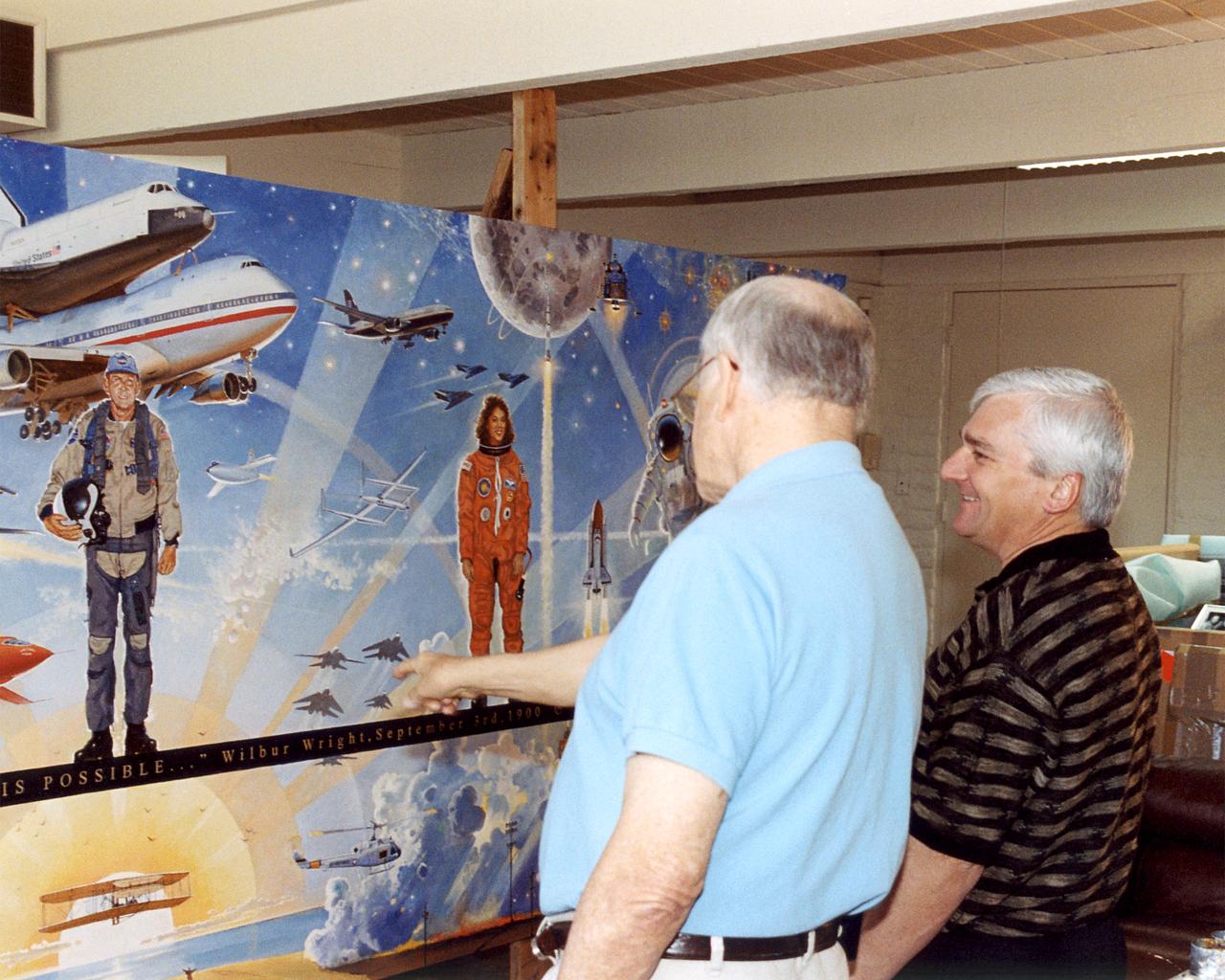
Bob Mccall and NASA Dryden Director Kevin Petersen stand by "Celebrating One Hundred Years of Powered Flight, 1903-2003", in the artist's studio in Paradise Valley, Arizona. The mural was created to celebrate the achievements of Wilbur and Orville Wright and to commemorate a century of powered flight. Many of the epic flights represented in the painting took place in the skies over NASA Dryden Flight Research Center. An equally important goal of this celebration will be to encourage the values that have characterized 100 years of aviation history: ingenuity, inventiveness, persistence, creativity and courage. These values hold true not just for pioneers of flight, but also for all pioneers of invention and innovation, and they will remain an important part of America's future.  "Celebrating One Hundred Years of Powered Flight, 1903-2003", documents many significant achievements in aeronautics and space flight from the dawn of powered flight to the present.  Historic aircraft and spacecraft serve as the backdrop, highlighting six figures representing the human element that made these milestones possible. These figures stand, symbolically supported by the words of Wilbur Wright, "It is my belief that flight is possible…" The quote was taken from a letter written to his father on September 3rd, 1900, announcing Wilbur's intention to make "some experiments with a flying machine" at Kitty Hawk, North Carolina.  "This year, Bob is helping us commemorate the Centennial of Flight with a beautiful mural slated for placement in our Dryden Flight Research Center that documents the history of flight from the Wright Flyer to the International Space Station. We should all take note, I think, that in the grand scheme of things, one hundred years is a very short period of time. In that blink of an eye we've gone from Kitty Hawk to Tranquility Base and now look forward to our rovers traversing the surface of Mars. Despite the challenges we face, the future we envision, like the fu
Bob Mccall and NASA Dryden Center Director Kevin Petersen in the artist's studio in Paradise Valley, Arizona.
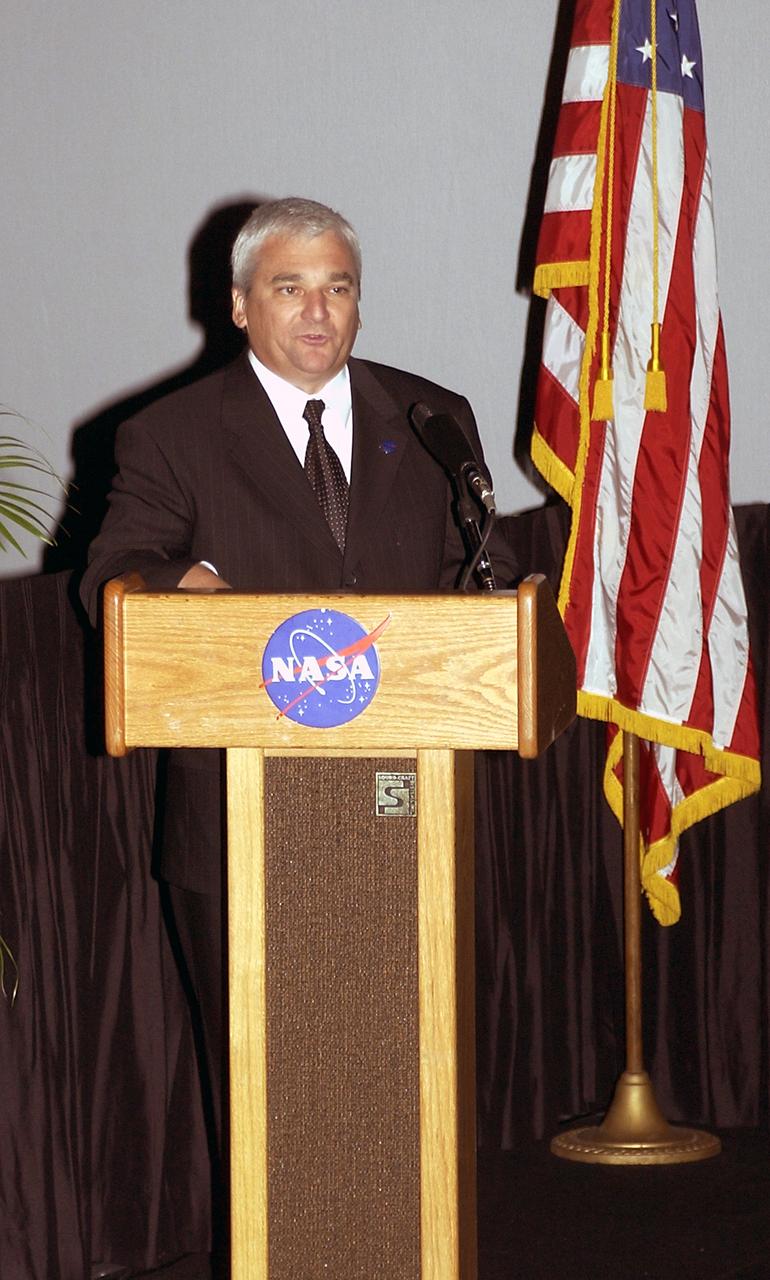
KENNEDY SPACE CENTER, FLA.  -  Dryden Flight Research Center Director Kevin Peterson talks about One NASA during the rollout of the Agency initiative at KSC.  The event was held at the IMAX Theater® where NASA leaders discussed One NASA with selected employees.  Explaining how their respective centers contribute to One NASA, along with Peterson, were KSC Director Jim Kennedy, James Jennings,  NASA’s associate deputy administrator for institutions and asset management; Ed Weiler, associate administrator for Space Science; Kevin Peterson, Dryden Flight Research Center director; incoming KSC Deputy Director Woodrow Whitlow; and implementation team lead Johnny Stevenson.   Glenn Research Center Director Dr. Julian Earls gave a motivational speech during the luncheon held at the Visitor Complex Debus Conference Center.
KENNEDY SPACE CENTER, FLA. - Dryden Flight Research Center Director Kevin Peterson talks about One NASA during the rollout of the Agency initiative at KSC. The event was held at the IMAX Theater® where NASA leaders discussed One NASA with selected employees. Explaining how their respective centers contribute to One NASA, along with Peterson, were KSC Director Jim Kennedy, James Jennings, NASA’s associate deputy administrator for institutions and asset management; Ed Weiler, associate administrator for Space Science; Kevin Peterson, Dryden Flight Research Center director; incoming KSC Deputy Director Woodrow Whitlow; and implementation team lead Johnny Stevenson. Glenn Research Center Director Dr. Julian Earls gave a motivational speech during the luncheon held at the Visitor Complex Debus Conference Center.
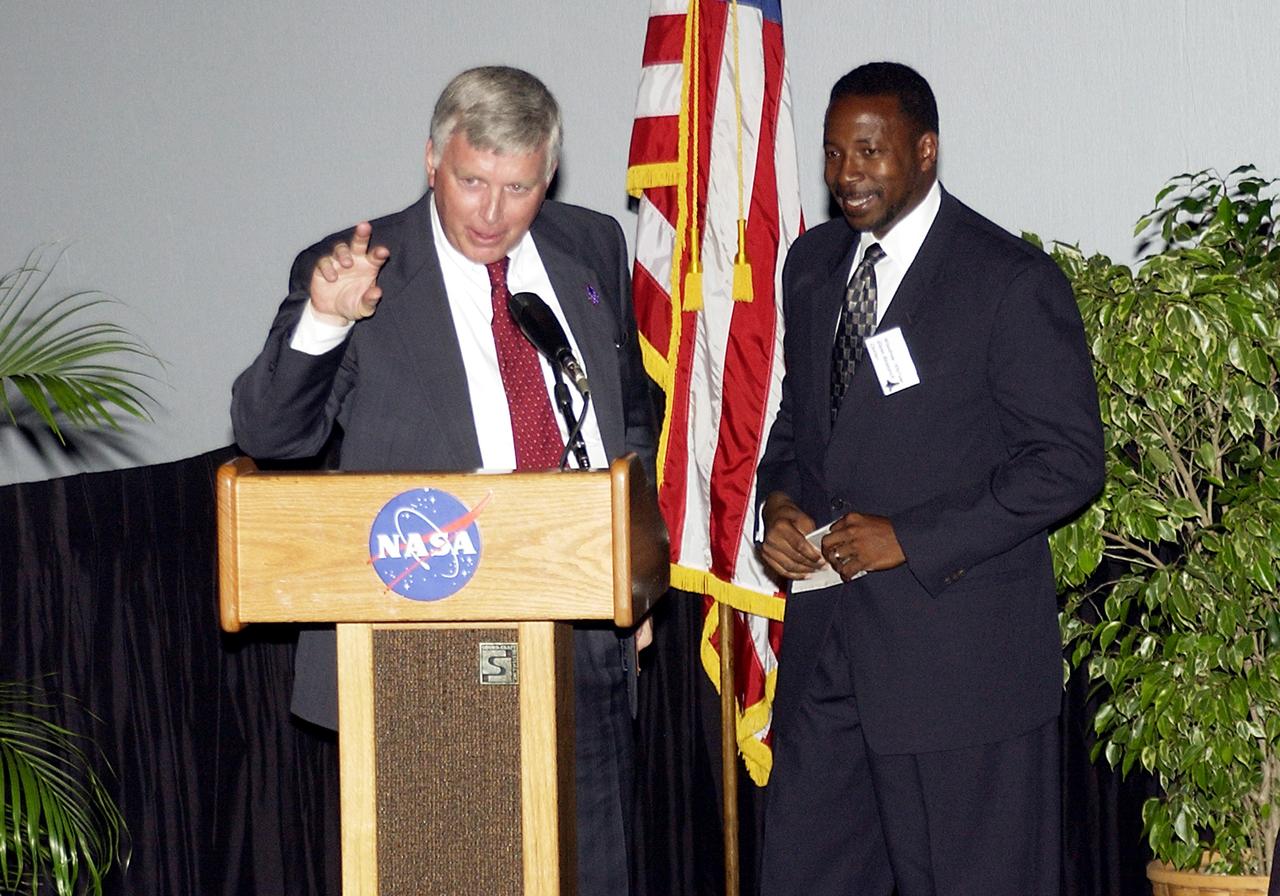
KENNEDY SPACE CENTER, FLA.  -  KSC Director Jim Kennedy (left) and incoming KSC Deputy Director Woodrow Whitlow talk about One NASA during the rollout of the Agency initiative at KSC.  They were joined at the IMAX Theater® by other NASA leaders James Jennings,  NASA’s associate deputy administrator for institutions and asset management; Ed Weiler, associate administrator for Space Science; Kevin Peterson, Dryden Flight Research Center director; and implementation team lead Johnny Stevenson to explain how their respective centers contribute to One NASA.  Glenn Research Center Director Dr. Julian Earls gave a motivational speech during the luncheon held at the Visitor Complex Debus Conference Center.
KENNEDY SPACE CENTER, FLA. - KSC Director Jim Kennedy (left) and incoming KSC Deputy Director Woodrow Whitlow talk about One NASA during the rollout of the Agency initiative at KSC. They were joined at the IMAX Theater® by other NASA leaders James Jennings, NASA’s associate deputy administrator for institutions and asset management; Ed Weiler, associate administrator for Space Science; Kevin Peterson, Dryden Flight Research Center director; and implementation team lead Johnny Stevenson to explain how their respective centers contribute to One NASA. Glenn Research Center Director Dr. Julian Earls gave a motivational speech during the luncheon held at the Visitor Complex Debus Conference Center.
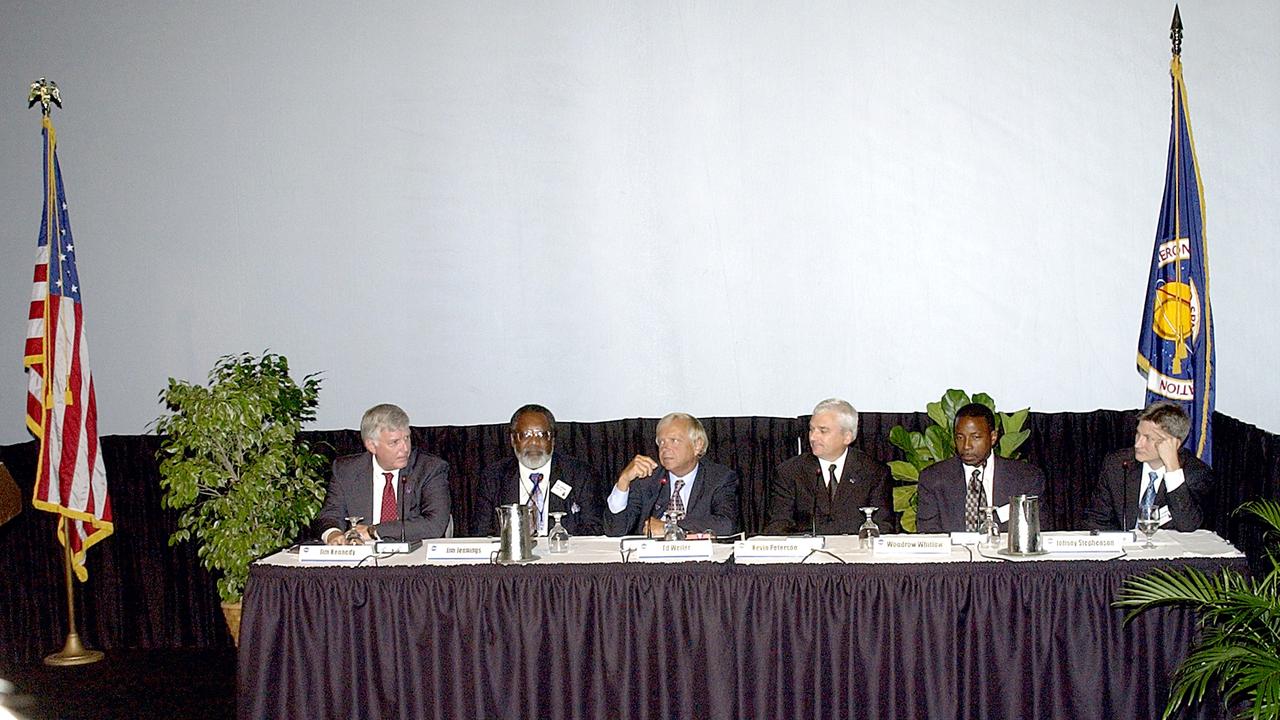
KENNEDY SPACE CENTER, FLA.  -  NASA leaders discuss the Agency’s One NASA initiative with selected employees at the KSC Visitor Complex IMAX Theater®.  From left are   KSC Director Jim Kennedy; James Jennings,  NASA’s associate deputy administrator for institutions and asset management; Ed Weiler, associate administrator for Space Science; Kevin Peterson, Dryden Flight Research Center director; incoming KSC Deputy Director Woodrow Whitlow;  and implementation team lead Johnny Stevenson.   Glenn Research Center Director Dr. Julian Earls gave a motivational speech during the luncheon held at the Visitor Complex Debus Conference Center.
KENNEDY SPACE CENTER, FLA. - NASA leaders discuss the Agency’s One NASA initiative with selected employees at the KSC Visitor Complex IMAX Theater®. From left are KSC Director Jim Kennedy; James Jennings, NASA’s associate deputy administrator for institutions and asset management; Ed Weiler, associate administrator for Space Science; Kevin Peterson, Dryden Flight Research Center director; incoming KSC Deputy Director Woodrow Whitlow; and implementation team lead Johnny Stevenson. Glenn Research Center Director Dr. Julian Earls gave a motivational speech during the luncheon held at the Visitor Complex Debus Conference Center.
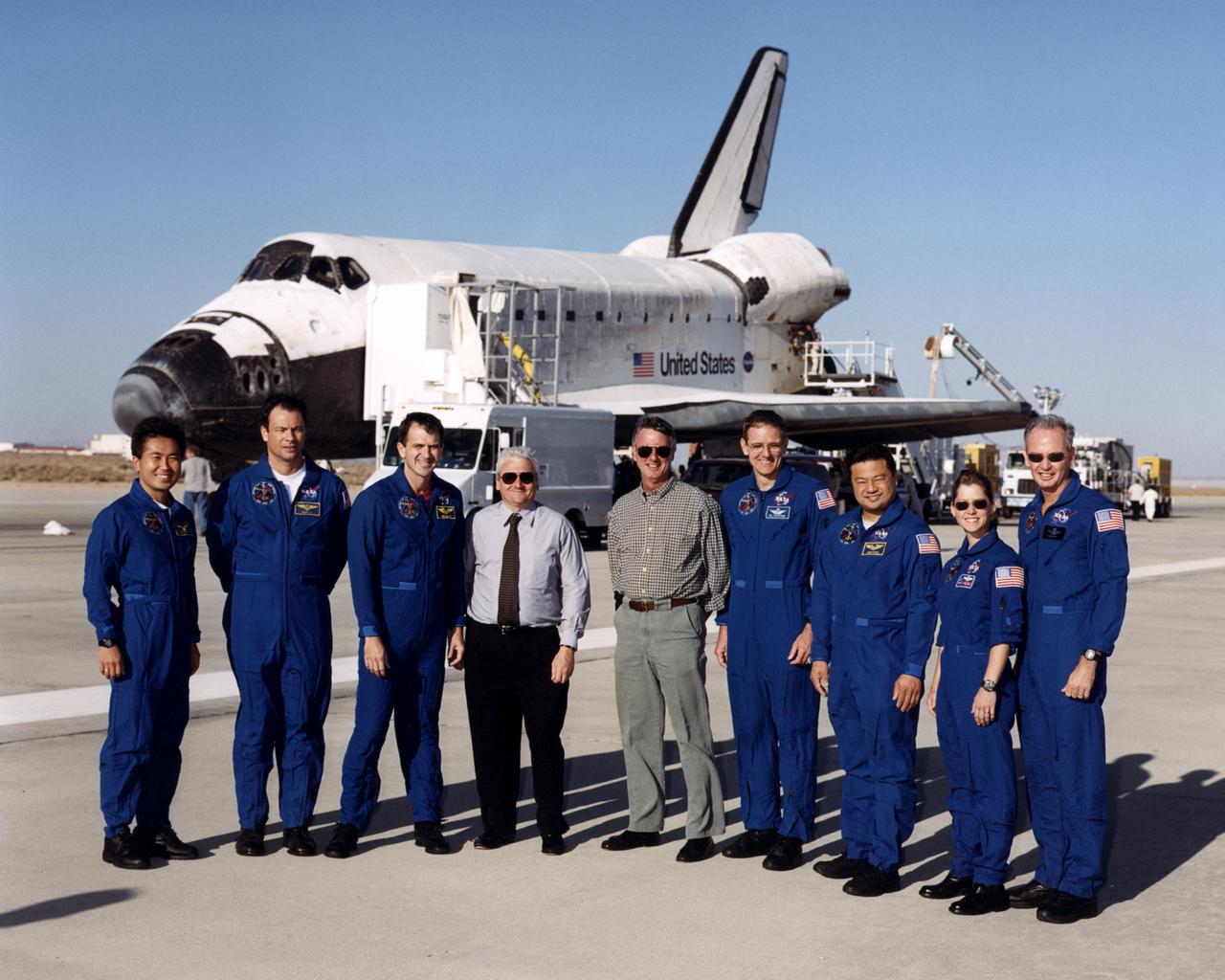
The seven-member crew of the Space Shuttle mission STS-92 gathered in front of the Shuttle Discovery shortly after landing at Edwards Air Force Base in Southern California October 24, 2000. They are seen here with NASA Dryden Fight Research Center Director Kevin Petersen and Deputy Director Wallace Sawyer. From left are mission specialists Koichi Wakata, Michael Lopez-Alegria, Jeff Wisoff, Bill McArthur and Leroy Chiao, pilot Pam Melroy and mission commander Brian Duffy. Between Jeff Wisoff and Brian McArthur are Kevin Petersen and Wally Sawyer, wearing ordinary civilian clothing.
STS-92 - Crew with Dryden Director Kevin Petersen and Deputy Director Wally Saywer
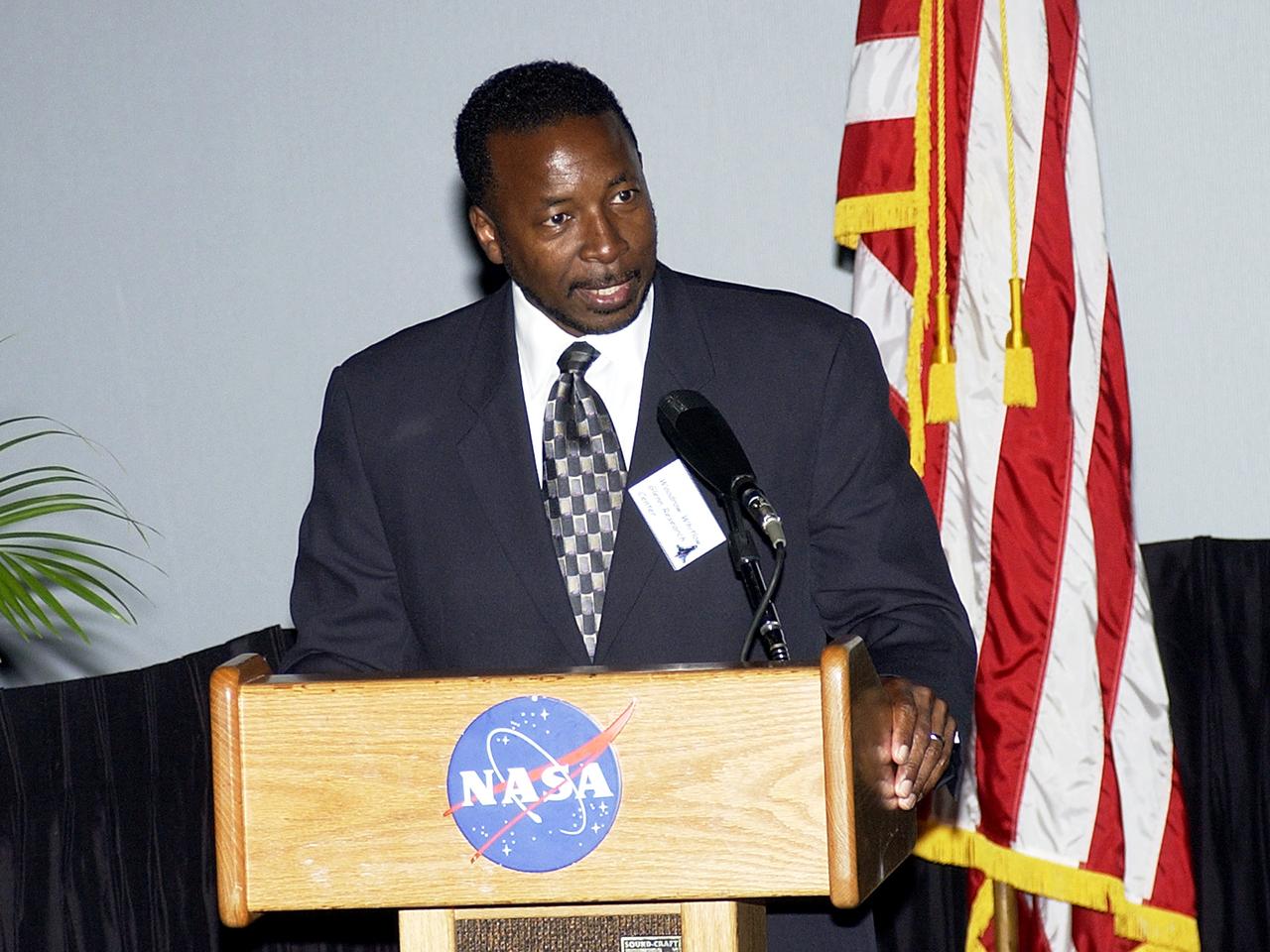
KENNEDY SPACE CENTER, FLA.  -  KSC’s incoming  Deputy Director Woodrow Whitlow speaks to employees and guests during the rollout at KSC of the Agency initiative One NASA .   The event was held at the IMAX Theater® where NASA leaders discussed One NASA with selected employees.  Explaining how their respective centers contribute to One NASA, along with Whitlow, were KSC Director Jim Kennedy; James Jennings,  NASA’s associate deputy administrator for institutions and asset management; Ed Weiler, associate administrator for Space Science; Kevin Peterson, Dryden Flight Research Center director; and implementation team lead Johnny Stevenson.   Glenn Research Center Director Dr. Julian Earls gave a motivational speech during the luncheon held at the Visitor Complex Debus Conference Center.
KENNEDY SPACE CENTER, FLA. - KSC’s incoming Deputy Director Woodrow Whitlow speaks to employees and guests during the rollout at KSC of the Agency initiative One NASA . The event was held at the IMAX Theater® where NASA leaders discussed One NASA with selected employees. Explaining how their respective centers contribute to One NASA, along with Whitlow, were KSC Director Jim Kennedy; James Jennings, NASA’s associate deputy administrator for institutions and asset management; Ed Weiler, associate administrator for Space Science; Kevin Peterson, Dryden Flight Research Center director; and implementation team lead Johnny Stevenson. Glenn Research Center Director Dr. Julian Earls gave a motivational speech during the luncheon held at the Visitor Complex Debus Conference Center.
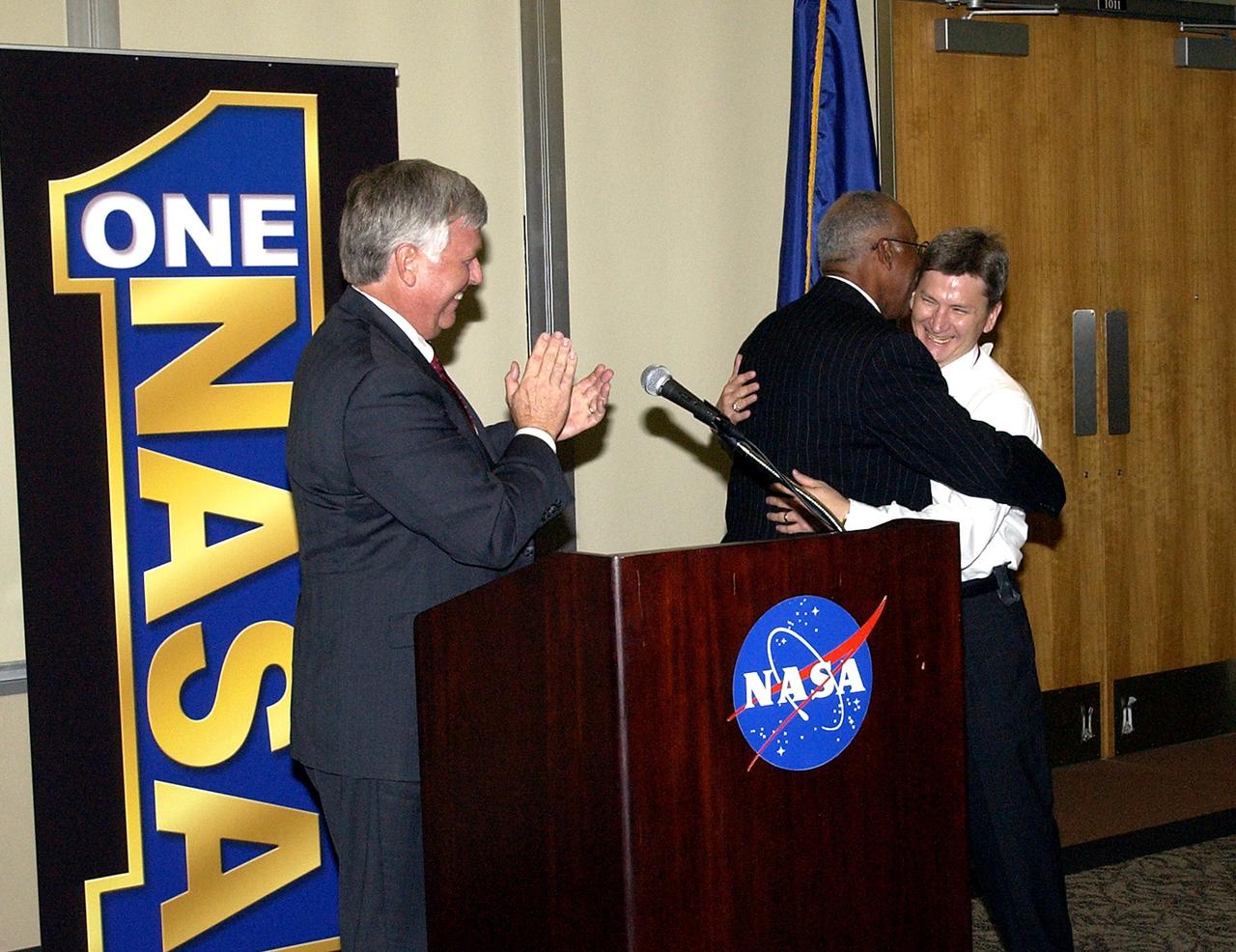
KENNEDY SPACE CENTER, FLA.  -   At the rollout of the One NASA initiative at KSC, Glenn Research Center Director Dr. Julian Earls embraces implementation team lead Johnny Stevenson while KSC Director Jim Kennedy (left) applauds.  Earls gave a motivational speech during the luncheon held at the Visitor Complex Debus Conference Center.  The event was held at the IMAX Theater® where NASA leaders discussed One NASA with selected employees.  Explaining how their respective centers contribute to One NASA, along with Kennedy and Earls, were James Jennings,  NASA’s associate deputy administrator for institutions and asset management; Ed Weiler, associate administrator for Space Science; Kevin Peterson, Dryden Flight Research Center director; incoming KSC Deputy Director Woodrow Whitlow; and implementation team lead Johnny Stevenson.
KENNEDY SPACE CENTER, FLA. - At the rollout of the One NASA initiative at KSC, Glenn Research Center Director Dr. Julian Earls embraces implementation team lead Johnny Stevenson while KSC Director Jim Kennedy (left) applauds. Earls gave a motivational speech during the luncheon held at the Visitor Complex Debus Conference Center. The event was held at the IMAX Theater® where NASA leaders discussed One NASA with selected employees. Explaining how their respective centers contribute to One NASA, along with Kennedy and Earls, were James Jennings, NASA’s associate deputy administrator for institutions and asset management; Ed Weiler, associate administrator for Space Science; Kevin Peterson, Dryden Flight Research Center director; incoming KSC Deputy Director Woodrow Whitlow; and implementation team lead Johnny Stevenson.
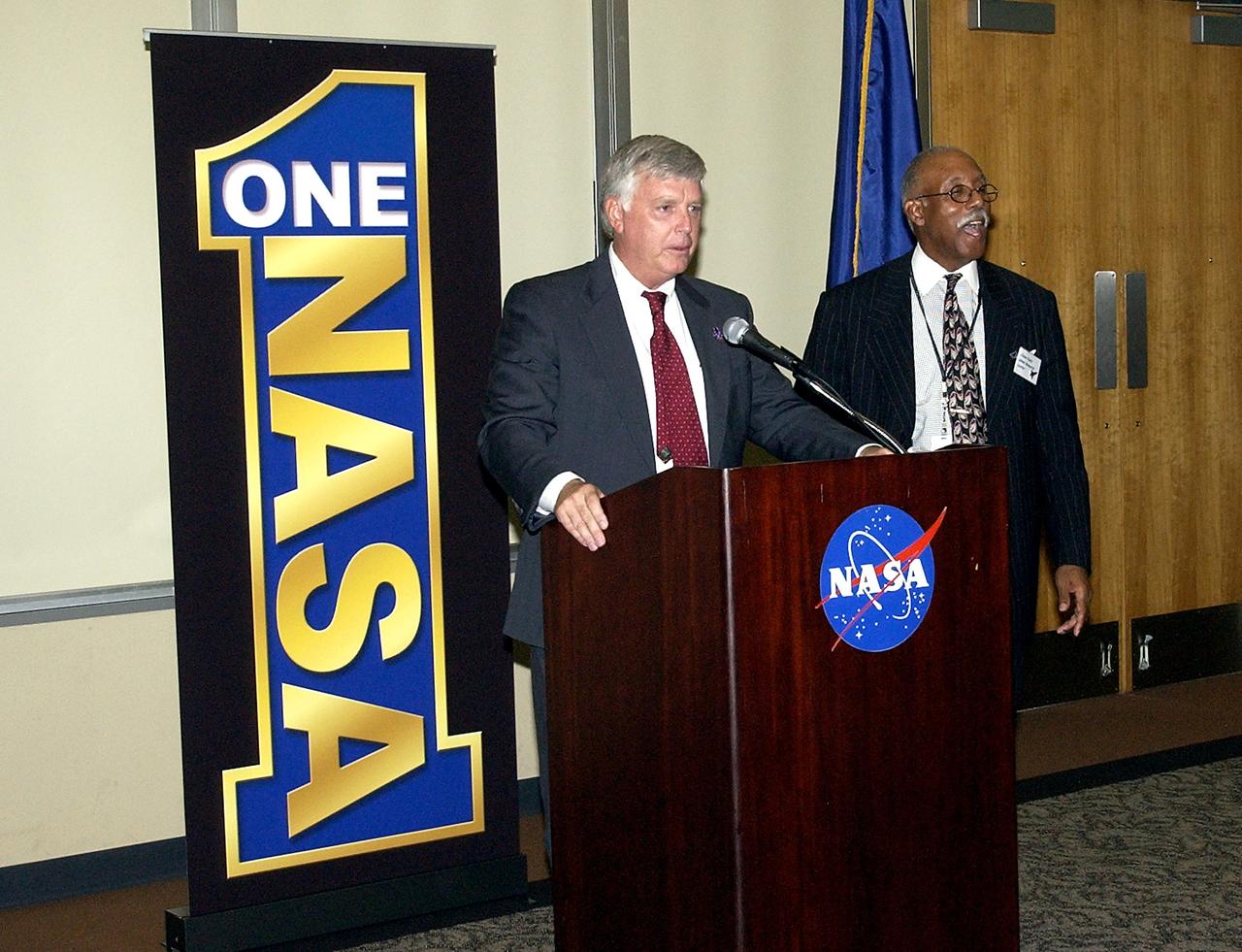
KENNEDY SPACE CENTER, FLA.  -   KSC Director Jim Kennedy and Glenn Research Center Director Dr. Julian Earls share the stage during the rollout of the One NASA initiative at KSC.  Earls gave a motivational speech during the luncheon held at the Visitor Complex Debus Conference Center.  The event was held at the IMAX Theater® where NASA leaders discussed One NASA with selected employees.   Explaining how their respective centers contribute to One NASA, along with Kennedy and Earls, were James Jennings,  NASA’s associate deputy administrator for institutions and asset management; Ed Weiler, associate administrator for Space Science; Kevin Peterson, Dryden Flight Research Center director; incoming KSC Deputy Director Woodrow Whitlow; and implementation team lead Johnny Stevenson.
KENNEDY SPACE CENTER, FLA. - KSC Director Jim Kennedy and Glenn Research Center Director Dr. Julian Earls share the stage during the rollout of the One NASA initiative at KSC. Earls gave a motivational speech during the luncheon held at the Visitor Complex Debus Conference Center. The event was held at the IMAX Theater® where NASA leaders discussed One NASA with selected employees. Explaining how their respective centers contribute to One NASA, along with Kennedy and Earls, were James Jennings, NASA’s associate deputy administrator for institutions and asset management; Ed Weiler, associate administrator for Space Science; Kevin Peterson, Dryden Flight Research Center director; incoming KSC Deputy Director Woodrow Whitlow; and implementation team lead Johnny Stevenson.
Bob Meyer (right), acting deputy director of NASA Dryden, shakes hands with Les Bordelon, executive director of Edwards Air Force Base.
EC02-0221-6
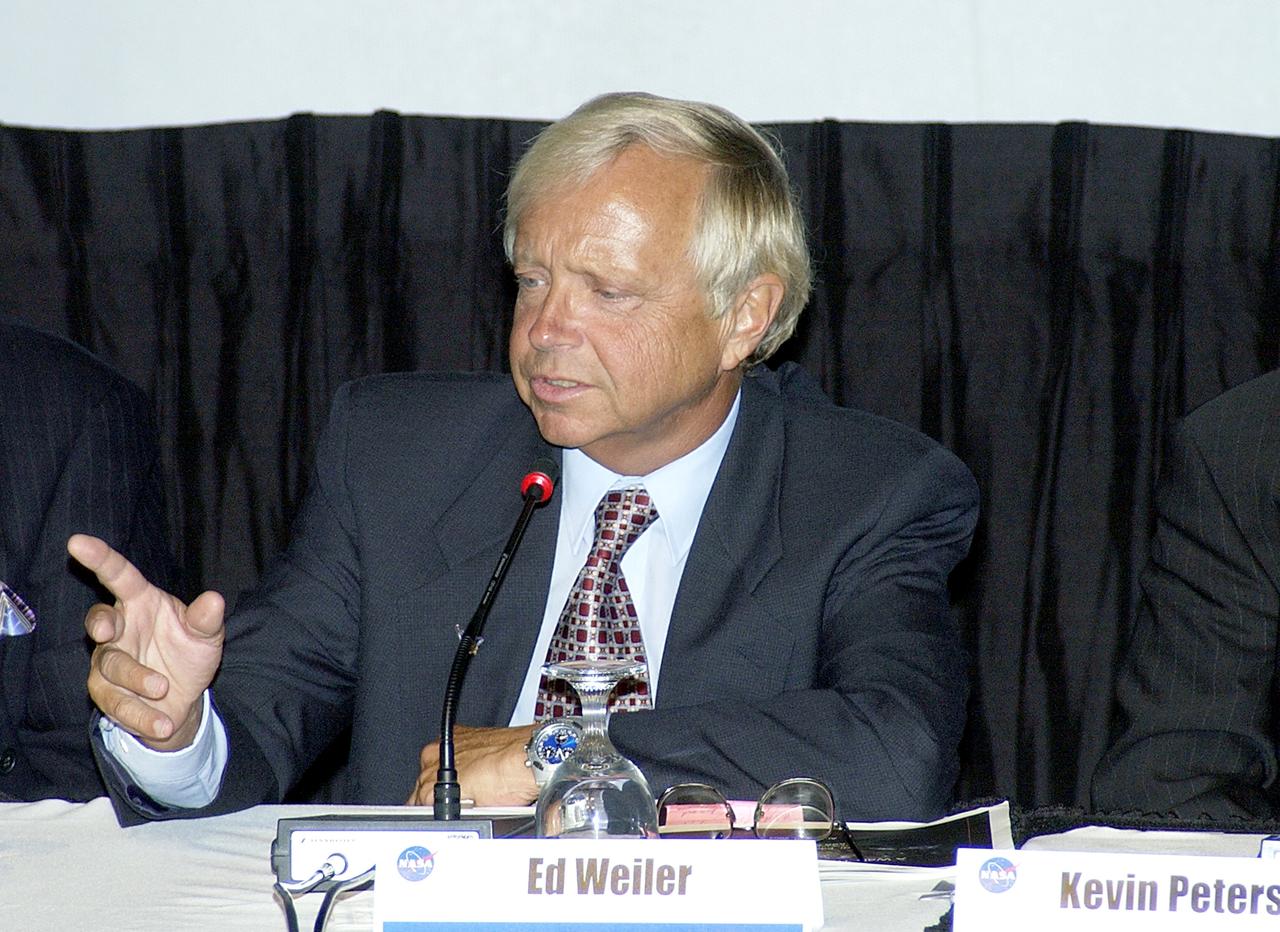
KENNEDY SPACE CENTER, FLA.  -  NASA’s Ed Weiler, associate administrator for Space Science, speaks to employees and guests during the rollout at KSC of the Agency initiative One NASA .   The event was held at the IMAX Theater®.  Explaining how their respective centers contribute to One NASA, along with Weiler, were KSC Director Jim Kennedy; James Jennings,  NASA’s associate deputy administrator for institutions and asset management; Kevin Peterson, Dryden Flight Research Center director;  incoming KSC Deputy Director Woodrow Whitlow; and implementation team lead Johnny Stevenson.   Glenn Research Center Director Dr. Julian Earls gave a motivational speech during the luncheon held at the Visitor Complex Debus Conference Center.
KENNEDY SPACE CENTER, FLA. - NASA’s Ed Weiler, associate administrator for Space Science, speaks to employees and guests during the rollout at KSC of the Agency initiative One NASA . The event was held at the IMAX Theater®. Explaining how their respective centers contribute to One NASA, along with Weiler, were KSC Director Jim Kennedy; James Jennings, NASA’s associate deputy administrator for institutions and asset management; Kevin Peterson, Dryden Flight Research Center director; incoming KSC Deputy Director Woodrow Whitlow; and implementation team lead Johnny Stevenson. Glenn Research Center Director Dr. Julian Earls gave a motivational speech during the luncheon held at the Visitor Complex Debus Conference Center.
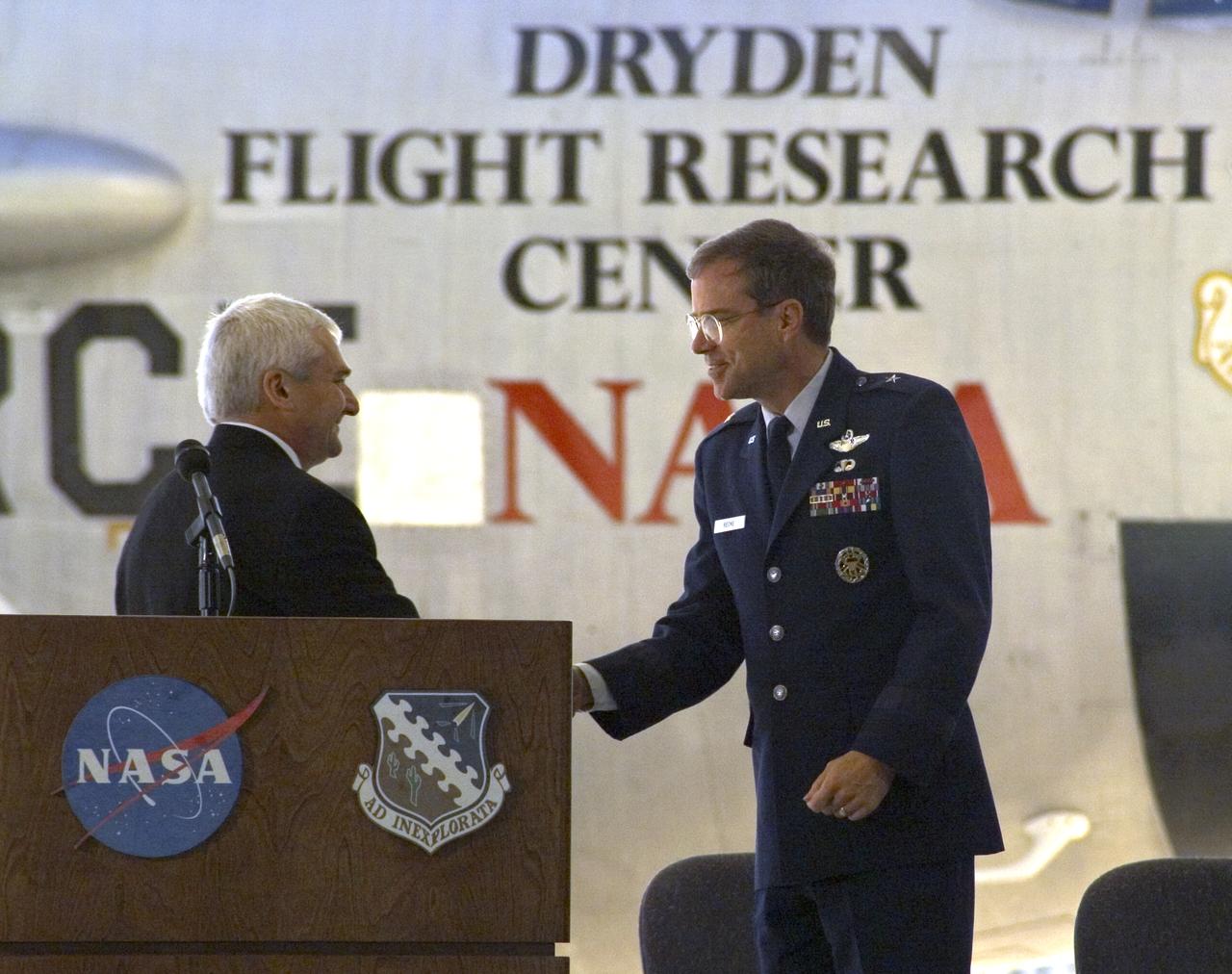
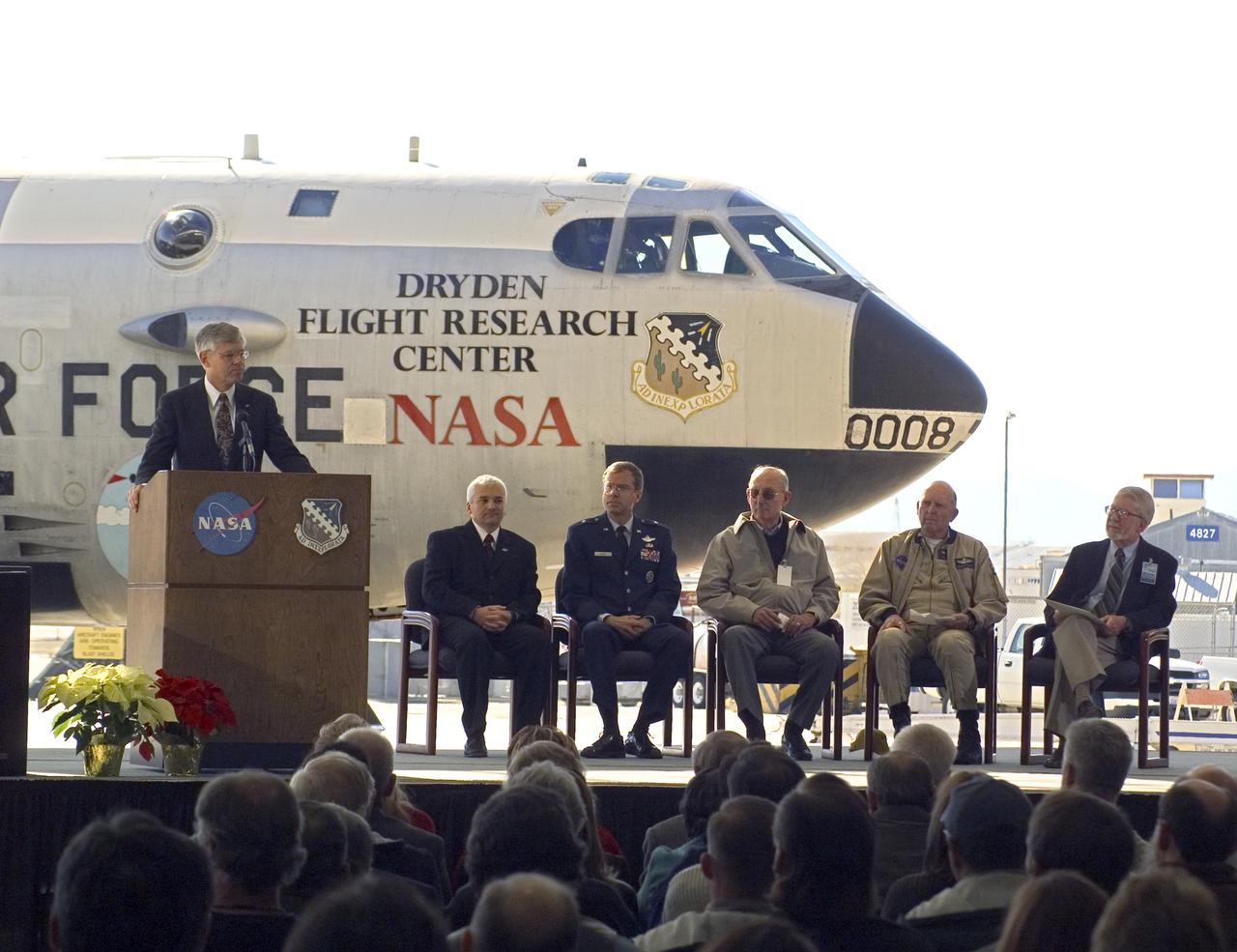
Dryden Center director Kevin Petersen shakes hands with AFFTC commander, Brig. Gen. Curtis Bedke, at the retirement ceremony for NASA's B-52B.
ED04-0362-08
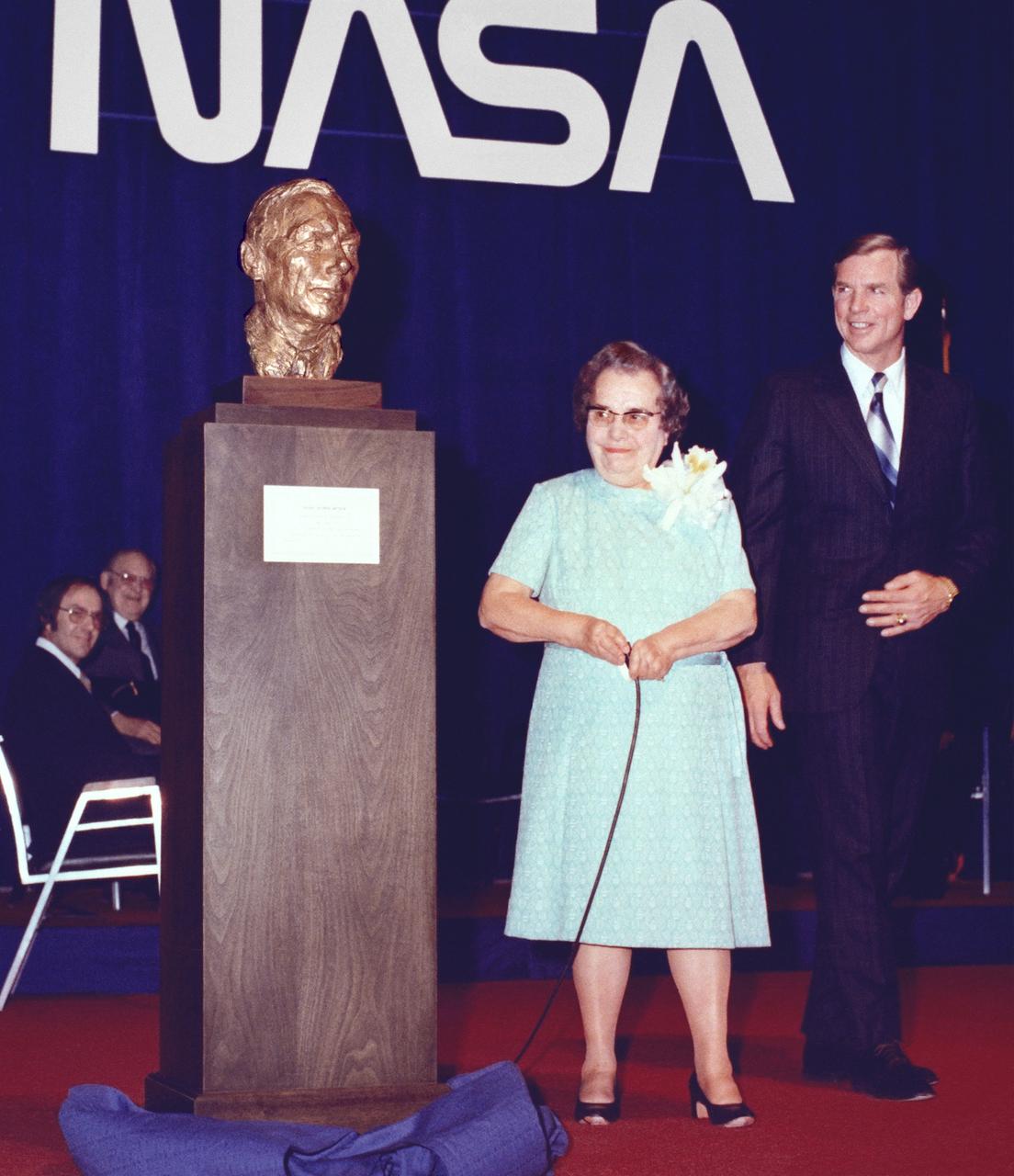
On March 26, 1976, the NASA Flight Research Center opened its doors to hundreds of guests for the dedication of the center in honor of Hugh Latimer Dryden. The dedication was very much a local event; following Center Director David Scott’s opening remarks, the Antelope Valley High School’s symphonic band played the national anthem. Invocation was given followed by recognition of the invited guests. Dr. Hugh Dryden, a man of total humility, received praise from all those present. Dryden, who died in 1965, had been a pioneering aeronautical scientist who became director of the National Advisory Committee for Aeronautics (NACA) in 1949 and then deputy administrator of the NACA’s successor, NASA, in 1958. Very much interested in flight research, he had been responsible for establishing a permanent facility at the location later named in his honor.  As Center Director David Scott looks on, Mrs. Hugh L. Dryden (Mary Libbie Travers) unveils the memorial to her husband at the dedication ceremony.On March 26, 1976, the NASA Flight Research Center opened its doors to hundreds of guests for the dedication of the center in honor of Hugh Latimer Dryden.
Mrs. Hugh Dryden unveils the memorial to her late husband at center dedication, with center director David Scott
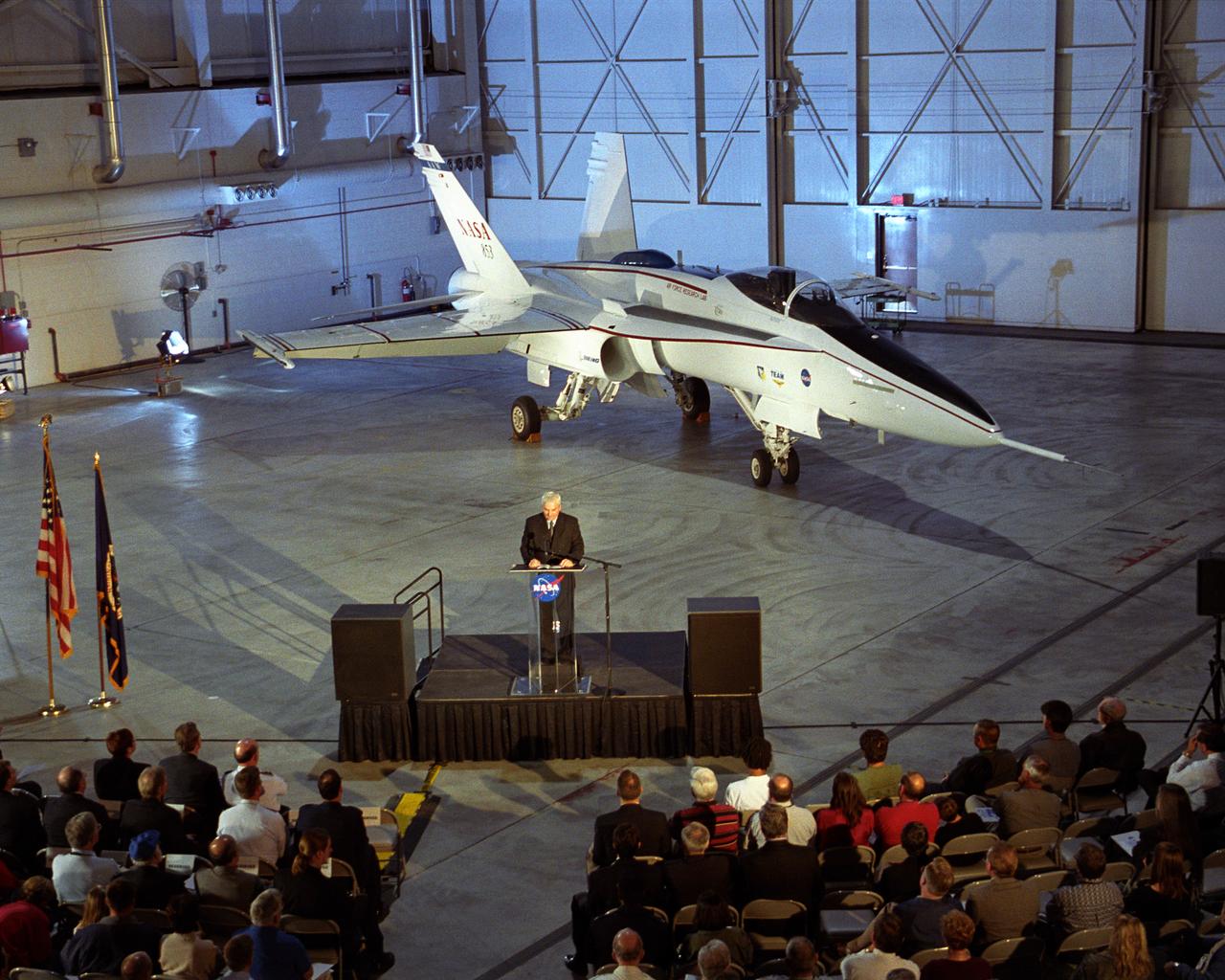
With the modified F/A-18 showcased behind him, Kevin Petersen, director of NASA Dryden Flight Research Center, addressed the audience attending the rollout ceremonies for the Active Aeroelastic Wing flight research project.
EC02-0065-4
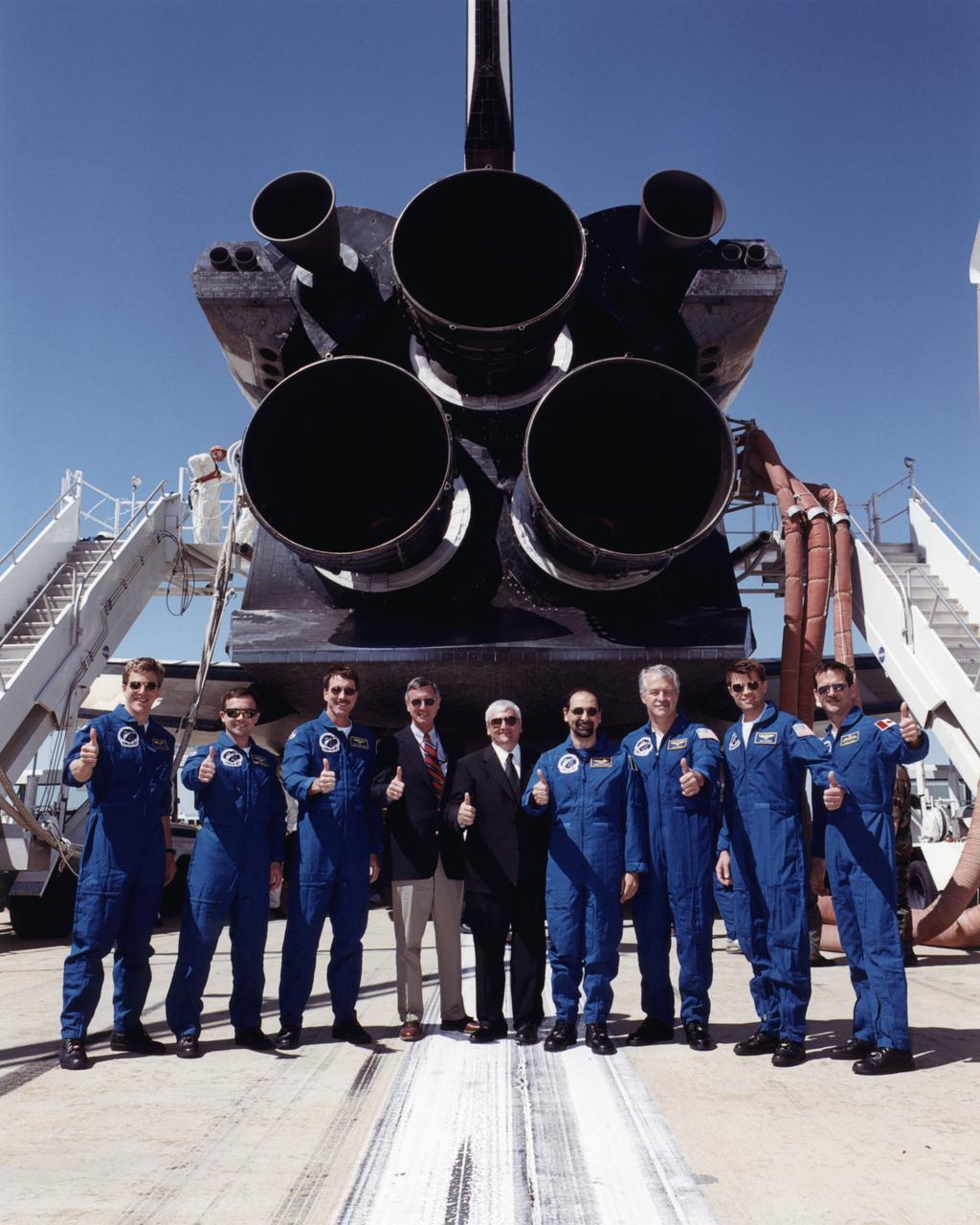
A happy "thumbs up" from the crew of the Space Shuttle Endeavour and NASA Dryden Flight Research Center officials heralded the successful completion of mission STS-100. Standing by the shuttle's rocket nozzles from left to right: Scott E. Prazynski, mission specialist (U.S.); Yuri V. Lonchakov, mission specialist (Russia); Kent V. Rominger, commander (U.S.); Wally Sawyer, NASA Dryden Flight Research Center deputy director; Kevin Petersen, NASA Dryden Flight Research Center director; Umberto Guidoni, mission specialist (European Space Agency); John L. Phillips, mission specialist (U.S.); Jeffrey S. Ashby, pilot (U.S.); and Chris A. Hadfield, mission specialist (Canadian Space Agency). The mission landed at Edwards Air Force Base, California, on May 1, 2001.
A happy "thumbs up" from the crew of the Space Shuttle Endeavour and NASA Dryden Flight Research Center officials heralded the successful completion of mission STS-100
NASA Dryden research pilot Jim Smolka (left) details a recent flight experiment on a modified F-15B research aircraft to test range program manager Jerry McKee, center director Kevin Petersen and NASA Administrator Michael Griffin (right) during Griffin's initial visit to NASA's Dryden Flight Research Center on Tuesday, May 24.
Jim Smolka (left) details a flight experiment to Jerry McKee, Kevin Petersen and NASA Administrator Mike Griffin (right) during Griffin's initial visit to DFRC
L to R: STS-98 Mission Specialist Thomas Jones, Pilot Mark Polansky, and Commander Kenneth Cockrell greet STS-92 Commander Brian Duffy, Dryden Center Director Kevin Petersen, and AFFTC Commander Major General Richard Reynolds after landing on the runway at Edwards Air Force Base, California, where NASA's Dryden Flight Research Center is located.
L to R: STS-98 Mission Specialist Thomas Jones, Pilot Mark Polansky, and Commander Kenneth Cockrell greet STS-92 Commander Brian Duffy, Dryden Center Director Kevin Petersen, and AFFTC Commander Major General Richard Reynolds
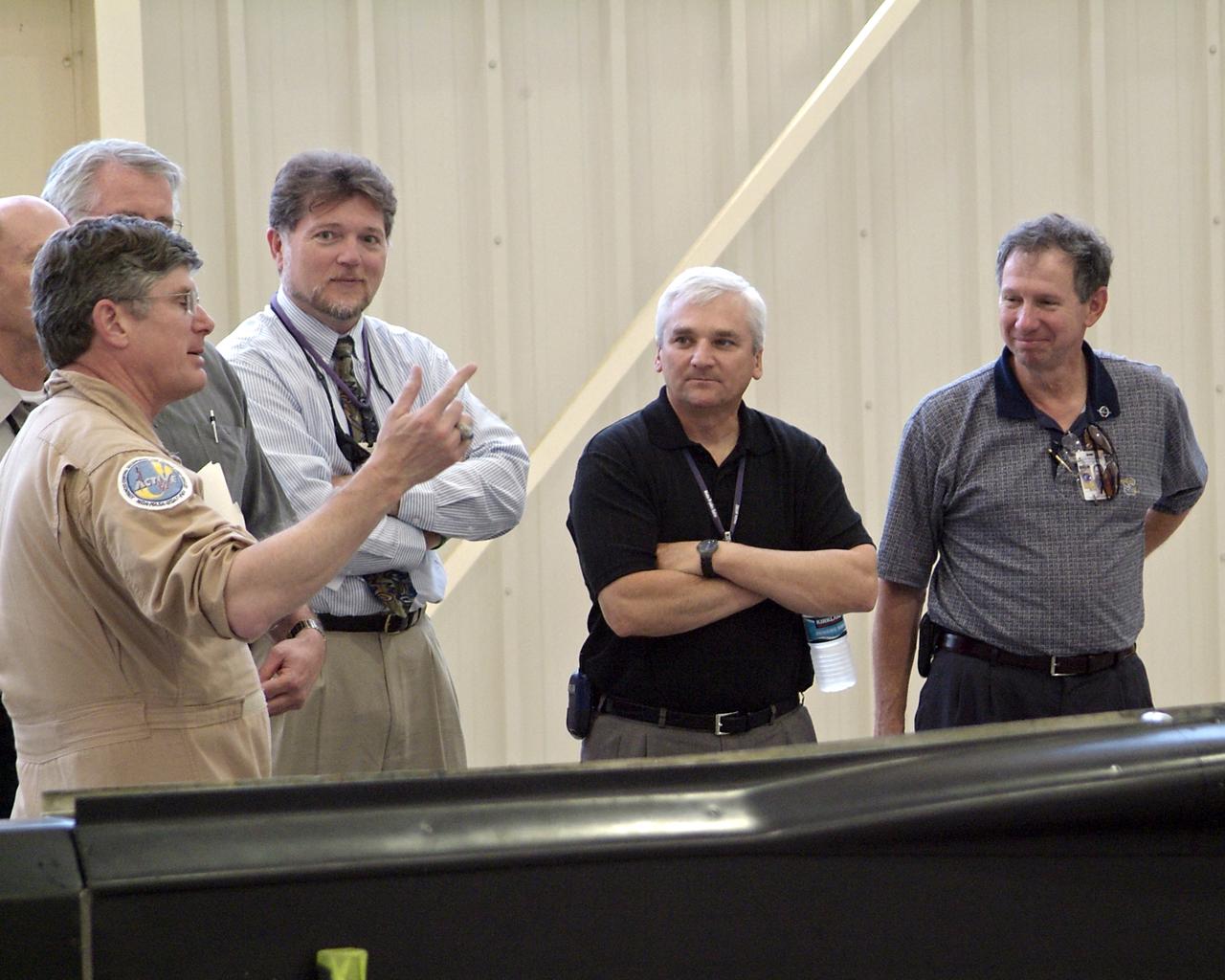
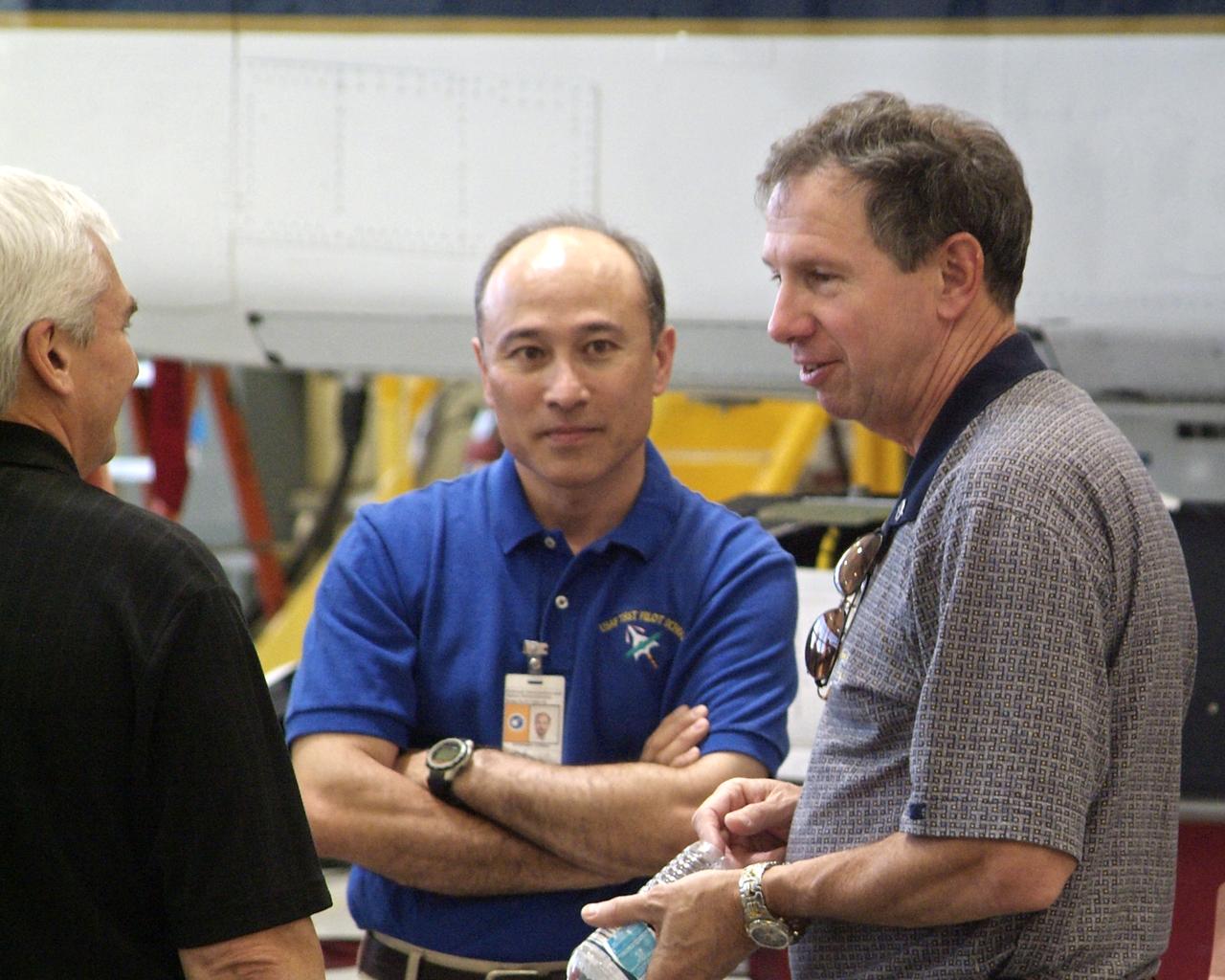
New NASA Administrator Michael Griffin (right) shares a moment with Director Kevin Petersen (left) and F-15B project manager Stephen Corda (center) during Griffin's visit to NASA Dryden Flight Research Center on Tuesday, May 24.
NASA Administrator Michael Griffin (right) with Kevin Petersen (left) and Stephen Corda (center) during Griffin's visit to NASA Dryden
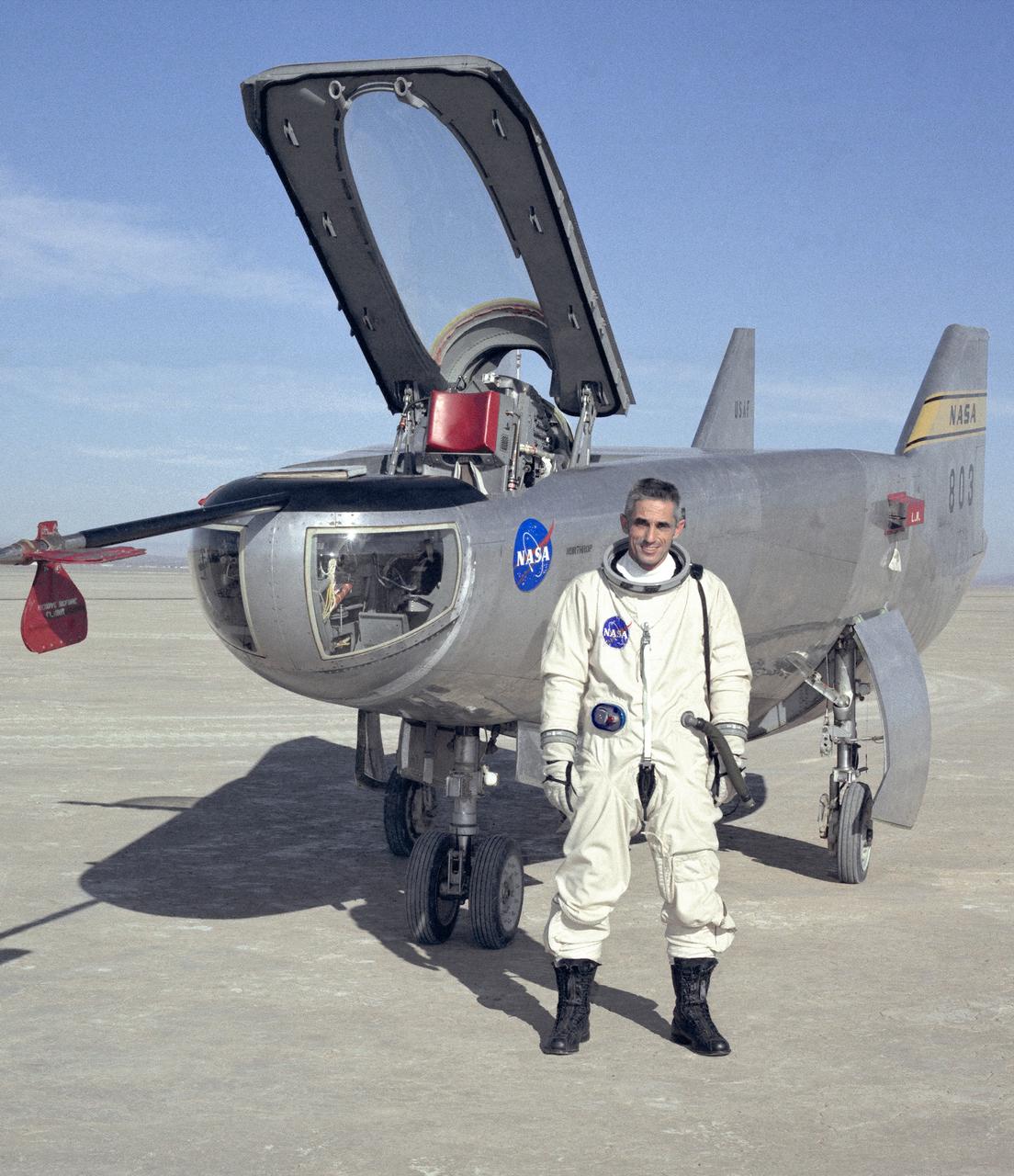
NASA research pilot John A. Manke is seen here in front of the M2-F3 Lifting Body. Manke was hired by NASA on May 25, 1962, as a flight research engineer. He was later assigned to the pilot's office and flew various support aircraft including the F-104, F5D, F-111 and C-47. After leaving the Marine Corps in 1960, Manke worked for Honeywell Corporation as a test engineer for two years before coming to NASA. He was project pilot on the X-24B and also flew the HL-10, M2-F3, and X-24A lifting bodies. John made the first supersonic flight of a lifting body and the first landing of a lifting body on a hard surface runway. Manke served as Director of the Flight Operations and Support Directorate at the Dryden Flight Research Center prior to its integration with Ames Research Center in October 1981. After this date John was named to head the joint Ames-Dryden Directorate of Flight Operations. He also served as site manager of the NASA Ames-Dryden Flight Research Facility.  John is a member of the Society of Experimental Test Pilots. He retired on April 27, 1984.
M2-F3 with test pilot John A. Manke
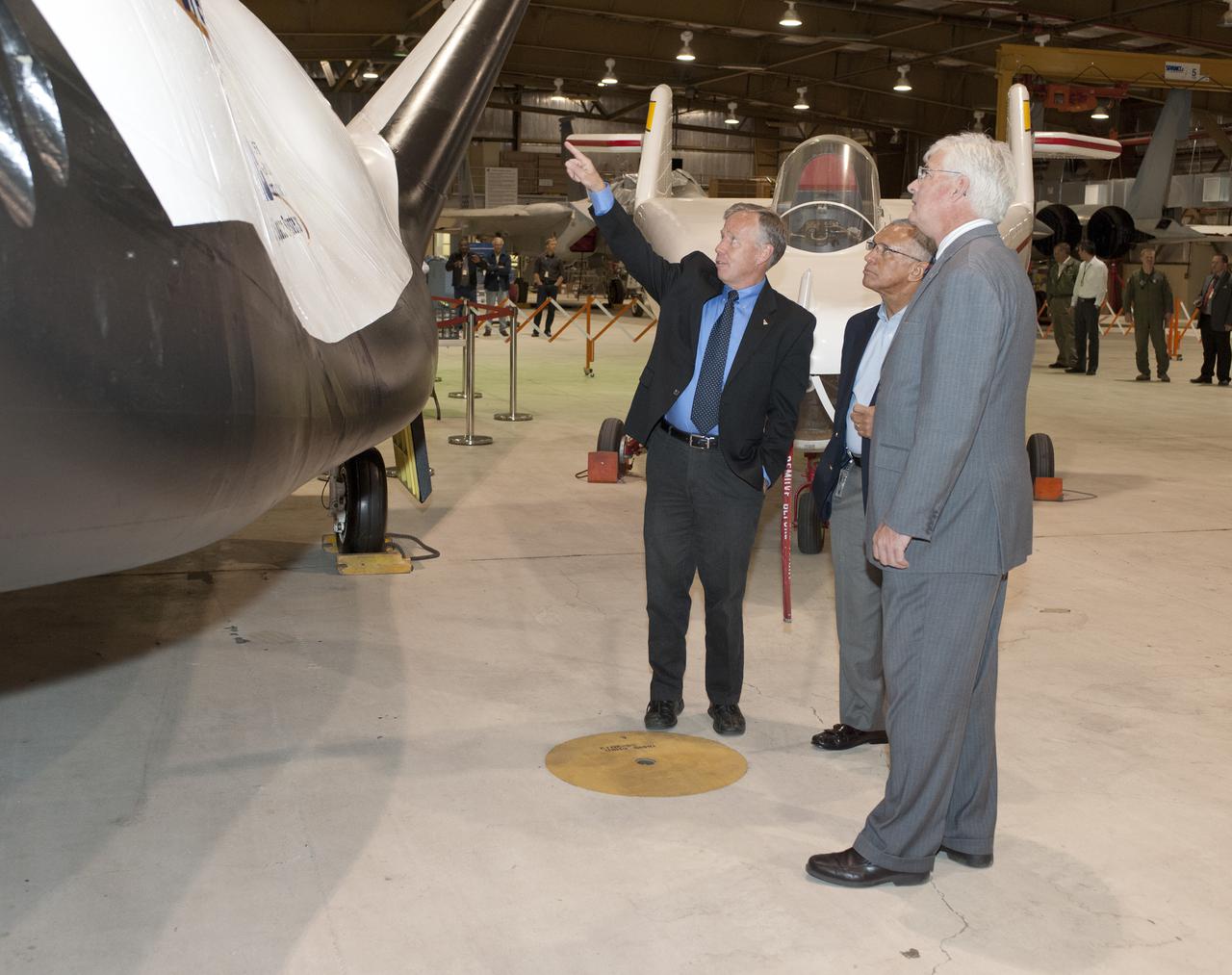
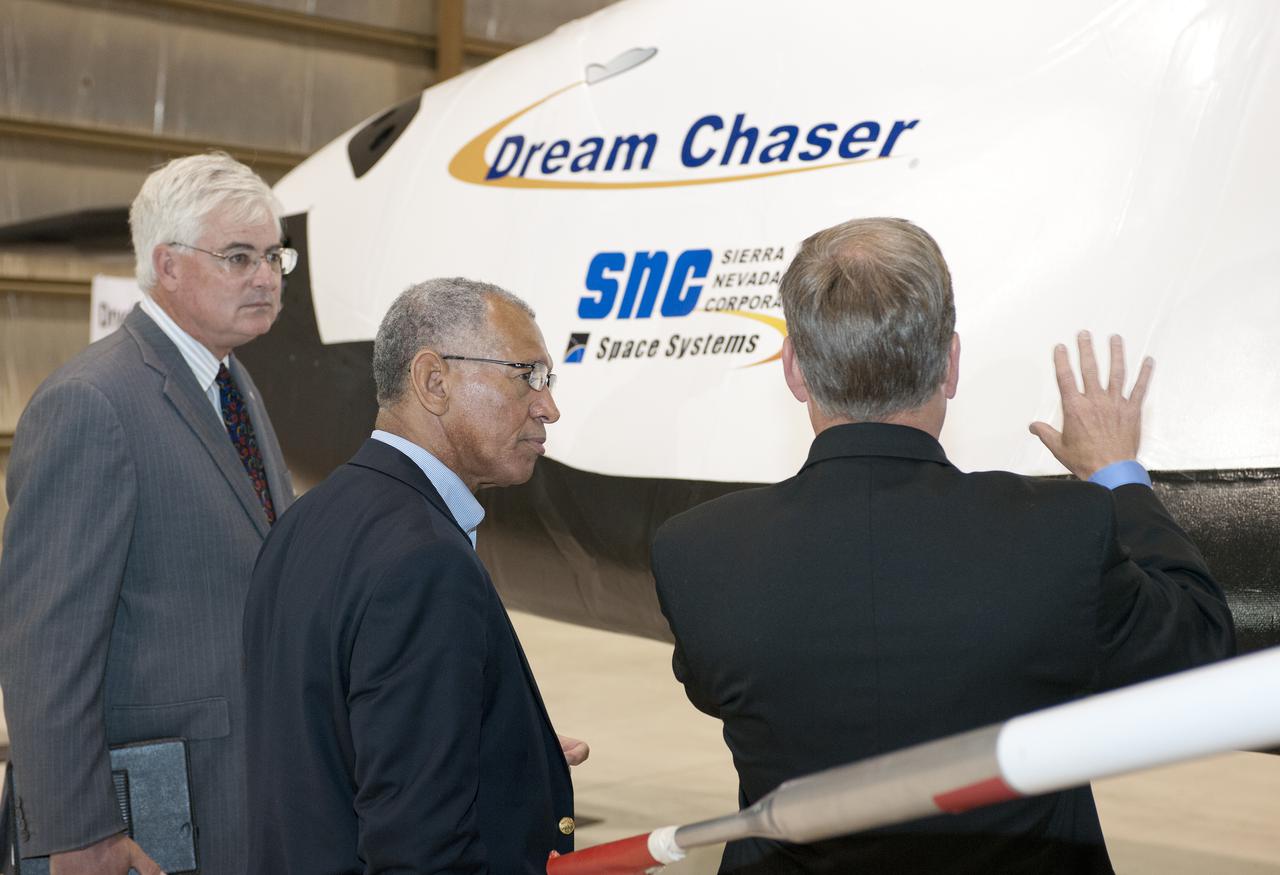
Edwards, Calif. – ED-0155-03 - NASA Administrator Charlie Bolden flies the Sierra Nevada Corporation, or SNC, Dream Chaser simulator at the agency's Dryden Flight Research Center. Marlin Pickett, a simulation engineer at Dryden, left, and Steve Lindsey, SNC's director of flight operations and former space shuttle astronaut, give Bolden pointers for landing the simulated vehicle. SNC is on track to perform development work on its Dream Chaser flight test vehicle in collaboration with NASA's Commercial Crew Program, or CCP, at Dryden in the coming months.   SNC is one of three companies working with CCP during the agency's Commercial Crew Integrated Capability, or CCiCap, initiative, which is intended to lead to the availability of commercial human spaceflight services for government and commercial customers. To learn more about CCP and its industry partners, visit www.nasa.gov_commercialcrew.   Image credit: NASA_Tom Tschida
KSC-2013-2418
Edwards, Calif. – ED-0155-29 - Steve Lindsey, Sierra Nevada Corporation, or SNC, director of flight operations and former space shuttle astronaut, talks to the media about the development work Sierra Nevada Corporation, or SNC, will perform in collaboration with NASA's Commercial Crew Program, or CCP, with its Dream Chaser flight test vehicle at the agency's Dryden Flight Research Center in the coming months. At left is NASA Administrator Charlie Bolden. At right is Dryden Flight Research Deputy Center Director Patrick Stoliker.  SNC is one of three companies working with CCP during the agency's Commercial Crew Integrated Capability, or CCiCap, initiative, which is intended to lead to the availability of commercial human spaceflight services for government and commercial customers. To learn more about CCP and its industry partners, visit www.nasa.gov_commercialcrew.   Image credit: NASA_Tom Tschida
KSC-2013-2417
Edwards, Calif. – ED-0155-13 - Steve Lindsey, Sierra Nevada Corporation, or SNC, director of flight operations and former space shuttle astronaut, left, talks to NASA Administrator Charlie Bolden, center, and agency Dryden Flight Research Center Deputy Director Patrick Stoliker about the company's Dream Chaser flight test vehicle. It will undergo ground and approach-and-landing flight tests at Dryden in the coming months as part of NASA's Commercial Crew Program, or CCP, development work.   SNC is one of three companies working with CCP during the agency's Commercial Crew Integrated Capability, or CCiCap, initiative, which is intended to lead to the availability of commercial human spaceflight services for government and commercial customers. To learn more about CCP and its industry partners, visit www.nasa.gov_commercialcrew.    Image credit: NASA_Tom Tschida
KSC-2013-2414
Edwards, Calif. – ED-0155-12 - Steve Lindsey, Sierra Nevada Corporation, or SNC, director of flight operations and former space shuttle astronaut, right, talks to NASA Administrator Charlie Bolden, center, and agency Dryden Flight Research Center Deputy Director Patrick Stoliker about the company's Dream Chaser flight test vehicle. It will undergo ground and approach-and-landing flight tests at Dryden in the coming months as part of NASA's Commercial Crew Program, or CCP, development work.     SNC is one of three companies working with CCP during the agency's Commercial Crew Integrated Capability, or CCiCap, initiative, which is intended to lead to the availability of commercial human spaceflight services for government and commercial customers. To learn more about CCP and its industry partners, visit www.nasa.gov_commercialcrew.    Image credit: NASA_Tom Tschida
KSC-2013-2413
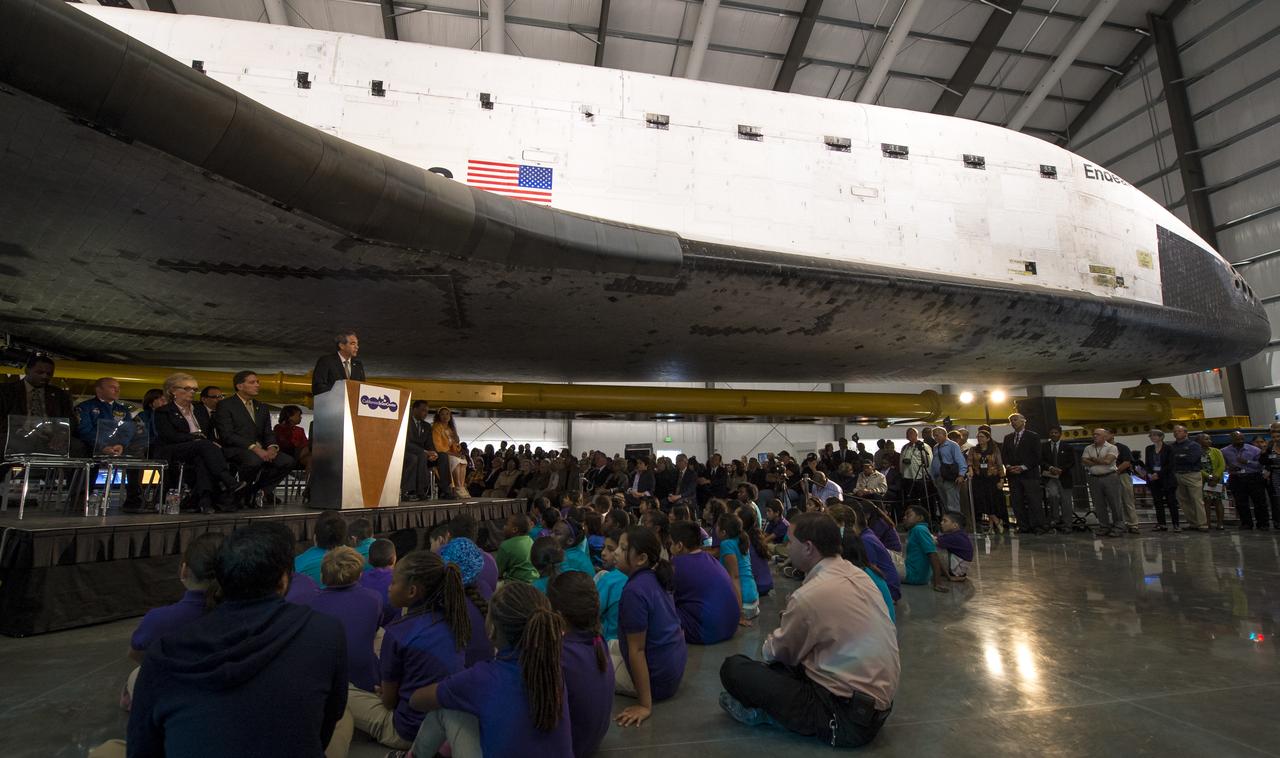
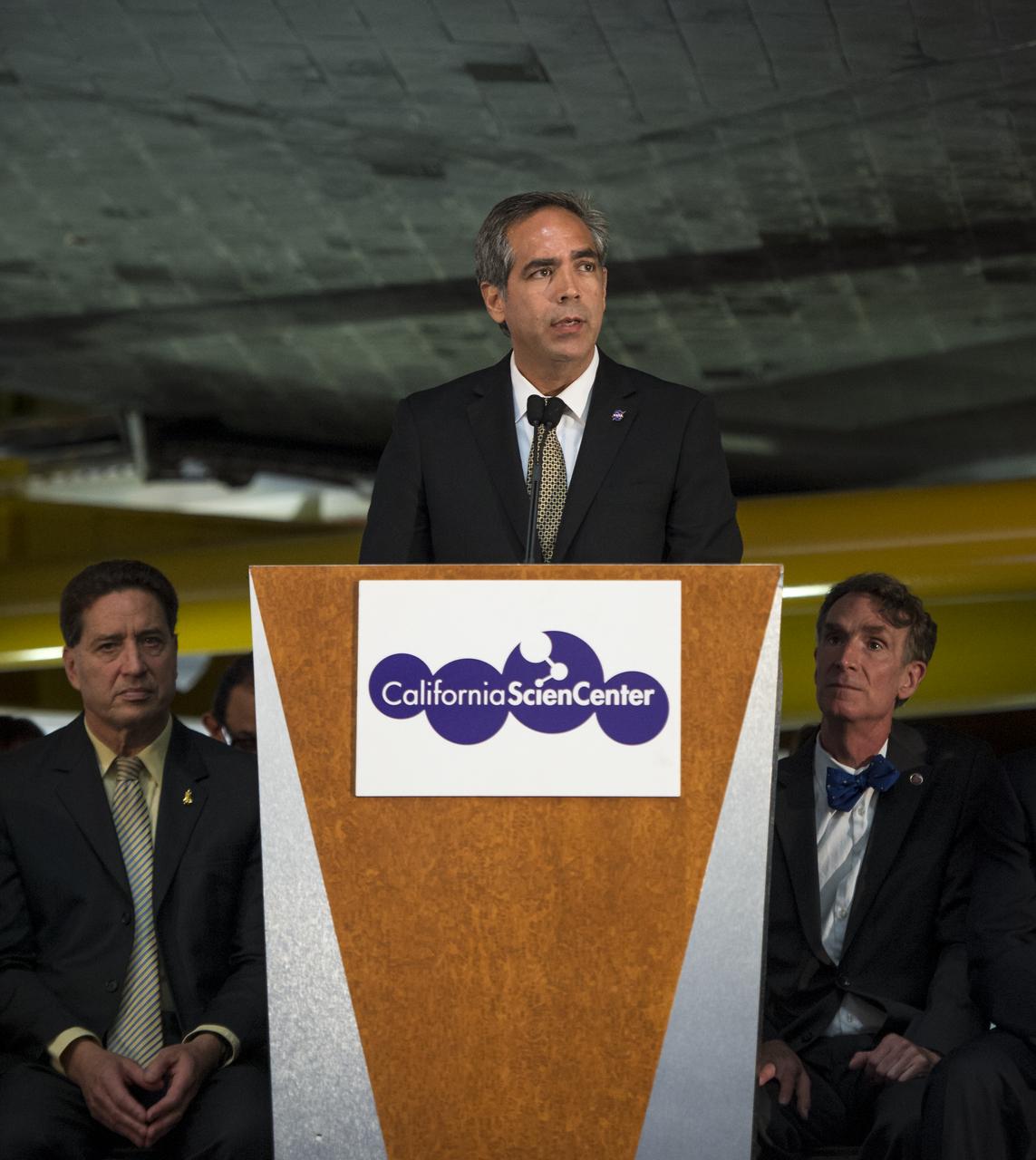
David D. McBride, director of NASA's Dryden Flight Research Center, speaks from a podium underneath the space shuttle Endeavour during the grand opening ceremony for the California Science center's Samuel Oschin Space Shuttle Endeavour Display Pavilion, Tuesday, Oct. 30, 2012, in Los Angeles.  Endeavour, built as a replacement for space shuttle Challenger, completed 25 missions, spent 299 days in orbit, and orbited Earth 4,671 times while traveling 122,883,151 miles. Photo Credit: (NASA/Bill Ingalls)
Endeavour Grand Opening Ceremony
David D. McBride, director of NASA's Dryden Flight Research Center, speaks from a podium underneath the space shuttle Endeavour during the grand opening ceremony for the California Science center's Samuel Oschin Space Shuttle Endeavour Display Pavilion, Tuesday, Oct. 30, 2012, in Los Angeles.  Endeavour, built as a replacement for space shuttle Challenger, completed 25 missions, spent 299 days in orbit, and orbited Earth 4,671 times while traveling 122,883,151 miles. Photo Credit: (NASA/Bill Ingalls)
Endeavour Grand Opening Ceremony
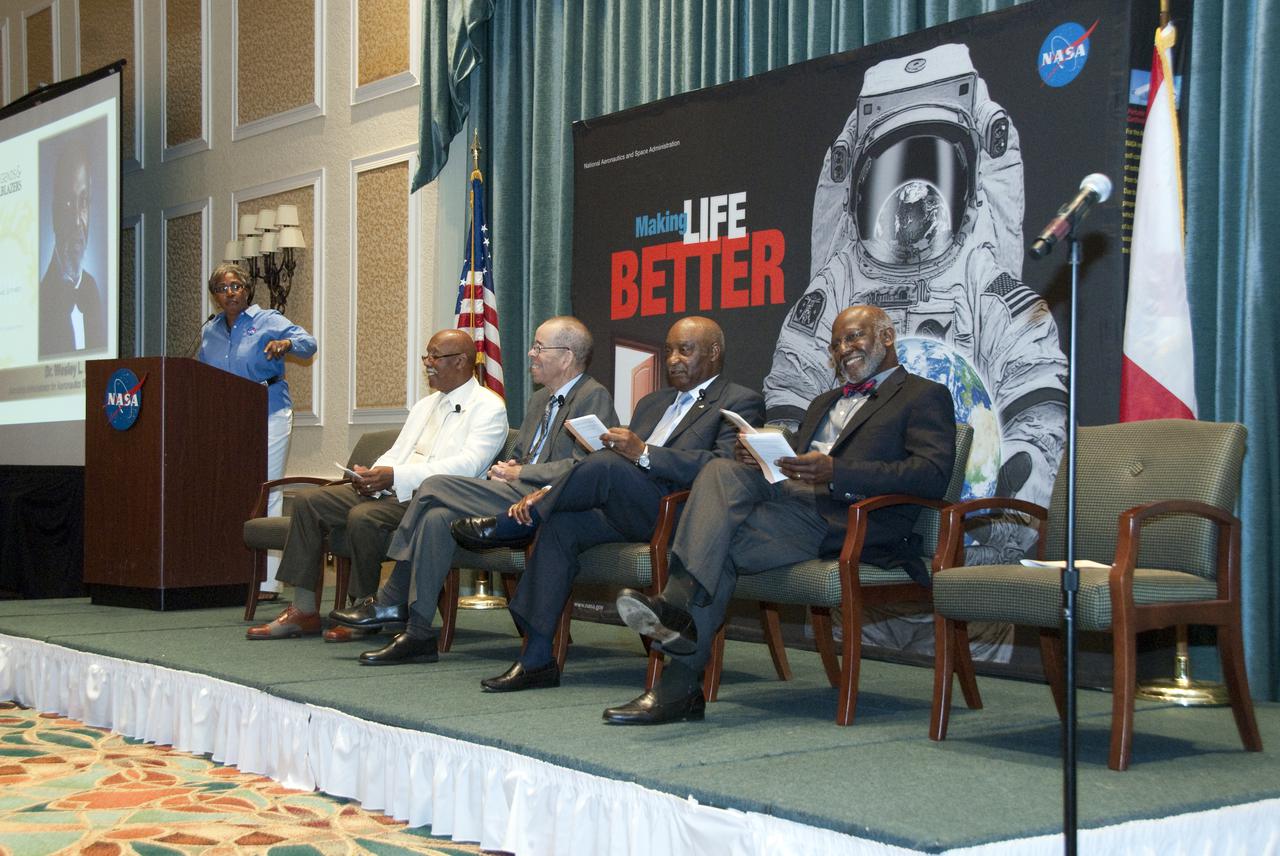
CAPE CANAVERAL, Fla. -- During a Minority Student Education Forum, Linda Dukes-Campbell, the chief of Community and Media Relations at Glenn Research Center, left, talks to hundreds of fifth- through 12th-grade students. Other NASA legends, sitting from left to right, are Glenn Research Center's former Director Dr. Julian Earls, Dryden Flight Research Center's former Director Isaac Gillam, Glenn's Director Donald Campbell, and former NASA Associate Administrator for Aeronautics Dr. Wesley Harris. The forum focused on encouraging students to pursue careers in science, technology, engineering and mathematics, or STEM, by featuring some of NASA's greatest legends and trailblazers.        NASA's Education Office sponsored the forum as part of the agency's 'Summer of Innovation' initiative and the federal 'Education to Innovate' campaign. Photo credit: NASA_Cory Huston
KSC-2010-4198
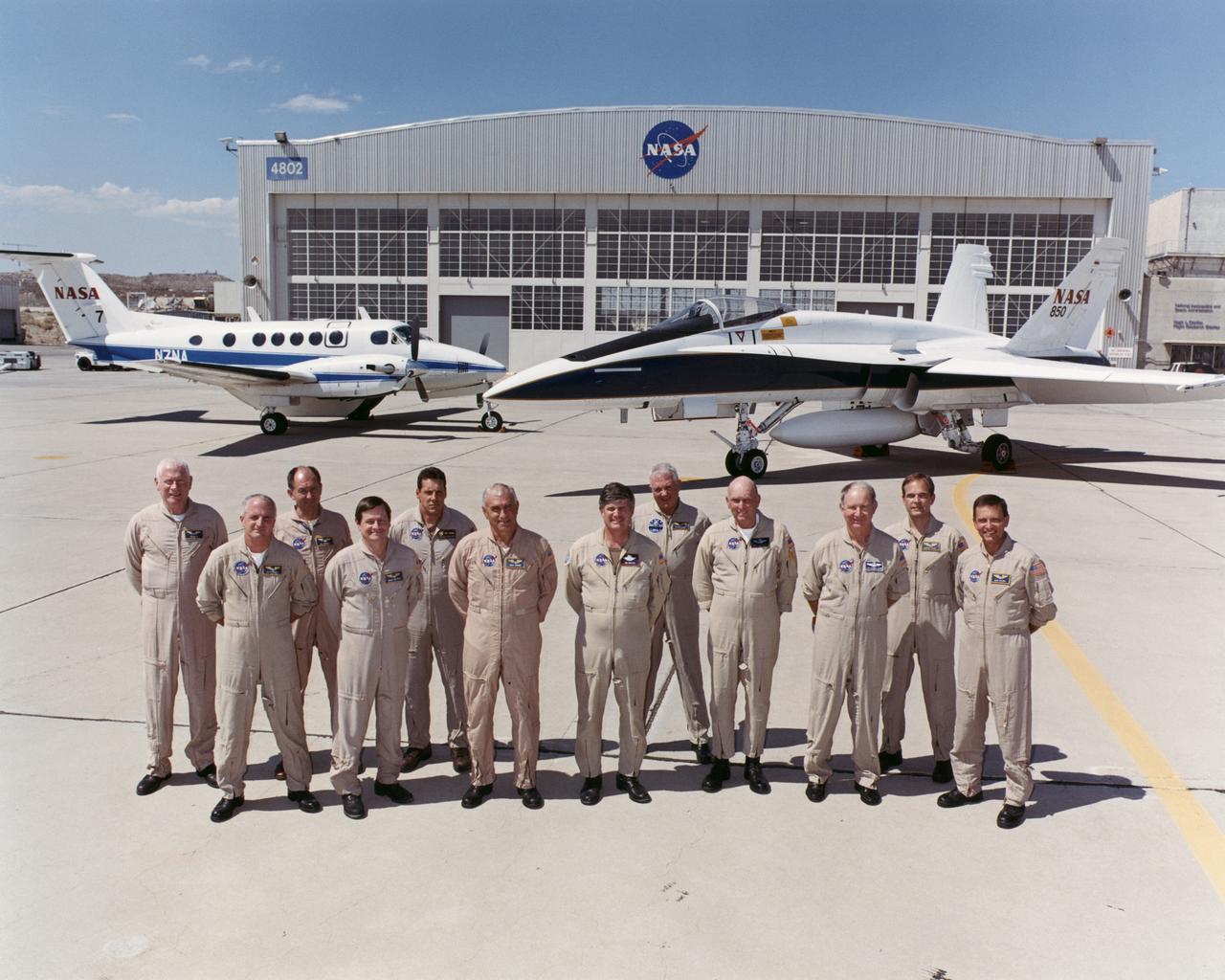
2004 NASA Dryden Research Pilots. Left to Right: Edwin W. Lewis, Jr., David A. Wright (Director of Flight Operations), William Frederick Brockett, Frank Batteas, Craig R. Bomben, Richard G. Ewers, James W. Smolka, Douglas H. Baker, C. Gordon Fullerton (Chief Pilot), James Barrilleaux, Martin J. Trout, and Mark Pestana. (not pictured: Dana Purifoy)
2004 NASA Dryden Research Pilots
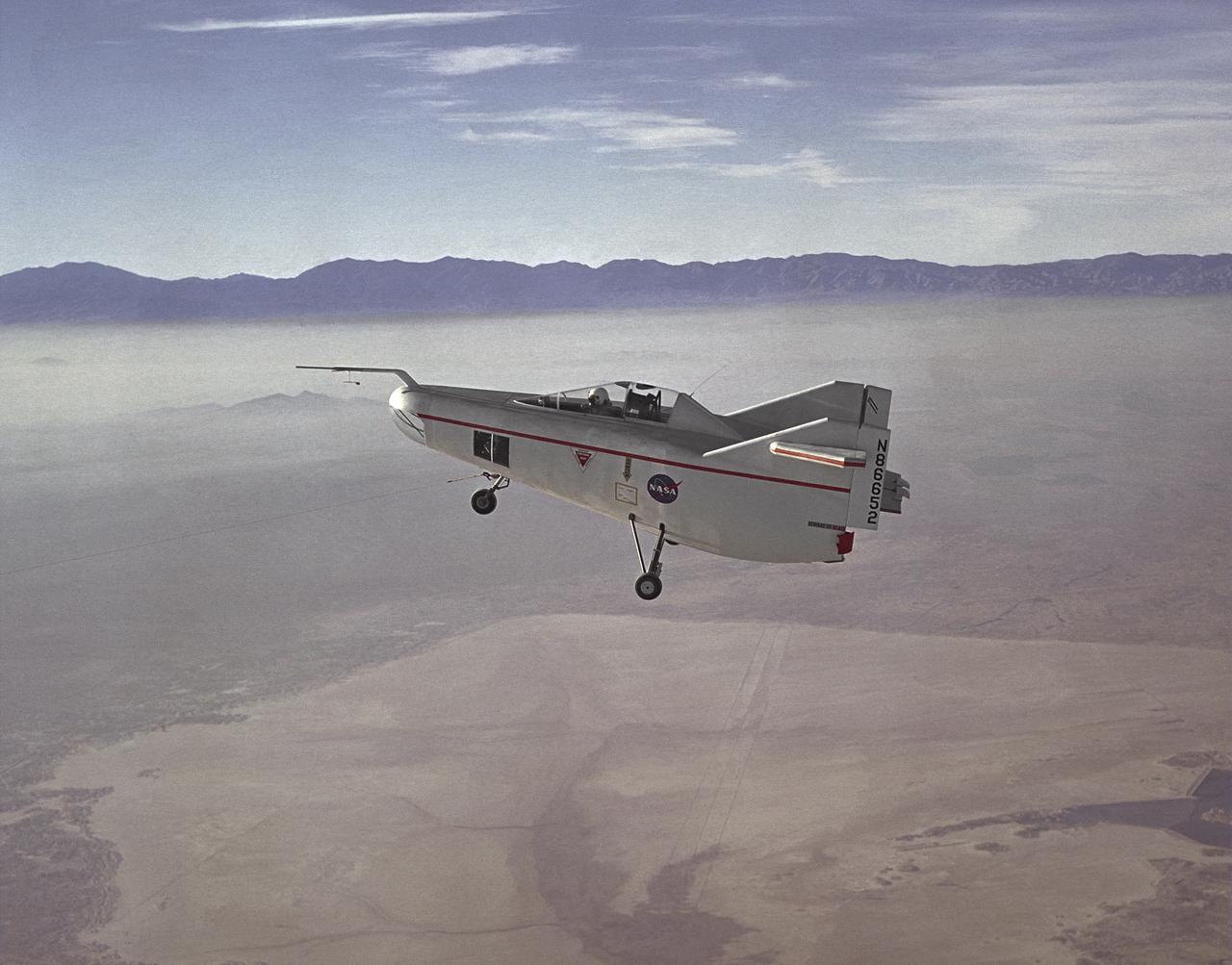
The M2-F1 Lifting Body is seen here under tow, high above Rogers Dry Lake near the Flight Research Center (later redesignated the Dryden Flight Research Center), Edwards, California. R. Dale Reed effectively advocated the project with the support of NASA research pilot Milt Thompson. Together, they gained the support of Flight Research Center Director Paul Bikle. After a six-month feasibility study, Bikle gave approval in the fall of 1962 for the M2-F1 to be built.
M2-F1 in flight
David A. Wright is associate director for Center Operations at the NASA Dryden Flight Research Center, Edwards, Calif. He was formerly director of Flight Operations. He is also a research pilot, flying NASA's ER-2 and T-38. The ER-2s are civilian variants of the military U-2S reconnaissance aircraft and carry scientific instruments to study the Earth during worldwide deployments. Wright has more than 4,500 hours in six different aircraft. He held the position of deputy director of the Airborne Science Program at Dryden from 2002 until 2004.  Wright came to Dryden after retiring from the U.S. Air Force as a lieutenant colonel. His final assignment was to the Joint Staff J3, Directorate of Operations at the Pentagon from November 1996 until August 1999. Prior to the Pentagon assignment, he served as commander of the 1st Reconnaissance Squadron at Beale Air Force Base near Marysville, Calif., the unit responsible for training all U-2 pilots.  He was the operations officer for one the largest U-2 operations in history, flying combat missions against Iraq and managing an unprecedented U-2 flying schedule during the 1991 Desert Storm conflict. He was selected for the Air Force U-2 program in 1987 following duty as an aircraft commander in the E-3A AWACS (Airborne Warning and Control System) aircraft. Wright was a T-38 instructor for three years at Reese Air Force Base, Lubbock, Texas, following completion of pilot training in 1978.  He graduated from the U.S. Air Force Academy in 1977 with a Bachelor of Science in mathematics and computer science. Wright earned a Master of Arts in Adult Education from Troy State University, Montgomery, Ala., in 1987, and a Master of Science in National Security and Strategic Studies from the Naval War College, Newport, R.I., in 1995.
David A. Wright in ER-2
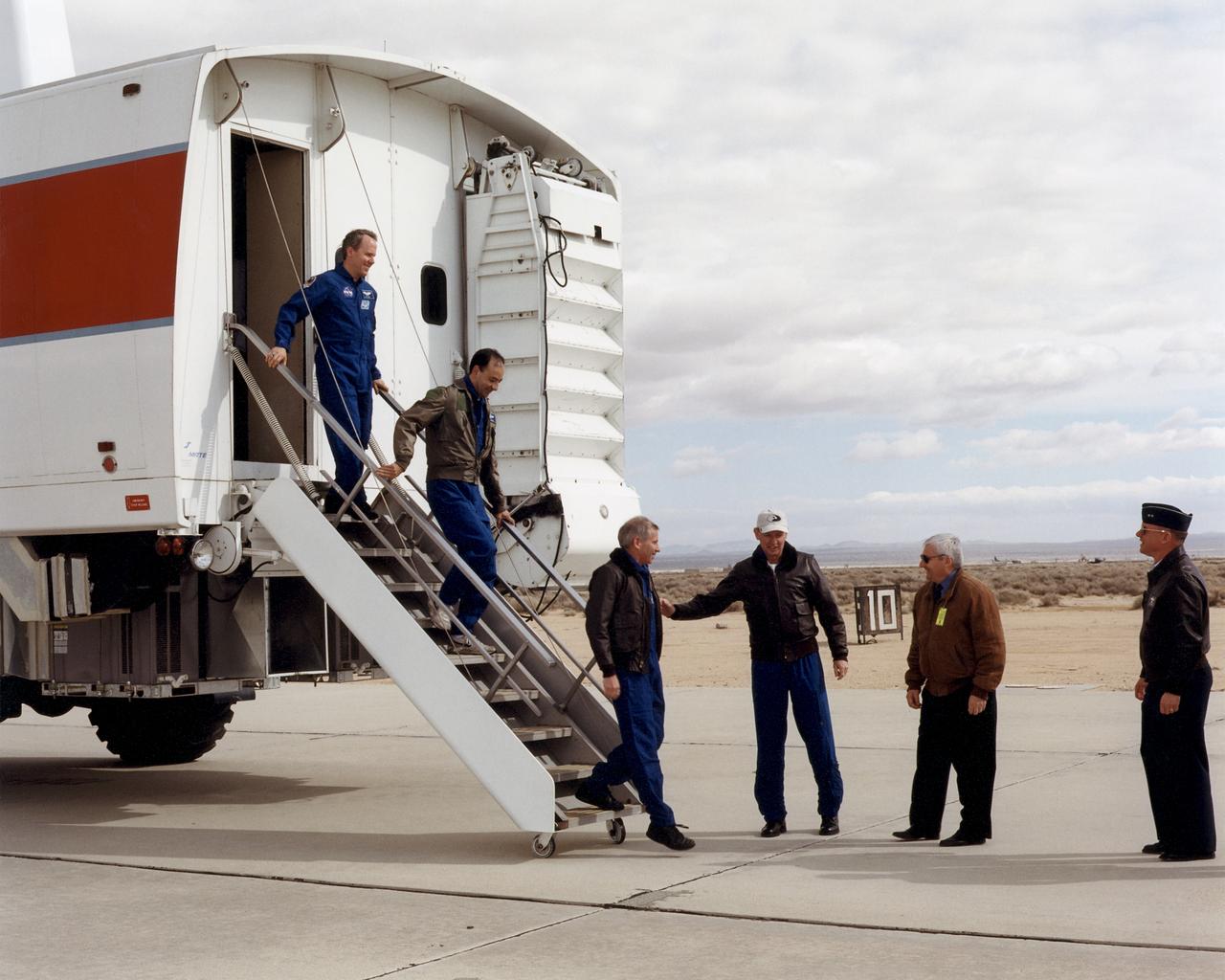
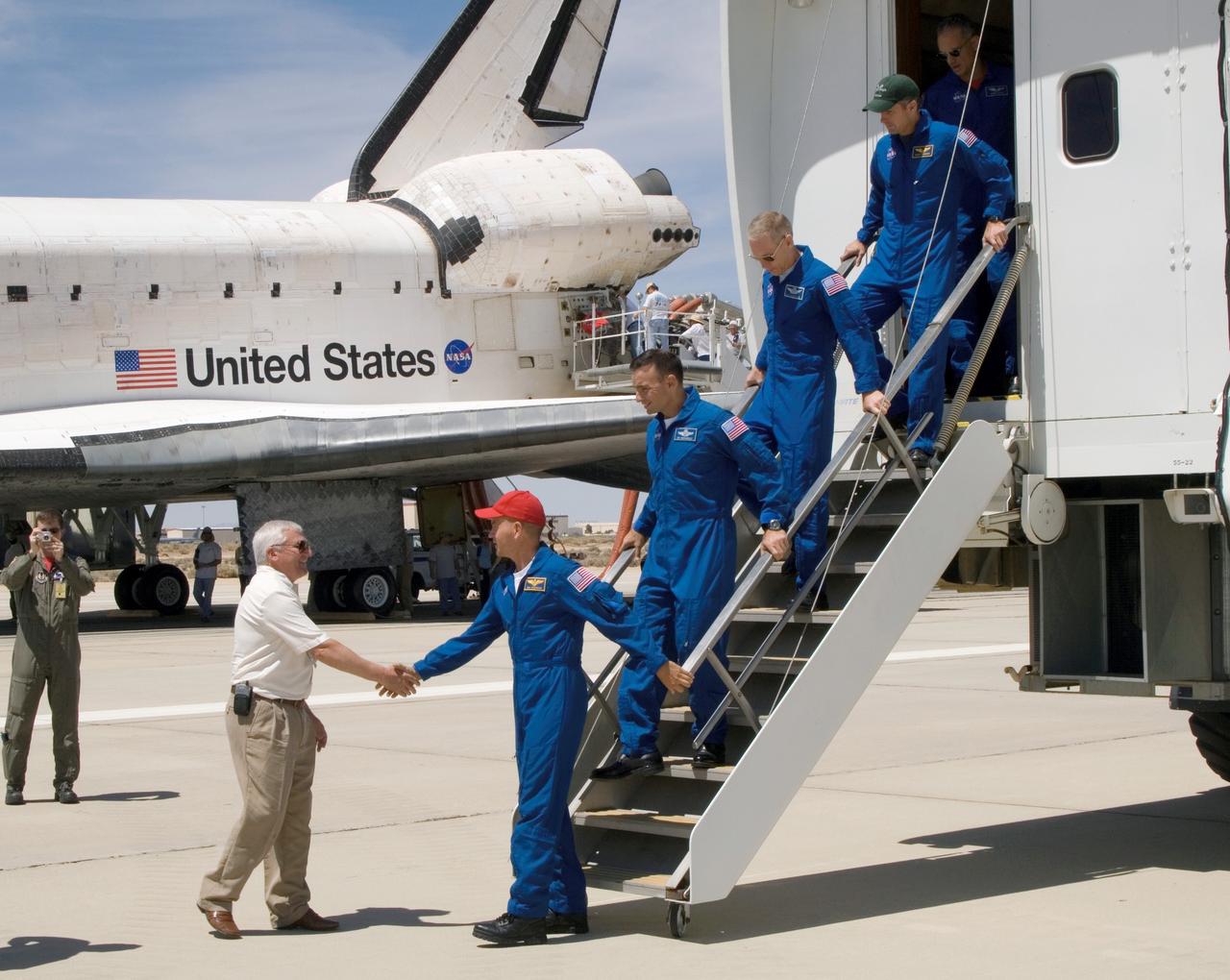
STS117-S-051 (22 June 2007) --- NASA Dryden Flight Research Center director Kevin Petersen greets astronaut Rick Sturckow, STS-117 commander, as the crewmembers exit NASA's Crew Transport Vehicle (CTV) after a successful landing at 12:49 p.m. (PDT) on June 22, 2007 at Edwards Air Force Base in California. Following behind Sturckow are astronauts Lee Archambault, pilot; Patrick Forrester, Steven Swanson and John "Danny" Olivas, all mission specialists. Not pictured is astronaut Jim Reilly, mission specialist.
STS-117 landing at Dryden
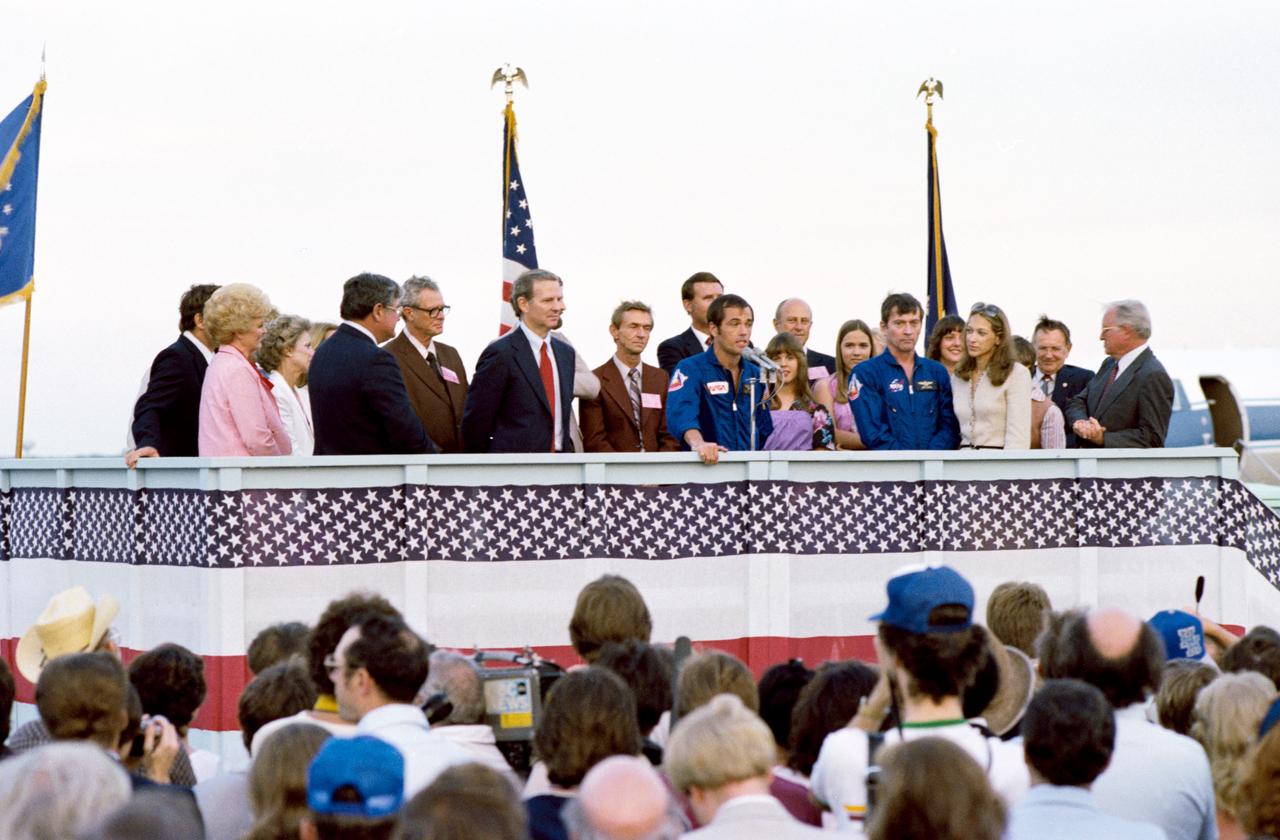
S81-30985 (14 April 1981) --- Astronaut Robert L. Crippen (center), STS-1 pilot, addresses a large turnout of greeters at Ellington Air Force Base following the return of the Columbia's crew from the Dryden Flight Research Center and their Edwards Air Force Base landing site. Astronaut John W. Young, crew commander, stands near his wife Susy at right center. Crippen's wife Virginia and children are standing behind the Youngs on the platform. Others seen include Presidential aide Jim Baker, Houston mayor Jim McConn, NASA Administrator (acting) Alan M. Lovelace, John F. Yardley, associate administrator for space transportation systems; Dr. Christopher C. Kraft Jr., JSC director; flight directors Neil B. Hutchinson, Charles L. Lewis and Donald R. Puddy; Robert F. Thompson, manager of Space Shuttle Program office. Photo credit: NASA
STS-I - CREW RETURN - ELLINGTON AFB (EAFB), TX
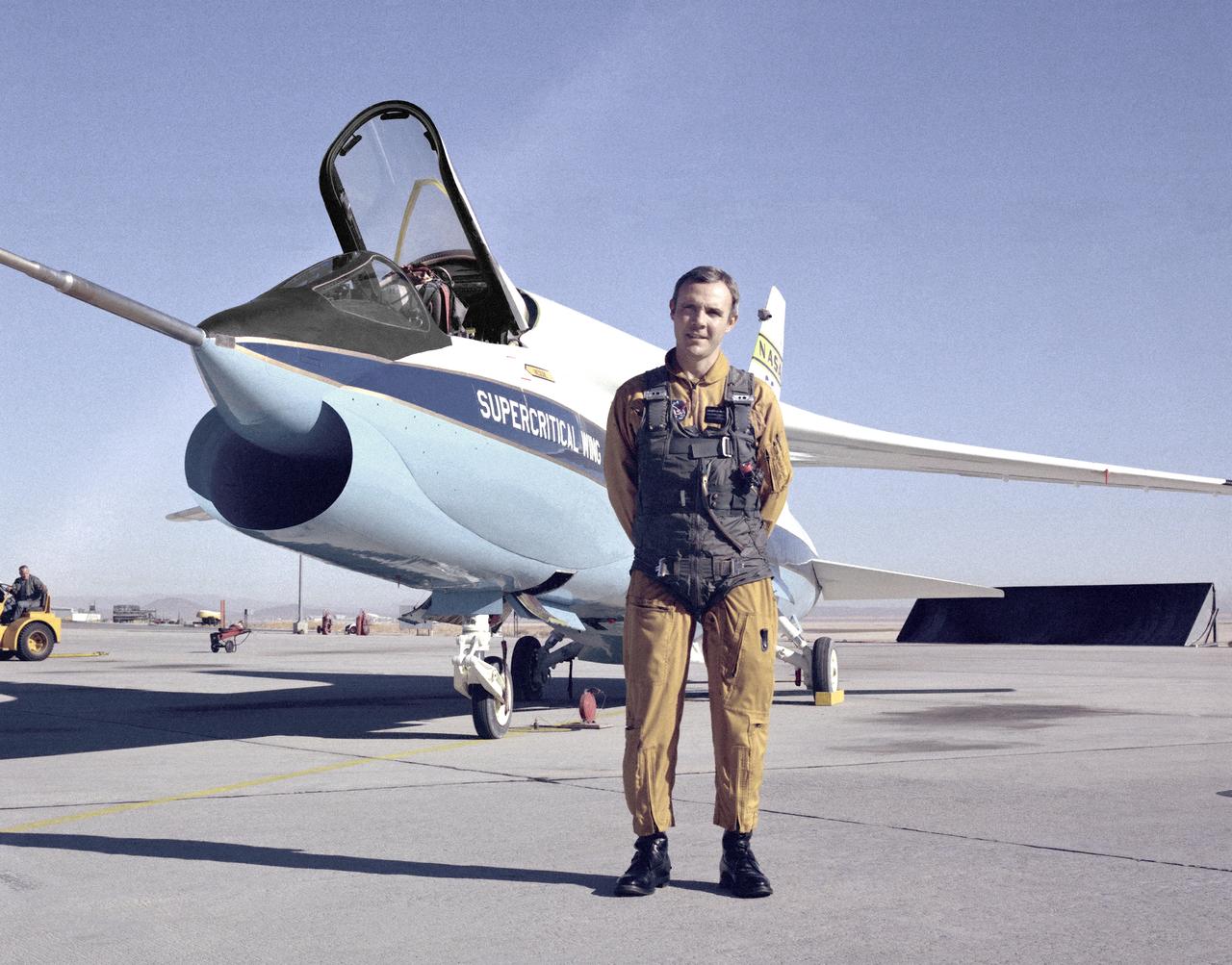
A Vought F-8A Crusader was selected by NASA as the testbed aircraft (designated TF-8A) to install an experimental Supercritical Wing (SCW) in place of the conventional wing. The unique design of the Supercritical Wing reduces the effect of shock waves on the upper surface near Mach 1, which in turn reduces drag.  In this photograph the TF-8A Crusader with Supercritical Wing is shown on the ramp with project pilot Tom McMurtry standing beside it. McMurtry received NASA's Exceptional Service Medal for his work on the F-8 SCW aircraft. He also flew the AD-1, F-15 Digital Electronic Engine Control, the KC-130 winglets, the F-8 Digital Fly-By-Wire and other flight research aircraft including the remotely piloted 720 Controlled Impact Demonstration and sub-scale F-15 research projects. In addition, McMurtry was the 747 co-pilot for the Shuttle Approach and Landing Tests and made the last glide flight in the X-24B. McMurtry was Dryden’s Director for Flight Operations from 1986 to 1998, when he became Associate Director for Operations at NASA Dryden. In 1982, McMurtry received the Iven C. Kincheloe Award from the Society of Experimental Test Pilots for his contributions as project pilot on the AD-1 Oblique Wing program. In 1998 he was named as one of the honorees at the Lancaster, Calif., ninth Aerospace Walk of Honor ceremonies. In 1999 he was awarded the NASA Distinguished Service Medal. He retired in 1999 after a distinguished career as pilot and manager at Dryden that began in 1967.
F-8 SCW on ramp with test pilot Tom McMurtry
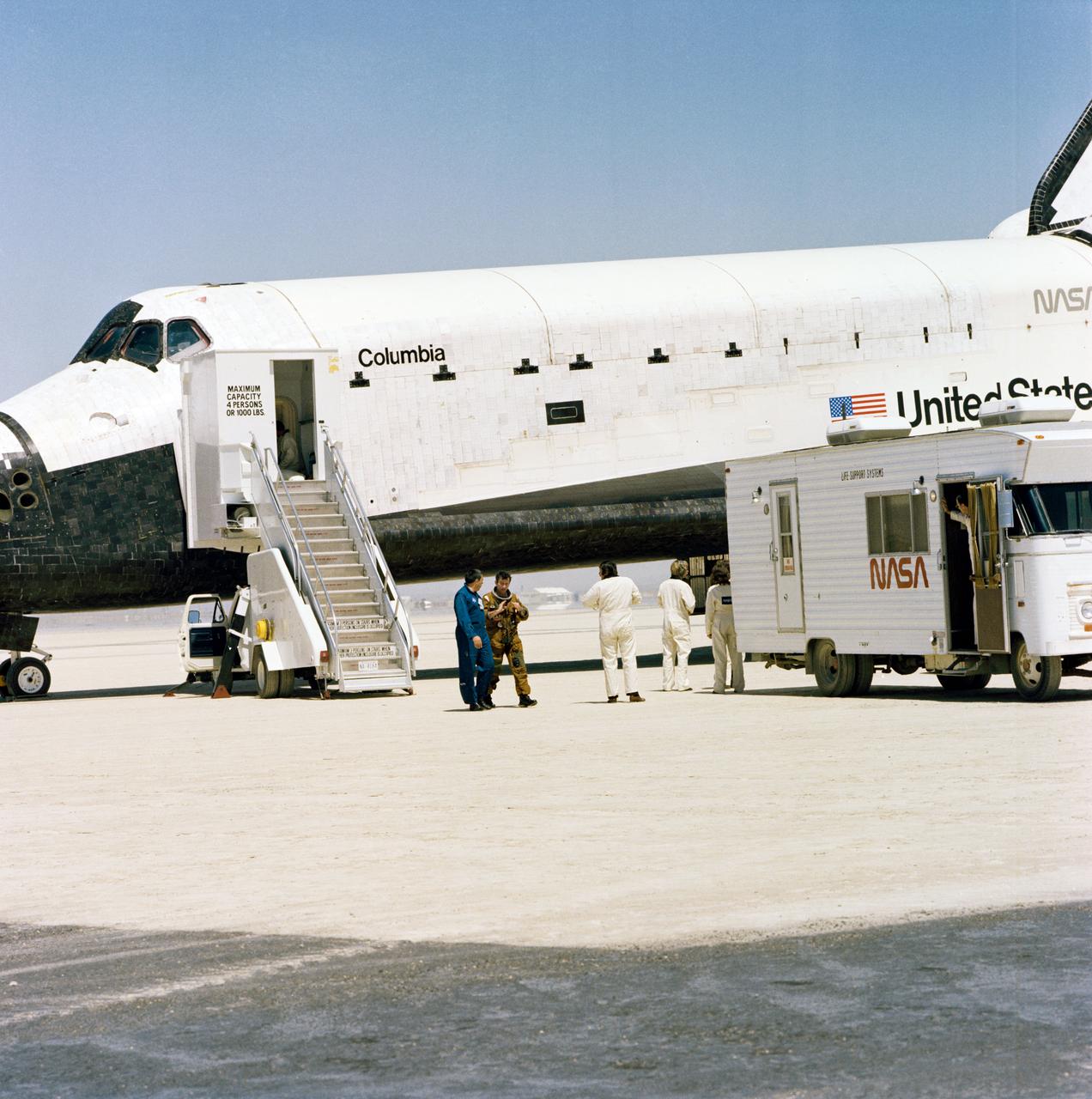
S81-30853 (14 April 1981) --- Astronaut John W. Young, left center talks with George W.S. Abbey, director of flight operations at Johnson Space Center, following egress from the STS-1 Columbia, which forms the backdrop for this postflight scene. Young is en route to the van at right which will take him and fellow crew member Robert L. Crippen (STS-1 pilot still inside Columbia) to facilities at nearby Dryden Flight Research Center. Columbia will be mated to a 747 carrier craft and flown to Florida, where it will be refurbished to accommodate STS-2, scheduled for a Sept. 30 launch date. Photo credit: NASA
LANDING (CREW ACTIVITIES) - STS-1 - EDWARDS AFB (EAFB), CA
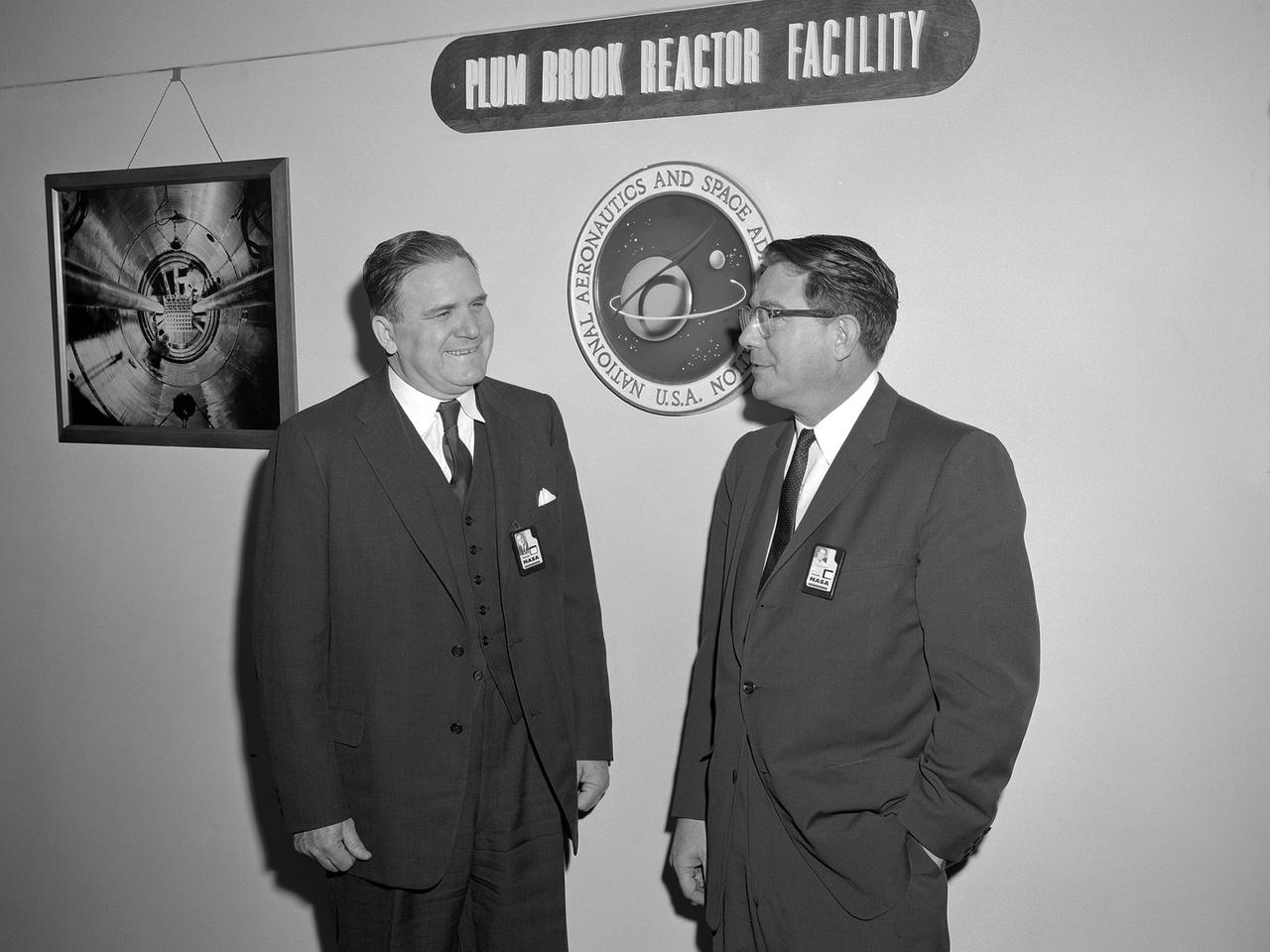
National Aeronautics and Space Administration (NASA) Administrator James Webb toured the new Plum Brook Reactor Facility in December 1961 with Abe Silverstein, the newly appointed Director of the Lewis Research Center. The 60-megawatt test reactor was built on 500 acres of the former Plum Brook Ordnance Works in Sandusky, Ohio. After nearly five years of construction, the facility went critical for the first time in June 1961.     In late 1957 Hugh Dryden requested Silverstein’s assistance in creating the new space agency. After several months of commuting, Silverstein transferred to Headquarters in May 1958. Silverstein was a critical member of a team that devised a fiscal year 1960 budget and began planning missions. When NASA officially began operation on October 1, 1958, Silverstein was third in command. He directed mission planning, spacecraft design, launch operations, manned space missions, and unmanned probes.   James Webb, named NASA administrator on January 7, 1961, sought to have those working on Apollo at the NASA centers report to a new Headquarters program office, not to the head of the Apollo Program. Silverstein requested to be appointed to the vacant center director position in Cleveland. He officially returned as director of the Lewis Research Center on November 1, 1961.
NASA Administrator James Webb and Lewis Director Abe Silverstein
Retired NASA Dryden research pilot Ed Schneider served as master of ceremonies at the retirement ceremony for NASA's B-52B, on Dec. 17, 2004.
ED04-0362-01
NASA's Dryden Flight Research Center marked its 60th anniversary as the aerospace agency's lead center for atmospheric flight research and operations in 2006. In connection with that milestone, hundreds of the center's staff and retirees gathered in nearby Lancaster, Calif., in November 2006 to reflect on the center's challenges and celebrate its accomplishments over its six decades of advancing the state-of-the-art in aerospace technology. The center had its beginning in 1946 when a few engineers from the National Advisory Committee for Aeronautics' Langley Memorial Aeronautical Laboratory were detailed to Muroc Army Air Base (now Edwards Air Force Base) in Southern California's high desert to support the joint Army Air Force / NACA / Bell Aircraft XS-1 research airplane program. Since that inauspicious beginning, the center has been at the forefront of many of the advances in aerospace technology by validating advanced concepts through actual in-flight research and testing. Dryden is uniquely situated to take advantage of the excellent year-round flying weather, remote area, and visibility to test some of the nation�s most exciting aerospace vehicles.  Today, NASA Dryden is NASA's premier flight research and test organization, continuing to push the envelope in the validation of high-risk aerospace technology and space exploration concepts, and in conducting airborne environmental and space science missions in the 21st century.
NASA Dryden director Kevin L. Petersen discusses the center's major milestones during its 60th anniversary celebration in November, 2006.
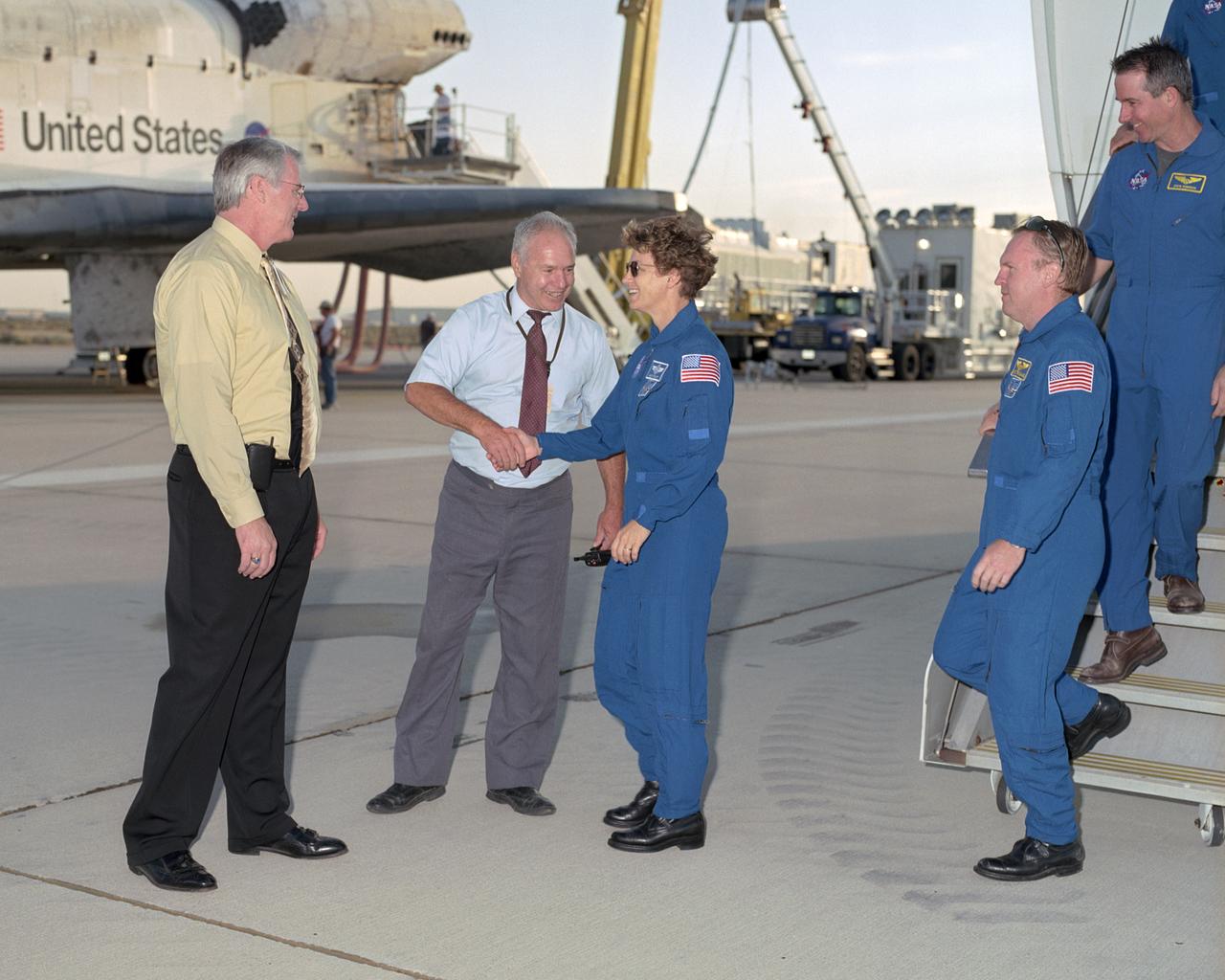
NASA DFRC Deputy Director Steven Schmidt and DFRC Shuttle Program Manager Joe D'Agostino greet Commander Eileen Collins and the crew of STS-114. Left to right: Steven G. Schmidt, deputy director of the NASA Dryden Flight Research Center; Joe D'Agostino, DFRC Space Shuttle Flight Management Support Specialist; STS-114 Commander Eileen Collins and Mission Specialists Andrew Thomas and Stephen Robinson.  Space Shuttle Discovery landed safely at NASA's Dryden Flight Research Center at Edwards Air Force Base in California at 5:11:22 a.m. PDT this morning, following the very successful 14-day STS-114 return to flight mission.  During their two weeks in space, Commander Eileen Collins and her six crewmates tested out new safety procedures and delivered supplies and equipment the International Space Station.  Discovery spent two weeks in space, where the crew demonstrated new methods to inspect and repair the Shuttle in orbit. The crew also delivered supplies, outfitted and performed maintenance on the International Space Station. A number of these tasks were conducted during three spacewalks.  In an unprecedented event, spacewalkers were called upon to remove protruding gap fillers from the heat shield on Discovery's underbelly. In other spacewalk activities, astronauts installed an external platform onto the Station's Quest Airlock and replaced one of the orbital outpost's Control Moment Gyroscopes.  Inside the Station, the STS-114 crew conducted joint operations with the Expedition 11 crew. They unloaded fresh supplies from the Shuttle and the Raffaello Multi-Purpose Logistics Module. Before Discovery undocked, the crews filled Raffeallo with unneeded items and returned to Shuttle payload bay.  Discovery launched on July 26 and spent almost 14 days on orbit.
NASA DFRC Deputy Director Steven Schmidt and DFRC Shuttle Program Manager Joe D'Agostino greet Commander Eileen Collins and the crew of STS-114
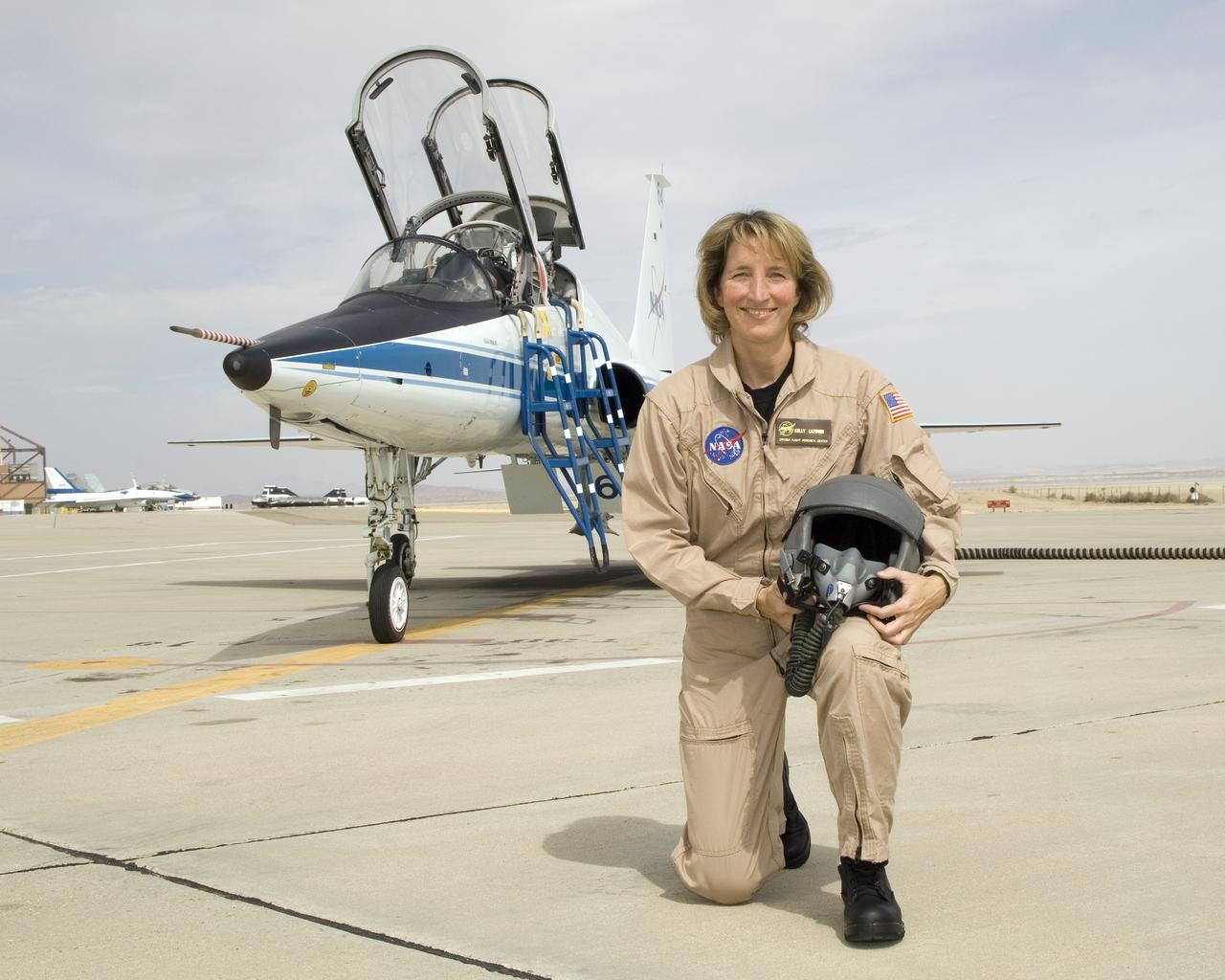
Kelly Latimer is a research pilot in the Flight Crew Branch of NASA's Dryden Flight Research Center, Edwards, Calif. Latimer joined NASA in March 2007 and will fly the T38, T-34, G-III, C-17 and the "Ikhana" Predator B. Latimer is Dryden's first female research test pilot. Prior to joining NASA, Latimer was on active duty with the U.S. Air Force. She has accumulated more than 5,000 hours of military and civilian flight experience in 30 aircraft.  Latimer's first association with NASA was while attending graduate school at George Washington University, Washington, D.C. Her studies included work with the Joint Institute for the Advancement of Flight Sciences at NASA's Langley Research Center, Hampton, Va.  She flew an Air Force C-17 during a 2005 NASA study to reduce aircraft noise. A team of California Polytechnic State University students and Northrop Grumman personnel were stationed on Rogers Dry Lake located at Edwards Air Force Base, Calif., to record the noise footprint of the aircraft as it made various landing approaches to Edwards' runway.  Latimer completed undergraduate pilot training at Reese Air Force Base, Texas, in 1990. She remained at Reese as a T-38 instructor pilot until 1993. She was assigned as a C-141 aircraft commander at McCord Air Force Base, Tacoma, Wash., until 1996.  Latimer graduated from the U.S. Air Force Test Pilot School at Edwards in Class 96B. She served as a C-17 and C-141 experimental test pilot at Edwards until 2000. She then became the chief of the Performance Branch and a T-38 instructor pilot at The Air Force Test Pilot School.  She returned to McCord in 2002, where she was a C-17 aircraft commander and the operations officer for the 62nd Operations Support Squadron. In 2004, Latimer became the commander of Edwards' 418th Flight Test Squadron and director of the Global Reach Combined Test Force. Following that assignment, she deployed to Iraq as an advisor to the Iraqi Air Force. Her last active duty tour was as an instructor a
Kelly Latimer
Mark Pestana is a research pilot and project manager at the NASA Dryden Flight Research Center, Edwards, Calif. He is a pilot for the Beech B200 King Air, the T-34C and the Predator B. He flies the F-18 Hornet as a co-pilot and flight test engineer. Pestana has accumulated more than 4,000 hours of military and civilian flight experience. He was also a flight engineer on the NASA DC-8 flying laboratory.  Pestana was the project manager and pilot for the Hi–rate Wireless Airborne Network Demonstration flown on the NASA B200 research aircraft. He flew B200 research missions for the X-38 Space Integrated Inertial Navigation Global Positioning System experiment. Pestana also participated in several deployments of the DC-8, including Earth science expeditions ranging from hurricane research over the Caribbean Sea to ozone studies over the North Pole, atmospheric chemistry over the South Pacific, rain forest health in Central America, Rocky Mountain ice pack assessment, and volcanic and tectonic activity around the Pacific Rim.  He came to Dryden as a DC-8 mission manager in June 1998 from NASA Johnson Space Center, Houston, where he served as the Earth and Space Science discipline manager for the International Space Station Program at Johnson. Pestana also served as a flight crew operations engineer in the Astronaut Office, developing the controls, displays, tools, crew accommodations and procedures for on-orbit assembly, test, and checkout of the International Space Station. He led the analysis and technical negotiations for modification of the Russian Soyuz spacecraft as an emergency crew return vehicle for space station crews.  He joined the U.S. Air Force Reserve in 1991 and held various positions as a research and development engineer, intelligence analyst, and Delta II launch vehicle systems engineer. He retired from the U.S. Air Force Reserve with the rank of colonel in 2005.  Prior to 1990, Pestana was on active duty with the U.S. Air Force as the director of mi
Research pilot Mark Pestana
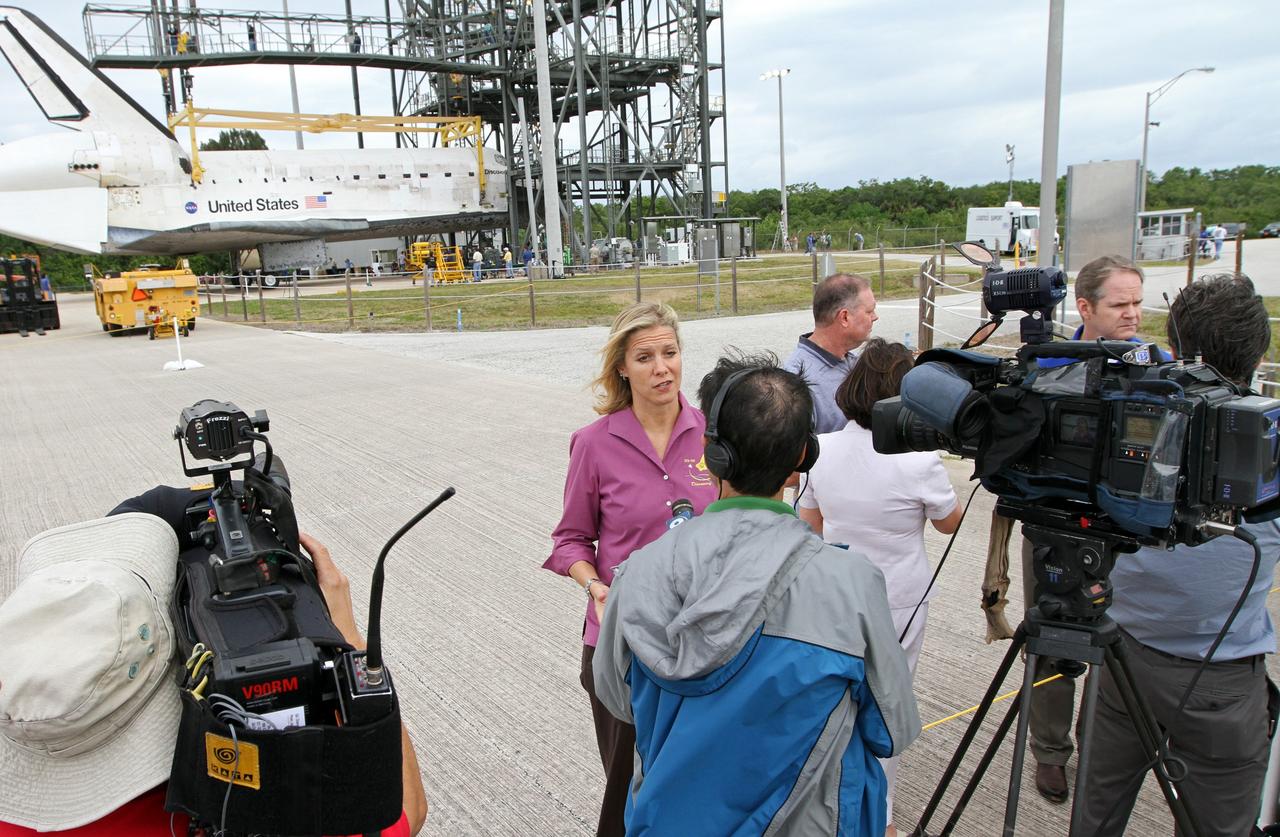
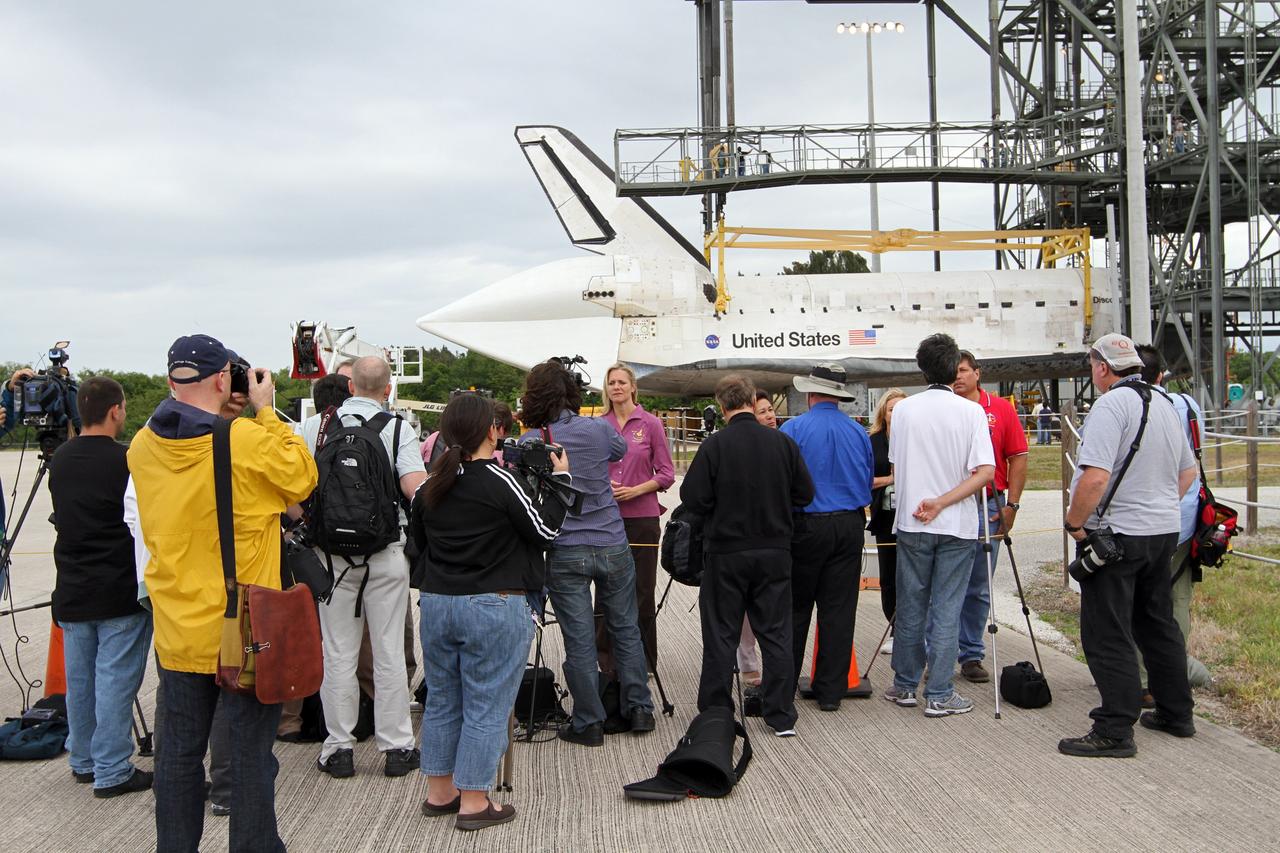
CAPE CANAVERAL, Fla. – At the Shuttle Landing Facility at NASA’s Kennedy Space Center in Florida, media representatives interview Stephanie Stilson, center, the NASA flow director for Orbiter Transition and Retirement at Kennedy following the arrival of space shuttle Discovery. Operations are under way at the mate-demate device, in the background, to lift Discovery on top of a Shuttle Carrier Aircraft. The device, known as the MDD, is a large gantry-like steel structure used to hoist a shuttle off the ground and position it onto the back of the aircraft, or SCA. The SCA is a Boeing 747 jet, originally manufactured for commercial use, which was modified by NASA to transport the shuttles between destinations on Earth. The SCA designated NASA 905 is assigned to the remaining ferry missions, delivering the shuttles to their permanent public display sites.  NASA 905 is scheduled to ferry Discovery to the Washington Dulles International Airport in Virginia on April 17, after which the shuttle will be placed on display in the Smithsonian's National Air and Space Museum Steven F. Udvar-Hazy Center. For more information on the SCA, visit http://www.nasa.gov/centers/dryden/news/FactSheets/FS-013-DFRC.html. For more information on shuttle transition and retirement activities, visit http://www.nasa.gov/transition. Photo credit: NASA/Kim Shiflett
KSC-2012-2139
CAPE CANAVERAL, Fla. – At the Shuttle Landing Facility at NASA’s Kennedy Space Center in Florida, media representatives interview Stephanie Stilson, center, the NASA flow director for Orbiter Transition and Retirement at Kennedy following the arrival of space shuttle Discovery. Operations are under way at the mate-demate device, in the background, to lift Discovery on top of a Shuttle Carrier Aircraft. The device, known as the MDD, is a large gantry-like steel structure used to hoist a shuttle off the ground and position it onto the back of the aircraft, or SCA. The SCA is a Boeing 747 jet, originally manufactured for commercial use, which was modified by NASA to transport the shuttles between destinations on Earth. The SCA designated NASA 905 is assigned to the remaining ferry missions, delivering the shuttles to their permanent public display sites.  NASA 905 is scheduled to ferry Discovery to the Washington Dulles International Airport in Virginia on April 17, after which the shuttle will be placed on display in the Smithsonian's National Air and Space Museum Steven F. Udvar-Hazy Center. For more information on the SCA, visit http://www.nasa.gov/centers/dryden/news/FactSheets/FS-013-DFRC.html. For more information on shuttle transition and retirement activities, visit http://www.nasa.gov/transition. Photo credit: NASA/Kim Shiflett
KSC-2012-2140
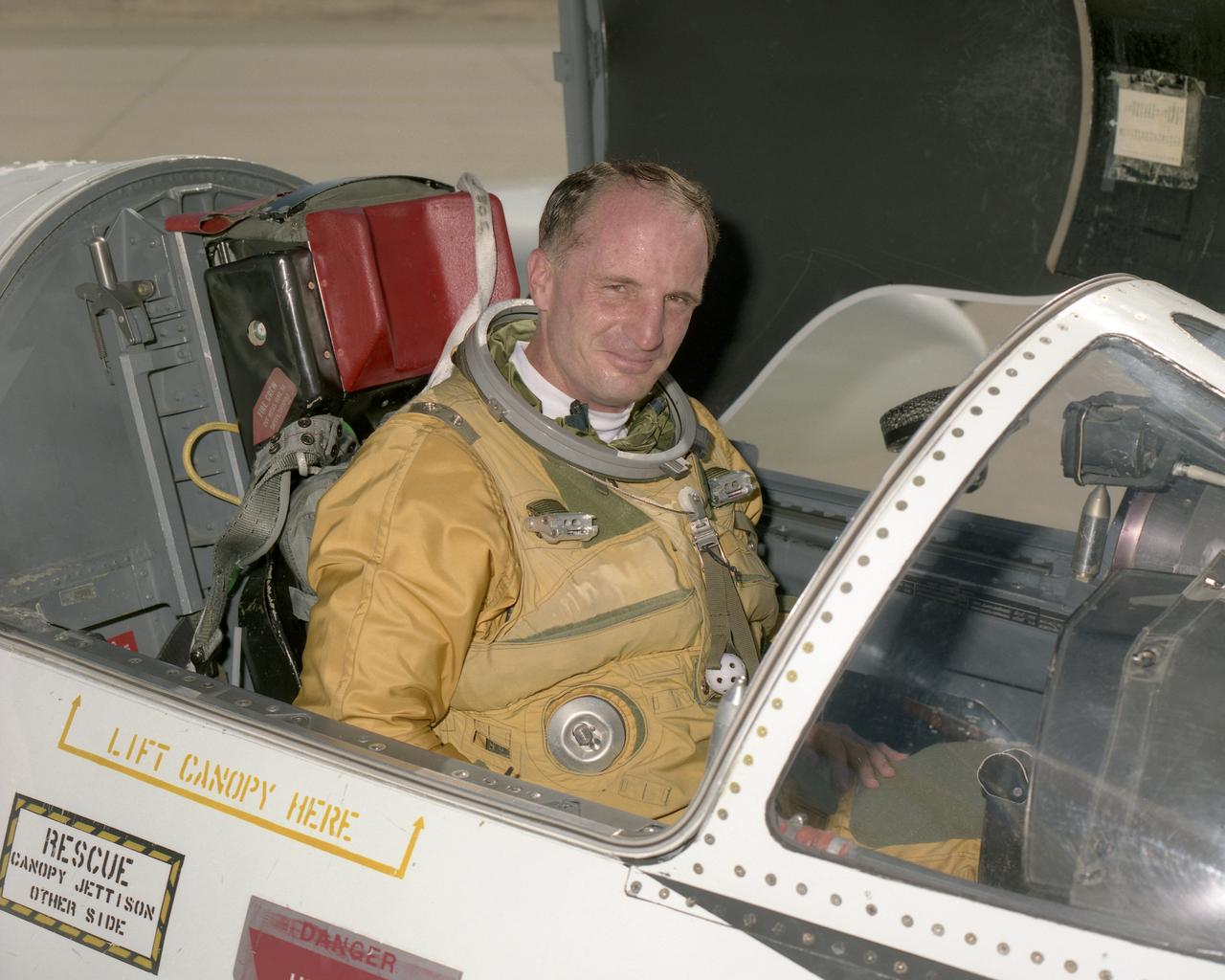
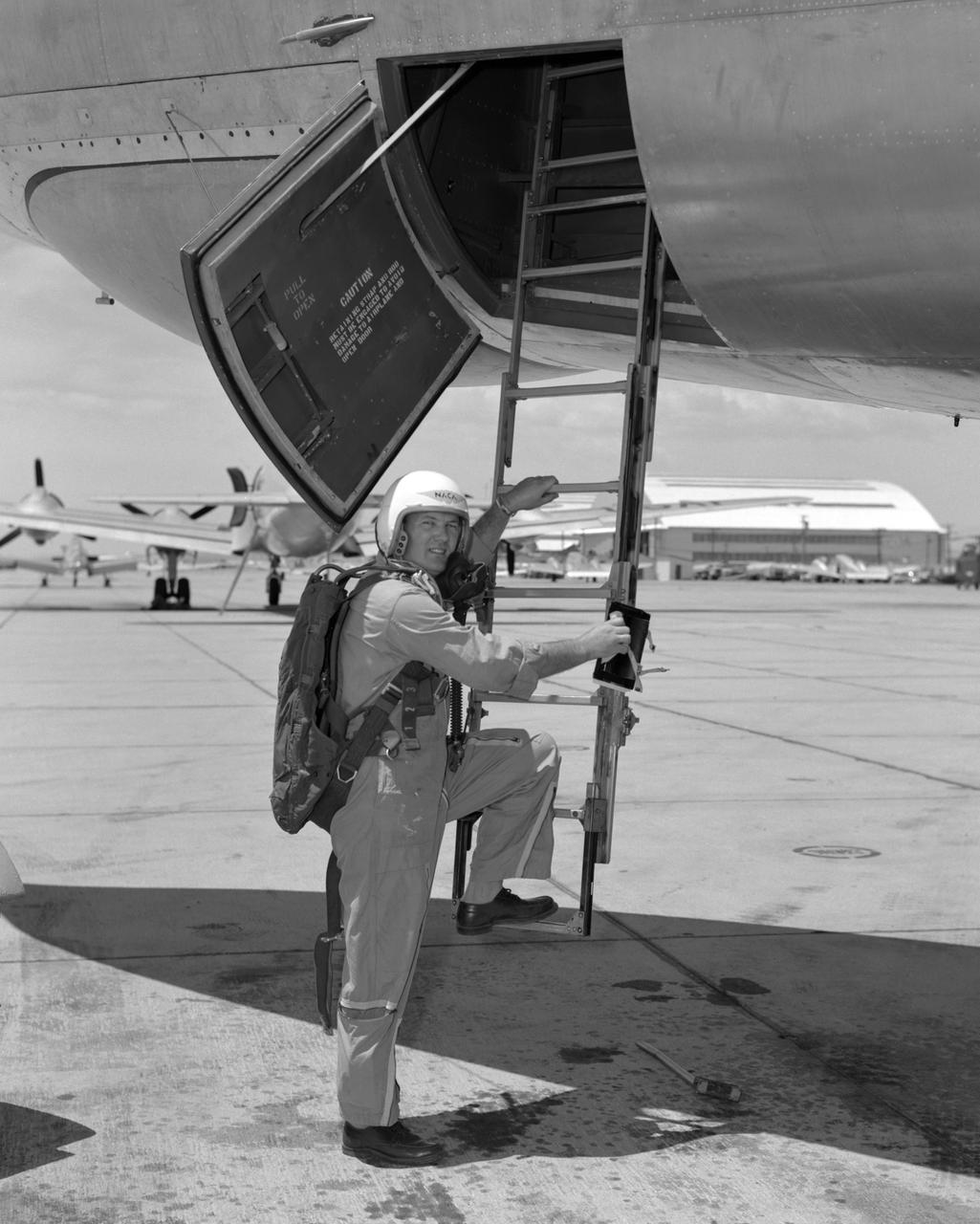
From December 10, 1966, until his retirement on February 27, 1976, Stanley P. Butchart served as Chief (later, Director) of Flight Operations at NASA's Flight Research Center (renamed on March 26, 1976, the Hugh L. Dryden Flight Research Center). Initially, his responsibilities in this position included the Research Pilots Branch, a Maintenance and Manufacturing Branch, and an Operations Engineering Branch, the last of which not only included propulsion and electrical/electronic sections but project engineers for the X-15 and lifting bodies. During his tenure, however, the responsibilities of his directorate came to include not only Flight Test Engineering Support but Flight Systems and Loads laboratories. Before becoming Chief of Flight Operations, Butchart had served since June of 1966 as head of the Research Pilots Branch (Chief Pilot) and then as acting chief of Flight Operations. He had joined the Center (then known as the National Advisory Committee for Aeronautics' High-Speed Flight Research Station) as a research pilot on May 10, 1951.  During his career as a research pilot, he flew a great variety of research and air-launch aircraft including the D-558-I, D-558-II, B-29 (plus its Navy version, the P2B), X-4, X-5, KC-135, CV-880, CV-990, B-47, B-52, B-747, F-100A, F-101, F-102, F-104, PA-30 Twin Comanche, JetStar, F-111, R4D, B-720, and B-47. Although previously a single-engine pilot, he became the Center's principal multi-engine pilot during a period of air-launches in which the pilot of the air-launch aircraft (B-29 or P2B) basically directed the operations. It was he who called for the chase planes before each drop, directed the positioning of fire rescue vehicles, and released the experimental aircraft after ensuring that all was ready for the drop.  As pilot of the B-29 and P2B, Butchart launched the X-1A once, the X-1B 13 times, the X-1E 22 times, and the D-558-II 102 times. In addition, he towed the M2-F1 lightweight lifting body 14 times behind an R4
Stan Butchart climbing into B-47