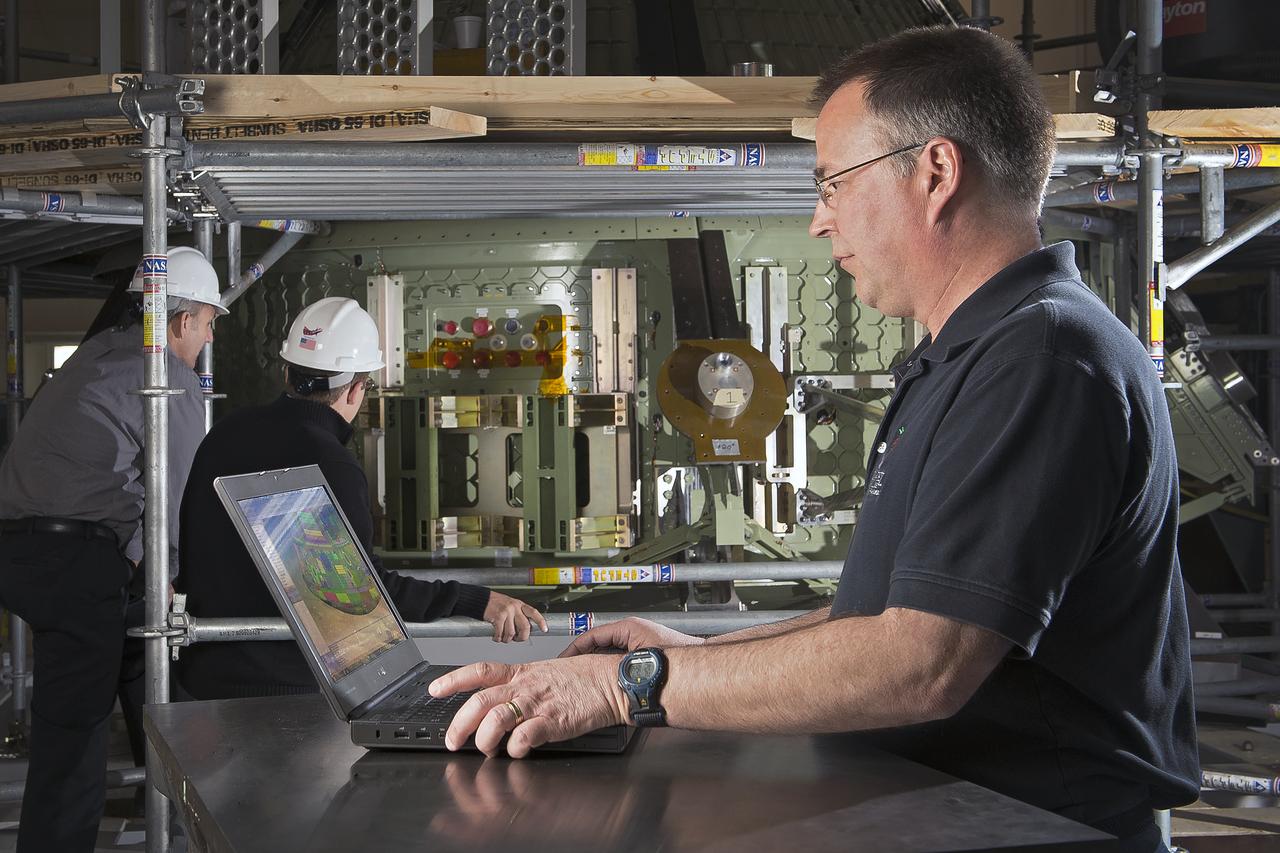
(NESC) NASA Engineering and Safety Center Orion Heat Shield Carrier Structure: Titanium Orthogrid heat shield sub-component dynamic test article : person in the photo Jim Jeans (Background: Mike Kirsch, James Ainsworth)
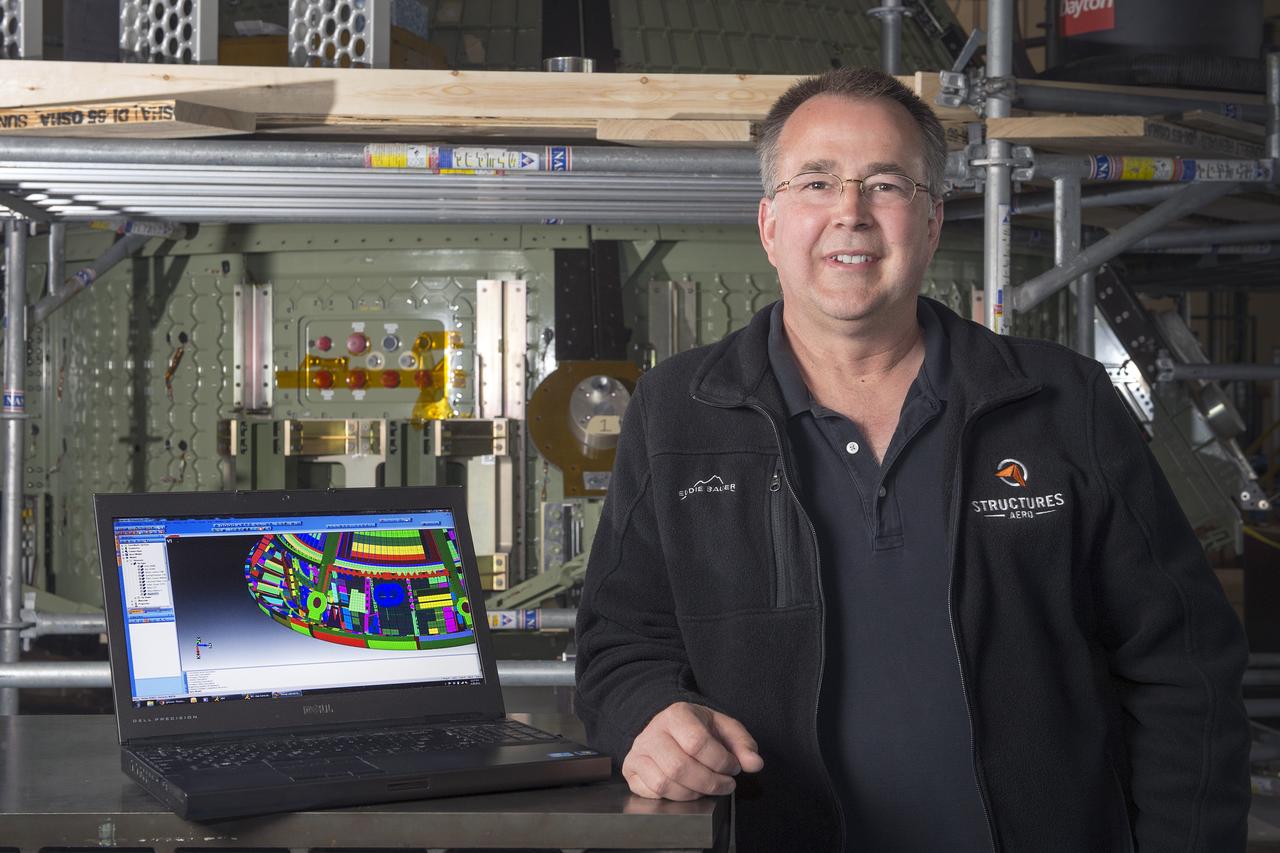
(NESC) NASA Engineering and Safety Center Orion Heat Shield Carrier Structure: Titanium Orthogrid heat shield sub-component dynamic test article : person in the photo Jim Jeans
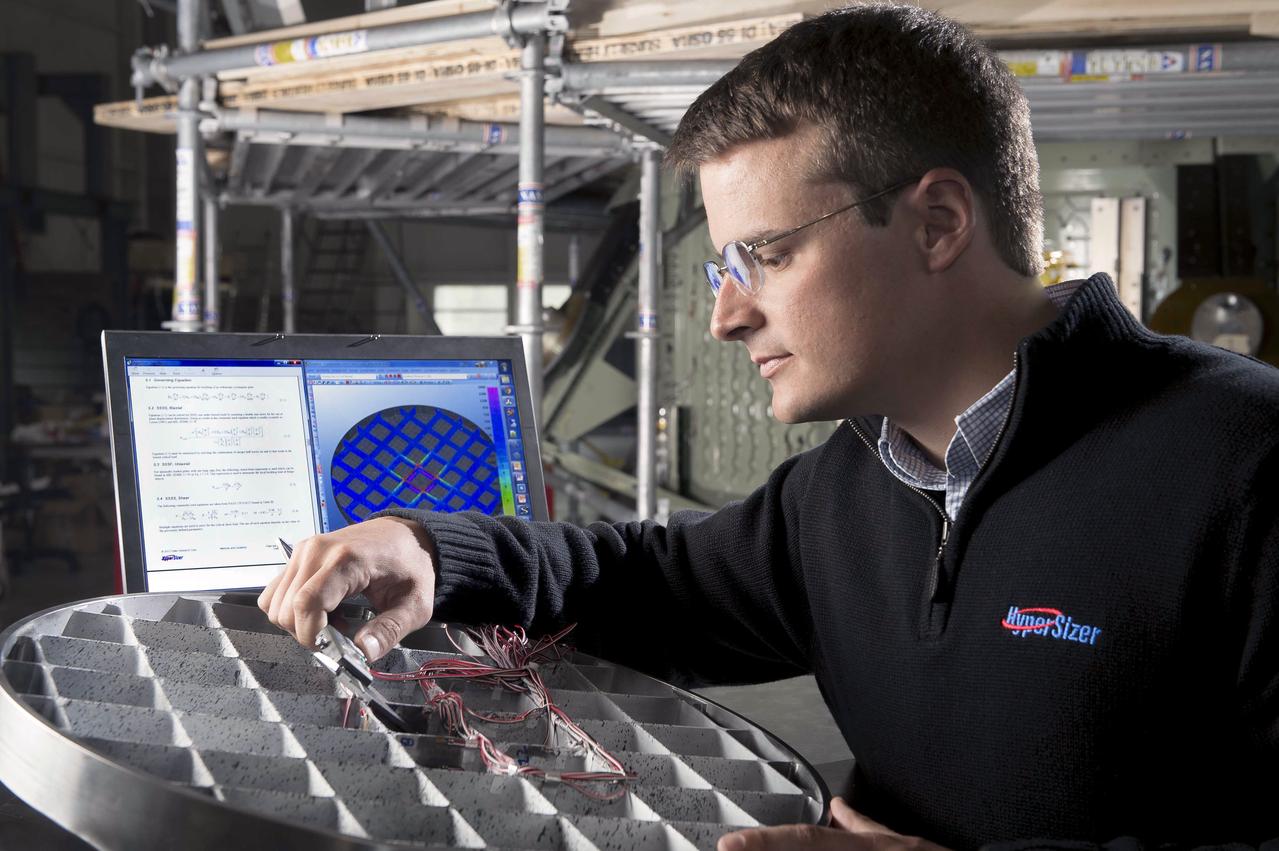
(NESC) NASA Engineering and Safety Center Orion Heat Shield Carrier Structure: Titanium Orthogrid heat shield sub-component dynamic test article :person in the photo James Ainsworth
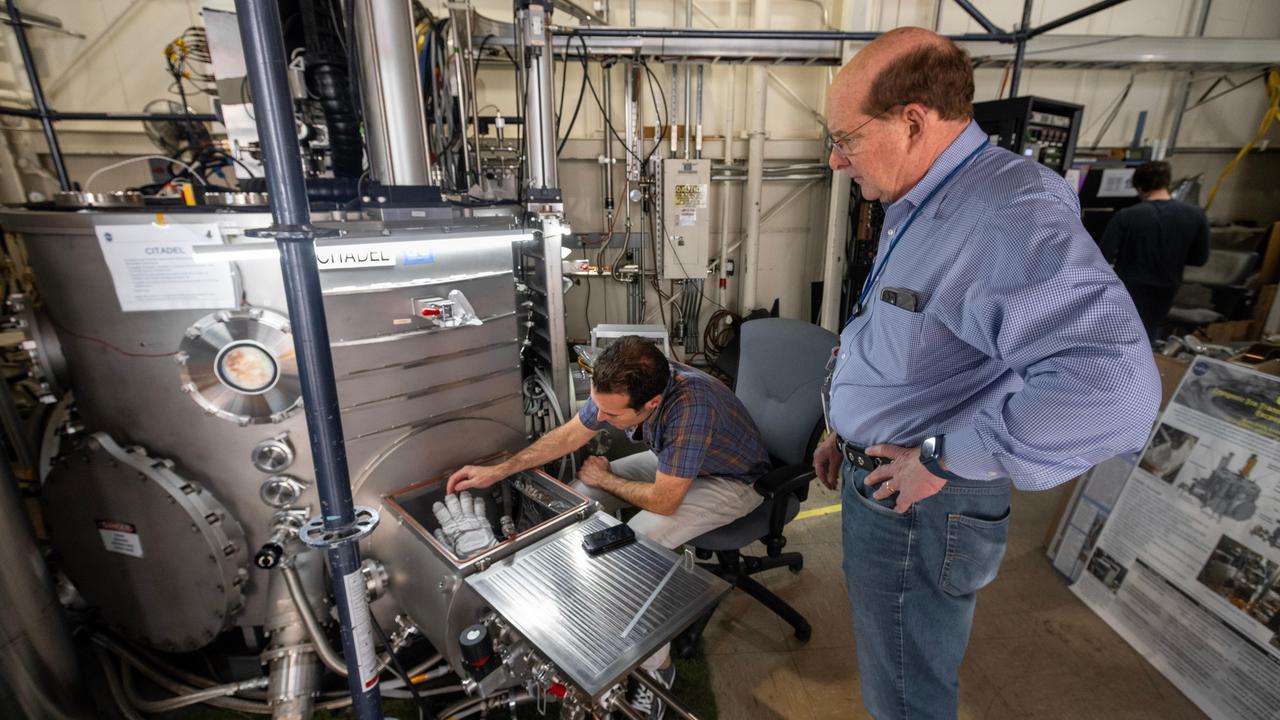
Spacesuit engineer Shane McFarland, left, of the Advanced Suit Team at NASA's Johnson Space Center prepares an astronaut glove for thermal vacuum testing inside a chamber at the agency's Jet Propulsion Laboratory in Southern California on Nov. 1, 2023. Tim Brady of the NASA Engineering and Safety Center (NESC), which spearheaded the glove testing campaign, looks on as McFarland positions the glove in a load lock – one of four small drawer-like chambers through which test materials are inserted into the larger main chamber of a facility called CITADEL (Cryogenic Ice Testing, Acquisition Development, and Excavation Laboratory). The glove was tested at vacuum and temperatures as low as minus 352 degrees Fahrenheit (minus 213 degrees Celsius) – temperatures as frigid as those Artemis III astronauts could experience on the Moon's South Pole. Built to prepare potential future robotic spacecraft for the frosty, low-pressure conditions on ocean worlds like Jupiter's frozen moon Europa, CITADEL has also proven key to evaluating how astronaut gloves and boots hold up in extraordinary cold. The NASA Engineering and Safety Center spearheaded a glove testing campaign in CITADEL from October 2023 to March 2024. Part of a spacesuit design called the Extravehicular Mobility Unit, the gloves tested in the chamber are the sixth version of a glove NASA began using in the 1980s. The testing in CITADEL showed that the legacy glove would not meet thermal requirements in the more challenging lunar South Pole environment. In addition to spotting vulnerabilities with existing suits, the CITADEL experiments will help NASA develop this unique test capability and prepare criteria for standardized, repeatable, and inexpensive test methods for the next-generation lunar suit being built by Axiom Space. https://photojournal.jpl.nasa.gov/catalog/PIA26591
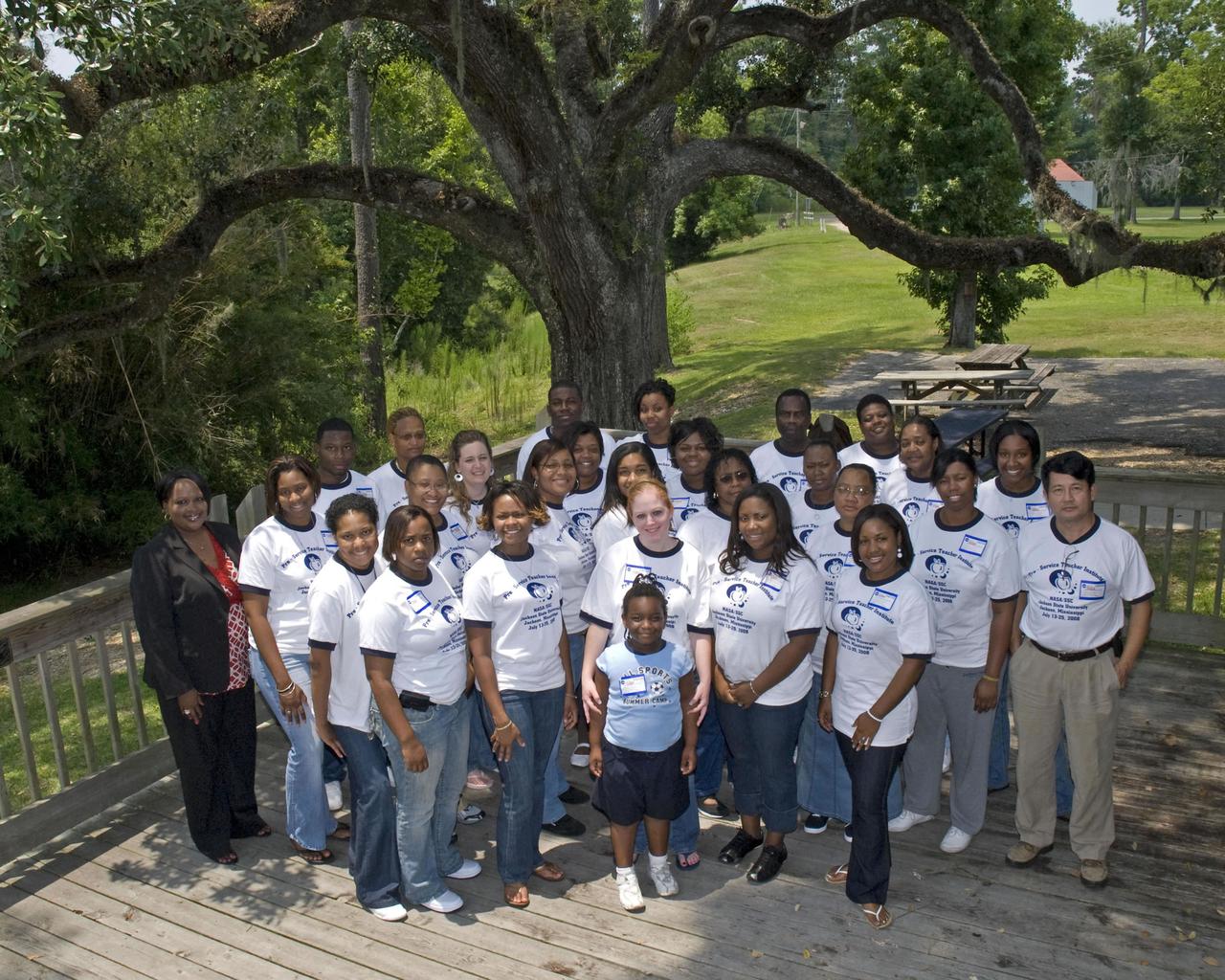
The Pre-Service Teachers Institute sponsored by Jackson (Miss.) State University participated in an agencywide Hubble Space Telescope workshop at Stennis Space Center on July 18. Twenty-five JSU junior education majors participated in the workshop, a site tour and educational presentations by Karma Snyder of the NASA SSC Engineering & Safety Center and Anne Peek of the NASA SSC Deputy Science & Technology Division.
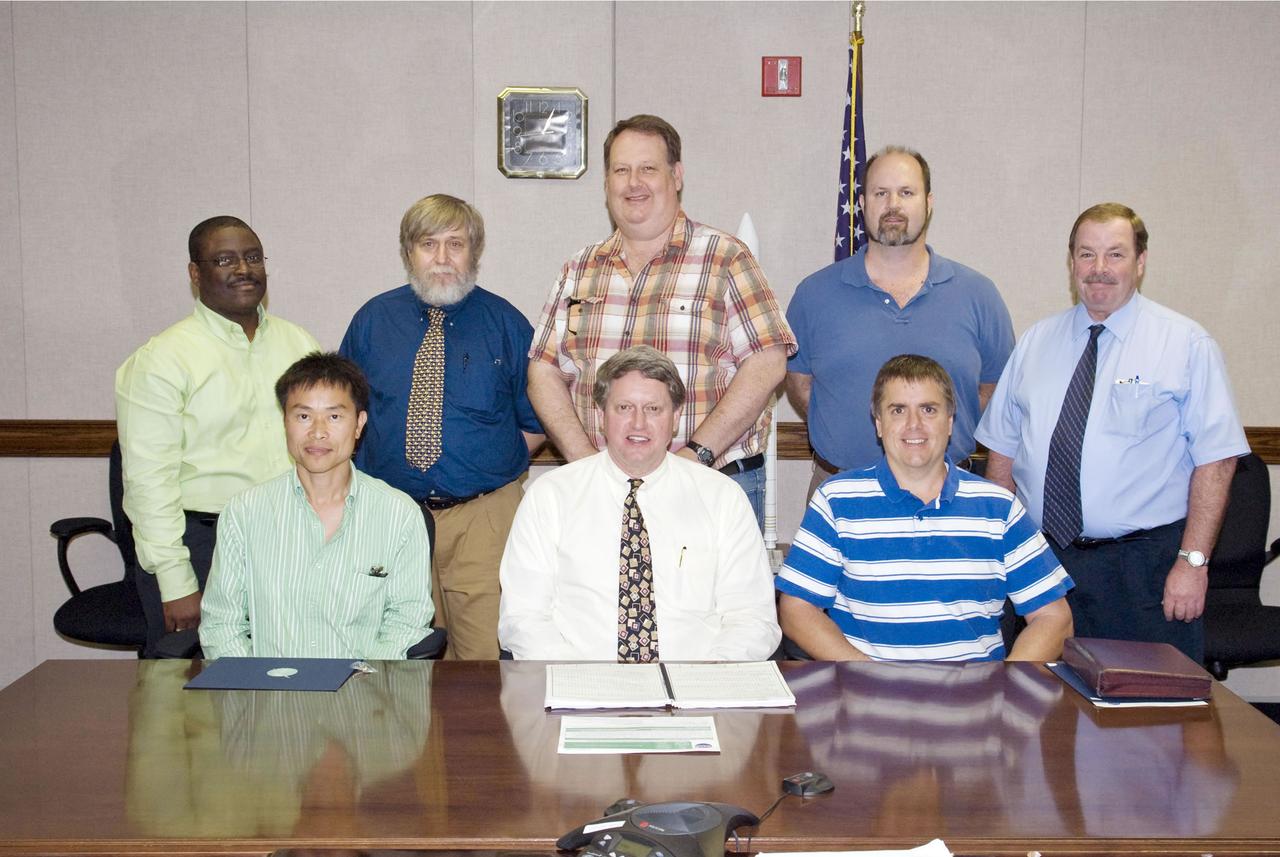
The NASA Engineering & Safety Center recently presented its Group Achievement Award to a Stennis team in recognition of technical excellence in evaluating the operational anomalies and reliability improvements associated with the space shuttle engine cut-off system. Stennis employees receiving the award were: (standing, l to r) Freddie Douglas (NASA), George Drouant (Jacobs Technology Inc.), Fred Abell (Jacobs), Robert Drackett (Jacobs) and Mike Smiles (NASA); (seated, l to r): Binh Nguyen (Jacobs), Stennis Director Gene Goldman and Joseph Lacker (NASA). Phillip Hebert of NASA is not pictured.
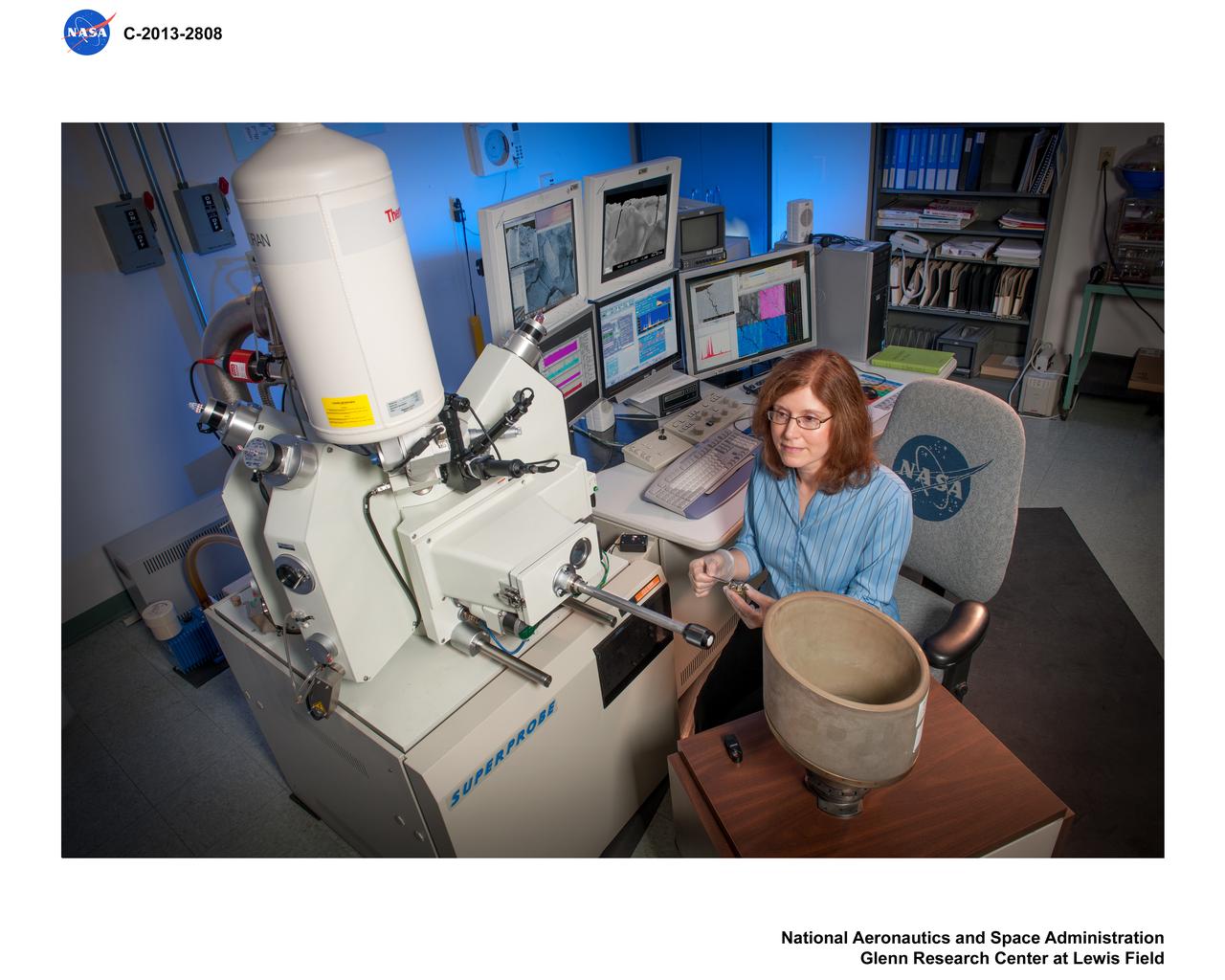
NASA Engineering and Safety Center's, NESC, Mission Tech Update Photos 2013, Electron Optics Laboratory
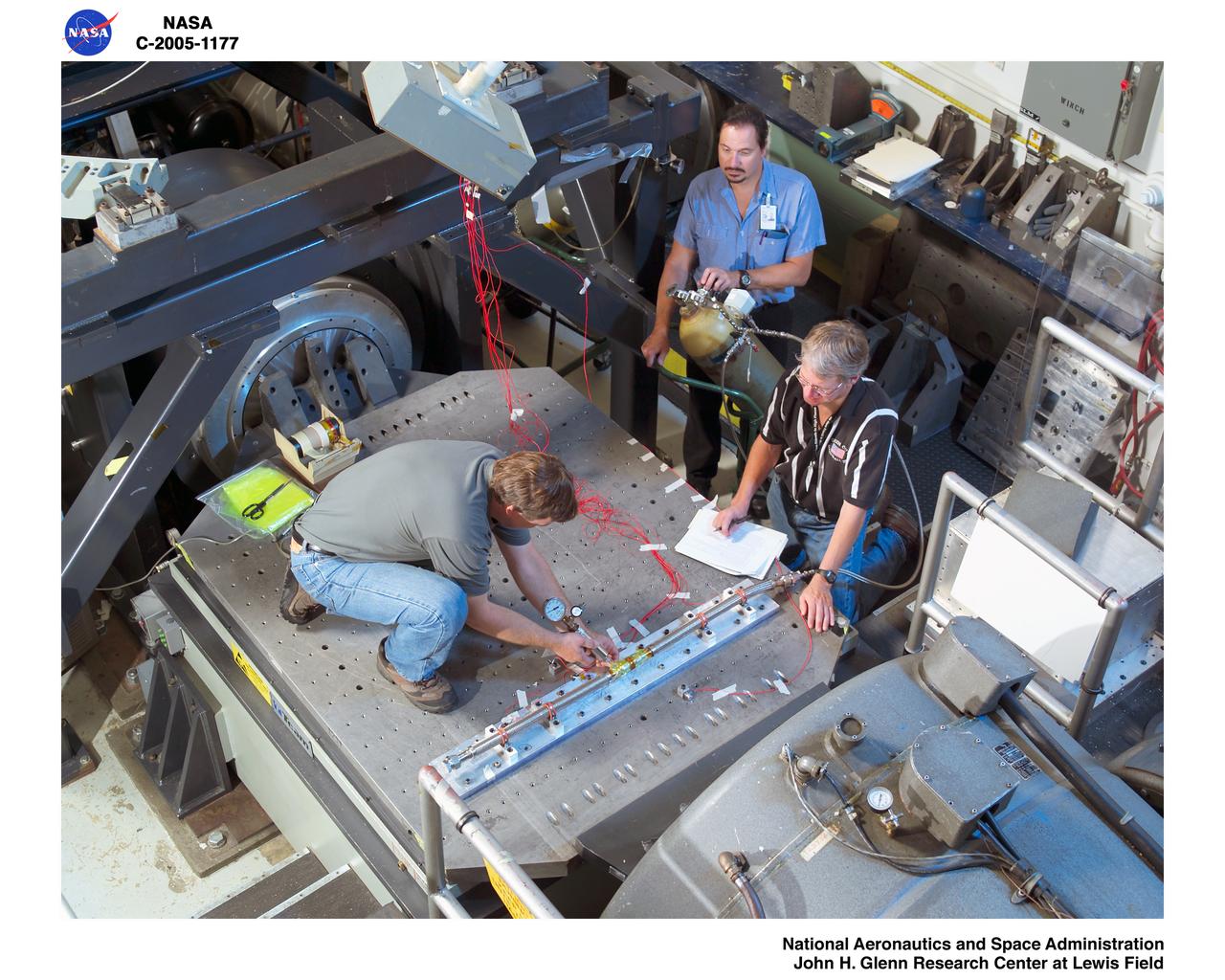
NASA Engineering and Safety Center (NESC) AN Fitting Mimic Test - Helium Leak Testing
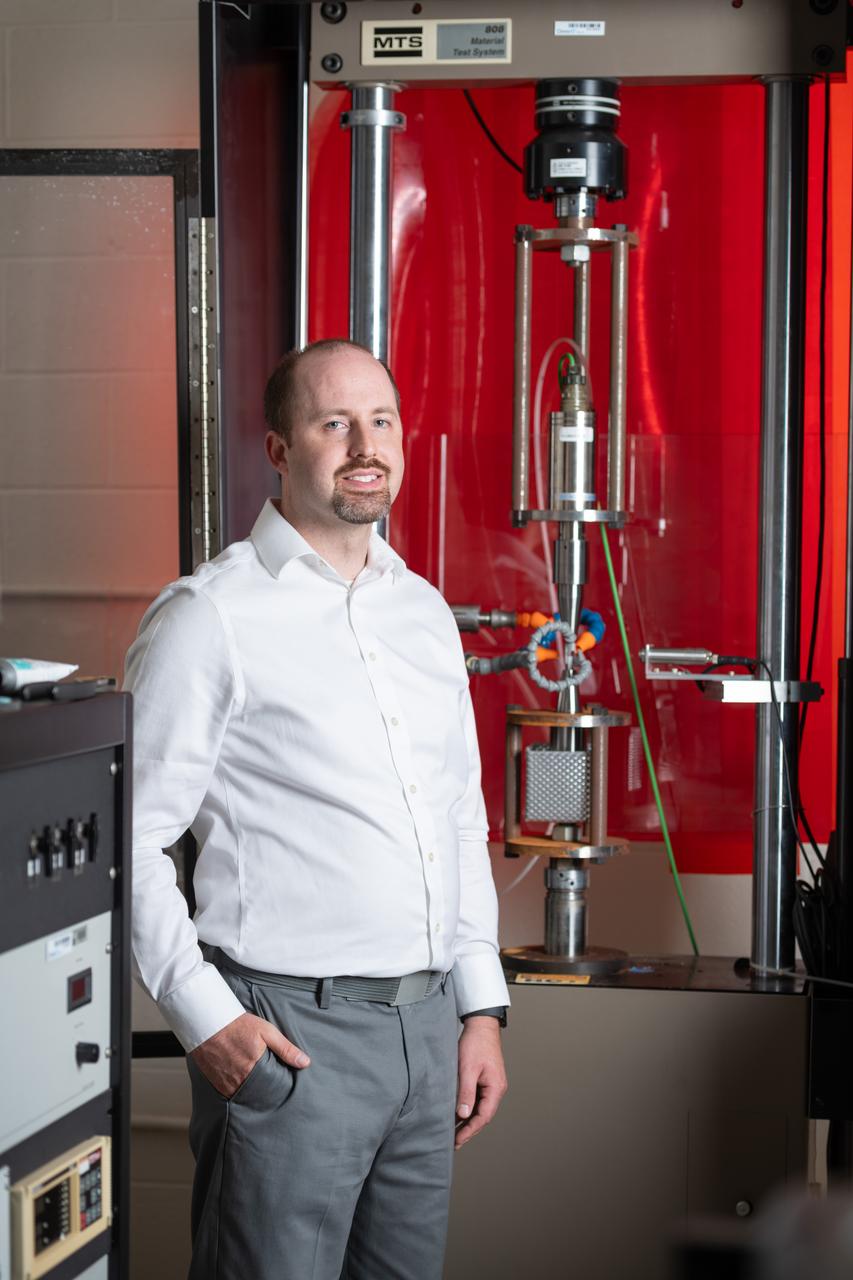
Each year, the NESC produces the NESC Technical Update, which highlights two or three individuals from each Center and includes assessments throughout the year. Because of the critical contributions to the NESC mission this year, Rob Jankovsky, NESC Chief Engineer at GRC, chose two individuals to be highlighted. This year, it is Andrew Ring and Michael Cooper. Mr. Ring, pictured here, performs stress and fatigue testing on all manner of materials in various environments and research on jet engine materials, looking for ways to increase the performance and safety of turbine blades and disks. Several NESC assessments have benefited from his expertise, most recently in understanding crack initiation and propagation in the aluminum-magnesium alloys that make up the modules of the ISS. He has also used image processing techniques to quantify the variables in parachute energy modulator production and performance and investigate flaws in the composite weave of overwrapped pressure vessels.
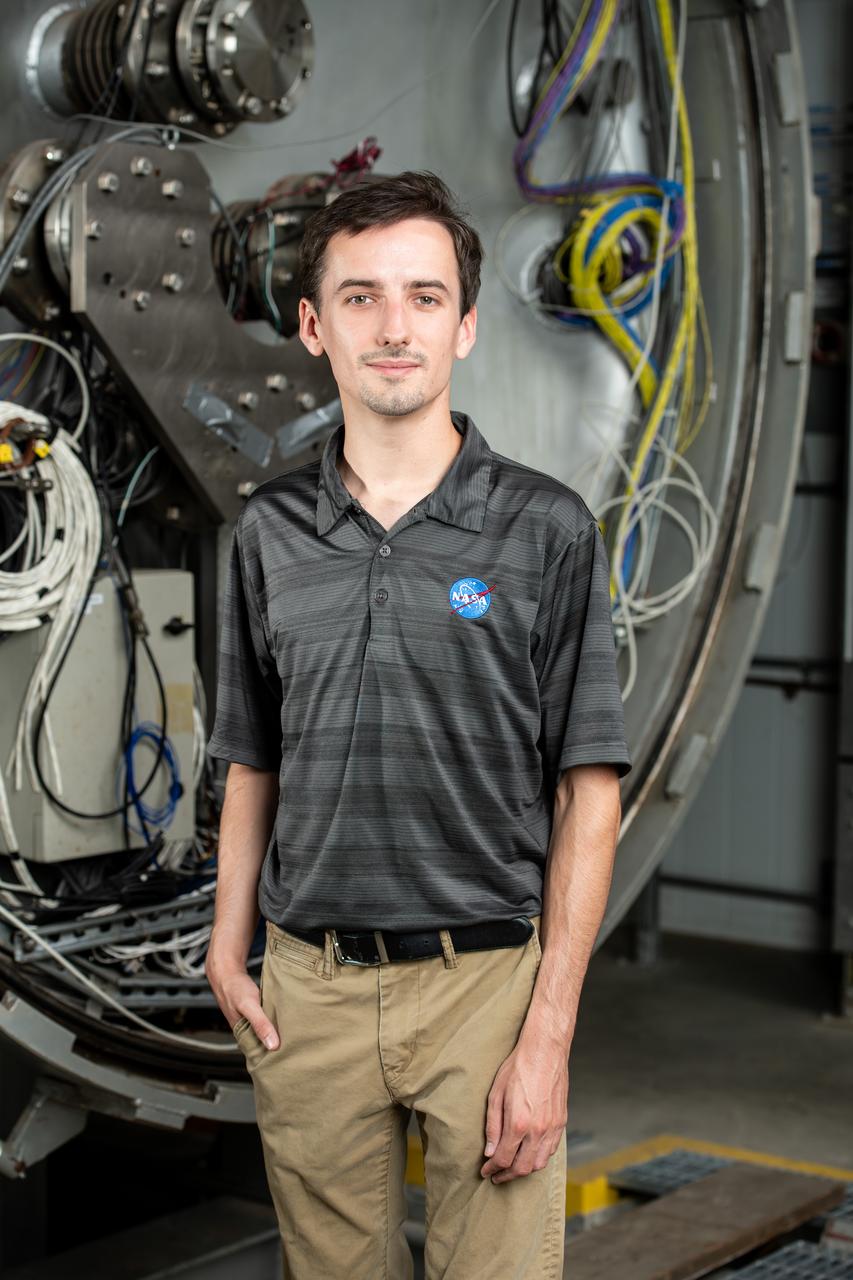
Each year, the NESC produces the NESC Technical Update, which highlights two or three individuals from each Center and includes assessments throughout the year. Because of the critical contributions to the NESC mission this year, Rob Jankovsky, NESC Chief Engineer at GRC, chose two individuals to be highlighted. This year, it is Andrew Ring and Michael Cooper. The Lead Analyst for GRC’s Chemical and Thermal Propulsion Systems branch, Mr. Michael Cooper, is supporting NESC test operations on reaction control system thrusters for Gateway’s Power & Propulsion Element. “These thrusters are small with few moving parts, but the heat and mass transfers involved are very complex,” he said. The test campaign is putting the thrusters through a rigorous profile to simulate the lifetime they will experience over decades in space. Mr. Cooper is analyzing test data gathered on chamber pressure, temperature, flow rates, and more to develop models on thruster performance. He also built the tool that read in that data from the test stand instrumentation. Photo Credit: (NASA/Sara Lowthian-Hanna)
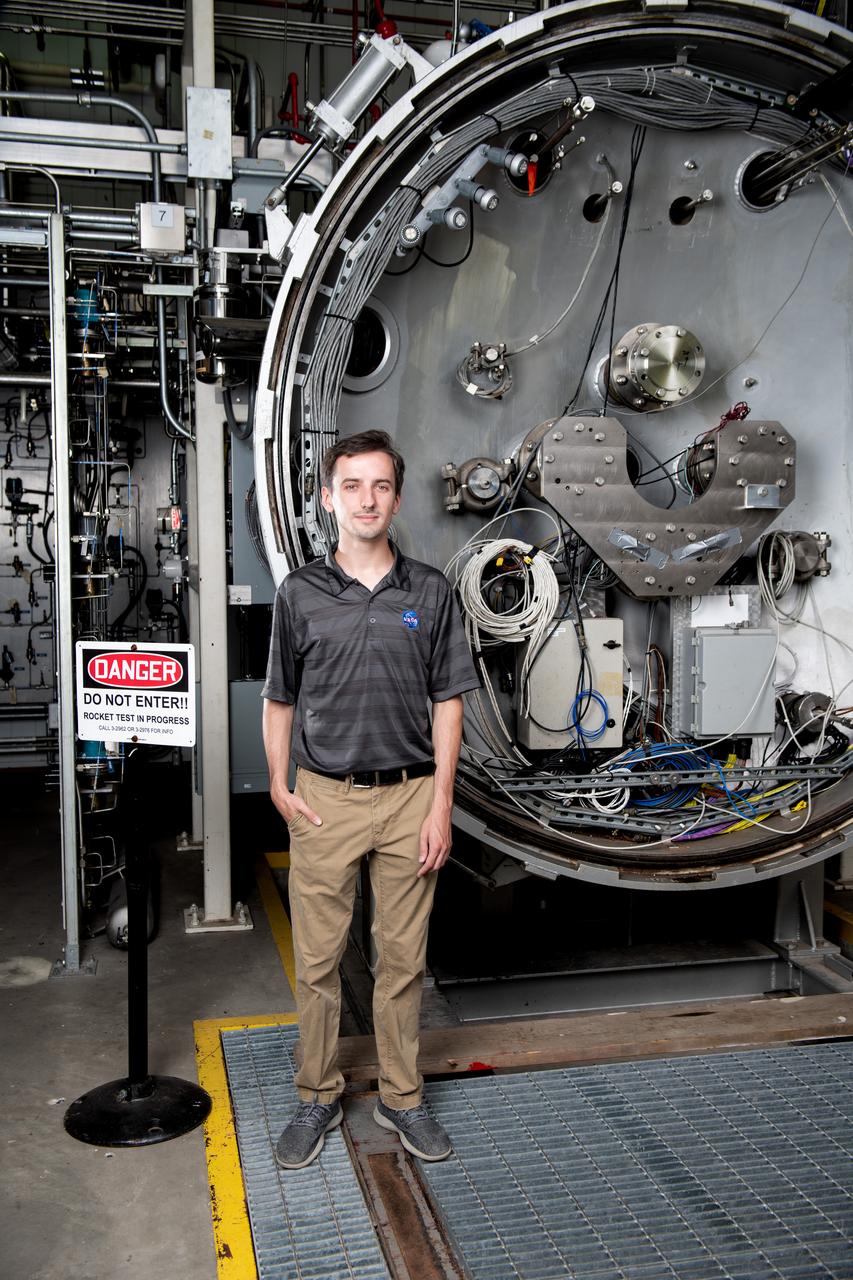
Each year, the NESC produces the NESC Technical Update, which highlights two or three individuals from each Center and includes assessments throughout the year. Because of the critical contributions to the NESC mission this year, Rob Jankovsky, NESC Chief Engineer at GRC, chose two individuals to be highlighted. This year, it is Andrew Ring and Michael Cooper. The Lead Analyst for GRC’s Chemical and Thermal Propulsion Systems branch, Mr. Michael Cooper, is supporting NESC test operations on reaction control system thrusters for Gateway’s Power & Propulsion Element. “These thrusters are small with few moving parts, but the heat and mass transfers involved are very complex,” he said. The test campaign is putting the thrusters through a rigorous profile to simulate the lifetime they will experience over decades in space. Mr. Cooper is analyzing test data gathered on chamber pressure, temperature, flow rates, and more to develop models on thruster performance. He also built the tool that read in that data from the test stand instrumentation. Photo Credit: (NASA/Sara Lowthian-Hanna)
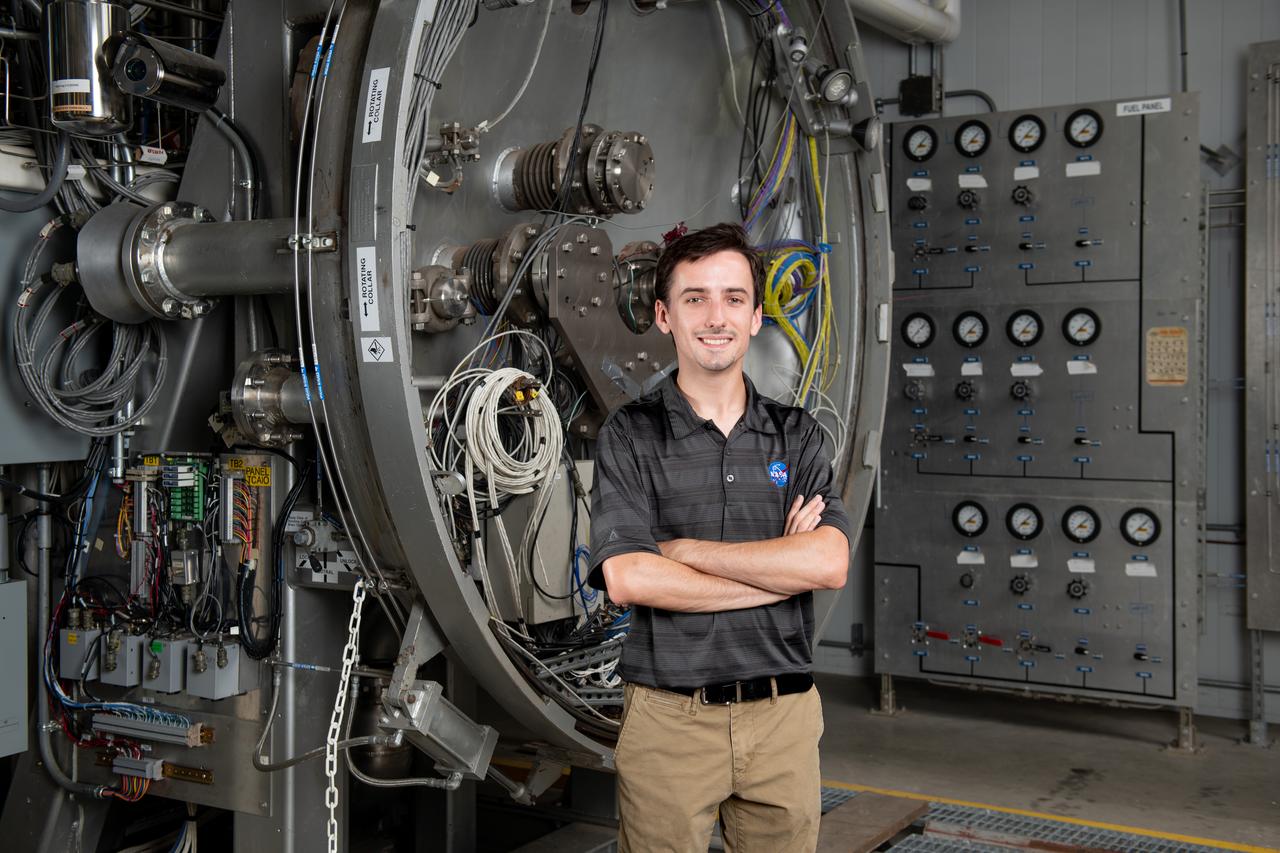
Each year, the NESC produces the NESC Technical Update, which highlights two or three individuals from each Center and includes assessments throughout the year. Because of the critical contributions to the NESC mission this year, Rob Jankovsky, NESC Chief Engineer at GRC, chose two individuals to be highlighted. This year, it is Andrew Ring and Michael Cooper. The Lead Analyst for GRC’s Chemical and Thermal Propulsion Systems branch, Mr. Michael Cooper, is supporting NESC test operations on reaction control system thrusters for Gateway’s Power & Propulsion Element. “These thrusters are small with few moving parts, but the heat and mass transfers involved are very complex,” he said. The test campaign is putting the thrusters through a rigorous profile to simulate the lifetime they will experience over decades in space. Mr. Cooper is analyzing test data gathered on chamber pressure, temperature, flow rates, and more to develop models on thruster performance. He also built the tool that read in that data from the test stand instrumentation. Photo Credit: (NASA/Sara Lowthian-Hanna)
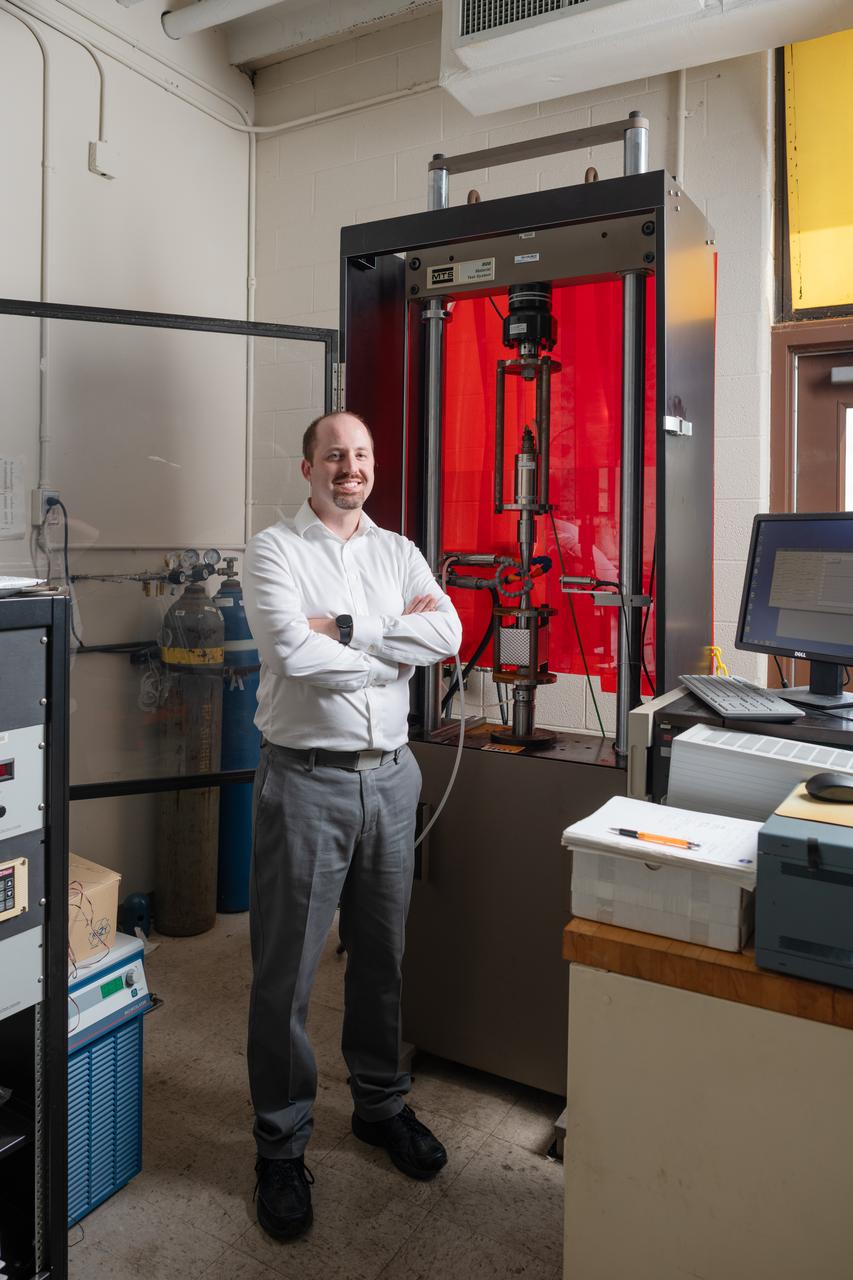
Each year, the NESC produces the NESC Technical Update, which highlights two or three individuals from each Center and includes assessments throughout the year. Because of the critical contributions to the NESC mission this year, Rob Jankovsky, NESC Chief Engineer at GRC, chose two individuals to be highlighted. This year, it is Andrew Ring and Michael Cooper. Mr. Ring, pictured here, performs stress and fatigue testing on all manner of materials in various environments and research on jet engine materials, looking for ways to increase the performance and safety of turbine blades and disks. Several NESC assessments have benefited from his expertise, most recently in understanding crack initiation and propagation in the aluminum-magnesium alloys that make up the modules of the ISS. He has also used image processing techniques to quantify the variables in parachute energy modulator production and performance and investigate flaws in the composite weave of overwrapped pressure vessels.
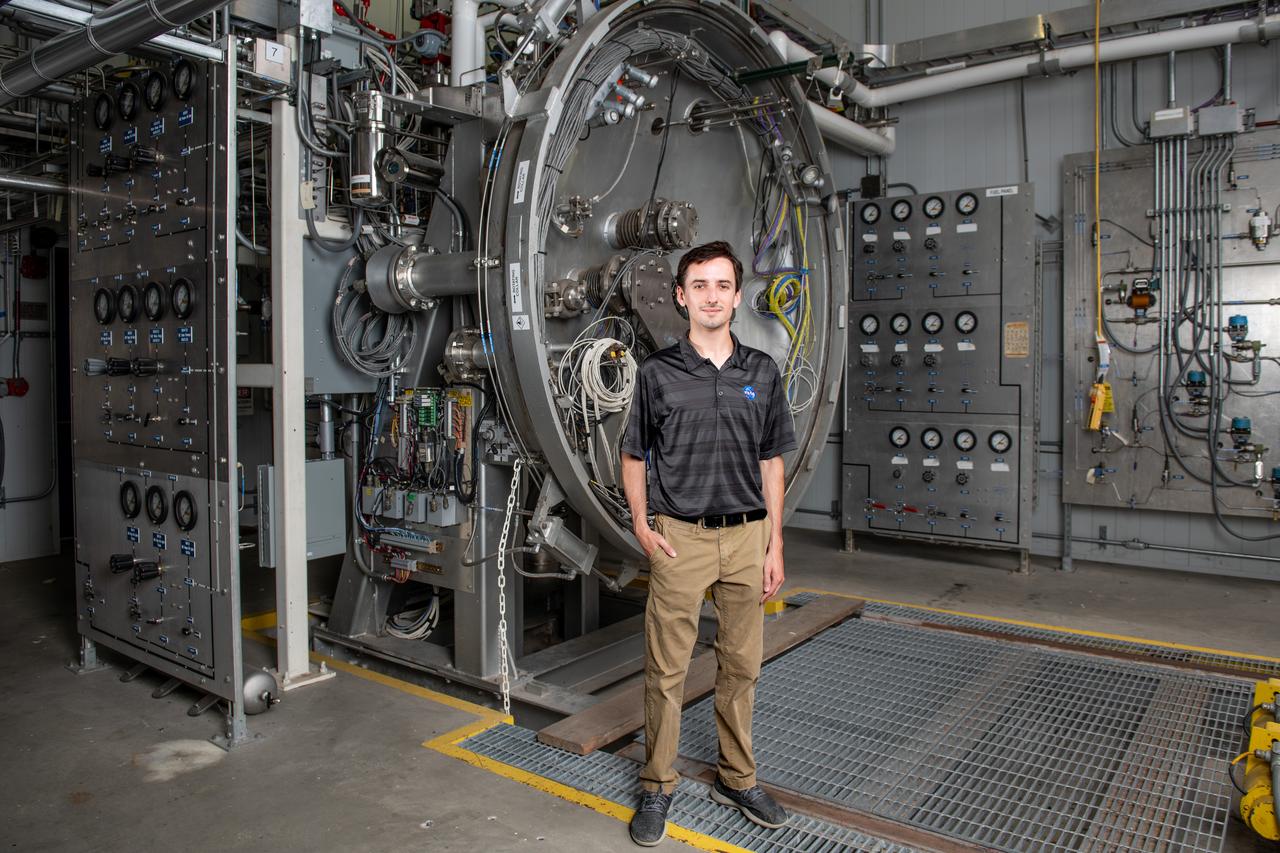
Each year, the NESC produces the NESC Technical Update, which highlights two or three individuals from each Center and includes assessments throughout the year. Because of the critical contributions to the NESC mission this year, Rob Jankovsky, NESC Chief Engineer at GRC, chose two individuals to be highlighted. This year, it is Andrew Ring and Michael Cooper. The Lead Analyst for GRC’s Chemical and Thermal Propulsion Systems branch, Mr. Michael Cooper pictured here in this environmental portrait on August 16, 2024. He is supporting NESC test operations on reaction control system thrusters for Gateway’s Power & Propulsion Element. “These thrusters are small with few moving parts, but the heat and mass transfers involved are very complex,” he said. The test campaign is putting the thrusters through a rigorous profile to simulate the lifetime they will experience over decades in space. Mr. Cooper is analyzing test data gathered on chamber pressure, temperature, flow rates, and more to develop models on thruster performance. He also built the tool that read in that data from the test stand instrumentation. Photo Credit: (NASA/Sara Lowthian-Hanna)
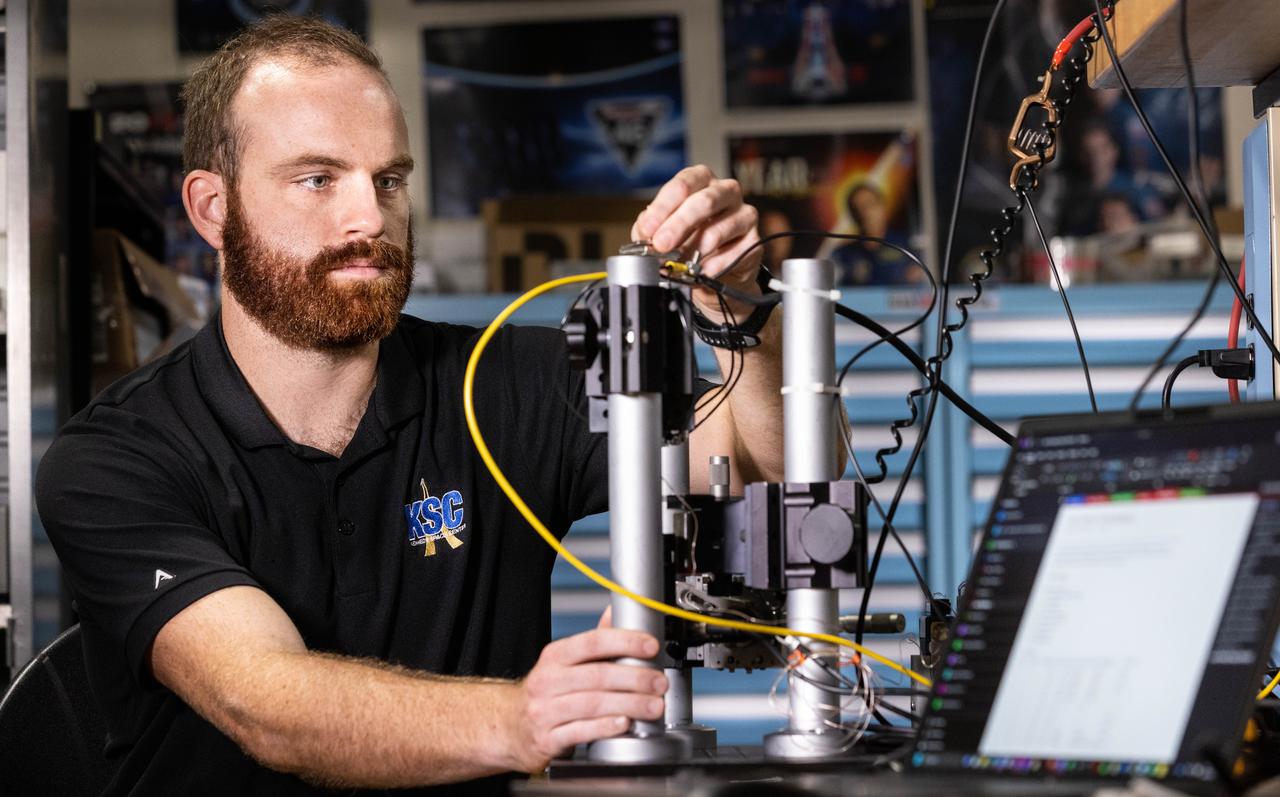
Stefan Tomovic from the Engineering Directorate at NASA’s Kennedy Space Center in Florida evaluates pressure transducers for NASA’s Engineering and Safety Center on Wednesday, Aug. 20, 2025. This probe is designed to improve the detection of thruster pressure sensor anomalies for the agency’s Commercial Crew Program.
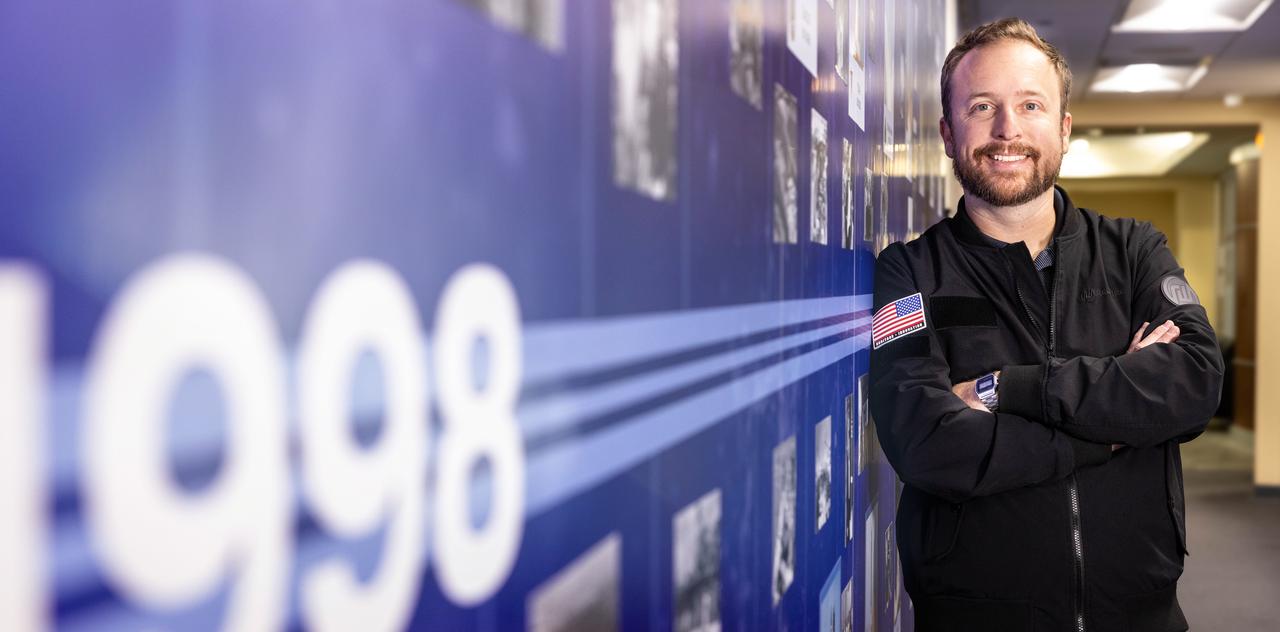
Brandon Marsell, deputy technical fellow for Cryogenics in NASA’s Engineering and Safety Center Technical Discipline Team at Kennedy Space Center in Florida, poses for a photograph on Wednesday, Aug. 20, 2025.
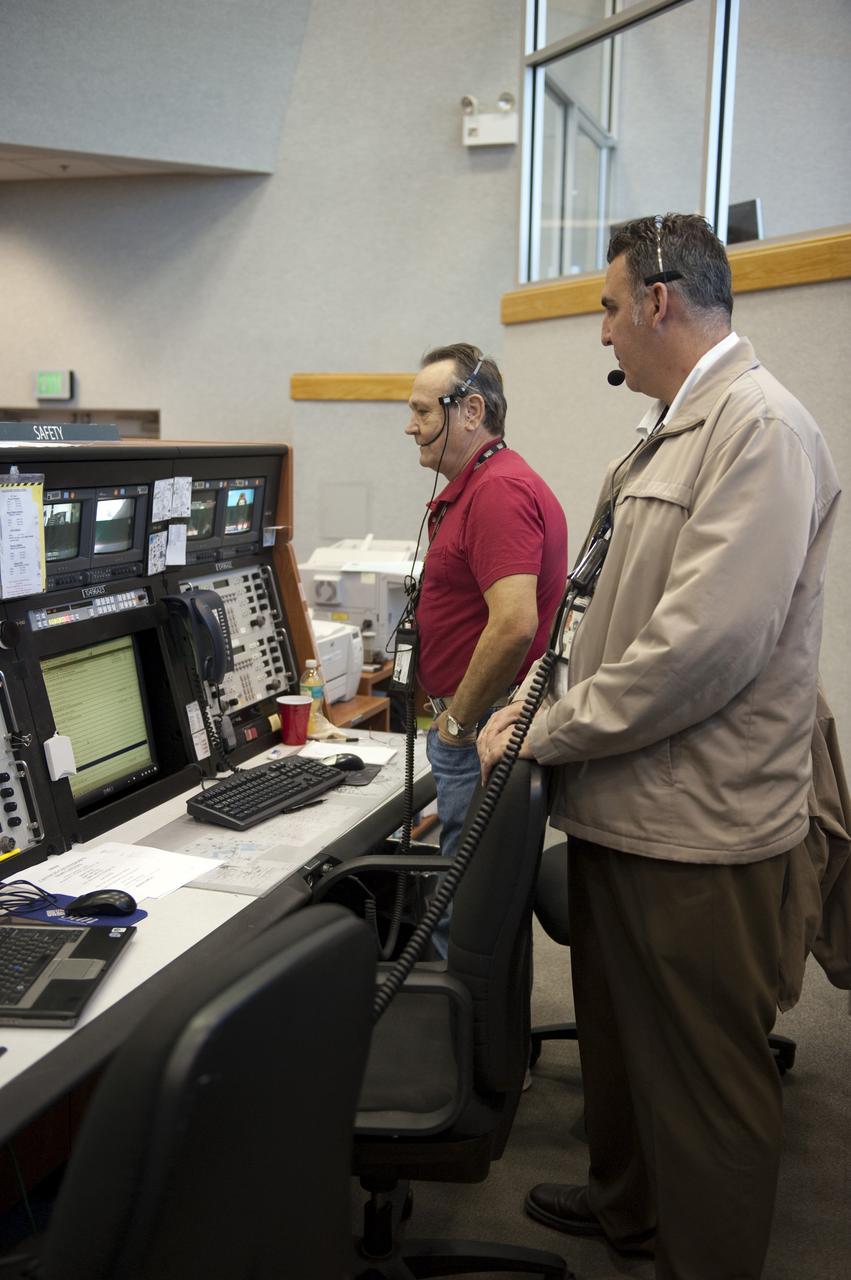
CAPE CANAVERAL, Fla. -- In the Launch Control Center at NASA's Kennedy Space Center in Florida, United Space Alliance Safety Engineer Dwayne Thompson, left, and NASA Safety Engineer Dallas McCarter rehearse procedures for the liftoff of space shuttle Discovery's final mission with other STS-133 launch team members in Firing Room 4. The team at Kennedy also participated in launch simulations with personnel at NASA's Johnson Space Center in Houston. Discovery's next launch opportunity to the International Space Station on the STS-133 mission is planned for no earlier than Feb. 24. For more information on STS-133, visit www.nasa.gov/mission_pages/shuttle/shuttlemissions/sts133/. Photo credit: NASA/Kim Shiflett
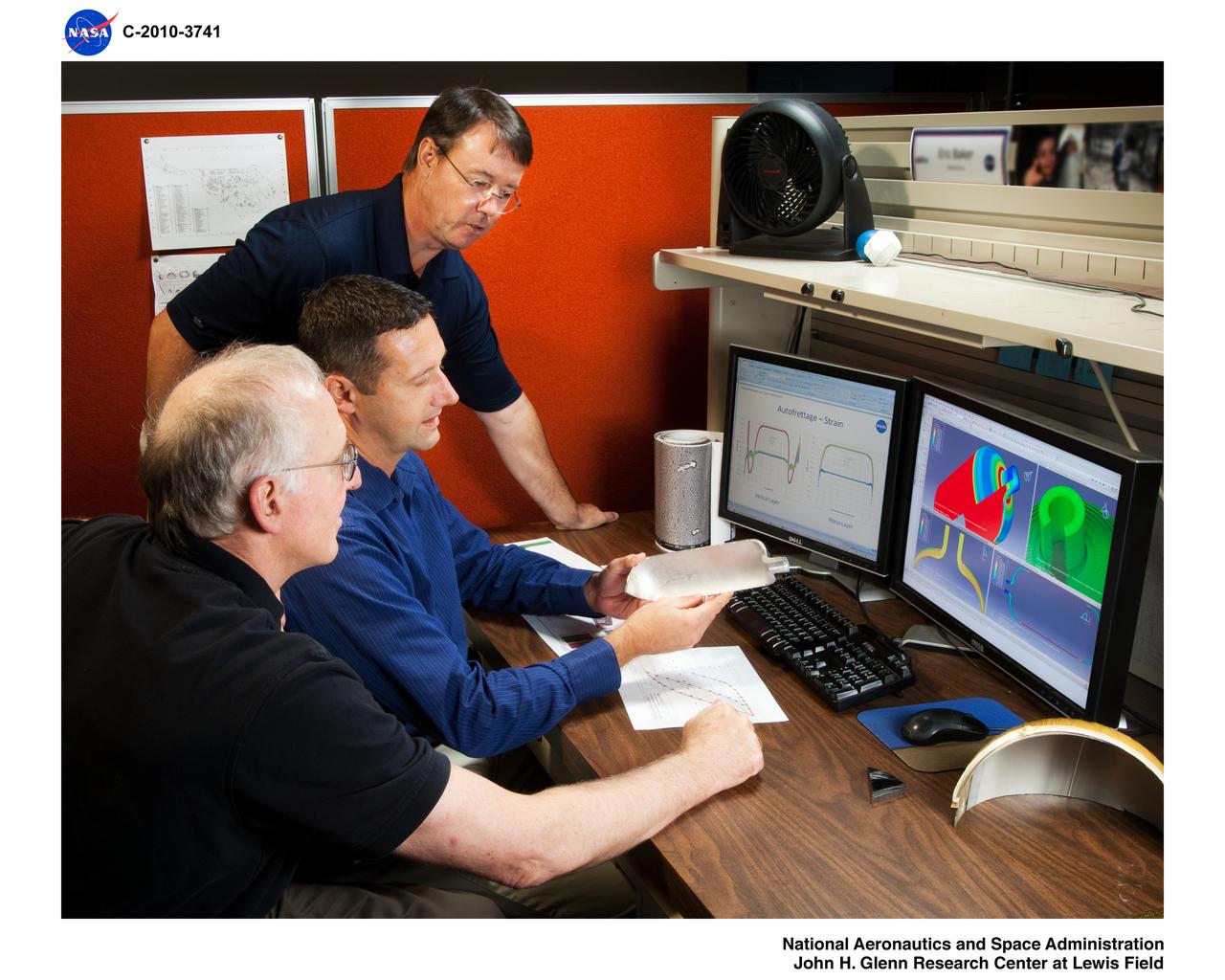
NASA Engineering and Safety Center (NESC) Composite Overwrapped Pressure Vessel (COPV) Working Group members examine mechanical response simulations of proposed stress rupture test articles
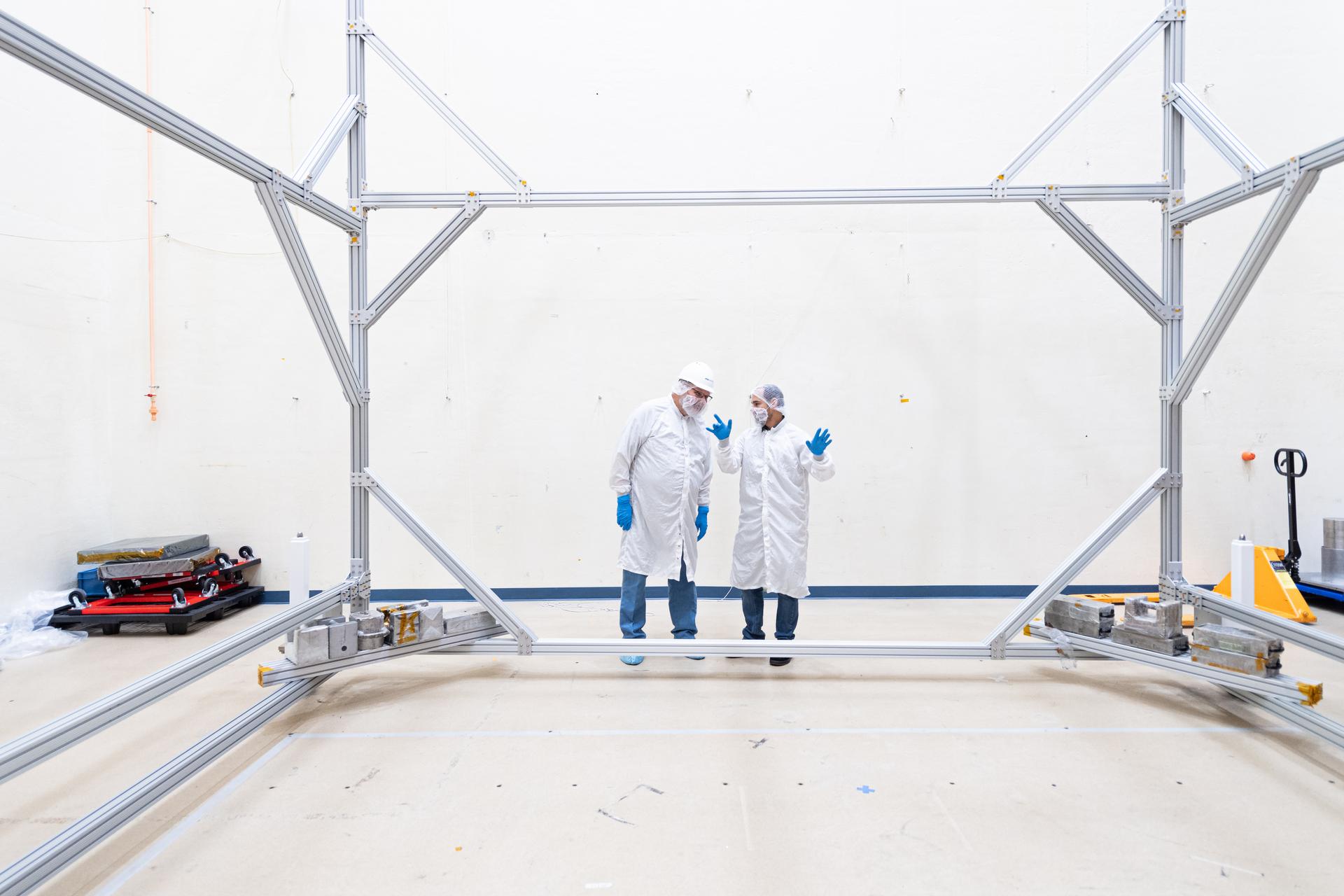
OSAM-1 engineer, Alvaro Haesbaert discusses the upcoming operations with Safety engineer, Paul Messanger inside the acoustics chamber at Goddard Space Flight Center, Greenbelt Md., Aug 25, 2023. This photo has been reviewed by OSAM1 project management and the Export Control Office and is released for public view. NASA/Mike Guinto
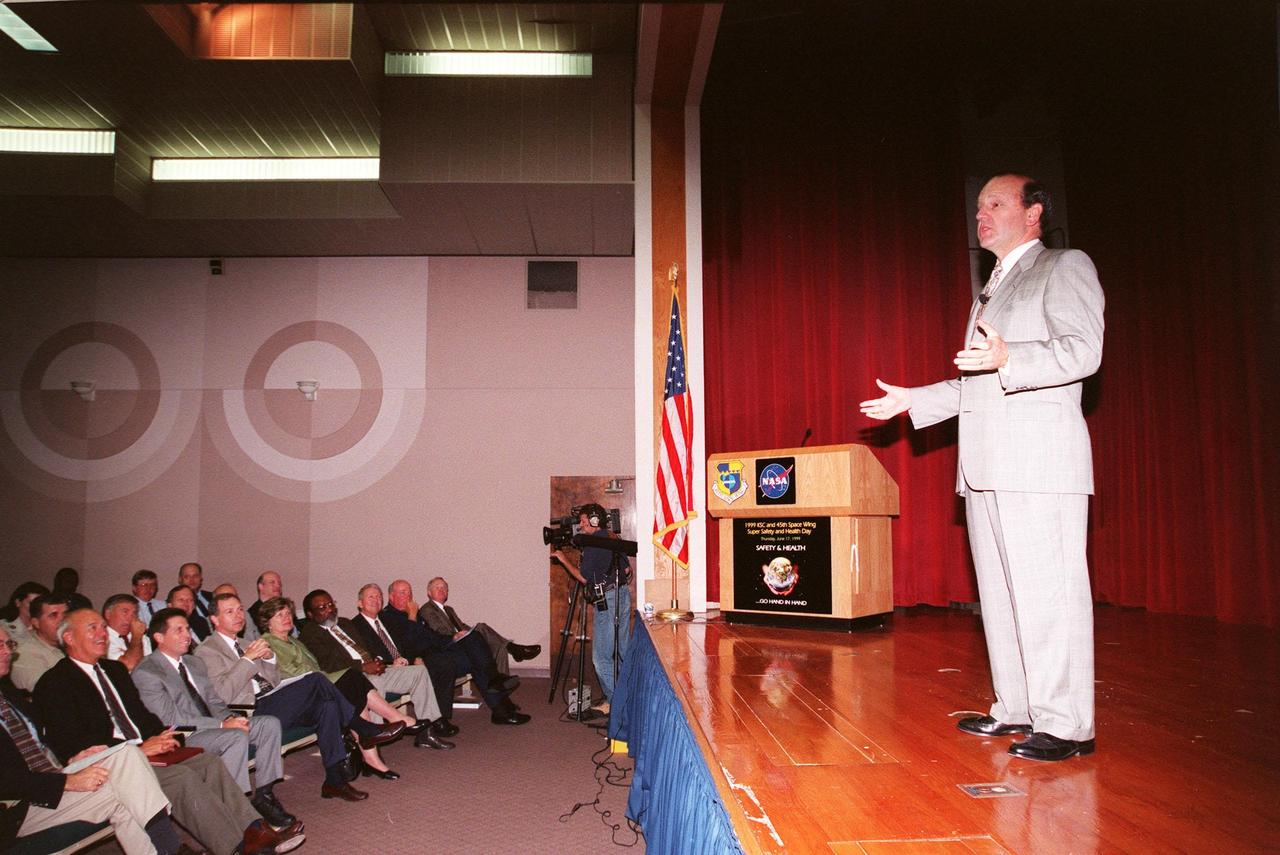
Capt. Dennis E. Fitch, a consultant and former pilot instructor with United Airlines, addresses an audience of KSC employees to kick off Super Safety and Health Day at KSC. Fitch related his tale of the catastrophic engine failure in UAL flight 232, which crash landed in Iowa in 1989, and the teamwork that contributed to his survival and the lives of 183 other passengers. For the second time Kennedy Space Center dedicated an entire day to safety and health. Most normal work activities were suspended to allow personnel to attend Super Safety and Health Day activities. The theme, "Safety and Health Go Hand in Hand," emphasized KSC's commitment to place the safety and health of the public, astronauts, employees and space-related resources first and foremost. Events also included a panel session about related issues, vendor exhibits, and safety training in work groups. The keynote address and panel session were also broadcast internally over NASA television
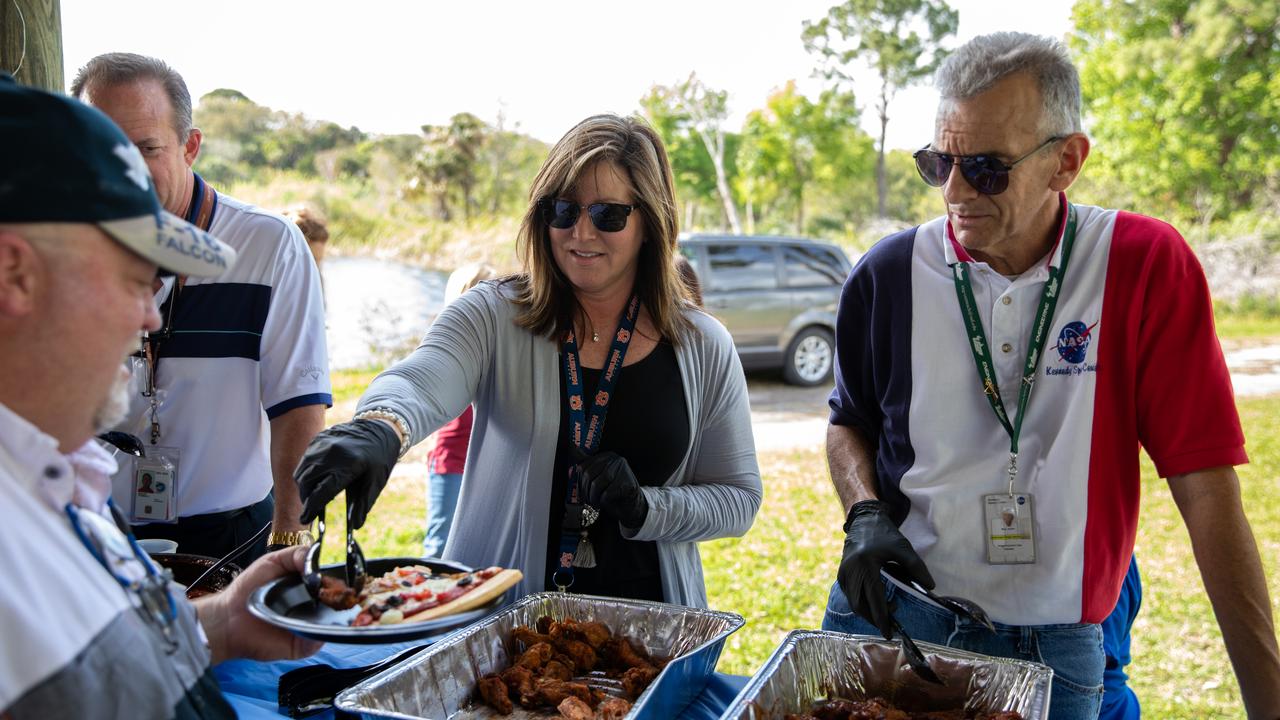
Jennifer Kunz, center, director of Safety and Mission Assurance, and Bob Mott, right, chief of the Commercial Systems Division in the Engineering Directorate at NASA’s Kennedy Space Center in Florida, serve food to Kennedy employees during a Safety and Health Days celebration on March 5, 2020. Taking place March 2 through March 6, Safety and Health Days provides Kennedy employees with a variety of presentations to attend – all of which focus on how to maintain a safe and healthy workforce. The celebration on March 5 took place at the Florida spaceport’s KARS Park II and was open for all employees to attend.
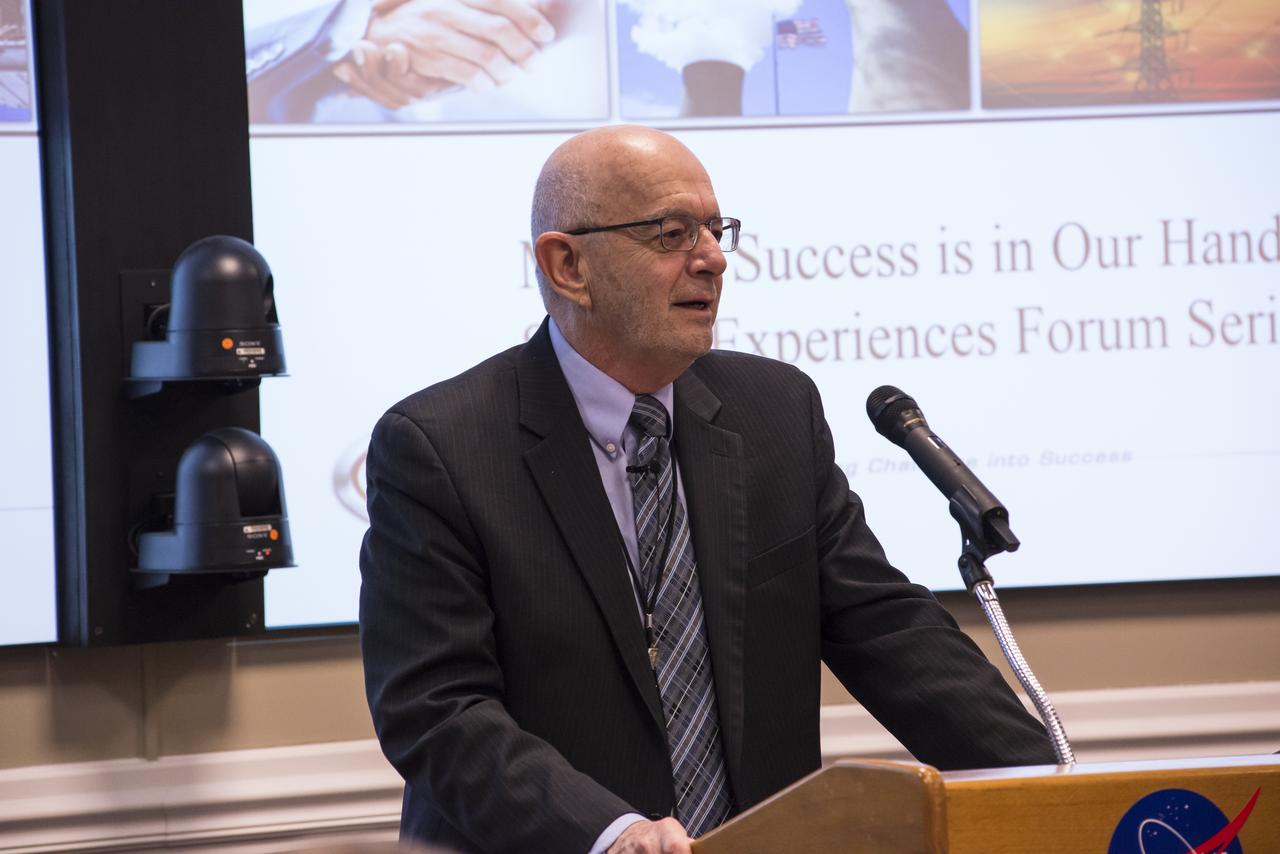
Vernon "Bill" Wessel, former associate director of NASA's Glenn Research Center from 2006-2011, addresses team members at NASA's Marshall Space Flight Center Jan. 19 as part of the "Mission Success in in Our Hands" Shared Experiences forum. Wessel, currently senior vice president of Ares Corp. and deputy of the Huntsville-based company's Space & Defense Division, spoke about his 30-year NASA career and the importance of workplace safety. "Keep in your head every day and in every way that safety is number one," he said. "When you meet people, ask them, 'How are you doing today? How's the job? How are you staying safe?' These are the things that are important." The bimonthly Shared Experiences forum, a Marshall safety initiative to promote and strengthen mission assurance and flight safety, is sponsored by NASA partner Jacobs Engineering of Huntsville.
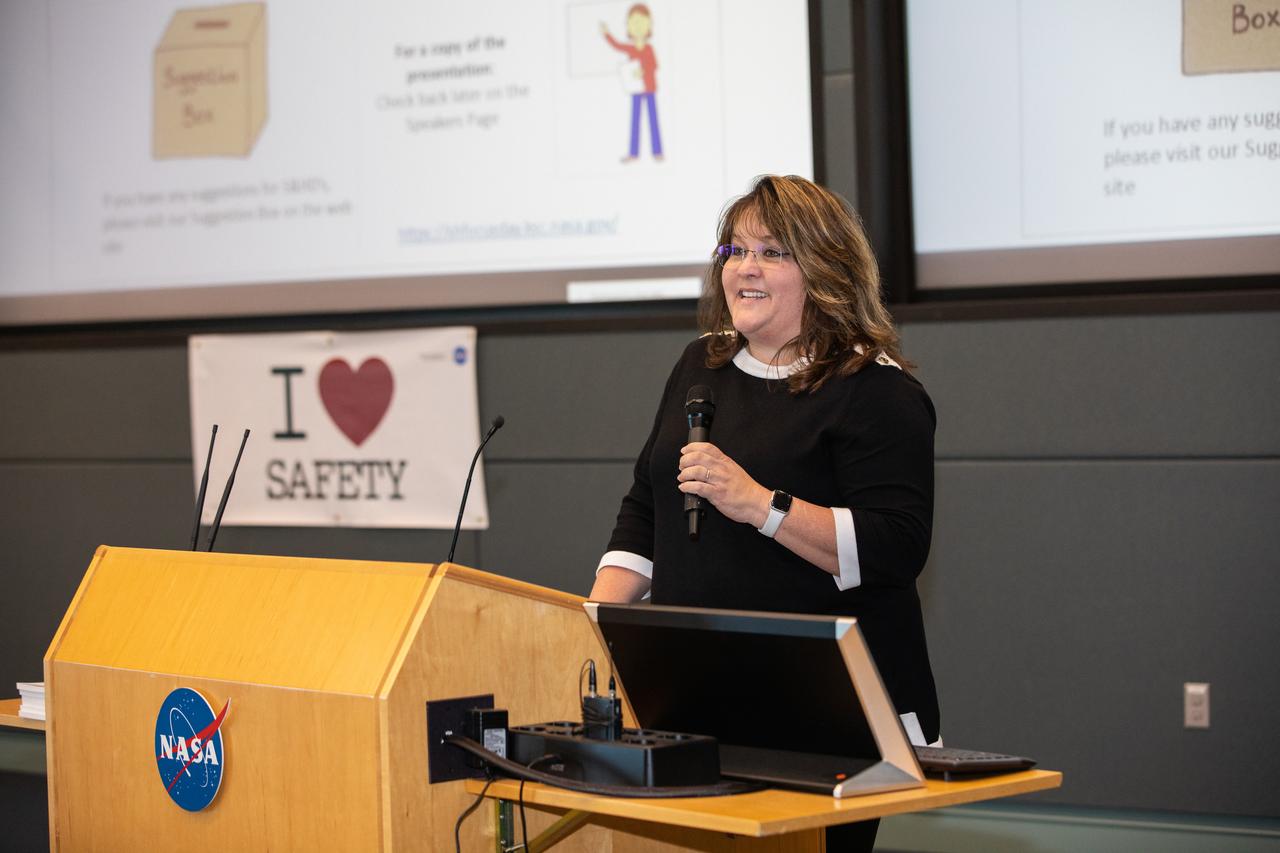
Becky Murray, associate director of Engineering at NASA’s Kennedy Space Center in Florida, addresses Kennedy employees inside the Operations Support Building II on March 3, 2020, during the center’s annual Safety and Health Days. Taking place March 2 through March 6, Safety and Health Days provides Kennedy employees with a variety of presentations to attend – all of which focus on how to maintain a safe and healthy workforce.
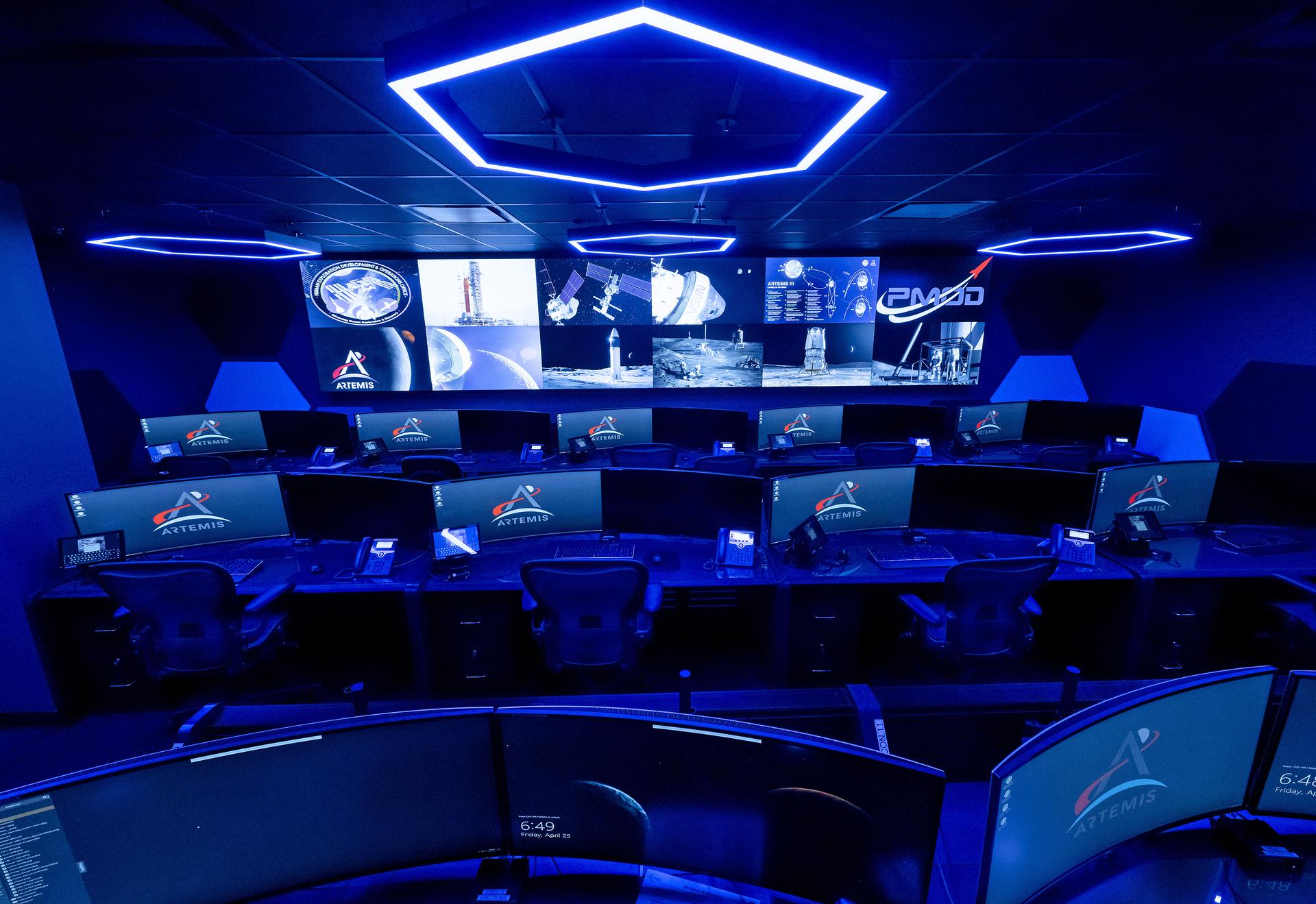
These photos offer a look inside the twin control rooms at NASA’s Marshall Space Flight Center in Huntsville, Alabama, where engineers will monitor Artemis science and future landing operations for Artemis. The LUCA (Lunar Utilization Control Area) and LESA (Lander Engineering Support Area) rooms are part of the Huntsville Operations Support Center at NASA Marshall. The LUCA is specially designed to support a wide variety of science operations on and around the Moon – and beyond. Engineers in the LUCA monitored operations for the Lunar Node-1 experiment, an autonomous navigation payload that was part of the first NASA Commercial Lunar Payload Services (CLPS) launch on Intuitive Machines’ Nova-C lunar lander in 2024. NASA Marshall flight controllers will use the LUCA again for Artemis II to monitor science operations. Beginning with Artemis III, members of the NASA Human Landing System Mission Insight Support Team – a group of engineers, safety leads, flight operations experts, and technical authorities – will work in the LESA. There, they will monitor lander systems in real-time and be involved in key decision-making processes throughout the mission. For more information, contact NASA Marshall’s Office of Communications at 256-544-0034.
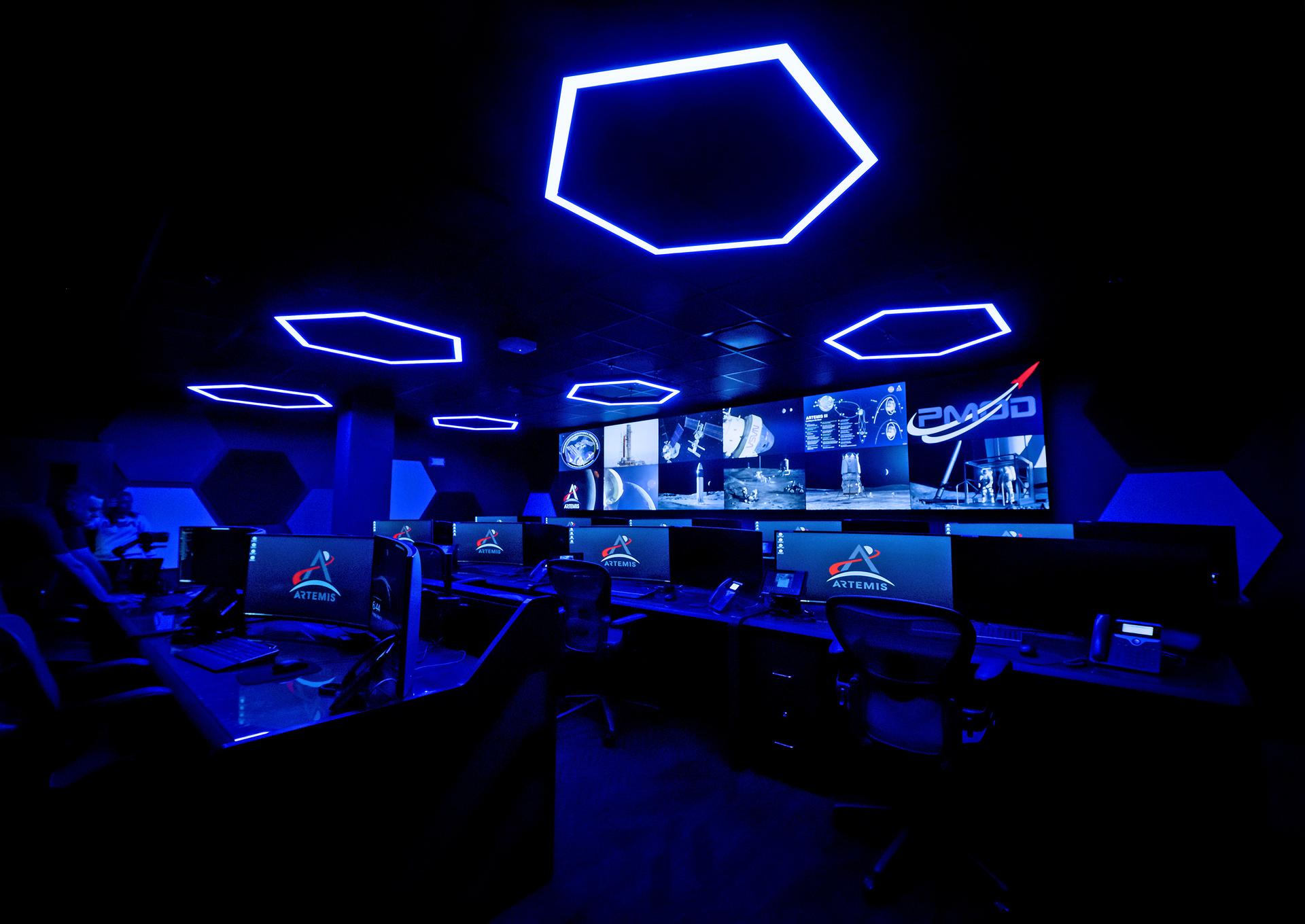
These photos offer a look inside the twin control rooms at NASA’s Marshall Space Flight Center in Huntsville, Alabama, where engineers will monitor Artemis science and future landing operations for Artemis. The LUCA (Lunar Utilization Control Area) and LESA (Lander Engineering Support Area) rooms are part of the Huntsville Operations Support Center at NASA Marshall. The LUCA is specially designed to support a wide variety of science operations on and around the Moon – and beyond. Engineers in the LUCA monitored operations for the Lunar Node-1 experiment, an autonomous navigation payload that was part of the first NASA Commercial Lunar Payload Services (CLPS) launch on Intuitive Machines’ Nova-C lunar lander in 2024. NASA Marshall flight controllers will use the LUCA again for Artemis II to monitor science operations. Beginning with Artemis III, members of the NASA Human Landing System Mission Insight Support Team – a group of engineers, safety leads, flight operations experts, and technical authorities – will work in the LESA. There, they will monitor lander systems in real-time and be involved in key decision-making processes throughout the mission. For more information, contact NASA Marshall’s Office of Communications at 256-544-0034.
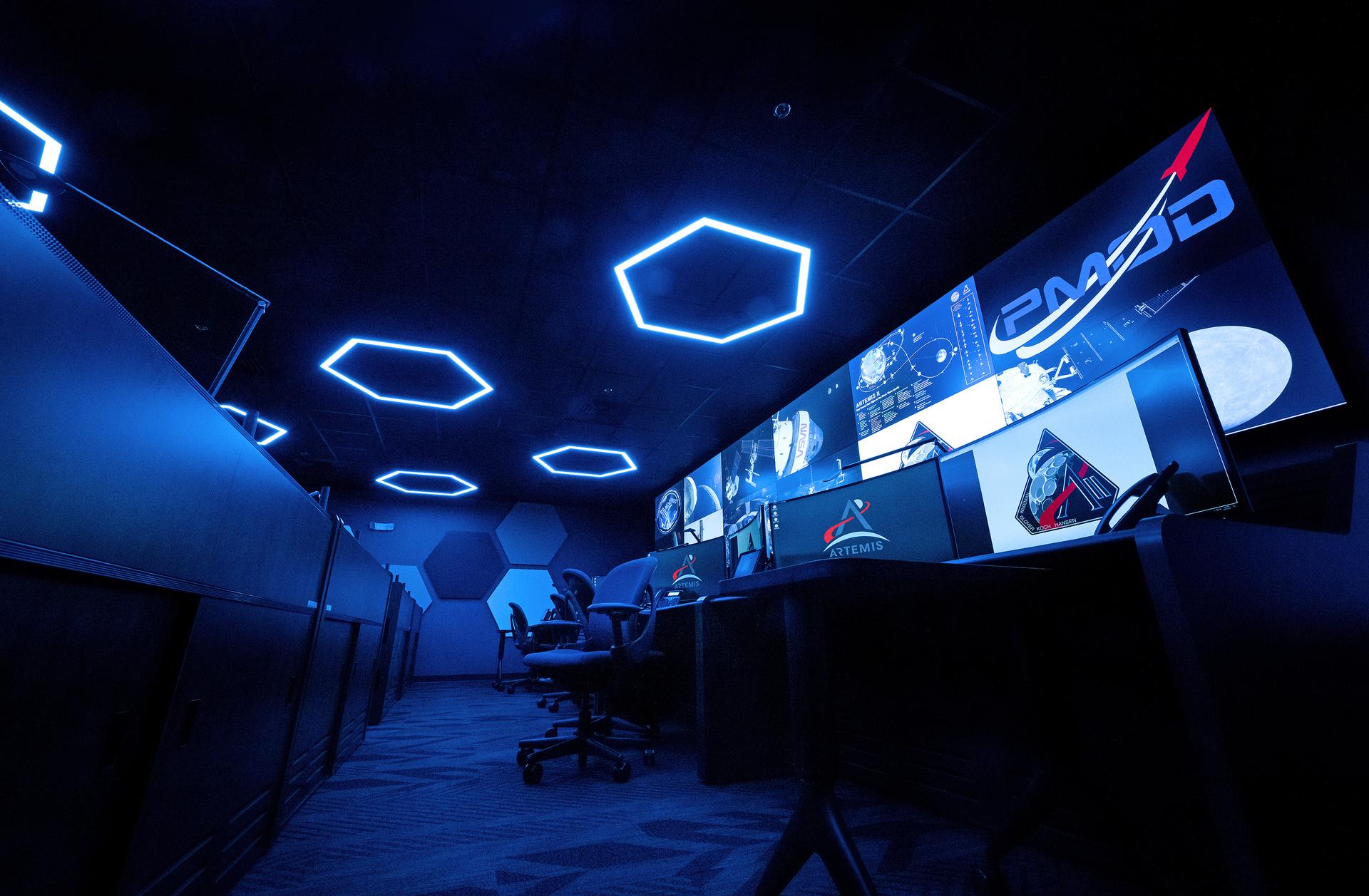
These photos offer a look inside the twin control rooms at NASA’s Marshall Space Flight Center in Huntsville, Alabama, where engineers will monitor Artemis science and future landing operations for Artemis. The LUCA (Lunar Utilization Control Area) and LESA (Lander Engineering Support Area) rooms are part of the Huntsville Operations Support Center at NASA Marshall. The LUCA is specially designed to support a wide variety of science operations on and around the Moon – and beyond. Engineers in the LUCA monitored operations for the Lunar Node-1 experiment, an autonomous navigation payload that was part of the first NASA Commercial Lunar Payload Services (CLPS) launch on Intuitive Machines’ Nova-C lunar lander in 2024. NASA Marshall flight controllers will use the LUCA again for Artemis II to monitor science operations. Beginning with Artemis III, members of the NASA Human Landing System Mission Insight Support Team – a group of engineers, safety leads, flight operations experts, and technical authorities – will work in the LESA. There, they will monitor lander systems in real-time and be involved in key decision-making processes throughout the mission. For more information, contact NASA Marshall’s Office of Communications at 256-544-0034.
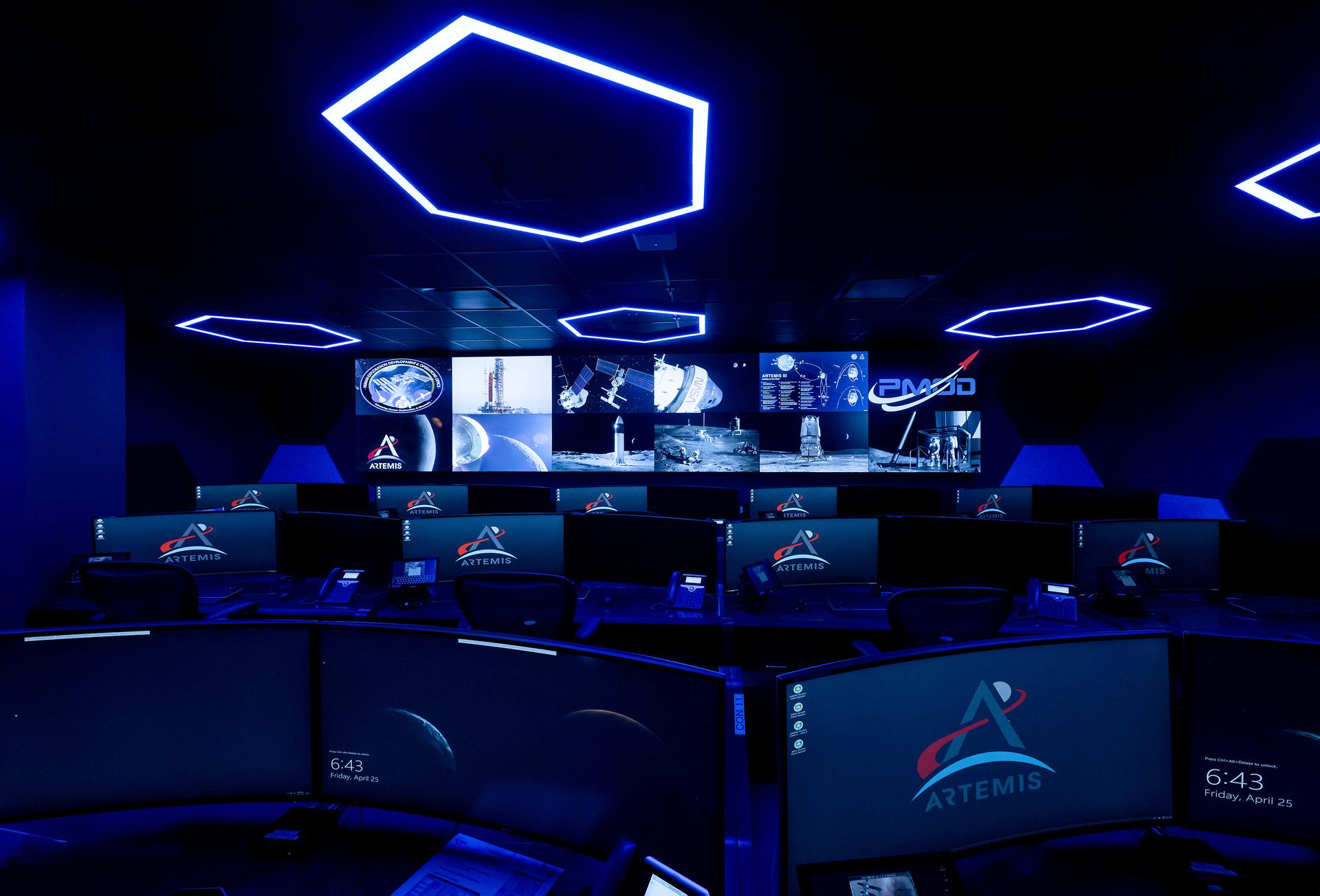
These photos offer a look inside the twin control rooms at NASA’s Marshall Space Flight Center in Huntsville, Alabama, where engineers will monitor Artemis science and future landing operations for Artemis. The LUCA (Lunar Utilization Control Area) and LESA (Lander Engineering Support Area) rooms are part of the Huntsville Operations Support Center at NASA Marshall. The LUCA is specially designed to support a wide variety of science operations on and around the Moon – and beyond. Engineers in the LUCA monitored operations for the Lunar Node-1 experiment, an autonomous navigation payload that was part of the first NASA Commercial Lunar Payload Services (CLPS) launch on Intuitive Machines’ Nova-C lunar lander in 2024. NASA Marshall flight controllers will use the LUCA again for Artemis II to monitor science operations. Beginning with Artemis III, members of the NASA Human Landing System Mission Insight Support Team – a group of engineers, safety leads, flight operations experts, and technical authorities – will work in the LESA. There, they will monitor lander systems in real-time and be involved in key decision-making processes throughout the mission. For more information, contact NASA Marshall’s Office of Communications at 256-544-0034.
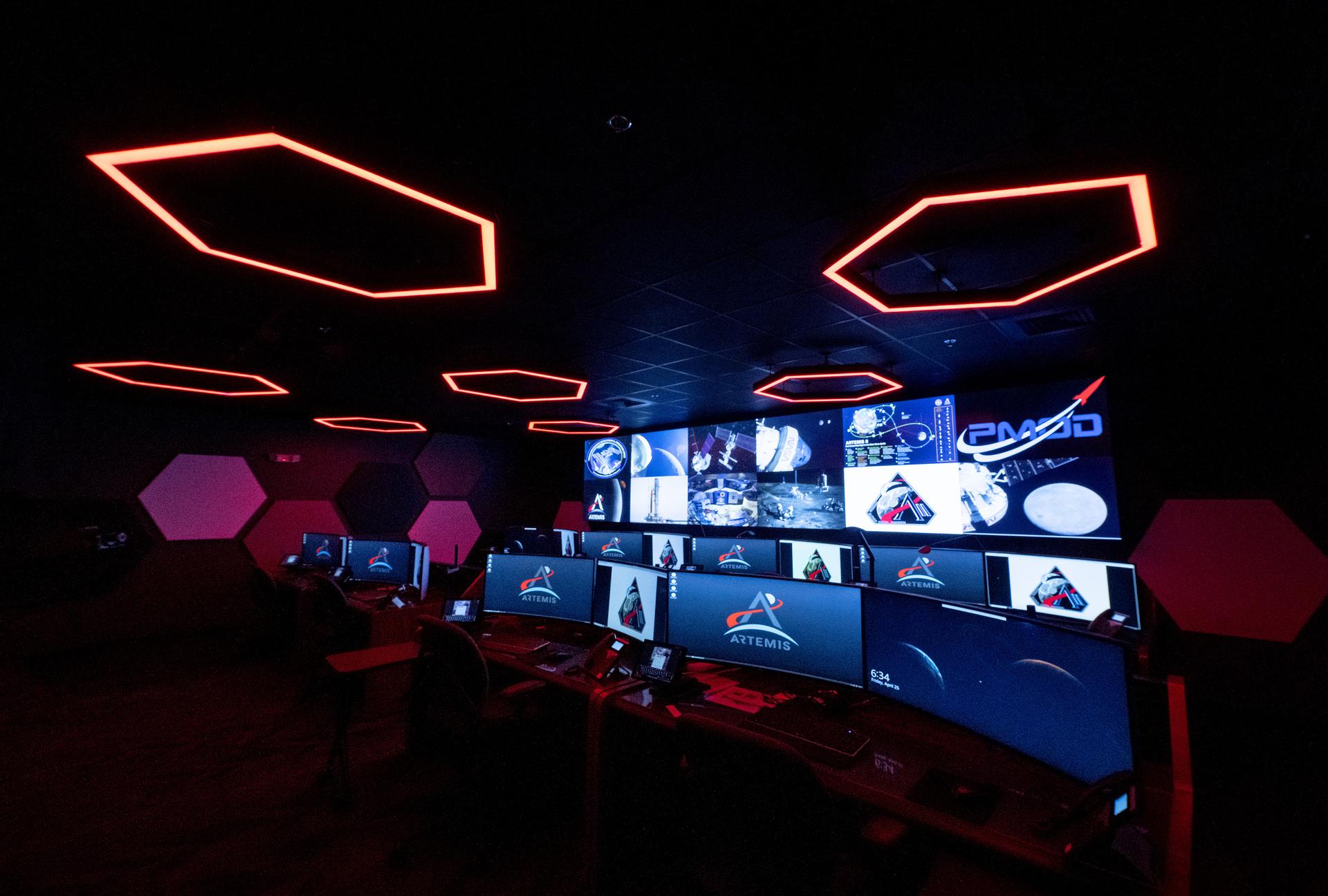
These photos offer a look inside the twin control rooms at NASA’s Marshall Space Flight Center in Huntsville, Alabama, where engineers will monitor Artemis science and future landing operations for Artemis. The LUCA (Lunar Utilization Control Area) and LESA (Lander Engineering Support Area) rooms are part of the Huntsville Operations Support Center at NASA Marshall. The LUCA is specially designed to support a wide variety of science operations on and around the Moon – and beyond. Engineers in the LUCA monitored operations for the Lunar Node-1 experiment, an autonomous navigation payload that was part of the first NASA Commercial Lunar Payload Services (CLPS) launch on Intuitive Machines’ Nova-C lunar lander in 2024. NASA Marshall flight controllers will use the LUCA again for Artemis II to monitor science operations. Beginning with Artemis III, members of the NASA Human Landing System Mission Insight Support Team – a group of engineers, safety leads, flight operations experts, and technical authorities – will work in the LESA. There, they will monitor lander systems in real-time and be involved in key decision-making processes throughout the mission. For more information, contact NASA Marshall’s Office of Communications at 256-544-0034.
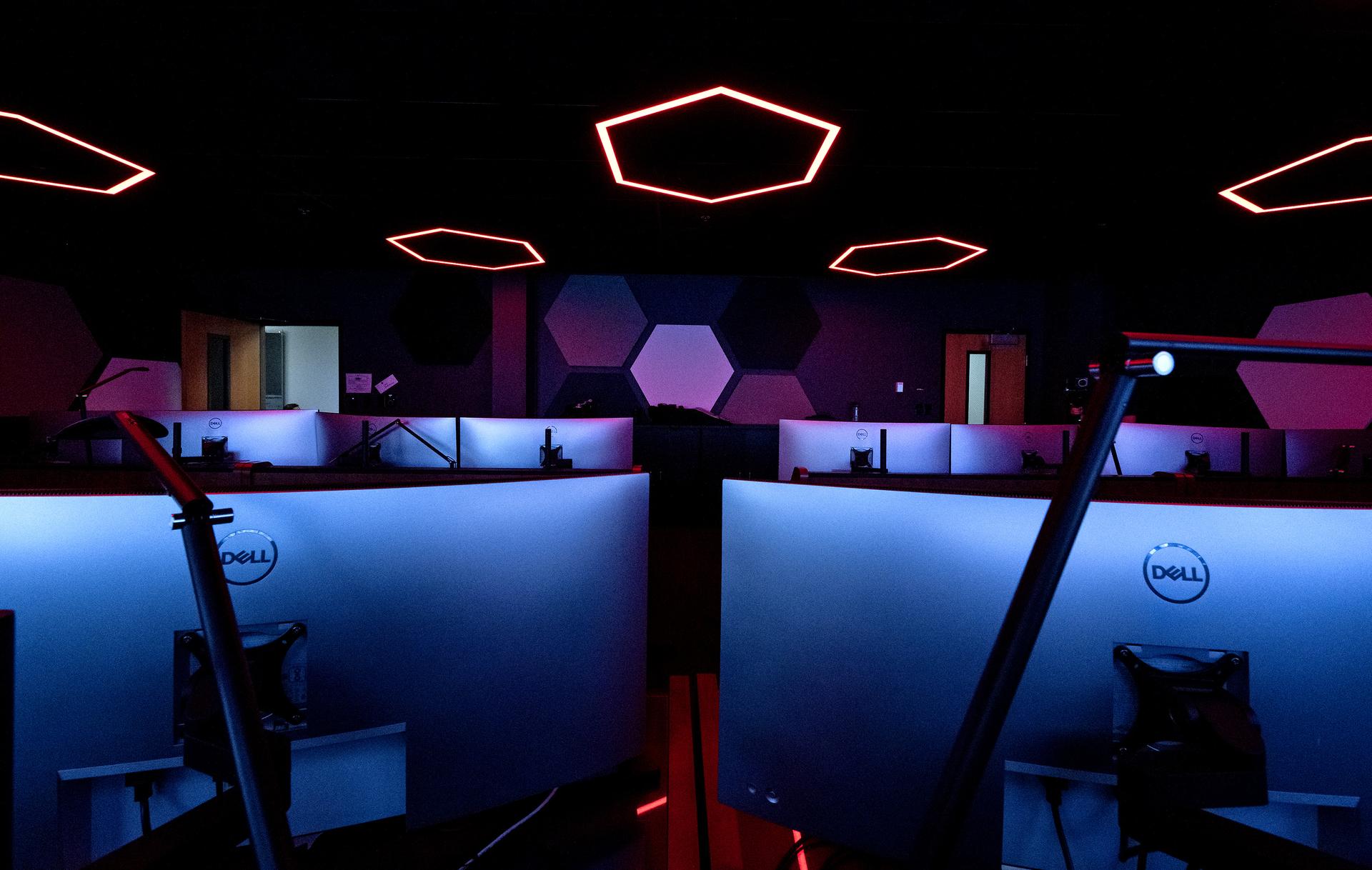
These photos offer a look inside the twin control rooms at NASA’s Marshall Space Flight Center in Huntsville, Alabama, where engineers will monitor Artemis science and future landing operations for Artemis. The LUCA (Lunar Utilization Control Area) and LESA (Lander Engineering Support Area) rooms are part of the Huntsville Operations Support Center at NASA Marshall. The LUCA is specially designed to support a wide variety of science operations on and around the Moon – and beyond. Engineers in the LUCA monitored operations for the Lunar Node-1 experiment, an autonomous navigation payload that was part of the first NASA Commercial Lunar Payload Services (CLPS) launch on Intuitive Machines’ Nova-C lunar lander in 2024. NASA Marshall flight controllers will use the LUCA again for Artemis II to monitor science operations. Beginning with Artemis III, members of the NASA Human Landing System Mission Insight Support Team – a group of engineers, safety leads, flight operations experts, and technical authorities – will work in the LESA. There, they will monitor lander systems in real-time and be involved in key decision-making processes throughout the mission. For more information, contact NASA Marshall’s Office of Communications at 256-544-0034.
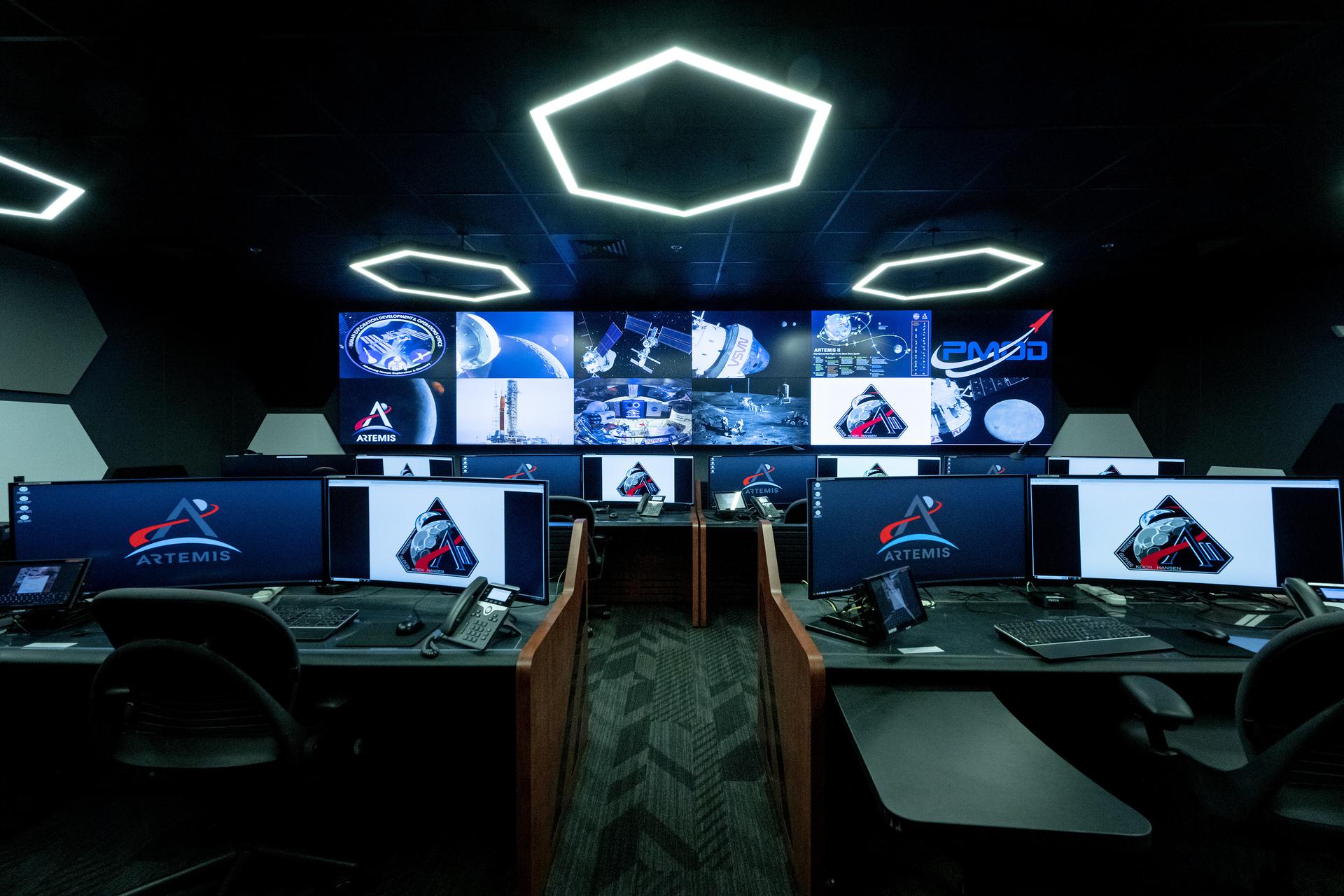
These photos offer a look inside the twin control rooms at NASA’s Marshall Space Flight Center in Huntsville, Alabama, where engineers will monitor Artemis science and future landing operations for Artemis. The LUCA (Lunar Utilization Control Area) and LESA (Lander Engineering Support Area) rooms are part of the Huntsville Operations Support Center at NASA Marshall. The LUCA is specially designed to support a wide variety of science operations on and around the Moon – and beyond. Engineers in the LUCA monitored operations for the Lunar Node-1 experiment, an autonomous navigation payload that was part of the first NASA Commercial Lunar Payload Services (CLPS) launch on Intuitive Machines’ Nova-C lunar lander in 2024. NASA Marshall flight controllers will use the LUCA again for Artemis II to monitor science operations. Beginning with Artemis III, members of the NASA Human Landing System Mission Insight Support Team – a group of engineers, safety leads, flight operations experts, and technical authorities – will work in the LESA. There, they will monitor lander systems in real-time and be involved in key decision-making processes throughout the mission. For more information, contact NASA Marshall’s Office of Communications at 256-544-0034.
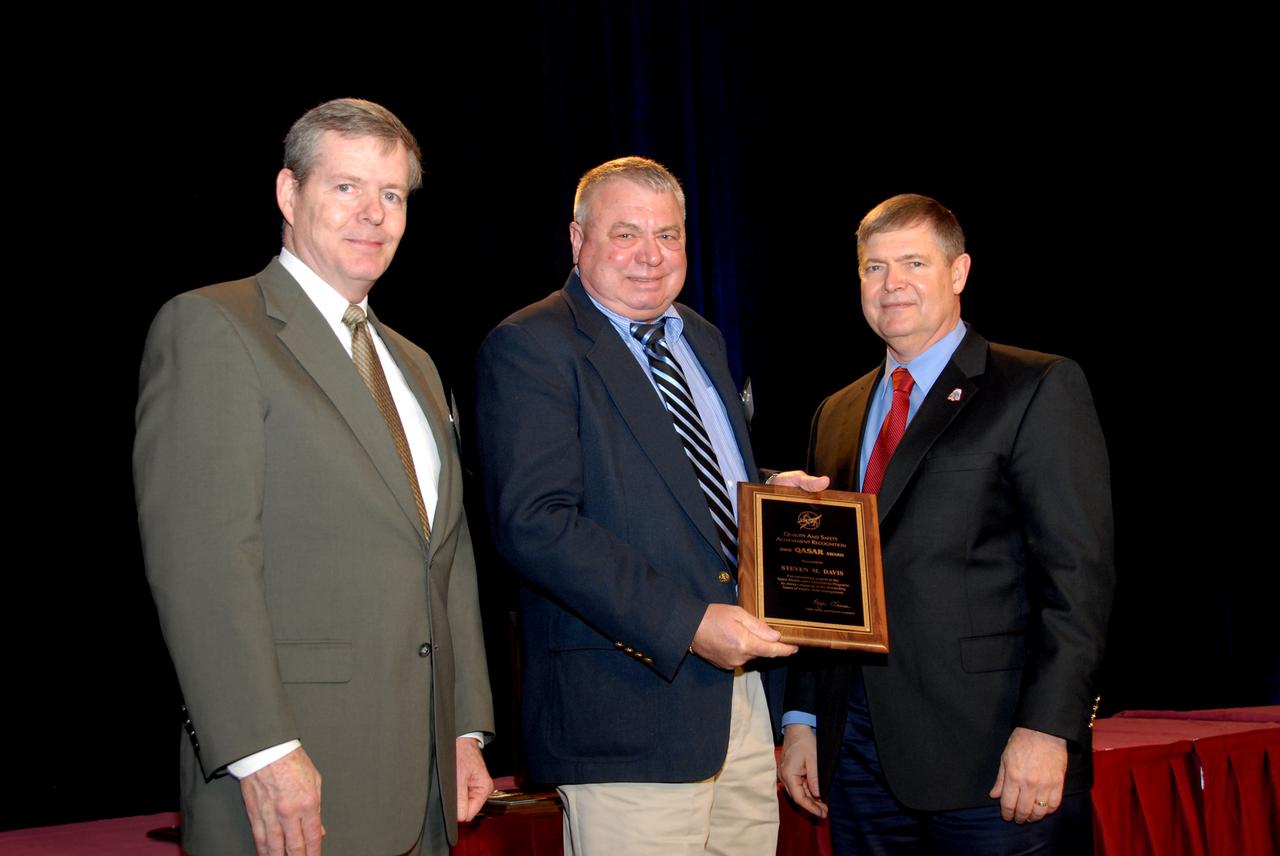
CAPE CANAVERAL, Fla. – NASA's Chief Safety and Mission Assurance Officer, Bryan D. O'Connor (left), presents a Quality and Safety Achievement Recognition, or QASAR, award for 2008 to Steven M. Davis (center). Davis, an employee of the Defense Contract Management Agency at NASA's Kennedy Space Center, received the award for his attention to detail in an incident involving a space shuttle solid rocket booster. At right is Dr. Michael Ryschkewitsch, NASA's chief engineer. Davis received the award at NASA's sixth annual Project Management Challenge in Daytona Beach, Fla. The QASAR award recognizes individual government and contractor employees who have demonstrated exemplary performance in contributing to the quality and/or safety of products, services, processes or management programs and activities. Photo credit: NASA/Ben Smegelsky
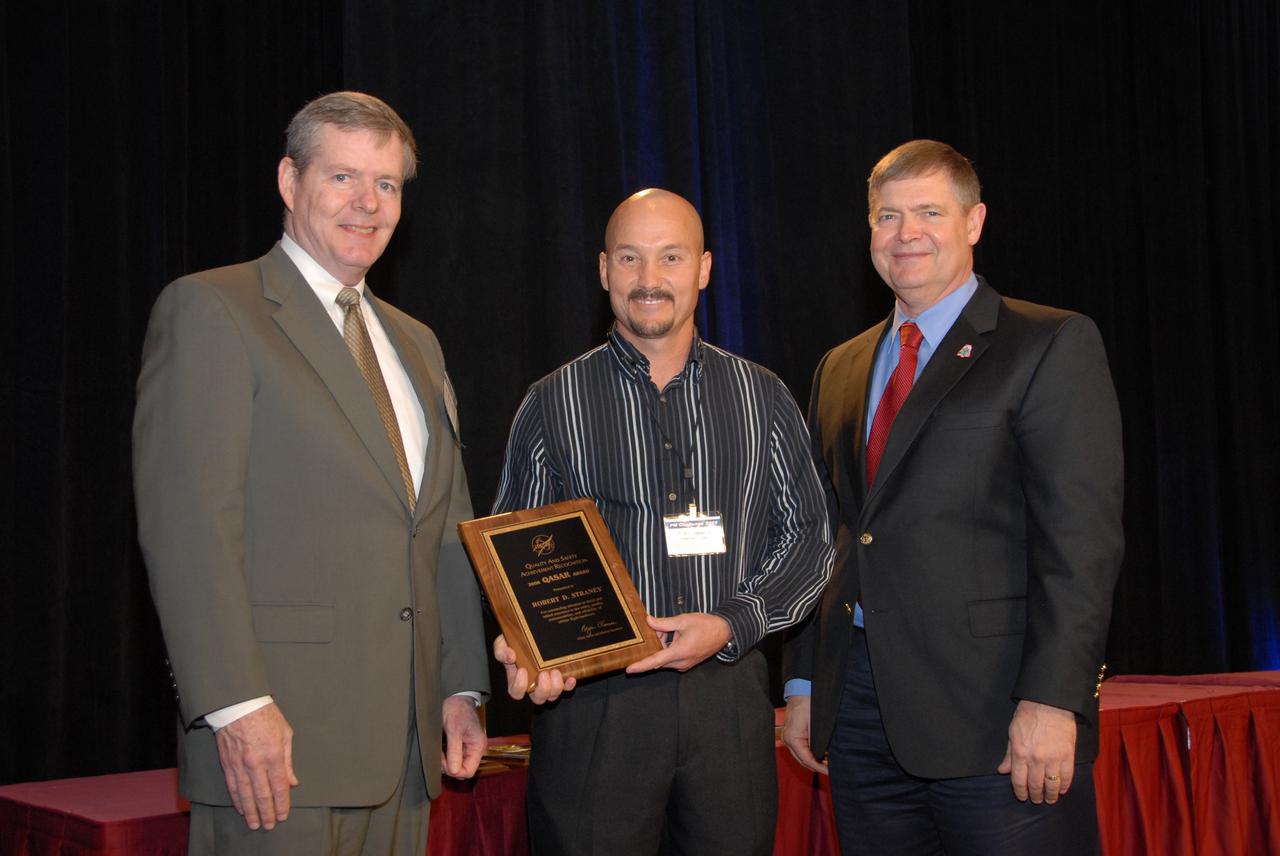
CAPE CANAVERAL, Fla. – NASA's Chief Safety and Mission Assurance Officer, Bryan D. O'Connor (left), presents a Quality and Safety Achievement Recognition, or QASAR, award for 2008 to Robert D. Straney (center). Straney, an employee of United Space Alliance at NASA's Kennedy Space Center in Florida, received the award for his attention to detail in an inspection of the space shuttle Discovery. At right is Dr. Michael Ryschkewitsch, NASA's chief engineer. Straney received the award at NASA's sixth annual Project Management Challenge in Daytona Beach, Fla. The QASAR award recognizes individual government and contractor employees who have demonstrated exemplary performance in contributing to the quality and/or safety of products, services, processes or management programs and activities. Photo credit: NASA/Ben Smegelsky
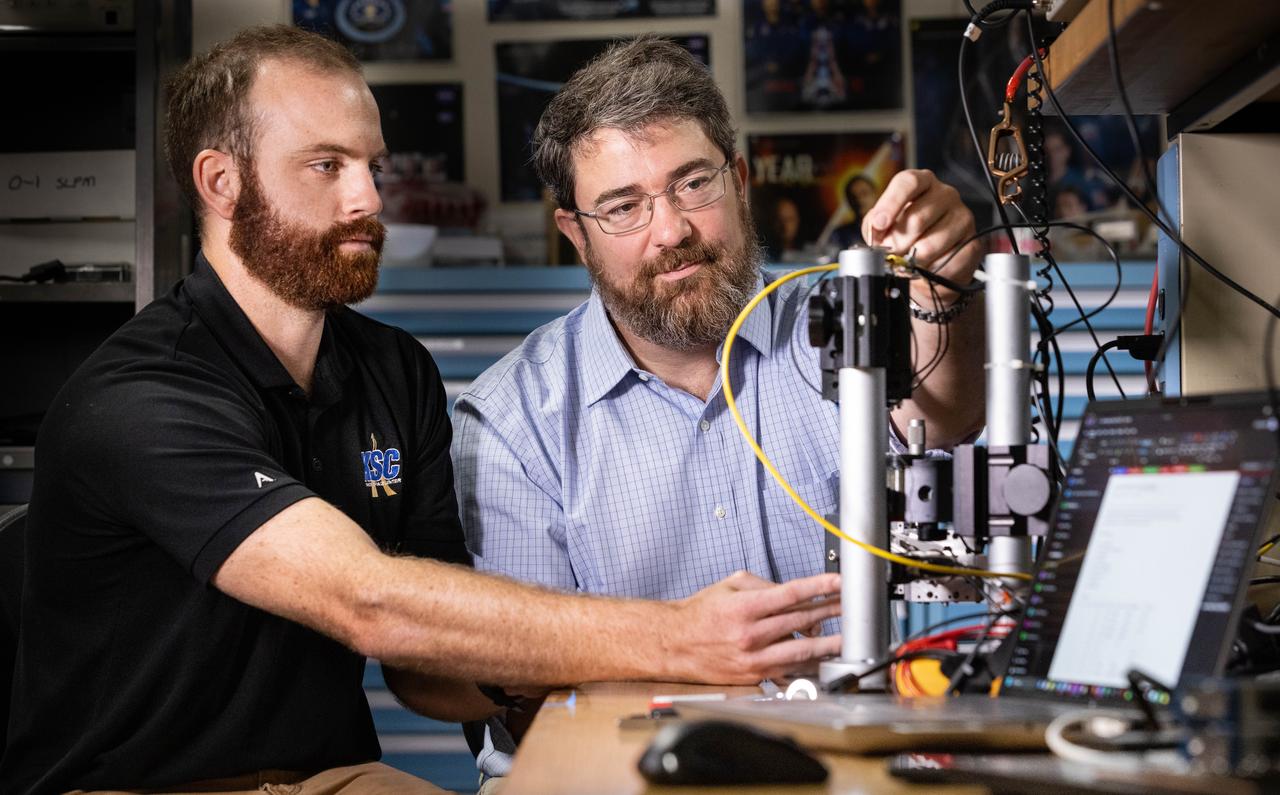
Left to right, Stefan Tomovic from the Engineering Directorate at NASA’s Kennedy Space Center in Florida and Christopher Biagi from the agency’s Exploration Research & Technology Program evaluate pressure transducers for NASA’s Engineering and Safety Center on Wednesday, Aug. 20, 2025. This probe is designed to improve the detection of thruster pressure sensor anomalies for the agency’s Commercial Crew Program.
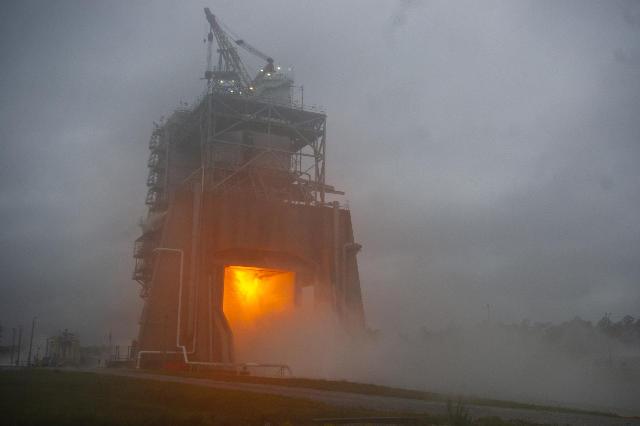
Operators fire the RS-25 engine at NASA’s Stennis Space Center on Nov. 15, 2023, up to the 113% power level. The first four Artemis missions are using modified space shuttle main engines that can power up to 109% of their rated level. New RS-25 engines will power up to the 111% level to provide additional thrust, so testing up to the 113% power level provides a margin of operational safety.
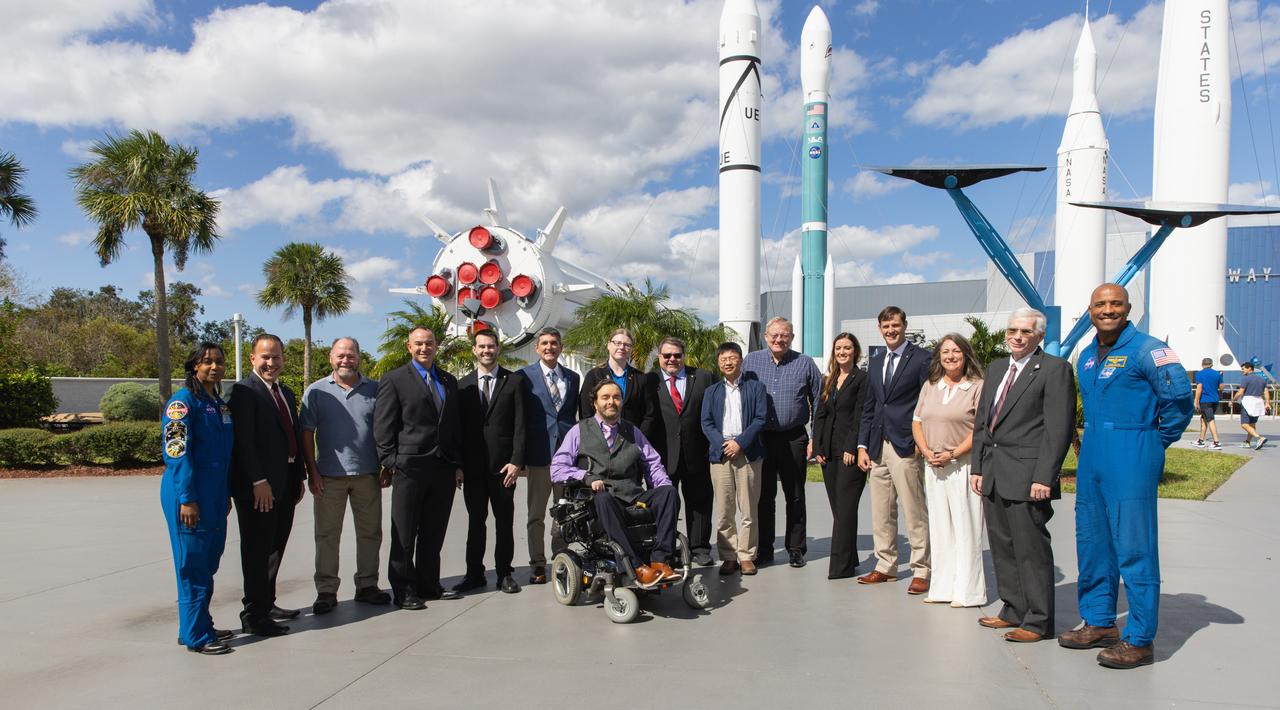
NASA astronauts Stephanie Wilson and Victor Glover pose with recipients of the Silver Snoopy award after the ceremony on Thursday, Oct. 17, at the Kennedy Space Center Visitor Complex in Florida. From left to right, those photographed include Wilson; Marcos Otero-Cruz, Defense Contract Management Agency; Mark Burton, Jacobs Technology; Kevin Vega, NASA Engineering; John Posey, NASA Engineering; Miles Ashley, NASA Engineering; Jamie Szafran, NASA Engineering; Paul Kuracz, NASA Engineering; Wilson Zheng, Jacobs Technology; Mark Dykstra, Defense Contract Management Agency; Elizabeth Cook, Safety and Mission Assurance; Dean Kendall, Jacobs Technology; Connie Lehan, NASA Engineering; Paul Janes, Jacobs Technology; Glover; and in front, Salim Nasser, NASA Engineering. The Silver Snoopy is part of NASA’s Space Flight Awareness Program, which recognizes outstanding job performances and contributions by civil servants and contract employees. It focuses on excellence in quality and safety in support of human spaceflight.

Foreground, from left: Teresa Nieves-Chinchilla, director of the Moon to Mars Space Weather Analysis Office at NASA’s Goddard Space Flight Center; Kyle Back, director of the business management office at the Office of the Chief Financial Officer Enterprise at NASA Headquarters; NASA Administrator Jared Isaacman; and Luis Muniz, radiation safety officer at NASA’s Goddard Space Flight Center; background: Sean Clarke, NASA technical fellow for electric power for the NASA Engineering and Safety Center, based at NASA’s Armstrong Flight Research Center, center, and Ryan Fishel, pilot, right, pose for a photograph following an employee incentive flying event with Isaacman's personal F-5 aircraft, Friday, March 27, 2026, at NASA’s Kennedy Space Center in Florida. Photo Credit: (NASA/John Kraus)
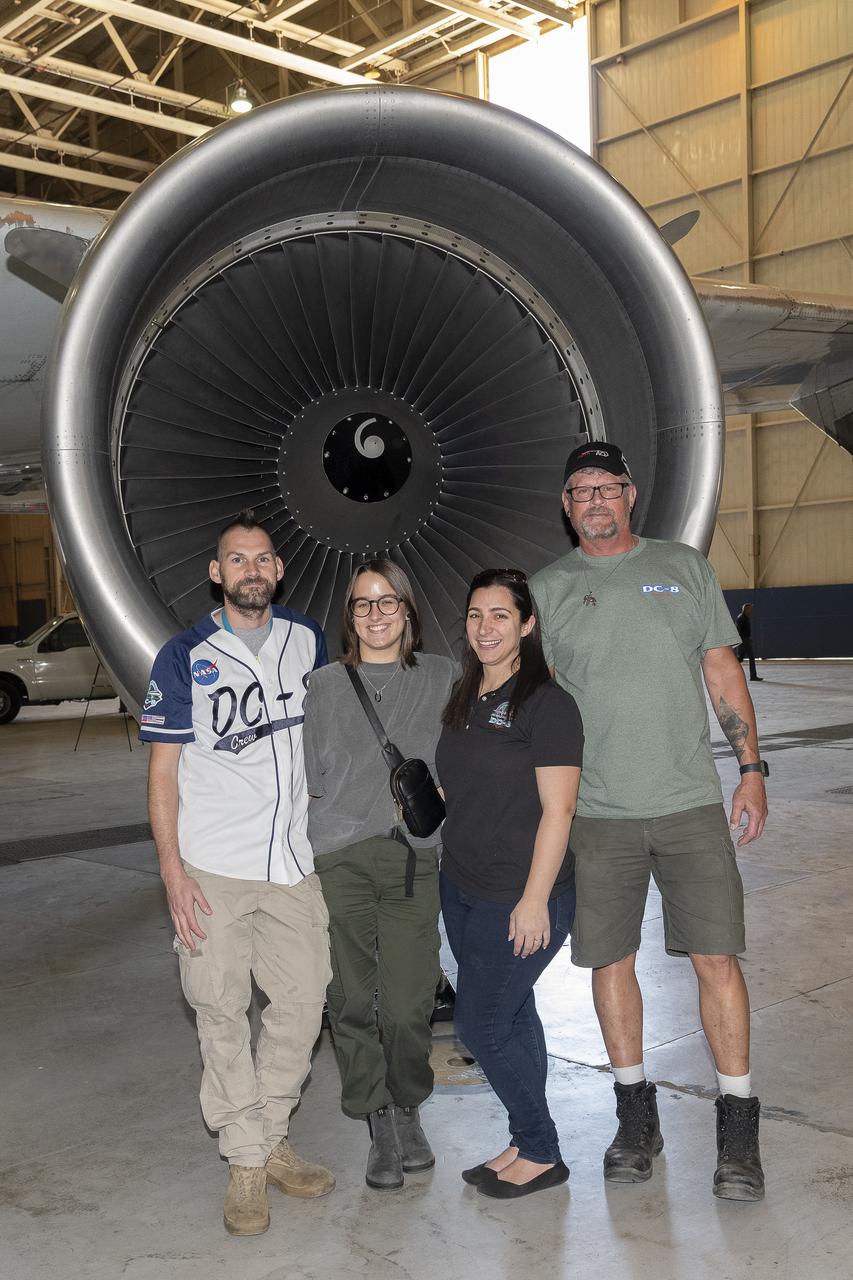
Members of past science missions pose together in front of the DC-8 aircraft’s left engine turbine at NASA’s Armstrong Flight Research Center Building 703 in Palmdale, California. From left are avionics lead Kelly Jellison, chemical scientist Katherine Ball, DC-8 Deputy Program Manager Kirsten Boogaard, and DC-8 safety engineer Garry Moors. On May 2, 2024, NASA personnel, friends, and family celebrated the DC-8 staff, aircraft, and science campaigns.
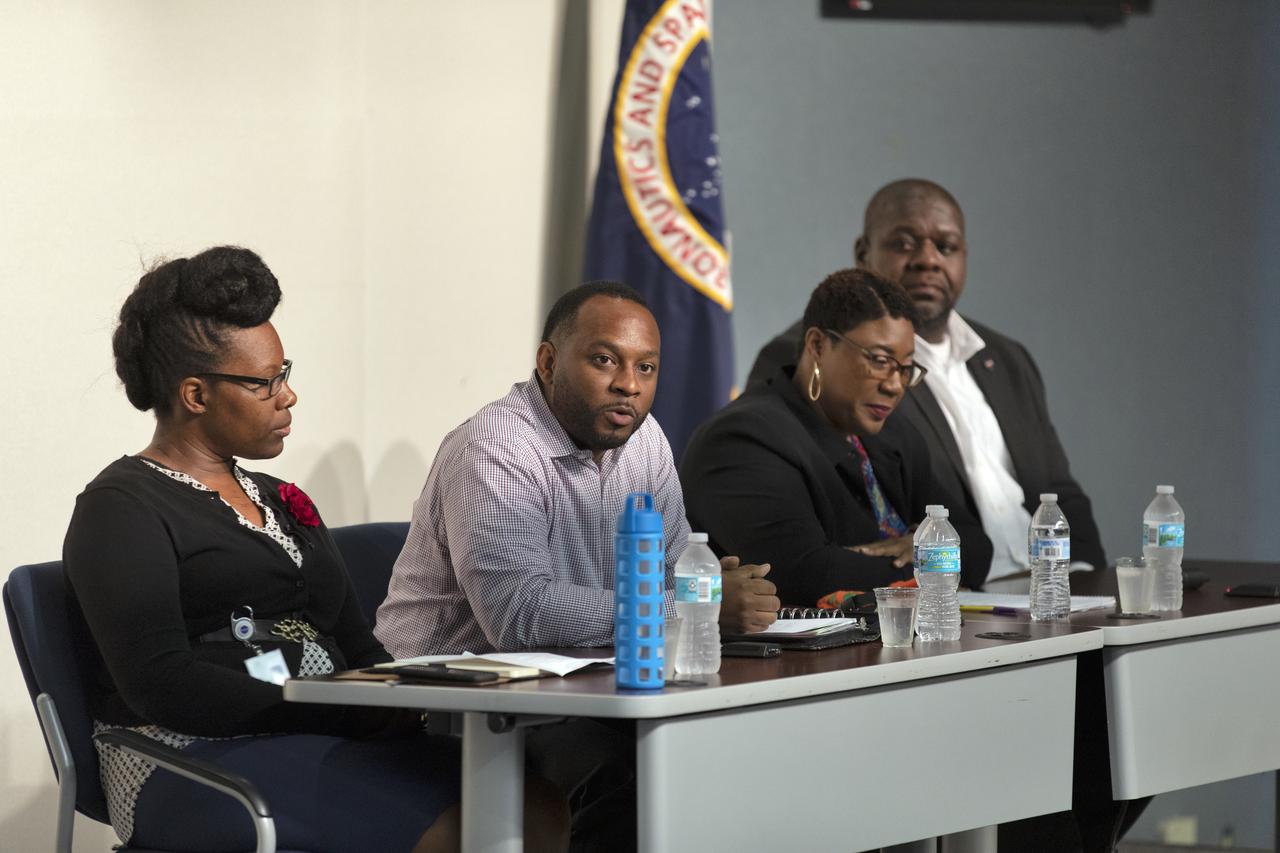
In recognition of Black History Month, the Black Employee Strategy Team hosted a panel discussion featuring some of the future leaders of NASA’s Kennedy Space Center on Feb. 13, 2019. Participants from left, are Tamiko Fletcher, Kennedy’s chief security information officer in IT Security; Anthony Harris, chief, Facility Systems Branch in Safety and Mission Assurance; Charmel Anderson-Jones, senior cross program quality engineer in the Safety and Mission Assurance Directorate, Exploration Ground Systems Division; and Malcolm Boston, contracting officer representative in the Launch Services Program. They shared personal testimony about their journey toward NASA employment, leadership styles and keys to their success.
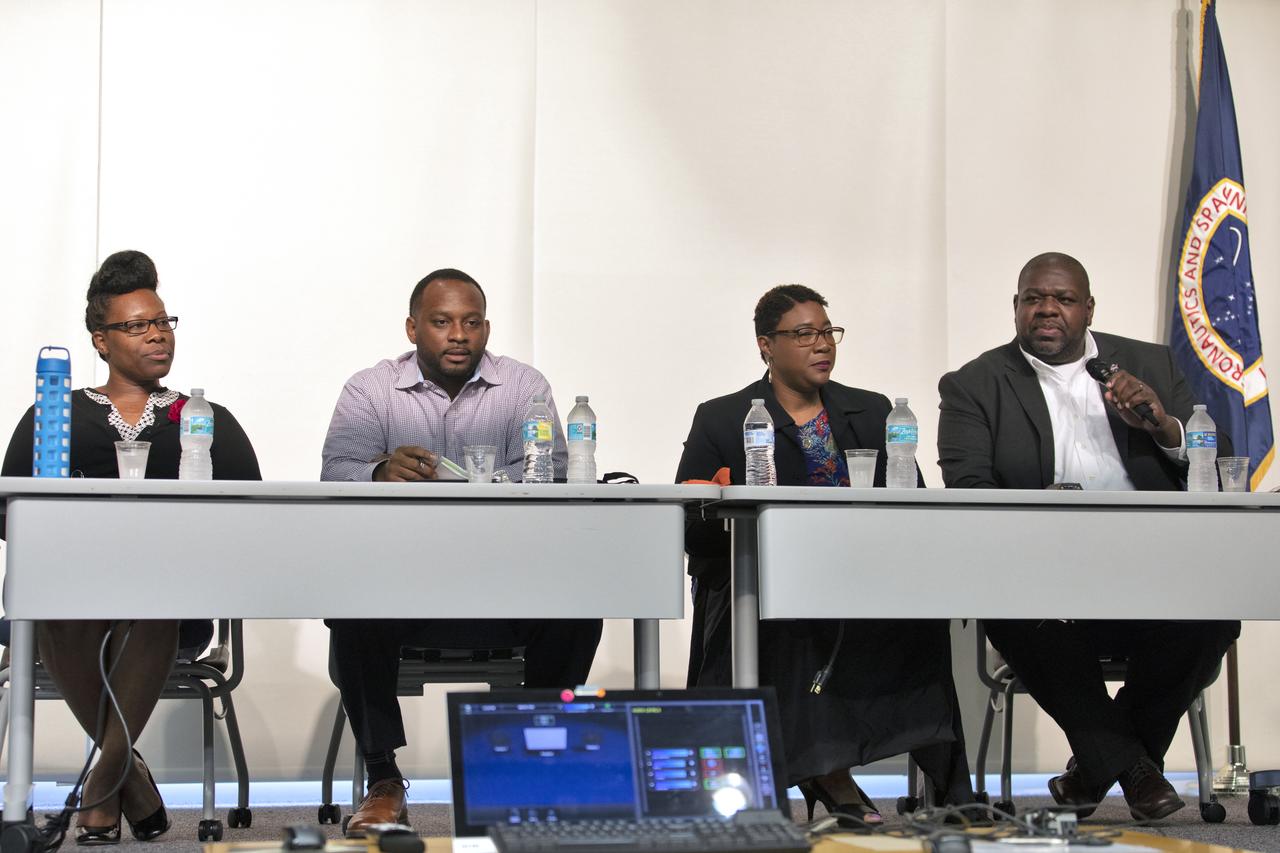
In recognition of Black History Month, the Black Employee Strategy Team hosted a panel discussion featuring some of the future leaders of NASA’s Kennedy Space Center on Feb. 13, 2019. Participants from left, are Tamiko Fletcher, Kennedy’s chief security information officer in IT Security; Anthony Harris, chief, Facility Systems Branch in Safety and Mission Assurance; Charmel Anderson-Jones, senior cross program quality engineer in the Safety and Mission Assurance Directorate, Exploration Ground Systems Division; and Malcolm Boston, contracting officer representative in the Launch Services Program. They shared personal testimony about their journey toward NASA employment, leadership styles and keys to their success.

Sean Clarke, NASA technical fellow for electric power for the NASA Engineering and Safety Center (NESC), based at NASA’s Armstrong Flight Research Center, participates in an employee incentive flying event with NASA Administrator Jared Isaacman's personal F-5 aircraft, Friday, March 27, 2026, at NASA’s Kennedy Space Center in Florida. Photo Credit: (NASA/John Kraus)
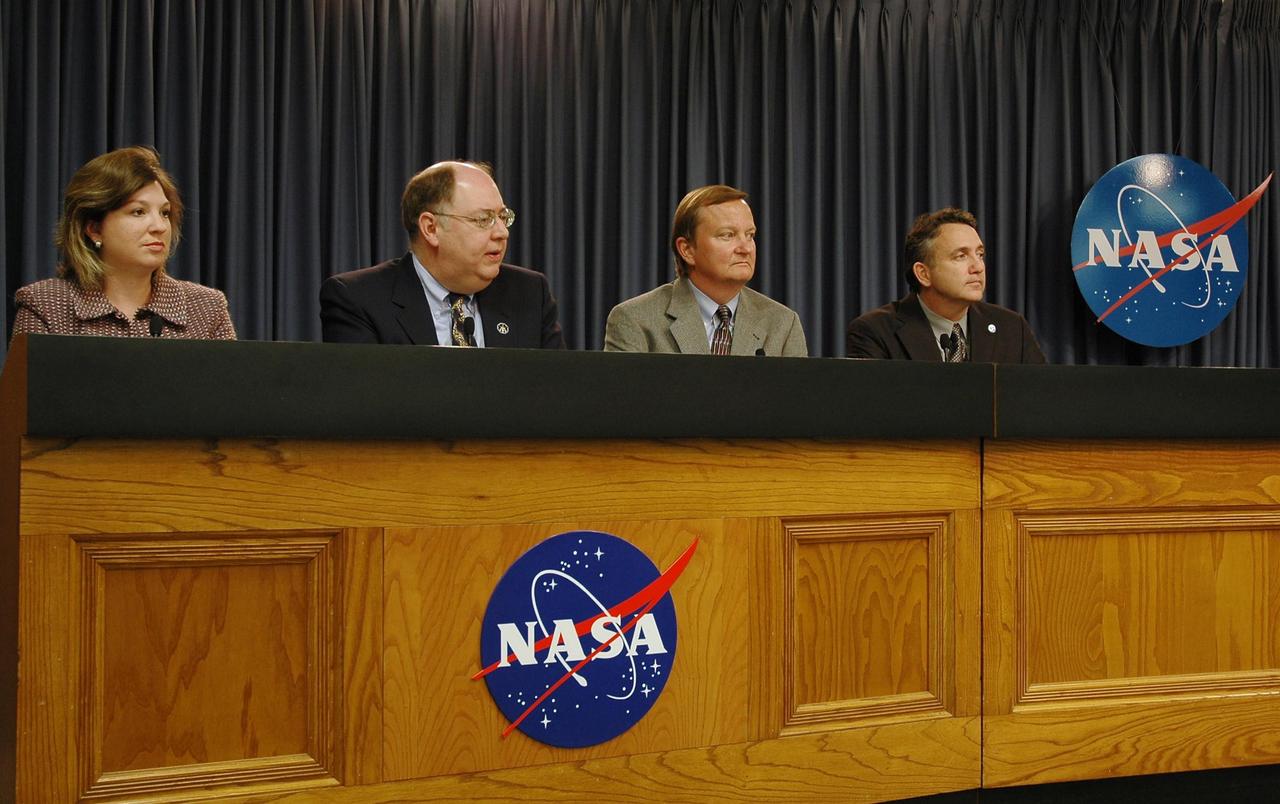
KENNEDY SPACE CENTER, FLA. - NASA managers brief the media about the Space Shuttle Program and mission STS-121 from the press site at NASA's Kennedy Space Center in Florida. Public Information Officer Jessica Rye moderated. Seated at her right are Space Shuttle Program Manager Wayne Hale, NASA Launch Director Mike Leinbach and STS-114 External Tank Tiger Team lead Tim Wilson, with the NASA Engineering & Safety Center. Photo credit: NASA/Jack Pfaller
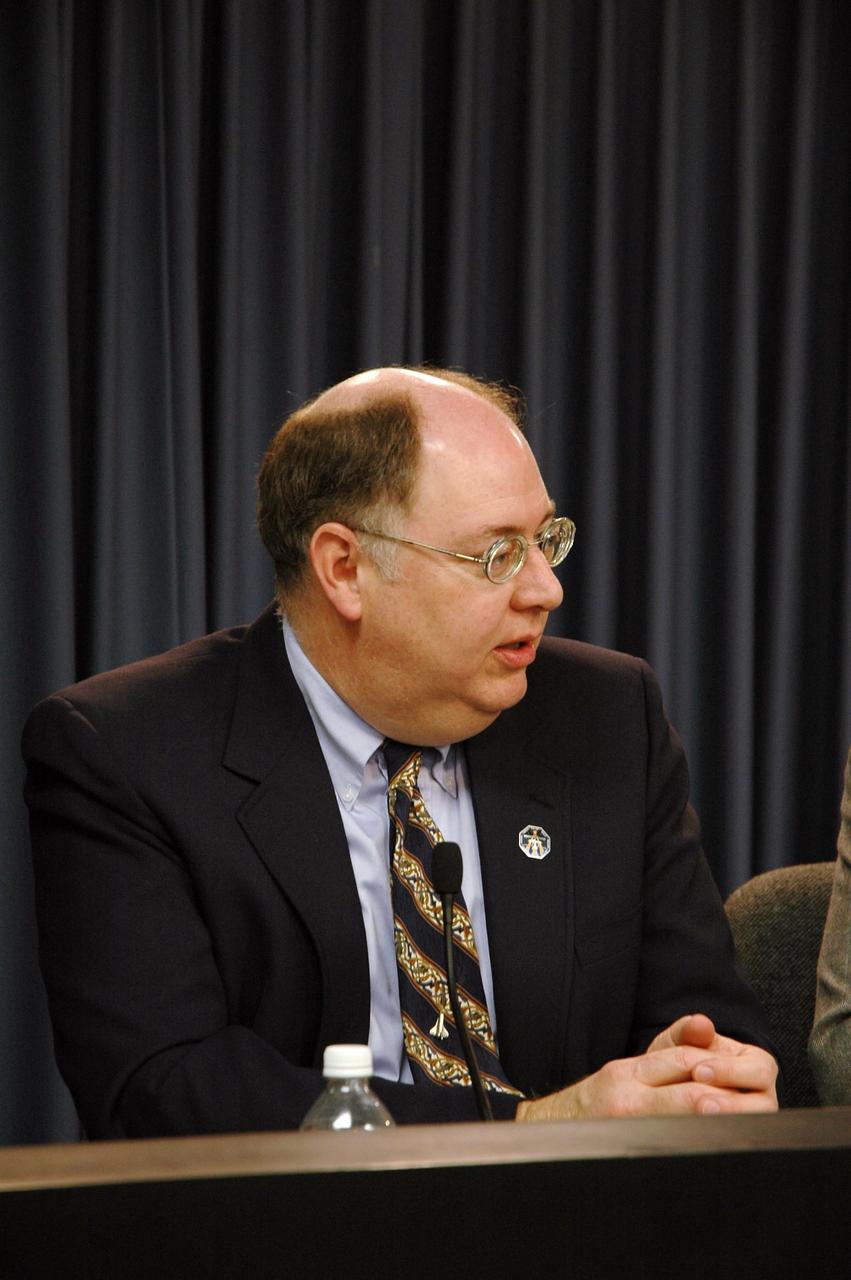
KENNEDY SPACE CENTER, FLA. - Space Shuttle Program Manager Wayne Hale answers a question from a reporter during a press conference. He and NASA Launch Director Mike Leinbach and STS-114 External Tank Tiger Team lead Tim Wilson, with the NASA Engineering & Safety Center, briefed the media about the Space Shuttle Program and mission STS-121 from the press site at NASA's Kennedy Space Center in Florida. Photo credit: NASA/Jack Pfaller
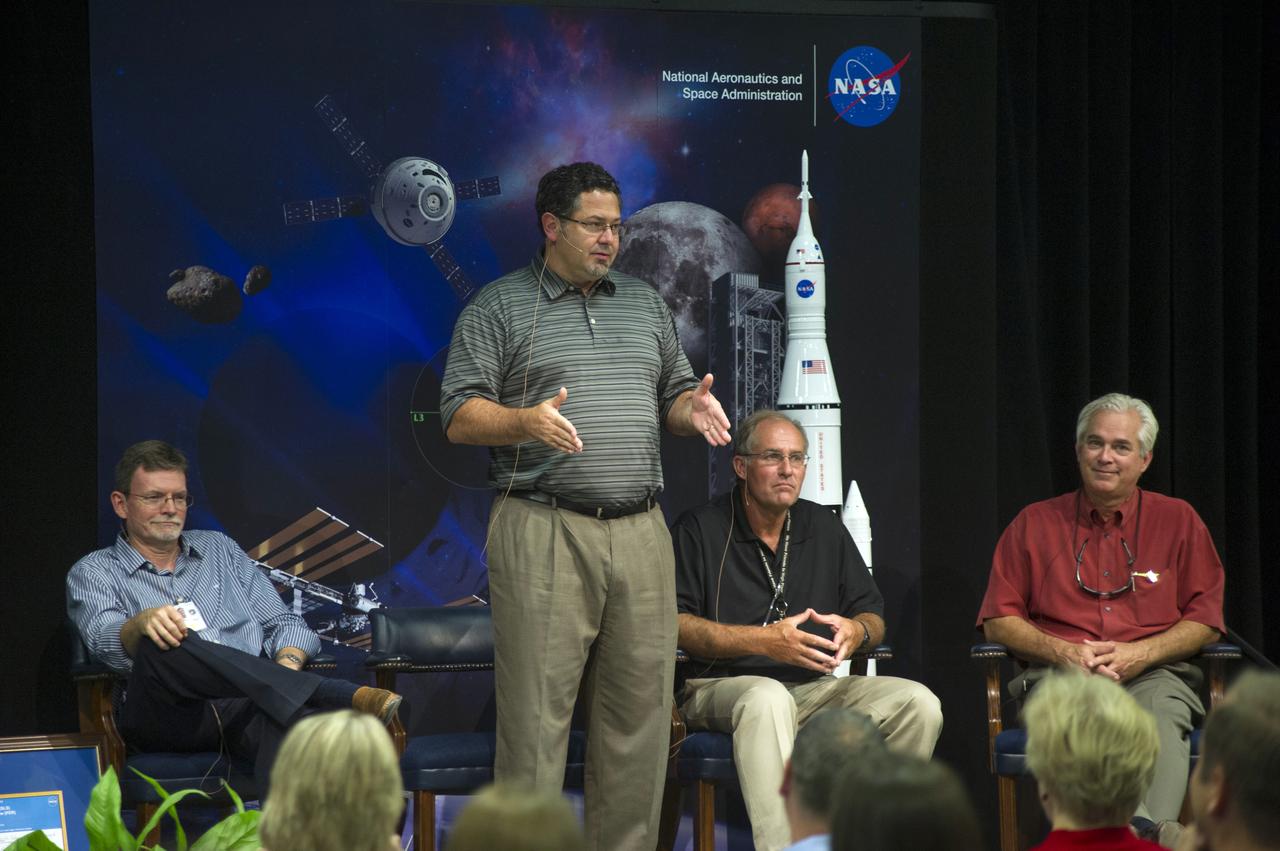
MORE THAN 250 PEOPLE FROM ACROSS NASA'S MARSHALL SPACE FLIGHT CENTER PARTICIPATED IN THE SPACE LAUNCH SYSTEM (SLS) POST-PRELIMINARY DESIGN REVIEW REPORT, HELD AUG. 5 IN ACTIVITIES BUILDING 4316. DISCUSSING THE REVIEW AND THANKING THE MARSHALL TEAM FOR A JOB WELL DONE, ARE FROM LEFT, GARRY LYLES, SLS CHIEF ENGINEER; TODD MAY, MANAGER OF THE SLS PROGRAM; STEVE CASH, DIRECTOR OF MARSHALL’S SAFETY & MISSION ASSURANCE DIRECTORATE; AND CHRIS SINGER, MANAGER OF MARSHALL’S ENGINEERING DIRECTORATE

Dr. Marla Perez-Davis, GRC Deputy Center Director, Ralph Roe, NASA Chief Engineer, Dr. Janet Kavandi, GRC Center Director, and Terrence Wilcutt, NASA Chief Safety and Mission Assurance, address an audience of GRC managers during a Lessons In Leadership Series, Executive Leadership Workshop at Glenn Research Center. August 13, 2019.

Dr. Marla Perez-Davis, GRC Deputy Center Director, Ralph Roe, NASA Chief Engineer, Dr. Janet Kavandi, GRC Center Director, and Terrence Wilcutt, NASA Chief Safety and Mission Assurance, address an audience of GRC managers during a Lessons In Leadership Series, Executive Leadership Workshop at Glenn Research Center. August 13, 2019.

Dr. Marla Perez-Davis, GRC Deputy Center Director, Ralph Roe, NASA Chief Engineer, Dr. Janet Kavandi, GRC Center Director, and Terrence Wilcutt, NASA Chief Safety and Mission Assurance, address an audience of GRC managers during a Lessons In Leadership Series, Executive Leadership Workshop at Glenn Research Center. August 13, 2019.
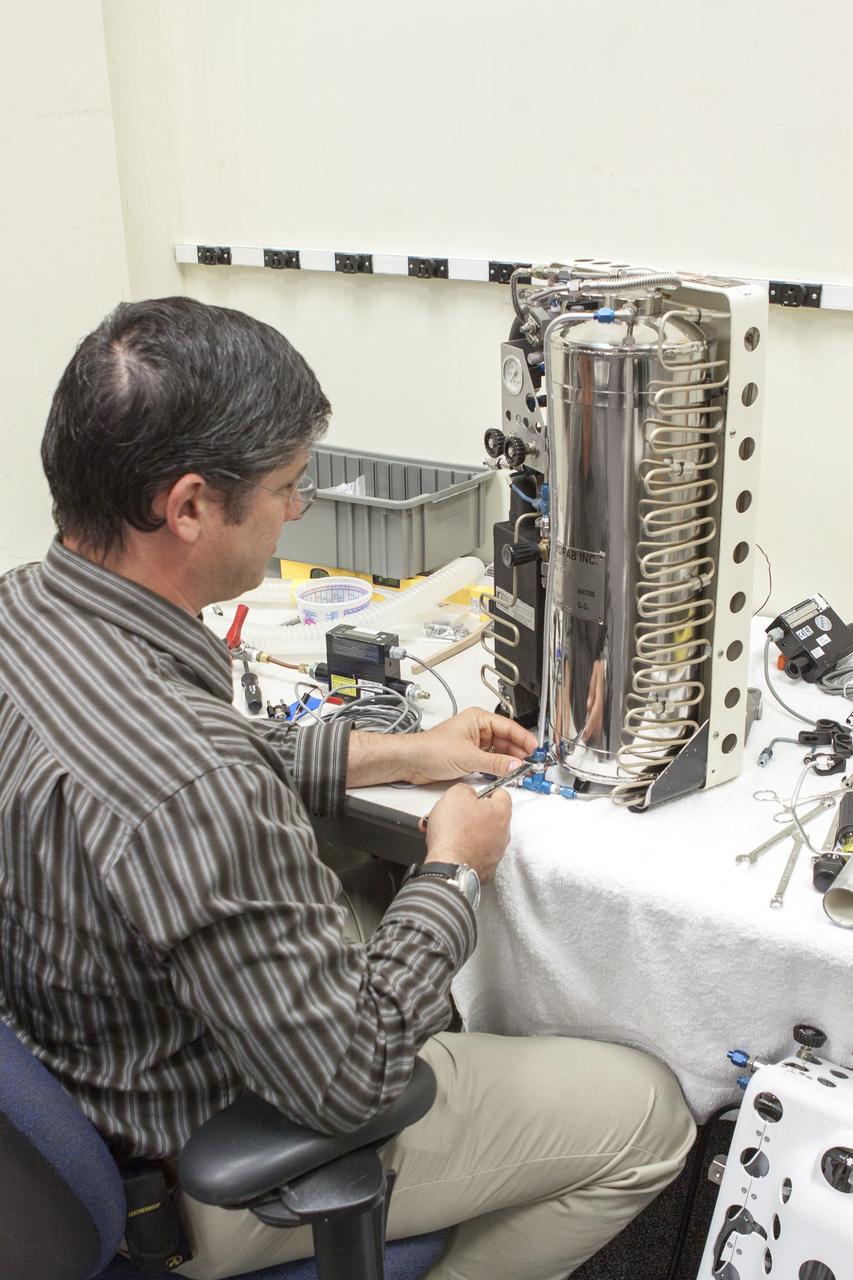
CAPE CANAVERAL, Fla. - NASA Kennedy Space Center Lead Engineer David Bush works on a prototype of a Cryogenic Refuge Alternative Supply System, or CryoRASS, in the Operations and Checkout Building. CryoRASS and a small liquid-air filled backpack called CryoBA, short for Cryogenic Breathing Apparatus, are being developed by a NASA Kennedy Space Center engineering team in collaboration with The National Institute for Occupational Safety and Health to provide miners with twice the amount of breathable and cooler air than traditional compressed systems. The technology also could be used for commercial applications, such as fire and military rescue operations, as well as NASA's future human spaceflight missions. Photo credit: NASA/Jim Gossmann
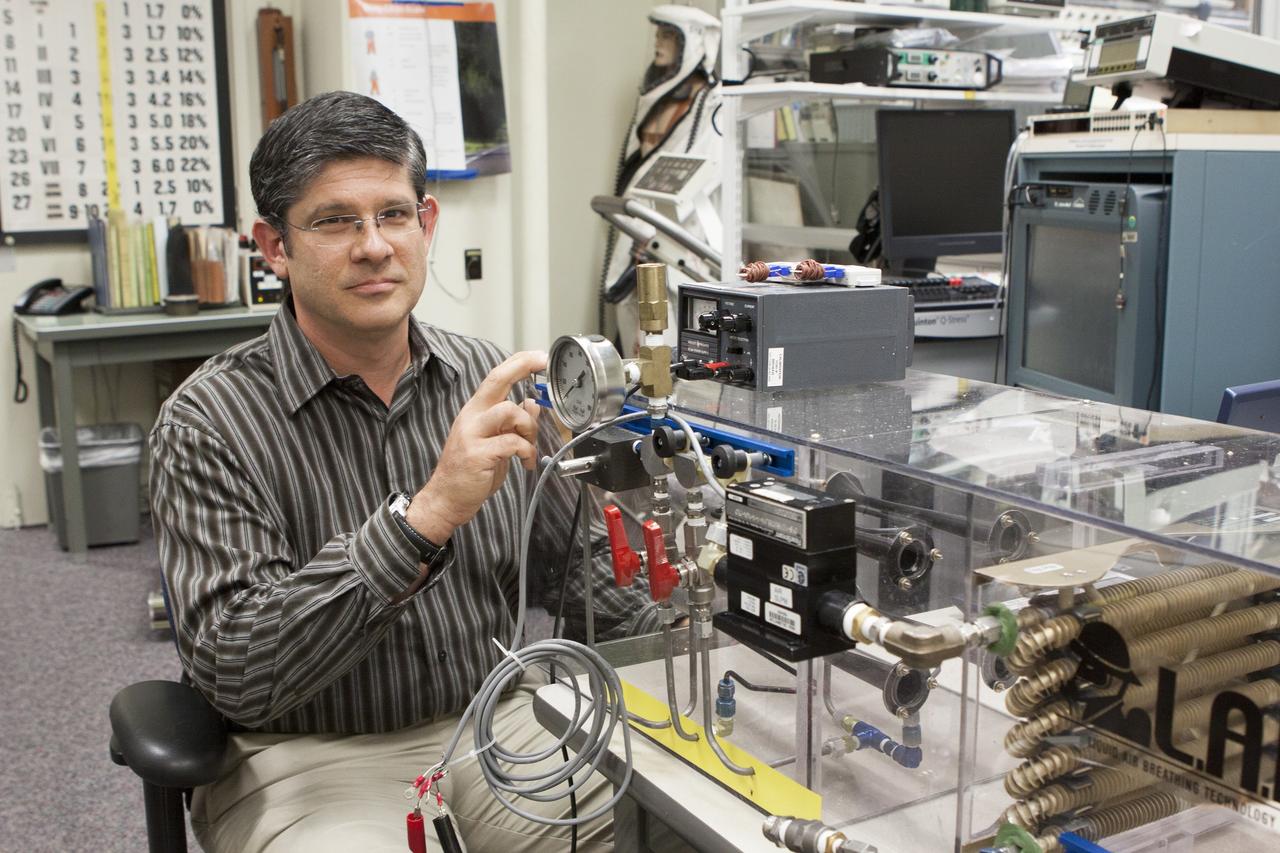
CAPE CANAVERAL, Fla. - NASA Kennedy Space Center Lead Engineer David Bush works on a prototype of a Cryogenic Refuge Alternative Supply System, or CryoRASS, in the Operations and Checkout Building. CryoRASS and a small liquid-air filled backpack called CryoBA, short for Cryogenic Breathing Apparatus, are being developed by a NASA Kennedy Space Center engineering team in collaboration with The National Institute for Occupational Safety and Health to provide miners with twice the amount of breathable and cooler air than traditional compressed systems. The technology also could be used for commercial applications, such as fire and military rescue operations, as well as NASA's future human spaceflight missions. Photo credit: NASA/Jim Gossmann
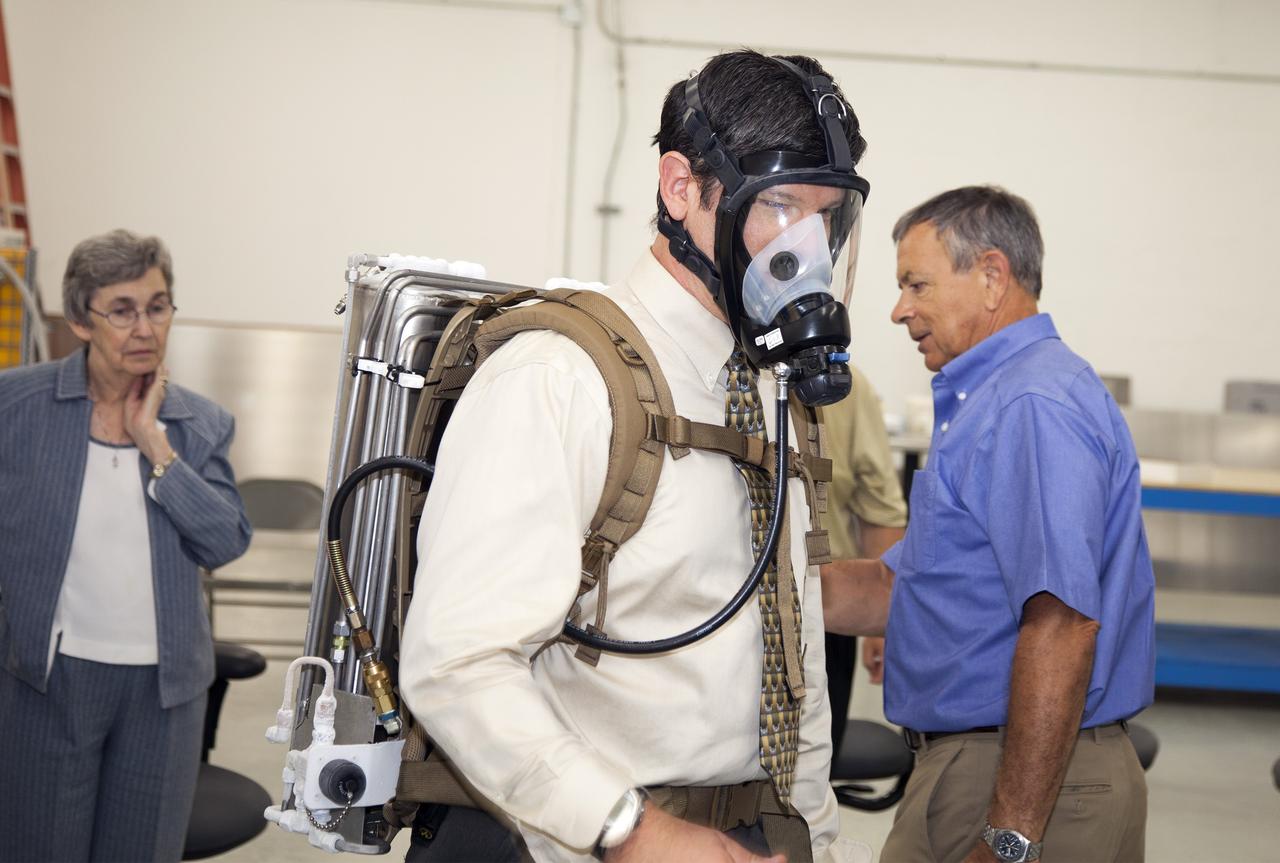
TITUSVILLE, Fla. - NASA Kennedy Space Center Lead Engineer David Bush, center, demos a small liquid-air filled backpack called CryoBA, short for Cryogenic Breathing Apparatus, at BCS Life Support in Titusville, Fla. The CryoBA and a larger Cryogenic Refuge Alternative Supply System, or CryoRASS, are being developed by a Kennedy engineering team in collaboration with The National Institute for Occupational Safety and Health to provide miners with twice the amount of breathable and cooler air than traditional compressed systems. The technology also could be used for commercial applications, such as fire and military rescue operations, as well as NASA's future human spaceflight missions. Photo credit: NASA/Daniel Casper
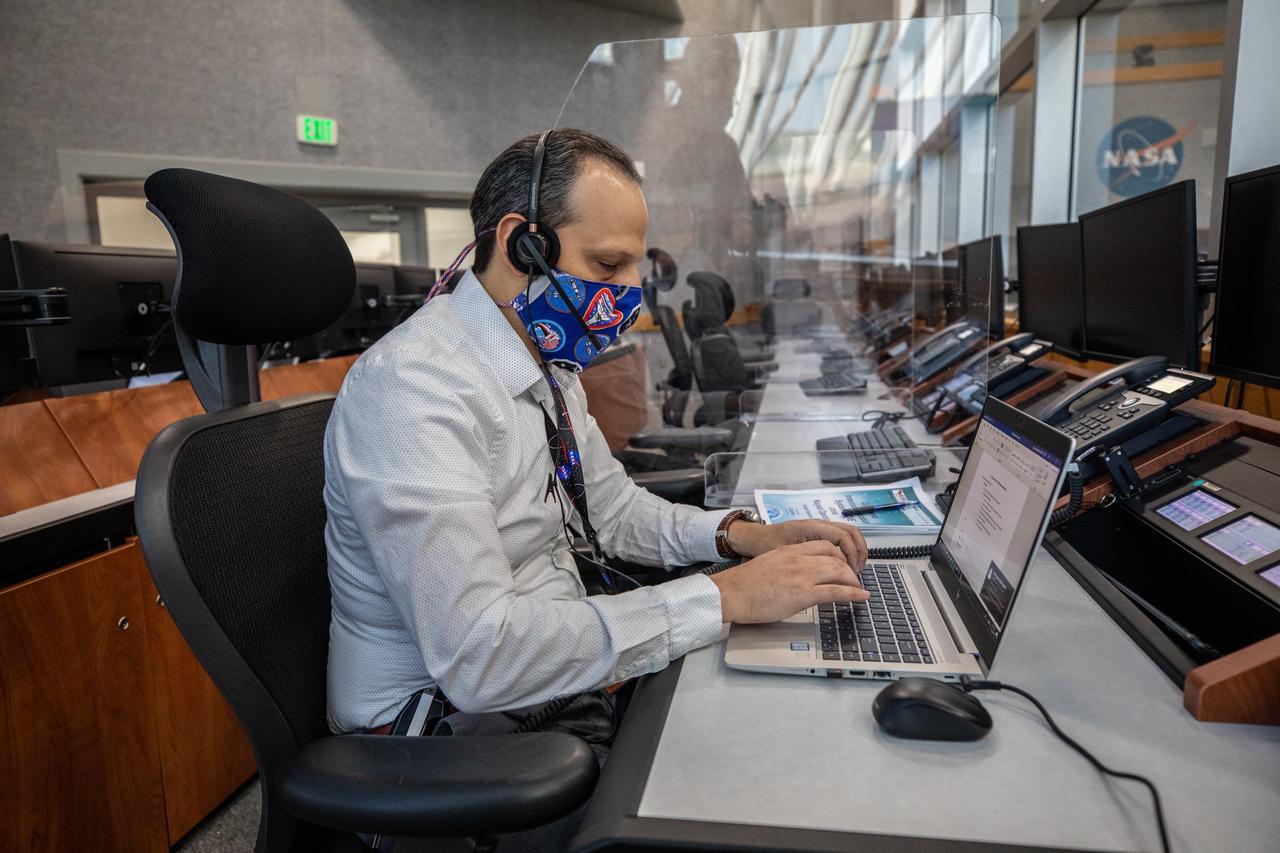
Pete Dizuzio, a system safety engineer, participates in a cryogenic propellant loading simulation inside Firing Room 1 in the Launch Control Center on Nov. 2, 2020, at NASA’s Kennedy Space Center in Florida. A team of engineers with Exploration Ground Systems and Jacobs, members of the cryogenics launch team, are rehearsing the steps to load the super-cooled liquid hydrogen and liquid oxygen into the Space Launch System’s (SLS) core and second stages to prepare for Artemis I. The first in a series of increasingly complex missions, Artemis I will test the Orion spacecraft and Space Launch System as an integrated system ahead of crewed flights to the Moon. NASA will land the first woman and the next man on the Moon in 2024.
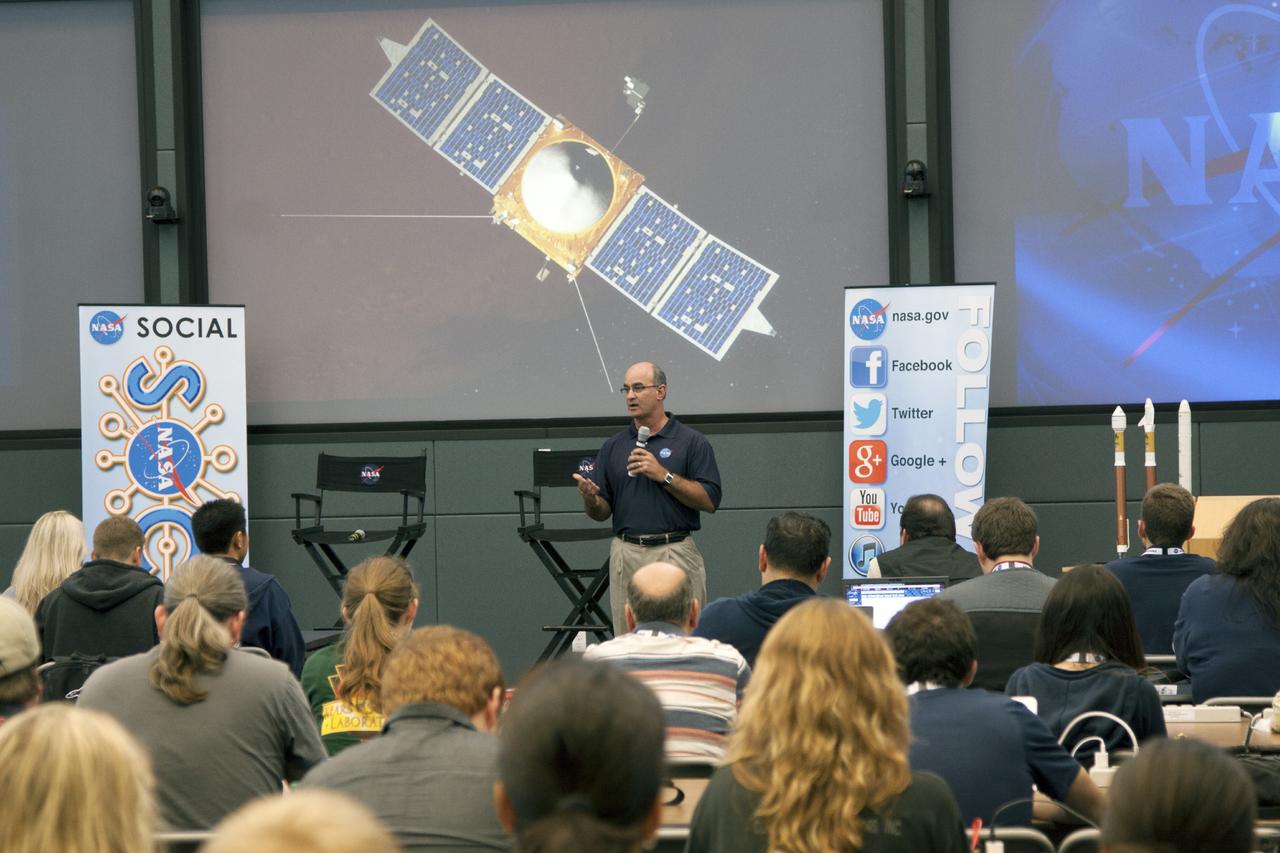
CAPE CANAVERAL, Fla. -- In the conference room of Operations Support Building II at NASA's Kennedy Space Center in Florida, social media participants listen to a briefing on future agency programs by Billy Stover, a NASA Commercial Crew Program Safety engineer. The social media participants gathered at the Florida spaceport for the launch of the Mars Atmosphere and Volatile Evolution, or MAVEN, spacecraft. Their visit included tours of key facilities and participating in presentations by key NASA leaders who updated the space agency's current efforts. Photo credit: NASA/Jim Grossman
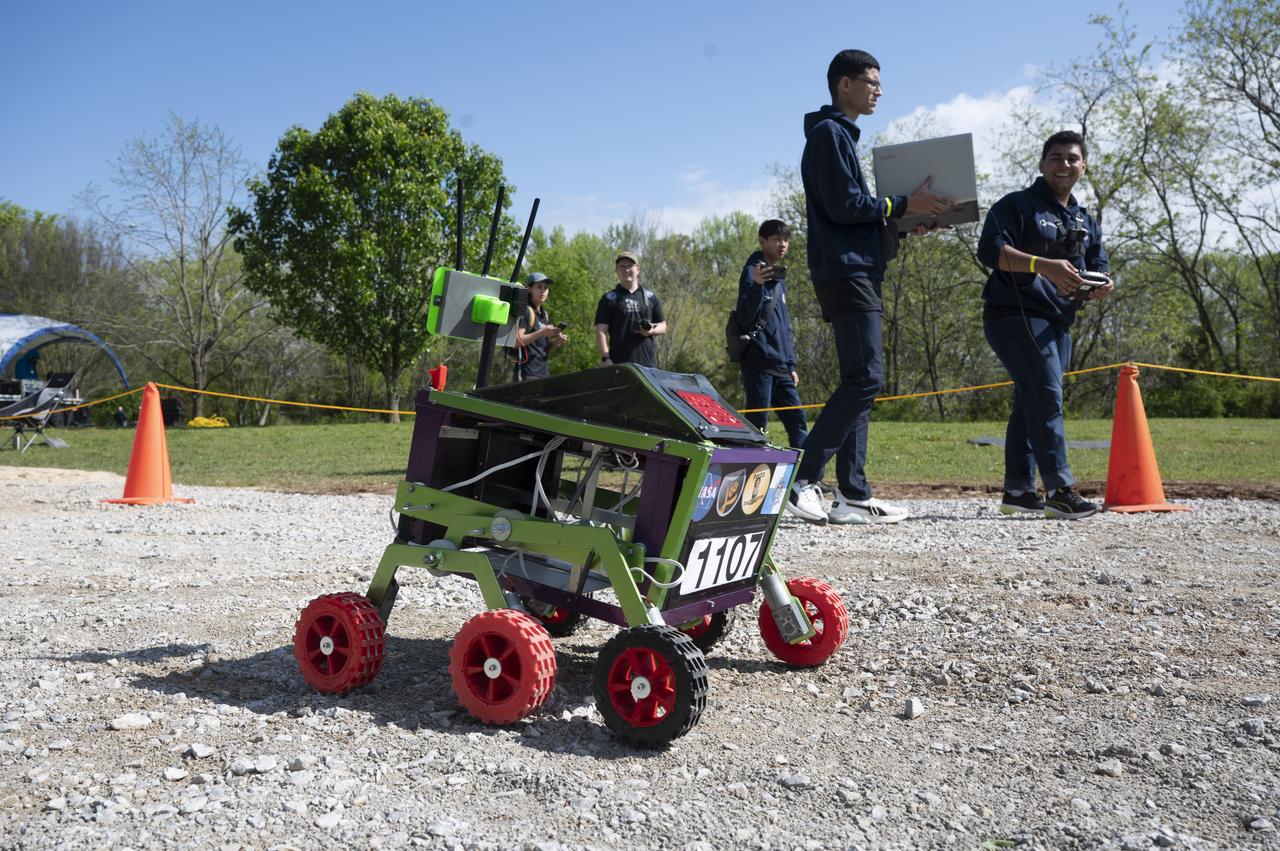
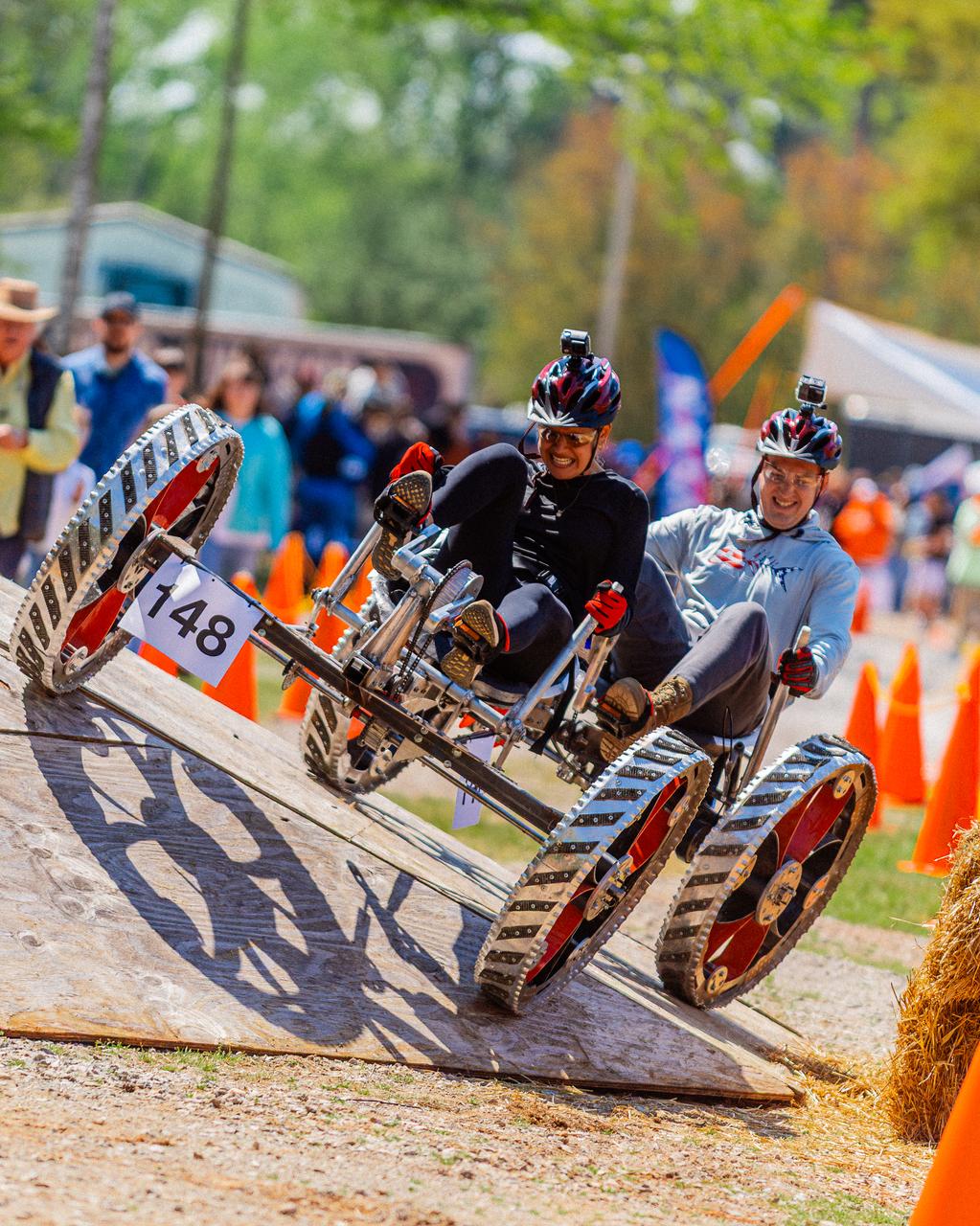
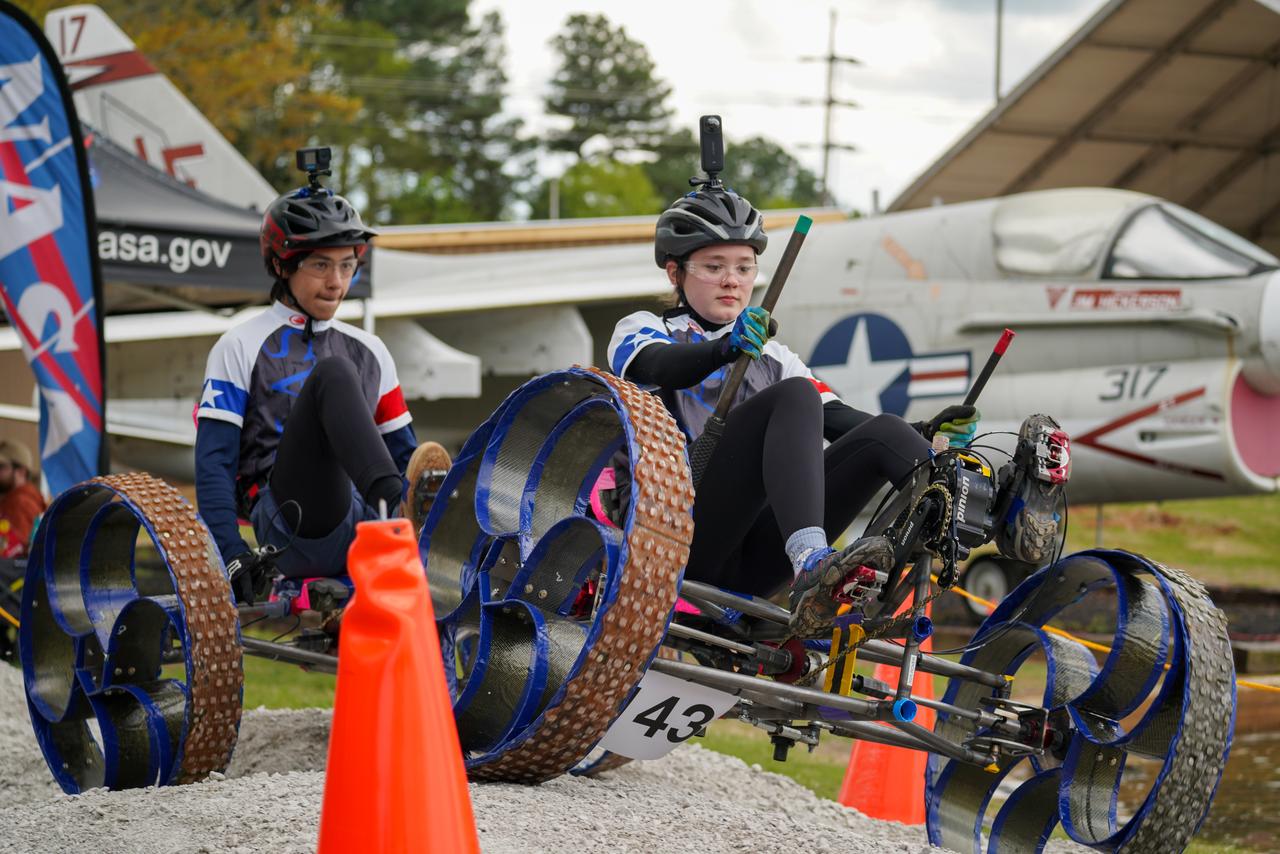
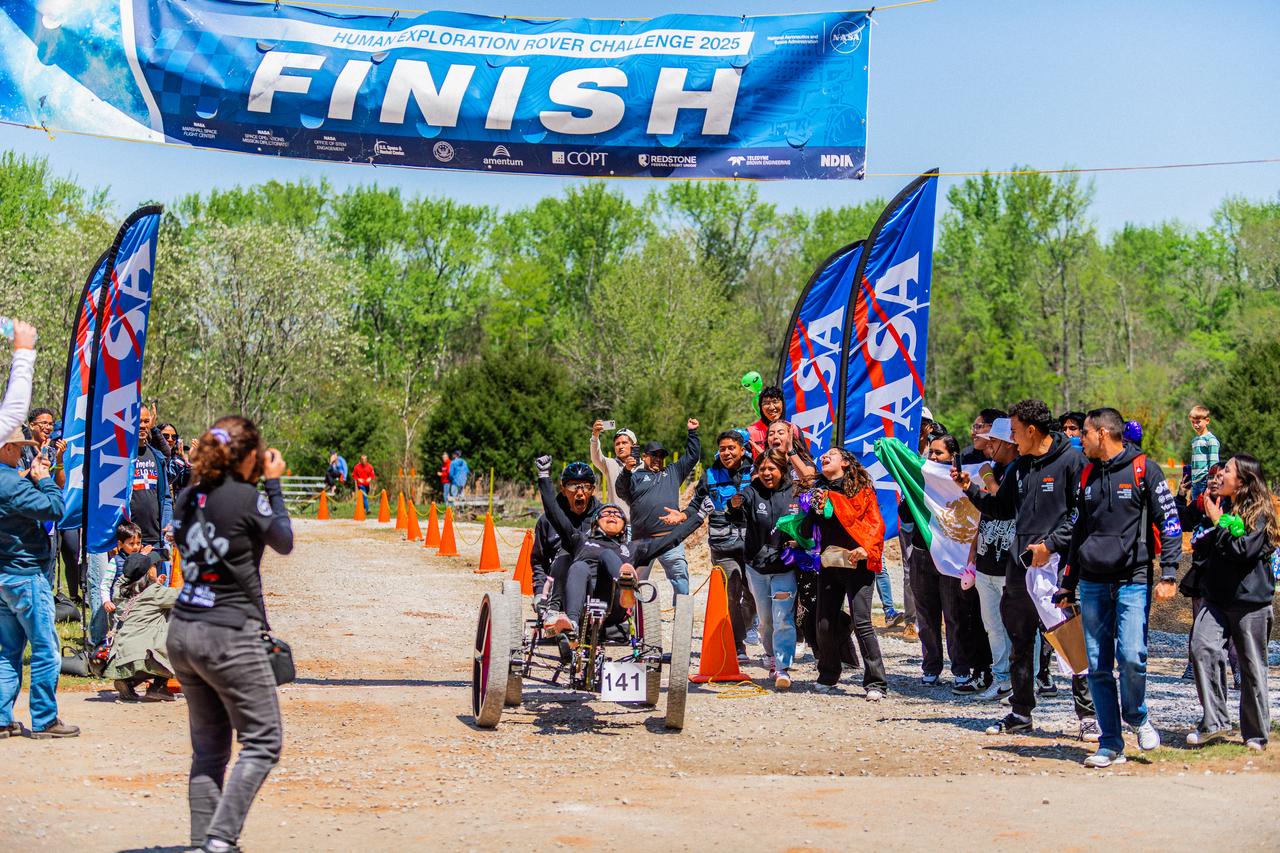
More than 500 students with 75 teams from around the world participated in the 31st year of NASA’s Human Exploration Rover Challenge (HERC) on April 11 and April 12, 2025, near NASA’s Marshall Space Flight Center in Huntsville, Alabama. Participating teams represented 35 colleges and universities, 38 high schools, and two middle schools from 20 states, Puerto Rico, and 16 other nations. NASA expanded the 2025 challenge to include a remote-control division - named Remote-Operated Vehicular Research - and invited middle school students to participate. Teams were awarded points based on navigating a half-mile obstacle course, conducting mission-specific task challenges, and completing multiple safety and design reviews with NASA engineers.
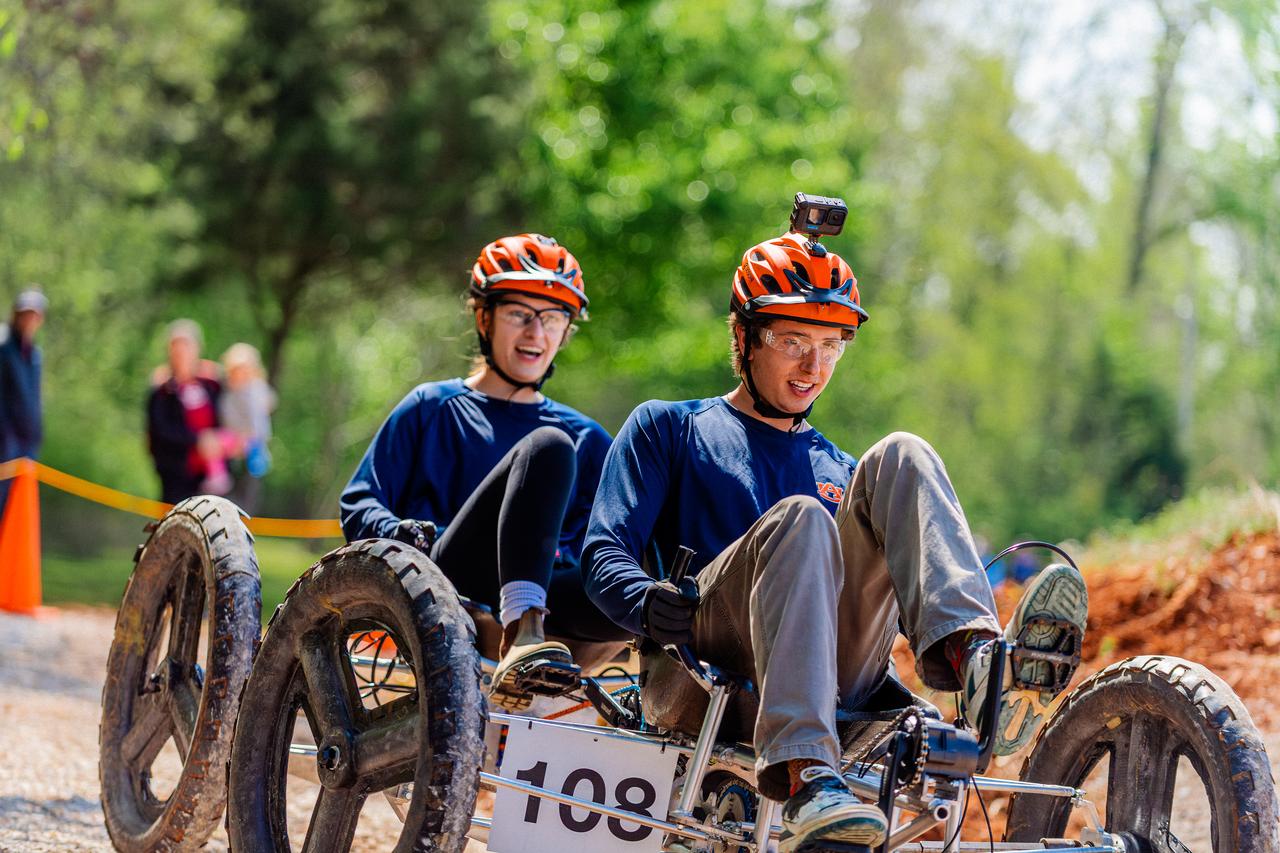
More than 500 students with 75 teams from around the world participated in the 31st year of NASA’s Human Exploration Rover Challenge (HERC) on April 11 and April 12, 2025, near NASA’s Marshall Space Flight Center in Huntsville, Alabama. Participating teams represented 35 colleges and universities, 38 high schools, and two middle schools from 20 states, Puerto Rico, and 16 other nations. NASA expanded the 2025 challenge to include a remote-control division - named Remote-Operated Vehicular Research - and invited middle school students to participate. Teams were awarded points based on navigating a half-mile obstacle course, conducting mission-specific task challenges, and completing multiple safety and design reviews with NASA engineers.
More than 500 students with 75 teams from around the world participated in the 31st year of NASA’s Human Exploration Rover Challenge (HERC) on April 11 and April 12, 2025, near NASA’s Marshall Space Flight Center in Huntsville, Alabama. Participating teams represented 35 colleges and universities, 38 high schools, and two middle schools from 20 states, Puerto Rico, and 16 other nations. NASA expanded the 2025 challenge to include a remote-control division - named Remote-Operated Vehicular Research - and invited middle school students to participate. Teams were awarded points based on navigating a half-mile obstacle course, conducting mission-specific task challenges, and completing multiple safety and design reviews with NASA engineers.
More than 500 students with 75 teams from around the world participated in the 31st year of NASA’s Human Exploration Rover Challenge (HERC) on April 11 and April 12, 2025, near NASA’s Marshall Space Flight Center in Huntsville, Alabama. Participating teams represented 35 colleges and universities, 38 high schools, and two middle schools from 20 states, Puerto Rico, and 16 other nations. NASA expanded the 2025 challenge to include a remote-control division - named Remote-Operated Vehicular Research - and invited middle school students to participate. Teams were awarded points based on navigating a half-mile obstacle course, conducting mission-specific task challenges, and completing multiple safety and design reviews with NASA engineers.
More than 500 students with 75 teams from around the world participated in the 31st year of NASA’s Human Exploration Rover Challenge (HERC) on April 11 and April 12, 2025, near NASA’s Marshall Space Flight Center in Huntsville, Alabama. Participating teams represented 35 colleges and universities, 38 high schools, and two middle schools from 20 states, Puerto Rico, and 16 other nations. NASA expanded the 2025 challenge to include a remote-control division - named Remote-Operated Vehicular Research - and invited middle school students to participate. Teams were awarded points based on navigating a half-mile obstacle course, conducting mission-specific task challenges, and completing multiple safety and design reviews with NASA engineers.

A NASA T-34C aircraft, used for safety chase, is shown flying above the Dryden Flight Research Center, Edwards, California in March 1997. The aircraft was previously used at the Lewis Research Center in propulsion experiments involving turboprop engines, and was used as a chase aircraft at Dryden for smaller and slower research projects. Chase aircraft accompany research flights for photography and video purposes, and also as support for safety and research. At Dryden, the T-34 is used mainly for smaller remotely piloted vehicles which fly slower than NASA's F-18's, used for larger scale projects. This aircraft was returned to the U.S. Navy in May of 2002. The T-34C, built by Beech, carries a crew of 2 and is nicknamed the Mentor.

A NASA T-34C aircraft, used for safety chase, is shown flying above the Dryden Flight Research Center, Edwards, California in March 1997. The aircraft was previously used at the Lewis Research Center in propulsion experiments involving turboprop engines, and was used as a chase aircraft at Dryden for smaller and slower research projects. Chase aircraft accompany research flights for photography and video purposes, and also as support for safety and research. At Dryden, the T-34 is used mainly for smaller remotely piloted vehicles which fly slower than NASA's F-18's, used for larger scale projects. This aircraft was returned to the U.S. Navy in May of 2002. The T-34C, built by Beech, carries a crew of 2 and is nicknamed the Mentor.
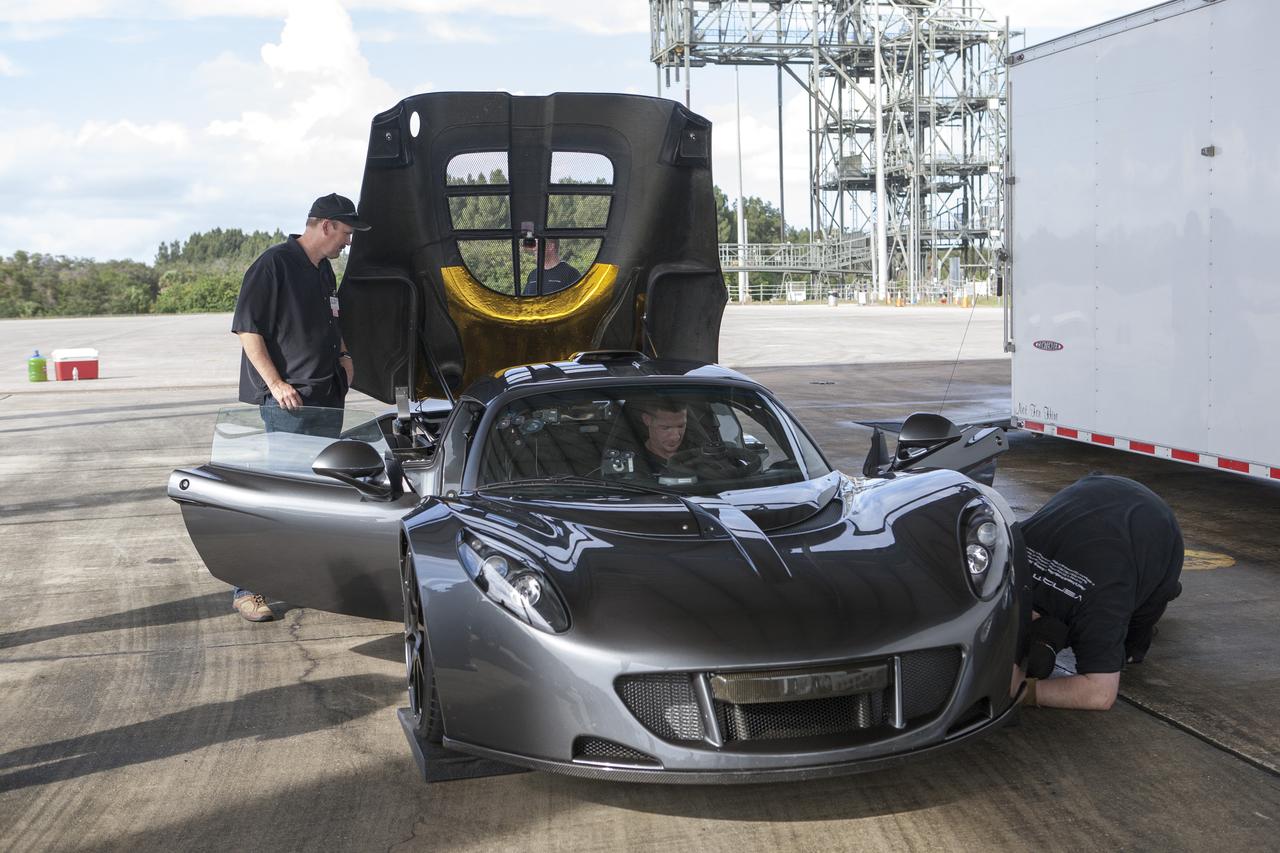
CAPE CANAVERAL, Fla. - Mechanics and engineers ready a Hennessey Venom GT for test runs on the 3.5-mile long runway at the Shuttle Landing Facility at NASA's Kennedy Space Center in Florida. The flat concrete runway is one of the few places in the world where high performance automobiles can be tested for aerodynamic and safety designs. Hennessey Performance of Sealy, Texas, worked with Performance Power Racing in West Palm Beach to arrange use of the NASA facility. Performance Power Racing has conducted numerous engineering tests on the runway with a variety of vehicles. Photo credit: NASA/Kim Shiflett
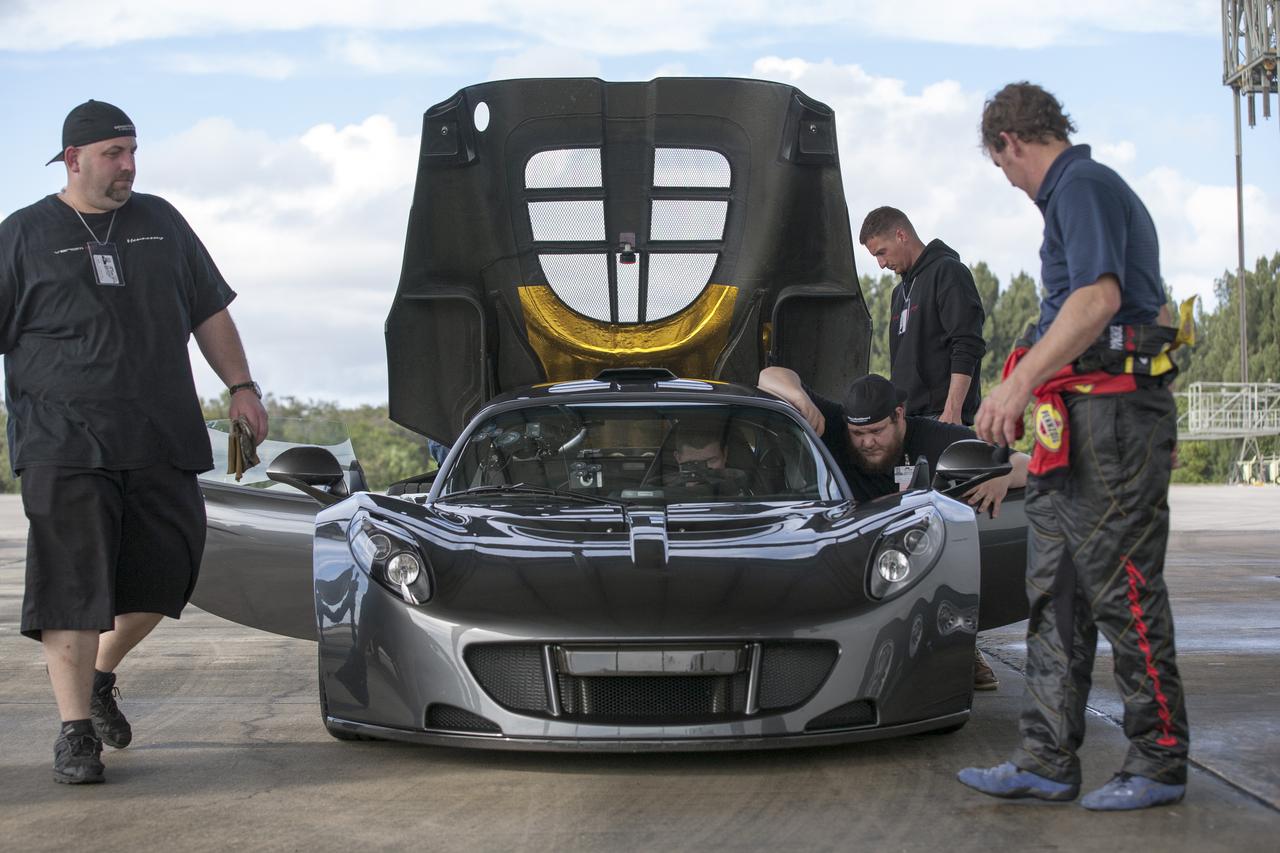
CAPE CANAVERAL, Fla. - Mechanics, engineers and Driver Brian Smith, in jumpsuit, ready a Hennessey Venom GT for test runs on the 3.5-mile long runway at the Shuttle Landing Facility at NASA's Kennedy Space Center in Florida. The flat concrete runway is one of the few places in the world where high performance automobiles can be tested for aerodynamic and safety designs. Hennessey Performance of Sealy, Texas, worked with Performance Power Racing in West Palm Beach to arrange use of the NASA facility. Performance Power Racing has conducted numerous engineering tests on the runway with a variety of vehicles. Photo credit: NASA/Kim Shiflett
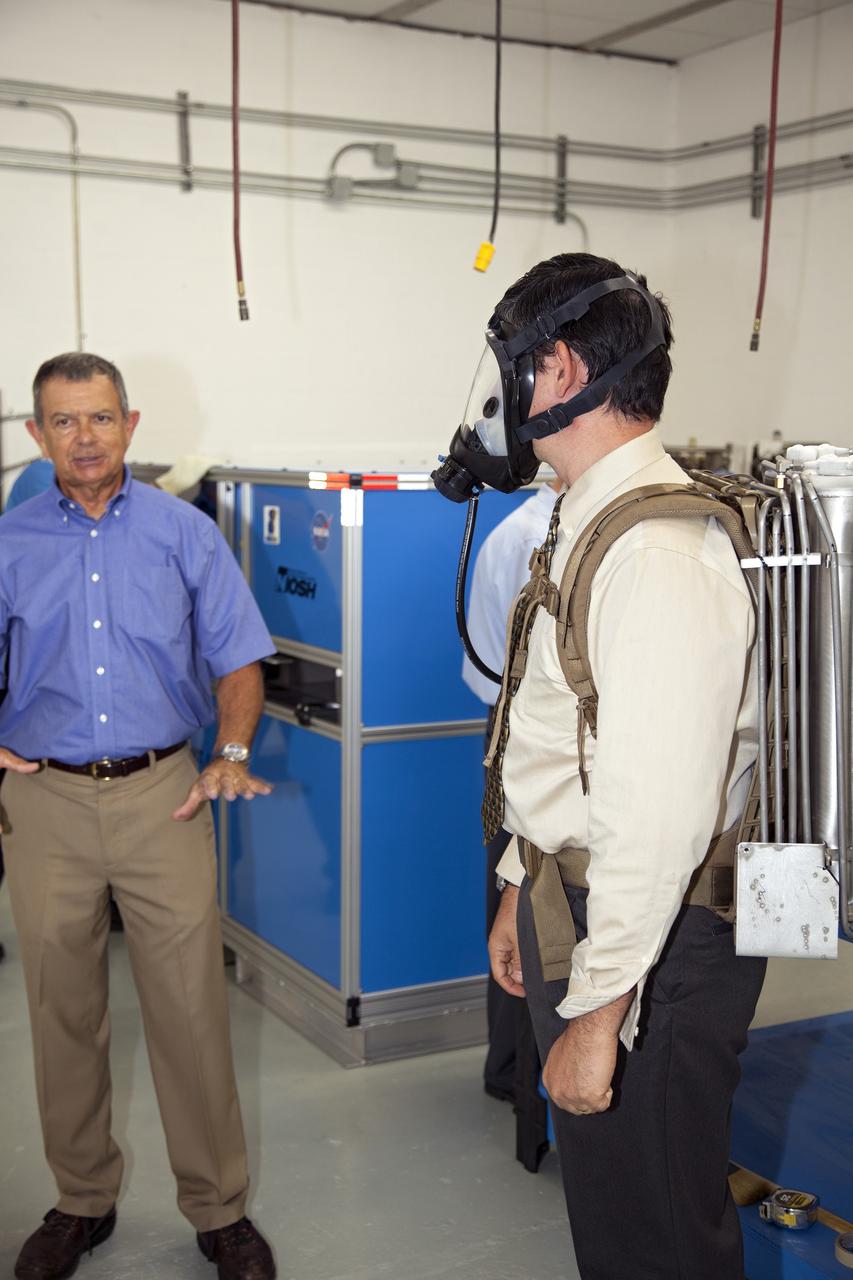
TITUSVILLE, Fla. - NASA Kennedy Space Center Lead Engineer David Bush, right, demos a small liquid-air filled backpack called CryoBA, short for Cryogenic Breathing Apparatus, at BCS Life Support in Titusville, Fla. The CryoBA and a larger Cryogenic Refuge Alternative Supply System, or CryoRASS, are being developed by a Kennedy engineering team in collaboration with The National Institute for Occupational Safety and Health to provide miners with twice the amount of breathable and cooler air than traditional compressed systems. The technology also could be used for commercial applications, such as fire and military rescue operations, as well as NASA's future human spaceflight missions. Photo credit: NASA/Daniel Casper
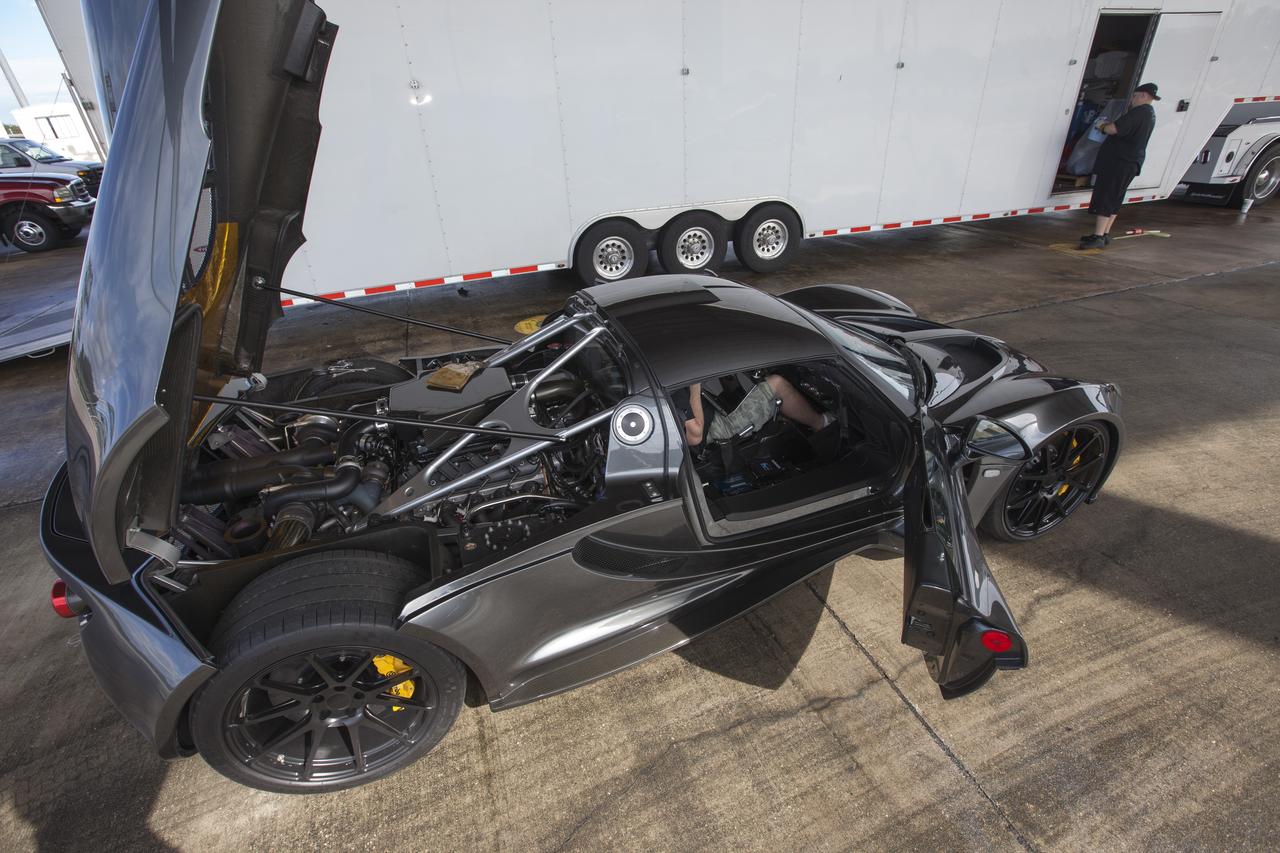
CAPE CANAVERAL, Fla. - An engineer readies a Hennessey Venom GT for test runs on the 3.5-mile long runway at the Shuttle Landing Facility at NASA's Kennedy Space Center in Florida. The flat concrete runway is one of the few places in the world where high performance automobiles can be tested for aerodynamic and safety designs. Hennessey Performance of Sealy, Texas, worked with Performance Power Racing in West Palm Beach to arrange use of the NASA facility. Performance Power Racing has conducted numerous engineering tests on the runway with a variety of vehicles. Photo credit: NASA/Kim Shiflett
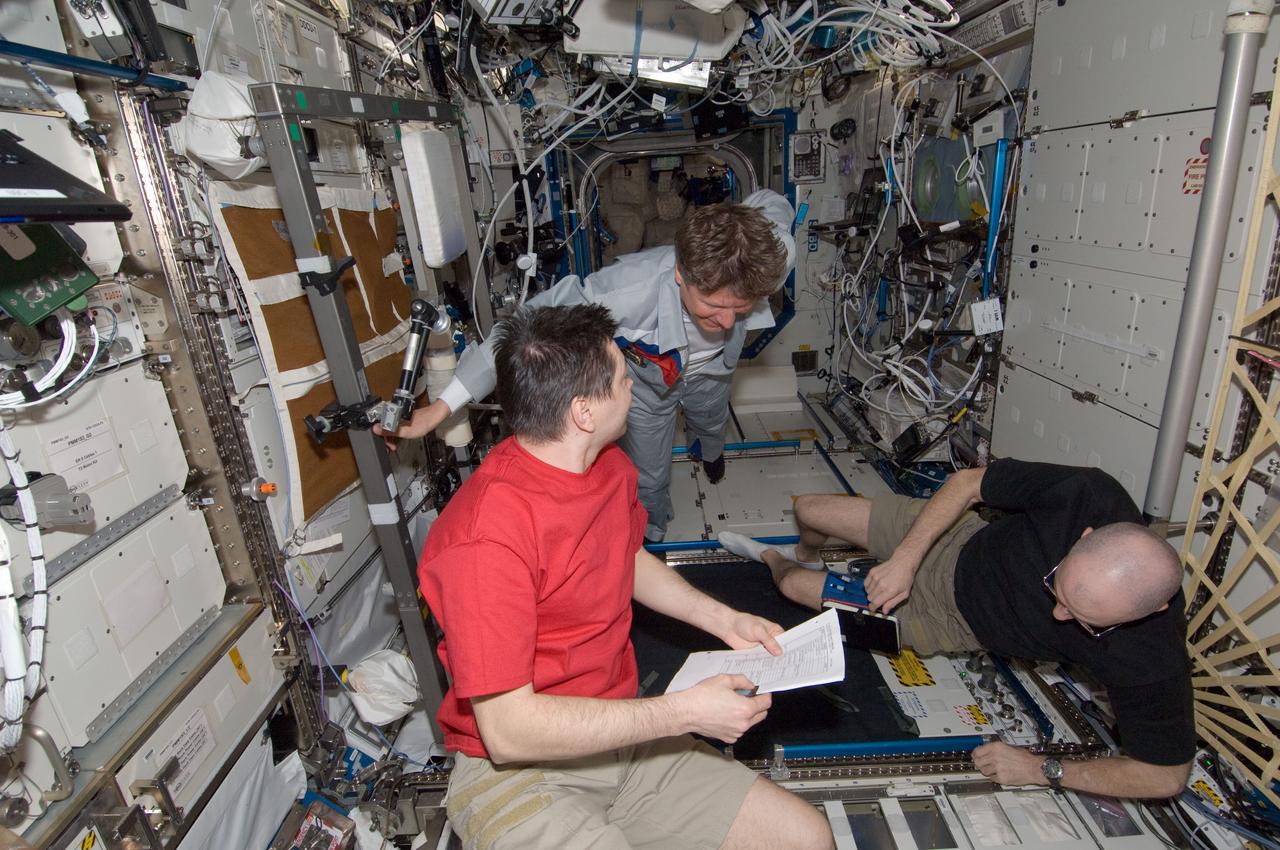
ISS031-E-081644 (17 May 2012) --- Russian cosmonaut Oleg Kononenko (left), Expedition 31 commander, conducts a crew safety briefing in the Destiny laboratory of the International Space Station shortly after Russian cosmonauts Gennady Padalka (center) and Sergei Revin (out of frame); along with NASA astronaut Joe Acaba (not pictured) docked with the space station in their Soyuz TMA-04M spacecraft. NASA astronaut Don Pettit, flight engineer, is at right.
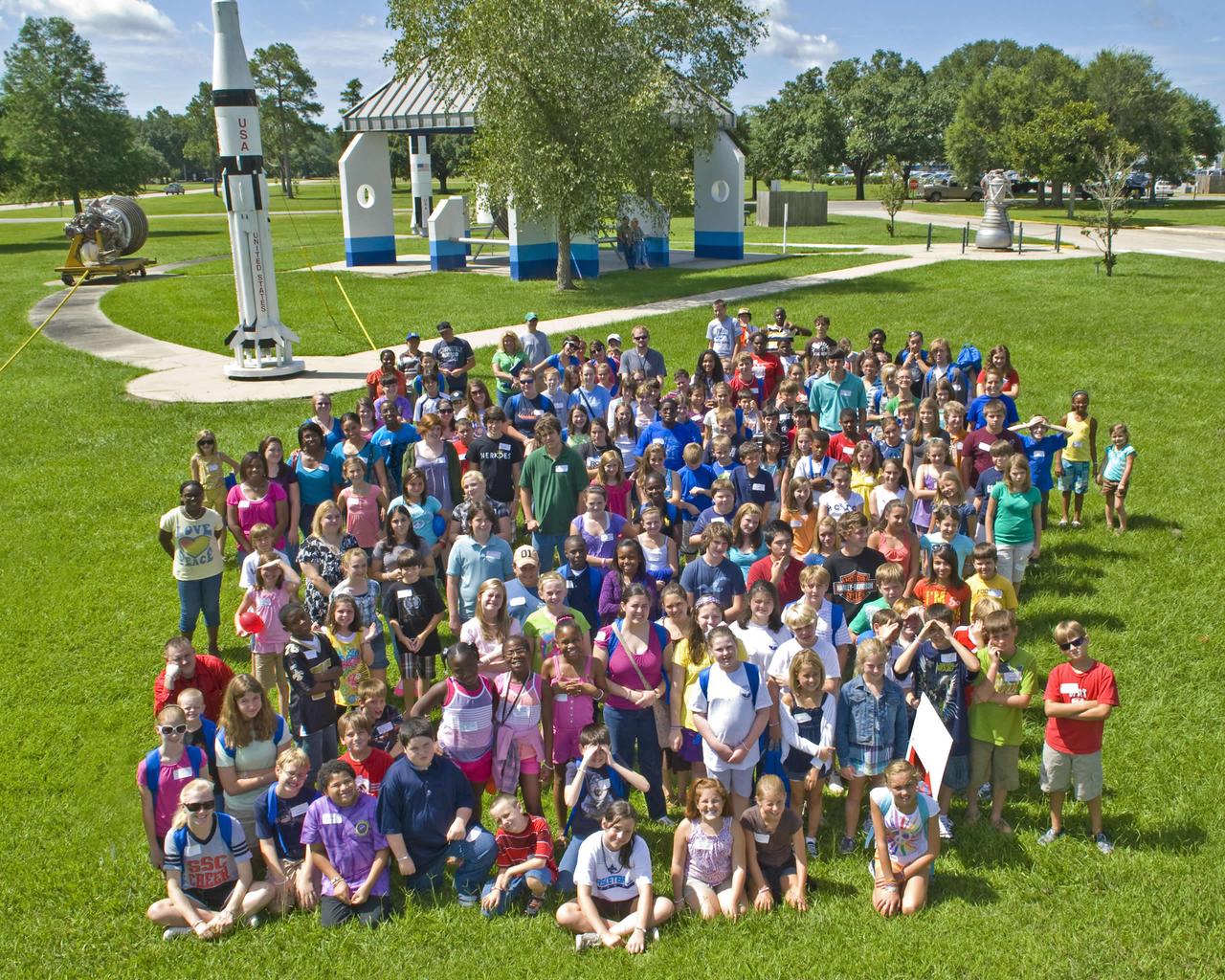
About 200 children of employees at NASA's John C. Stennis Space Center visited the facility for annual Take Our Children to Work activities July 27. Participants enjoyed a windshield tour of the rocket engine test site and various demonstrations and presentations on such topics as cryogenics, the Gulf of Mexico oil spill, computer safety and robotics. They also had an opportunity to take photos at the astronaut suit exhibit and participate in StenniSphere activities.
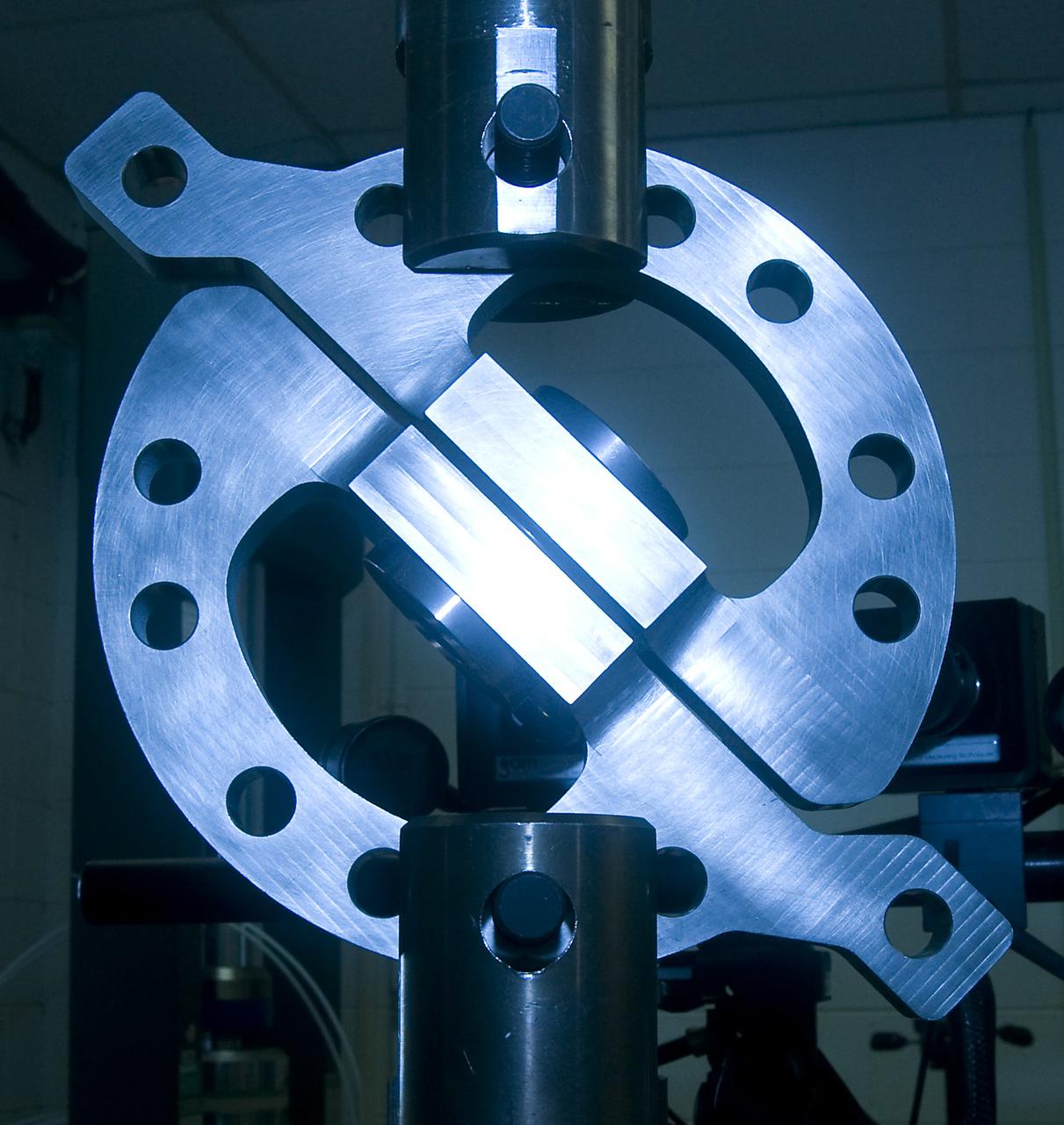
DEVELOPMENT TESTING BEING CONDUCTED AT THE REQUEST OF THE MSFC DYNAMICS, LOADS, AND STRENGTH BRANCH (EV31) TO STUDY THE FAILURE BEHAVIOR OF FASTENERS SUBJECTED TO COMBINED SHEAR AND TENSION LOADING. THE DATA FROM THIS TESTING WILL BE USED TO DEVELOP APPROPRIATE STRUCTURAL ANALYSIS METHODS AS PART OF A FASTENER STANDARDS EFFORT SPONSORED BY THE NASA ENGINEERING SAFETY CENTER (NESC). THE TEST FIXTURE WAS DESIGNED AND FABRICATED THROUGH THE MSFC MECHANICAL FABRICATION BRANCH (ES23). THE TESTING ORGANIZATION IS THE MSFC MATERIALS TEST BRANCH (EM10).

Engineers at NASA‘s Armstrong Flight Research Center sit in a control room to monitor the remotely-piloted Ikhana aircraft during a test flight. The test flight was used to validate key technologies and operations necessary to receive approval from the FAA’s to fly the aircraft in the National Airspace System June 12, 2018, without a safety chase aircraft.
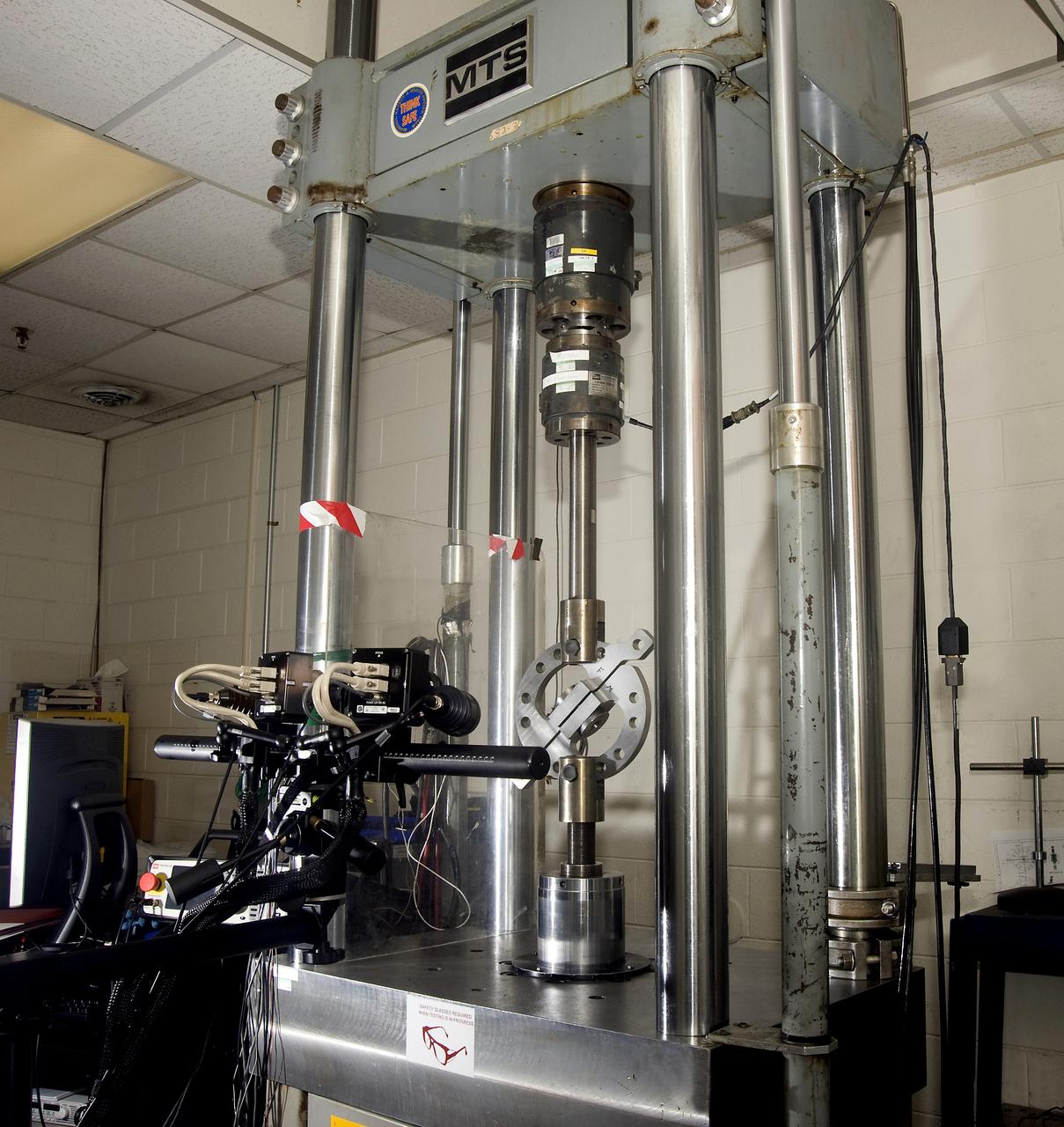
DEVELOPMENT TESTING BEING CONDUCTED AT THE REQUEST OF THE MSFC DYNAMICS, LOADS, AND STRENGTH BRANCH (EV31) TO STUDY THE FAILURE BEHAVIOR OF FASTENERS SUBJECTED TO COMBINED SHEAR AND TENSION LOADING. THE DATA FROM THIS TESTING WILL BE USED TO DEVELOP APPROPRIATE STRUCTURAL ANALYSIS METHODS AS PART OF A FASTENER STANDARDS EFFORT SPONSORED BY THE NASA ENGINEERING SAFETY CENTER (NESC). THE TEST FIXTURE WAS DESIGNED AND FABRICATED THROUGH THE MSFC MECHANICAL FABRICATION BRANCH (ES23). THE TESTING ORGANIZATION IS THE MSFC MATERIALS TEST BRANCH (EM10).
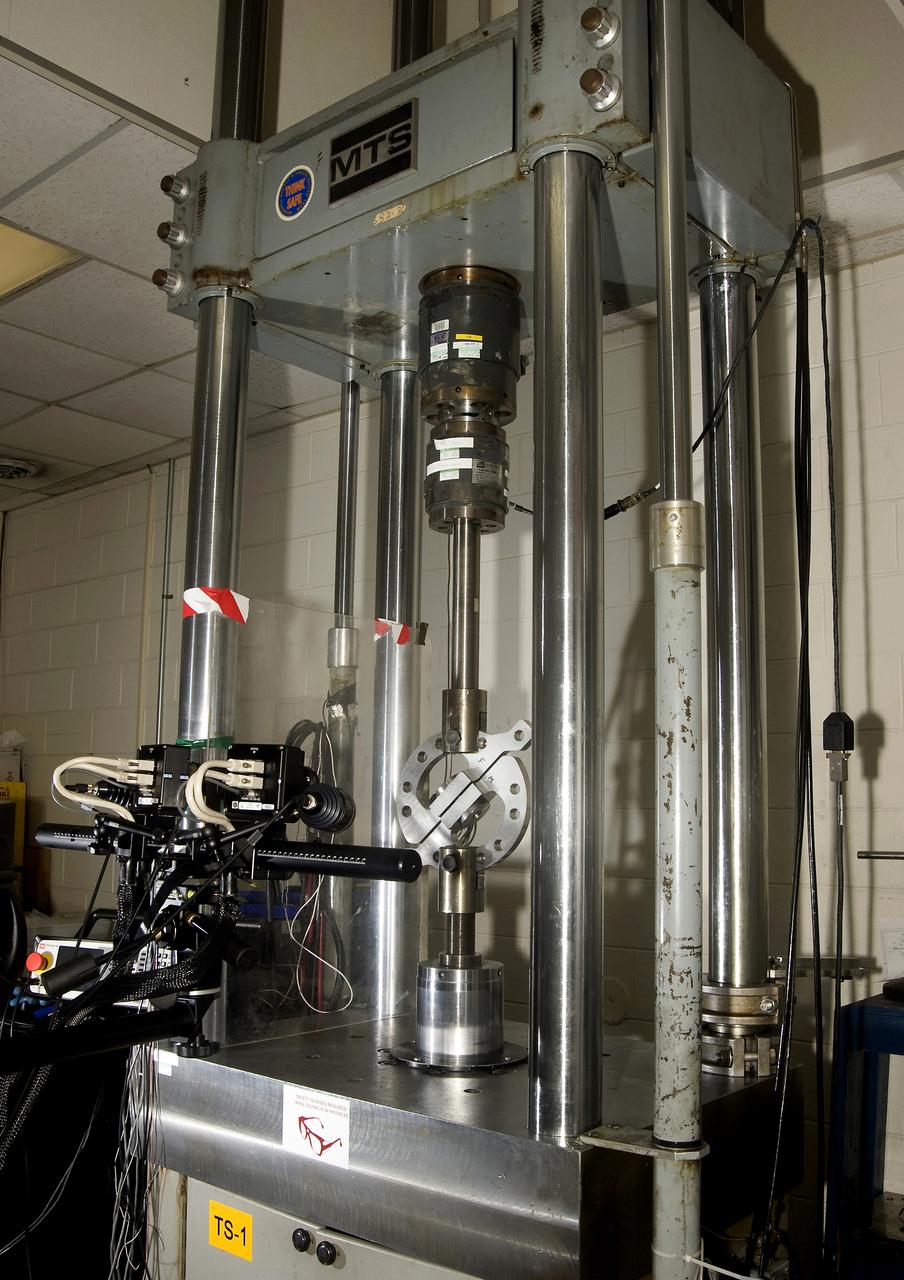
DEVELOPMENT TESTING BEING CONDUCTED AT THE REQUEST OF THE MSFC DYNAMICS, LOADS, AND STRENGTH BRANCH (EV31) TO STUDY THE FAILURE BEHAVIOR OF FASTENERS SUBJECTED TO COMBINED SHEAR AND TENSION LOADING. THE DATA FROM THIS TESTING WILL BE USED TO DEVELOP APPROPRIATE STRUCTURAL ANALYSIS METHODS AS PART OF A FASTENER STANDARDS EFFORT SPONSORED BY THE NASA ENGINEERING SAFETY CENTER (NESC). THE TEST FIXTURE WAS DESIGNED AND FABRICATED THROUGH THE MSFC MECHANICAL FABRICATION BRANCH (ES23). THE TESTING ORGANIZATION IS THE MSFC MATERIALS TEST BRANCH (EM10).
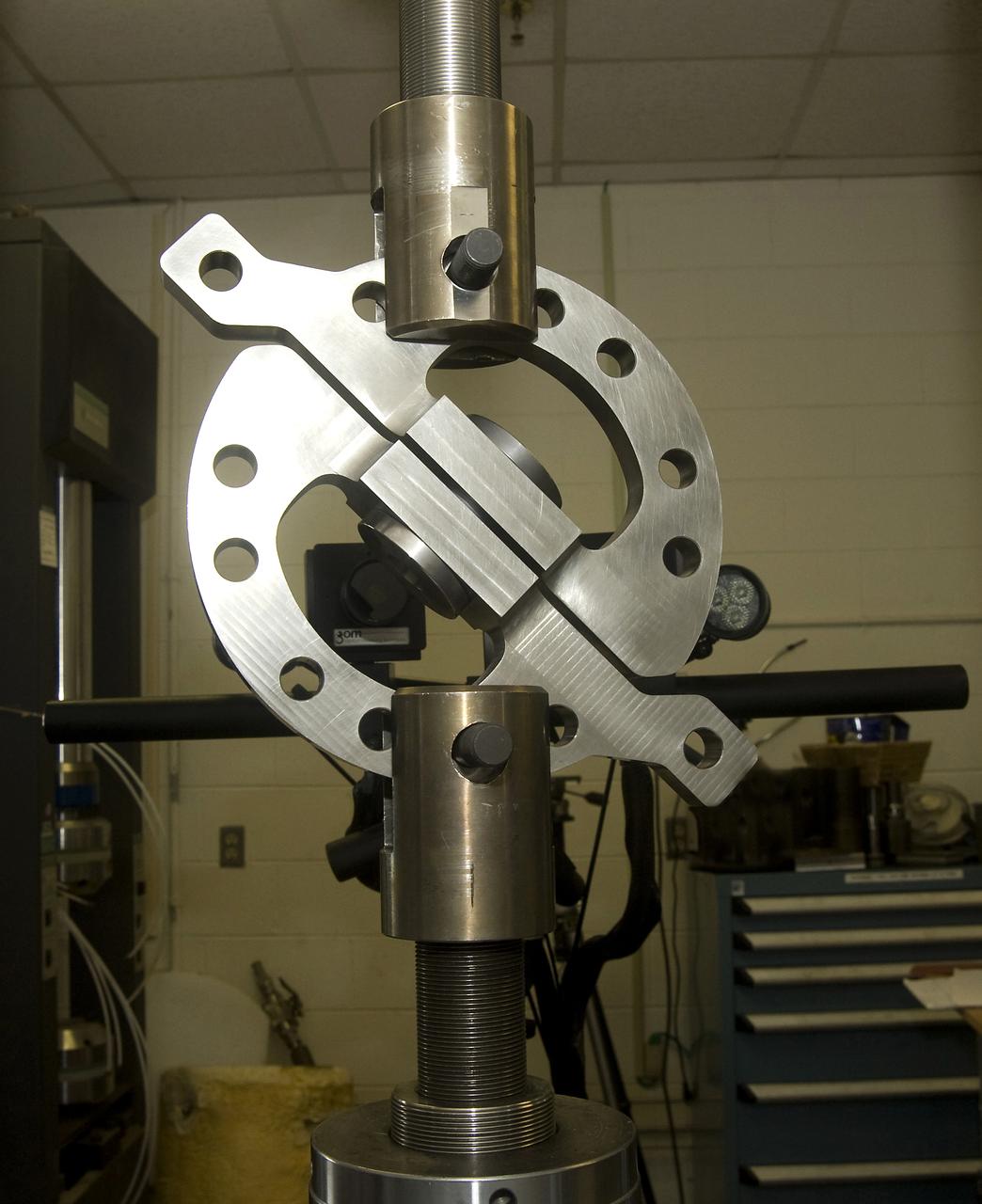
DEVELOPMENT TESTING BEING CONDUCTED AT THE REQUEST OF THE MSFC DYNAMICS, LOADS, AND STRENGTH BRANCH (EV31) TO STUDY THE FAILURE BEHAVIOR OF FASTENERS SUBJECTED TO COMBINED SHEAR AND TENSION LOADING. THE DATA FROM THIS TESTING WILL BE USED TO DEVELOP APPROPRIATE STRUCTURAL ANALYSIS METHODS AS PART OF A FASTENER STANDARDS EFFORT SPONSORED BY THE NASA ENGINEERING SAFETY CENTER (NESC). THE TEST FIXTURE WAS DESIGNED AND FABRICATED THROUGH THE MSFC MECHANICAL FABRICATION BRANCH (ES23). THE TESTING ORGANIZATION IS THE MSFC MATERIALS TEST BRANCH (EM10).
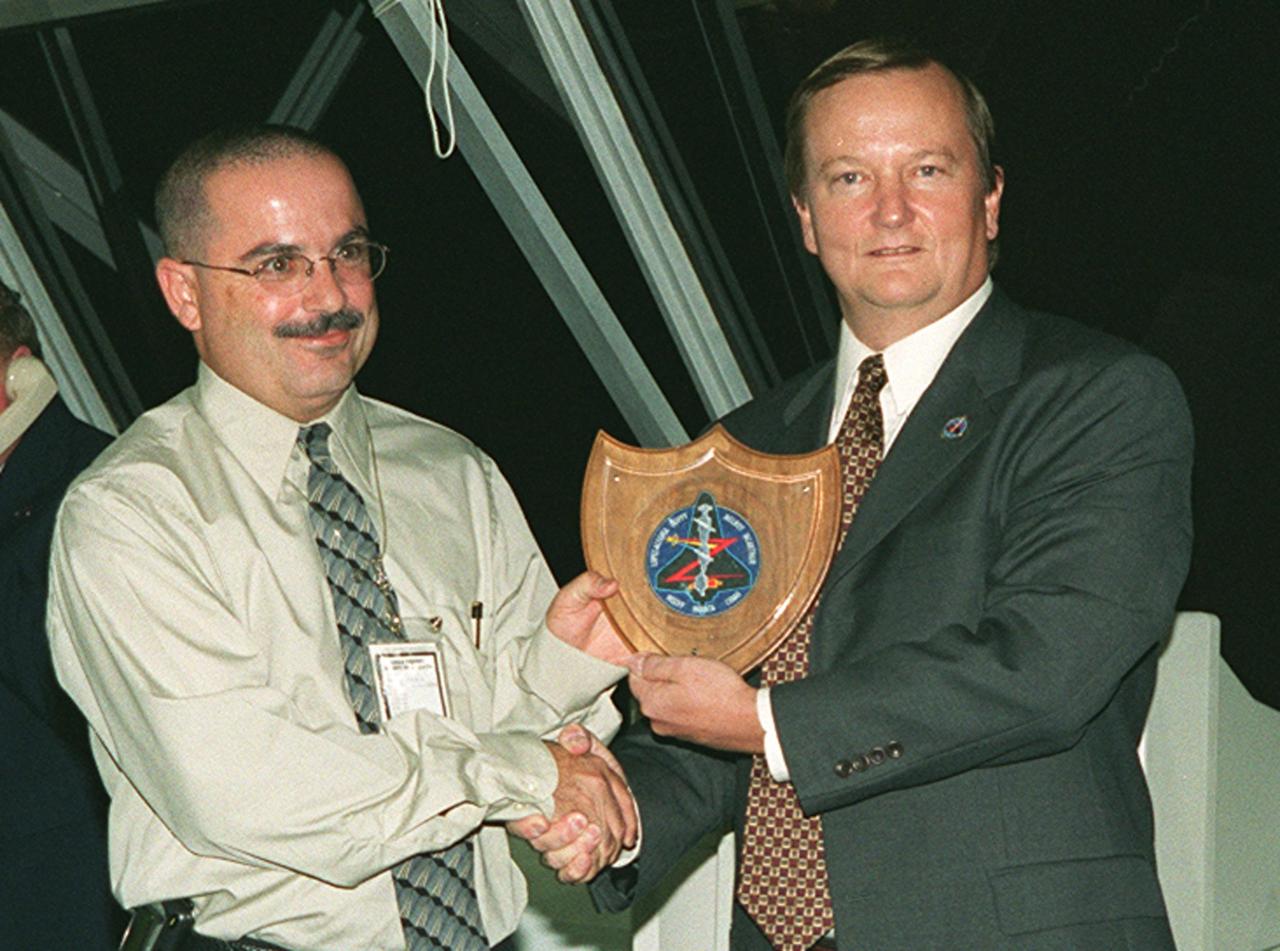
Jorge Rivera (center) receives a plaque and congratulations for his observatory powers from Shuttle Launch Director Mike Leinbach (right). A NASA external tank mechanical engineer, Rivera is the one who spotted the misplaced lock pin on Shuttle Discovery Oct. 10, shortly before the intended launch of mission STS-92, causing a scrub for safety reasons
![Engineers and technicians in the control room at the Dryden Flight Research Center must constantly monitor critical operations and checks during research projects like NASA's hypersonic X-43A. Visible in the photo, taken two days before the X-43's captive carry flight in January 2004, are [foreground to background]; Tony Kawano (Range Safety Officer), Brad Neal (Mission Controller), and Griffin Corpening (Test Conductor).](https://images-assets.nasa.gov/image/ED04-0019-10/ED04-0019-10~medium.jpg)
Engineers and technicians in the control room at the Dryden Flight Research Center must constantly monitor critical operations and checks during research projects like NASA's hypersonic X-43A. Visible in the photo, taken two days before the X-43's captive carry flight in January 2004, are [foreground to background]; Tony Kawano (Range Safety Officer), Brad Neal (Mission Controller), and Griffin Corpening (Test Conductor).
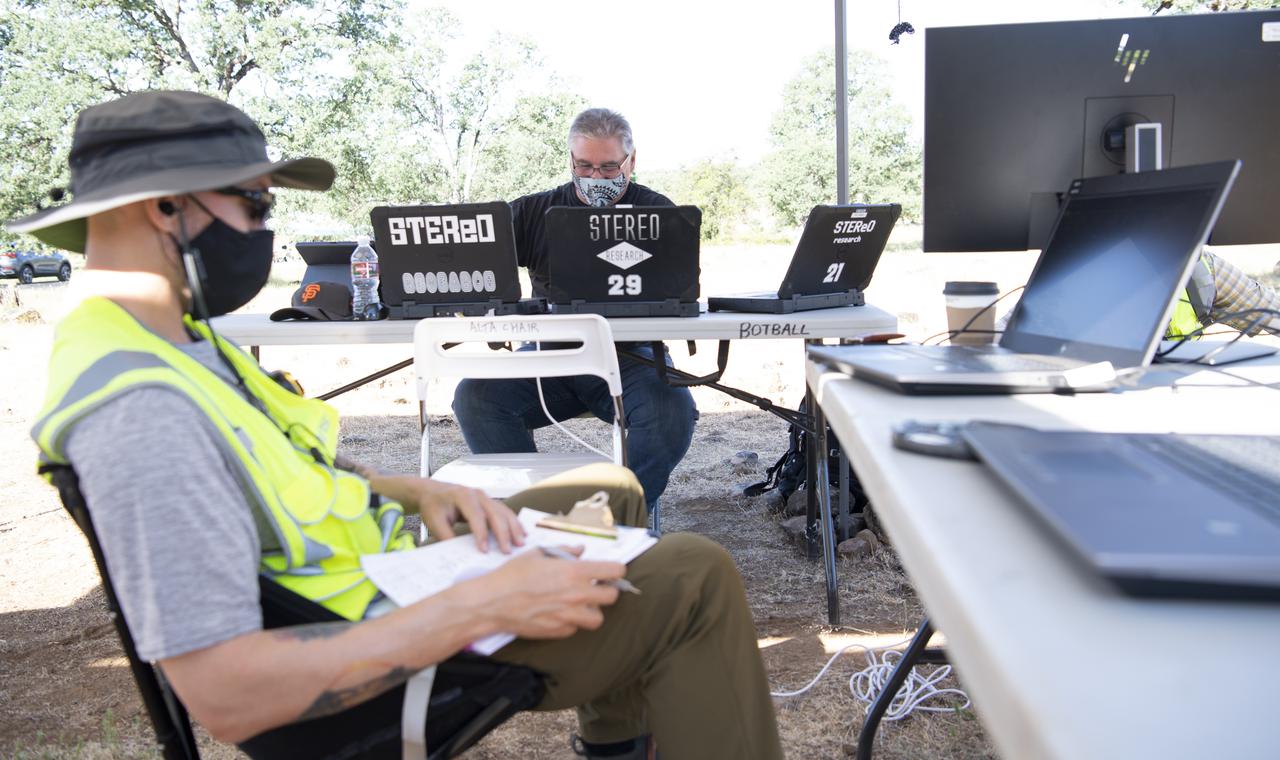
Bill McCarthy, software engineer and research laptop operator for STEReO, the Scalable Traffic Management for Emergency Response Operations project, at NASA's Ames Research Center, is seen as the STEReO teams works through scenarios, Wednesday, May 5, 2021 as Cal Fire conducts aerial fire fighting training exercises near Redding, California. STEReO, the Scalable Traffic Management for Emergency Response Operations project, led by NASA’s Ames Research Center, builds on NASA’s expertise in air traffic management, human factors research, and autonomous technology development to apply the agency’s work in Unmanned Aircraft Systems Traffic Management, or UTM, to public safety uses. Photo Credit: (NASA/Joel Kowsky)

NASA pilot Ed Lewis with the T-34C aircraft on the Dryden Flight Research Center Ramp. The aircraft was previously used at the Lewis Research Center in propulsion experiments involving turboprop engines, and was used as a chase aircraft at Dryden for smaller and slower research projects. Chase aircraft accompany research flights for photography and video purposes, and also as support for safety and research. At Dryden, the T-34 is used mainly for smaller remotely piloted vehicles which fly slower than NASA's F-18's, used for larger scale projects. This aircraft was returned to the U.S. Navy in May of 2002.
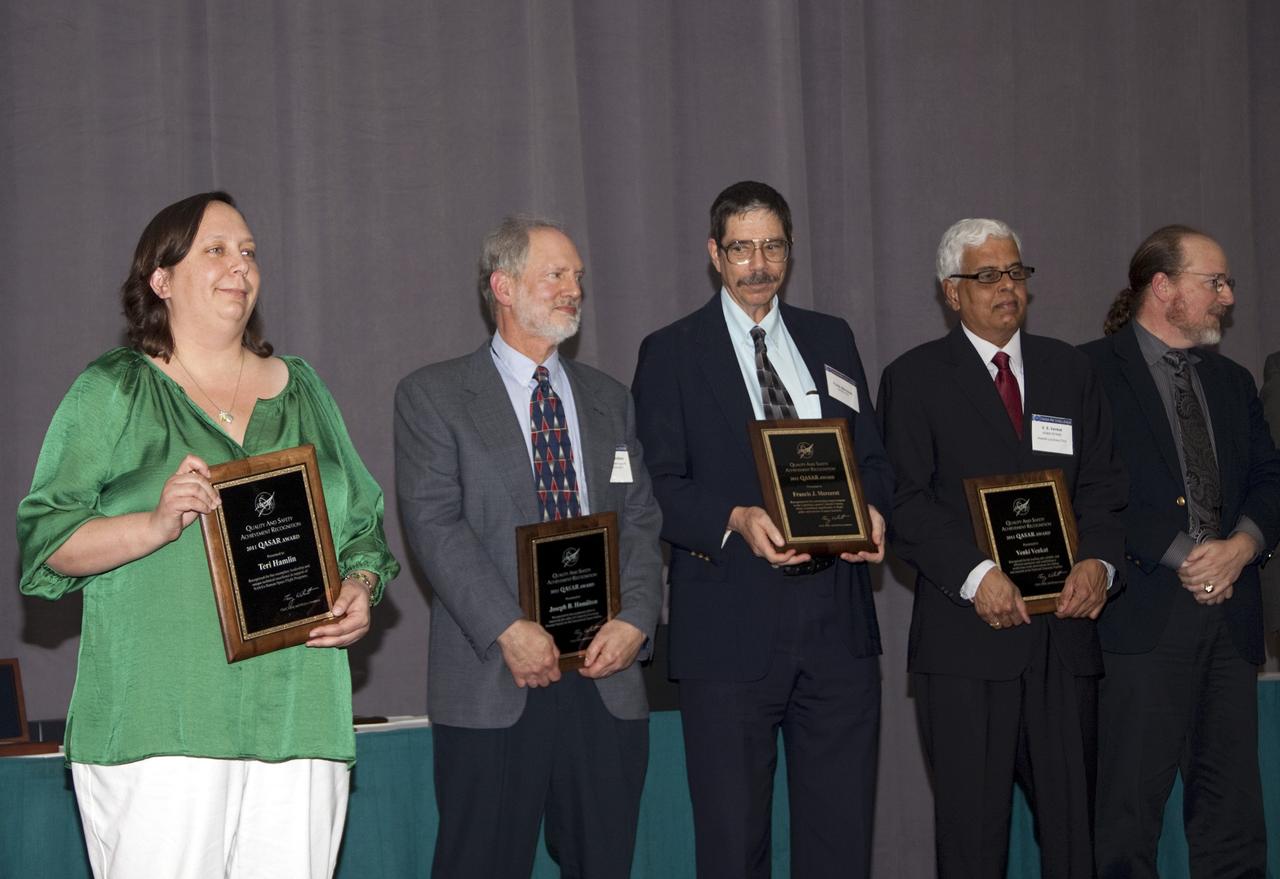
ORLANDO, Fla. -- The winners of NASA’s Quality and Safety Achievement Recognition, or QASAR, awards for 2011 pose for a group portrait during NASA’s ninth annual Project Management Challenge. From left are Teri Hamlin, Johnson Space Center Joseph B. Hamilton, Kennedy Space Center Francis “Frank” Merceret, Kennedy Space Center and Venki Venkat, Langley Research Center. Kennedy retiree Humberto "Bert" T. Garrido, not pictured, also received the award. NASA's QASAR award recognizes individual government and contractor employees who have demonstrated exemplary performance in contributing to the quality or safety of products, services, processes, or management programs and activities. PM Challenge 2012 was held at the Caribe Royale Hotel and Convention Center in Orlando, Fla., on February 22-23, to provide a forum for all stakeholders in the project management community to meet and share stories, lessons learned and new uses of technology in the industry. The PM Challenge is sponsored by NASA's Office of the Chief Engineer. For additional information, visit http://www.nasa.gov/offices/oce/pmchallenge/index.html. Photo credit: NASA/Jim Grossmann
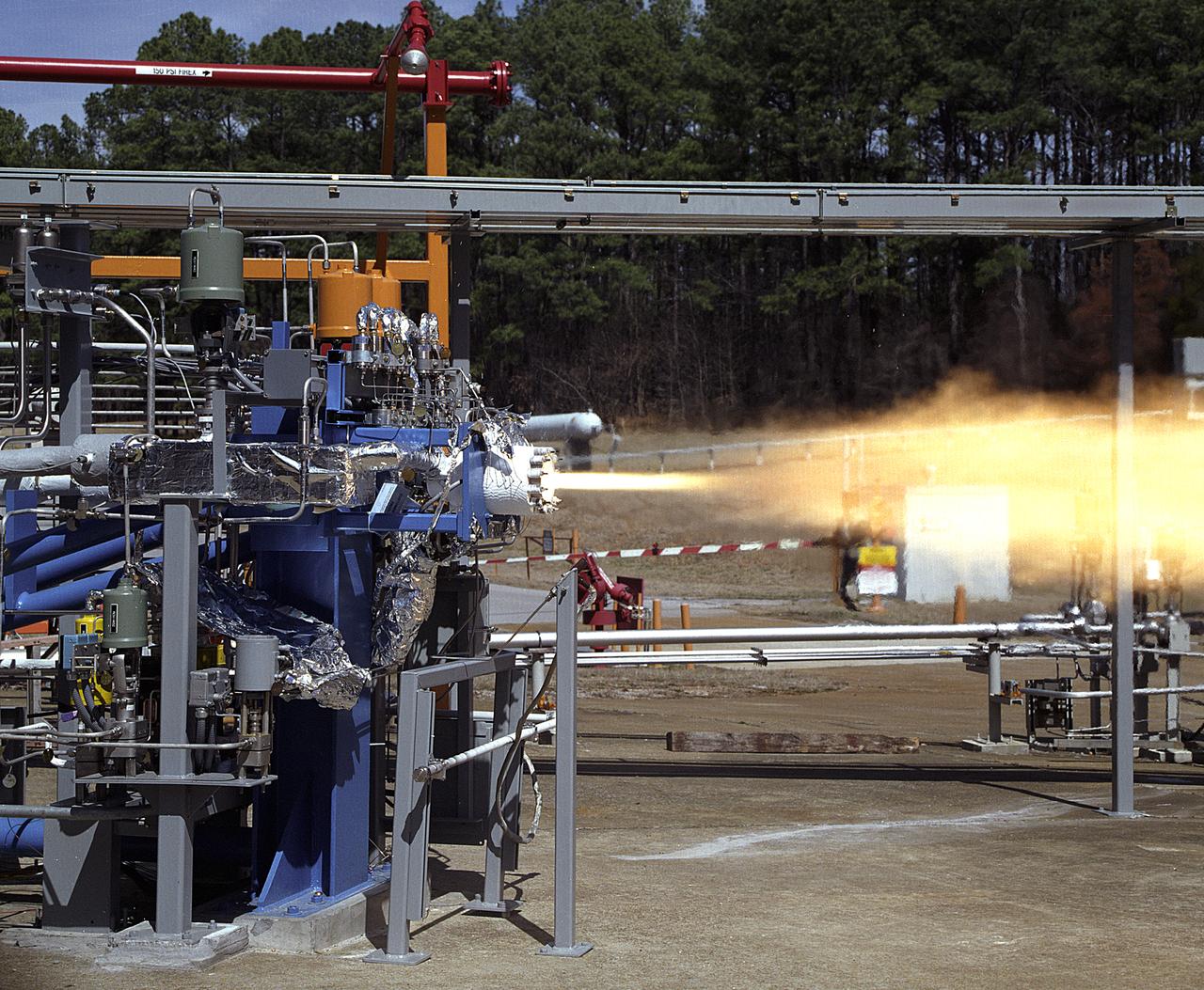
NASA's Marshall Space Flight Center (MSFC) in Huntsville, Alabama, has begun a series of engine tests on the Reaction Control Engine developed by TRW Space and Electronics for NASA's Space Launch Initiative (SLI). SLI is a technology development effort aimed at improving the safety, reliability, and cost effectiveness of space travel for reusable launch vehicles. The engine in this photo, the first engine tested at MSFC that includes SLI technology, was tested for two seconds at a chamber pressure of 185 pounds per square inch absolute (psia). Propellants used were liquid oxygen as an oxidizer and liquid hydrogen as fuel. Designed to maneuver vehicles in orbit, the engine is used as an auxiliary propulsion system for docking, reentry, fine-pointing, and orbit transfer while the vehicle is in orbit. The Reaction Control Engine has two unique features. It uses nontoxic chemicals as propellants, which creates a safer environment with less maintenance and quicker turnaround time between missions, and it operates in dual thrust modes, combining two engine functions into one engine. The engine operates at both 25 and 1,000 pounds of force, reducing overall propulsion weight and allowing vehicles to easily maneuver in space. The force of low level thrust allows the vehicle to fine-point maneuver and dock, while the force of the high level thrust is used for reentry, orbital transfer, and course positioning.
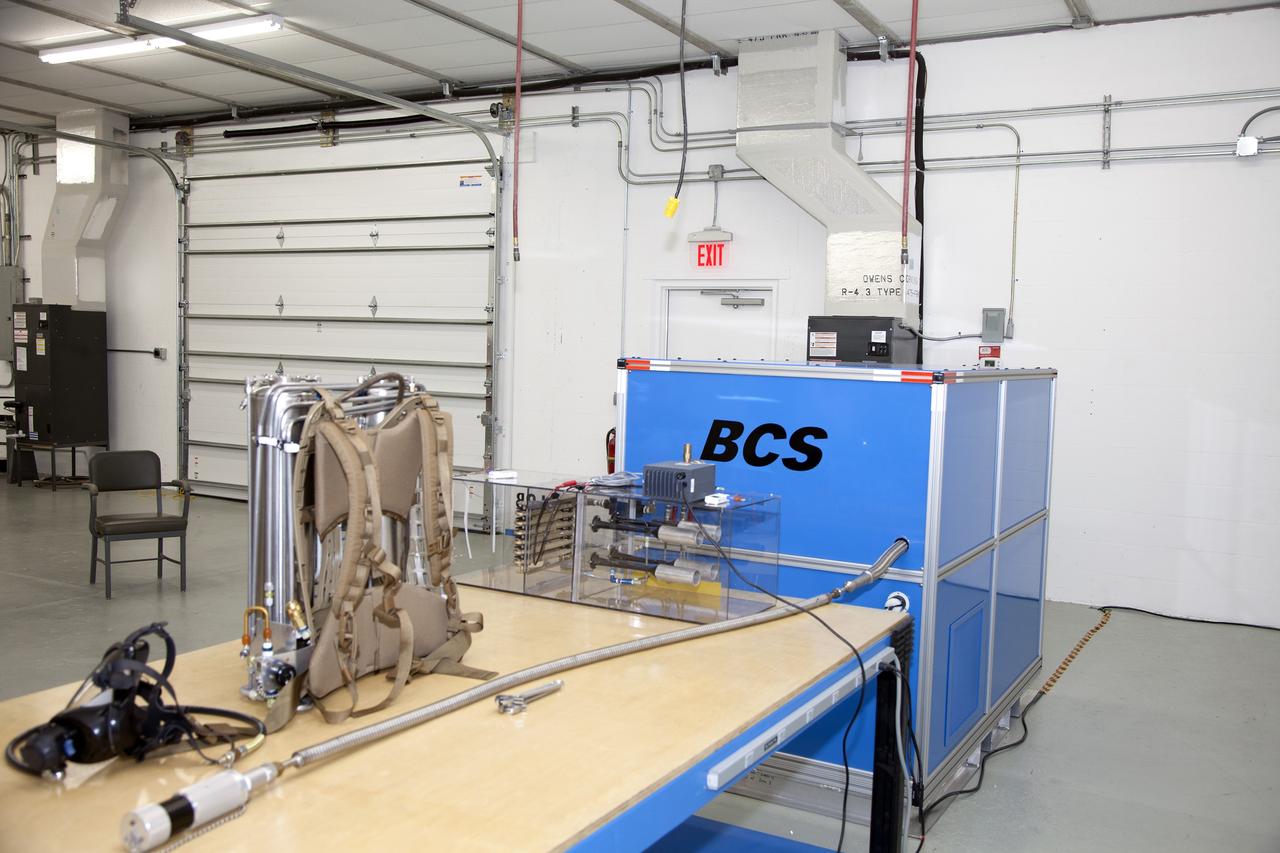
TITUSVILLE, Fla. - The Cryogenic Refuge Alternative Supply System, or CryoRASS, and a smaller liquid-air filled backpack called CryoBA, short for Cryogenic Breathing Apparatus, are on display at BCS Life Support in Titusville, Fla. The two systems are being developed by a NASA Kennedy Space Center engineering team in collaboration with The National Institute for Occupational Safety and Health to provide miners with twice the amount of breathable and cooler air than traditional compressed systems. The technology also could be used for commercial applications, such as fire and military rescue operations, as well as NASA's future human spaceflight missions. Photo credit: NASA/Daniel Casper
TITUSVILLE, Fla. - A small liquid-air filled backpack called CryoBA, short for Cryogenic Breathing Apparatus, is on display at BCS Life Support in Titusville, Fla. The CryoBA and a larger Cryogenic Refuge Alternative Supply System, or CryoRASS, are being developed by a NASA Kennedy Space Center engineering team in collaboration with The National Institute for Occupational Safety and Health to provide miners with twice the amount of breathable and cooler air than traditional compressed systems. The technology also could be used for commercial applications, such as fire and military rescue operations, as well as NASA's future human spaceflight missions. Photo credit: NASA/Daniel Casper
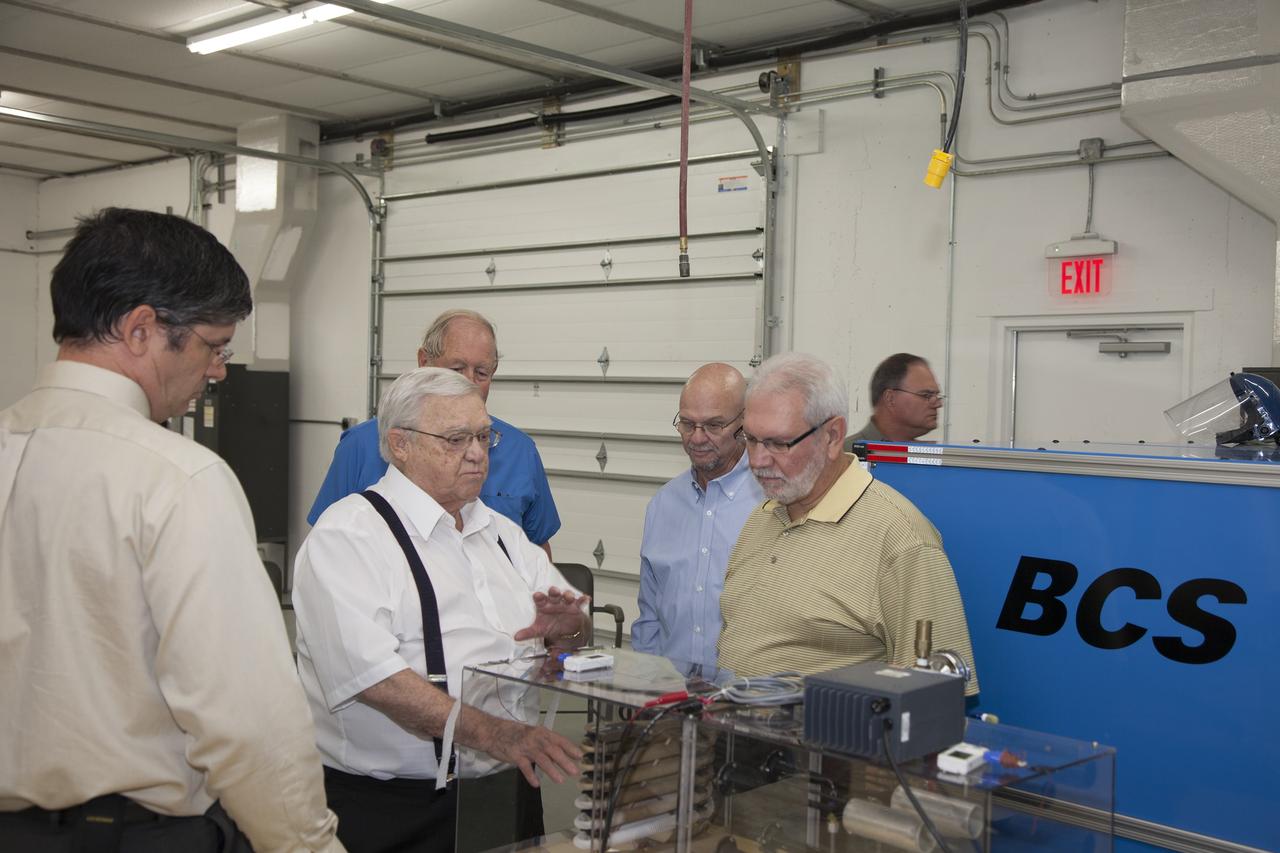
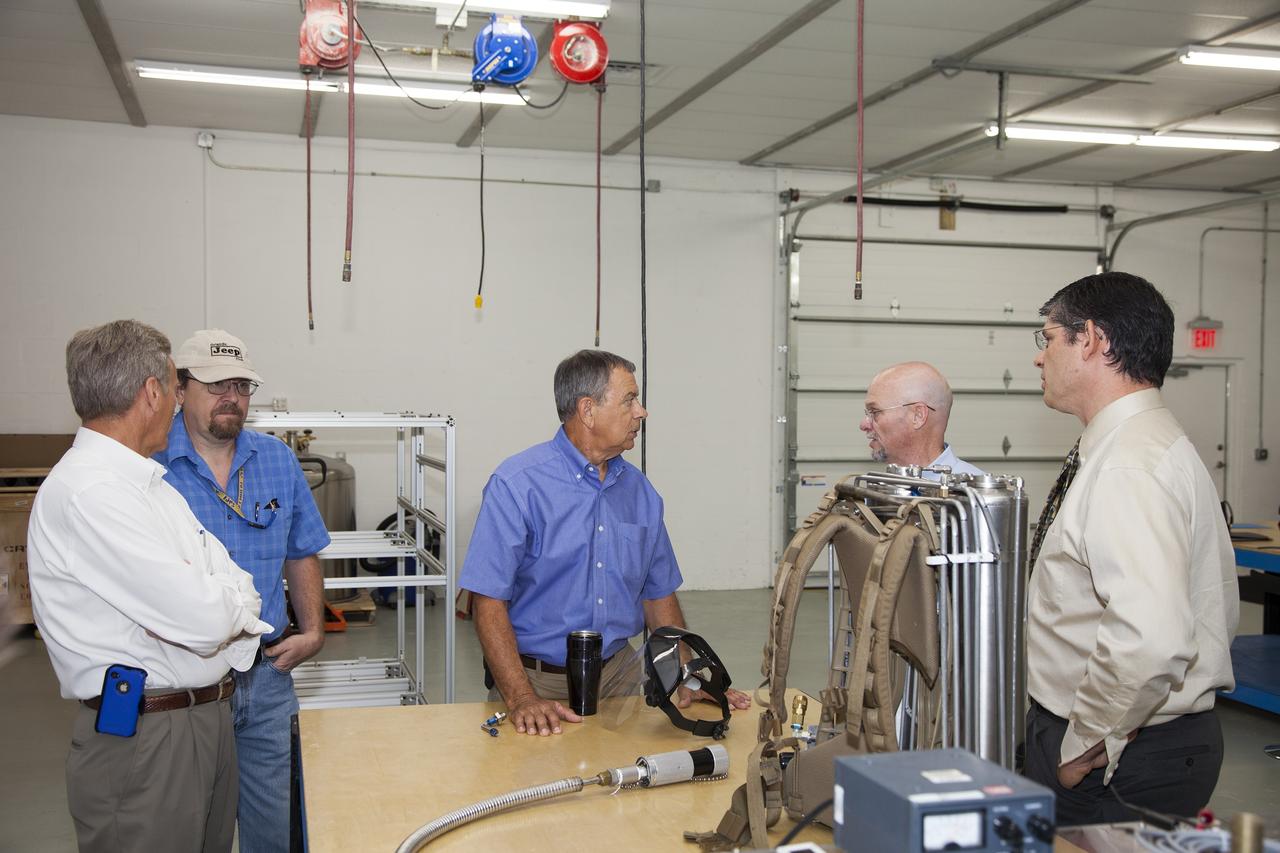
TITUSVILLE, Fla. - Representatives from NASA Kennedy Space Center, BCS Life Support, LabTech and URS demo a Cryogenic Refuge Alternative Supply System, or CryoRASS, and a smaller liquid-air filled backpack called CryoBA, short for Cryogenic Breathing Apparatus, in Titusville, Fla. The two systems are being developed by a Kennedy engineering team in collaboration with The National Institute for Occupational Safety and Health to provide miners with twice the amount of breathable and cooler air than traditional compressed systems. The technology also could be used for commercial applications, such as fire and military rescue operations, as well as NASA's future human spaceflight missions. Photo credit: NASA/Daniel Casper
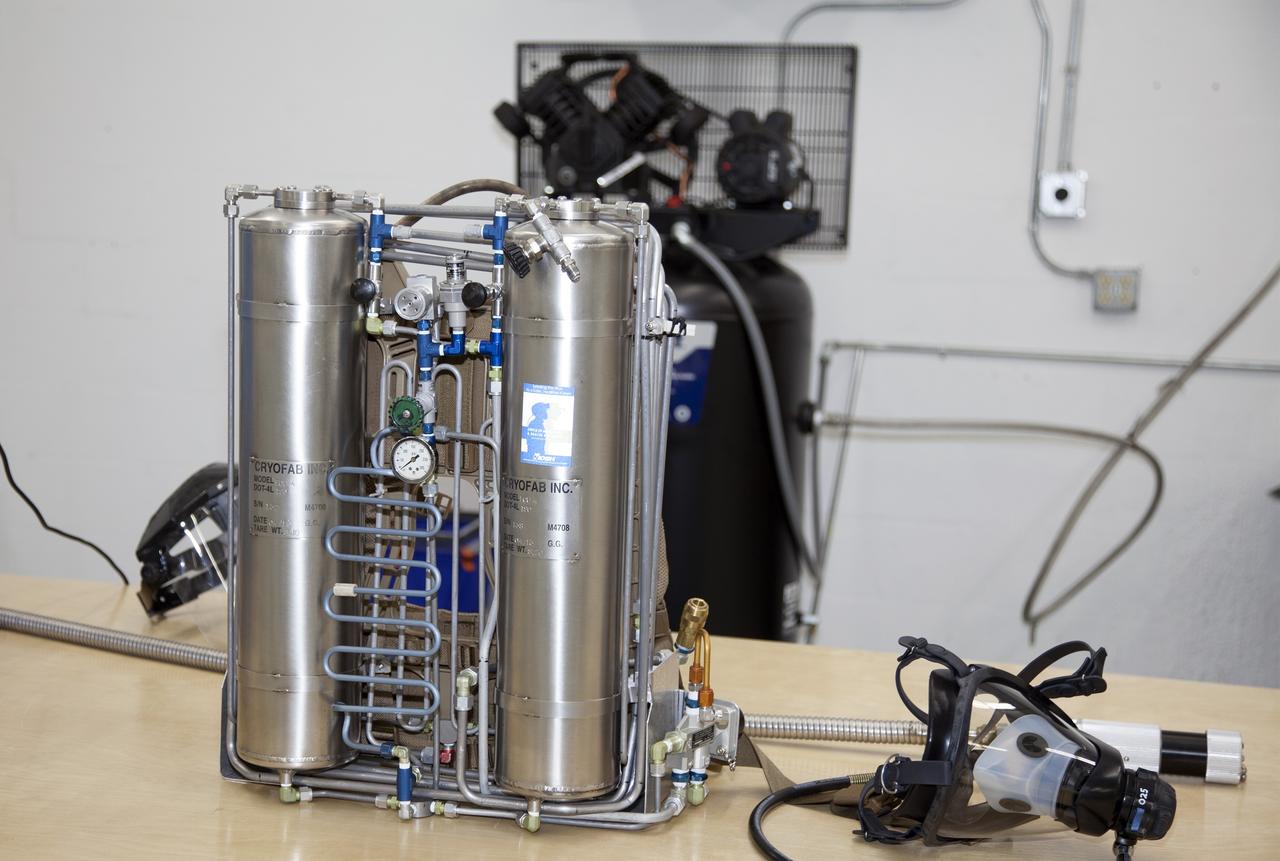
TITUSVILLE, Fla. - A small liquid-air filled backpack called CryoBA, short for Cryogenic Breathing Apparatus, is on display at BCS Life Support in Titusville, Fla. The CryoBA and a larger Cryogenic Refuge Alternative Supply System, or CryoRASS, are being developed by a NASA Kennedy Space Center engineering team in collaboration with The National Institute for Occupational Safety and Health to provide miners with twice the amount of breathable and cooler air than traditional compressed systems. The technology also could be used for commercial applications, such as fire and military rescue operations, as well as NASA's future human spaceflight missions. Photo credit: NASA/Daniel Casper
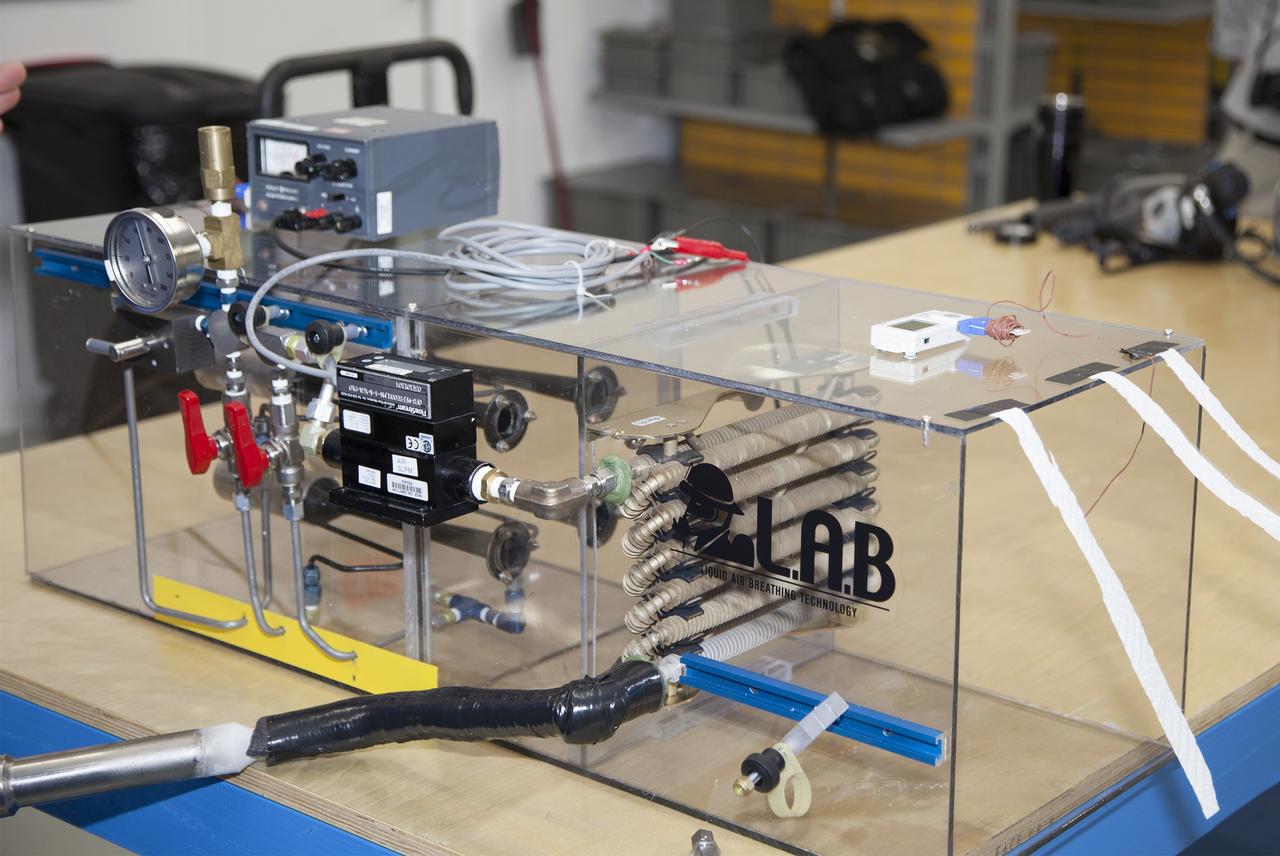
TITUSVILLE, Fla. - The Cryogenic Refuge Alternative Supply System, or CryoRASS, is on display at BCS Life Support in Titusville, Fla. CryoRASS and a small liquid-air filled backpack called CryoBA, short for Cryogenic Breathing Apparatus, are being developed by a NASA Kennedy Space Center engineering team in collaboration with The National Institute for Occupational Safety and Health to provide miners with twice the amount of breathable and cooler air than traditional compressed systems. The technology also could be used for commercial applications, such as fire and military rescue operations, as well as NASA's future human spaceflight missions. Photo credit: NASA/Daniel Casper
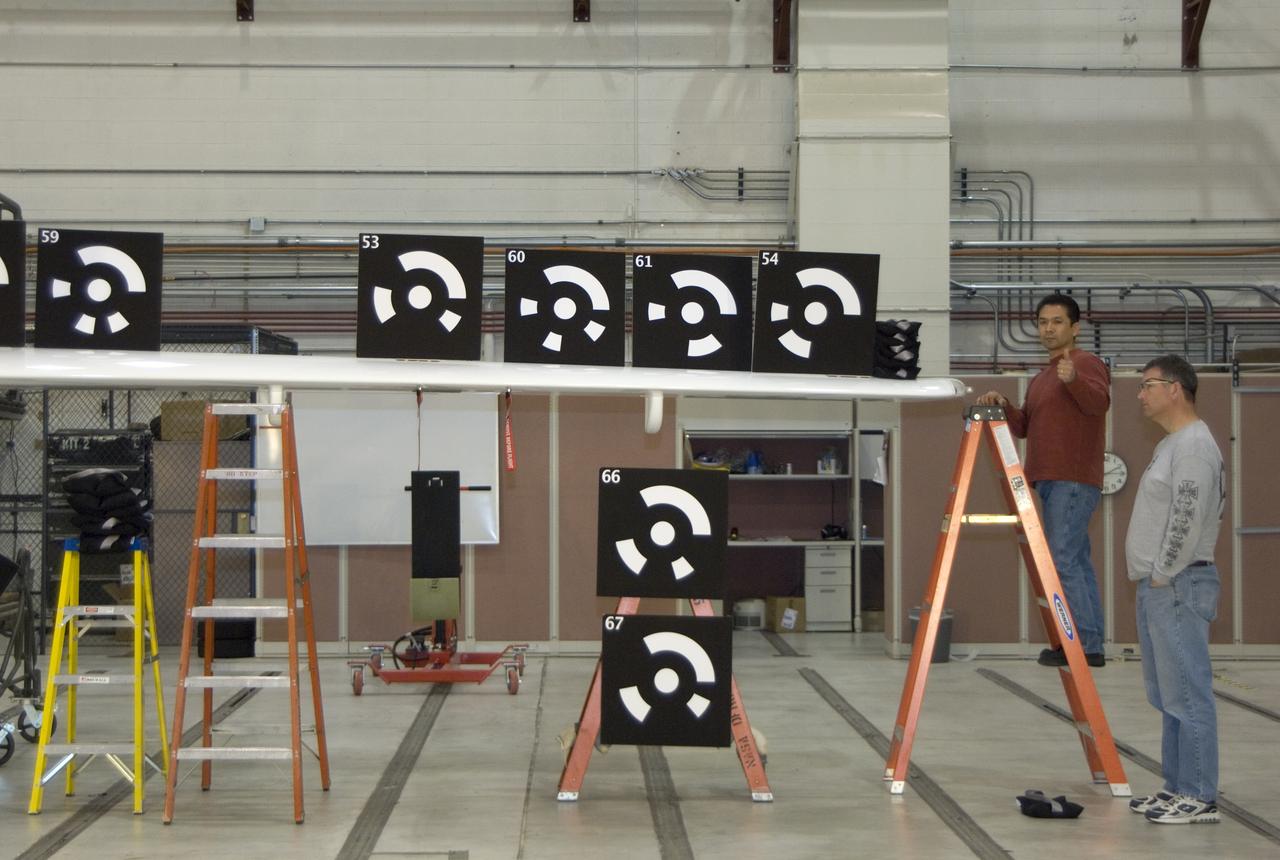
NASA engineer Larry Hudson and Ikhana ground crew member James Smith work on a ground validation test with new fiber optic sensors that led to validation flights on the Ikhana aircraft. NASA Dryden Flight Research Center is evaluating an advanced fiber optic-based sensing technology installed on the wings of NASA's Ikhana aircraft. The fiber optic system measures and displays the shape of the aircraft's wings in flight. There are other potential safety applications for the technology, such as vehicle structural health monitoring. If an aircraft structure can be monitored with sensors and a computer can manipulate flight control surfaces to compensate for stresses on the wings, structural control can be established to prevent situations that might otherwise result in a loss of control.
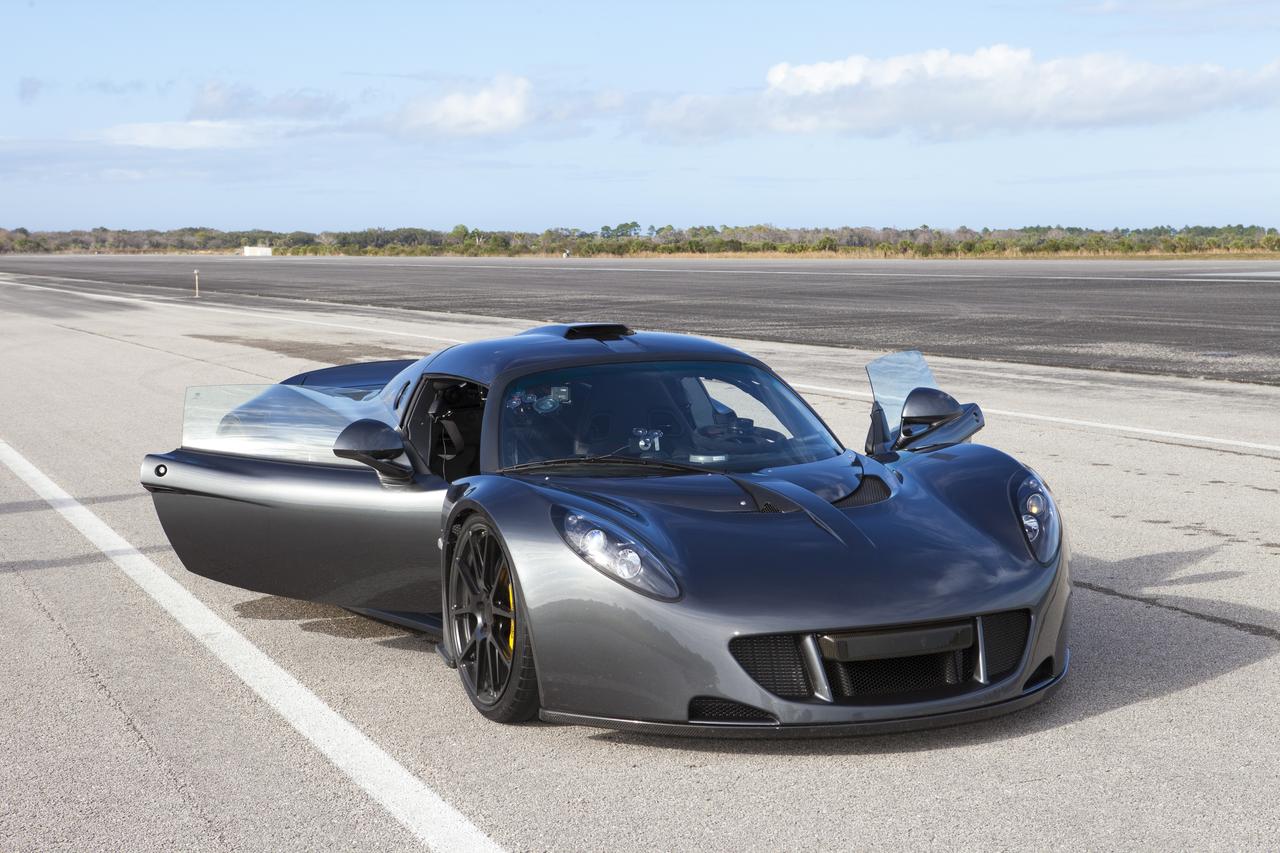
CAPE CANAVERAL, Fla. - A Hennessey Venom GT stands on the 3.5-mile long runway between test runs at the Shuttle Landing Facility at NASA's Kennedy Space Center in Florida. The flat concrete runway is one of the few places in the world where high performance automobiles can be tested for aerodynamic and safety designs. Hennessey Performance of Sealy, Texas, worked with Performance Power Racing in West Palm Beach to arrange use of the NASA facility. Performance Power Racing has conducted numerous engineering tests on the runway with a variety of vehicles. Photo credit: NASA/Kim Shiflett

TITUSVILLE, Fla. - Representatives from NASA Kennedy Space Center, BCS Life Support, LabTech and URS prepare to demo a Cryogenic Refuge Alternative Supply System, or CryoRASS, and a smaller liquid-air filled backpack called CryoBA, short for Cryogenic Breathing Apparatus, in Titusville, Fla. The two systems are being developed by a Kennedy engineering team in collaboration with The National Institute for Occupational Safety and Health to provide miners with twice the amount of breathable and cooler air than traditional compressed systems. The technology also could be used for commercial applications, such as fire and military rescue operations, as well as NASA's future human spaceflight missions. Photo credit: NASA/Daniel Casper
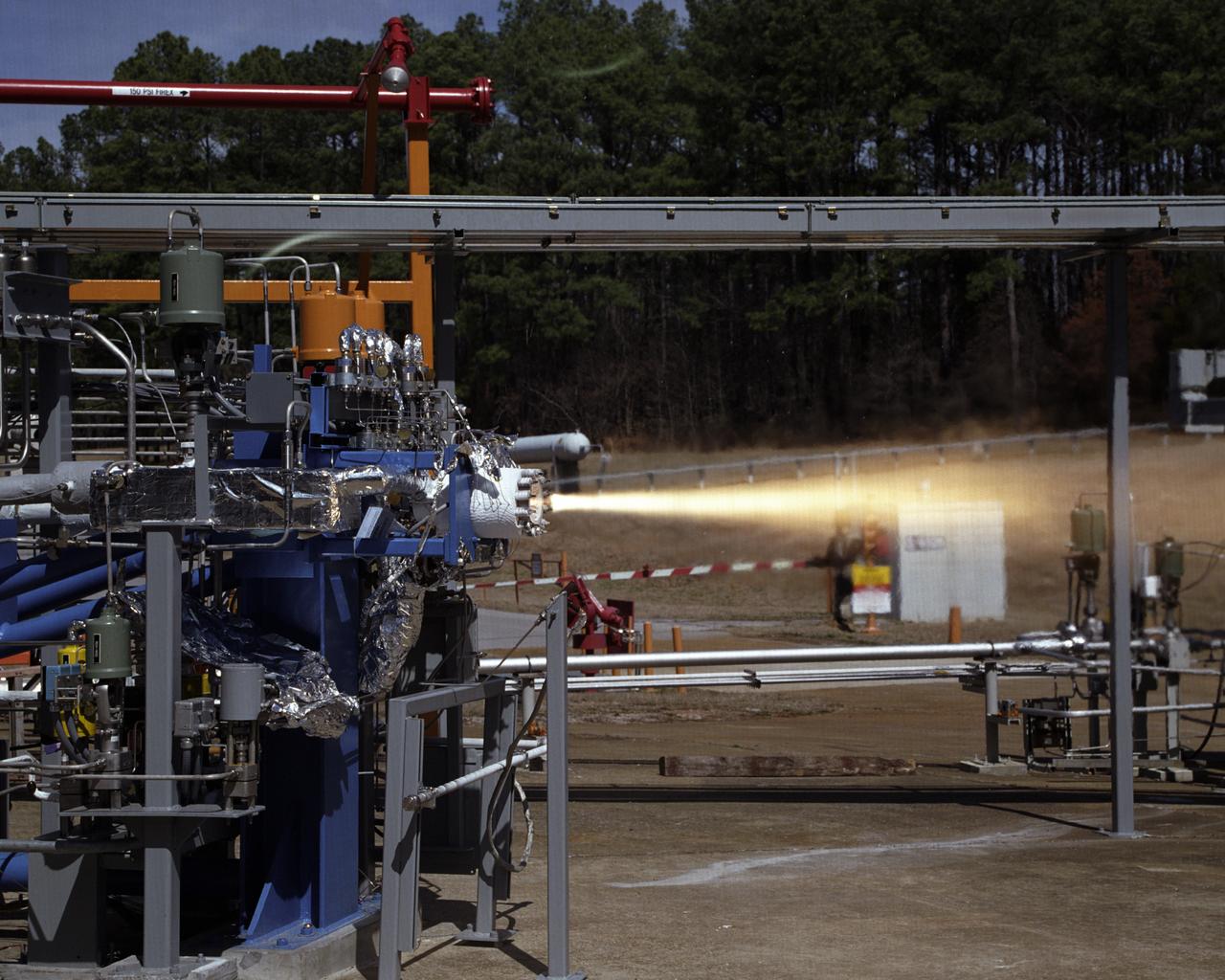
Engineers at the Marshall Space Flight Center (MSFC) have begun a series of engine tests on a new breed of space propulsion: a Reaction Control Engine developed for the Space Launch Initiative (SLI). The engine, developed by TRW Space and Electronics of Redondo Beach, California, is an auxiliary propulsion engine designed to maneuver vehicles in orbit. It is used for docking, reentry, attitude control, and fine-pointing while the vehicle is in orbit. The engine uses nontoxic chemicals as propellants, a feature that creates a safer environment for ground operators, lowers cost, and increases efficiency with less maintenance and quicker turnaround time between missions. Testing includes 30 hot-firings. This photograph shows the first engine test performed at MSFC that includes SLI technology. Another unique feature of the Reaction Control Engine is that it operates at dual thrust modes, combining two engine functions into one engine. The engine operates at both 25 and 1,000 pounds of force, reducing overall propulsion weight and allowing vehicles to easily maneuver in space. The low-level thrust of 25 pounds of force allows the vehicle to fine-point maneuver and dock while the high-level thrust of 1,000 pounds of force is used for reentry, orbit transfer, and coarse positioning. SLI is a NASA-wide research and development program, managed by the MSFC, designed to improve safety, reliability, and cost effectiveness of space travel for second generation reusable launch vehicles.
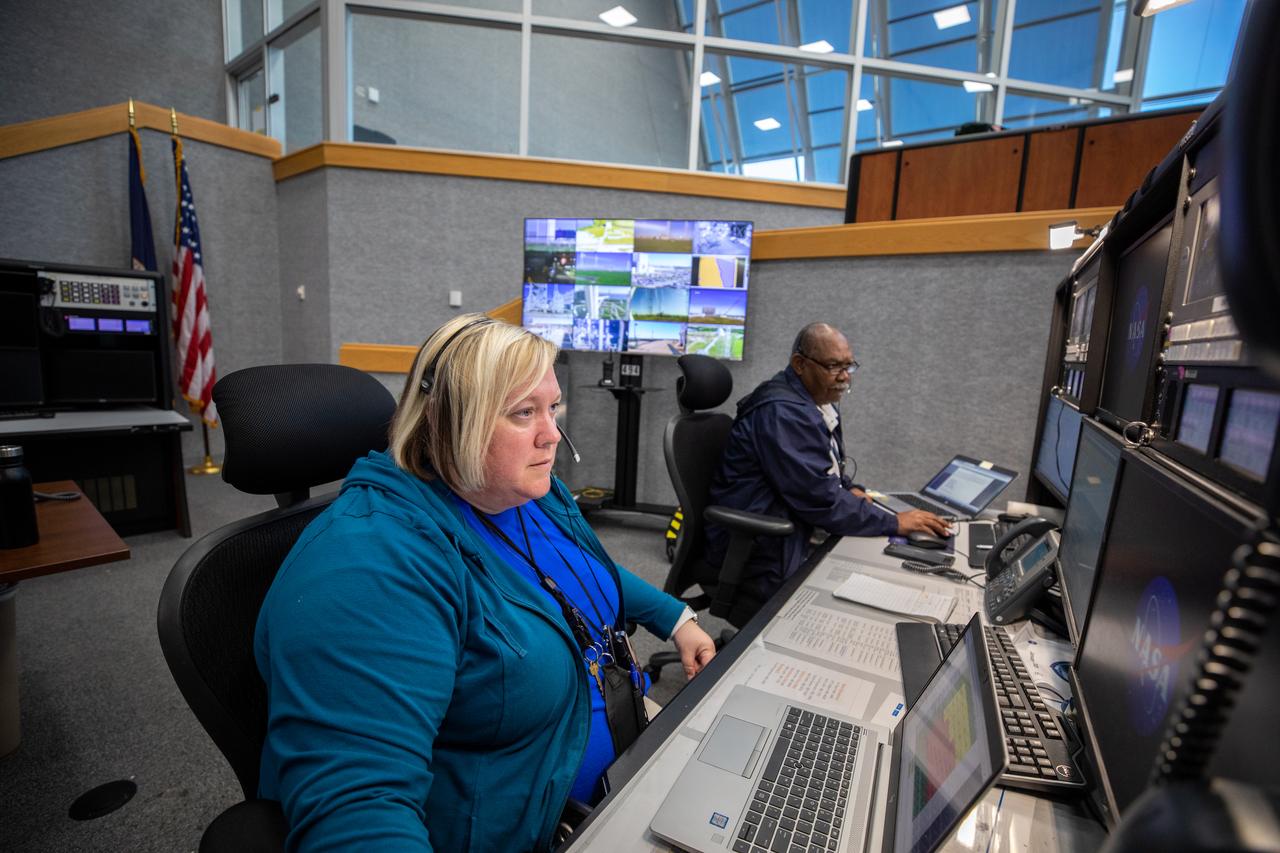
Lisa Devries (left) and Bubba Howard, safety engineers at NASA’s Kennedy Space Center in Florida, participate in a launch countdown simulation inside Firing Room 1 in the Launch Control Center on Feb. 3, 2020. Under the leadership of Artemis I Launch Director Charlie Blackwell-Thompson, a team of nearly 100 engineers from Orion, Space Launch System (SLS) and NASA’s Exploration Ground Systems came together to work through a series of simulated challenges, as well as a final countdown procedure. During these exercises, different issues were introduced to familiarize the team with launch day operations, while providing them with an opportunity to practice how they would handle those issues in real-time. Artemis I will be the first integrated test flight of the Orion spacecraft and SLS rocket – the system that will ultimately land the first woman and the next man on the Moon.
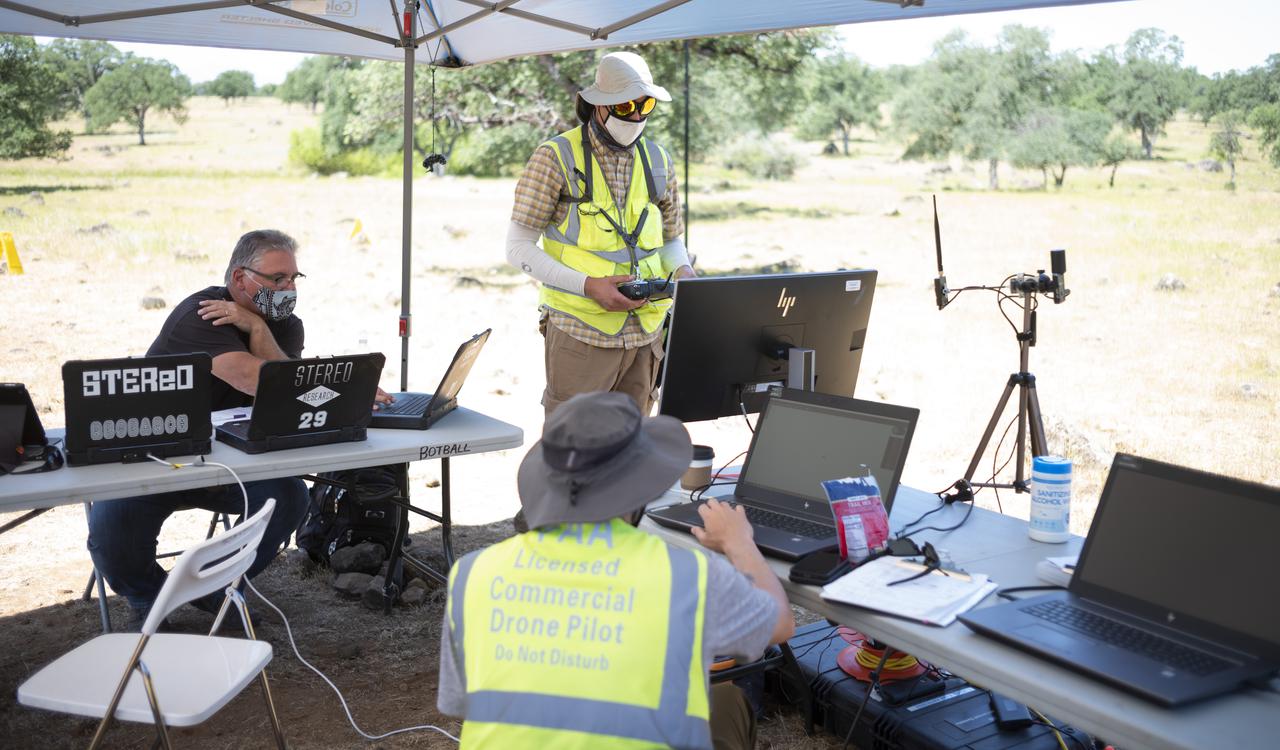
Bill McCarthy, software engineer and research laptop operator for STEReO, the Scalable Traffic Management for Emergency Response Operations project, at NASA's Ames Research Center, left, Jonas Jonsson, pilot in command for STEReO, at NASA's Ames Research Center, standing center, and Zach Roberts, pilot computer operator for STEReO, at NASA's Ames Research Center, seated center, are seen during STEReO field testing, Wednesday, May 5, 2021 as Cal Fire conducts aerial fire fighting training exercises near Redding, California. STEReO, the Scalable Traffic Management for Emergency Response Operations project, led by NASA’s Ames Research Center, builds on NASA’s expertise in air traffic management, human factors research, and autonomous technology development to apply the agency’s work in Unmanned Aircraft Systems Traffic Management, or UTM, to public safety uses. Photo Credit: (NASA/Joel Kowsky)
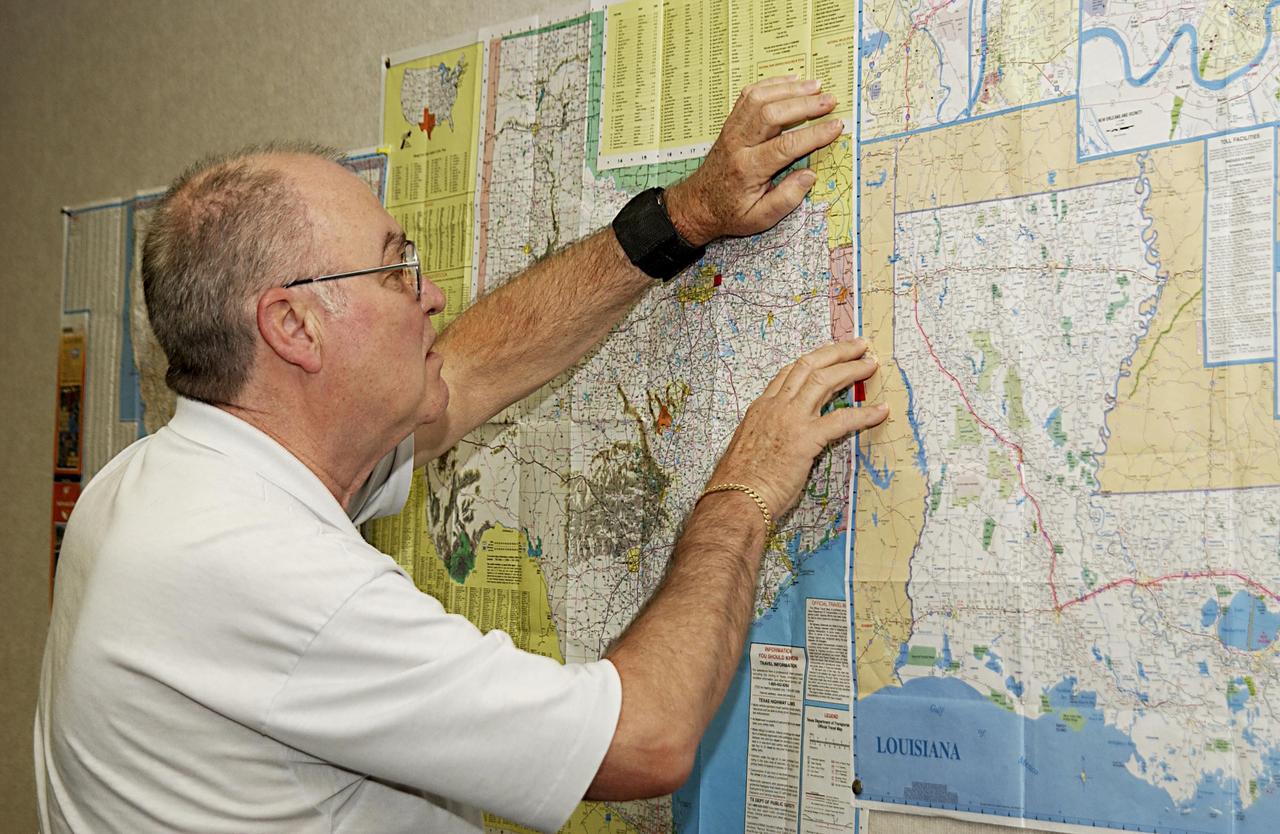
KENNEDY SPACE CENTER, FLA. - Don Maxwell, Safety, United Space Alliance, checks a map of Texas during a meeting of the Recovery Management Team at KSC. The team is part of the investigation into the accident that claimed orbiter Columbia and her crew of seven on Feb. 1, 2003, over East Texas as they returned to Earth after a 16-day research mission. Other team members are Russ DeLoach, chief, Shuttle Mission Assurance Branch, NASA; George Jacobs, Shuttle Engineering; Jeff Campbell, Shuttle Engineering; Dave Rainer, Launch and Landing Operations; the two co-chairs of the Response Management Team, Denny Gagen, Landing Recovery Manager, Chris Hasselbring, Landing Operations, USA; and Larry Ulmer, Safety, NASA. The team is coordinating KSC technical support and assets to the Mishap Investigation Team in Barksdale, La., and providing support for the Recovery teams in Los Angeles, Texas, New Mexico, Arizona and California. In addition, the team is following up on local leads pertaining to potential debris in the KSC area. .
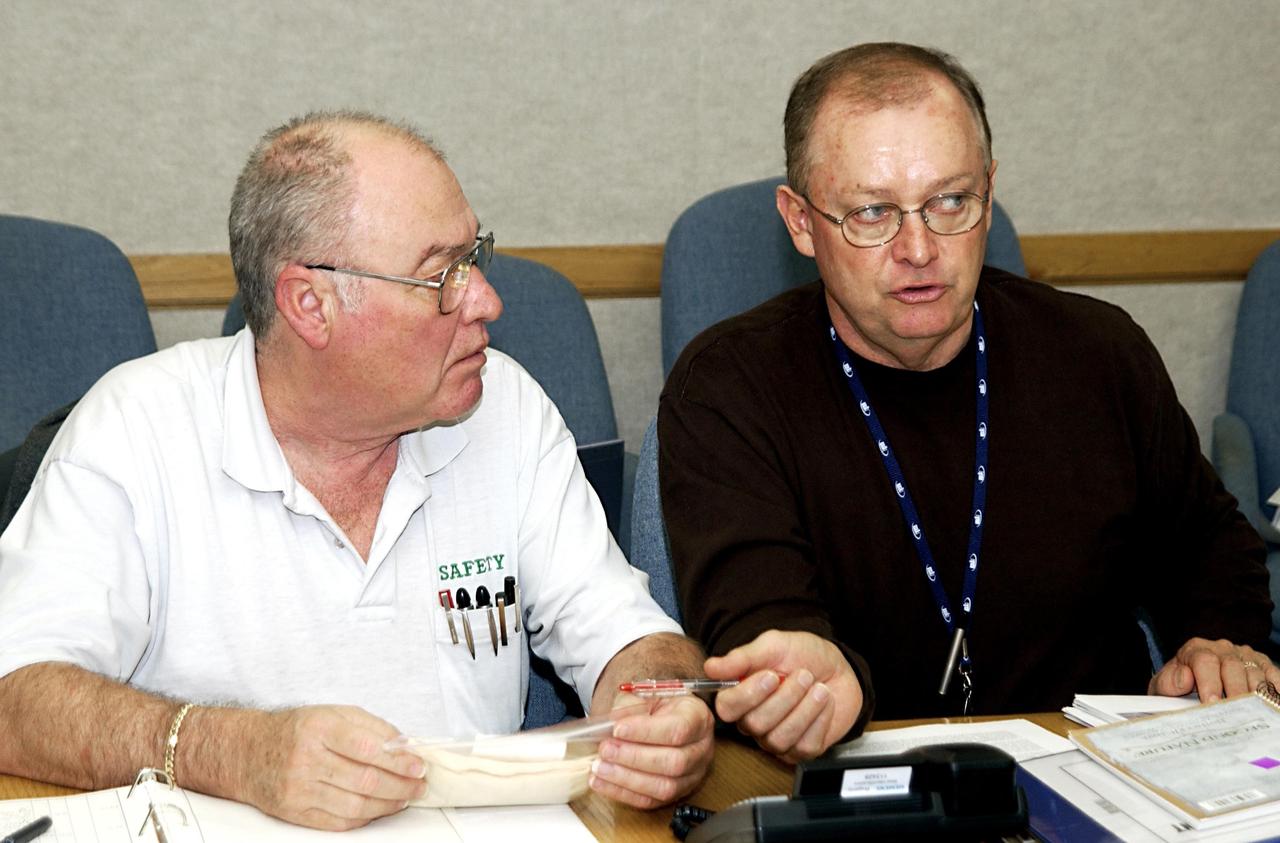
KENNEDY SPACE CENTER, FLA. - Two members of the Recovery Management Team at KSC are at work in the Operations Support Building. At left is Don Maxwell, Safety, United Space Alliance, and at right is Larry Ulmer, Safety, NASA. They are part of the investigation into the accident that claimed orbiter Columbia and her crew of seven on Feb. 1, 2003, over East Texas as they returned to Earth after a 16-day research mission. Other team members are Russ DeLoach, chief, Shuttle Mission Assurance Branch, NASA; George Jacobs, Shuttle Engineering; Jeff Campbell, Shuttle Engineering; Dave Rainer, Launch and Landing Operations; and the two co-chairs of the Response Management Team, Denny Gagen, Landing Recovery Manager, and Chris Hasselbring, Landing Operations, USA. The team is coordinating KSC technical support and assets to the Mishap Investigation Team in Barksdale, La., and providing support for the Recovery teams in Los Angeles, Texas, New Mexico, Arizona and California. In addition, the team is following up on local leads pertaining to potential debris in the KSC area. .
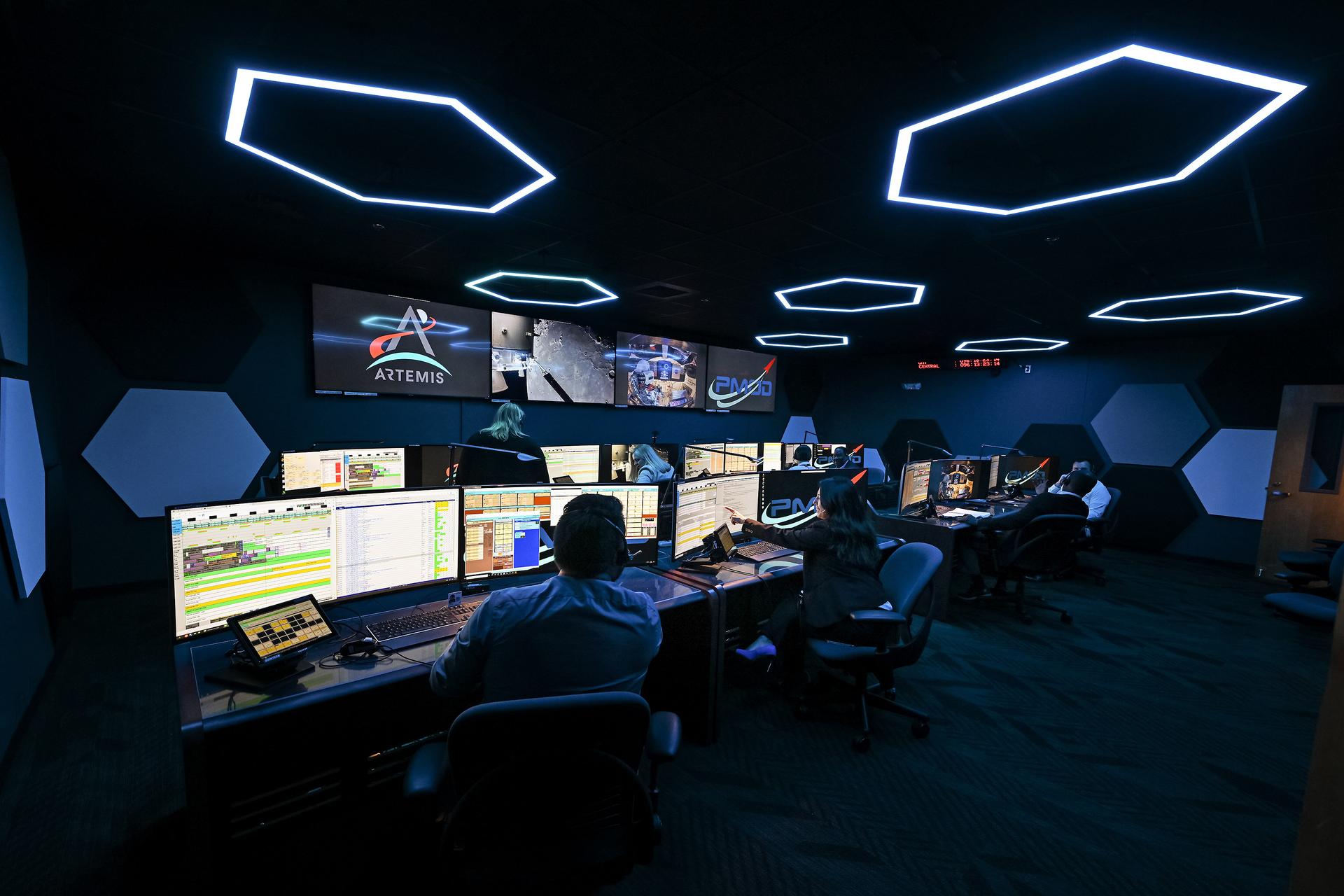
These photos offer a look inside the twin control rooms at NASA’s Marshall Space Flight Center in Huntsville, Alabama, where engineers will monitor Artemis science and future landing operations for Artemis. The LUCA (Lunar Utilization Control Area) and LESA (Lander Engineering Support Area) rooms are part of the Huntsville Operations Support Center at NASA Marshall. The LUCA is specially designed to support a wide variety of science operations on and around the Moon – and beyond. Engineers in the LUCA monitored operations for the Lunar Node-1 experiment, an autonomous navigation payload that was part of the first NASA Commercial Lunar Payload Services (CLPS) launch on Intuitive Machines’ Nova-C lunar lander in 2024. NASA Marshall flight controllers will use the LUCA again for Artemis II to monitor science operations. Beginning with Artemis III, members of the NASA Human Landing System Mission Insight Support Team – a group of engineers, safety leads, flight operations experts, and technical authorities – will work in the LESA. There, they will monitor lander systems in real-time and be involved in key decision-making processes throughout the mission. For more information, contact NASA Marshall’s Office of Communications at 256-544-0034.
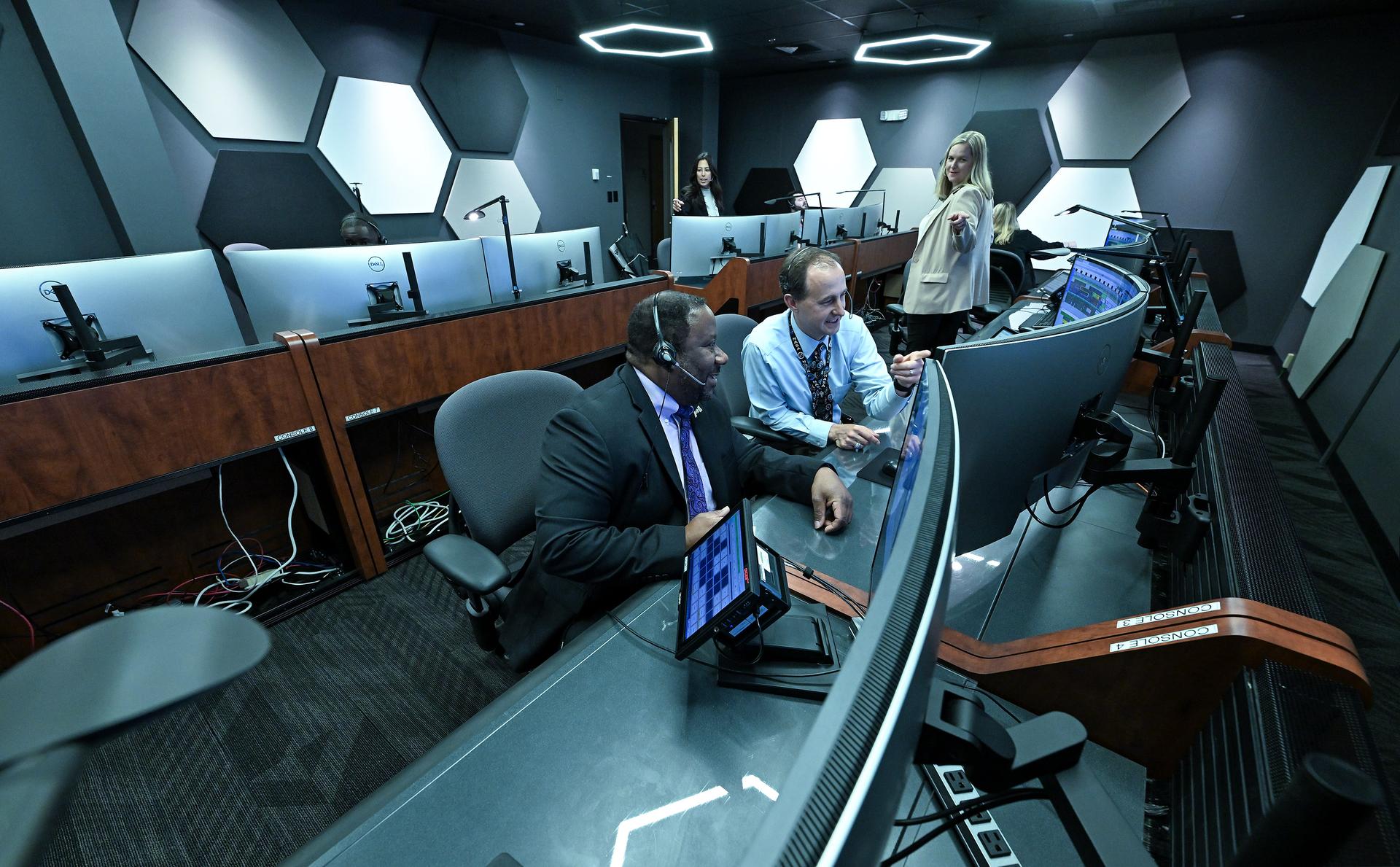
These photos offer a look inside the twin control rooms at NASA’s Marshall Space Flight Center in Huntsville, Alabama, where engineers will monitor Artemis science and future landing operations for Artemis. The LUCA (Lunar Utilization Control Area) and LESA (Lander Engineering Support Area) rooms are part of the Huntsville Operations Support Center at NASA Marshall. The LUCA is specially designed to support a wide variety of science operations on and around the Moon – and beyond. Engineers in the LUCA monitored operations for the Lunar Node-1 experiment, an autonomous navigation payload that was part of the first NASA Commercial Lunar Payload Services (CLPS) launch on Intuitive Machines’ Nova-C lunar lander in 2024. NASA Marshall flight controllers will use the LUCA again for Artemis II to monitor science operations. Beginning with Artemis III, members of the NASA Human Landing System Mission Insight Support Team – a group of engineers, safety leads, flight operations experts, and technical authorities – will work in the LESA. There, they will monitor lander systems in real-time and be involved in key decision-making processes throughout the mission. For more information, contact NASA Marshall’s Office of Communications at 256-544-0034.
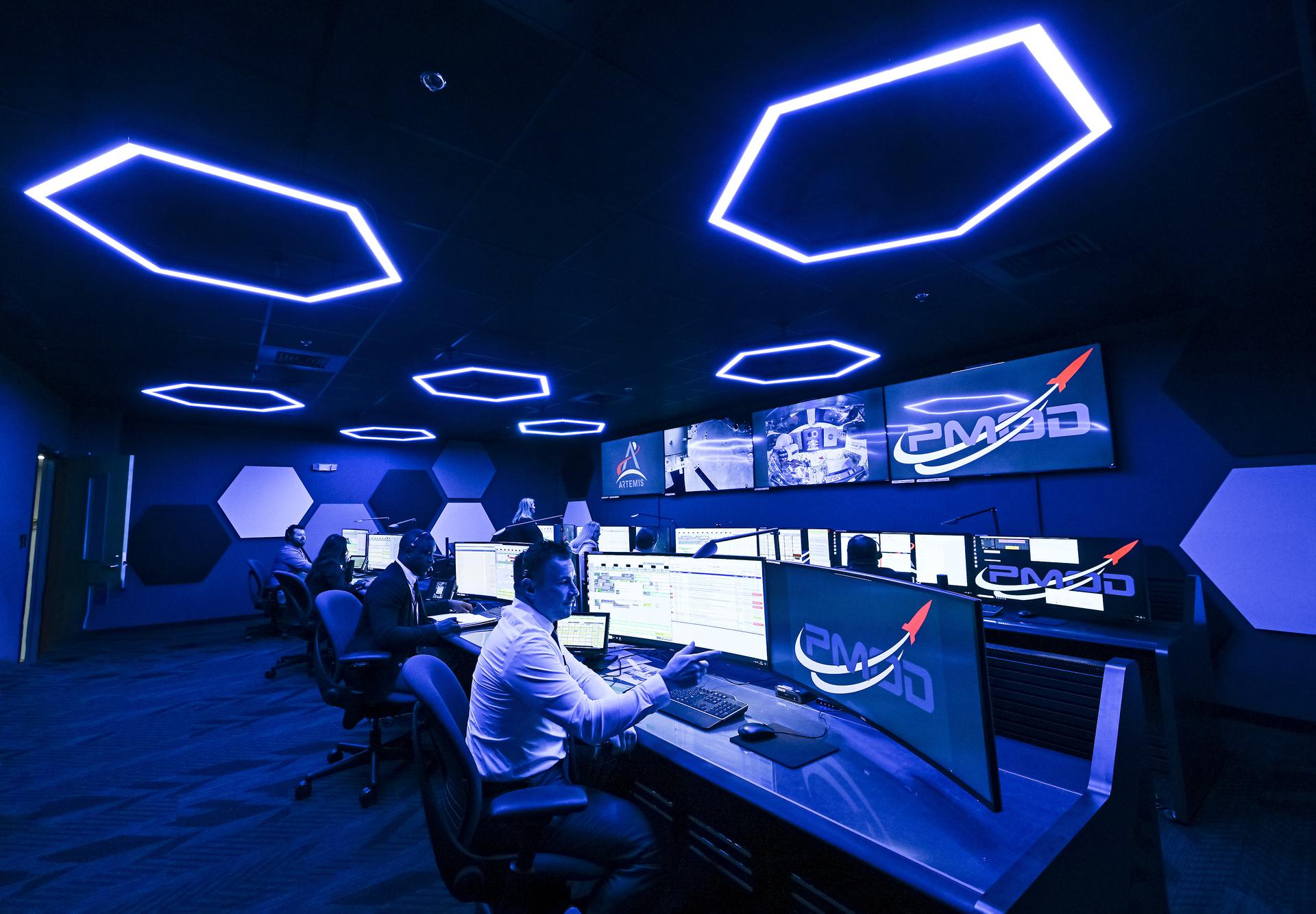
These photos offer a look inside the twin control rooms at NASA’s Marshall Space Flight Center in Huntsville, Alabama, where engineers will monitor Artemis science and future landing operations for Artemis. The LUCA (Lunar Utilization Control Area) and LESA (Lander Engineering Support Area) rooms are part of the Huntsville Operations Support Center at NASA Marshall. The LUCA is specially designed to support a wide variety of science operations on and around the Moon – and beyond. Engineers in the LUCA monitored operations for the Lunar Node-1 experiment, an autonomous navigation payload that was part of the first NASA Commercial Lunar Payload Services (CLPS) launch on Intuitive Machines’ Nova-C lunar lander in 2024. NASA Marshall flight controllers will use the LUCA again for Artemis II to monitor science operations. Beginning with Artemis III, members of the NASA Human Landing System Mission Insight Support Team – a group of engineers, safety leads, flight operations experts, and technical authorities – will work in the LESA. There, they will monitor lander systems in real-time and be involved in key decision-making processes throughout the mission. For more information, contact NASA Marshall’s Office of Communications at 256-544-0034.
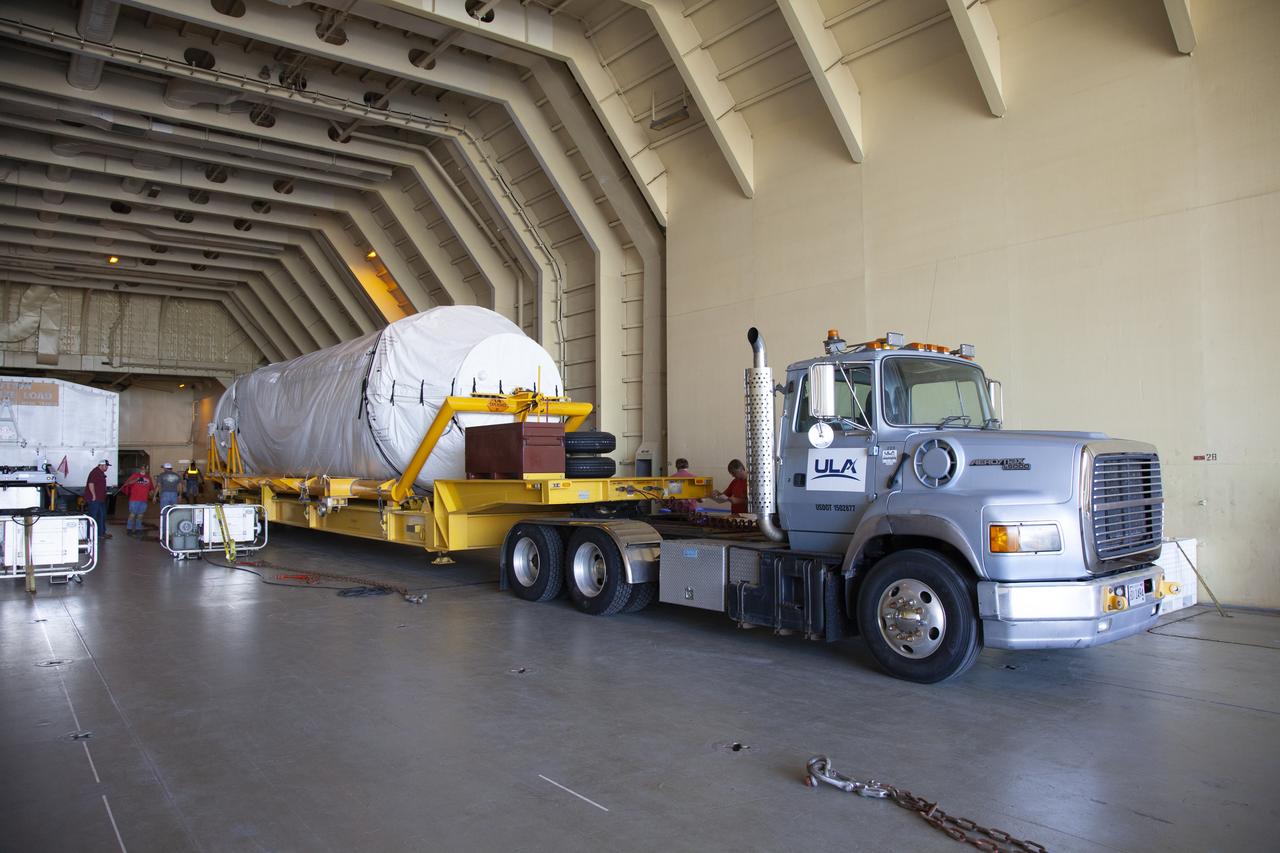
A transport truck moves a United Launch Alliance (ULA) two-engine Centaur upper stage from the company’s Mariner ship that just arrived at Port Canaveral in Florida. The Centaur will be transported to the Atlas Spaceflight Operations Center at Cape Canaveral Air Force Station for preliminary checkouts. Mounted atop a ULA Atlas V rocket, the Centaur will help launch a Boeing CST-100 Starliner spacecraft on an uncrewed Orbital Flight Test from Space Launch Complex 41 at the Cape. NASA’s Commercial Crew Program will return human spaceflight launches to U.S. soil, providing safe, reliable and cost-effective access to low-Earth orbit on systems that meet our safety and mission requirements.
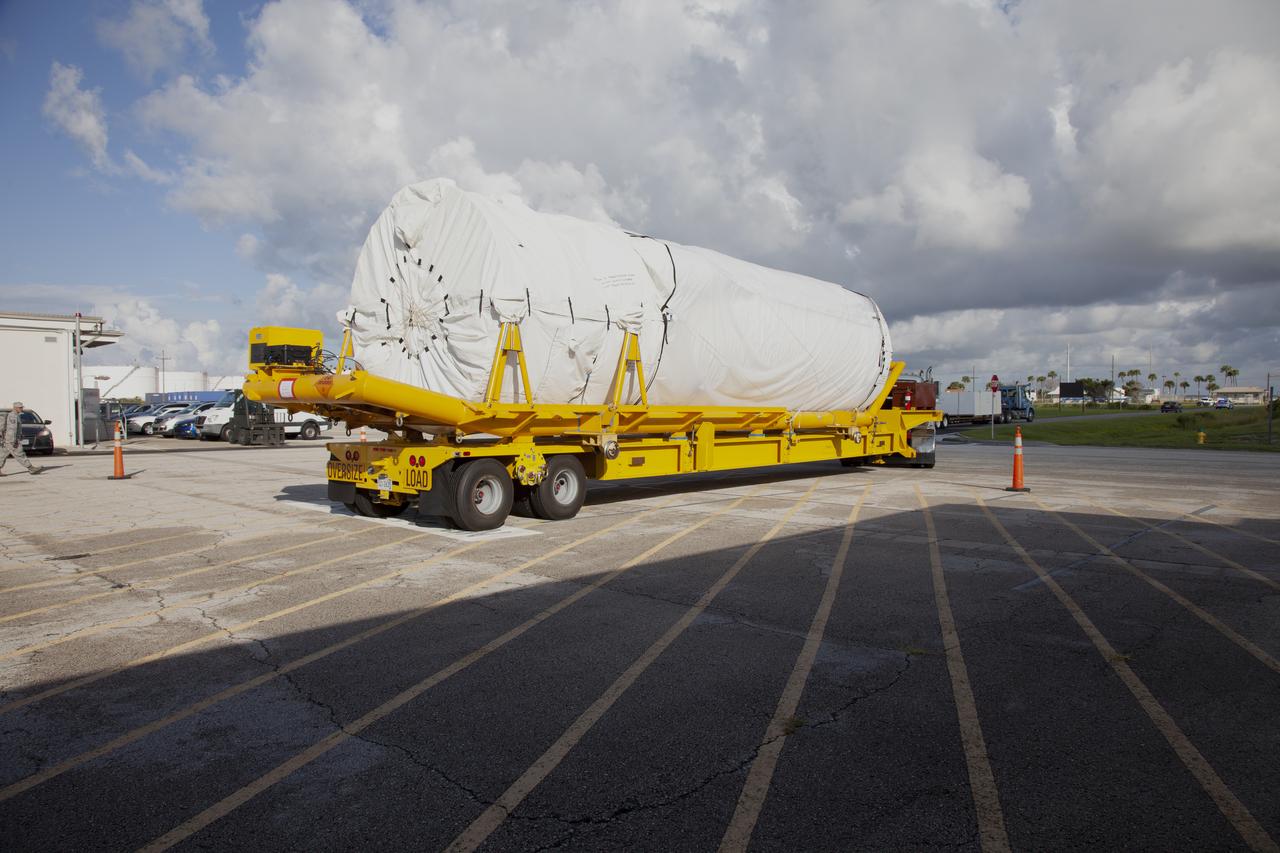
A transport truck moves a United Launch Alliance (ULA) two-engine Centaur upper stage from the company’s Mariner ship that just arrived at Port Canaveral in Florida. The Centaur will be transported to the Atlas Spaceflight Operations Center at Cape Canaveral Air Force Station for preliminary checkouts. Mounted atop a ULA Atlas V rocket, the Centaur will help launch a Boeing CST-100 Starliner spacecraft on an uncrewed Orbital Flight Test from Space Launch Complex 41 at the Cape. NASA’s Commercial Crew Program will return human spaceflight launches to U.S. soil, providing safe, reliable and cost-effective access to low-Earth orbit on systems that meet our safety and mission requirements.
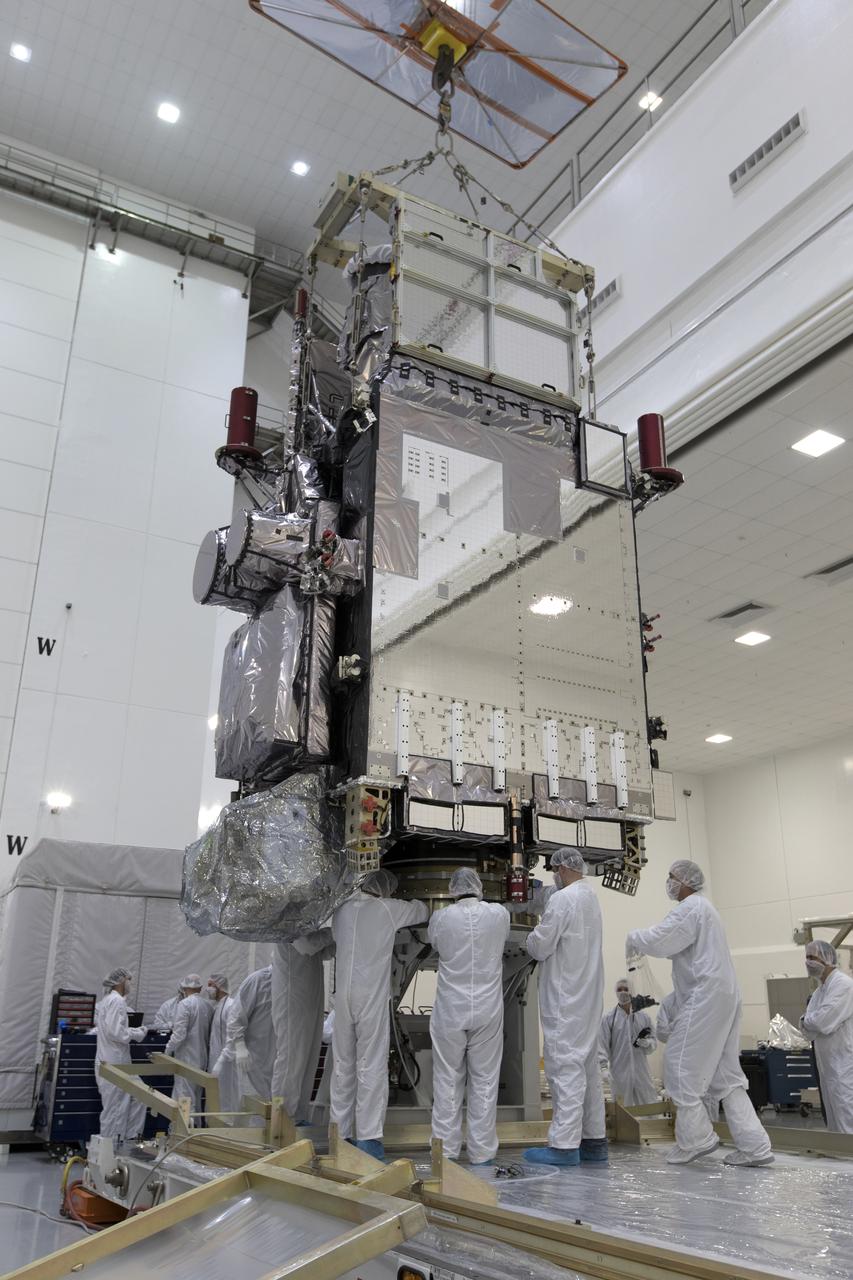
At Astrotech Space Operations in Titusville, Florida, technicians and engineers inspect NOAA's Geostationary Operational Environmental Satellite-S (GOES-S). The facility is located near NASA's Kennedy Space Center. GOES-S is the second in a series of four advanced geostationary weather satellites. The GOES-R series - consisting of the GOES-R, GOES-S, GOES-T and GOES-U spacecraft - will significantly improve the detection and observation of environmental phenomena that directly affect public safety, protection of property and the nation's economic health and prosperity. GOES-S is slated to launch March 1, 2018 aboard a United Launch Alliance Atlas V rocket from Cape Canaveral Air Force Station in Florida.
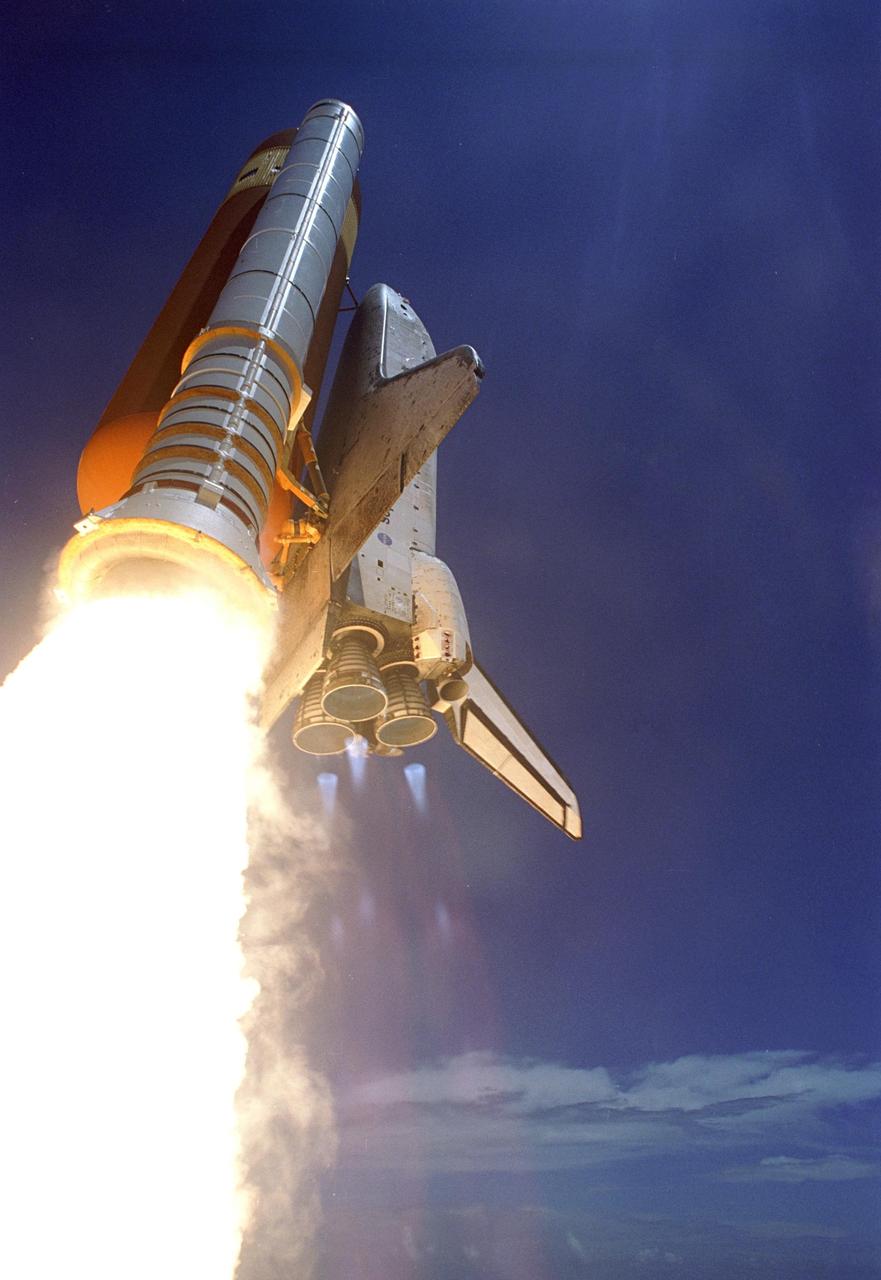
KENNEDY SPACE CENTER, FLA. - Making history with the first-ever launch on Independence Day, Space Shuttle Discovery rockets into the blue sky on mission STS-121, trailing fiery exhaust and blue mach diamonds from the main engine nozzles. Liftoff was on-time at 2:38 p.m. EDT. During the 12-day mission, the STS-121 crew of seven will test new equipment and procedures to improve shuttle safety, as well as deliver supplies and make repairs to the International Space Station. Landing is scheduled for July 16 or 17 at Kennedy's Shuttle Landing Facility. Photo credit: NASA/Regina Mitchell-Ryall & Don Kight
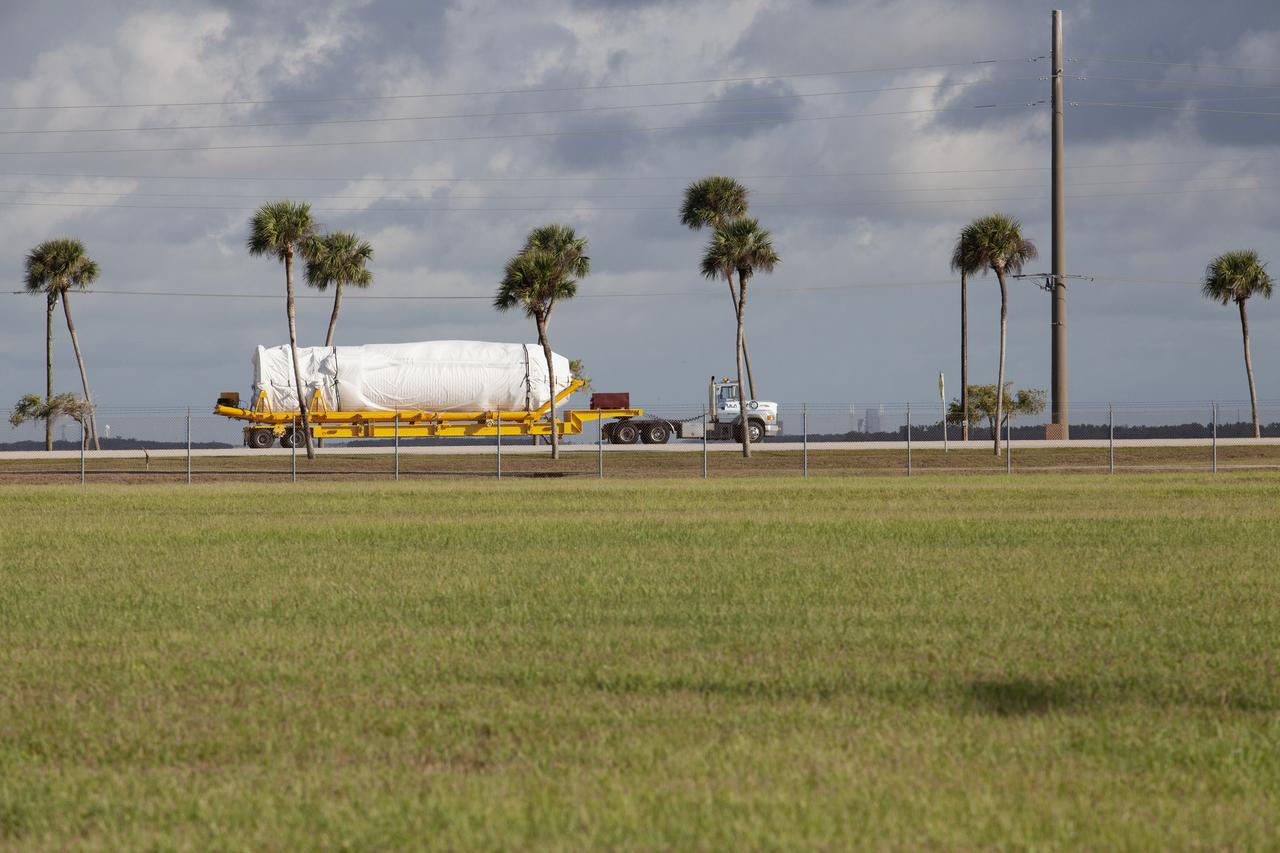
A truck transports a United Launch Alliance (ULA) two-engine Centaur upper stage from Port Canaveral in Florida to the Atlas Spaceflight Operations Center at Cape Canaveral Air Force Station for preliminary checkouts. Mounted atop a ULA Atlas V rocket, the Centaur will help launch a Boeing CST-100 Starliner spacecraft on an uncrewed Orbital Flight Test from Space Launch Complex 41 at the Cape. NASA’s Commercial Crew Program will return human spaceflight launches to U.S. soil, providing safe, reliable and cost-effective access to low-Earth orbit on systems that meet our safety and mission requirements.
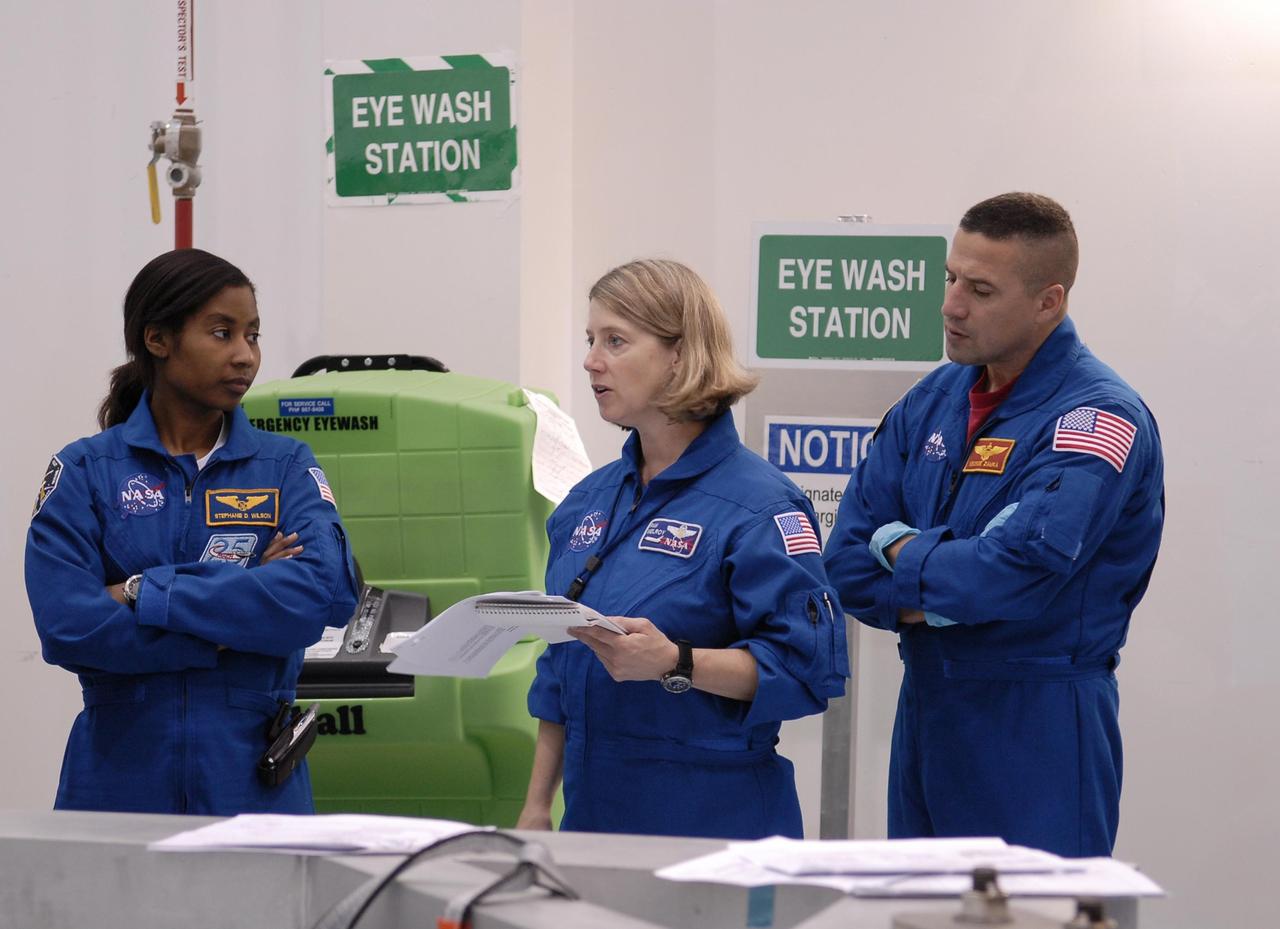
KENNEDY SPACE CENTER, FLA. -- During a familiarization visit to the Space Station Processing Facility, mission STS-120 Mission Specialist Stephanie Wilson, Commander Pam Melroy and Pilot George Zamka review safety procedures. Other STS-120 crew members include Mission Specialists Scott Parazynski, Douglas Wheelock, Daniel Tani, Paolo Nespoli (with the European Space Agency) and Clayton Anderson. Mission STS-120 will deliver the Node 2 "Harmony" connecting module to the station. During the mission, Tani and Anderson will transfer to the station and remain as flight engineers for Expedition 15. The mission is tentatively scheduled for August of this year. Photo credit: NASA/Kim Shiflett
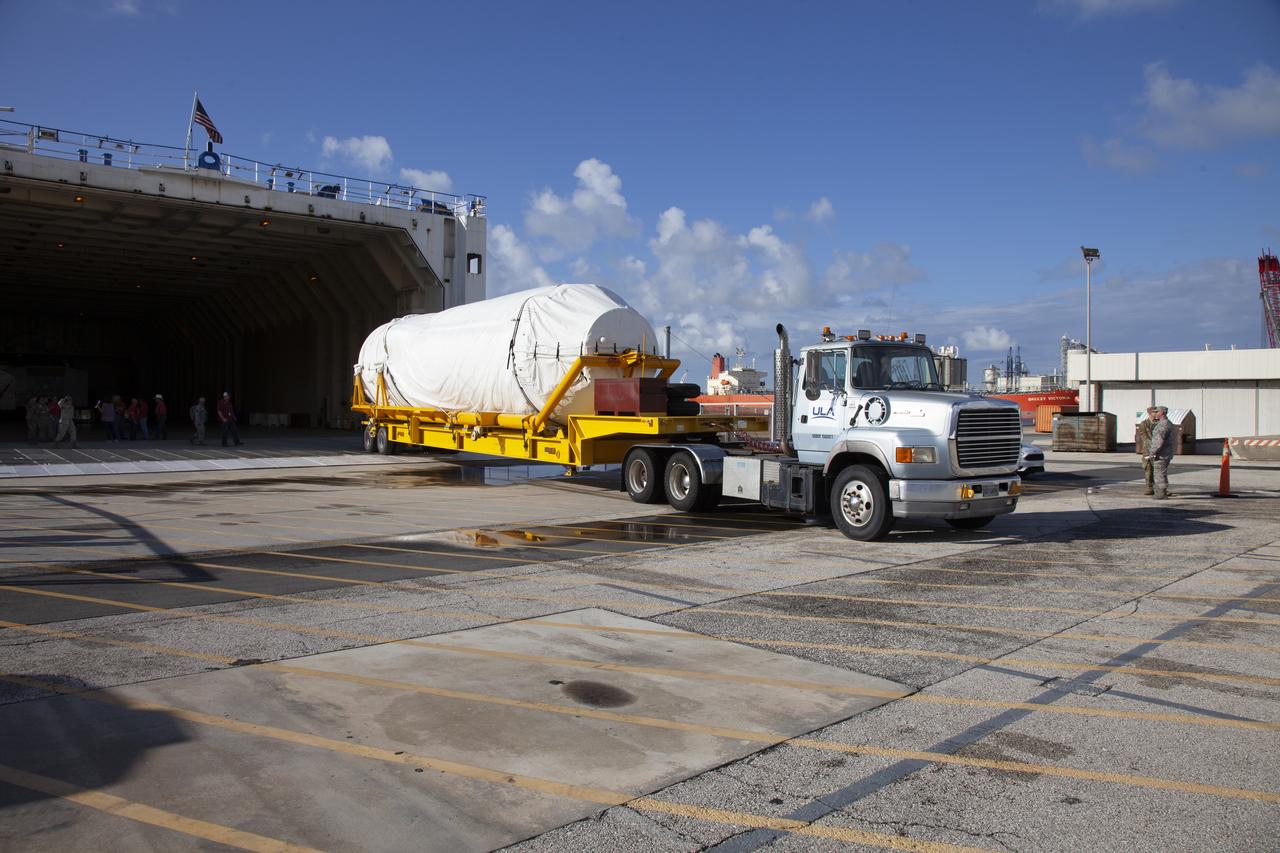
A transport truck moves a United Launch Alliance (ULA) two-engine Centaur upper stage from the company’s Mariner ship that just arrived at Port Canaveral in Florida. The Centaur will be transported to the Atlas Spaceflight Operations Center at Cape Canaveral Air Force Station for preliminary checkouts. Mounted atop a ULA Atlas V rocket, the Centaur will help launch a Boeing CST-100 Starliner spacecraft on an uncrewed Orbital Flight Test from Space Launch Complex 41 at the Cape. NASA’s Commercial Crew Program will return human spaceflight launches to U.S. soil, providing safe, reliable and cost-effective access to low-Earth orbit on systems that meet our safety and mission requirements.
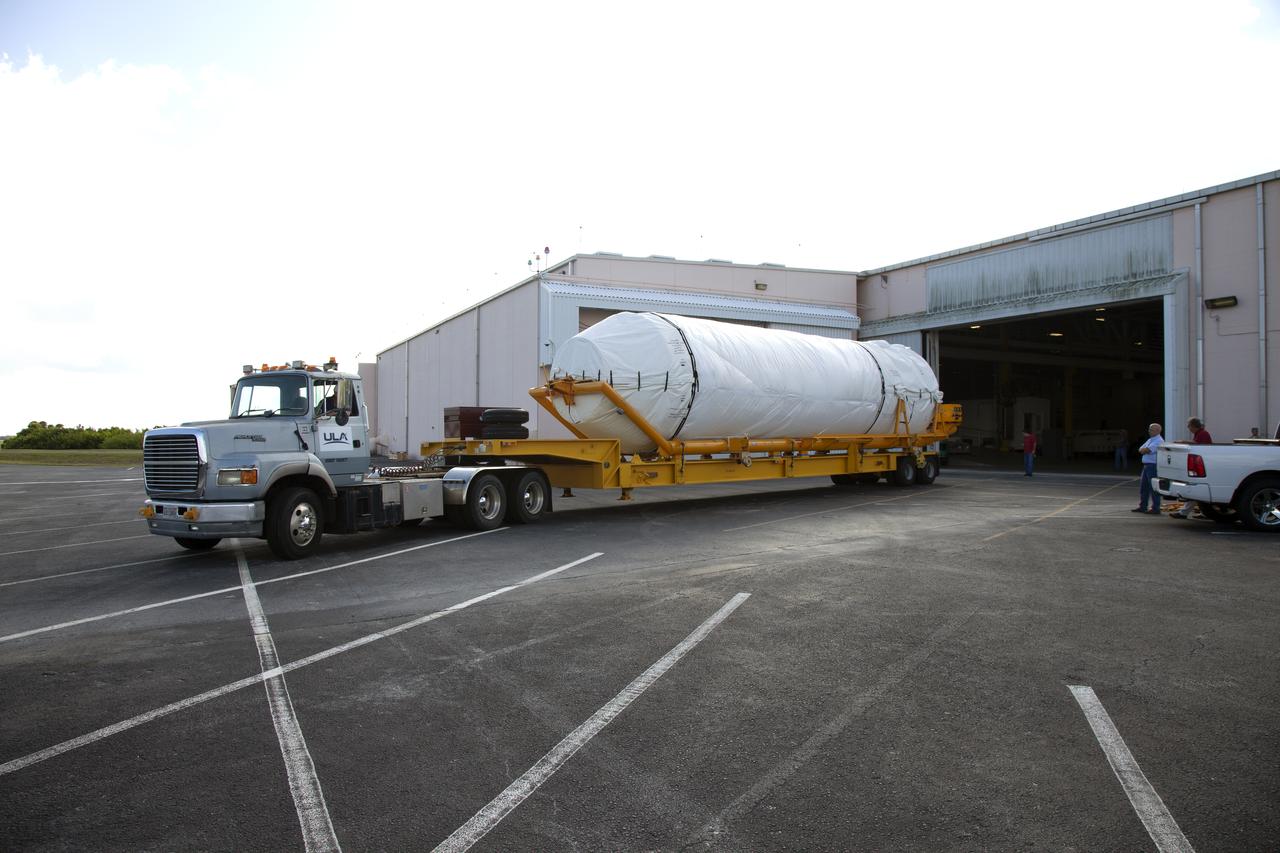
A transport truck with a United Launch Alliance (ULA) two-engine Centaur upper stage arrives at the Atlas Spaceflight Operations Center at Cape Canaveral Air Force Station for preliminary checkouts. Mounted atop a ULA Atlas V rocket, the Centaur will help launch a Boeing CST-100 Starliner spacecraft on an uncrewed Orbital Flight Test from Space Launch Complex 41 at the Cape. NASA’s Commercial Crew Program will return human spaceflight launches to U.S. soil, providing safe, reliable and cost-effective access to low-Earth orbit on systems that meet our safety and mission requirements.
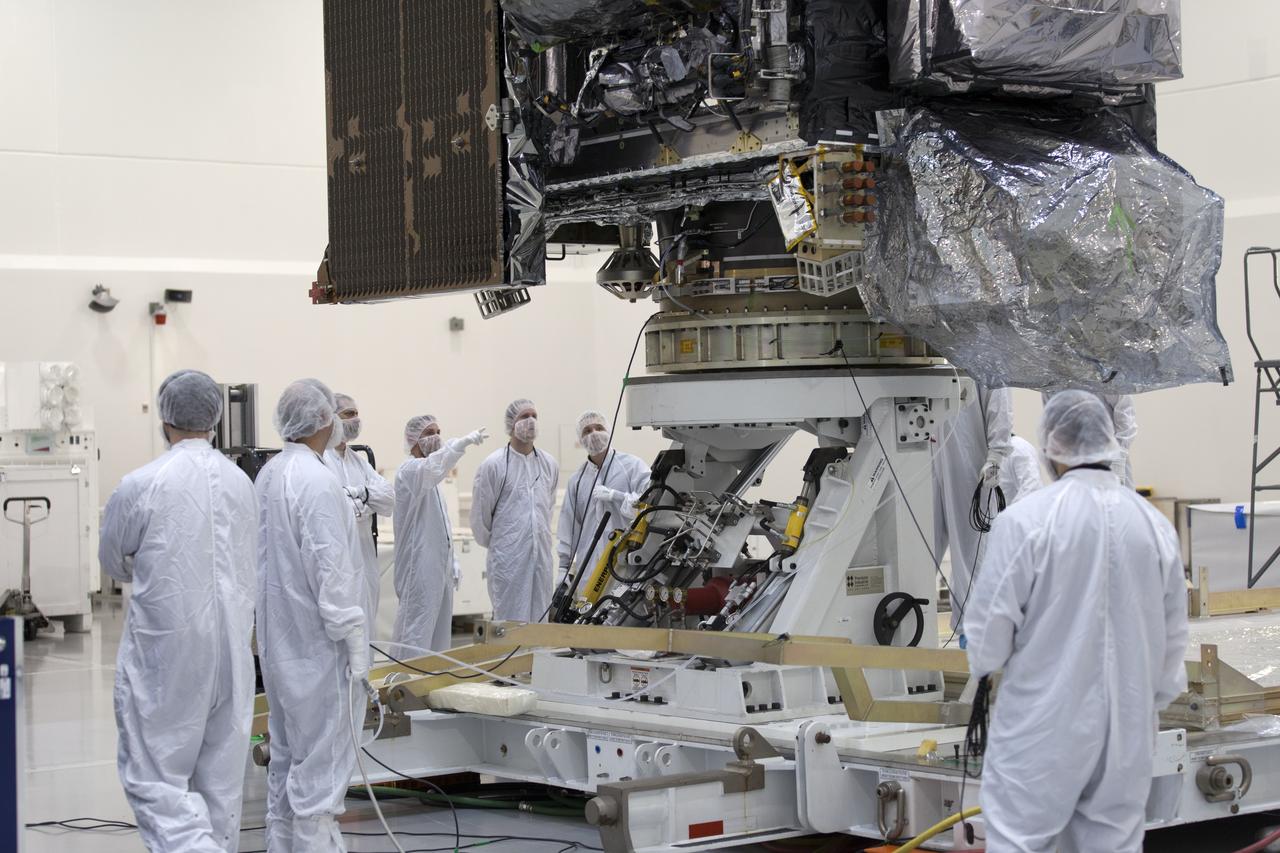
At Astrotech Space Operations in Titusville, Florida, technicians and engineers inspect NOAA's Geostationary Operational Environmental Satellite-S (GOES-S). The facility is located near NASA's Kennedy Space Center. GOES-S is the second in a series of four advanced geostationary weather satellites. The GOES-R series - consisting of the GOES-R, GOES-S, GOES-T and GOES-U spacecraft - will significantly improve the detection and observation of environmental phenomena that directly affect public safety, protection of property and the nation's economic health and prosperity. GOES-S is slated to launch March 1, 2018 aboard a United Launch Alliance Atlas V rocket from Cape Canaveral Air Force Station in Florida.