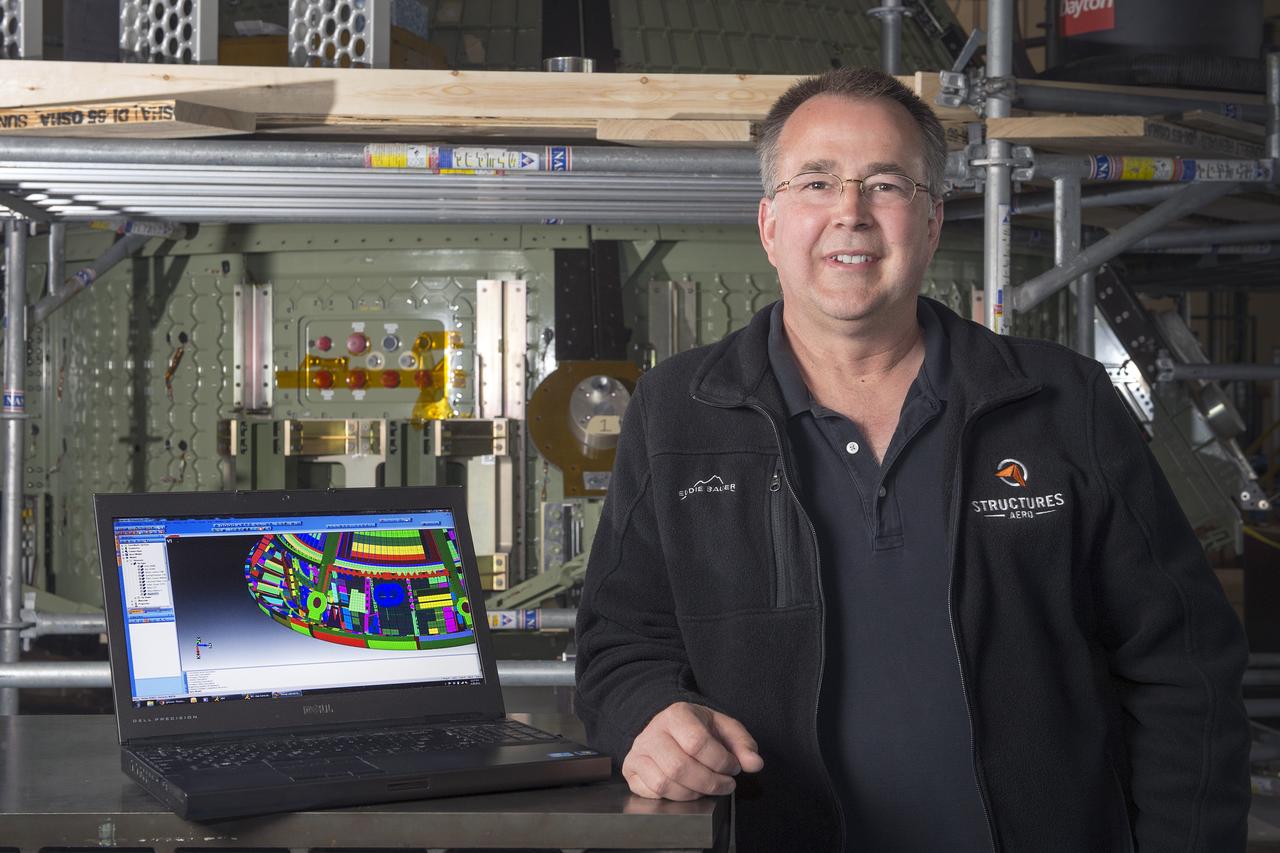
(NESC) NASA Engineering and Safety Center Orion Heat Shield Carrier Structure: Titanium Orthogrid heat shield sub-component dynamic test article : person in the photo Jim Jeans
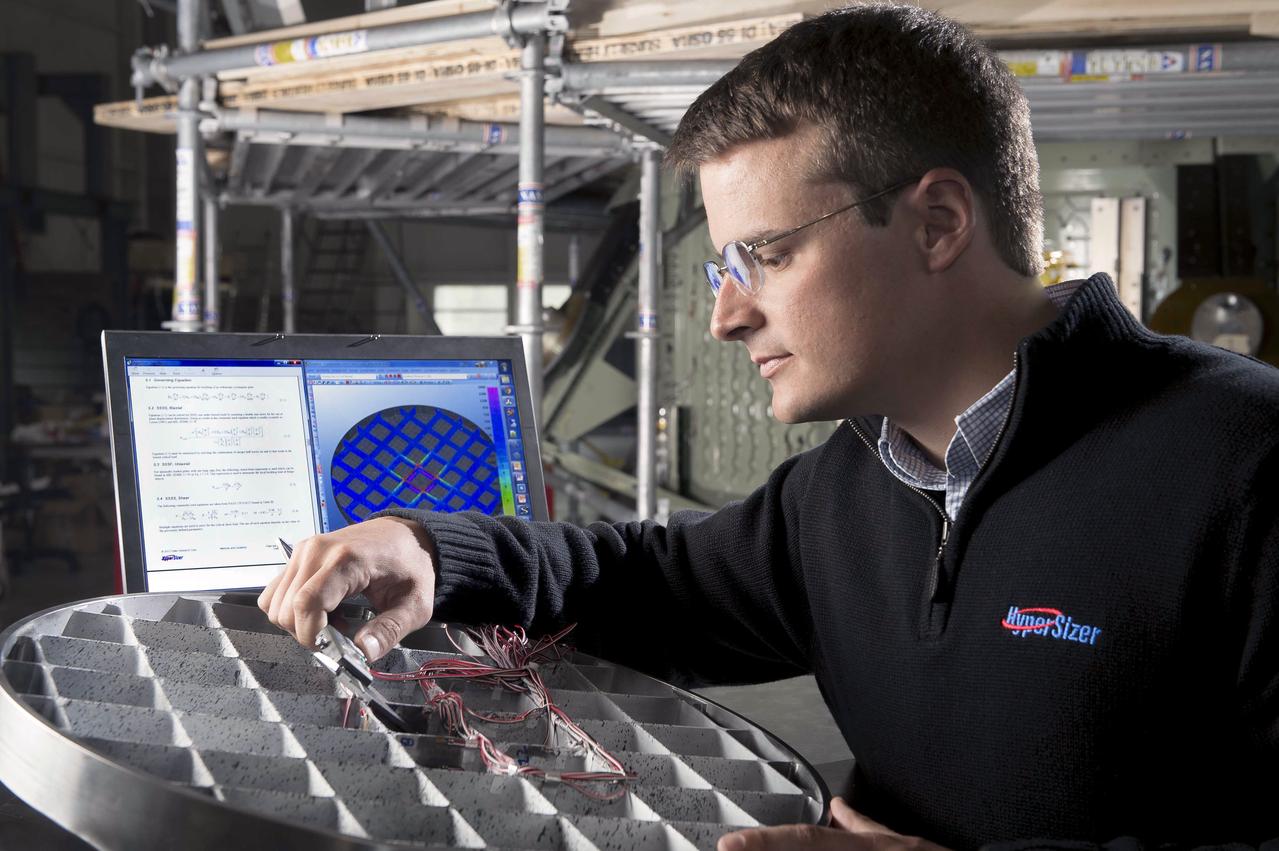
(NESC) NASA Engineering and Safety Center Orion Heat Shield Carrier Structure: Titanium Orthogrid heat shield sub-component dynamic test article :person in the photo James Ainsworth
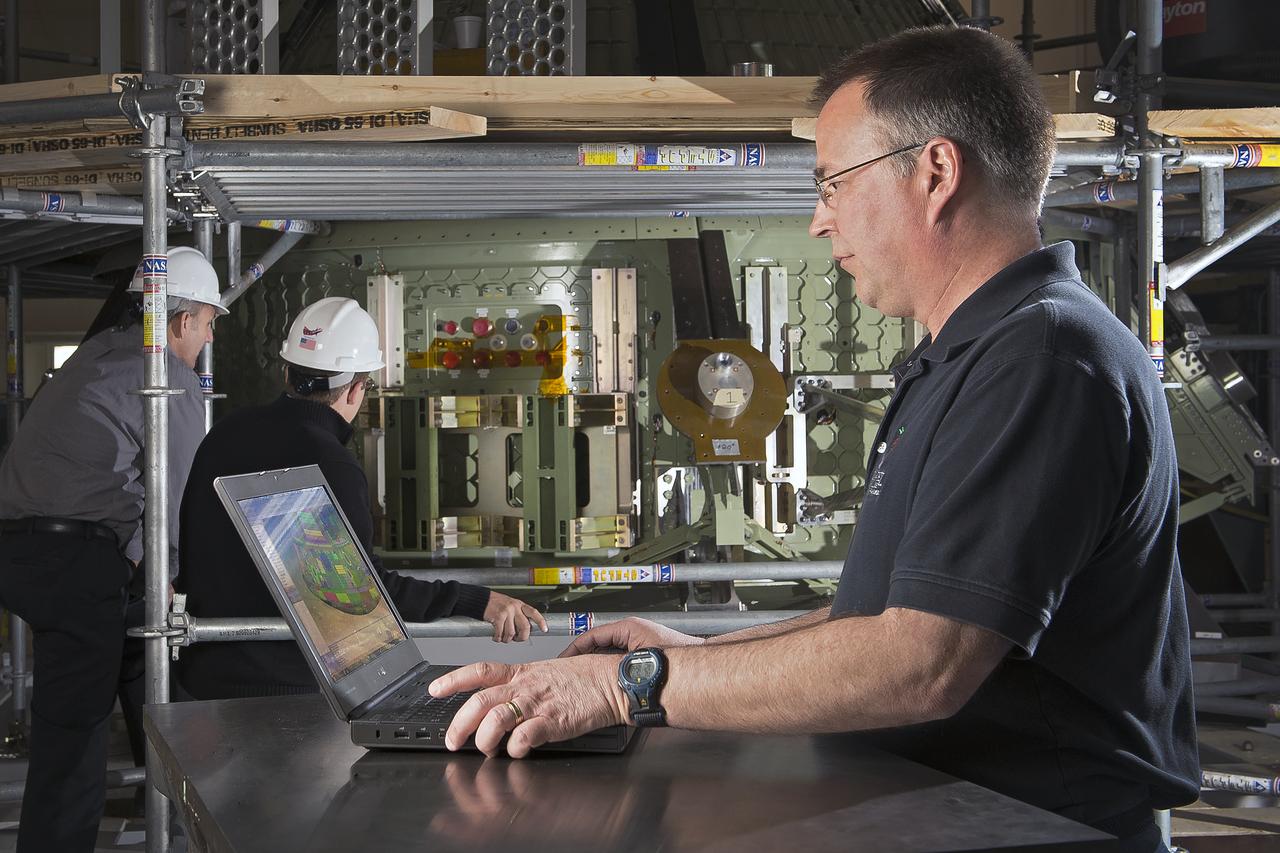
(NESC) NASA Engineering and Safety Center Orion Heat Shield Carrier Structure: Titanium Orthogrid heat shield sub-component dynamic test article : person in the photo Jim Jeans (Background: Mike Kirsch, James Ainsworth)
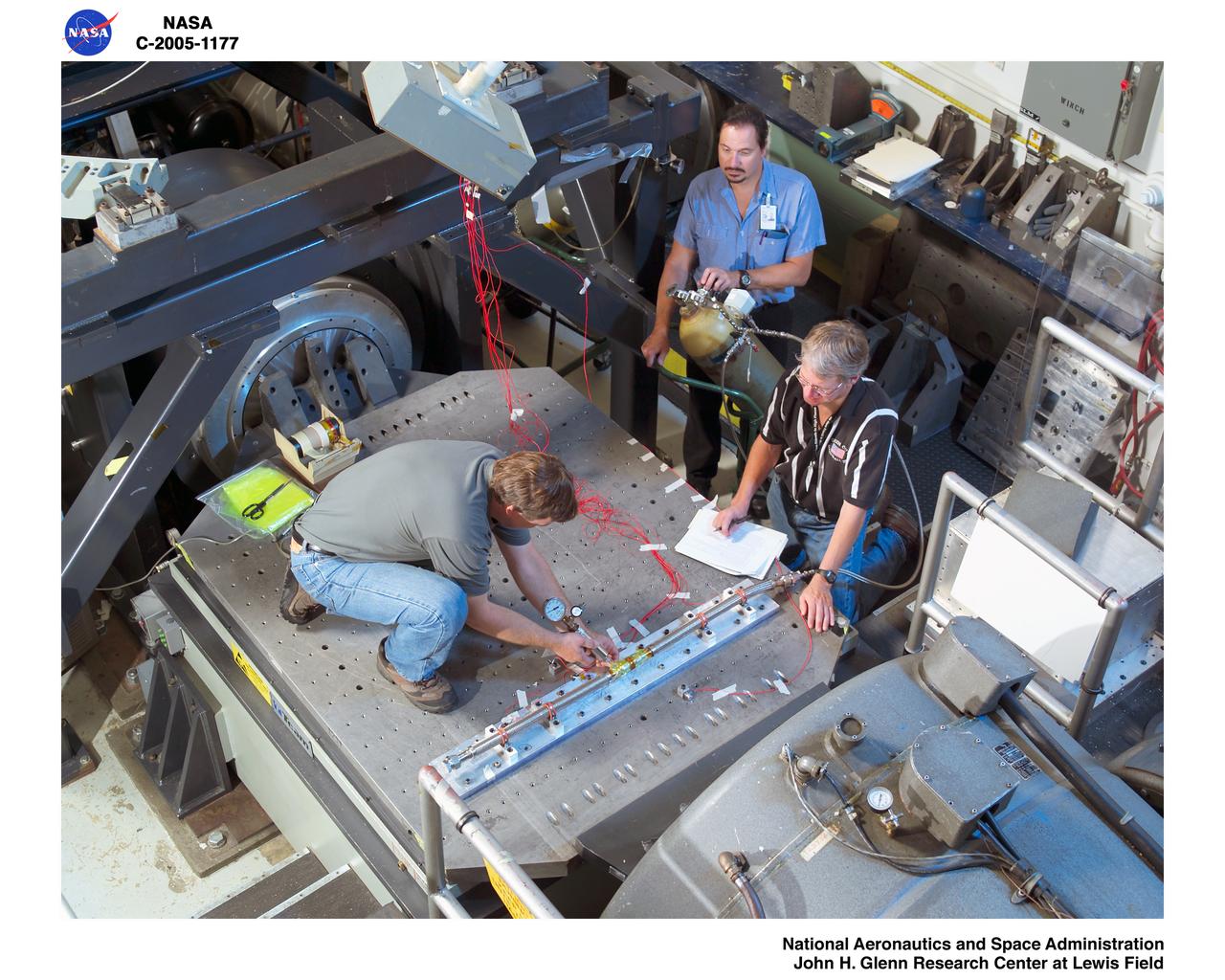
NASA Engineering and Safety Center (NESC) AN Fitting Mimic Test - Helium Leak Testing
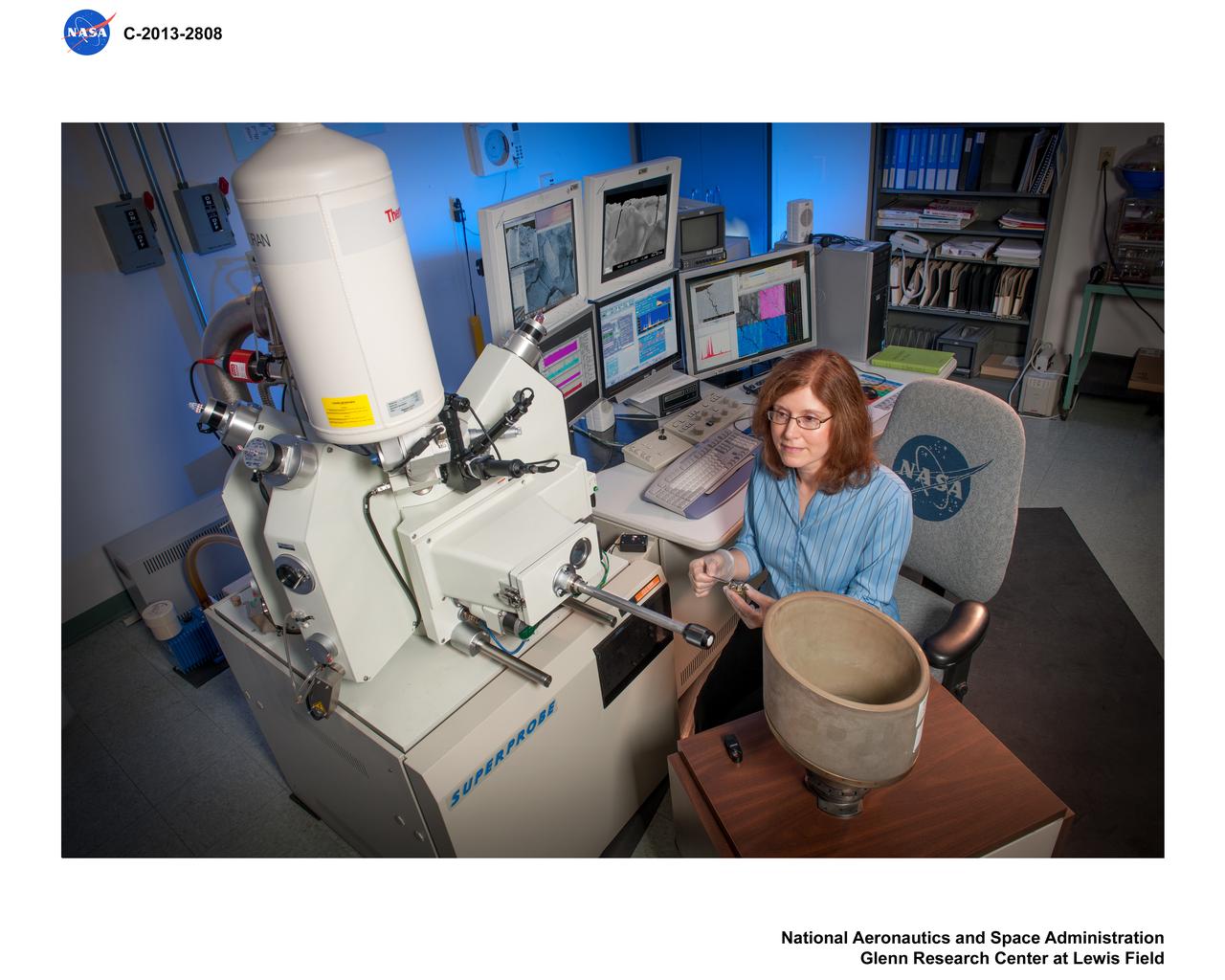
NASA Engineering and Safety Center's, NESC, Mission Tech Update Photos 2013, Electron Optics Laboratory
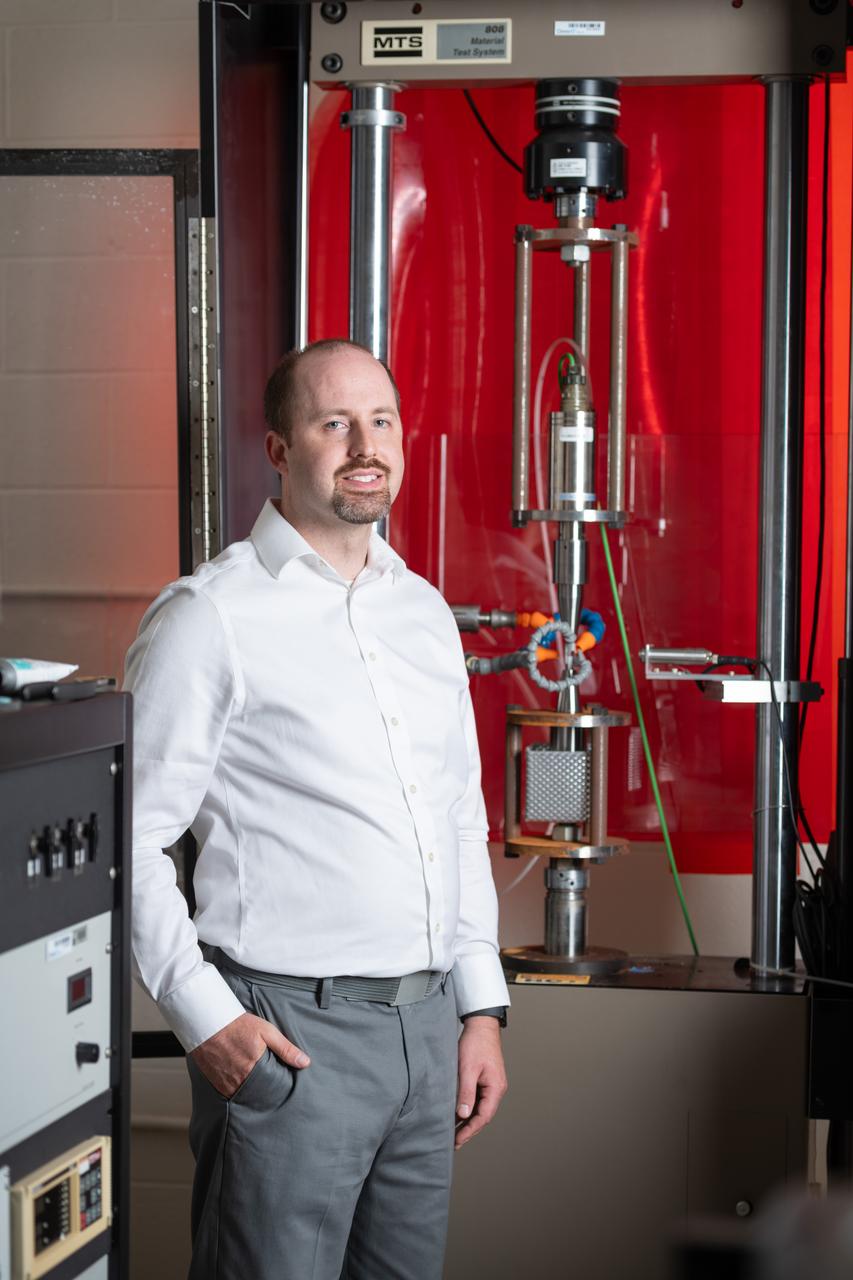
Each year, the NESC produces the NESC Technical Update, which highlights two or three individuals from each Center and includes assessments throughout the year. Because of the critical contributions to the NESC mission this year, Rob Jankovsky, NESC Chief Engineer at GRC, chose two individuals to be highlighted. This year, it is Andrew Ring and Michael Cooper. Mr. Ring, pictured here, performs stress and fatigue testing on all manner of materials in various environments and research on jet engine materials, looking for ways to increase the performance and safety of turbine blades and disks. Several NESC assessments have benefited from his expertise, most recently in understanding crack initiation and propagation in the aluminum-magnesium alloys that make up the modules of the ISS. He has also used image processing techniques to quantify the variables in parachute energy modulator production and performance and investigate flaws in the composite weave of overwrapped pressure vessels.
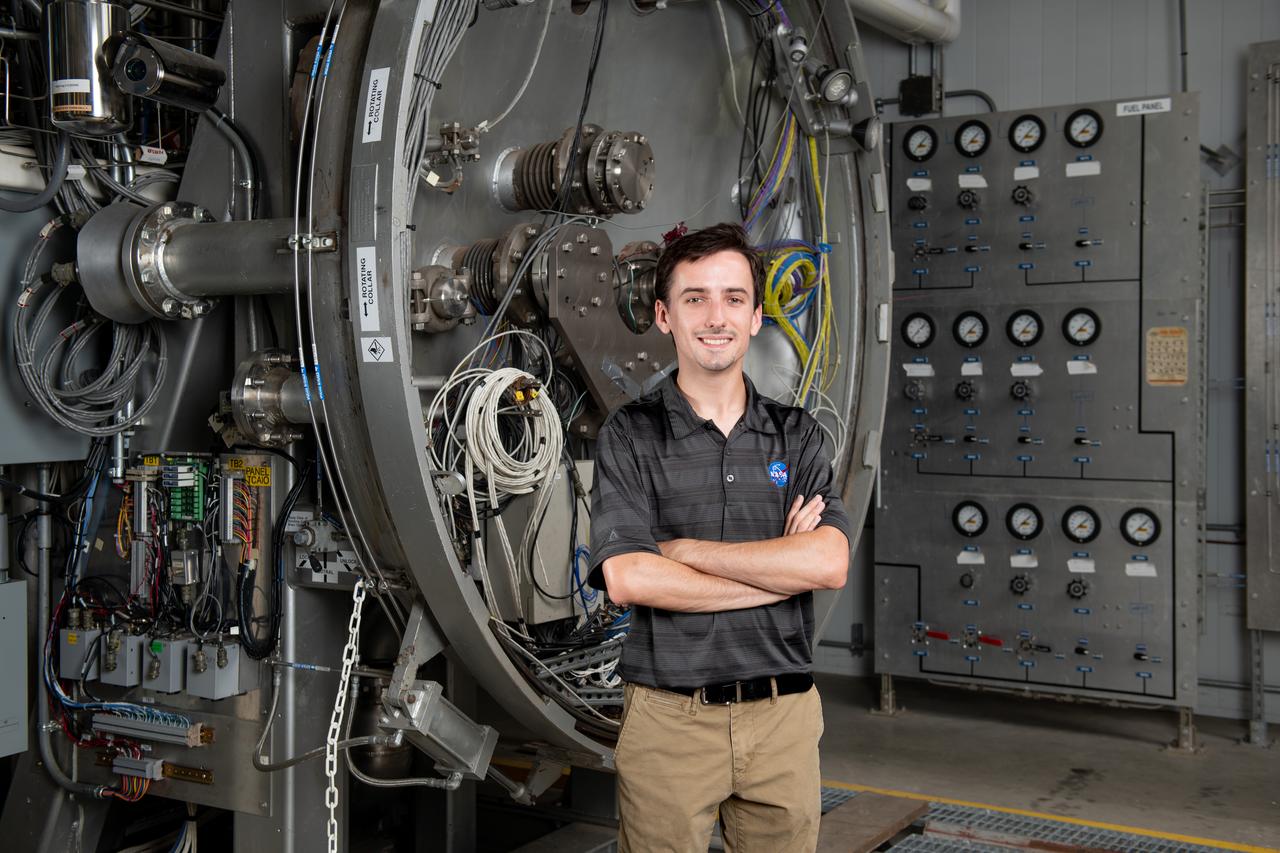
Each year, the NESC produces the NESC Technical Update, which highlights two or three individuals from each Center and includes assessments throughout the year. Because of the critical contributions to the NESC mission this year, Rob Jankovsky, NESC Chief Engineer at GRC, chose two individuals to be highlighted. This year, it is Andrew Ring and Michael Cooper. The Lead Analyst for GRC’s Chemical and Thermal Propulsion Systems branch, Mr. Michael Cooper, is supporting NESC test operations on reaction control system thrusters for Gateway’s Power & Propulsion Element. “These thrusters are small with few moving parts, but the heat and mass transfers involved are very complex,” he said. The test campaign is putting the thrusters through a rigorous profile to simulate the lifetime they will experience over decades in space. Mr. Cooper is analyzing test data gathered on chamber pressure, temperature, flow rates, and more to develop models on thruster performance. He also built the tool that read in that data from the test stand instrumentation. Photo Credit: (NASA/Sara Lowthian-Hanna)
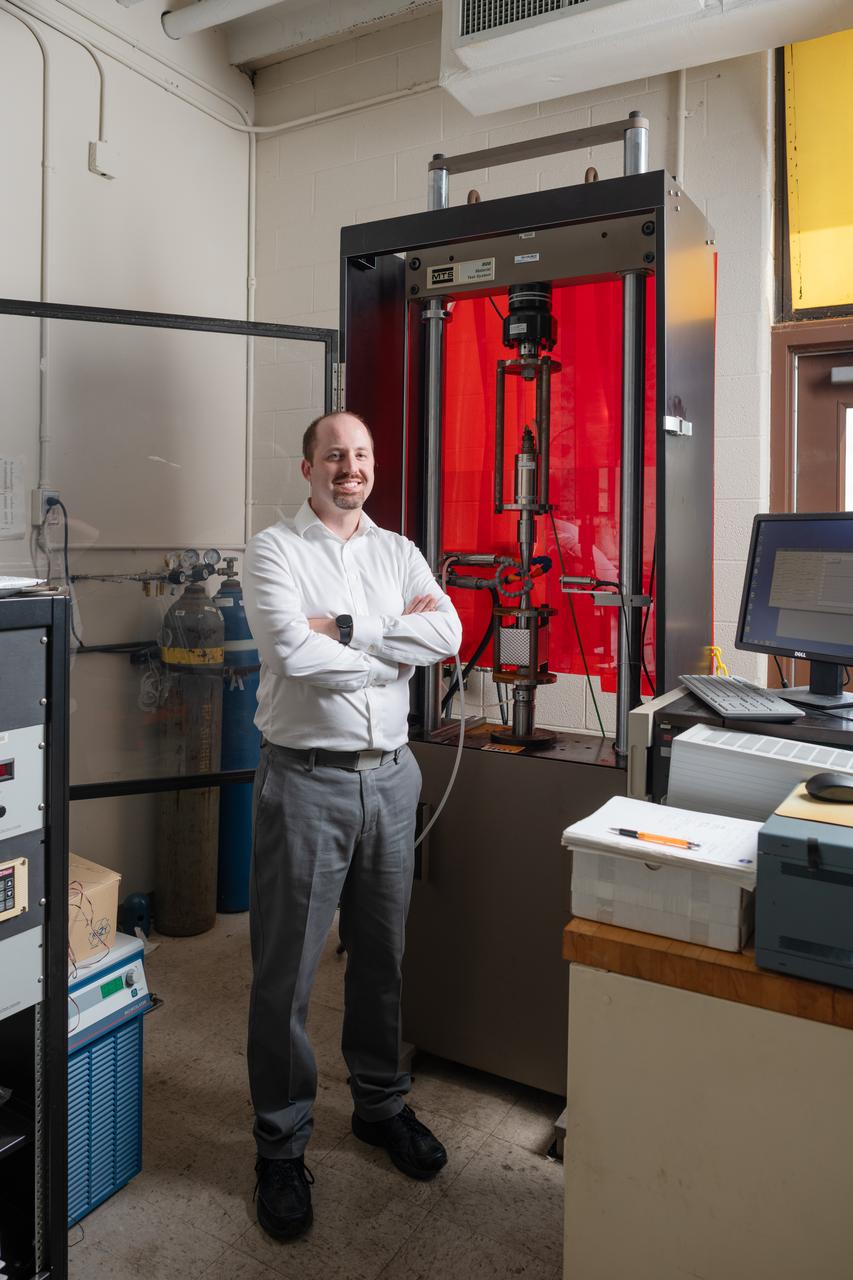
Each year, the NESC produces the NESC Technical Update, which highlights two or three individuals from each Center and includes assessments throughout the year. Because of the critical contributions to the NESC mission this year, Rob Jankovsky, NESC Chief Engineer at GRC, chose two individuals to be highlighted. This year, it is Andrew Ring and Michael Cooper. Mr. Ring, pictured here, performs stress and fatigue testing on all manner of materials in various environments and research on jet engine materials, looking for ways to increase the performance and safety of turbine blades and disks. Several NESC assessments have benefited from his expertise, most recently in understanding crack initiation and propagation in the aluminum-magnesium alloys that make up the modules of the ISS. He has also used image processing techniques to quantify the variables in parachute energy modulator production and performance and investigate flaws in the composite weave of overwrapped pressure vessels.
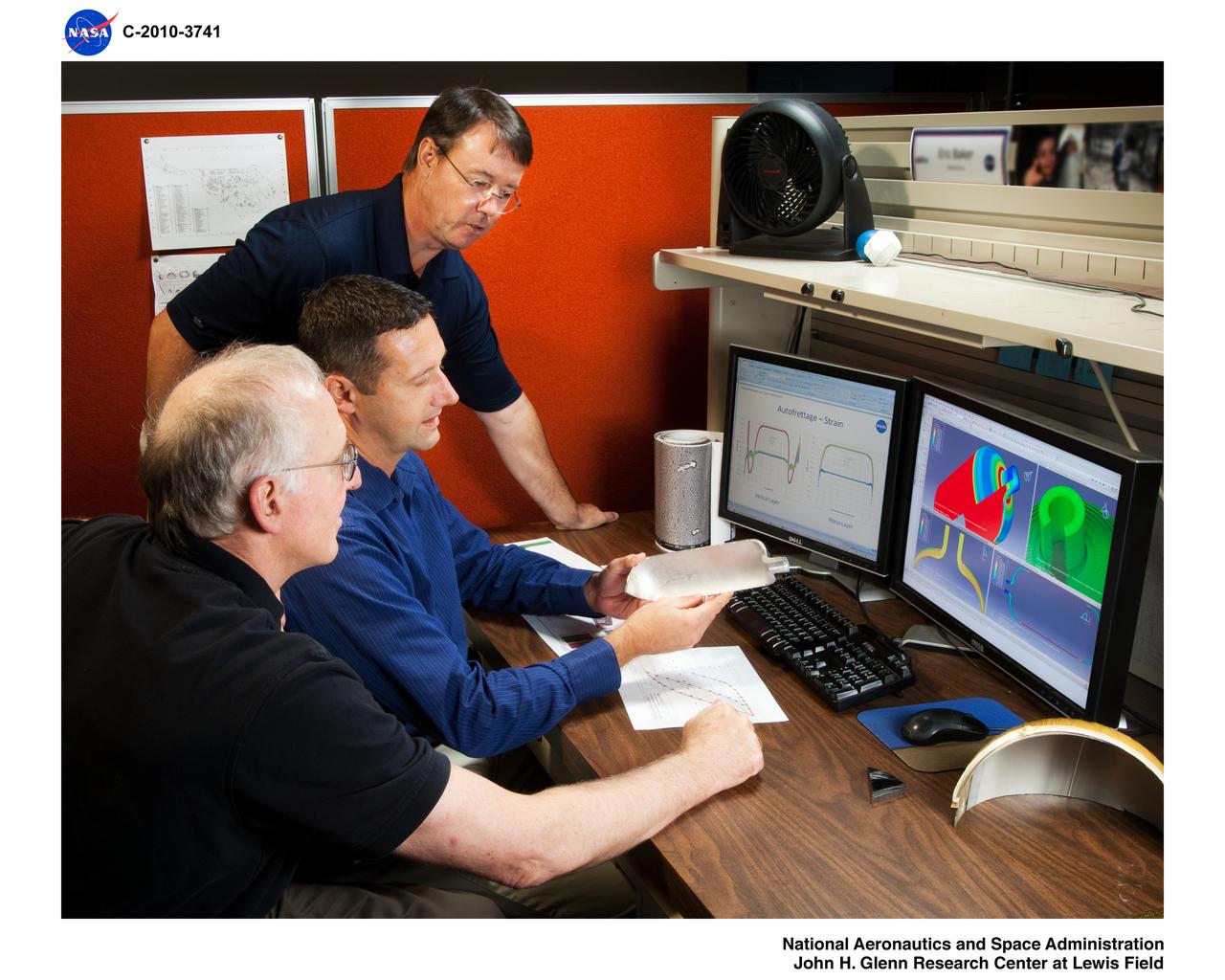
NASA Engineering and Safety Center (NESC) Composite Overwrapped Pressure Vessel (COPV) Working Group members examine mechanical response simulations of proposed stress rupture test articles
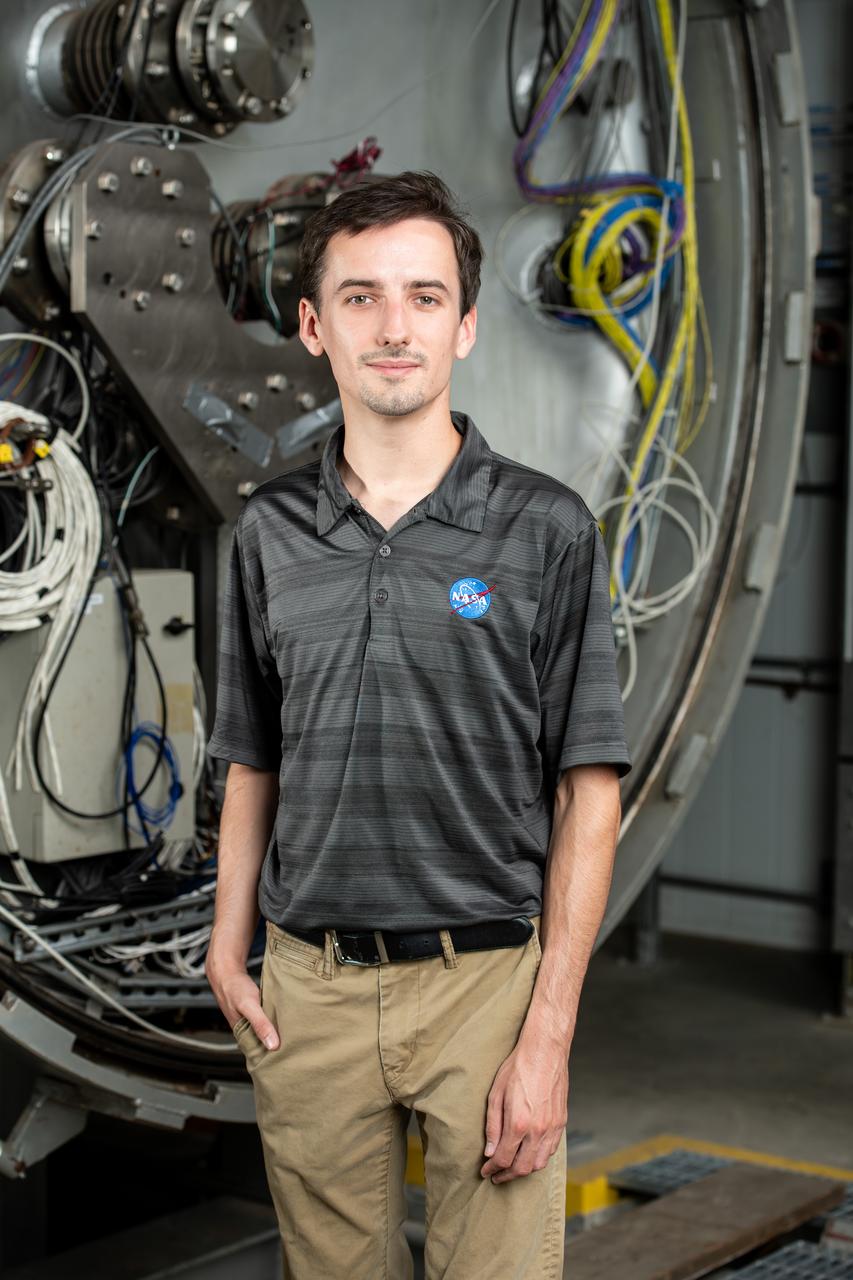
Each year, the NESC produces the NESC Technical Update, which highlights two or three individuals from each Center and includes assessments throughout the year. Because of the critical contributions to the NESC mission this year, Rob Jankovsky, NESC Chief Engineer at GRC, chose two individuals to be highlighted. This year, it is Andrew Ring and Michael Cooper. The Lead Analyst for GRC’s Chemical and Thermal Propulsion Systems branch, Mr. Michael Cooper, is supporting NESC test operations on reaction control system thrusters for Gateway’s Power & Propulsion Element. “These thrusters are small with few moving parts, but the heat and mass transfers involved are very complex,” he said. The test campaign is putting the thrusters through a rigorous profile to simulate the lifetime they will experience over decades in space. Mr. Cooper is analyzing test data gathered on chamber pressure, temperature, flow rates, and more to develop models on thruster performance. He also built the tool that read in that data from the test stand instrumentation. Photo Credit: (NASA/Sara Lowthian-Hanna)
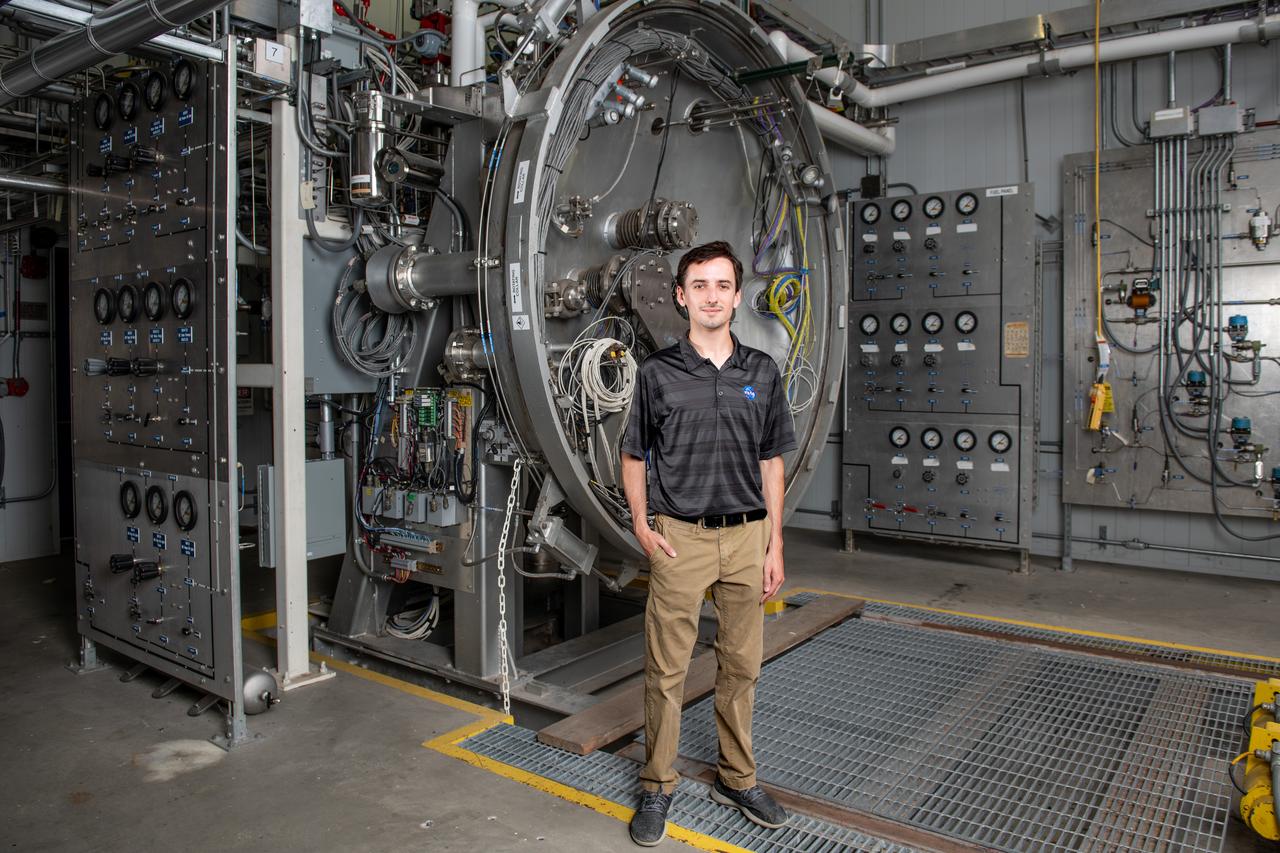
Each year, the NESC produces the NESC Technical Update, which highlights two or three individuals from each Center and includes assessments throughout the year. Because of the critical contributions to the NESC mission this year, Rob Jankovsky, NESC Chief Engineer at GRC, chose two individuals to be highlighted. This year, it is Andrew Ring and Michael Cooper. The Lead Analyst for GRC’s Chemical and Thermal Propulsion Systems branch, Mr. Michael Cooper pictured here in this environmental portrait on August 16, 2024. He is supporting NESC test operations on reaction control system thrusters for Gateway’s Power & Propulsion Element. “These thrusters are small with few moving parts, but the heat and mass transfers involved are very complex,” he said. The test campaign is putting the thrusters through a rigorous profile to simulate the lifetime they will experience over decades in space. Mr. Cooper is analyzing test data gathered on chamber pressure, temperature, flow rates, and more to develop models on thruster performance. He also built the tool that read in that data from the test stand instrumentation. Photo Credit: (NASA/Sara Lowthian-Hanna)
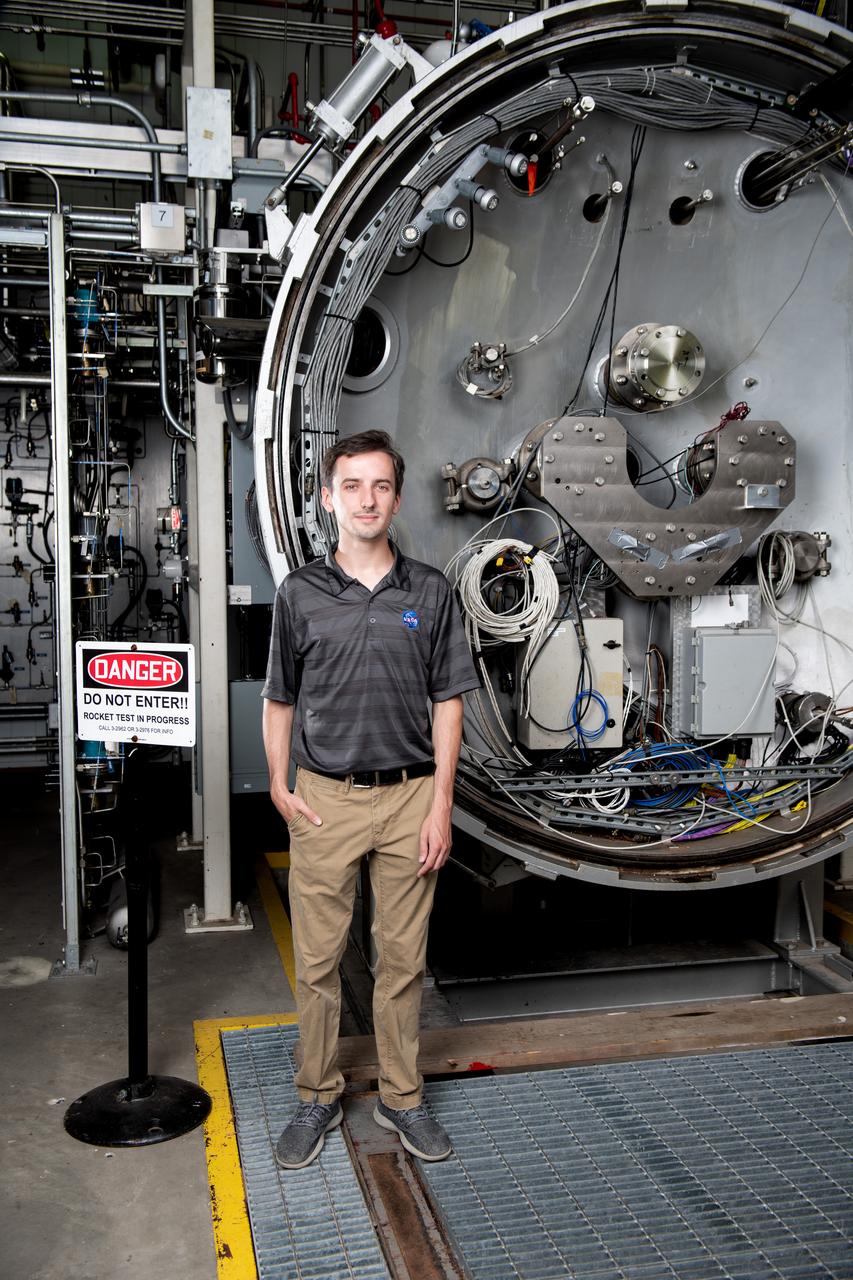
Each year, the NESC produces the NESC Technical Update, which highlights two or three individuals from each Center and includes assessments throughout the year. Because of the critical contributions to the NESC mission this year, Rob Jankovsky, NESC Chief Engineer at GRC, chose two individuals to be highlighted. This year, it is Andrew Ring and Michael Cooper. The Lead Analyst for GRC’s Chemical and Thermal Propulsion Systems branch, Mr. Michael Cooper, is supporting NESC test operations on reaction control system thrusters for Gateway’s Power & Propulsion Element. “These thrusters are small with few moving parts, but the heat and mass transfers involved are very complex,” he said. The test campaign is putting the thrusters through a rigorous profile to simulate the lifetime they will experience over decades in space. Mr. Cooper is analyzing test data gathered on chamber pressure, temperature, flow rates, and more to develop models on thruster performance. He also built the tool that read in that data from the test stand instrumentation. Photo Credit: (NASA/Sara Lowthian-Hanna)

Sean Clarke, NASA technical fellow for electric power for the NASA Engineering and Safety Center (NESC), based at NASA’s Armstrong Flight Research Center, participates in an employee incentive flying event with NASA Administrator Jared Isaacman's personal F-5 aircraft, Friday, March 27, 2026, at NASA’s Kennedy Space Center in Florida. Photo Credit: (NASA/John Kraus)
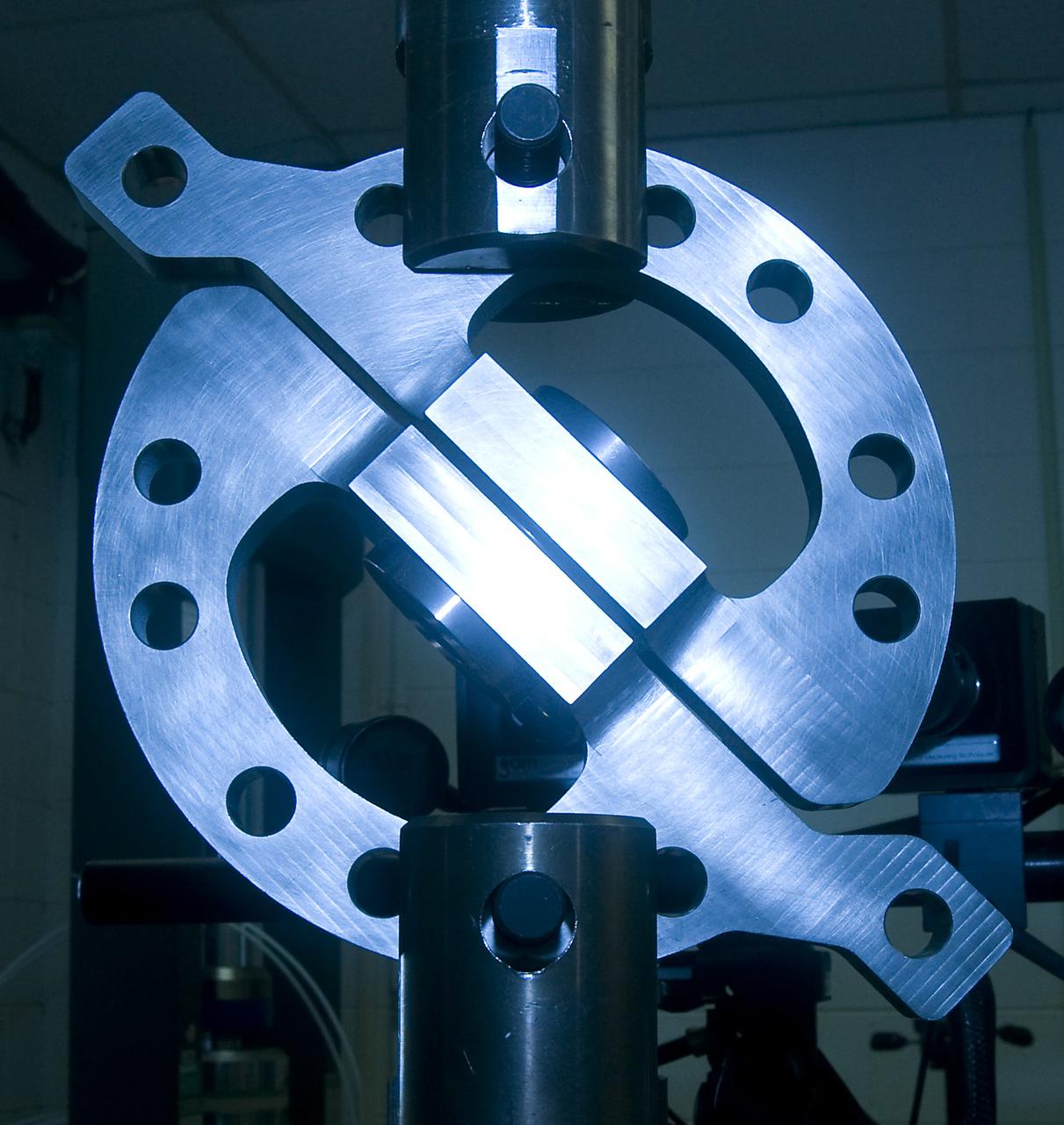
DEVELOPMENT TESTING BEING CONDUCTED AT THE REQUEST OF THE MSFC DYNAMICS, LOADS, AND STRENGTH BRANCH (EV31) TO STUDY THE FAILURE BEHAVIOR OF FASTENERS SUBJECTED TO COMBINED SHEAR AND TENSION LOADING. THE DATA FROM THIS TESTING WILL BE USED TO DEVELOP APPROPRIATE STRUCTURAL ANALYSIS METHODS AS PART OF A FASTENER STANDARDS EFFORT SPONSORED BY THE NASA ENGINEERING SAFETY CENTER (NESC). THE TEST FIXTURE WAS DESIGNED AND FABRICATED THROUGH THE MSFC MECHANICAL FABRICATION BRANCH (ES23). THE TESTING ORGANIZATION IS THE MSFC MATERIALS TEST BRANCH (EM10).
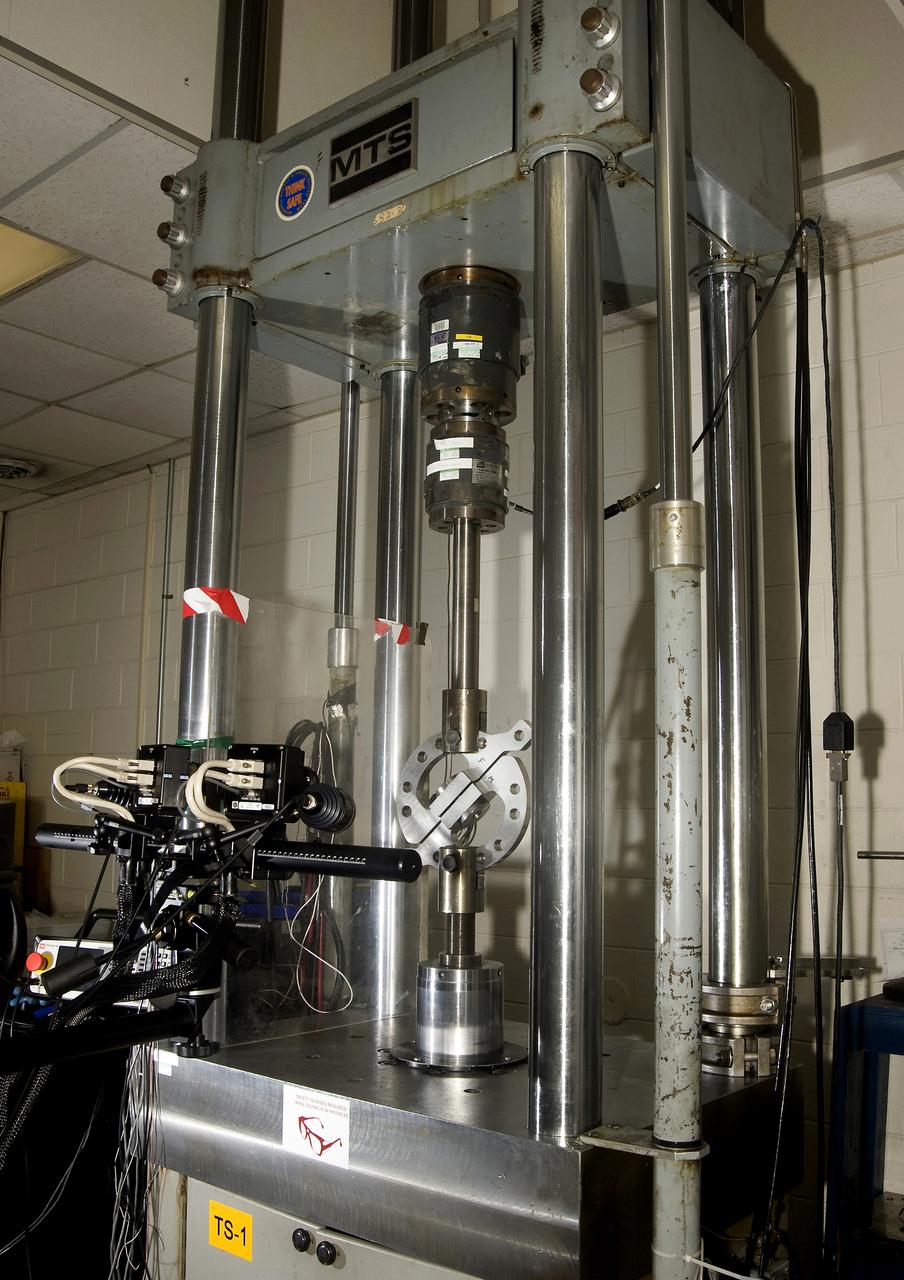
DEVELOPMENT TESTING BEING CONDUCTED AT THE REQUEST OF THE MSFC DYNAMICS, LOADS, AND STRENGTH BRANCH (EV31) TO STUDY THE FAILURE BEHAVIOR OF FASTENERS SUBJECTED TO COMBINED SHEAR AND TENSION LOADING. THE DATA FROM THIS TESTING WILL BE USED TO DEVELOP APPROPRIATE STRUCTURAL ANALYSIS METHODS AS PART OF A FASTENER STANDARDS EFFORT SPONSORED BY THE NASA ENGINEERING SAFETY CENTER (NESC). THE TEST FIXTURE WAS DESIGNED AND FABRICATED THROUGH THE MSFC MECHANICAL FABRICATION BRANCH (ES23). THE TESTING ORGANIZATION IS THE MSFC MATERIALS TEST BRANCH (EM10).
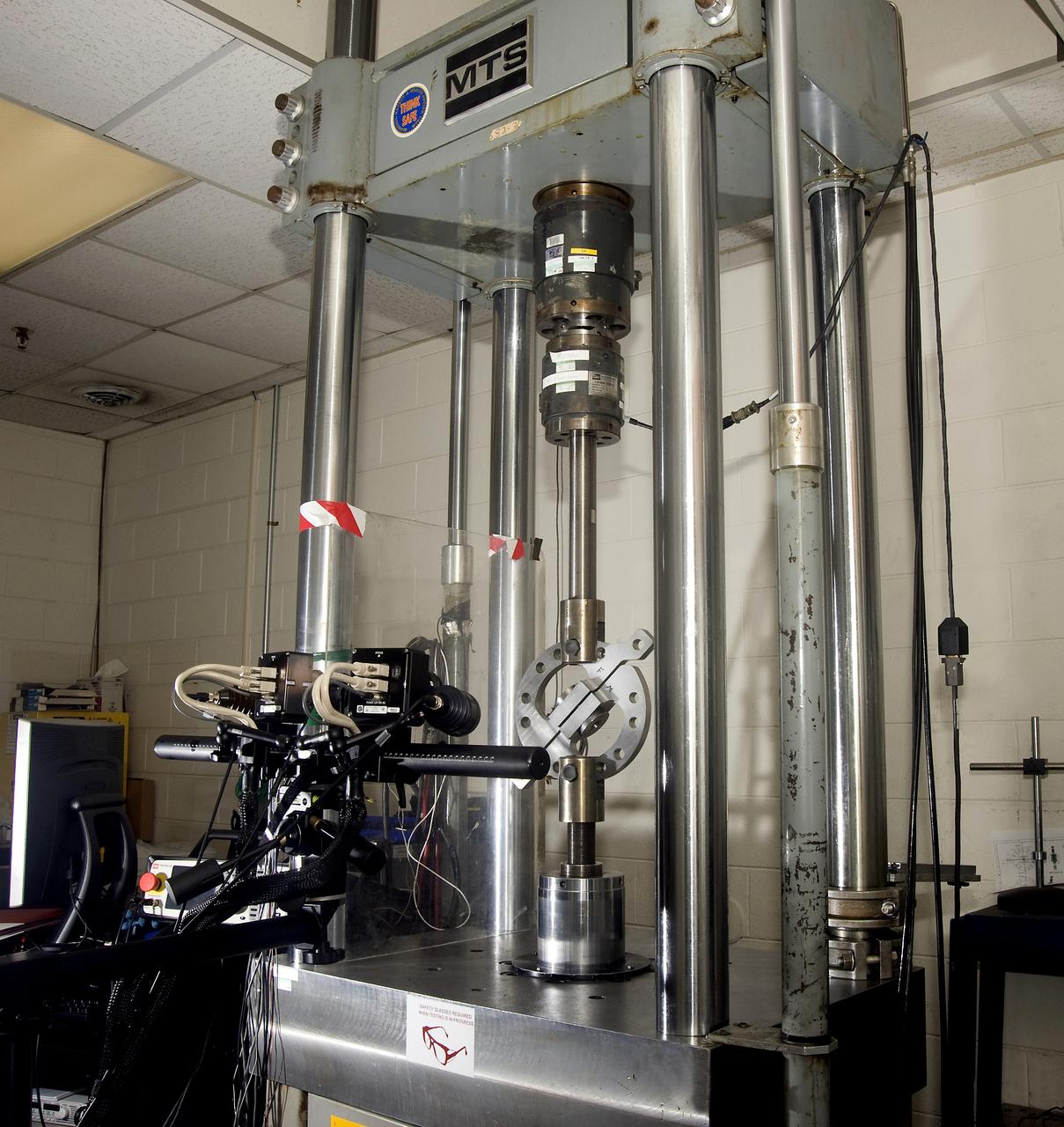
DEVELOPMENT TESTING BEING CONDUCTED AT THE REQUEST OF THE MSFC DYNAMICS, LOADS, AND STRENGTH BRANCH (EV31) TO STUDY THE FAILURE BEHAVIOR OF FASTENERS SUBJECTED TO COMBINED SHEAR AND TENSION LOADING. THE DATA FROM THIS TESTING WILL BE USED TO DEVELOP APPROPRIATE STRUCTURAL ANALYSIS METHODS AS PART OF A FASTENER STANDARDS EFFORT SPONSORED BY THE NASA ENGINEERING SAFETY CENTER (NESC). THE TEST FIXTURE WAS DESIGNED AND FABRICATED THROUGH THE MSFC MECHANICAL FABRICATION BRANCH (ES23). THE TESTING ORGANIZATION IS THE MSFC MATERIALS TEST BRANCH (EM10).
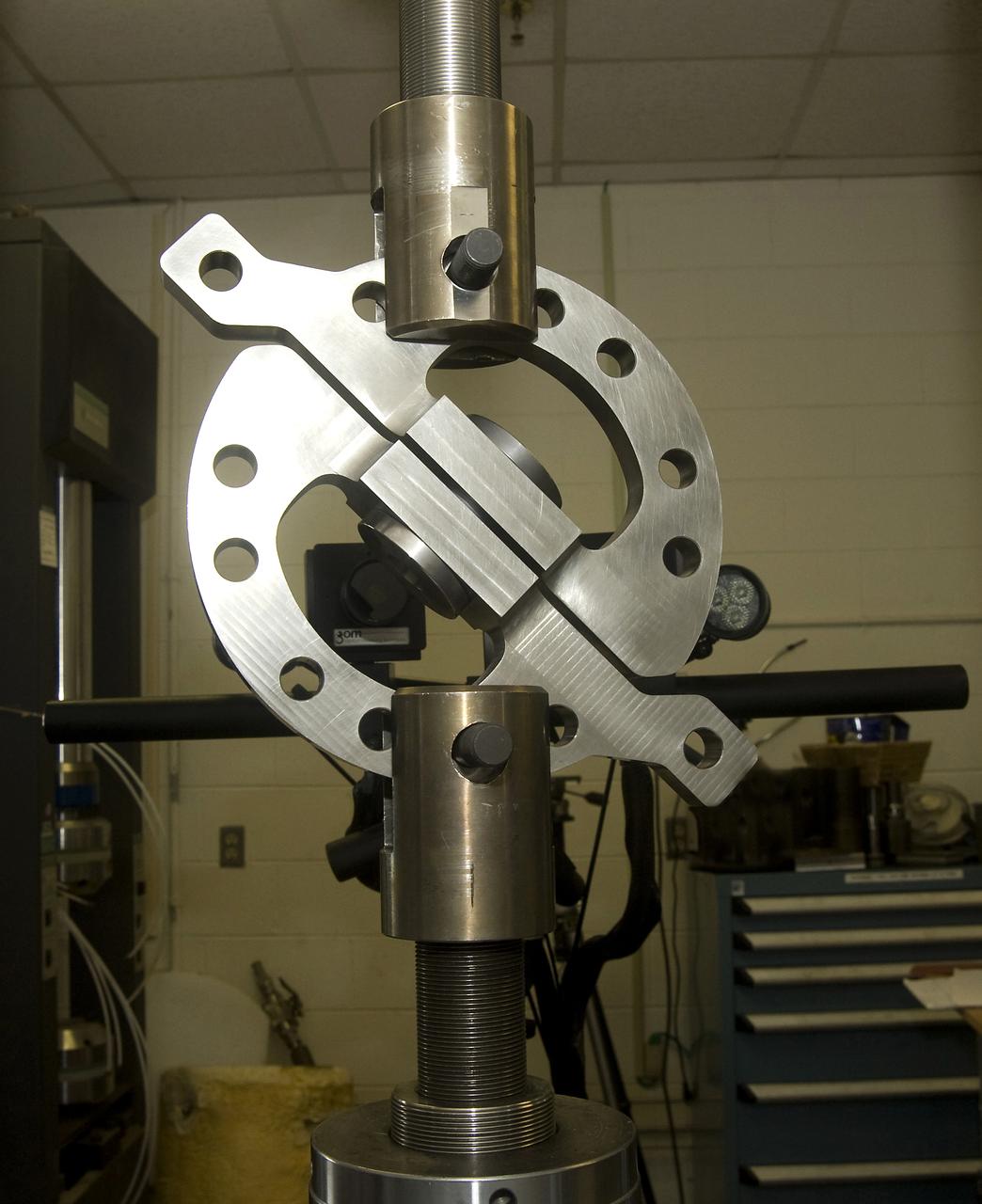
DEVELOPMENT TESTING BEING CONDUCTED AT THE REQUEST OF THE MSFC DYNAMICS, LOADS, AND STRENGTH BRANCH (EV31) TO STUDY THE FAILURE BEHAVIOR OF FASTENERS SUBJECTED TO COMBINED SHEAR AND TENSION LOADING. THE DATA FROM THIS TESTING WILL BE USED TO DEVELOP APPROPRIATE STRUCTURAL ANALYSIS METHODS AS PART OF A FASTENER STANDARDS EFFORT SPONSORED BY THE NASA ENGINEERING SAFETY CENTER (NESC). THE TEST FIXTURE WAS DESIGNED AND FABRICATED THROUGH THE MSFC MECHANICAL FABRICATION BRANCH (ES23). THE TESTING ORGANIZATION IS THE MSFC MATERIALS TEST BRANCH (EM10).
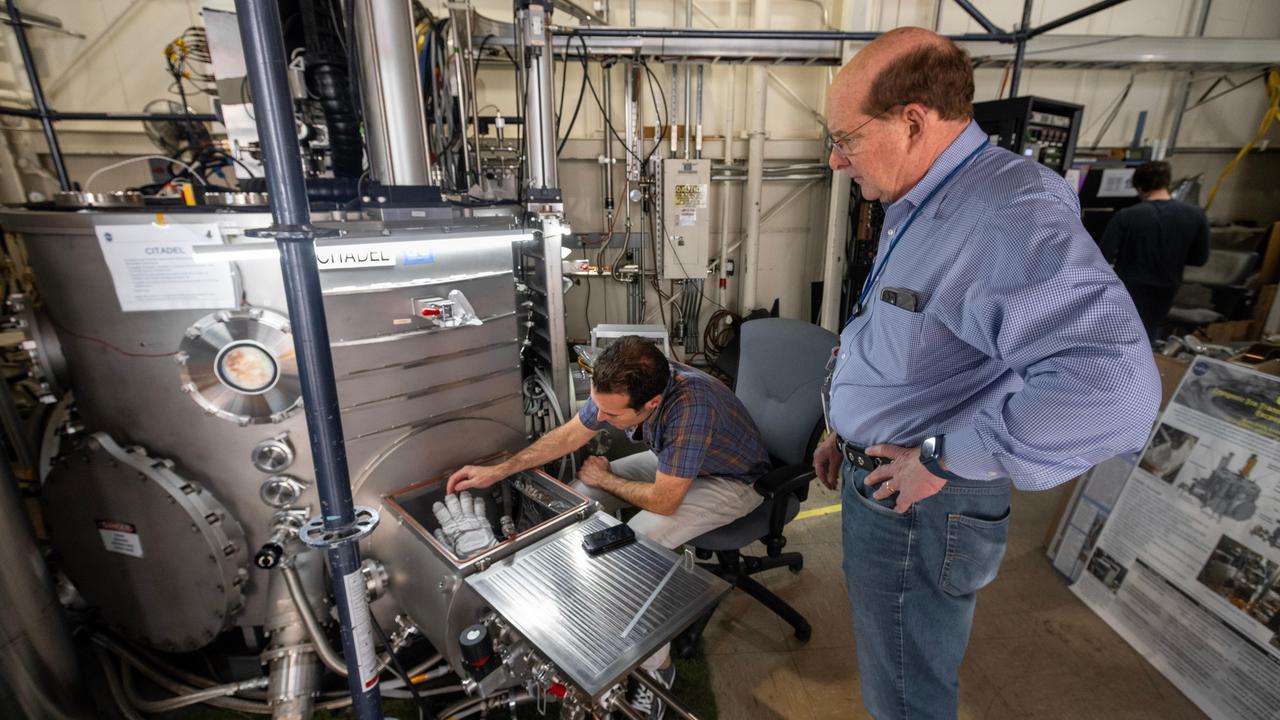
Spacesuit engineer Shane McFarland, left, of the Advanced Suit Team at NASA's Johnson Space Center prepares an astronaut glove for thermal vacuum testing inside a chamber at the agency's Jet Propulsion Laboratory in Southern California on Nov. 1, 2023. Tim Brady of the NASA Engineering and Safety Center (NESC), which spearheaded the glove testing campaign, looks on as McFarland positions the glove in a load lock – one of four small drawer-like chambers through which test materials are inserted into the larger main chamber of a facility called CITADEL (Cryogenic Ice Testing, Acquisition Development, and Excavation Laboratory). The glove was tested at vacuum and temperatures as low as minus 352 degrees Fahrenheit (minus 213 degrees Celsius) – temperatures as frigid as those Artemis III astronauts could experience on the Moon's South Pole. Built to prepare potential future robotic spacecraft for the frosty, low-pressure conditions on ocean worlds like Jupiter's frozen moon Europa, CITADEL has also proven key to evaluating how astronaut gloves and boots hold up in extraordinary cold. The NASA Engineering and Safety Center spearheaded a glove testing campaign in CITADEL from October 2023 to March 2024. Part of a spacesuit design called the Extravehicular Mobility Unit, the gloves tested in the chamber are the sixth version of a glove NASA began using in the 1980s. The testing in CITADEL showed that the legacy glove would not meet thermal requirements in the more challenging lunar South Pole environment. In addition to spotting vulnerabilities with existing suits, the CITADEL experiments will help NASA develop this unique test capability and prepare criteria for standardized, repeatable, and inexpensive test methods for the next-generation lunar suit being built by Axiom Space. https://photojournal.jpl.nasa.gov/catalog/PIA26591