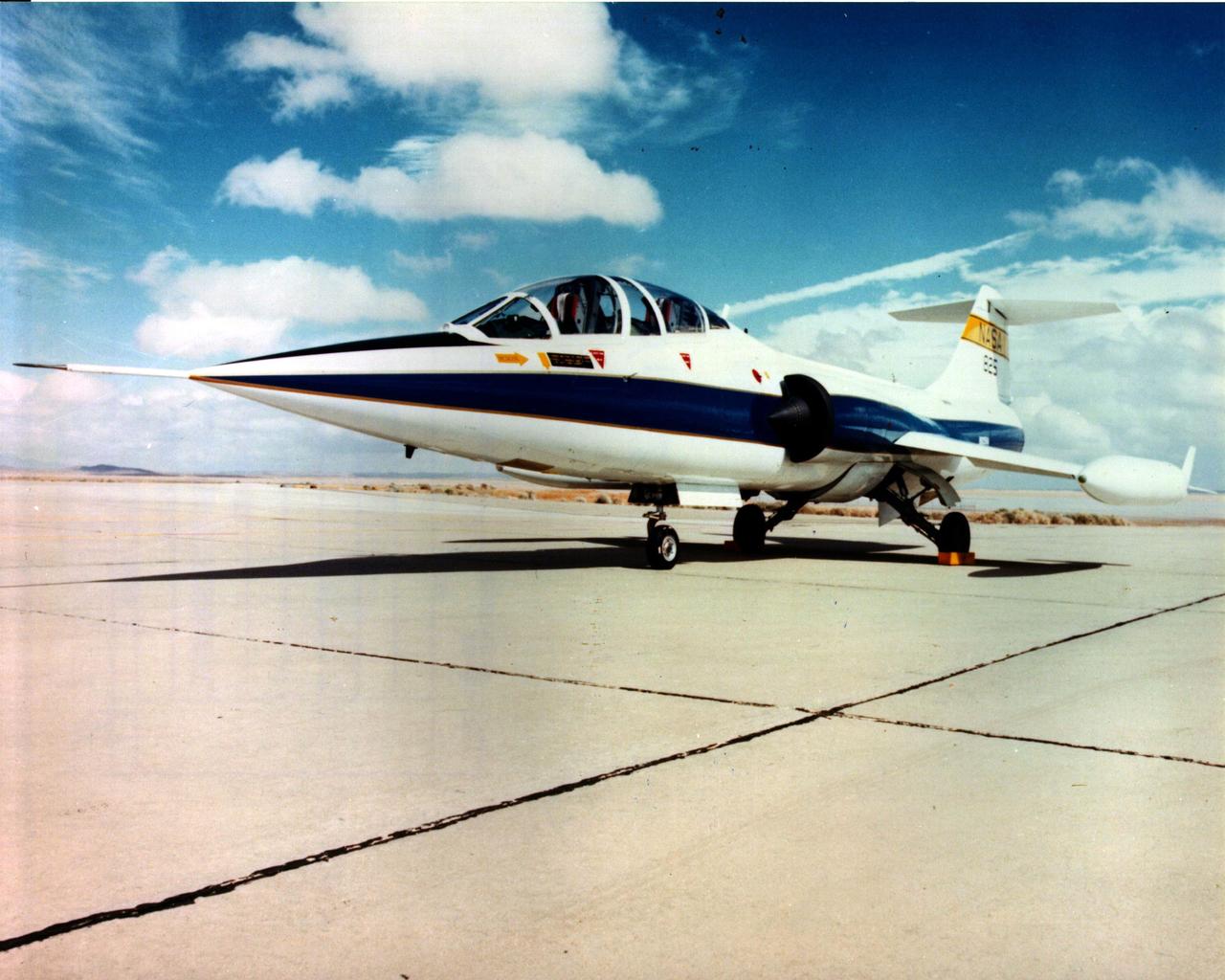
NASA F-104 Aircraft
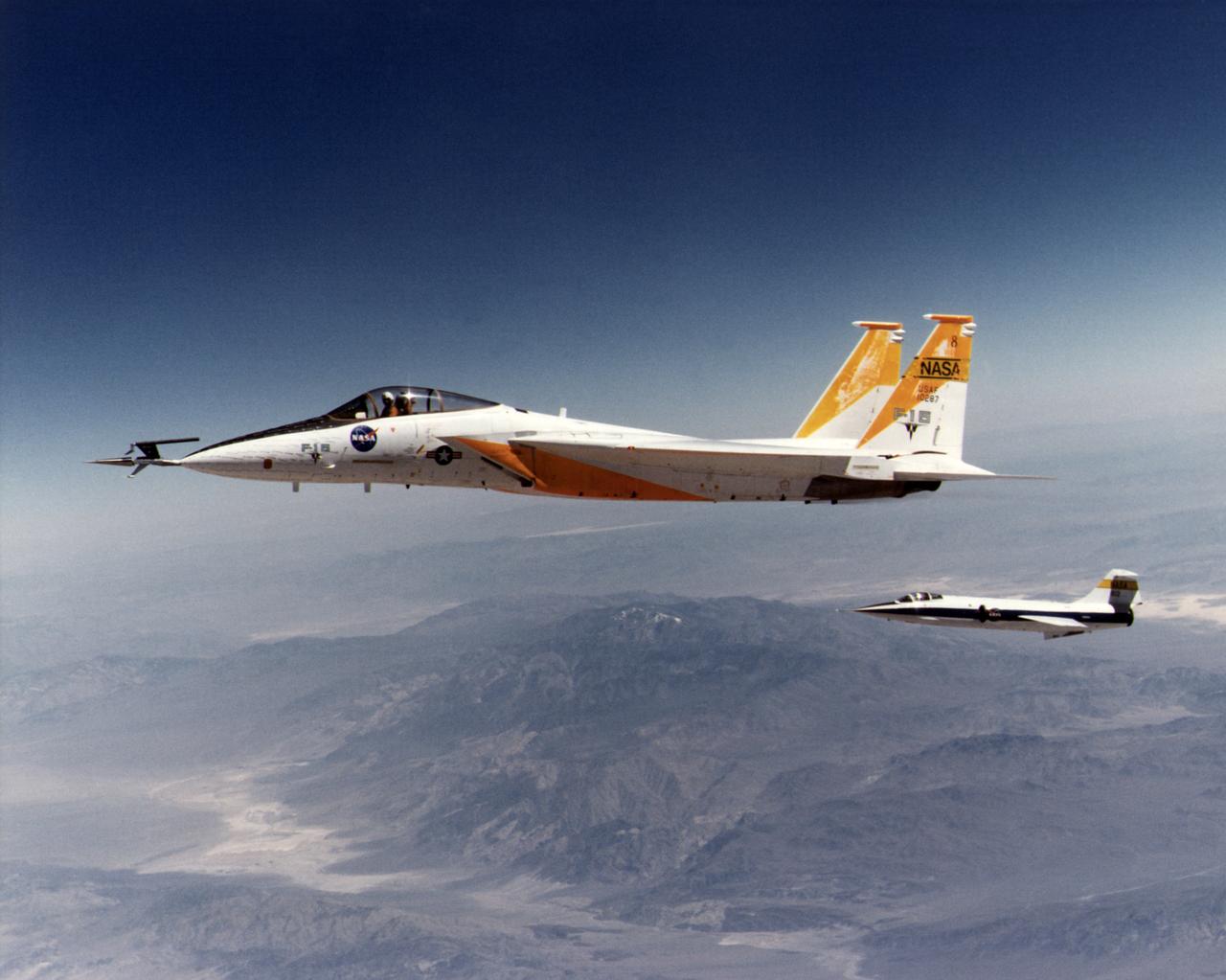
An in-flight photo of the NASA F-15A used to carry a 10 degree cone to collect aerodynamic data to calibrate the data from wind tunnels. The flight was made on May 17, 1978. Acting as chase for the flight was a NASA F-104 aircraft.
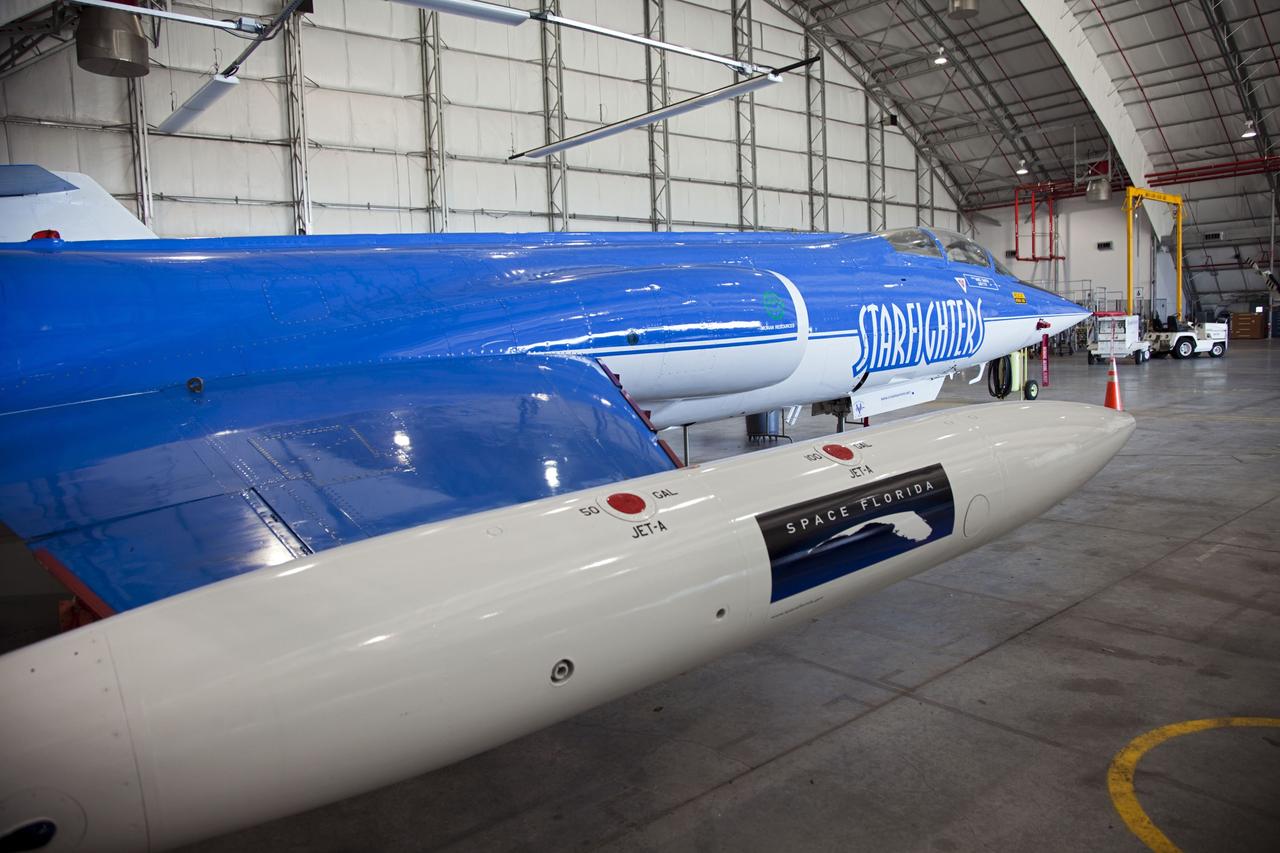
CAPE CANAVERAL, Fla. -- Starfighters has four F-104 aircraft that have been operational for several years. They have been used to fly research and development and other missions. Starfighters operates out of a hangar at the Shuttle Landing Facility at Kennedy under an agreement with Kennedy. Photo credit: NASA/Frankie Martin
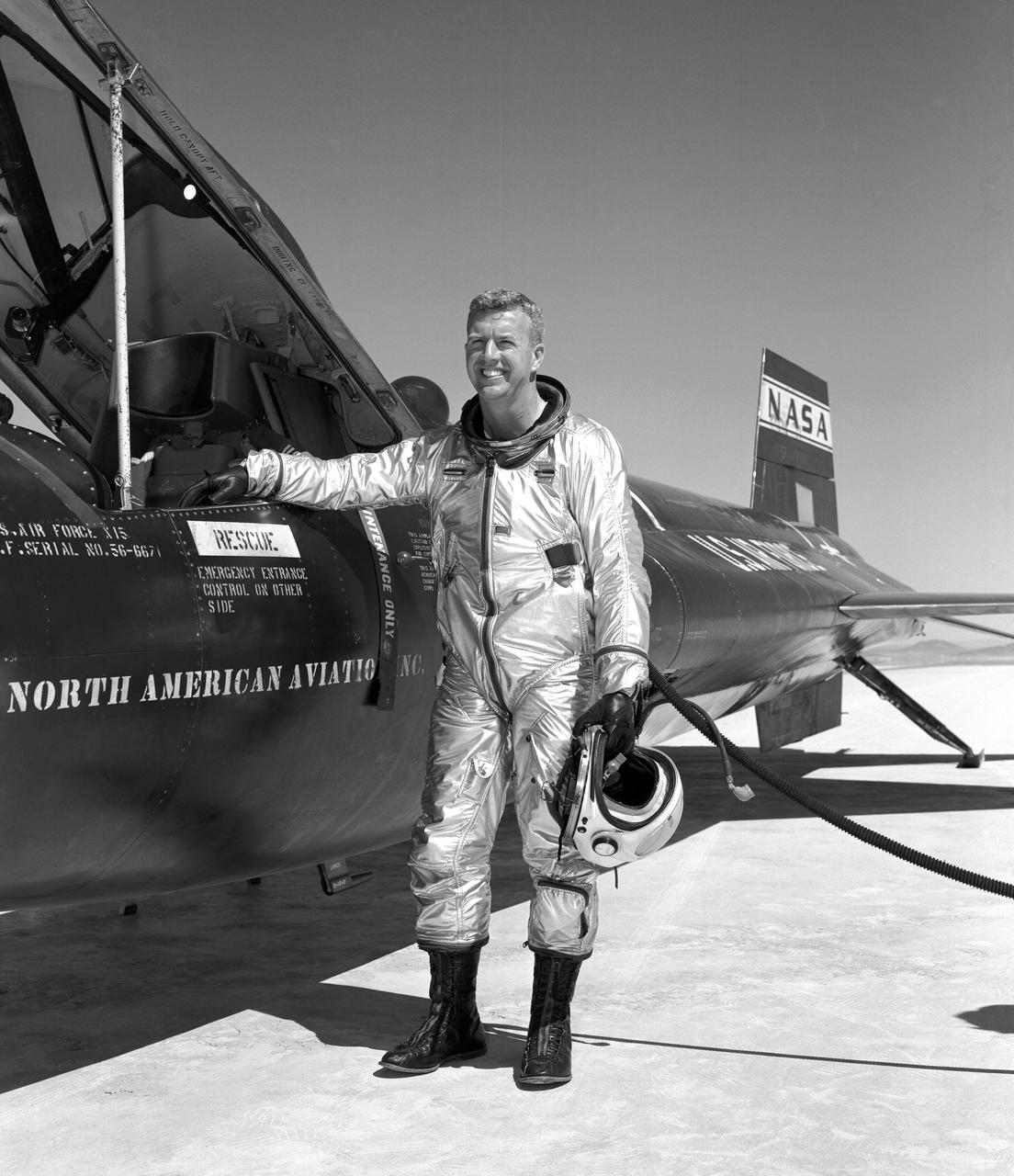
Walker made the first NASA-piloted X-15 flight March 25, 1960, and flew the aircraft 24 times, achieving its highest altitude (354,300 ft.) Aug. 22, 1963. He died piloting a F-104 that was caught up in a vortex of the XB-70.
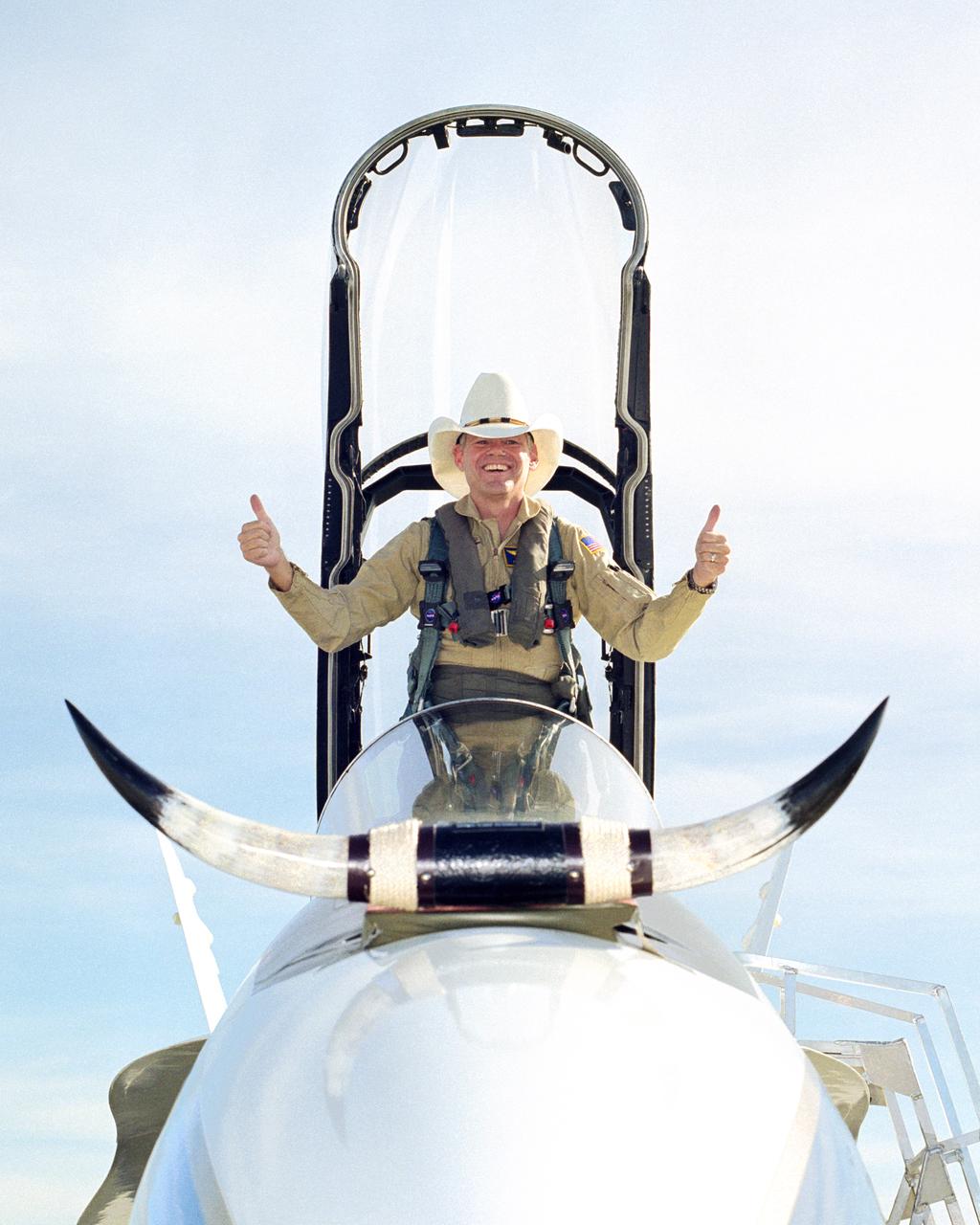
In a lighter mood, Ed Schneider gives a "thumbs-up" after his last flight at the Dryden Flight Research Center on September 19, 2000. Schneider arrived at the NASA Ames-Dryden Flight Research Facility on July 5, 1982, as a Navy Liaison Officer, becoming a NASA research pilot one year later. He has been project pilot for the F-18 High Angle-of-Attack program (HARV), the F-15 aeronautical research aircraft, the NASA B-52 launch aircraft, and the SR-71 "Blackbird" aircraft. He also participated in such programs as the F-8 Digital Fly-By-Wire, the FAA/NASA 720 Controlled Impact Demonstration, the F-14 Automatic Rudder Interconnect and Laminar Flow, and the F-104 Aeronautical Research and Microgravity projects.

In-flight photo of the NASA F-15B used in tests of the X-33 Thermal Protection System (TPS) materials. Flying at subsonic speeds, the F-15B tests measured the air loads on the proposed X-33 protective materials. In contrast, shock loads testing investigated the local impact of the supersonic shock wave itself on the TPS materials. Similar tests had been done in 1985 for the space shuttle tiles, using an F-104 aircraft.
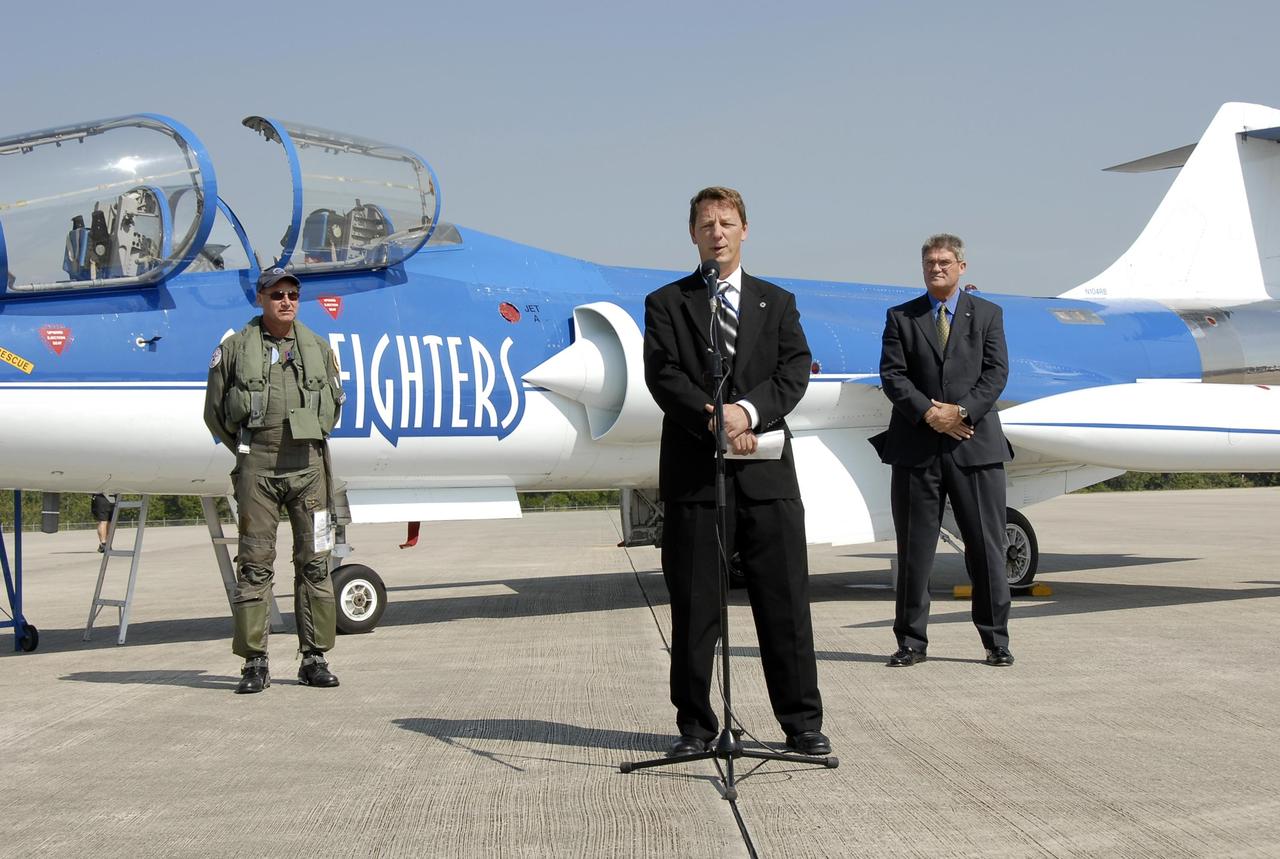
KENNEDY SPACE CENTER, FLA. -- After a test flight of the Starfighter F-104, Al Wassel, a representative from the FAA Office of Commercial Space, addresses the media on the KSC Shuttle Landing Facility. At left is the F-104 pilot, Rick Svetkoff. At right is Bill Parsons, director of Kennedy Space Center. The aircraft is taking part in a series of pathfinder test missions from the space shuttle runway. Two flights will generate test data to validate sonic boom assumptions about the potential impacts of suborbital and orbital commercial spaceflight from the facility. NASA is assessing the environmental impact of such flights. Starfighters Inc. of Clearwater, Fla., will perform the flights to help in assessing suborbital space launch trajectories from the runway and paving the way for future commercial space tourism and research flights from the facility. Photo credit: NASA/Kim Shiflett
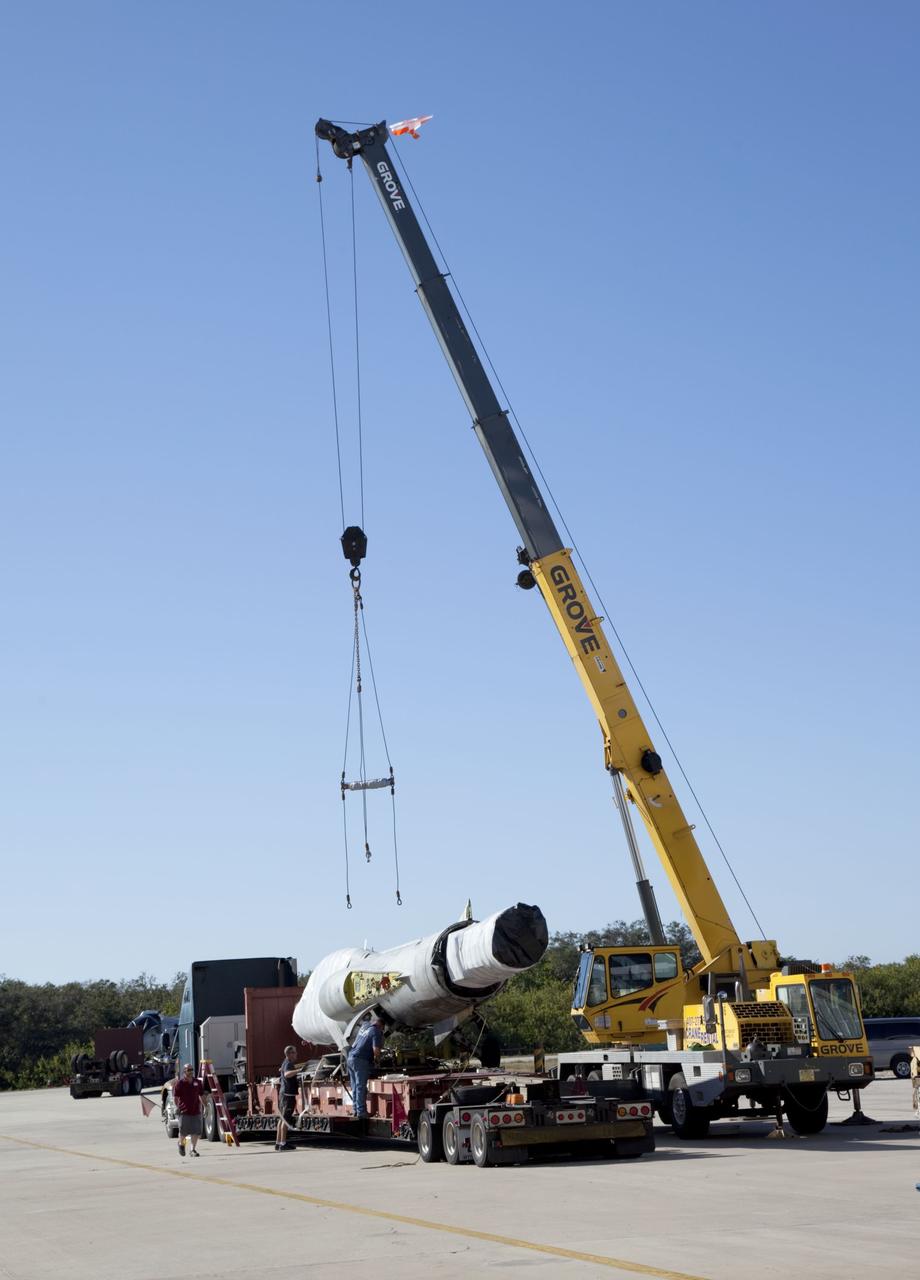
CAPE CANAVERAL, Fla. -- A crane lifts an F-104 Starfighter off the bed of a truck at NASA's Kennedy Space Center in Florida on Jan. 19, 2012. The aircraft is one of five delivered to the company recently. They will be reassembled to fly research and development and other missions. Starfighters operates out of a hangar at the Shuttle Landing Facility at Kennedy under an agreement with Kennedy. Photo credit: NASA/Frankie Martin
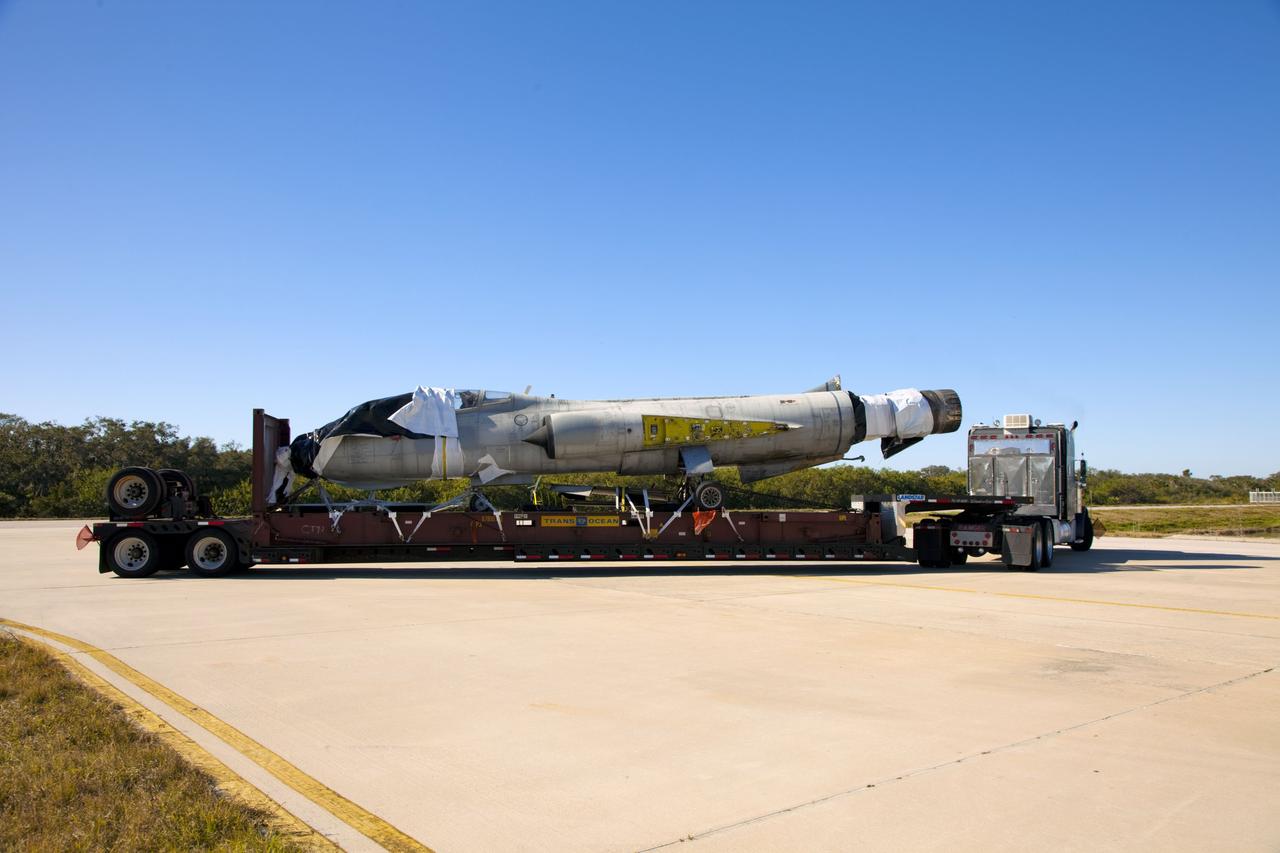
CAPE CANAVERAL, Fla. -- A truck delivers an F-104 Starfighter, formerly of the Italian Air Force, to Starfighters Inc. at NASA's Kennedy Space Center in Florida on Jan. 19, 2012. The aircraft is one of five delivered to the company recently. They will be reassembled to fly research and development and other missions. Starfighters operates out of a hangar at the Shuttle Landing Facility at Kennedy under an agreement with Kennedy. Photo credit: NASA/Frankie Martin
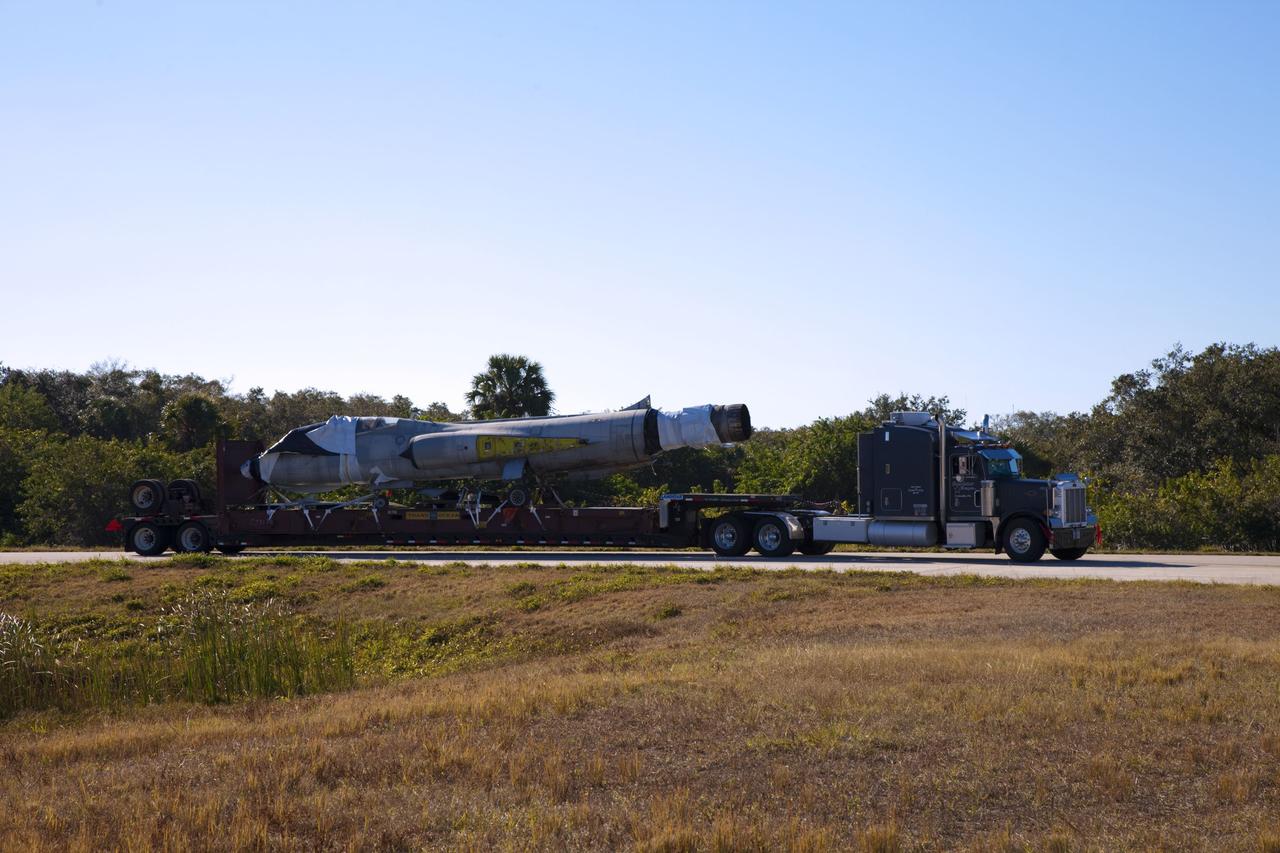
CAPE CANAVERAL, Fla. -- A truck delivers an F-104 Starfighter, formerly of the Italian Air Force, to Starfighters Inc. at NASA's Kennedy Space Center in Florida on Jan. 19, 2012. The aircraft is one of five delivered to the company recently. They will be reassembled to fly research and development and other missions. Starfighters operates out of a hangar at the Shuttle Landing Facility at Kennedy under an agreement with Kennedy. Photo credit: NASA/Frankie Martin
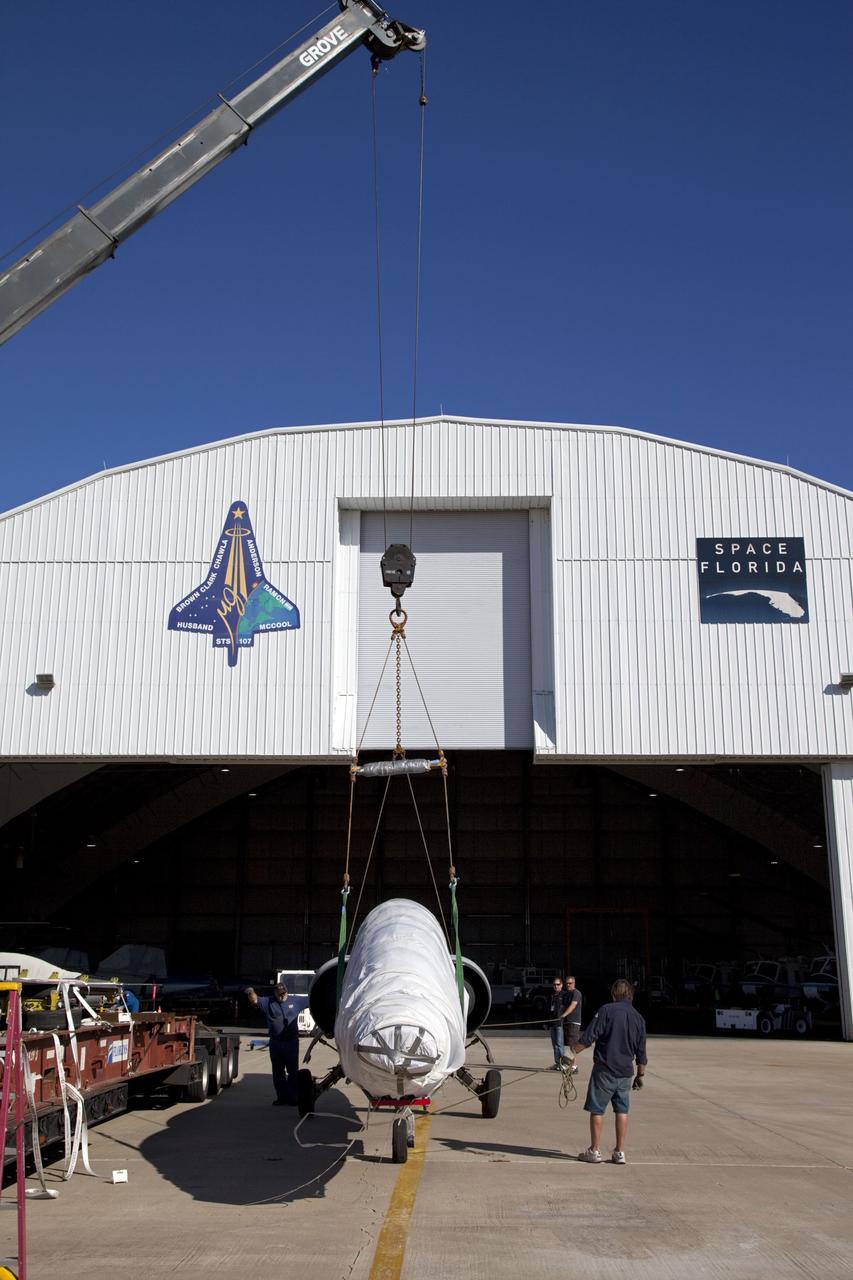
CAPE CANAVERAL, Fla. -- A crane lifts an F-104 Starfighter off the bed of a truck at NASA's Kennedy Space Center in Florida on Jan. 19, 2012. The aircraft is one of five delivered to the company recently. They will be reassembled to fly research and development and other missions. Starfighters operates out of a hangar at the Shuttle Landing Facility at Kennedy under an agreement with Kennedy. Photo credit: NASA/Frankie Martin
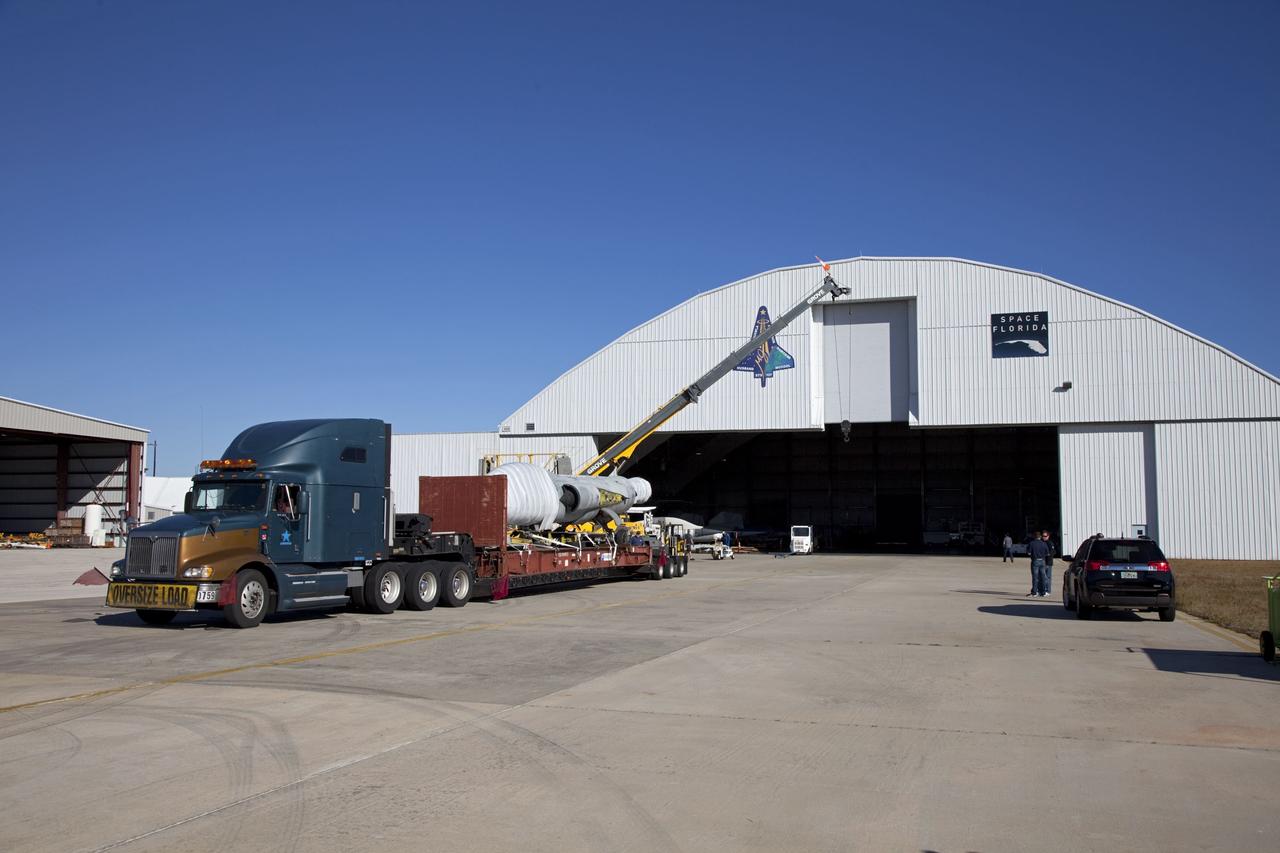
CAPE CANAVERAL, Fla. -- A truck delivers an F-104 Starfighter, formerly of the Italian Air Force, to Starfighters Inc. at NASA's Kennedy Space Center in Florida on Jan. 19, 2012. The aircraft is one of five delivered to the company recently. They will be reassembled to fly research and development and other missions. Starfighters operates out of a hangar at the Shuttle Landing Facility at Kennedy under an agreement with Kennedy. Photo credit: NASA/Frankie Martin
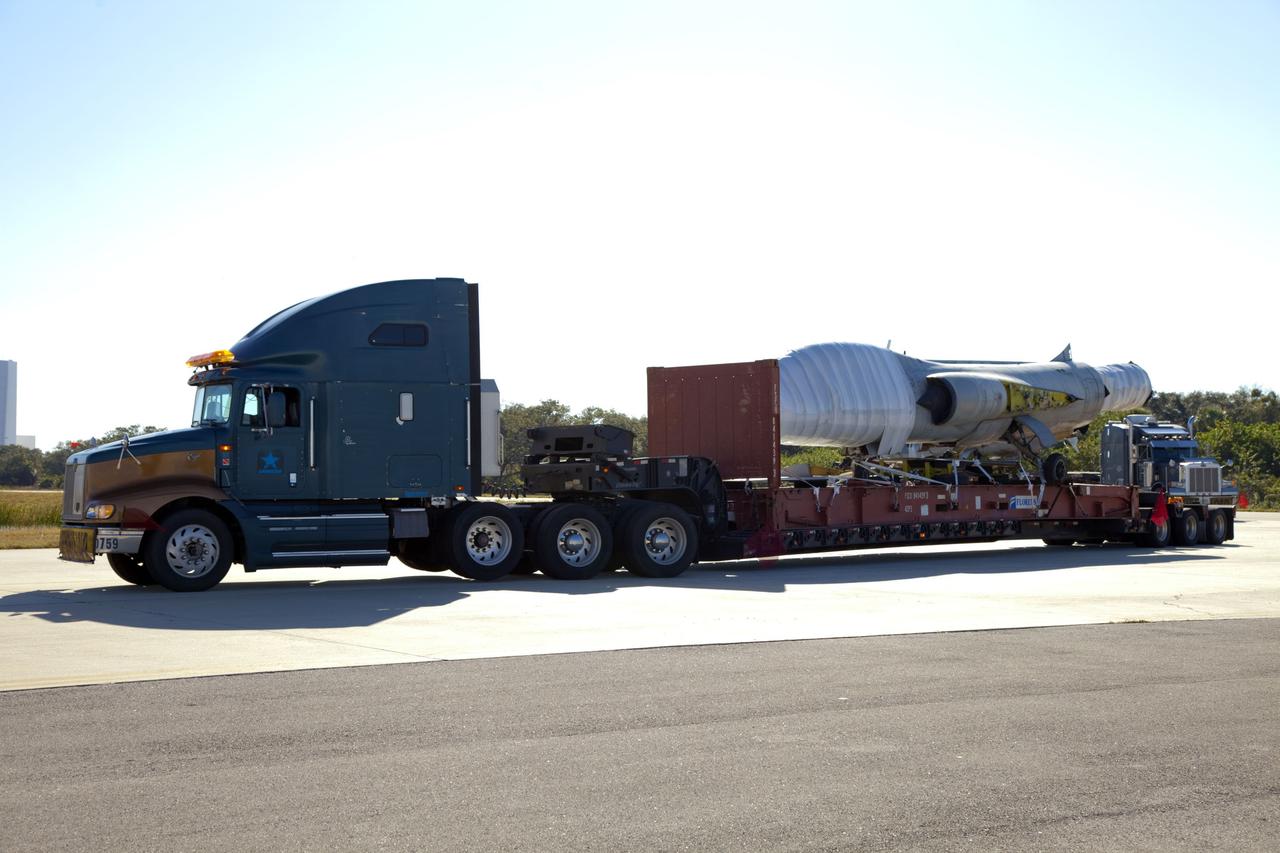
CAPE CANAVERAL, Fla. -- A truck delivers an F-104 Starfighter, formerly of the Italian Air Force, to Starfighters Inc. at NASA's Kennedy Space Center in Florida on Jan. 19, 2012. The aircraft is one of five delivered to the company recently. They will be reassembled to fly research and development and other missions. Starfighters operates out of a hangar at the Shuttle Landing Facility at Kennedy under an agreement with Kennedy. Photo credit: NASA/Frankie Martin
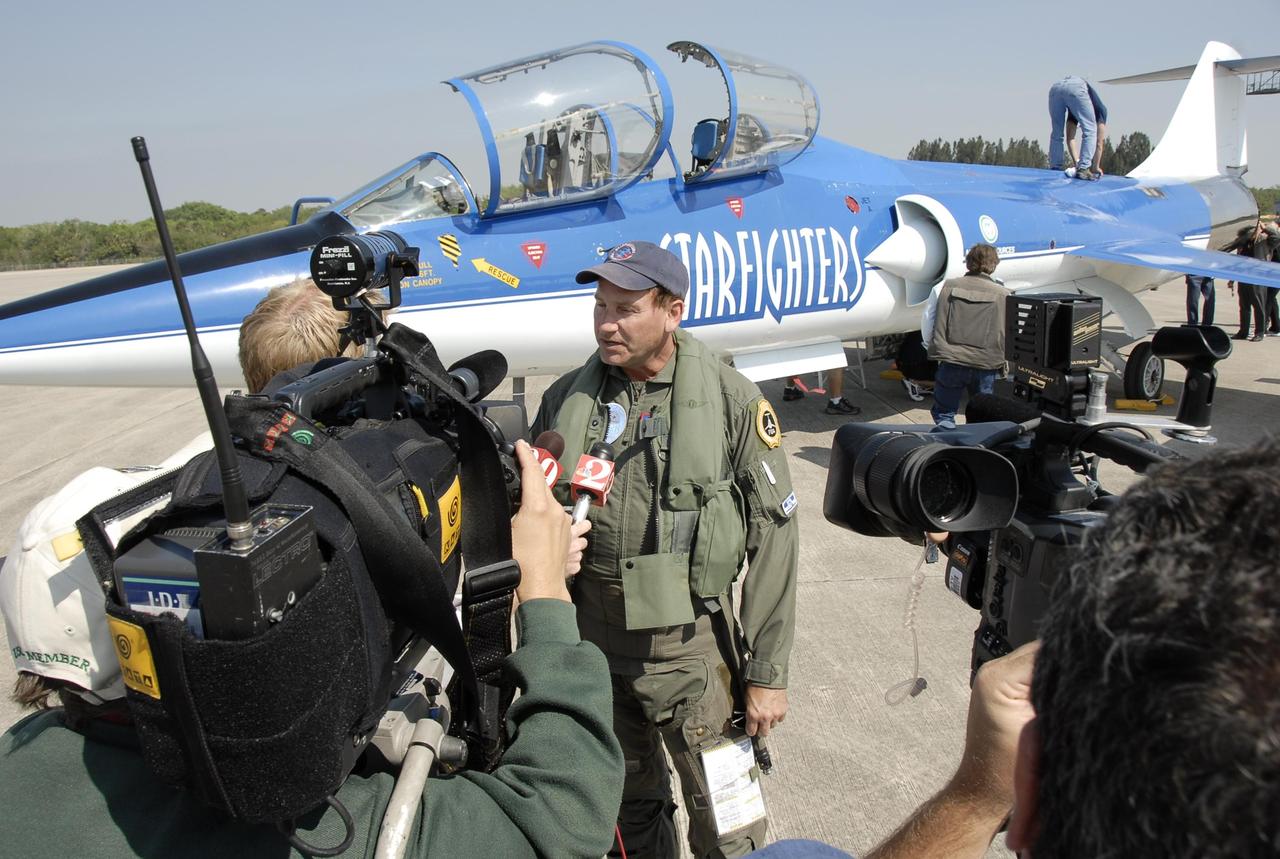
KENNEDY SPACE CENTER, FLA. -- The media swarm around Pilot Rick Svetkoff after his test flight of the Starfighter F-104, in the background. The aircraft is taking part in a series of pathfinder test missions from the space shuttle runway. Two flights will generate test data to validate sonic boom assumptions about the potential impacts of suborbital and orbital commercial spaceflight from the facility. NASA is assessing the environmental impact of such flights. Starfighters Inc. of Clearwater, Fla., will perform the flights to help in assessing suborbital space launch trajectories from the runway and paving the way for future commercial space tourism and research flights from the facility. Photo credit: NASA/Kim Shiflett
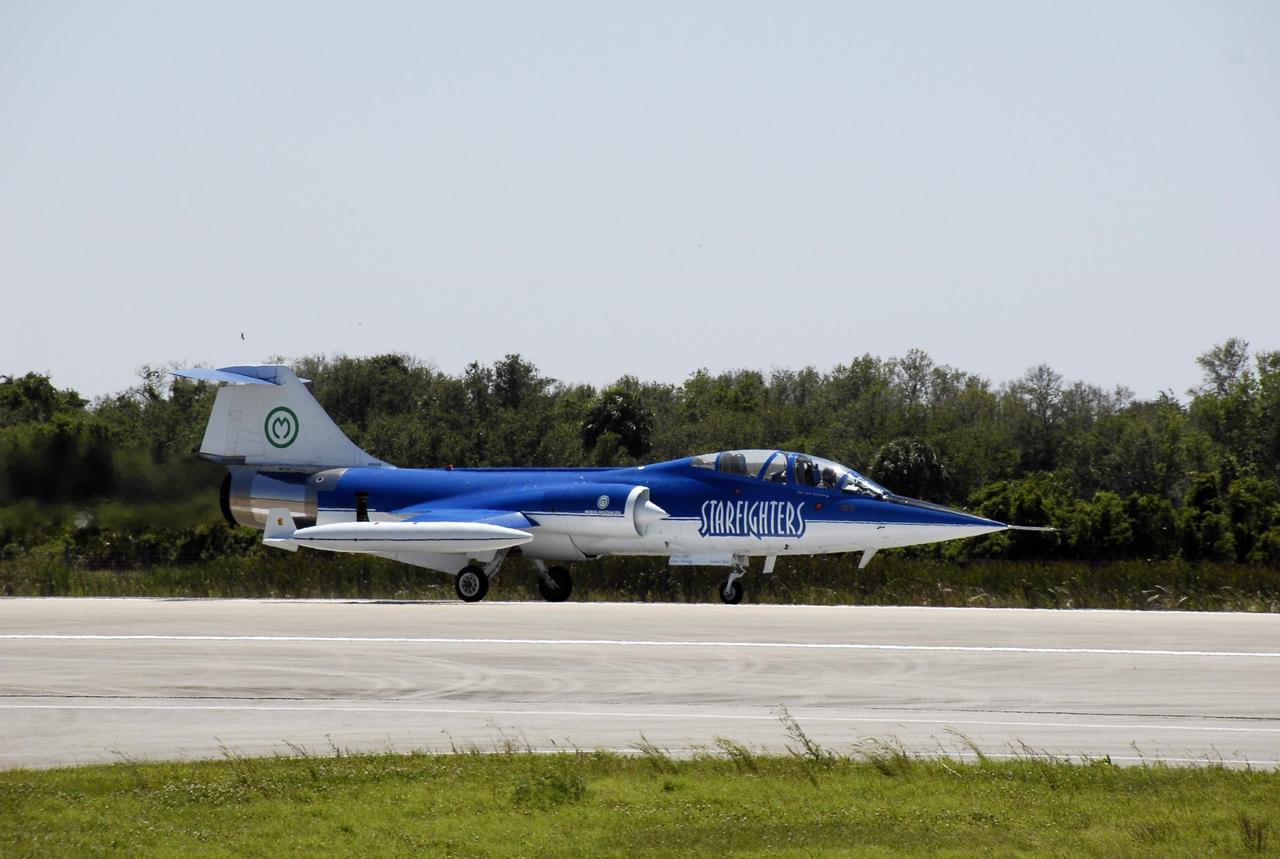
KENNEDY SPACE CENTER, FLA. -- A Starfighter F-104 piloted by Rick Svetkoff lands on the Shuttle Landing Facility at Kennedy Space Center. The aircraft will take part in a series of pathfinder test missions from the space shuttle runway. Two flights will generate test data to validate sonic boom assumptions about the potential impacts of suborbital and orbital commercial spaceflight from the facility. NASA is assessing the environmental impact of such flights. Starfighters Inc. of Clearwater, Fla., will perform the flights to help in assessing suborbital space launch trajectories from the runway and paving the way for future commercial space tourism and research flights from the facility. Photo credit: NASA/Kim Shiflett
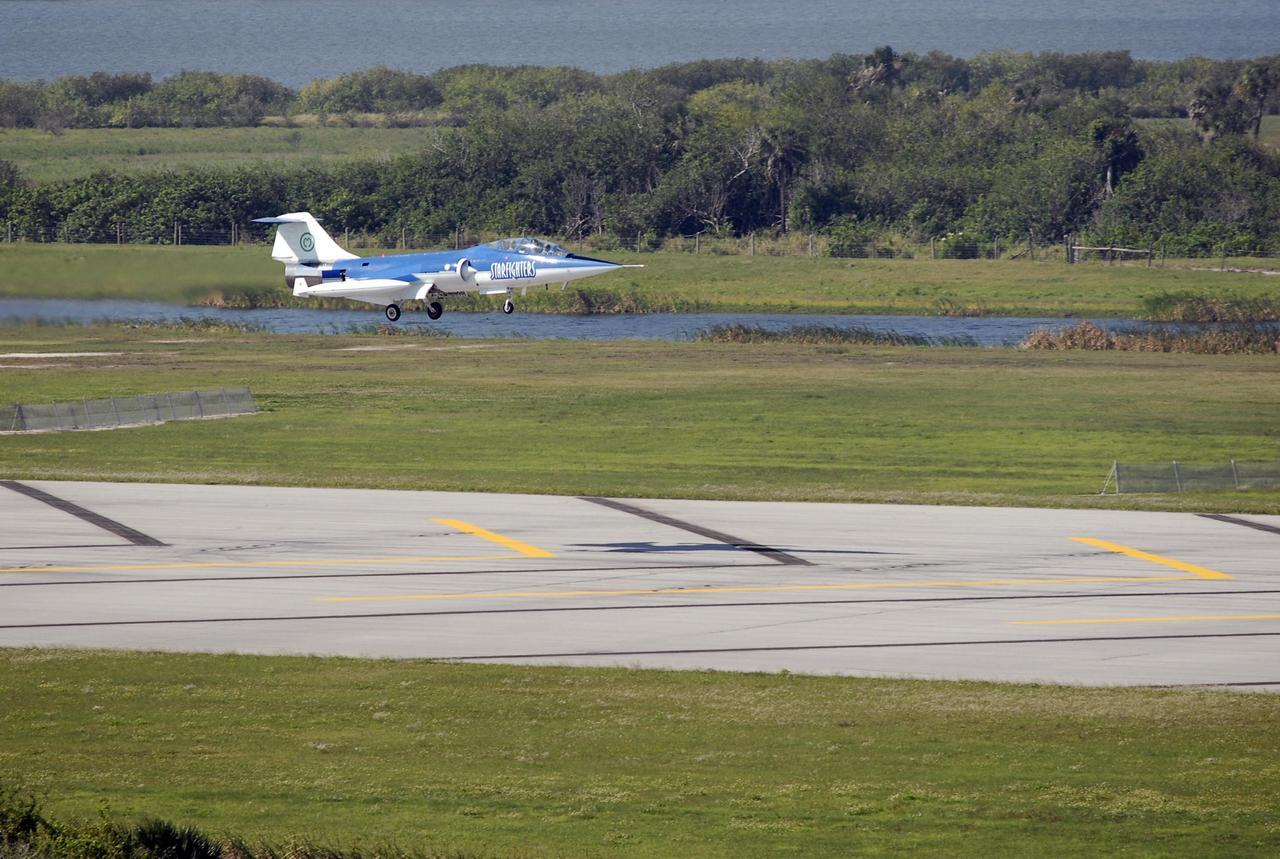
KENNEDY SPACE CENTER, FLA. -- The Starfighter F-104 approaches the runway at the KSC Shuttle Landing Facility for a landing after its test flight. The aircraft is taking part in a series of pathfinder test missions from the space shuttle runway. Two flights will generate test data to validate sonic boom assumptions about the potential impacts of suborbital and orbital commercial spaceflight from the facility. NASA is assessing the environmental impact of such flights. Starfighters Inc. of Clearwater, Fla., will perform the flights to help in assessing suborbital space launch trajectories from the runway and paving the way for future commercial space tourism and research flights from the facility. Photo credit: NASA/Kim Shiflett

KENNEDY SPACE CENTER, FLA. -- On the KSC Shuttle Landing Facility, pilot Rick Svetkoff settles into the cockpit of the Starfighter F-104. The aircraft is taking part in a series of pathfinder test missions from the space shuttle runway. Two flights will generate test data to validate sonic boom assumptions about the potential impacts of suborbital and orbital commercial spaceflight from the facility. NASA is assessing the environmental impact of such flights. Starfighters Inc. of Clearwater, Fla., will perform the flights to help in assessing suborbital space launch trajectories from the runway and paving the way for future commercial space tourism and research flights from the facility. Photo credit: NASA/Kim Shiflett
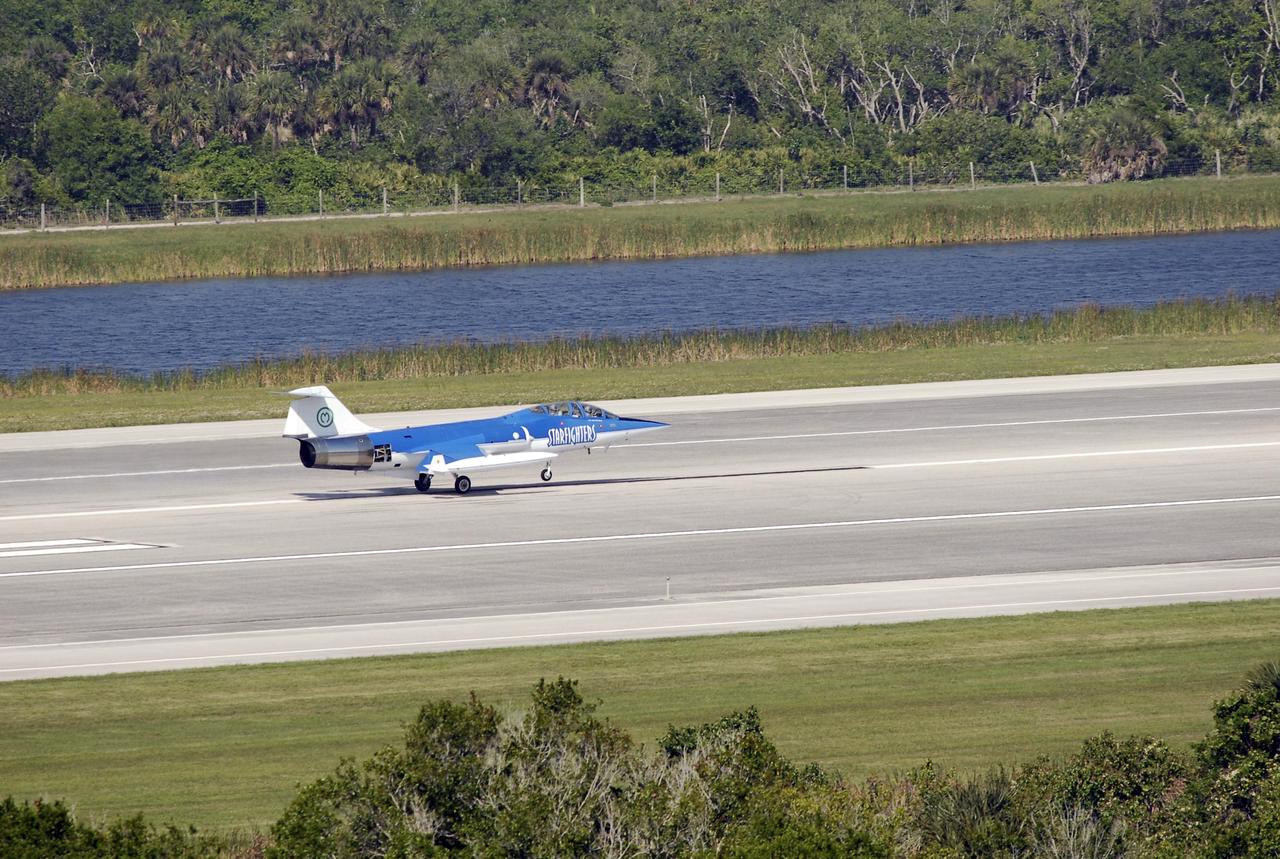
KENNEDY SPACE CENTER, FLA. -- The Starfighter F-104 lands on the runway at the KSC Shuttle Landing Facility after its test flight. The aircraft is taking part in a series of pathfinder test missions from the space shuttle runway. Two flights will generate test data to validate sonic boom assumptions about the potential impacts of suborbital and orbital commercial spaceflight from the facility. NASA is assessing the environmental impact of such flights. Starfighters Inc. of Clearwater, Fla., will perform the flights to help in assessing suborbital space launch trajectories from the runway and paving the way for future commercial space tourism and research flights from the facility. Photo credit: NASA/Kim Shiflett
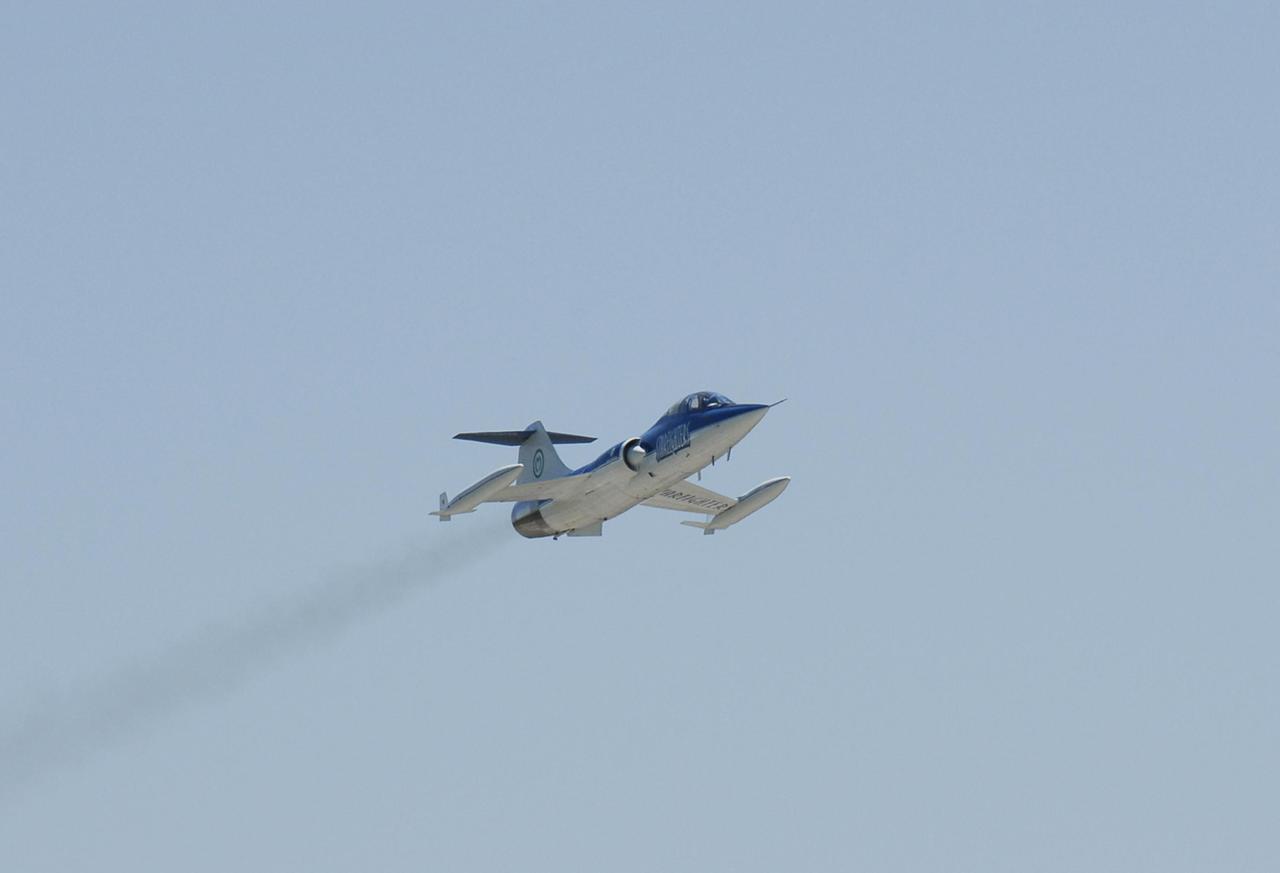
KENNEDY SPACE CENTER, FLA. -- A Starfighter F-104 piloted by Rick Svetkoff approaches the Shuttle Landing Facility at Kennedy Space Center. The aircraft will take part in a series of pathfinder test missions from the space shuttle runway. Two flights will generate test data to validate sonic boom assumptions about the potential impacts of suborbital and orbital commercial spaceflight from the facility. NASA is assessing the environmental impact of such flights. Starfighters Inc. of Clearwater, Fla., will perform the flights to help in assessing suborbital space launch trajectories from the runway and paving the way for future commercial space tourism and research flights from the facility. Photo credit: NASA/Kim Shiflett
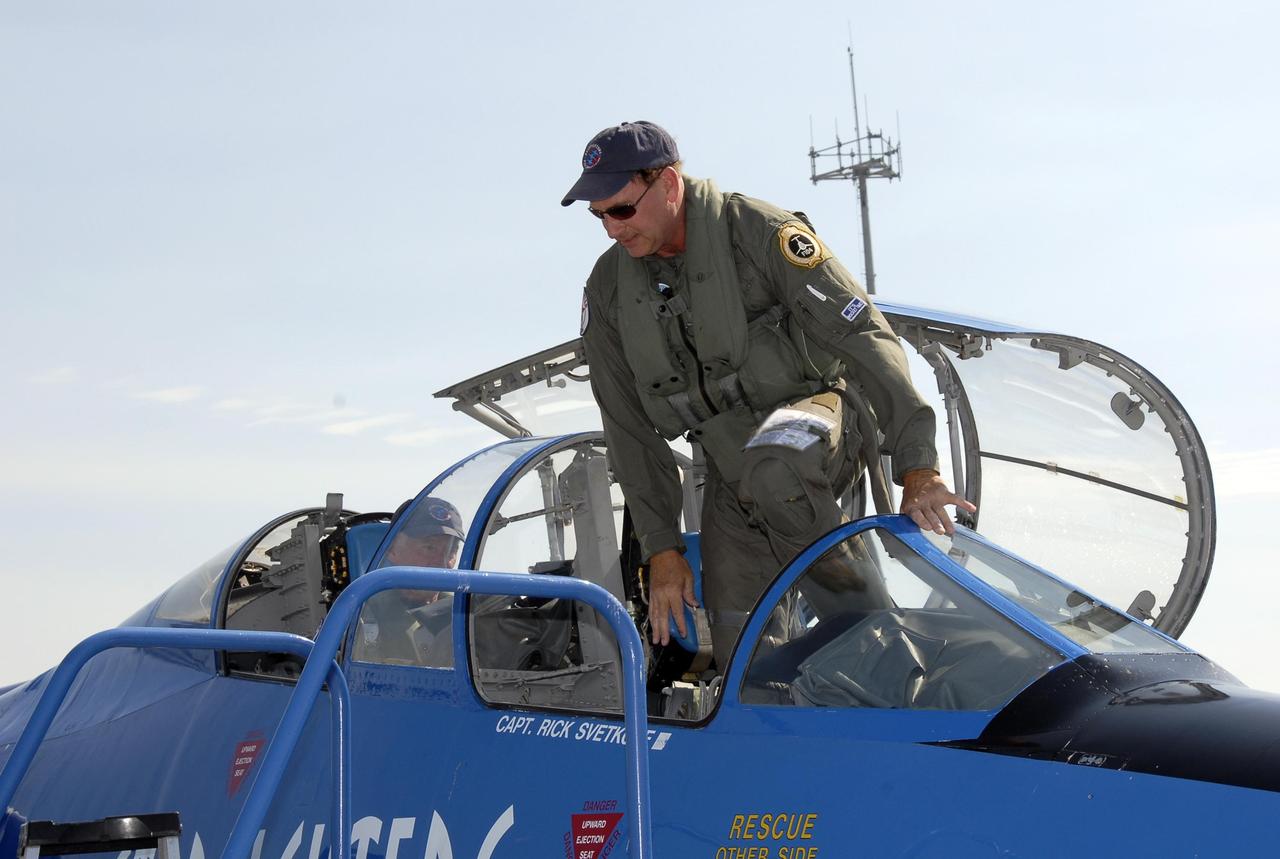
KENNEDY SPACE CENTER, FLA. -- After returning from a test flight, pilot Rick Svetkoff climbs out of the cockpit of the Starfighter F-104. The aircraft is taking part in a series of pathfinder test missions from the space shuttle runway. Two flights will generate test data to validate sonic boom assumptions about the potential impacts of suborbital and orbital commercial spaceflight from the facility. NASA is assessing the environmental impact of such flights. Starfighters Inc. of Clearwater, Fla., will perform the flights to help in assessing suborbital space launch trajectories from the runway and paving the way for future commercial space tourism and research flights from the facility. Photo credit: NASA/Kim Shiflett
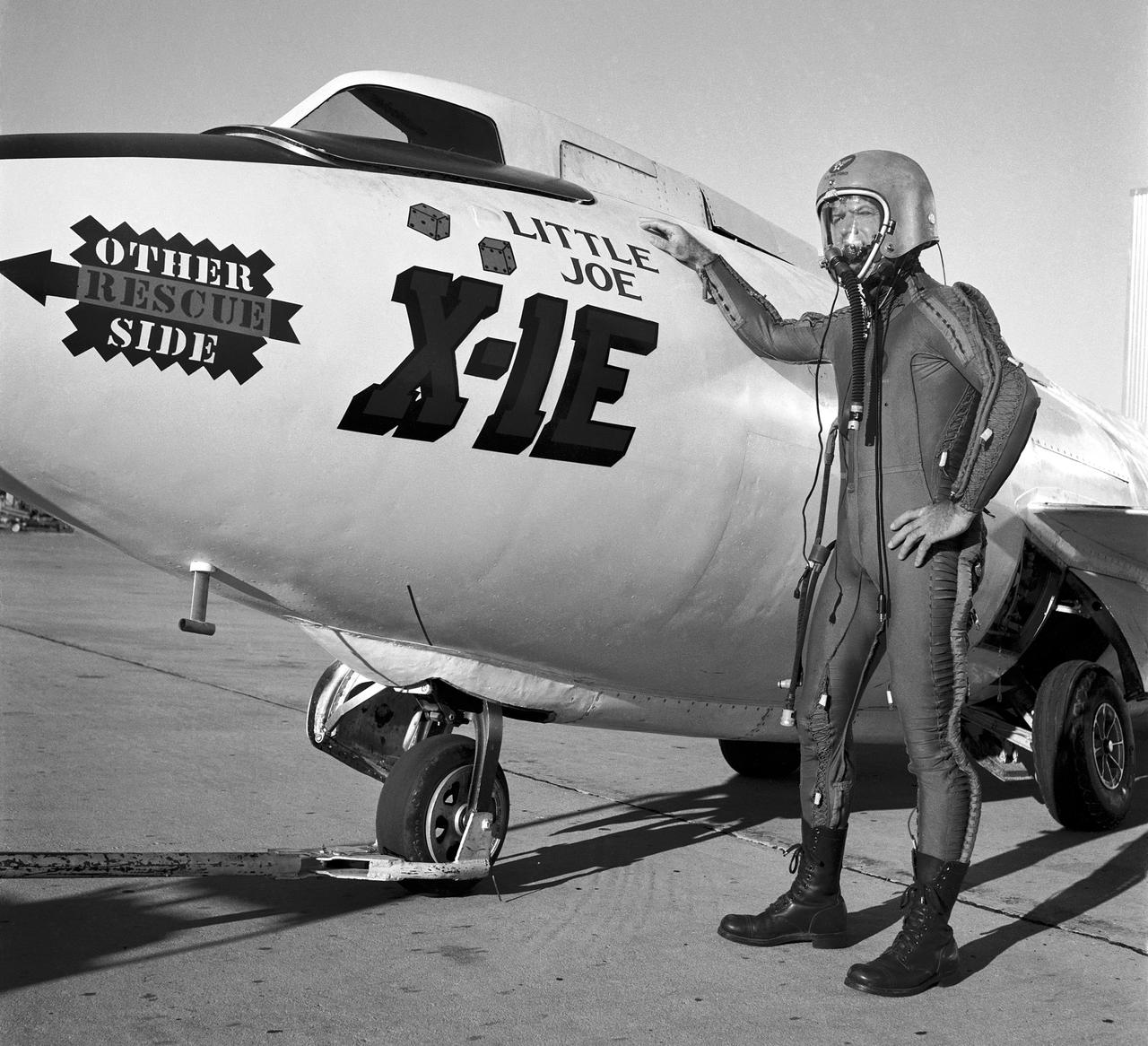
Joe Walker in a pressure suit beside the X-1E at the NASA High-Speed Flight Station, Edwards,California. The dice and "Little Joe" are prominently displayed under the cockpit area. (Little Joe is a dice players slang term for two deuces.) Walker is shown in the photo wearing an early Air Force partial pressure suit. This protected the pilot if cockpit pressure was lost above 50,000 feet. Similar suits were used in such aircraft as B-47s, B-52s, F-104s, U-2s, and the X-2 and D-558-II research aircraft. Five years later, Walker reached 354,200 feet in the X-15. Similar artwork - reading "Little Joe the II" - was applied for the record flight. These cases are two of the few times that research aircraft carried such nose art.
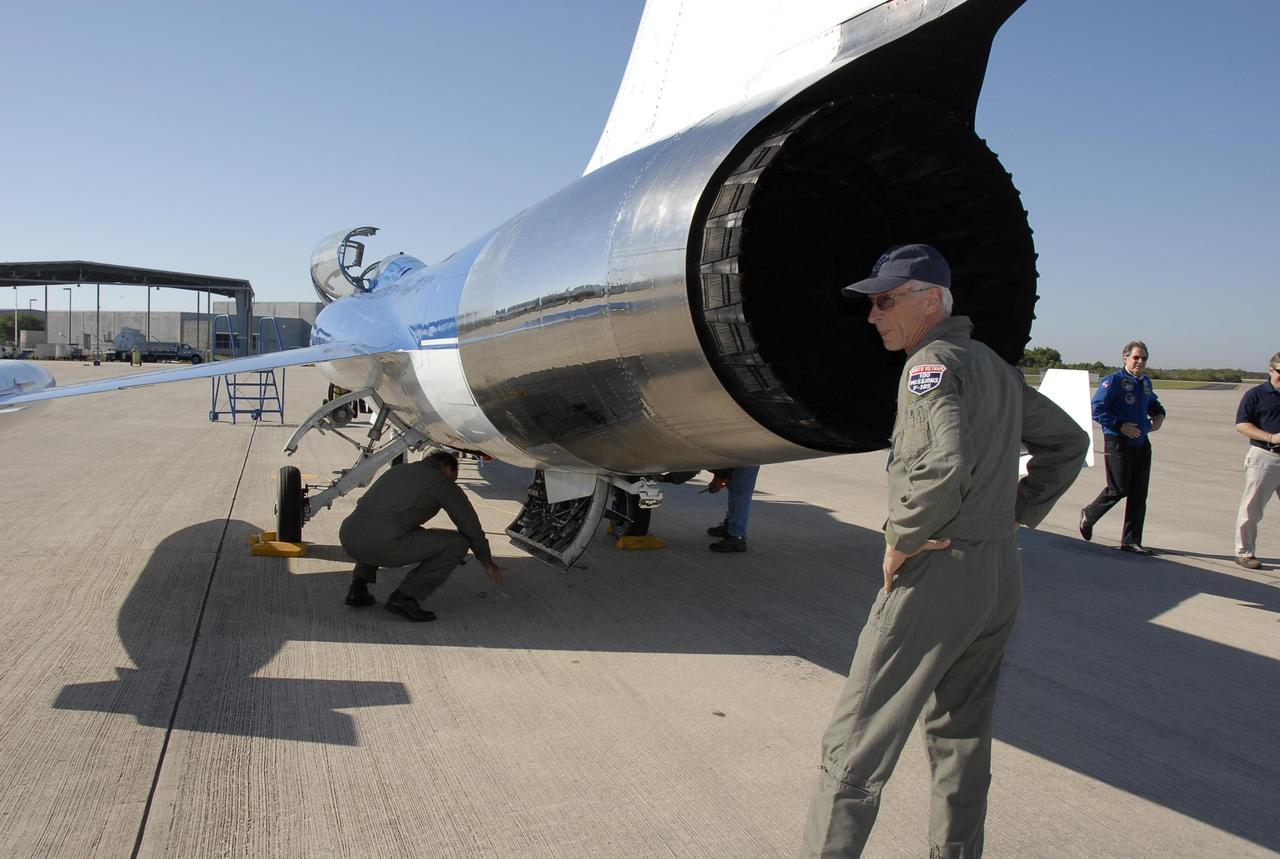
KENNEDY SPACE CENTER, FLA. -- On the KSC Shuttle Landing Facility, a Starfighter F-104 aircraft is being prepared for test flights. Behind the plane is Dave Waldrop, co-pilot. The aircraft is taking part in a series of pathfinder test missions from the space shuttle runway. Two flights will generate test data to validate sonic boom assumptions about the potential impacts of suborbital and orbital commercial spaceflight from the facility. NASA is assessing the environmental impact of such flights. Starfighters Inc. of Clearwater, Fla., will perform the flights to help in assessing suborbital space launch trajectories from the runway and paving the way for future commercial space tourism and research flights from the facility. Photo credit: NASA/Kim Shiflett
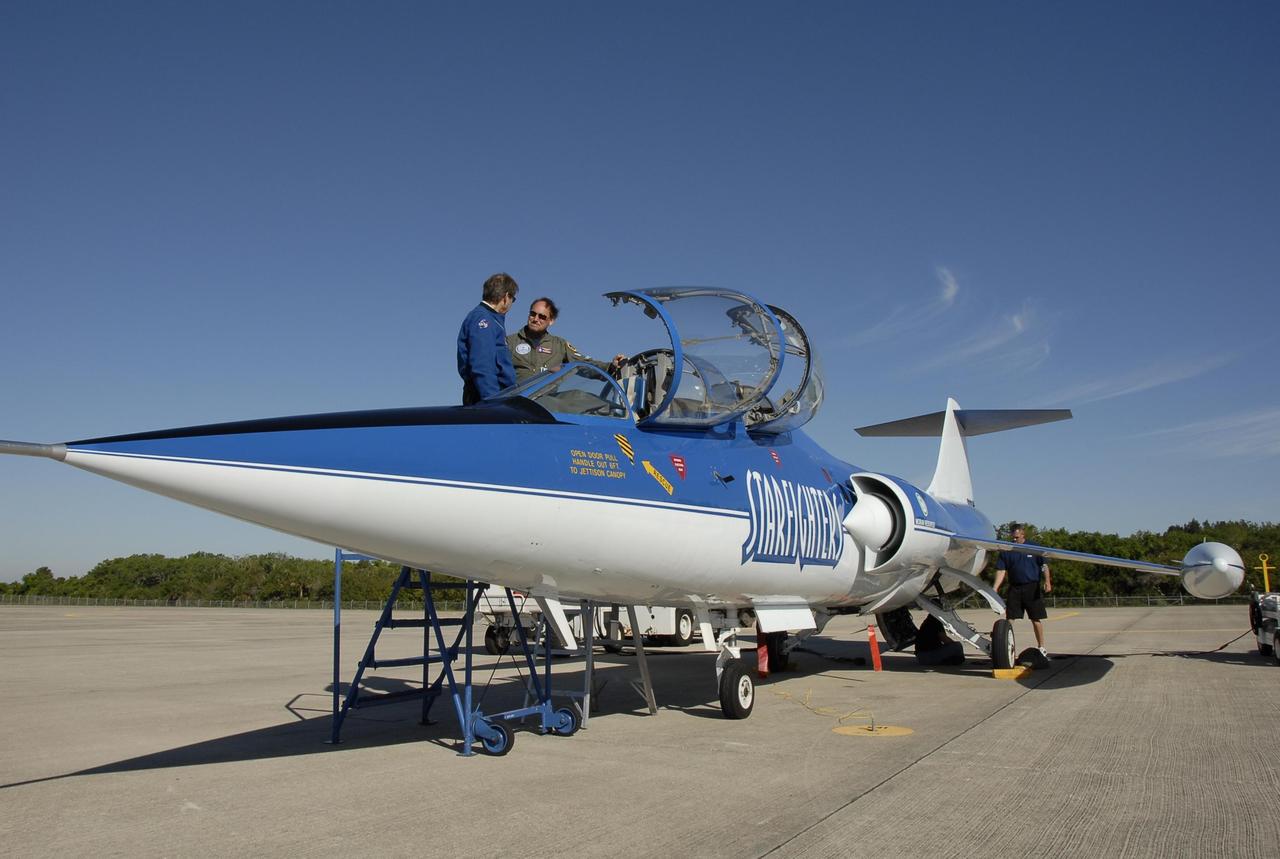
KENNEDY SPACE CENTER, FLA. -- On the KSC Shuttle Landing Facility, a Starfighter F-104 aircraft is being prepared for test flights. Ready to climb into the cockpit is the pilot, Rick Svetkoff. The aircraft is taking part in a series of pathfinder test missions from the space shuttle runway. Two flights will generate test data to validate sonic boom assumptions about the potential impacts of suborbital and orbital commercial spaceflight from the facility. NASA is assessing the environmental impact of such flights. Starfighters Inc. of Clearwater, Fla., will perform the flights to help in assessing suborbital space launch trajectories from the runway and paving the way for future commercial space tourism and research flights from the facility. Photo credit: NASA/Kim Shiflett
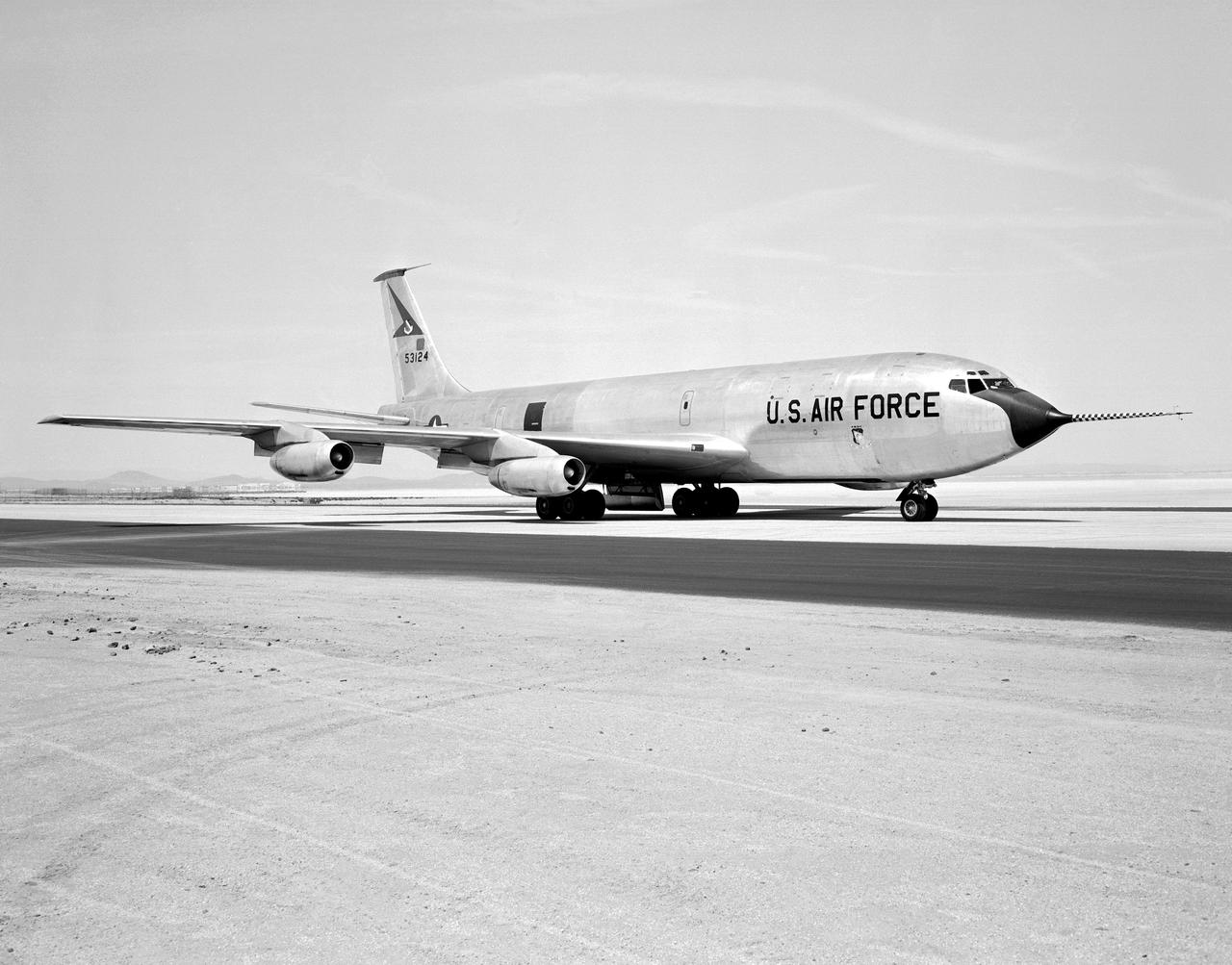
The Boeing KC-135 Stratotanker, besides being used extensively in its primary role as an inflight aircraft refueler, has assisted in several projects at the NASA Dryden Flight Research Center, Edwards, California. In 1957 and 1958, Dryden was asked by what was then the Civil Aeronautics Administration (later absorbed into the Federal Aviation Administration (FAA) in 1958) to help establish new approach procedure guidelines on cloud-ceiling and visibility minimums for Boeing's first jet airliner, the B-707. Dryden used a KC-135 (the military variant of the 707), seen here on the runway at Edwards Air Force Base, to aid the CAA in these tests. In 1979 and 1980, Dryden was again involved with general aviation research with the KC-135. This time, a special wingtip "winglet", developed by Richard Whitcomb of Langley Research Center, was tested on the jet aircraft. Winglets are small, nearly vertical fins installed on an airplane's wing tips to help produce a forward thrust in the vortices that typically swirl off the end of the wing, thereby reducing drag. This winglet idea was tested at the Dryden Flight Research Center on a KC-135A tanker loaned to NASA by the Air Force. The research showed that the winglets could increase an aircraft's range by as much as 7 percent at cruise speeds. The first application of NASA's winglet technology in industry was in general aviation business jets, but winglets are now being incorporated into most new commercial and military transport jets, including the Gulfstream III and IV business jets, the Boeing 747-400 and MD-11 airliners, and the C-17 military transport. In the 1980's, a KC-135 was used in support of the Space Shuttle program. Since the Shuttle was to be launched from Florida, researchers wanted to test the effect of rain on the sensitive thermal tiles. Tiles were mounted on special fixtures on an F-104 aircraft and a P-3 Orion. The F-104 was flown in actual rain conditions, and also behind the KC-135 spray tanker as it rel
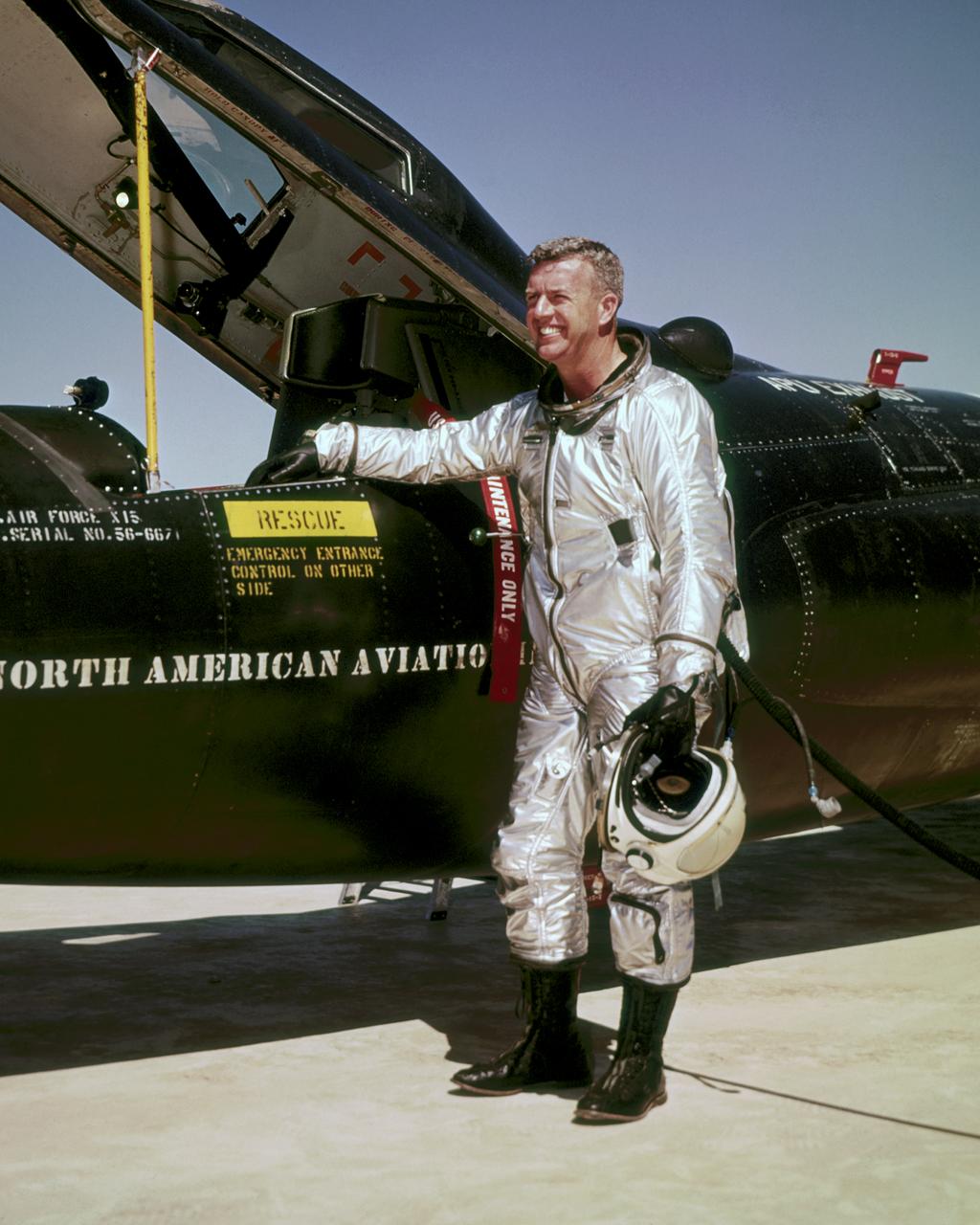
Joseph A. Walker was a Chief Research Pilot at the NASA Dryden Flight Research Center during the mid-1960s. He joined the NACA in March 1945, and served as project pilot at the Edwards flight research facility on such pioneering research projects as the D-558-1, D-558-2, X-1, X-3, X-4, X-5, and the X-15. He also flew programs involving the F-100, F-101, F-102, F-104, and the B-47. Walker made the first NASA X-15 flight on March 25, 1960. He flew the research aircraft 24 times and achieved its fastest speed and highest altitude. He attained a speed of 4,104 mph (Mach 5.92) during a flight on June 27, 1962, and reached an altitude of 354,300 feet on August 22, 1963 (his last X-15 flight). He was the first man to pilot the Lunar Landing Research Vehicle (LLRV) that was used to develop piloting and operational techniques for lunar landings. Walker was born February 20, 1921, in Washington, Pa. He lived there until graduating from Washington and Jefferson College in 1942, with a B.A. degree in Physics. During World War II he flew P-38 fighters for the Air Force, earning the Distinguished Flying Cross and the Air Medal with Seven Oak Clusters. Walker was the recipient of many awards during his 21 years as a research pilot. These include the 1961 Robert J. Collier Trophy, 1961 Harmon International Trophy for Aviators, the 1961 Kincheloe Award and 1961 Octave Chanute Award. He received an honorary Doctor of Aeronautical Sciences degree from his alma mater in June of 1962. Walker was named Pilot of the Year in 1963 by the National Pilots Association. He was a charter member of the Society of Experimental Test Pilots, and one of the first to be designated a Fellow. He was fatally injured on June 8, 1966, in a mid-air collision between an F-104 he was piloting and the XB-70.
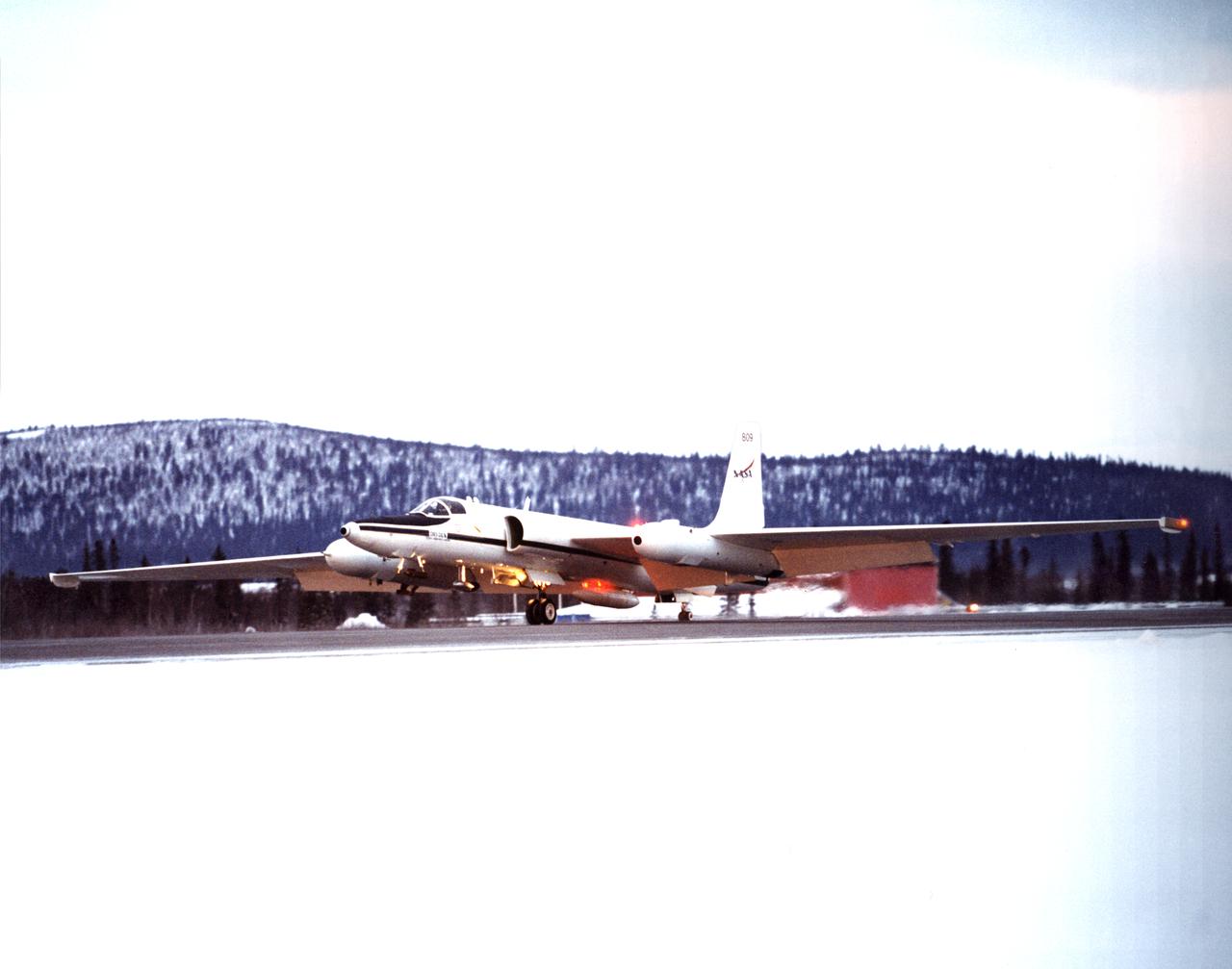
ER-2s bearing tail numbers 806 and 809 are used as airborne science platforms by NASA's Dryden Flight Research Center. The aircraft are platforms for a variety of high-altitude science missions flown over various parts of the world. They are also used for earth science and atmospheric sensor research and development, satellite calibration and data validation. The ER-2s are capable of carrying a maximum payload of 2,600 pounds of experiments in a nose bay, the main equipment bay behind the cockpit, two wing-mounted superpods and small underbody and trailing edges. Most ER-2 missions last about six hours with ranges of about 2,200 nautical miles. The aircraft typically fly at altitudes above 65,000 feet. On November 19, 1998, an ER-2 set a world record for medium weight aircraft reaching an altitude of 68,700 feet. The aircraft is 63 feet long, with a wingspan of 104 feet. The top of the vertical tail is 16 feet above ground when the aircraft is on the bicycle-type landing gear. Cruising speeds are 410 knots, or 467 miles per hour, at altitude. A single General Electric F-118 turbofan engine rated at 17,000 pounds thrust powers the ER-2.

ER-2s bearing tail numbers 806 and 809 are used as airborne science platforms by NASA's Dryden Flight Research Center. The aircraft are platforms for a variety of high-altitude science missions flown over various parts of the world. They are also used for earth science and atmospheric sensor research and development, satellite calibration and data validation. The ER-2s are capable of carrying a maximum payload of 2,600 pounds of experiments in a nose bay, the main equipment bay behind the cockpit, two wing-mounted superpods and small underbody and trailing edges. Most ER-2 missions last about six hours with ranges of about 2,200 nautical miles. The aircraft typically fly at altitudes above 65,000 feet. On November 19, 1998, an ER-2 set a world record for medium weight aircraft reaching an altitude of 68,700 feet. The aircraft is 63 feet long, with a wingspan of 104 feet. The top of the vertical tail is 16 feet above ground when the aircraft is on the bicycle-type landing gear. Cruising speeds are 410 knots, or 467 miles per hour, at altitude. A single General Electric F-118 turbofan engine rated at 17,000 pounds thrust powers the ER-2.
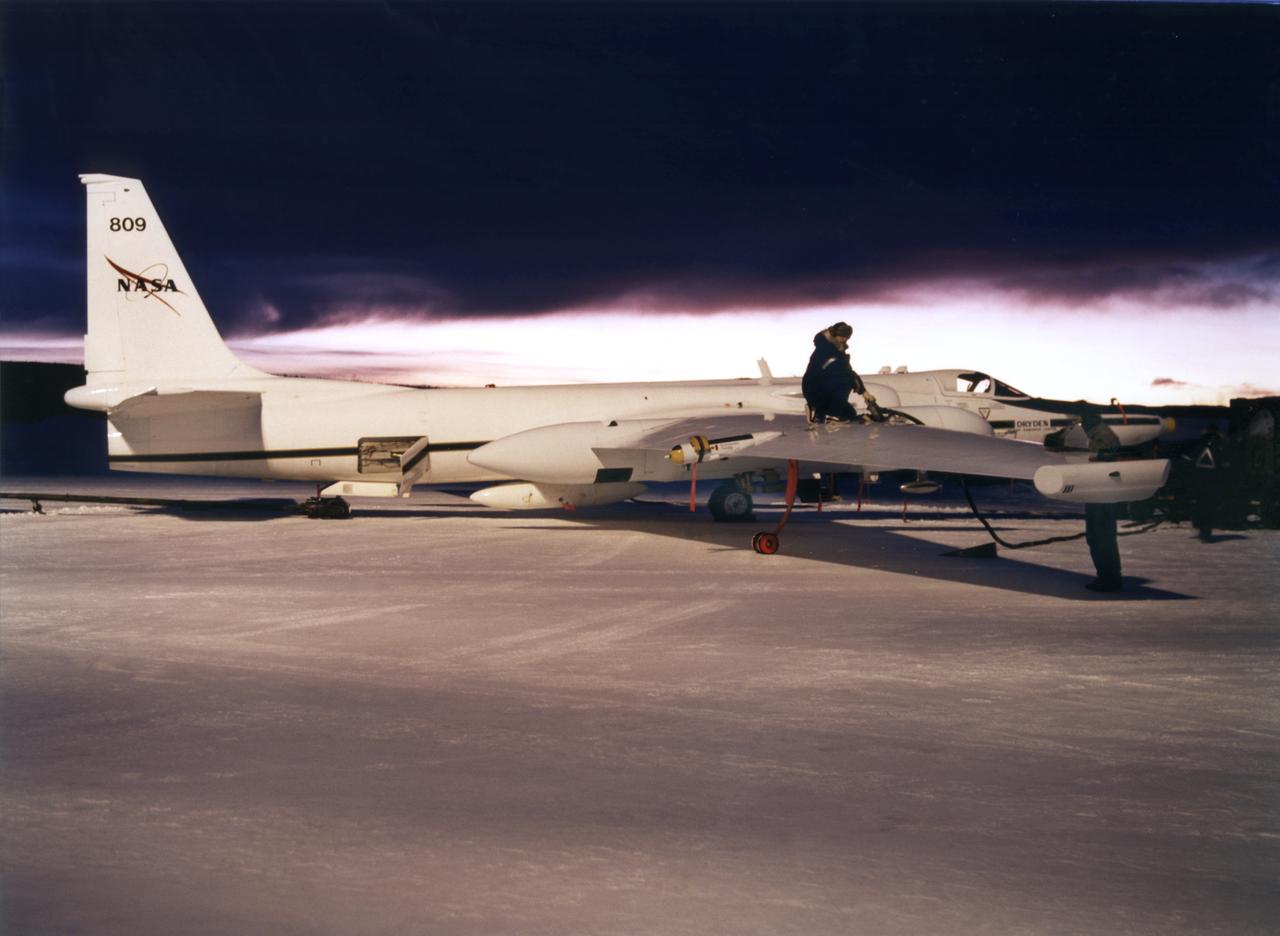
ER-2s bearing tail numbers 806 and 809 are used as airborne science platforms by NASA's Dryden Flight Research Center. The aircraft are platforms for a variety of high-altitude science missions flown over various parts of the world. They are also used for earth science and atmospheric sensor research and development, satellite calibration and data validation. The ER-2s are capable of carrying a maximum payload of 2,600 pounds of experiments in a nose bay, the main equipment bay behind the cockpit, two wing-mounted superpods and small underbody and trailing edges. Most ER-2 missions last about six hours with ranges of about 2,200 nautical miles. The aircraft typically fly at altitudes above 65,000 feet. On November 19, 1998, an ER-2 set a world record for medium weight aircraft reaching an altitude of 68,700 feet. The aircraft is 63 feet long, with a wingspan of 104 feet. The top of the vertical tail is 16 feet above ground when the aircraft is on the bicycle-type landing gear. Cruising speeds are 410 knots, or 467 miles per hour, at altitude. A single General Electric F-118 turbofan engine rated at 17,000 pounds thrust powers the ER-2.
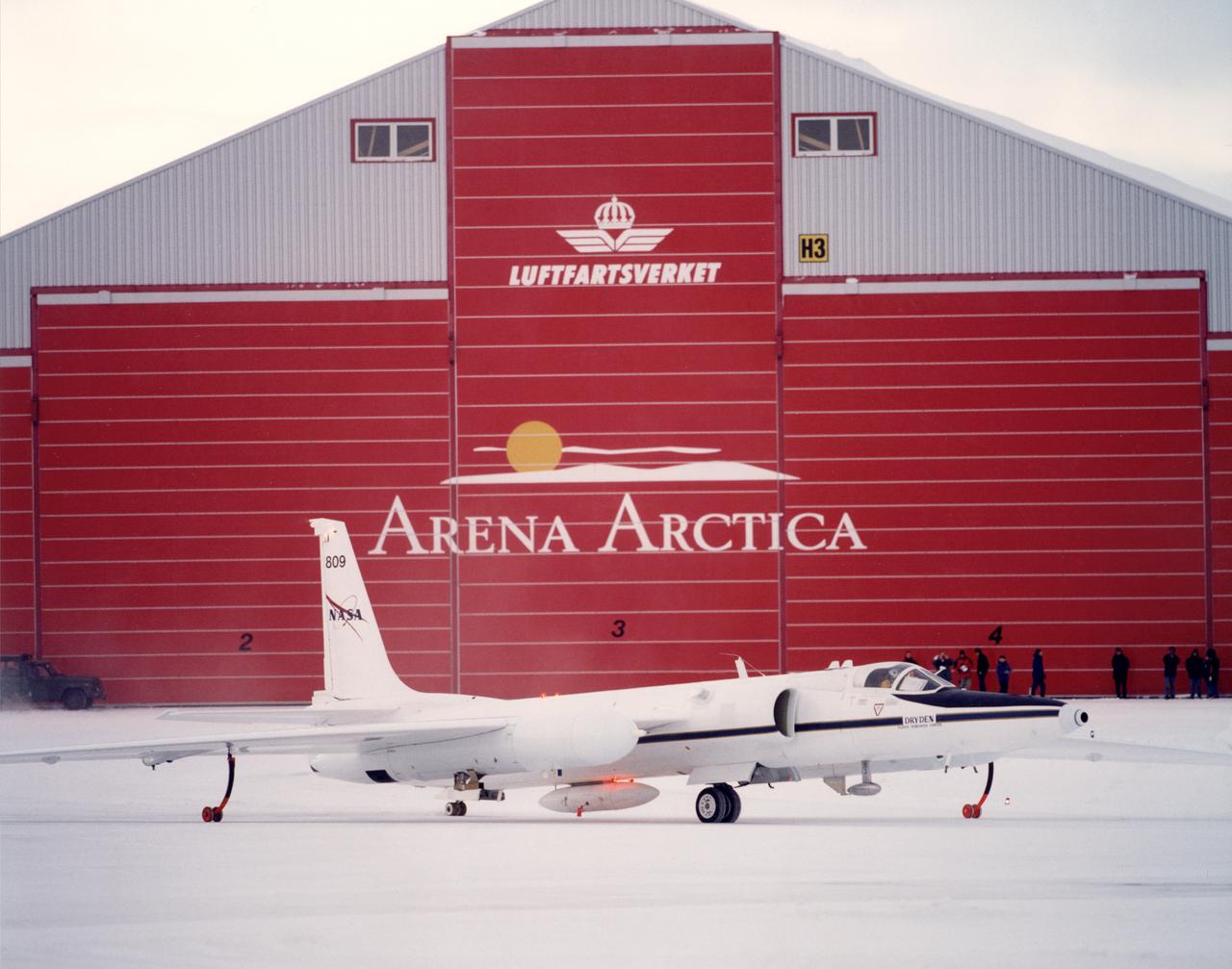
ER-2s bearing tail numbers 806 and 809 are used as airborne science platforms by NASA's Dryden Flight Research Center. The aircraft are platforms for a variety of high-altitude science missions flown over various parts of the world. They are also used for earth science and atmospheric sensor research and development, satellite calibration and data validation. The ER-2s are capable of carrying a maximum payload of 2,600 pounds of experiments in a nose bay, the main equipment bay behind the cockpit, two wing-mounted superpods and small underbody and trailing edges. Most ER-2 missions last about six hours with ranges of about 2,200 nautical miles. The aircraft typically fly at altitudes above 65,000 feet. On November 19, 1998, an ER-2 set a world record for medium weight aircraft reaching an altitude of 68,700 feet. The aircraft is 63 feet long, with a wingspan of 104 feet. The top of the vertical tail is 16 feet above ground when the aircraft is on the bicycle-type landing gear. Cruising speeds are 410 knots, or 467 miles per hour, at altitude. A single General Electric F-118 turbofan engine rated at 17,000 pounds thrust powers the ER-2.
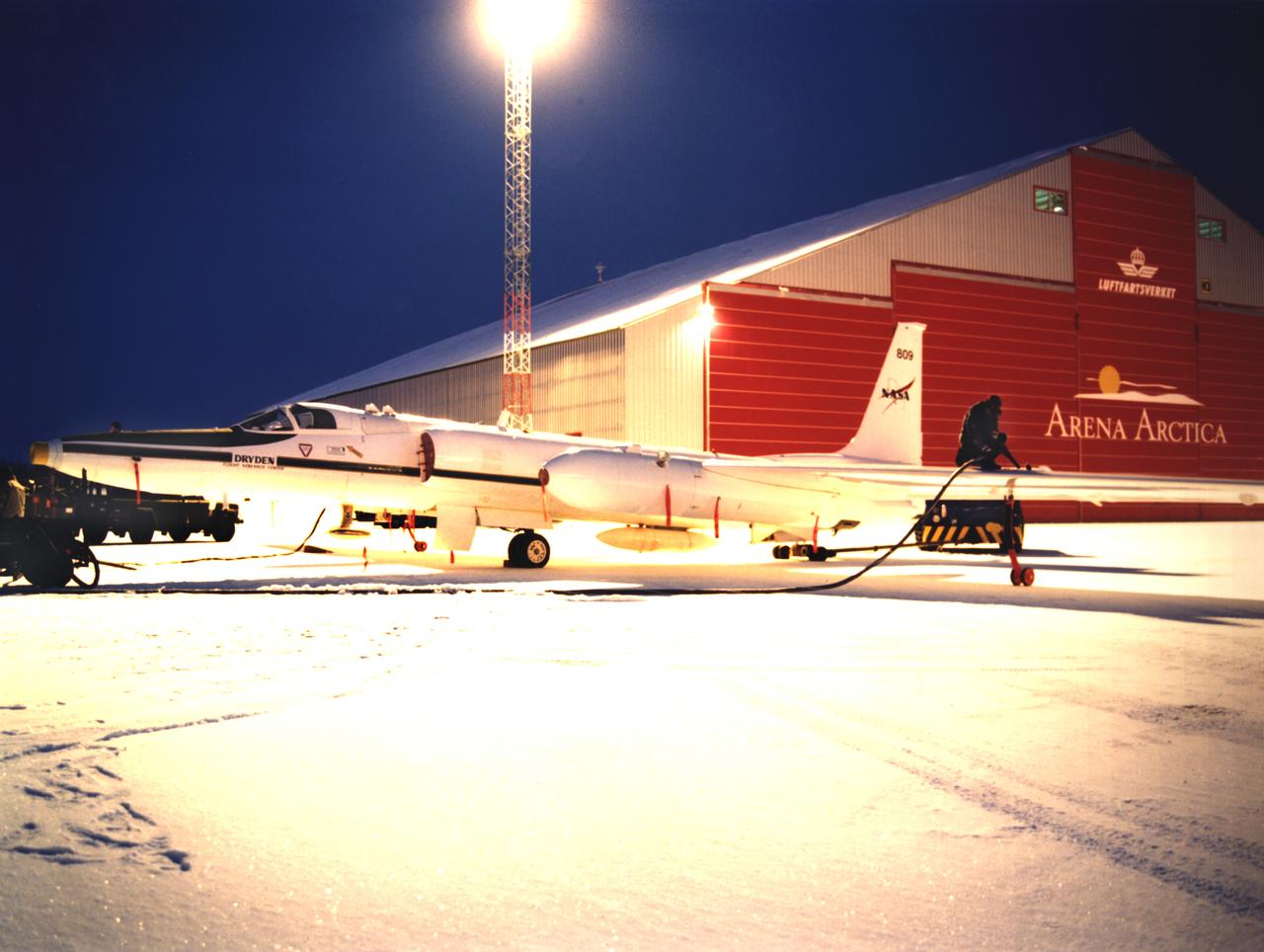
ER-2s bearing tail numbers 806 and 809 are used as airborne science platforms by NASA's Dryden Flight Research Center. The aircraft are platforms for a variety of high-altitude science missions flown over various parts of the world. They are also used for earth science and atmospheric sensor research and development, satellite calibration and data validation. The ER-2s are capable of carrying a maximum payload of 2,600 pounds of experiments in a nose bay, the main equipment bay behind the cockpit, two wing-mounted superpods and small underbody and trailing edges. Most ER-2 missions last about six hours with ranges of about 2,200 nautical miles. The aircraft typically fly at altitudes above 65,000 feet. On November 19, 1998, an ER-2 set a world record for medium weight aircraft reaching an altitude of 68,700 feet. The aircraft is 63 feet long, with a wingspan of 104 feet. The top of the vertical tail is 16 feet above ground when the aircraft is on the bicycle-type landing gear. Cruising speeds are 410 knots, or 467 miles per hour, at altitude. A single General Electric F-118 turbofan engine rated at 17,000 pounds thrust powers the ER-2.
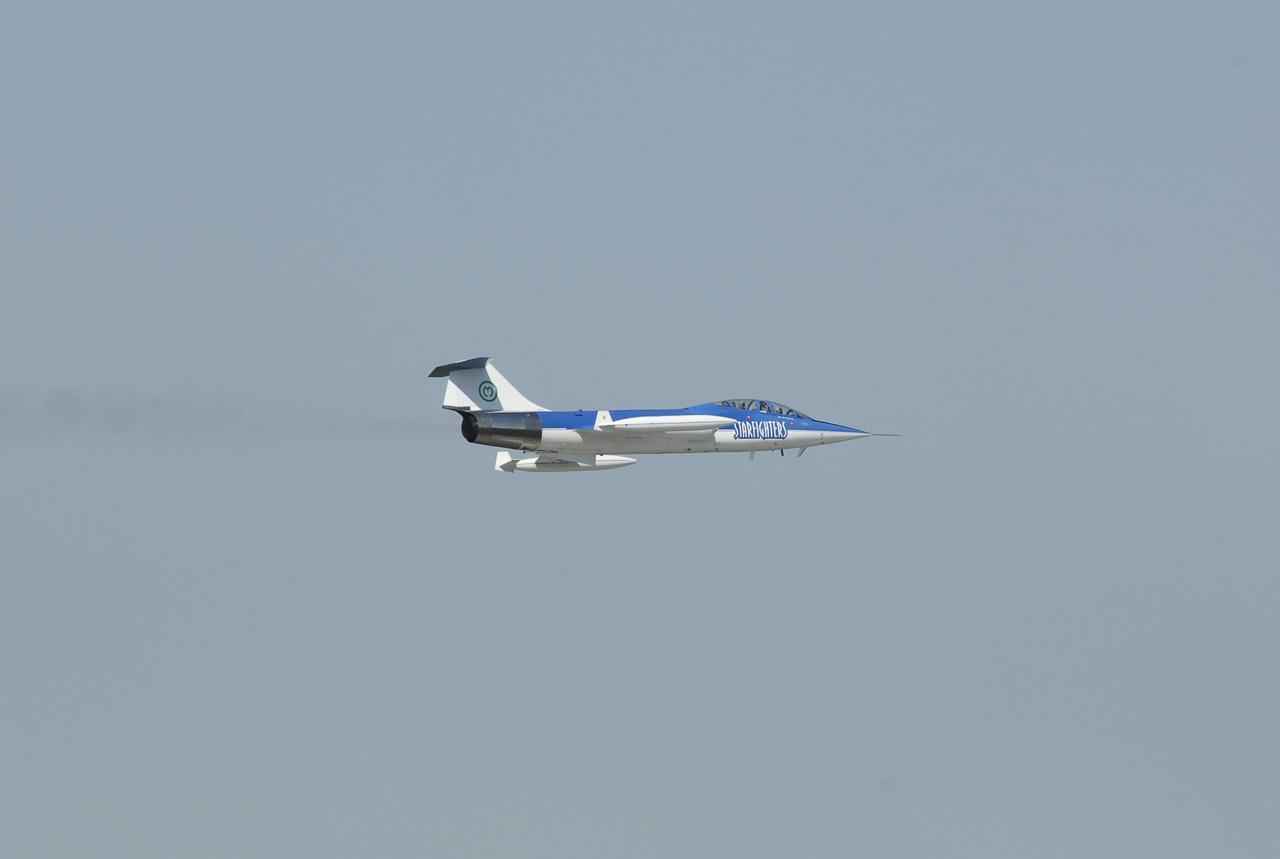
KENNEDY SPACE CENTER, FLA. -- The Starfighter F-104 is airborne after taking off from the KSC Shuttle Landing Facility. The pilot is Rick Svetkoff; the co-pilot is Dave Waldrop. The aircraft is taking part in a series of pathfinder test missions from the space shuttle runway. Two flights will generate test data to validate sonic boom assumptions about the potential impacts of suborbital and orbital commercial spaceflight from the facility. NASA is assessing the environmental impact of such flights. Starfighters Inc. of Clearwater, Fla., will perform the flights to help in assessing suborbital space launch trajectories from the runway and paving the way for future commercial space tourism and research flights from the facility. Photo credit: NASA/Kim Shiflett
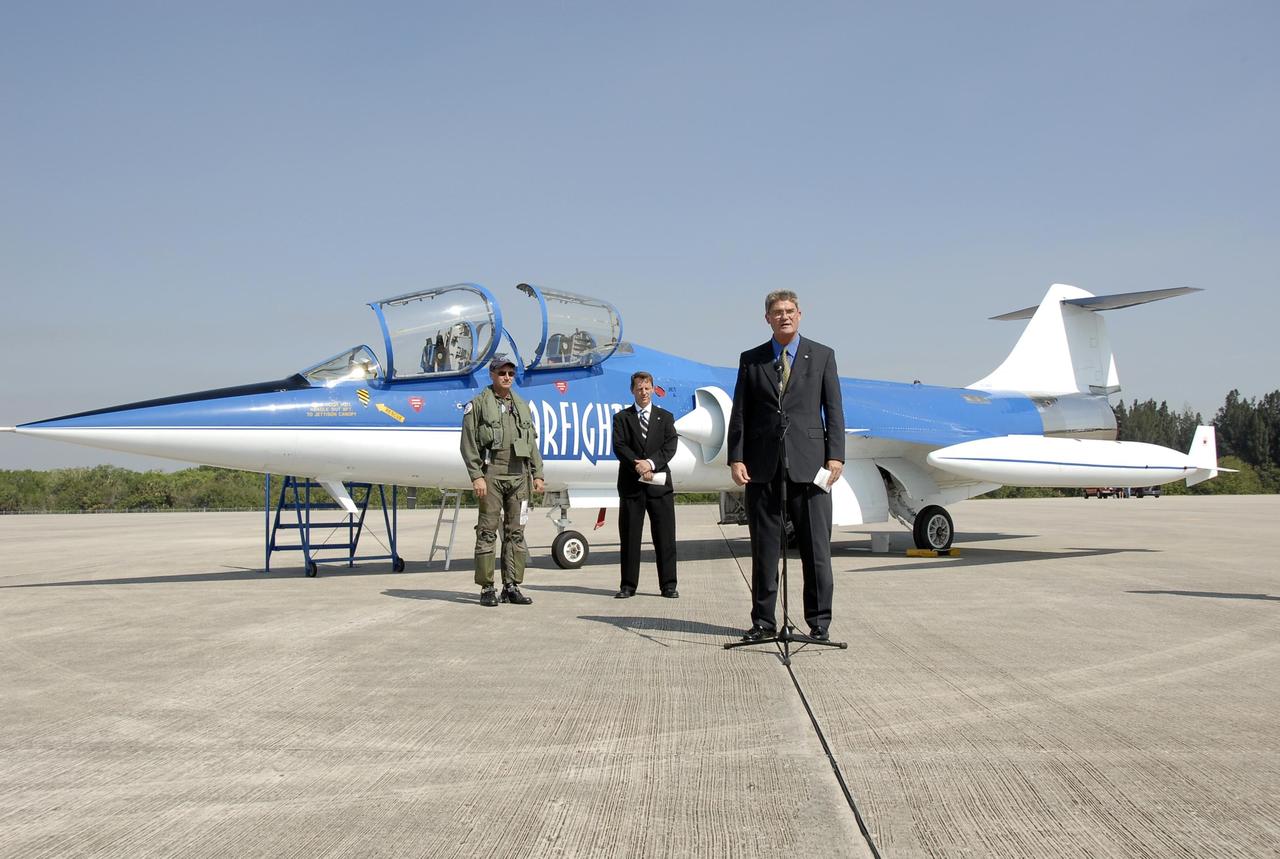
KENNEDY SPACE CENTER, FLA. -- Bill Parsons, director of Kennedy Space Center, addresses the media at the KSC Shuttle Landing Facility after a test flight of the Starfighter F-104. Behind Parsons, at left, is the pilot Rick Svetkoff. At right is Al Wassel, a representative from the FAA Office of Commercial Space. The aircraft is taking part in a series of pathfinder test missions from the space shuttle runway. Two flights will generate test data to validate sonic boom assumptions about the potential impacts of suborbital and orbital commercial spaceflight from the facility. NASA is assessing the environmental impact of such flights. Starfighters Inc. of Clearwater, Fla., will perform the flights to help in assessing suborbital space launch trajectories from the runway and paving the way for future commercial space tourism and research flights from the facility. Photo credit: NASA/Kim Shiflett
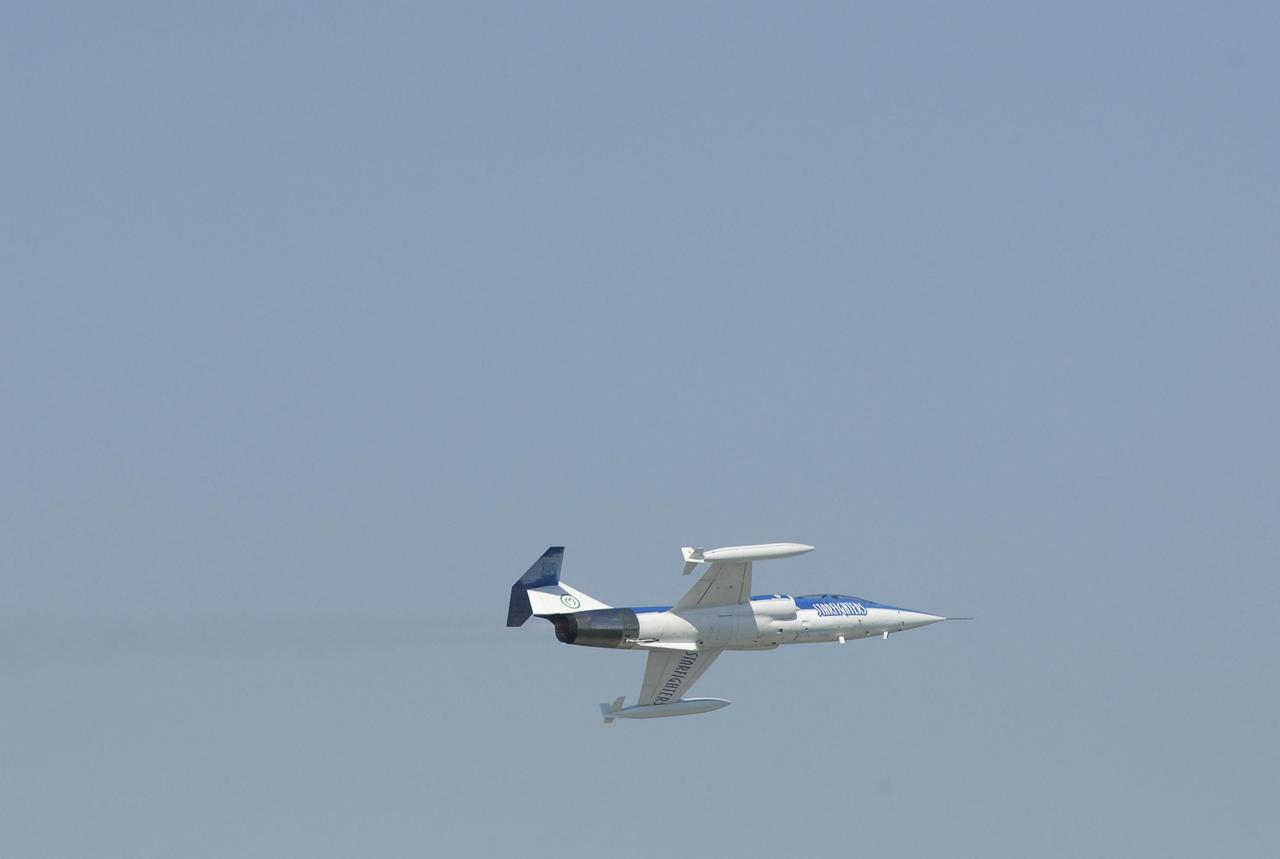
KENNEDY SPACE CENTER, FLA. -- The Starfighter F-104 banks for a turn after taking off from the KSC Shuttle Landing Facility. The pilot is Rick Svetkoff; the co-pilot is Dave Waldrop. The aircraft is taking part in a series of pathfinder test missions from the space shuttle runway. Two flights will generate test data to validate sonic boom assumptions about the potential impacts of suborbital and orbital commercial spaceflight from the facility. NASA is assessing the environmental impact of such flights. Starfighters Inc. of Clearwater, Fla., will perform the flights to help in assessing suborbital space launch trajectories from the runway and paving the way for future commercial space tourism and research flights from the facility. Photo credit: NASA/Kim Shiflett
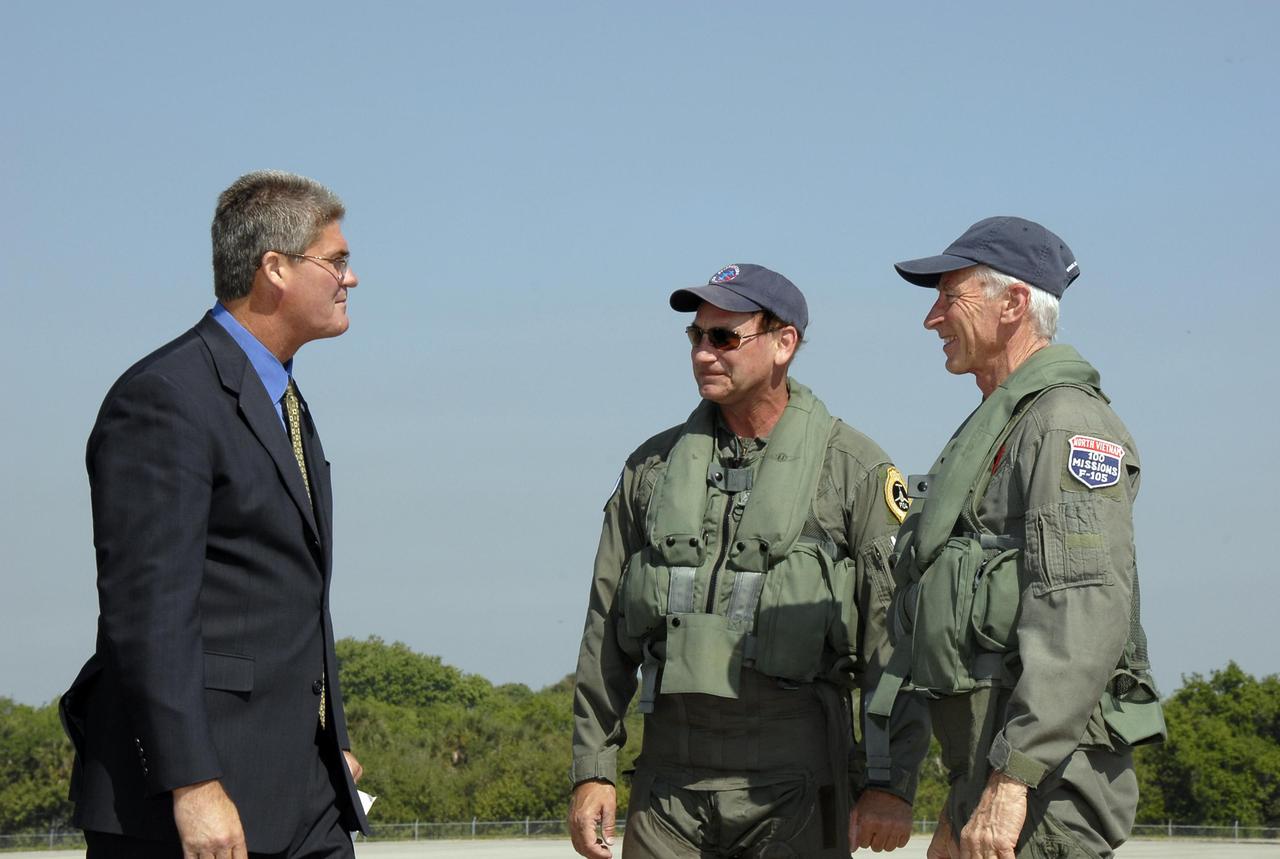
KENNEDY SPACE CENTER, FLA. -- Bill Parsons (left), director of Kennedy Space Center, greets pilot Rick Svetkoff and co-pilot Dave Waldrop after a test flight of the Starfighter F-104. The aircraft is taking part in a series of pathfinder test missions from the space shuttle runway. Two flights will generate test data to validate sonic boom assumptions about the potential impacts of suborbital and orbital commercial spaceflight from the facility. NASA is assessing the environmental impact of such flights. Starfighters Inc. of Clearwater, Fla., will perform the flights to help in assessing suborbital space launch trajectories from the runway and paving the way for future commercial space tourism and research flights from the facility. Photo credit: NASA/Kim Shiflett
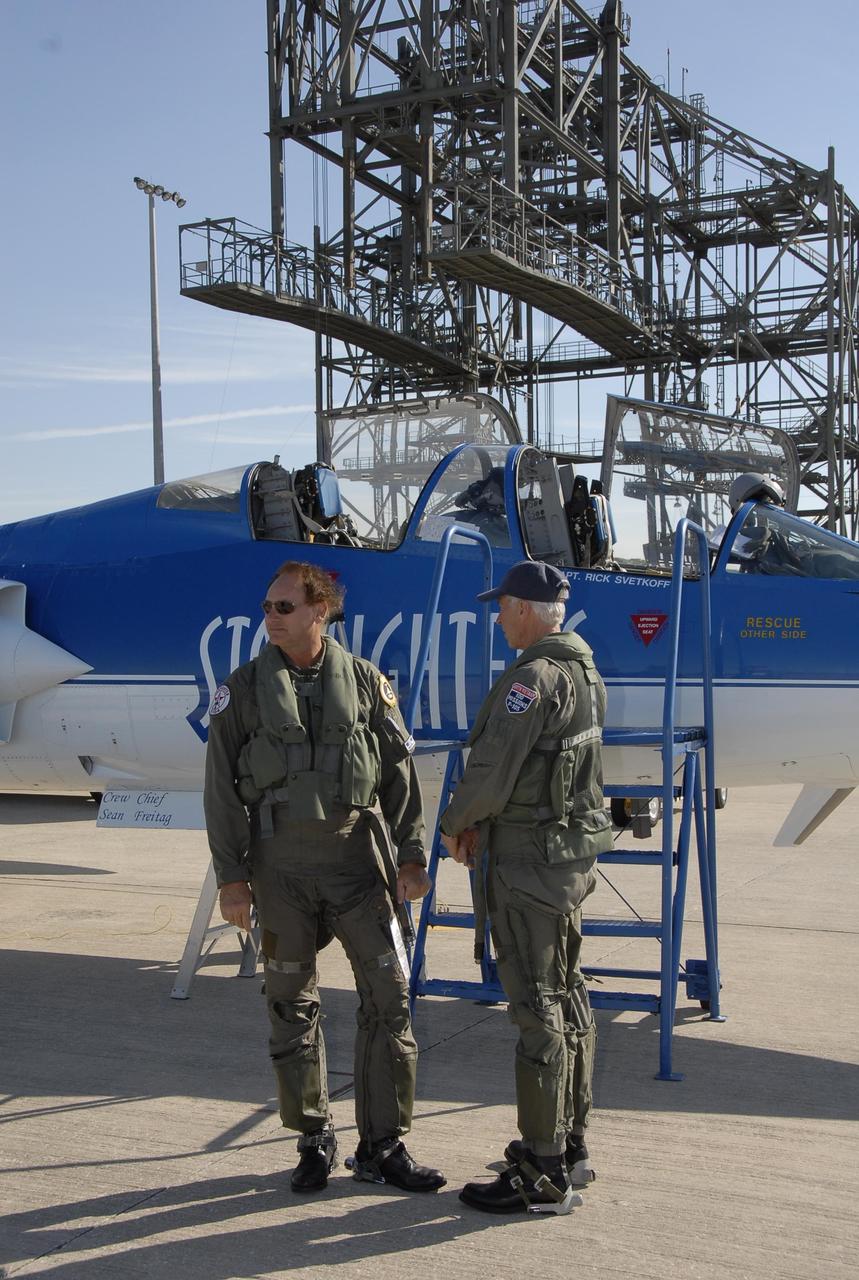
KENNEDY SPACE CENTER, FLA. -- On the KSC Shuttle Landing Facility, pilot Rick Svetkoff (left) and co-pilot Dave Waldrop are ready to climb into the cockpit of the Starfighter F-104. The aircraft is taking part in a series of pathfinder test missions from the space shuttle runway. Two flights will generate test data to validate sonic boom assumptions about the potential impacts of suborbital and orbital commercial spaceflight from the facility. NASA is assessing the environmental impact of such flights. Starfighters Inc. of Clearwater, Fla., will perform the flights to help in assessing suborbital space launch trajectories from the runway and paving the way for future commercial space tourism and research flights from the facility. Photo credit: NASA/Kim Shiflett
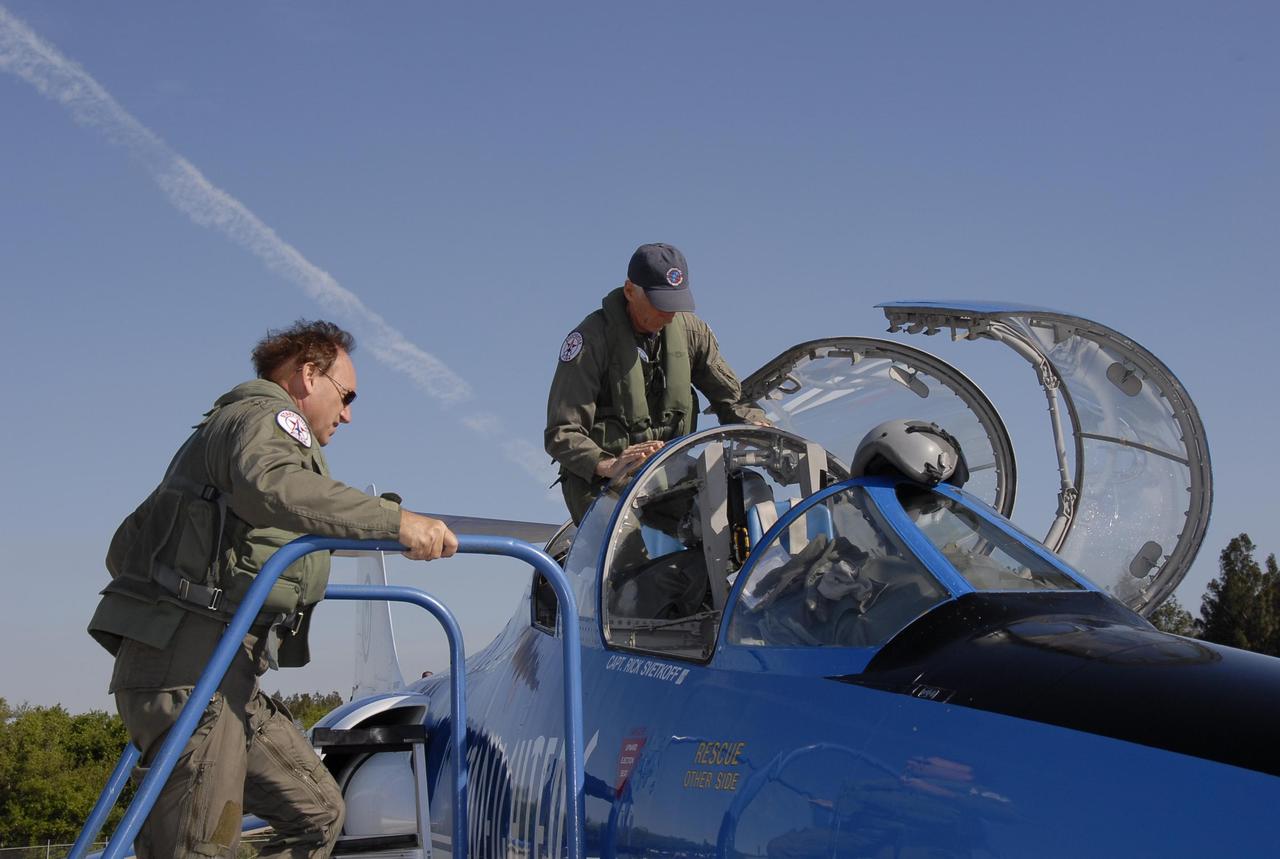
KENNEDY SPACE CENTER, FLA. -- On the KSC Shuttle Landing Facility, pilot Rick Svetkoff (left) climbs toward the cockpit of the Starfighter F-104 while co-pilot Dave Waldrop settles in his seat. The aircraft is taking part in a series of pathfinder test missions from the space shuttle runway. Two flights will generate test data to validate sonic boom assumptions about the potential impacts of suborbital and orbital commercial spaceflight from the facility. NASA is assessing the environmental impact of such flights. Starfighters Inc. of Clearwater, Fla., will perform the flights to help in assessing suborbital space launch trajectories from the runway and paving the way for future commercial space tourism and research flights from the facility. Photo credit: NASA/Kim Shiflett
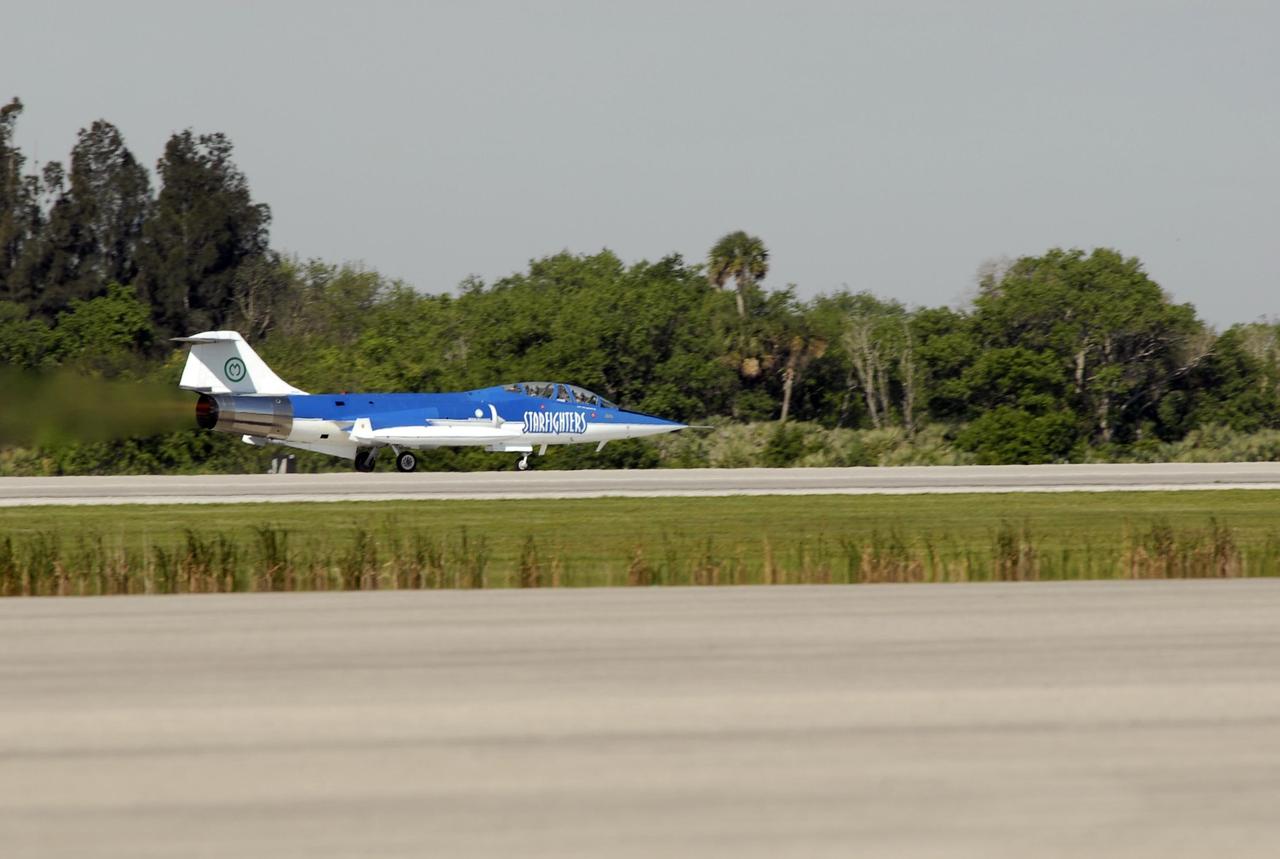
KENNEDY SPACE CENTER, FLA. -- From the KSC Shuttle Landing Facility, the Starfighter F-104 picks up speed on the runway for takeoff. The pilot is Rick Svetkoff; the co-pilot is Dave Waldrop. The aircraft is taking part in a series of pathfinder test missions from the space shuttle runway. Two flights will generate test data to validate sonic boom assumptions about the potential impacts of suborbital and orbital commercial spaceflight from the facility. NASA is assessing the environmental impact of such flights. Starfighters Inc. of Clearwater, Fla., will perform the flights to help in assessing suborbital space launch trajectories from the runway and paving the way for future commercial space tourism and research flights from the facility. Photo credit: NASA/Kim Shiflett
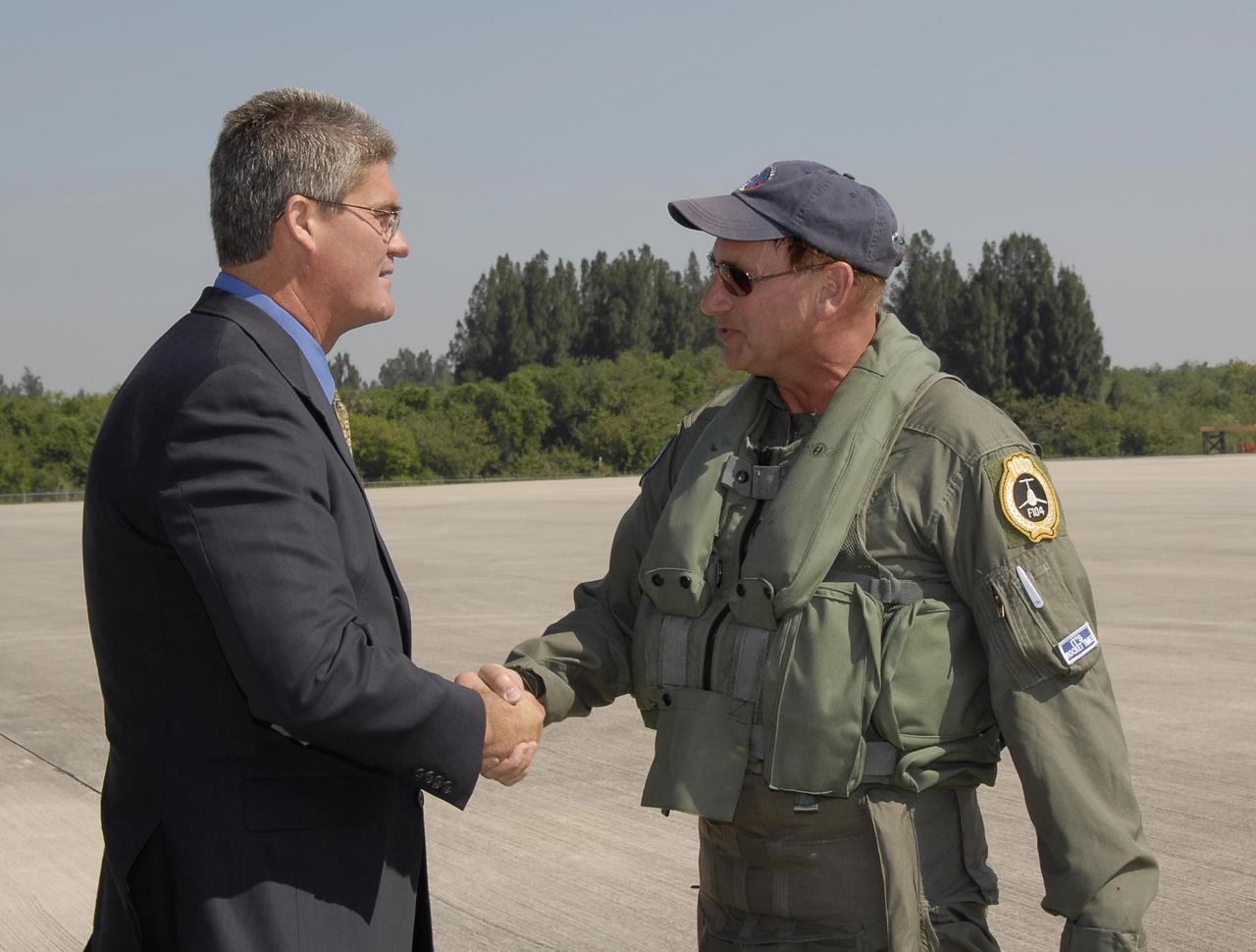
KENNEDY SPACE CENTER, FLA. -- Bill Parsons (left), director of Kennedy Space Center, greets pilot Rick Svetkoff after a test flight of the Starfighter F-104. The aircraft is taking part in a series of pathfinder test missions from the space shuttle runway. Two flights will generate test data to validate sonic boom assumptions about the potential impacts of suborbital and orbital commercial spaceflight from the facility. NASA is assessing the environmental impact of such flights. Starfighters Inc. of Clearwater, Fla., will perform the flights to help in assessing suborbital space launch trajectories from the runway and paving the way for future commercial space tourism and research flights from the facility. Photo credit: NASA/Kim Shiflett
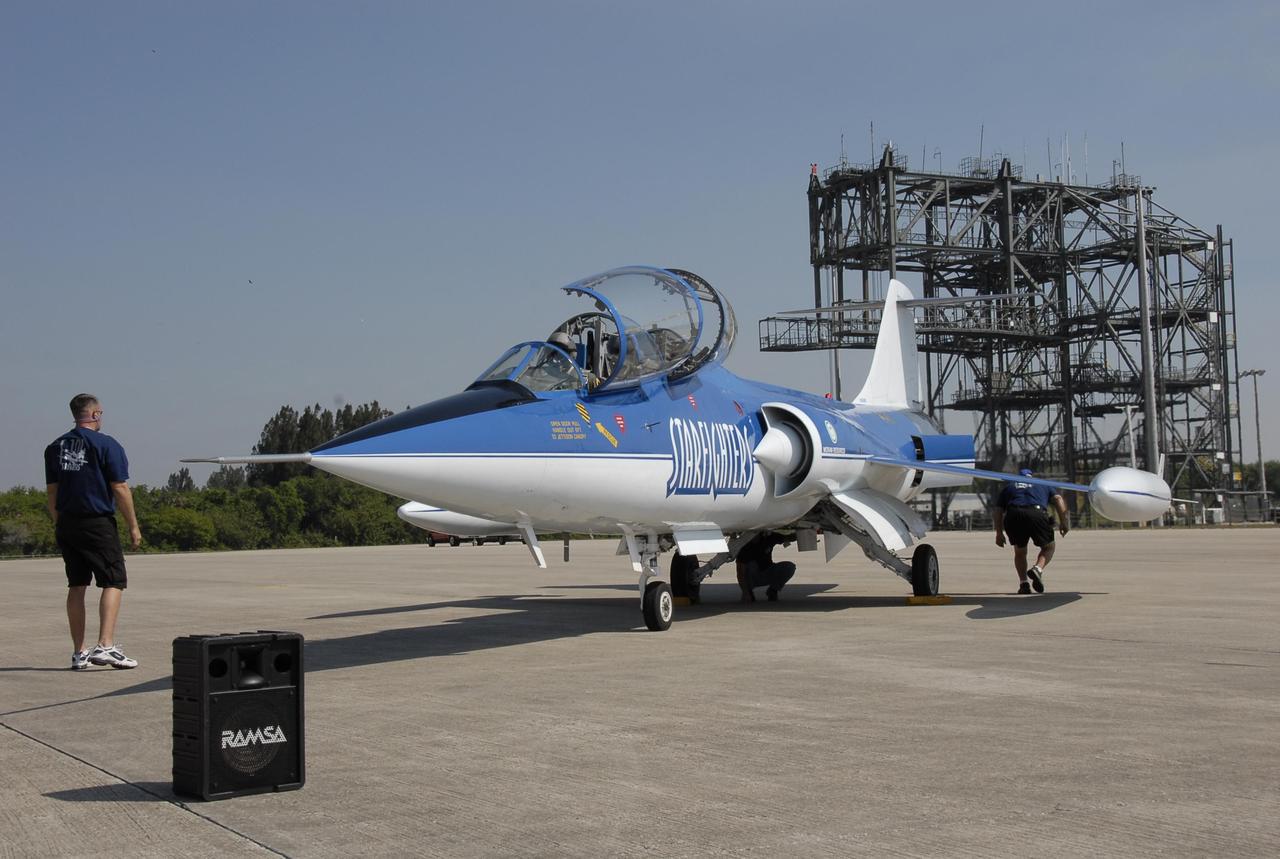
KENNEDY SPACE CENTER, FLA. -- The Starfighter F-104 comes to a stop on the KSC Shuttle Landing Facility after its test flight. The pilot is Rick Svetkoff; the co-pilot is Dave Waldrop.The aircraft is taking part in a series of pathfinder test missions from the space shuttle runway. Two flights will generate test data to validate sonic boom assumptions about the potential impacts of suborbital and orbital commercial spaceflight from the facility. NASA is assessing the environmental impact of such flights. Starfighters Inc. of Clearwater, Fla., will perform the flights to help in assessing suborbital space launch trajectories from the runway and paving the way for future commercial space tourism and research flights from the facility. Photo credit: NASA/Kim Shiflett
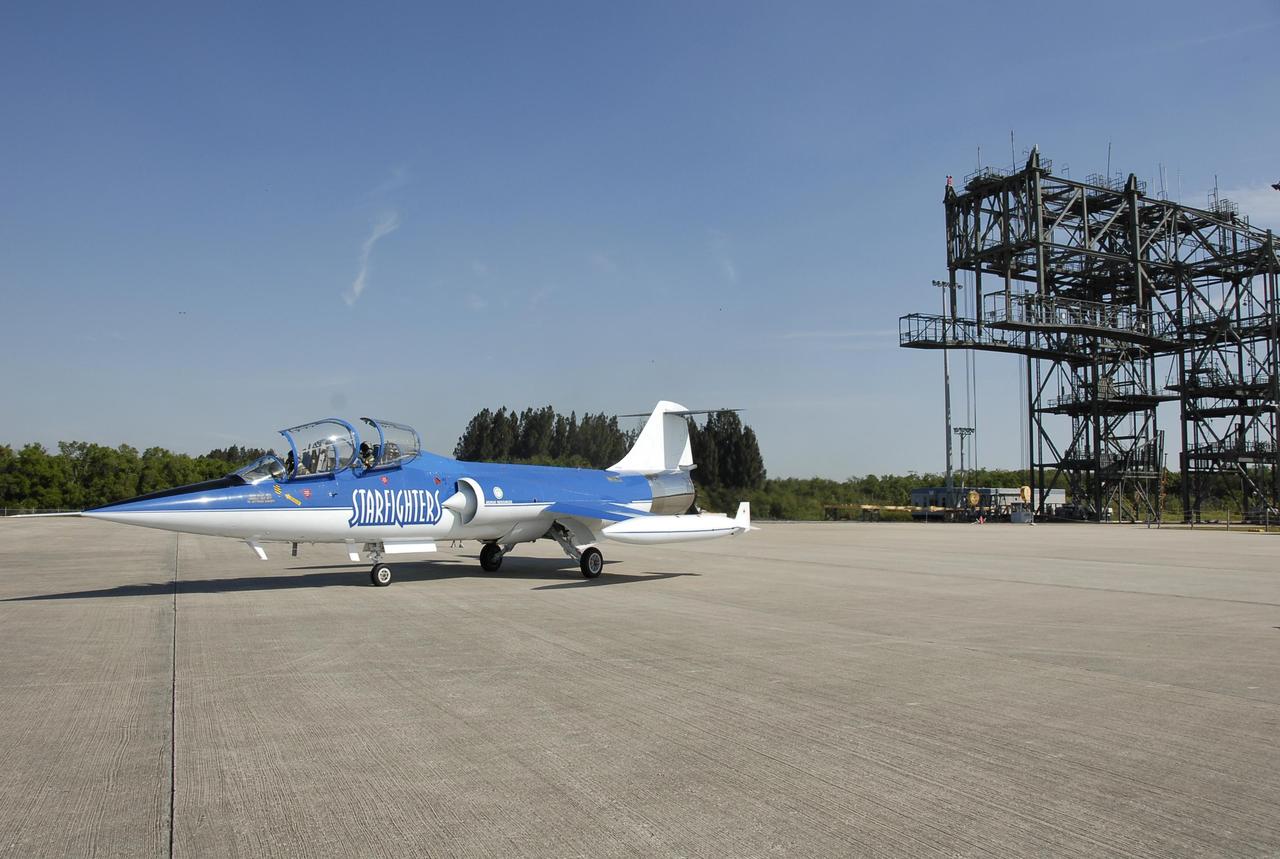
KENNEDY SPACE CENTER, FLA. -- On the KSC Shuttle Landing Facility, the Starfighter F-104 starts to taxi to the runway. The pilot is Rick Svetkoff; the co-pilot is Dave Waldrop. The aircraft is taking part in a series of pathfinder test missions from the space shuttle runway. Two flights will generate test data to validate sonic boom assumptions about the potential impacts of suborbital and orbital commercial spaceflight from the facility. NASA is assessing the environmental impact of such flights. Starfighters Inc. of Clearwater, Fla., will perform the flights to help in assessing suborbital space launch trajectories from the runway and paving the way for future commercial space tourism and research flights from the facility. Photo credit: NASA/Kim Shiflett
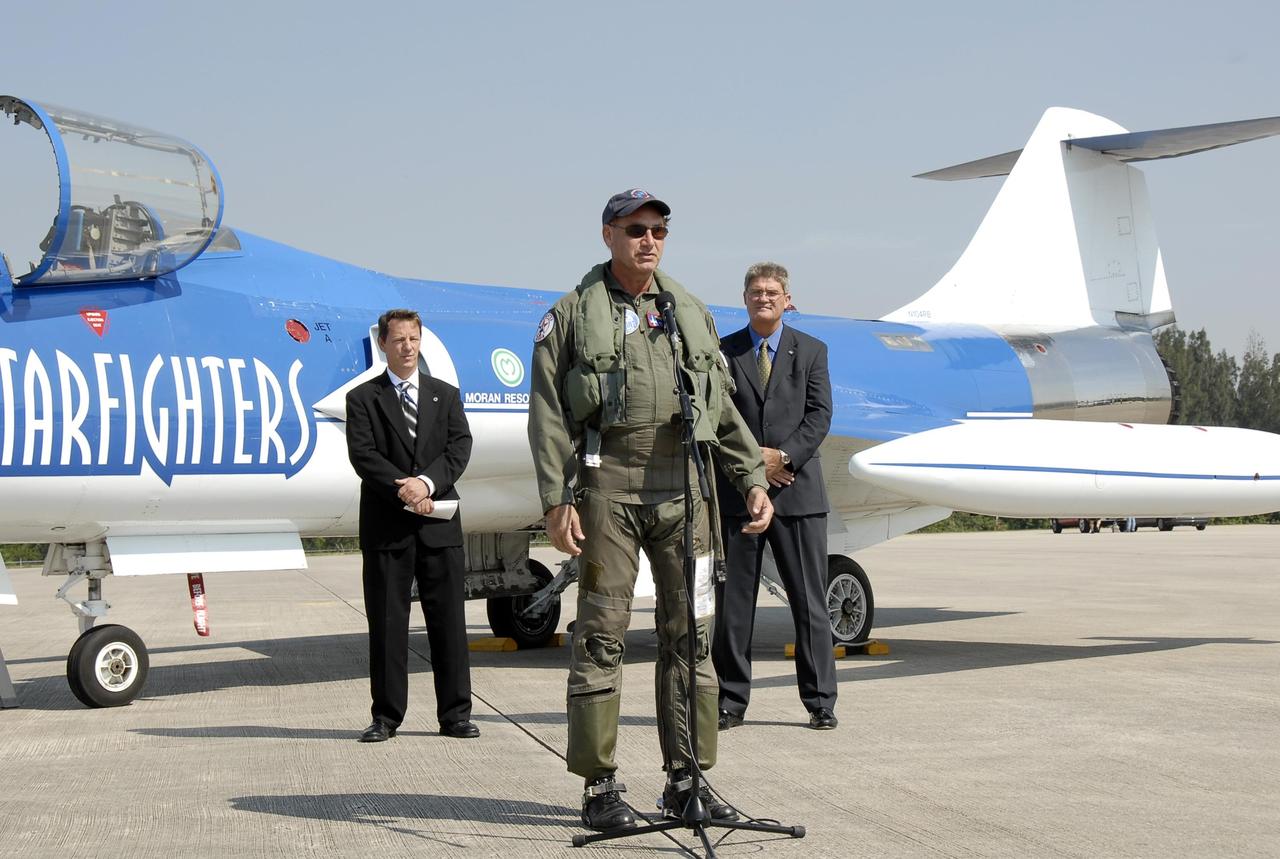
KENNEDY SPACE CENTER, FLA. -- After a test flight of the Starfighter F-104, Pilot Rick Svetkoff addresses the media on the KSC Shuttle Landing Facility. Behind him are Al Wassel (left), a representative from the FAA Office of Commercial Space, and (right) Bill Parsons, director of Kennedy Space Center. The aircraft is taking part in a series of pathfinder test missions from the space shuttle runway. Two flights will generate test data to validate sonic boom assumptions about the potential impacts of suborbital and orbital commercial spaceflight from the facility. NASA is assessing the environmental impact of such flights. Starfighters Inc. of Clearwater, Fla., will perform the flights to help in assessing suborbital space launch trajectories from the runway and paving the way for future commercial space tourism and research flights from the facility. Photo credit: NASA/Kim Shiflett
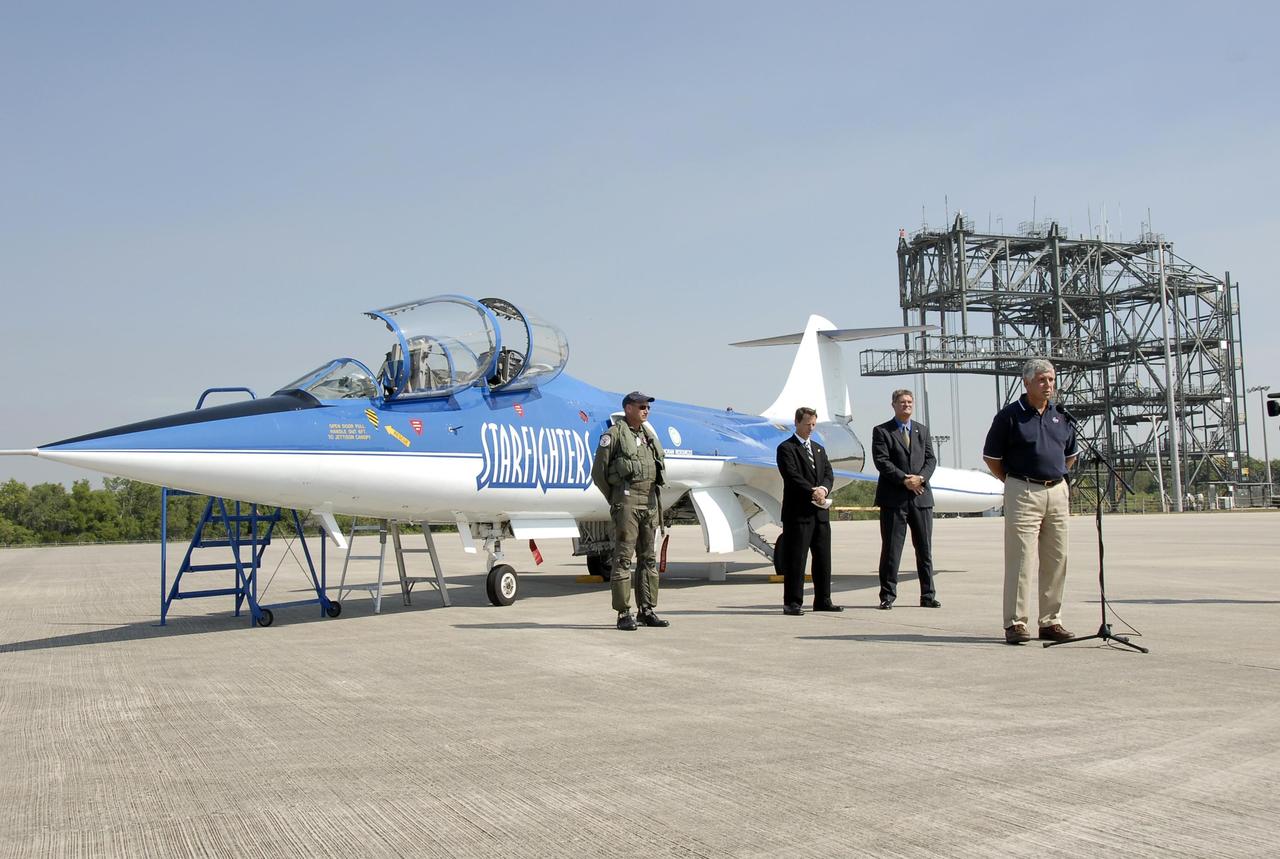
KENNEDY SPACE CENTER, FLA. -- After a test flight of the Starfighter F-104, Jim Ball, KSC Spaceport Development manager, addresses the media. Behind him are Pilot Rick Svetkoff; Al Wassel, a representative from the FAA Office of Commercial Space; and Bill Parsons, director of Kennedy Space Center. The aircraft is taking part in a series of pathfinder test missions from the space shuttle runway. Two flights will generate test data to validate sonic boom assumptions about the potential impacts of suborbital and orbital commercial spaceflight from the facility. NASA is assessing the environmental impact of such flights. Starfighters Inc. of Clearwater, Fla., will perform the flights to help in assessing suborbital space launch trajectories from the runway and paving the way for future commercial space tourism and research flights from the facility. Photo credit: NASA/Kim Shiflett
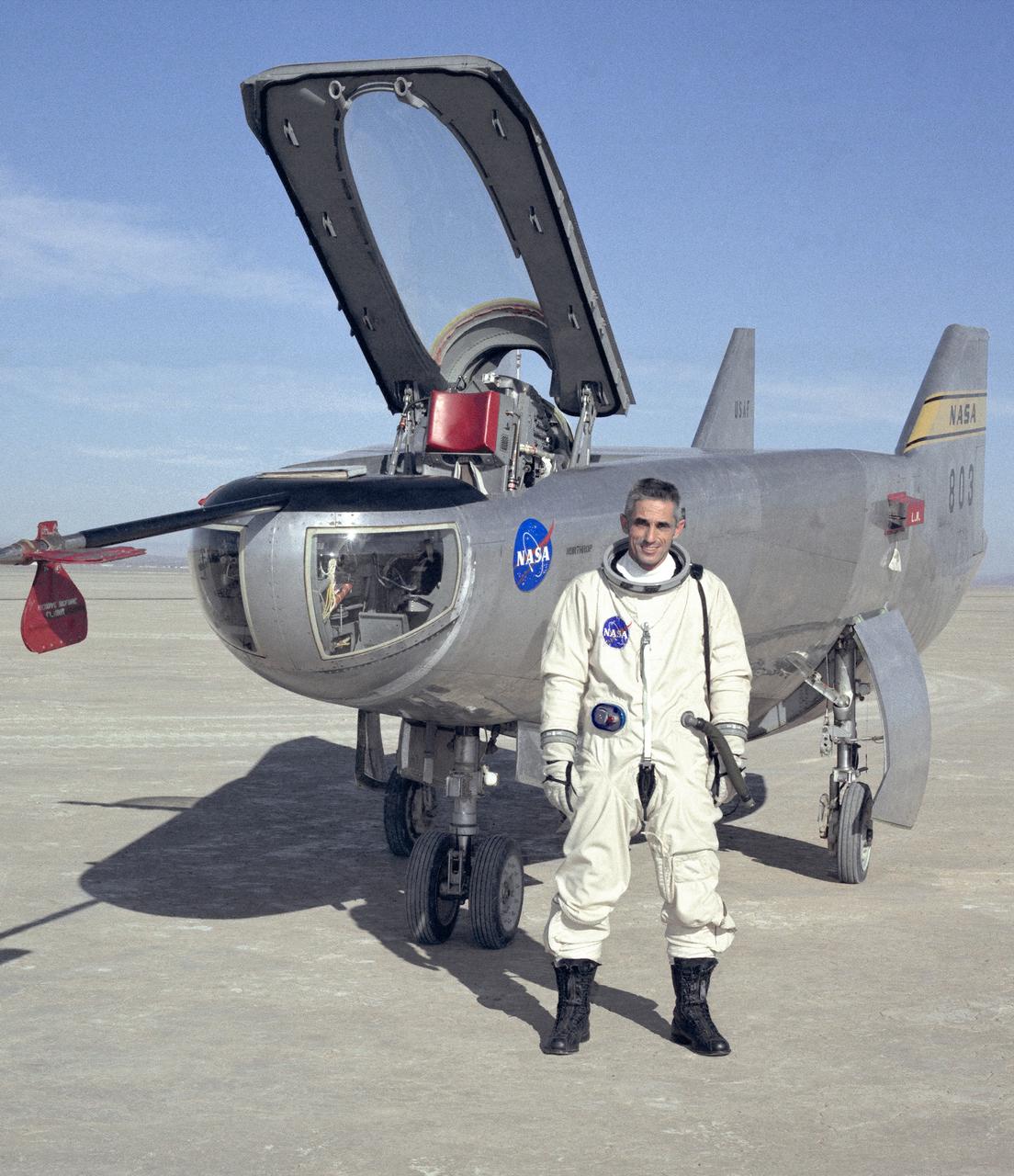
NASA research pilot John A. Manke is seen here in front of the M2-F3 Lifting Body. Manke was hired by NASA on May 25, 1962, as a flight research engineer. He was later assigned to the pilot's office and flew various support aircraft including the F-104, F5D, F-111 and C-47. After leaving the Marine Corps in 1960, Manke worked for Honeywell Corporation as a test engineer for two years before coming to NASA. He was project pilot on the X-24B and also flew the HL-10, M2-F3, and X-24A lifting bodies. John made the first supersonic flight of a lifting body and the first landing of a lifting body on a hard surface runway. Manke served as Director of the Flight Operations and Support Directorate at the Dryden Flight Research Center prior to its integration with Ames Research Center in October 1981. After this date John was named to head the joint Ames-Dryden Directorate of Flight Operations. He also served as site manager of the NASA Ames-Dryden Flight Research Facility. John is a member of the Society of Experimental Test Pilots. He retired on April 27, 1984.
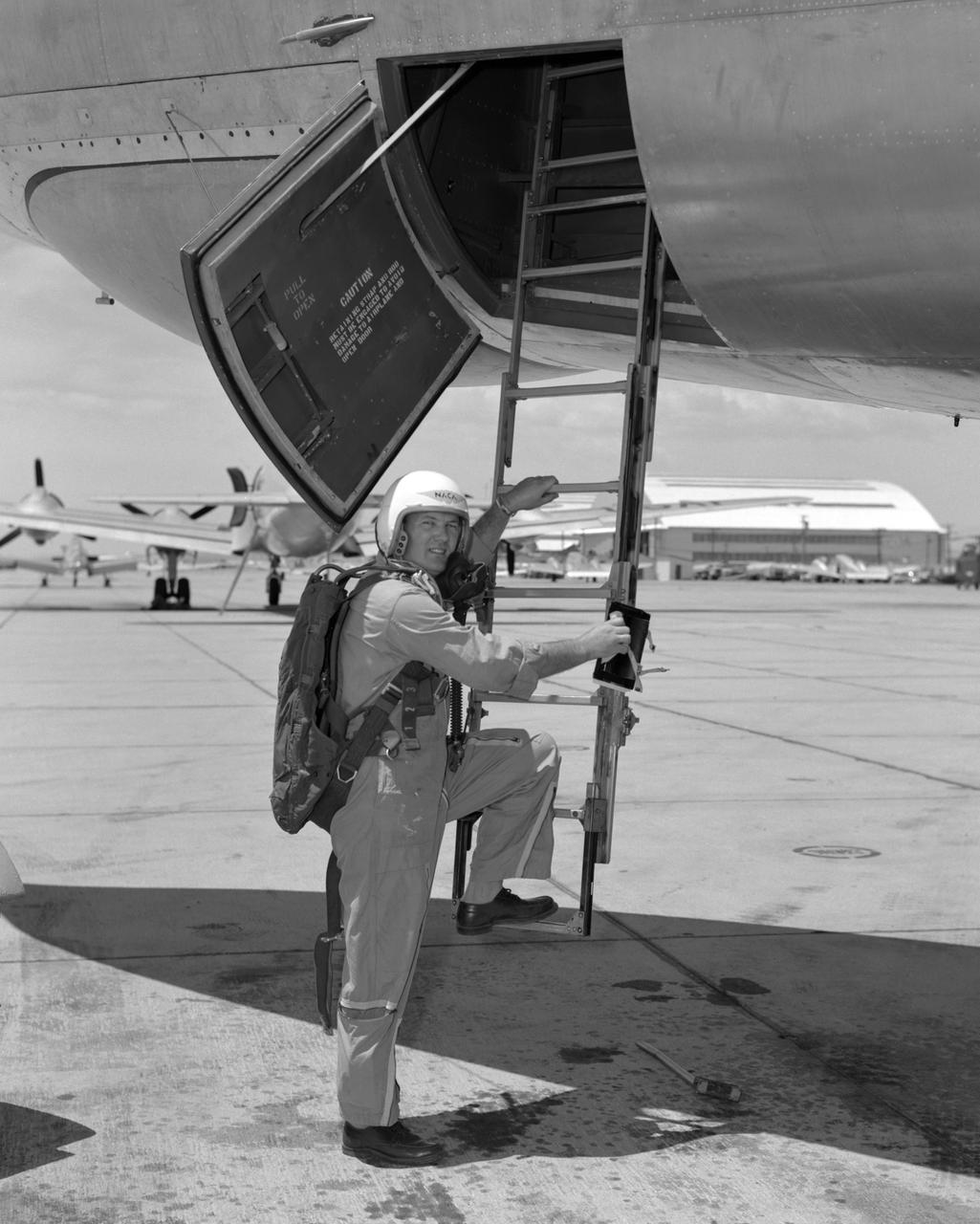
From December 10, 1966, until his retirement on February 27, 1976, Stanley P. Butchart served as Chief (later, Director) of Flight Operations at NASA's Flight Research Center (renamed on March 26, 1976, the Hugh L. Dryden Flight Research Center). Initially, his responsibilities in this position included the Research Pilots Branch, a Maintenance and Manufacturing Branch, and an Operations Engineering Branch, the last of which not only included propulsion and electrical/electronic sections but project engineers for the X-15 and lifting bodies. During his tenure, however, the responsibilities of his directorate came to include not only Flight Test Engineering Support but Flight Systems and Loads laboratories. Before becoming Chief of Flight Operations, Butchart had served since June of 1966 as head of the Research Pilots Branch (Chief Pilot) and then as acting chief of Flight Operations. He had joined the Center (then known as the National Advisory Committee for Aeronautics' High-Speed Flight Research Station) as a research pilot on May 10, 1951. During his career as a research pilot, he flew a great variety of research and air-launch aircraft including the D-558-I, D-558-II, B-29 (plus its Navy version, the P2B), X-4, X-5, KC-135, CV-880, CV-990, B-47, B-52, B-747, F-100A, F-101, F-102, F-104, PA-30 Twin Comanche, JetStar, F-111, R4D, B-720, and B-47. Although previously a single-engine pilot, he became the Center's principal multi-engine pilot during a period of air-launches in which the pilot of the air-launch aircraft (B-29 or P2B) basically directed the operations. It was he who called for the chase planes before each drop, directed the positioning of fire rescue vehicles, and released the experimental aircraft after ensuring that all was ready for the drop. As pilot of the B-29 and P2B, Butchart launched the X-1A once, the X-1B 13 times, the X-1E 22 times, and the D-558-II 102 times. In addition, he towed the M2-F1 lightweight lifting body 14 times behind an R4
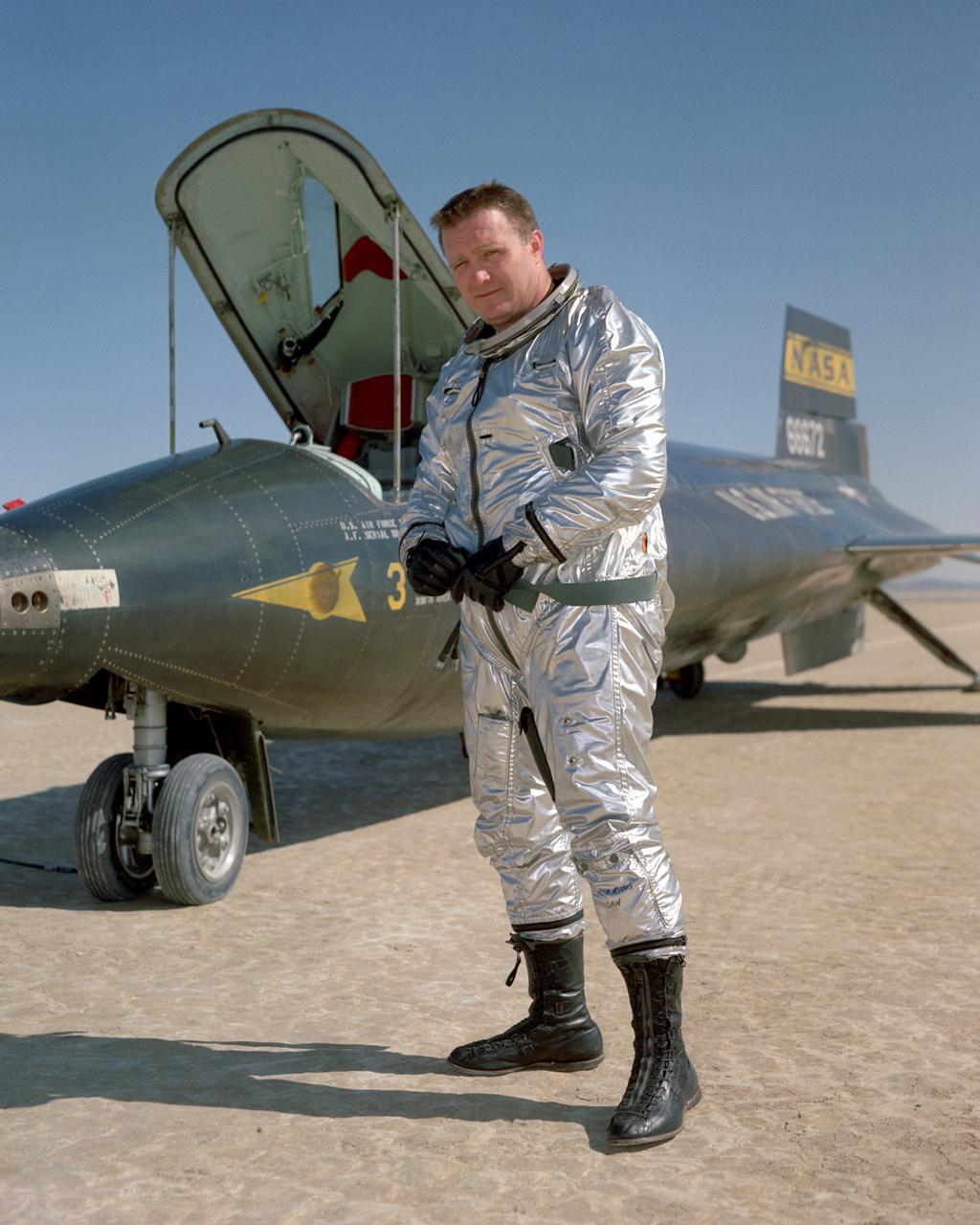
John B. McKay was one of the first pilots assigned to the X-15 flight research program at NASA's Flight Research Center, Edwards, Calif. As a civilian research pilot and aeronautical engineer, he made 30 flights in X-15s from October 28, 1960, until September 8, 1966. His peak altitude was 295,600 feet, and his highest speed was 3863 mph (Mach 5.64). McKay was with the NACA and NASA from February 8,1951 until October 5, 1971 and specialized in high-speed flight research programs. He began as an NACA intern, but assumed pilot status on July 11, 1952. In addition to the X-l5, he flew such experimental aircraft as the D-558-1, D-558-2, X-lB, and the X-lE. He has also served as a research pilot on flight programs involving the F-100, F-102, F-104, and the F-107. Born on December 8, 1922, in Portsmouth, Va., McKay graduated from Virginia Polytechnic Institute in 195O with a Bachelor of Science degree in Aeronautical Engineering. During World War II he served as a Navy pilot in the Pacific Theater, earning the Air Medal and Two Clusters, and a Presidential Unit Citation. McKay wrote several technical papers, and was a member of the American Institute of Aeronautics and Astronautics, as well as the Society of Experimental Test Pilots. He passed away on April 27, 1975.
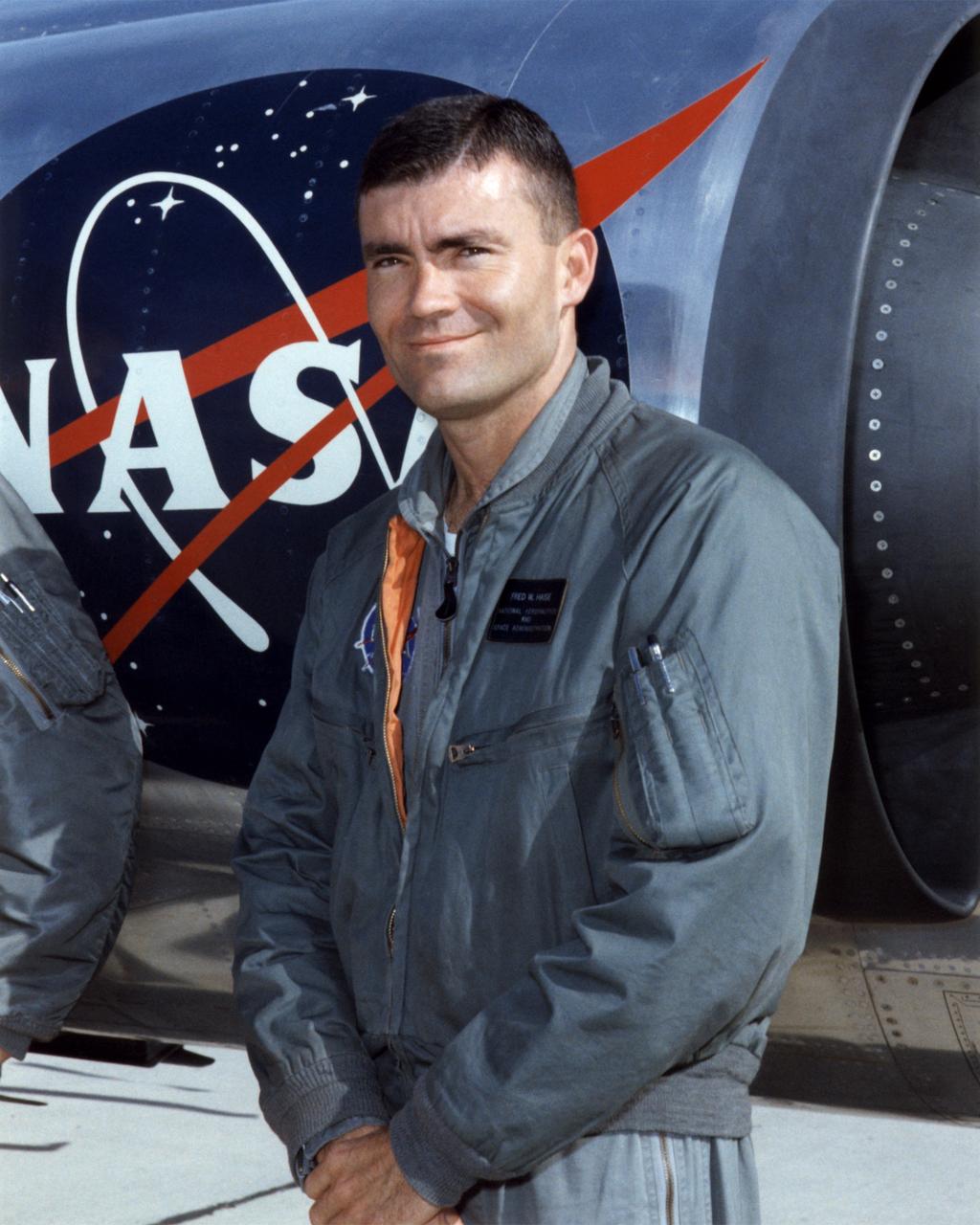
Fred W. Haise Jr. was a research pilot and an astronaut for the National Aeronautics and Space Administration from 1959 to 1979. He began flying at the Lewis Research Center in Cleveland, Ohio (today the Glenn Research Center), in 1959. He became a research pilot at the NASA Flight Research Center (FRC), Edwards, Calif., in 1963, serving NASA in that position for three years until being selected to be an astronaut in 1966 His best-known assignment at the FRC (later redesignated the Dryden Flight Research Center) was as a lifting body pilot. Shortly after flying the M2-F1 on a car tow to about 25 feet on April 22, 1966, he was assigned as an astronaut to the Johnson Space Center in Houston, Texas. While at the FRC he had also flown a variety of other research and support aircraft, including the variable-stability T-33A to simulate the M2-F2 heavyweight lifting body, some light aircraft including the Piper PA-30 to evaluate their handling qualities, the Apache helicopter, the Aero Commander, the Cessna 310, the Douglas F5D, the Lockheed F-104 and T-33, the Cessna T-37, and the Douglas C-47. After becoming an astronaut, Haise served as a backup crewmember for the Apollo 8, 11, and 16 missions. He flew on the aborted Apollo 13 lunar mission in 1970, spending 142 hours and 54 minutes in space before returning safely to Earth. In 1977, he was the commander of three free flights of the Space Shuttle prototype Enterprise when it flew its Approach and Landing Tests at Edwards Air Force Base, Calif. Meanwhile, from April 1973 to January 1976, Haise served as the Technical Assistant to the Manager of the Space Shuttle Orbiter Project. In 1979, he left NASA to become the Vice President for Space Programs with the Grumman Aerospace Corporation. He then served as President of Grumman Technical Services, an operating division of Northrop Grumman Corporation, from January 1992 until his retirement. Haise was born in Biloxi, Miss., on November 14, 1933. He underwent flight traini
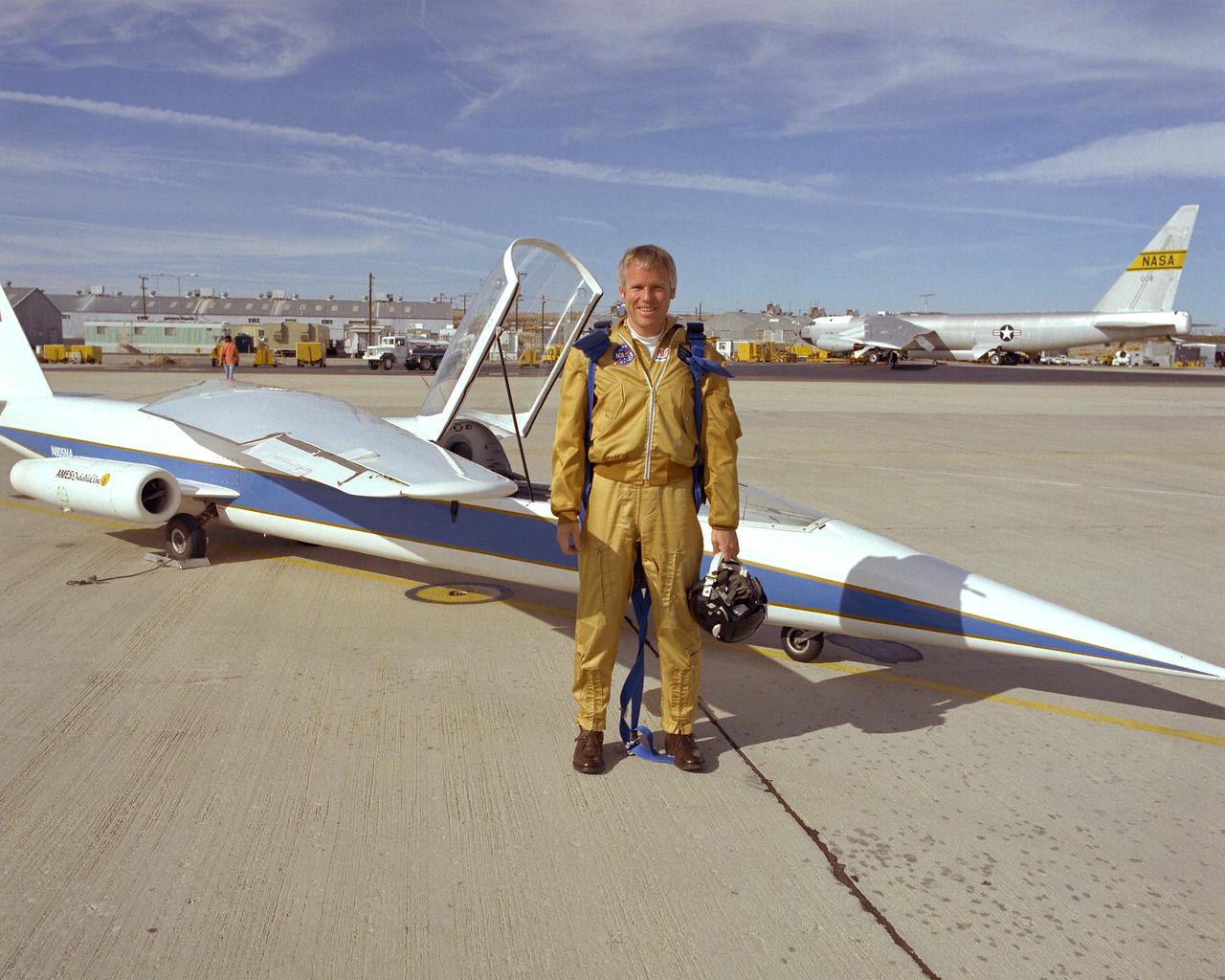
Research pilot Richard E. Gray, standing in front of the AD-1 Oblique Wing research aircraft.