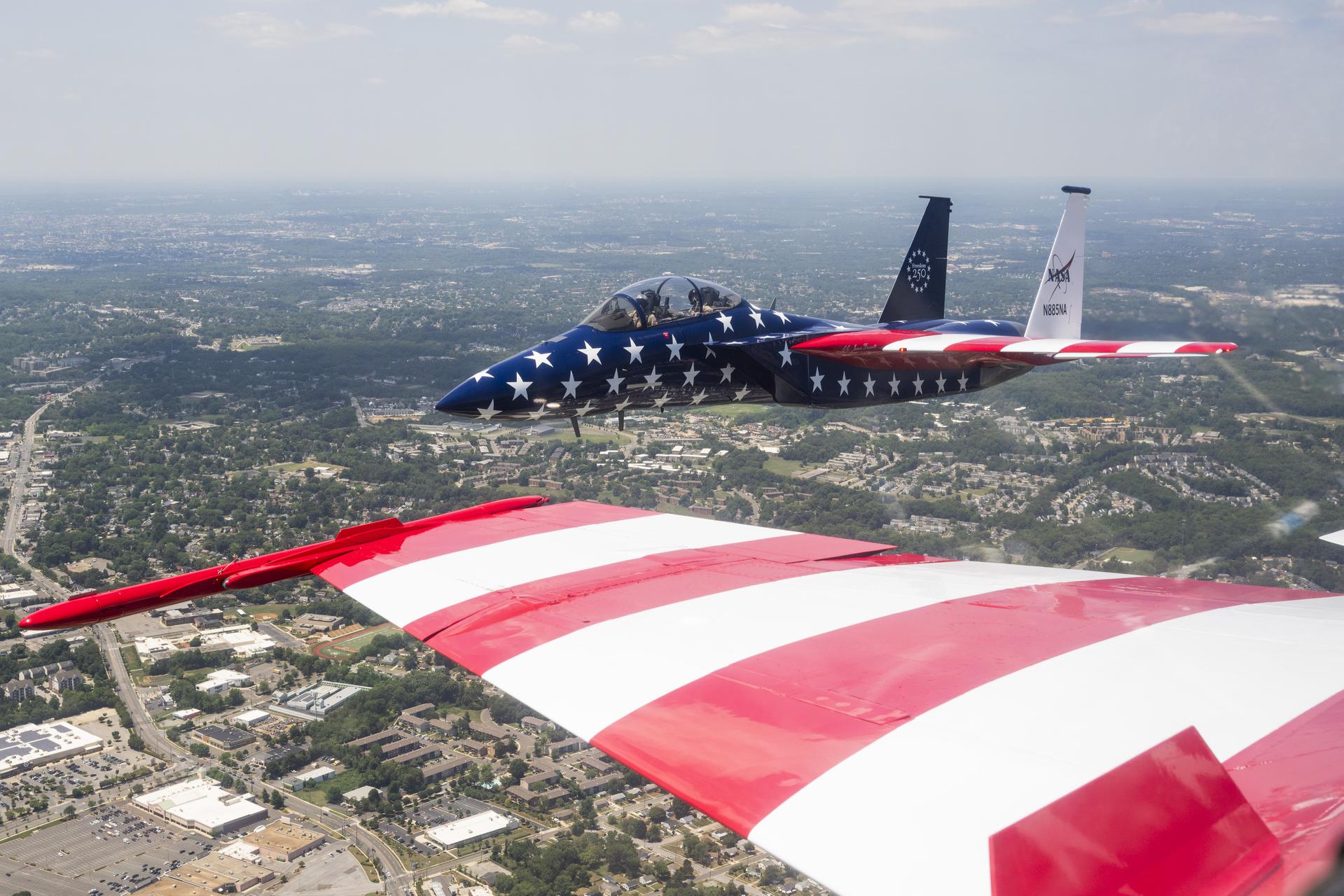
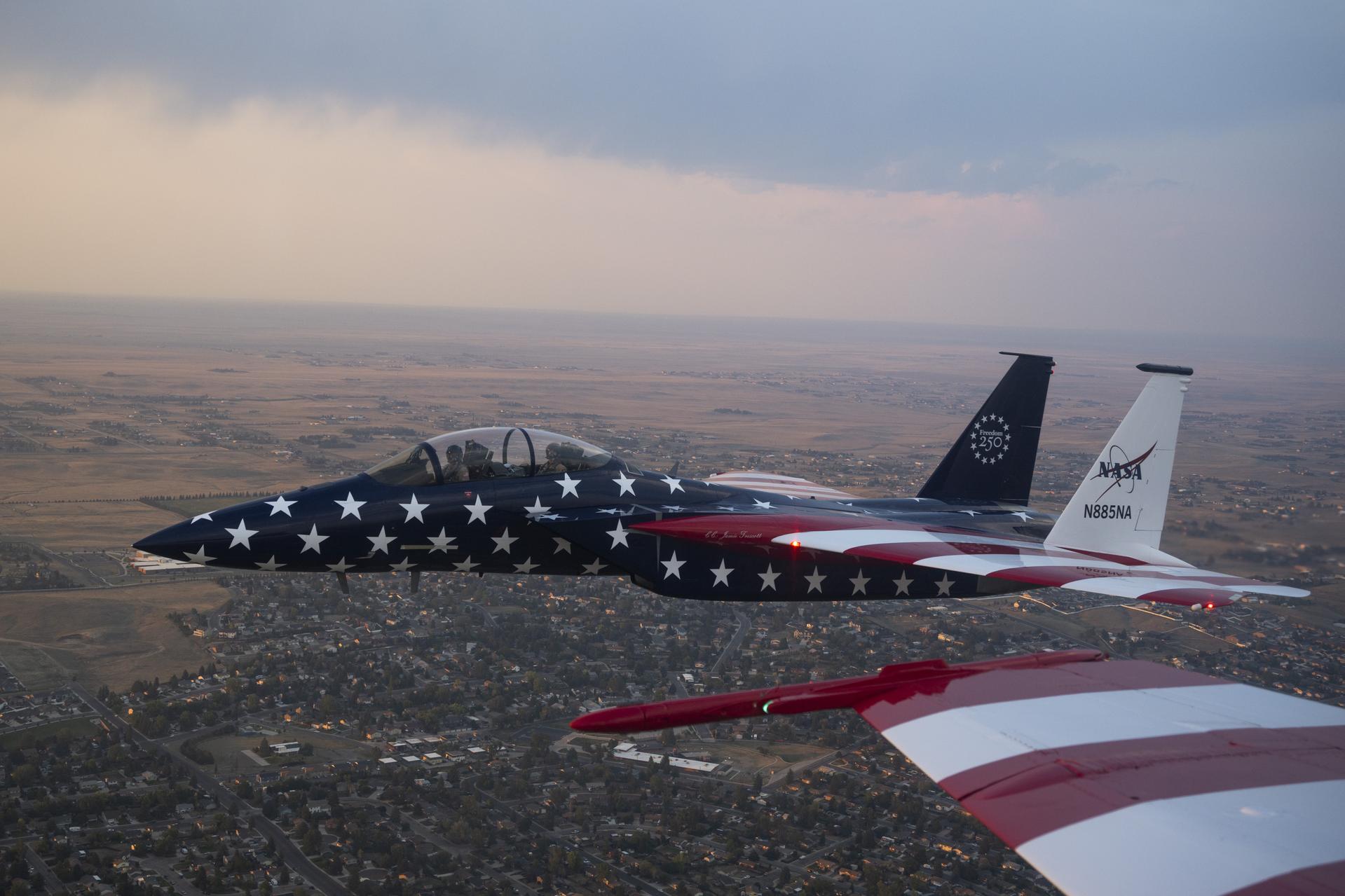
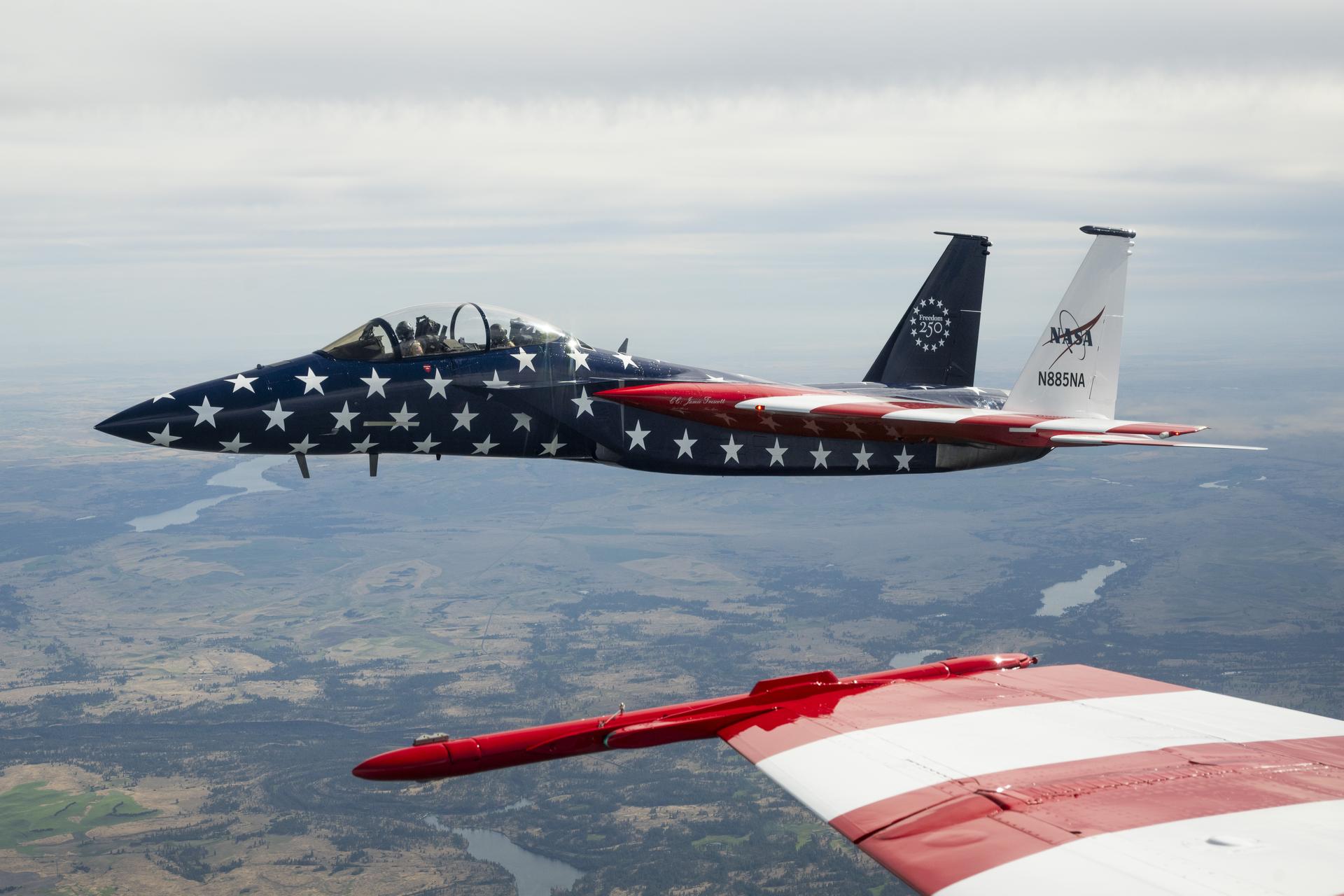
A NASA F‑15 aircraft is shown flying next to a NASA F/A‑18 during a cross‑country flight from Spokane, Washington, to Washington, D.C., on Thursday, July 2, 2026. The full F‑15 is visible, along with a partial view of the F/A‑18’s wing, as both aircraft display new red, white, and blue paint to celebrate America’s 250th birthday. The aircraft, from NASA’s Armstrong Flight Research Center in Edwards, California, participated in the Freedom 250 flyover with other NASA and military aircraft on Saturday, July 4, 2026. NASA/Jim Ross
NASA F-15 and F-18 Soar Above Washington to Celebrate America’s 250th Birthday
A NASA F‑15 aircraft is shown flying next to a NASA F/A‑18 during a cross‑country flight from Spokane, Washington, to Washington, D.C., on Thursday, July 2, 2026. The full F‑15 is visible, along with a partial view of the F/A‑18’s wing, as both aircraft display new red, white, and blue paint to celebrate America’s 250th birthday. The aircraft, from NASA’s Armstrong Flight Research Center in Edwards, California, participated in the Freedom 250 flyover with other NASA and military aircraft on Saturday, July 4, 2026. NASA/Jim Ross
NASA F-15 and F-18 Soar Above Washington to Celebrate America’s 250th Birthday
A NASA F‑15 aircraft is shown flying next to a NASA F/A‑18 during a cross‑country flight from Spokane, Washington, to Washington, D.C., on Thursday, July 2, 2026. The full F‑15 is visible, along with a partial view of the F/A‑18’s wing, as both aircraft display new red, white, and blue paint to celebrate America’s 250th birthday. The aircraft, from NASA’s Armstrong Flight Research Center in Edwards, California, participated in the Freedom 250 flyover with other NASA and military aircraft on Saturday, July 4, 2026. NASA/Jim Ross
NASA F-15 and F-18 Soar Above Washington to Celebrate America’s 250th Birthday
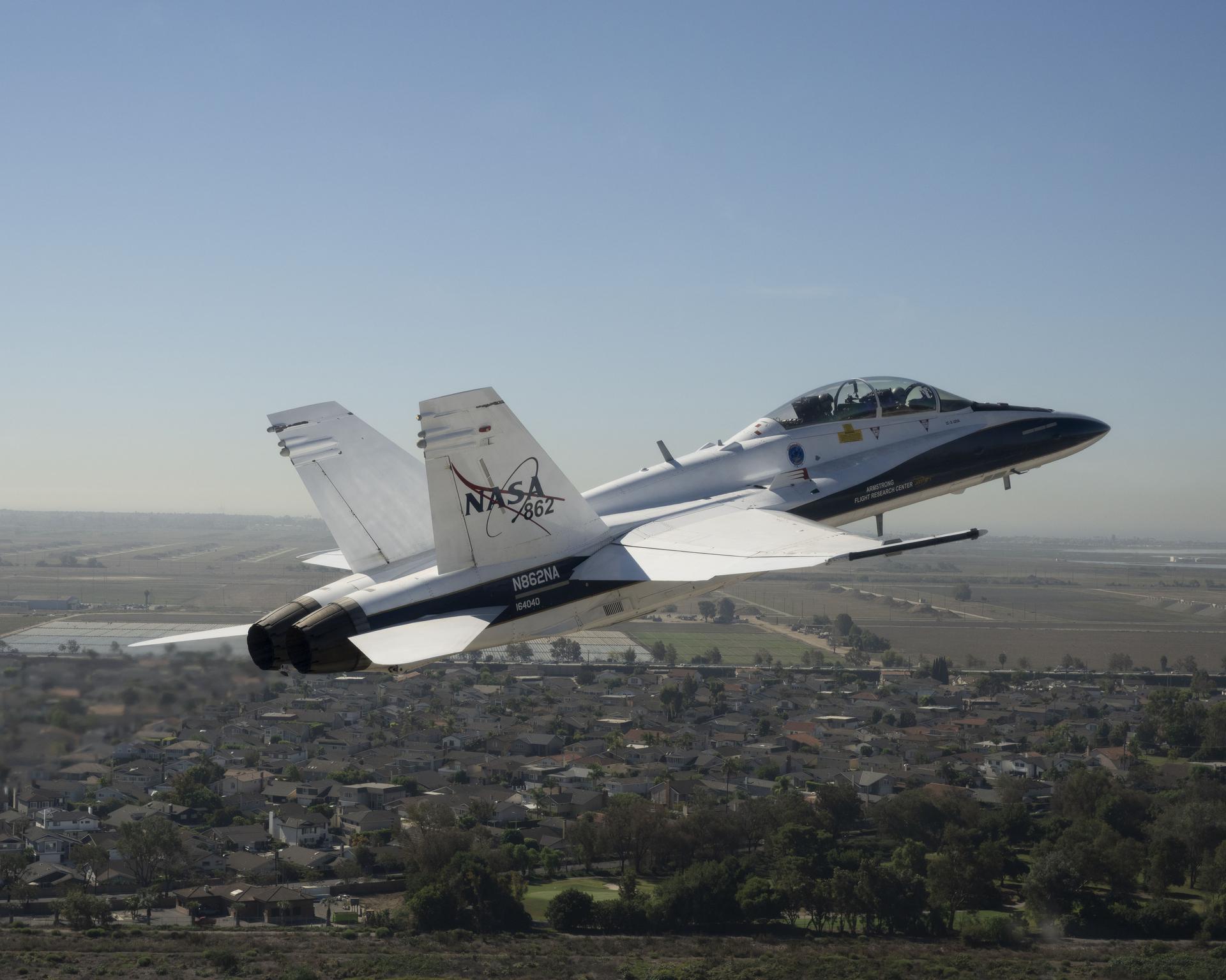
A NASA F/A-18 research aircraft flies near NASA’s Armstrong Flight Research Center in Edwards, California, on Feb. 24, 2025, testing a commercial precision landing technology for future space missions. The Psionic Space Navigation Doppler Lidar (PSNDL) system is installed in a pod located under the right wing of the aircraft.
NASA F/A-18 Tests Precision Landing Tech for Space Missions
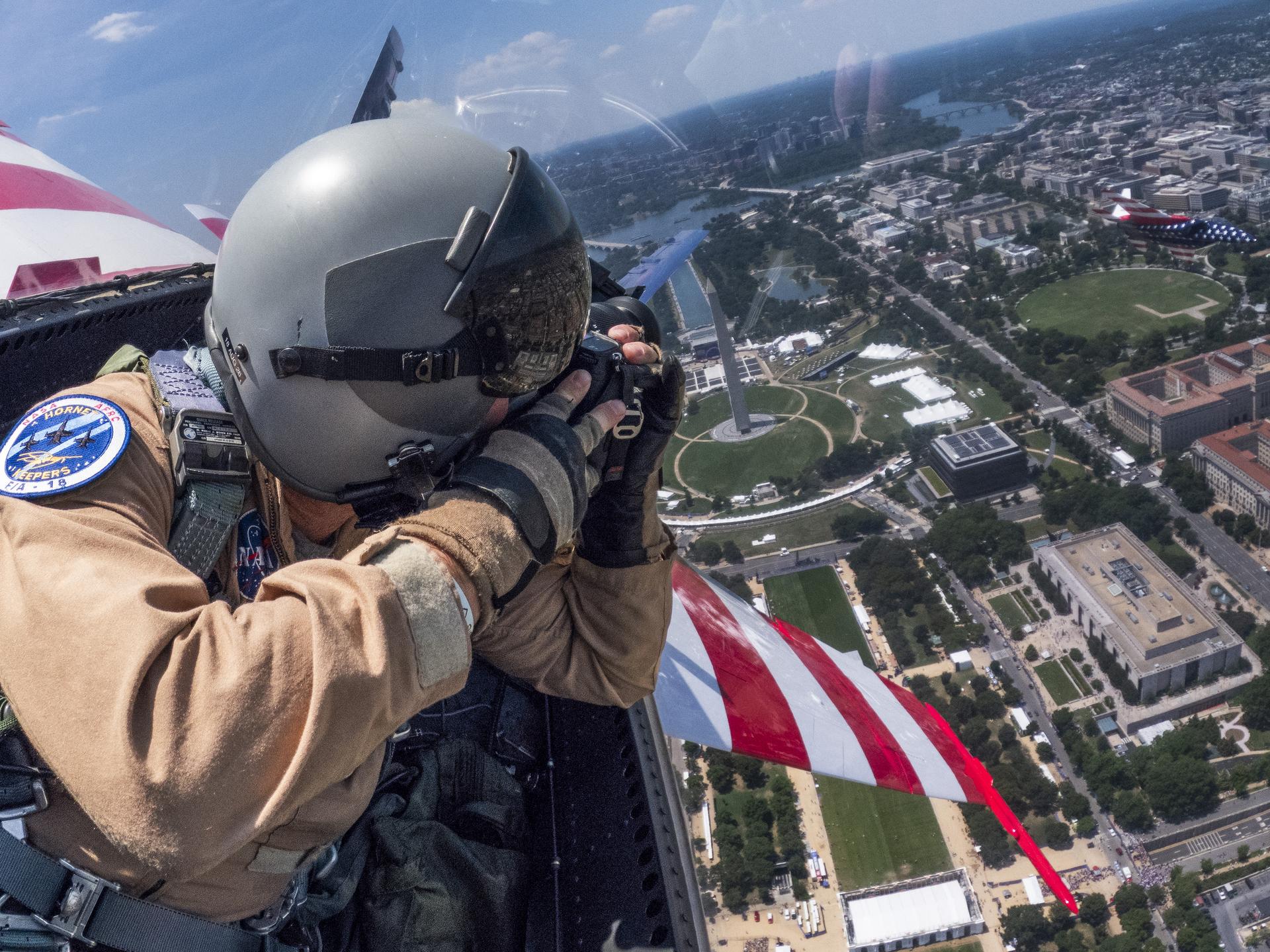
NASA photographer Jim Ross flies above Washington on Saturday, July 4, 2026, in an F-18 aircraft, as part of a flyover to celebrate America’s 250th birthday. This aircraft is from NASA’s Armstrong Flight Research Center in Edwards, California, and it joined other NASA aircraft for the flyover. A NASA F-15 is seen flying to the side of the NASA F-18.
NASA F-15 and F-18 Soar Above Washington to Celebrate America’s 250th Birthday
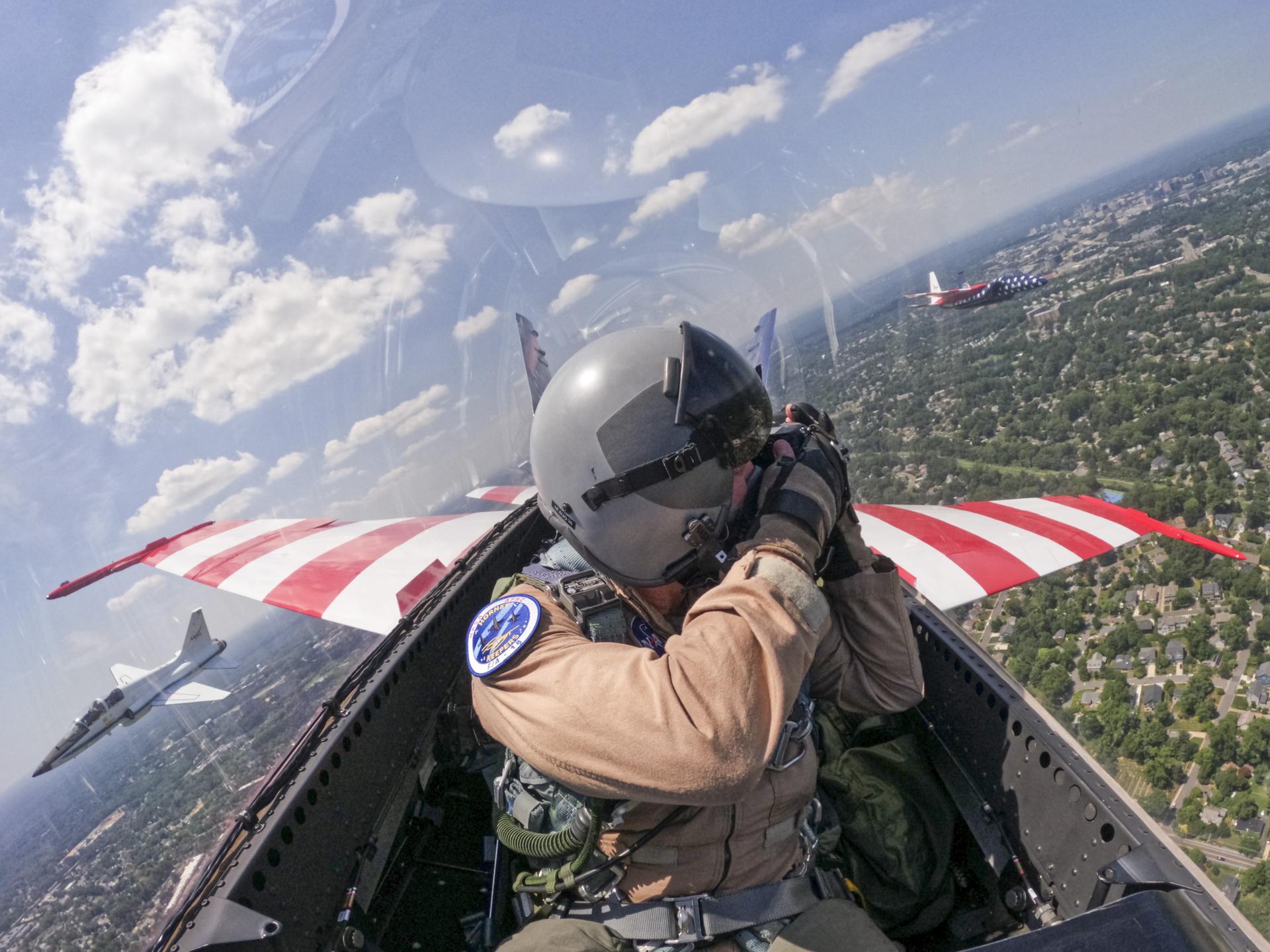
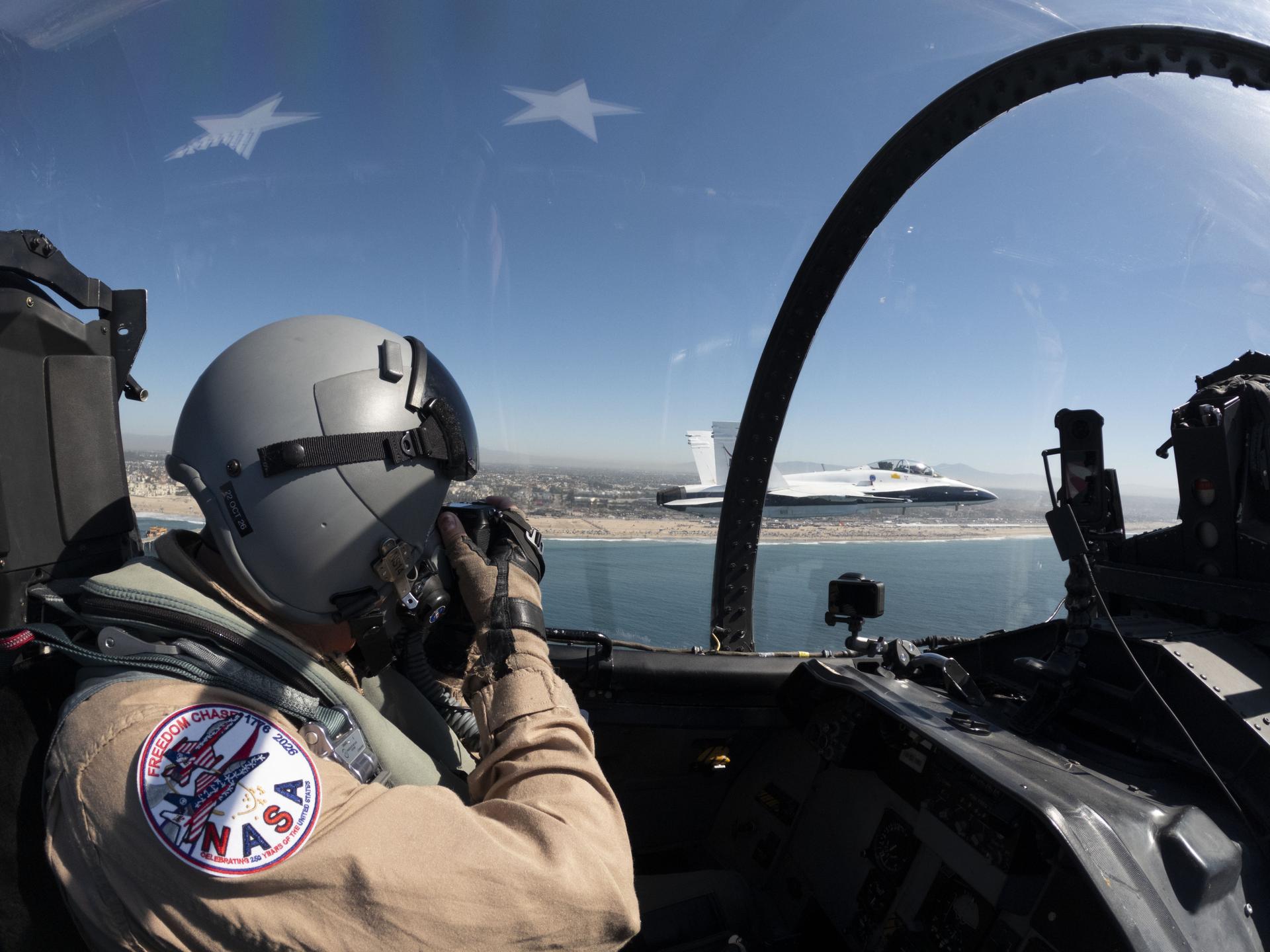
NASA photographer Jim Ross captures photos as he flies above Washington on Saturday, July 4, 2026, in an F-18 aircraft, as part of a flyover to celebrate America’s 250th birthday. This aircraft is from NASA’s Armstrong Flight Research Center in Edwards, California, and it joined other NASA aircraft for the flyover. A NASA F-15 and T-38 are seen flying to the sides of the NASA F-18.
NASA F-15 and F-18 Soar Above Washington to Celebrate America’s 250th Birthday
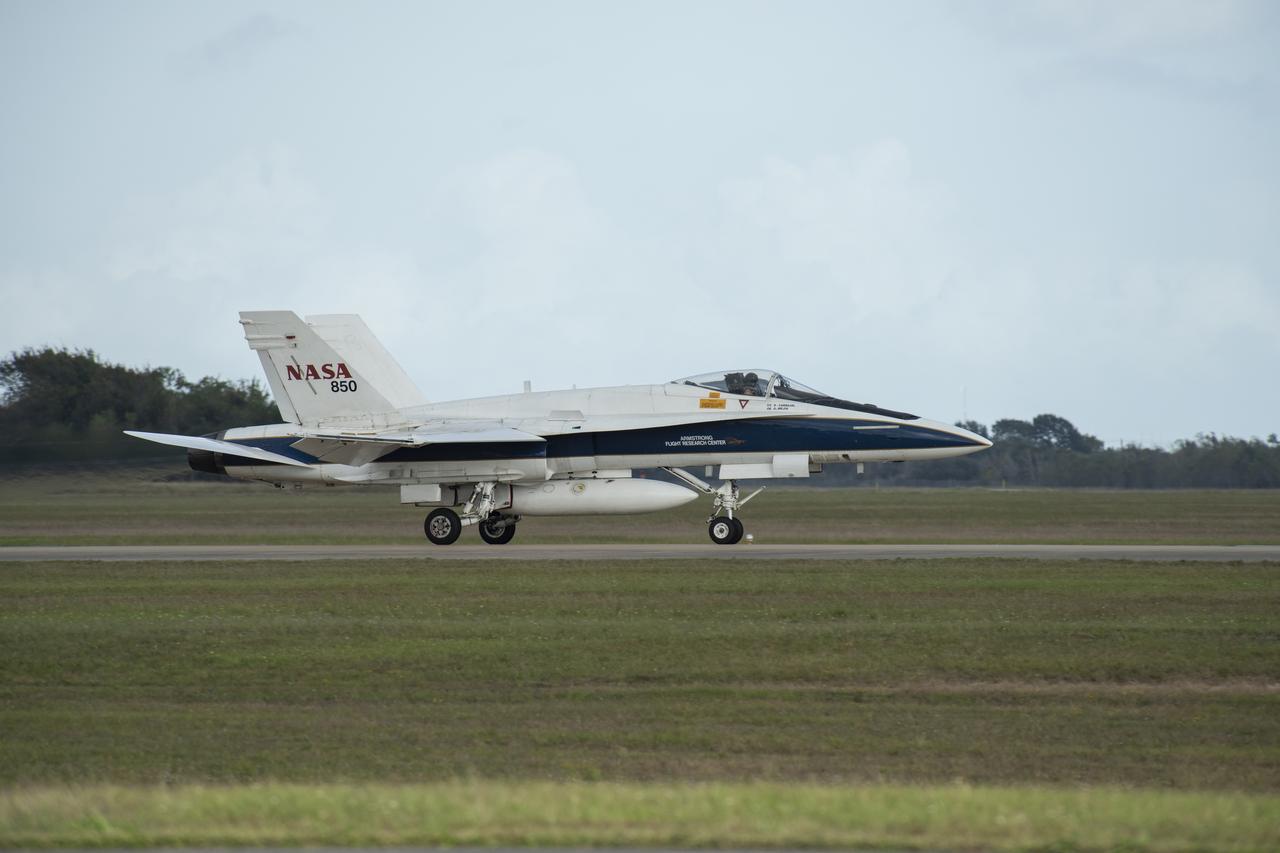
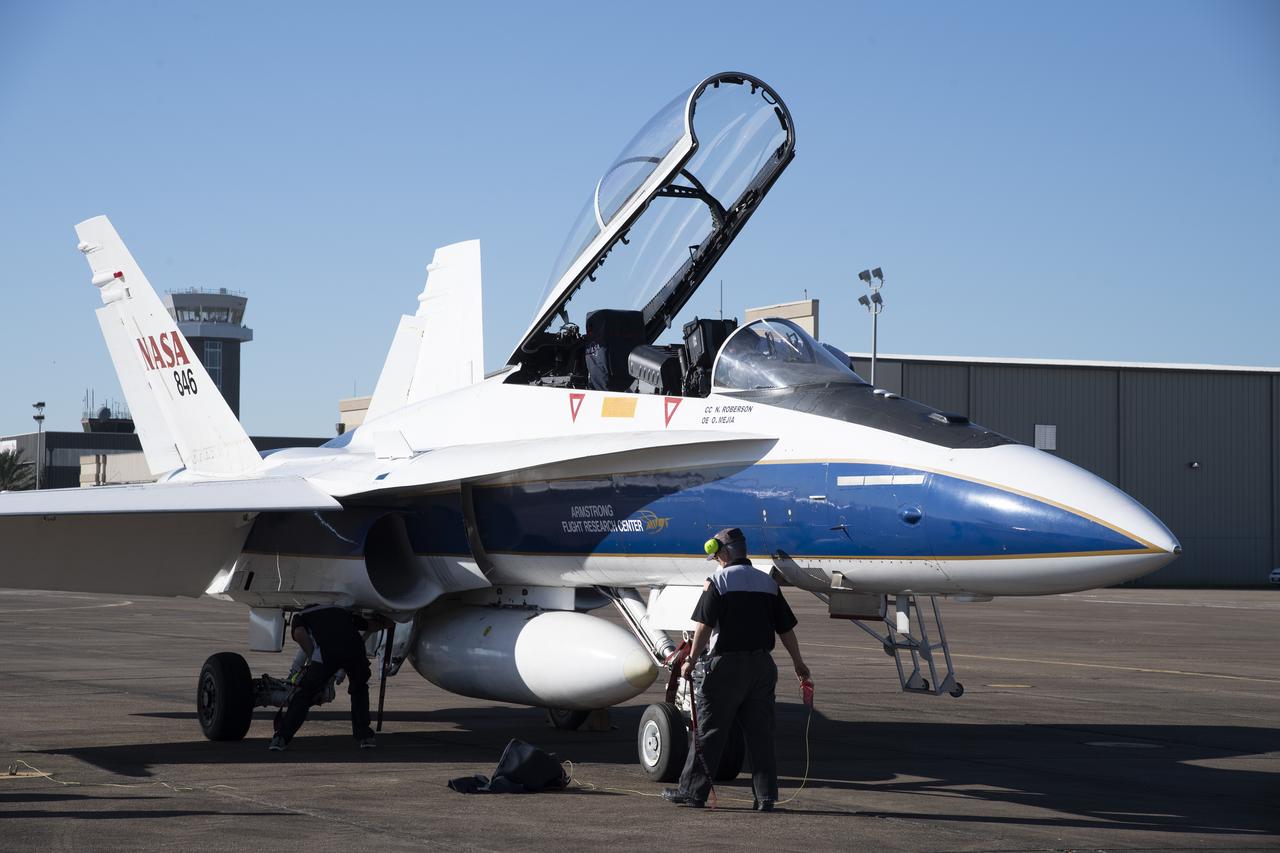
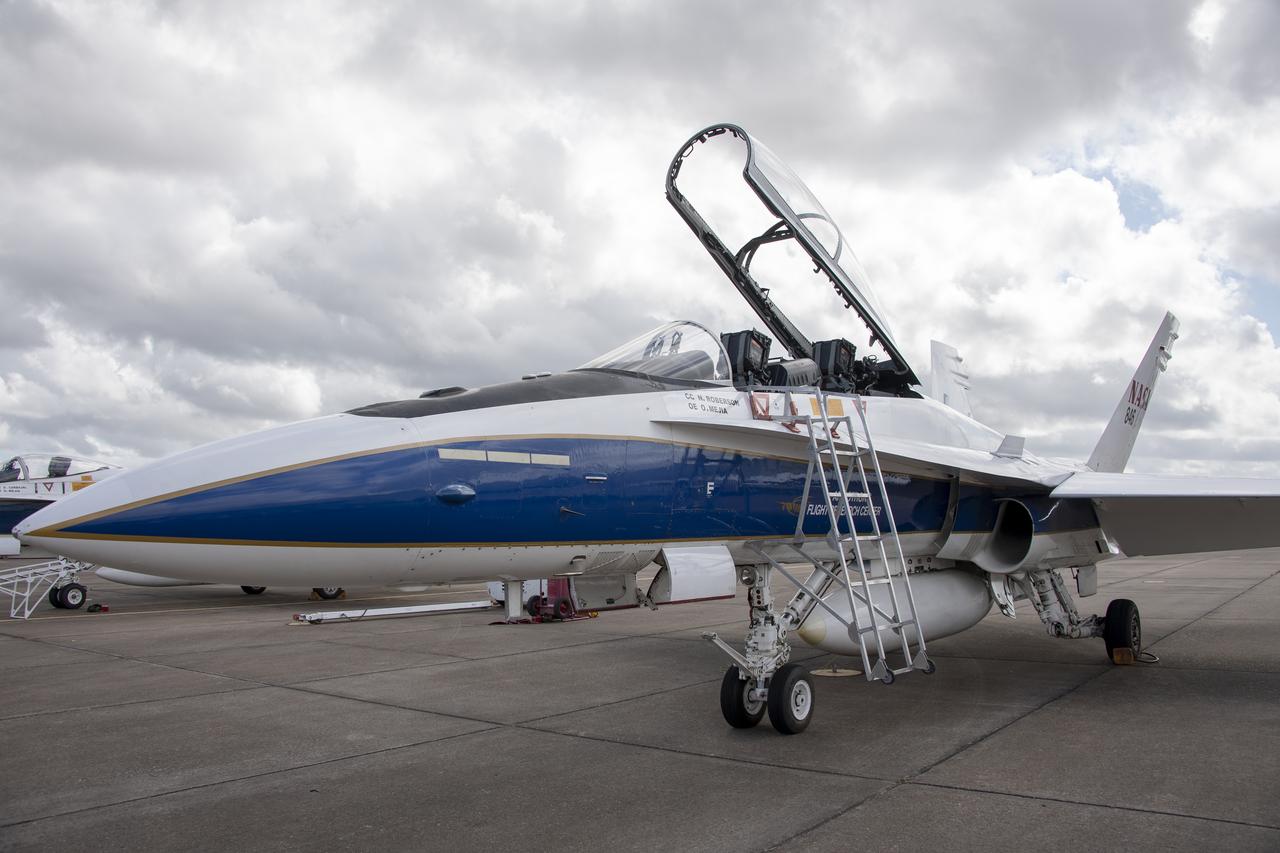
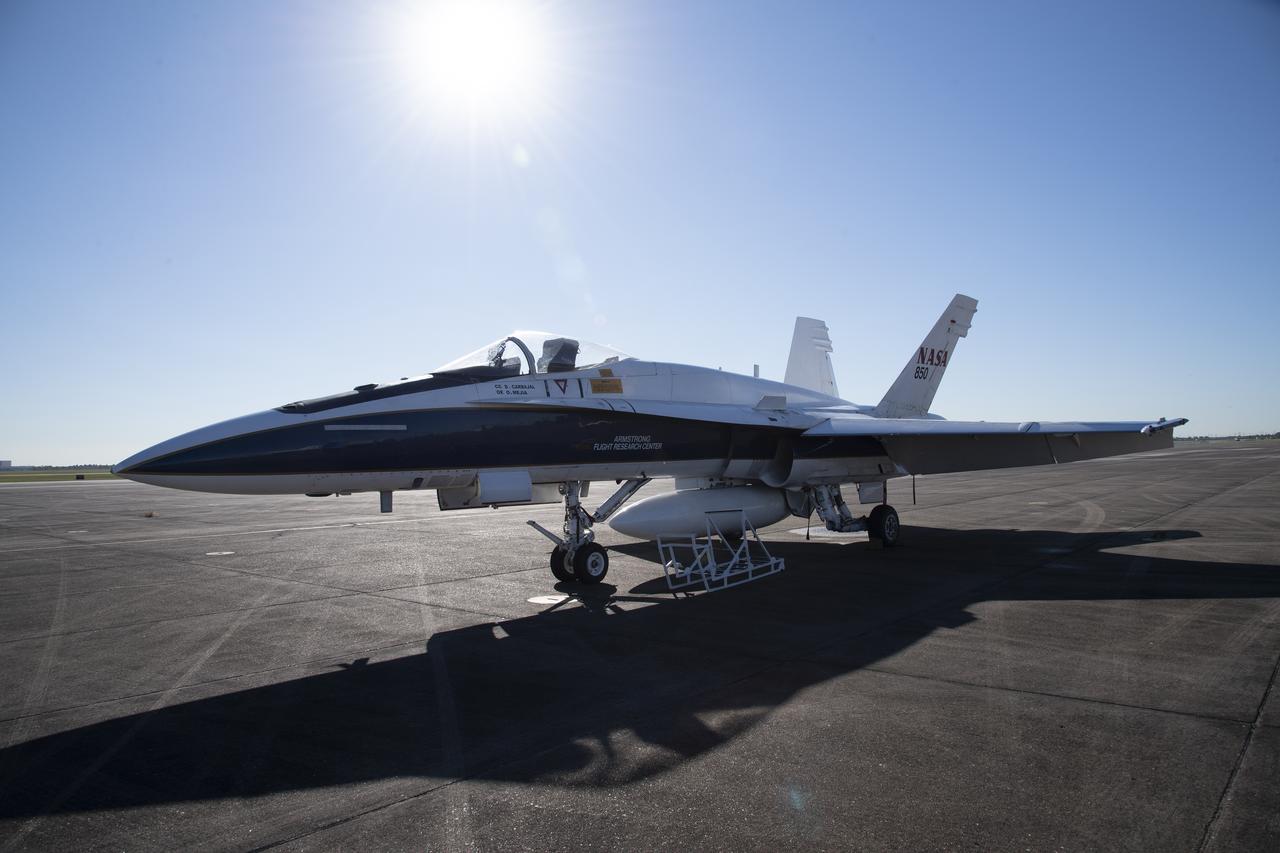
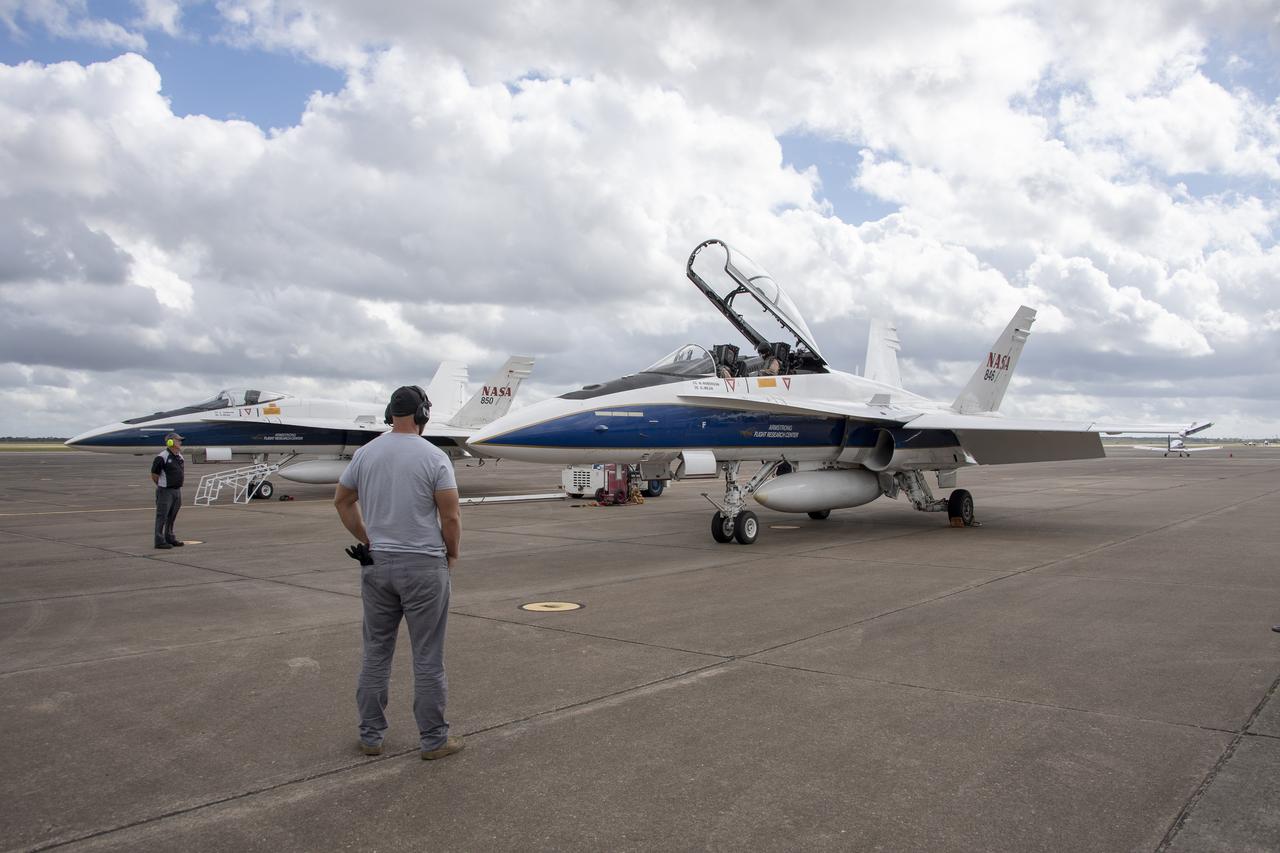
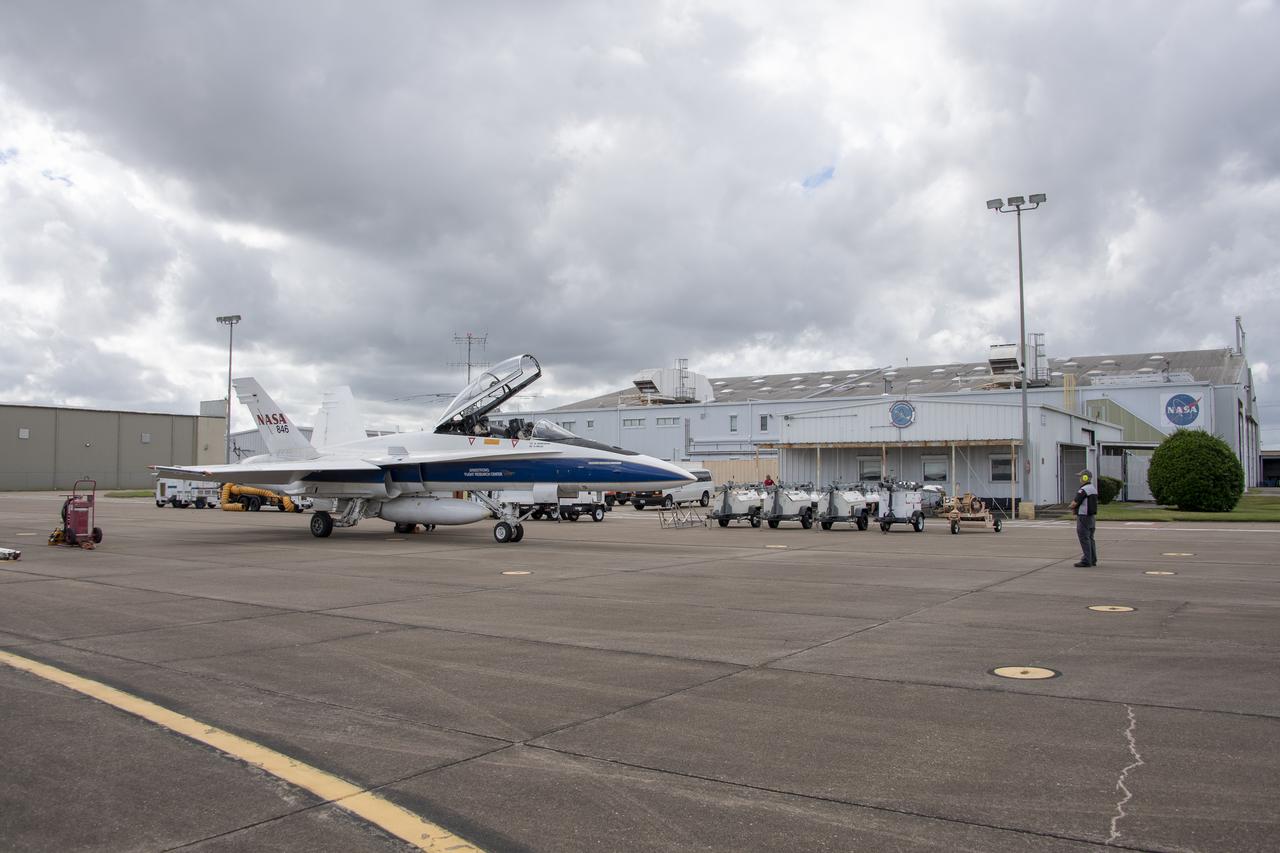
A NASA F/A-18 sits on the apron at NASA's Armstrong Flight Research Center in Edwards, California, prior to a supersonic research flight.
NASA F/A-18 Sits on Apron Prior to Flight
NASA’s X-59 in Flight with F/A-18 Research Aircraft Monitoring
A NASA F/A-18 is towed to the apron at NASA's Armstrong Flight Research Center in Edwards, California during sunrise over Rogers Dry Lake. The F/A-18 was used to test a transmitter for an air navigation system, called the Airborne Location Integrating Geospatial Navigation System, or ALIGNS. This system, designed to allow pilots to position their aircraft at precise distances to each other, will be critical for acoustic validation efforts of NASA's next supersonic X-plane, the X-59 Quiet SuperSonic Technology.
NASA F/A-18 Towed At Sunrise for Flight
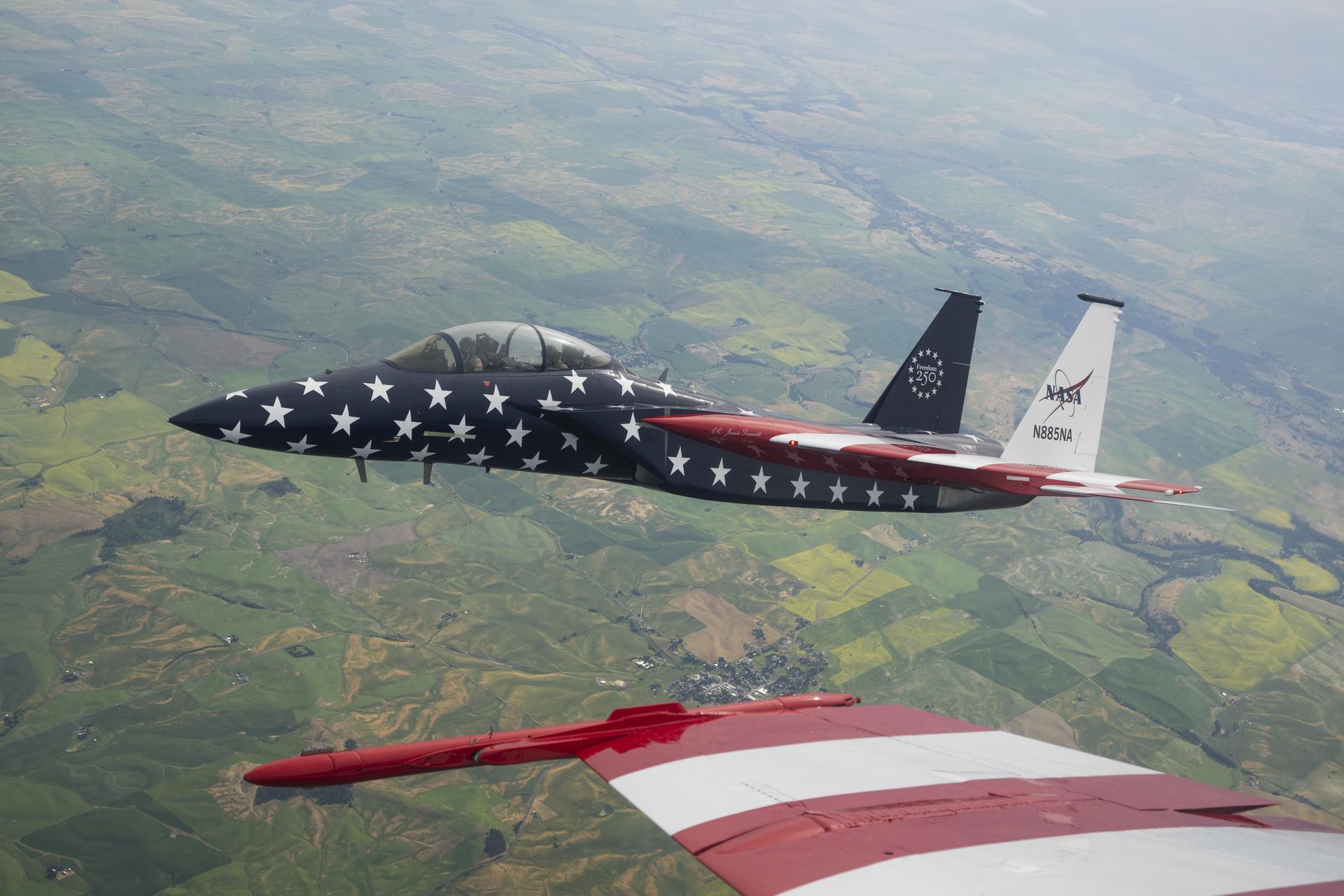
A NASA F-15 aircraft flies above Washington on Saturday, July 4, 2026, as part of a flyover to celebrate America’s 250th birthday. The wing of a NASA F-18 is seen in the foreground, as a NASA photographer captured this image from inside the cockpit. This aircraft is from NASA’s Armstrong Flight Research Center in Edwards, California, and it joined other NASA aircraft for the flyover.
NASA F-15 and F-18 Soar Above Washington to Celebrate America’s 250th Birthday
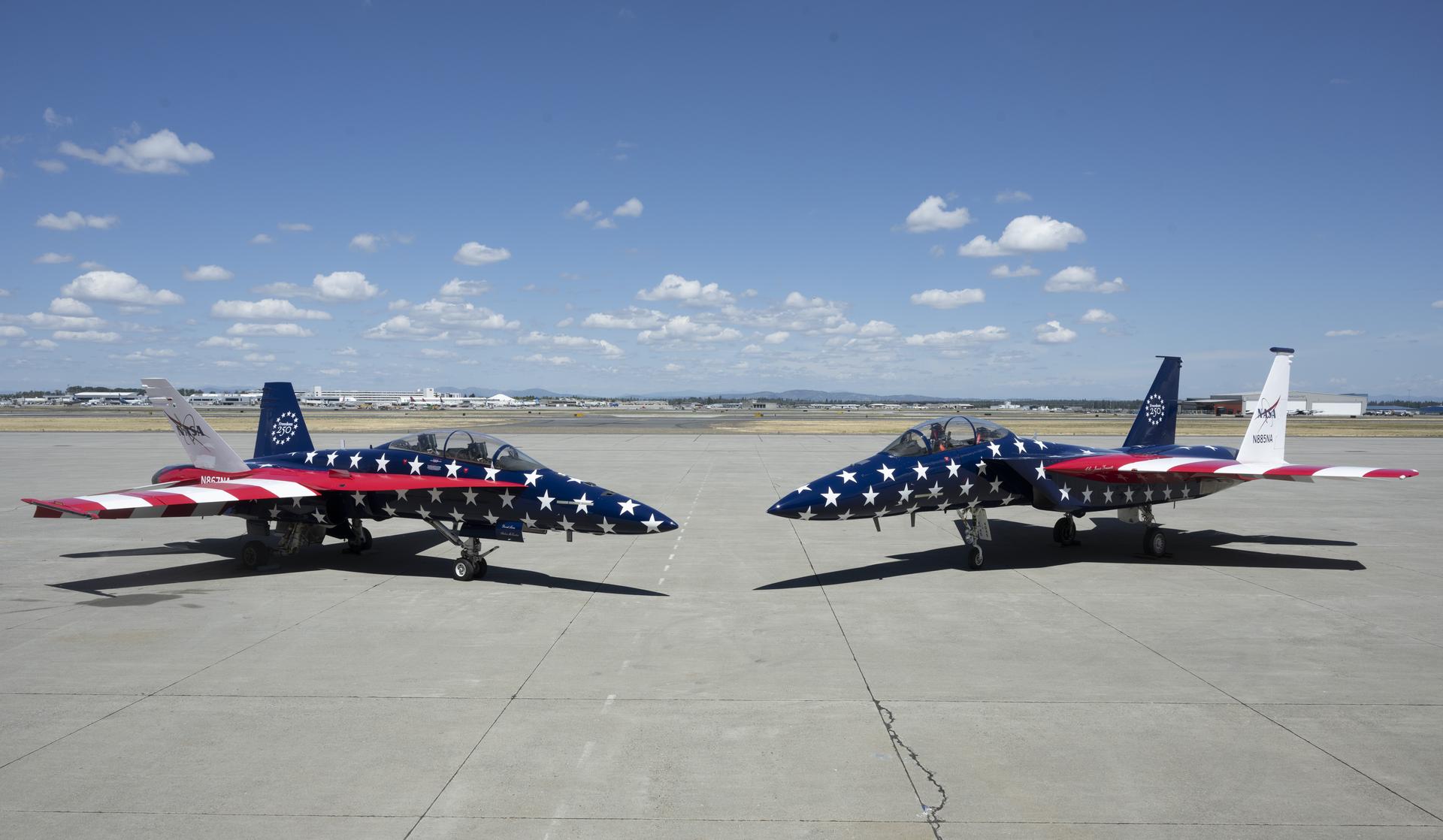
NASA’s F-15, right, and F/A-18 aircraft are shown at International Aerospace Coatings Inc.’s facility in Spokane, Washington, on Thursday, July 2, 2026, with new red, white, and blue paint to celebrate America’s 250th birthday. The aircraft, from NASA’s Armstrong Flight Research Center in Edwards, California, participated in the Freedom 250 flyover in Washington on Saturday, July 4, 2026, with other NASA and military aircraft. NASA/Jim Ross
NASA F-15, F-18 Painted in Red, White, Blue to Celebrate America’s 250th Birthday
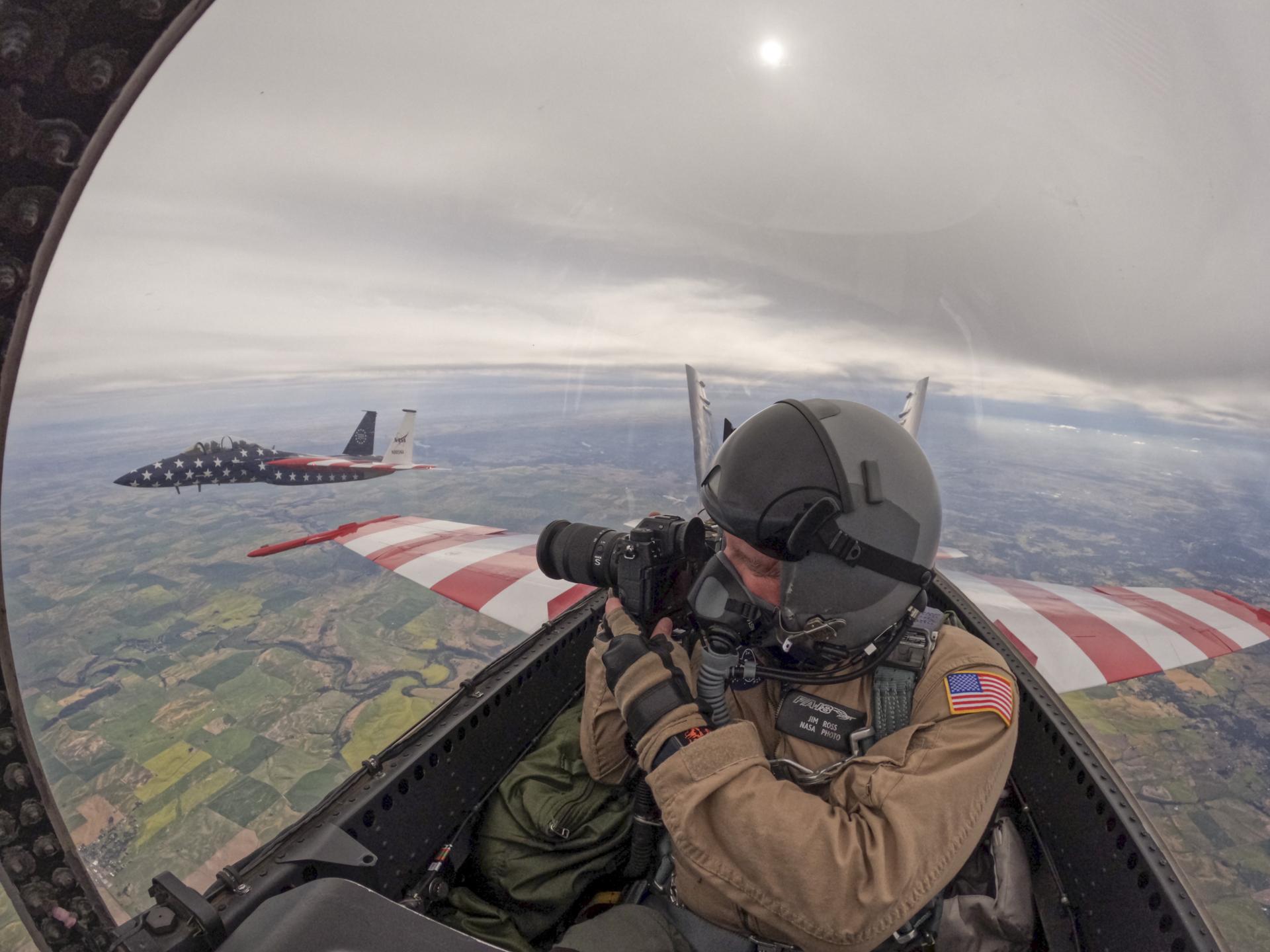
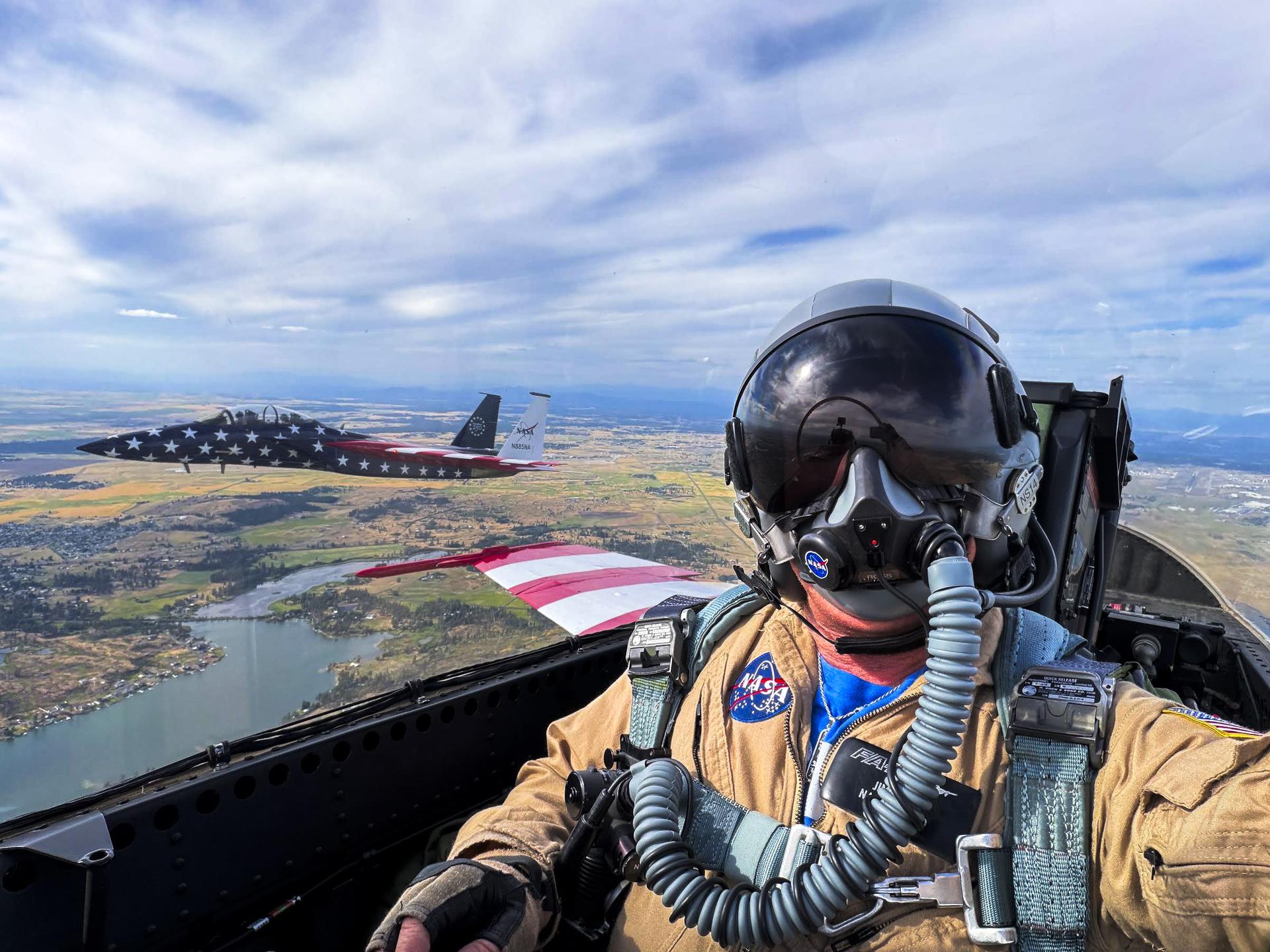
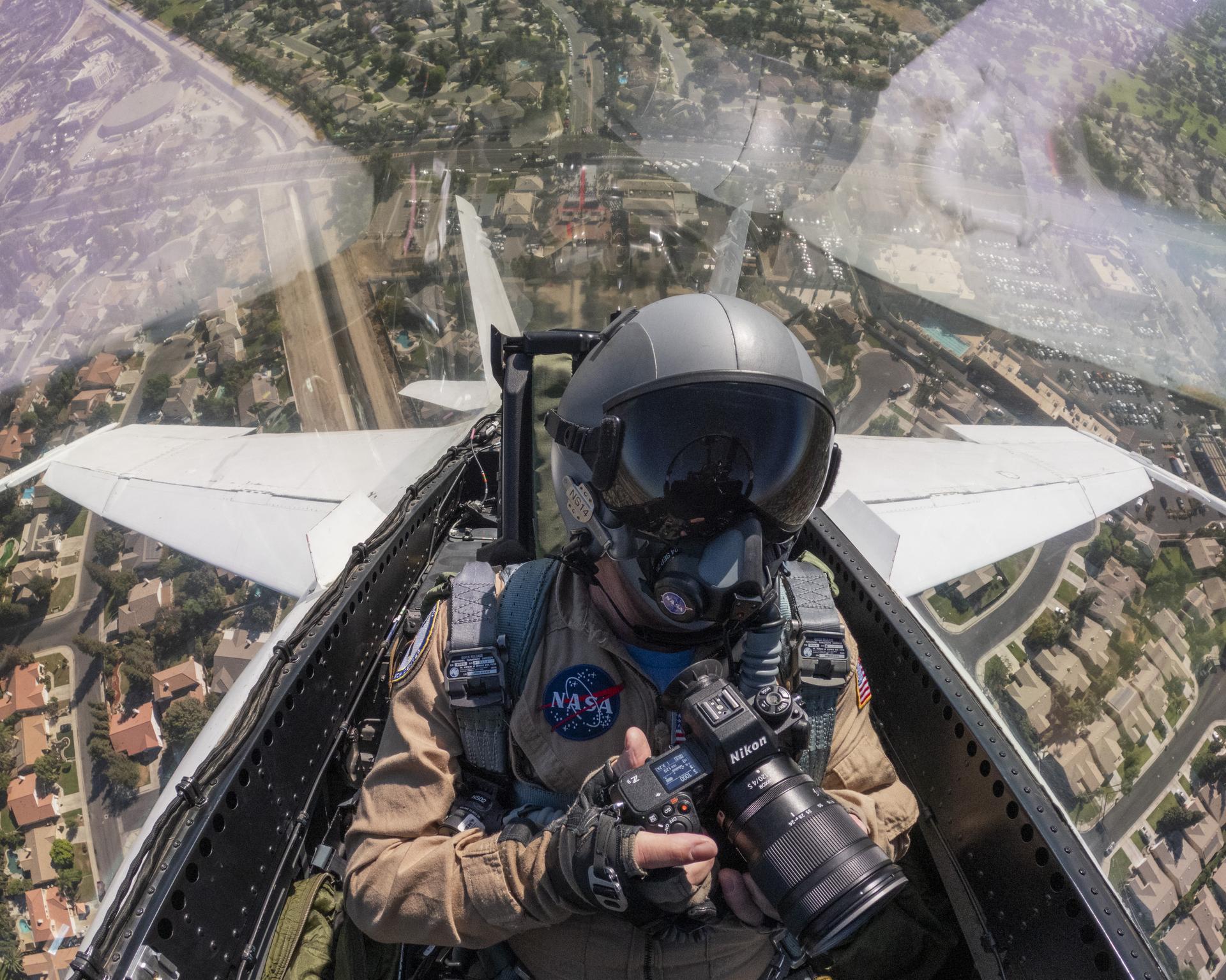
NASA photographer Jim Ross takes a selfie from the rear seat of a NASA F/A‑18 during a cross‑country flight from Spokane, Washington, to Washington, D.C., on Thursday, July 2, 2026. The agency’s F‑15, flying alongside the aircraft, is visible through the window. Both aircraft, from NASA’s Armstrong Flight Research Center in Edwards, California, participated in the Freedom 250 flyover with other NASA and military aircraft on Saturday, July 4, 2026.
NASA F-15 and F-18 Soar Above Washington to Celebrate America’s 250th Birthday
NASA photographer Jim Ross flies above the Washington Monument in Washington on Saturday, July 4, 2026, in an F-18 aircraft, as part of a flyover to celebrate America’s 250th birthday. This aircraft is from NASA’s Armstrong Flight Research Center in Edwards, California, and it joined other NASA aircraft for the flyover.
NASA F-15 and F-18 Soar Above Washington to Celebrate America’s 250th Birthday
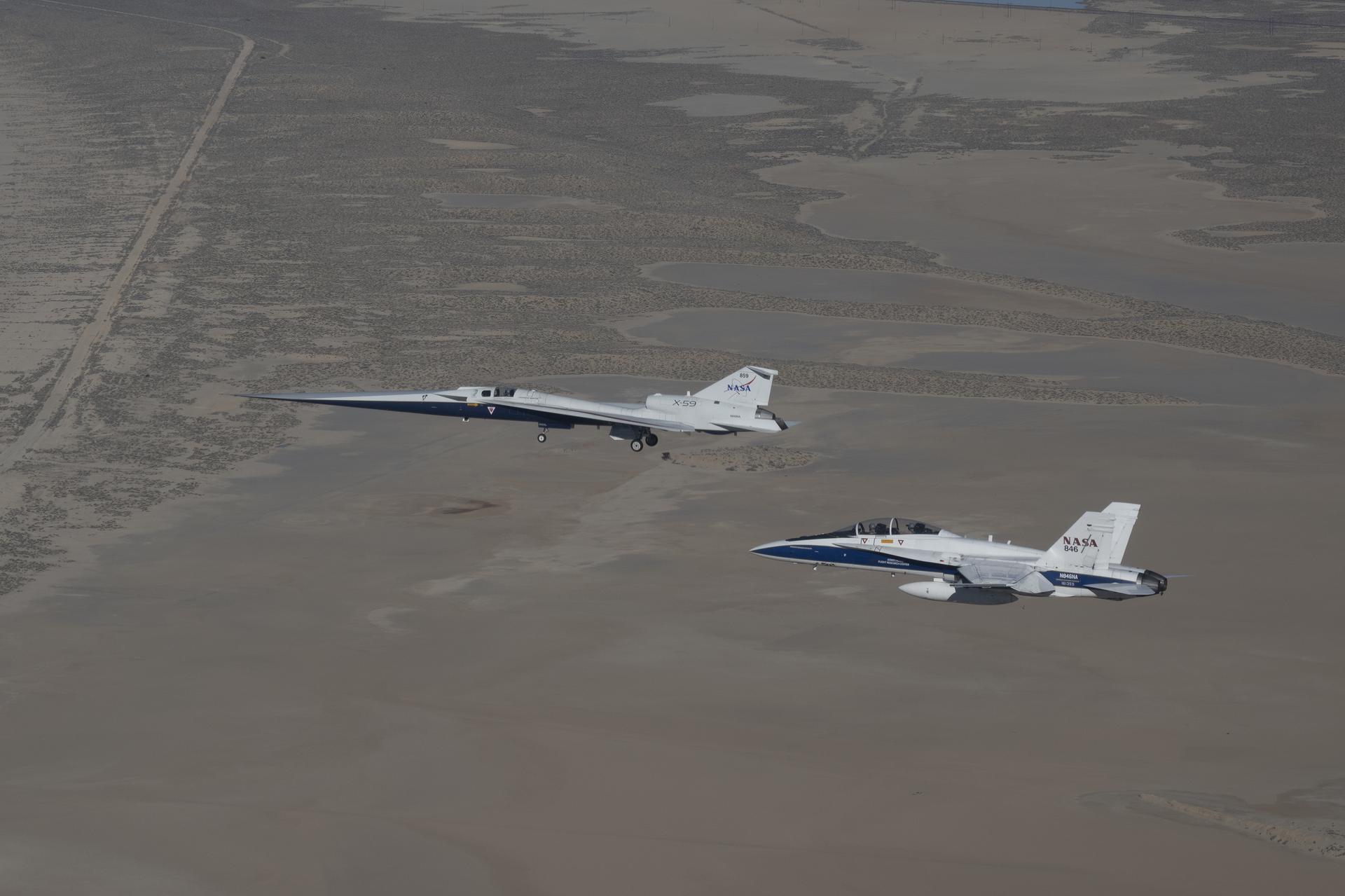
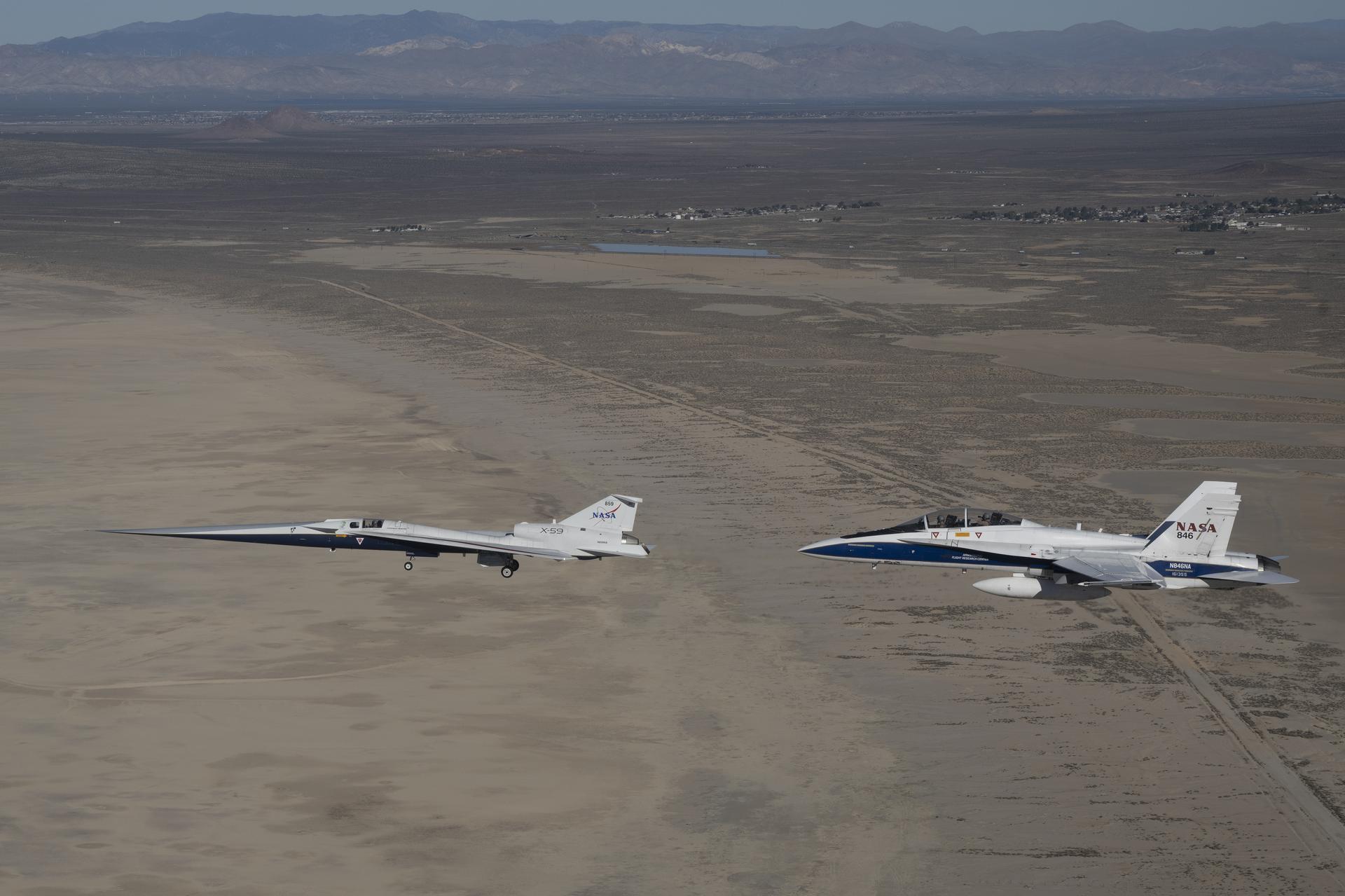
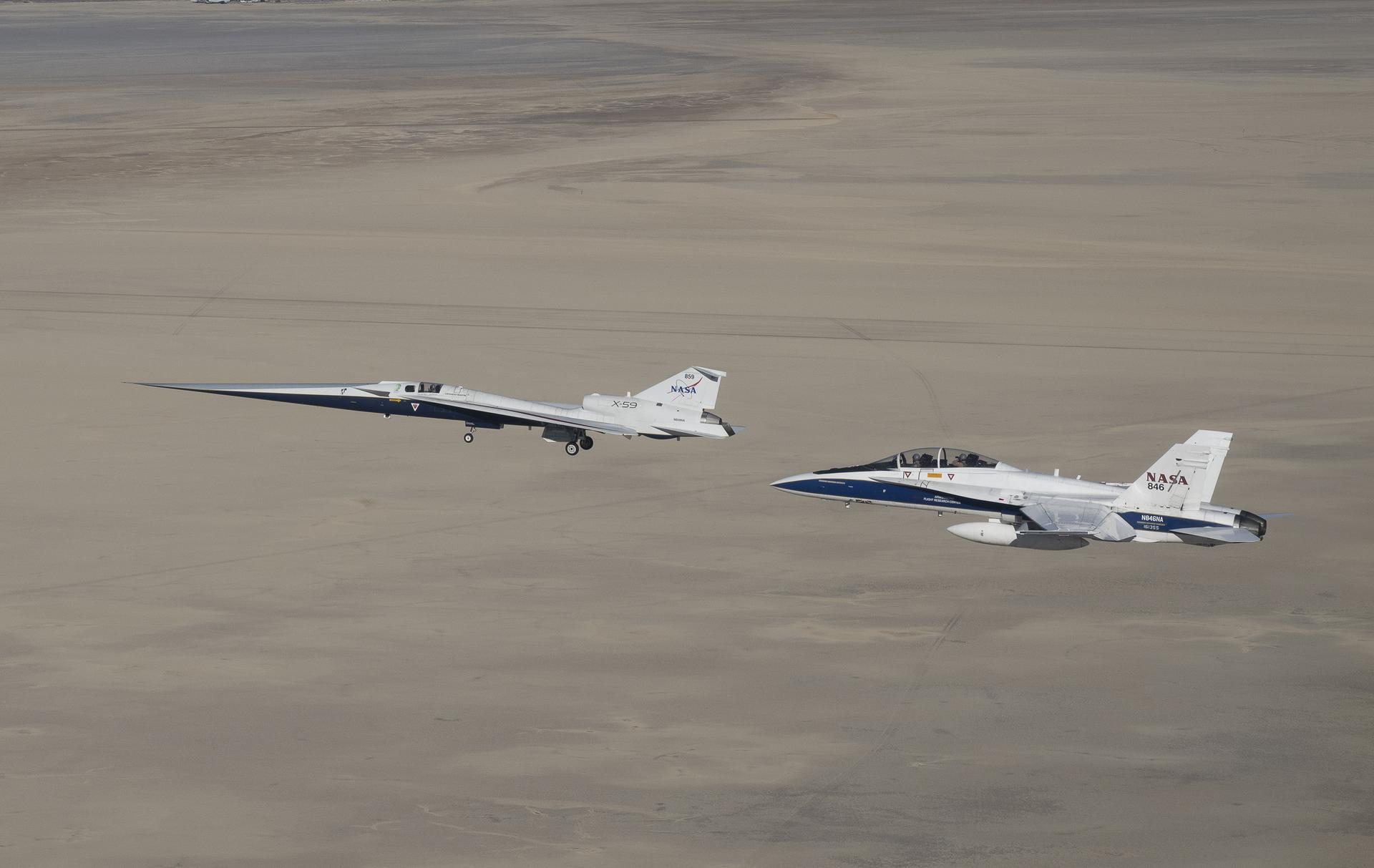
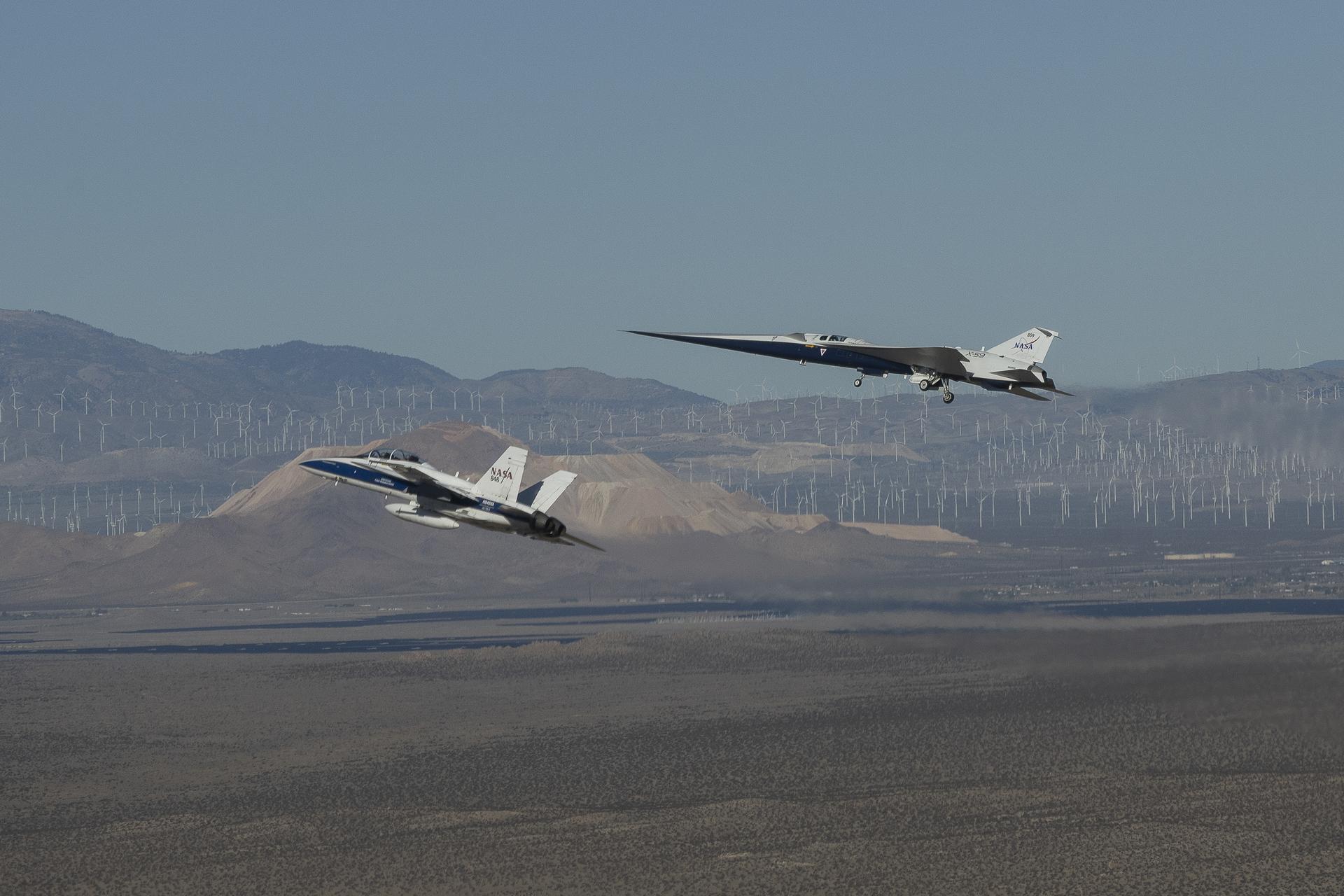
NASA’s X-59 quiet supersonic research aircraft flies above Palmdale and Edwards, California, during its first flight Tuesday, Oct. 28, 2025, accompanied by a NASA F/A-18 research aircraft. A NASA F-15 research aircraft (not pictured) captured the image as the X-59 traveled to NASA’s Armstrong Flight Research Center in Edwards, California, where it will begin flight testing for NASA’s Quesst mission, which aims to demonstrate quiet supersonic flight over land.
NASA’s X-59 in Flight with F/A-18 Research Aircraft Monitoring
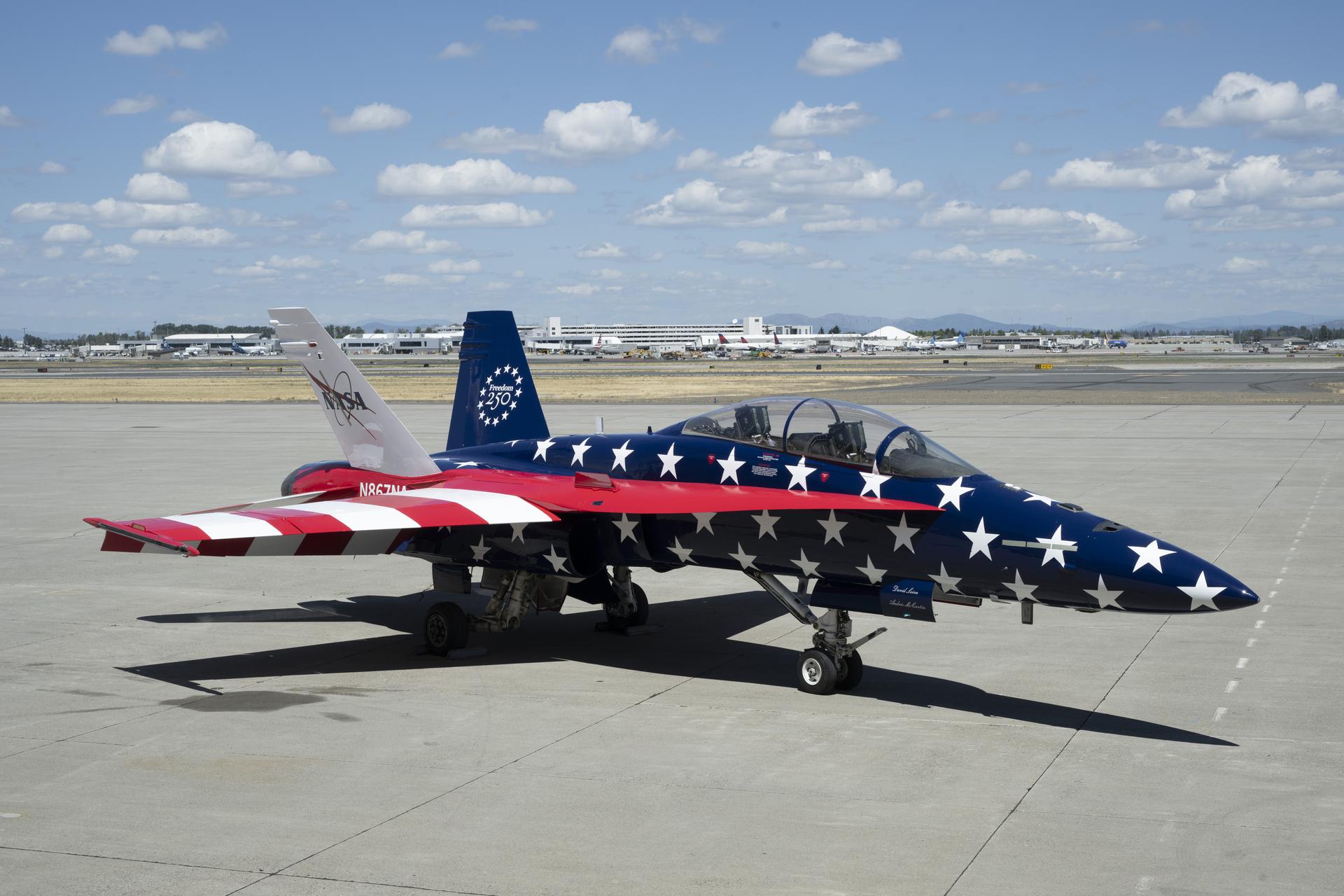
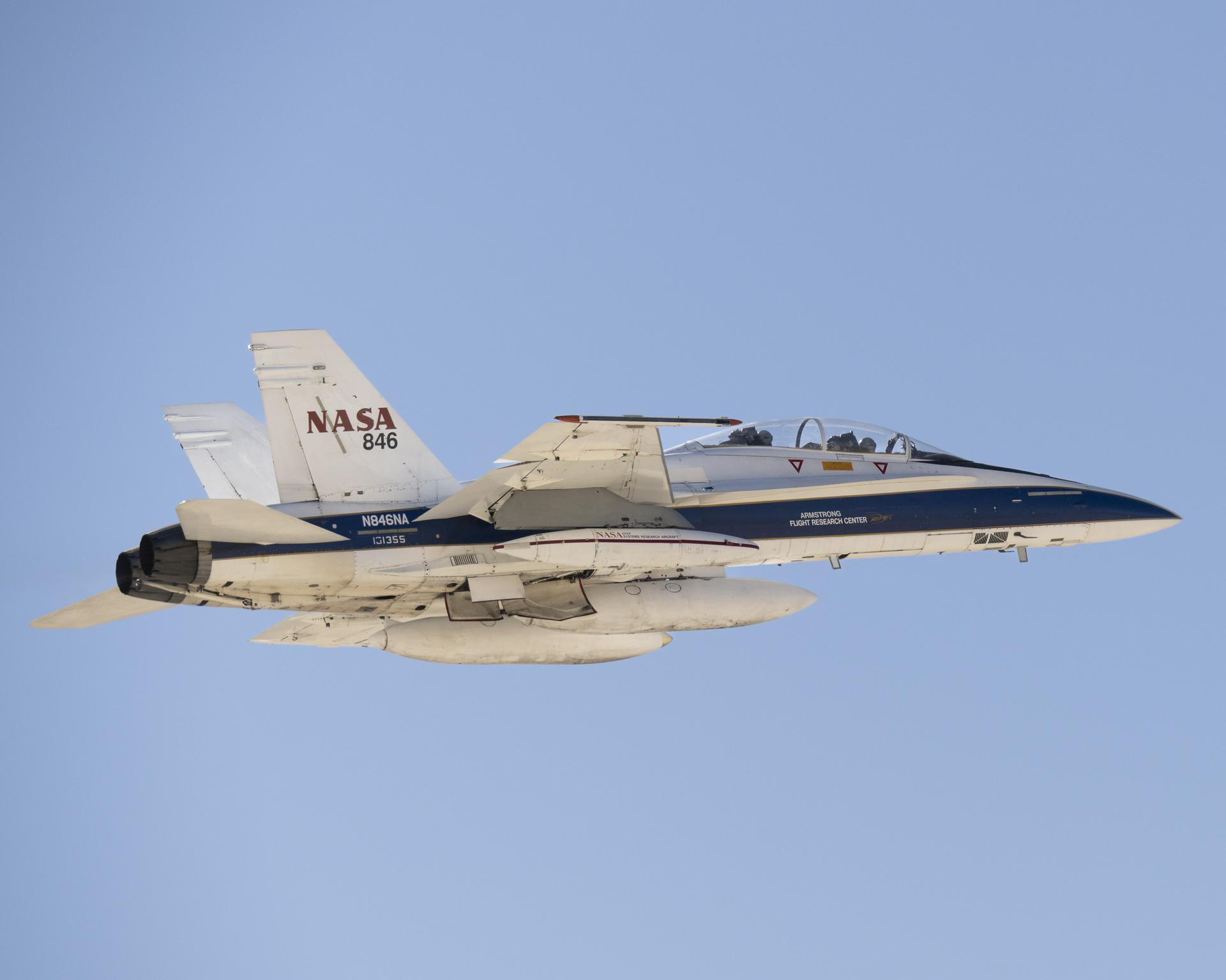
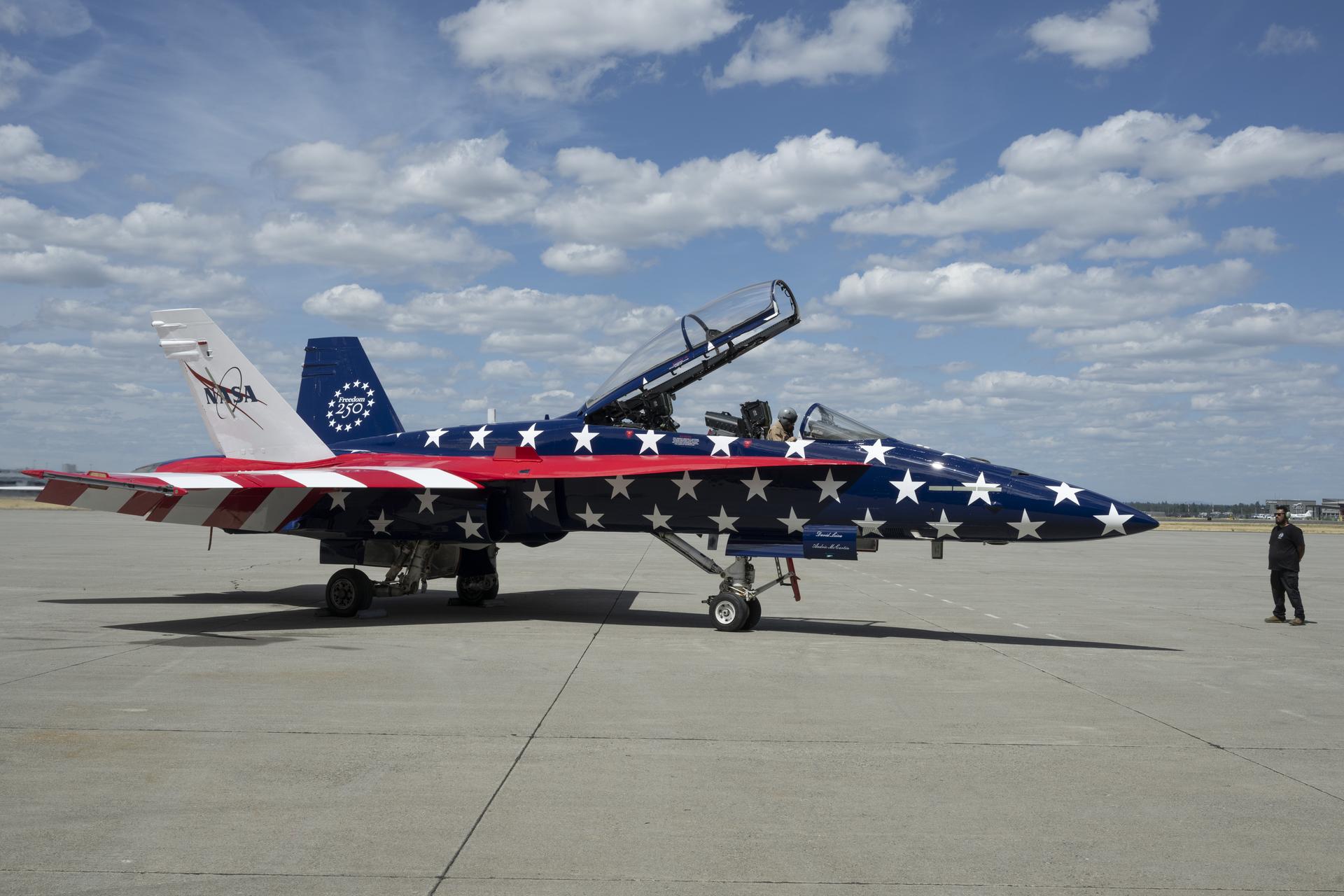
A NASA F/A‑18 aircraft is shown in Spokane, Washington, on Thursday, July 2, 2026, with new red, white, and blue paint to celebrate America’s 250th birthday. The aircraft, from NASA’s Armstrong Flight Research Center in Edwards, California, was preparing to fly cross‑country to Washington, D.C., where it participated in the Freedom 250 flyover with other NASA and military aircraft on Saturday, July 4, 2026. NASA/Jim Ross
NASA F-15, F-18 Painted in Red, White, Blue to Celebrate America’s 250th Birthday
NASA’s F-18 aircraft is shown at International Aerospace Coatings Inc.’s facility in Spokane, Washington, on Thursday, July 2, 2026, with new red, white, and blue paint to celebrate America’s 250th birthday. The aircraft, from NASA’s Armstrong Flight Research Center in Edwards, California, participated in the Freedom 250 flyover in Washington on Saturday, July 4, 2026, with other NASA and military aircraft. NASA/Jim Ross
NASA F-15, F-18 Painted in Red, White, Blue to Celebrate America’s 250th Birthday
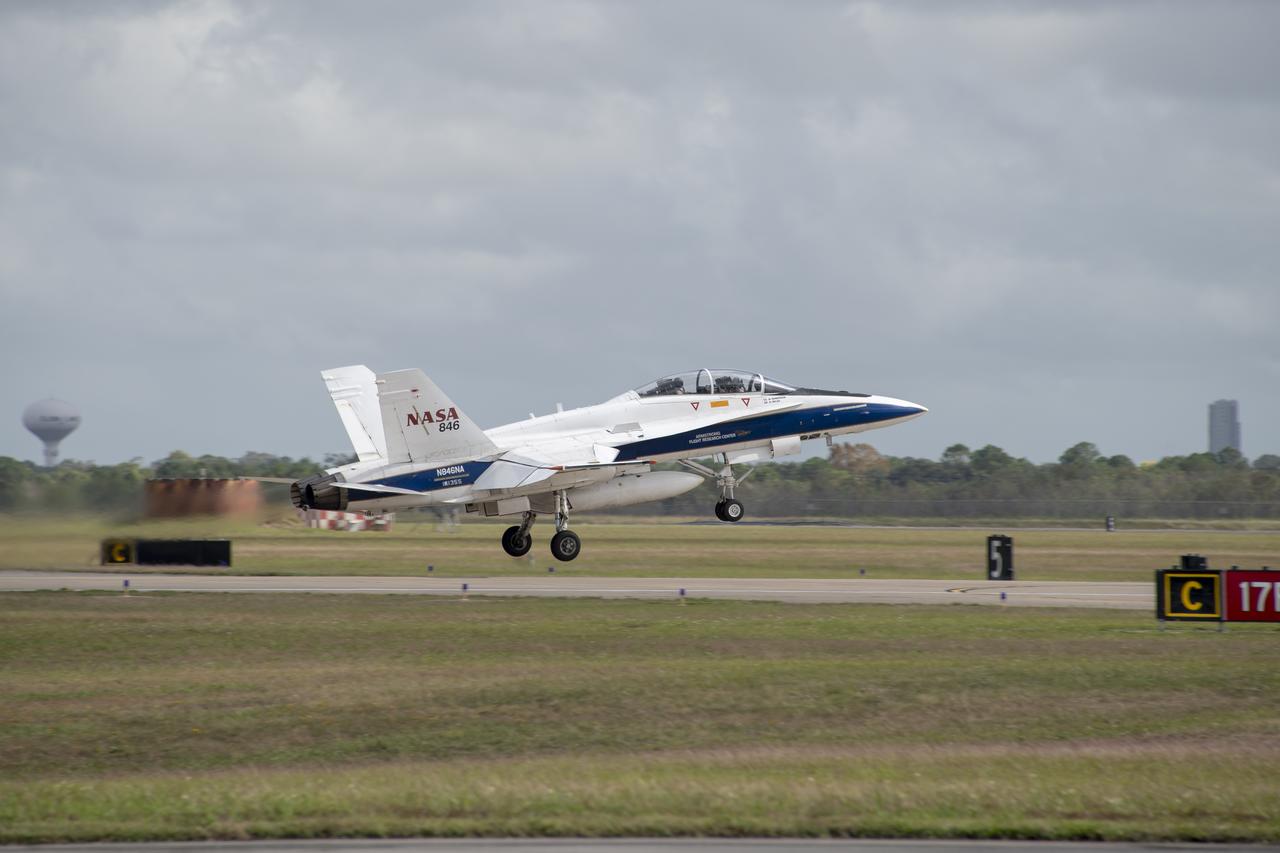
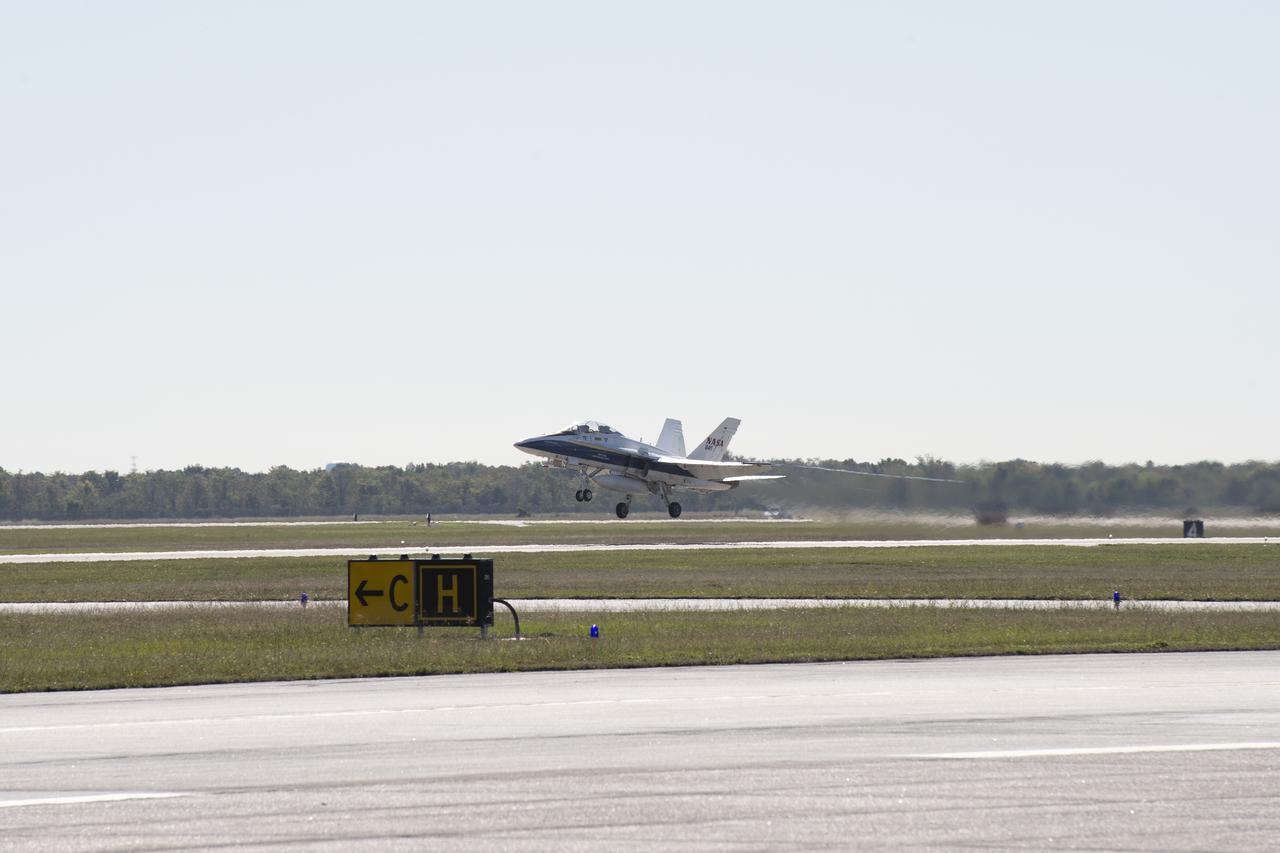
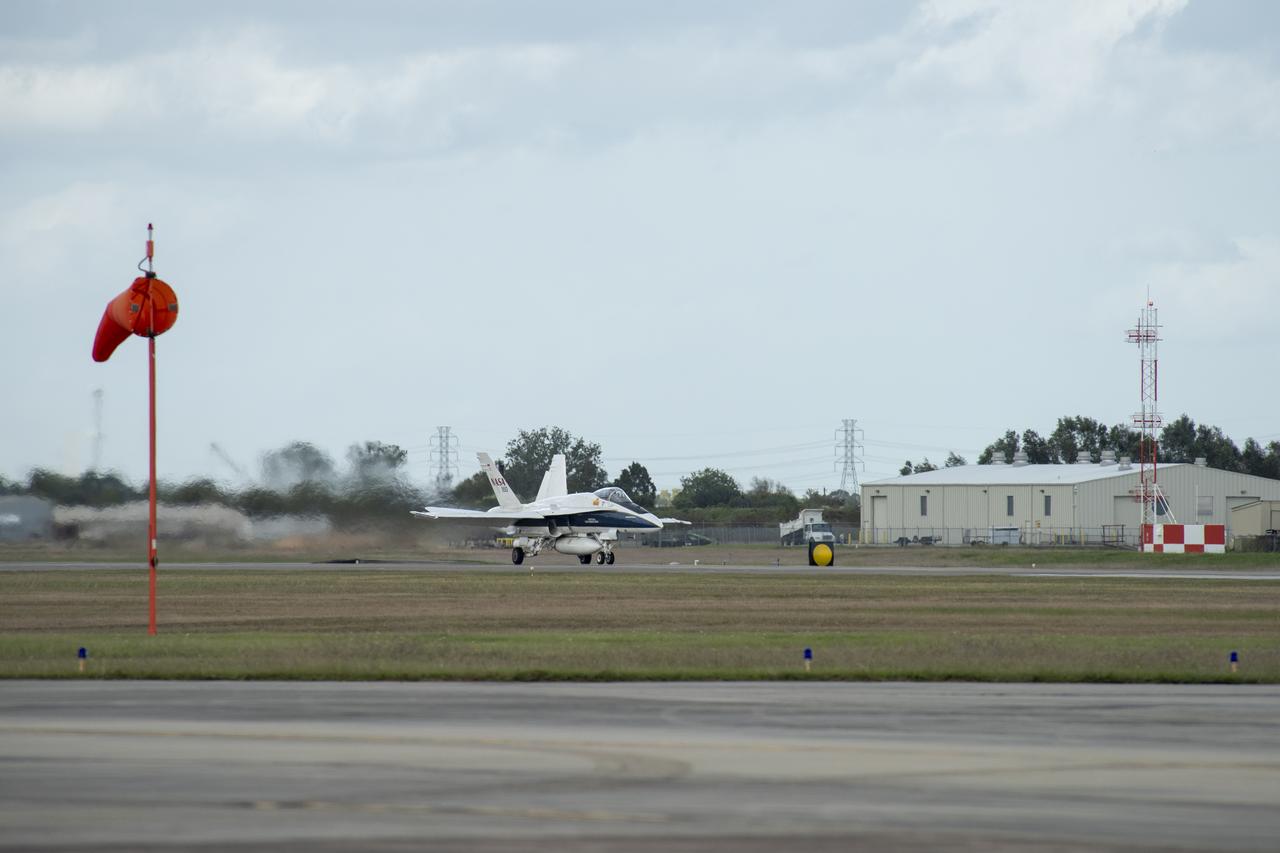
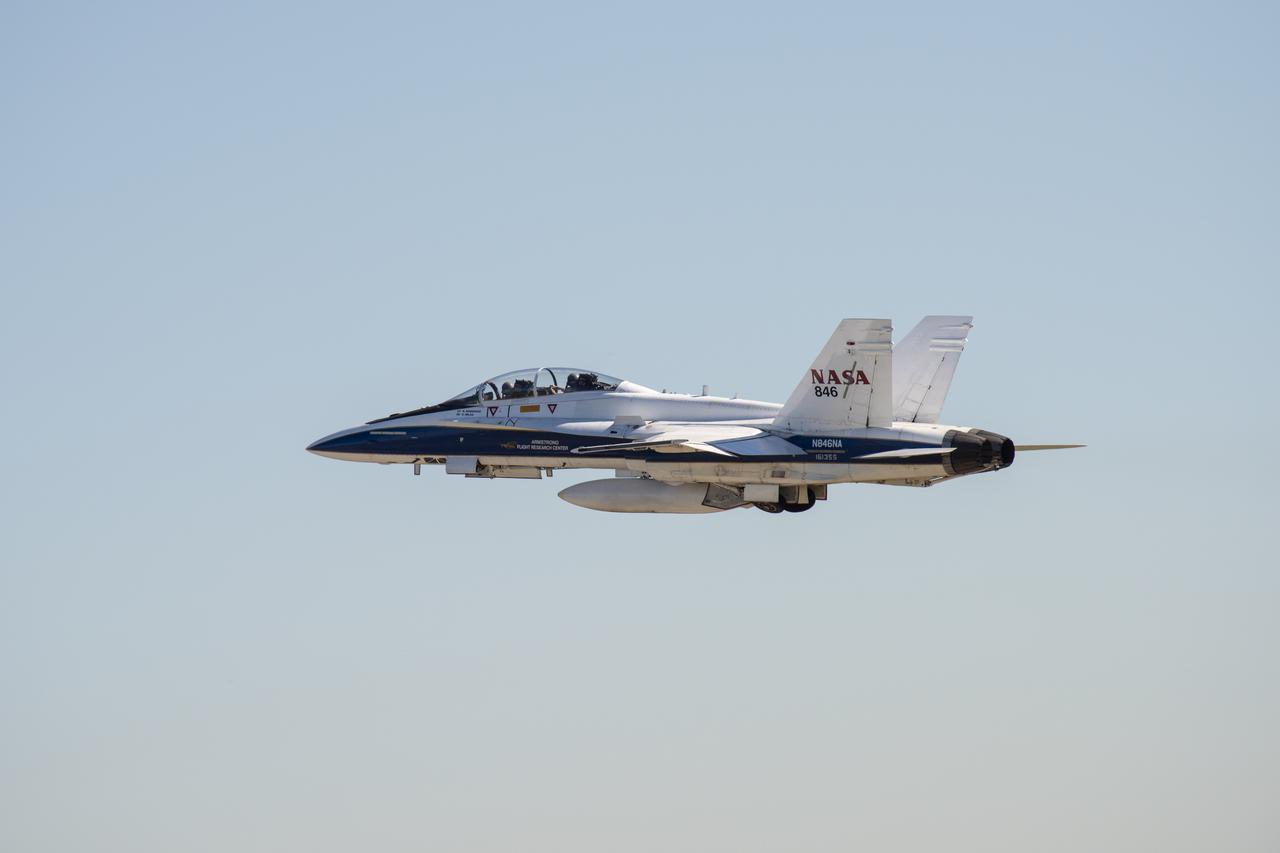
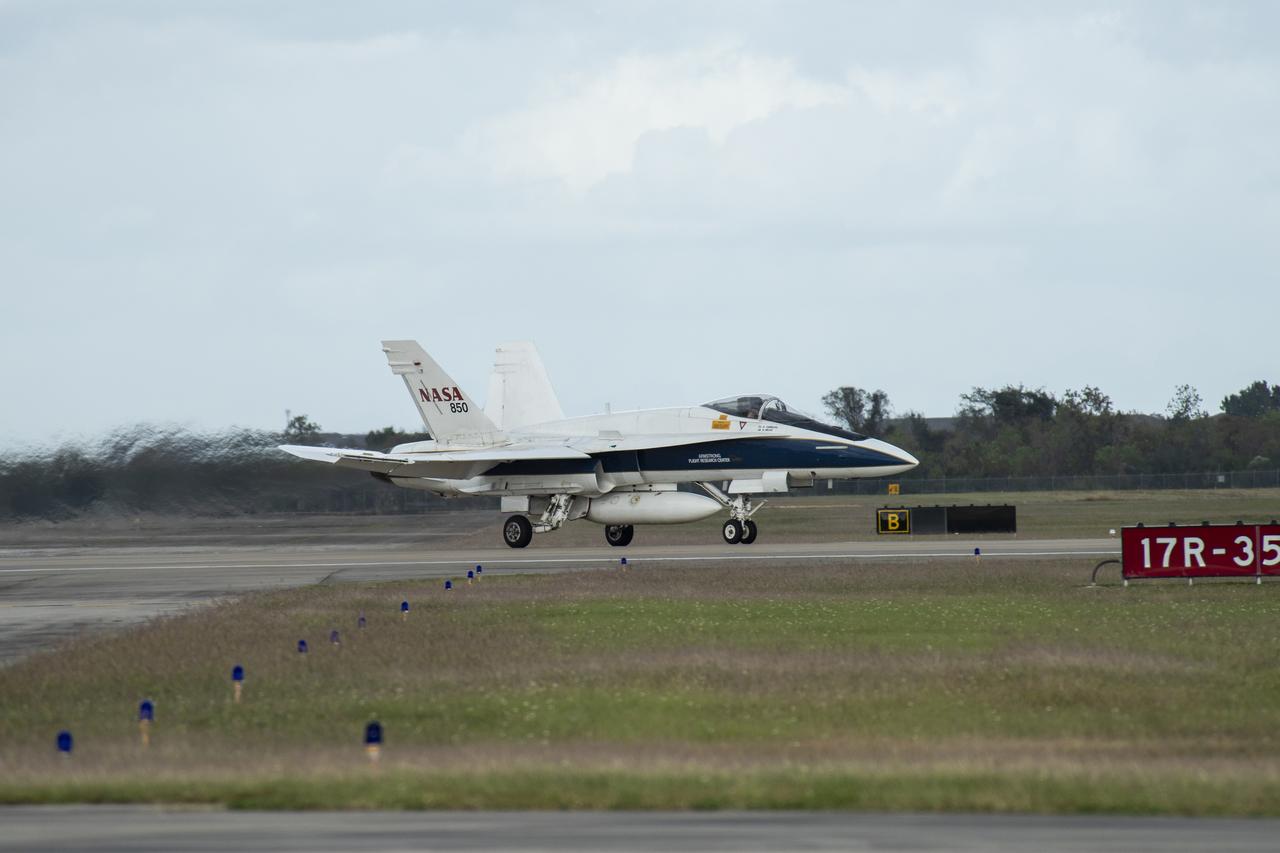
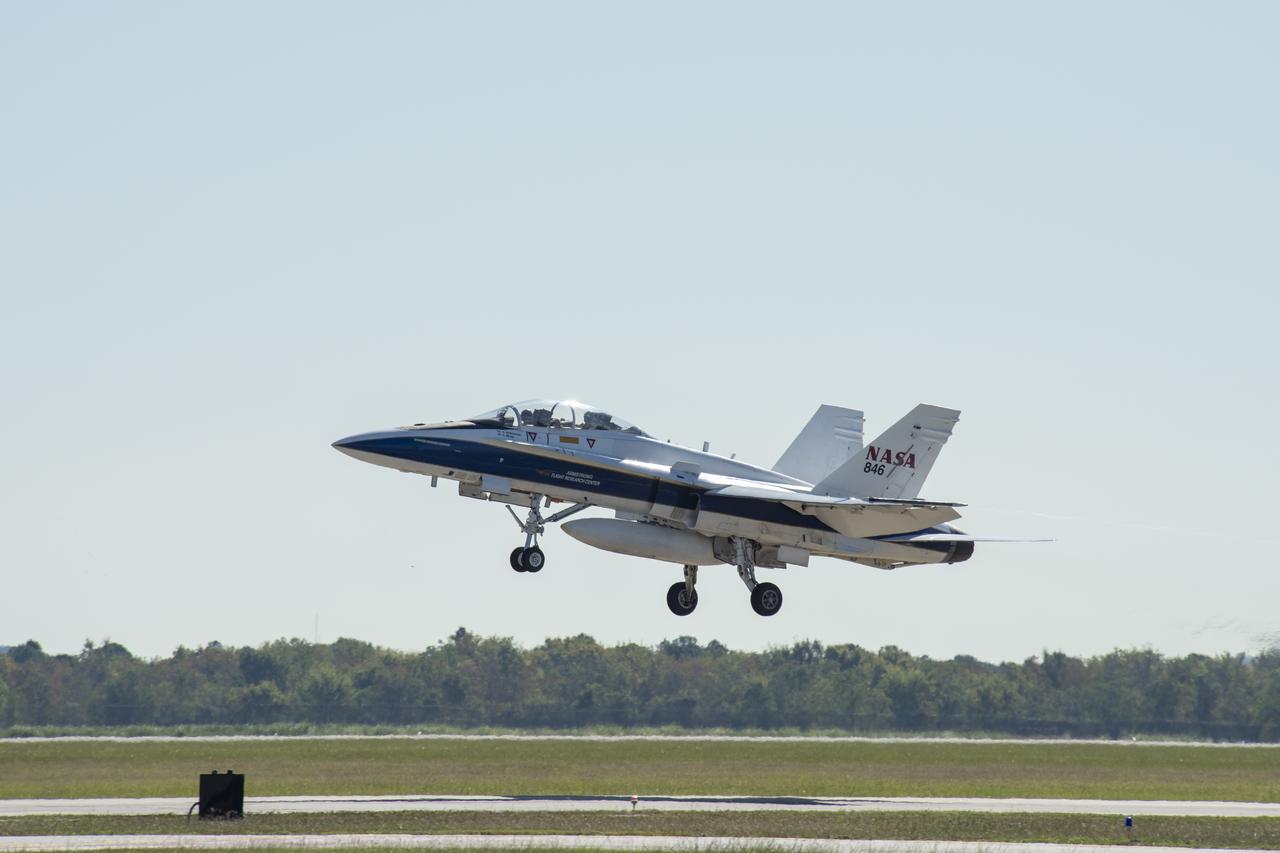
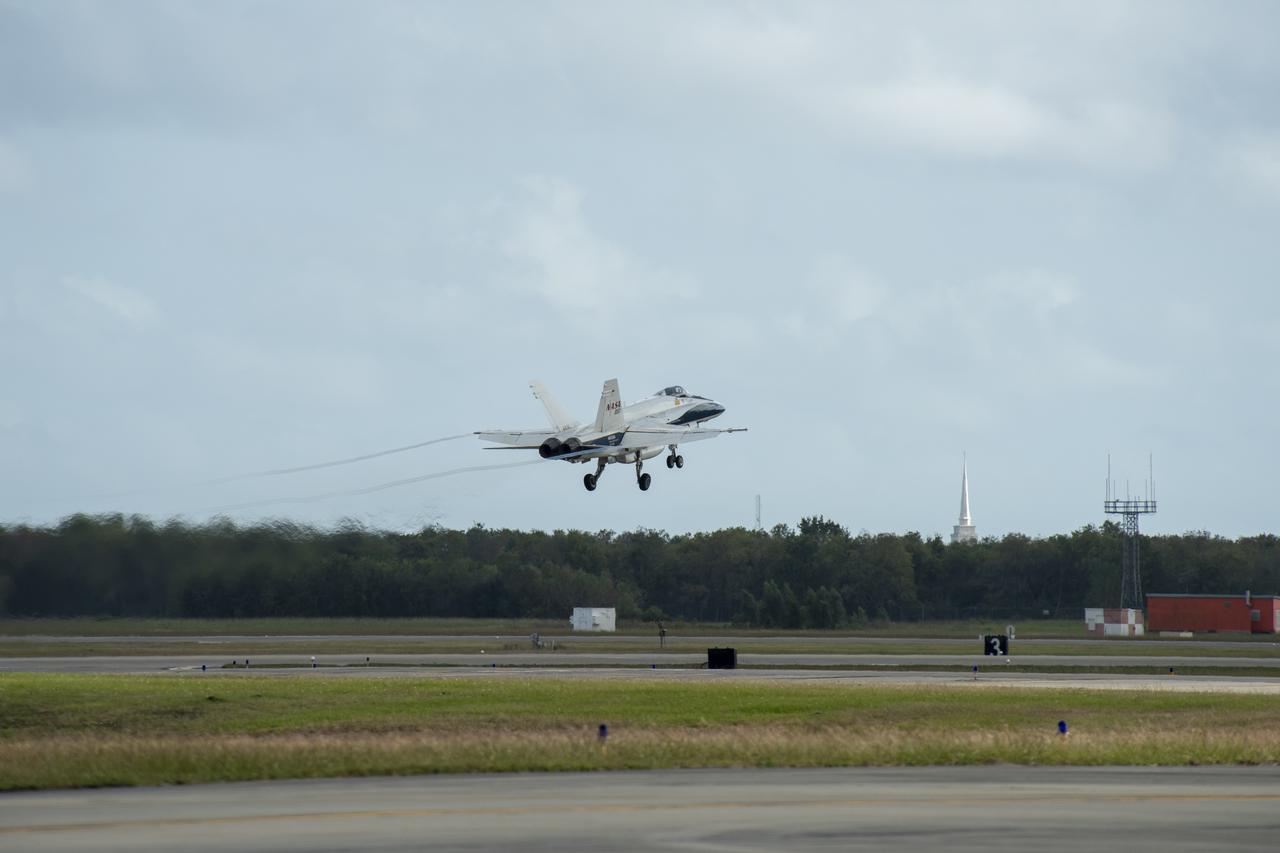
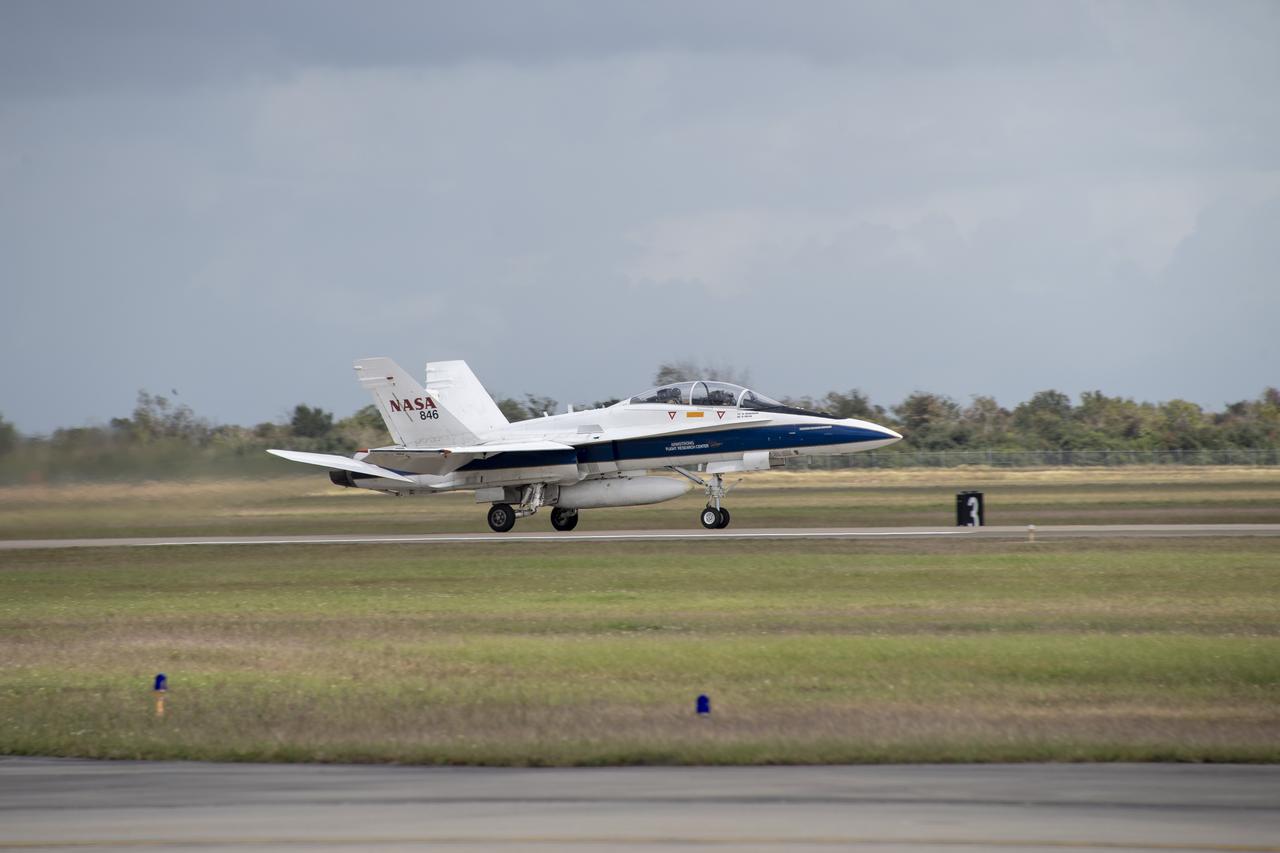
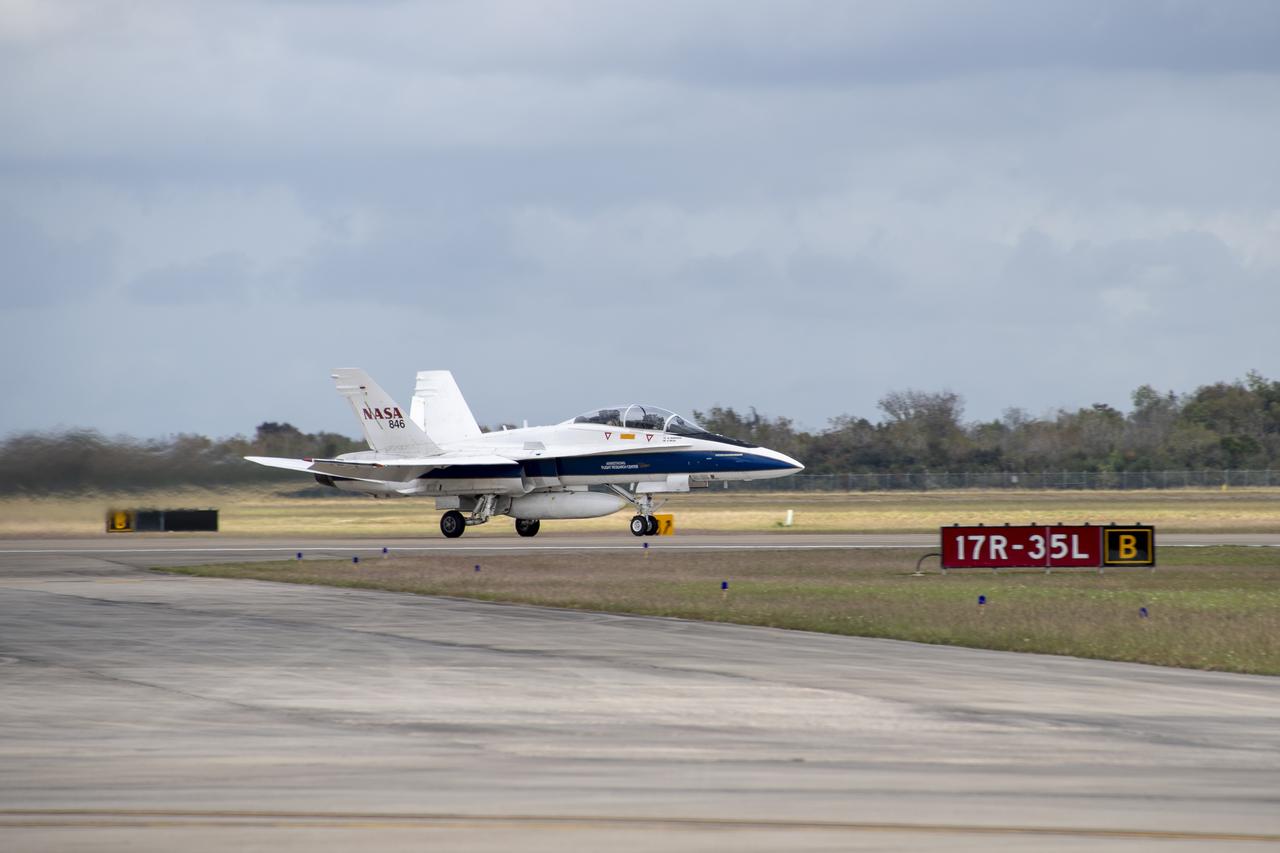
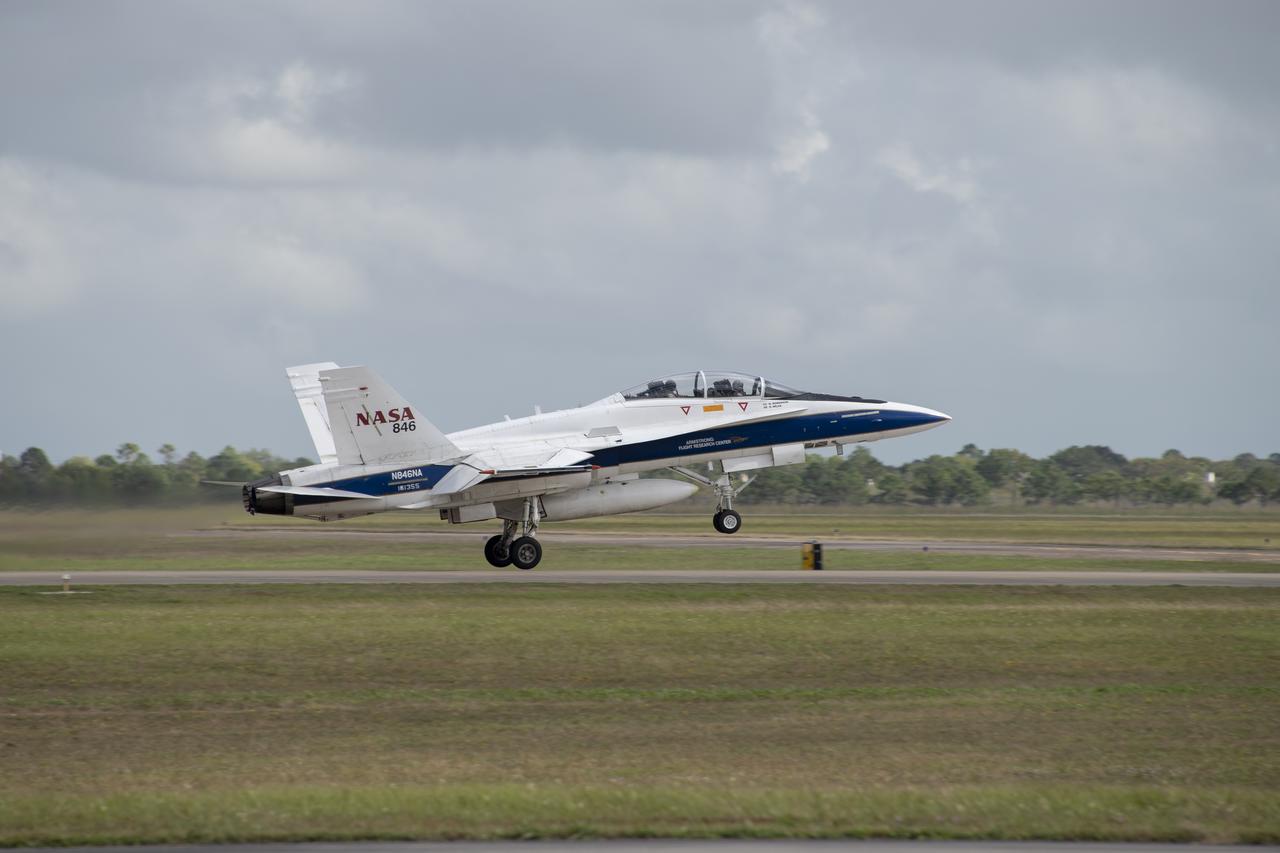
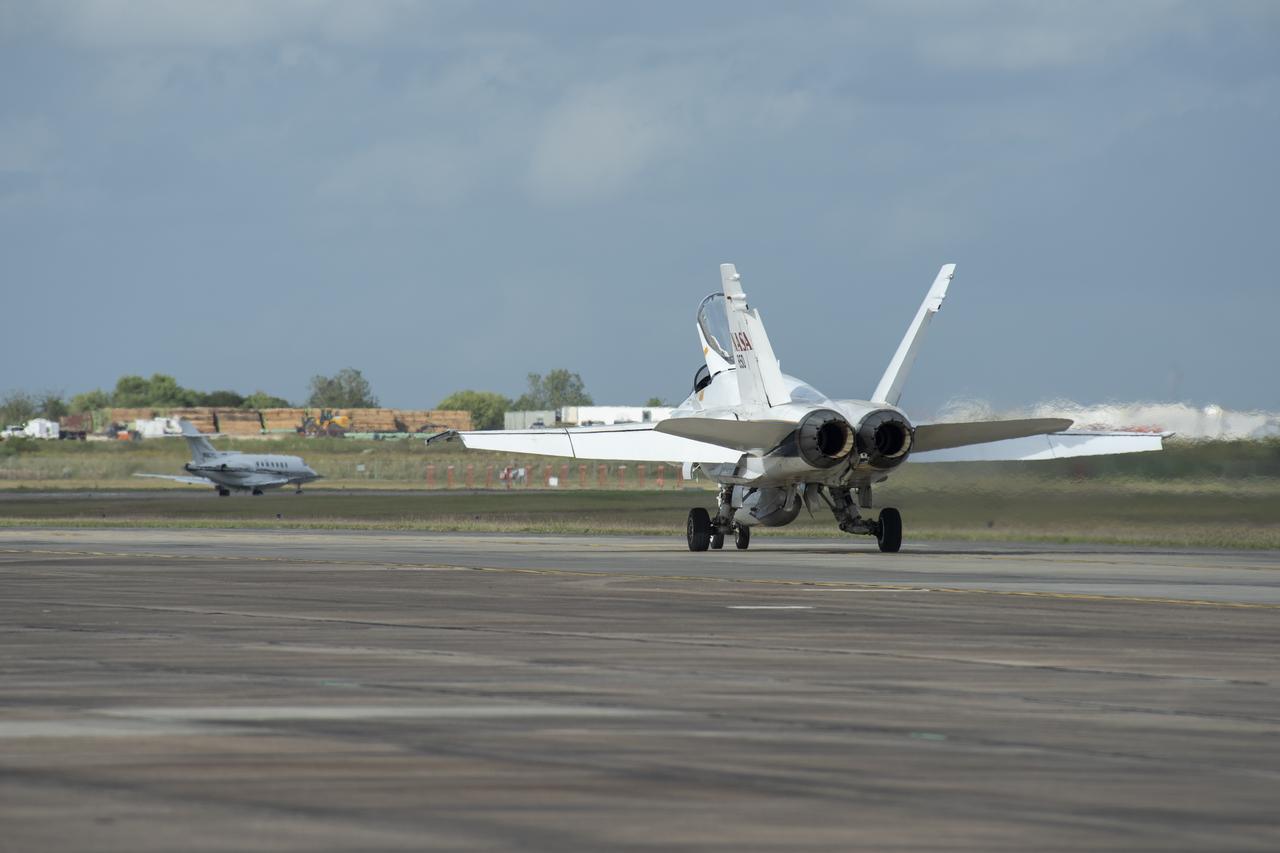
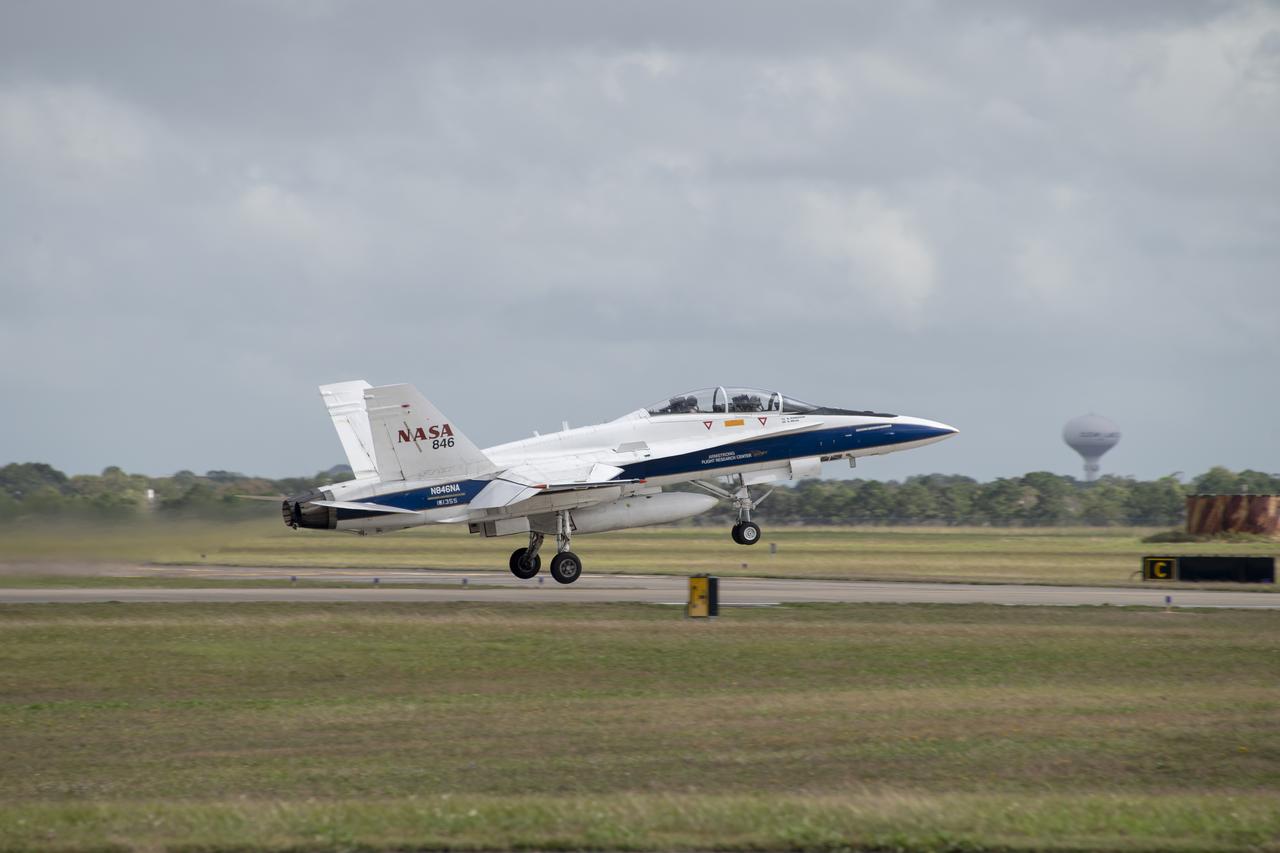
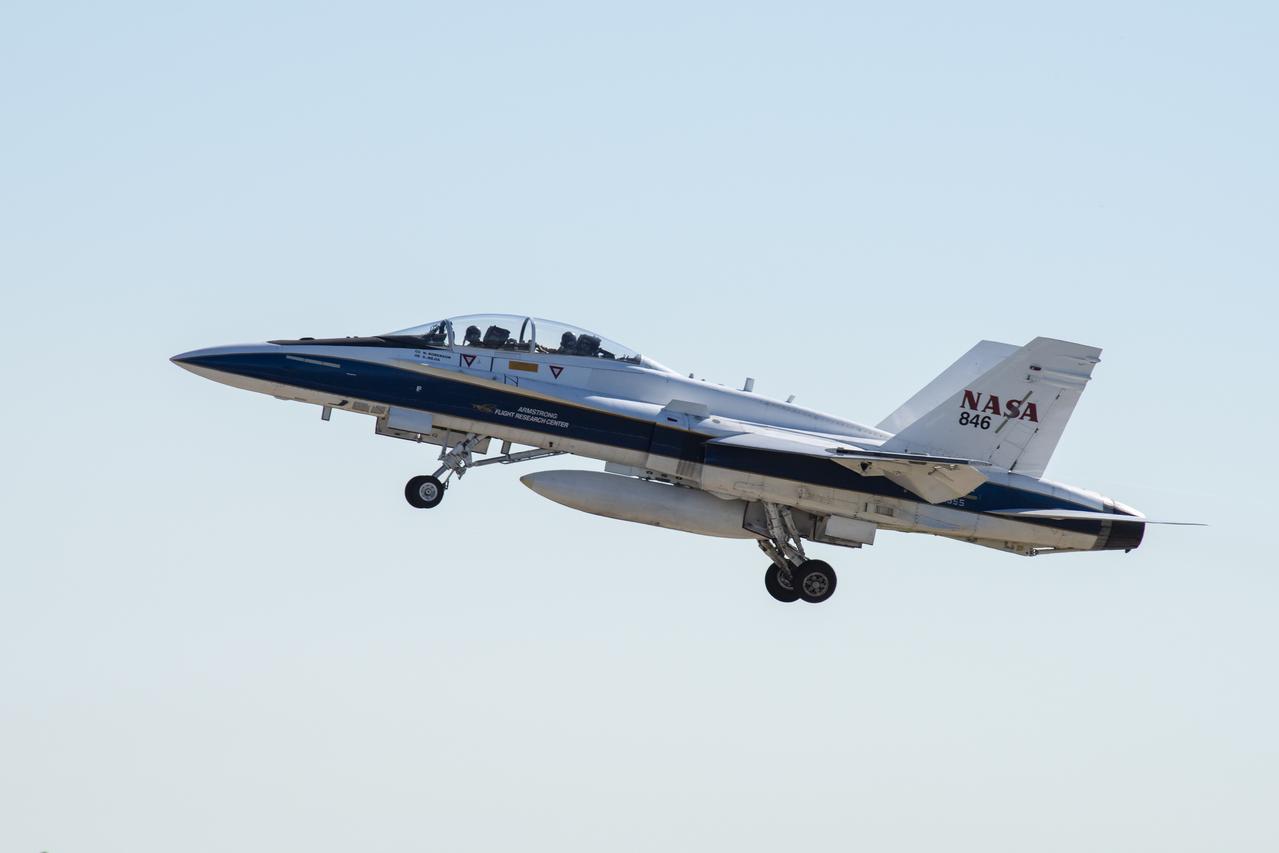
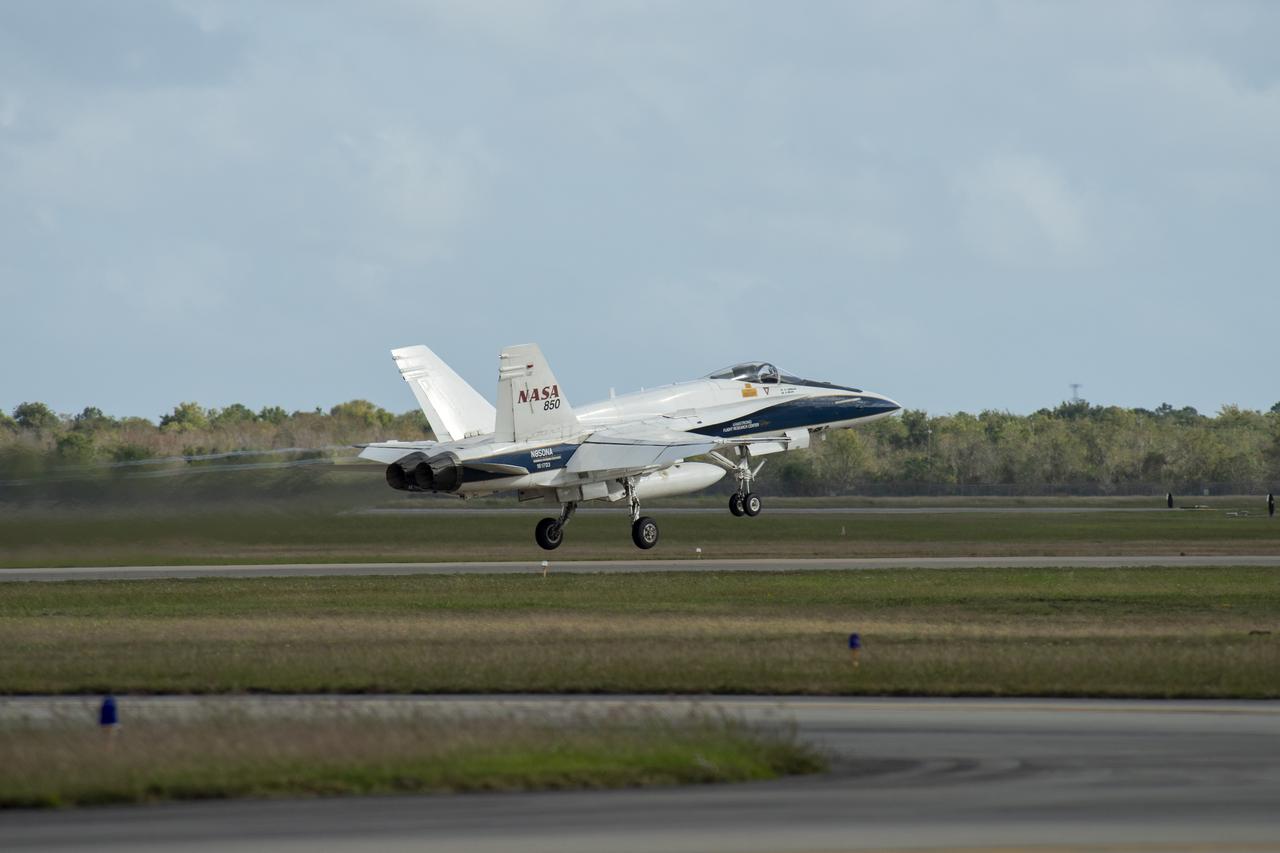
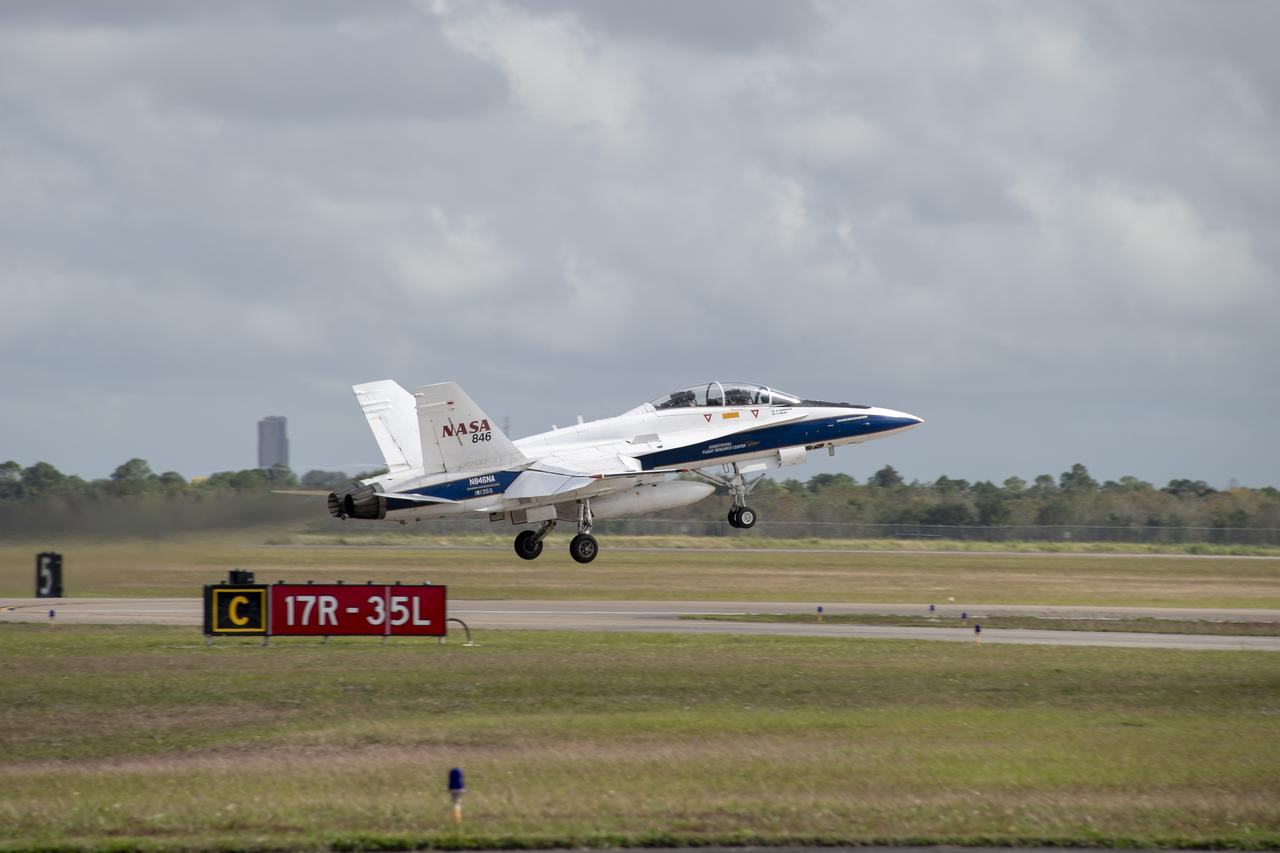
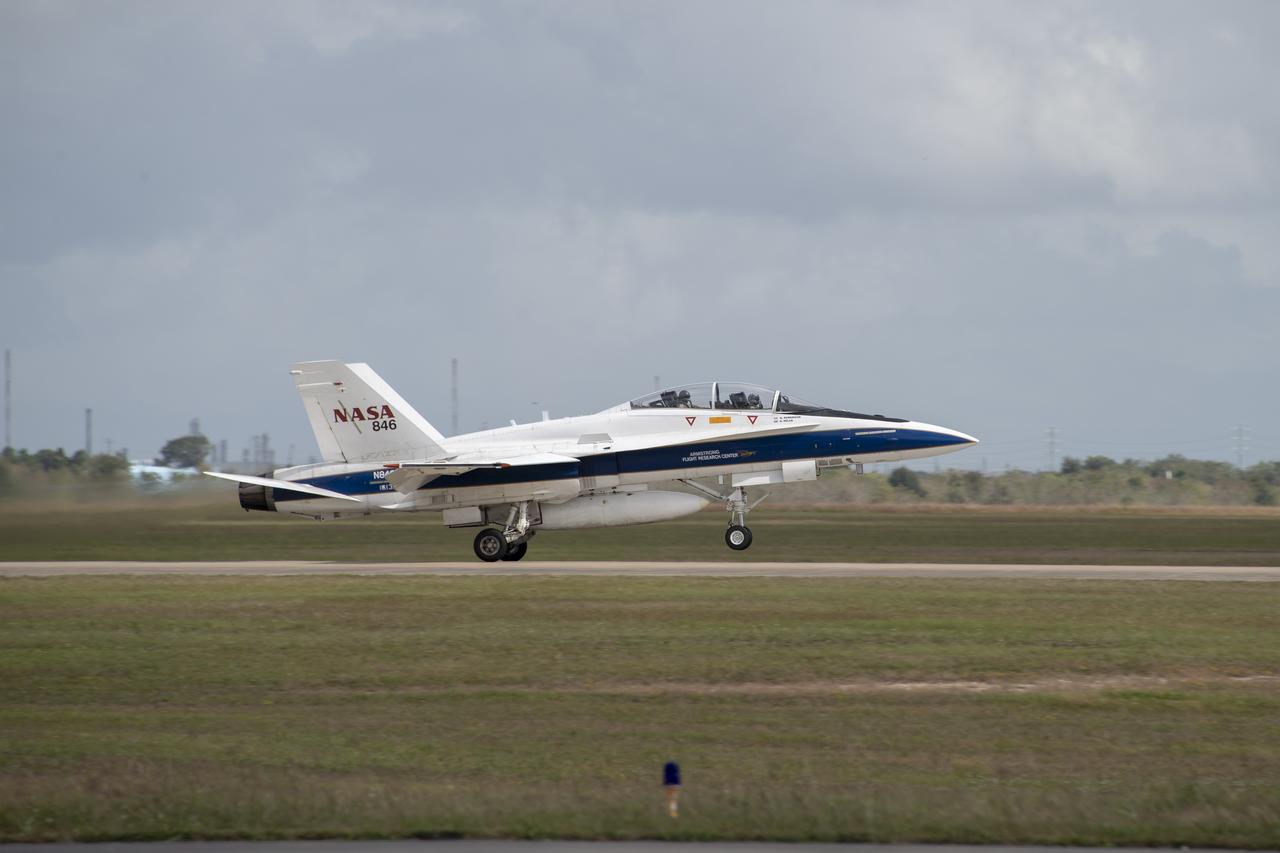
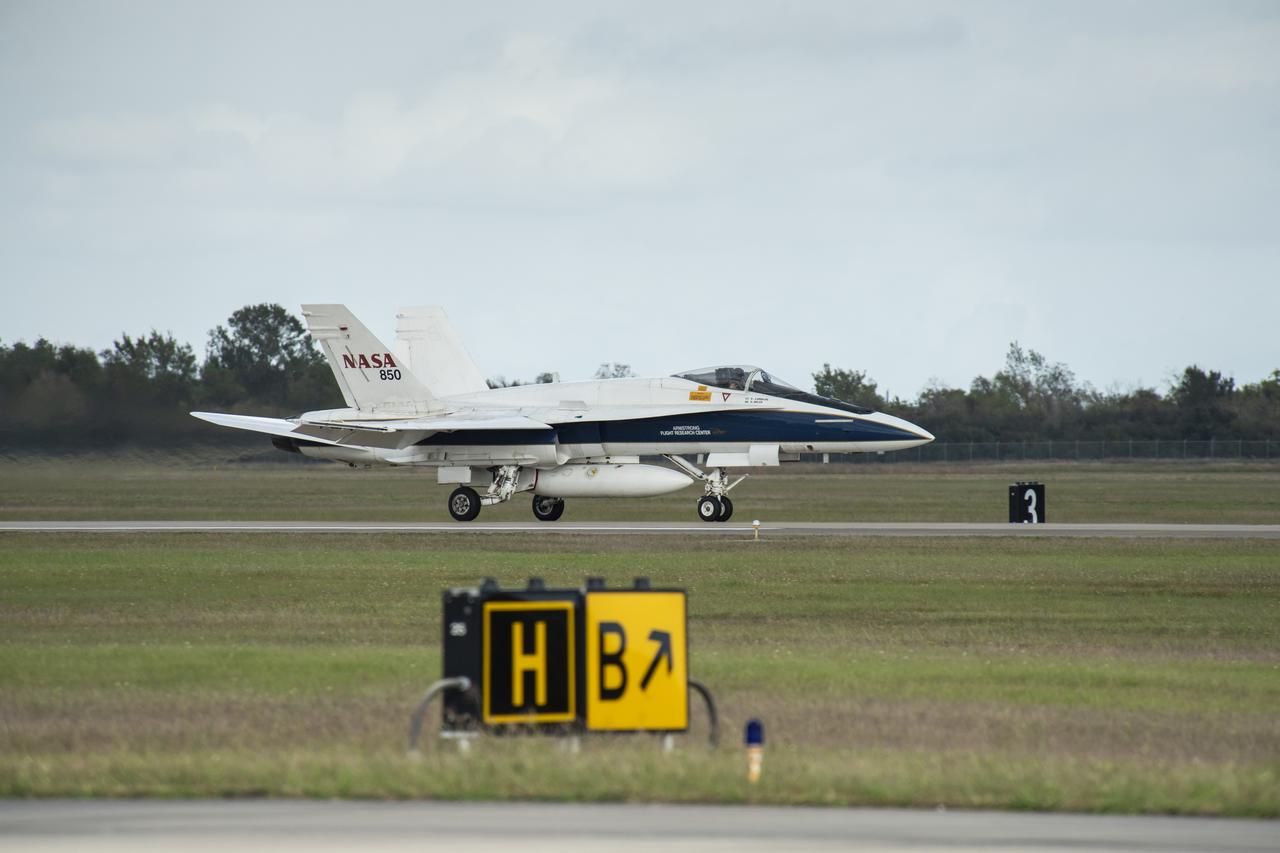
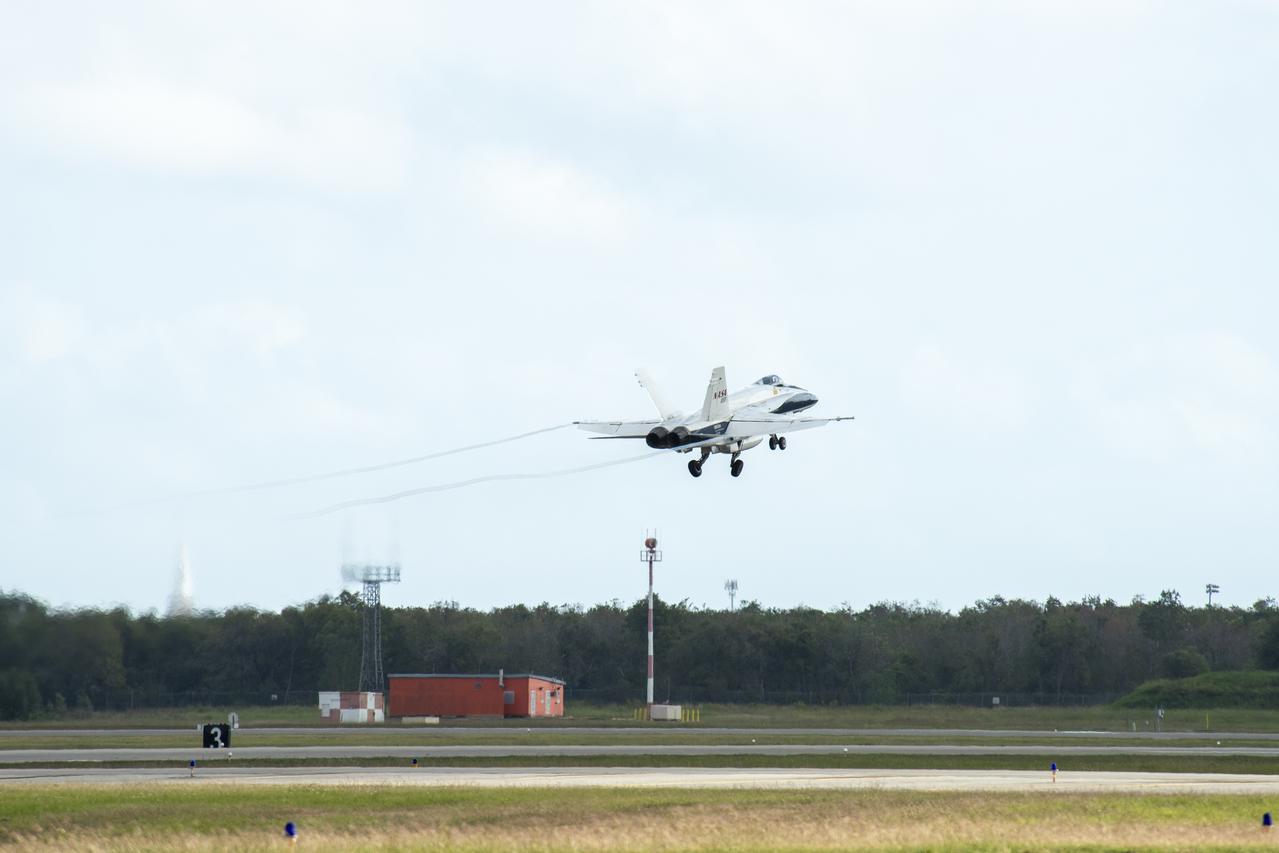
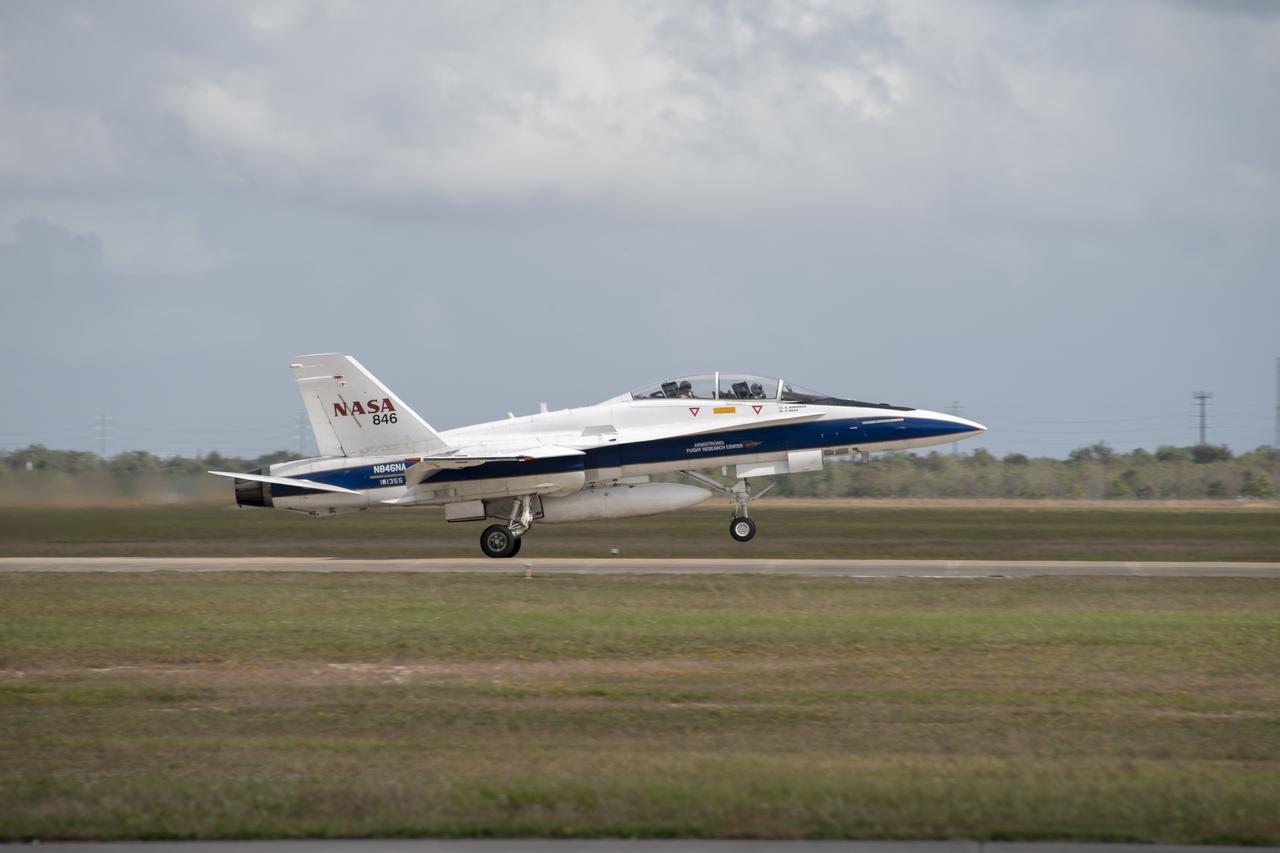
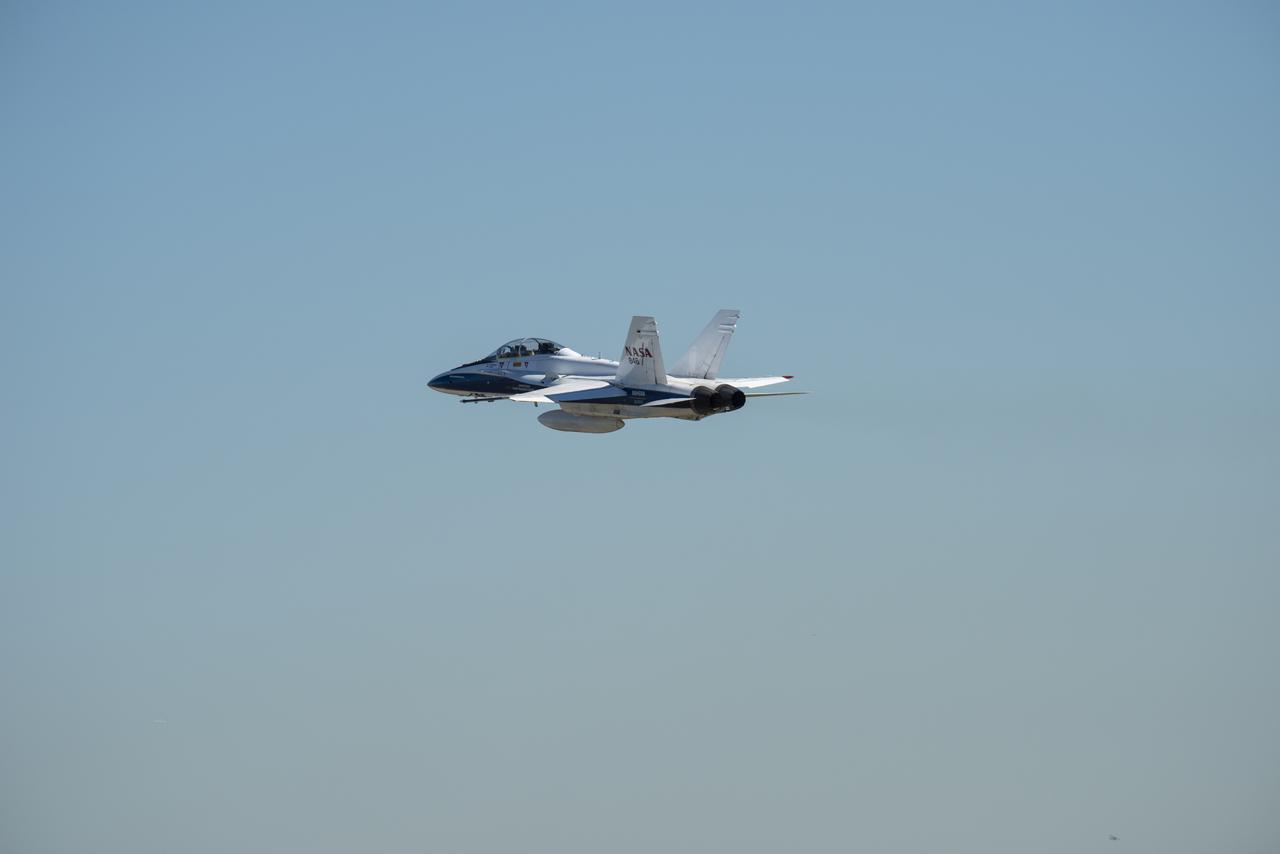
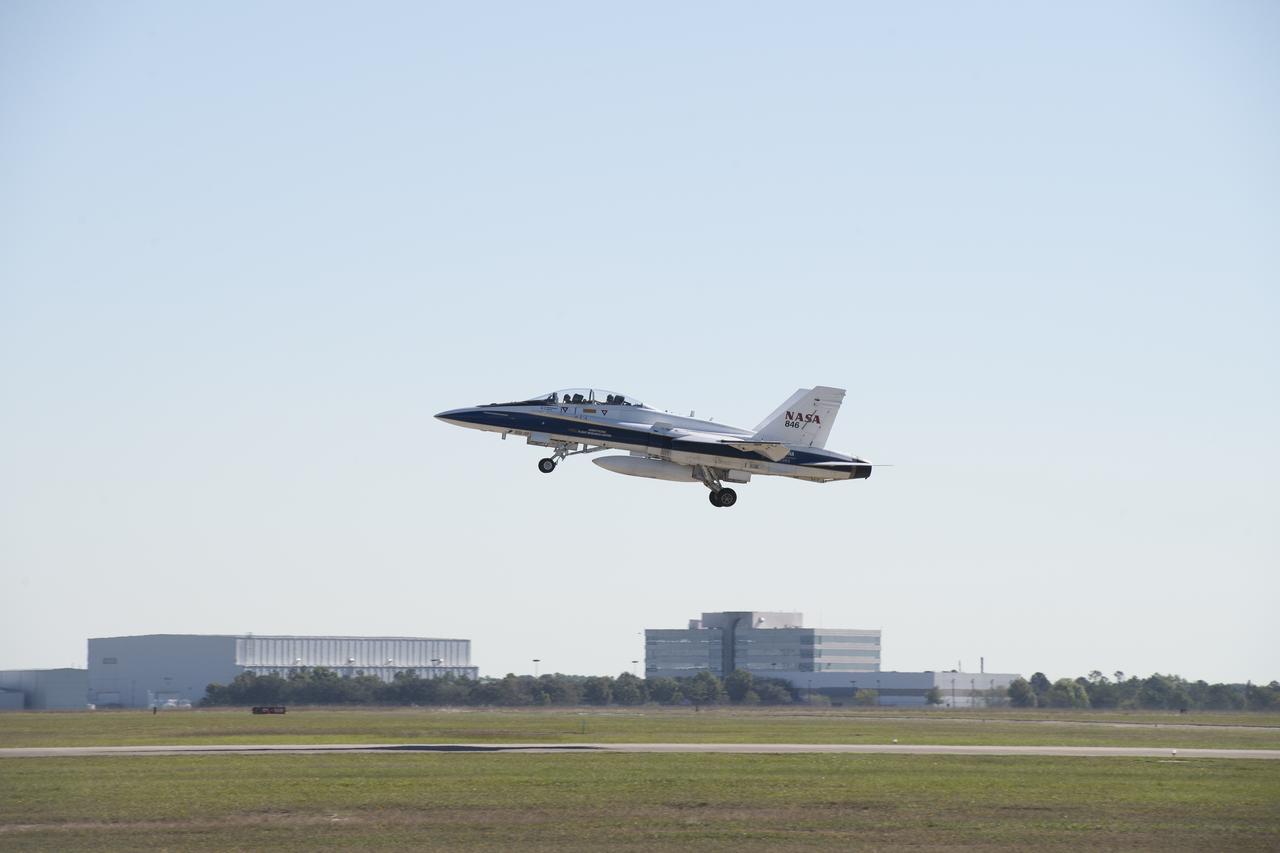
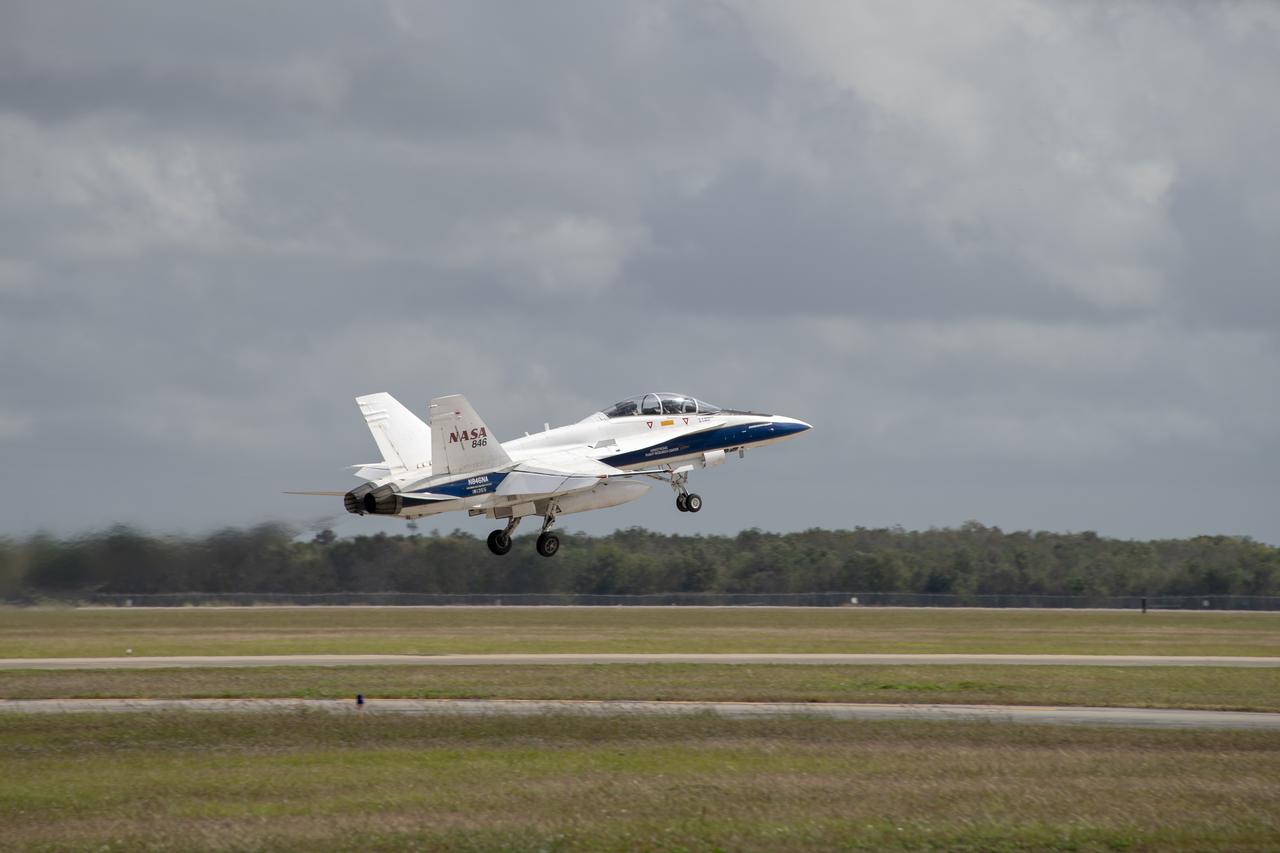
NASA’s F/A-18 research aircraft takes off from Ellington Field in Houston, Texas for a quiet supersonic research flight off the coast of Galveston, as part of the QSF18 flight series. The F/A-18 will climb to 50,000 feet over the Gulf of Mexico, where it will perform the quiet supersonic dive maneuver.
NASA F/A-18 Takes Off for QSF18 Supersonic Flight
NASA’s F/A-18 research aircraft takes off from Ellington Field in Houston, Texas for a quiet supersonic research flight off the coast of Galveston, as part of the QSF18 flight series. The F/A-18 will climb to 50,000 feet over the Gulf of Mexico, where it will perform the quiet supersonic dive maneuver.
NASA F/A-18 Takes Off for QSF18 Supersonic Flight
NASA’s F/A-18 research aircraft takes off from Ellington Field in Houston, Texas for a quiet supersonic research flight off the coast of Galveston, as part of the QSF18 flight series. The F/A-18 will climb to 50,000 feet over the Gulf of Mexico, where it will perform the quiet supersonic dive maneuver.
NASA F/A-18 Takes Off for QSF18 Supersonic Flight
NASA’s F/A-18 research aircraft takes off from Ellington Field in Houston, Texas for a quiet supersonic research flight off the coast of Galveston, as part of the QSF18 flight series. The F/A-18 will climb to 50,000 feet over the Gulf of Mexico, where it will perform the quiet supersonic dive maneuver.
NASA F/A-18 Takes Off for QSF18 Supersonic Flight
NASA's F/A-18 research aircraft takes off from Ellington Field in Houston, Texas for a quiet supersonic research flight off the coast of Galveston, as part of the QSF18 flight series. The F/A-18 will climb to 50,000 feet over the Gulf of Mexico, where it will perform the quiet supersonic dive maneuver.
NASA F/A-18 Takes Off for QSF18 Supersonic Flight
NASA’s F/A-18 research aircraft takes off from Ellington Field in Houston, Texas for a quiet supersonic research flight off the coast of Galveston, as part of the QSF18 flight series. The F/A-18 will climb to 50,000 feet over the Gulf of Mexico, where it will perform the quiet supersonic dive maneuver.
NASA F/A-18 Takes Off for QSF18 Supersonic Flight
NASA’s F/A-18 research aircraft takes off from Ellington Field in Houston, Texas for a quiet supersonic research flight off the coast of Galveston, as part of the QSF18 flight series. The F/A-18 will climb to 50,000 feet over the Gulf of Mexico, where it will perform the quiet supersonic dive maneuver.
NASA F/A-18 Takes Off for QSF18 Supersonic Flight
NASA’s F/A-18 research aircraft takes off from Ellington Field in Houston, Texas for a quiet supersonic research flight off the coast of Galveston, as part of the QSF18 flight series. The F/A-18 will climb to 50,000 feet over the Gulf of Mexico, where it will perform the quiet supersonic dive maneuver.
NASA F/A-18 Takes Off for QSF18 Supersonic Flight
NASA’s F/A-18 research aircraft takes off from Ellington Field in Houston, Texas for a quiet supersonic research flight off the coast of Galveston, as part of the QSF18 flight series. The F/A-18 will climb to 50,000 feet over the Gulf of Mexico, where it will perform the quiet supersonic dive maneuver.
NASA F/A-18 Takes Off for QSF18 Supersonic Flight
NASA’s F/A-18 research aircraft takes off from Ellington Field in Houston, Texas for a quiet supersonic research flight off the coast of Galveston, as part of the QSF18 flight series. The F/A-18 will climb to 50,000 feet over the Gulf of Mexico, where it will perform the quiet supersonic dive maneuver.
NASA F/A-18 Takes Off for QSF18 Supersonic Flight
NASA’s F/A-18 research aircraft takes off from Ellington Field in Houston, Texas for a quiet supersonic research flight off the coast of Galveston, as part of the QSF18 flight series. The F/A-18 will climb to 50,000 feet over the Gulf of Mexico, where it will perform the quiet supersonic dive maneuver.
NASA F/A-18 Takes Off for QSF18 Supersonic Flight
NASA's F/A-18 research aircraft takes off from Ellington Field in Houston, Texas for a quiet supersonic research flight off the coast of Galveston, as part of the QSF18 flight series. The F/A-18 will climb to 50,000 feet over the Gulf of Mexico, where it will perform the quiet supersonic dive maneuver.
NASA F/A-18 Takes Off for QSF18 Supersonic Flight
NASA’s F/A-18 research aircraft takes off from Ellington Field in Houston, Texas for a quiet supersonic research flight off the coast of Galveston, as part of the QSF18 flight series. The F/A-18 will climb to 50,000 feet over the Gulf of Mexico, where it will perform the quiet supersonic dive maneuver.
NASA F/A-18 Takes Off for QSF18 Supersonic Flight
NASA’s F/A-18 research aircraft takes off from Ellington Field in Houston, Texas for a quiet supersonic research flight off the coast of Galveston, as part of the QSF18 flight series. The F/A-18 will climb to 50,000 feet over the Gulf of Mexico, where it will perform the quiet supersonic dive maneuver.
NASA F/A-18 Takes Off for QSF18 Supersonic Flight
NASA’s F/A-18 research aircraft takes off from Ellington Field in Houston, Texas for a quiet supersonic research flight off the coast of Galveston, as part of the QSF18 flight series. The F/A-18 will climb to 50,000 feet over the Gulf of Mexico, where it will perform the quiet supersonic dive maneuver.
NASA F/A-18 Takes Off for QSF18 Supersonic Flight
NASA’s F/A-18 research aircraft takes off from Ellington Field in Houston, Texas for a quiet supersonic research flight off the coast of Galveston, as part of the QSF18 flight series. The F/A-18 will climb to 50,000 feet over the Gulf of Mexico, where it will perform the quiet supersonic dive maneuver.
NASA F/A-18 Takes Off for QSF18 Supersonic Flight
NASA's F/A-18 research aircraft takes off from Ellington Field in Houston, Texas for a quiet supersonic research flight off the coast of Galveston, as part of the QSF18 flight series. The F/A-18 will climb to 50,000 feet over the Gulf of Mexico, where it will perform the quiet supersonic dive maneuver.
NASA F/A-18 Takes Off for QSF18 Supersonic Flight
NASA's F/A-18 research aircraft takes off from Ellington Field in Houston, Texas for a quiet supersonic research flight off the coast of Galveston, as part of the QSF18 flight series. The F/A-18 will climb to 50,000 feet over the Gulf of Mexico, where it will perform the quiet supersonic dive maneuver.
NASA F/A-18 Takes Off for QSF18 Supersonic Flight
NASA’s F/A-18 research aircraft takes off from Ellington Field in Houston, Texas for a quiet supersonic research flight off the coast of Galveston, as part of the QSF18 flight series. The F/A-18 will climb to 50,000 feet over the Gulf of Mexico, where it will perform the quiet supersonic dive maneuver.
NASA F/A-18 Takes Off for QSF18 Supersonic Flight
NASA’s F/A-18 research aircraft takes off from Ellington Field in Houston, Texas for a quiet supersonic research flight off the coast of Galveston, as part of the QSF18 flight series. The F/A-18 will climb to 50,000 feet over the Gulf of Mexico, where it will perform the quiet supersonic dive maneuver.
NASA F/A-18 Takes Off for QSF18 Supersonic Flight
NASA’s F/A-18 research aircraft takes off from Ellington Field in Houston, Texas for a quiet supersonic research flight off the coast of Galveston, as part of the QSF18 flight series. The F/A-18 will climb to 50,000 feet over the Gulf of Mexico, where it will perform the quiet supersonic dive maneuver.
NASA F/A-18 Takes Off for QSF18 Supersonic Flight
NASA’s F/A-18 research aircraft takes off from Ellington Field in Houston, Texas for a quiet supersonic research flight off the coast of Galveston, as part of the QSF18 flight series. The F/A-18 will climb to 50,000 feet over the Gulf of Mexico, where it will perform the quiet supersonic dive maneuver.
NASA F/A-18 Takes Off for QSF18 Supersonic Flight
NASA’s F/A-18 research aircraft takes off from Ellington Field in Houston, Texas for a quiet supersonic research flight off the coast of Galveston, as part of the QSF18 flight series. The F/A-18 will climb to 50,000 feet over the Gulf of Mexico, where it will perform the quiet supersonic dive maneuver.
NASA F/A-18 Takes Off for QSF18 Supersonic Flight
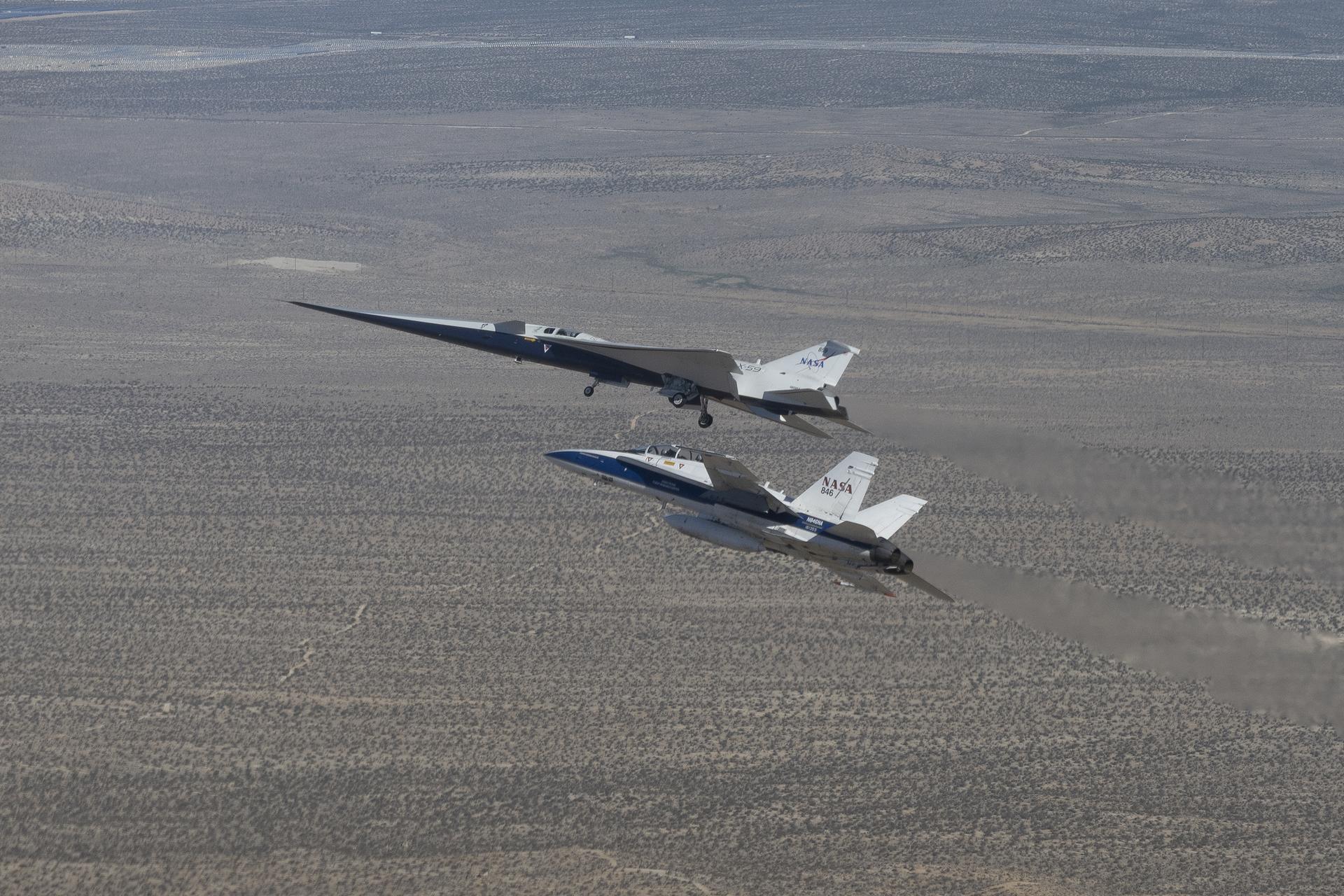
NASA’s X-59 quiet supersonic research aircraft flies above Palmdale and Edwards, California, during its first flight Tuesday, Oct. 28, 2025, accompanied by a NASA F/A-18 research aircraft. A NASA F-15 research aircraft (not pictured) captured the image as the X-59 traveled to NASA’s Armstrong Flight Research Center in Edwards, California, where it will begin flight testing for NASA’s Quesst mission, which aims to demonstrate quiet supersonic flight over land.
NASA’s X-59 in Flight with F/A-18 Research Aircraft Monitoring
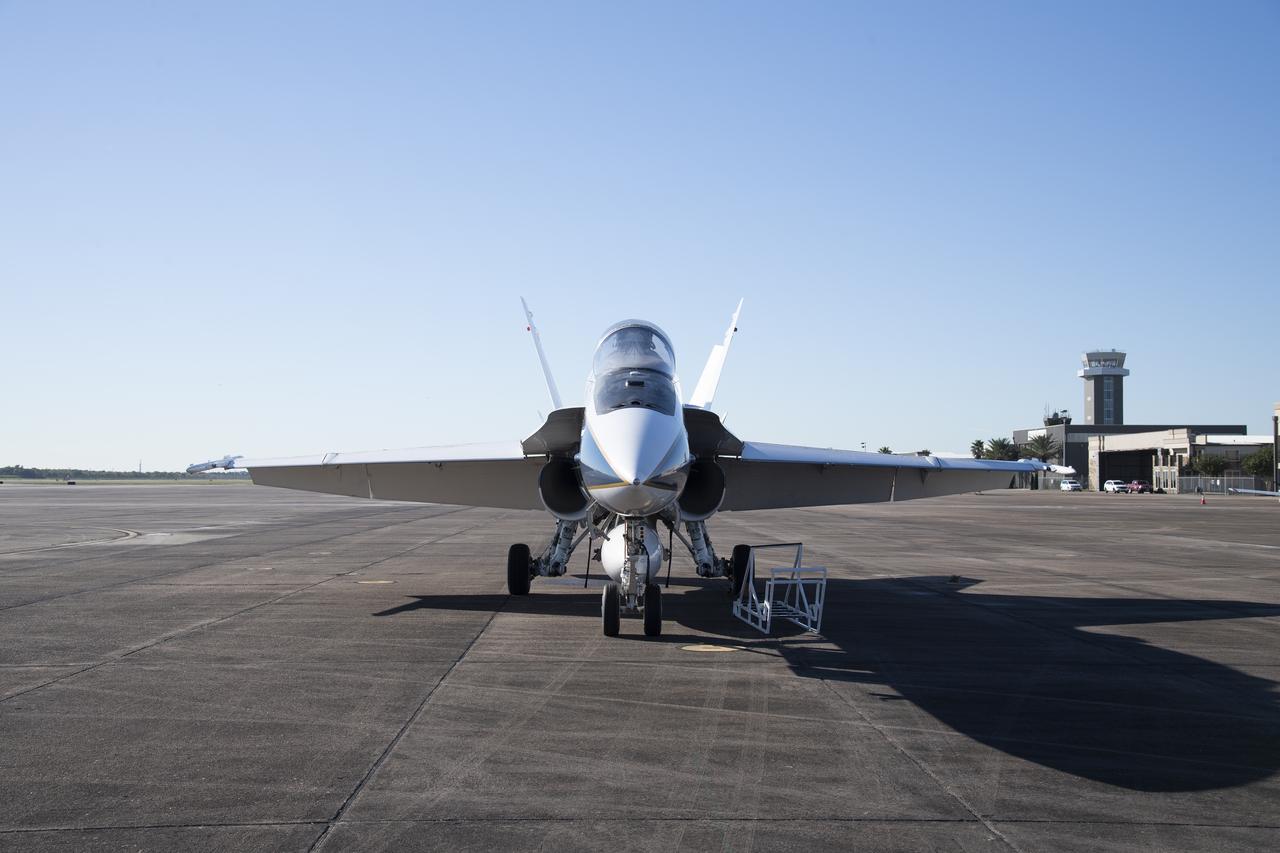
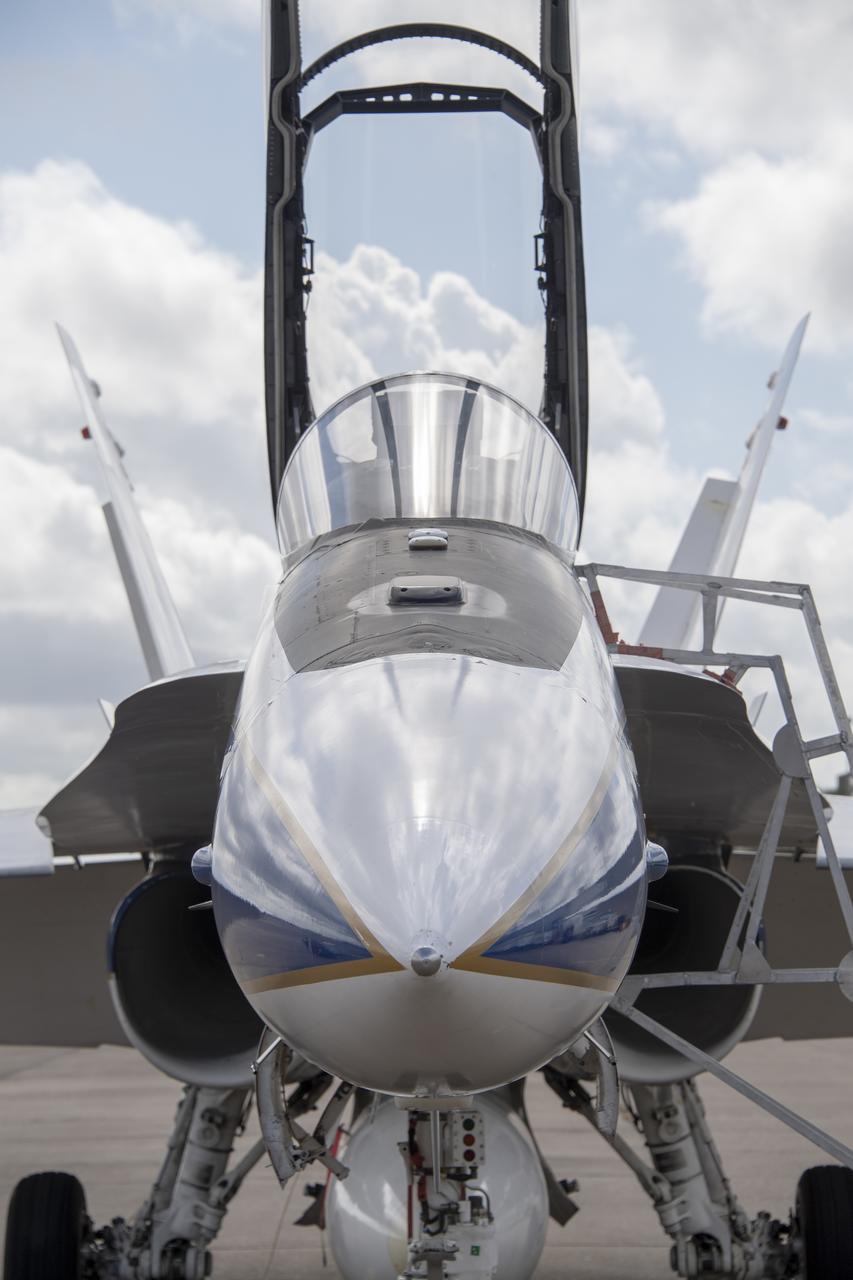
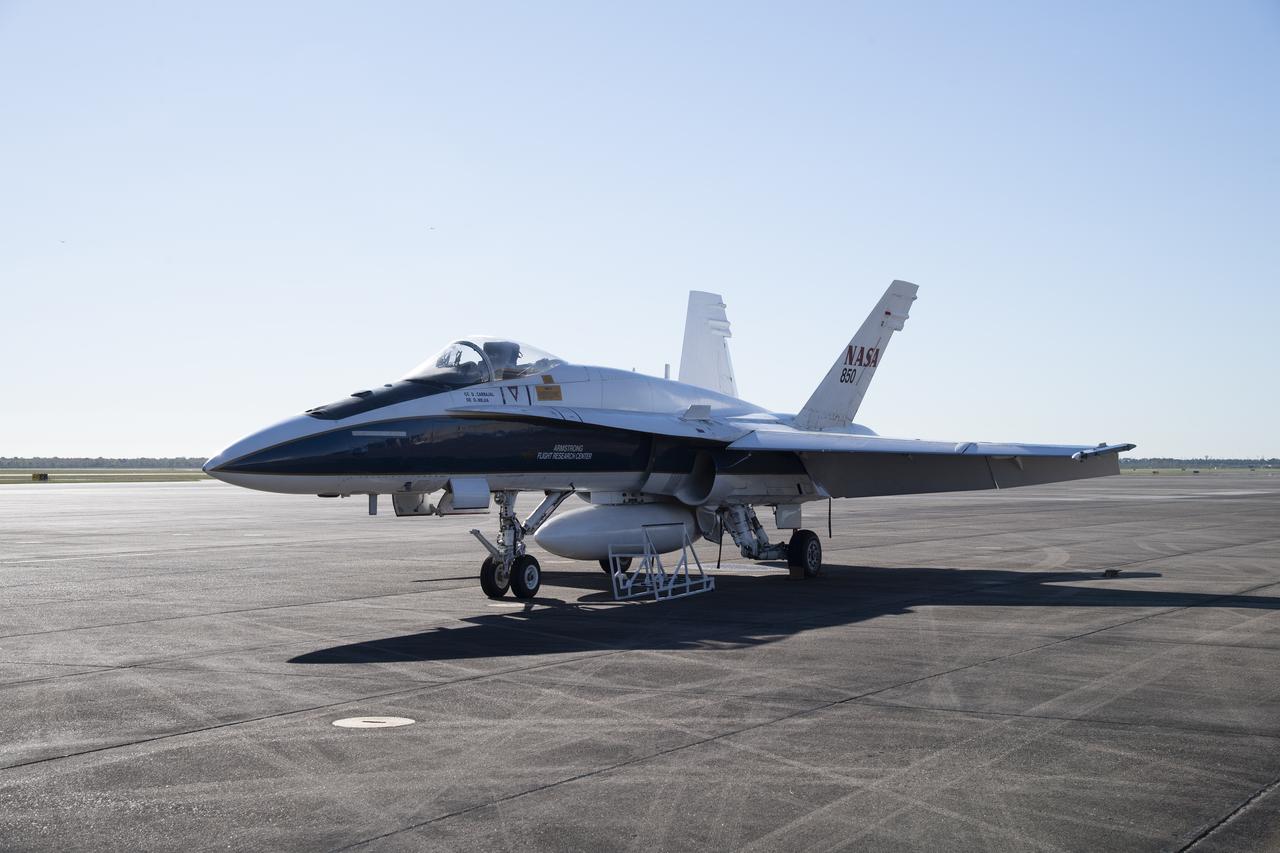
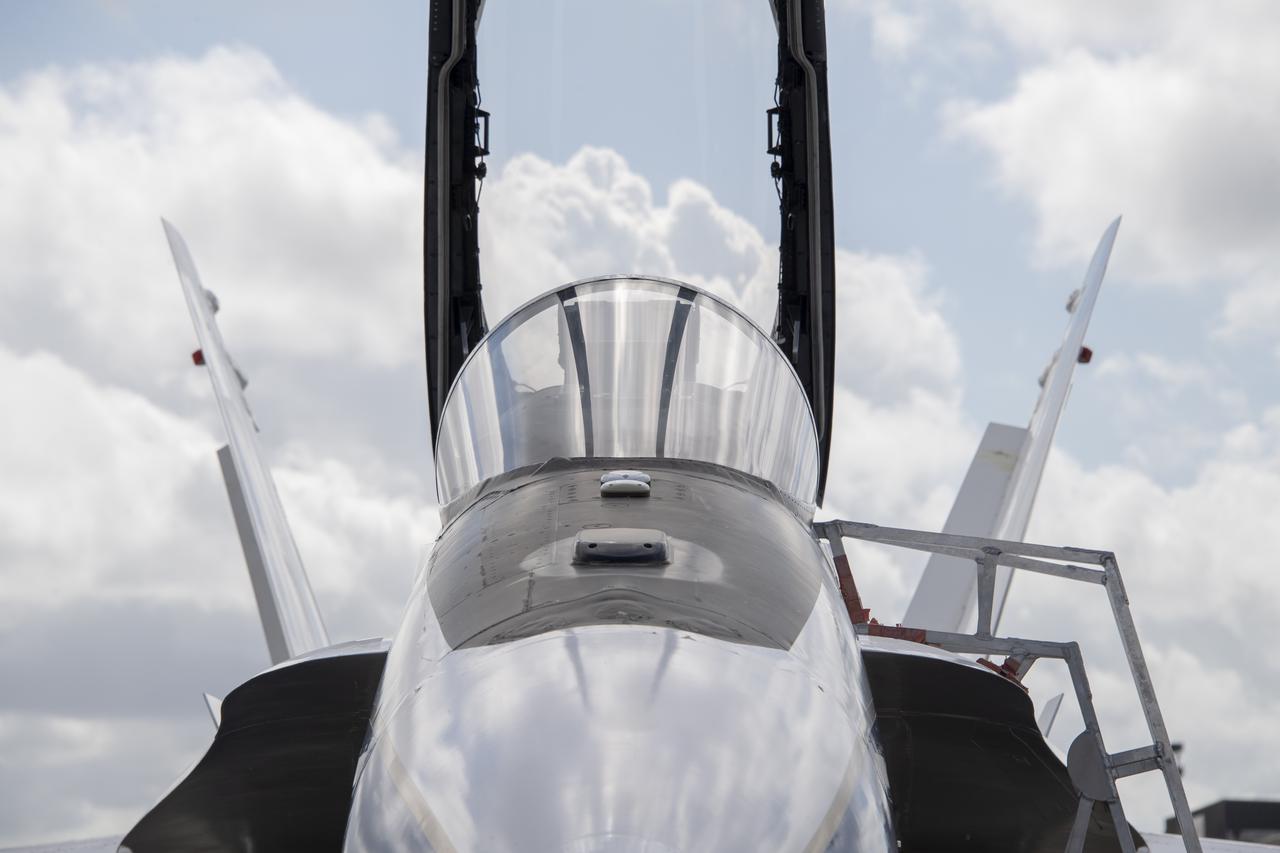
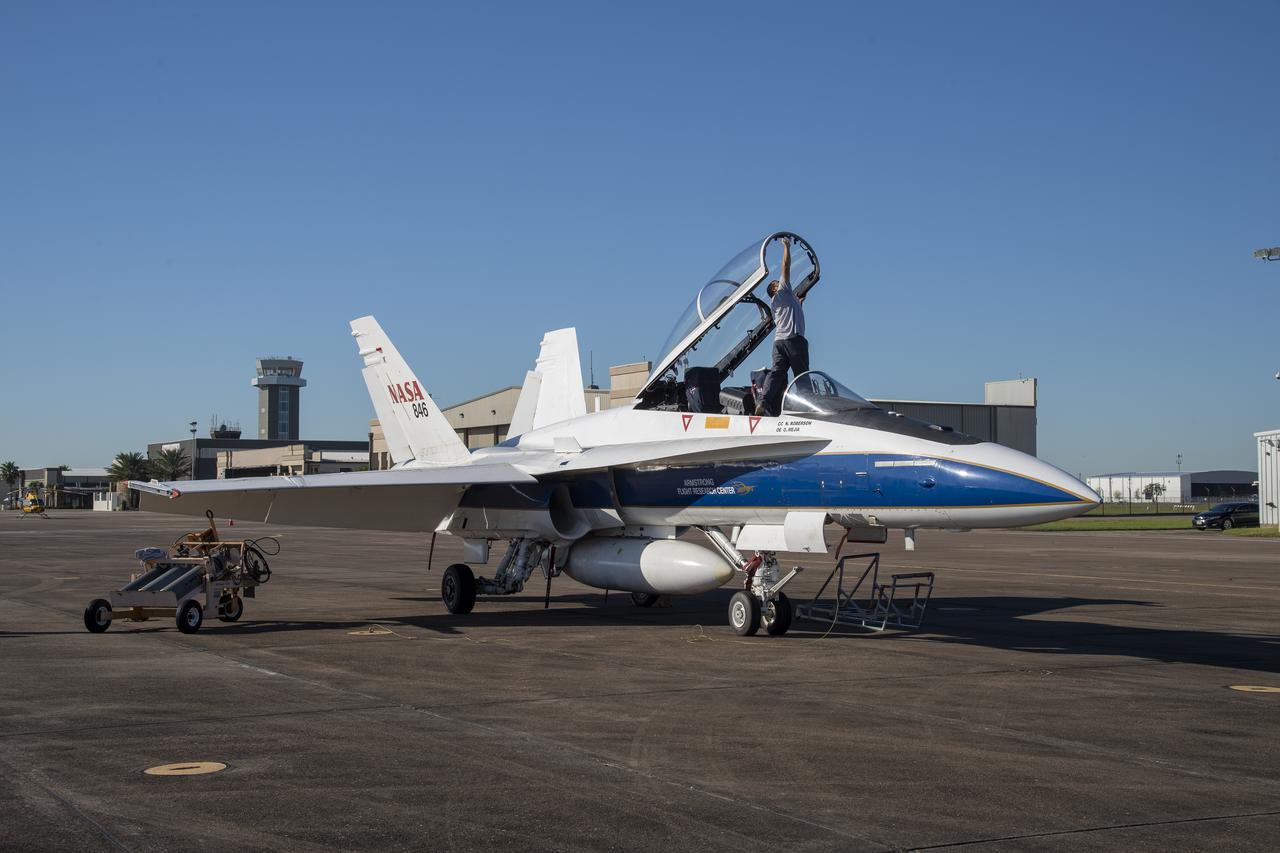
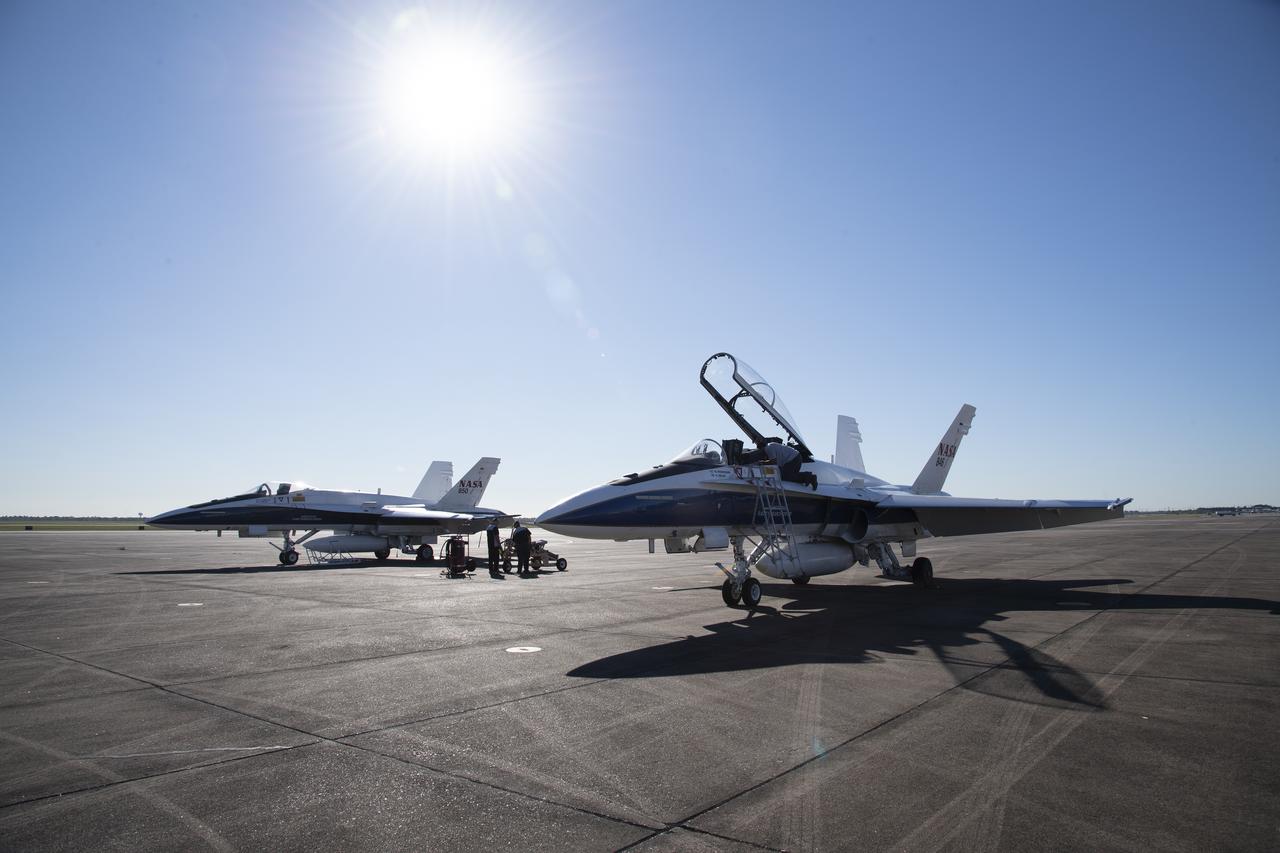
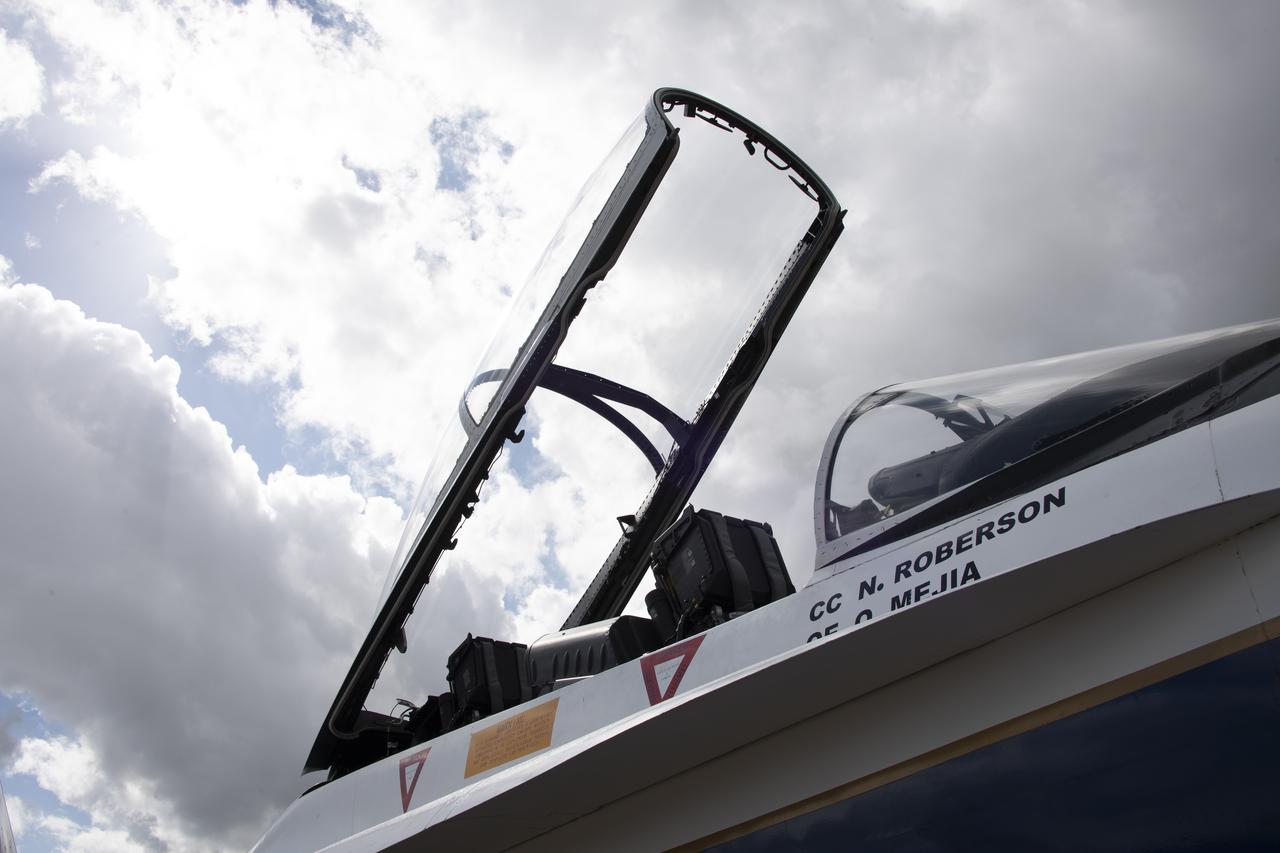
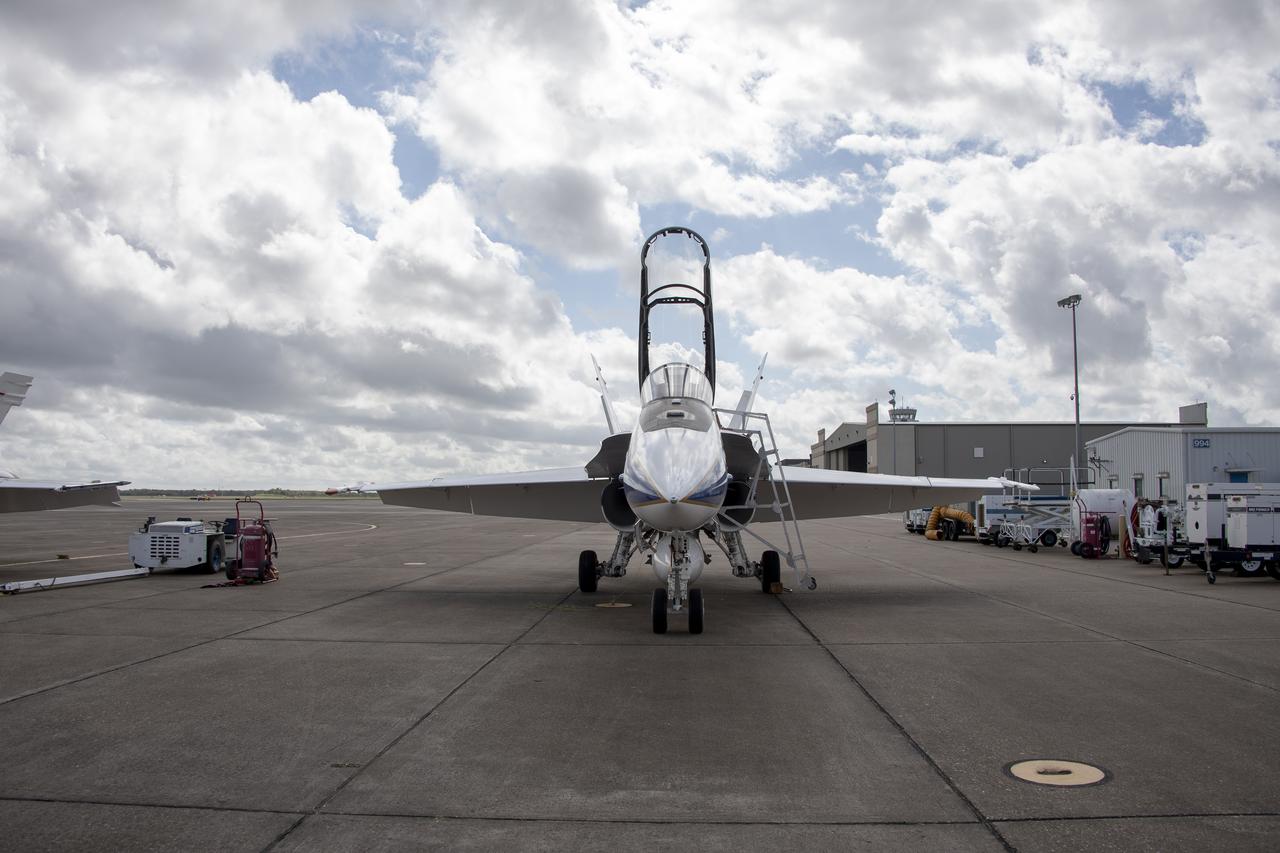
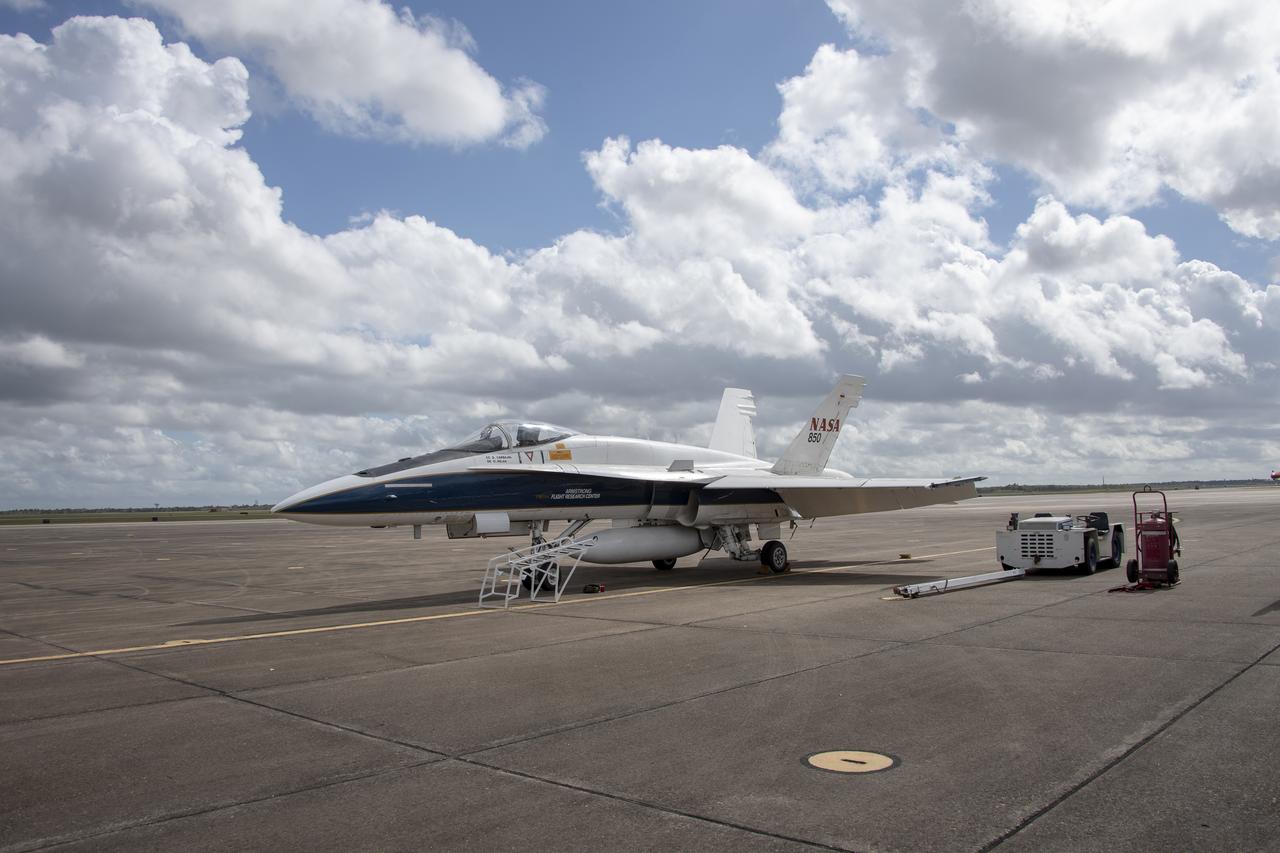
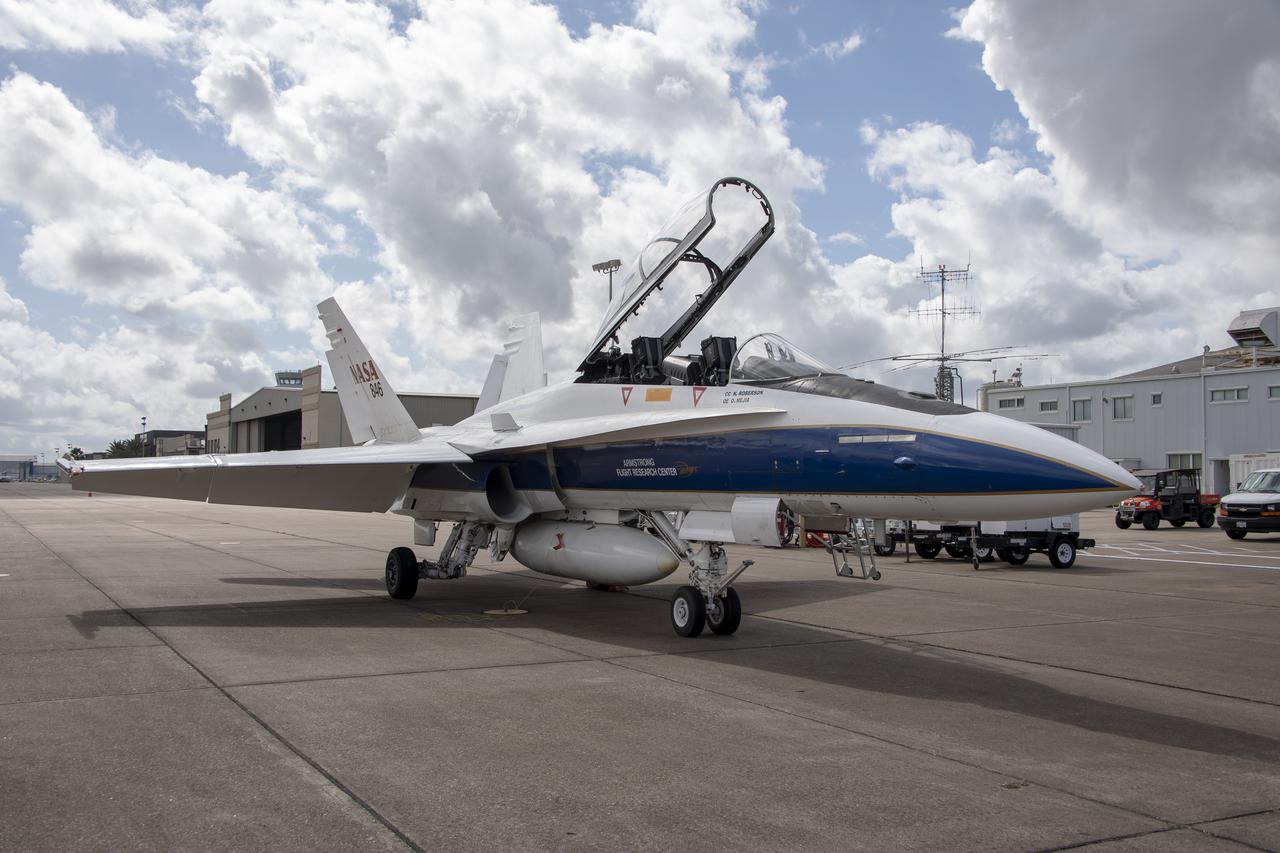
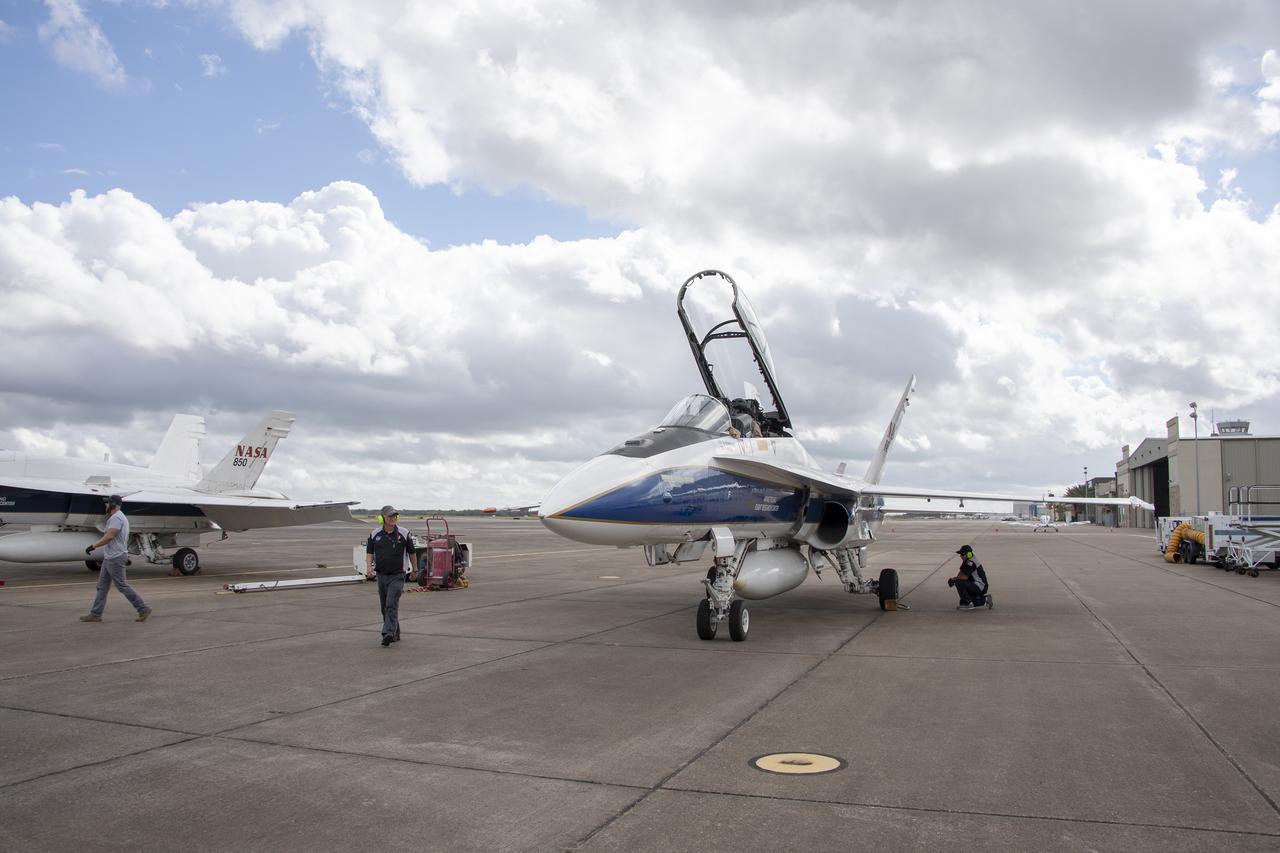
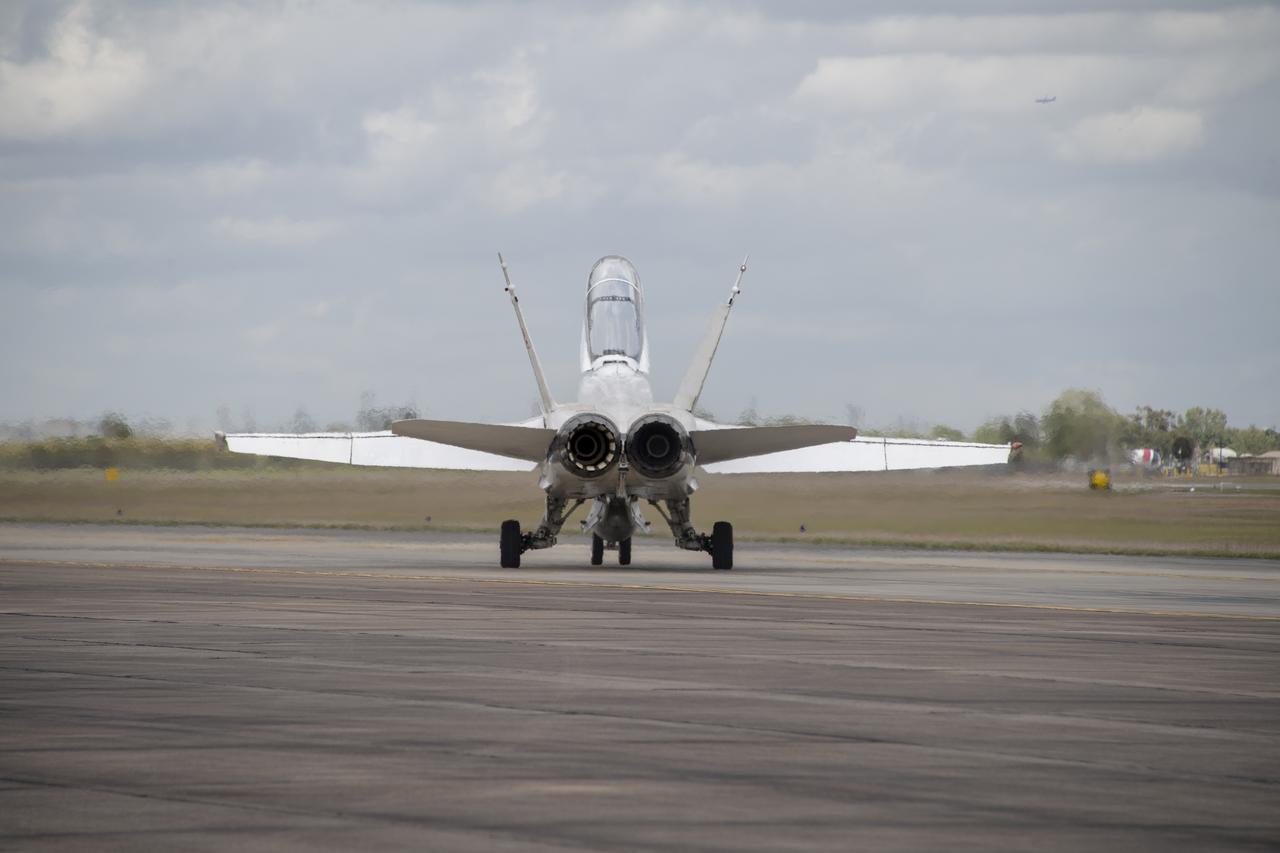
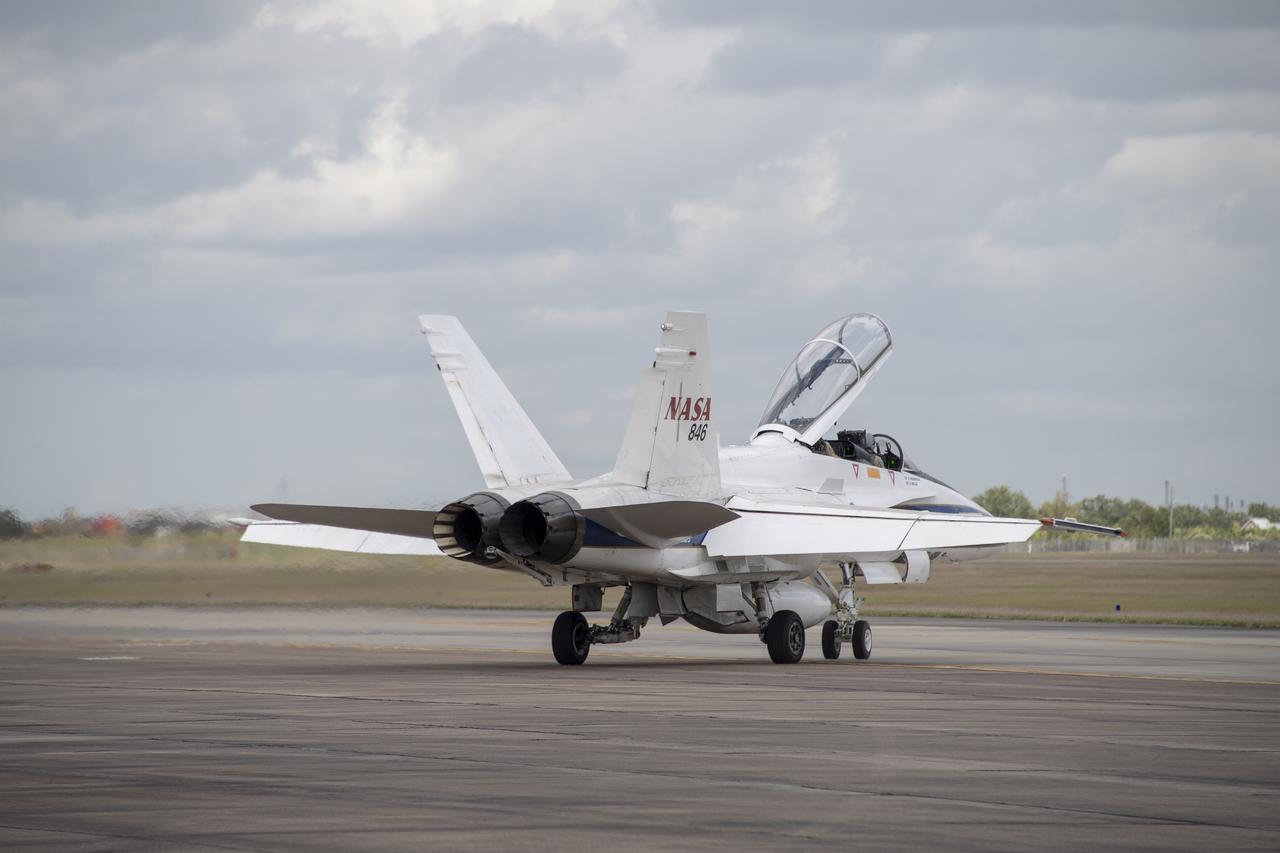
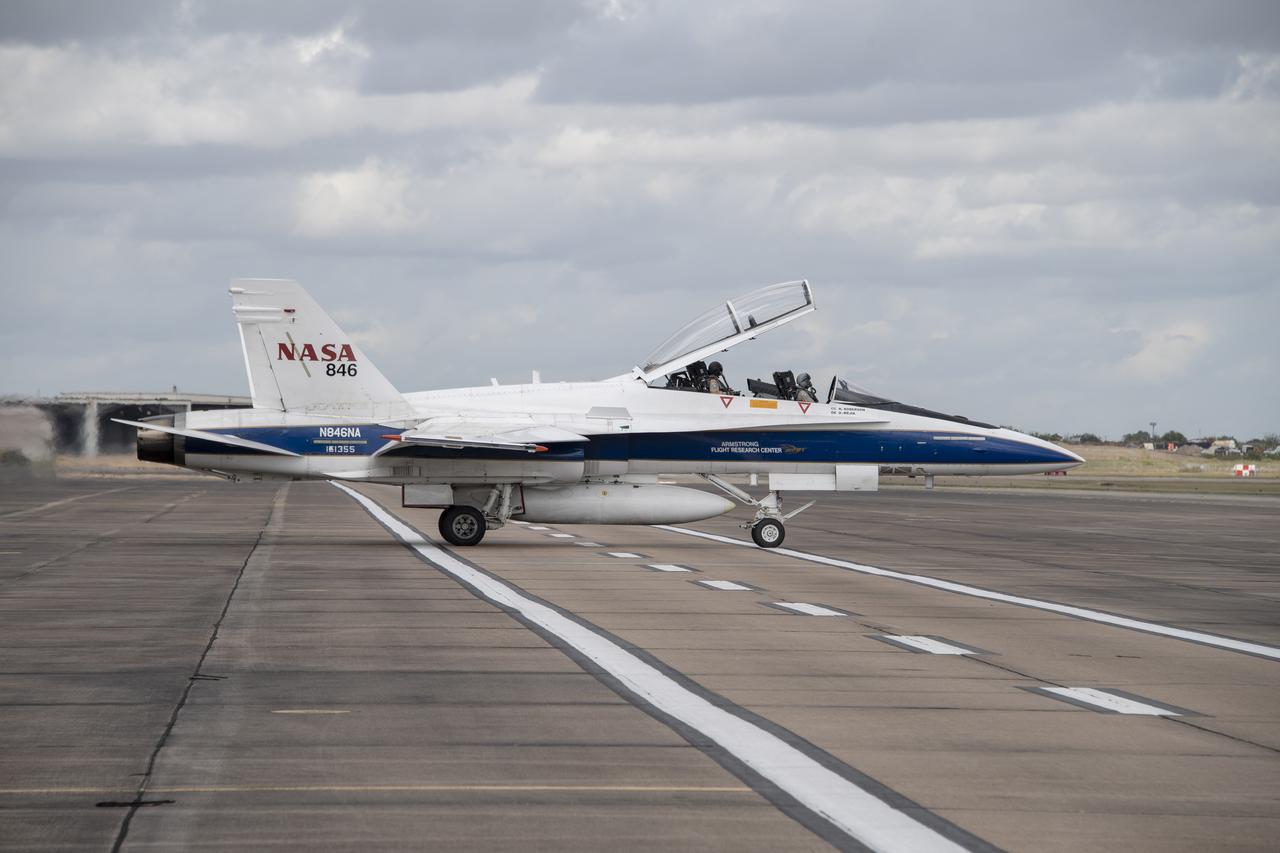
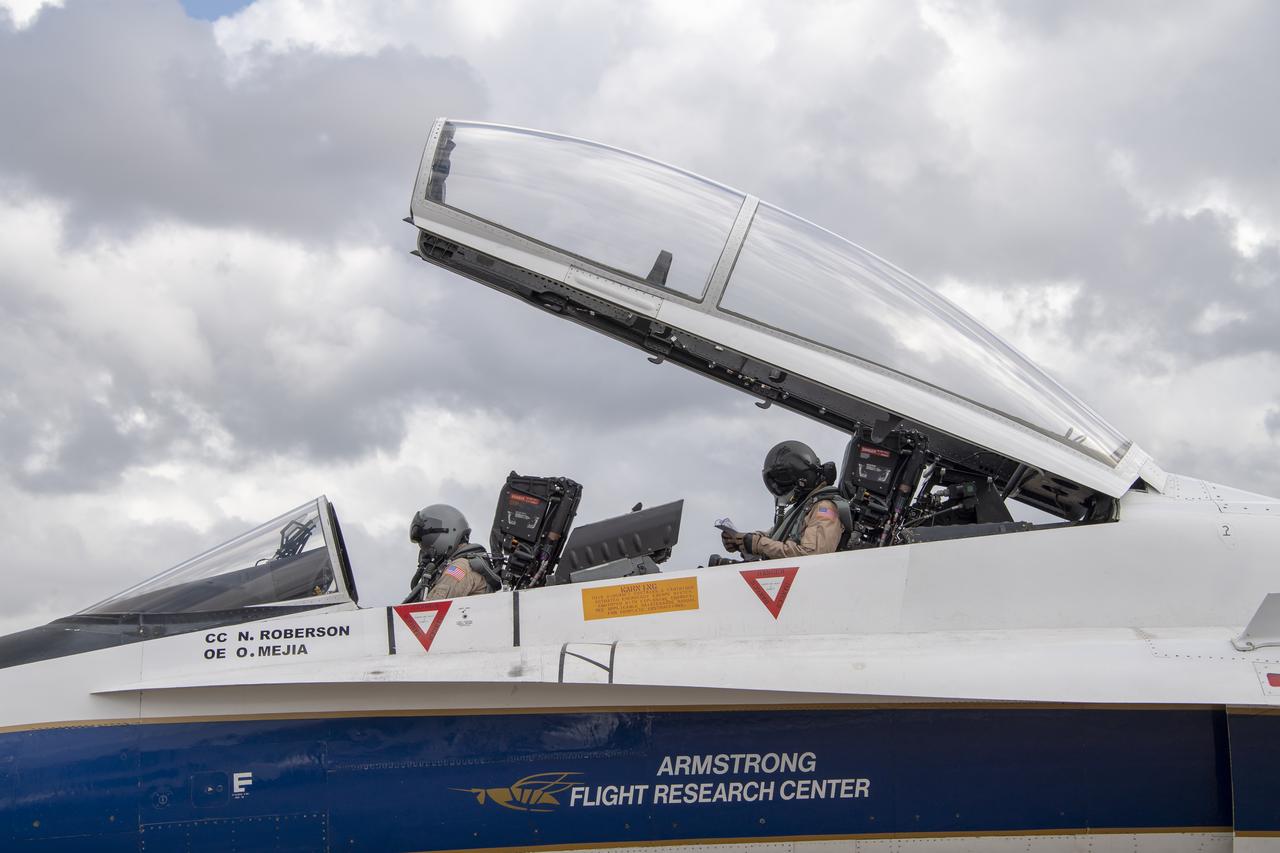
NASA’s F/A-18 research aircraft stands ready prior to a QSF18 supersonic research flight off the coast of Galveston, Texas.
NASA F/A-18 Research Aircraft Prior to QSF18 Flight
NASA's F/A-18 research aircraft stands ready prior to a QSF18 supersonic research flight off the coast of Galveston, Texas.
NASA F/A-18 Research Aircraft Prior to QSF18 Flight
NASA's F/A-18 research aircraft stands ready prior to a QSF18 supersonic research flight off the coast of Galveston, Texas.
NASA F/A-18 Research Aircraft Prior to QSF18 Flight
NASA’s F/A-18 research aircraft stands ready prior to a QSF18 supersonic research flight off the coast of Galveston, Texas.
NASA F/A-18 Research Aircraft Prior to QSF18 Flight
NASA's F/A-18 research aircraft stands ready prior to a QSF18 supersonic research flight off the coast of Galveston, Texas.
NASA F/A-18 Research Aircraft Prior to QSF18 Flight
NASA’s F/A-18 research aircraft stands ready prior to a QSF18 supersonic research flight off the coast of Galveston, Texas.
NASA F/A-18 Research Aircraft Prior to QSF18 Flight
NASA's F/A-18 research aircraft stands ready prior to a QSF18 supersonic research flight off the coast of Galveston, Texas.
NASA F/A-18 Research Aircraft Prior to QSF18 Flight
NASA's F/A-18 research aircraft stands ready prior to a QSF18 supersonic research flight off the coast of Galveston, Texas.
NASA F/A-18 Research Aircraft Prior to QSF18 Flight
NASA’s F/A-18 research aircraft stands ready prior to a QSF18 supersonic research flight off the coast of Galveston, Texas.
NASA F/A-18 Research Aircraft Prior to QSF18 Flight
NASA’s F/A-18 research aircraft stands ready prior to a QSF18 supersonic research flight off the coast of Galveston, Texas.
NASA F/A-18 Research Aircraft Prior to QSF18 Flight
NASA's F/A-18 research aircraft stands ready prior to a QSF18 supersonic research flight off the coast of Galveston, Texas.
NASA F/A-18 Research Aircraft Prior to QSF18 Flight
NASA’s F/A-18 research aircraft stands ready prior to a QSF18 supersonic research flight off the coast of Galveston, Texas.
NASA F/A-18 Research Aircraft Prior to QSF18 Flight
NASA’s F/A-18 research aircraft stands ready prior to a QSF18 supersonic research flight off the coast of Galveston, Texas.
NASA F/A-18 Research Aircraft Prior to QSF18 Flight
NASA's F/A-18 research aircraft stands ready prior to a QSF18 supersonic research flight off the coast of Galveston, Texas.
NASA F/A-18 Research Aircraft Prior to QSF18 Flight
NASA's F/A-18 research aircraft stands ready prior to a QSF18 supersonic research flight off the coast of Galveston, Texas.
NASA F/A-18 Research Aircraft Prior to QSF18 Flight
NASA's F/A-18 research aircraft stands ready prior to a QSF18 supersonic research flight off the coast of Galveston, Texas.
NASA F/A-18 Research Aircraft Prior to QSF18 Flight
NASA’s F/A-18 research aircraft stands ready prior to a QSF18 supersonic research flight off the coast of Galveston, Texas.
NASA F/A-18 Research Aircraft Prior to QSF18 Flight
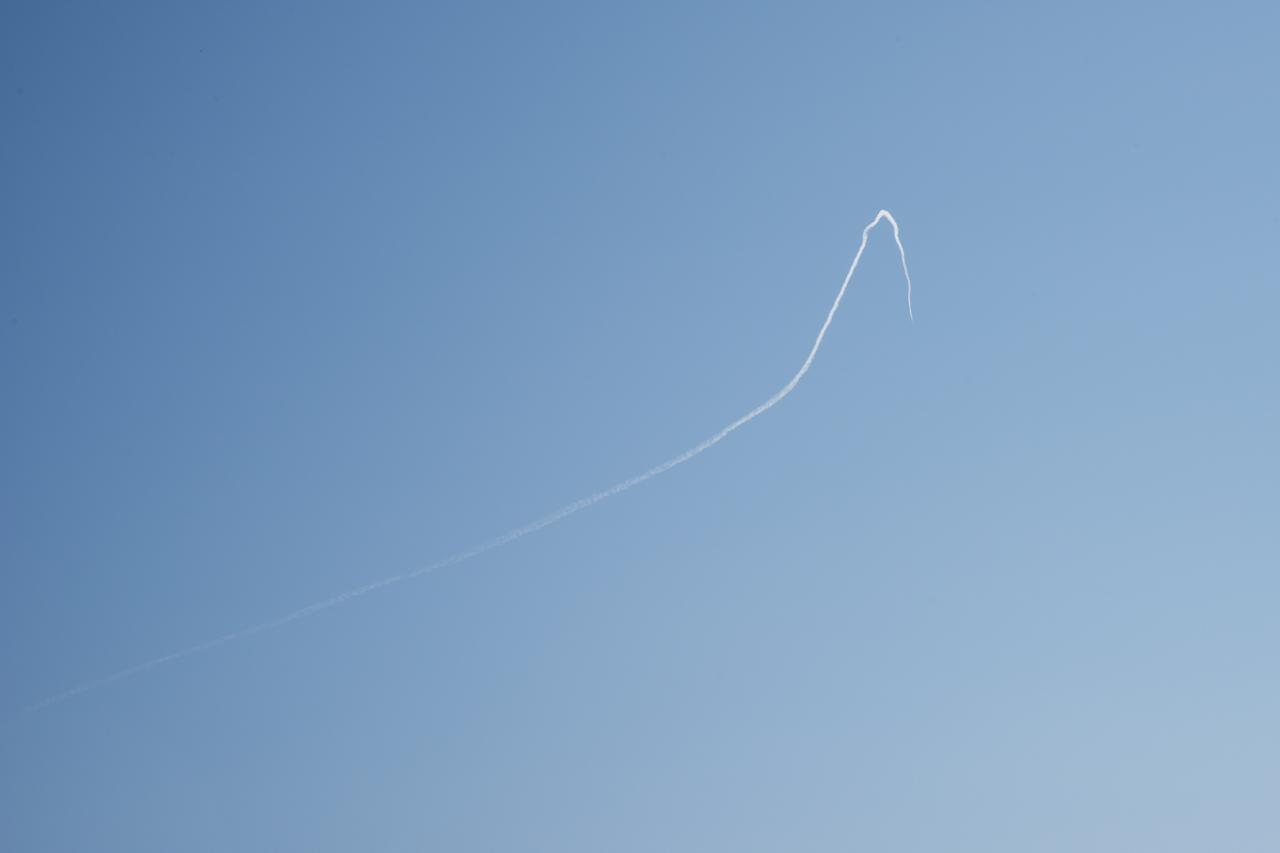
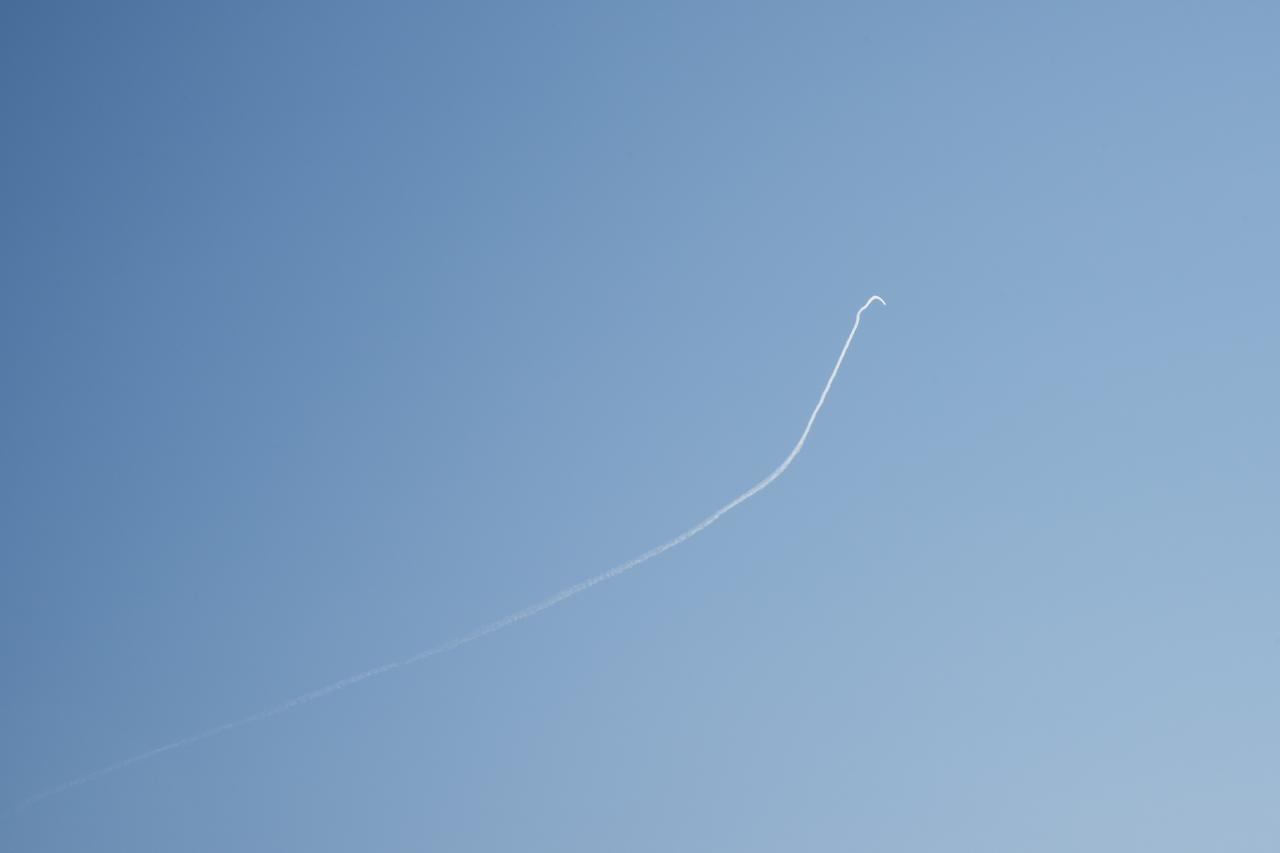
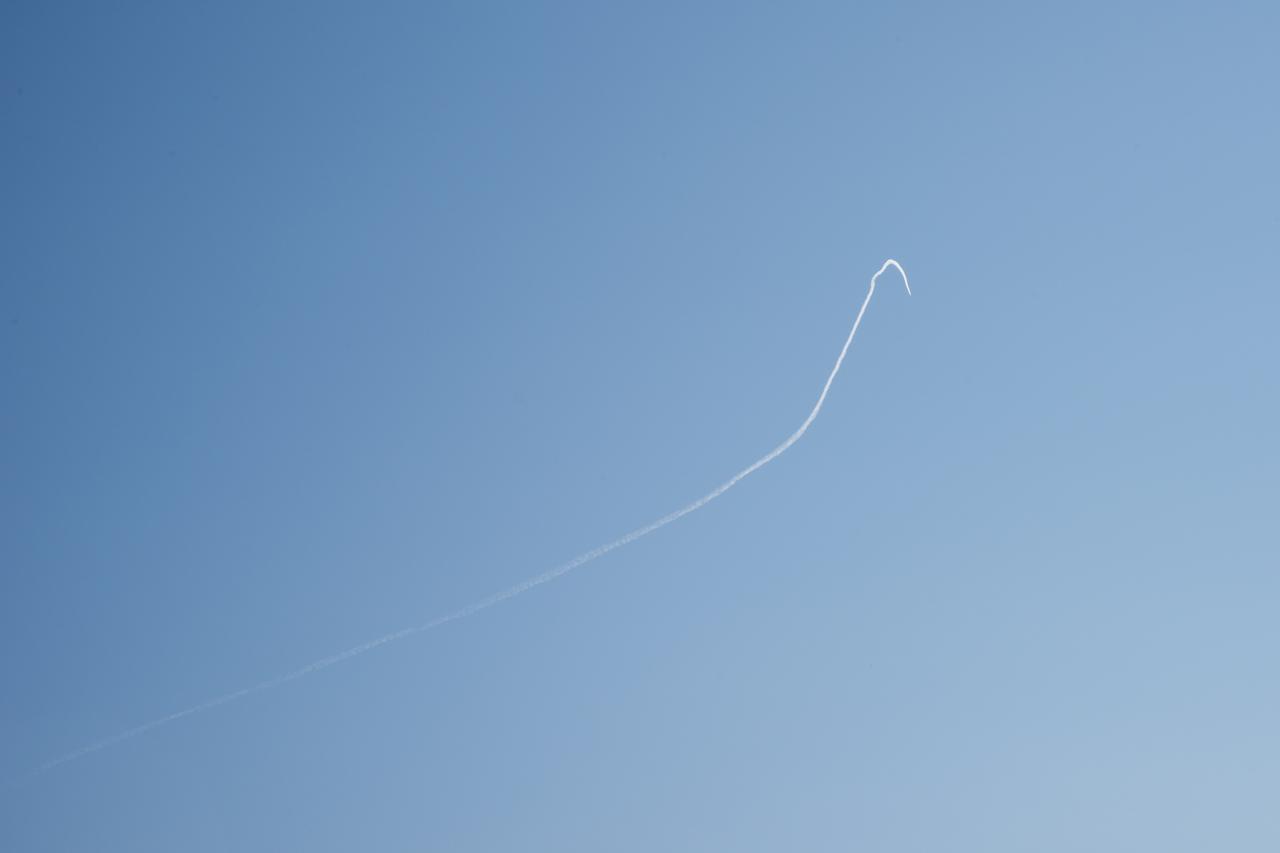
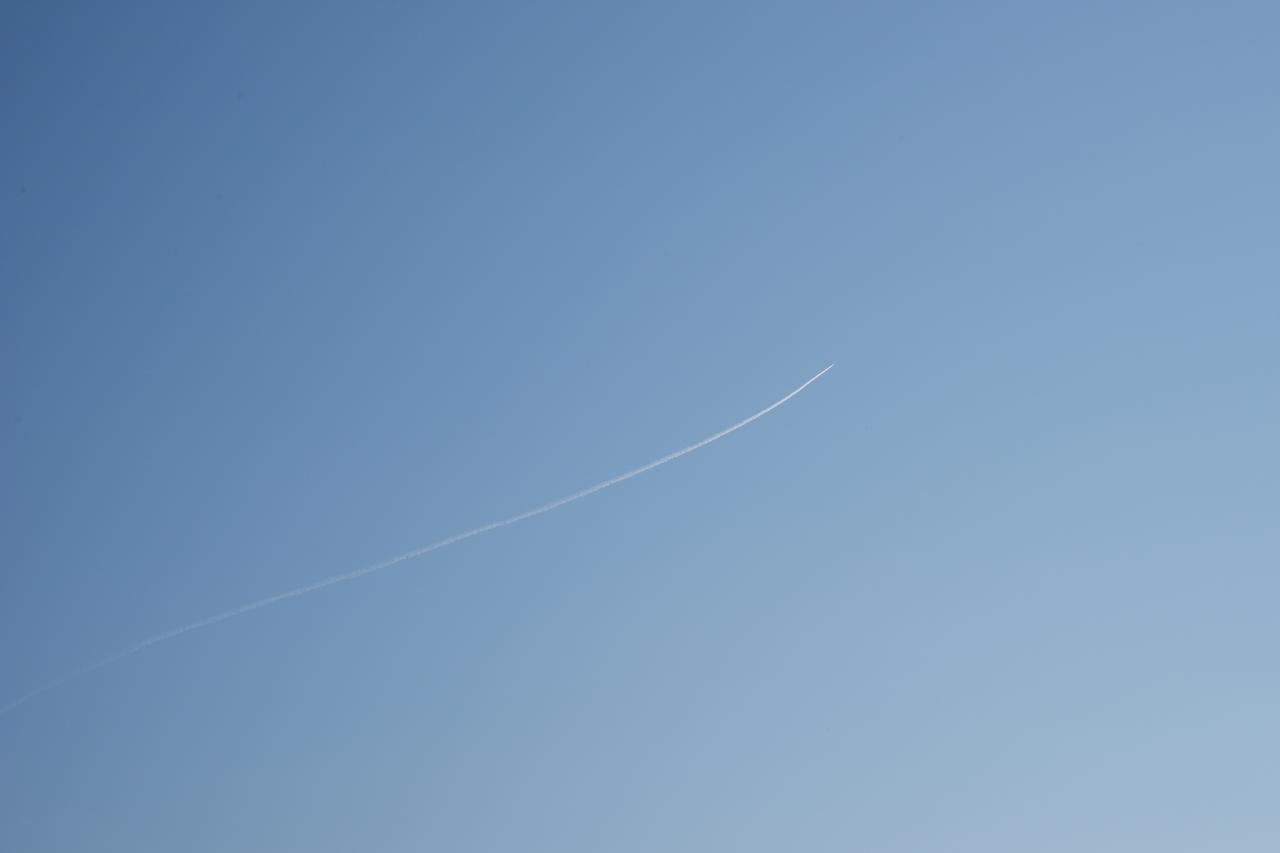
A contrail of the NASA F/A-18 research aircraft is seen off the coast of Galveston, performing the quiet supersonic dive maneuver in support of the QSF18 flight series.
Contrail of NASA F/A-18 Seen Off Coast During QSF18 Flight
A contrail of the NASA F/A-18 research aircraft is seen off the coast of Galveston, performing the quiet supersonic dive maneuver in support of the QSF18 flight series.
Contrail of NASA F/A-18 Seen Off Coast During QSF18 Flight
A contrail of the NASA F/A-18 research aircraft is seen off the coast of Galveston, performing the quiet supersonic dive maneuver in support of the QSF18 flight series.
Contrail of NASA F/A-18 Seen Off Coast During QSF18 Flight
A contrail of the NASA F/A-18 research aircraft is seen off the coast of Galveston, performing the quiet supersonic dive maneuver in support of the QSF18 flight series.
Contrail of NASA F/A-18 Seen Off Coast During QSF18 Flight
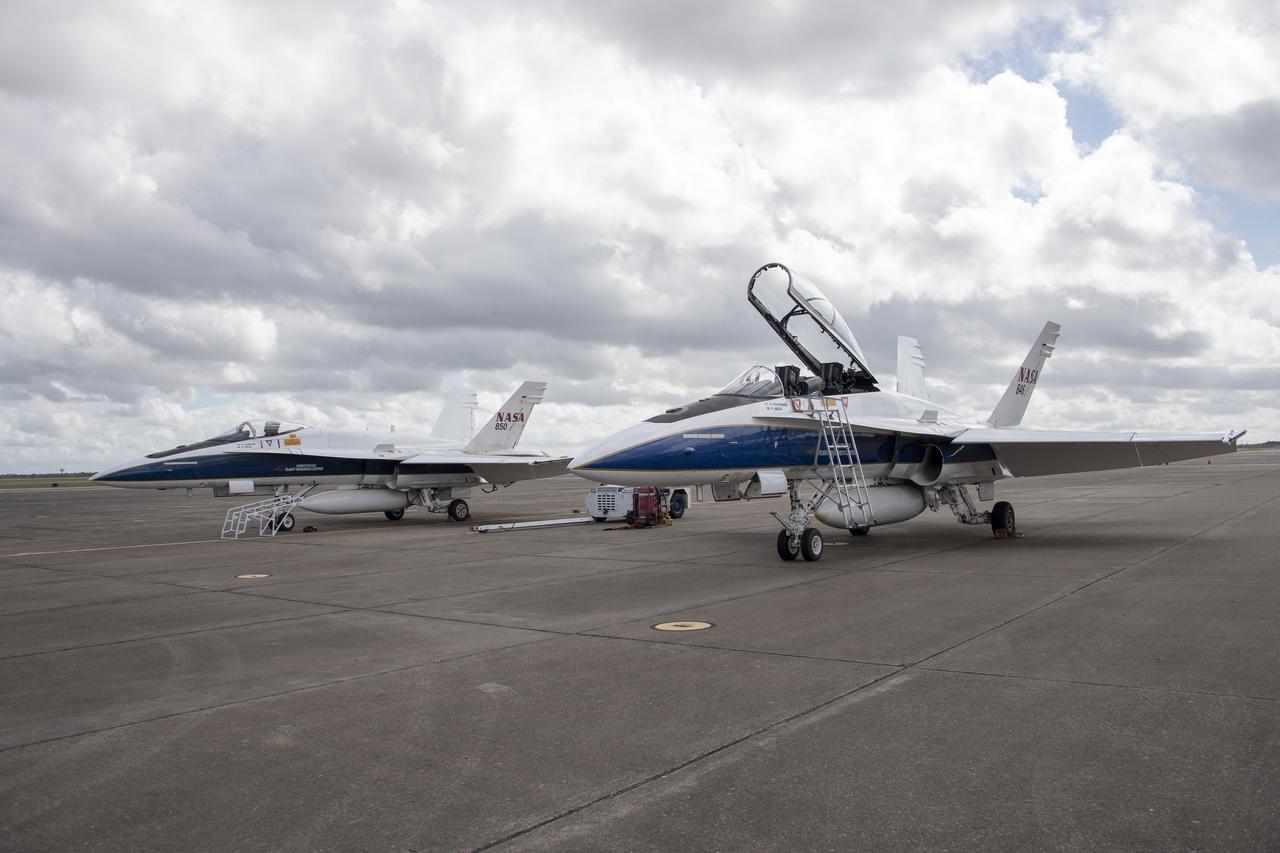
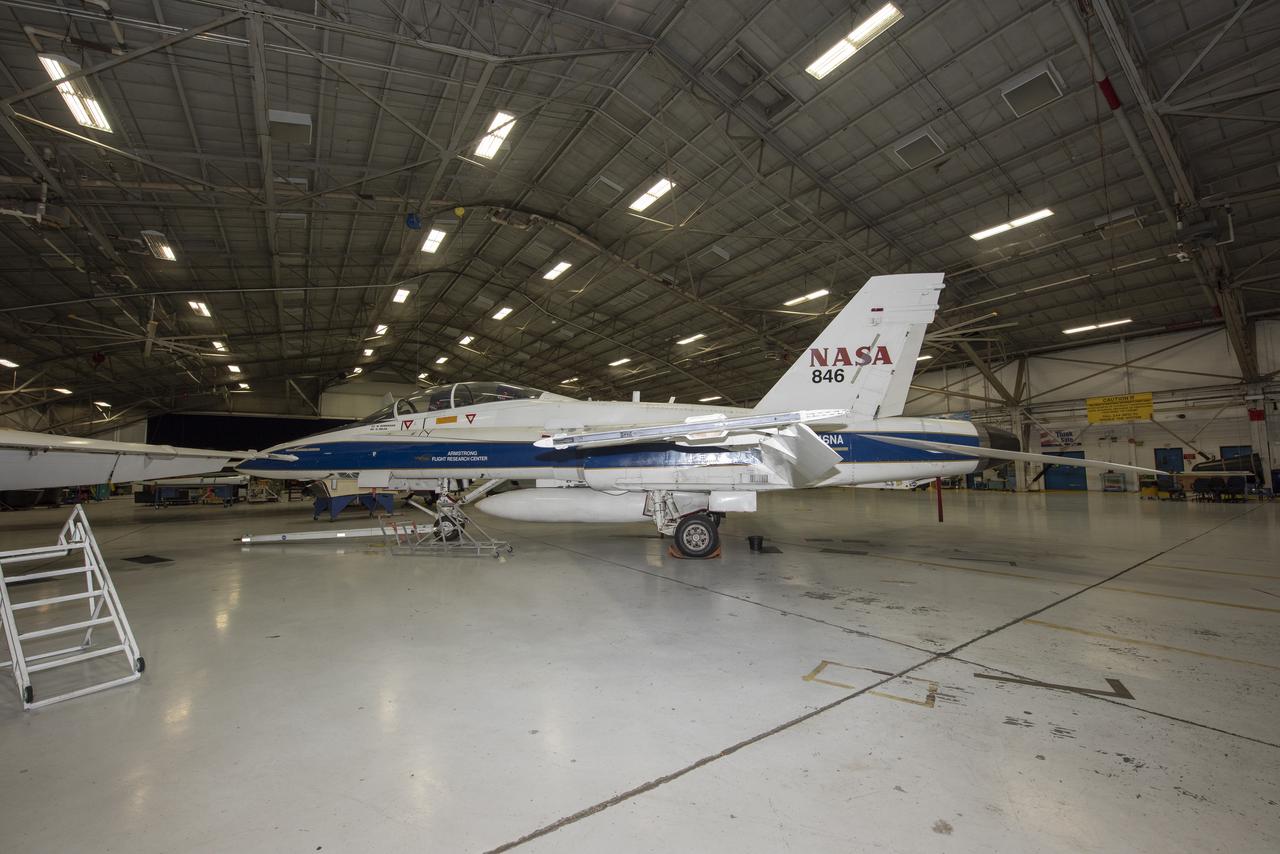
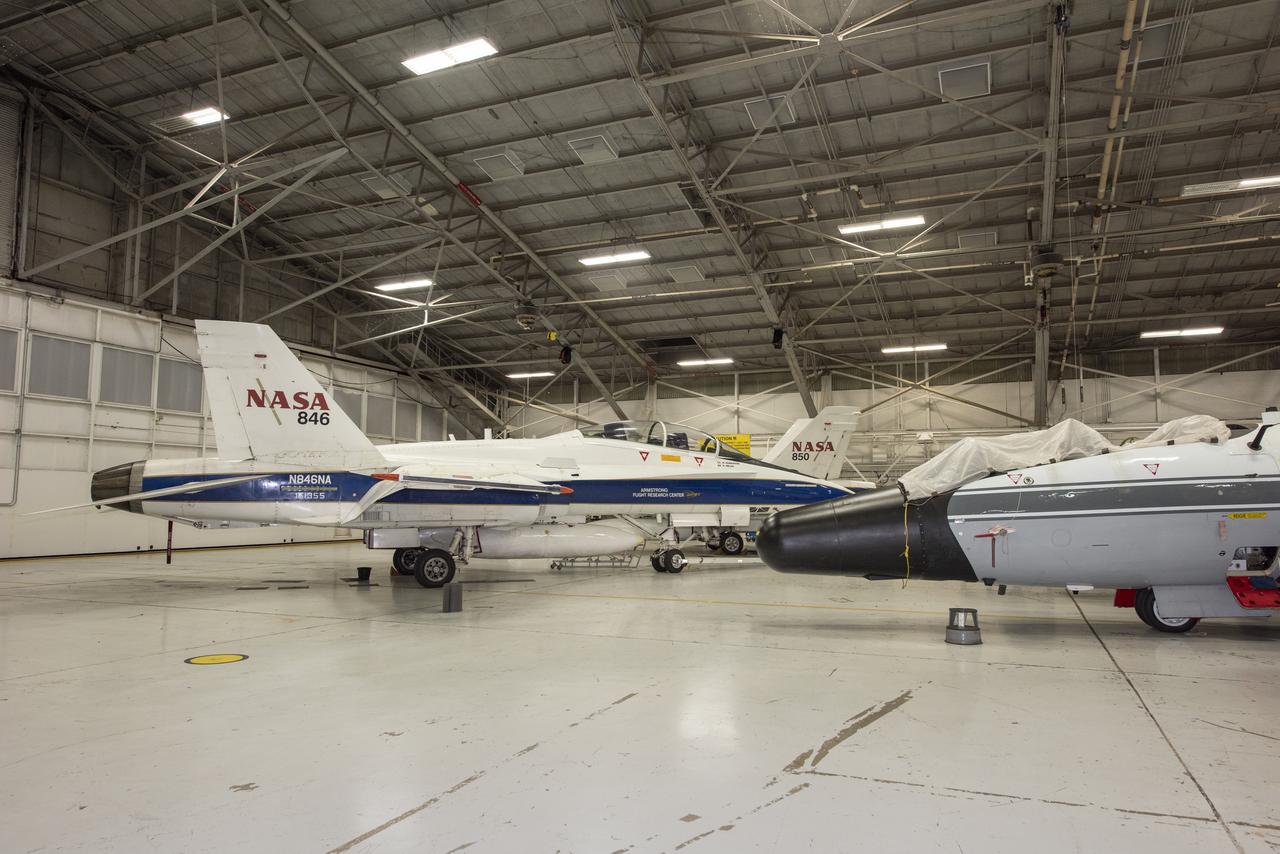
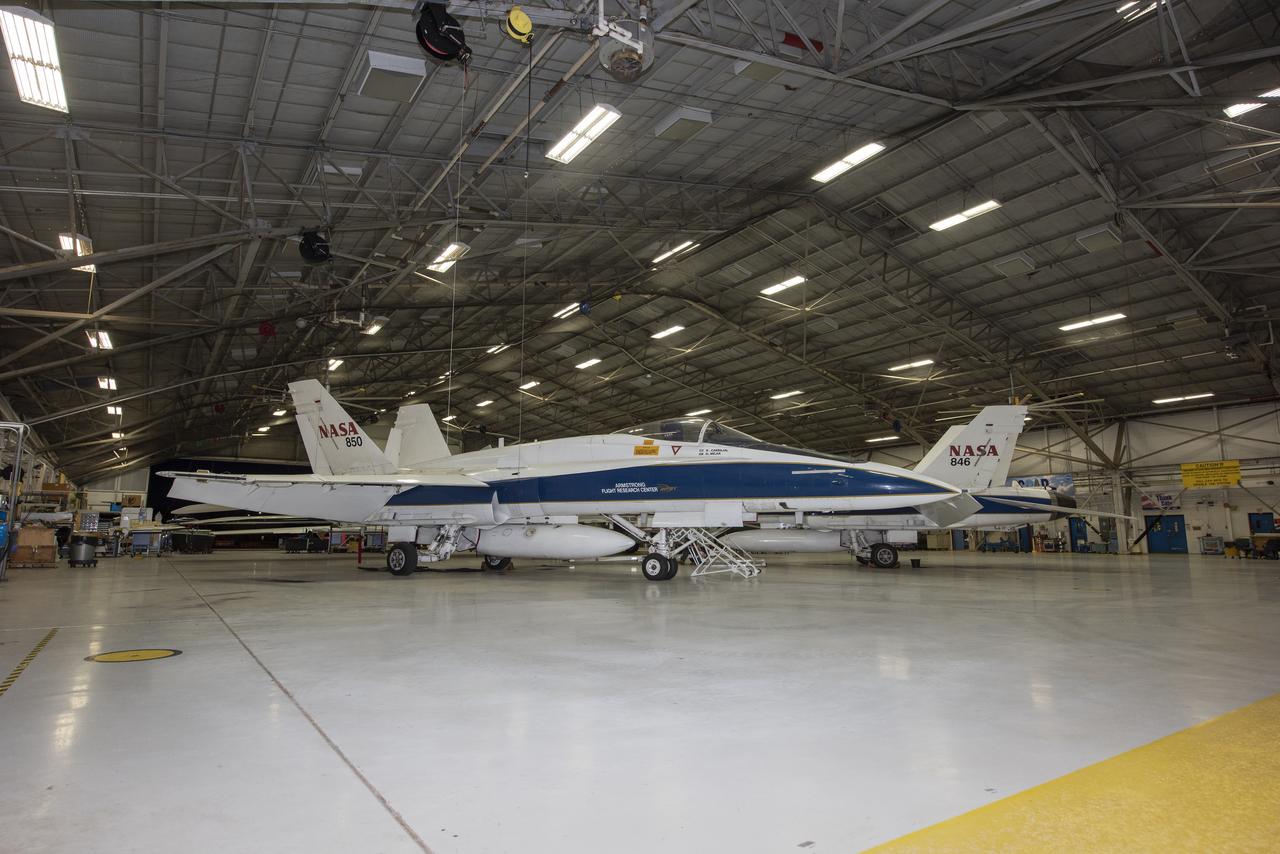
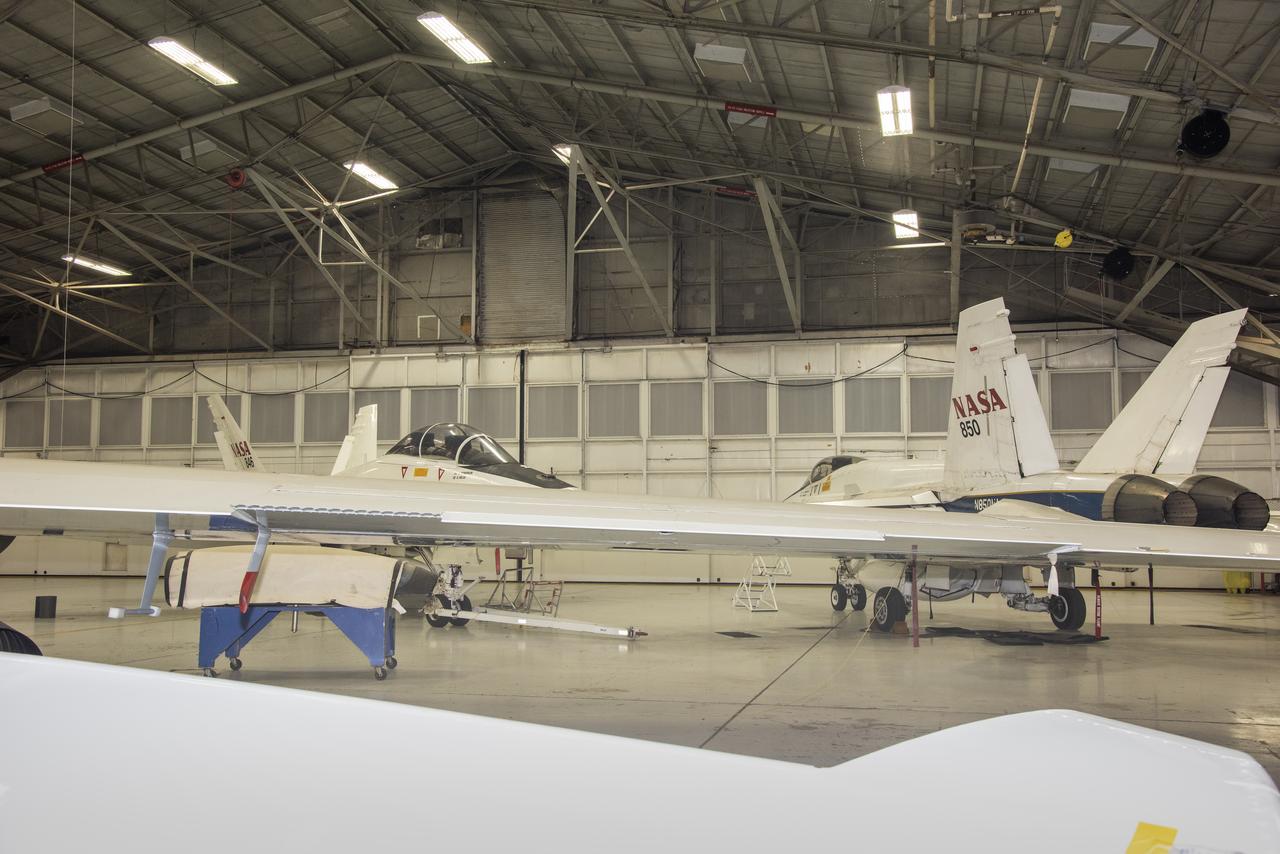
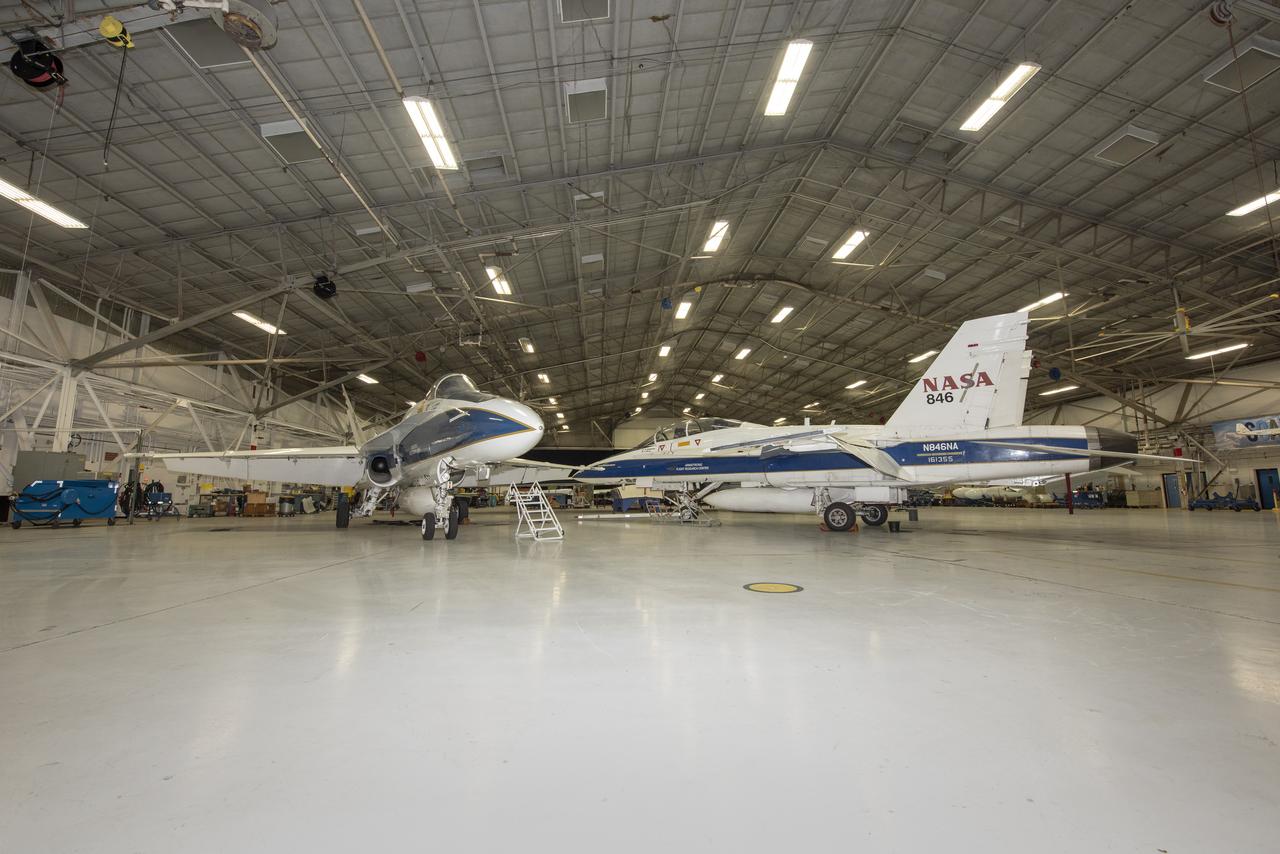
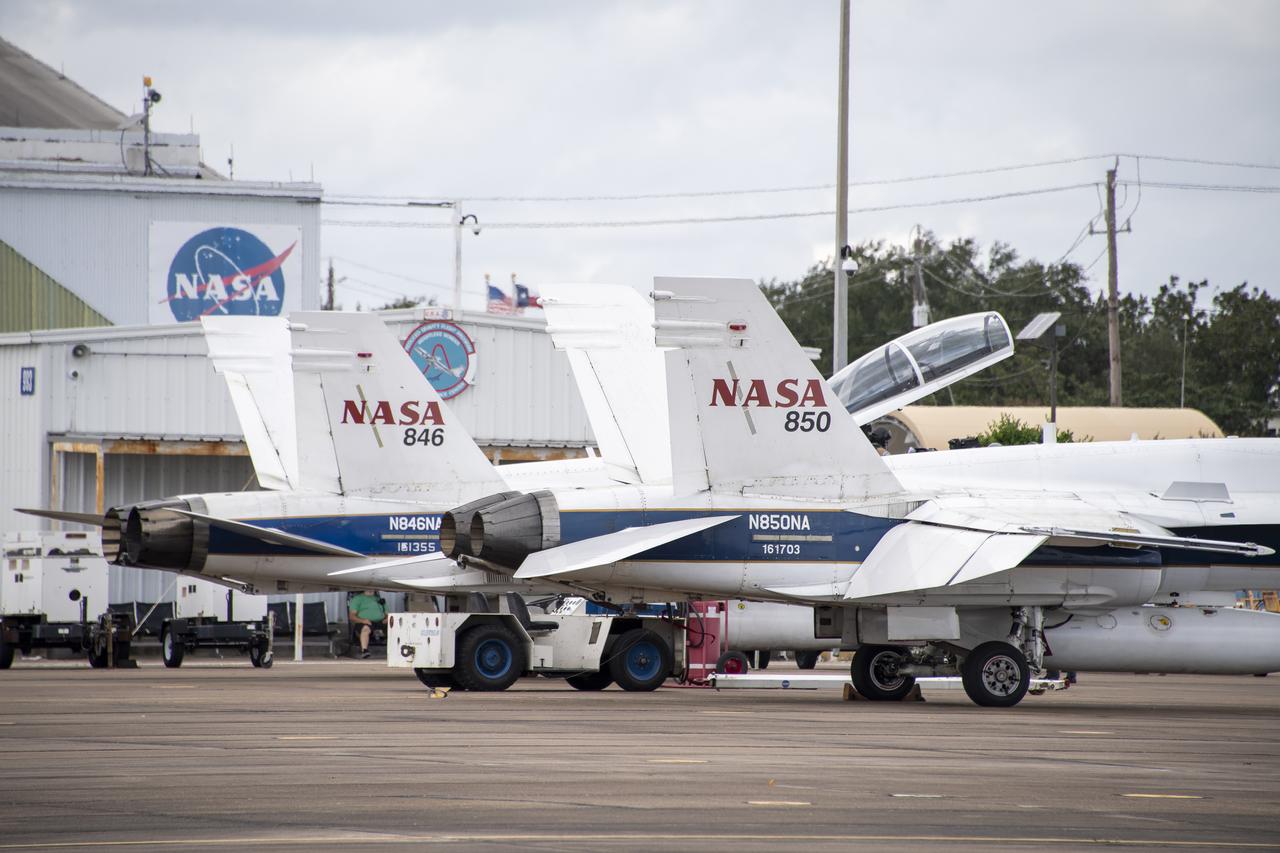
NASA deployed two F/A-18 research aircraft from NASA’s Armstrong Flight Research Center in California to fly the Quiet Supersonic Flights 2018 campaign, or QSF18. Having more than one aircraft allows pilots to conduct quick turnarounds with different aircrews between flights, fitting in as many targeted research flights as necessary.
NASA F/A-18 Aircraft Sit in Hangar
NASA deployed two F/A-18 research aircraft from NASA’s Armstrong Flight Research Center in California to fly the Quiet Supersonic Flights 2018 campaign, or QSF18. Having more than one aircraft allows pilots to conduct quick turnarounds with different aircrews between flights, fitting in as many targeted research flights as necessary.
NASA F/A-18 Aircraft Sit in Hangar
NASA deployed two F/A-18 research aircraft from NASA’s Armstrong Flight Research Center in California to fly the Quiet Supersonic Flights 2018 campaign, or QSF18. Having more than one aircraft allows pilots to conduct quick turnarounds with different aircrews between flights, fitting in as many targeted research flights as necessary.
NASA F/A-18 Aircraft Sit in Hangar
NASA deployed two F/A-18 research aircraft from NASA’s Armstrong Flight Research Center in California to fly the Quiet Supersonic Flights 2018 campaign, or QSF18. Having more than one aircraft allows pilots to conduct quick turnarounds with different aircrews between flights, fitting in as many targeted research flights as necessary.
NASA F/A-18 Aircraft Sit in Hangar
NASA deployed two F/A-18 research aircraft from NASA’s Armstrong Flight Research Center in California to fly the Quiet Supersonic Flights 2018 campaign, or QSF18. Having more than one aircraft allows pilots to conduct quick turnarounds with different aircrews between flights, fitting in as many targeted research flights as necessary.
NASA F/A-18 Aircraft Sit in Hangar
NASA deployed two F/A-18 research aircraft from NASA’s Armstrong Flight Research Center in California to fly the Quiet Supersonic Flights 2018 campaign, or QSF18. Having more than one aircraft allows pilots to conduct quick turnarounds with different aircrews between flights, fitting in as many targeted research flights as necessary.
NASA F/A-18 Aircraft Sit in Hangar
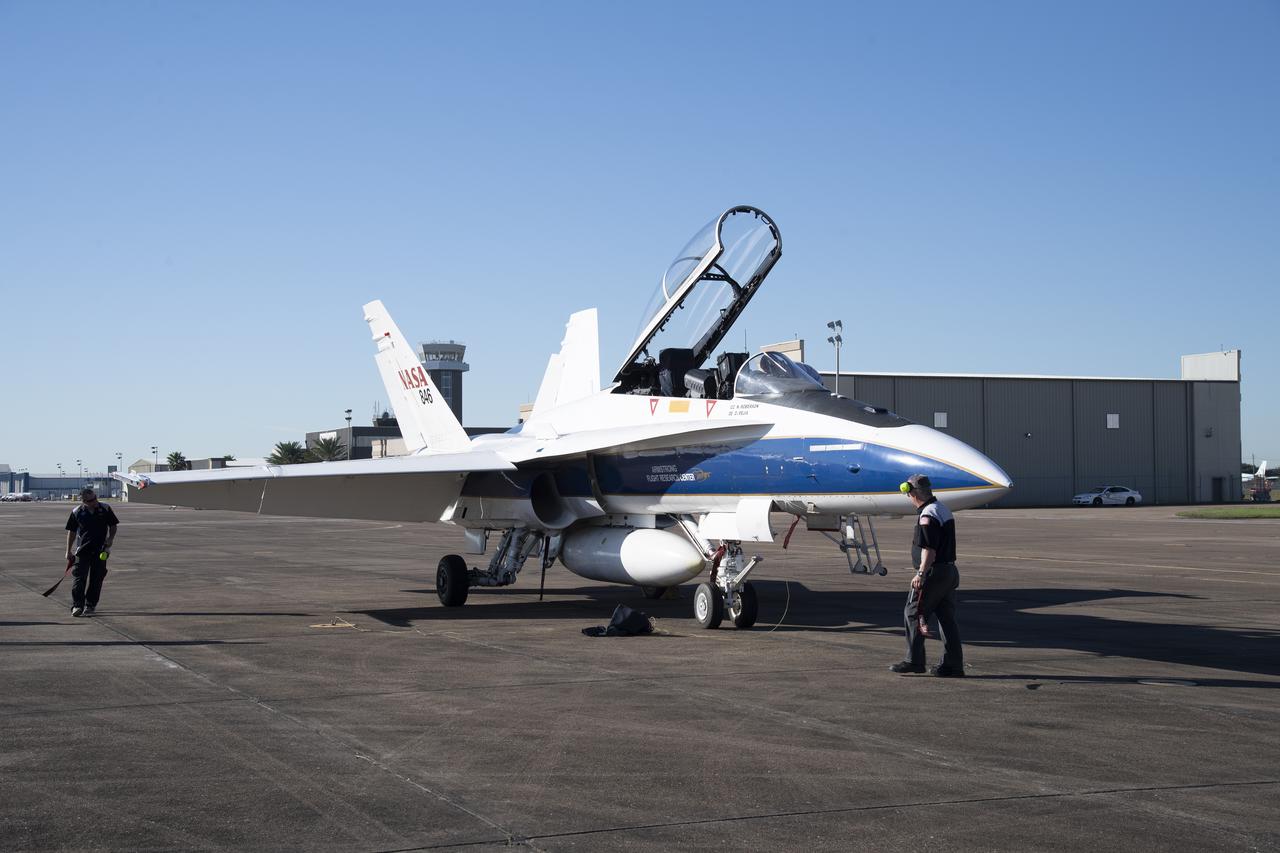
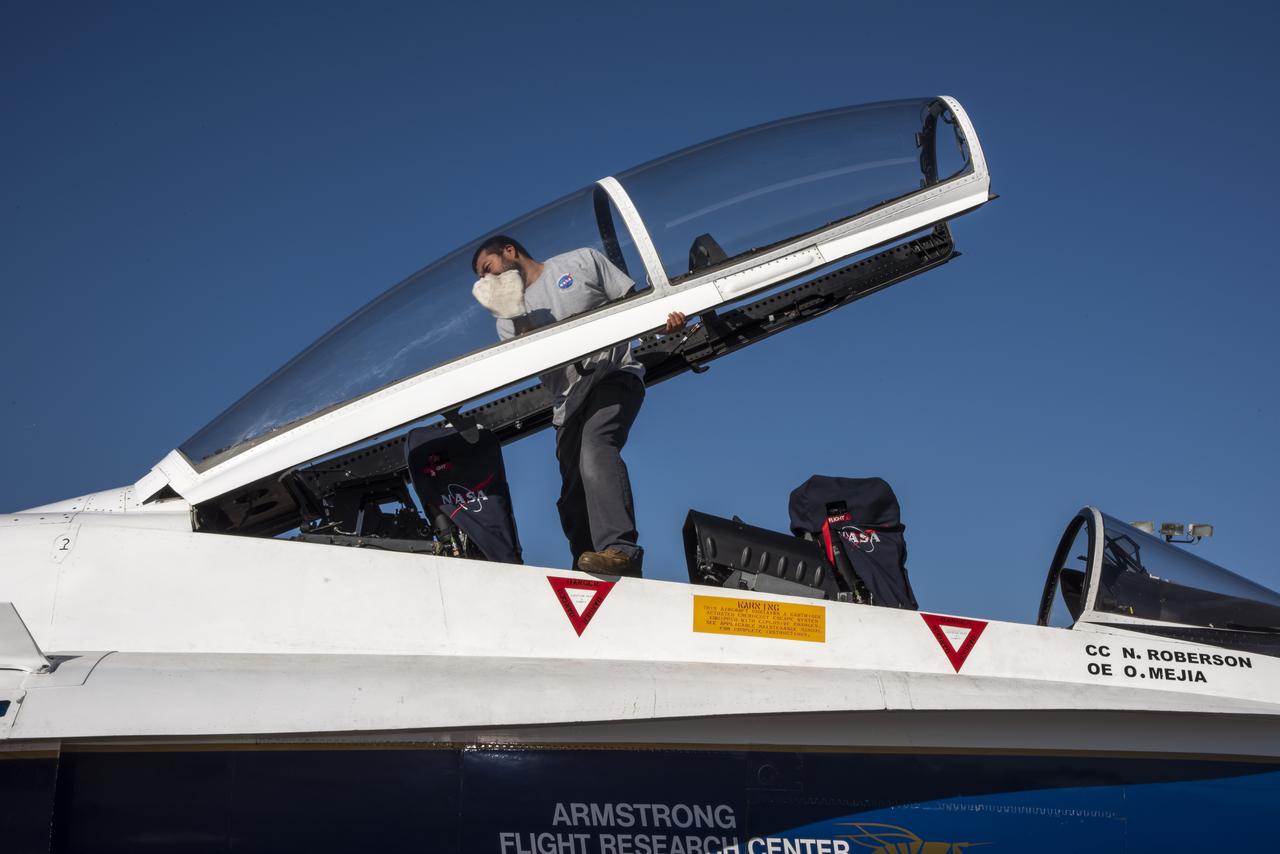
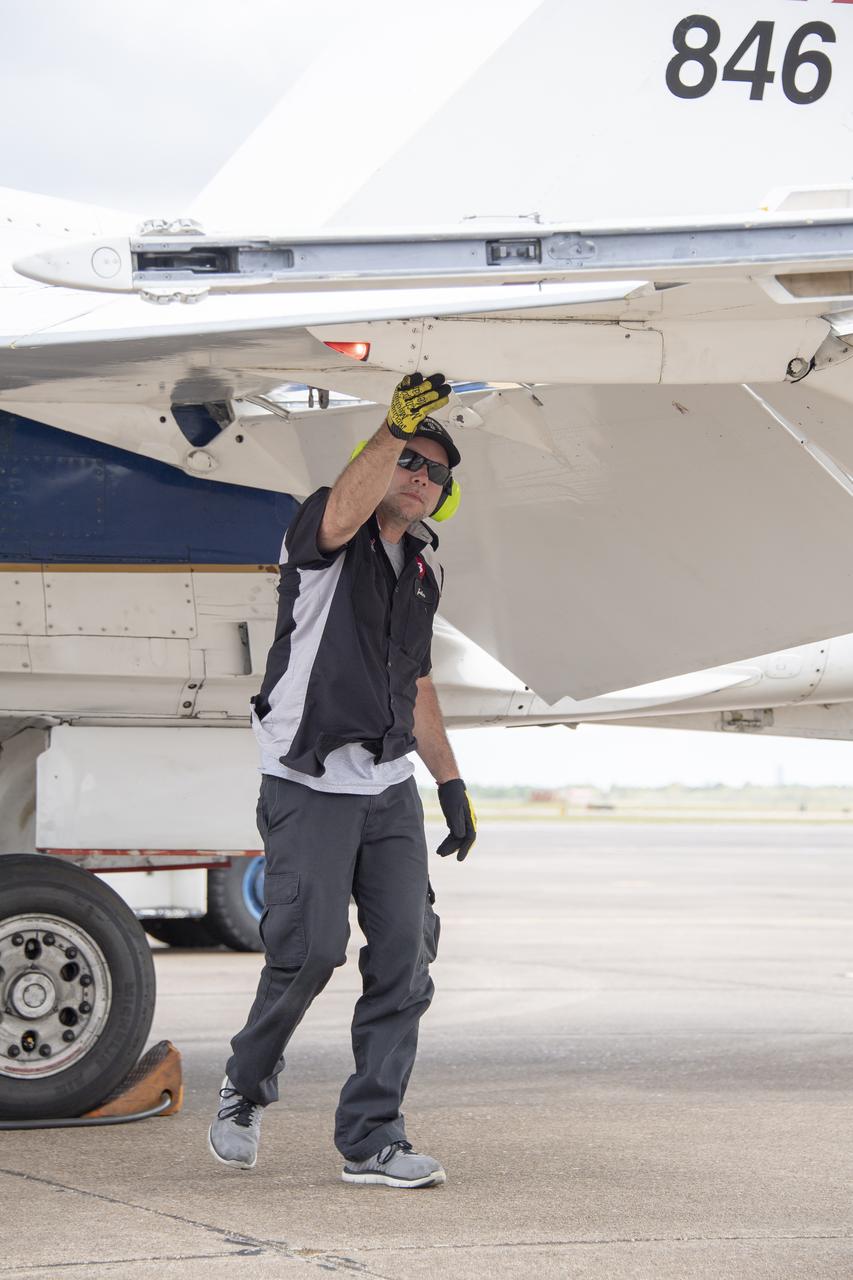
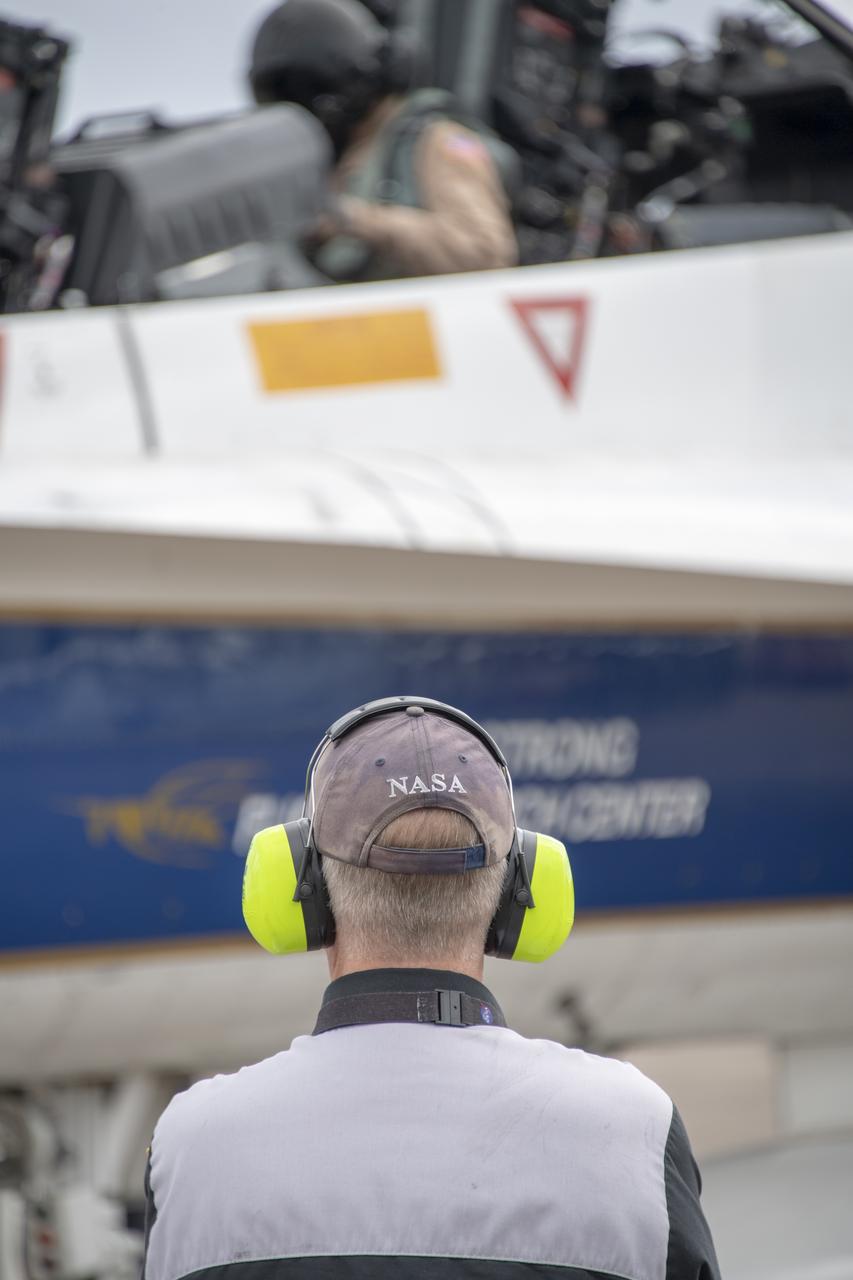
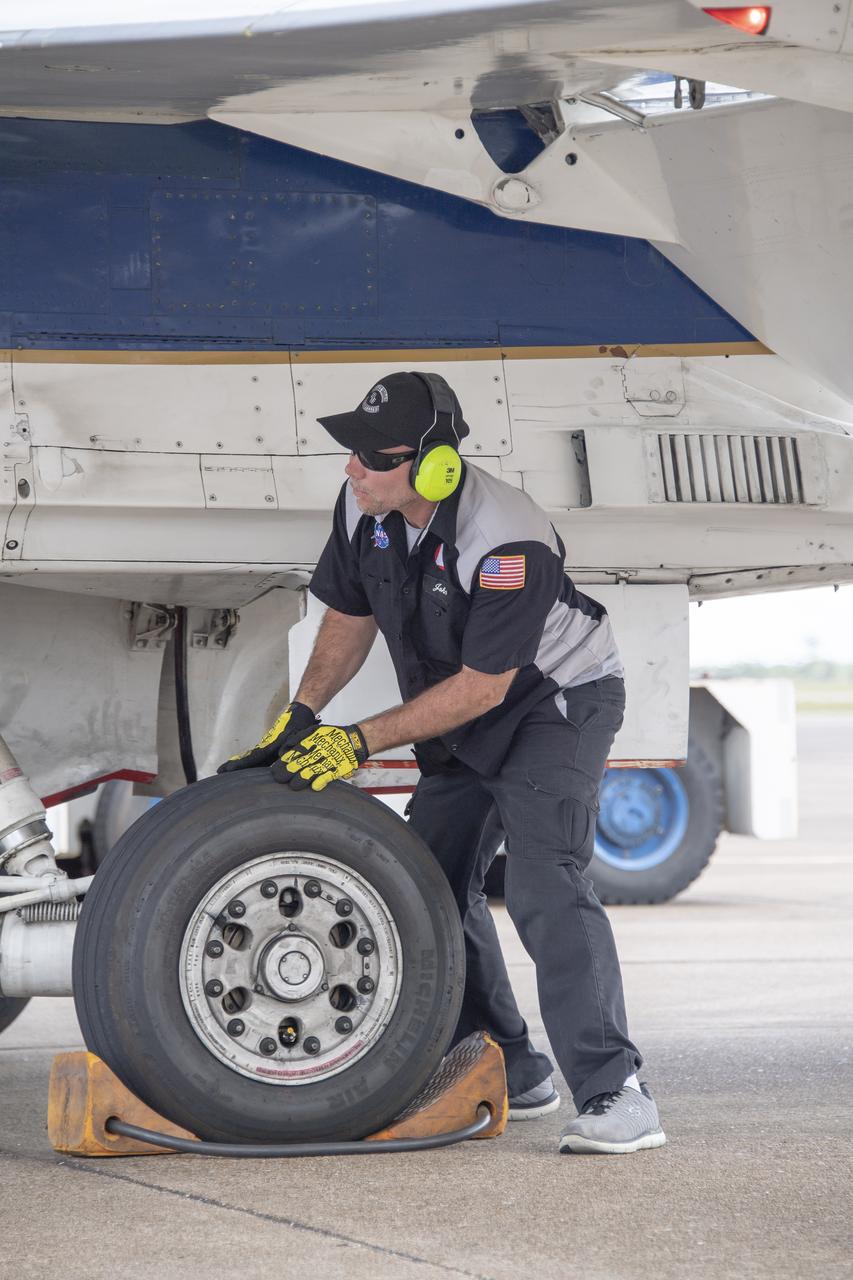
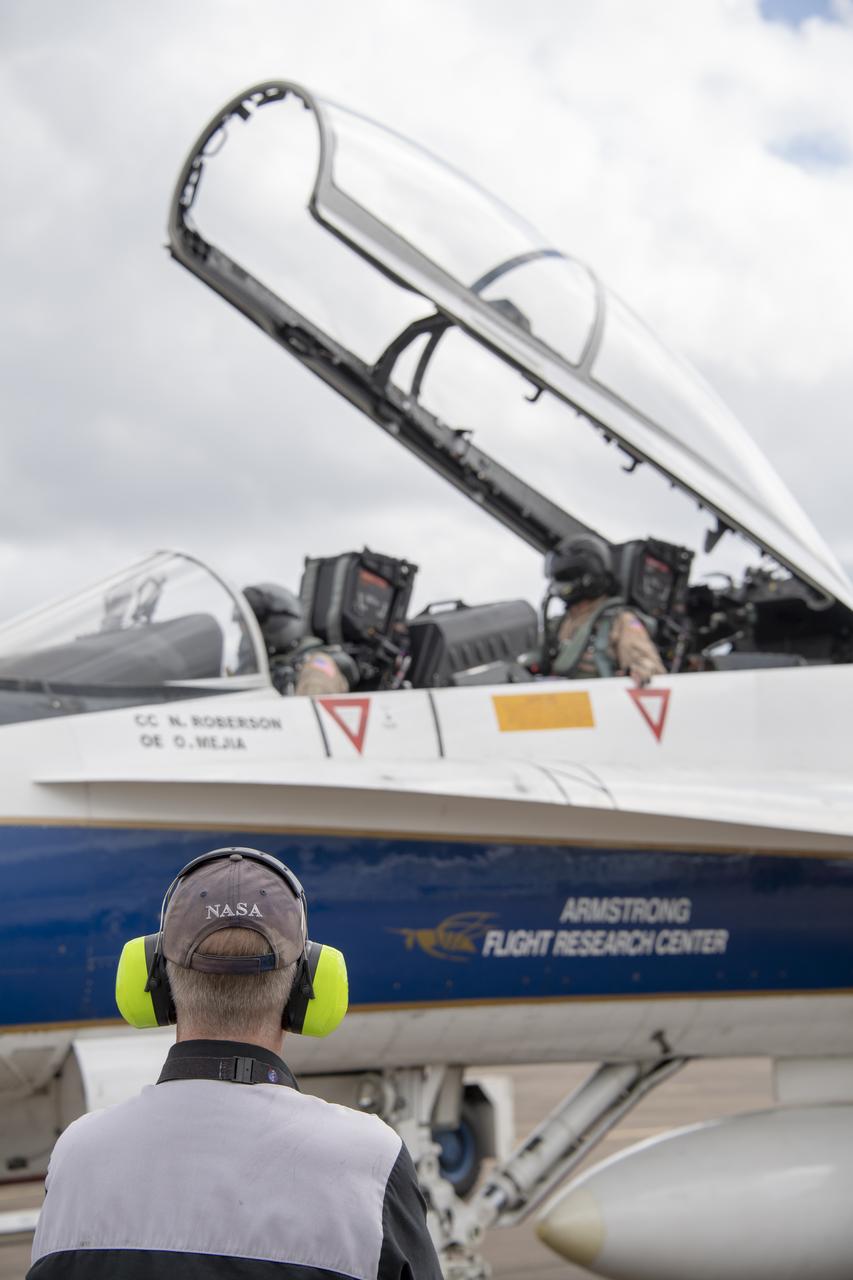
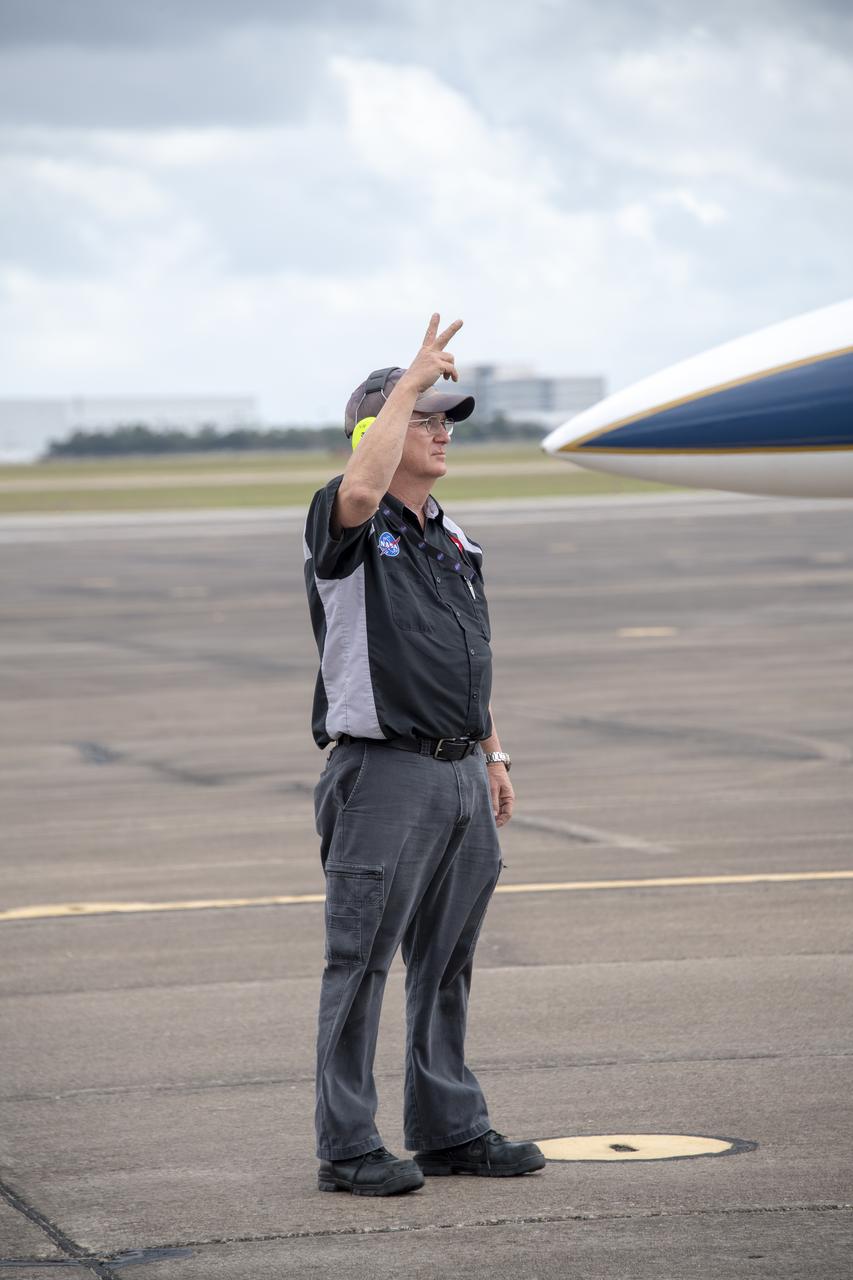
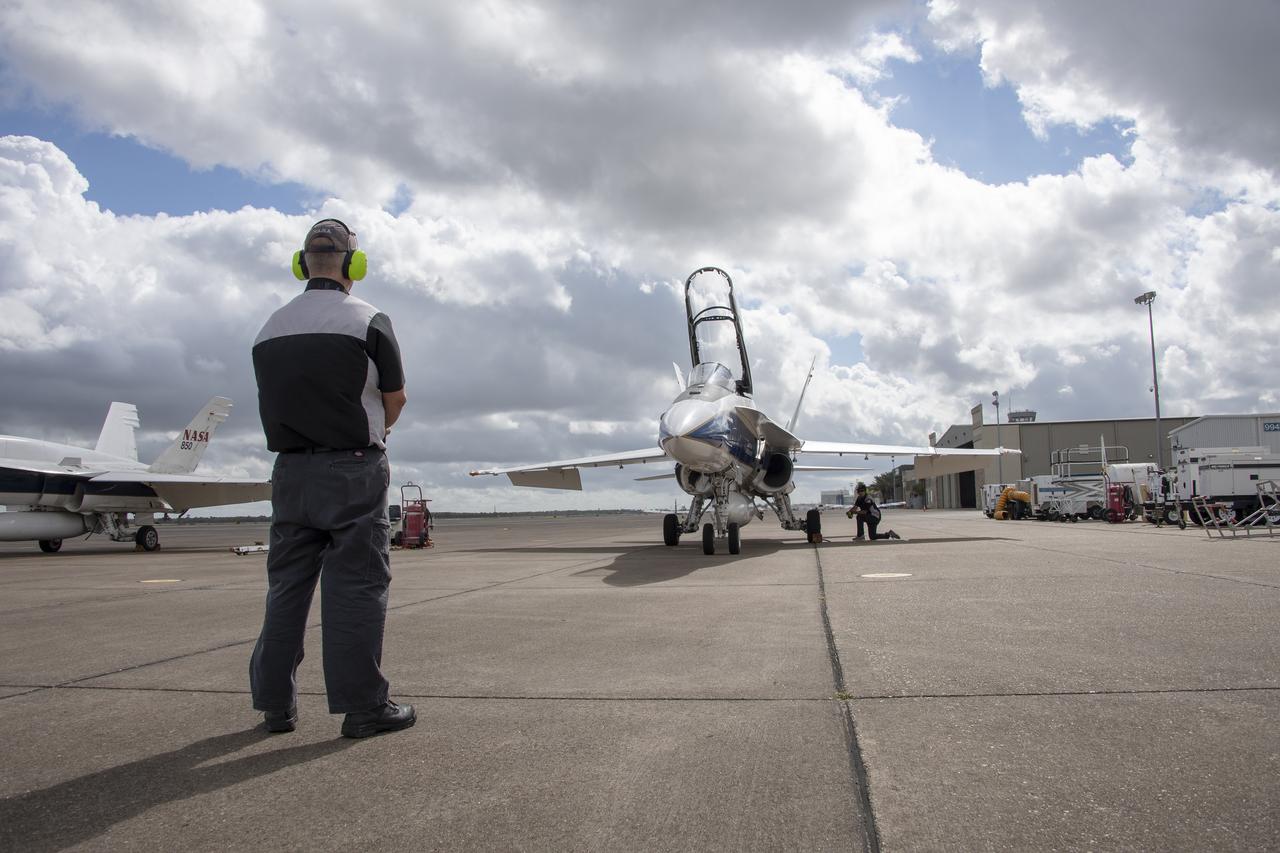
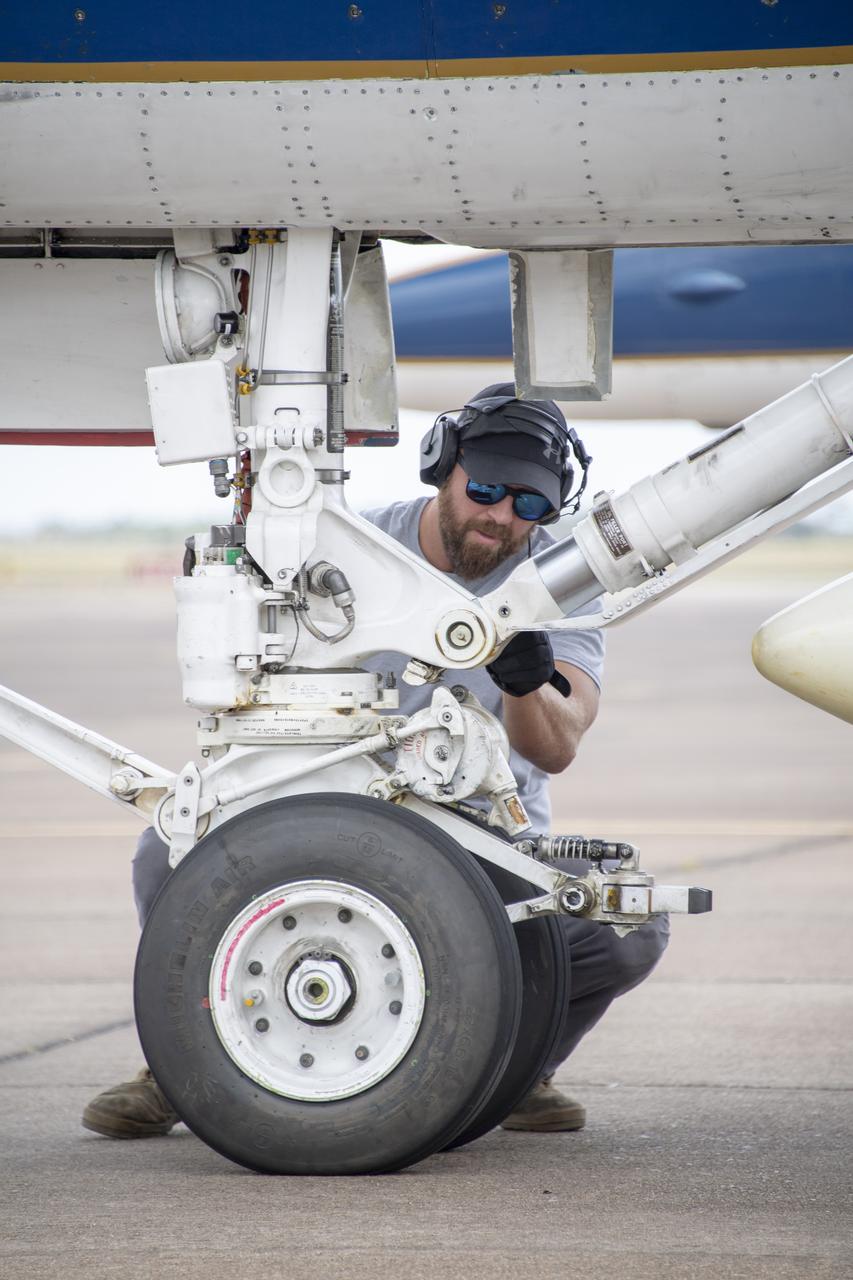
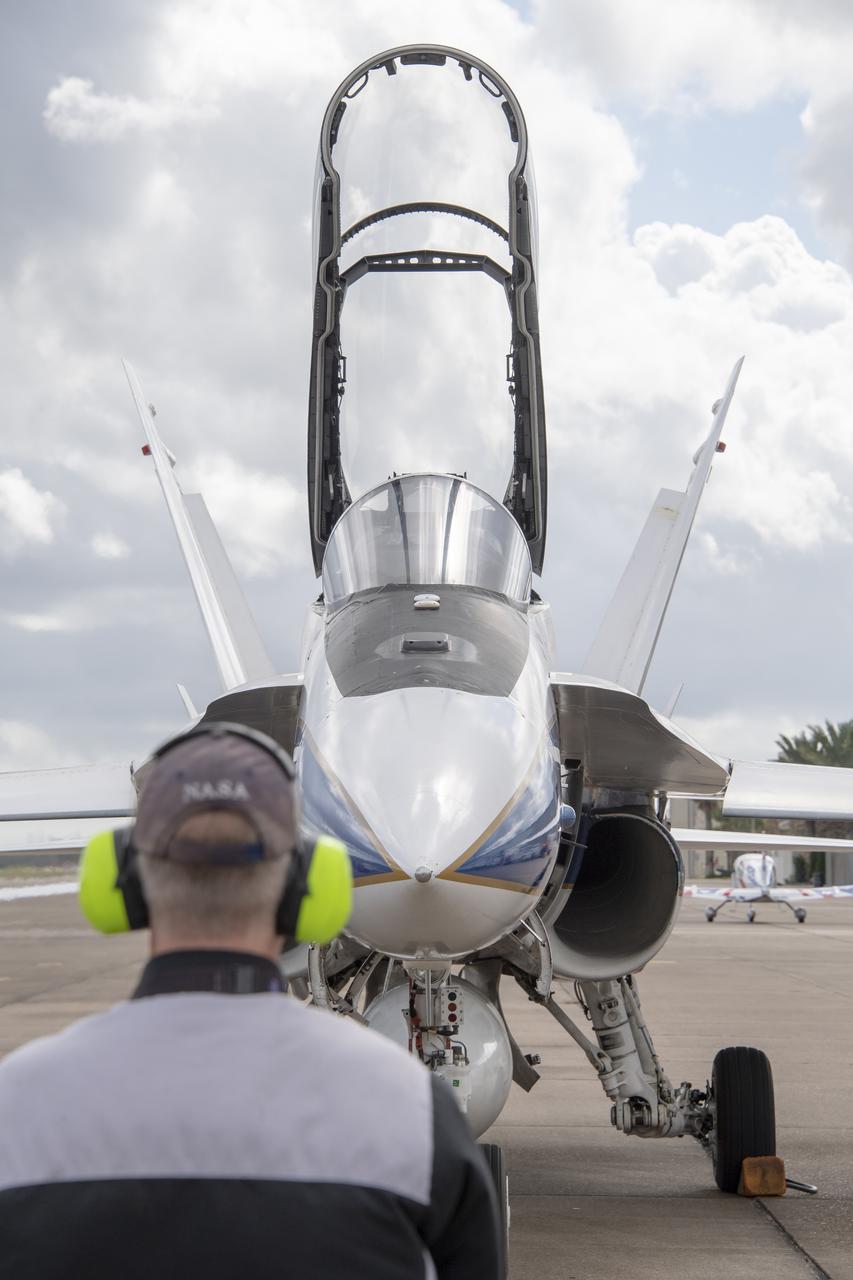
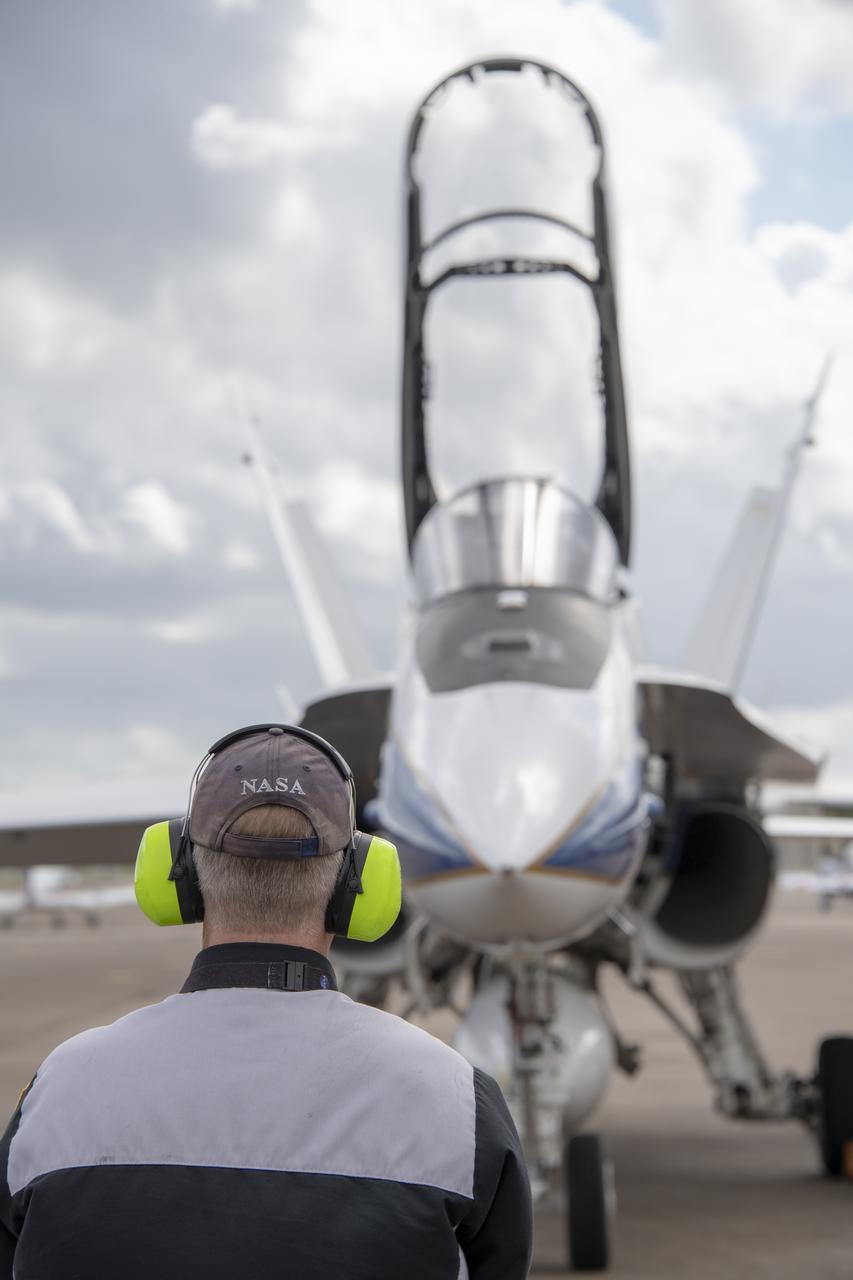
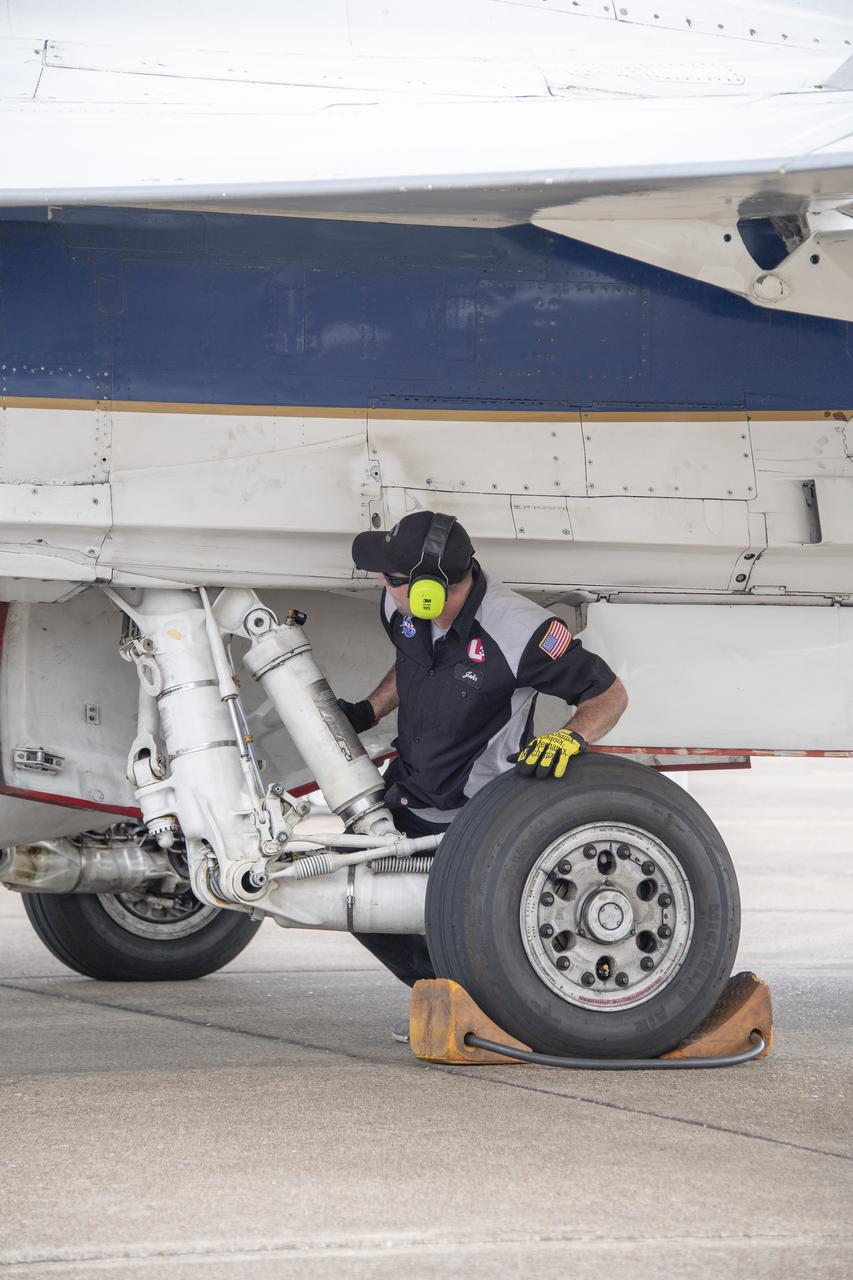
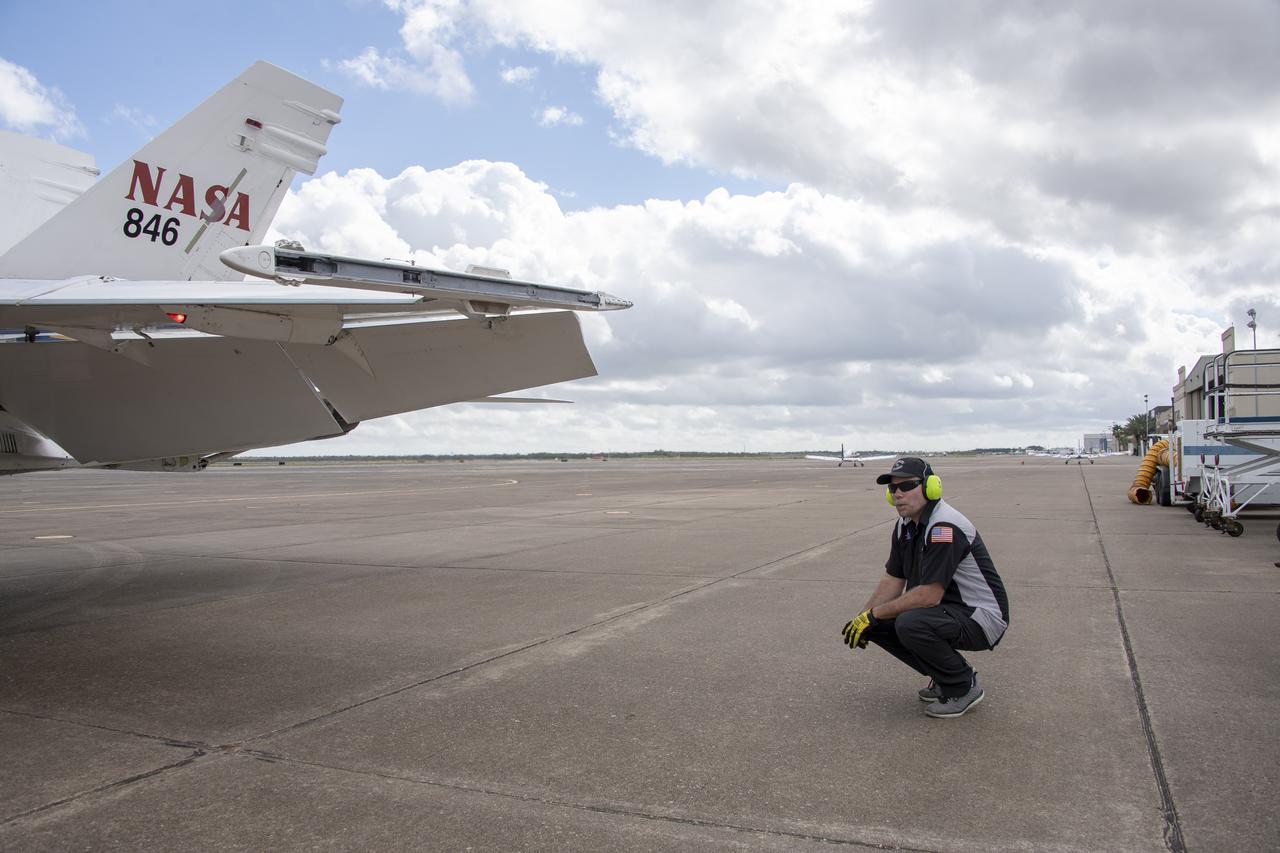
NASA ground and maintenance crews prepare the F/A-18 research aircraft for a supersonic research flight off the coast of Galveston, Texas in support of the QSF18 flight campaign. These crews are vital to making sure the aircraft is ready to operate safely and efficiently for NASA’s research.
NASA Ground Crews Prepare F/A-18 for QSF18 Takeoff
NASA ground and maintenance crews prepare the F/A-18 research aircraft for a supersonic research flight off the coast of Galveston, Texas in support of the QSF18 flight campaign. These crews are vital to making sure the aircraft is ready to operate safely and efficiently for NASA’s research.
NASA Ground Crews Prepare F/A-18 for QSF18 Takeoff
NASA ground and maintenance crews prepare the F/A-18 research aircraft for a supersonic research flight off the coast of Galveston, Texas in support of the QSF18 flight campaign. These crews are vital to making sure the aircraft is ready to operate safely and efficiently for NASA’s research.
NASA Ground Crews Prepare F/A-18 for QSF18 Takeoff
NASA ground and maintenance crews prepare the F/A-18 research aircraft for a supersonic research flight off the coast of Galveston, Texas in support of the QSF18 flight campaign. These crews are vital to making sure the aircraft is ready to operate safely and efficiently for NASA’s research.
NASA Ground Crews Prepare F/A-18 for QSF18 Takeoff
NASA ground and maintenance crews prepare the F/A-18 research aircraft for a supersonic research flight off the coast of Galveston, Texas in support of the QSF18 flight campaign. These crews are vital to making sure the aircraft is ready to operate safely and efficiently for NASA’s research.
NASA Ground Crews Prepare F/A-18 for QSF18 Takeoff
NASA ground and maintenance crews prepare the F/A-18 research aircraft for a supersonic research flight off the coast of Galveston, Texas in support of the QSF18 flight campaign. These crews are vital to making sure the aircraft is ready to operate safely and efficiently for NASA’s research.
NASA Ground Crews Prepare F/A-18 for QSF18 Takeoff
NASA ground and maintenance crews prepare the F/A-18 research aircraft for a supersonic research flight off the coast of Galveston, Texas in support of the QSF18 flight campaign. These crews are vital to making sure the aircraft is ready to operate safely and efficiently for NASA’s research.
NASA Ground Crews Prepare F/A-18 for QSF18 Takeoff
NASA ground and maintenance crews prepare the F/A-18 research aircraft for a supersonic research flight off the coast of Galveston, Texas in support of the QSF18 flight campaign. These crews are vital to making sure the aircraft is ready to operate safely and efficiently for NASA’s research.
NASA Ground Crews Prepare F/A-18 for QSF18 Takeoff
NASA ground and maintenance crews prepare the F/A-18 research aircraft for a supersonic research flight off the coast of Galveston, Texas in support of the QSF18 flight campaign. These crews are vital to making sure the aircraft is ready to operate safely and efficiently for NASA’s research.
NASA Ground Crews Prepare F/A-18 for QSF18 Takeoff
NASA ground and maintenance crews prepare the F/A-18 research aircraft for a supersonic research flight off the coast of Galveston, Texas in support of the QSF18 flight campaign. These crews are vital to making sure the aircraft is ready to operate safely and efficiently for NASA’s research.
NASA Ground Crews Prepare F/A-18 for QSF18 Takeoff
NASA ground and maintenance crews prepare the F/A-18 research aircraft for a supersonic research flight off the coast of Galveston, Texas in support of the QSF18 flight campaign. These crews are vital to making sure the aircraft is ready to operate safely and efficiently for NASA’s research.
NASA Ground Crews Prepare F/A-18 for QSF18 Takeoff
NASA ground and maintenance crews prepare the F/A-18 research aircraft for a supersonic research flight off the coast of Galveston, Texas in support of the QSF18 flight campaign. These crews are vital to making sure the aircraft is ready to operate safely and efficiently for NASA’s research.
NASA Ground Crews Prepare F/A-18 for QSF18 Takeoff
NASA ground and maintenance crews prepare the F/A-18 research aircraft for a supersonic research flight off the coast of Galveston, Texas in support of the QSF18 flight campaign. These crews are vital to making sure the aircraft is ready to operate safely and efficiently for NASA’s research.
NASA Ground Crews Prepare F/A-18 for QSF18 Takeoff
NASA ground and maintenance crews prepare the F/A-18 research aircraft for a supersonic research flight off the coast of Galveston, Texas in support of the QSF18 flight campaign. These crews are vital to making sure the aircraft is ready to operate safely and efficiently for NASA’s research.
NASA Ground Crews Prepare F/A-18 for QSF18 Takeoff
NASA ground and maintenance crews prepare the F/A-18 research aircraft for a supersonic research flight off the coast of Galveston, Texas in support of the QSF18 flight campaign. These crews are vital to making sure the aircraft is ready to operate safely and efficiently for NASA’s research.
NASA Ground Crews Prepare F/A-18 for QSF18 Takeoff
NASA ground and maintenance crews prepare the F/A-18 research aircraft for a supersonic research flight off the coast of Galveston, Texas in support of the QSF18 flight campaign. These crews are vital to making sure the aircraft is ready to operate safely and efficiently for NASA’s research.
NASA Ground Crews Prepare F/A-18 for QSF18 Takeoff
NASA ground and maintenance crews prepare the F/A-18 research aircraft for a supersonic research flight off the coast of Galveston, Texas in support of the QSF18 flight campaign. These crews are vital to making sure the aircraft is ready to operate safely and efficiently for NASA’s research.
NASA Ground Crews Prepare F/A-18 for QSF18 Takeoff
NASA ground and maintenance crews prepare the F/A-18 research aircraft for a supersonic research flight off the coast of Galveston, Texas in support of the QSF18 flight campaign. These crews are vital to making sure the aircraft is ready to operate safely and efficiently for NASA’s research.
NASA Ground Crews Prepare F/A-18 for QSF18 Takeoff
NASA ground and maintenance crews prepare the F/A-18 research aircraft for a supersonic research flight off the coast of Galveston, Texas in support of the QSF18 flight campaign. These crews are vital to making sure the aircraft is ready to operate safely and efficiently for NASA’s research.
NASA Ground Crews Prepare F/A-18 for QSF18 Takeoff
The F-18 simulator at NASA's Dryden Flight Research Center, Edwards, California. Simulators offer a safe and economical alternative to actual flights to gather data, as well as being excellent facilities for pilot practice and training. The F-18 Hornet is used primarily as a safety chase and mission support aircraft at NASA's Dryden Flight Research Center, Edwards, California. As support aircraft, the F-18's are used for safety chase, pilot proficiency, aerial photography and other mission support functions.
The F-18 simulator at NASA's Dryden Flight Research Center, Edwards, California
NASA Dryden research pilot Gordon Fullerton is greeted by his wife Marie on the Dryden ramp after his final flight in a NASA F/A-18 on Dec. 21, 2007.
NASA Administrator Jared Isaacman stands to the right of NASA Armstrong Center Director Troy Asher, left, in front of an F-15 aircraft. Both pilots flew above Washington on Saturday, July 4, 2026, as part of a flyover to celebrate America’s 250th birthday.
NASA F-15 and F-18 Soar Above Washington to Celebrate America’s 250th Birthday
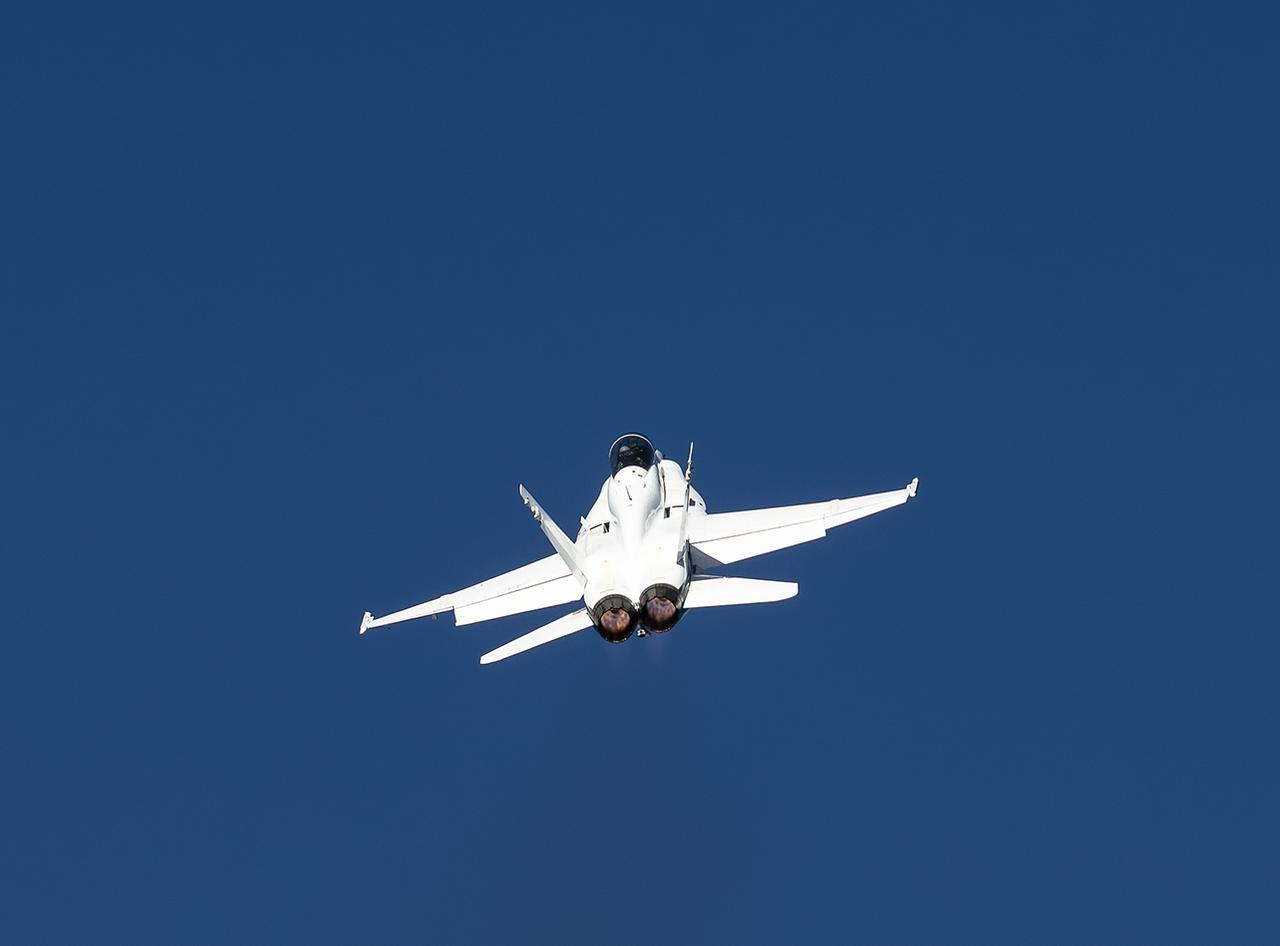
NASA test pilot Jim “Clue” Less completes pre‑flight checks on a NASA F‑15 in Spokane, Washington, on Thursday, July 2, 2026. The aircraft, from NASA’s Armstrong Flight Research Center in Edwards, California, displays new red, white, and blue paint to celebrate America’s 250th birthday and was preparing to fly cross‑country to Washington, D.C., where it participated in the Freedom 250 flyover with other NASA and military aircraft on Saturday, July 4, 2026. NASA/Jim Ross
NASA F-15 and F-18 Soar Above Washington to Celebrate America’s 250th Birthday
NASA’s F-15 aircraft is shown at International Aerospace Coatings Inc.’s facility in Spokane, Washington, on Thursday, July 2, 2026, with new red, white, and blue paint to celebrate America’s 250th birthday. The aircraft, from NASA’s Armstrong Flight Research Center in Edwards, California, participated in the Freedom 250 flyover in Washington on Saturday, July 4, 2026, with other NASA and military aircraft. NASA/Jim Ross
NASA F-15, F-18 Painted in Red, White, Blue to Celebrate America’s 250th Birthday