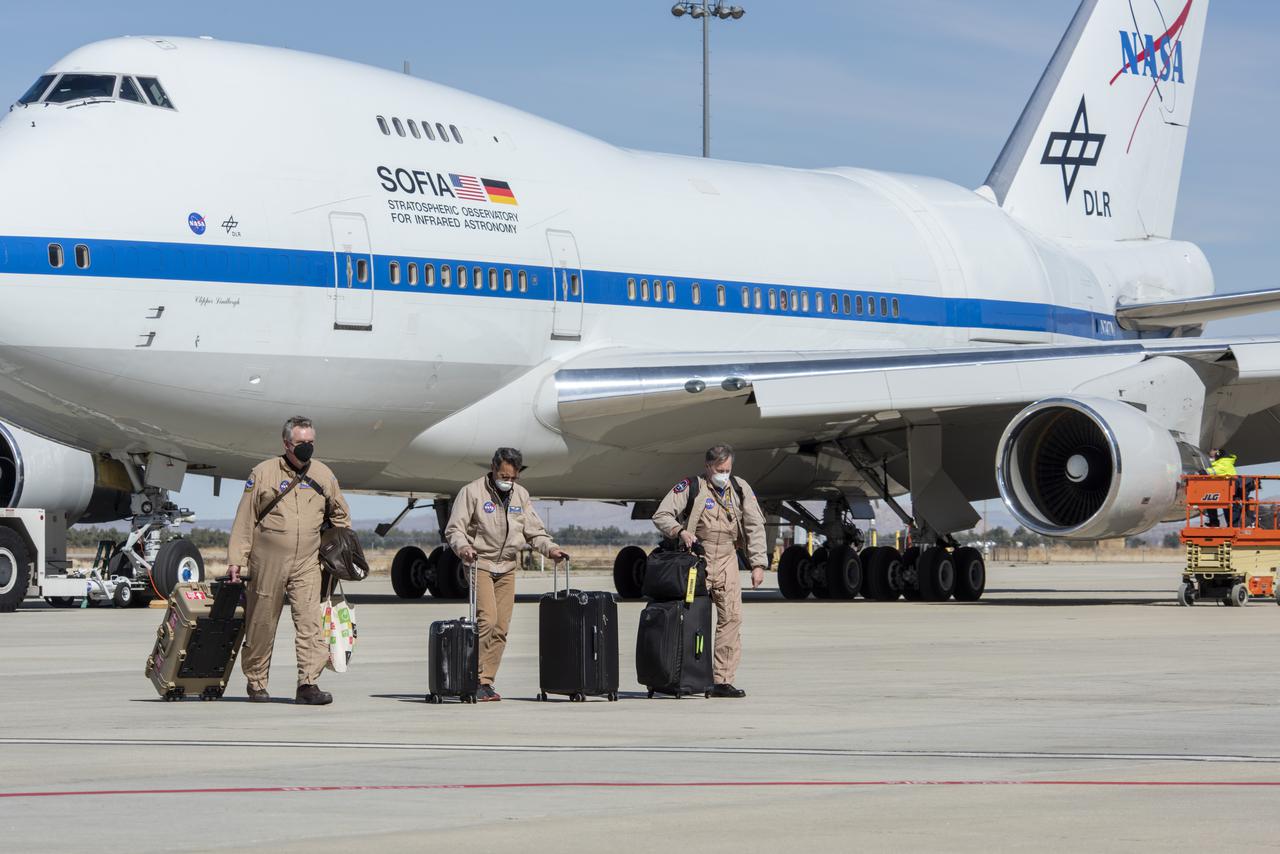
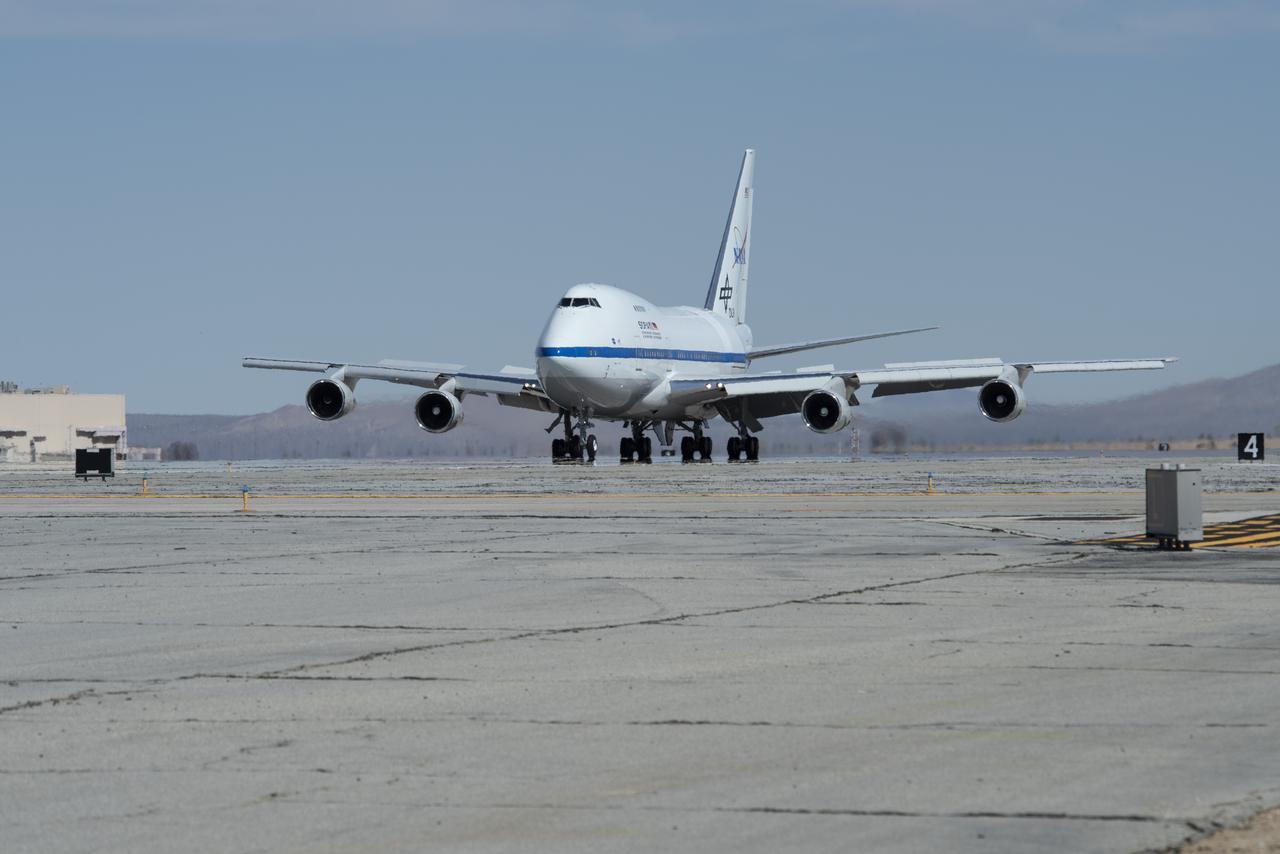
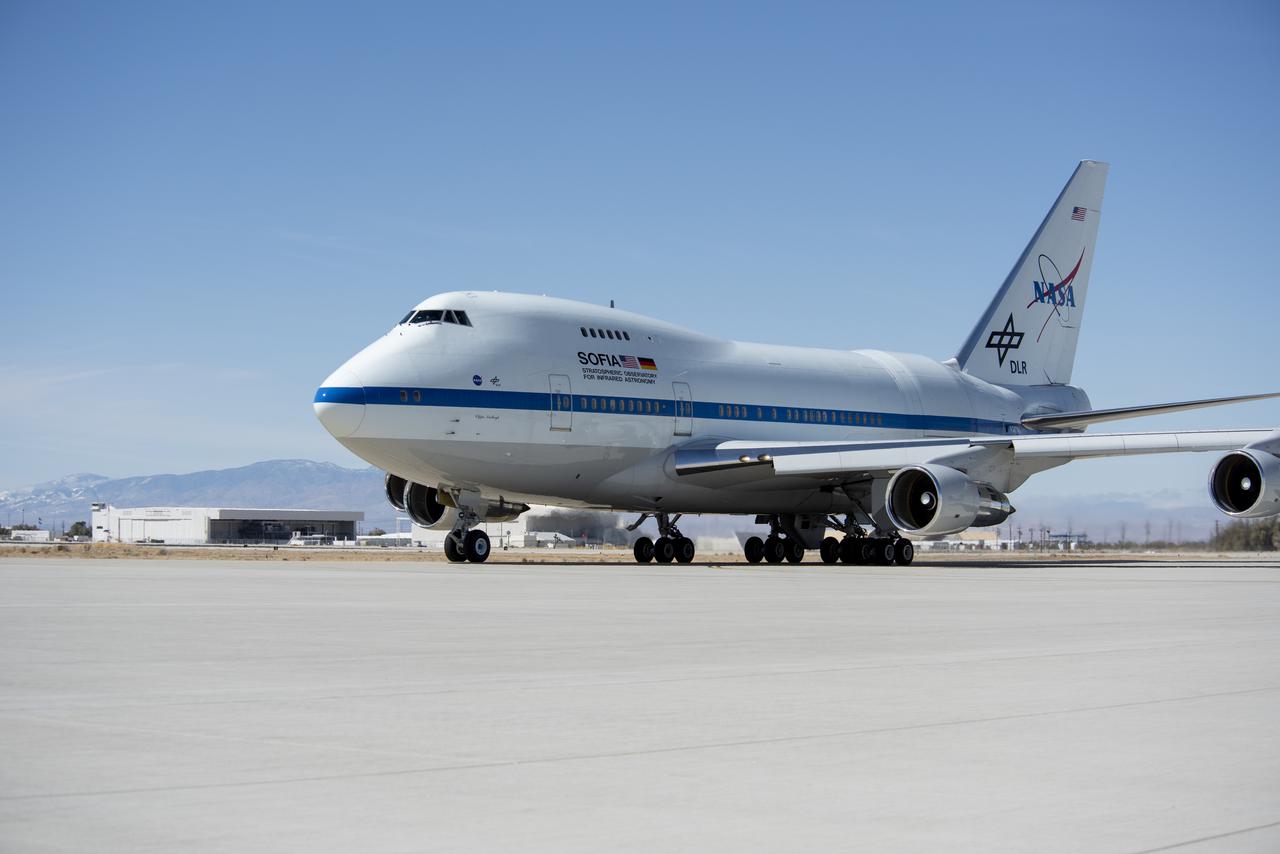
SOFIA Returns to NASA's Armstrong Flight Research Center Building 703 Caption: SOFIA returns to NASA's Armstrong Flight Research Center building 703 in Palmdale, California on March 16, 2021 after spending six months in Germany conducting science observations.
SOFIA Returns to NASA's Armstrong Flight Research Center Building 703
SOFIA Returns to NASA's Armstrong Flight Research Center Building 703 Caption: SOFIA returns to NASA's Armstrong Flight Research Center Building 703 in Palmdale, California on March 16, 2021 after spending six months in Germany conducting science observations.
SOFIA Returns to NASA's Armstrong Flight Research Center Building 703
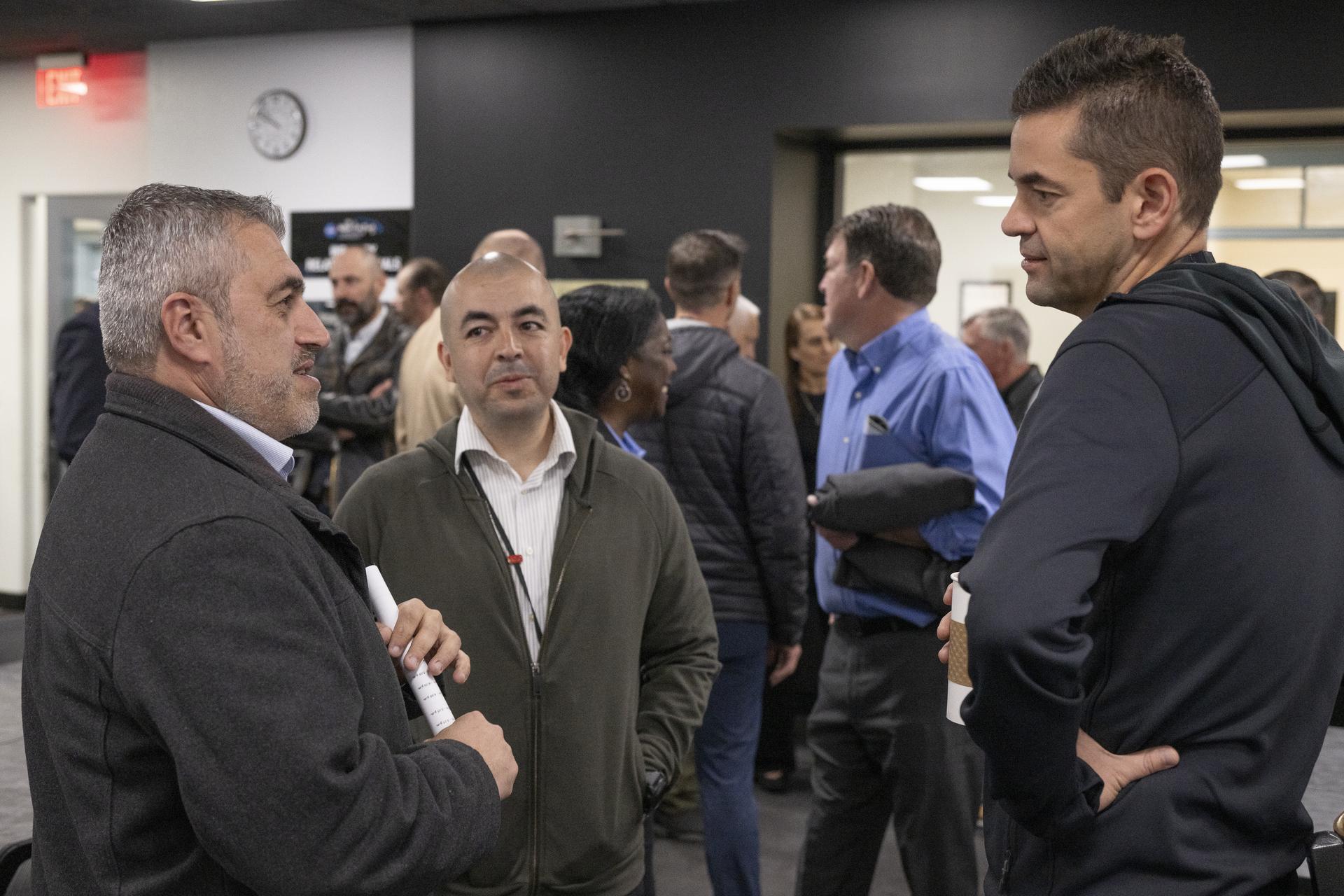
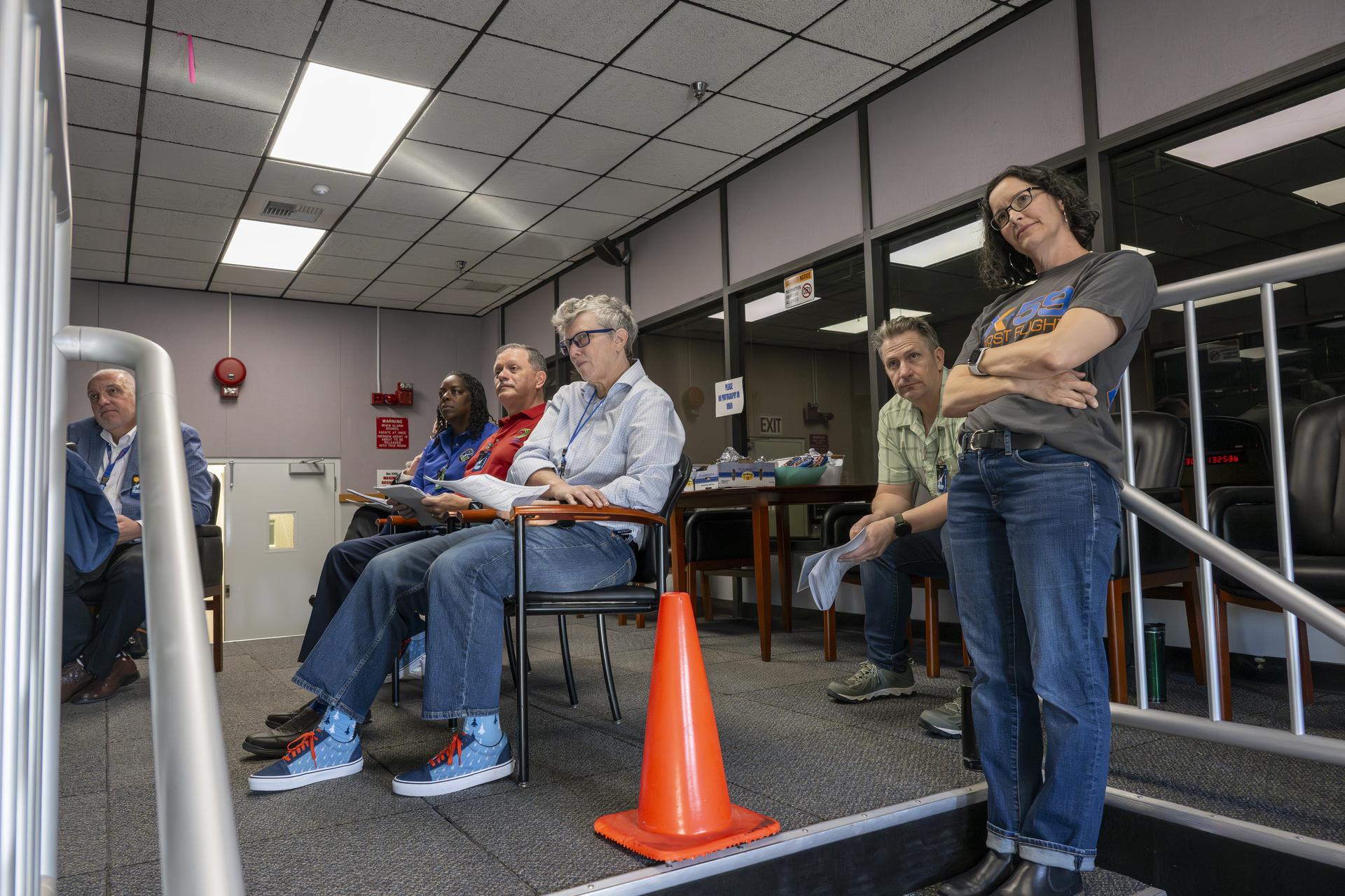
SOFIA Returns to NASA’s Armstrong Flight Research Center Building 703 Caption: SOFIA pilots are welcomed home to NASA’s Armstrong Flight Research Center Building 703 in Palmdale, California on March 16, 2021. From left to right: Tracy Phelps, Jeff Borton and Wayne Ringelberg
SOFIA Returns to NASA’s Armstrong Flight Research Center Building 703
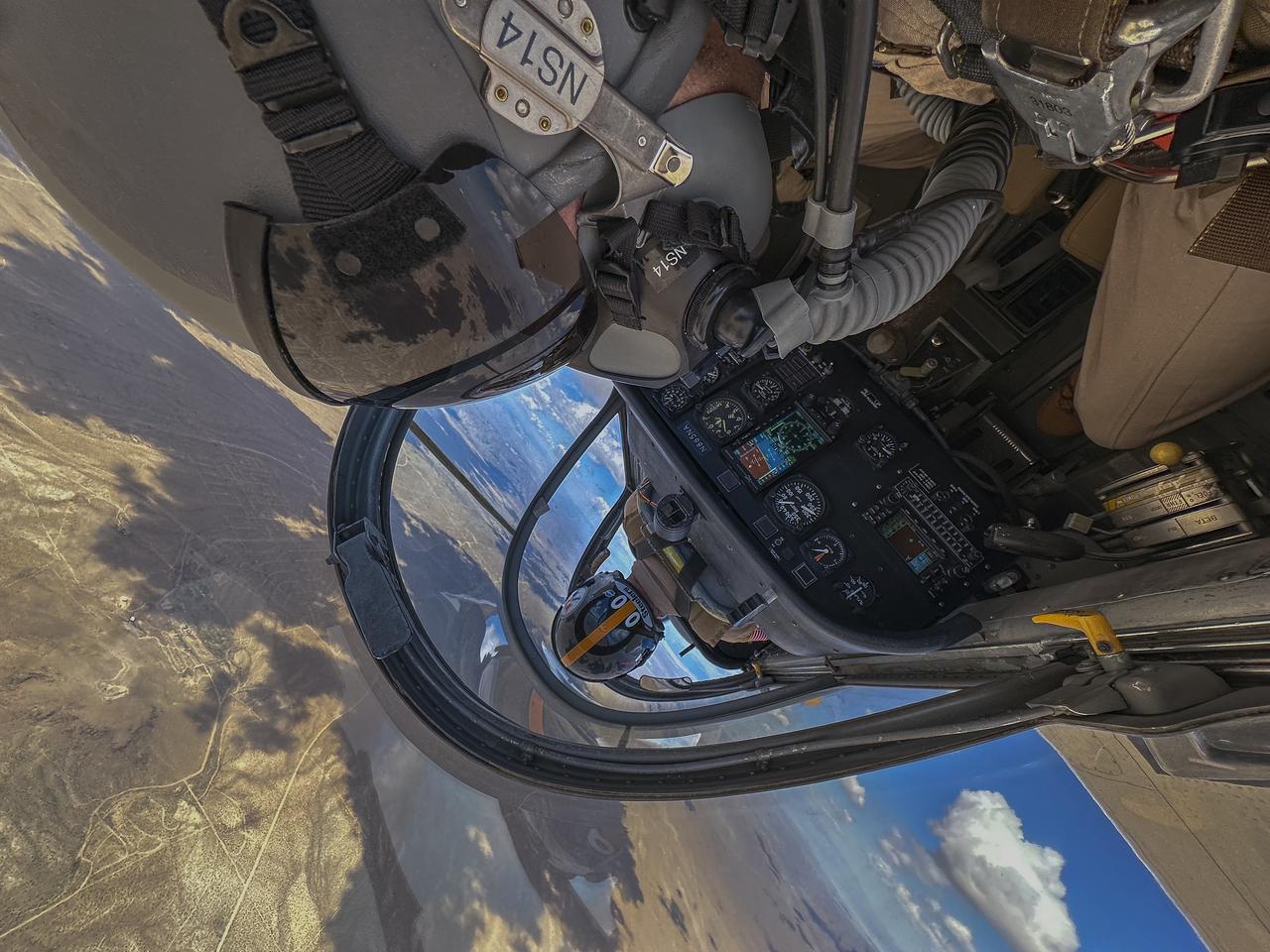
NASA research pilot Nils Larson and photographer Jim Ross complete aerobatic maneuvers in a NASA Armstrong Flight Research Center in Edwards, California owned T-34C aircraft during a proficiency flight. 
NASA Armstrong Flight Research Center T-34C Aircraft in Flight
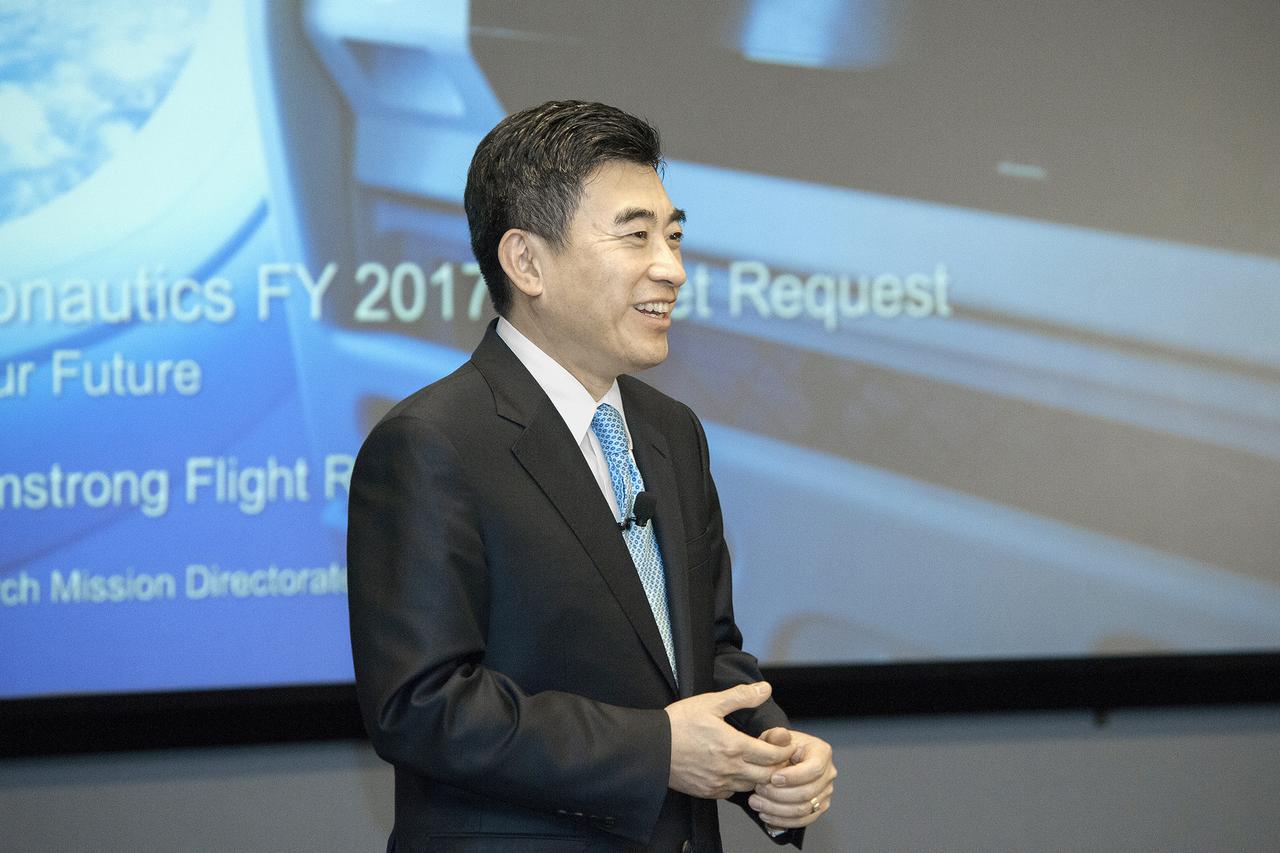
NASA Associate Administrator for Aeronautics Jaiwon Shin talked to staff and managers at NASA Armstrong Flight Research Center in California March 17 about the New Horizons initiative. The 10-year plan could substantially improve aviation and provide major economic benefits.
AFRC2016-0090-13
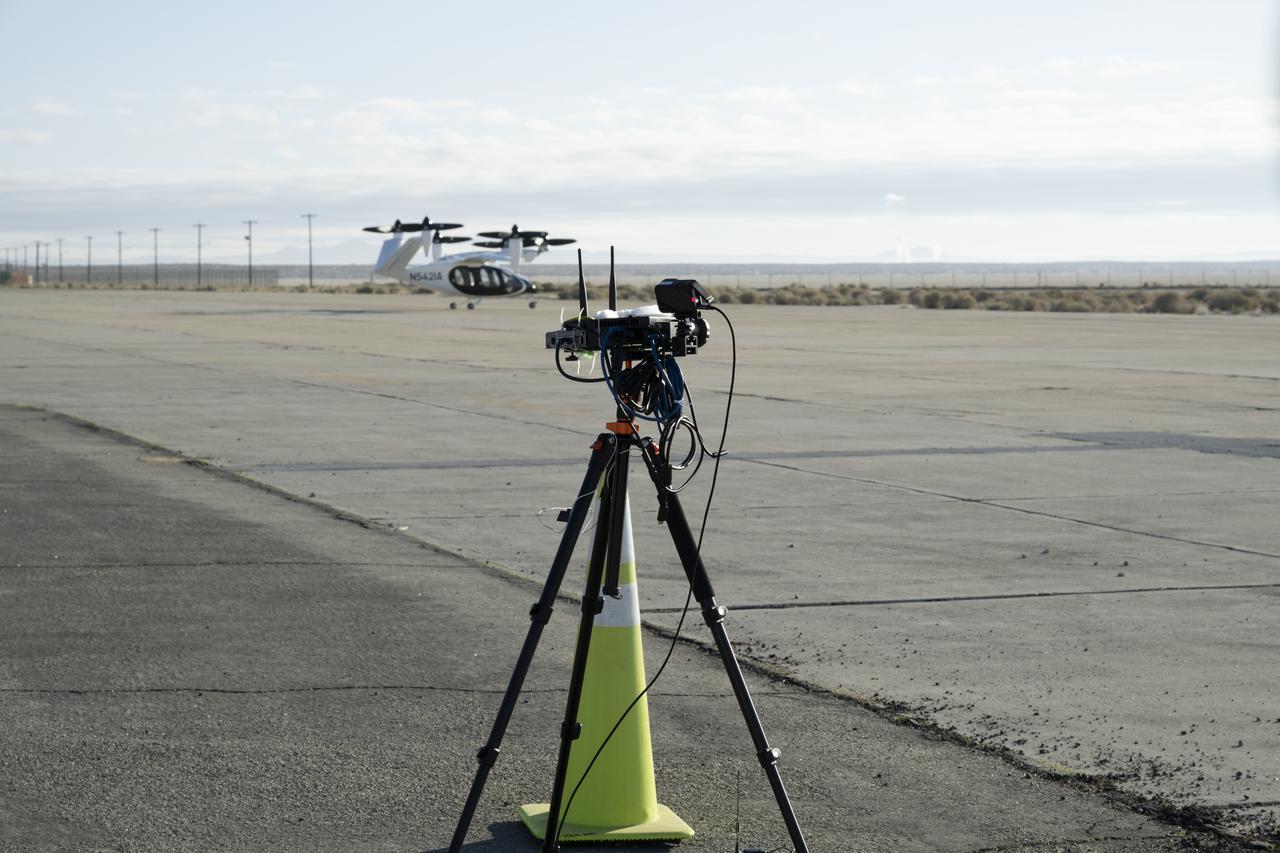
One of multiple NASA distributed sensing ground nodes is set up in the foreground while an experimental air taxi aircraft owned by Joby Aviation prepares to take off in the background near NASA’s Armstrong Flight Research Center in Edwards, California, on March 12, 2025. NASA is collecting information during this study to help advance future air taxi flights, especially those occurring in cities, to track aircraft moving through traffic corridors and around landing zones. 
NASA and Joby Research Near NASA’s Armstrong Flight Research Center
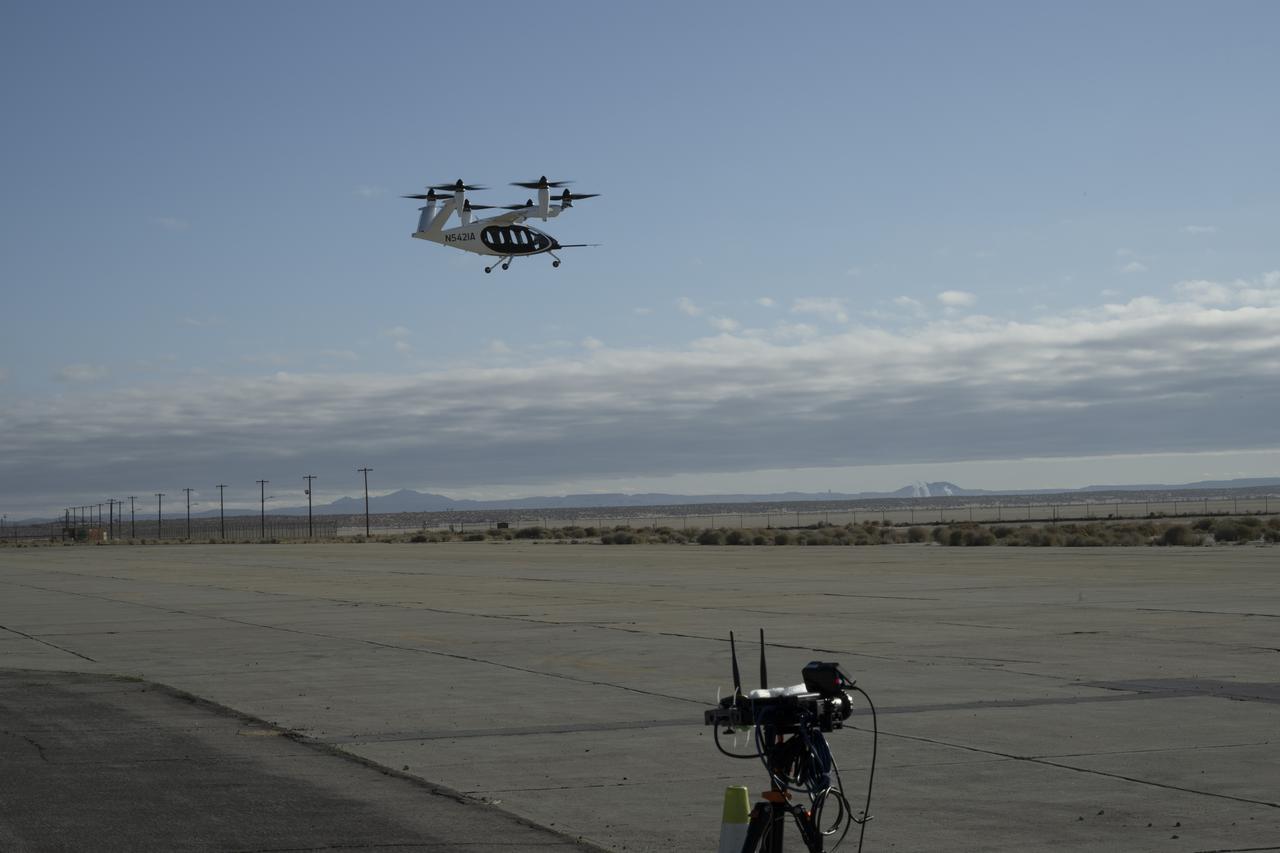
One of multiple NASA distributed sensing ground nodes is set up in the foreground while an experimental air taxi aircraft owned by Joby Aviation hovers in the background near NASA’s Armstrong Flight Research Center in Edwards, California, on March 12, 2025. NASA is collecting information during this study to help advance future air taxi flights, especially those occurring in cities, to track aircraft moving through traffic corridors and around landing zones.
NASA and Joby Research Near NASA’s Armstrong Flight Research Center
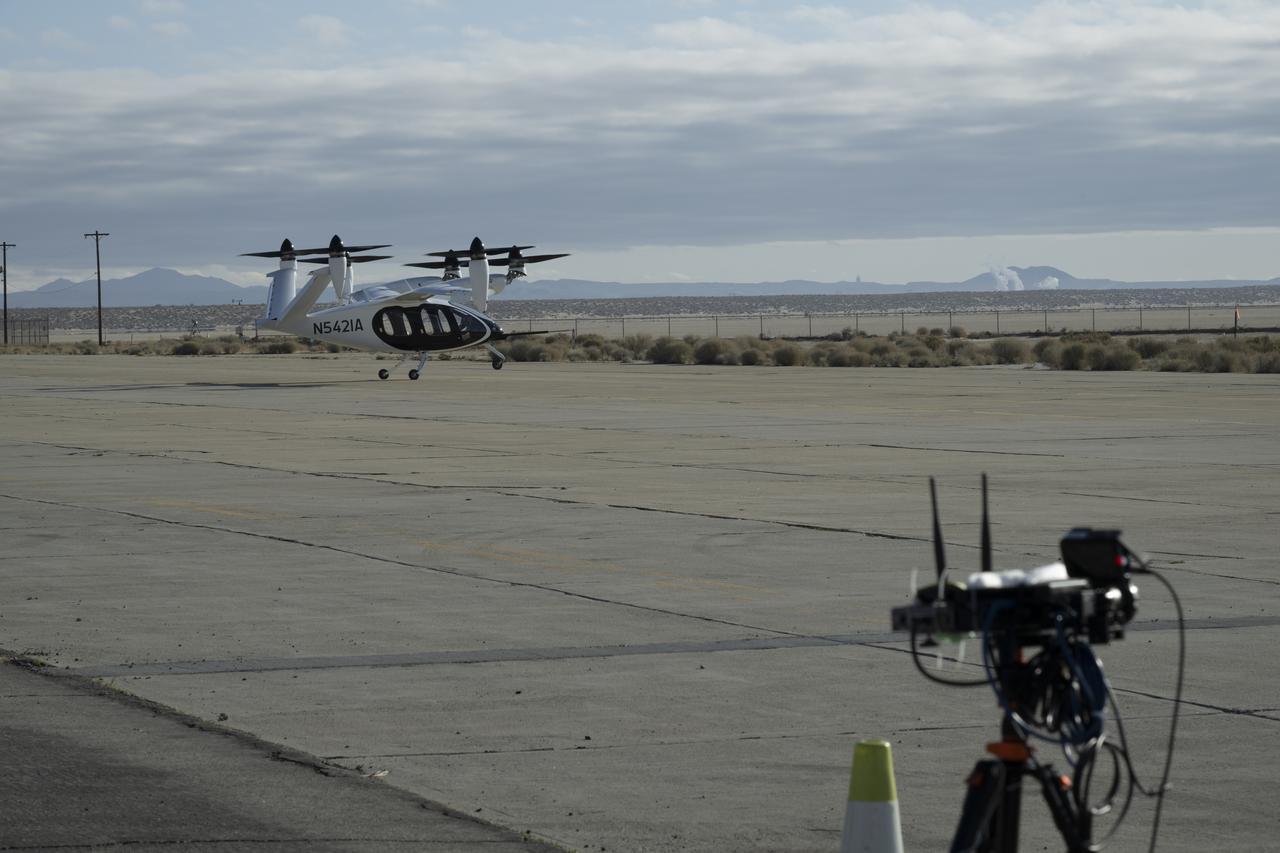
One of several NASA distributed sensing ground nodes is set up in the foreground while an experimental air taxi aircraft owned by Joby Aviation sits in the background near NASA’s Armstrong Flight Research Center in Edwards, California, on March 12, 2025. NASA is collecting information during this study to help advance future air taxi flights, especially those occurring in cities, to track aircraft moving through traffic corridors and around landing zones.
NASA and Joby Research Near NASA’s Armstrong Flight Research Center
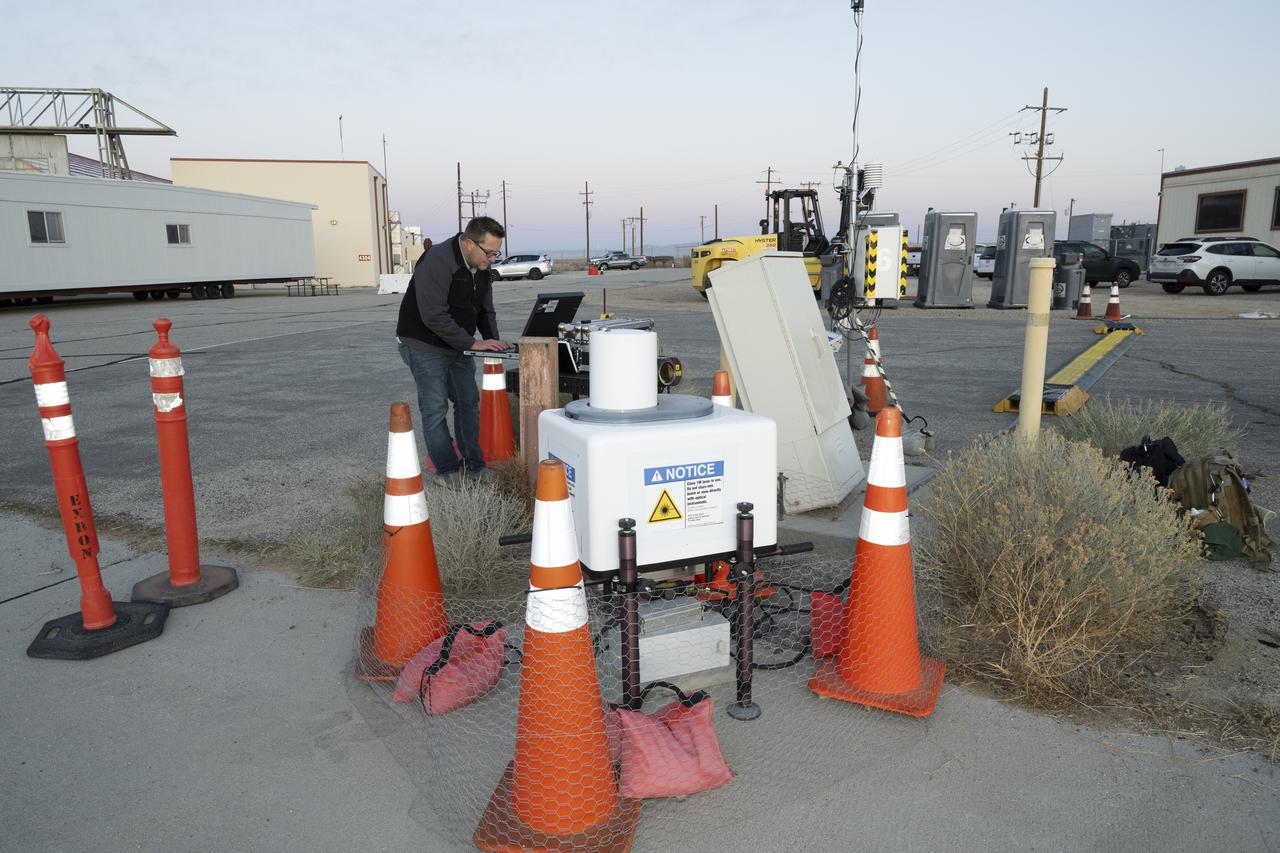
NASA aeronautical meteorologist Luke Bard adjusts one of several wind lidar (light detection and ranging) sensors near NASA’s Armstrong Flight Research Center in Edwards, California, on March 12, 2025, in preparation to collect data from Joby Aviation’s experimental air taxi aircraft. NASA is collecting information during this study to help advance weather-tolerant air taxi operations for the entire industry
NASA and Joby Research Near NASA’s Armstrong Flight Research Center
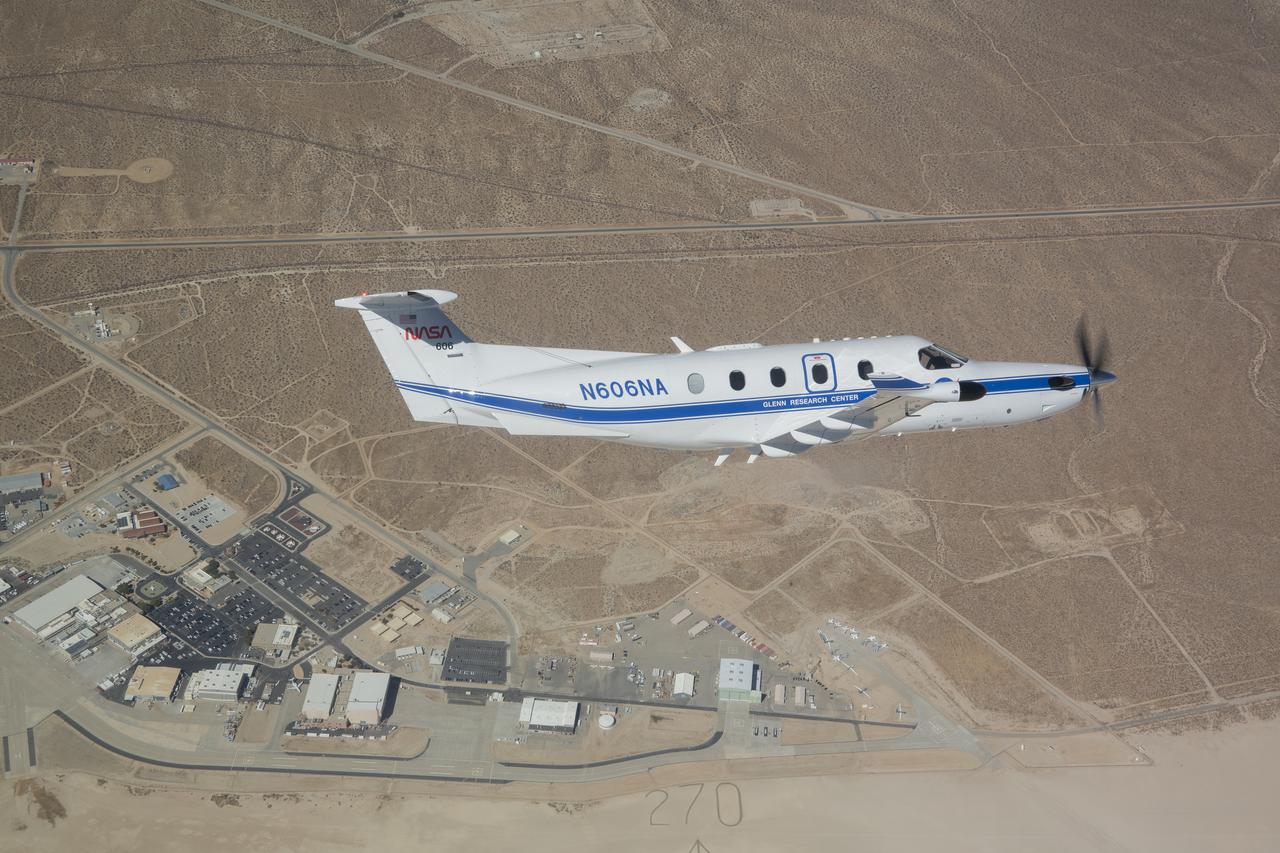
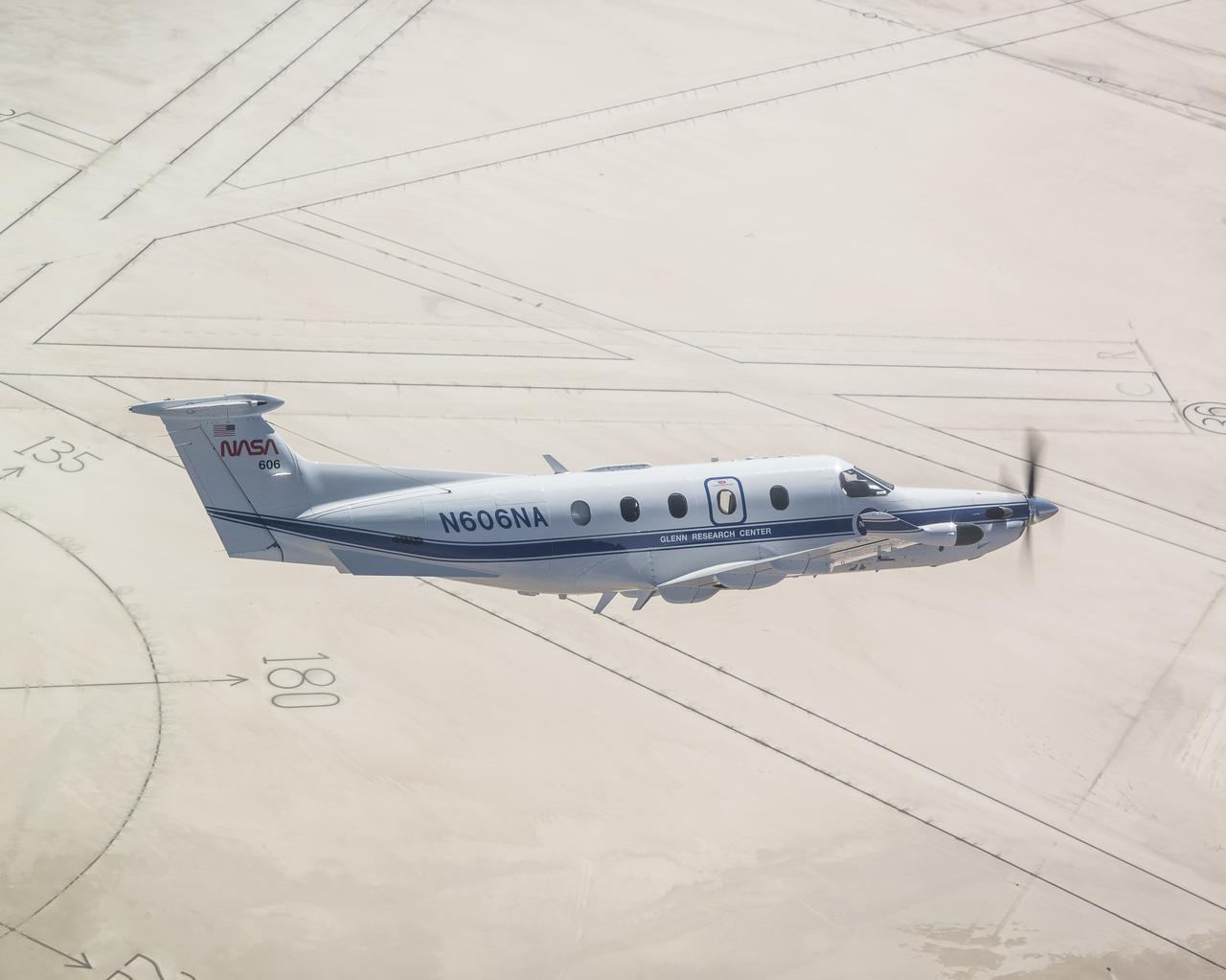
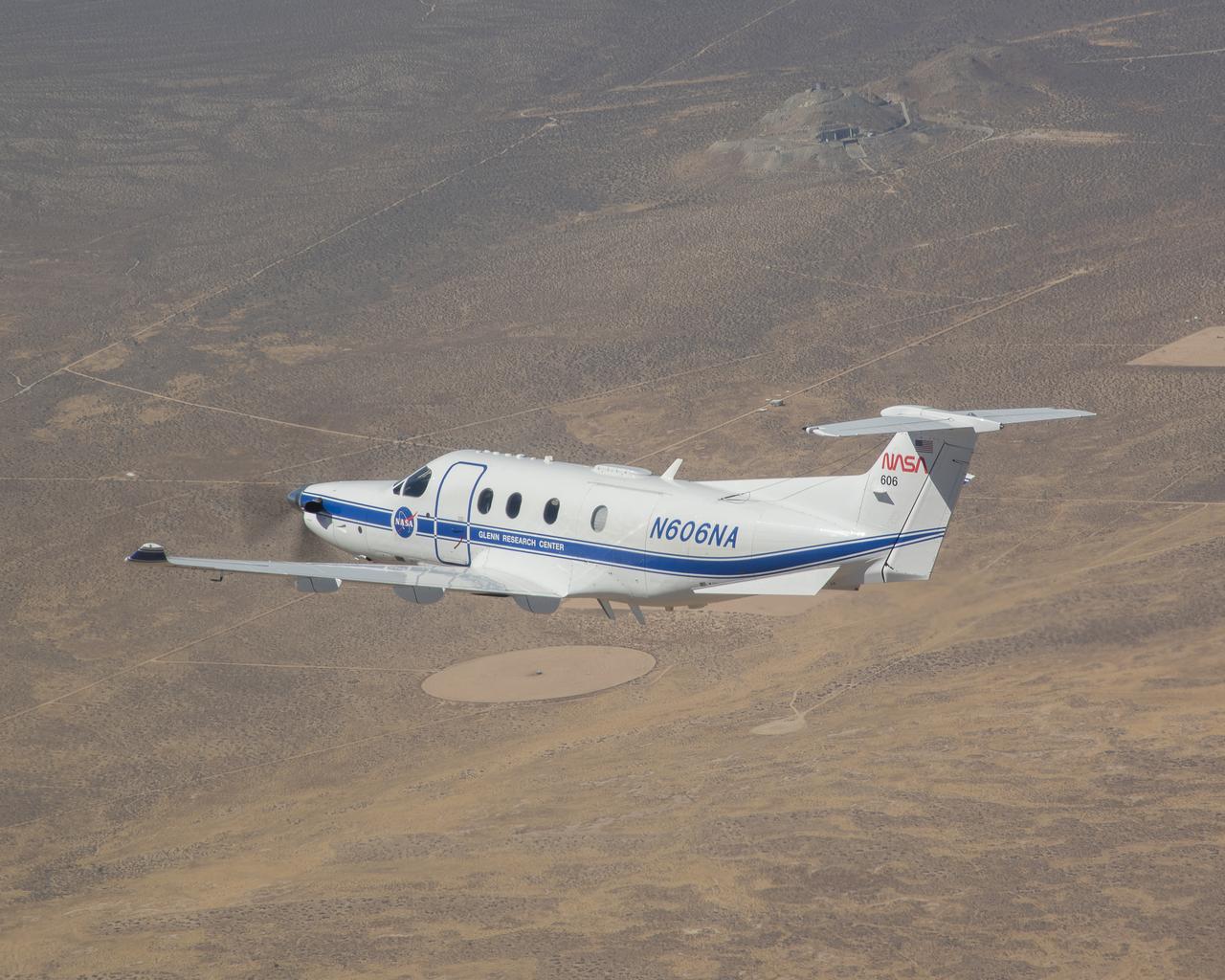
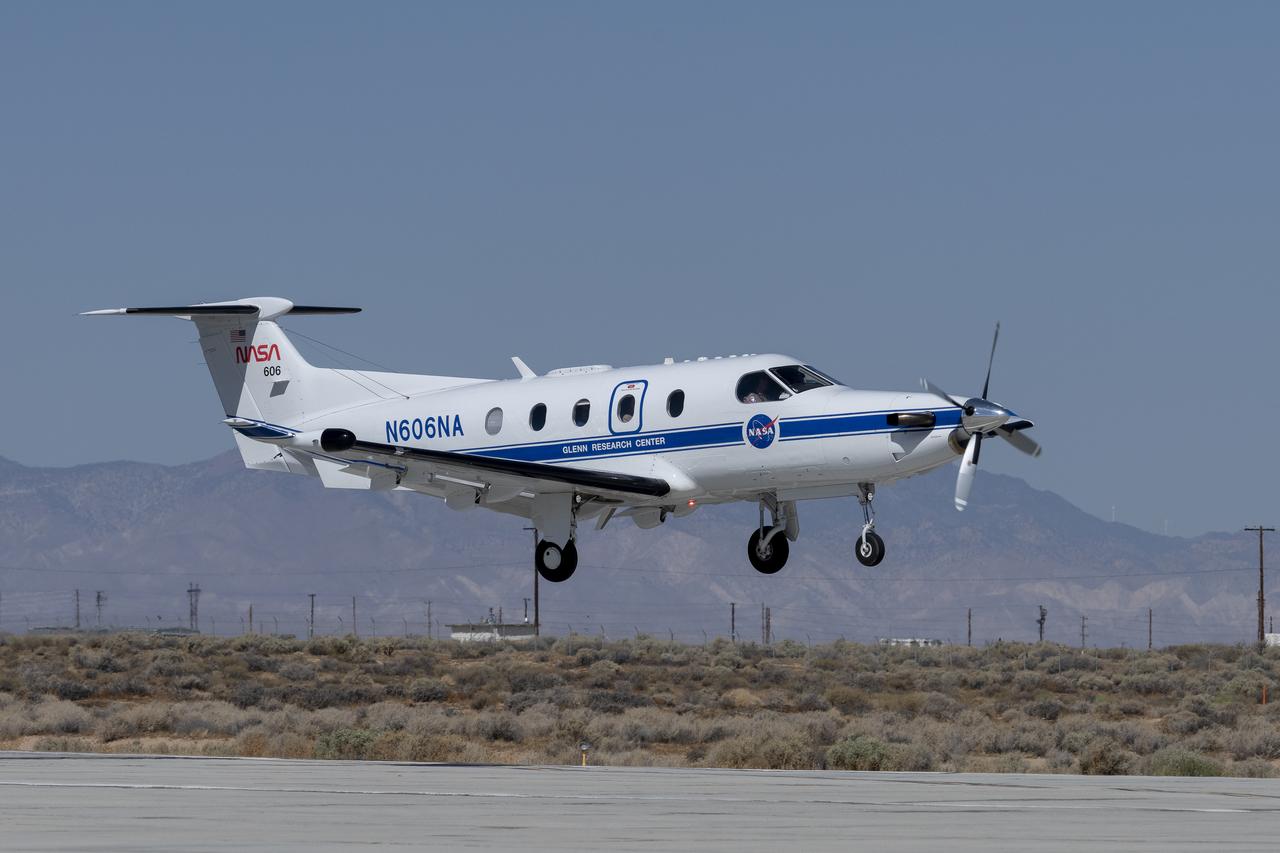
NASA’s Pilatus PC-12, based out of NASA’s Glenn Research Center in Cleveland, is seen flying over NASA’s Armstrong Flight Research Center in Edwards, California. On Sept. 18, 2024, NASA pilots and crew from both centers flew the PC-12 over the Mojave Desert in a series of familiarization flights. Familiarization flights involve egress training, preflight walkaround, interior preflight, engine start, taxi, and takeoff.  
NASA Pilatus PC-12 soars over NASA’s Armstrong Flight Research Center in Edwards, California on Sept. 18, 2024.
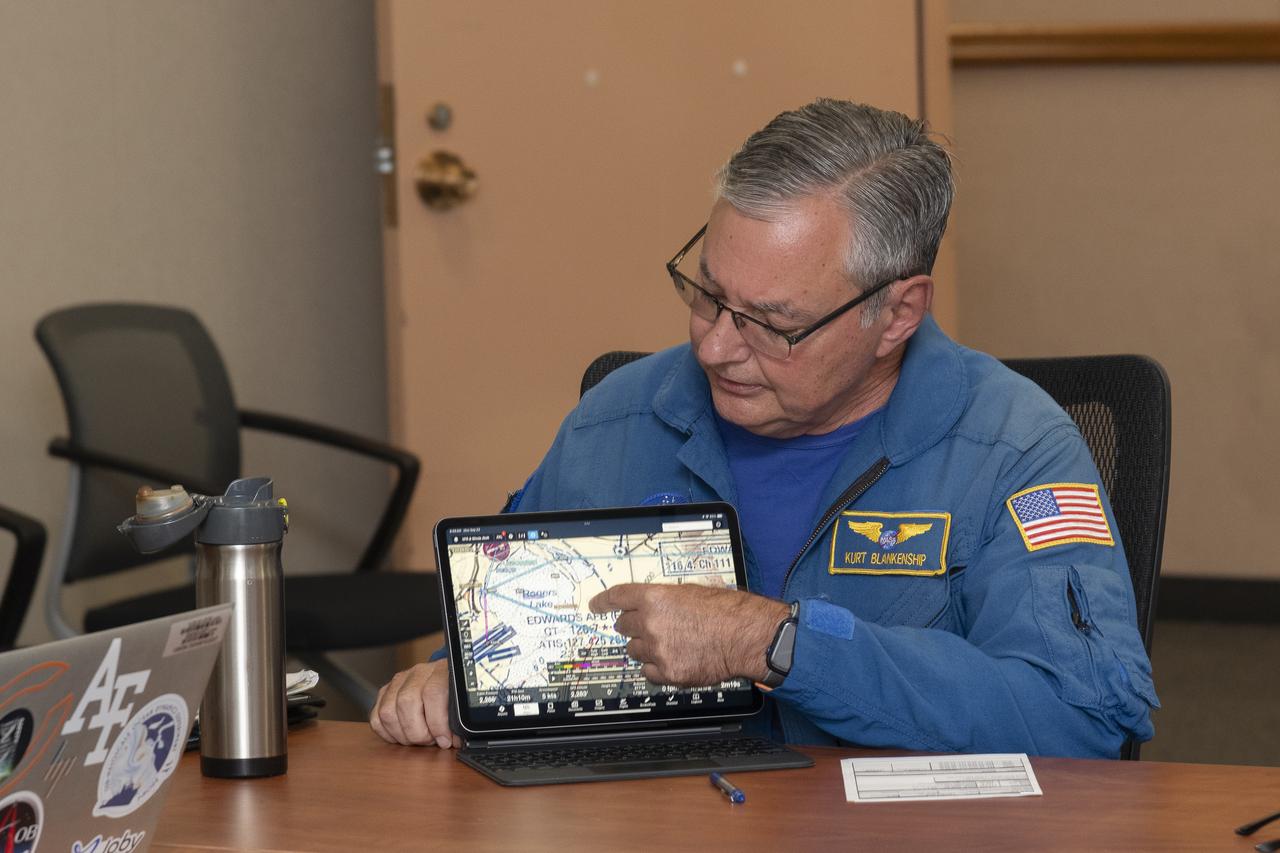
NASA pilot Kurt Blankenship maps out flight plans during a pre-flight brief. Pilots, crew, and researchers from NASA’s Armstrong Flight Research Center in Edwards, California and NASA’s Glenn Research Center in Cleveland are briefed on the flight plan to gather Automatic Dependent Surveillance-Broadcast signal data between the aircraft and ping-Stations on the ground at NASA Armstrong. These flights are the first cross-center research activity with the Pilatus-PC-12 at NASA Armstrong.
NASA pilot Kurt Blankenship reviews flight plans during the pre-flight brief to gather Automatic Dependent Surveillance-Broadcast data using NASA’s Pilatus PC-12 at NASA’s Armstrong Flight Research Center in Edwards, California on Sept. 23, 2024.
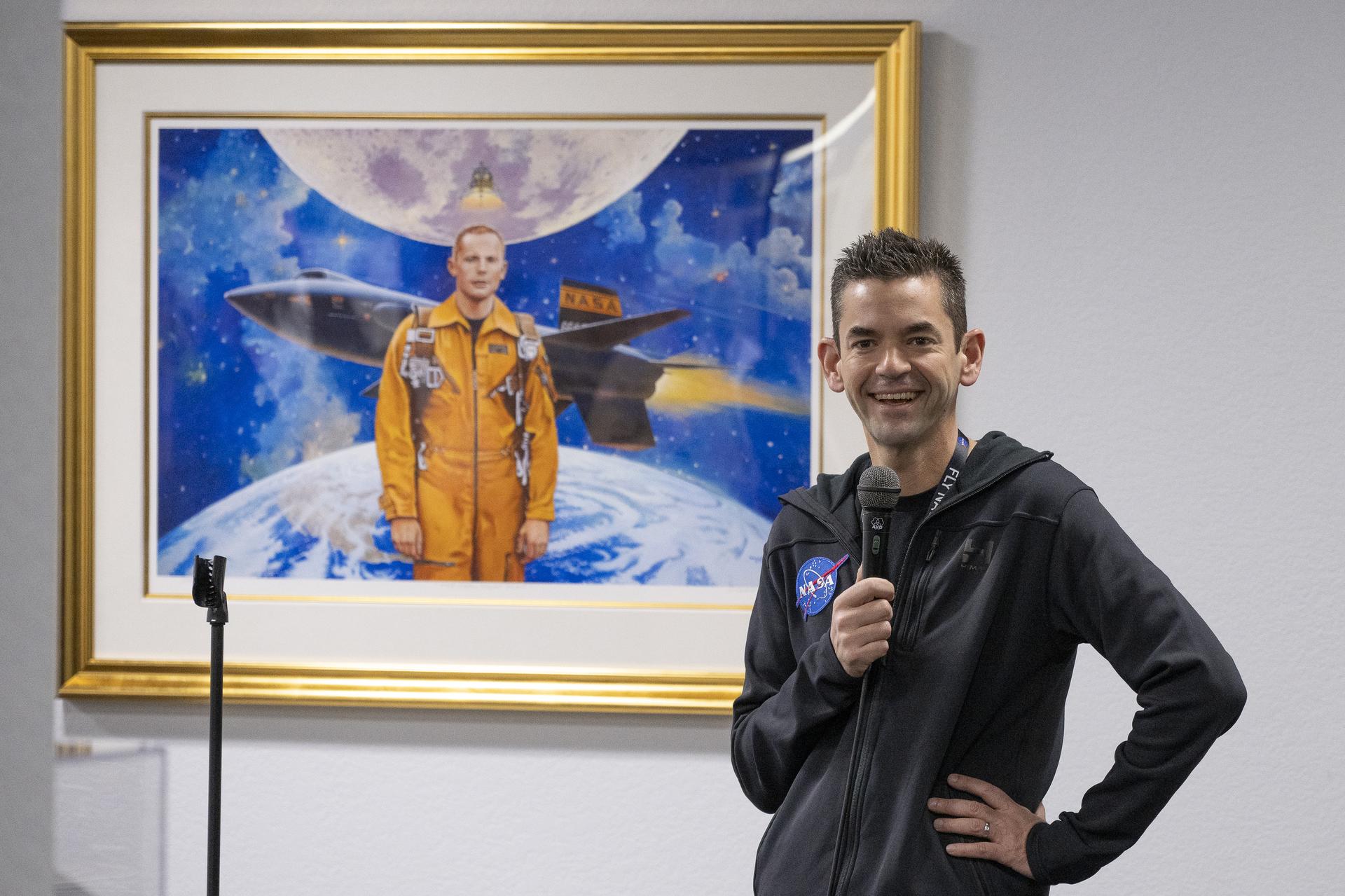
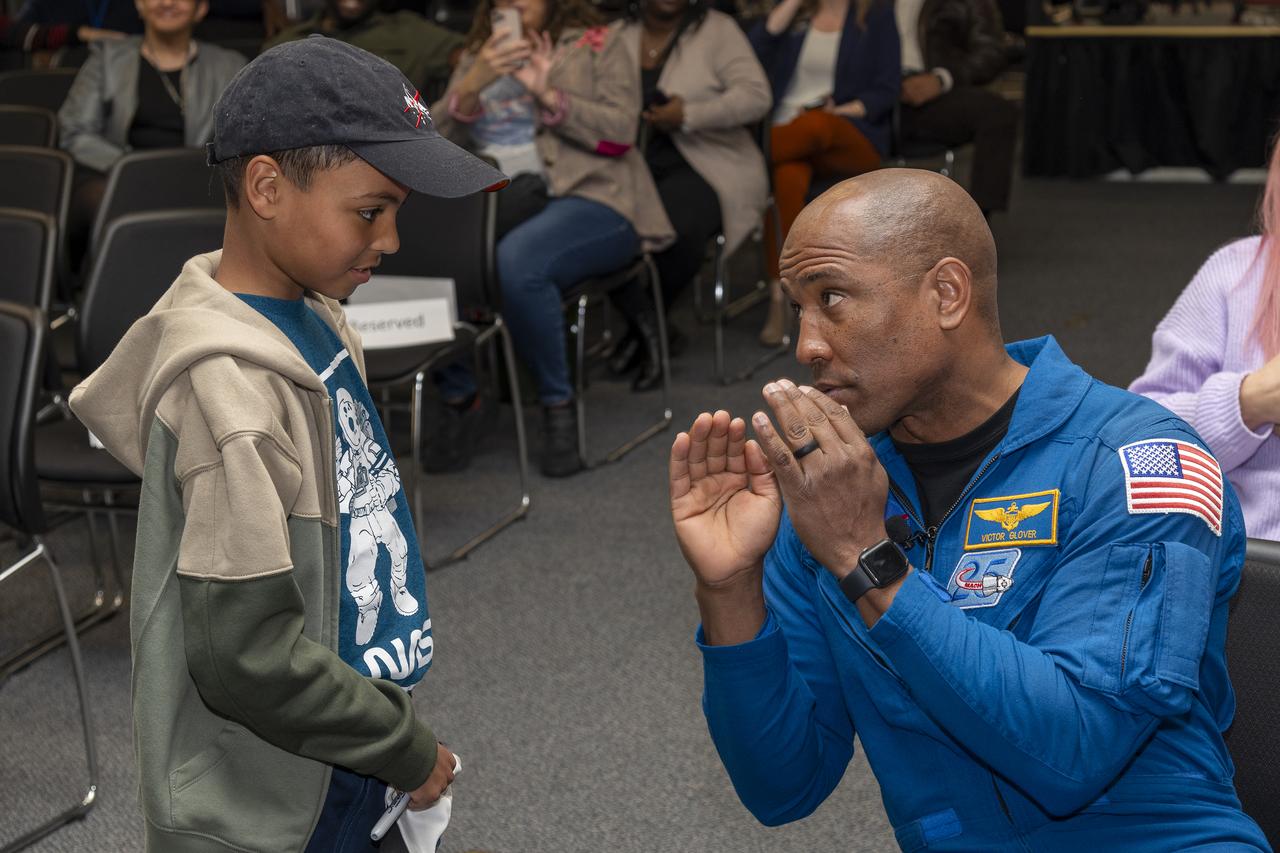
NASA Artemis II astronaut Victor Glover met with Edwards Air Force Base school-age children at a joint NASA and Air Force Black Employee Resource Group event at NASA’s Armstrong Flight Research Center in Edwards, California on Feb. 15.
Astronaut Victor Glover Visits NASA Armstrong Flight Research Center
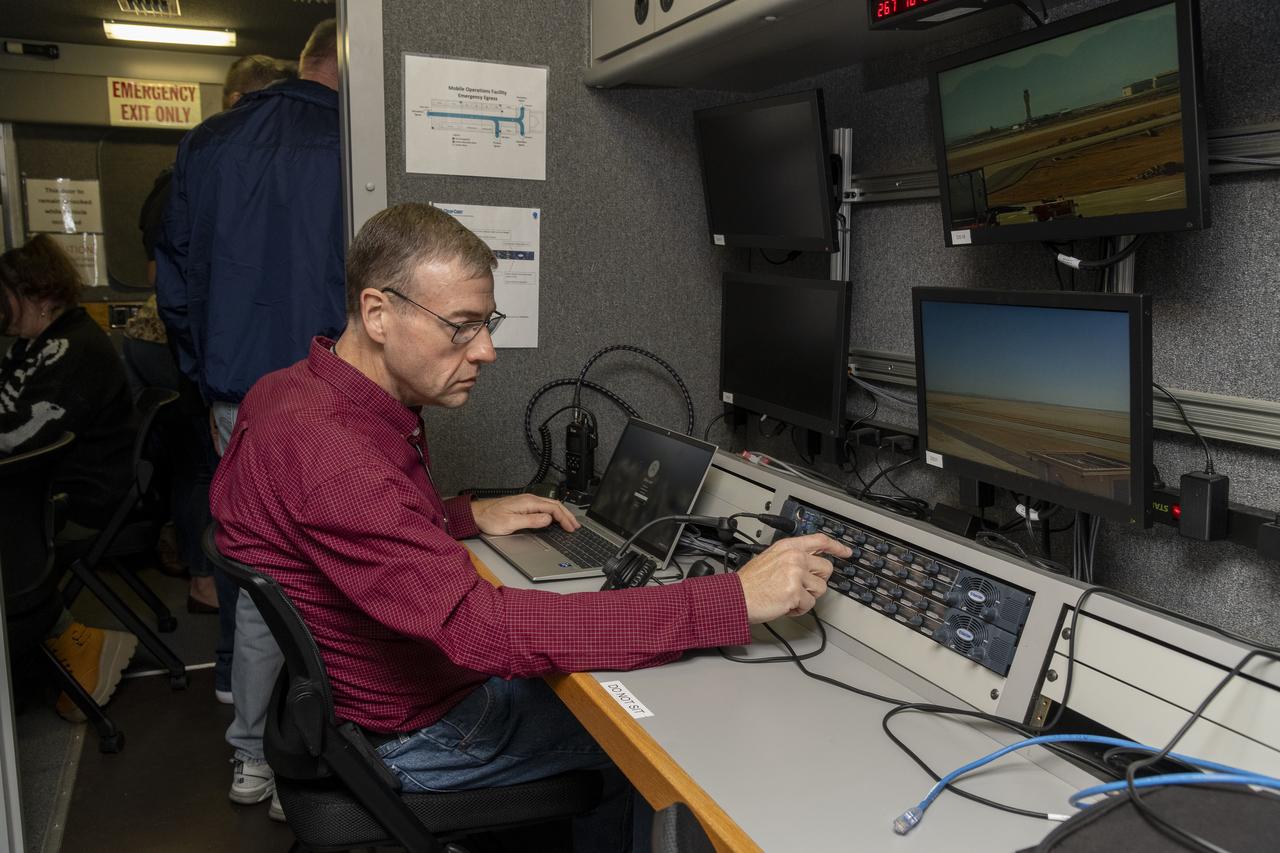
Working in the Mobile Operations Facility at NASA’s Armstrong Flight Research Center in Edwards, California, NASA Advanced Air Mobility researcher Dennis Iannicca adjusts a control board to capture Automatic Dependent Surveillance-Broadcast (ADS-B) data during test flights. The data will be used to understand ADS-B signal loss scenarios for air taxi flights in urban areas.
NASA researcher Dennis Iannicca adjusts a control board in the Mobile Operations Facility to gather Automatic Dependent Surveillance-Broadcast signal data at NASA’s Armstrong Flight Research Center in Edwards, California on Sept. 23, 2024.
Derek Abramson and Robert Jensen unload the Hybrid Quadrotor 90C (HQ-90) at NASA Armstrong Flight Research Center’s Dale Reed Subscale Flight Research Lab in California on Oct. 1, 2020. The Resilient Autonomy project will use the vertical lift and transition remotely piloted aircraft for software testing at NASA Armstrong.
HQ-90 aircraft arrived and assembled at NASA’s Armstrong Flight Research Center 
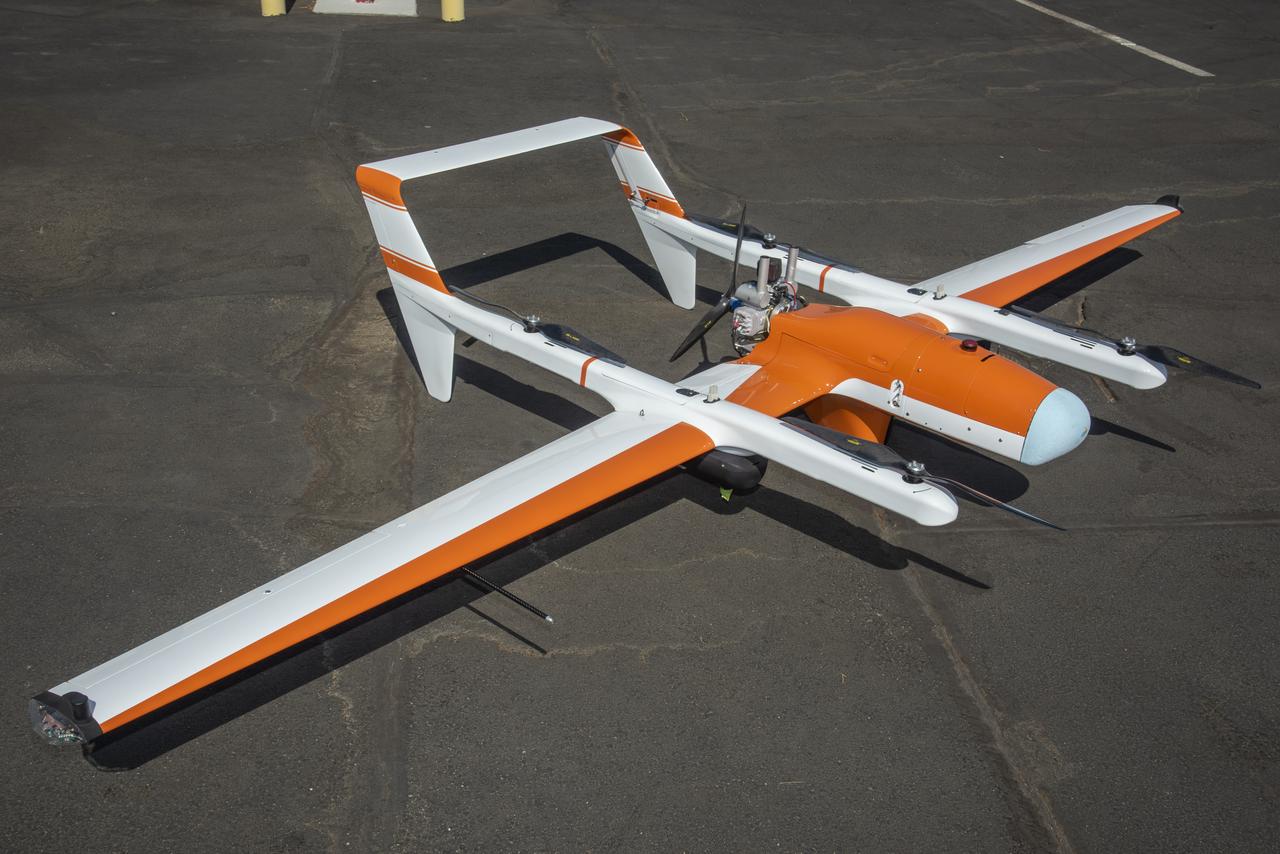
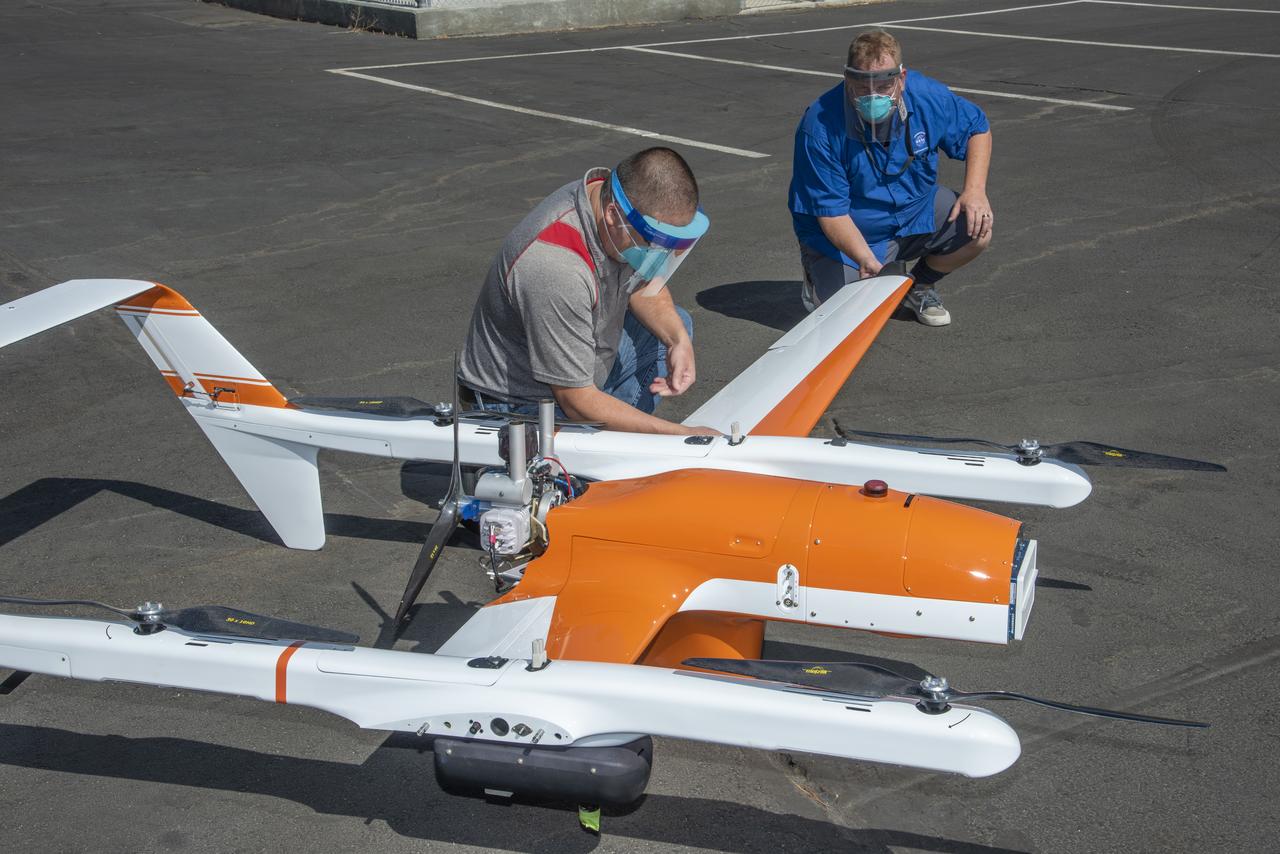
The Hybrid Quadrotor 90C (HQ-90) is displayed outside the NASA Armstrong Flight Research Center’s Dale Reed Subscale Flight Research Lab in California on Oct. 1, 2020. The Resilient Autonomy project will use this vertical lift and transition remotely piloted aircraft for software testing.  
HQ-90 aircraft arrived and assembled at NASA’s Armstrong Flight Research Center 
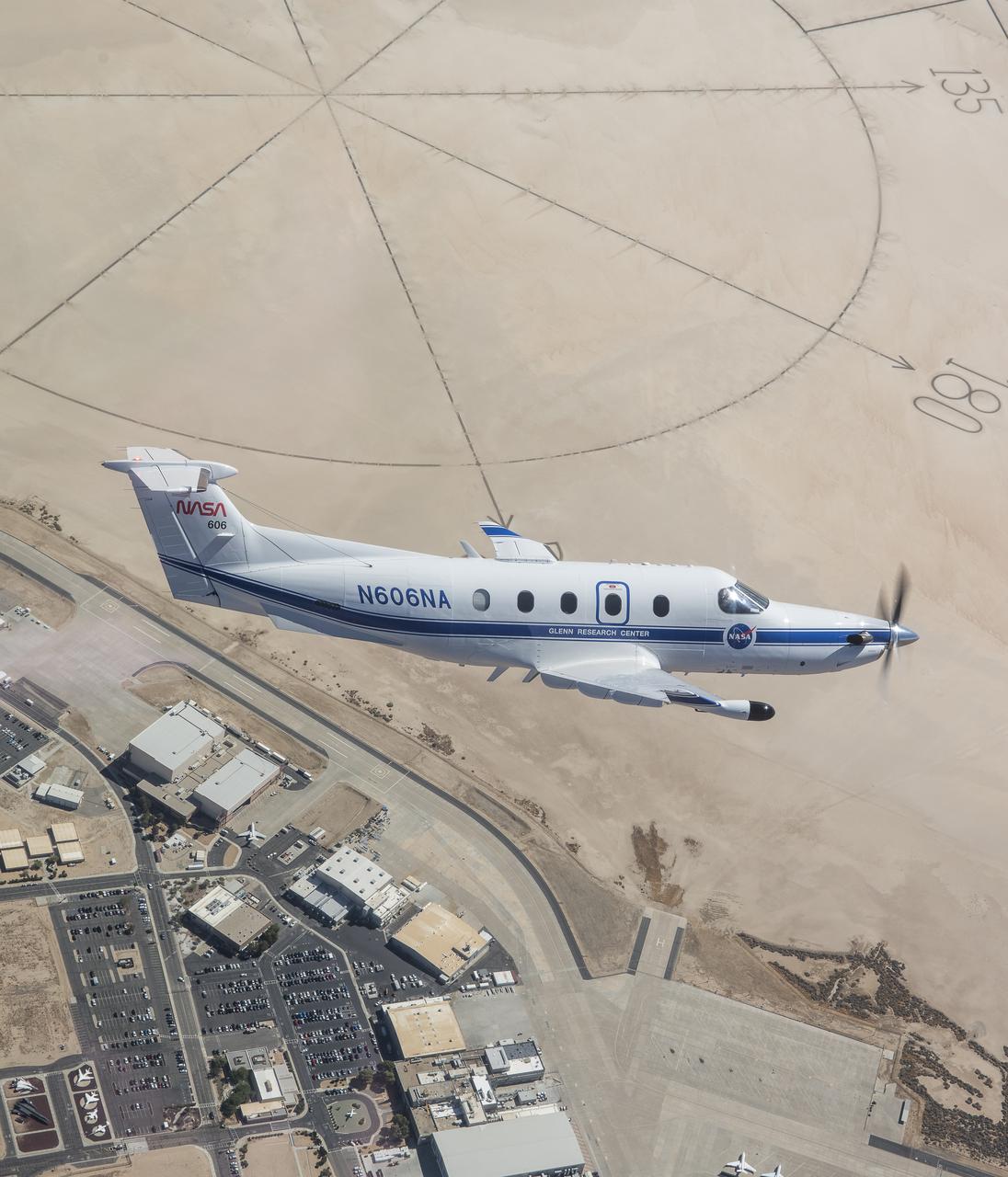
Based out of NASA’s Glenn Research Center in Cleveland, the Pilatus PC-12 is flying over the compass rose in the Roger’s Dry Lakebed at NASA’s Armstrong Flight Research Center, in Edwards, California. The compass rose is more than 4,000 feet in diameter and aligned to magnetic north, to test navigation equipment on aircraft. The Pilatus PC-12 tests communications technology for the emerging Advanced Air Mobility ecosystem. Pilots and crew from both centers perform familiarization flights to prepare for Automatic Dependent Surveillance Broadcast (ADS-B) systems tests between the aircraft and ping-Stations on the ground at Armstrong Flight Research Center. These flights are the first cross-center activity with the Pilatus-PC-12 at Armstrong Flight Research Center.
NASA’s Pilatus PC-12 flies over the world’s largest compass rose at NASA’s Armstrong Flight Research Center in Edwards, California on Sept. 18, 2024
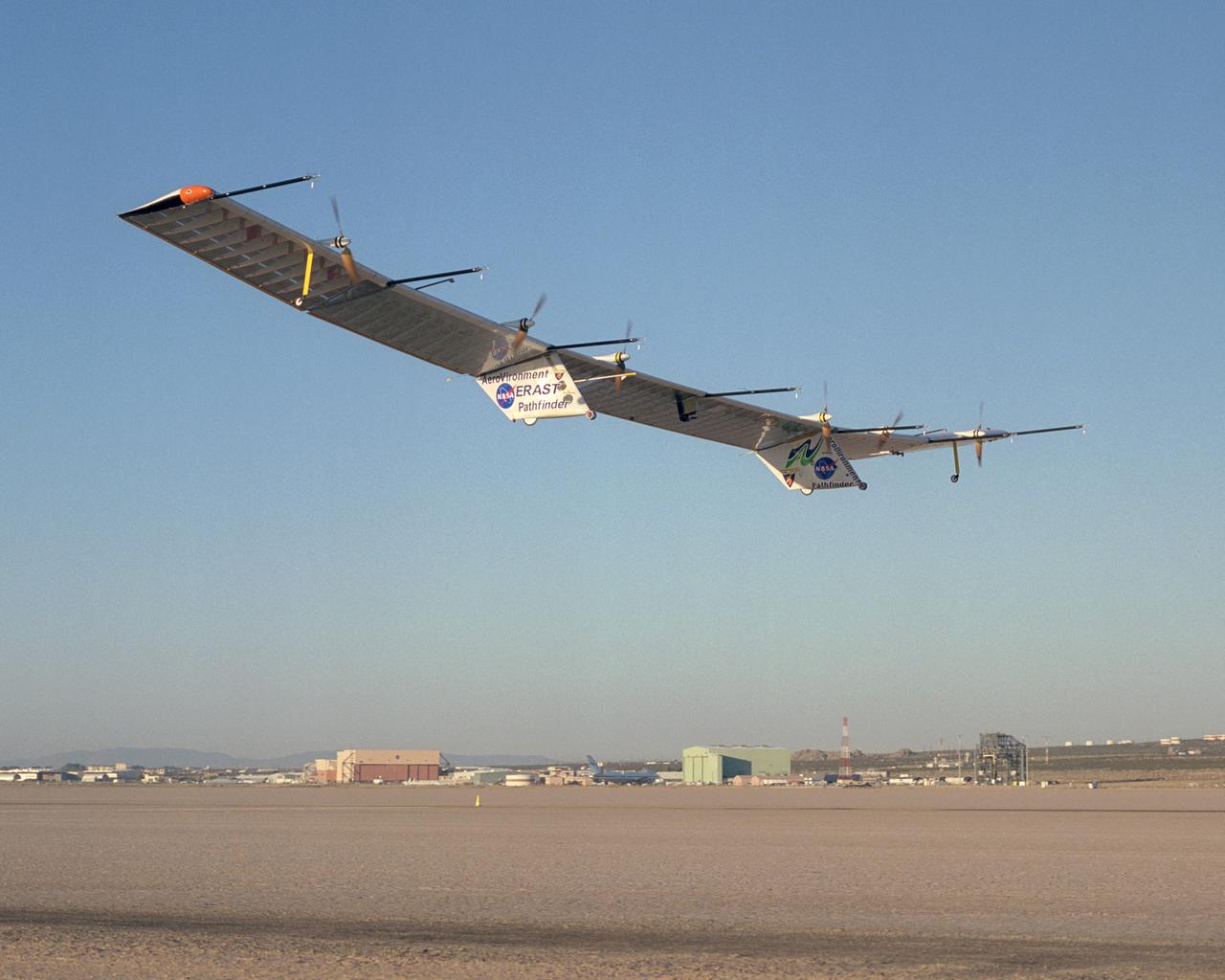
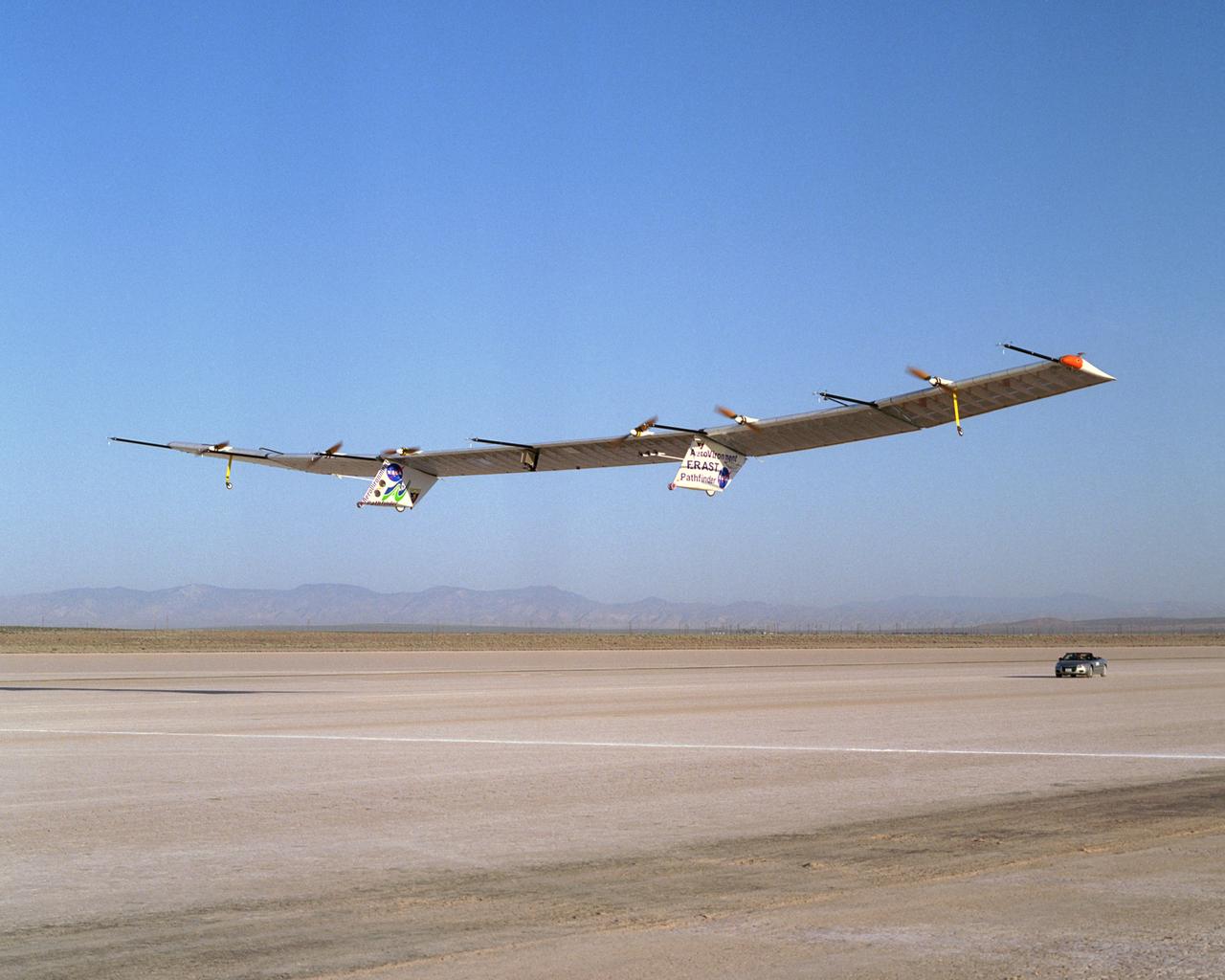
The Pathfinder-Plus solar-electric flying wing lifts off Rogers Dry Lake adjoining NASA Dryden Flight Research Center on a turbulence-measurement flight.
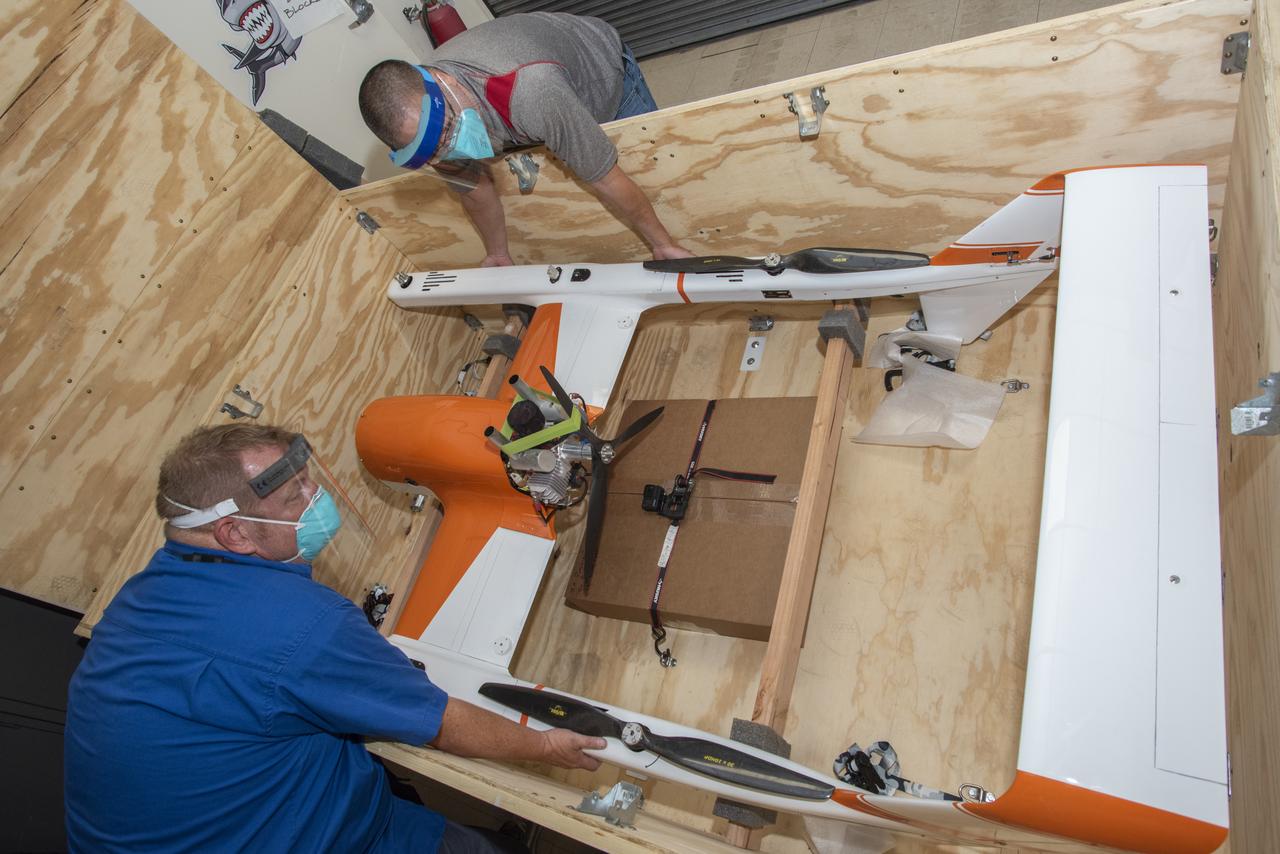
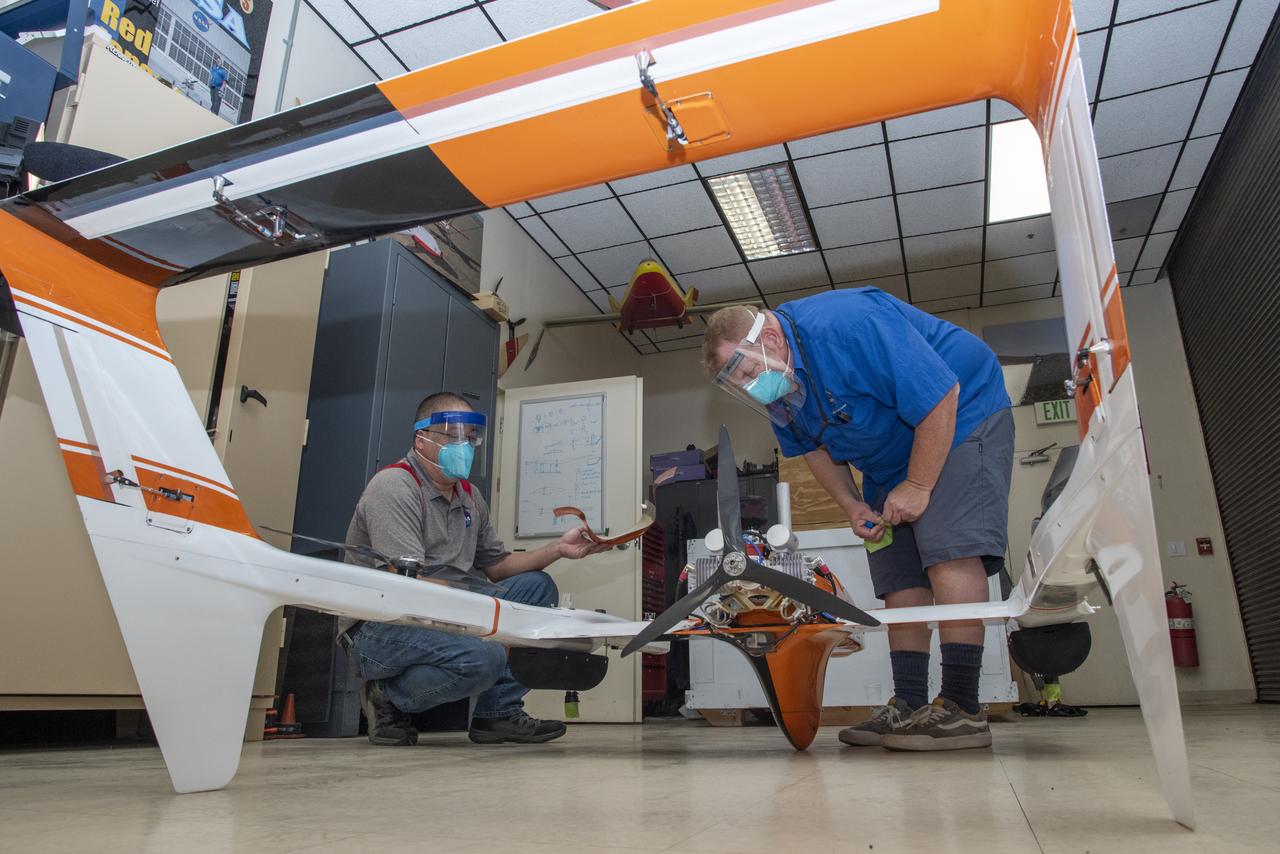
Derek Abramson and Robert Jensen assemble pieces of the Hybrid Quadrotor 90C (HQ-90) at NASA Armstrong Flight Research Center’s Dale Reed Subscale Flight Research Lab in California on Oct. 1, 2020. This vertical lift and transition remotely piloted aircraft arrived in pieces packed in crates. It was reassembled for the Resilient Autonomy project to test software in flight.  
HQ-90 aircraft arrived and assembled at NASA’s Armstrong Flight Research Center 
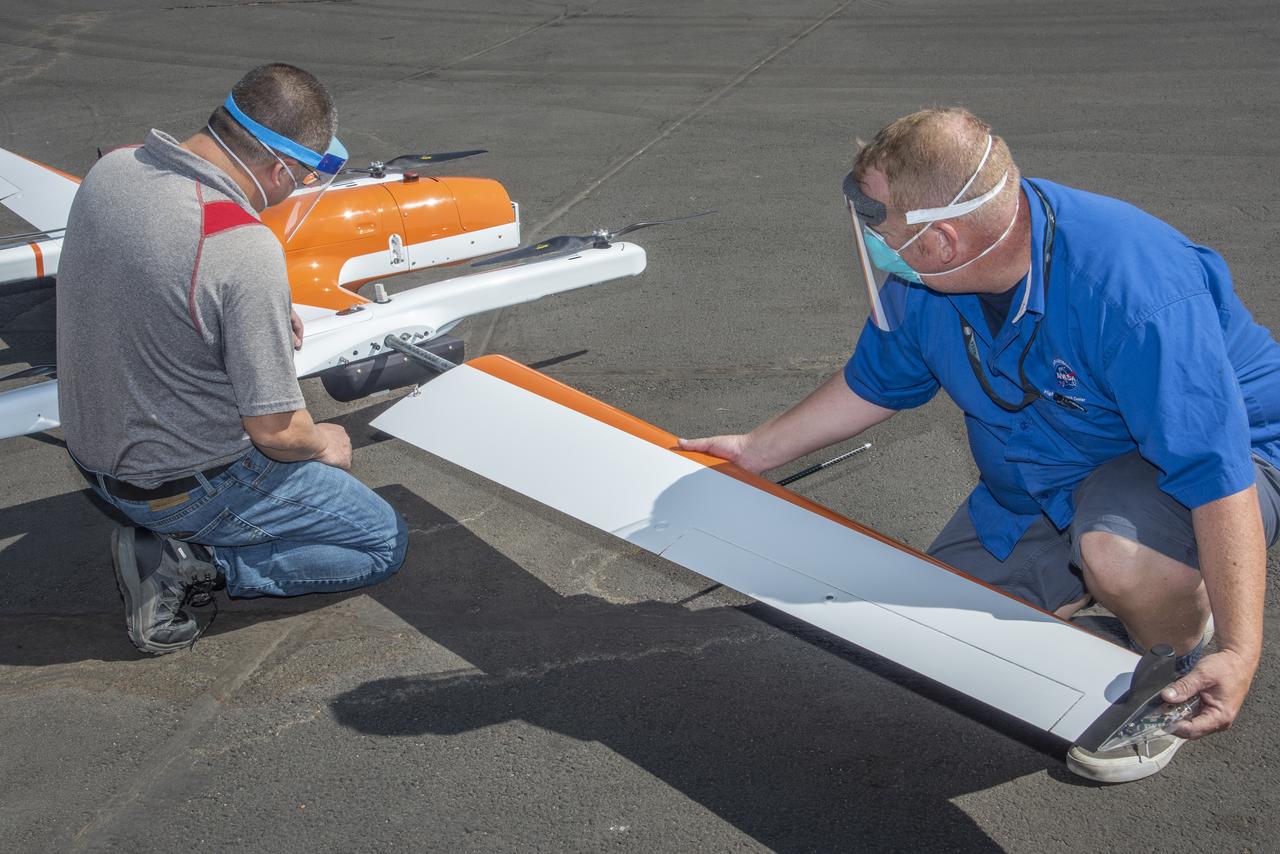
Derek Abramson and Robert Jensen install one of two wings on the Hybrid Quadrotor 90C (HQ-90) at NASA Armstrong Flight Research Center's Dale Reed Subscale Flight Research Lab in California on Oct. 1, 2020. This vertical lift and transition remotely piloted aircraft arrived in pieces packed in crates for the Resilient Autonomy project to test software in flight.
HQ-90 aircraft arrived and assembled at NASA's Armstrong Flight Research Center
Derek Abramson and Robert Jensen install a wing on the Hybrid Quadrotor 90C (HQ-90) at NASA Armstrong Flight Research Center's Dale Reed Subscale Flight Research Lab in California on Oct. 1, 2020. This vertical lift and transition remotely piloted aircraft arrived in pieces packed in crates for the Resilient Autonomy project to test software in flight.
HQ-90 aircraft arrived and assembled at NASA's Armstrong Flight Research Center
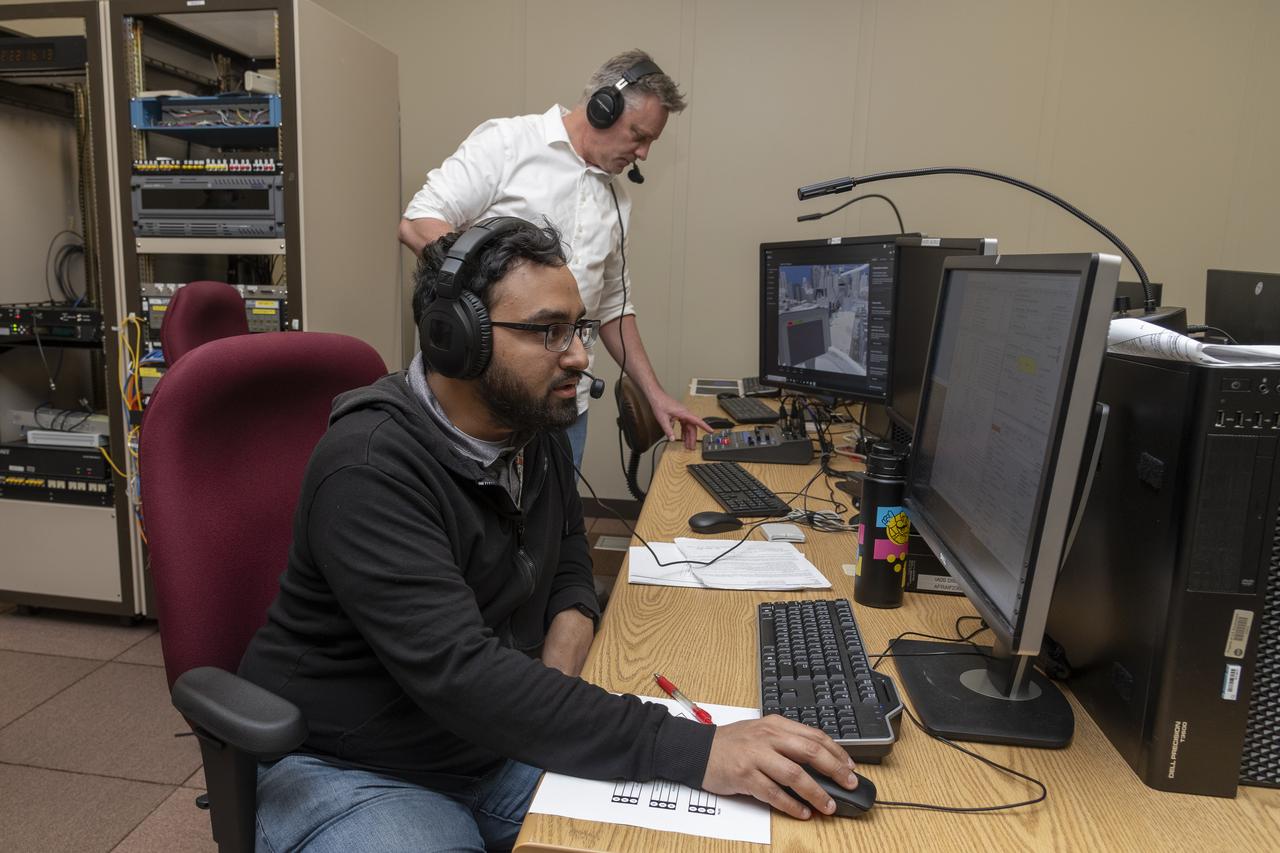
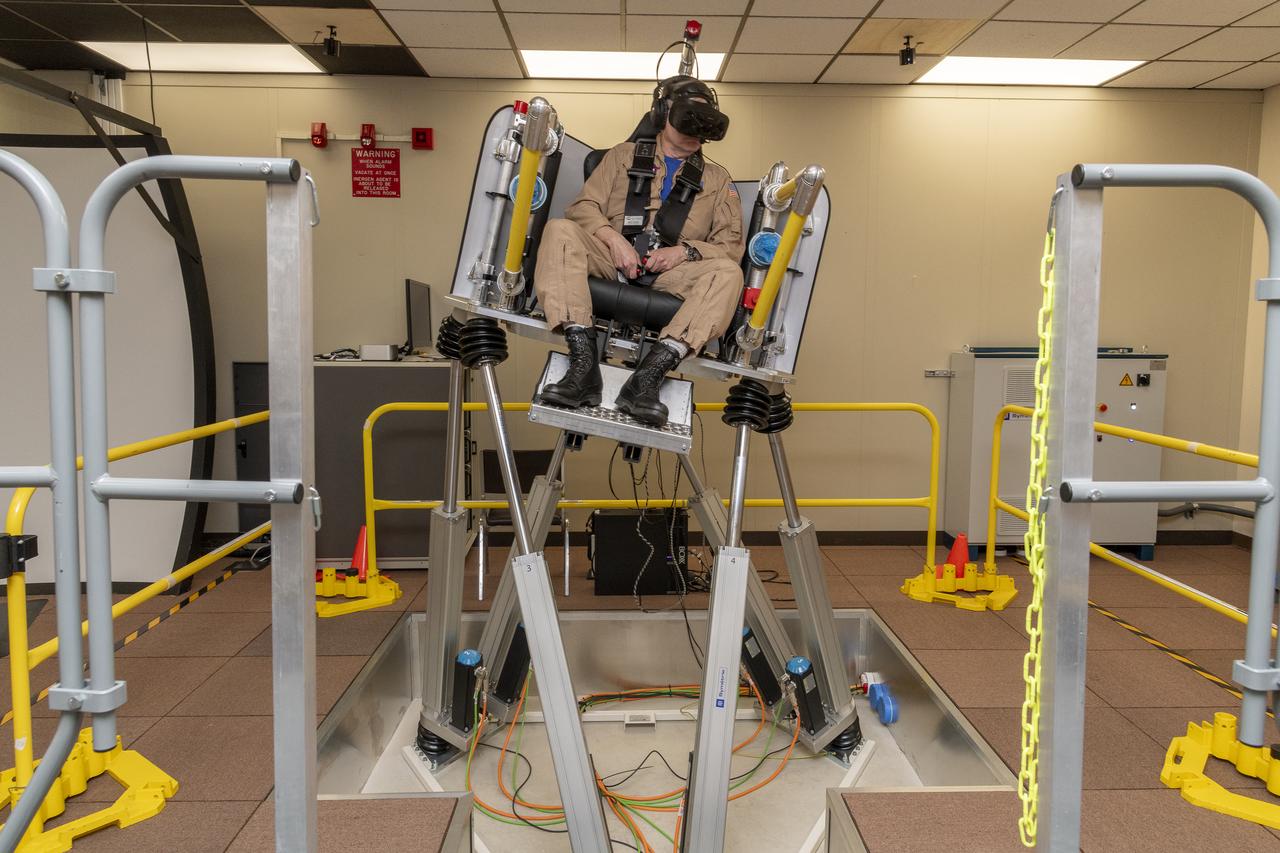
NASA researchers Curt Hanson (background) and Saravanakumaar Ramia (foreground) control the air taxi virtual reality flight simulator from computers during a test at NASA’s Armstrong Flight Research Center in Edwards, California in March 2024.
Air Taxi Passenger Comfort Simulator at NASA’s Armstrong Flight Research Center with Pilot
Used as a directional indicator the compass rose guides pilots flying test and experimental aircraft like the Pilatus PC-12 in the vast airspace over NASA’s Armstrong Flight Research Center in Edwards, California. This Pilatus PC-12 based out of NASA’s Glenn Research Center in Cleveland is being flown for a series of familiarization flights for NASA’s Armstrong pilots and crew. These familiarization flights supported communication, navigation and surveillance evaluations for Advanced Air Mobility research.
NASA Pilatus PC-12 cuts through the desert skies over NASA’s Armstrong Flight Research Center in Edwards, California with the compass rose in the background on Sept. 18, 2024.
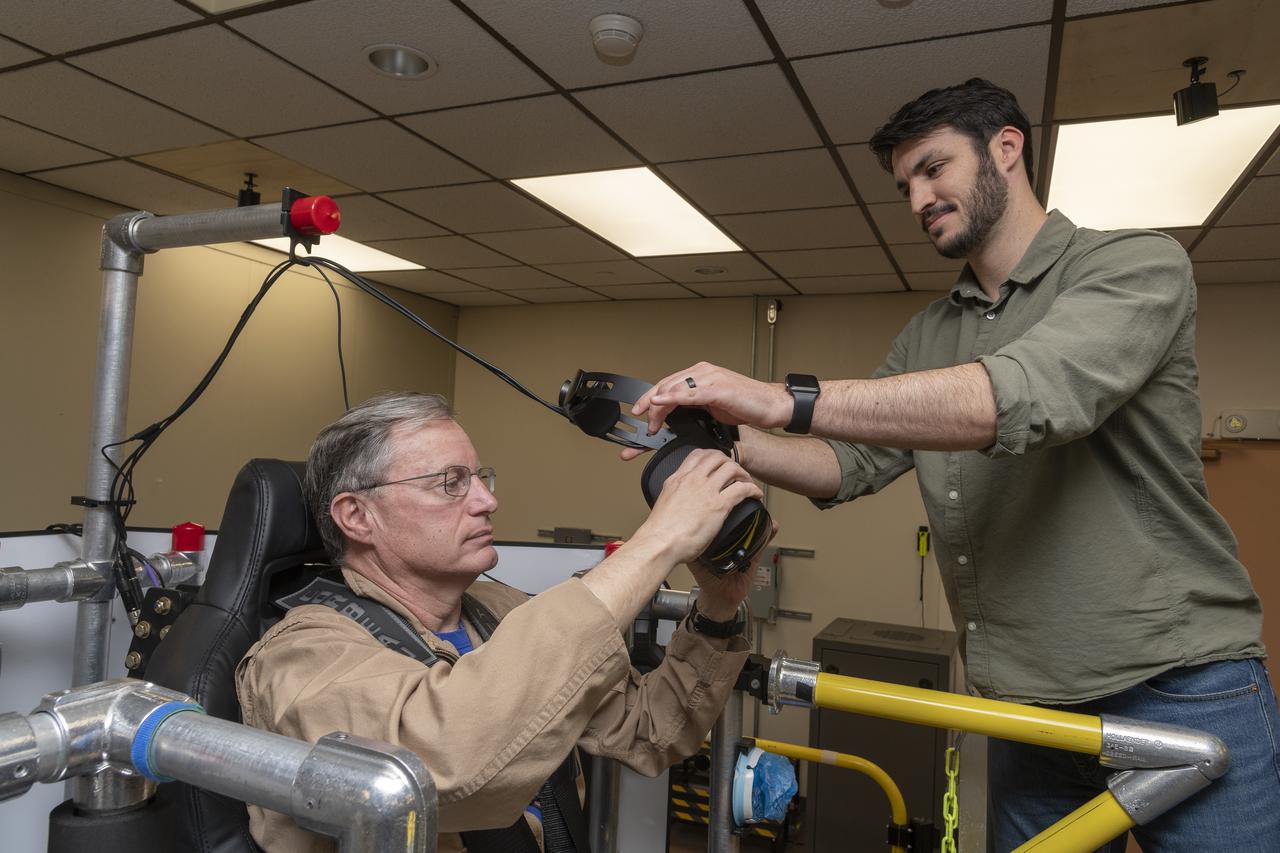
NASA test pilot Wayne Ringelberg and NASA researcher Kyle Barnes prepare for Ringelberg’s ride in the air taxi virtual reality flight simulator during a test at NASA’s Armstrong Flight Research Center in Edwards, California in March 2024.
Air Taxi Passenger Comfort Simulator at NASA’s Armstrong Flight Research Center with Pilot
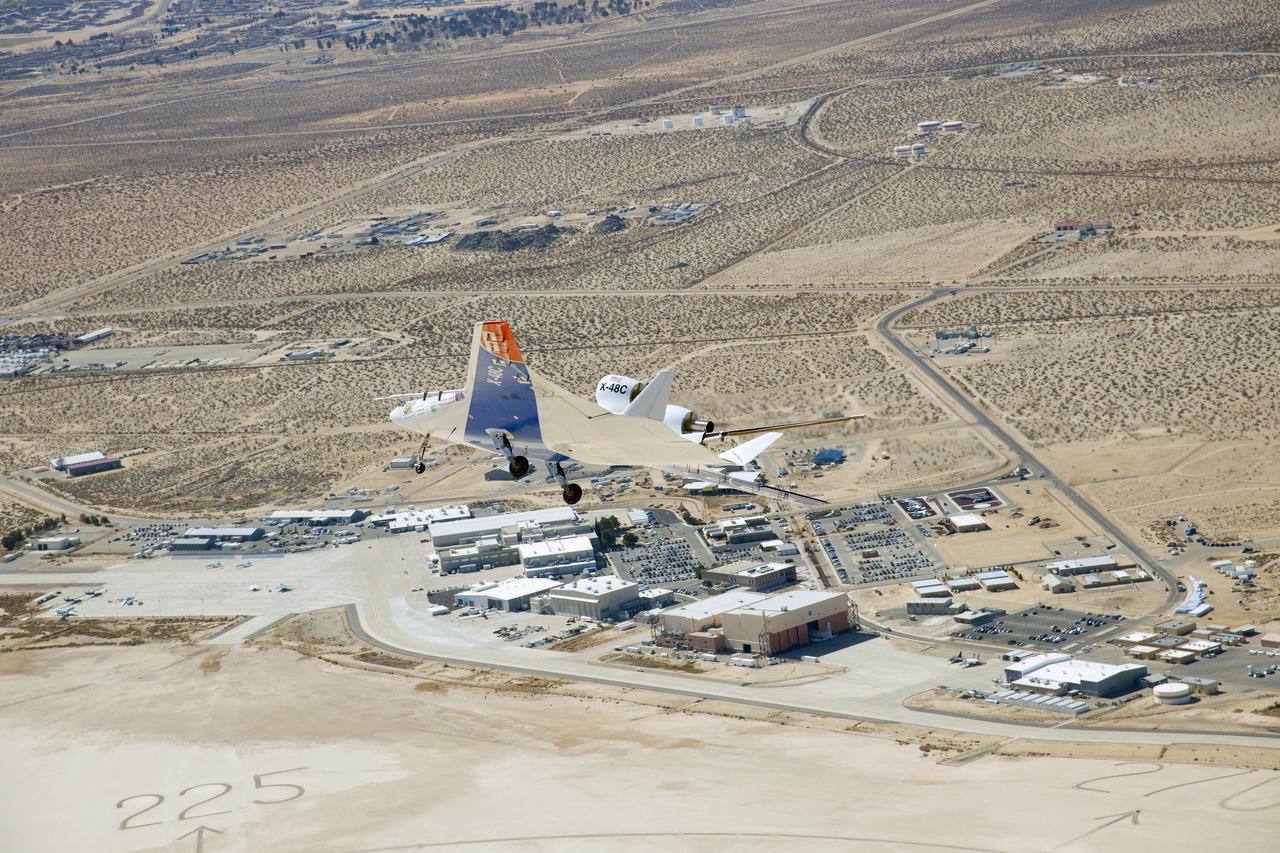
The X-48C Hybrid Wing Body research aircraft banked right over NASA's Dryden Flight Research Center at Edwards, CA during one of the sub-scale aircraft's final test flights on Feb. 28, 2013.
X-48C Banks over Dryden Flight Research Center
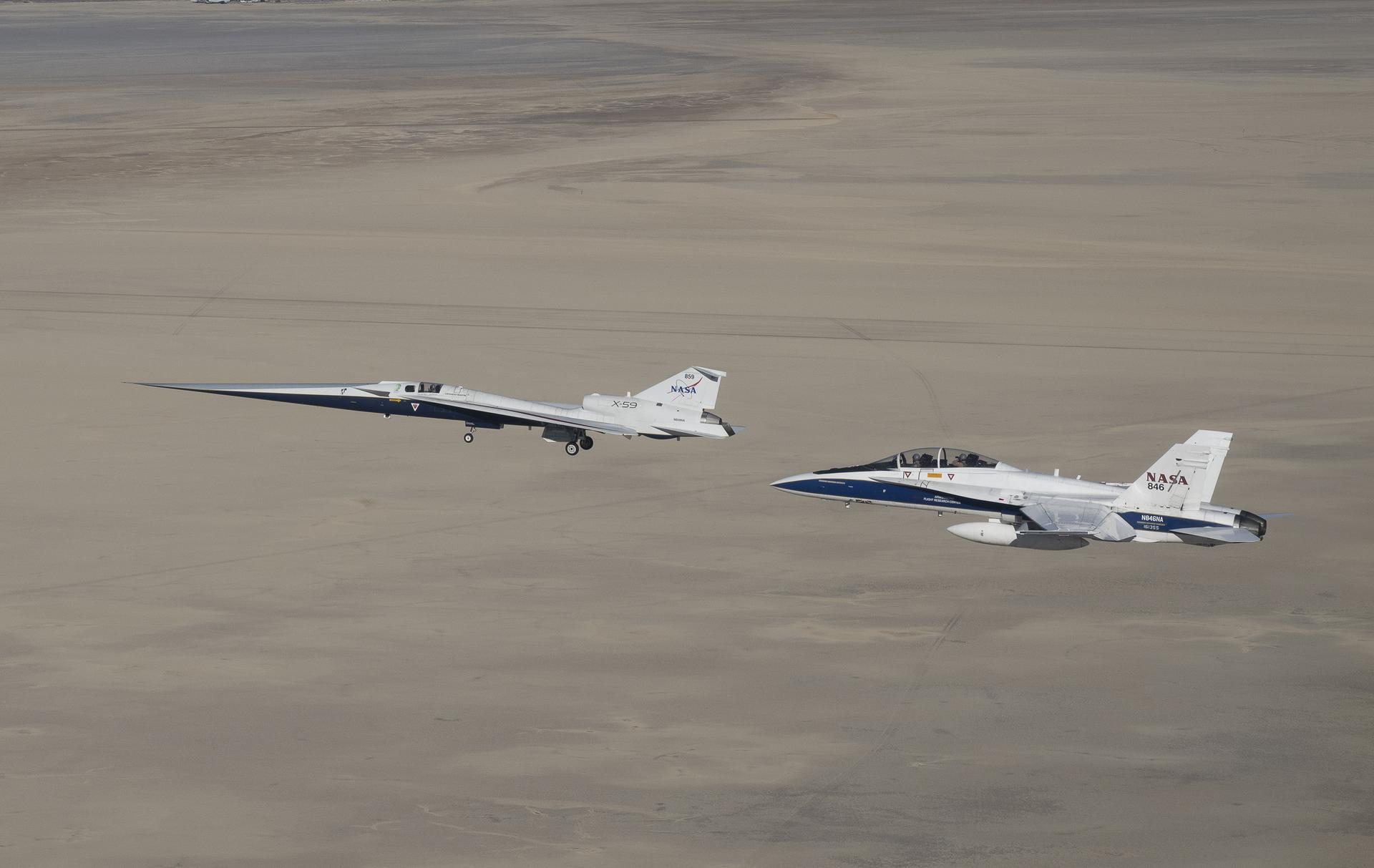
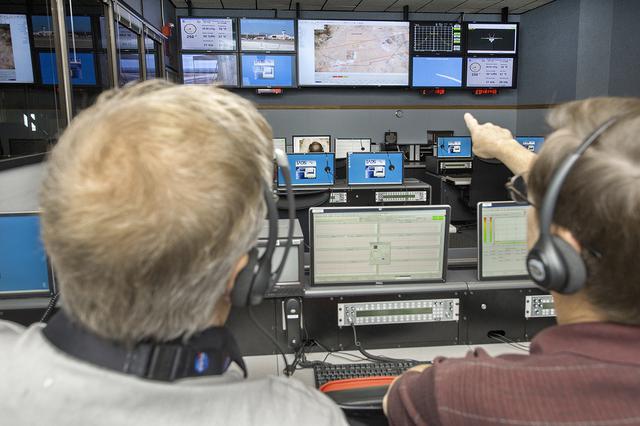
Engineers and researchers at NASA’s Armstrong Flight Research Center monitored the flights, and were able to observe the mapping of the sonic boom carpet from the F-18, from the center’s Mission Control Center.
NASA’s Improved Supersonic Cockpit Display Shows Precise Locations of Sonic Booms
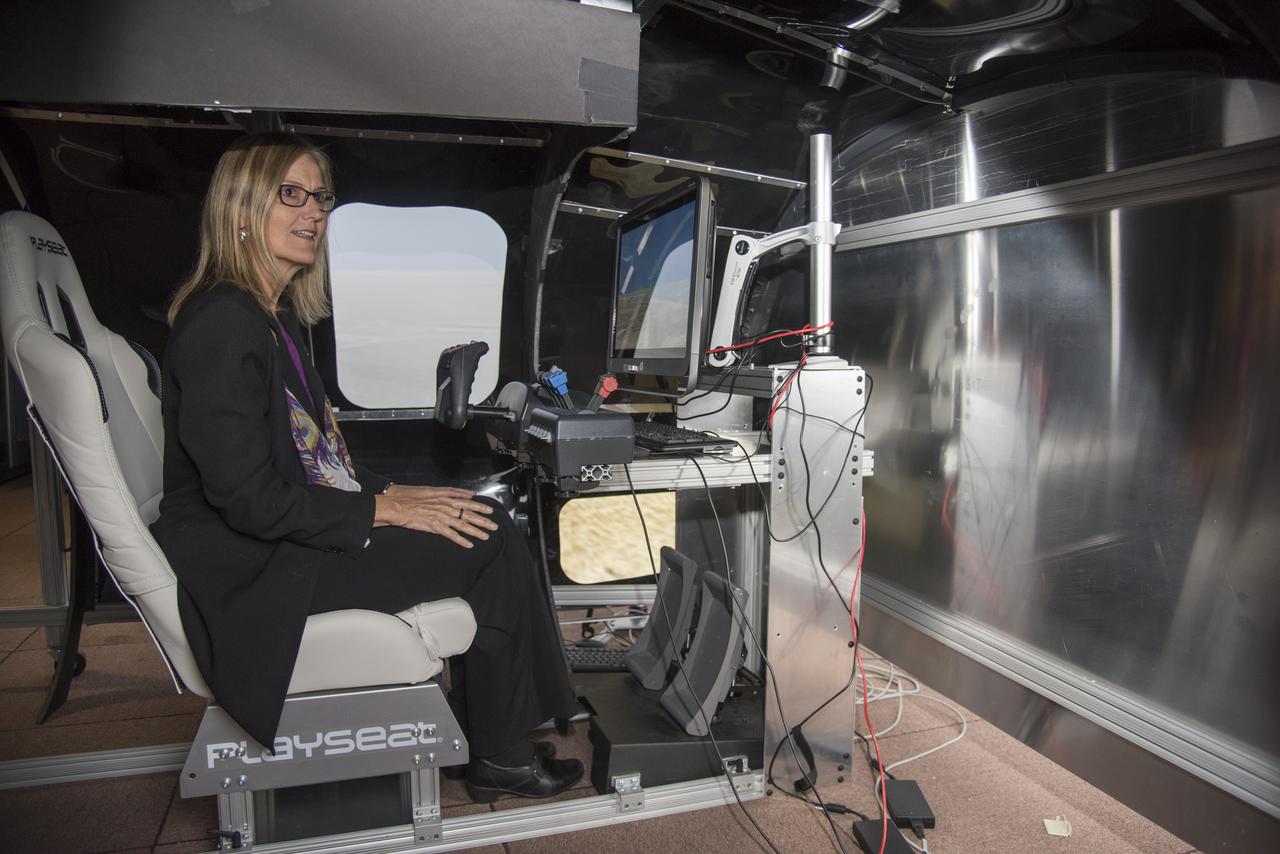
NASA test pilot Wayne Ringelberg sits in the air taxi virtual reality flight simulator during a test at NASA’s Armstrong Flight Research Center in Edwards, California in March 2024.
Air Taxi Passenger Comfort Simulator at NASA’s Armstrong Flight Research Center with Pilot
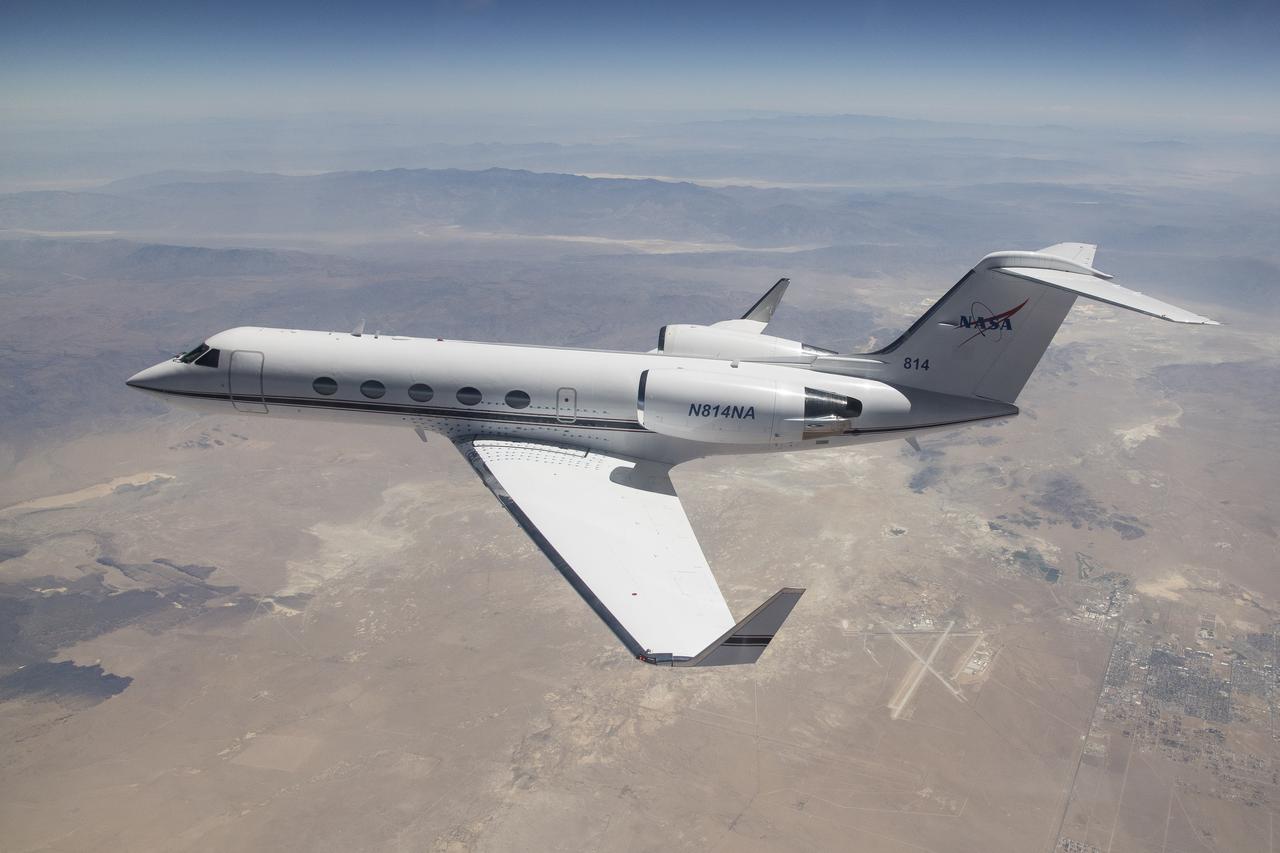
In a series of baseline flights beginning on June 24, 2024, the G-IV aircraft flew over the Antelope Valley to analyze aircraft performance. To accommodate a new radar instrument developed by JPL, NASA’s Airborne Science Program has selected the Gulfstream-IV aircraft to be modified and operated by Armstrong Flight Research Center in Edwards, California and will accommodate new instrumentation on board in support of the agency’s science mission directorate. Baseline flights began at NASA Armstrong in June 2024
The G-IV joins NASA’s Armstrong Flight Research Center’s fleet of airborne science aircraft 
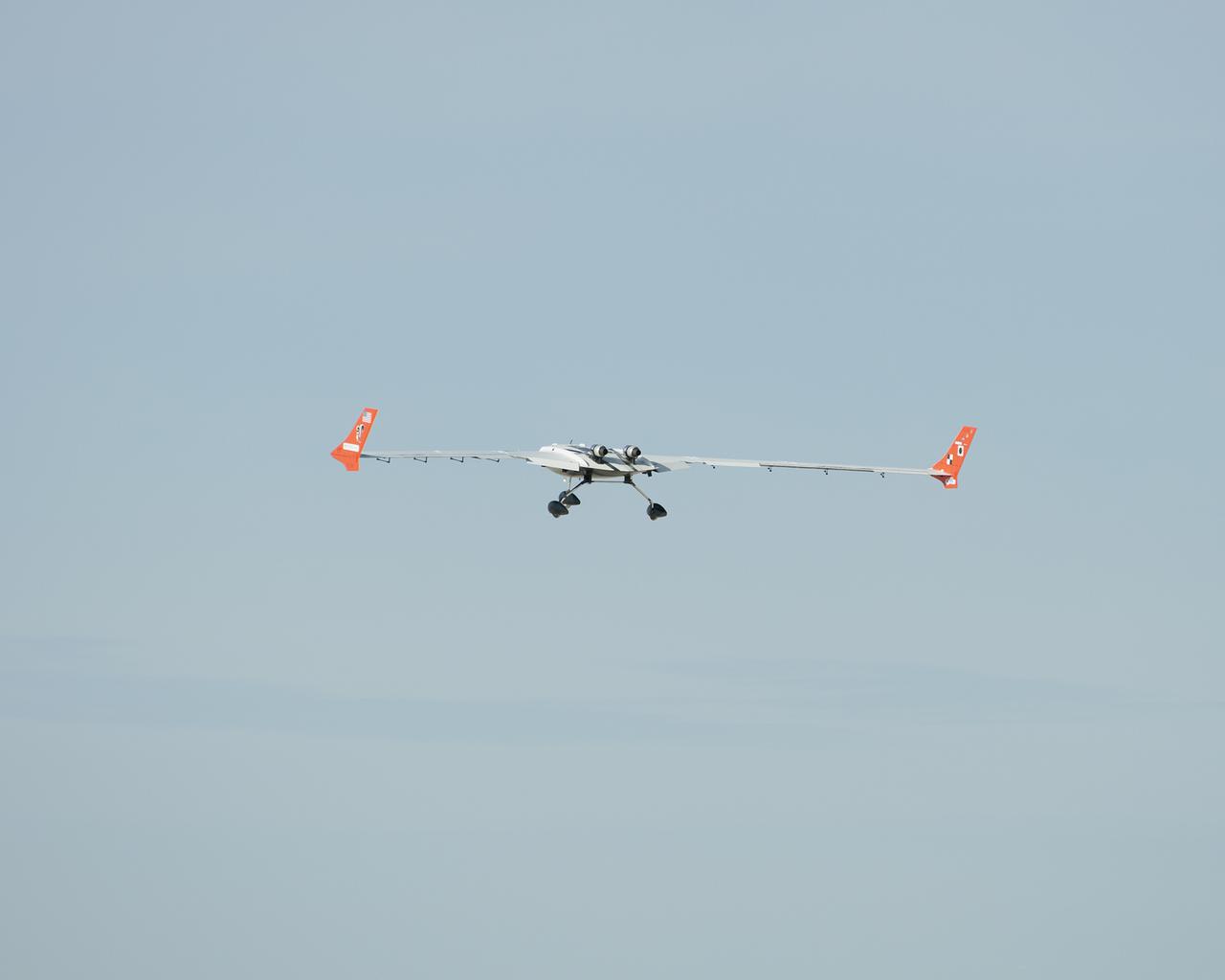
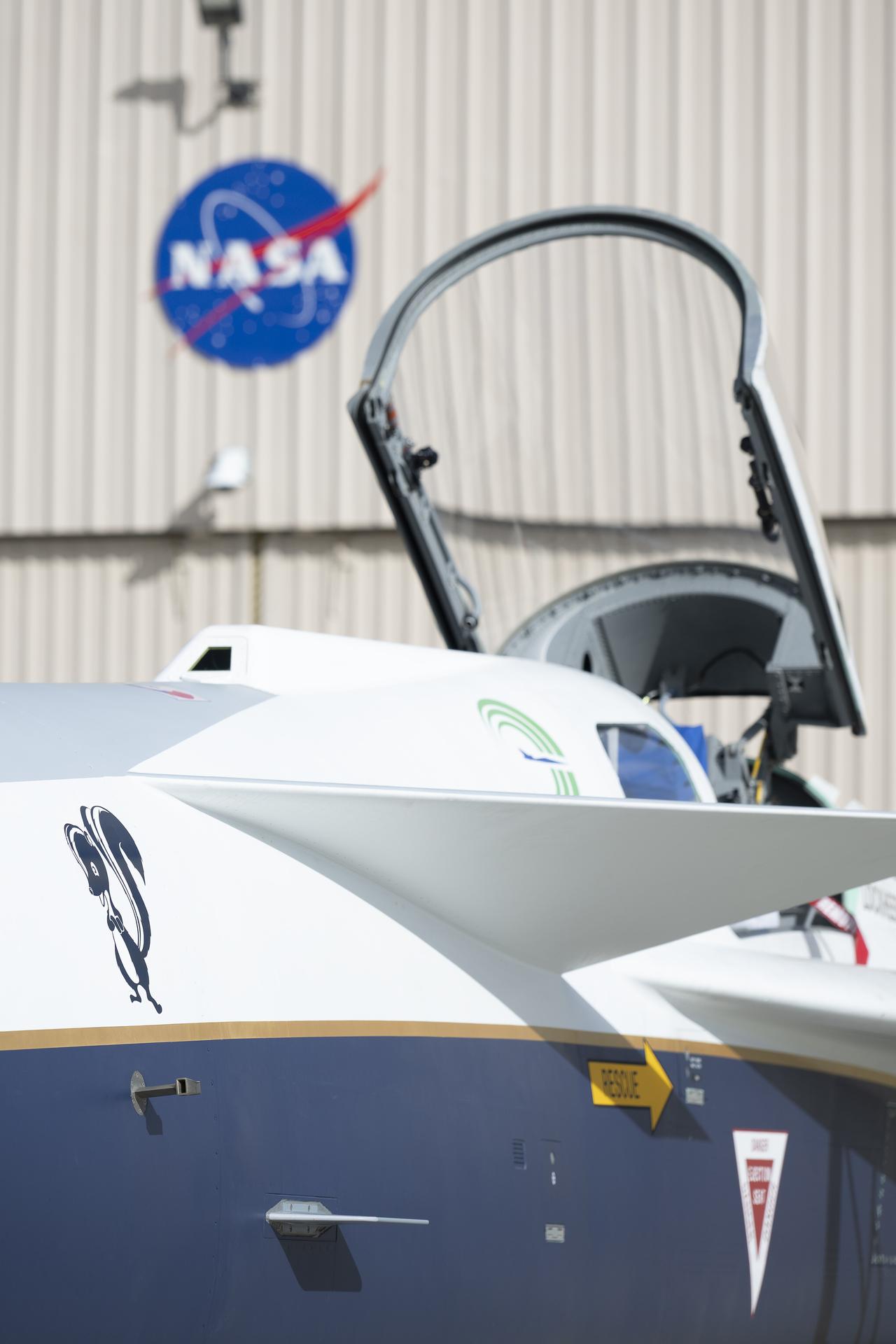
The X-56A takes off on its maiden flight from NASA Armstrong Flight Research Center, Edwards, California.
Second X-56A MUTT Makes First Flight
Equipped with state-of-the-art technology to test and evaluate communication, navigation, and surveillance systems, NASA’s Pilatus PC-12 flies over the Mojave Desert near Armstrong Flight Research Center in Edwards, California. Based at Glenn Research Center in Cleveland, the Pilatus PC-12 runs a series of familiarization flights for NASA Armstrong pilots before a test series evaluating ADS-B or Automatic Dependent Surveillance Broadcast systems for advanced air mobility applications in the desert flight test range on Sept. 18, 2024. Airborne work during familiarization flights includes several approach and landings, with an emphasis on avionics, then medium altitude air-work with steep turns, slow flight, and stall demonstrations to qualitatively understand the handling characteristics of the aircraft. The flights lasted about 60 to 90 minutes on average.
The Mojave Desert serves as a stark background for NASA’s Pilatus PC-12 flying near Armstrong Flight Research Center in Edwards, California on Sept. 18, 2024.
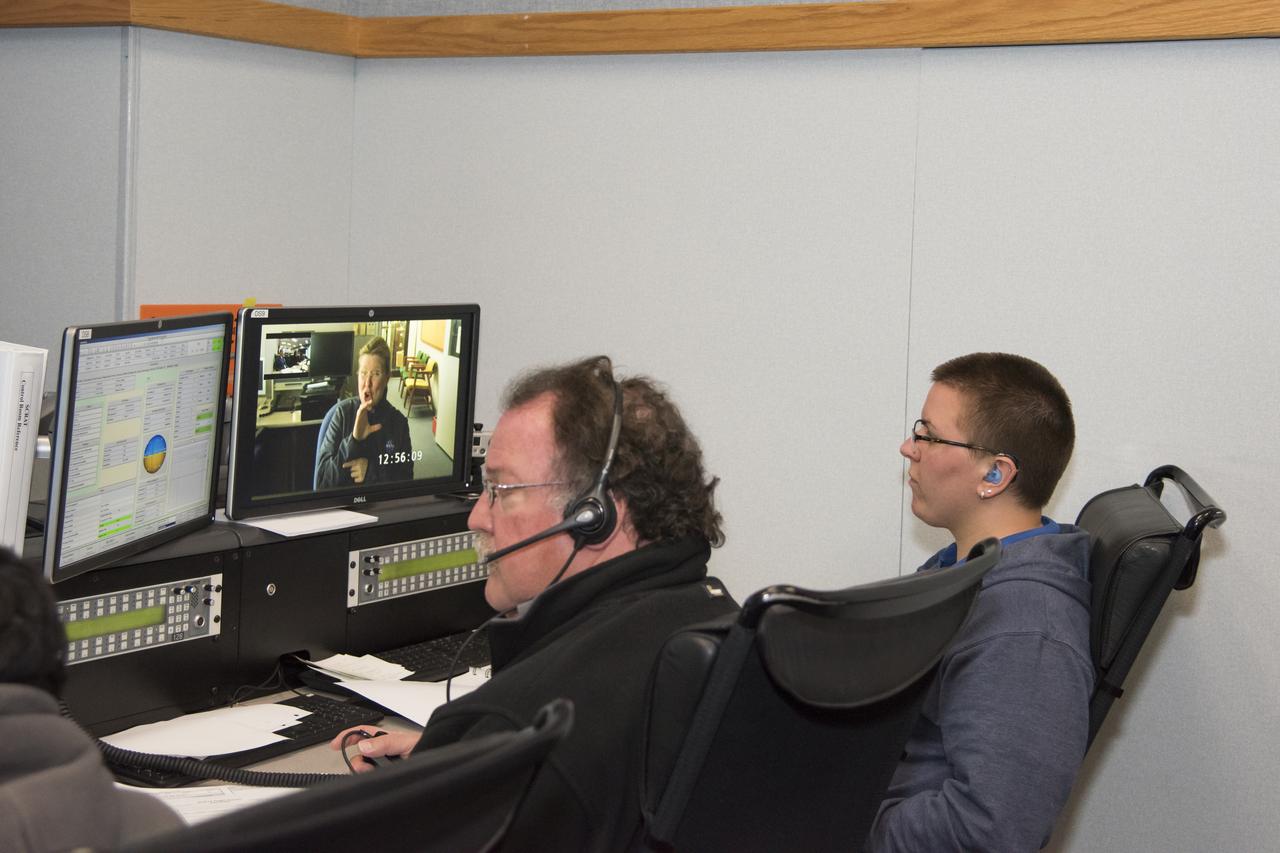
Johanna Lucht, observing data from the Mission Control Center at NASA’s Armstrong Flight Research Center in California, received flight communications from an interpreter, seen on Lucht’s monitor, through American Sign Language. Two-way visual communication was established between Lucht and the interpreter, located at NASA’s Langley Research Center in Virginia, for the flight. Interpreting technical terminology often requires cooperation to develop specific signs to ease communication. Using a familiar interpreter who is adept or practiced in the technical terminology of a NASA flight was beneficial, Lucht says.
AFRC2017-0076-3
NASA Armstrong’s Mission Control Center, or MCC, is where culmination of all data-gathering occurs. Engineers, flight controllers and researchers monitor flights and missions as they are carried out. Data and video run through the MCC and are recorded, displayed and archived. Data is then processed and prepared for post-flight analysis.
AFRC2017-0076-1
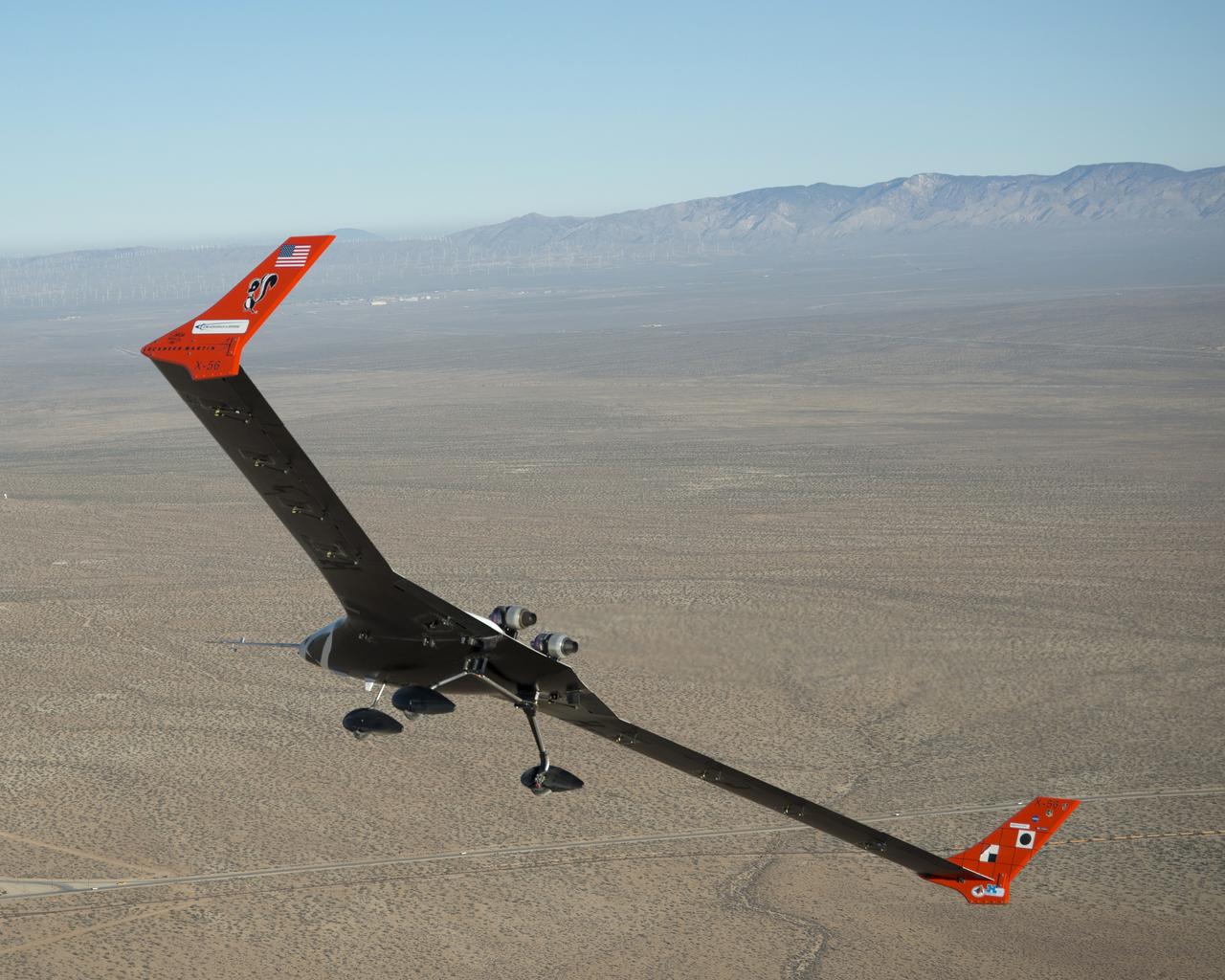
The X-56A flies over the desert near NASA Armstrong Flight Research Center, Edwards, California.  NASA researchers are using the remotely piloted X-56A to explore the behavior of lightweight, flexible aircraft structures.
ED15-0241-21
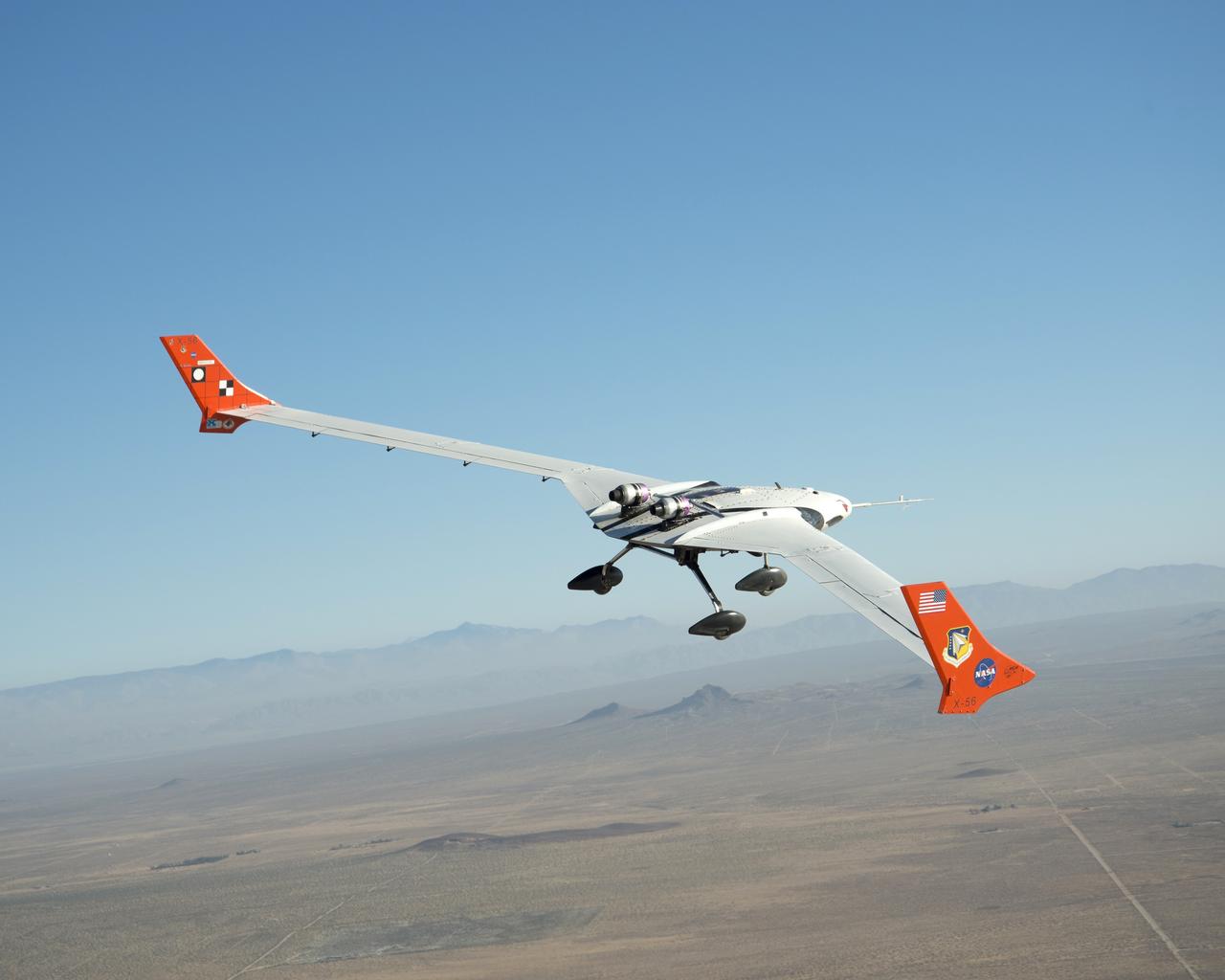
The X-56A flies over the desert near NASA Armstrong Flight Research Center, Edwards, California.  NASA researchers are using the remotely piloted X-56A to explore the behavior of lightweight, flexible aircraft structures.
ED15-0241-05
Equipped with state-of-the-art technology to test and evaluate communication, navigation, and surveillance systems NASA’s Pilatus PC-12 performs touch-and-go maneuvers over a runway at NASA’s Armstrong Flight Research Center in Edwards, California on Sept. 23, 2024. Researchers will use the data to understand Automatic Dependent Surveillance-Broadcast (ADS-B) signal loss scenarios for air taxi flights in urban areas. To prepare for ADS-B test flights pilots and crew from NASA Armstrong and NASA’s Glenn Research Center in Cleveland, ran a series of familiarization flights. These flights included several approach and landings, with an emphasis on avionics, medium altitude air-work with steep turns, slow flight and stall demonstrations.
NASA Pilatus PC-12 performs touch-and-go maneuvers over the runway at NASA’s Armstrong Flight Research Center in Edwards, California to gather data on low-altitude Automatic Dependent Surveillance-Broadcast signals on Sept. 23, 2024.
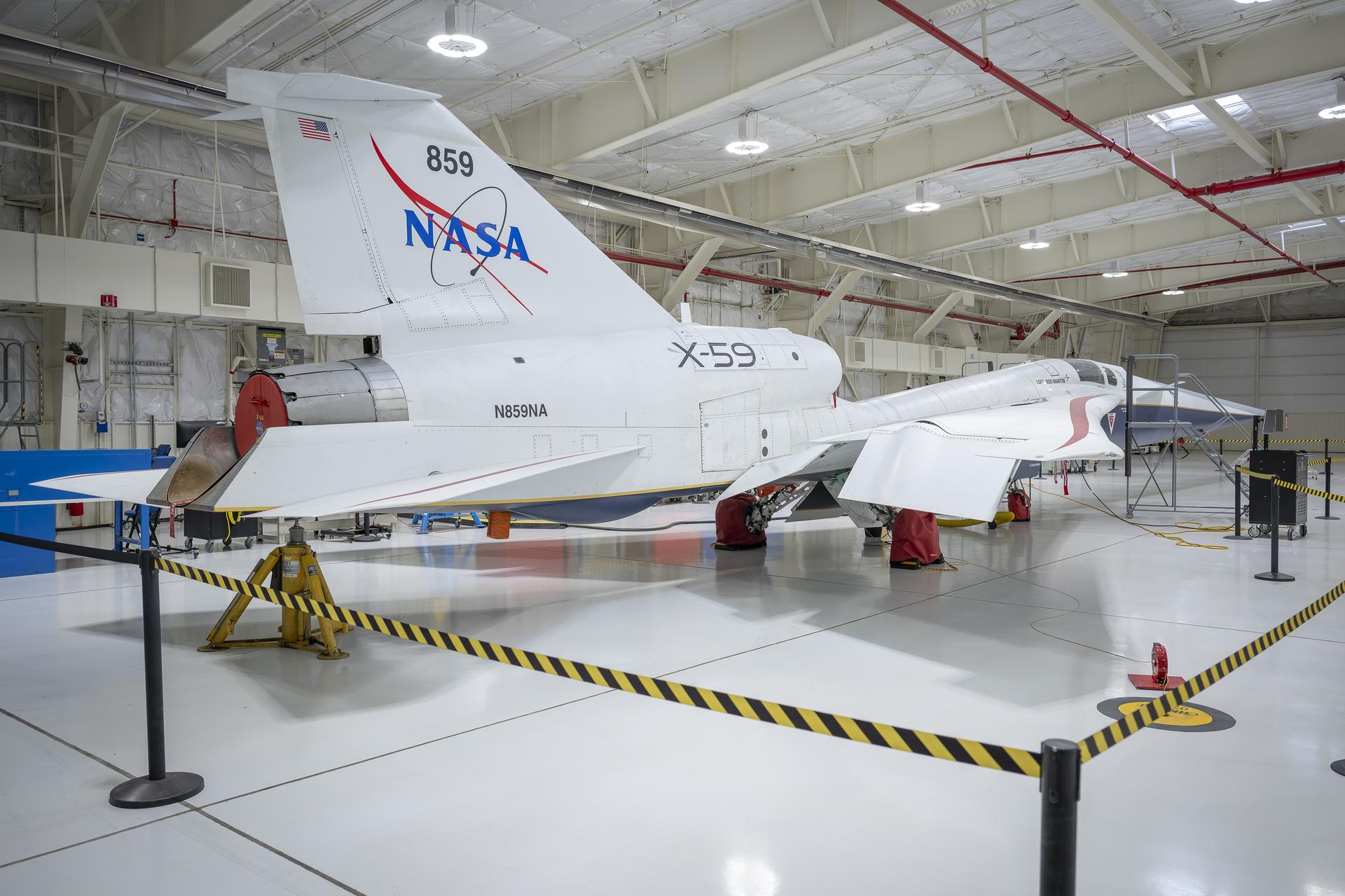
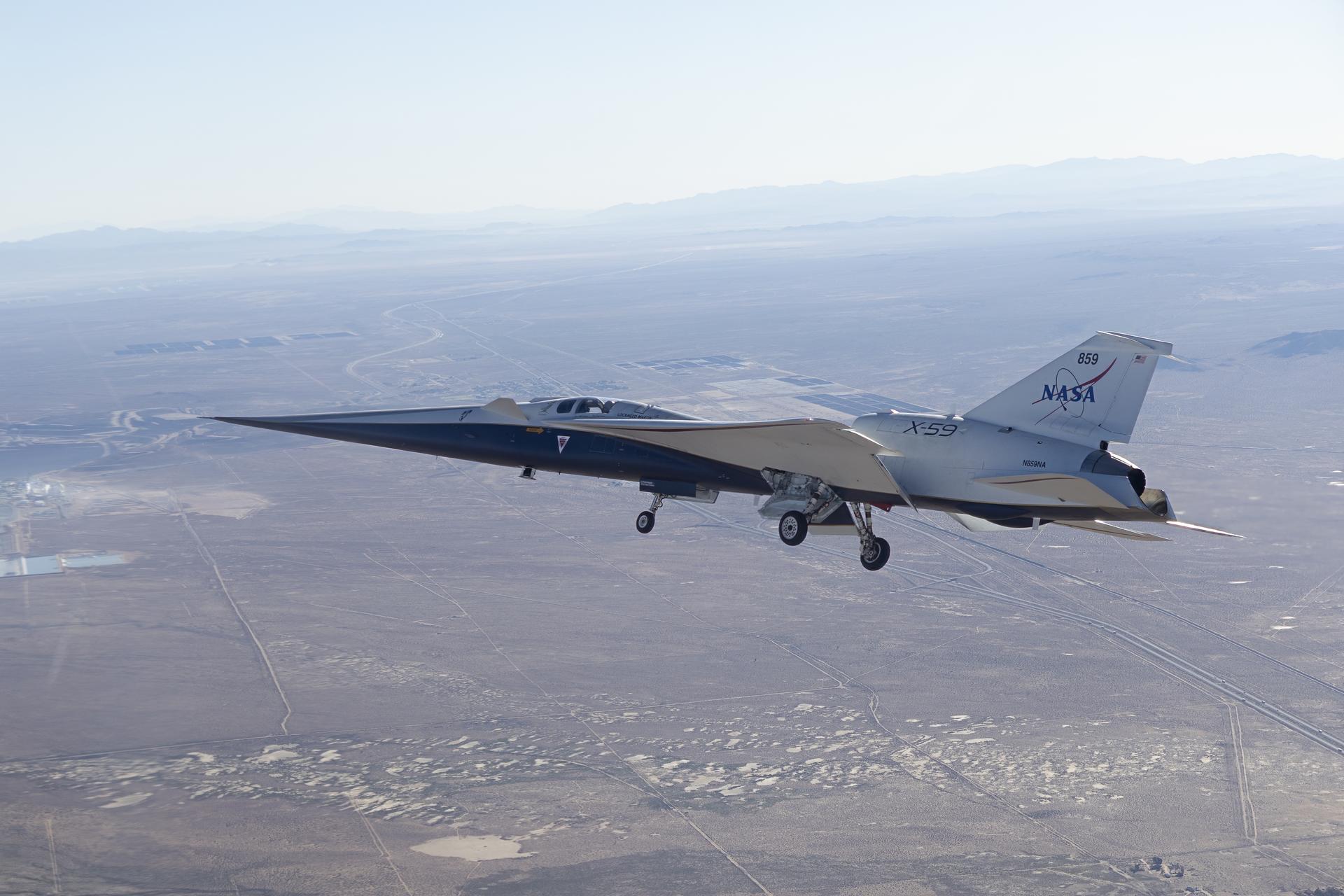
NASA’s X-59 quiet supersonic research aircraft cruises above Palmdale and Edwards, California, during its first flight, Tuesday, Oct. 28, 2025. The aircraft traveled to NASA’s Armstrong Flight Research Center in Edwards, California.
NASA’s X-59 in Flight Above the Mojave Desert
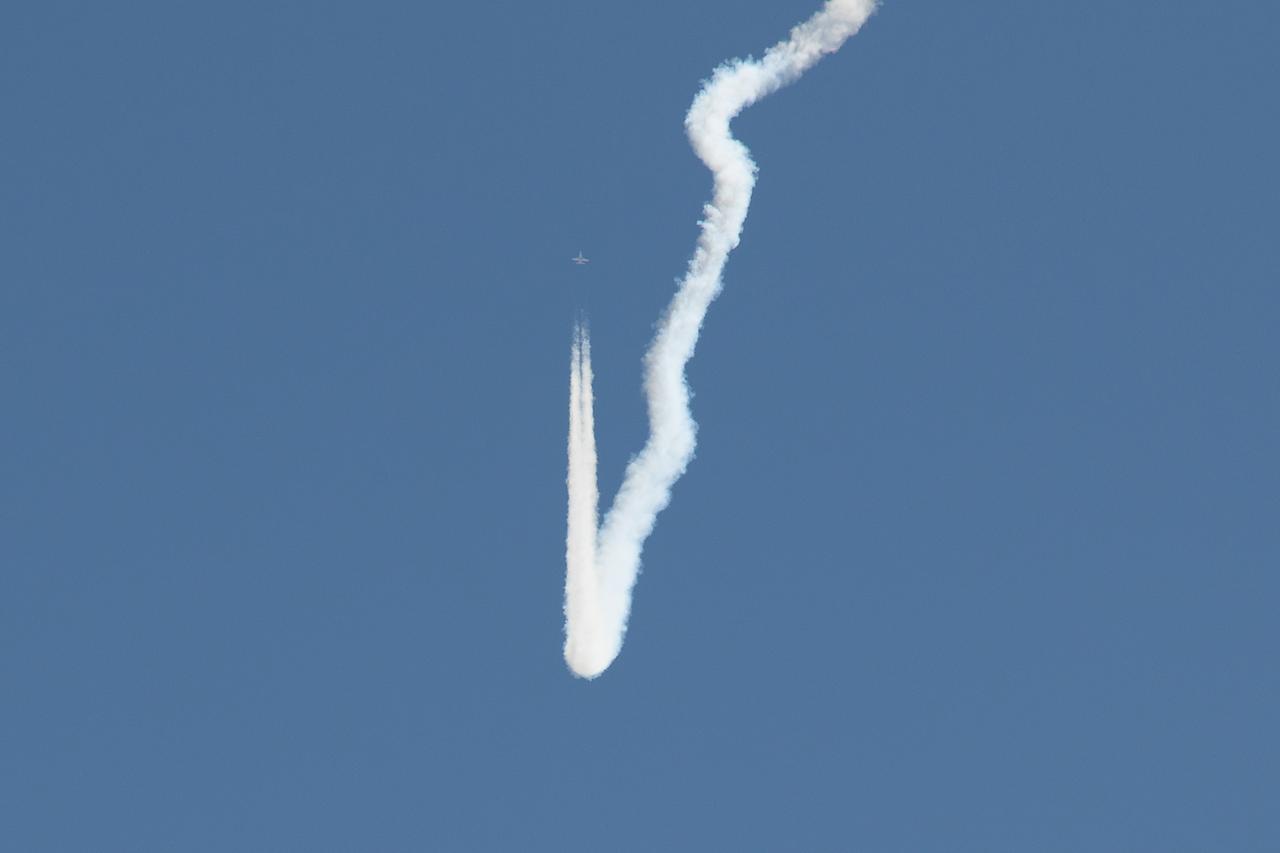
A NASA F/A-18 demonstrates different volumes of sonic booms for attendees of a NASA Social at the NASA Armstrong Flight Research Center in California.
AFRC2016-0154-071
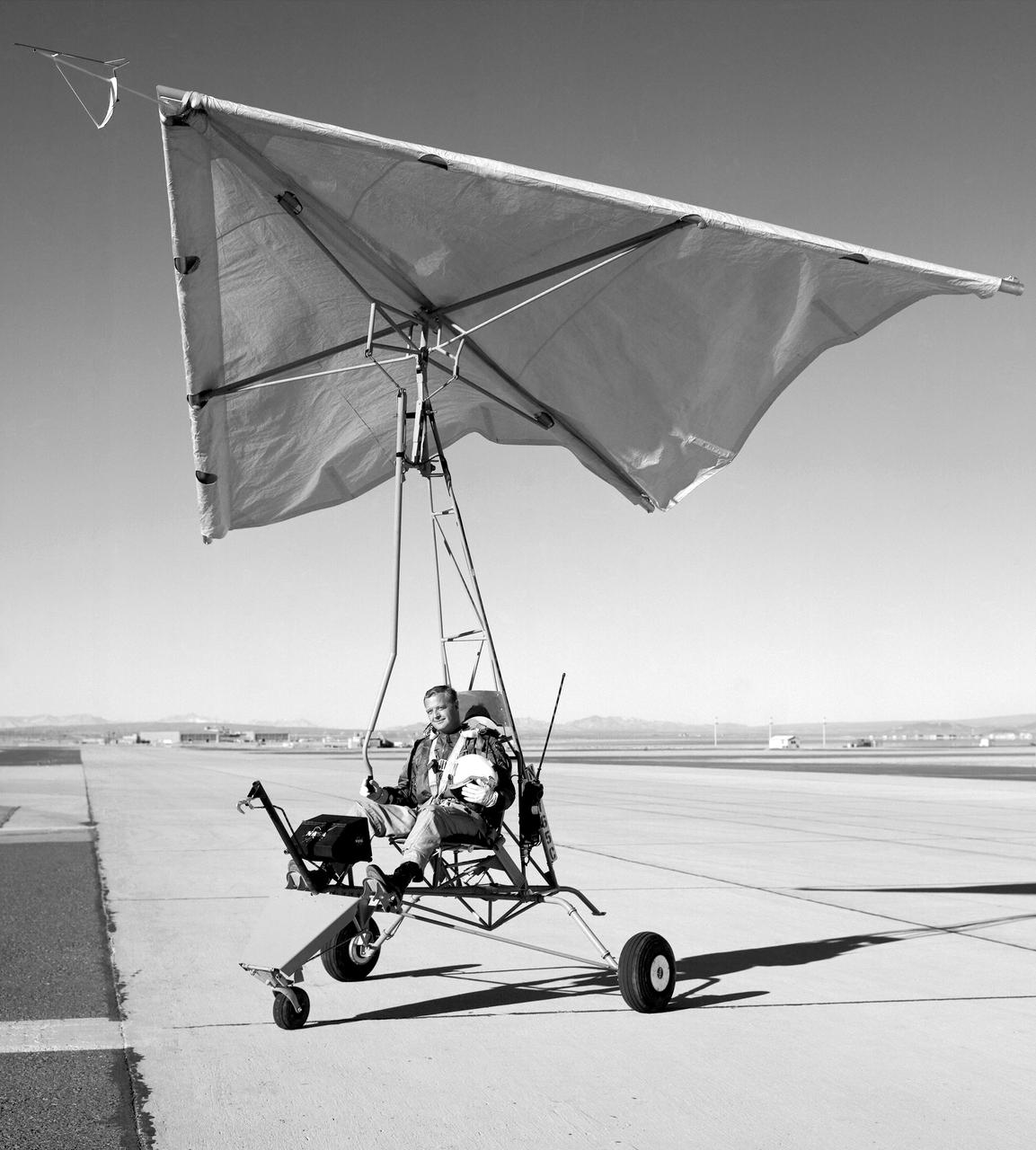
Test pilot Milton Thompson sitting in NASA Flight Research Center-built Paresev 1 (Paraglider Research Vehicle) on the taxi strip in front of the NASA Flight Research Center in 1962. In this photo the control stick can be seen coming from overhead and hanging in front of the pilot. The control system was a direct link with the wing membrane made of doped Irish linen. By maintaining simplicity during construction, it was possible to make control and configuration changes overnight and, in many instances, in minutes.
Paresev on Taxi Strip
NASA Dryden Flight Research Center's T-34 support aircraft provided safety chase for the joint NASA/Boeing X-48B.
Dryden's T-34 Chases the X-48B
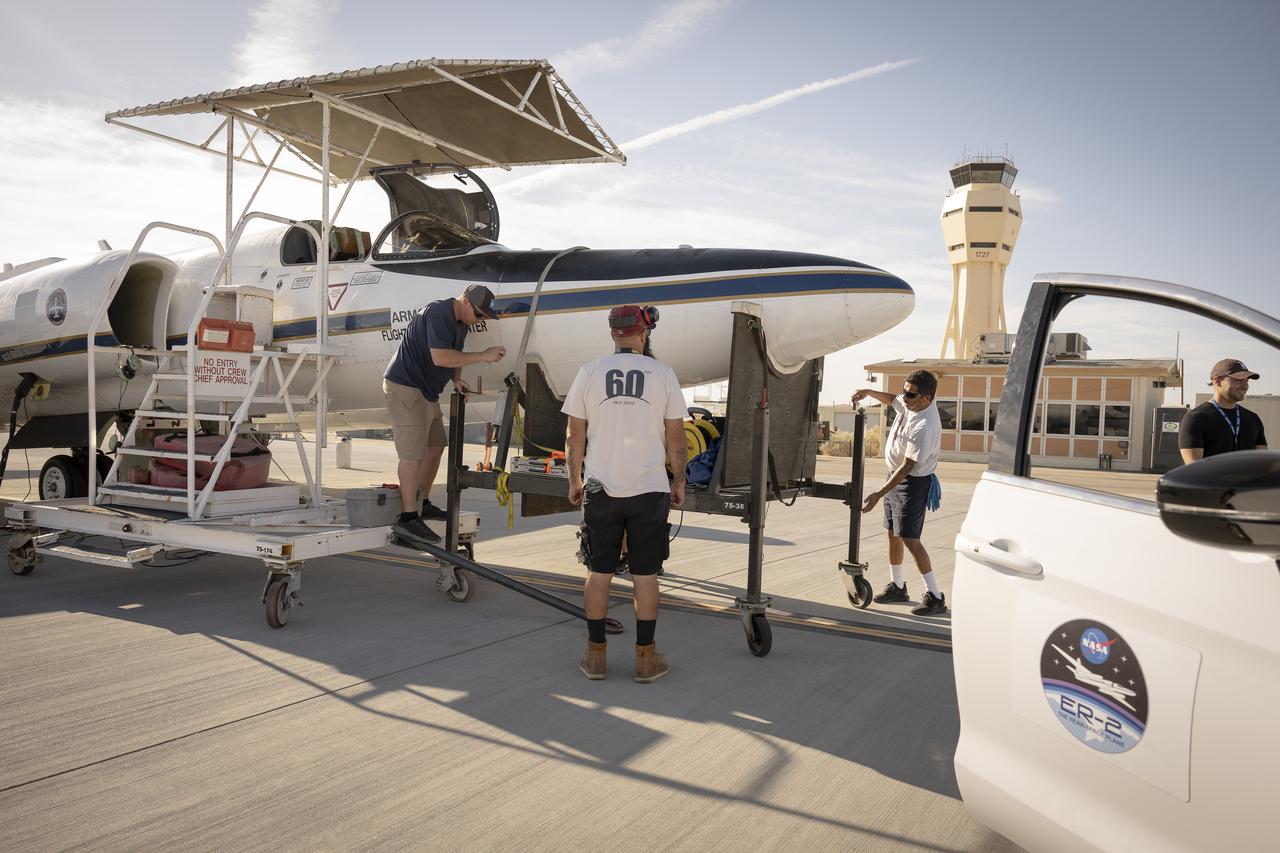
Ground crew members make final preparations on NASA Armstrong Flight Research Center’s ER-2 aircraft at Edwards, California, on Thursday, Aug. 21, 2025, ahead of a high-altitude mission for the Geological Earth Mapping Experiment (GEMx). The pilot will soon board the aircraft, which can fly at altitudes up to 70,000 feet.
NASA ER-2 Flies Geological Mapping Mission
Ground crew members make final preparations on NASA Armstrong Flight Research Center’s ER-2 aircraft at Edwards, California, on Thursday, Aug. 21, 2025, ahead of a high-altitude mission for the Geological Earth Mapping Experiment (GEMx). The pilot will soon board the aircraft, which can fly at altitudes up to 70,000 feet.
NASA ER-2 Flies Geological Mapping Mission
On June 17, 2025, NASA’s Armstrong Flight Research Center in Edwards, California, hosted Bring Kids to Work Day, offering hands-on activities that introduced children and their families to the exciting world of aeronautics and flight research.
NASA Armstrong Bring Kids to Work Day 2025
On June 17, 2025, NASA’s Armstrong Flight Research Center in Edwards, California, hosted Bring Kids to Work Day, offering hands-on activities that introduced children and their families to the exciting world of aeronautics and flight research.
NASA Armstrong Bring Kids to Work Day 2025
On June 17, 2025, NASA’s Armstrong Flight Research Center in Edwards, California, hosted Bring Kids to Work Day, offering hands-on activities that introduced children and their families to the exciting world of aeronautics and flight research.
NASA Armstrong Bring Kids to Work Day 2025
The X-1E guards NASA Dryden Flight Research Center's main building.
Aerial photo looking north over NASA Dryden Flight Research Center
Crew members prepare NASA Armstrong Flight Research Center’s ER-2 aircraft for flight at Edwards, California, on Tuesday, Sept. 23, 2025, in support of the Geological Earth Mapping Experiment (GEMx). The high-altitude science aircraft operates between 20,000 and 70,000 feet. For this mission, pilots flew at approximately 65,000 feet, requiring them to wear specially designed pressure suits.
NASA ER-2 Flies Geological Mapping Mission
NASA’s Ikhana remotely piloted aircraft (front-right) is situated near NASA Armstrong Flight Research Center’s Hangar 4802 after an Unmanned Aircraft Systems Integration into the National Airspace System Flight Test Series 4 flight, along with five flight “intruders.” These intruders, which include NASA’s TG-14 (front-left), T-34C (front-center), B-200 King Air (back-left), Gulfstream-III (back-center) and a Honeywell C-90 King Air (back-right), fly within a pre-determined distance to Ikhana to test Detect-and-Avoid technology during research flights.
AFRC2016-0138-01
A crew member handles liquid nitrogen servicing for NASA’s Armstrong Flight Research Center’s ER-2 aircraft at Edwards, California, on Thursday, Aug. 21, 2025. Liquid nitrogen is used to support key science instruments for extended flight durations in critical research missions, such as the Geological Earth Mapping Experiment (GEMx), which requires flights of up to eight hours at approximately 65,000 feet altitude.
NASA ER-2 Flies Geological Mapping Mission
Children explore a virtual reality flight simulator during Bring Kids to Work Day on June 17, 2025, at NASA’s Armstrong Flight Research Center in Edwards, California. The immersive experience introduced participants to aerospace engineering and flight research in an engaging, hands-on environment.
NASA Armstrong Bring Kids to Work Day 2025
NASA X-48C Hybrid Wing Body aircraft flew over one of the runways laid out on Rogers Dry Lake at Edwards Air Force Base, CA, during a test flight from NASA's Dryden Flight Research Center on Feb. 28, 2013.
X-48C Hybrid - Blended Wing Body Demonstrator
NASA Armstrong Flight Research Center’s ER-2 aircraft taxis at Edwards, California, on Thursday, Aug. 21, 2025, ahead of a high-altitude mission supporting the Geological Earth Mapping Experiment (GEMx), which requires flights of up to eight hours at approximately 65,000 feet altitude.
NASA ER-2 Flies Geological Mapping Mission
Flight Test Engineer Jacob Schaefer inspects the Cockpit Interactive Sonic Boom Display Avionics, or CISBoomDA, from the cockpit of his F-18 at NASA’s Armstrong Flight Research Center in Edwards, California.
NASA’s Improved Supersonic Cockpit Display Shows Precise Locations of Sonic Booms
A child poses in an astronaut cutout suit during Bring Kids to Work Day on June 17, 2025, at NASA’s Armstrong Flight Research Center in Edwards, California. The event offered children and their families an up-close look at the center’s research aircraft and engaged them in educational activities promoting science, technology, engineering, and mathematics.
NASA Armstrong Bring Kids to Work Day 2025
The F-18 simulator at NASA's Dryden Flight Research Center, Edwards, California. Simulators offer a safe and economical alternative to actual flights to gather data, as well as being excellent facilities for pilot practice and training. The F-18 Hornet is used primarily as a safety chase and mission support aircraft at NASA's Dryden Flight Research Center, Edwards, California. As support aircraft, the F-18's are used for safety chase, pilot proficiency, aerial photography and other mission support functions.
The F-18 simulator at NASA's Dryden Flight Research Center, Edwards, California
Sierra Nevada Corporation's (SNC) Dream Chaser® spacecraft shown on the runway at NASA's Armstrong Flight Research Center on May 20 preparing for a tow-test. The spacecraft is undergoing ground tests leading up to a free flight test later this year.
AFRC2017-0124-015
The C-17 simulator at NASA's Dryden Flight Research Center, Edwards, California. Simulators offer a safe and economical alternative to actual flights to gather data, as well as being excellent facilities for pilot practice and training.
The C-17 simulator at NASA's Dryden Flight Research Center, Edwards, California
The Hyper III was a full-scale lifting-body remotely piloted research vehicle (RPRV) built at what was then the NASA Flight Research Center located at Edwards Air Force Base in Southern California.
ECN-2304
A joint NASA/Boeing team completed the first phase of flight tests on the unique X-48B Blended Wing Body aircraft at NASA's Dryden Flight Research Center at Edwards, CA. The team completed the 80th and last flight of the project's first phase on March 19, 2010.
X-48B Skyray Takeoff
NASA’s X-59 quiet supersonic research aircraft flies above Palmdale and Edwards, California, on its first flight Tuesday, Oct. 28, 2025. The aircraft traveled to NASA’s Armstrong Flight Research Center in Edwards, California, where it will begin flight testing for NASA’s Quesst mission, which aims to demonstrate quiet supersonic flight over land.
NASA’s X-59 in Flight for the First Time
NASA's ultra-quiet YO-3A acoustics research aircraft taxis out from the ramp at the Dryden Flight Research Center before a pilot checkout flight.
NASA's ultra-quiet YO-3A acoustics research aircraft taxis out from the ramp at the Dryden Flight Research Center before a pilot checkout flight
Formerly at NASA's Langley Research Center, this Northrop T-38 Talon is now used for mission support and pilot proficiency at the Dryden Flight Research Center.
Formerly at NASA's Langley Research Center, this Northrop T-38 Talon is now used for mission support and pilot proficiency at the Dryden Flight Research Center
NASA test pilot Nils Larson inspects the agency’s F-15D research aircraft at NASA’s Armstrong Flight Research Center in Edwards, California, ahead of a calibration flight for a newly installed near-field shock-sensing probe. Mounted on the F-15D, the probe is designed to measure shock waves generated by the X-59 quiet supersonic aircraft during flight. The data will help researchers better understand how shock waves behave in close proximity to the aircraft, supporting NASA’s Quesst mission to enable quiet supersonic flight over land.
NASA Test Pilot Inspects New Shock-Sensing Probe Ahead of Calibration Flight 
NASA test pilot Nils Larson inspects the agency’s F-15D research aircraft at NASA’s Armstrong Flight Research Center in Edwards, California, ahead of a calibration flight for a newly installed near-field shock-sensing probe. Mounted on the F-15D, the probe is designed to measure shock waves generated by the X-59 quiet supersonic aircraft during flight. The data will help researchers better understand how shock waves behave in close proximity to the aircraft, supporting NASA’s Quesst mission to enable quiet supersonic flight over land.
NASA Test Pilot Inspects New Shock-Sensing Probe Ahead of Calibration Flight 
NASA’s Super Guppy cargo transport aircraft parked on the ramp in front of NASA’s Armstrong Flight Research Center Building 703.
NASA’s Super Guppy Arrives to Armstrong Building 703 for Maintenance
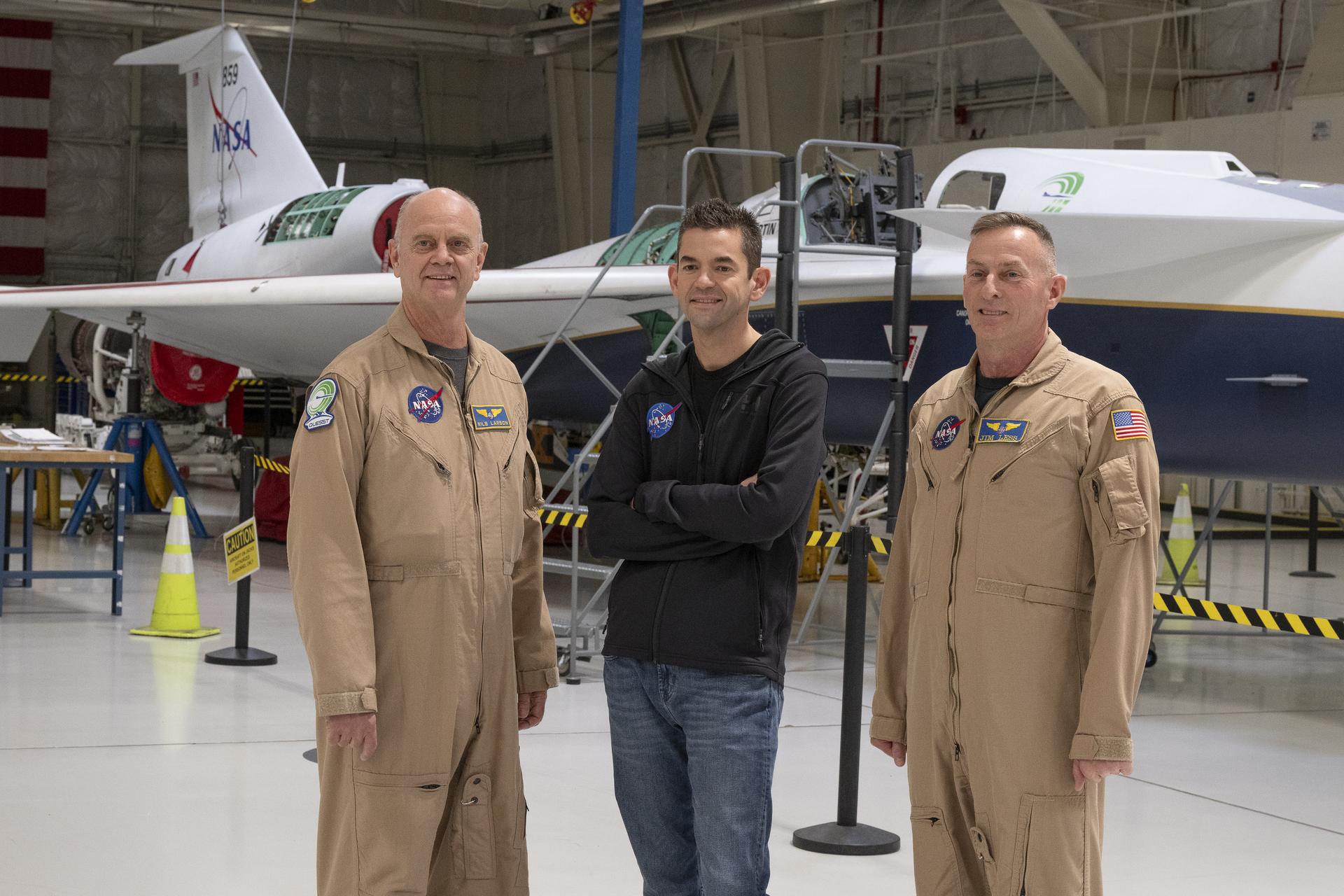
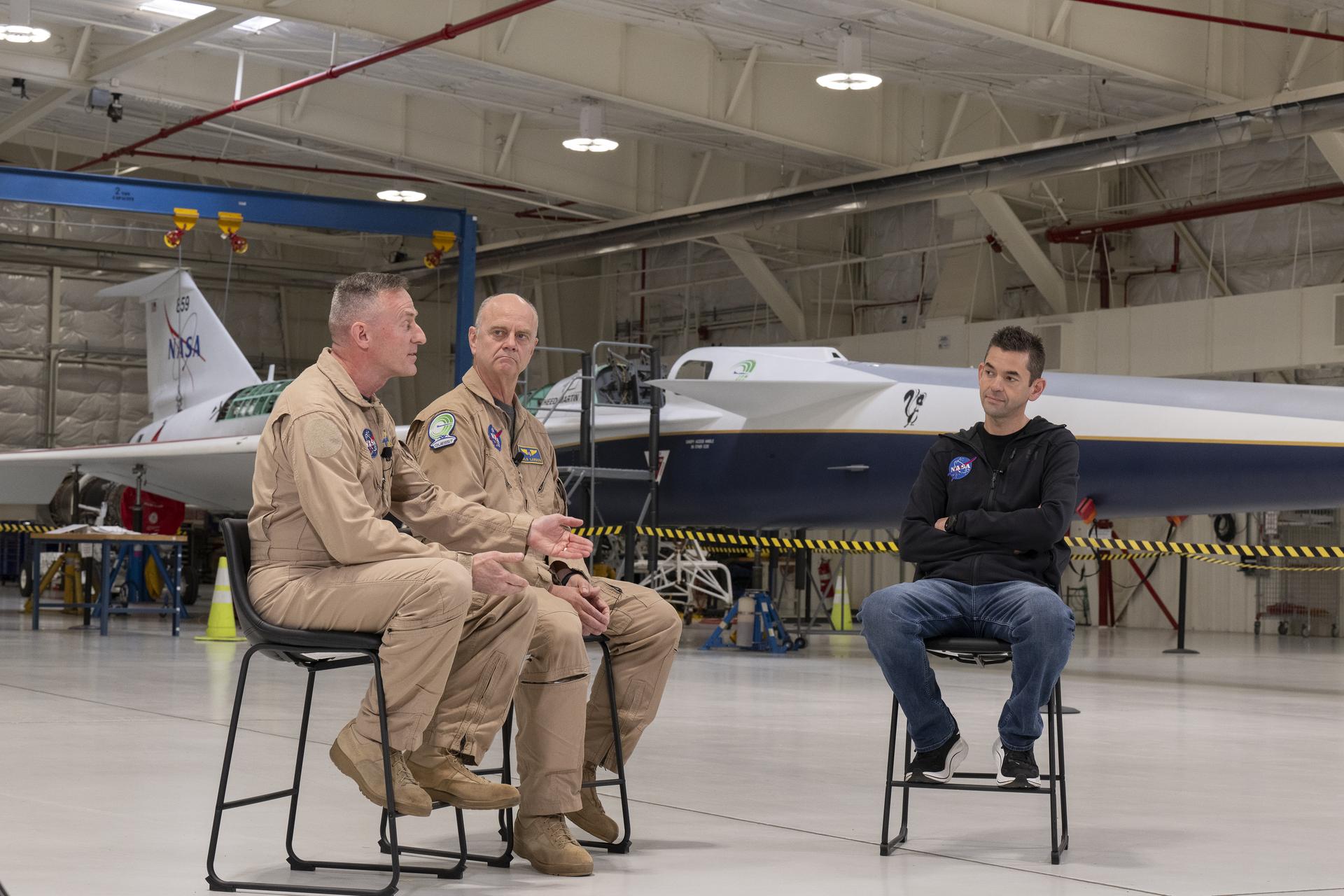
Mark Russell, center, a research pilot at NASA’s Glenn Research Center in Hampton, Virginia, explains the differences in flight environments at different NASA centers. Jim Less, a NASA pilot at NASA’s Armstrong Flight Research Center in Edwards, California, left, Russell, and Nils Larson, NASA Armstrong chief X-59 aircraft pilot and senior advisor on flight research, provided perspective on flight research at the Ideas to Flight Workshop on Sept. 18 at NASA Armstrong.
NASA Pilots Add Perspective to Research
Cal Poly San Luis Obispo Professor Russ Westphal works on the Boundary Layer Data System (BLDS) attached to the wing of a Beechcraft Beech 200 Super King Air aircraft. The BLDS was attached to the aircraft with removable adhesives for a flight test at NASA’s Armstrong Flight Research Center.
NASA Armstrong Eyes Pathway for Quick Flight Opportunities
NASA’s SonicBAT team poses in front of the TG-14 motor glider and F/A-18 research aircraft, sitting side-by-side in front of Rogers Dry Lake prior to a SonicBAT flight at Armstrong Flight Research Center on Edwards Air Force Base, California. The TG-14 collected sound signatures of shockwaves created by the F/A-18, to compare with signatures collected on the ground.
NASA Test Flights Examine Effect of Atmospheric Turbulence on Sonic Booms
NASA’s Armstrong Flight Research Center flies the C-20 aircraft in support of the Advanced Synthetic Aperture Radar (ASAR) campaign on July 22, 2021. 
C-20 ASAR Flight
NASA's Armstrong Flight Research Center flies the C-20 aircraft in support of the Advanced Synthetic Aperture Radar (ASAR) campaign on July 22, 2021.
C-20 ASAR Flight
NASA's Armstrong Flight Research Center flies the C-20 aircraft in support of the Advanced Synthetic Aperture Radar (ASAR) campaign on July 22, 2021.
C-20 ASAR Flight
NASA’s Armstrong Flight Research Center flies the C-20 aircraft in support of the Advanced Synthetic Aperture Radar (ASAR) campaign on July 22, 2021. 
C-20 ASAR Flight
NASA’s Armstrong Flight Research Center ER-2 #809 high-altitude aircraft prepped for Dynamics and Chemistry of the Summer Stratosphere (DCOTSS) science flights in Palmdale, CA.
NASA launches DCOTSS Science Flights
NASA's Armstrong Flight Research Center ER-2 pilot Gary Toroni and engineering technician Raul "Corky" Cortes preparing for Dynamics and Chemistry of the Summer Stratosphere (DCOTSS) science flights in Palmdale, CA on June 17, 2021.
NASA Launches DCOTSS Science Flights
NASA's Armstrong Flight Research Center operates ER-2 #809 high-altitude aircraft for Dynamics and Chemistry of the Summer Stratosphere (DCOTSS) science flights on June 17, 2021.
NASA Launches DCOTSS Science Flights
NASA's Armstrong Flight Research Center ER-2 #809 high-altitude aircraft prepared for Dynamics and Chemistry of the Summer Stratosphere (DCOTSS) science flights in Palmdale, CA on June 17, 2021.
NASA Launches DCOTSS Science Flights
NASA’s Armstrong Flight Research Center ER-2 #809 high-altitude aircraft maintained by avionics technician Gregory Bantalin for Dynamics and Chemistry of the Summer Stratosphere (DCOTSS) science flights.
NASA launches DCOTSS Science Flights
NASA's Armstrong Flight Research Center ER-2 #809 high-altitude aircraft prepped for Dynamics and Chemistry of the Summer Stratosphere (DCOTSS) science flights in Palmdale, CA.
NASA launches DCOTSS Science Flights
NASA's Armstrong Flight Research Center ER-2 #809 high-altitude aircraft prepped for Dynamics and Chemistry of the Summer Stratosphere (DCOTSS) science flights in Palmdale, CA.
NASA launches DCOTSS Science Flights
NASA's Armstrong Flight Research Center ER-2 #809 high-altitude aircraft prepared for Dynamics and Chemistry of the Summer Stratosphere (DCOTSS) science flights in Palmdale, CA on June 17, 2021
NASA Launches DCOTSS Science Flights
NASA’s Armstrong Flight Research Center ER-2 #809 high-altitude aircraft taking off for Dynamics and Chemistry of the Summer Stratosphere (DCOTSS) science flights in Palmdale, CA on June 17, 2021.
NASA Launches DCOTSS Science Flights
NASA's Armstrong Flight Research Center ER-2 #809 high-altitude aircraft prepped for Dynamics and Chemistry of the Summer Stratosphere (DCOTSS) science flights in Palmdale, CA.
NASA launches DCOTSS Science Flights
NASA’s Armstrong Flight Research Center operates ER-2 #809 high-altitude aircraft for Dynamics and Chemistry of the Summer Stratosphere (DCOTSS) science flights on June 17, 2021.
NASA Launches DCOTSS Science Flights
Scott Crossfield speaking at the Centennial of Flight Colloquium held at the NASA Dryden Flight Research Center in October, 2003.
Front view of NASA’s Super Guppy cargo transport aircraft as it taxis in at NASA’s Armstrong Flight Research Center Building 703 ramp.
NASA’s Super Guppy Arrives to Armstrong Building 703 for Maintenance
This 1976 photograph of the Oblique Wing Research Aircraft was taken in front of the NASA Flight Research Center hangar, located at Edwards Air Force Base, California. In the photograph the noseboom, pitot-static probe, and angles-of-attack and sideslip flow vanes(covered-up) are attached to the front of the vehicle. The clear nose dome for the television camera, and the shrouded propellor for the 90 horsepower engine are clearly seen.
Oblique Wing Research Aircraft on ramp
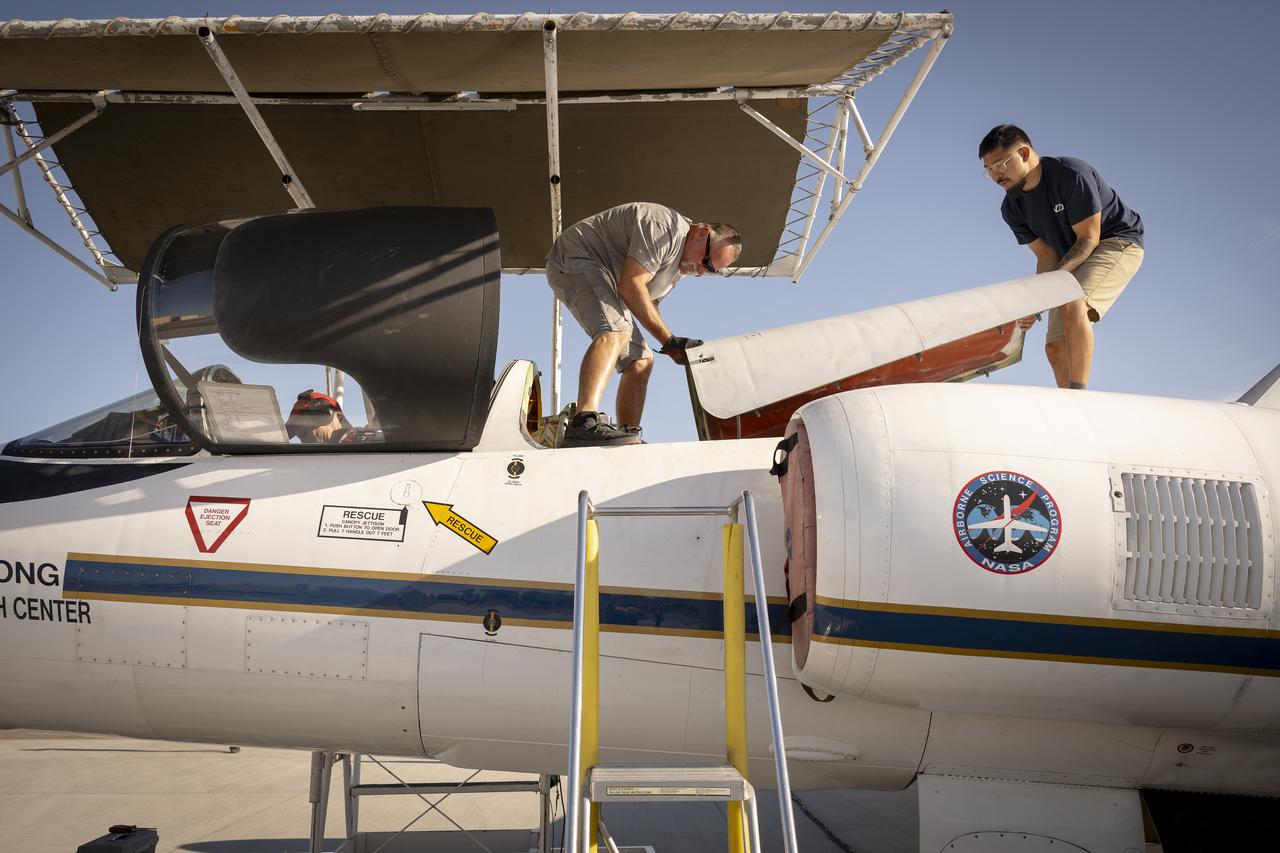
Crew members reattach the nose cone of NASA’s Armstrong Flight Research Center’s ER-2 aircraft at Edwards, California, on Thursday, Aug. 21, 2025, ahead of a mission for the Geological Earth Mapping Experiment (GEMx). The aircraft’s nose houses key science instruments used to collect data during flight.
NASA ER-2 Flies Geological Mapping Mission
NASA's large Airborne Science research aircraft, a modified DC-8 airliner, displayed new colors in a check flight Feb. 24, 2004, over its home base, the NASA Dryden Flight Research Center at Edwards AFB, California.
NASA's Airborne Science DC-8 displays new colors in a check flight over the Dryden Flight Research Center
NASA Armstrong Flight Research Center’s ER-2 aircraft lifts off from Edwards, California, on Tuesday, Sept. 23, 2025, in support of the Geological Earth Mapping Experiment (GEMx). The high-altitude science aircraft operates between 20,000 and 70,000 feet. For this mission, pilots flew at approximately 65,000 feet, requiring them to wear specially designed pressure suits.
NASA ER-2 Flies Geological Mapping Mission
Technicians unload the LEAPTech experimental wing upon its arrival at NASA Armstrong Flight Research Center. Ground testing will begin after the wing is mounted on a specially modified truck.
LEAPTech to Demonstrate Electric Propulsion Technologies
Left to right: workhorse F-15B #836, "Mr. Bones" F-15D #884, and "2nd to None" F-15D #897 on the back ramp at NASA's Neil A. Armstrong Flight Research Center.
AFRC2016-0073-72
Left to right: "2nd to None" (F-15D #897), "Mr. Bones" (F-15D #884), and workhorse F-15B #836 on the back ramp at NASA's Neil A. Armstrong Flight Research Center.
AFRC2016-0073-80
During Bring Kids to Work Day at NASA’s Armstrong Flight Research Center in Edwards, California, on June 17, 2025, participants pose with flight suit cutouts in front of NASA’s Quesst display. NASA's Quesst mission, which features the agency’s X-59 quiet supersonic experimental aircraft, will demonstrate technology to fly supersonic, or faster than the speed of sound, without generating loud sonic booms.
NASA Armstrong Bring Kids to Work Day 2025
A North American Aviation A-5A Vigilante (Navy serial number 147858/NASA tail number 858) arrived from the Naval Air Test Center, Patuxent River, MD, on December 19, 1962, at the NASA Flight Research Center (now, Dryden Flight Research Center, Edwards, CA). The Center flew the A-5A in a year-long series of flights in support of the U.S. supersonic transport program. The Center flew the aircraft to determine the let-down and approach conditions of a supersonic transport flying into a dense air traffic network. With the completion of the research flights, the Center sent the A-5A back to the Navy on December 20, 1963.
A-5A on lakebed.
A North American Aviation A-5A Vigilante (Navy serial number 147858/NASA tail number 858) arrived from the Naval Air Test Center, Patuxent River, MD, on December 19, 1962, at the NASA Flight Research Center (now, Dryden Flight Research Center, Edwards, CA). The Center flew the A-5A in a year-long series of flights in support of the U.S. supersonic transport program. The Center flew the aircraft to determine the let-down and approach conditions of a supersonic transport flying into a dense air traffic network. With the completion of the research flights, the Center sent the A-5A back to the Navy on December 20, 1963.
A-5A on lakebed.
Earth and sky met as the X-48C Hybrid Wing Body aircraft flew over Edwards Air Force Base on Feb. 28, 2013, from NASA's Dryden Flight Research Center, Edwards, CA. The long boom protruding from between the tails is part of the aircraft's parachute-deployment flight termination system.
X-48C Hybrid - Blended Wing Body Demonstrator
The X-48C Hybrid Wing Body aircraft flew over Rogers Dry Lake on Feb. 28, 2013, from NASA's Dryden Flight Research Center, Edwards, CA. The long boom protruding from between the tails was part of the aircraft's parachute-deployment flight termination system.
Parachute-Deployment Flight Termination System on X-48C