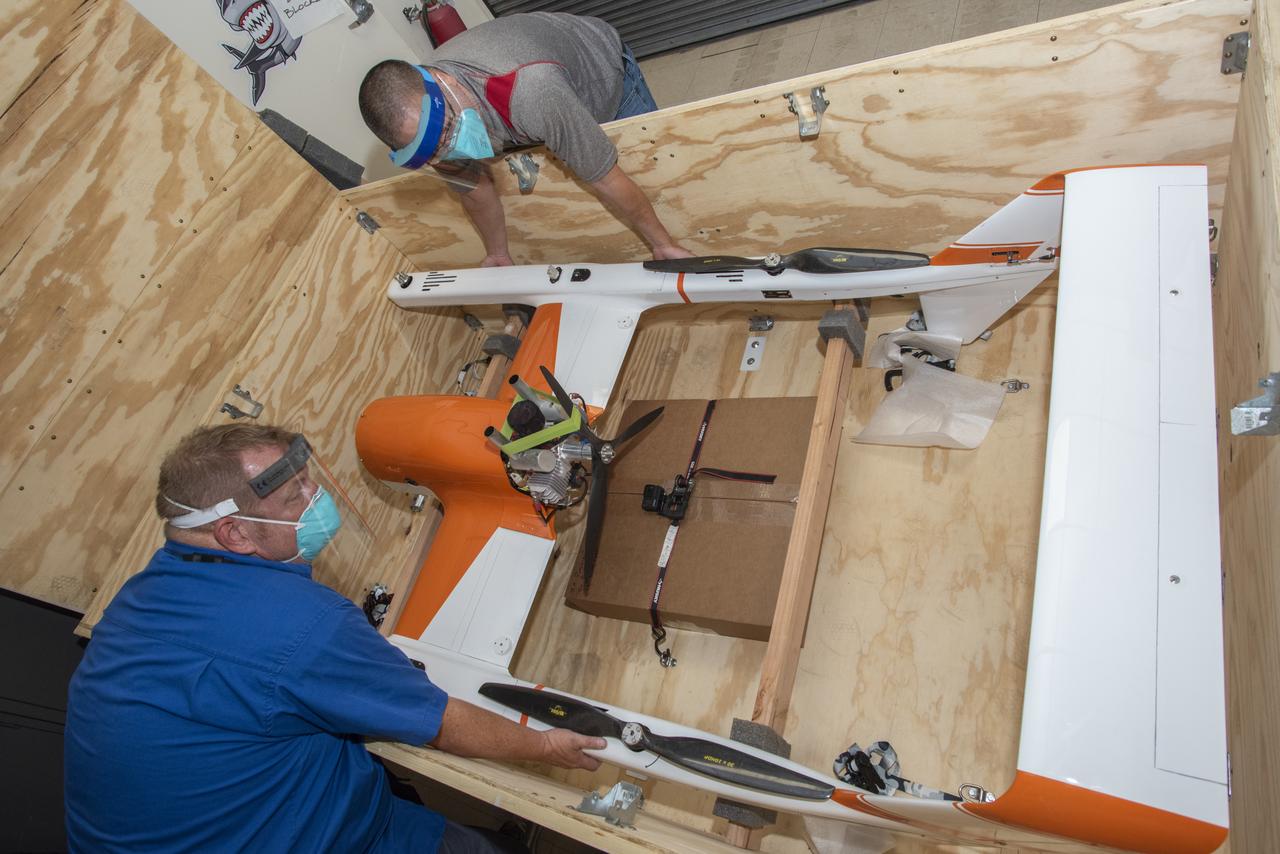
Derek Abramson and Robert Jensen unload the Hybrid Quadrotor 90C (HQ-90) at NASA Armstrong Flight Research Center’s Dale Reed Subscale Flight Research Lab in California on Oct. 1, 2020. The Resilient Autonomy project will use the vertical lift and transition remotely piloted aircraft for software testing at NASA Armstrong.
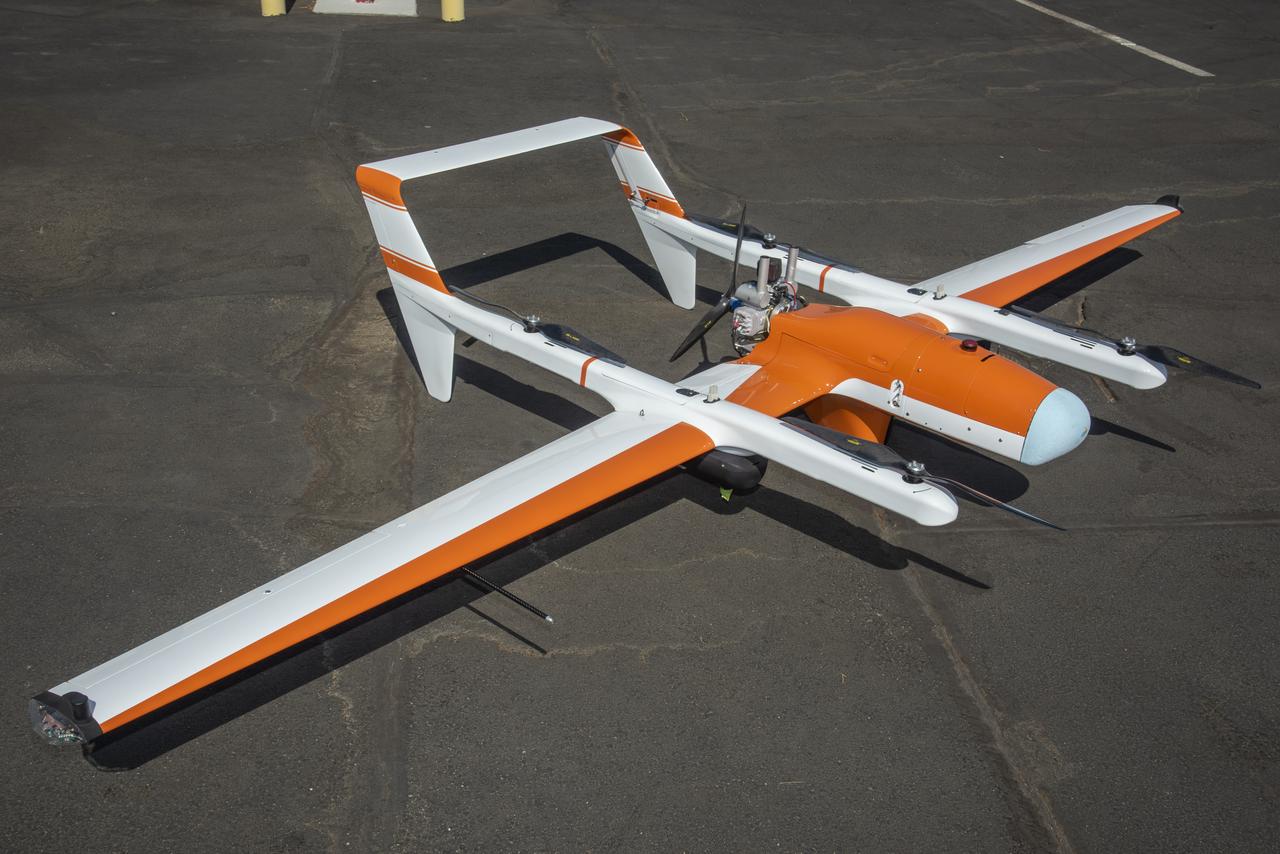
The Hybrid Quadrotor 90C (HQ-90) is displayed outside the NASA Armstrong Flight Research Center’s Dale Reed Subscale Flight Research Lab in California on Oct. 1, 2020. The Resilient Autonomy project will use this vertical lift and transition remotely piloted aircraft for software testing.
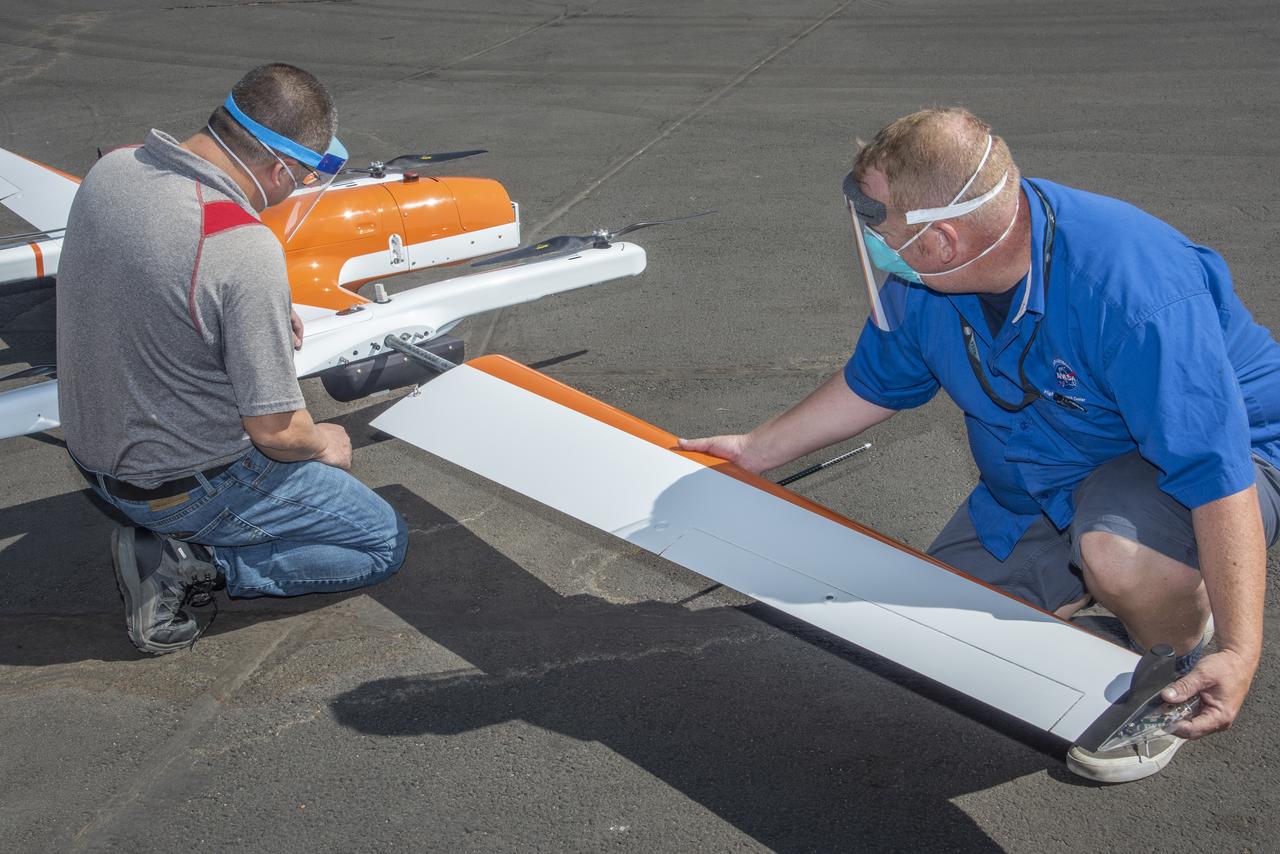
Derek Abramson and Robert Jensen install a wing on the Hybrid Quadrotor 90C (HQ-90) at NASA Armstrong Flight Research Center's Dale Reed Subscale Flight Research Lab in California on Oct. 1, 2020. This vertical lift and transition remotely piloted aircraft arrived in pieces packed in crates for the Resilient Autonomy project to test software in flight.
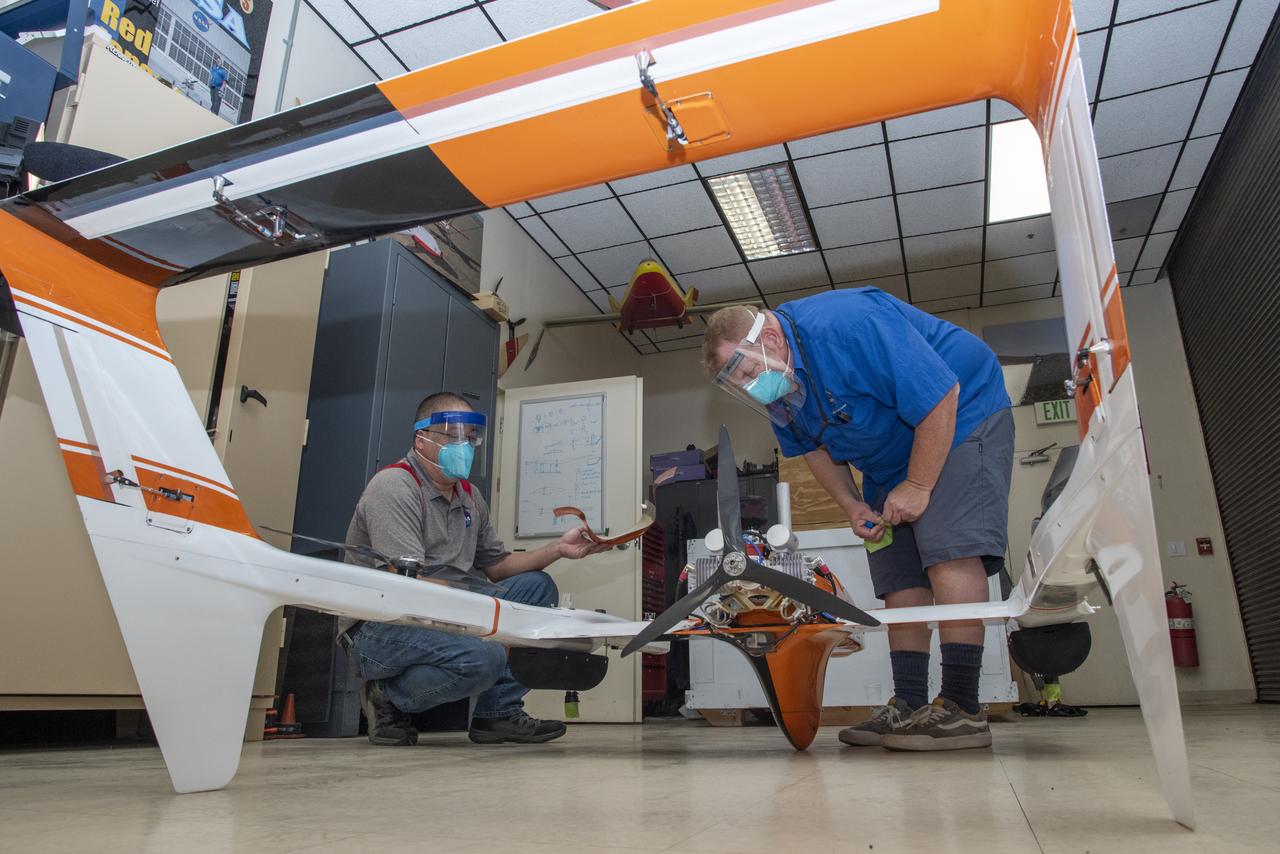
Derek Abramson and Robert Jensen assemble pieces of the Hybrid Quadrotor 90C (HQ-90) at NASA Armstrong Flight Research Center’s Dale Reed Subscale Flight Research Lab in California on Oct. 1, 2020. This vertical lift and transition remotely piloted aircraft arrived in pieces packed in crates. It was reassembled for the Resilient Autonomy project to test software in flight.
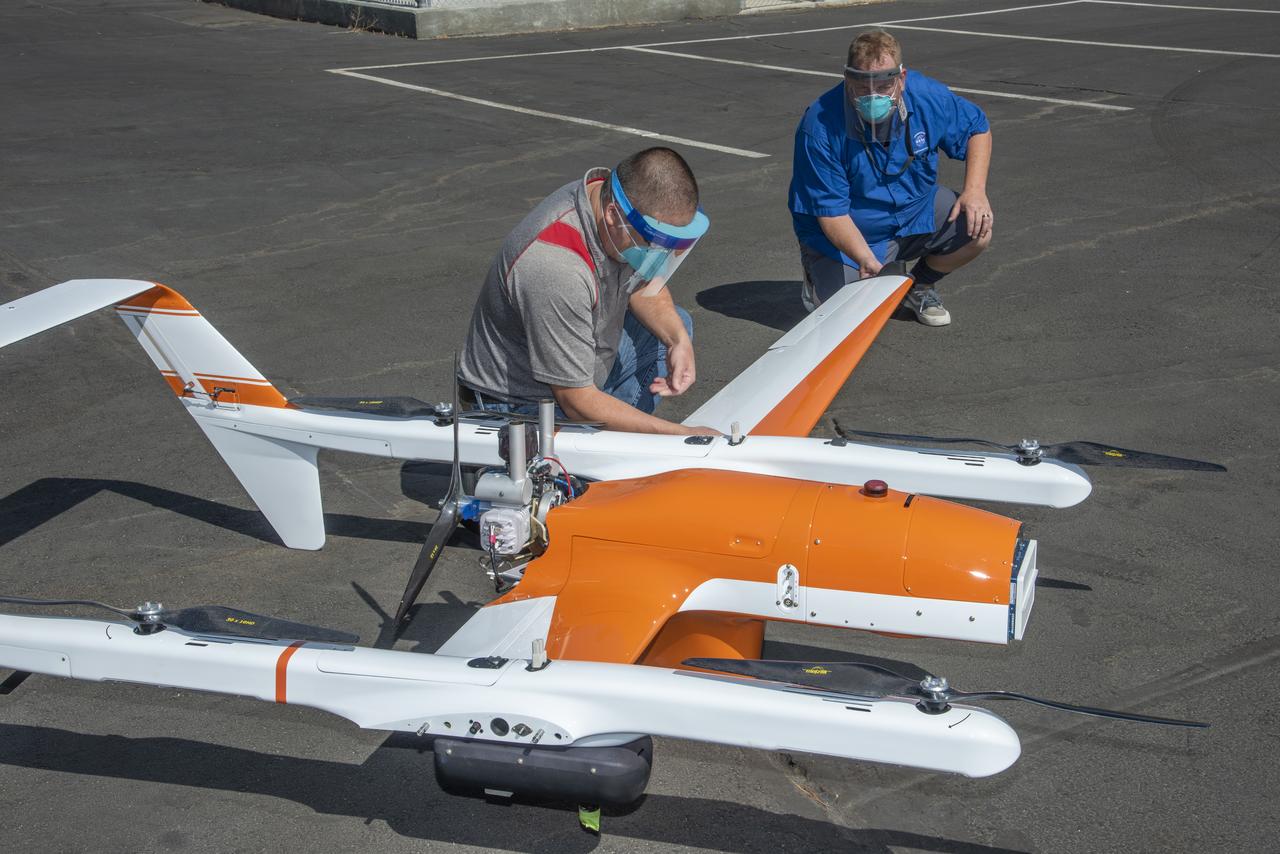
Derek Abramson and Robert Jensen install one of two wings on the Hybrid Quadrotor 90C (HQ-90) at NASA Armstrong Flight Research Center's Dale Reed Subscale Flight Research Lab in California on Oct. 1, 2020. This vertical lift and transition remotely piloted aircraft arrived in pieces packed in crates for the Resilient Autonomy project to test software in flight.
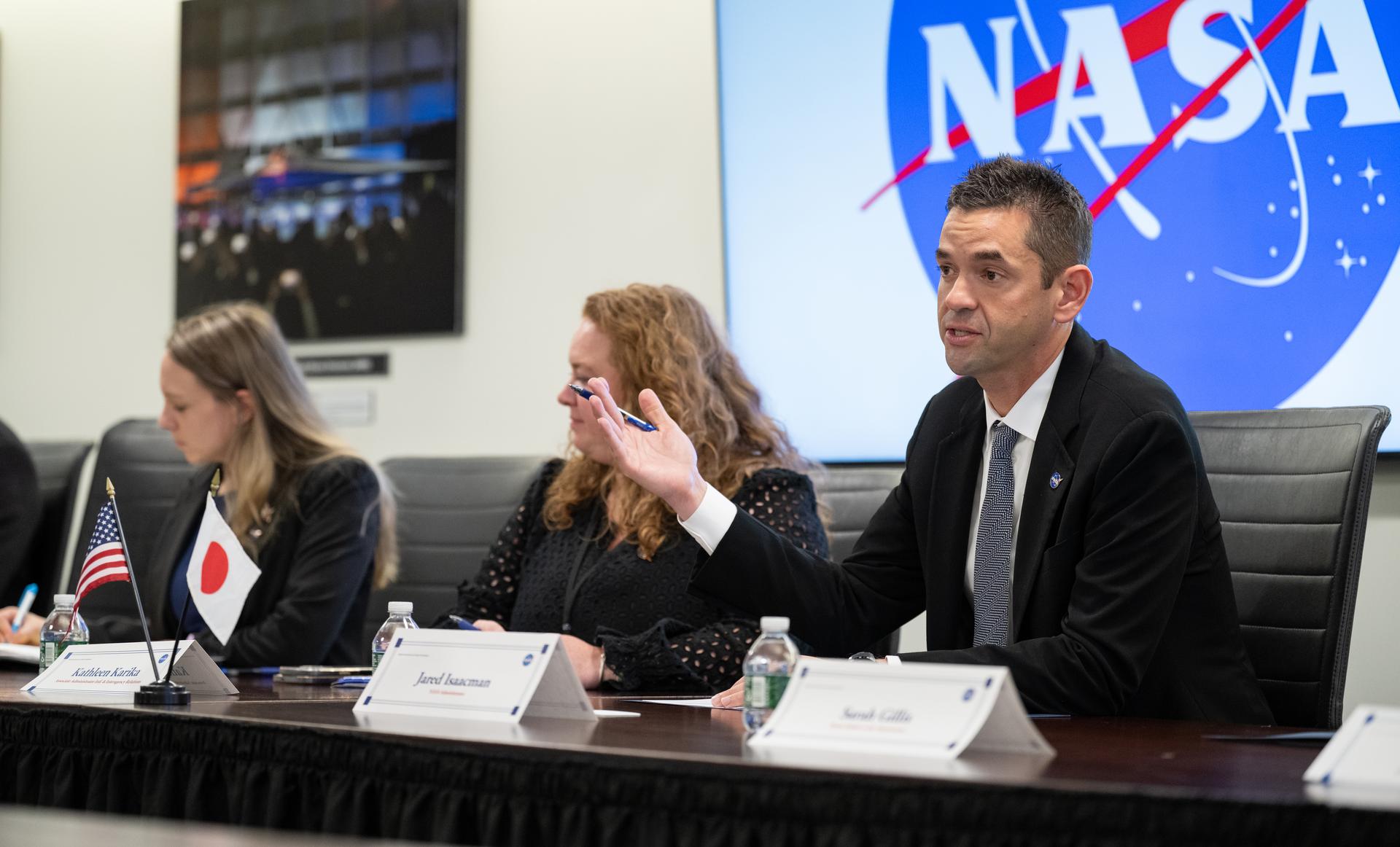
NASA Administrator Jared Isaacman, right, speaks alongside NASA staff during a meeting with Jun Sawada, Chairman of Japan’s National Space Policy Committee (NSPC), Monday, Aug. 24, 2026, at the Mary W. Jackson NASA Headquarters building in Washington. Photo Credit: (NASA/Keegan Barber)
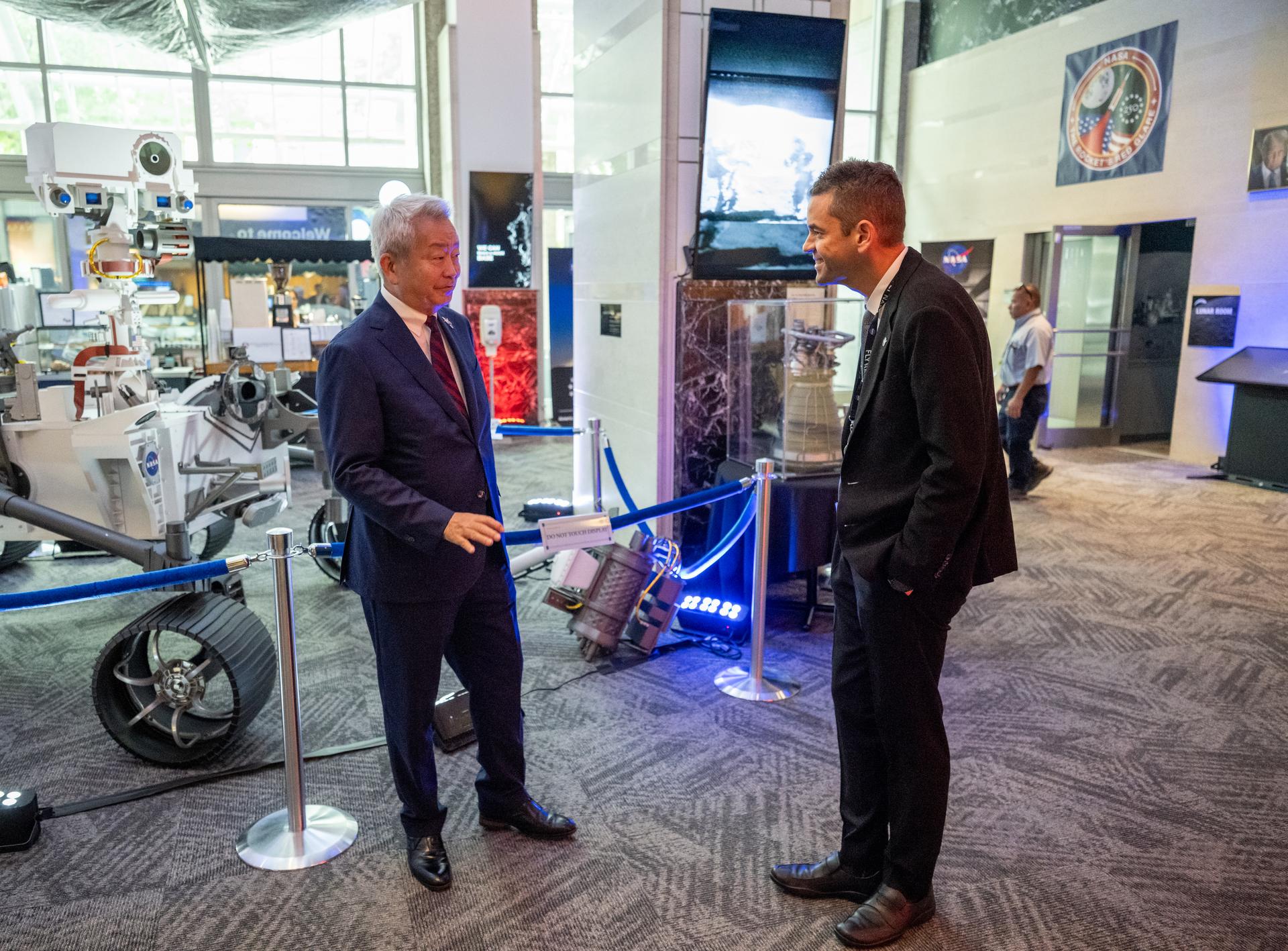
NASA Administrator Jared Isaacman, right, greets Jun Sawada, Chairman of Japan’s National Space Policy Committee (NSPC), left, Monday, Aug. 24, 2026, at the Mary W. Jackson NASA Headquarters building in Washington. Photo Credit: (NASA/Keegan Barber)
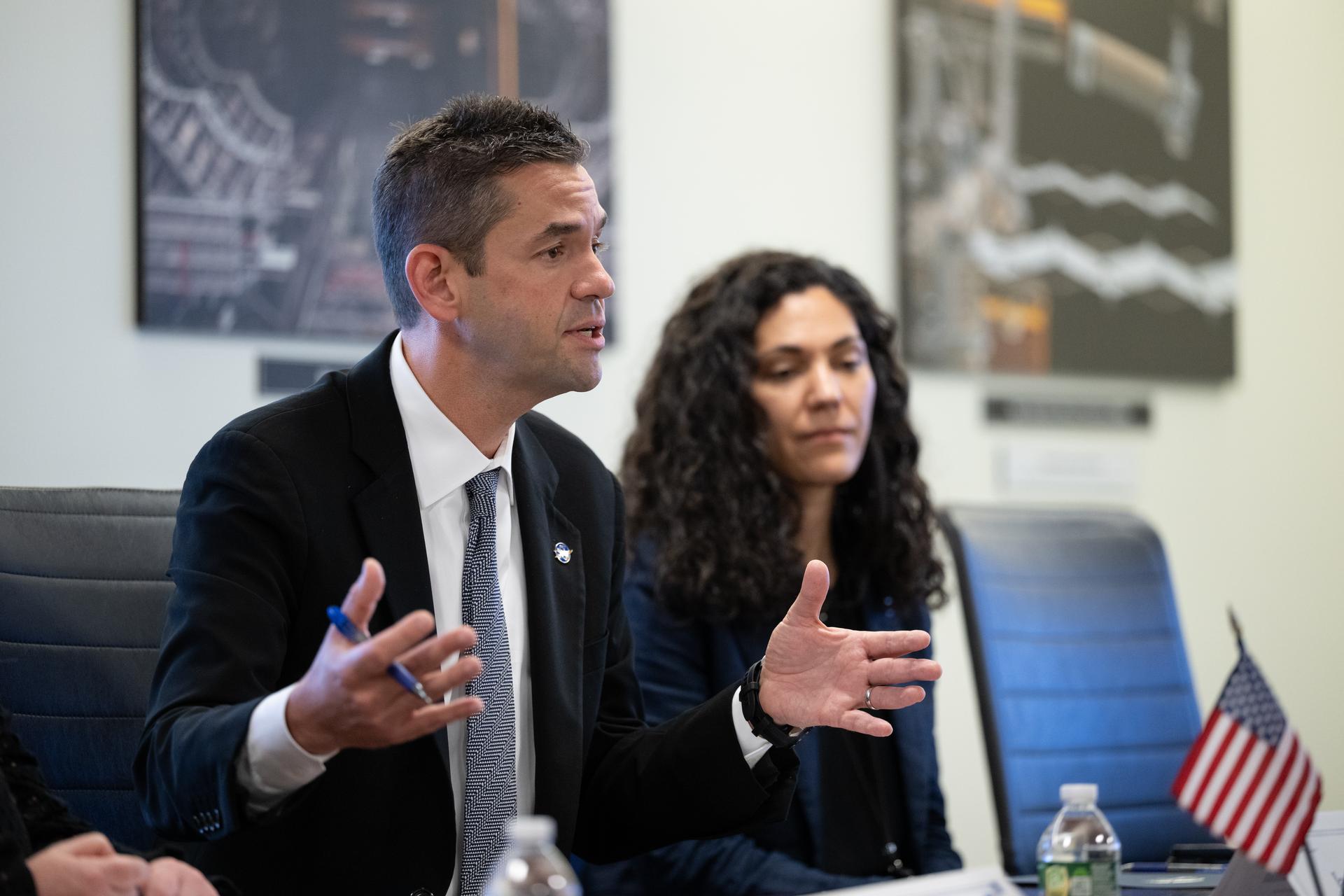
NASA Administrator Jared Isaacman, left, speaks alongside NASA staff during a meeting with Jun Sawada, Chairman of Japan’s National Space Policy Committee (NSPC), Monday, Aug. 24, 2026, at the Mary W. Jackson NASA Headquarters building in Washington. Photo Credit: (NASA/Keegan Barber)
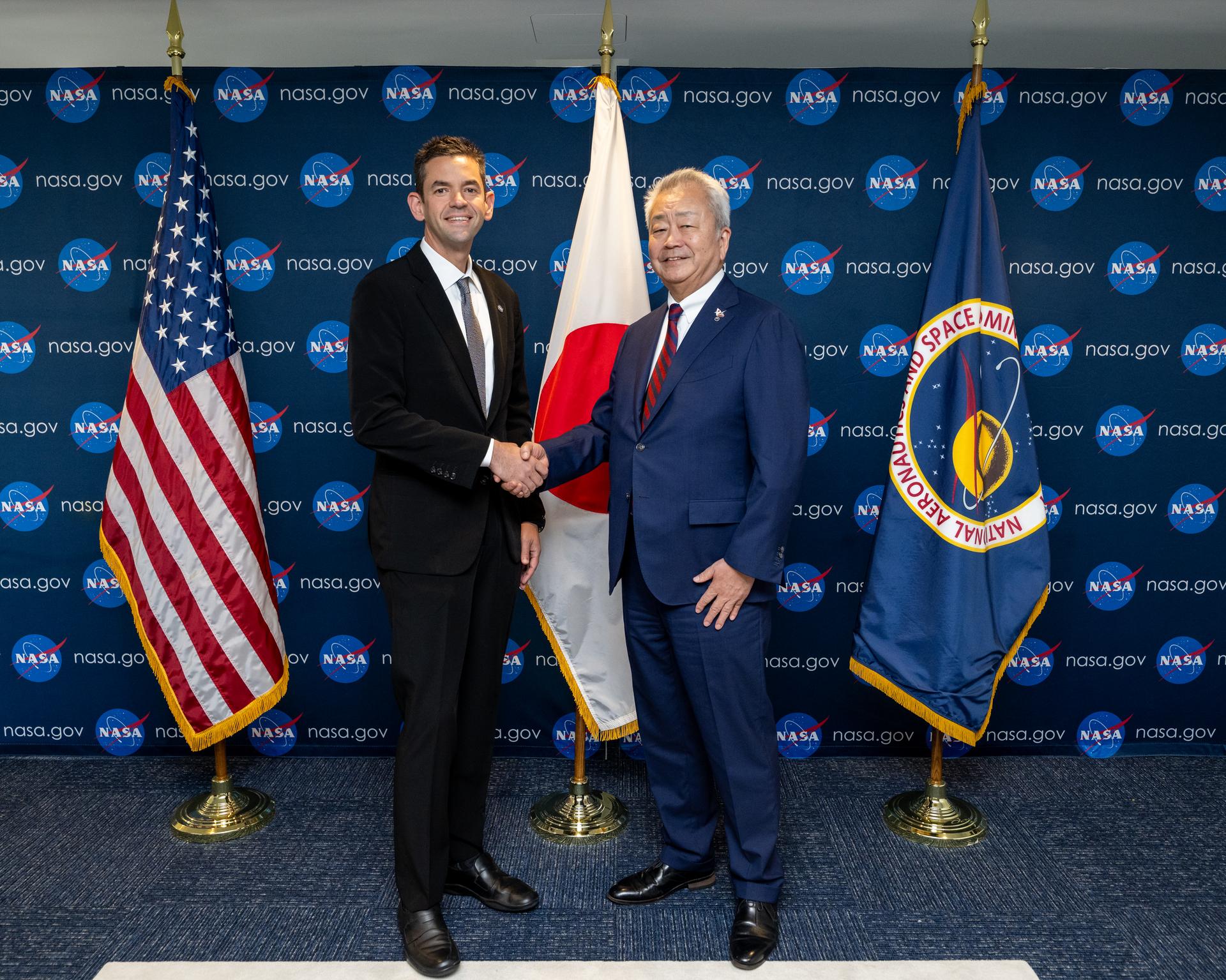
NASA Administrator Jared Isaacman, left, and Jun Sawada, Chairman of Japan’s National Space Policy Committee (NSPC), right, pose for a photo Monday, Aug. 24, 2026, at the Mary W. Jackson NASA Headquarters building in Washington. Photo Credit: (NASA/Keegan Barber)
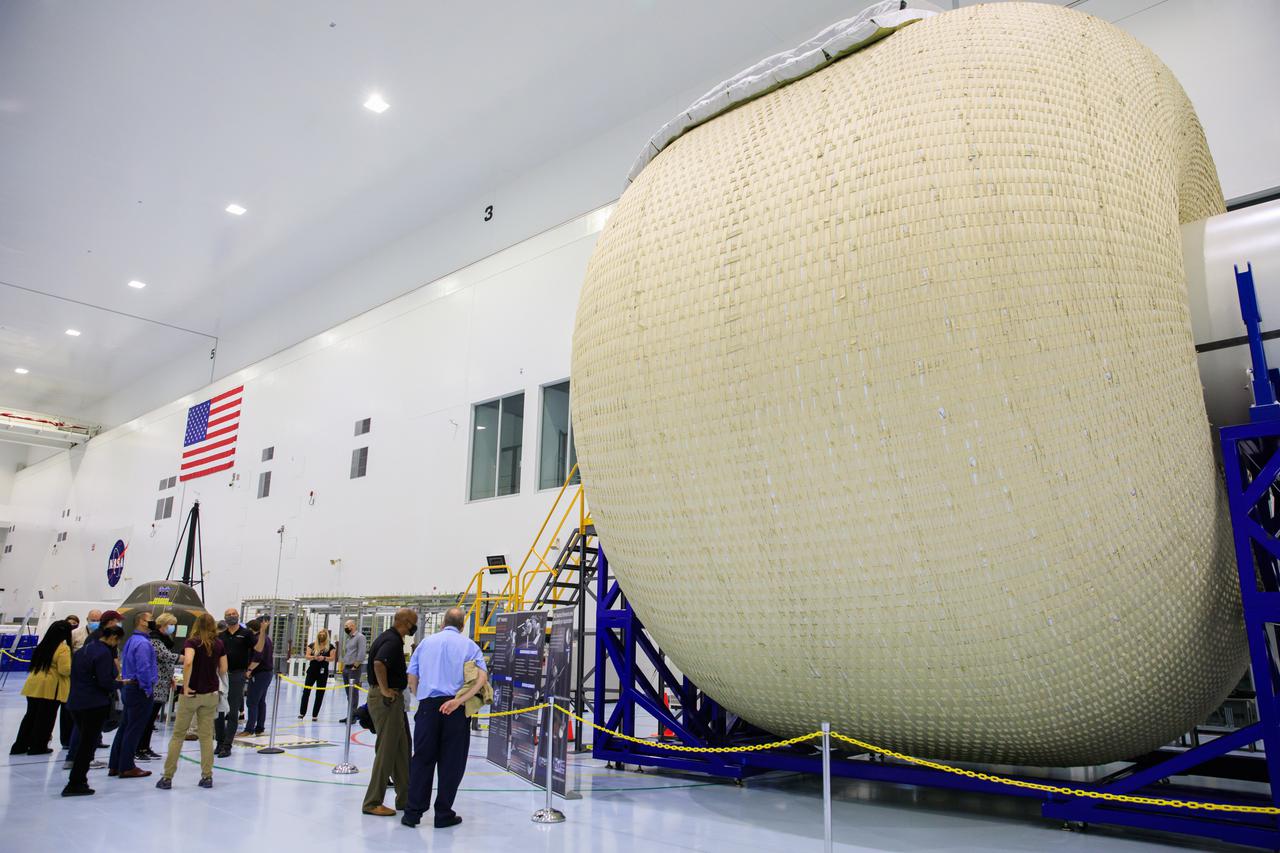
Senior leaders with Kennedy Space Center in Florida, familiarize newly appointed officials from NASA Headquarters with the center’s facilities during a tour on April 19, 2021. The group views Sierra Nevada’s Large Inflatable Fabric Environment (LIFE) habitat inside the Space Station Processing Facility high bay. The habitat is an expandable habitat. Expandable habitats have the benefit of greatly decreasing the amount of volume it takes to launch the habitat, which can then inflate once it is in space.
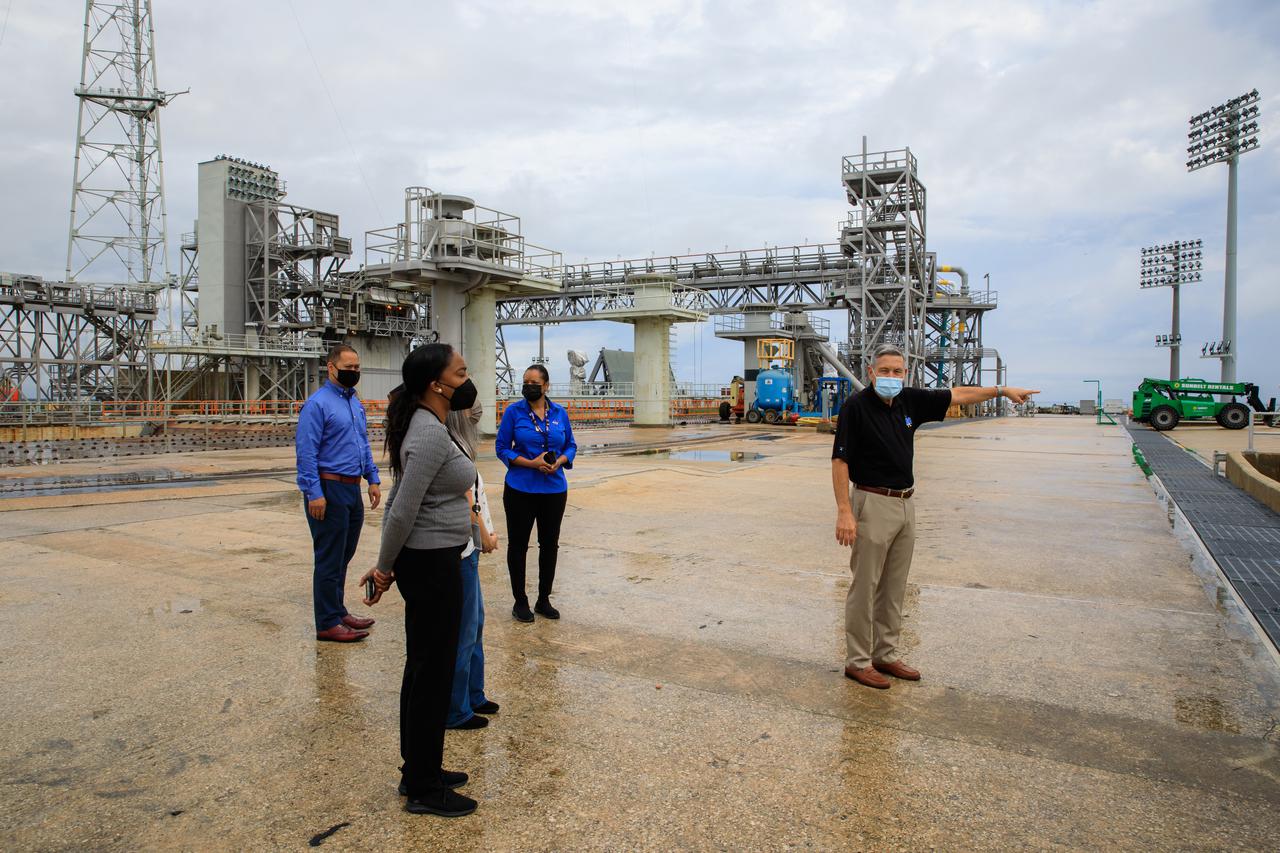
Senior leaders with Kennedy Space Center in Florida, familiarize newly appointed officials from NASA Headquarters with the center’s facilities during a tour on April 19, 2021. The group is on the surface of Launch Complex 39B, where the launch of NASA’s Space Launch System (SLS) rocket and Orion spacecraft will lift off on Artemis missions. Artemis I will be the first integrated test of SLS and Orion and will pave the way for landing the first woman and first person of color on the lunar surface. It will be a proving ground for deep space exploration, leading the agency’s efforts under the Artemis program for a sustainable presence on the Moon and preparing for human missions to Mars.
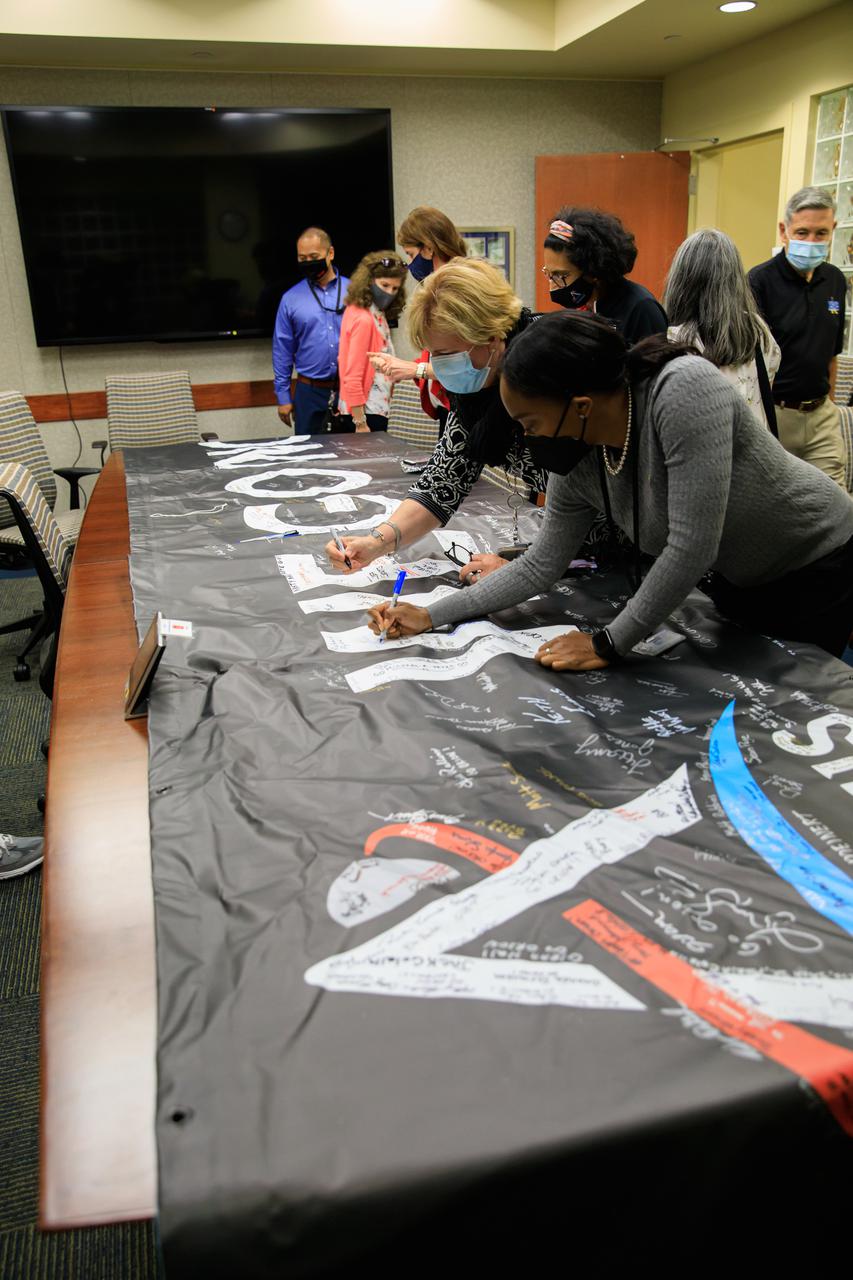
Senior leaders with Kennedy Space Center in Florida, familiarize newly appointed officials from NASA Headquarters with the center’s facilities during a tour on April 19, 2021. The group is inside the Neil Armstrong Operations and Checkout Building signing an Artemis banner. Artemis I will be the first integrated test of SLS and Orion and will pave the way for landing the first woman and first person of color on the lunar surface. It will be a proving ground for deep space exploration, leading the agency’s efforts under the Artemis program for a sustainable presence on the Moon and preparing for human missions to Mars.
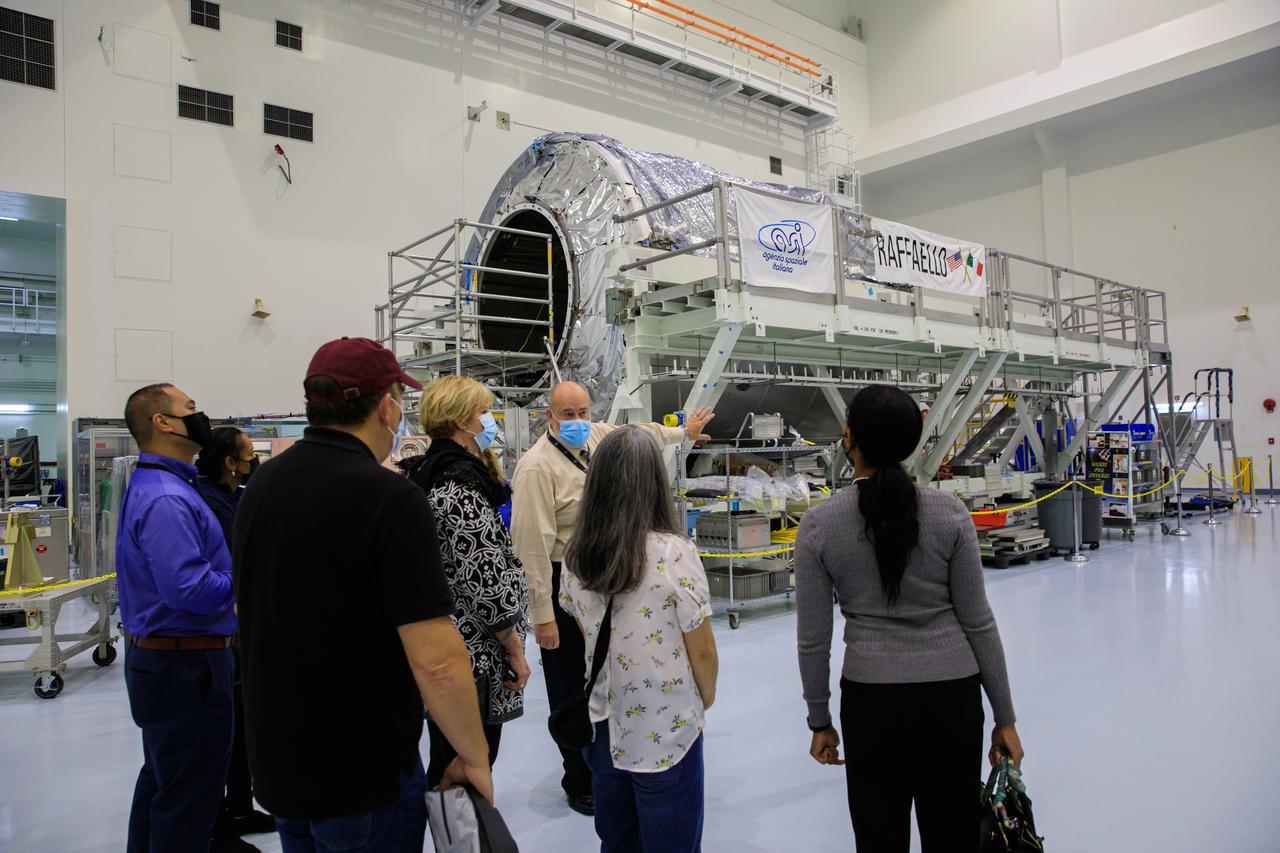
Senior leaders with Kennedy Space Center in Florida, familiarize newly appointed officials from NASA Headquarters with the center’s facilities during a tour on April 19, 2021. The group views the Raffaello Multi-Purpose Logistics Module inside the Space Station Processing Facility high bay.

Senior leaders with Kennedy Space Center in Florida, familiarize newly appointed officials from NASA Headquarters with the center’s facilities during a tour on April 19, 2021. The group is inside the Neil Armstrong Operations and Checkout Building high bay, where Orion crew module spacecraft are readied for the Artemis II mission. Artemis II will be the first crewed launch of SLS and Orion and will pave the way for landing the first woman and first person of color on the lunar surface. It will be a proving ground for deep space exploration, leading the agency’s efforts under the Artemis program for a sustainable presence on the Moon and preparing for human missions to Mars.
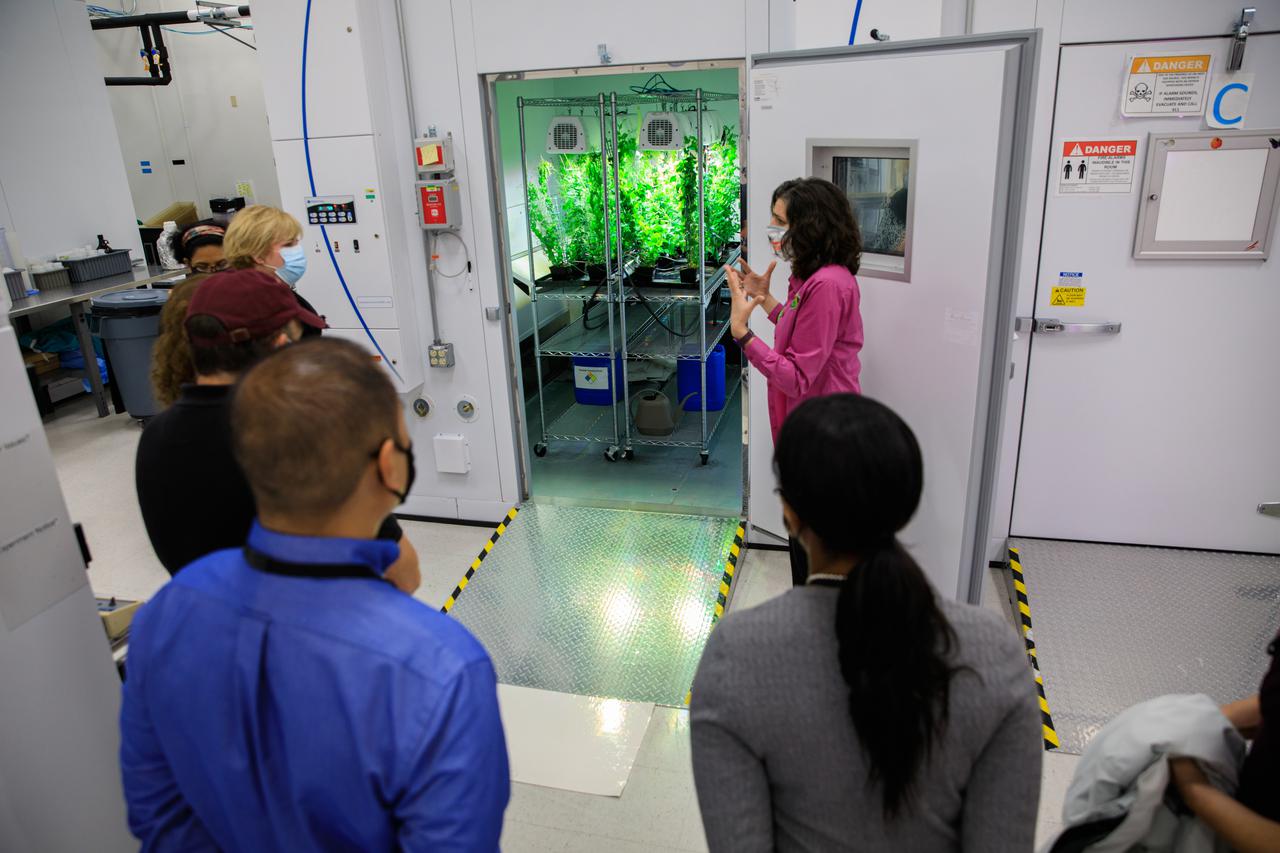
Senior leaders with Kennedy Space Center in Florida, familiarize newly appointed officials from NASA Headquarters with the center’s facilities during a tour on April 19, 2021. The group views plant experiments inside a growth chamber in the Space Station Processing Facility. Plant experiments at Kennedy supports research enabling deep space exploration including experiments in the Veggie and Advanced Plant Habitat systems aboard the International Space Station.
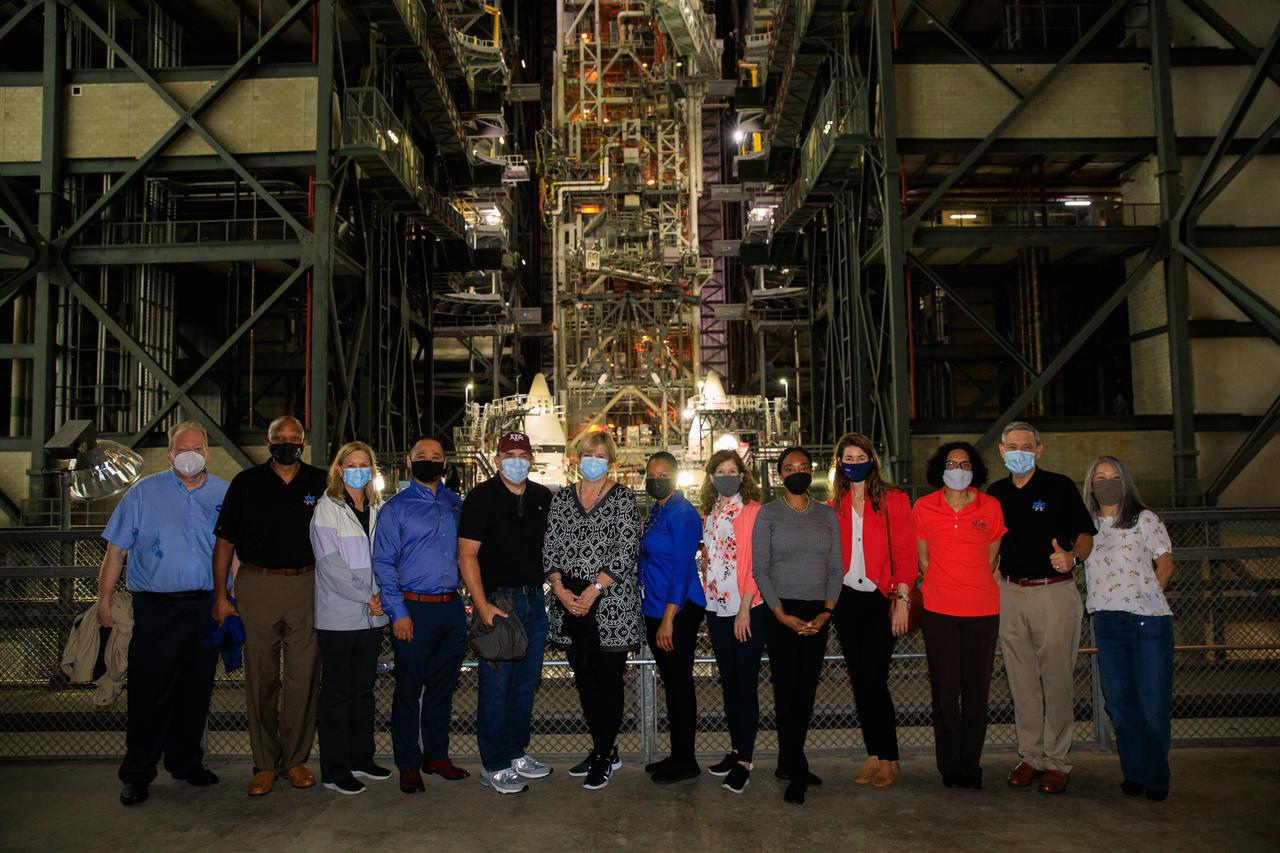
Senior leaders with Kennedy Space Center in Florida, familiarize newly appointed officials from NASA Headquarters with the center’s facilities during a tour on April 19, 2021. The group is in the Vehicle Assembly Building, where NASA’s Space Launch System (SLS) rocket and Orion spacecraft will be stacked on the mobile launcher for Artemis missions. Artemis I will be the first integrated test of SLS and Orion and will pave the way for landing the first woman and first person of color on the lunar surface. It will be a proving ground for deep space exploration, leading the agency’s efforts under the Artemis program for a sustainable presence on the Moon and preparing for human missions to Mars.
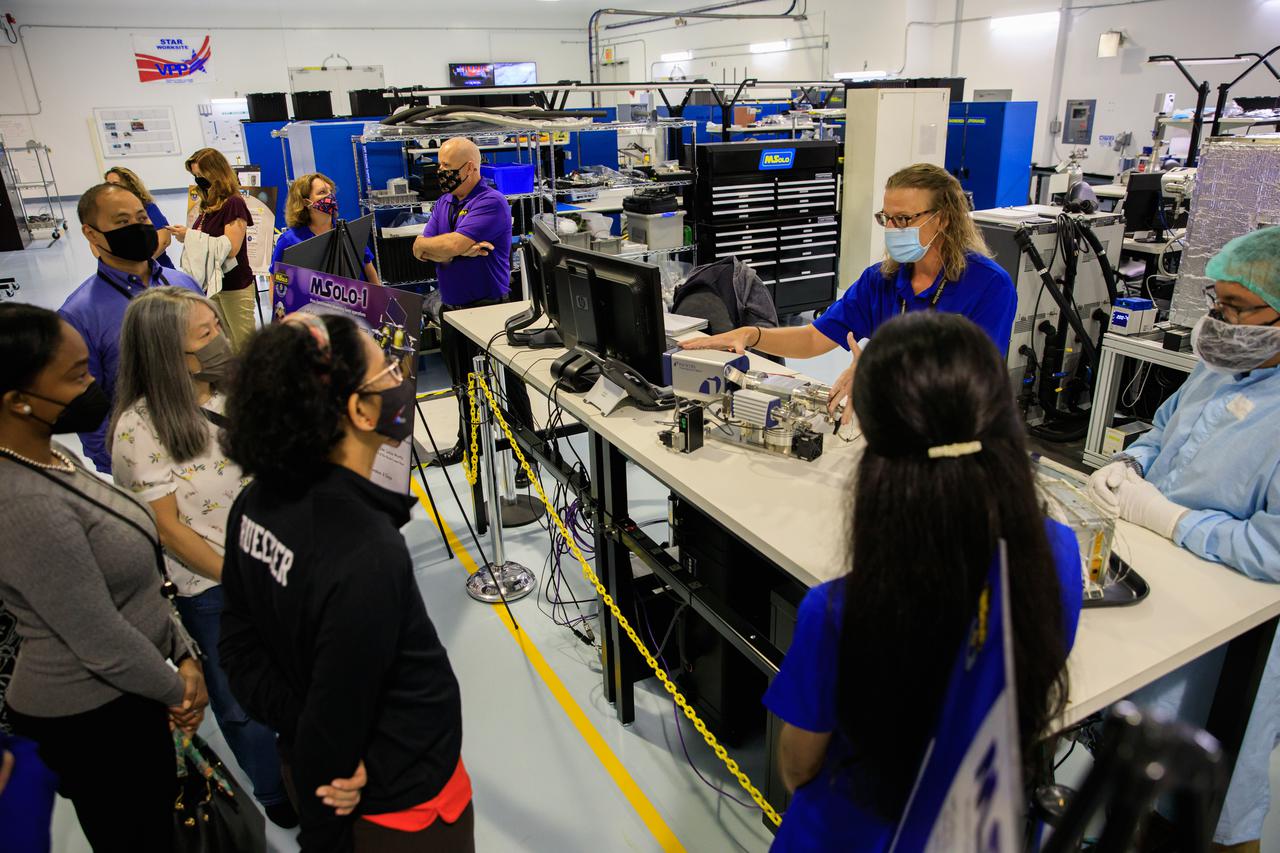
Senior leaders with Kennedy Space Center in Florida, familiarize newly appointed officials from NASA Headquarters with the center’s facilities during a tour on April 19, 2021. The group views research and technology experiments in the Space Station Processing Facility. Janine Captain, the principal investigator for the Mass Spectrometer Observing Lunar Operations, or MSolo, briefs the team about the commercial off the-shelf- mass spectrometer the team at Kennedy has hardened for lunar operations. MSolo will be part of four missions for NASA’s Commercial Lunar Payload Services initiative, including NASA’s Polar Resources Ice Mining Experiment-1 (PRIME-1) and NASA’s Volatiles Investigating Polar Exploration Rover or VIPER.

Jun Sawada, Chairman of Japan’s National Space Policy Committee (NSPC), left, speaks alongside Ambassador of Japan to the United States Shigeo Yamada, center, and Yosuke Kaneko, First Secretary for the Embassy of Japan, during meeting with NASA Administrator Jared Isaacman Monday, Aug. 24, 2026, at the Mary W. Jackson NASA Headquarters building in Washington. Photo Credit: (NASA/Keegan Barber)

Jun Sawada, Chairman of Japan’s National Space Policy Committee (NSPC), left, speaks alongside Ambassador of Japan to the United States Shigeo Yamada, center, and Yosuke Kaneko, First Secretary for the Embassy of Japan, during meeting with NASA Administrator Jared Isaacman, Monday, Aug. 24, 2026, at the Mary W. Jackson NASA Headquarters building in Washington. Photo Credit: (NASA/Keegan Barber)
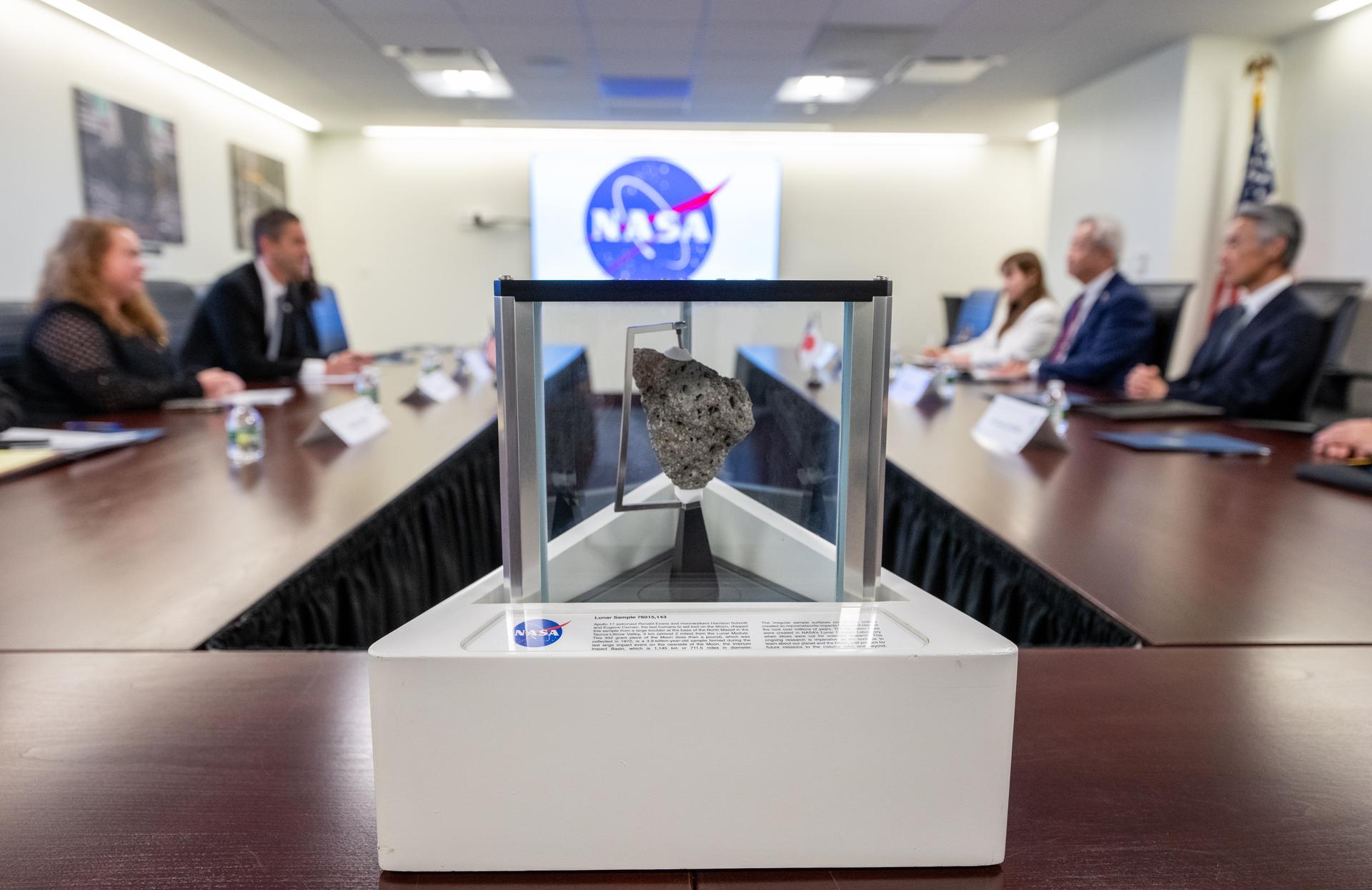
A lunar sample collected during the Apollo 17 mission is seen in the foreground during a meeting between Jun Sawada, Chairman of Japan’s National Space Policy Committee (NSPC), and NASA Administrator Jared Isaacman Monday, Aug. 24, 2026, at the Mary W. Jackson NASA Headquarters building in Washington. Photo Credit: (NASA/Keegan Barber)

NASA Administrator Jared Isaacman, right, speaks with, from left to right, Madoka Ikeda, Secretary of Chairman, Jun Sawada, Chairman of Japan’s National Space Policy Committee (NSPC), Ambassador of Japan to the United States Shigeo Yamada, and Yosuke Kaneko, First Secretary for the Embassy of Japan, Monday, Aug. 24, 2026, at the Mary W. Jackson NASA Headquarters building in Washington. Photo Credit: (NASA/Keegan Barber)
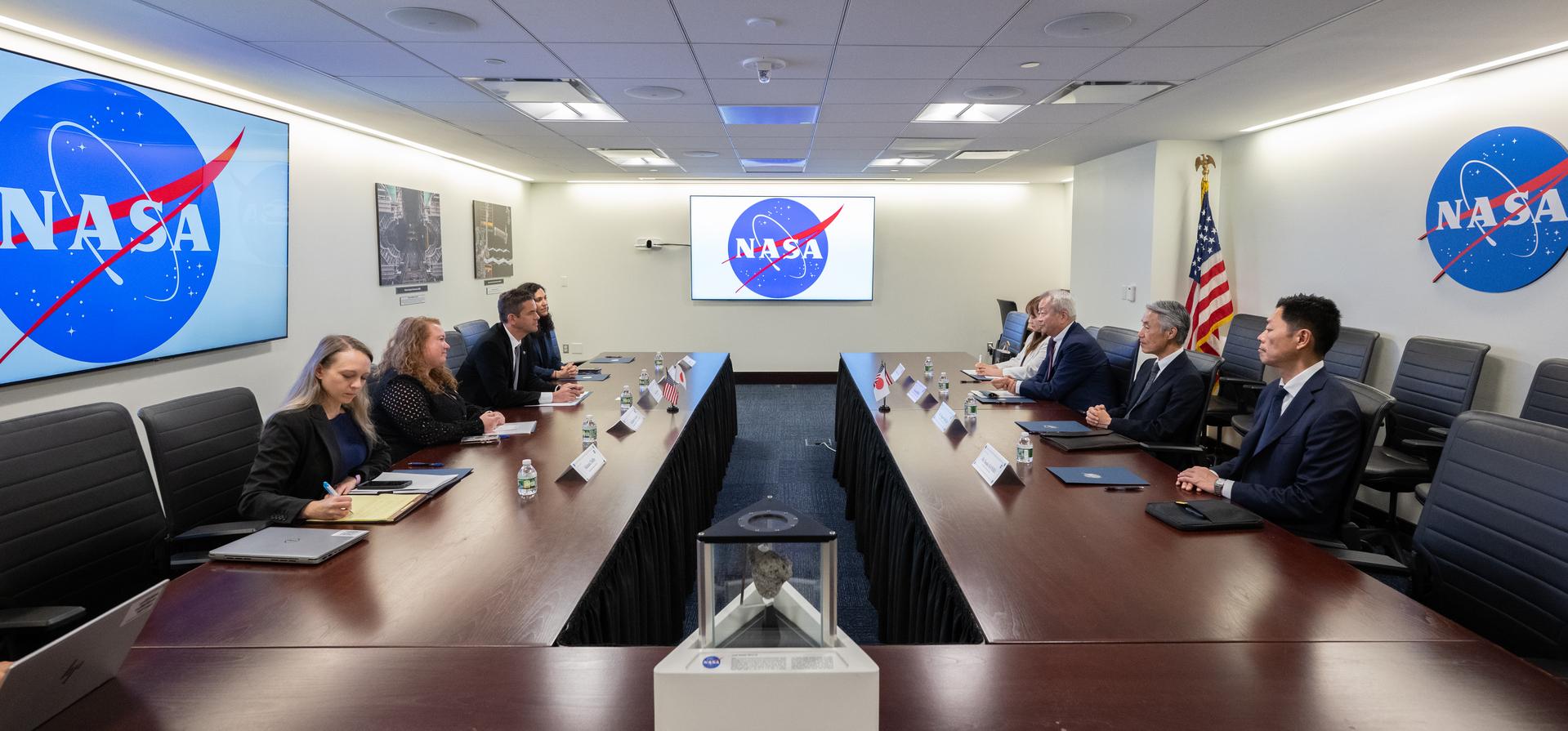
Jun Sawada, Chairman of Japan’s National Space Policy Committee (NSPC), third from right, speaks during a meeting with NASA Administrator Jared Isaacman Monday, Aug. 24, 2026, at the Mary W. Jackson NASA Headquarters building in Washington. Photo Credit: (NASA/Keegan Barber)
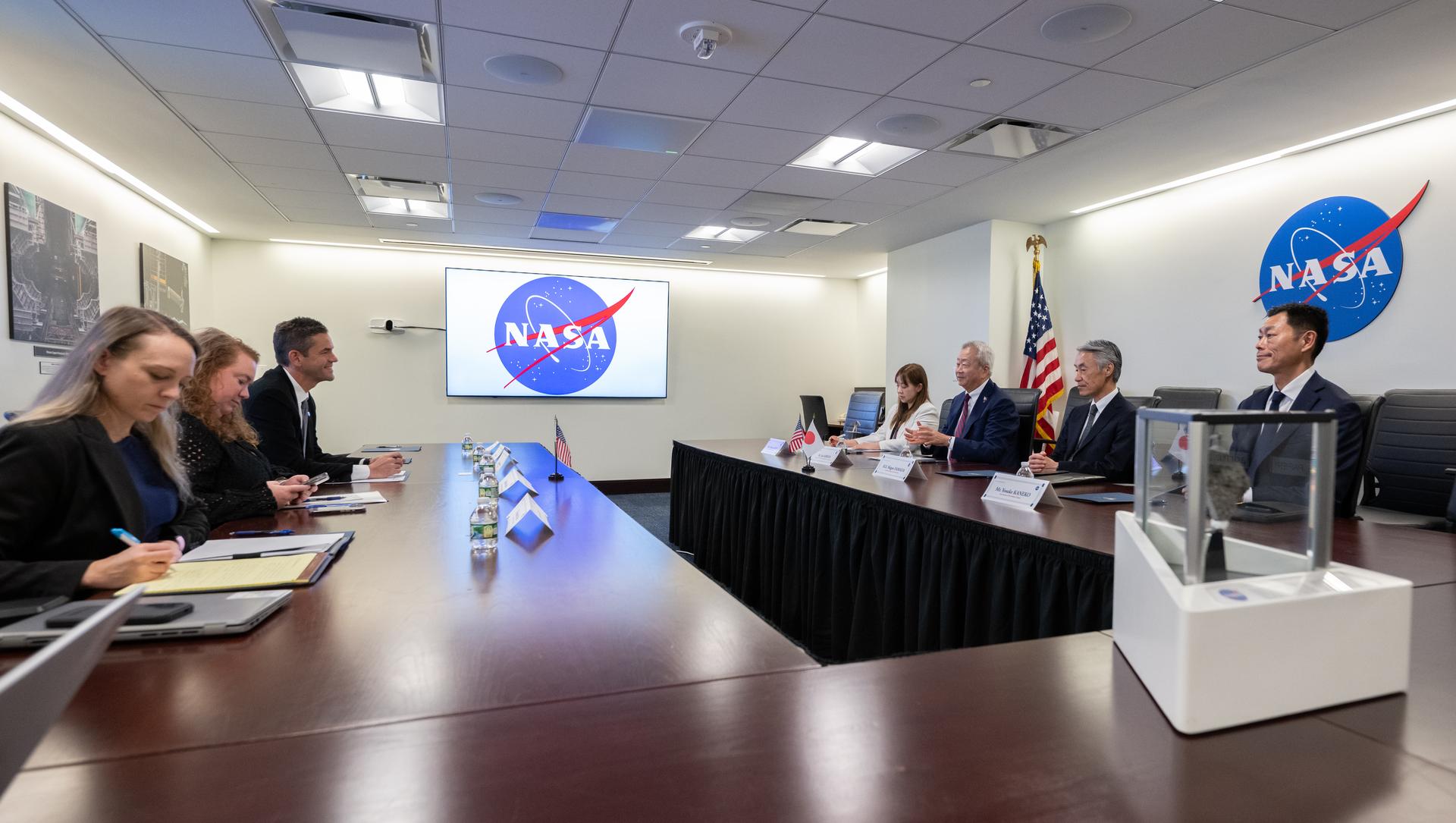
Jun Sawada, Chairman of Japan’s National Space Policy Committee (NSPC), third from right, speaks during a meeting with NASA Administrator Jared Isaacman Monday, Aug. 24, 2026, at the Mary W. Jackson NASA Headquarters building in Washington. Photo Credit: (NASA/Keegan Barber)
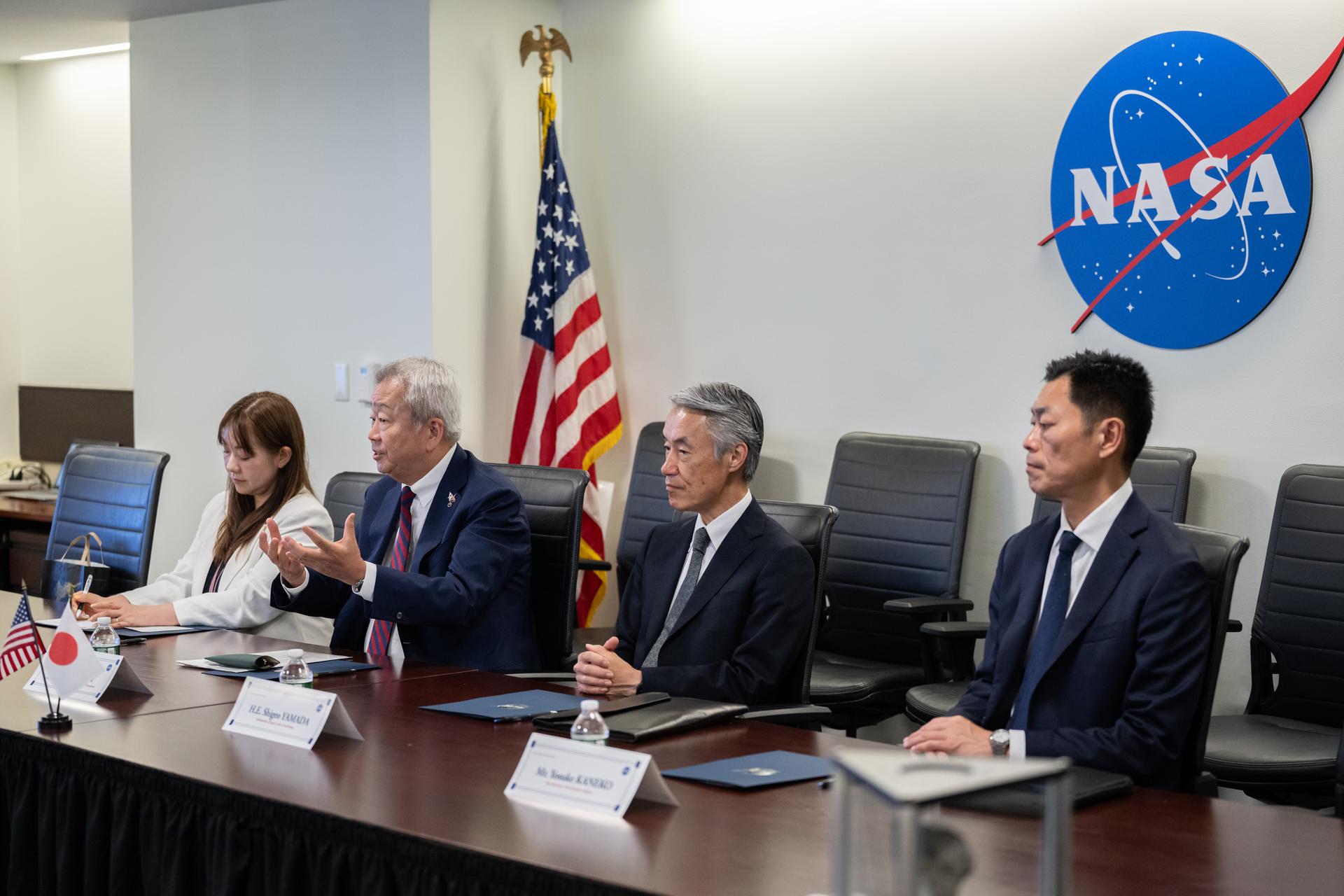
Jun Sawada, Chairman of Japan’s National Space Policy Committee (NSPC), second from left, speaks alongside Madoka Ikeda, Secretary of Chairman, left, Ambassador of Japan to the United States Shigeo Yamada, second from right, and Yosuke Kaneko, First Secretary for the Embassy of Japan, right, during a meeting with NASA Administrator Jared Isaacman, Monday, Aug. 24, 2026, at the Mary W. Jackson NASA Headquarters building in Washington. Photo Credit: (NASA/Keegan Barber)

Jun Sawada, Chairman of Japan’s National Space Policy Committee (NSPC), right, speaks during a meeting with NASA Administrator Jared Isaacman Monday, Aug. 24, 2026, at the Mary W. Jackson NASA Headquarters building in Washington. Photo Credit: (NASA/Keegan Barber)

Small Business Council meeting hosed by NASA Ames Research Center: Naeemah Lee, H.Q., Cheryl Harrison, JSC, Gil DelVaile, GSRC, Mary Helen Ruiz, JPL, David Grove, HQ, John Cecconi, NSSC, Sandra Morris, HQ/OP, Michelle Stracener, SSC, Randy Manning, LaRC, Vernon Vann, LaRC, David Brock, MSFC, Ben Henson, MSFC, Larry Third, KSC, Robert Medina, DFRC, Christine Munroe, ARC, Lupe M. Velasquez, ARC, Monica F. Craft, JSC (?), Angel Castillo, NMO, Timothy C Pierce, GRC, Charles Williams, JSC, Jennifer Perez, GSFC, Rosa Acevedo, GSFC, Glenn A Delgado, HQ/Assoc Admin for Small Business, Tabisa Tepfer, HQ/OSBP/MORIAssoc, Richard Mann, HQ/OSBP
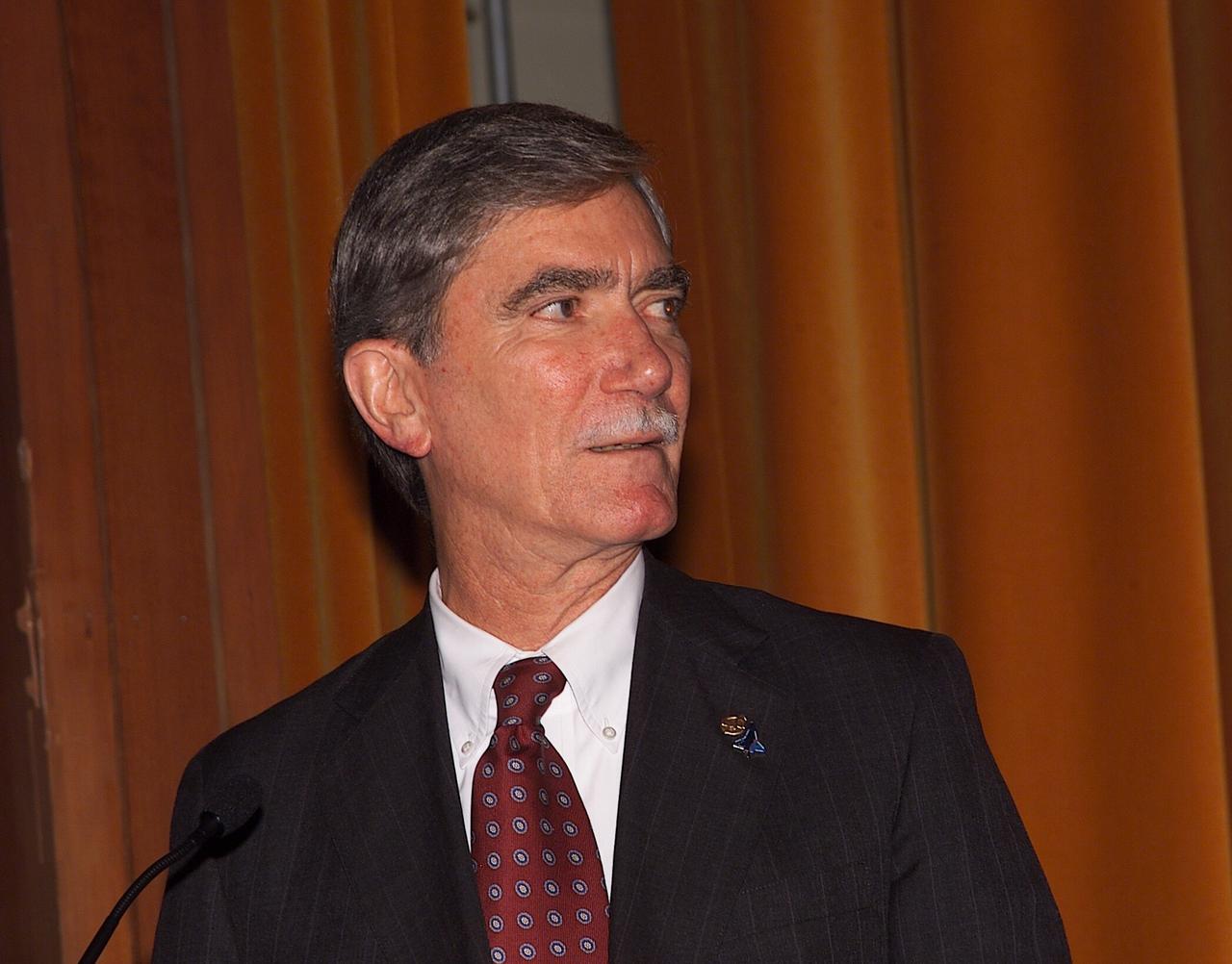
Presidential Rank and NASA Honor Awards 2003 - Dr. Victor Lebacqz (on assignment HQ - Aeronautics)
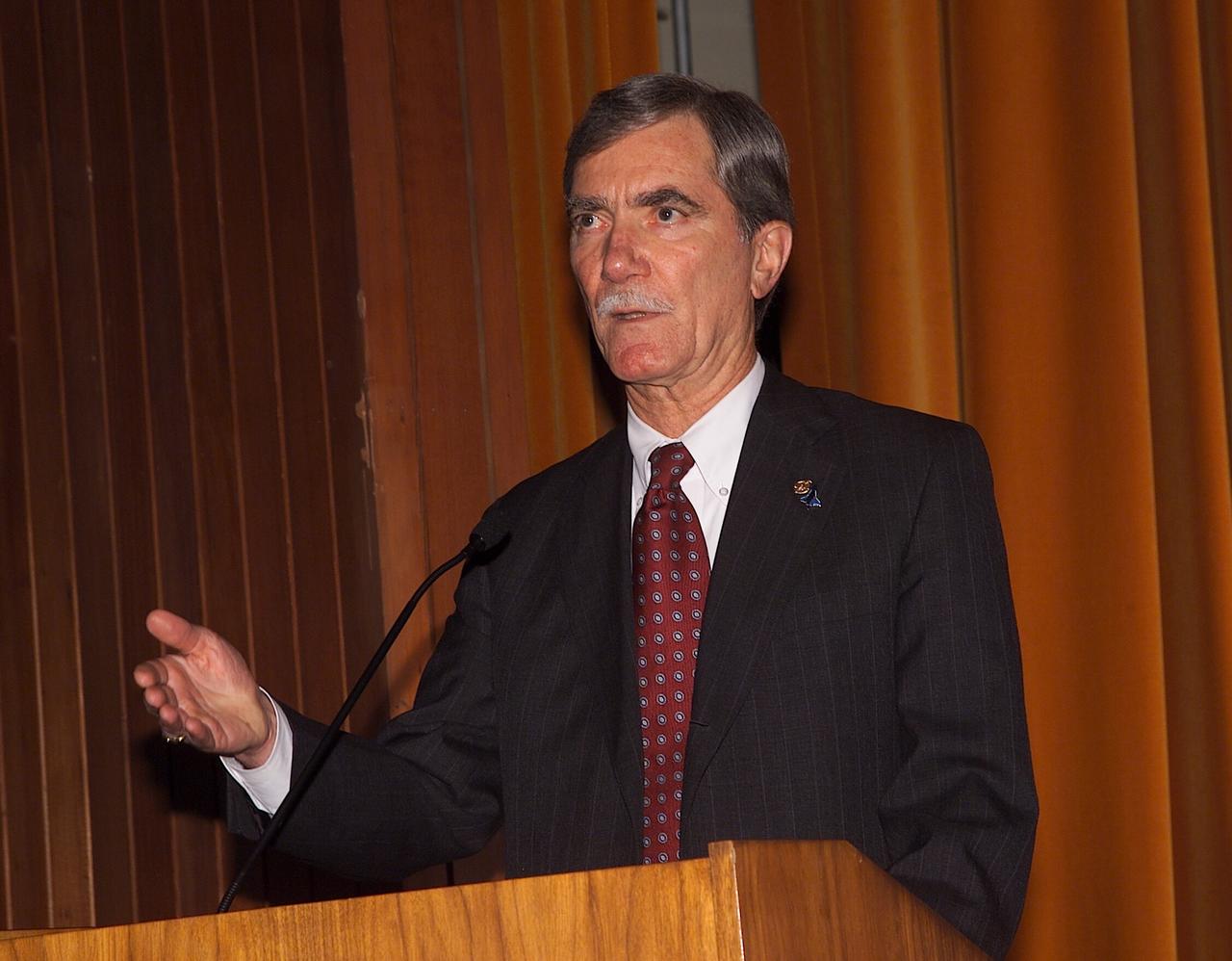
Presidential Rank and NASA Honor Awards 2003 - Dr. Victor Lebacqz (on assignment HQ - Aeronautics)
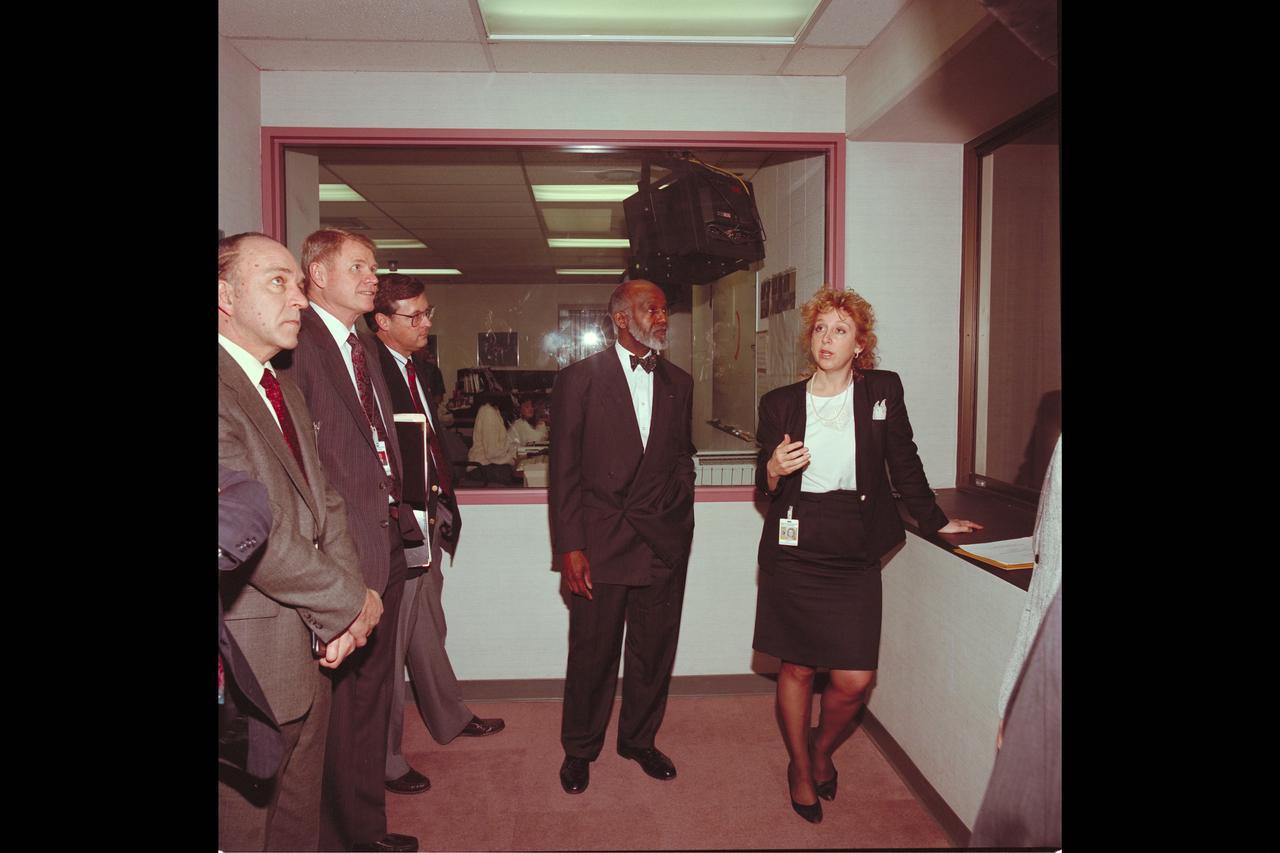
Dr Wesley Harris, NASA HQ tours VMS with Dale Compton and Vic Peterson Ames Director & Deputy Director
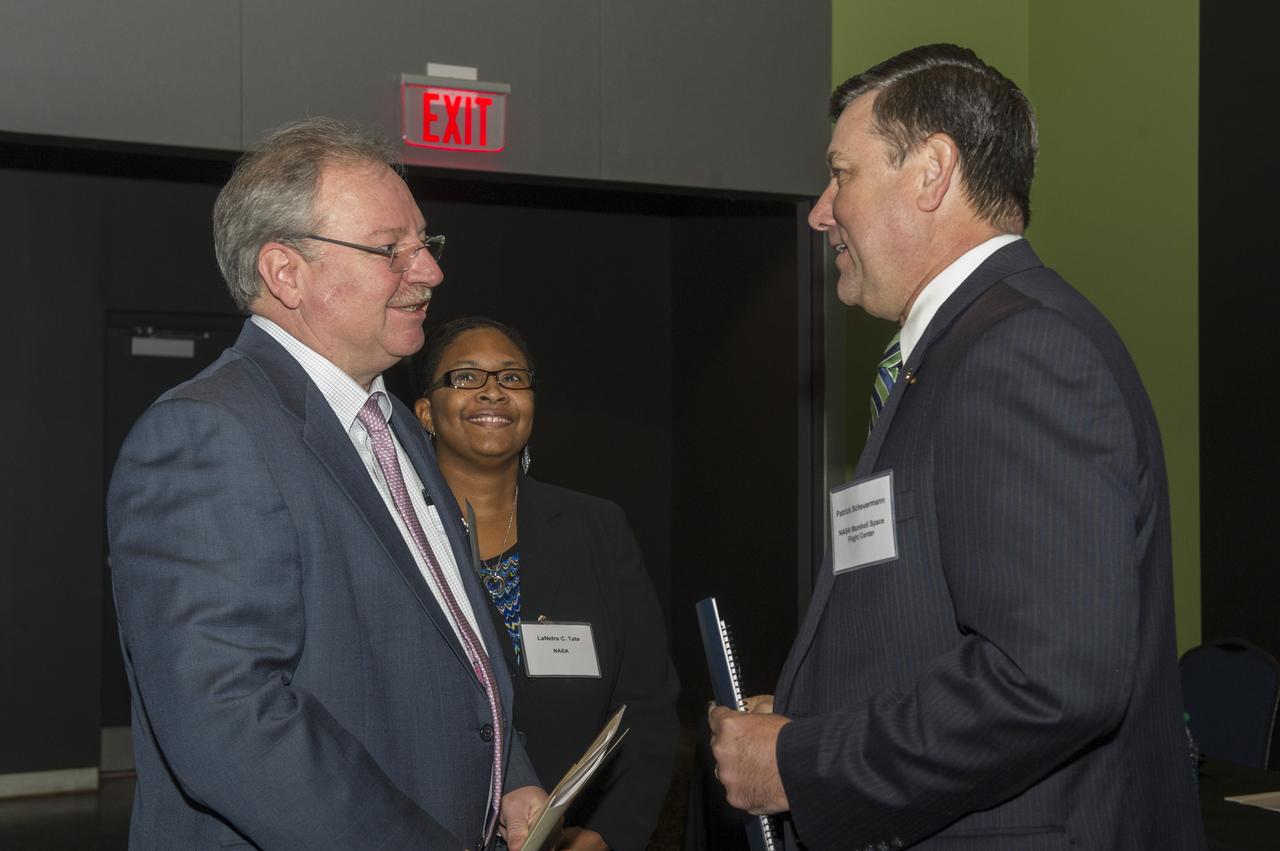
JOHN VICKERS, LANETRA TATE (NASA HQ), AND PATRICK SCHEUERMANN CHAT BEFORE OPENING OF ADVANCED MANUFACTURING WORKSHOP AT DAVIDSON CENTER
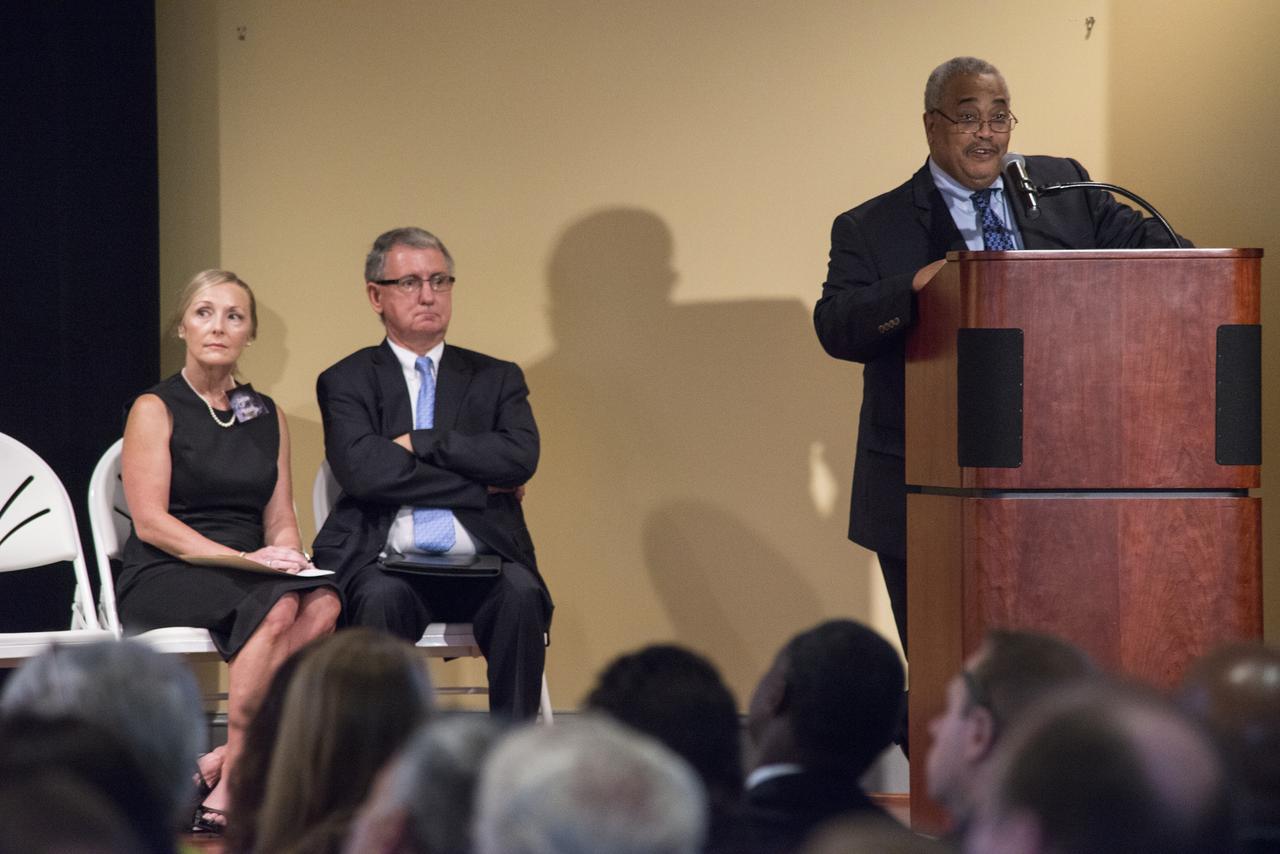
GLENN DELGADO, ASSOCIATE ADMINISTRATOR OFFICE OF SMALL BUSINESS PROGRAMS, NASA HQ, ADDRESSES THE ATTENDEES AT THE SMBA ESD-HUB ZONE EVENT AT THE HUNTSVILLE MUSEUM OF ART.
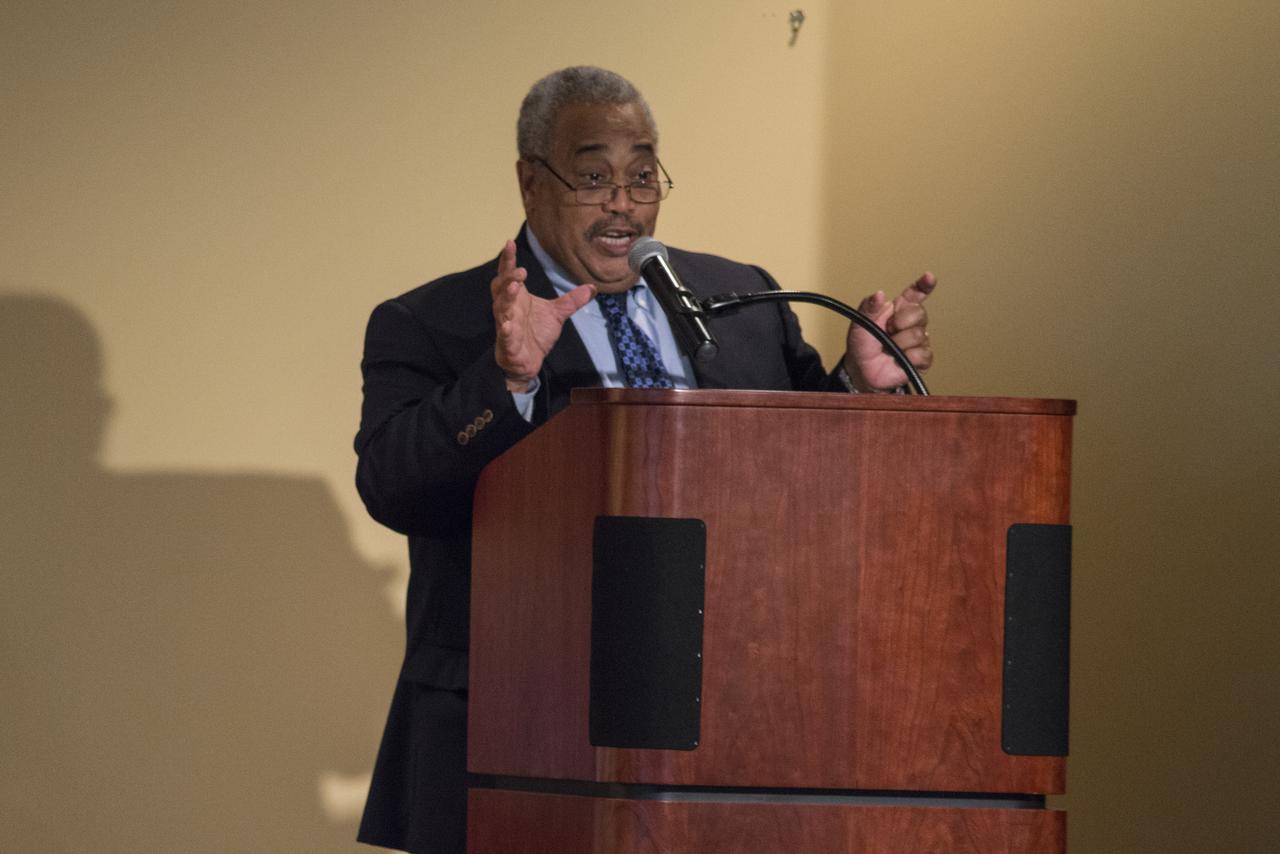
GLENN DELGADO, ASSOCIATE ADMINISTRATOR OFFICE OF SMALL BUSINESS PROGRAMS, NASA HQ, ADDRESSES THE ATTENDEES AT THE SMBA ESD-HUB ZONE EVENT AT THE HUNTSVILLE MUSEUM OF ART.
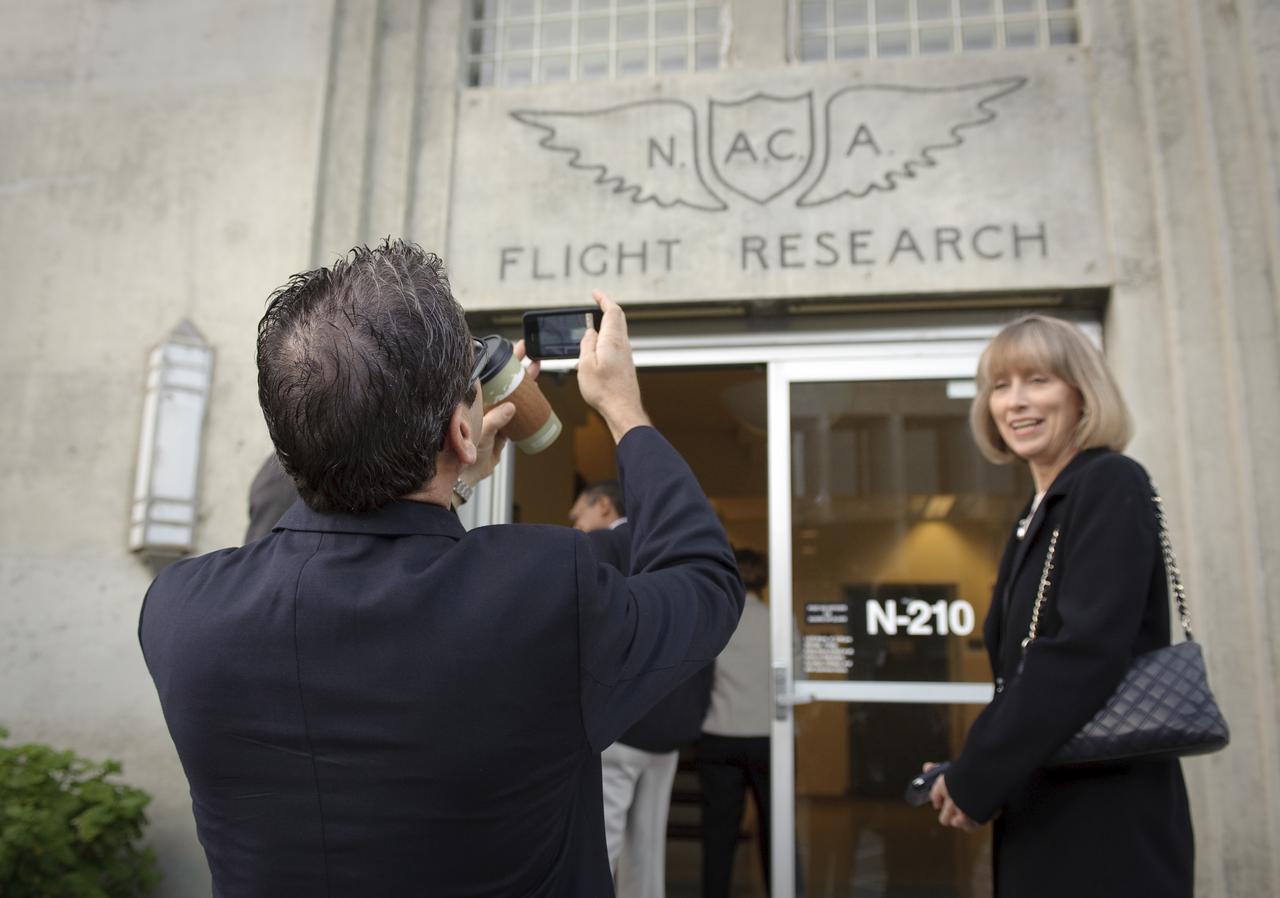
NASA Advisory Council Meeting at NASA Ames Research Center NRP Conference Center. Diane Rausch, Executive Director NASA Advisory Council, NASA HQ in front of Ames Flight Research Building N-210
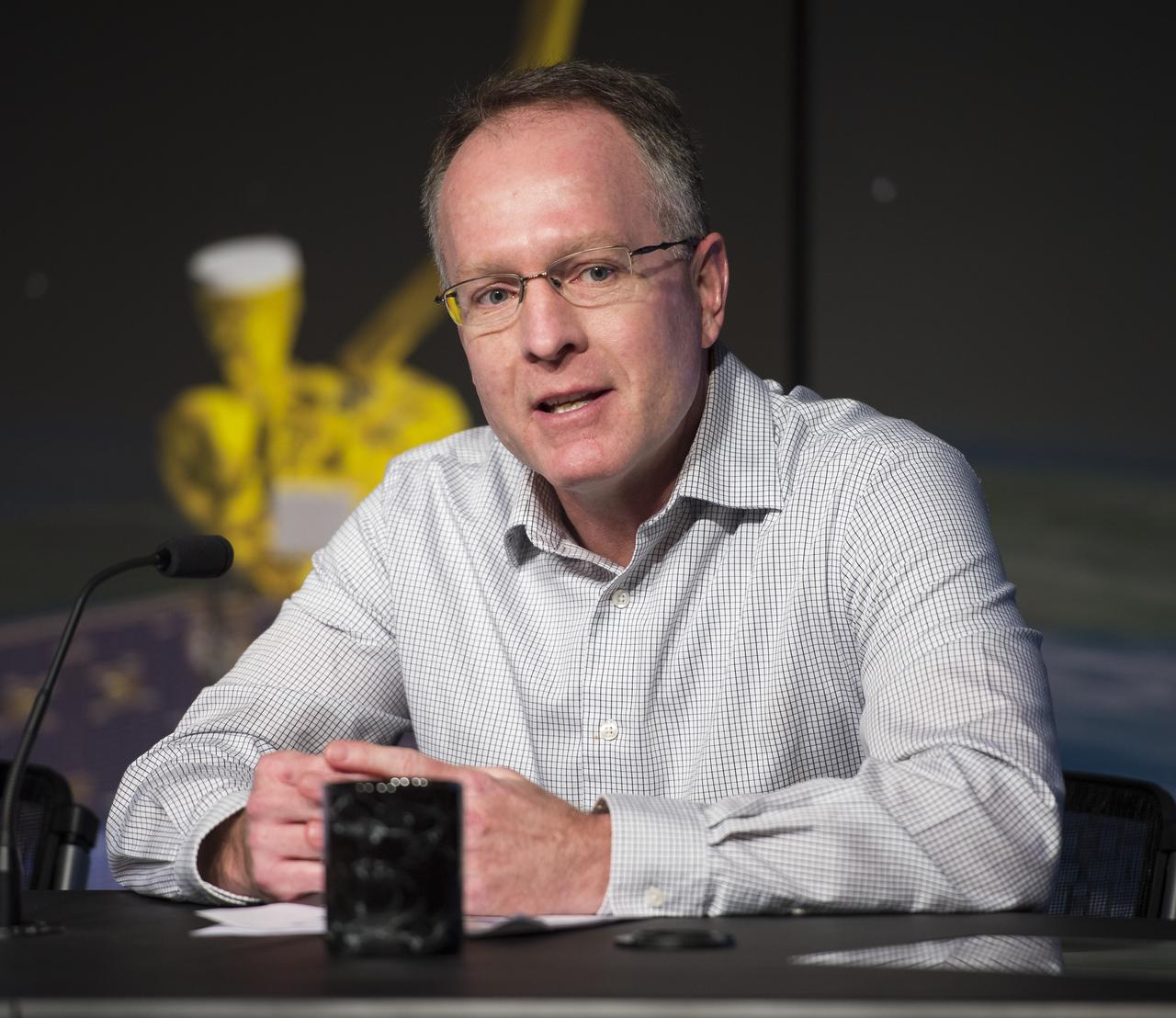
Brad Doorn, SMAP applications lead, Science Mission Directorate’s Applied Sciences Program at NASA Headquarters speaks during a briefing about the upcoming launch of the Soil Moisture Active Passive (SMAP) mission, Thursday, Jan. 08, 2015, at NASA Headquarters in Washington DC. The mission is scheduled for a Jan. 29 launch from Vandenberg Air Force Base in California, and will provide the most accurate, highest-resolution global measurements of soil moisture ever obtained from space. The data will be used to enhance scientists' understanding of the processes that link Earth's water, energy and carbon cycles. Photo Credit: (NASA/Aubrey Gemignani)
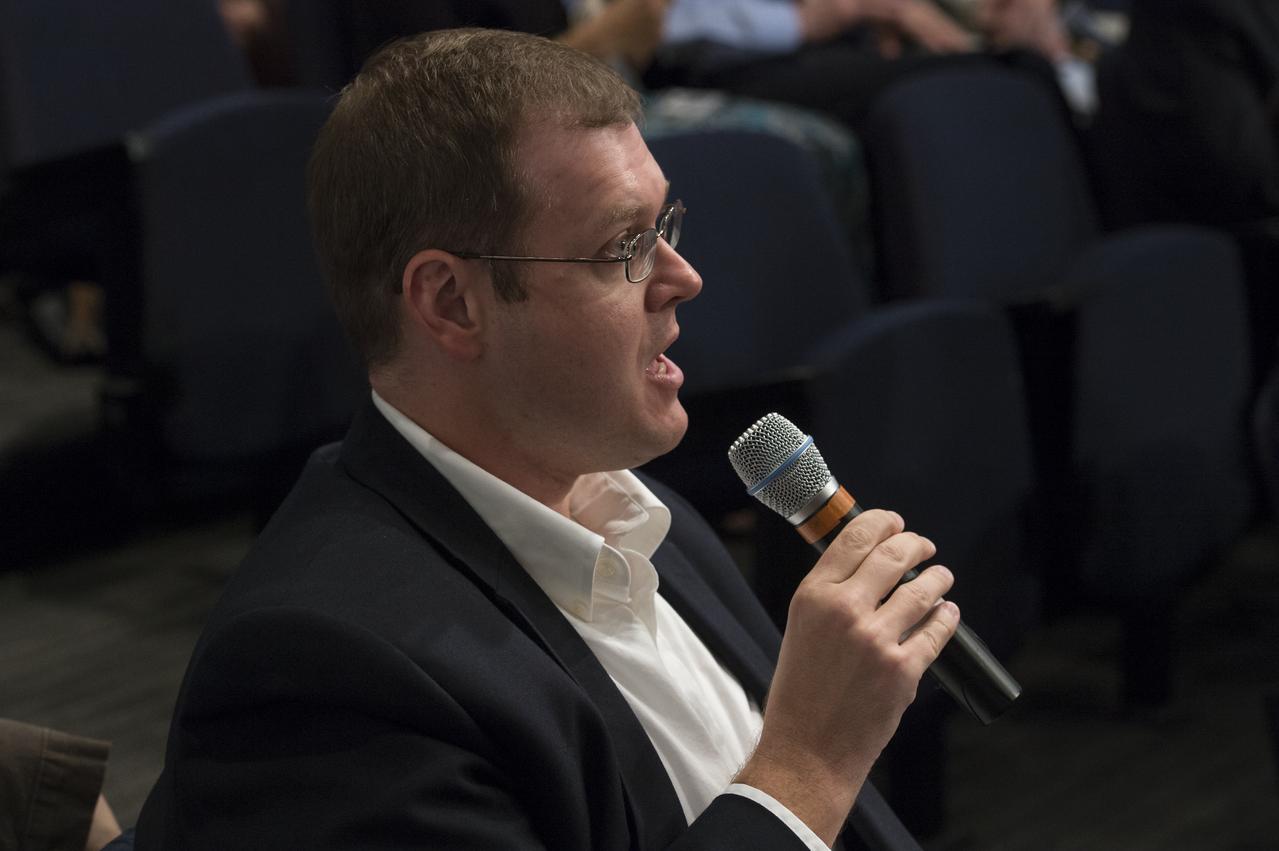
An audience member asks the panelists a question at the "New Horizons: The First Mission to the Pluto System and the Kuiper Belt" Event at NASA Headquarters in Washington, DC Monday, August 25, 2014. Scientists discussed how the first images of Pluto and its moons would be captured by the New Horizons spacecraft during a five month long reconnaissance flyby study starting in the summer of 2015. New Horizons launched on January 19, 2006 and is scheduled to make its closest approach to Pluto on July 14, 2015. Photo Credit: (NASA/Aubrey Gemignani)
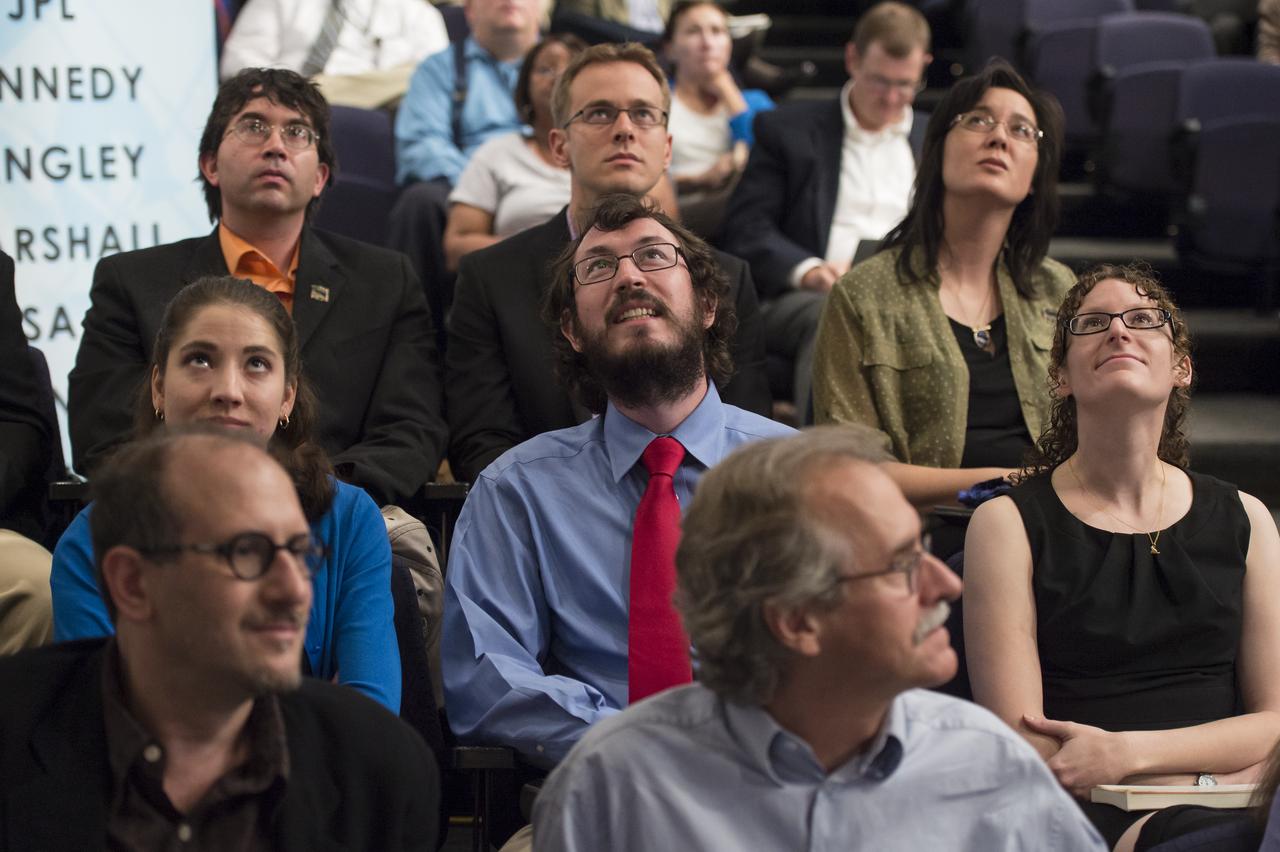
Audience members view slides from a presentation by Dr. Jim Green, Dr. Ed Stone, and Dr. Alan Stern at the "New Horizons: The First Mission to the Pluto System and the Kuiper Belt" Event at NASA Headquarters in Washington, DC Monday, August 25, 2014. They discussed how the first images of Pluto and its moons would be captured by the New Horizons spacecraft during a five month long reconnaissance flyby study starting in the summer of 2015. New Horizons launched on January 19, 2006 and is scheduled to make its closest approach to Pluto on July 14, 2015. Photo Credit: (NASA/Aubrey Gemignani)
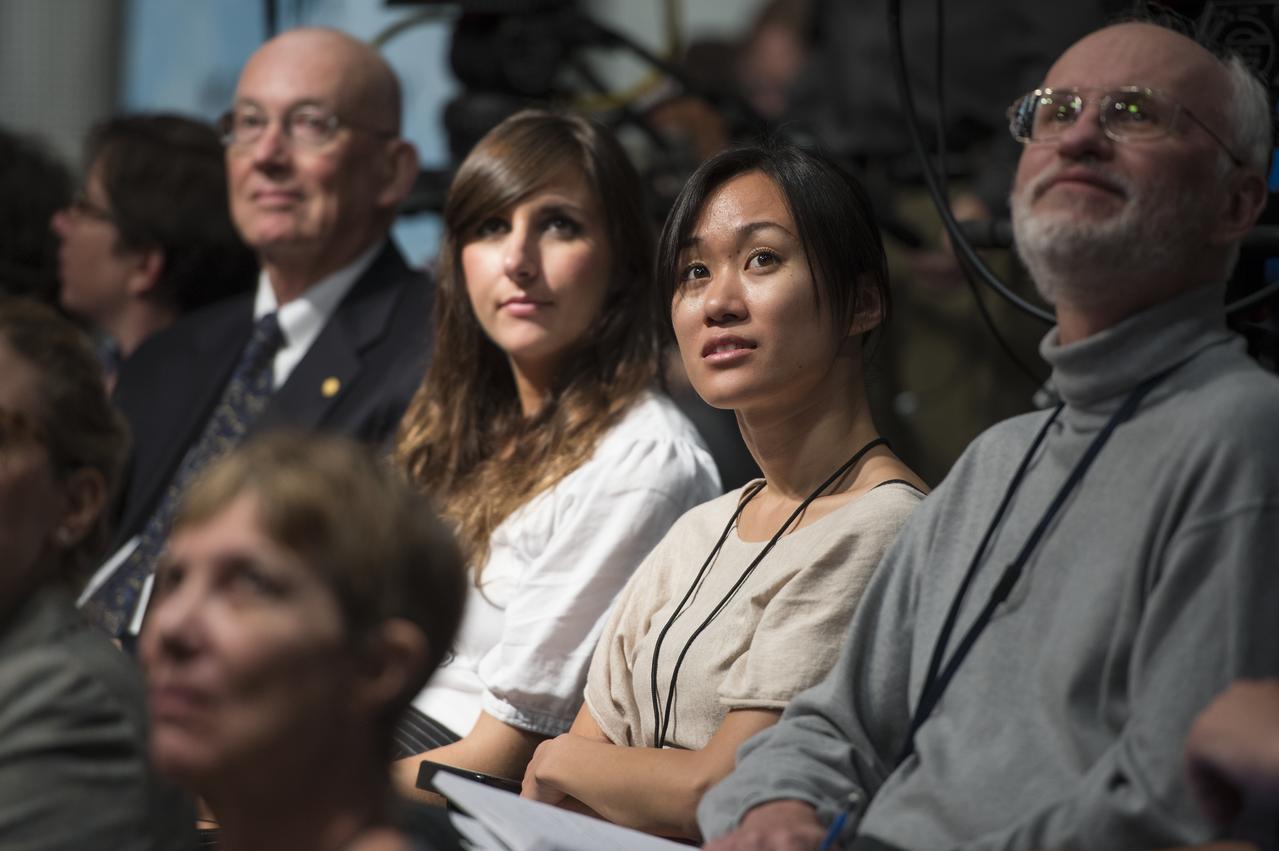
Audience members view images of Neptune taken by Voyager while scientists discuss how the first images of Pluto and its moons will be captured during the "New Horizons: The First Mission to the Pluto System and the Kuiper Belt" Event at NASA Headquarters in Washington, DC Monday, August 25, 2014. The New Horizons spacecraft launched on January 19, 2006 will conduct a five month long reconnaissance flyby study of Pluto and its moons starting in the summer of 2015. Photo Credit: (NASA/Aubrey Gemignani)
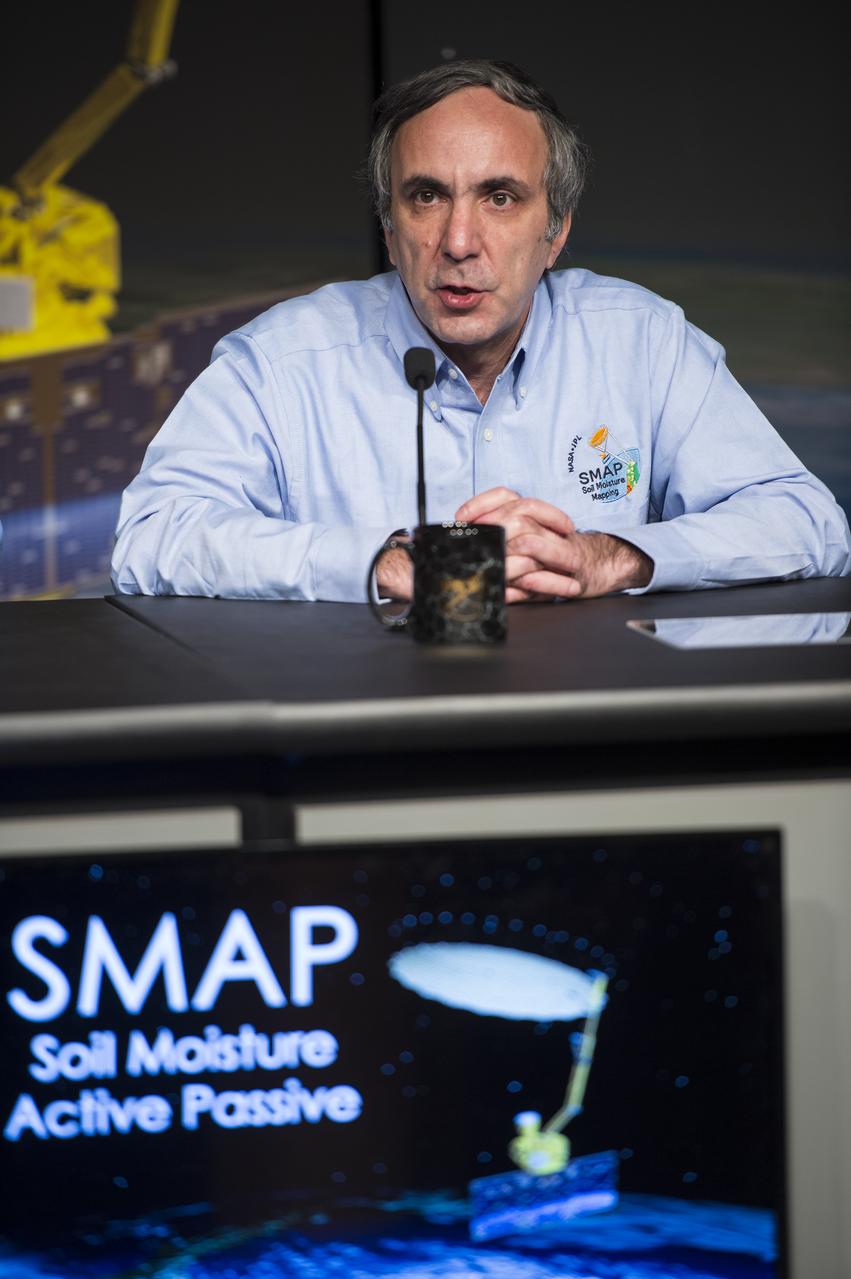
Dara Entekhabi, SMAP science team lead, Massachusetts Institute of Technology, speaks during a briefing about the upcoming launch of the Soil Moisture Active Passive (SMAP) mission, Thursday, Jan. 08, 2015, at NASA Headquarters in Washington DC. The mission is scheduled for a Jan. 29 launch from Vandenberg Air Force Base in California, and will provide the most accurate, highest-resolution global measurements of soil moisture ever obtained from space. The data will be used to enhance scientists' understanding of the processes that link Earth's water, energy and carbon cycles. Photo Credit: (NASA/Aubrey Gemignani)

Kent Kellogg, SMAP project manager at NASA’s Jet Propulsion Laboratory (JPL) in Pasadena, CA, speaks during a briefing about the upcoming launch of the Soil Moisture Active Passive (SMAP) mission, Thursday, Jan. 08, 2015, at NASA Headquarters in Washington DC. The mission is scheduled for a Jan. 29 launch from Vandenberg Air Force Base in California, and will provide the most accurate, highest-resolution global measurements of soil moisture ever obtained from space. The data will be used to enhance scientists' understanding of the processes that link Earth's water, energy and carbon cycles. Photo Credit: (NASA/Aubrey Gemignani)

Christine Bonniksen, SMAP program executive with the Science Mission Directorate’s Earth Science Division at NASA Headquarters speaks during a briefing about the upcoming launch of the Soil Moisture Active Passive (SMAP) mission, Thursday, Jan. 08, 2015, at NASA Headquarters in Washington DC. The mission is scheduled for a Jan. 29 launch from Vandenberg Air Force Base in California, and will provide the most accurate, highest-resolution global measurements of soil moisture ever obtained from space. The data will be used to enhance scientists' understanding of the processes that link Earth's water, energy and carbon cycles. Photo Credit: (NASA/Aubrey Gemignani)
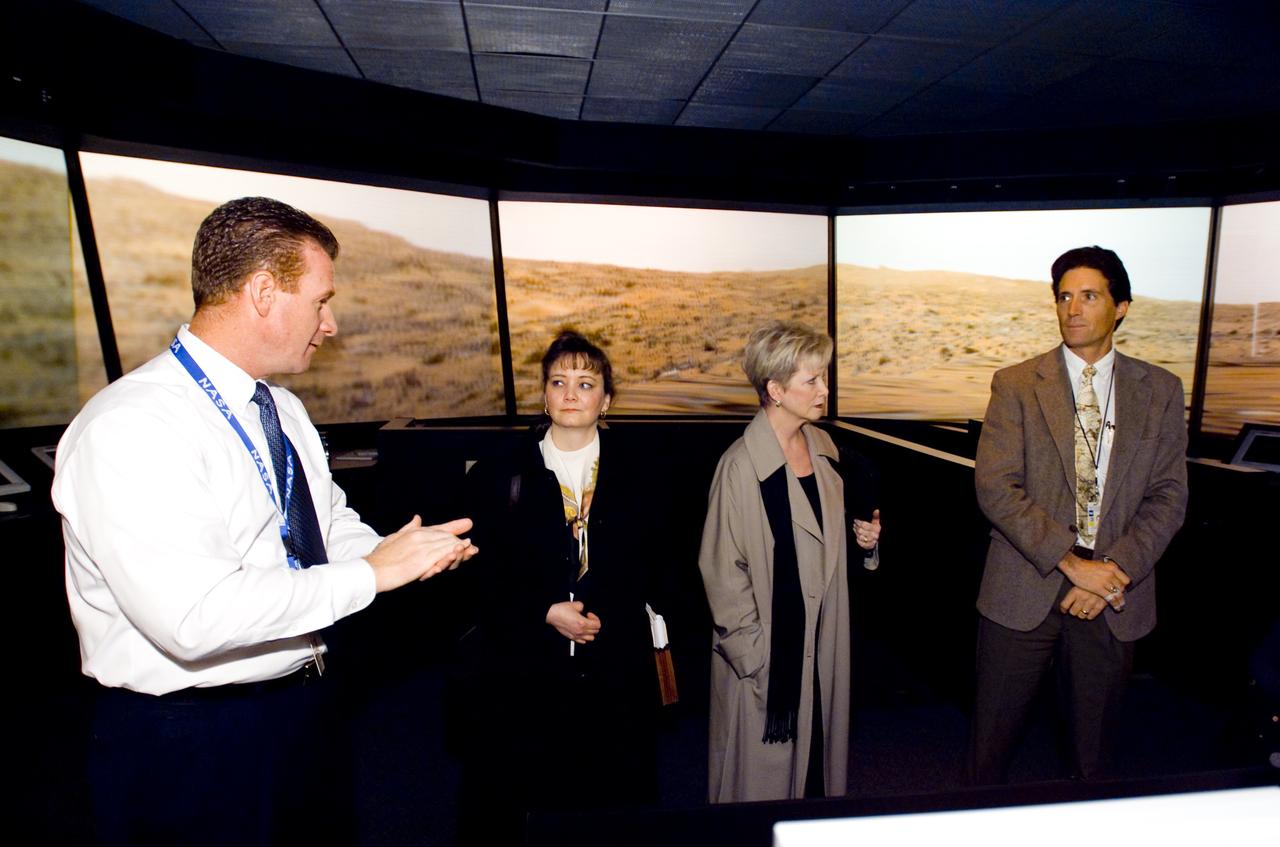
HOUSE APPROPRIATIONS COMMITTEE STAFFER MICHELLE BURKETT & MARY D KERWIN, DEPUTY AA FOR LEGISLATIVE AFFAIRS AT NASA HQ: ON TOUR W/ MEYYA MEYYAPPAN, FFC W/ K CHRISTENSEN, ATC LAB W/H ERZBERGER
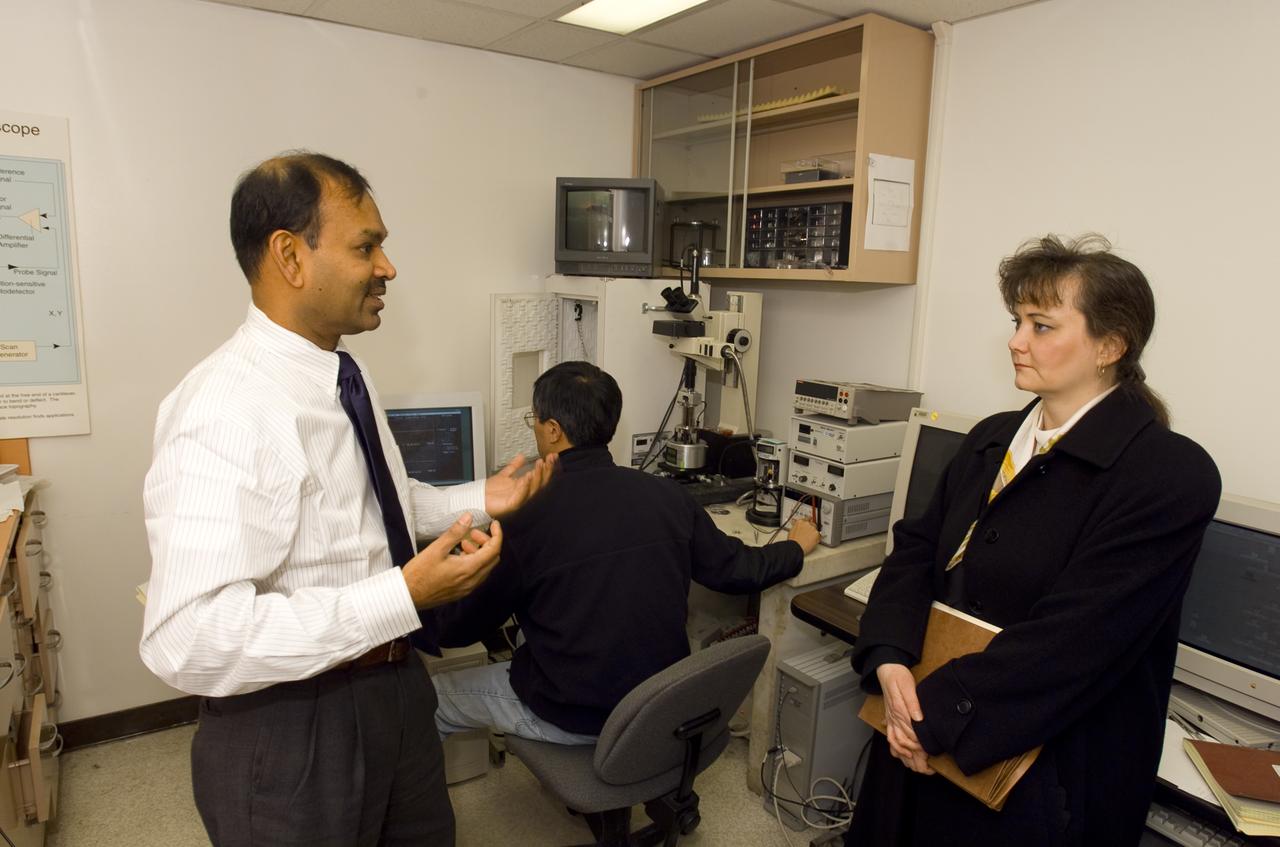
HOUSE APPROPRIATIONS COMMITTEE STAFFER MICHELLE BURKETT & MARY D KERWIN, DEPUTY AA FOR LEGISLATIVE AFFAIRS AT NASA HQ: ON TOUR W/ MEYYA MEYYAPPAN, FFC W/ K CHRISTENSEN, ATC LAB W/H ERZBERGER
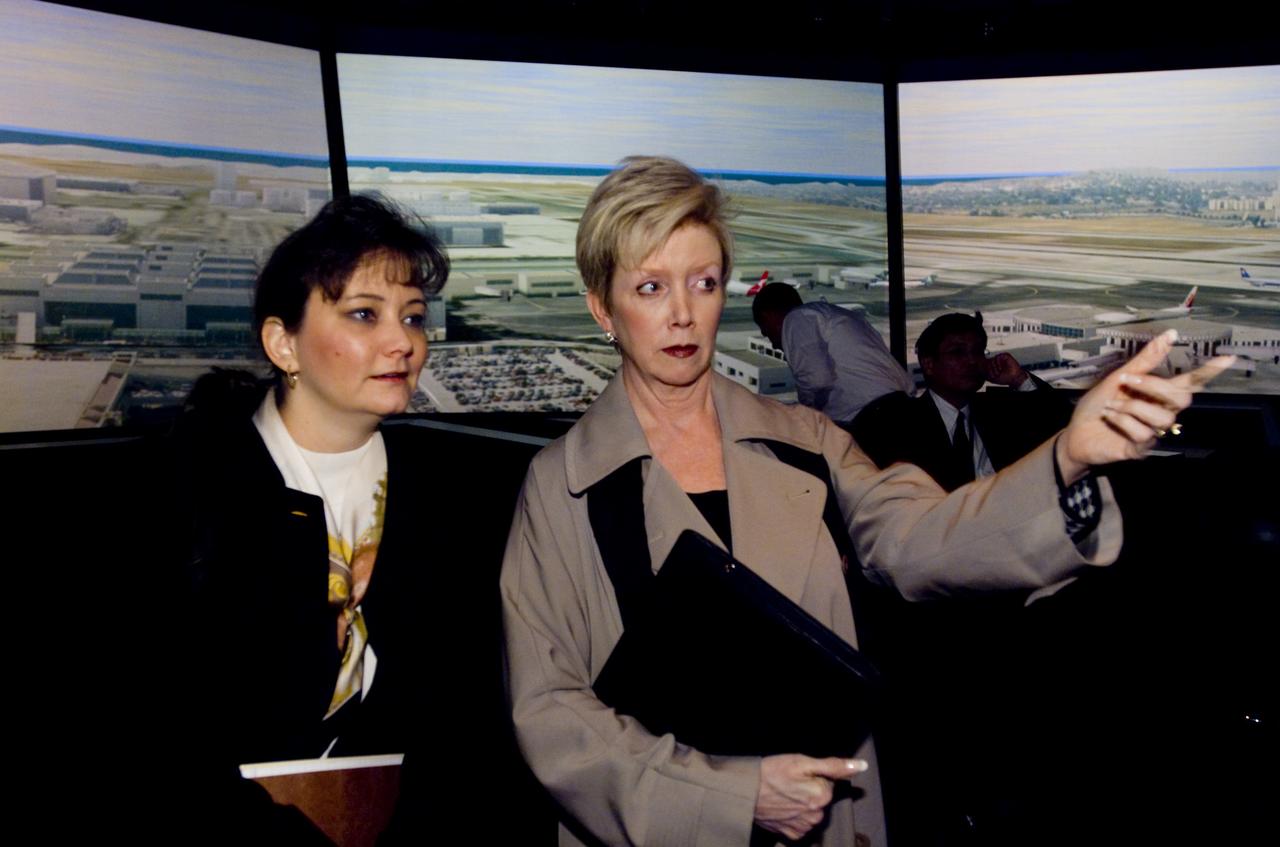
HOUSE APPROPRIATIONS COMMITTEE STAFFER MICHELLE BURKETT & MARY D KERWIN, DEPUTY AA FOR LEGISLATIVE AFFAIRS AT NASA HQ: ON TOUR W/ MEYYA MEYYAPPAN, FFC W/ K CHRISTENSEN, ATC LAB W/H ERZBERGER
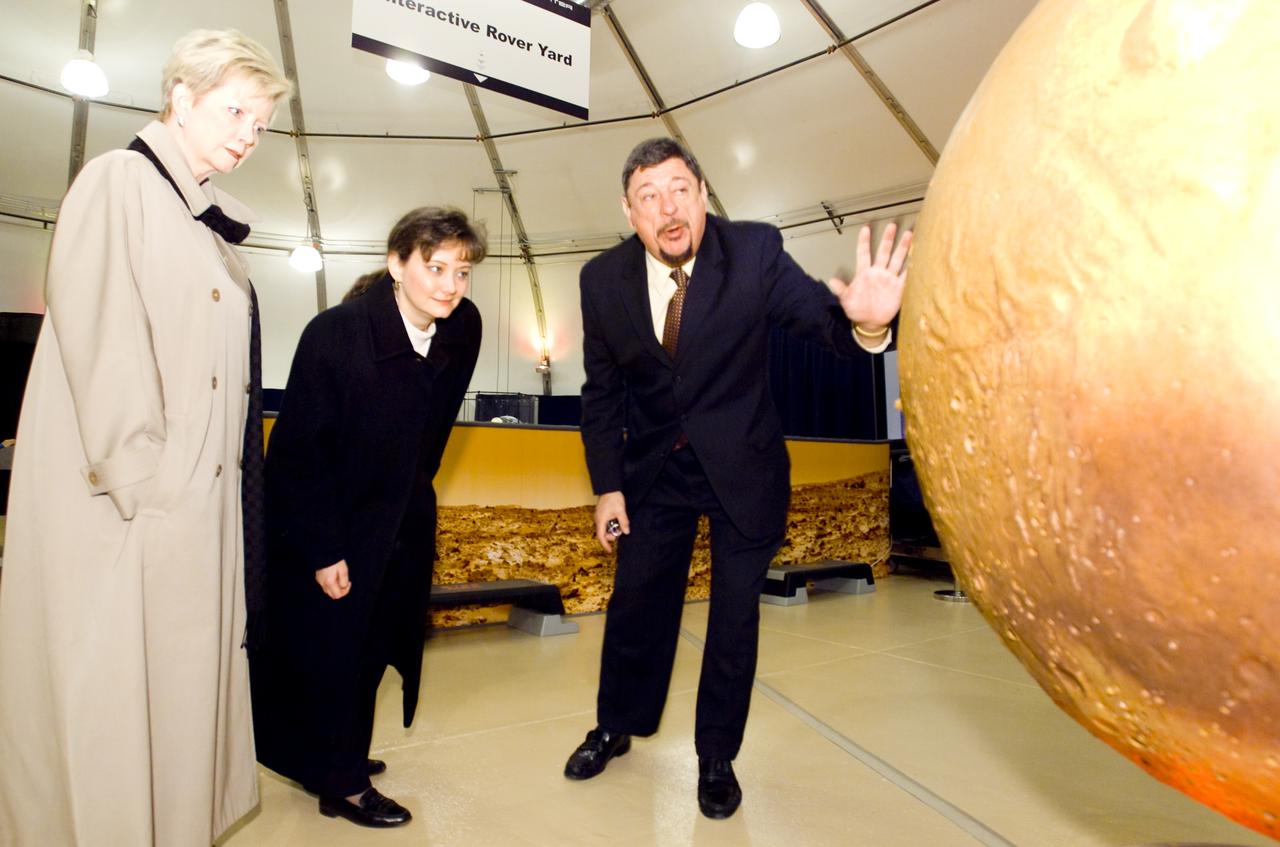
HOUSE APPROPRIATIONS COMMITTEE STAFFER MICHELLE BURKETT & MARY D KERWIN, DEPUTY AA FOR LEGISLATIVE AFFAIRS AT NASA HQ: ON TOUR W/ MEYYA MEYYAPPAN, FFC W/ K CHRISTENSEN, ATC LAB W/H ERZBERGER
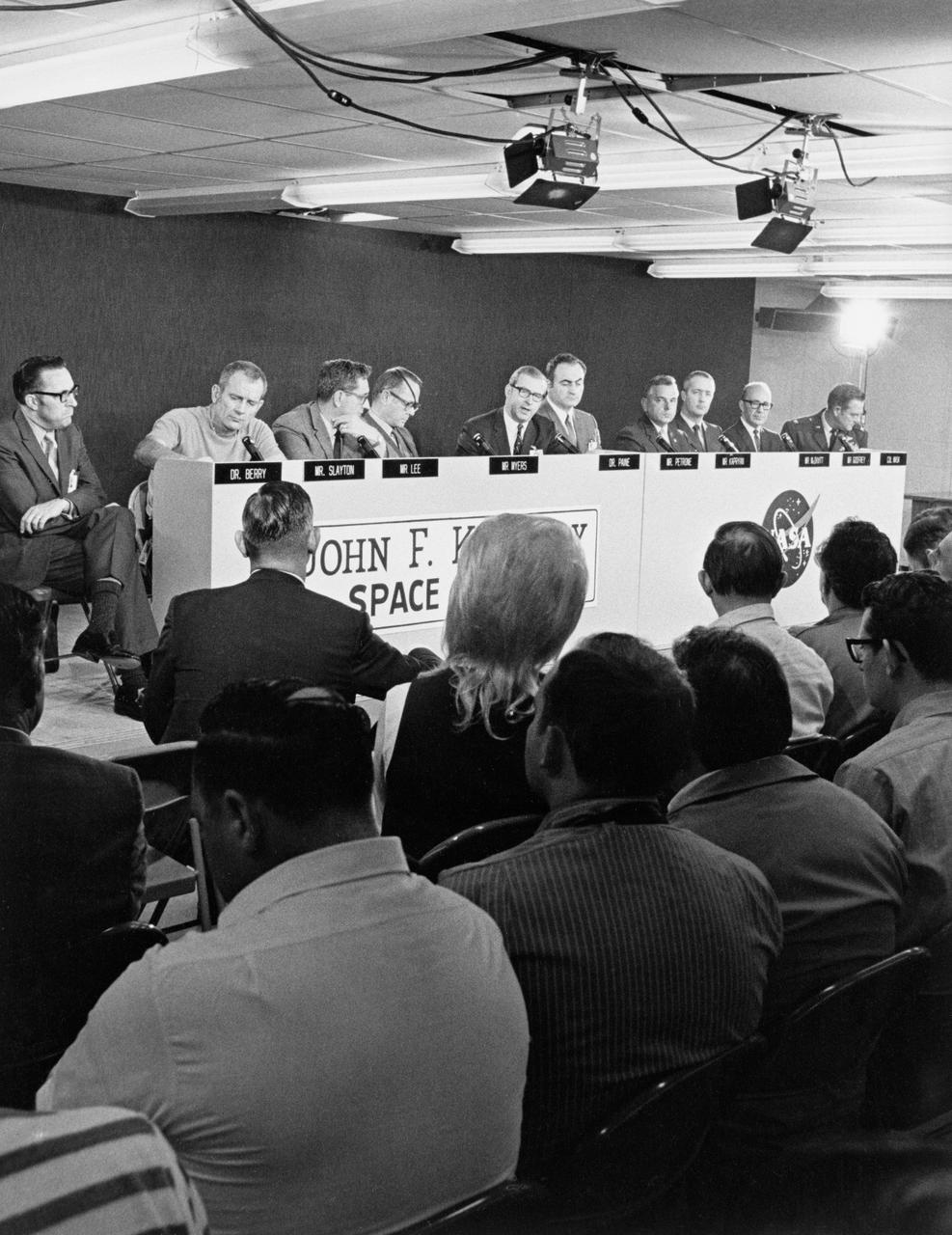
S70-36782 (10 April 1970) --- Several NASA and military officials (background at dais) meet the press on April 10, 1970, during a scheduled a T-1 prelaunch briefing for the Apollo 13 mission in the Apollo News Center at the Kennedy Space Center. The briefing participants, from the left, are Dr. Charles A. Berry, Director, Medical Research and Operations Directorate, Manned Spacecraft Center (MSC); Dr. Donald K. (Deke) Slayton, director of flight crew operations, MSC; Chester M. Lee of the Apollo Program Directorate, Office Manned Space Flight (OMSF),NASA Hq. and Apollo 13 Mission Director; Dale Myers, Associate Administrator, OMSF,NASA Hq.; Dr. Thomas O. Paine, NASA Administrator; Dr. Rocco A. Petrone, Apollo Program Director, OMSF,NASA Hq.; Walter J. Kapryan, NASA's Director of Launch Operations; James A. McDivitt, Manager of the Apollo Spacecraft Program Office; Roy E. Godfrey, Manager, Saturn Program Office; and Col. Kenneth J. Mask, USAF, DOD Manned Space Flight Support Office. Photo credit: NASA
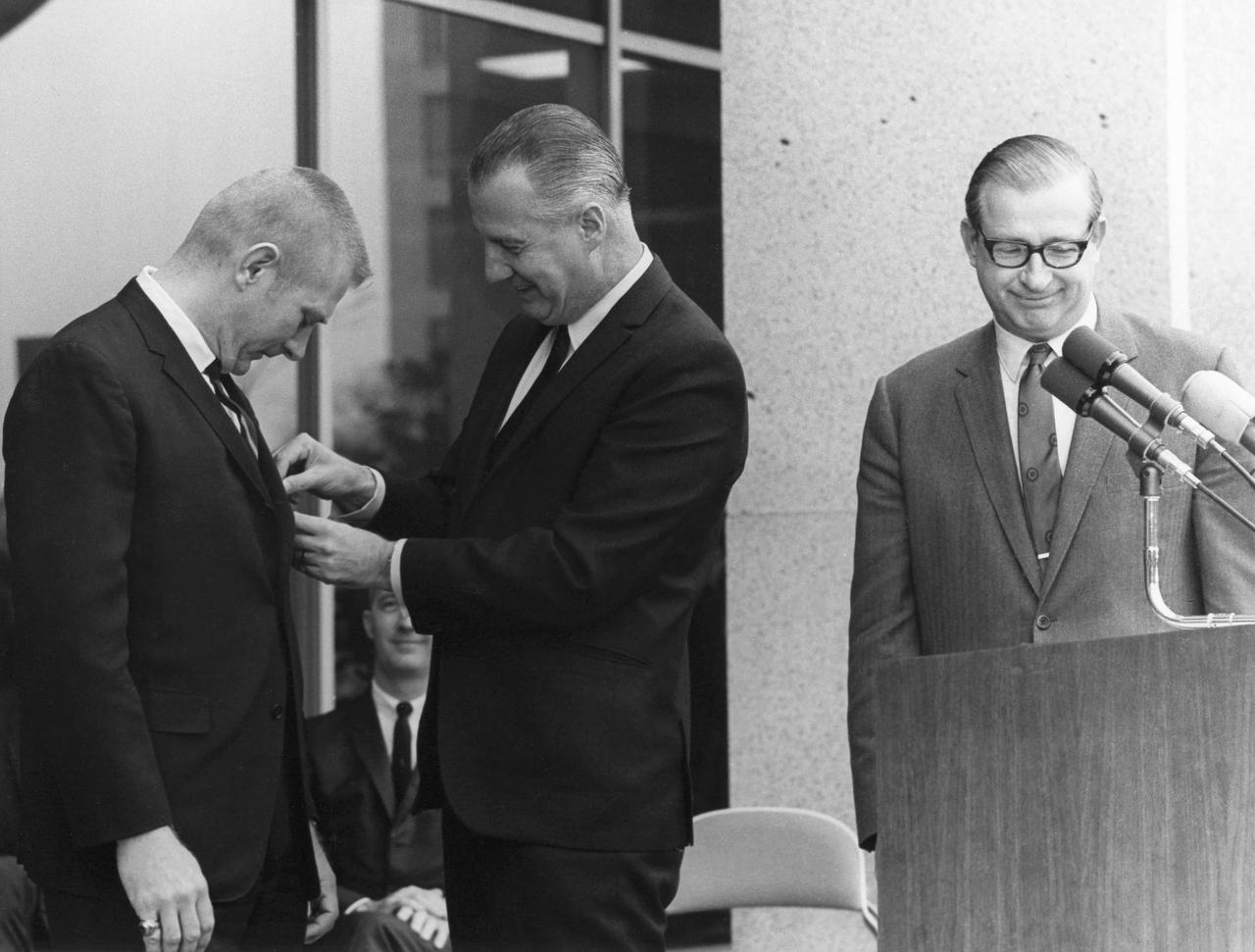
JSC2013-E-009914 (1969) -- Vice President Spiro Agnew pins Flight Director Eugene F. Kranz as NASA Administrator Thomas Paine and Apollo 9 Commander James A. McDivitt look on. Photo credit: NASA Hq. photo identification no. is 69-H-537
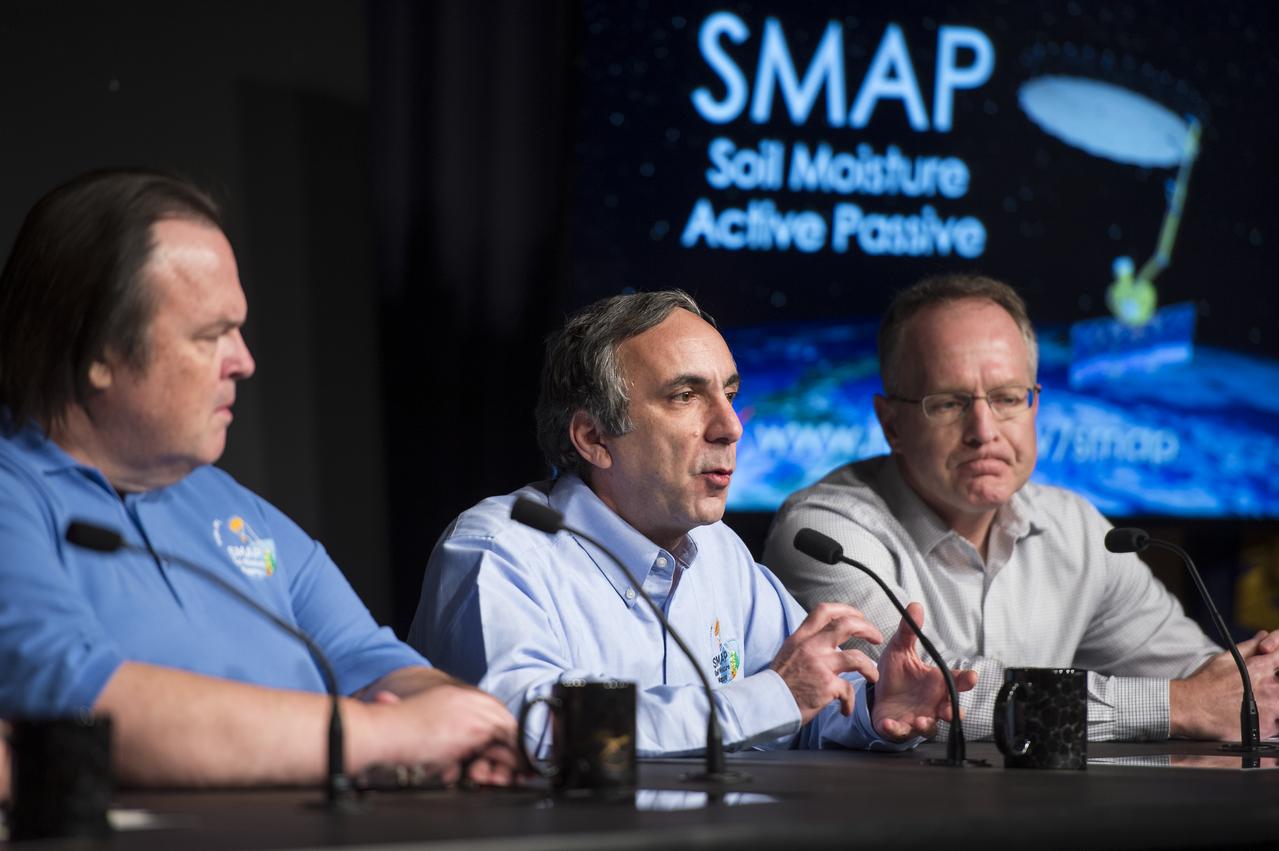
Dara Entekhabi, SMAP science team lead, Massachusetts Institute of Technology, center, speaks during a briefing about the upcoming launch of the Soil Moisture Active Passive (SMAP) mission, Thursday, Jan. 08, 2015, at NASA Headquarters in Washington DC. The mission is scheduled for a Jan. 29 launch from Vandenberg Air Force Base in California, and will provide the most accurate, highest-resolution global measurements of soil moisture ever obtained from space. The data will be used to enhance scientists' understanding of the processes that link Earth's water, energy and carbon cycles. Photo Credit: (NASA/Aubrey Gemignani)
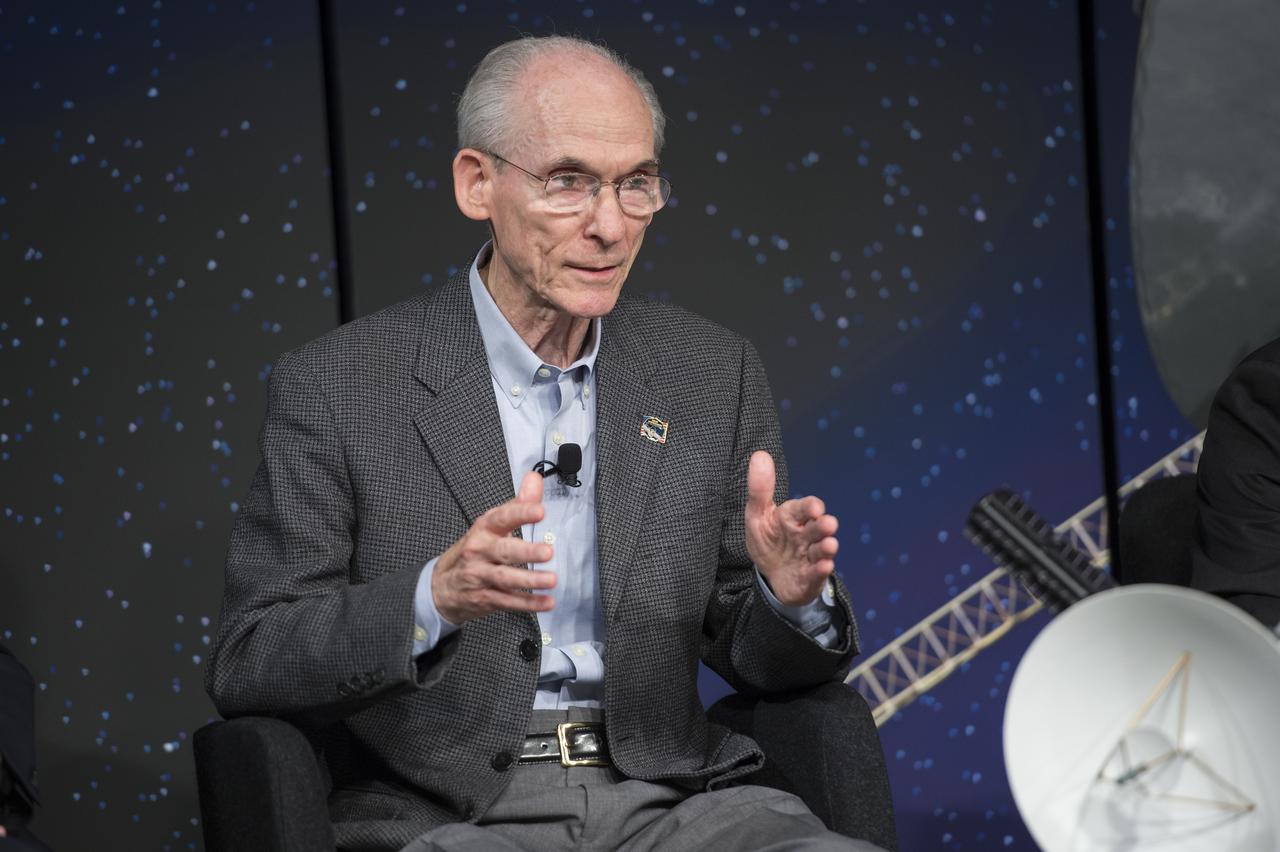
Dr. Ed Stone, Voyager project scientist, speaks on a panel at the "New Horizons: The First Mission to the Pluto System and the Kuiper Belt" Event at NASA Headquarters in Washington, DC Monday, August 25, 2014. Scientists discussed how the first images of Pluto and its moons would be captured by the New Horizons spacecraft during a five month long reconnaissance flyby study starting in the summer of 2015. New Horizons launched on January 19, 2006 and is scheduled to make its closest approach to Pluto on July 14, 2015. Photo Credit: (NASA/Aubrey Gemignani)
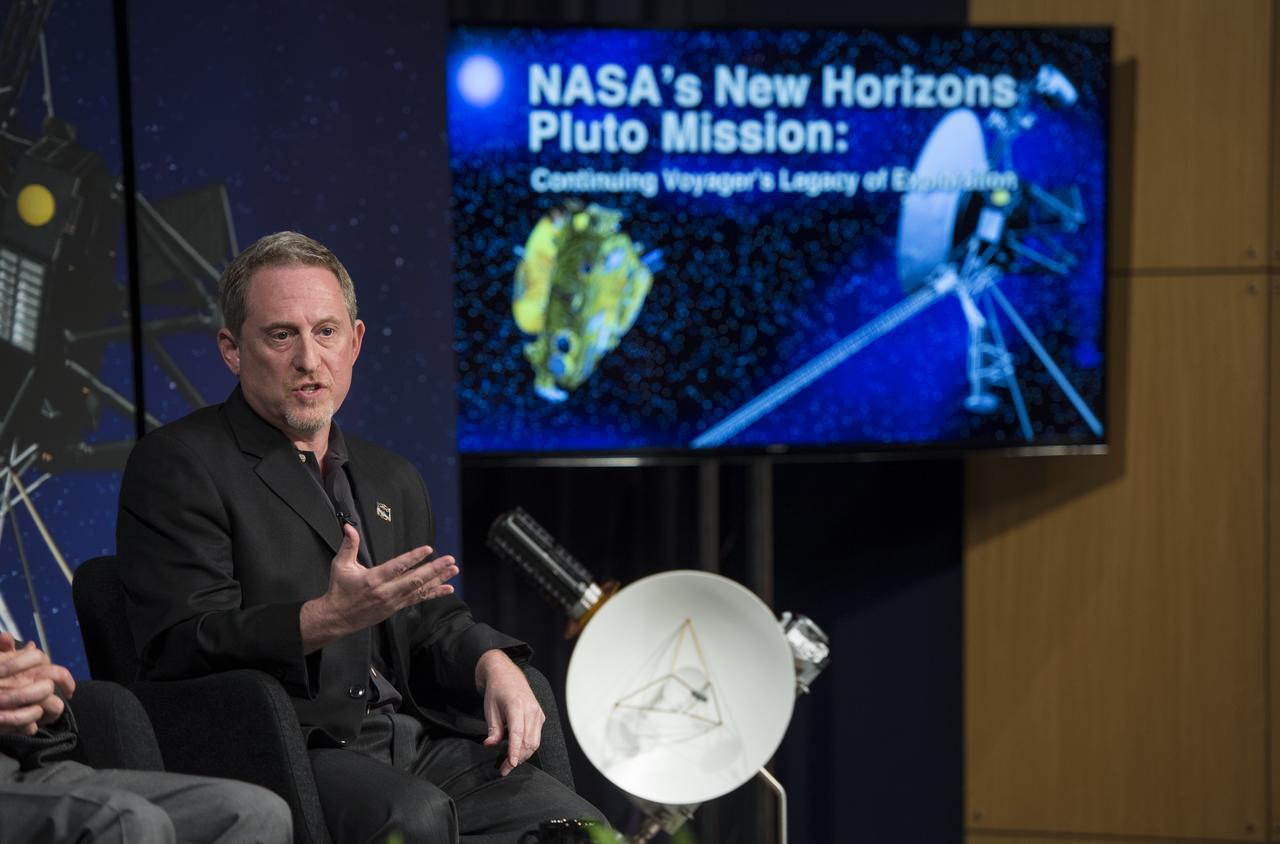
Dr. Alan Stern, New Horizons principal investigator, speaks on a panel at the "New Horizons: The First Mission to the Pluto System and the Kuiper Belt" Event at NASA Headquarters in Washington, DC Monday, August 25, 2014. Scientists discussed how the first images of Pluto and its moons would be captured by the New Horizons spacecraft during a five month long reconnaissance flyby study starting in the summer of 2015. New Horizons launched on January 19, 2006 and is scheduled to make its closest approach to Pluto on July 14, 2015. Photo Credit: (NASA/Aubrey Gemignani)
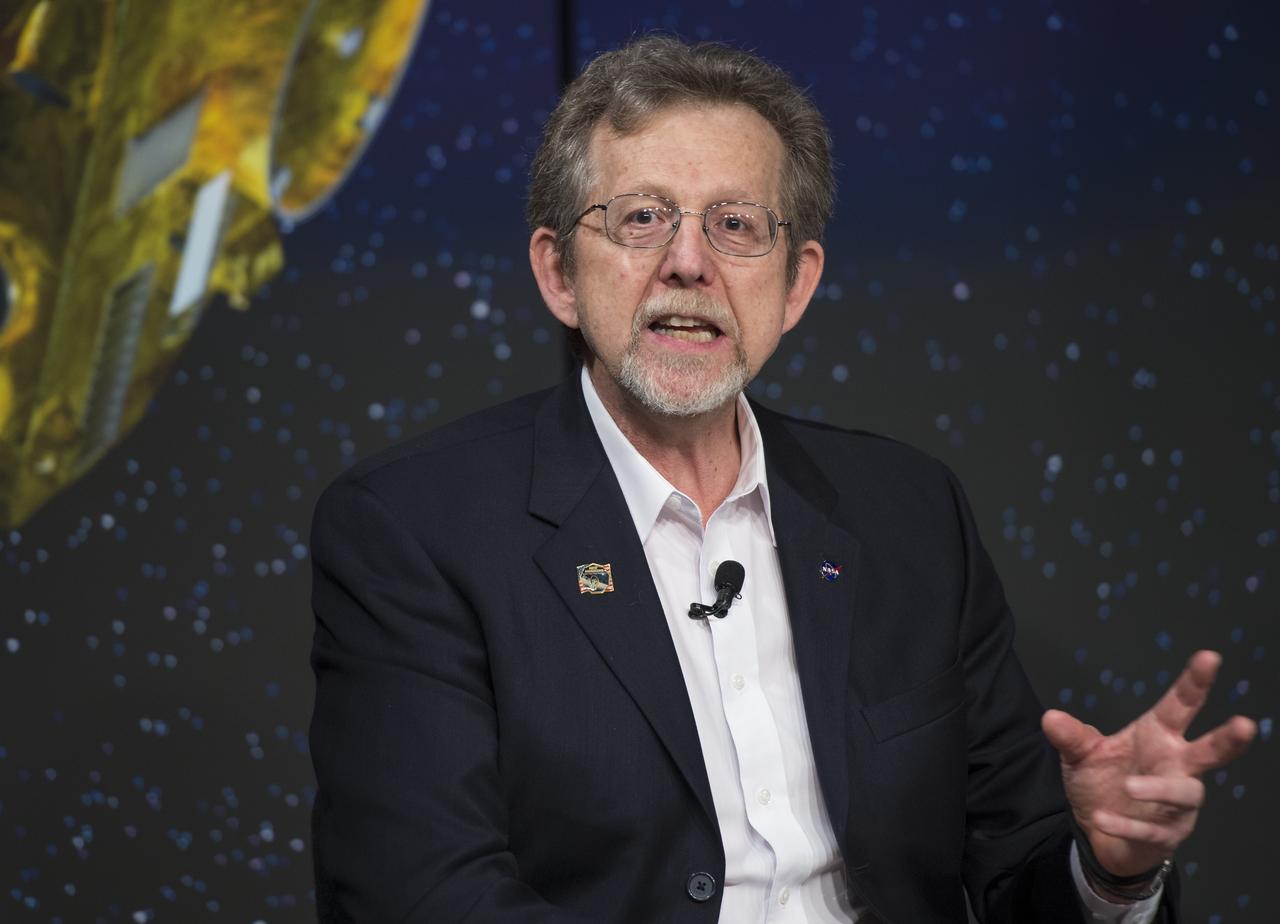
Dr. Jim Green, Director of NASA’s Planetary Division, speaks on a panel at the "New Horizons: The First Mission to the Pluto System and the Kuiper Belt" Event at NASA Headquarters in Washington, DC Monday, August 25, 2014. Scientists discussed how the first images of Pluto and its moons would be captured by the New Horizons spacecraft during a five month long reconnaissance flyby study starting in the summer of 2015. New Horizons launched on January 19, 2006 and is scheduled to make its closest approach to Pluto on July 14, 2015. Photo Credit: (NASA/Aubrey Gemignani)

JSC2011-E-075769 (4 June 1974) --- Vice President Gerald R. Ford presented the Collier Trophy Award for 1973 to Skylab Program Director William C. Schneider on June 4, 1974 in Washington. (original HQ number is 74H423) Photo credit: NASA

Dr. Phoebe Cohen, Professor of Geosciences, Williams College, speaks on a panel at the “Ancient Earth, Alien Earths” Event at NASA Headquarters in Washington, DC Wednesday, August 20, 2014. The event was sponsored by NASA, the National Science Foundation (NSF), and the Smithsonian Institution and was moderated by Dr. David H. Grinspoon, Senior Scientist at the Planetary Science Institute. Six scientists discussed how research on early Earth could help guide our search for habitable planets orbiting other stars. Photo Credit: (NASA/Aubrey Gemignani)

Dr. Christopher House, Professor of Geosciences, Pennsylvania State University, speaks on a panel at the “Ancient Earth, Alien Earths” Event at NASA Headquarters in Washington, DC Wednesday, August 20, 2014. The event was sponsored by NASA, the National Science Foundation (NSF), and the Smithsonian Institution and was moderated by Dr. David H. Grinspoon, Senior Scientist at the Planetary Science Institute. Six scientists discussed how research on early Earth could help guide our search for habitable planets orbiting other stars. Photo Credit: (NASA/Aubrey Gemignani)

Dr. Dawn Sumner, Professor of Geology, UC Davis, speaks on a panel at the “Ancient Earth, Alien Earths” Event at NASA Headquarters in Washington, DC Wednesday, August 20, 2014. The event was sponsored by NASA, the National Science Foundation (NSF), and the Smithsonian Institution and was moderated by Dr. David H. Grinspoon, Senior Scientist at the Planetary Science Institute. Six scientists discussed how research on early Earth could help guide our search for habitable planets orbiting other stars. Photo Credit: (NASA/Aubrey Gemignani)

An audience member asks the panelists a question at the “Ancient Earth, Alien Earths” Event at NASA Headquarters in Washington, DC Wednesday, August 20, 2014. The event was sponsored by NASA, the National Science Foundation (NSF), and the Smithsonian Institution and was moderated by Dr. David H. Grinspoon, Senior Scientist at the Planetary Science Institute. Six scientists discussed how research on early Earth could help guide our search for habitable planets orbiting other stars. Photo Credit: (NASA/Aubrey Gemignani)

Dr. Timothy Lyons, Professor of Biogeochemistry, UC Riverside, speaks on a panel at the “Ancient Earth, Alien Earths” Event at NASA Headquarters in Washington, DC Wednesday, August 20, 2014. The event was sponsored by NASA, the National Science Foundation (NSF), and the Smithsonian Institution and was moderated by Dr. David H. Grinspoon, Senior Scientist at the Planetary Science Institute. Six scientists discussed how research on early Earth could help guide our search for habitable planets orbiting other stars. Photo Credit: (NASA/Aubrey Gemignani)
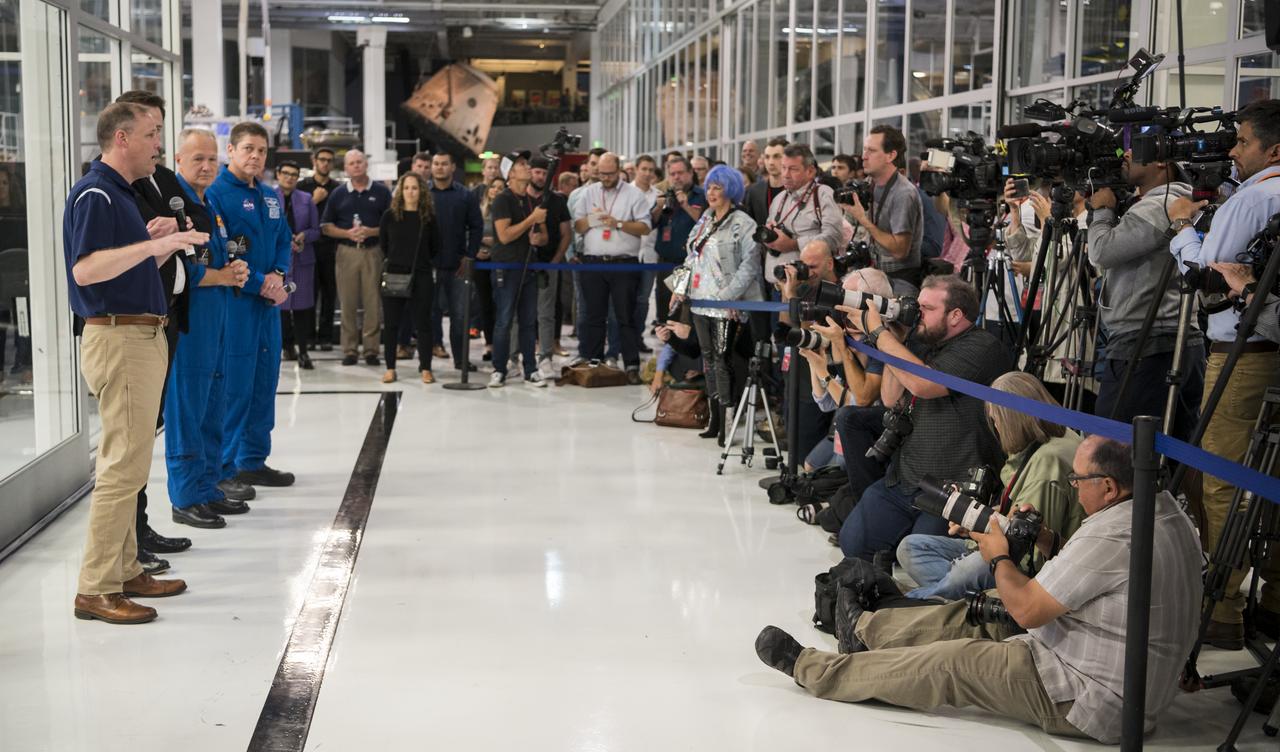
NASA Administrator Jim Bridenstine, left, speaks to press with SpaceX Chief Engineer Elon Musk, second from left, NASA astronaut Doug Hurley, second from right, and NASA astronaut Bob Behnken, at SpaceX Headquarters, Thursday, Oct. 10, 2019 in Hawthorne, CA. Photo credit: (NASA/Aubrey Gemignani)
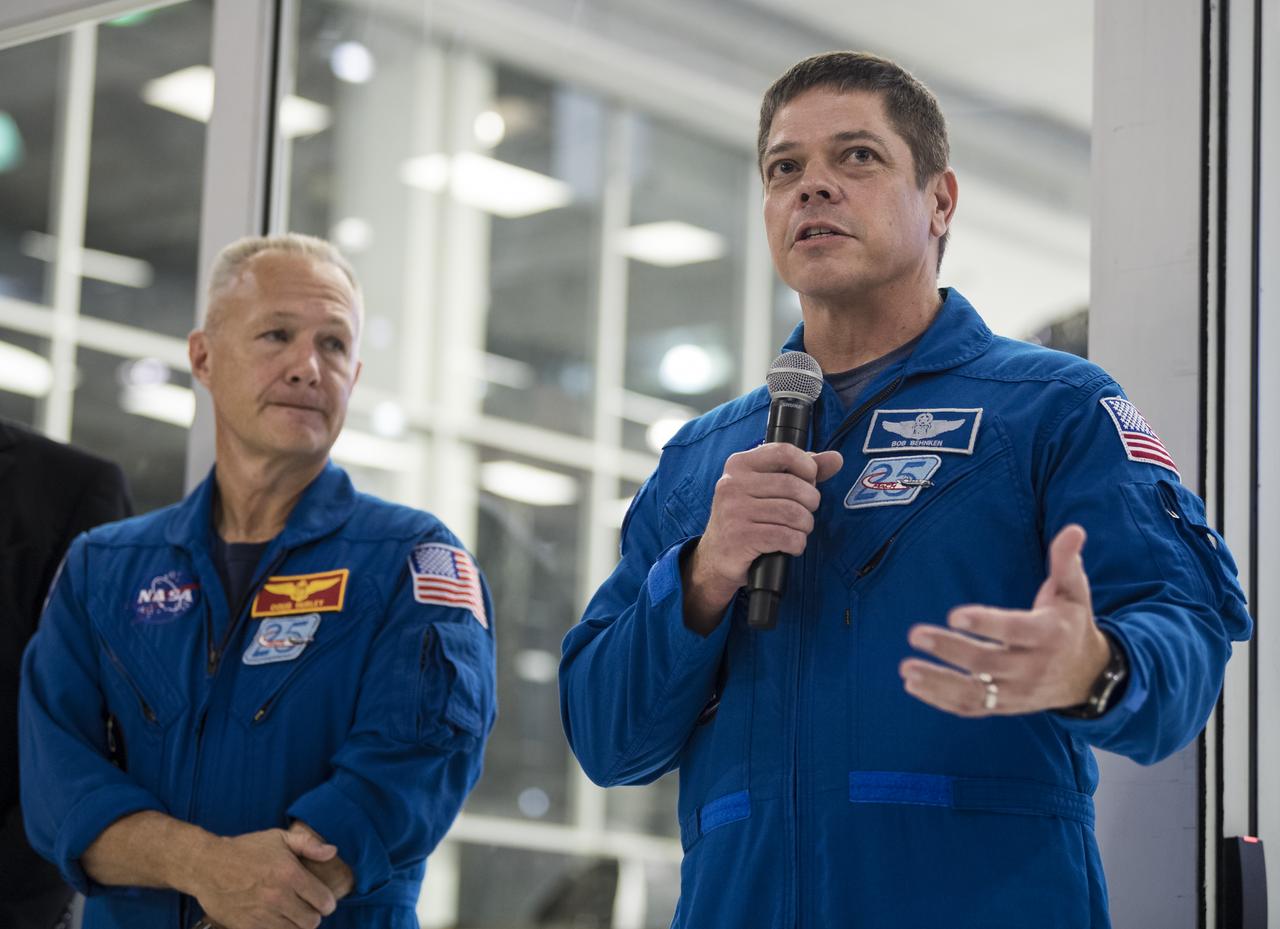
NASA astronaut Bob Behnken answers a question from the media in front of the Crew Dragon that is being prepared for the Demo-2 mission, at SpaceX Headquarters, Thursday, Oct. 10, 2019 in Hawthorne, CA. Behnken and NASA astronaut Doug Hurley are assigned to fly onboard Crew Dragon for the Demo-2 mission.Photo credit: (NASA/Aubrey Gemignani)
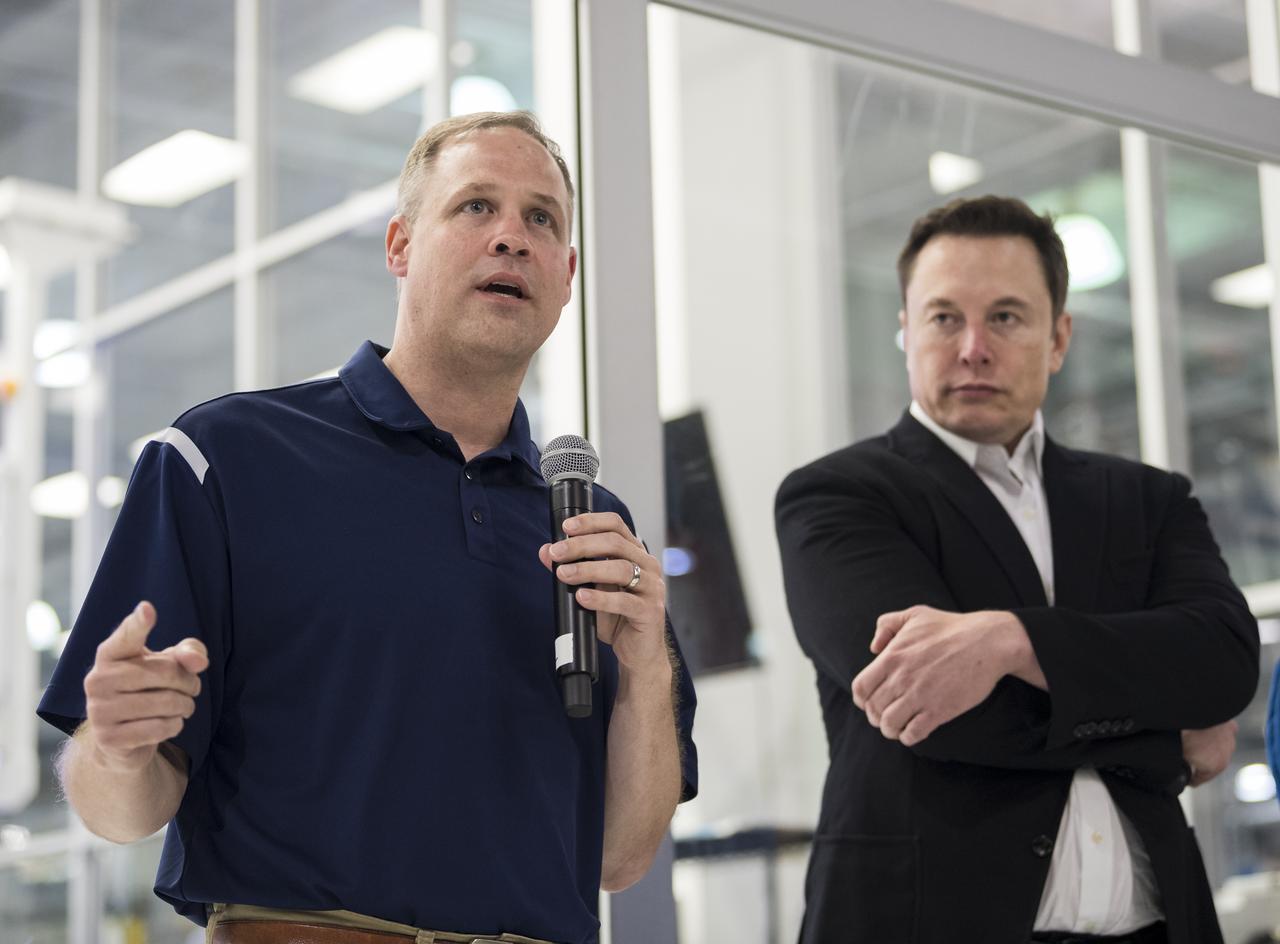
NASA Administrator Jim Bridenstine, left, and SpaceX Chief Engineer Elon Musk, right, speak to press in front of the Crew Dragon that is being prepared for the Demo-2 mission, at SpaceX Headquarters, Thursday, Oct. 10, 2019 in Hawthorne, CA. Photo credit: (NASA/Aubrey Gemignani)
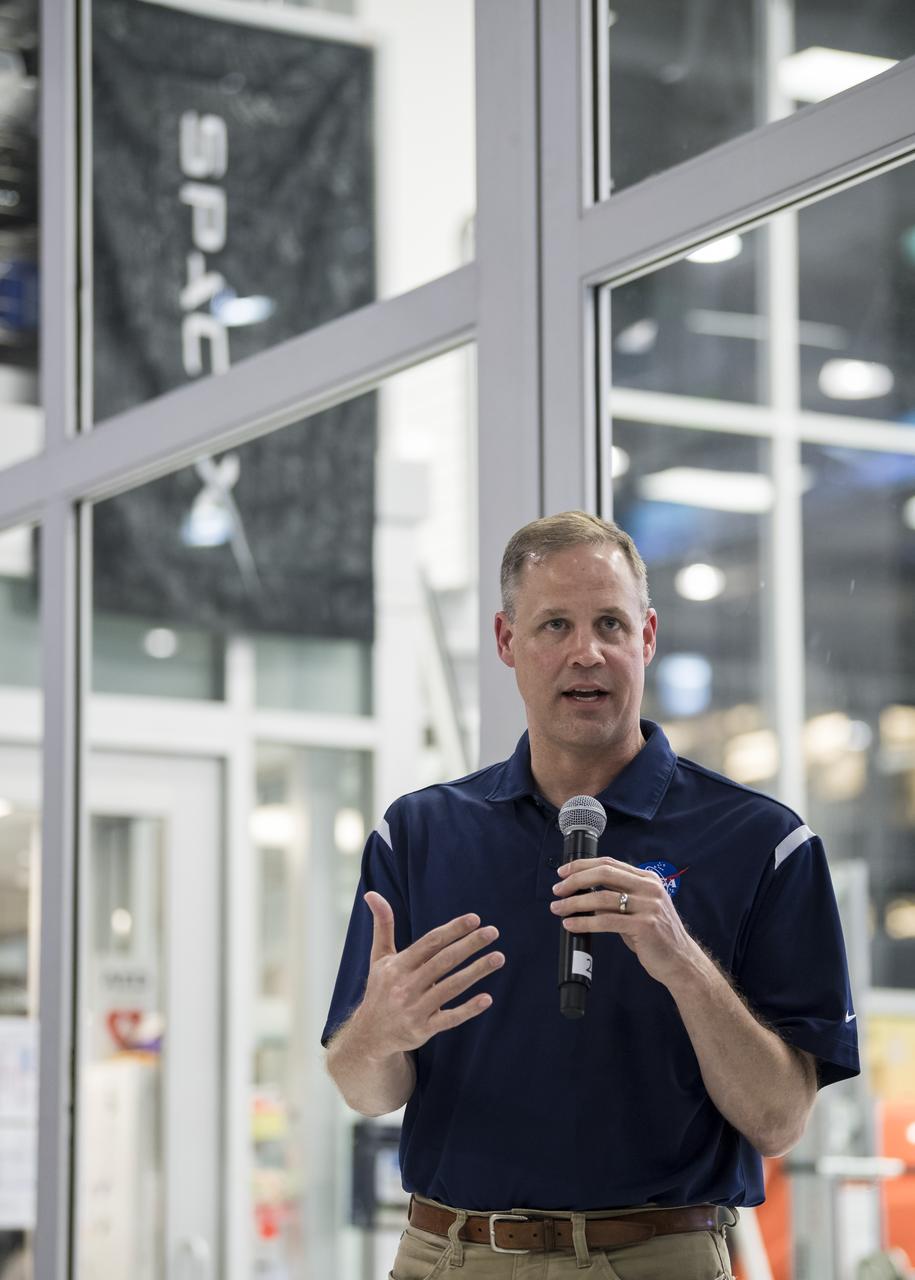
NASA Administrator Jim Bridenstine answers a question from the press in front of the Crew Dragon that is being prepared for the Demo-2 mission, at SpaceX Headquarters, Thursday, Oct. 10, 2019 in Hawthorne, CA. Photo credit: (NASA/Aubrey Gemignani)
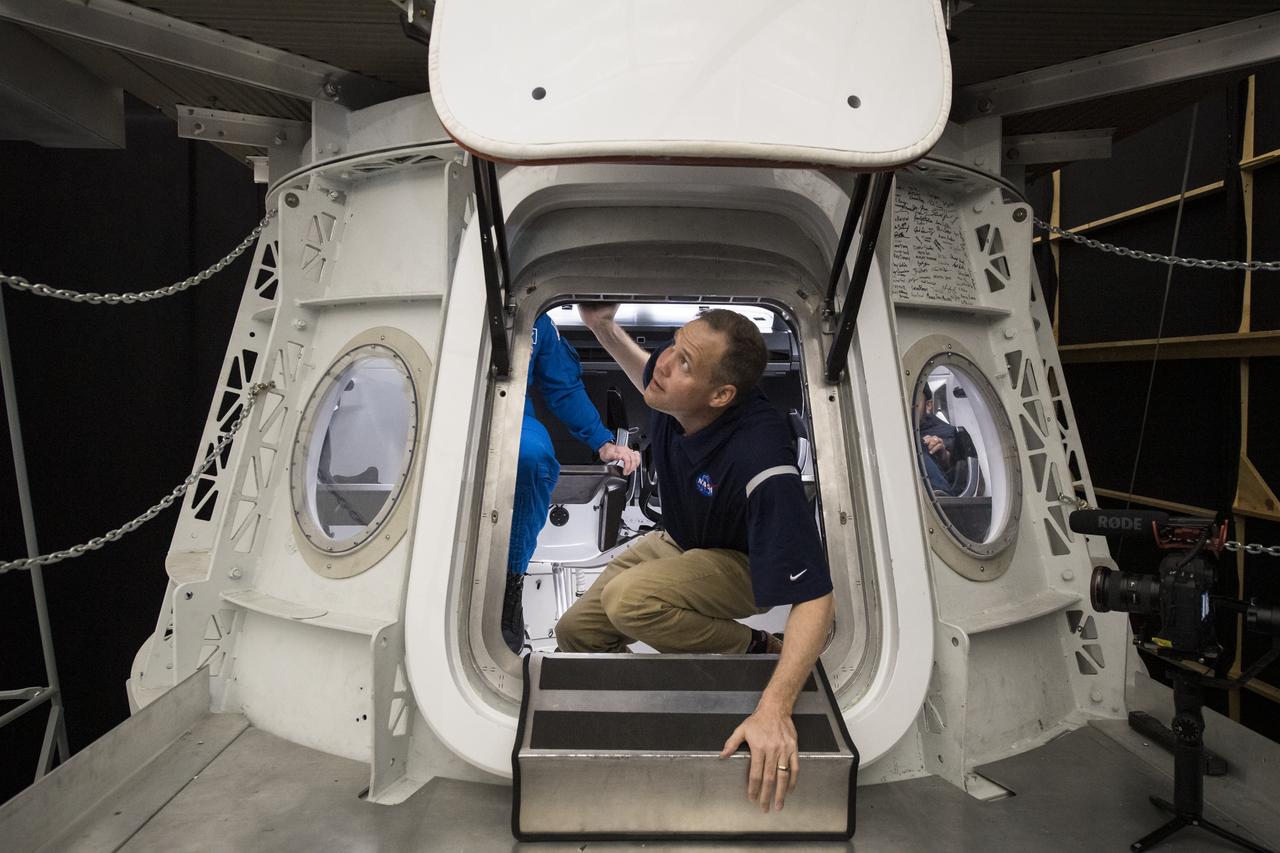
NASA Administrator Jim Bridenstine climbs out of a mockup of the Demo-2 Crew Dragon during a tour of the SpaceX Headquarters, Thursday, Oct. 10, 2019 in Hawthorne, CA. Photo credit: (NASA/Aubrey Gemignani)
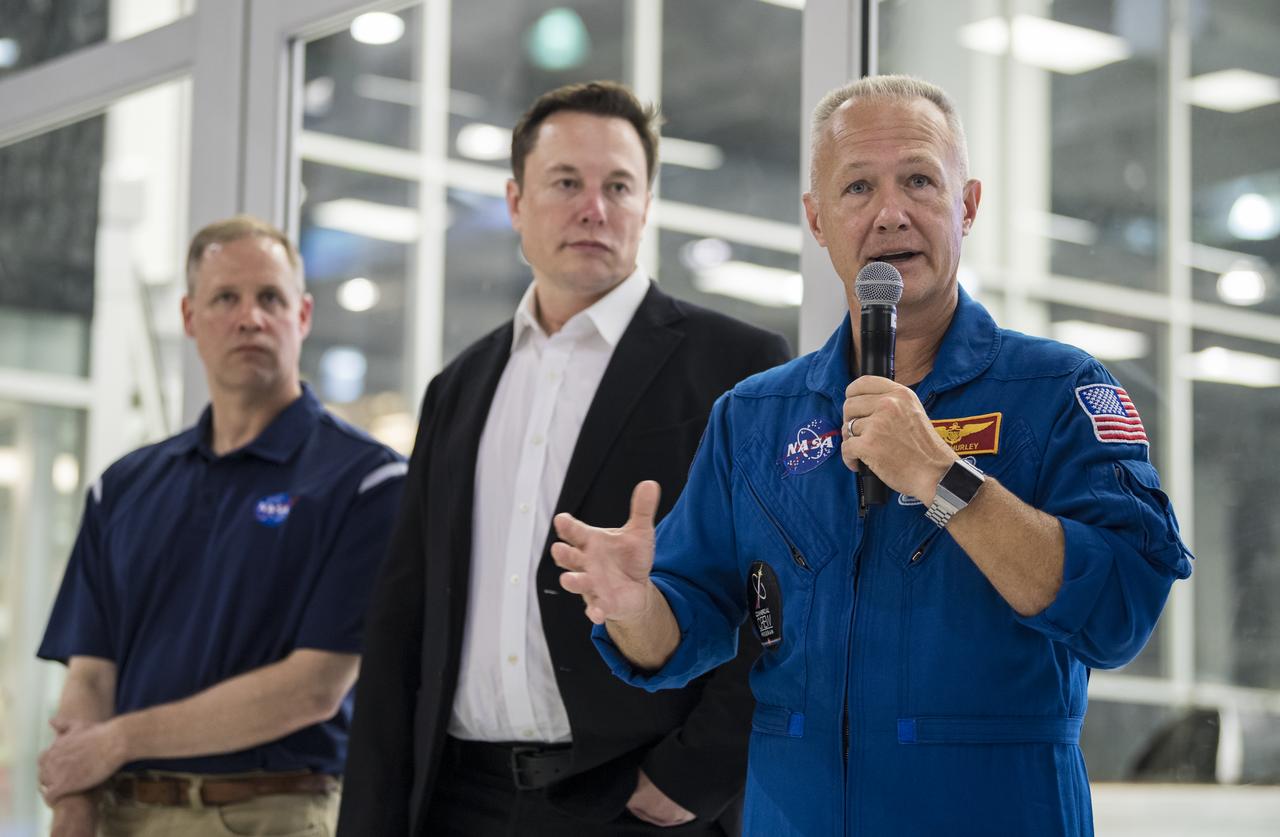
NASA astronaut Doug Hurley answers a question from the media in front of the Crew Dragon that is being prepared for the Demo-2 mission, at SpaceX Headquarters, Thursday, Oct. 10, 2019 in Hawthorne, CA. Hurley and NASA astronaut Bob Behnken are assigned to fly onboard Crew Dragon for the Demo-2 mission. Photo credit: (NASA/Aubrey Gemignani)
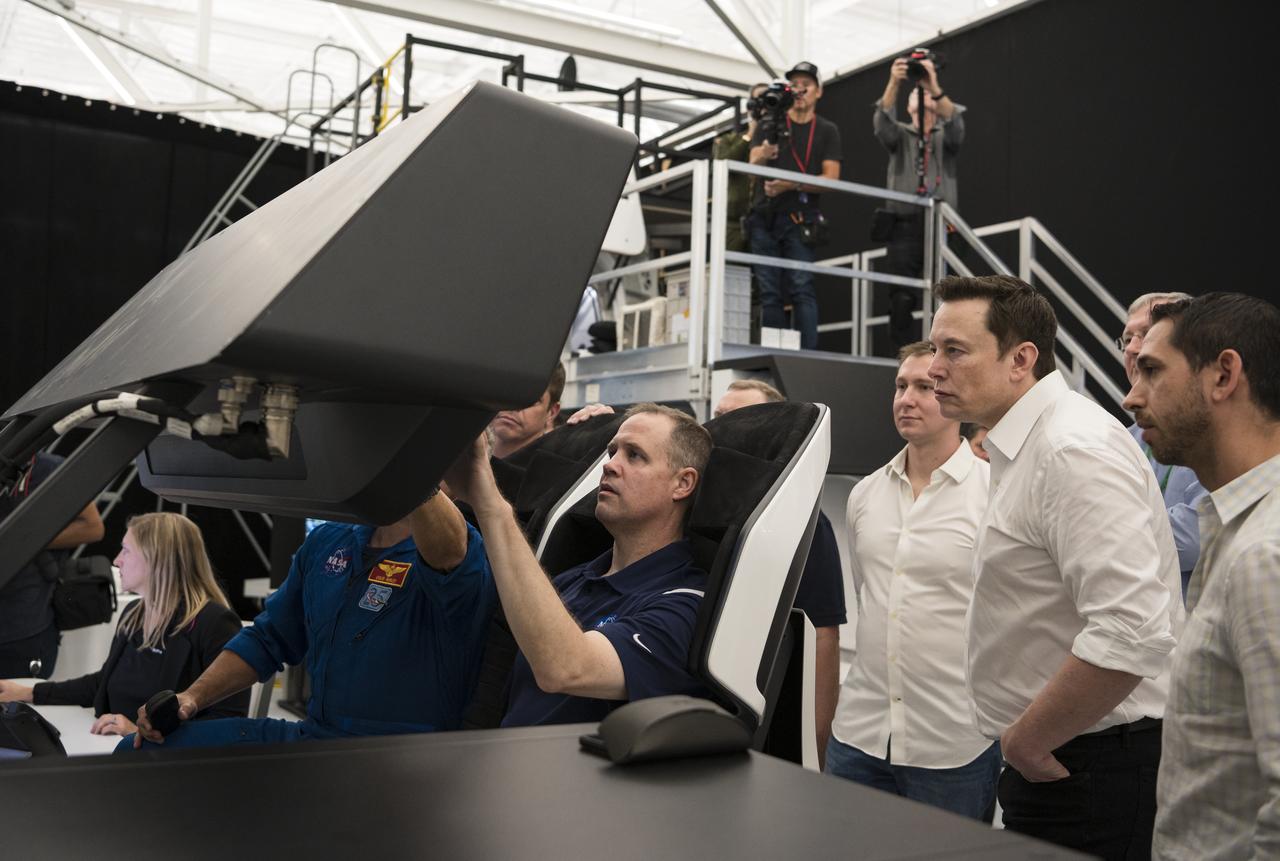
NASA Administrator Jim Bridenstine, center, participates in a crew Dragon flight simulation with NASA astronauts Doug Hurley, and Bob Behnken, while SpaceX Chief Engineer Elon Musk looks on, at the SpaceX Headquarters, Thursday, Oct. 10, 2019 in Hawthorne, CA. Photo credit: (NASA/Aubrey Gemignani)
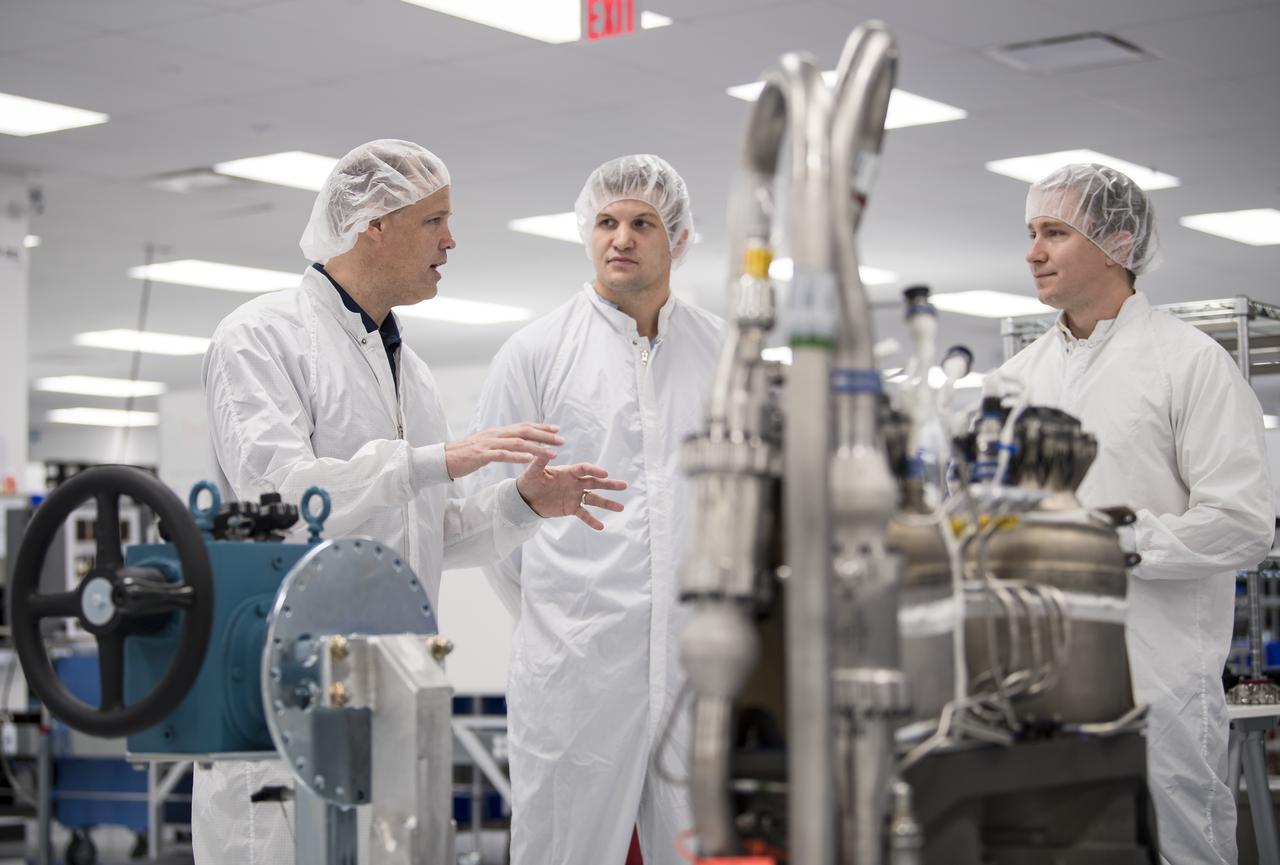
NASA Administrator Jim Bridenstine, left, speaks with SpaceX employees working on Super Draco engines during a tour of the SpaceX Headquarters, Thursday, Oct. 10, 2019 in Hawthorne, CA. Photo credit: (NASA/Aubrey Gemignani)
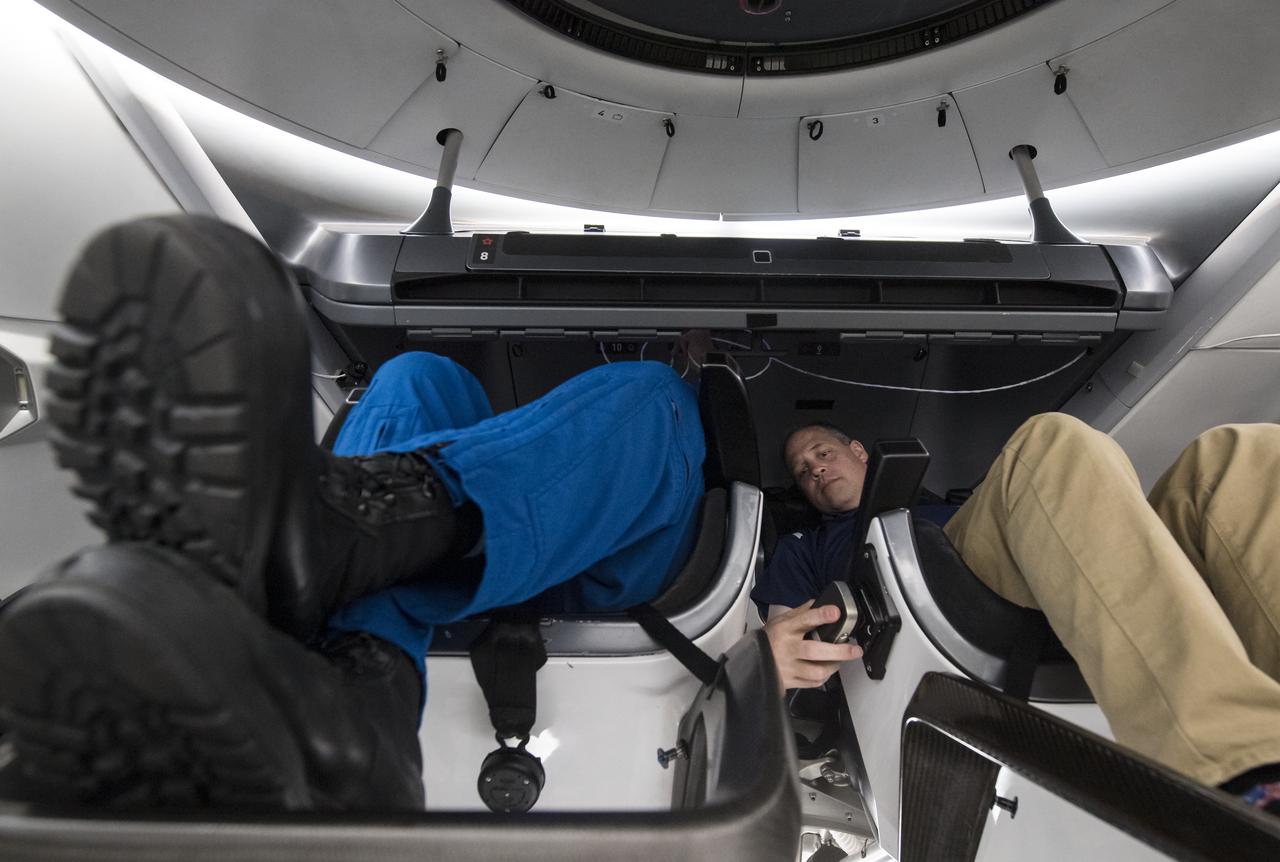
NASA Administrator Jim Bridenstine, right, sits in a mockup of the Demo-2 Crew Dragon with NASA astronaut Bob Behnken during a tour of the SpaceX Headquarters, Thursday, Oct. 10, 2019 in Hawthorne, CA. Photo credit: (NASA/Aubrey Gemignani)
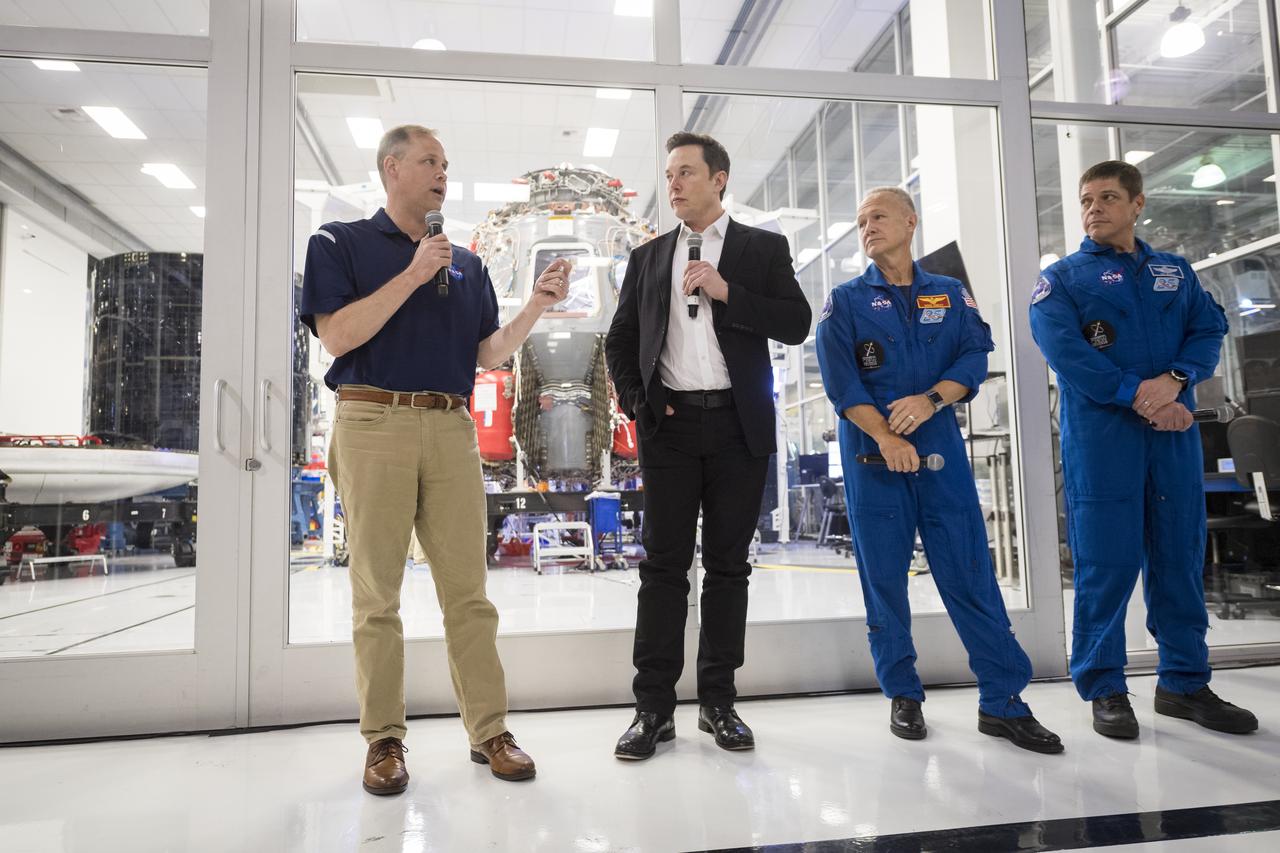
NASA Administrator Jim Bridenstine, left, speaks to press with SpaceX Chief Engineer Elon Musk, second from left, NASA astronaut Doug Hurley, second from right, and NASA astronaut Bob Behnken, in front of the Crew Dragon that is being prepared for the Demo-2 mission, at SpaceX Headquarters, Thursday, Oct. 10, 2019 in Hawthorne, CA. Photo credit: (NASA/Aubrey Gemignani)
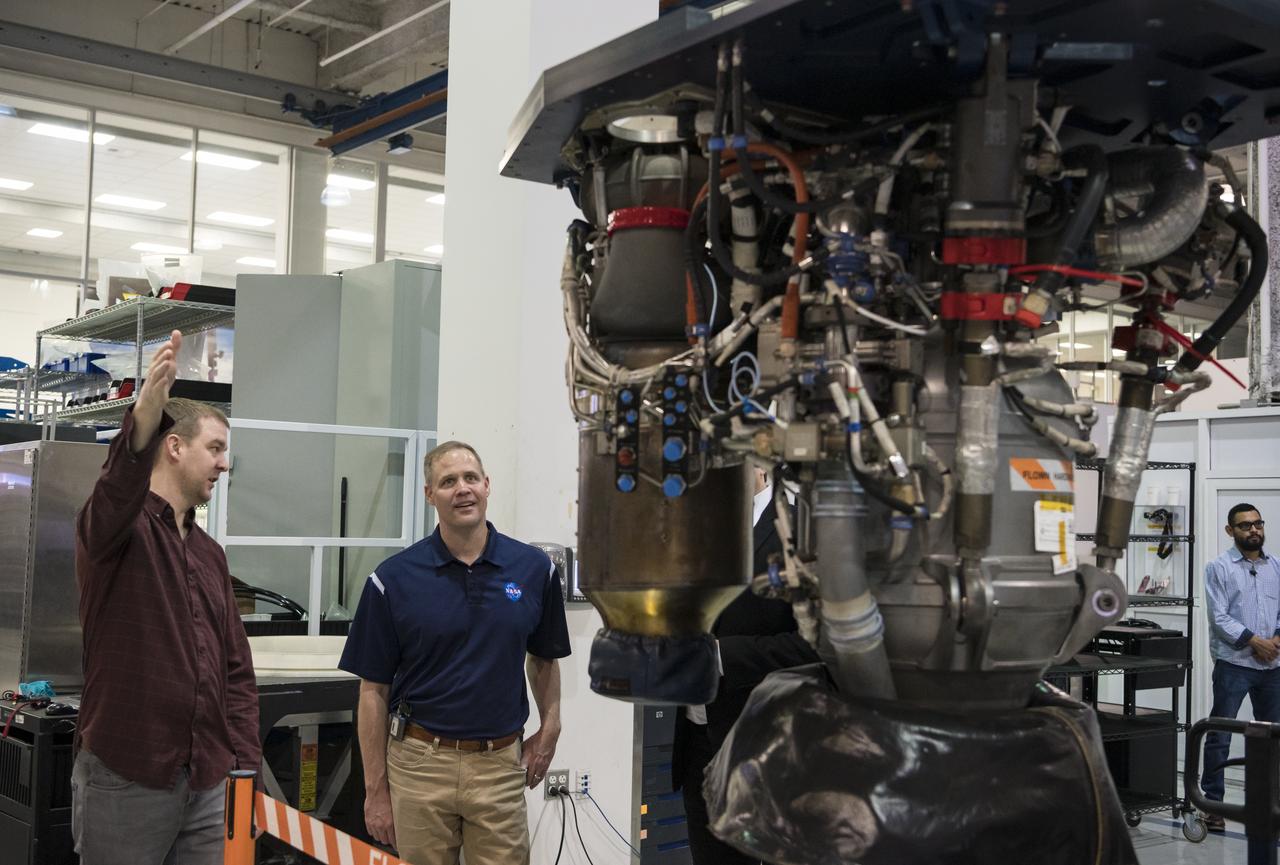
NASA Administrator Jim Bridenstine, right, speaks to SpaceX Vice President of Propulsion Engineering, Will Heltsley, about engine hardware during a tour of the SpaceX Headquarters, Thursday, Oct. 10, 2019 in Hawthorne, CA. Photo credit: (NASA/Aubrey Gemignani)
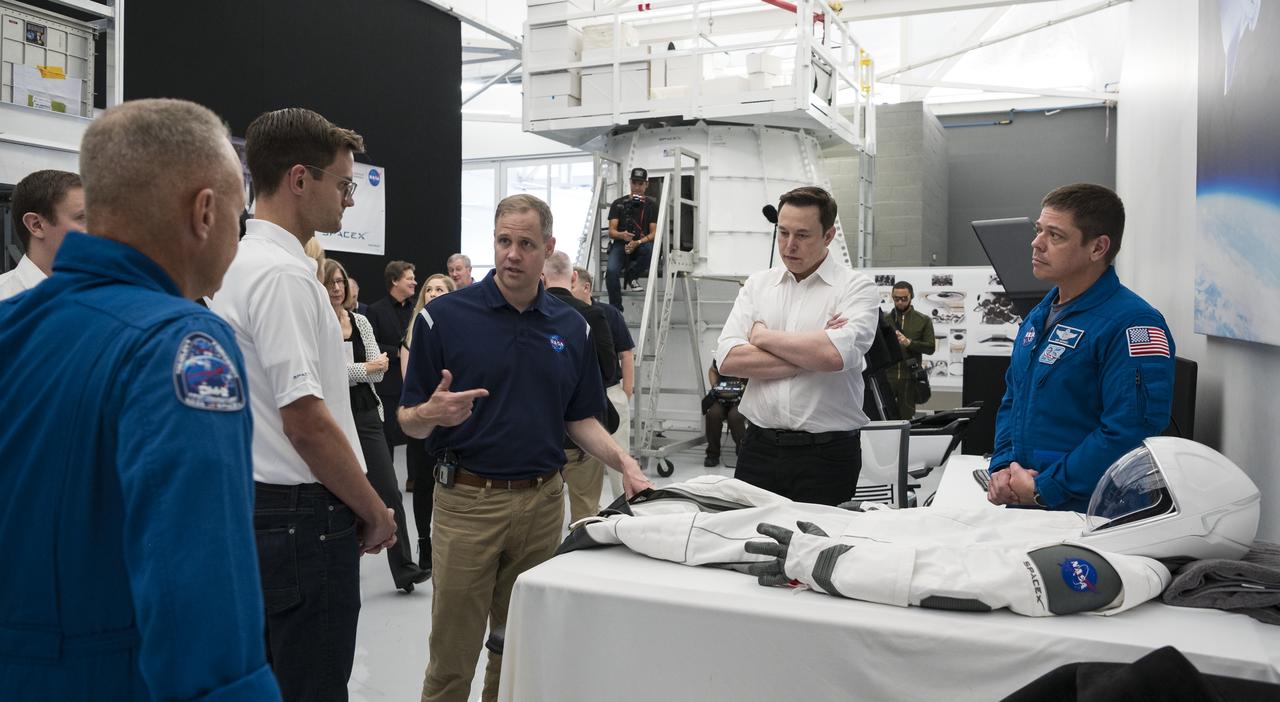
SpaceX Chief Engineer Elon Musk, second from right, and NASA astronaut Bob Behnken, right, look on as NASA Administrator Jim Bridenstine, third from left, speaks to NASA astronaut Doug Hurley, left, as they look at an identical version of the SpaceX spacesuit that he will wear for the Demo-2 mission during a visit to SpaceX Headquarters, Thursday, Oct. 10, 2019 in Hawthorne, CA. Behnken and Hurley are assigned to fly onboard Crew Dragon for the Demo-2 mission. Photo credit: (NASA/Aubrey Gemignani)
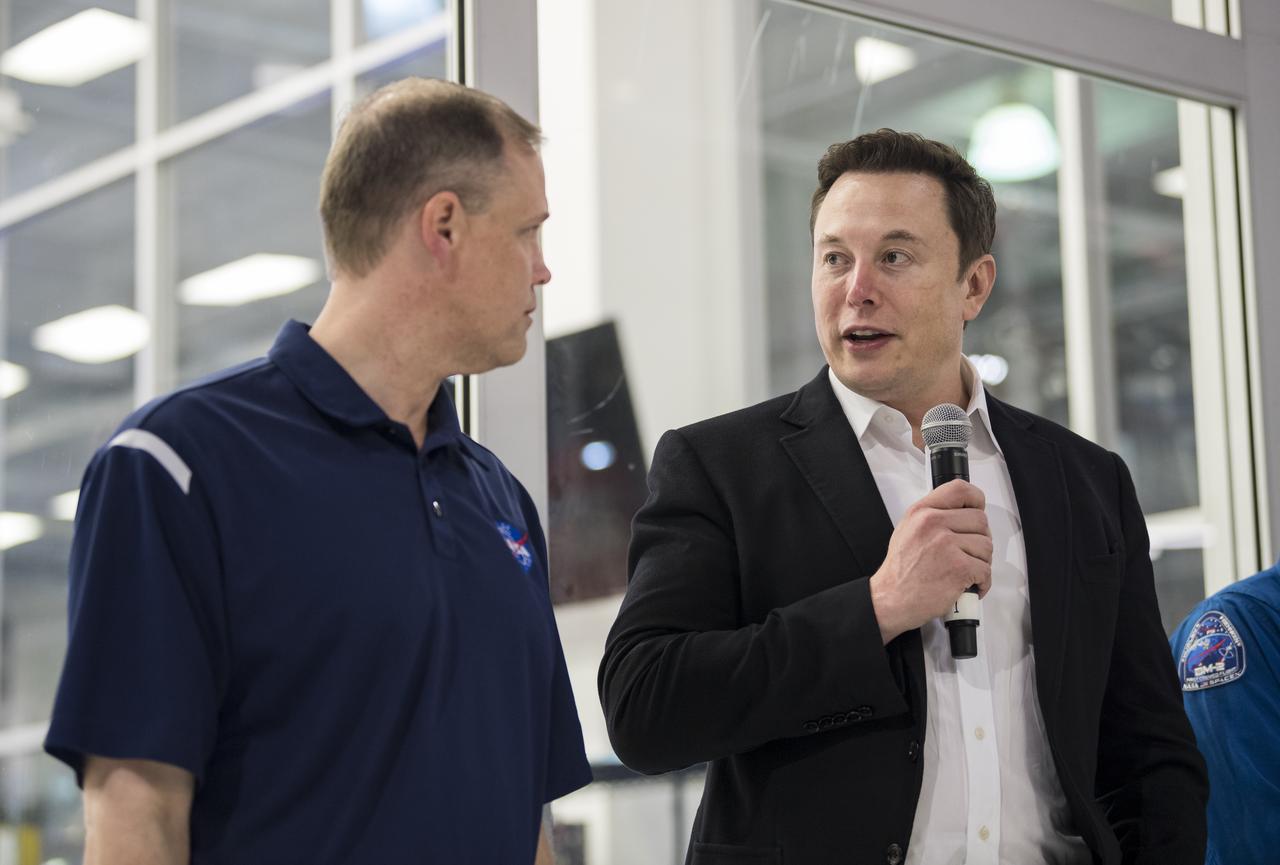
SpaceX Chief Engineer Elon Musk, right, speaks to press with NASA Administrator Jim Bridenstine, in front of the Crew Dragon that is being prepared for the Demo-2 mission, at SpaceX Headquarters, Thursday, Oct. 10, 2019 in Hawthorne, CA. Photo credit: (NASA/Aubrey Gemignani)
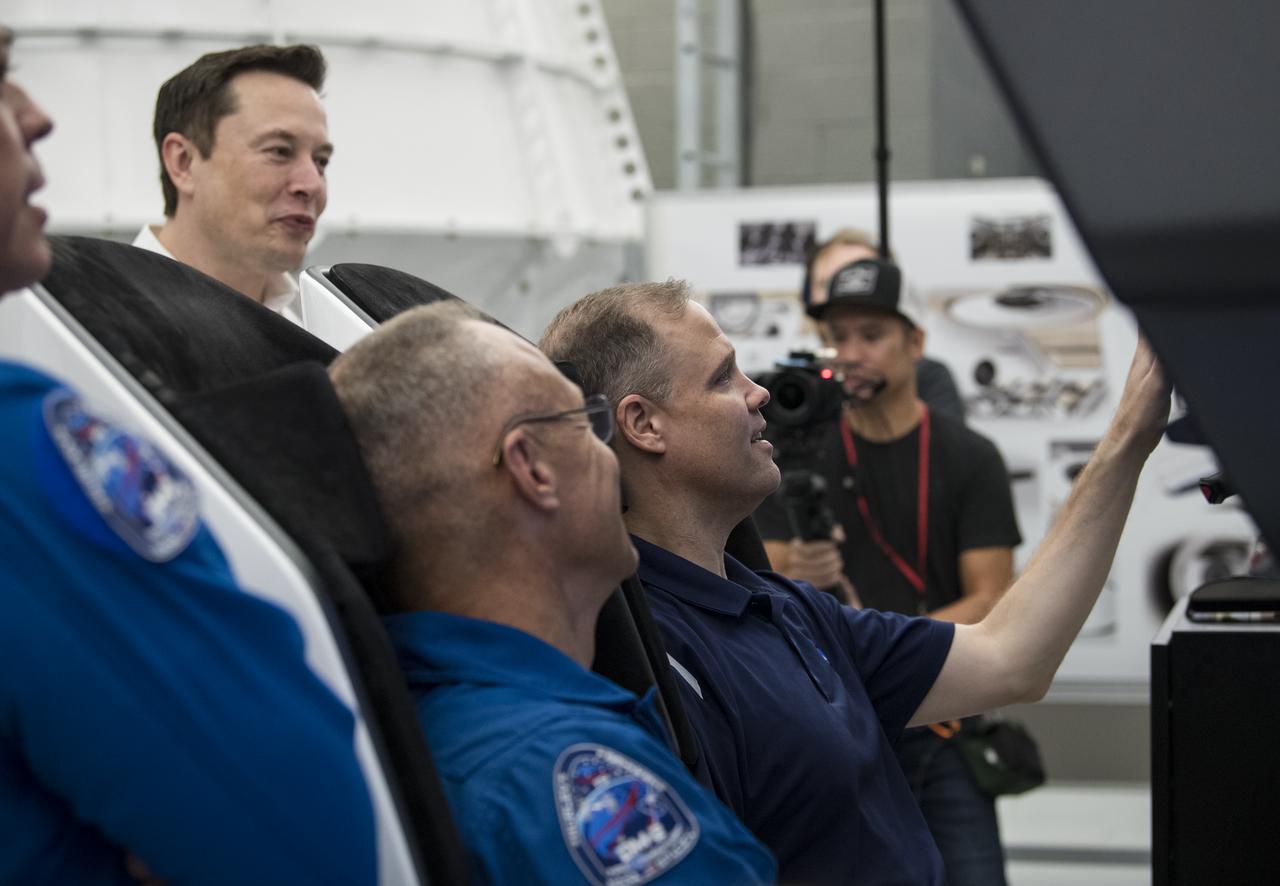
NASA Administrator Jim Bridenstine, right, participates in a crew Dragon flight simulation with NASA astronaut Doug Hurley, who will be flying aboard the Crew Dragon during the Demo-2 mission, while SpaceX Chief Engineer Elon Musk looks on, at the SpaceX Headquarters, Thursday, Oct. 10, 2019 in Hawthorne, CA. Photo credit: (NASA/Aubrey Gemignani)
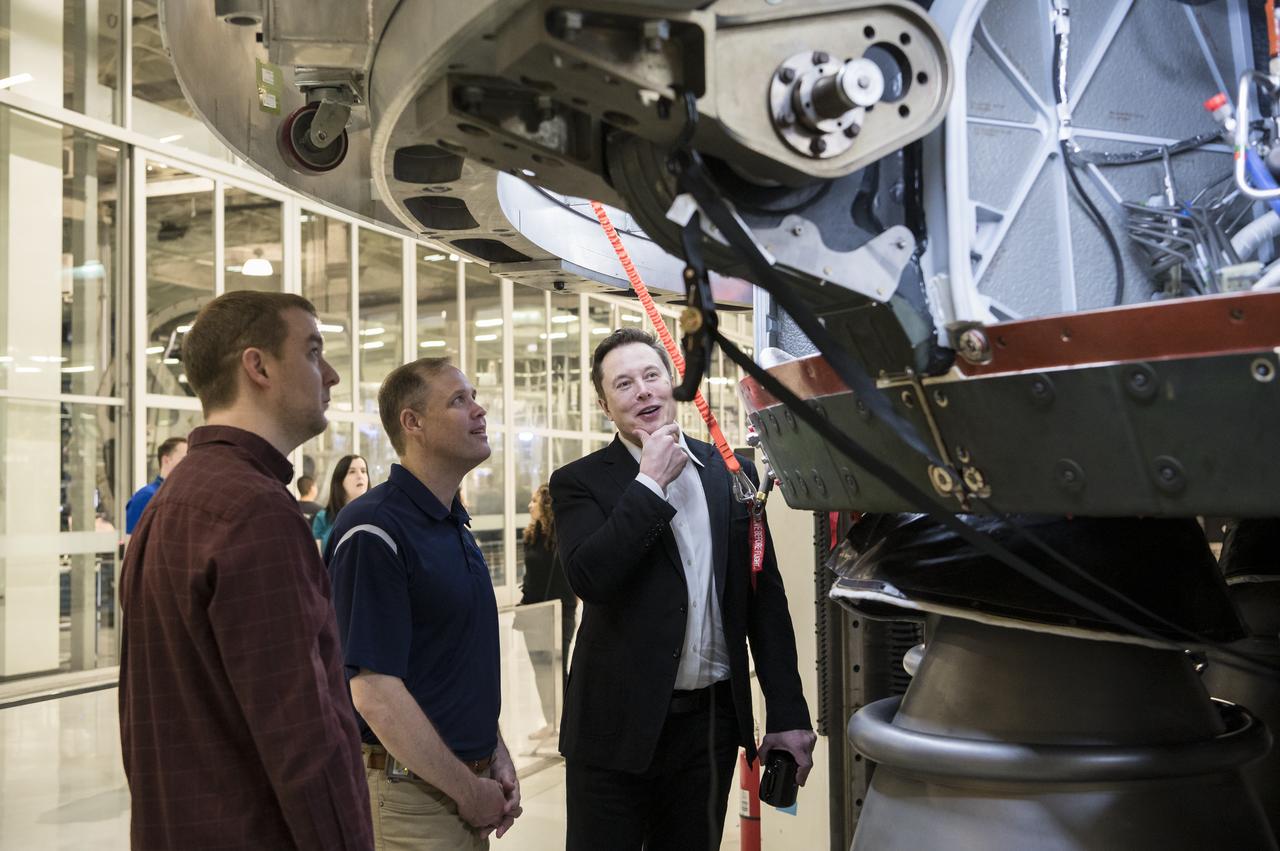
SpaceX Chief Engineer Elon Musk, right, speaks to NASA Administrator Jim Bridenstine, center, and SpaceX Vice President of Propulsion Engineering, Will Heltsley, left, while viewing the OctaWeb, part of the Merlin engine used for the Falcon rockets, at the SpaceX Headquarters, Thursday, Oct. 10, 2019 in Hawthorne, CA. Photo credit: (NASA/Aubrey Gemignani)
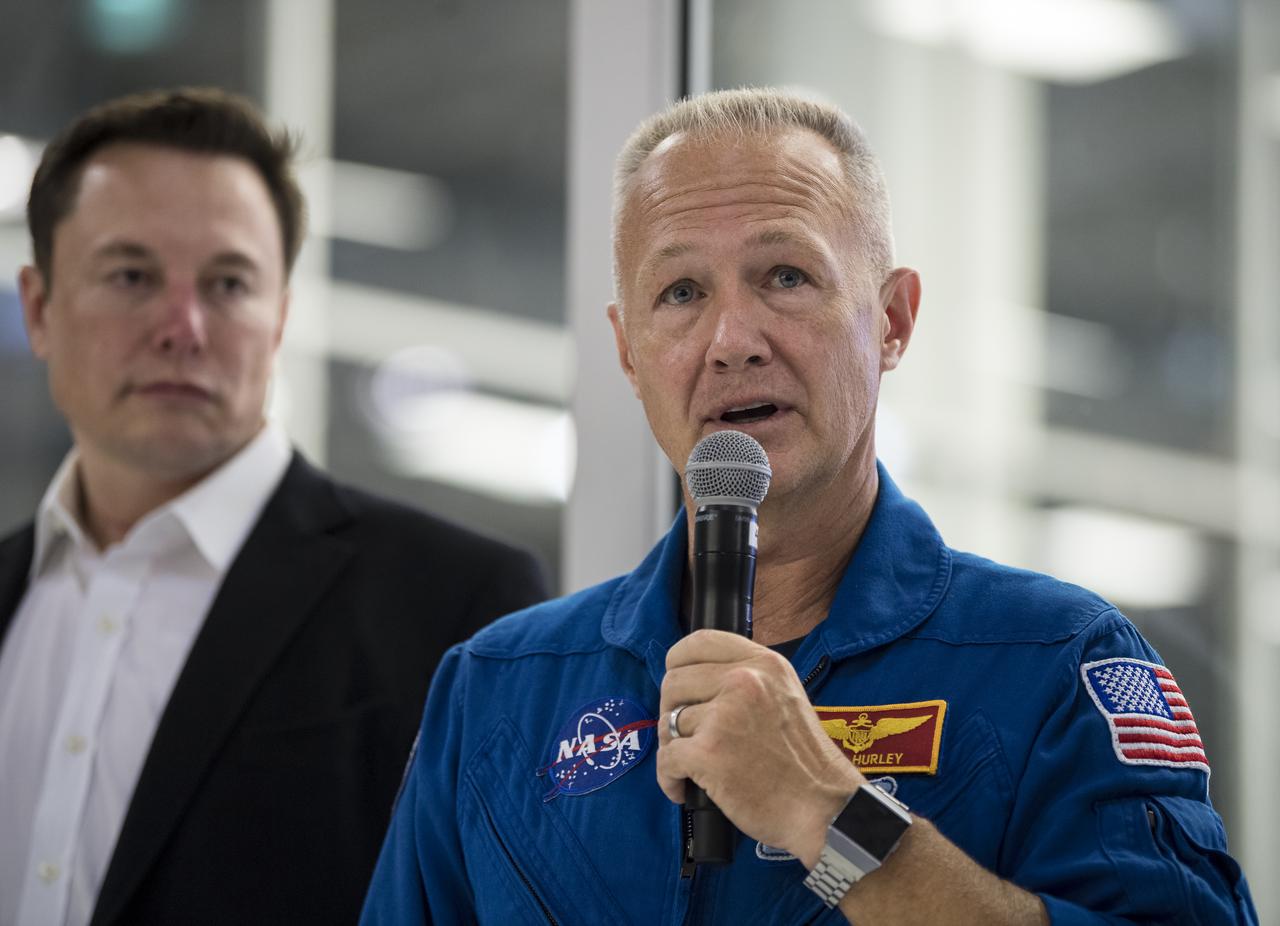
NASA astronaut Doug Hurley answers a question from the media in front of the Crew Dragon that is being prepared for the Demo-2 mission, at SpaceX Headquarters, Thursday, Oct. 10, 2019 in Hawthorne, CA. Hurley and NASA astronaut Bob Behnken are assigned to fly onboard Crew Dragon for the Demo-2 mission. Photo credit: (NASA/Aubrey Gemignani)
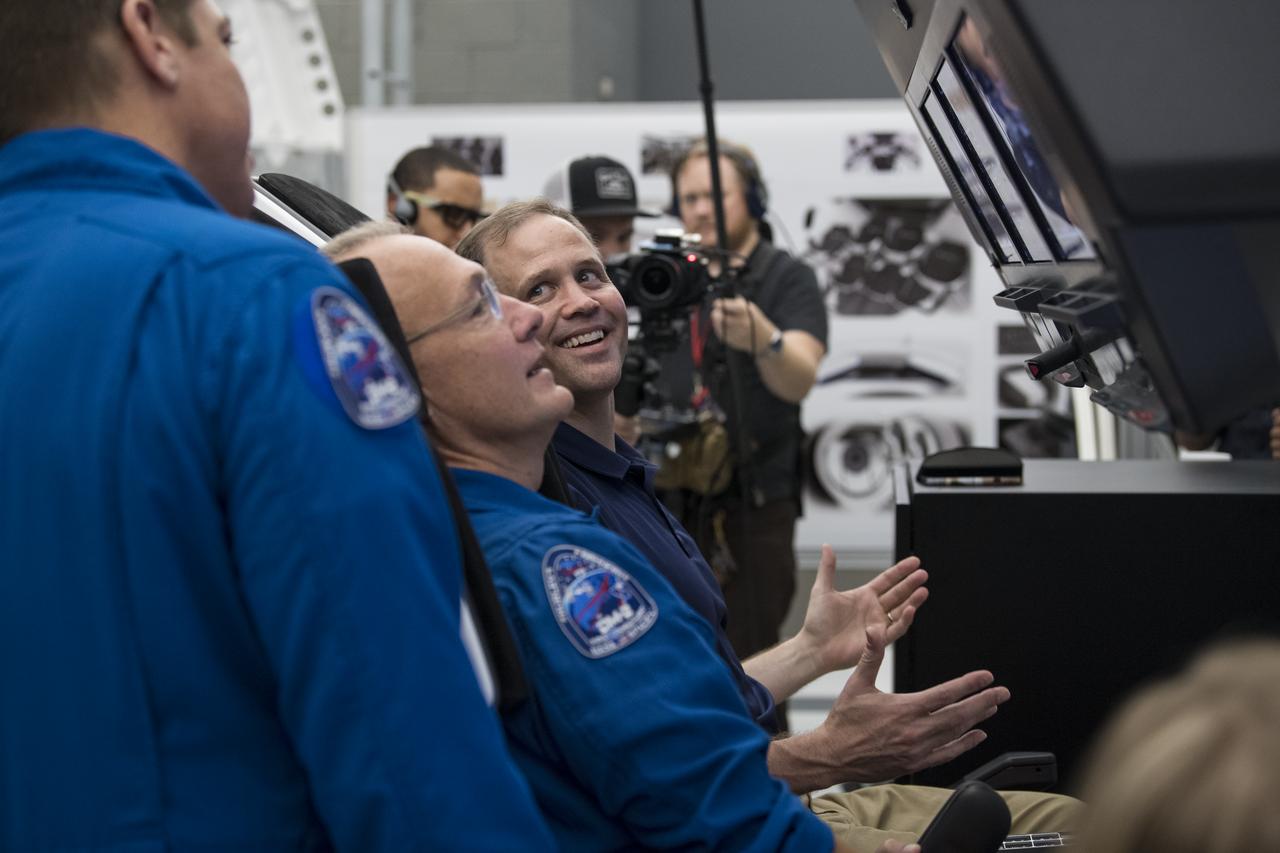
NASA Administrator Jim Bridenstine, right, participates in a Crew Dragon flight simulation with NASA astronauts Doug Hurley, center, and Bob Behnken, left, who will be flying aboard the Crew Dragon during the Demo-2 mission, at the SpaceX Headquarters, Thursday, Oct. 10, 2019 in Hawthorne, CA. Photo credit: (NASA/Aubrey Gemignani)
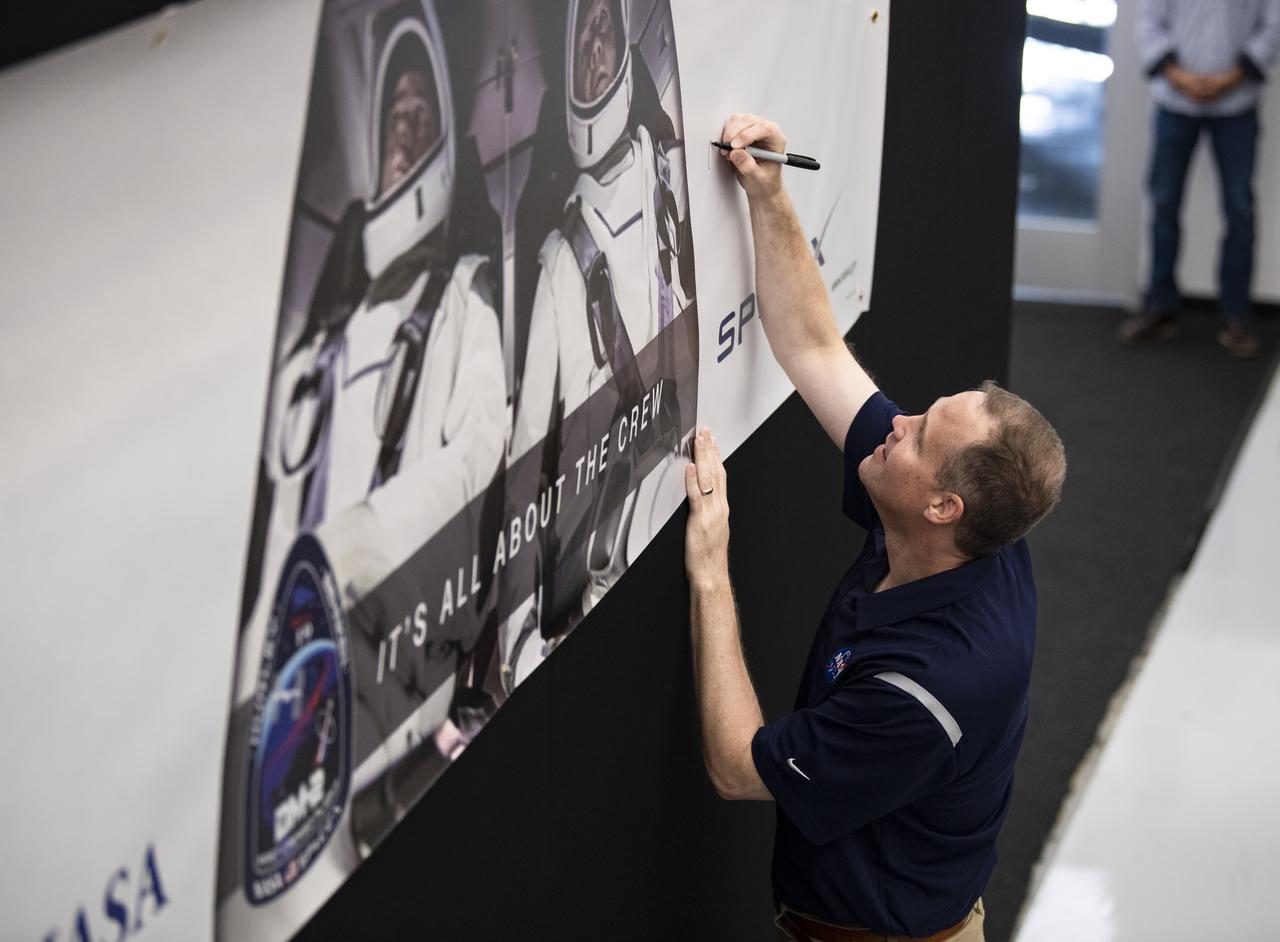
NASA Administrator Jim Bridenstine, signs a banner during a tour of the SpaceX Headquarters, Thursday, Oct. 10, 2019 in Hawthorne, CA. Photo credit: (NASA/Aubrey Gemignani)
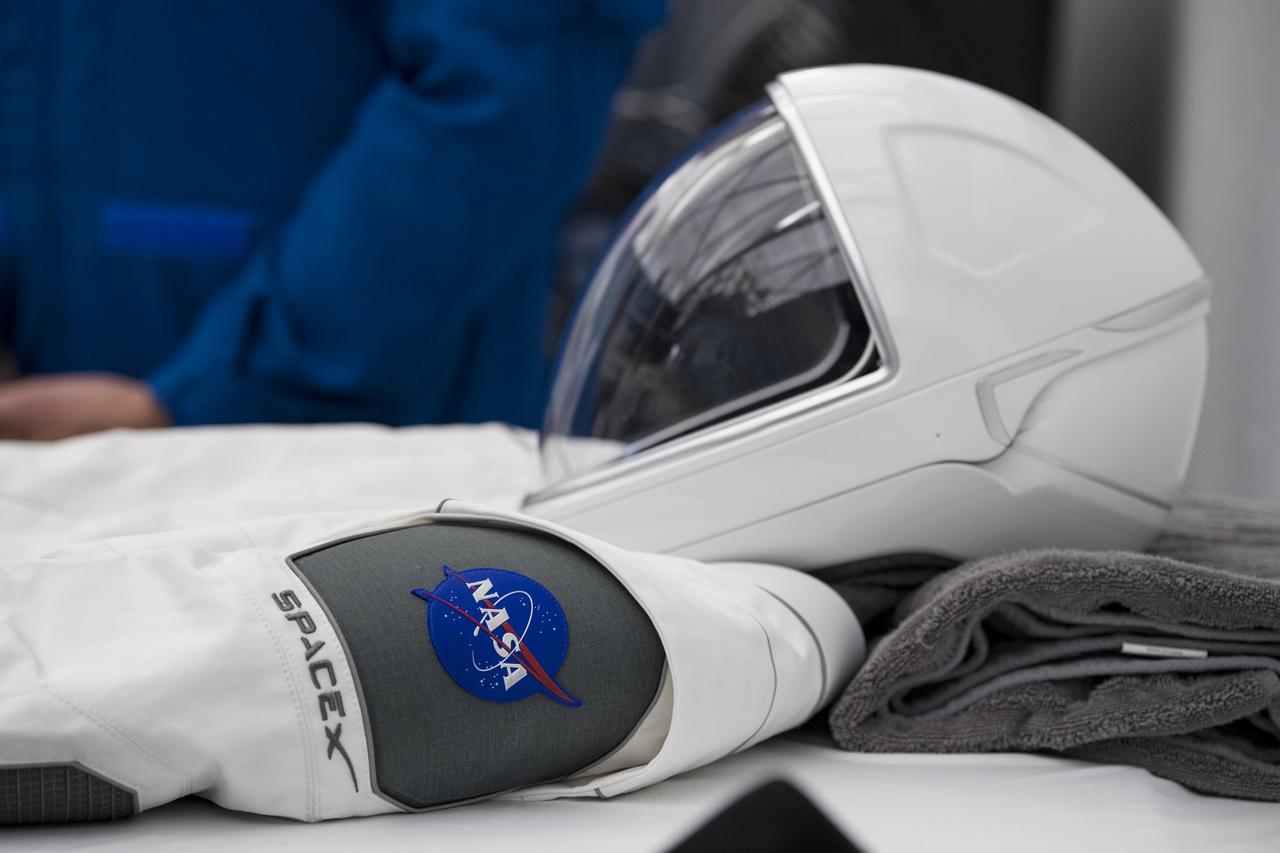
A view of one of the SpaceX suits that will be used for the Demo-2 launch at the SpaceX Headquarters, Thursday, Oct. 10, 2019 in Hawthorne, CA. Photo credit: (NASA/Aubrey Gemignani)
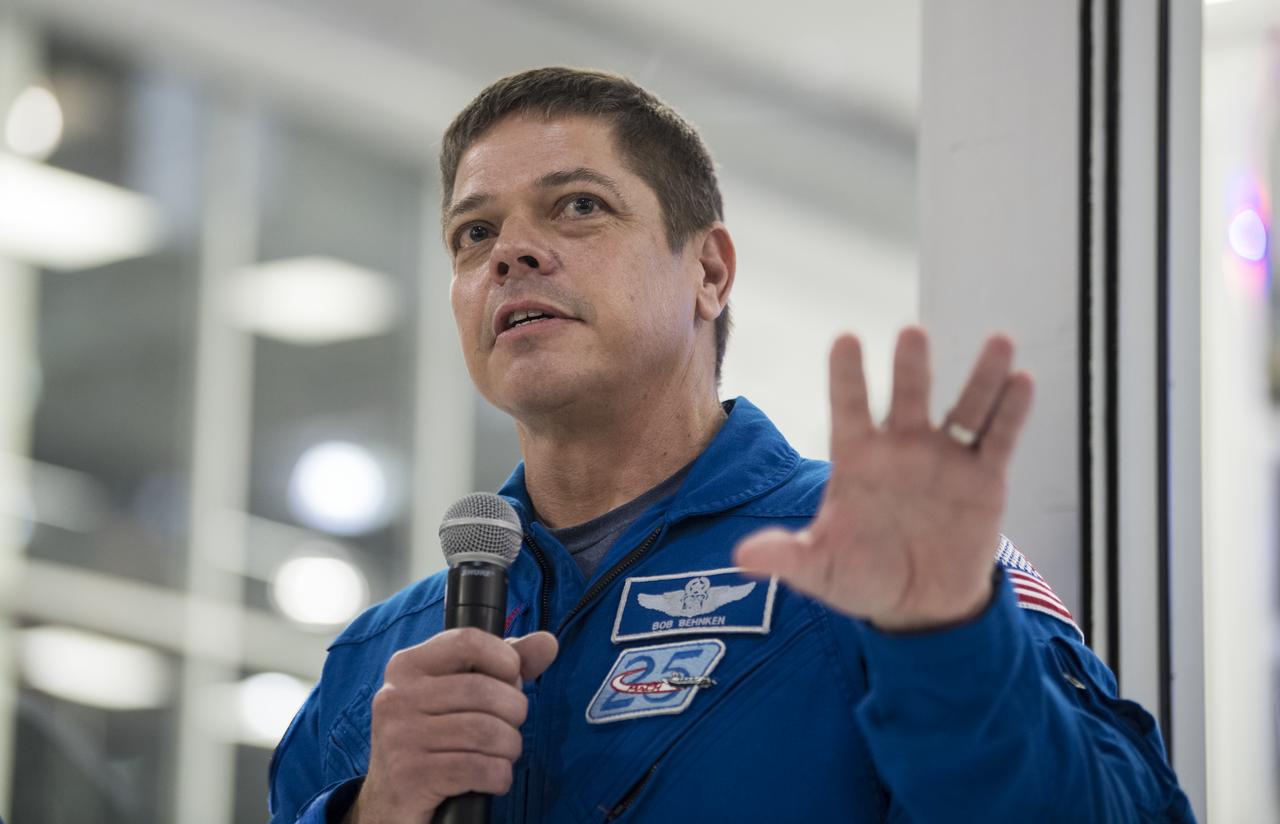
NASA astronaut Bob Behnken answers a question from the media in front of the Crew Dragon that is being prepared for the Demo-2 mission, at SpaceX Headquarters, Thursday, Oct. 10, 2019 in Hawthorne, CA. Behnken and NASA astronaut Doug Hurley are assigned to fly onboard Crew Dragon for the Demo-2 mission.Photo credit: (NASA/Aubrey Gemignani)
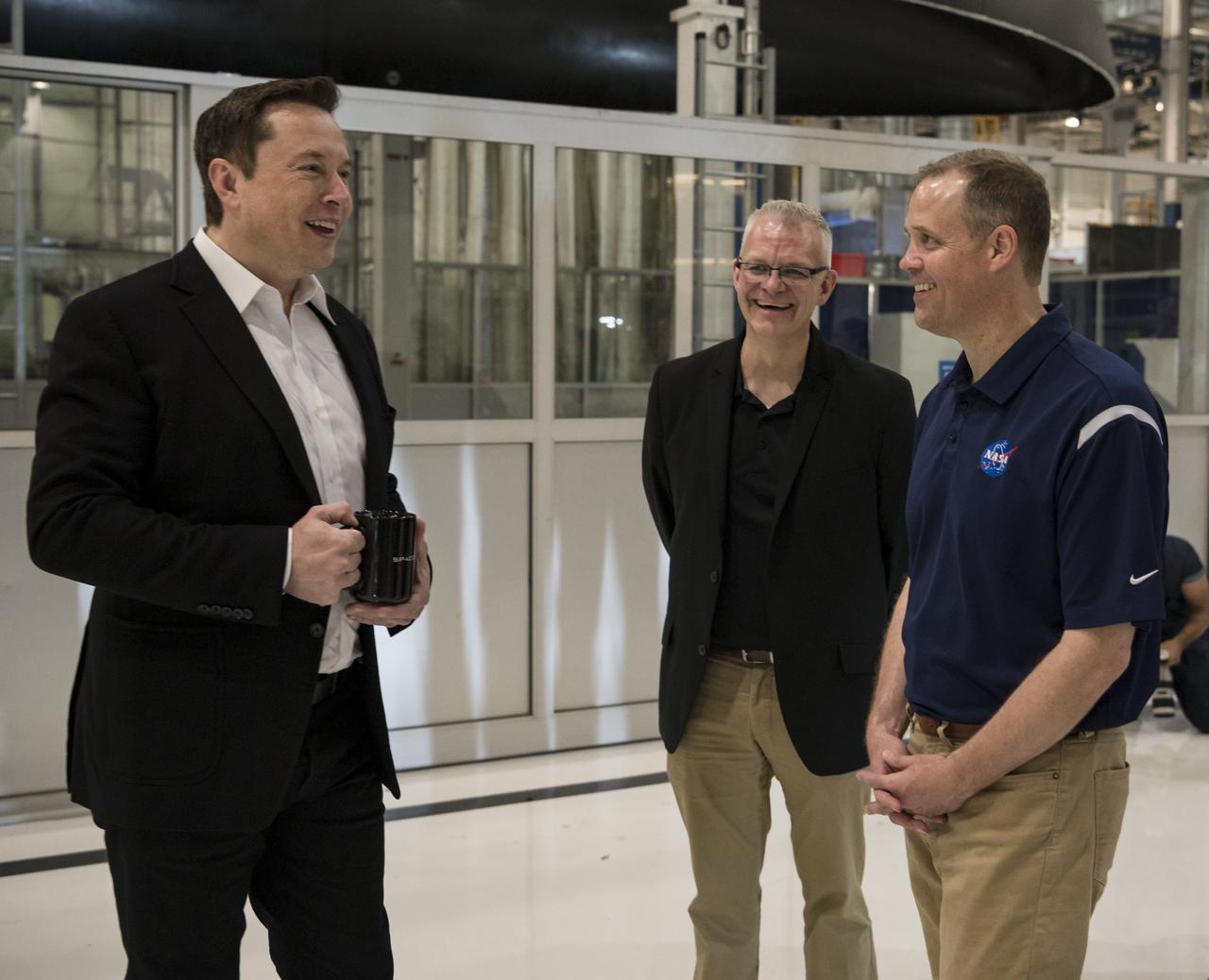
NASA Administrator Jim Bridenstine, right, speaks to SpaceX Chief Engineer Elon Musk, during a tour of the SpaceX Headquarters, Thursday, Oct. 10, 2019 in Hawthorne, CA. Photo credit: (NASA/Aubrey Gemignani)
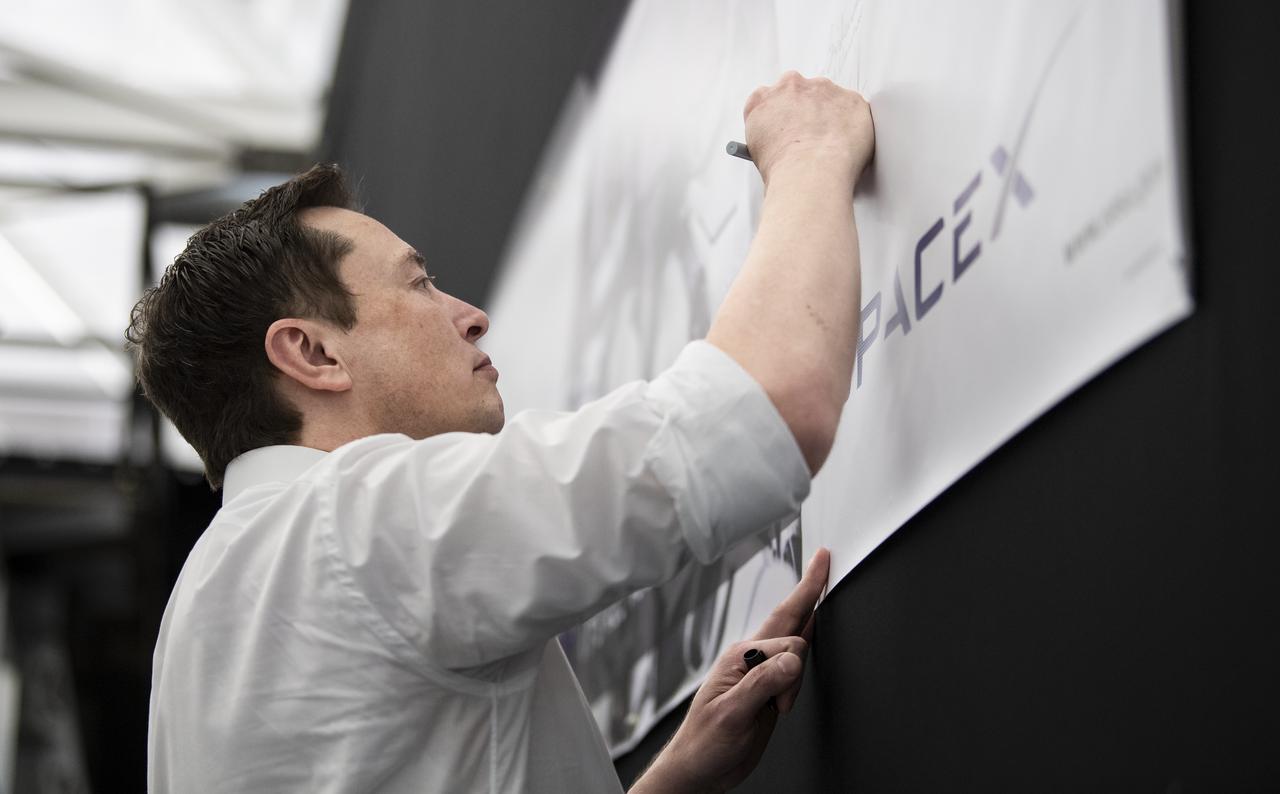
SpaceX Chief Engineer Elon Musk signs a banner after discussing progress on the Commercial Crew Program with NASA Administrator Jim Bridenstine at the SpaceX Headquarters, Thursday, Oct. 10, 2019 in Hawthorne, CA. Photo credit: (NASA/Aubrey Gemignani)
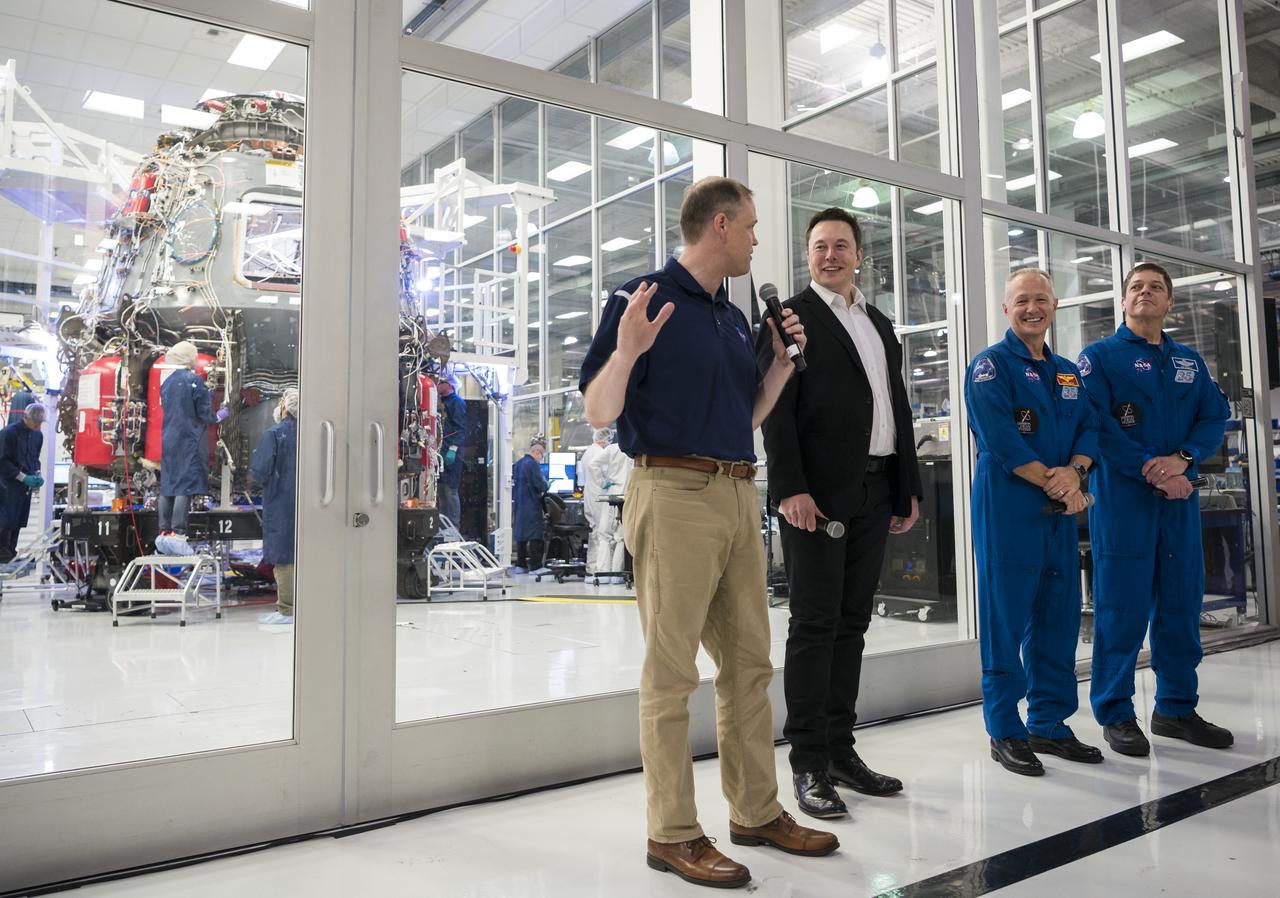
NASA Administrator Jim Bridenstine, left, speaks to press with SpaceX Chief Engineer Elon Musk, second from left, NASA astronaut Doug Hurley, second from right, and NASA astronaut Bob Behnken, in front of the Crew Dragon that is being prepared for the Demo-2 mission, at SpaceX Headquarters, Thursday, Oct. 10, 2019 in Hawthorne, CA. Photo credit: (NASA/Aubrey Gemignani)
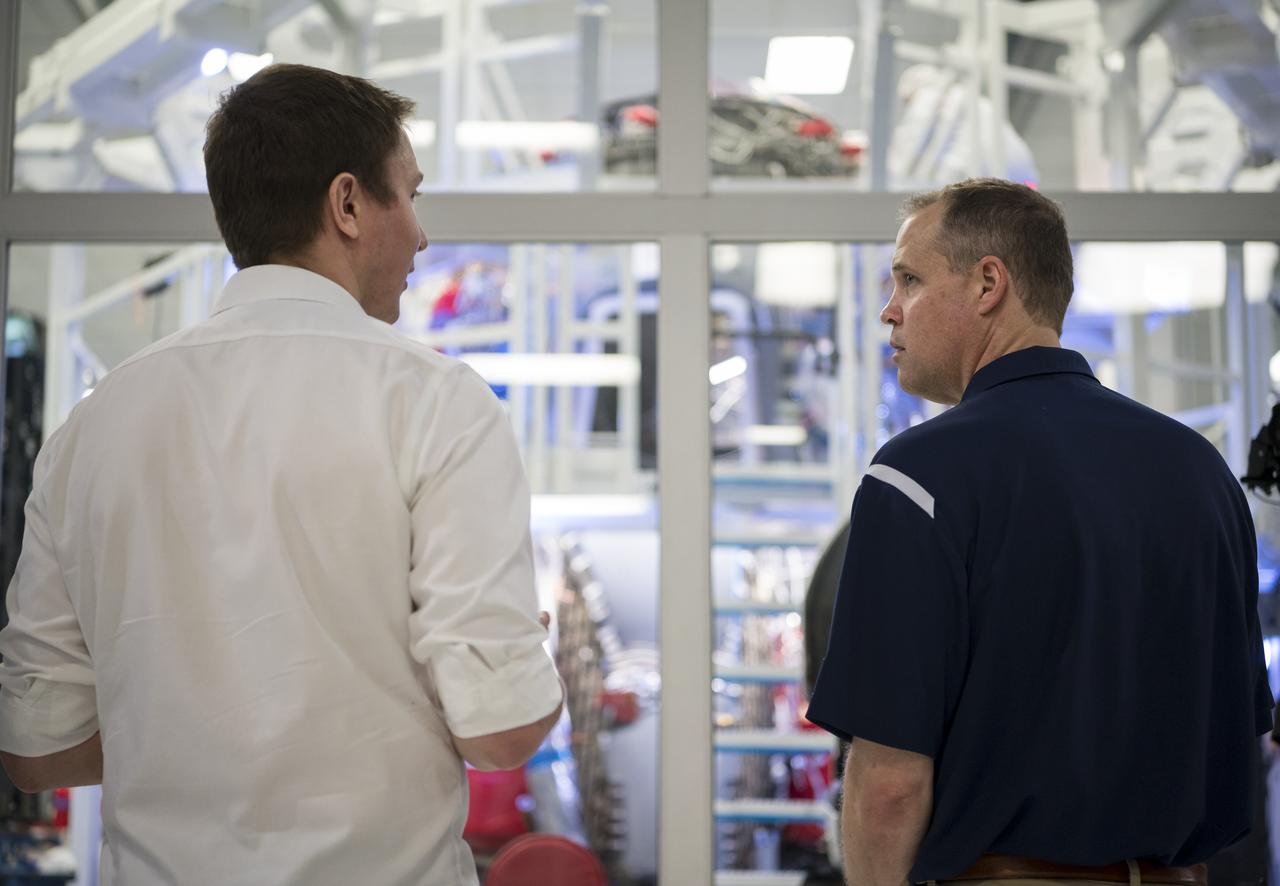
NASA Administrator Jim Bridenstine, right, speaks to Joseph Petrzelka of SpaceX about the Dragon capsule that will launch during the Demo-2 mission while on a tour of the SpaceX Headquarters, Thursday, Oct. 10, 2019 in Hawthorne, CA. Photo credit: (NASA/Aubrey Gemignani)
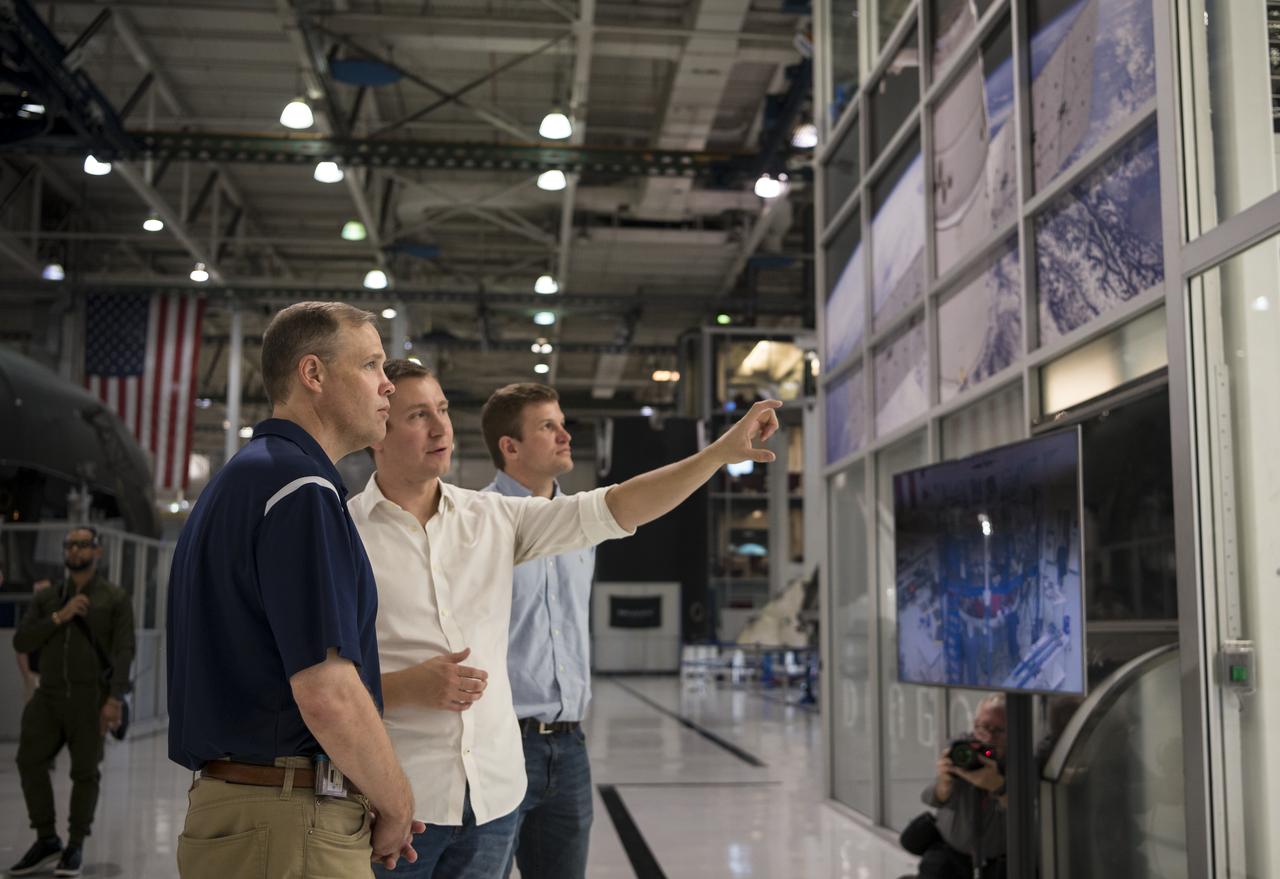
NASA Administrator Jim Bridenstine, right, speaks to Joseph Petrzelka of SpaceX about the Dragon capsule that will launch during the Demo-2 mission while on a tour of the SpaceX Headquarters, Thursday, Oct. 10, 2019 in Hawthorne, CA. Photo credit: (NASA/Aubrey Gemignani)
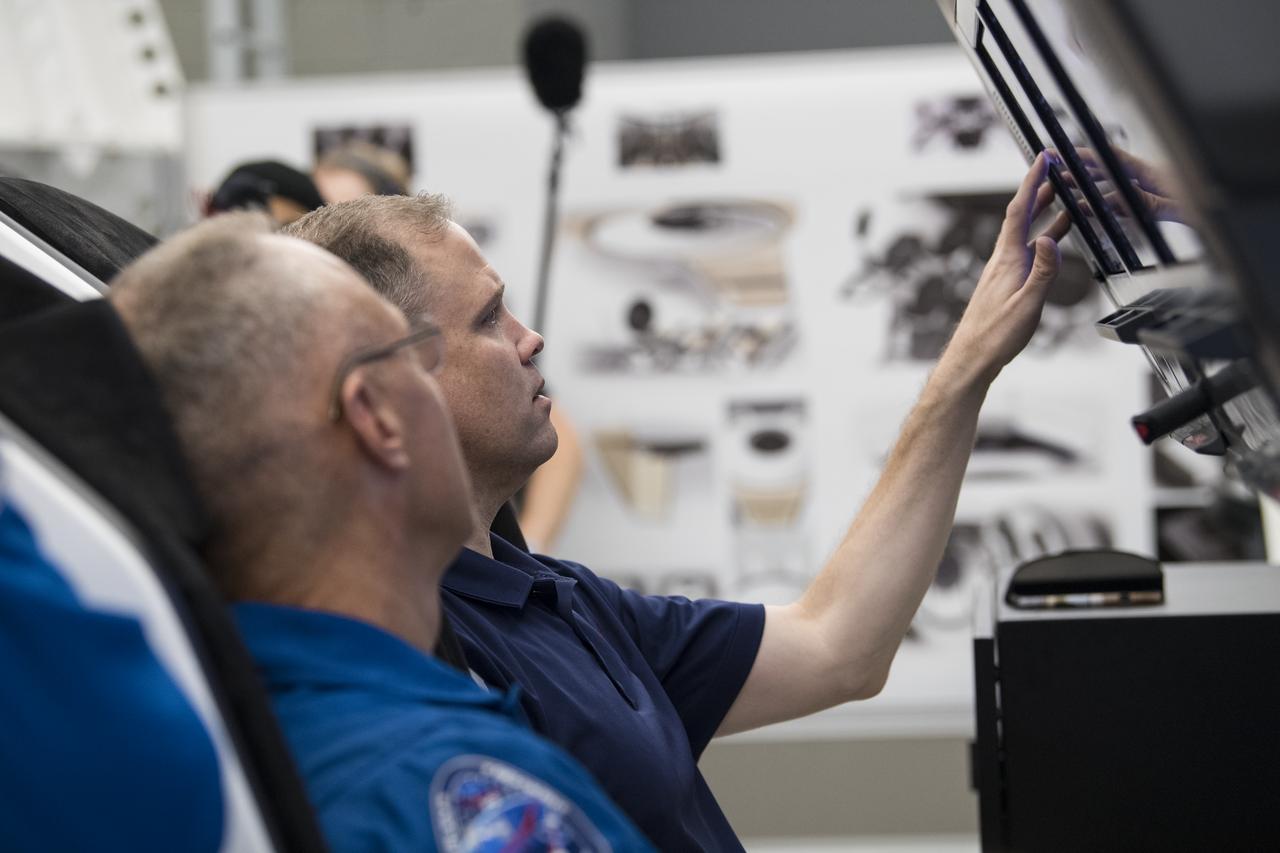
NASA Administrator Jim Bridenstine, right, participates in a crew Dragon flight simulation with NASA astronauts Doug Hurley, who will be flying aboard the Crew Dragon during the Demo-2 mission, at the SpaceX Headquarters, Thursday, Oct. 10, 2019 in Hawthorne, CA. Photo credit: (NASA/Aubrey Gemignani)
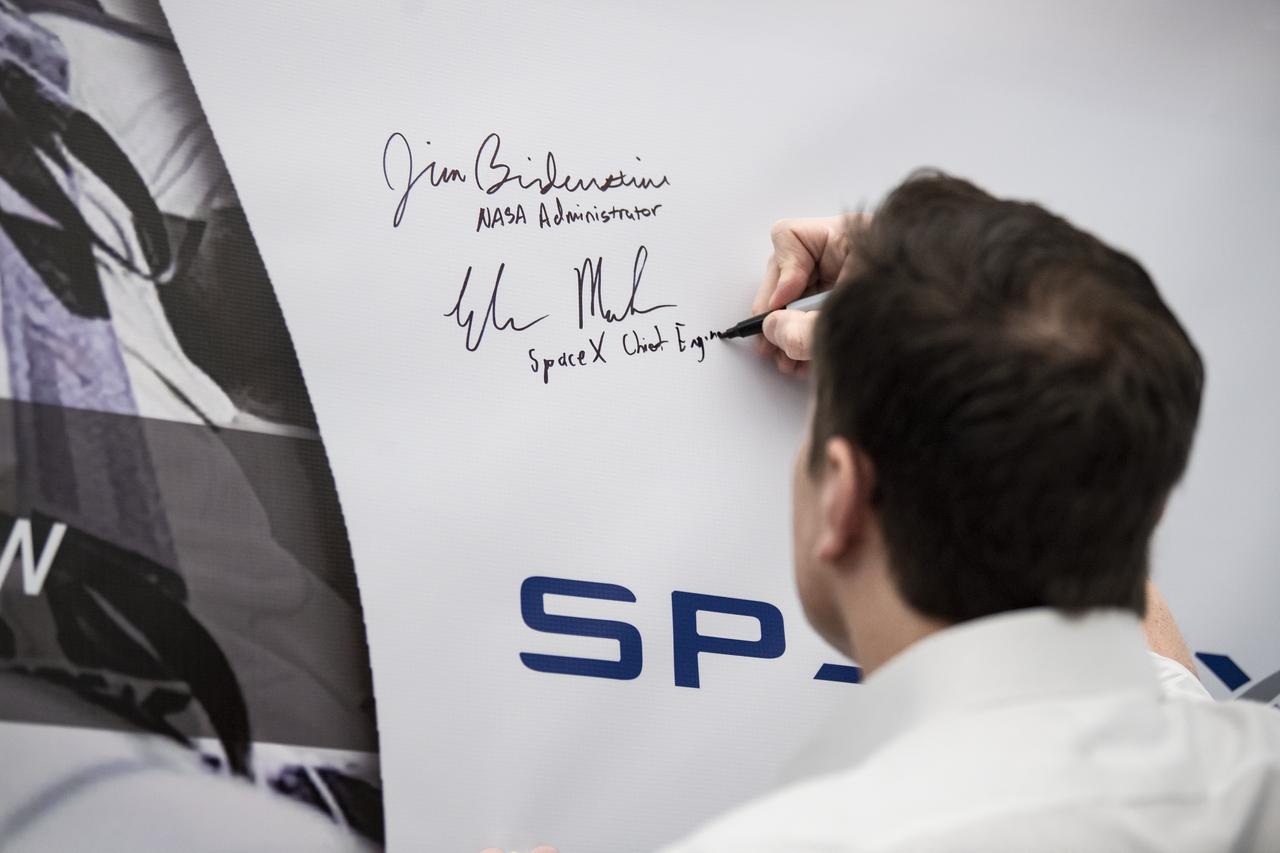
SpaceX Chief Engineer Elon Musk signs a banner after discussing progress on the Commercial Crew Program with NASA Administrator Jim Bridenstine at the SpaceX Headquarters, Thursday, Oct. 10, 2019 in Hawthorne, CA. Photo credit: (NASA/Aubrey Gemignani)
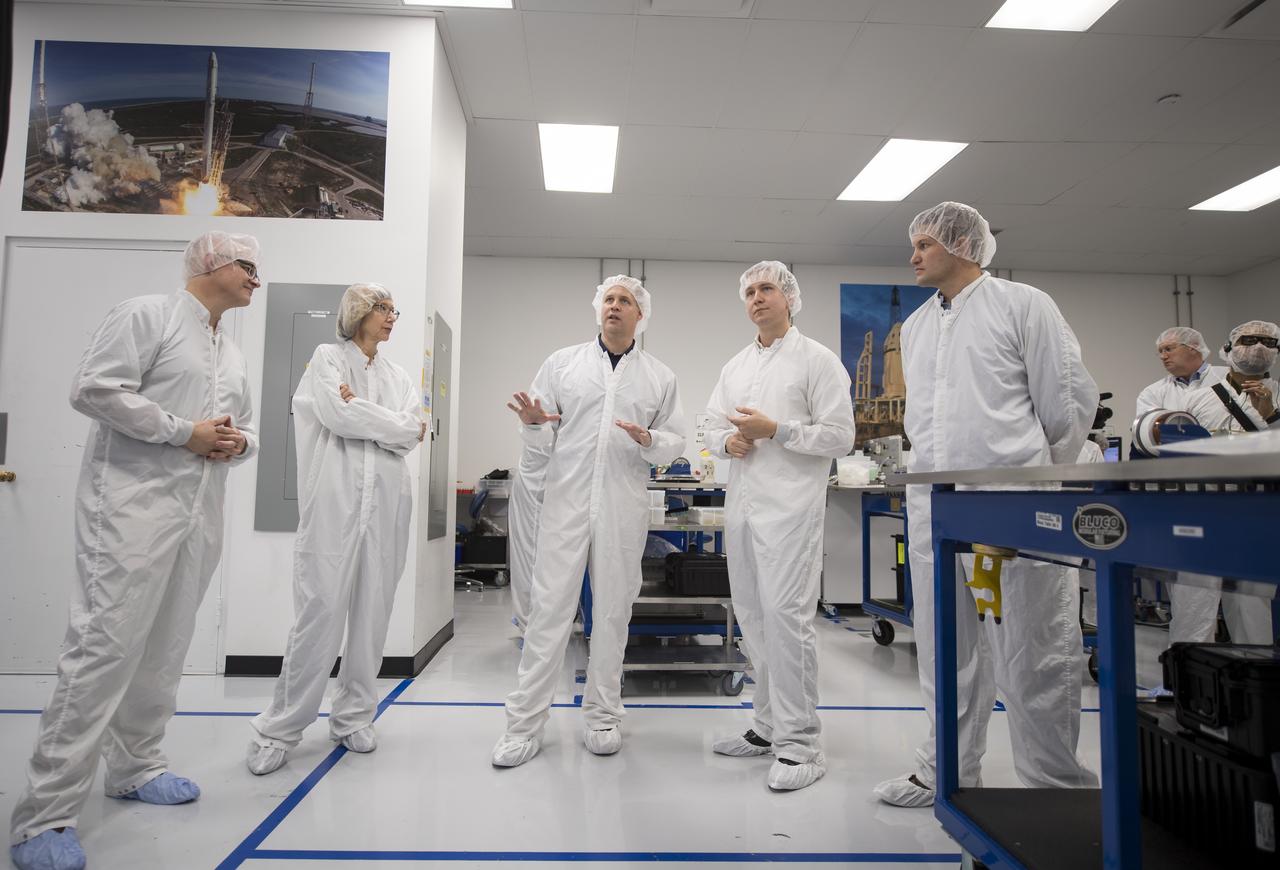
NASA Administrator Jim Bridenstine, center, speaks with SpaceX employees during a tour of the SpaceX Headquarters, Thursday, Oct. 10, 2019 in Hawthorne, CA. Photo credit: (NASA/Aubrey Gemignani)

SpaceX Chief Engineer Elon Musk answers a question from the press in front of the Crew Dragon that is being prepared for the Demo-2 mission, at SpaceX Headquarters, Thursday, Oct. 10, 2019 in Hawthorne, CA. Photo credit: (NASA/Aubrey Gemignani)
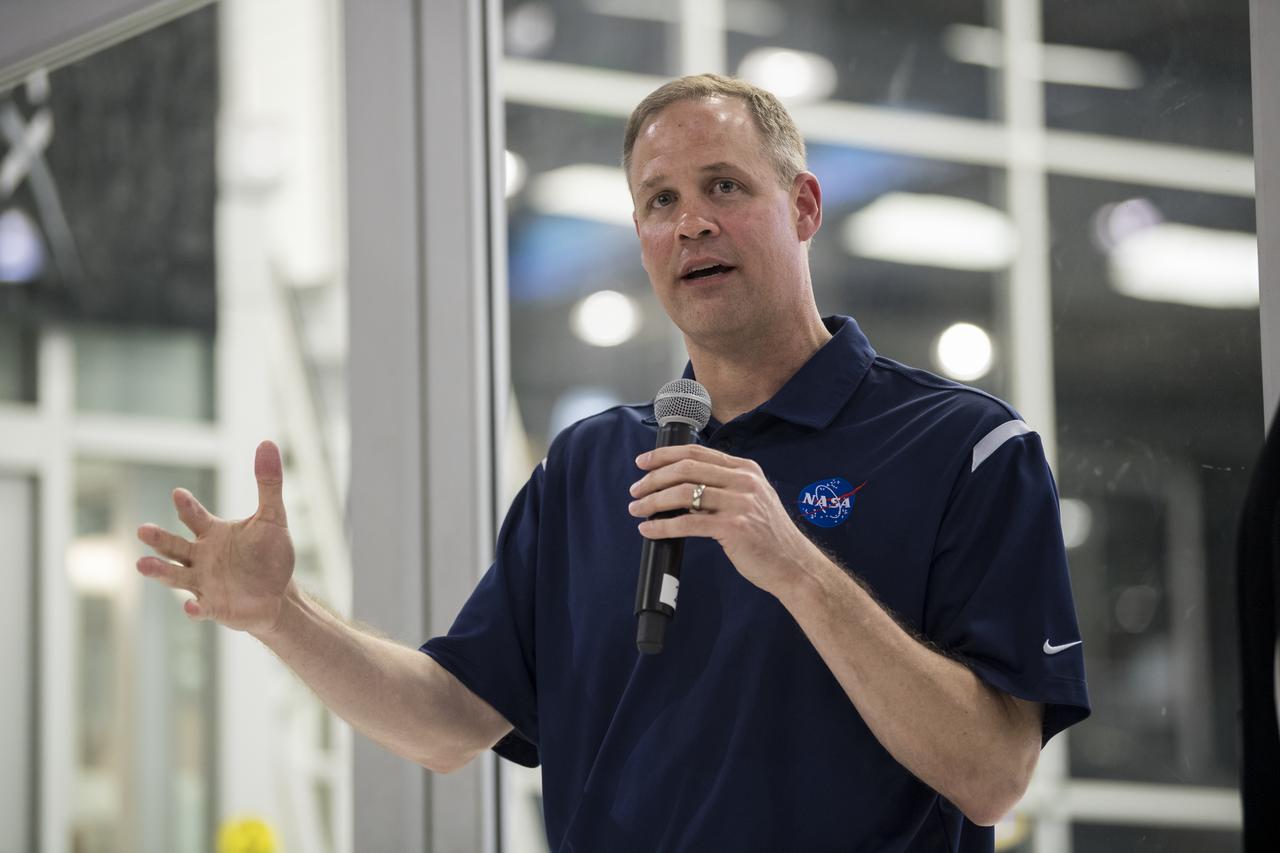
NASA Administrator Jim Bridenstine answers a question from the press in front of the Crew Dragon that is being prepared for the Demo-2 mission, at SpaceX Headquarters, Thursday, Oct. 10, 2019 in Hawthorne, CA. Photo credit: (NASA/Aubrey Gemignani)
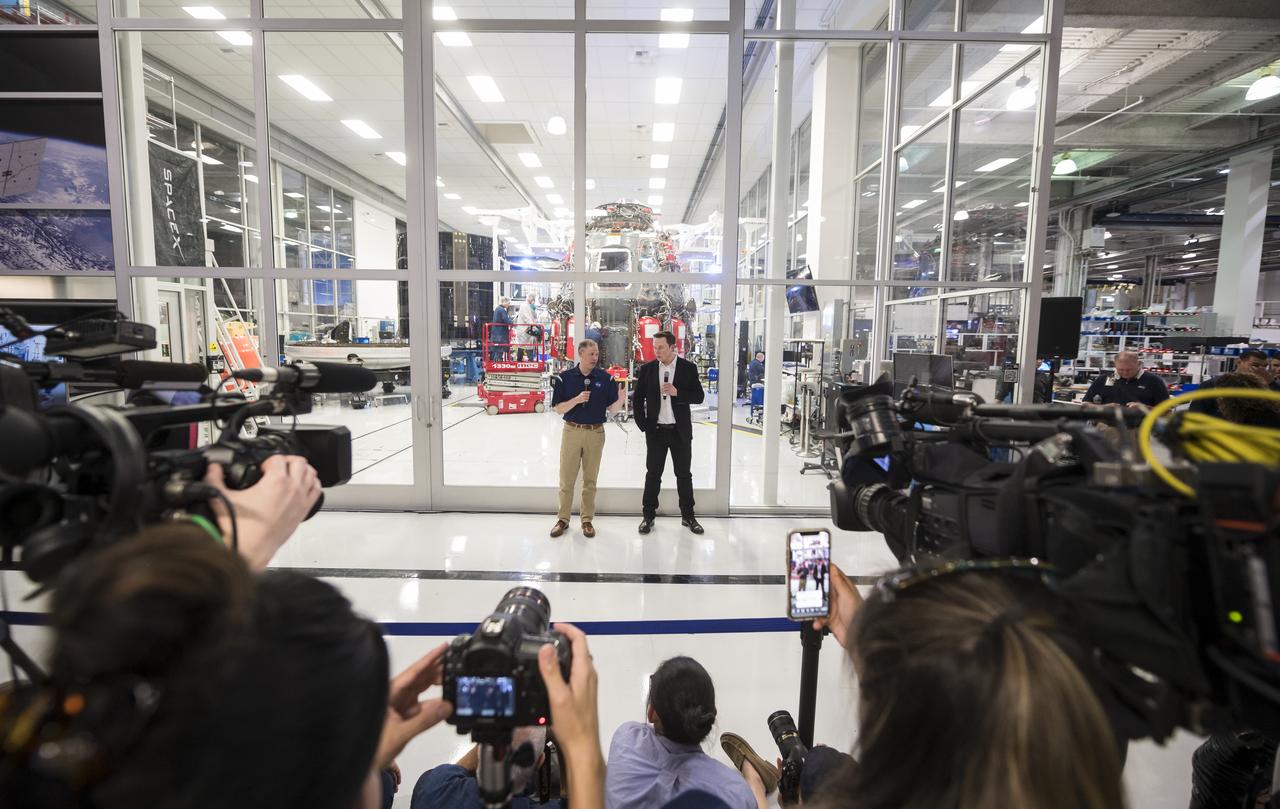
NASA Administrator Jim Bridenstine, left, and SpaceX Chief Engineer Elon Musk, right, speak to press in front of the Crew Dragon that is being prepared for the Demo-2 mission, at SpaceX Headquarters, Thursday, Oct. 10, 2019 in Hawthorne, CA. Photo credit: (NASA/Aubrey Gemignani)
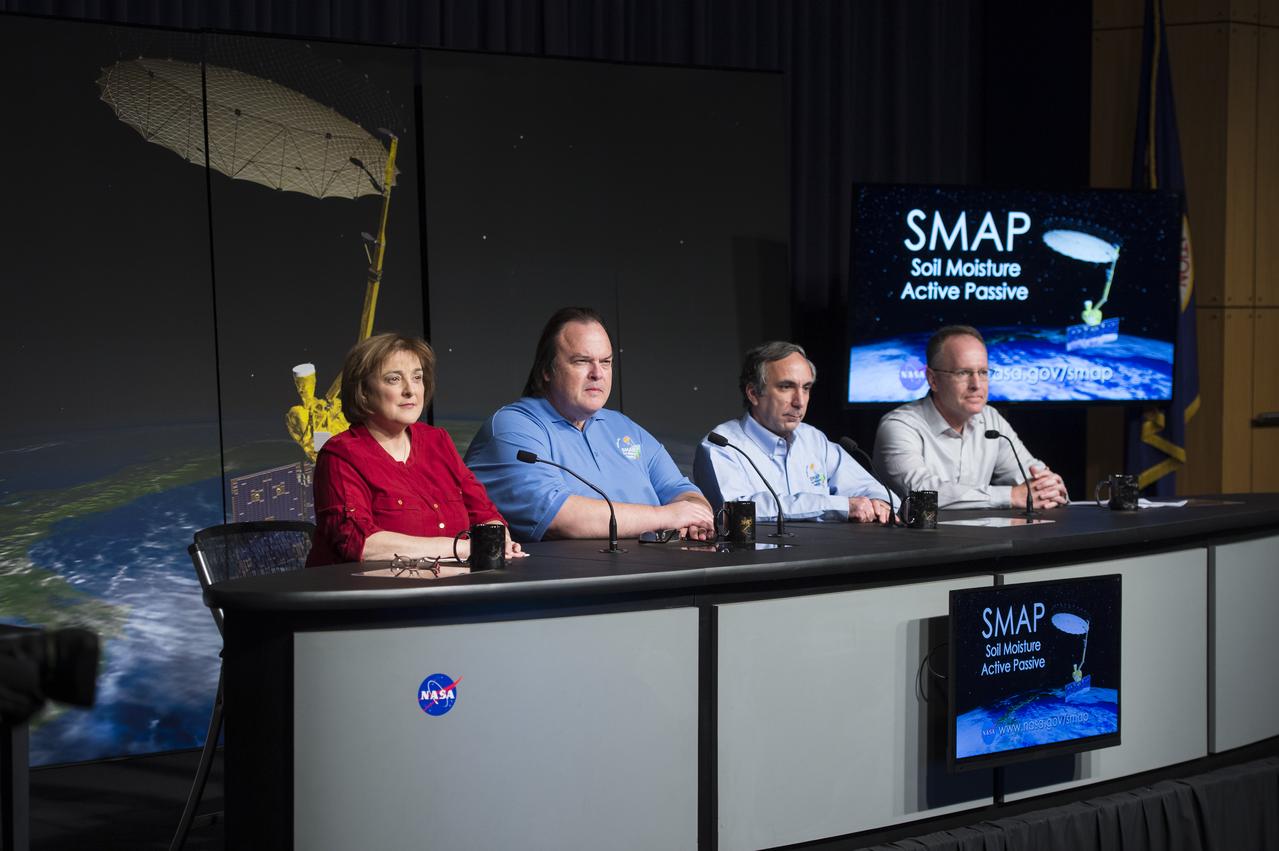
Christine Bonniksen, SMAP program executive with the Science Mission Directorate’s Earth Science Division, NASA Headquarters, left, Kent Kellogg, SMAP project manager, NASA Jet Propulsion Laboratory (JPL), second from left, Dara Entekhabi, SMAP science team lead, Massachusetts Institute of Technology, second from right, and Brad Doorn, SMAP applications lead, Science Mission Directorate’s Applied Sciences Program, NASA Headquarters, right, are seen during a briefing about the upcoming launch of the Soil Moisture Active Passive (SMAP) mission, Thursday, Jan. 08, 2015, at NASA Headquarters in Washington DC. The mission is scheduled for a Jan. 29 launch from Vandenberg Air Force Base in California, and will provide the most accurate, highest-resolution global measurements of soil moisture ever obtained from space. The data will be used to enhance scientists' understanding of the processes that link Earth's water, energy and carbon cycles. Photo Credit: (NASA/Aubrey Gemignani)
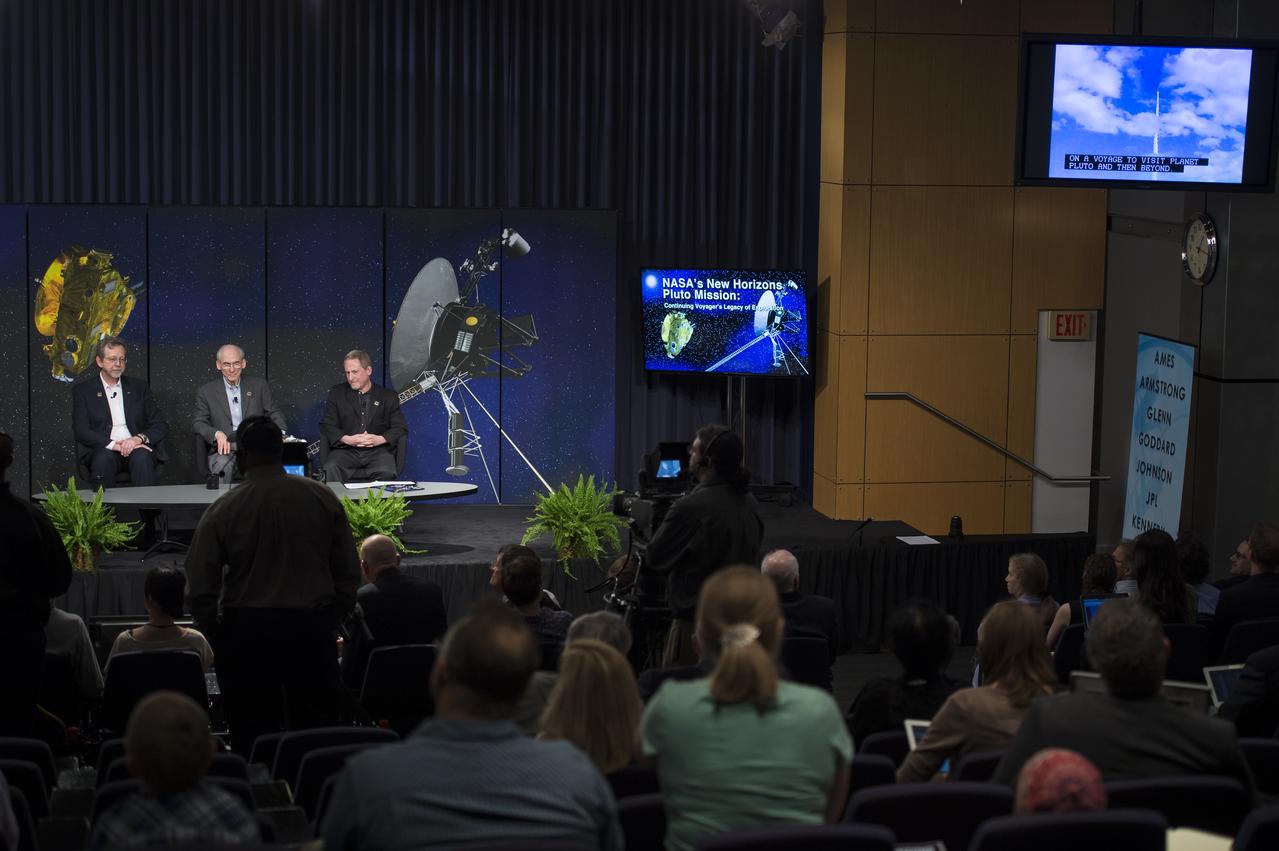
Dr. Jim Green, Dr. Ed Stone, and Dr. Alan Stern speak on a panel at the "New Horizons: The First Mission to the Pluto System and the Kuiper Belt" Event at NASA Headquarters in Washington, DC Monday, August 25, 2014. They discussed how the first images of Pluto and its moons would be captured by the New Horizons spacecraft during a five month long reconnaissance flyby study starting in the summer of 2015. New Horizons launched on January 19, 2006 and is scheduled to make its closest approach to Pluto on July 14, 2015. Photo Credit: (NASA/Aubrey Gemignani)

Christine Bonniksen, SMAP program executive with the Science Mission Directorate’s Earth Science Division, NASA Headquarters, left, Kent Kellogg, SMAP project manager, NASA Jet Propulsion Laboratory (JPL), second from left, Dara Entekhabi, SMAP science team lead, Massachusetts Institute of Technology, second from right, and Brad Doorn, SMAP applications lead, Science Mission Directorate’s Applied Sciences Program, NASA Headquarters, right, are seen during a briefing about the upcoming launch of the Soil Moisture Active Passive (SMAP) mission, Thursday, Jan. 08, 2015, at NASA Headquarters in Washington DC. The mission is scheduled for a Jan. 29 launch from Vandenberg Air Force Base in California, and will provide the most accurate, highest-resolution global measurements of soil moisture ever obtained from space. The data will be used to enhance scientists' understanding of the processes that link Earth's water, energy and carbon cycles. Photo Credit: (NASA/Aubrey Gemignani)
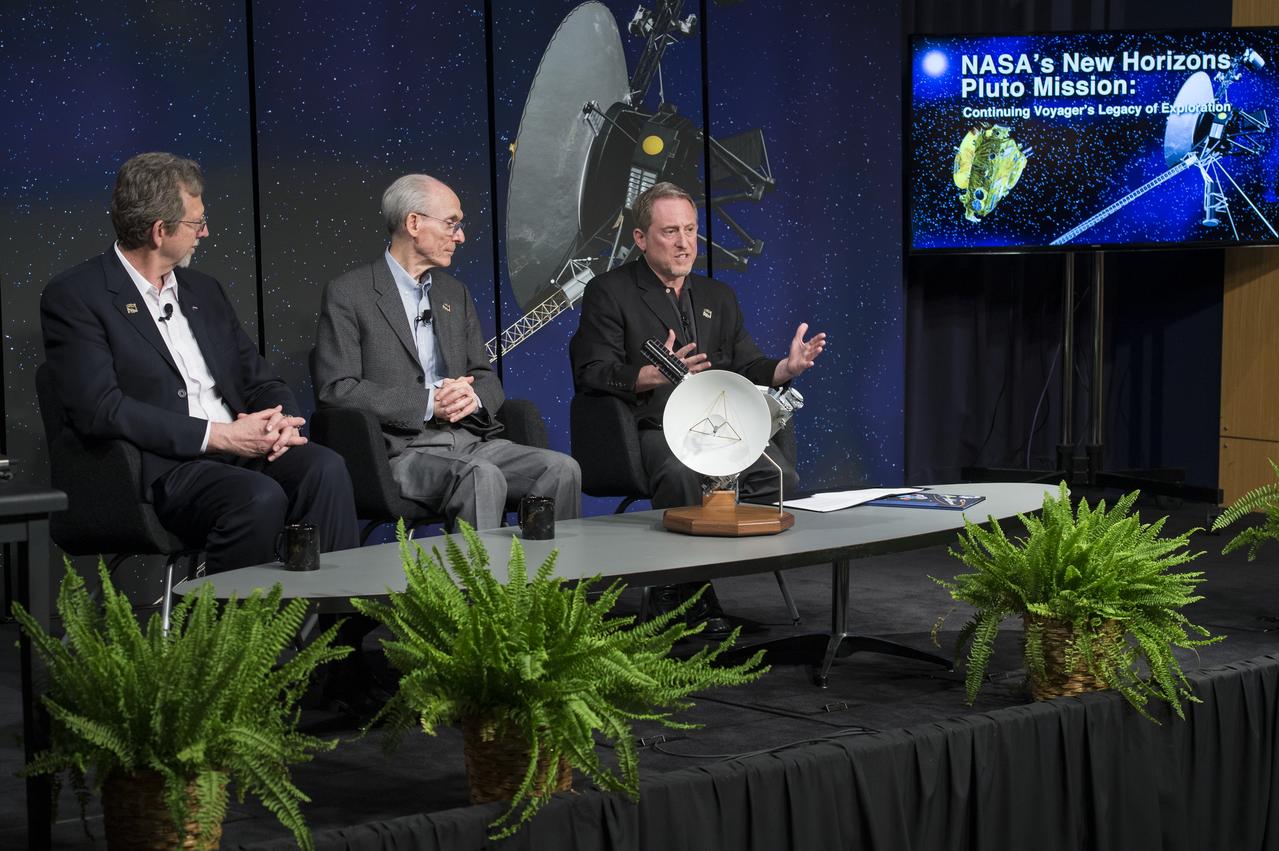
Dr. Jim Green, Dr. Ed Stone, and Dr. Alan Stern speak on a panel at the "New Horizons: The First Mission to the Pluto System and the Kuiper Belt" Event at NASA Headquarters in Washington, DC Monday, August 25, 2014. They discussed how the first images of Pluto and its moons would be captured by the New Horizons spacecraft during a five month long reconnaissance flyby study starting in the summer of 2015. New Horizons launched on January 19, 2006 and is scheduled to make its closest approach to Pluto on July 14, 2015. Photo Credit: (NASA/Aubrey Gemignani)
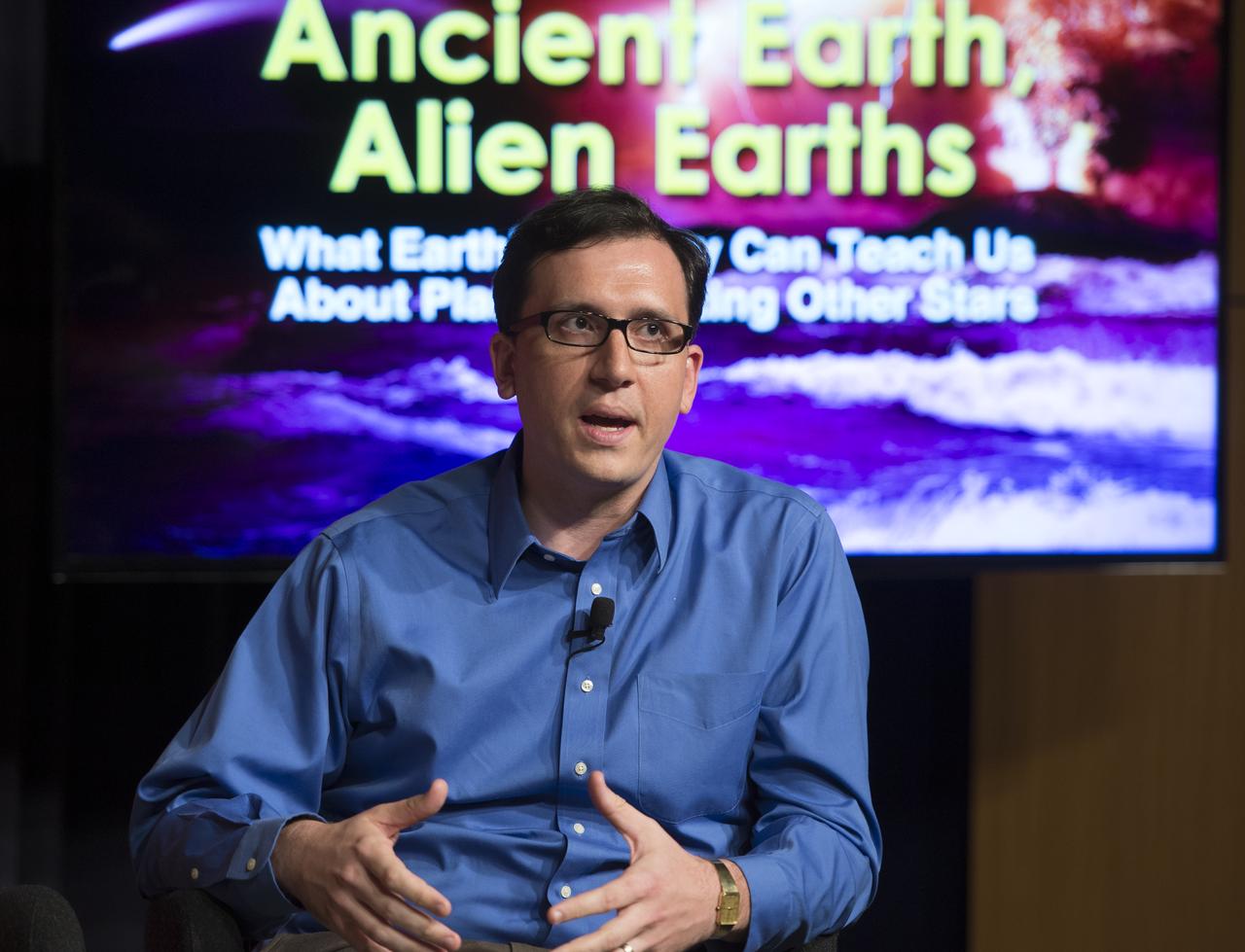
Dr. Shawn Domagal-Goldman, Research Space Scientist, NASA Goddard Space Flight Center, speaks on a panel at the “Ancient Earth, Alien Earths” Event at NASA Headquarters in Washington, DC Wednesday, August 20, 2014. The event was sponsored by NASA, the National Science Foundation (NSF), and the Smithsonian Institution and was moderated by Dr. David H. Grinspoon, Senior Scientist at the Planetary Science Institute. Six scientists discussed how research on early Earth could help guide our search for habitable planets orbiting other stars. Photo Credit: (NASA/Aubrey Gemignani)
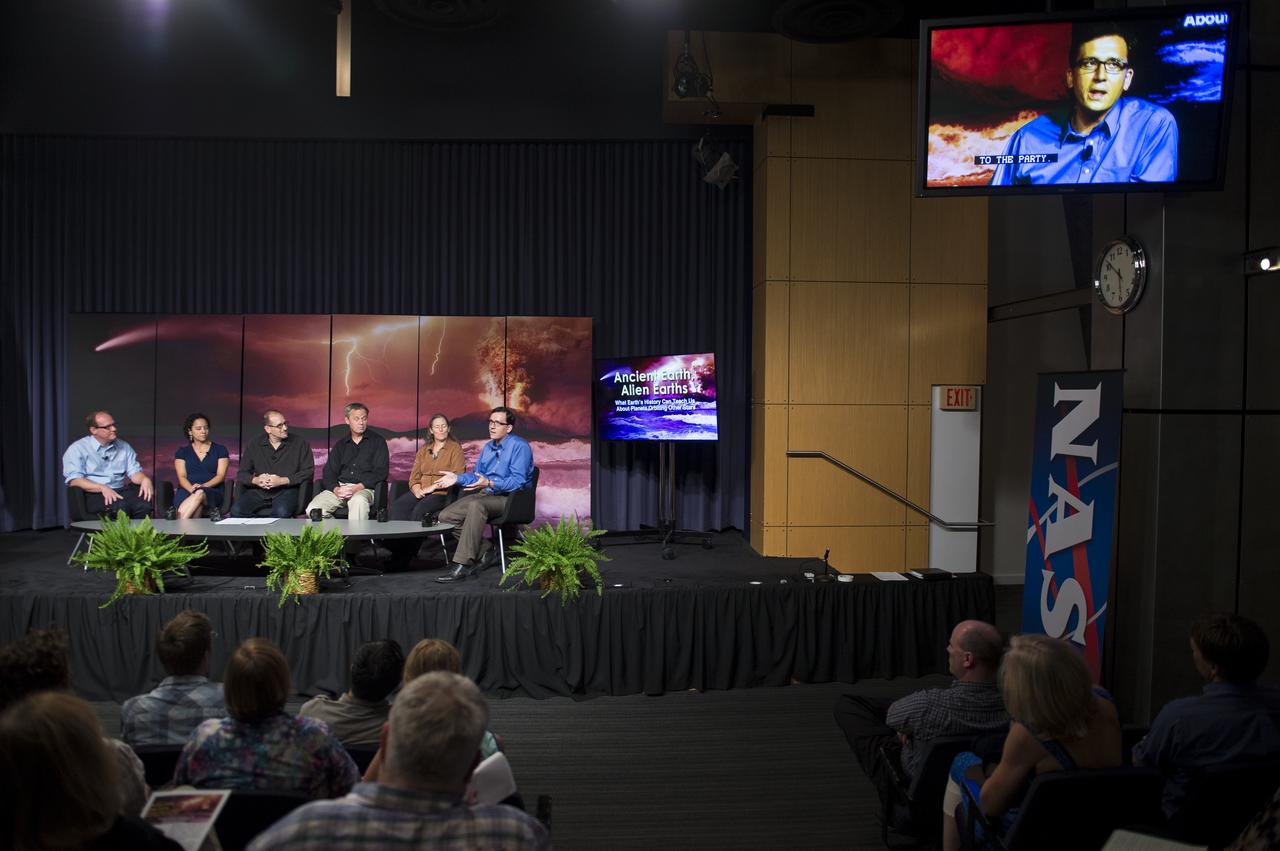
Dr. Shawn Domagal-Goldman, Research Space Scientist, NASA Goddard Space Flight Center, speaks on a panel at the “Ancient Earth, Alien Earths” Event at NASA Headquarters in Washington, DC Wednesday, August 20, 2014. The event was sponsored by NASA, the National Science Foundation (NSF), and the Smithsonian Institution and was moderated by Dr. David H. Grinspoon, Senior Scientist at the Planetary Science Institute. Six scientists discussed how research on early Earth could help guide our search for habitable planets orbiting other stars. Photo Credit: (NASA/Aubrey Gemignani)
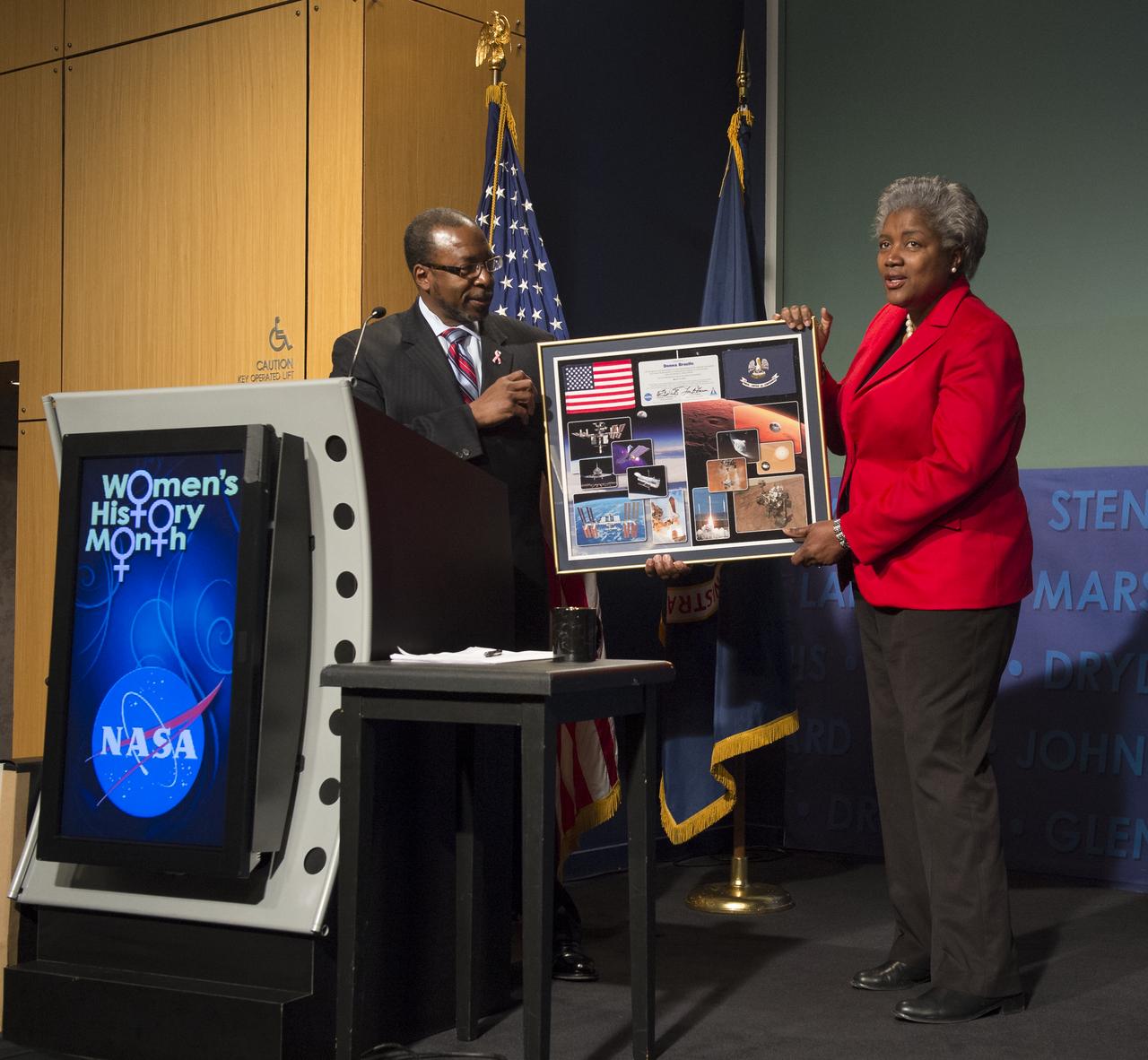
Dr. Woodrow Whitlow, Jr. (left), Associate Administrator for Mission Support Directorate at NASA Headquarters presents Donna Brazile, keynote speaker at a program celebrating National Women's History Month, with a framed NASA montage, Thursday, March 14, 2013 in Washington. The theme of theprogram was "Women Inspiring Innovation Through Imagination," and was sponsored by the HQ Equal Opportunity and Diversity Management Division at NASA Headquarters. The event also commemorates the 100th Anniversary of the Women's Suffrage March on Washington. Photo Credit: (NASA/Carla Cioffi)
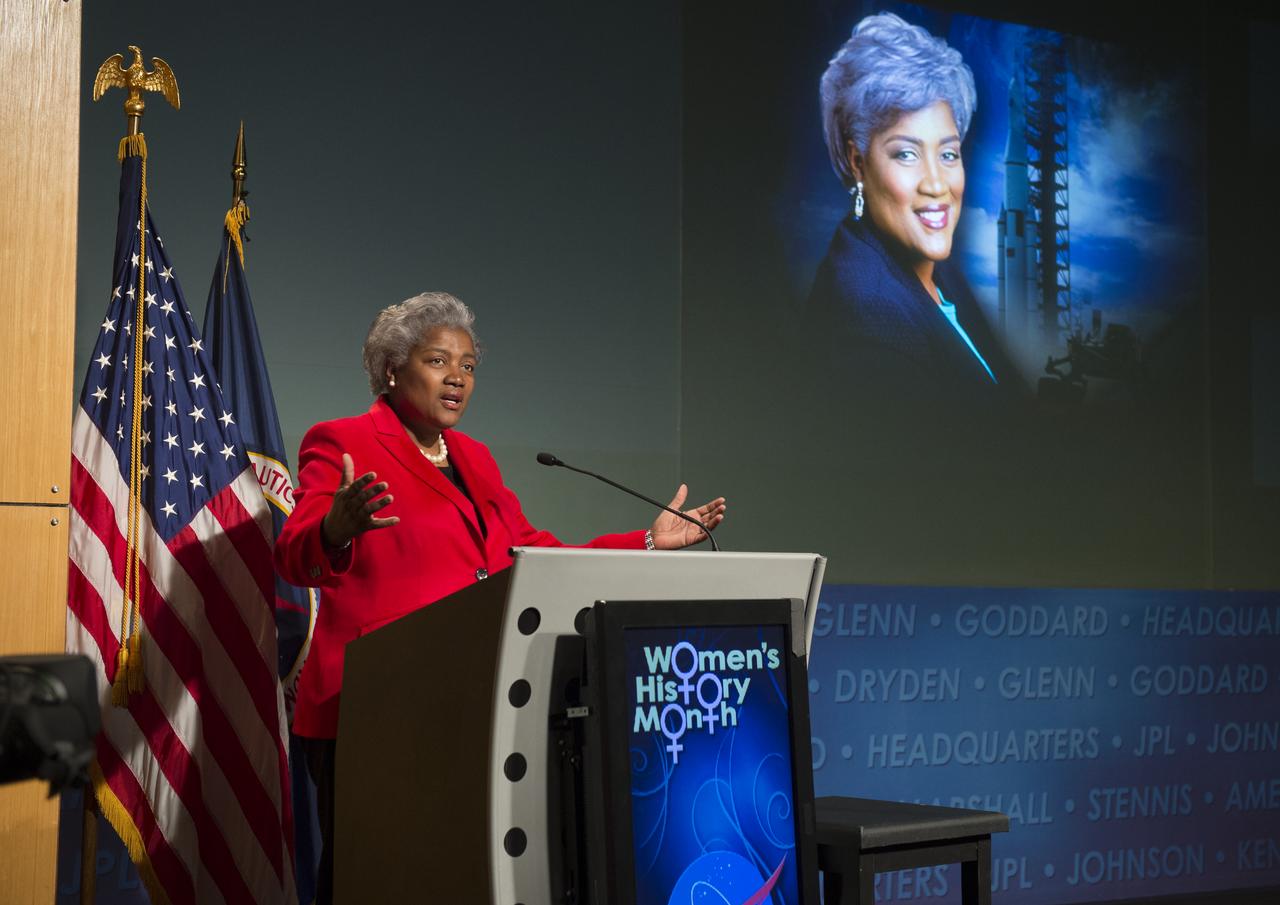
Donna Brazile, adjunct professor at Georgetown University, syndicated newspaper columnist and vice chair of voter registration and participation at the Democratic National Committee (DNC), gives the keynote speech at a program celebrating National Women's History Month at NASA Headquarters, Thursday, March 14, 2013 in Washington. The theme of this year's program was "Women Inspiring Innovation Through Imagination." The program was sponsored by the HQ Equal Opportunity and Diversity Management Division at NASA Headquarters and commemorates the 100th Anniversary of the Women's Suffrage March on Washington. Photo Credit: (NASA/Carla Cioffi)
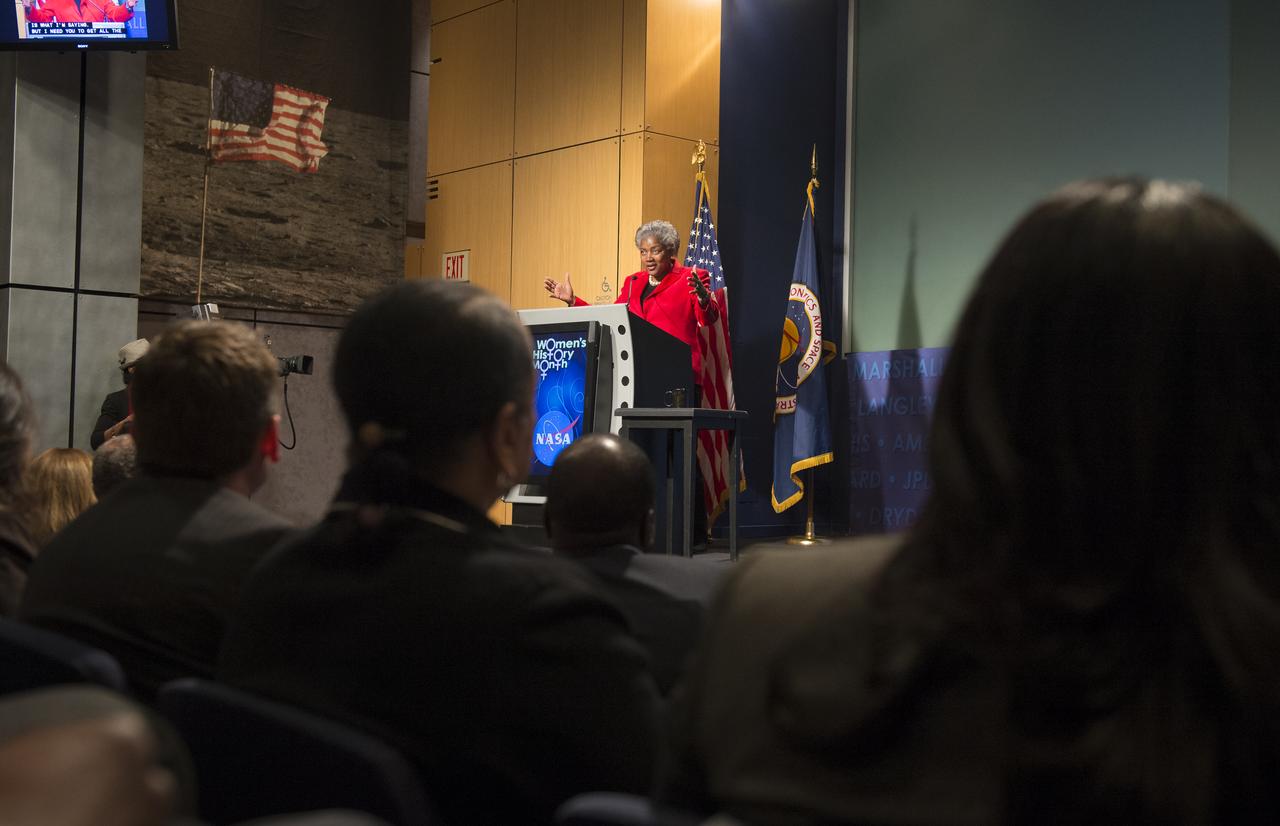
Donna Brazile, adjunct professor at Georgetown University, syndicated newspaper columnist and vice chair of voter registration and participation at the Democratic National Committee (DNC), gives the keynote speech at a program celebrating National Women's History Month at NASA Headquarters, Thursday, March 14, 2013 in Washington. The theme of this year's program was "Women Inspiring Innovation Through Imagination." The program was sponsored by the HQ Equal Opportunity and Diversity Management Division at NASA Headquarters and commemorates the 100th Anniversary of the Women's Suffrage March on Washington. Photo Credit: (NASA/Carla Cioffi)

Donna Brazile, adjunct professor at Georgetown University, syndicated newspaper columnist and vice chair of voter registration and participation at the Democratic National Committee (DNC), gives the keynote speech at a program celebrating National Women's History Month at NASA Headquarters, Thursday, March 14, 2013 in Washington. The theme of this year's program was "Women Inspiring Innovation Through Imagination." The program was sponsored by the HQ Equal Opportunity and Diversity Management Division at NASA Headquarters and commemorates the 100th Anniversary of the Women's Suffrage March on Washington. Photo Credit: (NASA/Carla Cioffi)
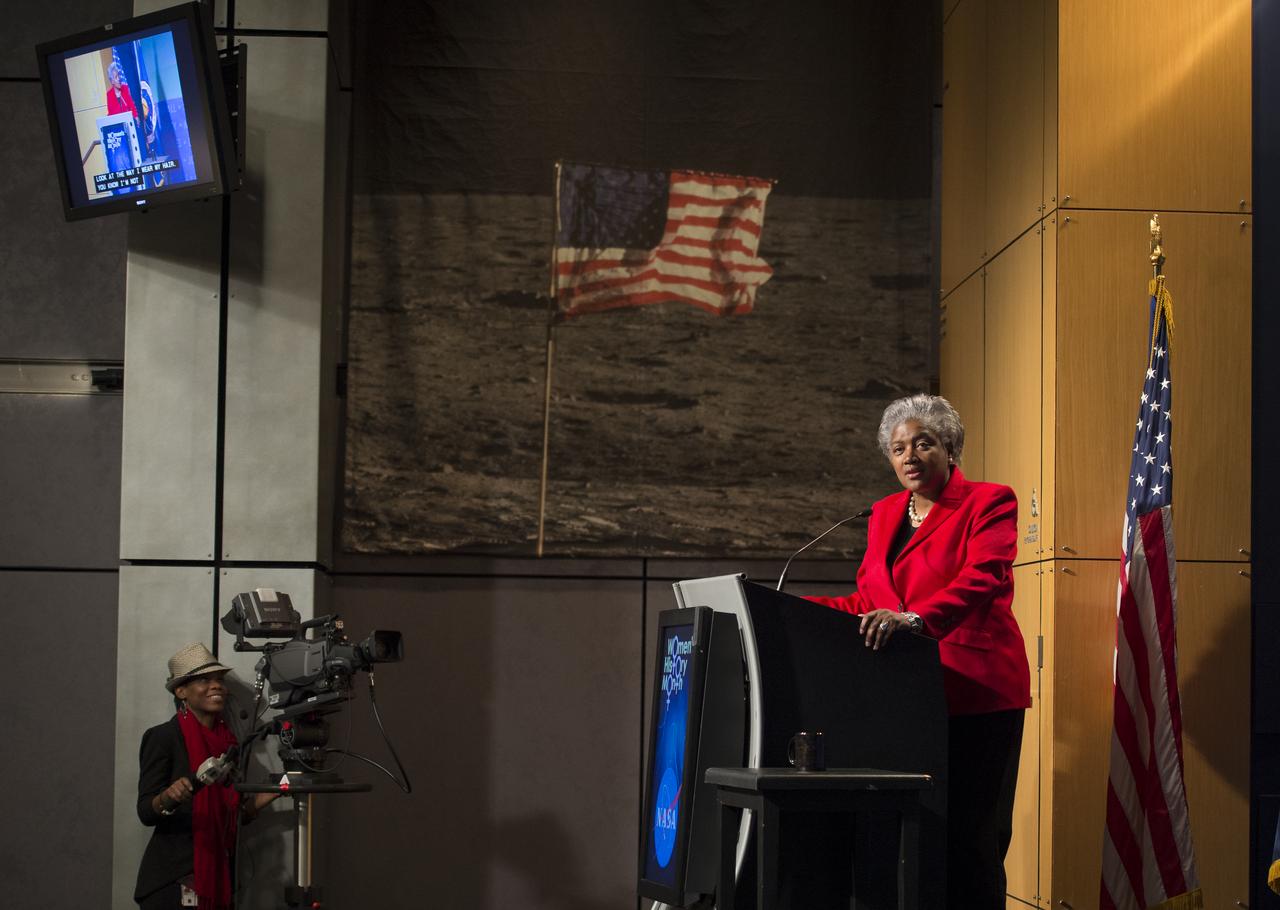
Donna Brazile, adjunct professor at Georgetown University, syndicated newspaper columnist and vice chair of voter registration and participation at the Democratic National Committee (DNC), gives the keynote speech at a program celebrating National Women's History Month at NASA Headquarters, Thursday, March 14, 2013 in Washington. The theme of this year's program was "Women Inspiring Innovation Through Imagination." The program was sponsored by the HQ Equal Opportunity and Diversity Management Division at NASA Headquarters and commemorates the 100th Anniversary of the Women's Suffrage March on Washington. Photo Credit: (NASA/Carla Cioffi)

Donna Brazile, adjunct professor at Georgetown University, syndicated newspaper columnist and vice chair of voter registration and participation at the Democratic National Committee (DNC), gives the keynote speech at a program celebrating National Women's History Month at NASA Headquarters, Thursday, March 14, 2013 in Washington. The theme of this year's program was "Women Inspiring Innovation Through Imagination." The program was sponsored by the HQ Equal Opportunity and Diversity Management Division at NASA Headquarters and commemorates the 100th Anniversary of the Women's Suffrage March on Washington. Photo Credit: (NASA/Carla Cioffi)
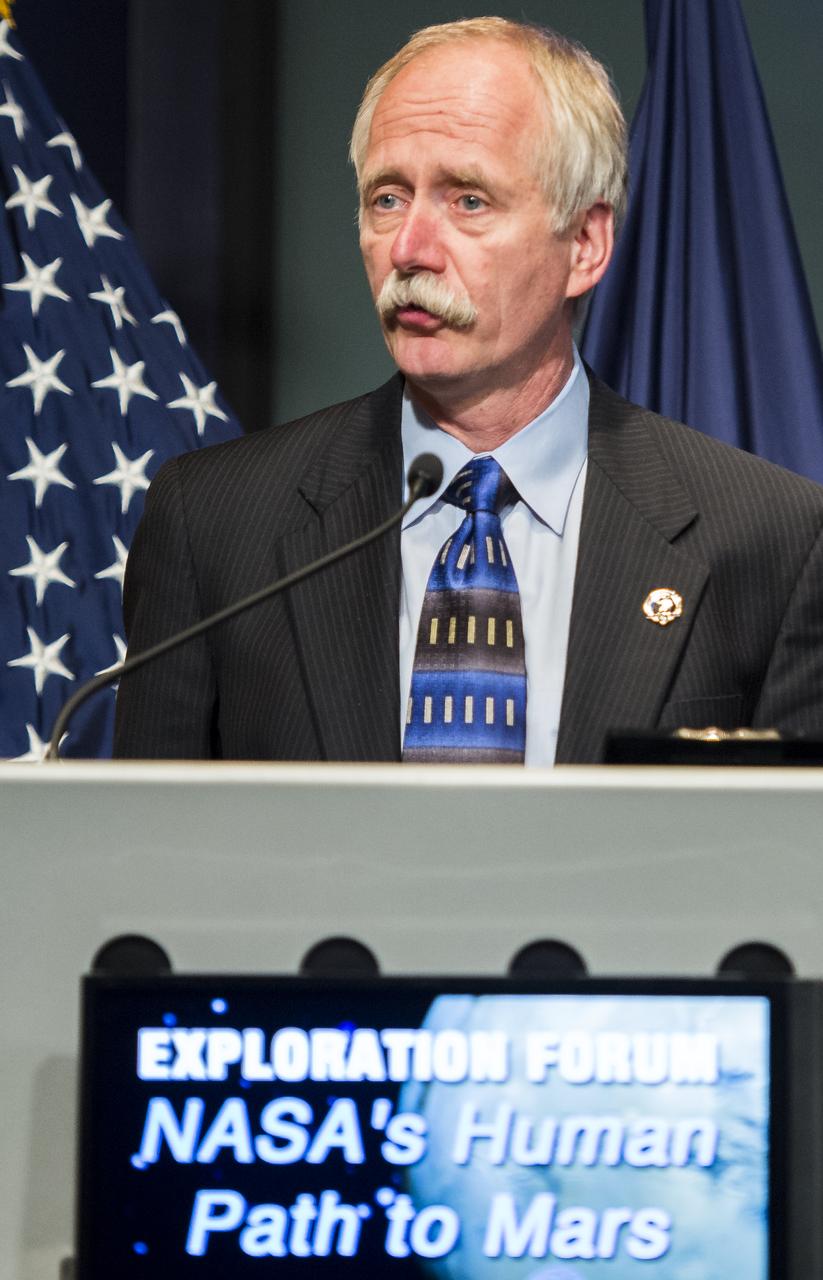
William Gerstenmaier, NASA Associate Administrator for Human Exploration and Operations, speaks during an Exploration Forum showcasing NASA's human exploration path to Mars in the James E. Webb Auditorium at NASA Headquarters on Tuesday, April 29, 2014. Photo Credit: (NASA/Joel Kowsky)