
NASA Honors awards medal - Outstanding Leadership
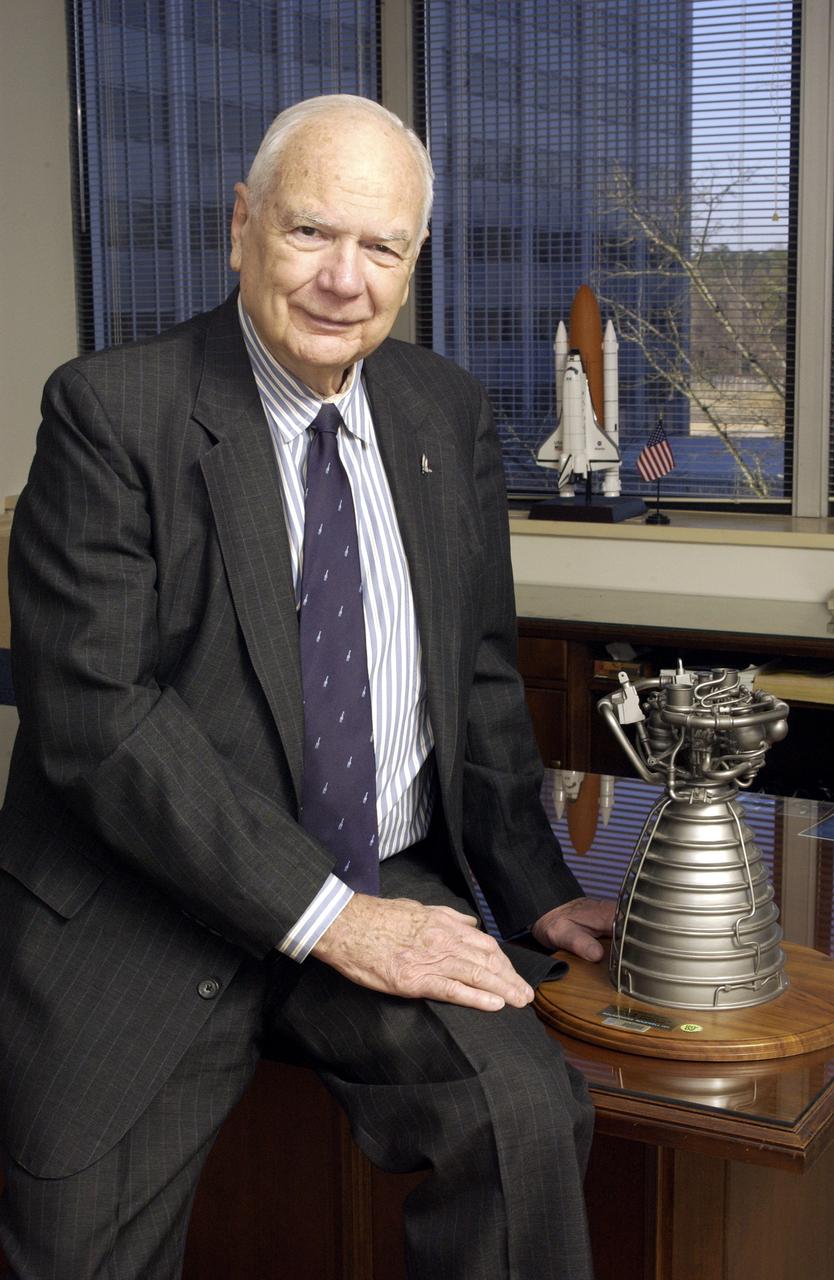
After four decades of contribution to America's space program, George Hopson, manager of the Space Shuttle Main Engine Project at Marshall Space Flight Center, accepted NASA's Distinguished Service Medal. Awarded to those who, by distinguished ability or courage, have made a personal contribution to the NASA mission, NASA's Distinguished Service Medal is the highest honor NASA confers. Hopson's contributions to America's space program include work on the country's first space station, Skylab; the world's first reusable space vehicle, the Space Shuttle; and the International Space Station. Hopson joined NASA's Marshall team as chief of the Fluid and Thermal Systems Branch in the Propulsion Division in 1962, and later served as chief of the Engineering Analysis Division of the Structures and Propulsion Laboratory. In 1979, he was named director of Marshall's Systems Dynamics Laboratory. In 1981, he was chosen to head the Center's Systems Analysis and Integration. Seven years later, in 1988, Hopson was appointed associate director for Space Transportation Systems and one year later became the manager of the Space Station Projects Office at Marshall. In 1994, Hopson was selected as deputy director for Space Systems in the Science and Engineering Directorate at Marshall where he supervised the Chief Engineering Offices of both marned and unmanned space systems. He was named manager of the Space Shuttle Main Engine Project in 1997. In addition to the Distinguished Service Medal, Hopson has also been recognized with the NASA Outstanding Leadership Medal and NASA's Exceptional Service Medal.
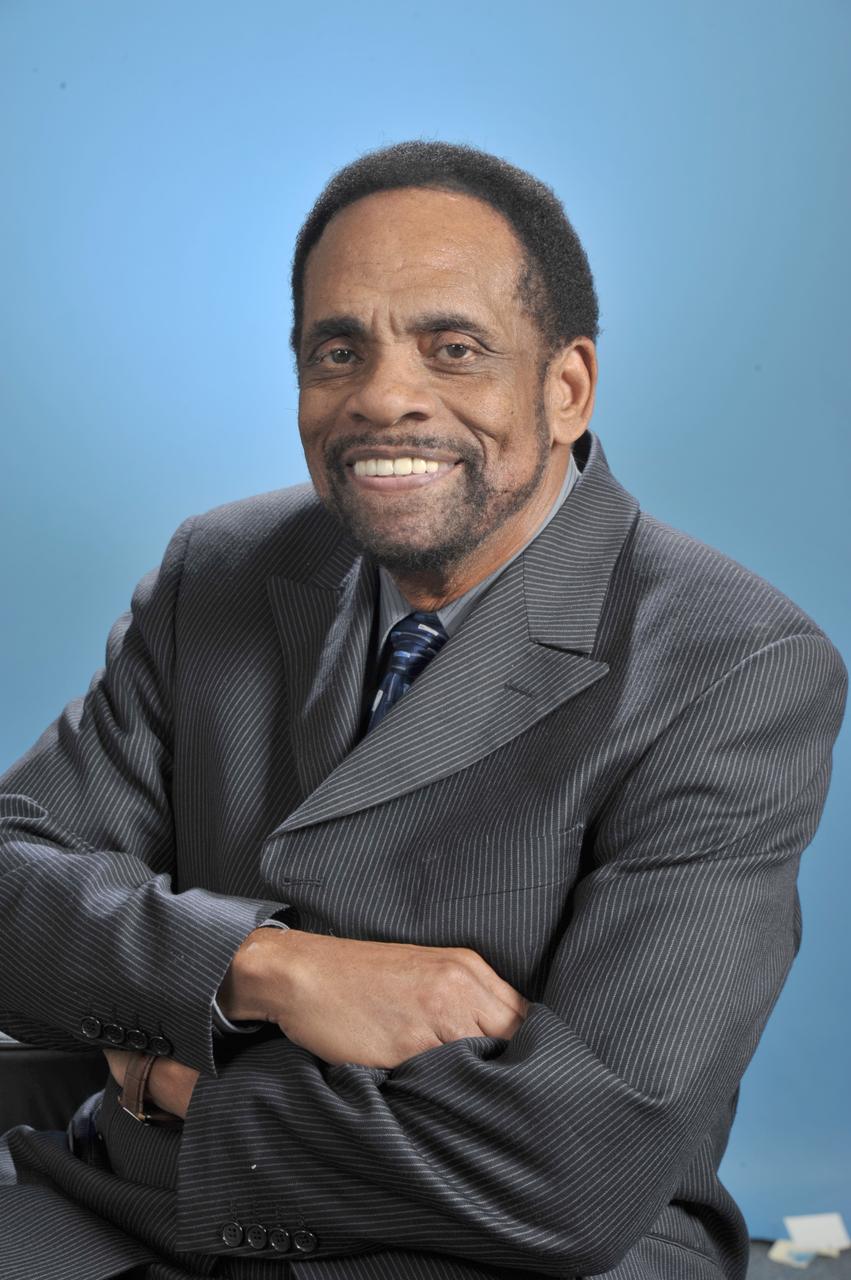
George Edward Alcorn, a pioneering African American physicist and engineer, is credited with dozens of inventions over the course of a distinguished career in private industry and at NASA, for which he earned eight patents. Alcorn joined Goddard Space Flight Center in 1978 and held numerous leadership roles in both research and administration until his retirement in 2012. One of Alcorn’s signature accomplishments at NASA was developing a smaller, more sensitive X-ray spectrometer, changing the way scientists were able to use the powerful tool in deep space exploration missions. His tool, which uses thermomigration of aluminum, can gather information about remote solar systems; for the invention, Alcorn was honored as the NASA Goddard Inventor of the Year in 1984. In addition to his groundbreaking contributions as an inventor and innovator, Alcorn also championed efforts to hire more women and minorities at Goddard, for which he was honored with the NASA Equal Opportunity Medal, and taught students at Howard University and the University of the District of Columbia. He also founded the Saturday Academy, an honors program in math and science for underserved middle school students. He earned many accolades over the years from NASA and beyond. These include, in 2010, the Robert H. Goddard Award for Merit, for his outstanding innovation and significant contributions to space science, technology, and NASA programs, as well as recognition in 1994 at Howard University’s Heritage of Greatness awards ceremony. He was also inducted into the National Inventor’s Hall of Fame in 2015. Alcorn passed away in 2024 at the age of 84.