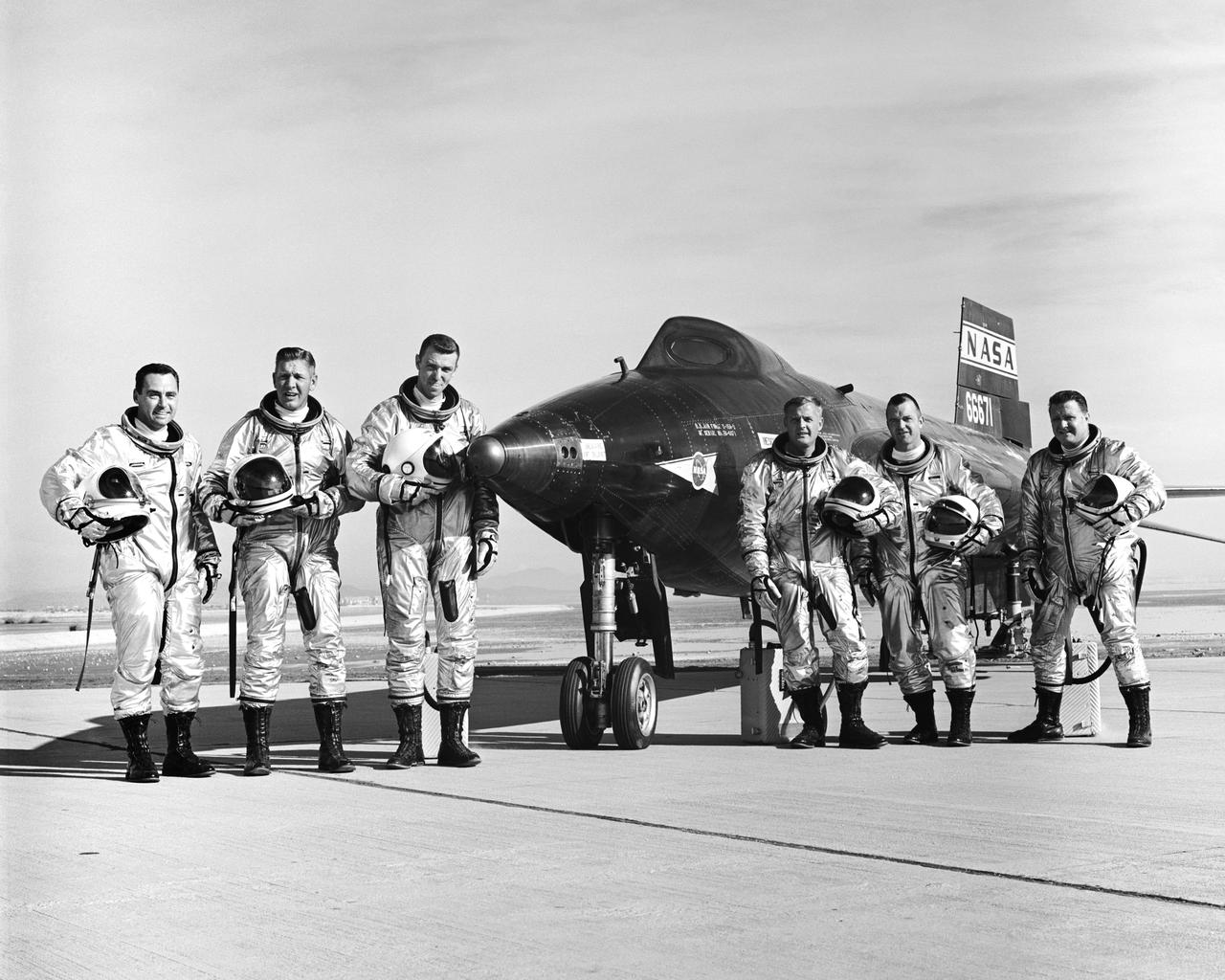
X-15 Pilots, Left to Right: Air Force pilot William J. "Pete" Knight, Air Force Major Robert A. Rushworth, Air Force Captain Joseph H. Engle, NASA pilot Milton O. Thompson, NASA pilot Bill Dana, and NASA pilot John B. "Jack" McKay.

First Robotics Team 122, NASA Knights share about STEM and their robotics program during an aerospace technical field career day event at in the in gym at Langley Research Center, Hampton Va., Wednesday, April 29, 2026. Photo Credit (NASA/Ryan H. Hill)

First Robotics Team 122, NASA Knights share about STEM and their robotics program during an aerospace technical field career day event at in the in gym at Langley Research Center, Hampton Va., Wednesday, April 29, 2026. Photo Credit (NASA/Ryan H. Hill)

First Robotics Team 122, NASA Knights share about STEM and their robotics program during an aerospace technical field career day event at in the in gym at Langley Research Center, Hampton Va., Wednesday, April 29, 2026. (NASA/Mark L Knopp)

First Robotics Team 122, NASA Knights share about STEM and their robotics program during an aerospace technical field career day event at in the in gym at Langley Research Center, Hampton Va., Wednesday, April 29, 2026. Photo Credit (NASA/Ryan H. Hill)
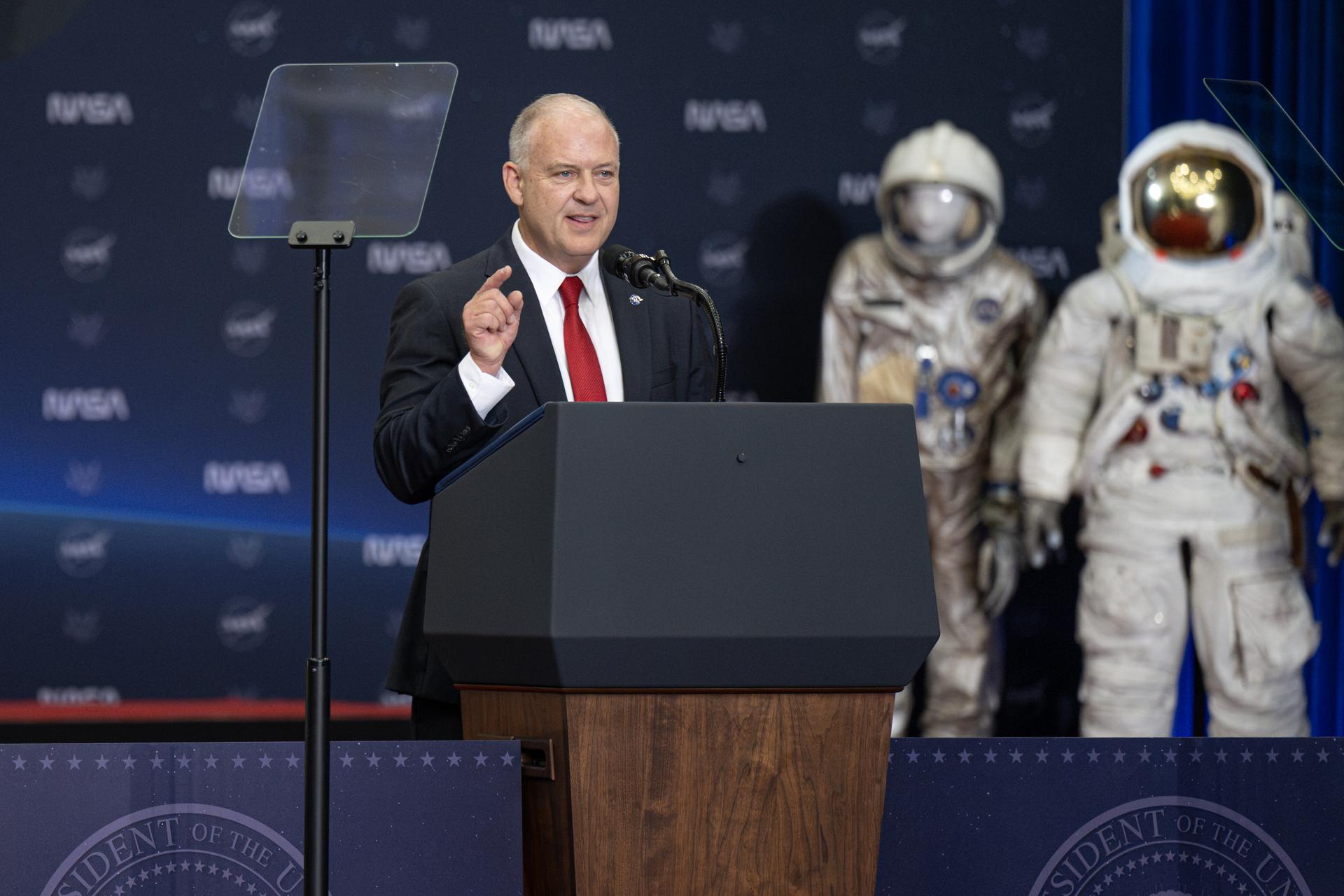
Norm Knight, director of NASA's Flight Operations Directorate, speaks during an event to award the Congressional Space Medal of Honor to the Artemis II crew, Friday, Aug. 28, 2026, at NASA's Johnson Space Center in Houston, Texas. The Artemis II crew completed their approximately ten-day mission around the Moon in April 2026 and are the 31st, 32nd, 33rd, and 34th astronauts to receive the award. Photo Credit: (NASA/John Kraus)
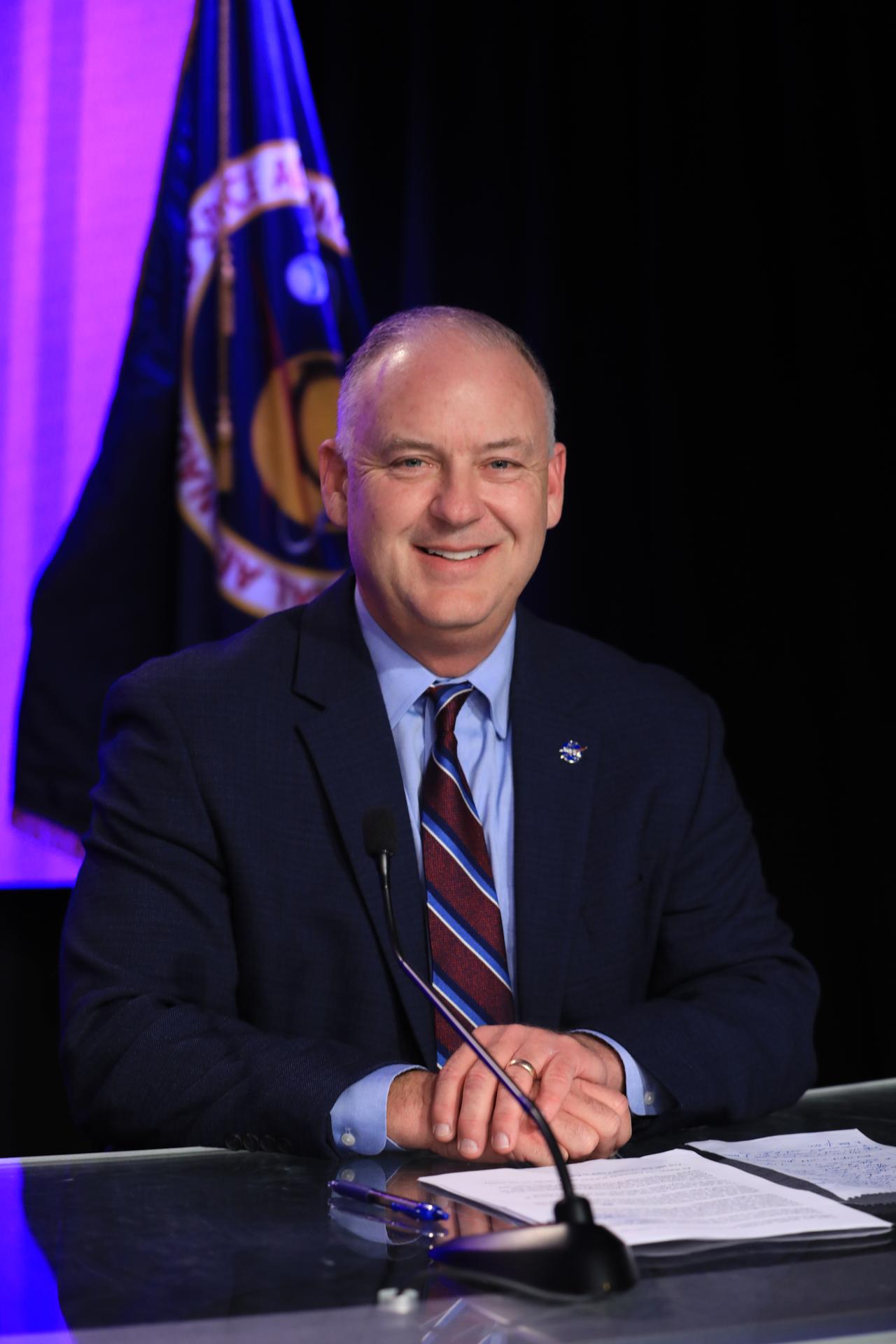
Norm Knight, director, Flight Operations Directorate, participates in a post-Flight Readiness Review news conference for the Artemis II test flight inside the John Holliman Auditorium of the NASA News Center at the agency’s Kennedy Space Center in Florida on Thursday, March 12, 2026. The review is an assessment of the readiness of NASA’s SLS (Space Launch System) rocket and Orion spacecraft to support the Artemis II test flight as four astronauts journey around the Moon and return to Earth.
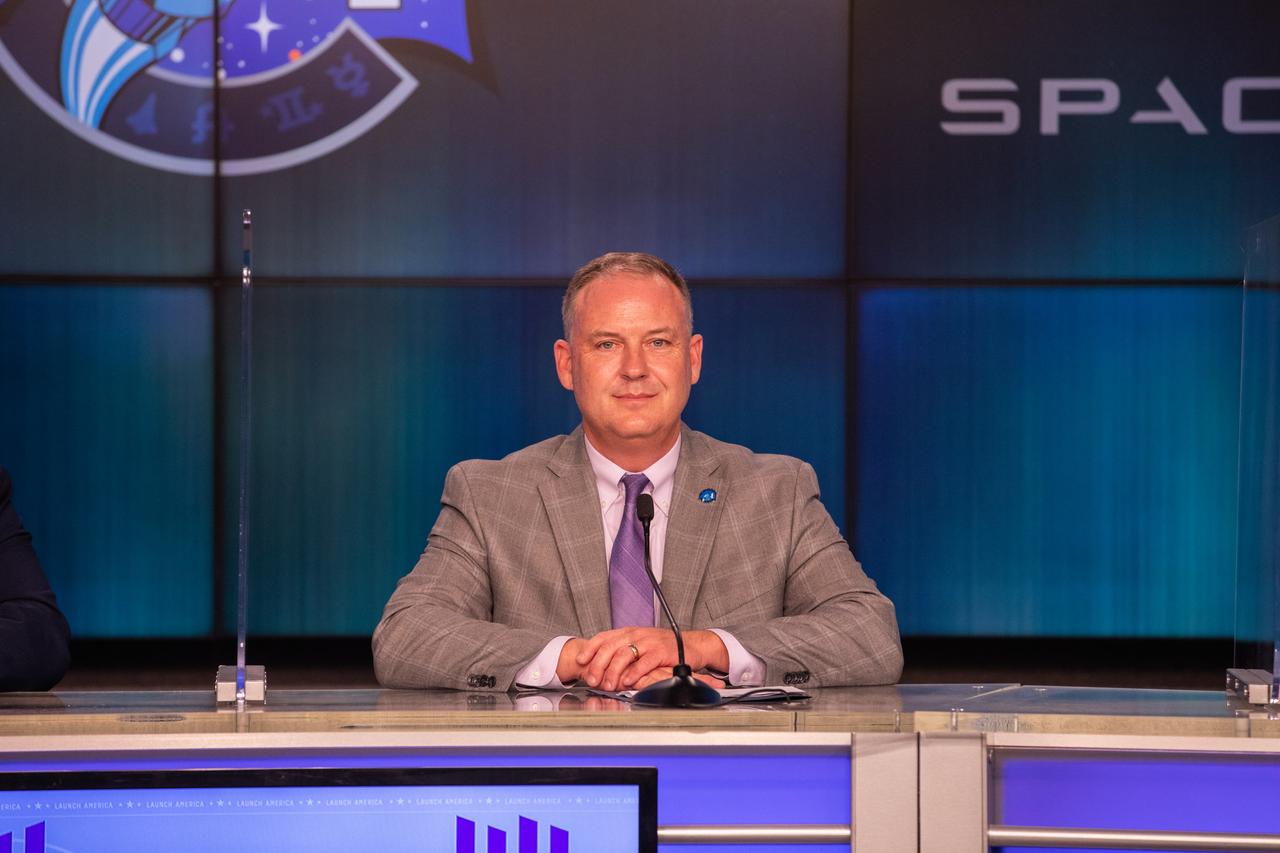
Norm Knight, deputy manager, Flight Operations Directorate, Johnson Space Center, answers questions during a virtual prelaunch news conference Nov. 13, 2020, inside the Press Site auditorium at NASA’s Kennedy Space Center in Florida ahead of the agency’s SpaceX Crew-1 launch. Crew-1 is the first regular crew mission of a U.S. commercial spacecraft with astronauts to the International Space Station as part of NASA’s Commercial Crew Program. The SpaceX Crew Dragon Resilience capsule will launch atop the company’s Falcon 9 rocket from Launch Complex 39A to the space station for a six-month science mission.
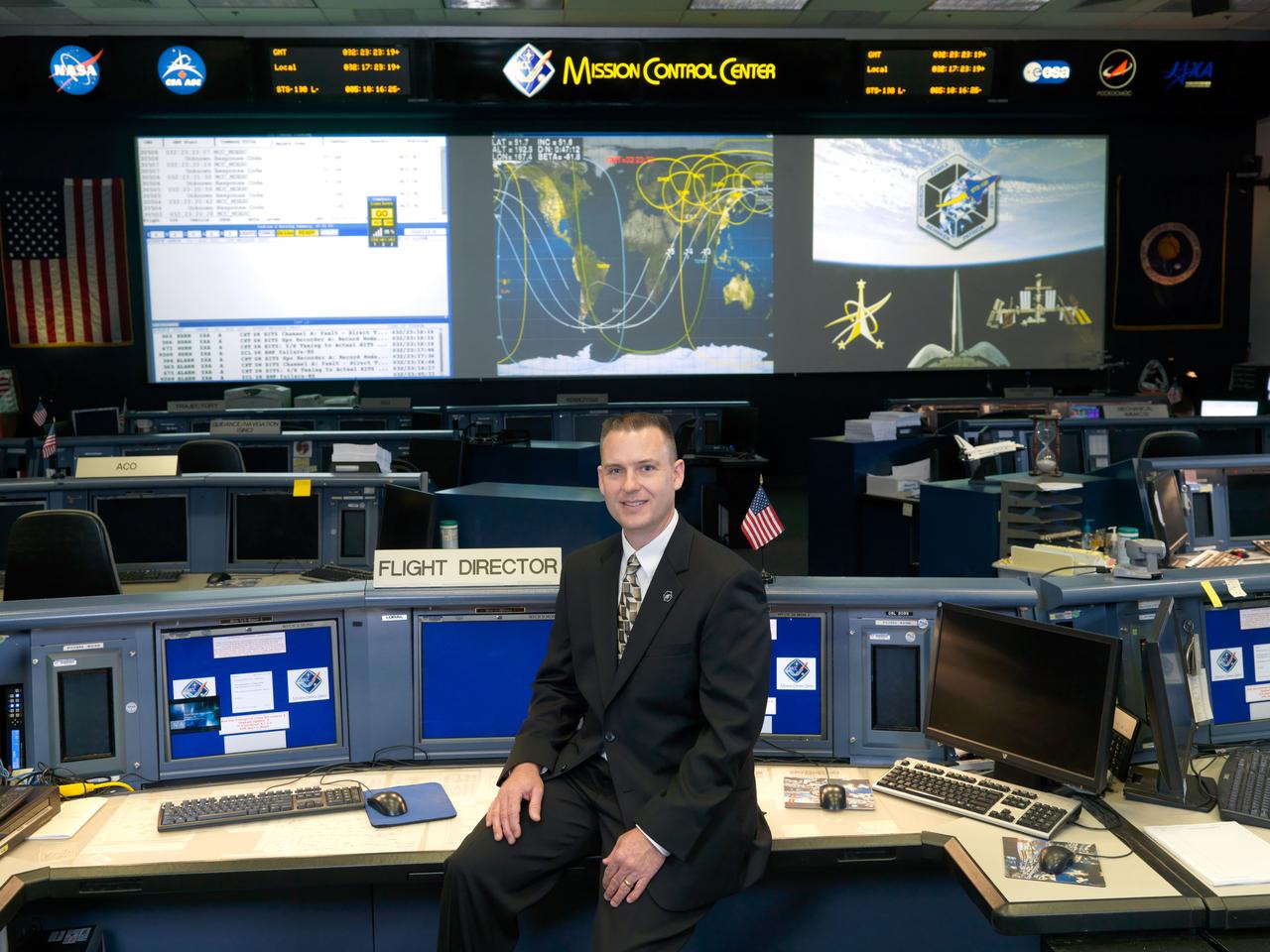
JSC2010-E-017956 (4 Feb. 2010) --- Flight director Norm Knight poses for a portrait in the space shuttle flight control room in the Mission Control Center at NASA's Johnson Space Center.
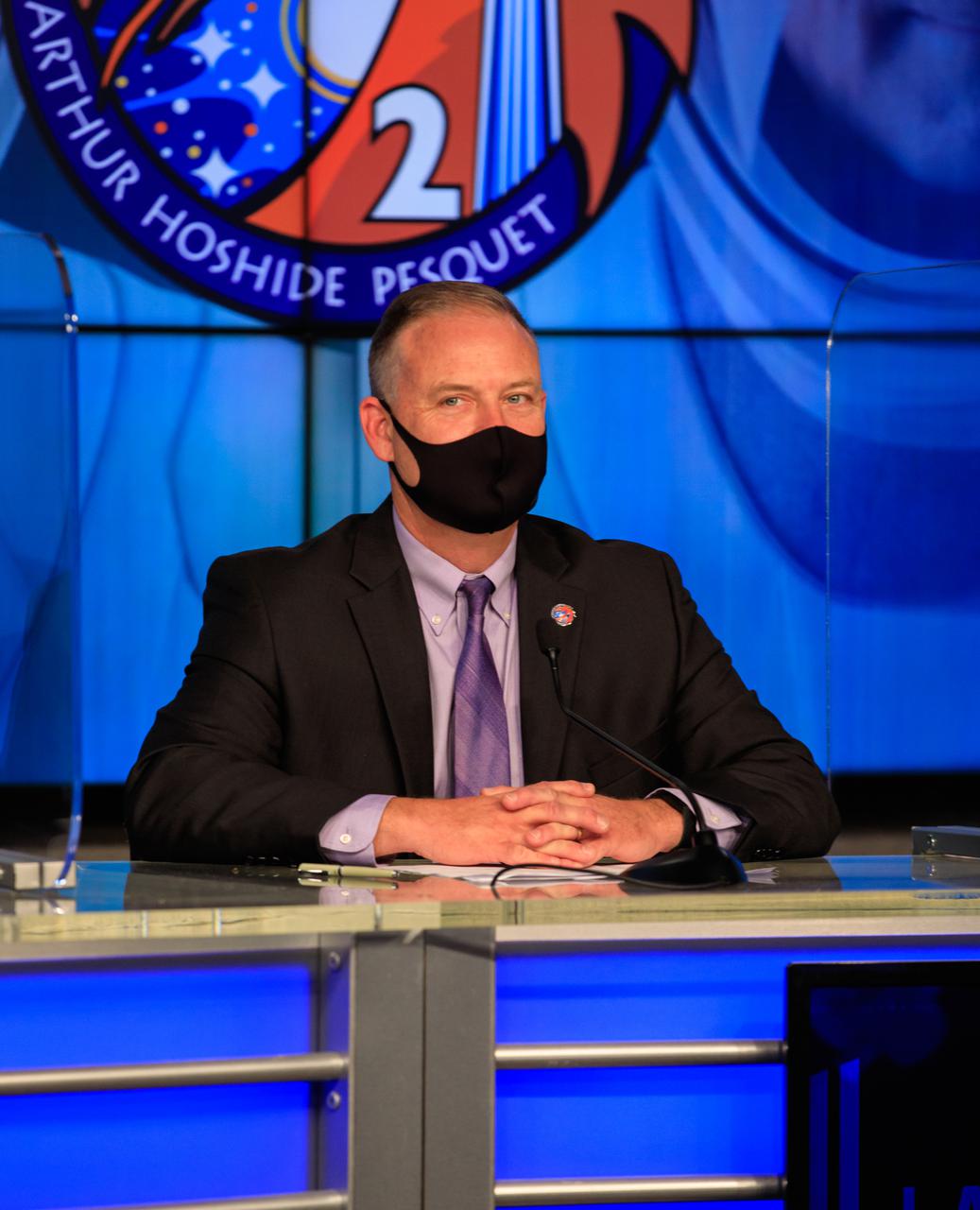
Norm Knight, deputy manager, Flight Operations Directorate, participates in the SpaceX Crew-2 prelaunch news conference held at NASA’s Kennedy Space Center in Florida on April 20, 2021. NASA astronauts Shane Kimbrough and Megan McArthur, JAXA astronaut Akihiko Hoshide, and ESA astronaut Thomas Pesquet will fly on Crew-2, the second crew rotation mission to the International Space Station as part of NASA’s Commercial Crew Program. They will launch aboard SpaceX’s Crew Dragon spacecraft, named Endeavour, powered by the company’s Falcon 9 rocket. Liftoff is set for Earth Day, Thursday, April 22, at 6:11 a.m. EDT.
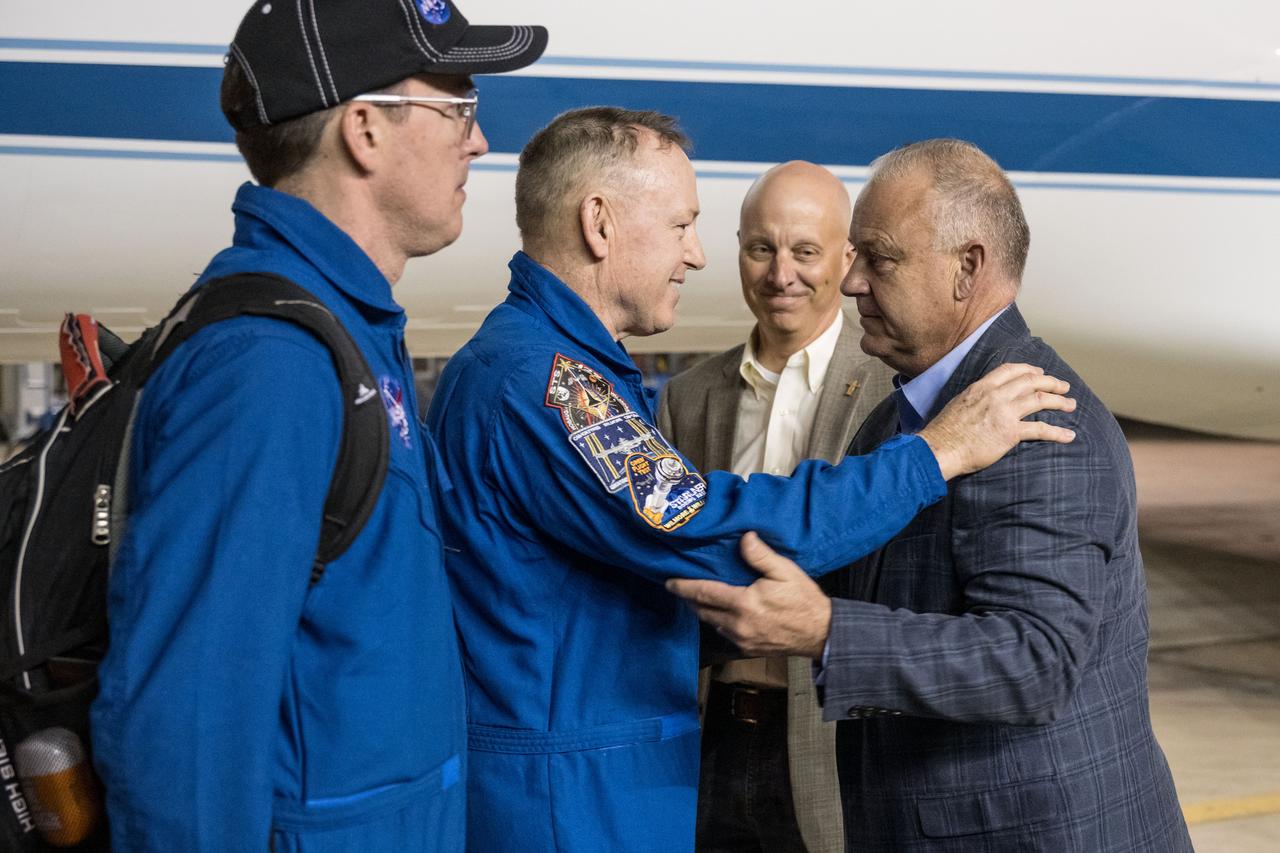
jsc2025e032541 (March 18, 2025) --- After completing a long-duration science mission aboard the International Space Station, NASA astronaut Butch Wilmore returns to Johnson Space Center's Ellington Field in Houston and is greeted by Steve Koerner, acting center director, and Norm Knight, acting deputy center director. NASA’s SpaceX Crew-9 splashed down at 5:57 p.m. EDT on Tuesday, March 18, in the Gulf of America near Tallahassee, Florida.
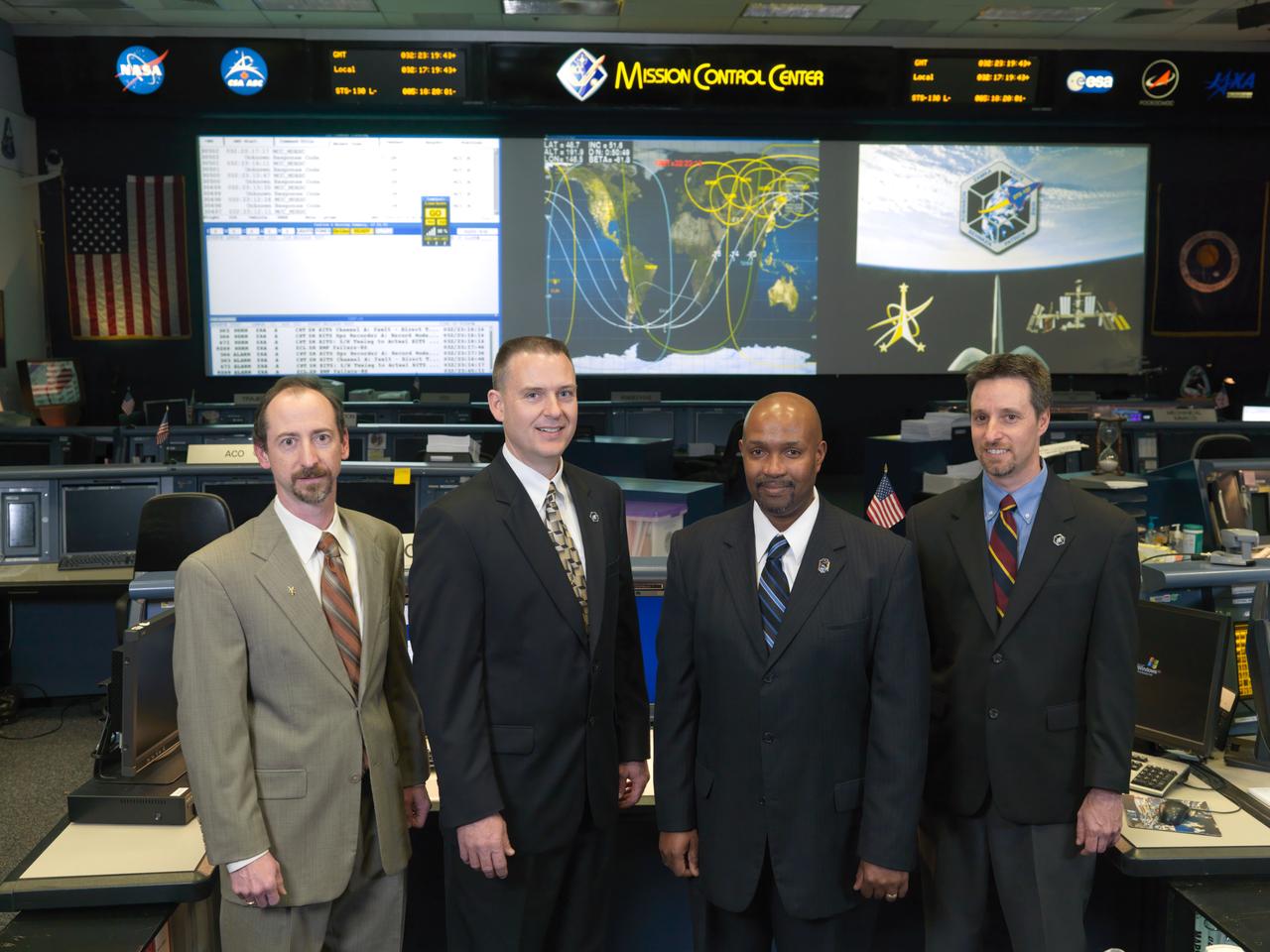
JSC2010-E-017955 (4 Feb. 2010) --- Flight directors for the STS-130/20A mission pose for a preflight group portrait in the space shuttle flight control room in the Mission Control Center at NASA's Johnson Space Center. Pictured from the left are Chris Edelen, Norm Knight, Kwatsi Alibaruho and Gary Horlacher.
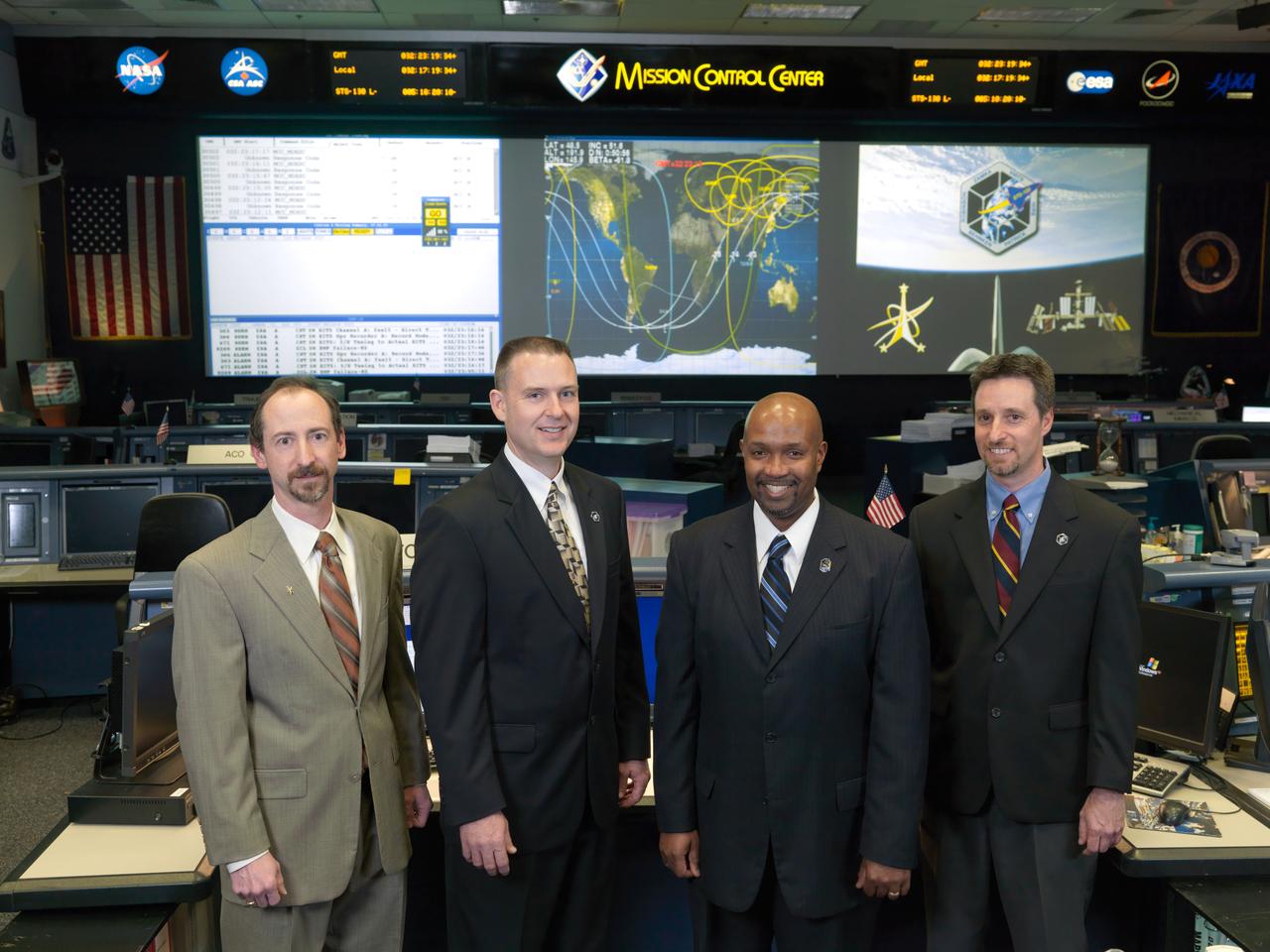
JSC2010-E-017954 (4 Feb. 2010) --- Flight directors for the STS-130/20A mission pose for a preflight group portrait in the space shuttle flight control room in the Mission Control Center at NASA's Johnson Space Center. Pictured from the left are Chris Edelen, Norm Knight, Kwatsi Alibaruho and Gary Horlacher.
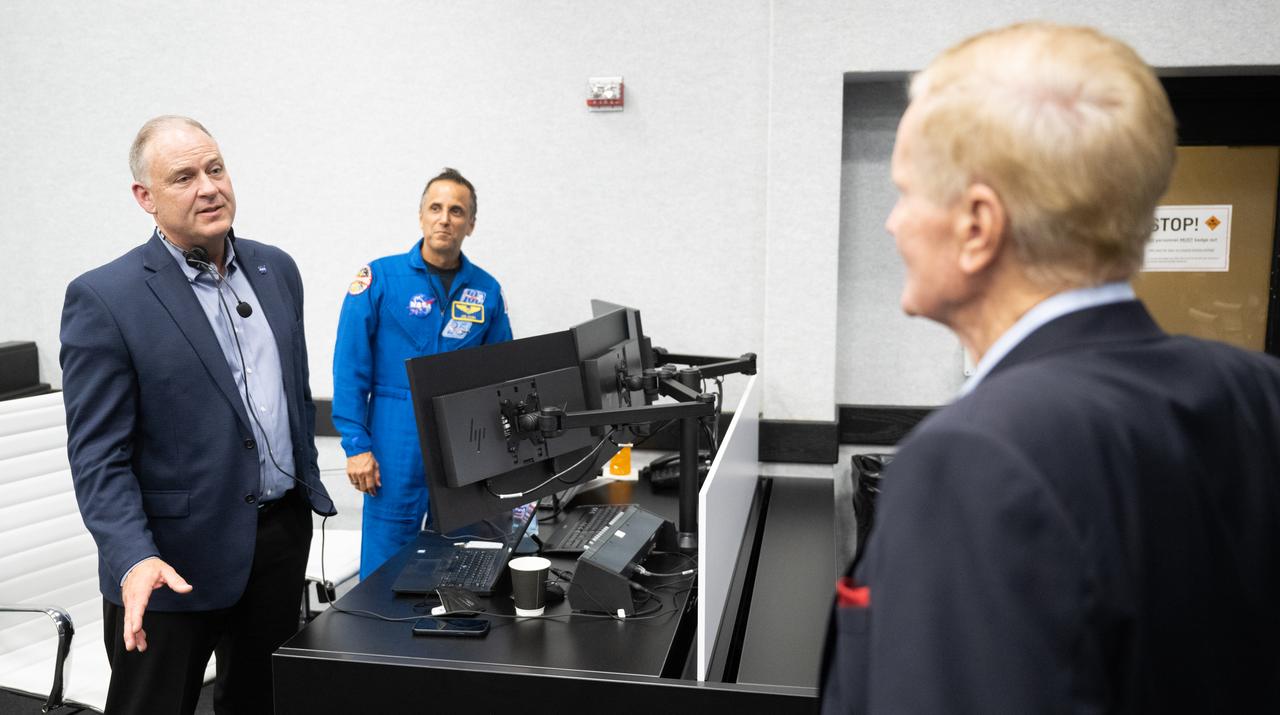
Norm Knight, director of Flight Operations at NASA's Johnson Space Center, left, and Joe Acaba, Chief of the Astronaut Office, center, are seen as they speak with NASA Administrator Bill Nelson, right, as NASA and SpaceX teams monitor the countdown of the launch of a SpaceX Falcon 9 rocket carrying the company's Dragon spacecraft on NASA’s SpaceX Crew-6 mission with NASA astronauts Stephen Bowen and Warren "Woody" Hoburg, UAE (United Arab Emirates) astronaut Sultan Alneyadi, and Roscosmos cosmonaut Andrey Fedyaev onboard, Wednesday, March 1, 2023, in firing room four of the Rocco A. Petrone Launch Control Center at NASA’s Kennedy Space Center in Florida. NASA’s SpaceX Crew-6 mission is the first crew rotation mission of the SpaceX Dragon spacecraft and Falcon 9 rocket to the International Space Station as part of the agency’s Commercial Crew Program. Bowen, Hoburg, Alneyadi, and Fedyaev launched at 12:34 a.m. EST on March 2, from Launch Complex 39A at the Kennedy Space Center. Photo Credit: (NASA/Joel Kowsky)
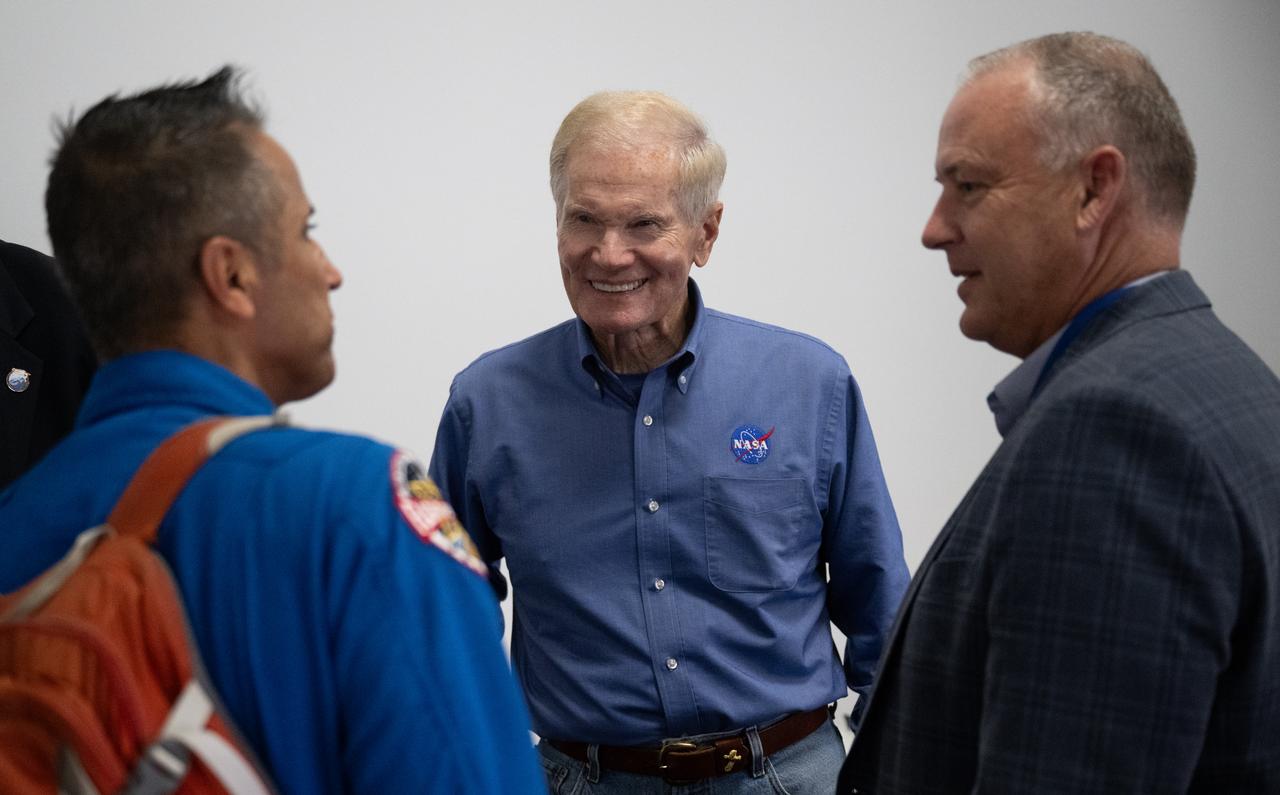
NASA Administrator Bill Nelson, center, speaks with Norm Knight, director of Flight Operations at NASA's Johnson Space Center, right, and Joe Acaba, Chief of the Astronaut Office, left, following the launch of a SpaceX Falcon 9 rocket carrying the company's Dragon spacecraft on the Crew-7 mission with NASA astronaut Jasmin Moghbeli, ESA (European Space Agency) astronaut Andreas Mogensen, Japan Aerospace Exploration Agency (JAXA) astronaut Satoshi Furukawa, and Roscosmos cosmonaut Konstantin Borisov onboard, Saturday, Aug. 26, 2023, in the SpaceX’s Launch and Landing Control Center in HangerX at NASA’s Kennedy Space Center in Florida. NASA’s SpaceX Crew-7 mission is the seventh crew rotation mission of the SpaceX Dragon spacecraft and Falcon 9 rocket to the International Space Station as part of the agency’s Commercial Crew Program. Moghbeli, Mogensen, Furukawa, and Borisov launched at 3:27 a.m. EDT, from Launch Complex 39A at the Kennedy Space Center to begin a six month mission aboard the International Space Station. Photo Credit: (NASA/Joel Kowsky)
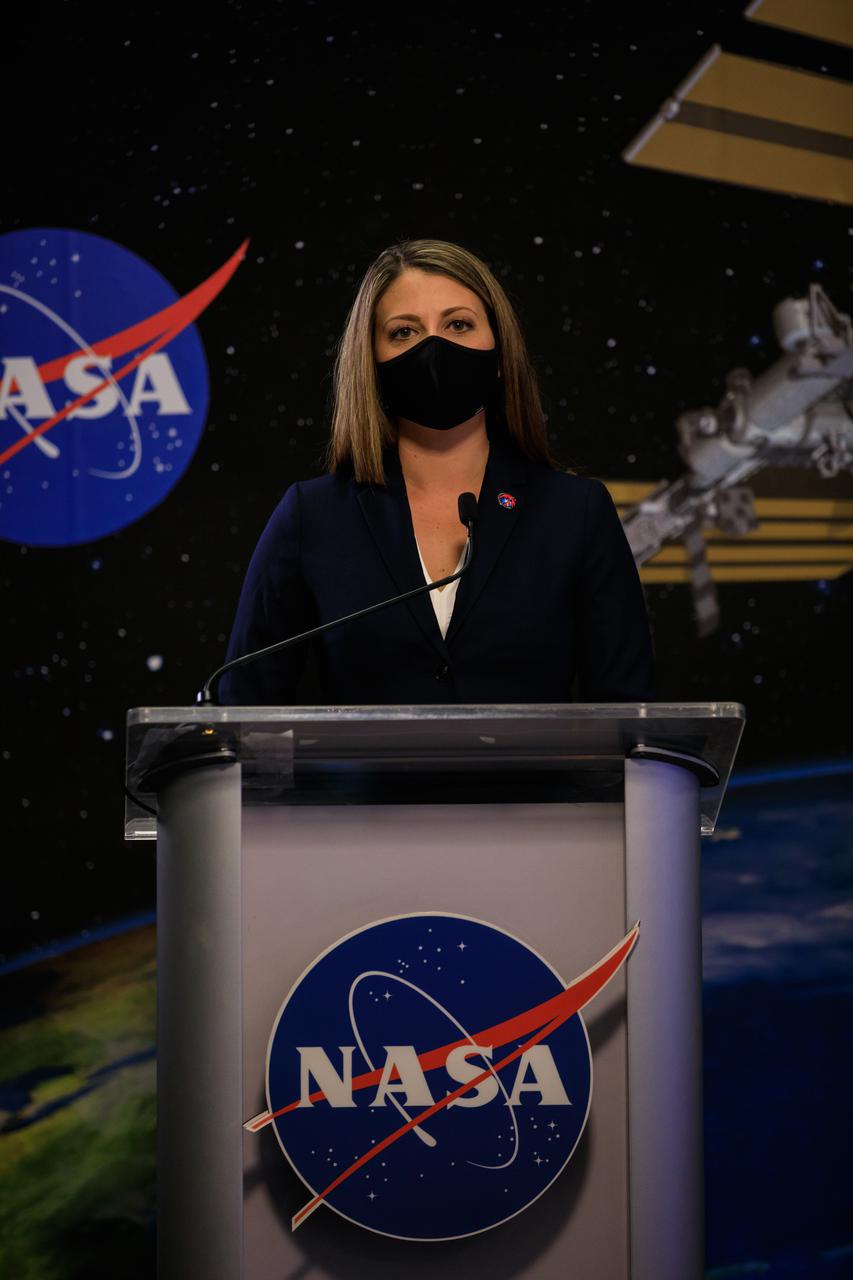
Marie Lewis, NASA Communications, moderates the SpaceX Crew-2 prelaunch news conference held at NASA’s Kennedy Space Center in Florida on April 20, 2021. Participants included: Steve Stich, manager, NASA Commercial Crew Program; Joel Montalbano, manager, International Space Station Program; Benji Reed, senior director, Human Spaceflight Programs, SpaceX; Norm Knight, deputy manager, Flight Operations Directorate; Junichi Sakai, manager, International Space Station Program, JAXA; Frank de Winne, manager, International Space Station Program, ESA; Kirt Costello, chief scientist, International Space Station Program; and Brian Cizek, launch weather officer, 45th Weather Squadron, U.S. Space Force.
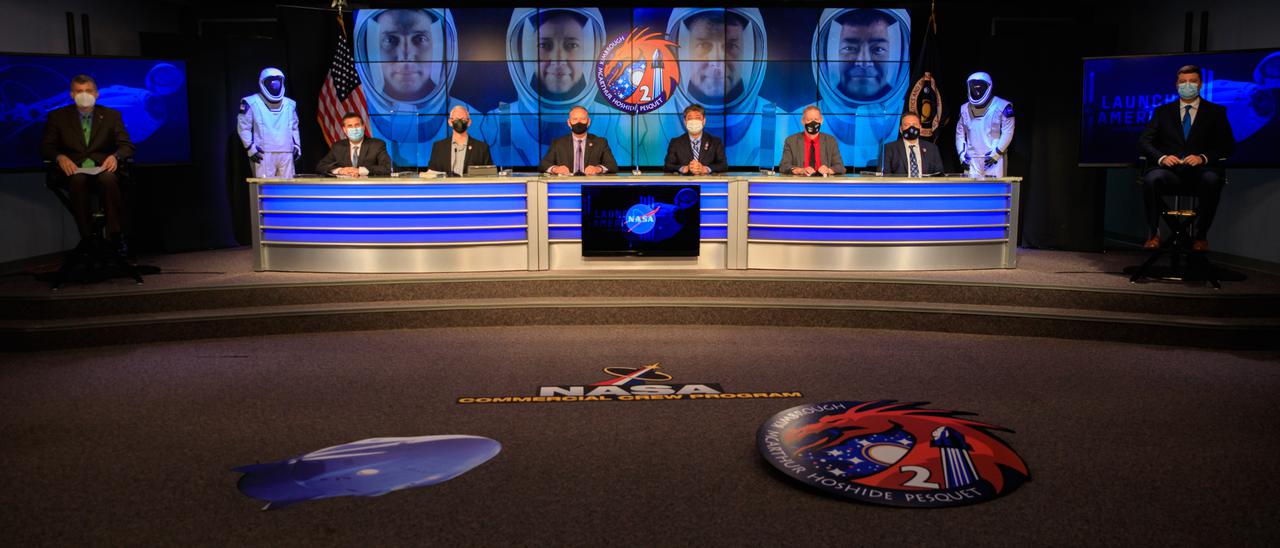
A SpaceX Crew-2 prelaunch news conference was held at NASA’s Kennedy Space Center in Florida on April 20, 2021. Participants included, from left to right: Steve Stich, manager, NASA Commercial Crew Program; Joel Montalbano, manager, International Space Station Program; Benji Reed, senior director, Human Spaceflight Programs, SpaceX; Norm Knight, deputy manager, Flight Operations Directorate; Junichi Sakai, manager, International Space Station Program, JAXA; Frank de Winne, manager, International Space Station Program, ESA; Kirt Costello, chief scientist, International Space Station Program; and Brian Cizek, launch weather officer, 45th Weather Squadron, U.S. Space Force.
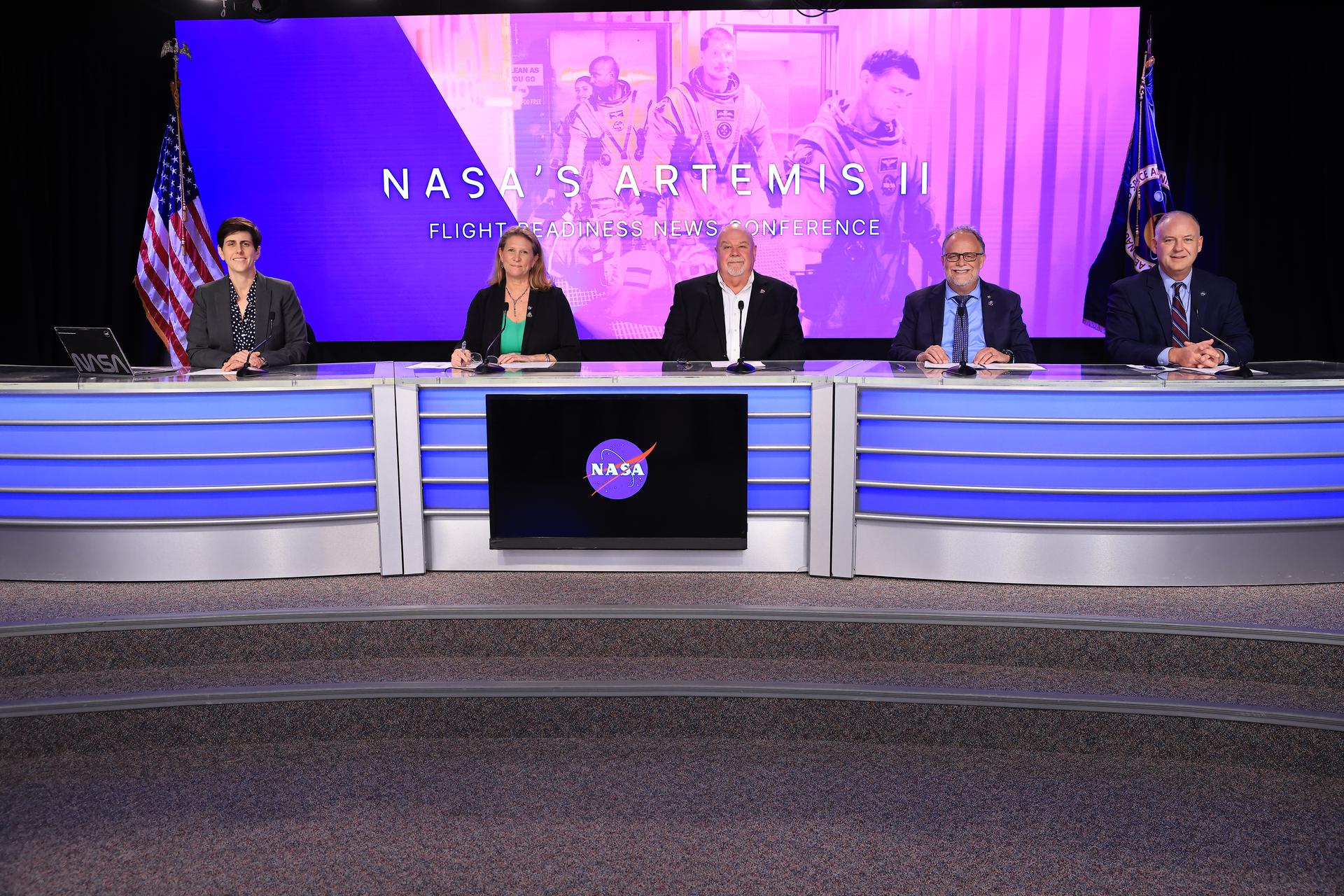
From left to right, Rachel Kraft, NASA Communications; Lori Glaze, acting associate administrator, Exploration Systems Development Mission Directorate; John Honeycutt, chair, Artemis II Mission Management Team; Shawn Quinn, manager, Exploration Ground Systems Program; and Norm Knight, director, Flight Operations Directorate, participate in a post-Flight Readiness Review news conference for the Artemis II test flight inside the John Holliman Auditorium of the NASA News Center at the agency’s Kennedy Space Center in Florida on Thursday, March 12, 2026. The review is an assessment of the readiness of NASA’s SLS (Space Launch System) rocket and Orion spacecraft to support the Artemis II test flight as four astronauts journey around the Moon and return to Earth.
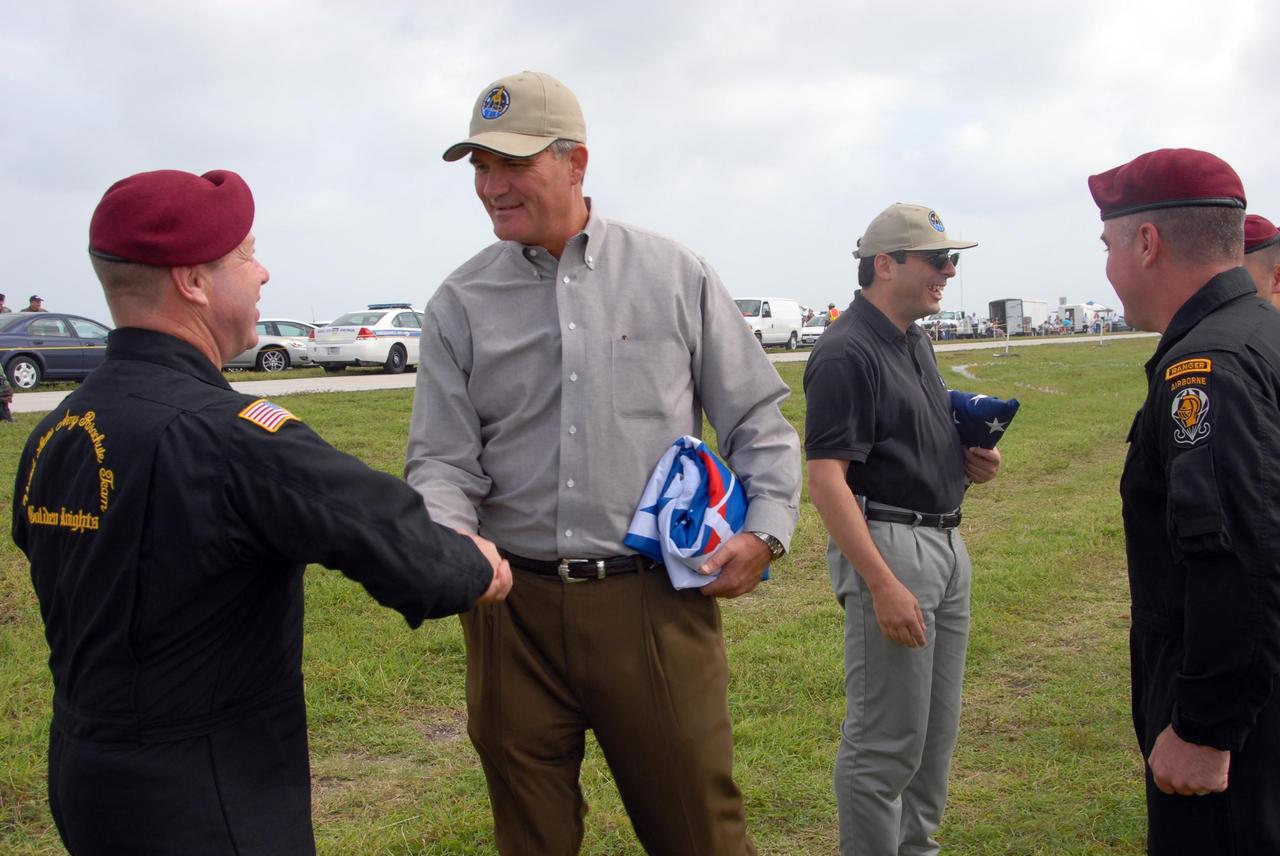
KENNEDY SPACE CENTER, FLA. -- During a rehearsal for the World Space Expo Aerial Salute at NASA's Kennedy Space Center, Center Director Bill Parsons (second from left) greets members of the U.S. Army Golden Knights who will demonstrate precision skydiving. Commemorating humanity's first 50 years in space while looking forward to returning people to the moon and exploring beyond, the expo will showcase various panels, presentations and educational programs, as well as the air show. Participating in the air show are the U.S. Air Force Thunderbirds, U.S. Air Force F-22 Raptor, U.S. Navy F-18 Super Hornet, U.S. Air Force F-15 Eagle, the P-51 Mustang Heritage Flight, and the U.S. Air Force 920th Rescue Wing, which was responsible for Mercury and Gemini capsule recovery. The U.S. Army Golden Knights will also demonstrate precision skydiving. Photo credit: NASA/George Shelton.
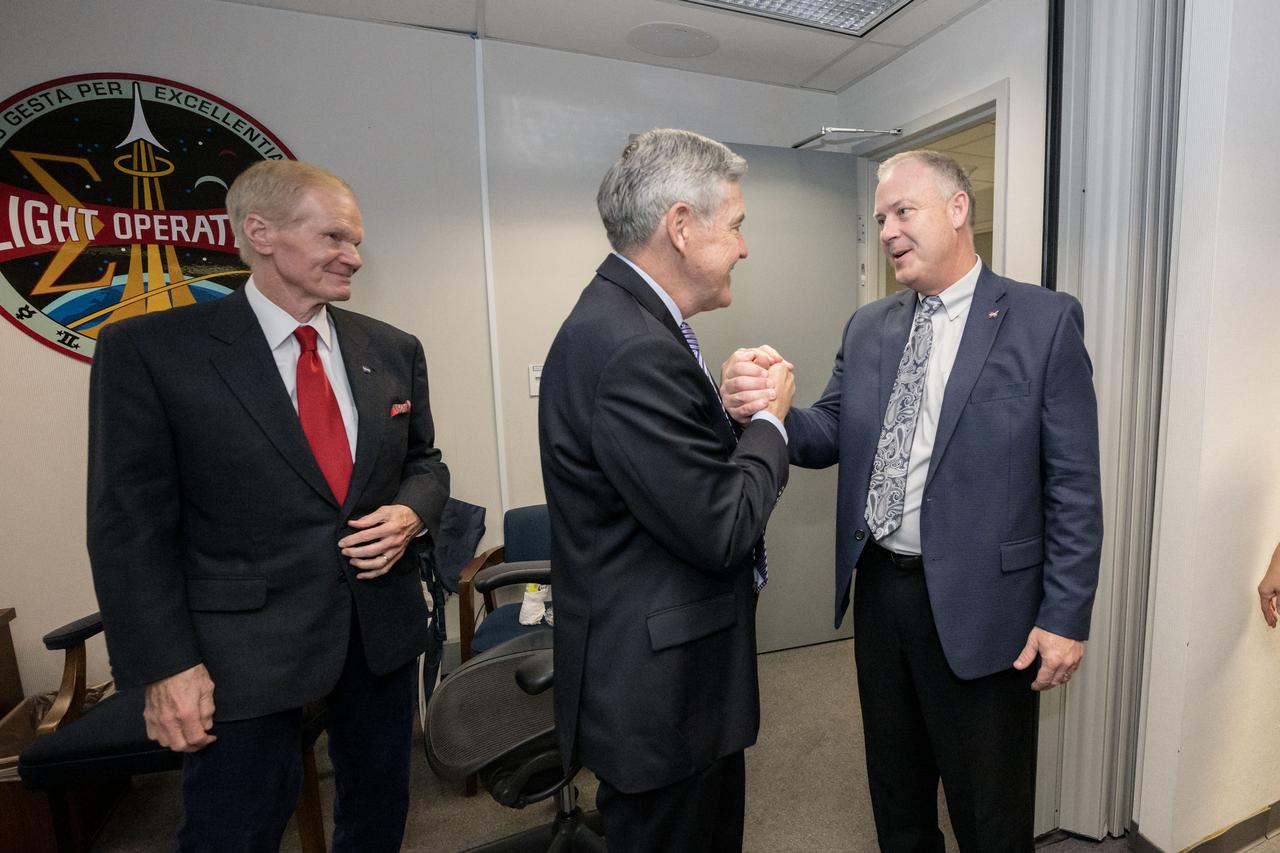
jsc2022e091676 (Dec. 11, 2022) NASA Administrator Bill Nelson visits Mission Control at NASA’s Johnson Space Center in Houston to witness the splashdown of Orion after a 25.5-day Artemis I mission. Nelson is joined by, from left, NASA Associate Administrator Bob Cabana, NASA Headquarters, and NASA Flight Operations Director Norm Knight, NASA Johnson.
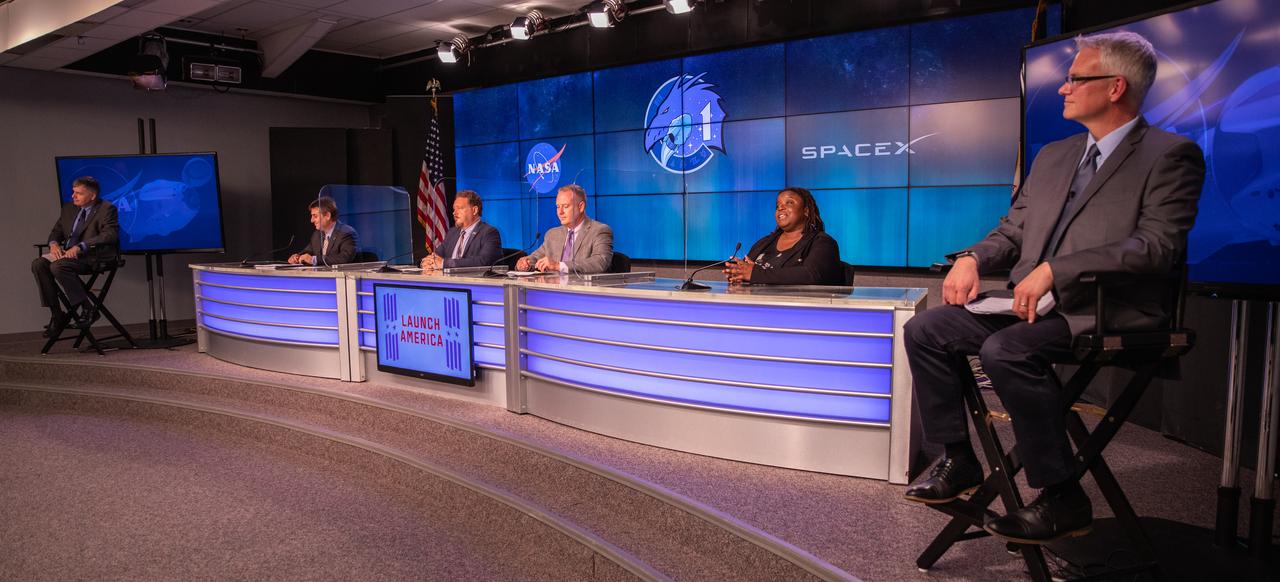
Inside the Press Site auditorium at NASA’s Kennedy Space Center in Florida, NASA and industry leaders conduct a virtual prelaunch news conference Nov. 13, 2020, ahead of the agency’s SpaceX Crew-1 mission. From left are Steve Stich, manager, Commercial Crew Program, Kennedy Space Center; Joel Montalbano, manager, International Space Station, Johnson Space Center; Kirt Costello, chief scientist, International Space Station Program, Johnson; Norm Knight, deputy manager, Flight Operations Directorate, Johnson; Arlena Moses, launch weather officer, U.S. Air Force 45th Weather Squadron; and Benji Reed, senior director, Human Spaceflight Programs, SpaceX. Crew-1 is the first regular crew mission of a U.S. commercial spacecraft with astronauts to the International Space Station as part of NASA’s Commercial Crew Program. The SpaceX Crew Dragon Resilience capsule will launch atop the company’s Falcon 9 rocket from Launch Complex 39A to the space station for a six-month science mission.
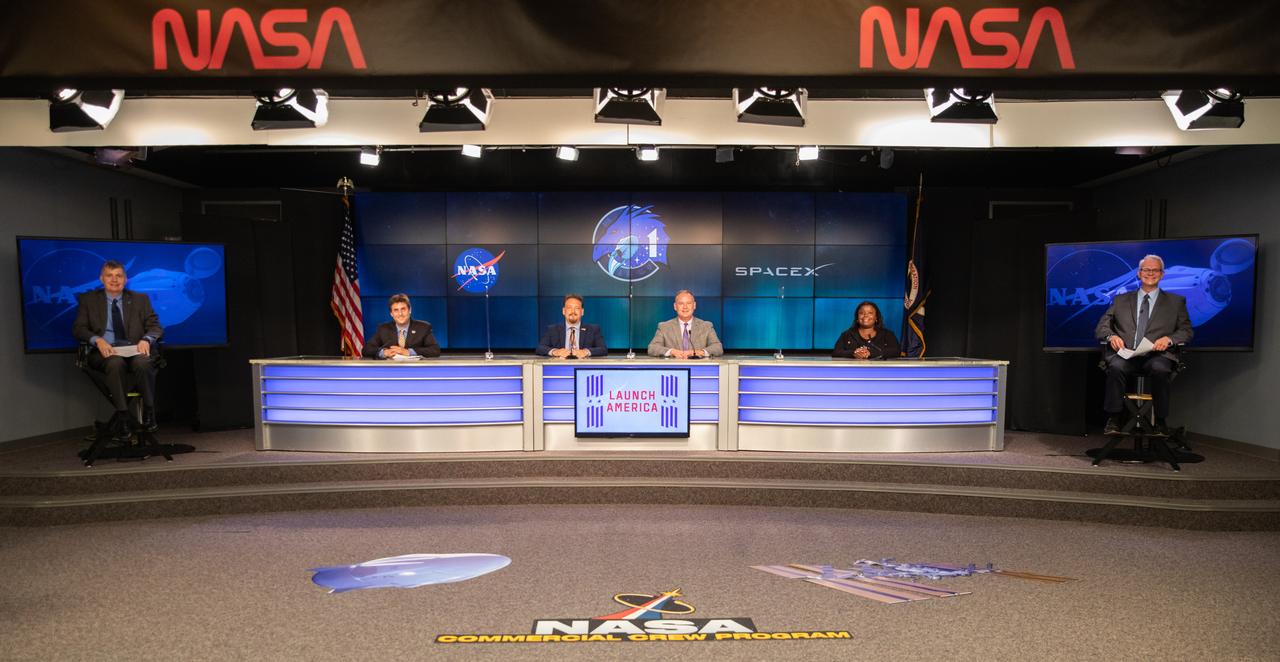
Inside the Press Site auditorium at NASA’s Kennedy Space Center in Florida, NASA and industry leaders conduct a virtual prelaunch news conference Nov. 13, 2020, ahead of the agency’s SpaceX Crew-1 mission. From left are Steve Stich, manager, Commercial Crew Program, Kennedy Space Center; Joel Montalbano, manager, International Space Station, Johnson Space Center; Kirt Costello, chief scientist, International Space Station Program, Johnson; Norm Knight, deputy manager, Flight Operations Directorate, Johnson; Arlena Moses, launch weather officer, U.S. Air Force 45th Weather Squadron; and Benji Reed, senior director, Human Spaceflight Programs, SpaceX. Crew-1 is the first regular crew mission of a U.S. commercial spacecraft with astronauts to the International Space Station as part of NASA’s Commercial Crew Program. The SpaceX Crew Dragon Resilience capsule will launch atop the company’s Falcon 9 rocket from Launch Complex 39A to the space station for a six-month science mission.
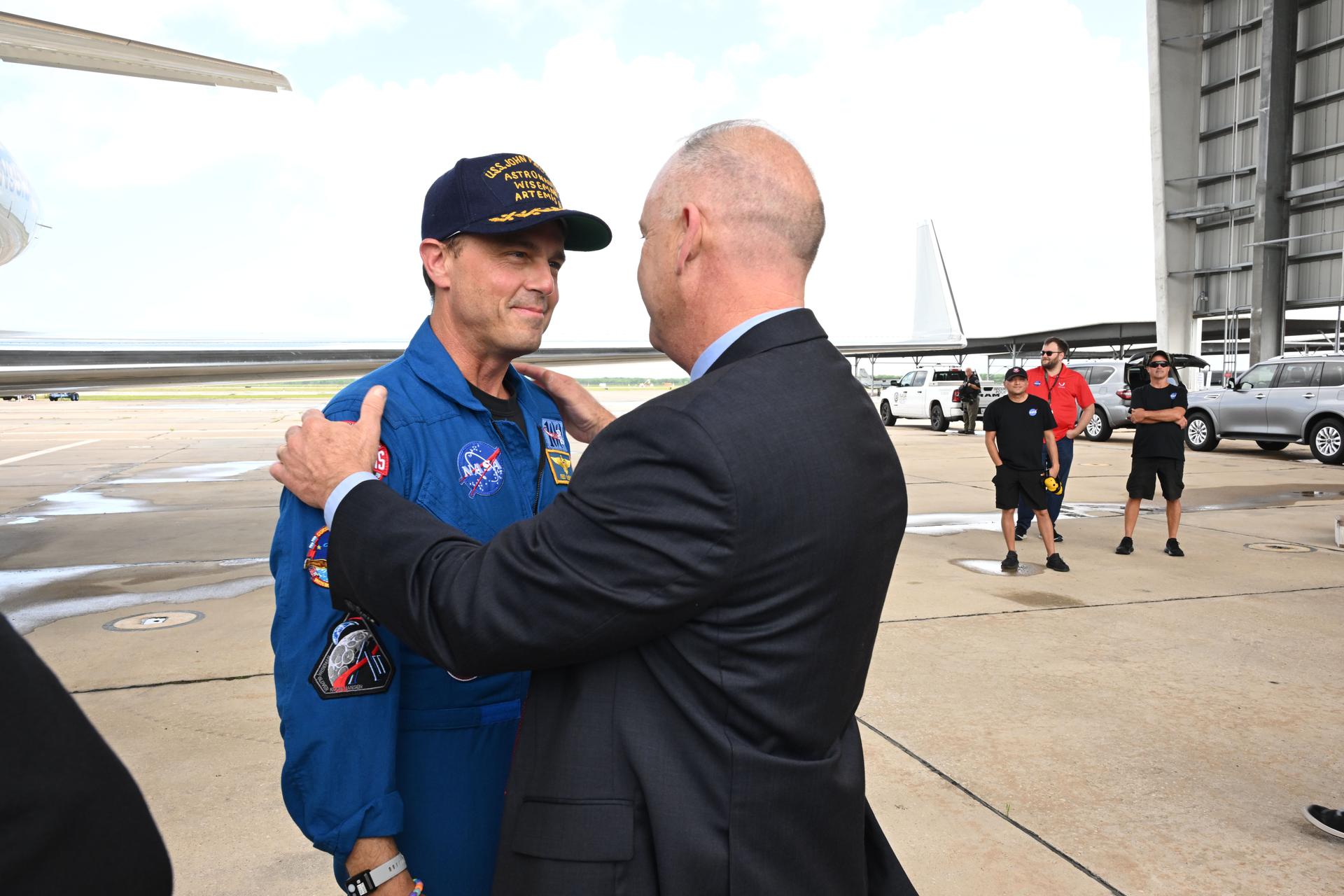
jsc2026e022283 (April 11, 2026) - Commander Reid Wiseman is greeted by NASA's Flight Operations Director Norm Knight on his return home to Houston, at Ellington Airport on Saturday, April 11, 2026, following a 10-day trip around the Moon and back. Wiseman and his three fellow crew members launched April 1, 2026, from NASA’s Kennedy Space Center in Florida, and splashed down off the coast of California on Friday, April 10, 2026.
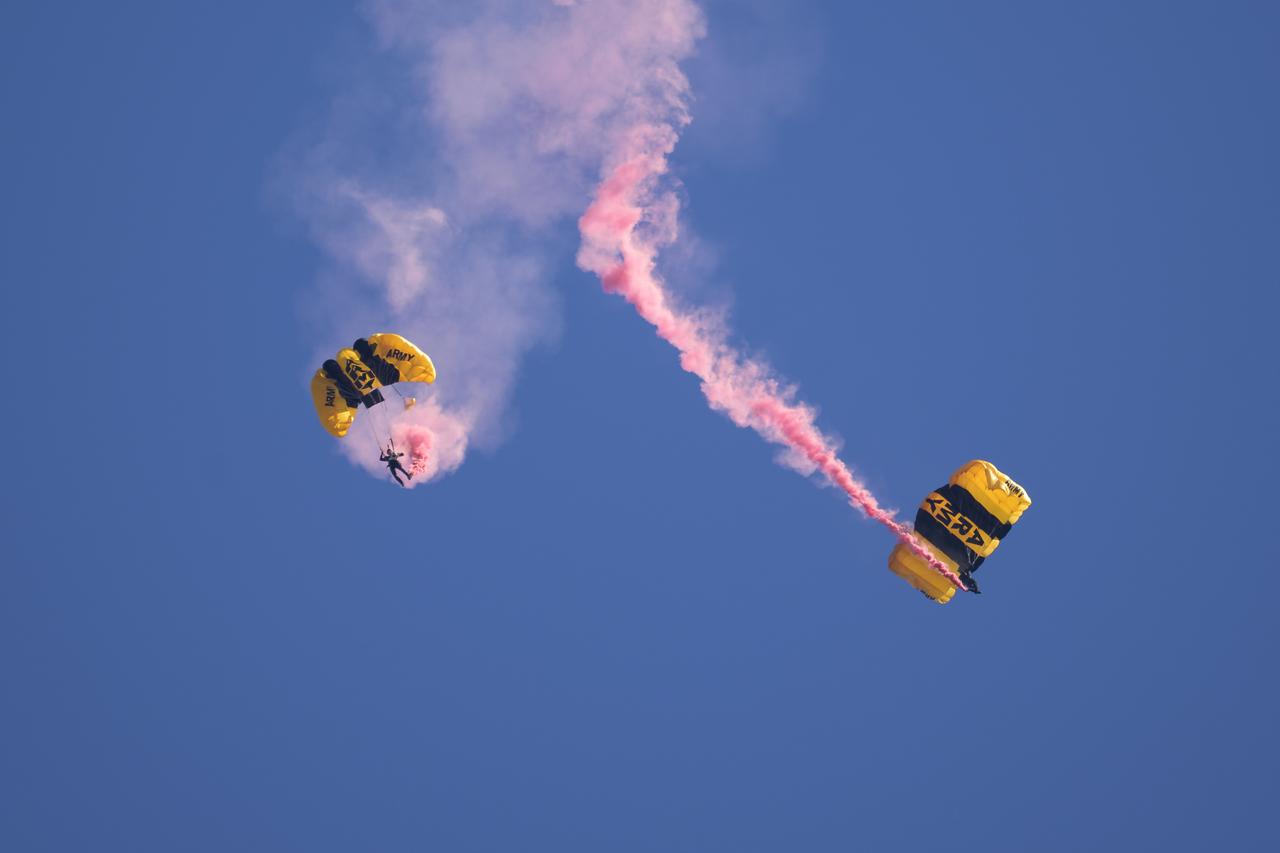
The United States Army Parachute Team, the Golden Knights, are seen during the opening ceremony of the Joint Base Andrews Air Show, Friday, Sept. 12, 2025, at Joint Base Andrews in Prince George's County, Maryland. NASA astronaut Nick Hague was on hand to provide remarks and meet with guests. Hague spent 171 days onboard the International Space Station as part of Expedition 72. Photo Credit: (NASA/Bill Ingalls)
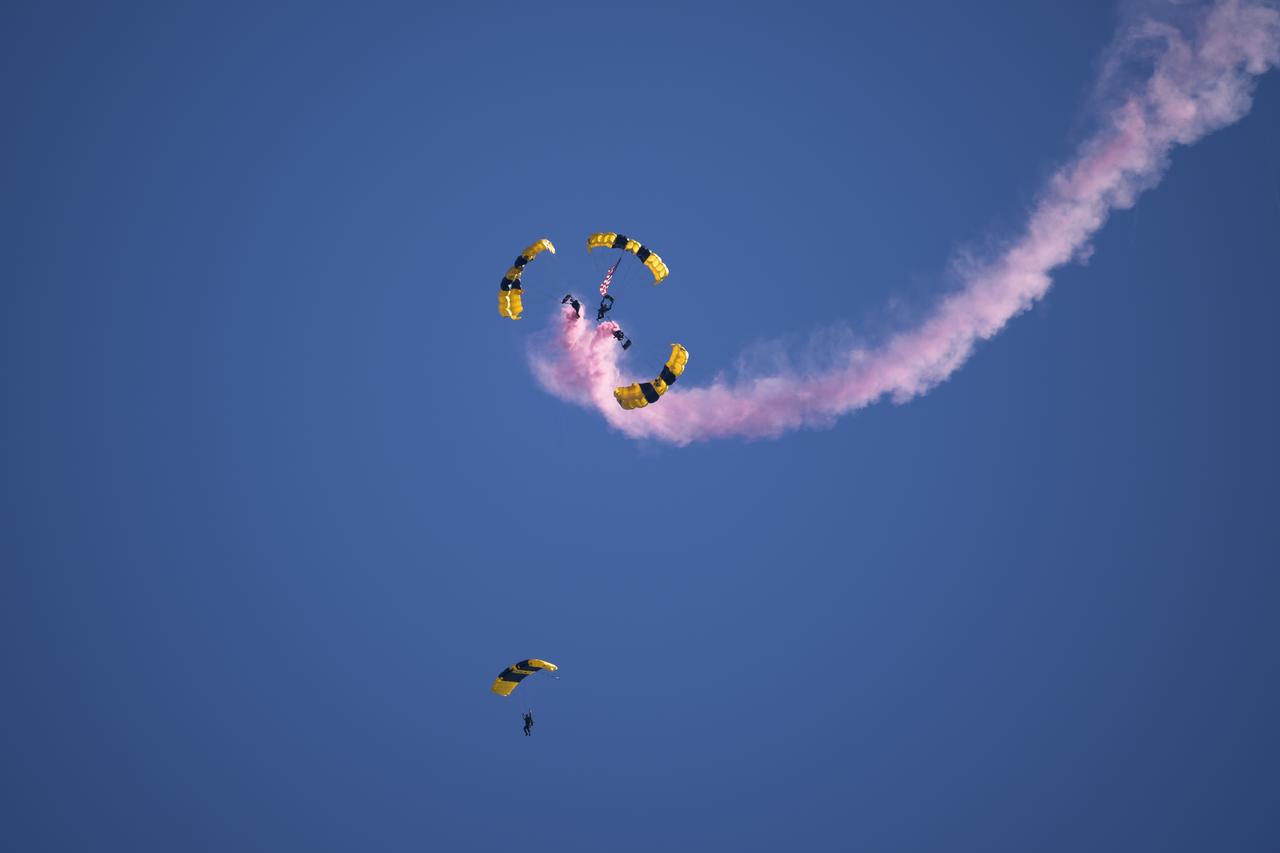
The United States Army Parachute Team, the Golden Knights, are seen during the opening ceremony of the Joint Base Andrews Air Show, Friday, Sept. 12, 2025, at Joint Base Andrews in Prince George's County, Maryland. NASA astronaut Nick Hague was on hand to provide remarks and meet with guests. Hague spent 171 days onboard the International Space Station as part of Expedition 72. Photo Credit: (NASA/Bill Ingalls)
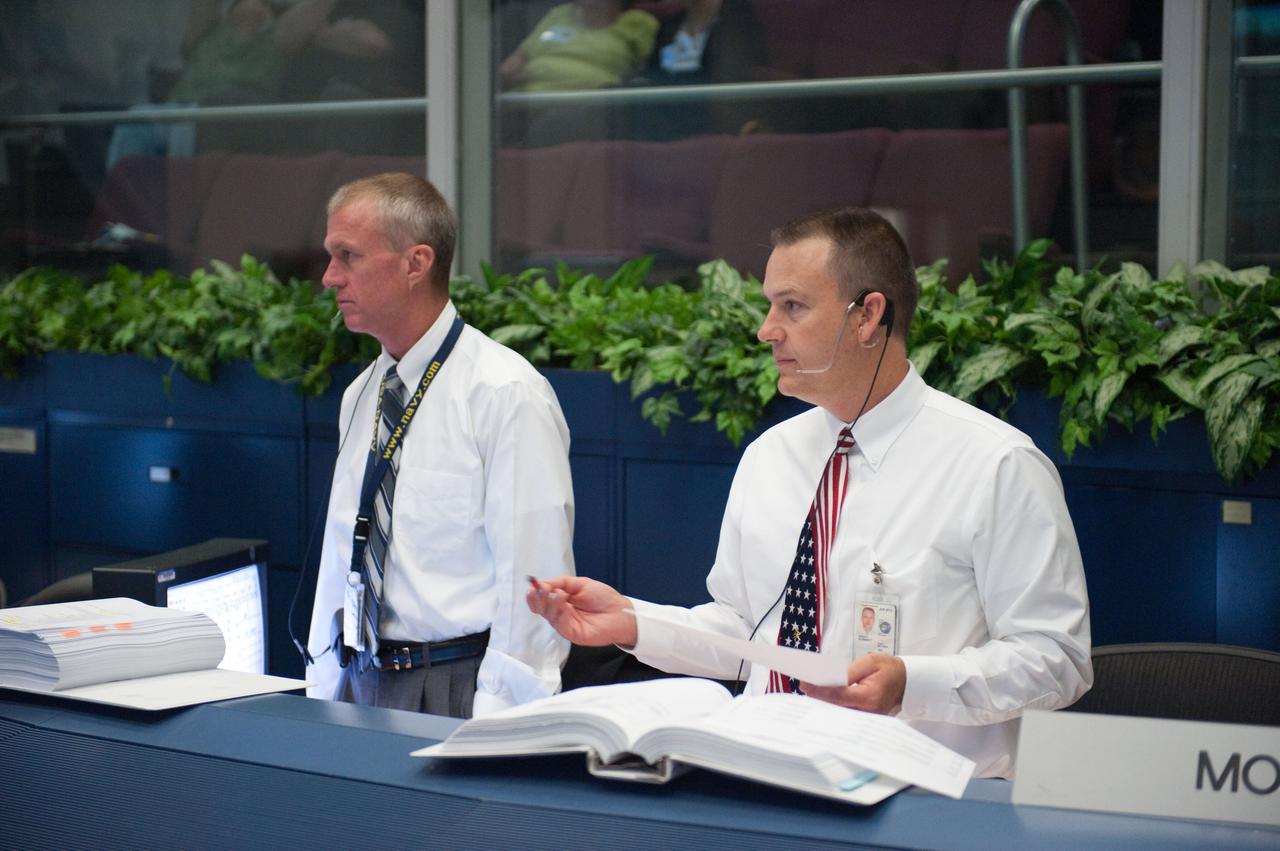
JSC2010-E-080409 (14 May 2010) --- Brent Jett (left), director, flight crew operations; and flight director Norm Knight are pictured in the space shuttle flight control room in the Mission Control Center at NASA's Johnson Space Center during launch countdown activities a few hundred miles away in Florida, site of space shuttle Atlantis' scheduled STS-132 launch. Liftoff was on time at 2:20 p.m. (EDT) on May 14, 2010 from launch pad 39A at NASA's Kennedy Space Center.
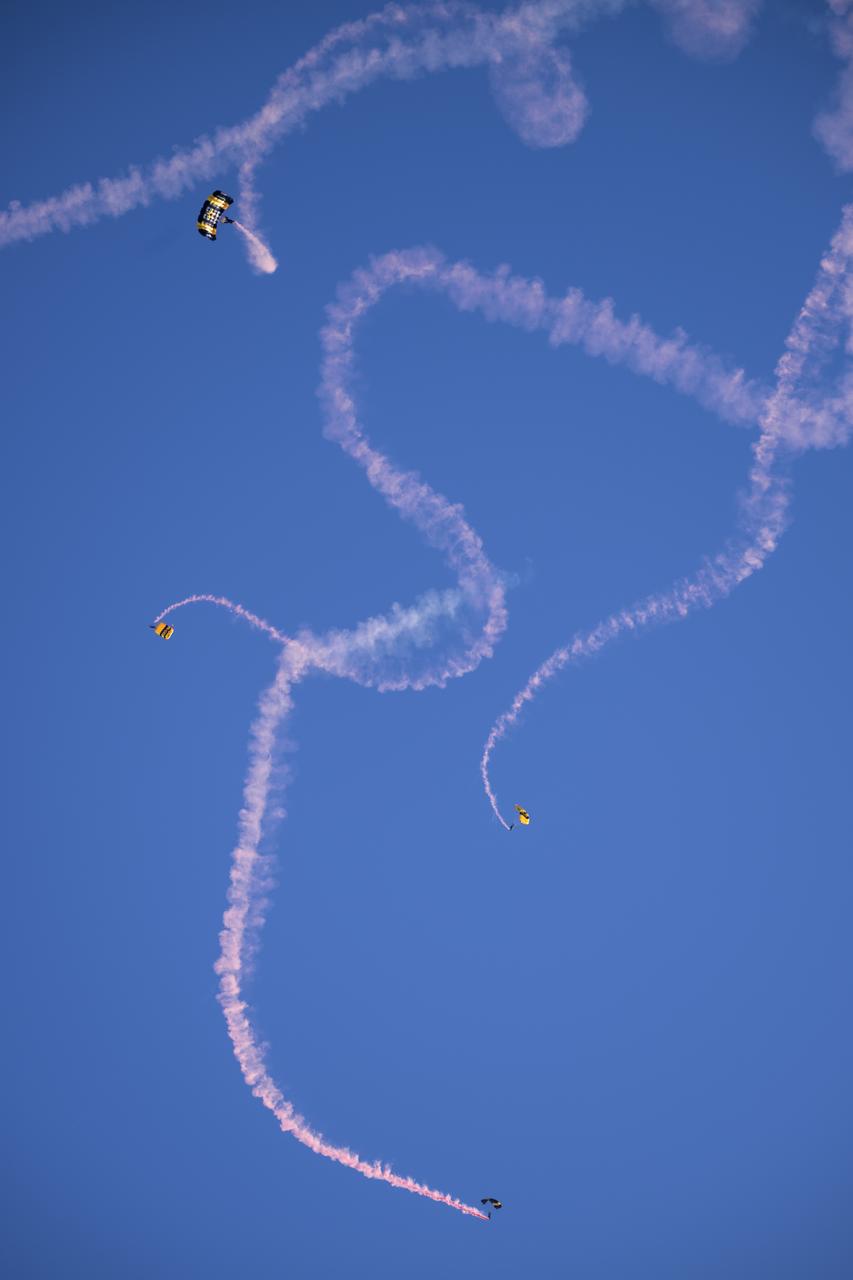
The United States Army Parachute Team, the Golden Knights, are seen during the opening ceremony of the Joint Base Andrews Air Show, Friday, Sept. 12, 2025, at Joint Base Andrews in Prince George's County, Maryland. NASA astronaut Nick Hague was on hand to provide remarks and meet with guests. Hague spent 171 days onboard the International Space Station as part of Expedition 72. Photo Credit: (NASA/Bill Ingalls)
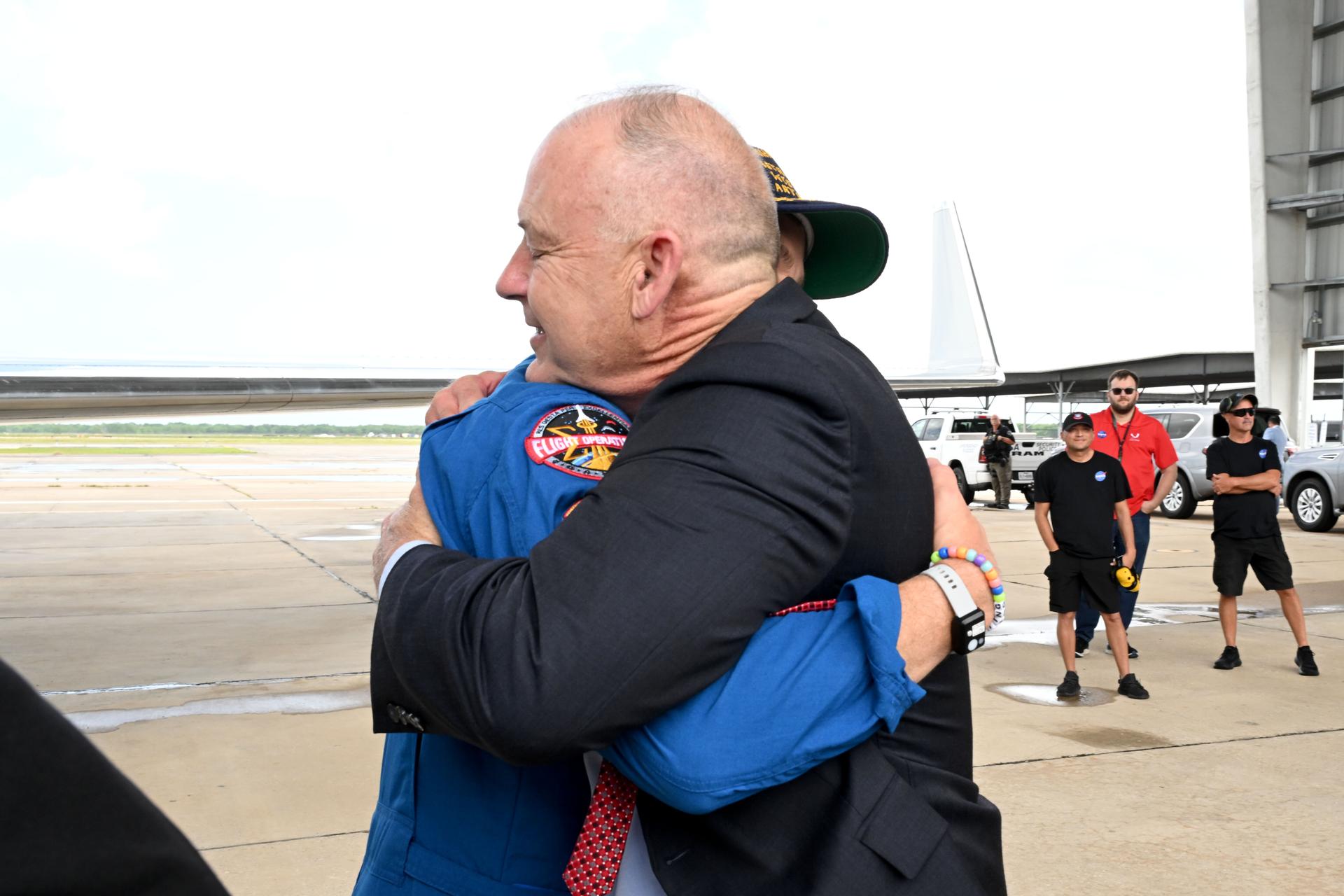
jsc2026e022282 (April 11, 2026) - Commander Reid Wiseman is greeted by NASA's Flight Operations Director Norm Knight on his return home to Houston, at Ellington Airport on Saturday, April 11, 2026, following a 10-day trip around the Moon and back. Wiseman and his three fellow crew members launched April 1, 2026, from NASA’s Kennedy Space Center in Florida, and splashed down off the coast of California on Friday, April 10, 2026.

Members of the audience look on as Dr. James L. Green, Director of Planetary Science at NASA, right, speaks with Dr. Robert Farquar, an executive for space exploration at KinetX Inc., during a symposium commemorating a quarter-century of comet discoveries, Friday, Sept. 10, 2010, in the Knight studio at the Newseum in Washington. The International Sun-Earth Explorer-3 (ISEE-3) spacecraft flew past the comet Giacobini-Zinner on Sept. 11, 1985 which established a foundation of discoveries that continue today. Photo Credit: (NASA/Paul E. Alers)
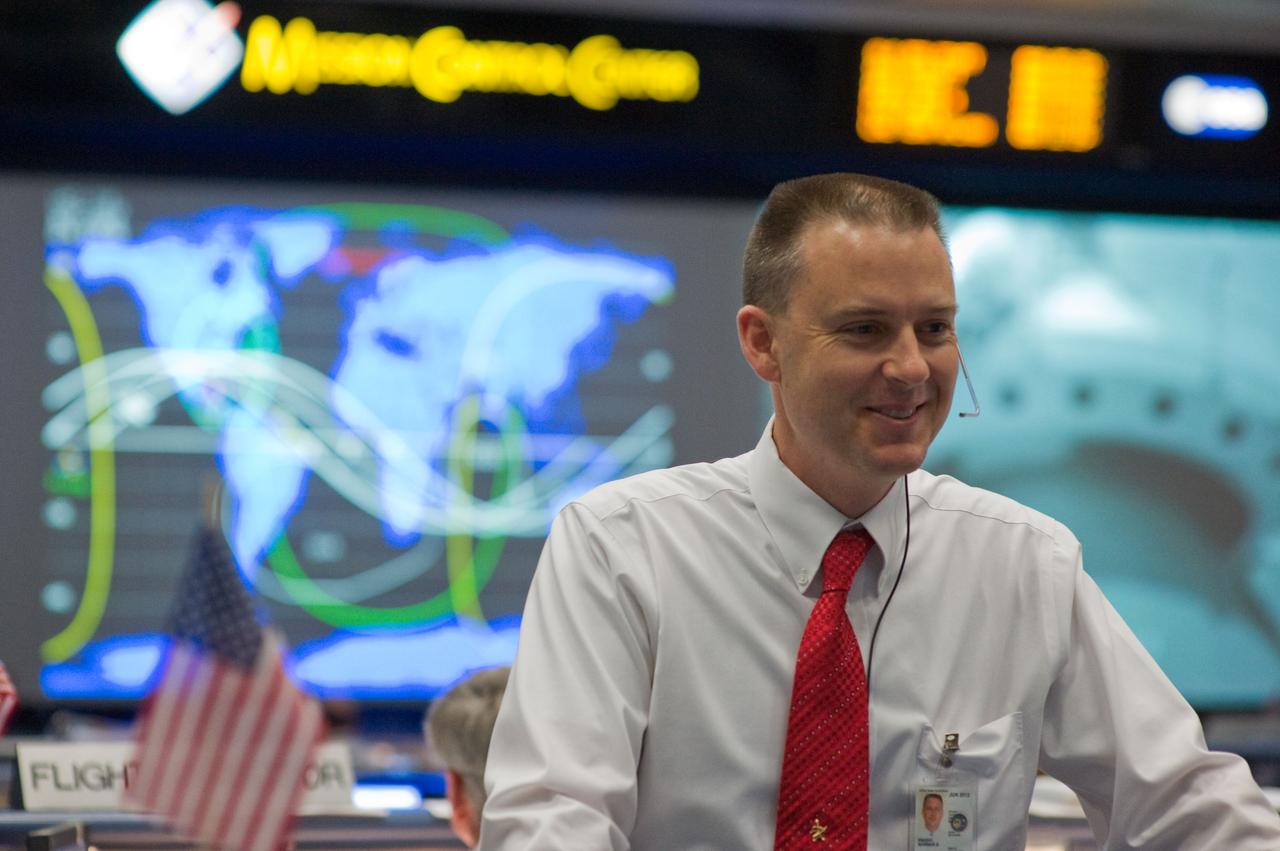
JSC2009-E-118822 (11 May 2009) --- Flight director Norm Knight is pictured in the space shuttle flight control room in the Mission Control Center at NASA's Johnson Space Center during launch countdown activities a few hundred miles away in Florida, site of Space Shuttle Atlantis? scheduled STS-125 launch to service the Hubble Space Telescope. Liftoff was on time at 2:01 p.m. (EDT) on May 11, 2009 from launch pad 39A at NASA's Kennedy Space Center.
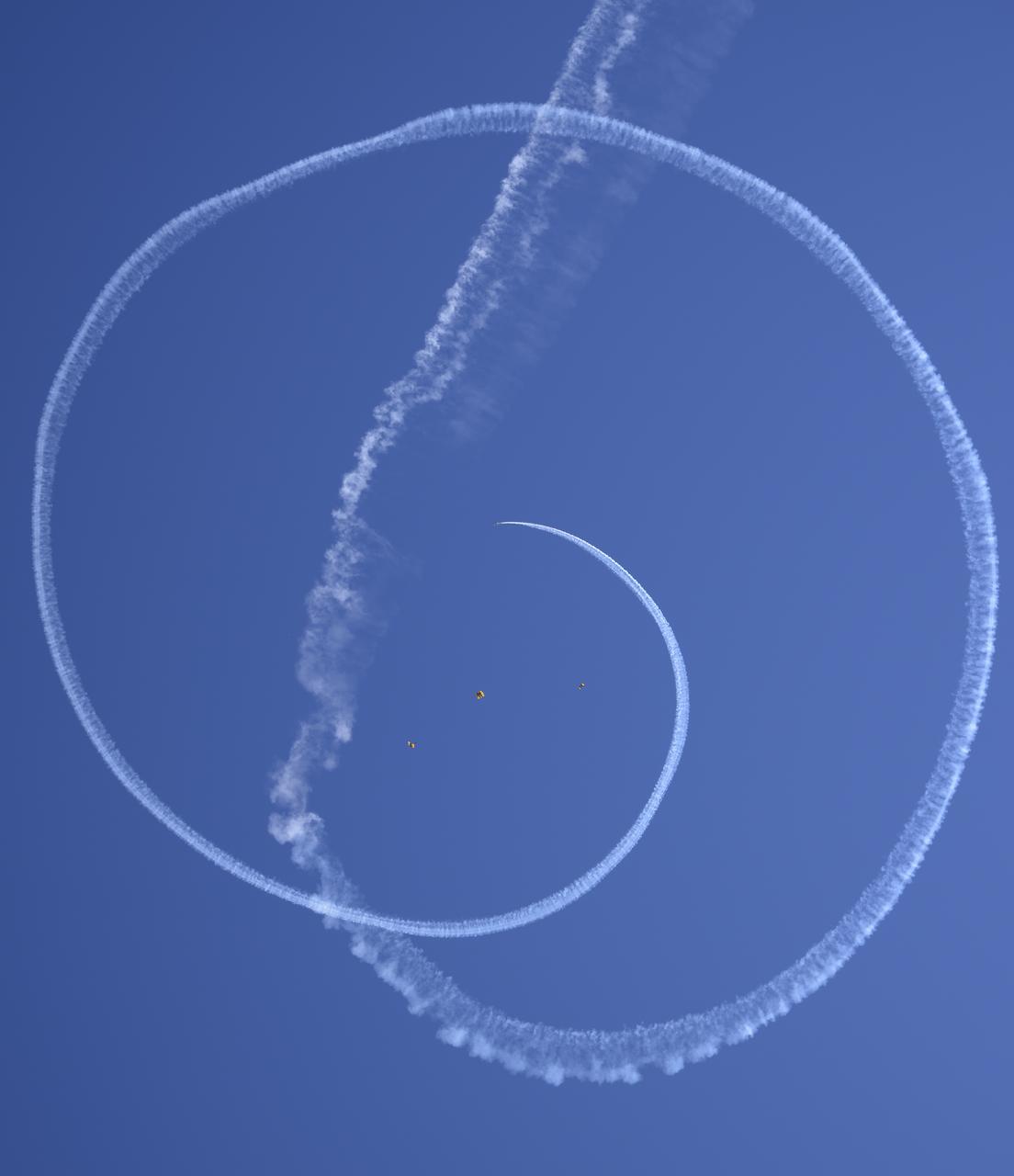
The United States Army Parachute Team, the Golden Knights, are seen during the opening ceremony of the Joint Base Andrews Air Show, Friday, Sept. 12, 2025, at Joint Base Andrews in Prince George's County, Maryland. NASA astronaut Nick Hague was on hand to provide remarks and meet with guests. Hague spent 171 days onboard the International Space Station as part of Expedition 72. Photo Credit: (NASA/Bill Ingalls)
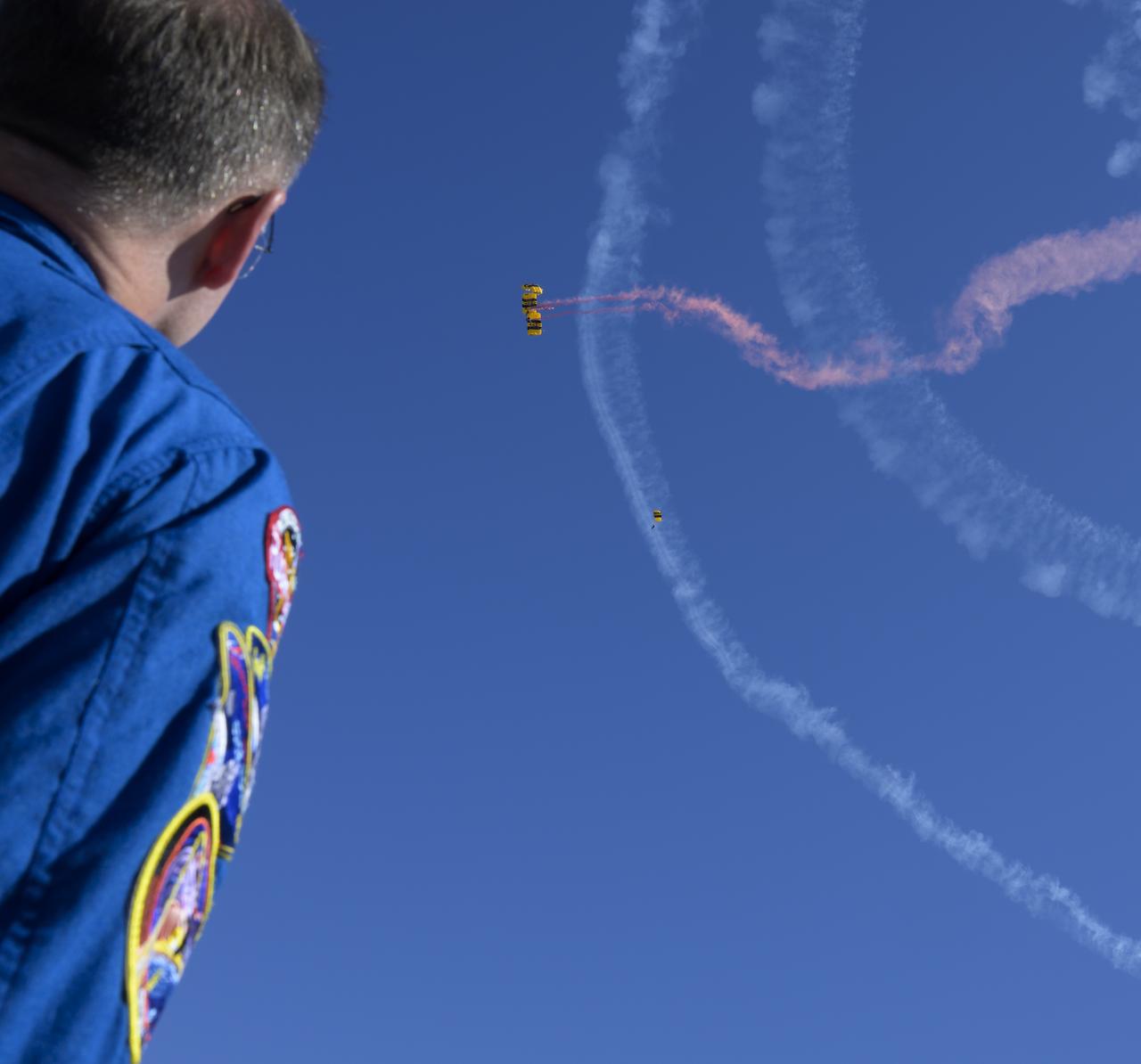
NASA astronaut Nick Hague watches as the United States Army Parachute Team, the Golden Knights, perform during the opening ceremony of the Joint Base Andrews Air Show, Friday, Sept. 12, 2025, at Joint Base Andrews in Prince George's County, Maryland. Hague spent 171 days onboard the International Space Station as part of Expedition 72. Photo Credit: (NASA/Bill Ingalls)
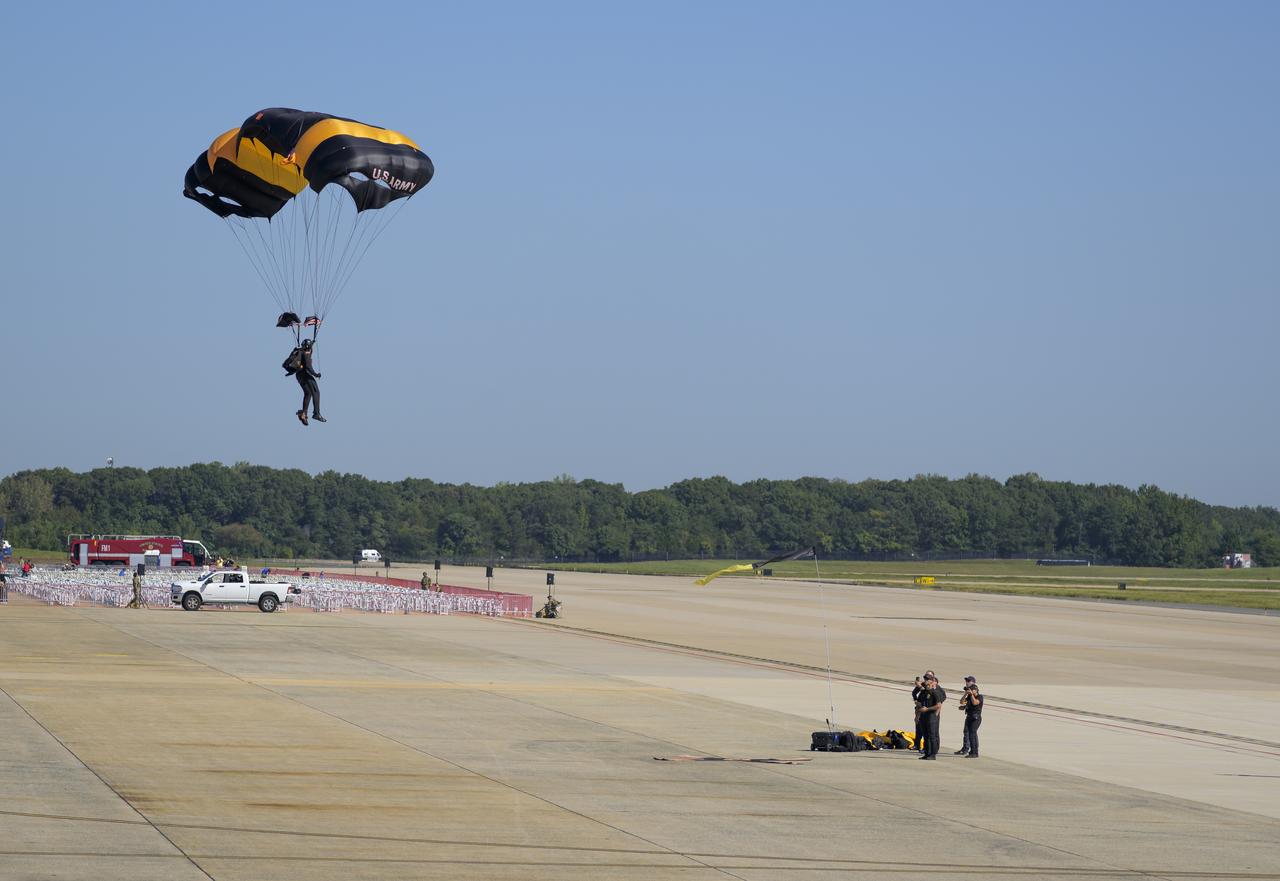
The United States Army Parachute Team, the Golden Knights, are seen during the opening ceremony of the Joint Base Andrews Air Show, Friday, Sept. 12, 2025, at Joint Base Andrews in Prince George's County, Maryland. NASA astronaut Nick Hague was on hand to provide remarks and meet with guests. Hague spent 171 days onboard the International Space Station as part of Expedition 72. Photo Credit: (NASA/Bill Ingalls)
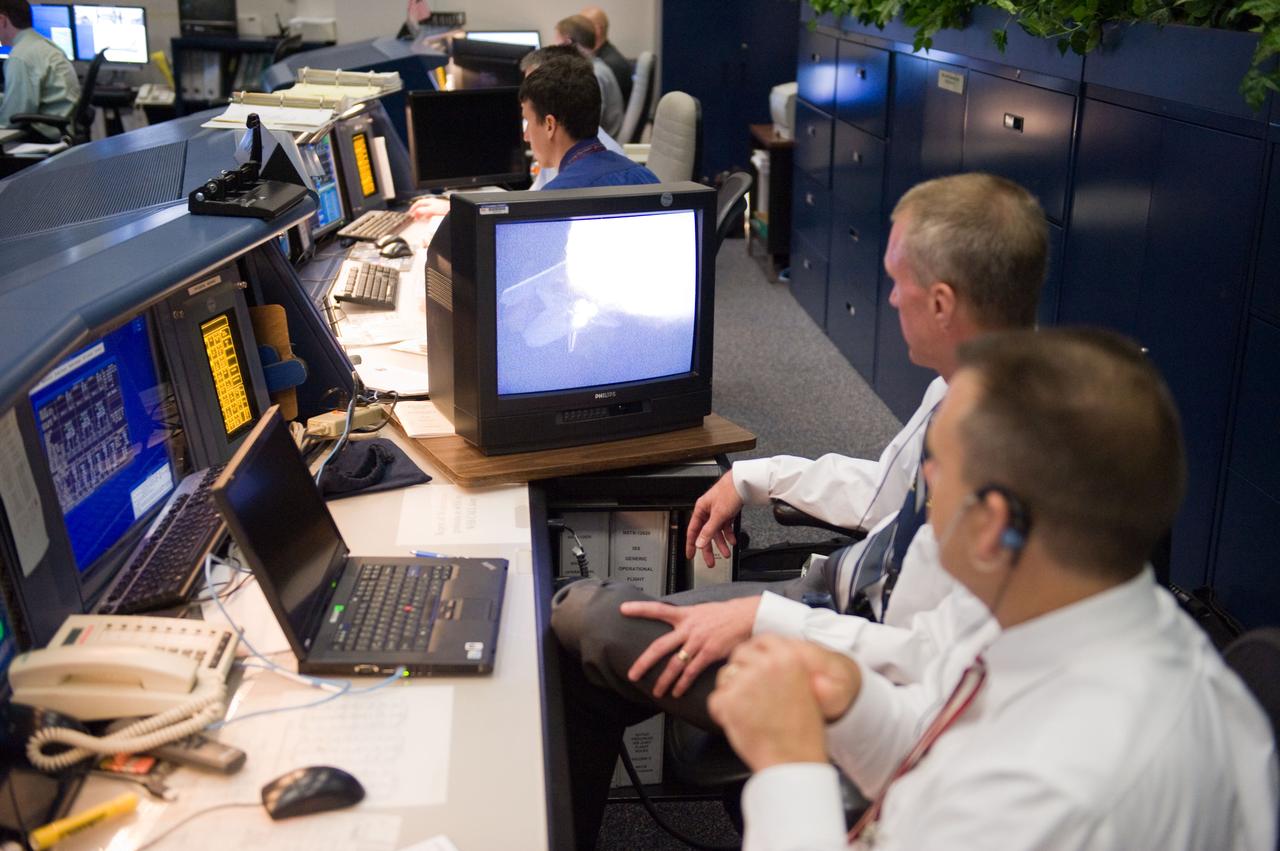
JSC2010-E-080460 (14 May 2010) --- Brent Jett, director, flight crew operations; and flight director Norm Knight (foreground) watch a monitor in the space shuttle flight control room in the Mission Control Center at NASA's Johnson Space Center during the launch of space shuttle Atlantis a few hundred miles away in Florida. Liftoff was on time at 2:20 p.m. (EDT) on May 14, 2010 from launch pad 39A at NASA's Kennedy Space Center.
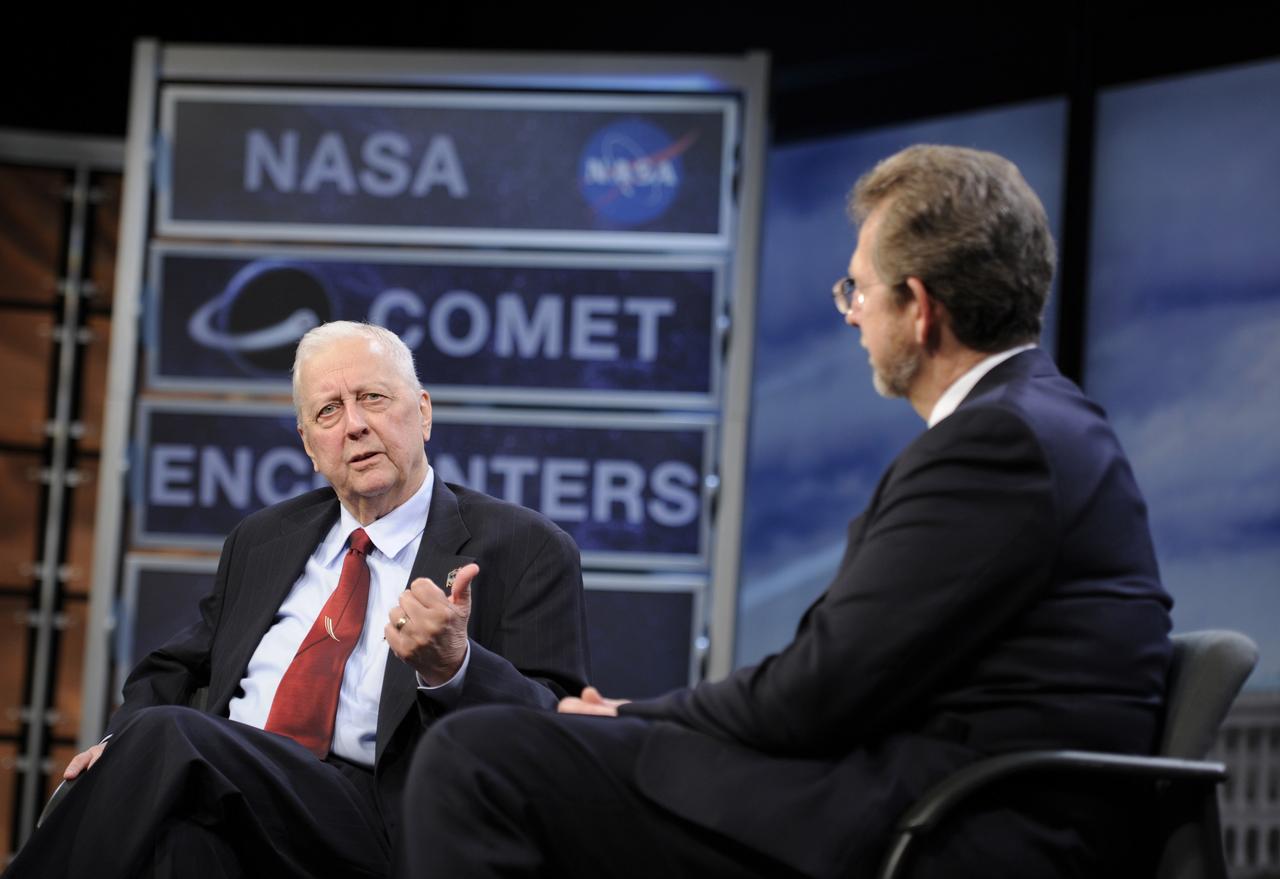
Dr. James L. Green, Director of Planetary Science at NASA, right, speaks with Dr. Robert Farquar, an executive for space exploration at KinetX Inc., during a symposium commemorating a quarter-century of comet discoveries, Friday, Sept. 10, 2010, in the Knight studio at the Newseum in Washington. The International Sun-Earth Explorer-3 (ISEE-3) spacecraft flew past the comet Giacobini-Zinner on Sept. 11, 1985 which established a foundation of discoveries that continue today. Photo Credit: (NASA/Paul E. Alers)
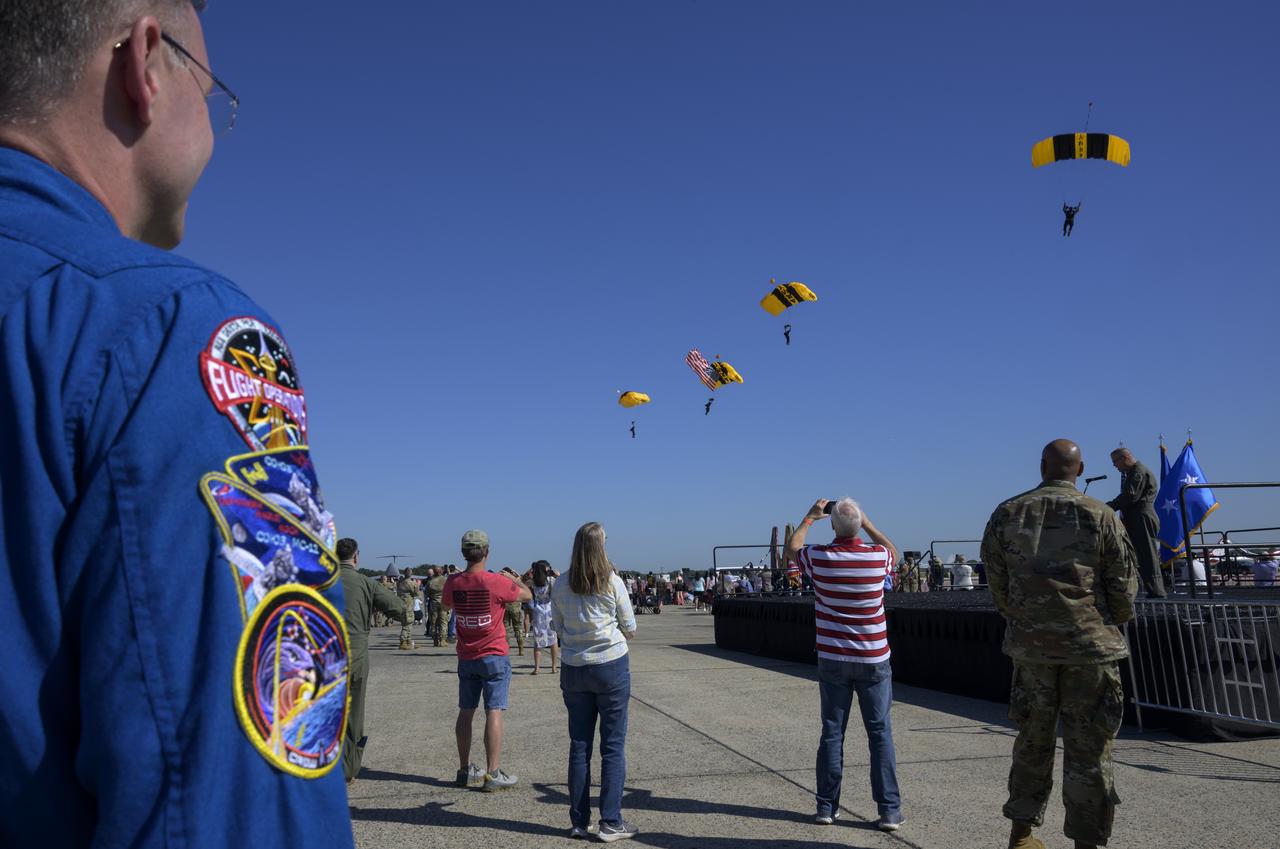
NASA astronaut Nick Hague watches as the United States Army Parachute Team, the Golden Knights, perform during the opening ceremony of the Joint Base Andrews Air Show, Friday, Sept. 12, 2025, at Joint Base Andrews in Prince George's County, Maryland. Hague spent 171 days onboard the International Space Station as part of Expedition 72. Photo Credit: (NASA/Bill Ingalls)
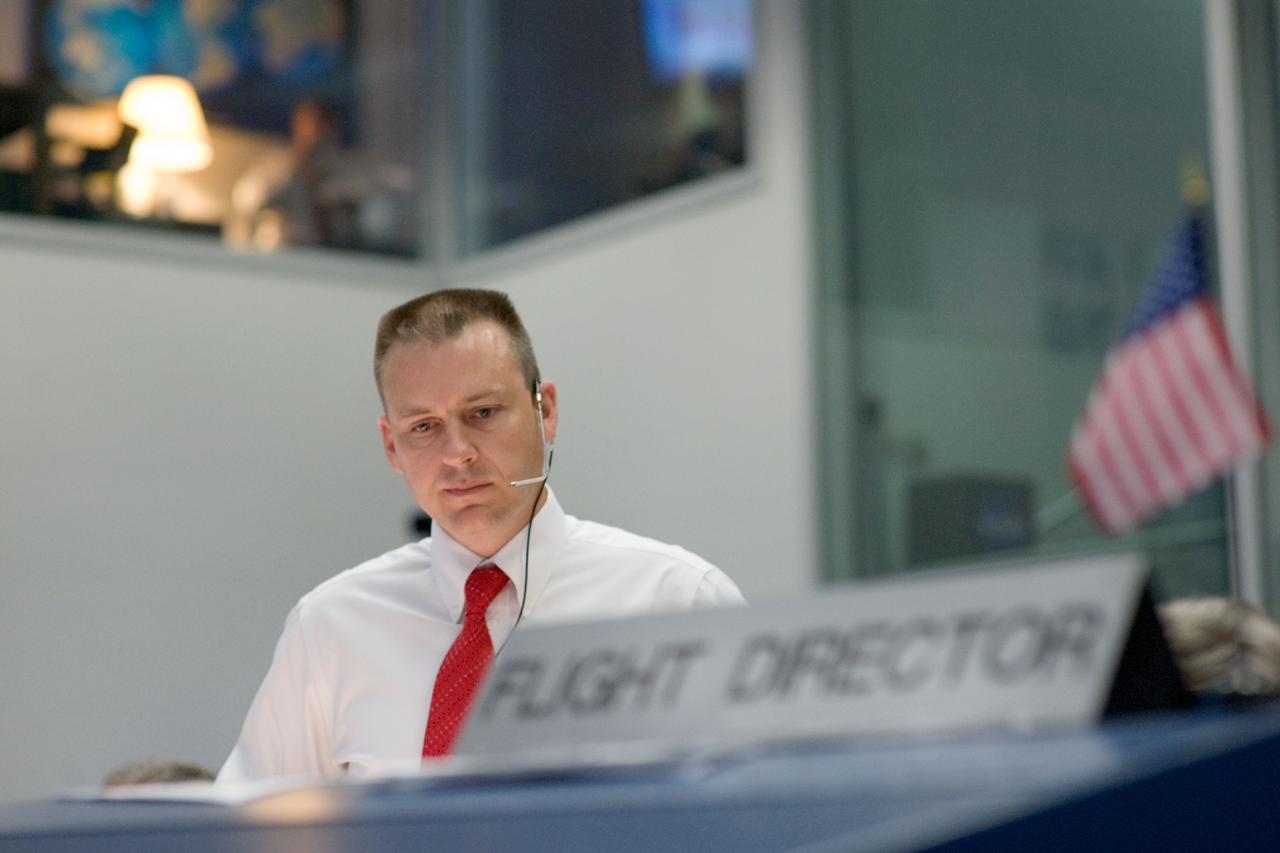
JSC2009-E-118882 (11 May 2009) --- Flight director Norm Knight is pictured in the space shuttle flight control room in the Mission Control Center at NASA's Johnson Space Center during launch countdown activities a few hundred miles away in Florida, site of Space Shuttle Atlantis? scheduled STS-125 launch to service the Hubble Space Telescope. Liftoff was on time at 2:01 p.m. (EDT) on May 11, 2009 from launch pad 39A at NASA's Kennedy Space Center.
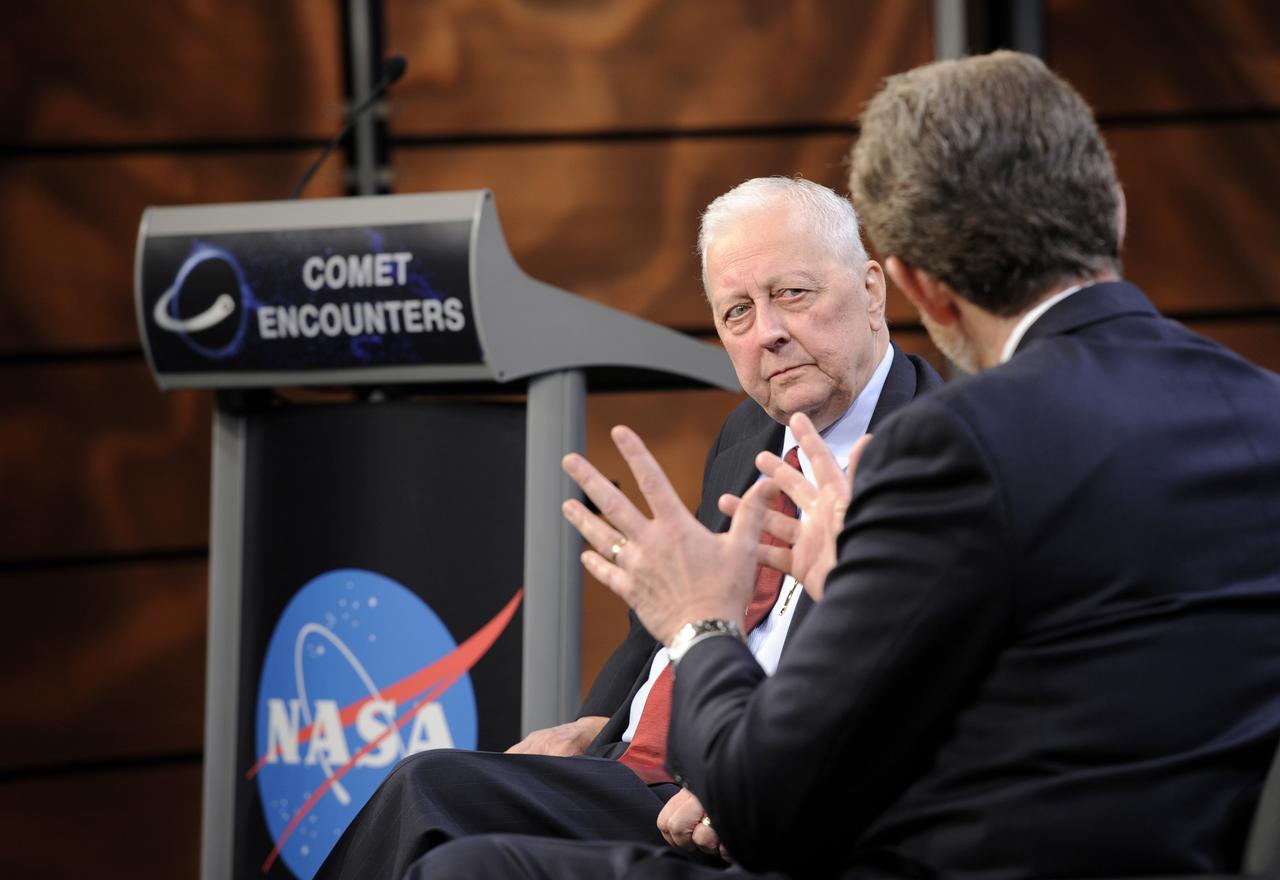
Dr. James L. Green, Director of Planetary Science at NASA, right, speaks with Dr. Robert Farquar, an executive for space exploration at KinetX Inc., during a symposium commemorating a quarter-century of comet discoveries, Friday, Sept. 10, 2010, in the Knight studio at the Newseum in Washington. The International Sun-Earth Explorer-3 (ISEE-3) spacecraft flew past the comet Giacobini-Zinner on Sept. 11, 1985 which established a foundation of discoveries that continue today. Photo Credit: (NASA/Paul E. Alers)
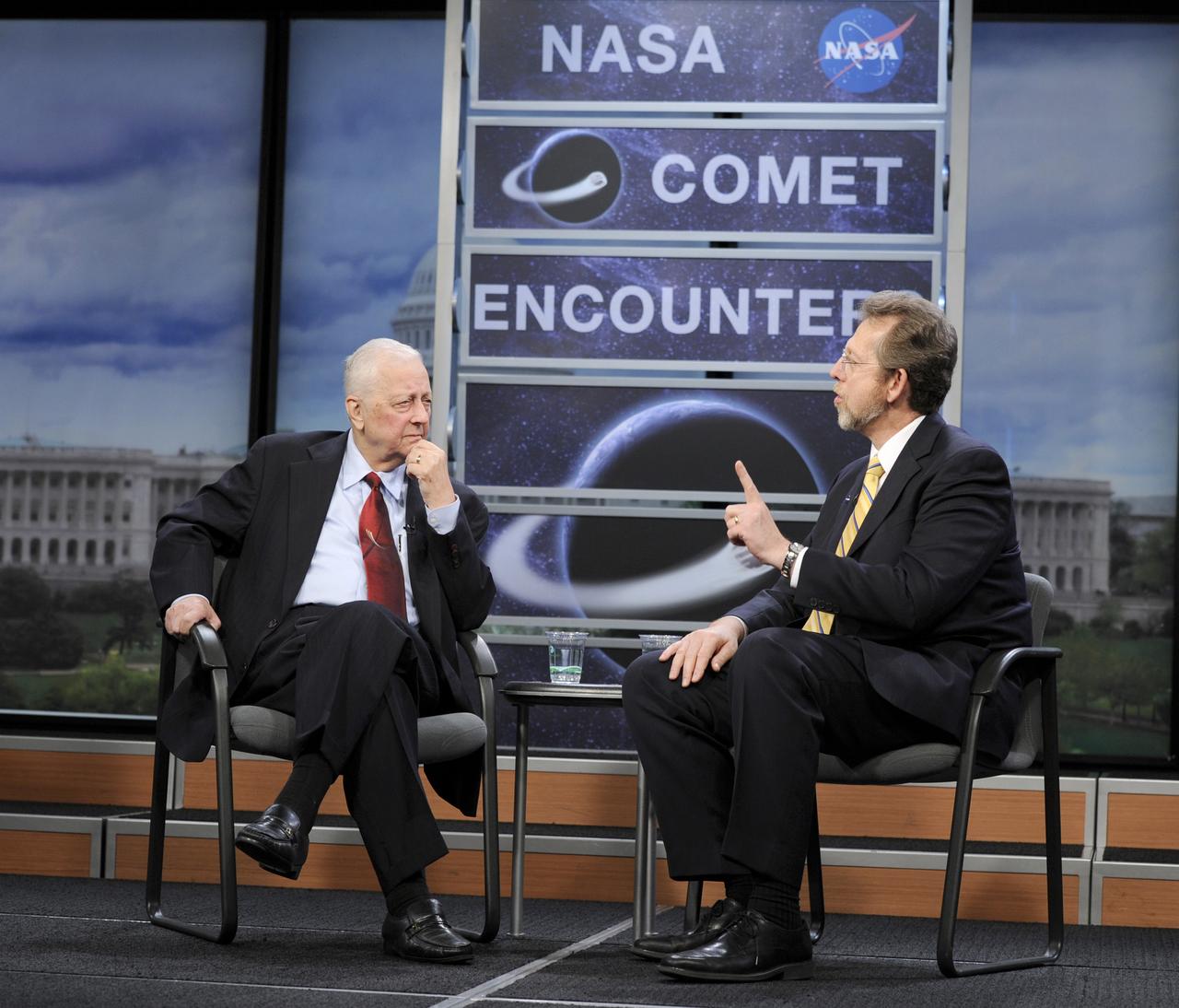
Dr. James L. Green, Director of Planetary Science at NASA, right, speaks with Dr. Robert Farquar, an executive for space exploration at KinetX Inc., during a symposium commemorating a quarter-century of comet discoveries, Friday, Sept. 10, 2010, in the Knight studio at the Newseum in Washington. The International Sun-Earth Explorer-3 (ISEE-3) spacecraft flew past the comet Giacobini-Zinner on Sept. 11, 1985 which established a foundation of discoveries that continue today. Photo Credit: (NASA/Paul E. Alers)
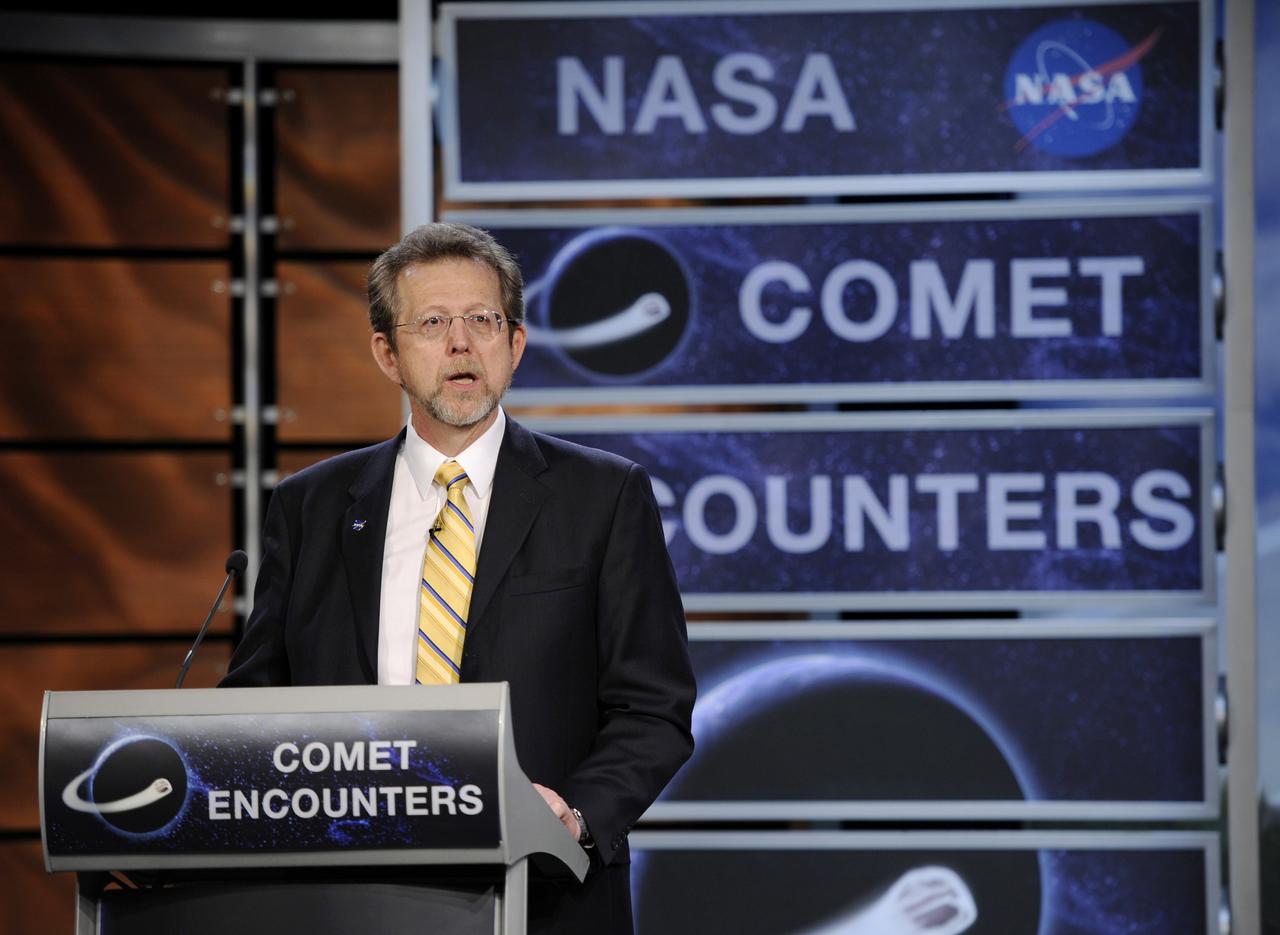
Dr. James L. Green, Director of Planetary Science at NASA, speaks during a symposium commemorating a quarter-century of comet discoveries, Friday, Sept. 10, 2010, in the Knight studio at the Newseum in Washington. The International Sun-Earth Explorer-3 (ISEE-3) spacecraft flew past the comet Giacobini-Zinner on Sept. 11, 1985 which established a foundation of discoveries that continue today. Photo Credit: (NASA/Paul E. Alers)
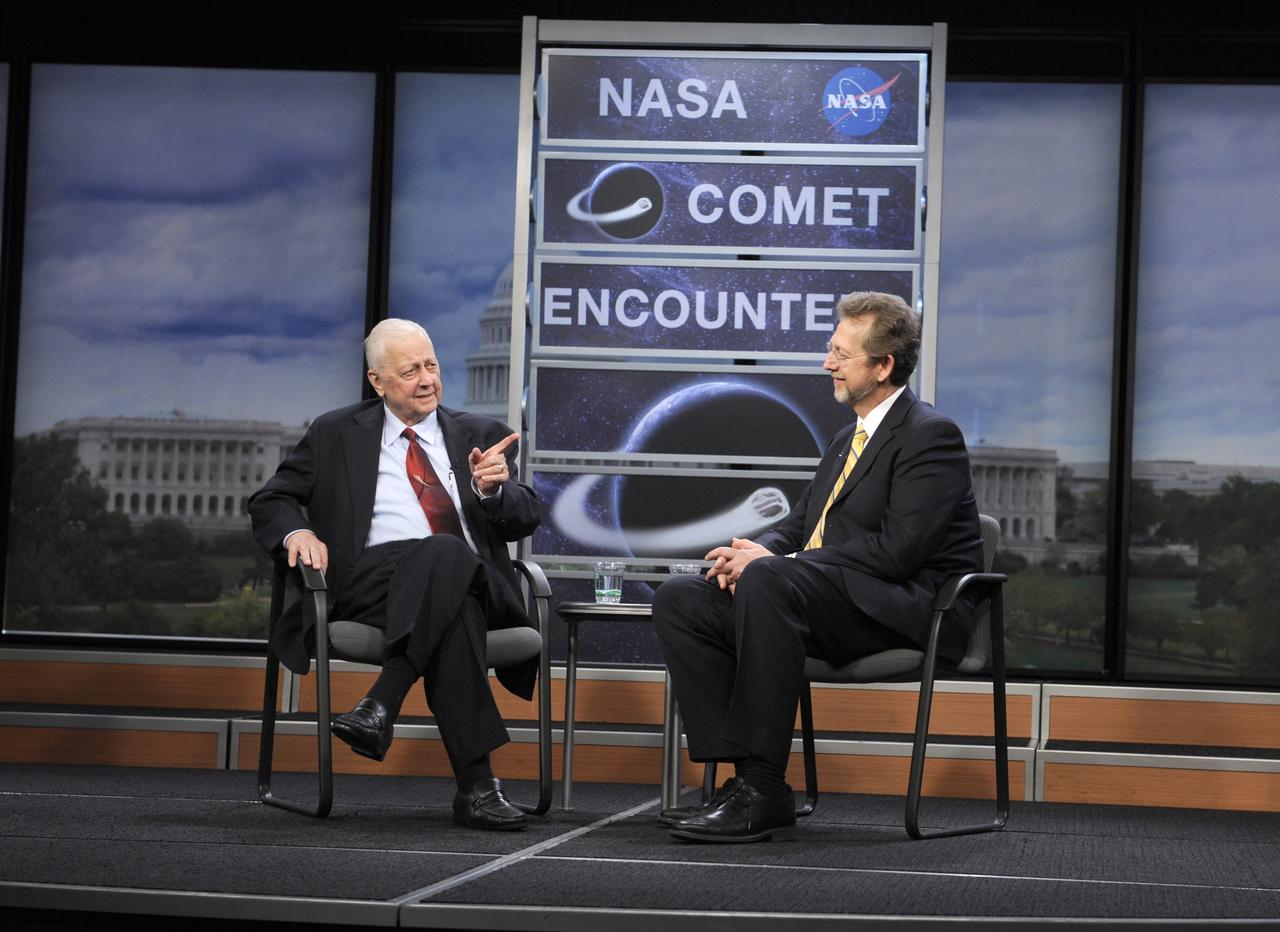
Dr. James L. Green, Director of Planetary Science at NASA, right, speaks with Dr. Robert Farquar, an executive for space exploration at KinetX Inc., during a symposium commemorating a quarter-century of comet discoveries, Friday, Sept. 10, 2010, in the Knight studio at the Newseum in Washington. The International Sun-Earth Explorer-3 (ISEE-3) spacecraft flew past the comet Giacobini-Zinner on Sept. 11, 1985 which established a foundation of discoveries that continue today. Photo Credit: (NASA/Paul E. Alers)
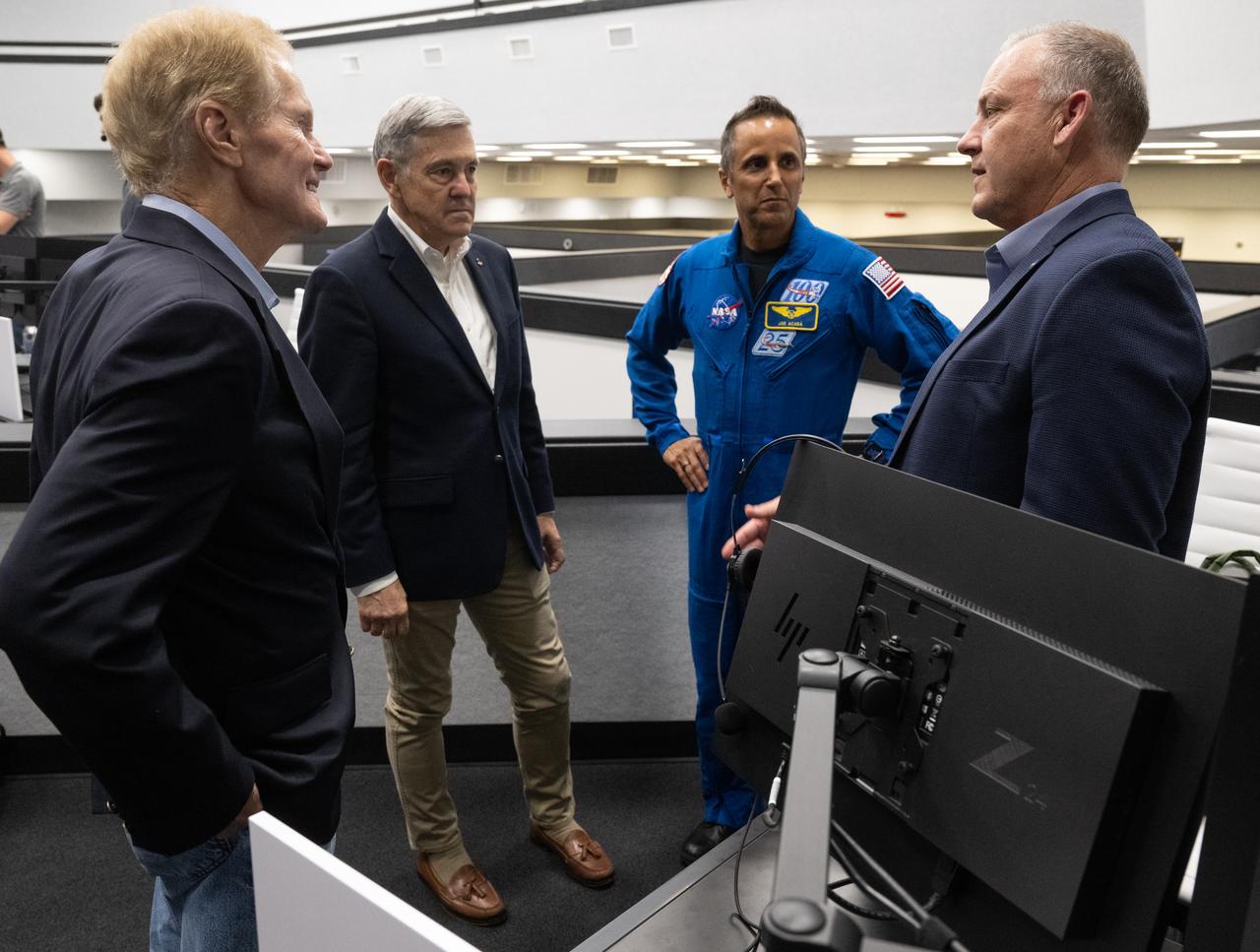
NASA Administrator Bill Nelson, left, Bob Cabana, NASA associate administrator, second from left, Joe Acaba, Chief of the Astronaut Office, second from right, and Norm Knight, director of Flight Operations at NASA's Johnson Space Center, right, are seen following the launch of a SpaceX Falcon 9 rocket carrying the company's Dragon spacecraft on the Crew-6 mission with NASA astronauts Stephen Bowen and Warren "Woody" Hoburg, UAE (United Arab Emirates) astronaut Sultan Alneyadi, and Roscosmos cosmonaut Andrey Fedyaev onboard, Thursday, March 2, 2023, in firing room four of the Rocco A. Petrone Launch Control Center at NASA’s Kennedy Space Center in Florida. NASA’s SpaceX Crew-6 mission is the sixth crew rotation mission of the SpaceX Dragon spacecraft and Falcon 9 rocket to the International Space Station as part of the agency’s Commercial Crew Program. Bowen, Hoburg, Alneyadi, and Fedyaev launched at 12:34 a.m. EST, from Launch Complex 39A at the Kennedy Space Center to begin a six month mission aboard the International Space Station. Photo Credit: (NASA/Joel Kowsky)
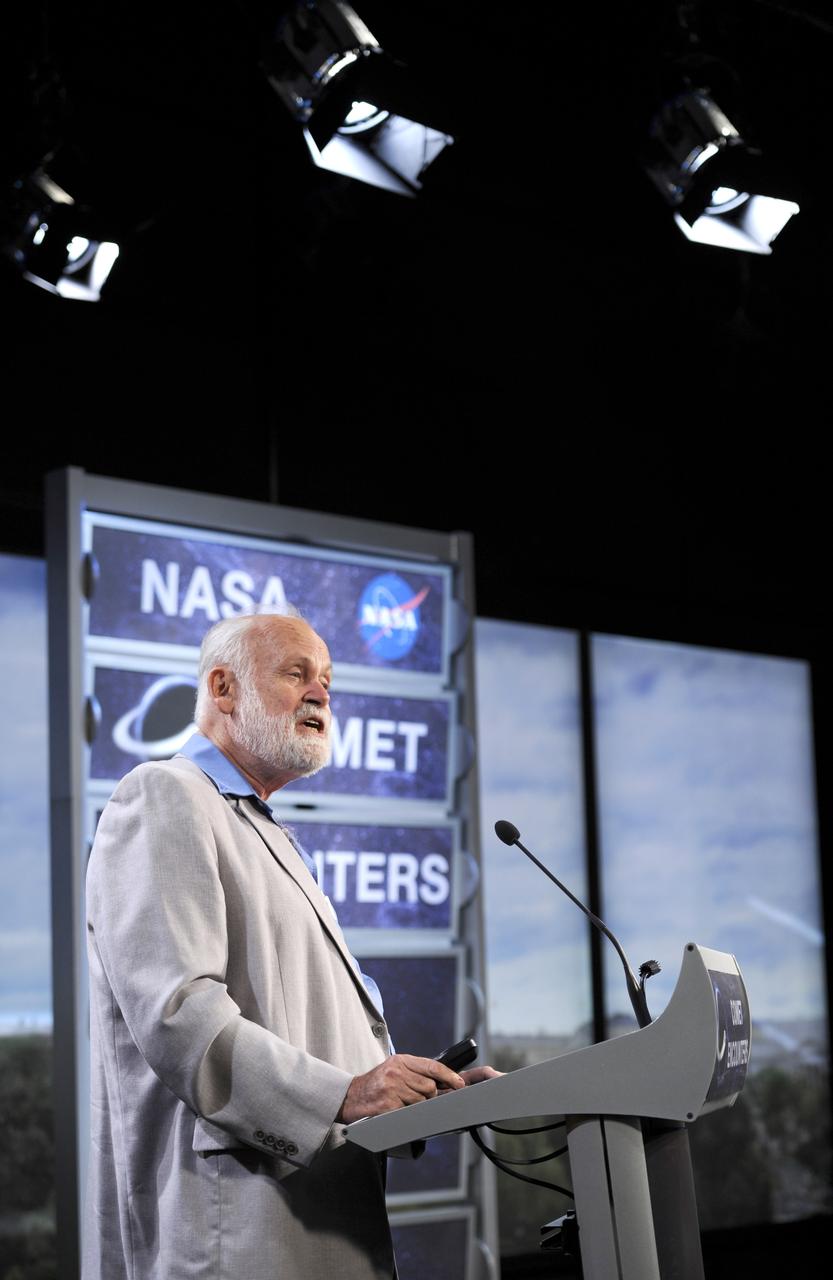
Dr. Michael A'Hearn, Principal Investigator, EPOXI Comet Encounter Mission, speaks during a symposium commemorating a quarter-century of comet discoveries, Friday, Sept. 10, 2010, in the Knight studio at the Newseum in Washington. The International Sun-Earth Explorer-3 (ISEE-3) spacecraft flew past the comet Giacobini-Zinner on Sept. 11, 1985 which established a foundation of discoveries that continue today. Photo Credit: (NASA/Paul E. Alers)
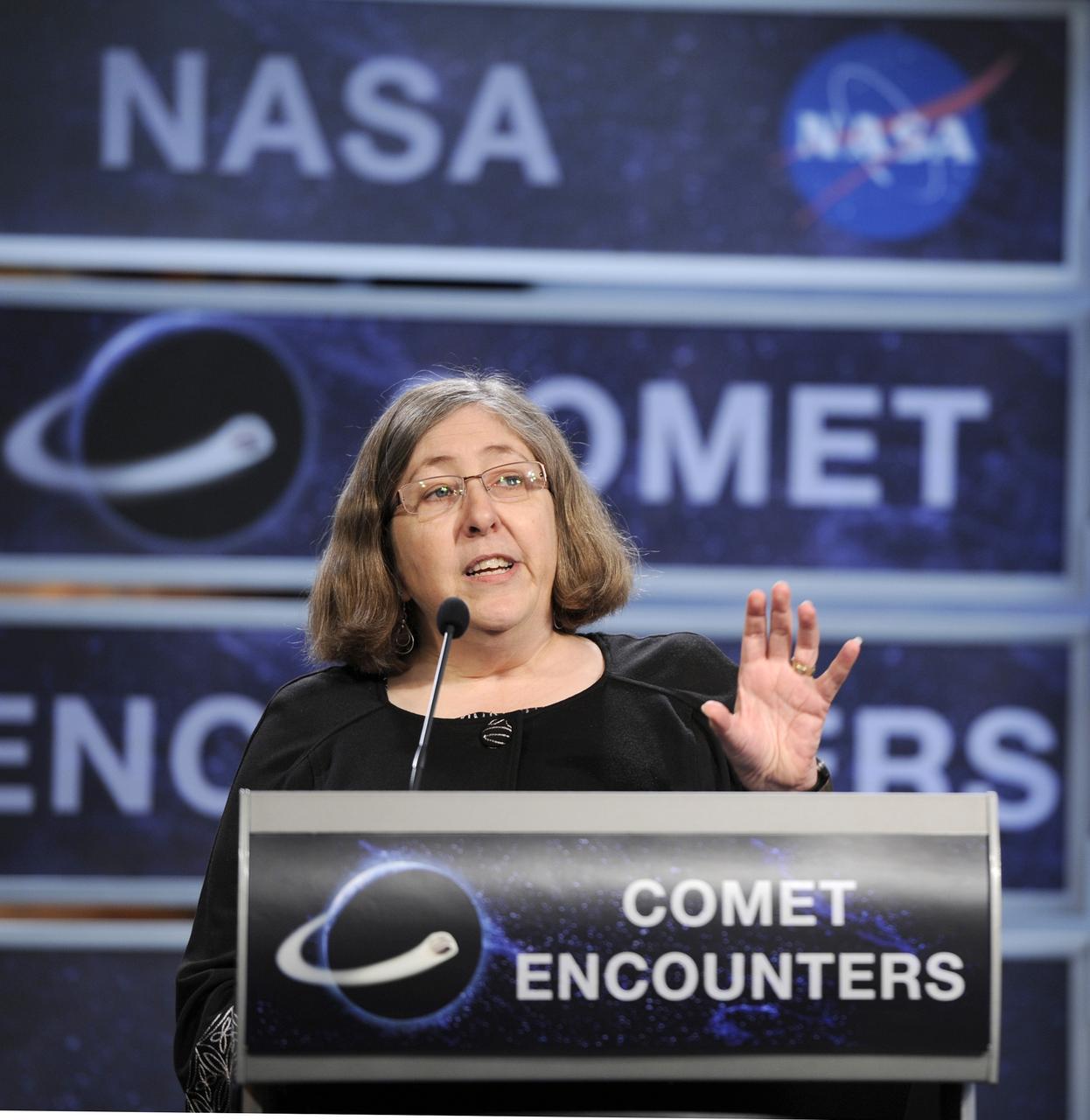
Dr. Anita Cochran, Assistant Director, McDonald Observatory at the University of Texas-Austin, speaks during a symposium commemorating a quarter-century of comet discoveries, Friday, Sept. 10, 2010, in the Knight studio at the Newseum in Washington. The International Sun-Earth Explorer-3 (ISEE-3) spacecraft flew past the comet Giacobini-Zinner on Sept. 11, 1985 which established a foundation of discoveries that continue today. Photo Credit: (NASA/Paul E. Alers)
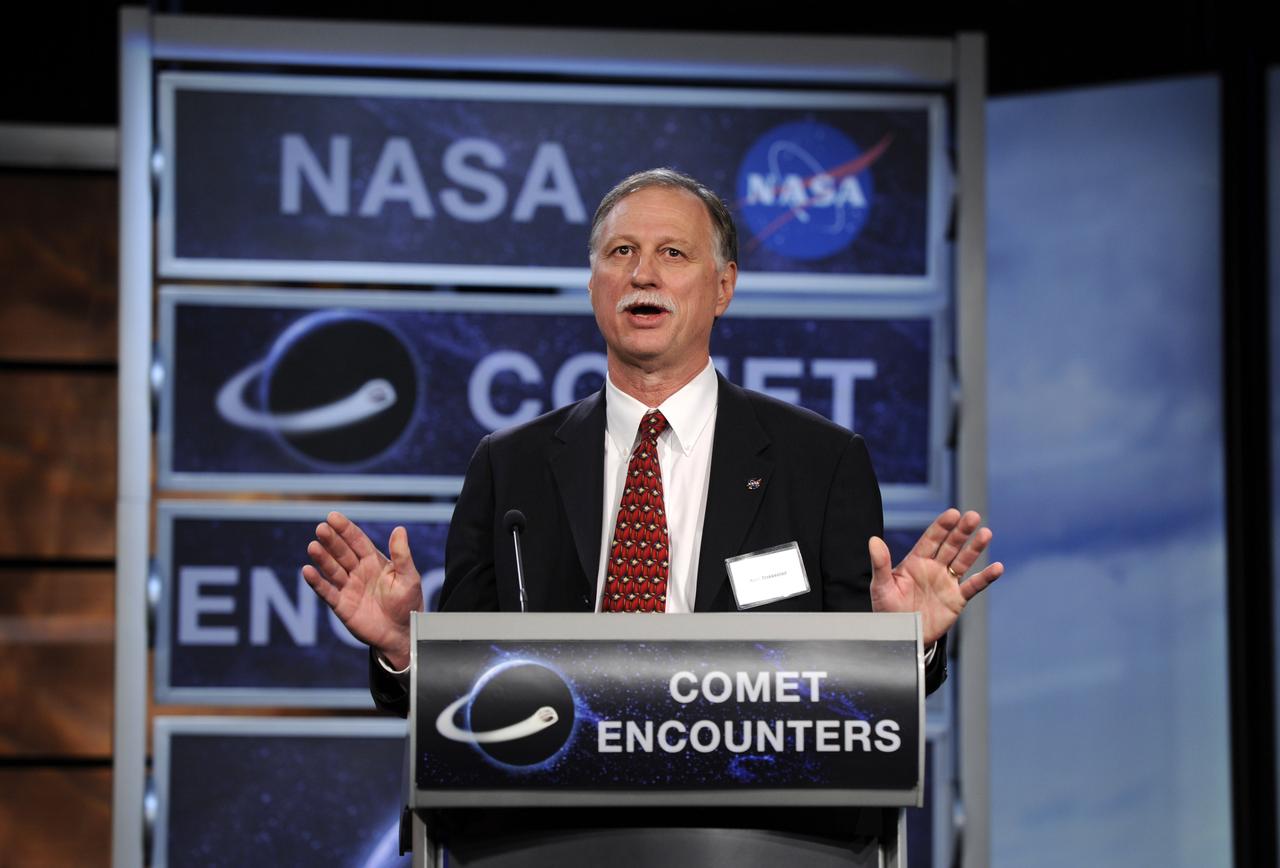
Kjell Stakkestad, President and CEO of KinetX Inc., speaks during a symposium commemorating a quarter-century of comet discoveries, Friday, Sept. 10, 2010, in the Knight studio at the Newseum in Washington. The International Sun-Earth Explorer-3 (ISEE-3) spacecraft flew past the comet Giacobini-Zinner on Sept. 11, 1985 which established a foundation of discoveries that continue today. Photo Credit: (NASA/Paul E. Alers)
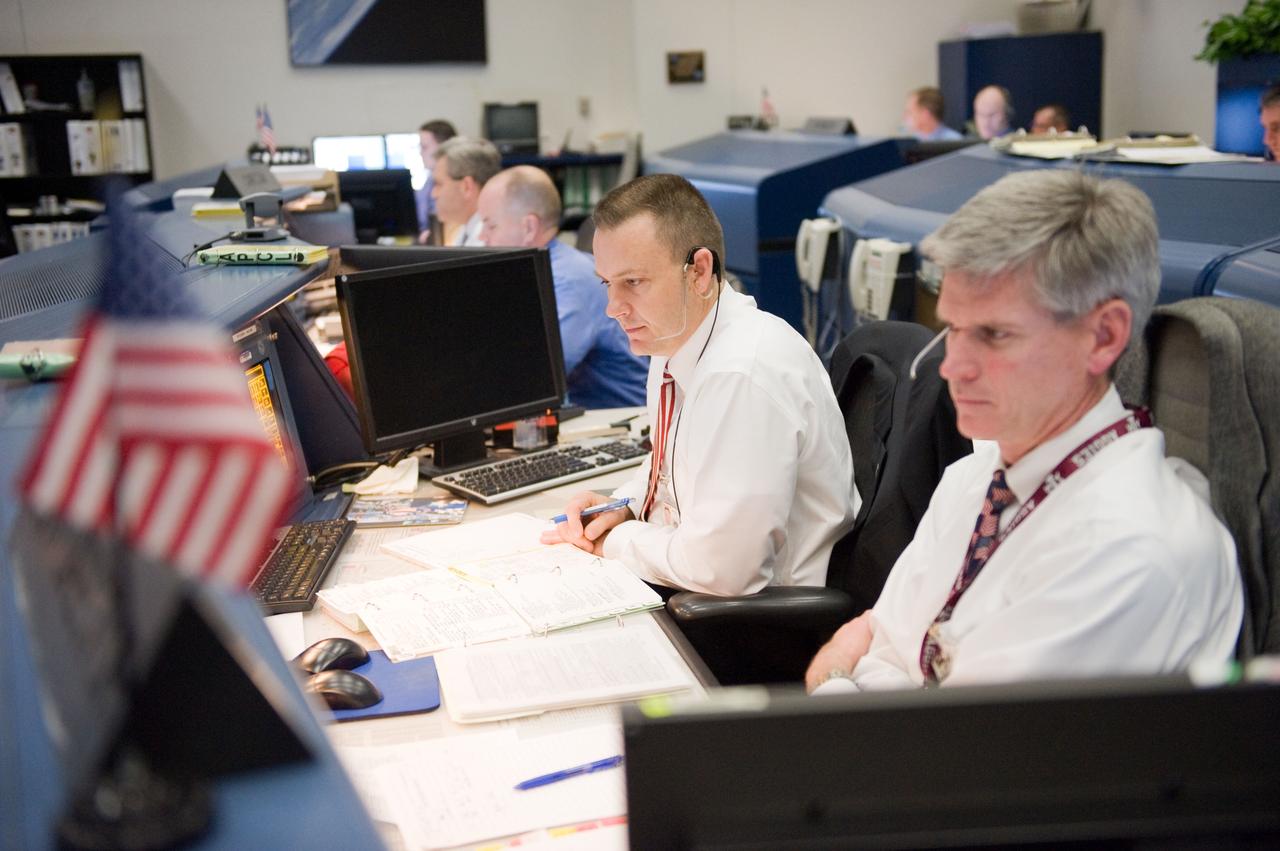
JSC2010-E-019041 (8 Feb. 2010) --- Flight directors Norm Knight (left) and Bryan Lunney monitor data at their console in the space shuttle flight control room in the Mission Control Center at NASA's Johnson Space Center during launch countdown activities a few hundred miles away in Florida, site of space shuttle Endeavour's STS-130 launch.
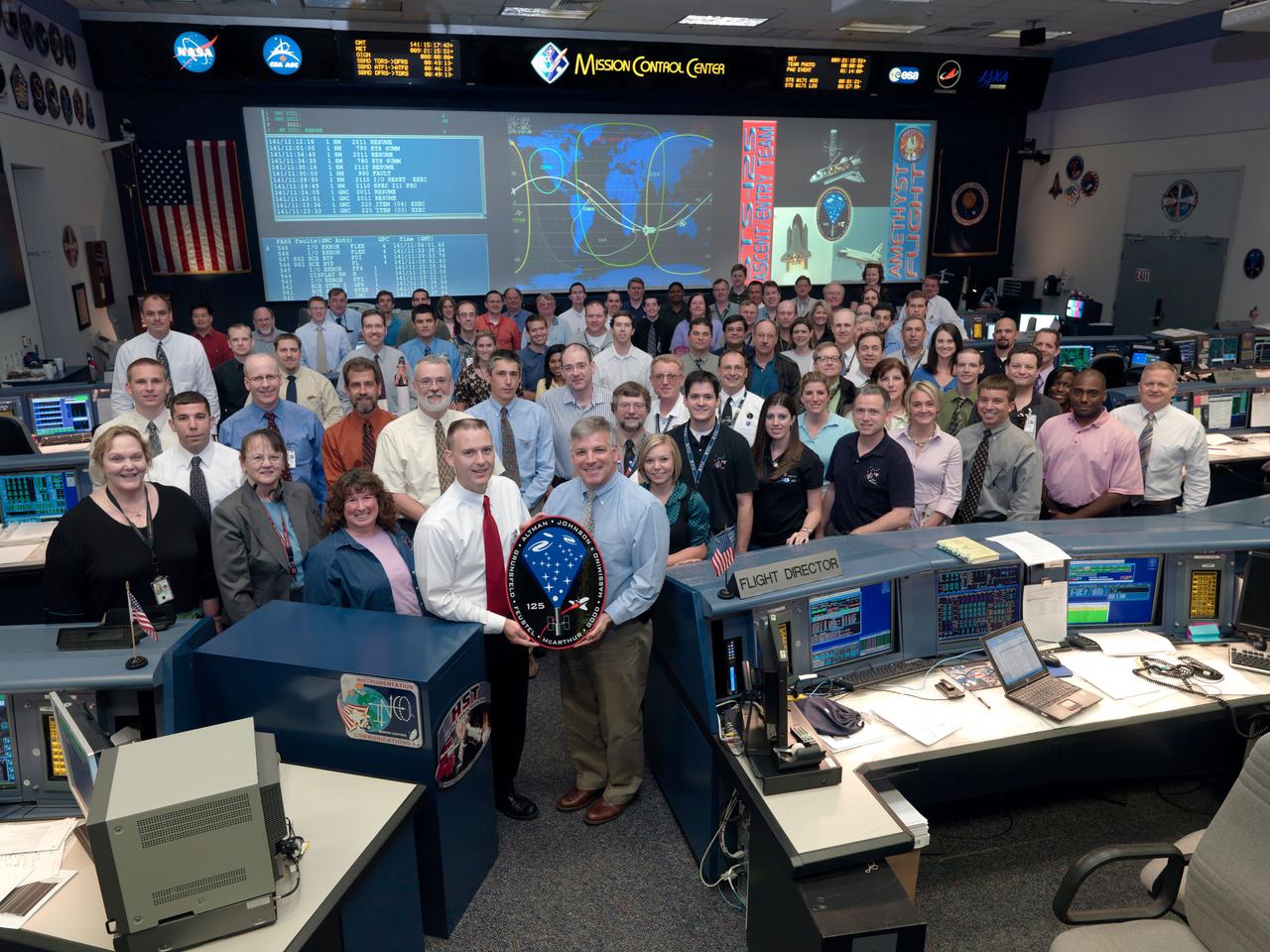
JSC2009-E-121353 (21 May 2009) --- The members of the STS-125 Ascent and Entry flight control team pose for a group portrait in the space shuttle flight control room in the Mission Control Center at NASA's Johnson Space Center. Flight director Norm Knight (left) and astronaut Gregory H. Johnson, spacecraft communicator (CAPCOM), hold the STS-125 mission logo.
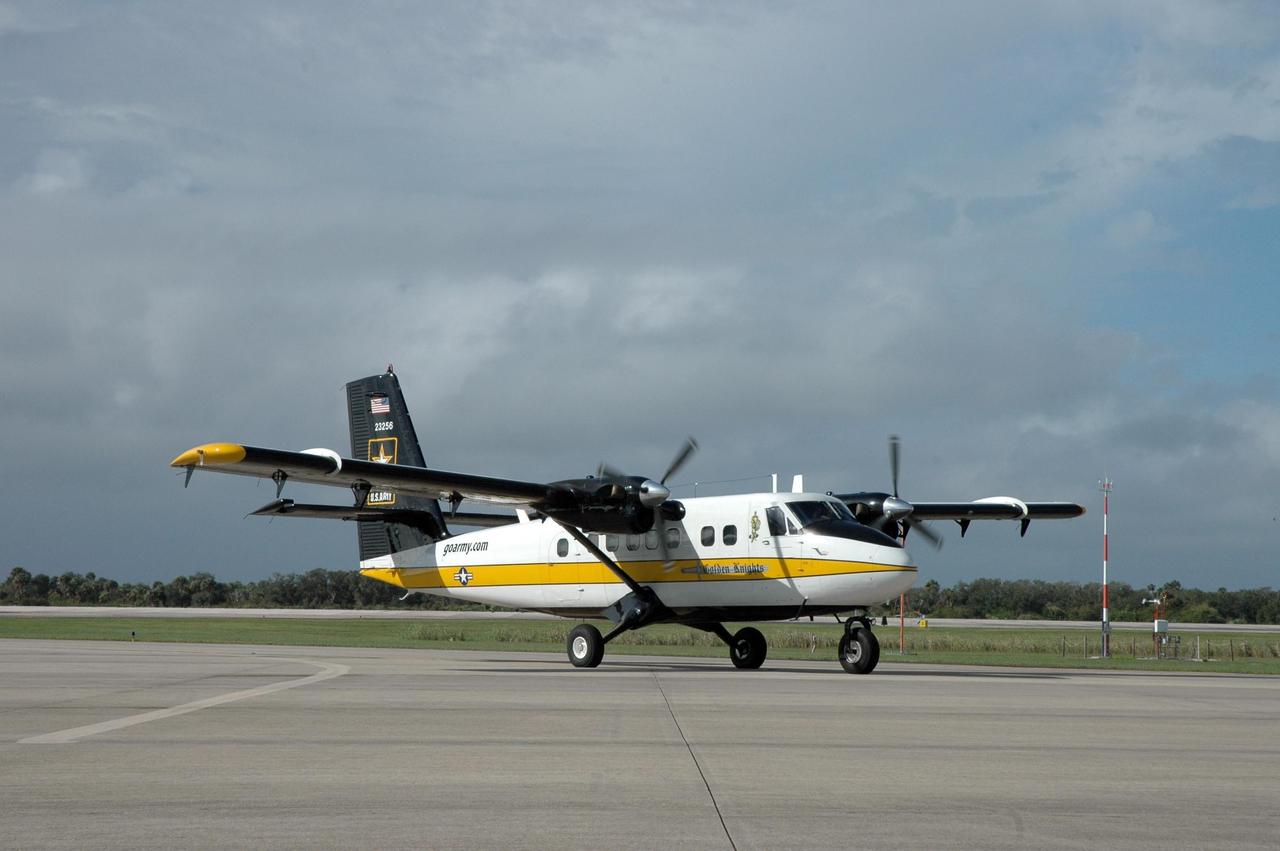
KENNEDY SPACE CENTER, FLA. -- The airplane used by the U.S. Army Golden Knights arrives at the Shuttle Landing Facility at NASA's Kennedy Space Center. The Golden Knights will demonstrate precision skydiving as part of the World Space Expo being held from Nov. 1 to Nov. 4 at the NASA Kennedy Space Center Visitor Complex. Other air demonstrations are planned by the U.S. Air Force Thunderbirds Aerial Demonstration Squadron, the U.S. Navy F-18 Super Hornets, U.S. Air Force F-22 Raptor, U.S. Air Force F-15 Eagle, the P-51 Mustang Heritage Flight and the U.S. Air Force 920th Rescue Wing, which was responsible for Mercury and Gemini capsule recovery. The World Space Expo is an event to commemorate humanity's first 50 years in space while looking forward to returning people to the moon and exploring beyond. The expo will showcase various panels, presentations and educational programs. It also is a part of NASA's 50th anniversary celebrations, highlighting the 45th Anniversary of the Mercury Program celebration featuring original NASA astronauts John Glenn and Scott Carpenter and the Pioneering Women of Aerospace forum featuring Eileen Collins and other prominent female space veterans. The agency was founded Oct. 1, 1958. Photo credit: NASA/Jack Pfaller

jsc2023e018436 (April 3, 2023) – NASA’s international astronaut corps greets NASA Chief Astronaut Joe Acaba and NASA Flight Operations Director Norm Knight on stage during the Monday, April 3, 2023, Artemis II crew announcement news conference at Ellington Field near NASA’s Johnson Space Center in Houston. The crew is comprised of Commander Reid Wiseman, Pilot Victor Glover, and Mission Specialists Christina Koch and Jeremy Hansen. The four astronauts will venture around the Moon on Artemis II, the first crewed mission on NASA’s path to establishing a long-term presence at the Moon for science and exploration through Artemis.
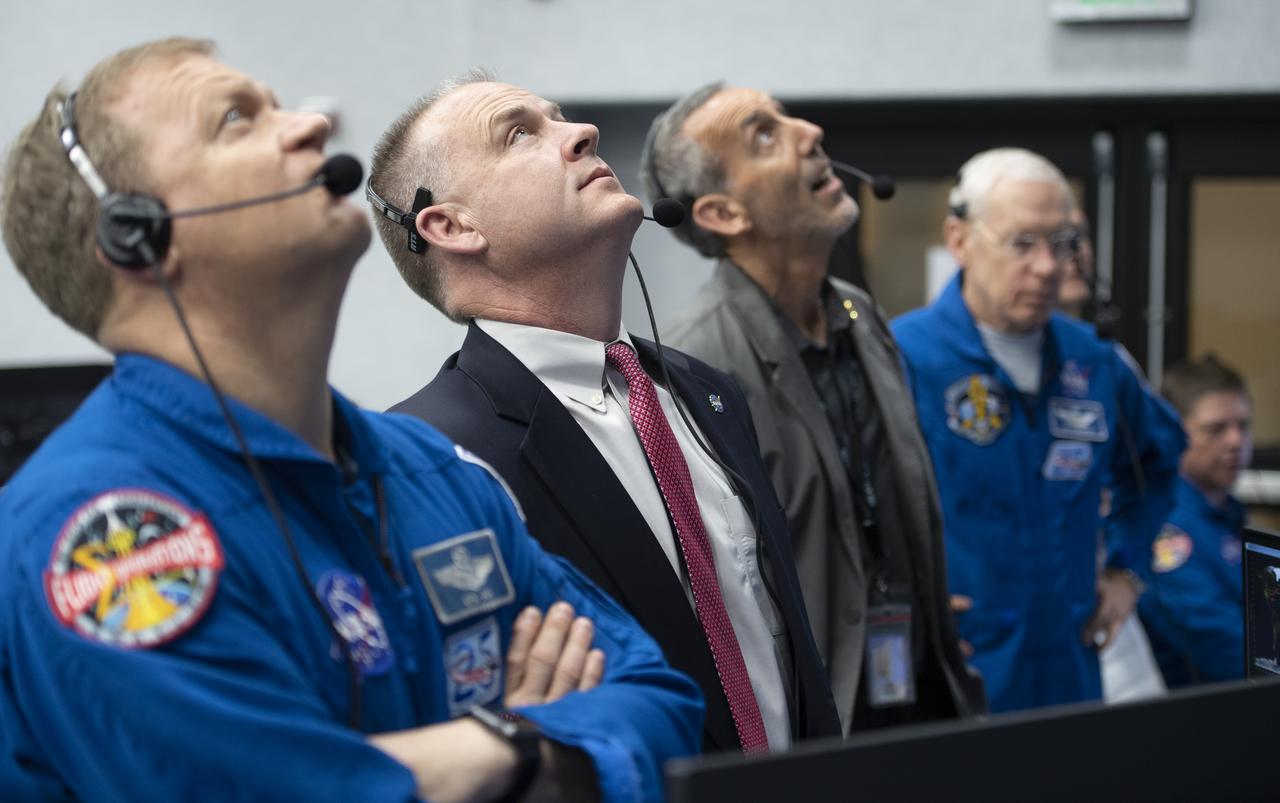
NASA astronaut Eric Boe, assistant to the chief of the astronaut office for commercial crew, left, and Norm Knight, deputy director of flight operations at NASA's Johnson Space Center watch the launch of a SpaceX Falcon 9 rocket carrying the company's Crew Dragon spacecraft on the Demo-1 mission from firing room four of the Launch Control Center, Saturday, March 2, 2019 at the Kennedy Space Center in Florida. The Demo-1 mission is the first launch of a commercially built and operated American spacecraft and space system designed for humans as part of NASA's Commercial Crew Program. The mission will serve as an end-to-end test of the system's capabilities. Photo Credit: (NASA/Joel Kowsky)
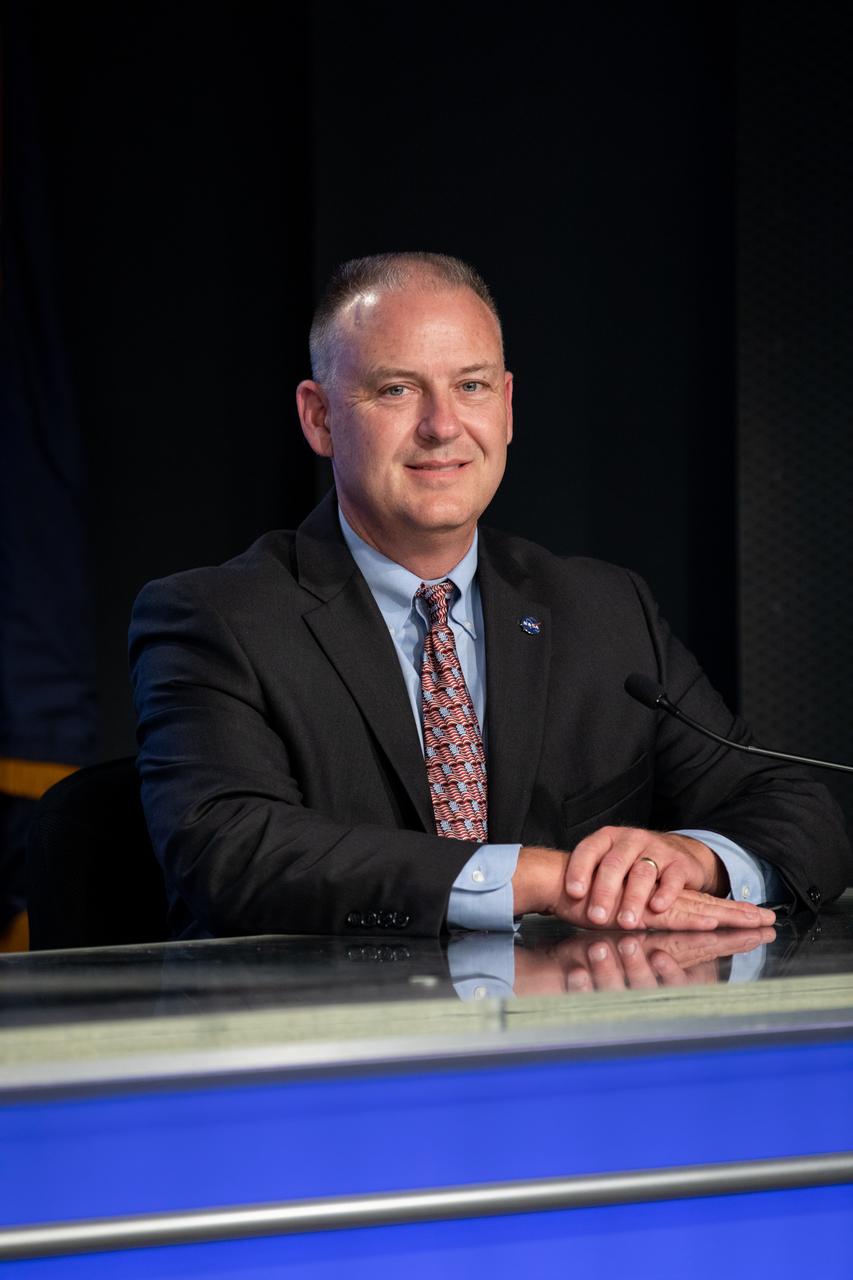
Norm Knight, deputy director of NASA’s Johnson Space Center’s Flight Control, participates in a news briefing inside the Press Site auditorium at the agency’s Kennedy Space Center in Florida on May 22, 2020, following the conclusion of the flight readiness review for the NASA’s SpaceX Demo-2 mission, with NASA astronauts Robert Behnken and Douglas Hurley, to the International Space Station. This will be SpaceX’s final flight test for NASA’s Commercial Crew Program. Behnken and Hurley will fly to the orbiting laboratory in a SpaceX Crew Dragon spacecraft, launching atop a Falcon 9 rocket from Kennedy’s Launch Complex 39A. Liftoff is scheduled for 4:33 p.m. EDT on Wednesday, May 27.
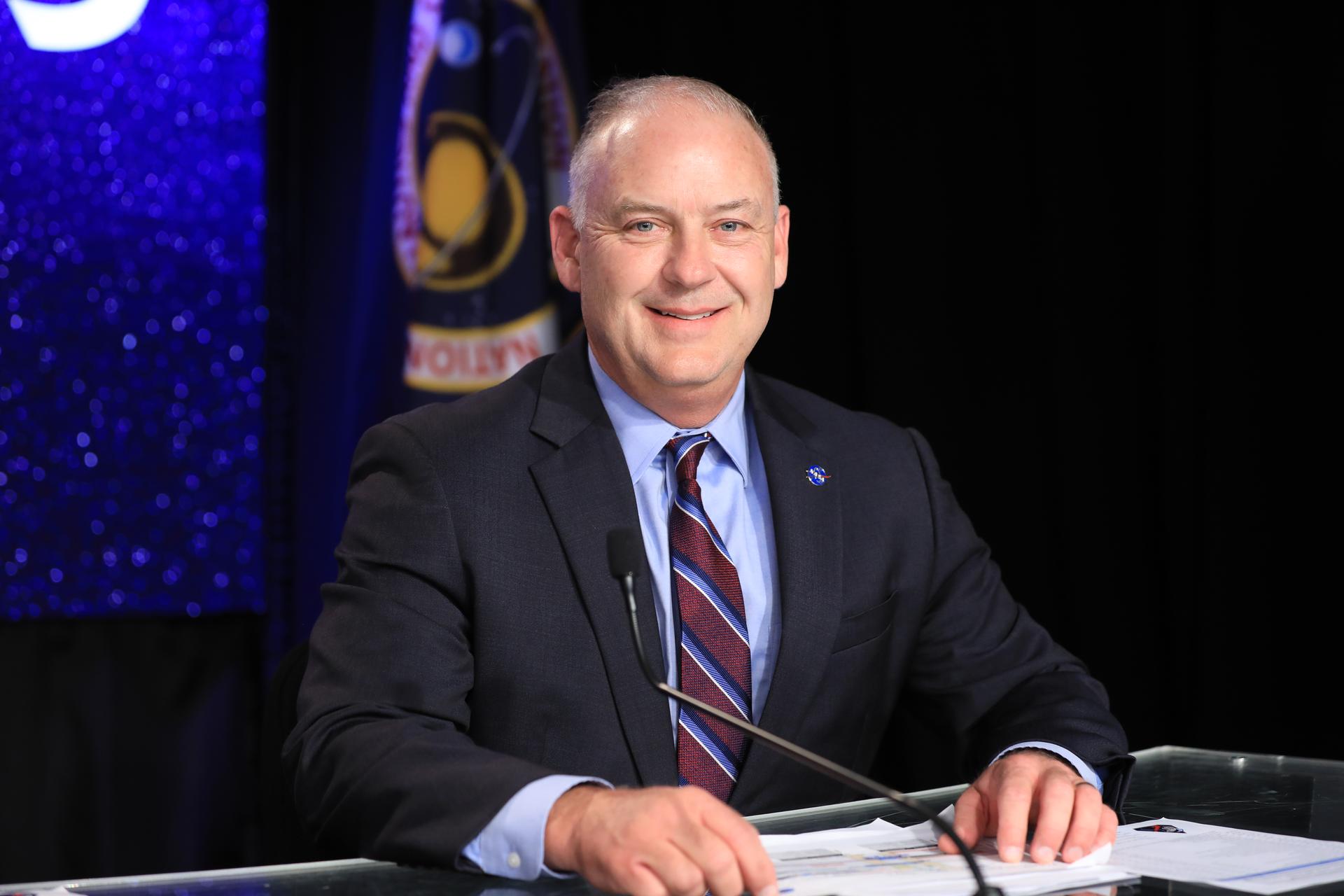
Norm Knight, director, NASA’s Flight Operations Directorate, participates in a news conference on Wednesday, April 1, 2026, inside the John Holliman Auditorium of the NASA News Center at the agency’s Kennedy Space Center in Florida to discuss the liftoff of the Artemis II test flight. The Artemis II mission will take Artemis II Commander Reid Wiseman, Pilot Victor Glover, and Mission Specialist Christina Koch from NASA, and Mission Specialist Jeremy Hansen from the CSA (Canadian Space Agency) on a 10-day journey around the Moon and back.
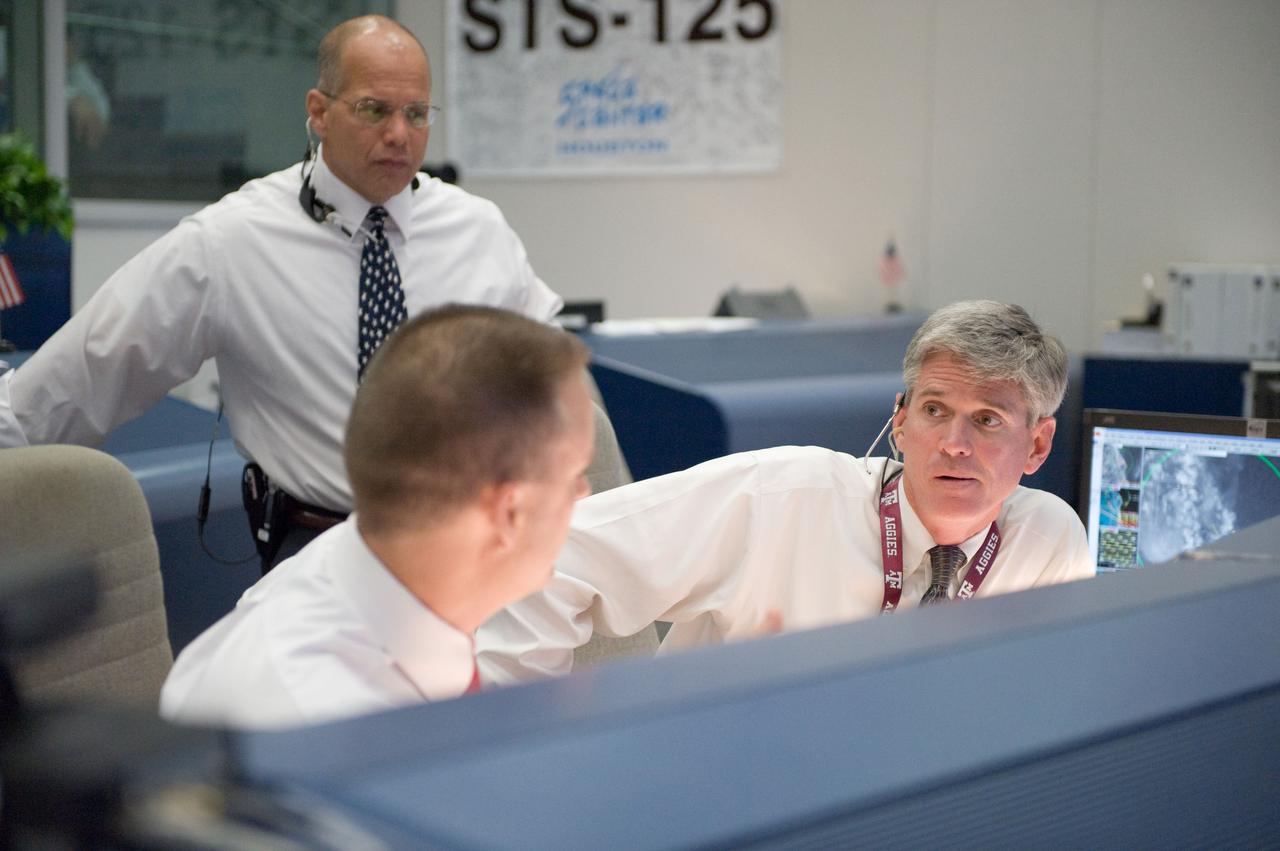
JSC2009-E-118879 (11 May 2009) --- Flight directors Norm Knight (left), Bryan Lunney and Tony Ceccacci (standing) are pictured in the space shuttle flight control room in the Mission Control Center at NASA's Johnson Space Center during launch countdown activities a few hundred miles away in Florida, site of Space Shuttle Atlantis? scheduled STS-125 launch to service the Hubble Space Telescope. Liftoff was on time at 2:01 p.m. (EDT) on May 11, 2009 from launch pad 39A at NASA's Kennedy Space Center.
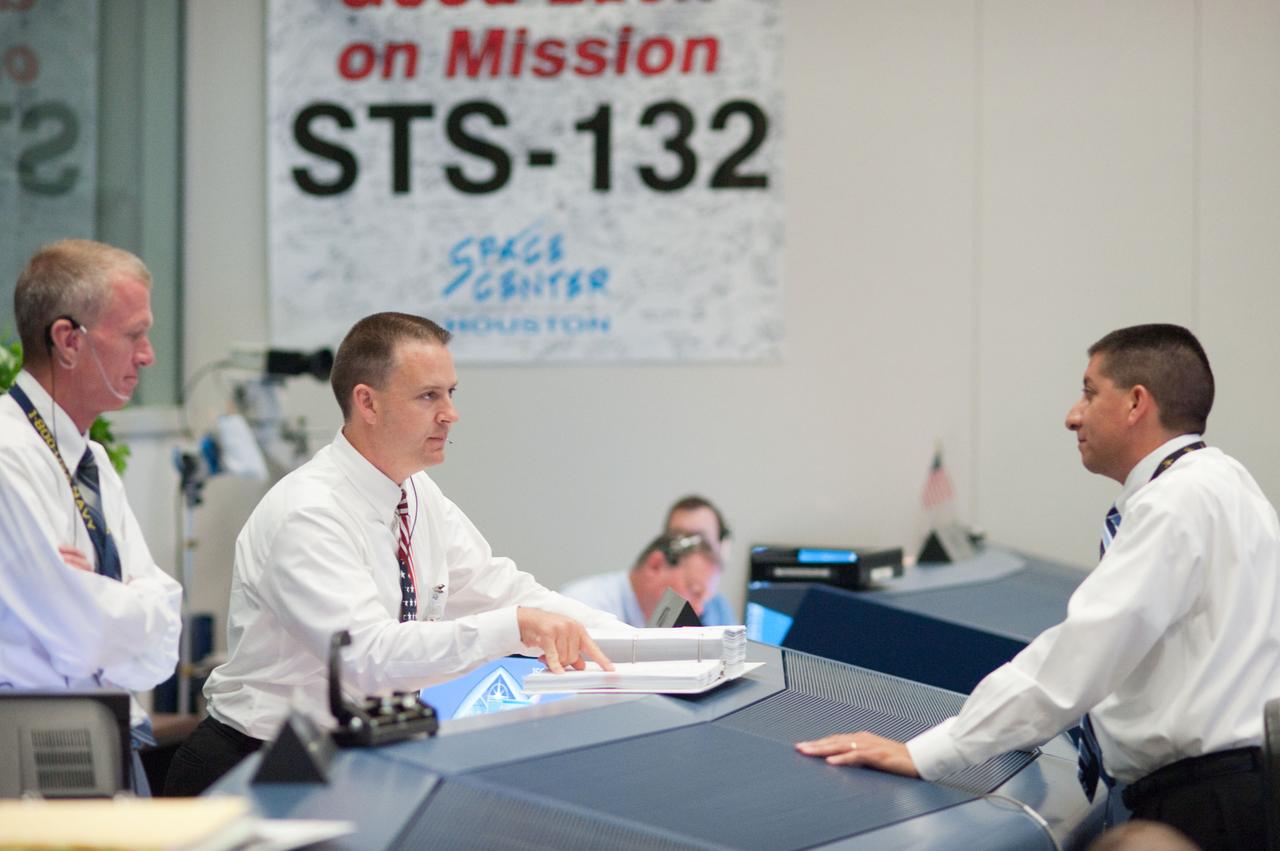
JSC2010-E-080446 (14 May 2010) --- Brent Jett (left), director, flight crew operations; along with flight directors Norm Knight (center) and Richard Jones are pictured in the space shuttle flight control room in the Mission Control Center at NASA's Johnson Space Center during launch countdown activities a few hundred miles away in Florida, site of space shuttle Atlantis' scheduled STS-132 launch. Liftoff was on time at 2:20 p.m. (EDT) on May 14, 2010 from launch pad 39A at NASA's Kennedy Space Center.
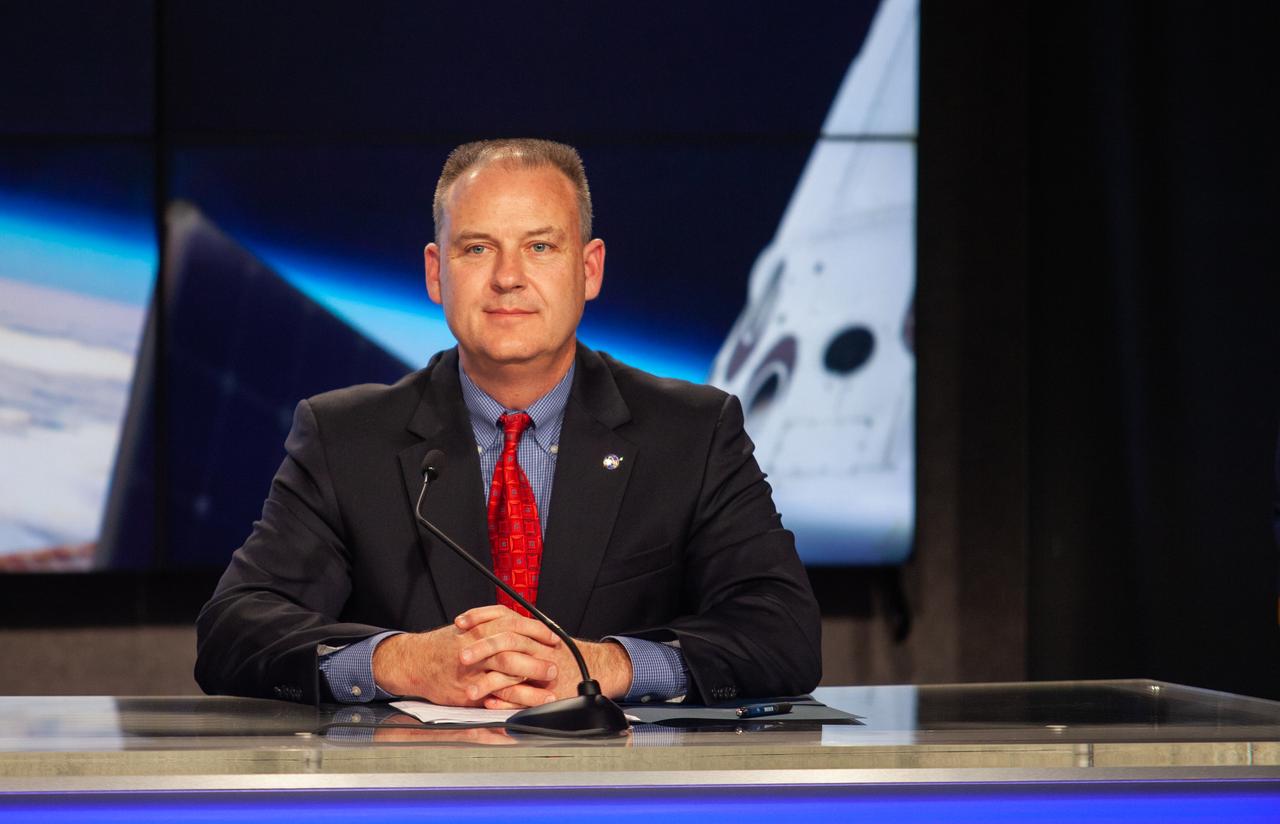
In Kennedy Space Center’s Press Site auditorium, agency and industry leaders speak to members of the media on Friday, Feb. 22, during the post-flight readiness review briefing for the SpaceX Demo-1 Commercial Crew Program (CCP) mission to the International Space Station. Pictured is Norm Knight, deputy director, NASA Johnson Space Center Flight Operations. The inaugural uncrewed flight of the SpaceX Crew Dragon, known as Demo-1, is targeted to lift off from Kennedy’s Launch Complex 39A on Saturday, March 2. EST. A SpaceX Falcon 9 rocket will launch the Crew Dragon on a mission designed to validate end-to-end systems and capabilities, leading to certification to fly crew.
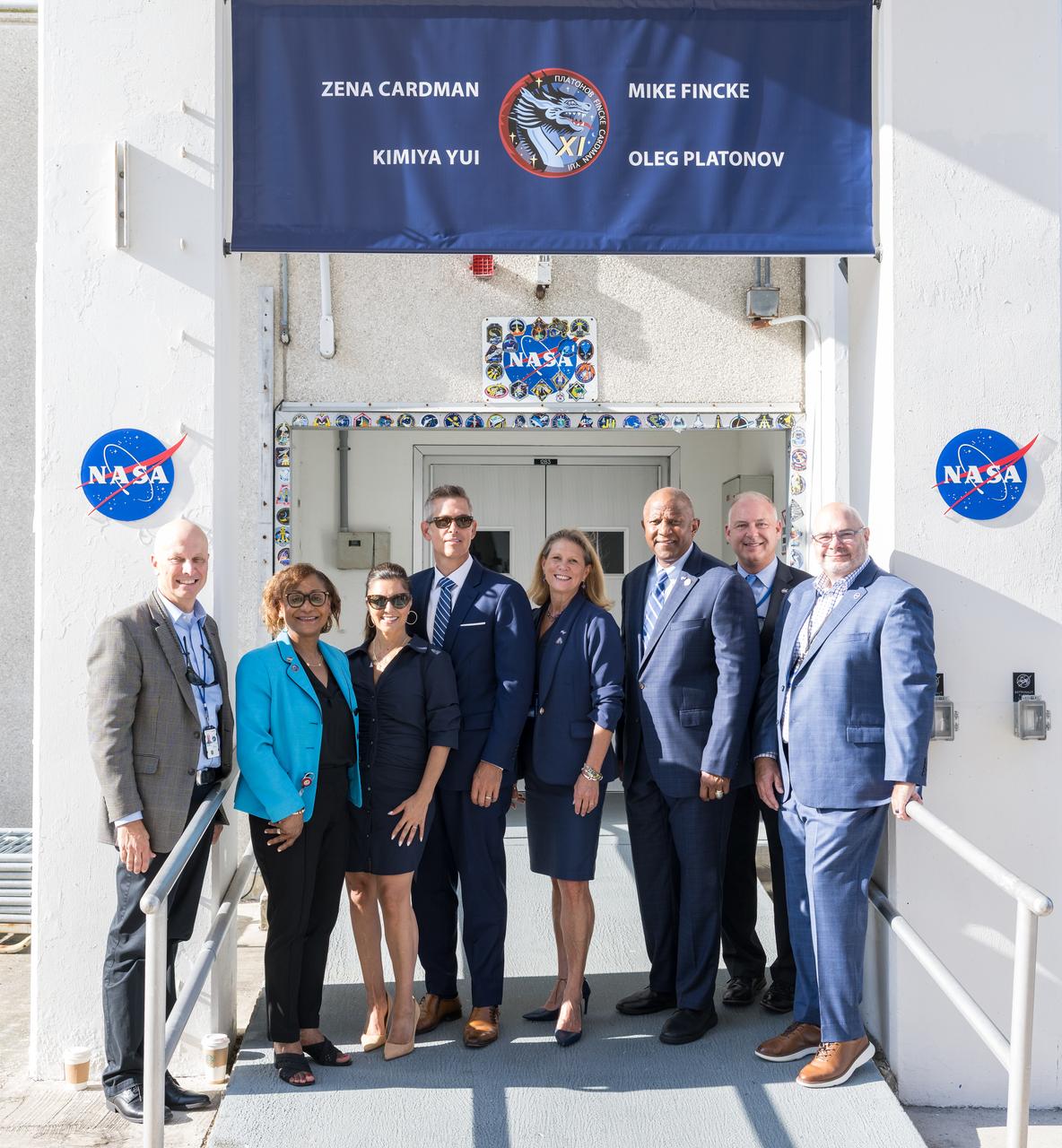
From left to right, Acting Director of NASA's Johnson Space Center, Steve Koerner, Acting NASA Associate Administrator, Vanessa Wyche, wife of Acting NASA Administrator Sean Duffy, Rachel Campos-Duffy, Sean Duffy, Acting Associate Administrator, Exploration Systems Development, Lori Glaze, Acting Director of NASA's John F. Kennedy Space Center, Kelvin Manning, Acting Deputy Director of NASA's Johnson Space Center, Norm Knight, and director of NASA's Marshall Space Flight Center, Joseph Pelfrey pose for a photo at the door to the Neil A. Armstrong Operations and Checkout Building after NASA astronauts Zena Cardman, Mike Fincke, JAXA (Japan Aerospace Exploration Agency) astronaut Kimiya Yui, and Roscosmos cosmonaut Oleg Platonov, departed for Launch Complex 39A to board the SpaceX Dragon spacecraft for the Crew-11 mission launch, before it was scrubbed due to weather concerns, Thursday, July 31, 2025, at NASA’s Kennedy Space Center in Florida. NASA’s SpaceX Crew-11 mission is the eleventh crew rotation mission of the SpaceX Crew Dragon spacecraft and Falcon 9 rocket to the International Space Station as part of the agency’s Commercial Crew Program. Cardman, Fincke, Yui, and Platonov launched at 11:43 a.m. EDT, Friday, August 1, from Launch Complex 39A at the NASA's Kennedy Space Center. Photo Credit: (NASA/Aubrey Gemignani)

Norm Knight, director of Flight Operations at NASA's Johnson Space Center, Vanessa Wyche, acting NASA associate administrator, and other NASA leadership watch the landing of the booster after the launch of a SpaceX Falcon 9 rocket carrying the company's Dragon spacecraft on the Crew-10 mission with NASA astronauts Anne McClain and Nichole Ayers, JAXA (Japan Aerospace Exploration Agency) astronaut Takuya Onishi, and Roscosmos cosmonaut Kirill Peskov onboard, Friday, March 14, 2025, in the control room of SpaceX’s HangarX at NASA’s Kennedy Space Center in Florida. NASA’s SpaceX Crew-10 mission is the tenth crew rotation mission of the SpaceX Dragon spacecraft and Falcon 9 rocket to the International Space Station as part of the agency’s Commercial Crew Program. McClain, Ayers, Onishi, and Peskov launched at 7:03 p.m. EDT, from Launch Complex 39A at the Kennedy Space Center. Photo Credit: (NASA/Aubrey Gemignani)
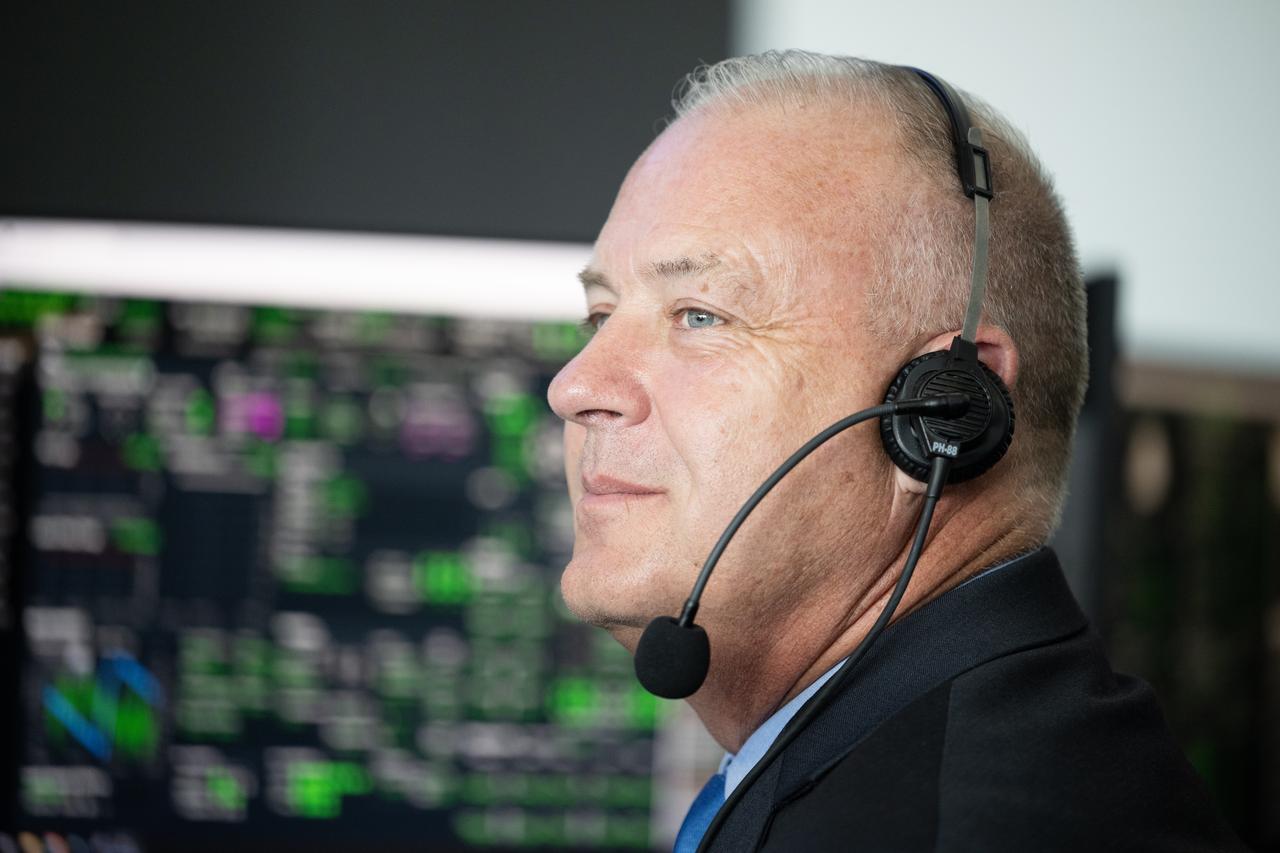
Norm Knight, acting deputy center director of NASA’s Johnson Space Center, monitors the countdown of a launch attempt of a SpaceX Falcon 9 rocket carrying the company's Dragon spacecraft on NASA’s SpaceX Crew-11 mission with NASA astronauts Zena Cardman, Mike Fincke, JAXA (Japan Aerospace Exploration Agency) astronaut Kimiya Yui, and Roscosmos cosmonaut Oleg Platonov onboard, Thursday, July 31, 2025, in the control center of SpaceX’s HangarX at NASA’s Kennedy Space Center in Florida. NASA’s SpaceX Crew-11 mission is the eleventh crew rotation mission of the SpaceX Dragon spacecraft and Falcon 9 rocket to the International Space Station as part of the agency’s Commercial Crew Program. Today’s launch of Cardman, Fincke, Yui, Platonov was scrubbed due to weather and is now scheduled for 11:43 a.m. EDT on Friday, August 1, from Launch Complex 39A at the NASA's Kennedy Space Center. Photo Credit: (NASA/Joel Kowsky)
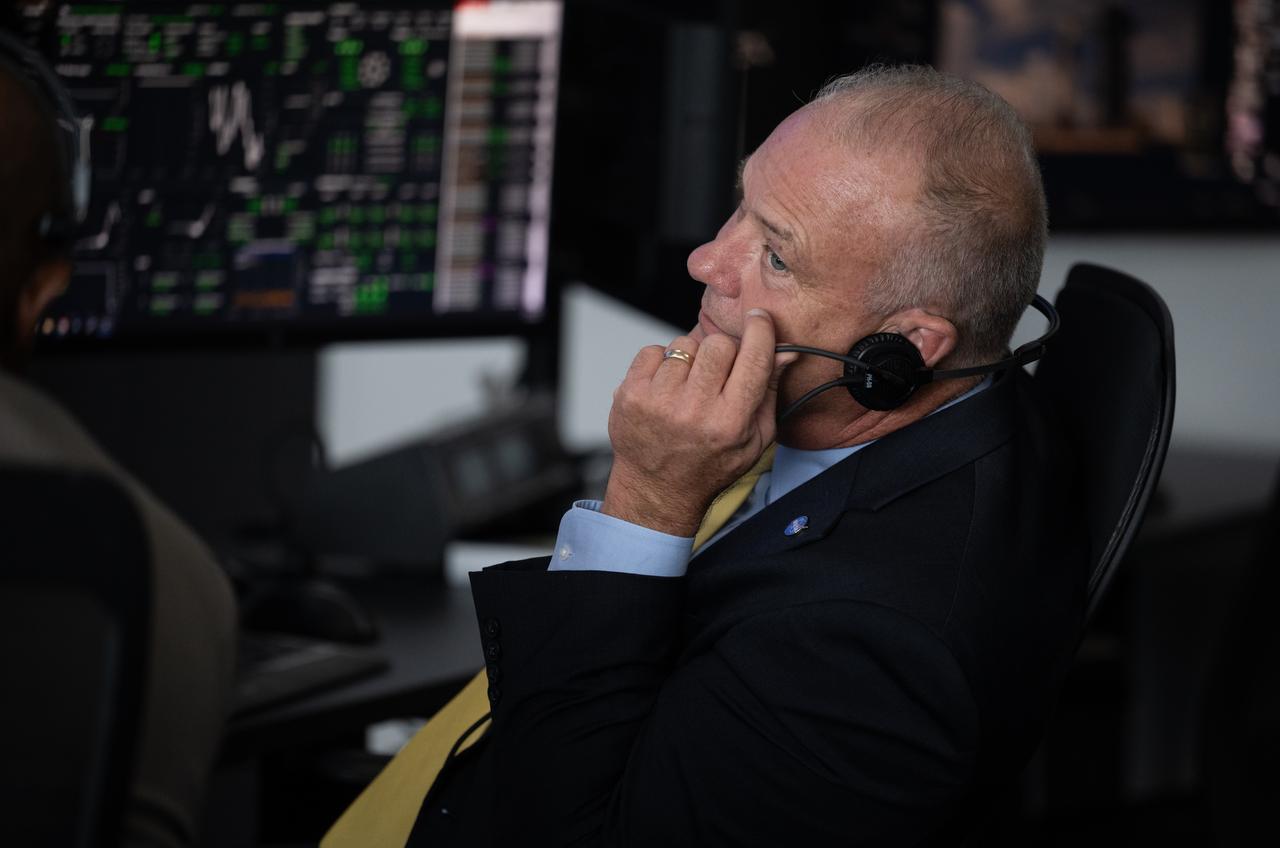
Norm Knight, acting deputy center director of NASA’s Johnson Space Center, monitors the countdown of the launch of a SpaceX Falcon 9 rocket carrying the company's Dragon spacecraft on NASA’s SpaceX Crew-11 mission with NASA astronauts Zena Cardman, Mike Fincke, JAXA (Japan Aerospace Exploration Agency) astronaut Kimiya Yui, and Roscosmos cosmonaut Oleg Platonov onboard, Friday, Aug. 1, 2025, in the control center of SpaceX’s HangarX at NASA’s Kennedy Space Center in Florida. NASA’s SpaceX Crew-11 mission is the eleventh crew rotation mission of the SpaceX Dragon spacecraft and Falcon 9 rocket to the International Space Station as part of the agency’s Commercial Crew Program. Cardman, Fincke, Yui, Platonov launched at 11:43 a.m. EDT, from Launch Complex 39A at the NASA's Kennedy Space Center. Photo Credit: (NASA/Joel Kowsky)
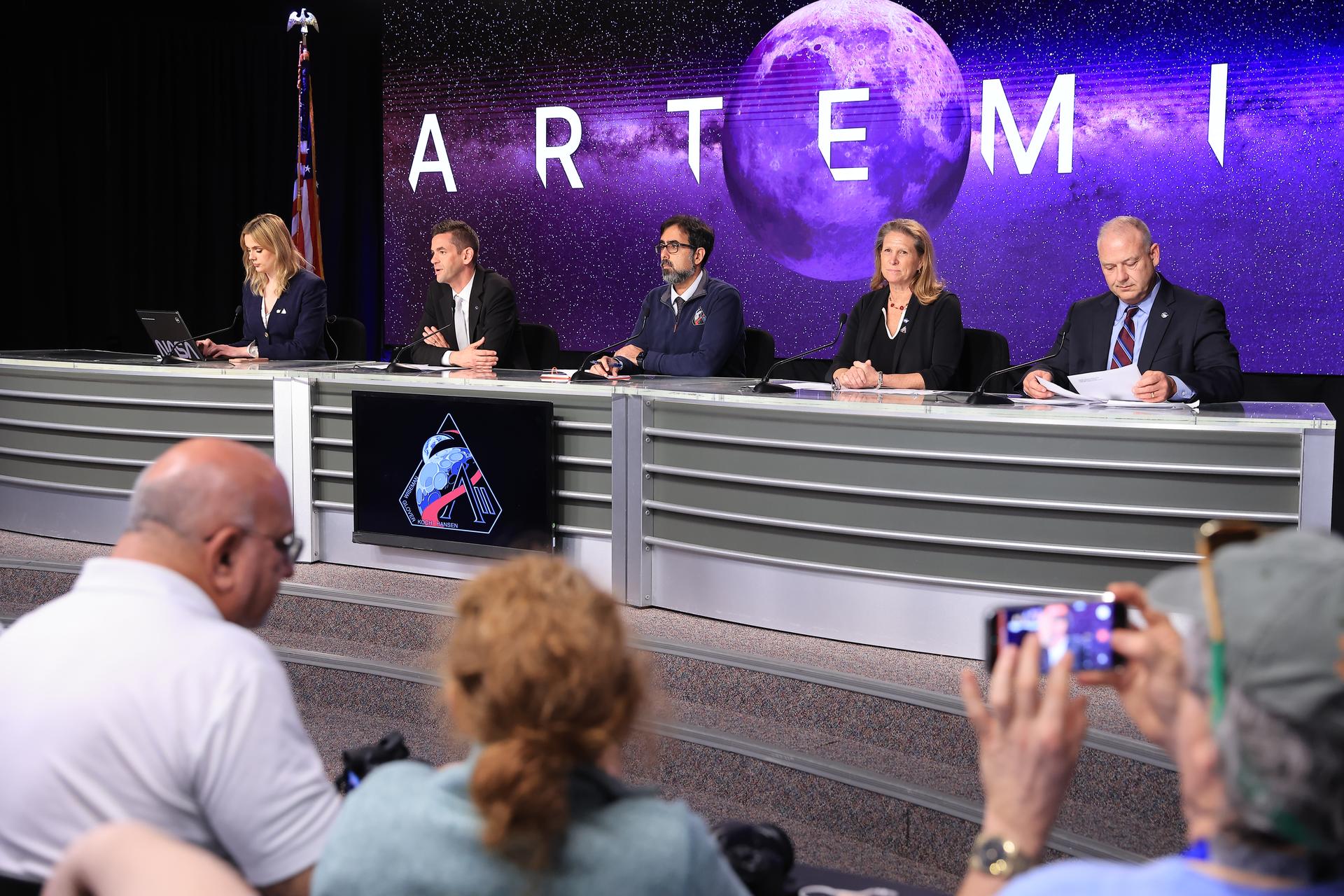
From left to right, Bethany Stevens, NASA communications; NASA Administrator Jared Isaacman; NASA Associate Administrator Amit Kshatriya; Lori Glaze, acting associate administrator, NASA’s Exploration Systems Development Mission Directorate; and Norm Knight, director, NASA’s Flight Operations Directorate, participate in a news conference on Wednesday, April 1, 2026, inside the John Holliman Auditorium of the NASA News Center at the agency’s Kennedy Space Center in Florida to discuss the liftoff of the Artemis II test flight. The Artemis II mission will take Artemis II Commander Reid Wiseman, Pilot Victor Glover, and Mission Specialist Christina Koch from NASA, and Mission Specialist Jeremy Hansen from the CSA (Canadian Space Agency) on a 10-day journey around the Moon and back.
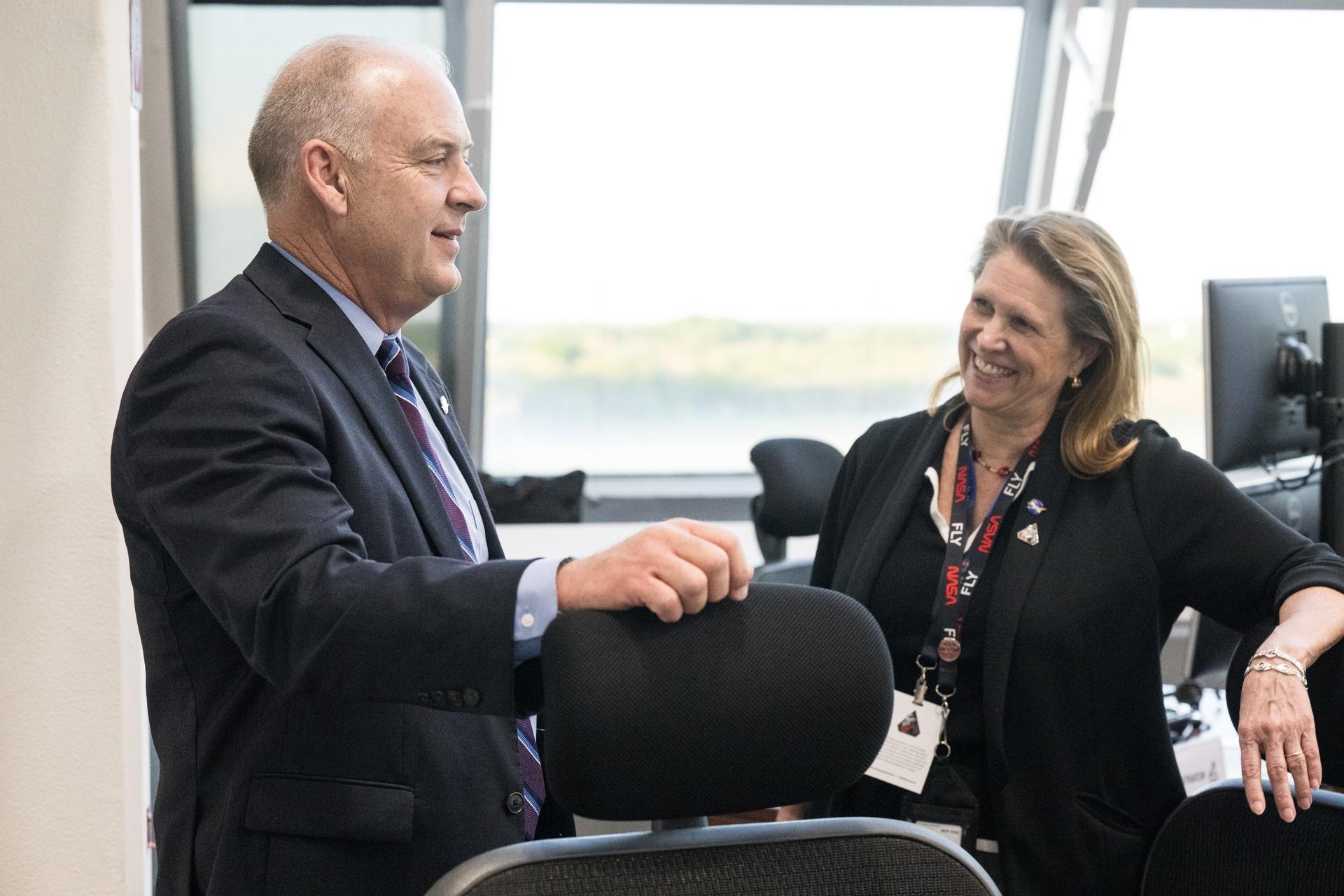
Director of Flight Operations at NASA's Johnson Space Center, Norm Knight, left, and Acting Associate Administrator for NASA's Exploration Systems Development Mission Directorate, Lori Glaze, speak after watching the launch of NASA’s Space Launch System (SLS) rocket and Orion spacecraft with NASA astronauts Reid Wiseman, commander; Victor Glover, pilot; Christina Koch, mission specialist; and CSA (Canadian Space Agency) astronaut Jeremy Hansen, mission specialist onboard on the Artemis II mission in Firing Room 2 of the Rocco A. Petrone Launch Control Center, Wednesday, April 1, 2026, at NASA’s Kennedy Space Center in Florida. NASA’s Artemis II mission will take Wiseman, Glover, Koch, and Hansen on a 10-day journey around the Moon and back aboard SLS rocket and Orion spacecraft from Launch Complex 39B. The quartet launched at 6:35pm EDT. Photo Credit: (NASA/Aubrey Gemignani)
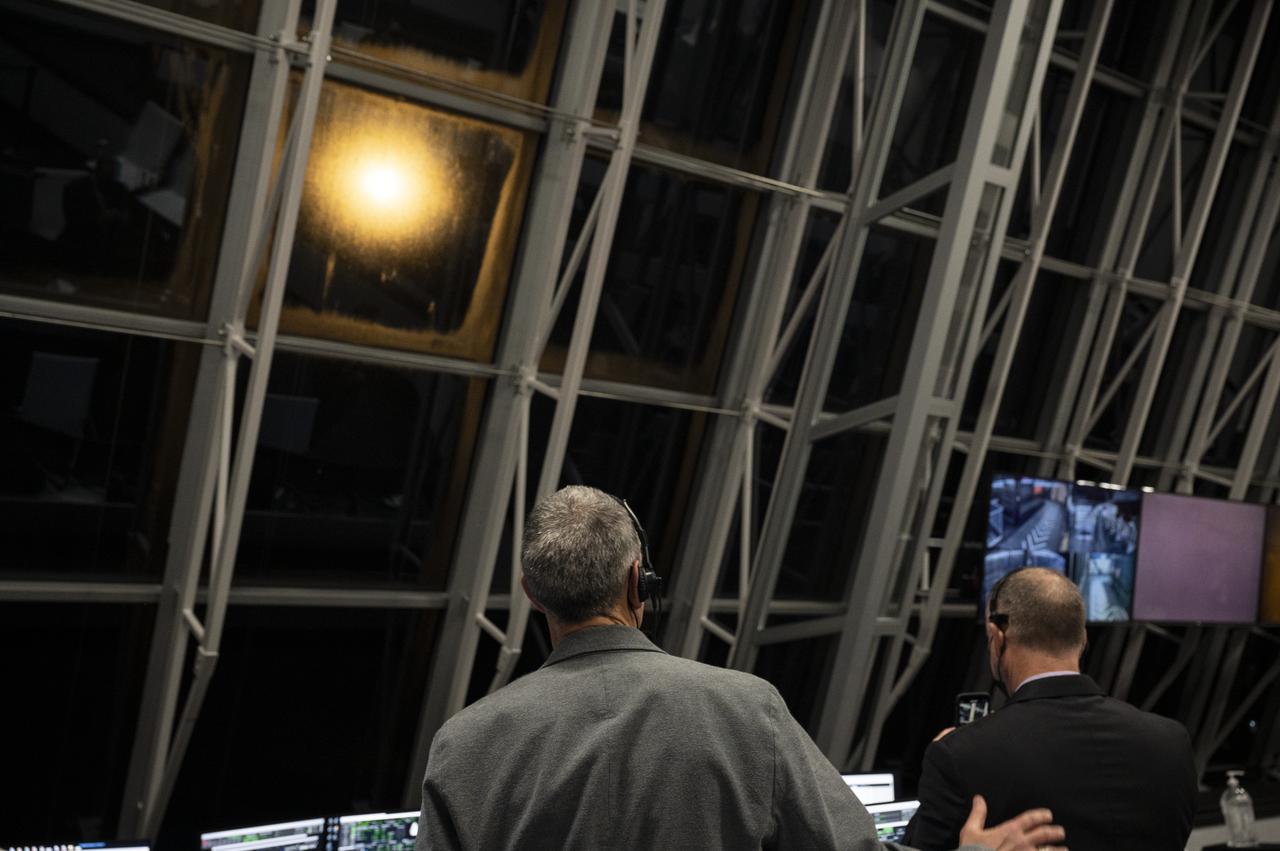
Lee Rosen, vice president, Mission and Launch Operations at SpaceX pats Norm Knight, deputy director of Flight Operations at NASA's Johnson Space Center on the back as they watch the launch of a SpaceX Falcon 9 rocket carrying the company's Crew Dragon spacecraft on NASA’s SpaceX Crew-1 mission with NASA astronauts Mike Hopkins, Victor Glover, Shannon Walker, and Japan Aerospace Exploration Agency (JAXA) astronaut Soichi Noguchi onboard, Sunday, Nov. 15, 2020, in firing room four of the Launch Control Center at NASA’s Kennedy Space Center in Florida. NASA’s SpaceX Crew-1 mission is the first crew rotation mission of the SpaceX Crew Dragon spacecraft and Falcon 9 rocket to the International Space Station as part of the agency’s Commercial Crew Program. Hopkins, Glover, Walker, and Noguchi launched at 7:27 p.m. EST, from Launch Complex 39A at the Kennedy Space Center. Photo Credit: (NASA/Aubrey Gemignani)
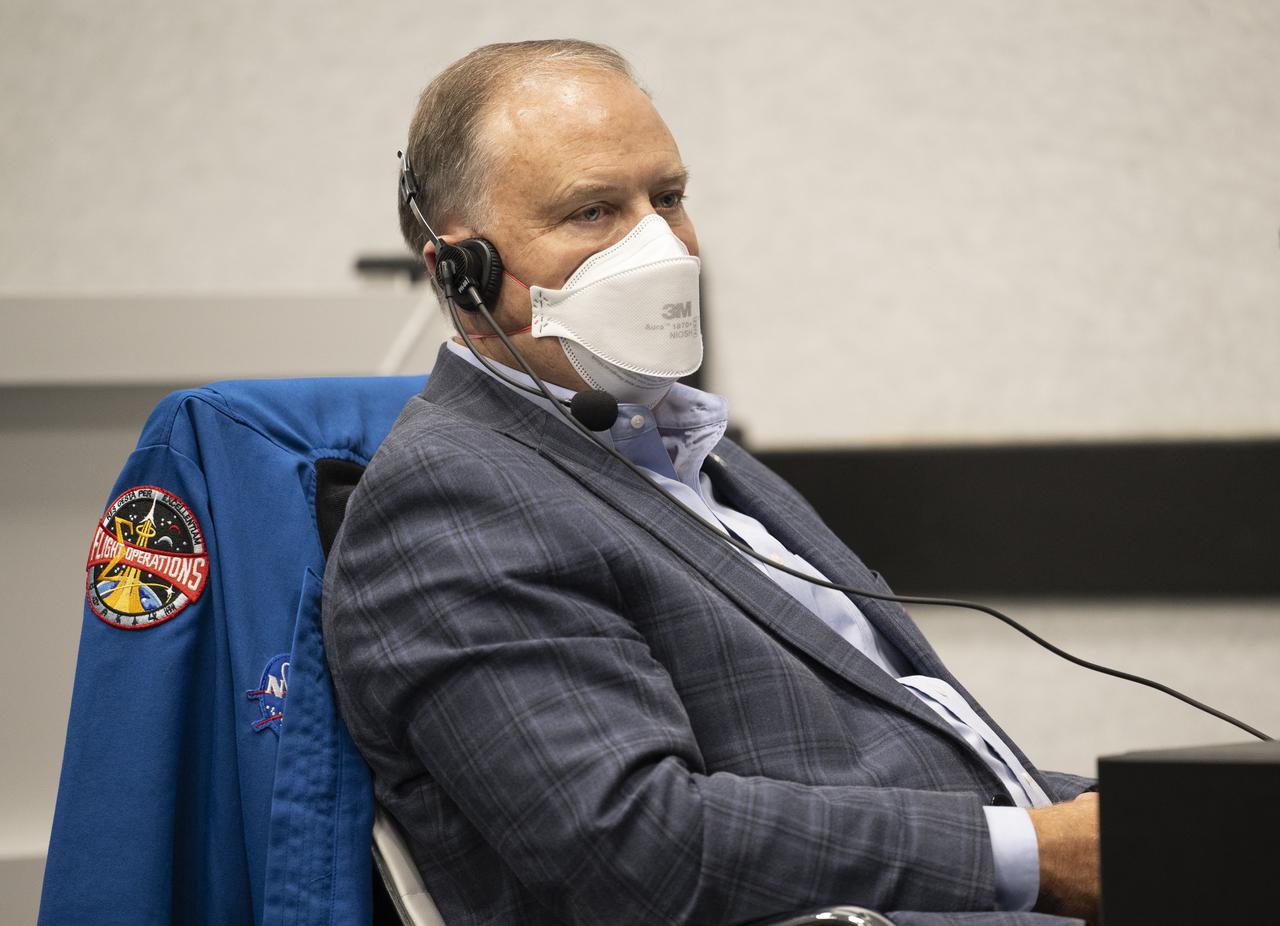
Norm Knight, director of Flight Operations at NASA's Johnson Space Center, monitors the countdown of the launch of a SpaceX Falcon 9 rocket carrying the company's Crew Dragon spacecraft on NASA’s SpaceX Crew-4 mission with NASA astronauts Kjell Lindgren, Robert Hines, Jessica Watkins, and ESA (European Space Agency) astronaut Samantha Cristoforetti onboard, Wednesday, April 27, 2022, in firing room four of the Rocco A. Petrone Launch Control Center at NASA’s Kennedy Space Center in Florida. NASA’s SpaceX Crew-4 mission is the fourth crew rotation mission of the SpaceX Crew Dragon spacecraft and Falcon 9 rocket to the International Space Station as part of the agency’s Commercial Crew Program. Lindgren, Hines, Watkins, and Cristoforetti launched at 3:52 a.m. ET, from Launch Complex 39A at the Kennedy Space Center. Photo Credit: (NASA/Joel Kowsky)
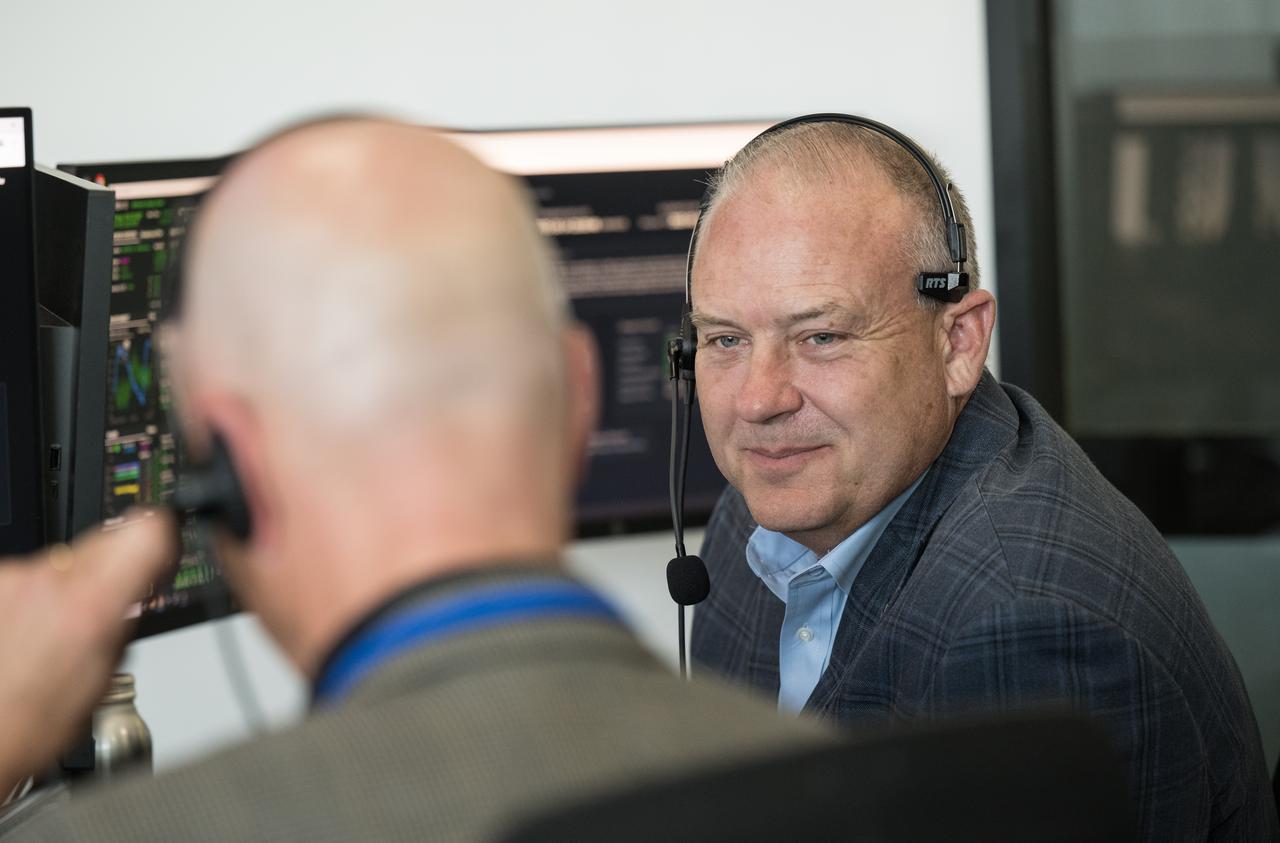
Norm Knight, director of Flight Operations at NASA's Johnson Space Center, and NASA’s Johnson Space Center acting director Stephen Koerner, monitor the launch of a SpaceX Falcon 9 rocket carrying the company's Dragon spacecraft on the Crew-10 mission with NASA astronauts Anne McClain and Nichole Ayers, JAXA (Japan Aerospace Exploration Agency) astronaut Takuya Onishi, and Roscosmos cosmonaut Kirill Peskov onboard, Friday, March 14, 2025, in the control room of SpaceX’s HangarX at NASA’s Kennedy Space Center in Florida. NASA’s SpaceX Crew-10 mission is the tenth crew rotation mission of the SpaceX Dragon spacecraft and Falcon 9 rocket to the International Space Station as part of the agency’s Commercial Crew Program. McClain, Ayers, Onishi, and Peskov launched at 7:03 p.m. EDT, from Launch Complex 39A at the Kennedy Space Center. Photo Credit: (NASA/Aubrey Gemignani)
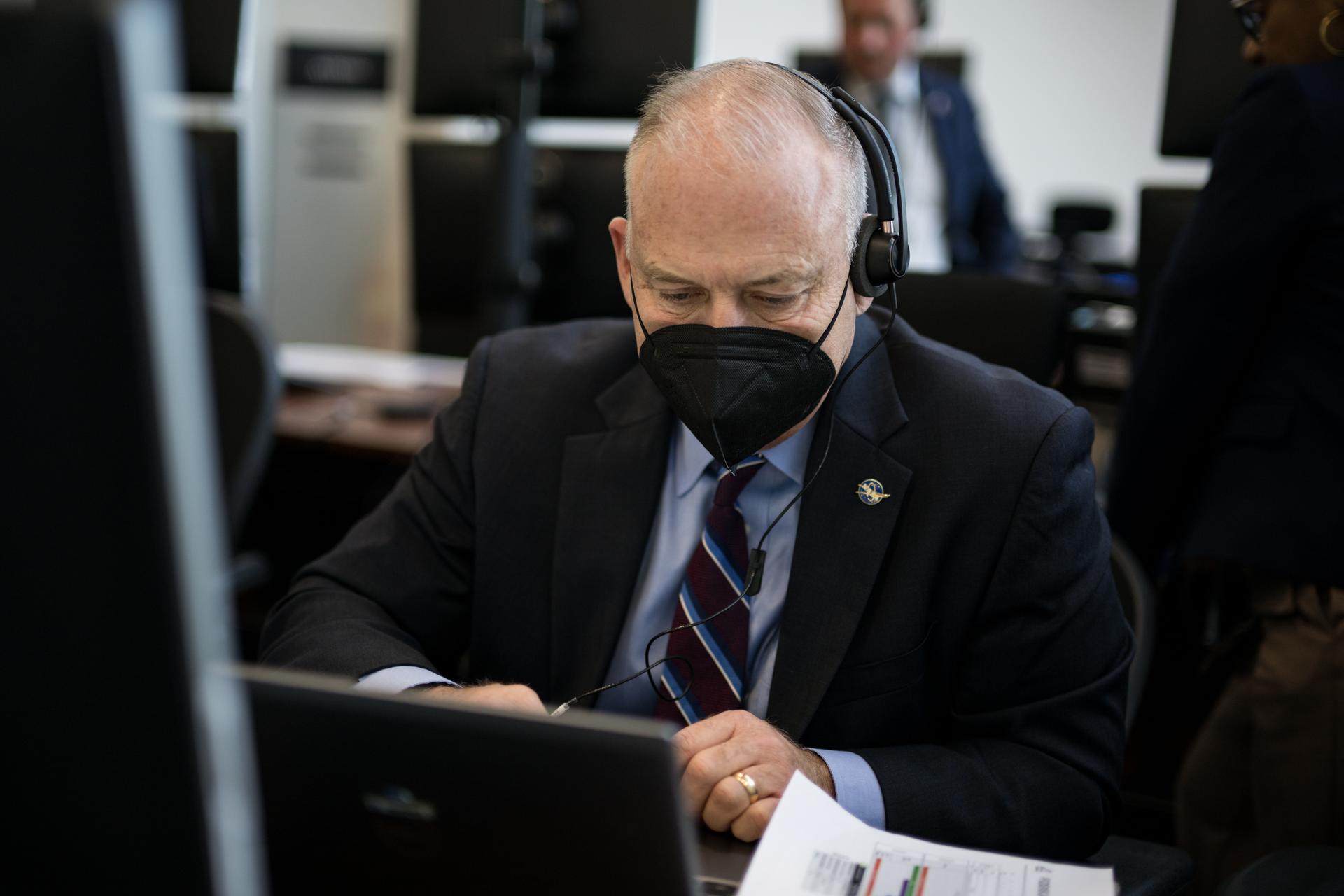
Director of Flight Operations at NASA's Johnson Space Center, Norm Knight, monitors the countdown of the launch of NASA’s Space Launch System (SLS) rocket and Orion spacecraft with NASA astronauts Reid Wiseman, commander; Victor Glover, pilot; Christina Koch, mission specialist; and CSA (Canadian Space Agency) astronaut Jeremy Hansen, mission specialist onboard on the Artemis II mission from Firing Room 2 of the Rocco A. Petrone Launch Control Center, Wednesday, April 1, 2026, at NASA’s Kennedy Space Center in Florida. NASA’s Artemis II mission will take Wiseman, Glover, Koch, and Hansen on a 10-day journey around the Moon and back aboard SLS rocket and Orion spacecraft from Launch Complex 39B. The quartet launched at 6:35pm EDT. Photo Credit: (NASA/Aubrey Gemignani)
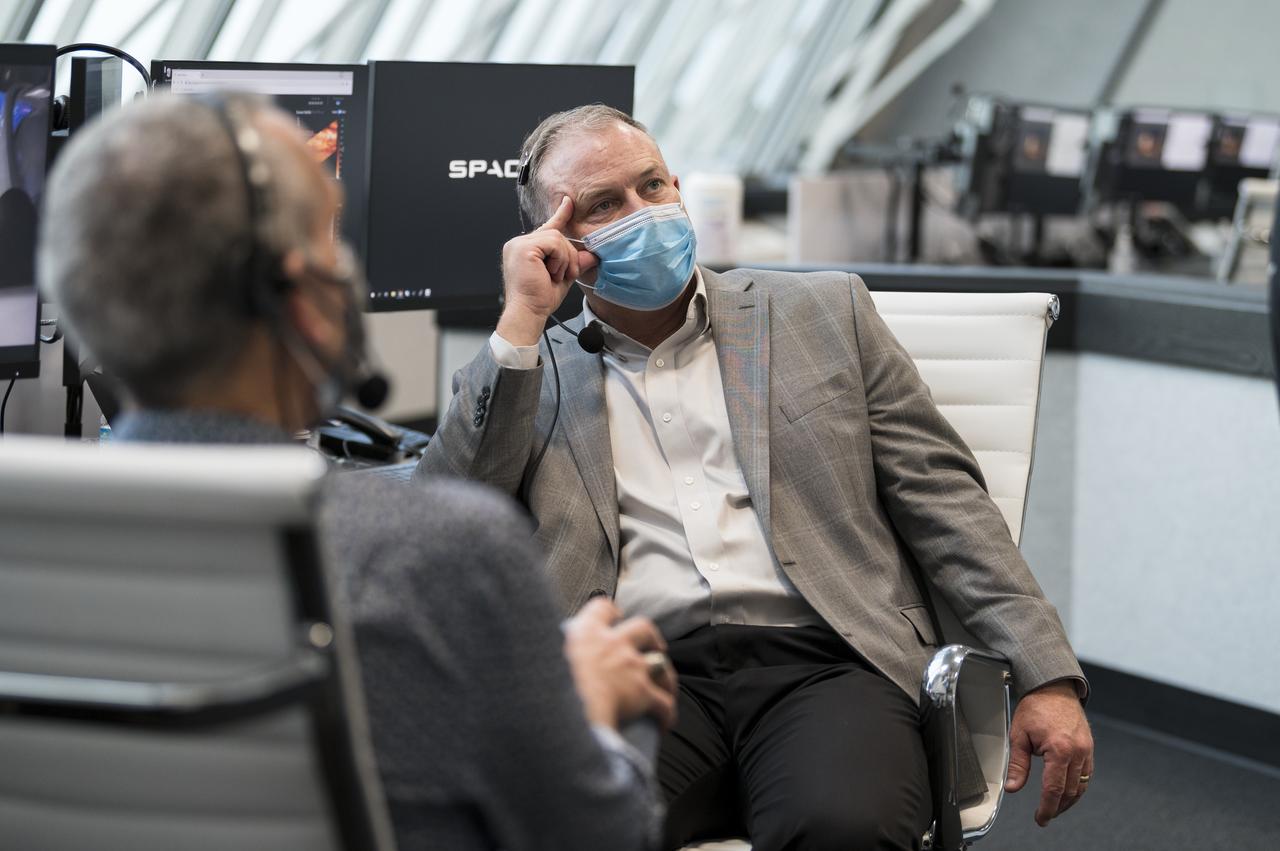
Norm Knight, deputy director of Flight Operations at NASA's Johnson Space Center, is seen during a dress rehearsal in preparation for the launch of a SpaceX Falcon 9 rocket carrying the company's Crew Dragon spacecraft on NASA’s SpaceX Crew-1 mission with NASA astronauts Mike Hopkins, Victor Glover, Shannon Walker, and Japan Aerospace Exploration Agency (JAXA) astronaut Soichi Noguchi onboard, Thursday, Nov. 12, 2020, in firing room four of the Launch Control Center at NASA’s Kennedy Space Center in Florida. NASA’s SpaceX Crew-1 mission is the first crew rotation mission of the SpaceX Crew Dragon spacecraft and Falcon 9 rocket to the International Space Station as part of the agency’s Commercial Crew Program. Hopkins, Glover, Walker, and Noguchi are scheduled to launch at 7:49 p.m. EST on Saturday, Nov. 14, from Launch Complex 39A at the Kennedy Space Center. Photo Credit: (NASA/Aubrey Gemignani)
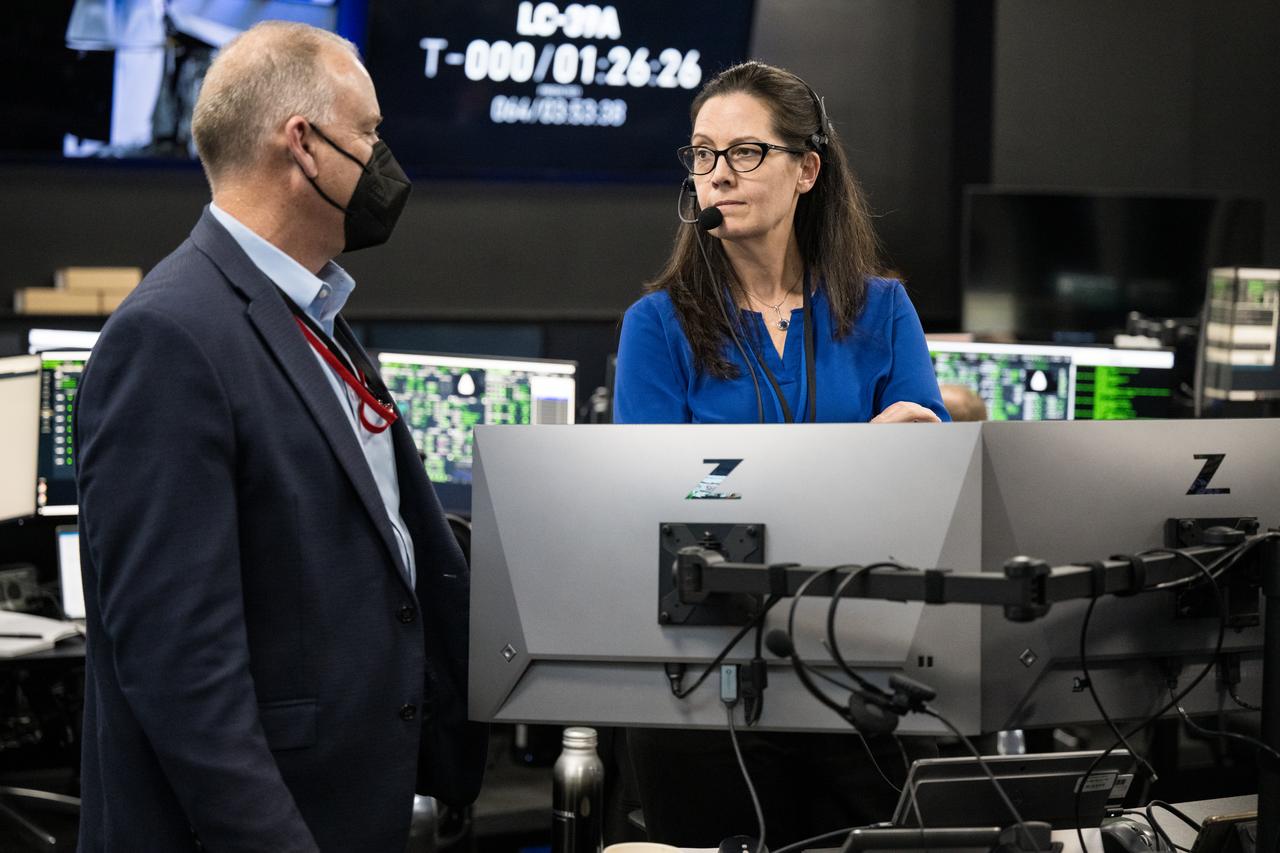
Norm Knight, director of Flight Operations at NASA's Johnson Space Center, left, and NASA's chief flight director, Emily Nelson monitor the launch of a SpaceX Falcon 9 rocket carrying the company's Dragon spacecraft on the Crew-8 mission with NASA astronauts Matthew Dominick, Michael Barratt, and Jeanette Epps, and Roscosmos cosmonaut Alexander Grebenkin onboard, Sunday, March 3, 2024, in the control room of SpaceX’s HangarX at NASA’s Kennedy Space Center in Florida. NASA’s SpaceX Crew-8 mission is the eighth crew rotation mission of the SpaceX Dragon spacecraft and Falcon 9 rocket to the International Space Station as part of the agency’s Commercial Crew Program. Dominick, Barratt, Epps, and Grebenkin launched at 10:53 p.m. EST, from Launch Complex 39A at the Kennedy Space Center. Photo Credit: (NASA/Aubrey Gemignani)

Norm Knight, deputy director of Flight Operations at NASA's Johnson Space Center, monitors the countdown of the launch of a SpaceX Falcon 9 rocket carrying the company's Crew Dragon spacecraft on NASA’s SpaceX Crew-1 mission with NASA astronauts Mike Hopkins, Victor Glover, Shannon Walker, and Japan Aerospace Exploration Agency (JAXA) astronaut Soichi Noguchi onboard, Sunday, Nov. 15, 2020, in firing room four of the Launch Control Center at NASA’s Kennedy Space Center in Florida. NASA’s SpaceX Crew-1 mission is the first crew rotation mission of the SpaceX Crew Dragon spacecraft and Falcon 9 rocket to the International Space Station as part of the agency’s Commercial Crew Program. Hopkins, Glover, Walker, and Noguchi are scheduled to launch at 7:27 p.m. EST, from Launch Complex 39A at the Kennedy Space Center. Photo Credit: (NASA/Aubrey Gemignani)
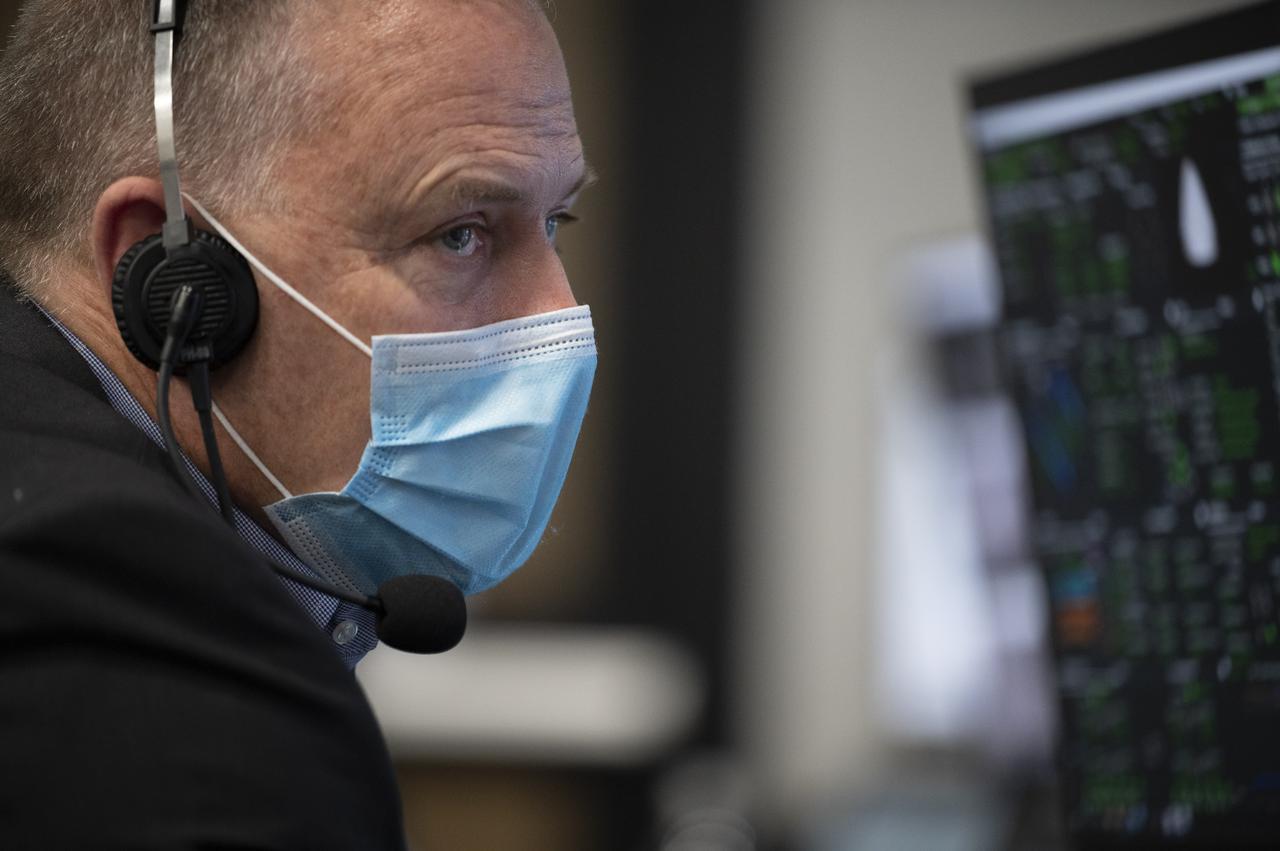
Norm Knight, deputy director of Flight Operations at NASA's Johnson Space Center, monitors the countdown of the launch of a SpaceX Falcon 9 rocket carrying the company's Crew Dragon spacecraft on NASA’s SpaceX Crew-2 mission with NASA astronauts Shane Kimbrough and Megan McArthur, ESA (European Space Agency) astronaut Thomas Pesquet, and Japan Aerospace Exploration Agency (JAXA) astronaut Akihiko Hoshide onboard, Friday, April 23, 2021, in firing room four of the Launch Control Center at NASA’s Kennedy Space Center in Florida. NASA’s SpaceX Crew-2 mission is the second crew rotation mission of the SpaceX Crew Dragon spacecraft and Falcon 9 rocket to the International Space Station as part of the agency’s Commercial Crew Program. Kimbrough, McArthur, Pesquet, and Hoshide launched at 5:49 a.m. EDT, from Launch Complex 39A at the Kennedy Space Center. Photo Credit: (NASA/Joel Kowsky)
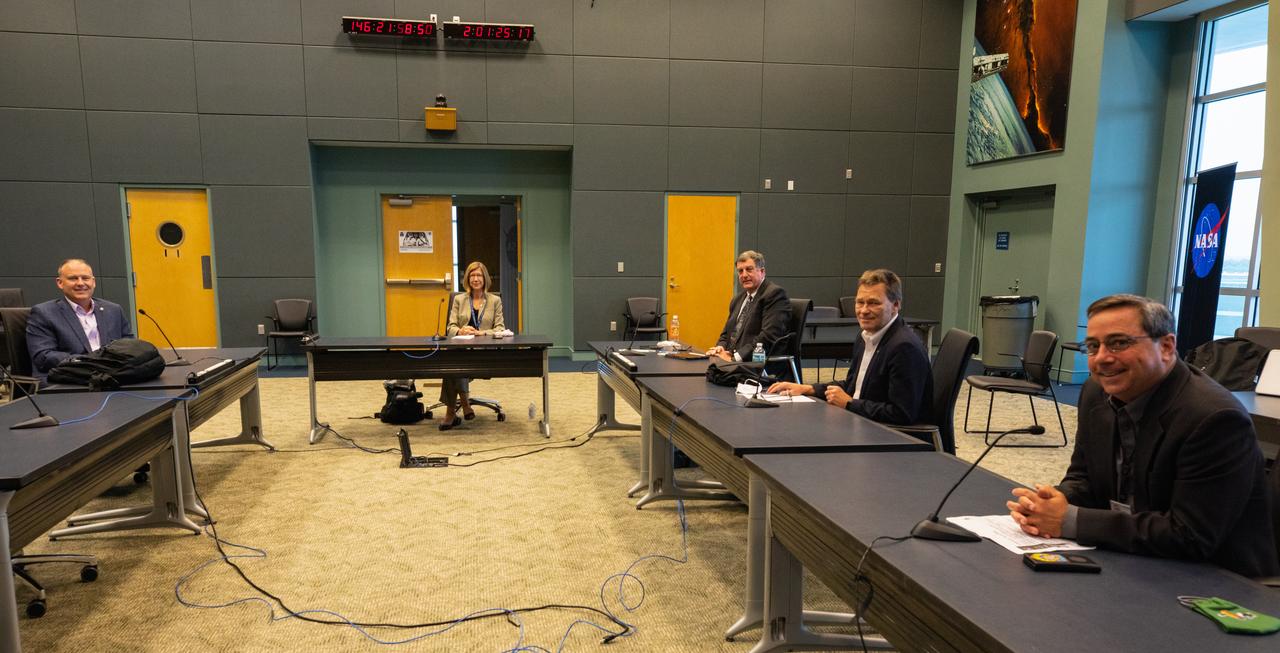
Representatives from NASA, SpaceX and the U.S. Space Force 45th Weather Squadron participate in a news conference following the Launch Readiness Review at the agency’s Kennedy Space Center in Florida on Monday, May 25, 2020, in advance of NASA’s SpaceX Demo-2 Flight Test to the International Space Station as part of NASA’s Commercial Crew Program. From the left are: Norm Knight, deputy director, NASA Johnson Space Center Flight Operations Kathy Lueders, manager, NASA Commercial Crew Program; Kirk Shireman, manager, International Space Station Program; Hans Koenigsmann, vice president, Build and Flight Reliability, SpaceX; and Mike McAleenan, launch weather officer, 45th Weather Squadron. Launch is currently targeted for 4:33 p.m. EDT Wednesday, May 27. The SpaceX Crew Dragon spacecraft will launch on a Falcon 9 rocket from historic Launch Complex 39A at NASA’s Kennedy Space Center in Florida.
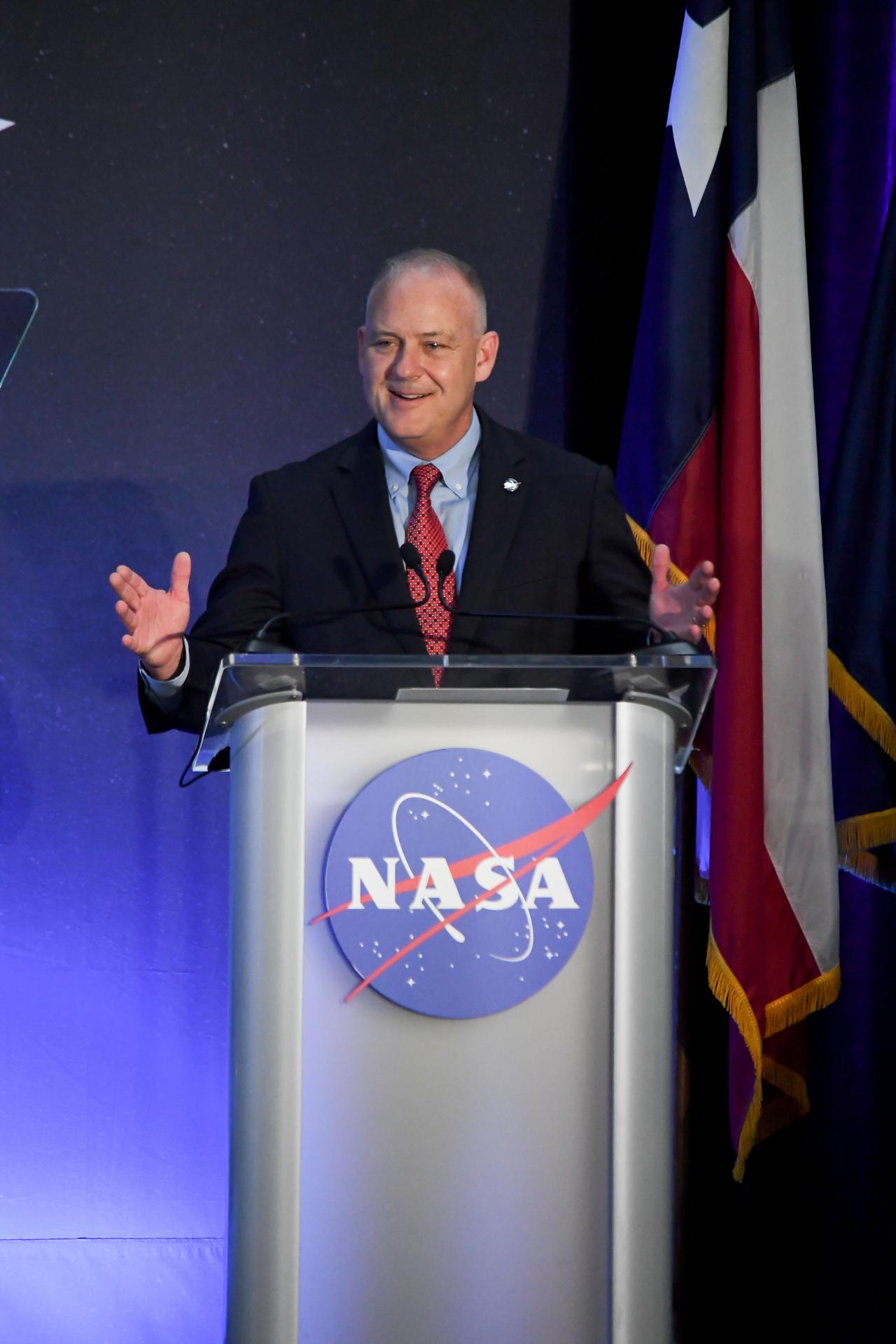
jsc2026e022285 (April 11, 2026) – NASA Flight Operations Director Norm Knight, addresses a crowd of friends, family, and colleagues assembled for the return of the Artemis II crew at Ellington Airport near NASA’s Johnson Space Center in Houston on Saturday, April 11, 2026. The Artemis II test flight launched on Wednesday, April 1, from NASA’s Kennedy Space Center in Florida to begin its 10-day journey around the Moon for scientific discovery, economic benefits, and to build on our foundation for the first crewed missions to Mars. NASA's Orion spacecraft carrying Artemis II Commander Reid Wiseman, Pilot Victor Glover, and Mission Specialist Christina Koch from NASA, along with Mission Specialist Jeremy Hansen from the CSA (Canadian Space Agency), splashed down in the Pacific Ocean near San Diego, California, on Friday, April 10, 2026. Credit: NASA/Bill Stafford
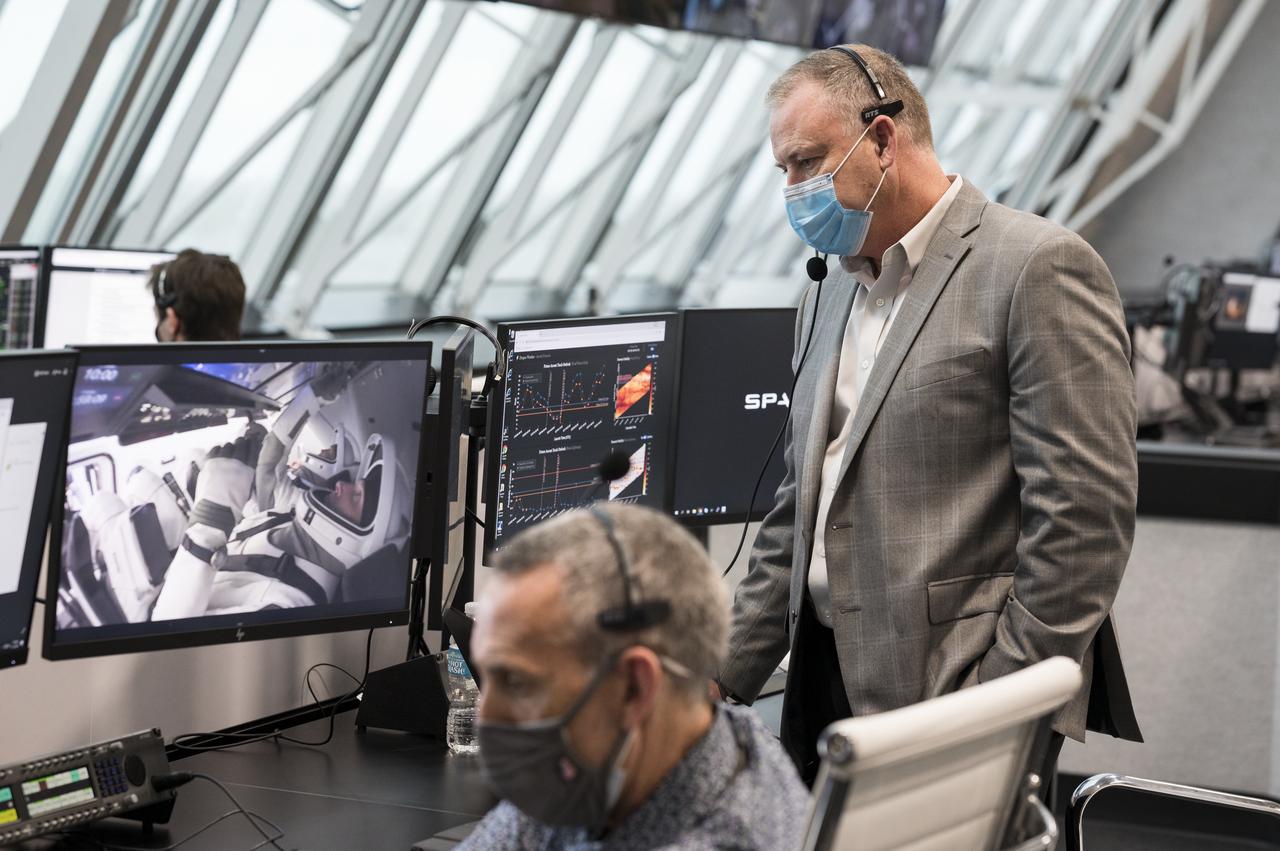
Norm Knight, deputy director of Flight Operations at NASA's Johnson Space Center, watches a monitor during a dress rehearsal in preparation for the launch of a SpaceX Falcon 9 rocket carrying the company's Crew Dragon spacecraft on NASA’s SpaceX Crew-1 mission with NASA astronauts Mike Hopkins, Victor Glover, Shannon Walker, and Japan Aerospace Exploration Agency (JAXA) astronaut Soichi Noguchi onboard, Thursday, Nov. 12, 2020, in firing room four of the Launch Control Center at NASA’s Kennedy Space Center in Florida. NASA’s SpaceX Crew-1 mission is the first crew rotation mission of the SpaceX Crew Dragon spacecraft and Falcon 9 rocket to the International Space Station as part of the agency’s Commercial Crew Program. Hopkins, Glover, Walker, and Noguchi are scheduled to launch at 7:49 p.m. EST on Saturday, Nov. 14, from Launch Complex 39A at the Kennedy Space Center. Photo Credit: (NASA/Aubrey Gemignani)
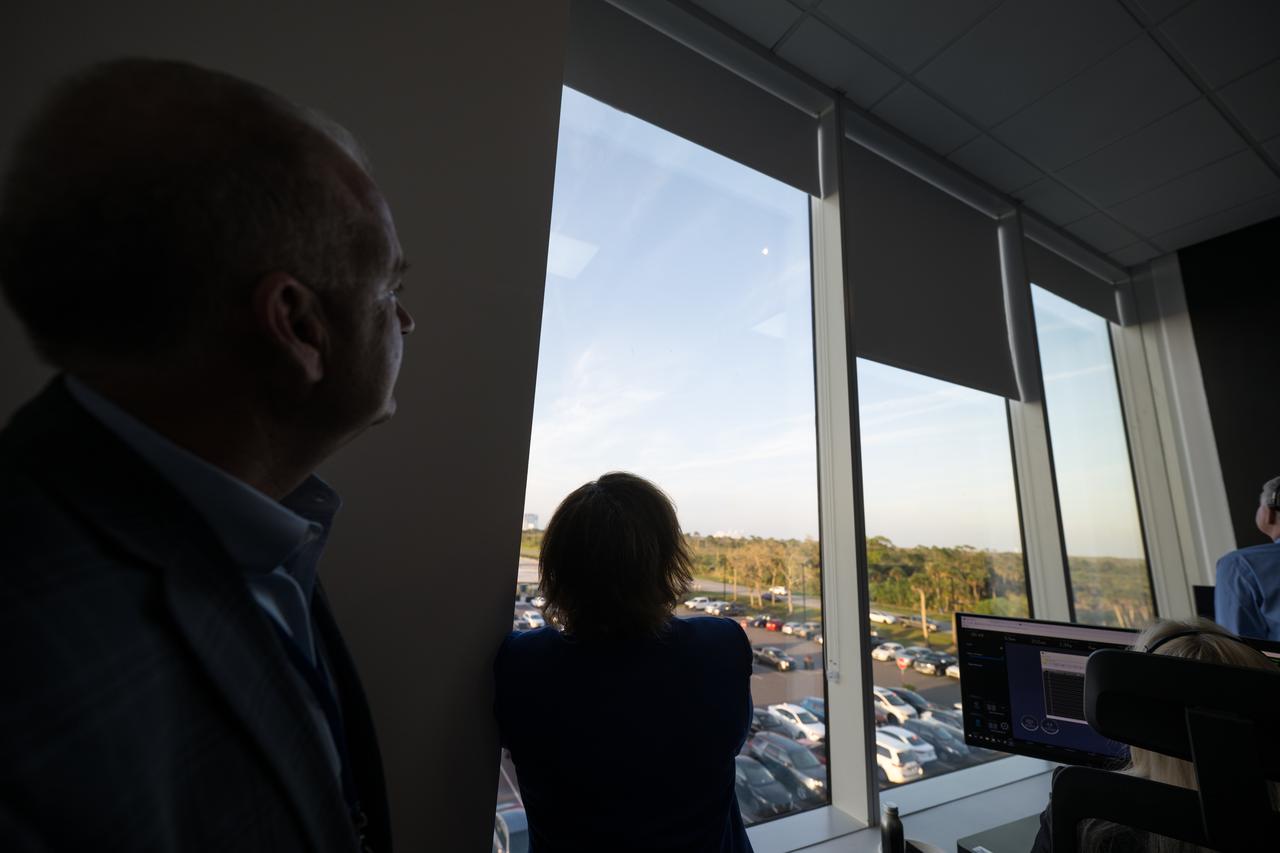
Norm Knight, director of Flight Operations at NASA's Johnson Space Center and Vanessa Wyche, acting NASA associate administrator watch the launch of a SpaceX Falcon 9 rocket carrying the company's Dragon spacecraft on the Crew-10 mission with NASA astronauts Anne McClain and Nichole Ayers, JAXA (Japan Aerospace Exploration Agency) astronaut Takuya Onishi, and Roscosmos cosmonaut Kirill Peskov onboard, Friday, March 14, 2025, in the control room of SpaceX’s HangarX at NASA’s Kennedy Space Center in Florida. NASA’s SpaceX Crew-10 mission is the tenth crew rotation mission of the SpaceX Dragon spacecraft and Falcon 9 rocket to the International Space Station as part of the agency’s Commercial Crew Program. McClain, Ayers, Onishi, and Peskov launched at 7:03 p.m. EDT, from Launch Complex 39A at the Kennedy Space Center. Photo Credit: (NASA/Aubrey Gemignani)
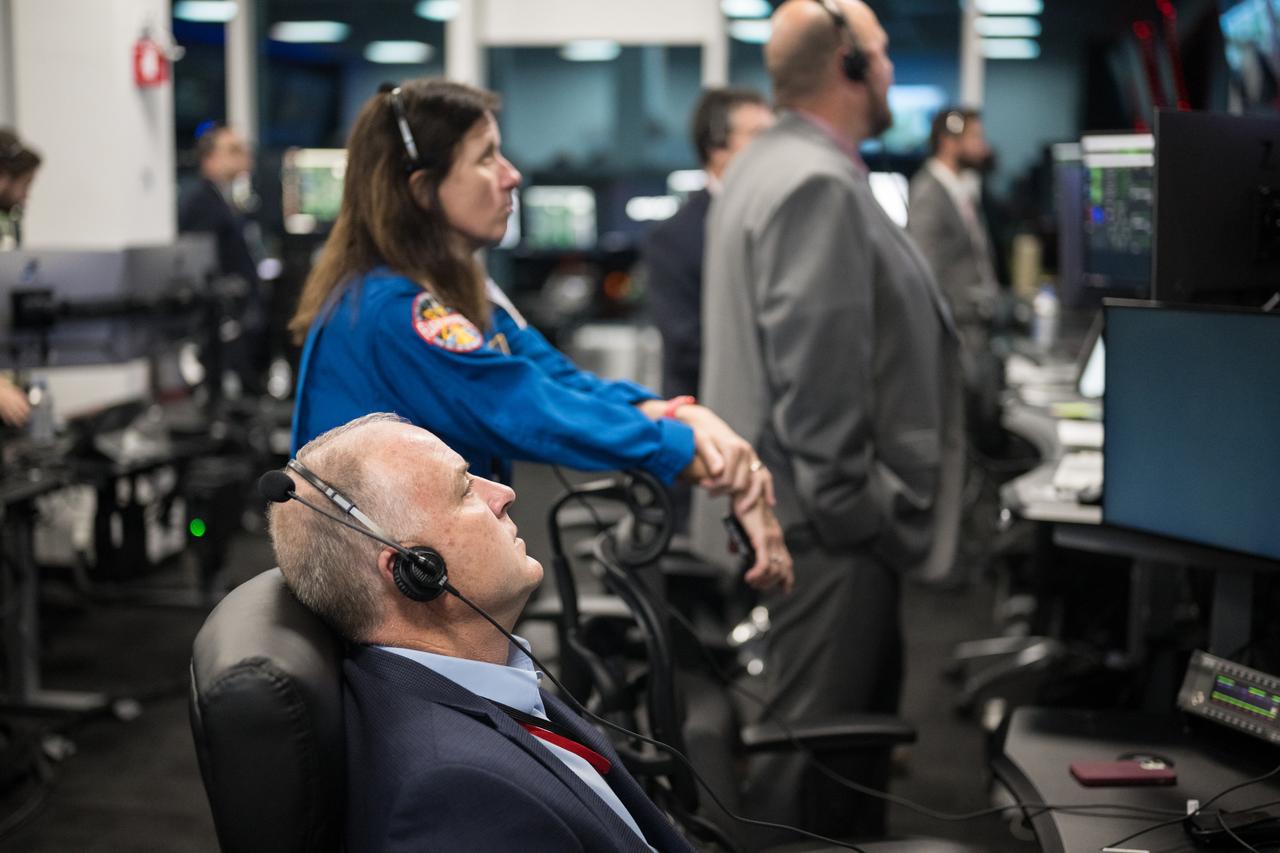
Norm Knight, director of Flight Operations at NASA's Johnson Space Center, front, and Deputy Chief of the Astronaut Office, Shannon Walker, center, monitor the launch of a SpaceX Falcon 9 rocket carrying the company's Dragon spacecraft on the Crew-8 mission with NASA astronauts Matthew Dominick, Michael Barratt, and Jeanette Epps, and Roscosmos cosmonaut Alexander Grebenkin onboard, Sunday, March 3, 2024, in the control room of SpaceX’s HangarX at NASA’s Kennedy Space Center in Florida. NASA’s SpaceX Crew-8 mission is the eighth crew rotation mission of the SpaceX Dragon spacecraft and Falcon 9 rocket to the International Space Station as part of the agency’s Commercial Crew Program. Dominick, Barratt, Epps, and Grebenkin launched at 10:53 p.m. EST, from Launch Complex 39A at the Kennedy Space Center. Photo Credit: (NASA/Aubrey Gemignani)
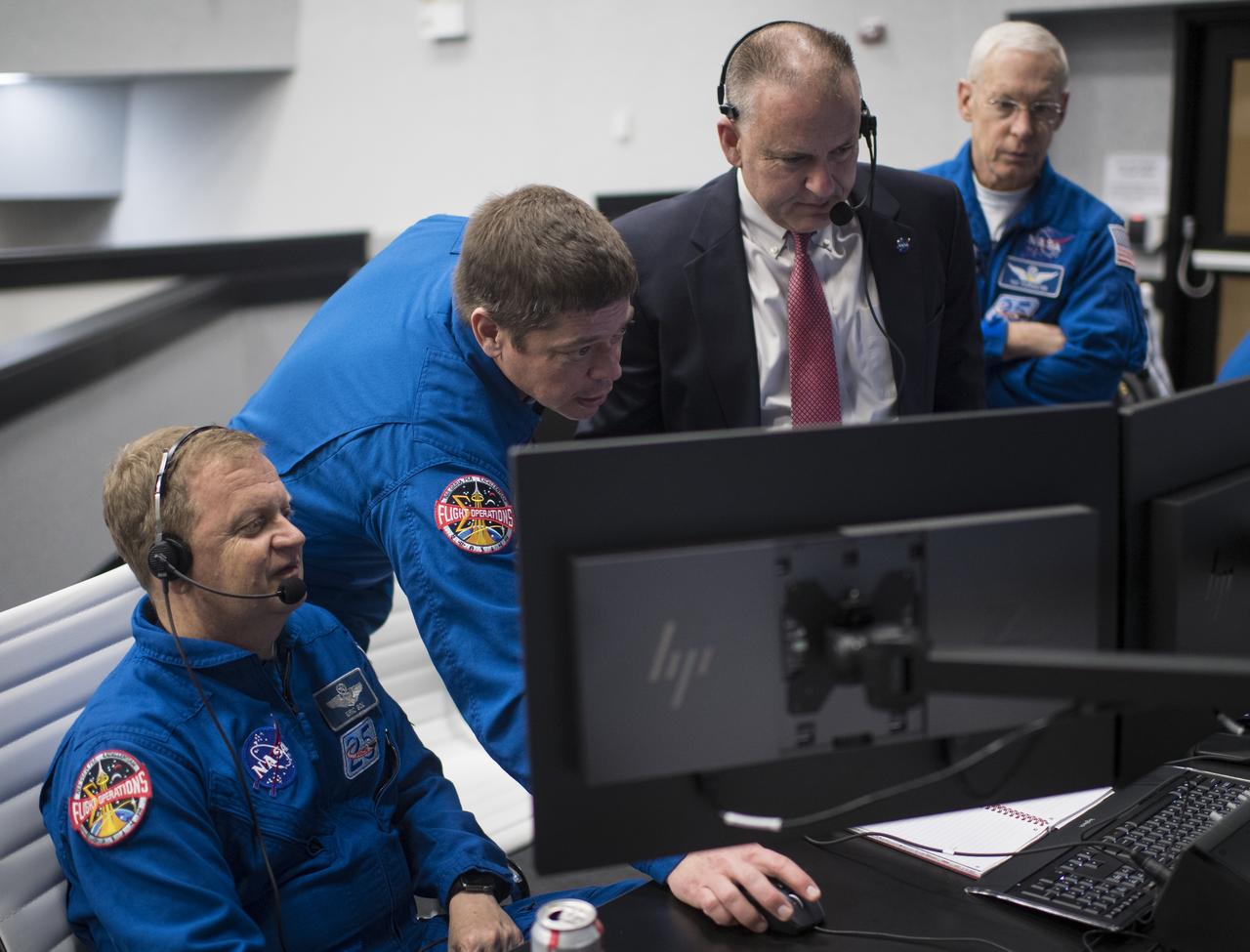
NASA astronaut Eric Boe, assistant to the chief of the astronaut office for commercial crew, left, NASA astronaut Bob Behnken, Norm Knight, deputy director of flight operations at NASA's Johnson Space Center and chief of the astronaut office Pat Forrester monitor the countdown of the launch of a SpaceX Falcon 9 rocket carrying the company's Crew Dragon spacecraft on the Demo-1 mission from firing room four of the Launch Control Center, Saturday, March 2, 2019 at the Kennedy Space Center in Florida. The Demo-1 mission will be the first launch of a commercially built and operated American spacecraft and space system designed for humans as part of NASA's Commercial Crew Program. The mission will serve as an end-to-end test of the system's capabilities. Photo Credit: (NASA/Joel Kowsky)
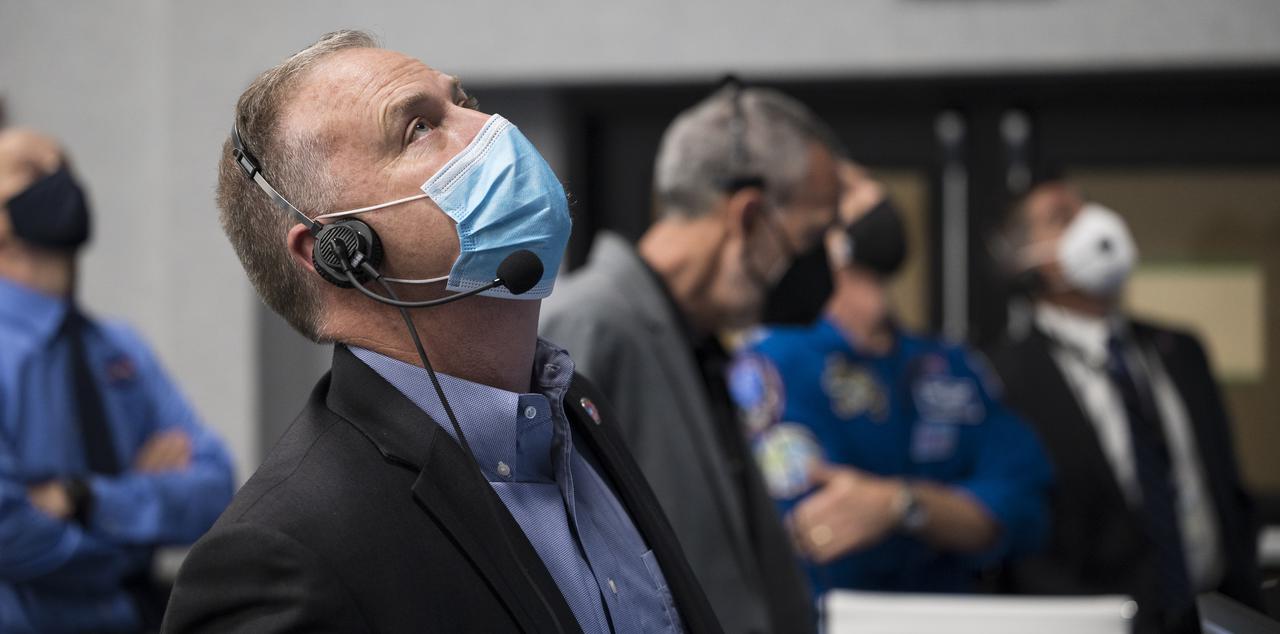
Norm Knight, deputy director of Flight Operations at NASA's Johnson Space Center, monitors the launch of a SpaceX Falcon 9 rocket carrying the company's Crew Dragon spacecraft on the Crew-2 mission with NASA astronauts Shane Kimbrough and Megan McArthur, ESA (European Space Agency) astronaut Thomas Pesquet, and Japan Aerospace Exploration Agency (JAXA) astronaut Akihiko Hoshide onboard, Friday, April 23, 2021, in firing room four of the Launch Control Center at NASA’s Kennedy Space Center in Florida. NASA’s SpaceX Crew-2 mission is the second crew rotation mission of the SpaceX Crew Dragon spacecraft and Falcon 9 rocket to the International Space Station as part of the agency’s Commercial Crew Program. Kimbrough, McArthur, Pesquet, and Hoshide launched at 5:49 a.m. EDT, from Launch Complex 39A at the Kennedy Space Center. Photo Credit: (NASA/Joel Kowsky)
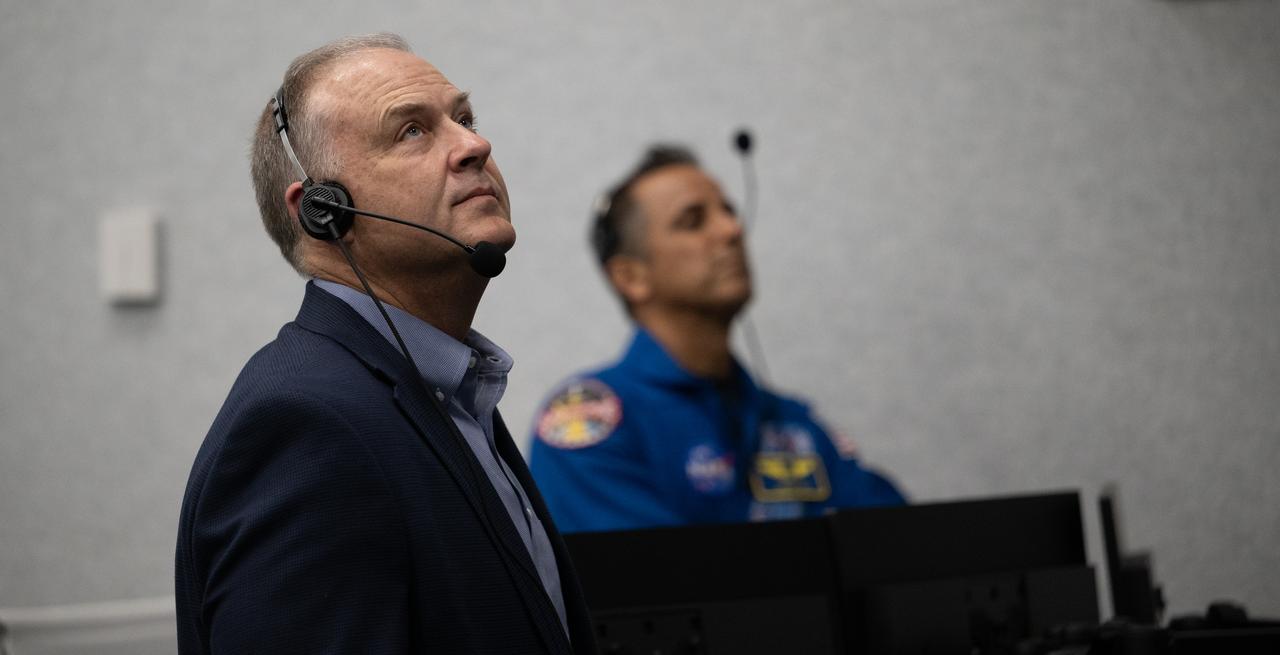
Norm Knight, director of Flight Operations at NASA's Johnson Space Center, left, and Joe Acaba, Chief of the Astronaut Office, monitor the launch of a SpaceX Falcon 9 rocket carrying the company's Dragon spacecraft on the Crew-6 mission with NASA astronauts Stephen Bowen and Warren "Woody" Hoburg, UAE (United Arab Emirates) astronaut Sultan Alneyadi, and Roscosmos cosmonaut Andrey Fedyaev onboard, Thursday, March 2, 2023, in firing room four of the Rocco A. Petrone Launch Control Center at NASA’s Kennedy Space Center in Florida. NASA’s SpaceX Crew-6 mission is the sixth crew rotation mission of the SpaceX Dragon spacecraft and Falcon 9 rocket to the International Space Station as part of the agency’s Commercial Crew Program. Bowen, Hoburg, Alneyadi, and Fedyaev launched at 12:34 a.m. EST, from Launch Complex 39A at the Kennedy Space Center. Photo Credit: (NASA/Joel Kowsky)
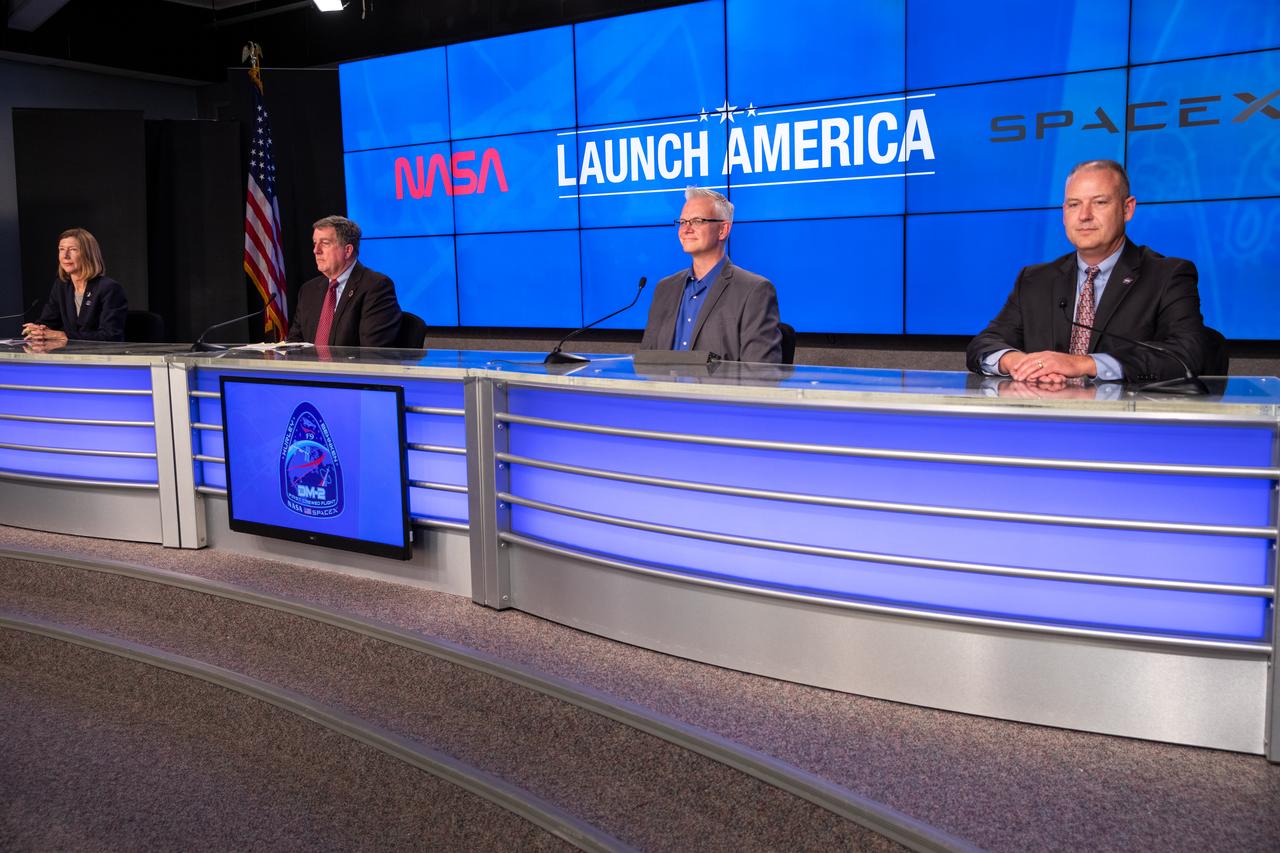
Inside the Press Site auditorium at NASA’s Kennedy Space Center in Florida, agency and industry leaders conduct a virtual news conference with members of the media on May 22, 2020, following the conclusion of the flight readiness review for NASA’s SpaceX Demo-2 mission, with NASA astronauts Robert Behnken and Douglas Hurley, to the International Space Station. From left are Kathy Lueders, Commercial Crew Program manager; Kirk Shireman, International Space Station Program manager; Benji Reed, director of Crew Mission Management, SpaceX; and Norm Knight, deputy director of NASA’s Johnson Space Center’s Flight Operations. This will be SpaceX’s final flight test for NASA’s Commercial Crew Program. Behnken and Hurley will fly to the orbiting laboratory in a SpaceX Crew Dragon spacecraft, launching atop a Falcon 9 rocket from Kennedy’s Launch Complex 39A. Liftoff is scheduled for 4:33 p.m. EDT on Wednesday, May 27.
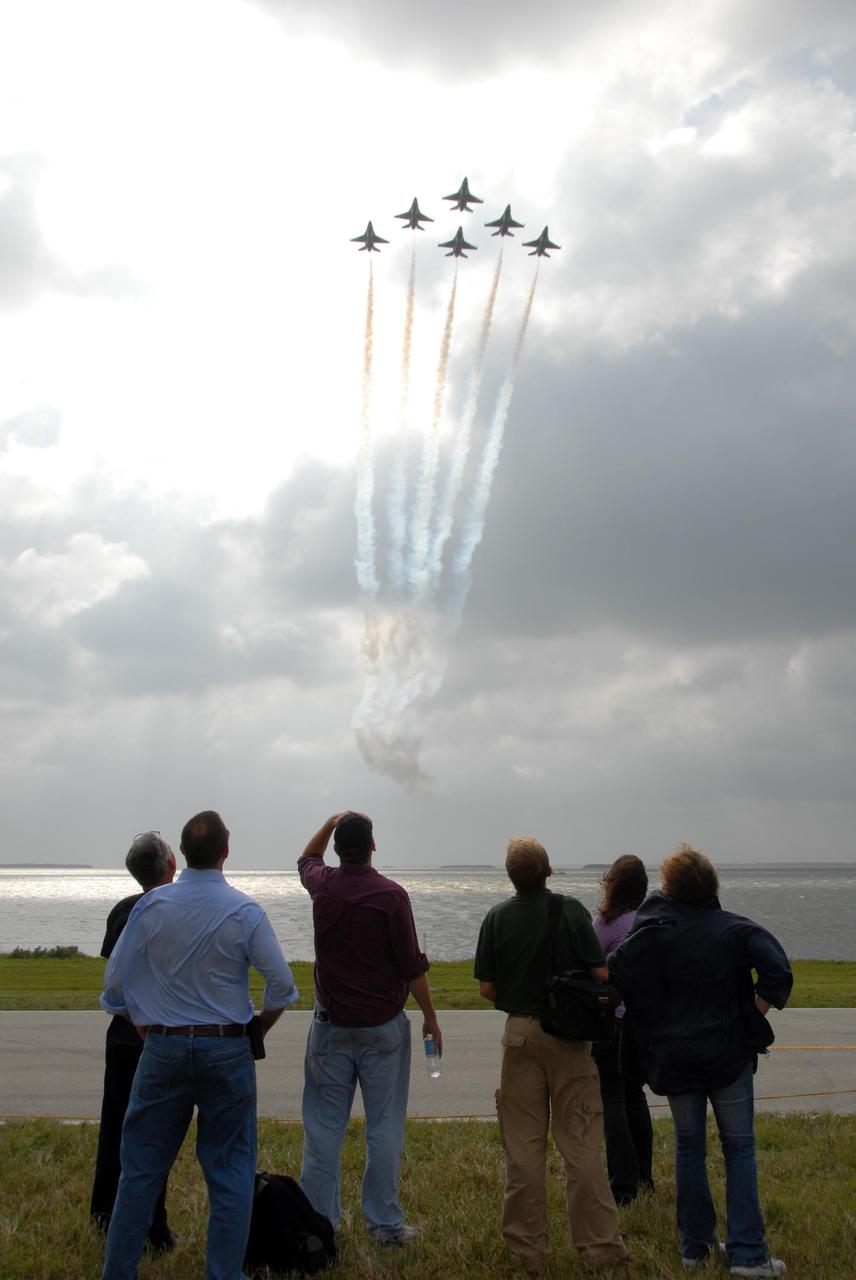
KENNEDY SPACE CENTER, FLA. -- Visitors gather along the NASA Causeway to watch the U.S. Air Force Thunderbirds practicing for the World Space Expo Aerial Salute at NASA's Kennedy Space Center. Commemorating humanity's first 50 years in space while looking forward to returning people to the moon and exploring beyond, the expo will showcase various panels, presentations and educational programs, as well as the air show. Participating in the air show are the U.S. Air Force Thunderbirds, U.S. Air Force F-22 Raptor, U.S. Navy F-18 Super Hornet, U.S. Air Force F-15 Eagle, the P-51 Mustang Heritage Flight, and the U.S. Air Force 920th Rescue Wing, which was responsible for Mercury and Gemini capsule recovery. The U.S. Army Golden Knights will also demonstrate precision skydiving. Photo credit: NASA/George Shelton.
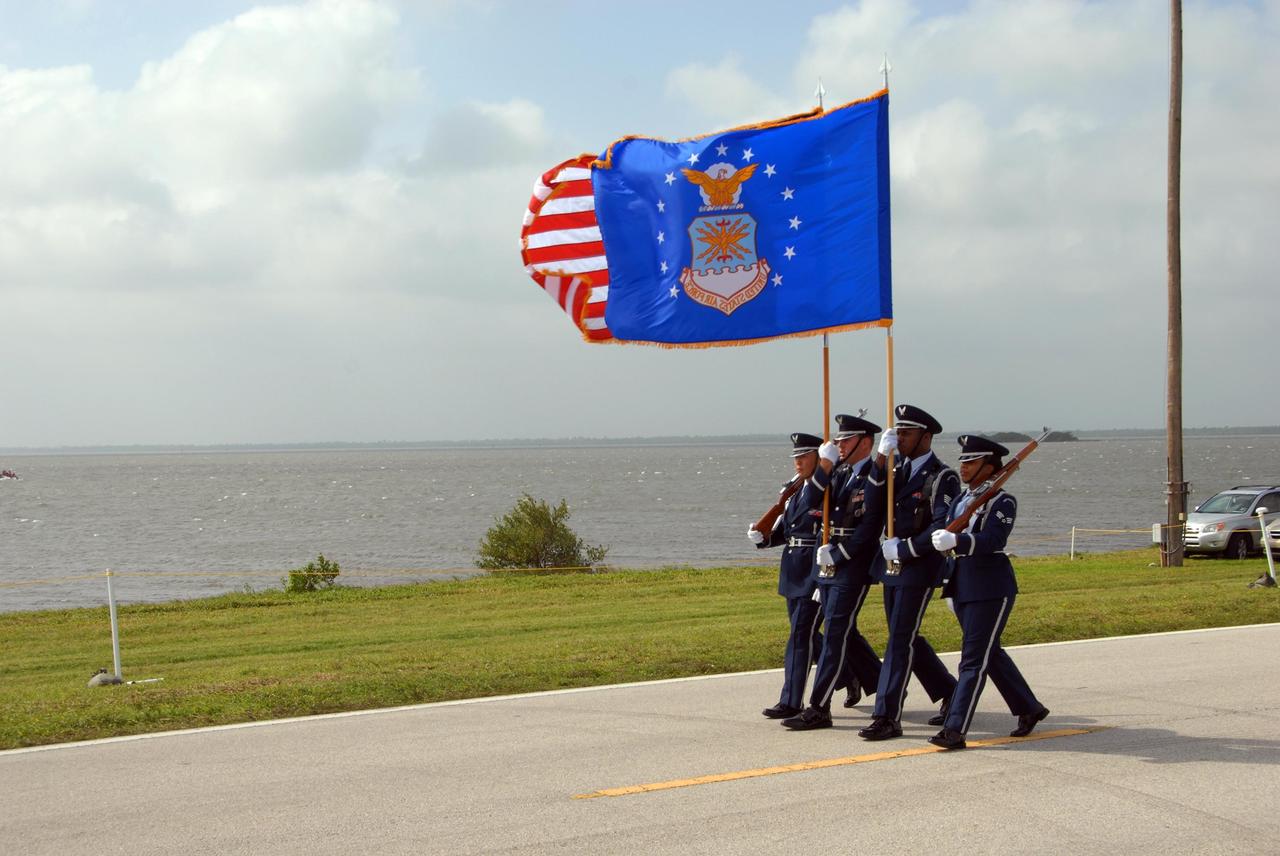
KENNEDY SPACE CENTER, FLA. -- During a rehearsal for the World Space Expo Aerial Salute at NASA's Kennedy Space Center, an honor guard from Patrick Air Force Base marches along the NASA Causeway. Commemorating humanity's first 50 years in space while looking forward to returning people to the moon and exploring beyond, the expo will showcase various panels, presentations and educational programs, as well as the air show. Participating in the air show are the U.S. Air Force Thunderbirds, U.S. Air Force F-22 Raptor, U.S. Navy F-18 Super Hornet, U.S. Air Force F-15 Eagle, the P-51 Mustang Heritage Flight, and the U.S. Air Force 920th Rescue Wing, which was responsible for Mercury and Gemini capsule recovery. The U.S. Army Golden Knights will also demonstrate precision skydiving. Photo credit: NASA/George Shelton.
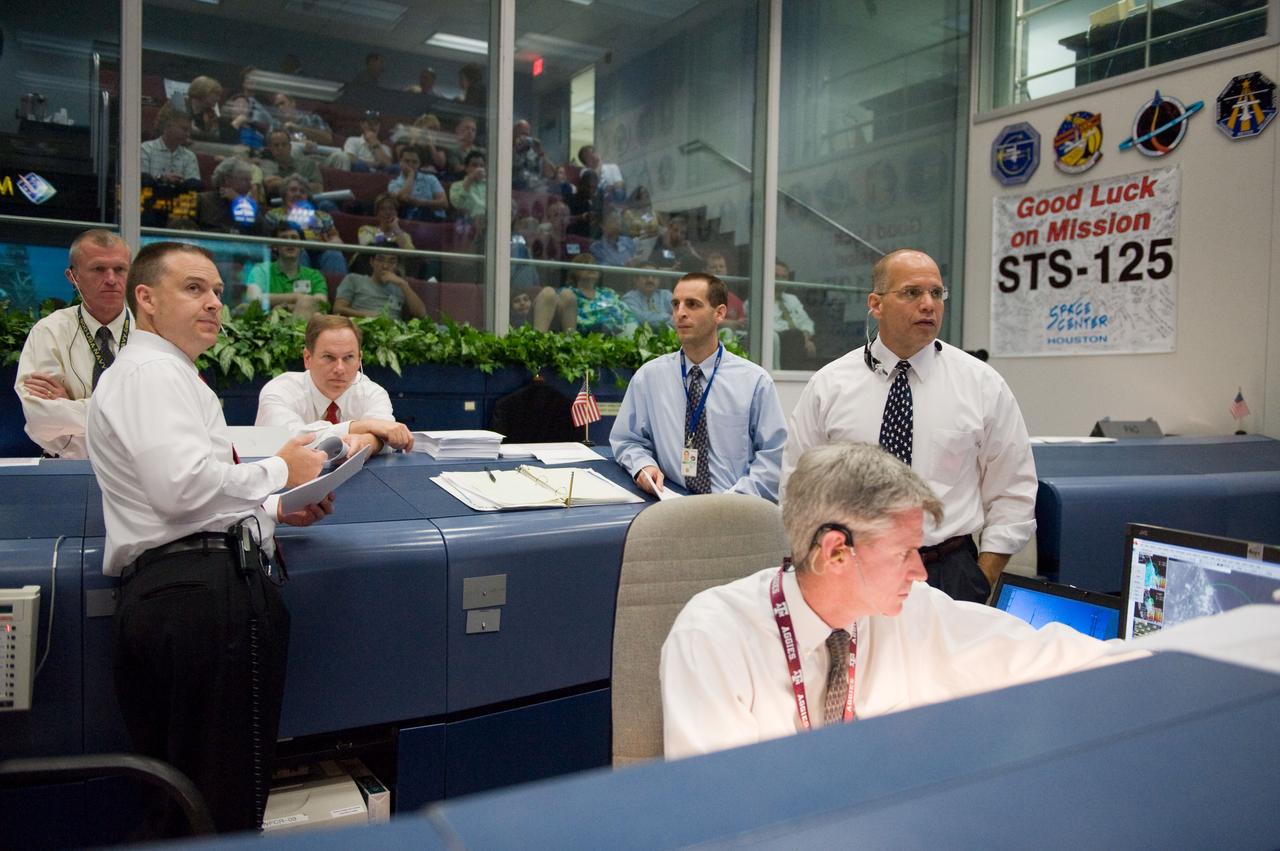
JSC2009-E-118818 (11 May 2009) --- Flight directors Bryan Lunney (seated at right), Norm Knight (left foreground) and Tony Ceccacci (standing, far right); along with Brent Jett (left background), director, flight crew operations; and John McCullough (seated, background), chief of the flight director office, are pictured in the space shuttle flight control room in the Mission Control Center at NASA's Johnson Space Center during launch countdown activities a few hundred miles away in Florida, site of Space Shuttle Atlantis? scheduled STS-125 launch to service the Hubble Space Telescope. Liftoff was on time at 2:01 p.m. (EDT) on May 11, 2009 from launch pad 39A at NASA's Kennedy Space Center.
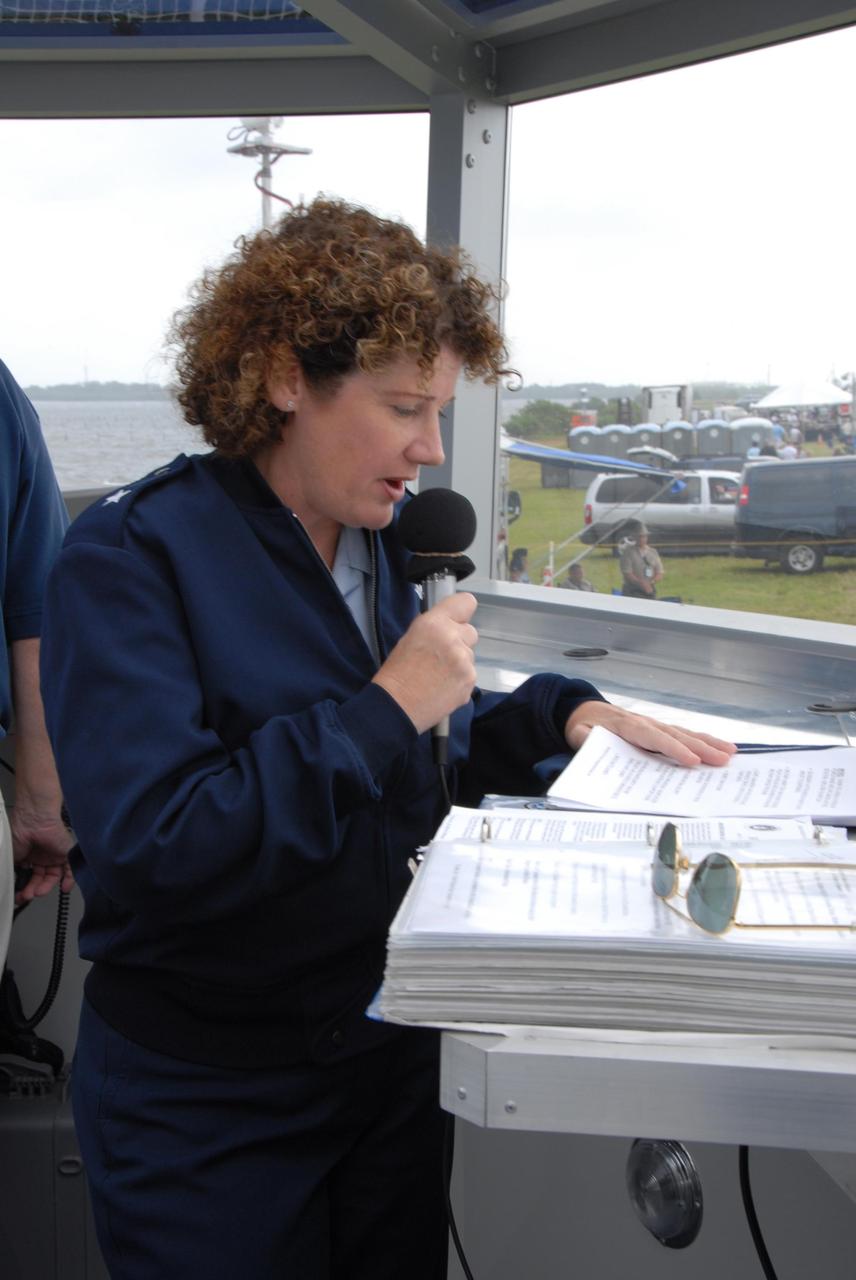
KENNEDY SPACE CENTER, FLA. -- During a rehearsal, Brig. Gen. Susan J. Helms, Commander of the 45th Space Wing at Patrick Air Force Base, makes a few comments to kick off the World Space Expo Aerial Salute at NASA's Kennedy Space Center. ): Commemorating humanity's first 50 years in space while looking forward to returning people to the moon and exploring beyond, the expo will showcase various panels, presentations and educational programs, as well as the air show. Participating in the air show are the U.S. Air Force Thunderbirds, U.S. Air Force F-22 Raptor, U.S. Navy F-18 Super Hornet, U.S. Air Force F-15 Eagle, the P-51 Mustang Heritage Flight, and the U.S. Air Force 920th Rescue Wing, which was responsible for Mercury and Gemini capsule recovery. The U.S. Army Golden Knights will also demonstrate precision skydiving. Photo credit: NASA/George Shelton
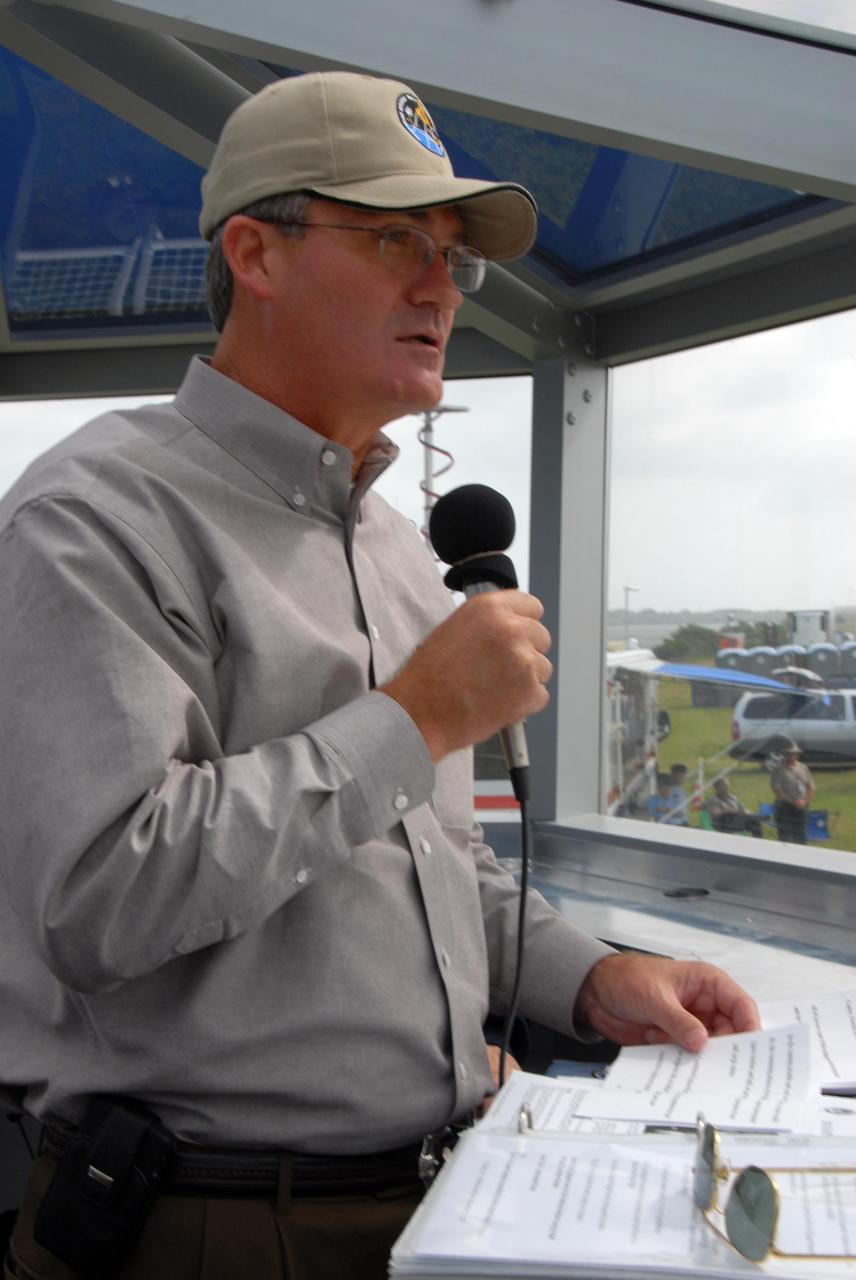
KENNEDY SPACE CENTER, FLA. -- During a rehearsal, Center Director Bill Parsons helps introduce the World Space Expo Aerial Salute at NASA's Kennedy Space Center. Commemorating humanity's first 50 years in space while looking forward to returning people to the moon and exploring beyond, the expo will showcase various panels, presentations and educational programs, as well as the air show. Participating in the air show are the U.S. Air Force Thunderbirds, U.S. Air Force F-22 Raptor, U.S. Navy F-18 Super Hornet, U.S. Air Force F-15 Eagle, the P-51 Mustang Heritage Flight, and the U.S. Air Force 920th Rescue Wing, which was responsible for Mercury and Gemini capsule recovery. The U.S. Army Golden Knights will also demonstrate precision skydiving. Photo credit: NASA/George Shelton
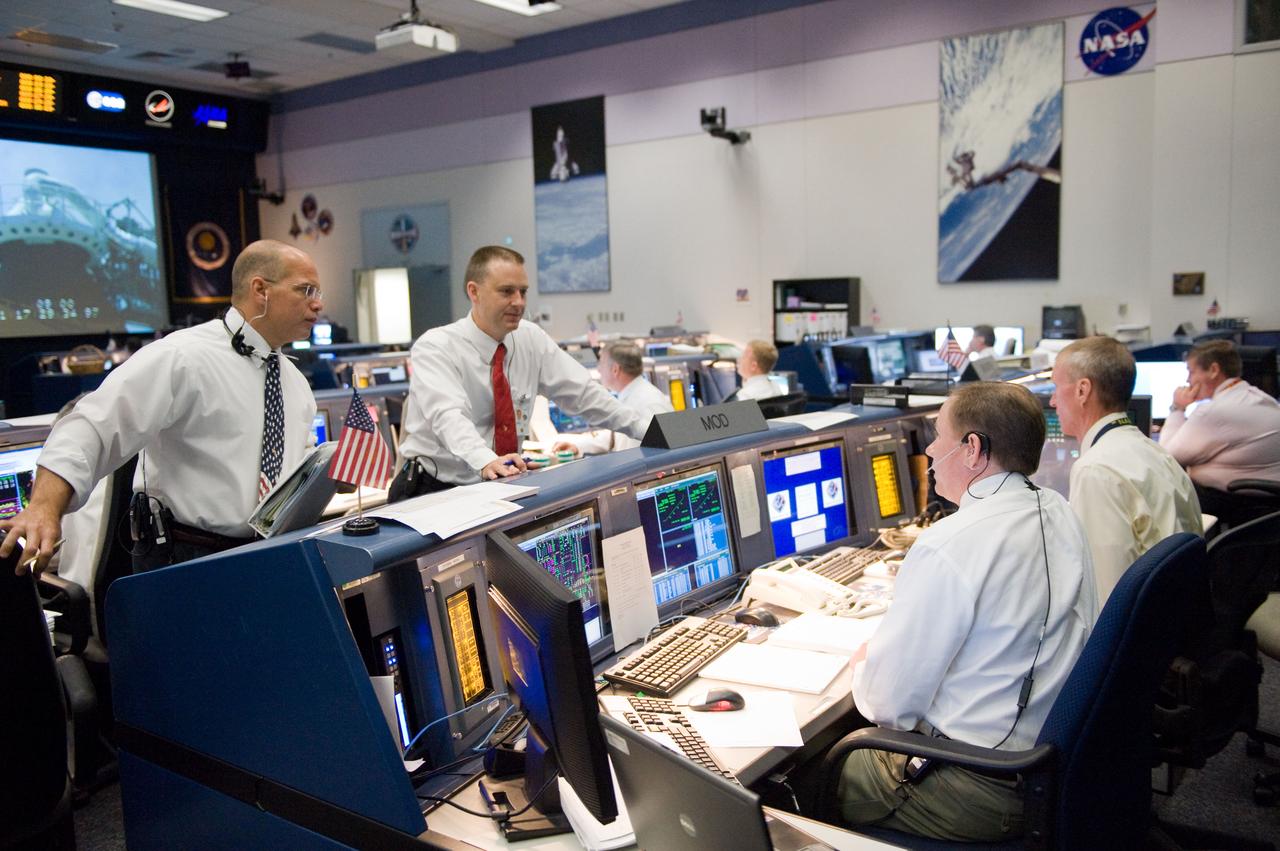
JSC2009-E-118819 (11 May 2009) --- John McCullough (seated foreground), chief of the flight director office; and Brent Jett (seated at right), director, flight crew operations; along with flight directors Tony Ceccacci (standing, left) and Norm Knight (standing, right), are pictured in the space shuttle flight control room in the Mission Control Center at NASA's Johnson Space Center during launch countdown activities a few hundred miles away in Florida, site of Space Shuttle Atlantis? scheduled STS-125 launch to service the Hubble Space Telescope. Liftoff was on time at 2:01 p.m. (EDT) on May 11, 2009 from launch pad 39A at NASA's Kennedy Space Center.
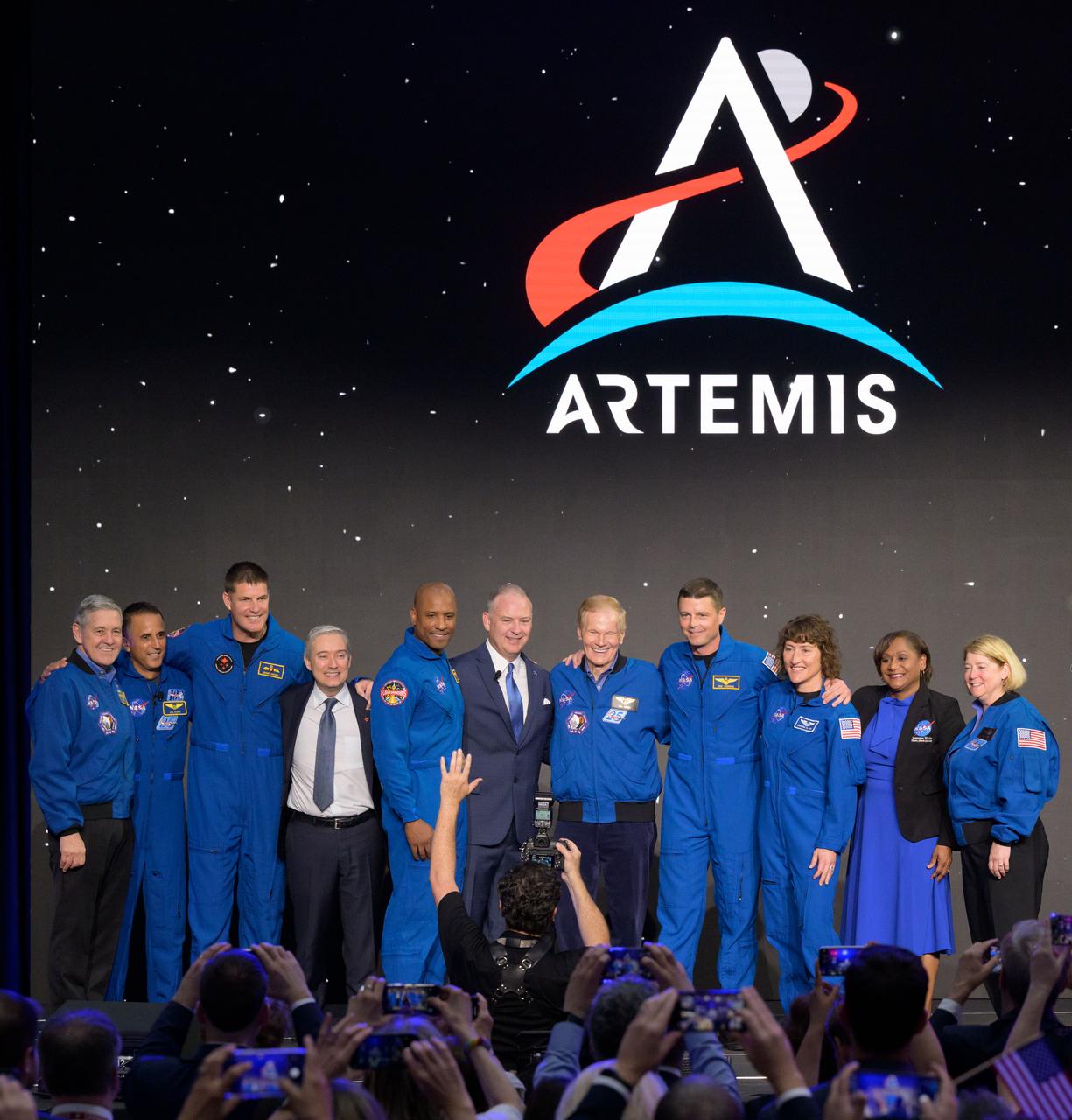
jsc2023e018442 (April 3, 2023) -- The Artemis II crew is seen on stage with NASA and Canadian leadership after being announced during a Monday, April 3, 2023, news conference at Ellington Field near NASA’s Johnson Space Center in Houston. The crew is comprised of Commander Reid Wiseman, Pilot Victor Glover, and Mission Specialists Christina Koch and Jeremy Hansen. The four astronauts will venture around the Moon on Artemis II, the first crewed mission on NASA’s path to establishing a long-term presence at the Moon for science and exploration through Artemis. From left: NASA Associate Administrator Bob Cabana, NASA Chief Astronaut Joe Acaba, CSA Astronaut and Artemis II Mission Specialist Jeremy Hansen, The Honorable François-Philippe Champagne, the minister responsible for the Canadian Space Agency, NASA Astronaut Artemis II Pilot Victor Glover, NASA Flight Operations Director Norm Knight, NASA Administrator Bill Nelson, NASA Astronaut Artemis II Commander Reid Wiseman, NASA Astronaut Artemis II Mission Specialist Christina Koch, NASA Johnson Space Center Director Vanessa Wyche, NASA Deputy Administrator Pam Melroy.
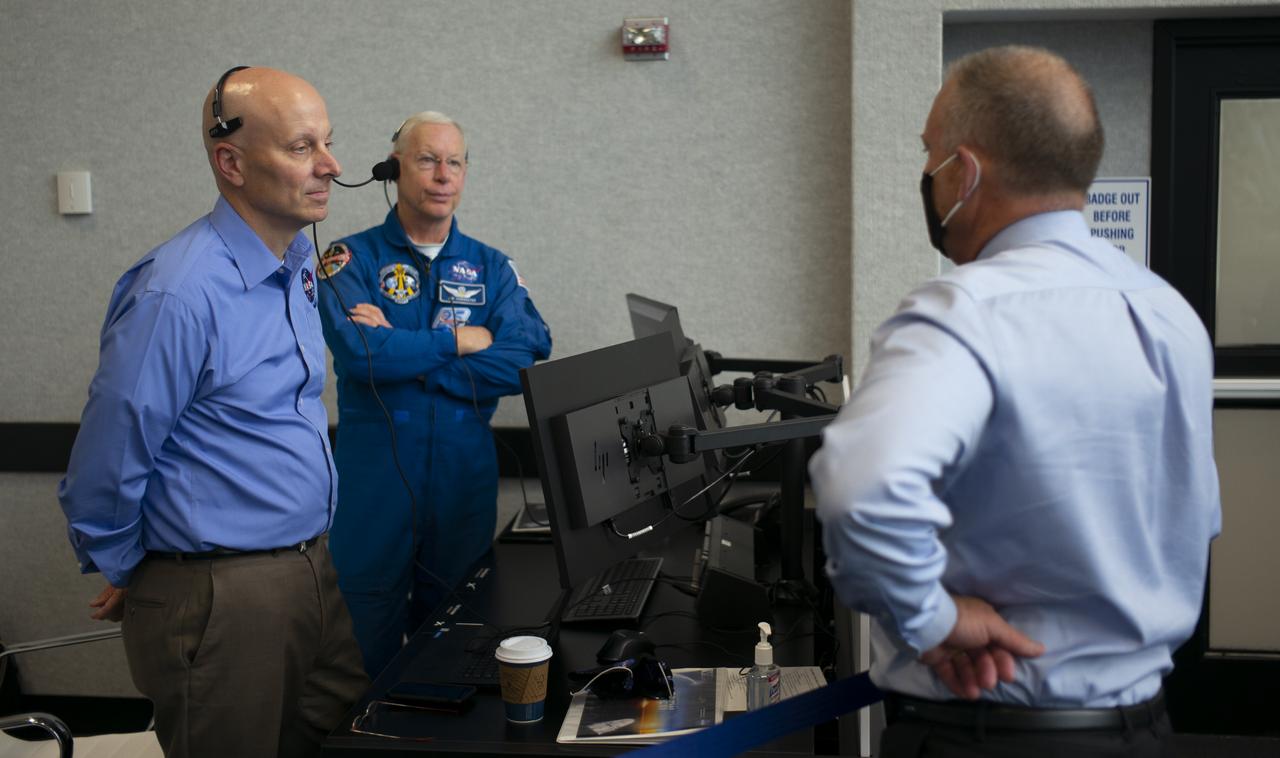
Stephen Koerner, Director of the Flight Operations Directorate at NASA’s Johnson Space Center, left, Pat Forrester, NASA’s chief of the astronaut office, and Norm Knight, deputy director of Flight Operations at NASA's Johnson Space Center are seen during countdown of the launch of a SpaceX Falcon 9 rocket carrying the company's Crew Dragon spacecraft on NASA’s SpaceX Demo-2 mission with NASA astronauts Robert Behnken and Douglas Hurley onboard, Saturday, May 30, 2020, in firing room four of the Launch Control Center at NASA’s Kennedy Space Center in Florida. NASA’s SpaceX Demo-2 mission is the first launch with astronauts of the SpaceX Crew Dragon spacecraft and Falcon 9 rocket to the International Space Station as part of the agency’s Commercial Crew Program. The test flight serves as an end-to-end demonstration of SpaceX’s crew transportation system. Behnken and Hurley launched at 3:22 p.m. EDT on Saturday, May 30, from Launch Complex 39A at the Kennedy Space Center. A new era of human spaceflight is set to begin as American astronauts once again launch on an American rocket from American soil to low-Earth orbit for the first time since the conclusion of the Space Shuttle Program in 2011. Photo Credit: (NASA/Joel Kowsky)
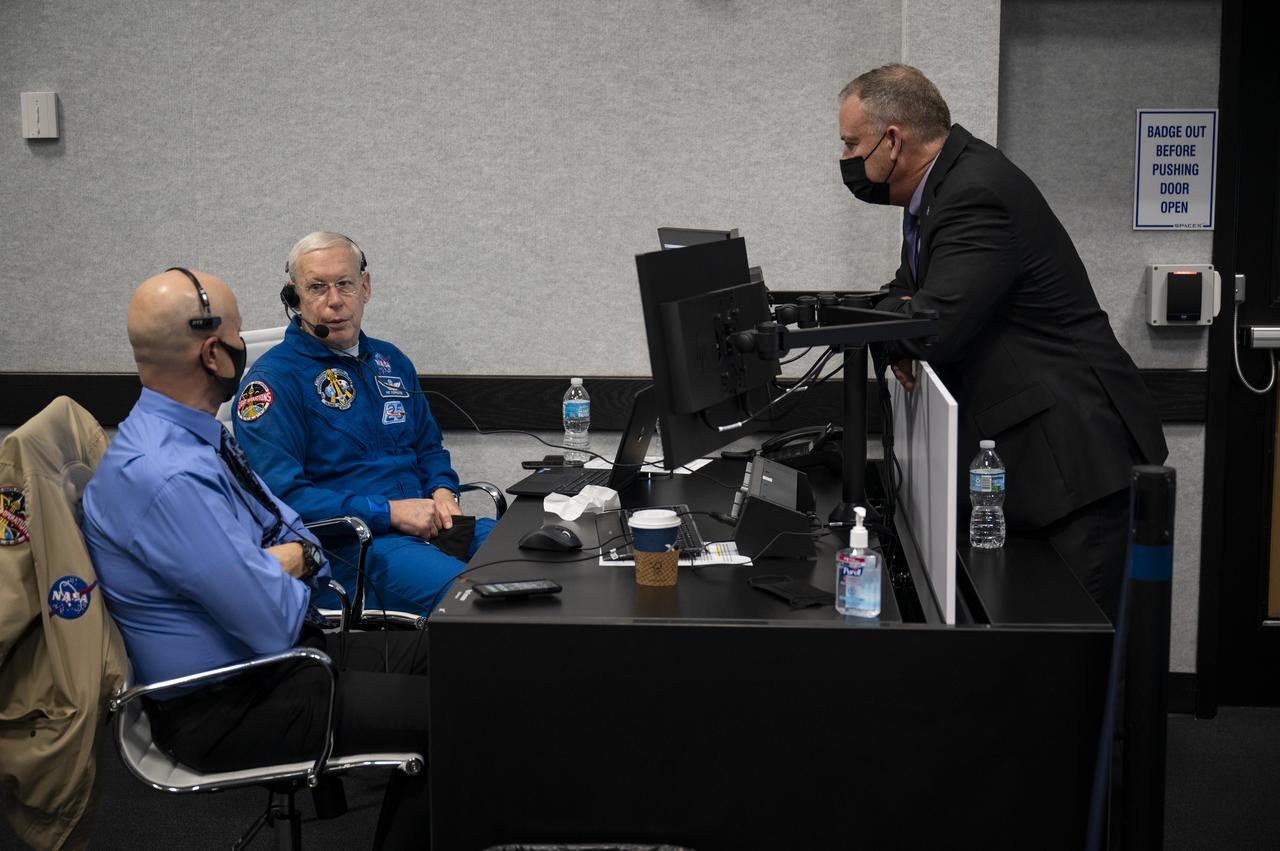
Stephen Koerner, director of the Flight Operations Directorate at NASA’s Johnson Space Center, left, and Pat Forrester, NASA’s chief of the astronaut office, center, speak with Norm Knight, deputy director of Flight Operations at NASA's Johnson Space Center as they monitor the countdown of the launch of a SpaceX Falcon 9 rocket carrying the company's Crew Dragon spacecraft on NASA’s SpaceX Crew-1 mission with NASA astronauts Mike Hopkins, Victor Glover, Shannon Walker, and Japan Aerospace Exploration Agency (JAXA) astronaut Soichi Noguchi onboard, Sunday, Nov. 15, 2020, in firing room four of the Launch Control Center at NASA’s Kennedy Space Center in Florida. NASA’s SpaceX Crew-1 mission is the first crew rotation mission of the SpaceX Crew Dragon spacecraft and Falcon 9 rocket to the International Space Station as part of the agency’s Commercial Crew Program. Hopkins, Glover, Walker, and Noguchi are scheduled to launch at 7:27 p.m. EST, from Launch Complex 39A at the Kennedy Space Center. Photo Credit: (NASA/Aubrey Gemignani)
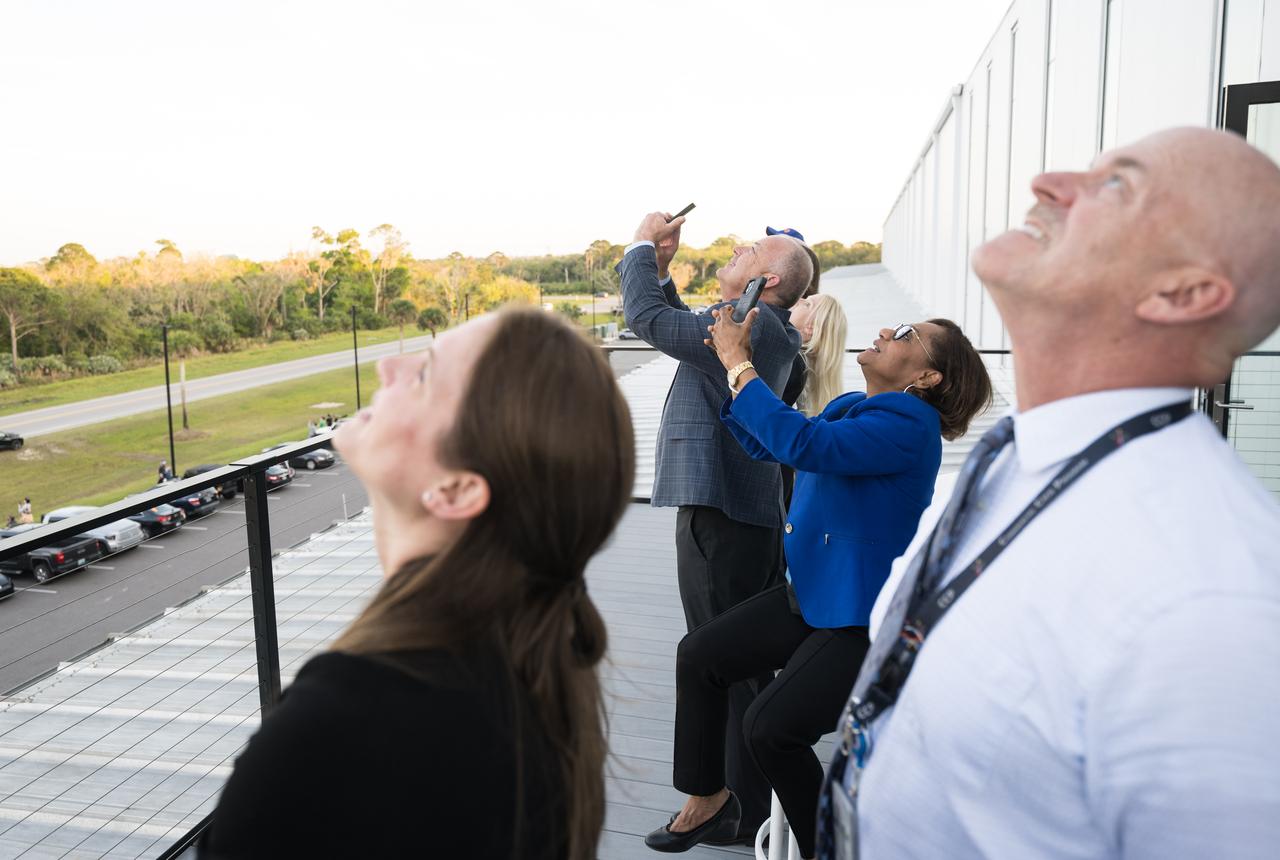
Norm Knight, director of Flight Operations at NASA's Johnson Space Center, left, Vanessa Wyche, acting NASA associate administrator, center, Mike Lee, NASA Deputy Manager for Mission Management and Integration, and other NASA and SpaceX leadership, watch the landing of the booster after launch of a SpaceX Falcon 9 rocket carrying the company's Dragon spacecraft on the Crew-10 mission with NASA astronauts Anne McClain and Nichole Ayers, JAXA (Japan Aerospace Exploration Agency) astronaut Takuya Onishi, and Roscosmos cosmonaut Kirill Peskov onboard, Friday, March 14, 2025, in the control room of SpaceX’s HangarX at NASA’s Kennedy Space Center in Florida. NASA’s SpaceX Crew-10 mission is the tenth crew rotation mission of the SpaceX Dragon spacecraft and Falcon 9 rocket to the International Space Station as part of the agency’s Commercial Crew Program. McClain, Ayers, Onishi, and Peskov launched at 7:03 p.m. EDT, from Launch Complex 39A at the Kennedy Space Center. Photo Credit: (NASA/Aubrey Gemignani)
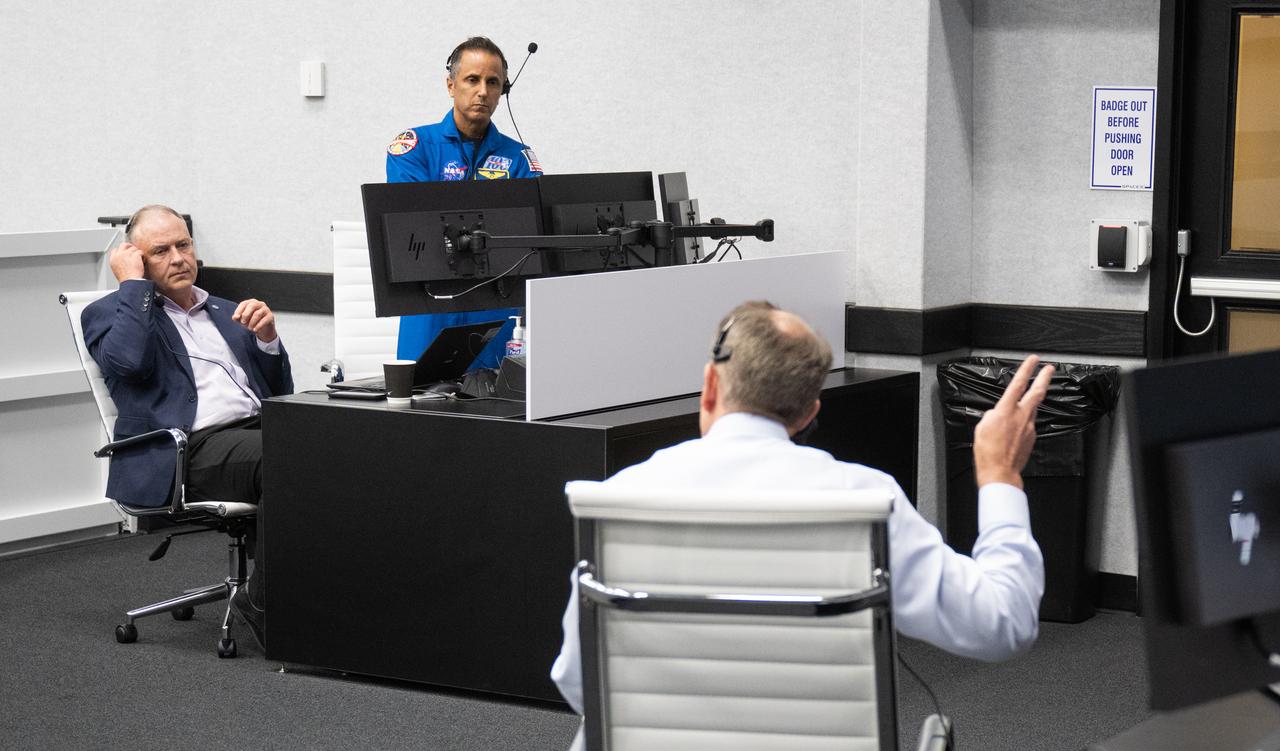
Norm Knight, director of Flight Operations at NASA's Johnson Space Center, left, Joe Acaba, Chief of the Astronaut Office, center, and Zeb Scoville, NASA's deputy chief flight director, right, are seen as they monitor the countdown of the attempted launch of a SpaceX Falcon 9 rocket carrying the company's Dragon spacecraft on NASA’s SpaceX Crew-6 mission with NASA astronauts Stephen Bowen and Warren "Woody" Hoburg, UAE (United Arab Emirates) astronaut Sultan Alneyadi, and Roscosmos cosmonaut Andrey Fedyaev onboard, Monday, Feb. 27, 2023, in firing room four of the Launch Control Center at NASA’s Kennedy Space Center in Florida. NASA’s SpaceX Crew-6 mission is the sixth crew rotation mission of the SpaceX Dragon spacecraft and Falcon 9 rocket to the International Space Station as part of the agency’s Commercial Crew Program. Today’s launch attempt was scrubbed due to an issue with ground systems. The next launch attempt is targeted for 12:34am ET on Thursday, March 2. Photo Credit: (NASA/Joel Kowsky)
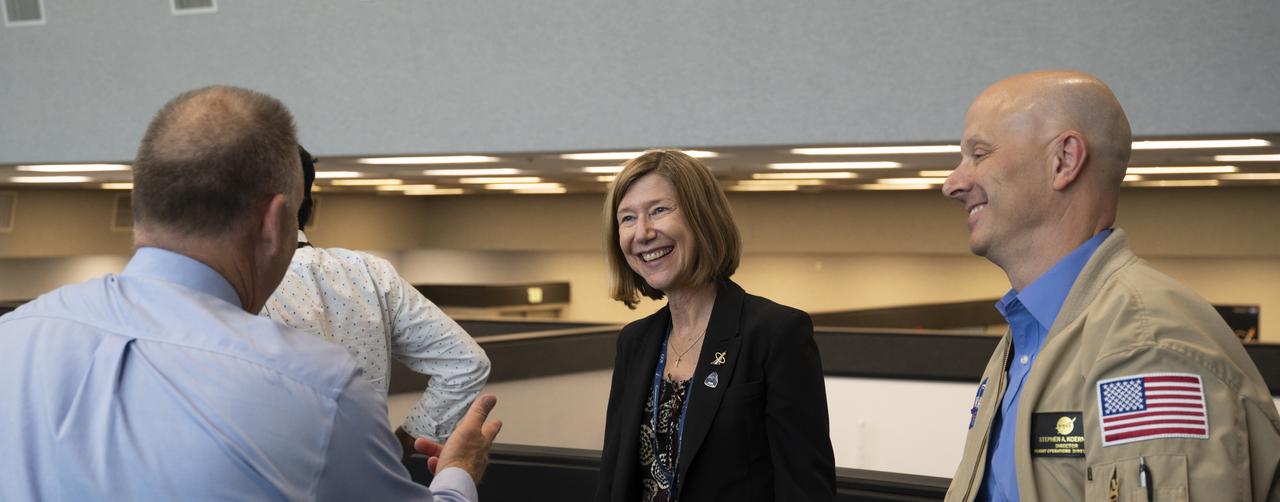
Kathy Lueders, manager of NASA's Commercial Crew Program, center, is seen with Norm Knight, deputy director of Flight Operations at NASA's Johnson Space Center, left, and Stephen Koerner, Director of the Flight Operations Directorate at NASA’s Johnson Space Center, right, following launch of a SpaceX Falcon 9 rocket carrying the company's Crew Dragon spacecraft on the Demo-2 mission with NASA astronauts Douglas Hurley and Robert Behnken onboard, Saturday, May 30, 2020, in firing room four of the Launch Control Center at NASA’s Kennedy Space Center in Florida. NASA’s SpaceX Demo-2 mission is the first launch with astronauts of the SpaceX Crew Dragon spacecraft and Falcon 9 rocket to the International Space Station as part of the agency’s Commercial Crew Program. The test flight serves as an end-to-end demonstration of SpaceX’s crew transportation system. Behnken and Hurley launched at 3:22 p.m. EDT on Saturday, May 30, from Launch Complex 39A at the Kennedy Space Center. A new era of human spaceflight is set to begin as American astronauts once again launch on an American rocket from American soil to low-Earth orbit for the first time since the conclusion of the Space Shuttle Program in 2011. Photo Credit: (NASA/Joel Kowsky)

Michael Hess, operations integration manager for NASA's Commercial Crew Program, left, speaks with Norm Knight, deputy director of Flight Operations at NASA's Johnson Space Center, right, as they monitor the countdown of the launch of a SpaceX Falcon 9 rocket carrying the company's Crew Dragon spacecraft on NASA’s SpaceX Crew-2 mission with NASA astronauts Shane Kimbrough and Megan McArthur, ESA (European Space Agency) astronaut Thomas Pesquet, and Japan Aerospace Exploration Agency (JAXA) astronaut Akihiko Hoshide onboard, Friday, April 23, 2021, in firing room four of the Launch Control Center at NASA’s Kennedy Space Center in Florida. NASA’s SpaceX Crew-2 mission is the second crew rotation mission of the SpaceX Crew Dragon spacecraft and Falcon 9 rocket to the International Space Station as part of the agency’s Commercial Crew Program. Kimbrough, McArthur, Pesquet, and Hoshide launched at 5:49 a.m. EDT, from Launch Complex 39A at the Kennedy Space Center. Photo Credit: (NASA/Joel Kowsky)
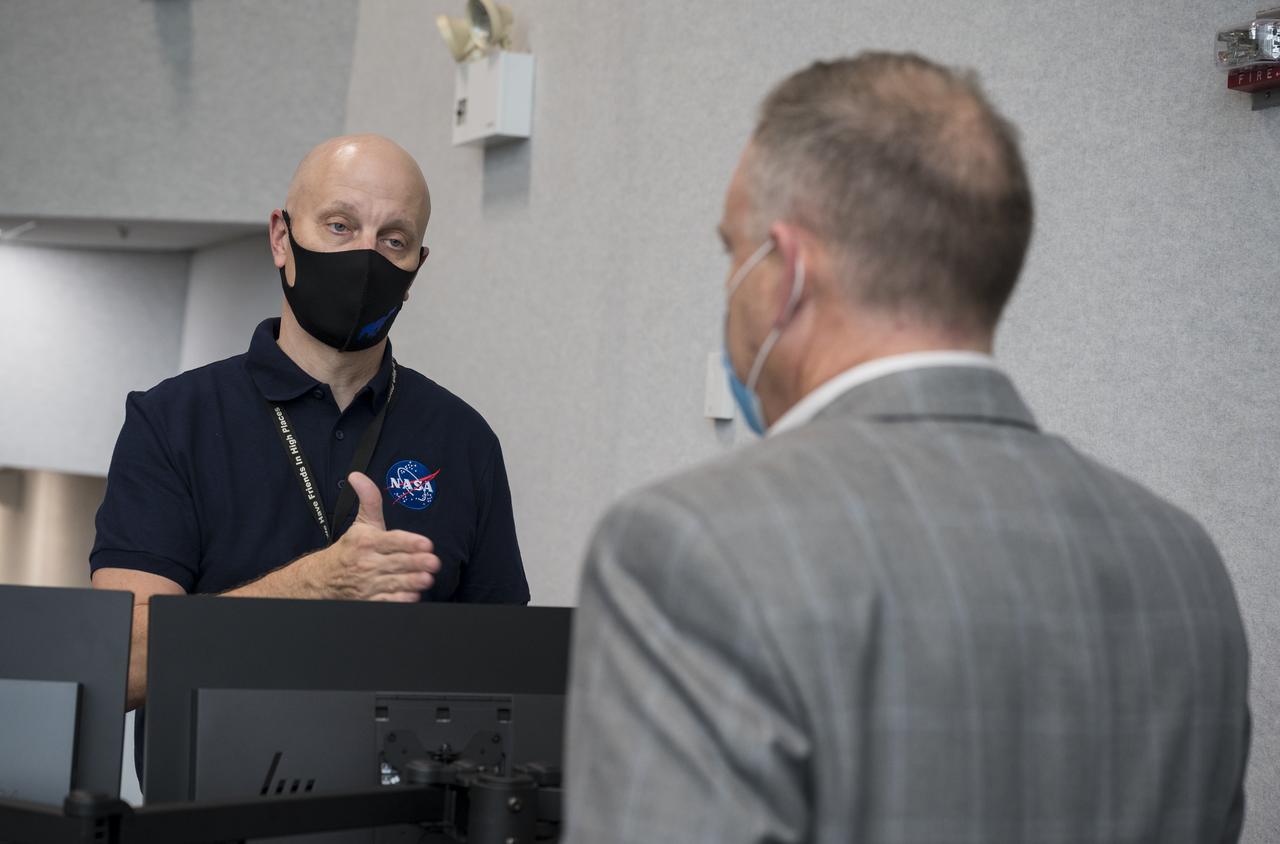
Stephen Koerner, director of the Flight Operations Directorate at NASA’s Johnson Space Center speaks with Norm Knight, deputy director of Flight Operations at NASA's Johnson Space Center, during a dress rehearsal in preparation for the launch of a SpaceX Falcon 9 rocket carrying the company's Crew Dragon spacecraft on NASA’s SpaceX Crew-1 mission with NASA astronauts Mike Hopkins, Victor Glover, Shannon Walker, and Japan Aerospace Exploration Agency (JAXA) astronaut Soichi Noguchi onboard, Thursday, Nov. 12, 2020, in firing room four of the Launch Control Center at NASA’s Kennedy Space Center in Florida. NASA’s SpaceX Crew-1 mission is the first crew rotation mission of the SpaceX Crew Dragon spacecraft and Falcon 9 rocket to the International Space Station as part of the agency’s Commercial Crew Program. Hopkins, Glover, Walker, and Noguchi are scheduled to launch at 7:49 p.m. EST on Saturday, Nov. 14, from Launch Complex 39A at the Kennedy Space Center. Photo Credit: (NASA/Aubrey Gemignani)
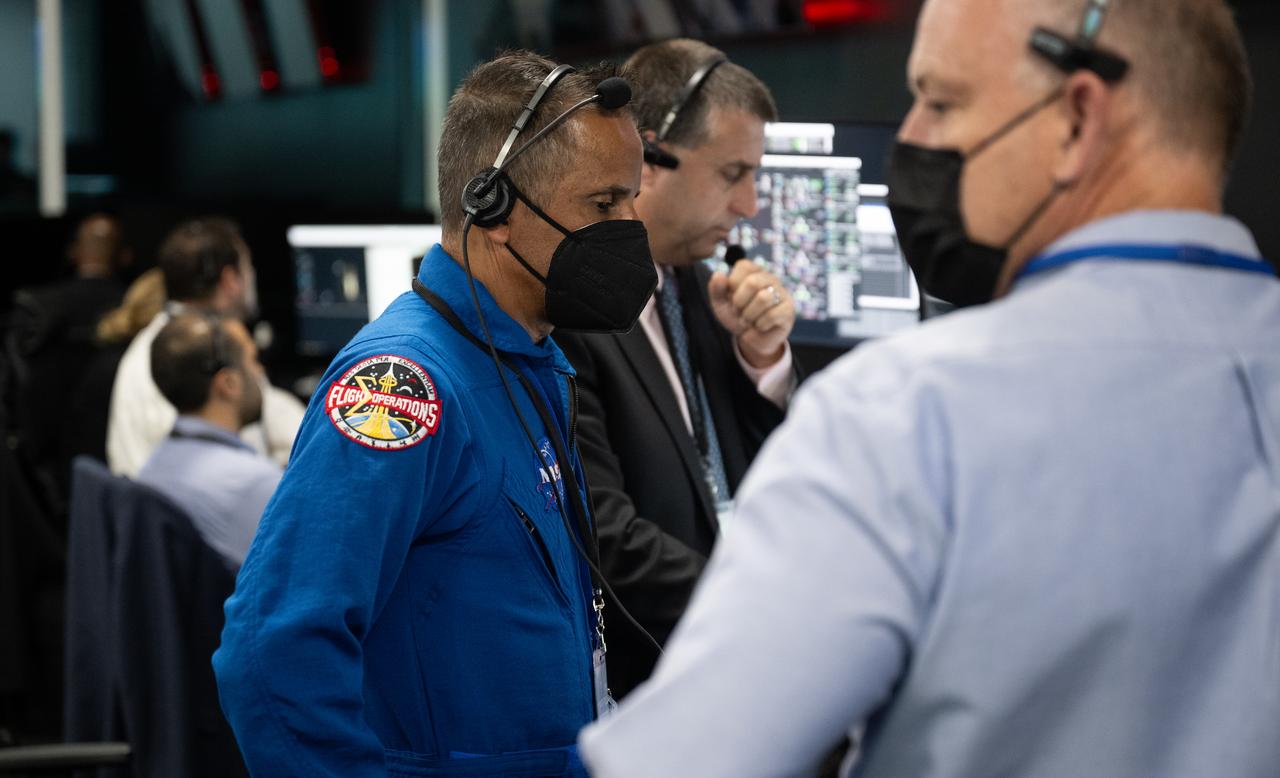
Joe Acaba, Chief of the Astronaut Office, center, is seen alongside NASA International Space Station program manger Joel Montalbano, and Norm Knight, director of Flight Operations at NASA's Johnson Space Center, as they monitor the countdown of the launch of a SpaceX Falcon 9 rocket carrying the company's Dragon spacecraft on NASA’s SpaceX Crew-7 mission with NASA astronaut Jasmin Moghbeli, ESA (European Space Agency) astronaut Andreas Mogensen, Japan Aerospace Exploration Agency (JAXA) astronaut Satoshi Furukawa, and Roscosmos cosmonaut Konstantin Borisov onboard, Saturday, Aug. 26, 2023, in SpaceX’s Launch and Landing Control Center in HangerX at NASA’s Kennedy Space Center in Florida. NASA’s SpaceX Crew-7 mission is the first crew rotation mission of the SpaceX Dragon spacecraft and Falcon 9 rocket to the International Space Station as part of the agency’s Commercial Crew Program. Moghbeli, Mogensen, Furukawa, and Borisov launched at 3:27 a.m. EDT from Launch Complex 39A at the Kennedy Space Center. Photo Credit: (NASA/Joel Kowsky)
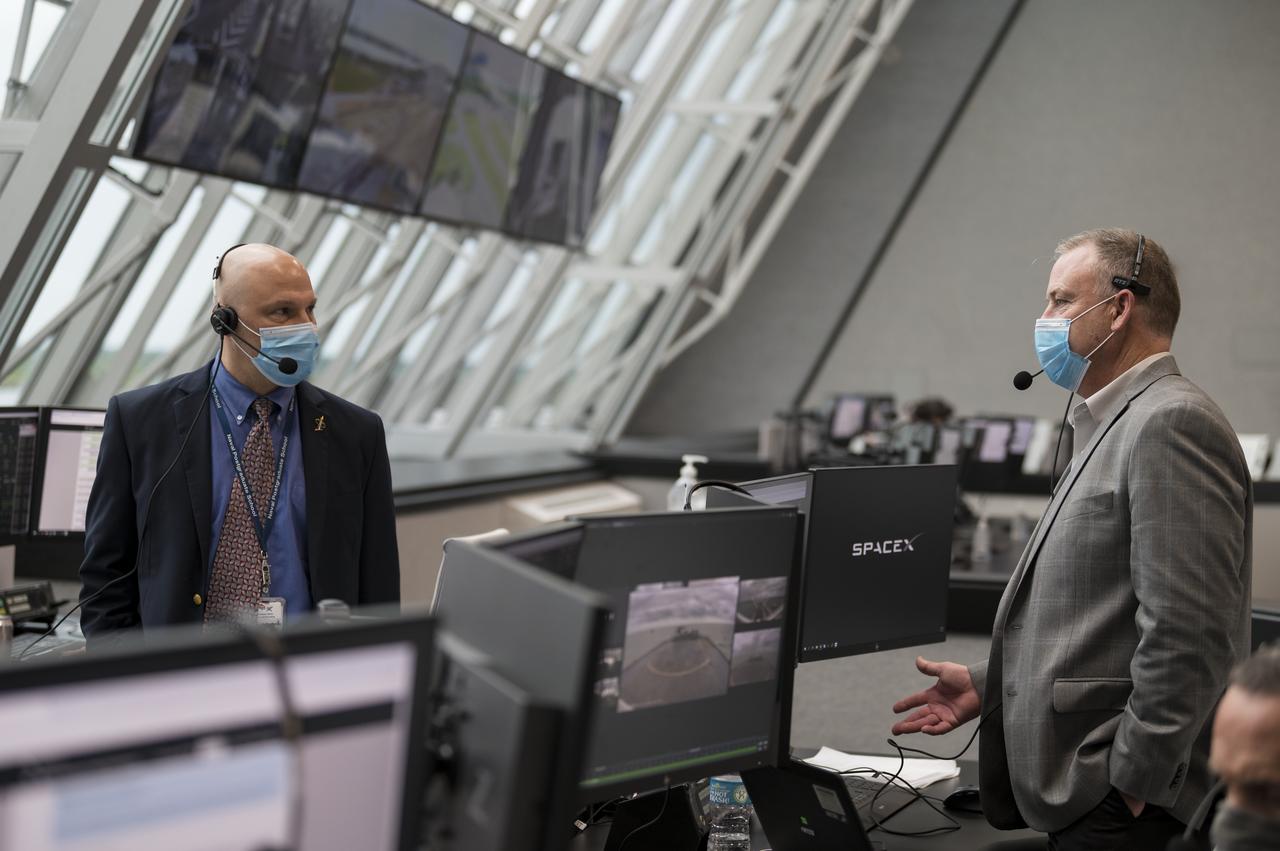
Michael Hess, acting associate director of NASA’s Johnson Space Center, left, speaks with Norm Knight, deputy director of Flight Operations at NASA's Johnson Space Center, during a dress rehearsal in preparation for the launch of a SpaceX Falcon 9 rocket carrying the company's Crew Dragon spacecraft on NASA’s SpaceX Crew-1 mission with NASA astronauts Mike Hopkins, Victor Glover, Shannon Walker, and Japan Aerospace Exploration Agency (JAXA) astronaut Soichi Noguchi onboard, Thursday, Nov. 12, 2020, in firing room four of the Launch Control Center at NASA’s Kennedy Space Center in Florida. NASA’s SpaceX Crew-1 mission is the first crew rotation mission of the SpaceX Crew Dragon spacecraft and Falcon 9 rocket to the International Space Station as part of the agency’s Commercial Crew Program. Hopkins, Glover, Walker, and Noguchi are scheduled to launch at 7:49 p.m. EST on Saturday, Nov. 14, from Launch Complex 39A at the Kennedy Space Center. Photo Credit: (NASA/Aubrey Gemignani)
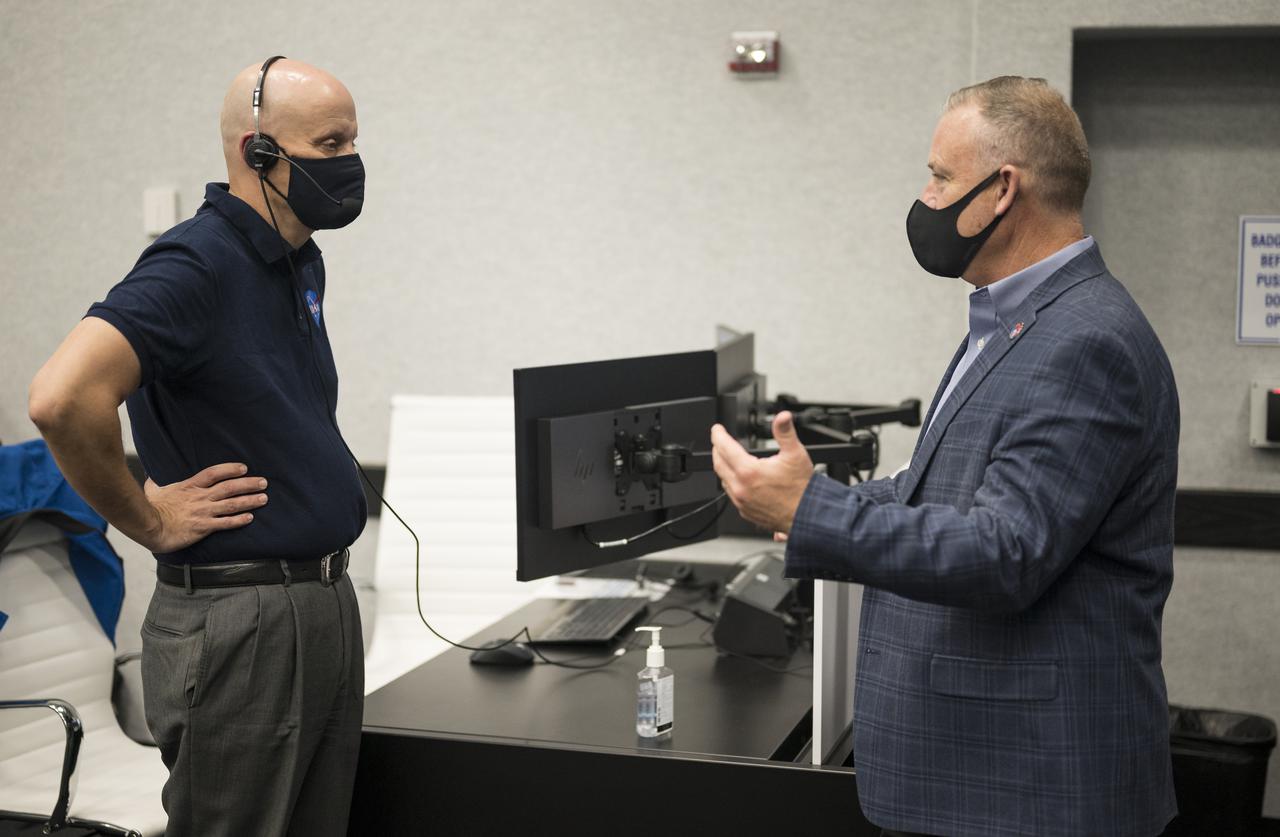
Norm Knight, deputy director of Flight Operations at NASA's Johnson Space Center, right, speaks with Stephen Koerner, director of the Flight Operations Directorate at NASA’s Johnson Space Center, left, during a dress rehearsal in preparation for the launch of a SpaceX Falcon 9 rocket carrying the company's Crew Dragon spacecraft on NASA’s SpaceX Crew-2 mission with NASA astronauts Shane Kimbrough and Megan McArthur, ESA (European Space Agency) astronaut Thomas Pesquet, and Japan Aerospace Exploration Agency (JAXA) astronaut Akihiko Hoshide onboard, Sunday, April 18, 2021, in firing room four of the Launch Control Center at NASA’s Kennedy Space Center in Florida. NASA’s SpaceX Crew-2 mission is the second operational mission of the SpaceX Crew Dragon spacecraft and Falcon 9 rocket to the International Space Station as part of the agency’s Commercial Crew Program. Kimbrough, McArthur, Pesquet, and Hoshide are scheduled to launch at 6:11 a.m. ET on Thursday, April 22, from Launch Complex 39A at the Kennedy Space Center. Photo Credit: (NASA/Joel Kowsky)
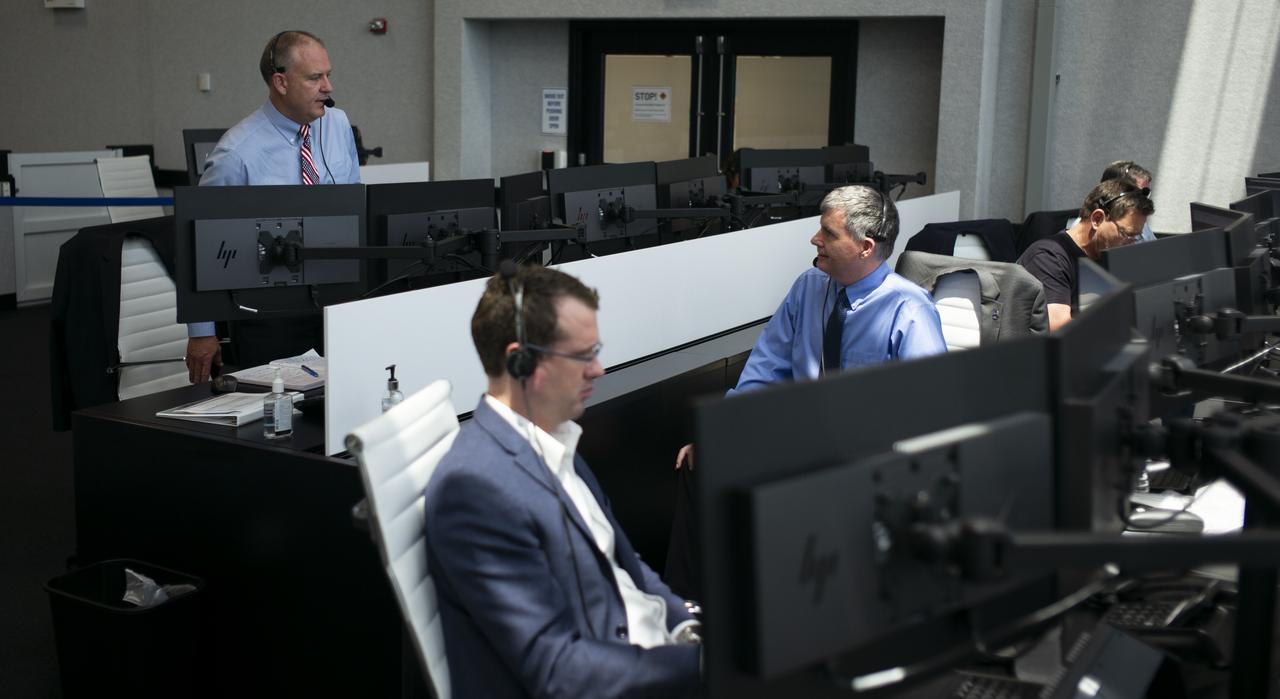
Norm Knight, deputy director of Flight Operations at NASA's Johnson Space Center, left, and Steve Stich, deputy manager of NASA’s Commercial Crew Program, are seen as they monitor the countdown of the launch of a SpaceX Falcon 9 rocket carrying the company's Crew Dragon spacecraft on NASA’s SpaceX Demo-2 mission with NASA astronauts Robert Behnken and Douglas Hurley onboard, Saturday, May 30, 2020, in firing room four of the Launch Control Center at NASA’s Kennedy Space Center in Florida. NASA’s SpaceX Demo-2 mission is the first launch with astronauts of the SpaceX Crew Dragon spacecraft and Falcon 9 rocket to the International Space Station as part of the agency’s Commercial Crew Program. The test flight serves as an end-to-end demonstration of SpaceX’s crew transportation system. Behnken and Hurley launched at 3:22 p.m. EDT on Saturday, May 30, from Launch Complex 39A at the Kennedy Space Center. A new era of human spaceflight is set to begin as American astronauts once again launch on an American rocket from American soil to low-Earth orbit for the first time since the conclusion of the Space Shuttle Program in 2011. Photo Credit: (NASA/Joel Kowsky)
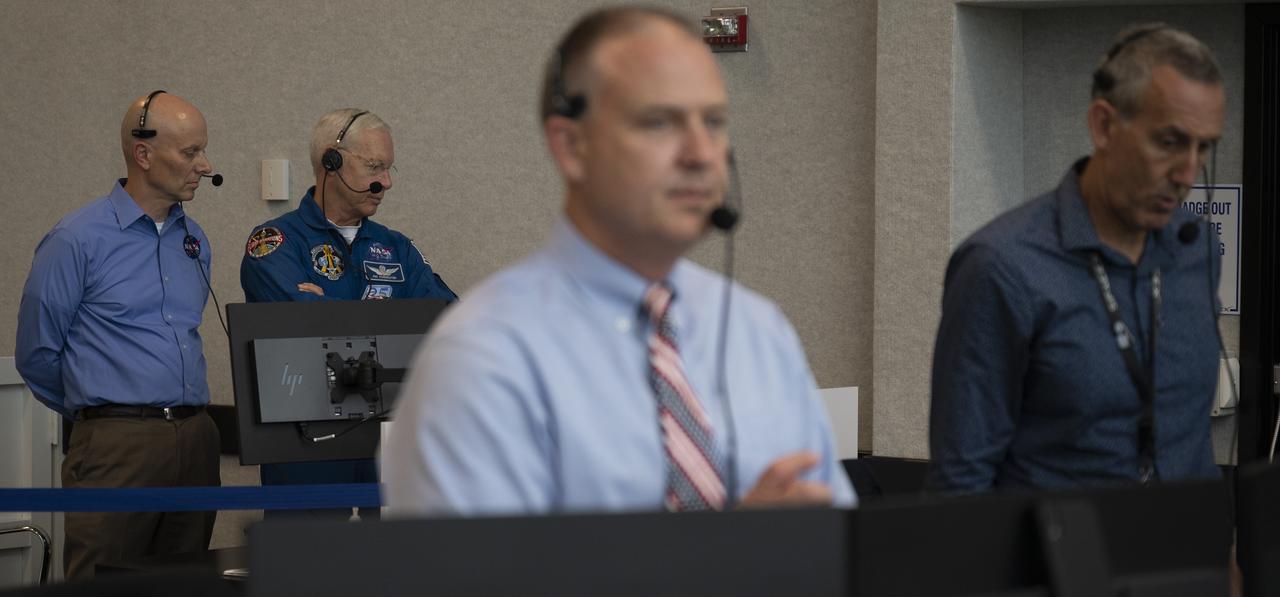
Stephen Koerner, Director of the Flight Operations Directorate at NASA’s Johnson Space Center, left, Pat Forrester, NASA’s chief of the astronaut office, Norm Knight, deputy director of Flight Operations at NASA's Johnson Space Center, and Lee Rosen, vice president for mission and launch operations at SpaceX, monitor the launch of a SpaceX Falcon 9 rocket carrying the company's Crew Dragon spacecraft on the Demo-2 mission with NASA astronauts Douglas Hurley and Robert Behnken onboard, Saturday, May 30, 2020, in firing room four of the Launch Control Center at NASA’s Kennedy Space Center in Florida. NASA’s SpaceX Demo-2 mission is the first launch with astronauts of the SpaceX Crew Dragon spacecraft and Falcon 9 rocket to the International Space Station as part of the agency’s Commercial Crew Program. The test flight serves as an end-to-end demonstration of SpaceX’s crew transportation system. Behnken and Hurley launched at 3:22 p.m. EDT on Saturday, May 30, from Launch Complex 39A at the Kennedy Space Center. A new era of human spaceflight is set to begin as American astronauts once again launch on an American rocket from American soil to low-Earth orbit for the first time since the conclusion of the Space Shuttle Program in 2011. Photo Credit: (NASA/Joel Kowsky)
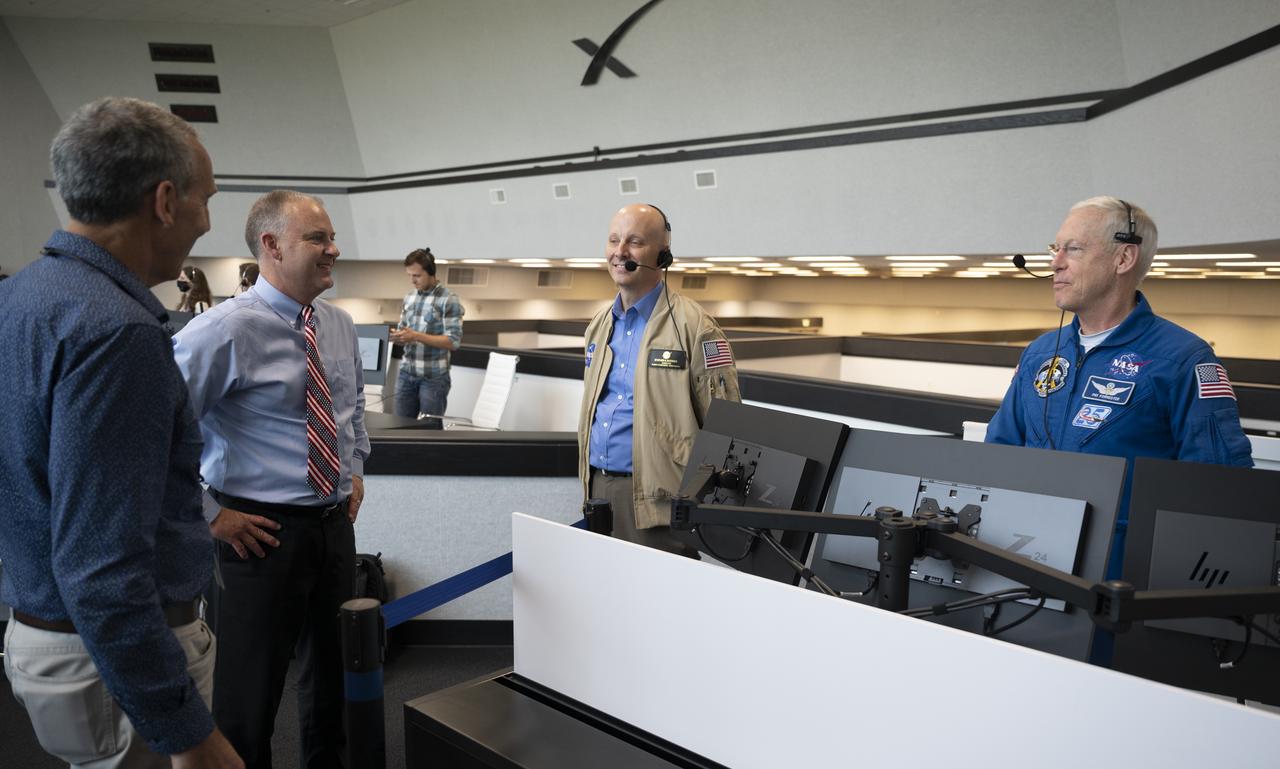
Lee Rosen, vice president for mission and launch operations at SpaceX, left, Norm Knight, deputy director of Flight Operations at NASA's Johnson Space Center, Stephen Koerner, Director of the Flight Operations Directorate at NASA’s Johnson Space Center, and Pat Forrester, NASA’s chief of the astronaut office, are seen after the launch of a SpaceX Falcon 9 rocket carrying the company's Crew Dragon spacecraft on the Demo-2 mission with NASA astronauts Douglas Hurley and Robert Behnken onboard, Saturday, May 30, 2020, in firing room four of the Launch Control Center at NASA’s Kennedy Space Center in Florida. NASA’s SpaceX Demo-2 mission is the first launch with astronauts of the SpaceX Crew Dragon spacecraft and Falcon 9 rocket to the International Space Station as part of the agency’s Commercial Crew Program. The test flight serves as an end-to-end demonstration of SpaceX’s crew transportation system. Behnken and Hurley launched at 3:22 p.m. EDT on Saturday, May 30, from Launch Complex 39A at the Kennedy Space Center. A new era of human spaceflight is set to begin as American astronauts once again launch on an American rocket from American soil to low-Earth orbit for the first time since the conclusion of the Space Shuttle Program in 2011. Photo Credit: (NASA/Joel Kowsky)
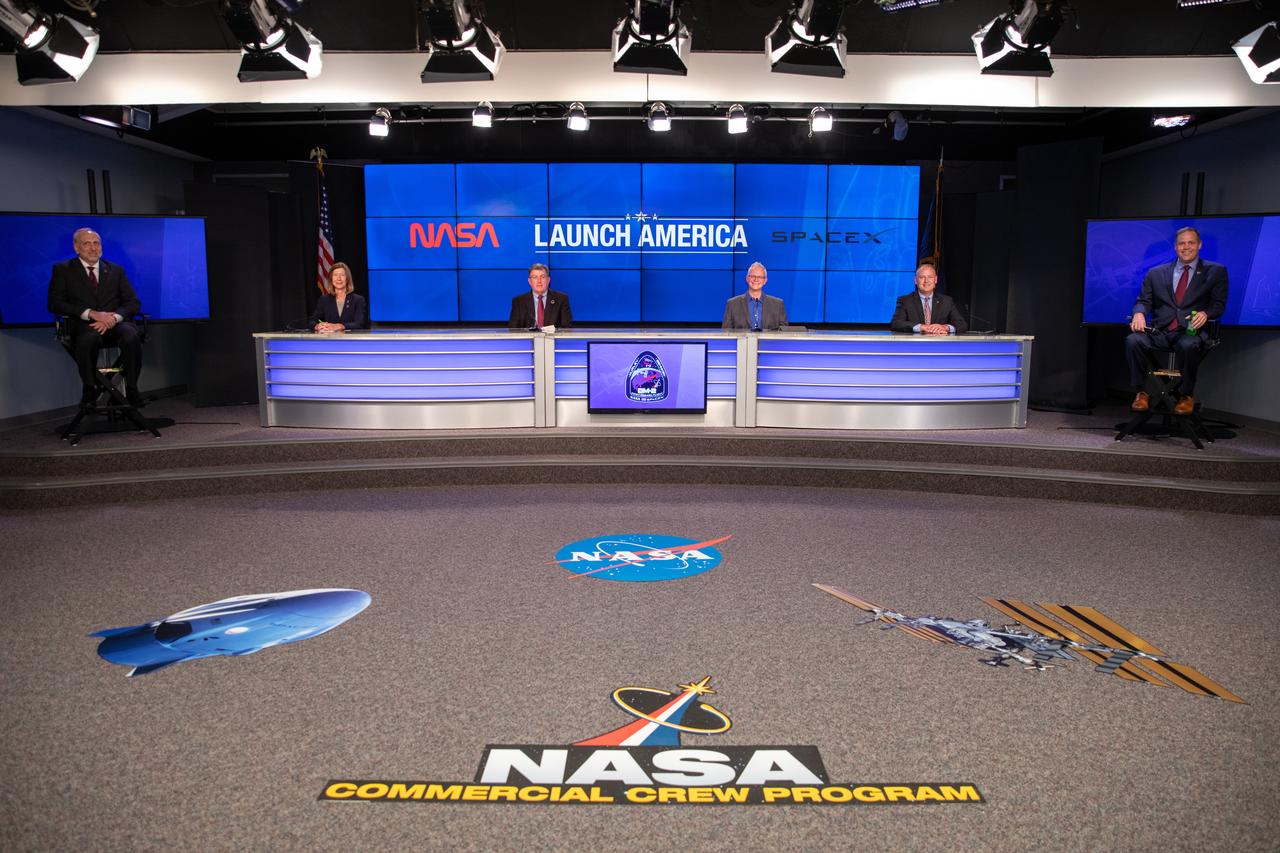
Inside the Press Site auditorium at NASA’s Kennedy Space Center in Florida, agency and industry leaders conduct a virtual news conference with members of the media on May 22, 2020, following the conclusion of the flight readiness review for NASA’s SpaceX Demo-2 mission, with NASA astronauts Robert Behnken and Douglas Hurley, to the International Space Station. From left are Steve Jurczyk, NASA associate administrator; Kathy Lueders, Commercial Crew Program manager; Kirk Shireman, International Space Station Program manager; Benji Reed, director of Crew Mission Management, SpaceX; Norm Knight, deputy director of NASA’s Johnson Space Center’s Flight Operations; and Jim Bridenstine, NASA administrator. This will be SpaceX’s final flight test for NASA’s Commercial Crew Program. Behnken and Hurley will fly to the orbiting laboratory in a SpaceX Crew Dragon spacecraft, launching atop a Falcon 9 rocket from Kennedy’s Launch Complex 39A. Liftoff is scheduled for 4:33 p.m. EDT on Wednesday, May 27.
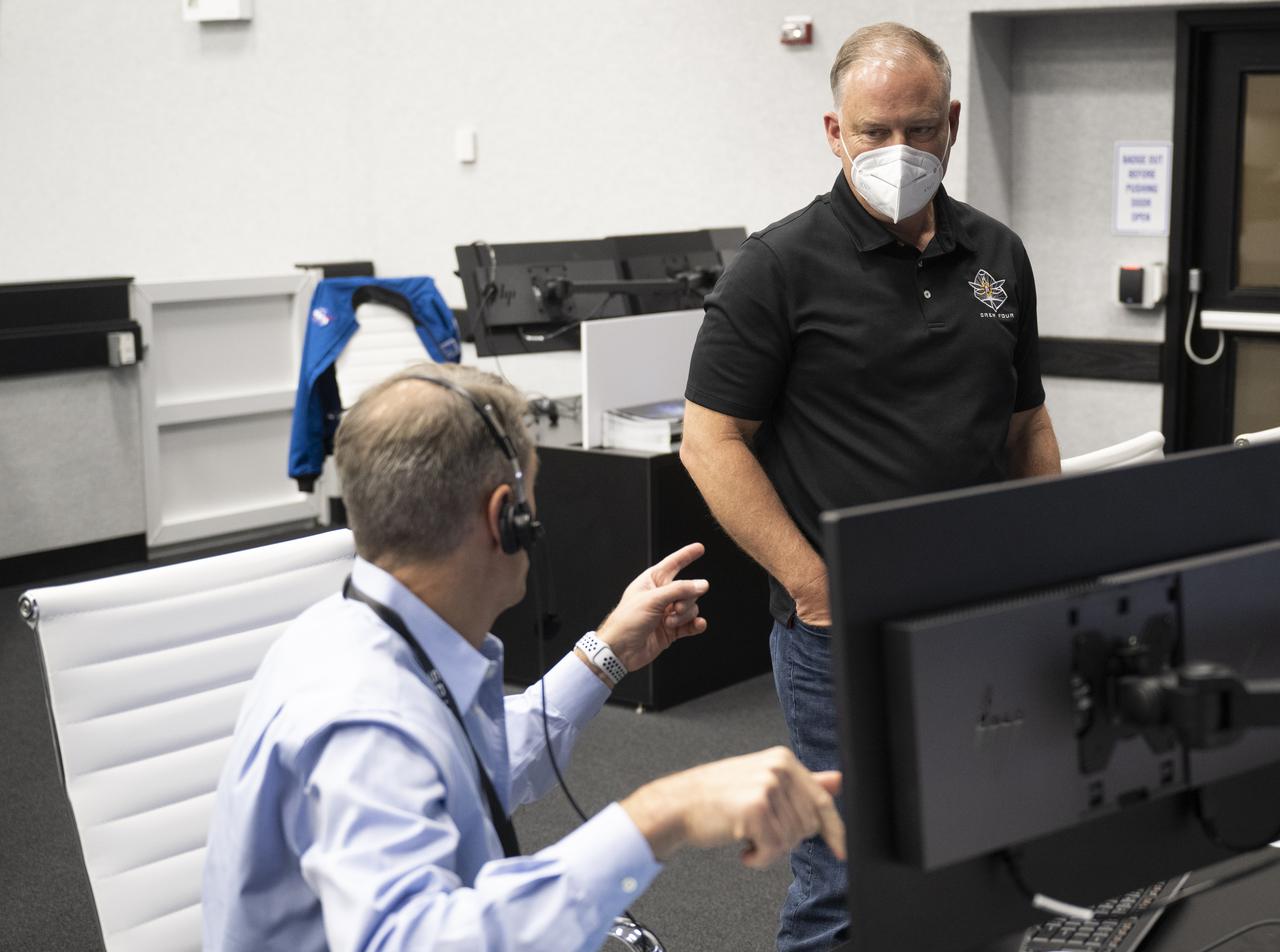
Norm Knight, director of Flight Operations at NASA's Johnson Space Center, right, and Zeb Scoville, NASA's chief flight director, left are seen during a dress rehearsal in preparation for the launch of a SpaceX Falcon 9 rocket carrying the company's Crew Dragon spacecraft on NASA’s SpaceX Crew-4 mission with NASA astronauts Kjell Lindgren, Robert Hines, Jessica Watkins, and ESA (European Space Agency) astronaut Samantha Cristoforetti onboard, Wednesday, April 20, 2022, in firing room four of the Rocco A. Petrone Launch Control Center at NASA’s Kennedy Space Center in Florida. NASA’s SpaceX Crew-4 mission is the fourth crew rotation mission of the SpaceX Crew Dragon spacecraft and Falcon 9 rocket to the International Space Station as part of the agency’s Commercial Crew Program. Lindgren, Hines, Watkins, and Cristoforetti are scheduled to launch on April 23 at 5:26 a.m. EDT, from Launch Complex 39A at the Kennedy Space Center. Photo Credit: (NASA/Joel Kowsky)