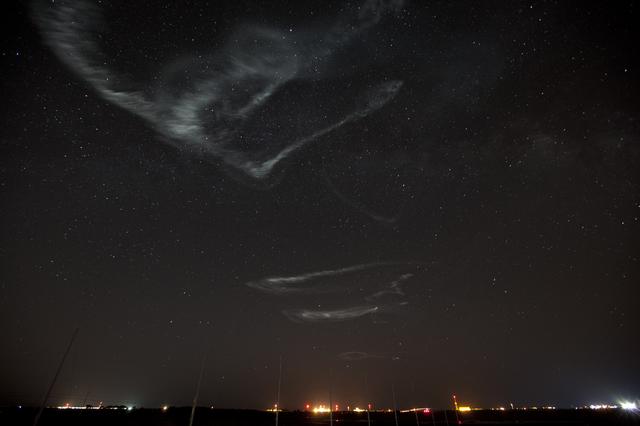
NASA image captured March 27, 2012 NASA successfully launched five suborbital sounding rockets this morning from its Wallops Flight Facility in Virginia as part of a study of the upper level jet stream. The first rocket was launched at 4:58 a.m. EDT and each subsequent rocket was launched 80 seconds apart. Each rocket released a chemical tracer that created milky, white clouds at the edge of space. Tracking the way the clouds move can help scientists understand the movement of the winds some 65 miles up in the sky, which in turn will help create better models of the electromagnetic regions of space that can damage man-made satellites and disrupt communications systems. The launches and clouds were reported to be seen from as far south as Wilmington, N.C.; west to Charlestown, W. Va.; and north to Buffalo, N.Y. Credit: NASA/Wallops <b>To watch a video of the launch and to read more go to: <a href="http://www.nasa.gov/mission_pages/sunearth/missions/atrex-launches.html" rel="nofollow">www.nasa.gov/mission_pages/sunearth/missions/atrex-launch...</a> </b> <b><a href="http://www.nasa.gov/audience/formedia/features/MP_Photo_Guidelines.html" rel="nofollow">NASA image use policy.</a></b> <b><a href="http://www.nasa.gov/centers/goddard/home/index.html" rel="nofollow">NASA Goddard Space Flight Center</a></b> enables NASA’s mission through four scientific endeavors: Earth Science, Heliophysics, Solar System Exploration, and Astrophysics. Goddard plays a leading role in NASA’s accomplishments by contributing compelling scientific knowledge to advance the Agency’s mission. <b>Follow us on <a href="http://twitter.com/NASA_GoddardPix" rel="nofollow">Twitter</a></b> <b>Like us on <a href="http://www.facebook.com/pages/Greenbelt-MD/NASA-Goddard/395013845897?ref=tsd" rel="nofollow">Facebook</a></b> <b>Find us on <a href="http://instagrid.me/nasagoddard/?vm=grid" rel="nofollow">Instagram</a></b>
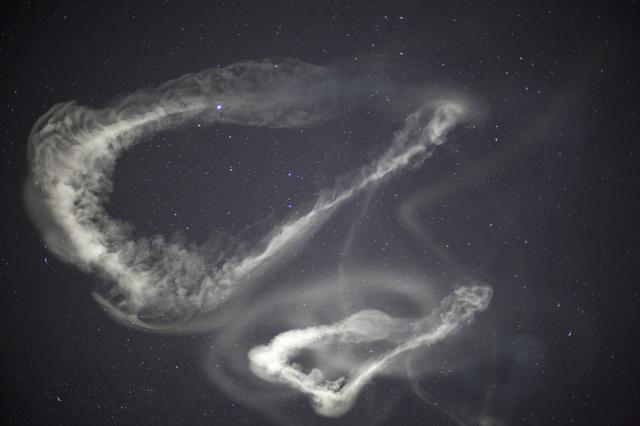
NASA image captured March 27, 2012 NASA successfully launched five suborbital sounding rockets this morning from its Wallops Flight Facility in Virginia as part of a study of the upper level jet stream. The first rocket was launched at 4:58 a.m. EDT and each subsequent rocket was launched 80 seconds apart. Each rocket released a chemical tracer that created milky, white clouds at the edge of space. Tracking the way the clouds move can help scientists understand the movement of the winds some 65 miles up in the sky, which in turn will help create better models of the electromagnetic regions of space that can damage man-made satellites and disrupt communications systems. The launches and clouds were reported to be seen from as far south as Wilmington, N.C.; west to Charlestown, W. Va.; and north to Buffalo, N.Y. Credit: NASA/Wallops <b>To watch a video of the launch and to read more go to: <a href="http://www.nasa.gov/mission_pages/sunearth/missions/atrex-launches.html" rel="nofollow">www.nasa.gov/mission_pages/sunearth/missions/atrex-launch...</a> </b> <b><a href="http://www.nasa.gov/audience/formedia/features/MP_Photo_Guidelines.html" rel="nofollow">NASA image use policy.</a></b> <b><a href="http://www.nasa.gov/centers/goddard/home/index.html" rel="nofollow">NASA Goddard Space Flight Center</a></b> enables NASA’s mission through four scientific endeavors: Earth Science, Heliophysics, Solar System Exploration, and Astrophysics. Goddard plays a leading role in NASA’s accomplishments by contributing compelling scientific knowledge to advance the Agency’s mission. <b>Follow us on <a href="http://twitter.com/NASA_GoddardPix" rel="nofollow">Twitter</a></b> <b>Like us on <a href="http://www.facebook.com/pages/Greenbelt-MD/NASA-Goddard/395013845897?ref=tsd" rel="nofollow">Facebook</a></b> <b>Find us on <a href="http://instagrid.me/nasagoddard/?vm=grid" rel="nofollow">Instagram</a></b>
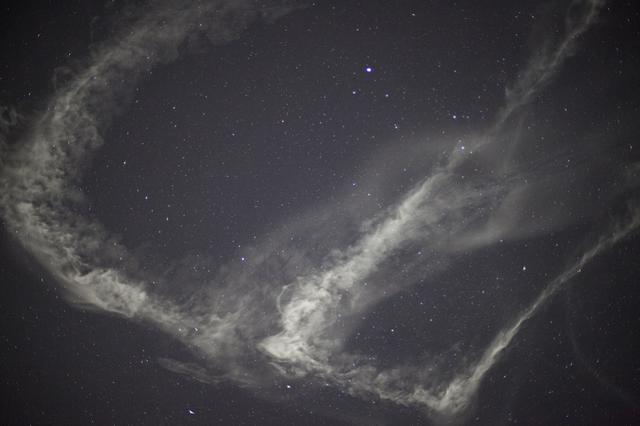
NASA image captured March 27, 2012 NASA successfully launched five suborbital sounding rockets this morning from its Wallops Flight Facility in Virginia as part of a study of the upper level jet stream. The first rocket was launched at 4:58 a.m. EDT and each subsequent rocket was launched 80 seconds apart. Each rocket released a chemical tracer that created milky, white clouds at the edge of space. Tracking the way the clouds move can help scientists understand the movement of the winds some 65 miles up in the sky, which in turn will help create better models of the electromagnetic regions of space that can damage man-made satellites and disrupt communications systems. The launches and clouds were reported to be seen from as far south as Wilmington, N.C.; west to Charlestown, W. Va.; and north to Buffalo, N.Y. Credit: NASA/Wallops <b>To watch a video of the launch and to read more go to: <a href="http://www.nasa.gov/mission_pages/sunearth/missions/atrex-launches.html" rel="nofollow">www.nasa.gov/mission_pages/sunearth/missions/atrex-launch...</a> </b> <b><a href="http://www.nasa.gov/audience/formedia/features/MP_Photo_Guidelines.html" rel="nofollow">NASA image use policy.</a></b> <b><a href="http://www.nasa.gov/centers/goddard/home/index.html" rel="nofollow">NASA Goddard Space Flight Center</a></b> enables NASA’s mission through four scientific endeavors: Earth Science, Heliophysics, Solar System Exploration, and Astrophysics. Goddard plays a leading role in NASA’s accomplishments by contributing compelling scientific knowledge to advance the Agency’s mission. <b>Follow us on <a href="http://twitter.com/NASA_GoddardPix" rel="nofollow">Twitter</a></b> <b>Like us on <a href="http://www.facebook.com/pages/Greenbelt-MD/NASA-Goddard/395013845897?ref=tsd" rel="nofollow">Facebook</a></b> <b>Find us on <a href="http://instagrid.me/nasagoddard/?vm=grid" rel="nofollow">Instagram</a></b>
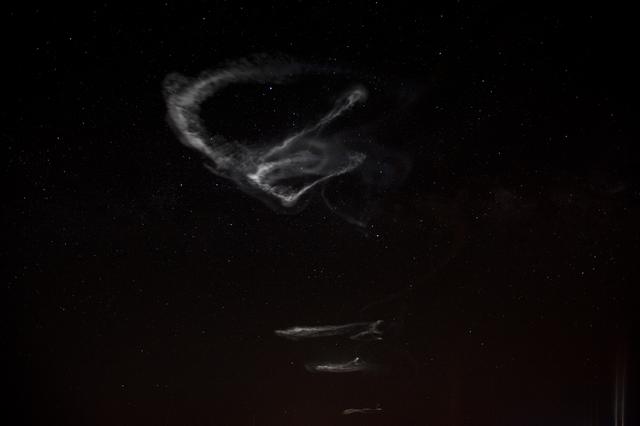
NASA image captured March 27, 2012 NASA successfully launched five suborbital sounding rockets this morning from its Wallops Flight Facility in Virginia as part of a study of the upper level jet stream. The first rocket was launched at 4:58 a.m. EDT and each subsequent rocket was launched 80 seconds apart. Each rocket released a chemical tracer that created milky, white clouds at the edge of space. Tracking the way the clouds move can help scientists understand the movement of the winds some 65 miles up in the sky, which in turn will help create better models of the electromagnetic regions of space that can damage man-made satellites and disrupt communications systems. The launches and clouds were reported to be seen from as far south as Wilmington, N.C.; west to Charlestown, W. Va.; and north to Buffalo, N.Y. Credit: NASA/Wallops <b>To watch a video of the launch and to read more go to: <a href="http://www.nasa.gov/mission_pages/sunearth/missions/atrex-launches.html" rel="nofollow">www.nasa.gov/mission_pages/sunearth/missions/atrex-launch...</a> </b> <b><a href="http://www.nasa.gov/audience/formedia/features/MP_Photo_Guidelines.html" rel="nofollow">NASA image use policy.</a></b> <b><a href="http://www.nasa.gov/centers/goddard/home/index.html" rel="nofollow">NASA Goddard Space Flight Center</a></b> enables NASA’s mission through four scientific endeavors: Earth Science, Heliophysics, Solar System Exploration, and Astrophysics. Goddard plays a leading role in NASA’s accomplishments by contributing compelling scientific knowledge to advance the Agency’s mission. <b>Follow us on <a href="http://twitter.com/NASA_GoddardPix" rel="nofollow">Twitter</a></b> <b>Like us on <a href="http://www.facebook.com/pages/Greenbelt-MD/NASA-Goddard/395013845897?ref=tsd" rel="nofollow">Facebook</a></b> <b>Find us on <a href="http://instagrid.me/nasagoddard/?vm=grid" rel="nofollow">Instagram</a></b>
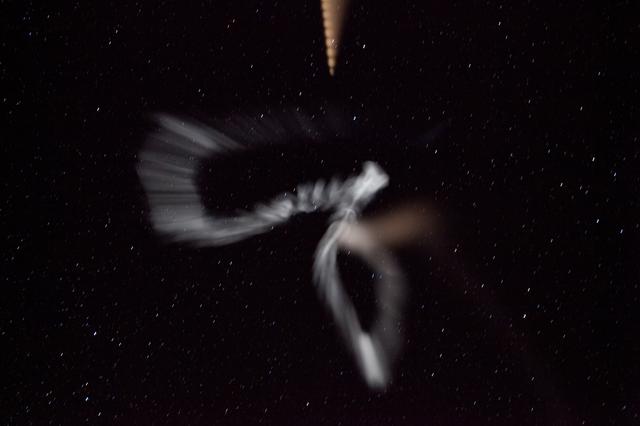
NASA image captured March 27, 2012 NASA successfully launched five suborbital sounding rockets this morning from its Wallops Flight Facility in Virginia as part of a study of the upper level jet stream. The first rocket was launched at 4:58 a.m. EDT and each subsequent rocket was launched 80 seconds apart. Each rocket released a chemical tracer that created milky, white clouds at the edge of space. Tracking the way the clouds move can help scientists understand the movement of the winds some 65 miles up in the sky, which in turn will help create better models of the electromagnetic regions of space that can damage man-made satellites and disrupt communications systems. The launches and clouds were reported to be seen from as far south as Wilmington, N.C.; west to Charlestown, W. Va.; and north to Buffalo, N.Y. Credit: NASA/Wallops <b>To watch a video of the launch and to read more go to: <a href="http://www.nasa.gov/mission_pages/sunearth/missions/atrex-launches.html" rel="nofollow">www.nasa.gov/mission_pages/sunearth/missions/atrex-launch...</a> </b> <b><a href="http://www.nasa.gov/audience/formedia/features/MP_Photo_Guidelines.html" rel="nofollow">NASA image use policy.</a></b> <b><a href="http://www.nasa.gov/centers/goddard/home/index.html" rel="nofollow">NASA Goddard Space Flight Center</a></b> enables NASA’s mission through four scientific endeavors: Earth Science, Heliophysics, Solar System Exploration, and Astrophysics. Goddard plays a leading role in NASA’s accomplishments by contributing compelling scientific knowledge to advance the Agency’s mission. <b>Follow us on <a href="http://twitter.com/NASA_GoddardPix" rel="nofollow">Twitter</a></b> <b>Like us on <a href="http://www.facebook.com/pages/Greenbelt-MD/NASA-Goddard/395013845897?ref=tsd" rel="nofollow">Facebook</a></b> <b>Find us on <a href="http://instagrid.me/nasagoddard/?vm=grid" rel="nofollow">Instagram</a></b>
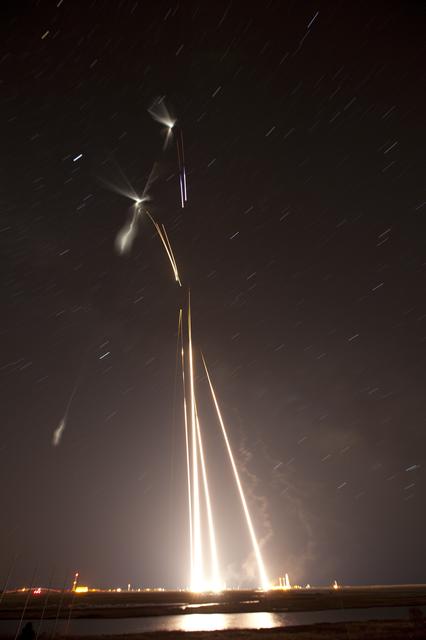
NASA image captured March 27, 2012 NASA successfully launched five suborbital sounding rockets this morning from its Wallops Flight Facility in Virginia as part of a study of the upper level jet stream. The first rocket was launched at 4:58 a.m. EDT and each subsequent rocket was launched 80 seconds apart. Each rocket released a chemical tracer that created milky, white clouds at the edge of space. Tracking the way the clouds move can help scientists understand the movement of the winds some 65 miles up in the sky, which in turn will help create better models of the electromagnetic regions of space that can damage man-made satellites and disrupt communications systems. The launches and clouds were reported to be seen from as far south as Wilmington, N.C.; west to Charlestown, W. Va.; and north to Buffalo, N.Y. Credit: NASA/Wallops <b>To watch a video of the launch and to read more go to: <a href="http://www.nasa.gov/mission_pages/sunearth/missions/atrex-launches.html" rel="nofollow">www.nasa.gov/mission_pages/sunearth/missions/atrex-launch...</a> </b> <b><a href="http://www.nasa.gov/audience/formedia/features/MP_Photo_Guidelines.html" rel="nofollow">NASA image use policy.</a></b> <b><a href="http://www.nasa.gov/centers/goddard/home/index.html" rel="nofollow">NASA Goddard Space Flight Center</a></b> enables NASA’s mission through four scientific endeavors: Earth Science, Heliophysics, Solar System Exploration, and Astrophysics. Goddard plays a leading role in NASA’s accomplishments by contributing compelling scientific knowledge to advance the Agency’s mission. <b>Follow us on <a href="http://twitter.com/NASA_GoddardPix" rel="nofollow">Twitter</a></b> <b>Like us on <a href="http://www.facebook.com/pages/Greenbelt-MD/NASA-Goddard/395013845897?ref=tsd" rel="nofollow">Facebook</a></b> <b>Find us on <a href="http://instagrid.me/nasagoddard/?vm=grid" rel="nofollow">Instagram</a></b>
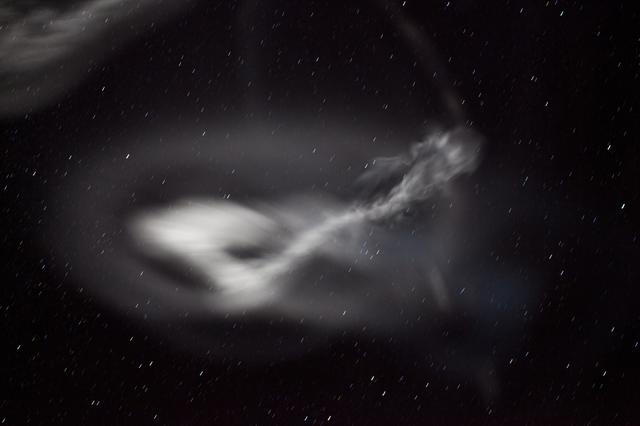
NASA image captured March 27, 2012 NASA successfully launched five suborbital sounding rockets this morning from its Wallops Flight Facility in Virginia as part of a study of the upper level jet stream. The first rocket was launched at 4:58 a.m. EDT and each subsequent rocket was launched 80 seconds apart. Each rocket released a chemical tracer that created milky, white clouds at the edge of space. Tracking the way the clouds move can help scientists understand the movement of the winds some 65 miles up in the sky, which in turn will help create better models of the electromagnetic regions of space that can damage man-made satellites and disrupt communications systems. The launches and clouds were reported to be seen from as far south as Wilmington, N.C.; west to Charlestown, W. Va.; and north to Buffalo, N.Y. Credit: NASA/Wallops <b>To watch a video of the launch and to read more go to: <a href="http://www.nasa.gov/mission_pages/sunearth/missions/atrex-launches.html" rel="nofollow">www.nasa.gov/mission_pages/sunearth/missions/atrex-launch...</a> </b> <b><a href="http://www.nasa.gov/audience/formedia/features/MP_Photo_Guidelines.html" rel="nofollow">NASA image use policy.</a></b> <b><a href="http://www.nasa.gov/centers/goddard/home/index.html" rel="nofollow">NASA Goddard Space Flight Center</a></b> enables NASA’s mission through four scientific endeavors: Earth Science, Heliophysics, Solar System Exploration, and Astrophysics. Goddard plays a leading role in NASA’s accomplishments by contributing compelling scientific knowledge to advance the Agency’s mission. <b>Follow us on <a href="http://twitter.com/NASA_GoddardPix" rel="nofollow">Twitter</a></b> <b>Like us on <a href="http://www.facebook.com/pages/Greenbelt-MD/NASA-Goddard/395013845897?ref=tsd" rel="nofollow">Facebook</a></b> <b>Find us on <a href="http://instagrid.me/nasagoddard/?vm=grid" rel="nofollow">Instagram</a></b>
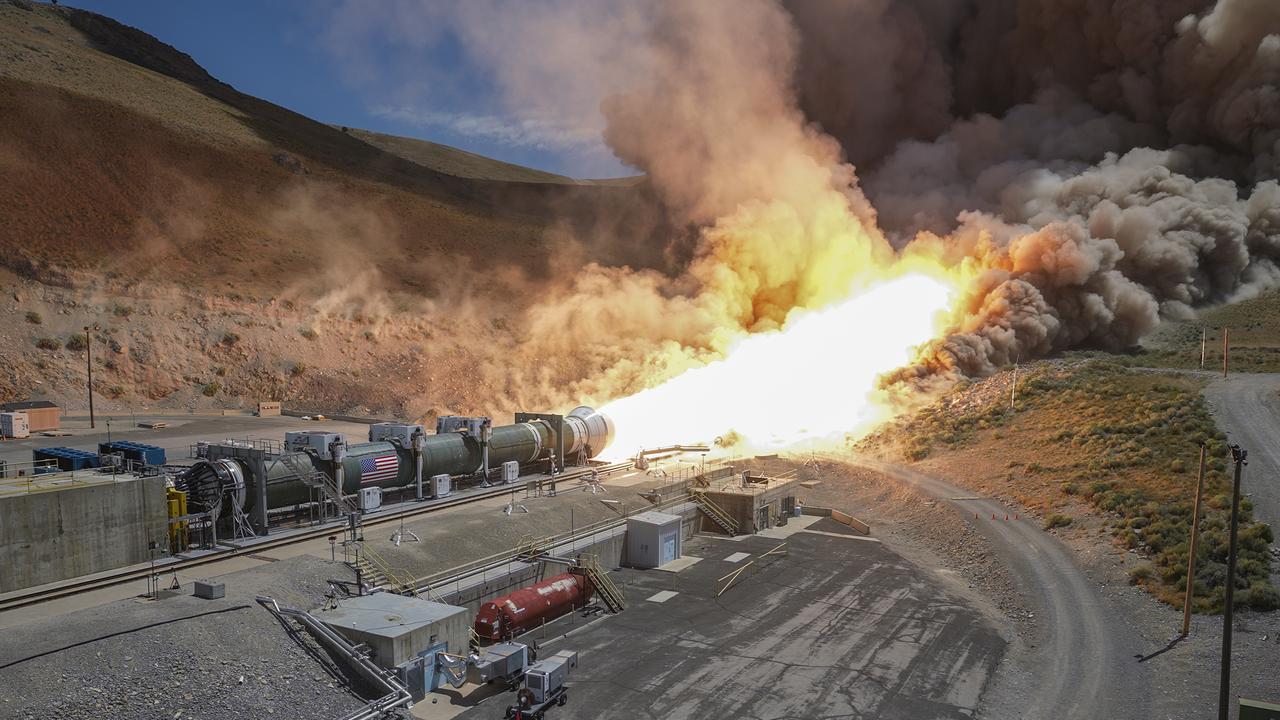
Teams from NASA and Northrop Grumman fire a ground-based version of a booster for the agency’s SLS (Space Launch System) rocket June 26. Secured horizontally in a test stand at Northrop Grumman’s test facility in Promontory, Utah, the single five-segment booster motor fired for more than two minutes and produced 3.9 million pounds of thrust. The booster for this test, known as Demonstration Motor-1 (DM-1), is the result of the Booster Obsolescence Life Extension (BOLE) project. This test was the first full-scale ground test of a new five-segment solid rocket motor. Teams from NASA and Northrop Grumman fire a ground-based version of a booster for the agency’s SLS (Space Launch System) rocket June 26. Secured horizontally in a test stand at Northrop Grumman’s test facility in Promontory, Utah, the single five-segment booster motor fired for more than two minutes and produced 3.9 million pounds of thrust. The booster for this test, known as Demonstration Motor-1 (DM-1), is the result of the Booster Obsolescence Life Extension (BOLE) project. This test was the first full-scale ground test of a new five-segment solid rocket motor. During the test, there was an abnormal event approximately 15 seconds before the end of the motor firing. Despite this event, NASA achieved several of the test’s primary objectives and received valuable data on technical risks identified ahead of the test. Testing this evolved booster for the SLS will help evaluate improvements and new materials in the boosters. The BOLE effort was launched to transition to a more efficient, lower cost commercial solution for the boosters for the SLS rocket. Through the Artemis campaign, NASA will send astronauts to explore the Moon for scientific discovery, economic benefits, and to build the foundation for the first crewed missions to Mars – for the benefit of all. For more information, contact NASA Marshall’s Office of Communications at 256-544-0034.
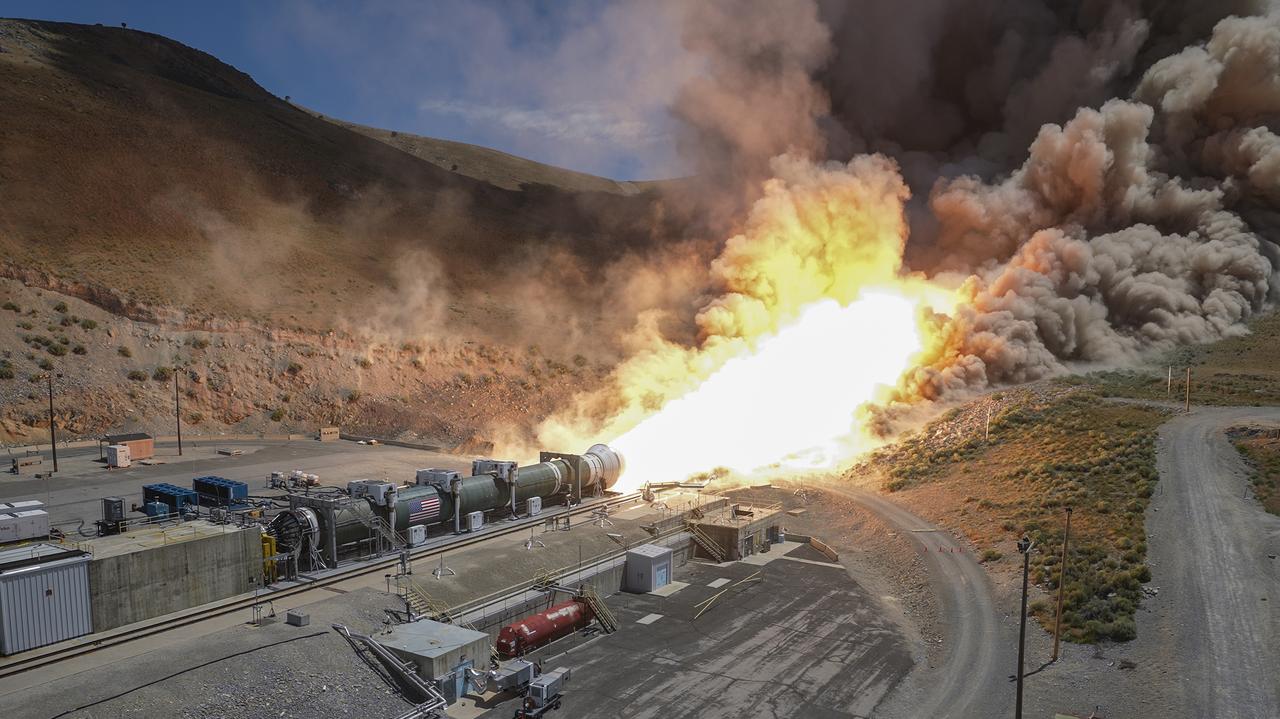
Teams from NASA and Northrop Grumman fire a ground-based version of a booster for the agency’s SLS (Space Launch System) rocket June 26. Secured horizontally in a test stand at Northrop Grumman’s test facility in Promontory, Utah, the single five-segment booster motor fired for more than two minutes and produced 3.9 million pounds of thrust. The booster for this test, known as Demonstration Motor-1 (DM-1), is the result of the Booster Obsolescence Life Extension (BOLE) project. This test was the first full-scale ground test of a new five-segment solid rocket motor. During the test, there was an abnormal event approximately 15 seconds before the end of the motor firing. Despite this event, NASA achieved several of the test’s primary objectives and received valuable data on technical risks identified ahead of the test. Testing this evolved booster for the SLS will help evaluate improvements and new materials in the boosters. The BOLE effort was launched to transition to a more efficient, lower cost commercial solution for the boosters for the SLS rocket. Through the Artemis campaign, NASA will send astronauts to explore the Moon for scientific discovery, economic benefits, and to build the foundation for the first crewed missions to Mars – for the benefit of all. For more information, contact NASA Marshall’s Office of Communications at 256-544-0034.
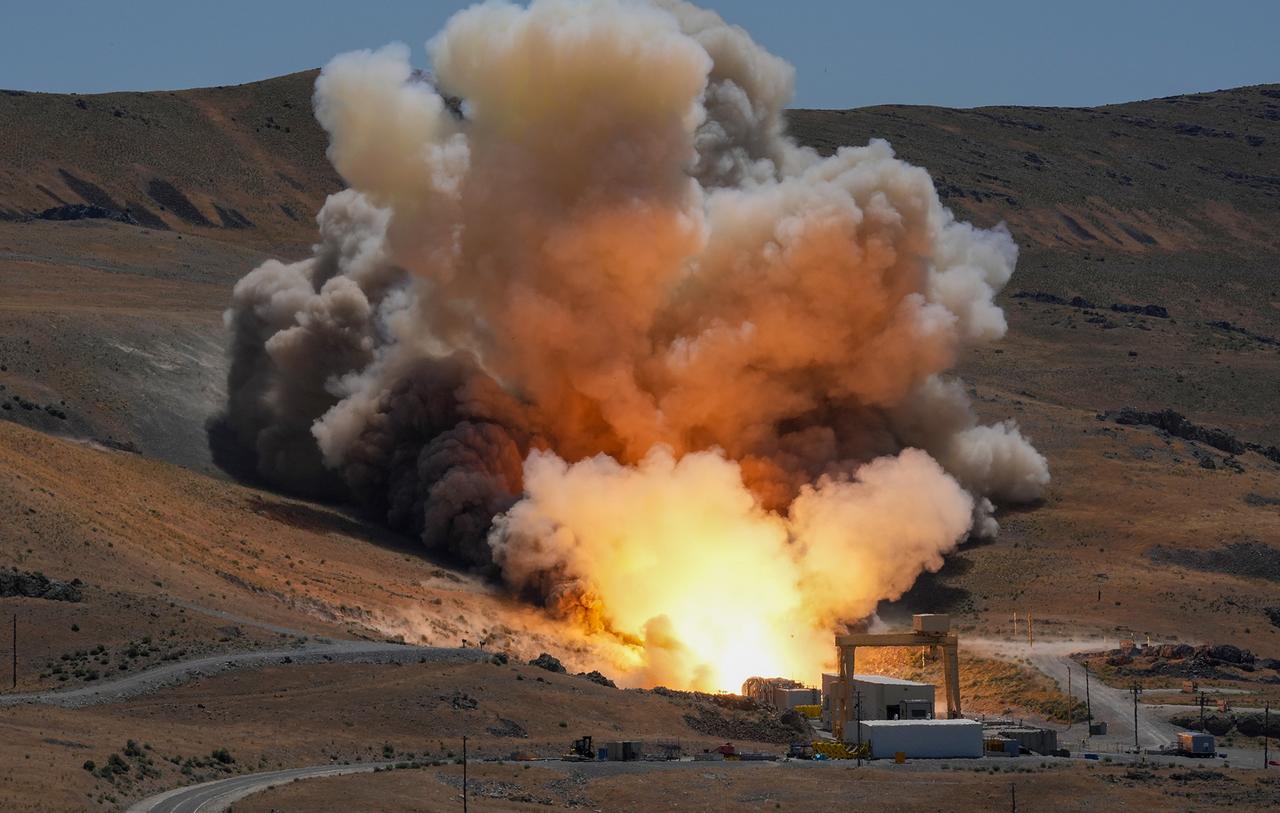
Teams from NASA and Northrop Grumman fire a ground-based version of a booster for the agency’s SLS (Space Launch System) rocket June 26. Secured horizontally in a test stand at Northrop Grumman’s test facility in Promontory, Utah, the single five-segment booster motor fired for more than two minutes and produced 3.9 million pounds of thrust. The booster for this test, known as Demonstration Motor-1 (DM-1), is the result of the Booster Obsolescence Life Extension (BOLE) project. This test was the first full-scale ground test of a new five-segment solid rocket motor. During the test, there was an abnormal event approximately 15 seconds before the end of the motor firing. Despite this event, NASA achieved several of the test’s primary objectives and received valuable data on technical risks identified ahead of the test. Testing this evolved booster for the SLS will help evaluate improvements and new materials in the boosters. The BOLE effort was launched to transition to a more efficient, lower cost commercial solution for the boosters for the SLS rocket. Through the Artemis campaign, NASA will send astronauts to explore the Moon for scientific discovery, economic benefits, and to build the foundation for the first crewed missions to Mars – for the benefit of all. For more information, contact NASA Marshall’s Office of Communications at 256-544-0034.
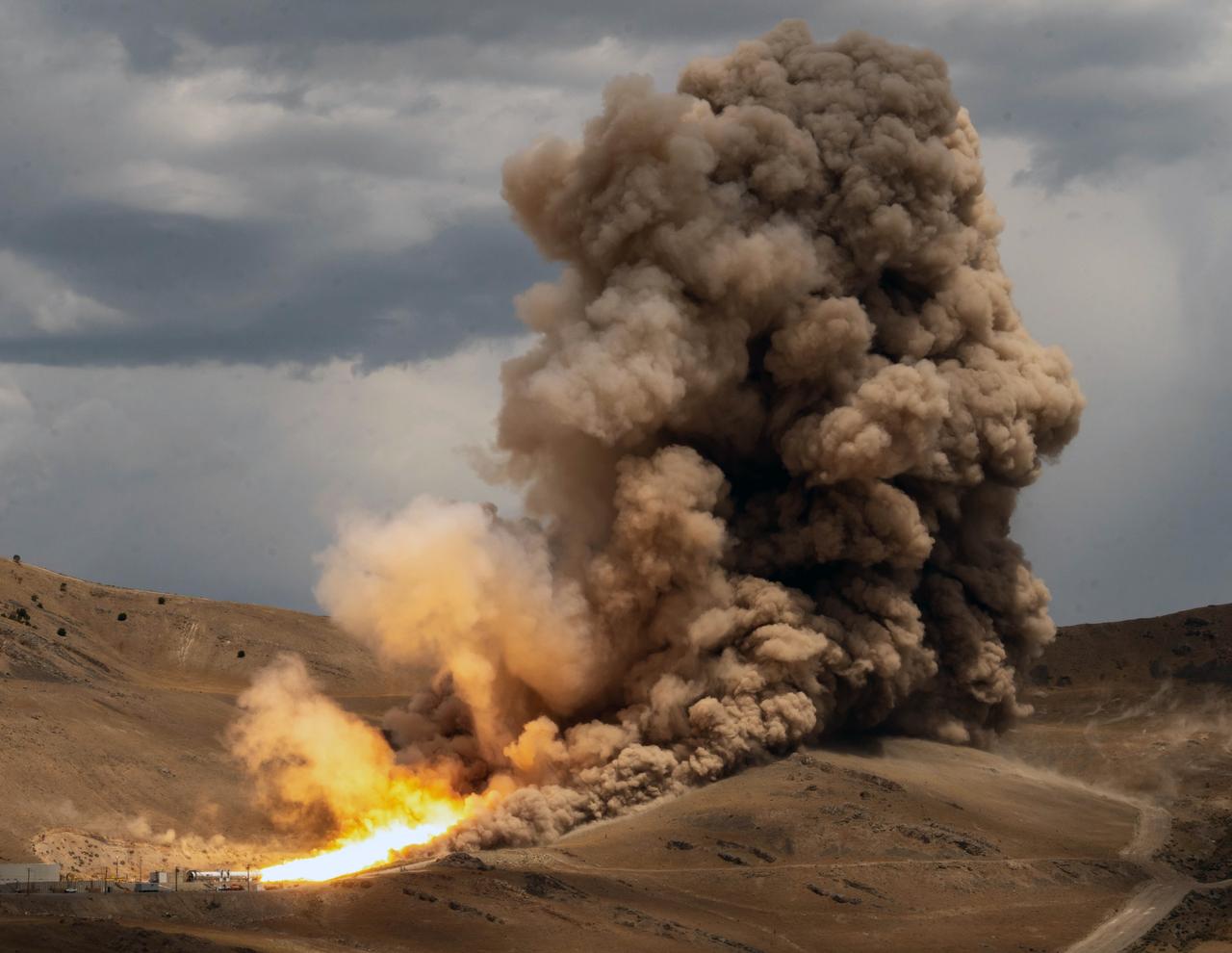
NASA and Northrop Grumman completed a solid rocket booster motor ground test for future flights of the agency’s Space Launch System rocket at Northrop Grumman’s test facility in Promontory, Utah, July 21. The booster motor, called Flight Support Booster-2 (FSB-2), fired for a little over two minutes and produced more than 3.6 million pounds of thrust. Test data will be used to evaluate improvements and new materials in the boosters for missions after Artemis III. When SLS launches the Artemis missions to the Moon, its two five-segment solid rocket boosters produce more than 75% of the initial thrust. The SLS boosters are the largest, most powerful boosters ever built for flight. For more information about SLS, visit nasa.gov/sls
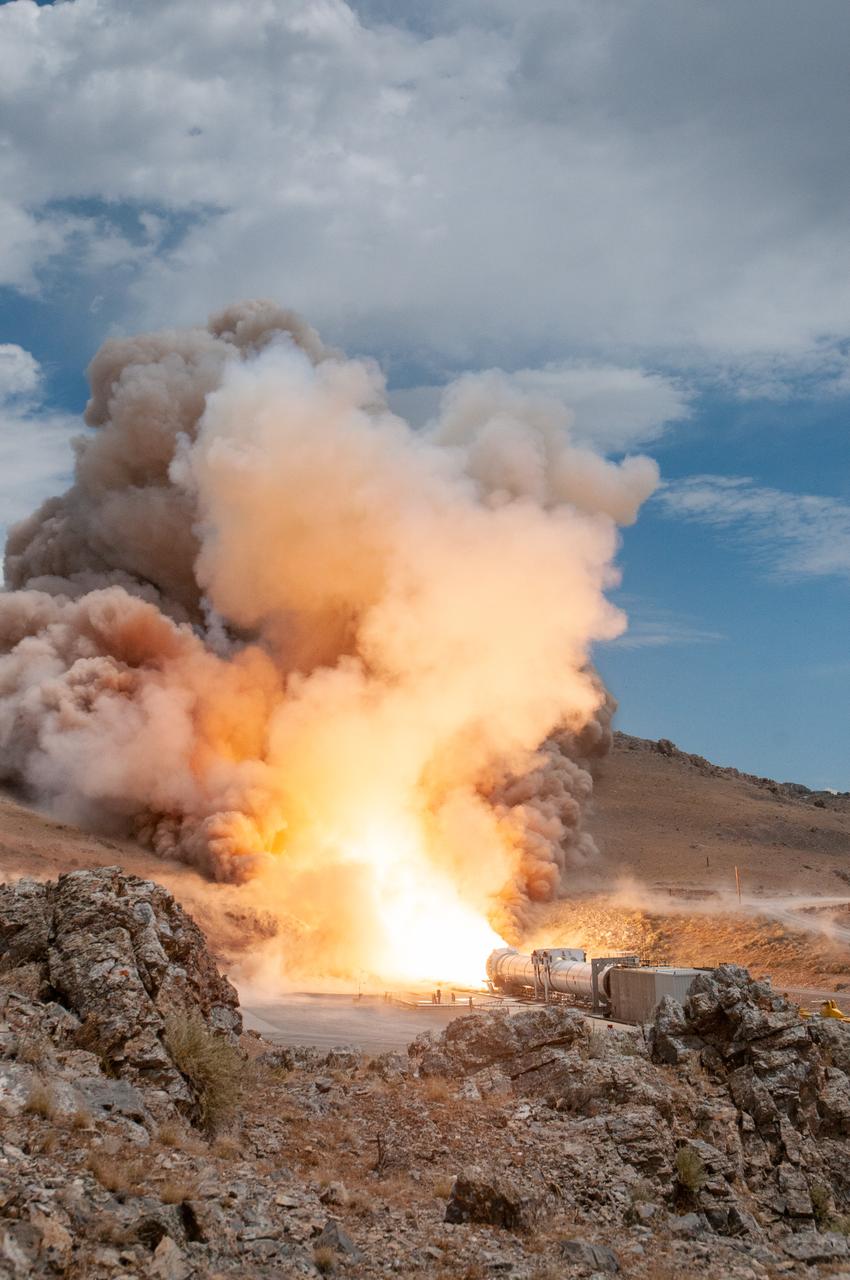
NASA and Northrop Grumman completed a solid rocket booster motor ground test for future flights of the agency’s Space Launch System rocket at Northrop Grumman’s test facility in Promontory, Utah, July 21. The booster motor, called Flight Support Booster-2 (FSB-2), fired for a little over two minutes and produced more than 3.6 million pounds of thrust. Test data will be used to evaluate improvements and new materials in the boosters for missions after Artemis III. When SLS launches the Artemis missions to the Moon, its two five-segment solid rocket boosters produce more than 75% of the initial thrust. The SLS boosters are the largest, most powerful boosters ever built for flight. For more information about SLS, visit nasa.gov/sls
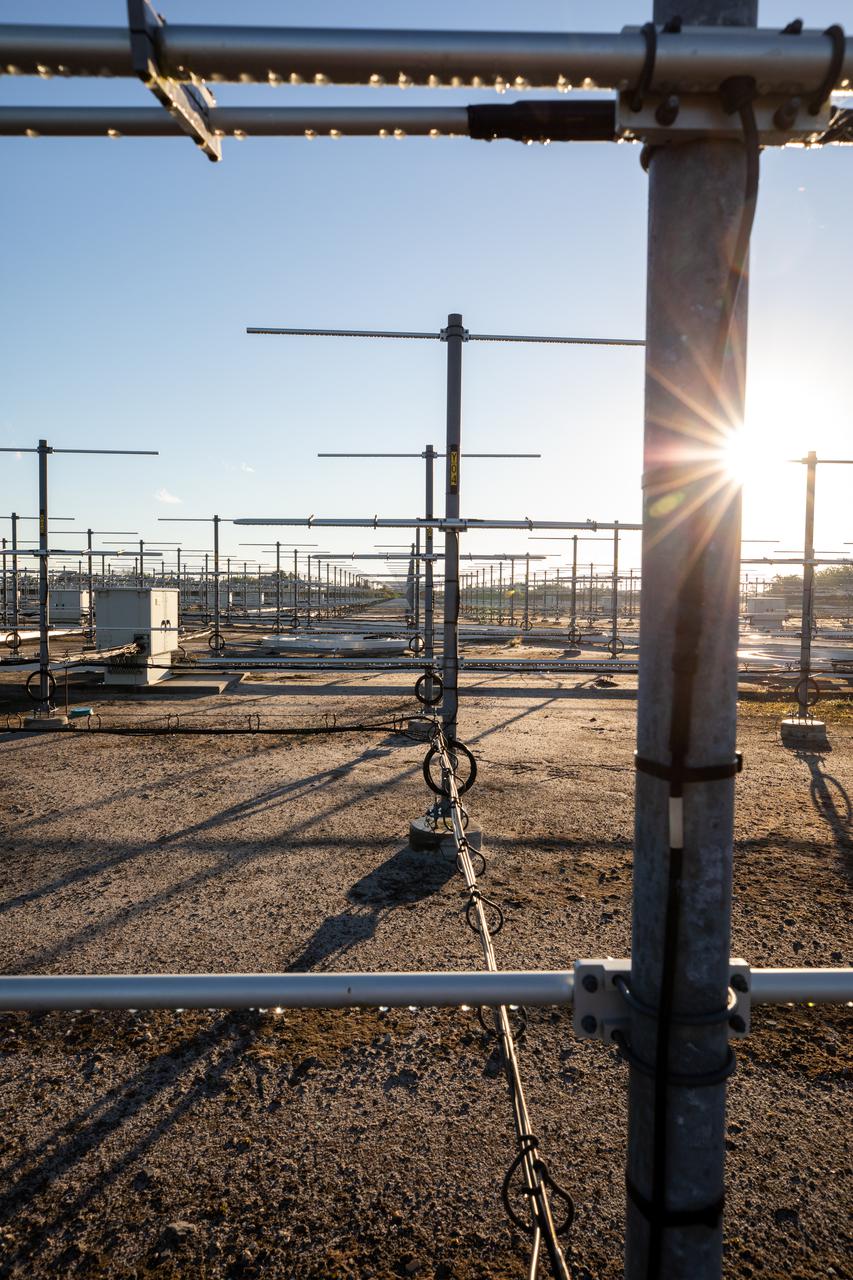
The Tropospheric Doppler Radar Wind Profiler, located on five acres near the Launch and Landing Facility at Kennedy Space Center in Florida, is shown during an Artemis I weather simulation on Nov. 3, 2021. The simulation involved teams from Kennedy, Cape Canaveral Space Force Station, Johnson Space Center in Texas, and Marshall Space Flight Center in Alabama. The radar wind profiler consists of 640 antennae and delivers data – from 6,000 to 62,000 feet – every five minutes. The instrument will be used as the primary upper level wind instrument for NASA’s Artemis missions, including Artemis I, the first launch of the agency’s Space Launch System rocket and the Orion spacecraft on a flight beyond the Moon.
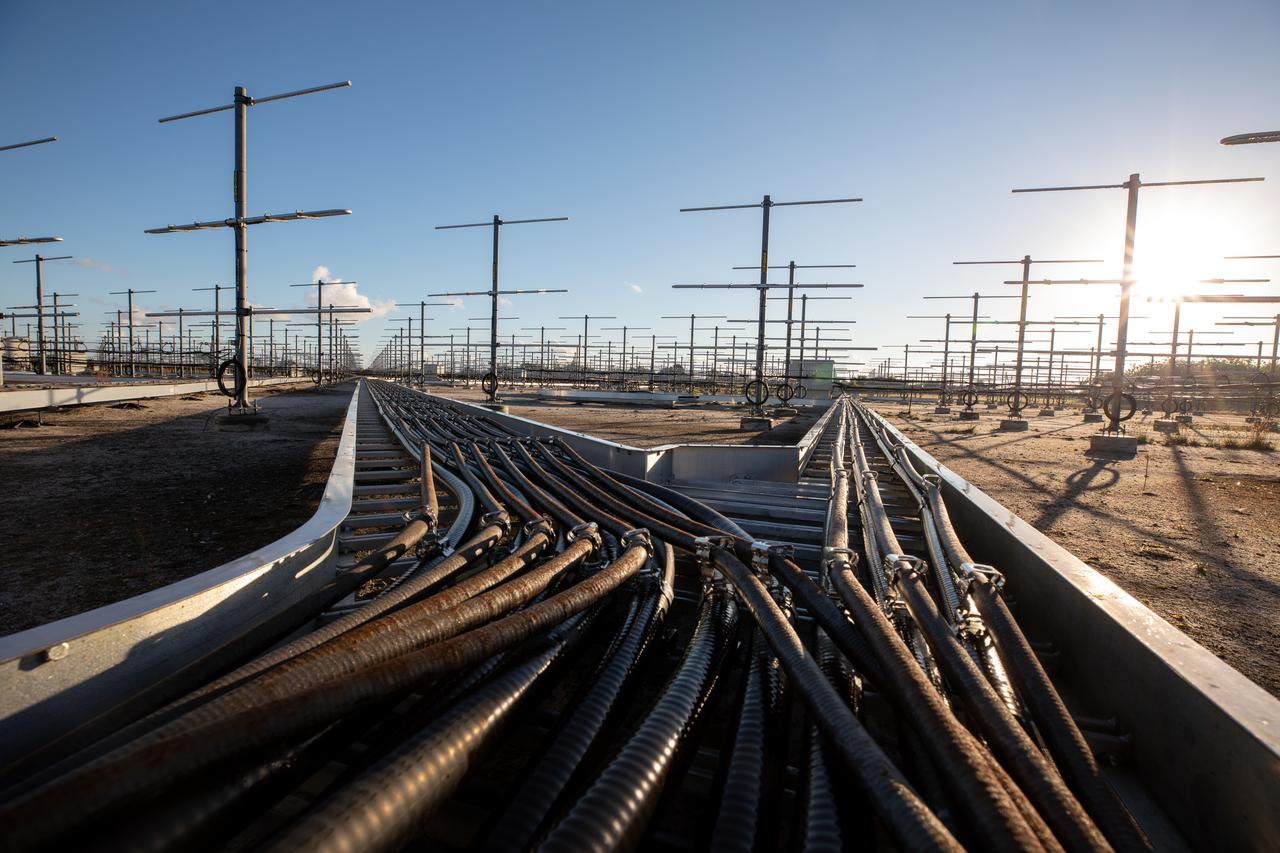
The Tropospheric Doppler Radar Wind Profiler, located on five acres near the Launch and Landing Facility at Kennedy Space Center in Florida, is shown during an Artemis I weather simulation on Nov. 3, 2021. The simulation involved teams from Kennedy, Cape Canaveral Space Force Station, Johnson Space Center in Texas, and Marshall Space Flight Center in Alabama. The radar wind profiler consists of 640 antennae and delivers data – from 6,000 to 62,000 feet – every five minutes. The instrument will be used as the primary upper level wind instrument for NASA’s Artemis missions, including Artemis I, the first launch of the agency’s Space Launch System rocket and the Orion spacecraft on a flight beyond the Moon.
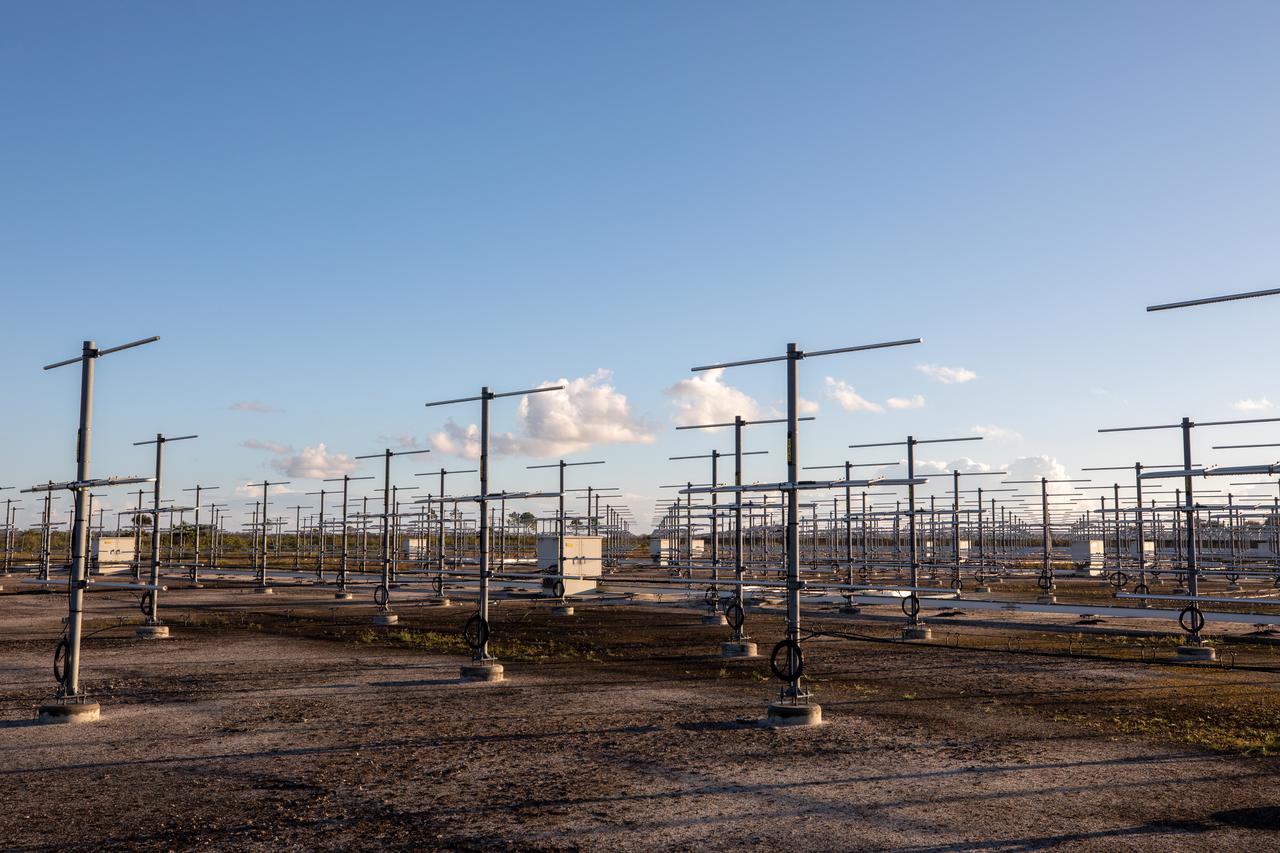
The Tropospheric Doppler Radar Wind Profiler, located on five acres near the Launch and Landing Facility at Kennedy Space Center in Florida, is shown during an Artemis I weather simulation on Nov. 3, 2021. The simulation involved teams from Kennedy, Cape Canaveral Space Force Station, Johnson Space Center in Texas, and Marshall Space Flight Center in Alabama. The radar wind profiler consists of 640 antennae and delivers data – from 6,000 to 62,000 feet – every five minutes. The instrument will be used as the primary upper level wind instrument for NASA’s Artemis missions, including Artemis I, the first launch of the agency’s Space Launch System rocket and the Orion spacecraft on a flight beyond the Moon.
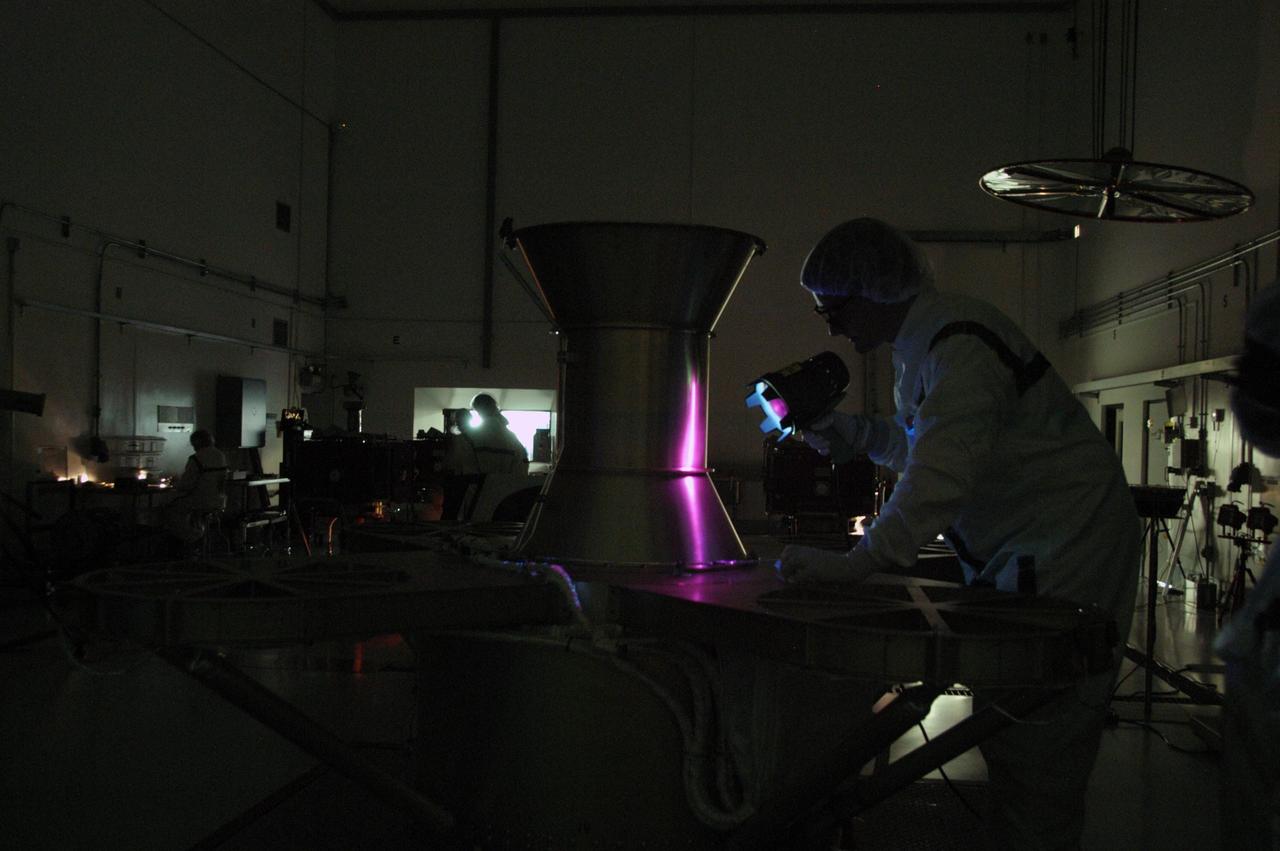
KENNEDY SPACE CENTER, FLA. -- At Astrotech Space Operations, technicians conduct black light inspection of the THEMIS probes. Black light inspection uses UVA fluorescence to detect possible particulate microcontamination, minute cracks or fluid leaks. THEMIS consists of five identical probes, the largest number of scientific satellites ever launched into orbit aboard a single rocket. This unique constellation of satellites will resolve the tantalizing mystery of what causes the spectacular sudden brightening of the aurora borealis and aurora australis - the fiery skies over the Earth's northern and southern polar regions. THEMIS is scheduled to launch Feb. 15 from Cape Canaveral Air Force Station. Photo credit: NASA/George Shelton
Weather Instrumentation Engineer Nick O’Connor works with the Tropospheric Doppler Radar Wind Profiler at Kennedy Space Center in Florida during an Artemis I weather simulation on Nov. 3, 2021. The simulation involved teams from Kennedy, Cape Canaveral Space Force Station, Johnson Space Center in Texas, and Marshall Space Flight Center in Alabama. The radar wind profiler delivers data – from 6,000 to 62,000 feet – every five minutes. It will be used as the primary upper level wind instrument for NASA’s Artemis missions, including Artemis I, the first launch of the agency’s Space Launch System rocket and the Orion spacecraft on a flight beyond the Moon.

KENNEDY SPACE CENTER, FLA. -- At Astrotech Space Operations, technicians conduct black light inspection of the THEMIS probes. Black light inspection uses UVA fluorescence to detect possible particulate microcontamination, minute cracks or fluid leaks. THEMIS consists of five identical probes, the largest number of scientific satellites ever launched into orbit aboard a single rocket. This unique constellation of satellites will resolve the tantalizing mystery of what causes the spectacular sudden brightening of the aurora borealis and aurora australis - the fiery skies over the Earth's northern and southern polar regions. THEMIS is scheduled to launch Feb. 15 from Cape Canaveral Air Force Station. Photo credit: NASA/George Shelton
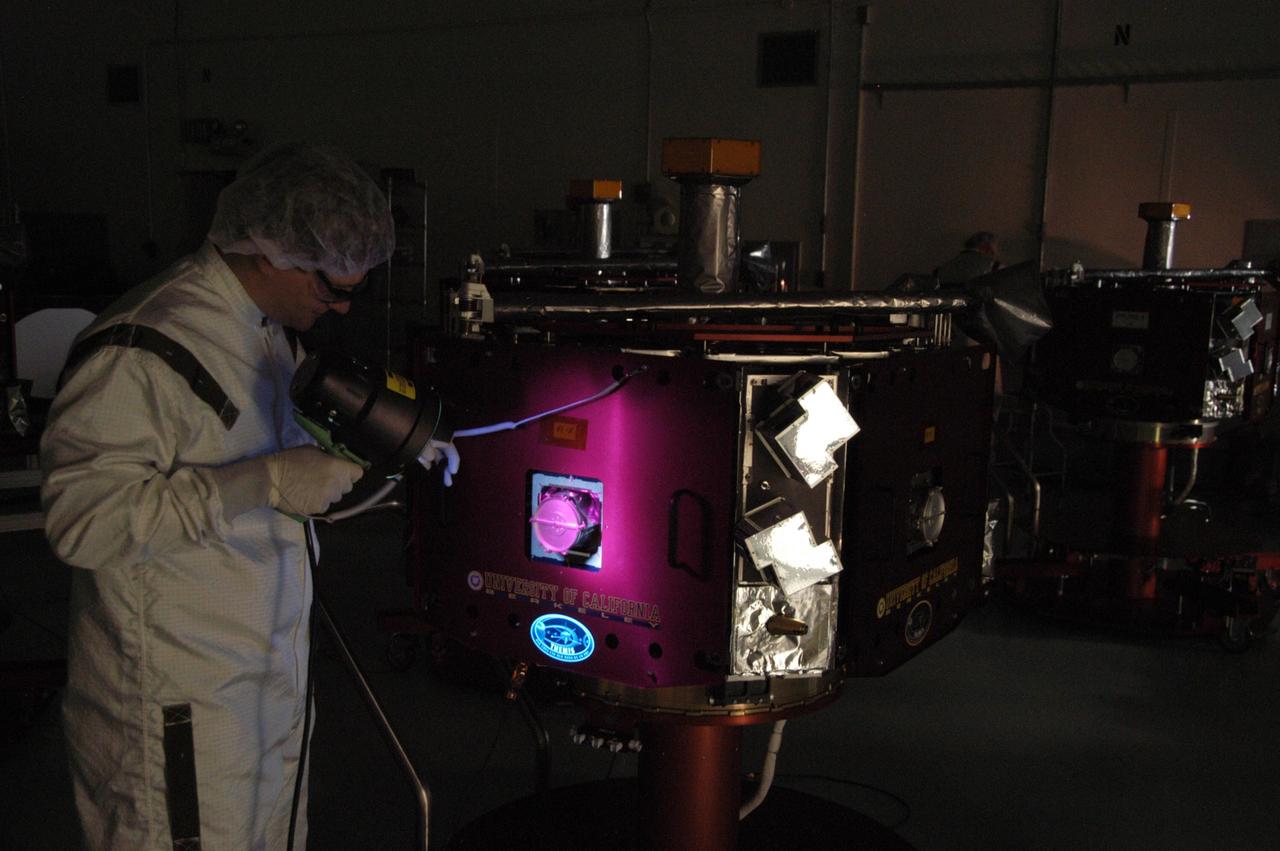
KENNEDY SPACE CENTER, FLA. -- At Astrotech Space Operations, technicians conduct black light inspection of the THEMIS probes. Black light inspection uses UVA fluorescence to detect possible particulate microcontamination, minute cracks or fluid leaks. THEMIS consists of five identical probes, the largest number of scientific satellites ever launched into orbit aboard a single rocket. This unique constellation of satellites will resolve the tantalizing mystery of what causes the spectacular sudden brightening of the aurora borealis and aurora australis - the fiery skies over the Earth's northern and southern polar regions. THEMIS is scheduled to launch Feb. 15 from Cape Canaveral Air Force Station. Photo credit: NASA/George Shelton
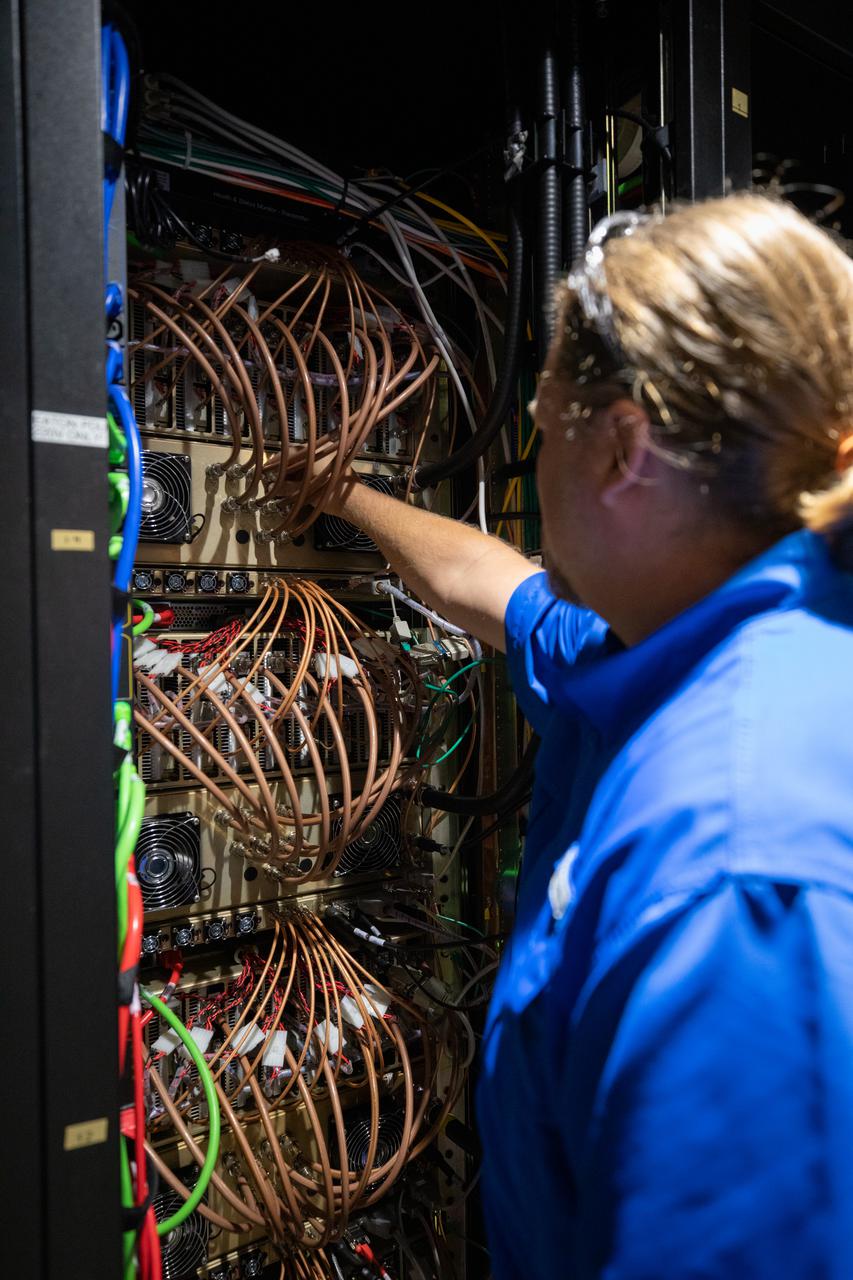
Weather Instrumentation Engineer Nick O’Connor works with the Tropospheric Doppler Radar Wind Profiler at Kennedy Space Center in Florida during an Artemis I weather simulation on Nov. 3, 2021. The simulation involved teams from Kennedy, Cape Canaveral Space Force Station, Johnson Space Center in Texas, and Marshall Space Flight Center in Alabama. The radar wind profiler delivers data – from 6,000 to 62,000 feet – every five minutes. It will be used as the primary upper level wind instrument for NASA’s Artemis missions, including Artemis I, the first launch of the agency’s Space Launch System rocket and the Orion spacecraft on a flight beyond the Moon.
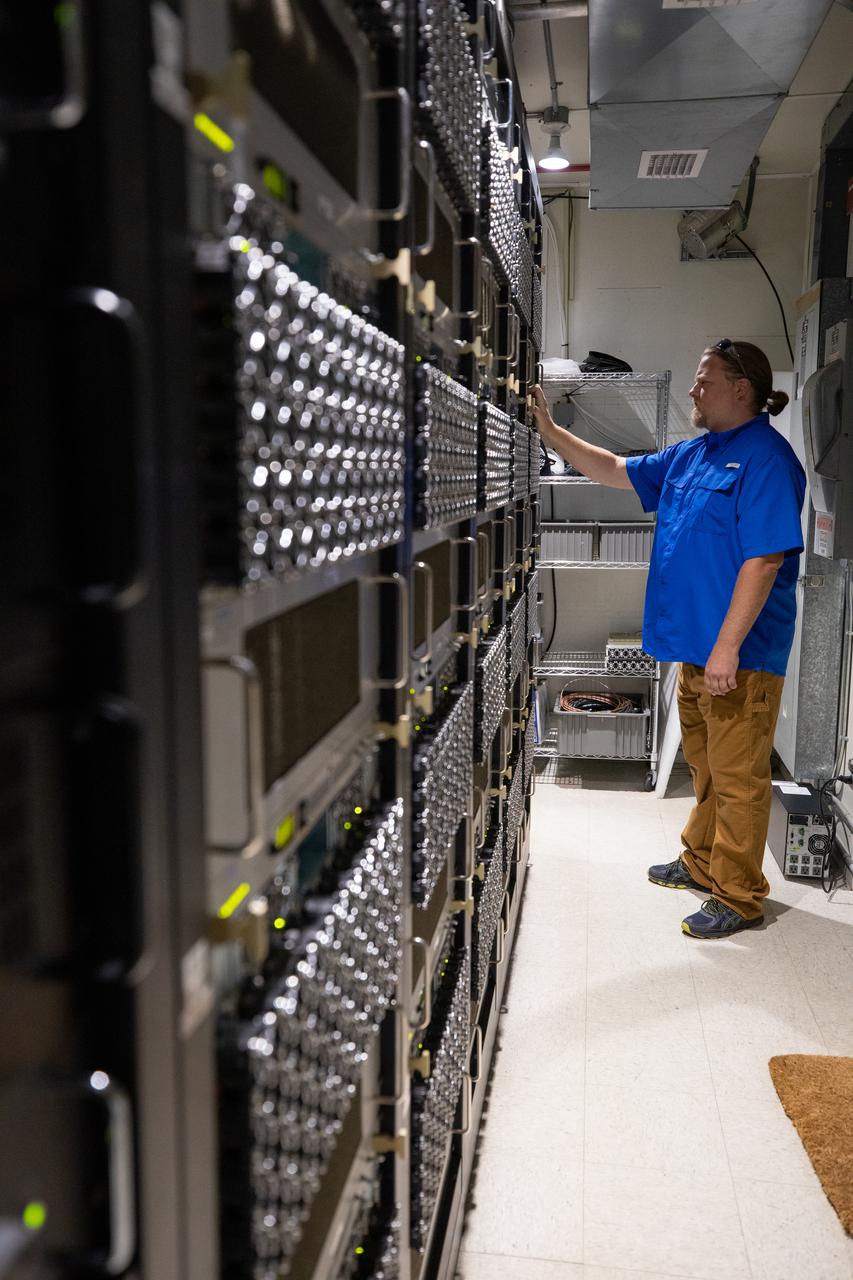
Weather Instrumentation Engineer Nick O’Connor works with the Tropospheric Doppler Radar Wind Profiler at Kennedy Space Center in Florida during an Artemis I weather simulation on Nov. 3, 2021. The simulation involved teams from Kennedy, Cape Canaveral Space Force Station, Johnson Space Center in Texas, and Marshall Space Flight Center in Alabama. The radar wind profiler delivers data – from 6,000 to 62,000 feet – every five minutes. It will be used as the primary upper level wind instrument for NASA’s Artemis missions, including Artemis I, the first launch of the agency’s Space Launch System rocket and the Orion spacecraft on a flight beyond the Moon.
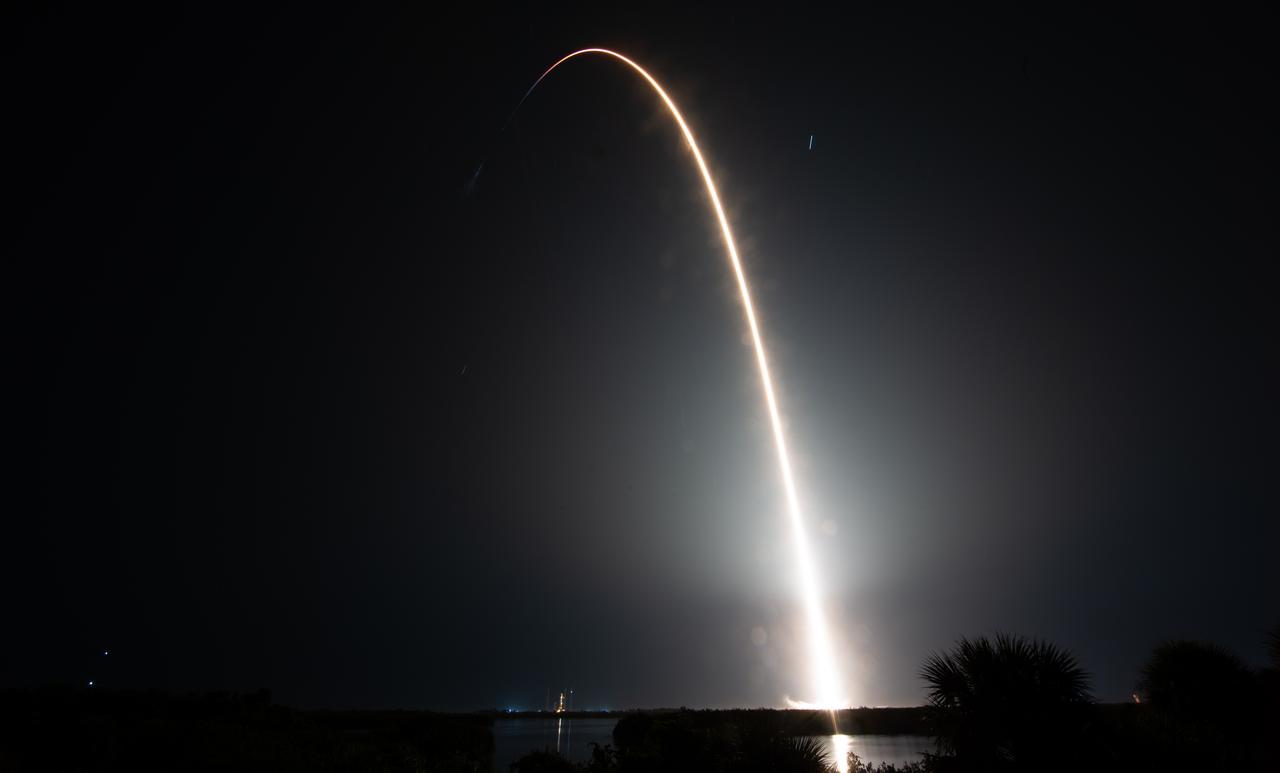
In this five-minute long exposure, a SpaceX Falcon 9 rocket carrying the company's Dragon spacecraft is launched on NASA’s SpaceX Crew-7 mission to the International Space Station with NASA astronaut Jasmin Moghbeli, ESA (European Space Agency) astronaut Andreas Mogensen, Japan Aerospace Exploration Agency (JAXA) astronaut Satoshi Furukawa, and Roscosmos cosmonaut Konstantin Borisov onboard, Saturday, Aug. 26, 2023, at NASA’s Kennedy Space Center in Florida. NASA’s SpaceX Crew-7 mission is the seventh crew rotation mission of the SpaceX Dragon spacecraft and Falcon 9 rocket to the International Space Station as part of the agency’s Commercial Crew Program. Moghbeli, Mogensen, Furukawa, and Borisov launched at 3:27 a.m. EDT from Launch Complex 39A at the Kennedy Space Center to begin a six month mission aboard the orbital outpost. Photo Credit: (NASA/Joel Kowsky)
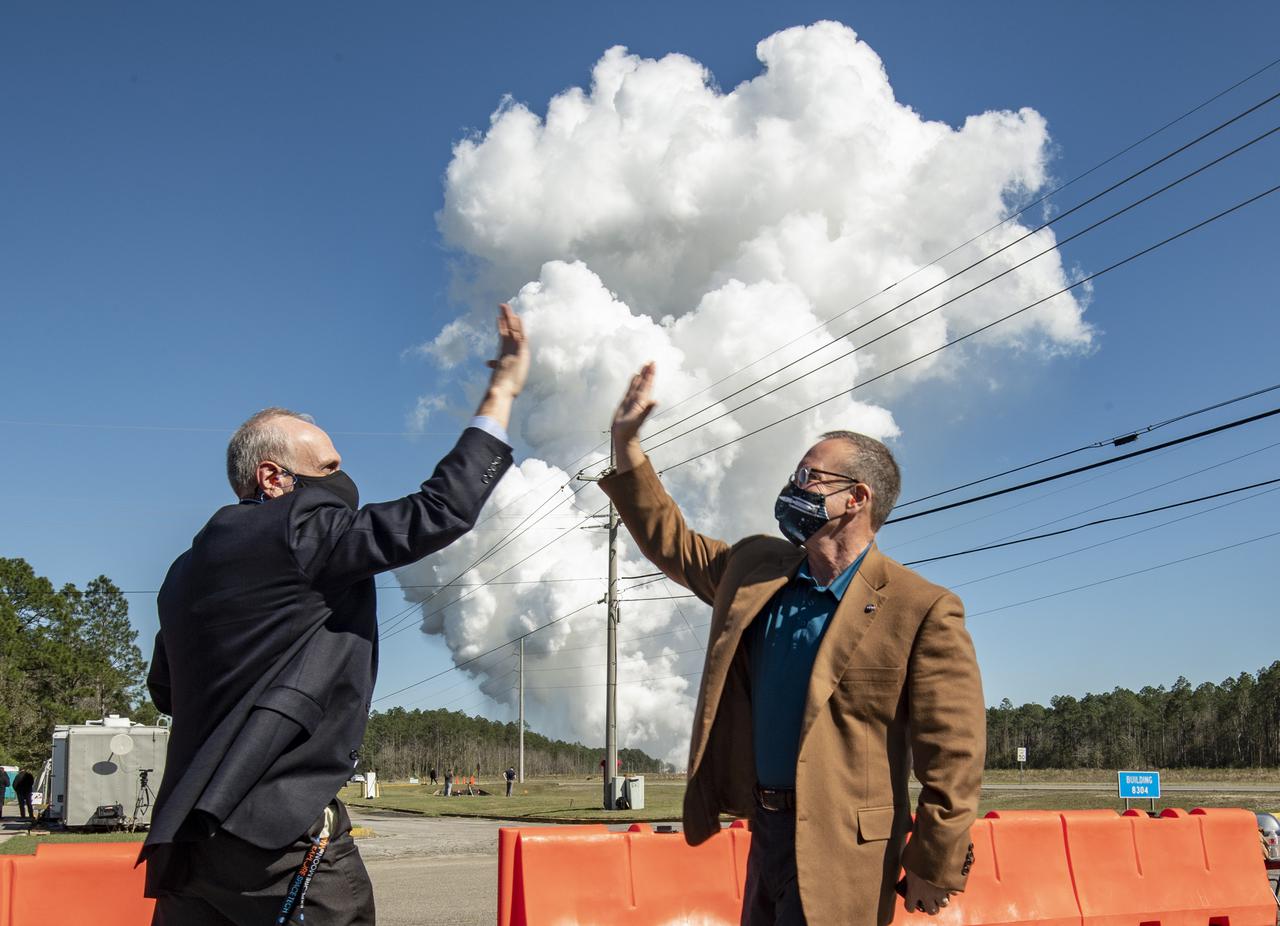
Acting NASA Administrator Steve Jurczyk, left, and Rick Gilbrech, director of NASA's Stennis Space Center, right, high five following a second hot fire test of the core stage for the first flight of NASA’s Space Launch System rocket in the B-2 Test Stand, Thursday, March 18, 2021, at NASA’s Stennis Space Center near Bay St. Louis, Mississippi. The four RS-25 engines fired for the full-duration of 8 minutes during the test and generated 1.6 million pounds of thrust. The hot fire test is the final stage of the Green Run test series, a comprehensive assessment of the Space Launch System’s core stage prior to launching the Artemis I mission to the Moon. Photo Credit: (NASA/Robert Markowitz)
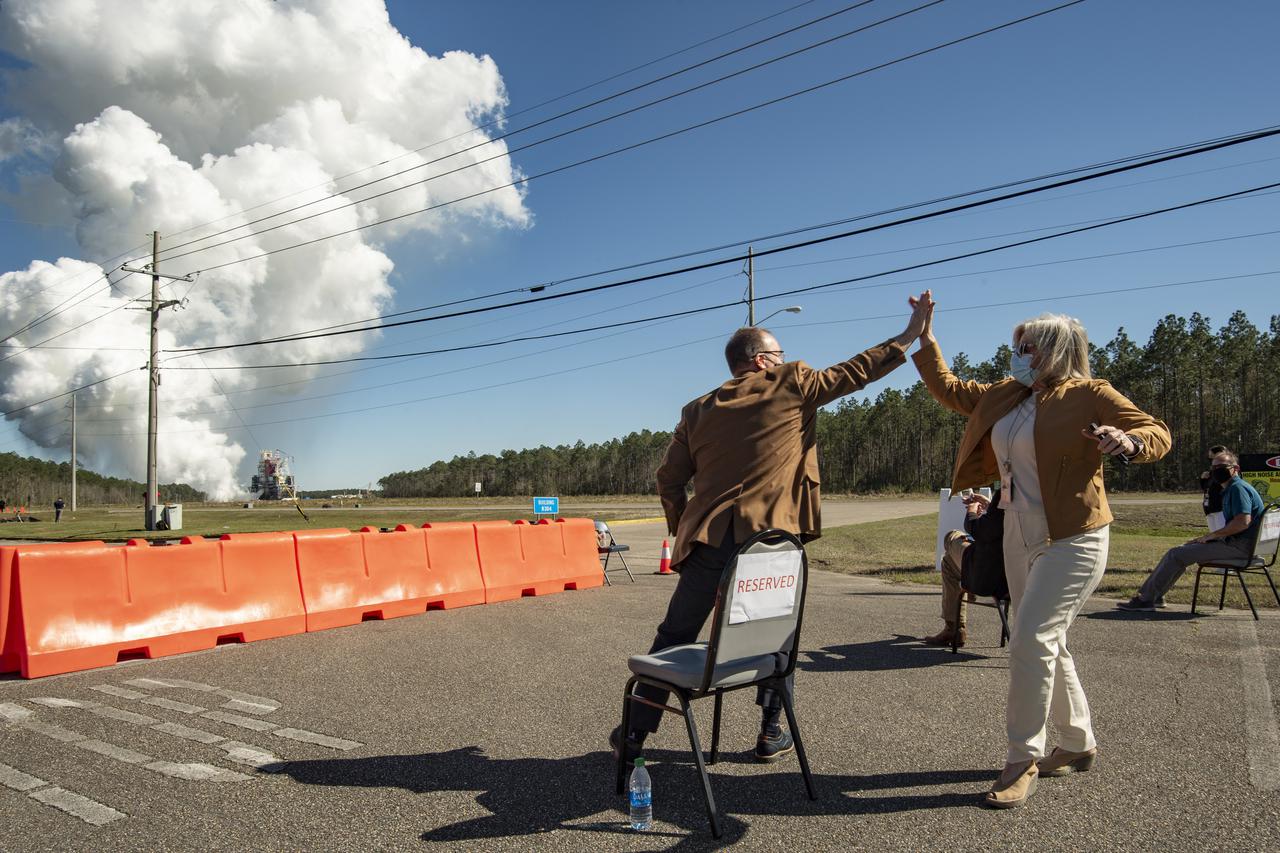
Rick Gilbrech, director of NASA's Stennis Space Center, left, and Jody Singer, director of NASA's Marshall Space Flight Center, right, high five following a second hot fire test of the core stage for the first flight of NASA’s Space Launch System rocket in the B-2 Test Stand, Thursday, March 18, 2021, at NASA’s Stennis Space Center near Bay St. Louis, Mississippi. The four RS-25 engines fired for the full-duration of 8 minutes during the test and generated 1.6 million pounds of thrust. The hot fire test is the final stage of the Green Run test series, a comprehensive assessment of the Space Launch System’s core stage prior to launching the Artemis I mission to the Moon. Photo Credit: (NASA/Robert Markowitz)
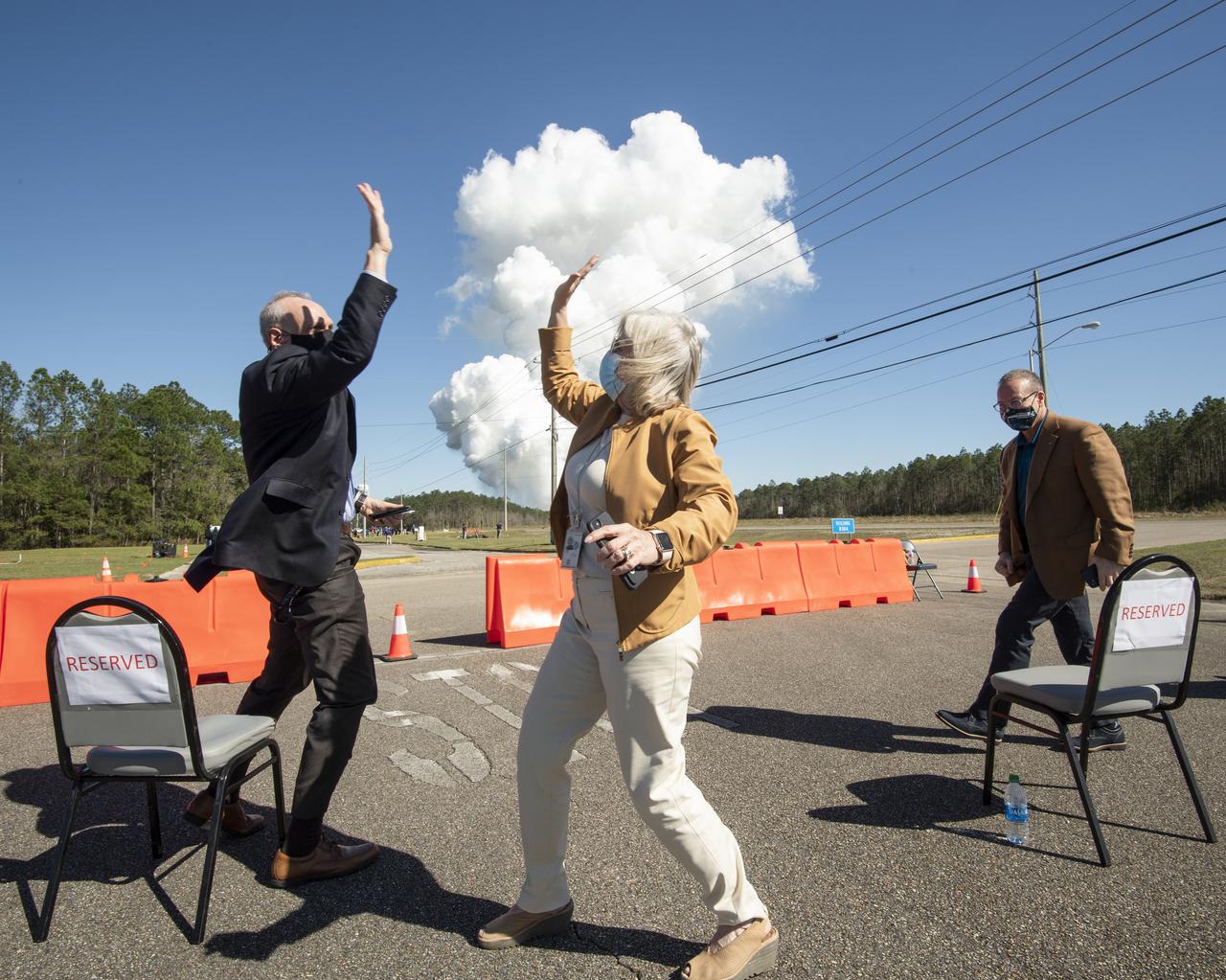
Acting NASA Administrator Steve Jurczyk, left, and Jody Singer, director of NASA's Marshall Space Flight Center, right, high five following a second hot fire test of the core stage for the first flight of NASA’s Space Launch System rocket in the B-2 Test Stand, Thursday, March 18, 2021, at NASA’s Stennis Space Center near Bay St. Louis, Mississippi. The four RS-25 engines fired for the full-duration of 8 minutes during the test and generated 1.6 million pounds of thrust. The hot fire test is the final stage of the Green Run test series, a comprehensive assessment of the Space Launch System’s core stage prior to launching the Artemis I mission to the Moon. Photo Credit: (NASA/Robert Markowitz)
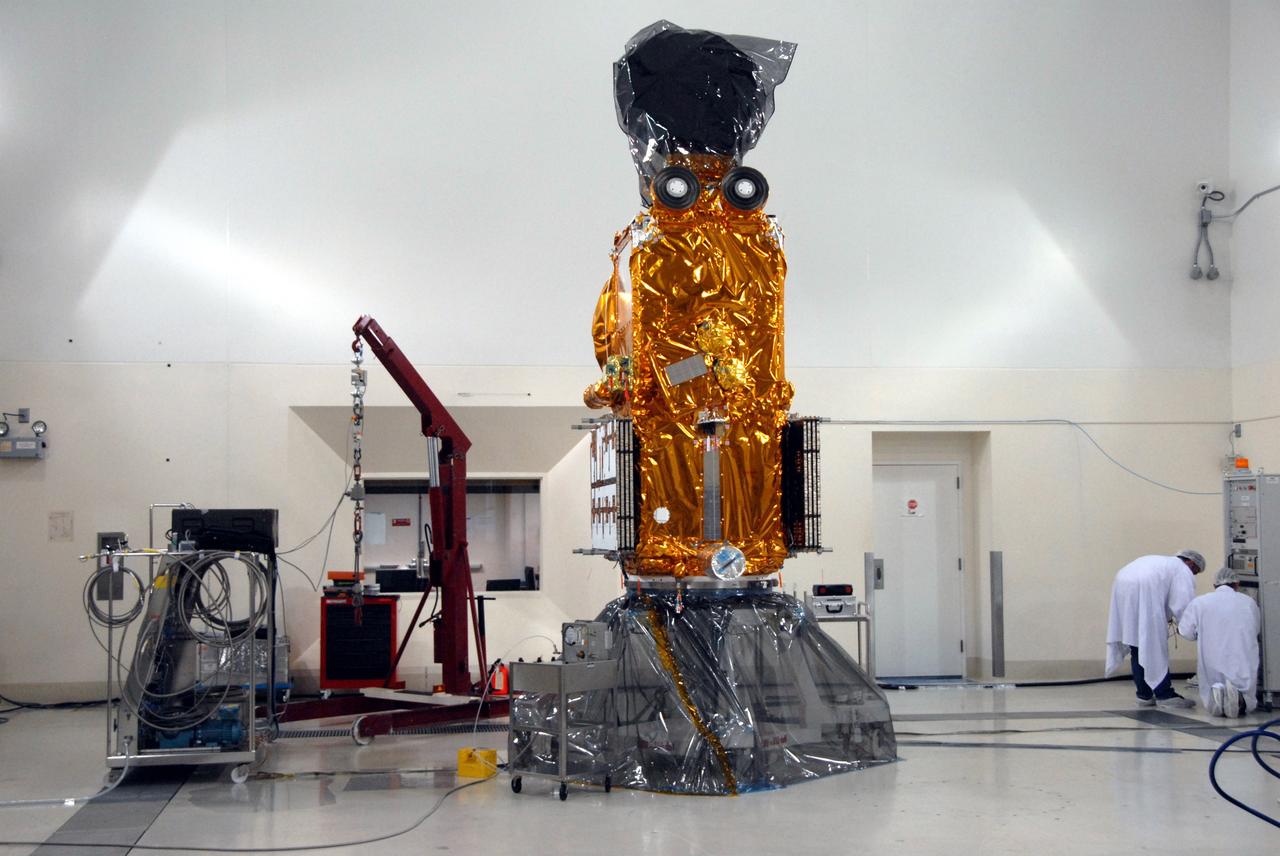
VANDENBERG AIR FORCE BASE, Calif. – The Ocean Surface Topography Mission, or OSTM/Jason 2, spacecraft is being wrapped, or bagged, before fueling, encapsulation and transfer to the launch pad. The launch of the OSTM/Jason 2 aboard a Delta II rocket is scheduled for Friday, June 20, from Vandenberg Air Force Base in California. The launch window extends from 12:46 a.m. to 12:55 a.m. PDT. The satellite will be placed in an 830-mile-high orbit at an inclination of 66 degrees after separating from the Delta II 55 minutes after liftoff. The five primary science instruments of the Ocean Surface Topography Mission aboard the Jason 2 spacecraft are dedicated to measuring ocean surface height. These measurements will be used to evaluate and forecast climate changes and improve weather forecasting. The results also are expected to help forecasters better predict hurricane intensity. Photo credit: NASA

VANDENBERG AIR FORCE BASE, Calif. – The Ocean Surface Topography Mission, or OSTM/Jason 2, spacecraft is being weighed before fueling, encapsulation and transfer to the launch pad. The launch of the OSTM/Jason 2 aboard a Delta II rocket is scheduled for Friday, June 20, from Vandenberg Air Force Base in California. The launch window extends from 12:46 a.m. to 12:55 a.m. PDT. The satellite will be placed in an 830-mile-high orbit at an inclination of 66 degrees after separating from the Delta II 55 minutes after liftoff. The five primary science instruments of the Ocean Surface Topography Mission aboard the Jason 2 spacecraft are dedicated to measuring ocean surface height. These measurements will be used to evaluate and forecast climate changes and improve weather forecasting. The results also are expected to help forecasters better predict hurricane intensity. Photo credit: NASA
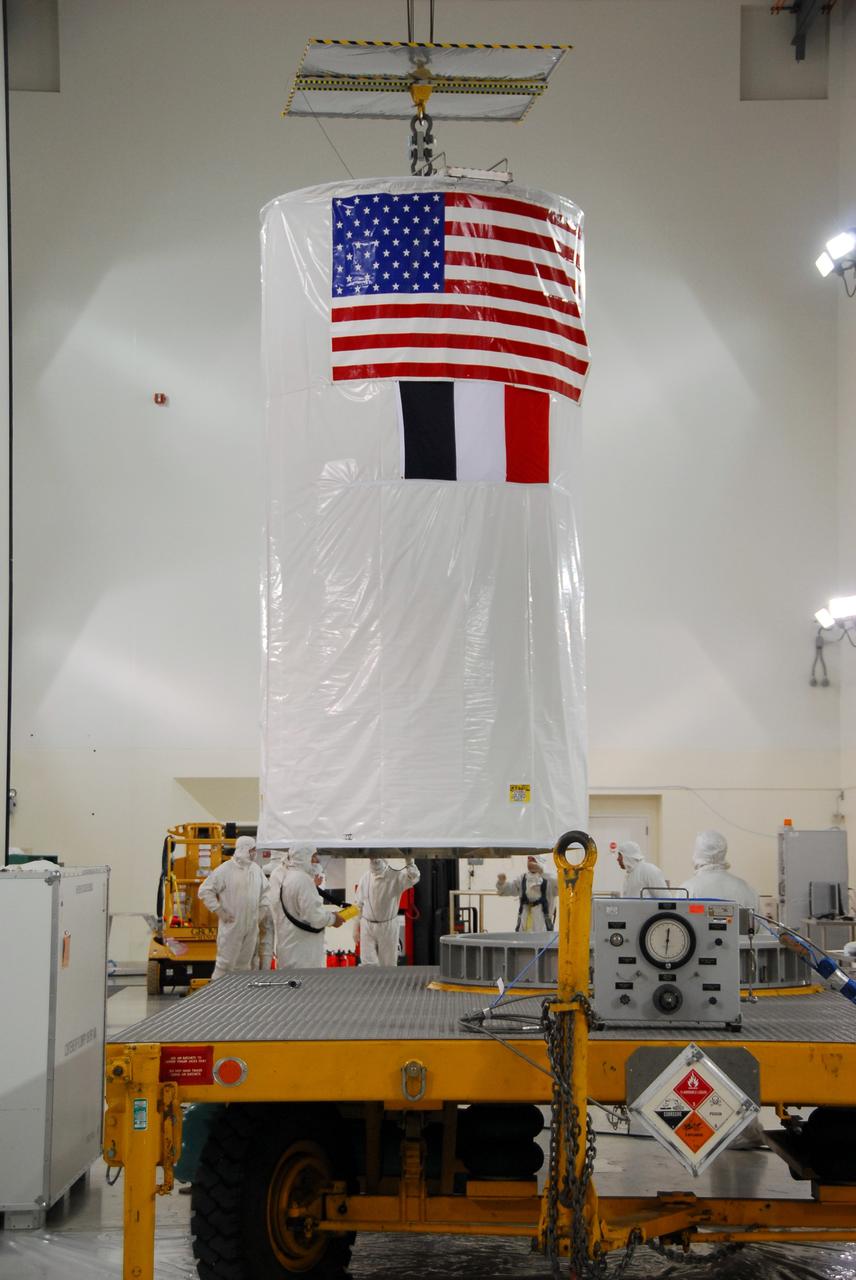
VANDENBERG AIR FORCE BASE, Calif. – An overhead crane is used to move the covered Ocean Surface Topography Mission, or OSTM/Jason 2, spacecraft onto a transporter for the trip to the launch pad. The launch of the OSTM/Jason 2 aboard a Delta II rocket is scheduled for Friday, June 20, from Vandenberg Air Force Base in California. The launch window extends from 12:46 a.m. to 12:55 a.m. PDT. The satellite will be placed in an 830-mile-high orbit at an inclination of 66 degrees after separating from the Delta II 55 minutes after liftoff. The five primary science instruments of the Ocean Surface Topography Mission aboard the Jason 2 spacecraft are dedicated to measuring ocean surface height. These measurements will be used to evaluate and forecast climate changes and improve weather forecasting. The results also are expected to help forecasters better predict hurricane intensity. Photo credit: NASA/Dan Liberotti
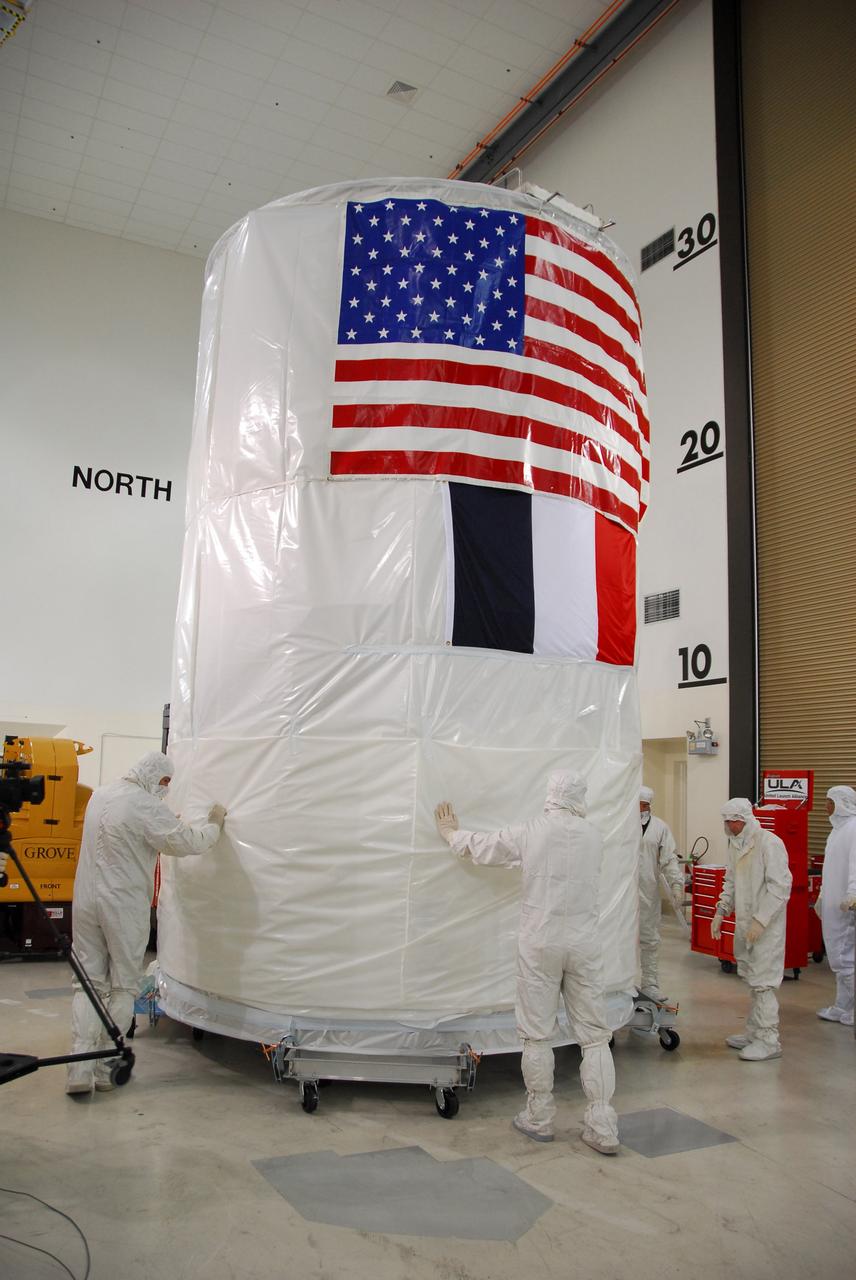
VANDENBERG AIR FORCE BASE, Calif. – The shipping canister is ready to be placed over the Ocean Surface Topography Mission, or OSTM/Jason 2, spacecraft for transport to the launch pad. The launch of the OSTM/Jason 2 aboard a Delta II rocket is scheduled for Friday, June 20, from Vandenberg Air Force Base in California. The launch window extends from 12:46 a.m. to 12:55 a.m. PDT. The satellite will be placed in an 830-mile-high orbit at an inclination of 66 degrees after separating from the Delta II 55 minutes after liftoff. The five primary science instruments of the Ocean Surface Topography Mission aboard the Jason 2 spacecraft are dedicated to measuring ocean surface height. These measurements will be used to evaluate and forecast climate changes and improve weather forecasting. The results also are expected to help forecasters better predict hurricane intensity. Photo credit: NASA/Dan Liberotti
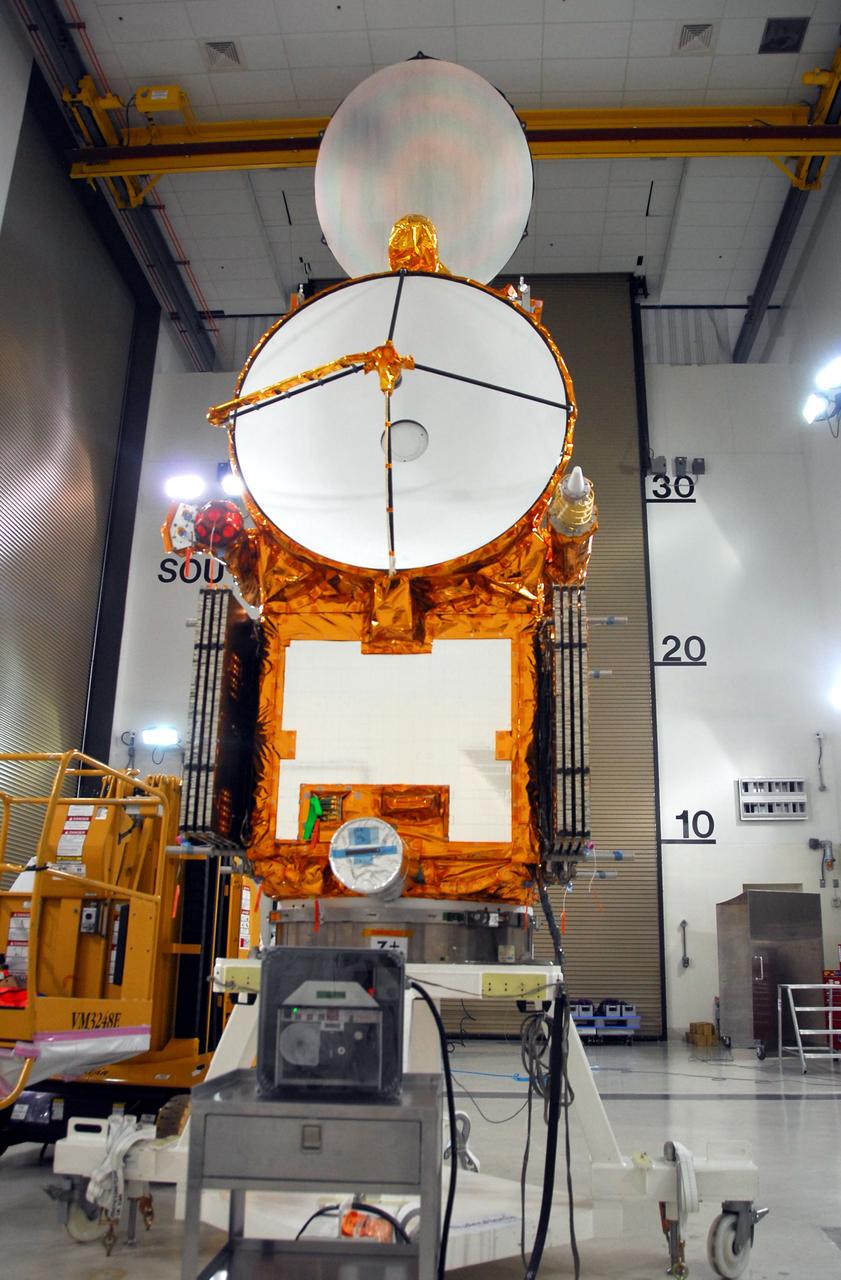
VANDENBERG AIR FORCE BASE, Calif. – The Ocean Surface Topography Mission, or OSTM/Jason 2, spacecraft is being weighed before fueling, encapsulation and transfer to the launch pad. The launch of the OSTM/Jason 2 aboard a Delta II rocket is scheduled for Friday, June 20, from Vandenberg Air Force Base in California. The launch window extends from 12:46 a.m. to 12:55 a.m. PDT. The satellite will be placed in an 830-mile-high orbit at an inclination of 66 degrees after separating from the Delta II 55 minutes after liftoff. The five primary science instruments of the Ocean Surface Topography Mission aboard the Jason 2 spacecraft are dedicated to measuring ocean surface height. These measurements will be used to evaluate and forecast climate changes and improve weather forecasting. The results also are expected to help forecasters better predict hurricane intensity. Photo credit: NASA
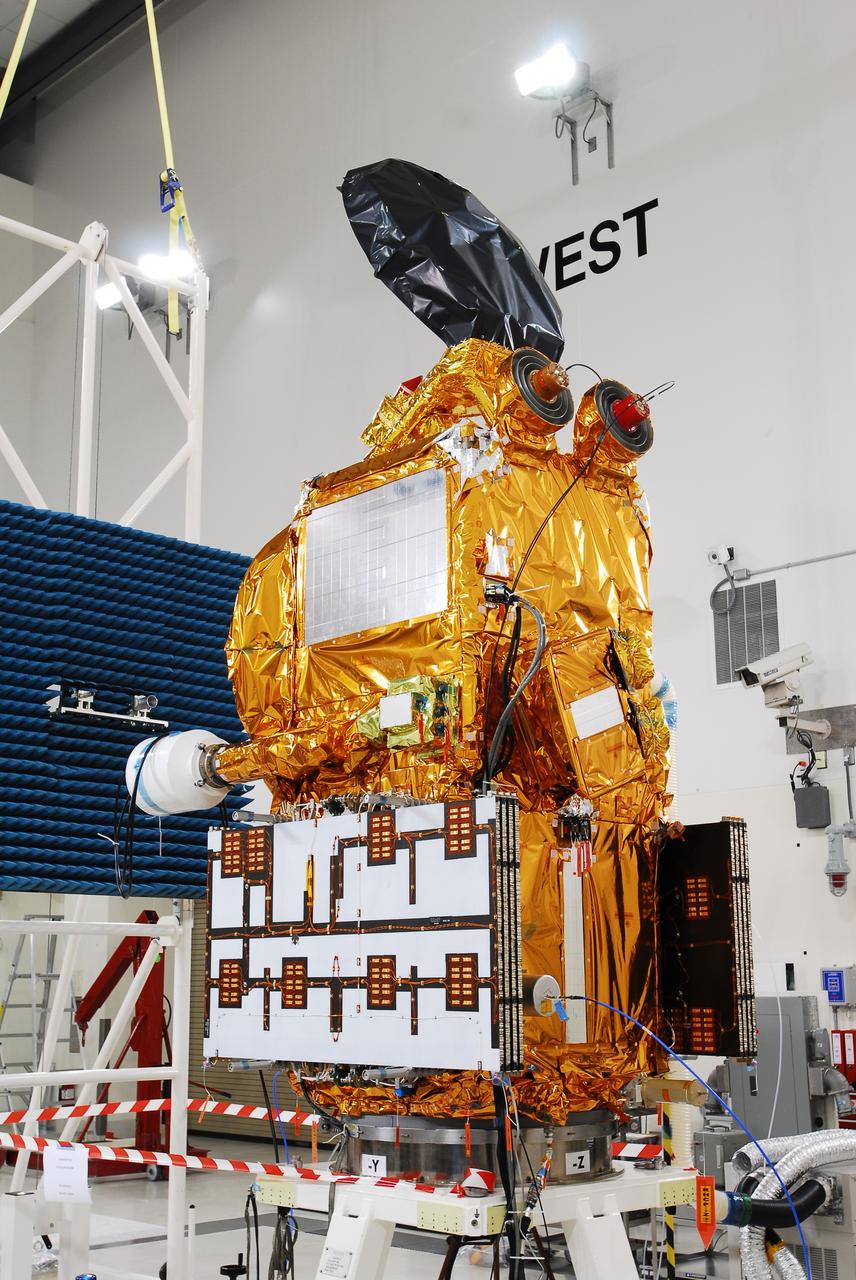
VANDENBERG AIR FORCE BASE, Calif. – The Ocean Surface Topography Mission, or OSTM/Jason 2, spacecraft is being prepared for bagging before encapsulation and transfer to the launch pad. The launch of the Ocean Surface Topography Mission, or OSTM/Jason 2, aboard a Delta II rocket is scheduled for Friday, June 20, from Vandenberg Air Force Base in California. The launch window extends from 12:46 a.m. to 12:55 a.m. PDT. The satellite will be placed in an 830-mile-high orbit at an inclination of 66 degrees after separating from the Delta II 55 minutes after liftoff. The five primary science instruments of the Ocean Surface Topography Mission aboard the Jason 2 spacecraft are dedicated to measuring ocean surface height. These measurements will be used to evaluate and forecast climate changes and improve weather forecasting. The results also are expected to help forecasters better predict hurricane intensity. Photo credit: NASA
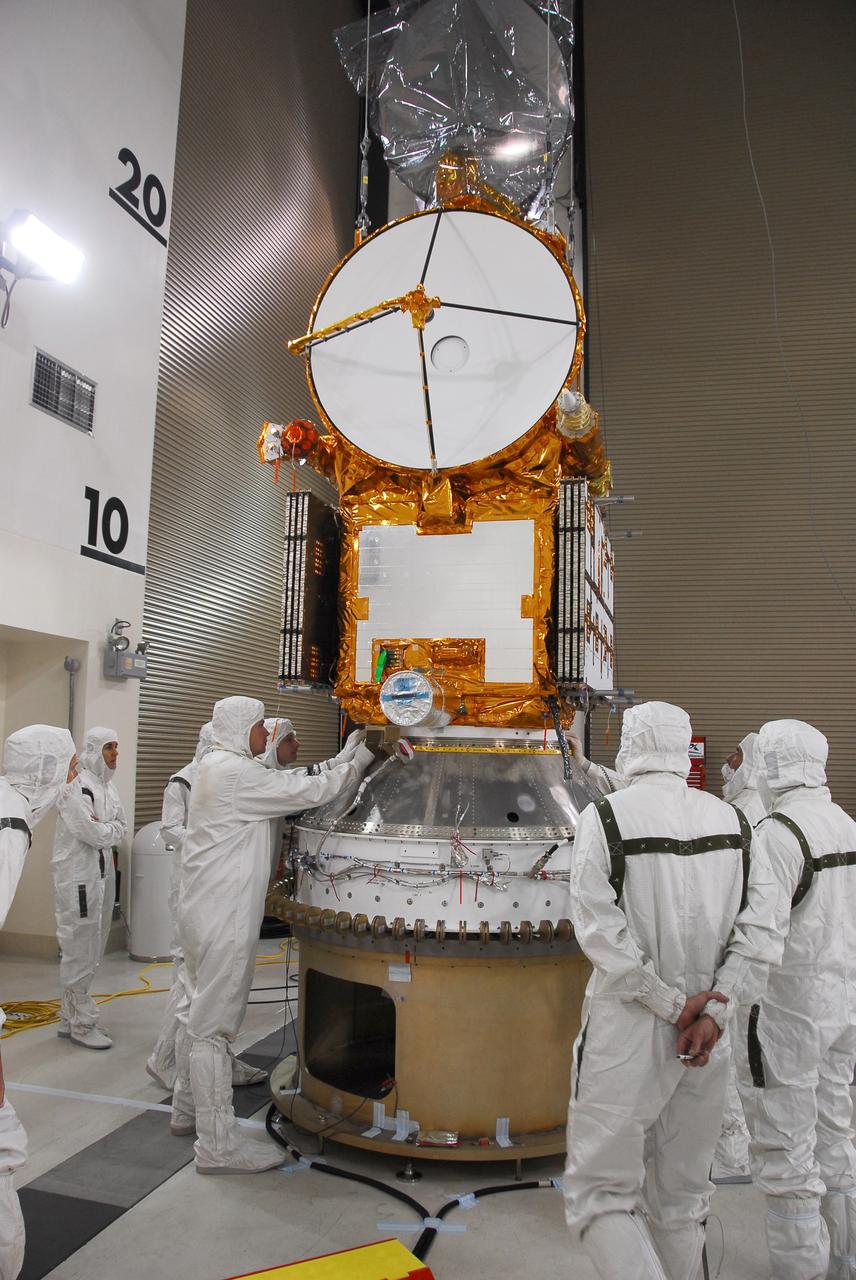
VANDENBERG AIR FORCE BASE, Calif. – Engineers check the installation of the Ocean Surface Topography Mission, or OSTM/Jason 2, spacecraft onto the payload attach fitting, or PAF. The PAF is the interface with the Delta II launch vehicle. The launch of the OSTM/Jason 2 aboard a Delta II rocket is scheduled for Friday, June 20, from Vandenberg Air Force Base in California. The launch window extends from 12:46 a.m. to 12:55 a.m. PDT. The satellite will be placed in an 830-mile-high orbit at an inclination of 66 degrees after separating from the Delta II 55 minutes after liftoff. The five primary science instruments of the Ocean Surface Topography Mission aboard the Jason 2 spacecraft are dedicated to measuring ocean surface height. These measurements will be used to evaluate and forecast climate changes and improve weather forecasting. The results also are expected to help forecasters better predict hurricane intensity. Photo credit: NASA
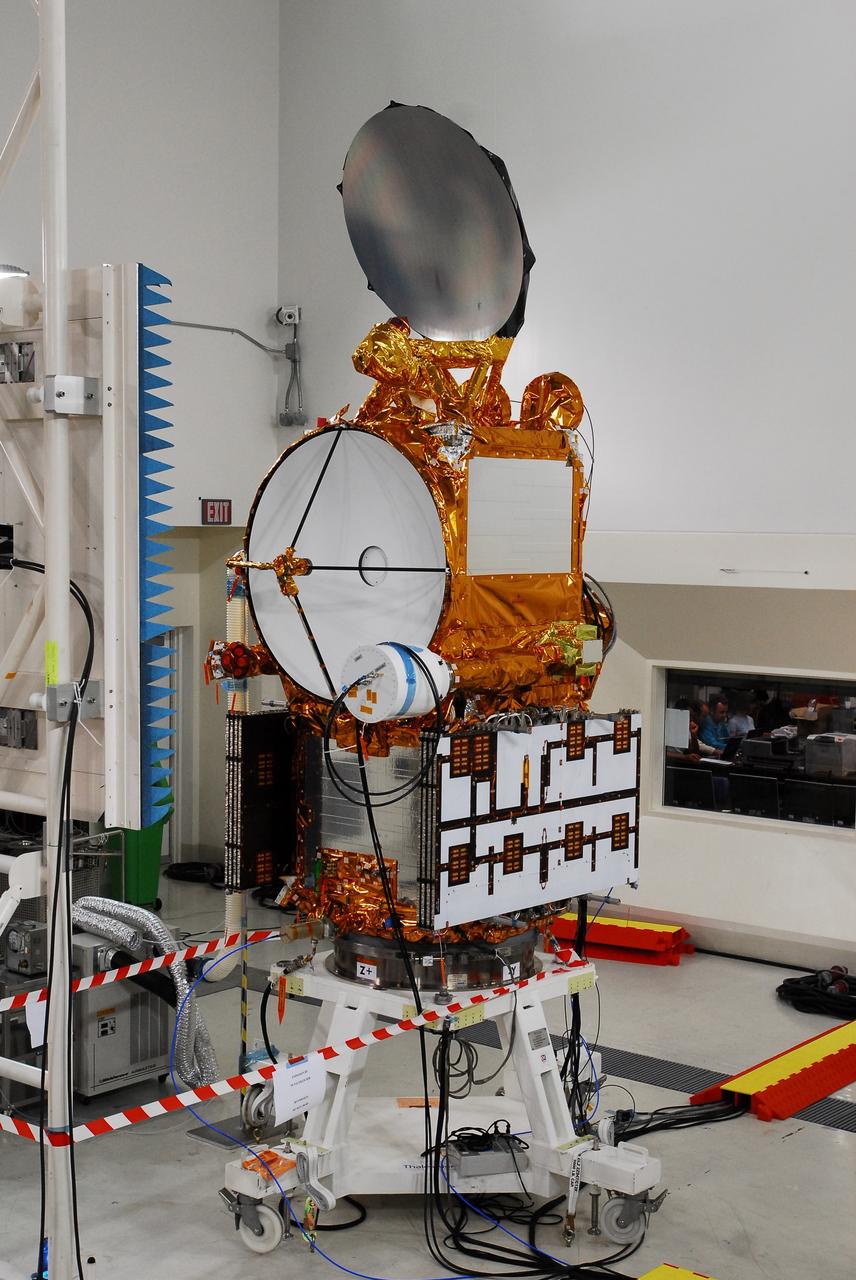
VANDENBERG AIR FORCE BASE, Calif. – The Ocean Surface Topography Mission, or OSTM/Jason 2, spacecraft is being prepared for bagging before encapsulation and transfer to the launch pad. The launch of the Ocean Surface Topography Mission, or OSTM/Jason 2, aboard a Delta II rocket is scheduled for Friday, June 20, from Vandenberg Air Force Base in California. The launch window extends from 12:46 a.m. to 12:55 a.m. PDT. The satellite will be placed in an 830-mile-high orbit at an inclination of 66 degrees after separating from the Delta II 55 minutes after liftoff. The five primary science instruments of the Ocean Surface Topography Mission aboard the Jason 2 spacecraft are dedicated to measuring ocean surface height. These measurements will be used to evaluate and forecast climate changes and improve weather forecasting. The results also are expected to help forecasters better predict hurricane intensity. Photo credit: NASA
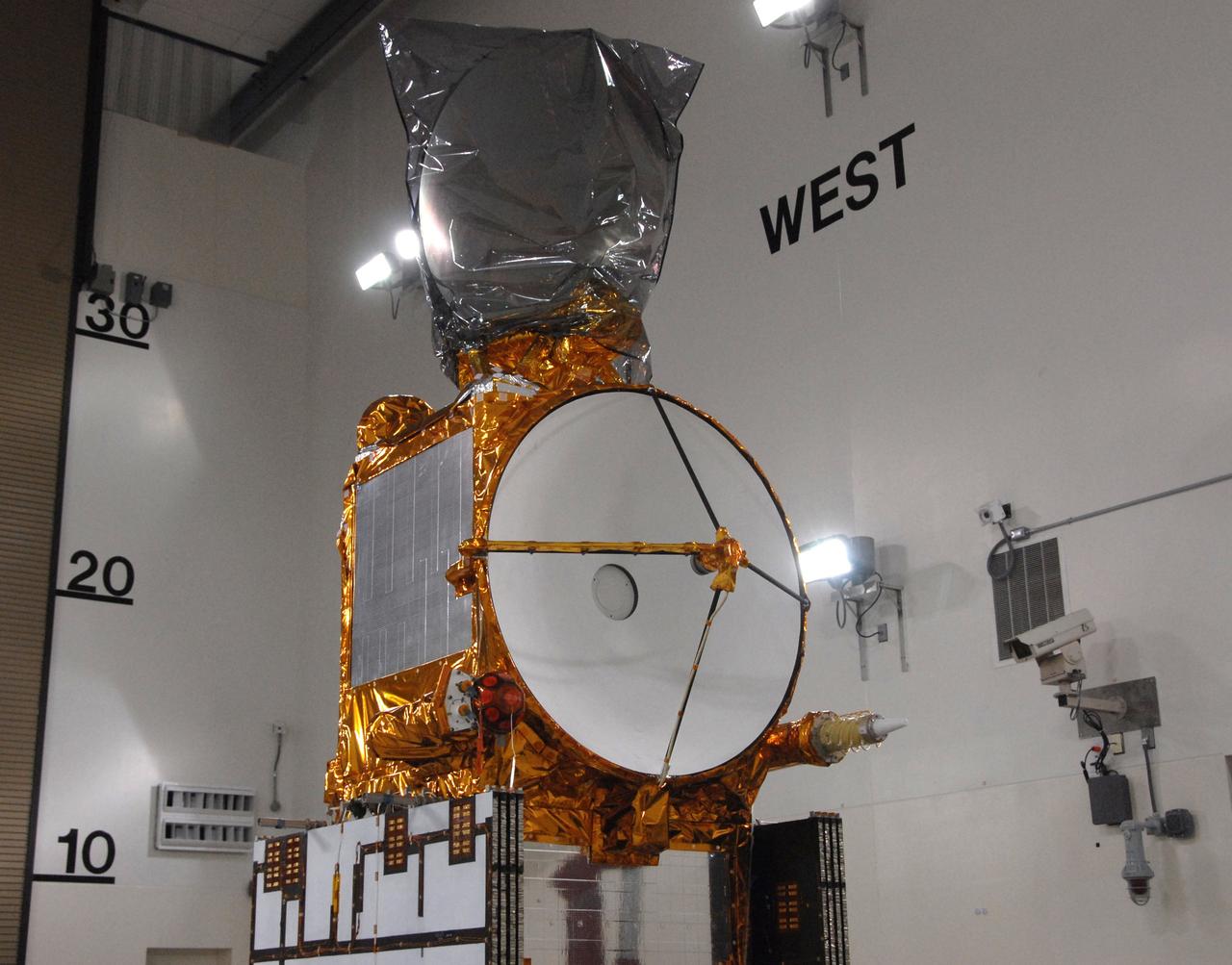
VANDENBERG AIR FORCE BASE, Calif. – Another look at the Ocean Surface Topography Mission, or OSTM/Jason 2, spacecraft from the opposite side before its fueling, encapsulation and transfer to the launch pad. The launch of the OSTM/Jason 2 aboard a Delta II rocket is scheduled for Friday, June 20, from Vandenberg Air Force Base in California. The launch window extends from 12:46 a.m. to 12:55 a.m. PDT. The satellite will be placed in an 830-mile-high orbit at an inclination of 66 degrees after separating from the Delta II 55 minutes after liftoff. The five primary science instruments of the Ocean Surface Topography Mission aboard the Jason 2 spacecraft are dedicated to measuring ocean surface height. These measurements will be used to evaluate and forecast climate changes and improve weather forecasting. The results also are expected to help forecasters better predict hurricane intensity. Photo credit: NASA
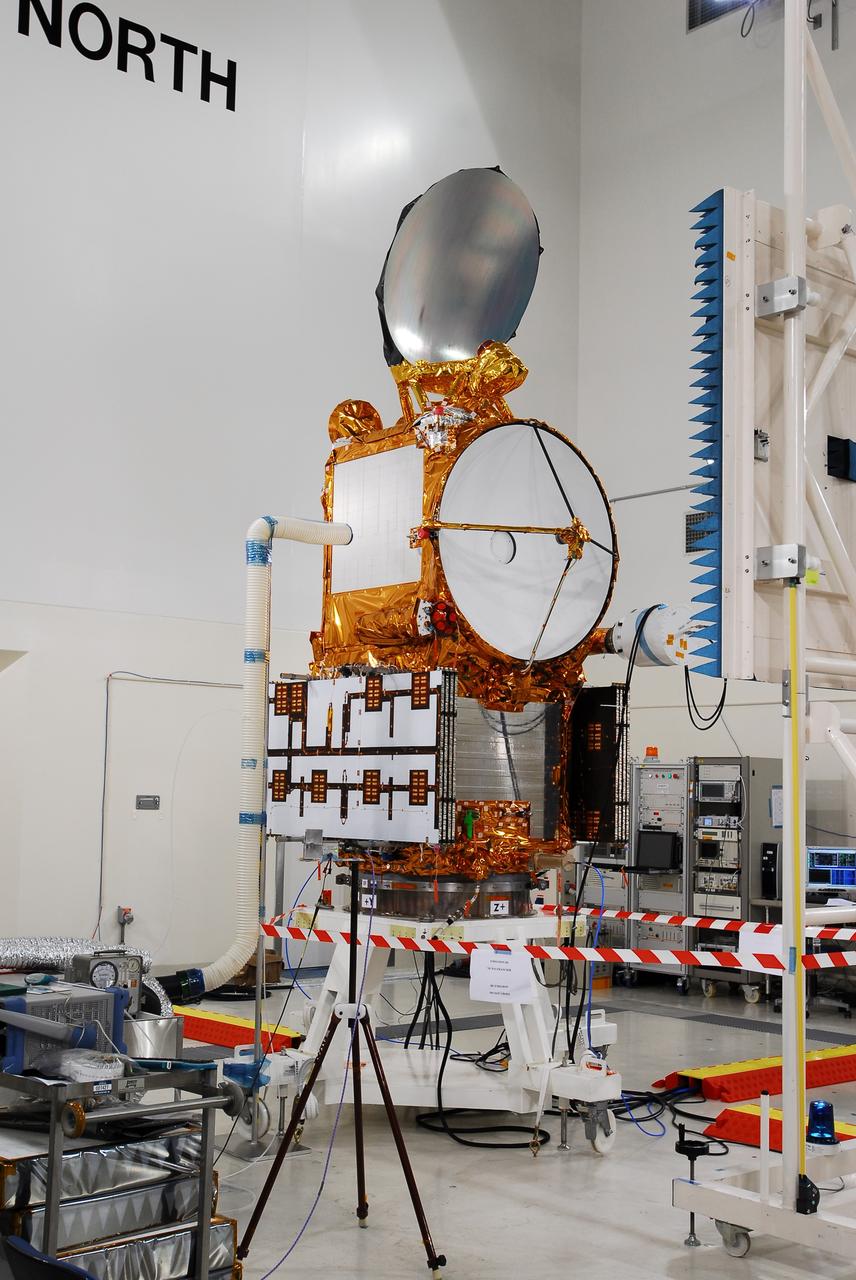
VANDENBERG AIR FORCE BASE, Calif. – The Ocean Surface Topography Mission, or OSTM/Jason 2, spacecraft is being prepared for bagging before encapsulation and transfer to the launch pad. The launch of the Ocean Surface Topography Mission, or OSTM/Jason 2, aboard a Delta II rocket is scheduled for Friday, June 20, from Vandenberg Air Force Base in California. The launch window extends from 12:46 a.m. to 12:55 a.m. PDT. The satellite will be placed in an 830-mile-high orbit at an inclination of 66 degrees after separating from the Delta II 55 minutes after liftoff. The five primary science instruments of the Ocean Surface Topography Mission aboard the Jason 2 spacecraft are dedicated to measuring ocean surface height. These measurements will be used to evaluate and forecast climate changes and improve weather forecasting. The results also are expected to help forecasters better predict hurricane intensity. Photo credit: NASA
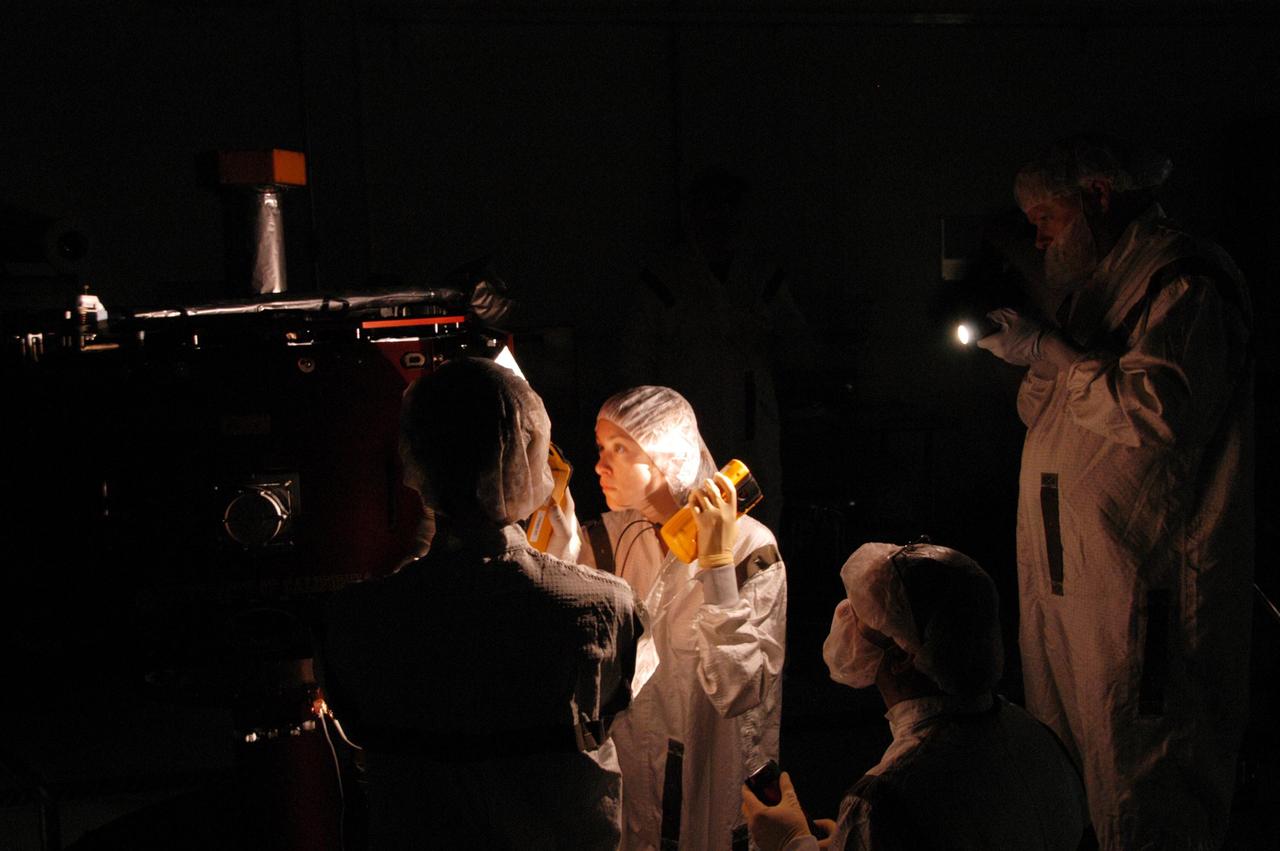
KENNEDY SPACE CENTER, FLA. -- At Astrotech Space Operations, technicians conduct white light inspection of the THEMIS probes. They will also undergo black light inspection. White light inspection assures the telemetry is operating. Black light inspection uses UVA fluorescence to detect possible particulate microcontamination, minute cracks or fluid leaks. THEMIS consists of five identical probes, the largest number of scientific satellites ever launched into orbit aboard a single rocket. This unique constellation of satellites will resolve the tantalizing mystery of what causes the spectacular sudden brightening of the aurora borealis and aurora australis - the fiery skies over the Earth's northern and southern polar regions. THEMIS is scheduled to launch Feb. 15 from Cape Canaveral Air Force Station. Photo credit: NASA/George Shelton
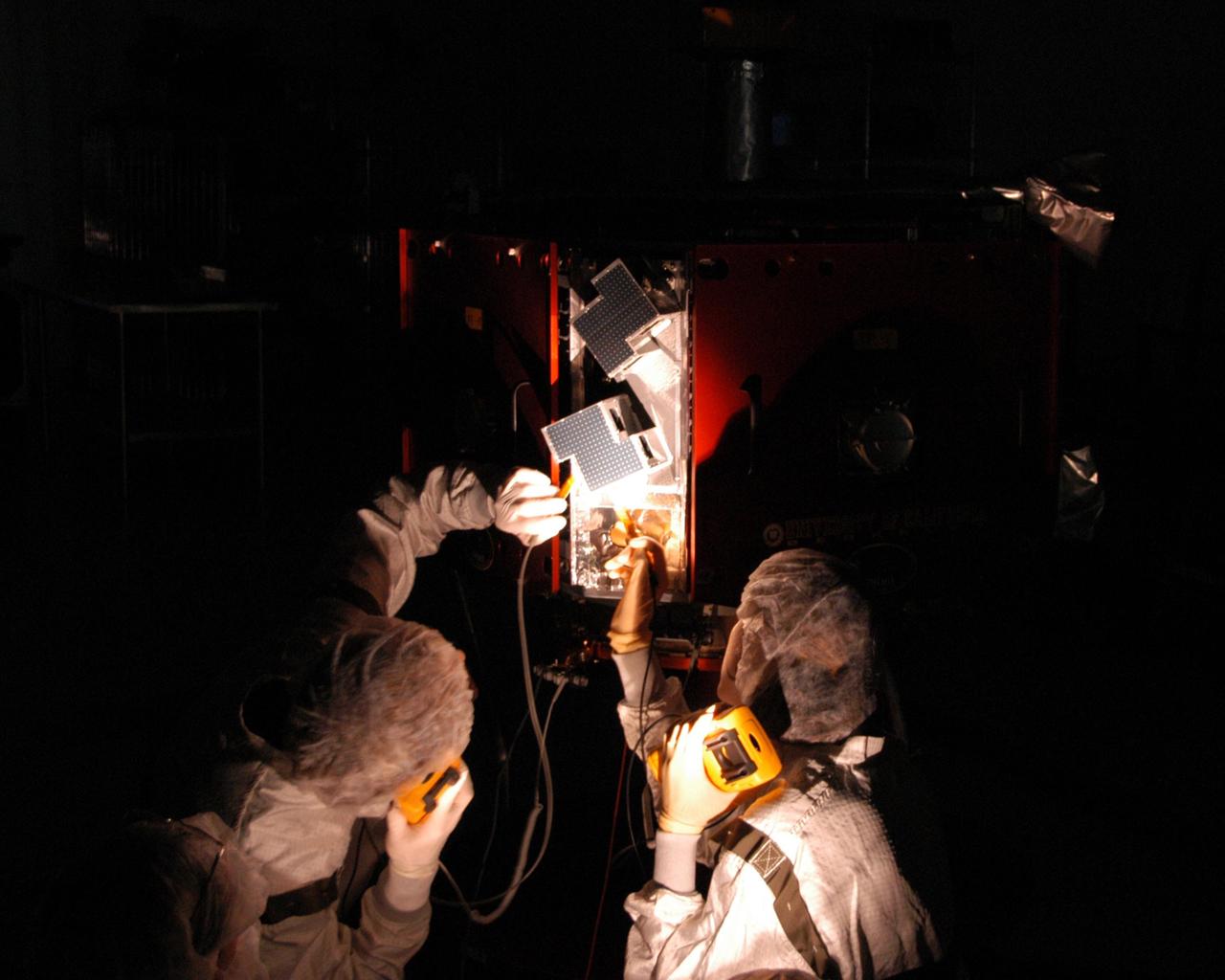
KENNEDY SPACE CENTER, FLA. -- At Astrotech Space Operations, technicians conduct white light inspection of the THEMIS probes. They will also undergo black light inspection. White light inspection assures the telemetry is operating. Black light inspection uses UVA fluorescence to detect possible particulate microcontamination, minute cracks or fluid leaks. THEMIS consists of five identical probes, the largest number of scientific satellites ever launched into orbit aboard a single rocket. This unique constellation of satellites will resolve the tantalizing mystery of what causes the spectacular sudden brightening of the aurora borealis and aurora australis - the fiery skies over the Earth's northern and southern polar regions. THEMIS is scheduled to launch Feb. 15 from Cape Canaveral Air Force Station. Photo credit: NASA/George Shelton
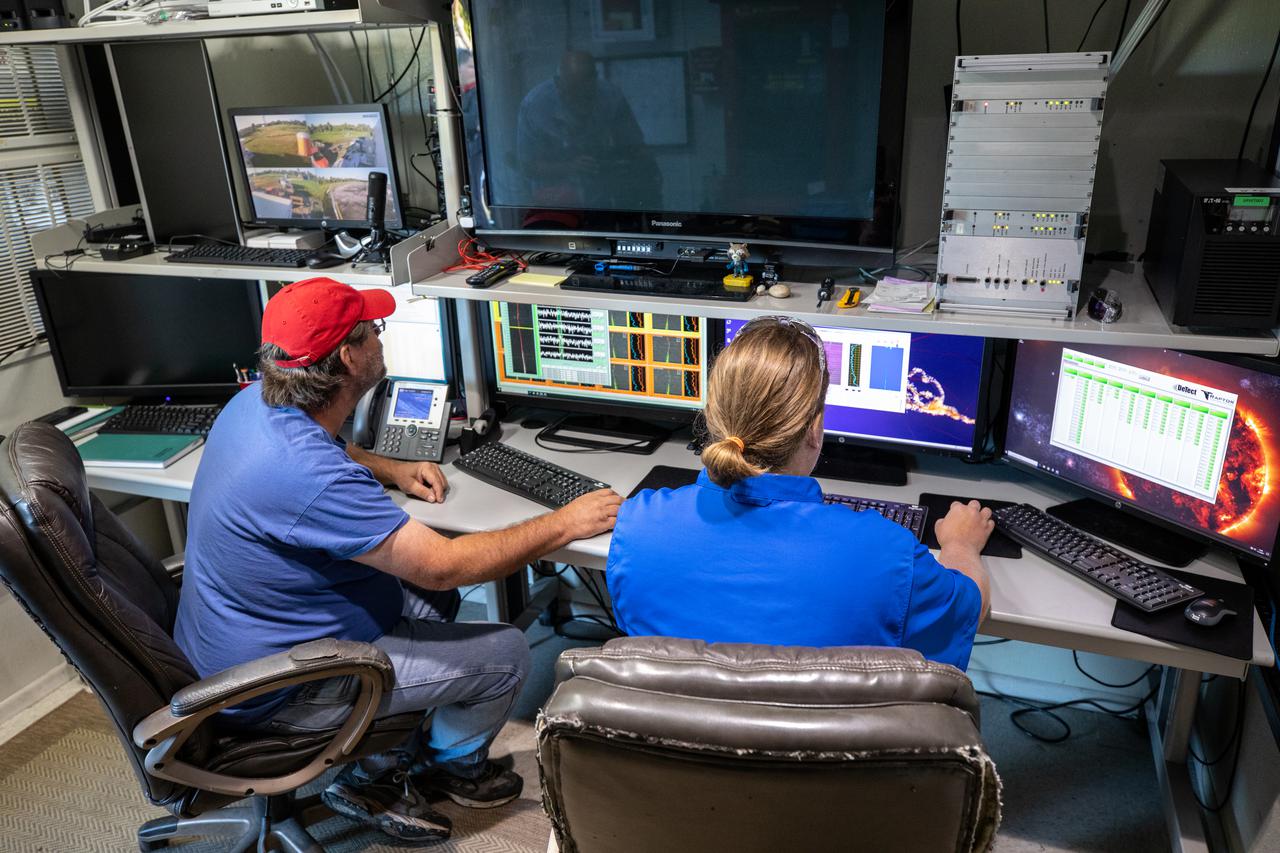
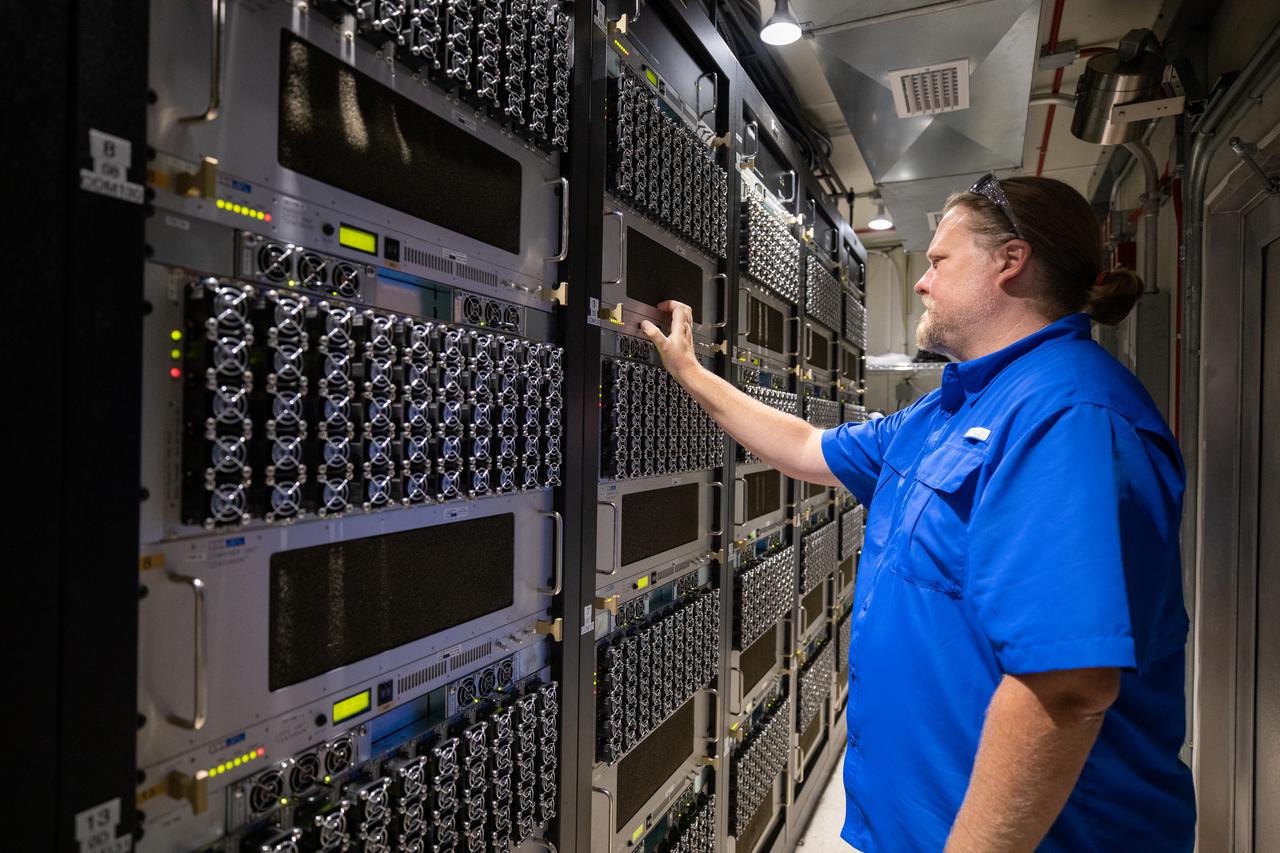
Weather Instrumentation Technician Gavin Oglesby, left, and Weather Instrumentation Engineer Nick O’Connor work with the Tropospheric Doppler Radar Wind Profiler at Kennedy Space Center in Florida during an Artemis I weather simulation on Nov. 3, 2021. The simulation involved teams from Kennedy, Cape Canaveral Space Force Station, Johnson Space Center in Texas, and Marshall Space Flight Center in Alabama. The radar wind profiler delivers data – from 6,000 to 62,000 feet – every five minutes. It will be used as the primary upper level wind instrument for NASA’s Artemis missions, including Artemis I, the first launch of the agency’s Space Launch System rocket and the Orion spacecraft on a flight beyond the Moon.
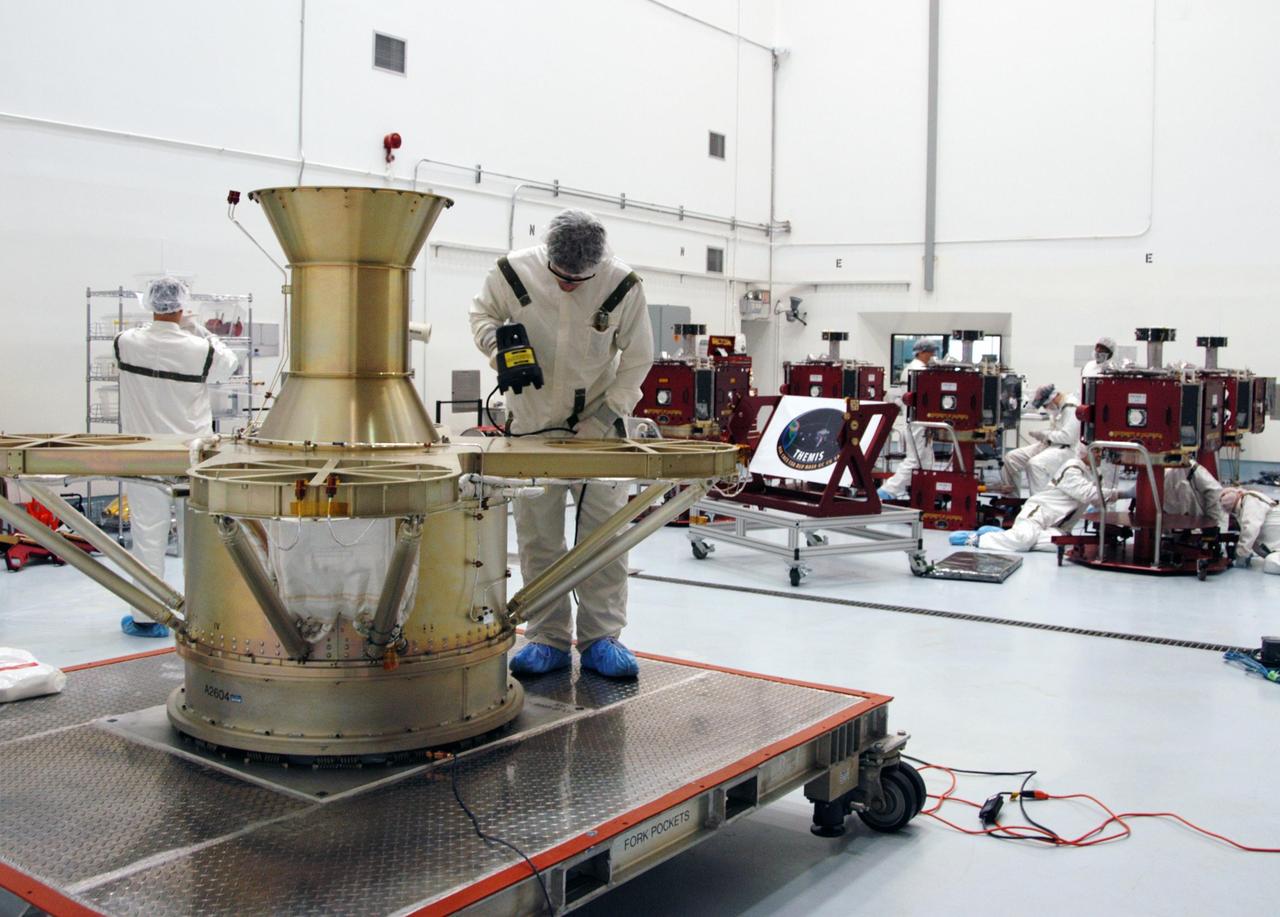
KENNEDY SPACE CENTER, FLA. -- At Astrotech Space Operations, a worker prepares the THEMIS spacecraft for black/white light inspection. White light inspection assures the telemetry is operating. Black light inspection uses UVA fluorescence to detect possible particulate microcontamination, minute cracks or fluid leaks. THEMIS consists of five identical probes, the largest number of scientific satellites ever launched into orbit aboard a single rocket. This unique constellation of satellites will resolve the tantalizing mystery of what causes the spectacular sudden brightening of the aurora borealis and aurora australis - the fiery skies over the Earth's northern and southern polar regions. THEMIS is scheduled to launch Feb. 15 from Cape Canaveral Air Force Station. Photo credit: NASA/George Shelton
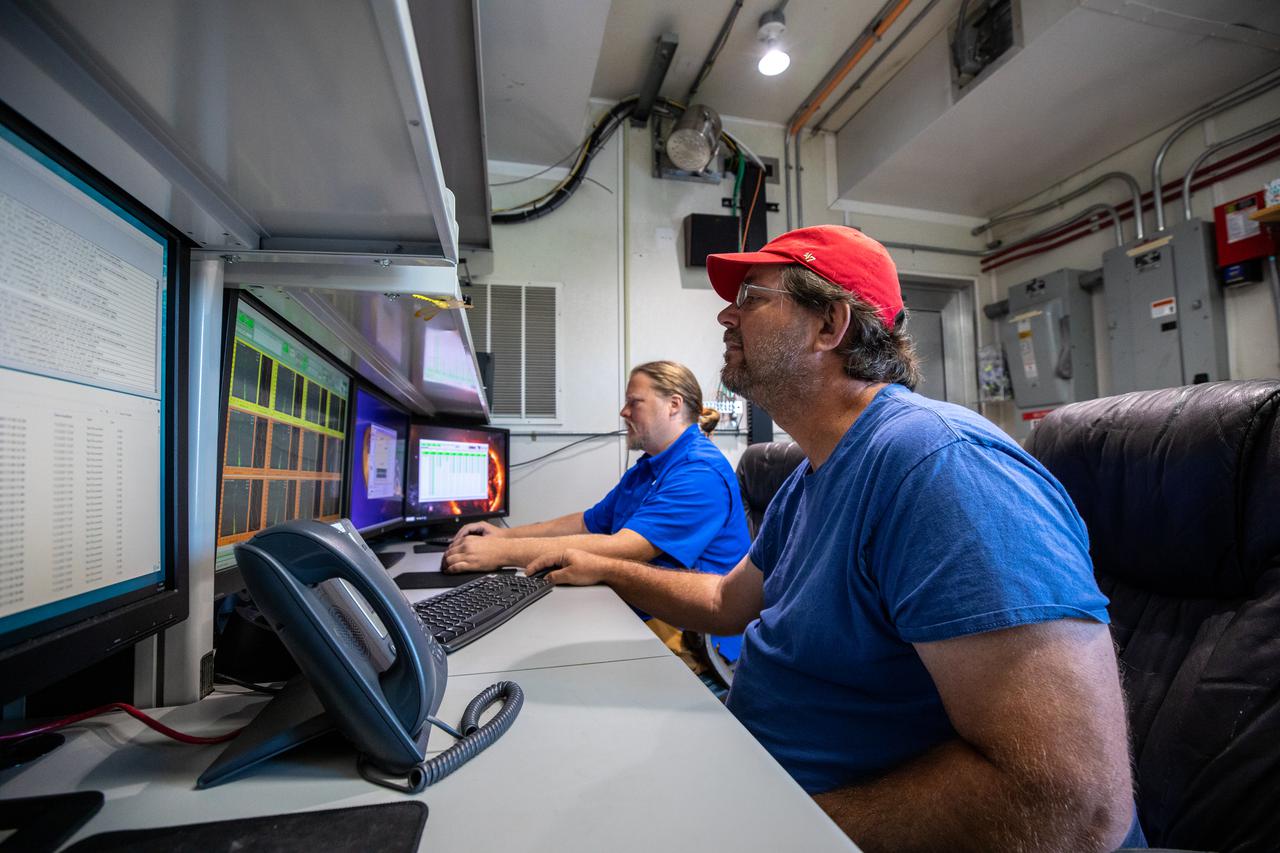
Weather Instrumentation Technician Gavin Oglesby, left, and Weather Instrumentation Engineer Nick O’Connor work with the Tropospheric Doppler Radar Wind Profiler at Kennedy Space Center in Florida during an Artemis I weather simulation on Nov. 3, 2021. The simulation involved teams from Kennedy, Cape Canaveral Space Force Station, Johnson Space Center in Texas, and Marshall Space Flight Center in Alabama. The radar wind profiler delivers data – from 6,000 to 62,000 feet – every five minutes. It will be used as the primary upper level wind instrument for NASA’s Artemis missions, including Artemis I, the first launch of the agency’s Space Launch System rocket and the Orion spacecraft on a flight beyond the Moon.

KENNEDY SPACE CENTER, FLA. -- At Astrotech Space Operations, a worker prepares the THEMIS spacecraft for black/white light inspection. White light inspection assures the telemetry is operating. Black light inspection uses UVA fluorescence to detect possible particulate microcontamination, minute cracks or fluid leaks. THEMIS consists of five identical probes, the largest number of scientific satellites ever launched into orbit aboard a single rocket. This unique constellation of satellites will resolve the tantalizing mystery of what causes the spectacular sudden brightening of the aurora borealis and aurora australis - the fiery skies over the Earth's northern and southern polar regions. THEMIS is scheduled to launch Feb. 15 from Cape Canaveral Air Force Station. Photo credit: NASA/George Shelton

These images and videos show Reid Wiseman and Jeremy Hansen, members of the Artemis II crew, viewing the core stage of NASA’s SLS (Space Launch System) rocket at NASA’s Michoud Assembly Facility on Tuesday, July 16, 2024. The Artemis II astronauts met with team members at Michoud and the crew of NASA’s Pegasus barge prior to their departure to deliver the core stage to the Space Coast. NASA astronaut and pilot of the Artemis II mission Victor Glover met the crew July 15. Wiseman and Hansen visited the barge July 16, shortly before the flight hardware was loaded onto it. The core stage for the SLS mega rocket is the largest stage NASA has ever produced. At 212 feet tall, the stage consists of five major elements, including two huge propellant tanks that collectively hold more than 733,000 gallons of super chilled liquid propellant to feed four RS-25 engines at its base. During launch and flight, the stage will operate for just over eight minutes, producing more than 2 million pounds of thrust to help send a crew of four astronauts inside NASA’s Orion spacecraft onward to the Moon. Pegasus – previously used to ferry space shuttle tanks – was modified and refurbished to ferry the SLS rocket’s massive core stage. At 212 feet in length and 27.6 feet in diameter, the Moon rocket stage is more than 50 feet longer than the space shuttle external tank. NASA is working to land the first woman and first person of color on the Moon under Artemis. SLS is part of NASA’s backbone for deep space exploration, along with the Orion spacecraft, advanced spacesuits and rovers, the Gateway in orbit around the Moon, and commercial human landing systems. SLS is the only rocket that can send Orion, astronauts, and supplies to the Moon in a single launch.

These images and videos show Reid Wiseman and Jeremy Hansen, members of the Artemis II crew, viewing the core stage of NASA’s SLS (Space Launch System) rocket at NASA’s Michoud Assembly Facility on Tuesday, July 16, 2024. The Artemis II astronauts met with team members at Michoud and the crew of NASA’s Pegasus barge prior to their departure to deliver the core stage to the Space Coast. NASA astronaut and pilot of the Artemis II mission Victor Glover met the crew July 15. Wiseman and Hansen visited the barge July 16, shortly before the flight hardware was loaded onto it. The core stage for the SLS mega rocket is the largest stage NASA has ever produced. At 212 feet tall, the stage consists of five major elements, including two huge propellant tanks that collectively hold more than 733,000 gallons of super chilled liquid propellant to feed four RS-25 engines at its base. During launch and flight, the stage will operate for just over eight minutes, producing more than 2 million pounds of thrust to help send a crew of four astronauts inside NASA’s Orion spacecraft onward to the Moon. Pegasus – previously used to ferry space shuttle tanks – was modified and refurbished to ferry the SLS rocket’s massive core stage. At 212 feet in length and 27.6 feet in diameter, the Moon rocket stage is more than 50 feet longer than the space shuttle external tank. NASA is working to land the first woman and first person of color on the Moon under Artemis. SLS is part of NASA’s backbone for deep space exploration, along with the Orion spacecraft, advanced spacesuits and rovers, the Gateway in orbit around the Moon, and commercial human landing systems. SLS is the only rocket that can send Orion, astronauts, and supplies to the Moon in a single launch.
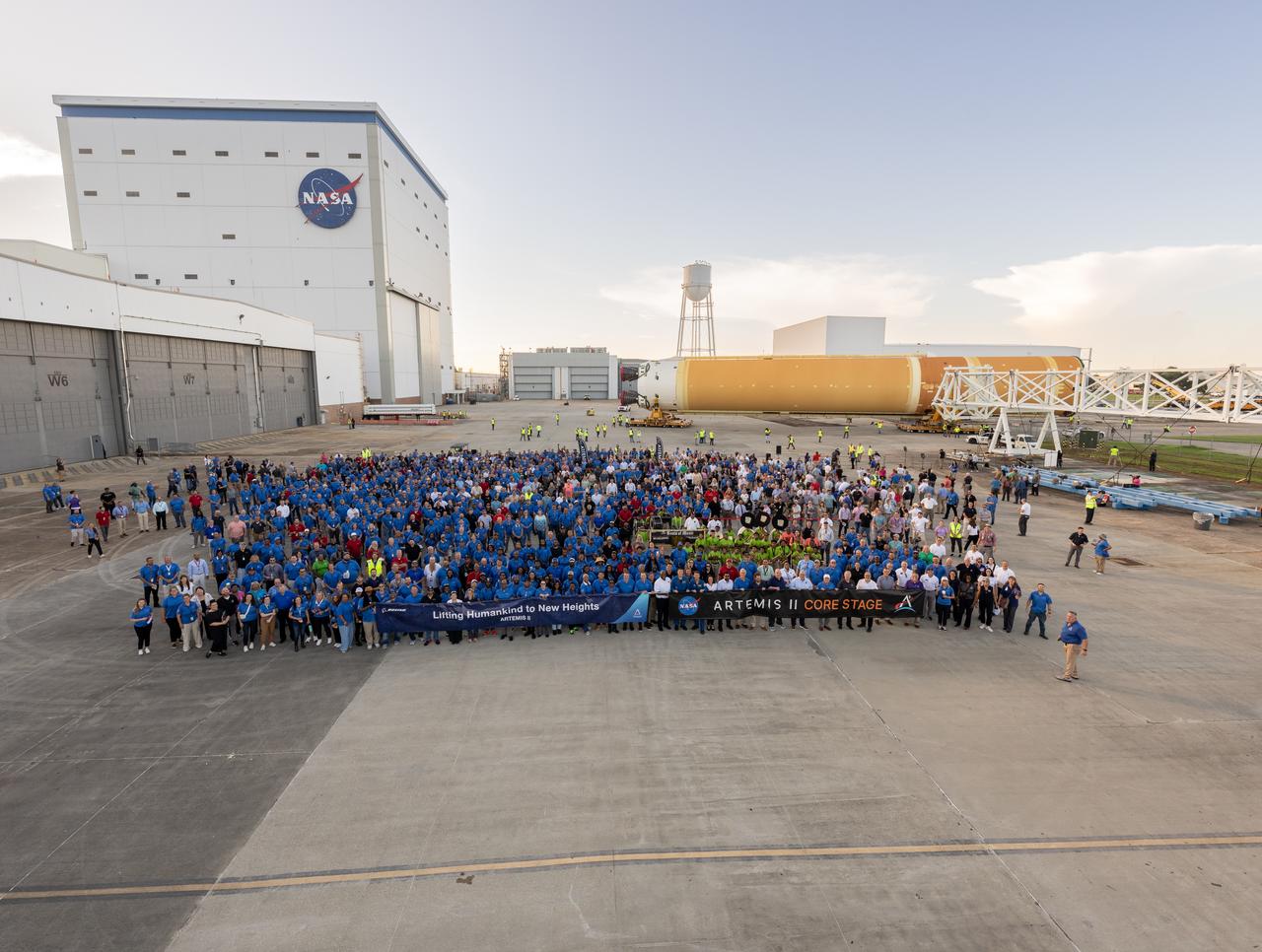
The NASA Michoud Assembly Facility workforce and with other agency team members take a “family photo” with the SLS (Space Launch System) core stage for Artemis II in the background. The core stage will help launch the first crewed flight of NASA’s SLS rocket for the agency’s Artemis II mission. The move marked the first time a fully assembled Moon rocket stage for a crewed mission has rolled out from NASA’s Michoud Assembly Facility in New Orleans since the Apollo Program, The core stage was moved onto the agency’s Pegasus barge, where it will be ferried to NASA’s Kennedy Space Center in Florida. The core stage for the SLS mega rocket is the largest stage NASA has ever produced. At 212 feet tall, the stage consists of five major elements, including two huge propellant tanks that collectively hold more than 733,000 gallons of super chilled liquid propellant to feed four RS-25 engines at its base. During launch and flight, the stage will operate for just over eight minutes, producing more than 2 million pounds of thrust to help send a crew of four astronauts inside NASA’s Orion spacecraft onward to the Moon. NASA is working to land the first woman, first person of color, and its first international partner astronaut on the Moon under Artemis. SLS is part of NASA’s backbone for deep space exploration, along with the Orion spacecraft and Gateway in orbit around the Moon and commercial human landing systems, next-generation space, next-generational spacesuits, and rovers on the lunar surface. SLS is the only rocket that can send Orion, astronauts, and supplies to the Moon in a single launch.
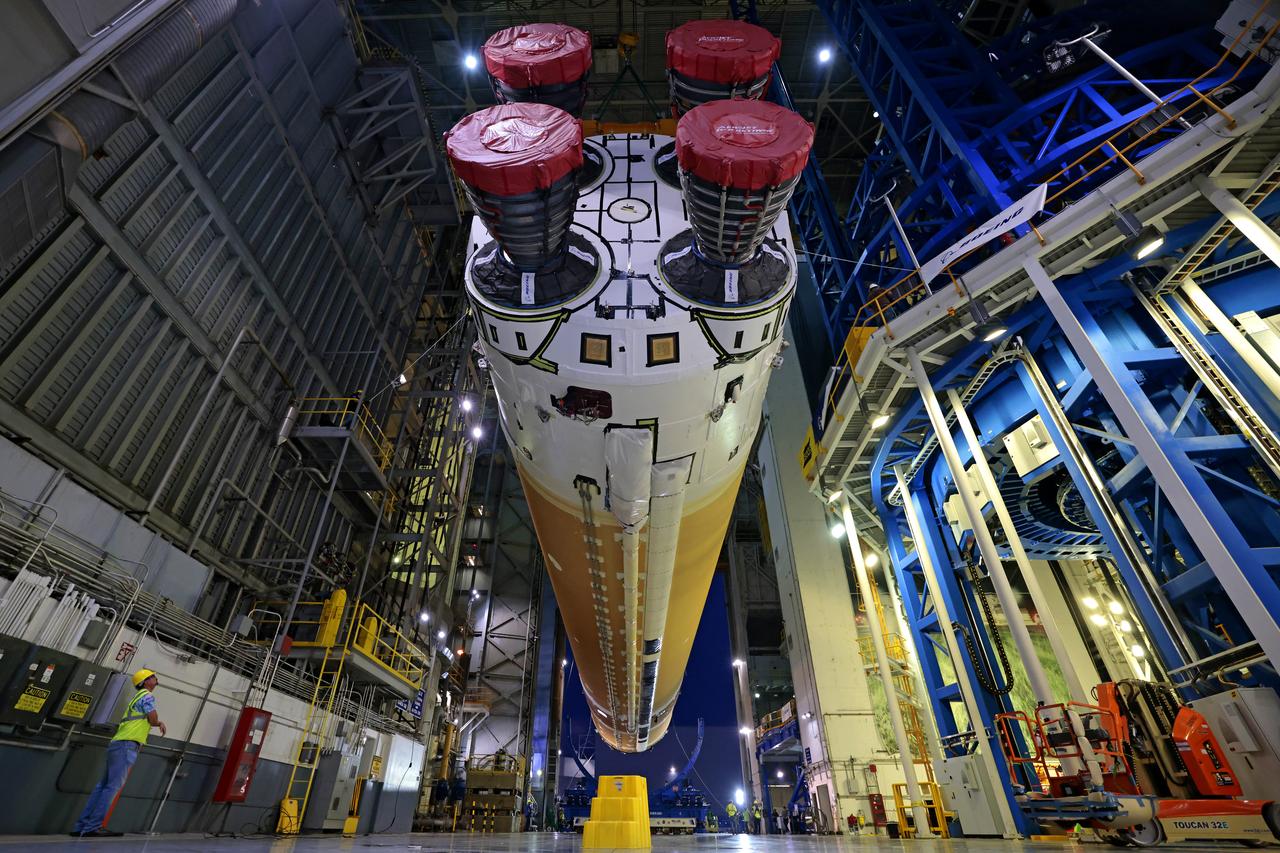
Technicians at Michoud Assembly Facility in New Orleans lift the core stage that will help launch the first crewed flight of NASA’s SLS (Space Launch System) rocket for the agency’s Artemis II mission. Teams at Michoud lifted the core stage on Thursday, July 11, 2024, onto NASA’s Multi-Purpose Transportation System, designed to transport SLS vehicle segments by waterway and roadway. It is tasked with transporting the vehicle from where it is manufactured to its intermediate test location and final launch destination. The core stage was lifted in preparation for its move onto the agency’s Pegasus barge, where it will be ferried to NASA’s Kennedy Space Center in Florida. Pegasus is maintained at Michoud. The core stage for the SLS mega rocket is the largest stage NASA has ever produced. At 212 feet tall, the stage consists of five major elements, including two huge propellant tanks that collectively hold more than 733,000 gallons of super chilled liquid propellant to feed four RS-25 engines at its base. During launch and flight, the stage will operate for just over eight minutes, producing more than 2 million pounds of thrust to help send a crew of four astronauts inside NASA’s Orion spacecraft onward to the Moon. All the major structures for every SLS core stage are fully manufactured at NASA Michoud. NASA is working to land the first woman, first person of color, and its first international partner astronaut on the Moon under Artemis. SLS is part of NASA’s backbone for deep space exploration, along with the Orion spacecraft and Gateway in orbit around the Moon and commercial human landing systems, next-generation space, next-generational spacesuits, and rovers on the lunar surface. SLS is the only rocket that can send Orion, astronauts, and supplies to the Moon in a single launch. Image credit: NASA/Michael DeMocker
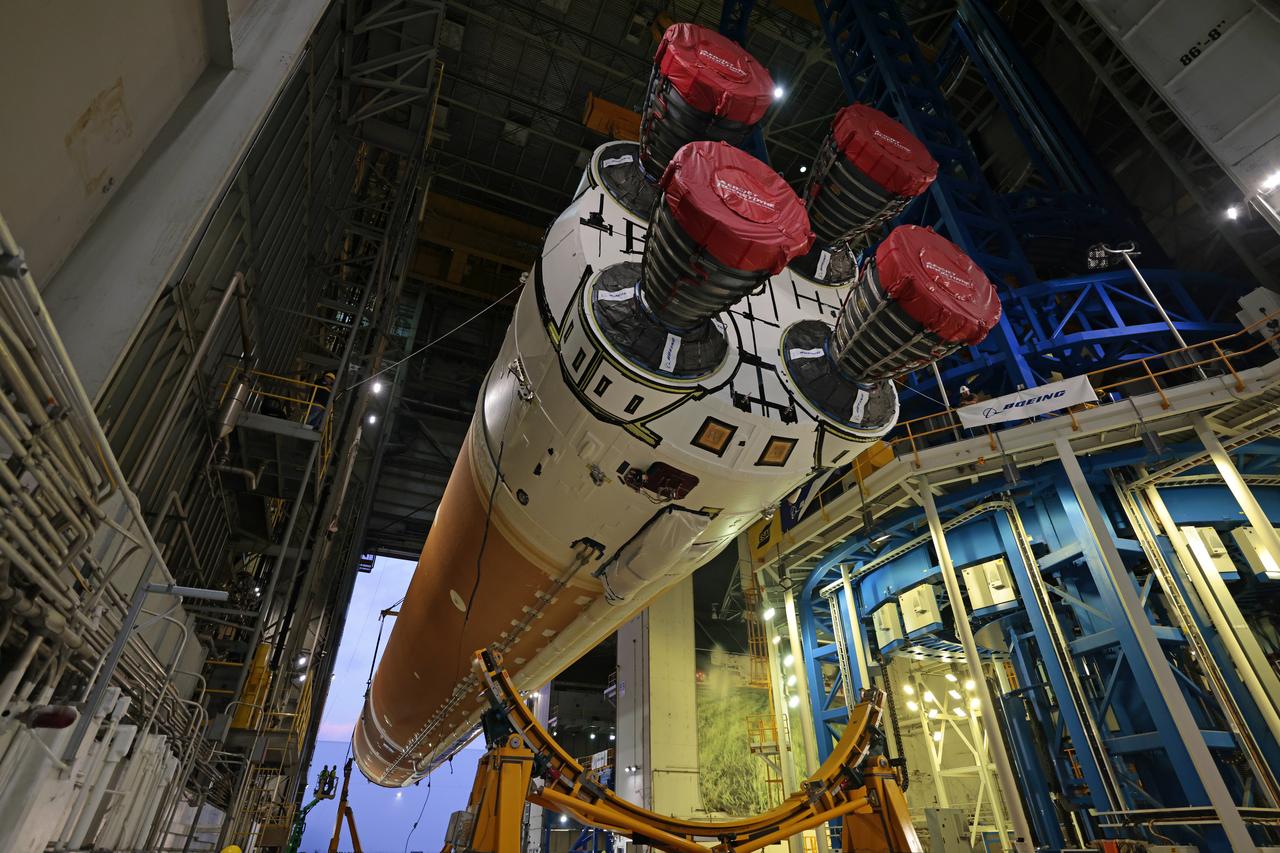
Technicians at Michoud Assembly Facility in New Orleans lift the core stage that will help launch the first crewed flight of NASA’s SLS (Space Launch System) rocket for the agency’s Artemis II mission. Teams at Michoud lifted the core stage on Thursday, July 11, 2024, onto NASA’s Multi-Purpose Transportation System, designed to transport SLS vehicle segments by waterway and roadway. It is tasked with transporting the vehicle from where it is manufactured to its intermediate test location and final launch destination. The core stage was lifted in preparation for its move onto the agency’s Pegasus barge, where it will be ferried to NASA’s Kennedy Space Center in Florida. Pegasus is maintained at Michoud. The core stage for the SLS mega rocket is the largest stage NASA has ever produced. At 212 feet tall, the stage consists of five major elements, including two huge propellant tanks that collectively hold more than 733,000 gallons of super chilled liquid propellant to feed four RS-25 engines at its base. During launch and flight, the stage will operate for just over eight minutes, producing more than 2 million pounds of thrust to help send a crew of four astronauts inside NASA’s Orion spacecraft onward to the Moon. All the major structures for every SLS core stage are fully manufactured at NASA Michoud. NASA is working to land the first woman, first person of color, and its first international partner astronaut on the Moon under Artemis. SLS is part of NASA’s backbone for deep space exploration, along with the Orion spacecraft and Gateway in orbit around the Moon and commercial human landing systems, next-generation space, next-generational spacesuits, and rovers on the lunar surface. SLS is the only rocket that can send Orion, astronauts, and supplies to the Moon in a single launch. Image credit: NASA/Michael DeMocker
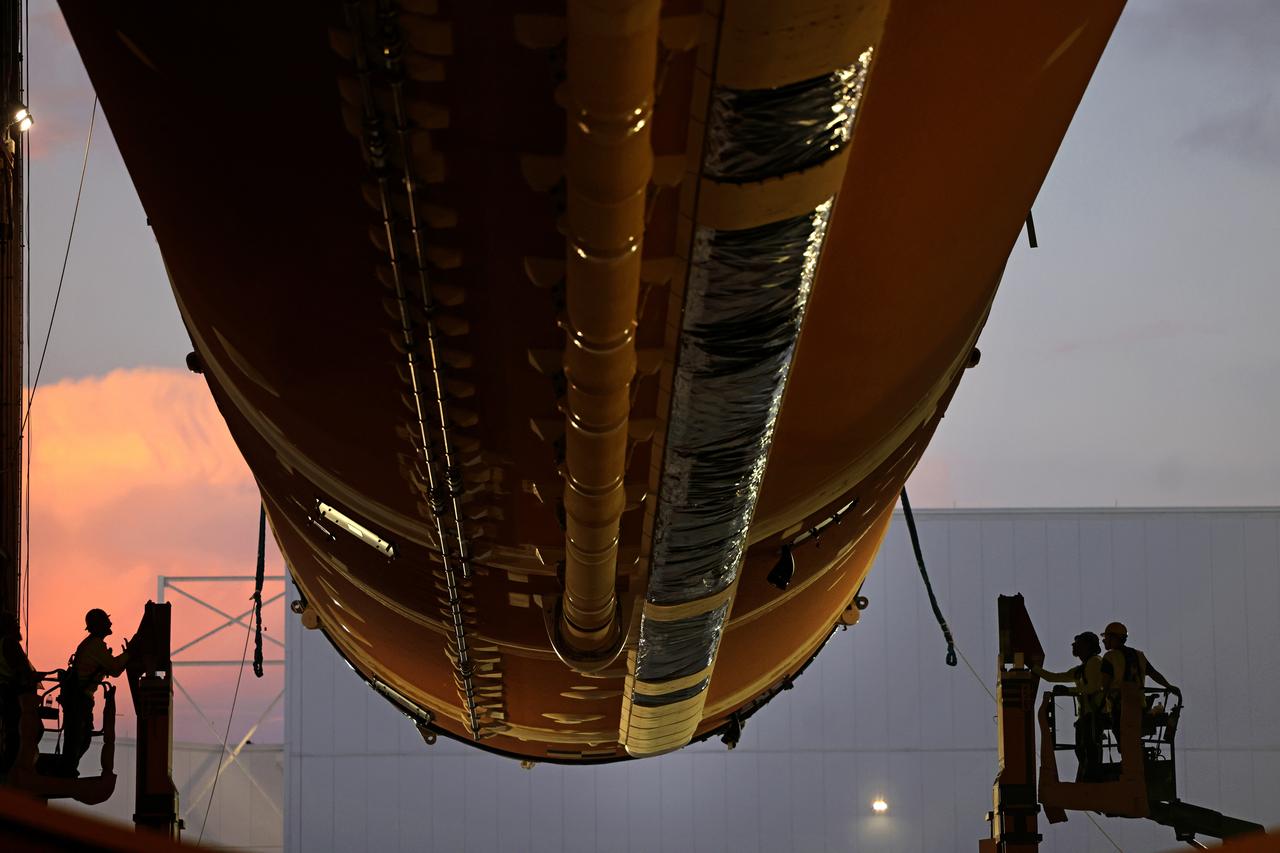
Technicians at Michoud Assembly Facility in New Orleans lift the core stage that will help launch the first crewed flight of NASA’s SLS (Space Launch System) rocket for the agency’s Artemis II mission. Teams at Michoud lifted the core stage on Thursday, July 11, 2024, onto NASA’s Multi-Purpose Transportation System, designed to transport SLS vehicle segments by waterway and roadway. It is tasked with transporting the vehicle from where it is manufactured to its intermediate test location and final launch destination. The core stage was lifted in preparation for its move onto the agency’s Pegasus barge, where it will be ferried to NASA’s Kennedy Space Center in Florida. Pegasus is maintained at Michoud. The core stage for the SLS mega rocket is the largest stage NASA has ever produced. At 212 feet tall, the stage consists of five major elements, including two huge propellant tanks that collectively hold more than 733,000 gallons of super chilled liquid propellant to feed four RS-25 engines at its base. During launch and flight, the stage will operate for just over eight minutes, producing more than 2 million pounds of thrust to help send a crew of four astronauts inside NASA’s Orion spacecraft onward to the Moon. All the major structures for every SLS core stage are fully manufactured at NASA Michoud. NASA is working to land the first woman, first person of color, and its first international partner astronaut on the Moon under Artemis. SLS is part of NASA’s backbone for deep space exploration, along with the Orion spacecraft and Gateway in orbit around the Moon and commercial human landing systems, next-generation space, next-generational spacesuits, and rovers on the lunar surface. SLS is the only rocket that can send Orion, astronauts, and supplies to the Moon in a single launch. Image credit: NASA/Michael DeMocker
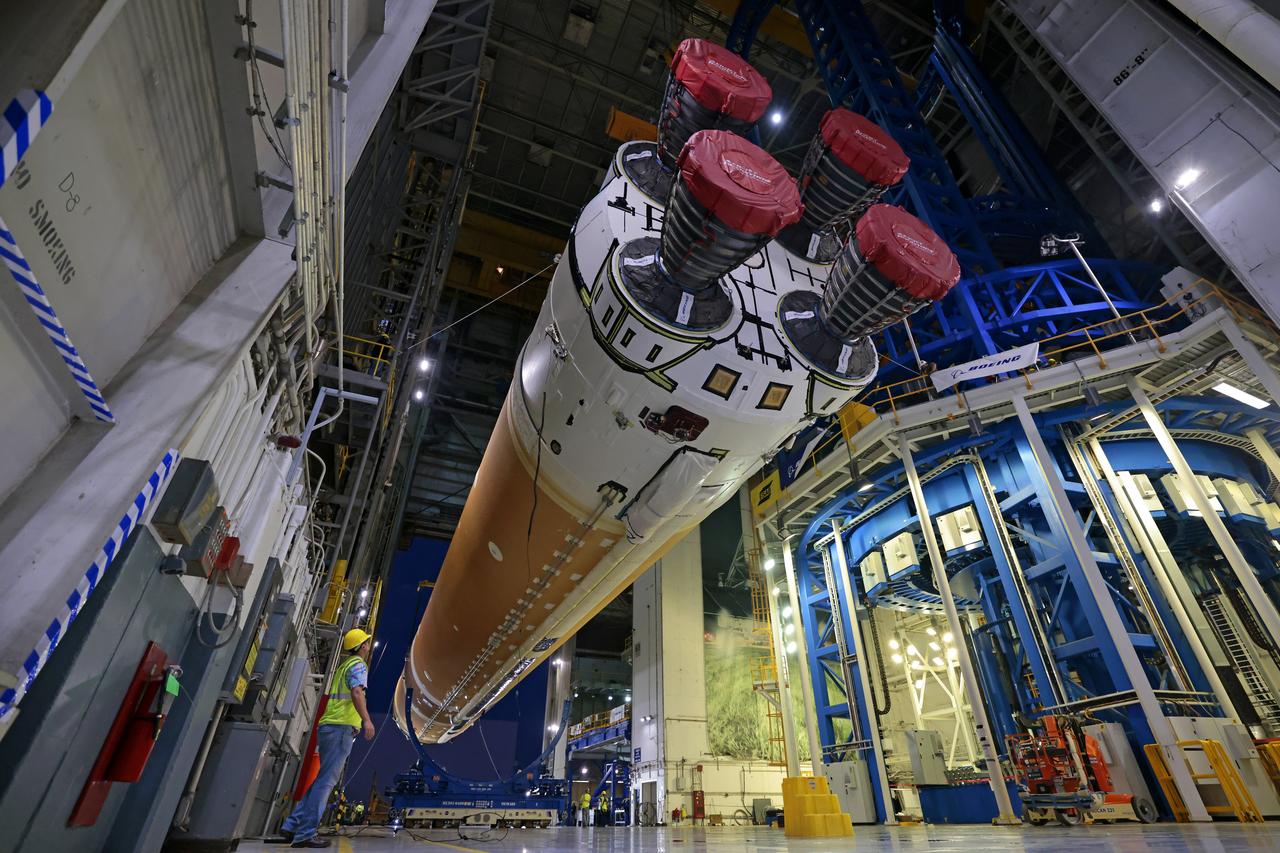
Technicians at Michoud Assembly Facility in New Orleans lift the core stage that will help launch the first crewed flight of NASA’s SLS (Space Launch System) rocket for the agency’s Artemis II mission. Teams at Michoud lifted the core stage on Thursday, July 11, 2024, onto NASA’s Multi-Purpose Transportation System, designed to transport SLS vehicle segments by waterway and roadway. It is tasked with transporting the vehicle from where it is manufactured to its intermediate test location and final launch destination. The core stage was lifted in preparation for its move onto the agency’s Pegasus barge, where it will be ferried to NASA’s Kennedy Space Center in Florida. Pegasus is maintained at Michoud. The core stage for the SLS mega rocket is the largest stage NASA has ever produced. At 212 feet tall, the stage consists of five major elements, including two huge propellant tanks that collectively hold more than 733,000 gallons of super chilled liquid propellant to feed four RS-25 engines at its base. During launch and flight, the stage will operate for just over eight minutes, producing more than 2 million pounds of thrust to help send a crew of four astronauts inside NASA’s Orion spacecraft onward to the Moon. All the major structures for every SLS core stage are fully manufactured at NASA Michoud. NASA is working to land the first woman, first person of color, and its first international partner astronaut on the Moon under Artemis. SLS is part of NASA’s backbone for deep space exploration, along with the Orion spacecraft and Gateway in orbit around the Moon and commercial human landing systems, next-generation space, next-generational spacesuits, and rovers on the lunar surface. SLS is the only rocket that can send Orion, astronauts, and supplies to the Moon in a single launch. Image credit: NASA/Michael DeMocker
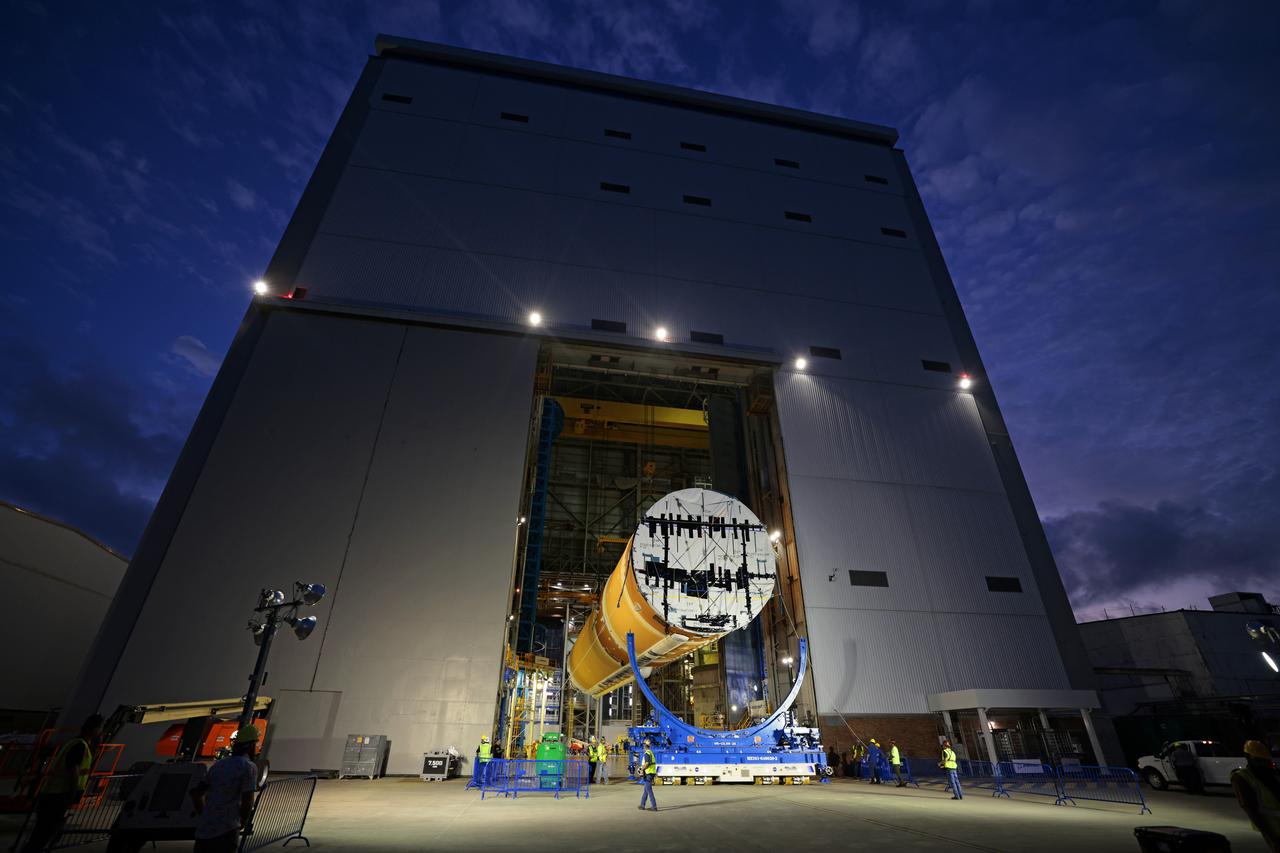
Technicians at Michoud Assembly Facility in New Orleans lift the core stage that will help launch the first crewed flight of NASA’s SLS (Space Launch System) rocket for the agency’s Artemis II mission. Teams at Michoud lifted the core stage on Thursday, July 11, 2024, onto NASA’s Multi-Purpose Transportation System, designed to transport SLS vehicle segments by waterway and roadway. It is tasked with transporting the vehicle from where it is manufactured to its intermediate test location and final launch destination. The core stage was lifted in preparation for its move onto the agency’s Pegasus barge, where it will be ferried to NASA’s Kennedy Space Center in Florida. Pegasus is maintained at Michoud. The core stage for the SLS mega rocket is the largest stage NASA has ever produced. At 212 feet tall, the stage consists of five major elements, including two huge propellant tanks that collectively hold more than 733,000 gallons of super chilled liquid propellant to feed four RS-25 engines at its base. During launch and flight, the stage will operate for just over eight minutes, producing more than 2 million pounds of thrust to help send a crew of four astronauts inside NASA’s Orion spacecraft onward to the Moon. All the major structures for every SLS core stage are fully manufactured at NASA Michoud. NASA is working to land the first woman, first person of color, and its first international partner astronaut on the Moon under Artemis. SLS is part of NASA’s backbone for deep space exploration, along with the Orion spacecraft and Gateway in orbit around the Moon and commercial human landing systems, next-generation space, next-generational spacesuits, and rovers on the lunar surface. SLS is the only rocket that can send Orion, astronauts, and supplies to the Moon in a single launch. Image credit: NASA/Michael DeMocker
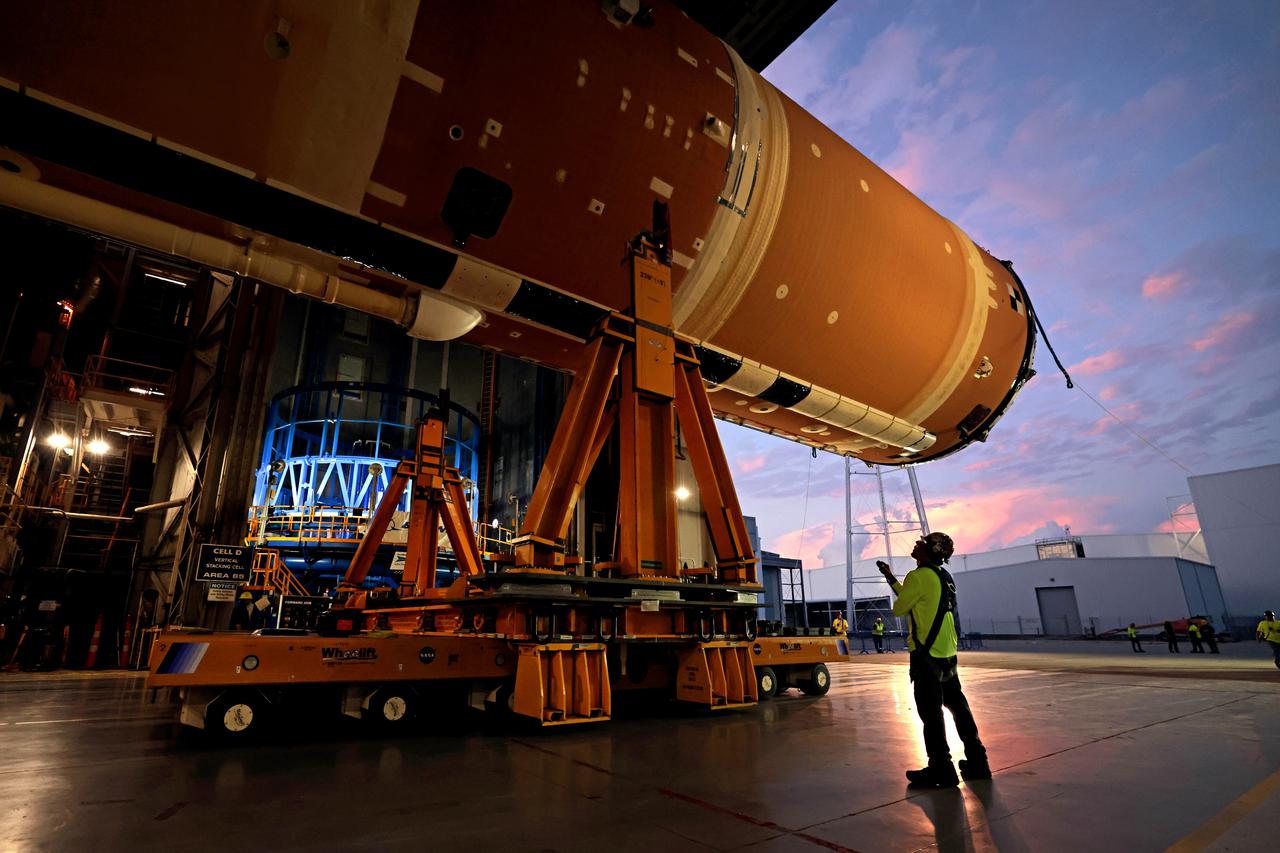
Technicians at Michoud Assembly Facility in New Orleans lift the core stage that will help launch the first crewed flight of NASA’s SLS (Space Launch System) rocket for the agency’s Artemis II mission. Teams at Michoud lifted the core stage on Thursday, July 11, 2024, onto NASA’s Multi-Purpose Transportation System, designed to transport SLS vehicle segments by waterway and roadway. It is tasked with transporting the vehicle from where it is manufactured to its intermediate test location and final launch destination. The core stage was lifted in preparation for its move onto the agency’s Pegasus barge, where it will be ferried to NASA’s Kennedy Space Center in Florida. Pegasus is maintained at Michoud. The core stage for the SLS mega rocket is the largest stage NASA has ever produced. At 212 feet tall, the stage consists of five major elements, including two huge propellant tanks that collectively hold more than 733,000 gallons of super chilled liquid propellant to feed four RS-25 engines at its base. During launch and flight, the stage will operate for just over eight minutes, producing more than 2 million pounds of thrust to help send a crew of four astronauts inside NASA’s Orion spacecraft onward to the Moon. All the major structures for every SLS core stage are fully manufactured at NASA Michoud. NASA is working to land the first woman, first person of color, and its first international partner astronaut on the Moon under Artemis. SLS is part of NASA’s backbone for deep space exploration, along with the Orion spacecraft and Gateway in orbit around the Moon and commercial human landing systems, next-generation space, next-generational spacesuits, and rovers on the lunar surface. SLS is the only rocket that can send Orion, astronauts, and supplies to the Moon in a single launch. Image credit: NASA/Michael DeMocker
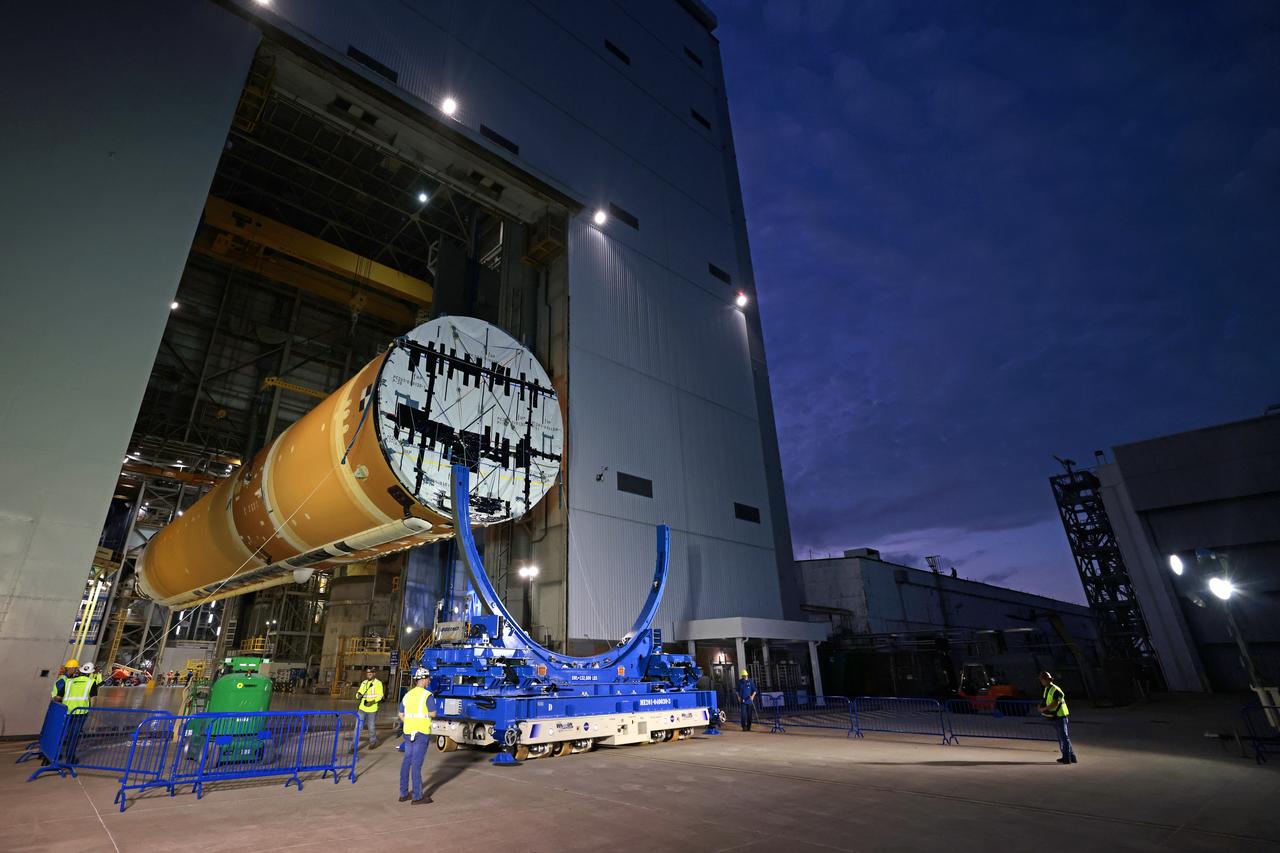
Technicians at Michoud Assembly Facility in New Orleans lift the core stage that will help launch the first crewed flight of NASA’s SLS (Space Launch System) rocket for the agency’s Artemis II mission. Teams at Michoud lifted the core stage on Thursday, July 11, 2024, onto NASA’s Multi-Purpose Transportation System, designed to transport SLS vehicle segments by waterway and roadway. It is tasked with transporting the vehicle from where it is manufactured to its intermediate test location and final launch destination. The core stage was lifted in preparation for its move onto the agency’s Pegasus barge, where it will be ferried to NASA’s Kennedy Space Center in Florida. Pegasus is maintained at Michoud. The core stage for the SLS mega rocket is the largest stage NASA has ever produced. At 212 feet tall, the stage consists of five major elements, including two huge propellant tanks that collectively hold more than 733,000 gallons of super chilled liquid propellant to feed four RS-25 engines at its base. During launch and flight, the stage will operate for just over eight minutes, producing more than 2 million pounds of thrust to help send a crew of four astronauts inside NASA’s Orion spacecraft onward to the Moon. All the major structures for every SLS core stage are fully manufactured at NASA Michoud. NASA is working to land the first woman, first person of color, and its first international partner astronaut on the Moon under Artemis. SLS is part of NASA’s backbone for deep space exploration, along with the Orion spacecraft and Gateway in orbit around the Moon and commercial human landing systems, next-generation space, next-generational spacesuits, and rovers on the lunar surface. SLS is the only rocket that can send Orion, astronauts, and supplies to the Moon in a single launch. Image credit: NASA/Michael DeMocker
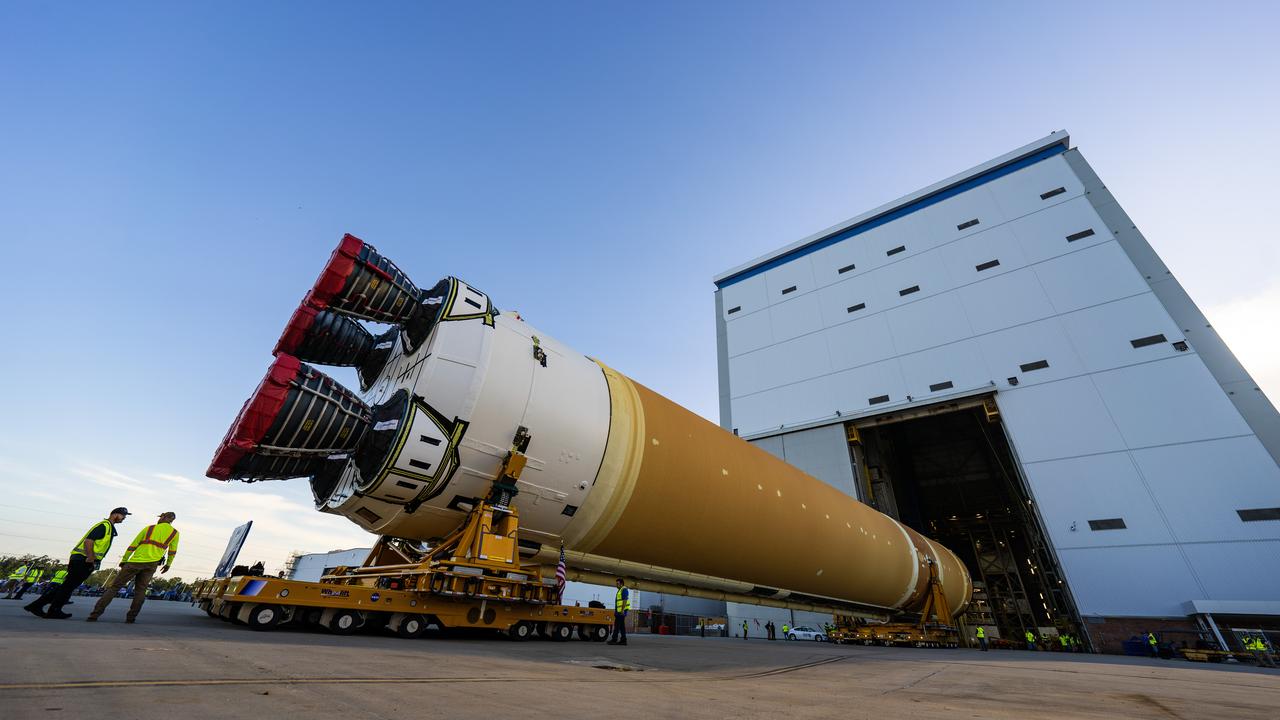
These images and videos show team members moving the first core stage that will help launch the first crewed flight of NASA’s SLS (Space Launch System) rocket for the agency’s Artemis II mission. The move marked the first time a fully assembled Moon rocket stage for a crewed mission has rolled out from NASA’s Michoud Assembly Facility in New Orleans since the Apollo Program, The core stage was moved onto the agency’s Pegasus barge, where it will be ferried to NASA’s Kennedy Space Center in Florida. The core stage for the SLS mega rocket is the largest stage NASA has ever produced. At 212 feet tall, the stage consists of five major elements, including two huge propellant tanks that collectively hold more than 733,000 gallons of super chilled liquid propellant to feed four RS-25 engines at its base. During launch and flight, the stage will operate for just over eight minutes, producing more than 2 million pounds of thrust to help send a crew of four astronauts inside NASA’s Orion spacecraft onward to the Moon. NASA is working to land the first woman, first person of color, and its first international partner astronaut on the Moon under Artemis. SLS is part of NASA’s backbone for deep space exploration, along with the Orion spacecraft and Gateway in orbit around the Moon and commercial human landing systems, next-generation space, next-generational spacesuits, and rovers on the lunar surface. SLS is the only rocket that can send Orion, astronauts, and supplies to the Moon in a single launch.
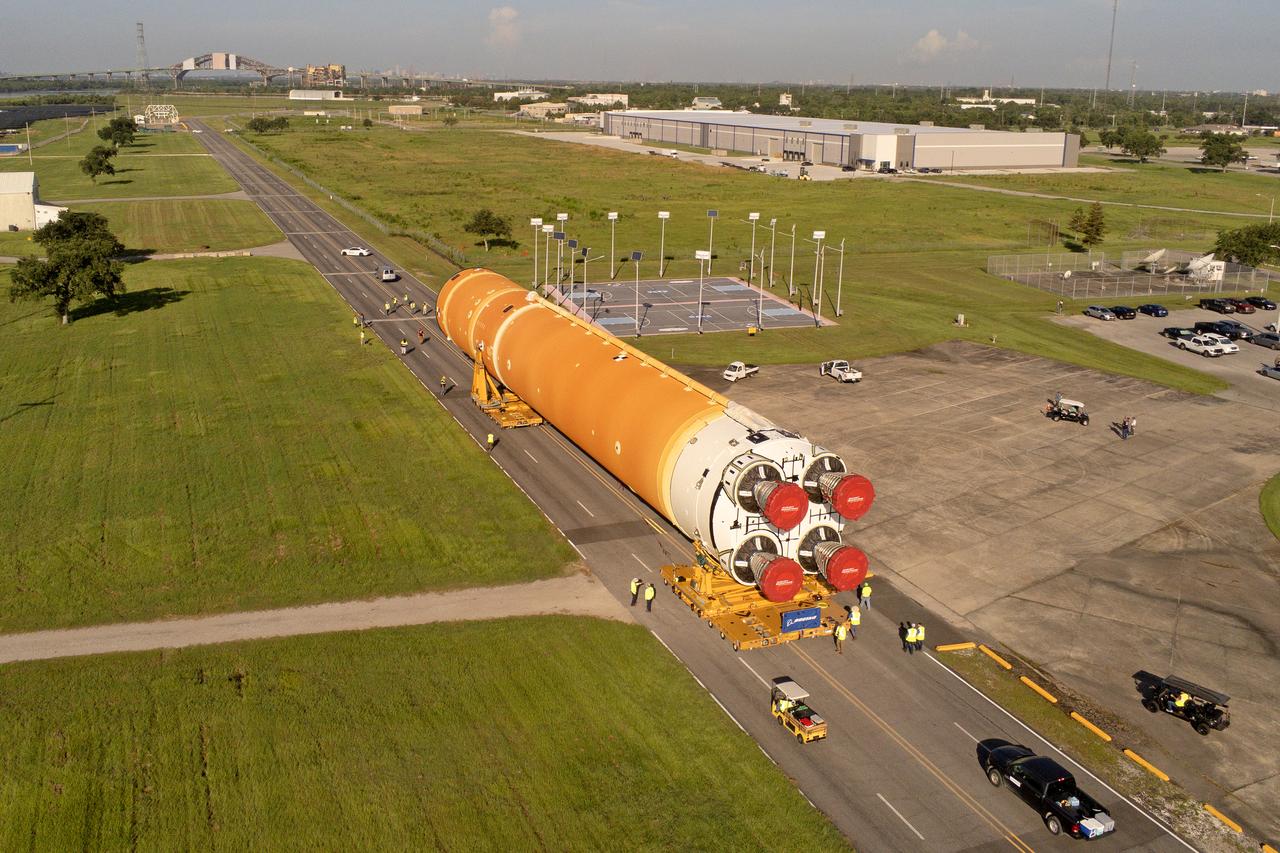
These images and videos show team members moving the first core stage that will help launch the first crewed flight of NASA’s SLS (Space Launch System) rocket for the agency’s Artemis II mission. The move marked the first time a fully assembled Moon rocket stage for a crewed mission has rolled out from NASA’s Michoud Assembly Facility in New Orleans since the Apollo Program, The core stage was moved onto the agency’s Pegasus barge, where it will be ferried to NASA’s Kennedy Space Center in Florida. The core stage for the SLS mega rocket is the largest stage NASA has ever produced. At 212 feet tall, the stage consists of five major elements, including two huge propellant tanks that collectively hold more than 733,000 gallons of super chilled liquid propellant to feed four RS-25 engines at its base. During launch and flight, the stage will operate for just over eight minutes, producing more than 2 million pounds of thrust to help send a crew of four astronauts inside NASA’s Orion spacecraft onward to the Moon. NASA is working to land the first woman, first person of color, and its first international partner astronaut on the Moon under Artemis. SLS is part of NASA’s backbone for deep space exploration, along with the Orion spacecraft and Gateway in orbit around the Moon and commercial human landing systems, next-generation space, next-generational spacesuits, and rovers on the lunar surface. SLS is the only rocket that can send Orion, astronauts, and supplies to the Moon in a single launch.
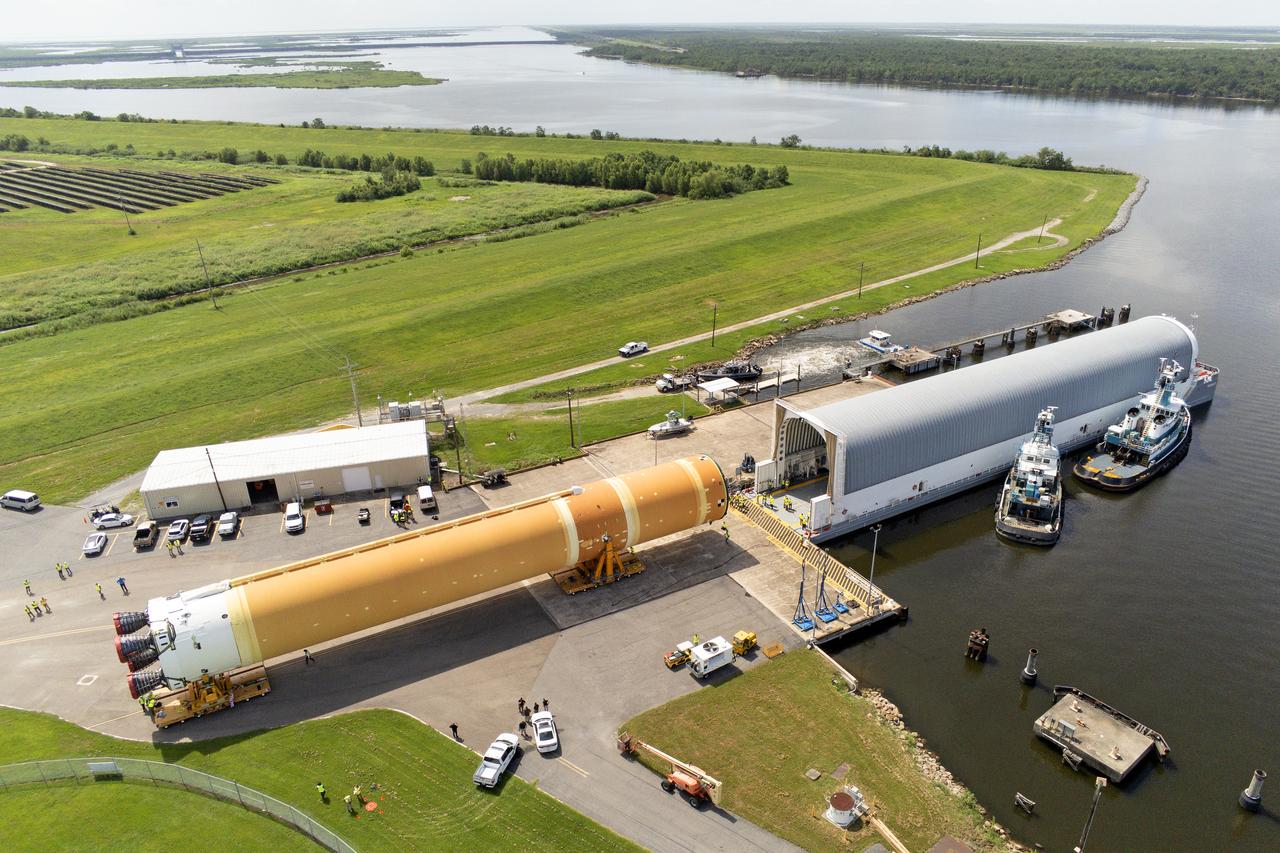
These images and videos show team members moving the first core stage that will help launch the first crewed flight of NASA’s SLS (Space Launch System) rocket for the agency’s Artemis II mission. The move marked the first time a fully assembled Moon rocket stage for a crewed mission has rolled out from NASA’s Michoud Assembly Facility in New Orleans since the Apollo Program, The core stage was moved onto the agency’s Pegasus barge, where it will be ferried to NASA’s Kennedy Space Center in Florida. The core stage for the SLS mega rocket is the largest stage NASA has ever produced. At 212 feet tall, the stage consists of five major elements, including two huge propellant tanks that collectively hold more than 733,000 gallons of super chilled liquid propellant to feed four RS-25 engines at its base. During launch and flight, the stage will operate for just over eight minutes, producing more than 2 million pounds of thrust to help send a crew of four astronauts inside NASA’s Orion spacecraft onward to the Moon. NASA is working to land the first woman, first person of color, and its first international partner astronaut on the Moon under Artemis. SLS is part of NASA’s backbone for deep space exploration, along with the Orion spacecraft and Gateway in orbit around the Moon and commercial human landing systems, next-generation space, next-generational spacesuits, and rovers on the lunar surface. SLS is the only rocket that can send Orion, astronauts, and supplies to the Moon in a single launch.
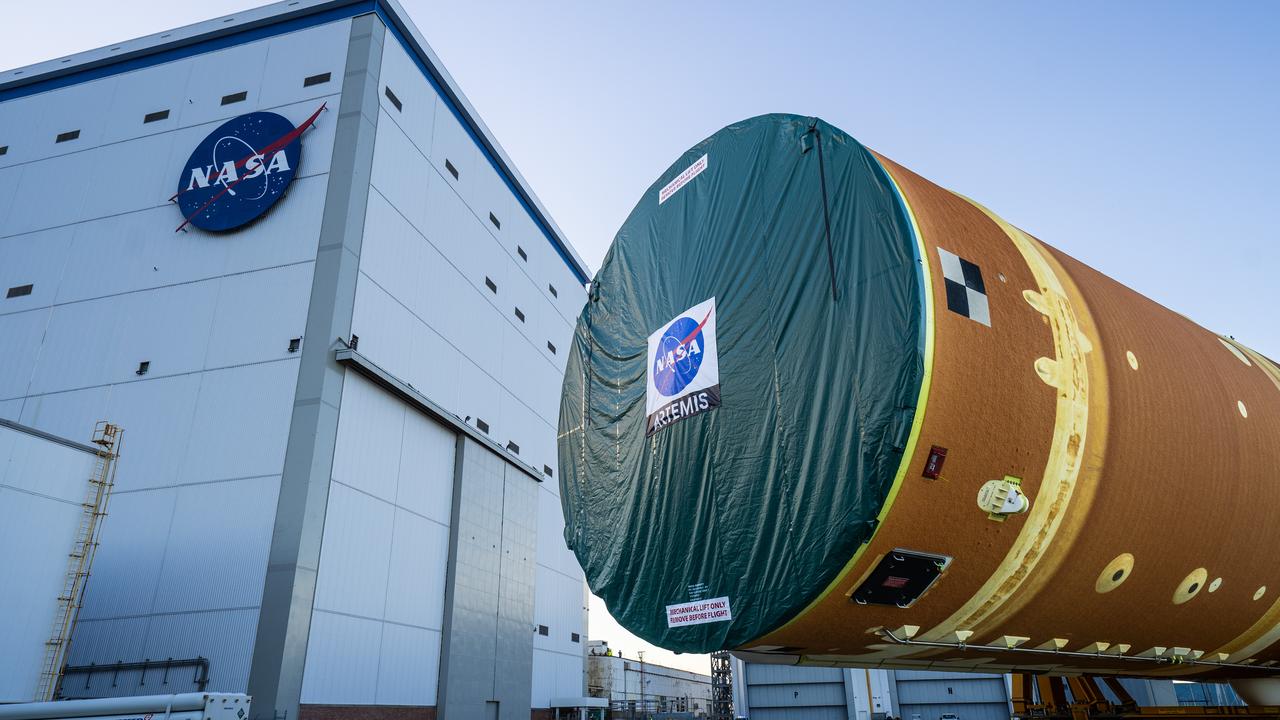
These images and videos show team members moving the first core stage that will help launch the first crewed flight of NASA’s SLS (Space Launch System) rocket for the agency’s Artemis II mission. The move marked the first time a fully assembled Moon rocket stage for a crewed mission has rolled out from NASA’s Michoud Assembly Facility in New Orleans since the Apollo Program, The core stage was moved onto the agency’s Pegasus barge, where it will be ferried to NASA’s Kennedy Space Center in Florida. The core stage for the SLS mega rocket is the largest stage NASA has ever produced. At 212 feet tall, the stage consists of five major elements, including two huge propellant tanks that collectively hold more than 733,000 gallons of super chilled liquid propellant to feed four RS-25 engines at its base. During launch and flight, the stage will operate for just over eight minutes, producing more than 2 million pounds of thrust to help send a crew of four astronauts inside NASA’s Orion spacecraft onward to the Moon. NASA is working to land the first woman, first person of color, and its first international partner astronaut on the Moon under Artemis. SLS is part of NASA’s backbone for deep space exploration, along with the Orion spacecraft and Gateway in orbit around the Moon and commercial human landing systems, next-generation space, next-generational spacesuits, and rovers on the lunar surface. SLS is the only rocket that can send Orion, astronauts, and supplies to the Moon in a single launch.
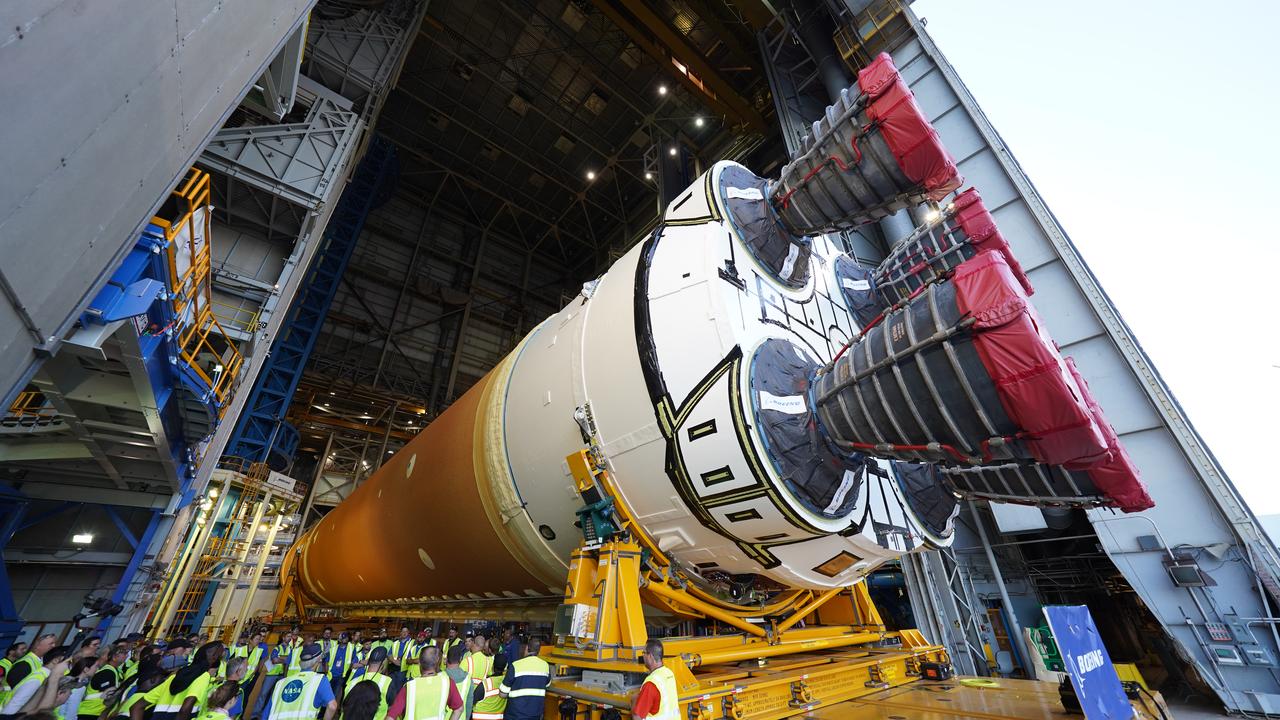
These images and videos show team members moving the first core stage that will help launch the first crewed flight of NASA’s SLS (Space Launch System) rocket for the agency’s Artemis II mission. The move marked the first time a fully assembled Moon rocket stage for a crewed mission has rolled out from NASA’s Michoud Assembly Facility in New Orleans since the Apollo Program, The core stage was moved onto the agency’s Pegasus barge, where it will be ferried to NASA’s Kennedy Space Center in Florida. The core stage for the SLS mega rocket is the largest stage NASA has ever produced. At 212 feet tall, the stage consists of five major elements, including two huge propellant tanks that collectively hold more than 733,000 gallons of super chilled liquid propellant to feed four RS-25 engines at its base. During launch and flight, the stage will operate for just over eight minutes, producing more than 2 million pounds of thrust to help send a crew of four astronauts inside NASA’s Orion spacecraft onward to the Moon. NASA is working to land the first woman, first person of color, and its first international partner astronaut on the Moon under Artemis. SLS is part of NASA’s backbone for deep space exploration, along with the Orion spacecraft and Gateway in orbit around the Moon and commercial human landing systems, next-generation space, next-generational spacesuits, and rovers on the lunar surface. SLS is the only rocket that can send Orion, astronauts, and supplies to the Moon in a single launch.
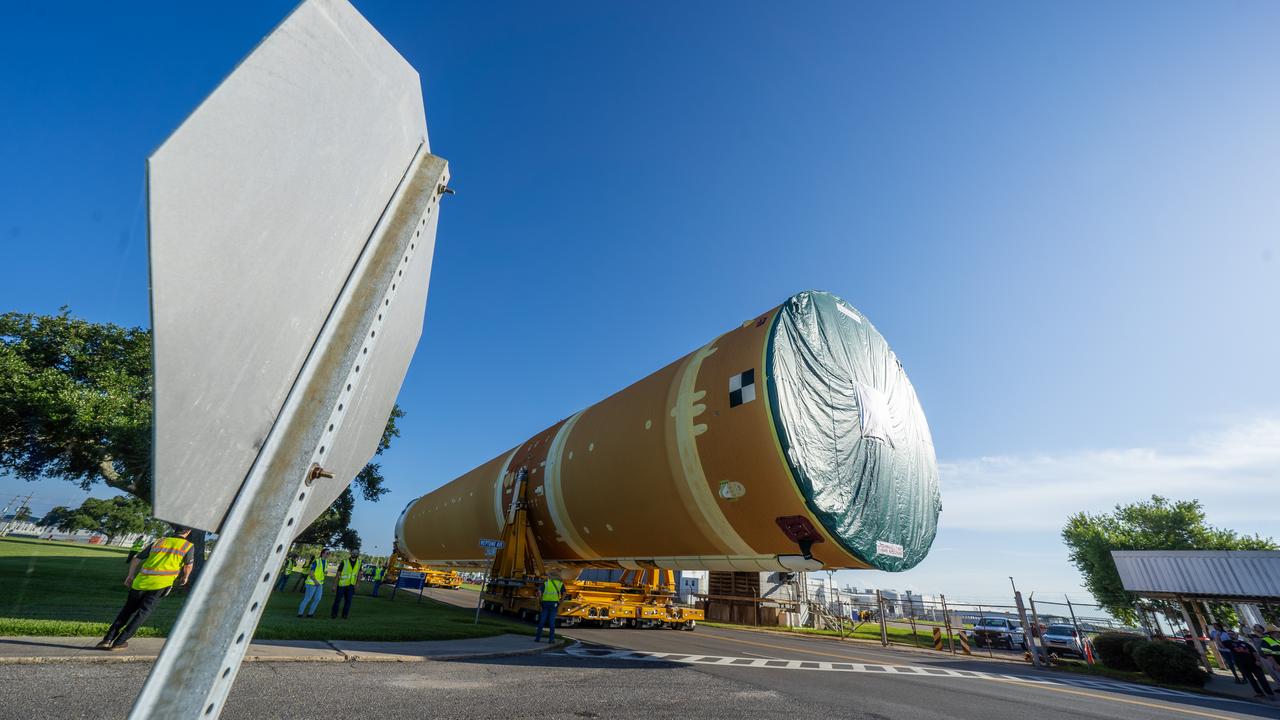
These images and videos show team members moving the first core stage that will help launch the first crewed flight of NASA’s SLS (Space Launch System) rocket for the agency’s Artemis II mission. The move marked the first time a fully assembled Moon rocket stage for a crewed mission has rolled out from NASA’s Michoud Assembly Facility in New Orleans since the Apollo Program, The core stage was moved onto the agency’s Pegasus barge, where it will be ferried to NASA’s Kennedy Space Center in Florida. The core stage for the SLS mega rocket is the largest stage NASA has ever produced. At 212 feet tall, the stage consists of five major elements, including two huge propellant tanks that collectively hold more than 733,000 gallons of super chilled liquid propellant to feed four RS-25 engines at its base. During launch and flight, the stage will operate for just over eight minutes, producing more than 2 million pounds of thrust to help send a crew of four astronauts inside NASA’s Orion spacecraft onward to the Moon. NASA is working to land the first woman, first person of color, and its first international partner astronaut on the Moon under Artemis. SLS is part of NASA’s backbone for deep space exploration, along with the Orion spacecraft and Gateway in orbit around the Moon and commercial human landing systems, next-generation space, next-generational spacesuits, and rovers on the lunar surface. SLS is the only rocket that can send Orion, astronauts, and supplies to the Moon in a single launch.
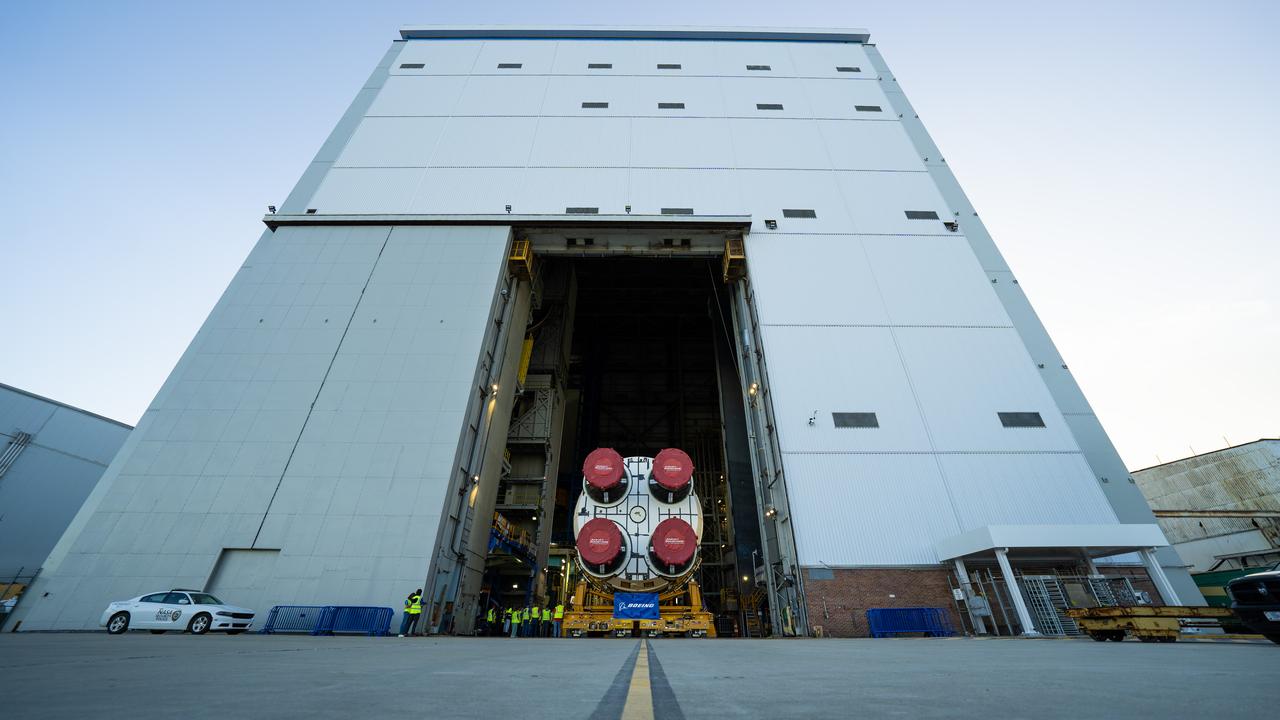
These images and videos show team members moving the first core stage that will help launch the first crewed flight of NASA’s SLS (Space Launch System) rocket for the agency’s Artemis II mission. The move marked the first time a fully assembled Moon rocket stage for a crewed mission has rolled out from NASA’s Michoud Assembly Facility in New Orleans since the Apollo Program, The core stage was moved onto the agency’s Pegasus barge, where it will be ferried to NASA’s Kennedy Space Center in Florida. The core stage for the SLS mega rocket is the largest stage NASA has ever produced. At 212 feet tall, the stage consists of five major elements, including two huge propellant tanks that collectively hold more than 733,000 gallons of super chilled liquid propellant to feed four RS-25 engines at its base. During launch and flight, the stage will operate for just over eight minutes, producing more than 2 million pounds of thrust to help send a crew of four astronauts inside NASA’s Orion spacecraft onward to the Moon. NASA is working to land the first woman, first person of color, and its first international partner astronaut on the Moon under Artemis. SLS is part of NASA’s backbone for deep space exploration, along with the Orion spacecraft and Gateway in orbit around the Moon and commercial human landing systems, next-generation space, next-generational spacesuits, and rovers on the lunar surface. SLS is the only rocket that can send Orion, astronauts, and supplies to the Moon in a single launch.
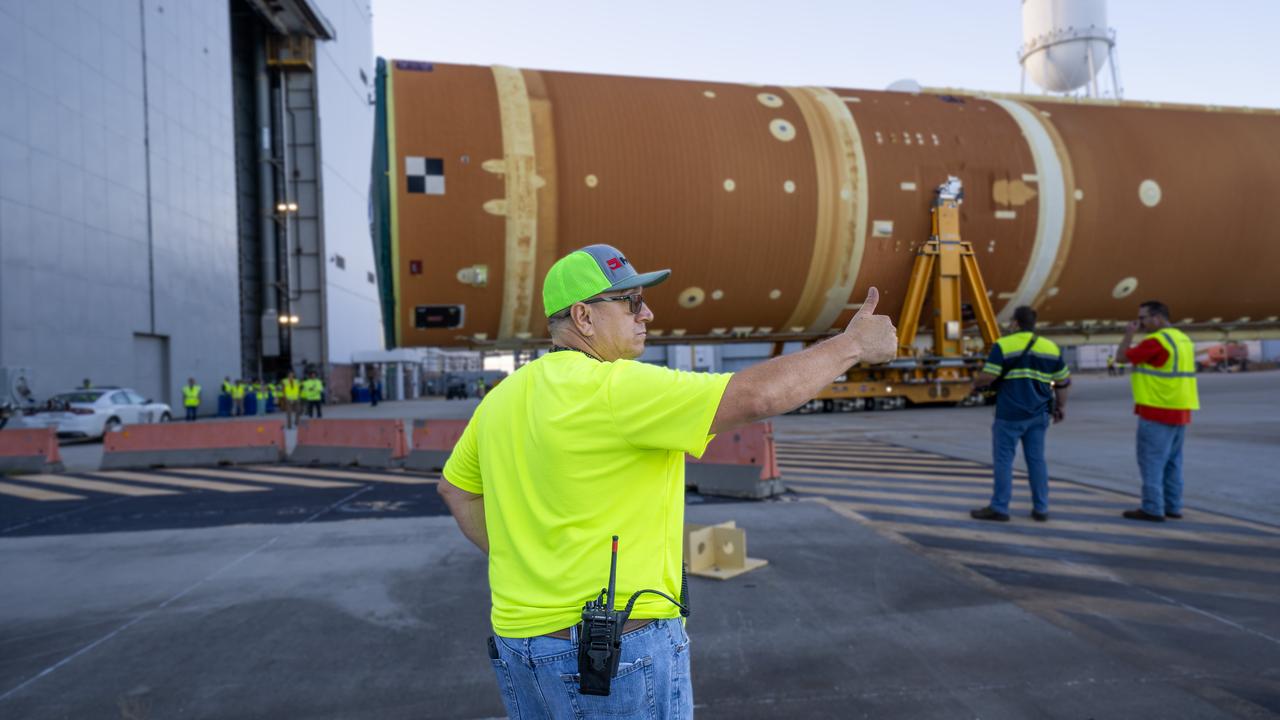
These images and videos show team members moving the first core stage that will help launch the first crewed flight of NASA’s SLS (Space Launch System) rocket for the agency’s Artemis II mission. The move marked the first time a fully assembled Moon rocket stage for a crewed mission has rolled out from NASA’s Michoud Assembly Facility in New Orleans since the Apollo Program, The core stage was moved onto the agency’s Pegasus barge, where it will be ferried to NASA’s Kennedy Space Center in Florida. The core stage for the SLS mega rocket is the largest stage NASA has ever produced. At 212 feet tall, the stage consists of five major elements, including two huge propellant tanks that collectively hold more than 733,000 gallons of super chilled liquid propellant to feed four RS-25 engines at its base. During launch and flight, the stage will operate for just over eight minutes, producing more than 2 million pounds of thrust to help send a crew of four astronauts inside NASA’s Orion spacecraft onward to the Moon. NASA is working to land the first woman, first person of color, and its first international partner astronaut on the Moon under Artemis. SLS is part of NASA’s backbone for deep space exploration, along with the Orion spacecraft and Gateway in orbit around the Moon and commercial human landing systems, next-generation space, next-generational spacesuits, and rovers on the lunar surface. SLS is the only rocket that can send Orion, astronauts, and supplies to the Moon in a single launch.
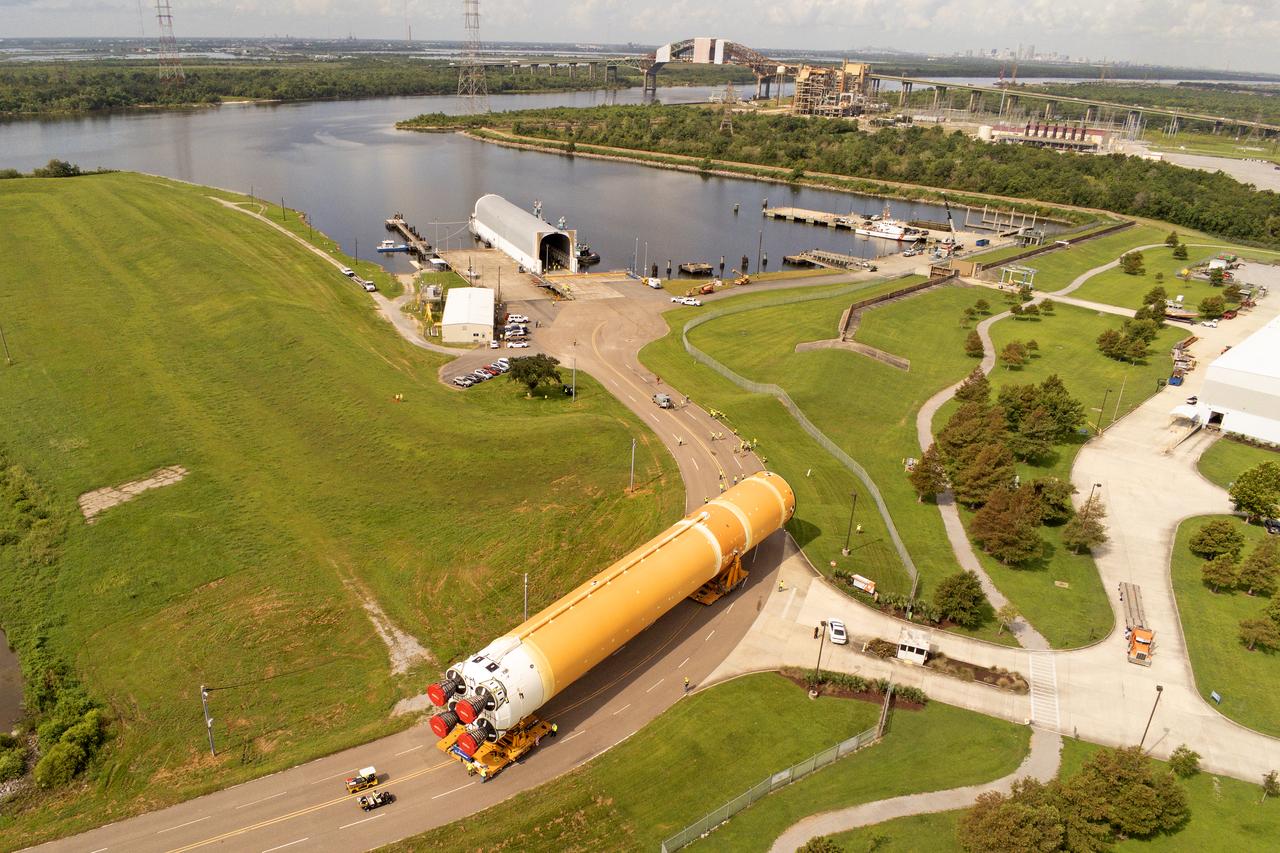
These images and videos show team members moving the first core stage that will help launch the first crewed flight of NASA’s SLS (Space Launch System) rocket for the agency’s Artemis II mission. The move marked the first time a fully assembled Moon rocket stage for a crewed mission has rolled out from NASA’s Michoud Assembly Facility in New Orleans since the Apollo Program, The core stage was moved onto the agency’s Pegasus barge, where it will be ferried to NASA’s Kennedy Space Center in Florida. The core stage for the SLS mega rocket is the largest stage NASA has ever produced. At 212 feet tall, the stage consists of five major elements, including two huge propellant tanks that collectively hold more than 733,000 gallons of super chilled liquid propellant to feed four RS-25 engines at its base. During launch and flight, the stage will operate for just over eight minutes, producing more than 2 million pounds of thrust to help send a crew of four astronauts inside NASA’s Orion spacecraft onward to the Moon. NASA is working to land the first woman, first person of color, and its first international partner astronaut on the Moon under Artemis. SLS is part of NASA’s backbone for deep space exploration, along with the Orion spacecraft and Gateway in orbit around the Moon and commercial human landing systems, next-generation space, next-generational spacesuits, and rovers on the lunar surface. SLS is the only rocket that can send Orion, astronauts, and supplies to the Moon in a single launch.
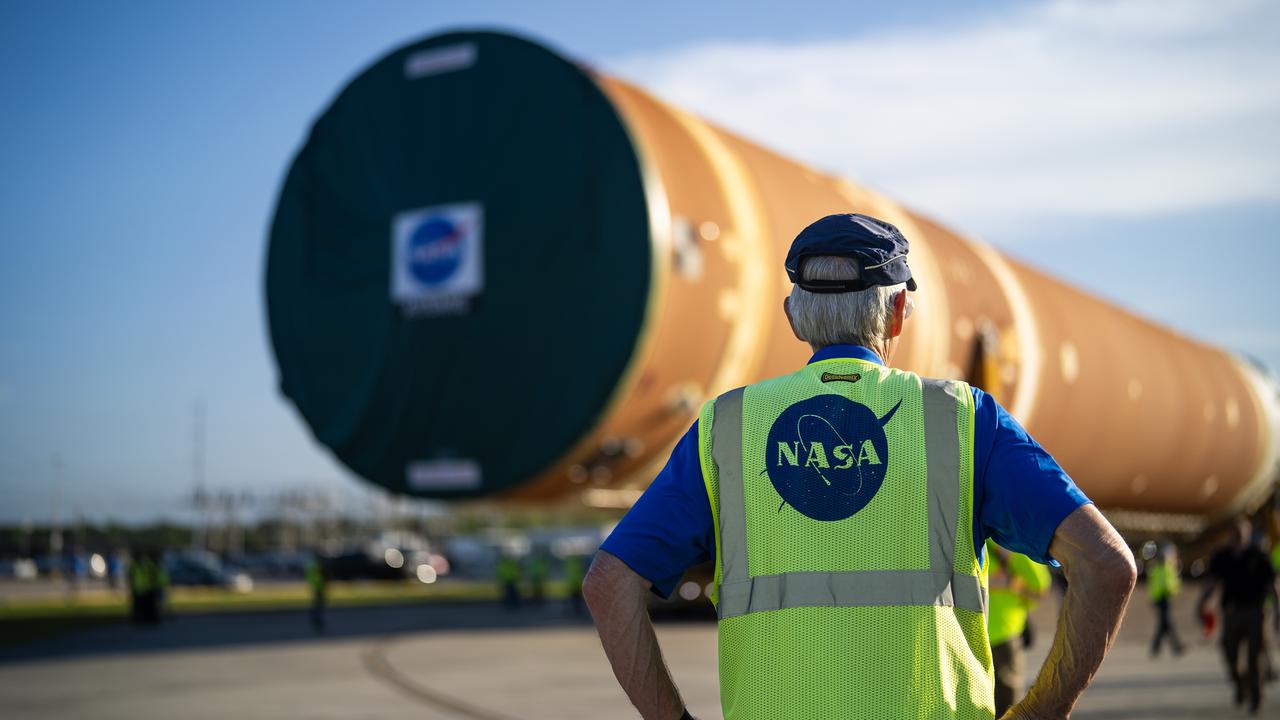
These images and videos show team members moving the first core stage that will help launch the first crewed flight of NASA’s SLS (Space Launch System) rocket for the agency’s Artemis II mission. The move marked the first time a fully assembled Moon rocket stage for a crewed mission has rolled out from NASA’s Michoud Assembly Facility in New Orleans since the Apollo Program, The core stage was moved onto the agency’s Pegasus barge, where it will be ferried to NASA’s Kennedy Space Center in Florida. The core stage for the SLS mega rocket is the largest stage NASA has ever produced. At 212 feet tall, the stage consists of five major elements, including two huge propellant tanks that collectively hold more than 733,000 gallons of super chilled liquid propellant to feed four RS-25 engines at its base. During launch and flight, the stage will operate for just over eight minutes, producing more than 2 million pounds of thrust to help send a crew of four astronauts inside NASA’s Orion spacecraft onward to the Moon. NASA is working to land the first woman, first person of color, and its first international partner astronaut on the Moon under Artemis. SLS is part of NASA’s backbone for deep space exploration, along with the Orion spacecraft and Gateway in orbit around the Moon and commercial human landing systems, next-generation space, next-generational spacesuits, and rovers on the lunar surface. SLS is the only rocket that can send Orion, astronauts, and supplies to the Moon in a single launch.
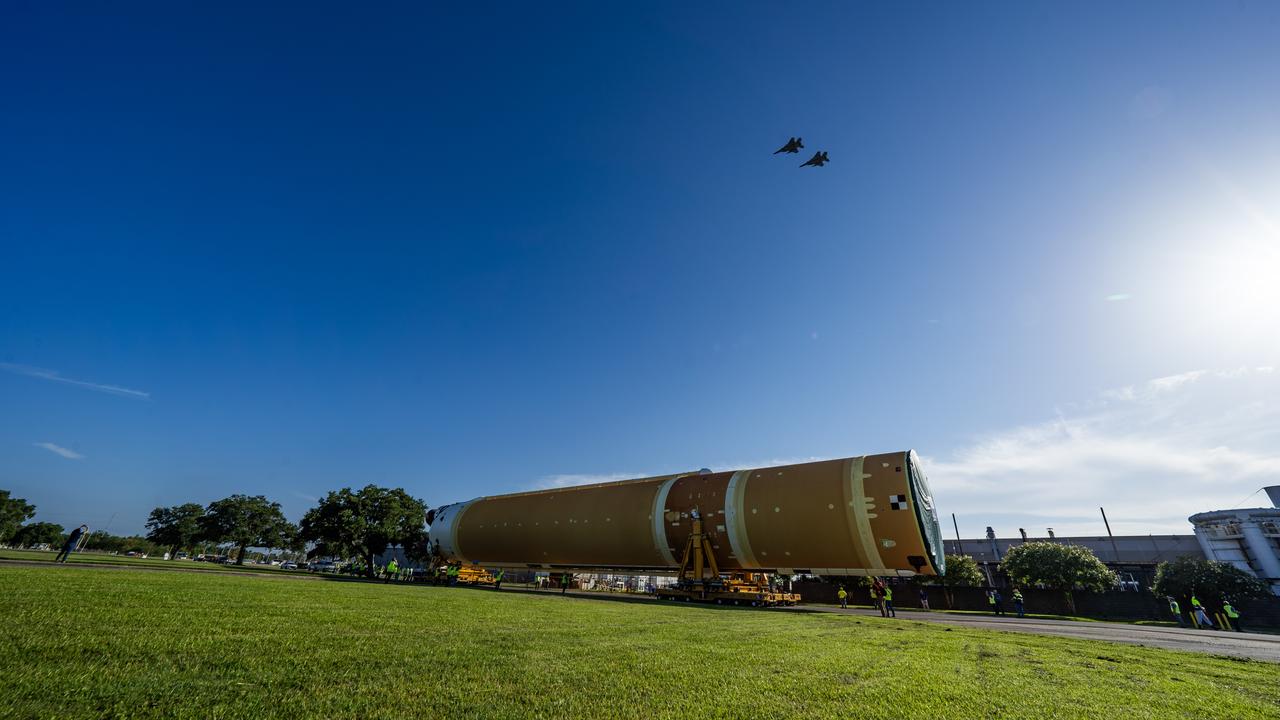
These images and videos show team members moving the first core stage that will help launch the first crewed flight of NASA’s SLS (Space Launch System) rocket for the agency’s Artemis II mission. The move marked the first time a fully assembled Moon rocket stage for a crewed mission has rolled out from NASA’s Michoud Assembly Facility in New Orleans since the Apollo Program, The core stage was moved onto the agency’s Pegasus barge, where it will be ferried to NASA’s Kennedy Space Center in Florida. The core stage for the SLS mega rocket is the largest stage NASA has ever produced. At 212 feet tall, the stage consists of five major elements, including two huge propellant tanks that collectively hold more than 733,000 gallons of super chilled liquid propellant to feed four RS-25 engines at its base. During launch and flight, the stage will operate for just over eight minutes, producing more than 2 million pounds of thrust to help send a crew of four astronauts inside NASA’s Orion spacecraft onward to the Moon. NASA is working to land the first woman, first person of color, and its first international partner astronaut on the Moon under Artemis. SLS is part of NASA’s backbone for deep space exploration, along with the Orion spacecraft and Gateway in orbit around the Moon and commercial human landing systems, next-generation space, next-generational spacesuits, and rovers on the lunar surface. SLS is the only rocket that can send Orion, astronauts, and supplies to the Moon in a single launch.
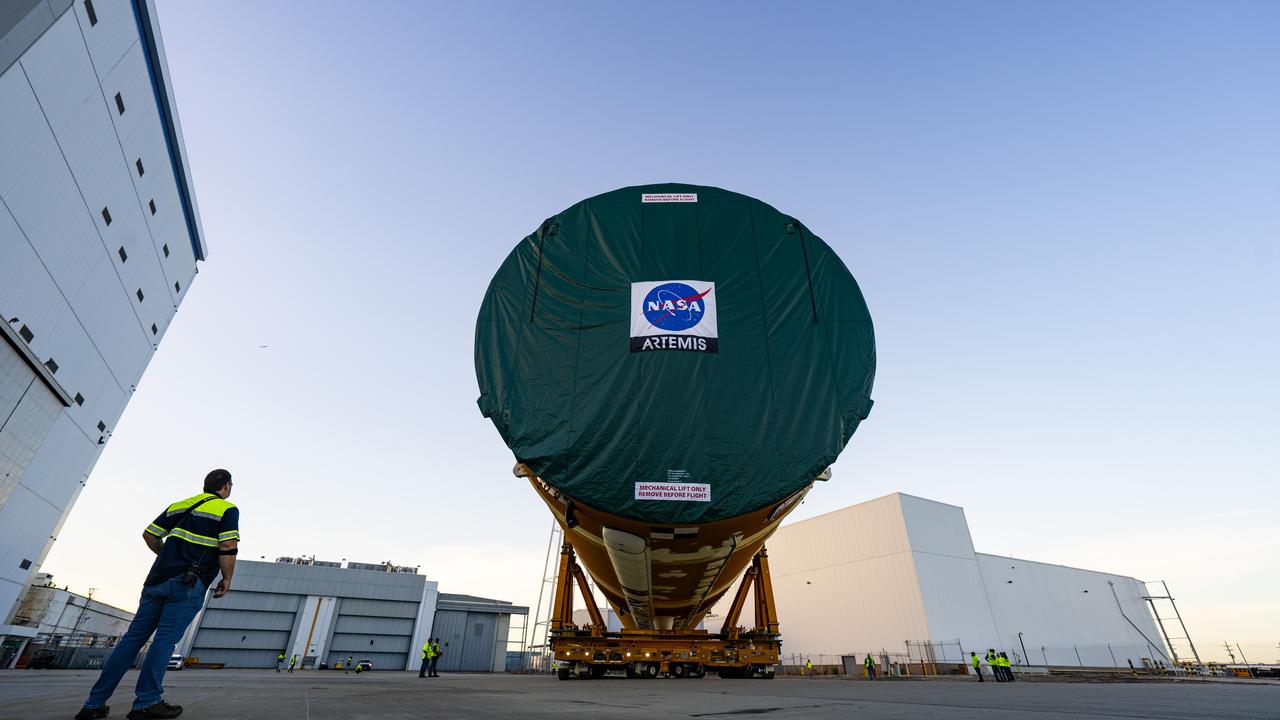
These images and videos show team members moving the first core stage that will help launch the first crewed flight of NASA’s SLS (Space Launch System) rocket for the agency’s Artemis II mission. The move marked the first time a fully assembled Moon rocket stage for a crewed mission has rolled out from NASA’s Michoud Assembly Facility in New Orleans since the Apollo Program, The core stage was moved onto the agency’s Pegasus barge, where it will be ferried to NASA’s Kennedy Space Center in Florida. The core stage for the SLS mega rocket is the largest stage NASA has ever produced. At 212 feet tall, the stage consists of five major elements, including two huge propellant tanks that collectively hold more than 733,000 gallons of super chilled liquid propellant to feed four RS-25 engines at its base. During launch and flight, the stage will operate for just over eight minutes, producing more than 2 million pounds of thrust to help send a crew of four astronauts inside NASA’s Orion spacecraft onward to the Moon. NASA is working to land the first woman, first person of color, and its first international partner astronaut on the Moon under Artemis. SLS is part of NASA’s backbone for deep space exploration, along with the Orion spacecraft and Gateway in orbit around the Moon and commercial human landing systems, next-generation space, next-generational spacesuits, and rovers on the lunar surface. SLS is the only rocket that can send Orion, astronauts, and supplies to the Moon in a single launch.
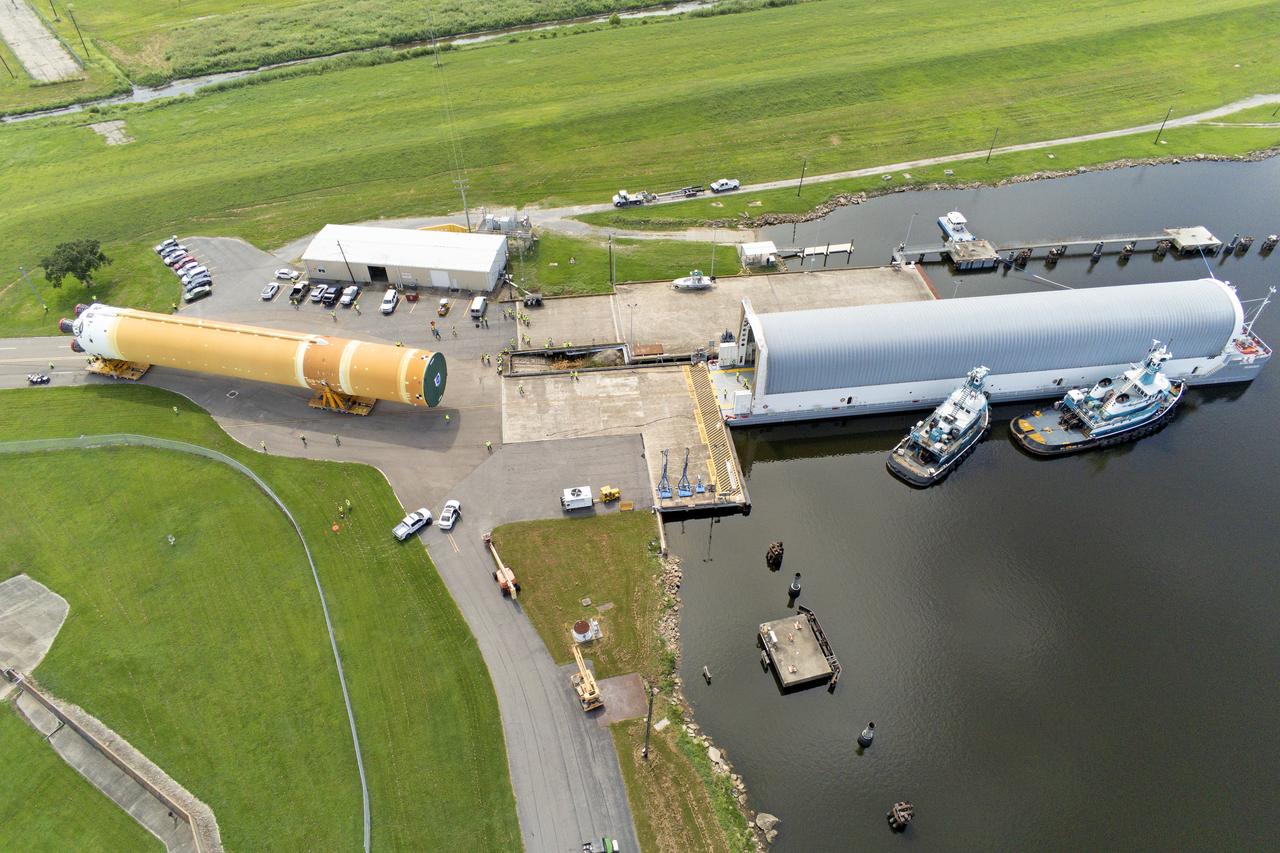
These images and videos show team members moving the first core stage that will help launch the first crewed flight of NASA’s SLS (Space Launch System) rocket for the agency’s Artemis II mission. The move marked the first time a fully assembled Moon rocket stage for a crewed mission has rolled out from NASA’s Michoud Assembly Facility in New Orleans since the Apollo Program, The core stage was moved onto the agency’s Pegasus barge, where it will be ferried to NASA’s Kennedy Space Center in Florida. The core stage for the SLS mega rocket is the largest stage NASA has ever produced. At 212 feet tall, the stage consists of five major elements, including two huge propellant tanks that collectively hold more than 733,000 gallons of super chilled liquid propellant to feed four RS-25 engines at its base. During launch and flight, the stage will operate for just over eight minutes, producing more than 2 million pounds of thrust to help send a crew of four astronauts inside NASA’s Orion spacecraft onward to the Moon. NASA is working to land the first woman, first person of color, and its first international partner astronaut on the Moon under Artemis. SLS is part of NASA’s backbone for deep space exploration, along with the Orion spacecraft and Gateway in orbit around the Moon and commercial human landing systems, next-generation space, next-generational spacesuits, and rovers on the lunar surface. SLS is the only rocket that can send Orion, astronauts, and supplies to the Moon in a single launch.
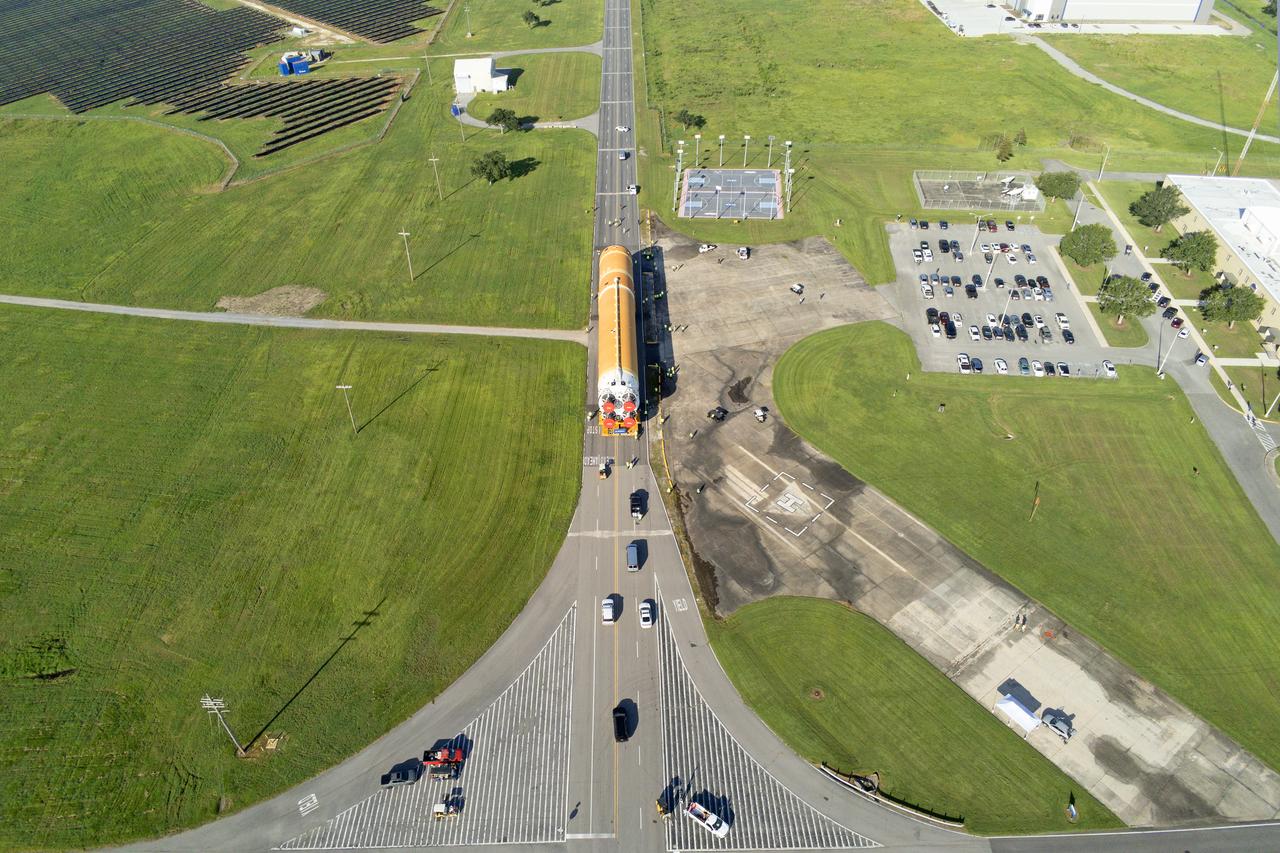
These images and videos show team members moving the first core stage that will help launch the first crewed flight of NASA’s SLS (Space Launch System) rocket for the agency’s Artemis II mission. The move marked the first time a fully assembled Moon rocket stage for a crewed mission has rolled out from NASA’s Michoud Assembly Facility in New Orleans since the Apollo Program, The core stage was moved onto the agency’s Pegasus barge, where it will be ferried to NASA’s Kennedy Space Center in Florida. The core stage for the SLS mega rocket is the largest stage NASA has ever produced. At 212 feet tall, the stage consists of five major elements, including two huge propellant tanks that collectively hold more than 733,000 gallons of super chilled liquid propellant to feed four RS-25 engines at its base. During launch and flight, the stage will operate for just over eight minutes, producing more than 2 million pounds of thrust to help send a crew of four astronauts inside NASA’s Orion spacecraft onward to the Moon. NASA is working to land the first woman, first person of color, and its first international partner astronaut on the Moon under Artemis. SLS is part of NASA’s backbone for deep space exploration, along with the Orion spacecraft and Gateway in orbit around the Moon and commercial human landing systems, next-generation space, next-generational spacesuits, and rovers on the lunar surface. SLS is the only rocket that can send Orion, astronauts, and supplies to the Moon in a single launch.
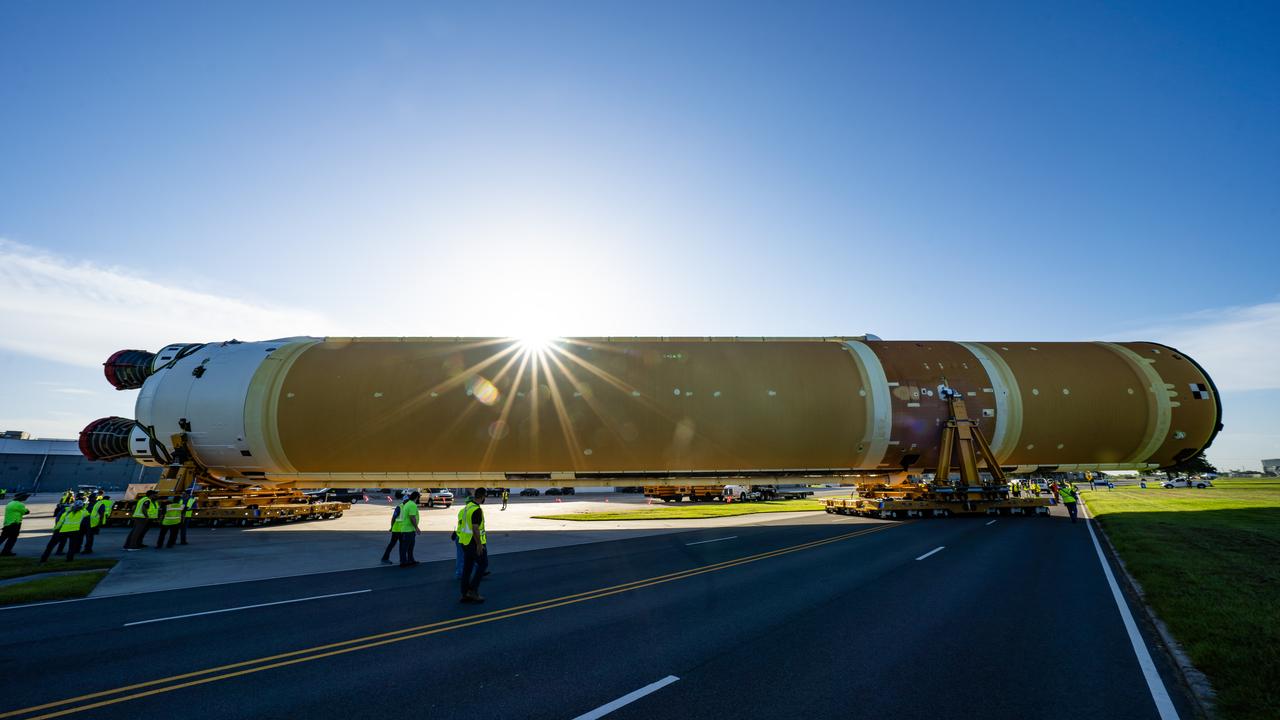
These images and videos show team members moving the first core stage that will help launch the first crewed flight of NASA’s SLS (Space Launch System) rocket for the agency’s Artemis II mission. The move marked the first time a fully assembled Moon rocket stage for a crewed mission has rolled out from NASA’s Michoud Assembly Facility in New Orleans since the Apollo Program, The core stage was moved onto the agency’s Pegasus barge, where it will be ferried to NASA’s Kennedy Space Center in Florida. The core stage for the SLS mega rocket is the largest stage NASA has ever produced. At 212 feet tall, the stage consists of five major elements, including two huge propellant tanks that collectively hold more than 733,000 gallons of super chilled liquid propellant to feed four RS-25 engines at its base. During launch and flight, the stage will operate for just over eight minutes, producing more than 2 million pounds of thrust to help send a crew of four astronauts inside NASA’s Orion spacecraft onward to the Moon. NASA is working to land the first woman, first person of color, and its first international partner astronaut on the Moon under Artemis. SLS is part of NASA’s backbone for deep space exploration, along with the Orion spacecraft and Gateway in orbit around the Moon and commercial human landing systems, next-generation space, next-generational spacesuits, and rovers on the lunar surface. SLS is the only rocket that can send Orion, astronauts, and supplies to the Moon in a single launch.
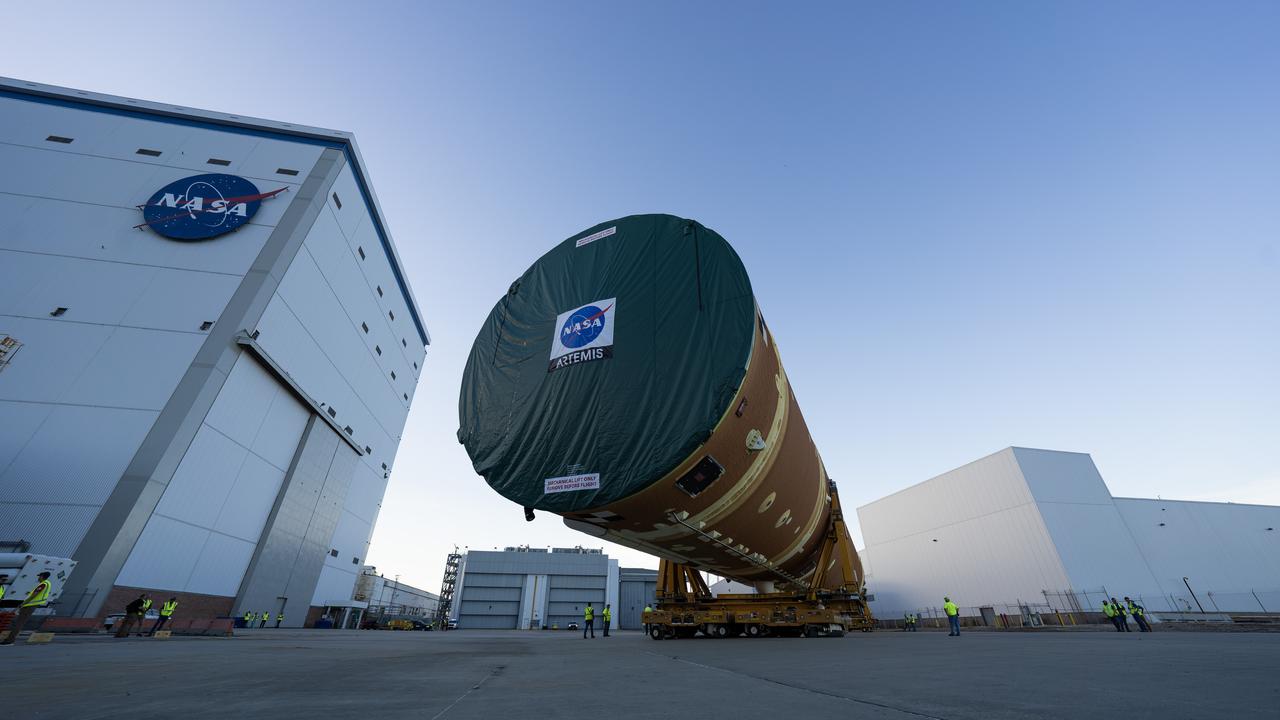
These images and videos show team members moving the first core stage that will help launch the first crewed flight of NASA’s SLS (Space Launch System) rocket for the agency’s Artemis II mission. The move marked the first time a fully assembled Moon rocket stage for a crewed mission has rolled out from NASA’s Michoud Assembly Facility in New Orleans since the Apollo Program, The core stage was moved onto the agency’s Pegasus barge, where it will be ferried to NASA’s Kennedy Space Center in Florida. The core stage for the SLS mega rocket is the largest stage NASA has ever produced. At 212 feet tall, the stage consists of five major elements, including two huge propellant tanks that collectively hold more than 733,000 gallons of super chilled liquid propellant to feed four RS-25 engines at its base. During launch and flight, the stage will operate for just over eight minutes, producing more than 2 million pounds of thrust to help send a crew of four astronauts inside NASA’s Orion spacecraft onward to the Moon. NASA is working to land the first woman, first person of color, and its first international partner astronaut on the Moon under Artemis. SLS is part of NASA’s backbone for deep space exploration, along with the Orion spacecraft and Gateway in orbit around the Moon and commercial human landing systems, next-generation space, next-generational spacesuits, and rovers on the lunar surface. SLS is the only rocket that can send Orion, astronauts, and supplies to the Moon in a single launch.
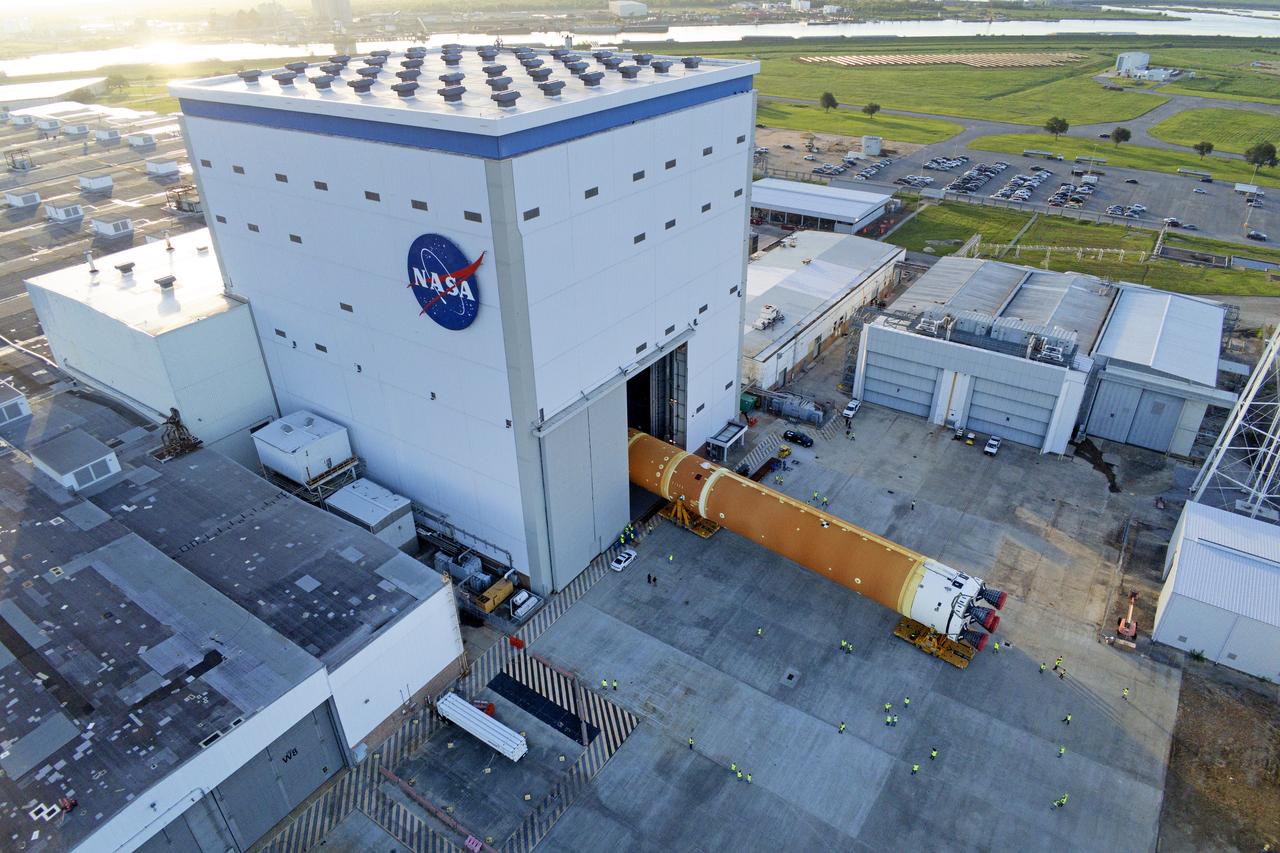
These images and videos show team members moving the first core stage that will help launch the first crewed flight of NASA’s SLS (Space Launch System) rocket for the agency’s Artemis II mission. The move marked the first time a fully assembled Moon rocket stage for a crewed mission has rolled out from NASA’s Michoud Assembly Facility in New Orleans since the Apollo Program, The core stage was moved onto the agency’s Pegasus barge, where it will be ferried to NASA’s Kennedy Space Center in Florida. The core stage for the SLS mega rocket is the largest stage NASA has ever produced. At 212 feet tall, the stage consists of five major elements, including two huge propellant tanks that collectively hold more than 733,000 gallons of super chilled liquid propellant to feed four RS-25 engines at its base. During launch and flight, the stage will operate for just over eight minutes, producing more than 2 million pounds of thrust to help send a crew of four astronauts inside NASA’s Orion spacecraft onward to the Moon. NASA is working to land the first woman, first person of color, and its first international partner astronaut on the Moon under Artemis. SLS is part of NASA’s backbone for deep space exploration, along with the Orion spacecraft and Gateway in orbit around the Moon and commercial human landing systems, next-generation space, next-generational spacesuits, and rovers on the lunar surface. SLS is the only rocket that can send Orion, astronauts, and supplies to the Moon in a single launch.
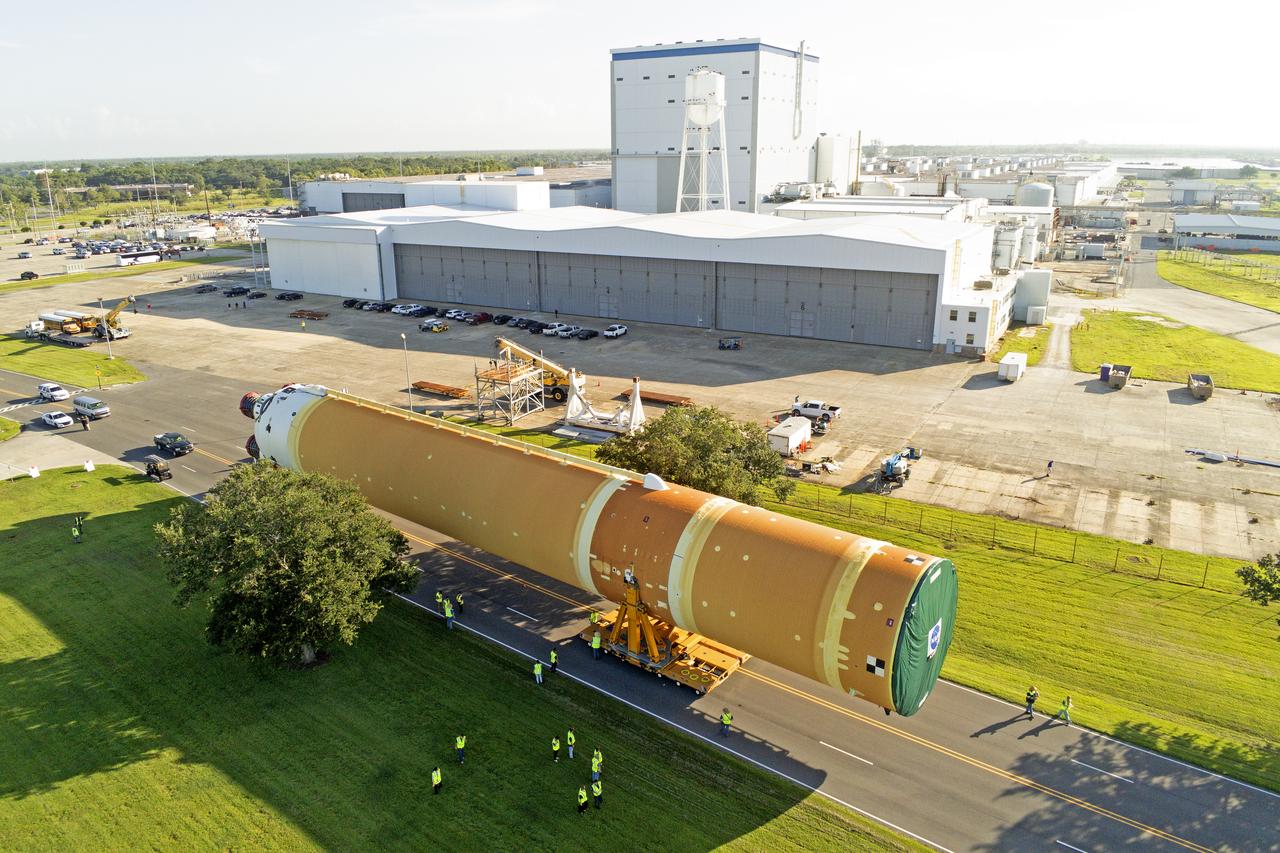
These images and videos show team members moving the first core stage that will help launch the first crewed flight of NASA’s SLS (Space Launch System) rocket for the agency’s Artemis II mission. The move marked the first time a fully assembled Moon rocket stage for a crewed mission has rolled out from NASA’s Michoud Assembly Facility in New Orleans since the Apollo Program, The core stage was moved onto the agency’s Pegasus barge, where it will be ferried to NASA’s Kennedy Space Center in Florida. The core stage for the SLS mega rocket is the largest stage NASA has ever produced. At 212 feet tall, the stage consists of five major elements, including two huge propellant tanks that collectively hold more than 733,000 gallons of super chilled liquid propellant to feed four RS-25 engines at its base. During launch and flight, the stage will operate for just over eight minutes, producing more than 2 million pounds of thrust to help send a crew of four astronauts inside NASA’s Orion spacecraft onward to the Moon. NASA is working to land the first woman, first person of color, and its first international partner astronaut on the Moon under Artemis. SLS is part of NASA’s backbone for deep space exploration, along with the Orion spacecraft and Gateway in orbit around the Moon and commercial human landing systems, next-generation space, next-generational spacesuits, and rovers on the lunar surface. SLS is the only rocket that can send Orion, astronauts, and supplies to the Moon in a single launch.
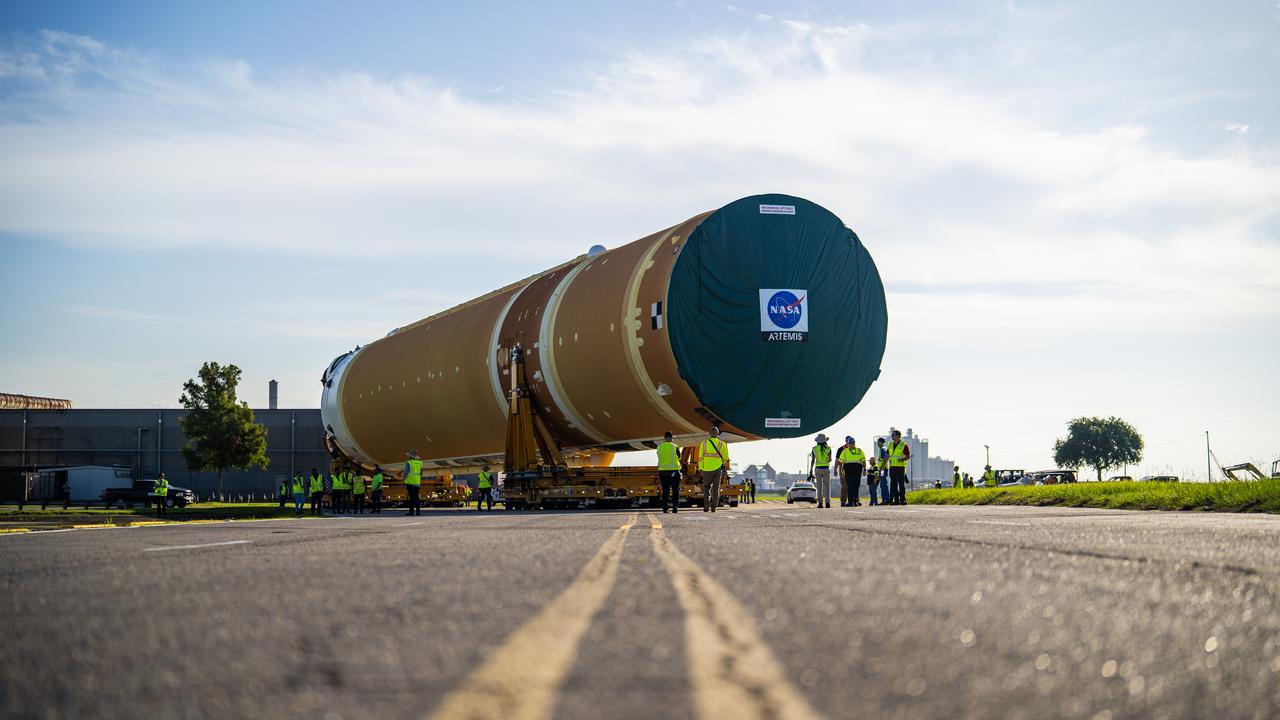
These images and videos show team members moving the first core stage that will help launch the first crewed flight of NASA’s SLS (Space Launch System) rocket for the agency’s Artemis II mission. The move marked the first time a fully assembled Moon rocket stage for a crewed mission has rolled out from NASA’s Michoud Assembly Facility in New Orleans since the Apollo Program, The core stage was moved onto the agency’s Pegasus barge, where it will be ferried to NASA’s Kennedy Space Center in Florida. The core stage for the SLS mega rocket is the largest stage NASA has ever produced. At 212 feet tall, the stage consists of five major elements, including two huge propellant tanks that collectively hold more than 733,000 gallons of super chilled liquid propellant to feed four RS-25 engines at its base. During launch and flight, the stage will operate for just over eight minutes, producing more than 2 million pounds of thrust to help send a crew of four astronauts inside NASA’s Orion spacecraft onward to the Moon. NASA is working to land the first woman, first person of color, and its first international partner astronaut on the Moon under Artemis. SLS is part of NASA’s backbone for deep space exploration, along with the Orion spacecraft and Gateway in orbit around the Moon and commercial human landing systems, next-generation space, next-generational spacesuits, and rovers on the lunar surface. SLS is the only rocket that can send Orion, astronauts, and supplies to the Moon in a single launch.
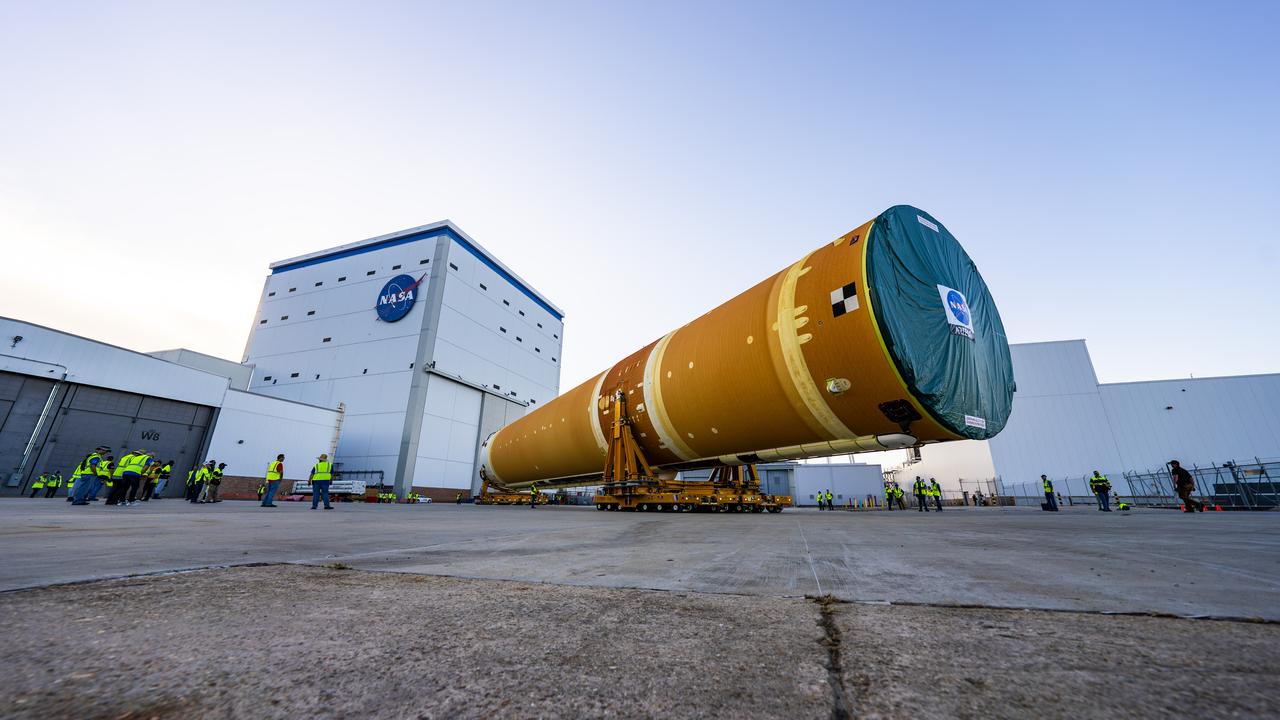
These images and videos show team members moving the first core stage that will help launch the first crewed flight of NASA’s SLS (Space Launch System) rocket for the agency’s Artemis II mission. The move marked the first time a fully assembled Moon rocket stage for a crewed mission has rolled out from NASA’s Michoud Assembly Facility in New Orleans since the Apollo Program, The core stage was moved onto the agency’s Pegasus barge, where it will be ferried to NASA’s Kennedy Space Center in Florida. The core stage for the SLS mega rocket is the largest stage NASA has ever produced. At 212 feet tall, the stage consists of five major elements, including two huge propellant tanks that collectively hold more than 733,000 gallons of super chilled liquid propellant to feed four RS-25 engines at its base. During launch and flight, the stage will operate for just over eight minutes, producing more than 2 million pounds of thrust to help send a crew of four astronauts inside NASA’s Orion spacecraft onward to the Moon. NASA is working to land the first woman, first person of color, and its first international partner astronaut on the Moon under Artemis. SLS is part of NASA’s backbone for deep space exploration, along with the Orion spacecraft and Gateway in orbit around the Moon and commercial human landing systems, next-generation space, next-generational spacesuits, and rovers on the lunar surface. SLS is the only rocket that can send Orion, astronauts, and supplies to the Moon in a single launch.
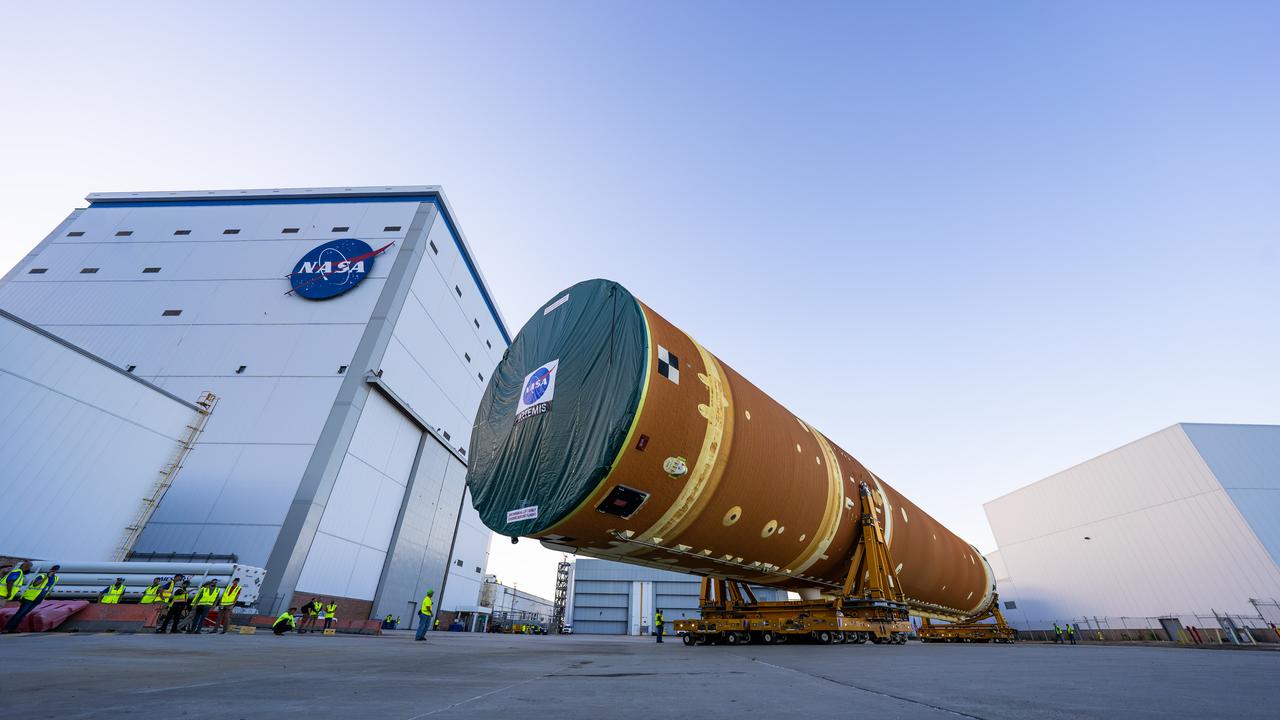
These images and videos show team members moving the first core stage that will help launch the first crewed flight of NASA’s SLS (Space Launch System) rocket for the agency’s Artemis II mission. The move marked the first time a fully assembled Moon rocket stage for a crewed mission has rolled out from NASA’s Michoud Assembly Facility in New Orleans since the Apollo Program, The core stage was moved onto the agency’s Pegasus barge, where it will be ferried to NASA’s Kennedy Space Center in Florida. The core stage for the SLS mega rocket is the largest stage NASA has ever produced. At 212 feet tall, the stage consists of five major elements, including two huge propellant tanks that collectively hold more than 733,000 gallons of super chilled liquid propellant to feed four RS-25 engines at its base. During launch and flight, the stage will operate for just over eight minutes, producing more than 2 million pounds of thrust to help send a crew of four astronauts inside NASA’s Orion spacecraft onward to the Moon. NASA is working to land the first woman, first person of color, and its first international partner astronaut on the Moon under Artemis. SLS is part of NASA’s backbone for deep space exploration, along with the Orion spacecraft and Gateway in orbit around the Moon and commercial human landing systems, next-generation space, next-generational spacesuits, and rovers on the lunar surface. SLS is the only rocket that can send Orion, astronauts, and supplies to the Moon in a single launch.
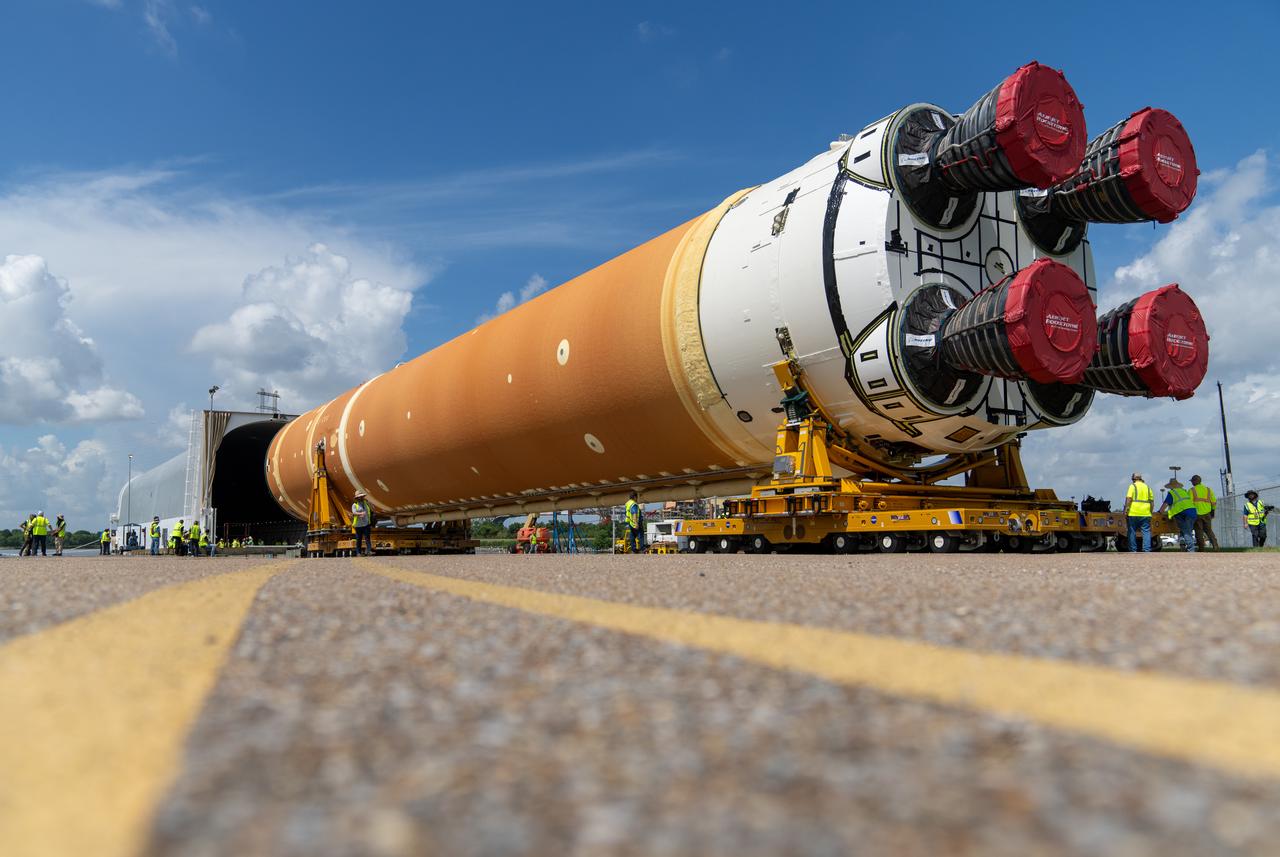
These images and videos show team members at Michoud Assembly Facility loading the first core stage that will help launch the first crewed flight of NASA’s SLS (Space Launch System) rocket for the agency’s Artemis II mission onto the Pegasus barge on Tuesday, July 16, 2024. The barge will ferry the core stage on a 900-mile journey from the agency’s Michoud Assembly Facility in New Orleans to its Kennedy Space Center in Florida. The core stage for the SLS mega rocket is the largest stage NASA has ever produced. At 212 feet tall, the stage consists of five major elements, including two huge propellant tanks that collectively hold more than 733,000 gallons of super chilled liquid propellant to feed four RS-25 engines at its base. During launch and flight, the stage will operate for just over eight minutes, producing more than 2 million pounds of thrust to help send a crew of four astronauts inside NASA’s Orion spacecraft onward to the Moon. All the major structures for every SLS core stage are fully manufactured at NASA Michoud. NASA is working to land the first woman, first person of color, and its first international partner astronaut on the Moon under Artemis. SLS is part of NASA’s backbone for deep space exploration, along with the Orion spacecraft and Gateway in orbit around the Moon and commercial human landing systems, next-generation space, next-generational spacesuits, and rovers on the lunar surface. SLS is the only rocket that can send Orion, astronauts, and supplies to the Moon in a single launch.
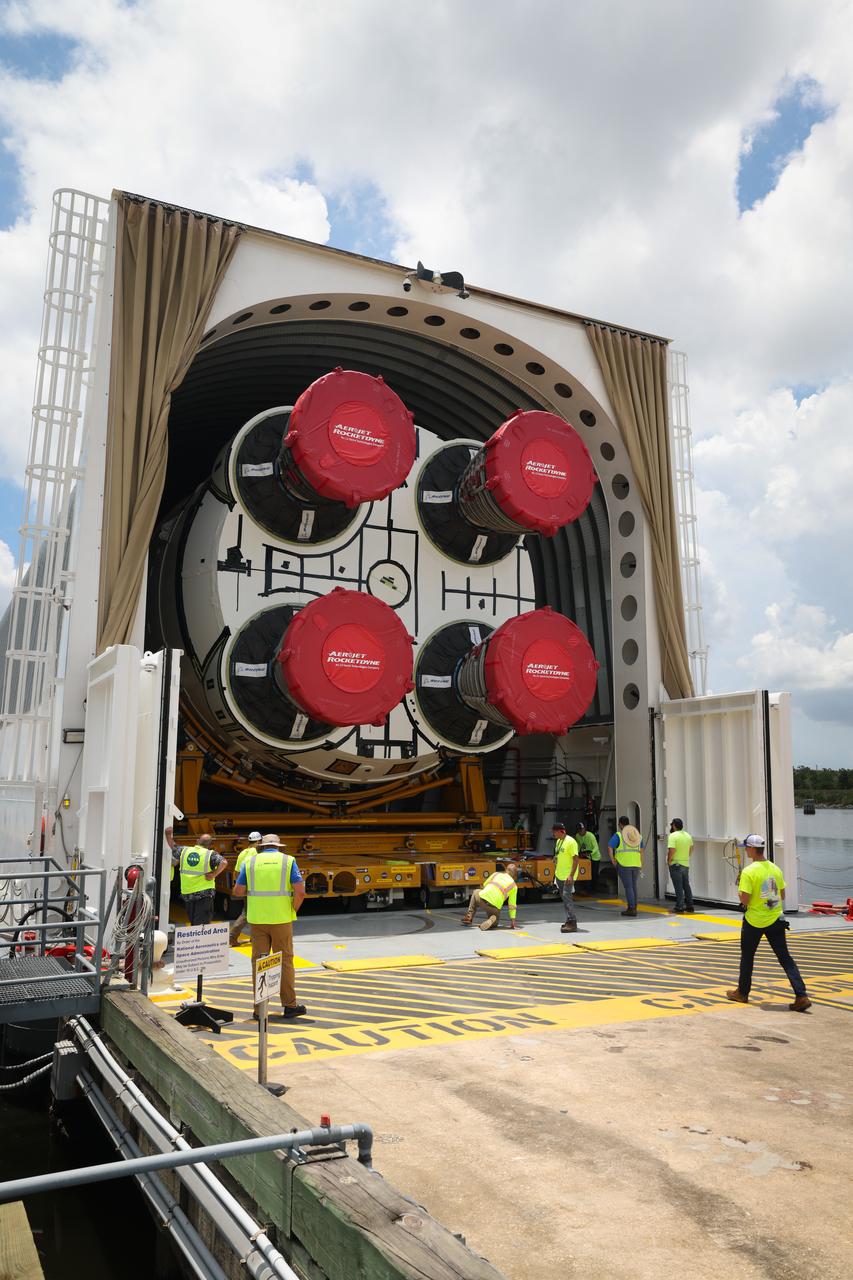
These images and videos show team members at Michoud Assembly Facility loading the first core stage that will help launch the first crewed flight of NASA’s SLS (Space Launch System) rocket for the agency’s Artemis II mission onto the Pegasus barge on Tuesday, July 16, 2024. The barge will ferry the core stage on a 900-mile journey from the agency’s Michoud Assembly Facility in New Orleans to its Kennedy Space Center in Florida. The core stage for the SLS mega rocket is the largest stage NASA has ever produced. At 212 feet tall, the stage consists of five major elements, including two huge propellant tanks that collectively hold more than 733,000 gallons of super chilled liquid propellant to feed four RS-25 engines at its base. During launch and flight, the stage will operate for just over eight minutes, producing more than 2 million pounds of thrust to help send a crew of four astronauts inside NASA’s Orion spacecraft onward to the Moon. All the major structures for every SLS core stage are fully manufactured at NASA Michoud. NASA is working to land the first woman, first person of color, and its first international partner astronaut on the Moon under Artemis. SLS is part of NASA’s backbone for deep space exploration, along with the Orion spacecraft and Gateway in orbit around the Moon and commercial human landing systems, next-generation space, next-generational spacesuits, and rovers on the lunar surface. SLS is the only rocket that can send Orion, astronauts, and supplies to the Moon in a single launch.
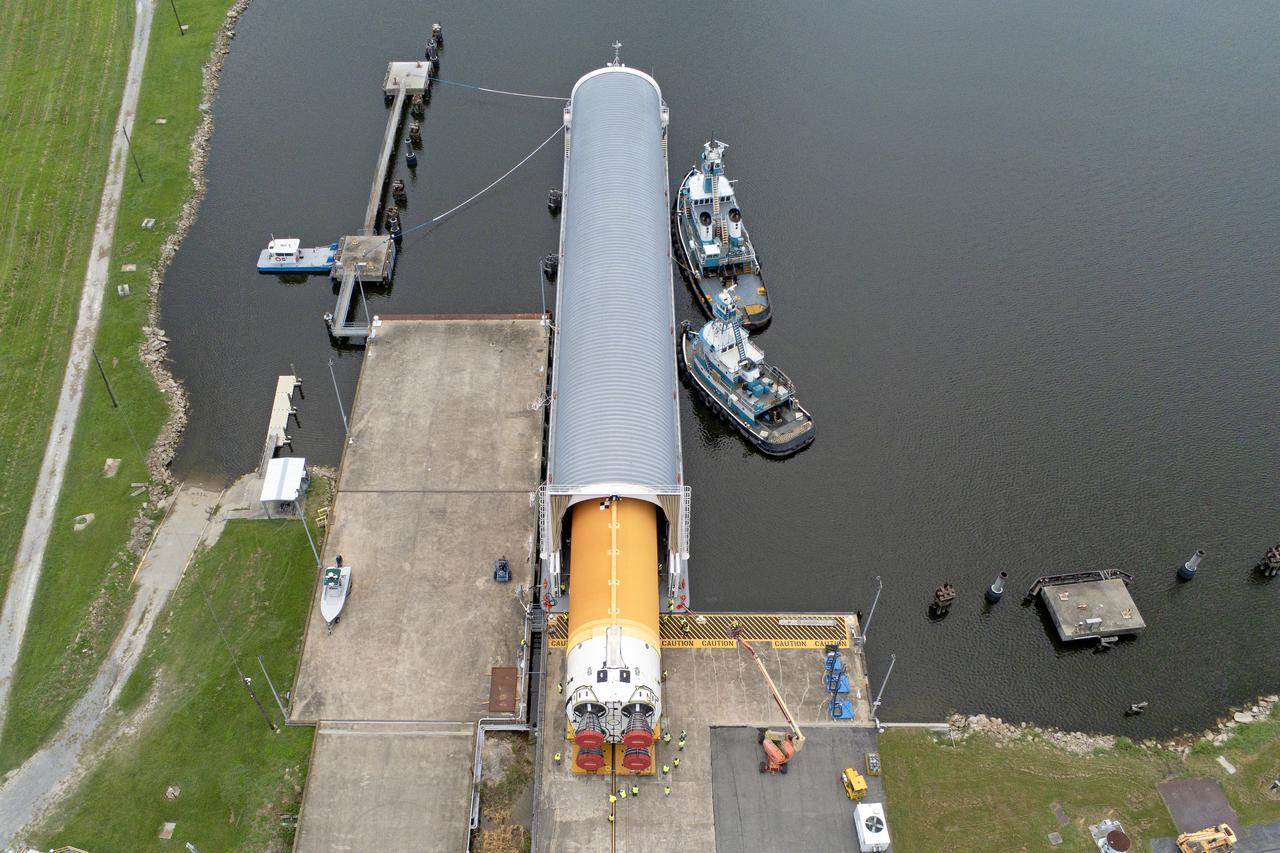
These images and videos show team members at Michoud Assembly Facility loading the first core stage that will help launch the first crewed flight of NASA’s SLS (Space Launch System) rocket for the agency’s Artemis II mission onto the Pegasus barge on Tuesday, July 16, 2024. The barge will ferry the core stage on a 900-mile journey from the agency’s Michoud Assembly Facility in New Orleans to its Kennedy Space Center in Florida. The core stage for the SLS mega rocket is the largest stage NASA has ever produced. At 212 feet tall, the stage consists of five major elements, including two huge propellant tanks that collectively hold more than 733,000 gallons of super chilled liquid propellant to feed four RS-25 engines at its base. During launch and flight, the stage will operate for just over eight minutes, producing more than 2 million pounds of thrust to help send a crew of four astronauts inside NASA’s Orion spacecraft onward to the Moon. All the major structures for every SLS core stage are fully manufactured at NASA Michoud. NASA is working to land the first woman, first person of color, and its first international partner astronaut on the Moon under Artemis. SLS is part of NASA’s backbone for deep space exploration, along with the Orion spacecraft and Gateway in orbit around the Moon and commercial human landing systems, next-generation space, next-generational spacesuits, and rovers on the lunar surface. SLS is the only rocket that can send Orion, astronauts, and supplies to the Moon in a single launch.

These images and videos show team members at Michoud Assembly Facility loading the first core stage that will help launch the first crewed flight of NASA’s SLS (Space Launch System) rocket for the agency’s Artemis II mission onto the Pegasus barge on Tuesday, July 16, 2024. The barge will ferry the core stage on a 900-mile journey from the agency’s Michoud Assembly Facility in New Orleans to its Kennedy Space Center in Florida. The core stage for the SLS mega rocket is the largest stage NASA has ever produced. At 212 feet tall, the stage consists of five major elements, including two huge propellant tanks that collectively hold more than 733,000 gallons of super chilled liquid propellant to feed four RS-25 engines at its base. During launch and flight, the stage will operate for just over eight minutes, producing more than 2 million pounds of thrust to help send a crew of four astronauts inside NASA’s Orion spacecraft onward to the Moon. All the major structures for every SLS core stage are fully manufactured at NASA Michoud. NASA is working to land the first woman, first person of color, and its first international partner astronaut on the Moon under Artemis. SLS is part of NASA’s backbone for deep space exploration, along with the Orion spacecraft and Gateway in orbit around the Moon and commercial human landing systems, next-generation space, next-generational spacesuits, and rovers on the lunar surface. SLS is the only rocket that can send Orion, astronauts, and supplies to the Moon in a single launch.
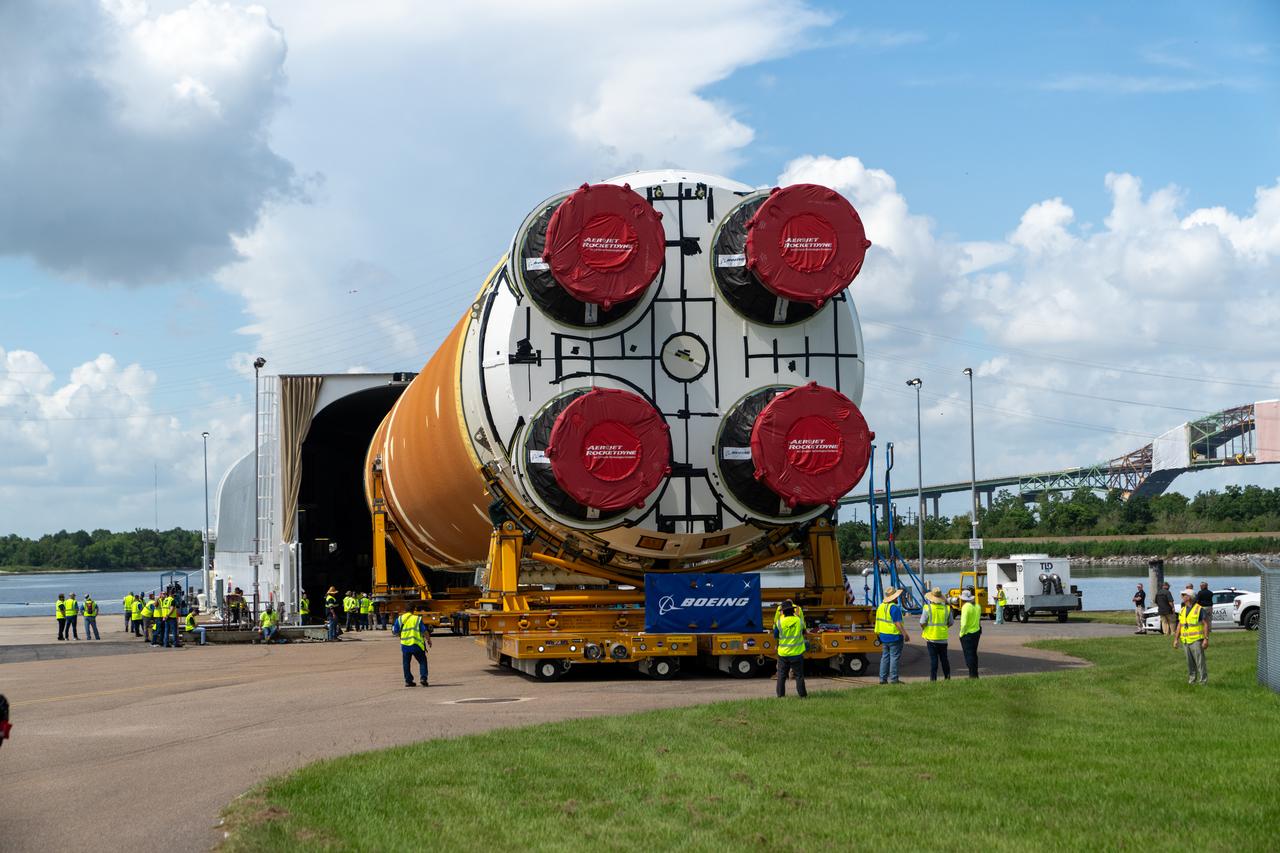
These images and videos show team members at Michoud Assembly Facility loading the first core stage that will help launch the first crewed flight of NASA’s SLS (Space Launch System) rocket for the agency’s Artemis II mission onto the Pegasus barge on Tuesday, July 16, 2024. The barge will ferry the core stage on a 900-mile journey from the agency’s Michoud Assembly Facility in New Orleans to its Kennedy Space Center in Florida. The core stage for the SLS mega rocket is the largest stage NASA has ever produced. At 212 feet tall, the stage consists of five major elements, including two huge propellant tanks that collectively hold more than 733,000 gallons of super chilled liquid propellant to feed four RS-25 engines at its base. During launch and flight, the stage will operate for just over eight minutes, producing more than 2 million pounds of thrust to help send a crew of four astronauts inside NASA’s Orion spacecraft onward to the Moon. All the major structures for every SLS core stage are fully manufactured at NASA Michoud. NASA is working to land the first woman, first person of color, and its first international partner astronaut on the Moon under Artemis. SLS is part of NASA’s backbone for deep space exploration, along with the Orion spacecraft and Gateway in orbit around the Moon and commercial human landing systems, next-generation space, next-generational spacesuits, and rovers on the lunar surface. SLS is the only rocket that can send Orion, astronauts, and supplies to the Moon in a single launch.
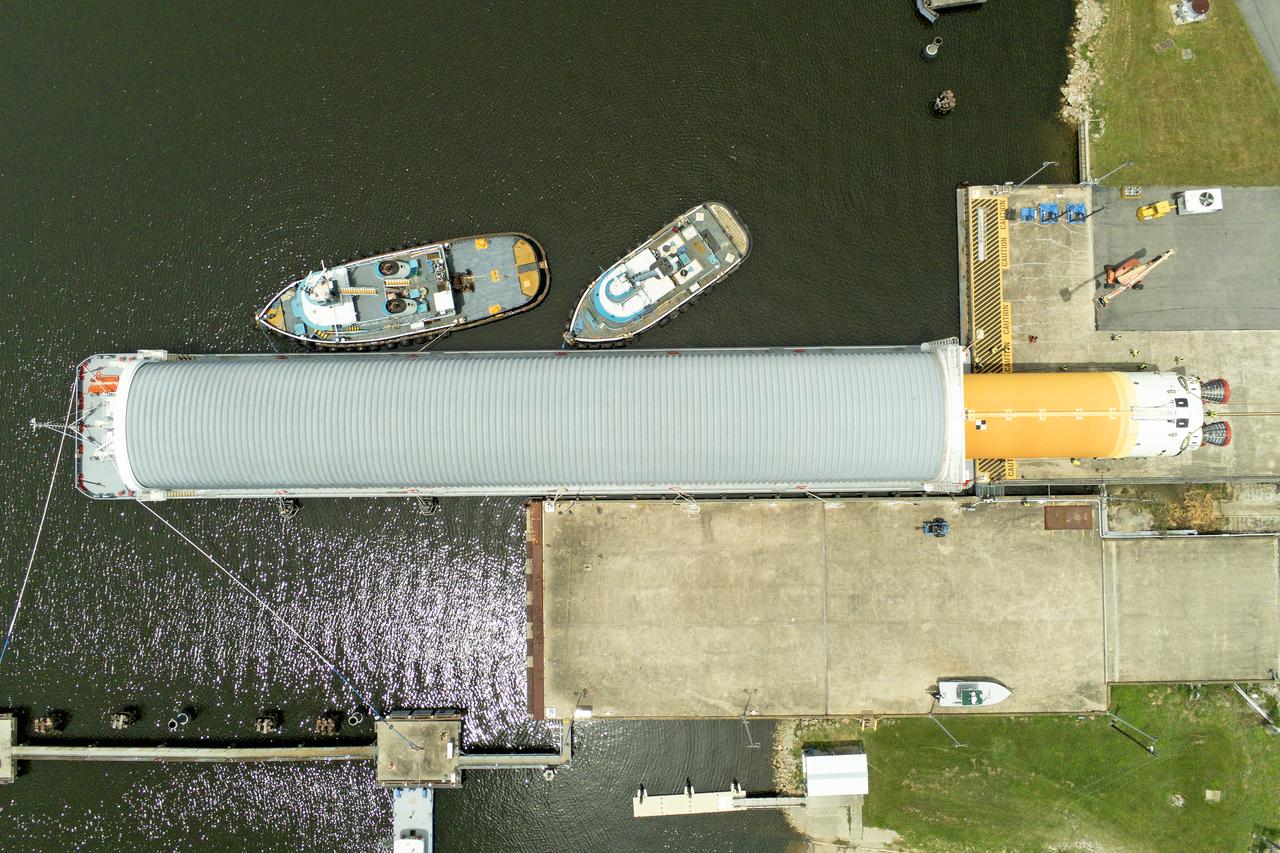
These images and videos show team members at Michoud Assembly Facility loading the first core stage that will help launch the first crewed flight of NASA’s SLS (Space Launch System) rocket for the agency’s Artemis II mission onto the Pegasus barge on Tuesday, July 16, 2024. The barge will ferry the core stage on a 900-mile journey from the agency’s Michoud Assembly Facility in New Orleans to its Kennedy Space Center in Florida. The core stage for the SLS mega rocket is the largest stage NASA has ever produced. At 212 feet tall, the stage consists of five major elements, including two huge propellant tanks that collectively hold more than 733,000 gallons of super chilled liquid propellant to feed four RS-25 engines at its base. During launch and flight, the stage will operate for just over eight minutes, producing more than 2 million pounds of thrust to help send a crew of four astronauts inside NASA’s Orion spacecraft onward to the Moon. All the major structures for every SLS core stage are fully manufactured at NASA Michoud. NASA is working to land the first woman, first person of color, and its first international partner astronaut on the Moon under Artemis. SLS is part of NASA’s backbone for deep space exploration, along with the Orion spacecraft and Gateway in orbit around the Moon and commercial human landing systems, next-generation space, next-generational spacesuits, and rovers on the lunar surface. SLS is the only rocket that can send Orion, astronauts, and supplies to the Moon in a single launch.

These images and videos show team members at Michoud Assembly Facility loading the first core stage that will help launch the first crewed flight of NASA’s SLS (Space Launch System) rocket for the agency’s Artemis II mission onto the Pegasus barge on Tuesday, July 16, 2024. The barge will ferry the core stage on a 900-mile journey from the agency’s Michoud Assembly Facility in New Orleans to its Kennedy Space Center in Florida. The core stage for the SLS mega rocket is the largest stage NASA has ever produced. At 212 feet tall, the stage consists of five major elements, including two huge propellant tanks that collectively hold more than 733,000 gallons of super chilled liquid propellant to feed four RS-25 engines at its base. During launch and flight, the stage will operate for just over eight minutes, producing more than 2 million pounds of thrust to help send a crew of four astronauts inside NASA’s Orion spacecraft onward to the Moon. All the major structures for every SLS core stage are fully manufactured at NASA Michoud. NASA is working to land the first woman, first person of color, and its first international partner astronaut on the Moon under Artemis. SLS is part of NASA’s backbone for deep space exploration, along with the Orion spacecraft and Gateway in orbit around the Moon and commercial human landing systems, next-generation space, next-generational spacesuits, and rovers on the lunar surface. SLS is the only rocket that can send Orion, astronauts, and supplies to the Moon in a single launch.
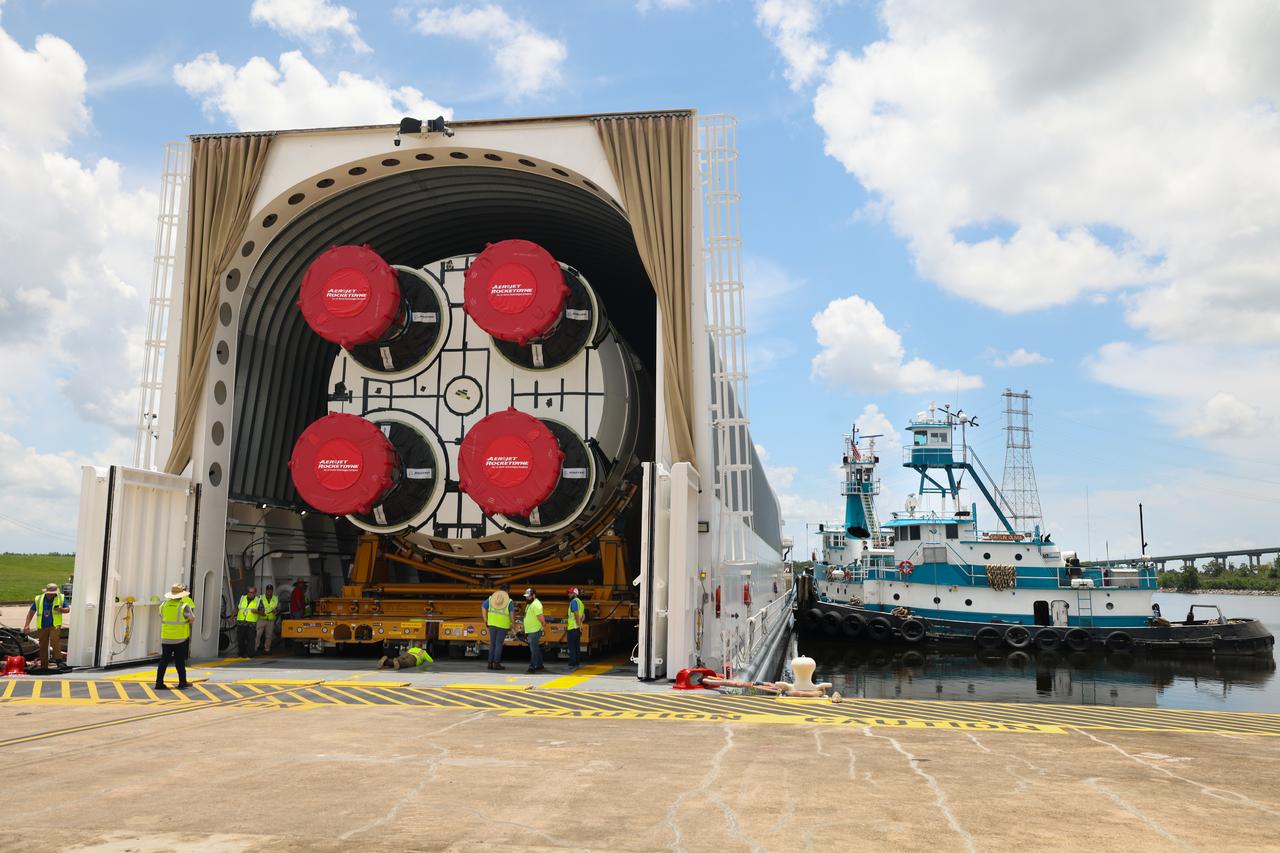
These images and videos show team members at Michoud Assembly Facility loading the first core stage that will help launch the first crewed flight of NASA’s SLS (Space Launch System) rocket for the agency’s Artemis II mission onto the Pegasus barge on Tuesday, July 16, 2024. The barge will ferry the core stage on a 900-mile journey from the agency’s Michoud Assembly Facility in New Orleans to its Kennedy Space Center in Florida. The core stage for the SLS mega rocket is the largest stage NASA has ever produced. At 212 feet tall, the stage consists of five major elements, including two huge propellant tanks that collectively hold more than 733,000 gallons of super chilled liquid propellant to feed four RS-25 engines at its base. During launch and flight, the stage will operate for just over eight minutes, producing more than 2 million pounds of thrust to help send a crew of four astronauts inside NASA’s Orion spacecraft onward to the Moon. All the major structures for every SLS core stage are fully manufactured at NASA Michoud. NASA is working to land the first woman, first person of color, and its first international partner astronaut on the Moon under Artemis. SLS is part of NASA’s backbone for deep space exploration, along with the Orion spacecraft and Gateway in orbit around the Moon and commercial human landing systems, next-generation space, next-generational spacesuits, and rovers on the lunar surface. SLS is the only rocket that can send Orion, astronauts, and supplies to the Moon in a single launch.
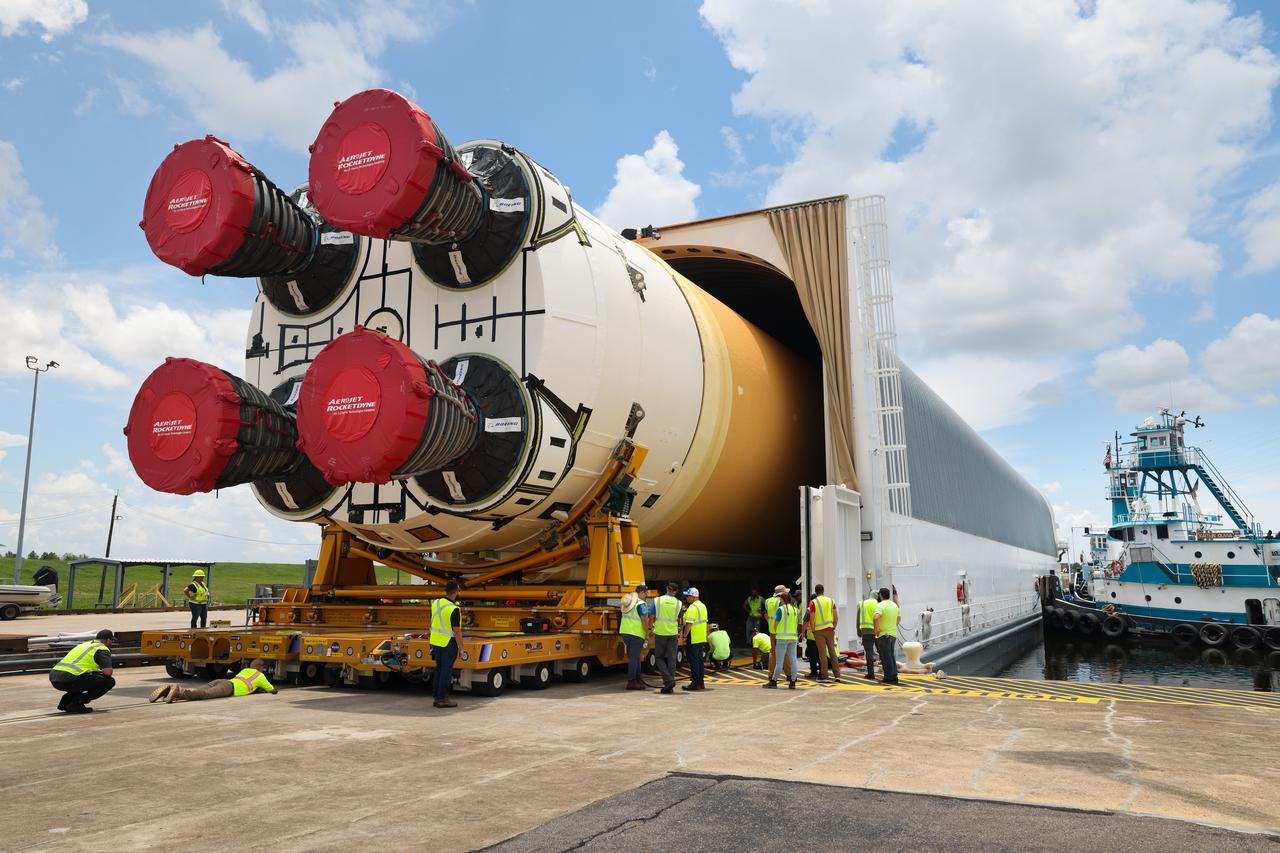
These images and videos show team members at Michoud Assembly Facility loading the first core stage that will help launch the first crewed flight of NASA’s SLS (Space Launch System) rocket for the agency’s Artemis II mission onto the Pegasus barge on Tuesday, July 16, 2024. The barge will ferry the core stage on a 900-mile journey from the agency’s Michoud Assembly Facility in New Orleans to its Kennedy Space Center in Florida. The core stage for the SLS mega rocket is the largest stage NASA has ever produced. At 212 feet tall, the stage consists of five major elements, including two huge propellant tanks that collectively hold more than 733,000 gallons of super chilled liquid propellant to feed four RS-25 engines at its base. During launch and flight, the stage will operate for just over eight minutes, producing more than 2 million pounds of thrust to help send a crew of four astronauts inside NASA’s Orion spacecraft onward to the Moon. All the major structures for every SLS core stage are fully manufactured at NASA Michoud. NASA is working to land the first woman, first person of color, and its first international partner astronaut on the Moon under Artemis. SLS is part of NASA’s backbone for deep space exploration, along with the Orion spacecraft and Gateway in orbit around the Moon and commercial human landing systems, next-generation space, next-generational spacesuits, and rovers on the lunar surface. SLS is the only rocket that can send Orion, astronauts, and supplies to the Moon in a single launch.
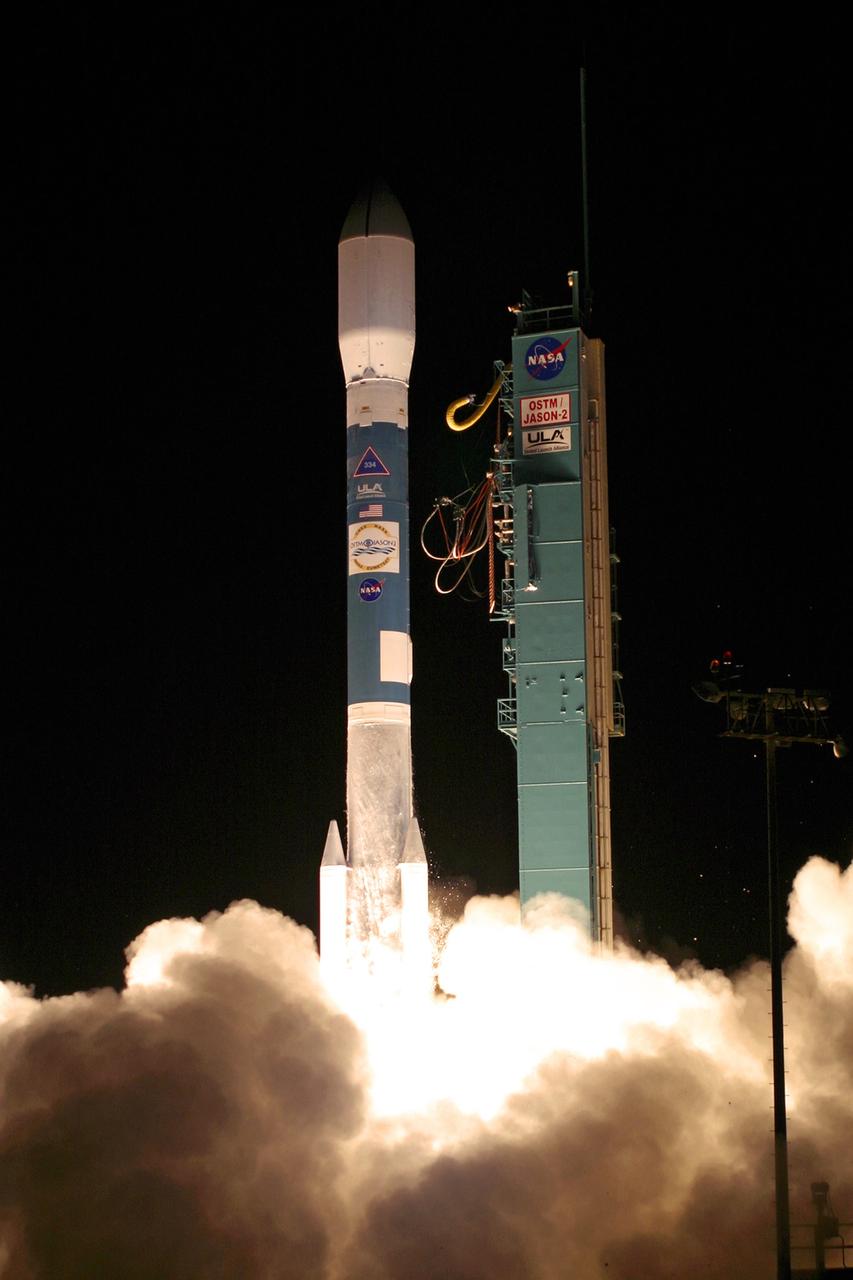
PASADENA, Calif. – The NASA-French space agency Ocean Surface Topography Mission/Jason 2 satellite launched aboard a Delta II rocket from Space Launch Complex 2 at Vandenberg Air Force Base, Calif., at 12:46 a.m. PDT. Fifty-five minutes later, OSTM/Jason 2 separated from the rocket’s second stage, and then, unfurled its twin sets of solar arrays. The OSTM/Jason 2 satellite will embark on a globe-circling voyage to continue charting sea level, a vital indicator of global climate change. The mission will return a vast amount of new data that will improve weather, climate and ocean forecasts. OSTM/Jason 2's expected lifetime of at least three years will extend into the next decade the continuous record of these data started in 1992 by NASA and the French space agency Centre National d'Etudes Spatiales, or CNES, with the TOPEX/Poseidon mission. The data collection was continued by the two agencies on Jason 1 in 2001. Photo credit: Carleton Bailie photograph for United Launch Alliance
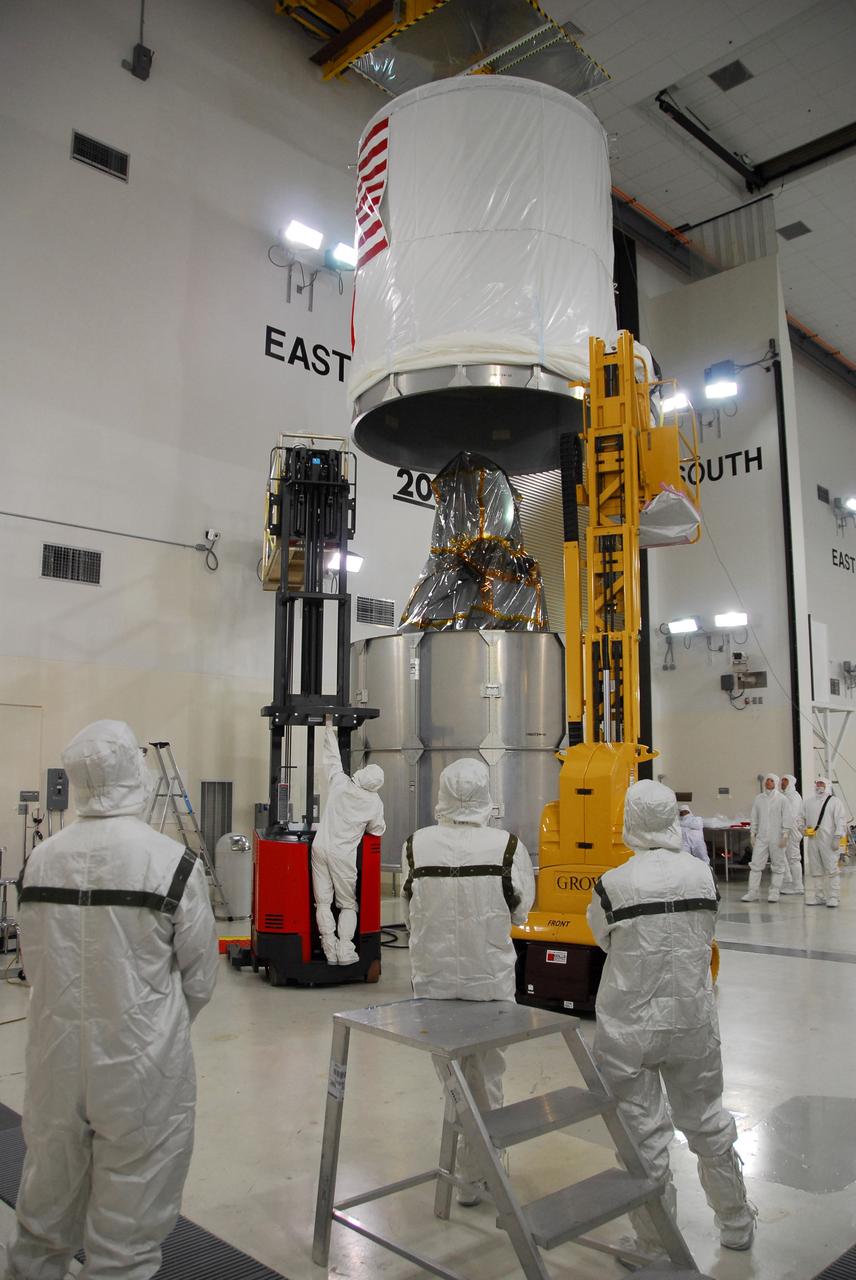
VANDENBERG AIR FORCE BASE, Calif. – The upper canister cylinder stops above the wrapped Ocean Surface Topography Mission, or OSTM/Jason 2, spacecraft. Once the canister is lowered and attached to the lower segments, the OSTM/Jason 2 will be transported to the launch pad. The launch of the OSTM/Jason 2 aboard a Delta II rocket is scheduled for Friday, June 20, from Vandenberg Air Force Base in California. The launch window extends from 12:46 a.m. to 12:55 a.m. PDT. The satellite will be placed in an 830-mile-high orbit at an inclination of 66 degrees after separating from the Delta II 55 minutes after liftoff. The five primary science instruments of the Ocean Surface Topography Mission aboard the Jason 2 spacecraft are dedicated to measuring ocean surface height. These measurements will be used to evaluate and forecast climate changes and improve weather forecasting. The results also are expected to help forecasters better predict hurricane intensity. Photo credit: NASA/Dan Liberotti
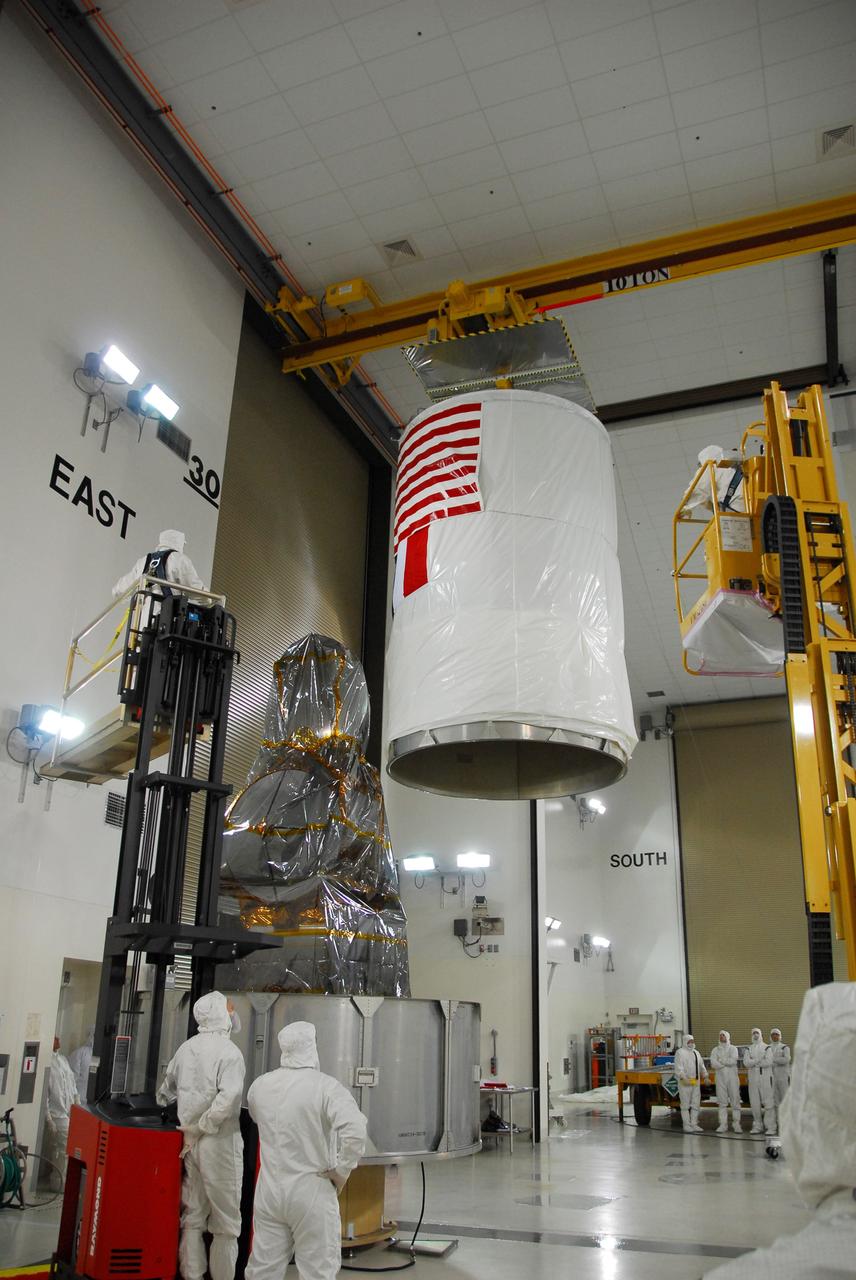
VANDENBERG AIR FORCE BASE, Calif. – The upper canister cylinder is moved toward the wrapped Ocean Surface Topography Mission, or OSTM/Jason 2, spacecraft. Once the canister is fully in place, the OSTM/Jason 2 will be transported to the launch pad. The launch of the OSTM/Jason 2 aboard a Delta II rocket is scheduled for Friday, June 20, from Vandenberg Air Force Base in California. The launch window extends from 12:46 a.m. to 12:55 a.m. PDT. The satellite will be placed in an 830-mile-high orbit at an inclination of 66 degrees after separating from the Delta II 55 minutes after liftoff. The five primary science instruments of the Ocean Surface Topography Mission aboard the Jason 2 spacecraft are dedicated to measuring ocean surface height. These measurements will be used to evaluate and forecast climate changes and improve weather forecasting. The results also are expected to help forecasters better predict hurricane intensity. Photo credit: NASA/Dan Liberotti
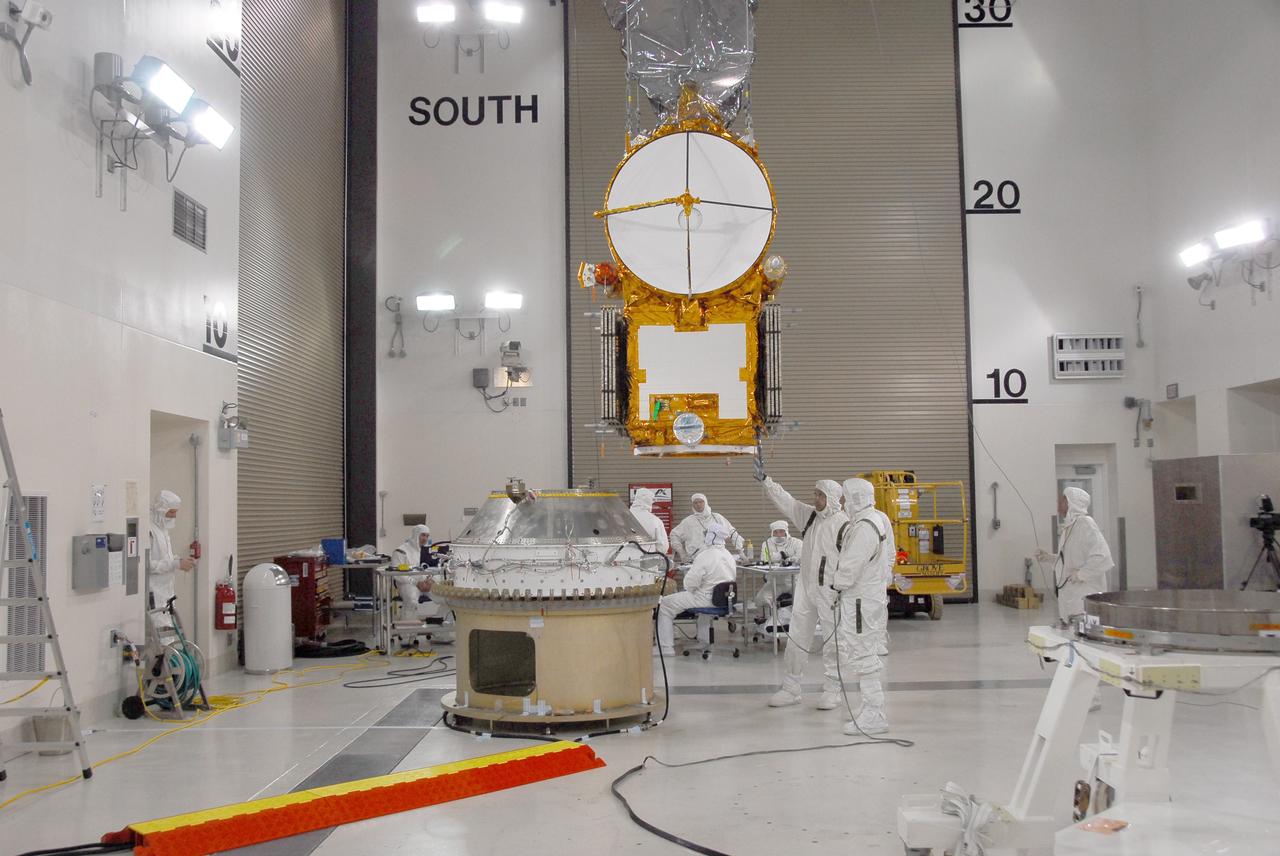
VANDENBERG AIR FORCE BASE, Calif. – Suspended by an overhead crane, the Ocean Surface Topography Mission, or OSTM/Jason 2, spacecraft is moved toward the payload attach fitting, or PAF, for installation. The PAF is the interface with the Delta II launch vehicle. The launch of the OSTM/Jason 2 aboard a Delta II rocket is scheduled for Friday, June 20, from Vandenberg Air Force Base in California. The launch window extends from 12:46 a.m. to 12:55 a.m. PDT. The satellite will be placed in an 830-mile-high orbit at an inclination of 66 degrees after separating from the Delta II 55 minutes after liftoff. The five primary science instruments of the Ocean Surface Topography Mission aboard the Jason 2 spacecraft are dedicated to measuring ocean surface height. These measurements will be used to evaluate and forecast climate changes and improve weather forecasting. The results also are expected to help forecasters better predict hurricane intensity. Photo credit: NASA

VANDENBERG AIR FORCE BASE, Calif. – Workers begin placing the canister segments around the base of the wrapped Ocean Surface Topography Mission, or OSTM/Jason 2, spacecraft. Once the canister is fully in place, the OSTM/Jason 2 will be transported to the launch pad. The launch of the OSTM/Jason 2 aboard a Delta II rocket is scheduled for Friday, June 20, from Vandenberg Air Force Base in California. The launch window extends from 12:46 a.m. to 12:55 a.m. PDT. The satellite will be placed in an 830-mile-high orbit at an inclination of 66 degrees after separating from the Delta II 55 minutes after liftoff. The five primary science instruments of the Ocean Surface Topography Mission aboard the Jason 2 spacecraft are dedicated to measuring ocean surface height. These measurements will be used to evaluate and forecast climate changes and improve weather forecasting. The results also are expected to help forecasters better predict hurricane intensity. Photo credit: NASA/Dan Liberotti
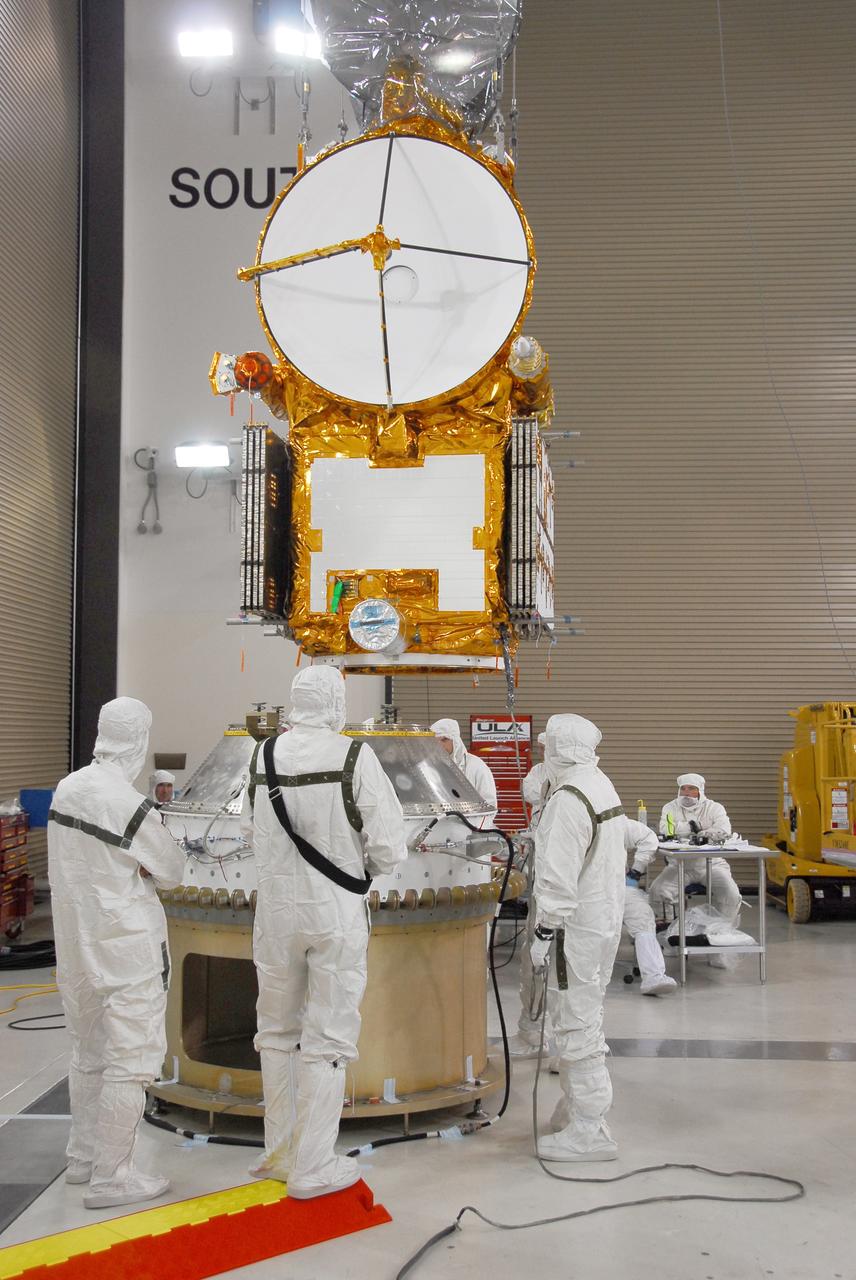
VANDENBERG AIR FORCE BASE, Calif. – Engineers check the progress of the Ocean Surface Topography Mission, or OSTM/Jason 2, spacecraft as it moves toward the payload attach fitting, or PAF, for installation. The PAF is the interface with the Delta II launch vehicle. The launch of the OSTM/Jason 2 aboard a Delta II rocket is scheduled for Friday, June 20, from Vandenberg Air Force Base in California. The launch window extends from 12:46 a.m. to 12:55 a.m. PDT. The satellite will be placed in an 830-mile-high orbit at an inclination of 66 degrees after separating from the Delta II 55 minutes after liftoff. The five primary science instruments of the Ocean Surface Topography Mission aboard the Jason 2 spacecraft are dedicated to measuring ocean surface height. These measurements will be used to evaluate and forecast climate changes and improve weather forecasting. The results also are expected to help forecasters better predict hurricane intensity. Photo credit: NASA
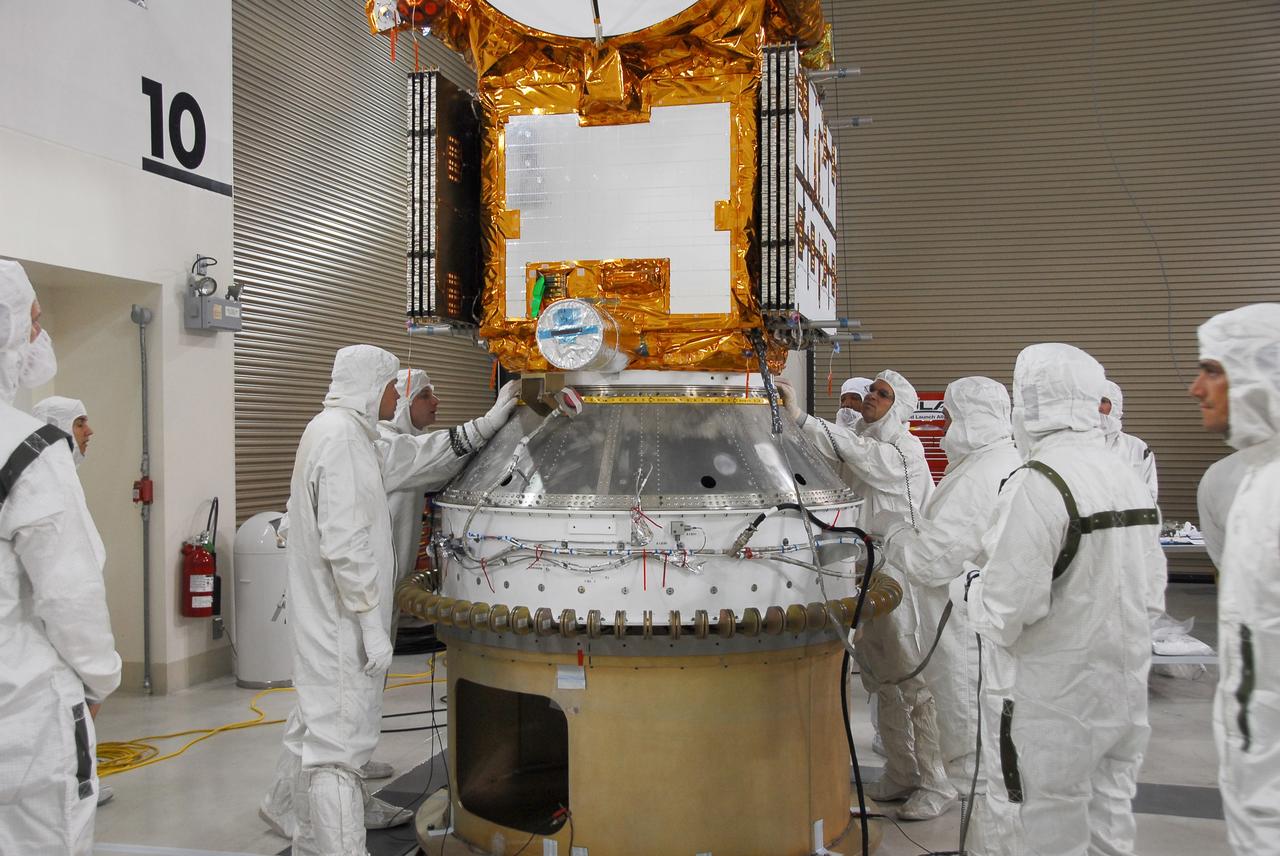
VANDENBERG AIR FORCE BASE, Calif. – Engineers check the fit of the Ocean Surface Topography Mission, or OSTM/Jason 2, spacecraft as it is lowered onto the payload attach fitting, or PAF, for installation. The PAF is the interface with the Delta II launch vehicle. The launch of the OSTM/Jason 2 aboard a Delta II rocket is scheduled for Friday, June 20, from Vandenberg Air Force Base in California. The launch window extends from 12:46 a.m. to 12:55 a.m. PDT. The satellite will be placed in an 830-mile-high orbit at an inclination of 66 degrees after separating from the Delta II 55 minutes after liftoff. The five primary science instruments of the Ocean Surface Topography Mission aboard the Jason 2 spacecraft are dedicated to measuring ocean surface height. These measurements will be used to evaluate and forecast climate changes and improve weather forecasting. The results also are expected to help forecasters better predict hurricane intensity. Photo credit: NASA
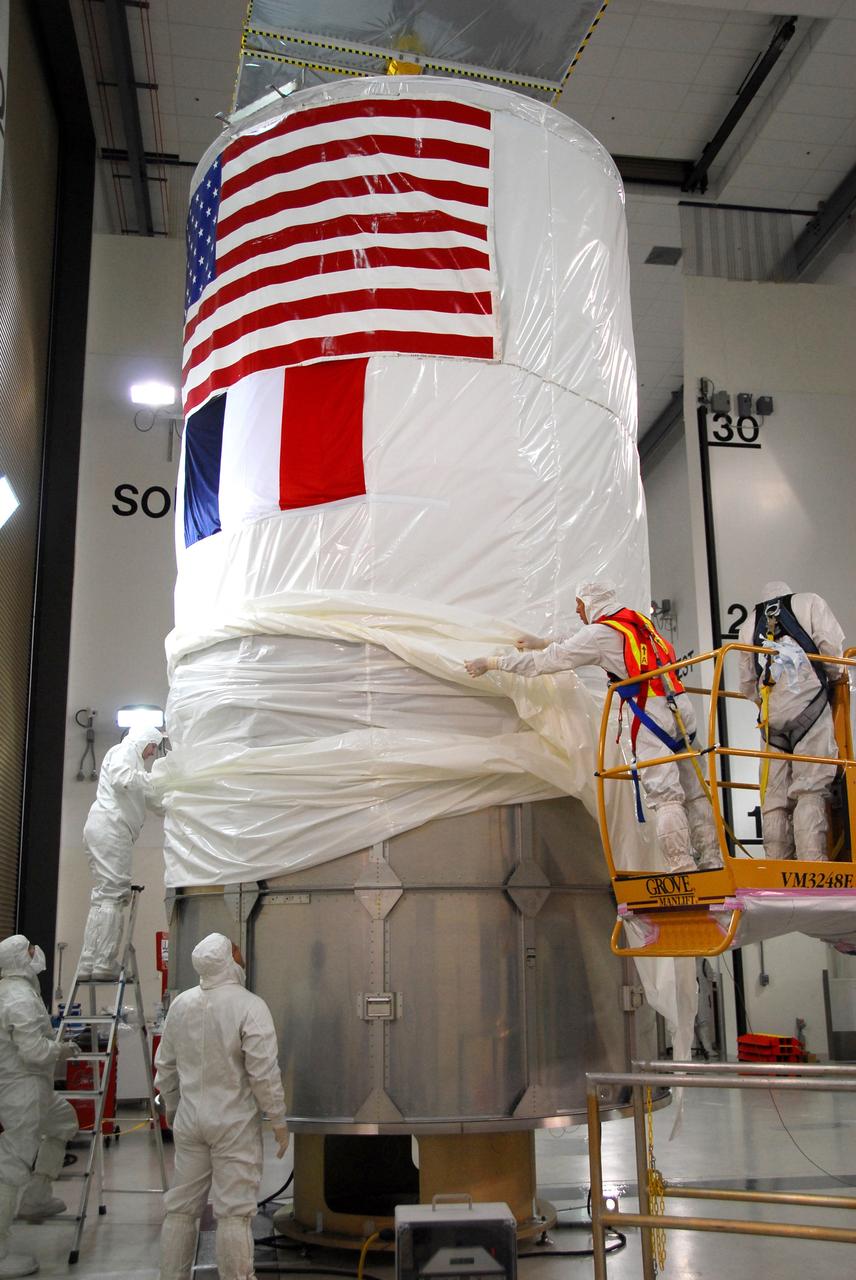
VANDENBERG AIR FORCE BASE, Calif. – Workers pull the protective cover from the upper canister over the lower segments surrounding the Ocean Surface Topography Mission, or OSTM/Jason 2, spacecraft. The OSTM/Jason 2 will be transported to the launch pad. The launch of the OSTM/Jason 2 aboard a Delta II rocket is scheduled for Friday, June 20, from Vandenberg Air Force Base in California. The launch window extends from 12:46 a.m. to 12:55 a.m. PDT. The satellite will be placed in an 830-mile-high orbit at an inclination of 66 degrees after separating from the Delta II 55 minutes after liftoff. The five primary science instruments of the Ocean Surface Topography Mission aboard the Jason 2 spacecraft are dedicated to measuring ocean surface height. These measurements will be used to evaluate and forecast climate changes and improve weather forecasting. The results also are expected to help forecasters better predict hurricane intensity. Photo credit: NASA/Dan Liberotti

A NASA sounding rocket to be launched from the Poker Flat Research Range, Alaska, between February 13 and March 3, 2017, will form white artificial clouds during its brief, 10-minute flight. The rocket is one of five being launched January through March, each carrying instruments to explore the aurora and its interactions with Earth’s upper atmosphere and ionosphere. Scientists at NASA's Goddard Space Center in Greenbelt, Maryland, explain that electric fields drive the ionosphere, which, in turn, are predicted to set up enhanced neutral winds within an aurora arc. This experiment seeks to understand the height-dependent processes that create localized neutral jets within the aurora. For this mission, two 56-foot long Black Brant IX rockets will be launched nearly simultaneously. One rocket is expected to fly to an apogee of about 107 miles while the other is targeted for 201 miles apogee. Only the lower altitude rocket will form the white luminescent clouds during its flight. Read more: <a href="http://go.nasa.gov/2kYaBgV" rel="nofollow">go.nasa.gov/2kYaBgV</a> <b><a href="http://www.nasa.gov/audience/formedia/features/MP_Photo_Guidelines.html" rel="nofollow">NASA image use policy.</a></b> <b><a href="http://www.nasa.gov/centers/goddard/home/index.html" rel="nofollow">NASA Goddard Space Flight Center</a></b> enables NASA’s mission through four scientific endeavors: Earth Science, Heliophysics, Solar System Exploration, and Astrophysics. Goddard plays a leading role in NASA’s accomplishments by contributing compelling scientific knowledge to advance the Agency’s mission. <b>Follow us on <a href="http://twitter.com/NASAGoddardPix" rel="nofollow">Twitter</a></b> <b>Like us on <a href="http://www.facebook.com/pages/Greenbelt-MD/NASA-Goddard/395013845897?ref=tsd" rel="nofollow">Facebook</a></b> <b>Find us on <a href="http://instagrid.me/nasagoddard/?vm=grid" rel="nofollow">Instagram</a></b>