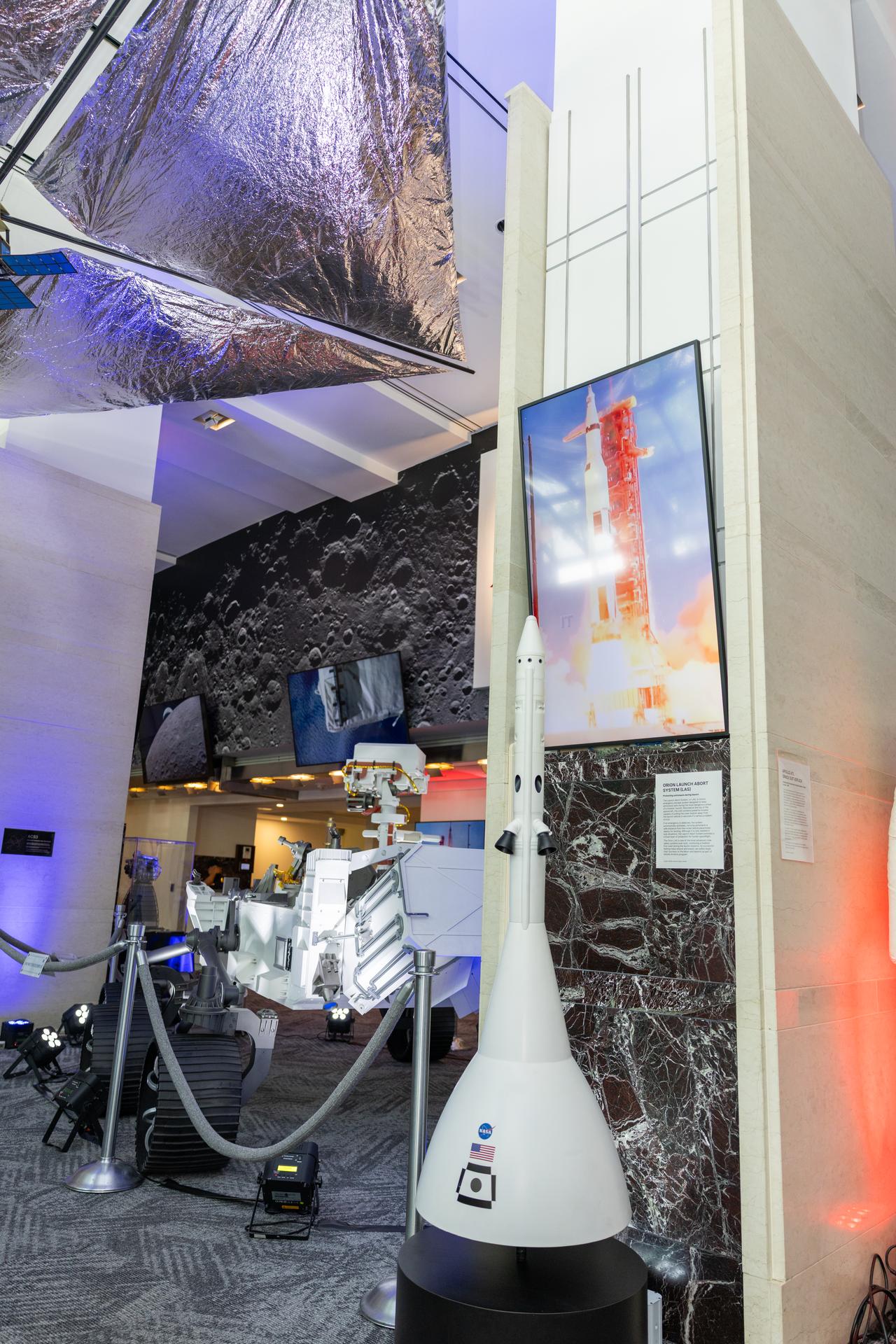
NASA Headquarters redesign featuring artifacts, interactive exhibits, replica mars rover, and donut shop at NASA Headquarters in Washington, DC. Photo Credit: (NASA/Tiffany Coutris)
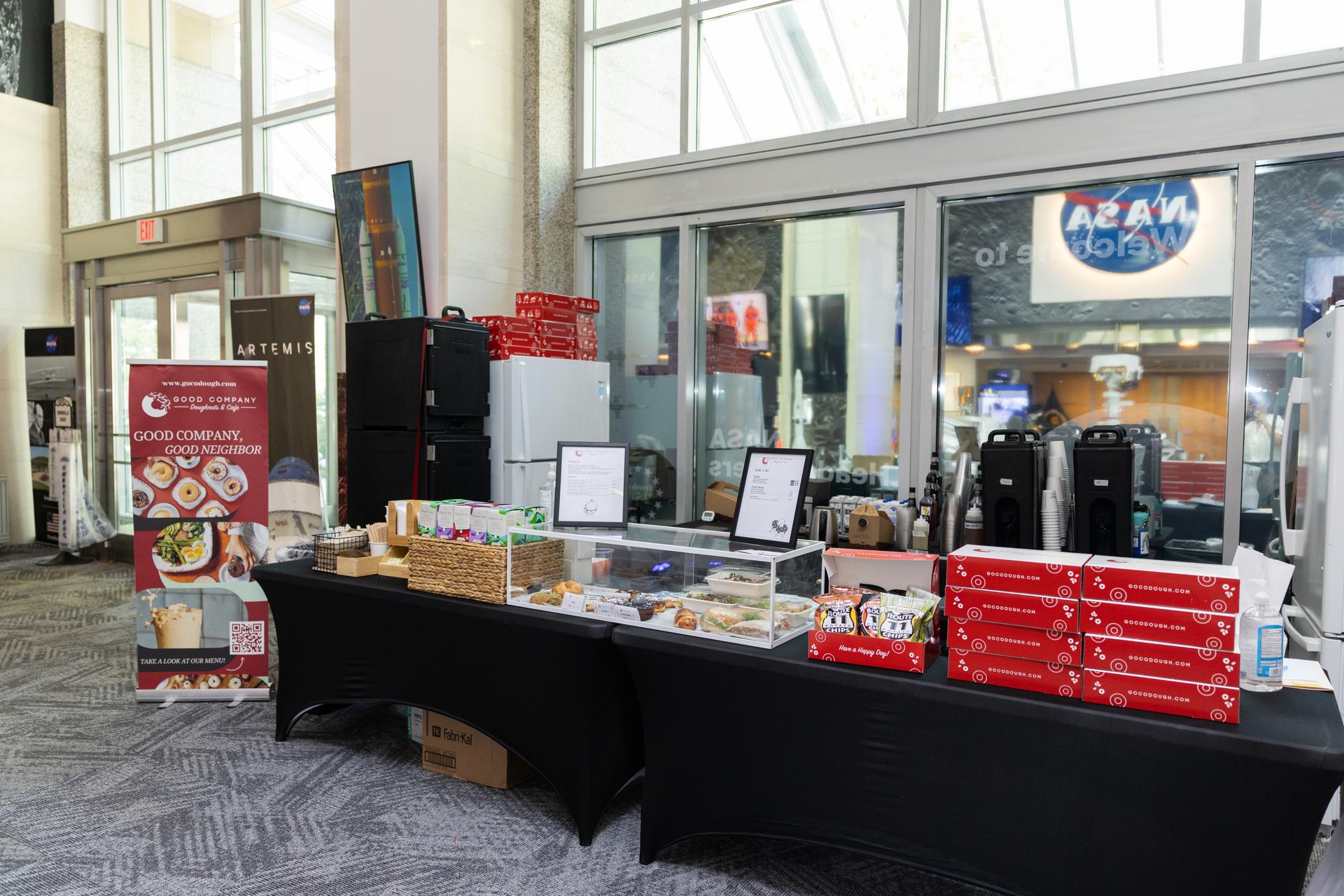
NASA Headquarters redesign featuring artifacts, interactive exhibits, replica mars rover, and donut shop at NASA Headquarters in Washington, DC. Photo Credit: (NASA/Tiffany Coutris)
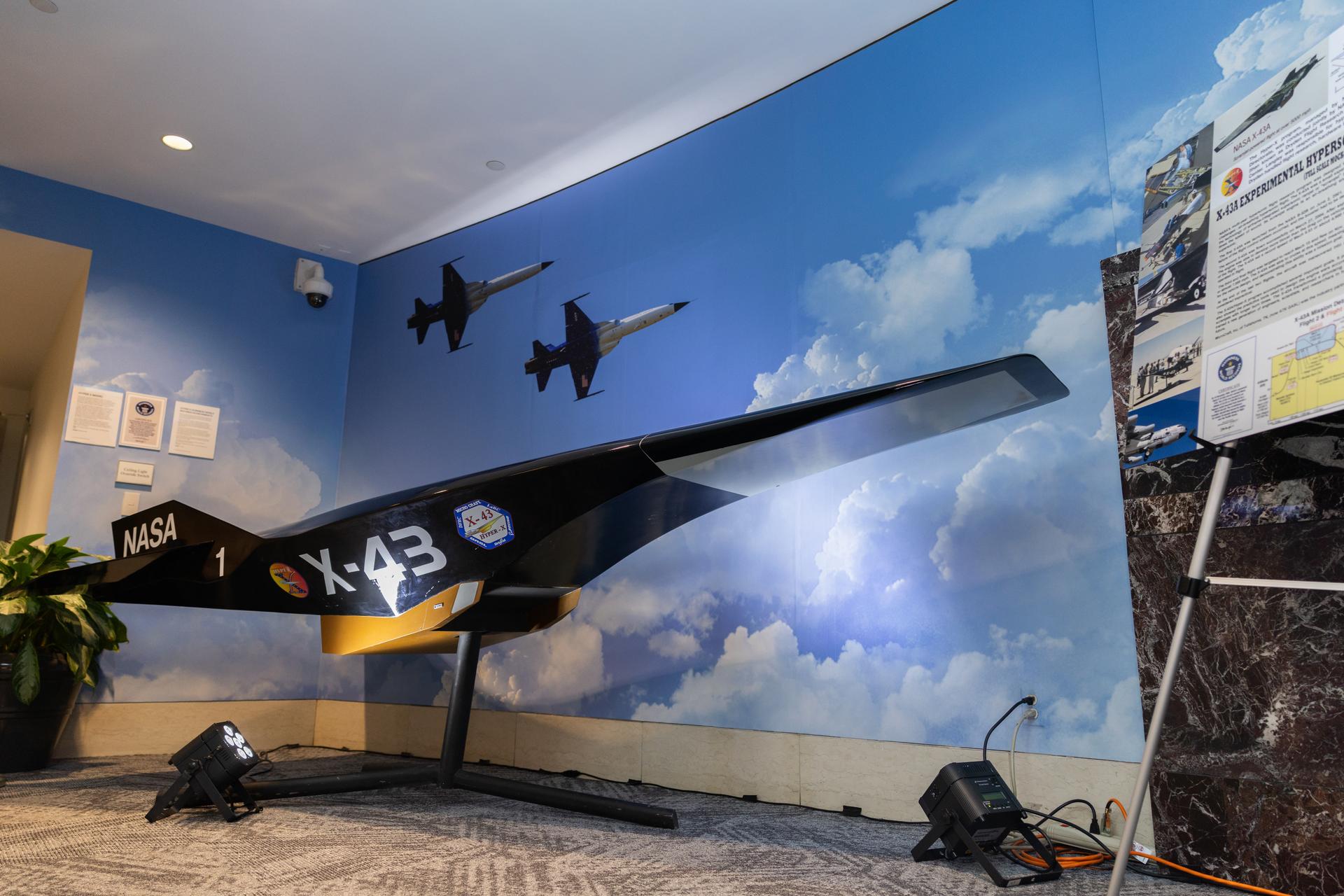
NASA Headquarters redesign featuring artifacts, interactive exhibits, replica mars rover, and donut shop at NASA Headquarters in Washington, DC. Photo Credit: (NASA/Tiffany Coutris)
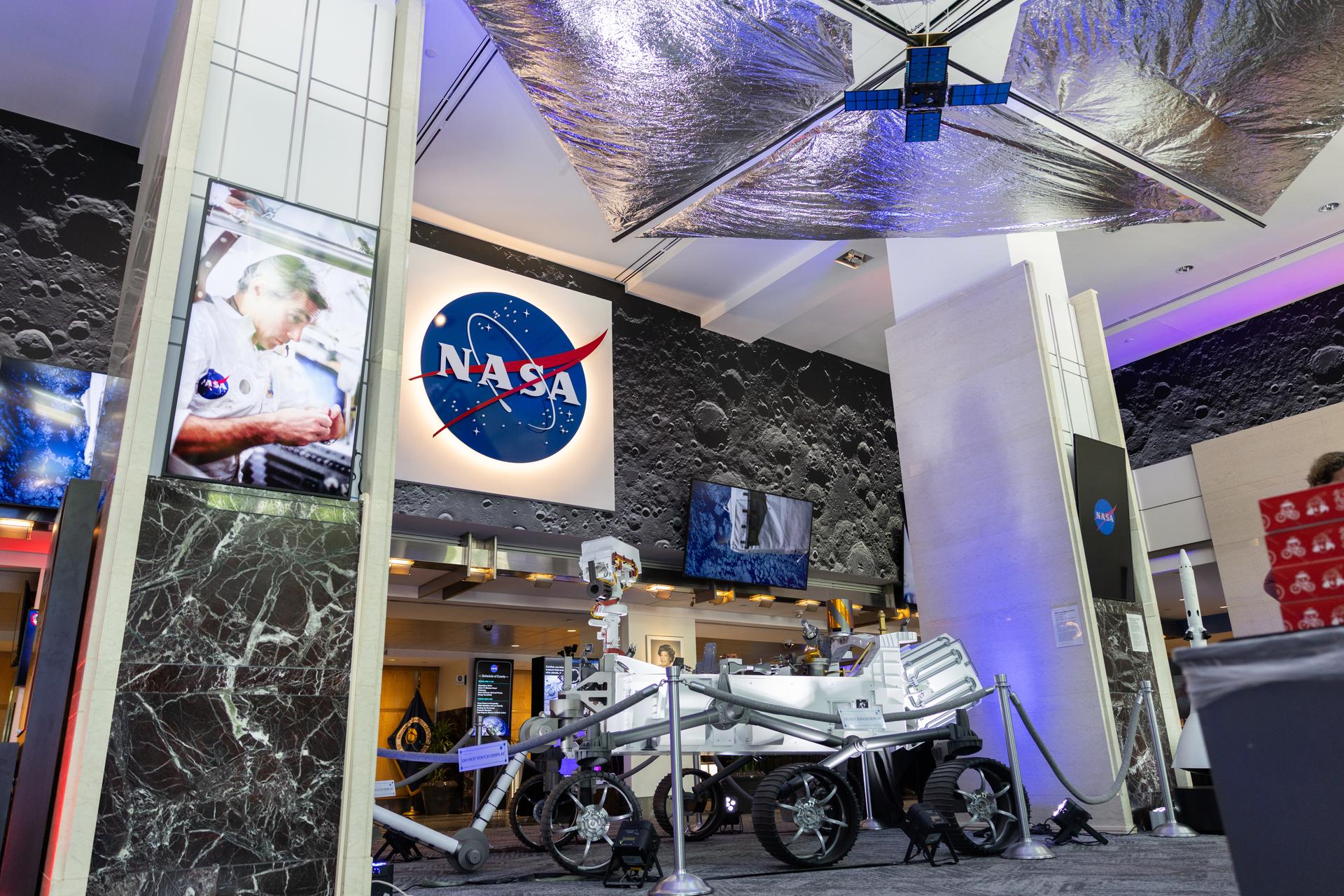
NASA Headquarters redesign featuring artifacts, interactive exhibits, replica mars rover, and donut shop at NASA Headquarters in Washington, DC. Photo Credit: (NASA/Tiffany Coutris)
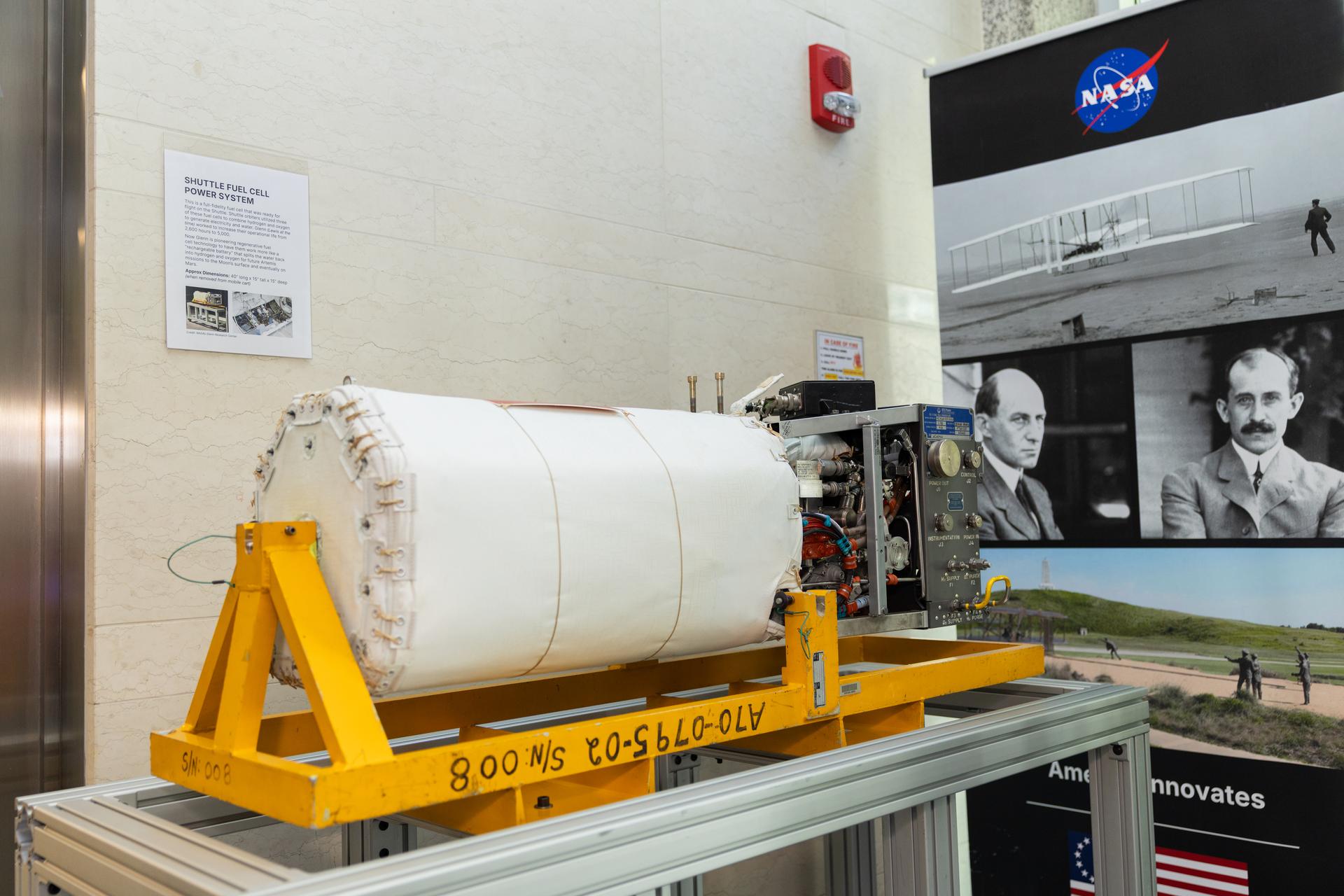
NASA Headquarters redesign featuring artifacts, interactive exhibits, replica mars rover, and donut shop at NASA Headquarters in Washington, DC. Photo Credit: (NASA/Tiffany Coutris)
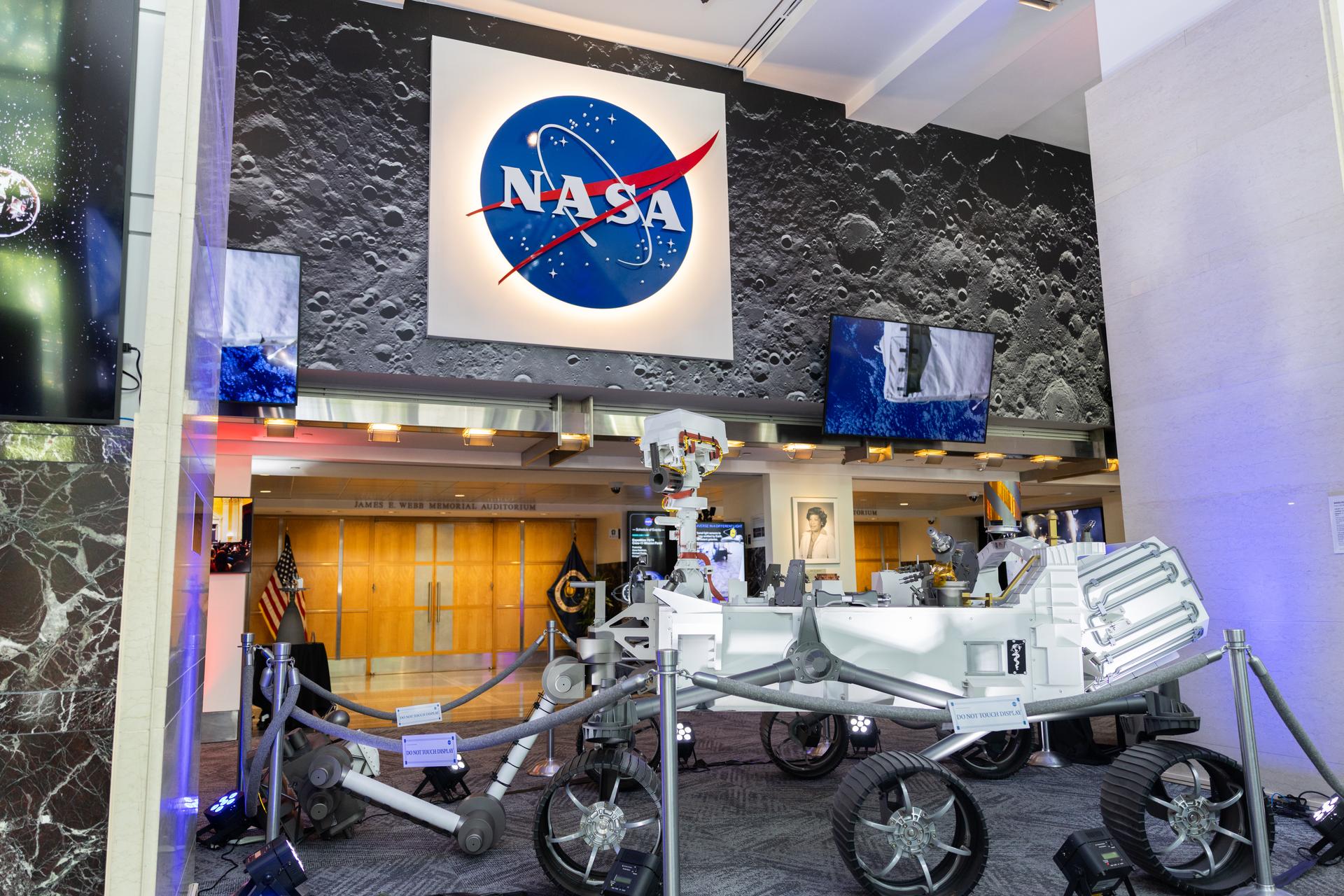
NASA Headquarters redesign featuring artifacts, interactive exhibits, replica mars rover, and donut shop at NASA Headquarters in Washington, DC. Photo Credit: (NASA/Tiffany Coutris)
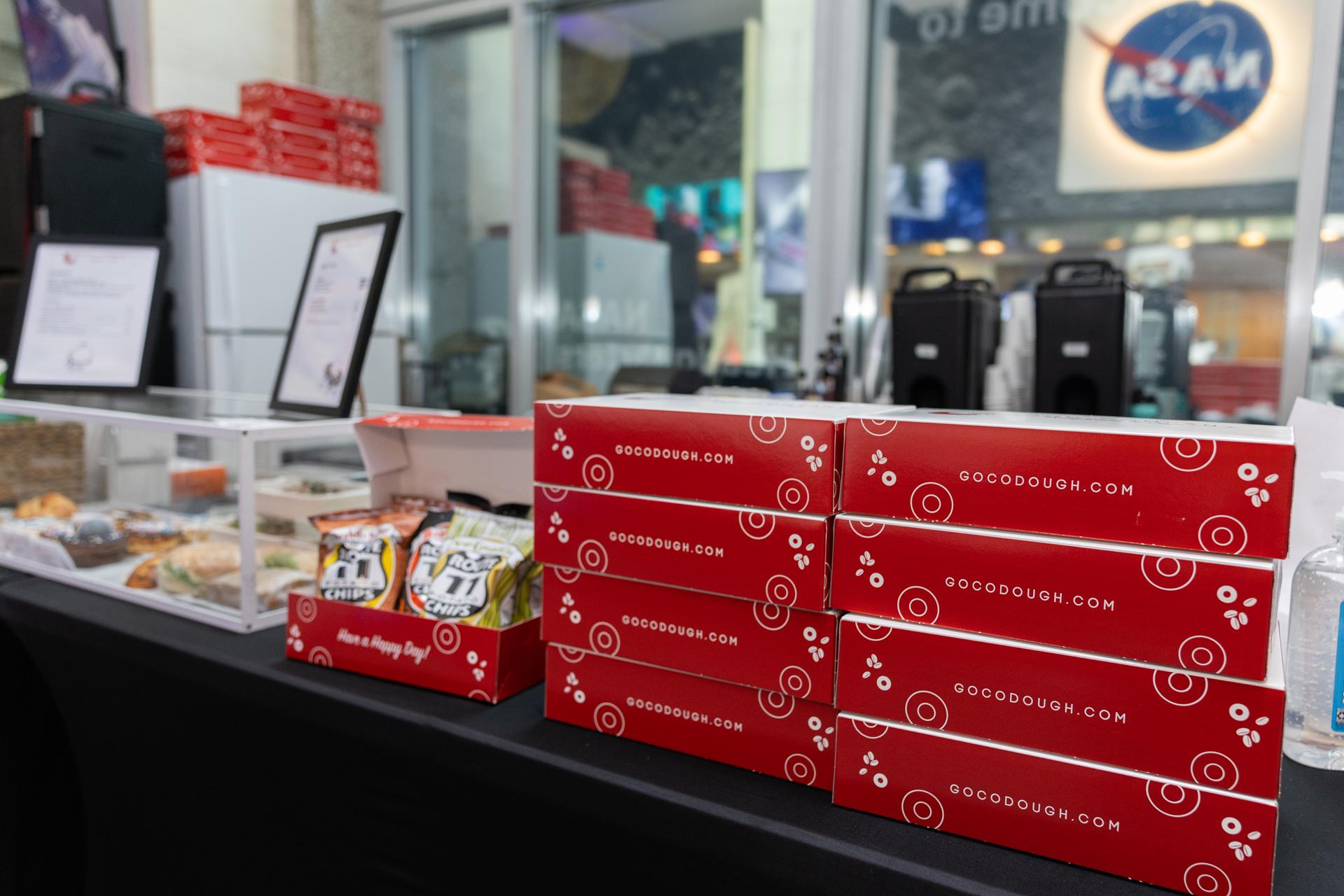
NASA Headquarters redesign featuring artifacts, interactive exhibits, replica mars rover, and donut shop at NASA Headquarters in Washington, DC. Photo Credit: (NASA/Tiffany Coutris)
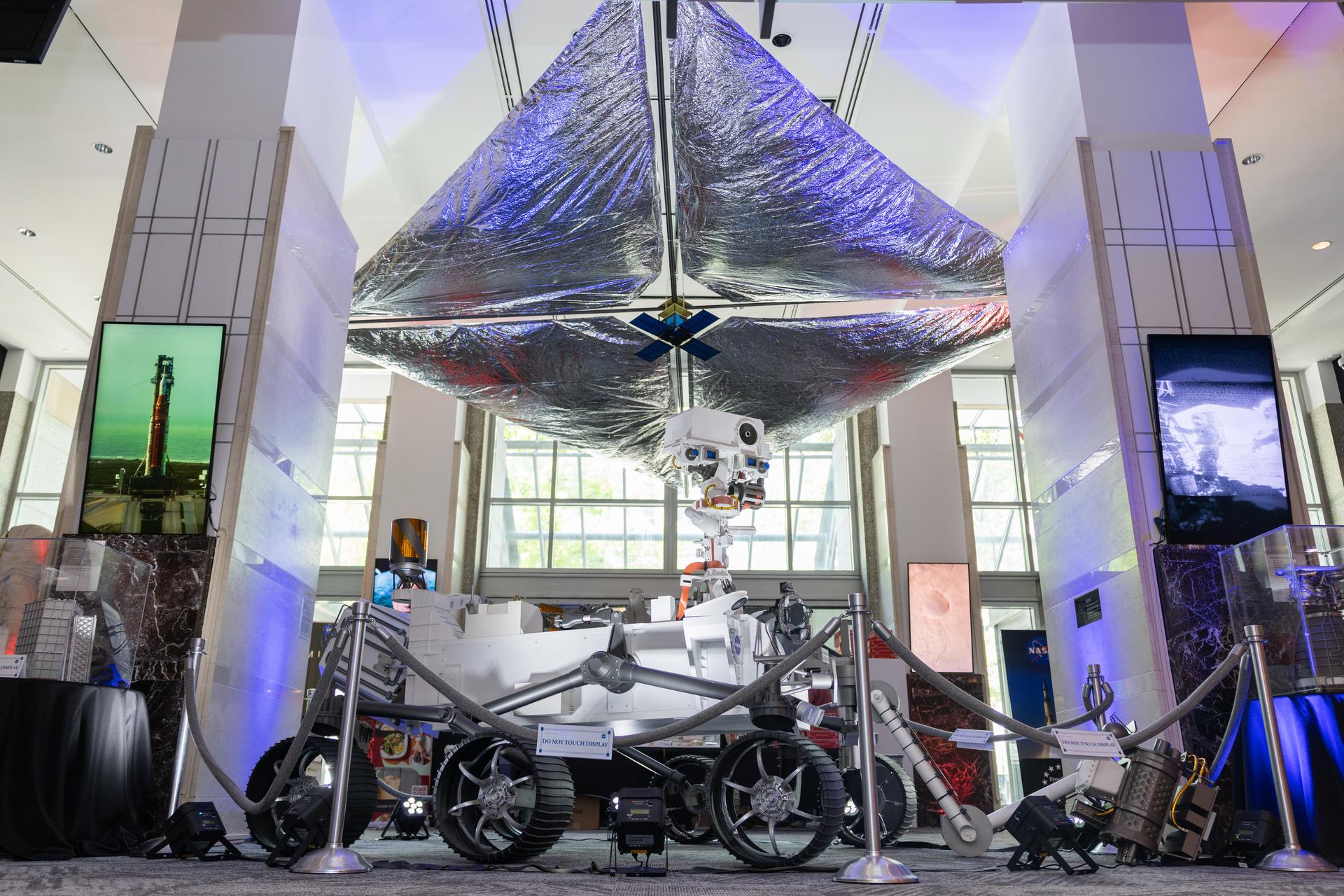
NASA Headquarters redesign featuring artifacts, interactive exhibits, replica mars rover, and donut shop at NASA Headquarters in Washington, DC. Photo Credit: (NASA/Tiffany Coutris)
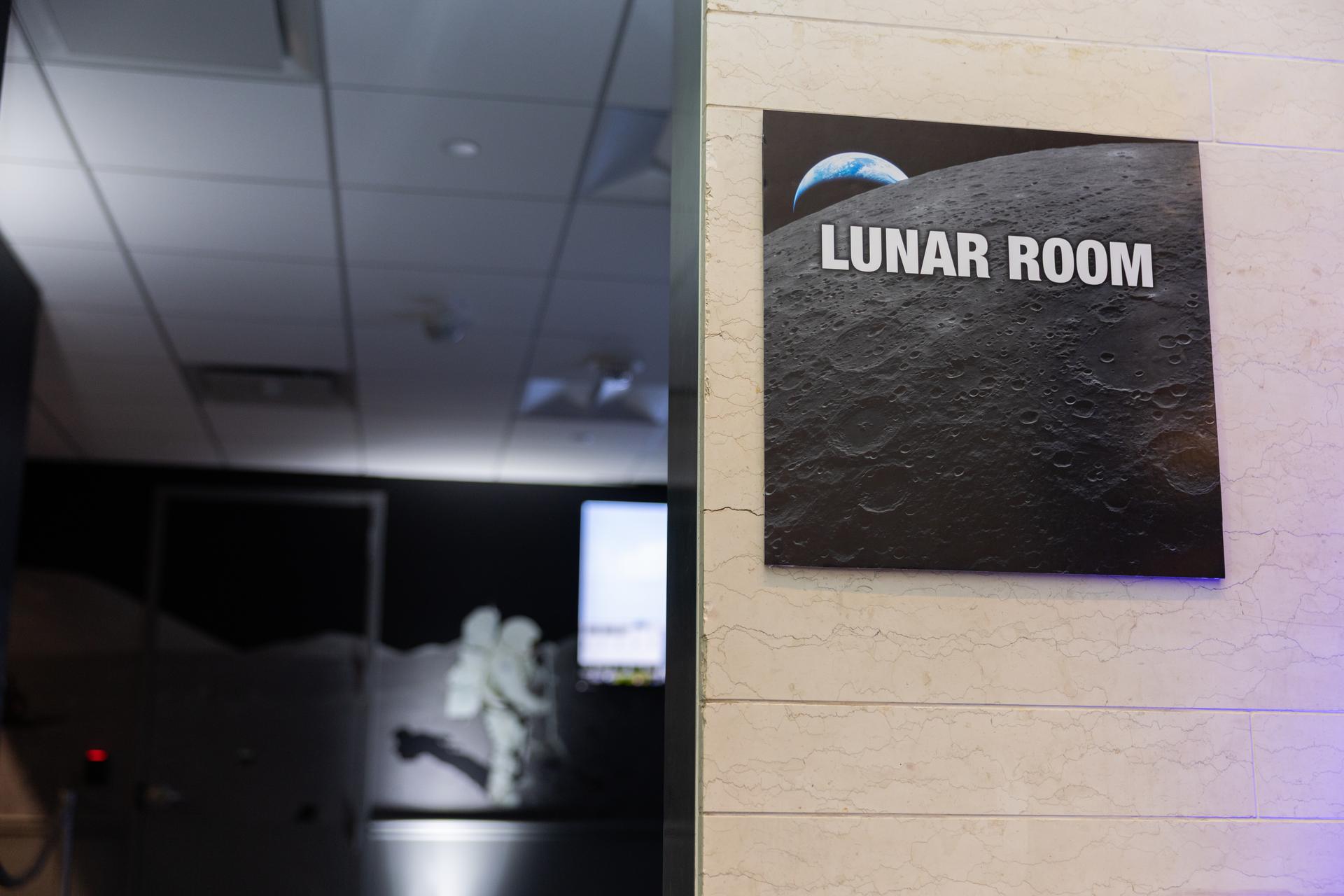
NASA Headquarters redesign featuring artifacts, interactive exhibits, replica mars rover, and donut shop at NASA Headquarters in Washington, DC. Photo Credit: (NASA/Tiffany Coutris)
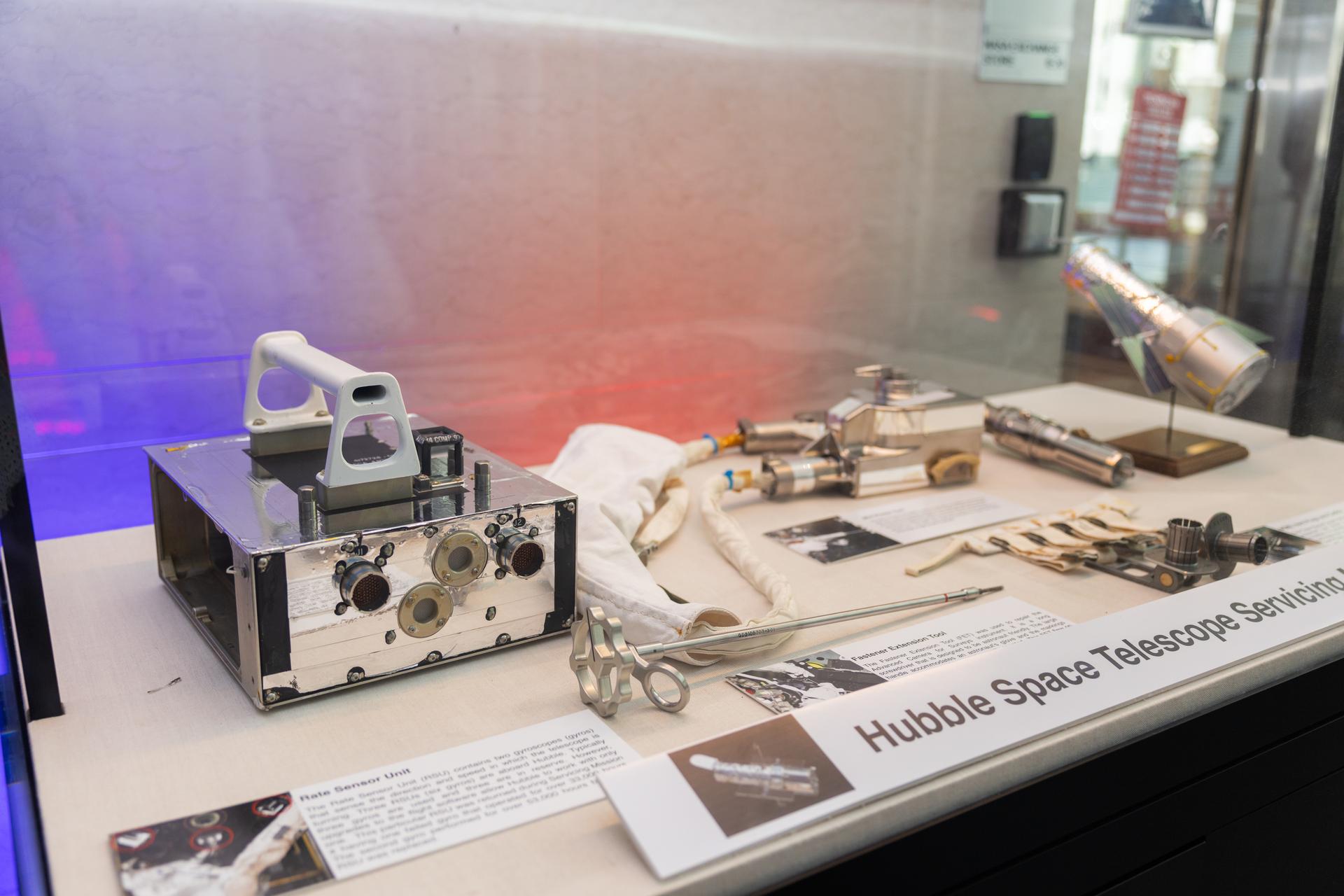
NASA Headquarters redesign featuring artifacts, interactive exhibits, replica mars rover, and donut shop at NASA Headquarters in Washington, DC. Photo Credit: (NASA/Tiffany Coutris)
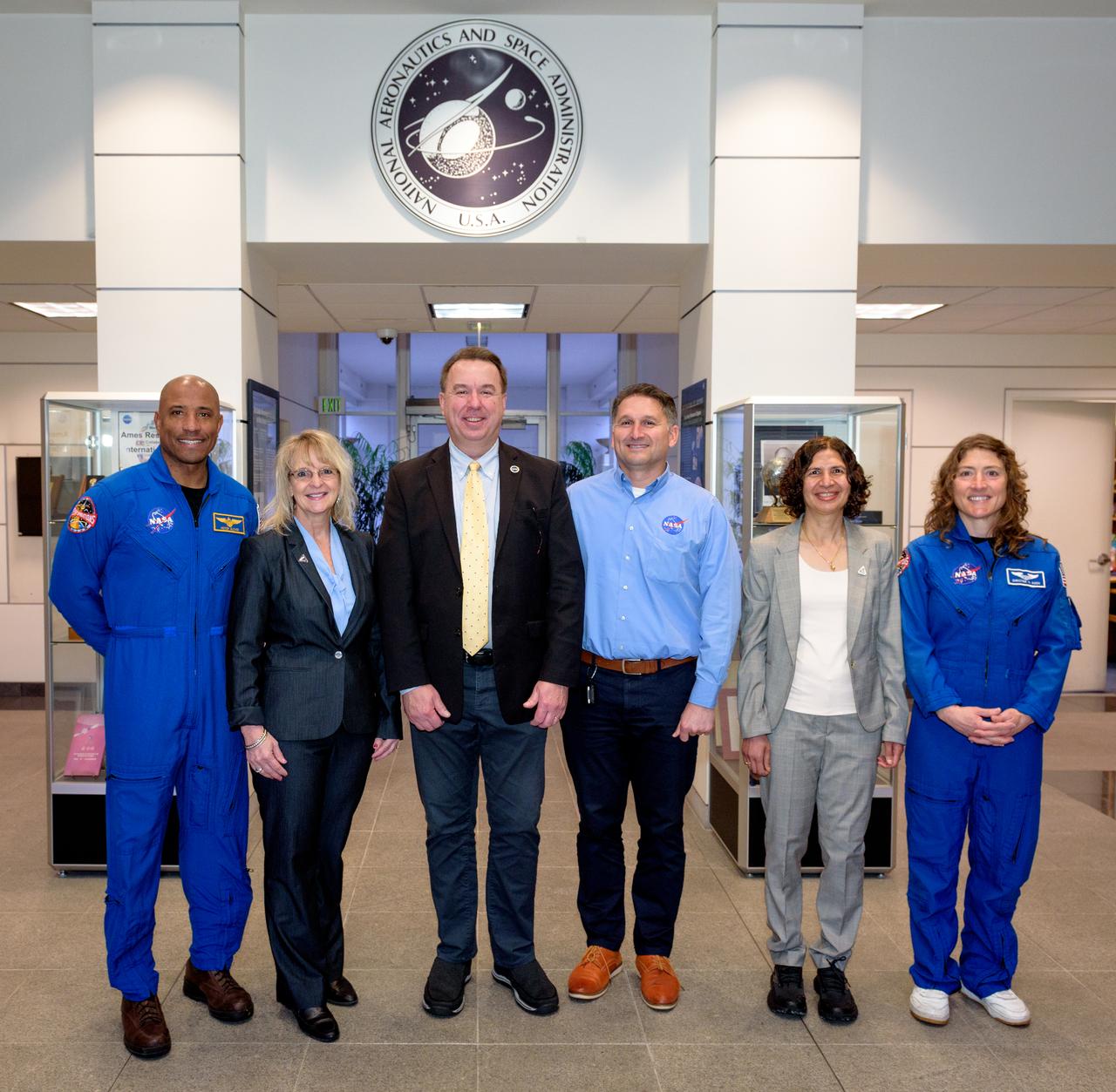
NASA astronaut Victor J. Glover, left, Orion Deputy Program Manager Debbie Korth, Deputy Center Director David Korsmeyer, Luis Saucedo, Parul Agrawal, and NASA astronaut Christina Koch, left, in the lobby of N200.
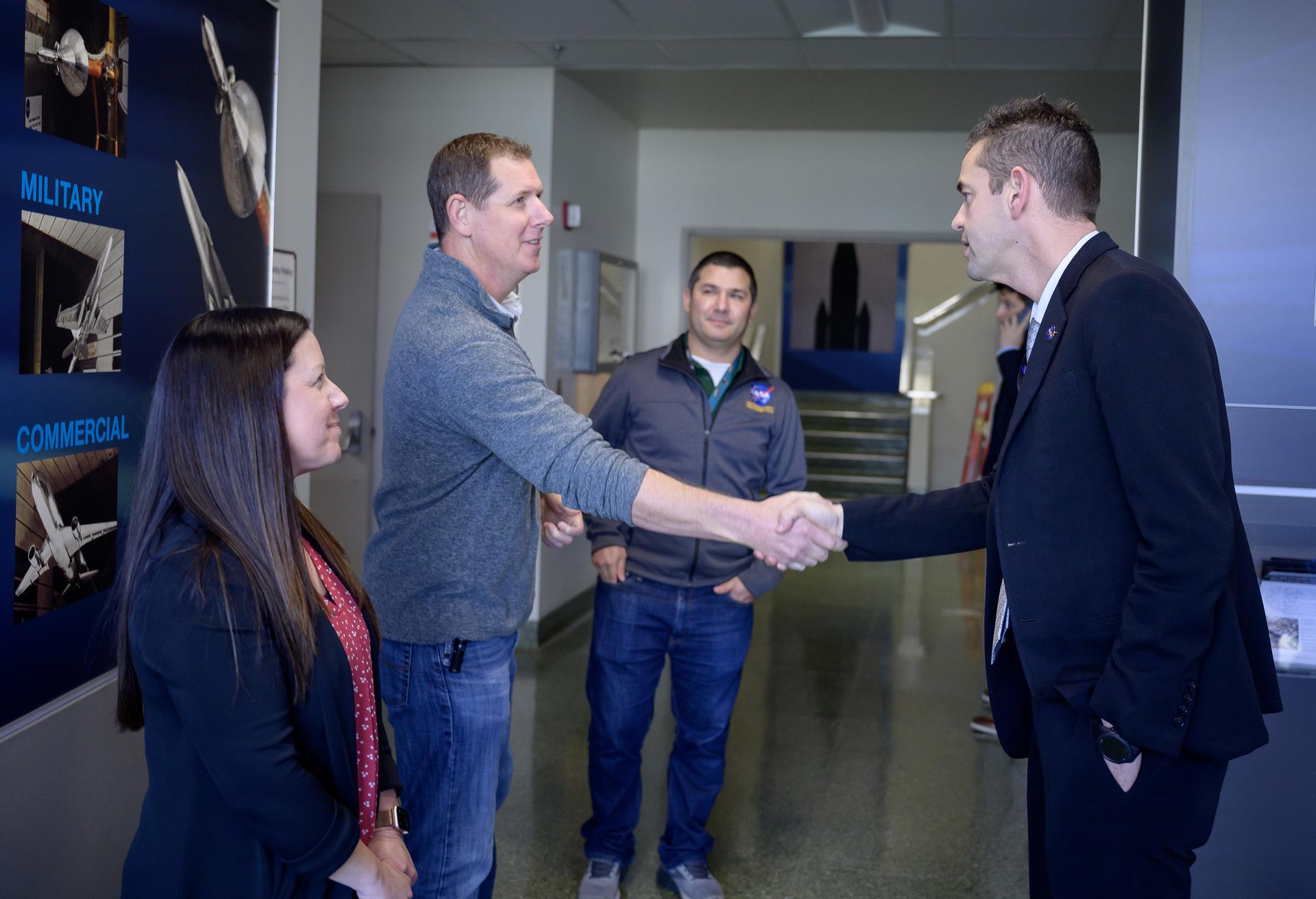
Wind tunnel staff Mike Treece and Wind Tunnel Division Chief Maureen Delgado greet NASA Administrator Jared Isaacman in the lobby of the Unitary Plan Wind Tunnel (UPWT) facility in N227.

NASA Administrator Jared Isaacman, and President of NYSE Group Lynn Martin walk through the lobby of the NYSE building prior to Isaacman, and other NASA leadership, ringing the opening bell of the New York Stock Exchange, Thursday, April 30, 2026, in New York, NY. Photo Credit: (NASA/Bill Ingalls)
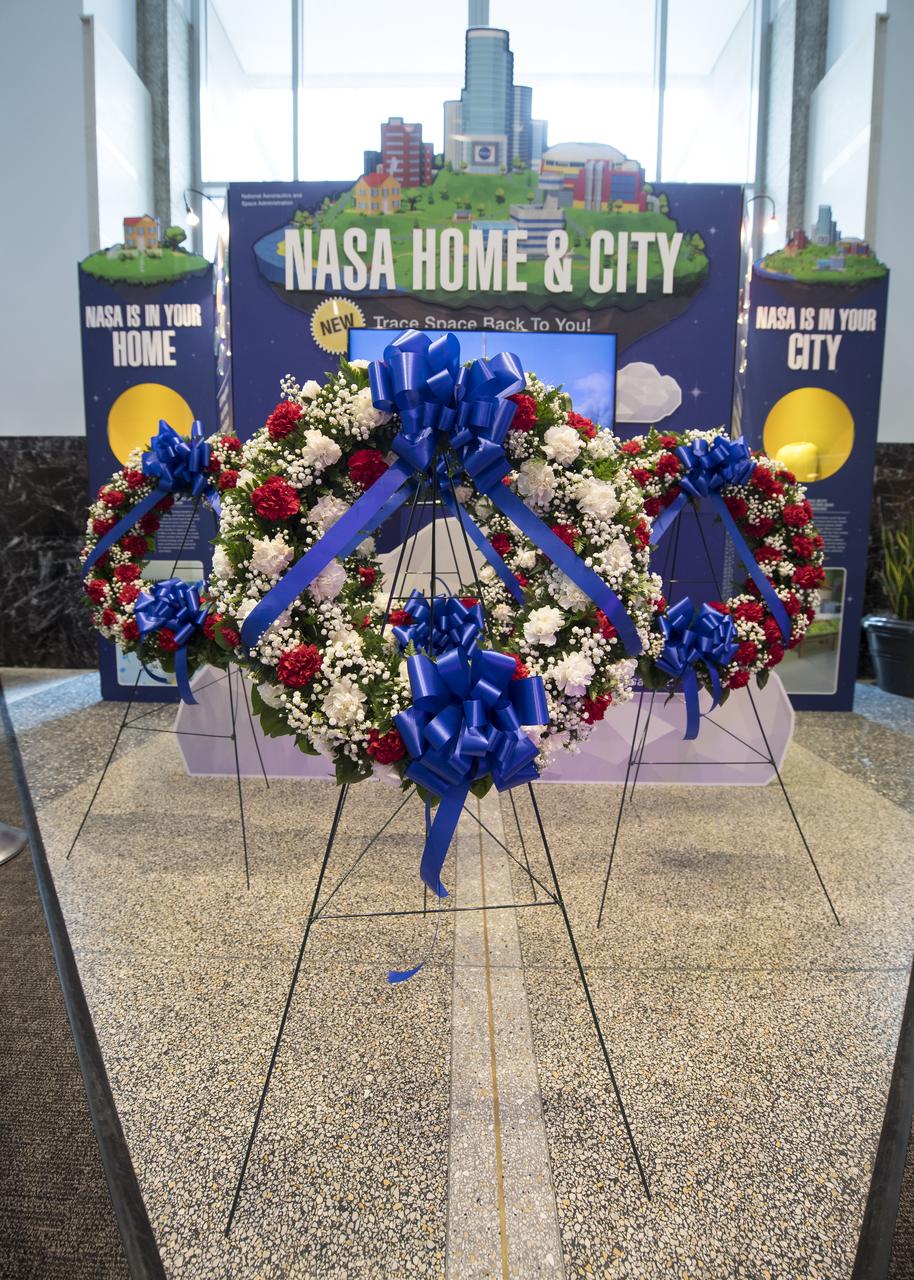
Wreaths are seen in the lobby of NASA Headquarters on NASA's Day of Remembrance, Thursday, Feb. 7, 2019, in Washington. The wreaths will be laid at memorial sites in Arlington National Cemetery later today in memory of those men and women who lost their lives in the quest for space exploration. Photo Credit: (NASA/Aubrey Gemignani)
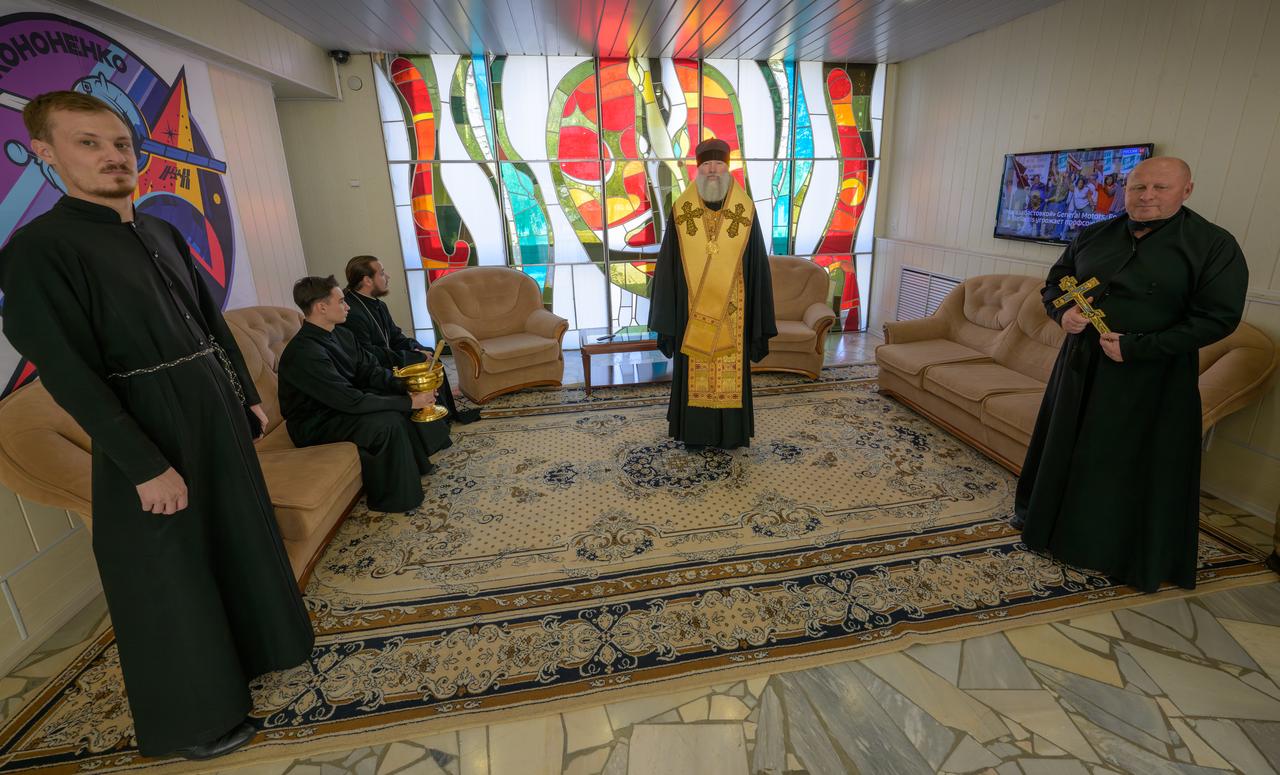
A Russian Orthodox priest waits for the Expedition 70 crew departure in the lobby of the Cosmonaut Hotel, Friday, Sept. 15, 2023, in Baikonur, Kazakhstan. Expedition 70 NASA astronaut Loral O'Hara and Roscosmos cosmonauts Oleg Kononenko and Nikolai Chub will launch on a mission to the International Space Station. Photo Credit: (NASA/Bill Ingalls)
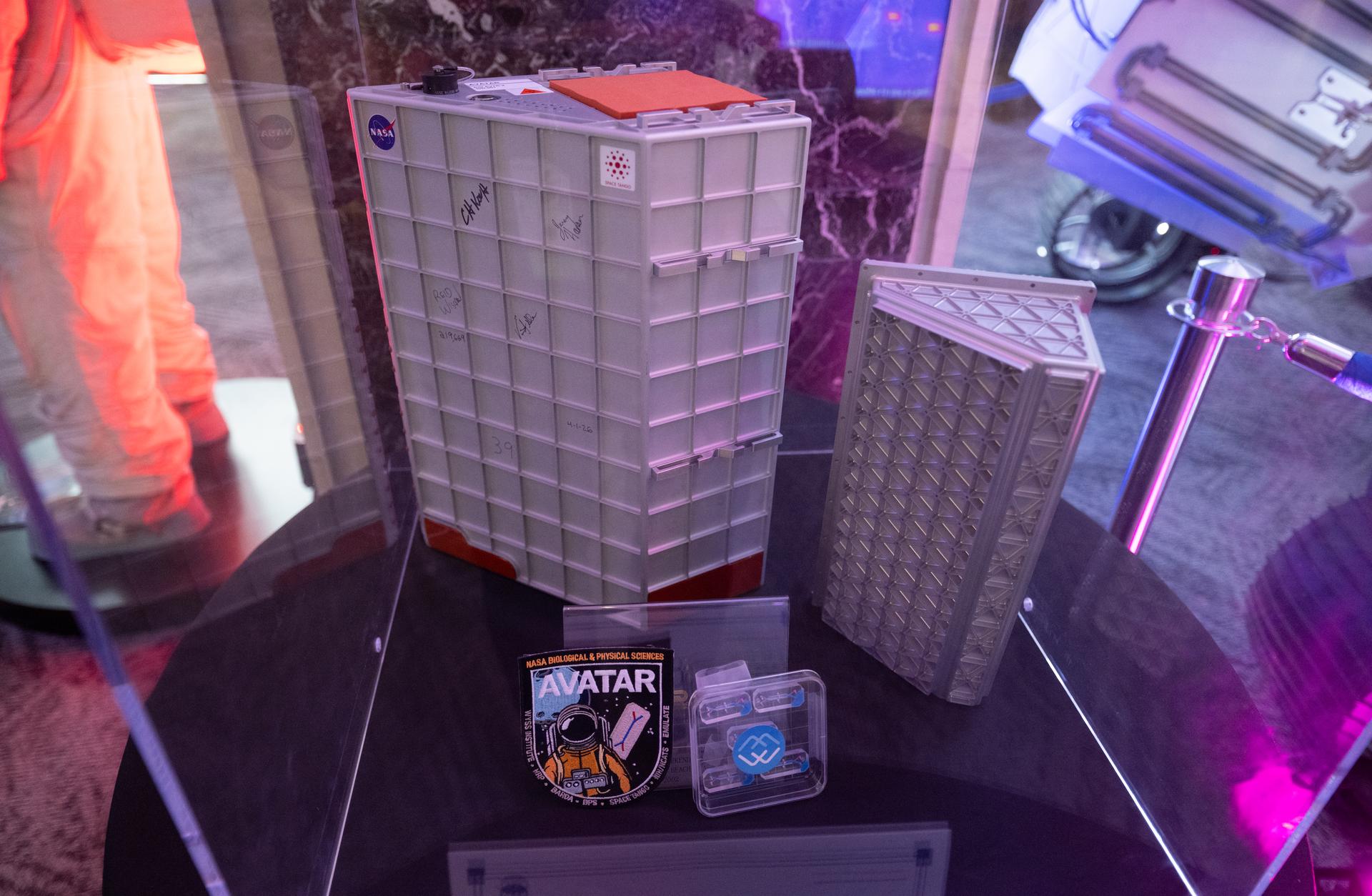
The AVATAR (A Virtual Astronaut Tissue Analog Response) payload the flew on the Artemis II mission is seen in the lobby of the Mary W. Jackson NASA Headquarters building in Washington, Wednesday, Sept. 16, 2026, following a Frontiers Forum talk titled “Revolutionizing Medicine – In Space.” Photo Credit: (NASA/Joel Kowsky)
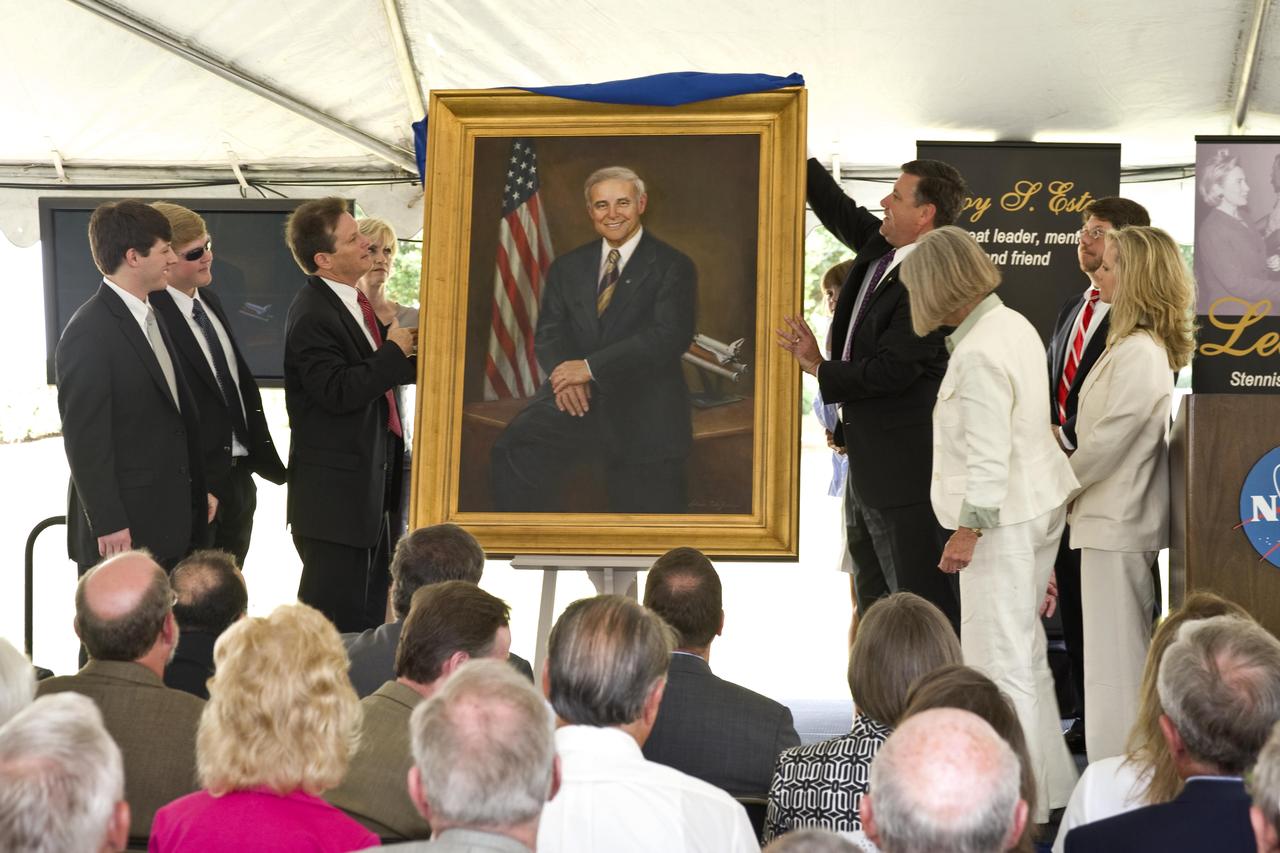
Stennis Space Center Director Patrick Scheuermann (right) and members of the Roy S. Estess family unveil a commissioned portrait of the late Stennis director during a May 2 ceremony. The portrait now hangs in the lobby of the main NASA administration at Stennis, now named the Roy S. Estess Building.
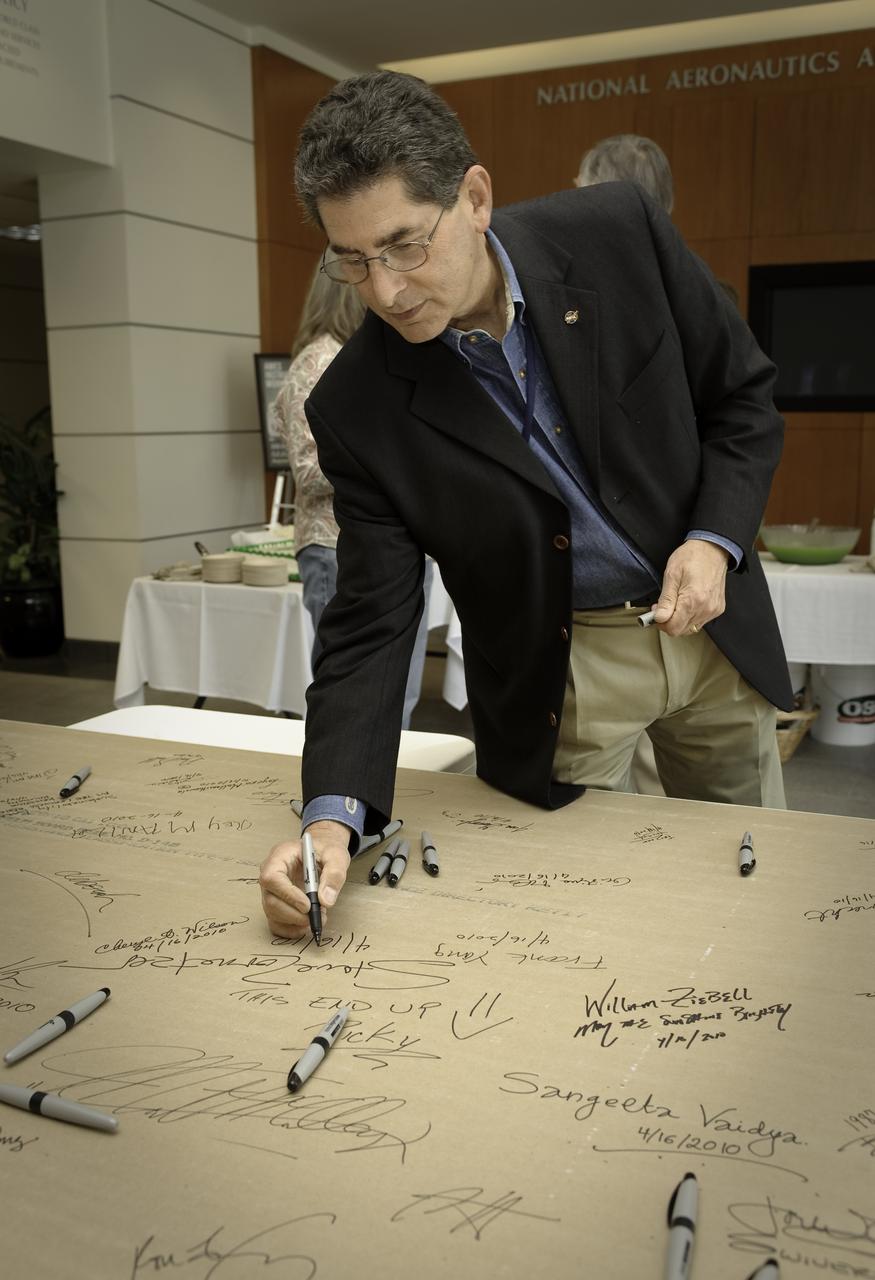
Sustainability Base celebration, sheetrock signing and social in lobby of N-200. Steve Zornetzer, Associate Center Director credited with spearheading the new 'Green' building at NASA Ames Research Center, Moffett Field, California designated Sustainability Base N-232 puts his mark on the building forever.
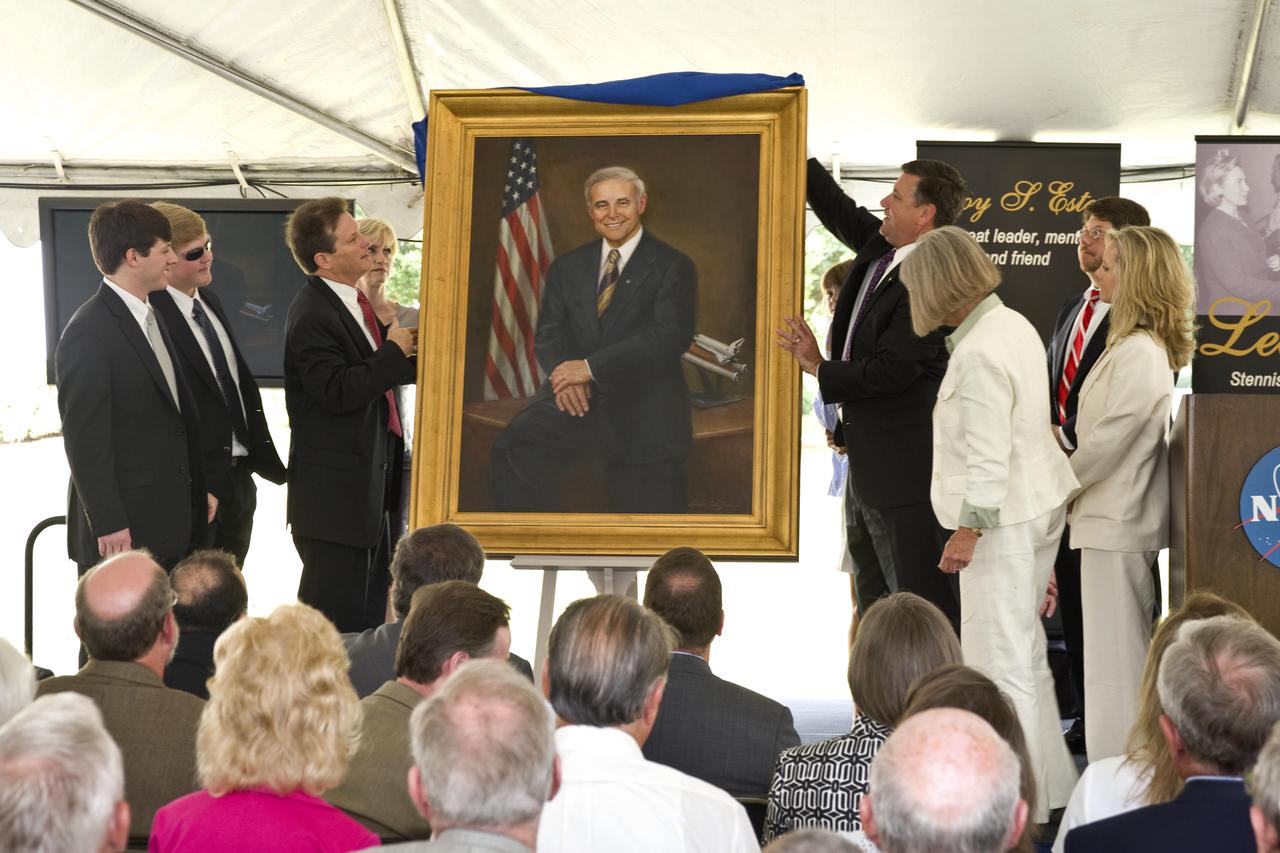
Stennis Space Center Director Patrick Scheuermann (right) and members of the Roy S. Estess family unveil a commissioned portrait of the late Stennis director during a May 2 ceremony. The portrait now hangs in the lobby of the main NASA administration at Stennis, now named the Roy S. Estess Building.
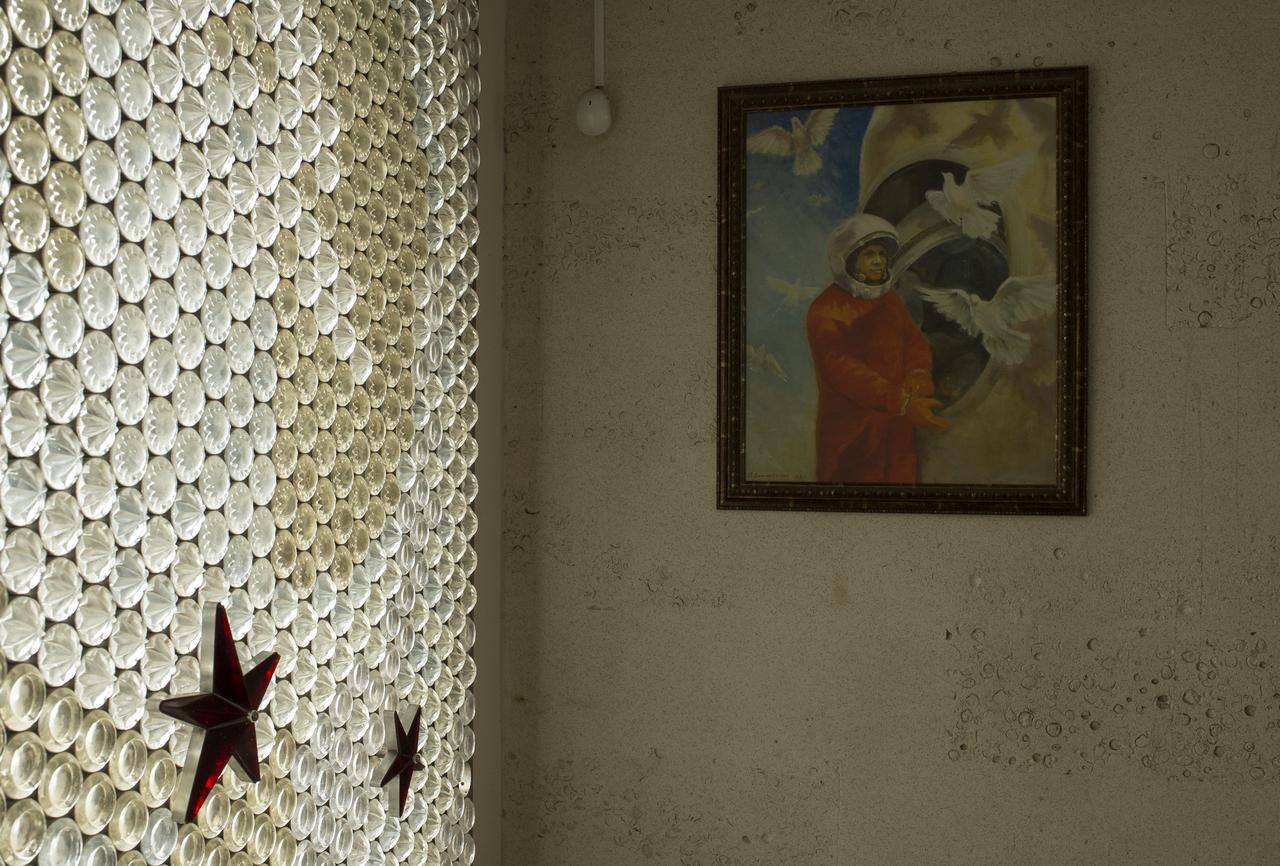
A painting of Yuri Gagarin is seen in the lobby of the building where the Expedition 52 prime and backup crews held a crew press conference on the grounds of the Gagarin Cosmonaut Training Center (GCTC), Monday, July 10, 2017 in Star City, Russia. Photo Credit: (NASA/Bill Ingalls)
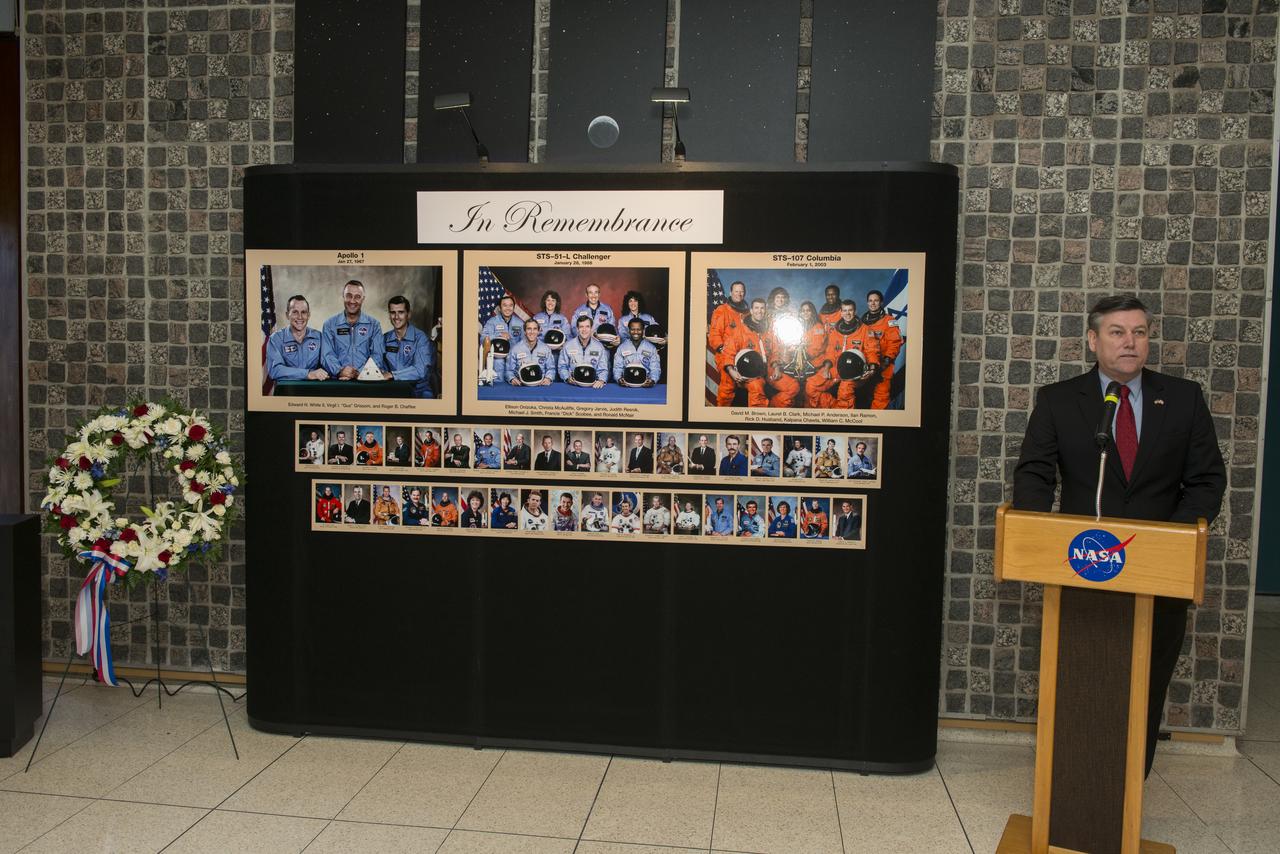
DAY OF REMEMBRANCE: MARSHALL CENTER DIRECTOR PATRICK SCHEUERMANN WELCOMES TEAM MEMBERS AND GUESTS TO THE LOBBY OF BUILDING 4200, WHERE THE CENTER HOSTED A BRIEF GATHERING JAN. 30, INCLUDING A MOMENT OF SILENCE TO REFLECT ON THE LIVES OF THE LOST APOLLO, CHALLENGER AND COLUMBIA CREWS, AND ALL THOSE WHO HAVE GIVEN THEIR LIVES IN PURSUIT OF NASA'S MISSION
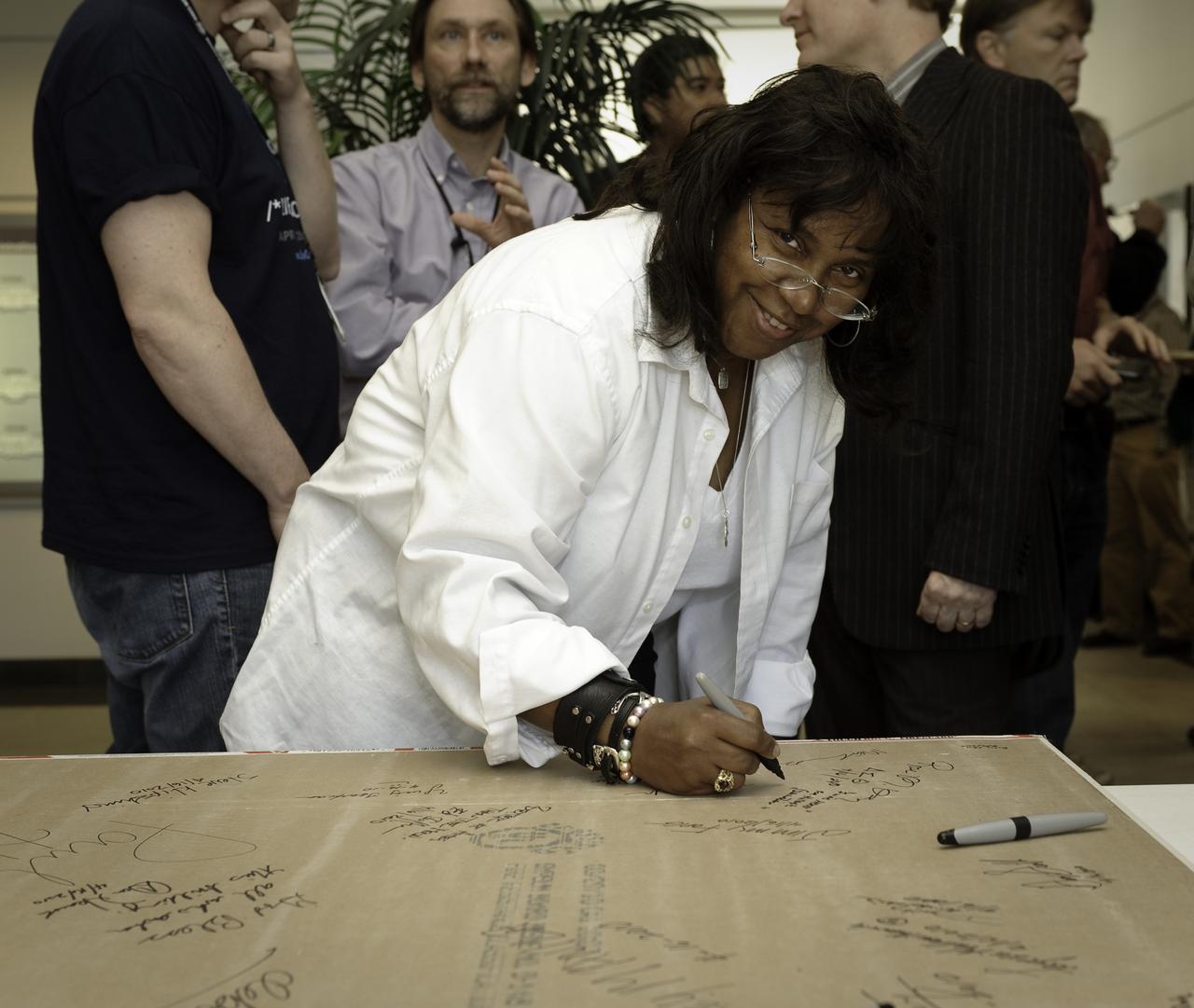
Sustainability Base celebration, sheetrock signing and social in lobby of N-200. Rose King of Code C slated to become on of the first occupants of the new Green building at NASA Ames Research Center, Moffett Field, California designated Sustainability Base N-232 puts her mark on the building forever.
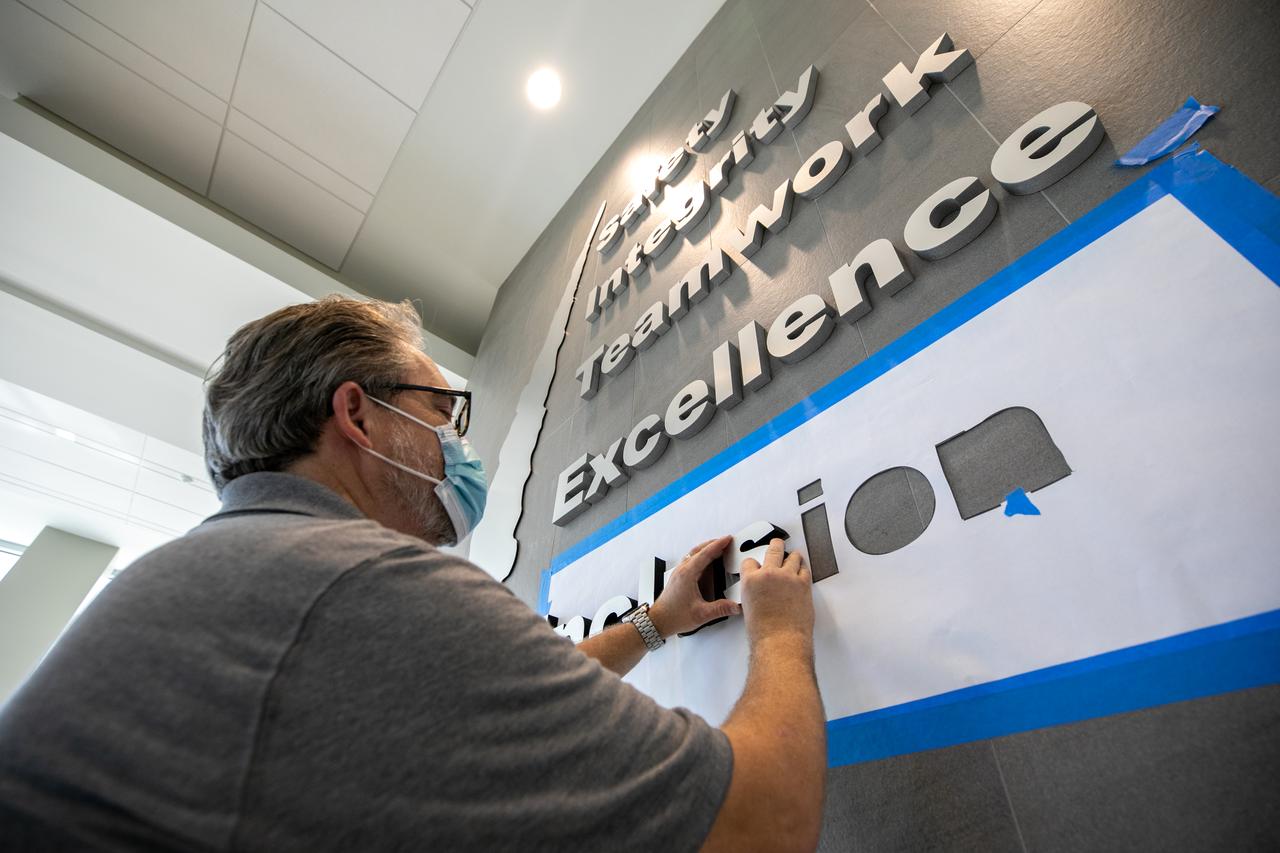
NASA’s fifth core value – inclusion – is installed in the Central Campus lobby at the agency’s Kennedy Space Center in Florida on Sept. 1, 2020. On July 23, NASA Administrator Jim Bridenstine announced the addition of this fifth core value to the existing values embraced by NASA: safety, integrity, teamwork, and excellence. In his announcement, Bridenstine stated “Incorporating inclusion as a NASA core value is an important step to ensuring this principle remains a long-term focus for our agency and becomes ingrained in the NASA family DNA.”
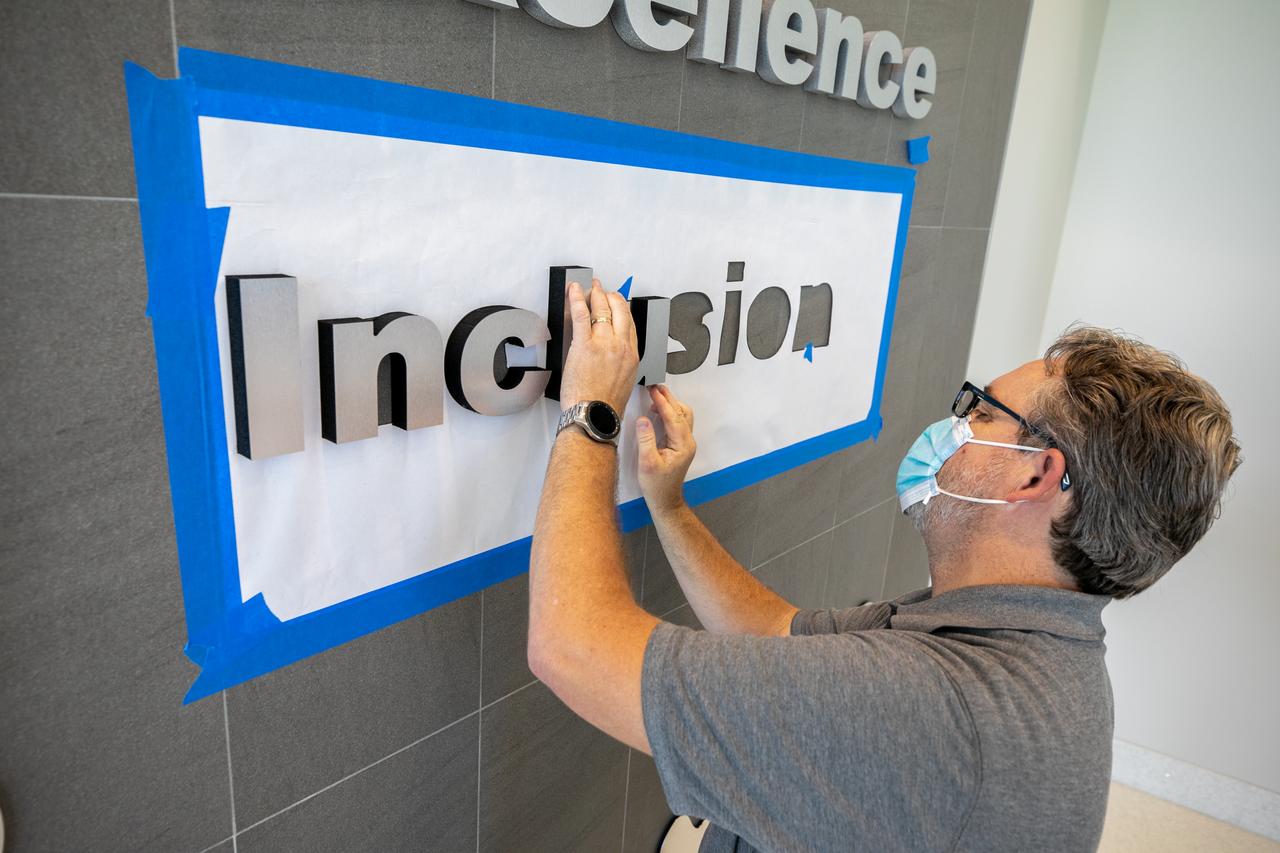
NASA’s fifth core value – inclusion – is installed in the Central Campus lobby at the agency’s Kennedy Space Center in Florida on Sept. 1, 2020. On July 23, NASA Administrator Jim Bridenstine announced the addition of this fifth core value to the existing values embraced by NASA: safety, integrity, teamwork, and excellence. In his announcement, Bridenstine stated “Incorporating inclusion as a NASA core value is an important step to ensuring this principle remains a long-term focus for our agency and becomes ingrained in the NASA family DNA.”
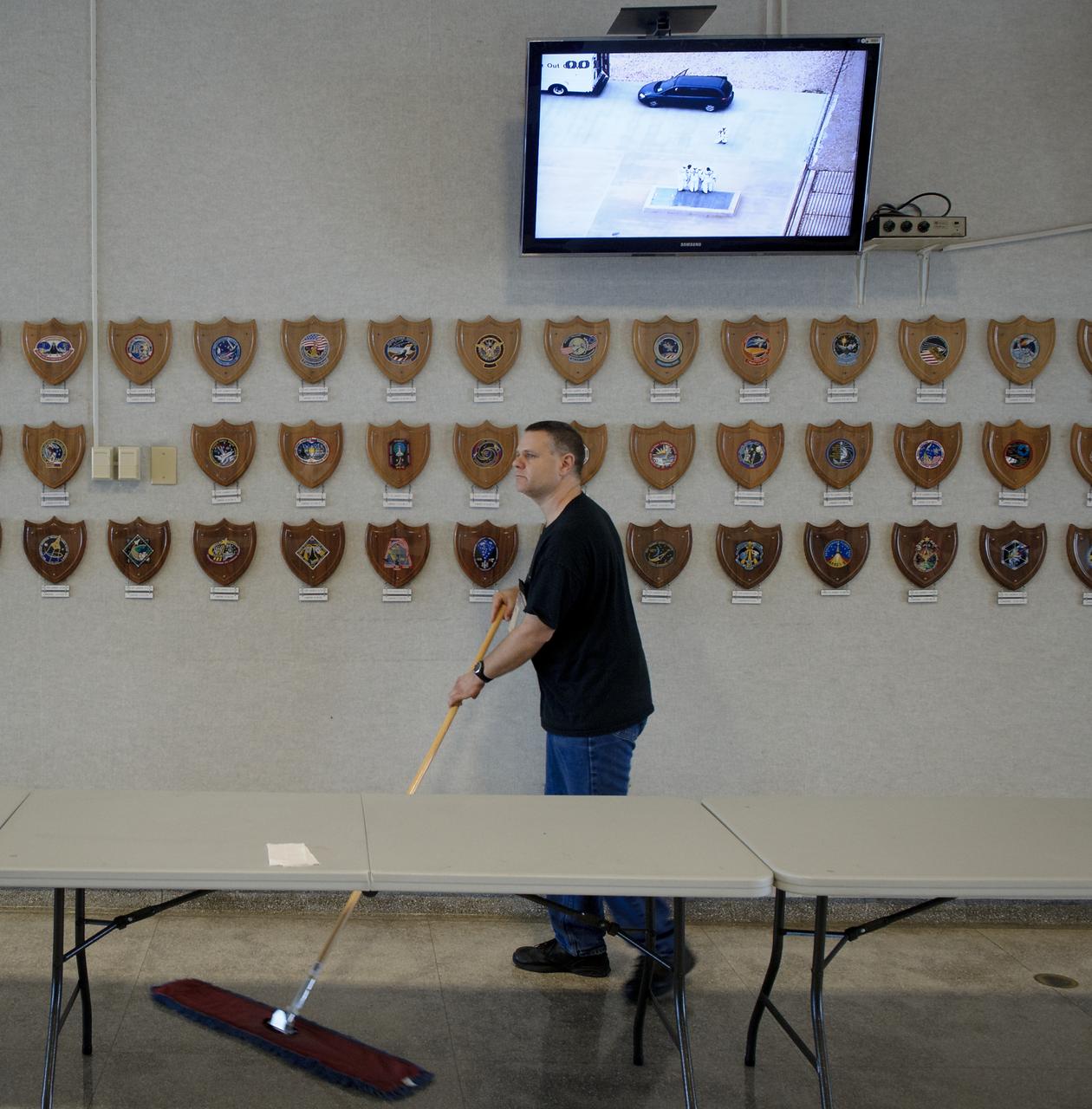
NASA Kennedy Space Center worker Dwayne Hutcheson sweeps the Launch Control Center (LCC) lobby floor in preparation for the post launch tradition of corn bread and beans after a successful launch of the space shuttle Atlantis from pad 39A on Friday, July 8, 2011, in Cape Canaveral, Fla. The launch of Atlantis, STS-135, is the final flight of the shuttle program, a 12-day mission to the International Space Station. Photo Credit: (NASA/Bill Ingalls)
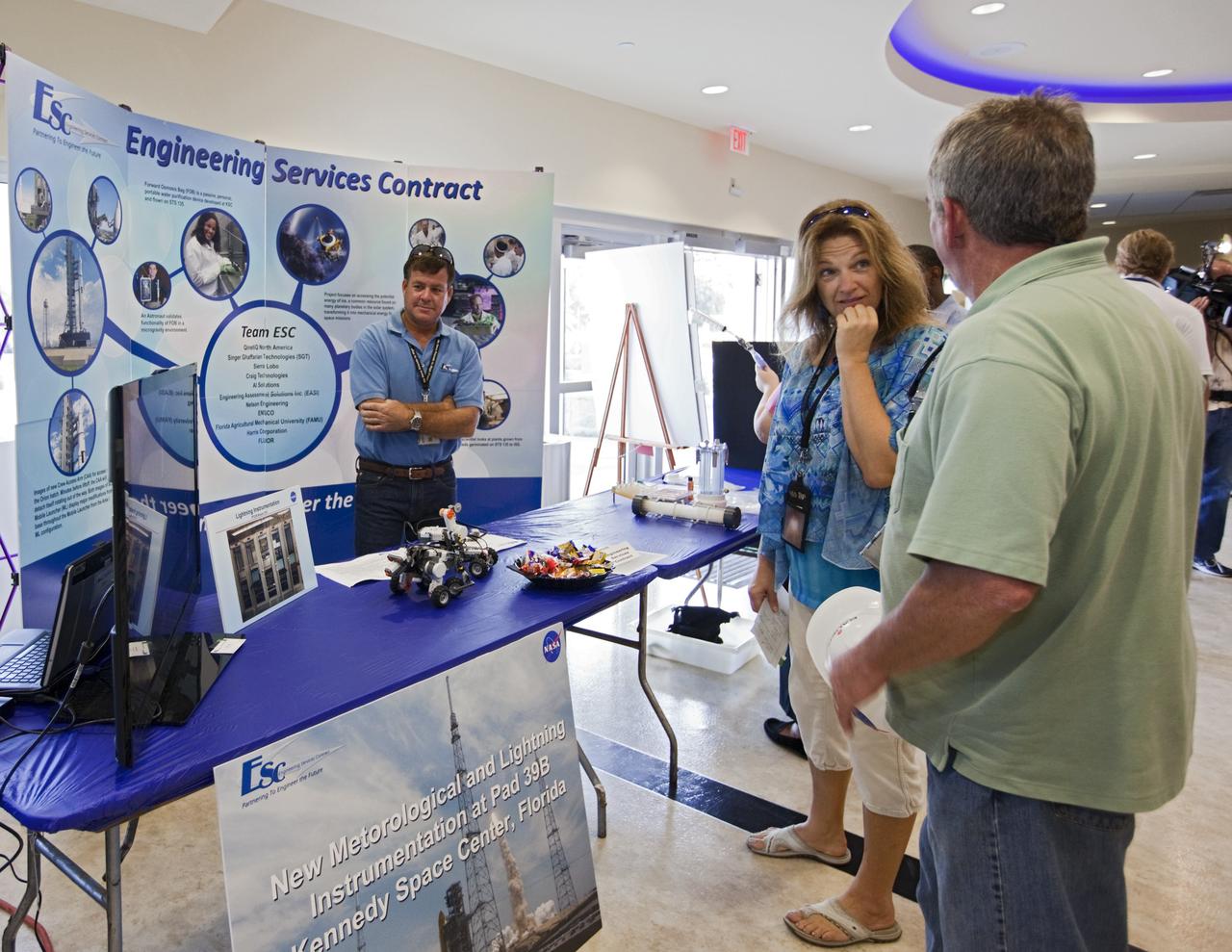
CAPE CANAVERAL, Fla. – At NASA’s Kennedy Space Center in Florida, workers visit several technology and innovation exhibits, including one by the Engineering Services Contract, in the lobby of the Operations and Checkout building during the center’s 2012 Innovation Expo. The center-wide event gave researchers a chance to show some of their work to others at the center and gave employees the opportunity to see facilities they hadn’t seen before. Photo credit: NASA/Kim Shiflett
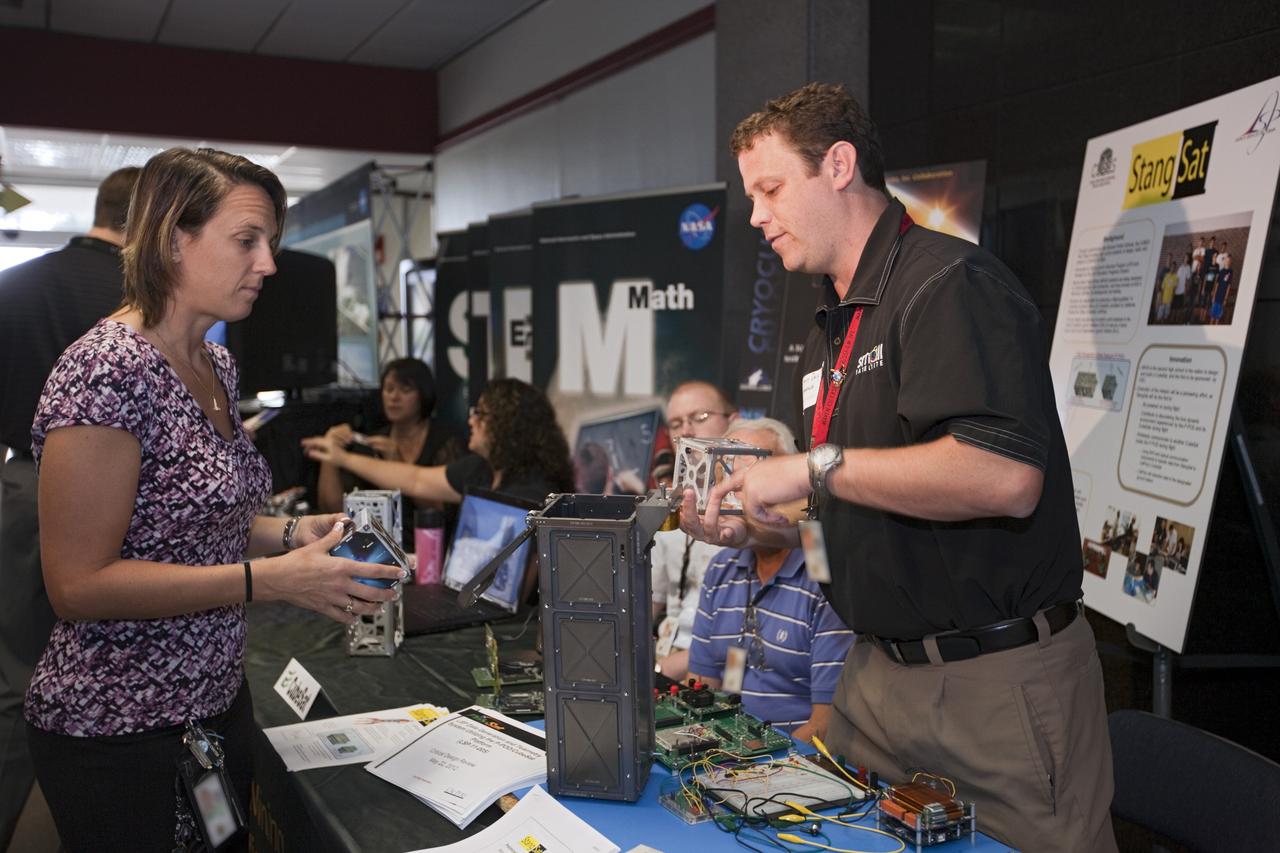
CAPE CANAVERAL, Fla. – At NASA’s Kennedy Space Center in Florida, a worker views an exhibit on small satellite technology in the Headquarters lobby during the center’s 2012 Innovation Expo. The center-wide event gave researchers a chance to show some of their work to others at the center and gave employees the opportunity to see facilities they hadn’t seen before. Photo credit: NASA/Kim Shiflett
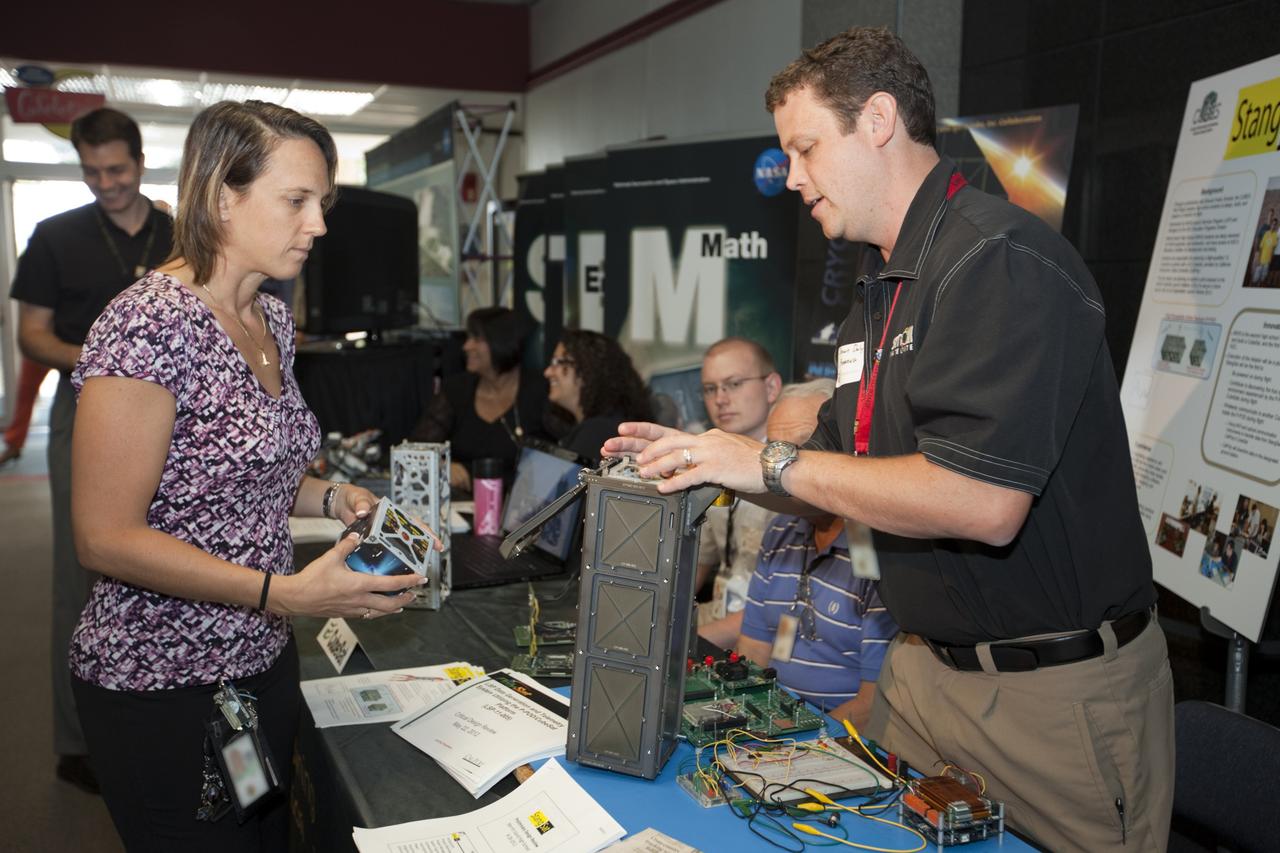
CAPE CANAVERAL, Fla. – At NASA’s Kennedy Space Center in Florida, a worker views an exhibit on small satellite technology in the Headquarters lobby during the center’s 2012 Innovation Expo. The center-wide event gave researchers a chance to show some of their work to others at the center and gave employees the opportunity to see facilities they hadn’t seen before. Photo credit: NASA/Kim Shiflett
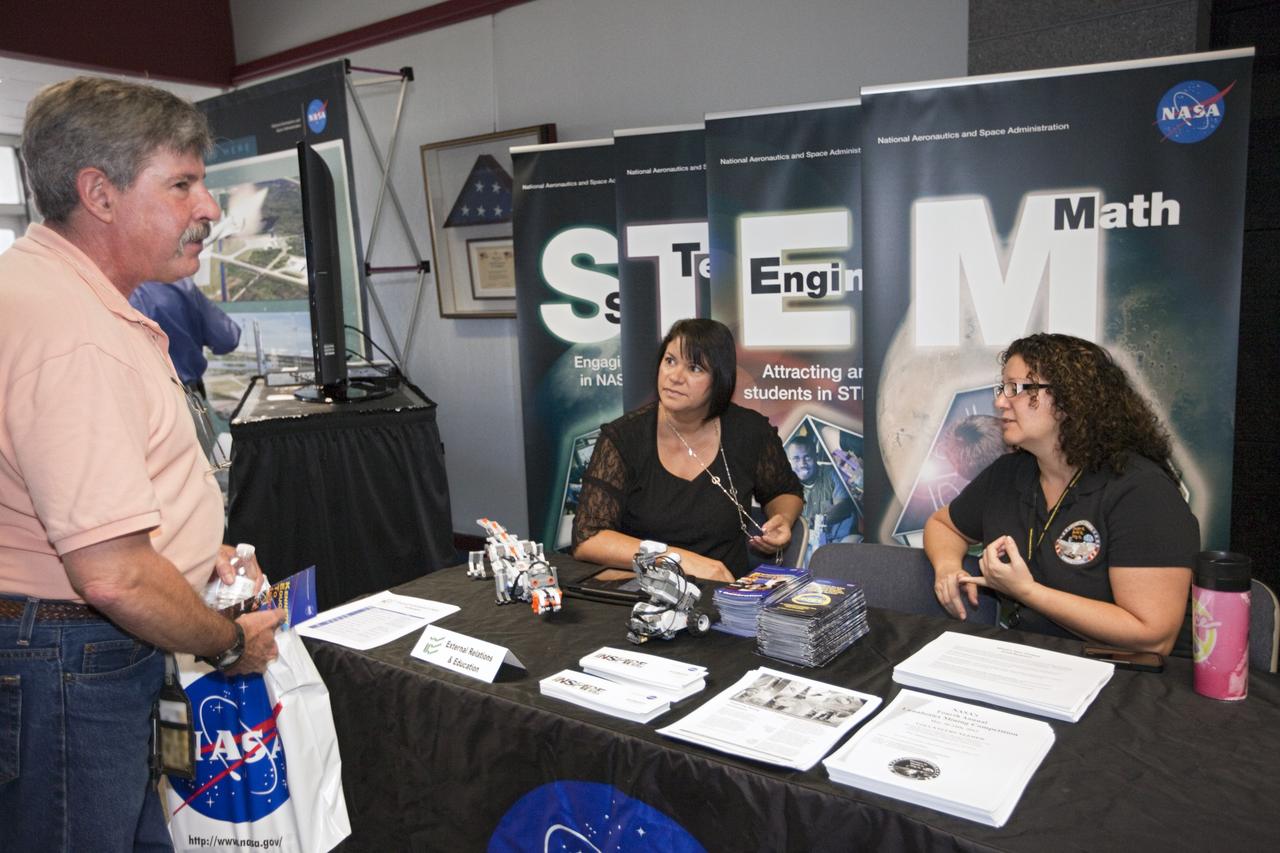
CAPE CANAVERAL, Fla. – At NASA’s Kennedy Space Center in Florida, a worker views an exhibit on education programs in the Headquarters lobby during the center’s 2012 Innovation Expo. The center-wide event gave researchers a chance to show some of their work to others at the center and gave employees the opportunity to see facilities they hadn’t seen before. Photo credit: NASA/Kim Shiflett
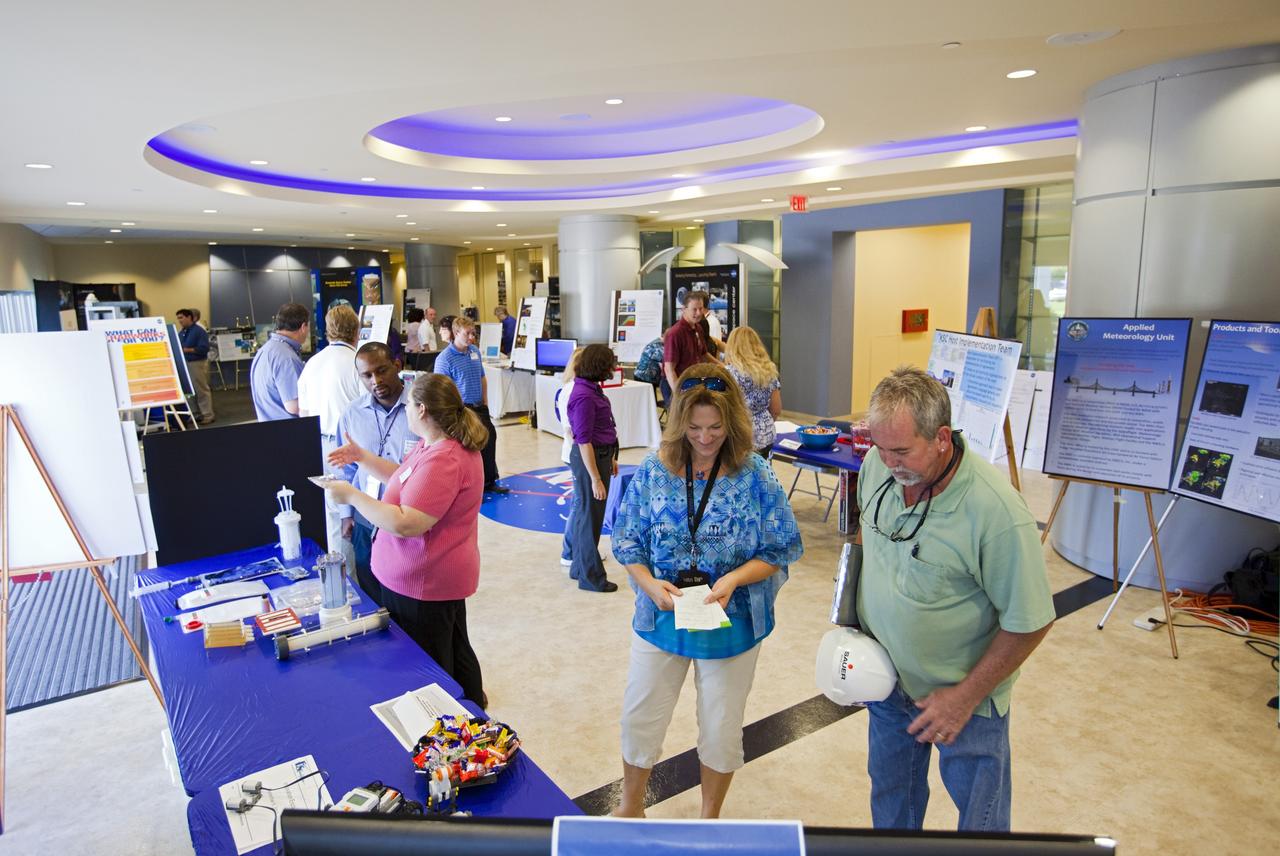
CAPE CANAVERAL, Fla. – At NASA’s Kennedy Space Center in Florida, workers visit several technology and innovation exhibits in the lobby of the Operations and Checkout building during the center’s 2012 Innovation Expo. The center-wide event gave researchers a chance to show some of their work to others at the center and gave employees the opportunity to see facilities they hadn’t seen before. Photo credit: NASA/Kim Shiflett
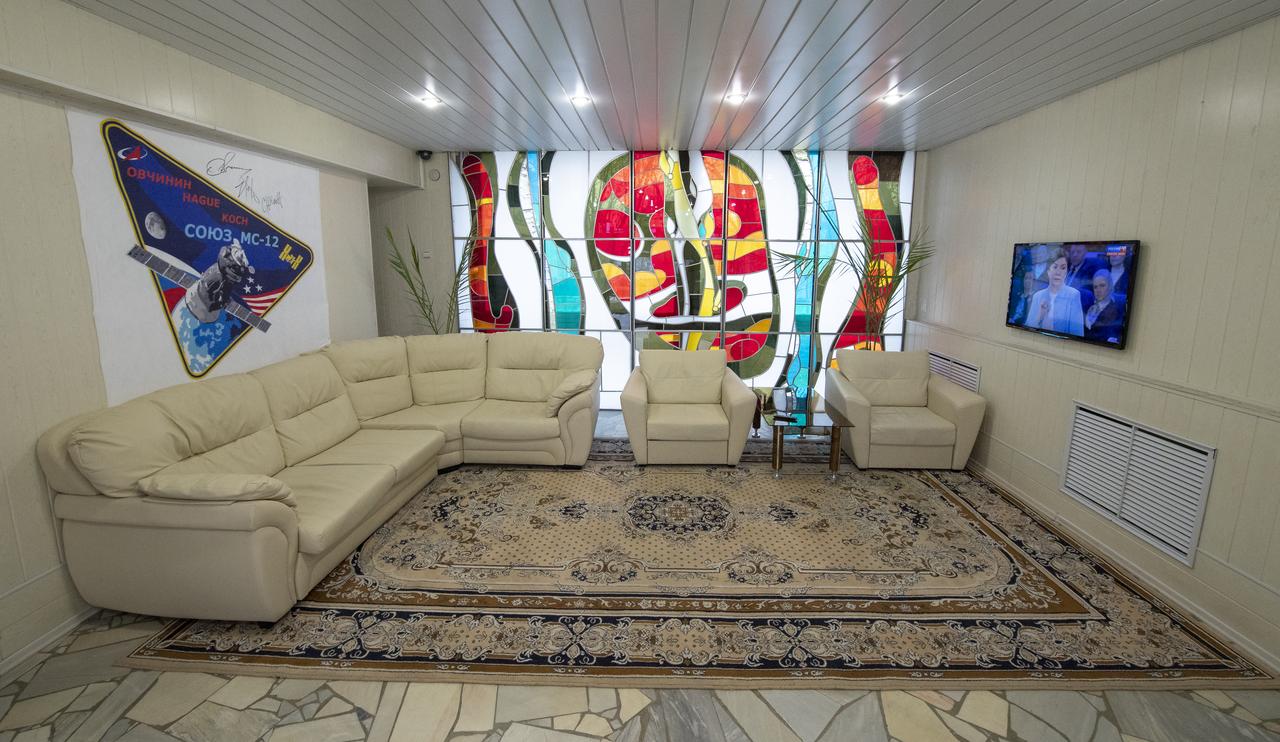
The lobby of the Cosmonaut Hotel sits empty prior to Expedition 59 crewmembers Nick Hague and Christina Koch of NASA, and Alexey Ovchinin of Roscosmos departing for their Soyuz launch to the International Space Station, Thursday, March 14, 2019 in Baikonur, Kazakhstan. Hague, Koch, and Ovchinin will launch March 14, U.S. time, on the Soyuz MS-12 spacecraft from the Baikonur Cosmodrome for a six-and-a-half month mission on the International Space Station. Photo Credit: (NASA/Bill Ingalls)
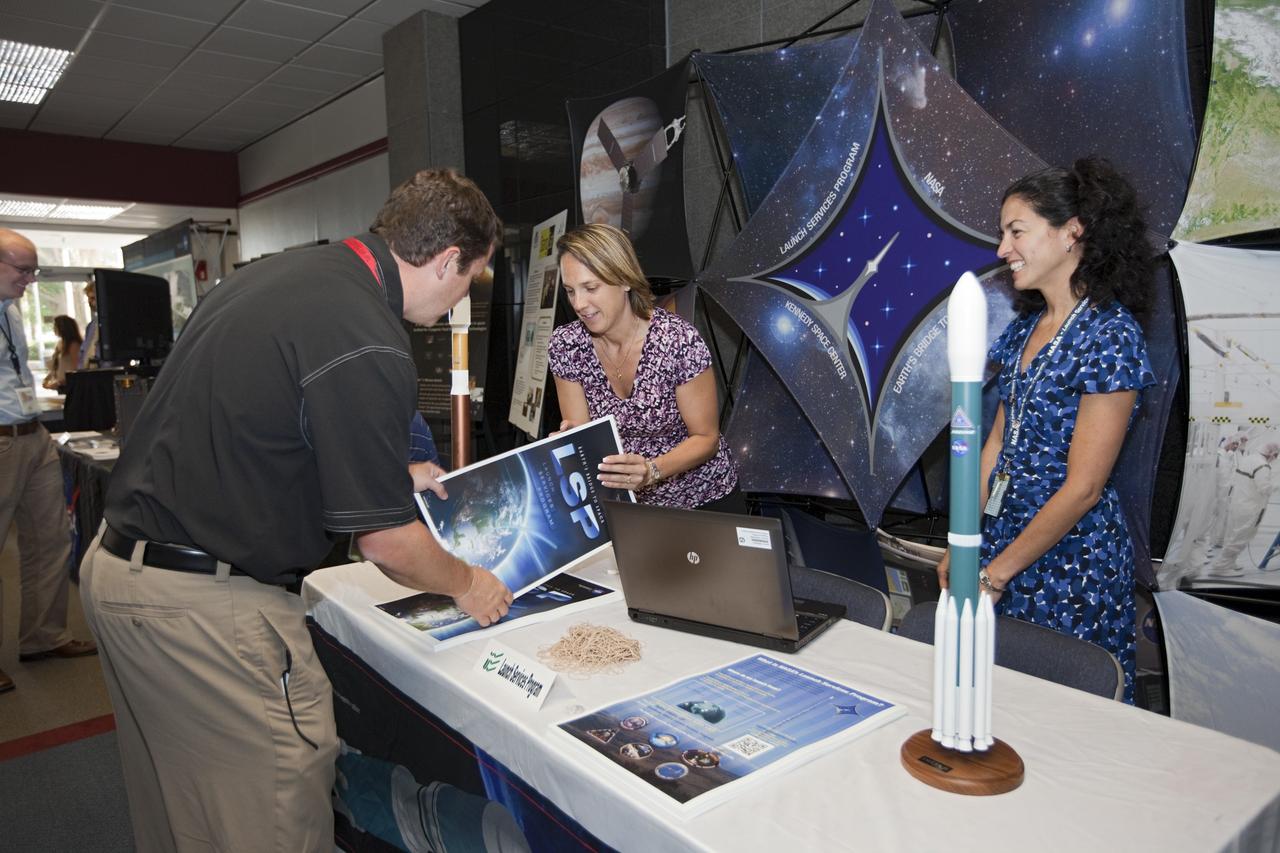
CAPE CANAVERAL, Fla. – At NASA’s Kennedy Space Center in Florida, a worker views an exhibit about the agency’s Launch Services Program in the Headquarters lobby during the center’s 2012 Innovation Expo. The center-wide event gave researchers a chance to show some of their work to others at the center and gave employees the opportunity to see facilities they hadn’t seen before. Photo credit: NASA/Kim Shiflett
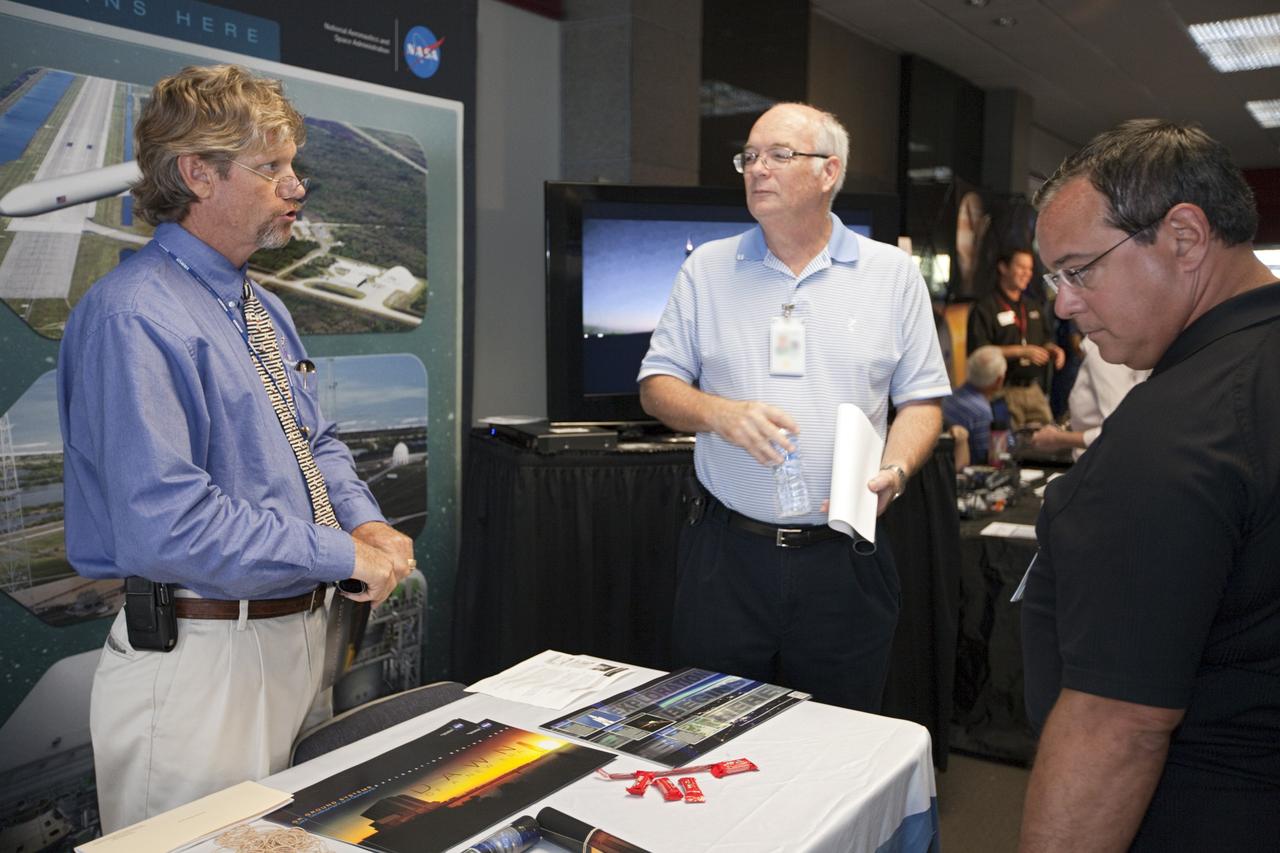
CAPE CANAVERAL, Fla. – At NASA’s Kennedy Space Center in Florida, workers learn about new innovations at the Ground Systems Development and Operations program exhibit in the Headquarters lobby during the center’s 2012 Innovation Expo. The center-wide event gave researchers a chance to show some of their work to others at the center and gave employees the opportunity to see facilities they hadn’t seen before. Photo credit: NASA/Kim Shiflett
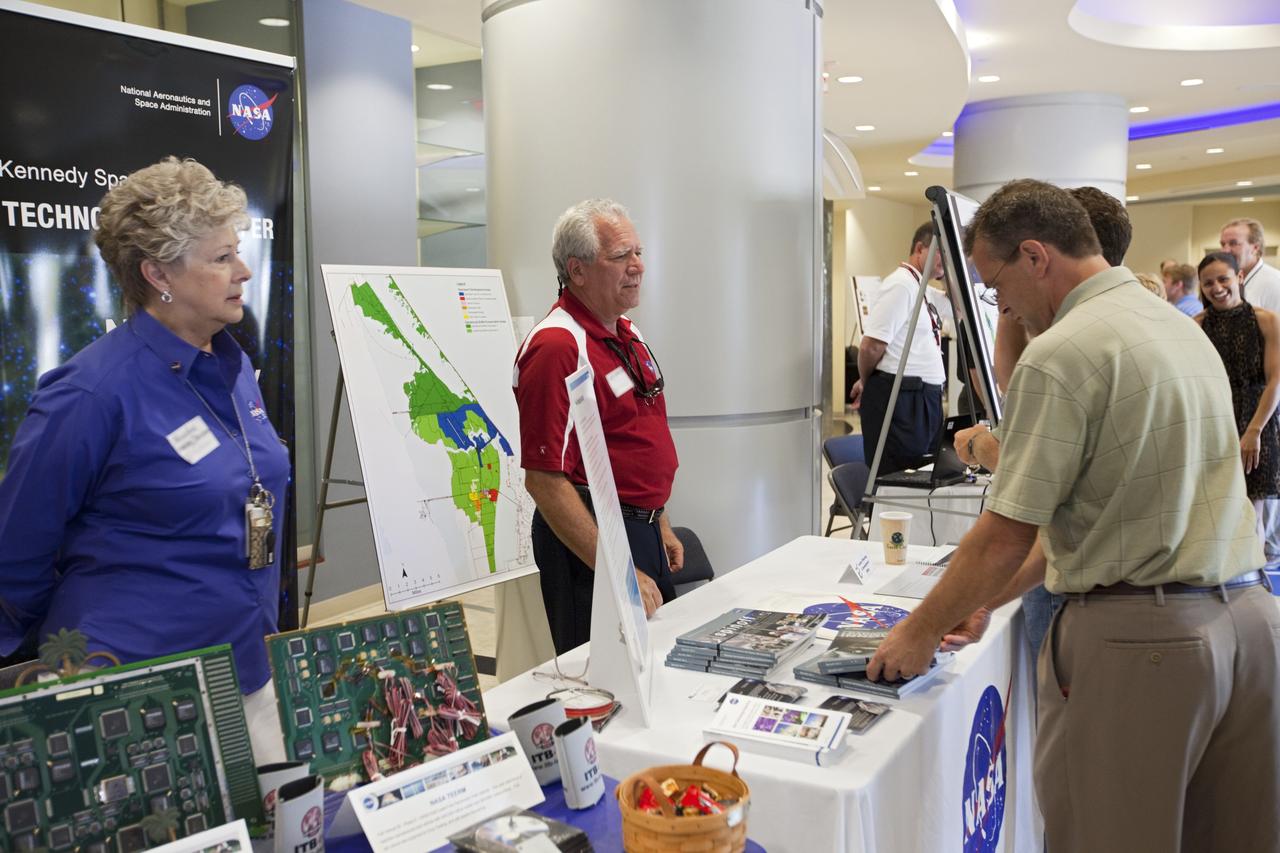
CAPE CANAVERAL, Fla. – At NASA’s Kennedy Space Center in Florida, workers visit several technology and innovation exhibits in the lobby of the Operations and Checkout building during the center’s 2012 Innovation Expo. The center-wide event gave researchers a chance to show some of their work to others at the center and gave employees the opportunity to see facilities they hadn’t seen before. Photo credit: NASA/Kim Shiflett

CAPE CANAVERAL, Fla. – CAPE CANAVERAL, Fla. – Dr. Mason Peck, center, NASA's chief technologist, visits with Mike Woolley in the lobby of United Launch Alliance's Atlas V Space Operations Center at Cape Canaveral Air Force Station in Florida. Karen L. Thompson, left, chief technologist for Kennedy Space Center, looks on. Photo credit: NASA/Jim Grossman
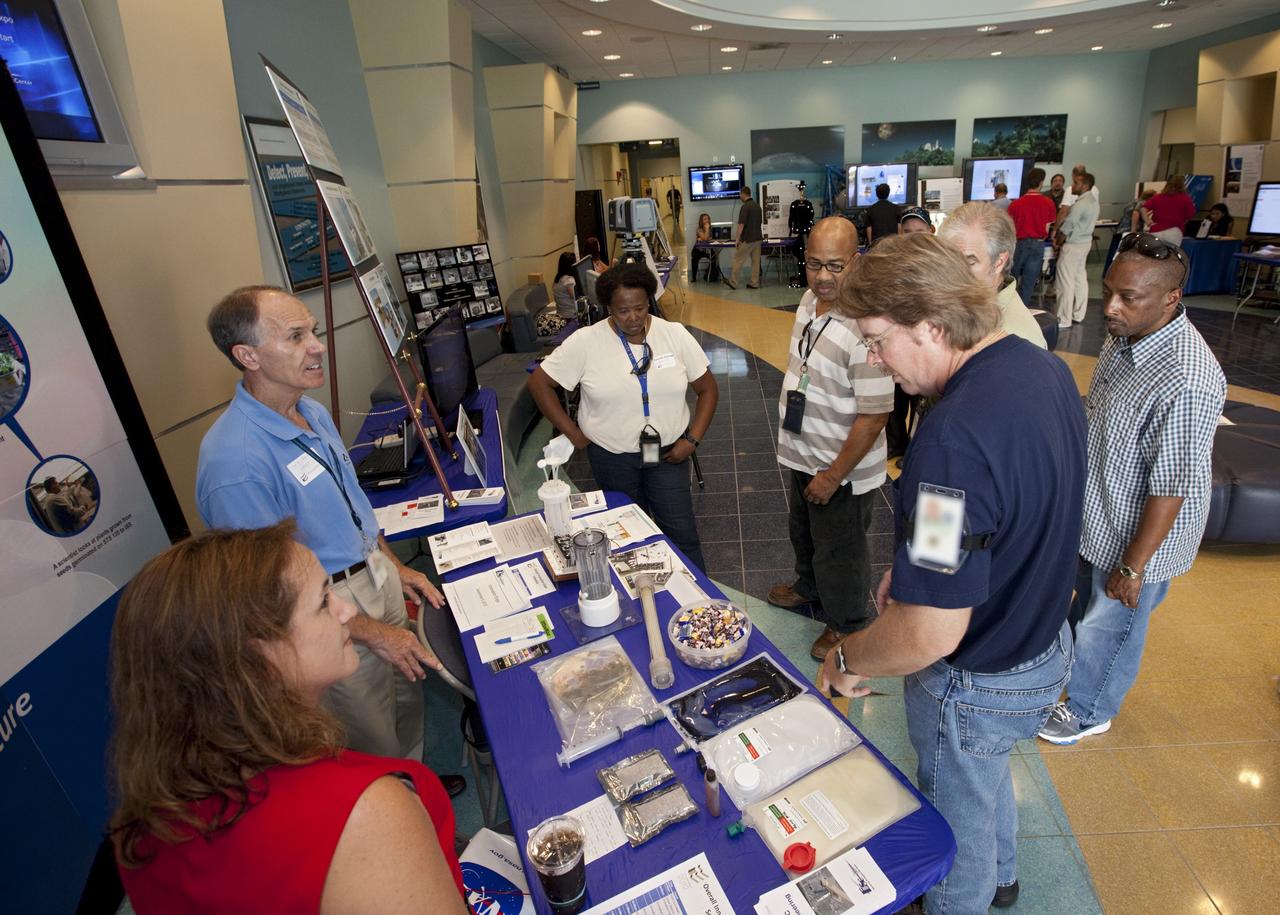
CAPE CANAVERAL, Fla. – At NASA’s Kennedy Space Center in Florida, workers view exhibits in the Operations and Support Building II lobby during the center’s 2012 Innovation Expo. The center-wide event gave researchers a chance to show some of their work to others at the center and gave employees the opportunity to see facilities they hadn’t seen before. Photo credit: NASA/Kim Shiflett
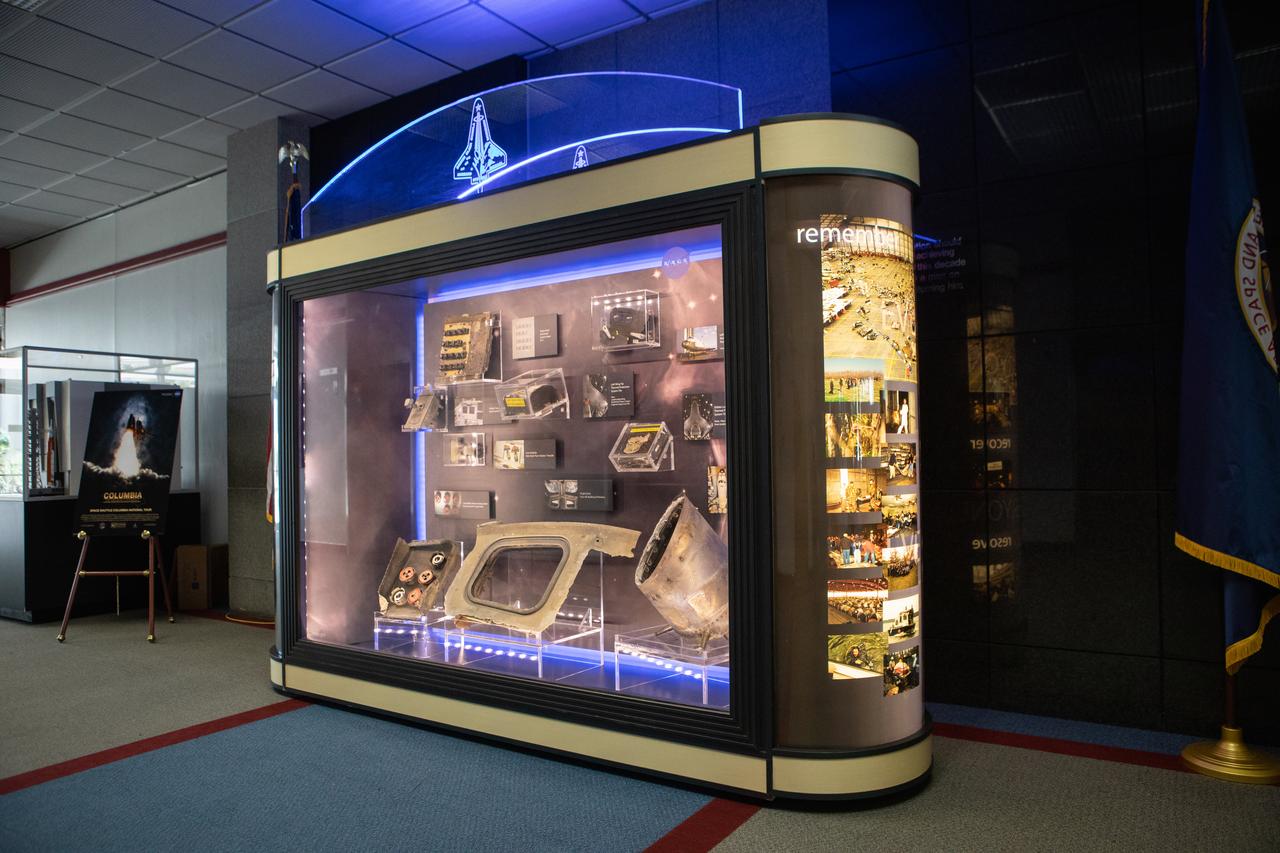
A display of artifacts featuring nine items recovered from the STS-107 tragedy that occurred Feb. 1, 2003, is shown in the old Headquarters Building at Kennedy Space Center. The powerful exhibit can now be viewed in the lobby of the Florida spaceport’s new Central Campus Building until June 10. The exhibit is part of the space shuttle Columbia national tour, which will make its way to all 10 NASA centers throughout the country.
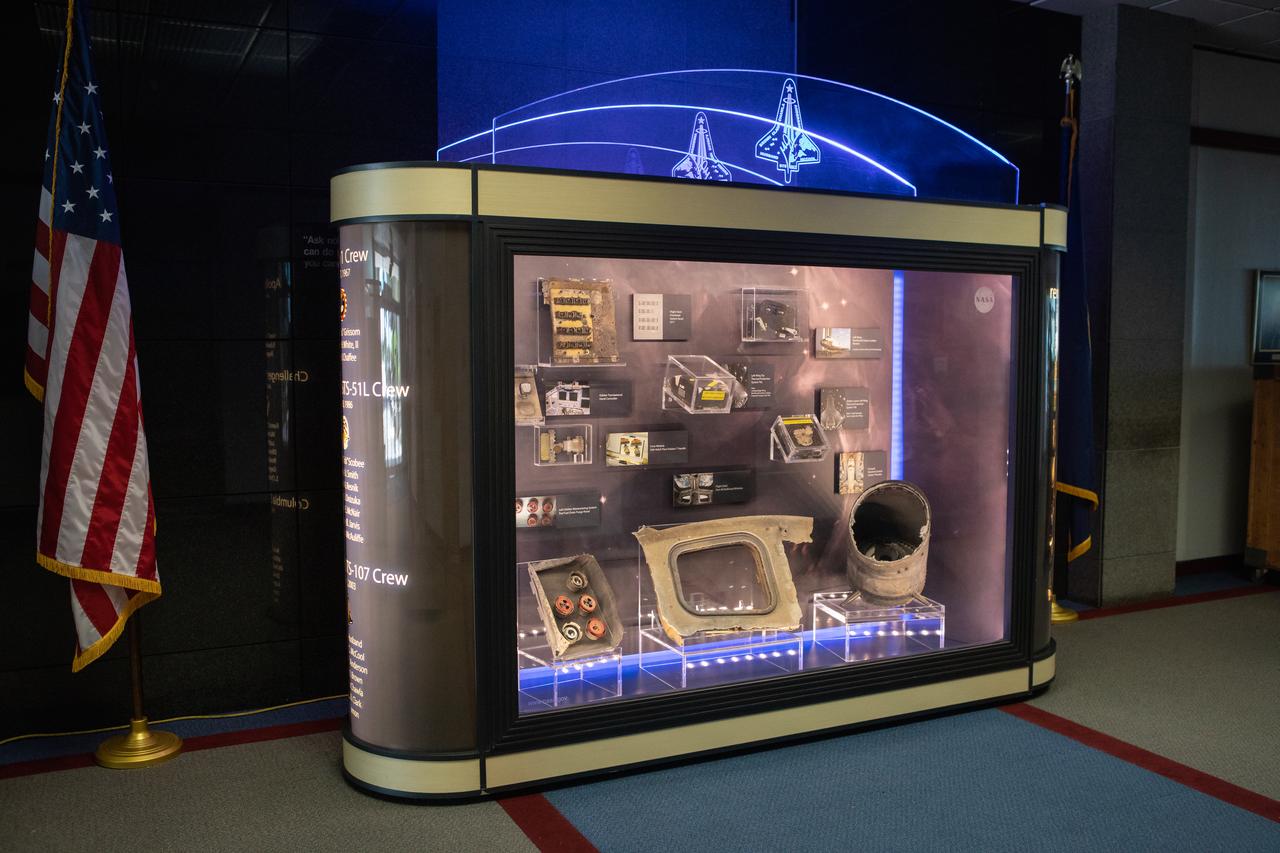
A display of artifacts featuring nine items recovered from the STS-107 tragedy that occurred Feb. 1, 2003, is shown in the old Headquarters Building at Kennedy Space Center. The powerful exhibit can now be viewed in the lobby of the Florida spaceport’s new Central Campus Building until June 10. The exhibit is part of the space shuttle Columbia national tour, which will make its way to all 10 NASA centers throughout the country.
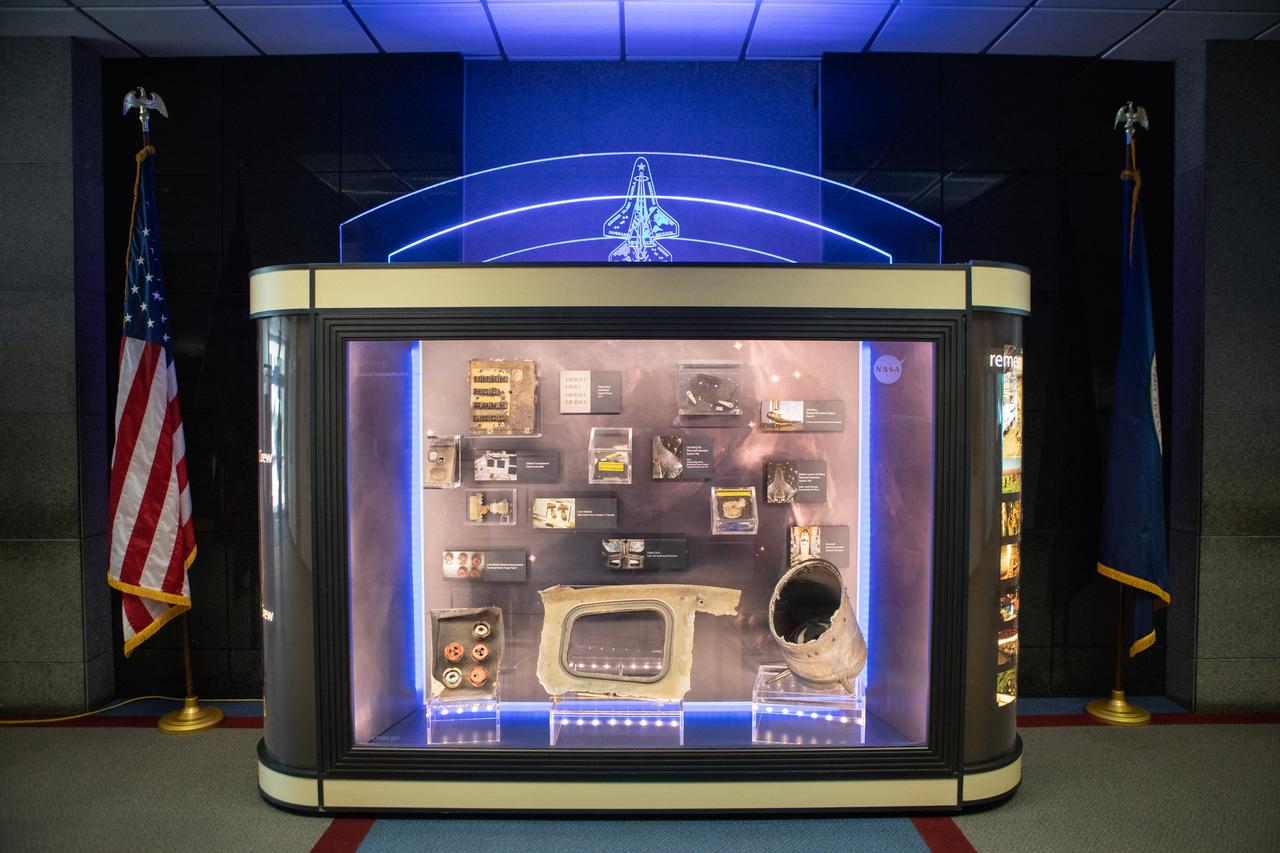
A display of artifacts featuring nine items recovered from the STS-107 tragedy that occurred Feb. 1, 2003, is shown in the old Headquarters Building at Kennedy Space Center. The powerful exhibit can now be viewed in the lobby of the Florida spaceport’s new Central Campus Building until June 10. The exhibit is part of the space shuttle Columbia national tour, which will make its way to all 10 NASA centers throughout the country.
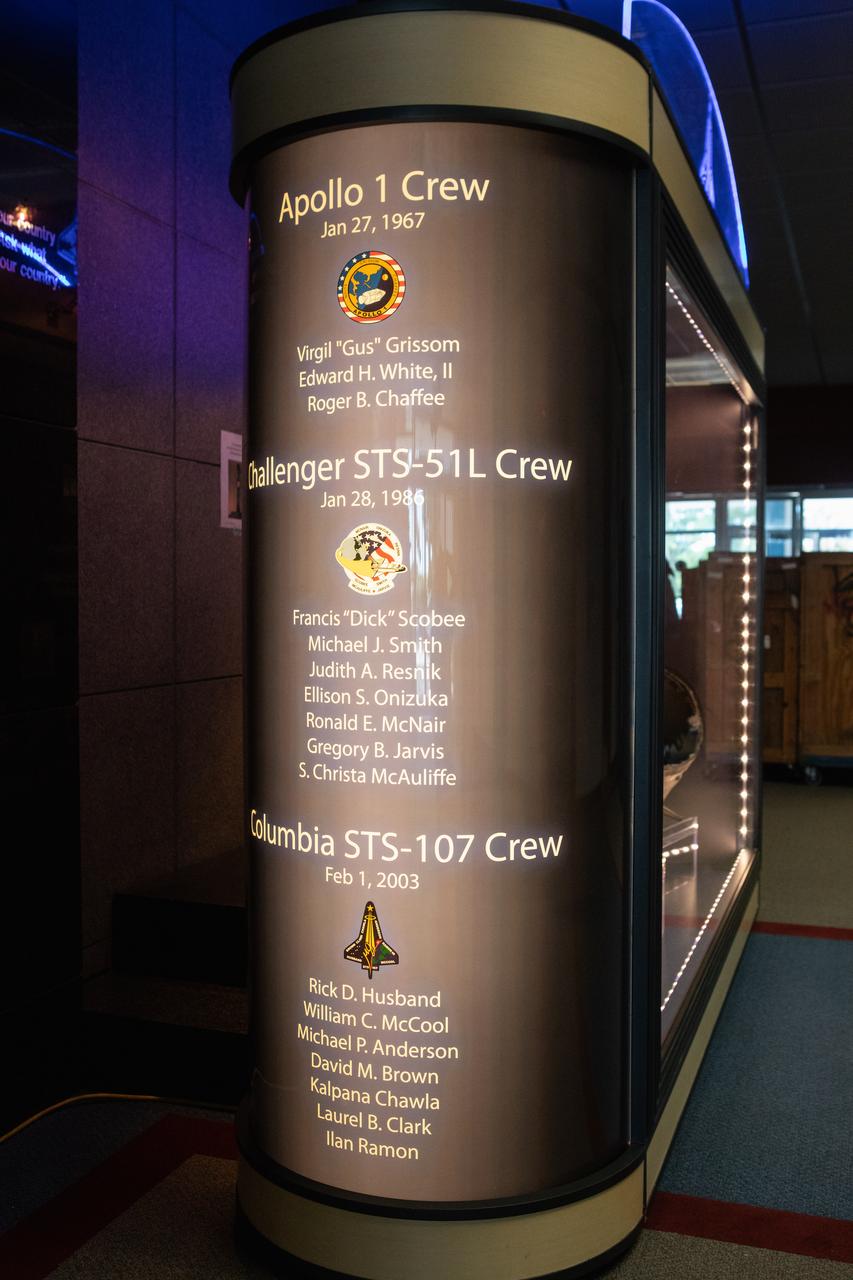
A display of artifacts featuring nine items recovered from the STS-107 tragedy that occurred Feb. 1, 2003, is shown in the old Headquarters Building at Kennedy Space Center. The powerful exhibit can now be viewed in the lobby of the Florida spaceport’s new Central Campus Building until June 10. The exhibit is part of the space shuttle Columbia national tour, which will make its way to all 10 NASA centers throughout the country.
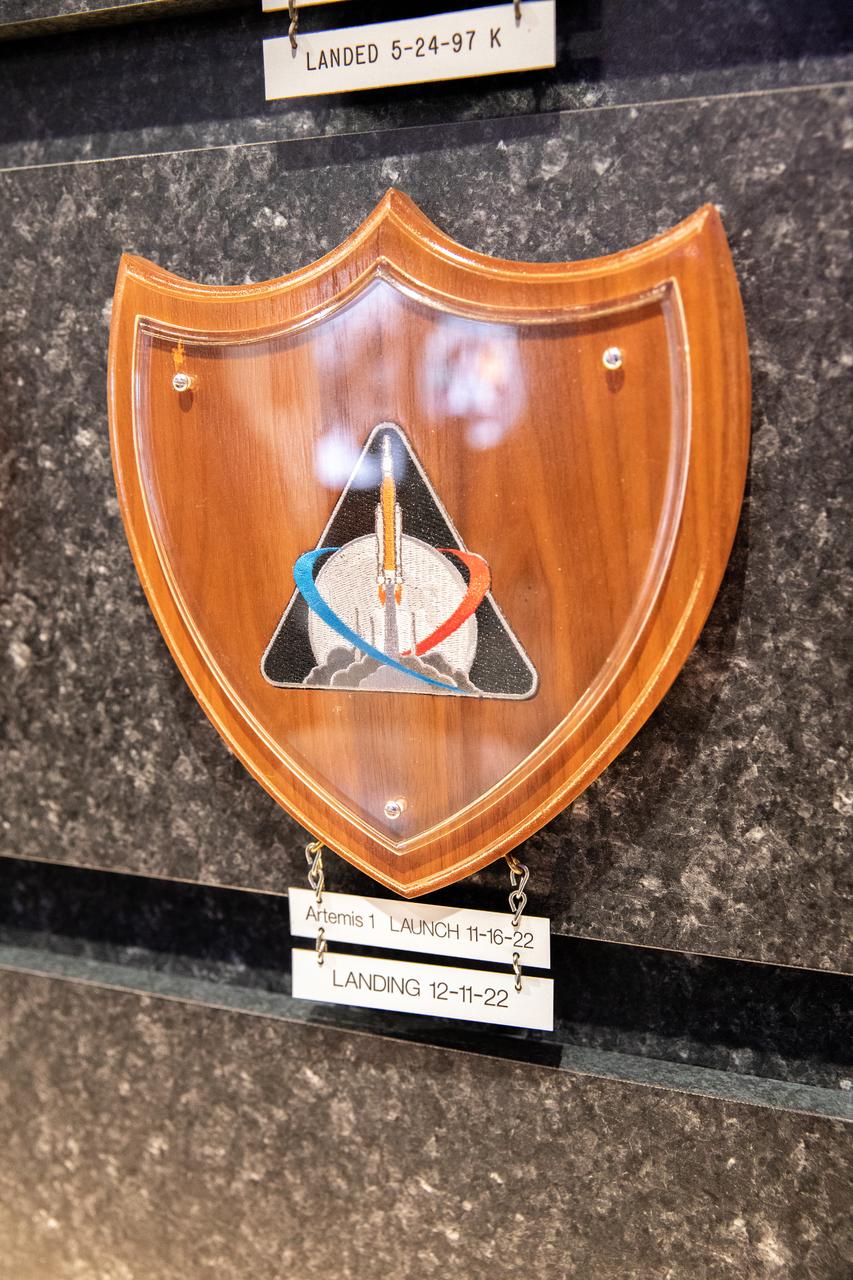
The Artemis I plaque is attached to the wall inside the lobby of the Launch Control Center at NASA’s Kennedy Space Center in Florida during a ceremony on March 24, 2023. The first in a series of increasingly complex missions, Artemis I launched successfully from Kennedy’s Launch Pad 39B at 1:47 a.m. EST on Nov. 16, 2022.
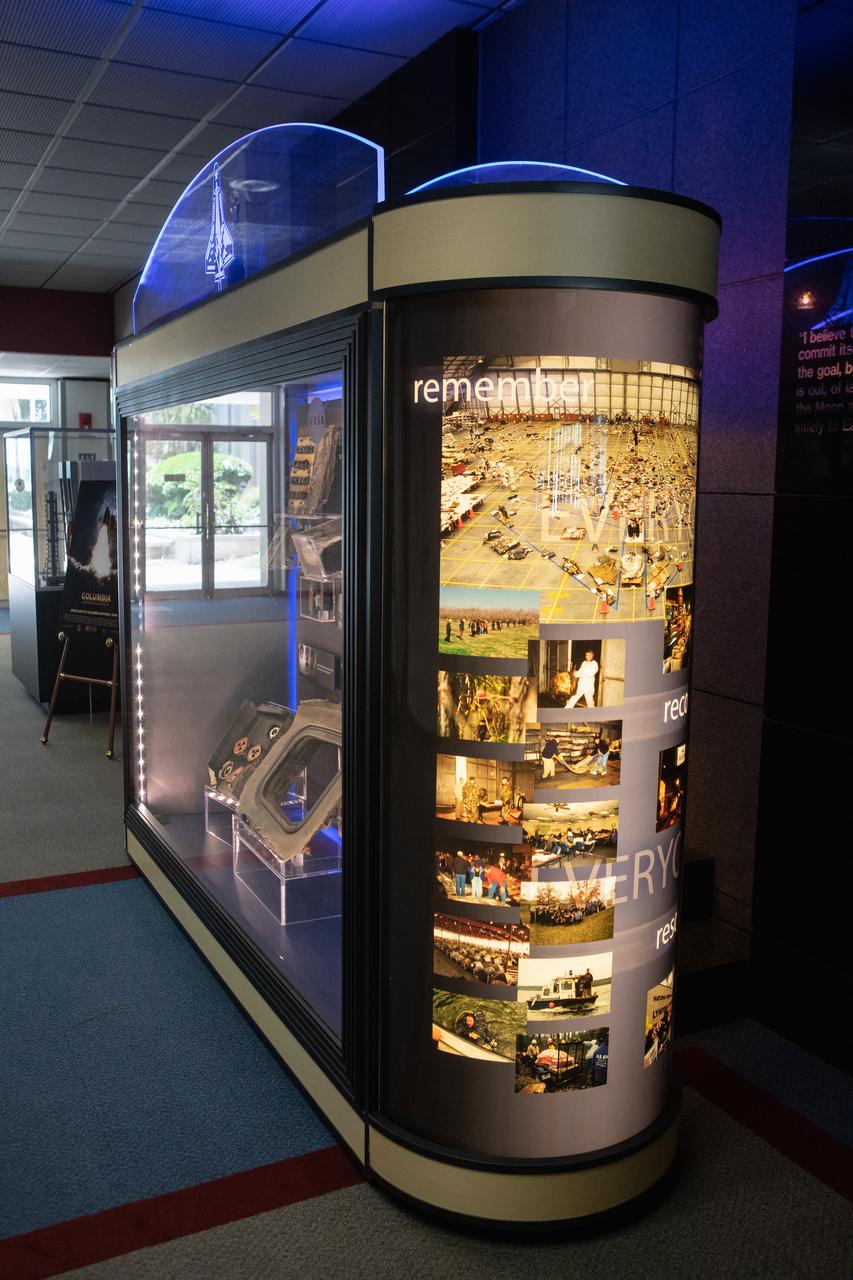
A display of artifacts featuring nine items recovered from the STS-107 tragedy that occurred Feb. 1, 2003, is shown in the old Headquarters Building at Kennedy Space Center. The powerful exhibit can now be viewed in the lobby of the Florida spaceport’s new Central Campus Building until June 10. The exhibit is part of the space shuttle Columbia national tour, which will make its way to all 10 NASA centers throughout the country.
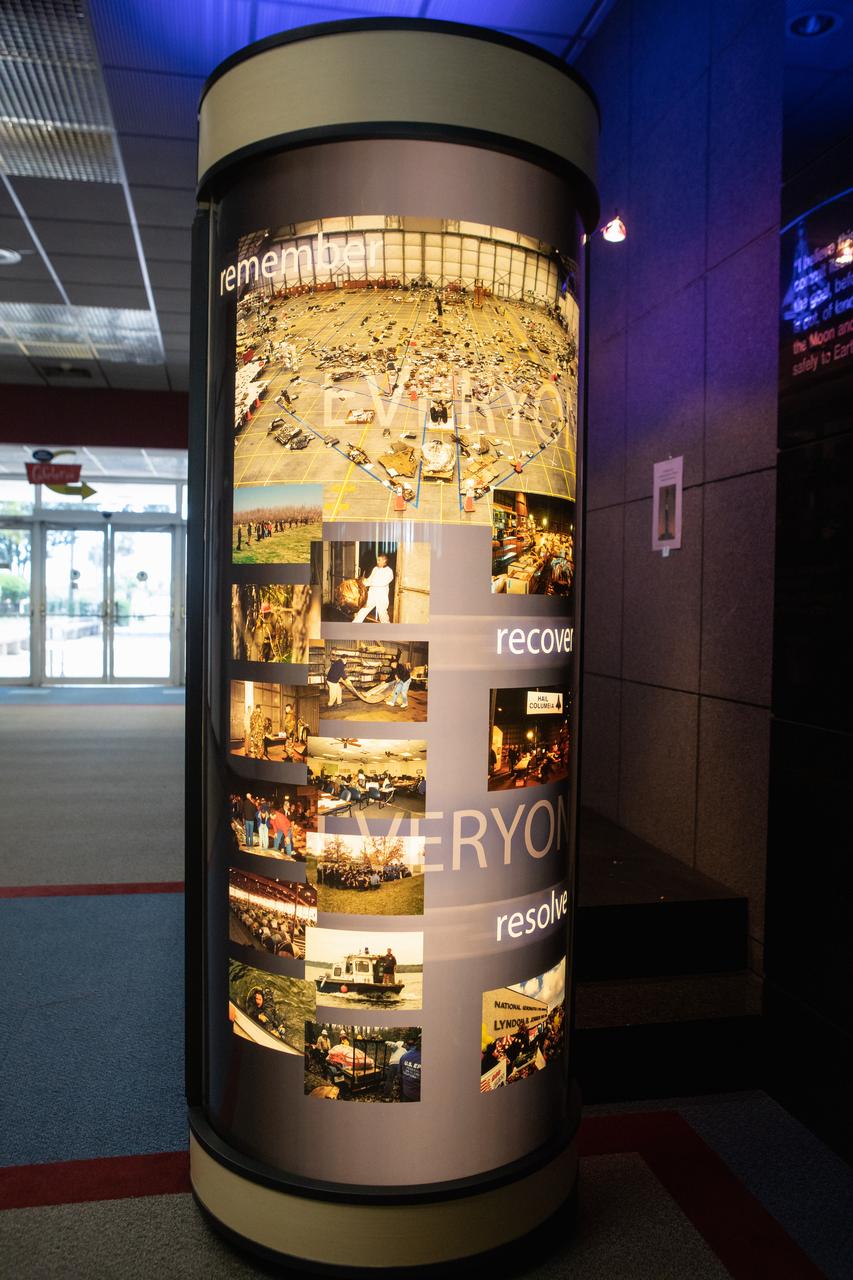
A display of artifacts featuring nine items recovered from the STS-107 tragedy that occurred Feb. 1, 2003, is shown in the old Headquarters Building at Kennedy Space Center. The powerful exhibit can now be viewed in the lobby of the Florida spaceport’s new Central Campus Building until June 10. The exhibit is part of the space shuttle Columbia national tour, which will make its way to all 10 NASA centers throughout the country.
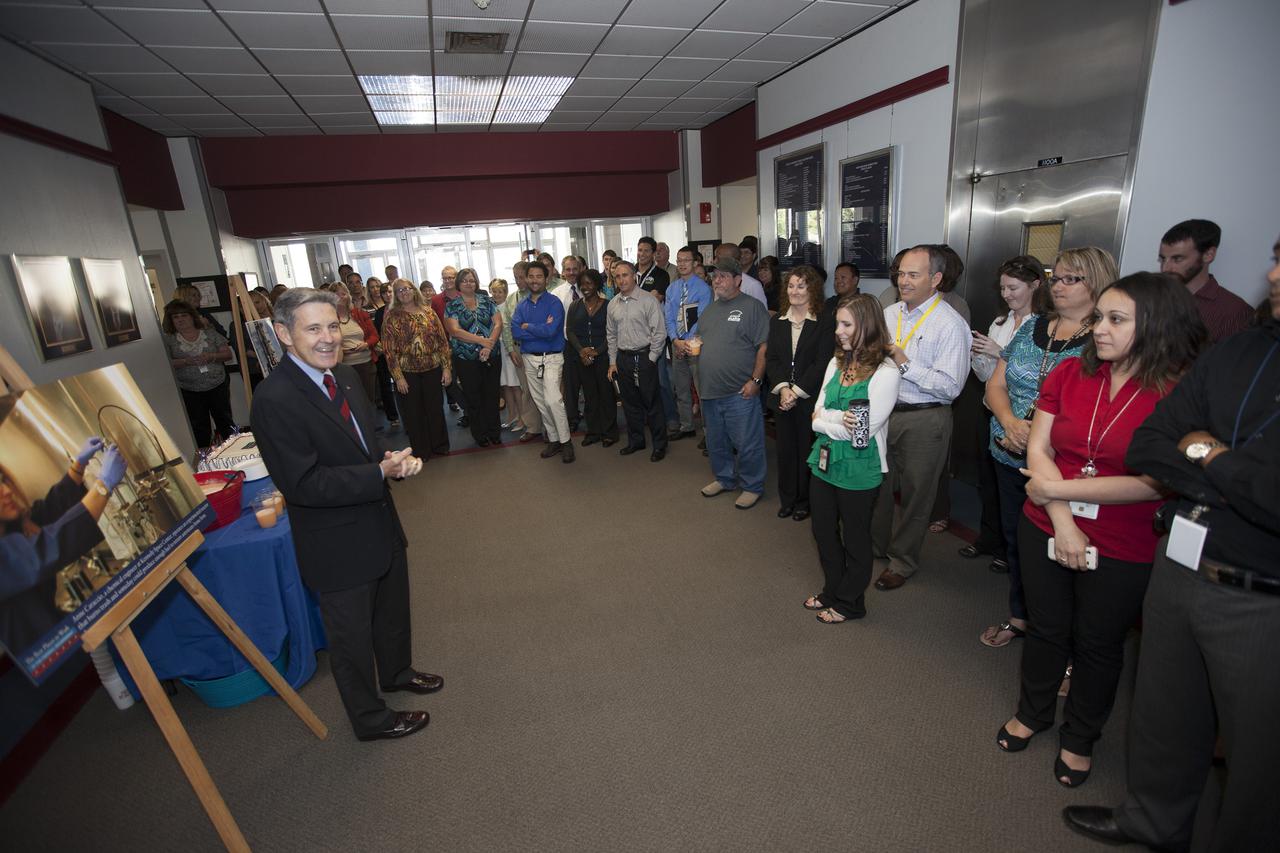
CAPE CANAVERAL, Fla. -- Kennedy Space Center Director Bob Cabana meets with employees during the unveiling of NASA’s “Best Places to Work in the Federal Government” plaque inside the lobby at Headquarters. The agency ranked No. 1 in the “large” category, those which have more than 15,000 employees. The annual rankings are produced by the Partnership for Public Service and Deloitte, and measure how federal employees view their jobs and workplaces. Photo credit: NASA_Kim Shiflett
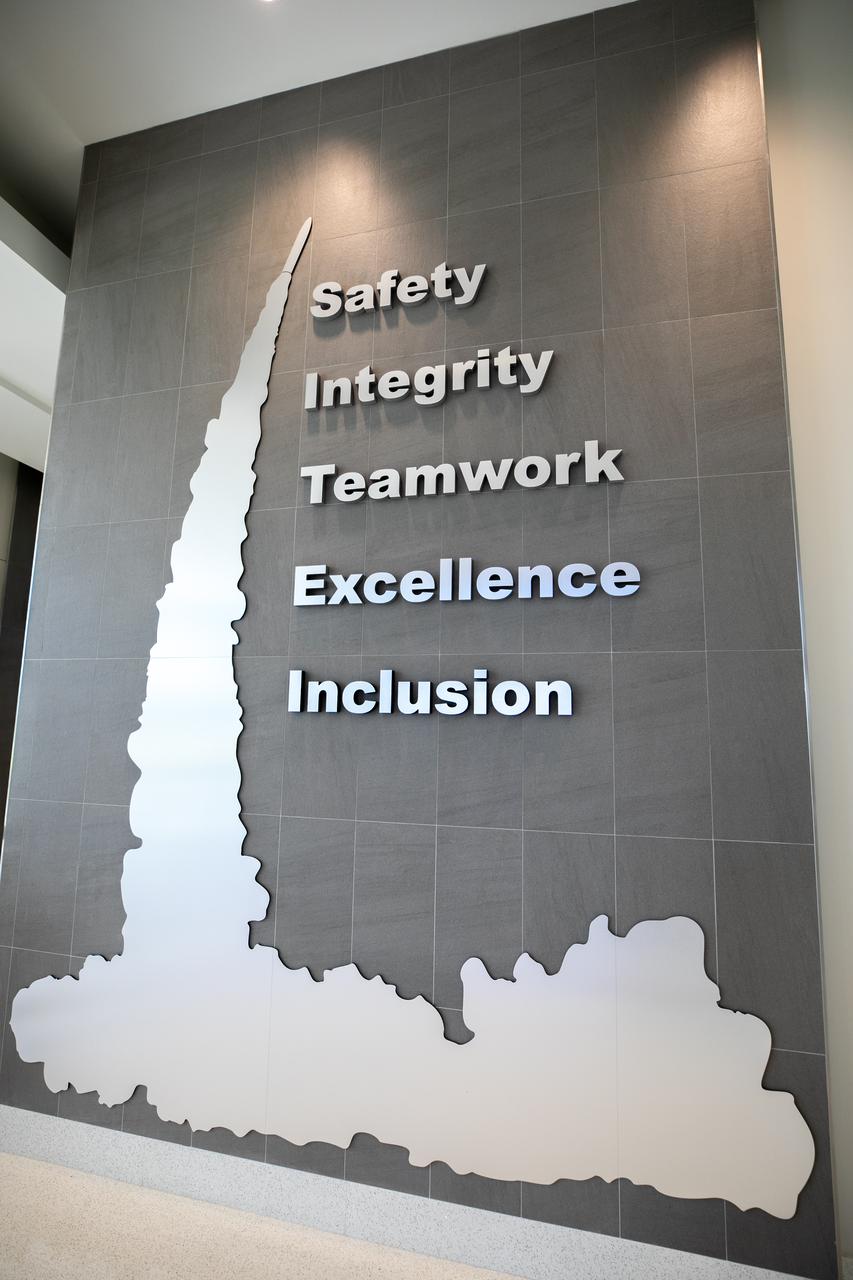
NASA’s core values are shown in the Central Campus lobby at the agency’s Kennedy Space Center in Florida following the installation of NASA’s fifth core value – inclusion – on Sept. 1, 2020. On July 23, NASA Administrator Jim Bridenstine announced the addition of this fifth core value to the existing values embraced by NASA: safety, integrity, teamwork, and excellence. In his announcement, Bridenstine stated “Incorporating inclusion as a NASA core value is an important step to ensuring this principle remains a long-term focus for our agency and becomes ingrained in the NASA family DNA.”

A Moon rock is seen in the NASA Headquarters lobby ahead of an event where NASA outlined how the agency is executing President Donald J. Trump’s National Space Policy and accelerating preparations for America’s return to the surface of the Moon by 2028, Tuesday, March 24, 2026, at the Mary W. Jackson NASA Headquarters building in Washington. During the event NASA leadership provided updates on mission priorities, including sending the first astronauts to the lunar surface in more than 50 years, establishing the initial elements of a permanent lunar base, getting America underway in space on nuclear propulsion, and other objectives. Photo Credit: (NASA/Bill Ingalls)
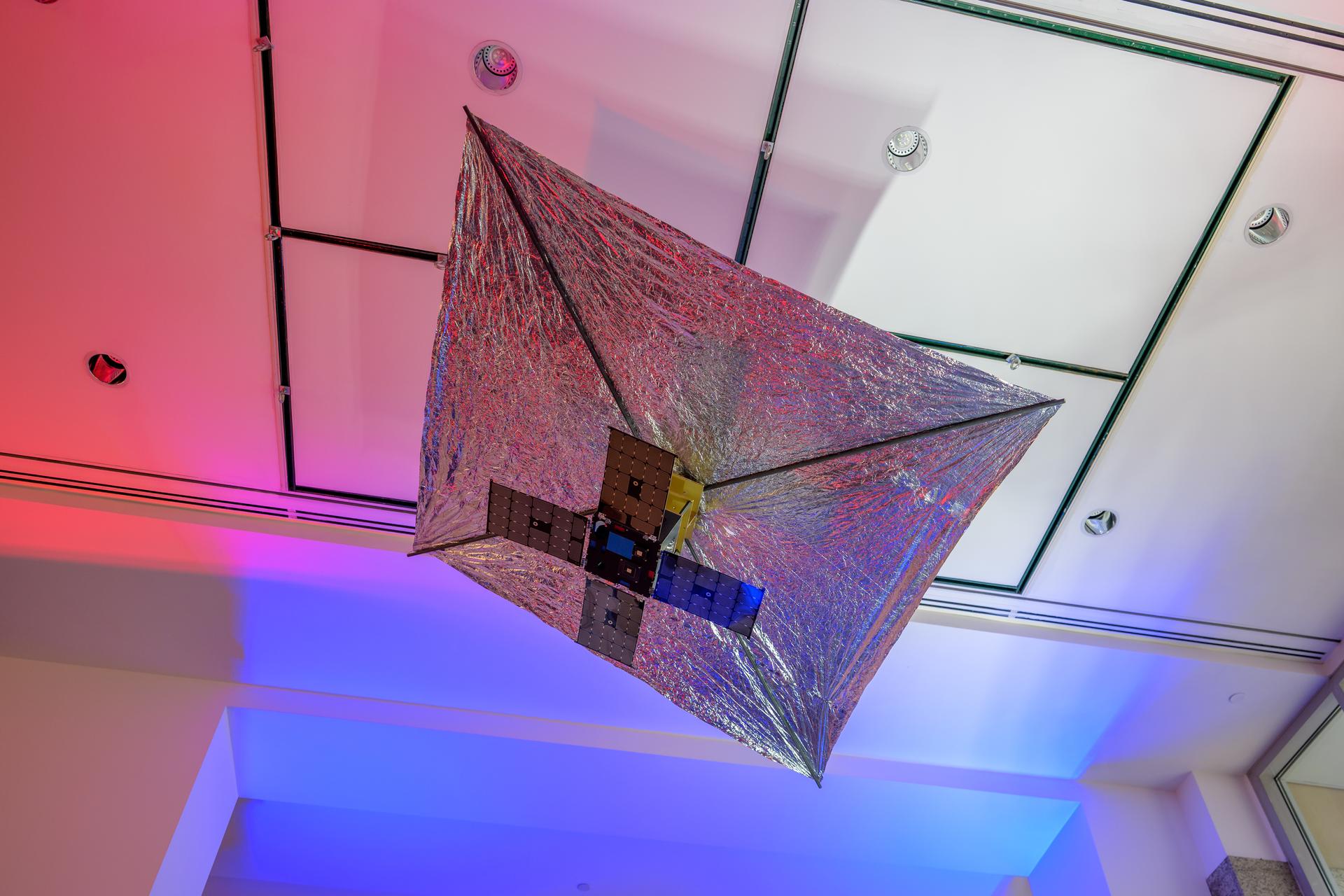
A model of the Advanced Composite Solar Sail System (ACS3) is seen in the NASA Headquarters lobby during a 2-day event where NASA outlined how the agency is executing President Donald J. Trump’s National Space Policy and accelerating preparations for America’s return to the surface of the Moon by 2028, Wednesday, March 25, 2026, at the Mary W. Jackson NASA Headquarters building in Washington. During the event NASA leadership provided updates on mission priorities, including sending the first astronauts to the lunar surface in more than 50 years, establishing the initial elements of a permanent lunar base, getting America underway in space on nuclear propulsion, and other objectives. Photo Credit: (NASA/Bill Ingalls)
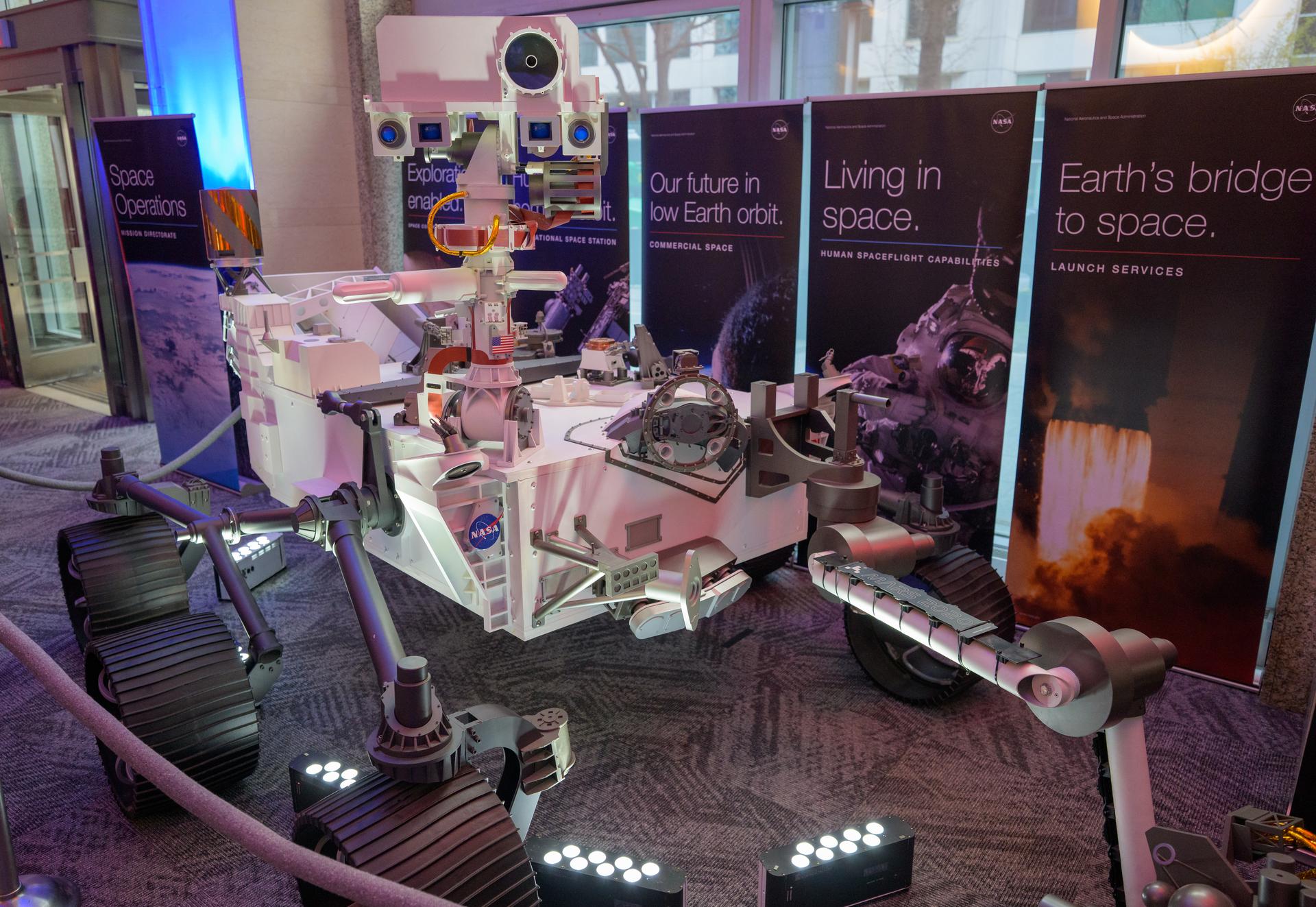
A model of the Mars 2020 Perseverance Rover is seen in the NASA Headquarters lobby during a 2-day event where NASA outlined how the agency is executing President Donald J. Trump’s National Space Policy and accelerating preparations for America’s return to the surface of the Moon by 2028, Wednesday, March 25, 2026, at the Mary W. Jackson NASA Headquarters building in Washington. During the event NASA leadership provided updates on mission priorities, including sending the first astronauts to the lunar surface in more than 50 years, establishing the initial elements of a permanent lunar base, getting America underway in space on nuclear propulsion, and other objectives. Photo Credit: (NASA/Bill Ingalls)

A model of the Dragonfly rotorcraft is seen in the NASA Headquarters lobby ahead of an event where NASA outlined how the agency is executing President Donald J. Trump’s National Space Policy and accelerating preparations for America’s return to the surface of the Moon by 2028, Tuesday, March 24, 2026, at the Mary W. Jackson NASA Headquarters building in Washington. During the event NASA leadership provided updates on mission priorities, including sending the first astronauts to the lunar surface in more than 50 years, establishing the initial elements of a permanent lunar base, getting America underway in space on nuclear propulsion, and other objectives. Photo Credit: (NASA/Bill Ingalls)

A Moon rock is seen in the NASA Headquarters lobby ahead of an event where NASA outlined how the agency is executing President Donald J. Trump’s National Space Policy and accelerating preparations for America’s return to the surface of the Moon by 2028, Tuesday, March 24, 2026, at the Mary W. Jackson NASA Headquarters building in Washington. During the event NASA leadership provided updates on mission priorities, including sending the first astronauts to the lunar surface in more than 50 years, establishing the initial elements of a permanent lunar base, getting America underway in space on nuclear propulsion, and other objectives. Photo Credit: (NASA/Bill Ingalls)
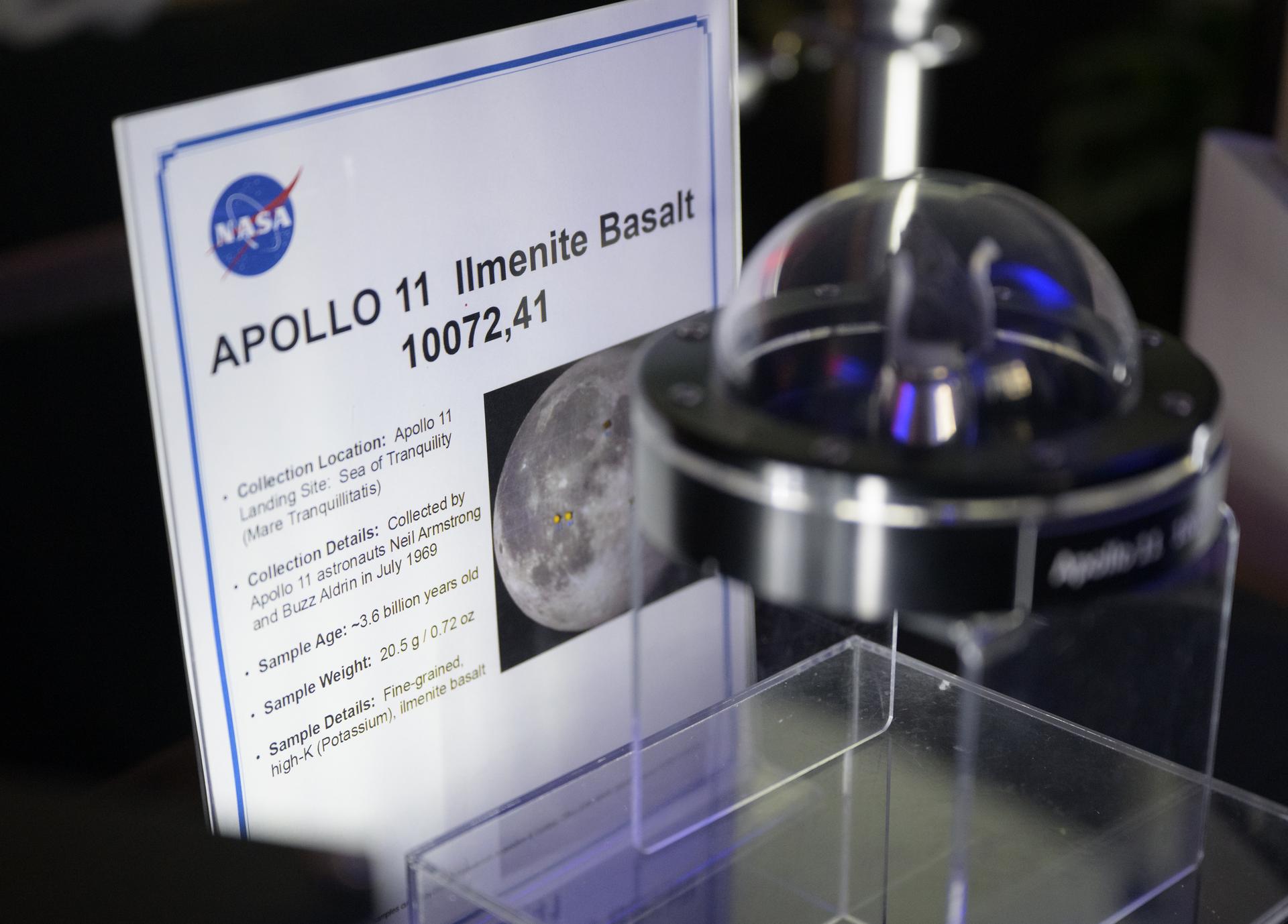
A Moon rock is seen in the NASA Headquarters lobby ahead of an event where NASA outlined how the agency is executing President Donald J. Trump’s National Space Policy and accelerating preparations for America’s return to the surface of the Moon by 2028, Tuesday, March 24, 2026, at the Mary W. Jackson NASA Headquarters building in Washington. During the event NASA leadership provided updates on mission priorities, including sending the first astronauts to the lunar surface in more than 50 years, establishing the initial elements of a permanent lunar base, getting America underway in space on nuclear propulsion, and other objectives. Photo Credit: (NASA/Bill Ingalls)

A Moon rock is seen in the NASA Headquarters lobby ahead of an event where NASA outlined how the agency is executing President Donald J. Trump’s National Space Policy and accelerating preparations for America’s return to the surface of the Moon by 2028, Tuesday, March 24, 2026, at the Mary W. Jackson NASA Headquarters building in Washington. During the event NASA leadership provided updates on mission priorities, including sending the first astronauts to the lunar surface in more than 50 years, establishing the initial elements of a permanent lunar base, getting America underway in space on nuclear propulsion, and other objectives. Photo Credit: (NASA/Bill Ingalls)
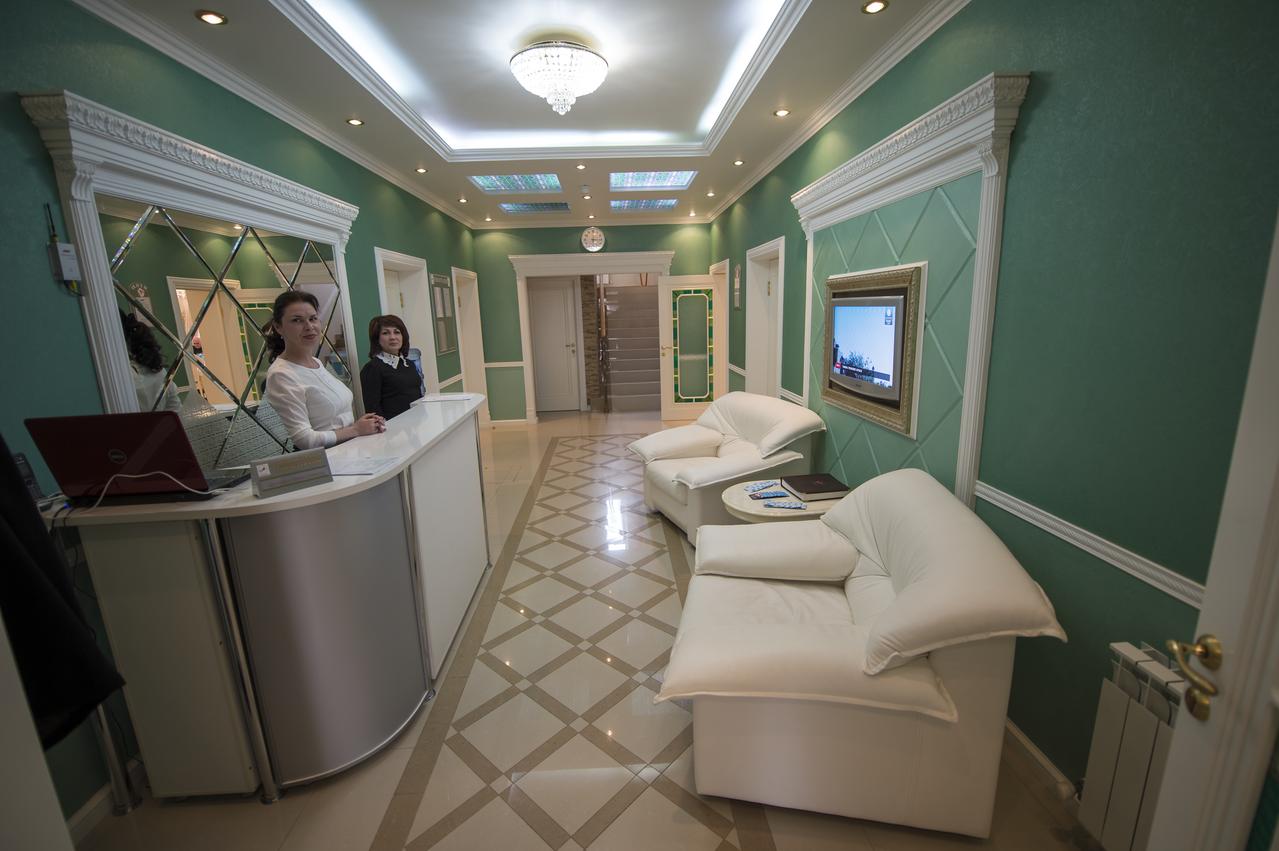
The lobby of the Zvjozdnyj Hotel where Expedition 43 crew members: NASA Astronaut Scott Kelly, Russian Cosmonauts Gennady Padalka, and Mikhail Kornienko of the Russian Federal Space Agency (Roscosmos) are staying is seen, Thursday, March 19, 2015 in Baikonur, Kazakhstan. Kelly, Padalka, and Kornienko are preparing for launch to the International Space Station in their Soyuz TMA-16M spacecraft from the Baikonur Cosmodrome in Kazakhstan March 28, Kazakh time. As the one-year crew, Kelly and Kornienko will return to Earth on Soyuz TMA-18M in March 2016. Photo Credit: (NASA/Bill Ingalls)
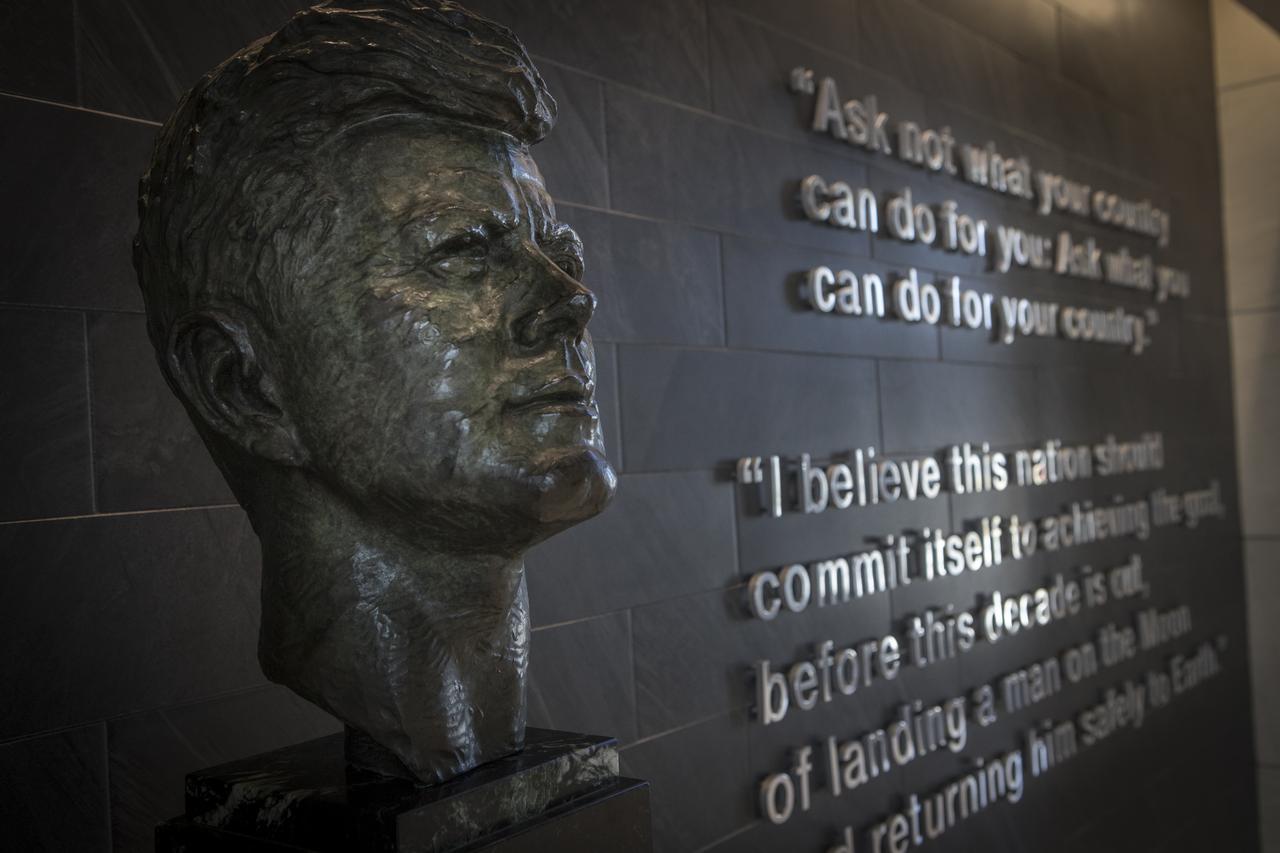
A view of some of the design elements in the lobby of the new headquarters building on April 3, 2019, at NASA’s Kennedy Space Center in Florida. The newly constructed facility anchors the multi-user spaceport’s Central Campus. More than 500 civil service and contractor employees will be based in the 200,000-square-foot building. The facility earned the U.S. Green Building Council’s Leadership in Energy and Environmental Design (LEED) Gold designation. Features include LED lighting throughout, along with occupancy sensors to turn off unneeded lights; windows, screens and shades designed to maximize natural light; chilled beam HVAC technology reducing the need for ductwork, and more.

Artemis Launch Director Charlie Blackwell-Thompson, at left, holds the Artemis I plaque inside the lobby of the Launch Control Center at NASA’s Kennedy Space Center in Florida on March 24, 2023. Joining her from left are Shawn Quinn, manager, Exploration Ground Systems; and Kelvin Manning, Kennedy deputy director. Following tradition from the Apollo and Space Shuttle Programs, the plaque will be added to the wall behind them. The first in a series of increasingly complex missions, Artemis I launched successfully from Kennedy’s Launch Pad 39B at 1:47 a.m. EST on Nov. 16, 2022.
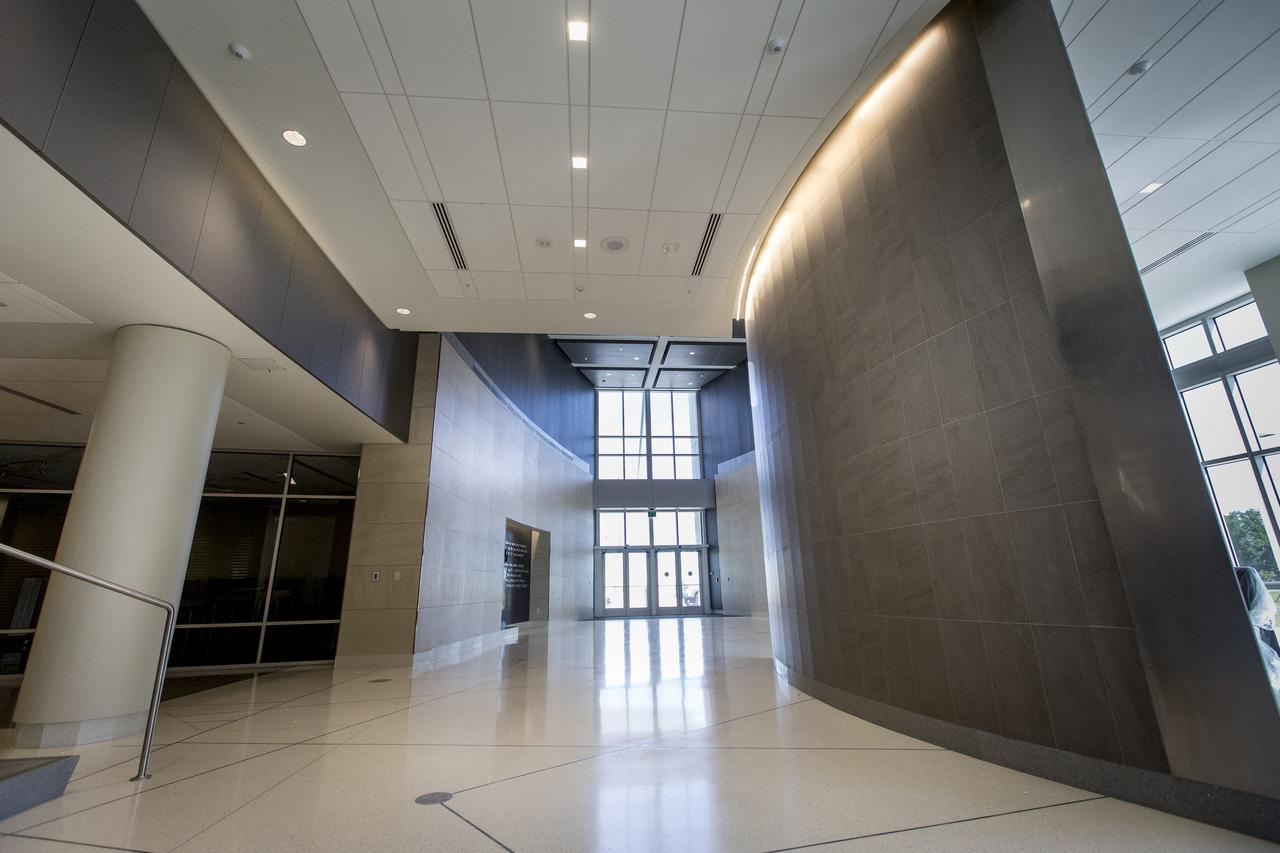
A view of the entranceway and lobby in the new headquarters building on April 3, 2019, at NASA’s Kennedy Space Center in Florida. The newly constructed facility anchors the multi-user spaceport’s Central Campus. More than 500 civil service and contractor employees will be based in the 200,000-square-foot building. The facility earned the U.S. Green Building Council’s Leadership in Energy and Environmental Design (LEED) Gold designation. Features include LED lighting throughout, along with occupancy sensors to turn off unneeded lights; windows, screens and shades designed to maximize natural light; chilled beam HVAC technology reducing the need for ductwork, and more.
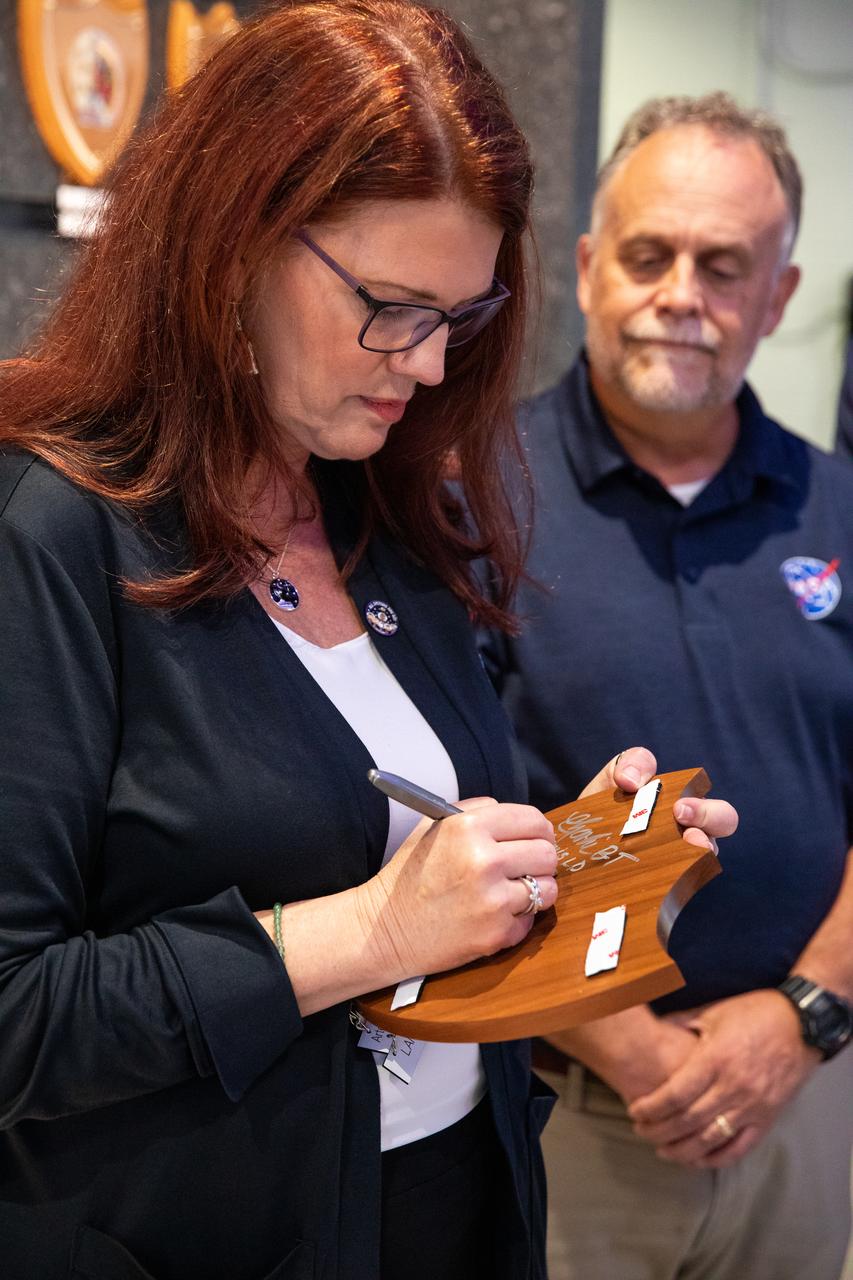
Artemis Launch Director Charlie Blackwell-Thompson, at left, signs the back of the Artemis I plaque inside the lobby of the Launch Control Center at NASA’s Kennedy Space Center in Florida on March 24, 2023. Joining her is Shawn Quinn, manager, Exploration Ground Systems. Following tradition from the Apollo and Space Shuttle Programs, the plaque will be added to the wall behind them. The first in a series of increasingly complex missions, Artemis I launched successfully from Kennedy’s Launch Pad 39B at 1:47 a.m. EST on Nov. 16, 2022.
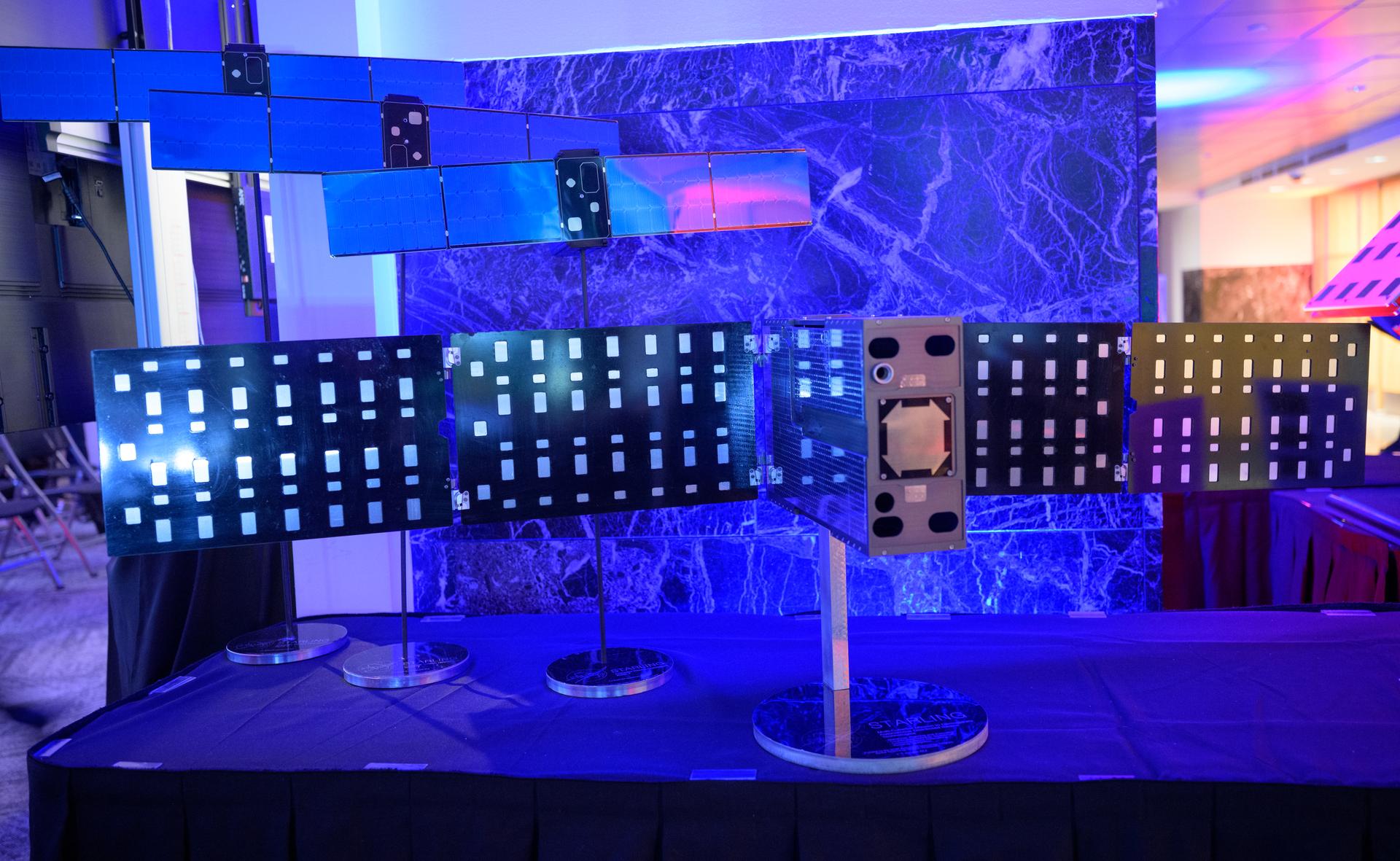
A model of the Starling, autonomous swarm navigation on four CubeSats in low-Earth orbit, is seen in the NASA Headquarters lobby during a 2-day event where NASA outlined how the agency is executing President Donald J. Trump’s National Space Policy and accelerating preparations for America’s return to the surface of the Moon by 2028, Wednesday, March 25, 2026, at the Mary W. Jackson NASA Headquarters building in Washington. During the event NASA leadership provided updates on mission priorities, including sending the first astronauts to the lunar surface in more than 50 years, establishing the initial elements of a permanent lunar base, getting America underway in space on nuclear propulsion, and other objectives. Photo Credit: (NASA/Bill Ingalls)
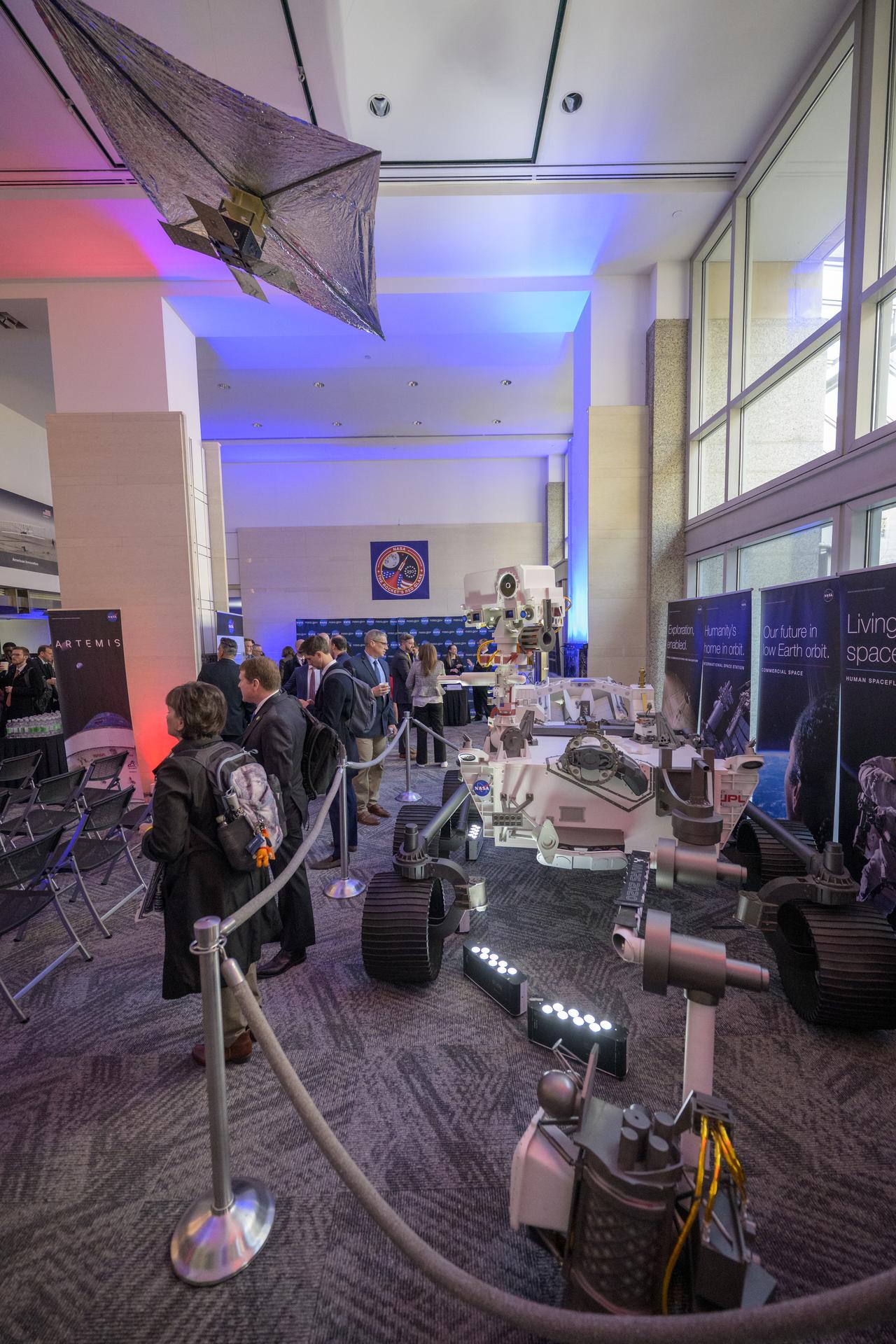
NASA Headquarters lobby is seen with models of the Mars 2020 Perseverance Rover, and Advanced Composite Solar Sail System (ACS3) on display ahead of an event where NASA outlined how the agency is executing President Donald J. Trump’s National Space Policy and accelerating preparations for America’s return to the surface of the Moon by 2028, Tuesday, March 24, 2026, at the Mary W. Jackson NASA Headquarters building in Washington. During the event NASA leadership provided updates on mission priorities, including sending the first astronauts to the lunar surface in more than 50 years, establishing the initial elements of a permanent lunar base, getting America underway in space on nuclear propulsion, and other objectives. Photo Credit: (NASA/Bill Ingalls)
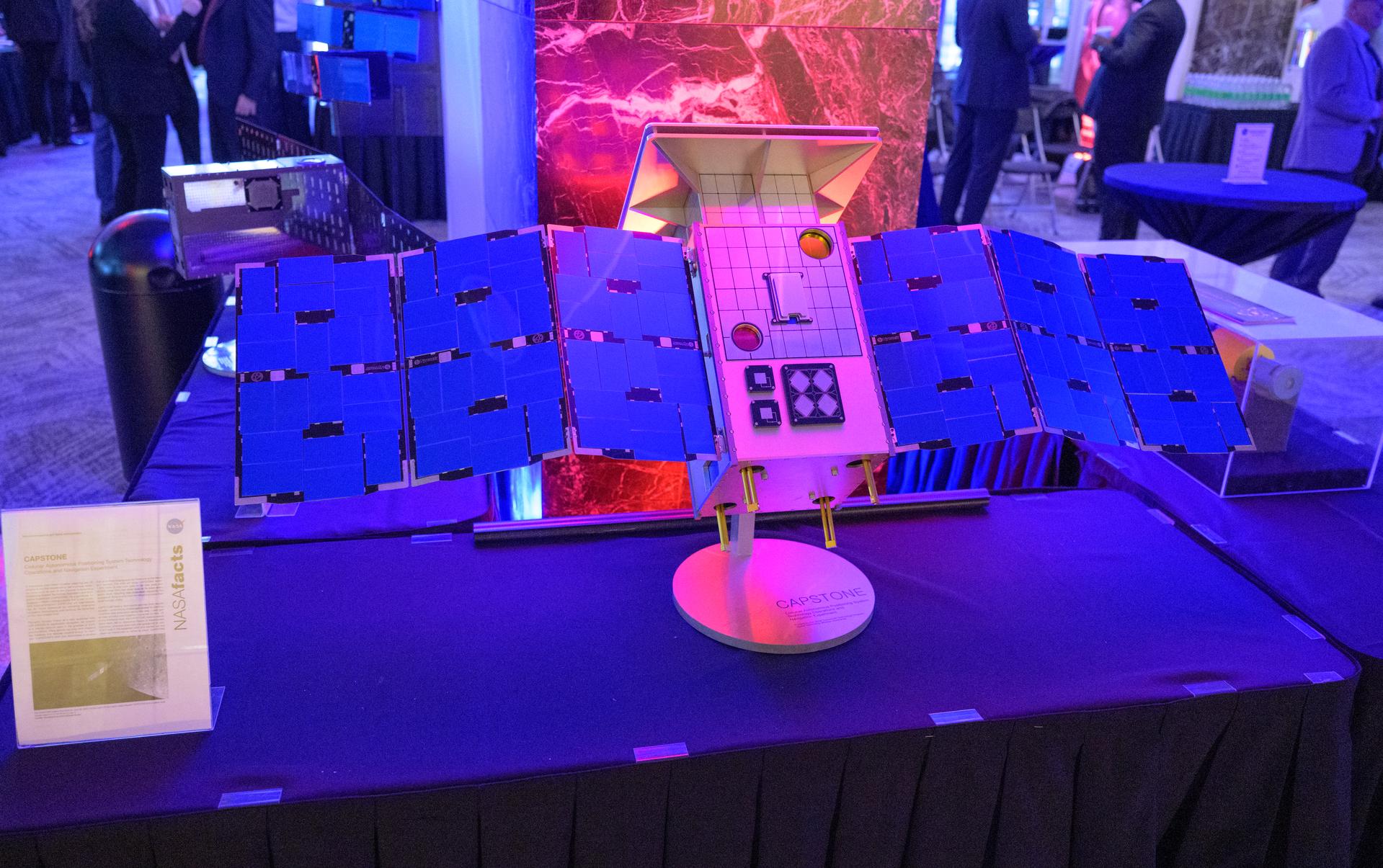
NASA Headquarters lobby is seen with a model of the Cislunar Autonomous Positioning System Technology Operations and Navigation Experiment (CAPSTONE) on display during a 2-day event where NASA outlined how the agency is executing President Donald J. Trump’s National Space Policy and accelerating preparations for America’s return to the surface of the Moon by 2028, Wednesday, March 25, 2026, at the Mary W. Jackson NASA Headquarters building in Washington. During the event NASA leadership provided updates on mission priorities, including sending the first astronauts to the lunar surface in more than 50 years, establishing the initial elements of a permanent lunar base, getting America underway in space on nuclear propulsion, and other objectives. Photo Credit: (NASA/Bill Ingalls)
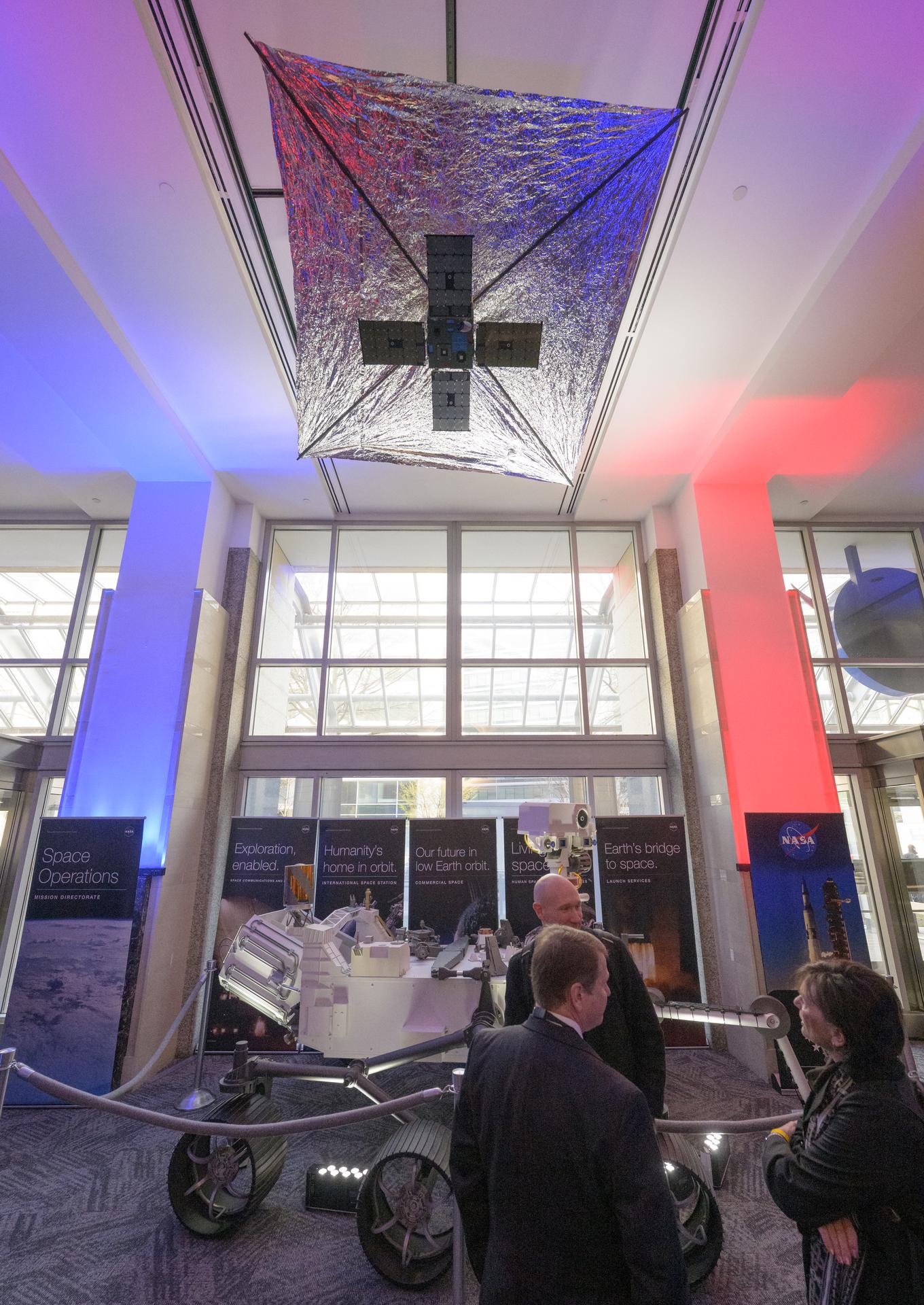
NASA Headquarters lobby is seen with models of the Mars 2020 Perseverance Rover, and Advanced Composite Solar Sail System (ACS3) on display ahead of an event where NASA outlined how the agency is executing President Donald J. Trump’s National Space Policy and accelerating preparations for America’s return to the surface of the Moon by 2028, Tuesday, March 24, 2026, at the Mary W. Jackson NASA Headquarters building in Washington. During the event NASA leadership provided updates on mission priorities, including sending the first astronauts to the lunar surface in more than 50 years, establishing the initial elements of a permanent lunar base, getting America underway in space on nuclear propulsion, and other objectives. Photo Credit: (NASA/Bill Ingalls)
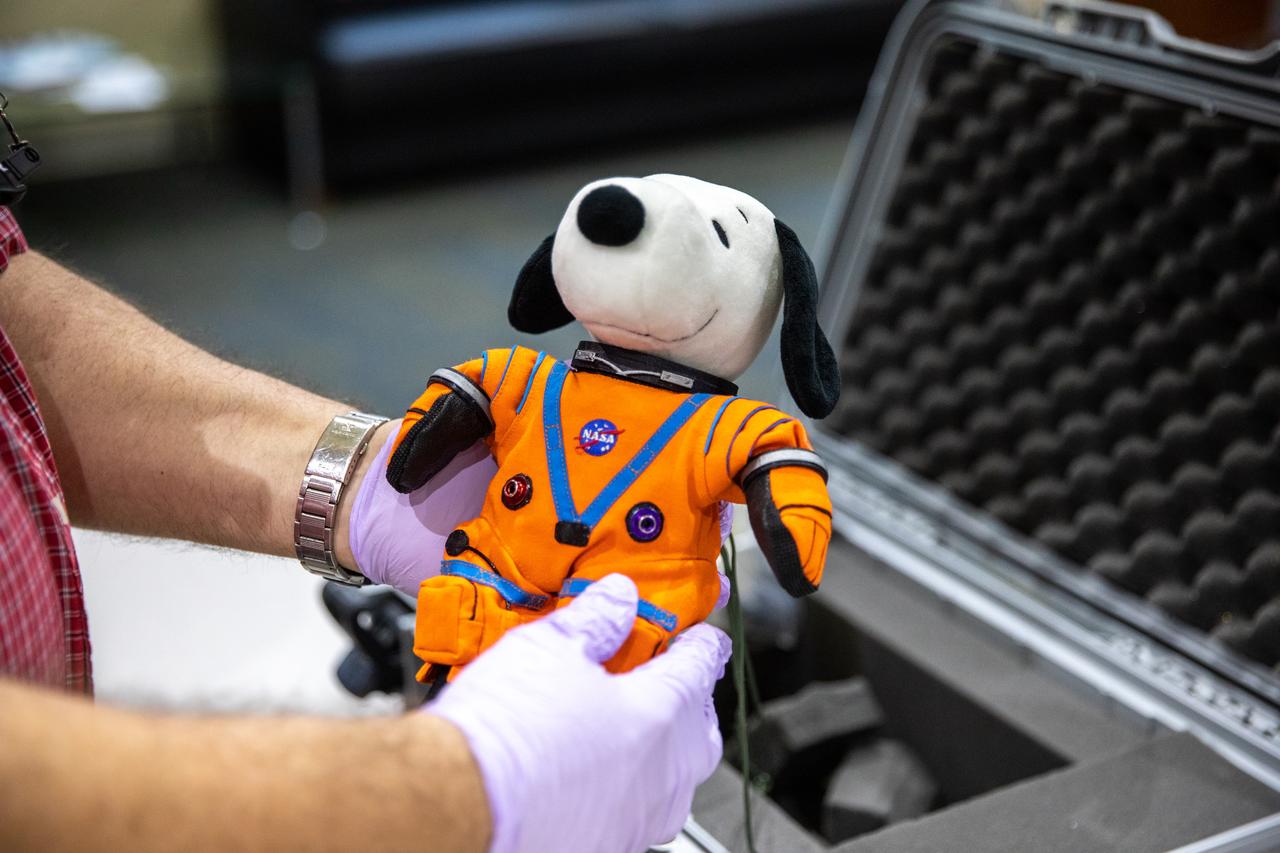
Inside the lobby of the Neil Armstrong Operations and Checkout Building at NASA’s Kennedy Space Center in Florida, Snoopy, the zero-gravity indicator that flew aboard Orion during the Artemis I mission, is shown on Jan. 5, 2023, after being unpacked from his transport case. Snoopy was secured inside Orion during the Artemis I mission, a journey beyond the Moon and back to prepare for crewed missions to the Moon. Artemis I launched atop the Space Launch System rocket on Nov. 16, 2022 from Kennedy’s Launch Complex 39B. Orion returned to Earth for a splashdown in the Pacific Ocean on Dec. 11, 2022 after traveling more than 1.4 million miles. NASA has held an association with Snoopy since the Apollo Era – the character has contributed to the excitement for NASA human spaceflight missions, helping inspire generations to dream big, and is a symbol of NASA’s safety culture and mission success.

Inside the lobby of the Neil Armstrong Operations and Checkout Building at NASA’s Kennedy Space Center in Florida, Snoopy, the zero-gravity indicator that flew aboard Orion during the Artemis I mission, is shown on Jan. 5, 2023, after being unpacked from his transport case. Snoopy was secured inside Orion during the Artemis I mission, a journey beyond the Moon and back to prepare for crewed missions to the Moon. Artemis I launched atop the Space Launch System rocket on Nov. 16, 2022 from Kennedy’s Launch Complex 39B. Orion returned to Earth for a splashdown in the Pacific Ocean on Dec. 11, 2022 after traveling more than 1.4 million miles. NASA has held an association with Snoopy since the Apollo Era – the character has contributed to the excitement for NASA human spaceflight missions, helping inspire generations to dream big, and is a symbol of NASA’s safety culture and mission success.
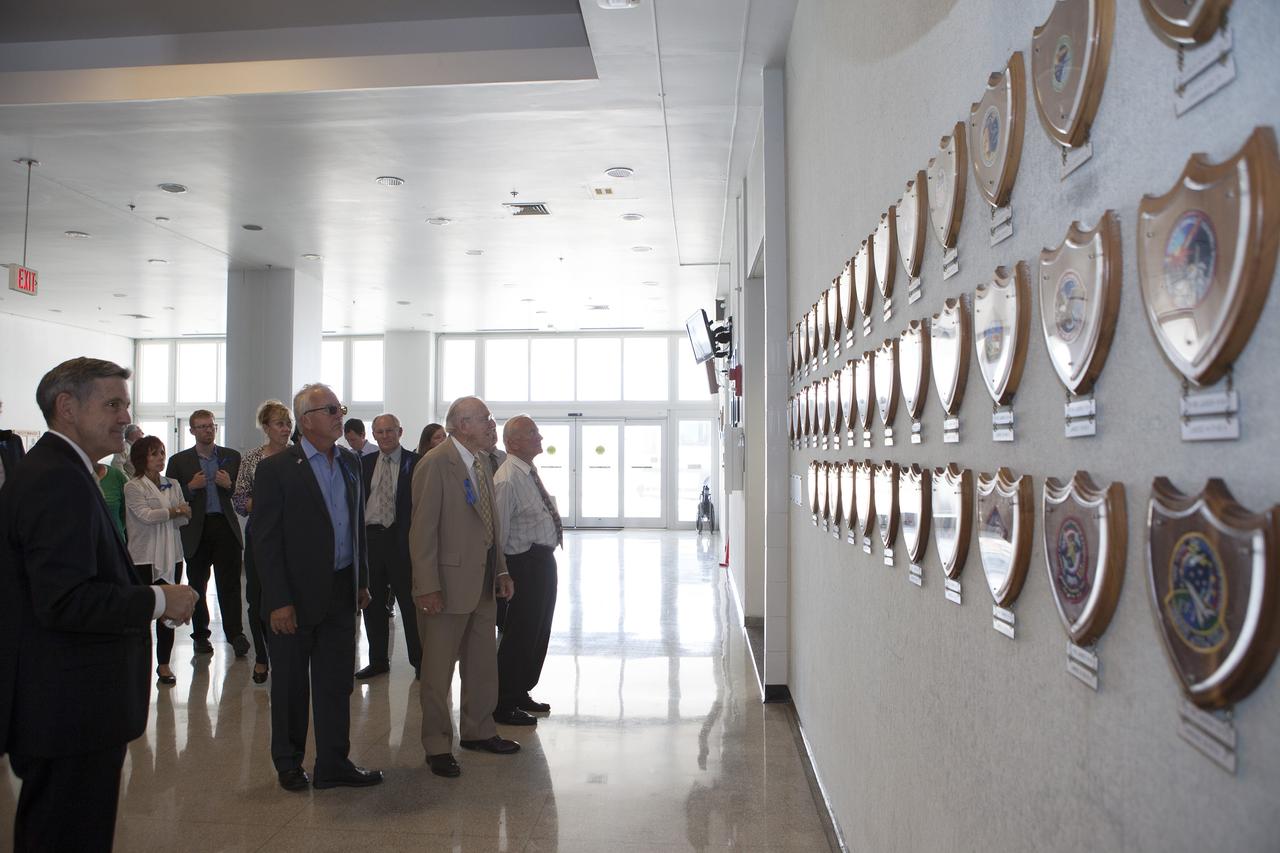
CAPE CANAVERAL, Fla. -- Apollo astronauts and their families examine the mission plaques mounted on the wall in the lobby of the Launch Control Center at NASA's Kennedy Space Center in Florida. The facility houses the firing rooms from which the Apollo countdowns were conducted. Kennedy Director Robert Cabana, at left, led the tour which followed a ceremony renaming the refurbished Operations and Checkout Building for Apollo 11 astronaut Neil Armstrong, the first person to set foot on the moon. The ceremony was part of NASA's 45th anniversary celebration of the Apollo 11 moon landing. As the world watched, Neil Armstrong and Buzz Aldrin landed in the moon's Sea of Tranquility on July 20, 1969, aboard the lunar module Eagle. Meanwhile, crewmate Michael Collins orbited above in the command module Columbia. For more, visit http://www.nasa.gov/press/2014/july/nasa-honors-historic-first-moon-landing-eyes-first-mars-mission. Photo credit: NASA/Kim Shiflett
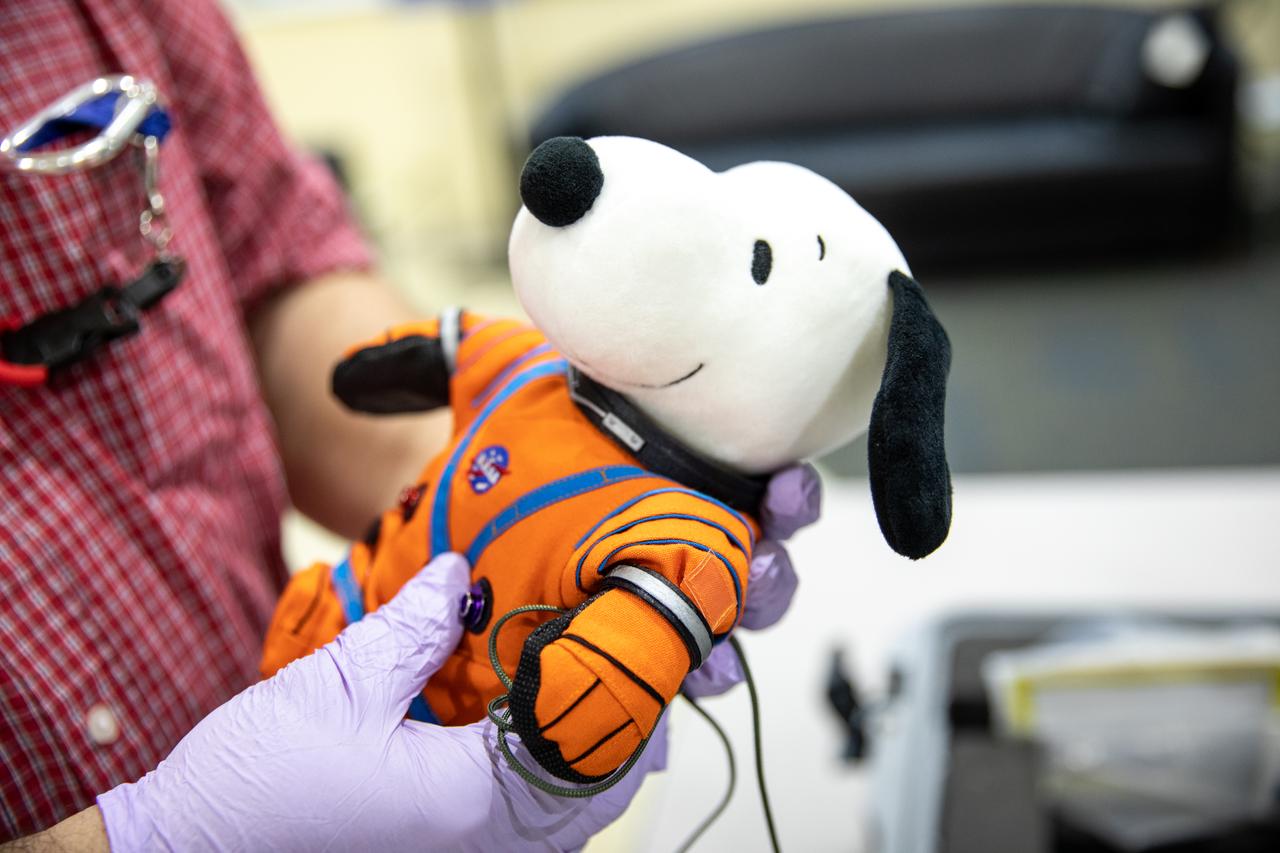
Inside the lobby of the Neil Armstrong Operations and Checkout Building at NASA’s Kennedy Space Center in Florida, Snoopy, the zero-gravity indicator that flew aboard Orion during the Artemis I mission, is shown on Jan. 5, 2023, after being unpacked from his transport case. Snoopy was secured inside Orion during the Artemis I mission, a journey beyond the Moon and back to prepare for crewed missions to the Moon. Artemis I launched atop the Space Launch System rocket on Nov. 16, 2022 from Kennedy’s Launch Complex 39B. Orion returned to Earth for a splashdown in the Pacific Ocean on Dec. 11, 2022 after traveling more than 1.4 million miles. NASA has held an association with Snoopy since the Apollo Era – the character has contributed to the excitement for NASA human spaceflight missions, helping inspire generations to dream big, and is a symbol of NASA’s safety culture and mission success.
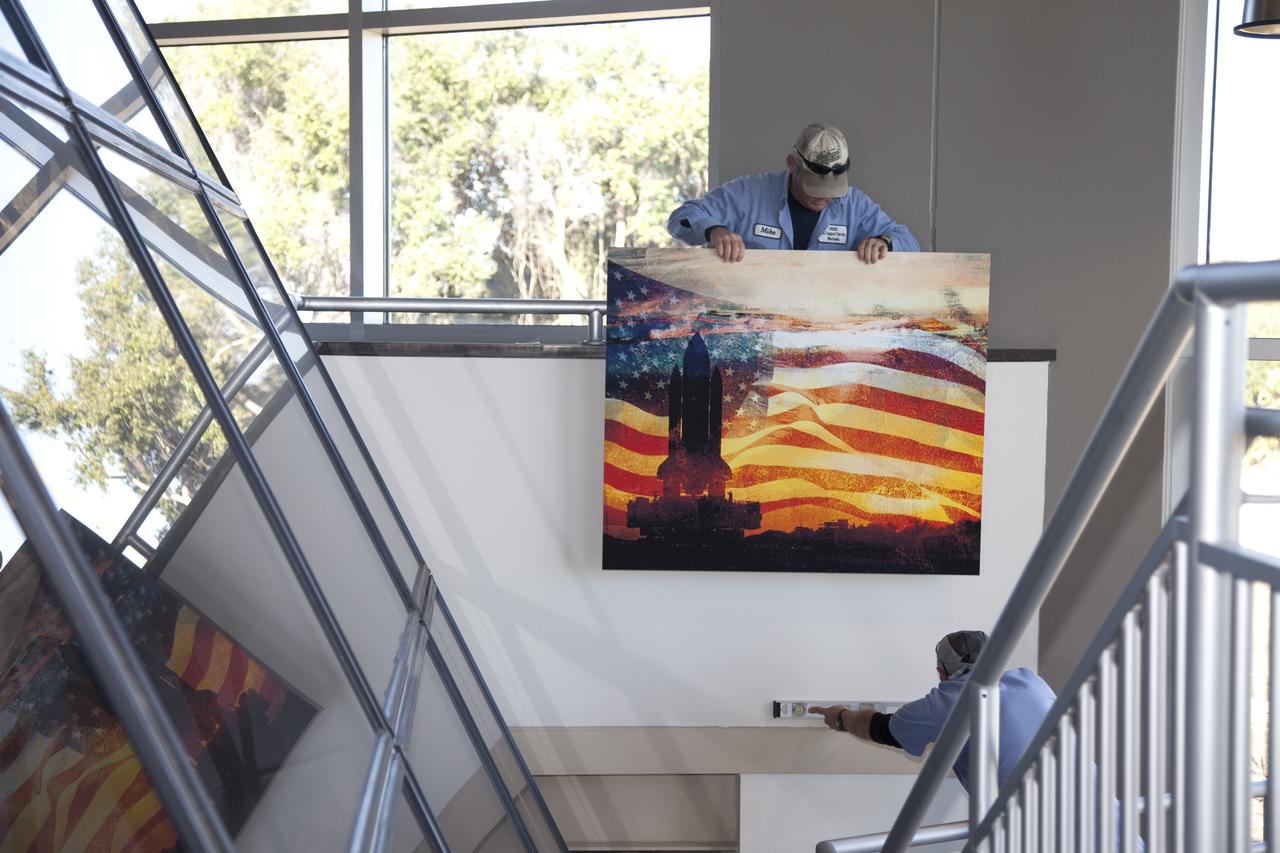
CAPE CANAVERAL, Fla. -- Workers hang artwork in the second-floor lobby of the Propellants North Administrative and Maintenance Facility at NASA's Kennedy Space Center in Florida. The artwork was produced by Greg Lee, a graphics specialist with Abacus Technology Corp., and features a silhouette of a shuttle, one of the most recognizable American icons, rolling out to Launch Complex 39. The environmentally friendly facility is slated to be NASA's second Platinum-rated by the U.S. Green Building Council's (USGBC) Leadership in Environmental and Energy Design (LEED) certification system. It will be the space agency's first net-zero facility, which means it will produce enough energy onsite from renewable sources to offset what it requires to operate. The facility consists of a two-story administrative building to house managers, mechanics and technicians who fuel spacecraft at Kennedy, and a single-story shop to store cryogenic fuel transfer equipment. Photo credit: NASA/Frankie Martin
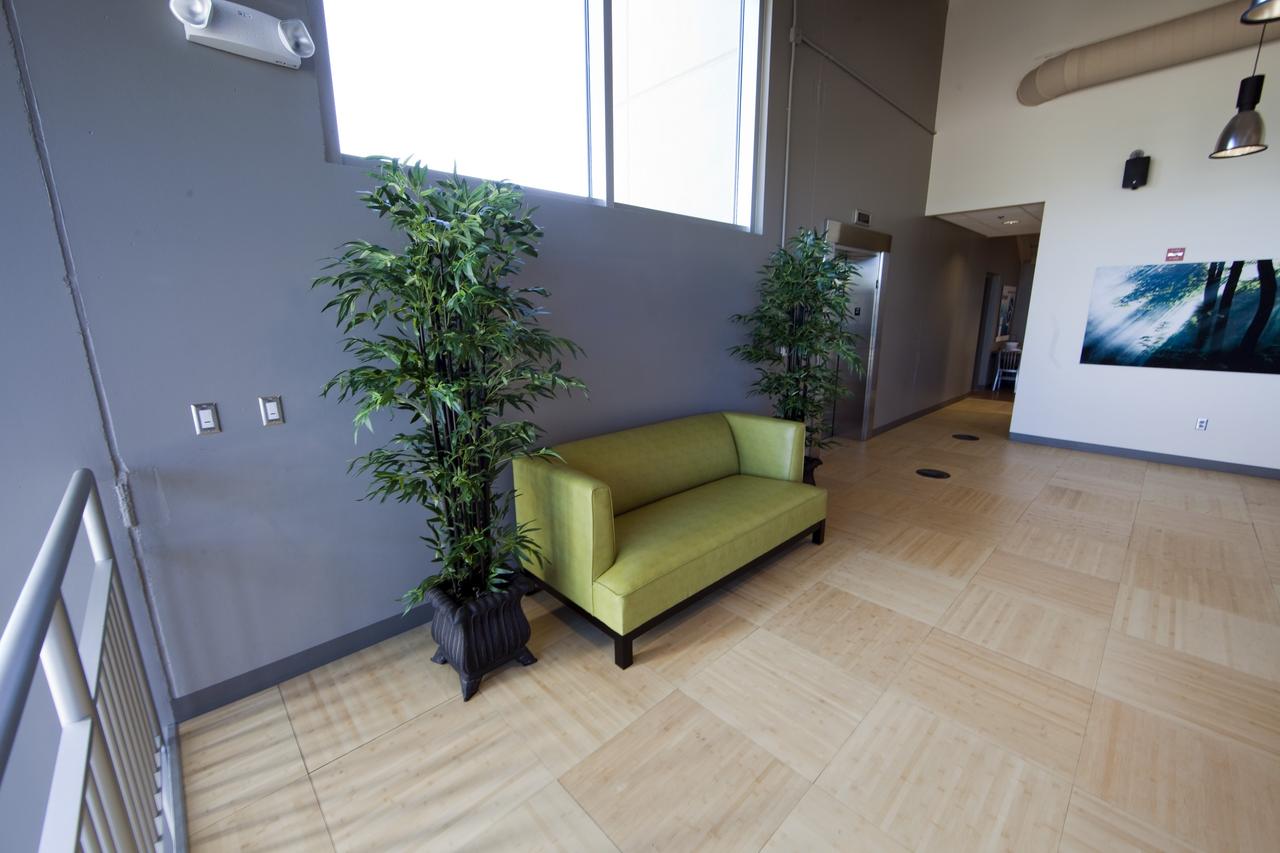
CAPE CANAVERAL, Fla. -- Finishing touches adorn the second-floor lobby of the new Propellants North Administrative and Maintenance Facility at NASA's Kennedy Space Center in Florida. The artwork on the wall was produced by Greg Lee, a graphics specialist with Abacus Technology Corp., and depicts the mystery of nature with a photo of the Merritt Island National Wildlife Refuge. The environmentally friendly facility is slated to be NASA's second Platinum-rated by the U.S. Green Building Council's (USGBC) Leadership in Environmental and Energy Design (LEED) certification system. It will be the space agency's first net-zero facility, which means it will produce enough energy onsite from renewable sources to offset what it requires to operate. The facility consists of a two-story administrative building to house managers, mechanics and technicians who fuel spacecraft at Kennedy, and a single-story shop to store cryogenic fuel transfer equipment. Photo credit: NASA/Frankie Martin
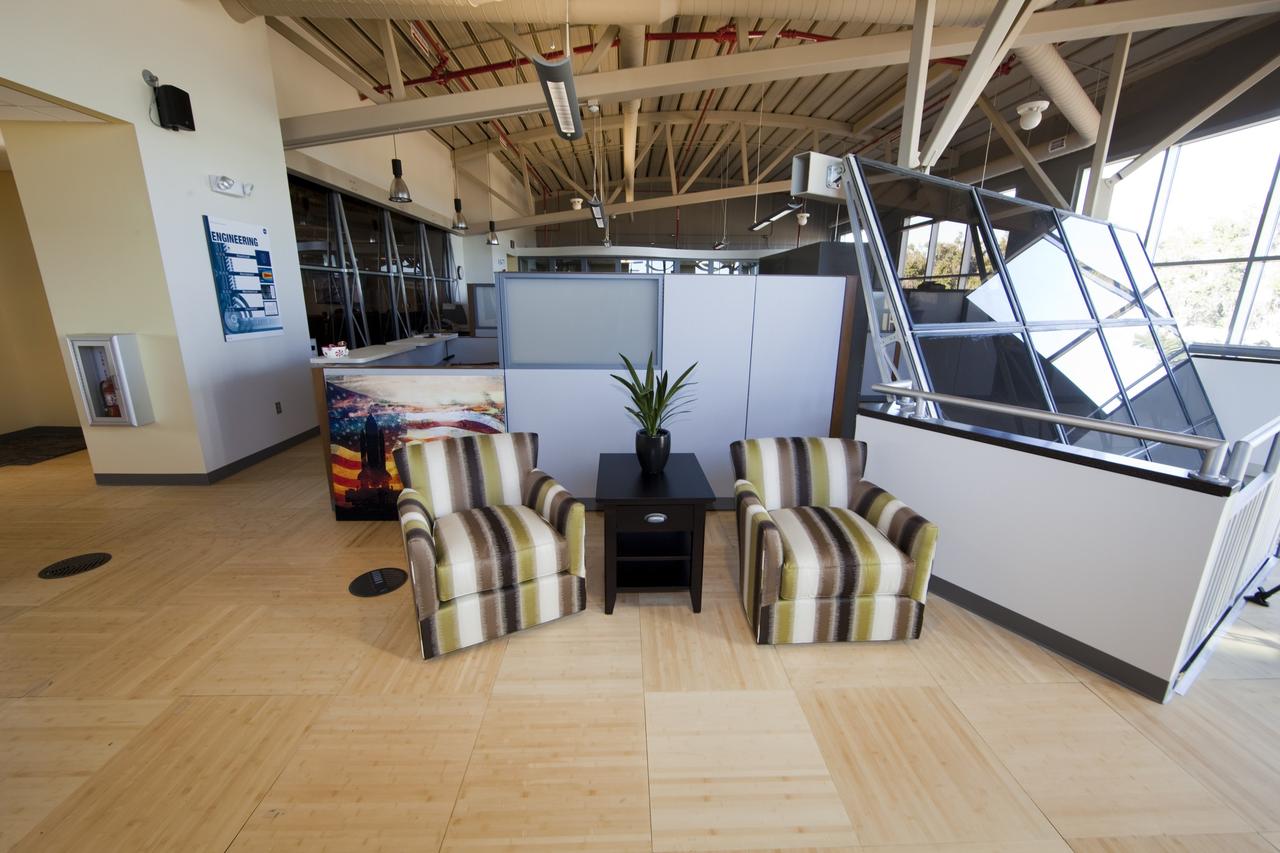
CAPE CANAVERAL, Fla. -- Finishing touches adorn the second-floor lobby of the Propellants North Administrative and Maintenance Facility at NASA's Kennedy Space Center in Florida. At right, are recycled firing room windows that are set at the same angle and orientation as they were in Kennedy's Launch Control Center, looking out toward Launch Pads 39A and B. The environmentally friendly facility is slated to be NASA's second Platinum-rated by the U.S. Green Building Council's (USGBC) Leadership in Environmental and Energy Design (LEED) certification system. It will be the space agency's first net-zero facility, which means it will produce enough energy onsite from renewable sources to offset what it requires to operate. The facility consists of a two-story administrative building to house managers, mechanics and technicians who fuel spacecraft at Kennedy, and a single-story shop to store cryogenic fuel transfer equipment. Photo credit: NASA/Frankie Martin
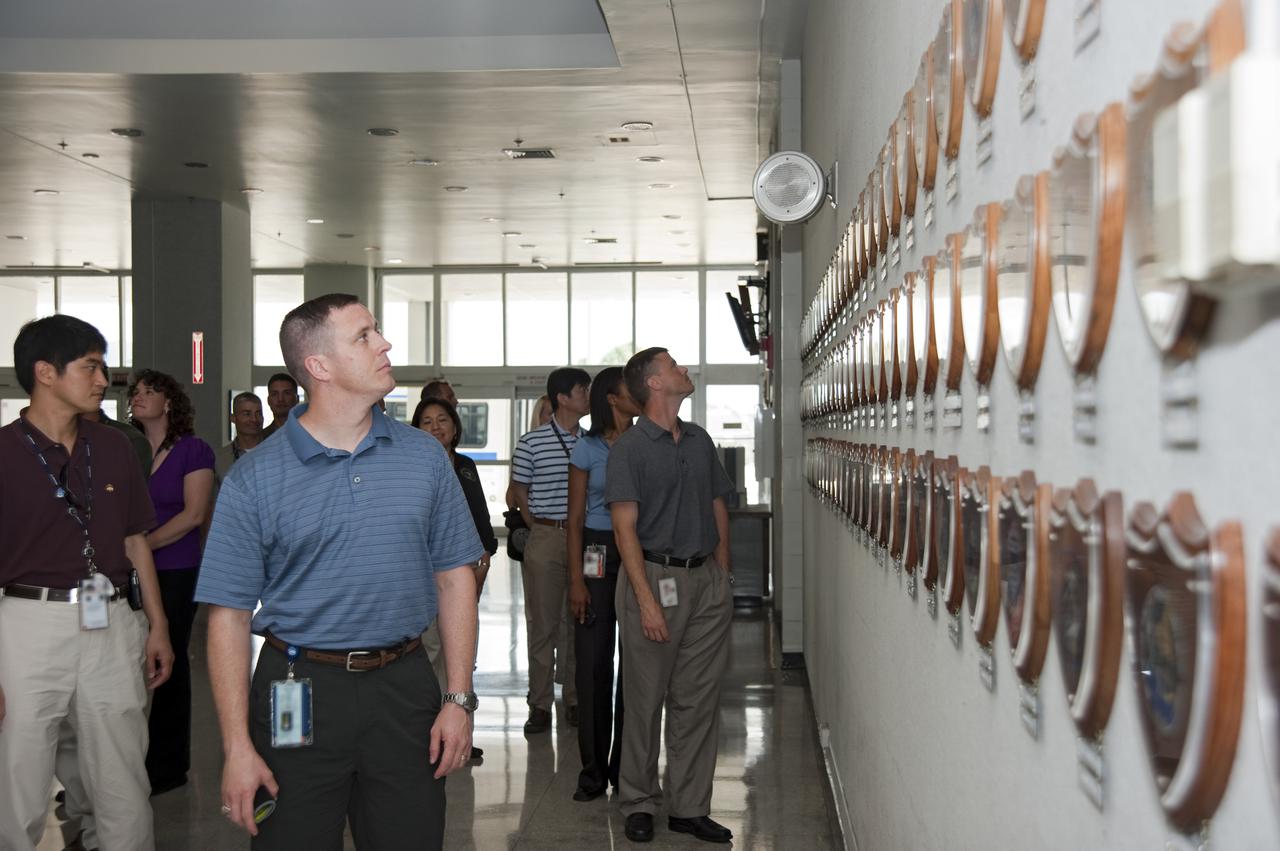
CAPE CANAVERAL, Fla. --- At NASA's Kennedy Space Center in Florida, the Class of 2009 Astronaut Candidates, also called ASCANs, tour the Launch Control Center. Along the wall of the center's lobby are all the space shuttle mission patches. The new astronaut candidates for NASA are Serena M. Aunon, Jeanette J. Epps, Air Force Maj. Jack D. Fischer, Air Force Lt. Col. Michael S. Hopkins, Kjell N. Lindgren, Kathleen 'Kate' Rubins, Navy Cmdr. Scott D. Tingle, Army Lt. Col. Mark T. Vande, and Navy Lt. Cmdr. Gregory R. 'Reid' Wiseman. The new astronaut candidates for the Japan Aerospace Exploration Agency, or JAXA, are Norishige Kanai, Takuya Onishi and Kimiya Yui. The new astronaut candidates for the Canadian Space Agency, or CSA, are Jeremy Hansen and David Saint-Jacques. Photo Credit: NASA_Kim Shiflett
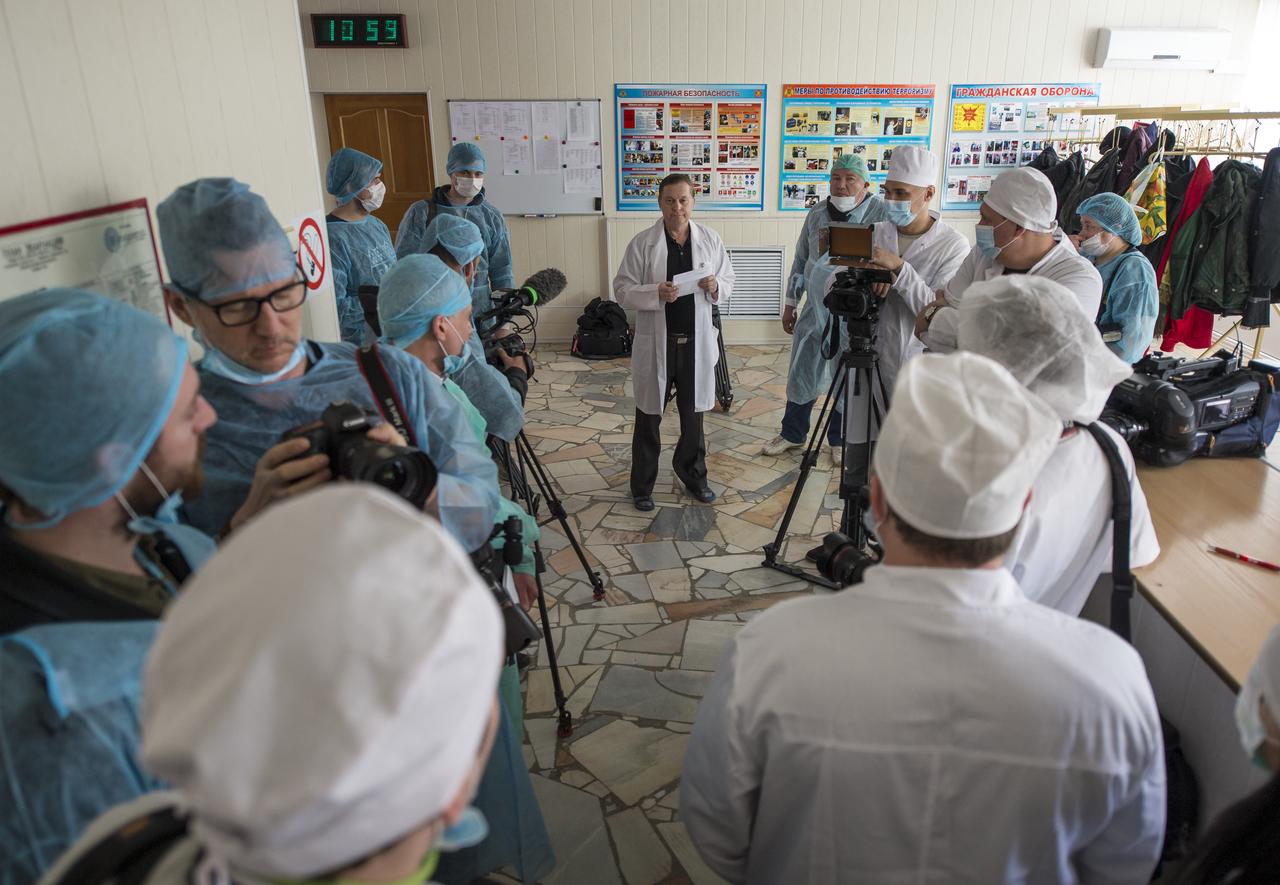
Gagarin Cosmonaut Training Center (GCTC) Chief Epidemiologist Sergei Savin stands in the Cosmonaut Hotel lobby and instructs the media on how their access to the Expedition 43 prime and backup crews will be organized during media day, Saturday, March 21, 2015, Baikonur, Kazakhstan. Expedition 43 NASA Astronaut Scott Kelly, and Russian Cosmonauts Gennady Padalka, and Mikhail Kornienko of the Russian Federal Space Agency (Roscosmos) are scheduled to launch to the International Space Station in the Soyuz TMA-16M spacecraft from the Baikonur Cosmodrome in Kazakhstan March 28, Kazakh time (March 27 Eastern time.) As the one-year crew, Kelly and Kornienko will return to Earth on Soyuz TMA-18M in March 2016. Photo Credit: (NASA/Bill Ingalls)
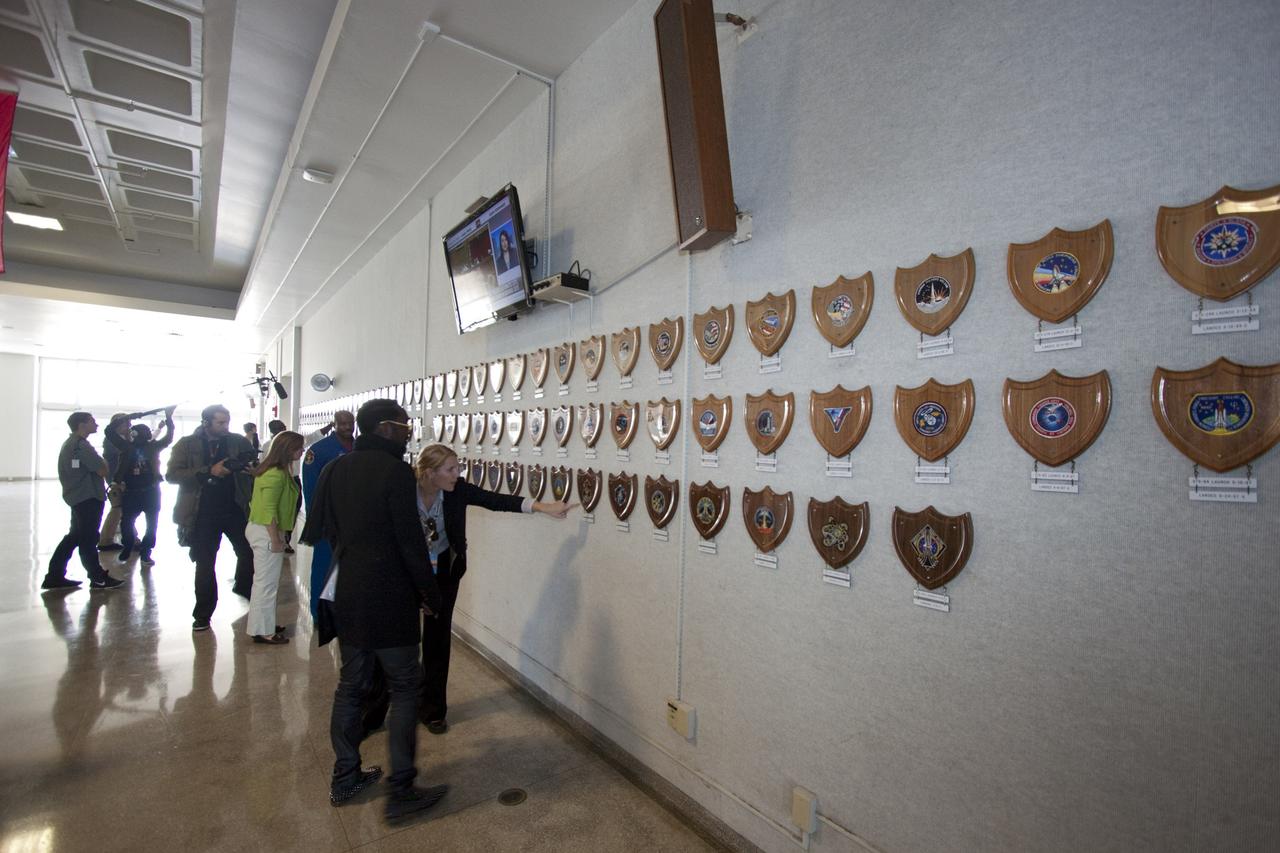
CAPE CANAVERAL, Fla. – At NASA Kennedy Space Center in Florida, Will.i.am, entertainer and member of The Black Eyed Peas, hears about the space shuttle mission plaques lining the lobby of the Launch Control Center (LCC) from NASA's Charlie Blackwell Thompson. Also viewing the plaques in the background are NASA Deputy Administrator Lori Garver and former astronaut Leland Melvin, NASA associate administrator for Education. The visit to the LCC followed their participation in a NASA Tweetup. The Tweetup is part of prelaunch activities for the agency’s Mars Science Laboratory (MSL) launch and provides the opportunity for tweeters will share their experiences with followers through the social networking site Twitter. The MSL mission will pioneer precision landing technology and a sky-crane touchdown to place a car-sized rover, Curiosity, near the foot of a mountain inside Gale Crater on Aug. 6, 2012. During a nearly two-year prime mission after landing, the rover will investigate whether the region has ever offered conditions favorable for microbial life, including the chemical ingredients for life. Liftoff of MSL aboard a United Launch Alliance Atlas V rocket from Space Launch Complex-41 on Cape Canaveral Air Force Station was at 10:02 a.m. EST on Nov. 26. For more information, visit http://www.nasa.gov/msl. Photo credit: NASA/Jim Grossmann
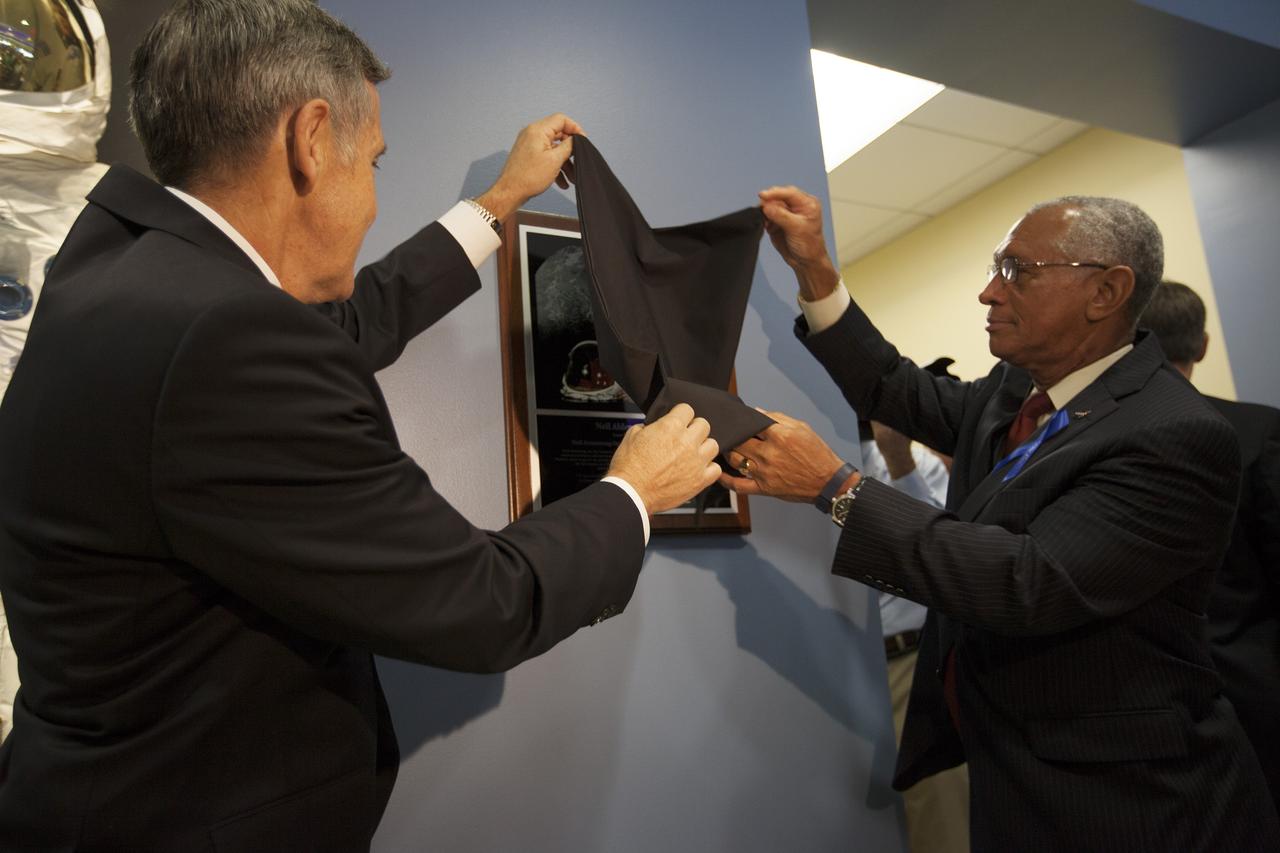
CAPE CANAVERAL, Fla. -- At the Kennedy Space Center in Florida, Center Director Robert Cabana, left, and NASA Administrator Charles Bolden unveil a plaque on display in the lobby of the newly named Neil Armstrong Operations and Checkout Building. The facility has been renamed for Apollo 11 astronaut Neil Armstrong, the first person to set foot on the moon. The building's high bay is being used to support the agency's new Orion spacecraft and is the same spaceport facility where the Apollo 11 command/service module and lunar module were prepped for the first lunar landing mission in 1969. Orion is designed to take humans farther than they’ve ever gone before, serving as the exploration vehicle that will carry astronauts to deep space and sustain the crew during travel to destinations such as an asteroid or Mars. The unveiling was part of NASA's 45th anniversary celebration of the Apollo 11 moon landing. As the world watched, Apollo 11 astronauts landed in the moon's Sea of Tranquility aboard the lunar module, Eagle, on July 20, 1969, as the command module, Columbia, orbited overhead. For more: http://www.nasa.gov/press/2014/july/nasa-honors-historic-first-moon-landing-eyes-first-mars-mission/ Photo credit: NASA/Kim Shiflett
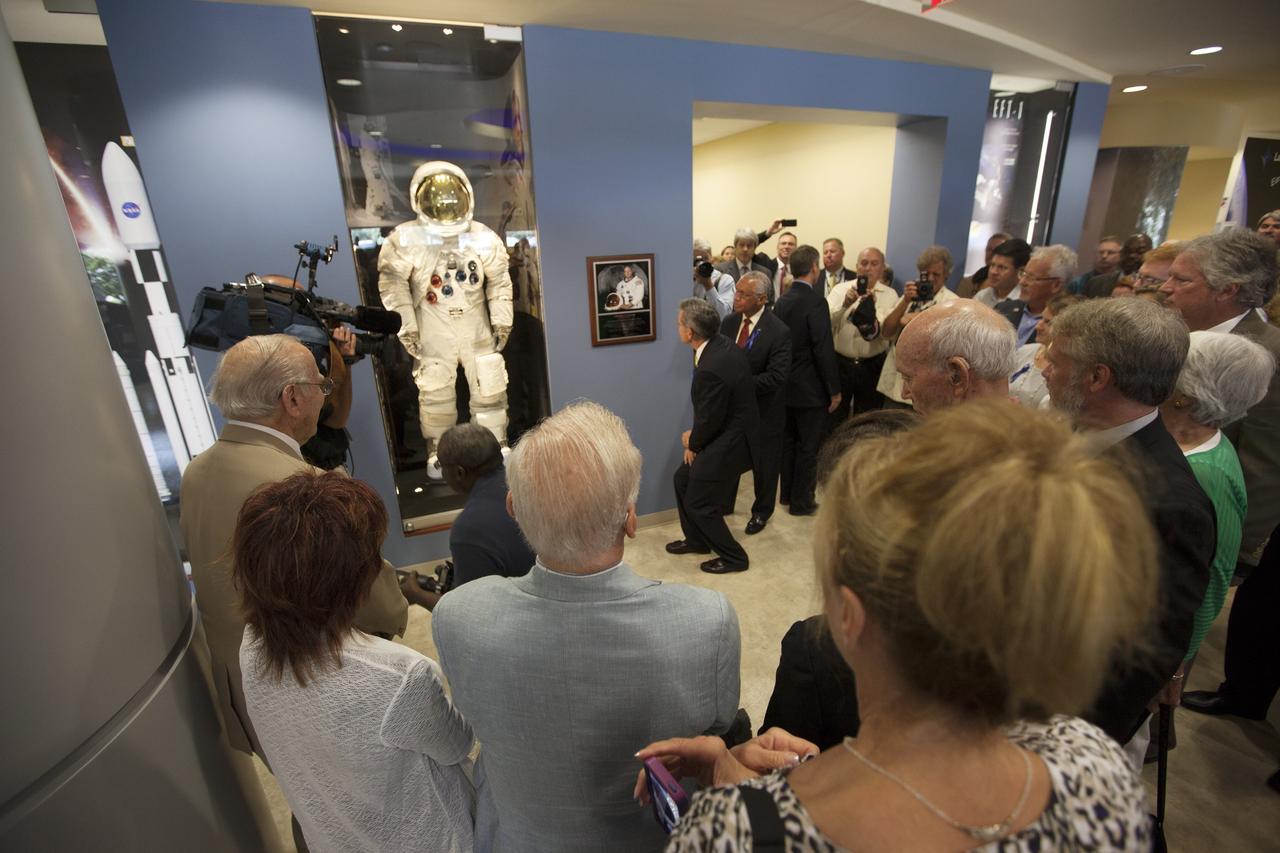
CAPE CANAVERAL, Fla. -- At the Kennedy Space Center in Florida, Center Director Robert Cabana reads the inscription on a plaque to invited guests following its unveiling in the lobby of the newly named Neil Armstrong Operations and Checkout Building. NASA Administrator Charles Bolden is at his right. The facility has been renamed for Apollo 11 astronaut Neil Armstrong, the first person to set foot on the moon. The building's high bay is being used to support the agency's new Orion spacecraft and is the same spaceport facility where the Apollo 11 command/service module and lunar module were prepped for the first lunar landing mission in 1969. Orion is designed to take humans farther than they’ve ever gone before, serving as the exploration vehicle that will carry astronauts to deep space and sustain the crew during travel to destinations such as an asteroid or Mars. The unveiling was part of NASA's 45th anniversary celebration of the Apollo 11 moon landing. As the world watched, Apollo 11 astronauts landed in the moon's Sea of Tranquility aboard the lunar module, Eagle, on July 20, 1969, as the command module, Columbia, orbited overhead. For more: http://www.nasa.gov/press/2014/july/nasa-honors-historic-first-moon-landing-eyes-first-mars-mission/ Photo credit: NASA/Kim Shiflett
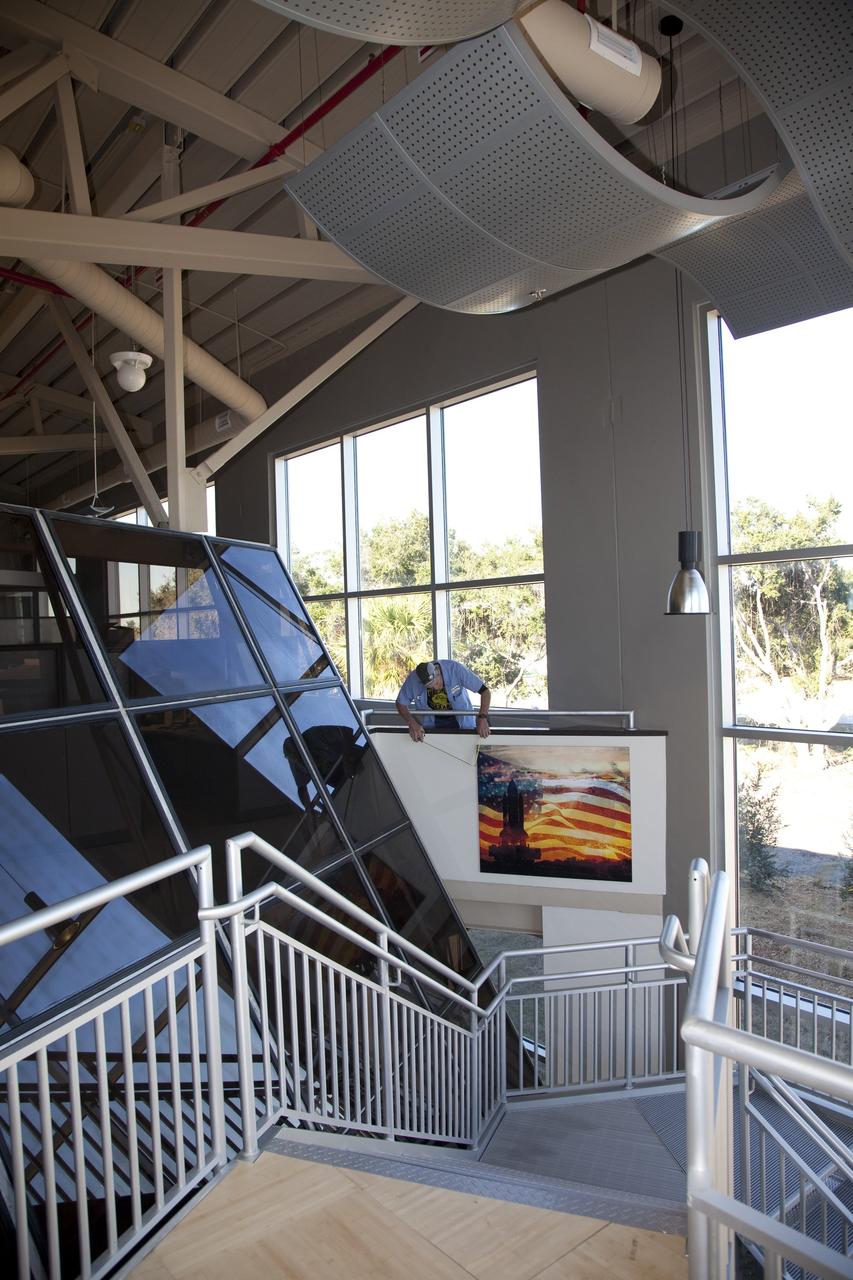
CAPE CANAVERAL, Fla. -- Workers hang artwork in the second-floor lobby of the Propellants North Administrative and Maintenance Facility at NASA's Kennedy Space Center in Florida. The artwork was produced by Greg Lee, a graphics specialist with Abacus Technology Corp., and features a silhouette of a shuttle, one of the most recognizable American icons, rolling out to Launch Complex 39. Next to the artwork are recycled firing room windows from Kennedy's Launch Control Center. Launch controllers viewed every shuttle rollout and launch through those windows before they were repurposed. The environmentally friendly facility is slated to be NASA's second Platinum-rated by the U.S. Green Building Council's (USGBC) Leadership in Environmental and Energy Design (LEED) certification system. It will be the space agency's first net-zero facility, which means it will produce enough energy onsite from renewable sources to offset what it requires to operate. The facility consists of a two-story administrative building to house managers, mechanics and technicians who fuel spacecraft at Kennedy, and a single-story shop to store cryogenic fuel transfer equipment. Photo credit: NASA/Frankie Martin
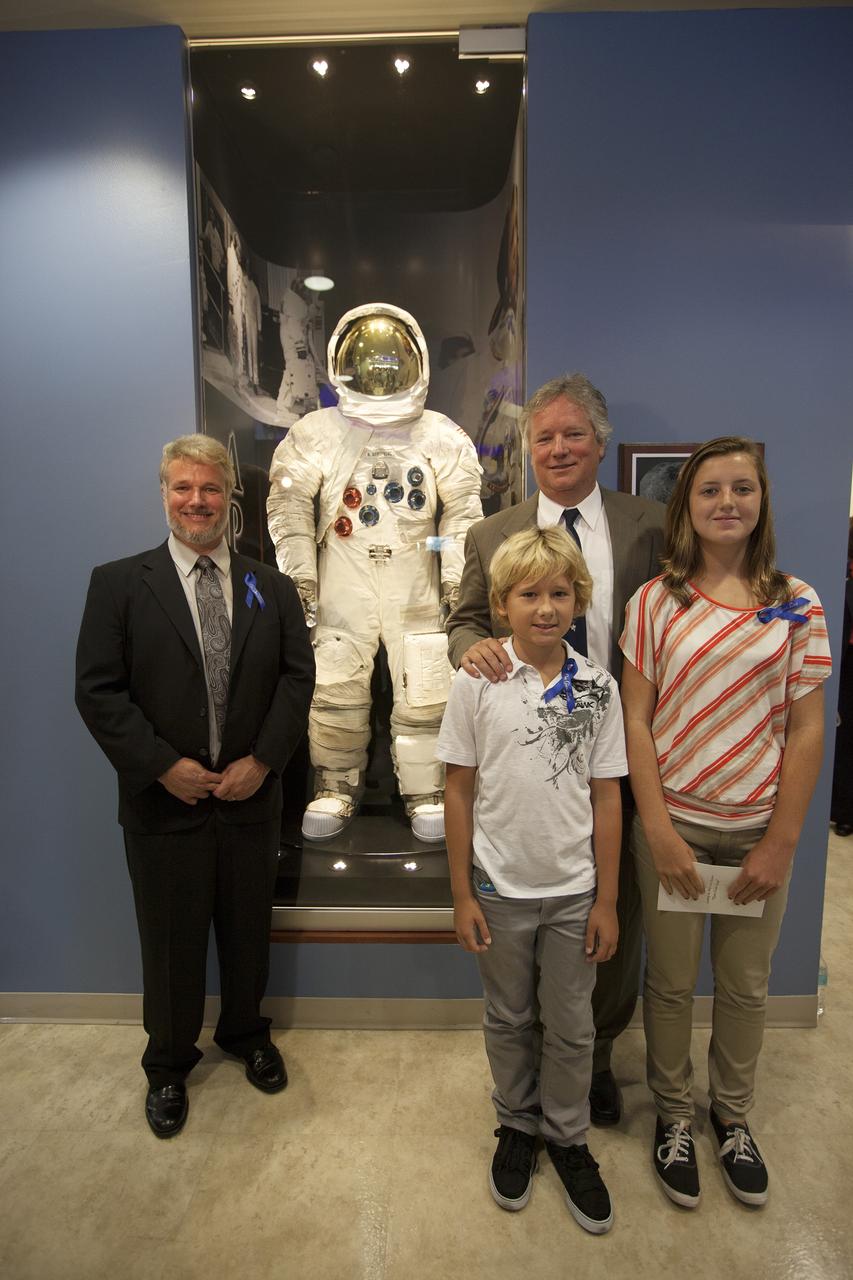
CAPE CANAVERAL, Fla. -- At the Kennedy Space Center in Florida, members of the Armstrong family pose for a portrait with an Apollo-era spacesuit following its unveiling in the lobby of the newly named Neil Armstrong Operations and Checkout Building. The facility has been renamed for Apollo 11 astronaut Neil Armstrong, the first person to set foot on the moon. From left are Armstrong's son Mark, his grandson Bryce, his son Rick and his granddaughter Lily. The building's high bay is being used to support the agency's new Orion spacecraft and is the same spaceport facility where the Apollo 11 command/service module and lunar module were prepped for the first lunar landing mission in 1969. Orion is designed to take humans farther than they’ve ever gone before, serving as the exploration vehicle that will carry astronauts to deep space and sustain the crew during travel to destinations such as an asteroid or Mars. The unveiling was part of NASA's 45th anniversary celebration of the Apollo 11 moon landing. As the world watched, Apollo 11 astronauts landed in the moon's Sea of Tranquility aboard the lunar module, Eagle, on July 20, 1969, as the command module, Columbia, orbited overhead. For more: http://www.nasa.gov/press/2014/july/nasa-honors-historic-first-moon-landing-eyes-first-mars-mission/ Photo credit: NASA/Kim Shiflett
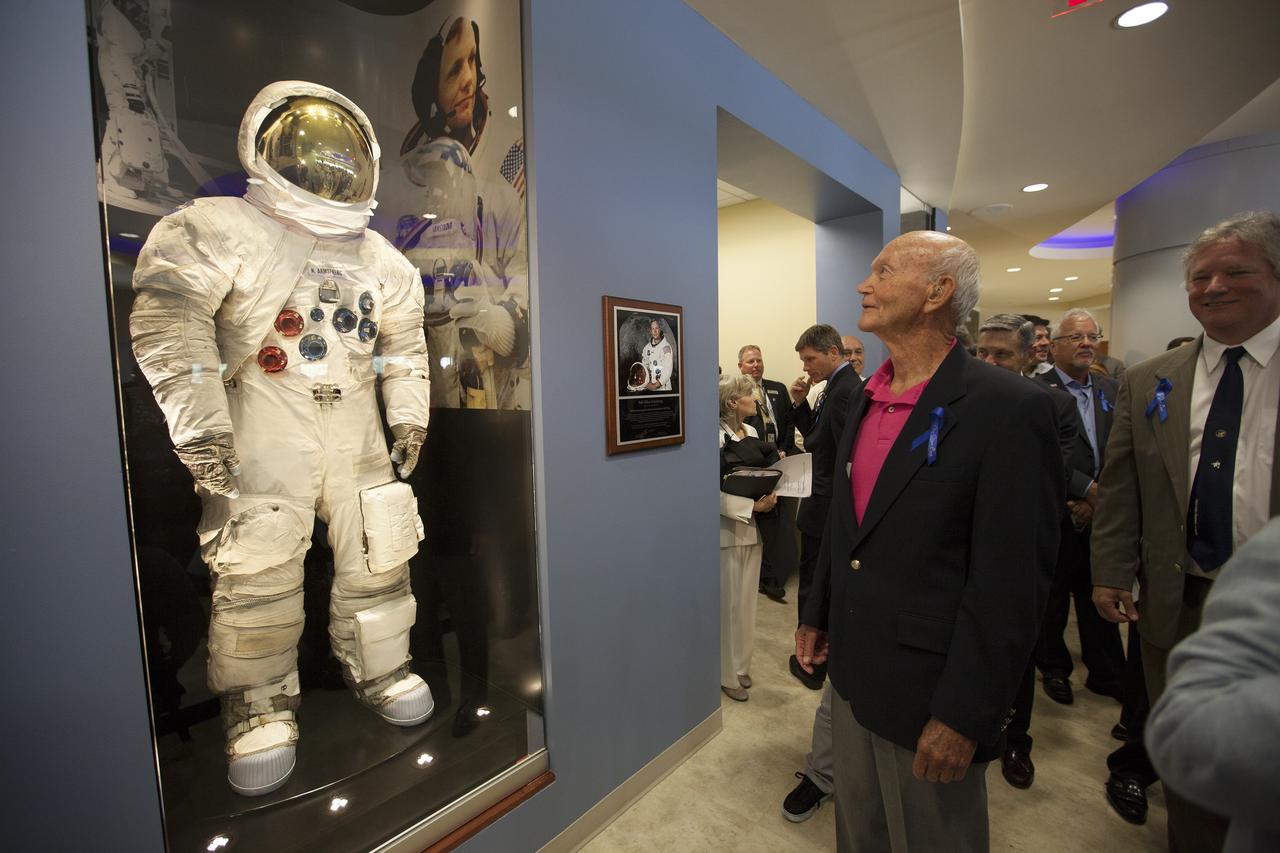
CAPE CANAVERAL, Fla. -- At the Kennedy Space Center in Florida, Apollo 11 astronaut Michael Collins gets a close look at an Apollo-era spacesuit following its unveiling in the lobby of the newly named Neil Armstrong Operations and Checkout Building. The facility has been renamed for Apollo 11 astronaut Neil Armstrong, the first person to set foot on the moon. The building's high bay is being used to support the agency's new Orion spacecraft and is the same spaceport facility where the Apollo 11 command/service module and lunar module were prepped for the first lunar landing mission in 1969. Orion is designed to take humans farther than they’ve ever gone before, serving as the exploration vehicle that will carry astronauts to deep space and sustain the crew during travel to destinations such as an asteroid or Mars. The unveiling was part of NASA's 45th anniversary celebration of the Apollo 11 moon landing. As the world watched, Apollo 11 astronauts landed in the moon's Sea of Tranquility aboard the lunar module, Eagle, on July 20, 1969, as the command module, Columbia, orbited overhead. For more: http://www.nasa.gov/press/2014/july/nasa-honors-historic-first-moon-landing-eyes-first-mars-mission/ Photo credit: NASA/Kim Shiflett
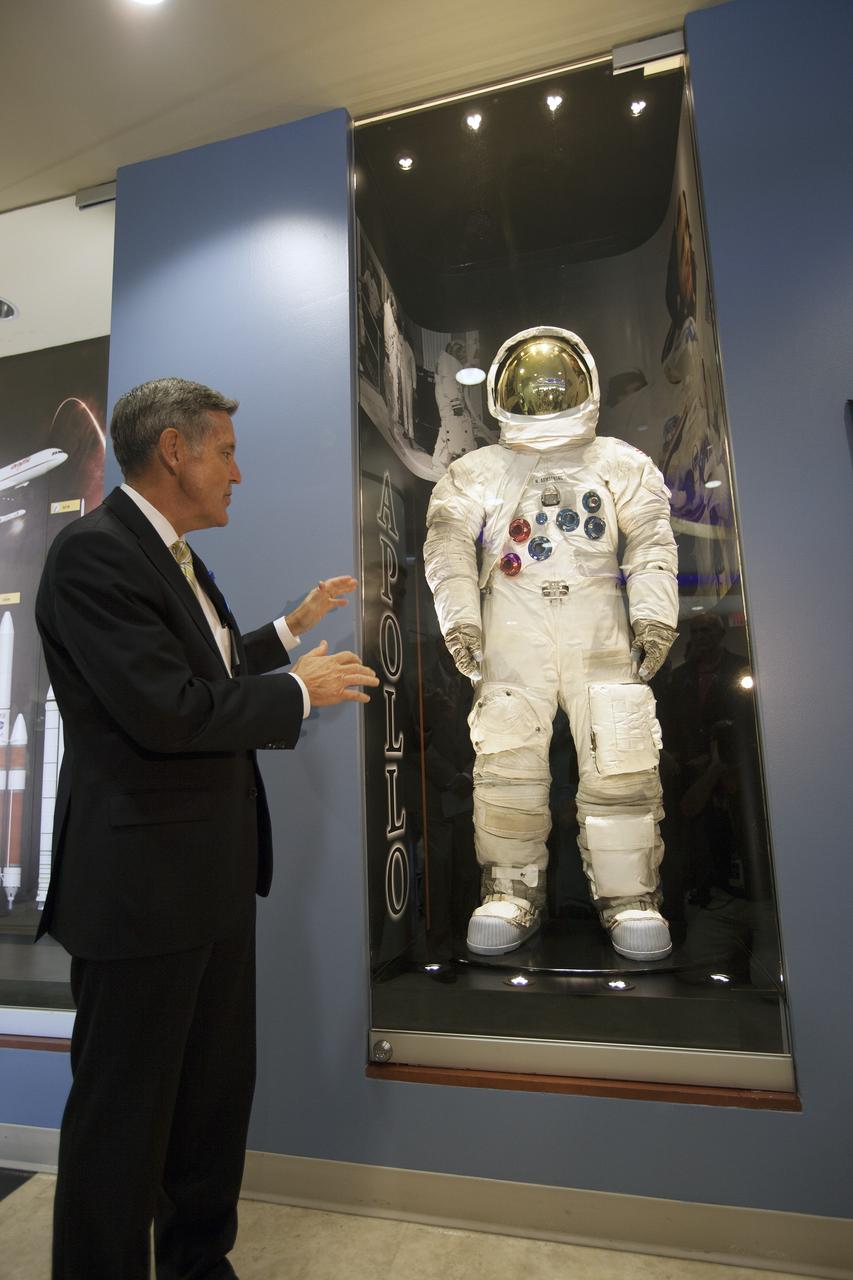
KSC-2014-3220 – CAPE CANAVERAL, Fla. -- At the Kennedy Space Center in Florida, Center Director Robert Cabana unveils an Apollo-era spacesuit on display in the lobby of the newly named Neil Armstrong Operations and Checkout Building. The facility has been renamed for Apollo 11 astronaut Neil Armstrong, the first person to set foot on the moon. The building's high bay is being used to support the agency's new Orion spacecraft and is the same spaceport facility where the Apollo 11 command/service module and lunar module were prepped for the first lunar landing mission in 1969. Orion is designed to take humans farther than they’ve ever gone before, serving as the exploration vehicle that will carry astronauts to deep space and sustain the crew during travel to destinations such as an asteroid or Mars. The unveiling was part of NASA's 45th anniversary celebration of the Apollo 11 moon landing. As the world watched, Apollo 11 astronauts landed in the moon's Sea of Tranquility aboard the lunar module, Eagle, on July 20, 1969, as the command module, Columbia, orbited overhead. For more: http://www.nasa.gov/press/2014/july/nasa-honors-historic-first-moon-landing-eyes-first-mars-mission/ Photo credit: NASA/Kim Shiflett
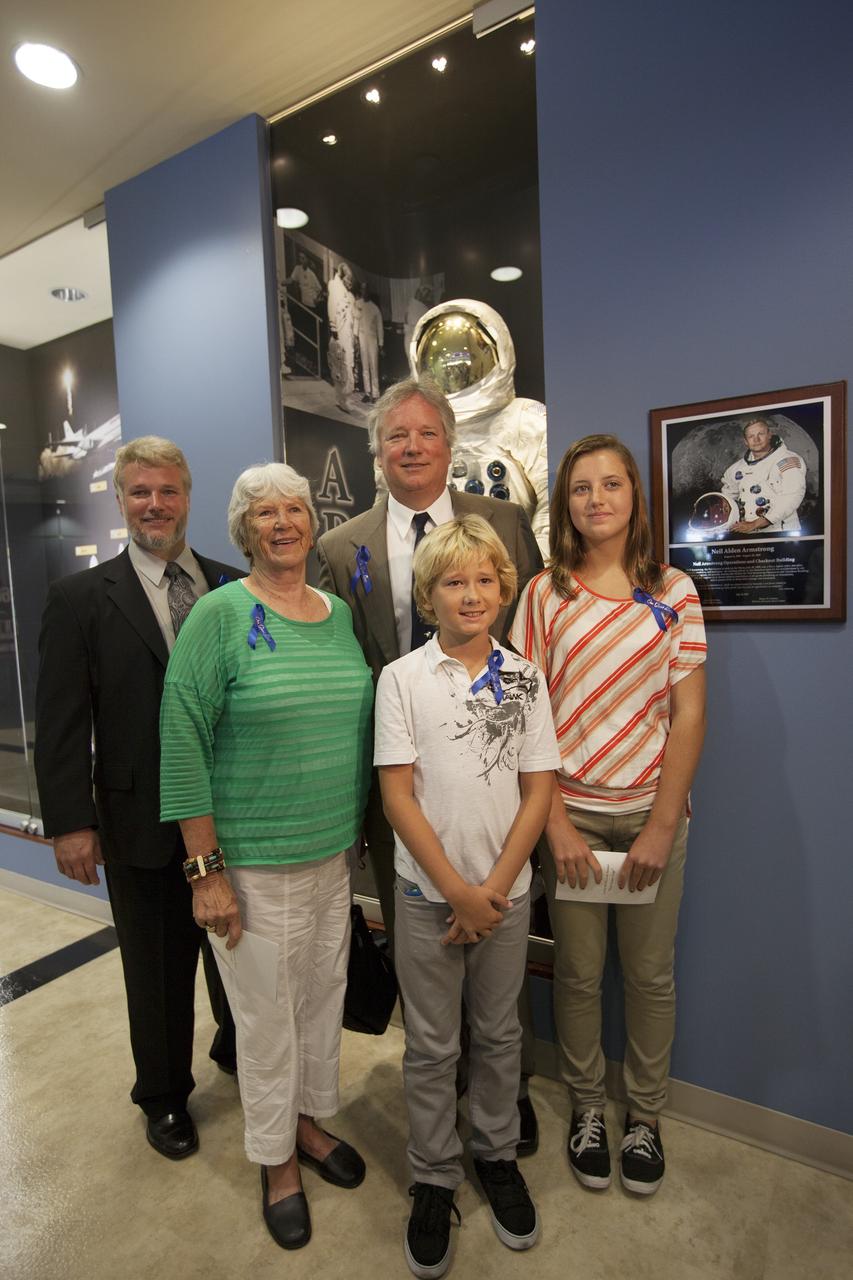
CAPE CANAVERAL, Fla. -- At the Kennedy Space Center in Florida, members of the Armstrong family pose beside a plaque following its unveiling in the lobby of the newly named Neil Armstrong Operations and Checkout Building. The facility has been renamed for Apollo 11 astronaut Neil Armstrong, the first person to set foot on the moon. From left are Armstrong's son Mark, his former wife Janet, his son Rick, his grandson Bryce, and his granddaughter Lily. The building's high bay is being used to support the agency's new Orion spacecraft and is the same spaceport facility where the Apollo 11 command/service module and lunar module were prepped for the first lunar landing mission in 1969. Orion is designed to take humans farther than they’ve ever gone before, serving as the exploration vehicle that will carry astronauts to deep space and sustain the crew during travel to destinations such as an asteroid or Mars. The unveiling was part of NASA's 45th anniversary celebration of the Apollo 11 moon landing. As the world watched, Apollo 11 astronauts landed in the moon's Sea of Tranquility aboard the lunar module, Eagle, on July 20, 1969, as the command module, Columbia, orbited overhead. For more: http://www.nasa.gov/press/2014/july/nasa-honors-historic-first-moon-landing-eyes-first-mars-mission/ Photo credit: NASA/Kim Shiflett
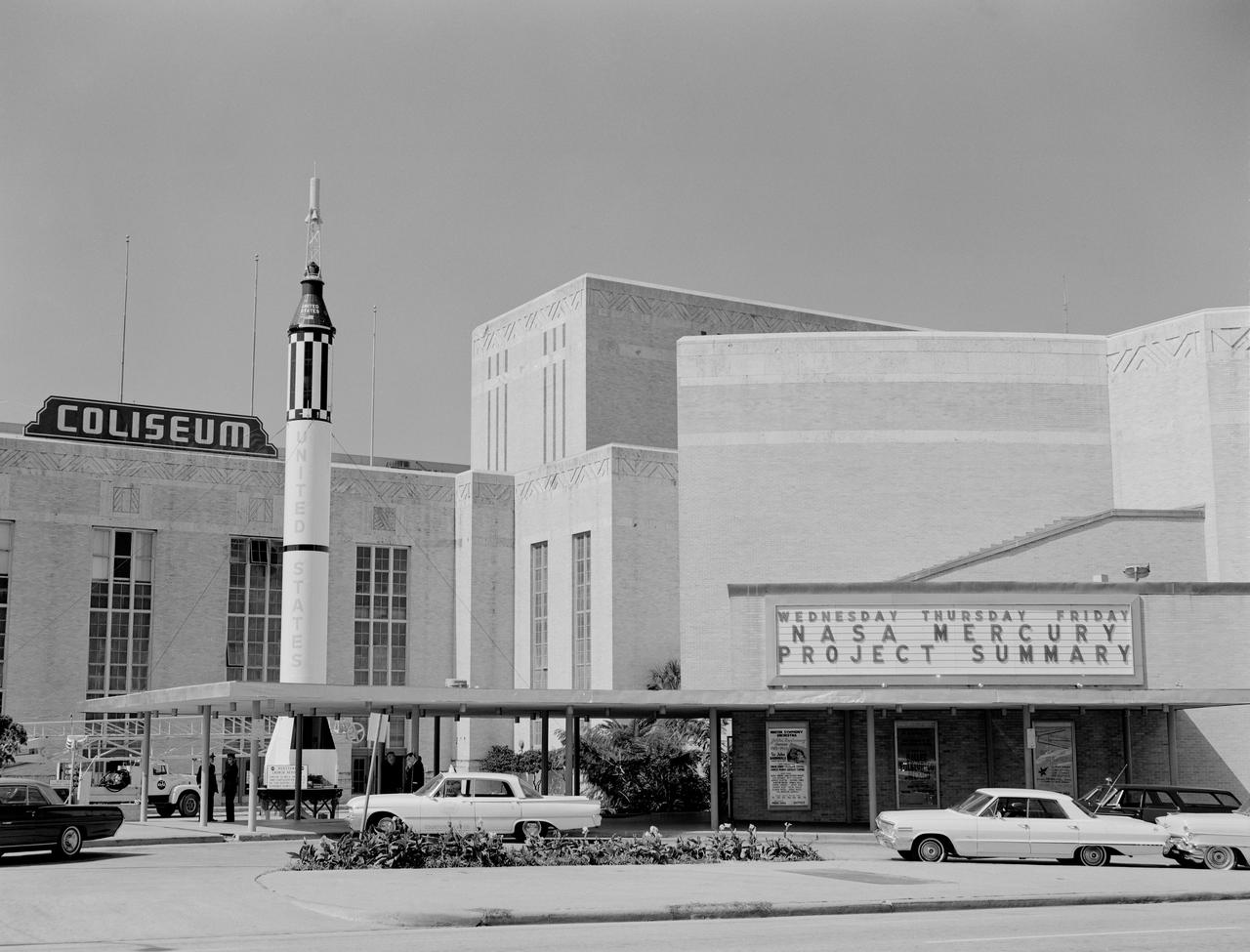
In October 1963, the Project Mercury Summary Conference was held in the Houston, TX, Coliseum. This series of 44 photos is documentation of that conference. A view of the Houston, TX, Coliseum, and parking area in front with a Mercury Redstone Rocket setup in the parking lot for display (S63-16451). A view of an Air Force Atlas Rocket, a Mercury Redstone Rocket, and a Mercury Spacecraft on a test booster on display in the front area of the Coliseum (S63-16452). A view an Air Force Atlas Rocket and a Mercury Redstone Rocket set up for display with the Houston City Hall in the background (S63- 16453). This view shows the Atlas Rocket, Mercury Redstone, and Mercury Test Rocket with the Houston, TX, Coliseum in the background (S63- 16454). A balcony view, from the audience right side, of the attendees looking at the stage (S63-16455). A view of the NASA Space Science Demonstration with equipment setup on a table, center stage and Space Science Specialist briefing the group as he pours Liquid Oxygen into a beaker (S63-16456). View of the audience from the balcony on the audience right showing the speakers lecturn on stage to the audience left (S63-16457). A view of attendees in the lobby. Bennet James, MSC Public Affairs Office is seen to the left of center (S63-16458). Another view of the attendees in the lobby (S63- 16459). In this view, Astronaut Neil Armstrong is seen writing as others look on (S63-16460). In this view of the attendees, Astronauts Buzz Aldrin and Walt Cunningham are seen in the center of the shot. The October Calendar of Events is visable in the background (S63-16461). Dr. Charles Berry is seen in this view to the right of center, seated in the audience (S63-16462). View of " Special Registration " and the five ladies working there (S63-16463). A view from behind the special registration table, of the attendees being registered (S63-16464). A view of a conference table with a panel seated. (R-L): Dr. Robert R. Gilruth, Hugh L. Dryden, Walter C. Williams, and an unidentified man (S63- 16465). A closeup of the panel at the table with Dr. Gilruth on the left (S63-16466). About the same shot as number S63-16462, Dr. Berry is seen in this shot as well (S63-16467). In this view the audio setup is seen. In the audience, (L-R): C. C. Kraft, Vernon E. (Buddy) Powell, Public Affairs Office (PAO); and, in the foreground mixing the audio is Art Tantillo; and, at the recorder is Doyle Hodges both of the audio people are contractors that work for PAO at MSC (S63-16468). In this view Maxime Faget is seen speaking at the lecturn (S63-16469). Unidentified person at the lecturn (S63-16470). In this view the motion picture cameras and personel are shown documenting the conference (S63-16471). A motion picture cameraman in the balcony is shown filming the audience during a break (S63- 16472). Family members enjoy an exhibit (S63-16473). A young person gets a boost to look in a Gemini Capsule on display (S63-16474). A young person looks at the Gemini Capsule on display (S63-16475). Dr. Robert R. Gilruth is seen at the conference table (S63-16476). Walt Williams is seen in this view at the conference table (S63-16477). Unidentified man sitting next to Walt Williams (S63-16478). (L-R): Seated at the conference table, Dr. Robert Gilruth, Hugh L. Dryden, and Walt Williams (S63- 16479). Group in lobby faces visable, (L-R): Walt Williams, unidentified person, Dr. Robert Gilruth, Congressman (S63-16480). Man in uniform at the lecturn (S63-16481). Astronaut Leroy Gordon Cooper at the lecturn (S63-16482). Astronaut Cooper at the lecturn with a picture on the screen with the title, " Astronaut Names for Spacecraft " (S63-16483). Dr. Gilruth at the lecturn (S63-16484). Walt Williams at the lecturn (S63-16485). Unidentified man at the lecturn (S63-16486). John H. Boynton addresses the Summary Conference (S63-16487). (L-R): Astronaut Leroy Gordon Cooper, Mrs. Cooper, Senator Cris Cole, and Mrs. Cole (S63- 16488). In this view in the lobby, Senator and Mrs. Cris Cole, with Astronaut Gordon Cooper standing near the heatshield, and Mrs. Cooper; next, on the right is a press photographer (S63-16489). (L-R): Astronaut L. Gordon Cooper and Mrs. Cooper, unidentified man, and Senator Walter Richter (S63-16490). (L-R): Eugene Horton, partially obscured, briefs a group on the Mercury Spacecraft, an unidentified person, Harold Ogden, a female senator, Senator Chris Cole, Mrs. Cole, an unidentified female, Senator Walter Richter, Jim Bower, and an unidentified female (S63-16491). In this view, Mrs. Jim Bates is seen in the center, and Senator Walter Richter to the right (S63- 16492). The next three (3) shots are 4X5 CN (S63-16493 - S63-16495). In this view a NASA Space Science Demonstration is seen (S63-16493). In this view a shot of the conference table is seen, and, (L-R): Dr. Robert R. Gilruth, Hugh L. Dryden, Mr. Walter Williams, and an unidentfied man (S63-16494 - S63-16495). HOUSTON, TX