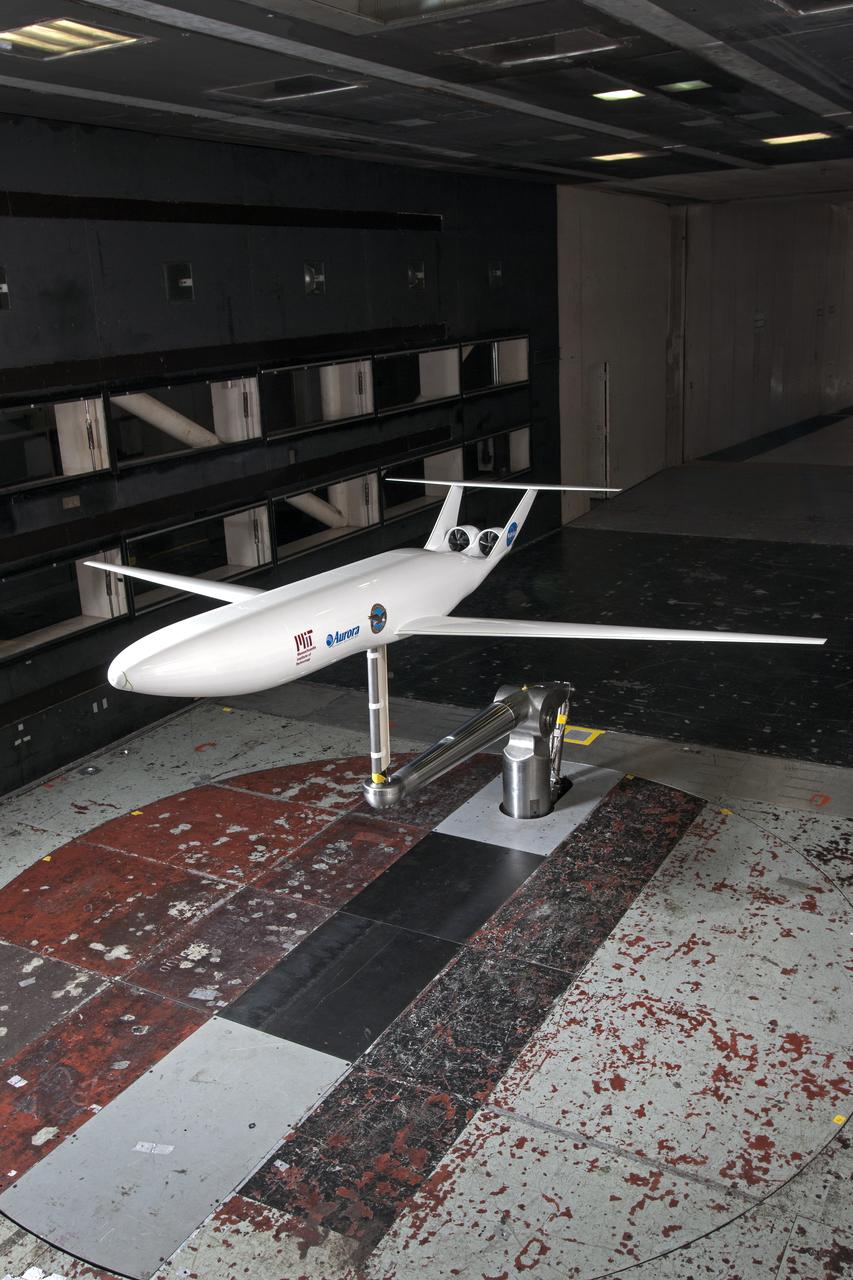
Doublebubble MIT N+3 D8 1/11 Scale Model in the 14x22 Foot Subsonic Tunnel

Doublebubble MIT N+3 D8 1/11 Scale Model in the 14x22 Foot Subsonic Tunnel
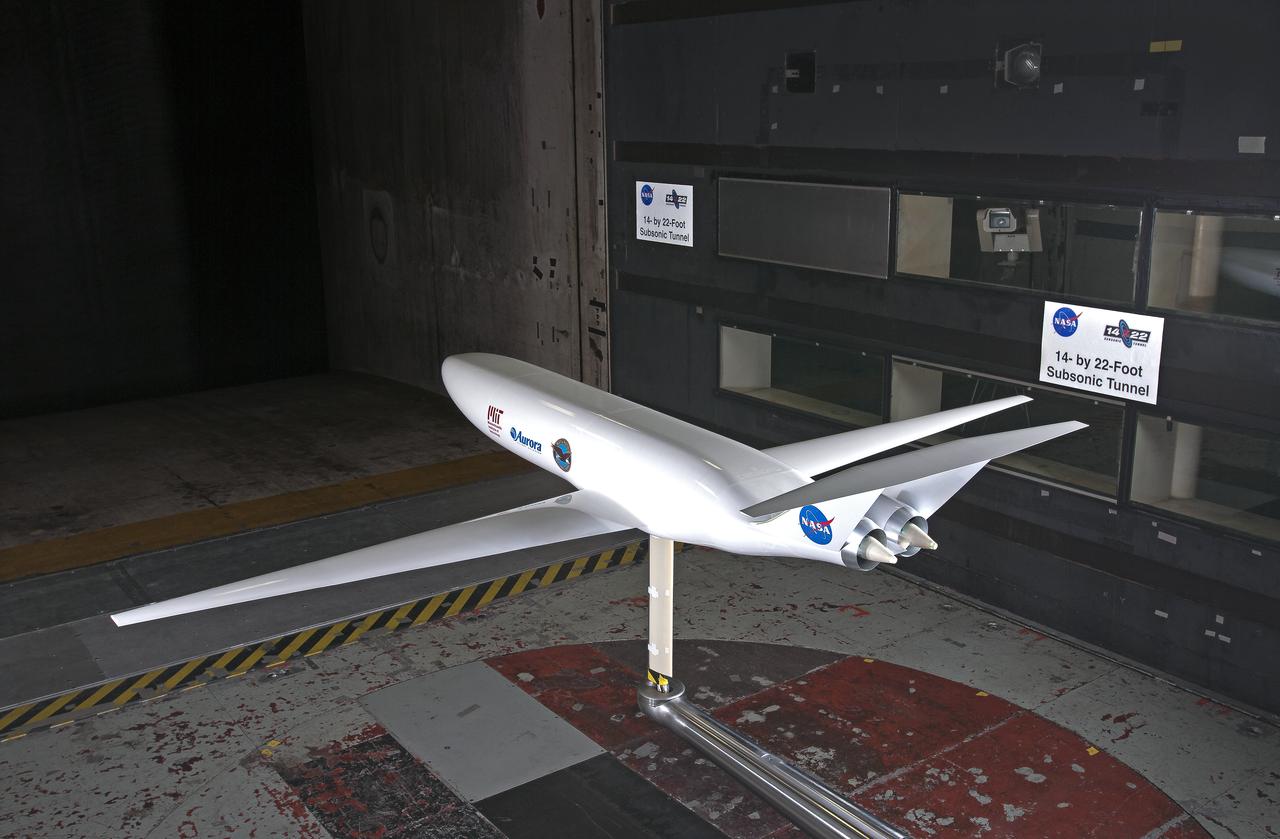
Doublebubble MIT N+3 D8 1/11 Scale Model in the 14x22 Foot Subsonic Tunnel
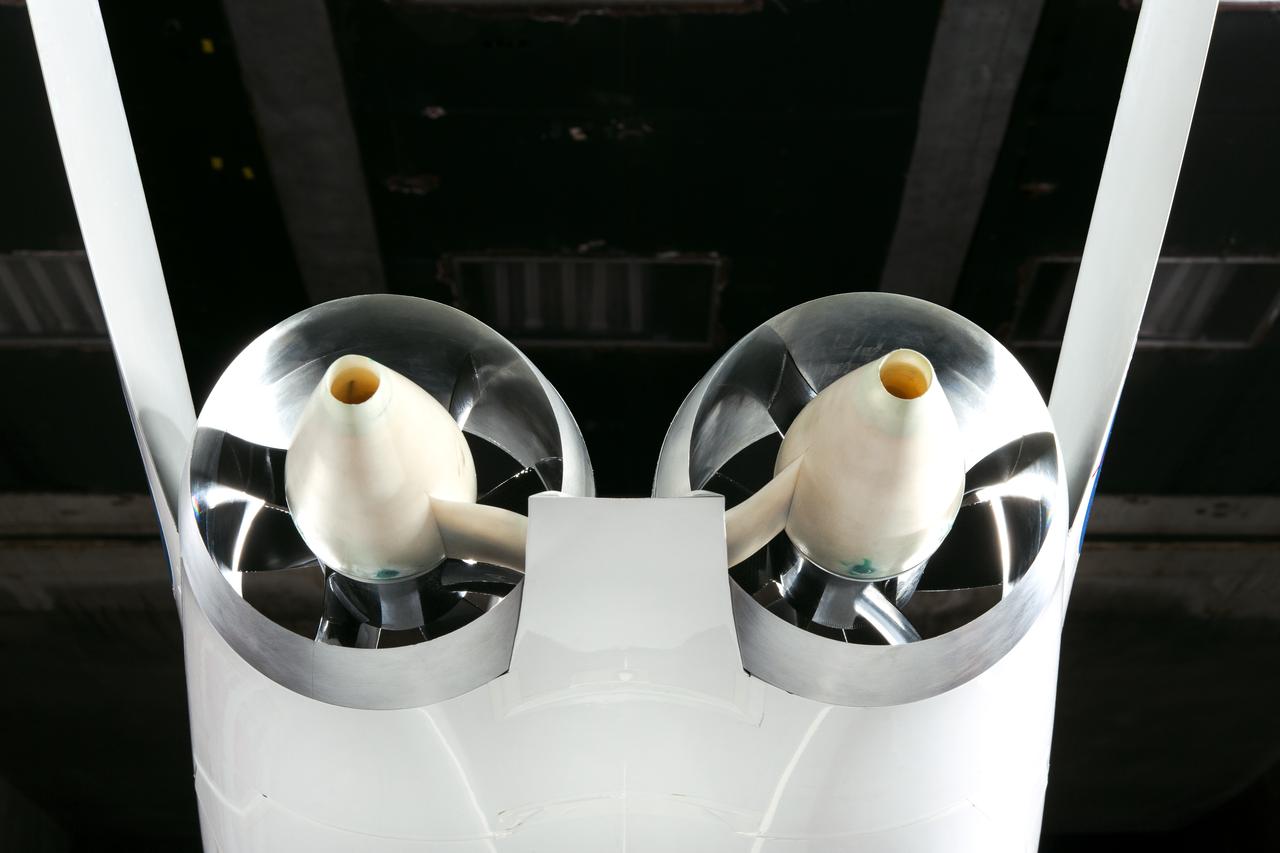
Doublebubble MIT N+3 D8 1/11 Scale Model in the 14x22 Foot Subsonic Tunnel
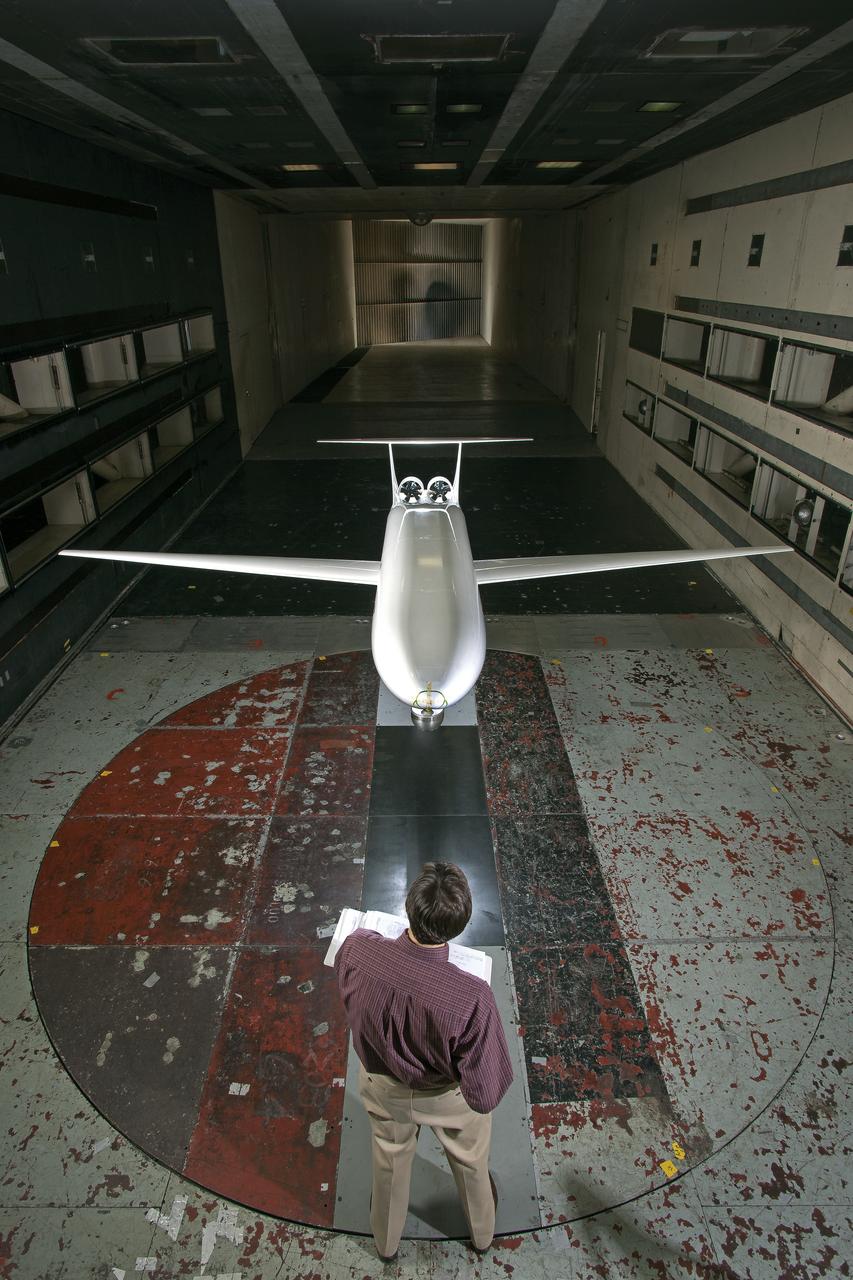
Doublebubble MIT N+3 D8 1/11 Scale Model in the 14x22 Foot Subsonic Tunnel
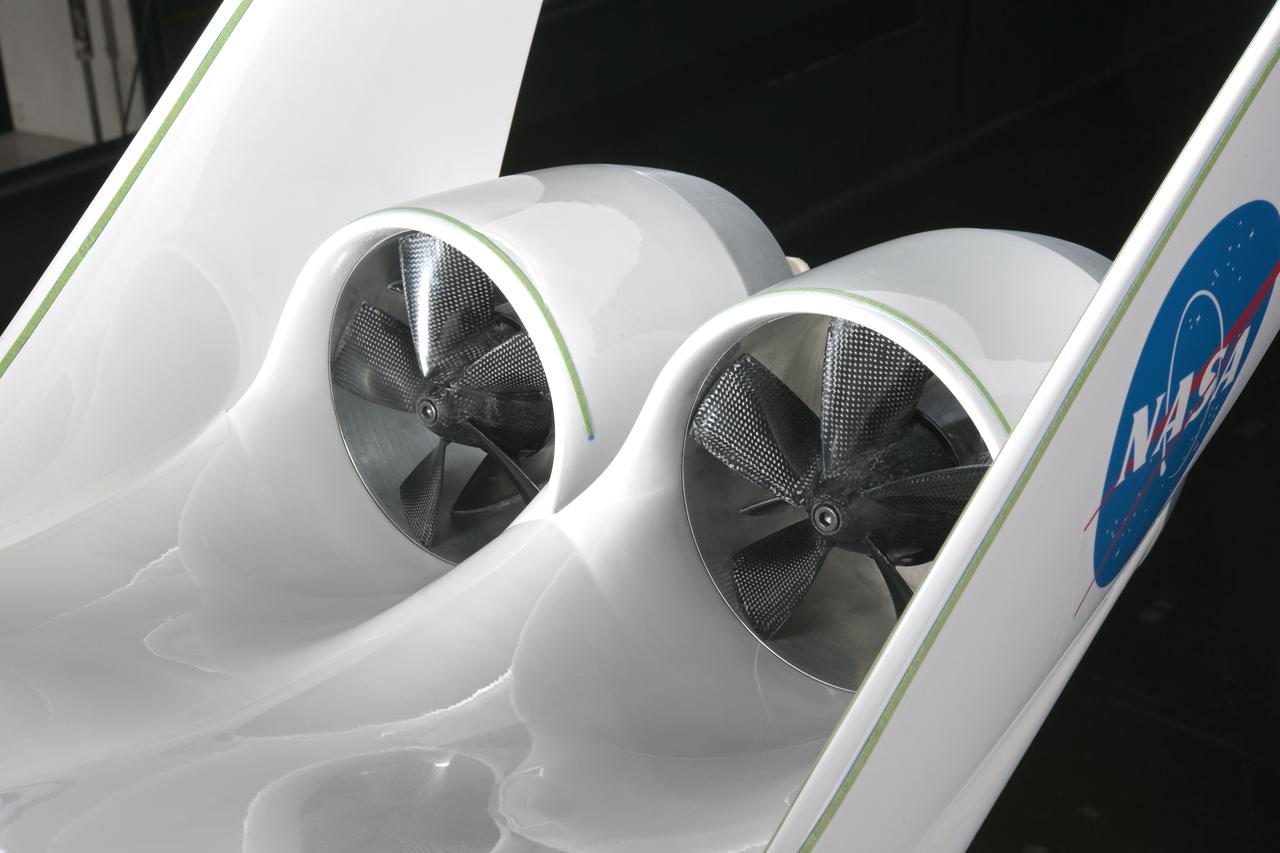
Doublebubble MIT N+3 D8 1/11 Scale Model in the 14x22 Foot Subsonic Tunnel

Doublebubble MIT N+3 D8 1/11 Scale Model in the 14x22 Foot Subsonic Tunnel
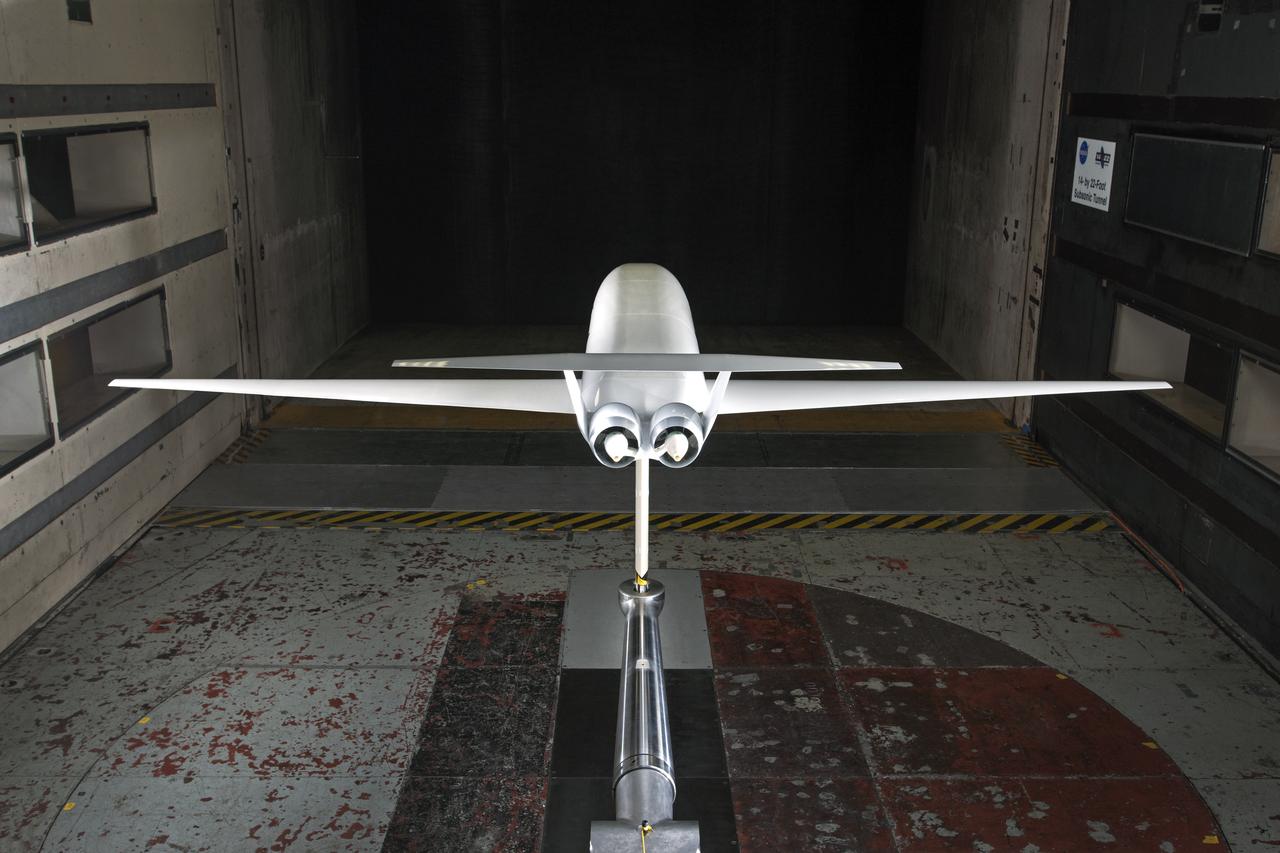
Doublebubble MIT N+3 D8 1/11 Scale Model in the 14x22 Foot Subsonic Tunnel
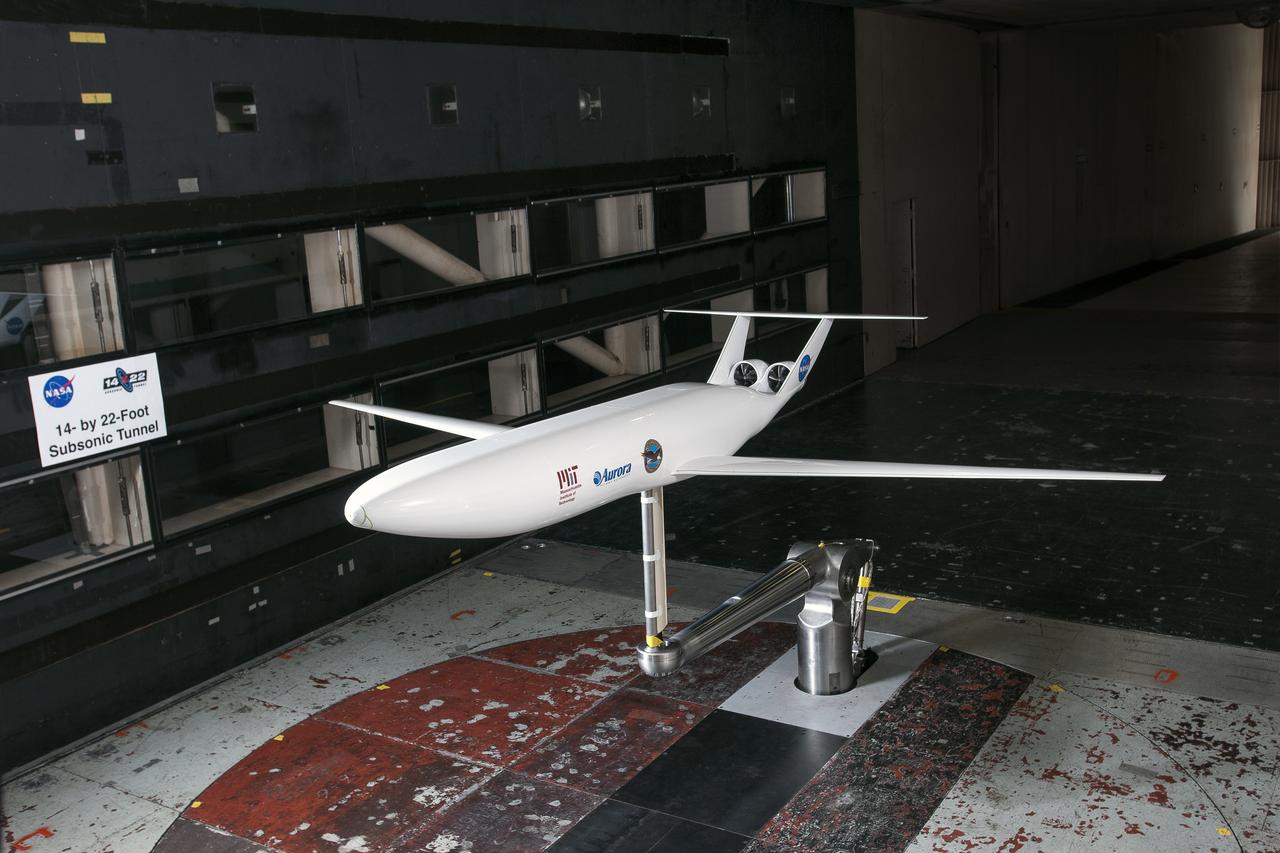
Doublebubble MIT N+3 D8 1/11 Scale Model in the 14x22 Foot Subsonic Tunnel
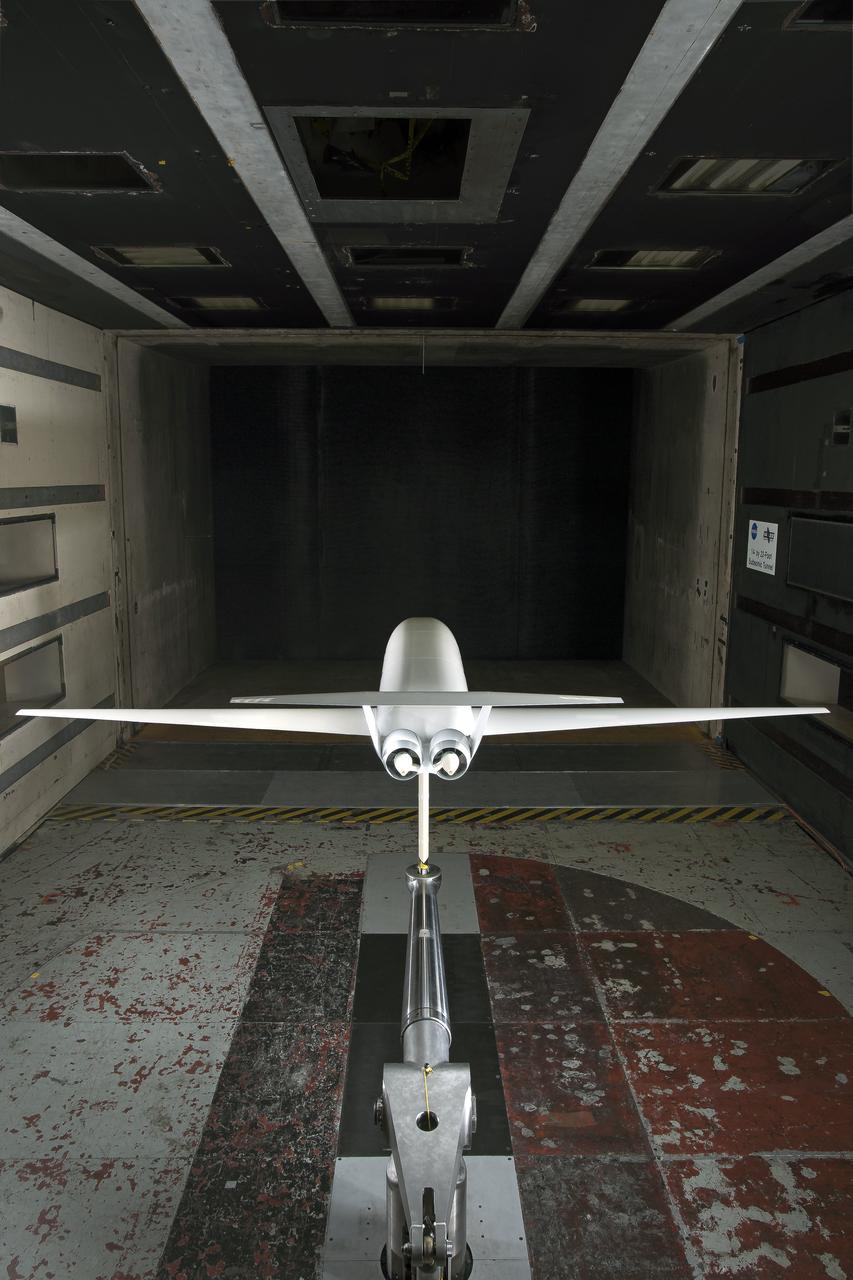
Doublebubble MIT N+3 D8 1/11 Scale Model in the 14x22 Foot Subsonic Tunnel
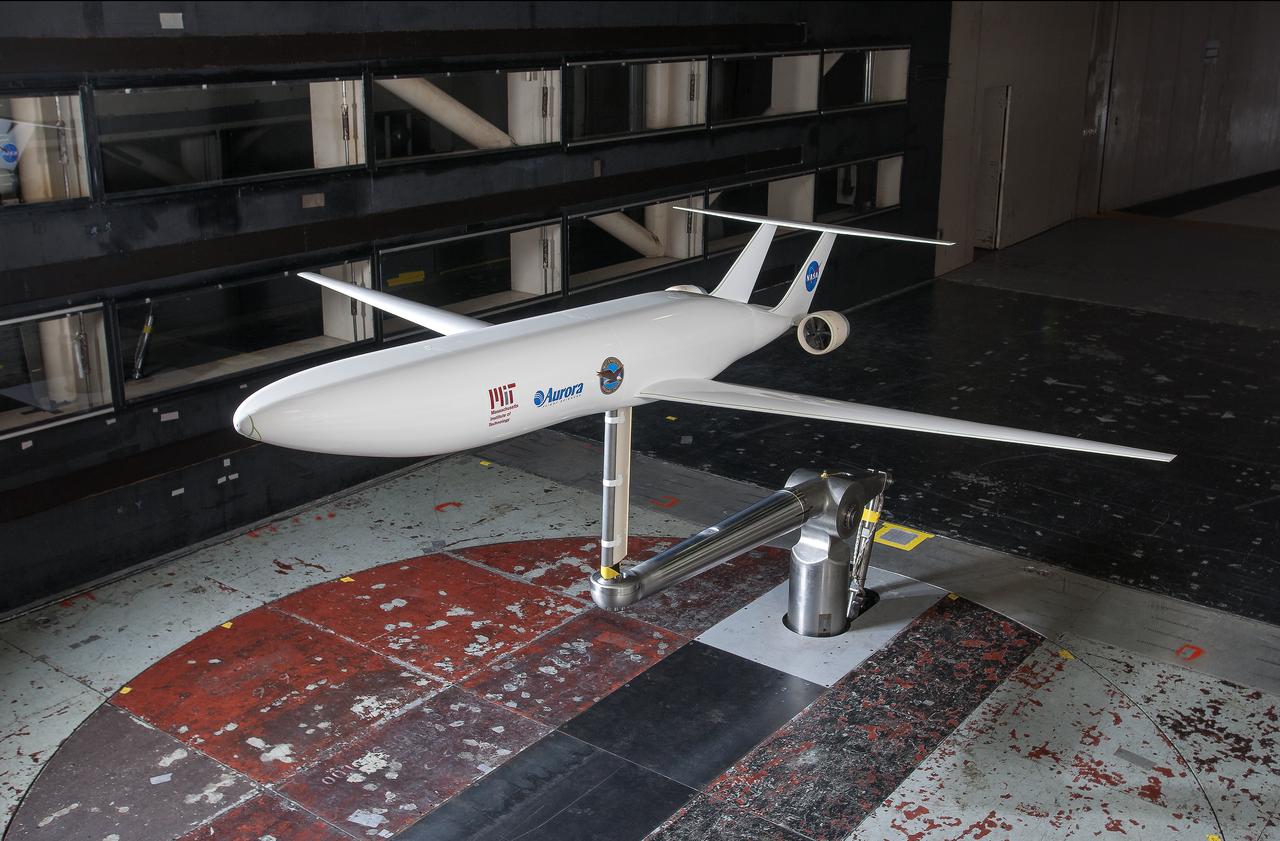
Doublebubble MIT N+3 D8 1/11 Scale Model in the 14x22 Foot Subsonic Tunnel
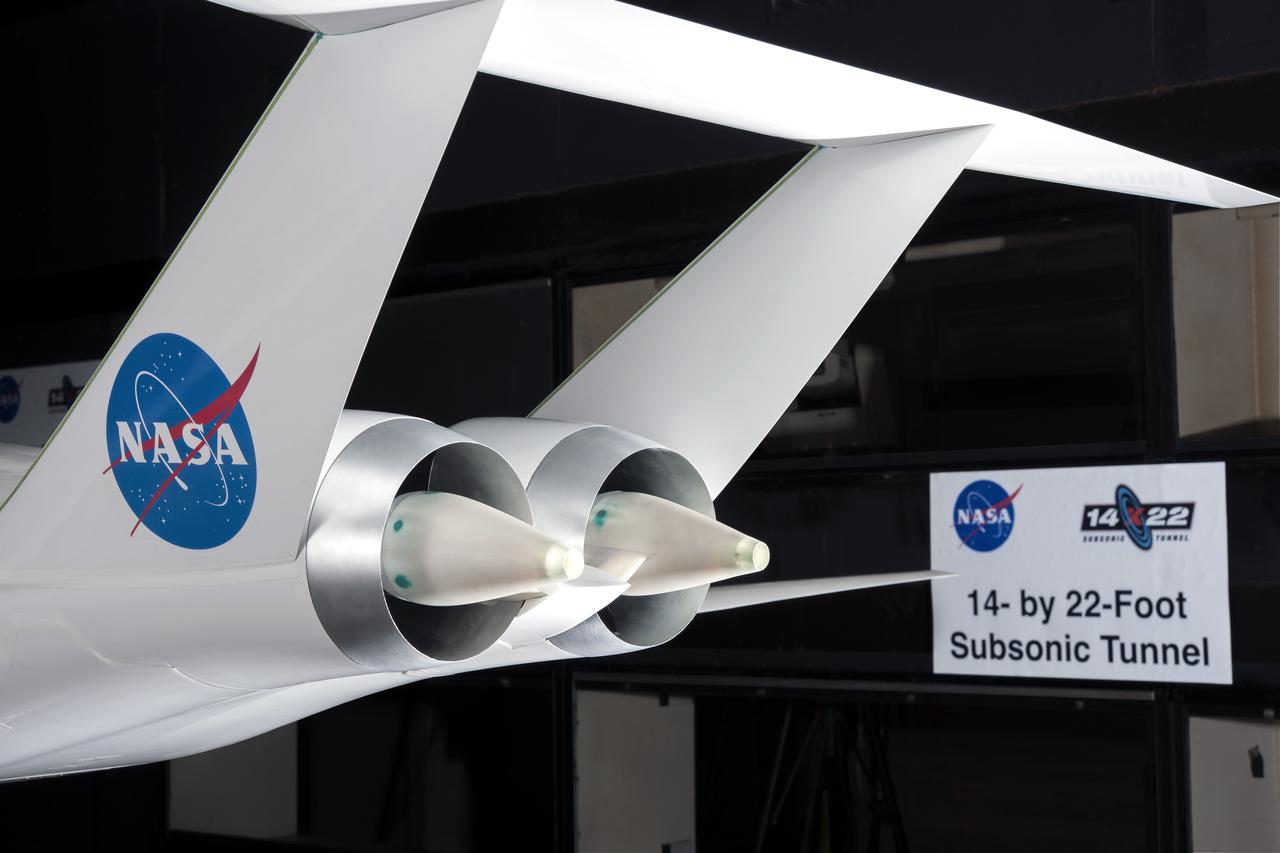
Doublebubble MIT N+3 D8 1/11 Scale Model in the 14x22 Foot Subsonic Tunnel
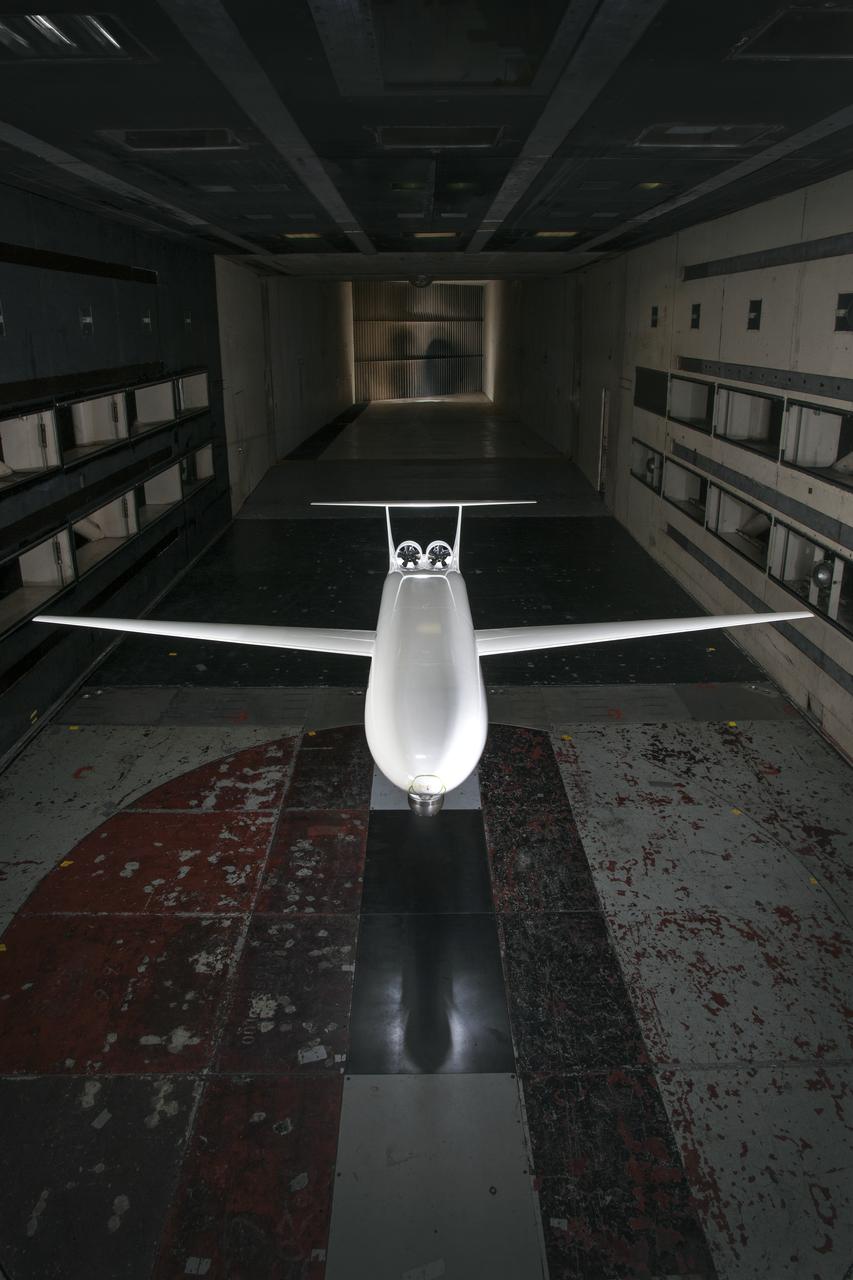
Doublebubble MIT N+3 D8 1/11 Scale Model in the 14x22 Foot Subsonic Tunnel
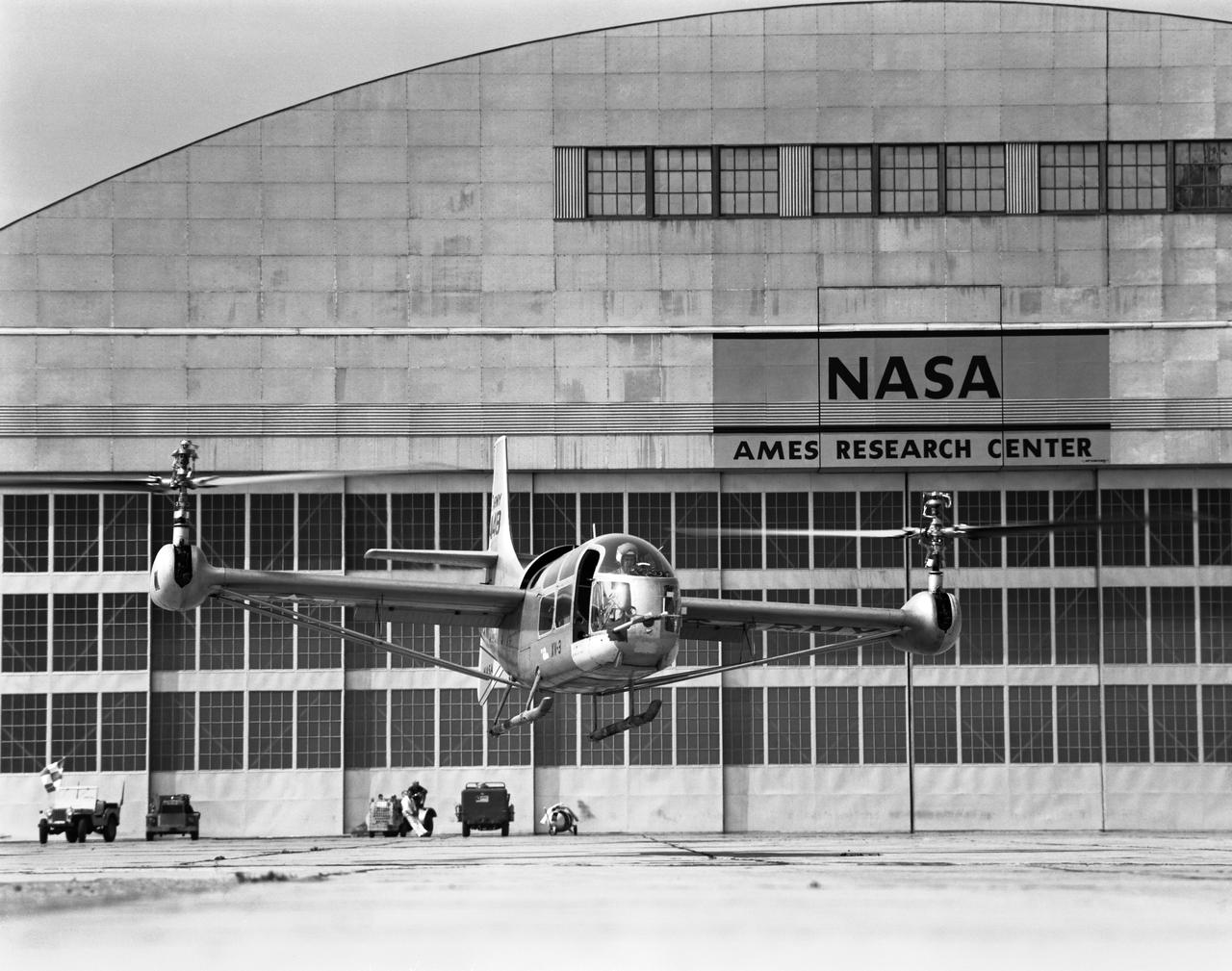
XV-3 airplane helicopter hovering VTOLin front of the NASA Ames Research Center, Moffett Field, CA hangar N-211
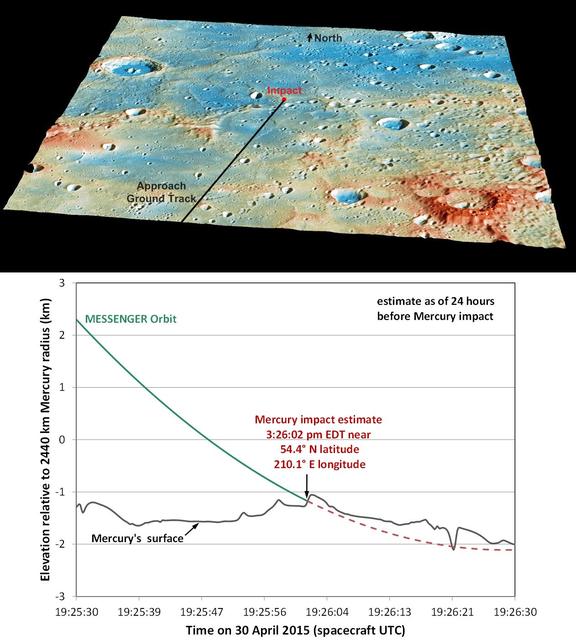
These graphics show the current best prediction of the location and time of NASA MESSENGER impact on Mercury surface. These current best estimates are: Date: 30 April 2015 Time: 3:26:02 pm EDT 19:26:02 UTC Latitude: 54.4° N Longitude: 210.1° E. Traveling at 3.91 kilometers per second (over 8,700 miles per hour), the MESSENGER spacecraft will collide with Mercury's surface, creating a crater estimated to be 16 meters (52 feet) in diameter. View this image to learn about the named features and geology of this region on Mercury. Instruments: Mercury Dual Imaging System (MDIS) and Mercury Laser Altimeter (MLA) Top Image Latitude Range: 49°-59° N Top Image Longitude Range: 204°-217° E Topography in Top Image: Exaggerated by a factor of 5.5. Colors in Top Image: Coded by topography. The tallest regions are colored red and are roughly 3 kilometers (1.9 miles) higher than low-lying areas such as the floors of impact craters, colored blue. Scale in Top Image: The large crater on the left side of the image is Janacek, with a diameter of 48 kilometers (30 miles) http://photojournal.jpl.nasa.gov/catalog/PIA19443
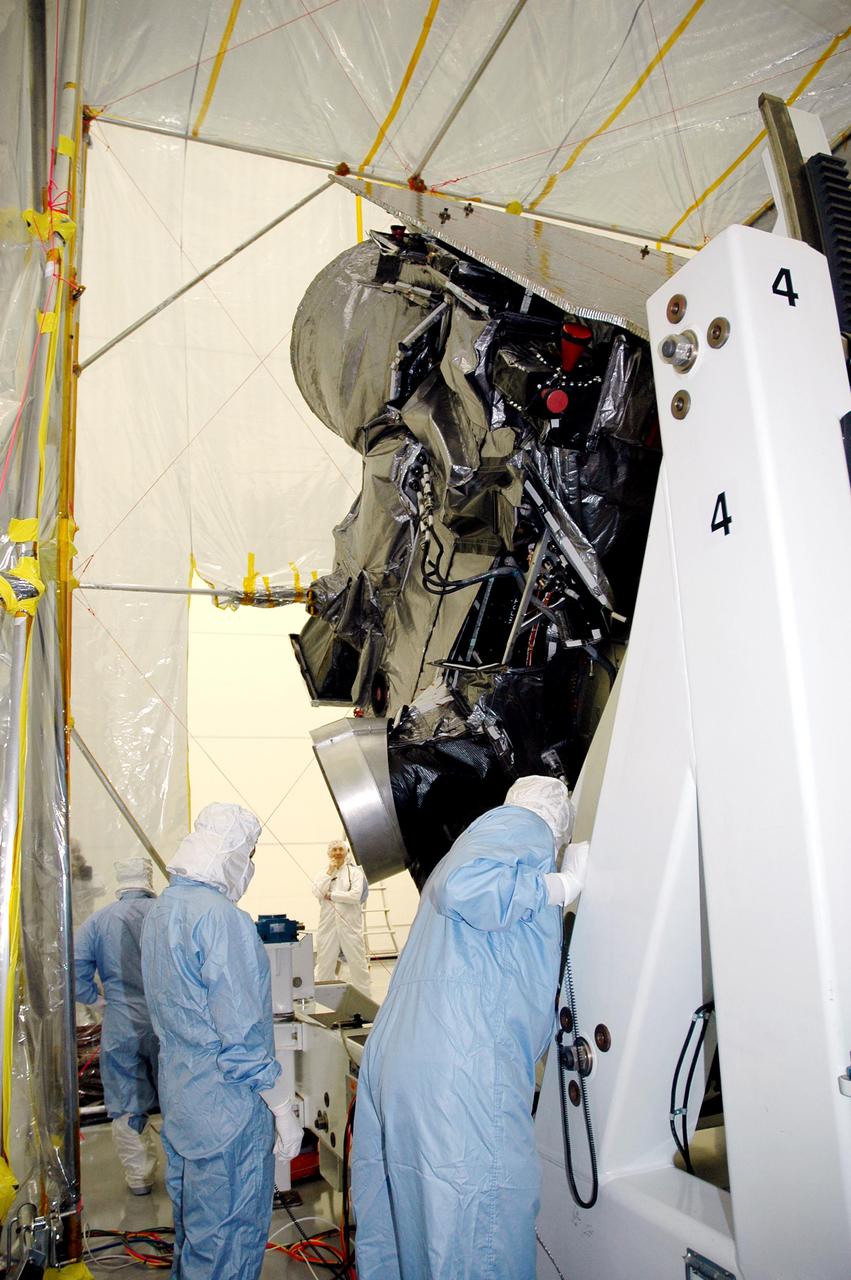
KENNEDY SPACE CENTER, FLA. - At Astrotech in Titusville, Fla., technicians closely check the progress of the rotation of the GOES-N satellite. Since its arrival on March 11, the satellite has been undergoing final testing by Boeing Satellite Systems of the imaging system, instrumentation, communications and power systems. Geostationary Operational Environmental Satellites (GOES) are sponsored by the NASA’s Goddard Space Flight Center and the National Oceanic and Atmospheric Administration. GOES-N is targeted to launch May 4 onboard a Boeing expendable launch vehicle Delta IV (4,2) with a 3-burn second stage operation. Once in orbit GOES-N will be designated GOES-13 and will complete checkout and be placed in on-orbit storage as a replacement for an older GOES satellite. GOES-N is the first in the next series of GOES satellites, N-P. The multi-mission GOES series N-P will be a vital contributor to weather, solar and space operations and science. The GOES N-P series will aid activities ranging from severe storm warnings to resource management and advances in science.
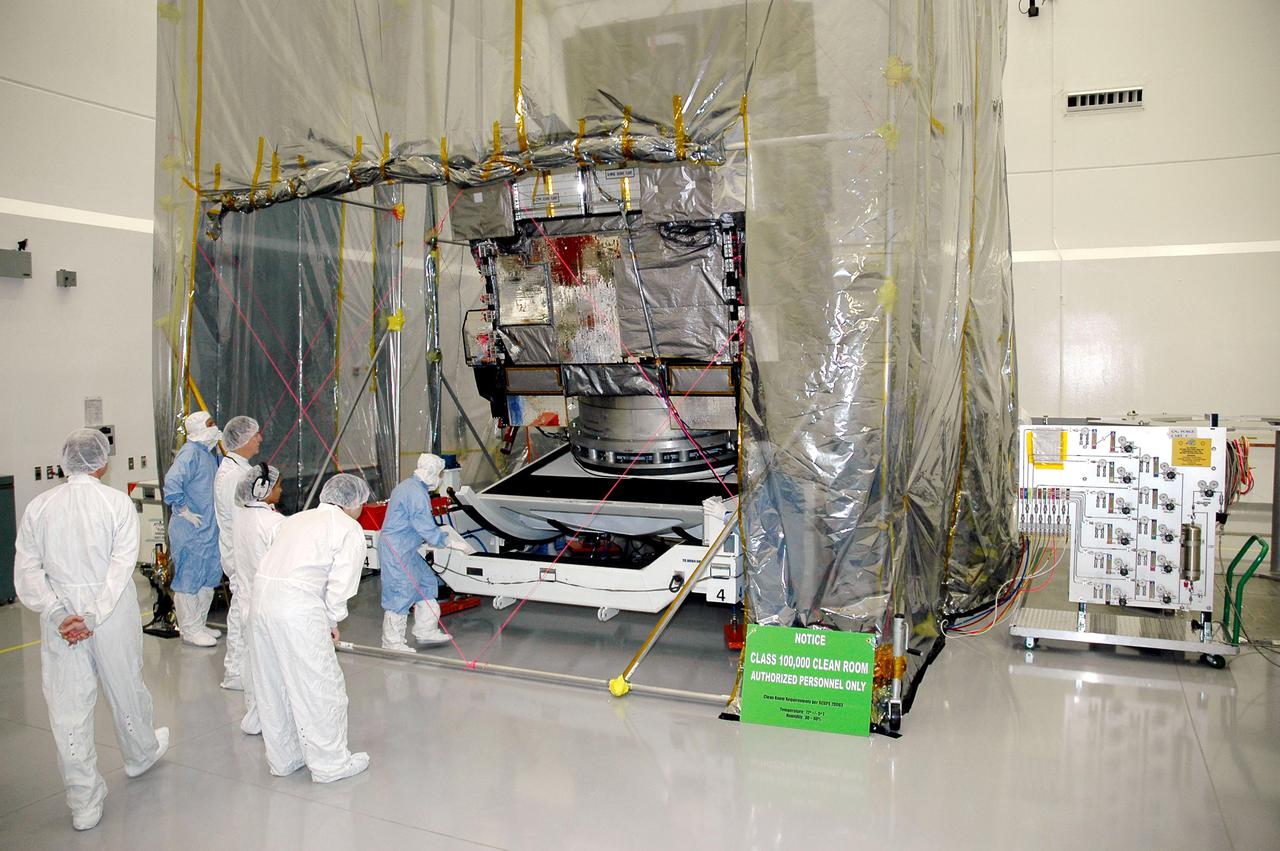
KENNEDY SPACE CENTER, FLA. - At Astrotech in Titusville, Fla., the GOES-N satellite begins rotation. Since its arrival on March 11, the satellite has been undergoing final testing by Boeing Satellite Systems of the imaging system, instrumentation, communications and power systems. Geostationary Operational Environmental Satellites (GOES) are sponsored by the NASA’s Goddard Space Flight Center and the National Oceanic and Atmospheric Administration. GOES-N is targeted to launch May 4 onboard a Boeing expendable launch vehicle Delta IV (4,2) with a 3-burn second stage operation. Once in orbit GOES-N will be designated GOES-13 and will complete checkout and be placed in on-orbit storage as a replacement for an older GOES satellite. GOES-N is the first in the next series of GOES satellites, N-P. The multi-mission GOES series N-P will be a vital contributor to weather, solar and space operations and science. The GOES N-P series will aid activities ranging from severe storm warnings to resource management and advances in science.
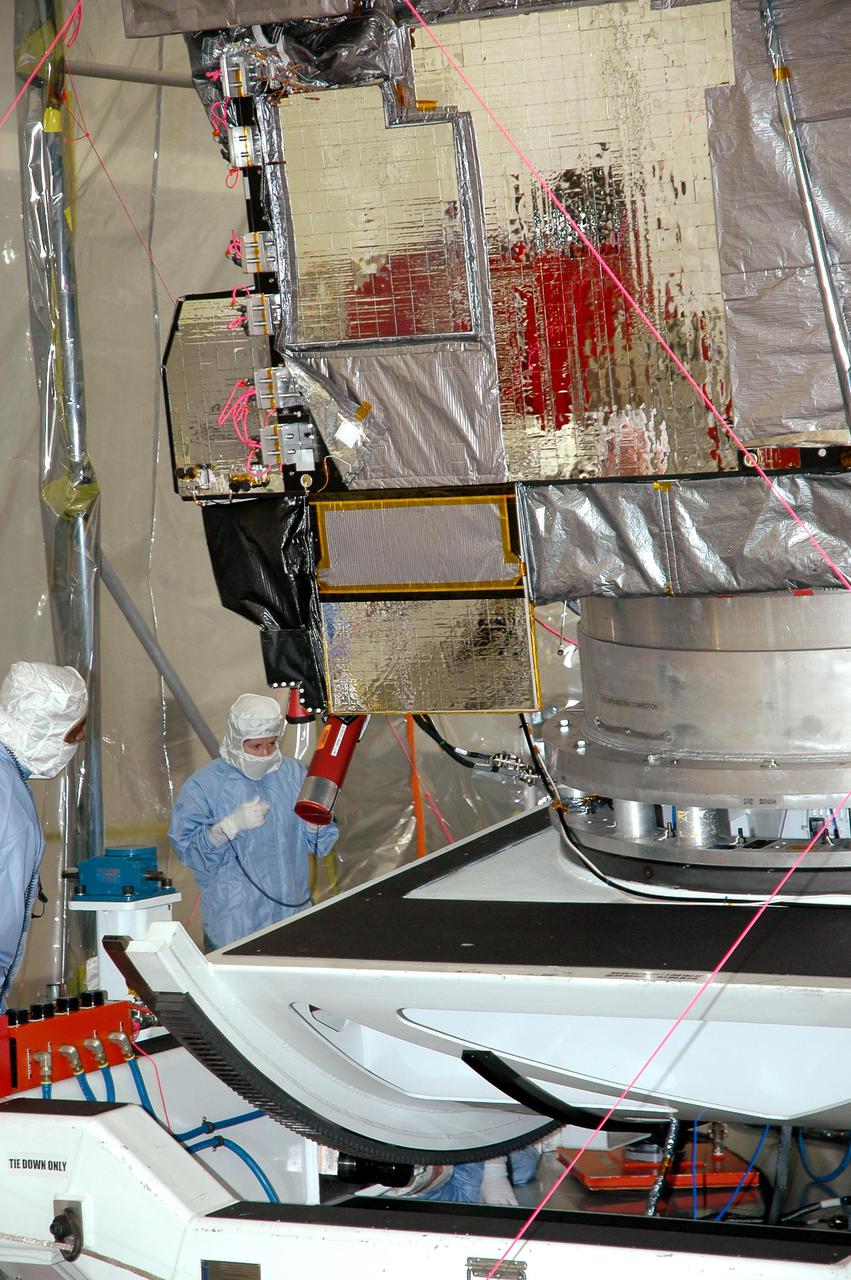
KENNEDY SPACE CENTER, FLA. - The GOES-N satellite is checked out on the rotation stand at Astrotech in Titusville, Fla. Since its arrival on March 11, the satellite has been undergoing final testing by Boeing Satellite Systems of the imaging system, instrumentation, communications and power systems. Geostationary Operational Environmental Satellites (GOES) are sponsored by the NASA’s Goddard Space Flight Center and the National Oceanic and Atmospheric Administration. GOES-N is targeted to launch May 4 onboard a Boeing expendable launch vehicle Delta IV (4,2) with a 3-burn second stage operation. Once in orbit GOES-N will be designated GOES-13 and will complete checkout and be placed in on-orbit storage as a replacement for an older GOES satellite. GOES-N is the first in the next series of GOES satellites, N-P. The multi-mission GOES series N-P will be a vital contributor to weather, solar and space operations and science. The GOES N-P series will aid activities ranging from severe storm warnings to resource management and advances in science.
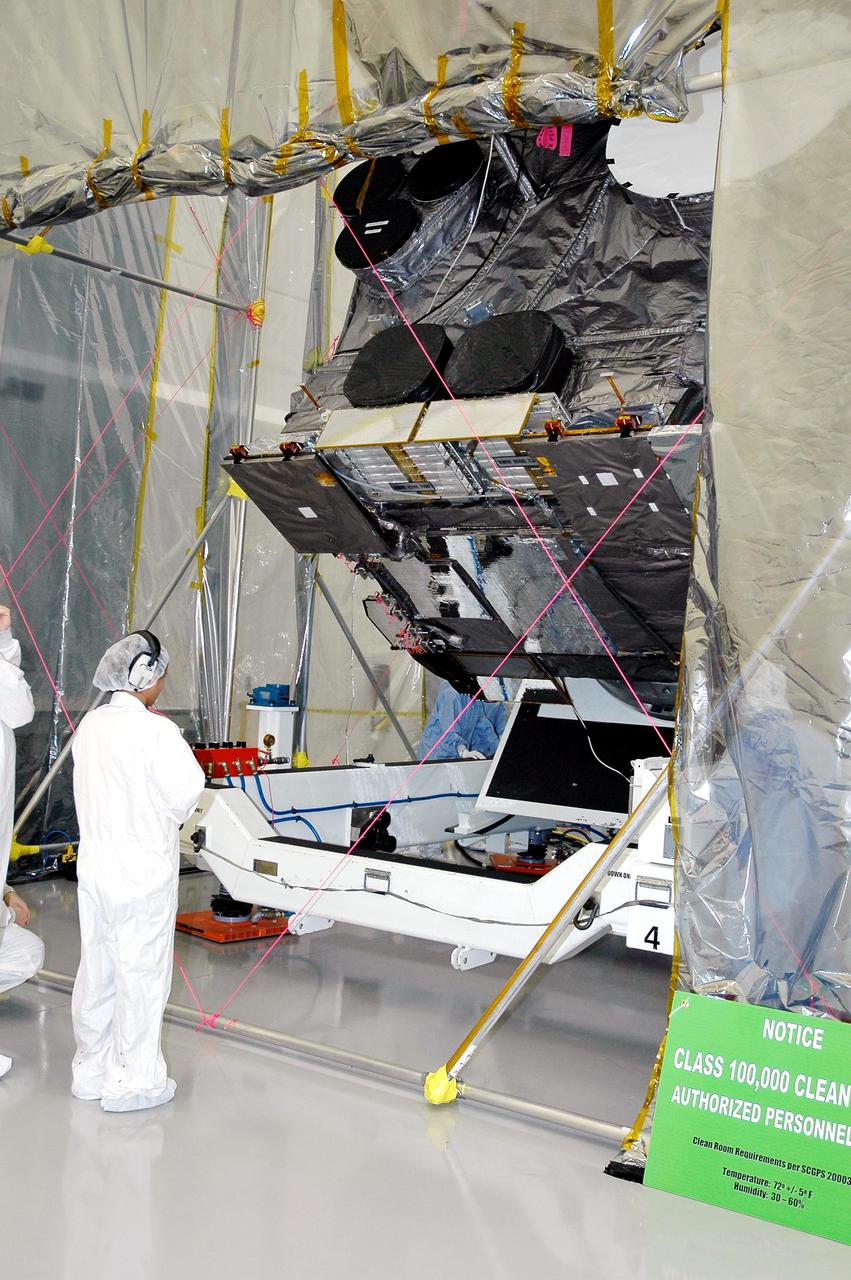
KENNEDY SPACE CENTER, FLA. - At Astrotech in Titusville, Fla., technicians closely check the progress of the rotation of the GOES-N satellite. Since its arrival on March 11, the satellite has been undergoing final testing by Boeing Satellite Systems of the imaging system, instrumentation, communications and power systems. Geostationary Operational Environmental Satellites (GOES) are sponsored by the NASA’s Goddard Space Flight Center and the National Oceanic and Atmospheric Administration. GOES-N is targeted to launch May 4 onboard a Boeing expendable launch vehicle Delta IV (4,2) with a 3-burn second stage operation. Once in orbit GOES-N will be designated GOES-13 and will complete checkout and be placed in on-orbit storage as a replacement for an older GOES satellite. GOES-N is the first in the next series of GOES satellites, N-P. The multi-mission GOES series N-P will be a vital contributor to weather, solar and space operations and science. The GOES N-P series will aid activities ranging from severe storm warnings to resource management and advances in science.
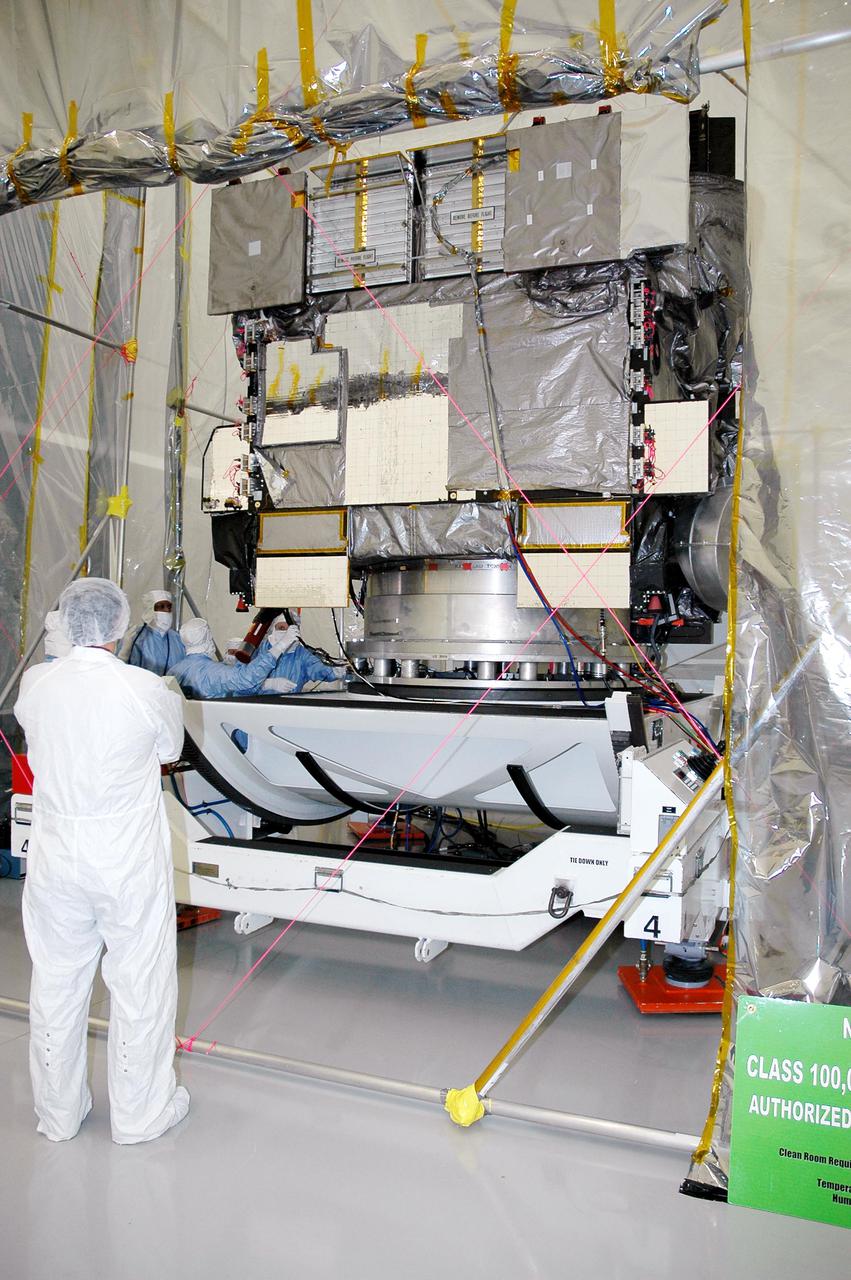
KENNEDY SPACE CENTER, FLA. - The GOES-N satellite is checked out on the rotation stand at Astrotech in Titusville, Fla. Since its arrival on March 11, the satellite has been undergoing final testing by Boeing Satellite Systems of the imaging system, instrumentation, communications and power systems. Geostationary Operational Environmental Satellites (GOES) are sponsored by the NASA’s Goddard Space Flight Center and the National Oceanic and Atmospheric Administration. GOES-N is targeted to launch May 4 onboard a Boeing expendable launch vehicle Delta IV (4,2) with a 3-burn second stage operation. Once in orbit GOES-N will be designated GOES-13 and will complete checkout and be placed in on-orbit storage as a replacement for an older GOES satellite. GOES-N is the first in the next series of GOES satellites, N-P. The multi-mission GOES series N-P will be a vital contributor to weather, solar and space operations and science. The GOES N-P series will aid activities ranging from severe storm warnings to resource management and advances in science.

KENNEDY SPACE CENTER, FLA. - At Astrotech in Titusville, Fla., the GOES-N satellite has completed rotation. Since its arrival on March 11, the satellite has been undergoing final testing by Boeing Satellite Systems of the imaging system, instrumentation, communications and power systems. Geostationary Operational Environmental Satellites (GOES) are sponsored by NASA’s Goddard Space Flight Center and the National Oceanic and Atmospheric Administration. GOES-N is targeted to launch May 4 onboard a Boeing expendable launch vehicle Delta IV (4,2) with a 3-burn second stage operation. Once in orbit GOES-N will be designated GOES-13 and will complete checkout and be placed in on-orbit storage as a replacement for an older GOES satellite. GOES-N is the first in the next series of GOES satellites, N-P. The multi-mission GOES series N-P will be a vital contributor to weather, solar and space operations and science. The GOES N-P series will aid activities ranging from severe storm warnings to resource management and advances in science.
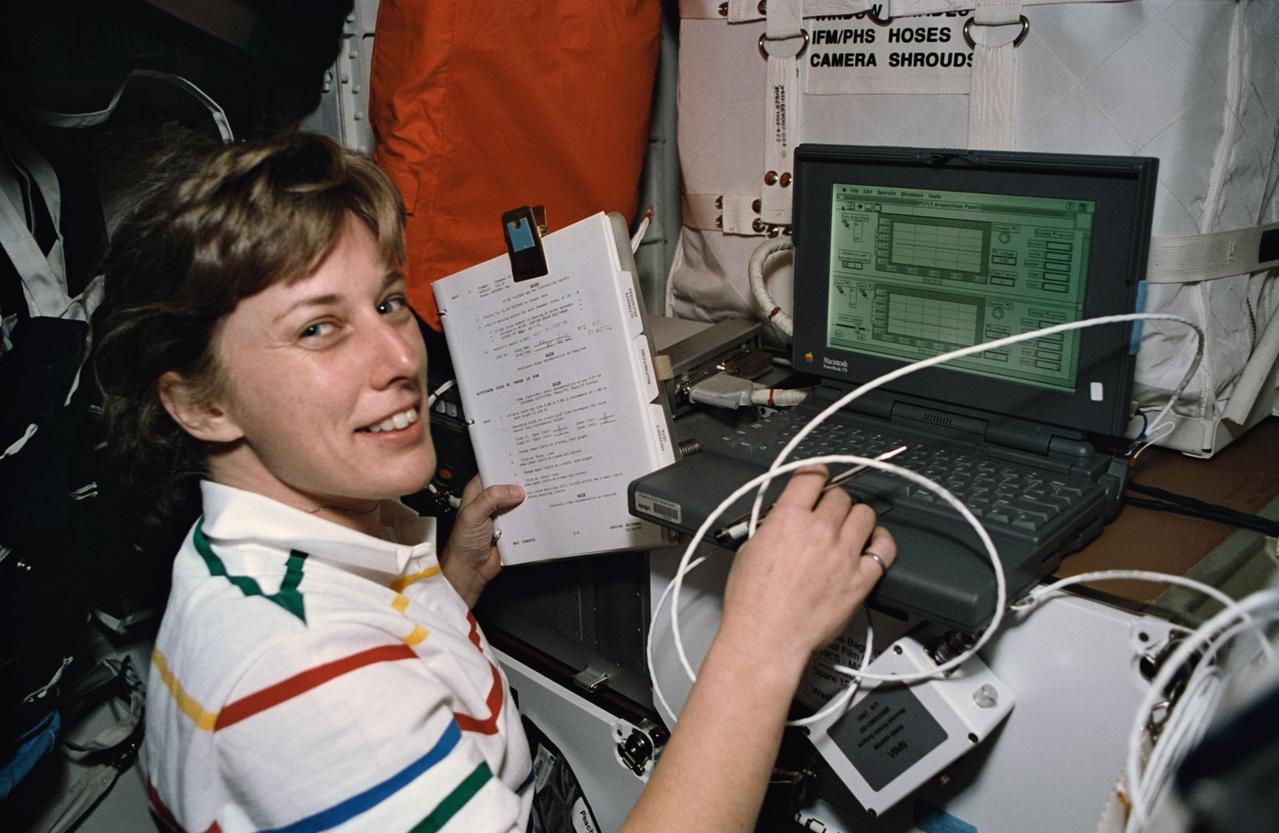
STS060-21-031 (3-11 Feb 1994) --- Using a lap top computer, astronaut N. Jan Davis monitors systems for the Commercial Protein Crystal Growth (CPCG) experiment onboard the Space Shuttle Discovery. Davis joined four other NASA astronauts and a Russian cosmonaut for eight days in space aboard Discovery.
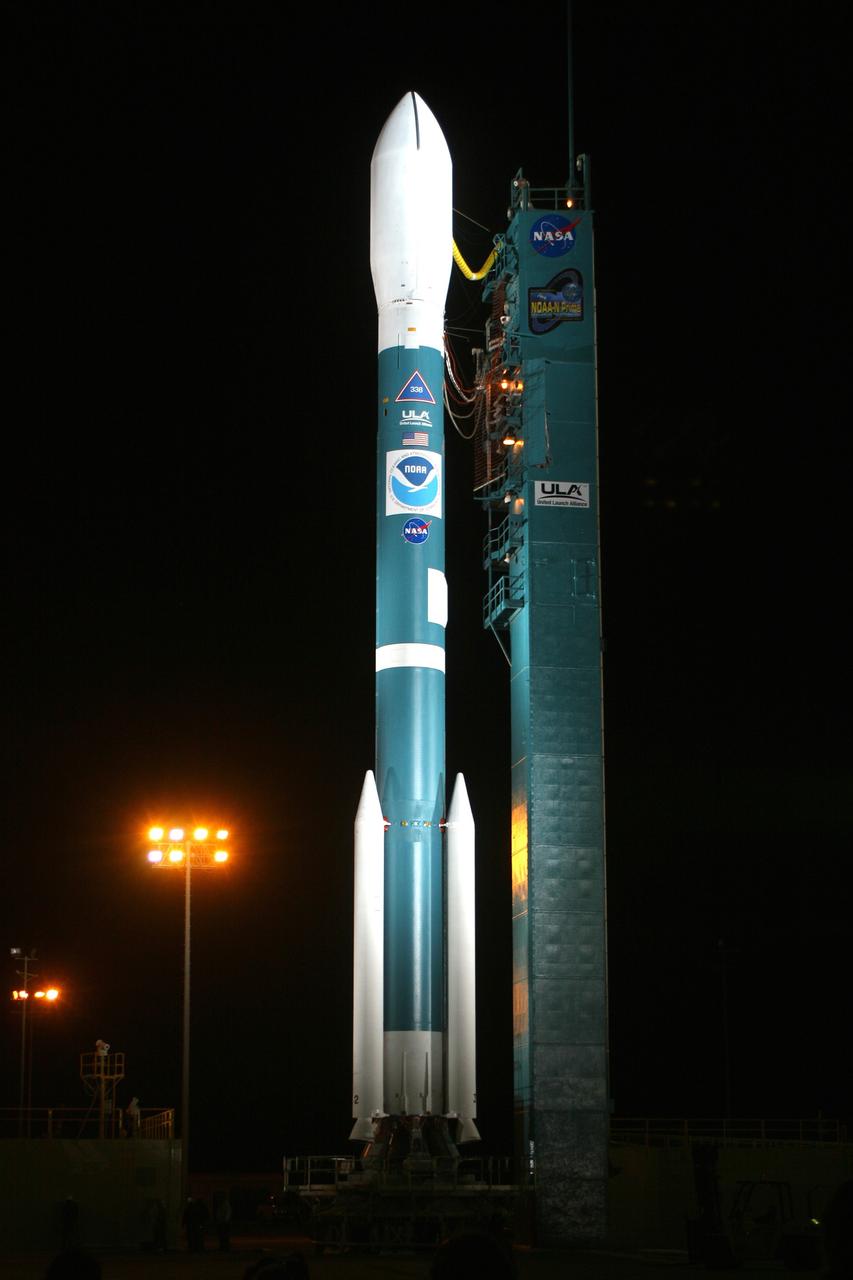
VANDENBERG AIR FORCE BASE, Calif. -- The mobile service tower moves away from the Delta II rocket with NASA's NOAA-N Prime satellite aboard on the Space Launch Complex 2 at Vandenberg Air Force Base in California. The launch of the NOAA-N Prime weather satellite was scrubbed at 5 a.m. EST Feb. 3 when a launch pad gaseous nitrogen pressurization system failed. This system maintains pressurization and purges to various systems of the Delta II rocket prior to launch. Immediate repair to this system was being taken. The next launch attempt will be no earlier than 5:22 a.m. EST Feb. 5, weather permitting. NOAA-N Prime is the latest polar-orbiting operational environmental weather satellite developed by NASA for the National Oceanic and Atmospheric Administration. Photo credit: NASA/Carleton Bailie, VAFB-ULA
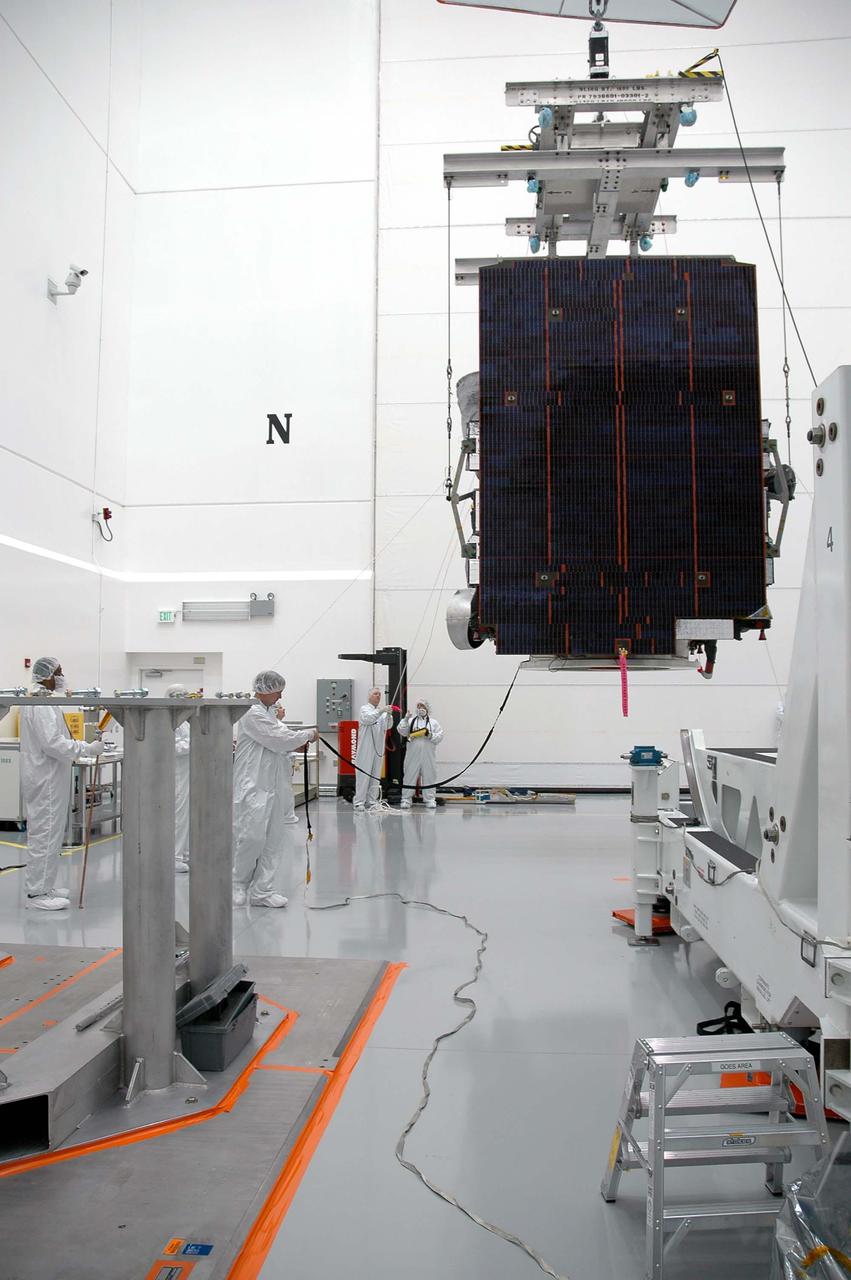
KENNEDY SPACE CENTER, FLA. - At Astrotech in Titusville, Fla., the overhead crane moves the GOES-N satellite away from the rotation stand for transfer to a work stand. Since its arrival on March 11, the satellite has been undergoing final testing by Boeing Satellite Systems of the imaging system, instrumentation, communications and power systems. Geostationary Operational Environmental Satellites (GOES) are sponsored by NASA’s Goddard Space Flight Center and the National Oceanic and Atmospheric Administration. GOES-N is targeted to launch May 4 onboard a Boeing expendable launch vehicle Delta IV (4,2) with a 3-burn second stage operation.
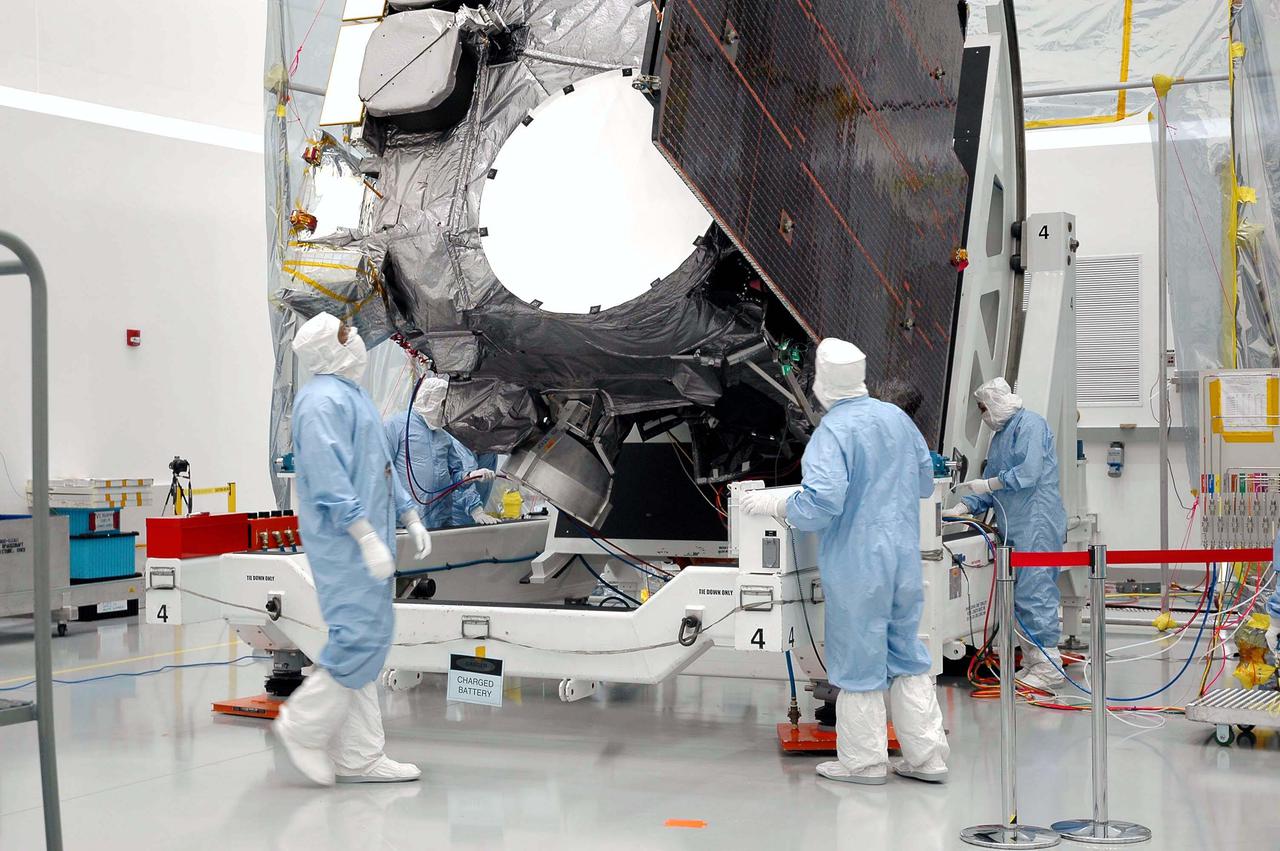
KENNEDY SPACE CENTER, FLA. - At Astrotech in Titusville, Fla., Boeing technicians observe the GOES-N satellite as it begins rotation to a vertical position. Seen on the right side is the solar panel. Since its arrival on March 11, the satellite has been undergoing final testing by Boeing Satellite Systems of the imaging system, instrumentation, communications and power systems. Geostationary Operational Environmental Satellites (GOES) are sponsored by NASA’s Goddard Space Flight Center and the National Oceanic and Atmospheric Administration. GOES-N is targeted to launch May 4 onboard a Boeing expendable launch vehicle Delta IV (4,2) with a 3-burn second stage operation.
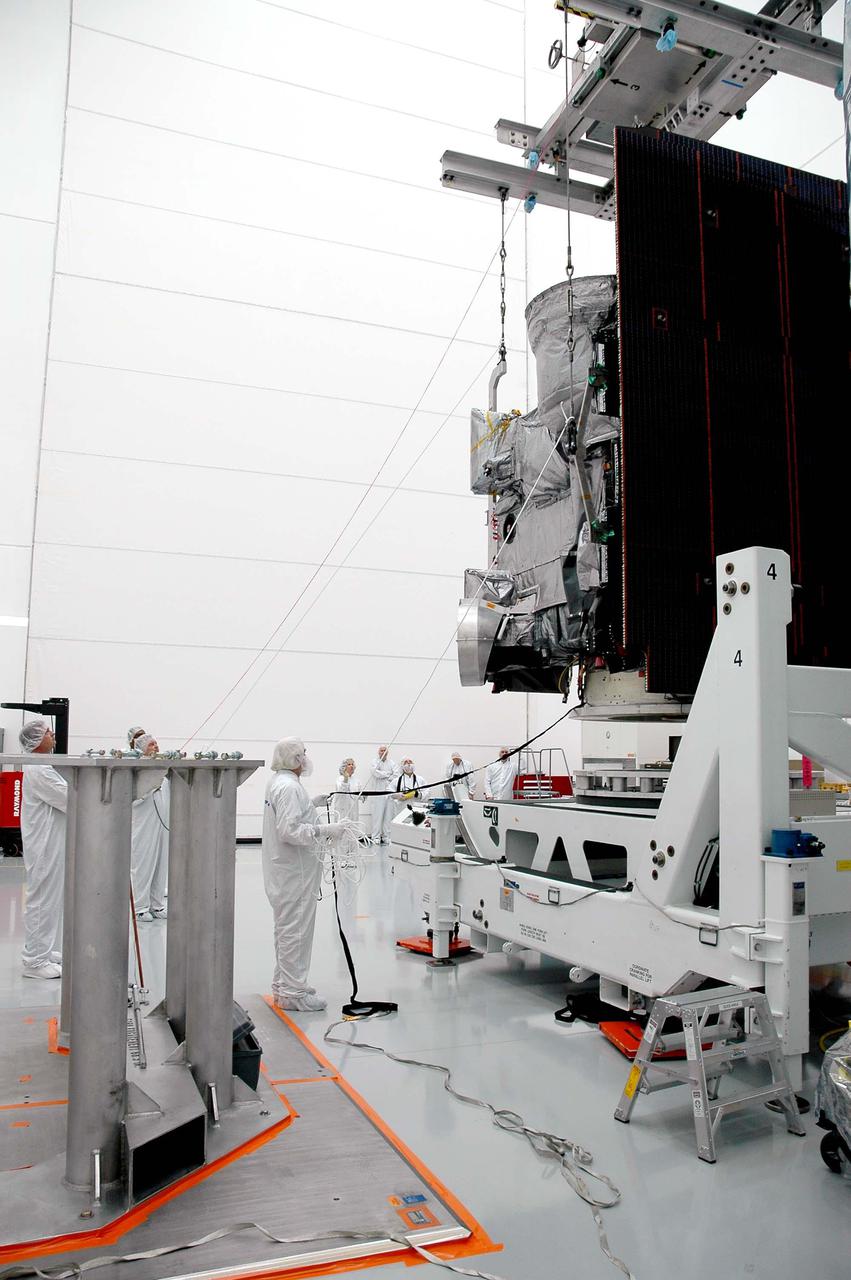
KENNEDY SPACE CENTER, FLA. - At Astrotech in Titusville, Fla., Boeing technicians hold guide wires attached to the crane lifting the GOES-N satellite. Since its arrival on March 11, the satellite has been undergoing final testing by Boeing Satellite Systems of the imaging system, instrumentation, communications and power systems. Geostationary Operational Environmental Satellites (GOES) are sponsored by NASA’s Goddard Space Flight Center and the National Oceanic and Atmospheric Administration. GOES-N is targeted to launch May 4 onboard a Boeing expendable launch vehicle Delta IV (4,2) with a 3-burn second stage operation.
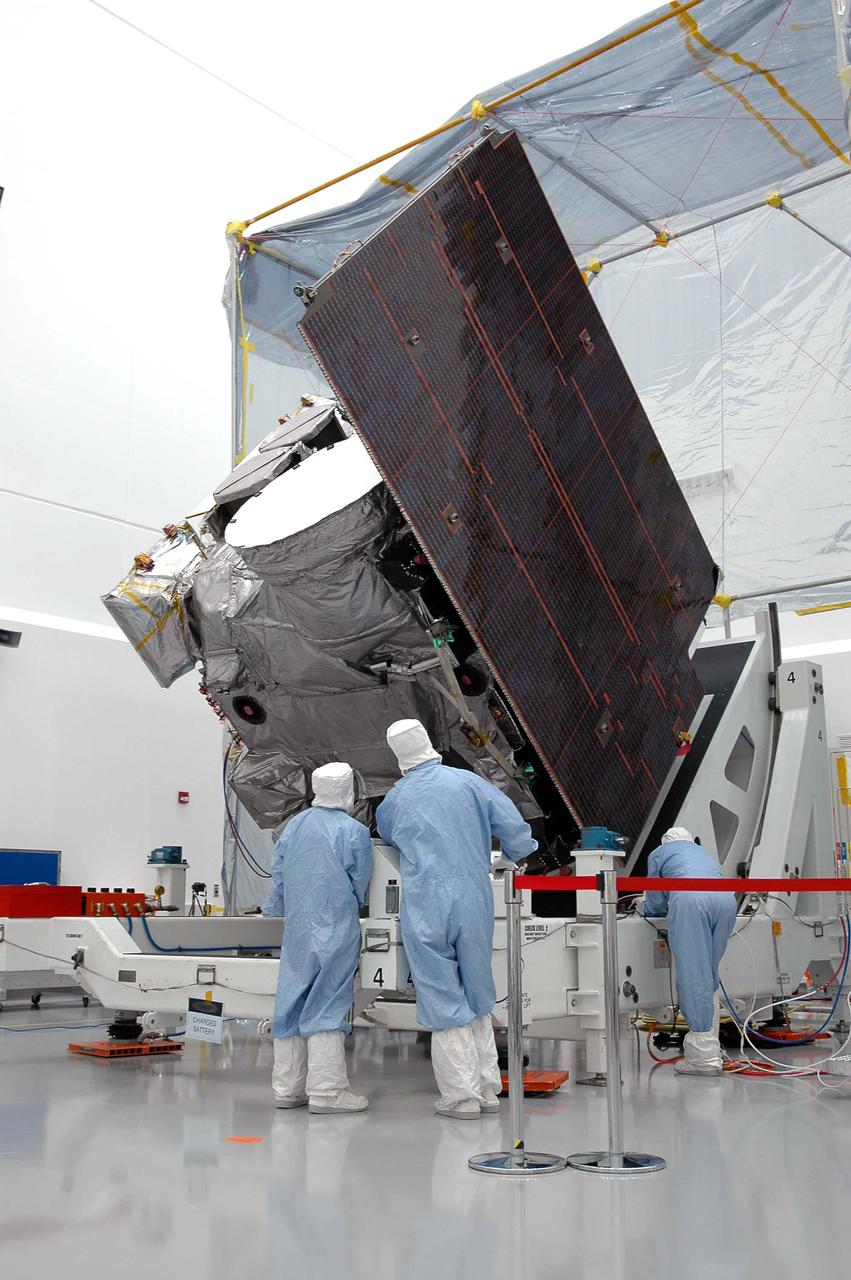
KENNEDY SPACE CENTER, FLA. - At Astrotech in Titusville, Fla., Boeing technicians observe the GOES-N satellite as it rotates to a vertical position. Seen on the right side is the solar panel. Since its arrival on March 11, the satellite has been undergoing final testing by Boeing Satellite Systems of the imaging system, instrumentation, communications and power systems. Geostationary Operational Environmental Satellites (GOES) are sponsored by NASA’s Goddard Space Flight Center and the National Oceanic and Atmospheric Administration. GOES-N is targeted to launch May 4 onboard a Boeing expendable launch vehicle Delta IV (4,2) with a 3-burn second stage operation.
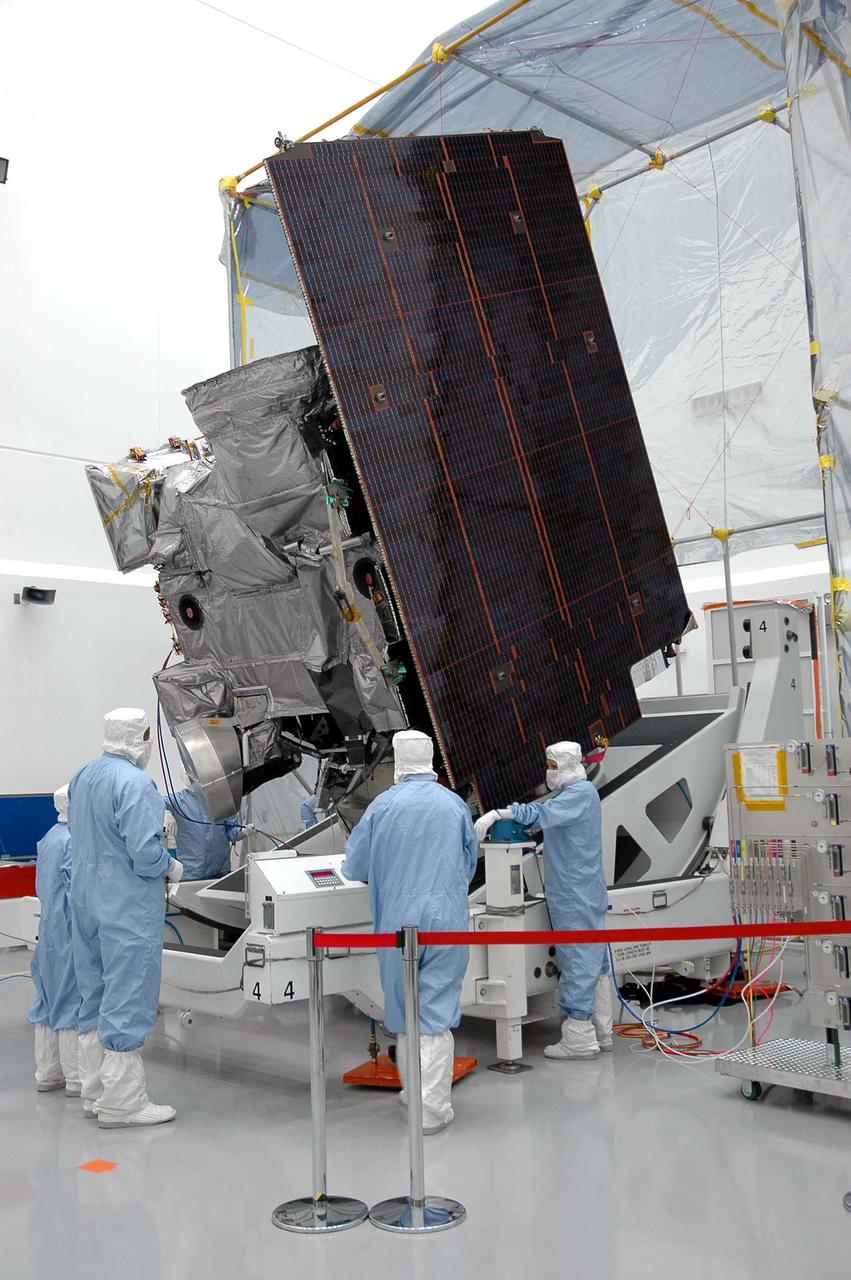
KENNEDY SPACE CENTER, FLA. - At Astrotech in Titusville, Fla., Boeing technicians check the progress of the GOES-N satellite as it rotates to a vertical position. Seen on the right side is the solar panel. Since its arrival on March 11, the satellite has been undergoing final testing by Boeing Satellite Systems of the imaging system, instrumentation, communications and power systems. Geostationary Operational Environmental Satellites (GOES) are sponsored by NASA’s Goddard Space Flight Center and the National Oceanic and Atmospheric Administration. GOES-N is targeted to launch May 4 onboard a Boeing expendable launch vehicle Delta IV (4,2) with a 3-burn second stage operation.
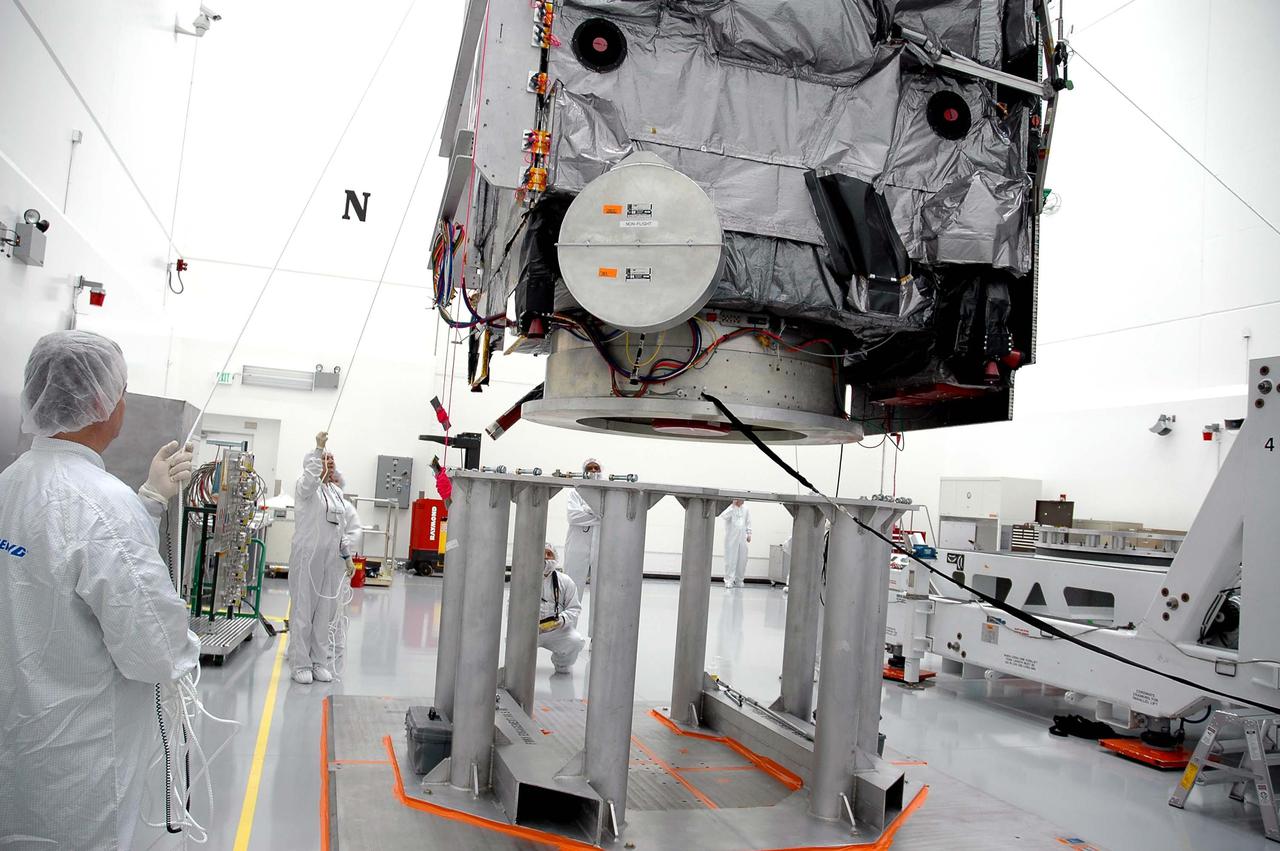
KENNEDY SPACE CENTER, FLA. - Astrotech in Titusville, Fla., Boeing technicians observe the careful lowering of the GOES-N satellite onto a work stand. Since its arrival on March 11, the satellite has been undergoing final testing by Boeing Satellite Systems of the imaging system, instrumentation, communications and power systems. Geostationary Operational Environmental Satellites (GOES) are sponsored by NASA’s Goddard Space Flight Center and the National Oceanic and Atmospheric Administration. GOES-N is targeted to launch May 4 onboard a Boeing expendable launch vehicle Delta IV (4,2) with a 3-burn second stage operation.
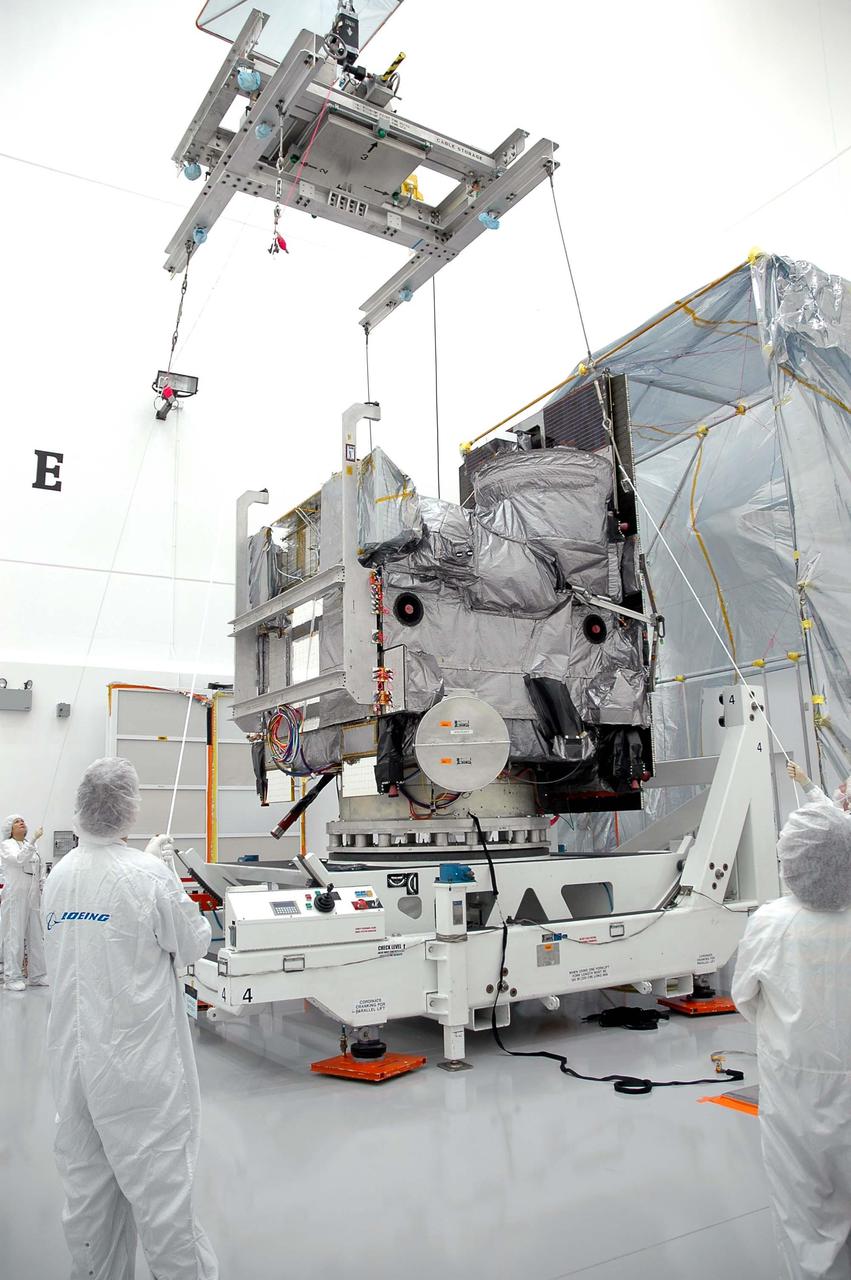
KENNEDY SPACE CENTER, FLA. - At Astrotech in Titusville, Fla., an overhead crane is moved into place above the GOES-N satellite, which is on a rotation stand. The crane will lift the satellite from the rotation stand and move it to a work stand. Since its arrival on March 11, the satellite has been undergoing final testing by Boeing Satellite Systems of the imaging system, instrumentation, communications and power systems. Geostationary Operational Environmental Satellites (GOES) are sponsored by NASA’s Goddard Space Flight Center and the National Oceanic and Atmospheric Administration. GOES-N is targeted to launch May 4 onboard a Boeing expendable launch vehicle Delta IV (4,2) with a 3-burn second stage operation.
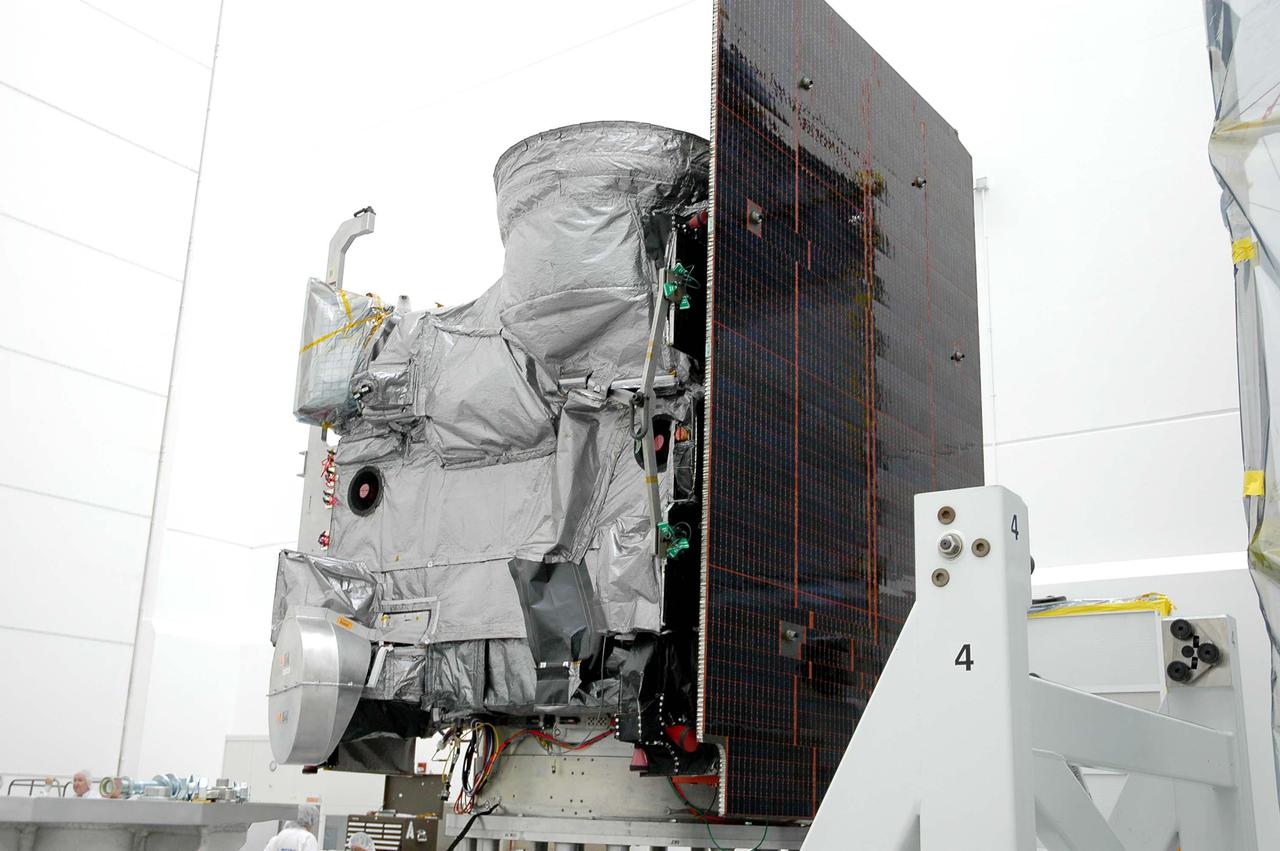
KENNEDY SPACE CENTER, FLA. - At Astrotech in Titusville, Fla., the GOES-N satellite waits to be attached to a crane that will lift and move it to a work stand. Since its arrival on March 11, the satellite has been undergoing final testing by Boeing Satellite Systems of the imaging system, instrumentation, communications and power systems. Geostationary Operational Environmental Satellites (GOES) are sponsored by NASA’s Goddard Space Flight Center and the National Oceanic and Atmospheric Administration. GOES-N is targeted to launch May 4 onboard a Boeing expendable launch vehicle Delta IV (4,2) with a 3-burn second stage operation.
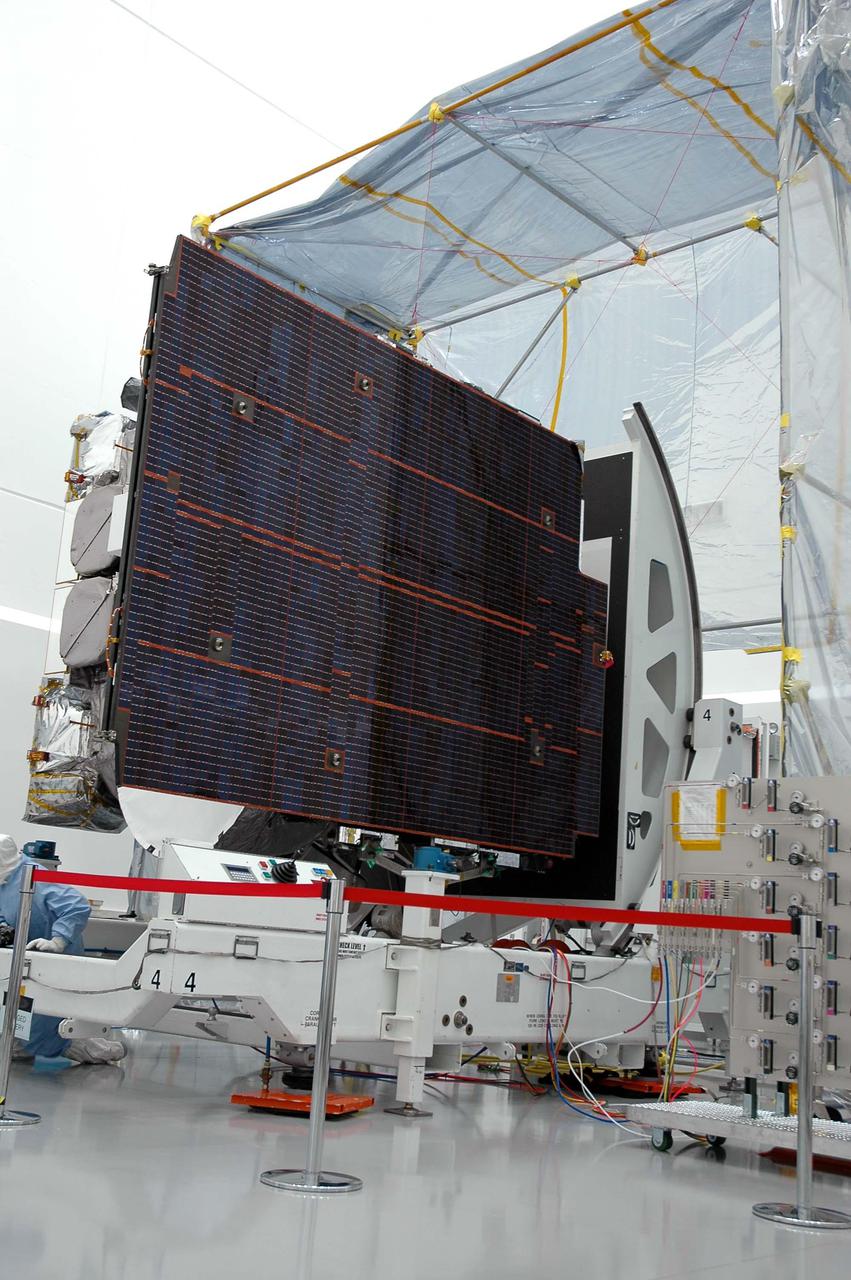
KENNEDY SPACE CENTER, FLA. - At Astrotech in Titusville, Fla., the GOES-N satellite waits for rotation to a vertical position. Seen in the front is the solar panel. Since its arrival on March 11, the satellite has been undergoing final testing by Boeing Satellite Systems of the imaging system, instrumentation, communications and power systems. Geostationary Operational Environmental Satellites (GOES) are sponsored by NASA’s Goddard Space Flight Center and the National Oceanic and Atmospheric Administration. GOES-N is targeted to launch May 4 onboard a Boeing expendable launch vehicle Delta IV (4,2) with a 3-burn second stage operation.
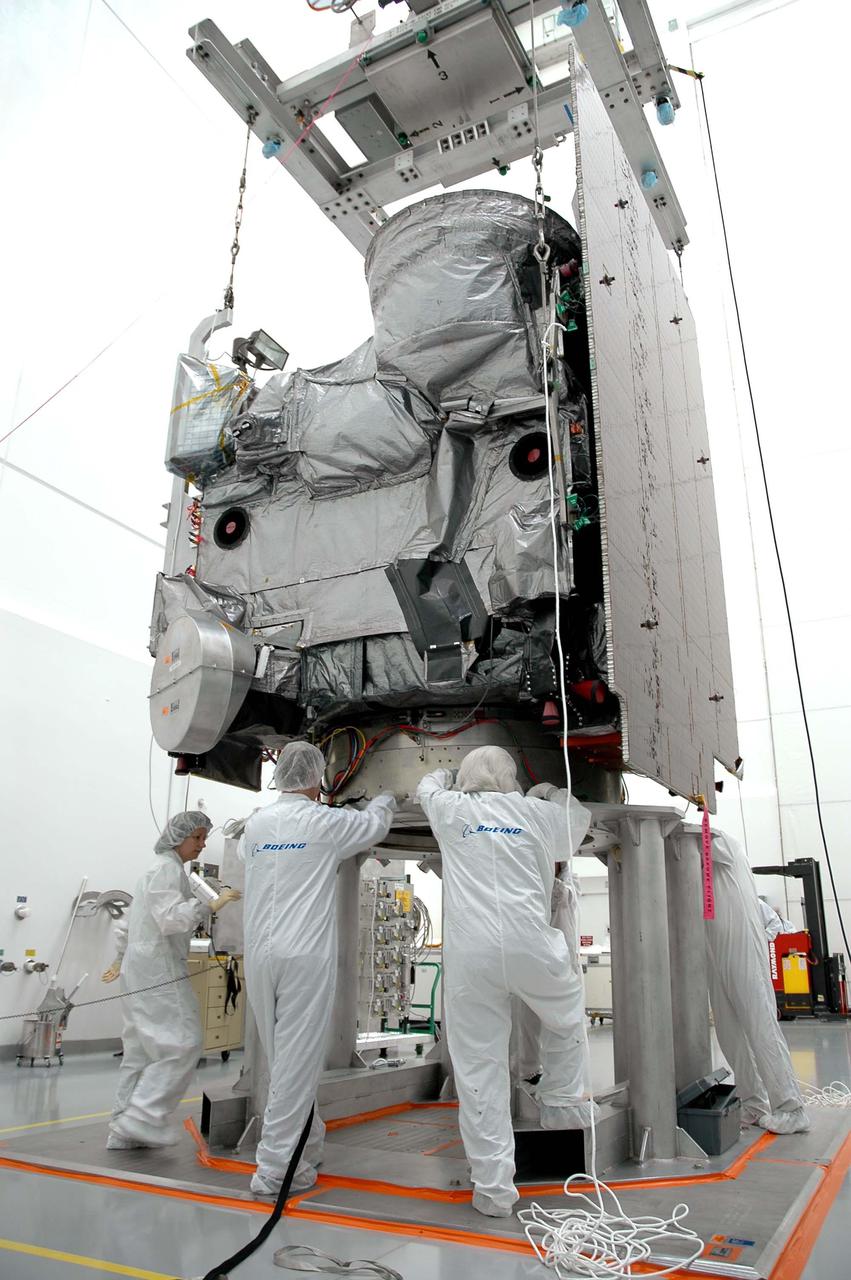
KENNEDY SPACE CENTER, FLA. - Astrotech in Titusville, Fla., Boeing technicians secure the GOES-N satellite on a work stand. Since its arrival on March 11, the satellite has been undergoing final testing by Boeing Satellite Systems of the imaging system, instrumentation, communications and power systems. Geostationary Operational Environmental Satellites (GOES) are sponsored by NASA’s Goddard Space Flight Center and the National Oceanic and Atmospheric Administration. GOES-N is targeted to launch May 4 onboard a Boeing expendable launch vehicle Delta IV (4,2) with a 3-burn second stage operation.
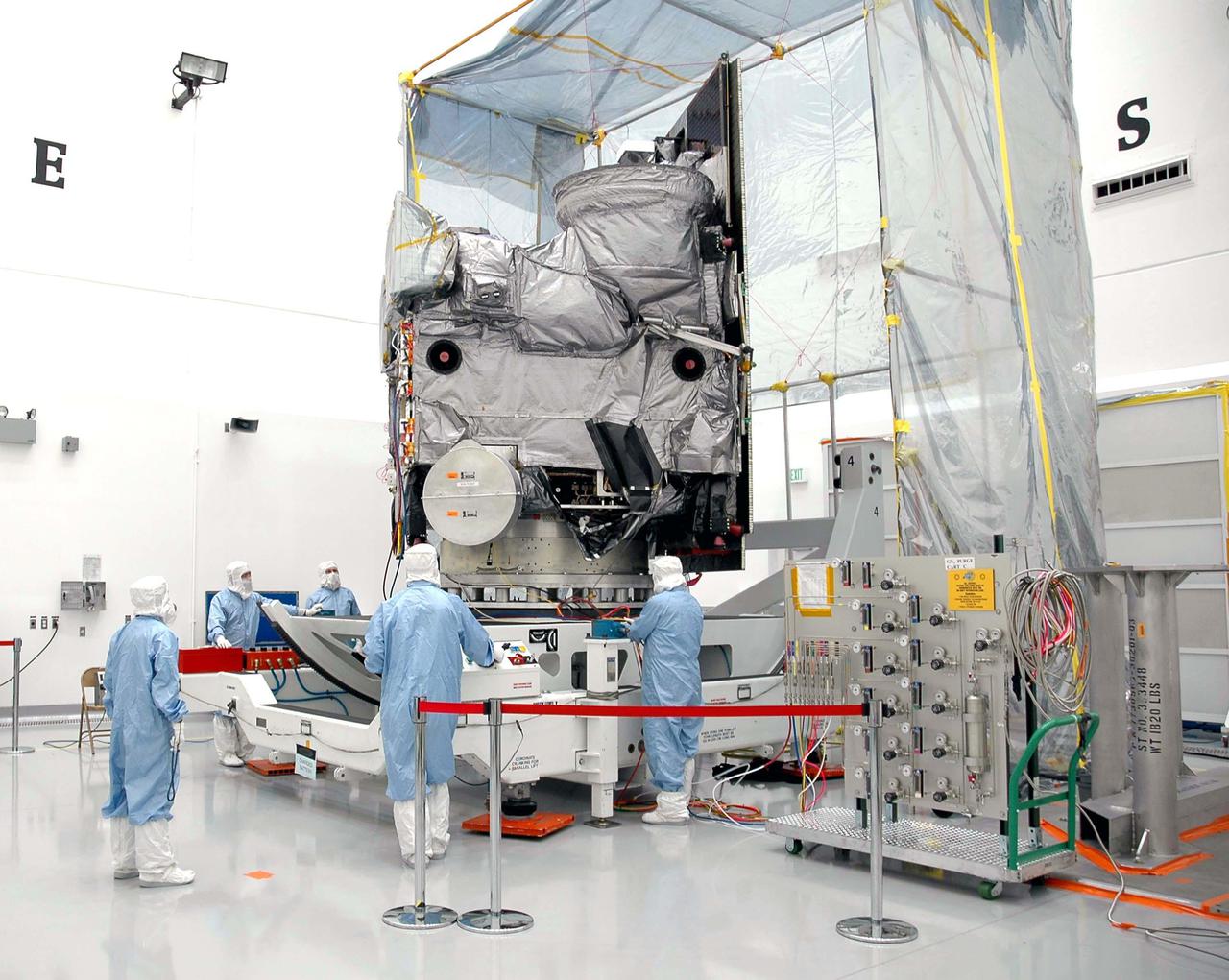
KENNEDY SPACE CENTER, FLA. - At Astrotech in Titusville, Fla., Boeing technicians check the position of the GOES-N satellite after its rotation to a vertical position. The solar panel is now behind it on the right. Since its arrival on March 11, the satellite has been undergoing final testing by Boeing Satellite Systems of the imaging system, instrumentation, communications and power systems. Geostationary Operational Environmental Satellites (GOES) are sponsored by NASA’s Goddard Space Flight Center and the National Oceanic and Atmospheric Administration. GOES-N is targeted to launch May 4 onboard a Boeing expendable launch vehicle Delta IV (4,2) with a 3-burn second stage operation.
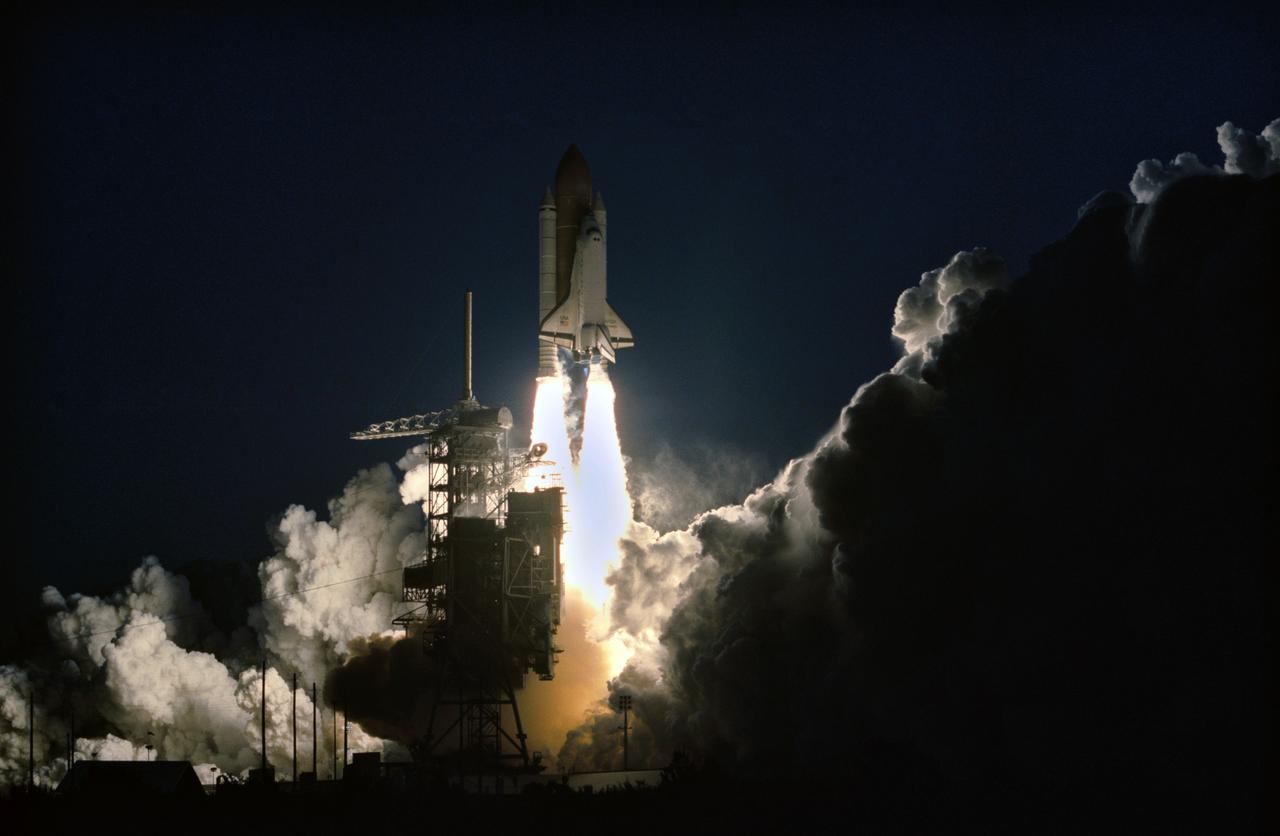
STS060-S-105 (3 Feb 1994) --- The Space Shuttle Discovery heads toward an eight-day mission in Earth orbit with five NASA astronauts and a Russian cosmonaut aboard. Liftoff occurred as scheduled at 7:10 a.m. (EST), February 3, 1994. Aboard the spacecraft were astronauts Charles F. Bolden Jr., commander; Kenneth S. Reightler Jr., pilot; Franklin R. Chang-Diaz, payload commander; and N. Jan Davis and Ronald M. Sega, mission specialists, along with Russian cosmonaut Sergei K. Krikalev, also a mission specialist.
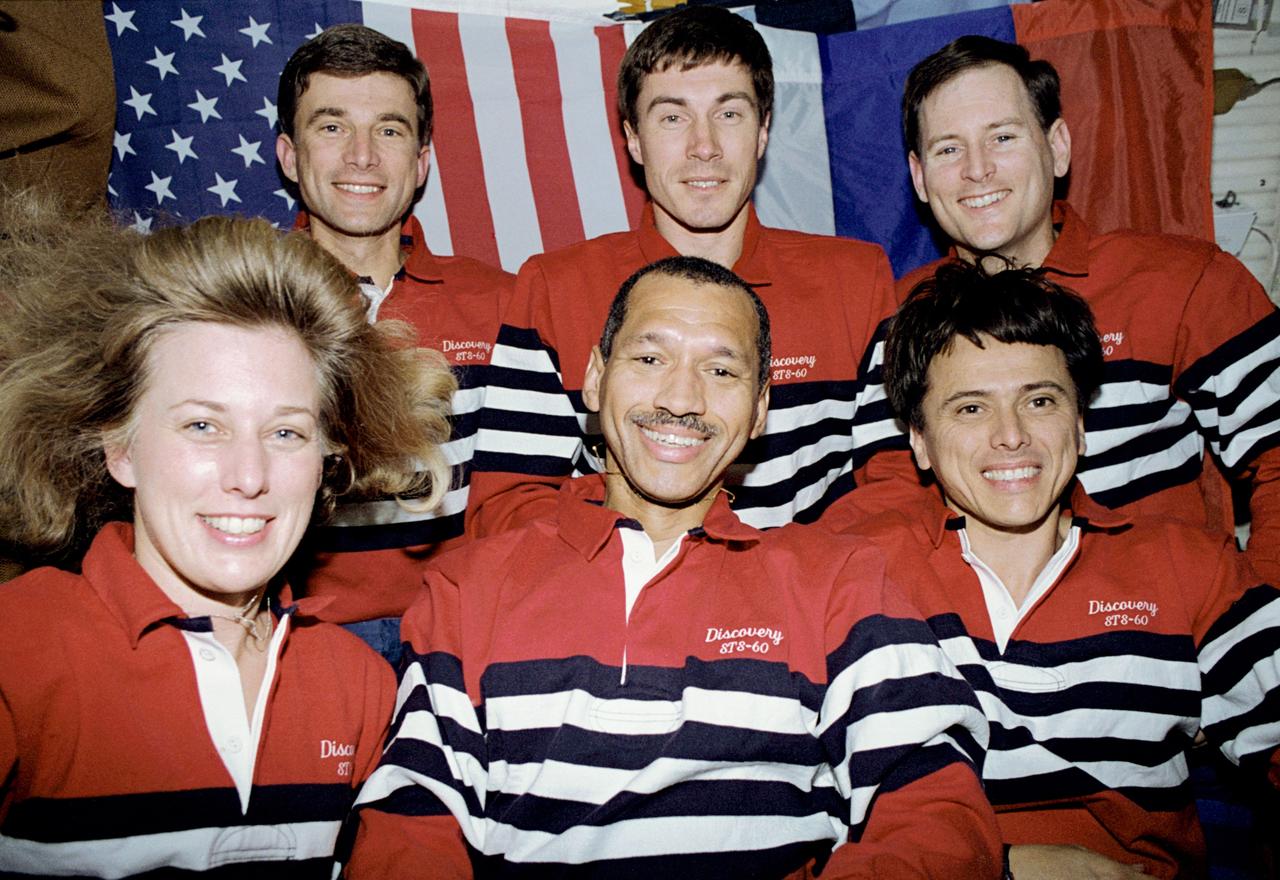
STS060-31-009 (3-11 Feb. 1994) --- The six-member STS-60 crew pose for the traditional in-flight crew portrait, with American and Russian flags forming the backdrop on the space shuttle Discovery’s middeck. Left to right (front row) are N. Jan Davis, Charles F. Bolden Jr. and Franklin R. Chang-Diaz; and (back row) Ronald M. Sega, Sergei K. Krikalev and Kenneth S. Reightler Jr. Photo credit: NASA or National Aeronautics and Space Administration
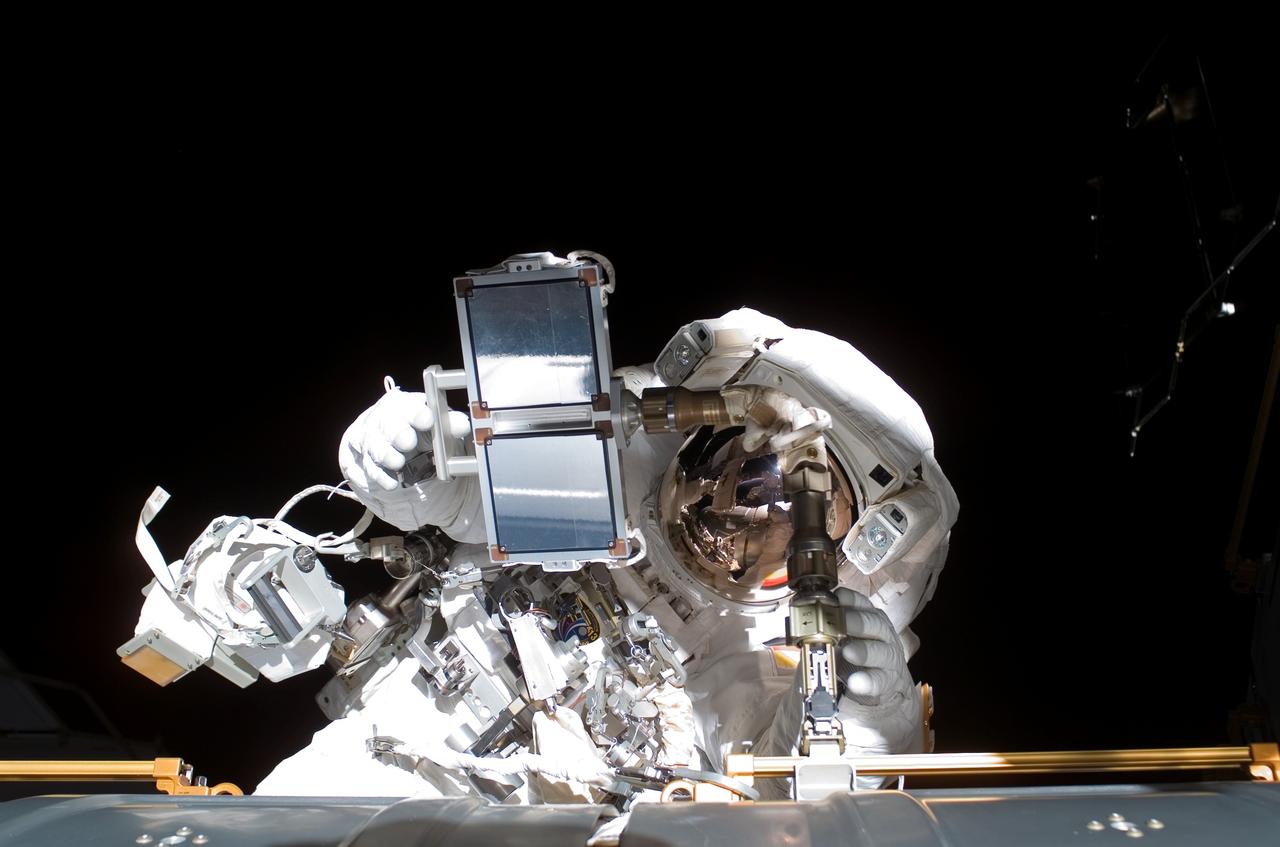
ISS013-E-63434 (3 Aug. 2006) --- Astronaut Thomas Reiter, who represents the European Space Agency on the Expedition 13 crew, is seen with the reinforced carbon carbon (RCC) sample case which was one of the final major planned tasks for a 5-hour, 54-minute spacewalk that he shared with astronaut Jeffrey N. Williams (out of frame), flight engineer and NASA ISS science officer.
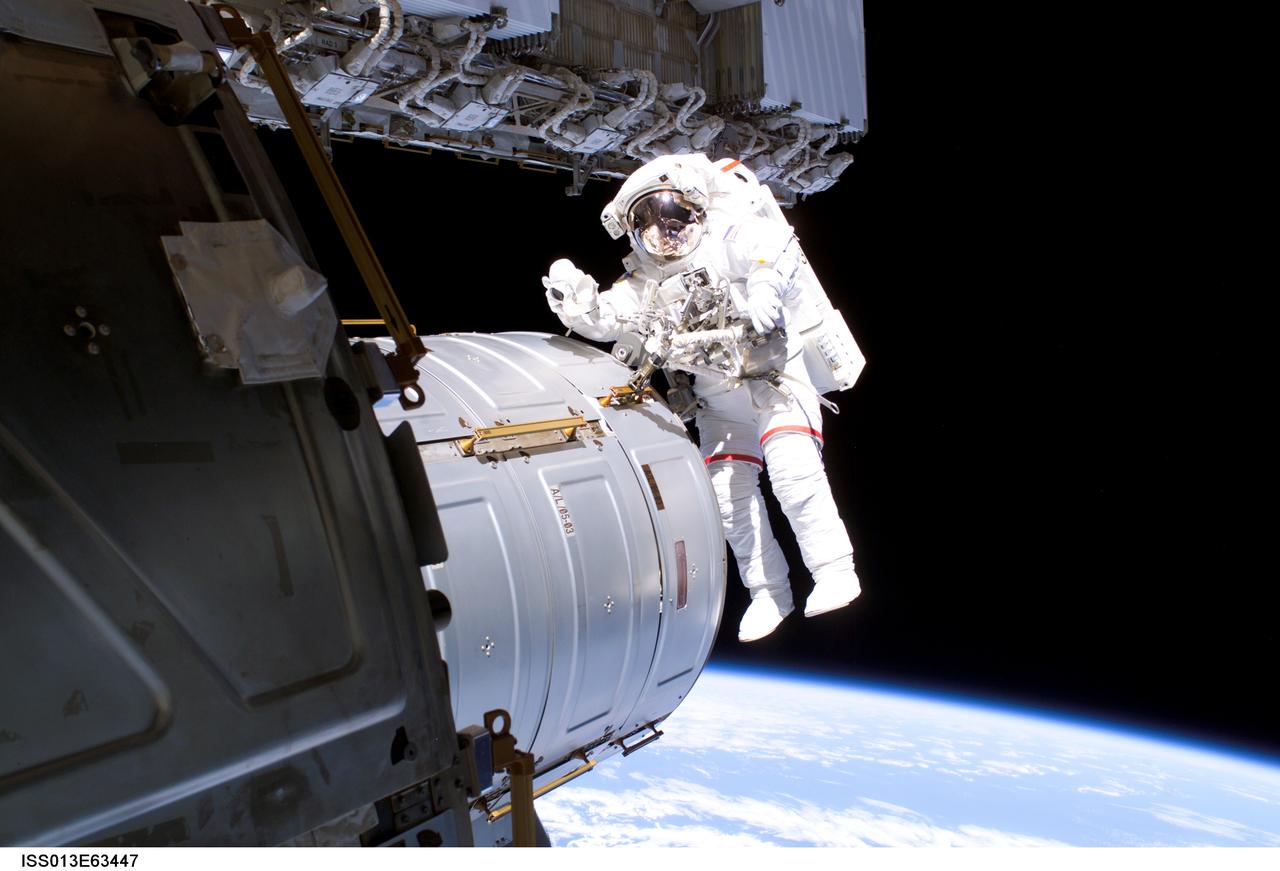
ISS013-E-63447 (3 August 2006) --- Astronaut Jeffrey N. Williams, Expedition 13 NASA space station science officer and flight engineer, is photographed during an individualized portion of a 5-hour, 54-minute excursion which he shared with European Space Agency astronaut Thomas Reiter (out of frame). For part of the spacewalk, the pair worked closely in tandem, and then worked separately, getting ahead of their timeline, thus enabling the two to tack on extra tasks.
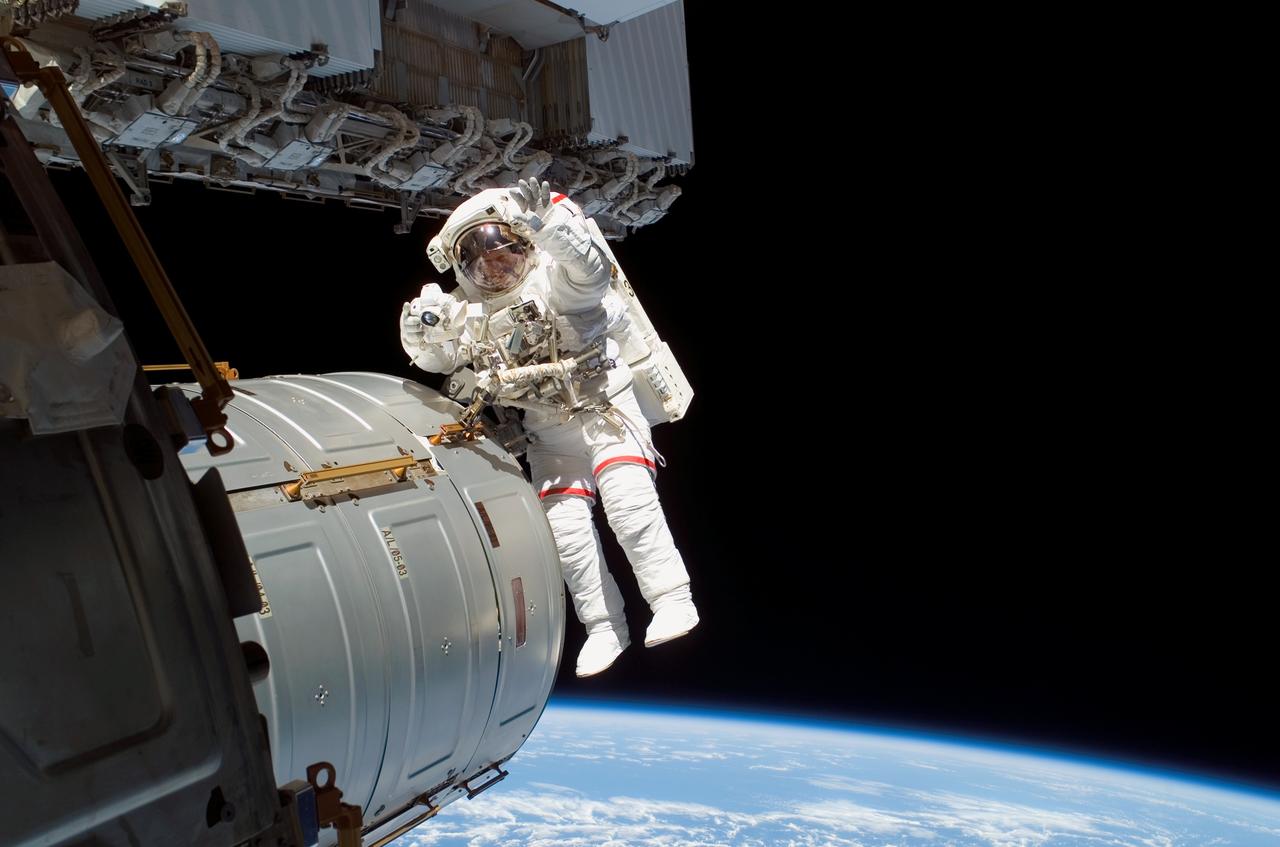
ISS013-E-63440 (3 Aug. 2006) --- Astronaut Jeffrey N. Williams, Expedition 13 NASA space station science officer and flight engineer, is photographed during an individualized portion of a productive 5-hour, 54-minute excursion which he shared with European Space Agency astronaut Thomas Reiter (out of frame). For part of the spacewalk, the pair worked closely in tandem, and then worked separately, getting ahead of their timeline, thus enabling the two to tack on extra tasks.
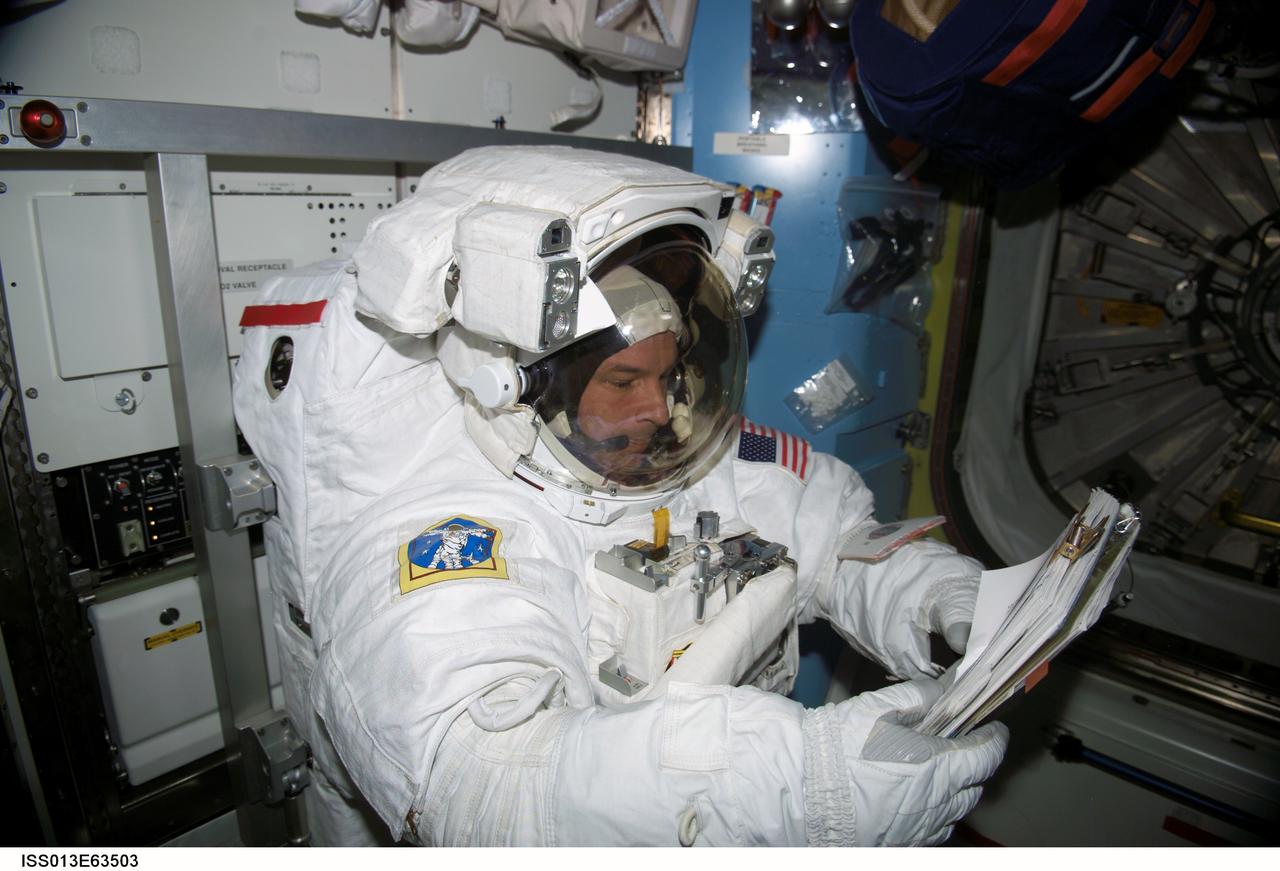
ISS013-E-63503 (3 August 2006) --- Astronaut Jeffrey N. Williams, Expedition 13 NASA space station science officer and flight engineer, brushes up on a task list prior to egressing a station airlock to go on to perform a 5-hour, 54-minute excursion which he shared with European Space Agency astronaut Thomas Reiter (out of frame). For part of the spacewalk, the pair worked closely in tandem, and then worked separately, getting ahead of their timeline, thus enabling the two to tack on extra tasks.
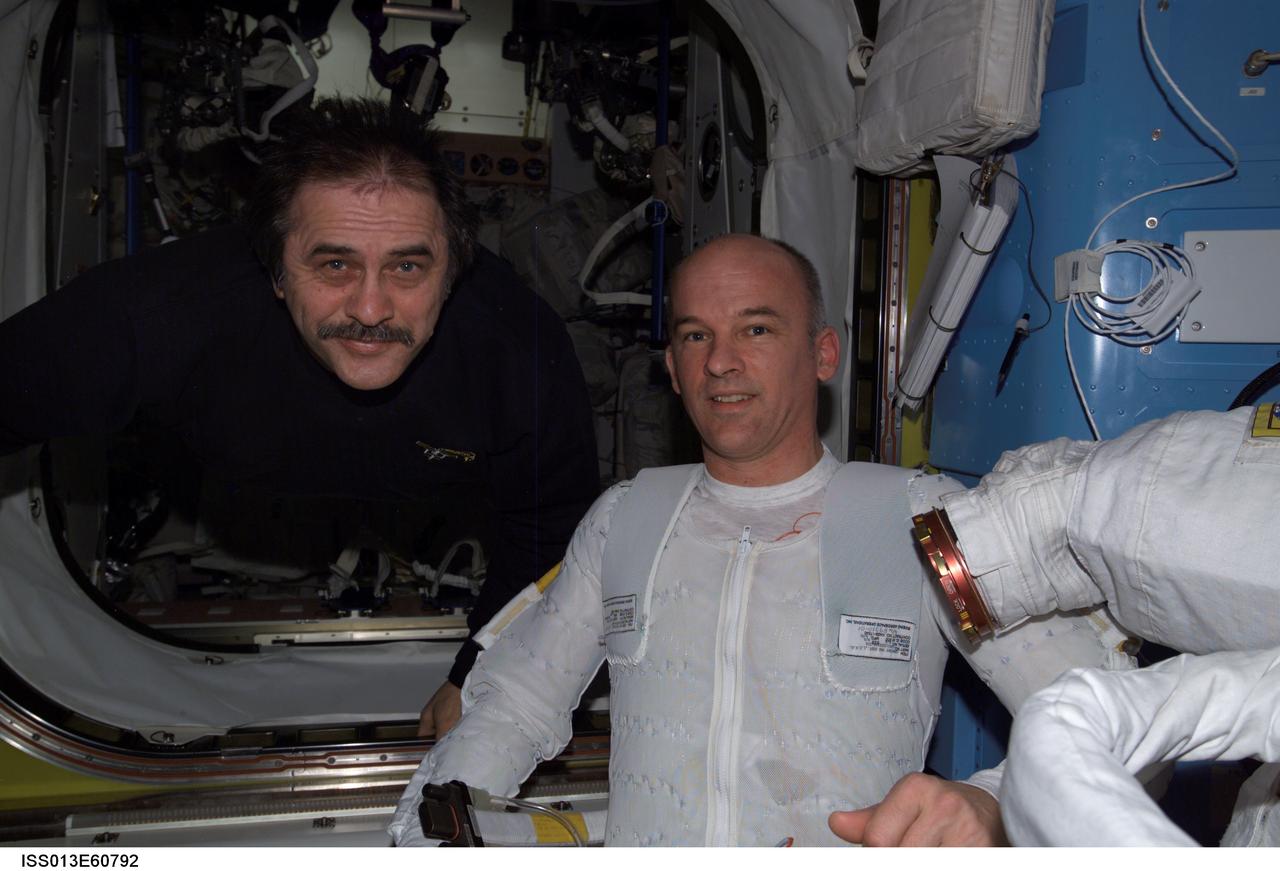
ISS013-E-60792 (28 July 2006) --- Cosmonaut Pavel V. Vinogradov (left), Expedition 13 commander representing Russia's Federal Space Agency, and astronaut Jeffrey N. Williams, NASA space station science officer and flight engineer, take a moment to pose for a photo in the Quest Airlock of the International Space Station. Williams is attired in a liquid cooling and ventilation garment that complements the Extravehicular Mobility Unit (EMU) space suit. The crew is preparing for a session of extravehicular activity (EVA) scheduled for Thursday, Aug. 3, 2006.
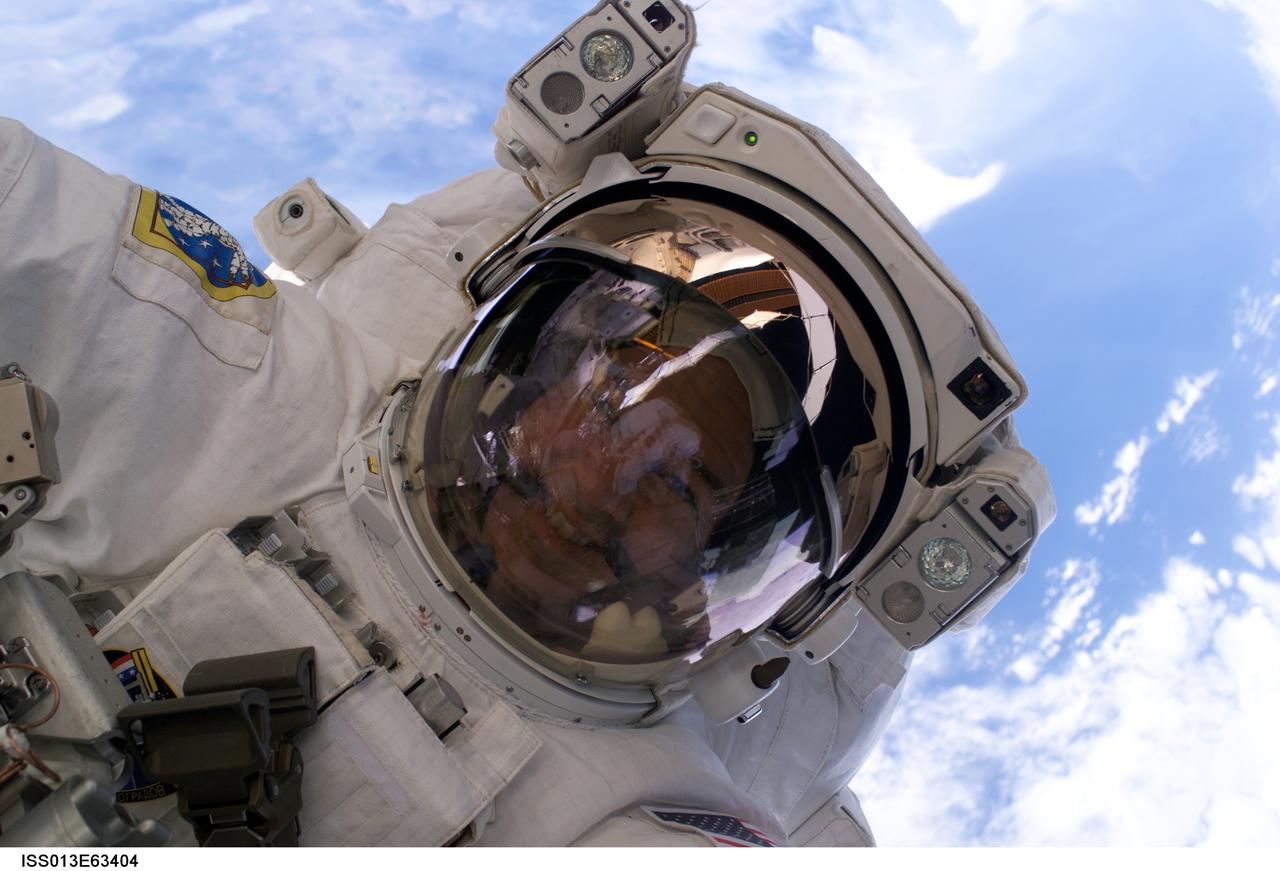
ISS013-E-63404 (3 August 2006) --- Astronaut Jeffrey N. Williams, Expedition 13 NASA space station science officer and flight engineer, is photographed during a 5-hour, 54-minute excursion which he shared with European Space Agency astronaut Thomas Reiter (out of frame). For part of the spacewalk, the pair worked closely in tandem, and then worked separately, getting ahead of their timeline, thus enabling the two to tack on extra tasks.
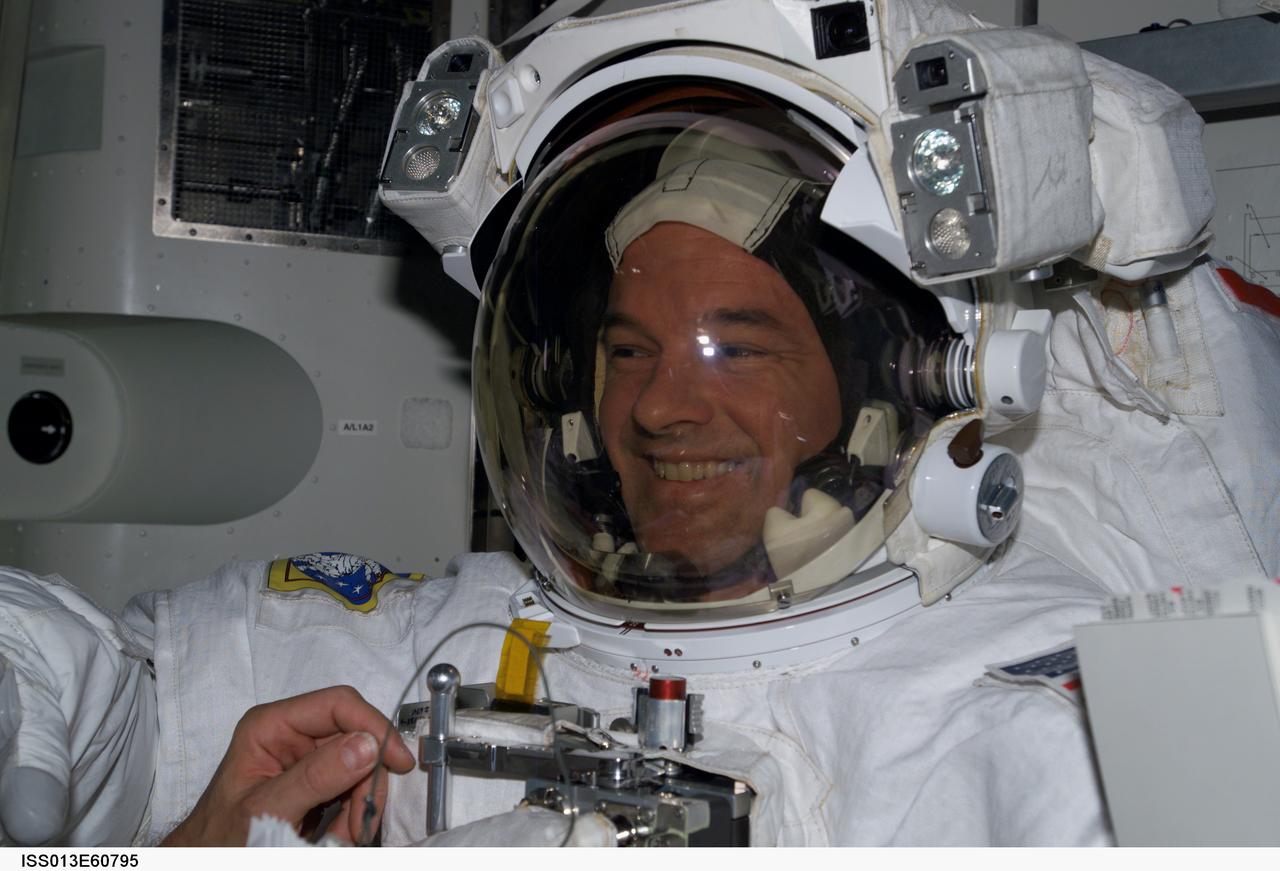
ISS013-E-60795 (28 July 2006) --- Attired in his Extravehicular Mobility Unit (EMU) space suit, astronaut Jeffrey N. Williams, Expedition 13 NASA space station science officer and flight engineer, prepares for a session of extravehicular activity (EVA) scheduled for Thursday, Aug. 3, 2006. Williams is in the Quest Airlock of the International Space Station.
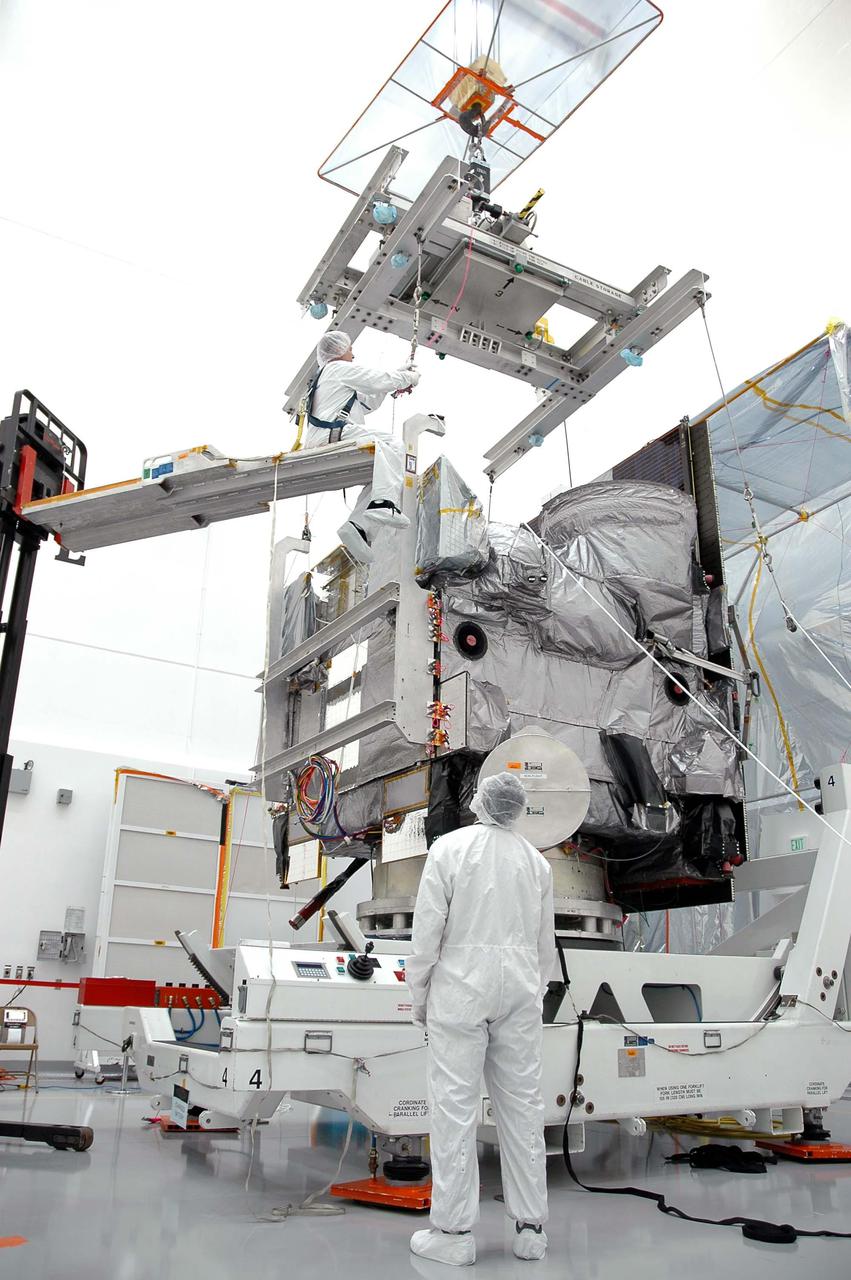
KENNEDY SPACE CENTER, FLA. - At Astrotech in Titusville, Fla., a Boeing technician on a lift above the GOES-N satellite completes attachment of the overhead crane. The crane will lift the satellite from the rotation stand and move it to a work stand. The crane is moving the satellite to a work stand. Since its arrival on March 11, the satellite has been undergoing final testing by Boeing Satellite Systems of the imaging system, instrumentation, communications and power systems. Geostationary Operational Environmental Satellites (GOES) are sponsored by NASA’s Goddard Space Flight Center and the National Oceanic and Atmospheric Administration. GOES-N is targeted to launch May 4 onboard a Boeing expendable launch vehicle Delta IV (4,2) with a 3-burn second stage operation.
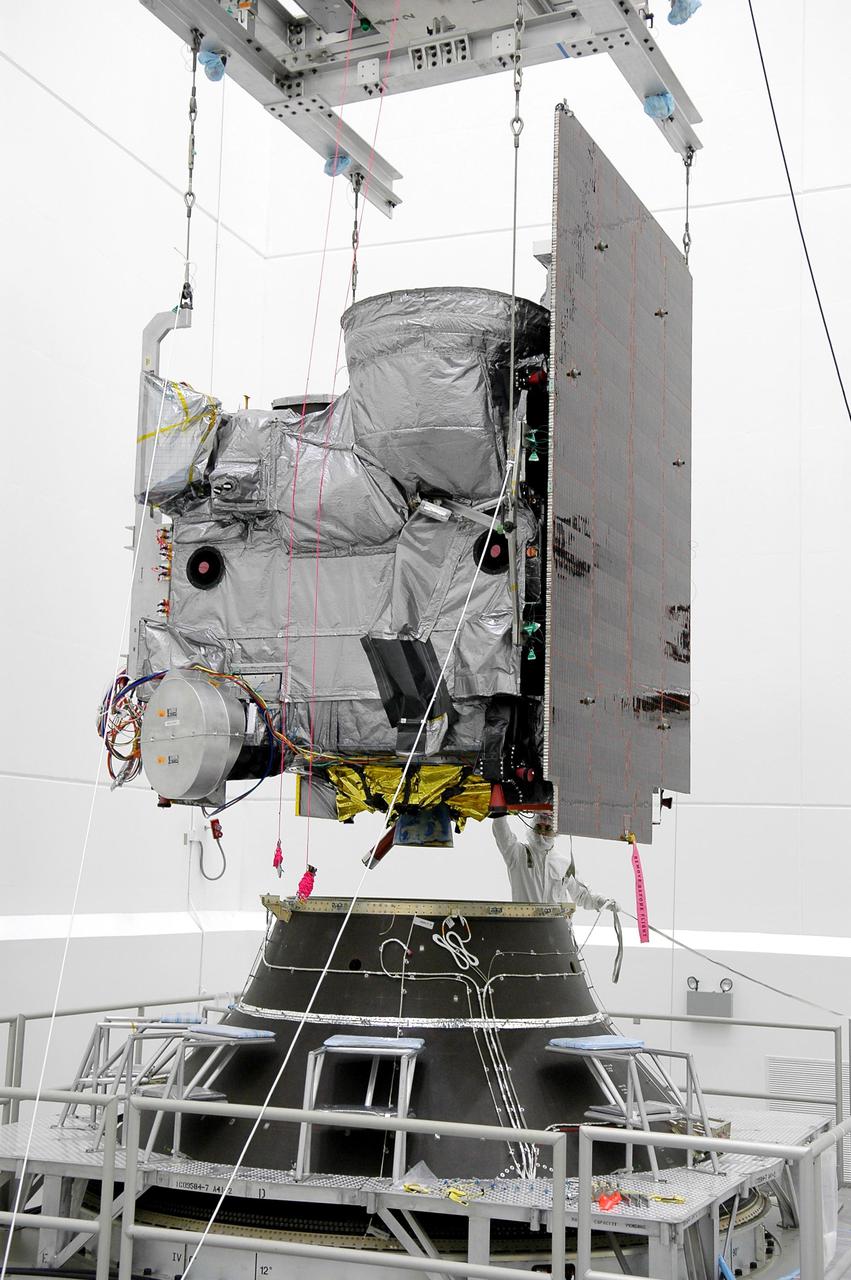
KENNEDY SPACE CENTER, FLA. - At Astrotech Space Operations in Titusville, Fla., the Geostationary Operational Environmental Satellite GOES-N is lowered toward the Payload Attach Fitting for mating. The fitting will enable the spacecraft to be mated to its launch vehicle, a Boeing Delta IV, with a 3-burn second-stage operation. Since its arrival on March 11, the satellite has been undergoing final testing by Boeing Satellite Systems of the imaging system, instrumentation, communications and power systems. The GOES spacecraft are sponsored by NASA’s Goddard Space Flight Center and the National Oceanic and Atmospheric Administration. GOES-N is targeted to launch June 23 from Launch Complex 37 at Cape Canaveral Air Force Station in Florida.
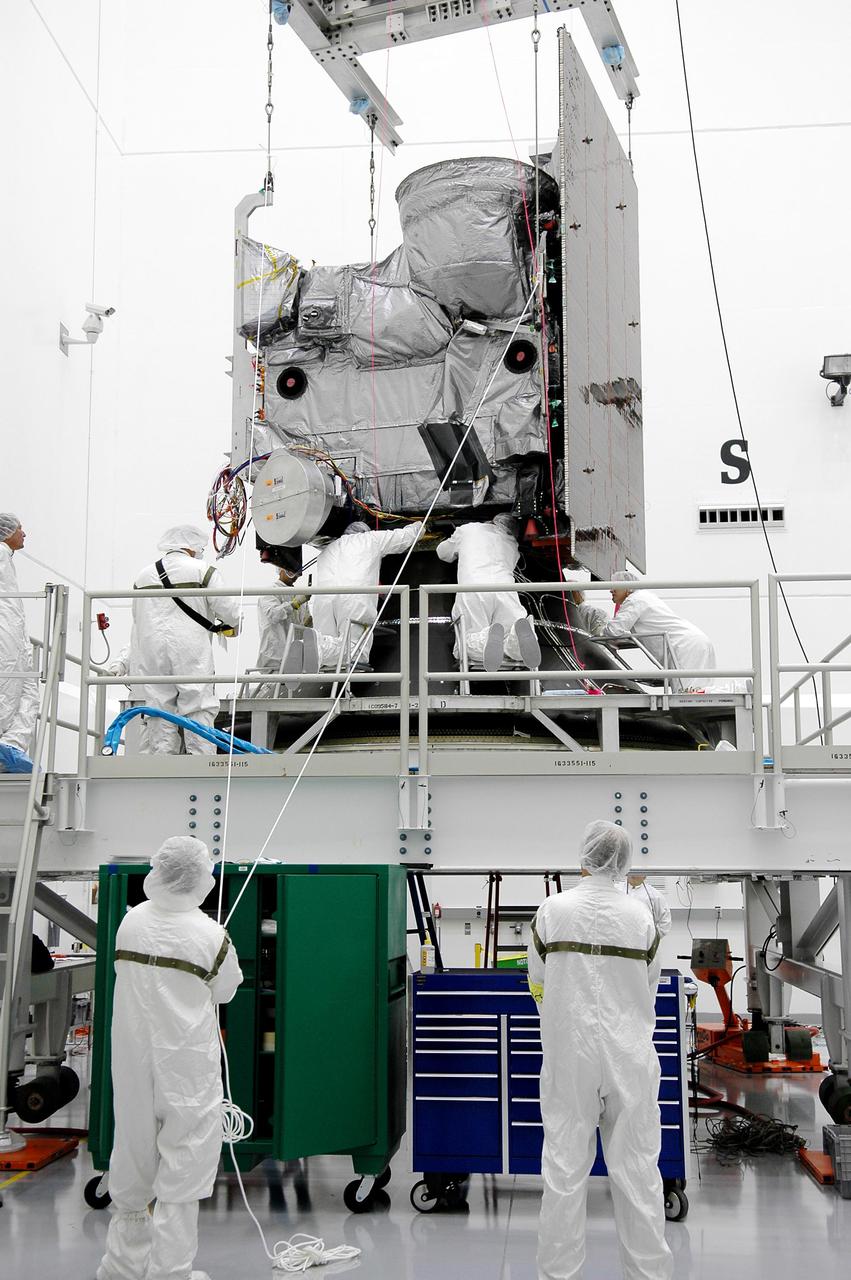
KENNEDY SPACE CENTER, FLA. - At Astrotech Space Operations in Titusville, Fla., Boeing workers attach the Geostationary Operational Environmental Satellite GOES-N to the Payload Attach Fitting. The fitting will enable the spacecraft to be mated to its launch vehicle, a Boeing Delta IV, with a 3-burn second-stage operation. Since its arrival on March 11, the satellite has been undergoing final testing by Boeing Satellite Systems of the imaging system, instrumentation, communications and power systems. The GOES spacecraft are sponsored by NASA’s Goddard Space Flight Center and the National Oceanic and Atmospheric Administration. GOES-N is targeted to launch June 23 from Launch Complex 37 at Cape Canaveral Air Force Station in Florida.
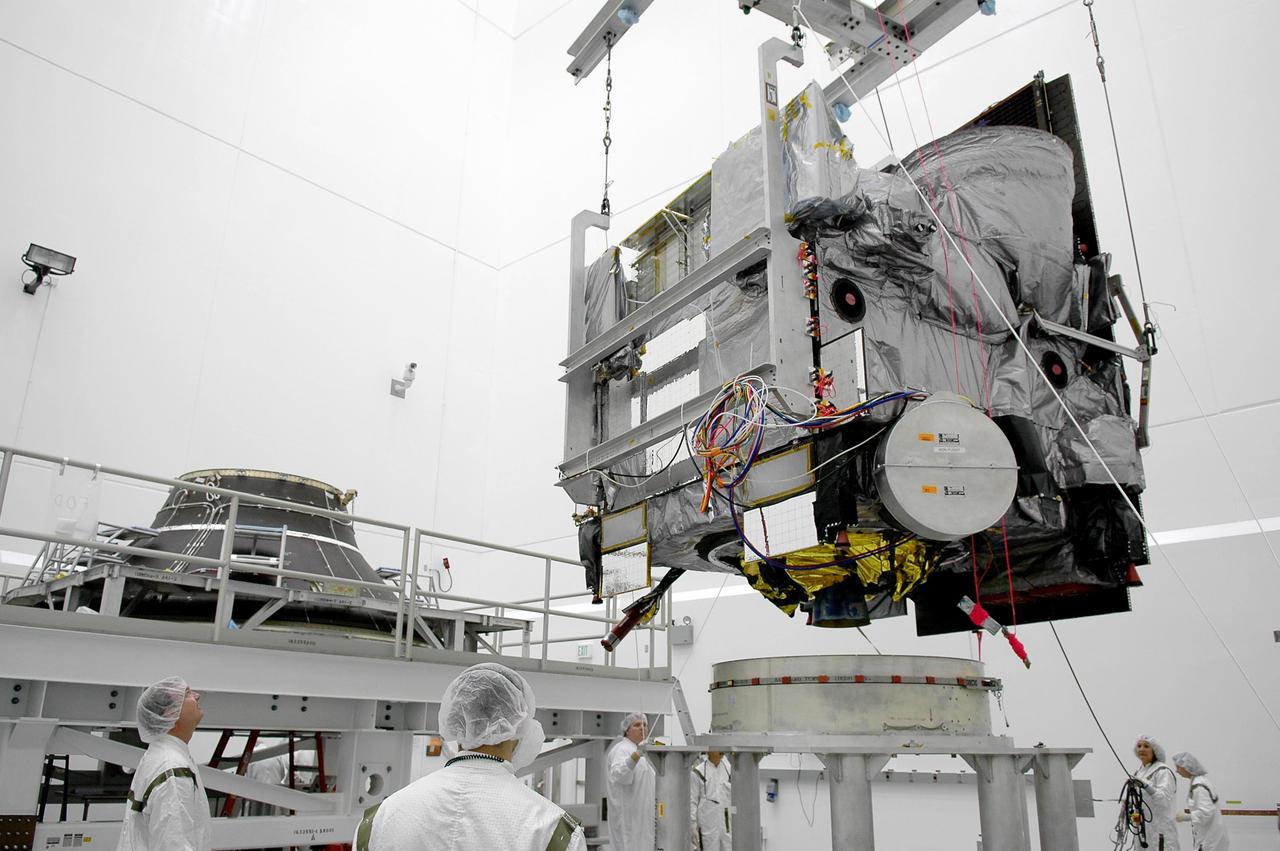
KENNEDY SPACE CENTER, FLA. - At Astrotech Space Operations in Titusville, Fla., the Geostationary Operational Environmental Satellite GOES-N is lifted for mating with the Payload Attach Fitting at left. The fitting will enable the spacecraft to be mated to its launch vehicle, a Boeing Delta IV, with a 3-burn second-stage operation. Since its arrival on March 11, the satellite has been undergoing final testing by Boeing Satellite Systems of the imaging system, instrumentation, communications and power systems. The GOES spacecraft are sponsored by NASA’s Goddard Space Flight Center and the National Oceanic and Atmospheric Administration. GOES-N is targeted to launch June 23 from Launch Complex 37 at Cape Canaveral Air Force Station in Florida.

KENNEDY SPACE CENTER, FLA. - At Astrotech Space Operations in Titusville, Fla., the Geostationary Operational Environmental Satellite GOES-N is lowered toward the Payload Attach Fitting for mating. The fitting will enable the spacecraft to be mated to its launch vehicle, a Boeing Delta IV, with a 3-burn second-stage operation. Since its arrival on March 11, the satellite has been undergoing final testing by Boeing Satellite Systems of the imaging system, instrumentation, communications and power systems. The GOES spacecraft are sponsored by NASA’s Goddard Space Flight Center and the National Oceanic and Atmospheric Administration. GOES-N is targeted to launch June 23 from Launch Complex 37 at Cape Canaveral Air Force Station in Florida.
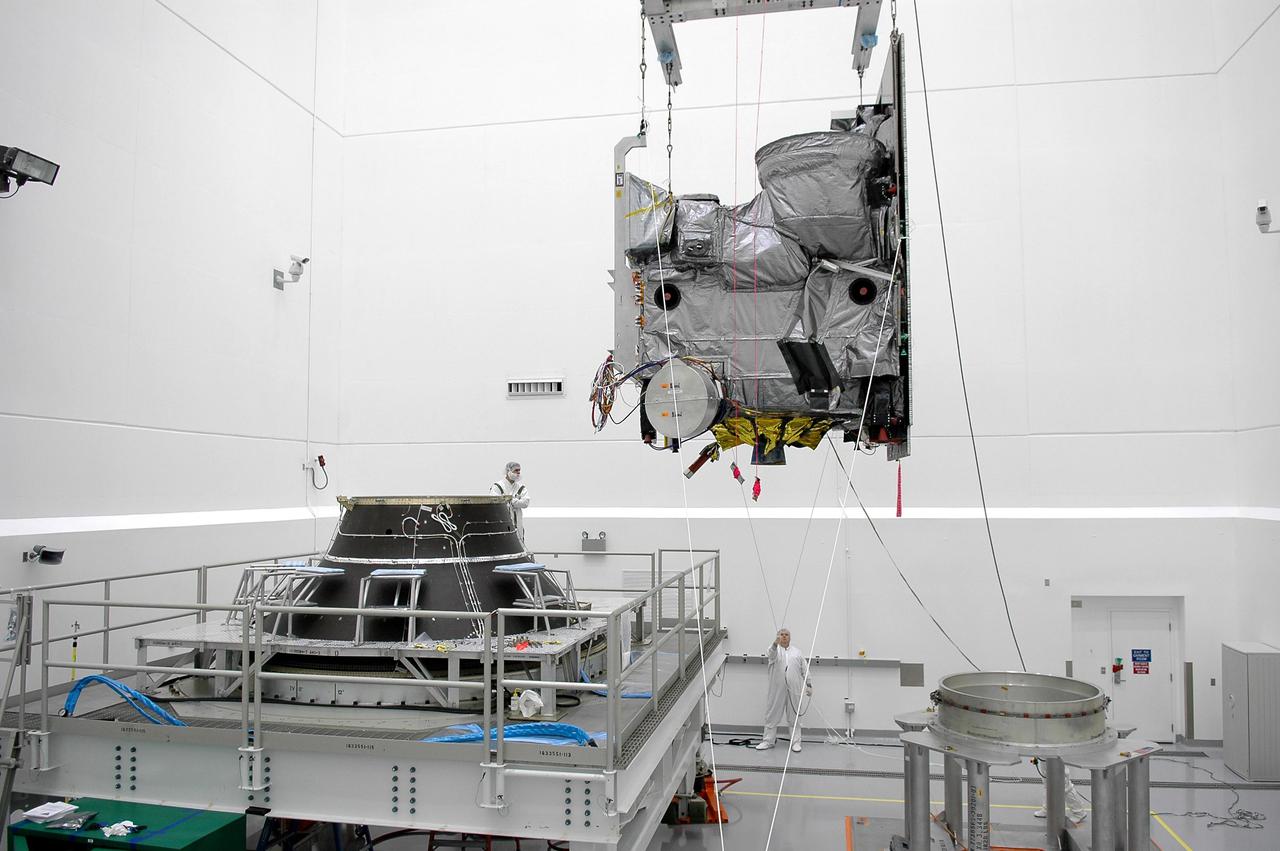
KENNEDY SPACE CENTER, FLA. - At Astrotech Space Operations in Titusville, Fla., the Geostationary Operational Environmental Satellite GOES-N is moved toward the Payload Attach Fitting at left for mating. The fitting will enable the spacecraft to be mated to its launch vehicle, a Boeing Delta IV, with a 3-burn second-stage operation. Since its arrival on March 11, the satellite has been undergoing final testing by Boeing Satellite Systems of the imaging system, instrumentation, communications and power systems. The GOES spacecraft are sponsored by NASA’s Goddard Space Flight Center and the National Oceanic and Atmospheric Administration. GOES-N is targeted to launch June 23 from Launch Complex 37 at Cape Canaveral Air Force Station in Florida.
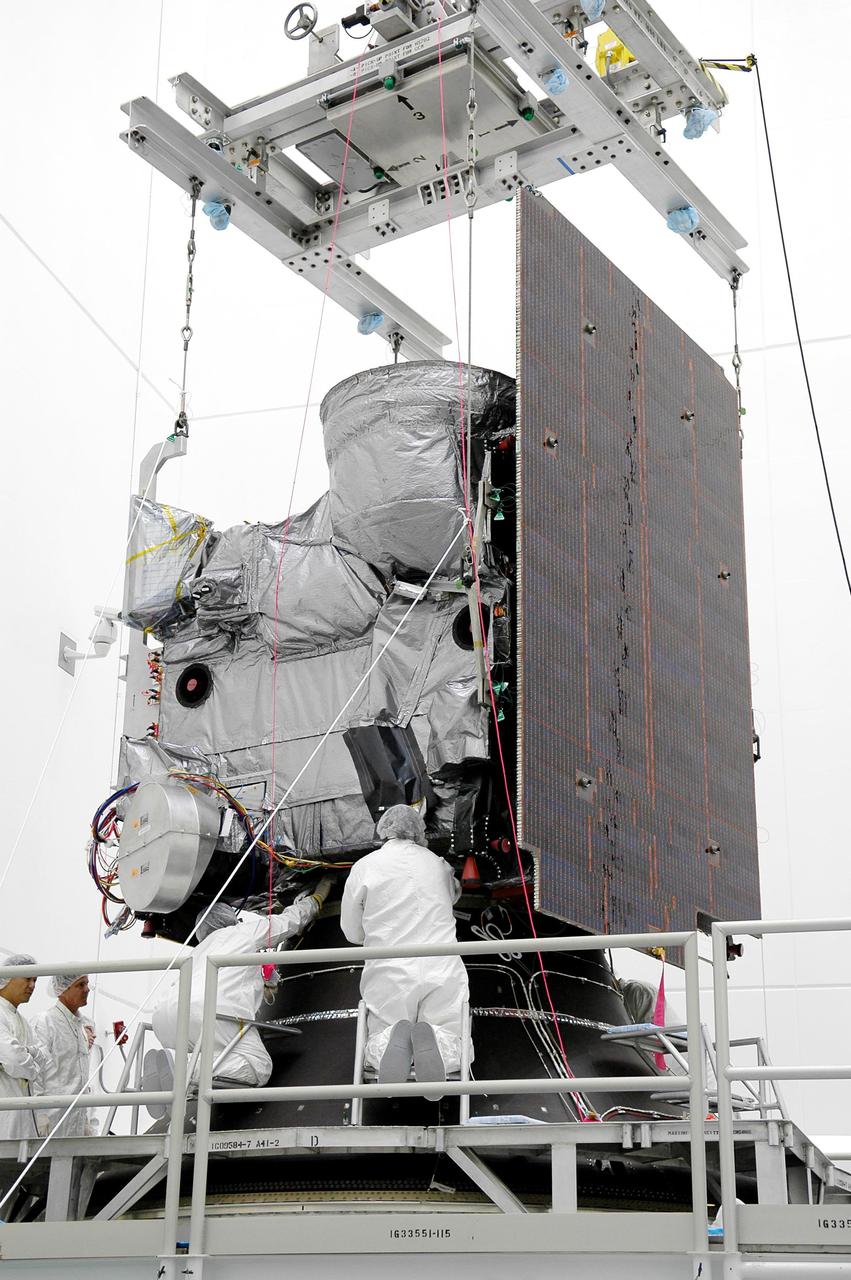
KENNEDY SPACE CENTER, FLA. - At Astrotech Space Operations in Titusville, Fla., Boeing workers attach the Geostationary Operational Environmental Satellite GOES-N to the Payload Attach Fitting. The fitting will enable the spacecraft to be mated to its launch vehicle, a Boeing Delta IV, with a 3-burn second-stage operation. Since its arrival on March 11, the satellite has been undergoing final testing by Boeing Satellite Systems of the imaging system, instrumentation, communications and power systems. The GOES spacecraft are sponsored by NASA’s Goddard Space Flight Center and the National Oceanic and Atmospheric Administration. GOES-N is targeted to launch June 23 from Launch Complex 37 at Cape Canaveral Air Force Station in Florida.
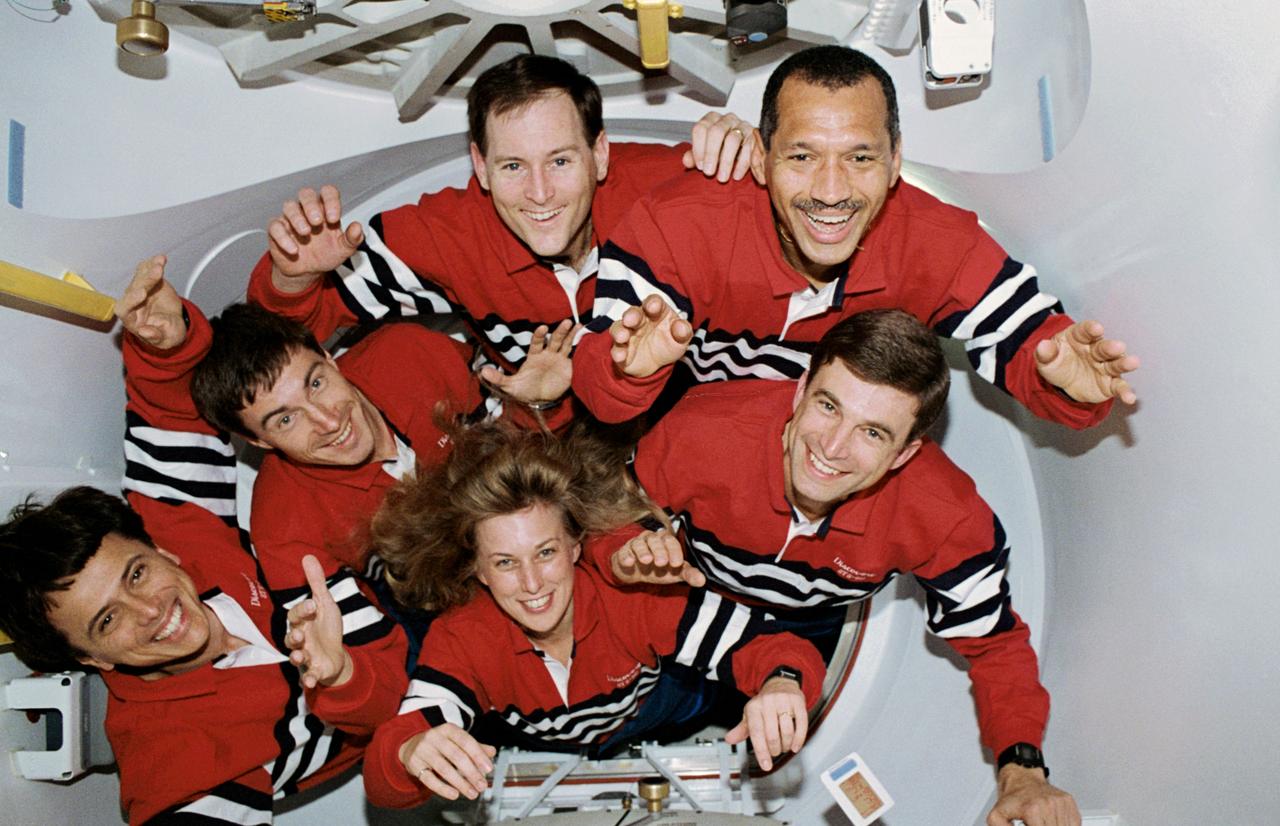
STS060-31-028 (3-11 Feb. 1994) --- Five NASA astronauts and a Russian cosmonaut squeeze through the tunnel which connects the shirt-sleeve environments of the space shuttle Discovery and the SPACEHAB module. SPACEHAB is located in the spacecraft’s payload bay. Charles F. Bolden Jr., mission commander, is at upper right. Others, clockwise from the commander, are Ronald M. Sega and N. Jan Davis, both mission specialists; Franklin R. Chang-Diaz, payload commander; cosmonaut Sergei K. Krikalev, mission specialist; and Kenneth S. Reightler Jr., pilot. The six spent eight days in Earth orbit. Photo credit: NASA
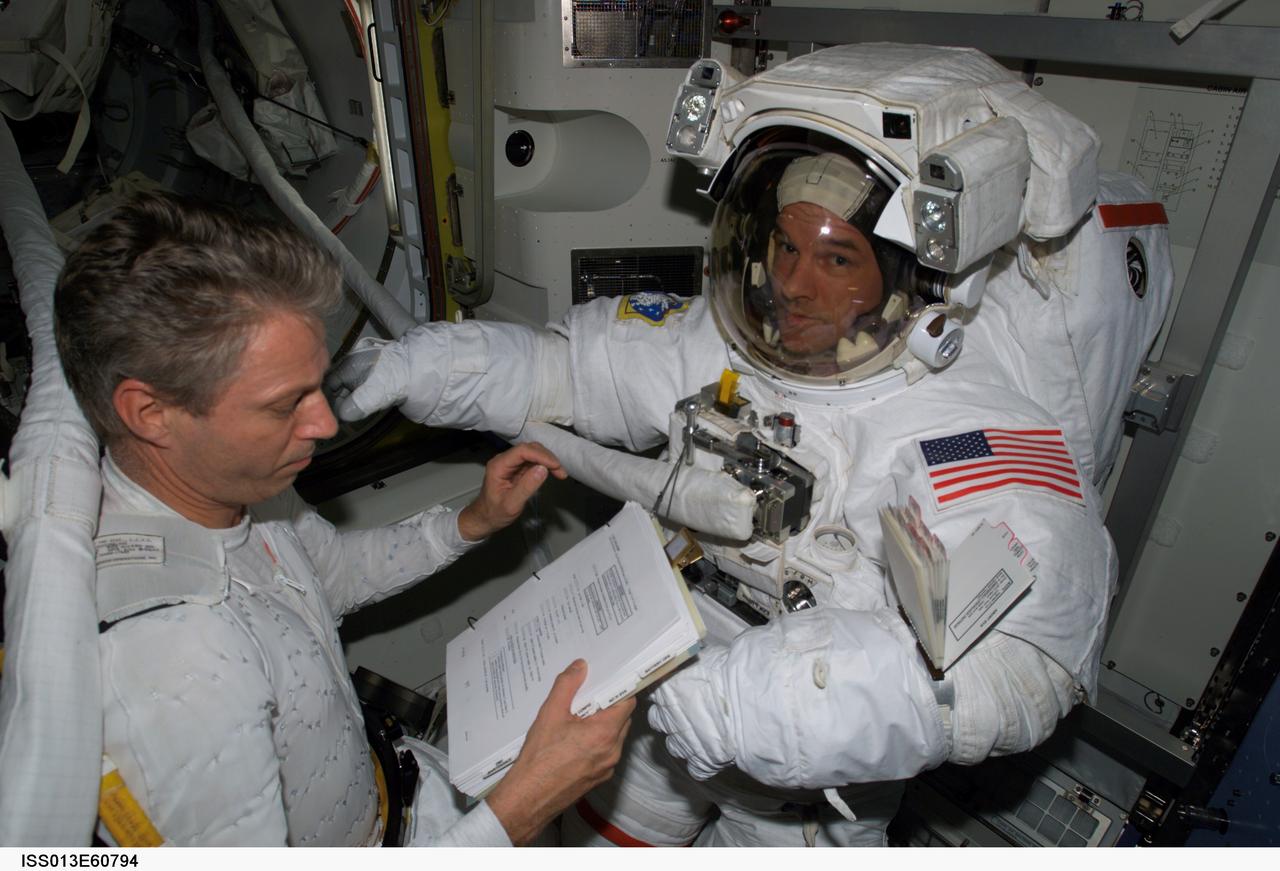
ISS013-E-60794 (28 July 2006) --- European Space Agency (ESA) astronaut Thomas Reiter (left), Expedition 13 flight engineer, looks over a procedures checklist as he assists astronaut Jeffrey N. Williams, NASA space station science officer and flight engineer, with his Extravehicular Mobility Unit (EMU) space suit in the Quest Airlock of the International Space Station. The crew is preparing for a session of extravehicular activity (EVA) scheduled for Thursday, Aug. 3, 2006. Reiter is attired in a liquid cooling and ventilation garment that complements the EMU space suit.
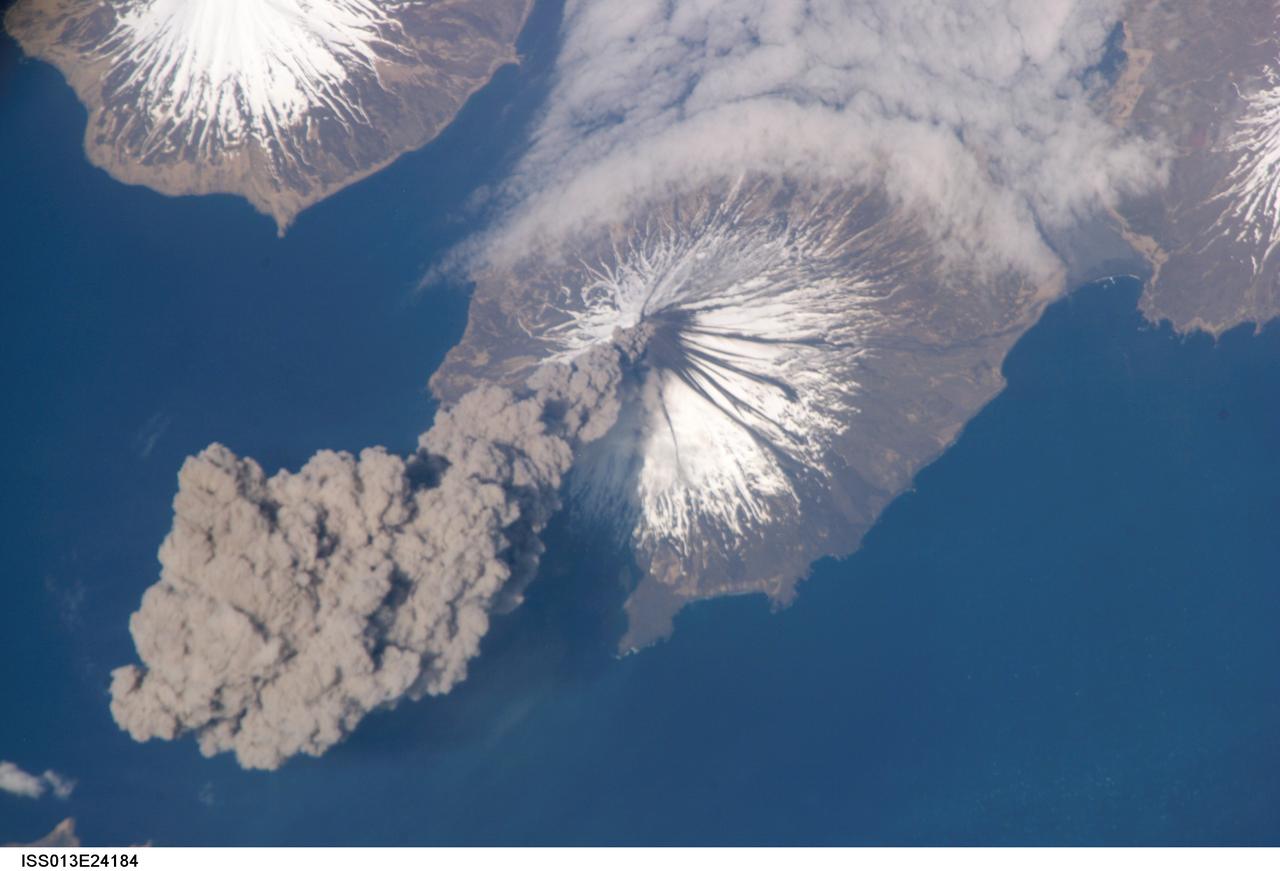
ISS013-E-24184 (23 May 2006) --- Eruption of Cleveland Volcano, Aleutian Islands, Alaska is featured in this image photographed by an Expedition 13 crewmember on the International Space Station. This most recent eruption was first reported to the Alaska Volcano Observatory by astronaut Jeffrey N. Williams, NASA space station science officer and flight engineer, at 3:00 p.m. Alaska Daylight Time (23:00 GMT). This image, acquired shortly after the beginning of the eruption, captures the ash plume moving west-southwest from the summit vent. The eruption was short-lived; the plume had completely detached from the volcano summit two hours later.
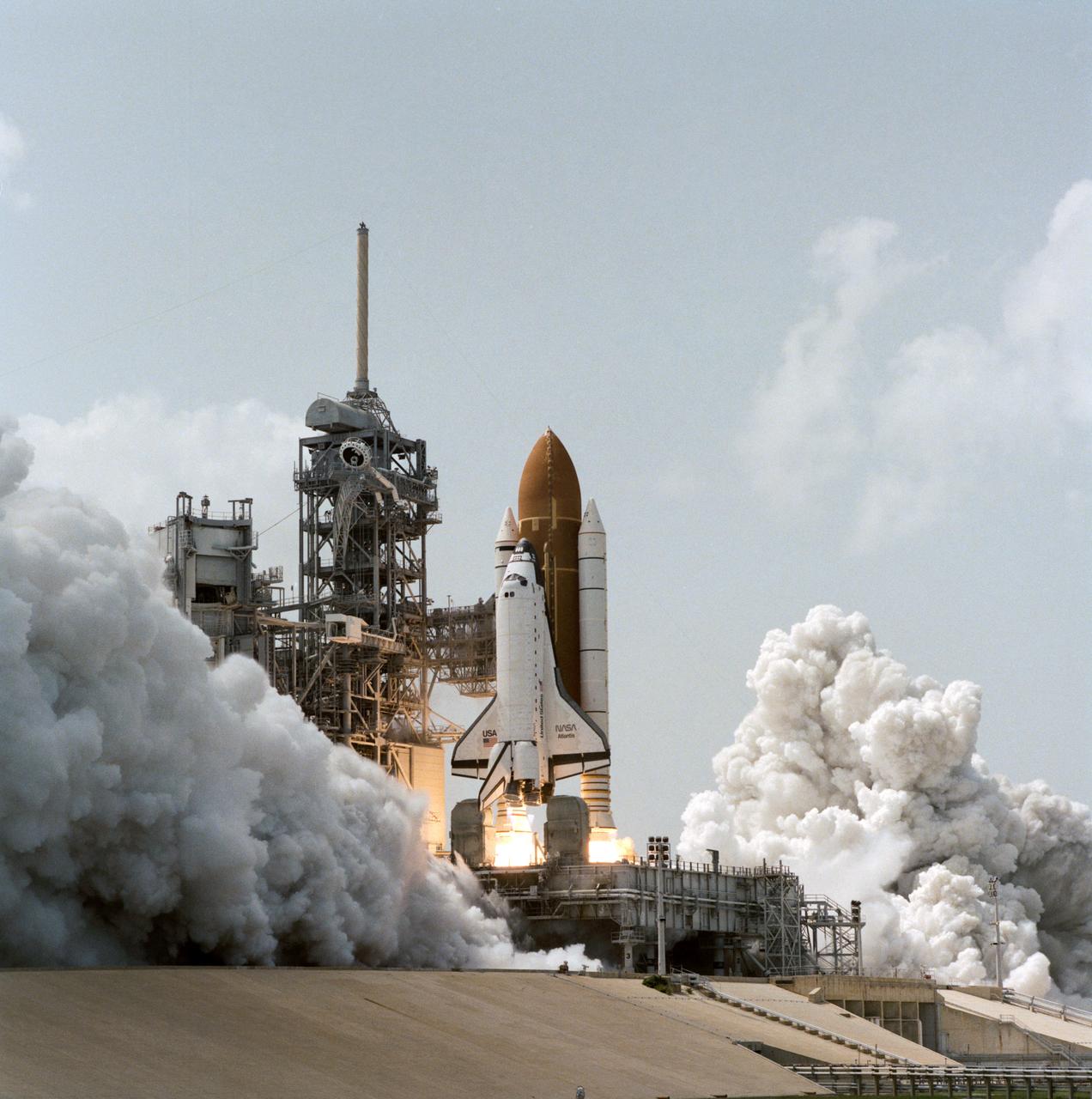
STS071-S-003 (27 June 1995) --- At the Kennedy Space Center's (KSC) Launch Pad 39A, the 100th United States human space launch gets underway at 3:32:19 p.m. (EDT) on June 27, 1995. Onboard the Space Shuttle Atlantis are five NASA astronauts and two Russian cosmonauts. In two days, the crew will join up with astronaut Norman E. Thagard and two Russian cosmonauts who have been onboard Russia's Mir Space Station since March of this year. That pair - Vladimir N. Dezhurov and Gennadiy M. Strekalov - will return to Earth aboard the Space Shuttle Atlantis with Thagard and the short-term United States visitors, while Anatoly Y. Solovyev and Nikolai M. Budarin - the two cosmonauts launched today aboard the Space Shuttle Atlantis - will remain aboard Mir for a longer tour of duty.
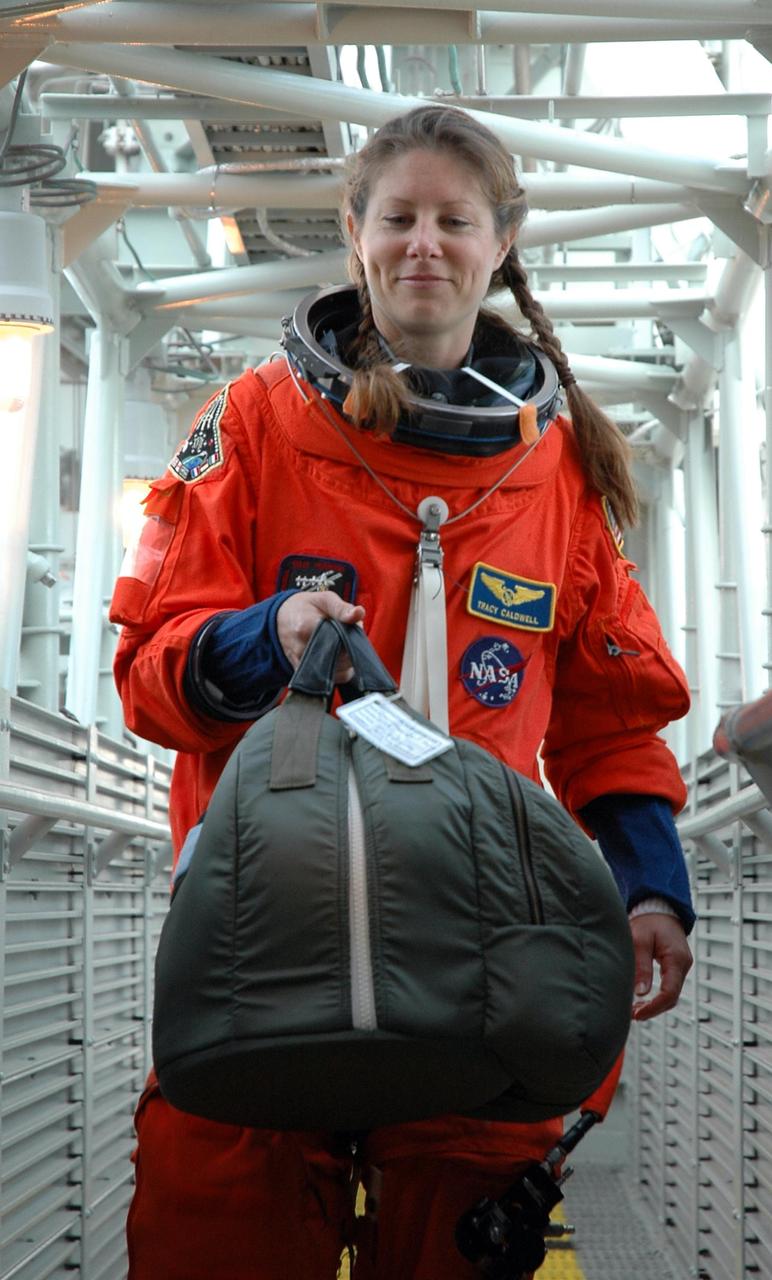
KENNEDY SPACE CENTER, Fla. -- On Launch Pad 39A, STS-118 Mission Specialist Tracy Caldwell makes her way to the White Room. There she will have her launch and entry suit prepared for liftoff by the closeout crew. Caldwell and the rest of the crew are taking part n a simulated launch countdown, the culmination of terminal countdown demonstration test activities. The White Room is situated at the end of the orbiter access arm and provides entry into the orbiter. TCDT activities also include M-113 training, payload familiarization and emergency egress training at the pad. The mission is the 22nd flight to the International Space Station and Space Shuttle Endeavour will carry a payload including the S5 truss, a SPACEHAB module and external stowage platform 3. STS-118 is targeted for launch on Aug. 7. Photo credit: NASA/Amanda Diller
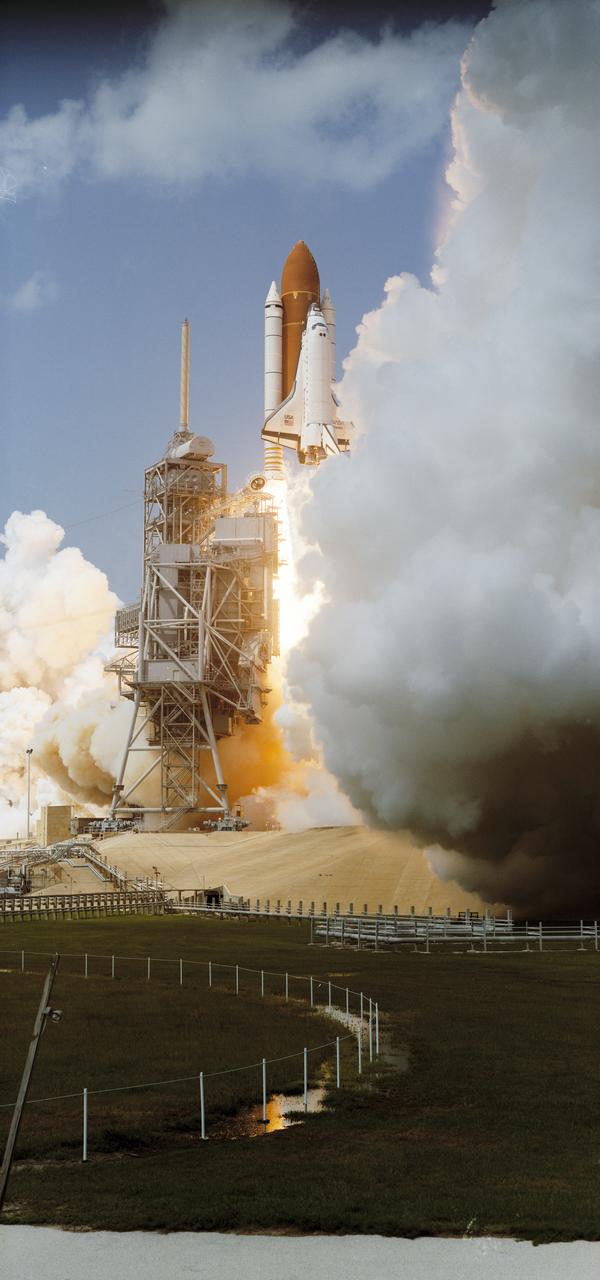
STS071-S-005 (27 June 1995) --- At the Kennedy Space Center's (KSC) Launch Pad 39A, the 100th United States human space launch gets underway at 3:32:19 p.m. (EDT) on June 27, 1995. Onboard Atlantis are five NASA astronauts and two Russian cosmonauts. In two days, the crew will join up with astronaut Norman E. Thagard and two Russian cosmonauts who have been onboard Russia's Mir Space Station since March of this year. That pair - Vladimir N. Dezhurov and Gennadiy M. Strekalov - will return to Earth aboard the Space Shuttle Atlantis with Thagard and the short-term visitors, while Anatoly Y. Solovyev and Nikolai M. Budarin - the two cosmonauts launched today aboard the Space Shuttle Atlantis - will remain aboard Mir for a longer tour of duty.

Image released 11 Aug 2011. The "Necklace Nebula" is located 15,000 light-years away in the constellation Sagitta (the Arrow). In this composite image, taken on July 2, 2011, Hubble's Wide Field Camera 3 captured the glow of hydrogen (blue), oxygen (green), and nitrogen (red). The object, aptly named the Necklace Nebula, is a recently discovered planetary nebula, the glowing remains of an ordinary, Sun-like star. The nebula consists of a bright ring, measuring 12 trillion miles wide, dotted with dense, bright knots of gas that resemble diamonds in a necklace. <a href="http://www.nasa.gov/mission_pages/hubble/science/necklace-nebula.html" target="_blank" rel="nofollow"></a> <b>Credit:</b> NASA, ESA, and the Hubble Heritage Team (STScI/AURA) <b><a href="http://www.nasa.gov/centers/goddard/home/index.html" rel="nofollow">NASA Goddard Space Flight Center</a></b> enables NASA’s mission through four scientific endeavors: Earth Science, Heliophysics, Solar System Exploration, and Astrophysics. Goddard plays a leading role in NASA’s accomplishments by contributing compelling scientific knowledge to advance the Agency’s mission. <b>Follow us on <a href="http://twitter.com/NASA_GoddardPix" rel="nofollow">Twitter</a></b> <b>Like us on <a href="http://www.facebook.com/pages/Greenbelt-MD/NASA-Goddard/395013845897?ref=tsd" rel="nofollow">Facebook</a></b> <b>Find us on <a href="http://web.stagram.com/n/nasagoddard/?vm=grid" rel="nofollow">Instagram</a></b>
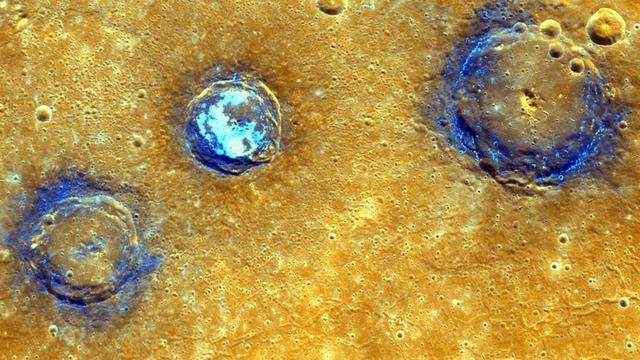
Measurements from NASA MESSENGER MLA instrument during the spacecraft greater than four-year orbital mission have mapped the topography of Mercury northern hemisphere in great detail. This enhanced color mosaic shows (from left to right) Munch (61 km/38 mi.), Sander (52 km/32 mi.), and Poe (81 km/50 mi.) craters, which lie in the northwest portion of the Caloris basin. The smooth volcanic plains that fill the Caloris basin appear orange in this image. All three craters are superposed on these volcanic plains and have excavated low-reflectance material, which appears blue in this image, from the subsurface. Hollows, typically associated with low-reflectance material, dot the rims of Munch and Poe and cover the floor of Sander. These images were acquired as high-resolution targeted color observations. Targeted color observations are images of a small area on Mercury's surface at resolutions higher than the 1-kilometer/pixel 8-color base map. During MESSENGER's one-year primary mission, hundreds of targeted color observations were obtained. During MESSENGER's extended mission, high-resolution targeted color observations are more rare, as the 3-color base map is covering Mercury's northern hemisphere with the highest-resolution color images that are possible. Date acquired: July 03, 2011, July 04, 2011 Image Mission Elapsed Time (MET): 218204186, 218204190, 218204194, 218246487, 218246491, 218246495 Image ID: 458397, 458398, 458399, 460433, 460434, 460435 Instrument: Wide Angle Camera (WAC) of the Mercury Dual Imaging System (MDIS) Center Latitude: 42° N Center Longitude: 154° E Projection: Equirectangular Resolution: 239 meters/pixel Scale: Munch crater is approximately 61 km (38 mi.) in diameter Incidence Angle: 43°, 42° Emission Angle: 35°, 13° Phase Angle: 79°, 55° http://photojournal.jpl.nasa.gov/catalog/PIA19421
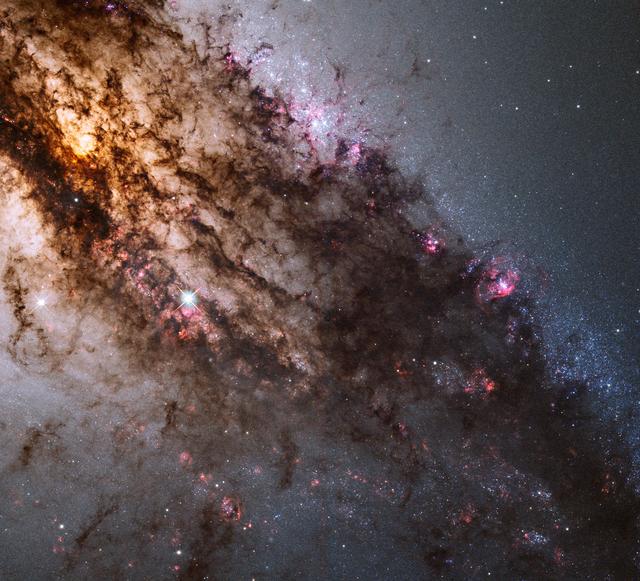
NASA image release June 16, 2011 Resembling looming rain clouds on a stormy day, dark lanes of dust crisscross the giant elliptical galaxy Centaurus A. Hubble's panchromatic vision, stretching from ultraviolet through near-infrared wavelengths, reveals the vibrant glow of young, blue star clusters and a glimpse into regions normally obscured by the dust. The warped shape of Centaurus A's disk of gas and dust is evidence for a past collision and merger with another galaxy. The resulting shockwaves cause hydrogen gas clouds to compress, triggering a firestorm of new star formation. These are visible in the red patches in this Hubble close-up. At a distance of just over 11 million light-years, Centaurus A contains the closest active galactic nucleus to Earth. The center is home for a supermassive black hole that ejects jets of high-speed gas into space, but neither the supermassive or the jets are visible in this image. This image was taken in July 2010 with Hubble's Wide Field Camera 3. The Hubble Space Telescope is a project of international cooperation between NASA and the European Space Agency. NASA's Goddard Space Flight Center manages the telescope. The Space Telescope Science Institute (STScI) conducts Hubble science operations. STScI is operated for NASA by the Association of Universities for Research in Astronomy, Inc., in Washington, D.C. For images and more information about the findings, visit: <a href="http://www.nasa.gov/hubble" rel="nofollow">www.nasa.gov/hubble</a> and <a href="http://www.hubblesite.org/news/2011/18" rel="nofollow">www.hubblesite.org/news/2011/18</a> Cheryl Gundy, STSCI <b><a href="http://www.nasa.gov/centers/goddard/home/index.html" rel="nofollow">NASA Goddard Space Flight Center</a></b> enables NASA’s mission through four scientific endeavors: Earth Science, Heliophysics, Solar System Exploration, and Astrophysics. Goddard plays a leading role in NASA’s accomplishments by contributing compelling scientific knowledge to advance the Agency’s mission. <b>Follow us on <a href="http://twitter.com/NASAGoddardPix" rel="nofollow">Twitter</a></b> <b>Join us on <a href="http://www.facebook.com/pages/Greenbelt-MD/NASA-Goddard/395013845897?ref=tsd" rel="nofollow">Facebook</a></b> <b>Find us on <a href="http://web.stagram.com/n/nasagoddard/?vm=grid" rel="nofollow">Instagram</a></b>
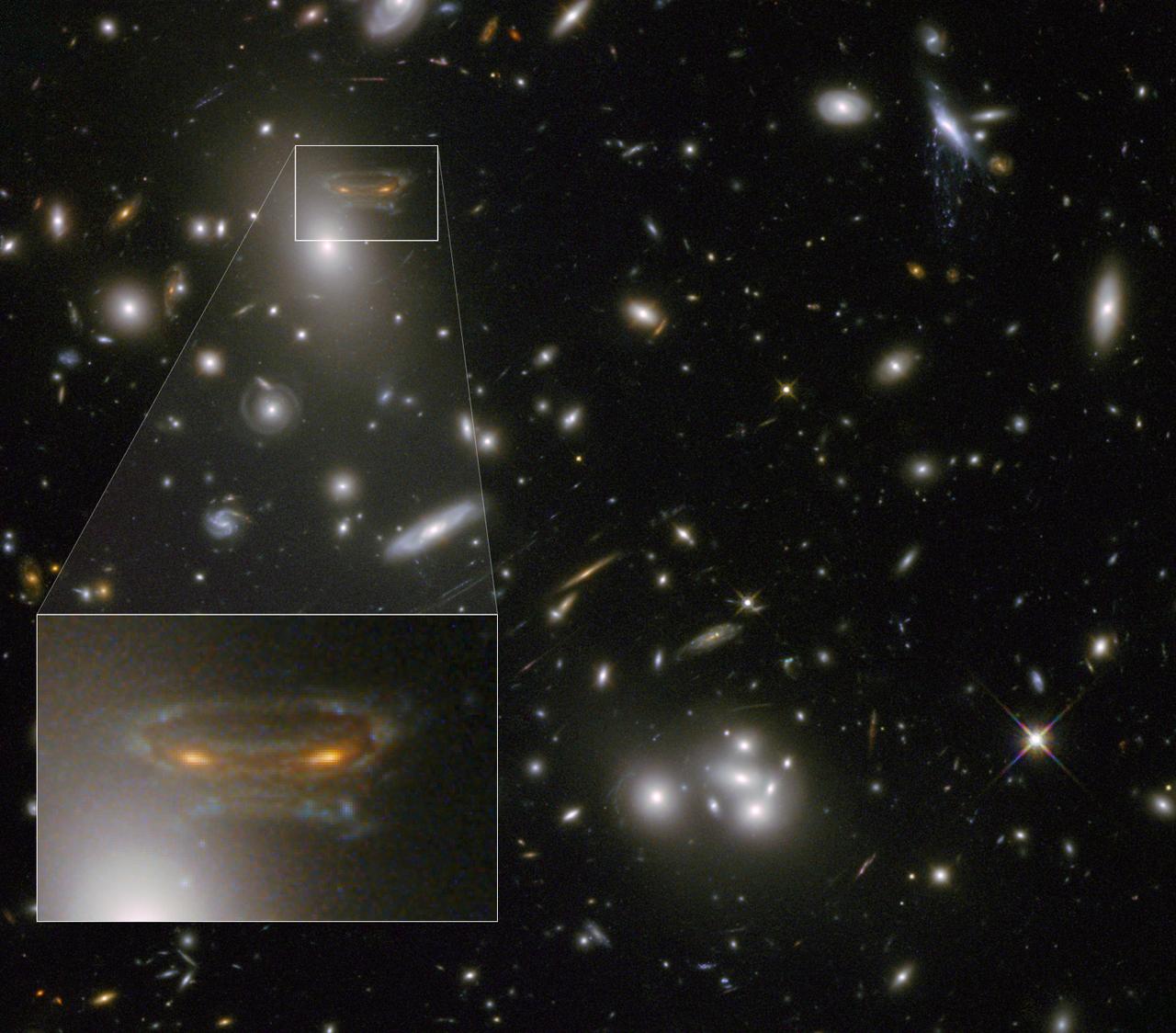
The gravitational field surrounding this massive cluster of galaxies, Abell 68, acts as a natural lens in space to brighten and magnify the light coming from very distant background galaxies. Like a fun house mirror, lensing creates a fantasy landscape of arc-like images and mirror images of background galaxies. The foreground cluster is 2 billion light-years away, and the lensed images come from galaxies far behind it. In this photo, the image of a spiral galaxy at upper left has been stretched and mirrored into a shape similar to that of a simulated alien from the classic 1970s computer game "Space Invaders!" A second, less distorted image of the same galaxy appears to the left of the large, bright elliptical galaxy. In the upper right of the photo is another striking feature of the image that is unrelated to gravitational lensing. What appears to be purple liquid dripping from a galaxy is a phenomenon called ram-pressure stripping. The gas clouds within the galaxy are being stripped out and heated up as the galaxy passes through a region of denser intergalactic gas. This image was taken in infrared light by Hubble’s Wide Field Camera 3, and combined with near-infrared observations from Hubble’s Advanced Camera for Surveys. The image is based in part on data spotted by Nick Rose in the Hubble’s Hidden Treasures image processing competition. The Hubble Space Telescope is a project of international cooperation between NASA and the European Space Agency. NASA's Goddard Space Flight Center in Greenbelt, Md., manages the telescope. The Space Telescope Science Institute (STScI) in Baltimore, Md., conducts Hubble science operations. STScI is operated by the Association of Universities for Research in Astronomy, Inc., in Washington. To read more go to: <a href="http://1.usa.gov/Z6uDUp" rel="nofollow">1.usa.gov/Z6uDUp</a> Credit: NASA and ESA Acknowledgement: N. Rose For image files and more information about Abell 68, visit: <a href="http://hubblesite.org/news/2013/09" rel="nofollow">hubblesite.org/news/2013/09</a> <a href="http://www.spacetelescope.org/news/heic04" rel="nofollow">www.spacetelescope.org/news/heic04</a> <a href="http://heritage.stsci.edu/2013/09" rel="nofollow">heritage.stsci.edu/2013/09</a> <a href="http://www.spacetelescope.org/projects/hiddentreasures/" rel="nofollow">www.spacetelescope.org/projects/hiddentreasures/</a> <b><a href="http://www.nasa.gov/audience/formedia/features/MP_Photo_Guidelines.html" rel="nofollow">NASA image use policy.</a></b> <b><a href="http://www.nasa.gov/centers/goddard/home/index.html" rel="nofollow">NASA Goddard Space Flight Center</a></b> enables NASA’s mission through four scientific endeavors: Earth Science, Heliophysics, Solar System Exploration, and Astrophysics. Goddard plays a leading role in NASA’s accomplishments by contributing compelling scientific knowledge to advance the Agency’s mission. <b>Follow us on <a href="http://twitter.com/NASA_GoddardPix" rel="nofollow">Twitter</a></b> <b>Like us on <a href="http://www.facebook.com/pages/Greenbelt-MD/NASA-Goddard/395013845897?ref=tsd" rel="nofollow">Facebook</a></b> <b>Find us on <a href="http://instagram.com/nasagoddard?vm=grid" rel="nofollow">Instagram</a></b>
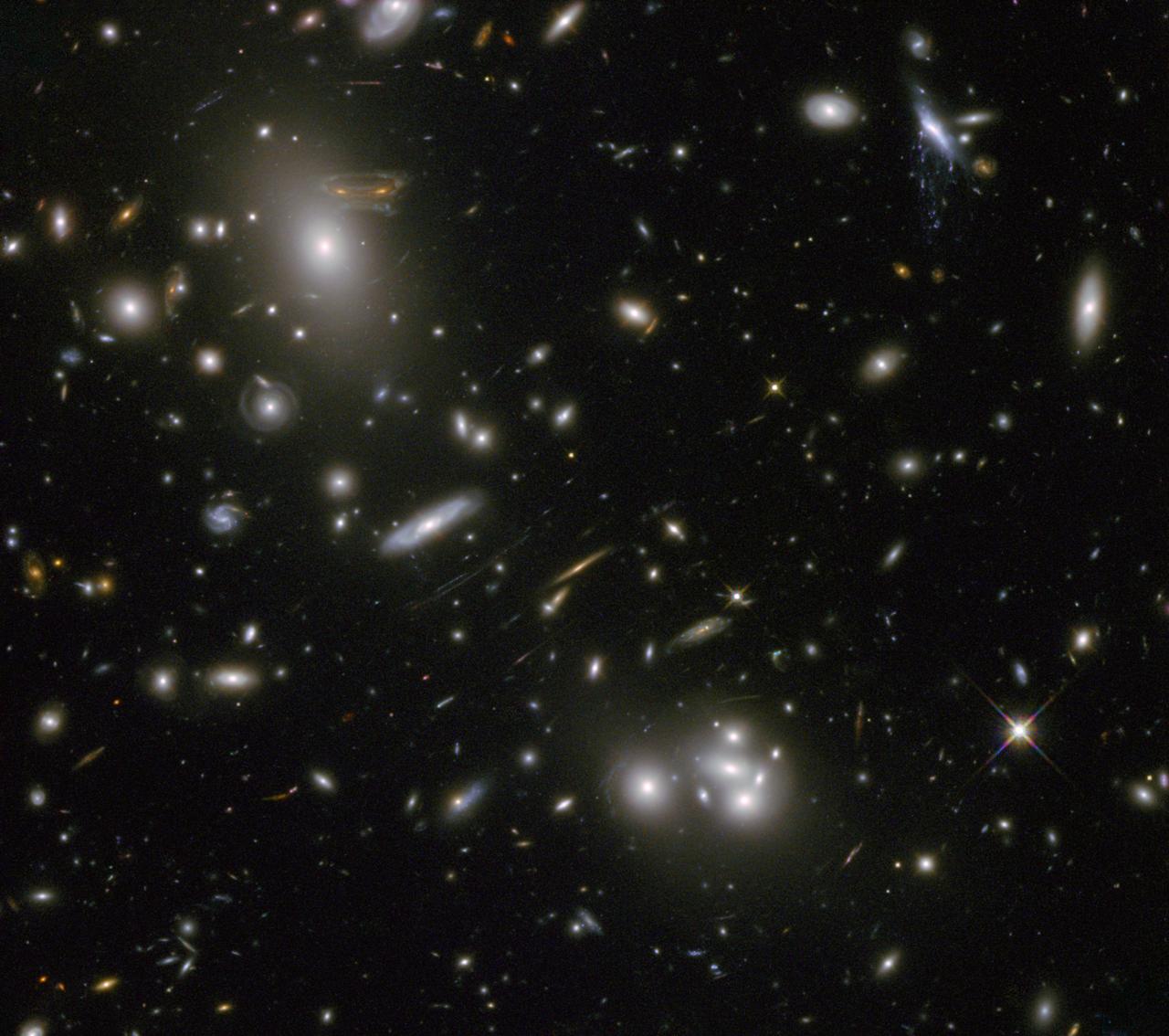
The gravitational field surrounding this massive cluster of galaxies, Abell 68, acts as a natural lens in space to brighten and magnify the light coming from very distant background galaxies. Like a fun house mirror, lensing creates a fantasy landscape of arc-like images and mirror images of background galaxies. The foreground cluster is 2 billion light-years away, and the lensed images come from galaxies far behind it. In this photo, the image of a spiral galaxy at upper left has been stretched and mirrored into a shape similar to that of a simulated alien from the classic 1970s computer game "Space Invaders!" A second, less distorted image of the same galaxy appears to the left of the large, bright elliptical galaxy. In the upper right of the photo is another striking feature of the image that is unrelated to gravitational lensing. What appears to be purple liquid dripping from a galaxy is a phenomenon called ram-pressure stripping. The gas clouds within the galaxy are being stripped out and heated up as the galaxy passes through a region of denser intergalactic gas. This image was taken in infrared light by Hubble’s Wide Field Camera 3, and combined with near-infrared observations from Hubble’s Advanced Camera for Surveys. The image is based in part on data spotted by Nick Rose in the Hubble’s Hidden Treasures image processing competition. The Hubble Space Telescope is a project of international cooperation between NASA and the European Space Agency. NASA's Goddard Space Flight Center in Greenbelt, Md., manages the telescope. The Space Telescope Science Institute (STScI) in Baltimore, Md., conducts Hubble science operations. STScI is operated by the Association of Universities for Research in Astronomy, Inc., in Washington. Credit: NASA and ESA Acknowledgement: N. Rose For image files and more information about Abell 68, visit: <a href="http://hubblesite.org/news/2013/09" rel="nofollow">hubblesite.org/news/2013/09</a> <a href="http://www.spacetelescope.org/news/heic04" rel="nofollow">www.spacetelescope.org/news/heic04</a> <a href="http://heritage.stsci.edu/2013/09" rel="nofollow">heritage.stsci.edu/2013/09</a> <a href="http://www.spacetelescope.org/projects/hiddentreasures/" rel="nofollow">www.spacetelescope.org/projects/hiddentreasures/</a> <b><a href="http://www.nasa.gov/audience/formedia/features/MP_Photo_Guidelines.html" rel="nofollow">NASA image use policy.</a></b> <b><a href="http://www.nasa.gov/centers/goddard/home/index.html" rel="nofollow">NASA Goddard Space Flight Center</a></b> enables NASA’s mission through four scientific endeavors: Earth Science, Heliophysics, Solar System Exploration, and Astrophysics. Goddard plays a leading role in NASA’s accomplishments by contributing compelling scientific knowledge to advance the Agency’s mission. <b>Follow us on <a href="http://twitter.com/NASA_GoddardPix" rel="nofollow">Twitter</a></b> <b>Like us on <a href="http://www.facebook.com/pages/Greenbelt-MD/NASA-Goddard/395013845897?ref=tsd" rel="nofollow">Facebook</a></b> <b>Find us on <a href="http://instagram.com/nasagoddard?vm=grid" rel="nofollow">Instagram</a></b>