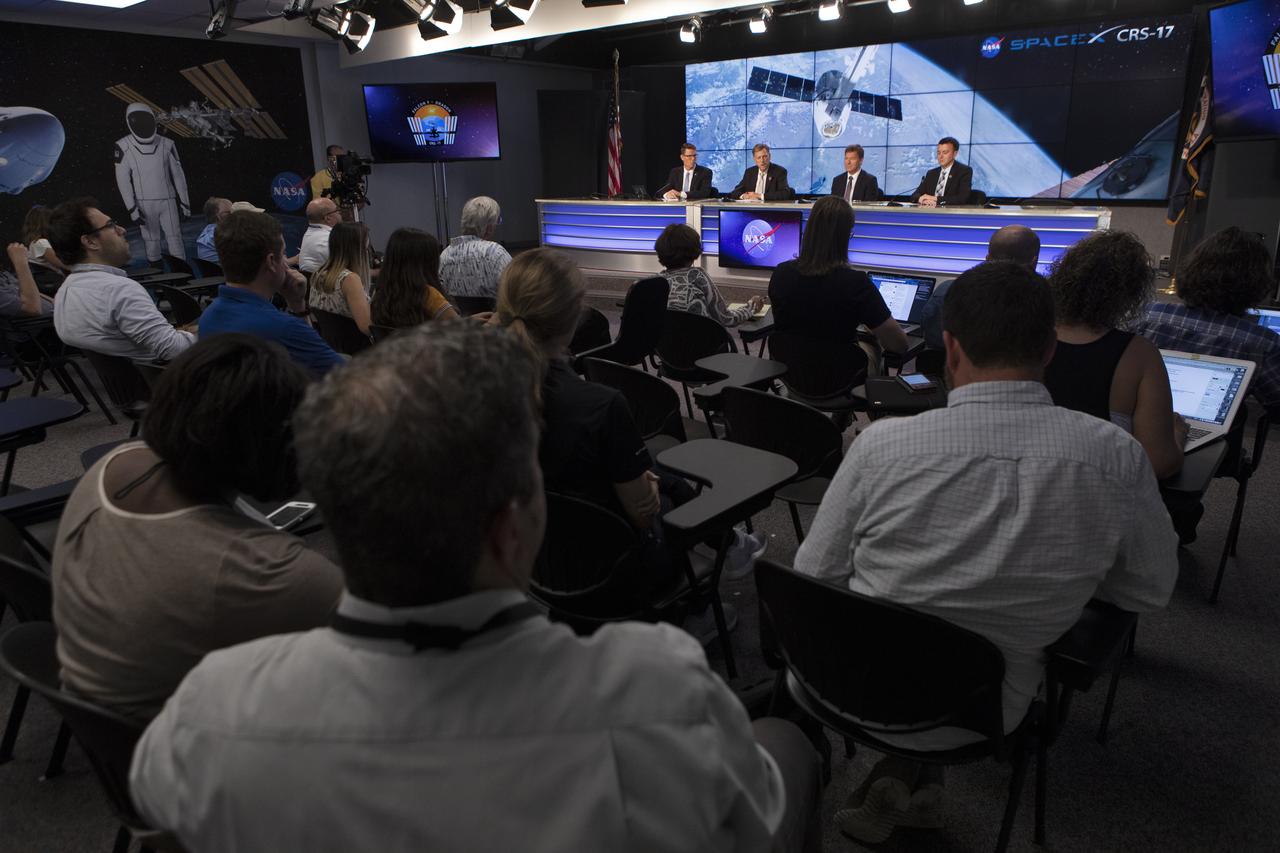
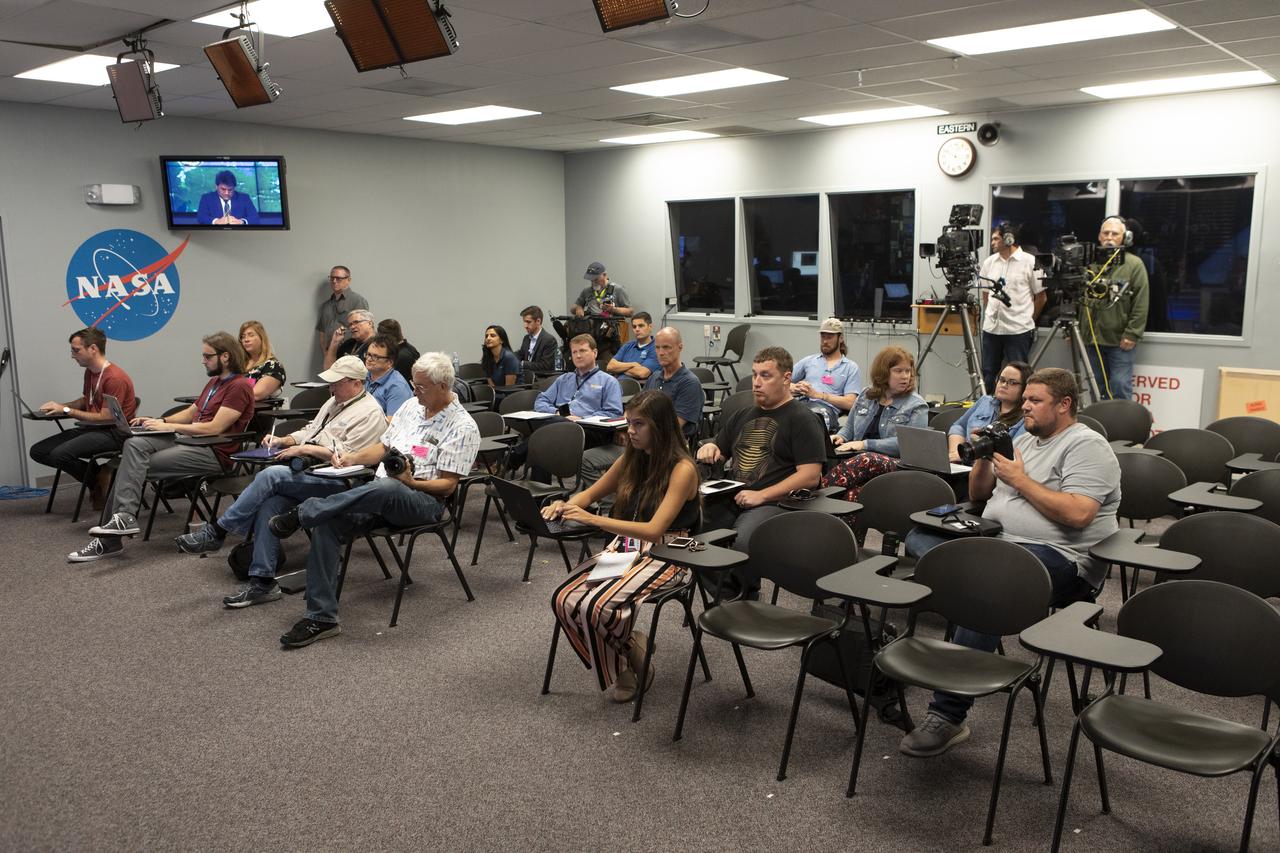
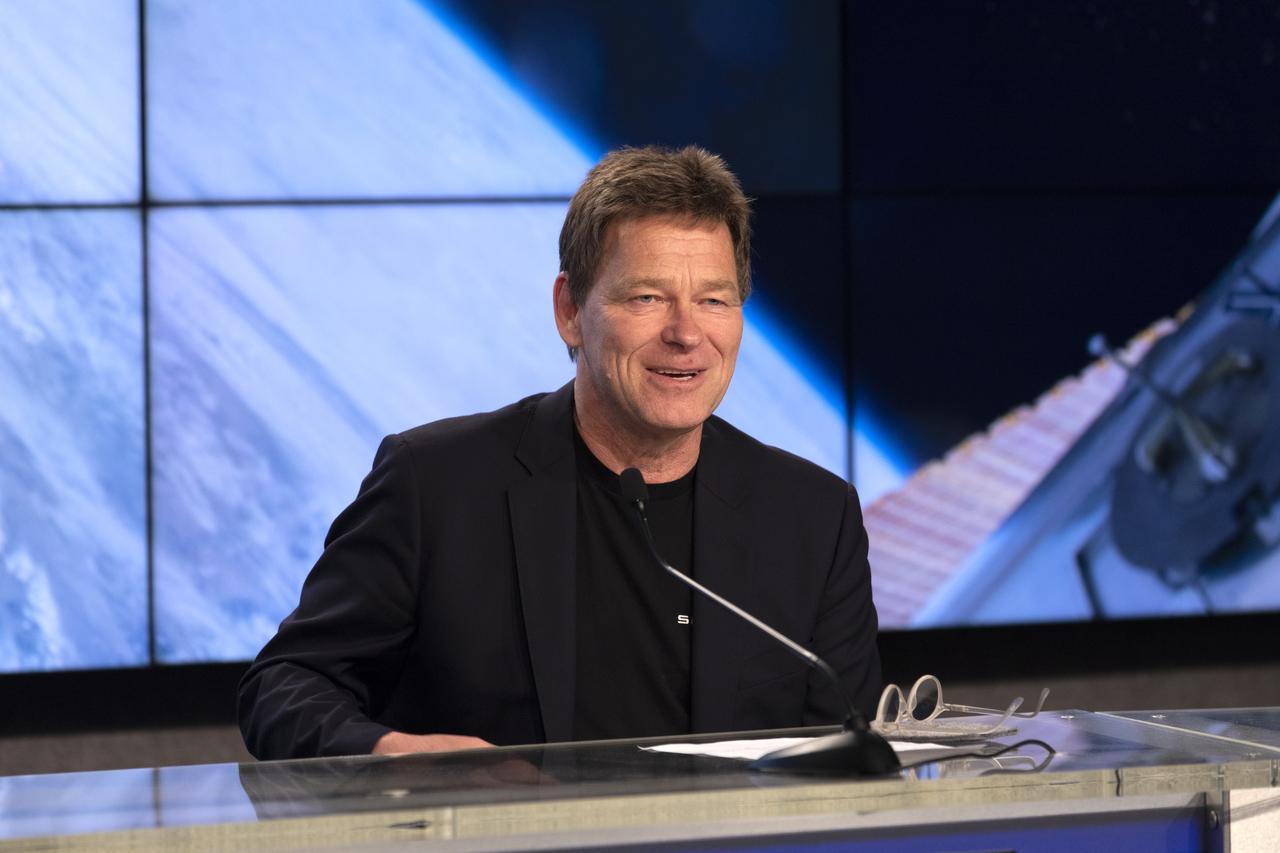
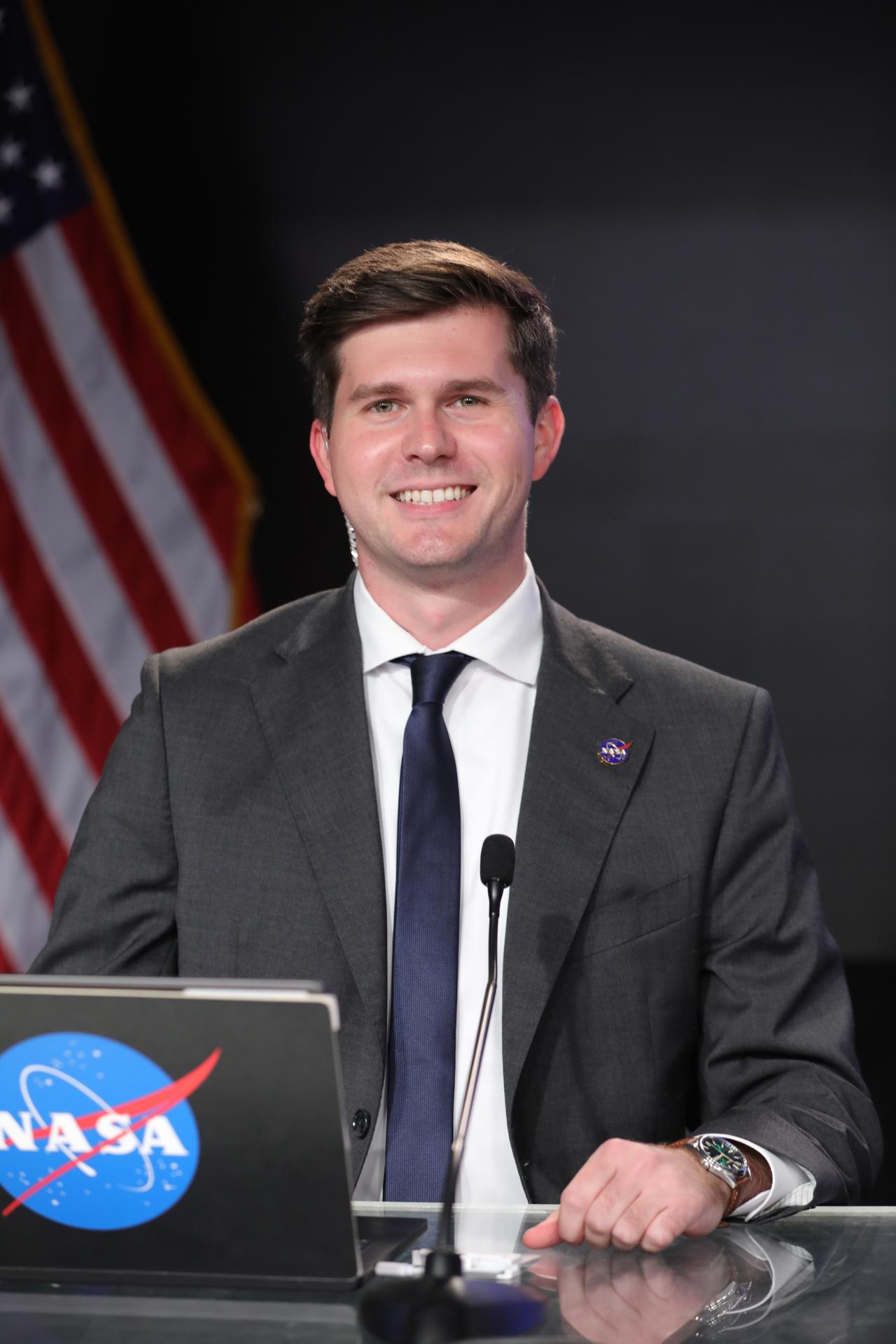
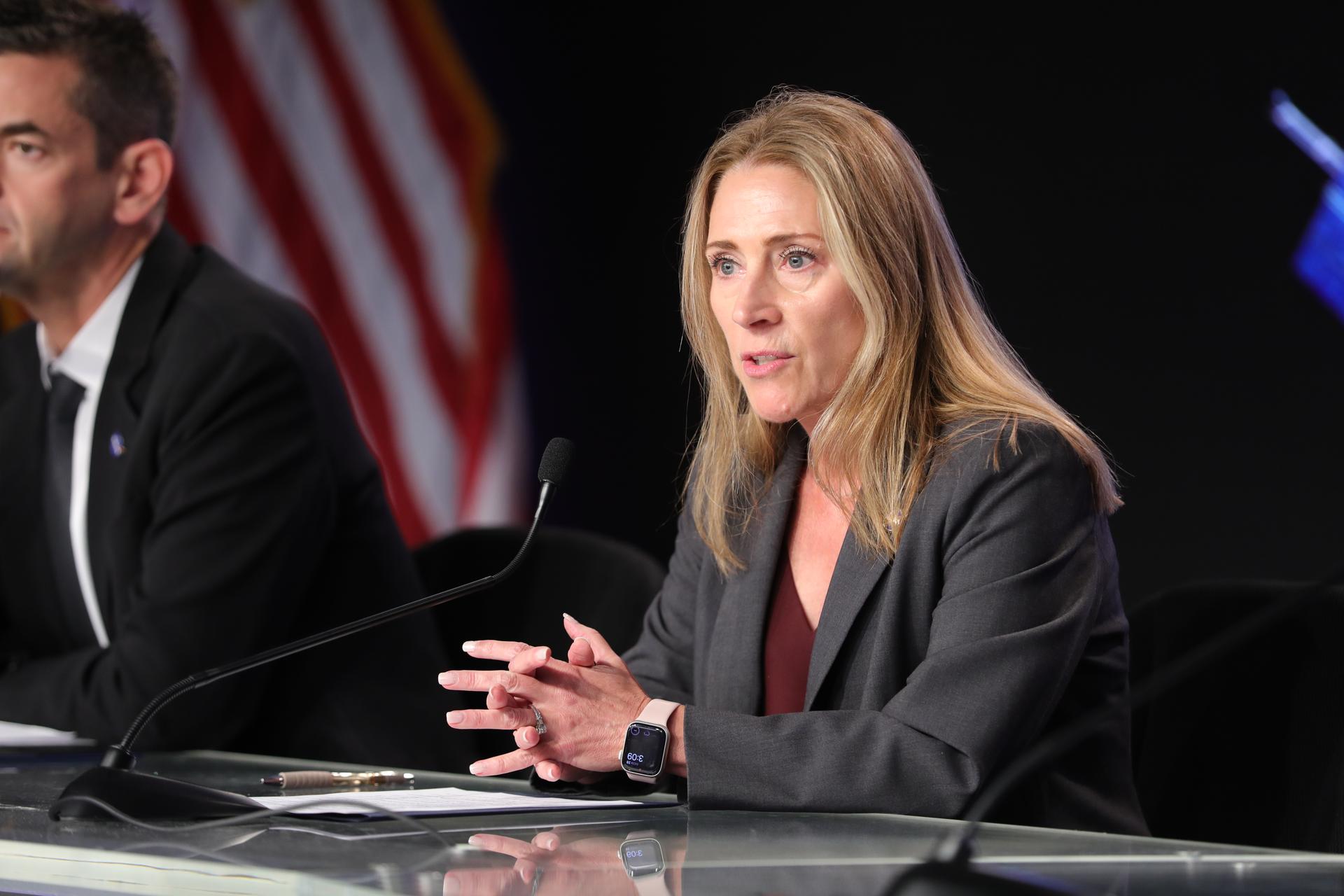
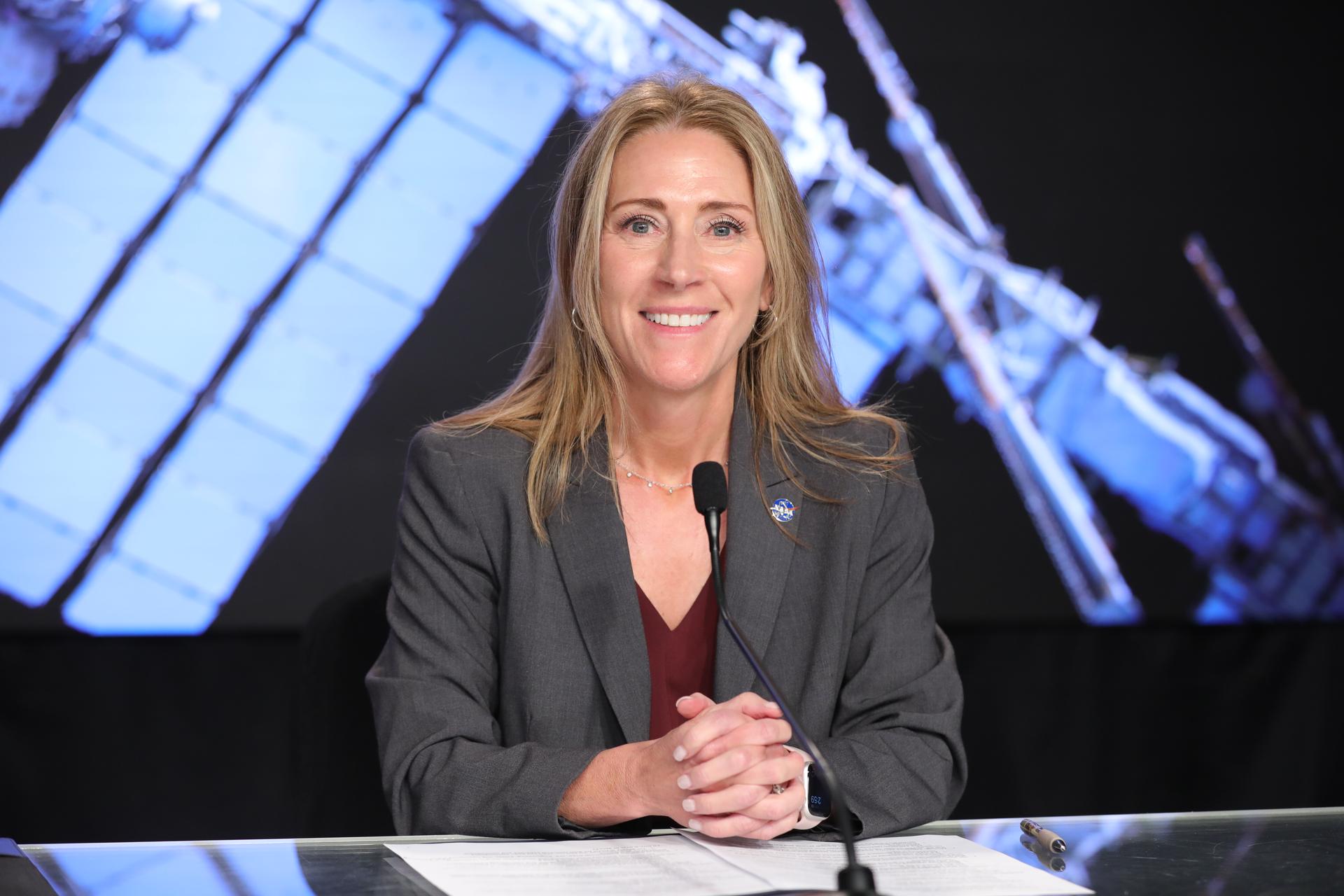
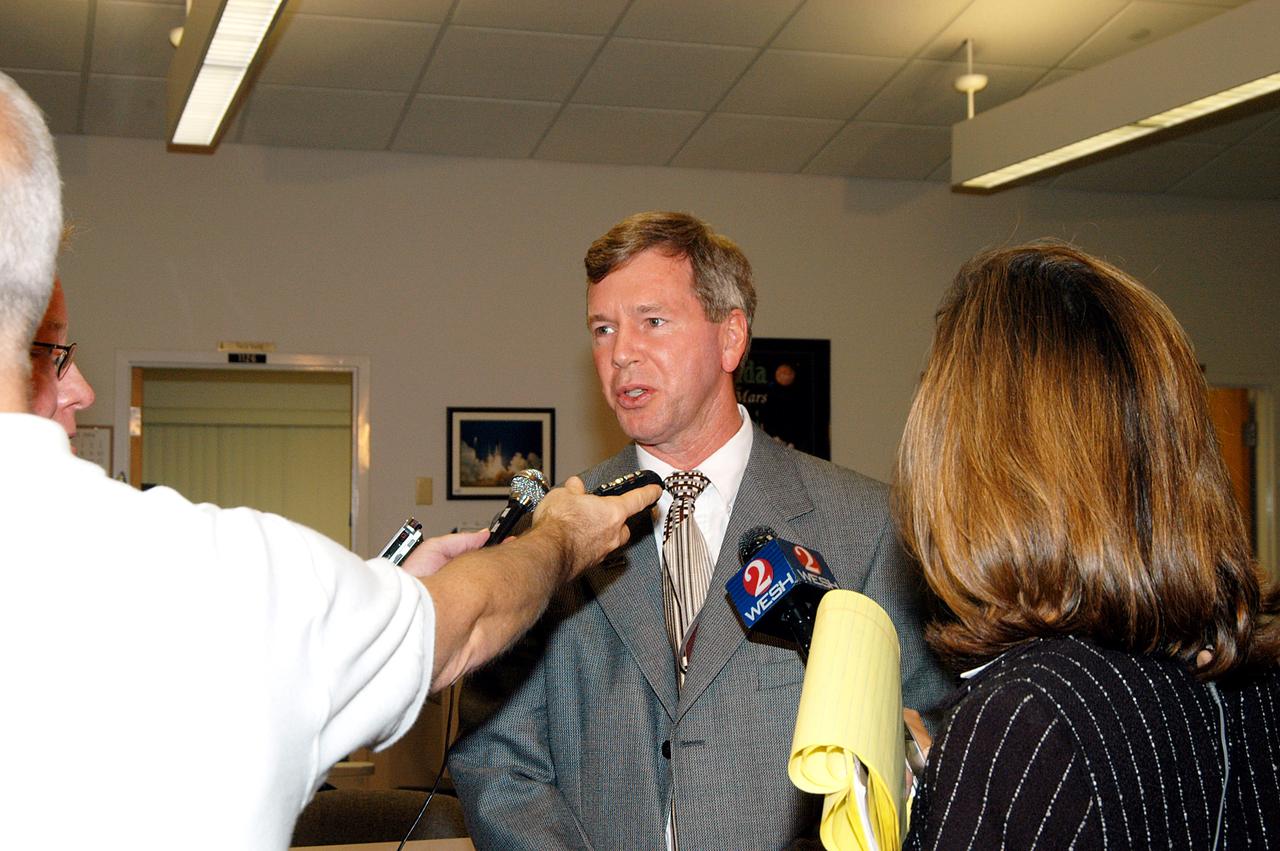
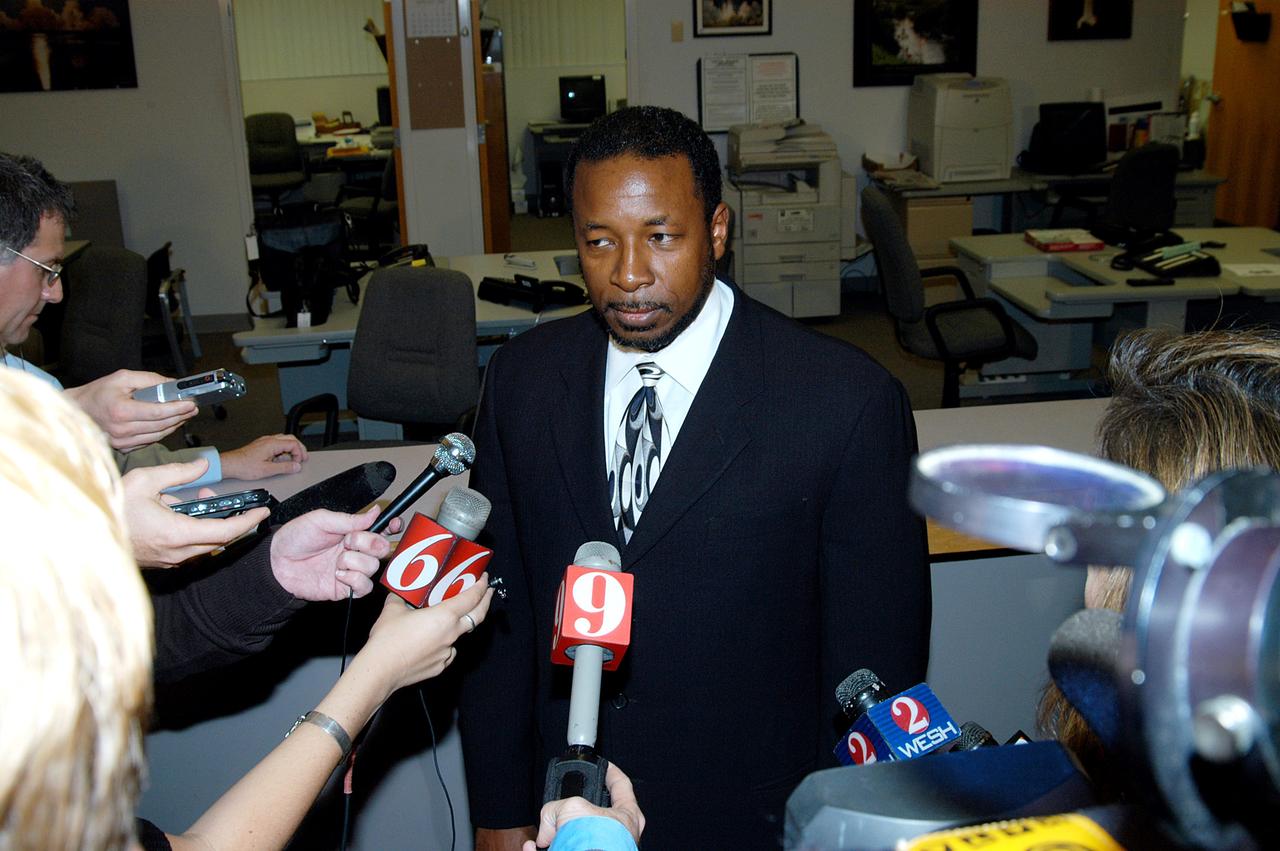
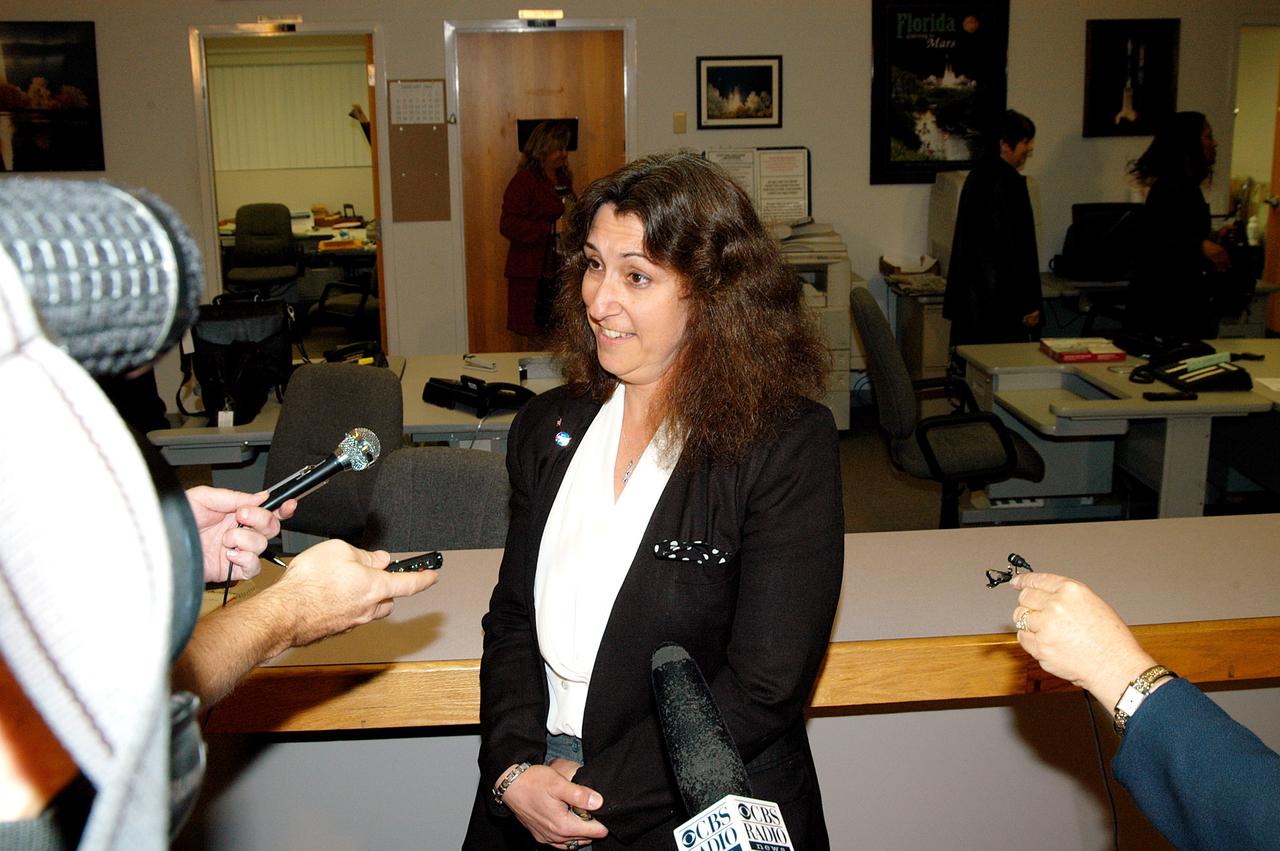
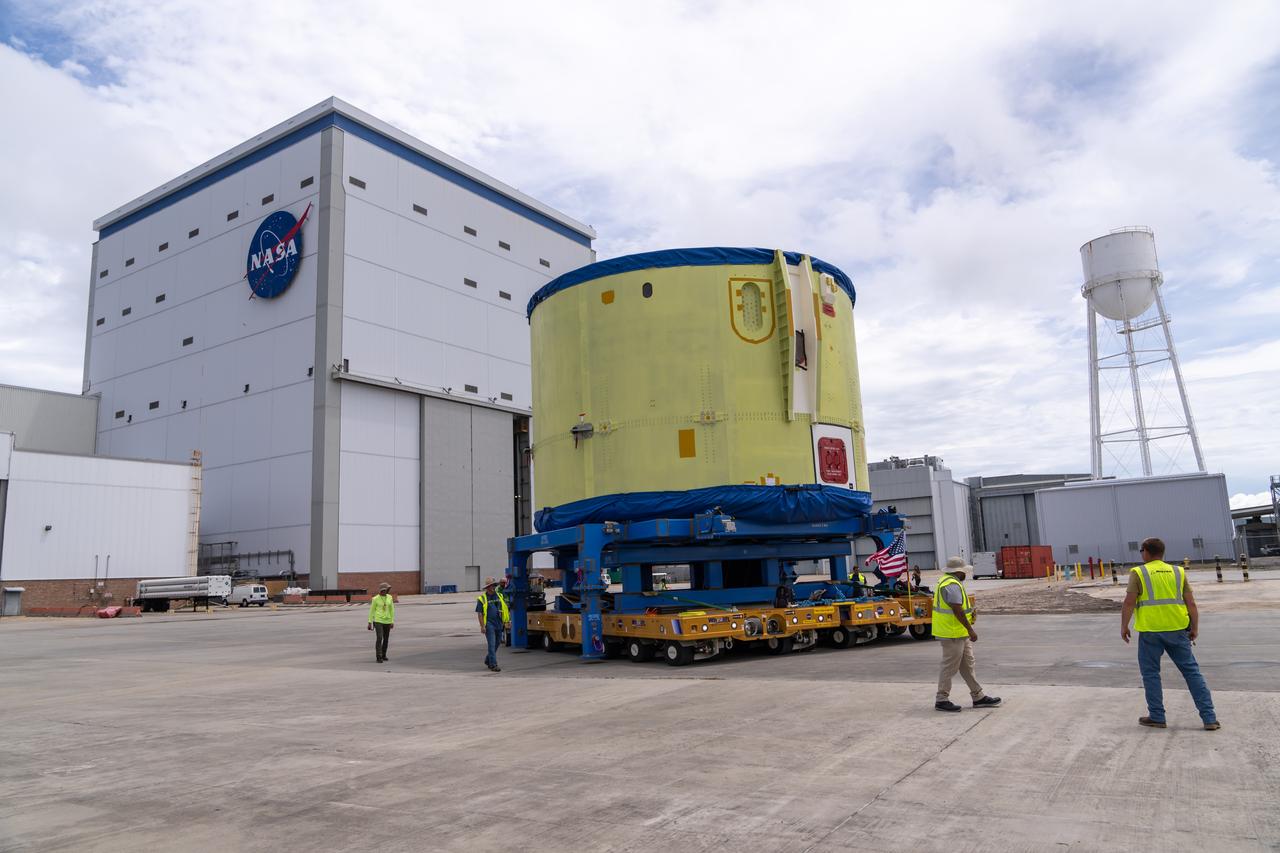
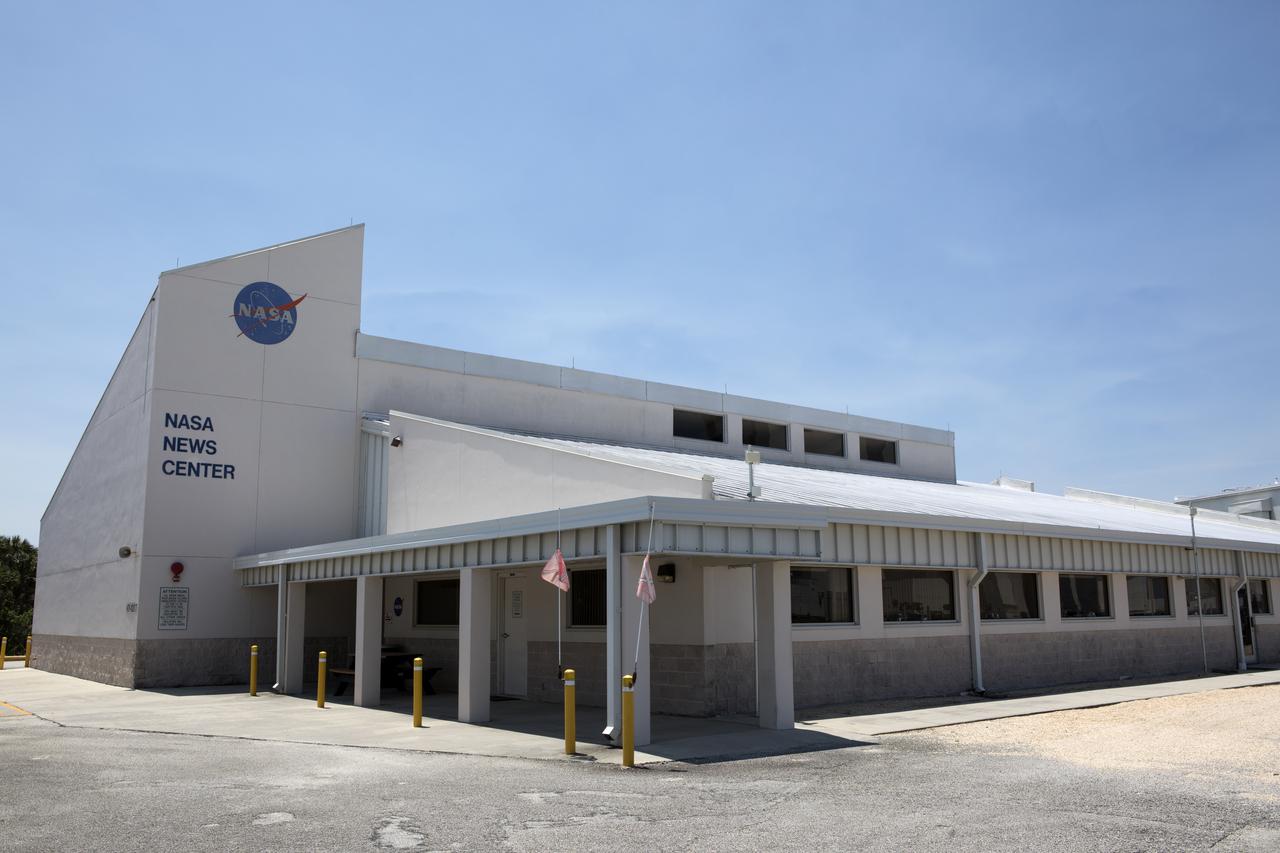
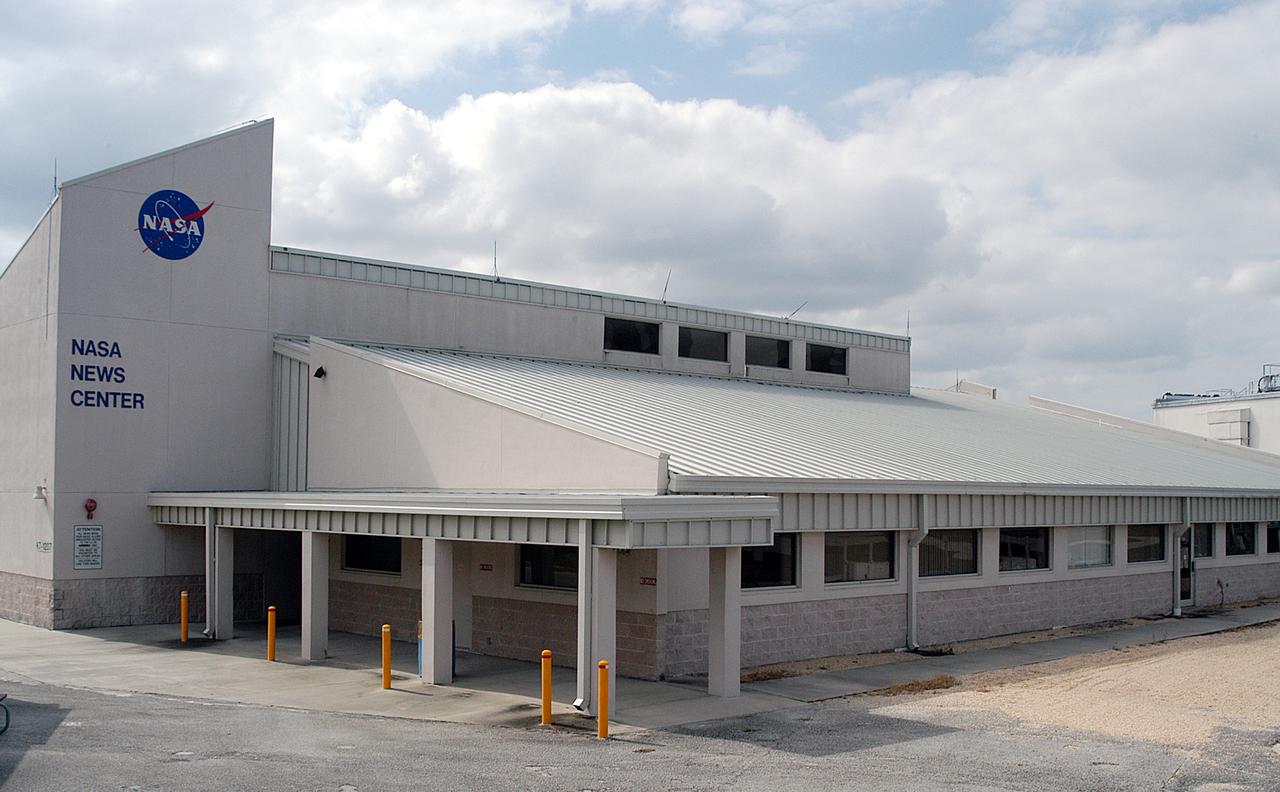
This is the NASA News Center at Kennedy Space Center in Florida, where reporters from television, radio, print and online media outlets have monitored countless launches, landings and other space events in order to deliver the news to the world.
NASA News Center Building at the Press Site
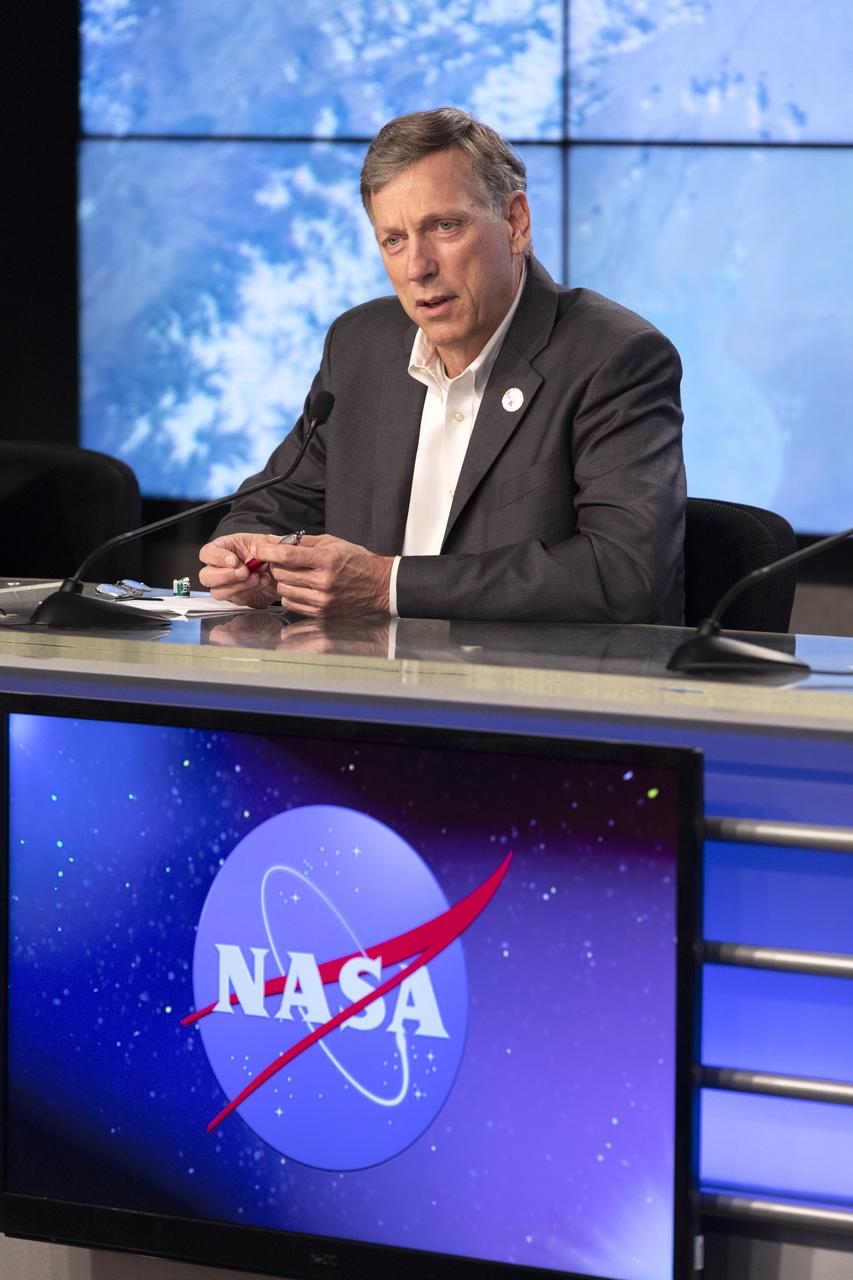
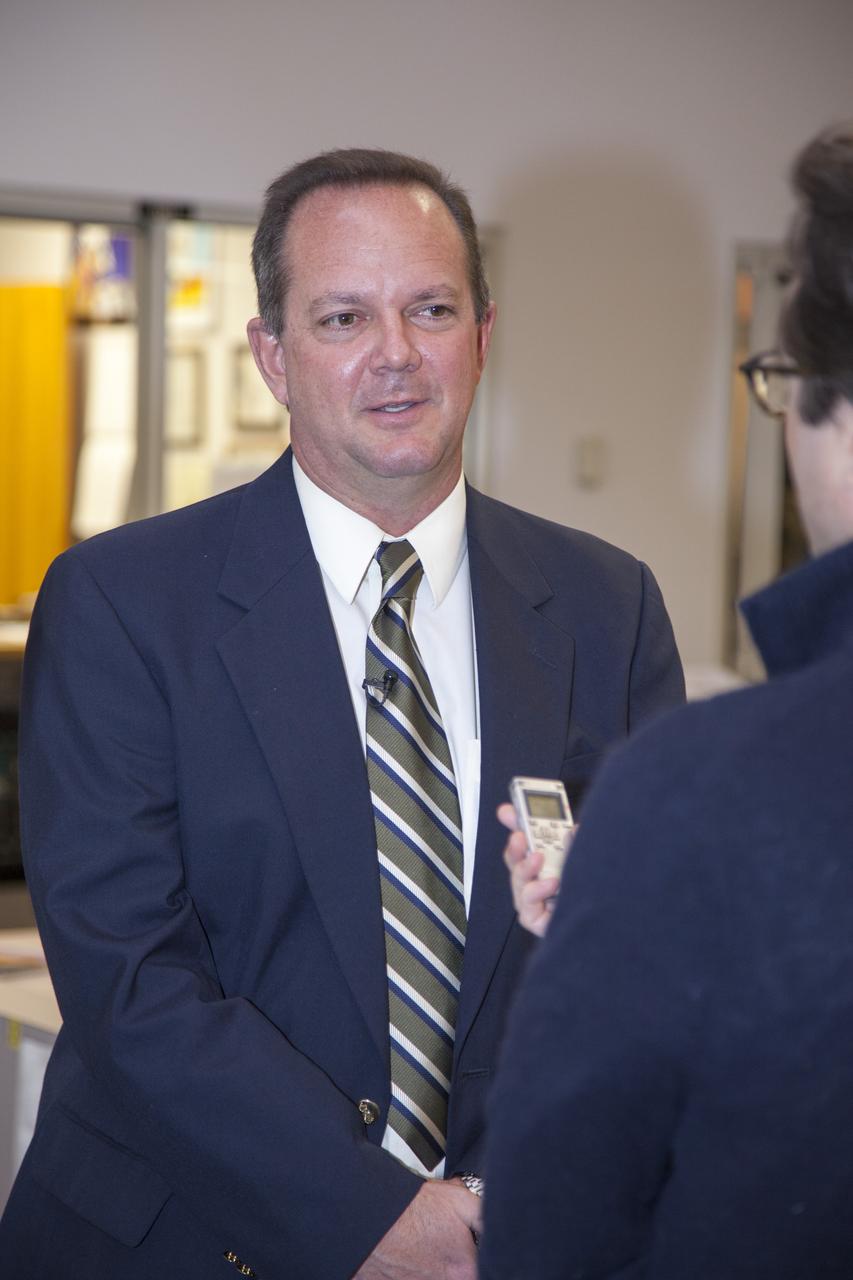
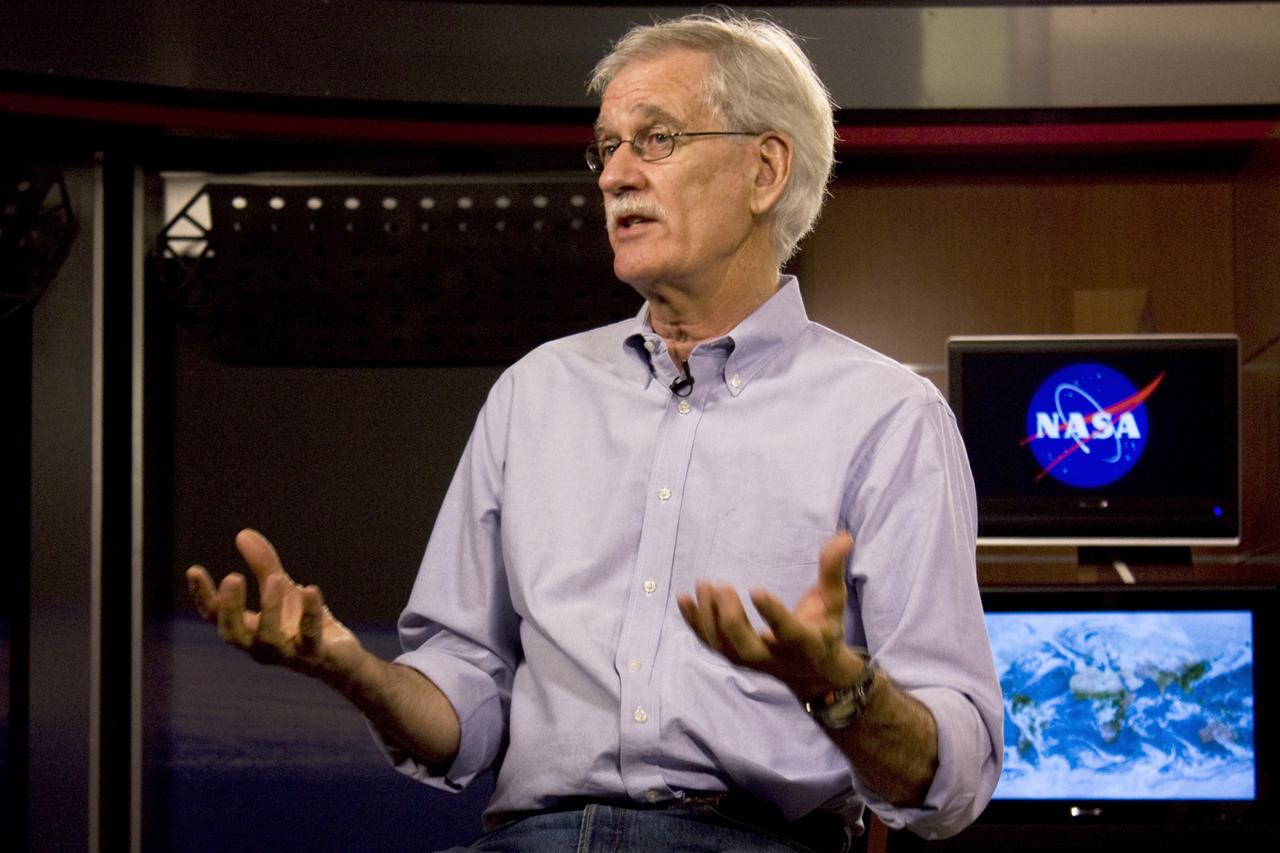
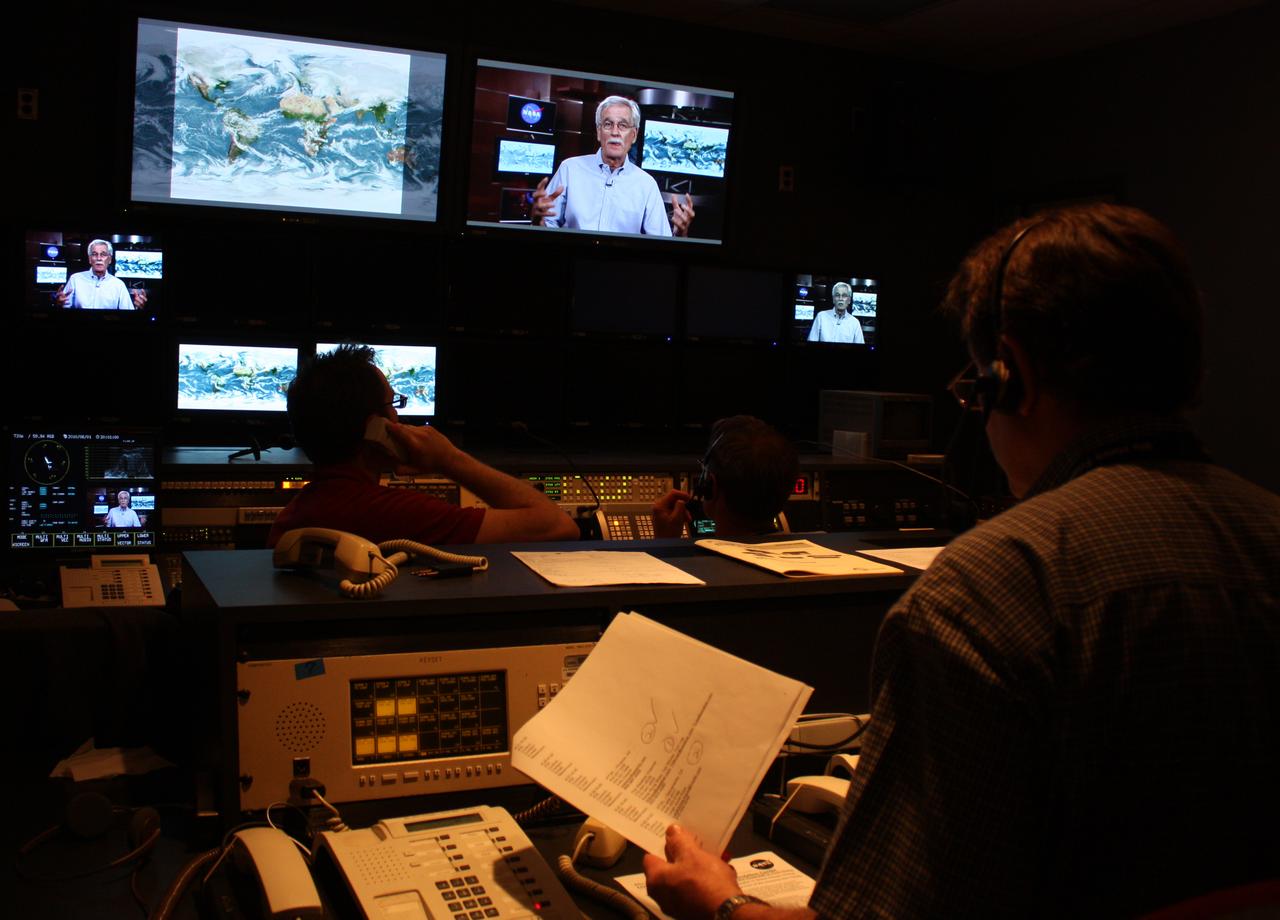
Senior Earth Scientist Dr. Compton Tucker talks about the new climate siumulation facility.  Credit: NASA/Goddard Space Flight Center
News Interviews: NASA Center for Climate Simulation Debuts
Senior Earth Scientist Dr. Compton Tucker talks about the new climate siumulation facility.  <a href="http://www.nasa.gov/topics/earth/features/climate-sim-center.html" rel="nofollow">www.nasa.gov/topics/earth/features/climate-sim-center.html</a>  Credit: NASA/Goddard Space Flight Center
News Interviews: NASA Center for Climate Simulation Debutser
The NASA News Center, seen here, is the hub of news operations for the media, providing information and contacts about Space Shuttle processing and other activities around KSC. News Center staff also conduct media tours, escorting journalists and photo/videographers to key sites such as the launch pads and Vehicle Assembly Building as needed.
NASA News Center
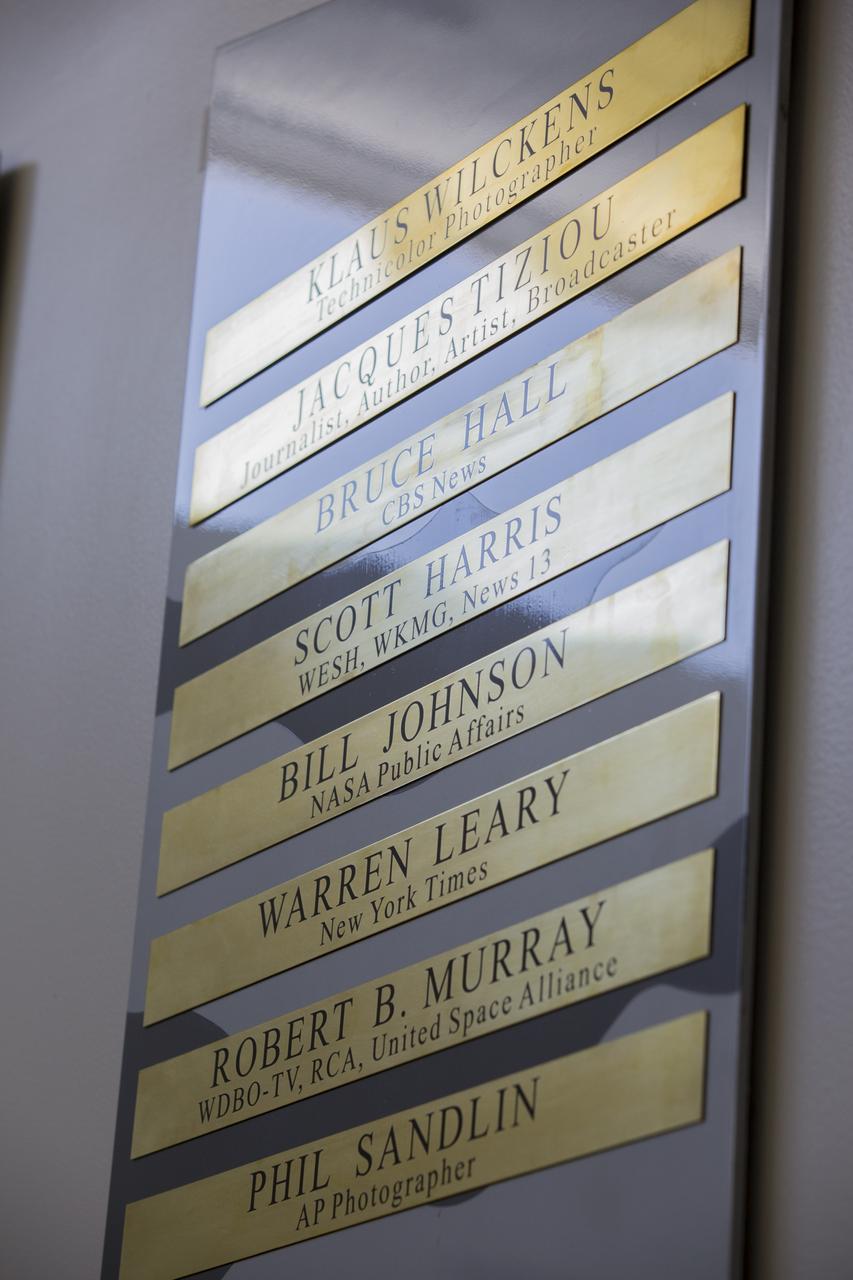
Brass strips bear the names and photos of the six new honorees added to the "Chroniclers" roll of honor in the NASA News Center at Kennedy Space Center in Florida. The Chroniclers program recognizes retirees of the news and communications business who helped spread news of American space exploration from Kennedy Space Center for ten years or more. The 2017 Chroniclers are Bruce Hall, CBS News and NBC News; Scott Harris, WESH, WKMG and Central Florida News 13; Bill Johnson, NASA Public Affairs; Warren Leary, The New York Times; Bob Murray, WDBO-TV, RCA and United Space Alliance; and Phillip Sandlin, Associated Press photographer.
KSC-20170505-PH_CSH01_0003
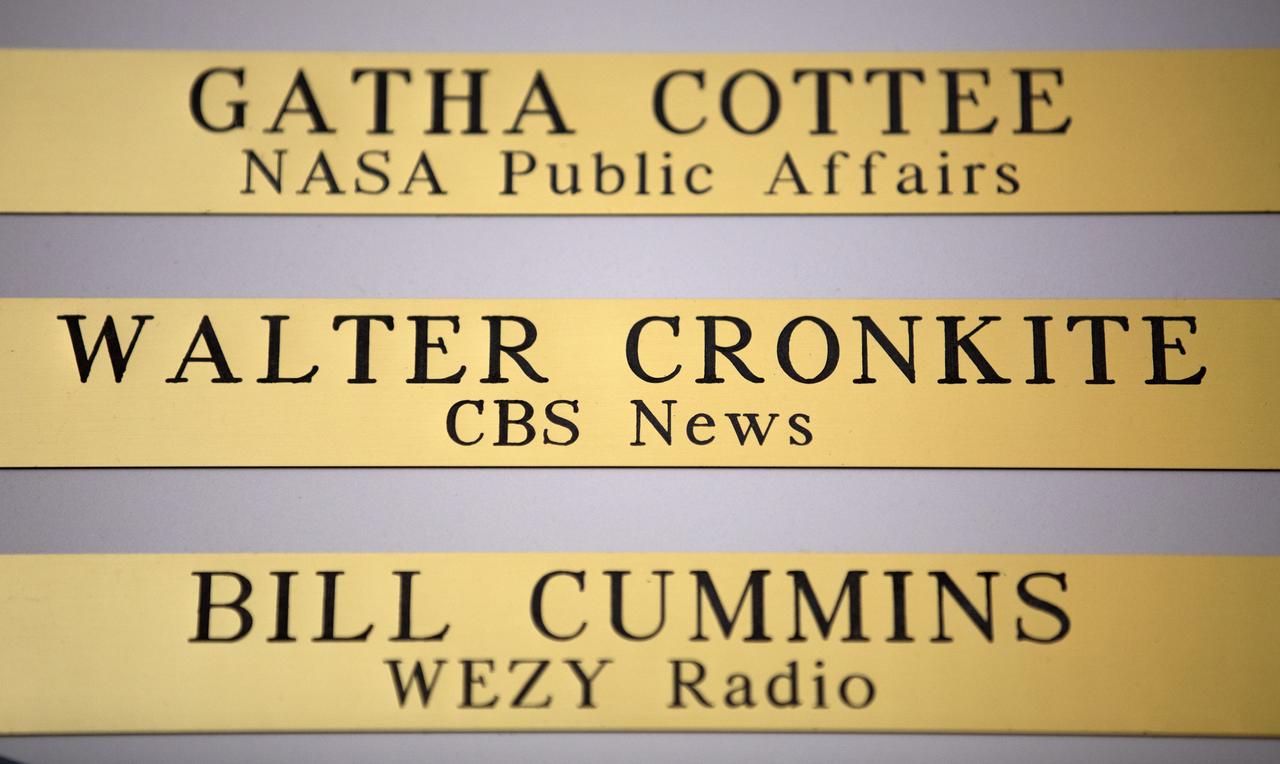
Brass plaques engraved with the names of Gatha Cottee of NASA Public Affairs, Walter Cronkite of CBS News and Bill Cummins of WEZY Radio are among the list of "The Chroniclers," a roll of honor on the wall at the NASA News Center at Kennedy Space Center in Florida. In this facility reporters from television, radio, print and online media outlets have monitored countless launches, landings and other space events in order to deliver the news to the world. The Chroniclers program recognizes retirees of the news and communications business who helped spread news of American space exploration from Kennedy Space Center for ten years or more.
The Chronicles Wall
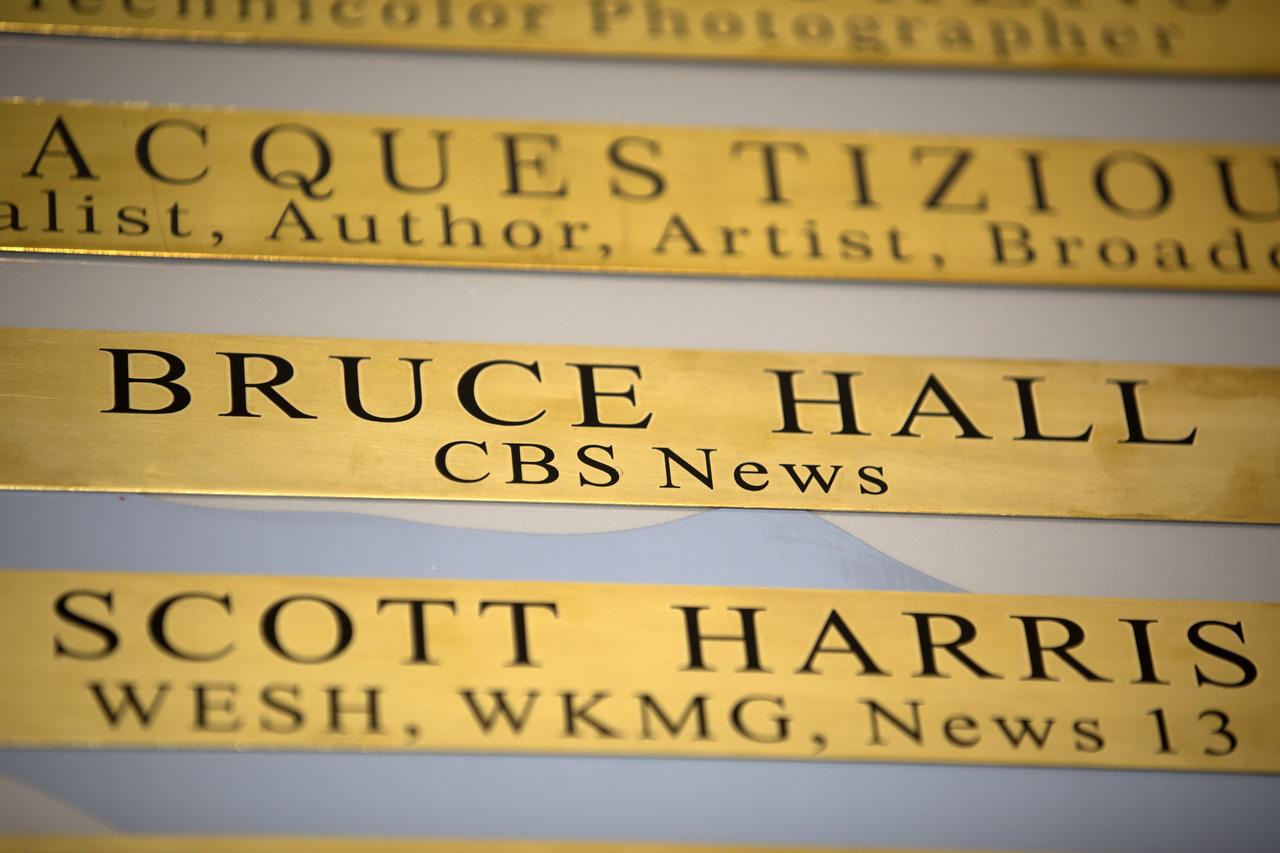
A brass plaque engraved with the name of Bruce Hall of CBS News is among the list of "The Chroniclers," a roll of honor on the wall at the NASA News Center at Kennedy Space Center in Florida. Hall, one of six new inductees in 2017, died after a lengthy illness on May 2, 2017. In this facility reporters from television, radio, print and online media outlets have monitored countless launches, landings and other space events in order to deliver the news to the world. The Chroniclers program recognizes retirees of the news and communications business who helped spread news of American space exploration from Kennedy Space Center for ten years or more.
The Chronicles Wall
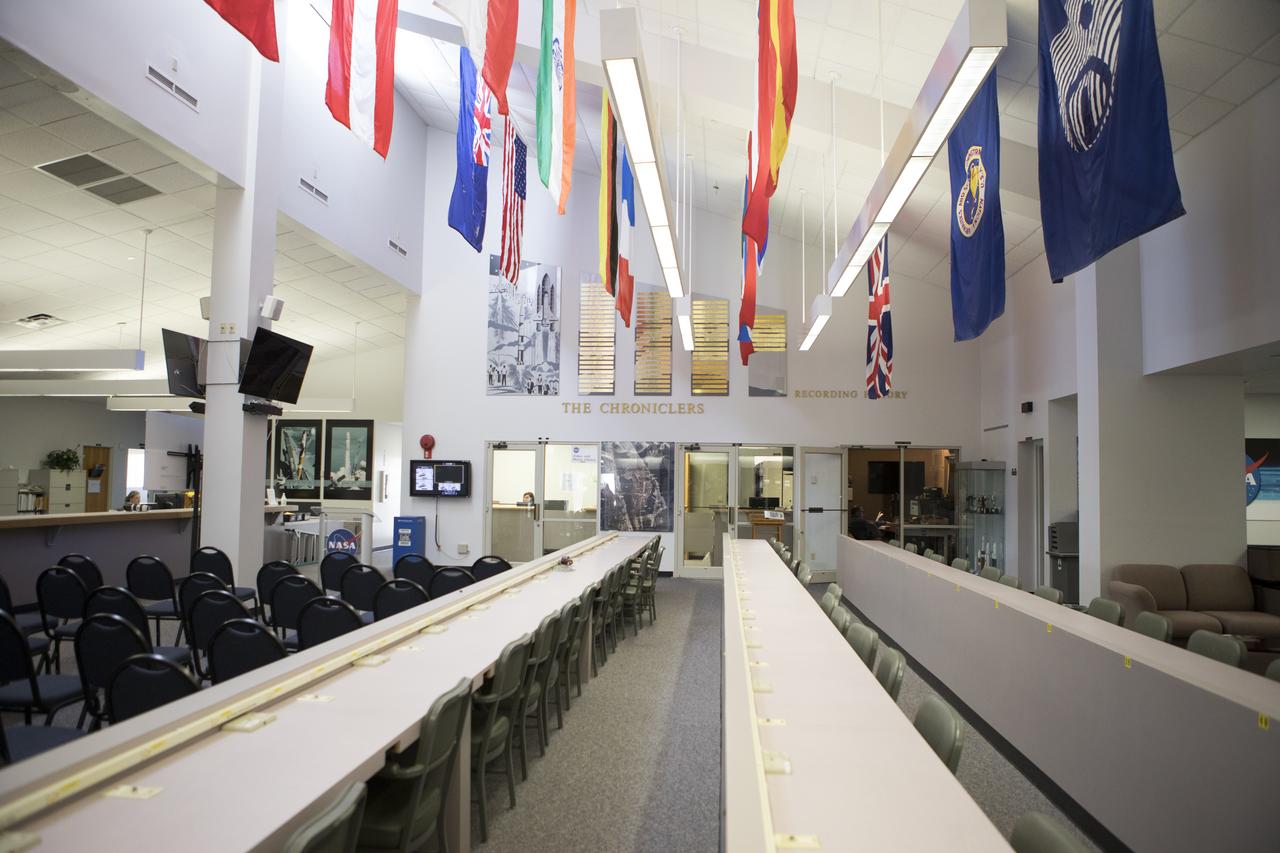
Brass plaques engraved with the names of "The Chroniclers" adorn the wall at the NASA News Center at Kennedy Space Center in Florida. In the foreground are rows of stations where reporters from television, radio, print and online media outlets have monitored countless launches, landings and other space events in order to deliver the news to the world. The Chroniclers program recognizes retirees of the news and communications business who helped spread news of American space exploration from Kennedy Space Center for ten years or more.
The Chronicles Wall
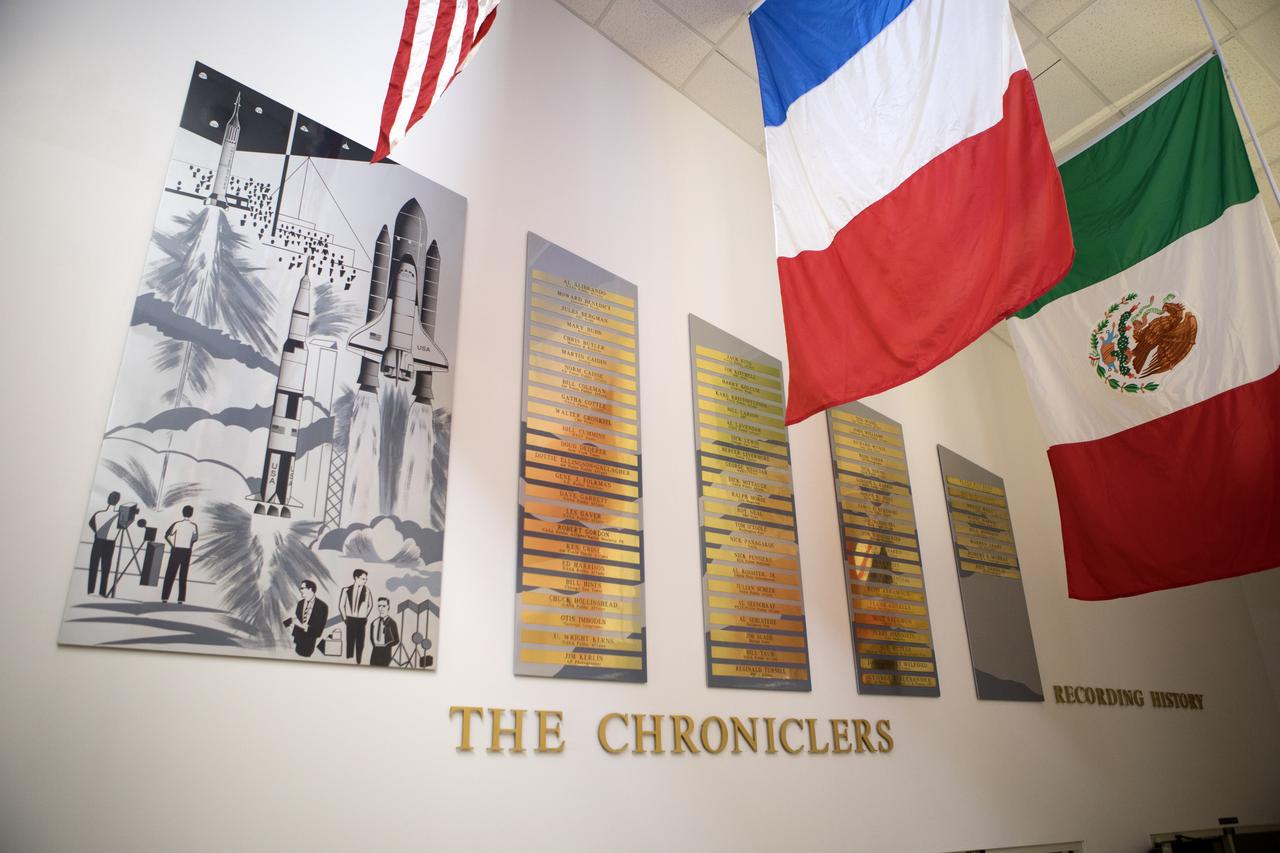
Brass plaques engraved with the names of "The Chroniclers" create a roll of honor on the wall at the NASA News Center at Kennedy Space Center in Florida. In this facility reporters from television, radio, print and online media outlets have monitored countless launches, landings and other space events in order to deliver the news to the world. The Chroniclers program recognizes retirees of the news and communications business who helped spread news of American space exploration from Kennedy Space Center for ten years or more.
The Chronicles Wall
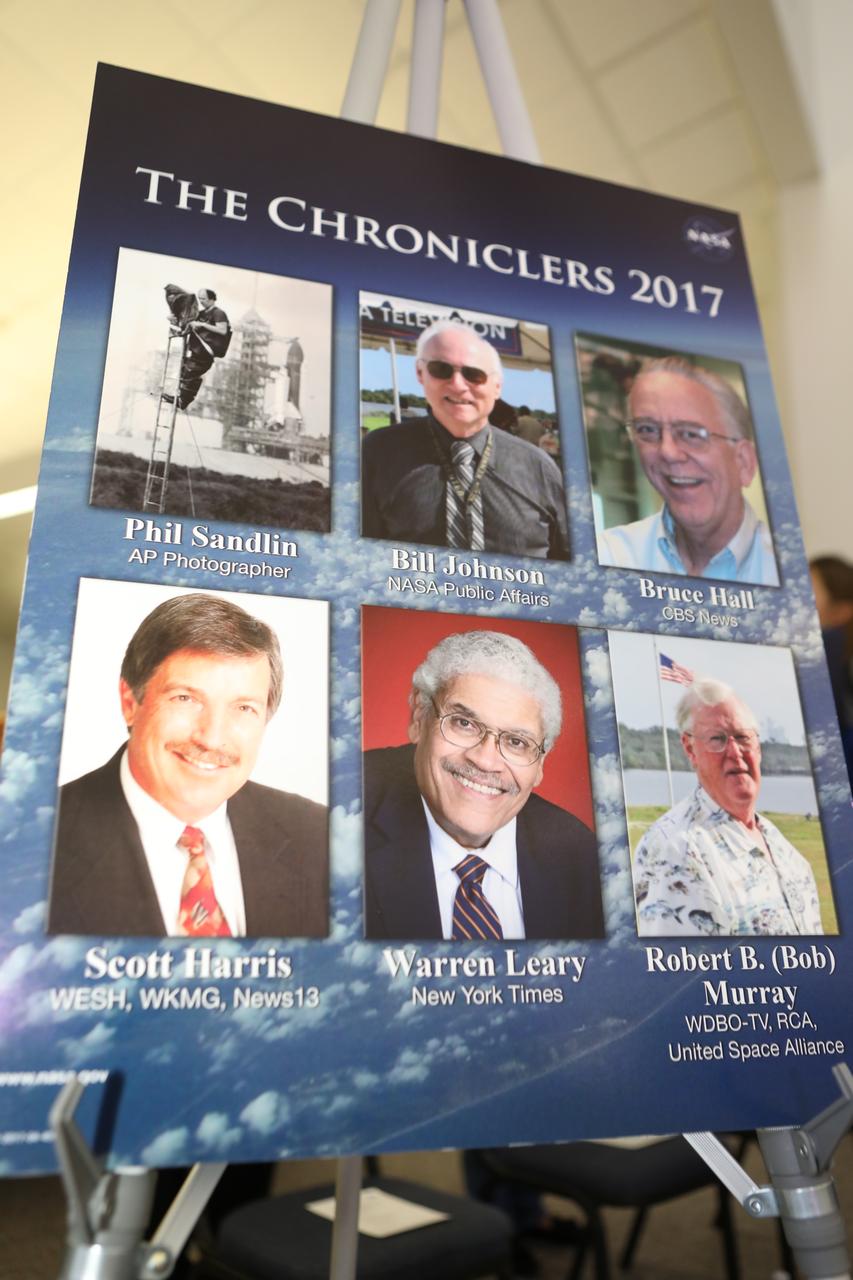
A poster in the NASA News Center at Kennedy Space Center in Florida bears the names and photos of the six new honorees added to the facility's "Chroniclers" roll of honor. The Chroniclers program recognizes retirees of the news and communications business who helped spread news of American space exploration from Kennedy Space Center for ten years or more. From top left to bottom right are Phillip Sandlin, Associated Press photographer; Bill Johnson, NASA Public Affairs; Bruce Hall, CBS News and NBC News; Scott Harris, WESH, WKMG and Central Florida News 13; Warren Leary, The New York Times; and Bob Murray, WDBO-TV, RCA and United Space Alliance.
Chronicler's Induction Ceremony
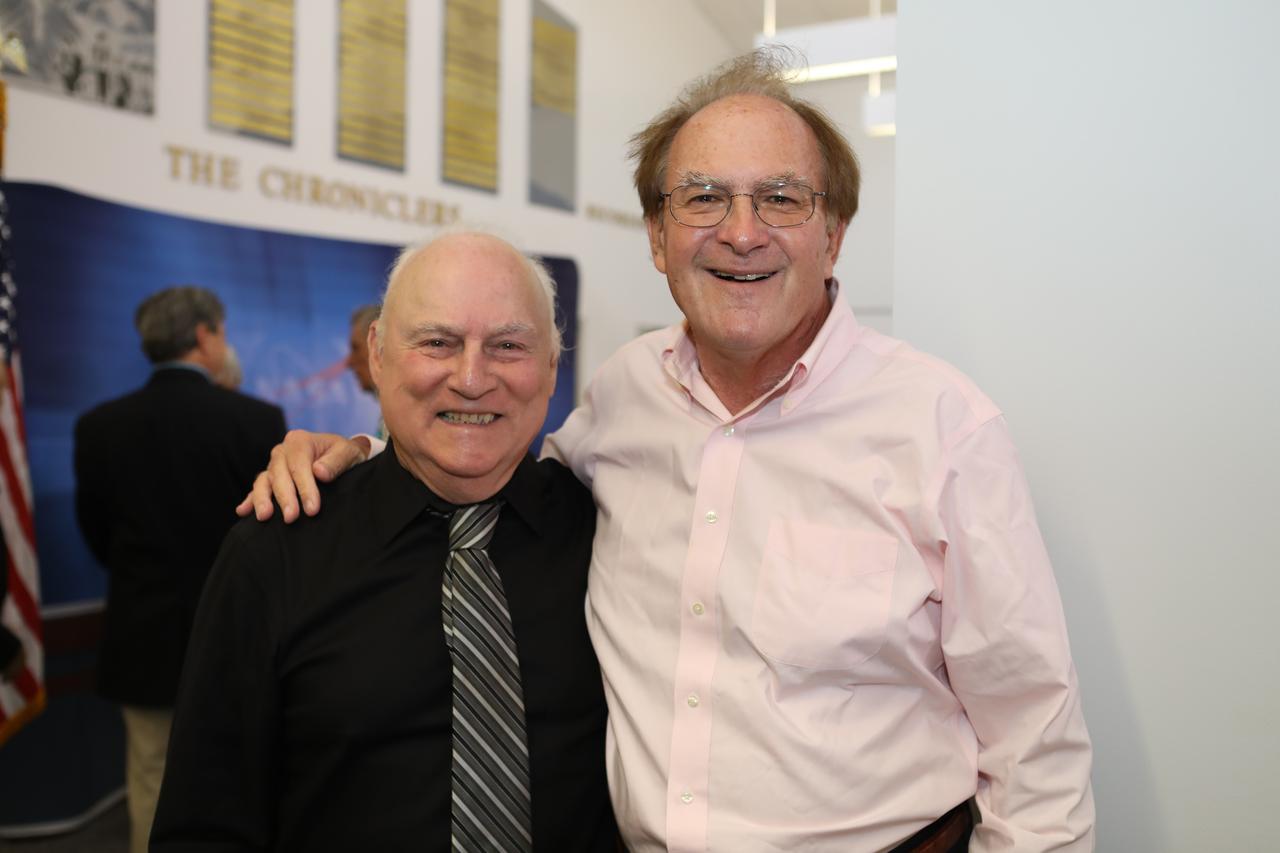
Bill Johnson, left, retired NASA chief of Media Services at Kennedy Space Center in Florida, is congratulated by NASA Public Information Specialist George Diller during a ceremony for six new honorees added to the "Chroniclers" roll of honor in the NASA News Center. Johnson, whose career at Kennedy spanned more than 45 years, was one of the six added to the Chroniclers list. Also added were Bruce Hall, CBS News and NBC News; Scott Harris, WESH, WKMG and Central Florida News 13; Warren Leary, The New York Times; Bob Murray, WDBO-TV, RCA and United Space Alliance; and Phillip Sandlin, Associated Press photographer. The Chroniclers program recognizes retirees of the news and communications business who helped spread news of American space exploration from Kennedy Space Center for ten years or more.
Chronicler's Induction Ceremony
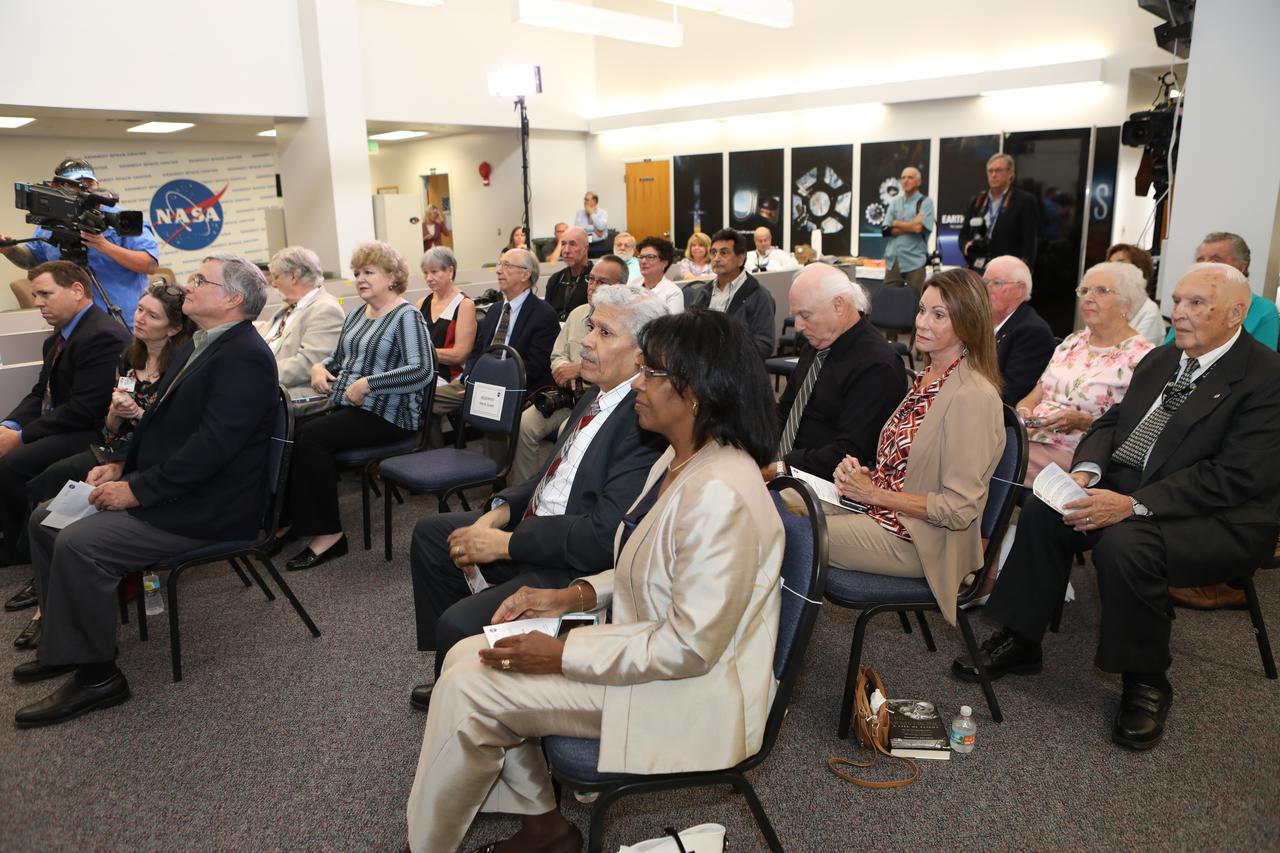
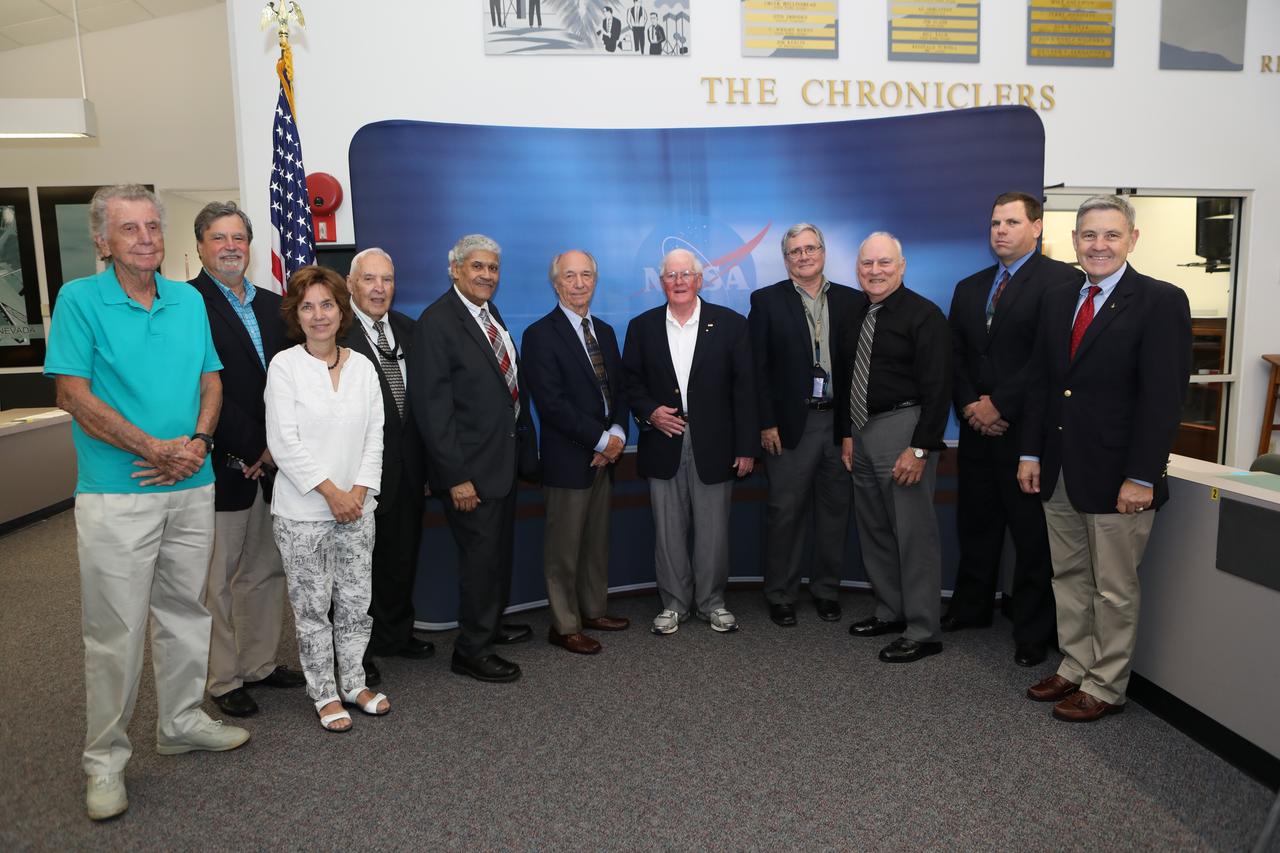
Friends, family members and colleagues of former NASA Public Affairs team members and space journalists gather in the NASA News Center at Kennedy Space Center in Florida for a ceremony in which six new honorees were added to the "Chroniclers" roll of honor. The Chroniclers program recognizes retirees of the news and communications business who helped spread news of American space exploration from Kennedy Space Center for ten years or more. The 2017 Chroniclers are Bruce Hall, CBS News and NBC News; Scott Harris, WESH, WKMG and Central Florida News 13; Bill Johnson, NASA Public Affairs; Warren Leary, The New York Times; Bob Murray, WDBO-TV, RCA and United Space Alliance; and Phillip Sandlin, Associated Press photographer.
Chronicler's Induction Ceremony
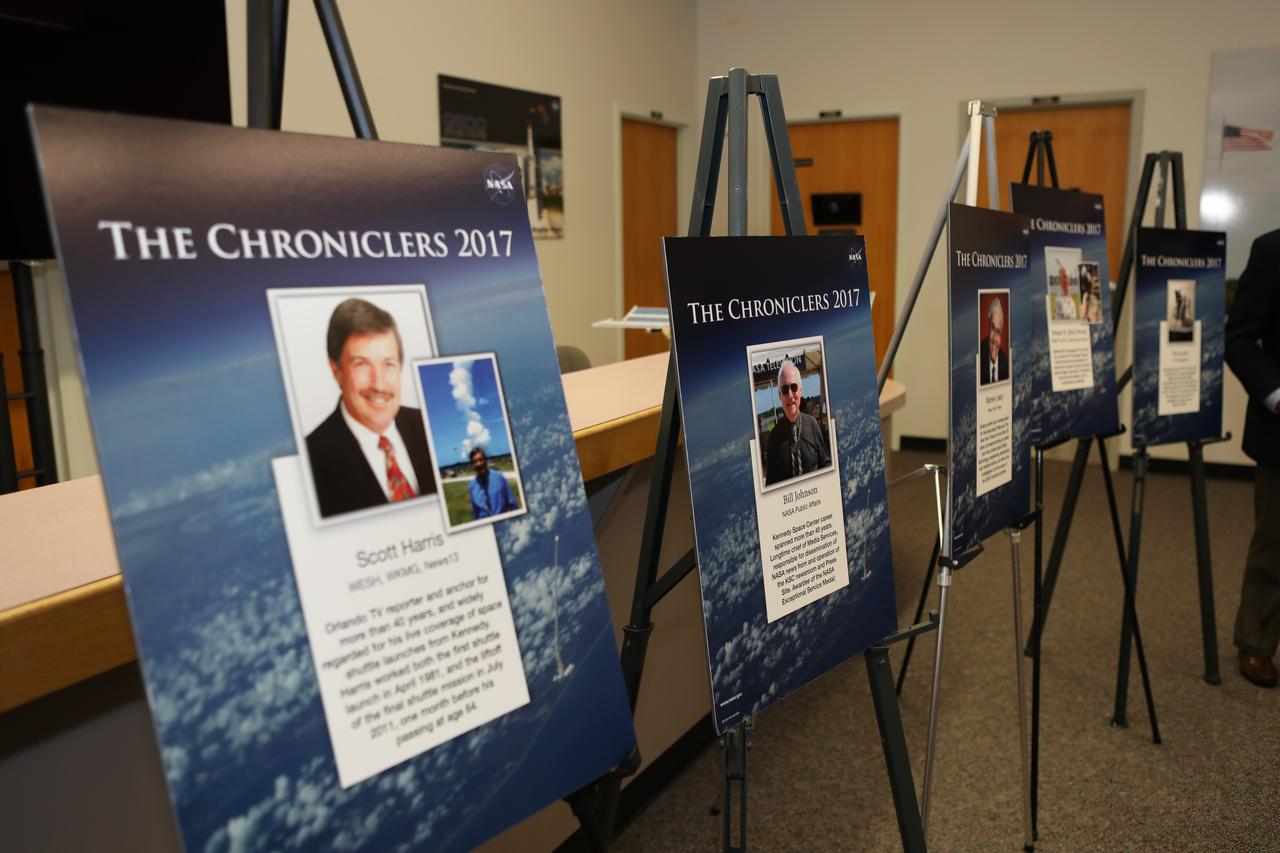
Posters in the NASA News Center at Kennedy Space Center in Florida bear the names and photos of five of the six new honorees added to the facility's "Chroniclers" roll of honor. From left to right are posters featuring Scott Harris, WESH, WKMG and Central Florida News 13; Bill Johnson, NASA Public Affairs; Warren Leary, The New York Times; Bob Murray, WDBO-TV, RCA and United Space Alliance; and Phillip Sandlin, Associated Press photographer. Not pictured is the poster for Bruce Hall, CBS News and NBC News. The Chroniclers program recognizes retirees of the news and communications business who helped spread news of American space exploration from Kennedy Space Center for ten years or more.
Chronicler's Induction Ceremony
Current and retired NASA Public Affairs team members and space journalists gather in the NASA News Center at Kennedy Space Center in Florida for a ceremony in which six new honorees were added to the "Chroniclers" roll of honor. From left to right are Jay Barbree, NBC News; Al Feinberg, NASA Public Affairs; Marcia Dunn, Associated Press; Hugh Harris, NASA Public Affairs; Warren Leary, The New York Times; Phillip Sandlin, Associated Press photographer; Bob Murray, WDBO-TV, RCA and United Space Alliance; Bill Harwood, CBS News, there on behalf of the late Bruce Hall, CBS News; Bill Johnson, NASA Public Affairs; Emery McGough, son of the late Scott Harris, WESH, WKMG and Central Florida News 13; and Center Director Bob Cabana. Hall, Harris, Johnson, Leary, Murray and Sandlin are the 2017 Chroniclers. The program recognizes retirees of the news and communications business who helped spread news of American space exploration from Kennedy Space Center for ten years or more.
Chronicler's Induction Ceremony
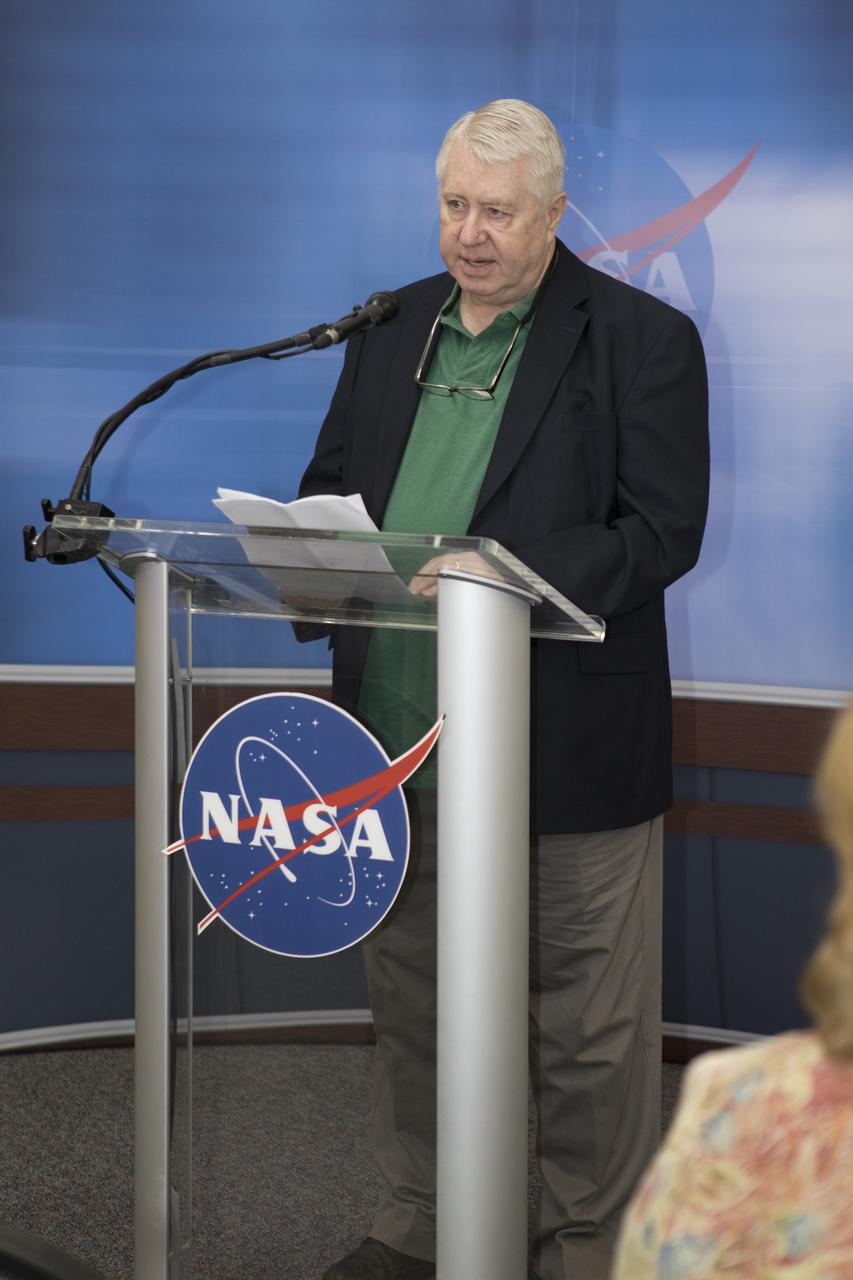
Hortense Diggs, deputy director of Kennedy Space Center’s Office of Communication and Public Engagement, delivers remarks during The Chroniclers 2018 ceremony at Kennedy’s NASA News Center in Florida on Friday, May 4. Craig Covault and George Diller were inducted as the 75th and 76th members of the “Chroniclers,” which recognizes retirees of the news and communications business who helped spread news of American space exploration from Kennedy for 10 years or more. Brass strips engraved with each awardee’s name and affiliation were added to the “Chroniclers wall” and unveiled during the event at the NASA News Center.
2018 Chroniclers
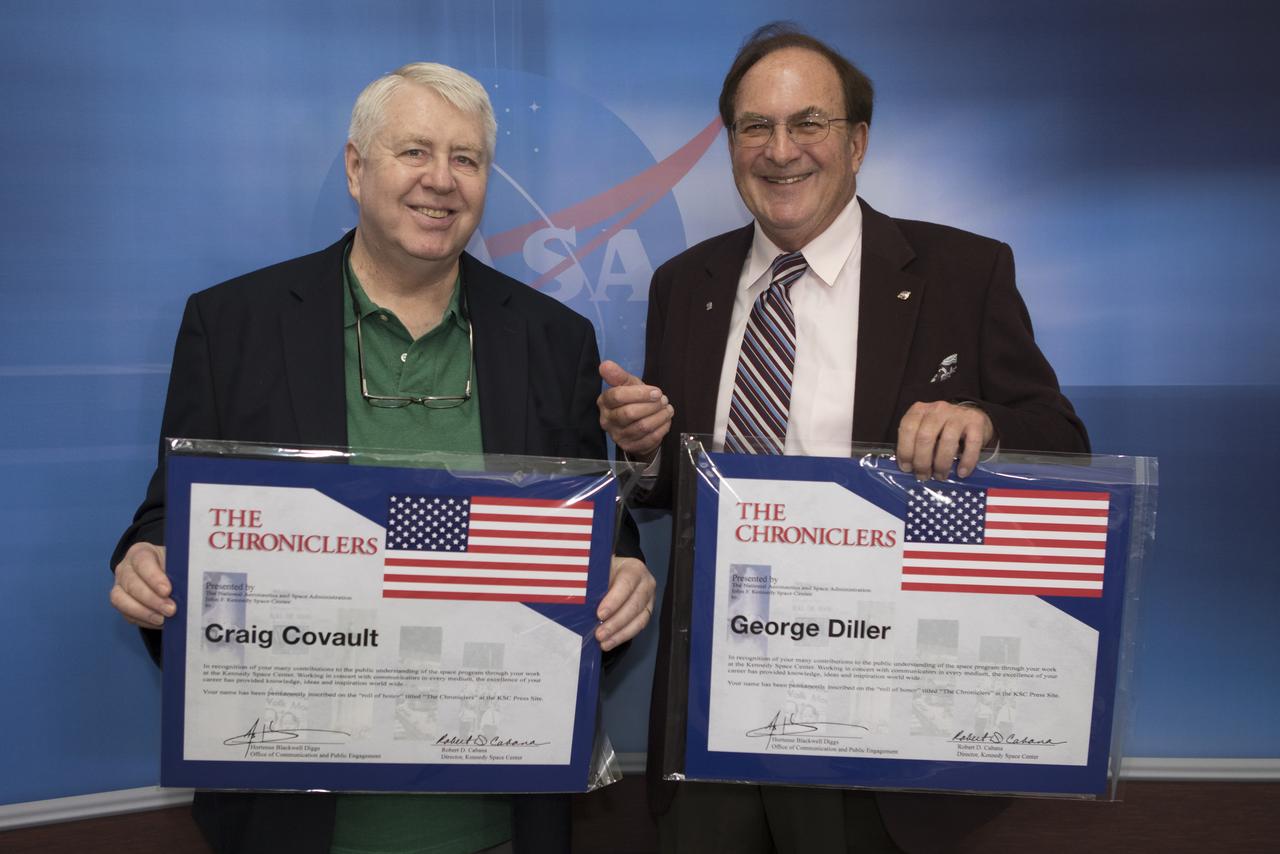
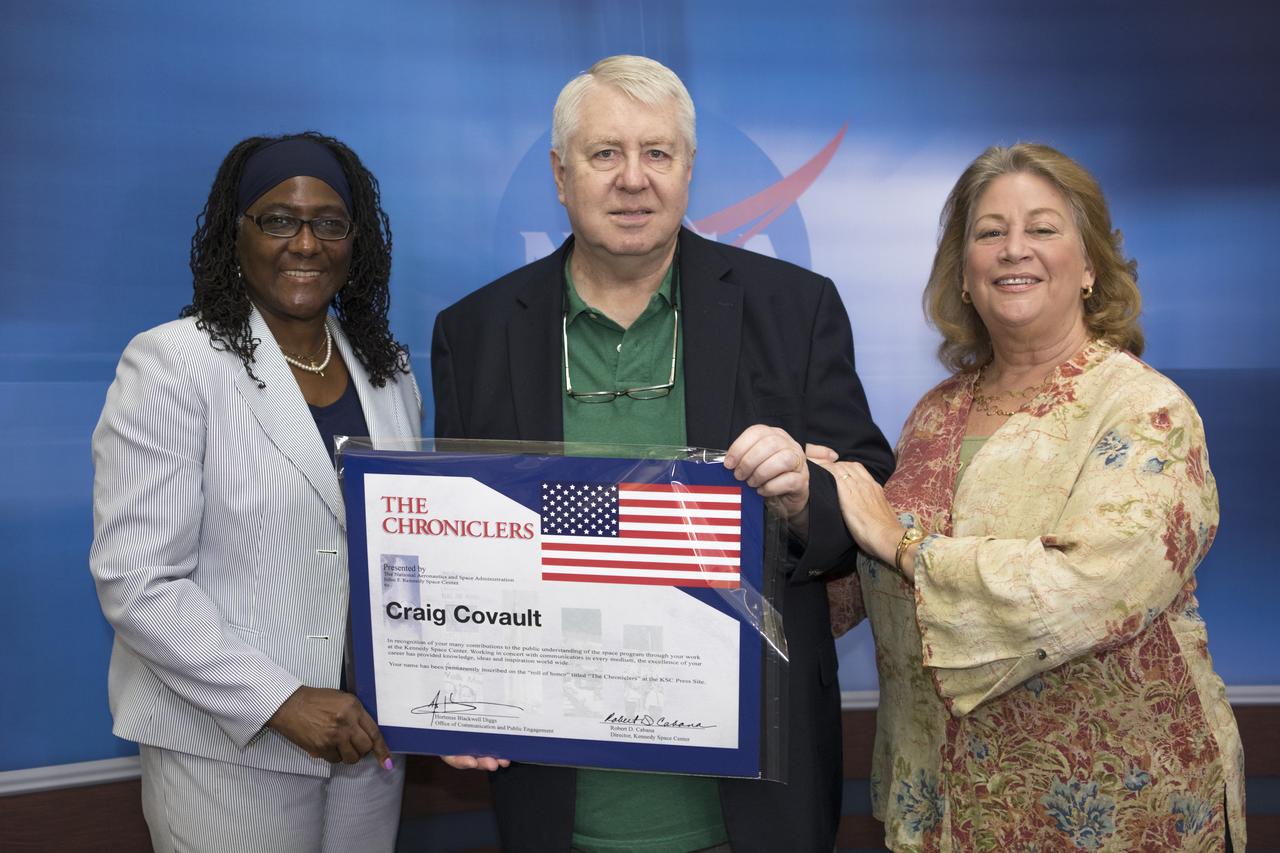
Craig Covault, left, and George Diller were honored as “Chroniclers” during an event at Kennedy Space Center’s NASA News Center on Friday, May 4. The longtime friends combined for more than 80 years of U.S. space exploration news reporting. “Chroniclers” recognizes retirees of the news and communications business who helped spread news of American space exploration from Kennedy for 10 years or more.
2018 Chroniclers
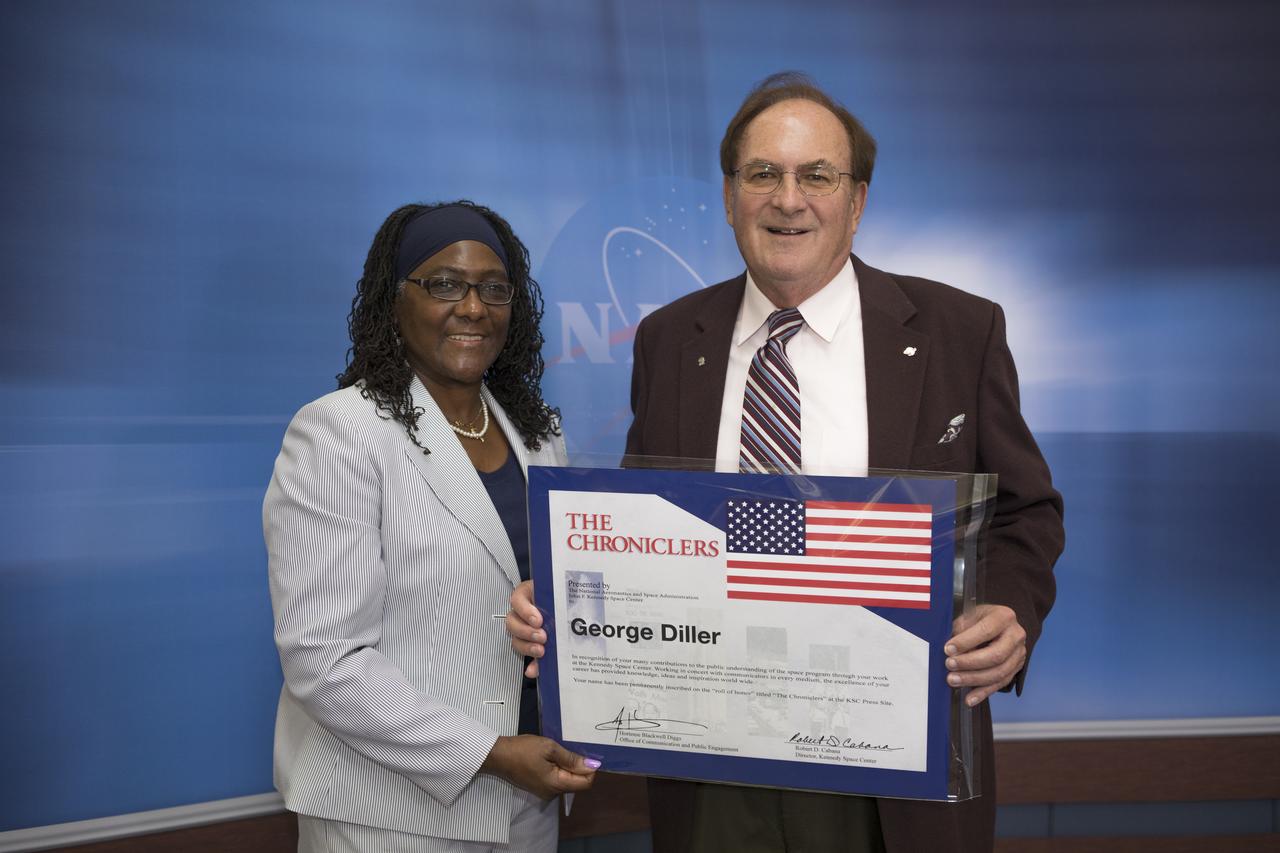
Kennedy Space Center Office of Communication and Public Engagement Deputy Director Hortense Diggs, left, poses with “Chronicler” George Diller during an event at Kennedy’s NASA News Center in Florida on Friday, May 4. Diller, who retired in 2017, had a 37-year career in NASA Public Affairs. “Chroniclers” recognizes retirees of the news and communications business who helped spread news of American space exploration from Kennedy for 10 years or more.
2018 Chroniclers
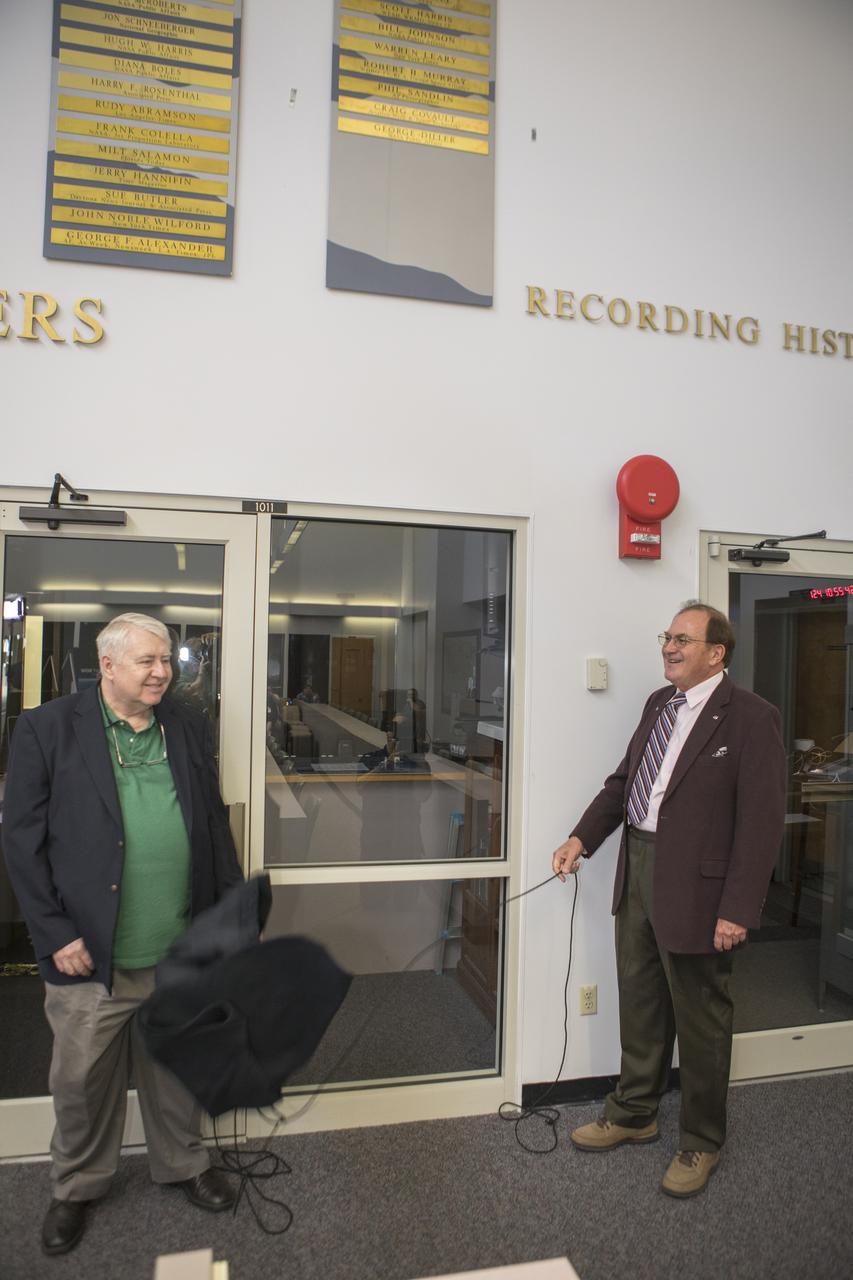
Craig Covault, left, and George Diller unveil their names on the “Chroniclers wall” during a gathering of the honorees’ friends, family, media, and current and former NASA officials at Kennedy Space Center’s NASA News Center in Florida on Friday, May 4. “Chroniclers” recognizes retirees of the news and communications business who helped spread news of American space exploration from Kennedy for 10 years or more. The two men combined for 85 years of U.S. space exploration coverage.
2018 Chroniclers
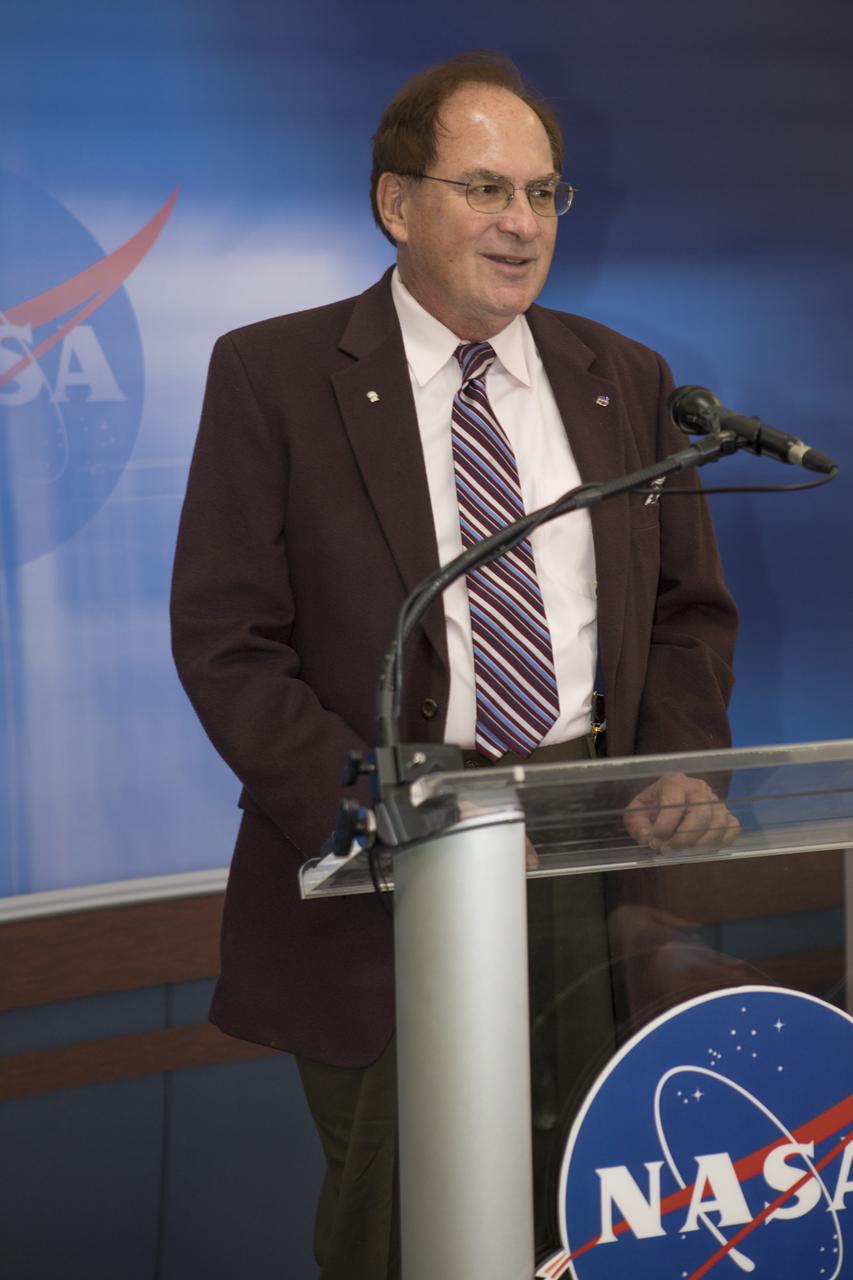
George Diller, who retired in 2017 after a 37-year career in NASA Public Affairs, was honored as a 2018 “Chronicler” during a ceremony at Kennedy Space Center’s NASA News Center in Florida on Friday, May 4. Diller and Craig Covault had their names officially added to the “Chroniclers wall” during the event. “Chroniclers” recognizes retirees of the news and communications business who helped spread news of American space exploration from Kennedy for 10 years or more. Diller was known by many as “The Voice of Kennedy Launch Control.”
2018 Chroniclers
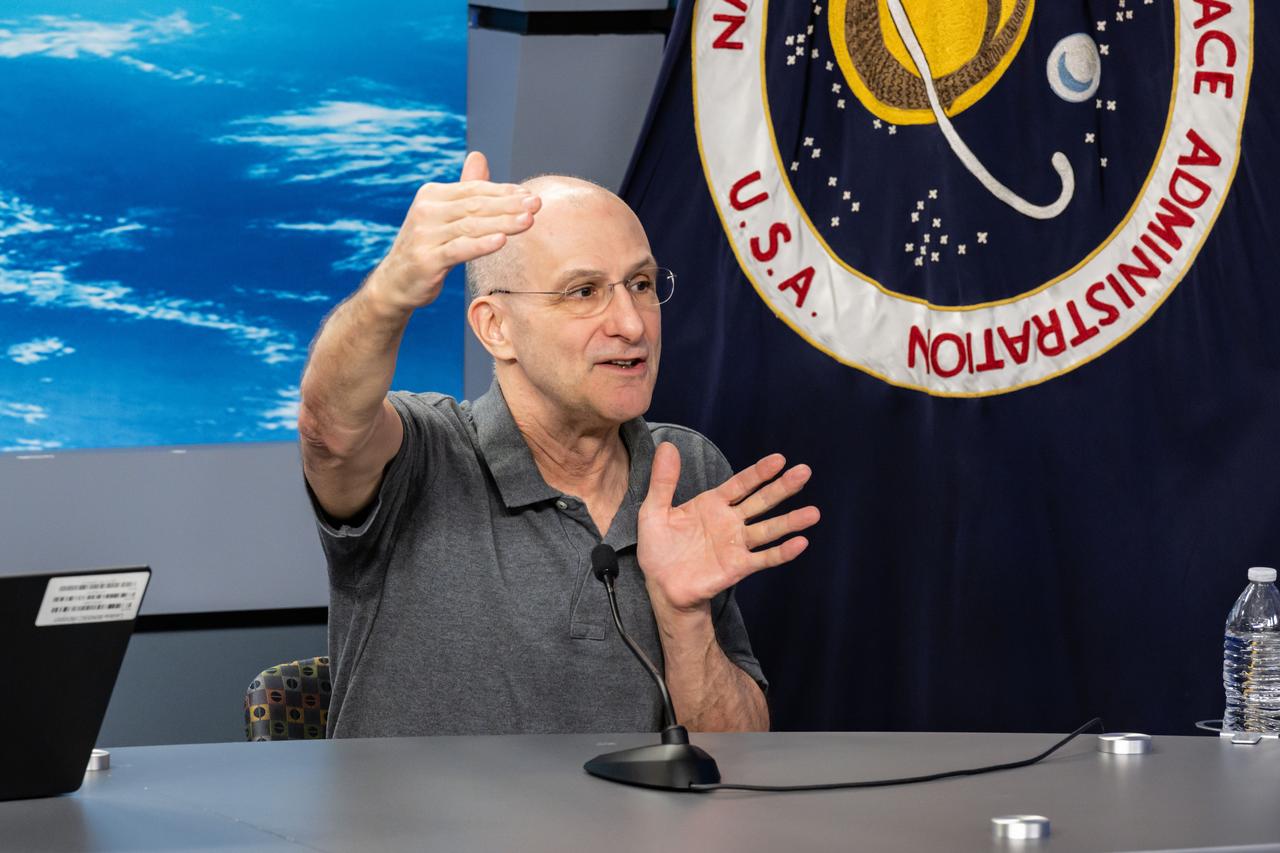
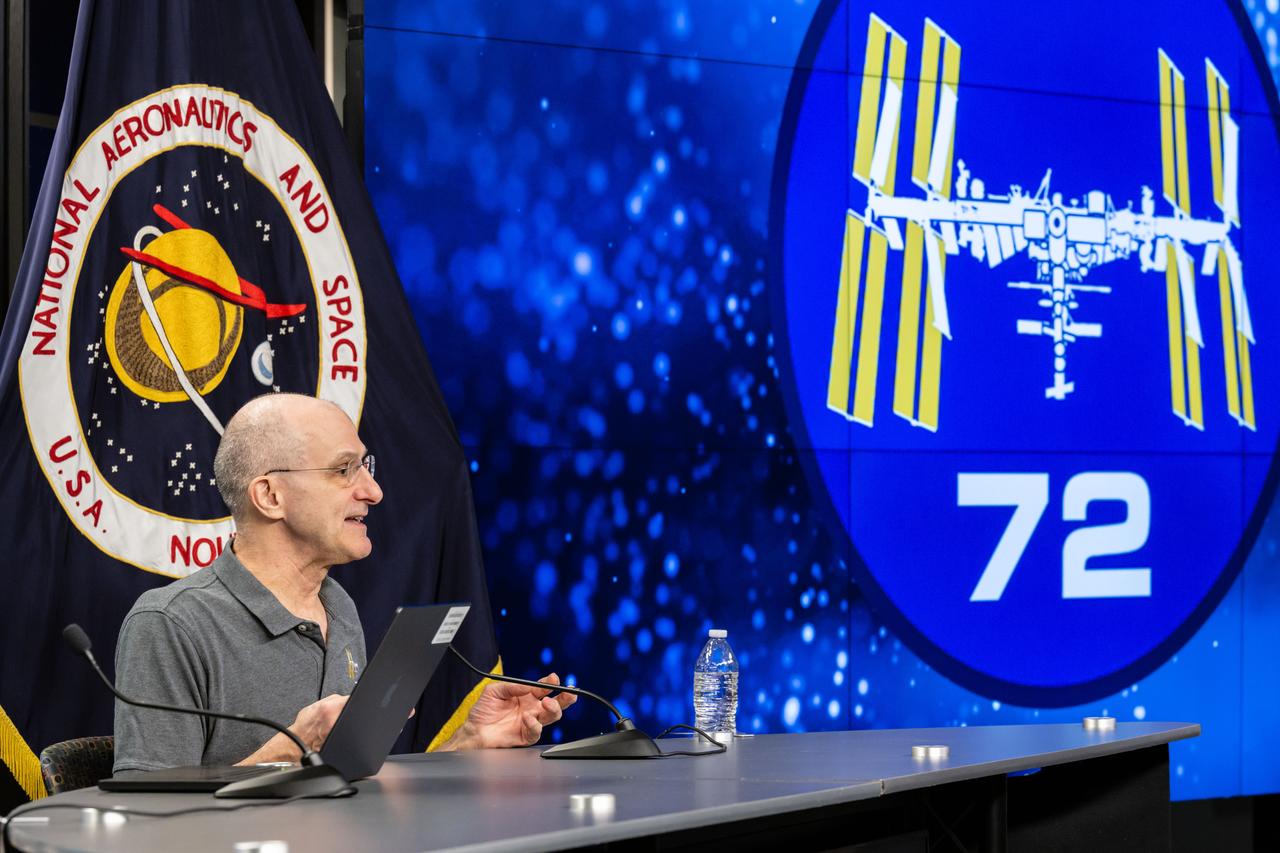
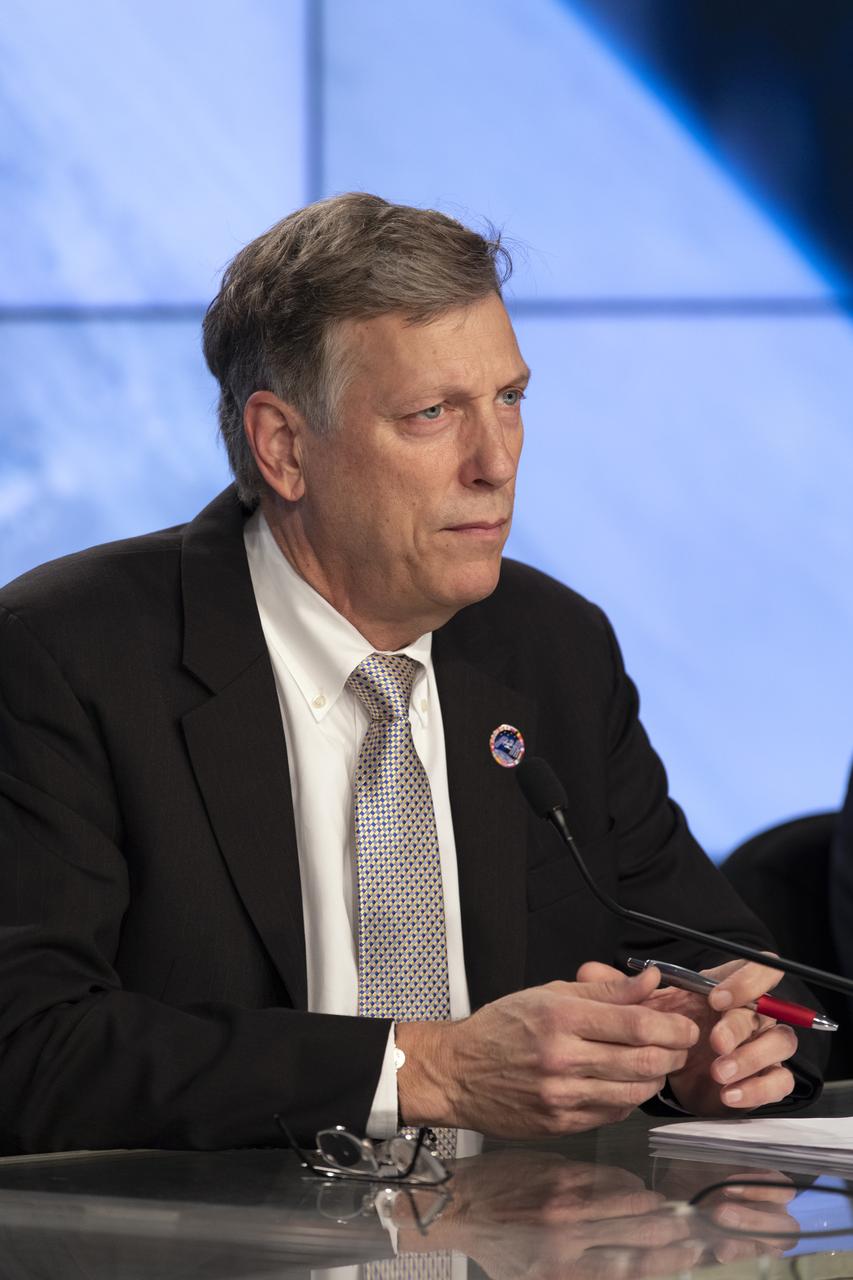
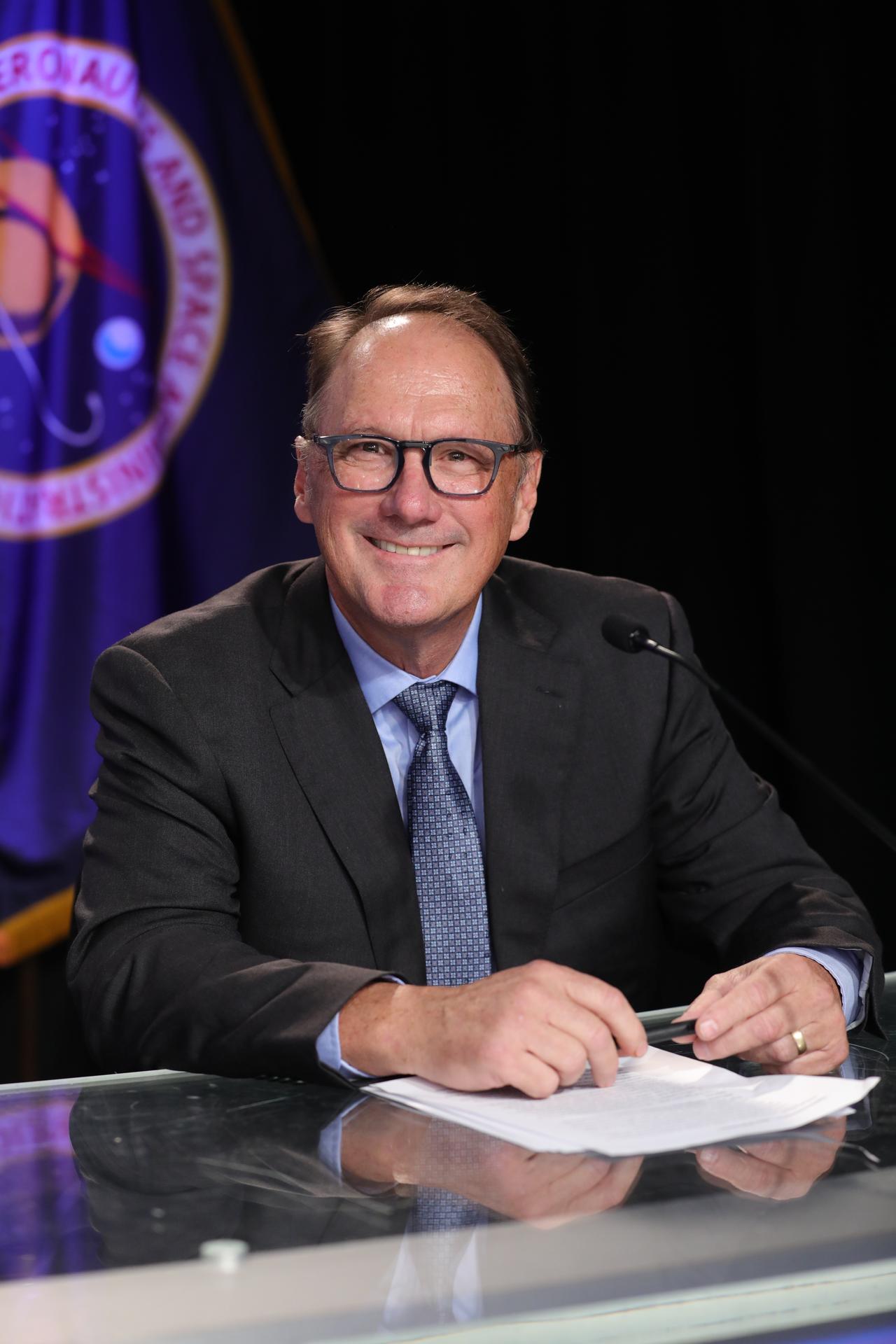
jsc2025e041770 (April 28, 2025) --- NASA astronaut Don Pettit participates in a news conference at NASA's Johnson Space Center in Houston, Texas. He discussed his mission aboard the International Space Station where he lived and worked for 220 days as an Expedition 72 Flight Engineer.
Astronaut Don Pettit participates in a news conference at NASA's Johnson Space Center
jsc2025e041765 (April 28, 2025) --- NASA astronaut Don Pettit participates in a news conference at NASA's Johnson Space Center in Houston, Texas. He discussed his mission aboard the International Space Station where he lived and worked for 220 days as an Expedition 72 Flight Engineer.
Astronaut Don Pettit participates in a news conference at NASA's Johnson Space Center
Craig Covault and George Diller were honored as the 75th and 76th members of the “Chroniclers” roll of honor during an event at Kennedy Space Center’s NASA News Center in Florida on Friday, May 4. From left to right are Hortense Diggs, deputy director of Kennedy’s Office of Communication and Public Engagement, Craig Covault, and Covault’s wife, Nancy. “Chroniclers” recognizes retirees of the news and communications business who helped spread news of American space exploration from Kennedy for 10 years or more.
2018 Chroniclers
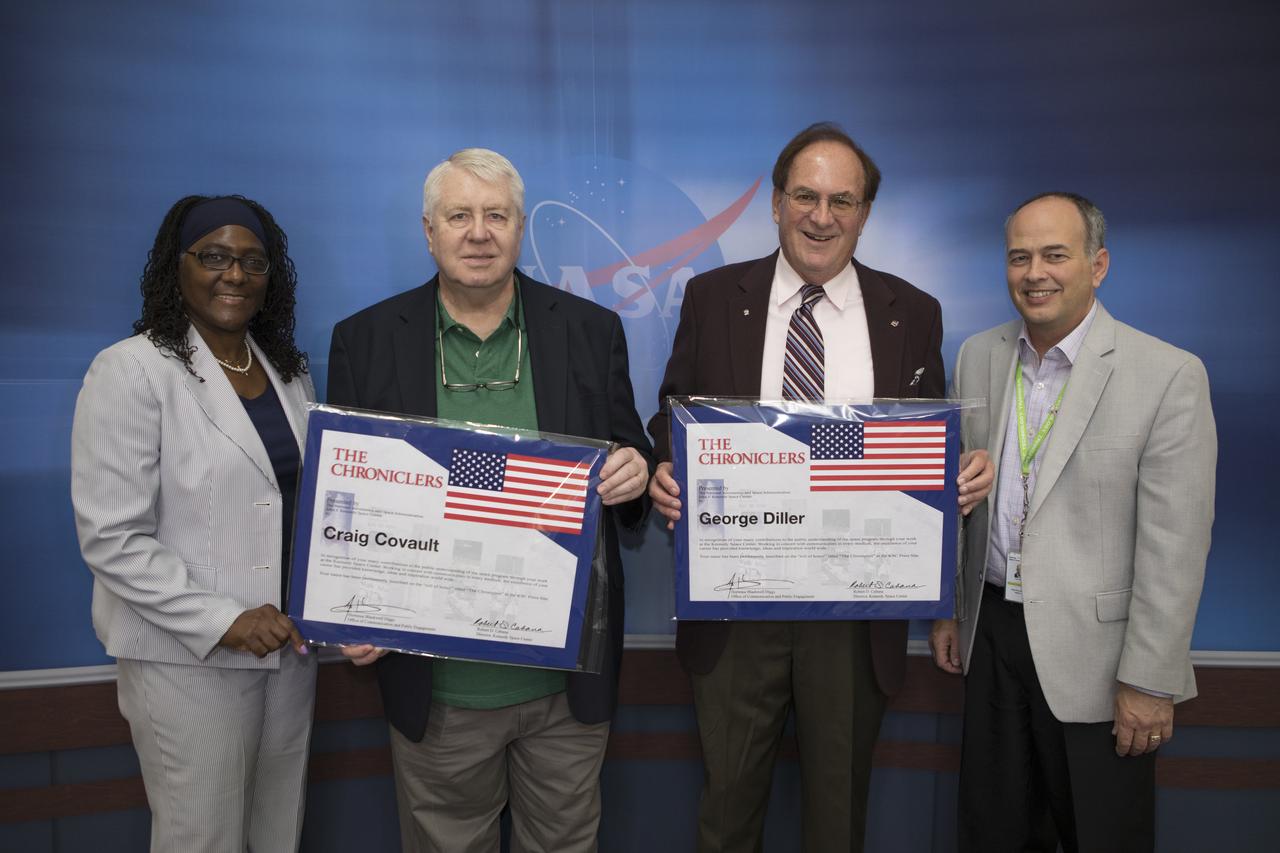
Craig Covault and George Diller are the newest additions to the “Chroniclers wall,” which recognizes retirees of the news and communications business who helped spread news of American space exploration from Kennedy Space Center in Florida for 10 years or more. The two men were honored during a gathering at Kennedy’s NASA News Center on Friday, May 4. Posing with the inductees are, far left, Hortense Diggs, Office of Communication and Public Engagement deputy director at Kennedy; and far right, Kennedy Office of Communication Division Chief David Culp.
2018 Chroniclers
Craig Covault covered approximately 100 space shuttle launches and missions from Kennedy Space Center in Florida during his 48-year career writing about space and aeronautics. Covault, who is credited with 2,000 news and feature stories for Aviation Week & Space Technology, was installed as a member of the “Chroniclers” during a ceremony at Kennedy’s NASA News Center on Friday, May 4. “Chroniclers” recognizes retirees of the news and communications business who helped spread news of American space exploration from Kennedy for 10 years or more. George Diller also earned a spot on the “Chroniclers wall” at the event.
2018 Chroniclers
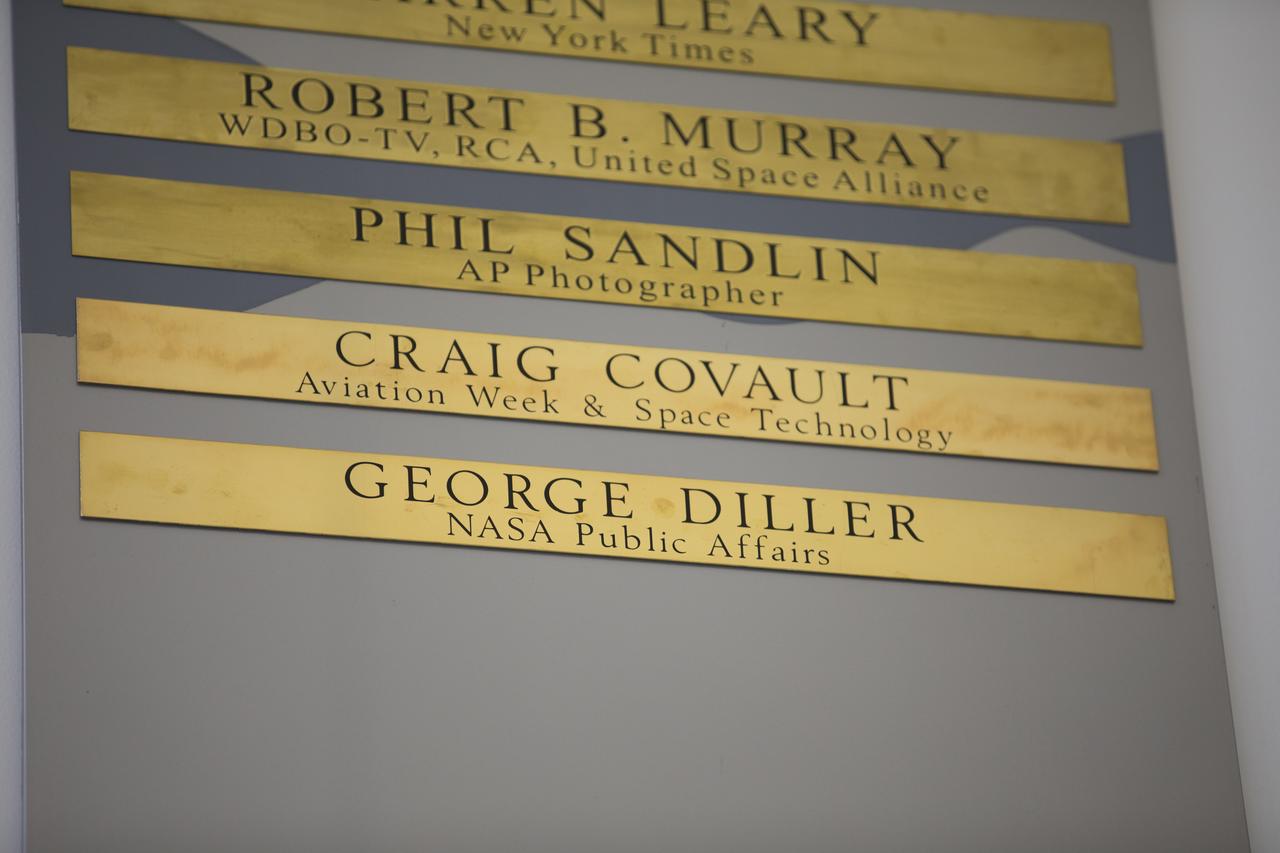
Brass strips engraved with the names of Craig Covault and George Diller were unveiled during a ceremony at Kennedy Space Center’s NASA News Center in Florida on Friday, May 4. Covault covered approximately 100 space shuttle launches and missions during his 48-year career. Diller was known by many as “The Voice of Kennedy Launch Control” during his 37-year career in NASA Public Affairs. “Chroniclers” recognizes retirees of the news and communications business who helped spread news of American space exploration from Kennedy for 10 years or more.
2018 Chroniclers
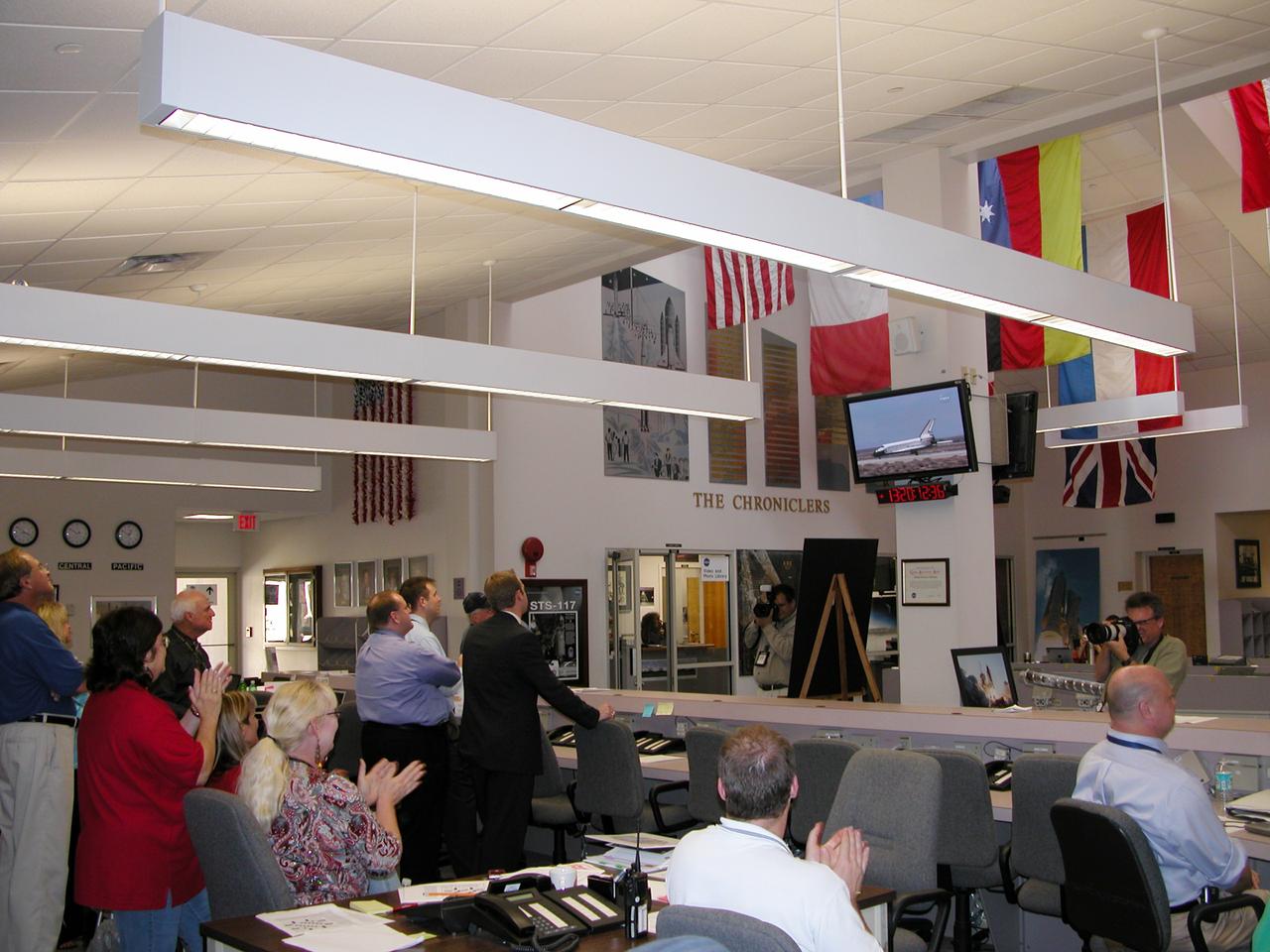
Media and staff in the NASA News Center at Kennedy Space Center applaud the successful landing of Atlantis, visible on the television screens, at NASA's Dryden Flight Research Center at Edwards Air Force Base in California. Returning from mission STS-117, Atlantis touched down on runway 22 at Edwards on orbit 219 after 13 days, 20 hours and 12 minutes in space. The landing was diverted to California due to marginal weather at the Kennedy Space Center. Main gear touchdown was at 3:49:38 p.m. EDT on runway 22. Nose gear touchdown was at 3:49:49 p.m. and wheel stop was at 3:50:48 p.m. This was the 51st landing for the Space Shuttle Program at Edwards Air Force Base. The mission to the International Space Station was a success, installing the S3/S4 truss. The returning crew of seven includes astronaut Sunita Williams, who was flight engineer on the Expedition 15 crew. She achieved a new milestone, a record-setting flight at 194 days, 18 hours and 58 minutes, the longest single spaceflight ever by a female astronaut or cosmonaut.
Media and staff in the NASA News Center at Kennedy Space Center
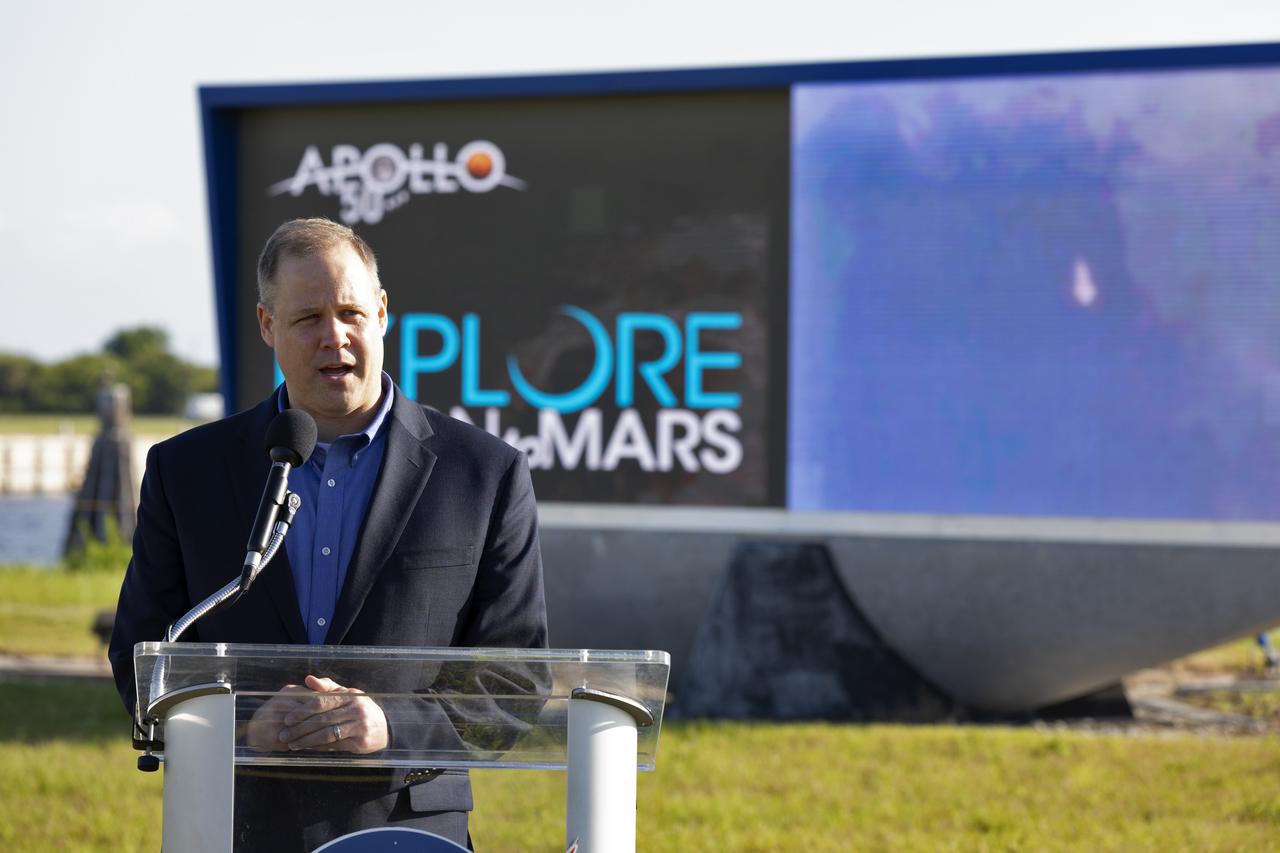
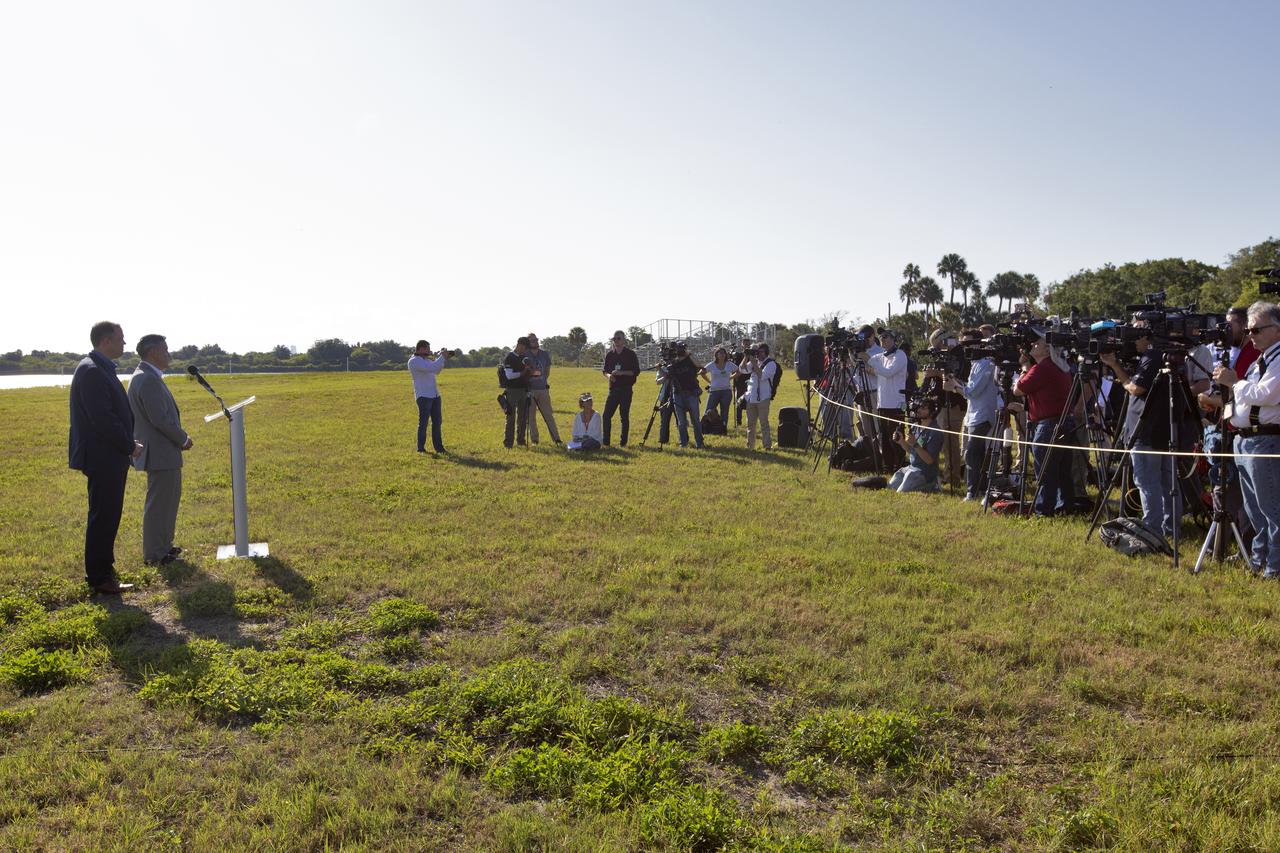
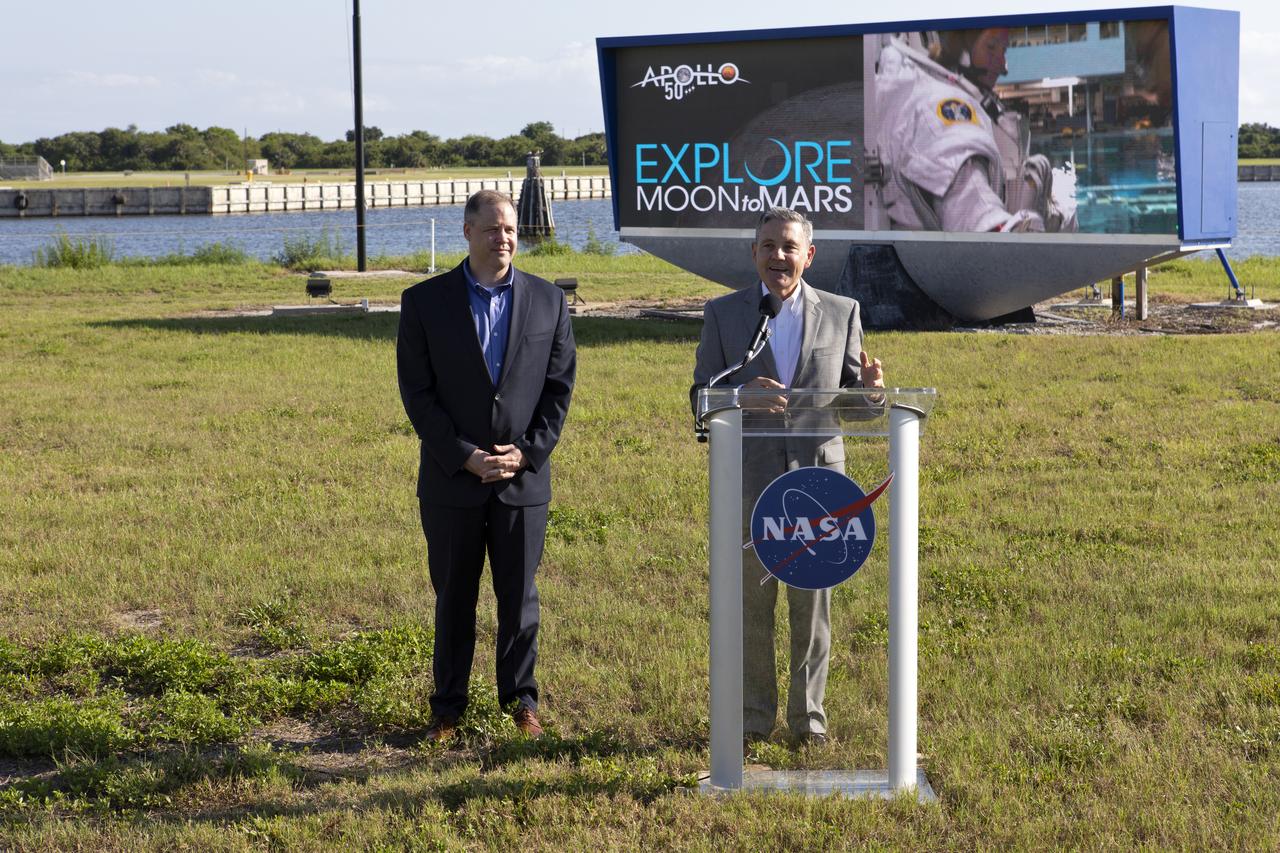
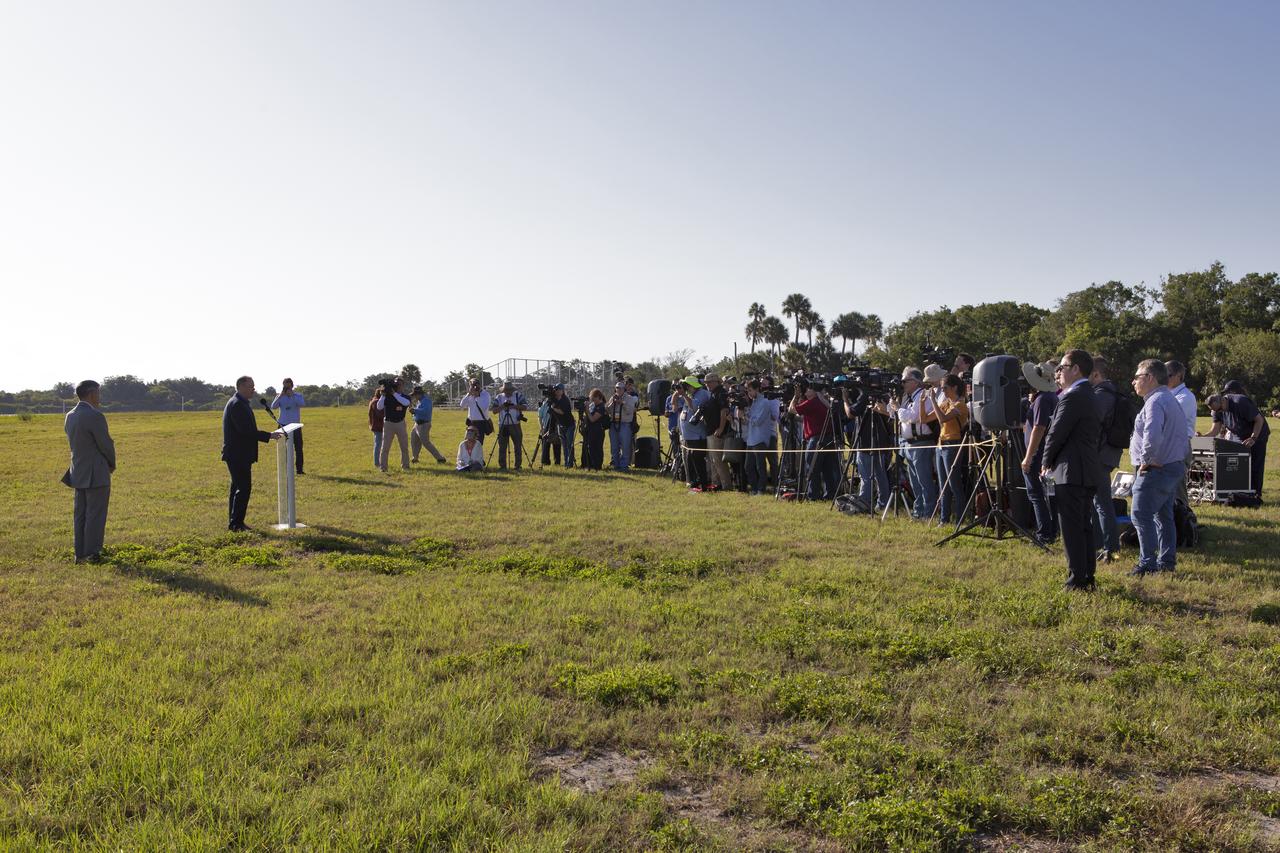
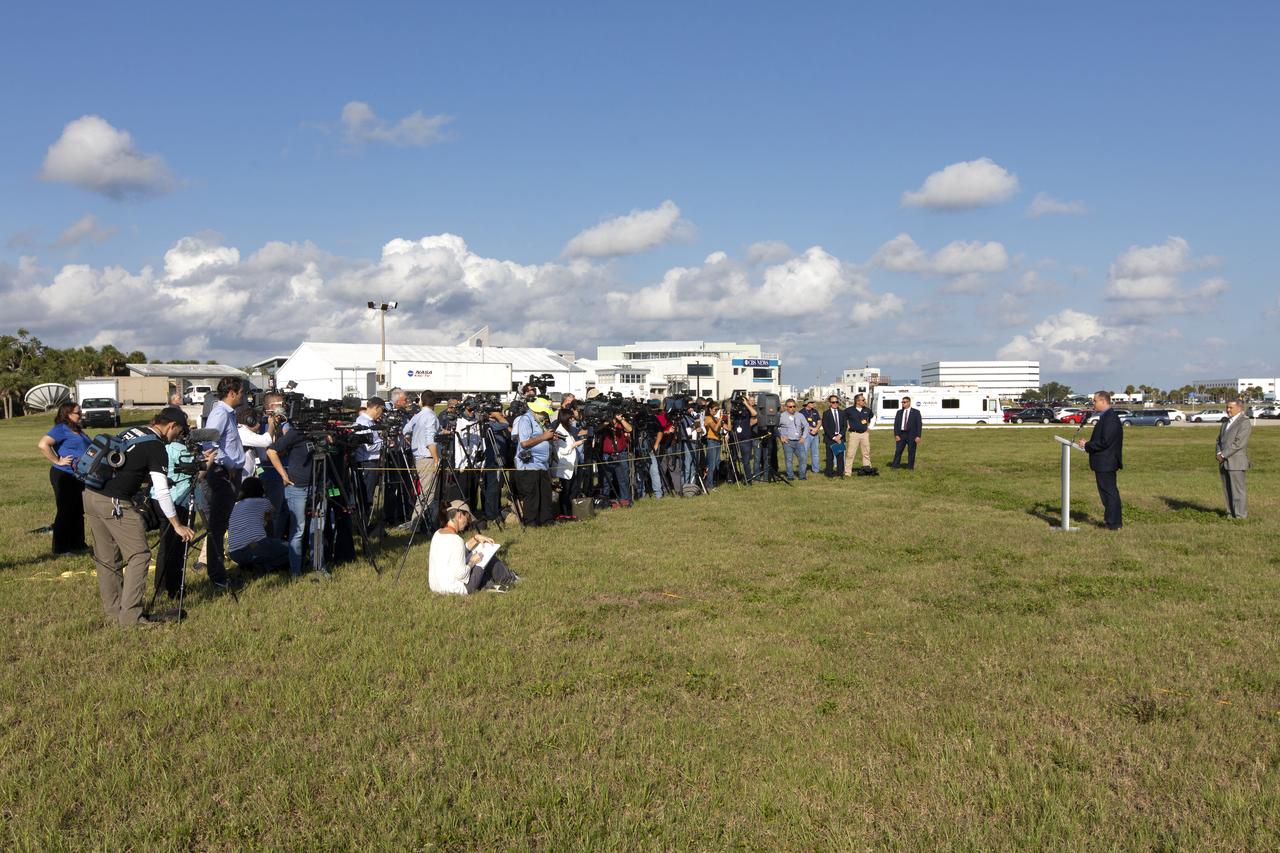
NASA Kennedy Space Center’s Director Bob Cabana, at the podium, speaks to members of the news media at the NASA News Center on May 23, 2019. At left is NASA Administrator Jim Bridenstine. News media were at the center for an Apollo 11 Media Day. They toured several facilities, including the Vehicle Assembly and Launch Complex 39B for a look back at the Apollo missions and a look ahead to NASA’s new Moon 2024 initiative, the Artemis 1 mission and the Gateway lunar outpost.
Apollo 11 Media Day
NASA Kennedy Space Center’s Director Bob Cabana, at the podium, speaks to members of the news media at the NASA News Center on May 23, 2019. At left is NASA Administrator Jim Bridenstine. News media were at the center for an Apollo 11 Media Day. They toured several facilities, including the Vehicle Assembly and Launch Complex 39B for a look back at the Apollo missions and a look ahead to NASA’s new Moon 2024 initiative, the Artemis 1 mission and the Gateway lunar outpost.
Apollo 11 Media Day
NASA Kennedy Space Center’s Director Bob Cabana, at left, and NASA Administrator Jim Bridenstine, speak to members of the news media at the NASA News Center on May 23, 2019. News media were at the center for an Apollo 11 Media Day. They toured several facilities, including the Vehicle Assembly and Launch Complex 39B for a look back at the Apollo missions and a look ahead to NASA’s new Moon 2024 initiative, the Artemis 1 mission and the Gateway lunar outpost.
Apollo 11 Media Day
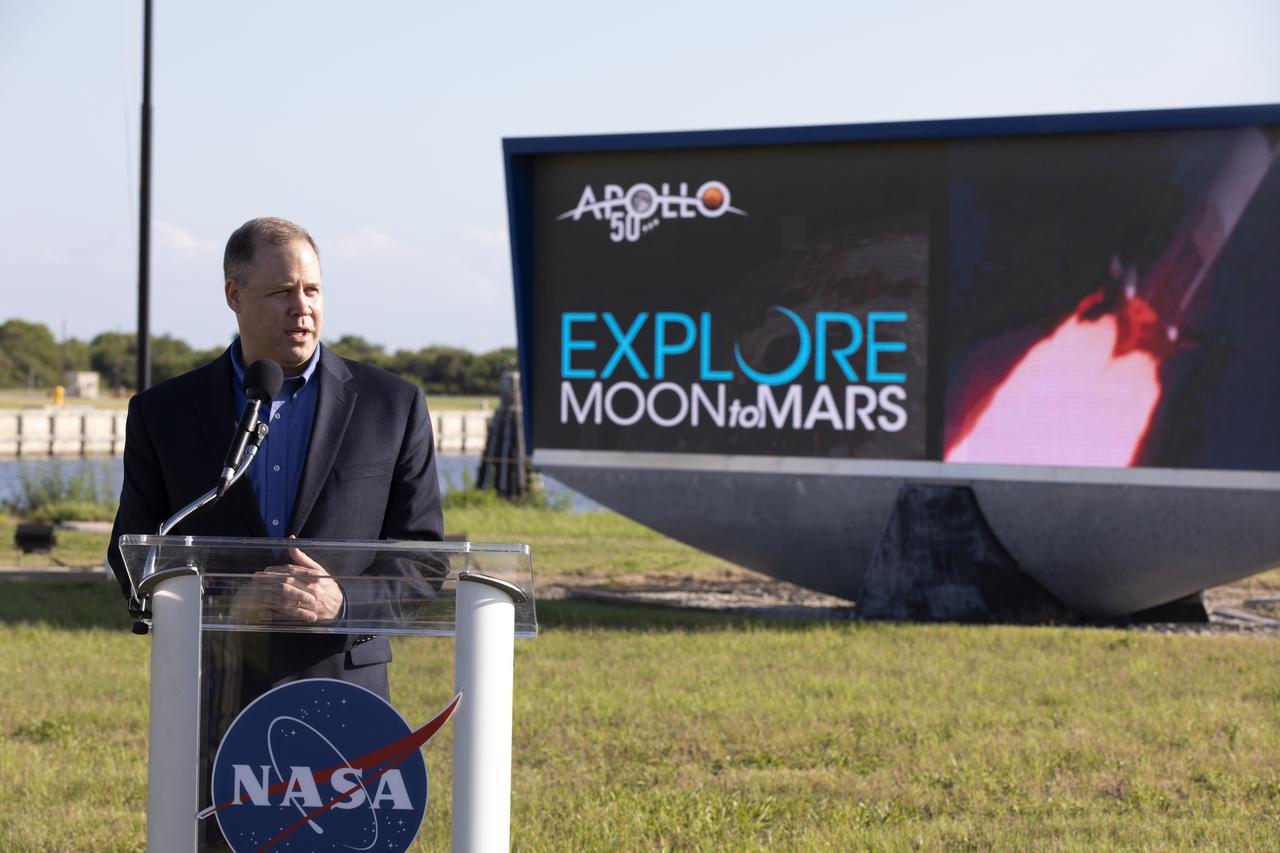
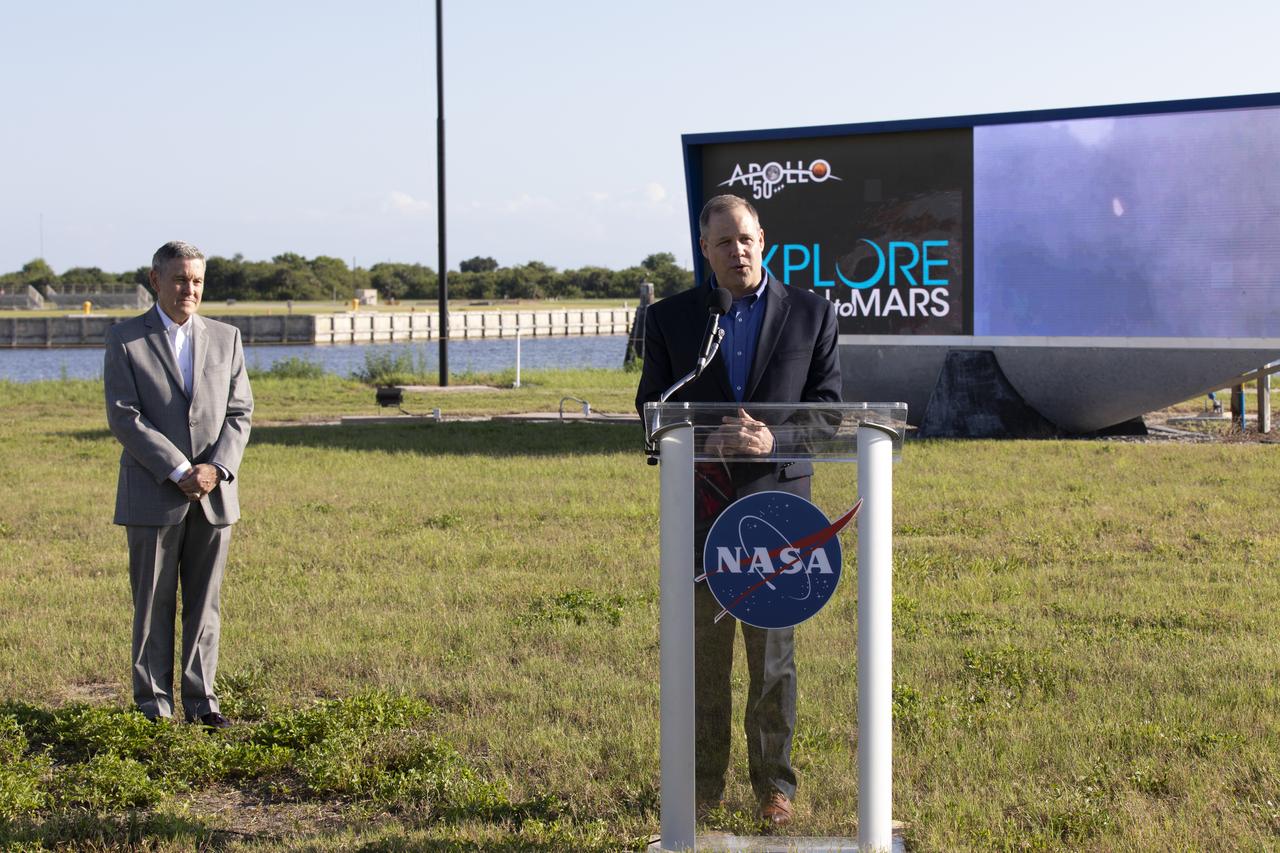
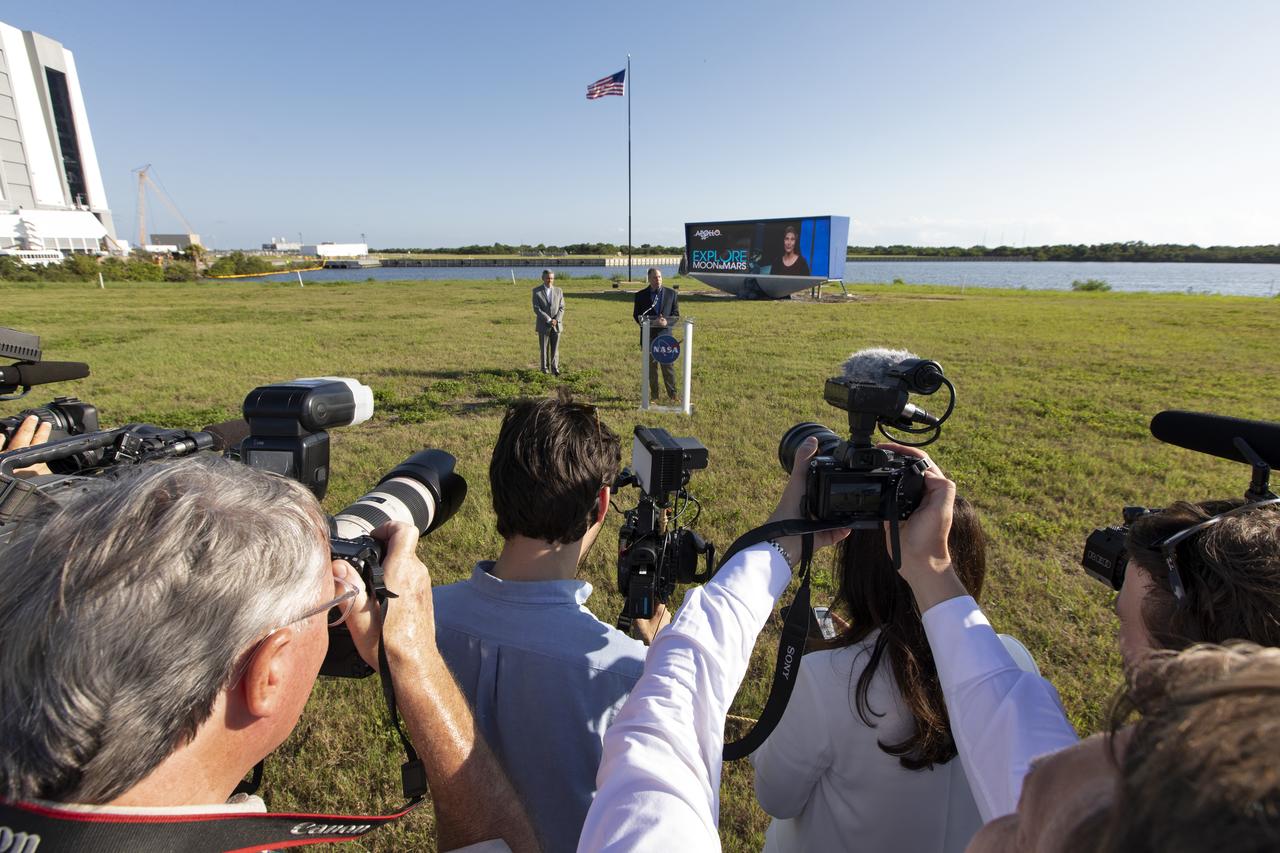
NASA Administrator Jim Bridenstine, at the podium, speaks to members of the news media at the NASA News Center on May 23, 2019. At left is Kennedy Space Center Director Bob Cabana. News media were at the center for an Apollo 11 Media Day. They toured several facilities, including the Vehicle Assembly and Launch Complex 39B for a look back at the Apollo missions and a look ahead to NASA’s new Moon 2024 initiative, the Artemis 1 mission and the Gateway lunar outpost.
Apollo 11 Media Day
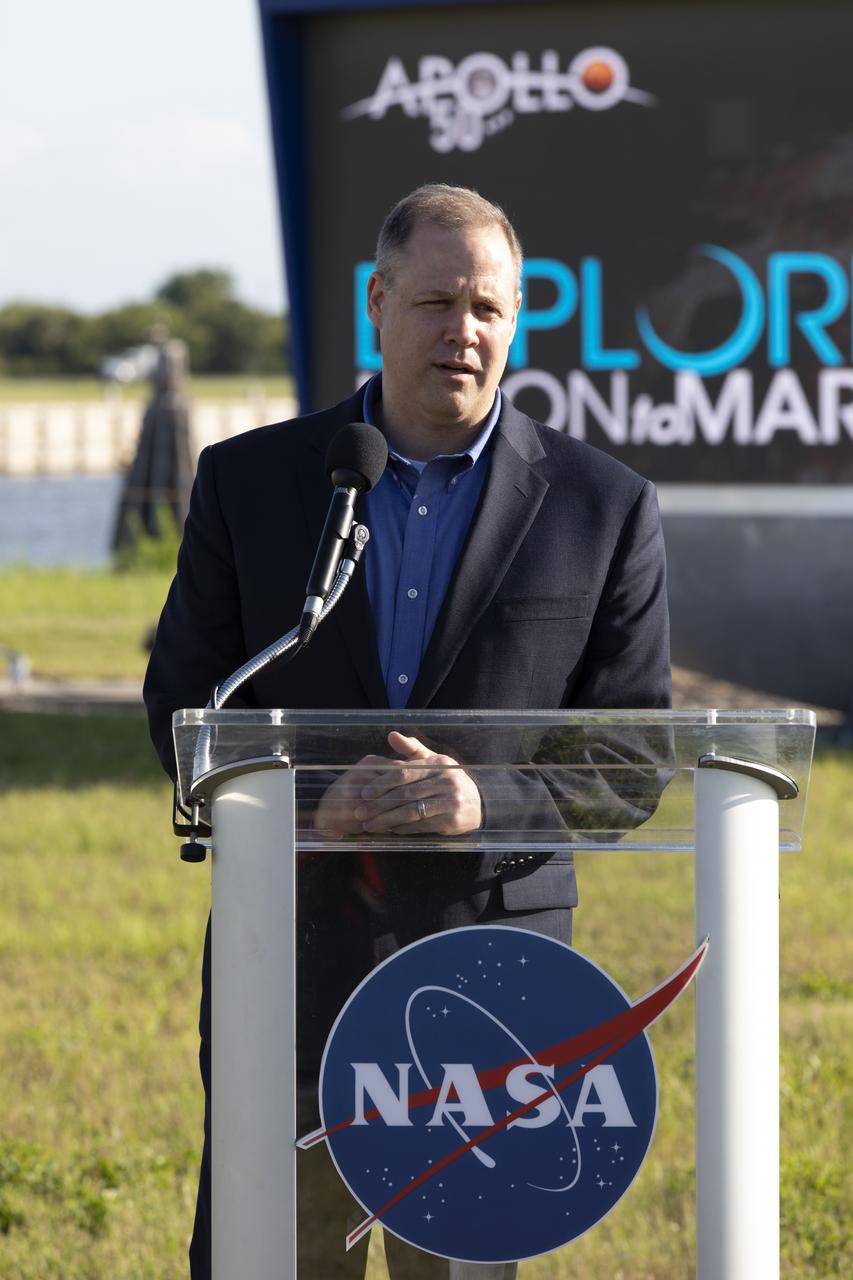
NASA Administrator Jim Bridenstine speaks to members of the news media at the NASA News Center on May 23, 2019. At left is Kennedy Space Center Director Bob Cabana. News media were at the center for an Apollo 11 Media Day. They toured several facilities, including the Vehicle Assembly and Launch Complex 39B for a look back at the Apollo missions and a look ahead to NASA’s new Moon 2024 initiative, the Artemis 1 mission and the Gateway lunar outpost.
Apollo 11 Media Day
NASA Administrator Jim Bridenstine, at the podium, speaks to members of the news media at the NASA News Center on May 23, 2019. At left is Kennedy Space Center Director Bob Cabana. News media were at the center for an Apollo 11 Media Day. They toured several facilities, including the Vehicle Assembly and Launch Complex 39B for a look back at the Apollo missions and a look ahead to NASA’s new Moon 2024 initiative, the Artemis 1 mission and the Gateway lunar outpost.
Apollo 11 Media Day
NASA Administrator Jim Bridenstine, at the podium, speaks to members of the news media at the NASA News Center on May 23, 2019. At far right is Kennedy Space Center Director Bob Cabana. News media were at the center for an Apollo 11 Media Day. They toured several facilities, including the Vehicle Assembly and Launch Complex 39B for a look back at the Apollo missions and a look ahead to NASA’s new Moon 2024 initiative, the Artemis 1 mission and the Gateway lunar outpost.
Apollo 11 Media Day
NASA Administrator Jim Bridenstine, at the podium, speaks to members of the news media at the NASA News Center on May 23, 2019. Behind him is Kennedy Space Center Director Bob Cabana. News media were at the center for an Apollo 11 Media Day. They toured several facilities, including the Vehicle Assembly and Launch Complex 39B for a look back at the Apollo missions and a look ahead to NASA’s new Moon 2024 initiative, the Artemis 1 mission and the Gateway lunar outpost.
Apollo 11 Media Day
NASA Administrator Jim Bridenstine speaks to members of the news media at the NASA News Center on May 23, 2019. News media were at the center for an Apollo 11 Media Day. They toured several facilities, including the Vehicle Assembly and Launch Complex 39B for a look back at the Apollo missions and a look ahead to NASA’s new Moon 2024 initiative, the Artemis 1 mission and the Gateway lunar outpost.
Apollo 11 Media Day
NASA Administrator Jim Bridenstine speaks to members of the news media at the NASA News Center on May 23, 2019. News media were at the center for an Apollo 11 Media Day. They toured several facilities, including the Vehicle Assembly and Launch Complex 39B for a look back at the Apollo missions and a look ahead to NASA’s new Moon 2024 initiative, the Artemis 1 mission and the Gateway lunar outpost.
Apollo 11 Media Day
NASA Administrator Jim Bridenstine speaks to members of the news media at the NASA News Center on May 23, 2019. News media were at the center for an Apollo 11 Media Day. They toured several facilities, including the Vehicle Assembly and Launch Complex 39B for a look back at the Apollo missions and a look ahead to NASA’s new Moon 2024 initiative, the Artemis 1 mission and the Gateway lunar outpost.
Apollo 11 Media Day
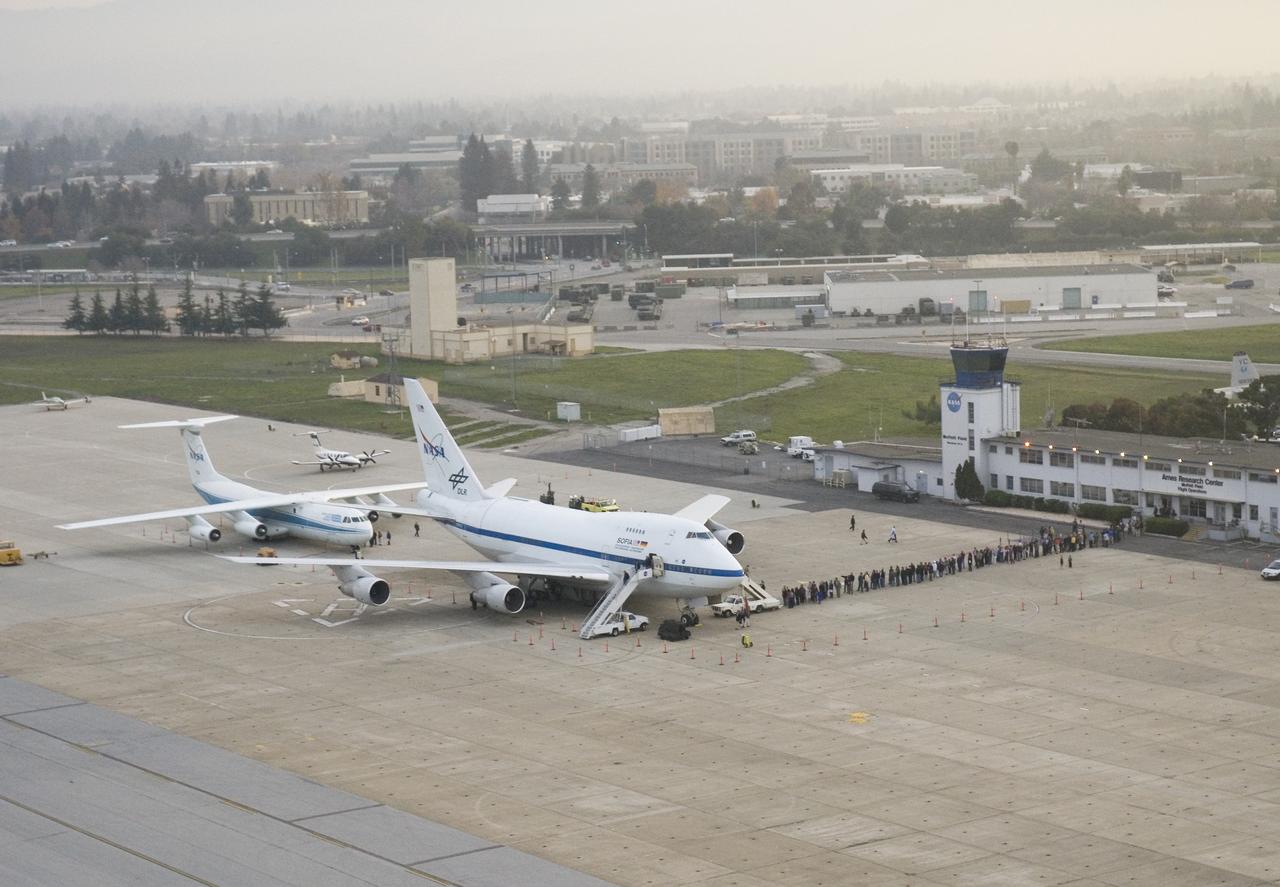
NASA's new SOFIA observatory shared the ramp with its predecessor, the now-retired Kuiper Airborne Observatory, during open house at NASA Ames Research Center.
NASA's new SOFIA observatory shared the ramp with its predecessor, the now-retired Kuiper Airborne Observatory, during open house at NASA Ames Research Center
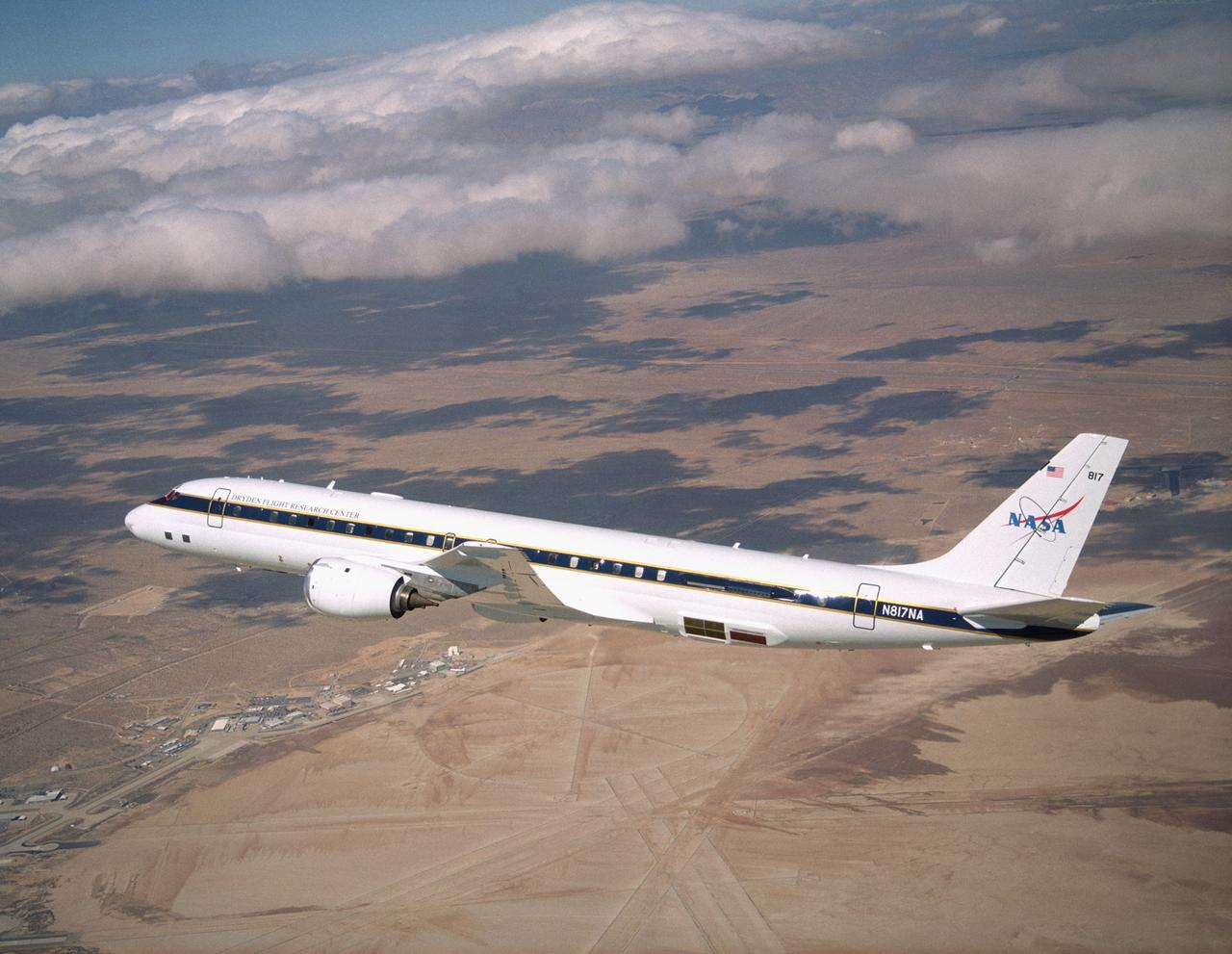
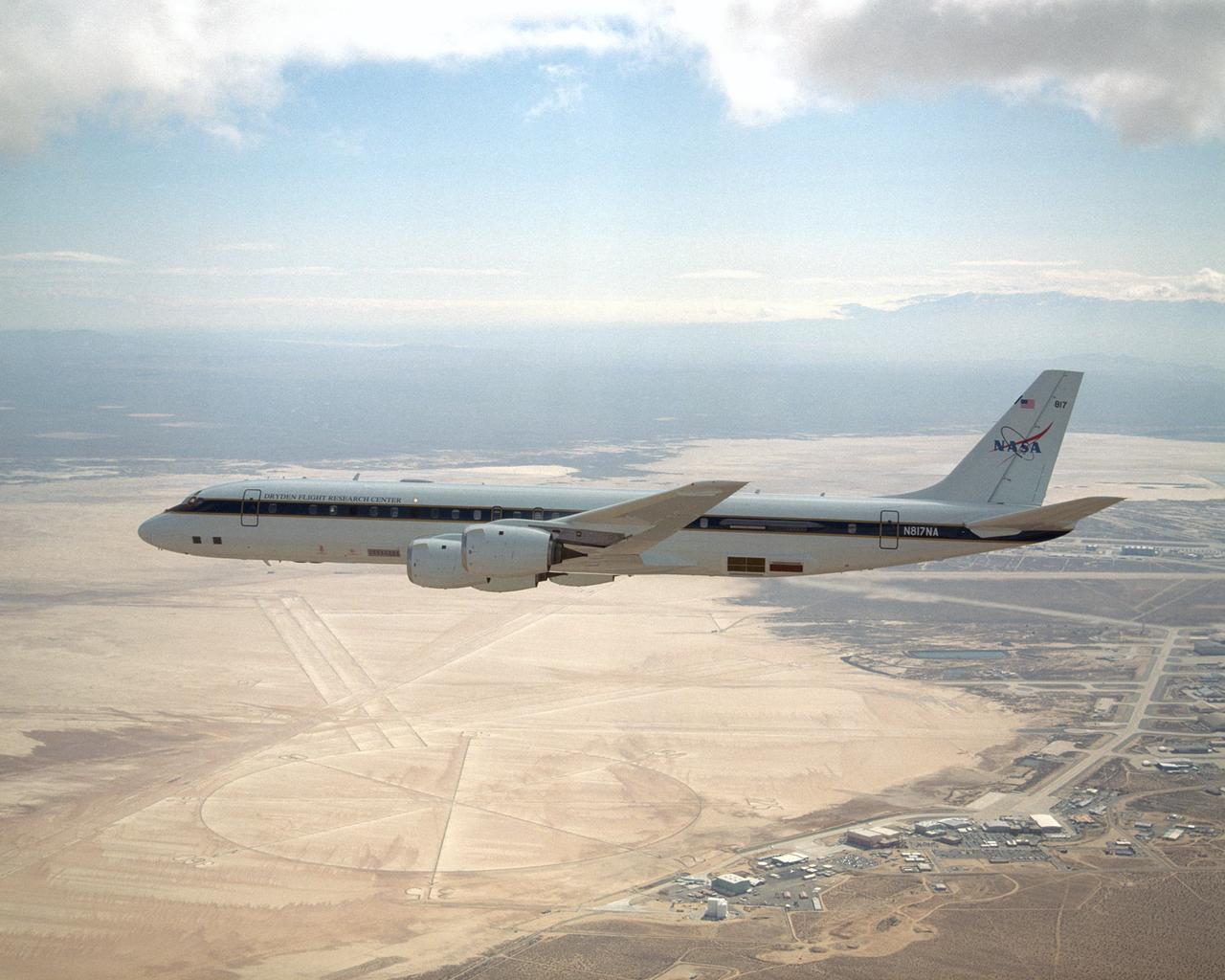
NASA's large Airborne Science research aircraft, a modified DC-8 airliner, displayed new colors in a check flight Feb. 24, 2004, over its home base, the NASA Dryden Flight Research Center at Edwards AFB, California.
NASA's Airborne Science DC-8 displays new colors in a check flight over the Dryden Flight Research Center
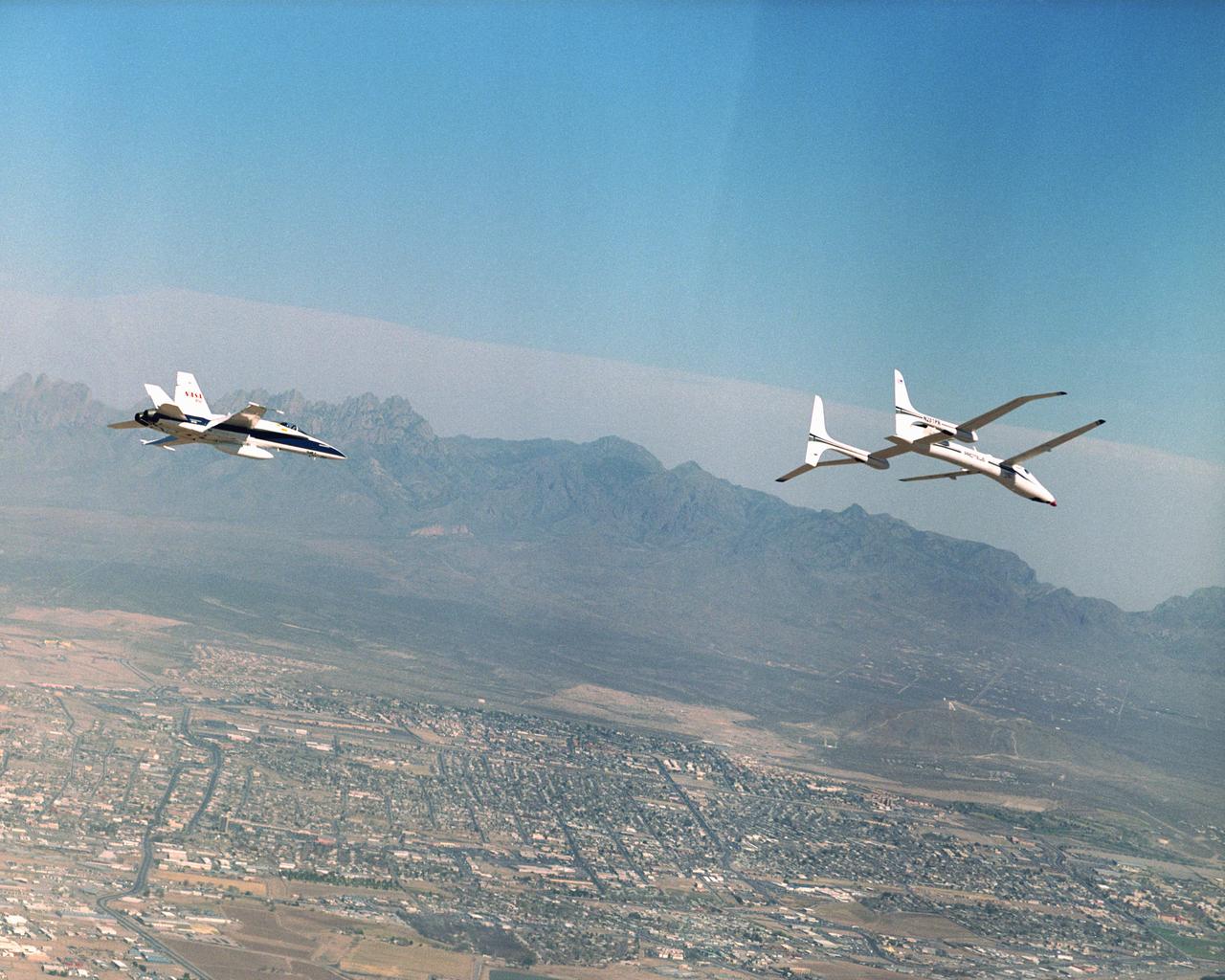
Proteus and an F/A-18 Hornet from NASA's Dryden Flight Research Center are seen here in flight over Las Cruces, New Mexico.
Scaled Composites' Proteus and an F/A-18 Hornet from NASA's Dryden Flight Research Center are seen here in flight over Las Cruces, New Mexico.
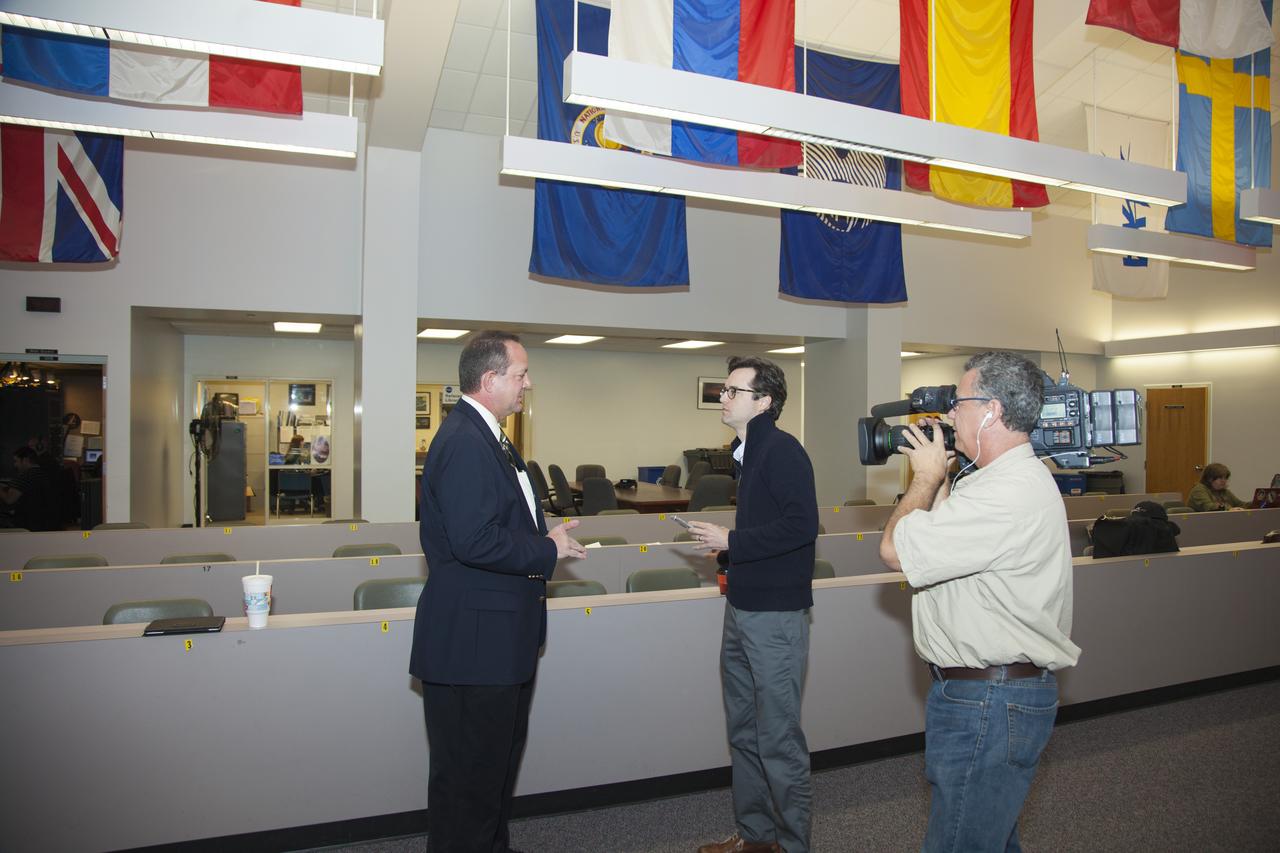
Tom Engler, the deputy director of the Center Planning and Development Directorate, or CPDD, at NASA’s Kennedy Space Center in Florida, speaks to reporter James Dean from Florida Today newspaper during an interview at the Kennedy News Center.
Tom Engler Interview
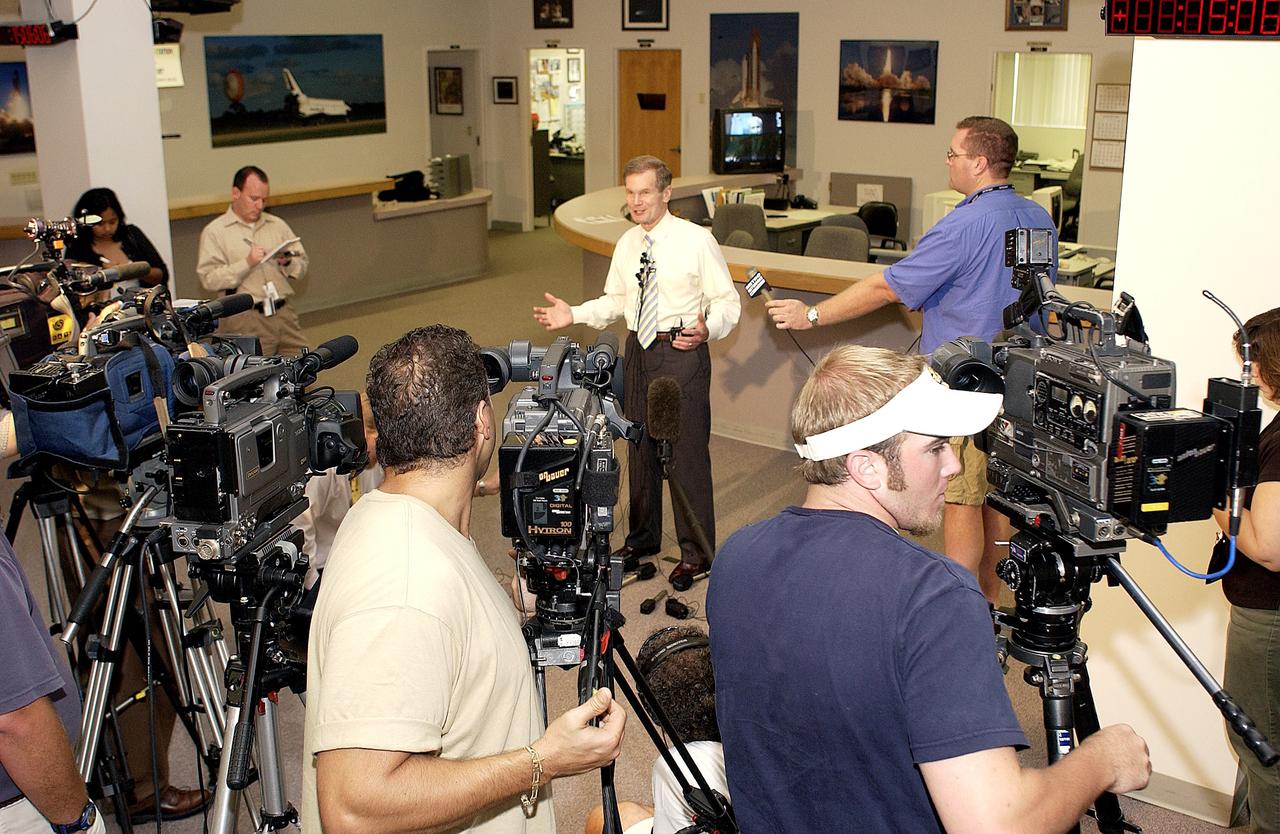
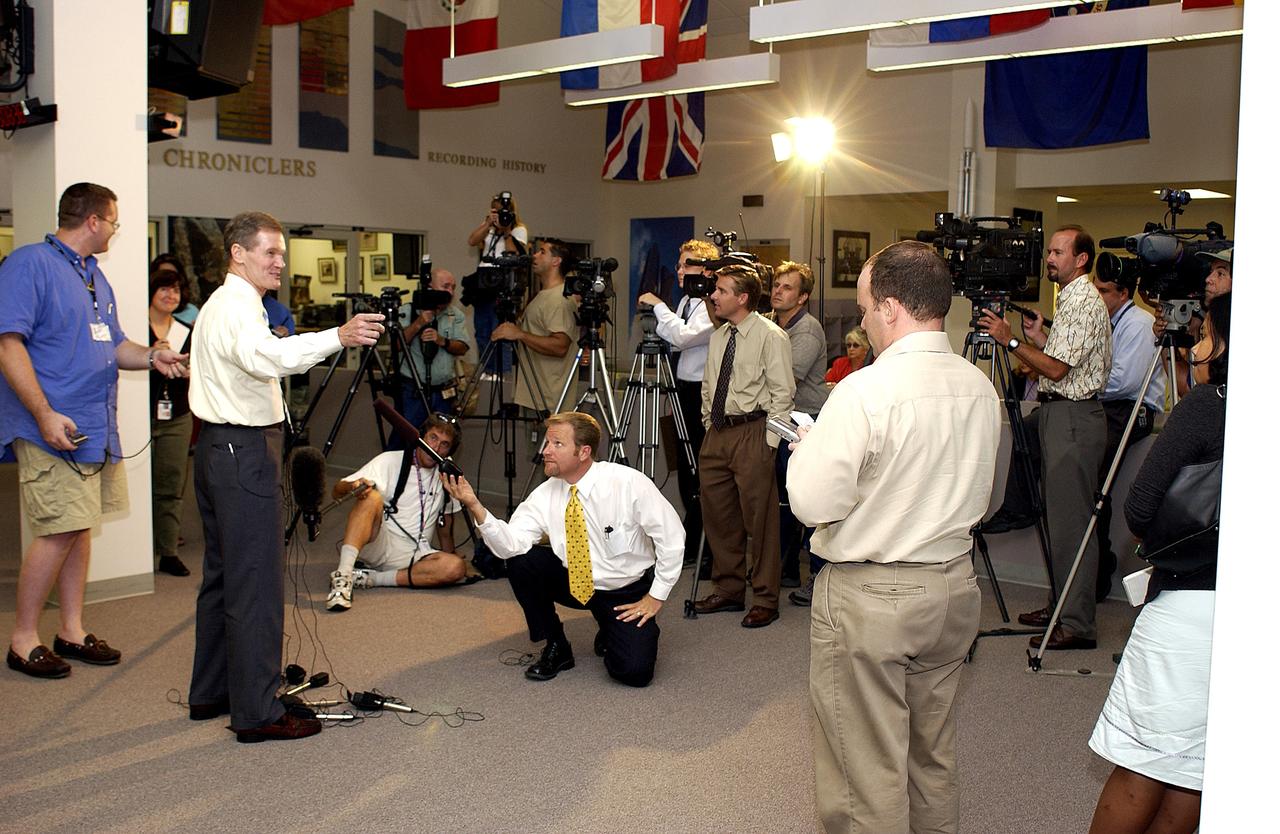
KENNEDY SPACE CENTER, FLA. - Sen. Bill Nelson talks to the media at the NASA KSC News Center about the Columbia Accident Investigation Board report released today.
KENNEDY SPACE CENTER, FLA. - NASA Administrator Sean O’Keefe  (center) is welcomed to the Central Florida Research Park, near Orlando.  Central Florida leaders are proposing the research park as the site for the new NASA Shared Services Center.  The center would centralize NASA’s payroll, accounting, human resources, facilities and procurement offices that are now handled at each field center.  The consolidation is part of the One NASA focus.  Six sites around the U.S. are under consideration by NASA.
KENNEDY SPACE CENTER, FLA. - NASA Administrator Sean O’Keefe (center) is welcomed to the Central Florida Research Park, near Orlando. Central Florida leaders are proposing the research park as the site for the new NASA Shared Services Center. The center would centralize NASA’s payroll, accounting, human resources, facilities and procurement offices that are now handled at each field center. The consolidation is part of the One NASA focus. Six sites around the U.S. are under consideration by NASA.
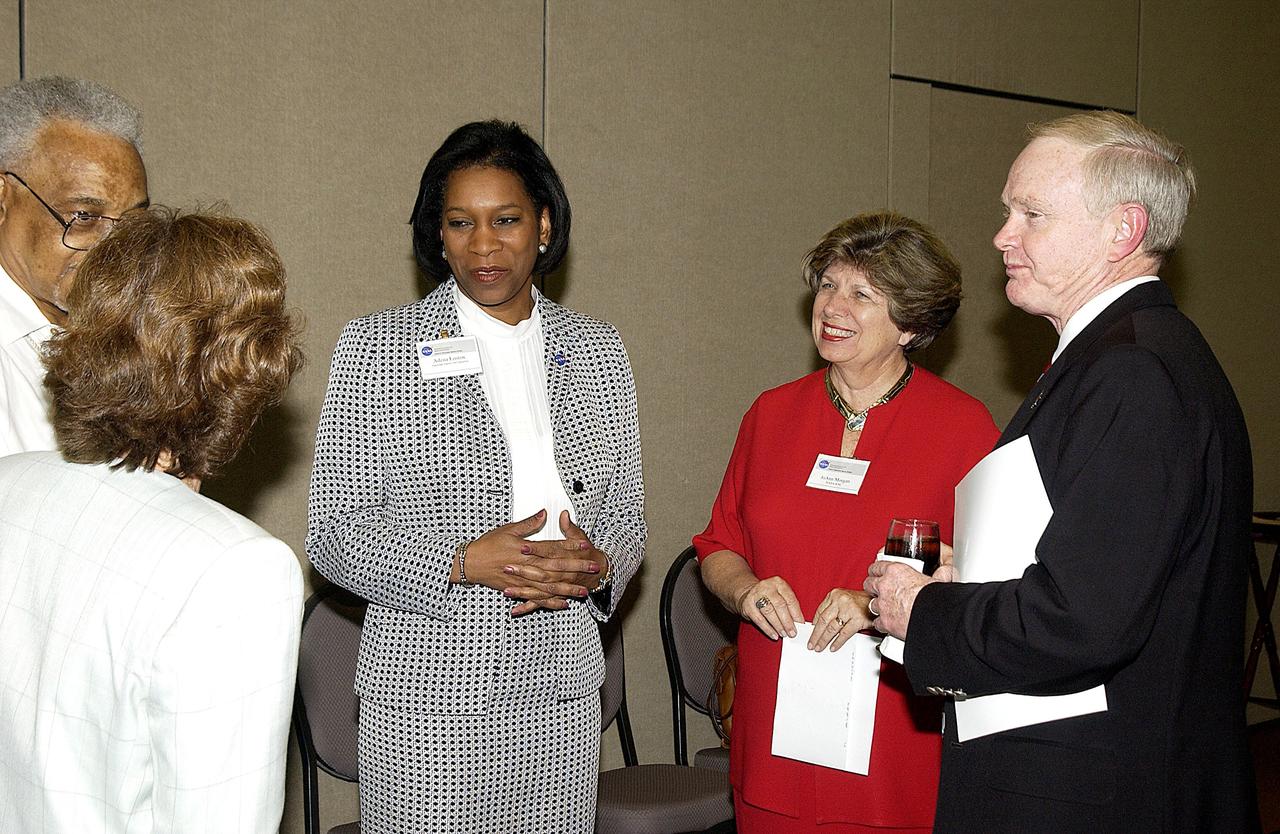
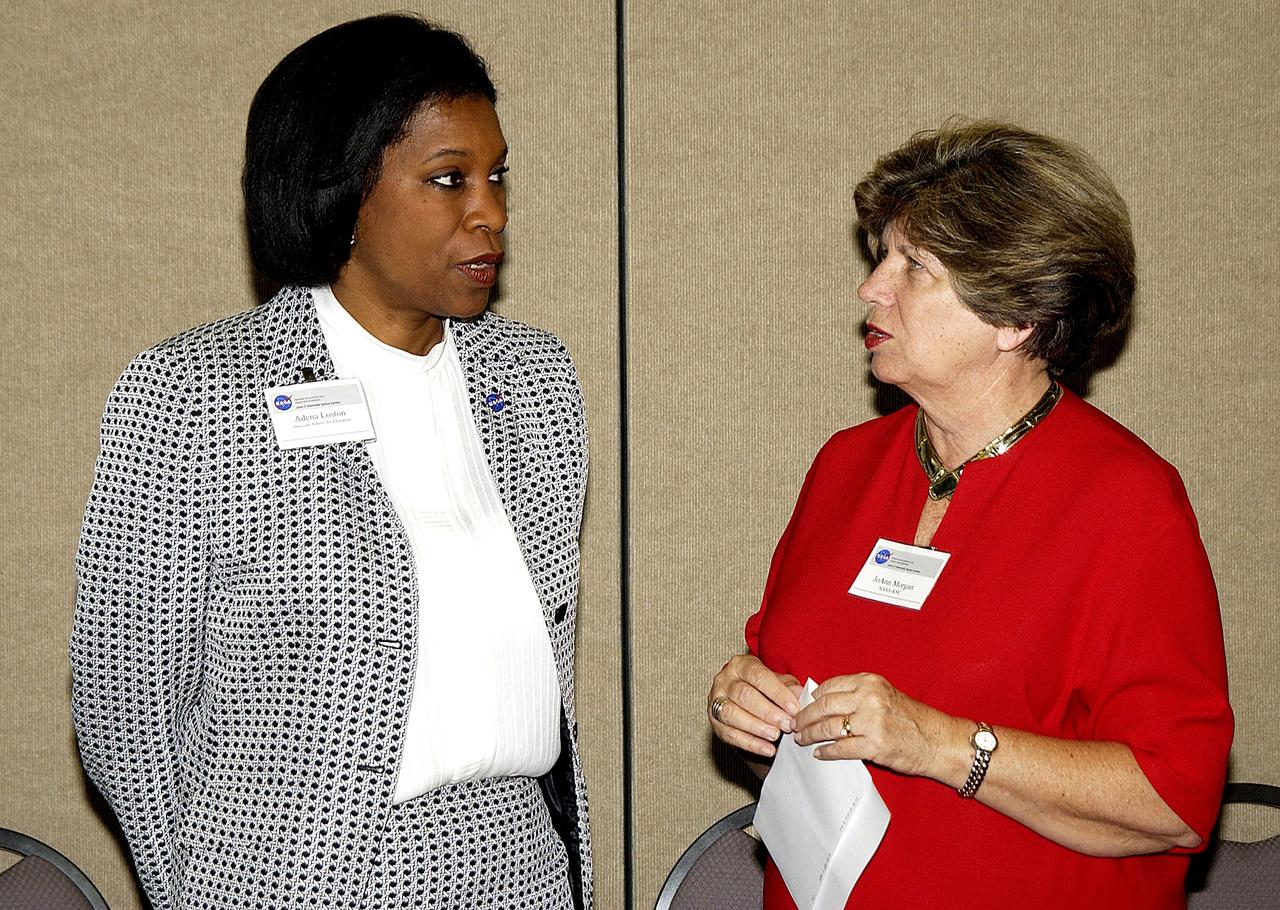
KENNEDY SPACE CENTER, FLA. -    Dr. Adena Williams Loston  (center) talks to attendees (left) of a reception and dinner in her honor at the Debus Conference Center June 6.  With her are Director of External Relations and Business Development JoAnn Morgan and Center Director Roy Bridges Jr.  Loston is NASA’s new associate administrator of Education and the reception was in her honor.  Loston was previously NASA Administrator Sean O’Keefe’s senior advisor of education and assumed her new position in October 2002.
KENNEDY SPACE CENTER, FLA. - Dr. Adena Williams Loston (center) talks to attendees (left) of a reception and dinner in her honor at the Debus Conference Center June 6. With her are Director of External Relations and Business Development JoAnn Morgan and Center Director Roy Bridges Jr. Loston is NASA’s new associate administrator of Education and the reception was in her honor. Loston was previously NASA Administrator Sean O’Keefe’s senior advisor of education and assumed her new position in October 2002.
New Horizons missions managers including New Horizons principal investigator Alan Stern of the Southwest Research Institute (SwRI), Boulder, CO, behind door, wait for a signal from the spacecraft that it is healthy and collected data during the flyby of Ultima Thule, Tuesday, Jan. 1, 2019 at the Mission Operations Center of the Johns Hopkins University Applied Physics Laboratory (APL) in Laurel, Maryland. Photo Credit: (NASA/Bill Ingalls)
New Horizons Ultima Thule Flyby
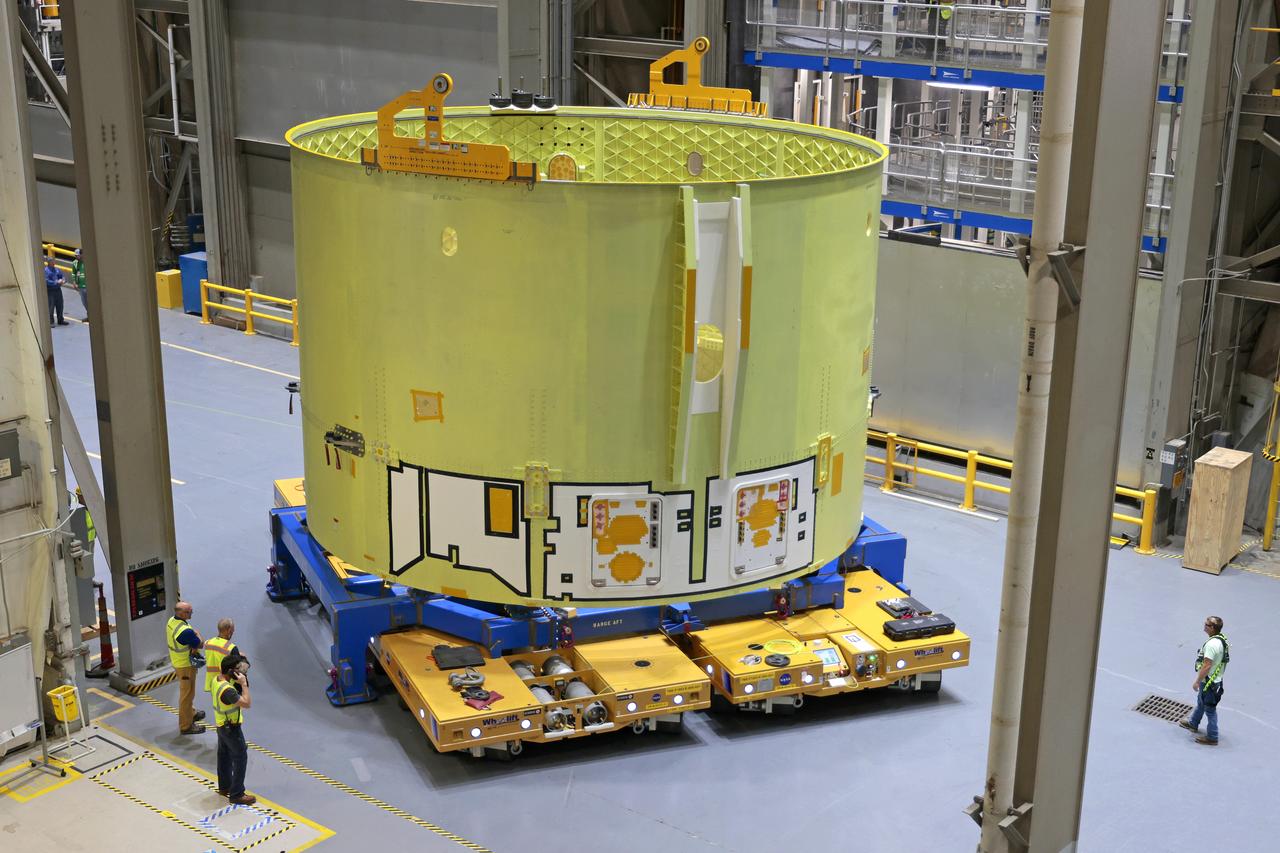
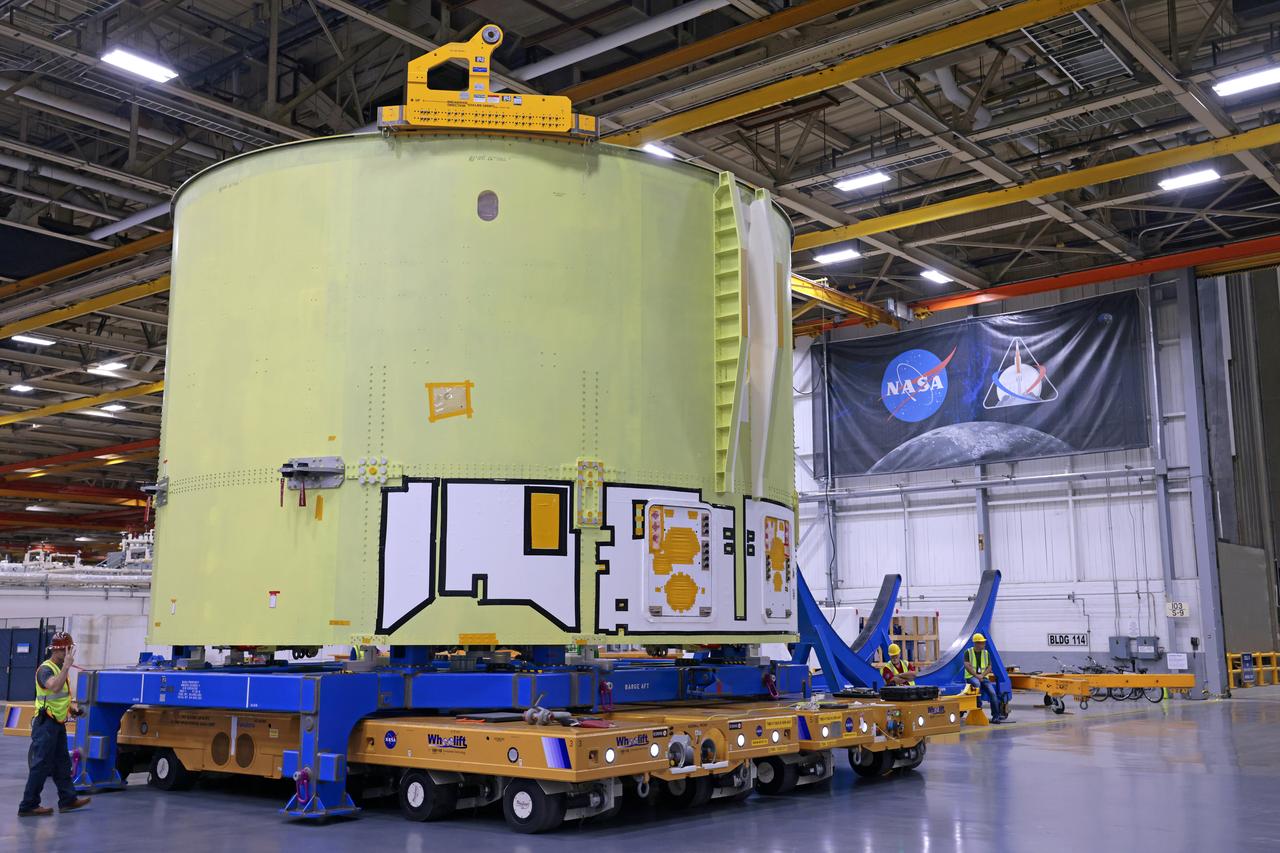
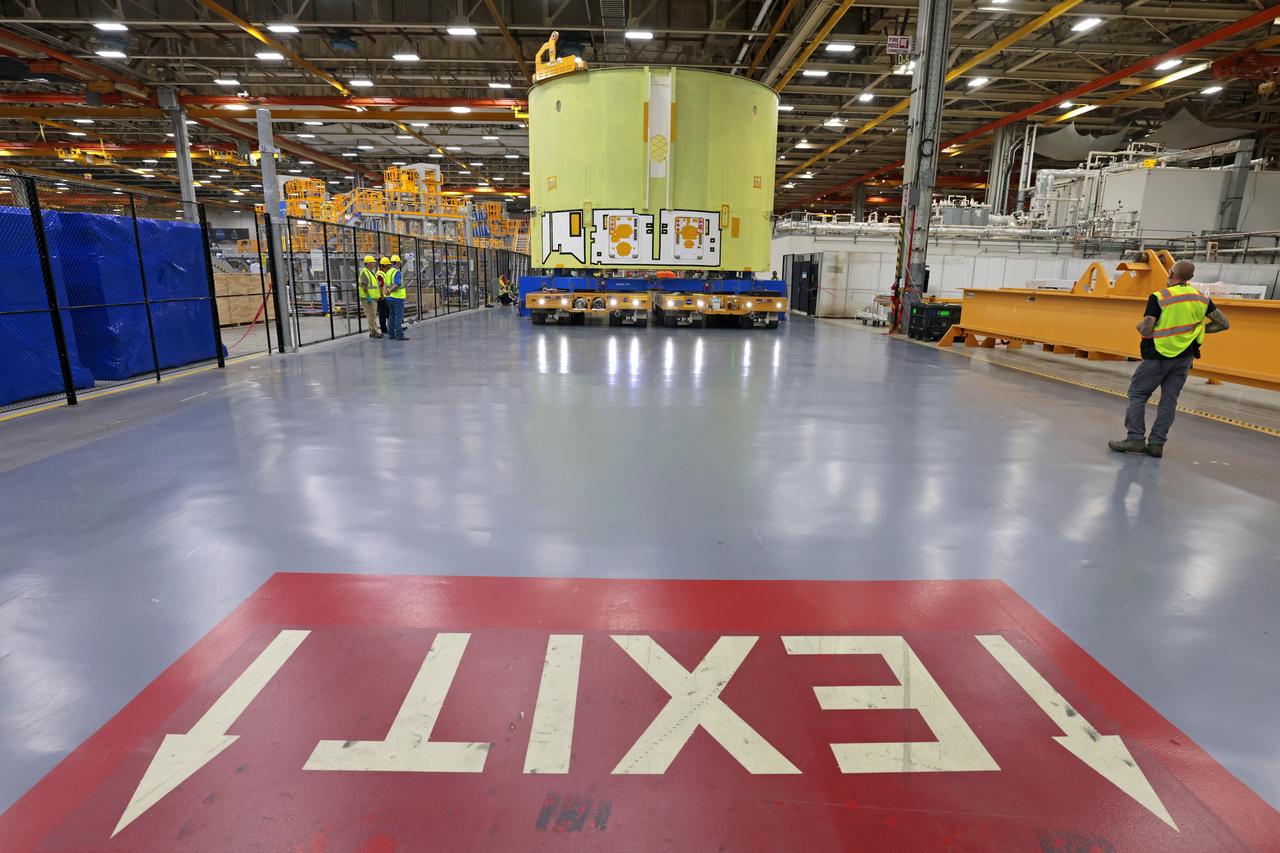
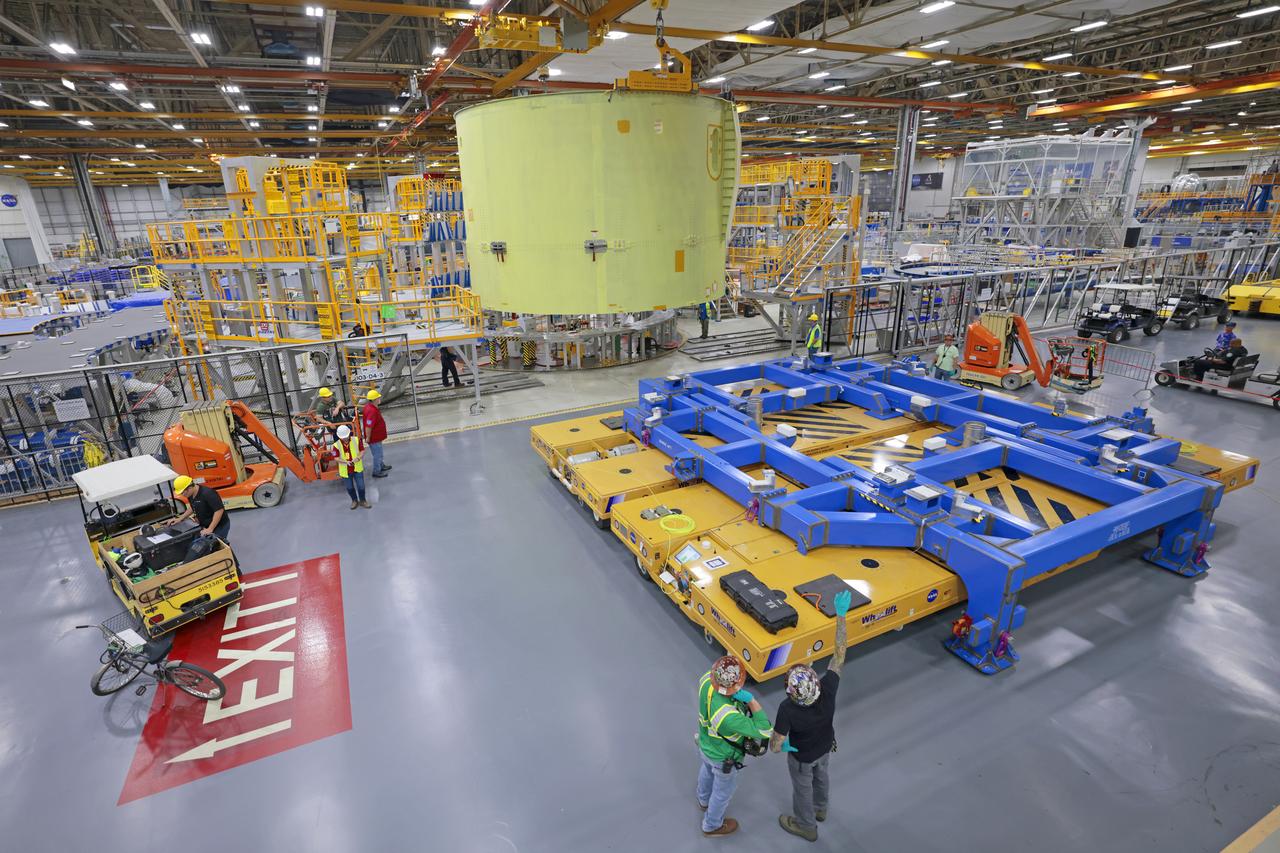
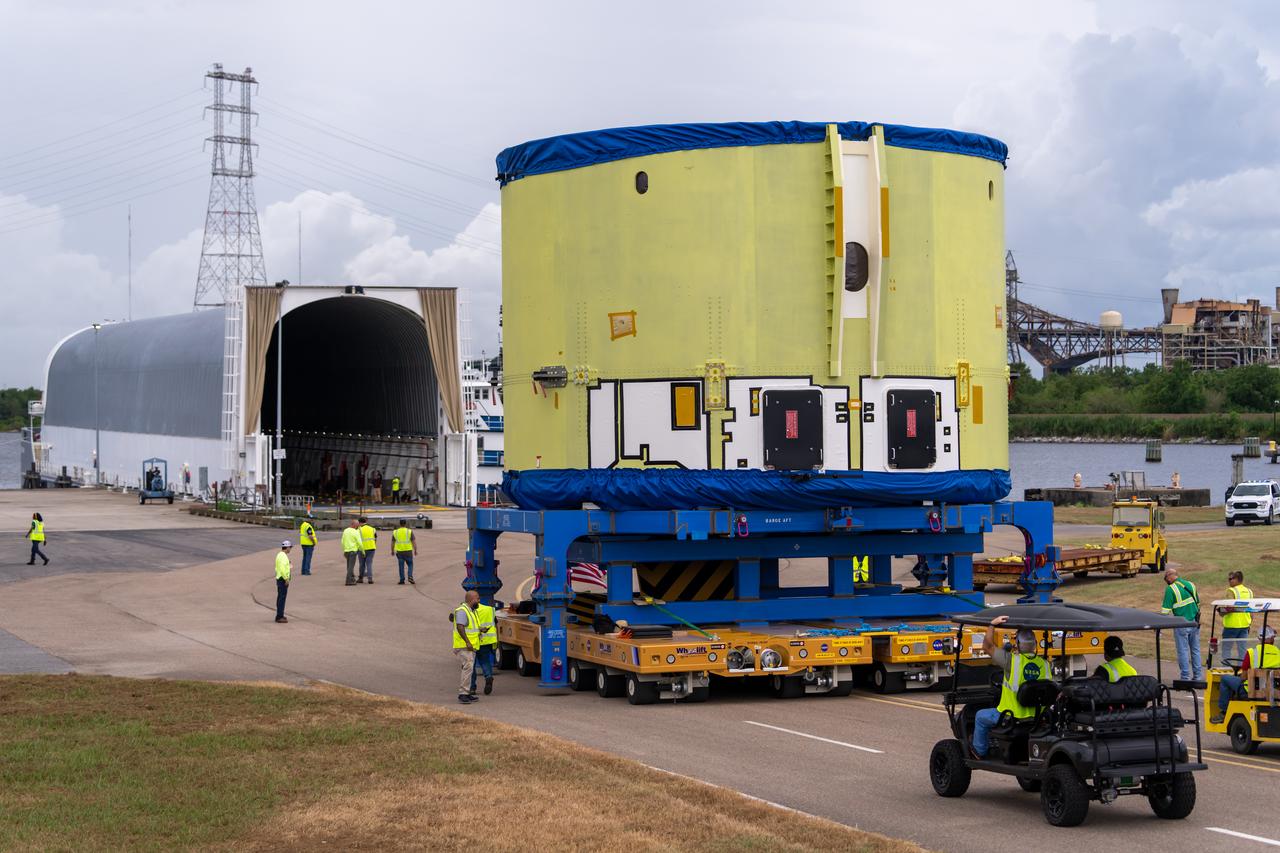
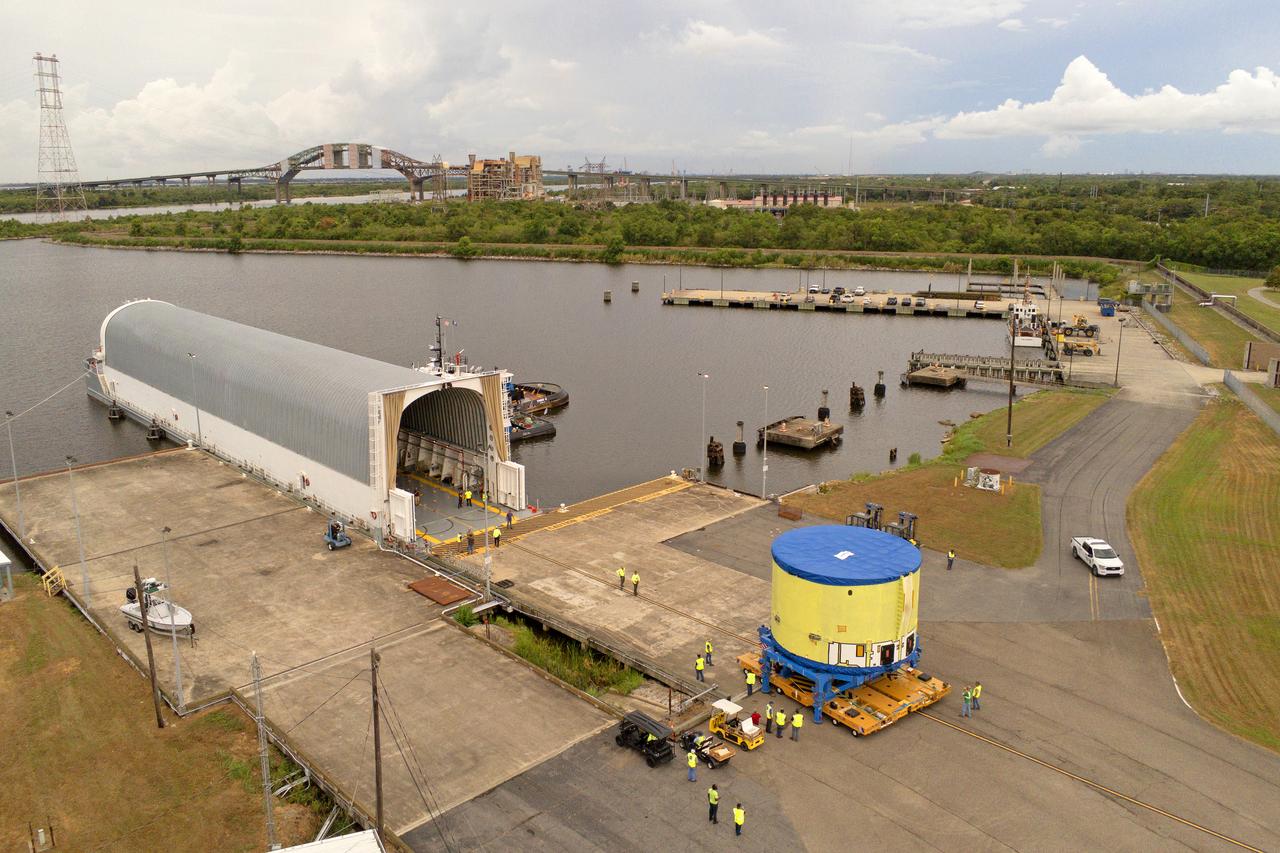
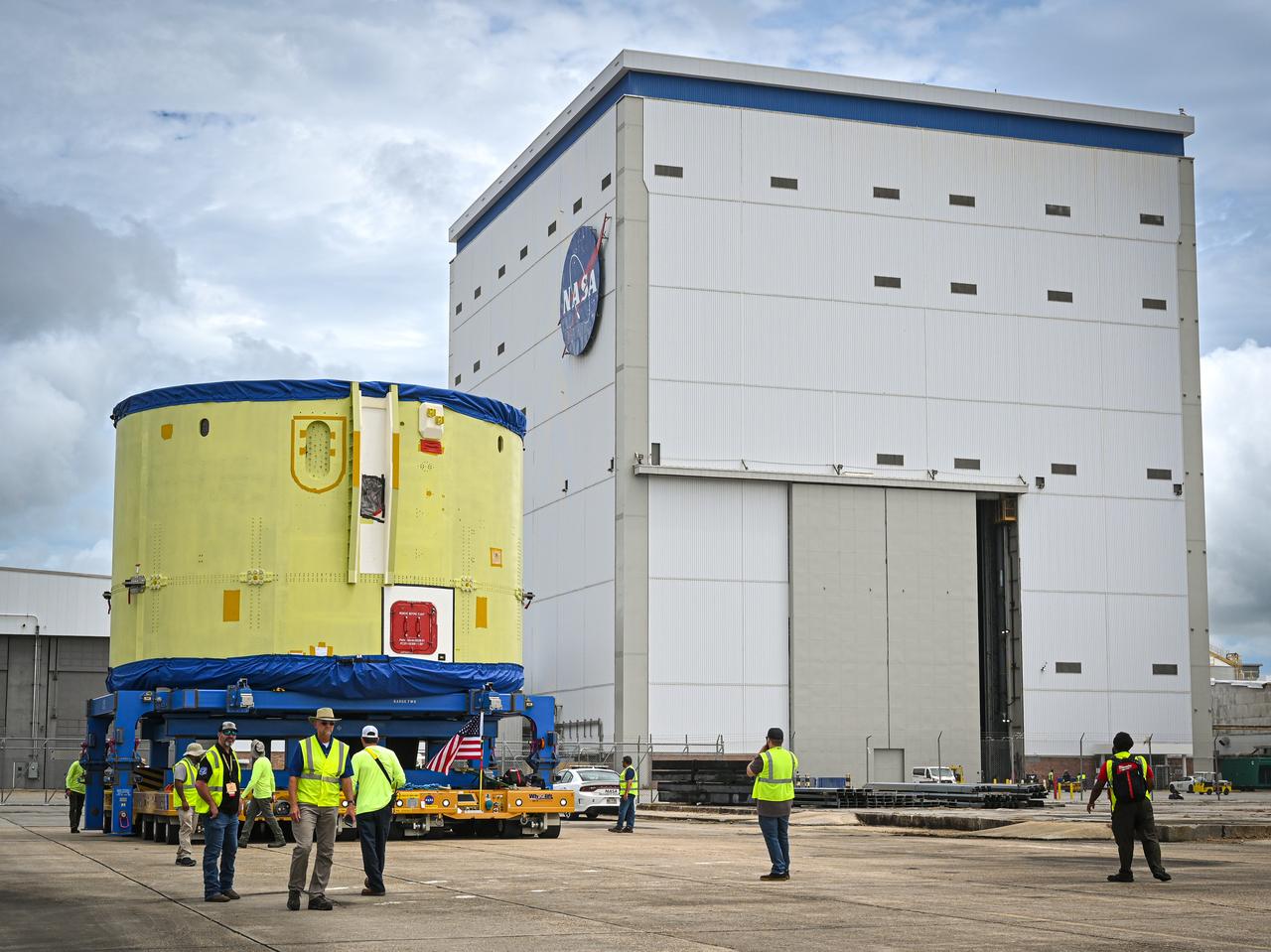
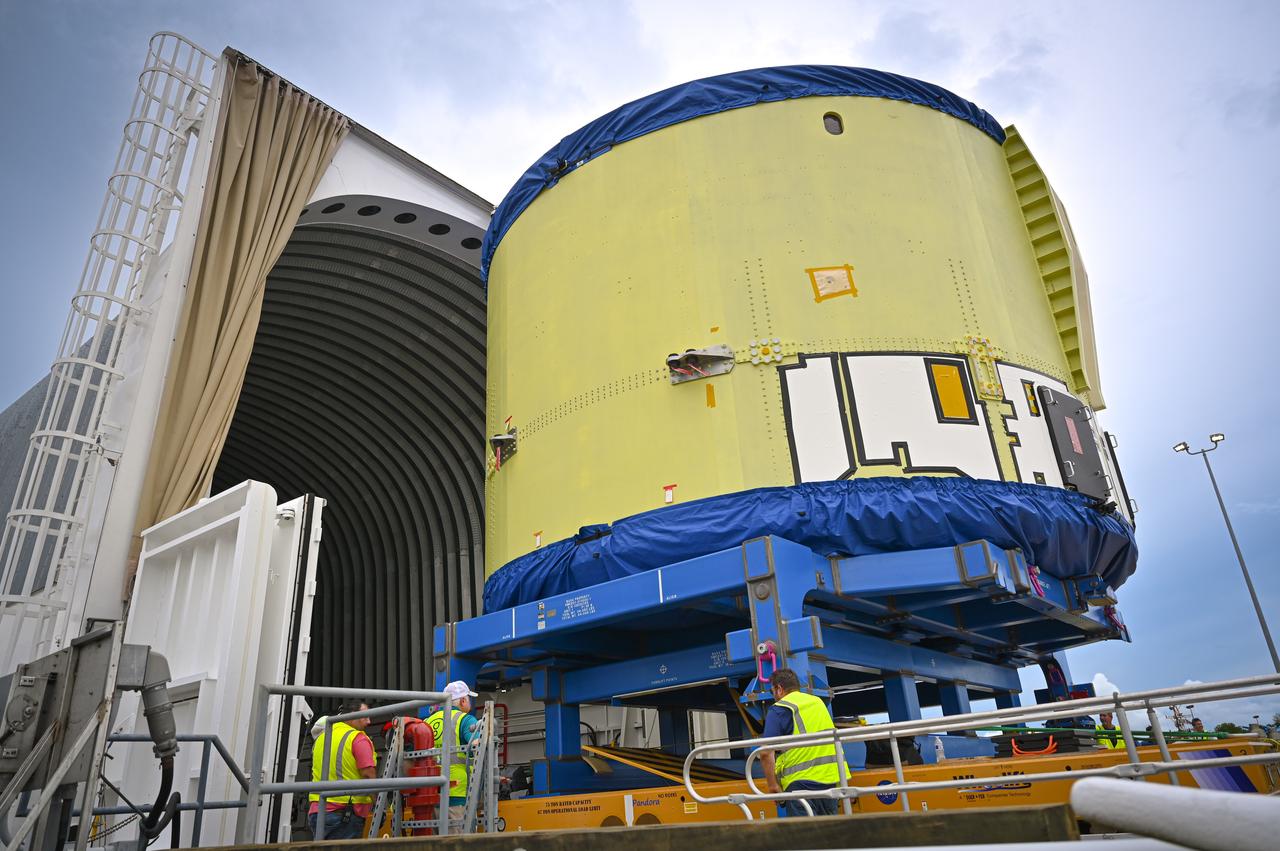
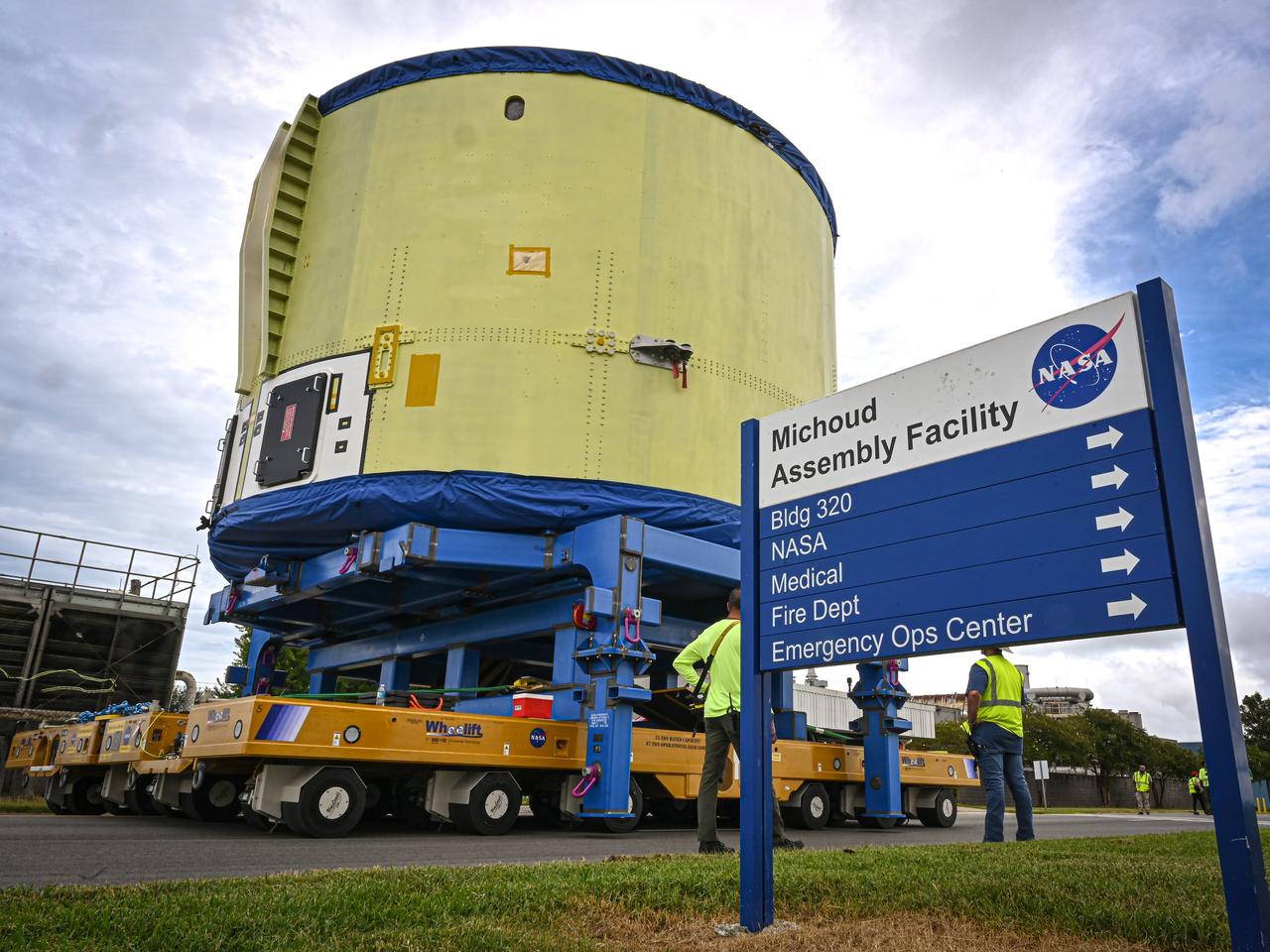
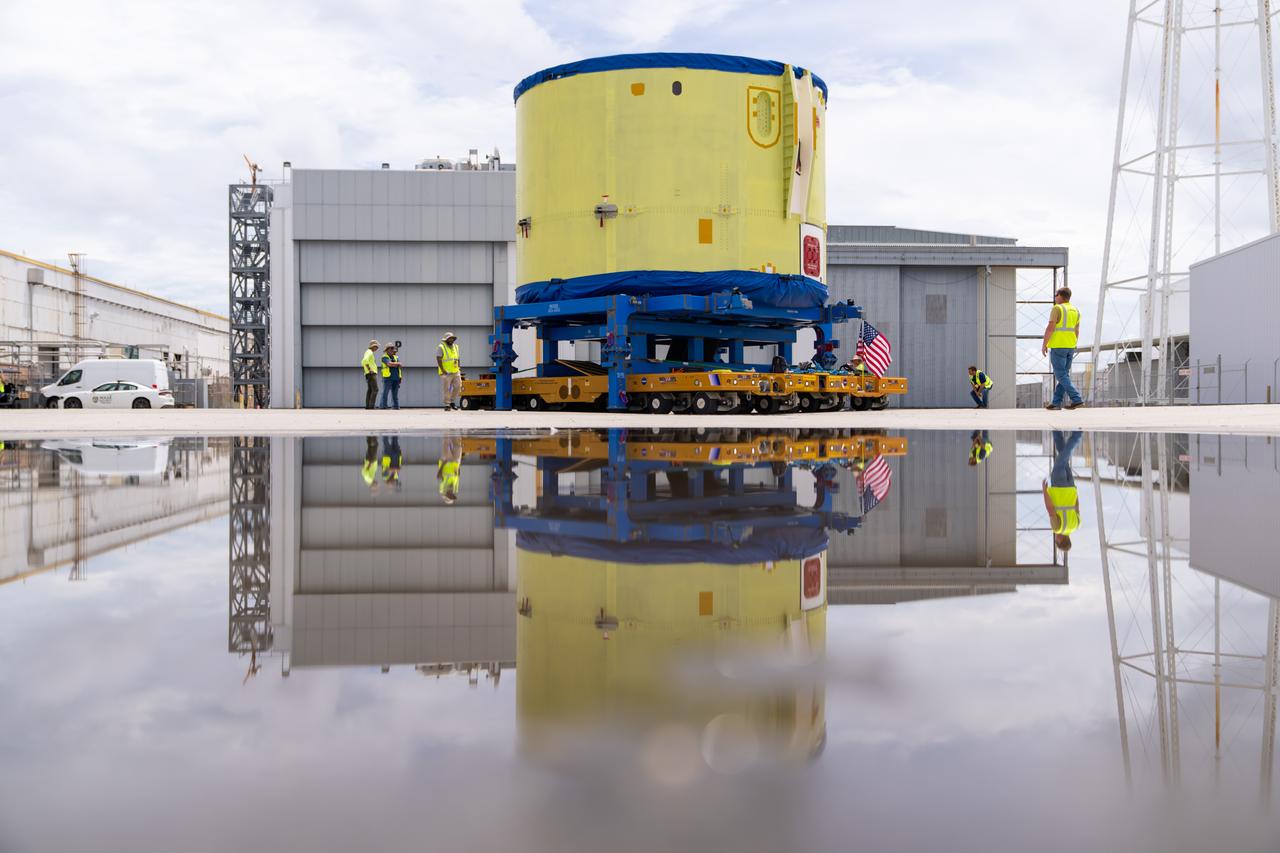
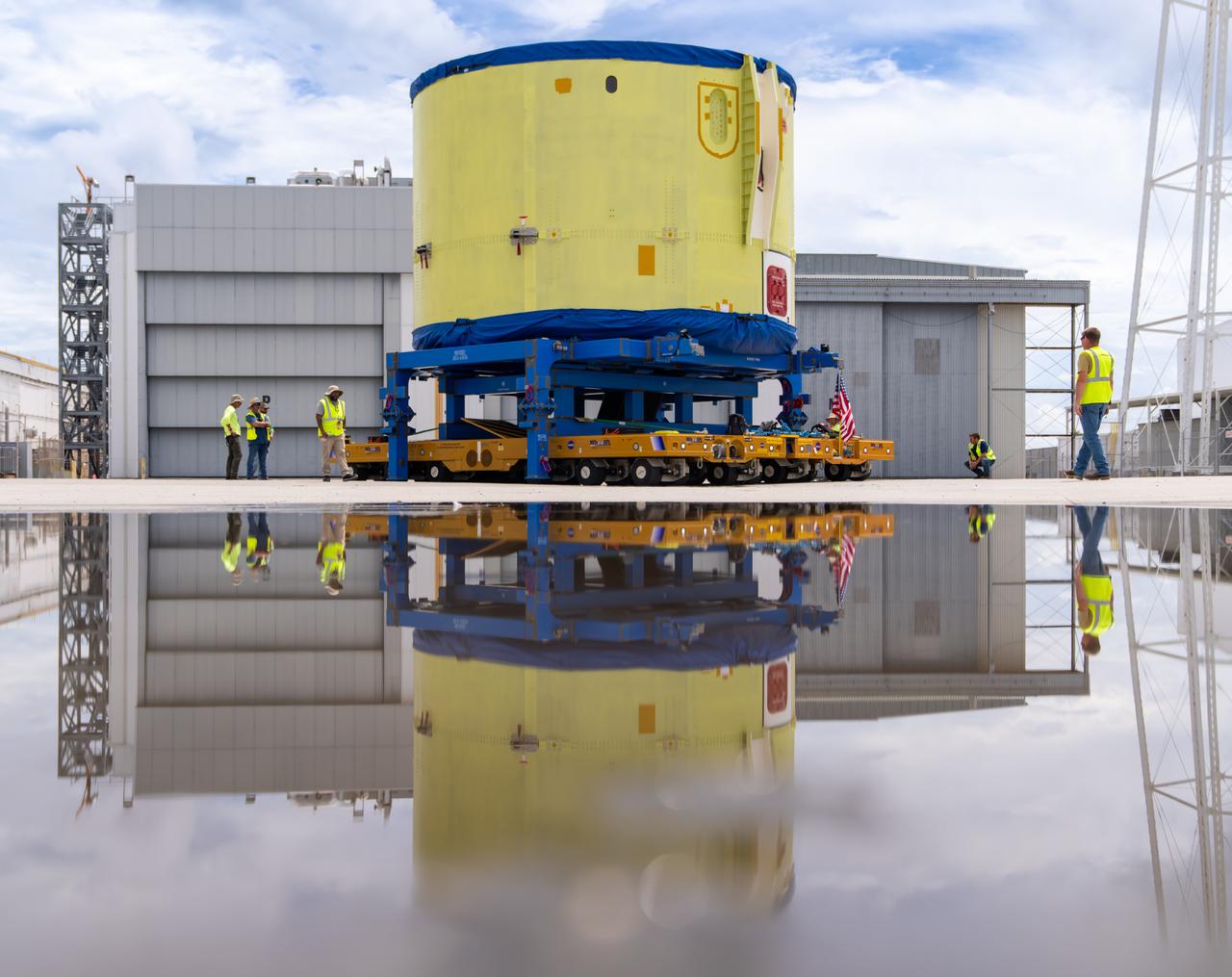
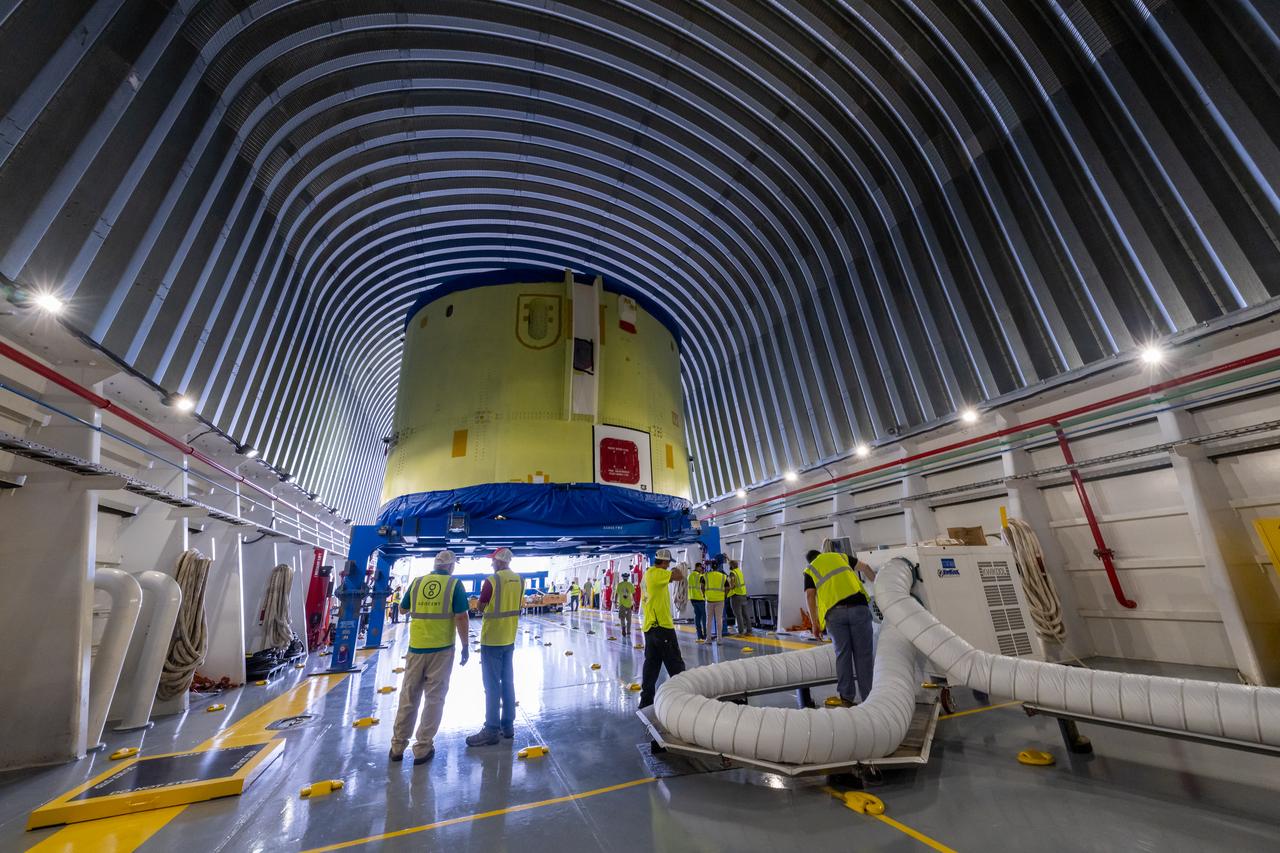
These photos show teams at NASA’s Michoud Assembly Facility in New Orleans preparing, moving, and loading the engine section of a future SLS (Space Launch System) rocket to NASA’s Pegasus barge Aug. 28. The hardware will form the bottom-most section of the SLS core stage that will power NASA’s Artemis IV mission, which will be the first mission to the Gateway space station in lunar orbit under the Artemis campaign. The barge will transport the spaceflight hardware to NASA’s Kennedy Space Center in Florida via the agency’s Pegasus barge. Once in Florida, the engine section will undergo final outfitting inside Kennedy’s Space Station Processing Facility.  Image credit: NASA/Michael DeMocker
NASA, Boeing Move Artemis IV Rocket Hardware to Barge
These photos show teams at NASA’s Michoud Assembly Facility in New Orleans preparing, moving, and loading the engine section of a future SLS (Space Launch System) rocket to NASA’s Pegasus barge Aug. 28. The hardware will form the bottom-most section of the SLS core stage that will power NASA’s Artemis IV mission, which will be the first mission to the Gateway space station in lunar orbit under the Artemis campaign. The barge will transport the spaceflight hardware to NASA’s Kennedy Space Center in Florida via the agency’s Pegasus barge. Once in Florida, the engine section will undergo final outfitting inside Kennedy’s Space Station Processing Facility.  Image credit: NASA/Michael DeMocker
NASA, Boeing Move Artemis IV Rocket Hardware to Barge
These photos show teams at NASA’s Michoud Assembly Facility in New Orleans preparing, moving, and loading the engine section of a future SLS (Space Launch System) rocket to NASA’s Pegasus barge Aug. 28. The hardware will form the bottom-most section of the SLS core stage that will power NASA’s Artemis IV mission, which will be the first mission to the Gateway space station in lunar orbit under the Artemis campaign. The barge will transport the spaceflight hardware to NASA’s Kennedy Space Center in Florida via the agency’s Pegasus barge. Once in Florida, the engine section will undergo final outfitting inside Kennedy’s Space Station Processing Facility.  Image credit: NASA/Michael DeMocker
NASA, Boeing Move Artemis IV Rocket Hardware to Barge
These photos show teams at NASA’s Michoud Assembly Facility in New Orleans preparing, moving, and loading the engine section of a future SLS (Space Launch System) rocket to NASA’s Pegasus barge Aug. 28. The hardware will form the bottom-most section of the SLS core stage that will power NASA’s Artemis IV mission, which will be the first mission to the Gateway space station in lunar orbit under the Artemis campaign. The barge will transport the spaceflight hardware to NASA’s Kennedy Space Center in Florida via the agency’s Pegasus barge. Once in Florida, the engine section will undergo final outfitting inside Kennedy’s Space Station Processing Facility.  Image credit: NASA/Michael DeMocker
NASA, Boeing Move Artemis IV Rocket Hardware to Barge
These photos show teams at NASA’s Michoud Assembly Facility in New Orleans preparing, moving, and loading the engine section of a future SLS (Space Launch System) rocket to NASA’s Pegasus barge Aug. 28. The hardware will form the bottom-most section of the SLS core stage that will power NASA’s Artemis IV mission, which will be the first mission to the Gateway space station in lunar orbit under the Artemis campaign. The barge will transport the spaceflight hardware to NASA’s Kennedy Space Center in Florida via the agency’s Pegasus barge. Once in Florida, the engine section will undergo final outfitting inside Kennedy’s Space Station Processing Facility.  Image credit: NASA/Michael DeMocker
NASA, Boeing Move Artemis IV Rocket Hardware to Barge
These photos show teams at NASA’s Michoud Assembly Facility in New Orleans preparing, moving, and loading the engine section of a future SLS (Space Launch System) rocket to NASA’s Pegasus barge Aug. 28. The hardware will form the bottom-most section of the SLS core stage that will power NASA’s Artemis IV mission, which will be the first mission to the Gateway space station in lunar orbit under the Artemis campaign. The barge will transport the spaceflight hardware to NASA’s Kennedy Space Center in Florida via the agency’s Pegasus barge. Once in Florida, the engine section will undergo final outfitting inside Kennedy’s Space Station Processing Facility.  Image credit: NASA/Michael DeMocker
NASA, Boeing Move Artemis IV Rocket Hardware to Barge
These photos and videos show teams at NASA’s Michoud Assembly Facility in New Orleans preparing, moving, and loading the engine section of a future SLS (Space Launch System) rocket to NASA’s Pegasus barge Aug. 28. The hardware will form the bottom-most section of the SLS core stage that will power NASA’s Artemis IV mission, which will be the first mission to the Gateway space station in lunar orbit under the Artemis campaign. The barge will transport the spaceflight hardware to NASA’s Kennedy Space Center in Florida via the agency’s Pegasus barge. Once in Florida, the engine section will undergo final outfitting inside Kennedy’s Space Station Processing Facility.
NASA, Boeing Move Artemis IV Rocket Hardware to Barge
These photos and videos show teams at NASA’s Michoud Assembly Facility in New Orleans preparing, moving, and loading the engine section of a future SLS (Space Launch System) rocket to NASA’s Pegasus barge Aug. 28. The hardware will form the bottom-most section of the SLS core stage that will power NASA’s Artemis IV mission, which will be the first mission to the Gateway space station in lunar orbit under the Artemis campaign. The barge will transport the spaceflight hardware to NASA’s Kennedy Space Center in Florida via the agency’s Pegasus barge. Once in Florida, the engine section will undergo final outfitting inside Kennedy’s Space Station Processing Facility.
NASA, Boeing Move Artemis IV Rocket Hardware to Barge
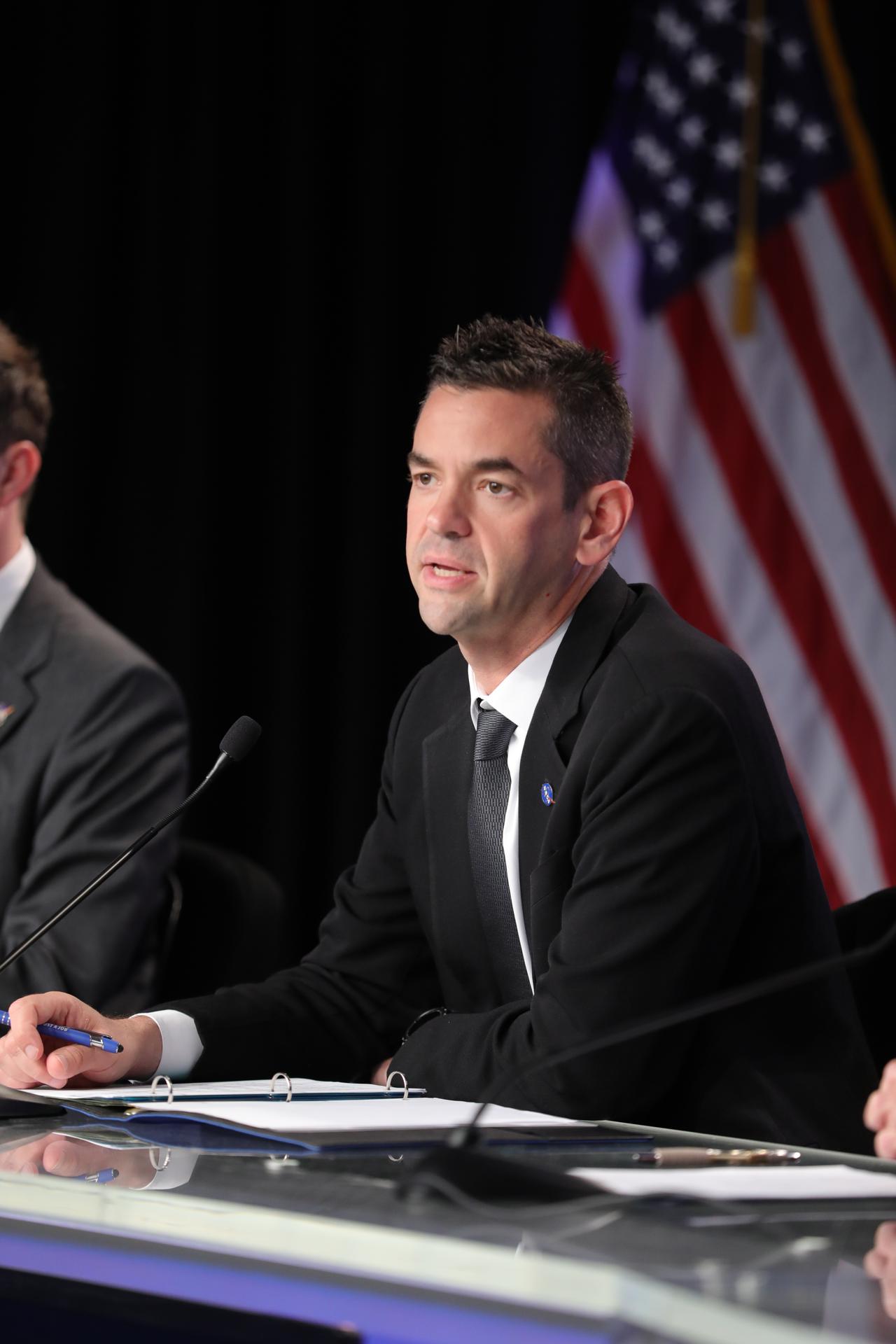
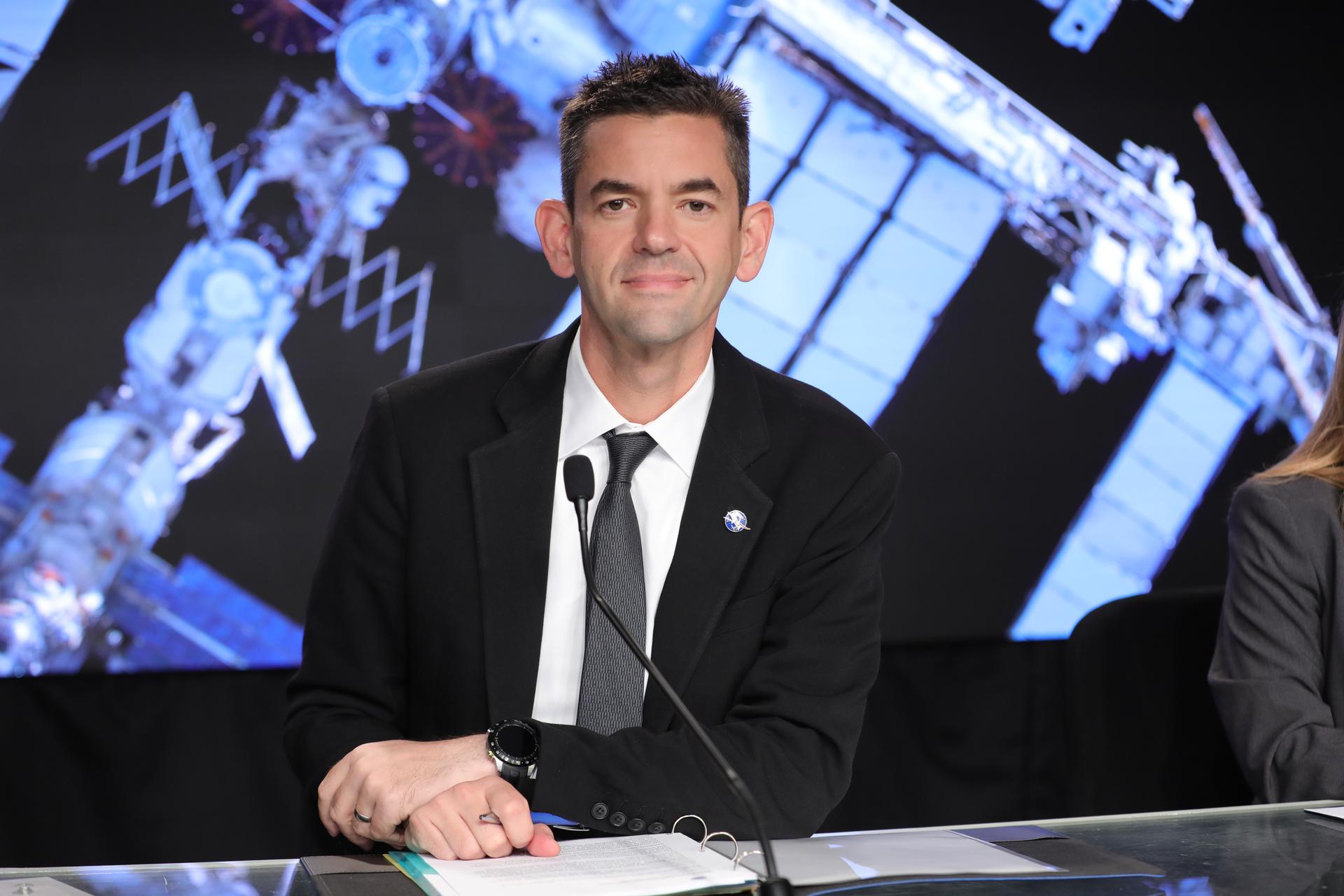
Kenny Todd, manager, International Space Station Operations and Integration, NASA’s Johnson Space Center in Houston, speaks to members of the news media during a prelaunch news conference for SpaceX’s 17th Commercial Resupply Services (CRS-17) mission for NASA to the International Space Station on May 2, 2019, at the agency’s Kennedy Space Center in Florida. The SpaceX Falcon 9 rocket and Dragon cargo module are scheduled to launch no earlier than May 3, 2019, from Space Launch Complex 40 on Cape Canaveral Air Force Station in Florida.
NASA Hosts Prelaunch News Conference for SpaceX CRS-17
Kenny Todd, manager, International Space Station Operations and Integration at NASA’s Johnson Space Center in Houston speaks to members of the news media during a postlaunch news conference at NASA’s Kennedy Space Center in Florida on May 4, 2019, for SpaceX’s 17th Commercial Resupply Services (CRS-17) mission to the International Space Station for the agency. The company’s Falcon 9 rocket with the Dragon cargo module lifted off from Space Launch Complex 40 at Cape Canaveral Air Force Station in Florida at 2:48 a.m. EDT. The Dragon cargo module will deliver about 5,500 pounds of science and research, crew supplies and vehicle hardware to the orbital laboratory and its crew.
NASA Hosts Postlaunch News Conference for SpaceX CRS-17
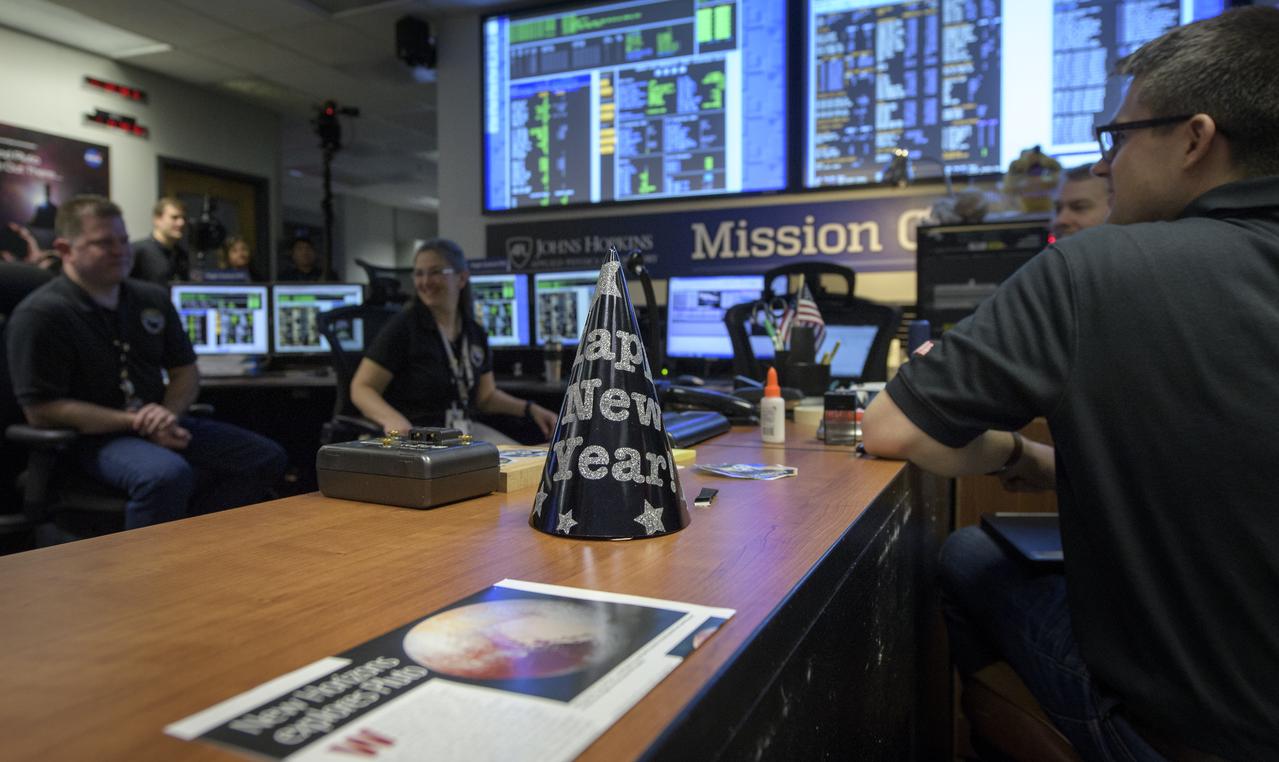
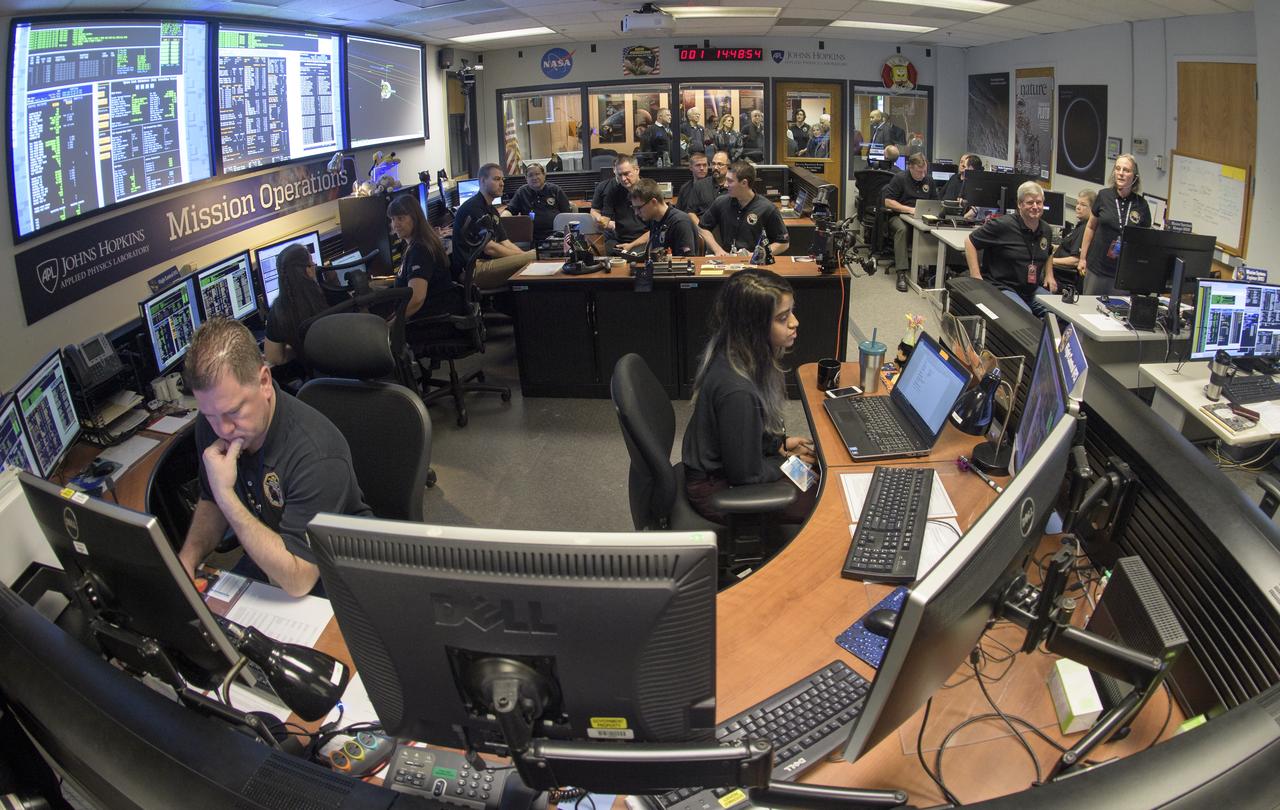
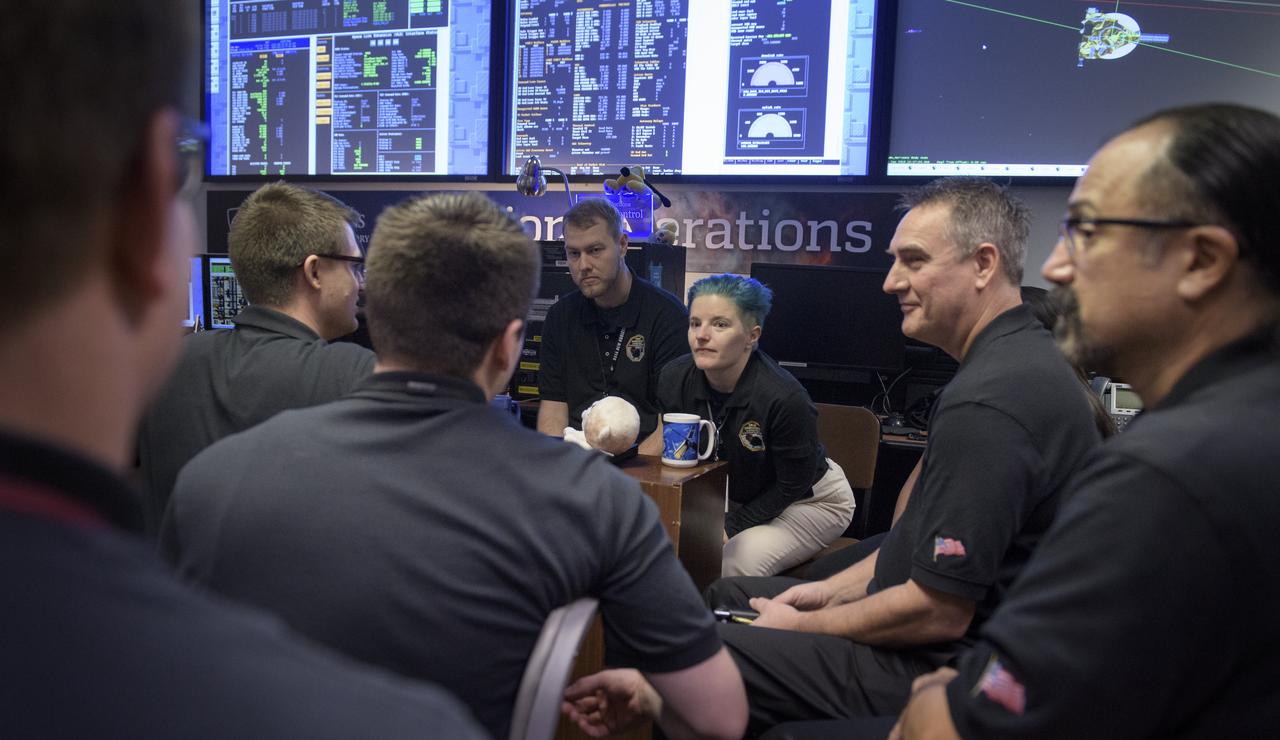
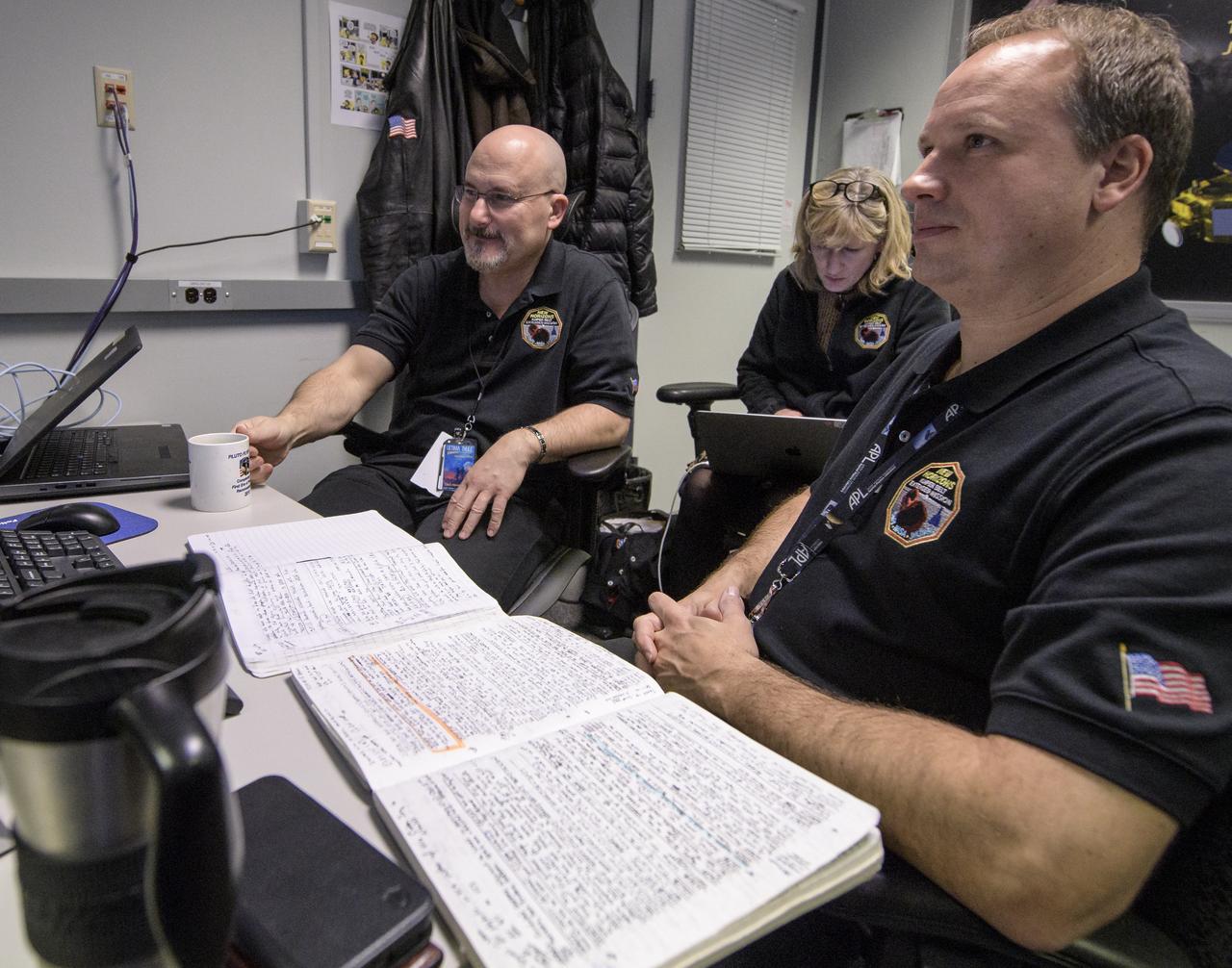
New Horizons team members wait for a signal from the spacecraft that it is healthy and collected data during the flyby of Ultima Thule, Tuesday, Jan. 1, 2019 at the Mission Operations Center of the Johns Hopkins University Applied Physics Laboratory (APL) in Laurel, Maryland. Photo Credit: (NASA/Bill Ingalls)
New Horizons Ultima Thule Flyby
New Horizons team members wait for a signal from the spacecraft that it is healthy and collected data during the flyby of Ultima Thule, Tuesday, Jan. 1, 2019 at the Mission Operations Center of the Johns Hopkins University Applied Physics Laboratory (APL) in Laurel, Maryland. Photo Credit: (NASA/Bill Ingalls)
New Horizons Ultima Thule Flyby
New Horizons team members wait for a signal from the spacecraft that it is healthy and collected data during the flyby of Ultima Thule, Tuesday, Jan. 1, 2019 at the Mission Operations Center of the Johns Hopkins University Applied Physics Laboratory (APL) in Laurel, Maryland. Photo Credit: (NASA/Bill Ingalls)
New Horizons Ultima Thule Flyby
CAPE CANAVERAL, Fla. – Tom Engler, at left, the deputy director of the Center Planning and Development Directorate, or CPDD, at NASA’s Kennedy Space Center in Florida, speaks to reporter James Dean from Florida Today newspaper during an interview at the Kennedy News Center. Kennedy Space Center is working with private industry in new and innovative ways as the agency's premier launch center adapts to changing spaceflight, research and exploration goals in America. Opportunities are rich and varied, ranging from working with the private launch industry, to involvement with NASA's expendable launch vehicles programs to beginning or participating in research in a number of advancing fields. For more information on CPDD, visit http://www.nasa.gov/centers/kennedy/business/index.html. Photo credit: NASA/Daniel Casper
Tom Engler Interview
CAPE CANAVERAL, Fla. – Tom Engler, the deputy director of the Center Planning and Development Directorate at NASA’s Kennedy Space Center in Florida, speaks to reporter James Dean from Florida Today newspaper during an interview at the Kennedy News Center. Kennedy Space Center is working with private industry in new and innovative ways as the agency's premier launch center adapts to changing spaceflight, research and exploration goals in America. Opportunities are rich and varied, ranging from working with the private launch industry, to involvement with NASA's expendable launch vehicles programs to beginning or participating in research in a number of advancing fields. For more information on CPDD, visit http://www.nasa.gov/centers/kennedy/business/index.html. Photo credit: NASA/Daniel Casper
Tom Engler Interview
These photos show teams at NASA’s Michoud Assembly Facility in New Orleans preparing, moving, and loading the engine section of a future SLS (Space Launch System) rocket to NASA’s Pegasus barge Aug. 28. The hardware will form the bottom-most section of the SLS core stage that will power NASA’s Artemis IV mission, which will be the first mission to the Gateway space station in lunar orbit under the Artemis campaign. The barge will transport the spaceflight hardware to NASA’s Kennedy Space Center in Florida via the agency’s Pegasus barge. Once in Florida, the engine section will undergo final outfitting inside Kennedy’s Space Station Processing Facility.
NASA, Boeing Move Artemis IV Rocket Hardware to Barge
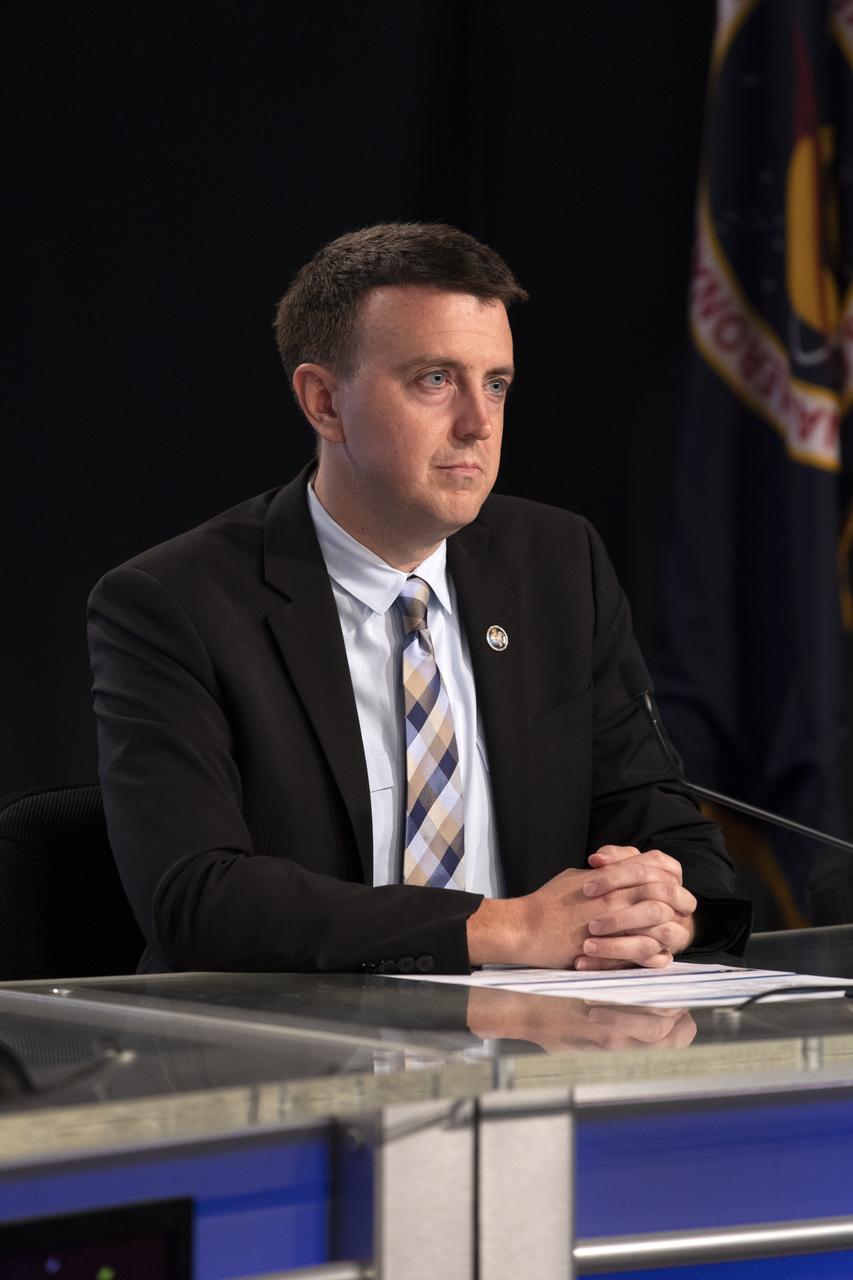
Hans Koenigsmann, VP, Build and Flight Reliability with SpaceX, speaks to members of the news media during a prelaunch news conference for SpaceX’s 17th Commercial Resupply Services (CRS-17) mission for NASA to the International Space Station on May 2, 2019, at the agency’s Kennedy Space Center in Florida. The SpaceX Falcon 9 rocket and Dragon cargo module are scheduled to launch no earlier than May 3, 2019, from Space Launch Complex 40 on Cape Canaveral Air Force Station in Florida.
NASA Hosts Prelaunch News Conference for SpaceX CRS-17
Will Ulrich, 45th Space Wing weather officer with the U.S. Air Force, speaks to members of the news media during a prelaunch news conference for SpaceX’s 17th Commercial Resupply Services (CRS-17) mission for NASA to the International Space Station on May 2, 2019, at the agency’s Kennedy Space Center in Florida. The SpaceX Falcon 9 rocket and Dragon cargo module are scheduled to launch no earlier than May 3, 2019, from Space Launch Complex 40 on Cape Canaveral Air Force Station in Florida.
NASA Hosts Prelaunch News Conference for SpaceX CRS-17
These photos and videos show teams at NASA’s Michoud Assembly Facility in New Orleans preparing, moving, and loading the engine section of a future SLS (Space Launch System) rocket to NASA’s Pegasus barge Aug. 28. The hardware will form the bottom-most section of the SLS core stage that will power NASA’s Artemis IV mission, which will be the first mission to the Gateway space station in lunar orbit under the Artemis campaign. The barge will transport the spaceflight hardware to NASA’s Kennedy Space Center in Florida via the agency’s Pegasus barge. Once in Florida, the engine section will undergo final outfitting inside Kennedy’s Space Station Processing Facility.
NASA, Boeing Move Artemis IV Rocket Hardware to Barge
These photos and videos show teams at NASA’s Michoud Assembly Facility in New Orleans preparing, moving, and loading the engine section of a future SLS (Space Launch System) rocket to NASA’s Pegasus barge Aug. 28. The hardware will form the bottom-most section of the SLS core stage that will power NASA’s Artemis IV mission, which will be the first mission to the Gateway space station in lunar orbit under the Artemis campaign. The barge will transport the spaceflight hardware to NASA’s Kennedy Space Center in Florida via the agency’s Pegasus barge. Once in Florida, the engine section will undergo final outfitting inside Kennedy’s Space Station Processing Facility.
NASA, Boeing Move Artemis IV Rocket Hardware to Barge
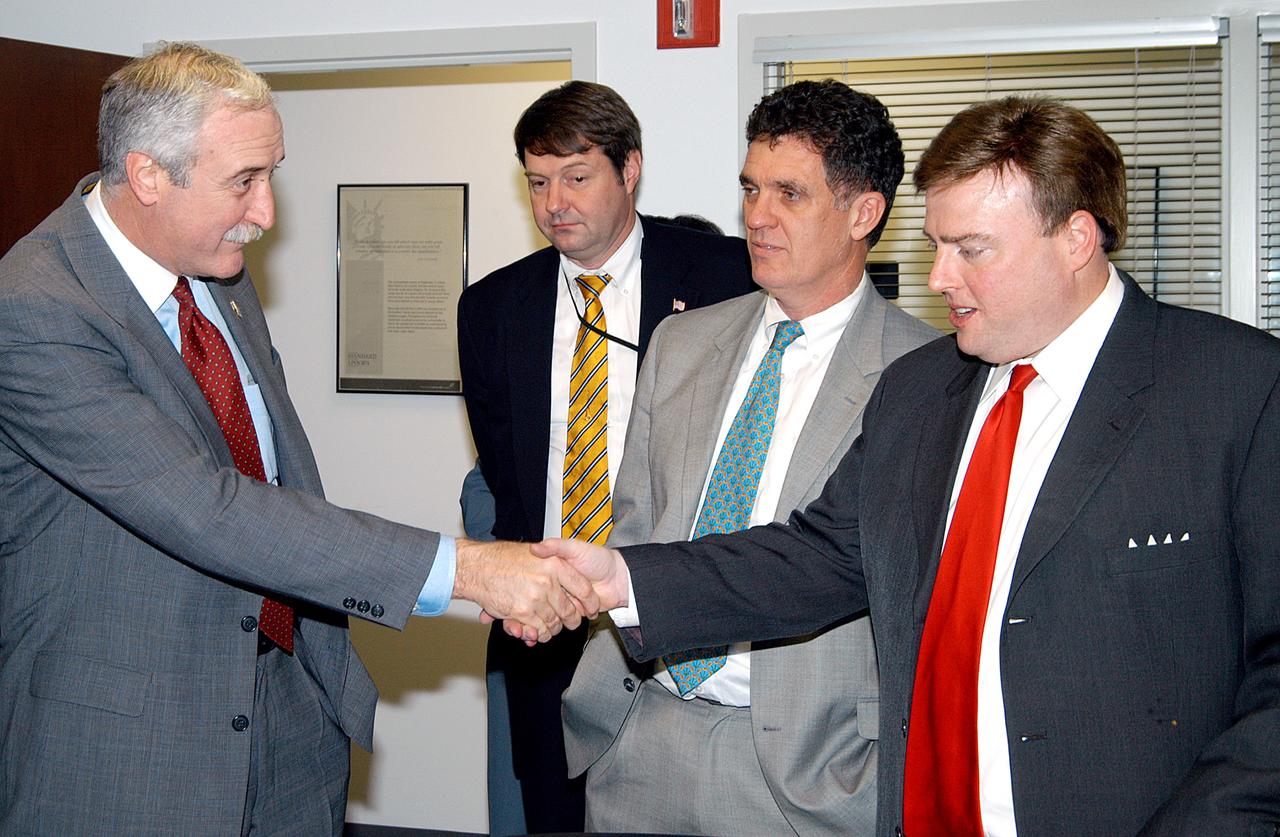
KENNEDY SPACE CENTER, FLA. - NASA Administrator Sean O’Keefe (right) greets Florida Congressman Tom Feeney during a tour of the Central Florida Research Park, near Orlando.  Central Florida leaders are proposing the research park as the site for the new NASA Shared Services Center.  The center would centralize NASA’s payroll, accounting, human resources, facilities and procurement offices that are now handled at each field center.  The consolidation is part of the One NASA focus.  Six sites around the U.S. are under consideration by NASA.
KENNEDY SPACE CENTER, FLA. - NASA Administrator Sean O’Keefe (right) greets Florida Congressman Tom Feeney during a tour of the Central Florida Research Park, near Orlando. Central Florida leaders are proposing the research park as the site for the new NASA Shared Services Center. The center would centralize NASA’s payroll, accounting, human resources, facilities and procurement offices that are now handled at each field center. The consolidation is part of the One NASA focus. Six sites around the U.S. are under consideration by NASA.
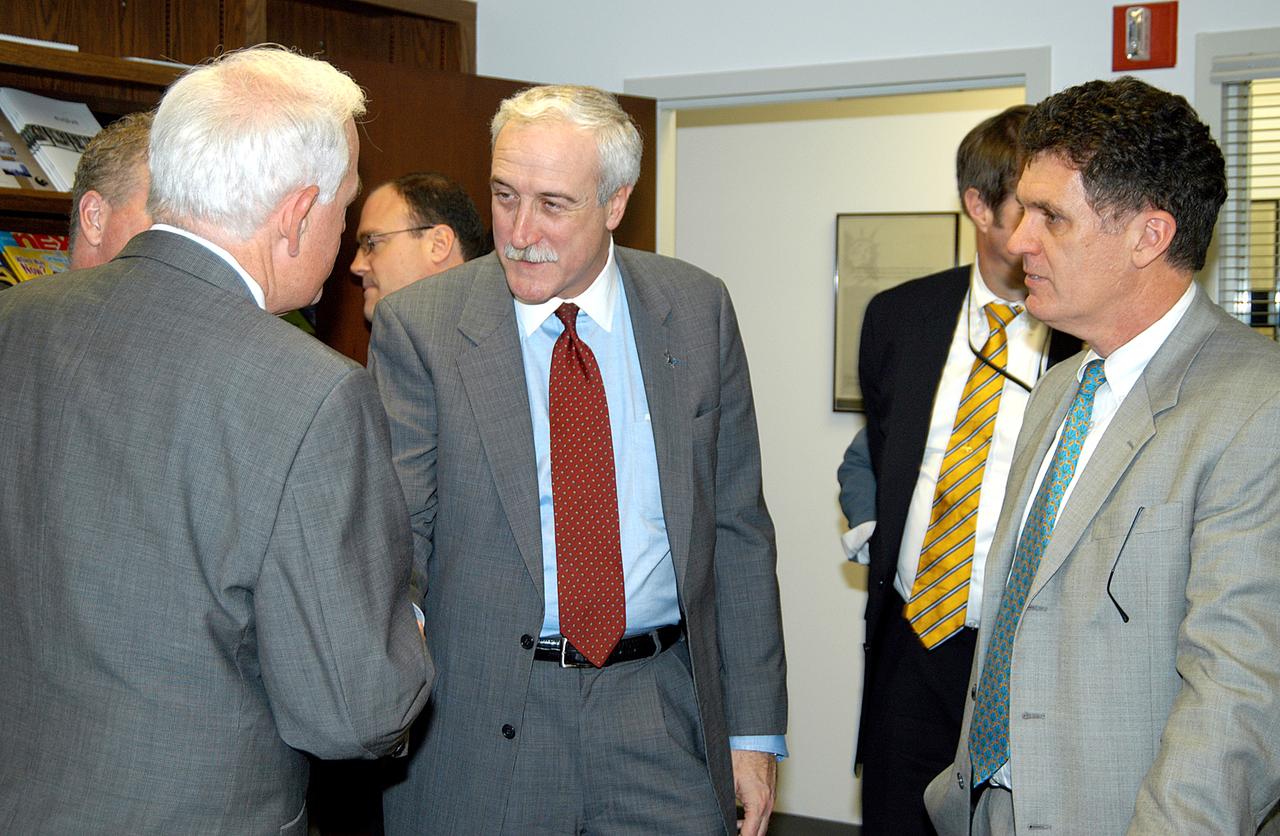
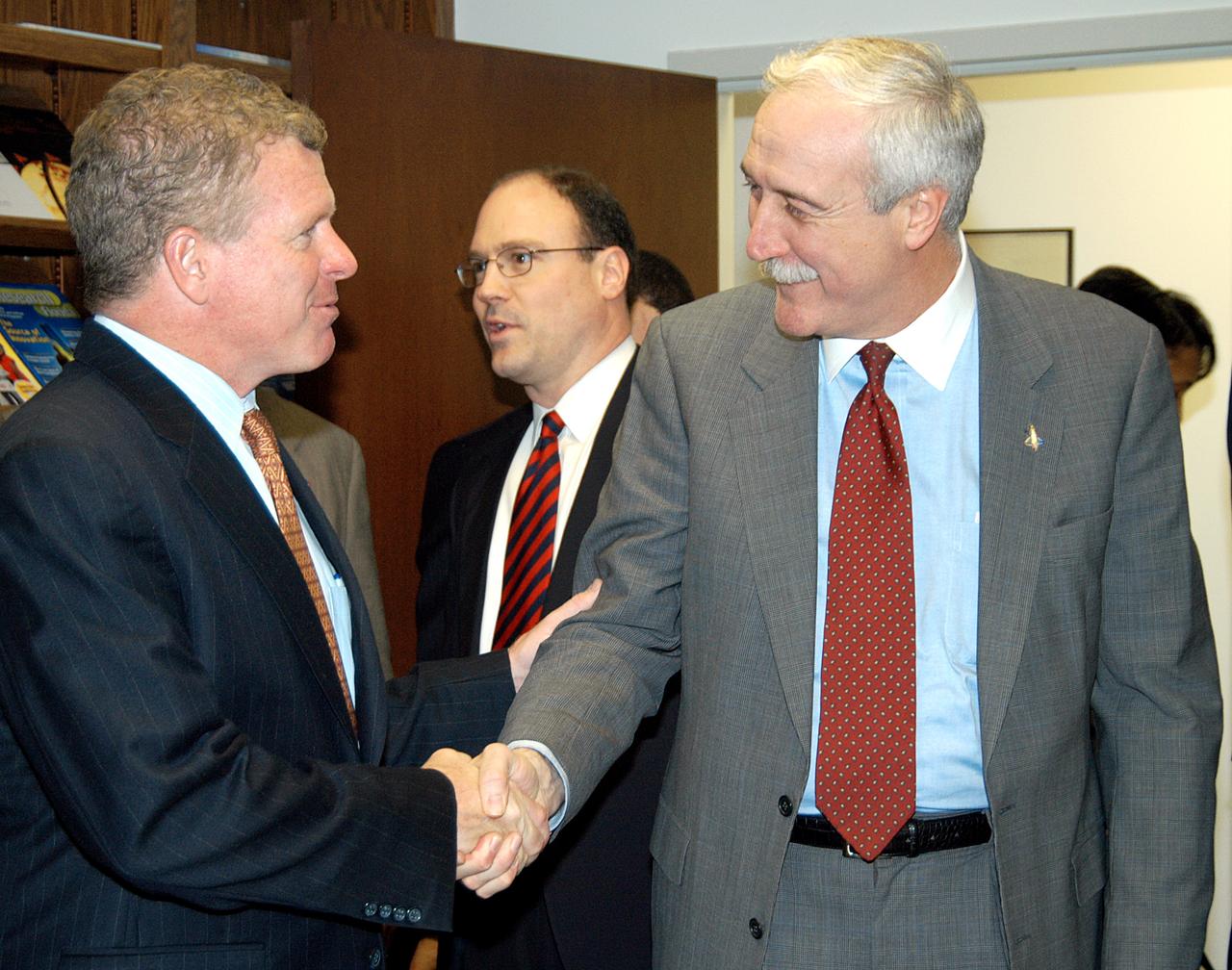
KENNEDY SPACE CENTER, FLA. - NASA Administrator Sean O’Keefe (left) greets U.S. Representative Ric Keller during a tour of the Central Florida Research Park, near Orlando.  Central Florida leaders are proposing the research park as the site for the new NASA Shared Services Center.  The center would centralize NASA’s payroll, accounting, human resources, facilities and procurement offices that are now handled at each field center.  The consolidation is part of the One NASA focus.  Six sites around the U.S. are under consideration by NASA.
KENNEDY SPACE CENTER, FLA. - NASA Administrator Sean O’Keefe (left) greets U.S. Representative Ric Keller during a tour of the Central Florida Research Park, near Orlando. Central Florida leaders are proposing the research park as the site for the new NASA Shared Services Center. The center would centralize NASA’s payroll, accounting, human resources, facilities and procurement offices that are now handled at each field center. The consolidation is part of the One NASA focus. Six sites around the U.S. are under consideration by NASA.
NASA's large Airborne Science research aircraft, a modified DC-8 airliner, displayed new colors in a check flight Feb. 24, 2004, over its home base, the NASA Dryden Flight Research Center at Edwards AFB, California.
NASA's Airborne Science DC-8, displaying new colors in a check flight Feb. 24, 2004, over the Dryden Flight Research Center
KENNEDY SPACE CENTER, FLA. -    KSC Director of External Relations and Business Development JoAnn Morgan talks with Dr. Adena Williams Loston at a reception and dinner at the Debus Conference Center June 6.  Loston is NASA’s new associate administrator of Education and the reception was in her honor.  Loston was previously NASA Administrator Sean O’Keefe’s senior advisor of education and assumed her new position in October 2002.   KSC Director Roy Bridges Jr. also attended the reception to welcome Loston during her visit to the Center.
KENNEDY SPACE CENTER, FLA. - KSC Director of External Relations and Business Development JoAnn Morgan talks with Dr. Adena Williams Loston at a reception and dinner at the Debus Conference Center June 6. Loston is NASA’s new associate administrator of Education and the reception was in her honor. Loston was previously NASA Administrator Sean O’Keefe’s senior advisor of education and assumed her new position in October 2002. KSC Director Roy Bridges Jr. also attended the reception to welcome Loston during her visit to the Center.
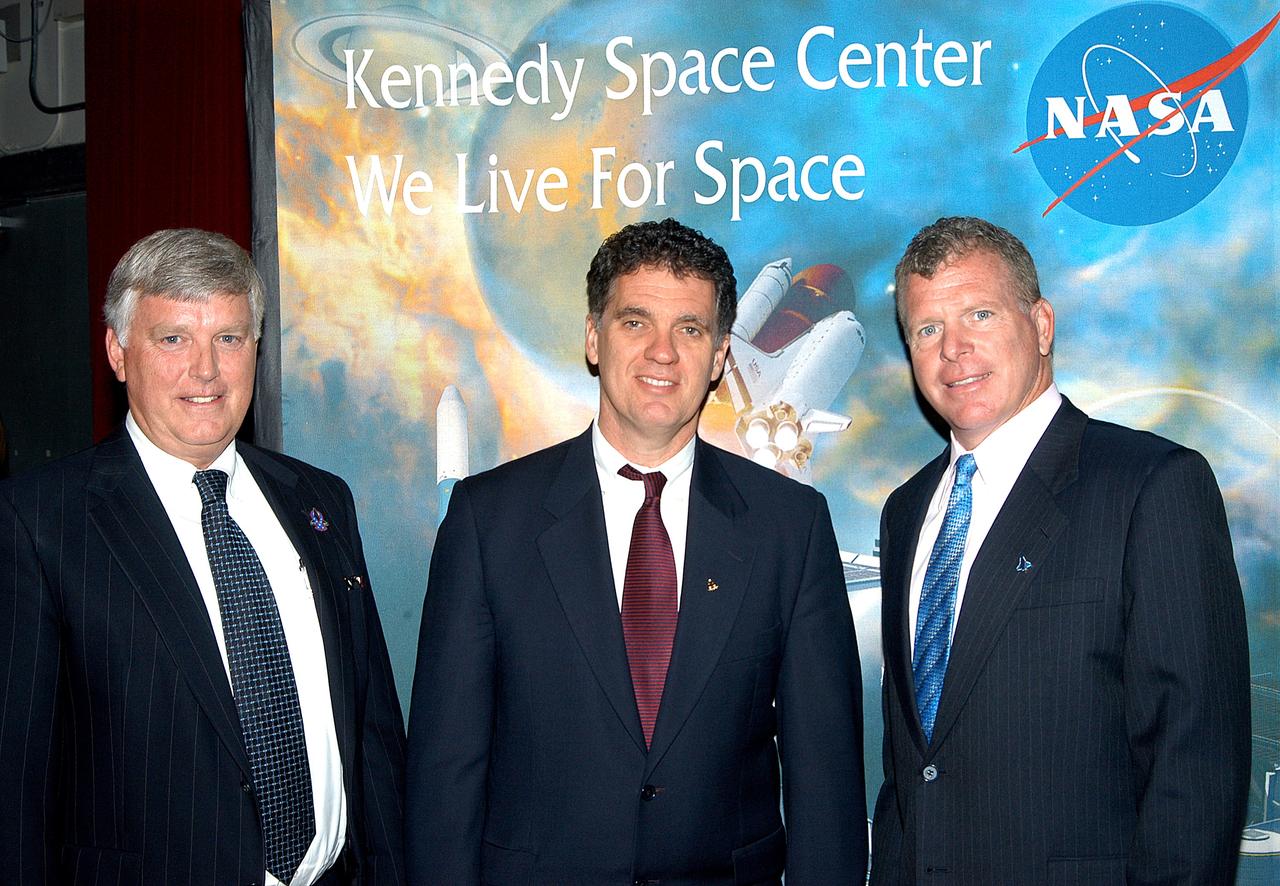
KENNEDY SPACE CENTER, FLA. --After a Town Hall meeting at KSC, Center Director Jim Kennedy and U.S. Reps. Dave Weldon and Tom Feeney pause for a photo before heading to the NASA-KSC News Center for a press conference.  Weldon and Feeney discussed the new mission for NASA outlined by President George W. Bush Jan. 14.  The congressmen and Kennedy also answered questions from employees in the audience.
KENNEDY SPACE CENTER, FLA. --After a Town Hall meeting at KSC, Center Director Jim Kennedy and U.S. Reps. Dave Weldon and Tom Feeney pause for a photo before heading to the NASA-KSC News Center for a press conference. Weldon and Feeney discussed the new mission for NASA outlined by President George W. Bush Jan. 14. The congressmen and Kennedy also answered questions from employees in the audience.
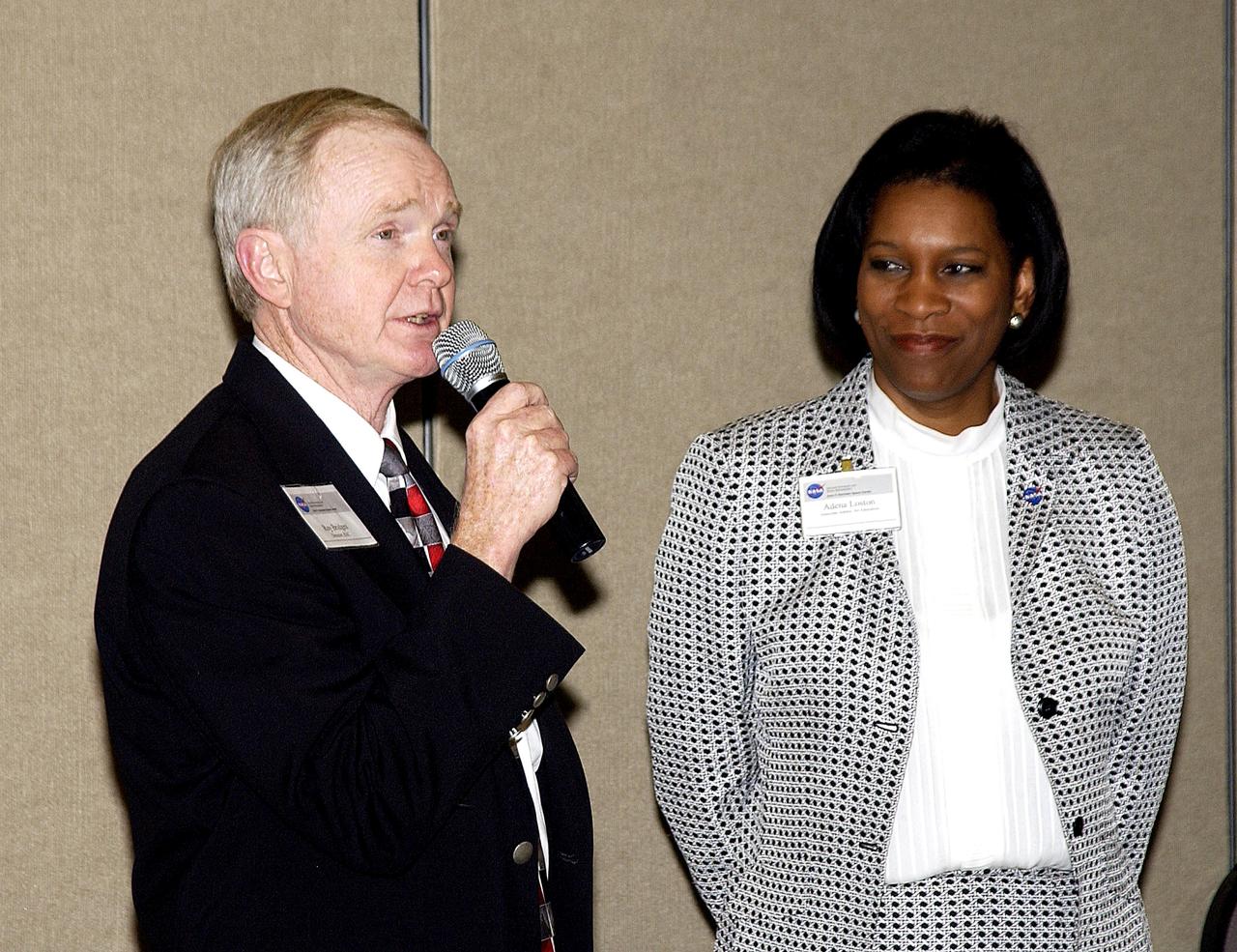
KENNEDY SPACE CENTER, FLA. -     Center Director Roy Bridges Jr. introduces Dr. Adena Williams Loston at a reception and dinner in her honor at the Debus Conference Center June 6. Loston is NASA’s new associate administrator of Education and the reception was in her honor.  Loston was previously NASA Administrator Sean O’Keefe’s senior advisor of education and assumed her new position in October 2002.
KENNEDY SPACE CENTER, FLA. - Center Director Roy Bridges Jr. introduces Dr. Adena Williams Loston at a reception and dinner in her honor at the Debus Conference Center June 6. Loston is NASA’s new associate administrator of Education and the reception was in her honor. Loston was previously NASA Administrator Sean O’Keefe’s senior advisor of education and assumed her new position in October 2002.
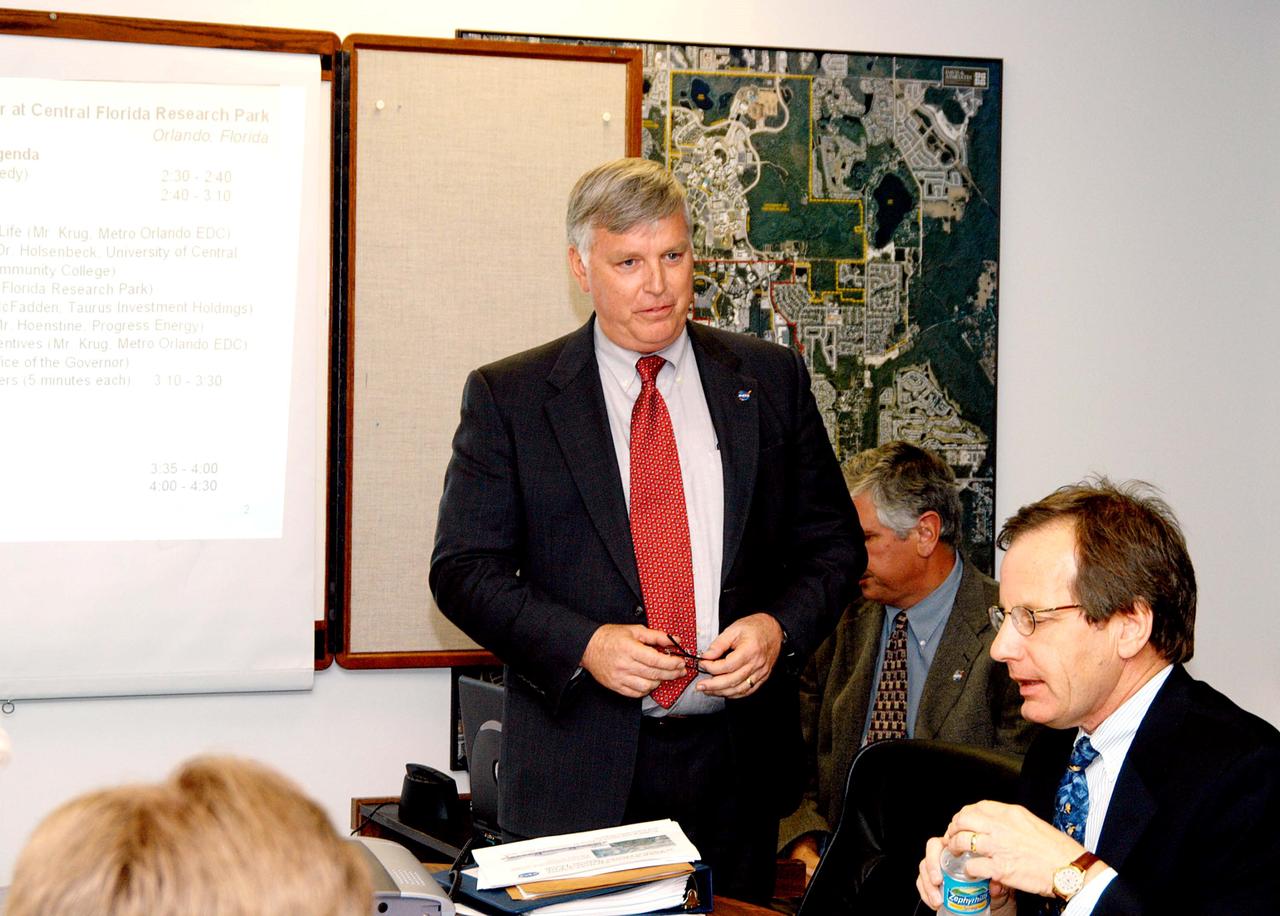
KENNEDY SPACE CENTER, FLA. - KSC Director Jim Kennedy (center) makes a presentation to NASA and other officials about the benefits of locating NASA’s new Shared Services Center in the Central Florida Research Park, near Orlando.  Central Florida leaders are proposing the research park as the site for the NASA Shared Services Center.  The center would centralize NASA’s payroll, accounting, human resources, facilities and procurement offices that are now handled at each field center.  The consolidation is part of the One NASA focus.  Six sites around the U.S. are under consideration by NASA.
KENNEDY SPACE CENTER, FLA. - KSC Director Jim Kennedy (center) makes a presentation to NASA and other officials about the benefits of locating NASA’s new Shared Services Center in the Central Florida Research Park, near Orlando. Central Florida leaders are proposing the research park as the site for the NASA Shared Services Center. The center would centralize NASA’s payroll, accounting, human resources, facilities and procurement offices that are now handled at each field center. The consolidation is part of the One NASA focus. Six sites around the U.S. are under consideration by NASA.
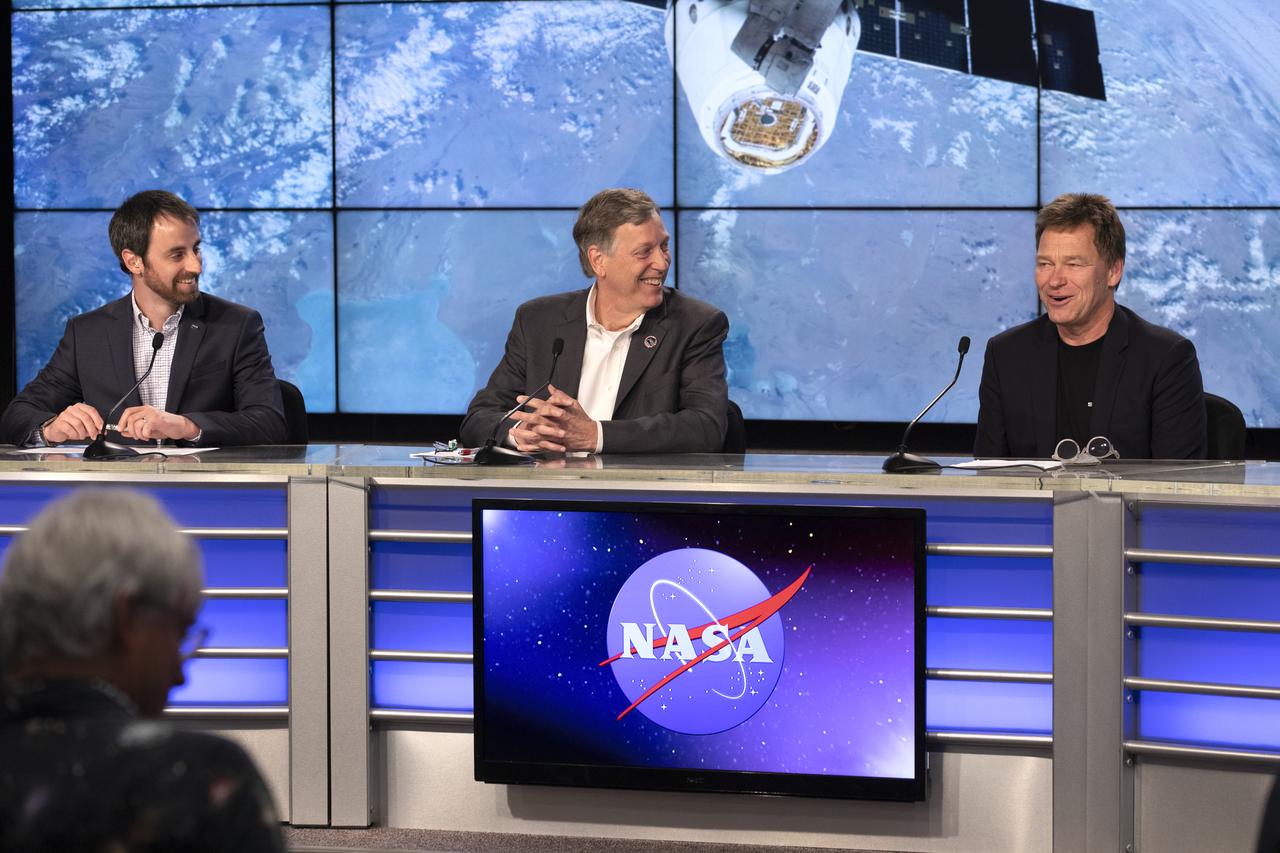
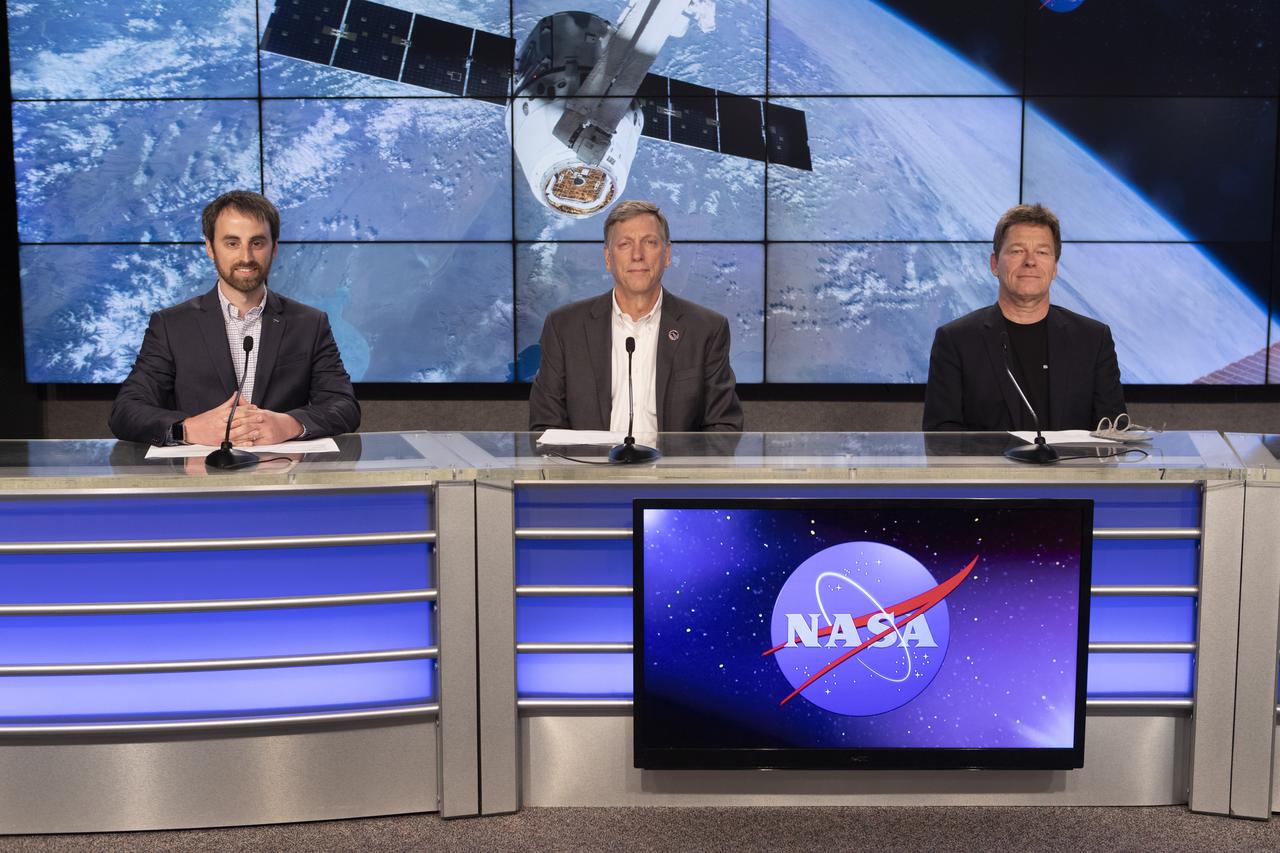
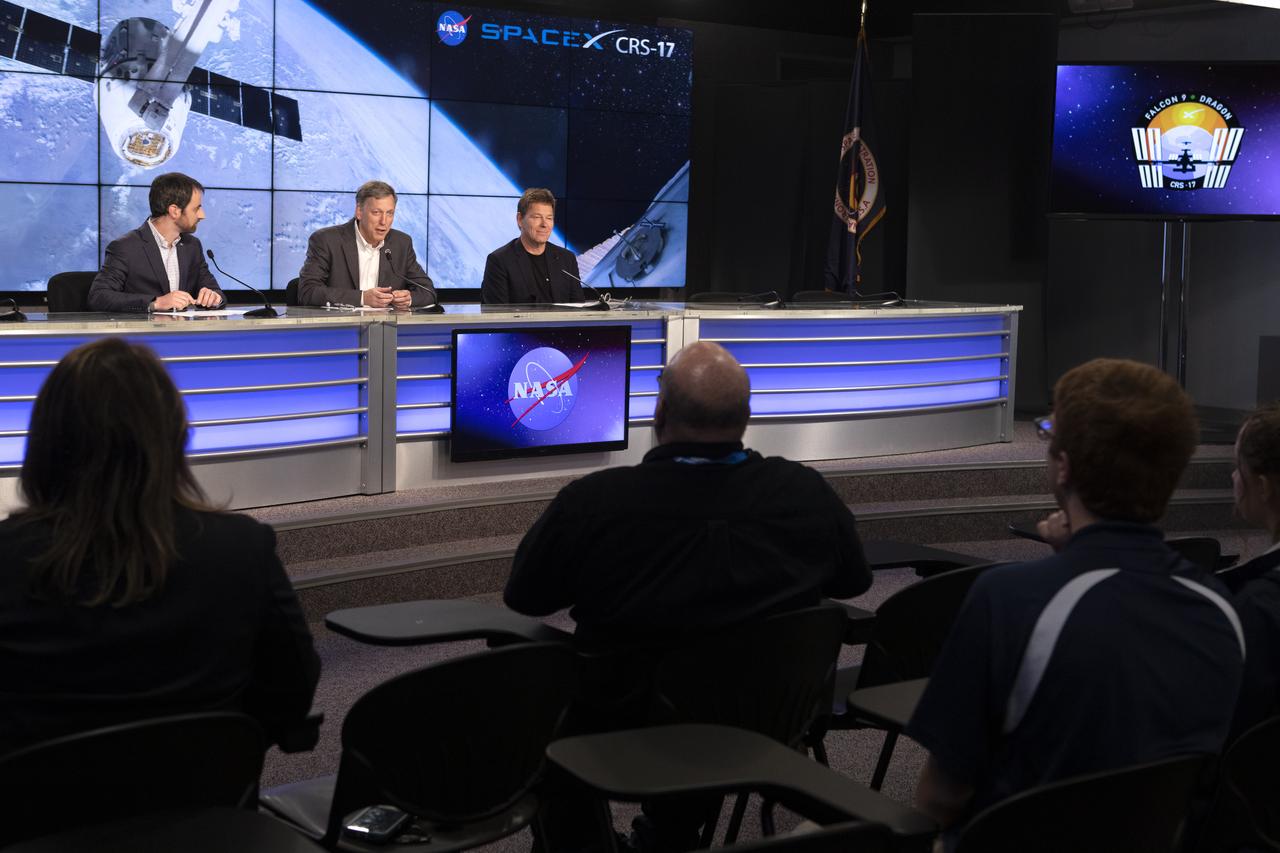
From left, Josh Santora, moderator with NASA Communications; Kenny Todd, manager, International Space Station Operations and Integration at NASA’s Johnson Space Center in Houston; and Hans Koenigsmann, vice president, Build and Flight Reliability with SpaceX, speak to members of the news media during a postlaunch news conference at NASA’s Kennedy Space Center in Florida on May 4, 2019, for SpaceX’s 17th Commercial Resupply Services (CRS-17) mission to the International Space Station for the agency. The company’s Falcon 9 rocket with the Dragon cargo module lifted off from Space Launch Complex 40 at Cape Canaveral Air Force Station in Florida at 2:48 a.m. EDT. The Dragon cargo module will deliver about 5,500 pounds of science and research, crew supplies and vehicle hardware to the orbital laboratory and its crew.
NASA Hosts Postlaunch News Conference for SpaceX CRS-17
From left, Josh Santora, moderator with NASA Communications; Kenny Todd, manager, International Space Station Operations and Integration at NASA’s Johnson Space Center in Houston; and Hans Koenigsmann, vice president, Build and Flight Reliability with SpaceX, speak to members of the news media during a postlaunch news conference at NASA’s Kennedy Space Center in Florida on May 4, 2019, for SpaceX’s 17th Commercial Resupply Services (CRS-17) mission to the International Space Station for the agency. The company’s Falcon 9 rocket with the Dragon cargo module lifted off from Space Launch Complex 40 at Cape Canaveral Air Force Station in Florida at 2:48 a.m. EDT. The Dragon cargo module will deliver about 5,500 pounds of science and research, crew supplies and vehicle hardware to the orbital laboratory and its crew.
NASA Hosts Postlaunch News Conference for SpaceX CRS-17
Members of the news media attend a prelaunch news conference for SpaceX’s 17th Commercial Resupply Services (CRS-17) mission to the International Space Station for NASA on May 2, 2019, at the agency’s Kennedy Space Center in Florida. From left, are Derrol Nail, NASA Communications moderator; Kenny Todd, Manager, International Space Station Operations and Integration at NASA’s Johnson Space Center in Houston; Hans Koenigsmann, VP, Build and Flight Reliability with SpaceX; and Will Ulrich, 45th launch weather officer with the U.S. Air Force.  The SpaceX Falcon 9 rocket and Dragon cargo module are scheduled to launch no earlier than May 3, 2019, from Space Launch Complex 40 on Cape Canaveral Air Force Station in Florida.
NASA Hosts Prelaunch News Conference for SpaceX CRS-17
From left, Josh Santora, moderator with NASA Communications; Kenny Todd, manager, International Space Station Operations and Integration at NASA’s Johnson Space Center in Houston; and Hans Koenigsmann, vice president, Build and Flight Reliability with SpaceX, speak to members of the news media during a postlaunch news conference at NASA’s Kennedy Space Center in Florida on May 4, 2019, for SpaceX’s 17th Commercial Resupply Services (CRS-17) mission to the International Space Station for the agency. The company’s Falcon 9 rocket with the Dragon cargo module lifted off from Space Launch Complex 40 at Cape Canaveral Air Force Station in Florida at 2:48 a.m. EDT. The Dragon cargo module will deliver about 5,500 pounds of science and research, crew supplies and vehicle hardware to the orbital laboratory and its crew.
NASA Hosts Postlaunch News Conference for SpaceX CRS-17
New Horizons Mission Systems Engineer Chris Hersman, left, New Horizons Project Manager Helene Winters, and New Horizons Deputy Mission Systems Engineer Gabe Rogers, right, all of the Johns Hopkins Applied Physics Laboratory, wait for a signal from the spacecraft that it is healthy and collected data during the flyby of Ultima Thule, Tuesday, Jan. 1, 2019 at the Mission Operations Center of the Johns Hopkins University Applied Physics Laboratory (APL) in Laurel, Maryland. Photo Credit: (NASA/Bill Ingalls)
New Horizons Ultima Thule Flyby
KENNEDY SPACE CENTER, FLA. -- Mike O’Neal, with the KSC Spaceport Technology Development Office, talks to the media at the NASA-KSC News Center after viewing President George W. Bush’s message on the future of NASA.  The President stated his goals for NASA’s new mission: Completing the International Space Station, retiring the Space Shuttle orbiters, developing a new crew exploration vehicle, and returning to the moon and beyond within the next two decades.   Pres. Bush was welcomed by NASA Administrator Sean O’Keefe and Expedition 8 Commander Michael Foale, who greeted him from the International Space Station.
KENNEDY SPACE CENTER, FLA. -- Mike O’Neal, with the KSC Spaceport Technology Development Office, talks to the media at the NASA-KSC News Center after viewing President George W. Bush’s message on the future of NASA. The President stated his goals for NASA’s new mission: Completing the International Space Station, retiring the Space Shuttle orbiters, developing a new crew exploration vehicle, and returning to the moon and beyond within the next two decades. Pres. Bush was welcomed by NASA Administrator Sean O’Keefe and Expedition 8 Commander Michael Foale, who greeted him from the International Space Station.
KENNEDY SPACE CENTER, FLA. -- Dr. Woodrow Whitlow, KSC deputy director, talks to the media at the NASA-KSC News Center after viewing President George W. Bush’s message on the future of NASA.  The President stated his goals for NASA’s new mission: Completing the International Space Station, retiring the Space Shuttle orbiters, developing a new crew exploration vehicle, and returning to the moon and beyond within the next two decades.   Pres. Bush was welcomed by NASA Administrator Sean O’Keefe and Expedition 8 Commander Michael Foale, who greeted him from the International Space Station.
KENNEDY SPACE CENTER, FLA. -- Dr. Woodrow Whitlow, KSC deputy director, talks to the media at the NASA-KSC News Center after viewing President George W. Bush’s message on the future of NASA. The President stated his goals for NASA’s new mission: Completing the International Space Station, retiring the Space Shuttle orbiters, developing a new crew exploration vehicle, and returning to the moon and beyond within the next two decades. Pres. Bush was welcomed by NASA Administrator Sean O’Keefe and Expedition 8 Commander Michael Foale, who greeted him from the International Space Station.
KENNEDY SPACE CENTER, FLA. -- Maria Littlefield, chief technologist with the Launch Services Program Office, talks to the media at the NASA-KSC News Center after viewing President George W. Bush’s message on the future of NASA.  The President stated his goals for NASA’s new mission: Completing the International Space Station, retiring the Space Shuttle orbiters, developing a new crew exploration vehicle, and returning to the moon and beyond within the next two decades.   Pres. Bush was welcomed by NASA Administrator Sean O’Keefe and Expedition 8 Commander Michael Foale, who greeted him from the International Space Station.
KENNEDY SPACE CENTER, FLA. -- Maria Littlefield, chief technologist with the Launch Services Program Office, talks to the media at the NASA-KSC News Center after viewing President George W. Bush’s message on the future of NASA. The President stated his goals for NASA’s new mission: Completing the International Space Station, retiring the Space Shuttle orbiters, developing a new crew exploration vehicle, and returning to the moon and beyond within the next two decades. Pres. Bush was welcomed by NASA Administrator Sean O’Keefe and Expedition 8 Commander Michael Foale, who greeted him from the International Space Station.
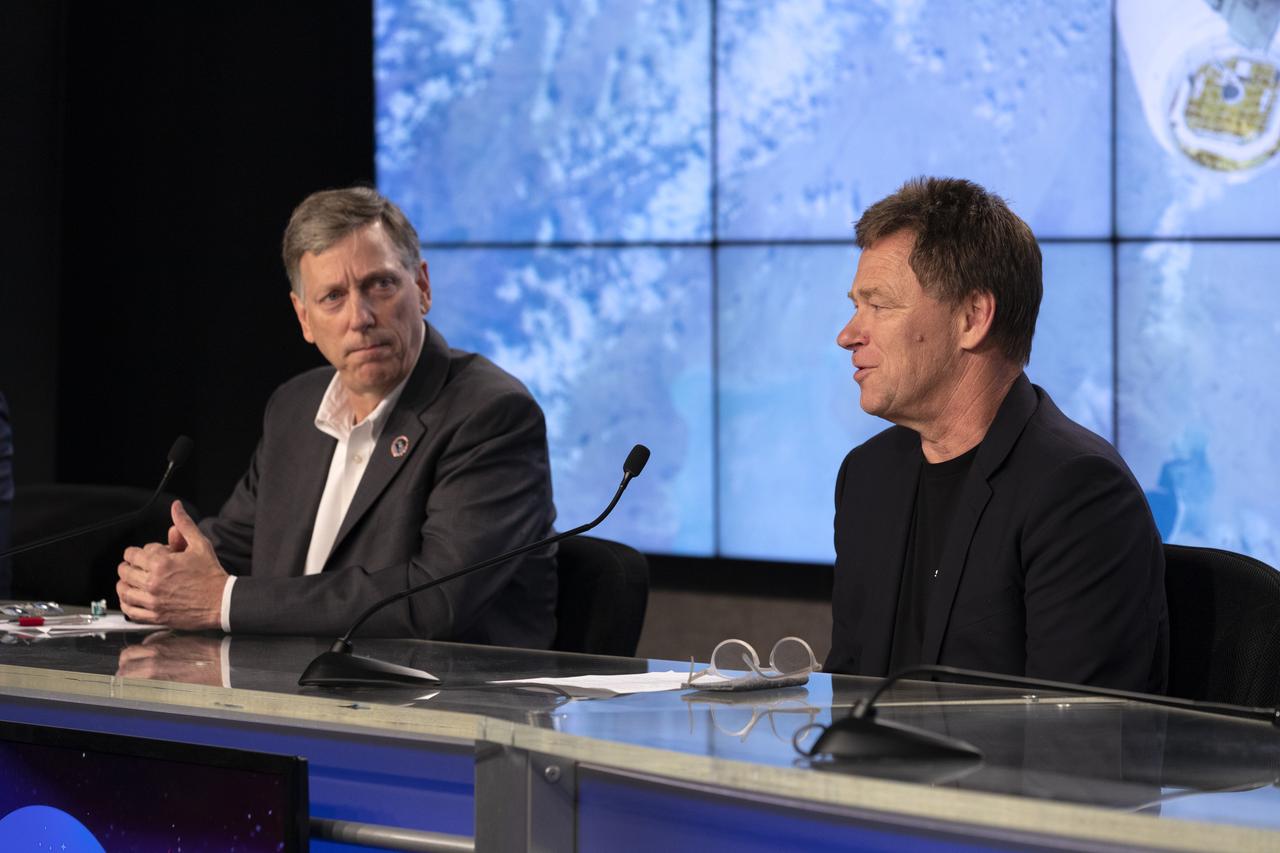
From left, Kenny Todd, manager, International Space Station Operations and Integration at NASA’s Johnson Space Center in Houston; and Hans Koenigsmann, vice president, Build and Flight Reliability with SpaceX, speak to members of the news media during a postlaunch news conference at NASA’s Kennedy Space Center in Florida on May 4, 2019, for SpaceX’s 17th Commercial Resupply Services (CRS-17) mission to the International Space Station for the agency. The company’s Falcon 9 rocket with the Dragon cargo module lifted off from Space Launch Complex 40 at Cape Canaveral Air Force Station in Florida at 2:48 a.m. EDT. The Dragon cargo module will deliver about 5,500 pounds of science and research, crew supplies and vehicle hardware to the orbital laboratory and its crew.
NASA Hosts Postlaunch News Conference for SpaceX CRS-17
Members of the news media attend the prelaunch news conference for SpaceX’s 18th Commercial Resupply Services (CRS-18) mission to the International Space Station, July 24, 2019, at NASA’s Kennedy Space Center in Florida. Participants were Marie Lewis, NASA Communications moderator; Bill Spetch, deputy manager of the International Space Station Transportation Integration Office at the agency’s Johnson Space Center in Houston; Jessica Jensen, director of Dragon mission management at SpaceX; Pete Hasbrook, manager of the space station’s Program Science Office at Johnson; and Will Ulrich, launch weather officer with the U.S. Air Force 45th Space Wing. The SpaceX Falcon 9 rocket and uncrewed Dragon spacecraft are scheduled to launch July 24, 2019, from Space Launch Complex 40 at Florida’s Cape Canaveral Air Force Station.
SpaceX CRS-18 PreLaunch News Conference
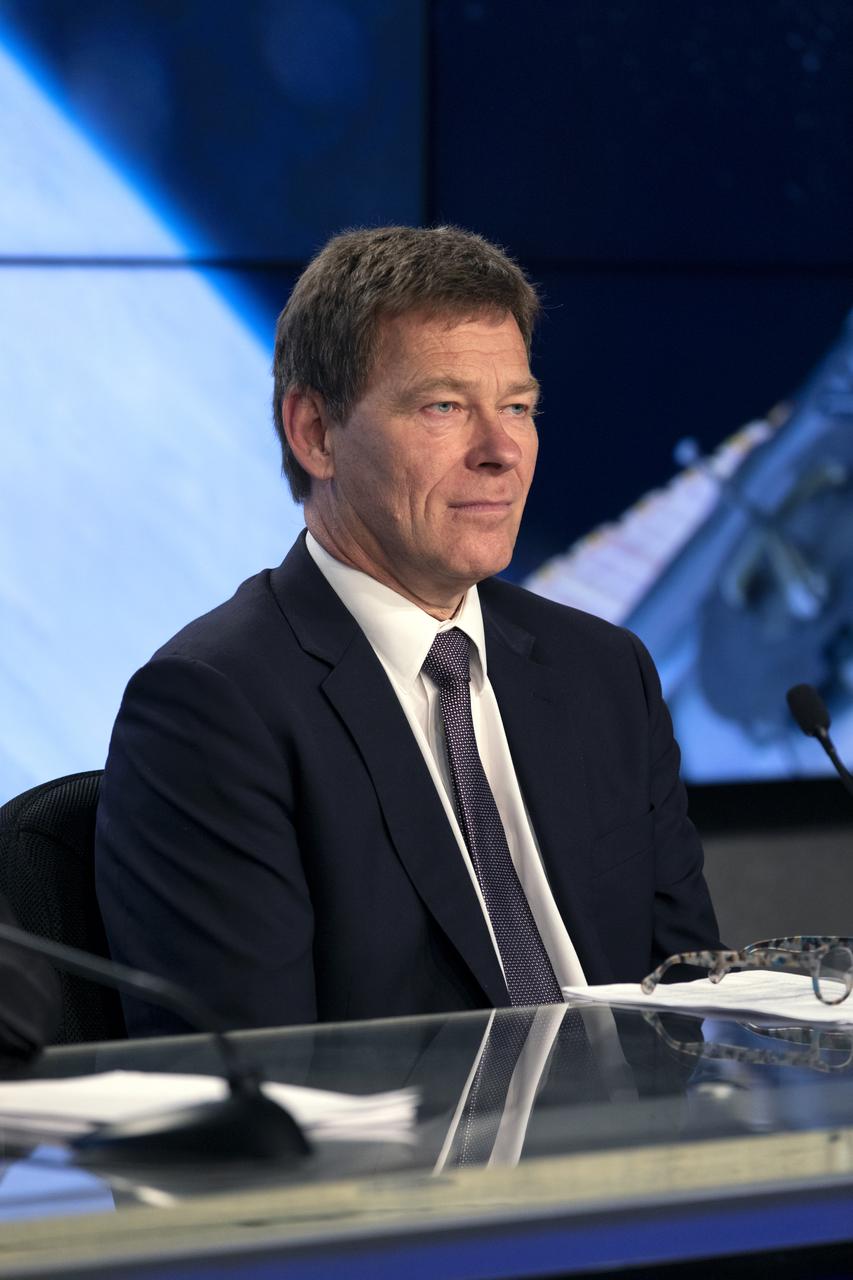
Hans Koenigsmann, vice president, Build and Flight Reliability with SpaceX, speaks to members of the news media during a postlaunch news conference at NASA’s Kennedy Space Center in Florida on May 4, 2019, for SpaceX’s 17th Commercial Resupply Services (CRS-17) mission to the International Space Station for the agency. The company’s Falcon 9 rocket with the Dragon cargo module lifted off from Space Launch Complex 40 at Cape Canaveral Air Force Station in Florida at 2:48 a.m. EDT. The Dragon cargo module will deliver about 5,500 pounds of science and research, crew supplies and vehicle hardware to the orbital laboratory and its crew.
NASA Hosts Postlaunch News Conference for SpaceX CRS-17
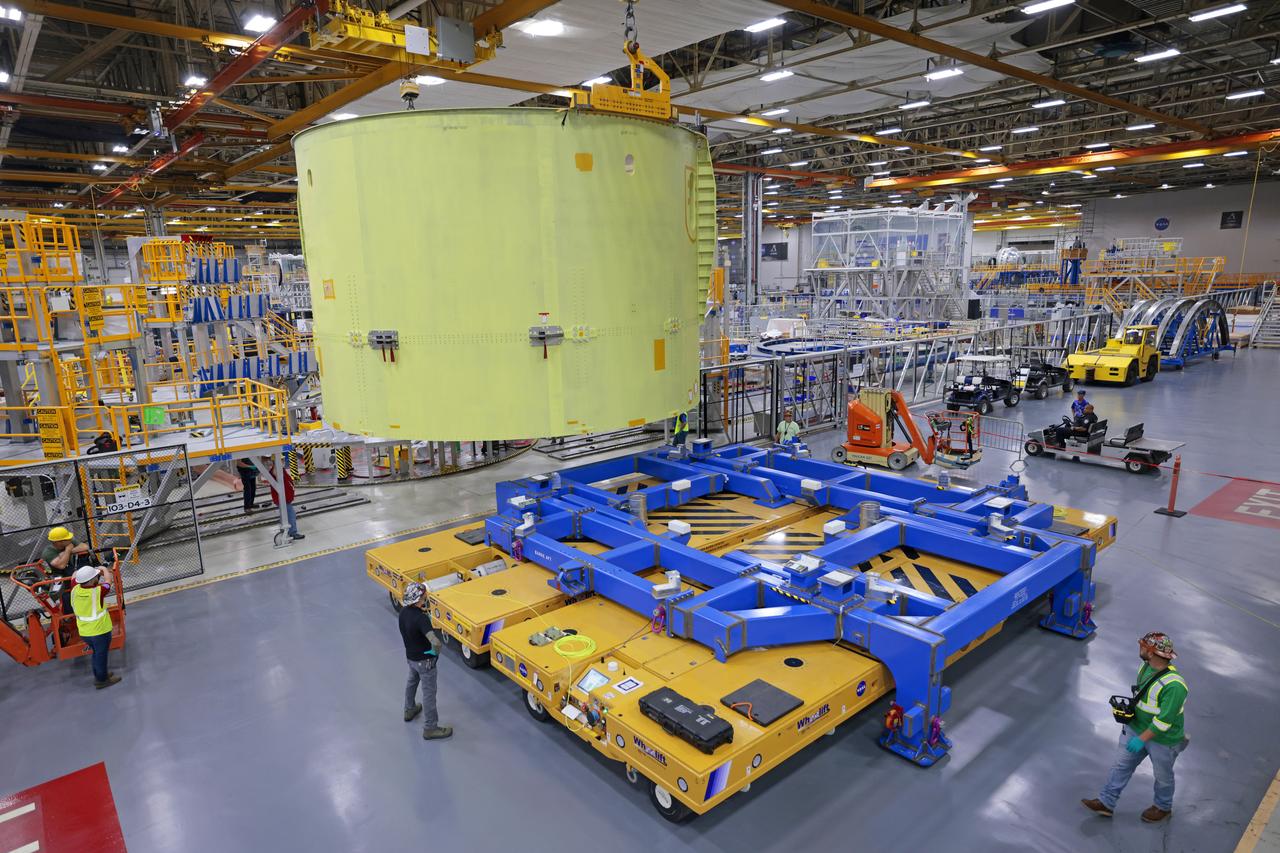
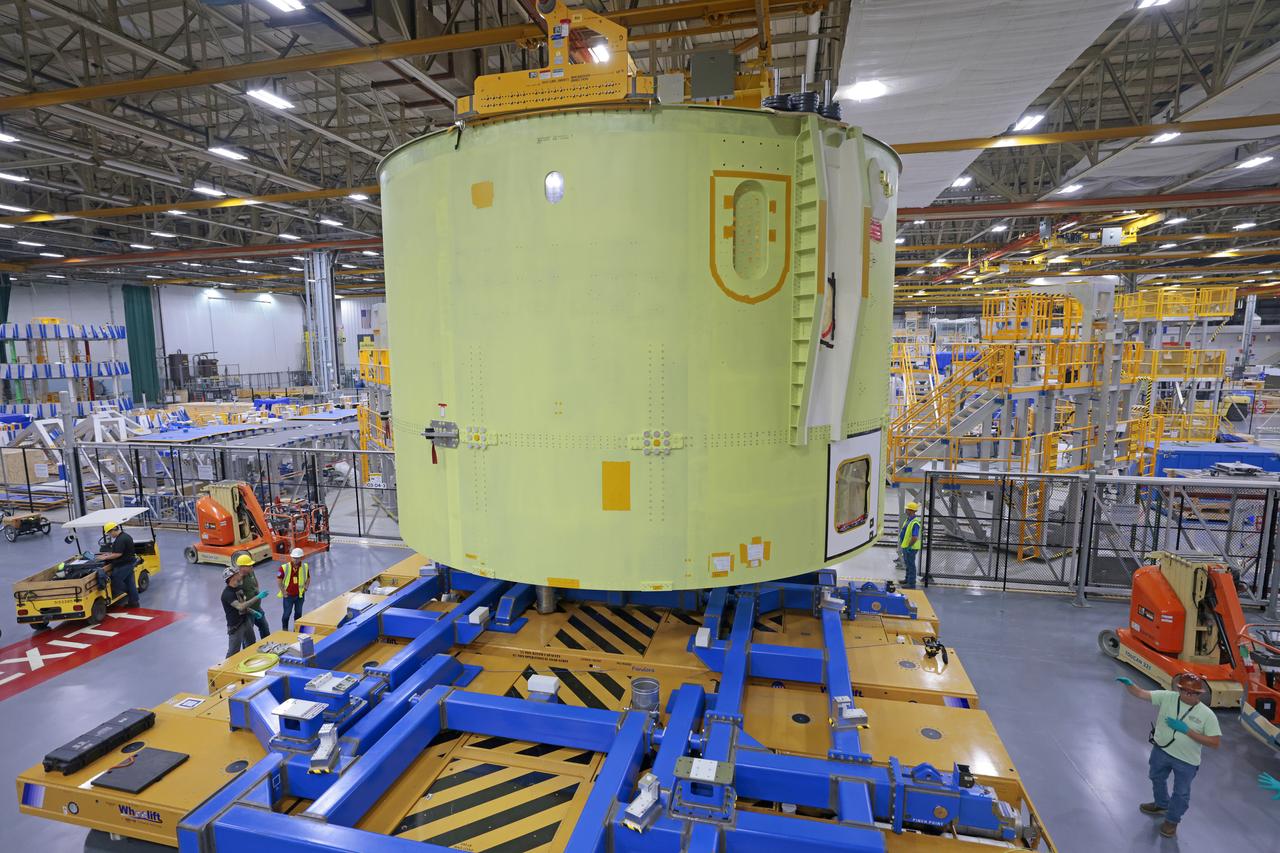
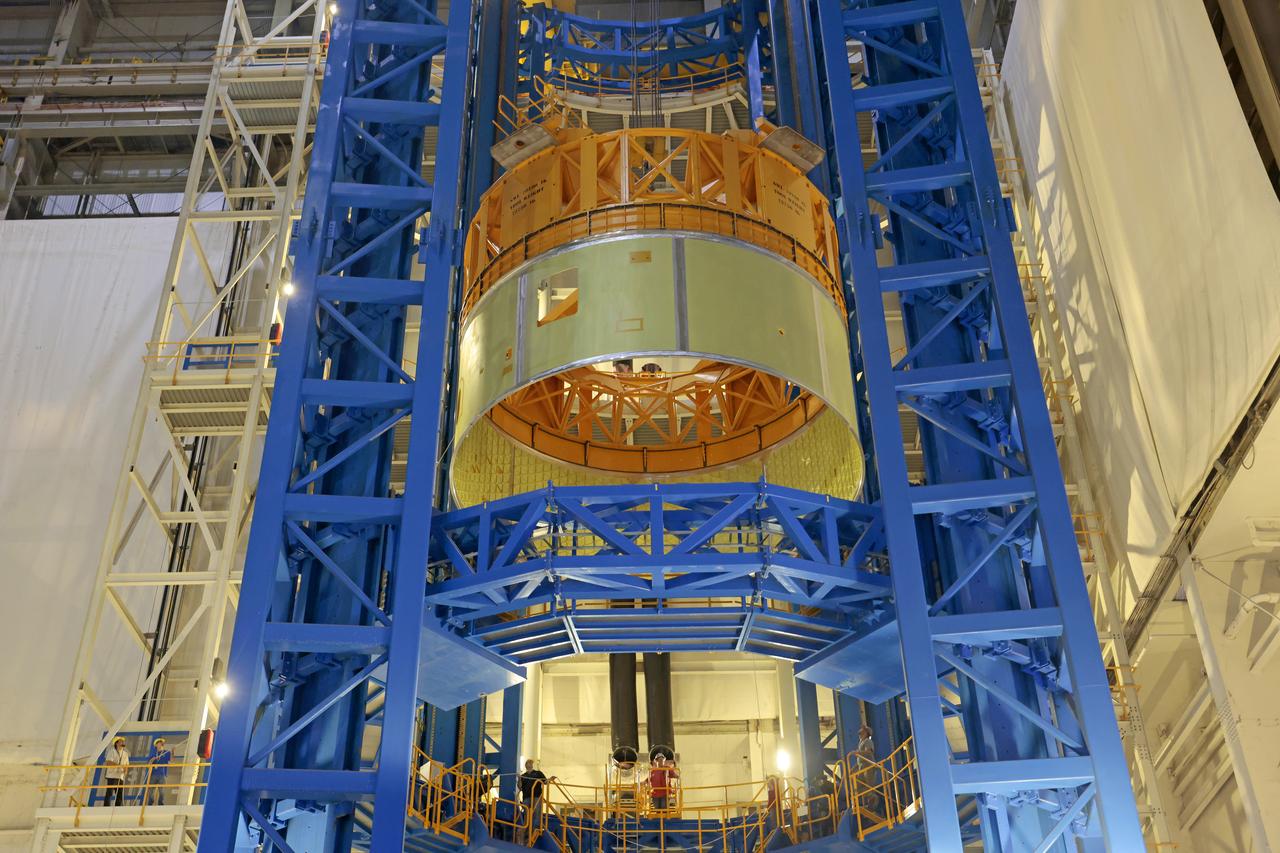
This image shows teams at NASA’s Michoud Assembly Facility in New Orleans lifting a forward skirt out of its vertical assembly center on Jan. 31, 2025. The forward skirt, which will be used on the core stage for the agency’s SLS (Space Launch System) rocket for its Artemis IV mission, houses flight computers, cameras, and avionics. While inside the vertical assembly center, technicians attached the forward skirt’s forward and aft rings, which serve as attachments points to the launch vehicle stage adapter and the liquid oxygen tank, respectively. The forward skirt is one of five major elements that make up the 212-foot-tall rocket stage. The core stage, along with its four RS-25 engines, produce more than two million pounds of thrust to help launch NASA’s Orion spacecraft, astronauts, and supplies beyond Earth’s orbit and to the lunar surface for Artemis.  Image credit: NASA/Michael DeMocker
Structurally Complete Forward Skirt Lifts Out of Vertical Assembly Center
This image shows teams at NASA’s Michoud Assembly Facility in New Orleans lifting a forward skirt out of its vertical assembly center on Jan. 31, 2025. The forward skirt, which will be used on the core stage for the agency’s SLS (Space Launch System) rocket for its Artemis IV mission, houses flight computers, cameras, and avionics. While inside the vertical assembly center, technicians attached the forward skirt’s forward and aft rings, which serve as attachments points to the launch vehicle stage adapter and the liquid oxygen tank, respectively. The forward skirt is one of five major elements that make up the 212-foot-tall rocket stage. The core stage, along with its four RS-25 engines, produce more than two million pounds of thrust to help launch NASA’s Orion spacecraft, astronauts, and supplies beyond Earth’s orbit and to the lunar surface for Artemis.  Image credit: NASA/Michael DeMocker
Structurally Complete Forward Skirt Lifts Out of Vertical Assembly Center
This image shows teams at NASA’s Michoud Assembly Facility in New Orleans lifting a forward skirt out of its vertical assembly center on Jan. 31, 2025. The forward skirt, which will be used on the core stage for the agency’s SLS (Space Launch System) rocket for its Artemis IV mission, houses flight computers, cameras, and avionics. While inside the vertical assembly center, technicians attached the forward skirt’s forward and aft rings, which serve as attachments points to the launch vehicle stage adapter and the liquid oxygen tank, respectively. The forward skirt is one of five major elements that make up the 212-foot-tall rocket stage. The core stage, along with its four RS-25 engines, produce more than two million pounds of thrust to help launch NASA’s Orion spacecraft, astronauts, and supplies beyond Earth’s orbit and to the lunar surface for Artemis.  Image credit: NASA/Michael DeMocker
Structurally Complete Forward Skirt Lifts Out of Vertical Assembly Center
This image shows teams at NASA’s Michoud Assembly Facility in New Orleans lifting a forward skirt out of its vertical assembly center on Jan. 31, 2025. The forward skirt, which will be used on the core stage for the agency’s SLS (Space Launch System) rocket for its Artemis IV mission, houses flight computers, cameras, and avionics. While inside the vertical assembly center, technicians attached the forward skirt’s forward and aft rings, which serve as attachments points to the launch vehicle stage adapter and the liquid oxygen tank, respectively. The forward skirt is one of five major elements that make up the 212-foot-tall rocket stage. The core stage, along with its four RS-25 engines, produce more than two million pounds of thrust to help launch NASA’s Orion spacecraft, astronauts, and supplies beyond Earth’s orbit and to the lunar surface for Artemis.  Image credit: NASA/Michael DeMocker
Structurally Complete Forward Skirt Lifts Out of Vertical Assembly Center
These photos and videos show teams at NASA’s Michoud Assembly Facility in New Orleans preparing, moving, and loading the engine section of a future SLS (Space Launch System) rocket to NASA’s Pegasus barge Aug. 28. The hardware will form the bottom-most section of the SLS core stage that will power NASA’s Artemis IV mission, which will be the first mission to the Gateway space station in lunar orbit under the Artemis campaign. The barge will transport the spaceflight hardware to NASA’s Kennedy Space Center in Florida via the agency’s Pegasus barge. Once in Florida, the engine section will undergo final outfitting inside Kennedy’s Space Station Processing Facility.
NASA, Boeing Move Artemis IV Rocket Hardware to Barge
These photos and videos show teams at NASA’s Michoud Assembly Facility in New Orleans preparing, moving, and loading the engine section of a future SLS (Space Launch System) rocket to NASA’s Pegasus barge Aug. 28. The hardware will form the bottom-most section of the SLS core stage that will power NASA’s Artemis IV mission, which will be the first mission to the Gateway space station in lunar orbit under the Artemis campaign. The barge will transport the spaceflight hardware to NASA’s Kennedy Space Center in Florida via the agency’s Pegasus barge. Once in Florida, the engine section will undergo final outfitting inside Kennedy’s Space Station Processing Facility.
NASA, Boeing Move Artemis IV Rocket Hardware to Barge
These photos and videos show teams at NASA’s Michoud Assembly Facility in New Orleans preparing, moving, and loading the engine section of a future SLS (Space Launch System) rocket to NASA’s Pegasus barge Aug. 28. The hardware will form the bottom-most section of the SLS core stage that will power NASA’s Artemis IV mission, which will be the first mission to the Gateway space station in lunar orbit under the Artemis campaign. The barge will transport the spaceflight hardware to NASA’s Kennedy Space Center in Florida via the agency’s Pegasus barge. Once in Florida, the engine section will undergo final outfitting inside Kennedy’s Space Station Processing Facility.
NASA, Boeing Move Artemis IV Rocket Hardware to Barge
These photos and videos show teams at NASA’s Michoud Assembly Facility in New Orleans preparing, moving, and loading the engine section of a future SLS (Space Launch System) rocket to NASA’s Pegasus barge Aug. 28. The hardware will form the bottom-most section of the SLS core stage that will power NASA’s Artemis IV mission, which will be the first mission to the Gateway space station in lunar orbit under the Artemis campaign. The barge will transport the spaceflight hardware to NASA’s Kennedy Space Center in Florida via the agency’s Pegasus barge. Once in Florida, the engine section will undergo final outfitting inside Kennedy’s Space Station Processing Facility.
NASA, Boeing Move Artemis IV Rocket Hardware to Barge
Bill Spetch, deputy manager of the International Space Station Transportation Integration Office at NASA’s Johnson Space Center in Houston, speaks during the prelaunch news conference for SpaceX’s 18th Commercial Resupply Services (CRS-18) mission to the station on July 24, 2019, at the agency’s Kennedy Space Center in Florida. The SpaceX Falcon 9 rocket and uncrewed Dragon spacecraft are scheduled to launch July 24, 2019, from Space Launch Complex 40 at Florida’s Cape Canaveral Air Force Station.
SpaceX CRS-18 PreLaunch News Conference
Pete Hasbrook, manager of the International Space Station Program Science Office at NASA’s Johnson Space Center in Houston, speaks during the prelaunch news conference for SpaceX’s 18th Commercial Resupply Services (CRS-18) mission to the station, July 24, 2019, at the agency’s Kennedy Space Center in Florida. The SpaceX Falcon 9 rocket and uncrewed Dragon spacecraft are scheduled to launch July 24, 2019, from Space Launch Complex 40 at Florida’s Cape Canaveral Air Force Station.
SpaceX CRS-18 PreLaunch News Conference
A New Horizons Pluto flyby coffee mug is seen as team members wait for a signal from the spacecraft that it is healthy and collected data during the flyby of Ultima Thule, Tuesday, Jan. 1, 2019 at the Mission Operations Center of the Johns Hopkins University Applied Physics Laboratory (APL) in Laurel, Maryland. Photo Credit: (NASA/Bill Ingalls)
New Horizons Ultima Thule Flyby
New Horizons principal investigator Alan Stern of the Southwest Research Institute (SwRI), Boulder, CO, celebrates with other mission team members after they received signals from the spacecraft that it is healthy and collected data during the flyby of Ultima Thule, Tuesday, Jan. 1, 2019 at the Mission Operations Center of the Johns Hopkins University Applied Physics Laboratory (APL) in Laurel, Maryland. Photo Credit: (NASA/Bill Ingalls)
New Horizons Ultima Thule Flyby
A sign marking the seat location of the New Horizons Flight Controller is seen as team members wait for a signal from the spacecraft that it is healthy and collected data during the flyby of Ultima Thule, Tuesday, Jan. 1, 2019 at the Mission Operations Center of the Johns Hopkins University Applied Physics Laboratory (APL) in Laurel, Maryland. Photo Credit: (NASA/Bill Ingalls)
New Horizons Ultima Thule Flyby
Retired NASA astronaut John Blaha talks to Swarmathon University Challenge students and their mentors during a Dine with an Astronaut event at the Kennedy Space Center Visitor Complex in Florida on June 12, 2019. Students and mentors from some of the Swarmathon teams were at Kennedy to participate in a student/mentor panel, hear from speakers, get a behind-the-scenes tour of Kennedy Space Center, dine with an astronaut and receive awards. For the challenge, university students developed algorithms for robotic swarms that are robust and adaptable like the foraging strategies of ant colonies. The fourth and final Swarmathon challenge was a combined virtual and physical competition hosted by the University of New Mexico.
Swarmathon 2019
Retired NASA astronaut John Blaha talks to Swarmathon University Challenge students and their mentors during a Dine with an Astronaut event at the Kennedy Space Center Visitor Complex in Florida on June 12, 2019. Students and mentors from some of the Swarmathon teams were at Kennedy to participate in a student/mentor panel, hear from speakers, get a behind-the-scenes tour of Kennedy Space Center, dine with an astronaut and receive awards. For the challenge, university students developed algorithms for robotic swarms that are robust and adaptable like the foraging strategies of ant colonies. The fourth and final Swarmathon challenge was a combined virtual and physical competition hosted by the University of New Mexico.
Swarmathon 2019
KENNEDY SPACE CENTER, FLA. - KSC Director Jim Kennedy makes a presentation to NASA and other officials about the benefits of locating NASA’s new Shared Services Center in the Central Florida Research Park, near Orlando.  At the far left is Pamella J. Dana, Ph.D., director, Office of Tourism, Trade, and Economic Development in Florida.  Central Florida leaders are proposing the research park as the site for the NASA Shared Services Center.  The center would centralize NASA’s payroll, accounting, human resources, facilities and procurement offices that are now handled at each field center.  The consolidation is part of the One NASA focus.  Six sites around the U.S. are under consideration by NASA.
KENNEDY SPACE CENTER, FLA. - KSC Director Jim Kennedy makes a presentation to NASA and other officials about the benefits of locating NASA’s new Shared Services Center in the Central Florida Research Park, near Orlando. At the far left is Pamella J. Dana, Ph.D., director, Office of Tourism, Trade, and Economic Development in Florida. Central Florida leaders are proposing the research park as the site for the NASA Shared Services Center. The center would centralize NASA’s payroll, accounting, human resources, facilities and procurement offices that are now handled at each field center. The consolidation is part of the One NASA focus. Six sites around the U.S. are under consideration by NASA.