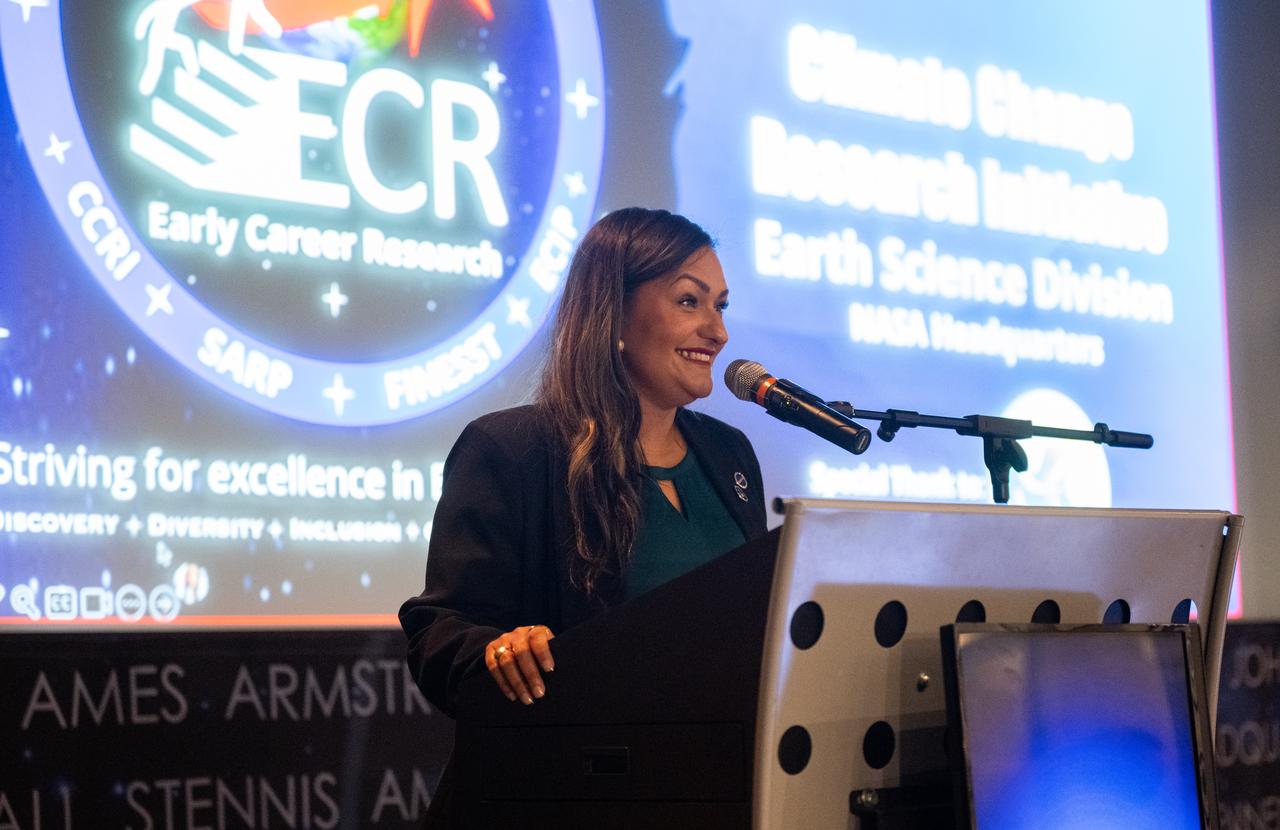
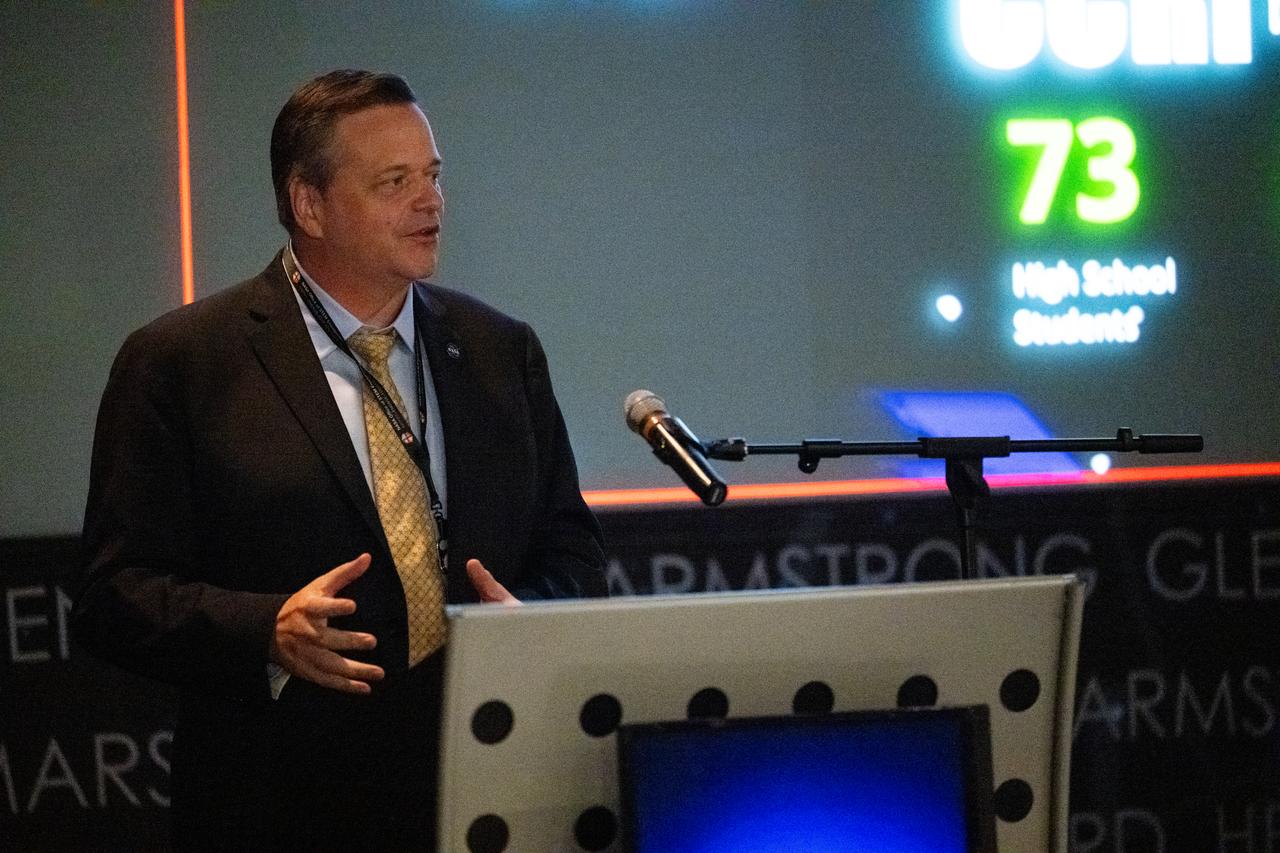
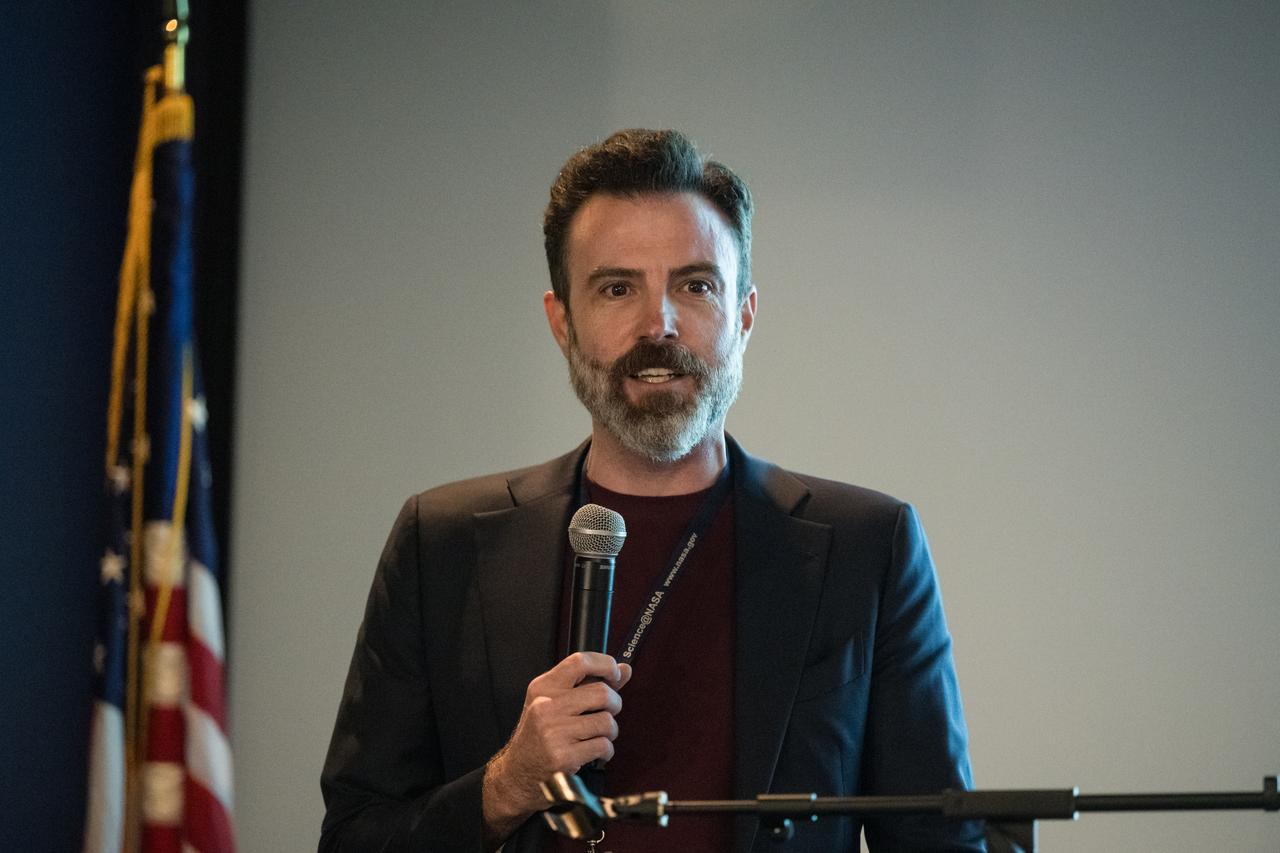
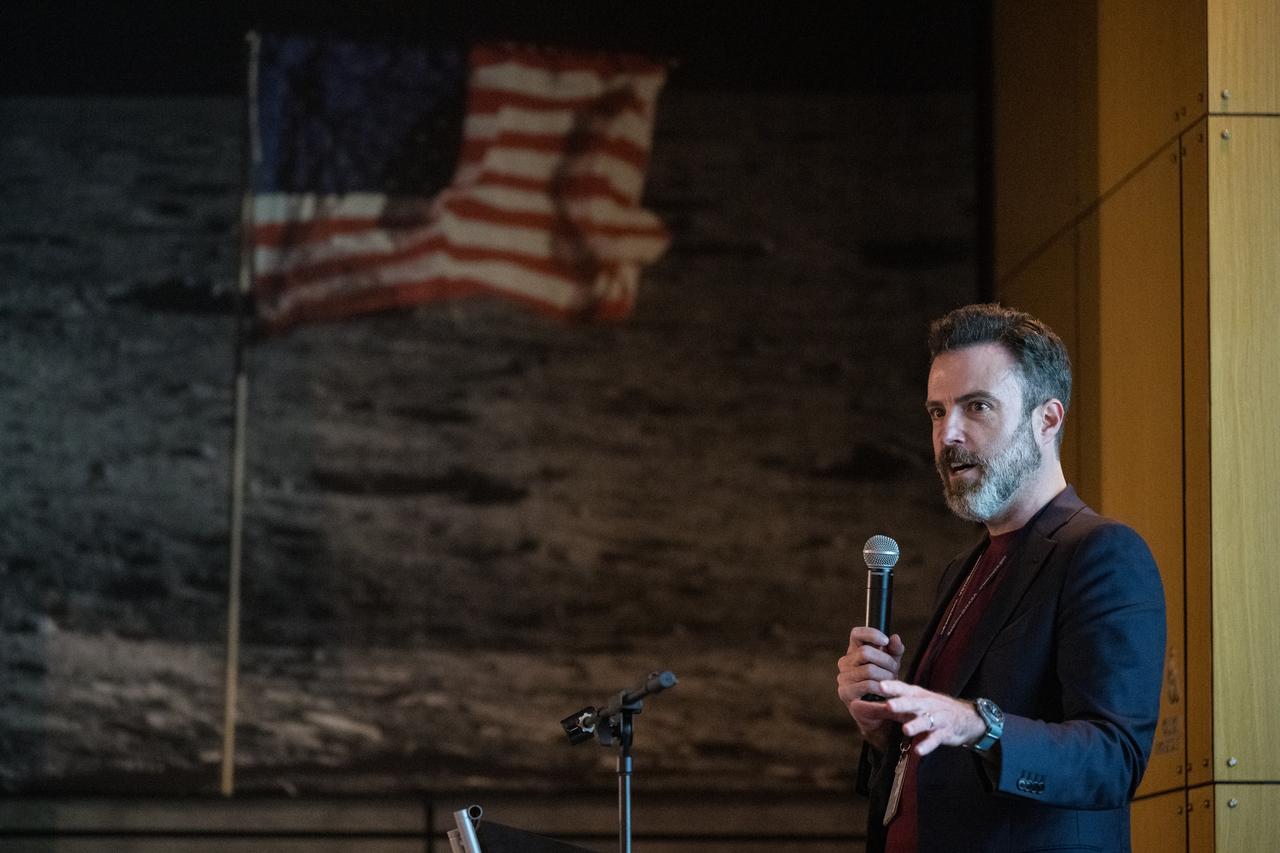
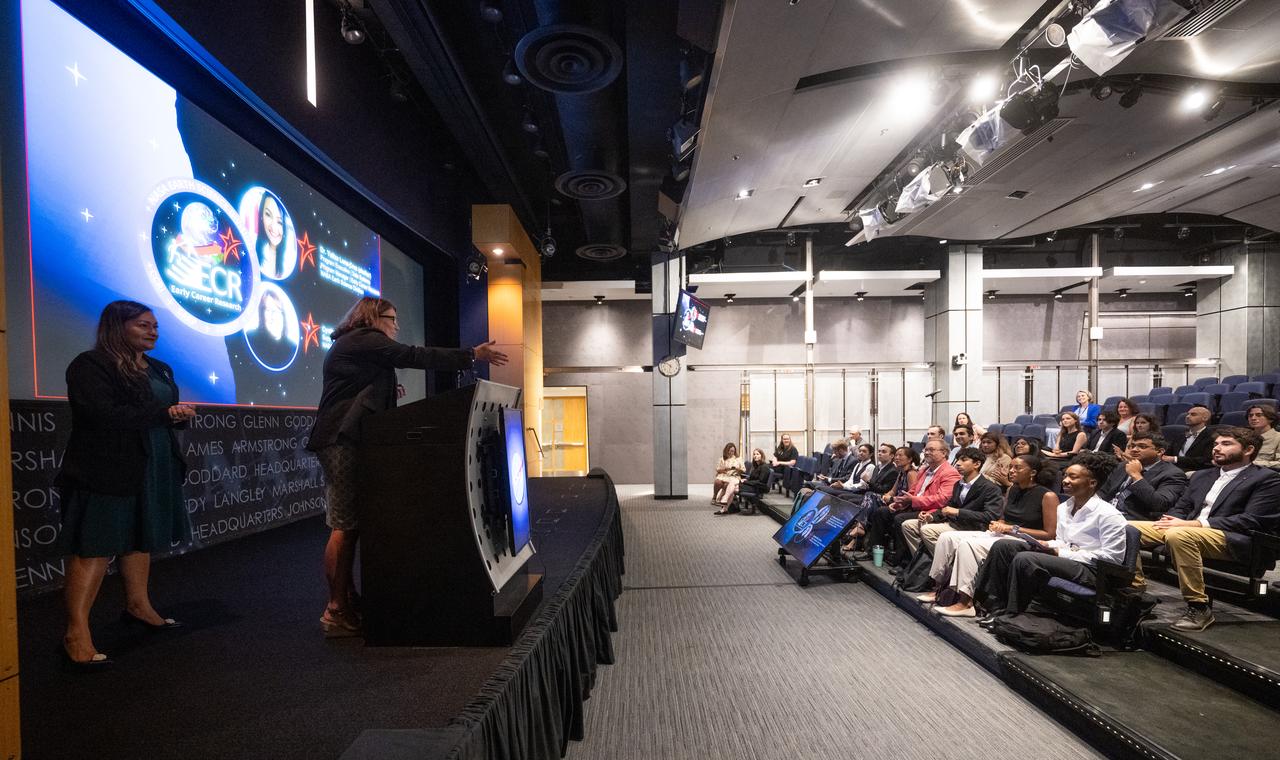
Cynthia Hall, support scientist for the Early Career Research Program in NASA’s Earth Science Division, right, and Yaítza Luna-Cruz, a program executive in the Earth Science Division of NASA’s Science Mission Directorate and program manager for the Early Career Research Program speak to the Climate Change Research Initiative (CCRI) cohort, Wednesday, Aug. 7, 2024, at the Mary W. Jackson NASA Headquarters building in Washington, DC. The Earth Science Division’s Early Career Research Program’s Climate Change Research Initiative (CCRI) is a year-long STEM engagement and experiential learning opportunity for educators and students from high school to graduate level. Photo Credit: (NASA/Joel Kowsky)
NASA Early Career Research Program - Climate Change Research Ini
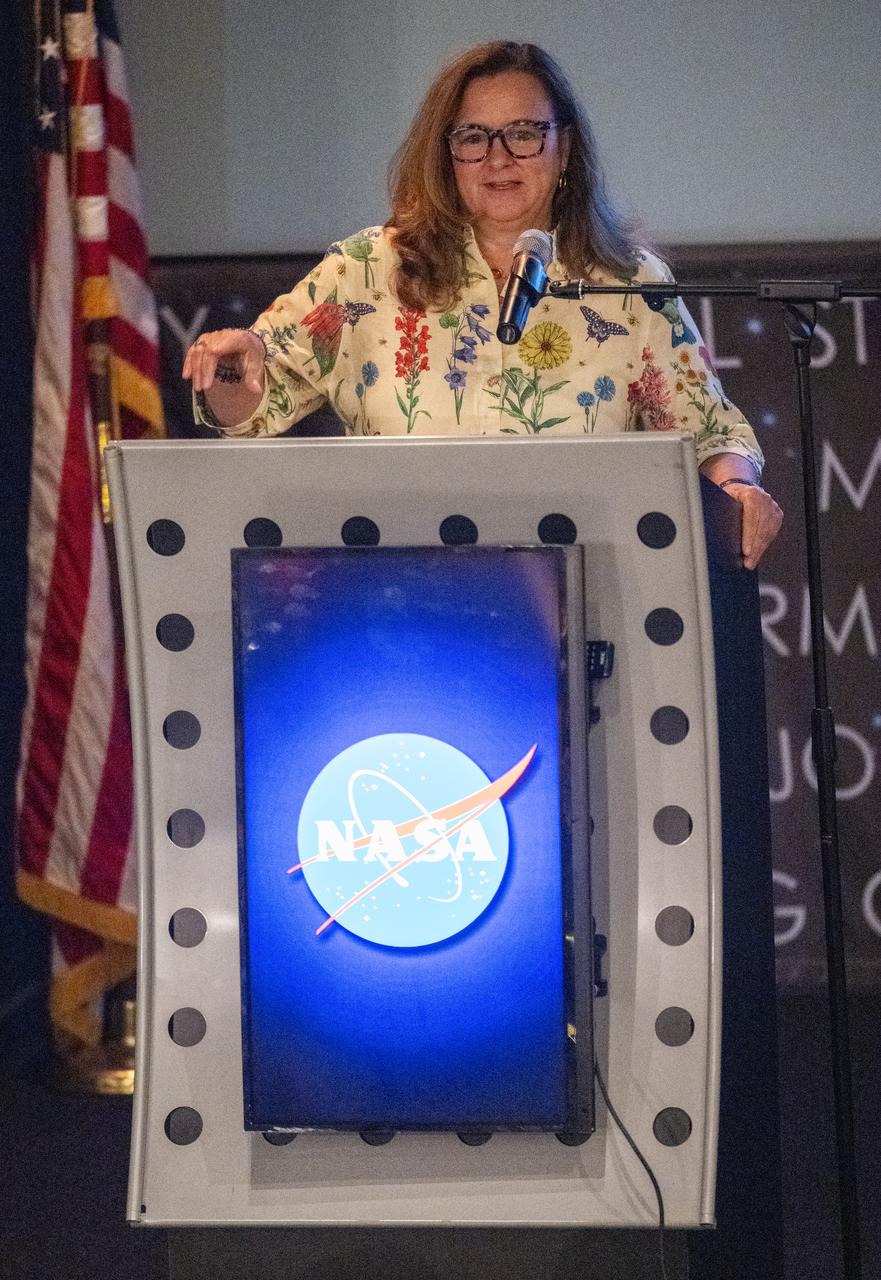
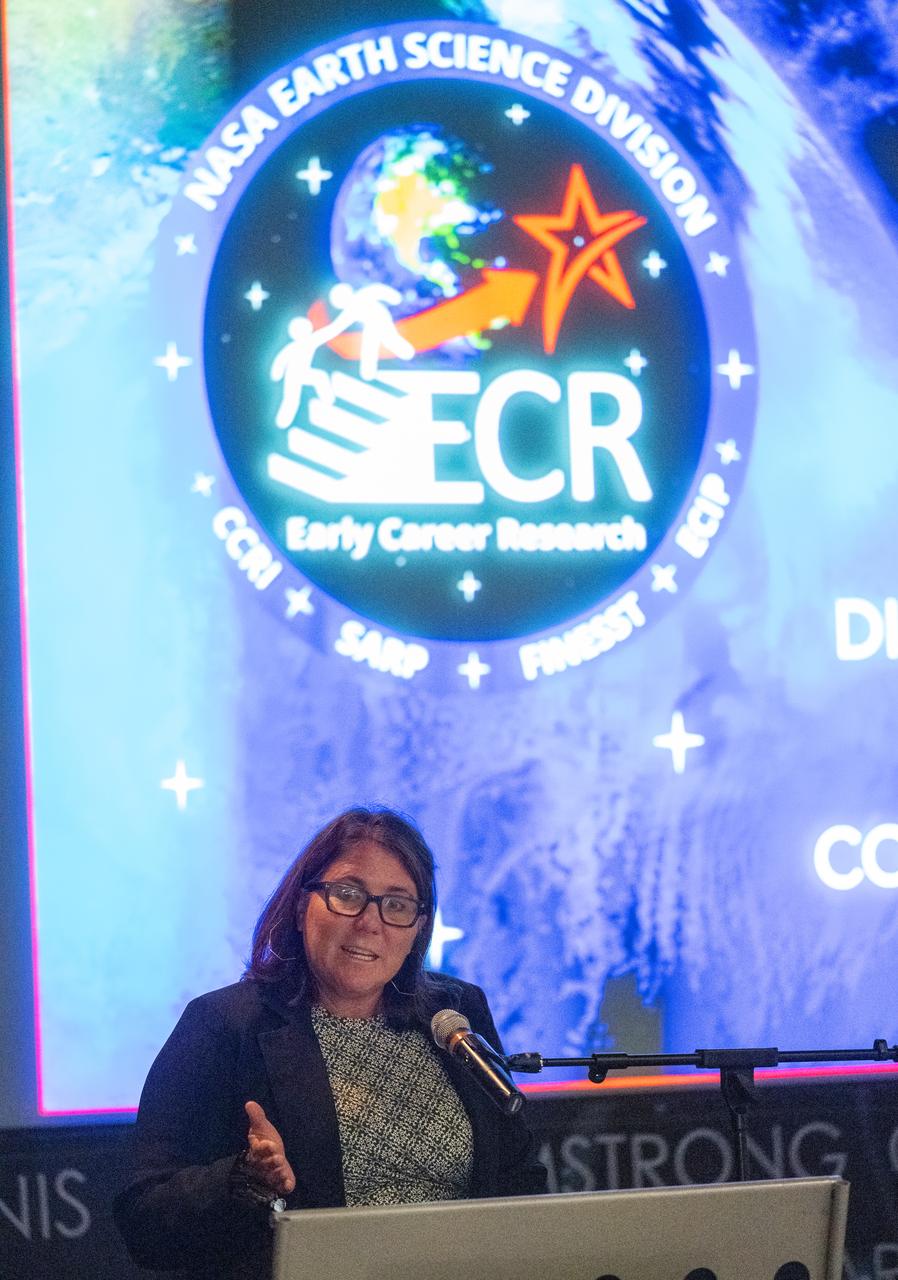
Cynthia Hall, support scientist for the Early Career Research Program in NASA’s Earth Science Division, speaks to the Climate Change Research Initiative (CCRI) cohort, Wednesday, Aug. 7, 2024, at the Mary W. Jackson NASA Headquarters building in Washington, DC. The Earth Science Division’s Early Career Research Program’s Climate Change Research Initiative (CCRI) is a year-long STEM engagement and experiential learning opportunity for educators and students from high school to graduate level. Photo Credit: (NASA/Joel Kowsky)
NASA Early Career Research Program - Climate Change Research Ini
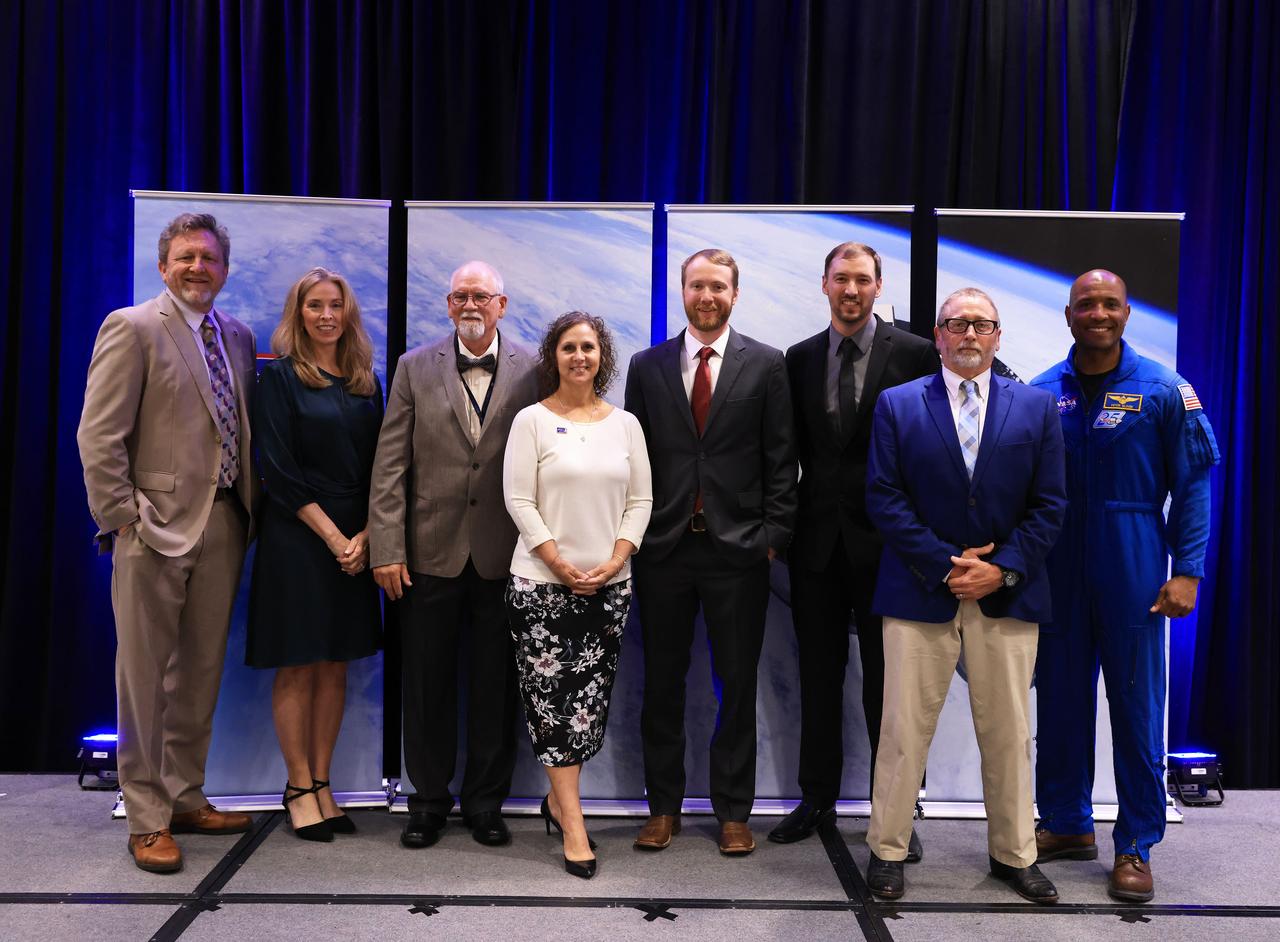
NASA astronaut and Artemis II crew member Victor Glover stands with Honoree Award recipients from NASA’s Stennis Space Center following presentation of the awards during NASA’s Space Flight Awareness Program ceremony on May 4 in Orlando, Florida. Recipients (and their companies), along with ceremony presenters were: (left to right) NASA Stennis Associate Director Rodney McKellip, Shelly Lunsford (SaiTech Inc.), Odie Ladner (Aerojet Rocketdyne, an L3 Harris Technologies company), Rachel Deschamp (Alutiiq Essential Services), Peyton Pinson (NASA), Jack Conley (NASA), Ronnie Good (NASA), and Glover.
NASA Space Flight Awareness Program Recognizes Stennis Employees
Yaítza Luna-Cruz, a program executive in the Earth Science Division of NASA’s Science Mission Directorate and program manager for the Early Career Research Program, speaks to the Climate Change Research Initiative (CCRI) cohort, Wednesday, Aug. 7, 2024, at the Mary W. Jackson NASA Headquarters building in Washington, DC. The Earth Science Division’s Early Career Research Program’s Climate Change Research Initiative (CCRI) is a year-long STEM engagement and experiential learning opportunity for educators and students from high school to graduate level. Photo Credit: (NASA/Joel Kowsky)
NASA Early Career Research Program - Climate Change Research Ini
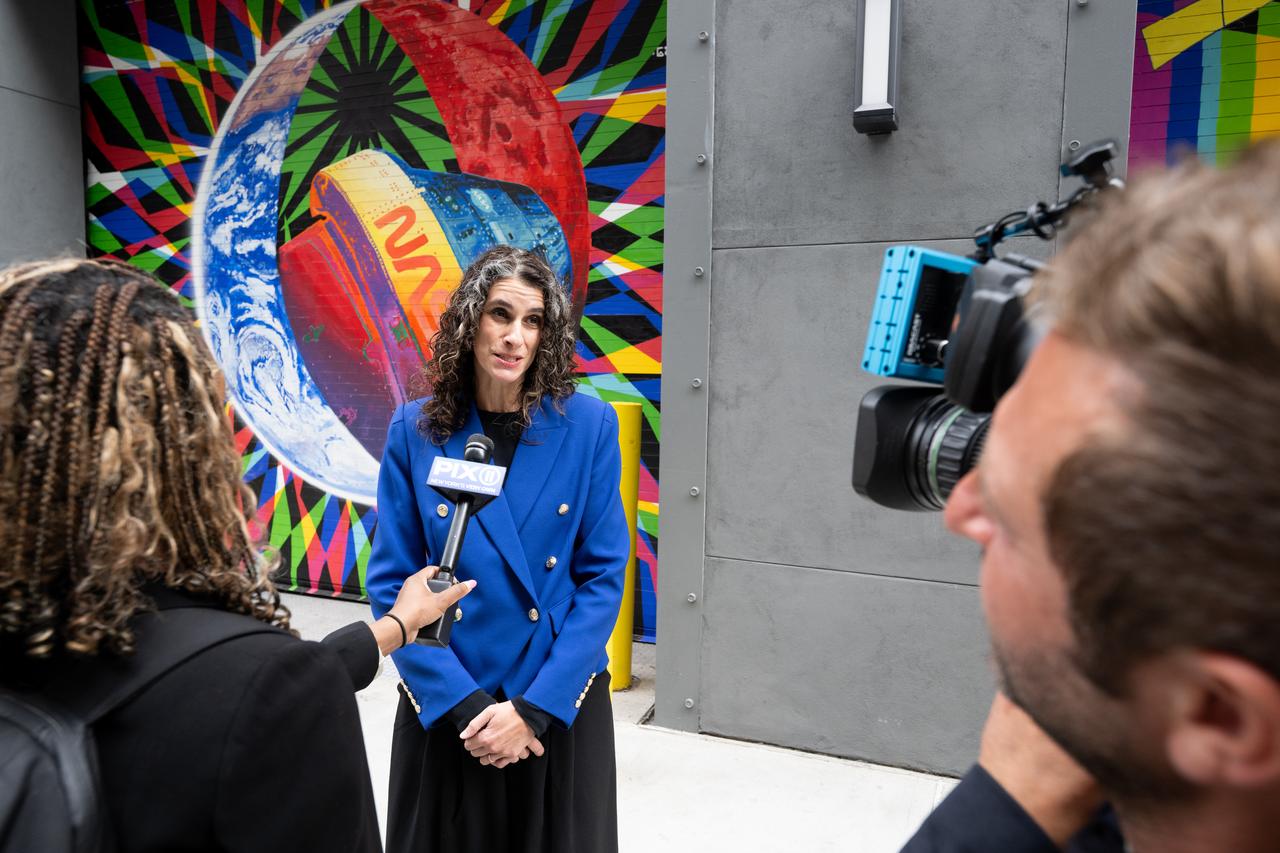
Samara Karasyk, President and CEO of the Hudson Square Business Improvement District talks to a member of the media in front of the mural “To the Moon, and Back” by the New York-based artist team Geraluz and WERC that was created as part of the reimagined NASA Art Program, Tuesday, September 24, 2024, in New York City’s Hudson Square neighborhood. For the inaugural project of the reestablished NASA Art Program the agency collaborated with the Hudson Square Business Improvement District on an open call for New York-based artists to design and install a large-scale mural inspired by NASA’s work and missions. Photo Credit: (NASA/Joel Kowsky)
NASA Reestablishes Historical Art Program with Space-Themed Mura
Artist Geraluz talks to a member of the media in front of the mural “To the Moon, and Back” by the New York-based artist team Geraluz and WERC that was created as part of the reimagined NASA Art Program, Tuesday, September 24, 2024, in New York City’s Hudson Square neighborhood. For the inaugural project of the reestablished NASA Art Program the agency collaborated with the Hudson Square Business Improvement District on an open call for New York-based artists to design and install a large-scale mural inspired by NASA’s work and missions. Photo Credit: (NASA/Joel Kowsky)
NASA Reestablishes Historical Art Program with Space-Themed Mural
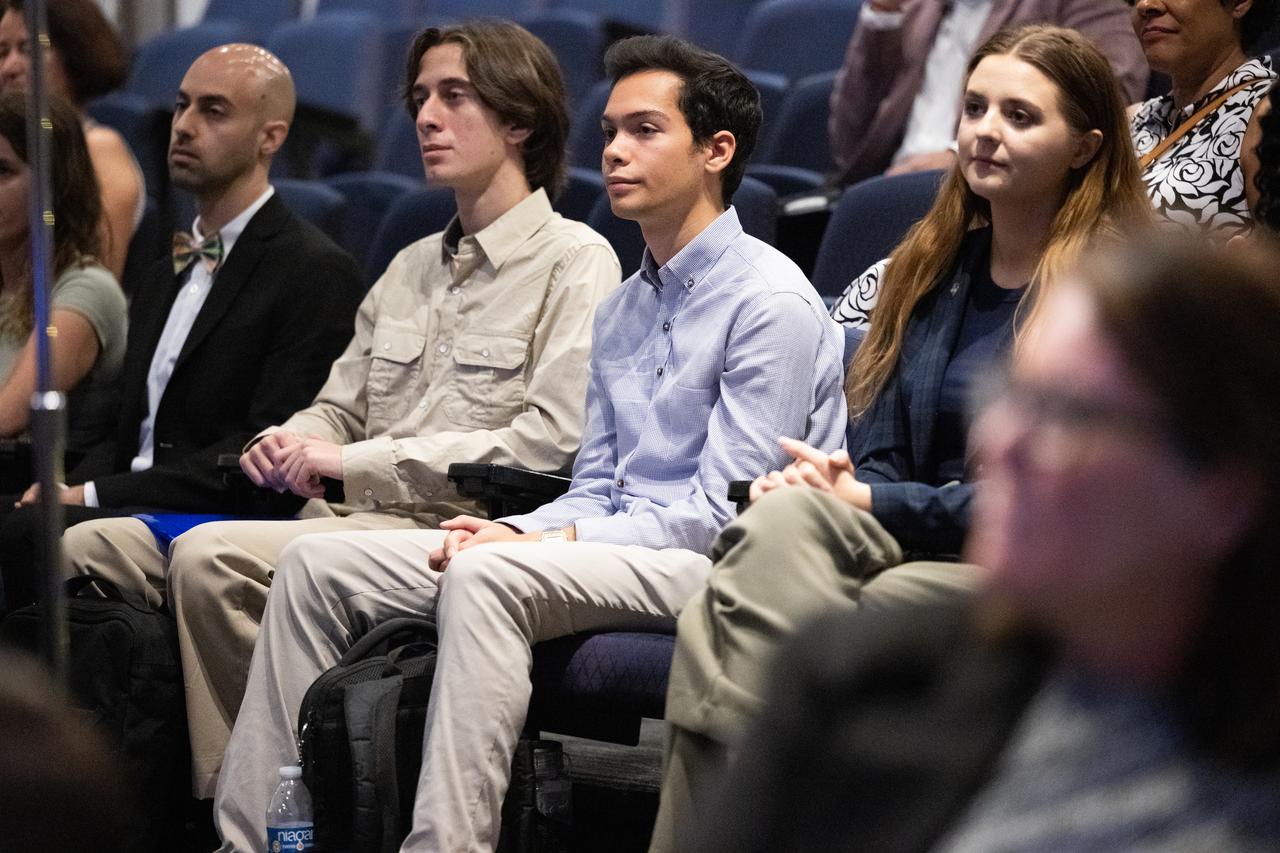
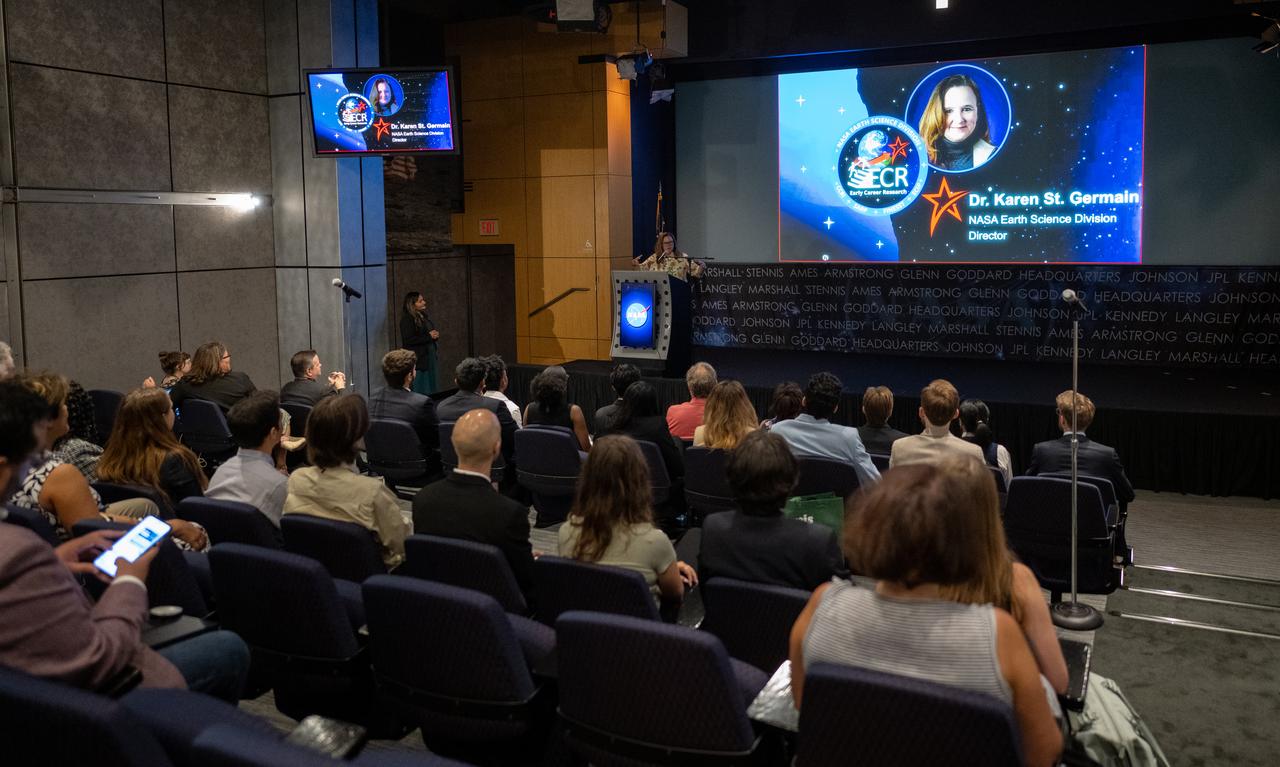
Members of the Climate Change Research Initiative (CCRI) cohort listen as Karen St. Germain, director of the Earth Science Division of NASA’s Science Mission Directorate speaks, Wednesday, Aug. 7, 2024, at the Mary W. Jackson NASA Headquarters building in Washington, DC. The Earth Science Division’s Early Career Research Program’s Climate Change Research Initiative (CCRI) is a year-long STEM engagement and experiential learning opportunity for educators and students from high school to graduate level. Photo Credit: (NASA/Joel Kowsky)
NASA Early Career Research Program - Climate Change Research Ini
Members of the Climate Change Research Initiative (CCRI) cohort listen as Karen St. Germain, director of the Earth Science Division of NASA’s Science Mission Directorate speaks, Wednesday, Aug. 7, 2024, at the Mary W. Jackson NASA Headquarters building in Washington, DC. The Earth Science Division’s Early Career Research Program’s Climate Change Research Initiative (CCRI) is a year-long STEM engagement and experiential learning opportunity for educators and students from high school to graduate level. Photo Credit: (NASA/Joel Kowsky)
NASA Early Career Research Program - Climate Change Research Ini
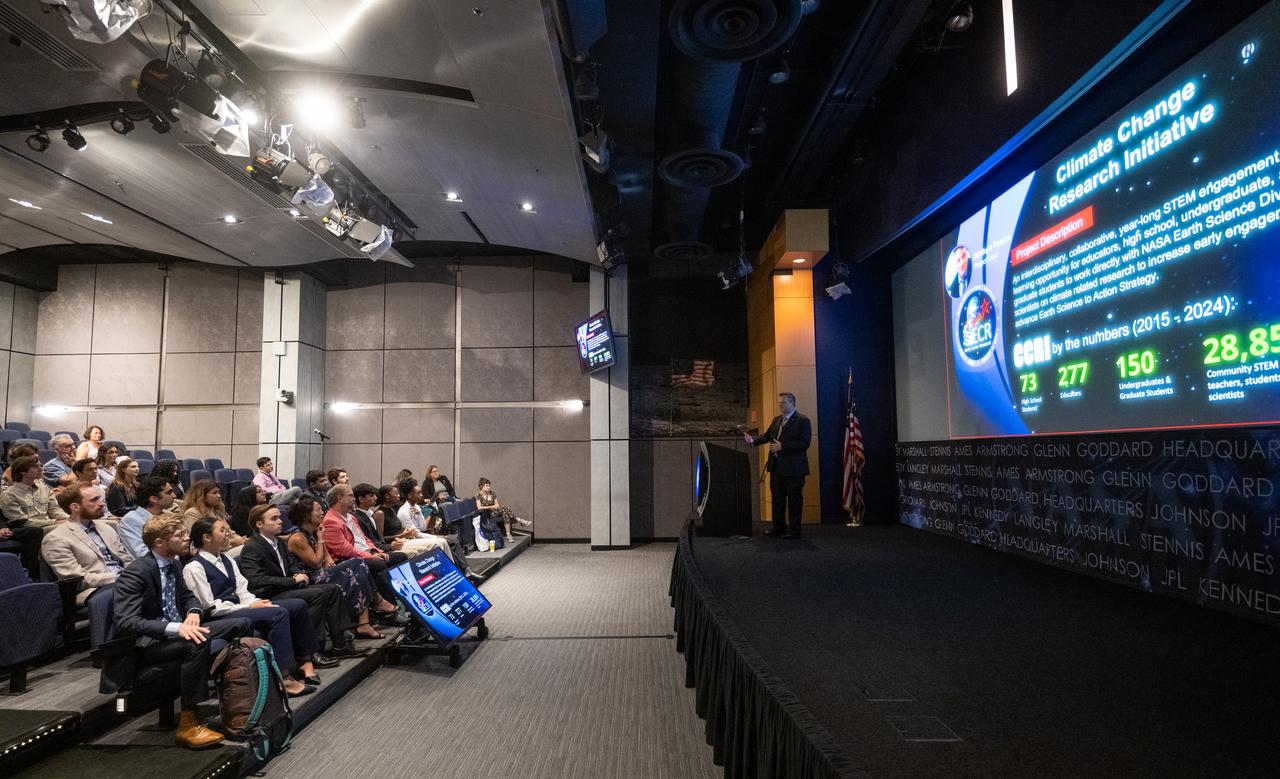
Matthew Pearce, education officer at NASA’s Goddard Institute for Space Studies and project lead for the Climate Change Research Initiative (CCRI), speaks with the CCRI cohort, Wednesday, Aug. 7, 2024, at the Mary W. Jackson NASA Headquarters building in Washington, DC. The Earth Science Division’s Early Career Research Program’s Climate Change Research Initiative (CCRI) is a year-long STEM engagement and experiential learning opportunity for educators and students from high school to graduate level. Photo Credit: (NASA/Joel Kowsky)
NASA Early Career Research Program - Climate Change Research Ini
Matthew Pearce, education officer at NASA’s Goddard Institute for Space Studies and project lead for the Climate Change Research Initiative (CCRI), speaks with the CCRI cohort, Wednesday, Aug. 7, 2024, at the Mary W. Jackson NASA Headquarters building in Washington, DC. The Earth Science Division’s Early Career Research Program’s Climate Change Research Initiative (CCRI) is a year-long STEM engagement and experiential learning opportunity for educators and students from high school to graduate level. Photo Credit: (NASA/Joel Kowsky)
NASA Early Career Research Program - Climate Change Research Ini
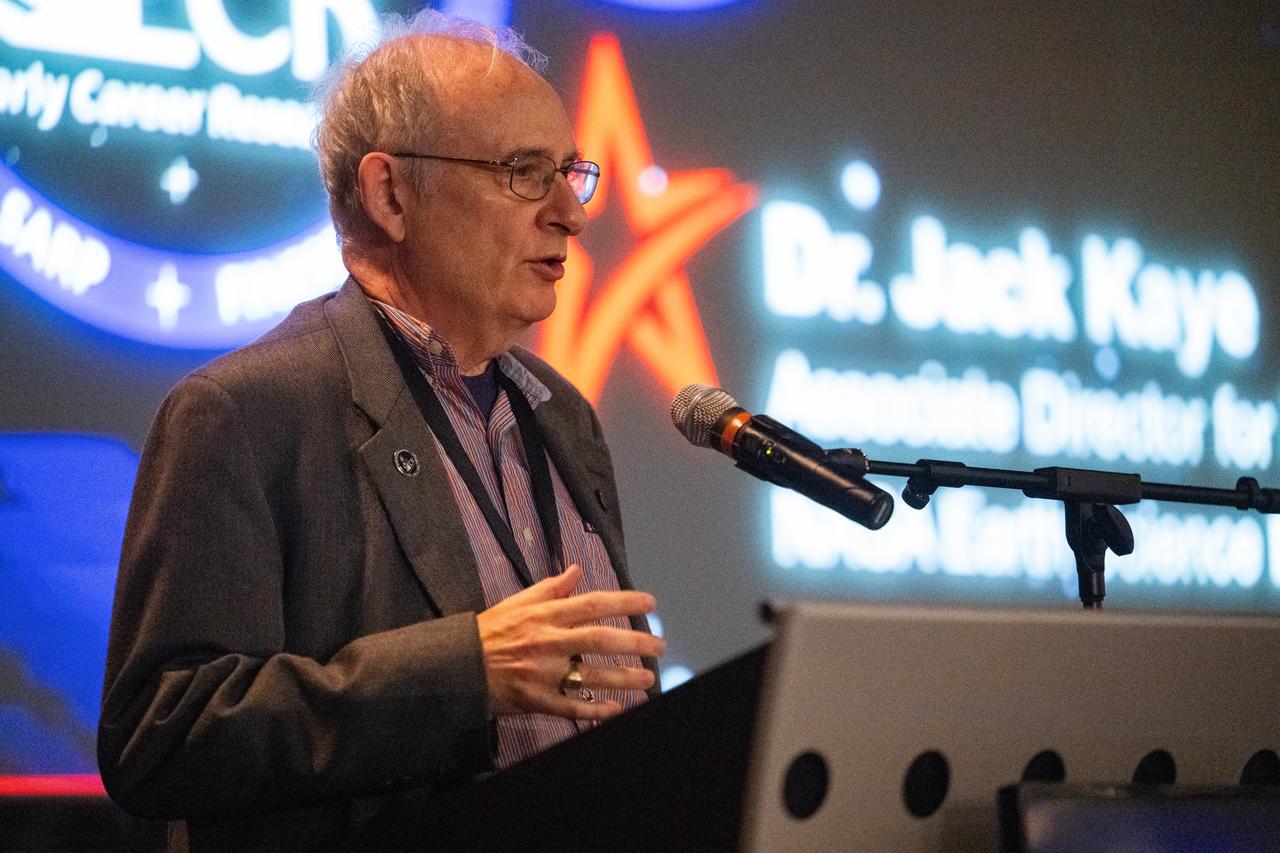
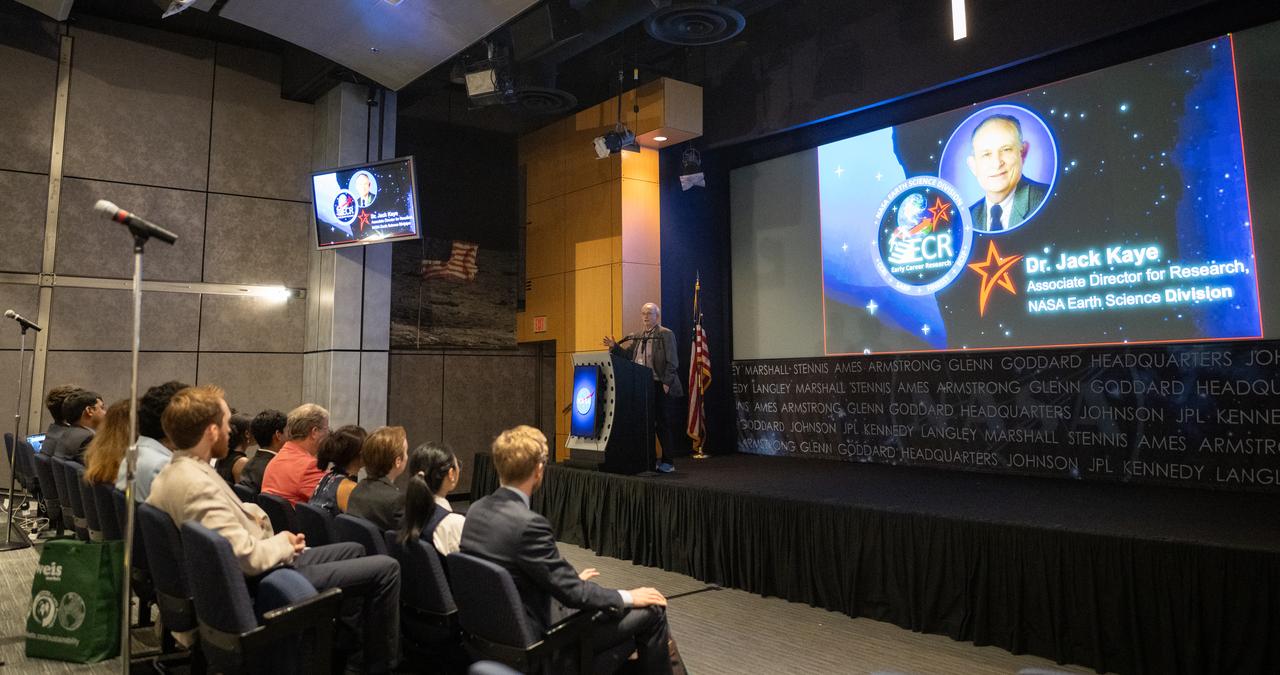
Jack Kaye, associate director for research in the Earth Science Division of NASA’s Science Mission Directorate, speaks with the Climate Change Research Initiative (CCRI) cohort, Wednesday, Aug. 7, 2024, at the Mary W. Jackson NASA Headquarters building in Washington, DC. The Earth Science Division’s Early Career Research Program’s Climate Change Research Initiative (CCRI) is a year-long STEM engagement and experiential learning opportunity for educators and students from high school to graduate level. Photo Credit: (NASA/Joel Kowsky)
NASA Early Career Research Program - Climate Change Research Ini
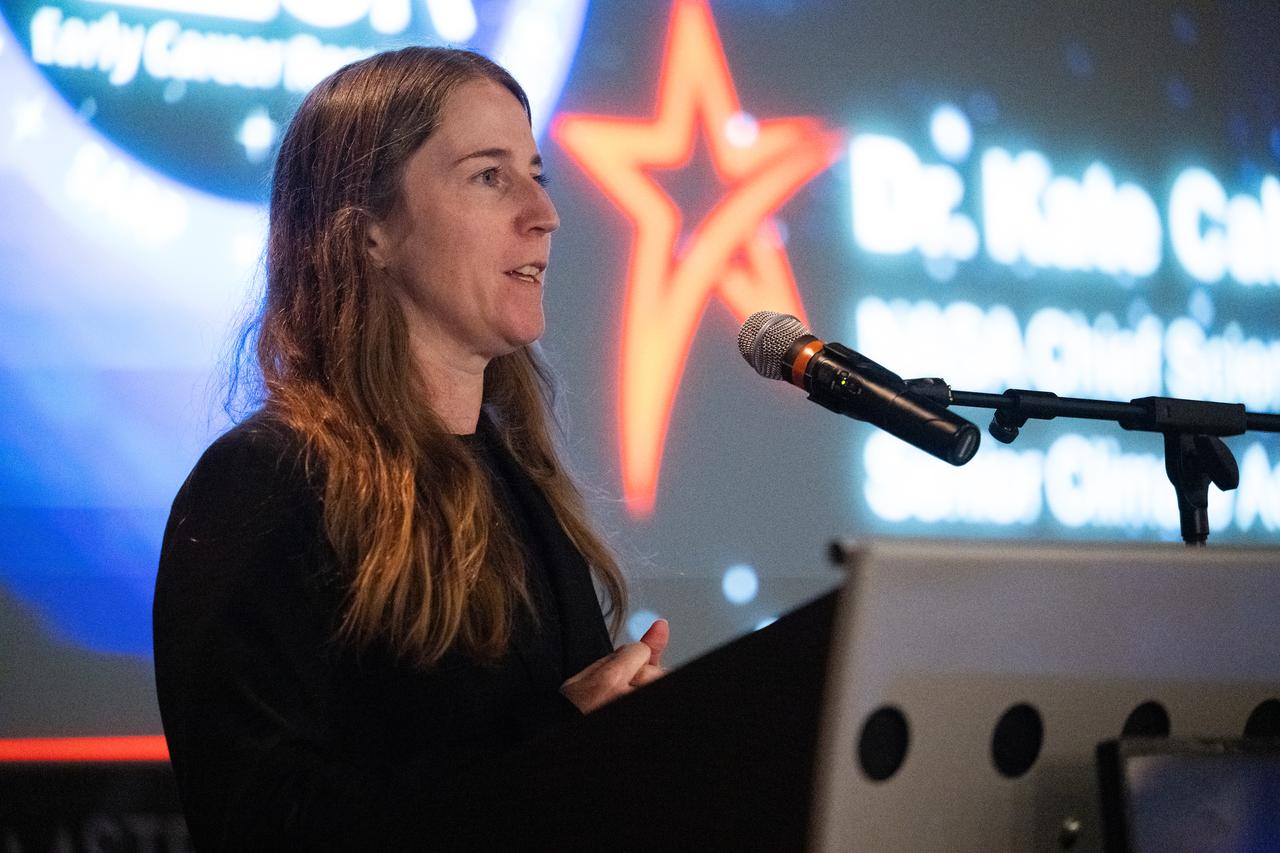
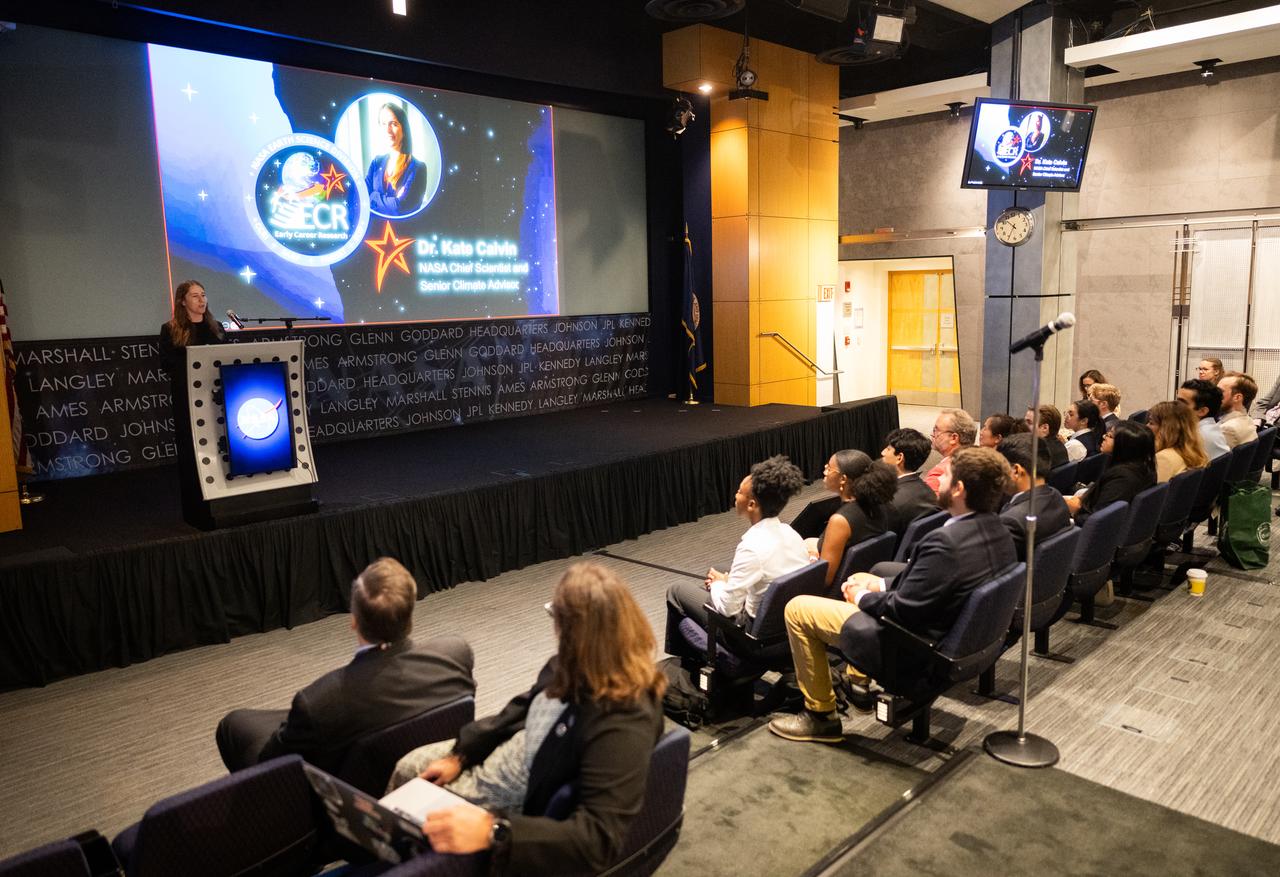
Kate Calvin, NASA’s Chief Scientist, speaks to the Climate Change Research Initiative (CCRI) cohort, Wednesday, Aug. 7, 2024, at the Mary W. Jackson NASA Headquarters building in Washington, DC. The Earth Science Division’s Early Career Research Program’s Climate Change Research Initiative (CCRI) is a year-long STEM engagement and experiential learning opportunity for educators and students from high school to graduate level. Photo Credit: (NASA/Joel Kowsky)
NASA Early Career Research Program - Climate Change Research Ini
Jack Kaye, associate director for research in the Earth Science Division of NASA’s Science Mission Directorate, speaks with the Climate Change Research Initiative (CCRI) cohort, Wednesday, Aug. 7, 2024, at the Mary W. Jackson NASA Headquarters building in Washington, DC. The Earth Science Division’s Early Career Research Program’s Climate Change Research Initiative (CCRI) is a year-long STEM engagement and experiential learning opportunity for educators and students from high school to graduate level. Photo Credit: (NASA/Joel Kowsky)
NASA Early Career Research Program - Climate Change Research Ini
Kate Calvin, NASA’s Chief Scientist, speaks to the Climate Change Research Initiative (CCRI) cohort, Wednesday, Aug. 7, 2024, at the Mary W. Jackson NASA Headquarters building in Washington, DC. The Earth Science Division’s Early Career Research Program’s Climate Change Research Initiative (CCRI) is a year-long STEM engagement and experiential learning opportunity for educators and students from high school to graduate level. Photo Credit: (NASA/Joel Kowsky)
NASA Early Career Research Program - Climate Change Research Ini
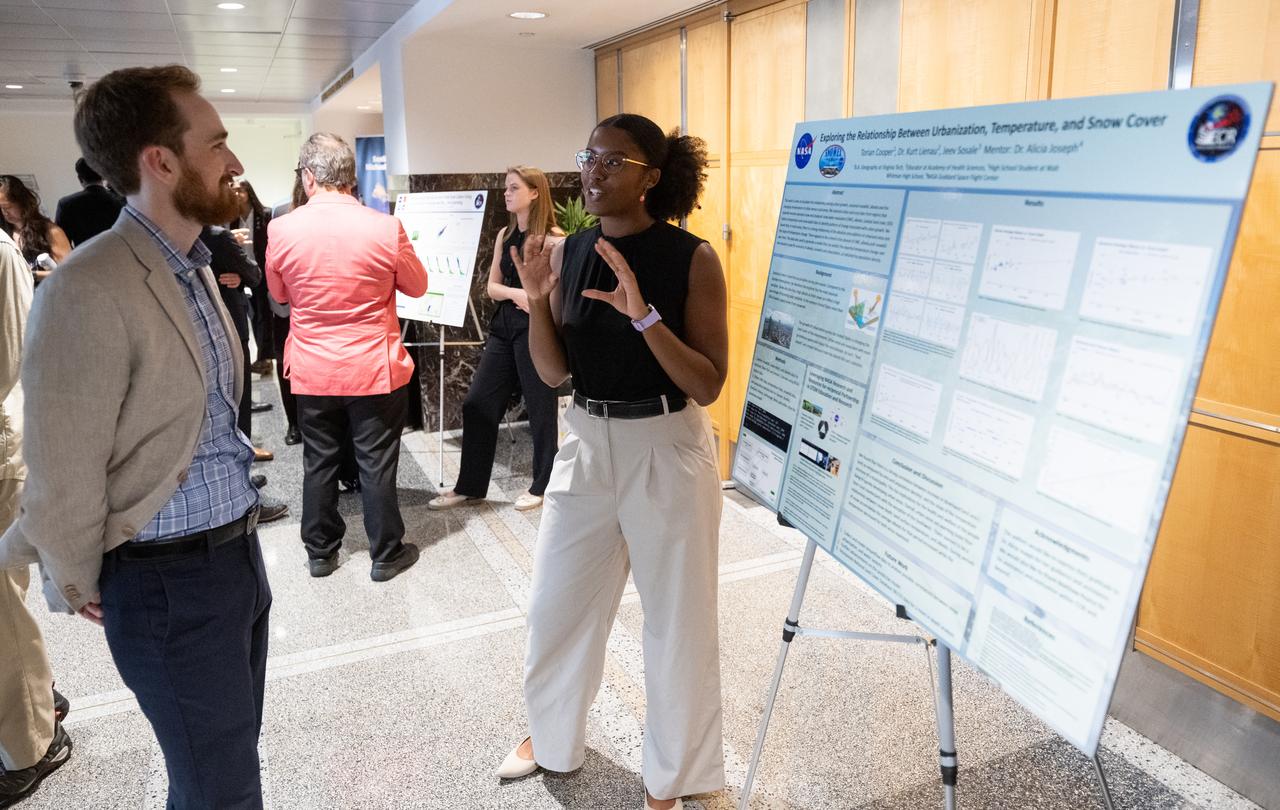
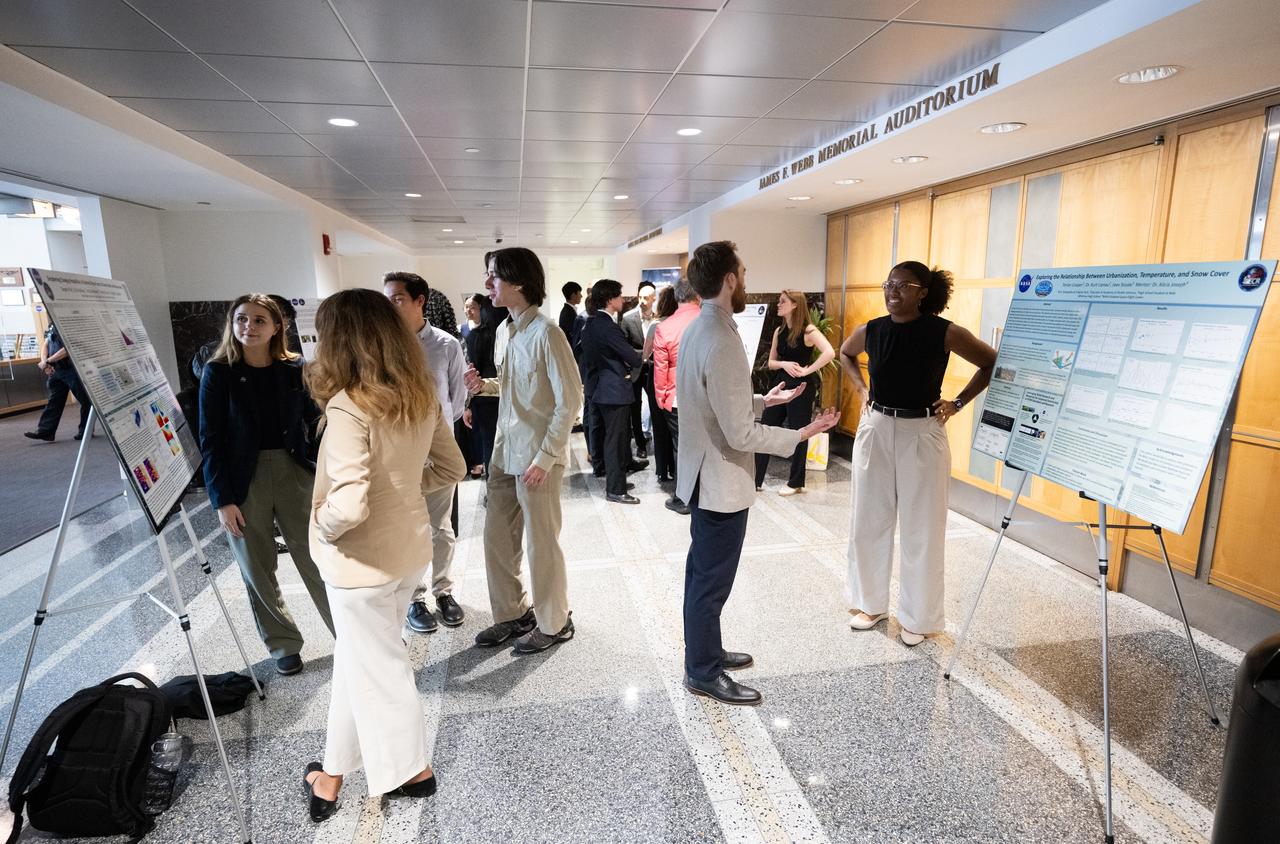
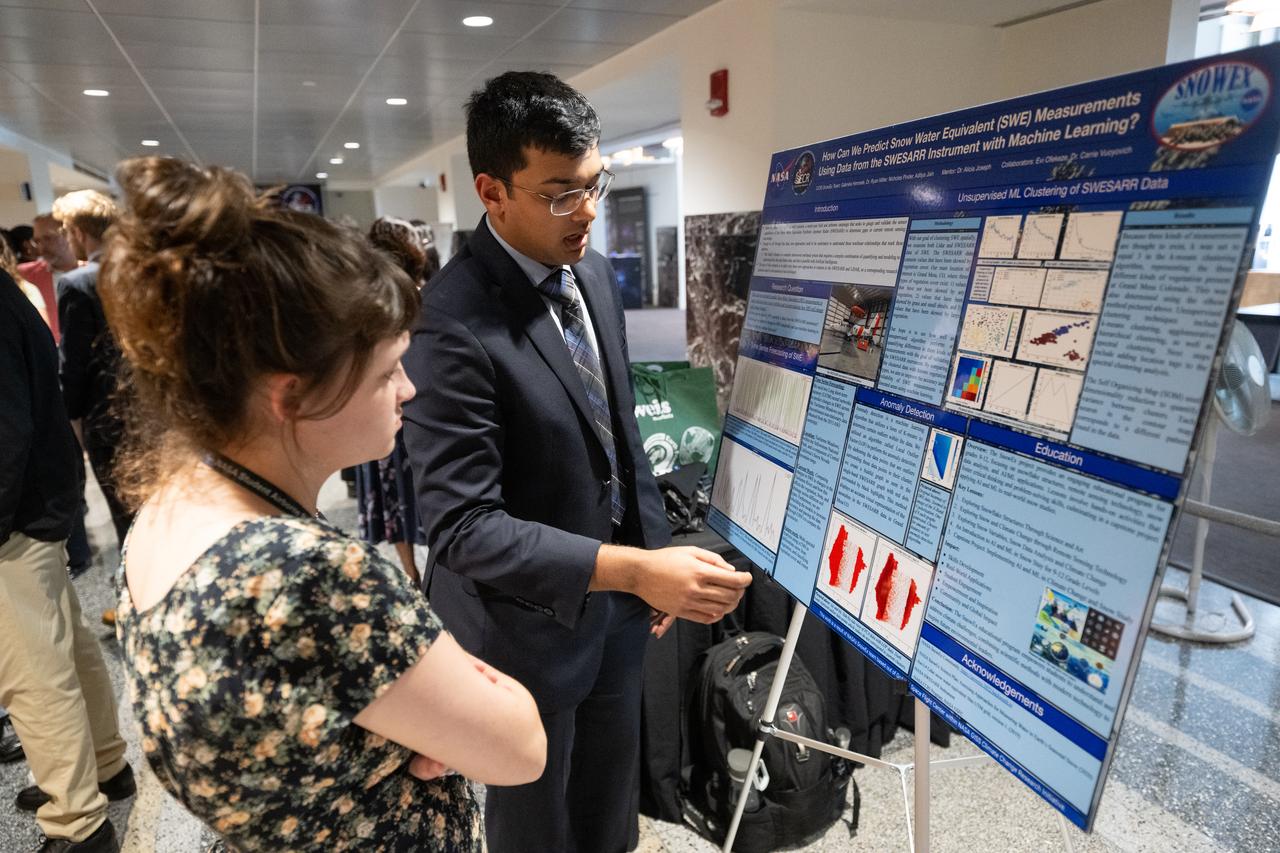
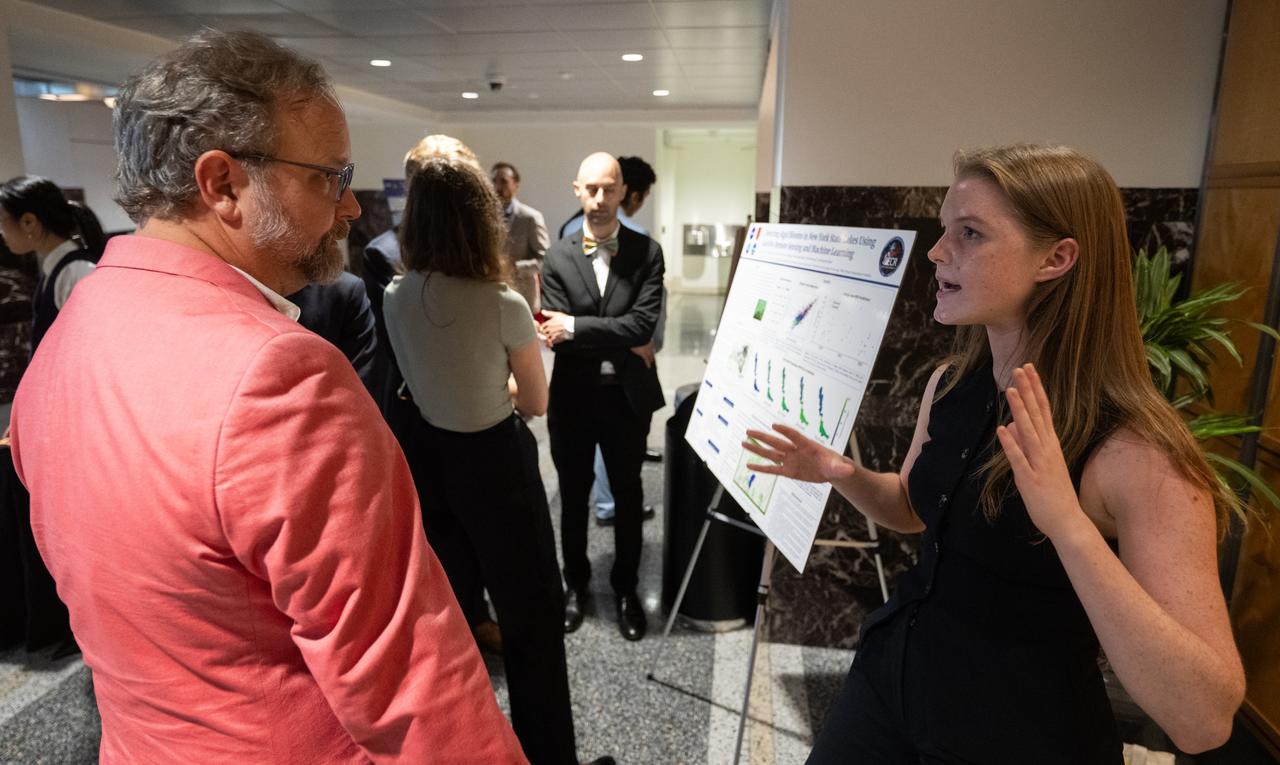
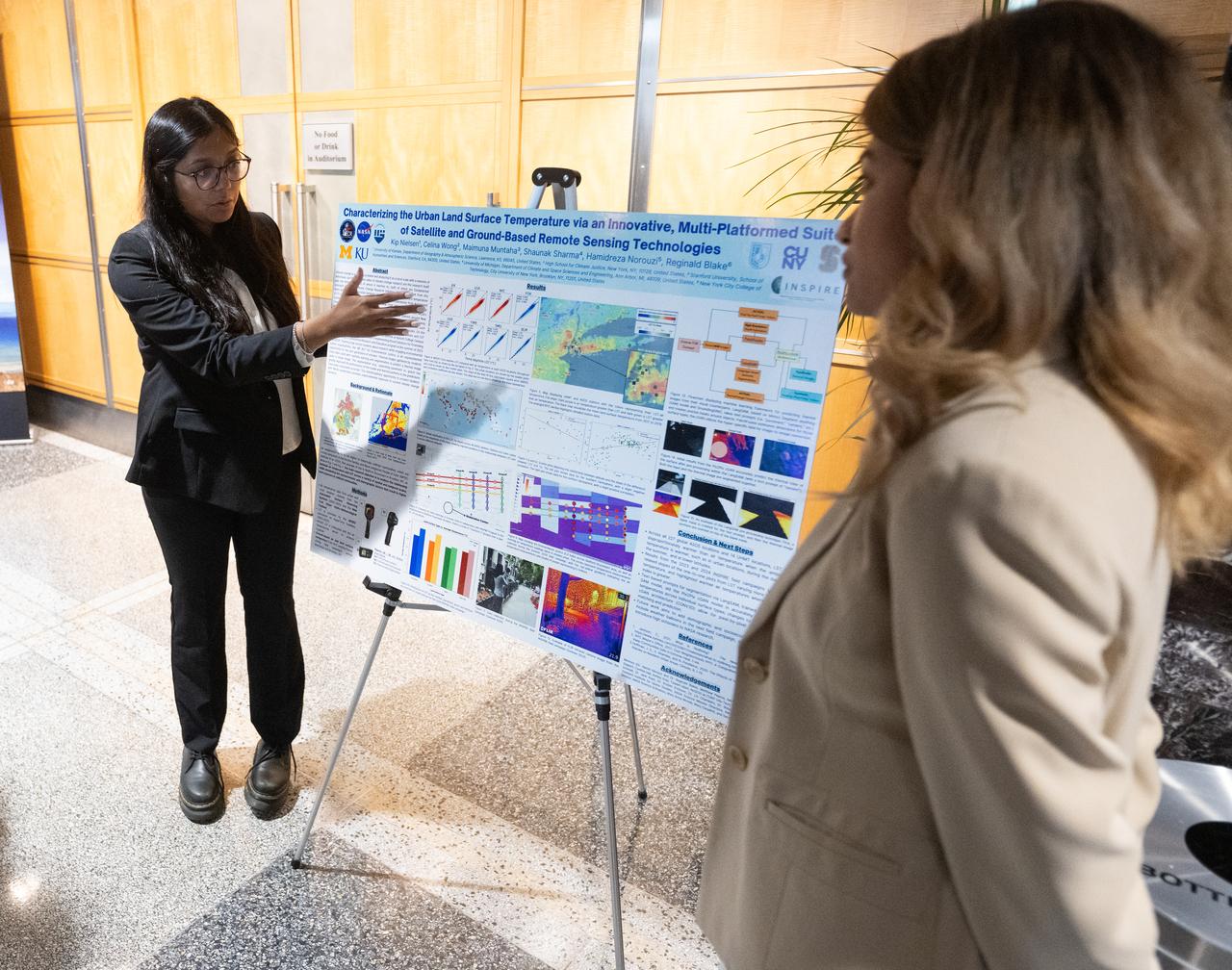
Members of the Climate Change Research Initiative (CCRI) cohort discuss their research during a poster session, Wednesday, Aug. 7, 2024, at the Mary W. Jackson NASA Headquarters building in Washington, DC. The Earth Science Division’s Early Career Research Program’s Climate Change Research Initiative (CCRI) is a year-long STEM engagement and experiential learning opportunity for educators and students from high school to graduate level. Photo Credit: (NASA/Joel Kowsky)
NASA Early Career Research Program - Climate Change Research Ini
Members of the Climate Change Research Initiative (CCRI) cohort discuss their research during a poster session, Wednesday, Aug. 7, 2024, at the Mary W. Jackson NASA Headquarters building in Washington, DC. The Earth Science Division’s Early Career Research Program’s Climate Change Research Initiative (CCRI) is a year-long STEM engagement and experiential learning opportunity for educators and students from high school to graduate level. Photo Credit: (NASA/Joel Kowsky)
NASA Early Career Research Program - Climate Change Research Ini
Members of the Climate Change Research Initiative (CCRI) cohort discuss their research during a poster session, Wednesday, Aug. 7, 2024, at the Mary W. Jackson NASA Headquarters building in Washington, DC. The Earth Science Division’s Early Career Research Program’s Climate Change Research Initiative (CCRI) is a year-long STEM engagement and experiential learning opportunity for educators and students from high school to graduate level. Photo Credit: (NASA/Joel Kowsky)
NASA Early Career Research Program - Climate Change Research Ini
Members of the Climate Change Research Initiative (CCRI) cohort discuss their research during a poster session, Wednesday, Aug. 7, 2024, at the Mary W. Jackson NASA Headquarters building in Washington, DC. The Earth Science Division’s Early Career Research Program’s Climate Change Research Initiative (CCRI) is a year-long STEM engagement and experiential learning opportunity for educators and students from high school to graduate level. Photo Credit: (NASA/Joel Kowsky)
NASA Early Career Research Program - Climate Change Research Ini
Members of the Climate Change Research Initiative (CCRI) cohort discuss their research during a poster session, Wednesday, Aug. 7, 2024, at the Mary W. Jackson NASA Headquarters building in Washington, DC. The Earth Science Division’s Early Career Research Program’s Climate Change Research Initiative (CCRI) is a year-long STEM engagement and experiential learning opportunity for educators and students from high school to graduate level. Photo Credit: (NASA/Joel Kowsky)
NASA Early Career Research Program - Climate Change Research Ini
Members of the Climate Change Research Initiative (CCRI) cohort discuss their research during a poster session, Wednesday, Aug. 7, 2024, at the Mary W. Jackson NASA Headquarters building in Washington, DC. The Earth Science Division’s Early Career Research Program’s Climate Change Research Initiative (CCRI) is a year-long STEM engagement and experiential learning opportunity for educators and students from high school to graduate level. Photo Credit: (NASA/Joel Kowsky)
NASA Early Career Research Program - Climate Change Research Ini
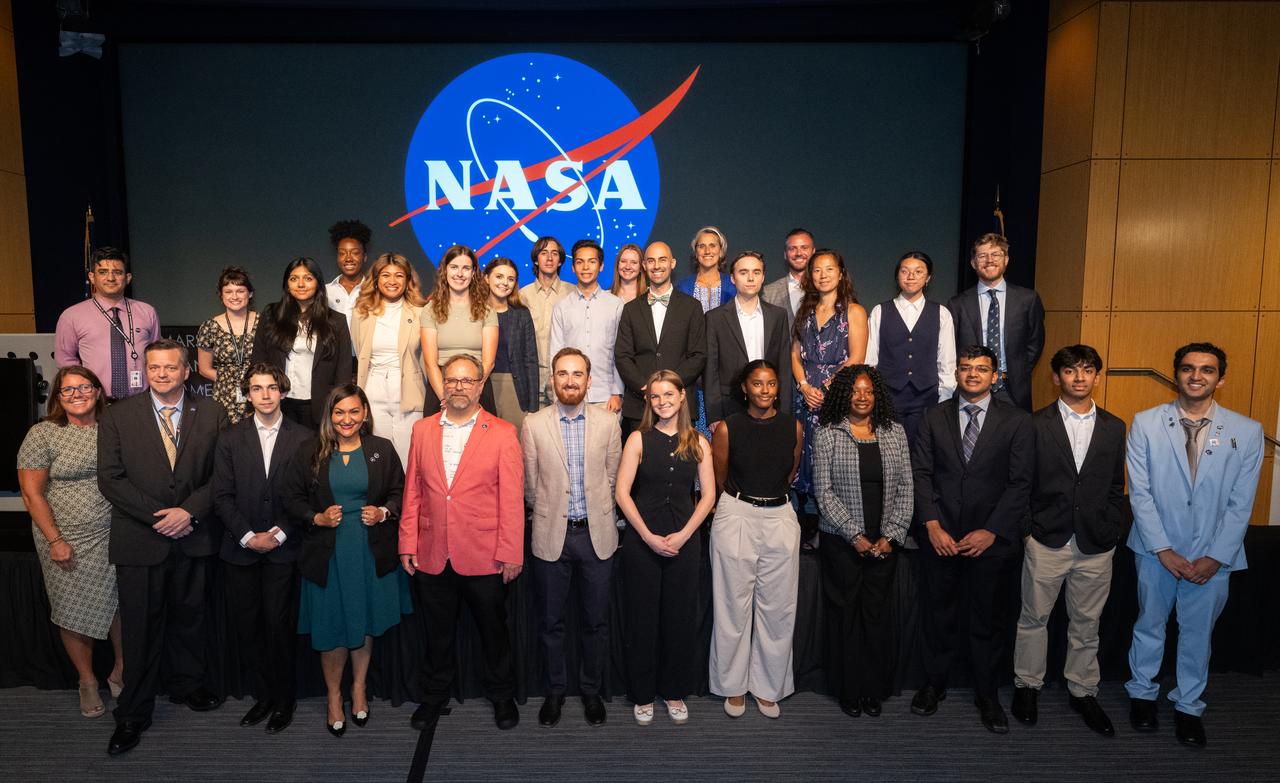
The Climate Change Research Initiative (CCRI) cohort poses for a group photo, Wednesday, Aug. 7, 2024, at the Mary W. Jackson NASA Headquarters building in Washington, DC. The Earth Science Division’s Early Career Research Program’s Climate Change Research Initiative (CCRI) is a year-long STEM engagement and experiential learning opportunity for educators and students from high school to graduate level. Photo Credit: (NASA/Joel Kowsky)
NASA Early Career Research Program - Climate Change Research Ini
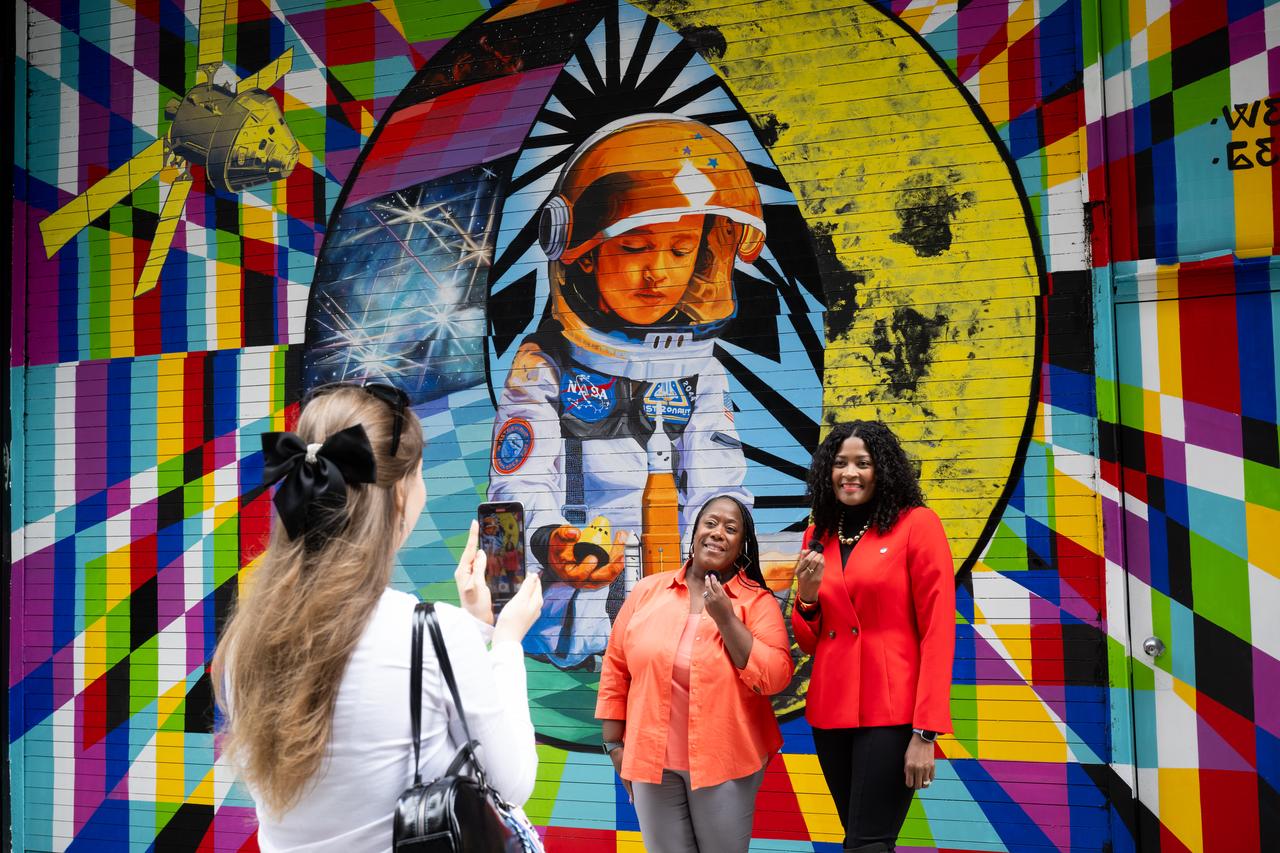
Michelle Jones, NASA’s deputy associate administrator for communications, left, and Aya Collins, director of the engagement division of NASA’s Office of Communications, record a video for social media in front of the mural “To the Moon, and Back” by the New York-based artist team Geraluz and WERC that was created as part of the reimagined NASA Art Program, Tuesday, September 24, 2024, in New York City’s Hudson Square neighborhood. For the inaugural project of the reestablished NASA Art Program the agency collaborated with the Hudson Square Business Improvement District on an open call for New York-based artists to design and install a large-scale mural inspired by NASA’s work and missions. Photo Credit: (NASA/Joel Kowsky)
NASA Reestablishes Historical Art Program with Space-Themed Mura
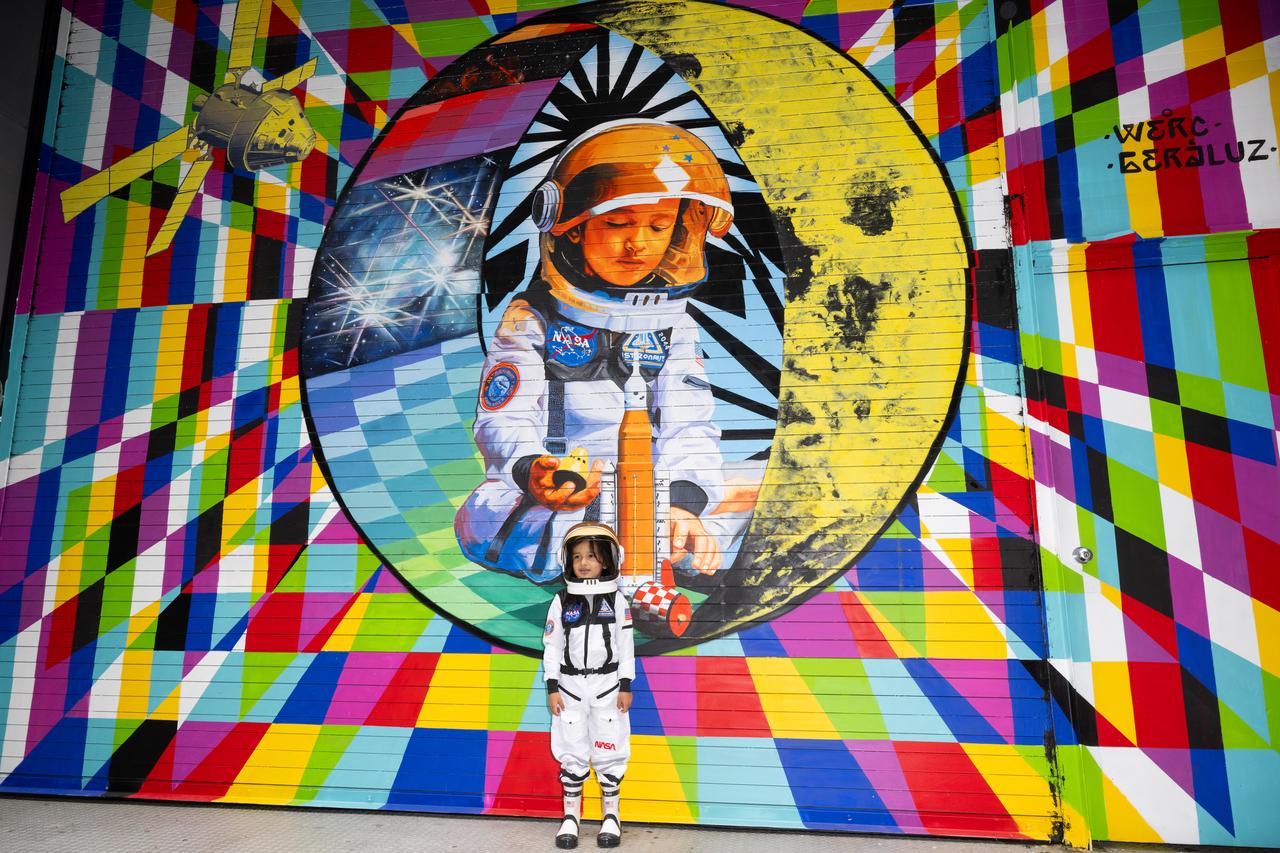
Amaru Alvarez, 5, the son of the artist team Geraluz and WERC and model for the mural, poses for picture with the mural “To the Moon, and Back” by the New York-based artist team that was created as part of the reimagined NASA Art Program, Tuesday, September 24, 2024, at 350 Hudson Street in New York City. The murals use geometrical patterns to invite deeper reflection on the exploration, creativity, and connection with the cosmos.  Photo Credit: (NASA/Joel Kowsky)
NASA Reestablishes Historical Art Program with Space-Themed Mura
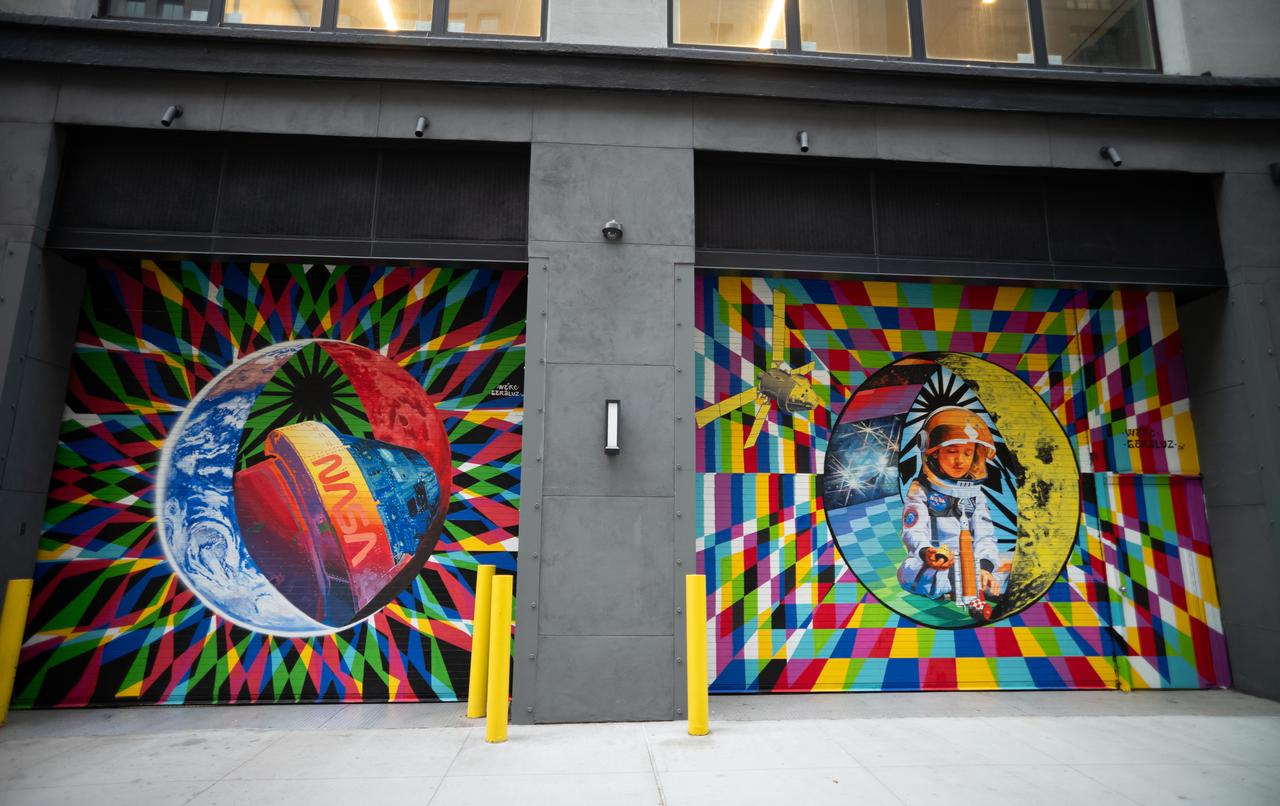
The inaugural murals for the relaunched NASA Art Program appear side-by-side at 350 Hudson Street, Tuesday, Sept. 24, 2024, in New York City. The murals, titled “To the Moon, and Back,” were created by New York-based artist team Geraluz and WERC and use geometrical patterns to invite deeper reflection on the exploration, creativity, and connection with the cosmos. Photo Credit: (NASA/Joel Kowsky)
NASA Reestablishes Historical Art Program with Space-Themed Mura
The inaugural murals for the relaunched NASA Art Program appear side-by-side at 350 Hudson Street, Monday, Sept. 23, 2024, in New York City. The murals, titled “To the Moon, and Back,” were created by New York-based artist team Geraluz and WERC and use geometrical patterns to invite deeper reflection on the exploration, creativity, and connection with the cosmos. Photo Credit: (NASA/Joel Kowsky)
NASA Reestablishes Historical Art Program with Space-Themed Mura
Karen St. Germain, director of the Earth Science Division of NASA’s Science Mission Directorate, speaks with the Climate Change Research Initiative (CCRI) cohort, Wednesday, Aug. 7, 2024, at the Mary W. Jackson NASA Headquarters building in Washington, DC. The Earth Science Division’s Early Career Research Program’s Climate Change Research Initiative (CCRI) is a year-long STEM engagement and experiential learning opportunity for educators and students from high school to graduate level.  Photo Credit: (NASA/Joel Kowsky)
NASA Early Career Research Program - Climate Change Research Ini
Karen St. Germain, director of the Earth Science Division of NASA’s Science Mission Directorate, speaks with the Climate Change Research Initiative (CCRI) cohort, Wednesday, Aug. 7, 2024, at the Mary W. Jackson NASA Headquarters building in Washington, DC. The Earth Science Division’s Early Career Research Program’s Climate Change Research Initiative (CCRI) is a year-long STEM engagement and experiential learning opportunity for educators and students from high school to graduate level.  Photo Credit: (NASA/Joel Kowsky)
NASA Early Career Research Program - Climate Change Research Ini
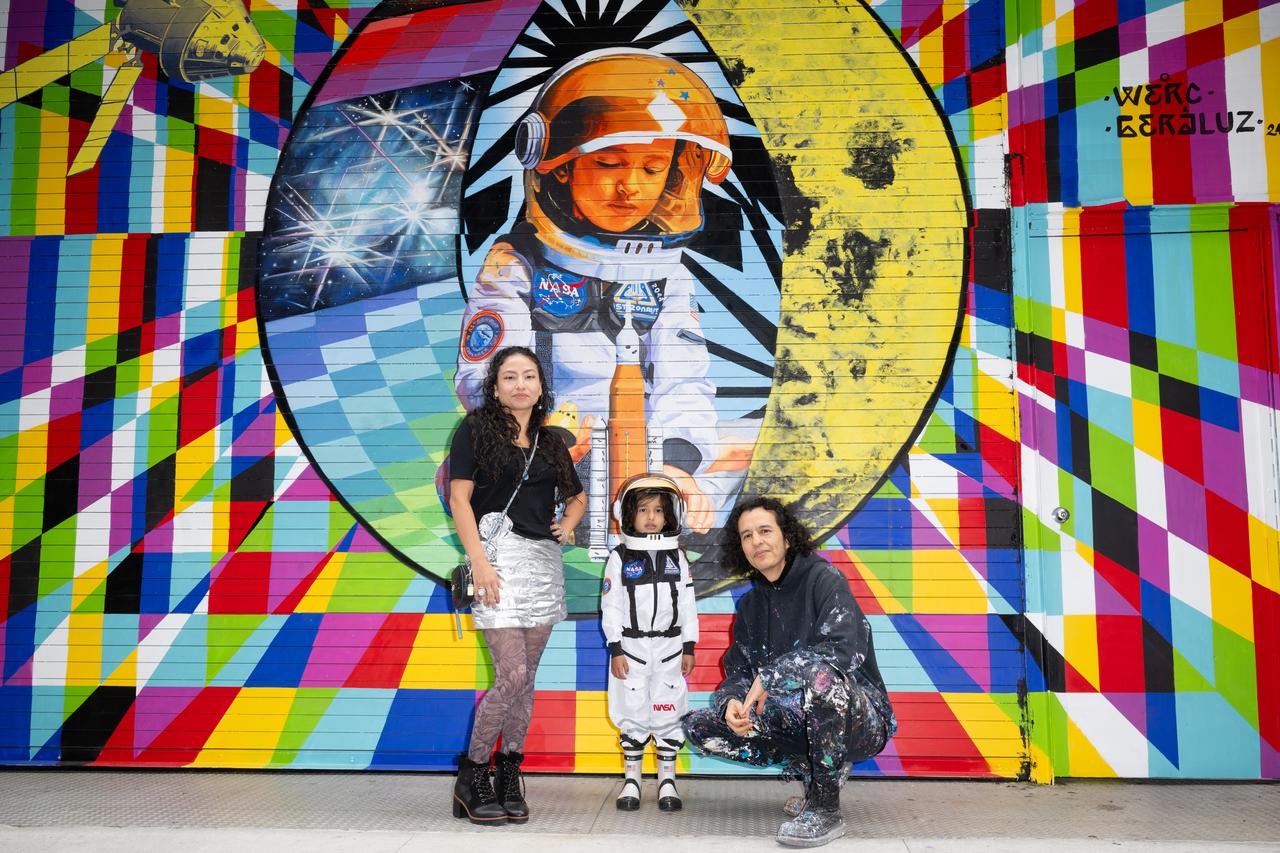
The New York-based artist team Geraluz, left, and WERC, right, and their son Amaru Alvarez, 5, pose for picture with the mural “To the Moon, and Back” by the artist team that was created as part of the reimagined NASA Art Program, Tuesday, September 24, 2024, at 350 Hudson Street in New York City. The murals use geometrical patterns to invite deeper reflection on the exploration, creativity, and connection with the cosmos. Photo Credit: (NASA/Joel Kowsky)
NASA Reestablishes Historical Art Program with Space-Themed Mura
The New York-based artist team Geraluz, left, and WERC, right, and their son Amaru Alvarez, 5, pose for picture with the mural “To the Moon, and Back” by the artist team that was created as part of the reimagined NASA Art Program, Tuesday, September 24, 2024, at 350 Hudson Street in New York City. The murals use geometrical patterns to invite deeper reflection on the exploration, creativity, and connection with the cosmos. Photo Credit: (NASA/Joel Kowsky)
NASA Reestablishes Historical Art Program with Space-Themed Mural
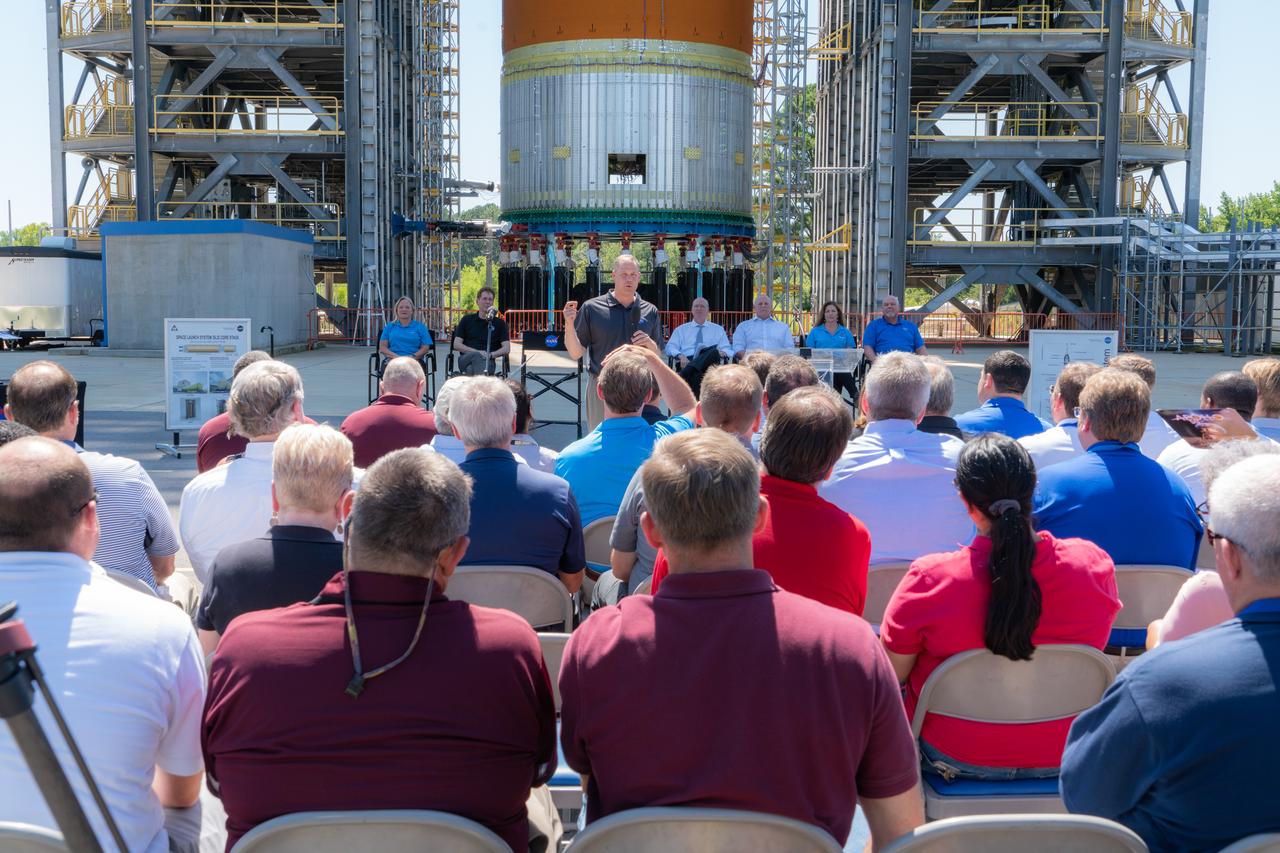
On Aug. 16, 2019, NASA Administrator Jim Bridenstine announced the agency’s Marshall Space Flight Center in Huntsville, Alabama, will lead the Human Landing System Program. Bridenstine was joined by Representatives Mo Brooks and Robert Aderholt of Alabama and Representative Scott DesJarlais of Tennessee. NASA will rapidly develop the lander for safely carrying the first woman and the next man to the Moon’s surface in 2024. The Artemis missions will start with launch by the world’s most powerful rocket, NASA’s Space Launch System, also managed by Marshall. Bridenstine made the announcement in front of the 149-foot-tall SLS liquid hydrogen structural test article, currently being tested to help ensure the structure can safely launch astronauts on the Artemis lunar missions. (NASA/Fred Deaton)  For more information: https://www.nasa.gov/artemis-1
NASA Marshall To Lead Artemis Program’s Human Lunar Lander Development
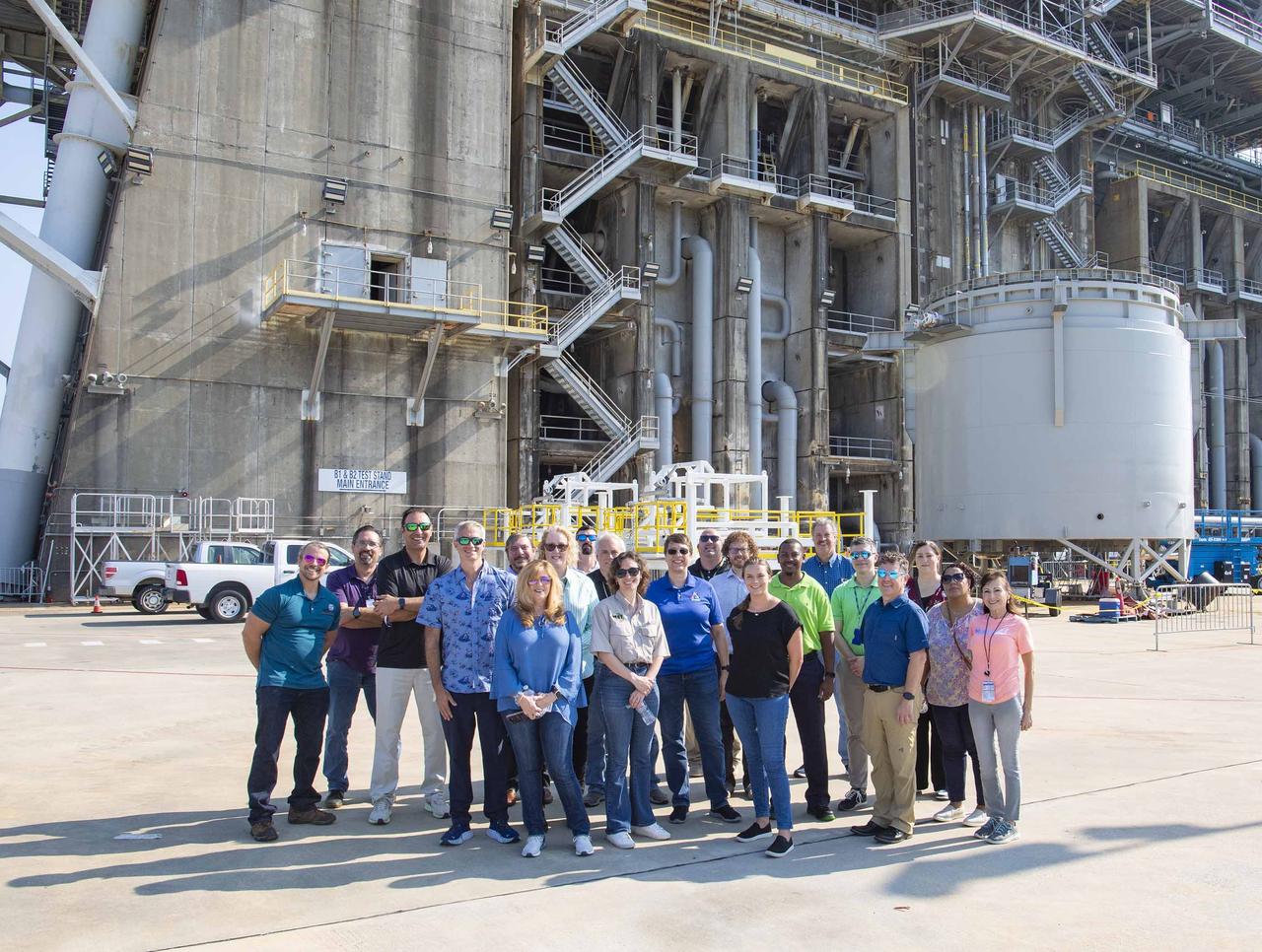
NASA and contractor representatives working with NASA’s Rocket Propulsion Test Program Office stand at the base of the Thad Cochran Test Stand during a tour of the test complex on Aug. 15 at NASA’s Stennis Space Center near Bay St. Louis, Mississippi. The program office hosted a Risk Workshop and Program Management Review meeting at NASA Stennis on Aug. 13-15. The representatives are from NASA Stennis; NASA’s Neil Armstrong Test Facility in Sandusky, Ohio; NASA’s Michoud Assembly Facility in New Orleans; NASA’s Marshall Space Flight Center in Huntsville, Alabama; NASA’s Wallops Flight Facility in Virginia; and NASA Headquarters in Washington. NASA Stennis is preparing the Thad Cochran Test Stand (B-2) to test the exploration upper stage, which will fly on future SLS (Space Launch System) missions as NASA continues its mission of exploring the secrets of the universe for the benefit of all. The upper stage is being built at NASA Michoud as a more powerful second stage to send the Orion spacecraft to deep space. It is expected to fly on the Artemis IV mission. Before that, it will be installed on the test stand at NASA Stennis to undergo a series of Green Run tests of its integrated systems to demonstrate it is ready to fly.
NASA’s Rocket Propulsion Test Program Office Visits NASA Stennis
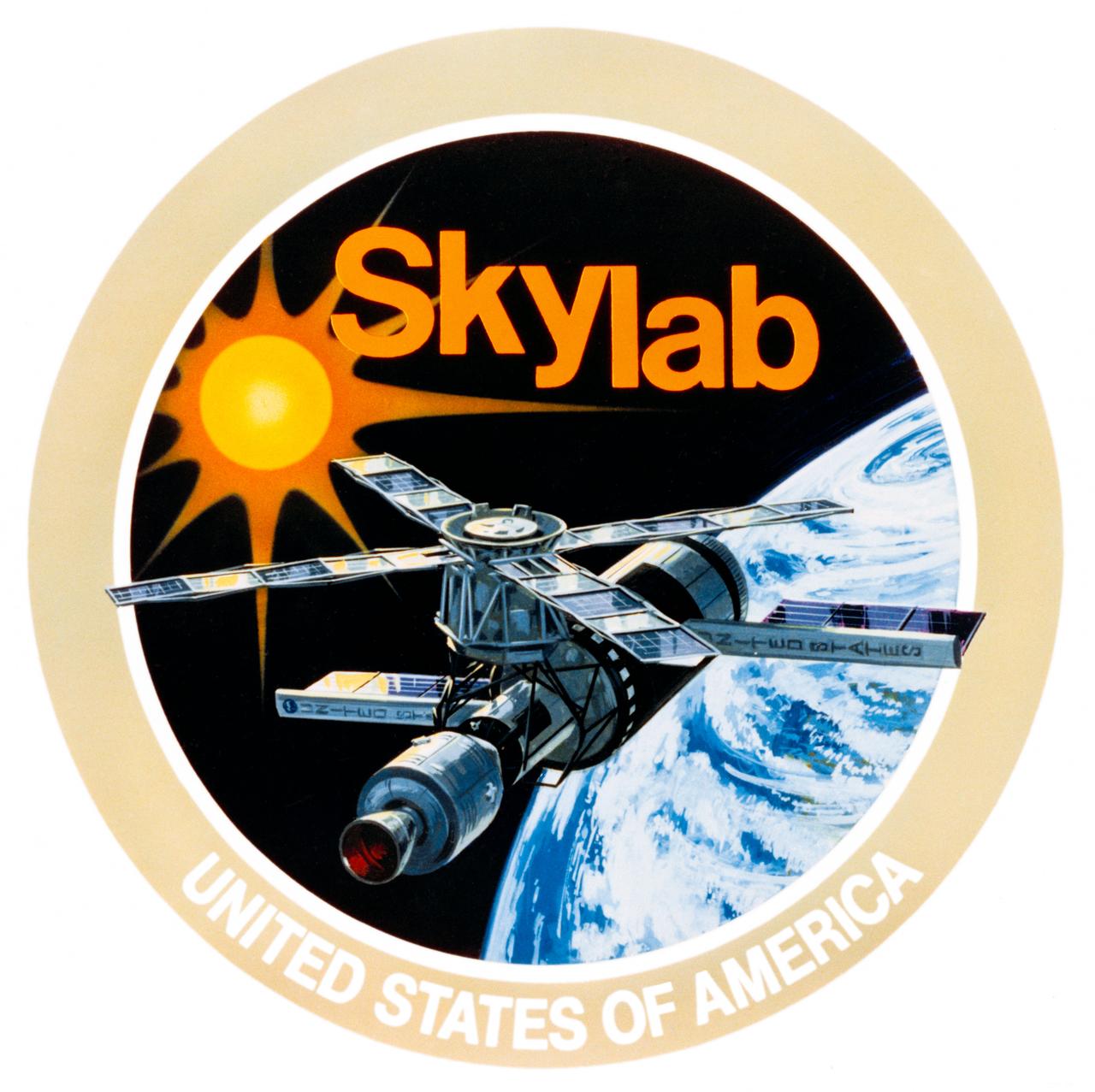
S73-23952 (May 1973) --- This is the official emblem for the National Aeronautics and Space Administration's (NASA) Skylab Program. The emblem depicts the United States Skylab space station cluster in Earth orbit with the sun in the background. Skylab will evaluate systems and techniques designed to gather information on Earth resources and environmental problems. Solar telescopes will increase man's knowledge of our sun and the multitude of solar influences on Earth environment. Medical experiments will increase knowledge of man himself and his relationship to his earthly environment and adaptability to spaceflight. Additionally, Skylab will experiment with industrial processes which may be enhanced by the unique weightless, vacuum environment of orbital spaceflight. The 100-ton laboratory complex Skylab space station is composed of the Command/Service Module (CSM), Orbital Workshop (OW), Apollo Telescope Mount (ATM), Multiple Docking Adapter (MDA), and Airlock Module (AM).     The NASA insignia design for Skylab is reserved for use by the astronauts and for other official use as the NASA Administrator may authorize. Public availability has been approved only in the form of illustrations by the various news media. When and if there is any change in this policy, which we do not anticipate, it will be publicly announced.  Photo credit: NASA
Emblem - NASA Skylab (SL) Program
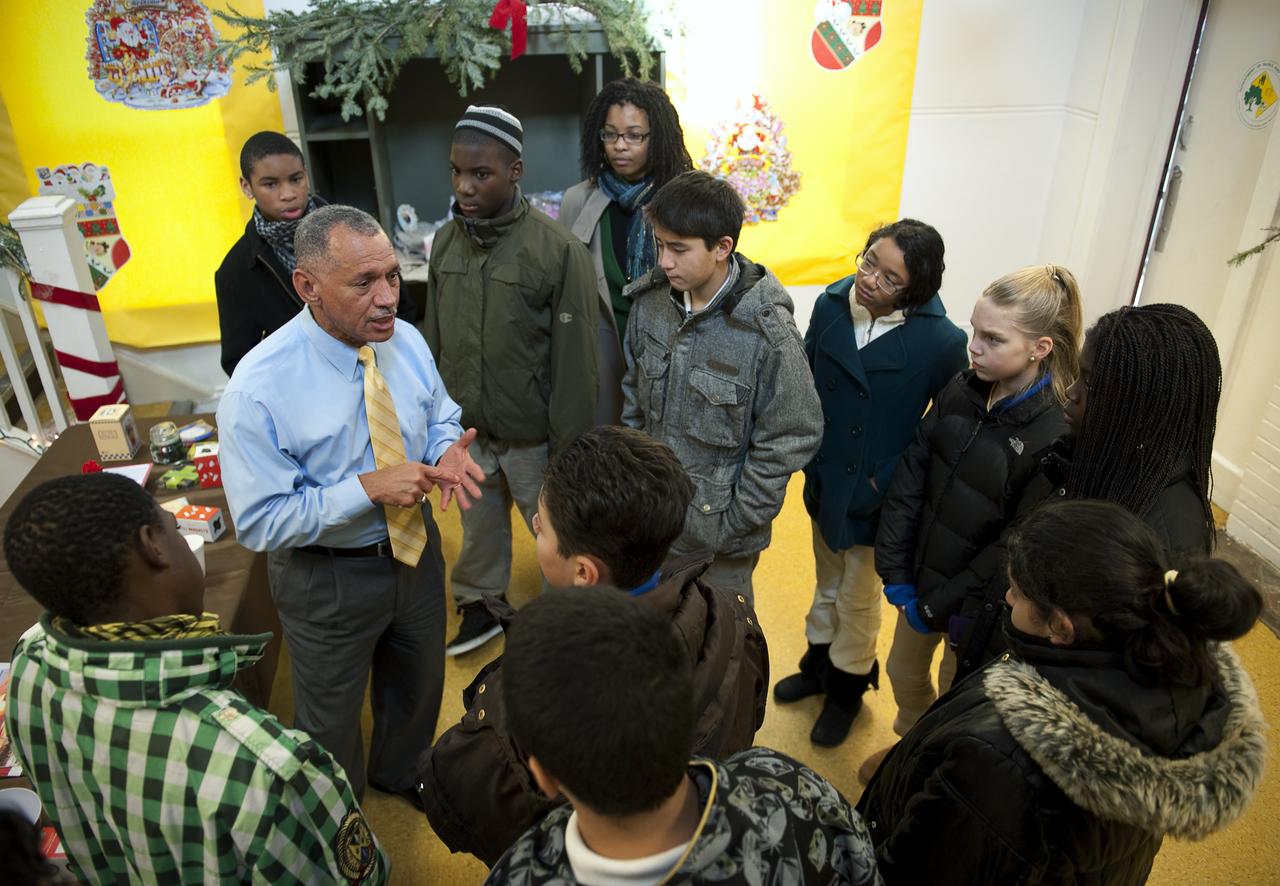
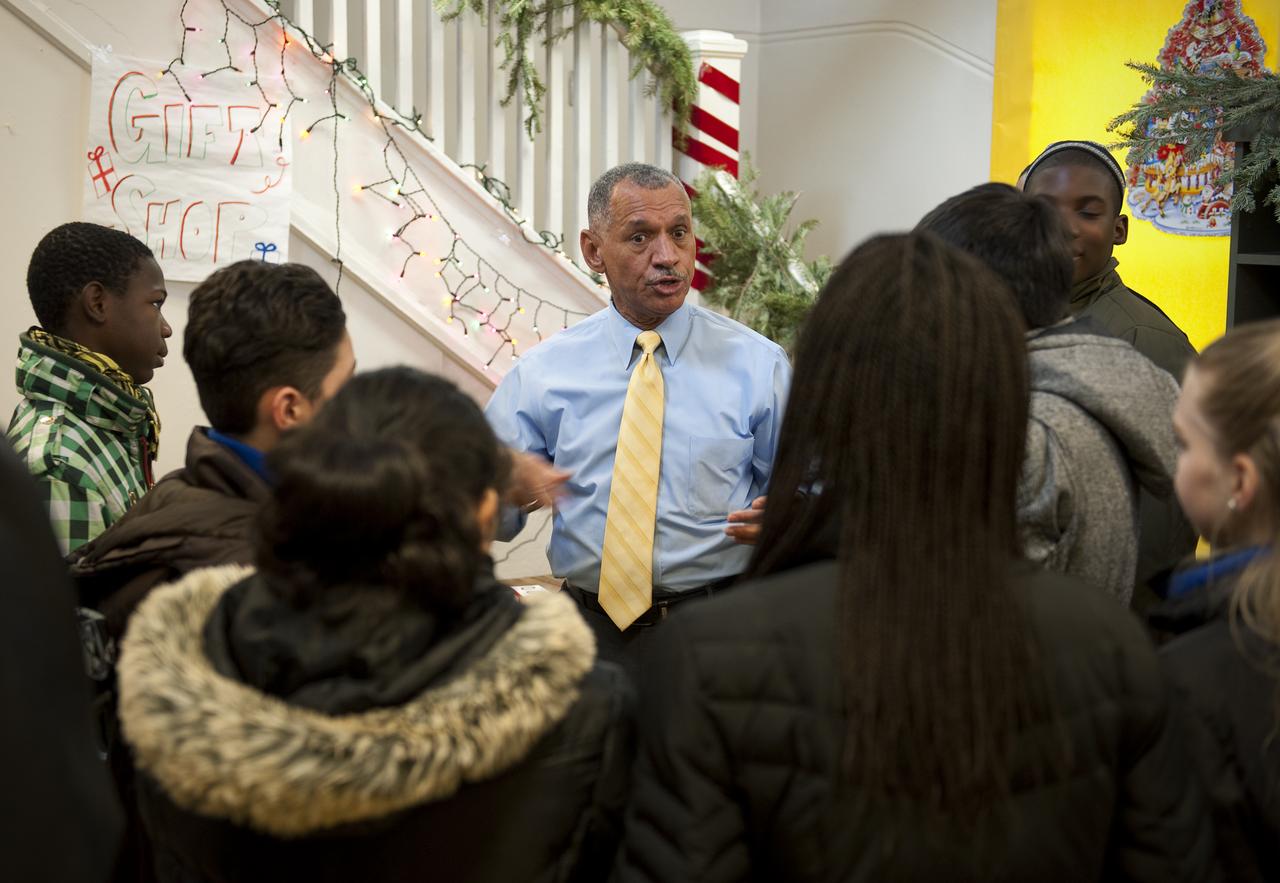
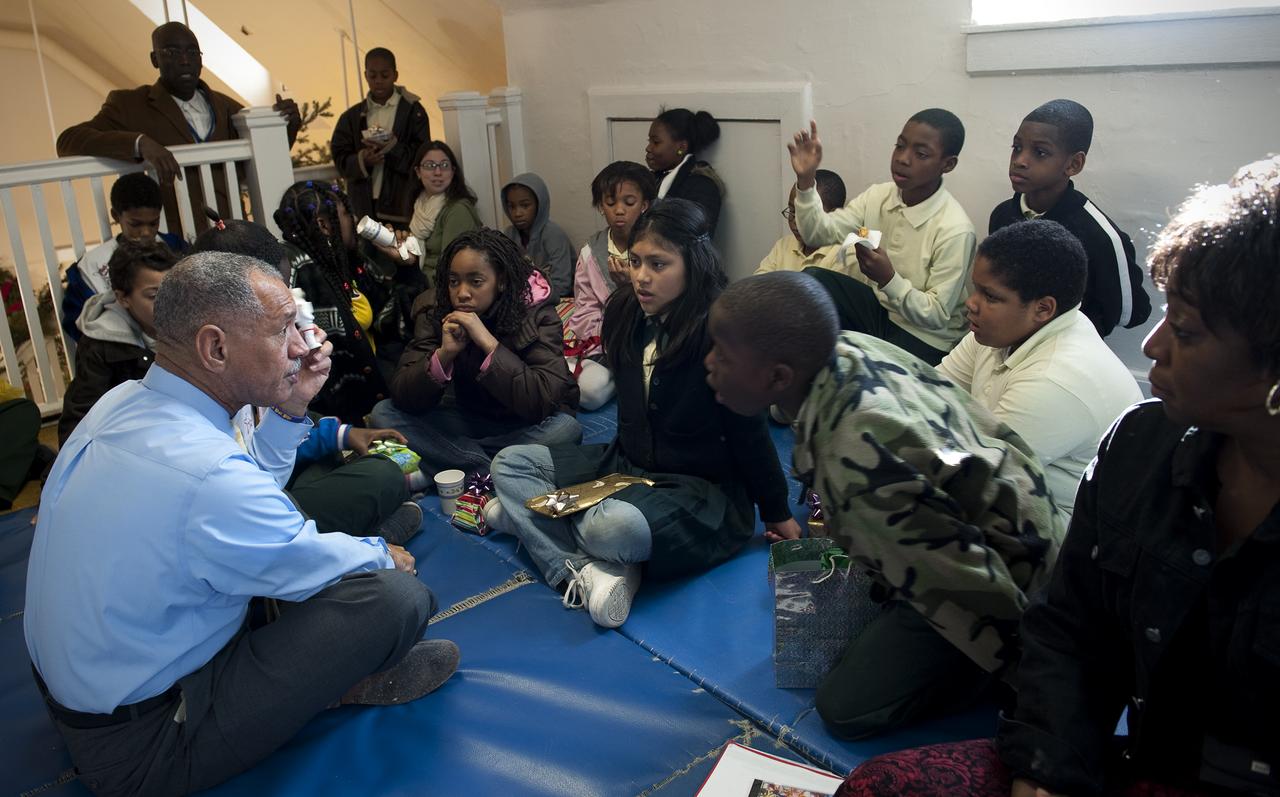
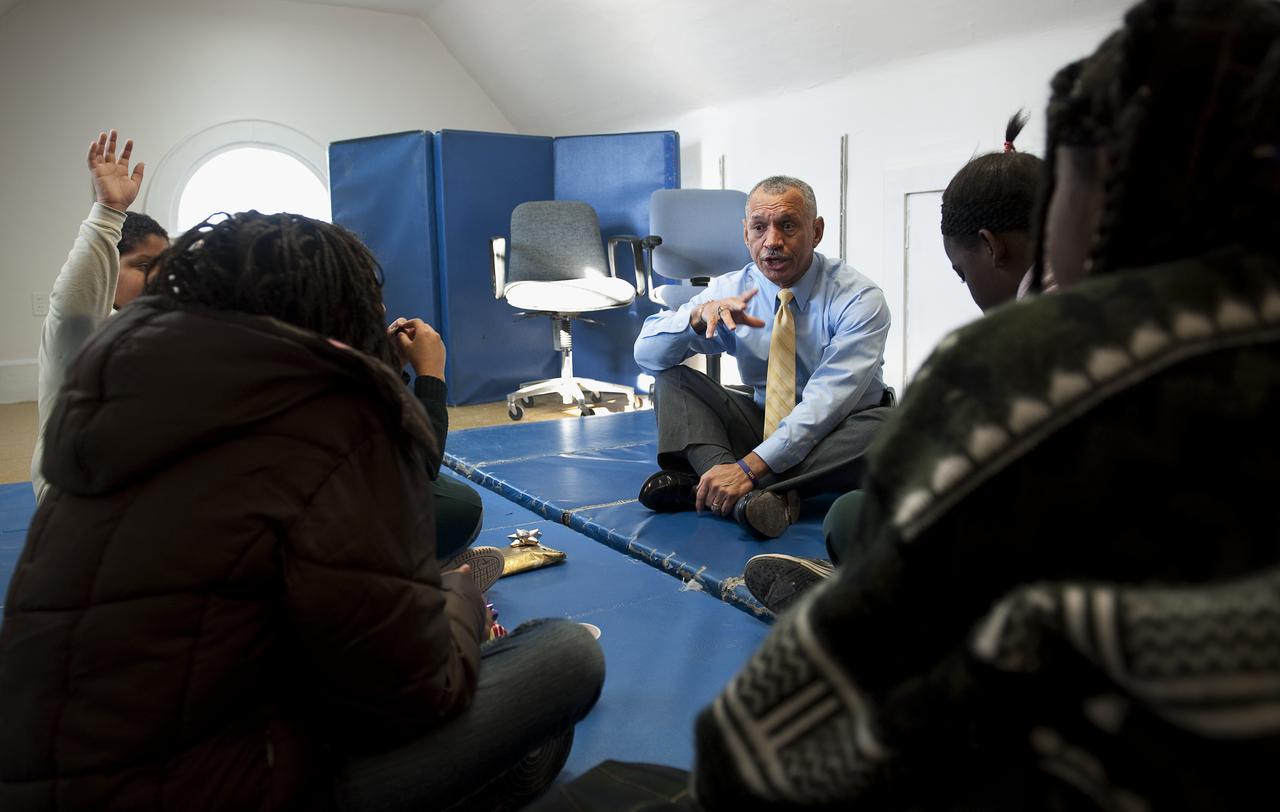
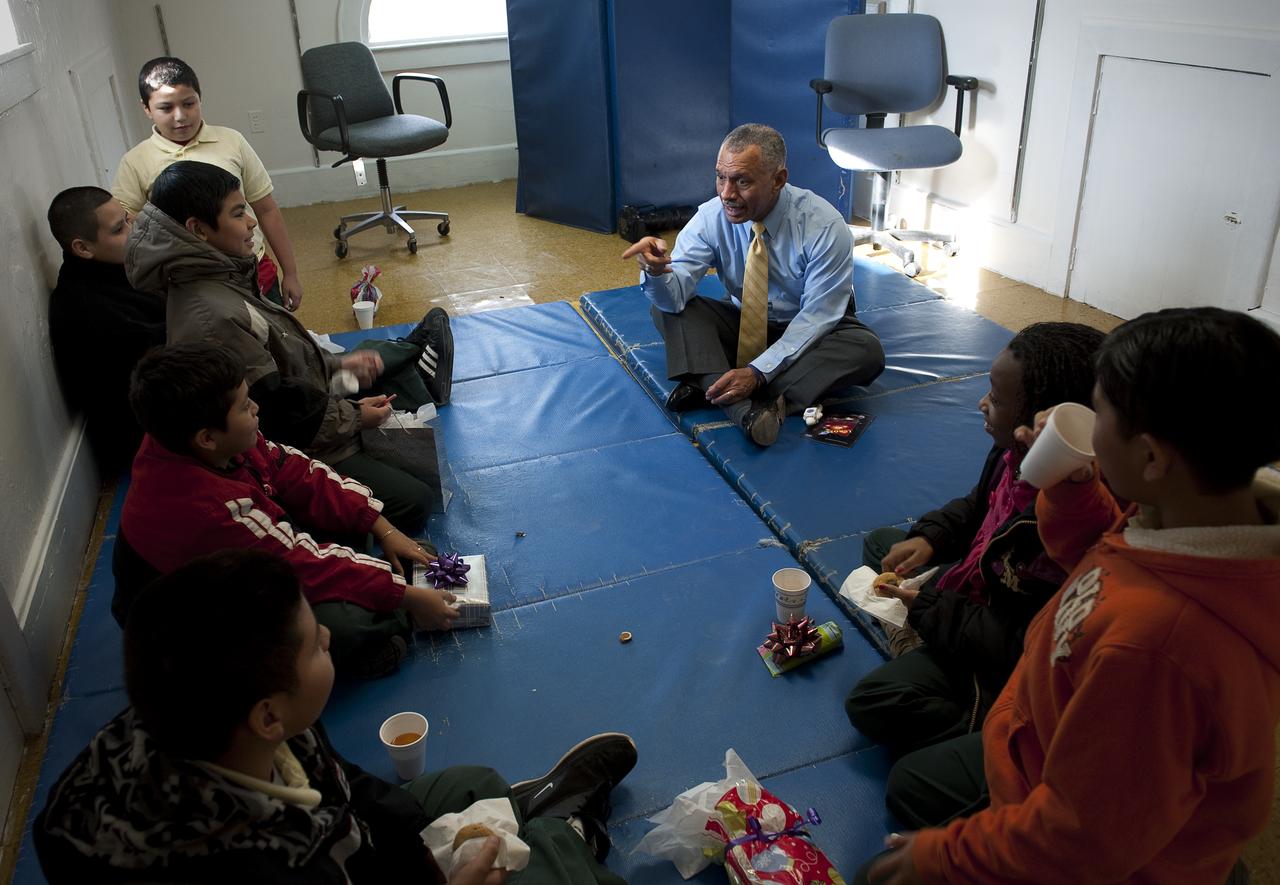
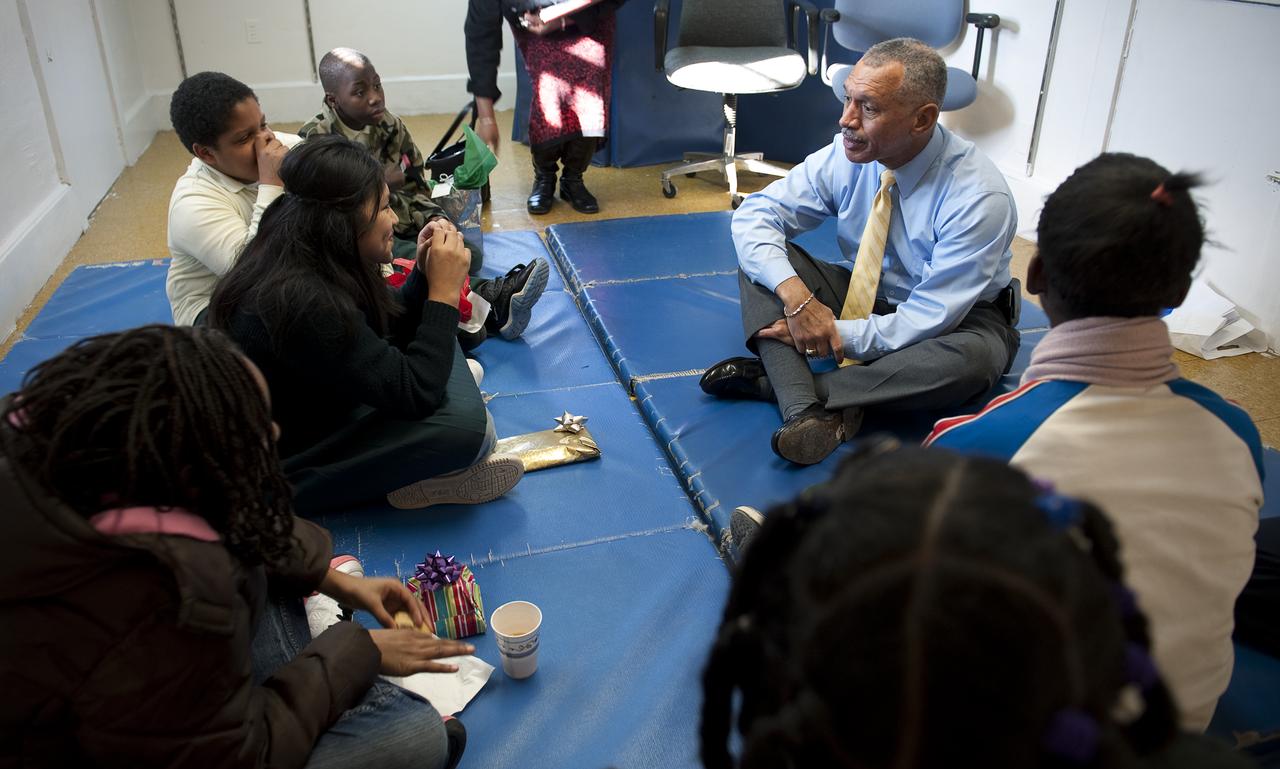
NASA Administrator Charles Bolden spent time volunteering with DC Cares at the Park View Recreation Center in Washington, DC for their Santa's Workshop program, Monday, Dec. 14, 2009.  Mr. Bolden spoke with students about his experience as a former NASA astronaut and current NASA Administrator, encouraging them to study math and science and to stay in school.  Photo Credit:  (NASA/Bill Ingalls)
NASA Administrator Bolden Volunteers with the DC Cares Program
NASA Administrator Charles Bolden spent time volunteering with DC Cares at the Park View Recreation Center in Washington, DC for their Santa's Workshop program, Monday, Dec. 14, 2009.  Mr. Bolden spoke with students about his experience as a former NASA astronaut and current NASA Administrator, encouraging them to study math and science and to stay in school.  Photo Credit:  (NASA/Bill Ingalls)
NASA Administrator Bolden Volunteers with the DC Cares Program
NASA Administrator Charles Bolden spent time volunteering with DC Cares at the Park View Recreation Center in Washington, DC for their Santa's Workshop program, Monday, Dec. 14, 2009.  Mr. Bolden spoke with students about his experience as a former NASA astronaut and current NASA Administrator, encouraging them to study math and science and to stay in school.  Photo Credit:  (NASA/Bill Ingalls)
NASA Administrator Bolden Volunteers with the DC Cares Program
NASA Administrator Charles Bolden spent time volunteering with DC Cares at the Park View Recreation Center in Washington, DC for their Santa's Workshop program, Monday, Dec. 14, 2009.  Mr. Bolden spoke with students about his experience as a former NASA astronaut and current NASA Administrator, encouraging them to study math and science and to stay in school.  Photo Credit:  (NASA/Bill Ingalls)
NASA Administrator Bolden Volunteers with the DC Cares Program
NASA Administrator Charles Bolden spent time volunteering with DC Cares at the Park View Recreation Center in Washington, DC for their Santa's Workshop program, Monday, Dec. 14, 2009.  Mr. Bolden spoke with students about his experience as a former NASA astronaut and current NASA Administrator, encouraging them to study math and science and to stay in school.  Photo Credit:  (NASA/Bill Ingalls)
NASA Administrator Bolden Volunteers with the DC Cares Program
NASA Administrator Charles Bolden spent time volunteering with DC Cares at the Park View Recreation Center in Washington, DC for their Santa's Workshop program, Monday, Dec. 14, 2009.  Mr. Bolden spoke with students about his experience as a former NASA astronaut and current NASA Administrator, encouraging them to study math and science and to stay in school.  Photo Credit:  (NASA/Bill Ingalls)
NASA Administrator Bolden Volunteers with the DC Cares Program
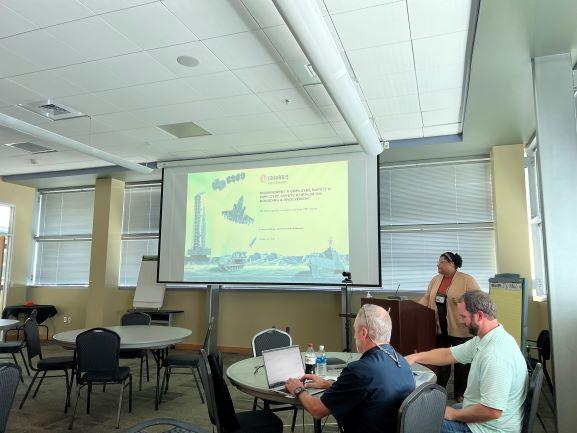
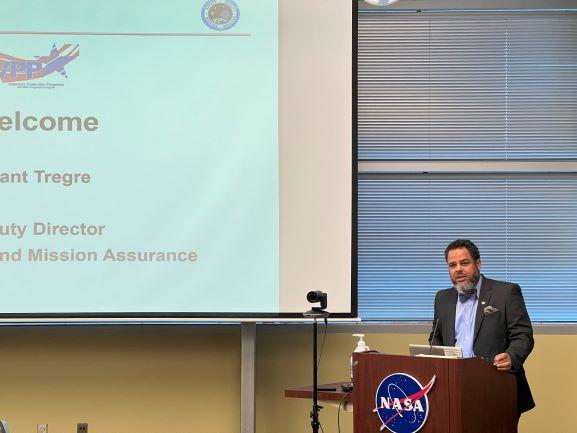
Grant Tregre, deputy director of the NASA Stennis Safety and Mission Assurance Directorate, welcomes members of the Mississippi/Louisiana Gulf Coast Voluntary Protection Program (VPP) Local Area Council Meeting to their annual meeting on Oct. 29, hosted by NASA’s Stennis Space Center at INFINITY Science Center. The regional meeting focused on how workplace safety team members can achieve and maintain consistent and effective safety and health programs for their current and potential OSHA VPP worksites across south Mississippi and Louisiana.
NASA Stennis Hosts Voluntary Protection Program Council Meeting
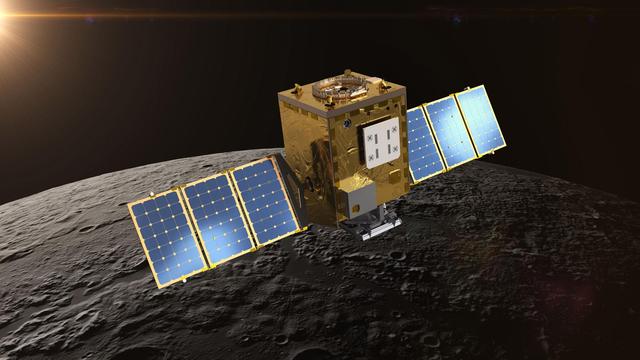
Peering into the Moon's permanently shadowed regions, Lunar Trailblazer will detect signatures of water ice in reflected light, and it will pinpoint the locations of micro-cold traps less than a football field in size. The small satellite will collect measurements at multiple times of day over sunlit regions, helping scientists understand if the water signature on the illuminated surface changes as the lunar surface temperature changes by hundreds of degrees over the course of a lunar day. The goal is to produce high-resolution maps to locate water ice in support of NASA's Artemis Program, which aims to establish a sustainable human presence on the Moon and prepare for future missions to Mars.  https://photojournal.jpl.nasa.gov/catalog/PIA24161
Lunar Trailblazer to Support NASA's Artemis Program
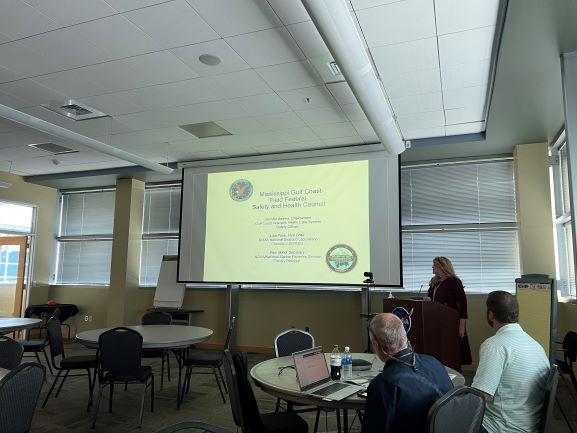
Jennifer Adams, representing the Gulf Coast Veterans Health Care System, speaks during the Mississippi/Louisiana Gulf Coast Voluntary Protection Program (VPP) Local Area Council Meeting on Oct. 29, hosted by NASA’s Stennis Space Center at INFINITY Science Center. The regional meeting focused on how workplace safety team members can achieve and maintain consistent and effective safety and health programs for their current and potential OSHA VPP worksites across south Mississippi and Louisiana.
NASA Stennis Hosts Voluntary Protection Program Council Meeting
Lasonya Pulliam, representing L3Harris, speaks during the Mississippi/Louisiana Gulf Coast Voluntary Protection Program (VPP) Local Area Council Meeting on Oct. 29, hosted by NASA’s Stennis Space Center at INFINITY Science Center. The regional meeting focused on how workplace safety team members can achieve and maintain consistent and effective safety and health programs for their current and potential OSHA VPP worksites across south Mississippi and Louisiana.
NASA Stennis Hosts Voluntary Protection Program Council Meeting
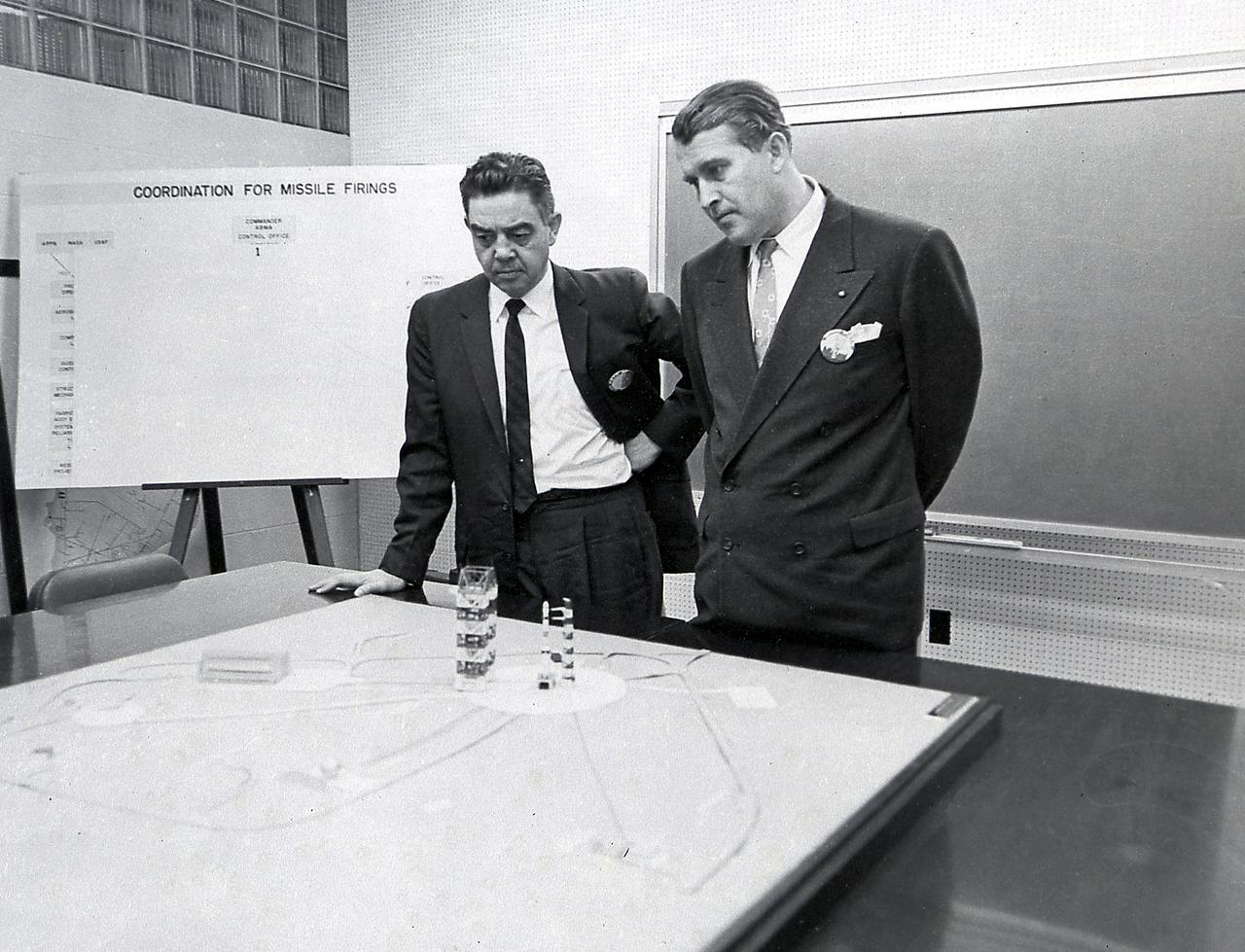
Dr. von Braun and Don Ostrander, head of the Launch Vehicle Program of the NASA Headquarters look at a model of the Saturn I launch complex 34.
Wernher von Braun
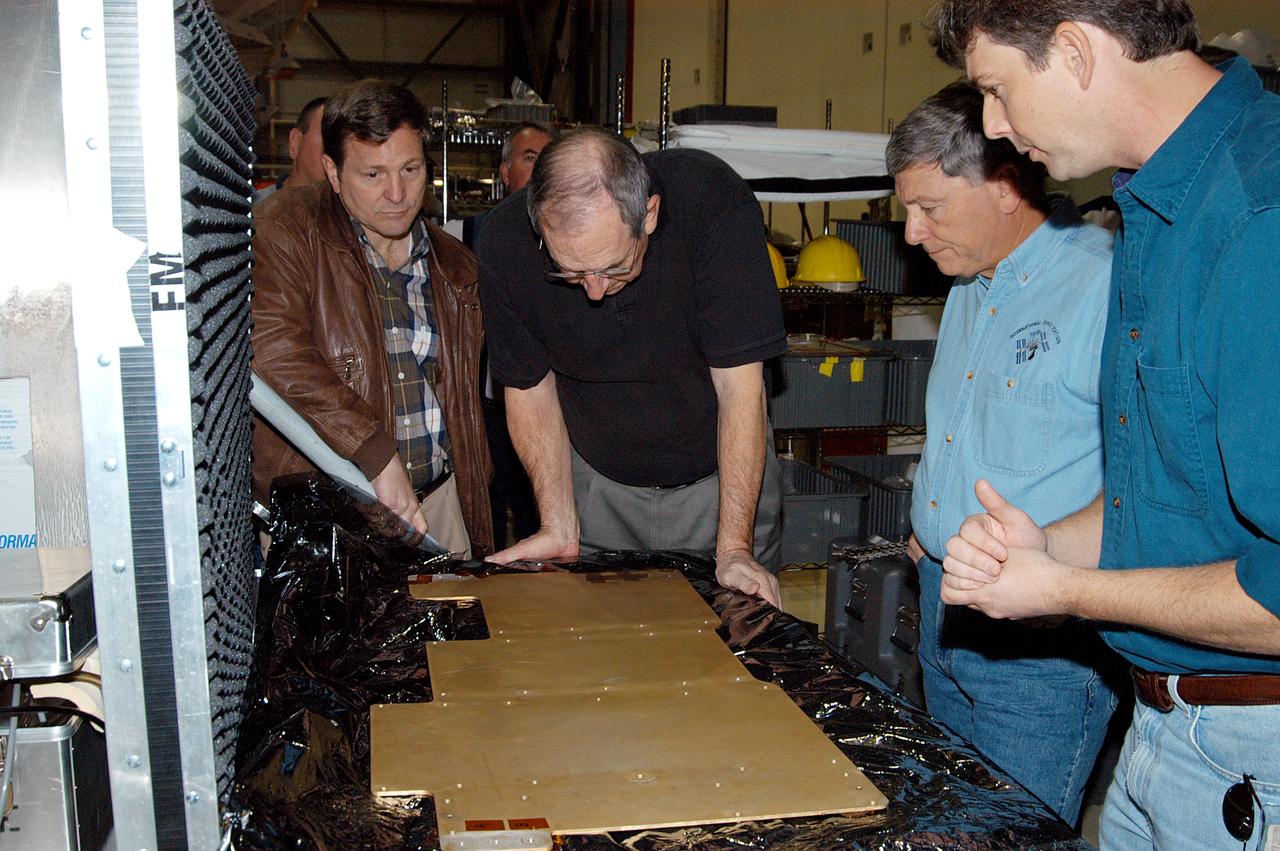
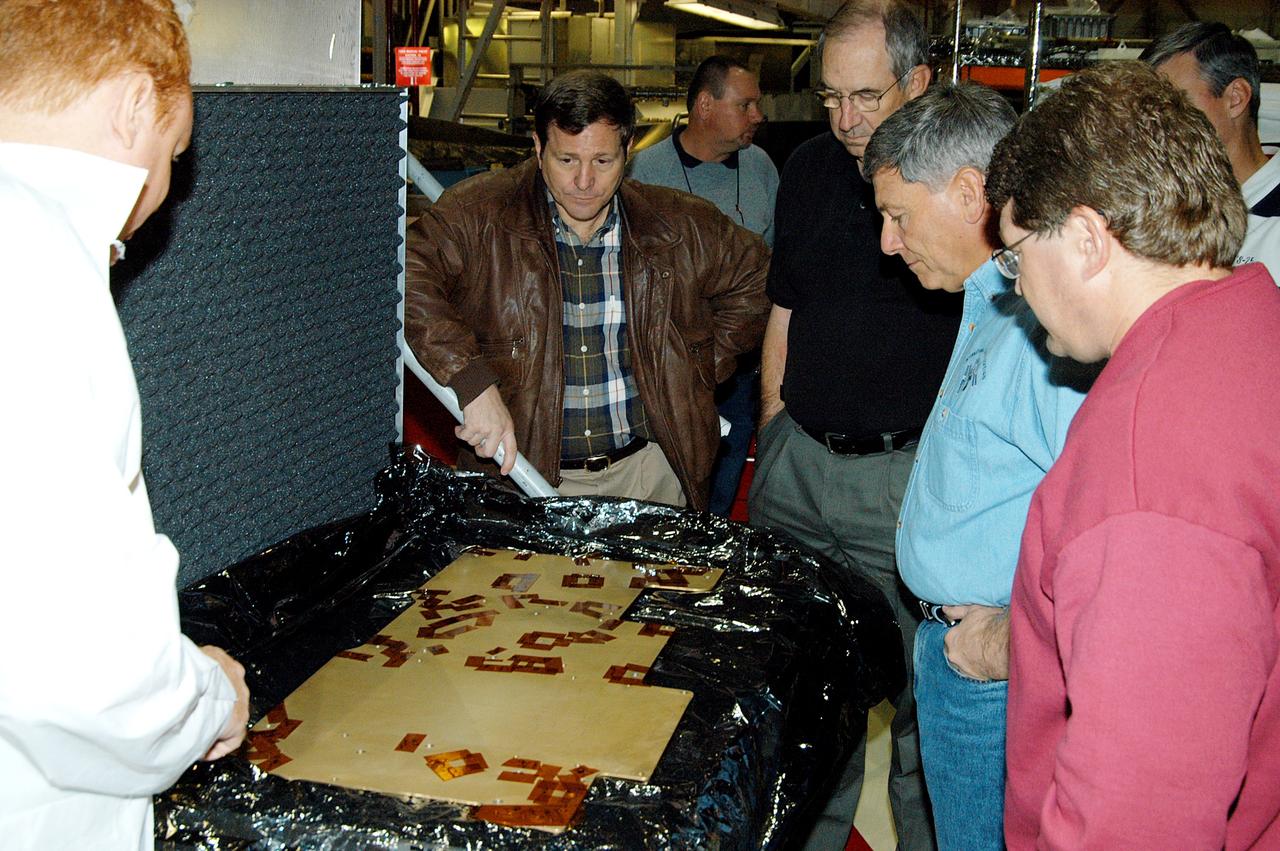
KENNEDY SPACE CENTER, FLA. -- From left, NASA Deputy Program Manager of the Space Shuttle Program Michael Wetmore, United Space Alliance (USA) Vice President and Space Shuttle Program Manager Howard DeCastro, NASA Deputy Associate Administrator for Space Station and Shuttle Programs Michael Kostelnik, and a USA technician examine cold plates in Orbiter Processing Facility Bay 2.  NASA and USA Space Shuttle program management are participating in a leadership workday.  The day is intended to provide management with an in-depth, hands-on look at Shuttle processing activities at KSC.
KENNEDY SPACE CENTER, FLA. -- From left, NASA Deputy Program Manager of the Space Shuttle Program Michael Wetmore, United Space Alliance (USA) Vice President and Space Shuttle Program Manager Howard DeCastro, NASA Deputy Associate Administrator for Space Station and Shuttle Programs Michael Kostelnik, and a USA technician examine cold plates in Orbiter Processing Facility Bay 2. NASA and USA Space Shuttle program management are participating in a leadership workday. The day is intended to provide management with an in-depth, hands-on look at Shuttle processing activities at KSC.
KENNEDY SPACE CENTER, FLA. -- From left, a United Space Alliance (USA) technician briefs NASA Deputy Program Manager of the Space Shuttle Program Michael Wetmore, USA Vice President and Space Shuttle Program Manager Howard DeCastro, and NASA Deputy Associate Administrator for Space Station and Shuttle Programs Michael Kostelnik on the use of cold plates in Orbiter Processing Facility Bay 2.  NASA and USA Space Shuttle program management are participating in a leadership workday.  The day is intended to provide management with an in-depth, hands-on look at Shuttle processing activities at KSC.
KENNEDY SPACE CENTER, FLA. -- From left, a United Space Alliance (USA) technician briefs NASA Deputy Program Manager of the Space Shuttle Program Michael Wetmore, USA Vice President and Space Shuttle Program Manager Howard DeCastro, and NASA Deputy Associate Administrator for Space Station and Shuttle Programs Michael Kostelnik on the use of cold plates in Orbiter Processing Facility Bay 2. NASA and USA Space Shuttle program management are participating in a leadership workday. The day is intended to provide management with an in-depth, hands-on look at Shuttle processing activities at KSC.
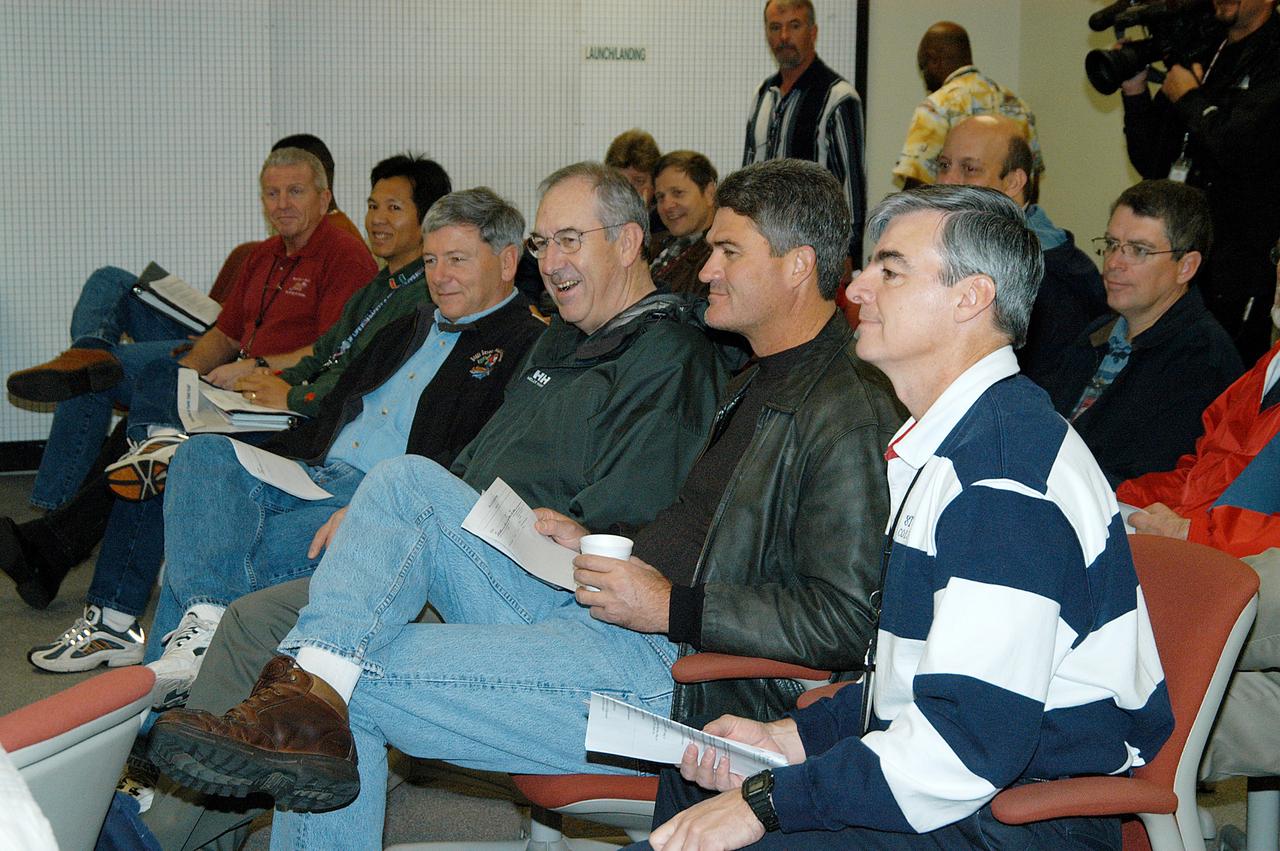
KENNEDY SPACE CENTER, FLA. -- NASA and United Space Alliance (USA) Space Shuttle program managers attend a briefing, part of activities during a leadership workday.  The day is intended to provide management with an in-depth, hands-on look at Shuttle processing activities at KSC.  Starting third from left are NASA Deputy Associate Administrator for Space Station and Shuttle Programs Michael Kostelnik, USA Vice President and Space Shuttle Program Manager Howard DeCastro, NASA Space Shuttle Program Manager William Parsons, and USA Associate Program Manager of Ground Operations Andy Allen.
KENNEDY SPACE CENTER, FLA. -- NASA and United Space Alliance (USA) Space Shuttle program managers attend a briefing, part of activities during a leadership workday. The day is intended to provide management with an in-depth, hands-on look at Shuttle processing activities at KSC. Starting third from left are NASA Deputy Associate Administrator for Space Station and Shuttle Programs Michael Kostelnik, USA Vice President and Space Shuttle Program Manager Howard DeCastro, NASA Space Shuttle Program Manager William Parsons, and USA Associate Program Manager of Ground Operations Andy Allen.
KENNEDY SPACE CENTER, FLA. -- From left, United Space Alliance (USA) Deputy Space Shuttle Program Manager of Operations Loren Shriver, USA Associate Program Manager of Ground Operations Andy Allen, NASA Deputy Associate Administrator for Space Station and Shuttle Programs Michael Kostelnik, and USA Vice President and Space Shuttle Program Manager Howard DeCastro examine a tile used in the Shuttle's Thermal Protection System (TPS) in KSC's TPS Facility.  NASA and USA Space Shuttle program management are participating in a leadership workday.  The day is intended to provide management with an in-depth, hands-on look at Shuttle processing activities at KSC.
KENNEDY SPACE CENTER, FLA. -- From left, United Space Alliance (USA) Deputy Space Shuttle Program Manager of Operations Loren Shriver, USA Associate Program Manager of Ground Operations Andy Allen, NASA Deputy Associate Administrator for Space Station and Shuttle Programs Michael Kostelnik, and USA Vice President and Space Shuttle Program Manager Howard DeCastro examine a tile used in the Shuttle's Thermal Protection System (TPS) in KSC's TPS Facility. NASA and USA Space Shuttle program management are participating in a leadership workday. The day is intended to provide management with an in-depth, hands-on look at Shuttle processing activities at KSC.
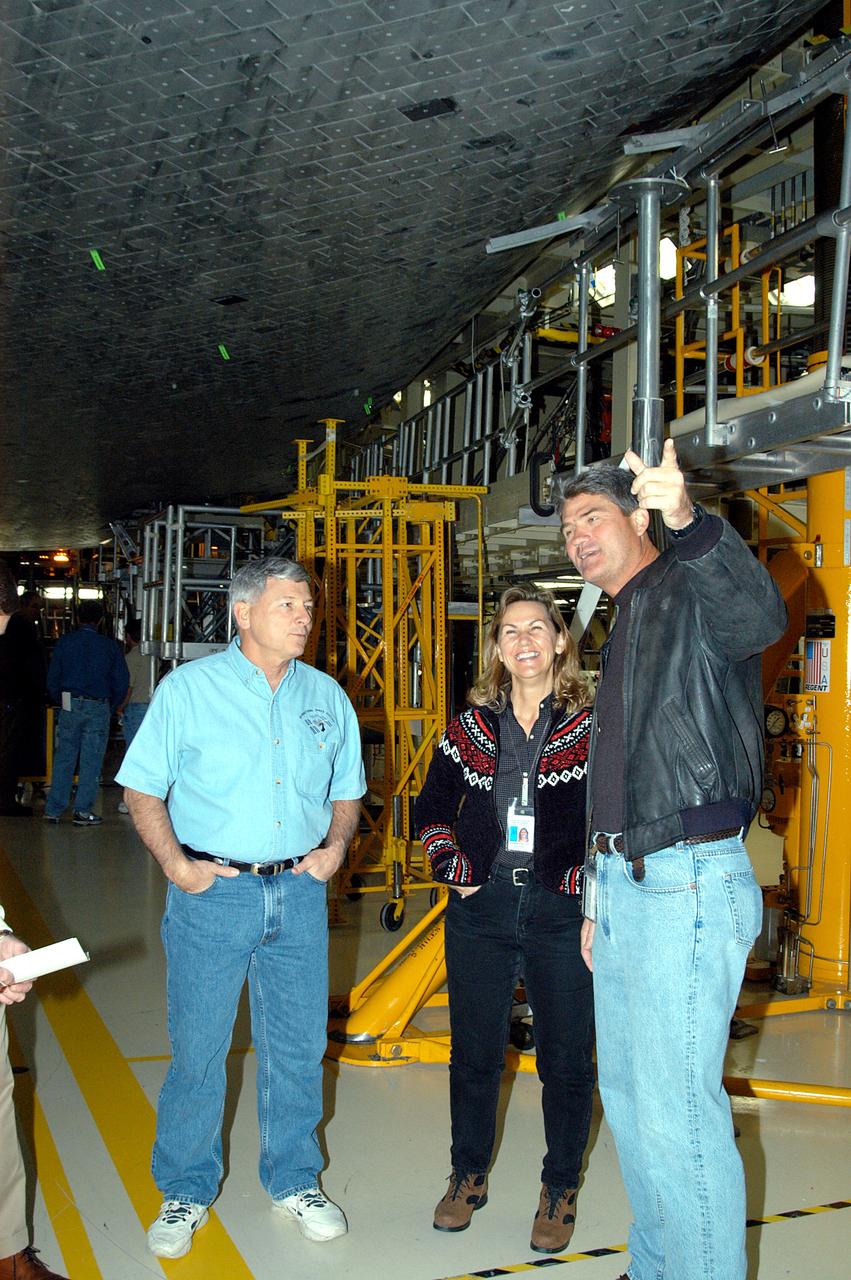
KENNEDY SPACE CENTER, FLA. -- From left, NASA Deputy Associate Administrator for Space Station and Shuttle Programs Michael Kostelnik, United Space Alliance (USA) Director of Orbiter Operations Patty Stratton, and NASA Space Shuttle Program Manager William Parsons view the underside of Shuttle Discovery in Orbiter Processing Facility Bay 3.  NASA and USA Space Shuttle program management are participating in a leadership workday.  The day is intended to provide management with an in-depth, hands-on look at Shuttle processing activities at KSC.
KENNEDY SPACE CENTER, FLA. -- From left, NASA Deputy Associate Administrator for Space Station and Shuttle Programs Michael Kostelnik, United Space Alliance (USA) Director of Orbiter Operations Patty Stratton, and NASA Space Shuttle Program Manager William Parsons view the underside of Shuttle Discovery in Orbiter Processing Facility Bay 3. NASA and USA Space Shuttle program management are participating in a leadership workday. The day is intended to provide management with an in-depth, hands-on look at Shuttle processing activities at KSC.
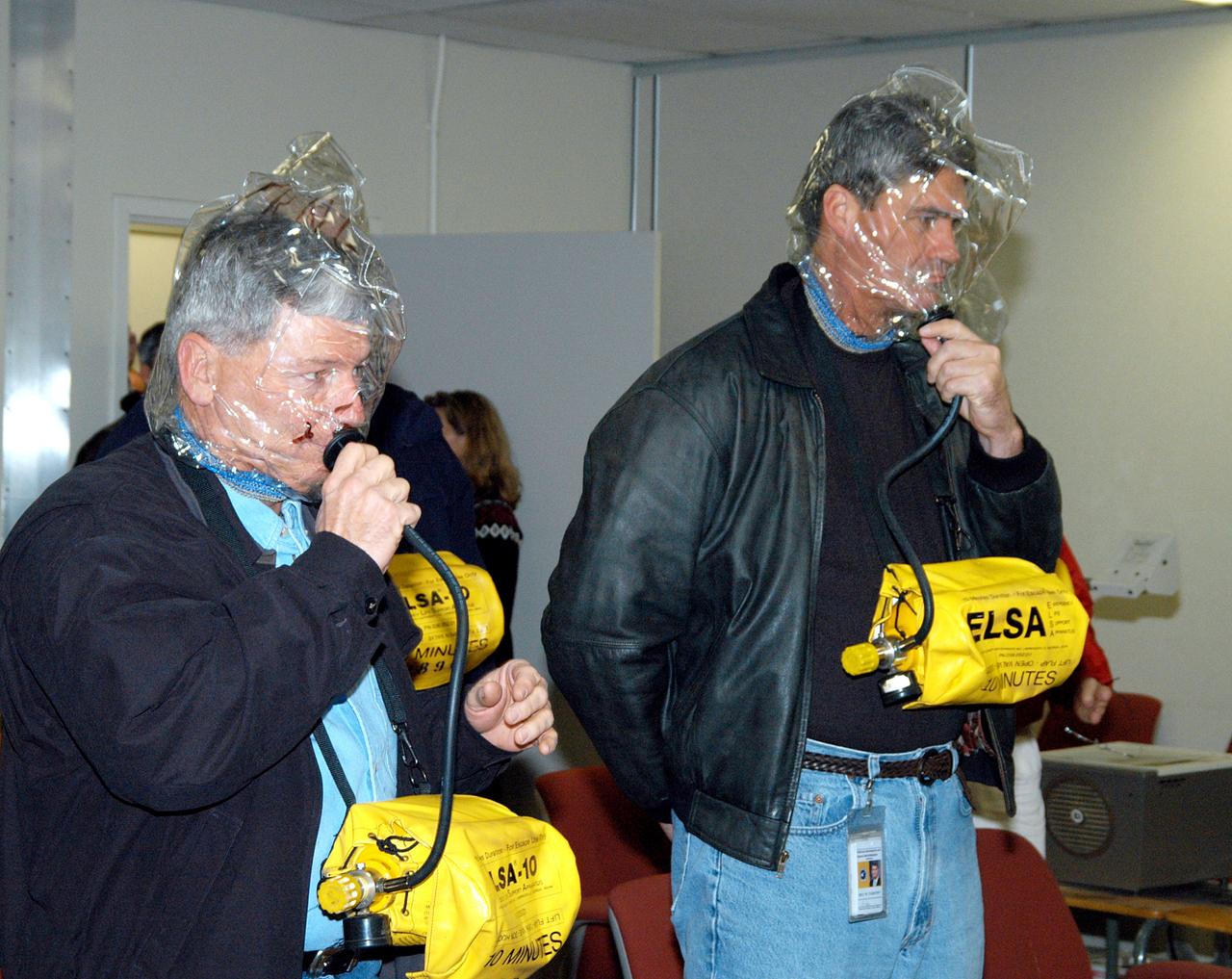
KENNEDY SPACE CENTER, FLA. -- From left, NASA Deputy Associate Administrator for Space Station and Shuttle Programs Michael Kostelnik and NASA Space Shuttle Program Manager William Parsons each don an Emergency Life Support Apparatus (ELSA) during training on the proper use of the escape devices.  NASA and United Space Alliance (USA) Space Shuttle program management are participating in a leadership workday.  The day is intended to provide management with an in-depth, hands-on look at Shuttle processing activities at KSC.
KENNEDY SPACE CENTER, FLA. -- From left, NASA Deputy Associate Administrator for Space Station and Shuttle Programs Michael Kostelnik and NASA Space Shuttle Program Manager William Parsons each don an Emergency Life Support Apparatus (ELSA) during training on the proper use of the escape devices. NASA and United Space Alliance (USA) Space Shuttle program management are participating in a leadership workday. The day is intended to provide management with an in-depth, hands-on look at Shuttle processing activities at KSC.
KENNEDY SPACE CENTER, FLA. -- From front row left, NASA Deputy Associate Administrator for Space Station and Shuttle Programs Michael Kostelnik and NASA Space Shuttle Program Manager William Parsons are trained on the proper use of the Emergency Life Support Apparatus (ELSA).  NASA and United Space Alliance (USA) Space Shuttle program management are participating in a leadership workday.  The day is intended to provide management with an in-depth, hands-on look at Shuttle processing activities at KSC.
KENNEDY SPACE CENTER, FLA. -- From front row left, NASA Deputy Associate Administrator for Space Station and Shuttle Programs Michael Kostelnik and NASA Space Shuttle Program Manager William Parsons are trained on the proper use of the Emergency Life Support Apparatus (ELSA). NASA and United Space Alliance (USA) Space Shuttle program management are participating in a leadership workday. The day is intended to provide management with an in-depth, hands-on look at Shuttle processing activities at KSC.
Director of the Space Weather Program, Jamie Favors, speaks about the Space Weather Pilot Project, Tuesday, August 6, 2024, at the Mary W. Jackson NASA Headquarters building in Washington. Every summer early career researchers from NASA’s DEVELOP National Program come to NASA Headquarters and present their research projects. DEVELOP is a training and development program where early career researchers work on Earth science projects, mentored by science advisors from NASA and partner agencies, and provide research results to local communities. Photo Credit: (NASA/Aubrey Gemignani)
Develop Program Event and Poster Session
Director of the Space Weather Program, Jamie Favors, speaks about the Space Weather Pilot Project, Tuesday, August 6, 2024, at the Mary W. Jackson NASA Headquarters building in Washington. Every summer early career researchers from NASA’s DEVELOP National Program come to NASA Headquarters and present their research projects. DEVELOP is a training and development program where early career researchers work on Earth science projects, mentored by science advisors from NASA and partner agencies, and provide research results to local communities. Photo Credit: (NASA/Aubrey Gemignani)
Develop Program Event and Poster Session
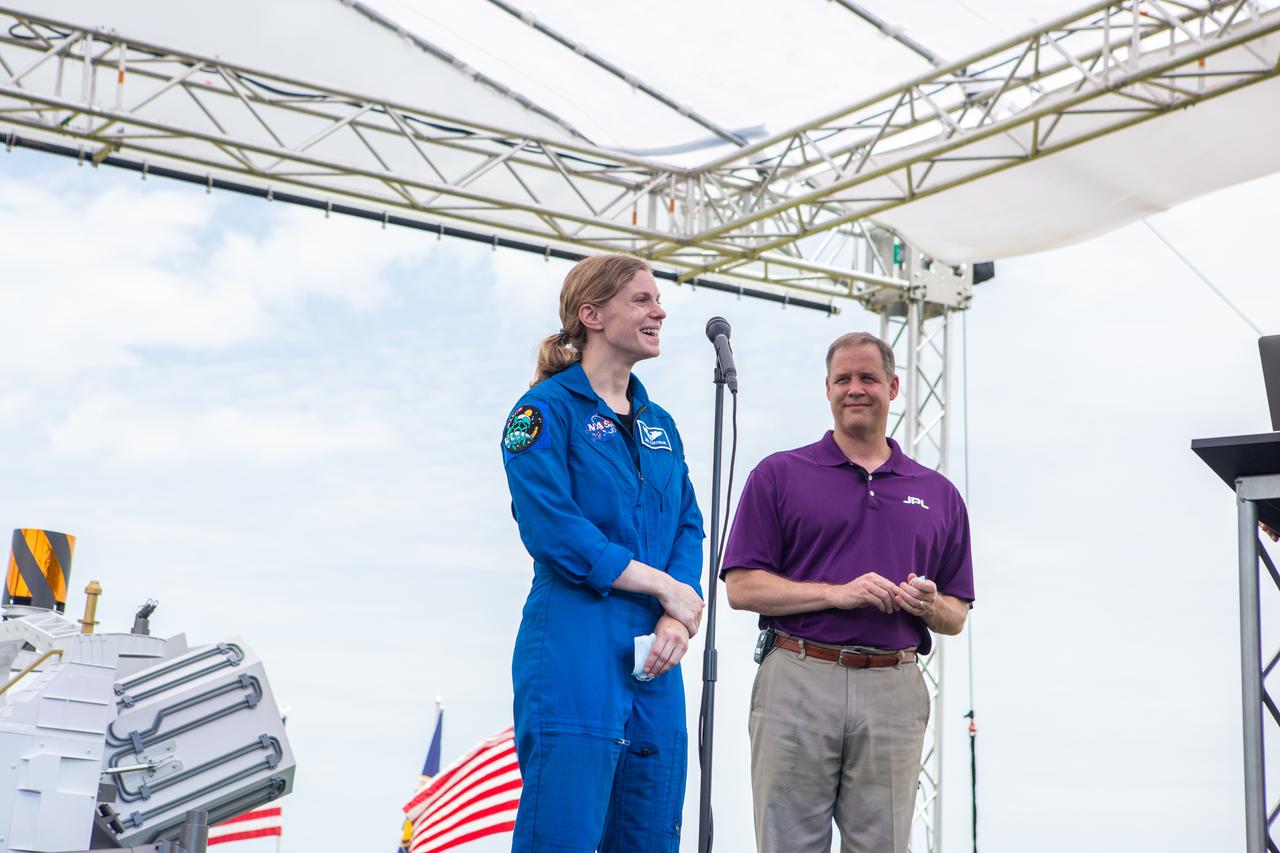
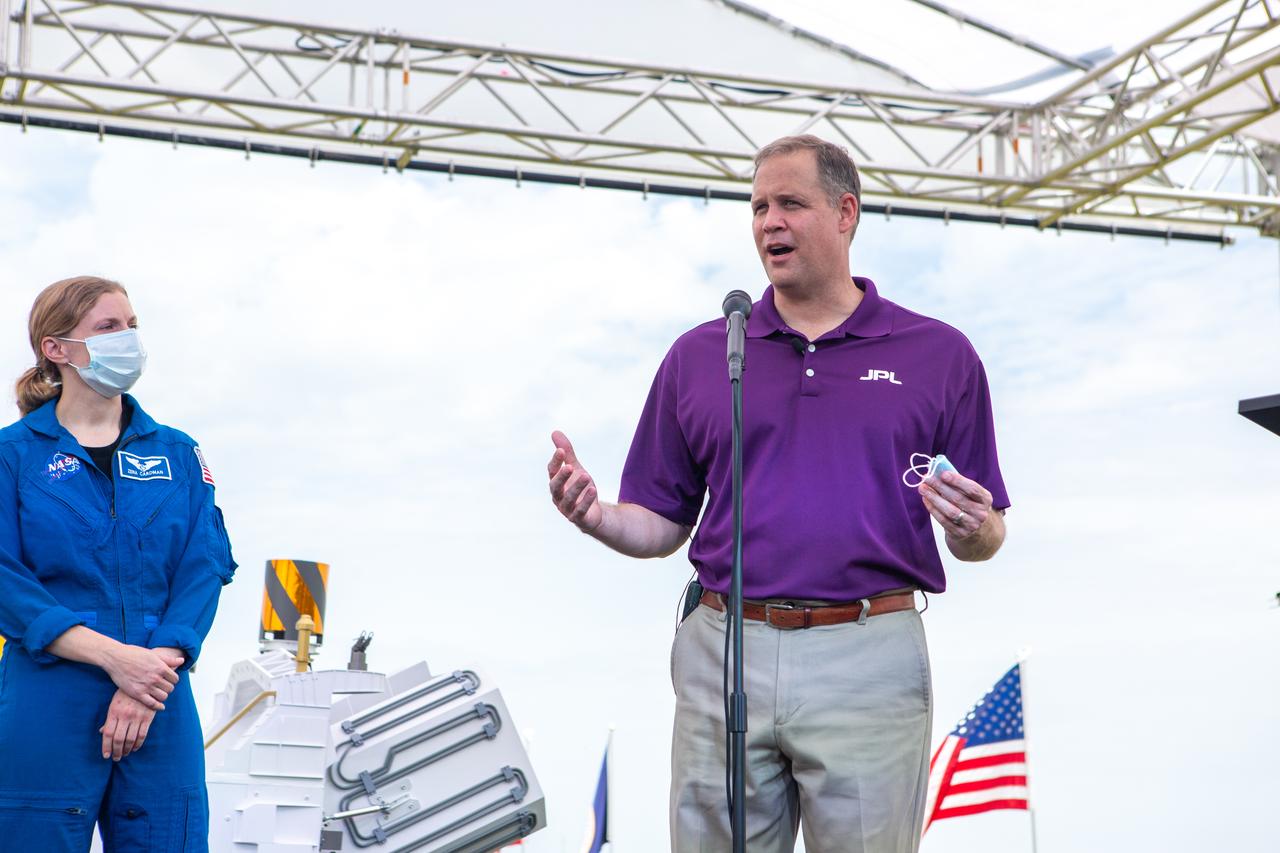
NASA Administrator Jim Bridenstine answers a question during a Mars 2020 NASA Social at Kennedy Space Center’s News Center in Florida on July 29, 2020. At left is NASA astronaut Zena Cardman. The Mars Perseverance rover and Ingenuity helicopter are scheduled to launch July 30, on a United Launch Alliance Atlas V 541 rocket from Space Launch Complex 41 at nearby Cape Canaveral Air Force Station. The rover is part of NASA’s Mars Exploration Program, a long-term effort of robotic exploration of the Red Planet. The rover will search for habitable conditions in the ancient past and signs of past microbial life on Mars. The Launch Services Program at Kennedy is responsible for launch management.
Mars 2020 Facebook Live / NASA Social
NASA astronaut Zena Cardman answers a question during a Mars 2020 NASA Social at Kennedy Space Center’s News Center in Florida on July 29, 2020. At right is NASA Administrator Jim Bridenstine. The Mars Perseverance rover and Ingenuity helicopter are scheduled to launch July 30, on a United Launch Alliance Atlas V 541 rocket from Space Launch Complex 41 at nearby Cape Canaveral Air Force Station. The rover is part of NASA’s Mars Exploration Program, a long-term effort of robotic exploration of the Red Planet. The rover will search for habitable conditions in the ancient past and signs of past microbial life on Mars. The Launch Services Program at Kennedy is responsible for launch management.
Mars 2020 Facebook Live / NASA Social
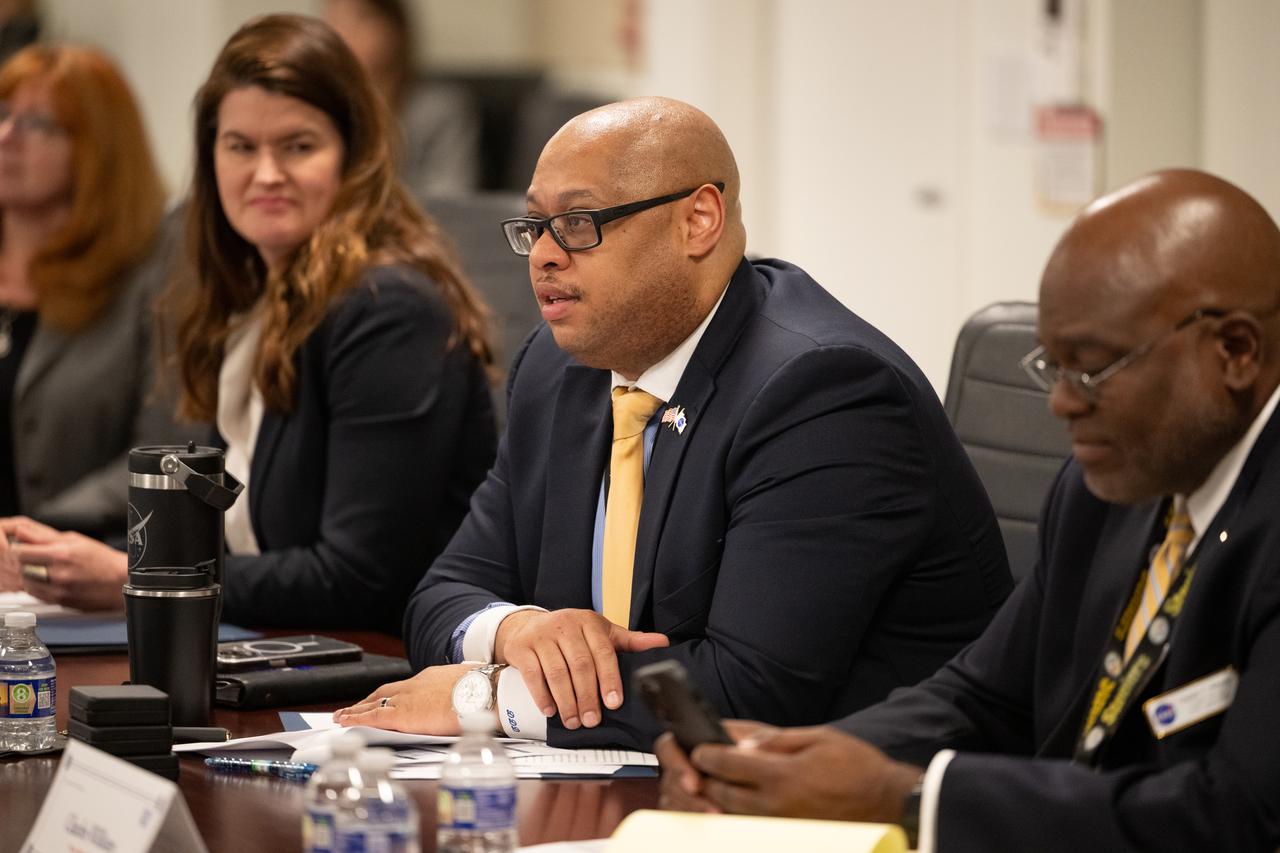
Dwight Deneal, assistant administrator for NASA’s Office of Small Business Programs, center, asks a question of Administrator of the Small Business Administration Kelly Loeffler during a NASA Office of Small Business Programs learning webinar titled “Empowering Small Businesses: NASA OSBP & SBA present The Made in America Manufacturing,” Wednesday, April 16, 2025, at the Mary W. Jackson NASA Headquarters building in Washington.  Photo Credit: (NASA/Joel Kowsky)
SBA Administrator at NASA Headquarters
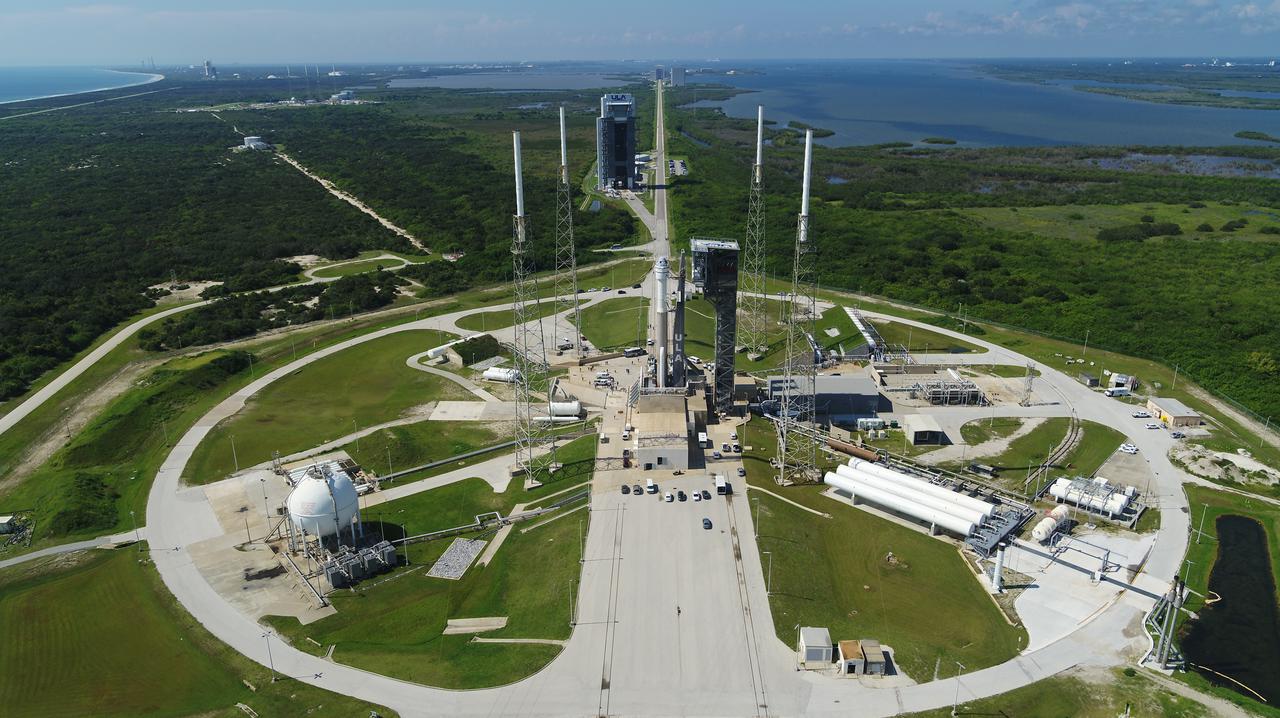
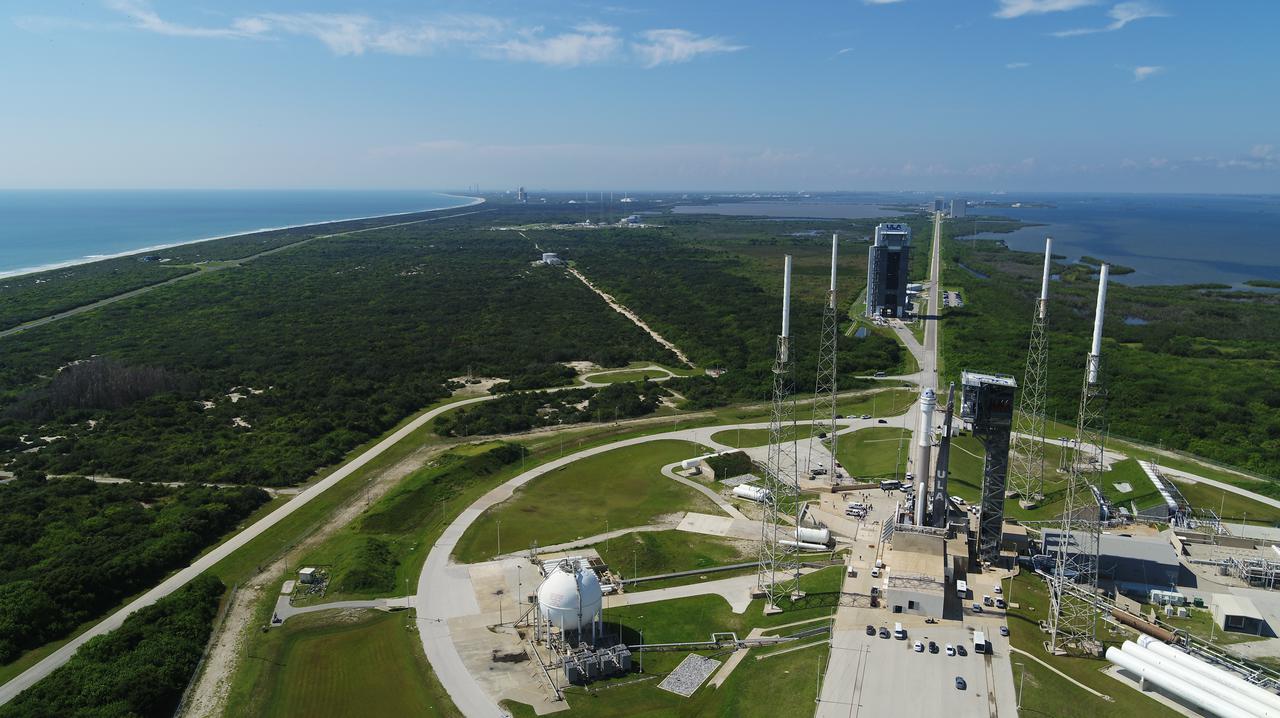
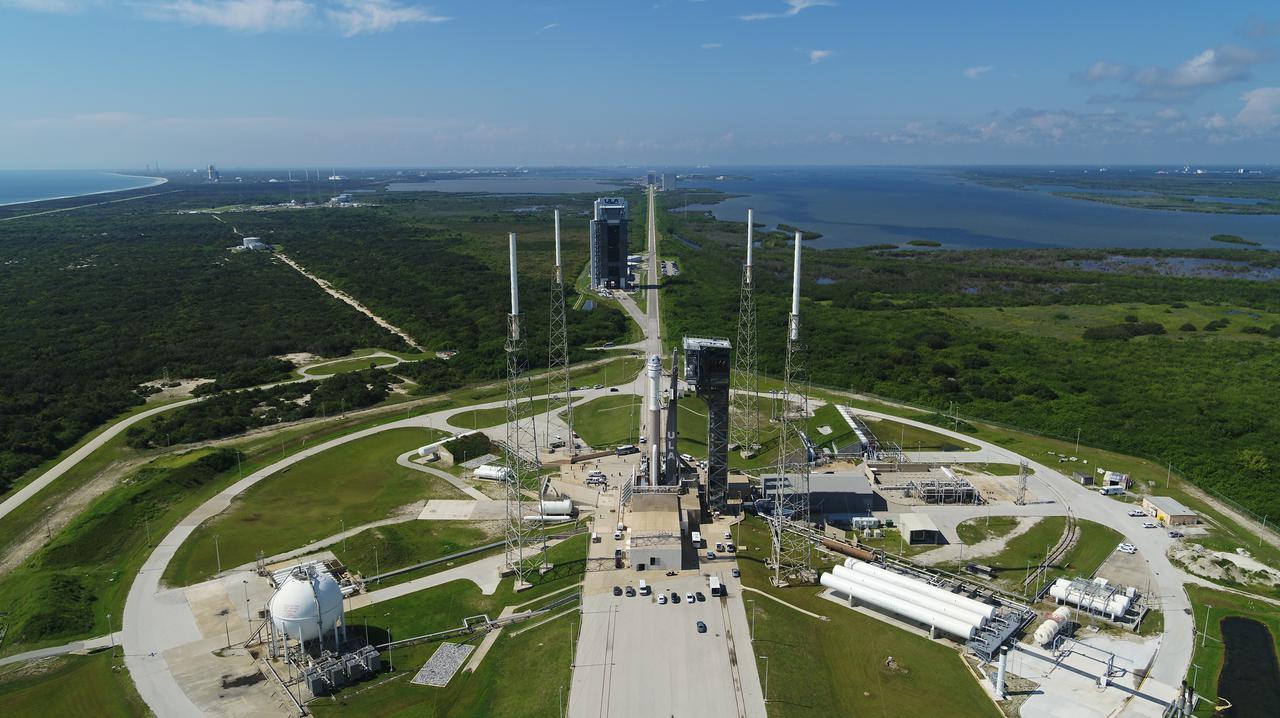
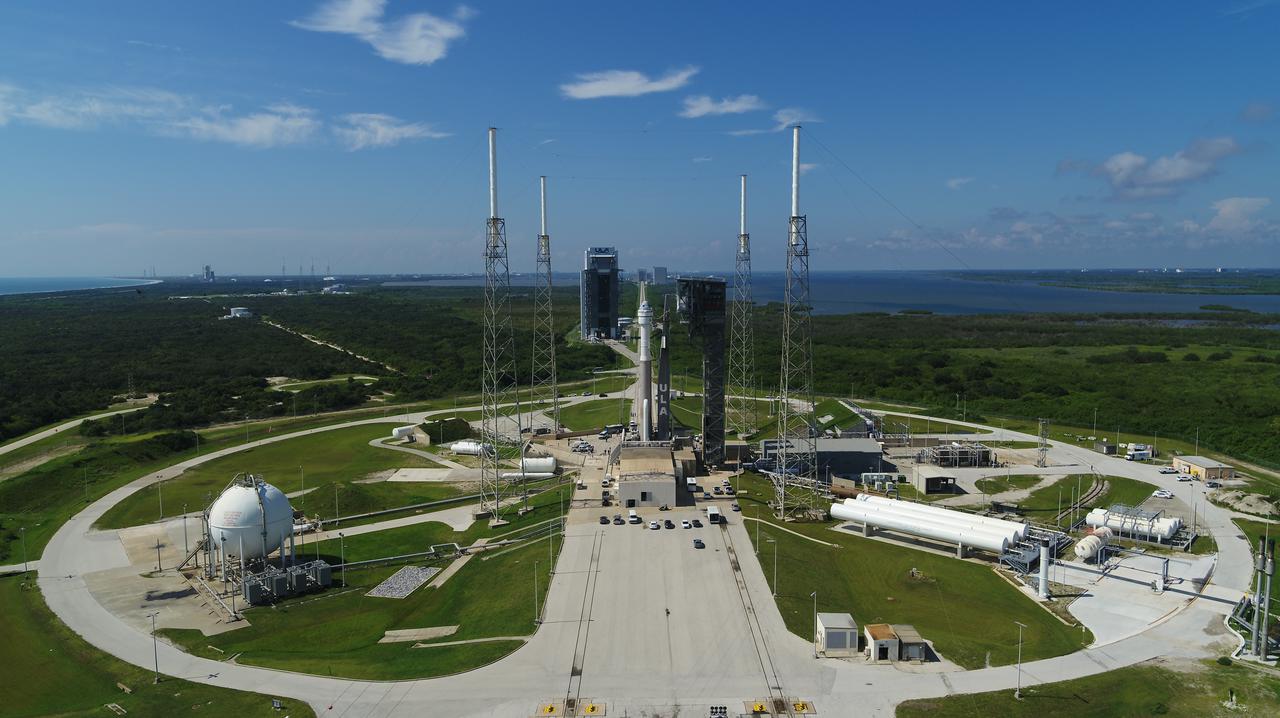
On July 29, 2021, Boeing’s CST-100 Starliner spacecraft and the United Launch Alliance Atlas V rocket rolled out of the Vertical Integration Facility to the launch pad at Space Launch Complex-41 on Cape Canaveral Space Force Station in Florida. Starliner will launch on the Atlas V for Boeing’s second uncrewed Orbital Flight Test (OFT-2) for NASA’s Commercial Crew Program. OFT-2 is an important uncrewed mission designed to test the end-to-end capabilities of the new system for NASA’s Commercial Crew Program.
NASA's Boeing OFT-2 Rollout to Pad for Launch
On July 29, 2021, Boeing’s CST-100 Starliner spacecraft and the United Launch Alliance Atlas V rocket rolled out of the Vertical Integration Facility to the launch pad at Space Launch Complex-41 on Cape Canaveral Space Force Station in Florida. Starliner will launch on the Atlas V for Boeing’s second uncrewed Orbital Flight Test (OFT-2) for NASA’s Commercial Crew Program. OFT-2 is an important uncrewed mission designed to test the end-to-end capabilities of the new system for NASA’s Commercial Crew Program.
NASA's Boeing OFT-2 Rollout to Pad for Launch
On July 29, 2021, Boeing’s CST-100 Starliner spacecraft and the United Launch Alliance Atlas V rocket rolled out of the Vertical Integration Facility to the launch pad at Space Launch Complex-41 on Cape Canaveral Space Force Station in Florida. Starliner will launch on the Atlas V for Boeing’s second uncrewed Orbital Flight Test (OFT-2) for NASA’s Commercial Crew Program. OFT-2 is an important uncrewed mission designed to test the end-to-end capabilities of the new system for NASA’s Commercial Crew Program.
NASA's Boeing OFT-2 Rollout to Pad for Launch
On July 29, 2021, Boeing’s CST-100 Starliner spacecraft and the United Launch Alliance Atlas V rocket rolled out of the Vertical Integration Facility to the launch pad at Space Launch Complex-41 on Cape Canaveral Space Force Station in Florida. Starliner will launch on the Atlas V for Boeing’s second uncrewed Orbital Flight Test (OFT-2) for NASA’s Commercial Crew Program. OFT-2 is an important uncrewed mission designed to test the end-to-end capabilities of the new system for NASA’s Commercial Crew Program.
NASA's Boeing OFT-2 Rollout to Pad for Launch
NASA Deputy Administrator Jim Morhard answers questions during a Mars 2020 NASA Social at Kennedy Space Center’s News Center in Florida on July 29, 2020. The Mars Perseverance rover and Ingenuity helicopter are scheduled to launch July 30, on a United Launch Alliance Atlas V 541 rocket from Space Launch Complex 41 at nearby Cape Canaveral Air Force Station. The rover is part of NASA’s Mars Exploration Program, a long-term effort of robotic exploration of the Red Planet. The rover will search for habitable conditions in the ancient past and signs of past microbial life on Mars. The Launch Services Program at Kennedy is responsible for launch management.
Mars 2020 Facebook Live / NASA Social
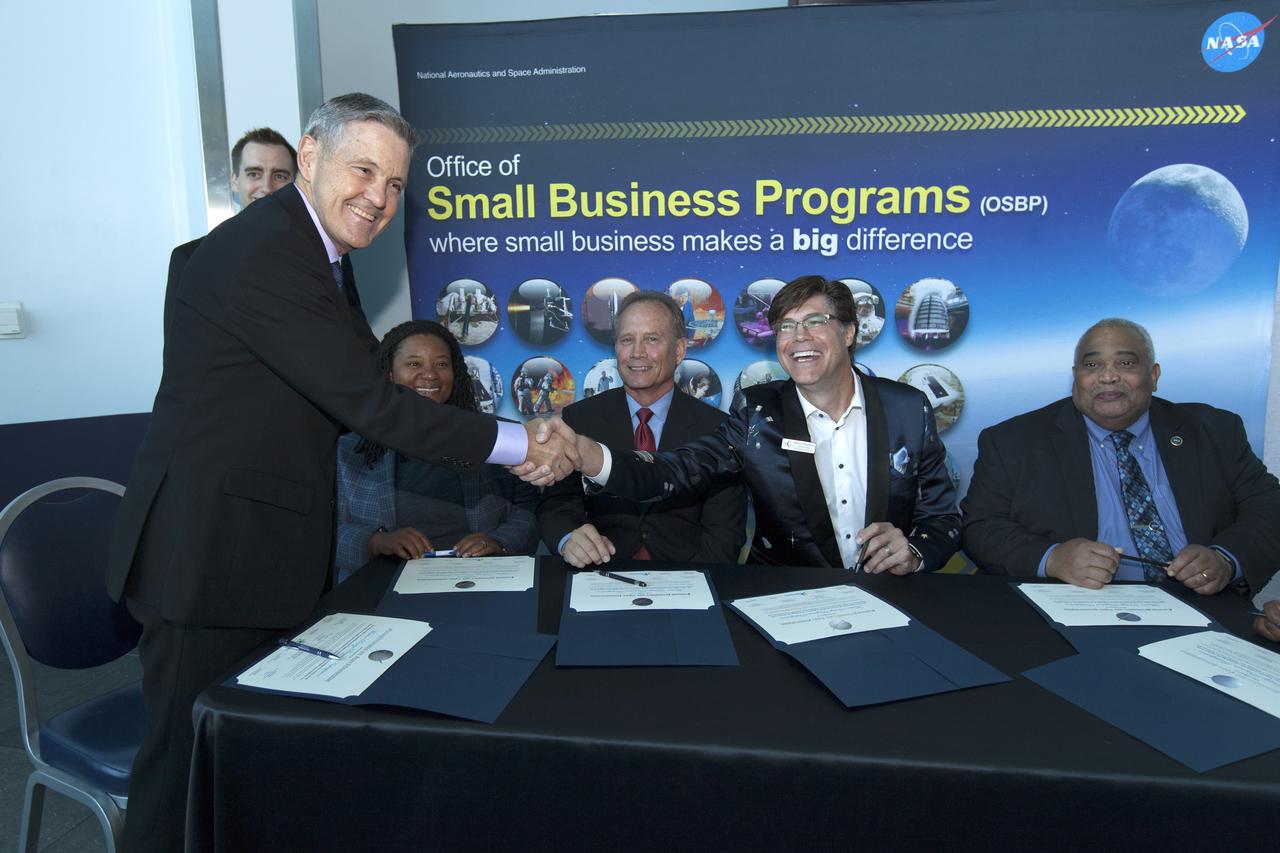
NASA Kennedy Space Center Director Bob Cabana, standing, shakes hands with Barry Hamilton, CEO and Founder of Red Canyon Software Inc., during the signing of a Mentor-Protégé Agreement on Oct. 23, 2018, at the NASA Business Opportunities Expo 2018 inside Cruise Terminal 6 at Port Canaveral in Florida. Seated, from left are Amber Allen, program analyst in the Launch Services Program; Steve Owens, deputy program manager with a.i. solutions Inc., a contractor at Kennedy; and Glenn Delgado, associate administrator, NASA Office of Small Business Programs. a.i. solutions will serve as the mentor to protégé Red Canyon Software. The 28th Business Opportunities Expo featured more than 200 businesses, large and small, and government exhibitors from throughout the Space Coast and the nation. The Business Opportunities Expo is facilitated by Kennedy's Small Business Programs Office and Prime Contractor Board, along with the U.S. Air Force 45th Space Wing and Canaveral Port Authority. Vendors from a variety of product and service areas, such as computer technology, engineering services, communication equipment and services, and construction and safety products, to name a few, were at the expo. Representatives from the 45th Space Wing, Kennedy prime contractors, NASA and many more agencies and organizations were on hand to provide information and answer questions.
Small Business Expo
S65-59952 (1 Nov. 1965) --- Artist's concept depicting the approximate positions which the Gemini 6 and 7 spacecrafts will be oriented at the terminal phase of the proposed rendezvous mission. Photo credit: NASA
RENDEZVOUS - ARTIST CONCEPT - GEMINI-TITAN (GT)-6/7 - MSC
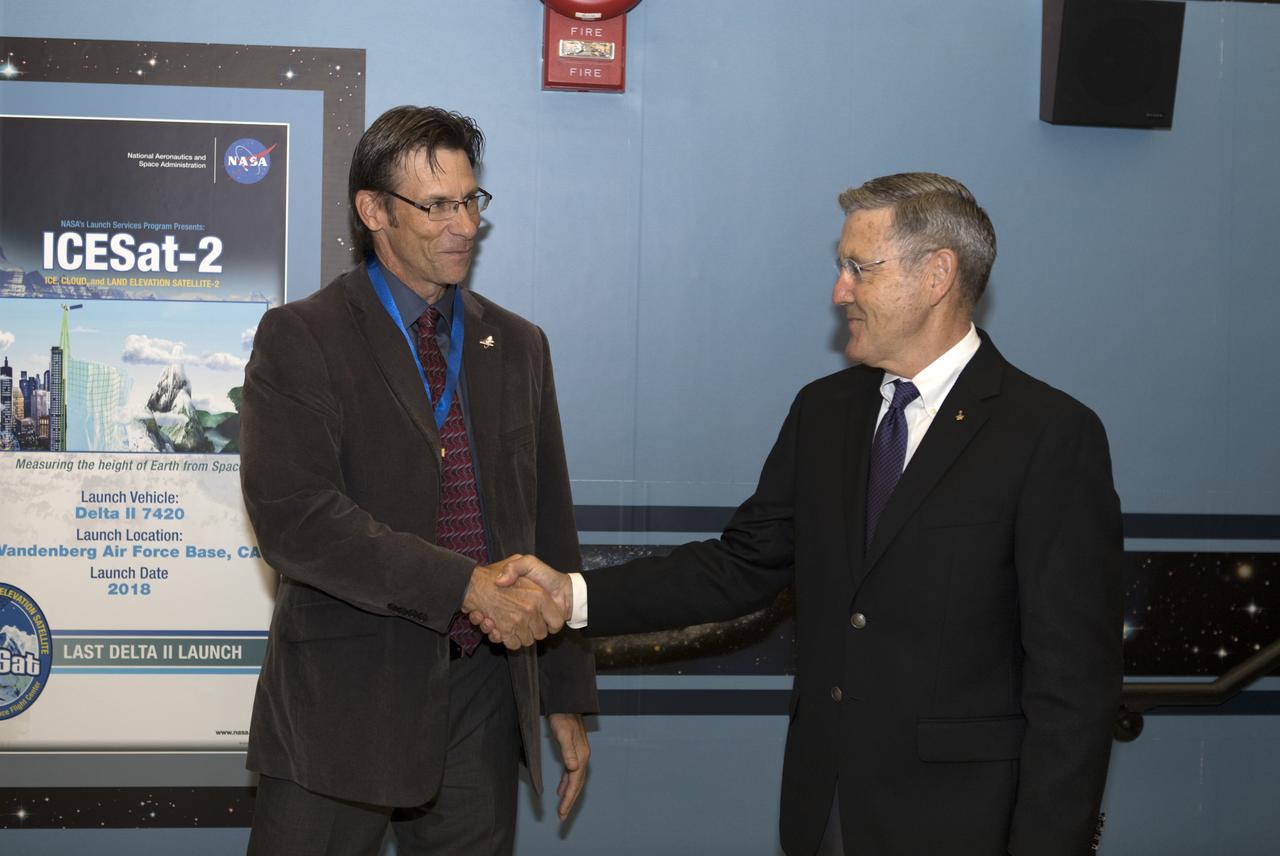
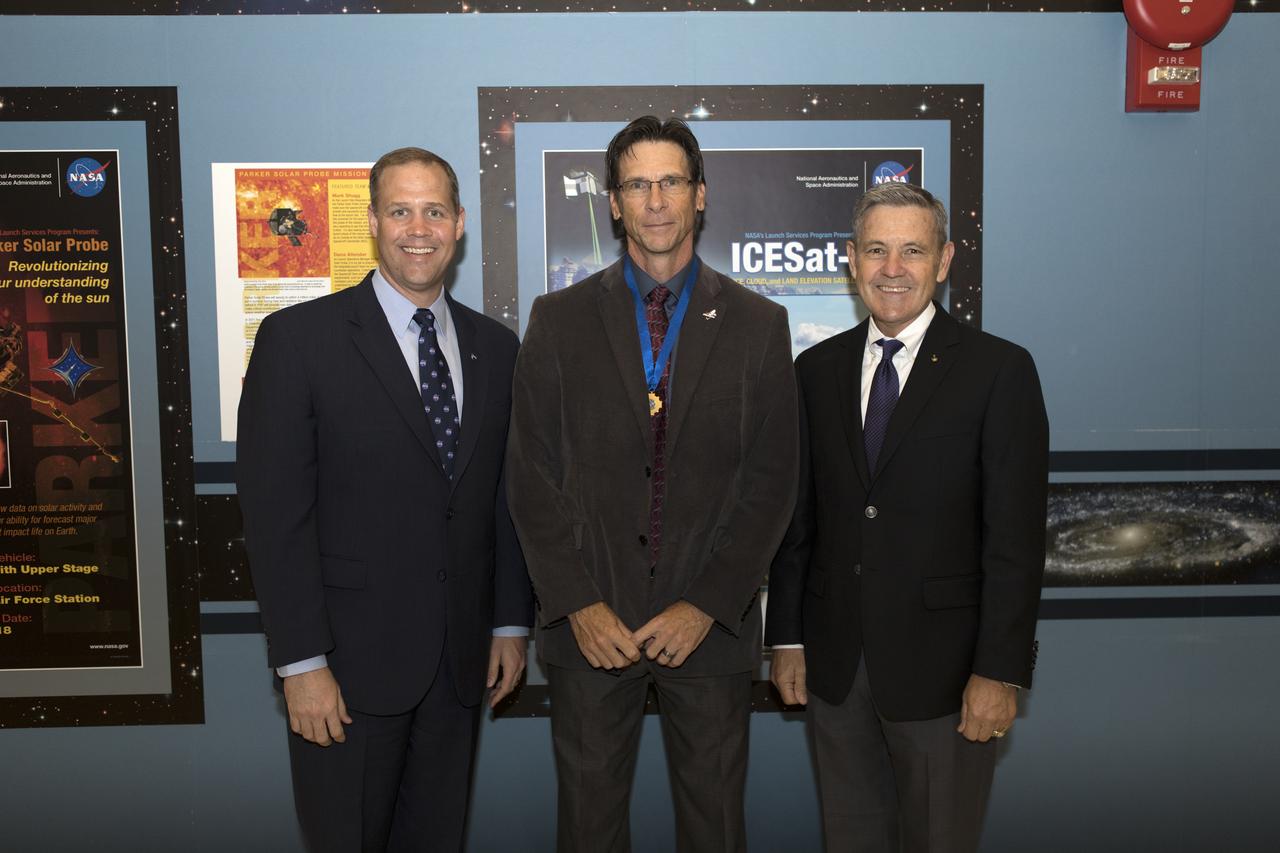
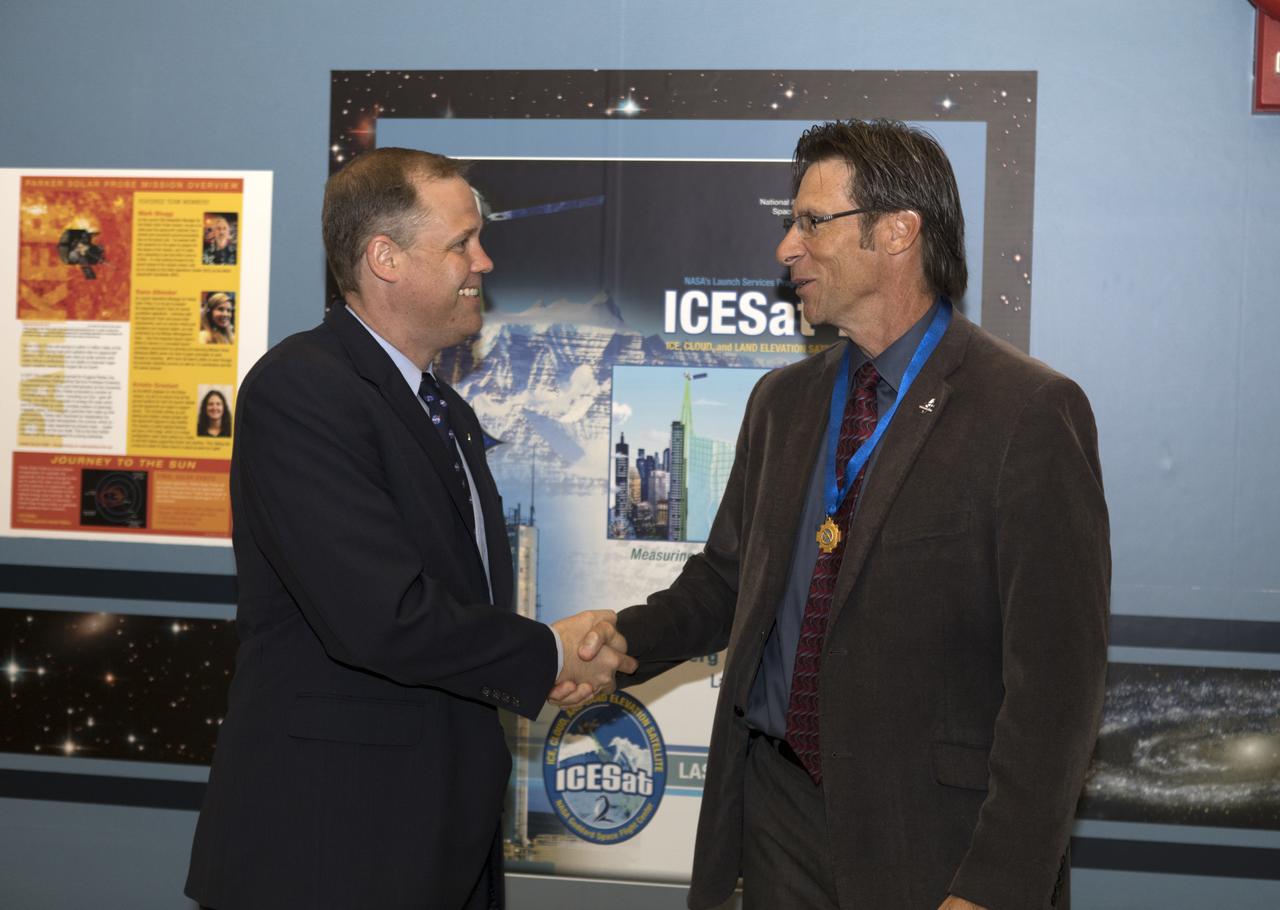
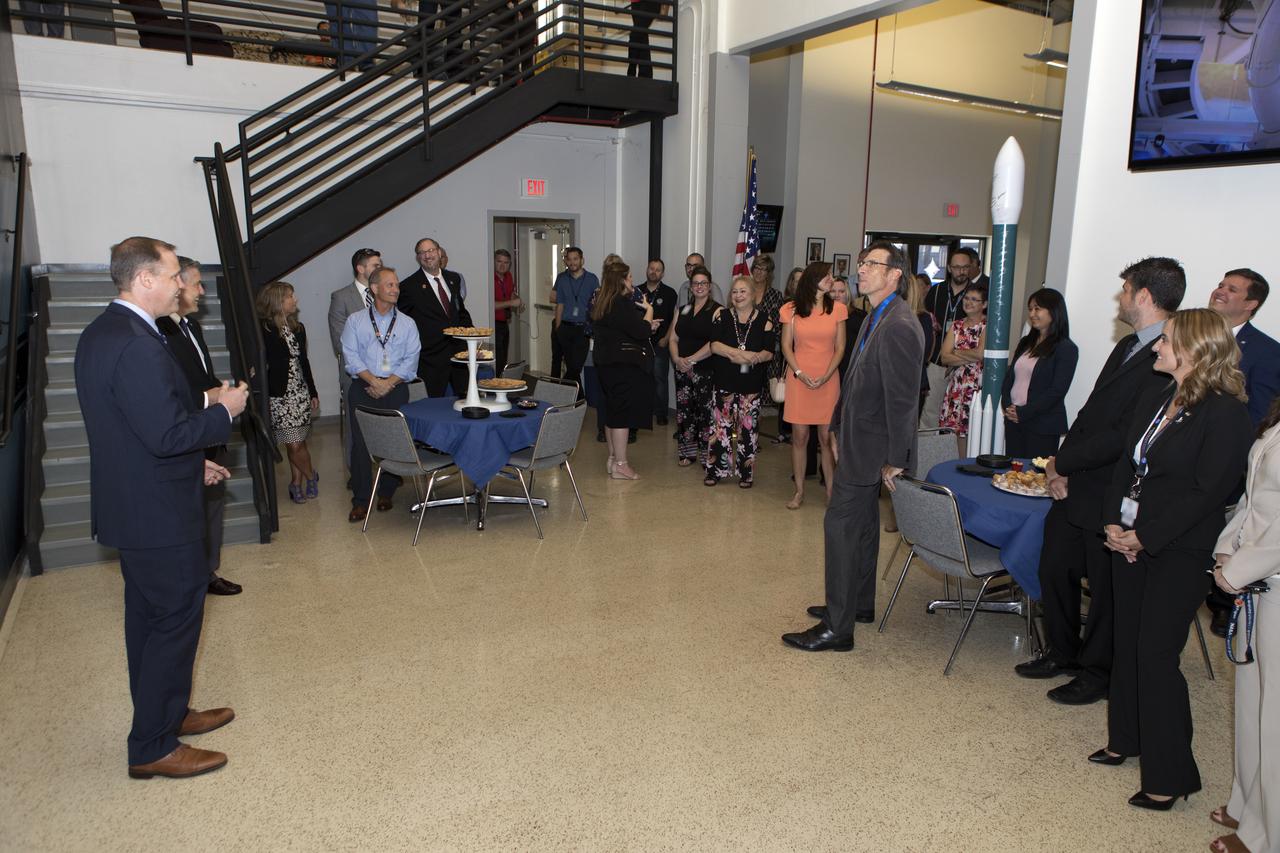
NASA Kennedy Space Center Director Bob Cabana, at right, congratulates Chuck Dovale, deputy program manager for the Launch Services Program (LSP), on Aug. 7, 2018. During a visit to the center, NASA Administrator Jim Bridenstine presents a NASA Distinguished Service Medal to Dovale. During his tour of Hangar AE and LSP's Mission Director's Center, Bridenstine received updates on LSP missions and accomplishments.
NASA Administrator Jim Bridenstine Visits KSC - Hangar AE
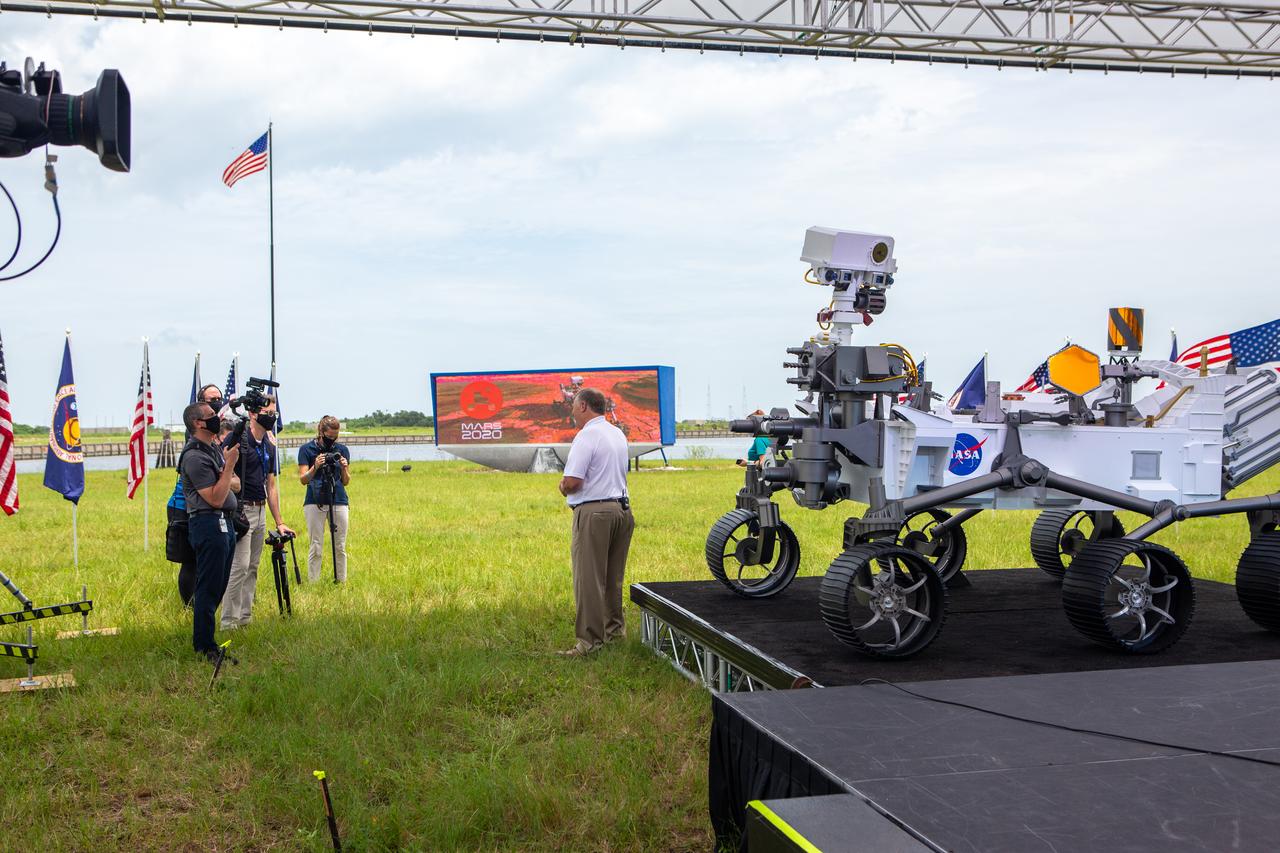
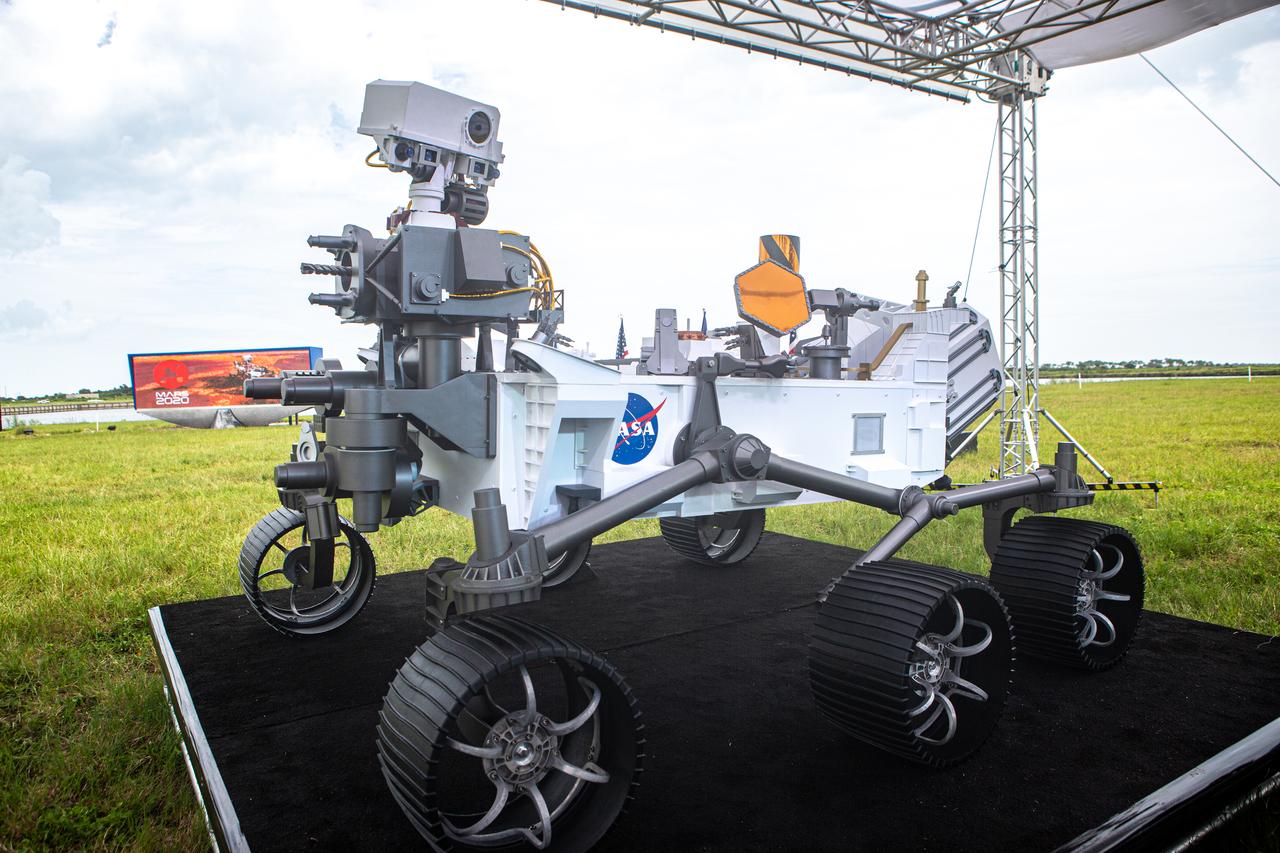
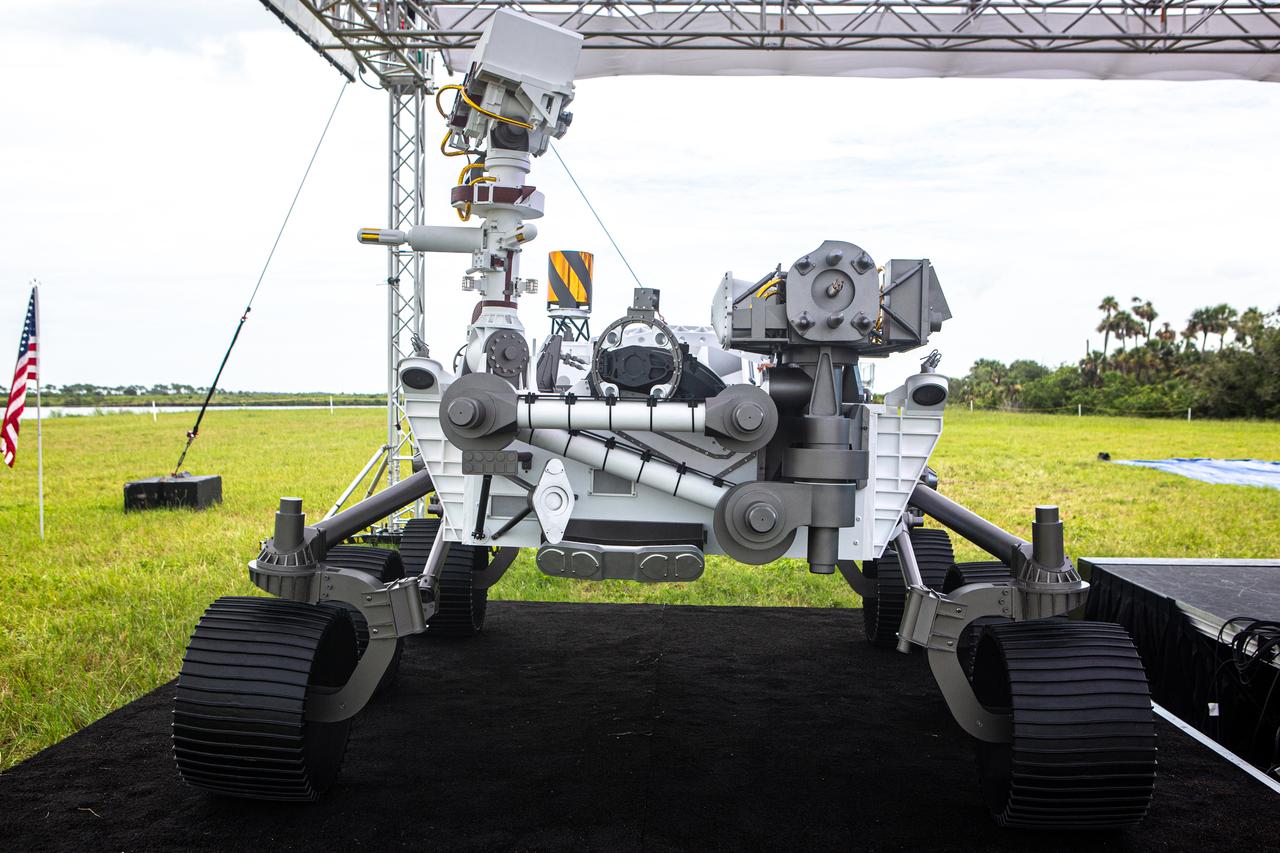
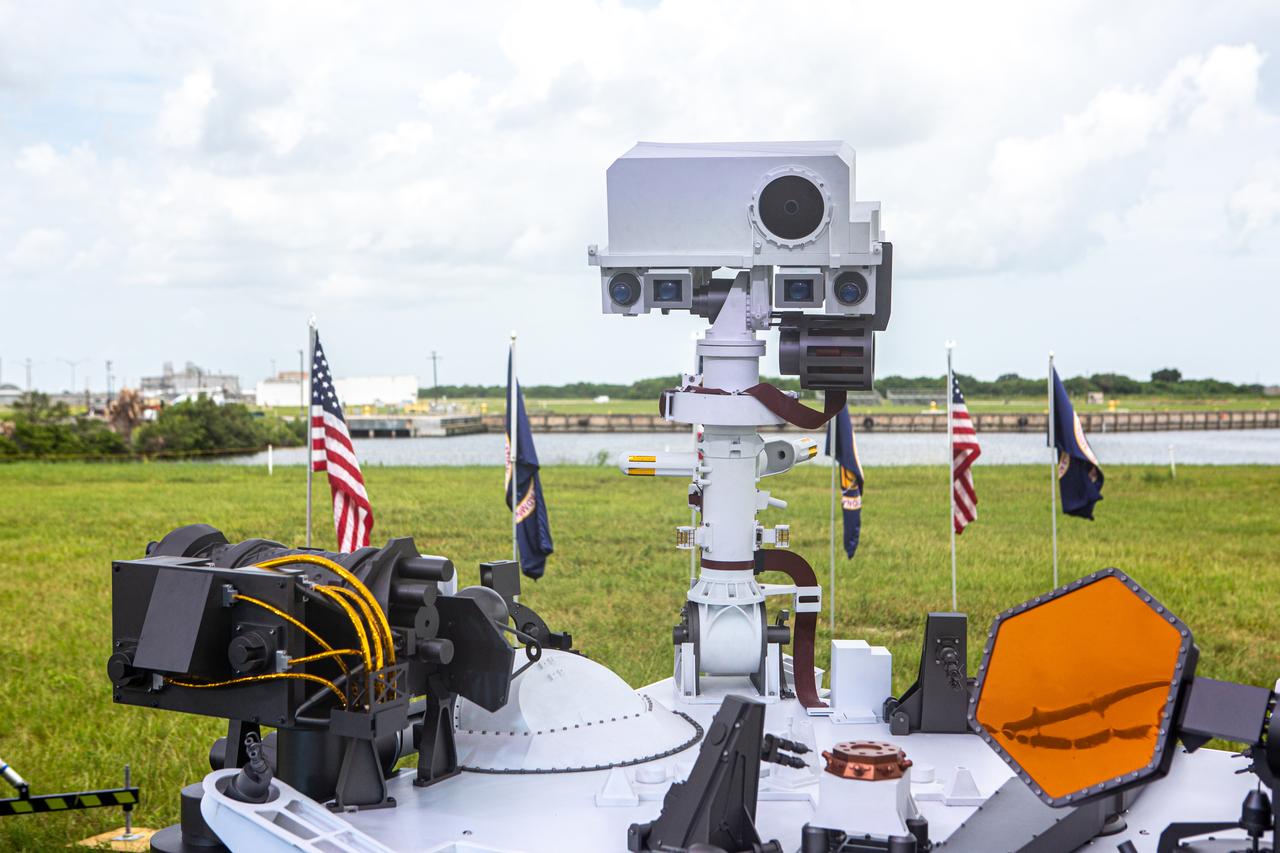
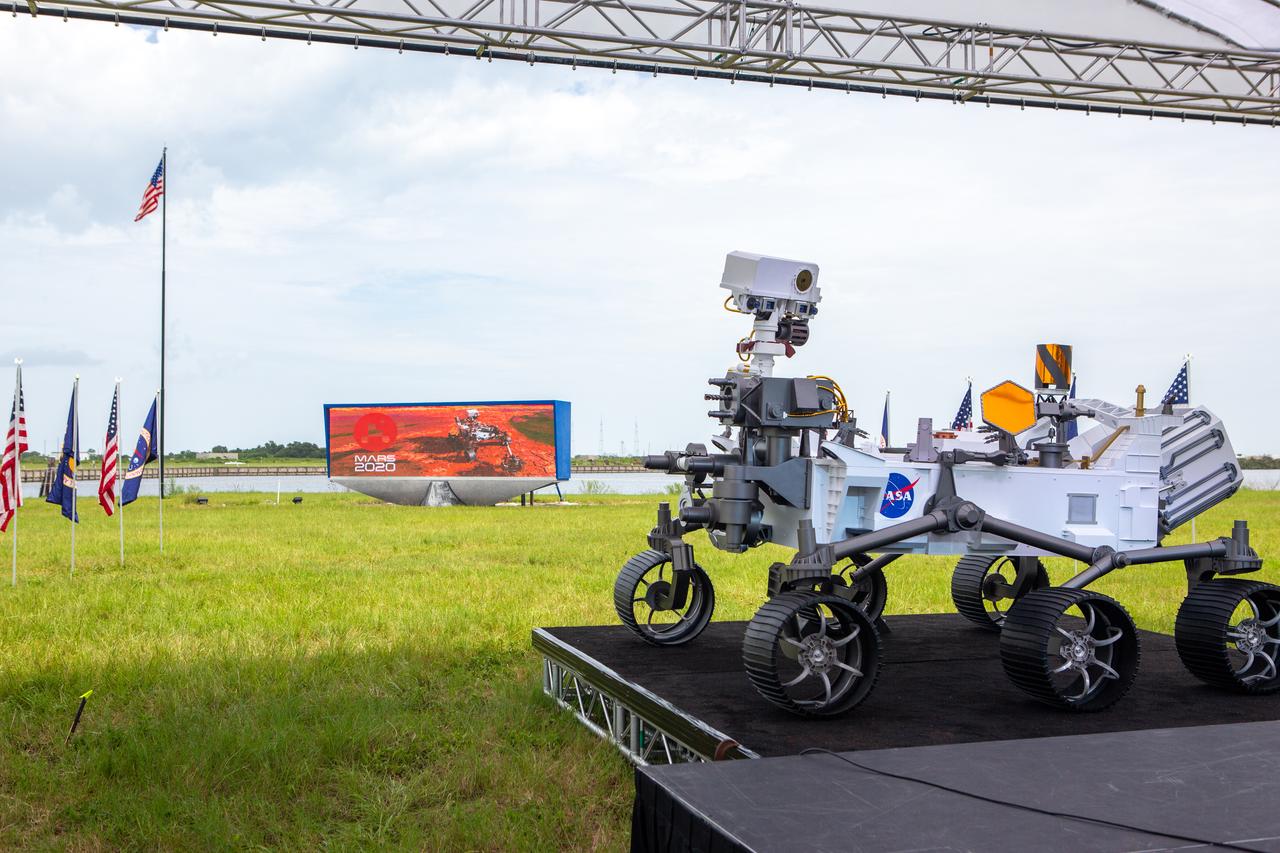
A full-scale mockup of NASA’s Mars 2020 Perseverance rover is on display at the News Center at the agency’s Kennedy Space Center in Florida on July 29, 2020. The rover and Ingenuity helicopter are scheduled to launch July 30, on a United Launch Alliance Atlas V 541 rocket from Space Launch Complex 41 at nearby Cape Canaveral Air Force Station. The rover is part of NASA’s Mars Exploration Program, a long-term effort of robotic exploration of the Red Planet. The rover will search for habitable conditions in the ancient past and signs of past microbial life on Mars. The Launch Services Program at Kennedy is responsible for launch management.
Mars 2020 Facebook Live / NASA Social
A full-scale mockup of NASA’s Mars 2020 Perseverance rover is on display near the countdown clock at the News Center at the agency’s Kennedy Space Center in Florida on July 29, 2020. The rover and Ingenuity helicopter are scheduled to launch July 30, on a United Launch Alliance Atlas V 541 rocket from Space Launch Complex 41 at nearby Cape Canaveral Air Force Station. The rover is part of NASA’s Mars Exploration Program, a long-term effort of robotic exploration of the Red Planet. The rover will search for habitable conditions in the ancient past and signs of past microbial life on Mars. The Launch Services Program at Kennedy is responsible for launch management.
Mars 2020 Facebook Live / NASA Social
A full-scale mockup of NASA’s Mars 2020 Perseverance rover is on display at the News Center at the agency’s Kennedy Space Center in Florida on July 29, 2020. The rover and Ingenuity helicopter are scheduled to launch July 30, on a United Launch Alliance Atlas V 541 rocket from Space Launch Complex 41 at nearby Cape Canaveral Air Force Station. The rover is part of NASA’s Mars Exploration Program, a long-term effort of robotic exploration of the Red Planet. The rover will search for habitable conditions in the ancient past and signs of past microbial life on Mars. The Launch Services Program at Kennedy is responsible for launch management.
Mars 2020 Facebook Live / NASA Social
A full-scale mockup of NASA’s Mars 2020 Perseverance rover is on display at the News Center at the agency’s Kennedy Space Center in Florida on July 29, 2020. The rover and Ingenuity helicopter are scheduled to launch July 30, on a United Launch Alliance Atlas V 541 rocket from Space Launch Complex 41 at nearby Cape Canaveral Air Force Station. The rover is part of NASA’s Mars Exploration Program, a long-term effort of robotic exploration of the Red Planet. The rover will search for habitable conditions in the ancient past and signs of past microbial life on Mars. The Launch Services Program at Kennedy is responsible for launch management.
Mars 2020 Facebook Live / NASA Social
Ronnie Rigney (r), chief of the Propulsion Test Office in the Project Directorate at Stennis Space Center, stands with agency colleagues to receive the prestigious American Institute of Aeronautics and Astronautics George M. Low Space Transportation Award on Sept. 12. Rigney accepted the award on behalf of the NASA and contractor team at Stennis for their support of the Space Shuttle Program that ended last summer. From 1975 to 2009, Stennis Space Center tested every main engine used to power 135 space shuttle missions. Stennis continued to provide flight support services through the end of the Space Shuttle Program in July 2011. The center also supported transition and retirement of shuttle hardware and assets through September 2012. The 2012 award was presented to the space shuttle team 'for excellence in the conception, development, test, operation and retirement of the world's first and only reusable space transportation system.' Joining Rigney for the award ceremony at the 2012 AIAA Conference in Pasadena, Calif., were: (l to r) Allison Zuniga, NASA Headquarters; Michael Griffin, former NASA administrator; Don Noah, Johnson Space Center in Houston; Steve Cash, Marshall Space Flight Center in Huntsville, Ala.; and Pete Nickolenko, Kennedy Space Center in Florida.
Space Shuttle Program
Ronnie Rigney (r), chief of the Propulsion Test Office in the Project Directorate at Stennis Space Center, stands with agency colleagues to receive the prestigious American Institute of Aeronautics and Astronautics George M. Low Space Transportation Award on Sept. 12. Rigney accepted the award on behalf of the NASA and contractor team at Stennis for their support of the Space Shuttle Program that ended last summer. From 1975 to 2009, Stennis Space Center tested every main engine used to power 135 space shuttle missions. Stennis continued to provide flight support services through the end of the Space Shuttle Program in July 2011. The center also supported transition and retirement of shuttle hardware and assets through September 2012. The 2012 award was presented to the space shuttle team 'for excellence in the conception, development, test, operation and retirement of the world's first and only reusable space transportation system.' Joining Rigney for the award ceremony at the 2012 AIAA Conference in Pasadena, Calif., were: (l to r) Allison Zuniga, NASA Headquarters; Michael Griffin, former NASA administrator; Don Noah, Johnson Space Center in Houston; Steve Cash, Marshall Space Flight Center in Huntsville, Ala.; and Pete Nickolenko, Kennedy Space Center in Florida.
Space Shuttle Program
NASA Administrator Jim Bridenstine, left, congratulates Chuck Dovale, deputy program manager for the Launch Services Program (LSP), on Aug. 7, 2018, during a visit to the agency's Kennedy Space Center in Florida. Bridenstine presented a NASA Distinguished Service Medal to Dovale. During his tour of Hangar AE and LSP's Mission Director's Center, Bridenstine received updates on LSP missions and accomplishments.
NASA Administrator Jim Bridenstine Visits KSC - Hangar AE
NASA Administrator Jim Bridenstine, left, tours Kennedy Space Center facilities and awards Chuck Dovale, center, deputy program manager for the Launch Services Program (LSP), a NASA Distinguished Service Medal on Aug. 7, 2018. At right is Kennedy Center Director Bob Cabana. During his tour of Hangar AE and LSP's Mission Director's Center, Bridenstine received updates on LSP missions and accomplishments.
NASA Administrator Jim Bridenstine Visits KSC - Hangar AE
NASA Administrator Jim Bridenstine, left, tours Hangar AE and the Launch Services Program's (LSP) Mission Director's Center at Cape Canaveral Air Force Station in Florida on Aug. 7, 2018. Bridenstine spoke to workers and received updates on LSP missions and accomplishments. At right, standing near a chair, is Chuck Dovale, deputy program manager for LSP. Bridenstine presented a NASA Distinguished Service Medal to Dovale.
NASA Administrator Jim Bridenstine Visits KSC - Hangar AE
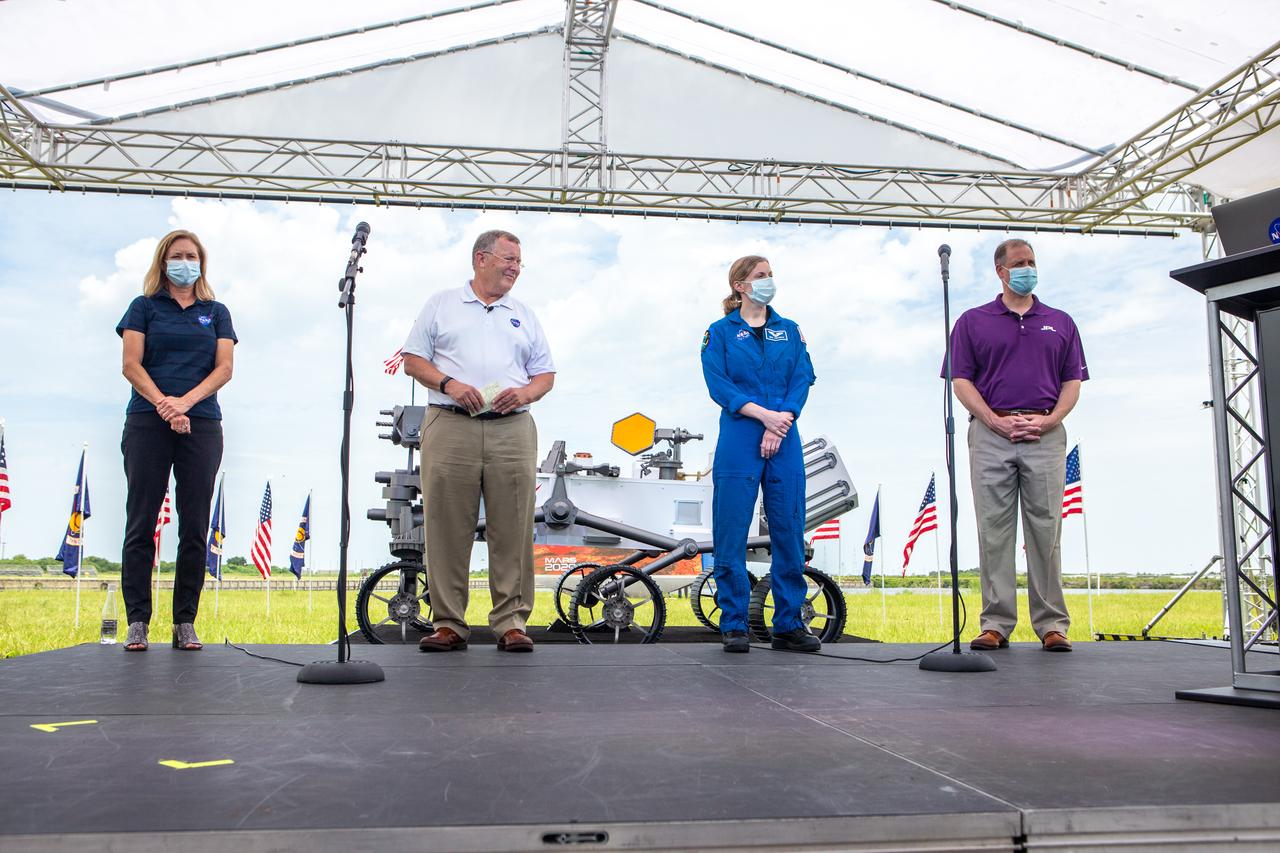
A full-scale mockup of NASA’s Mars 2020 Perseverance rover is on display at the News Center at the agency’s Kennedy Space Center in Florida on July 29, 2020. A Mars 2020 NASA Social is in progress featuring, right to left, Kennedy Space Center Deputy Director Janet Petro, NASA Deputy Administrator Jim Morhard, NASA astronaut Zena Cardman, and NASA Administrator Jim Bridenstine. The Mars Perseverance rover and Ingenuity helicopter are scheduled to launch July 30, on a United Launch Alliance Atlas V 541 rocket from Space Launch Complex 41 at nearby Cape Canaveral Air Force Station. The rover is part of NASA’s Mars Exploration Program, a long-term effort of robotic exploration of the Red Planet. The rover will search for habitable conditions in the ancient past and signs of past microbial life on Mars. The Launch Services Program at Kennedy is responsible for launch management.
Mars 2020 Facebook Live / NASA Social
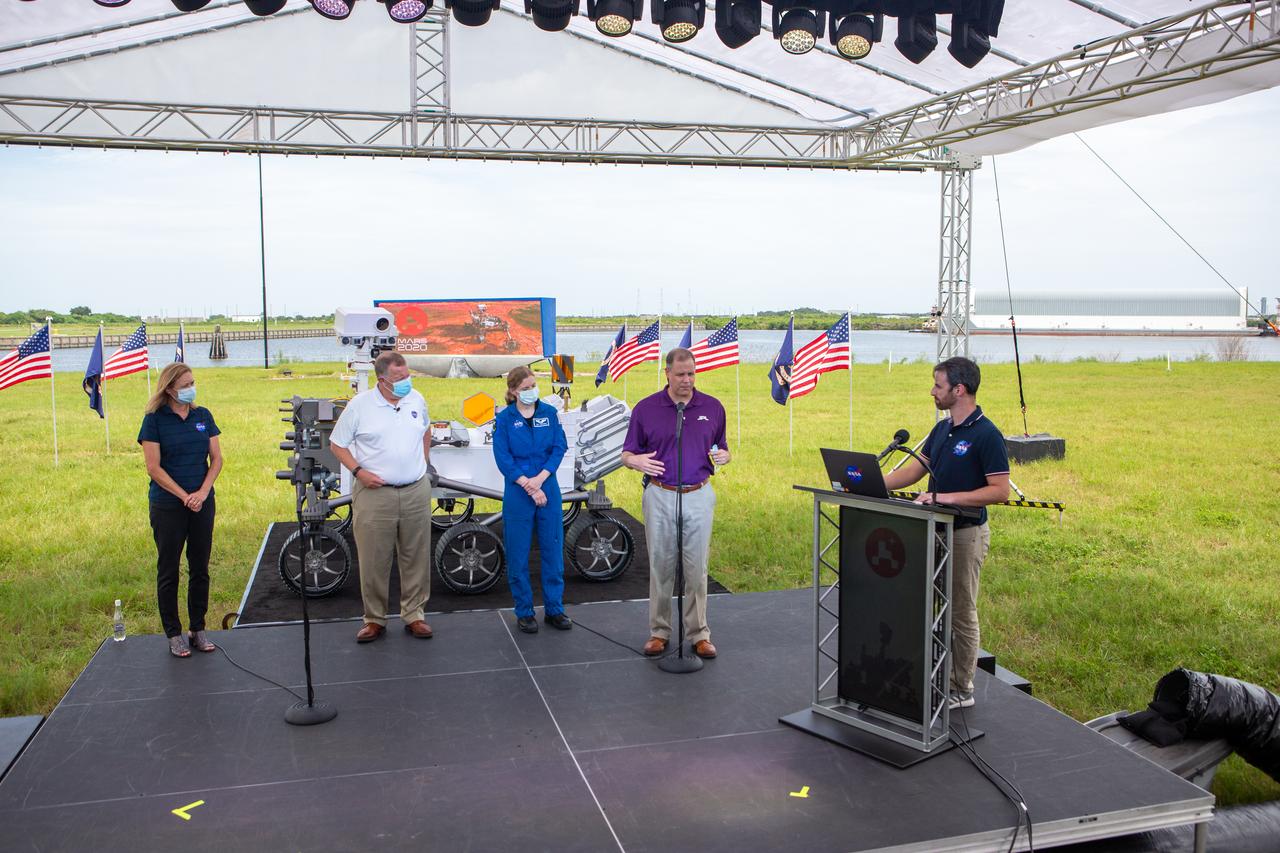
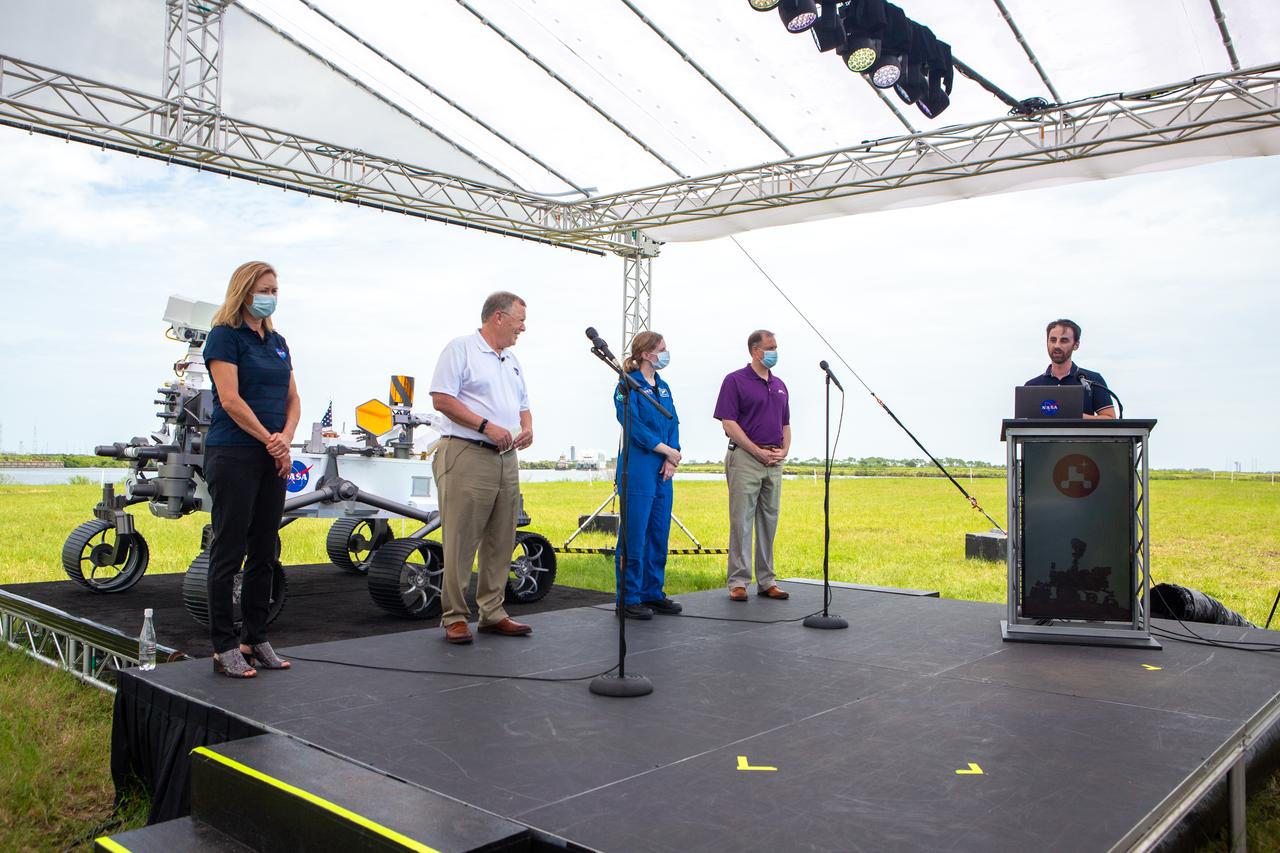
Joshua Santora, at the podium, NASA Communications, moderates a Mars 2020 NASA Social at Kennedy Space Center’s News Center in Florida on July 29, 2020. Participants from left are Kennedy Deputy Director Janet Petro, NASA Deputy Administrator Jim Morhard, NASA astronaut Zena Cardman, and NASA Administrator Jim Bridenstine. The Mars Perseverance rover and Ingenuity helicopter are scheduled to launch July 30, on a United Launch Alliance Atlas V 541 rocket from Space Launch Complex 41 at nearby Cape Canaveral Air Force Station. The rover is part of NASA’s Mars Exploration Program, a long-term effort of robotic exploration of the Red Planet. The rover will search for habitable conditions in the ancient past and signs of past microbial life on Mars. The Launch Services Program at Kennedy is responsible for launch management.
Mars 2020 Facebook Live / NASA Social
Joshua Santora, at the podium, NASA Communications, moderates a Mars 2020 NASA Social at Kennedy Space Center’s News Center in Florida on July 29, 2020. Participants from left are Kennedy Deputy Director Janet Petro, NASA Deputy Administrator Jim Morhard, NASA astronaut Zena Cardman, and NASA Administrator Jim Bridenstine. The Mars Perseverance rover and Ingenuity helicopter are scheduled to launch July 30, on a United Launch Alliance Atlas V 541 rocket from Space Launch Complex 41 at nearby Cape Canaveral Air Force Station. The rover is part of NASA’s Mars Exploration Program, a long-term effort of robotic exploration of the Red Planet. The rover will search for habitable conditions in the ancient past and signs of past microbial life on Mars. The Launch Services Program at Kennedy is responsible for launch management.
Mars 2020 Facebook Live / NASA Social
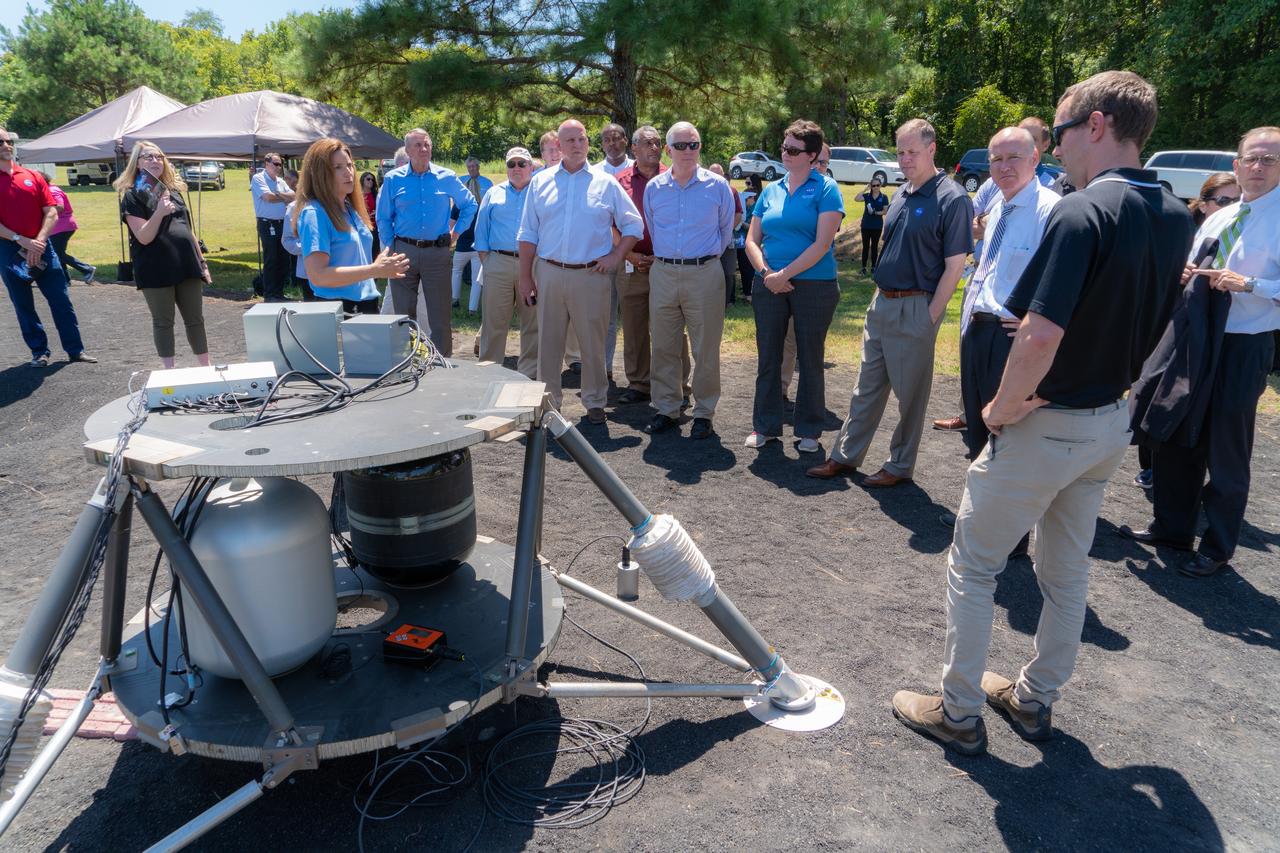
Lisa Watson-Morgan, center left, program manager of NASA’s Human Landing System Program at NASA’s Marshall Space Flight Center in Huntsville, Alabama, shows NASA Administrator Jim Bridenstine equipment used to test seismic sensors on a lunar lander platform on a simulated lunar surface at the center Aug. 16, 2019. Bridenstine was joined by Representatives Mo Brooks and Robert Aderholt of Alabama and Representative Scott DesJarlais of Tennessee. Planetary scientists performed the experiment to learn how these waves travel through simulated regolith, which is material similar to the Moon’s surface. The experiment will help guide instrument deployment scenarios for NASA’s Commercial Lunar Payload Service (CLPS) Program, delivering small science and technology payloads for Artemis. That same day, Bridenstine announced Marshall will lead the agency’s Human Landing System Program. (NASA/Fred Deaton)  For more information: https://www.nasa.gov/artemis-1
NASA Marshall Showcases Lander Testing Capabilities
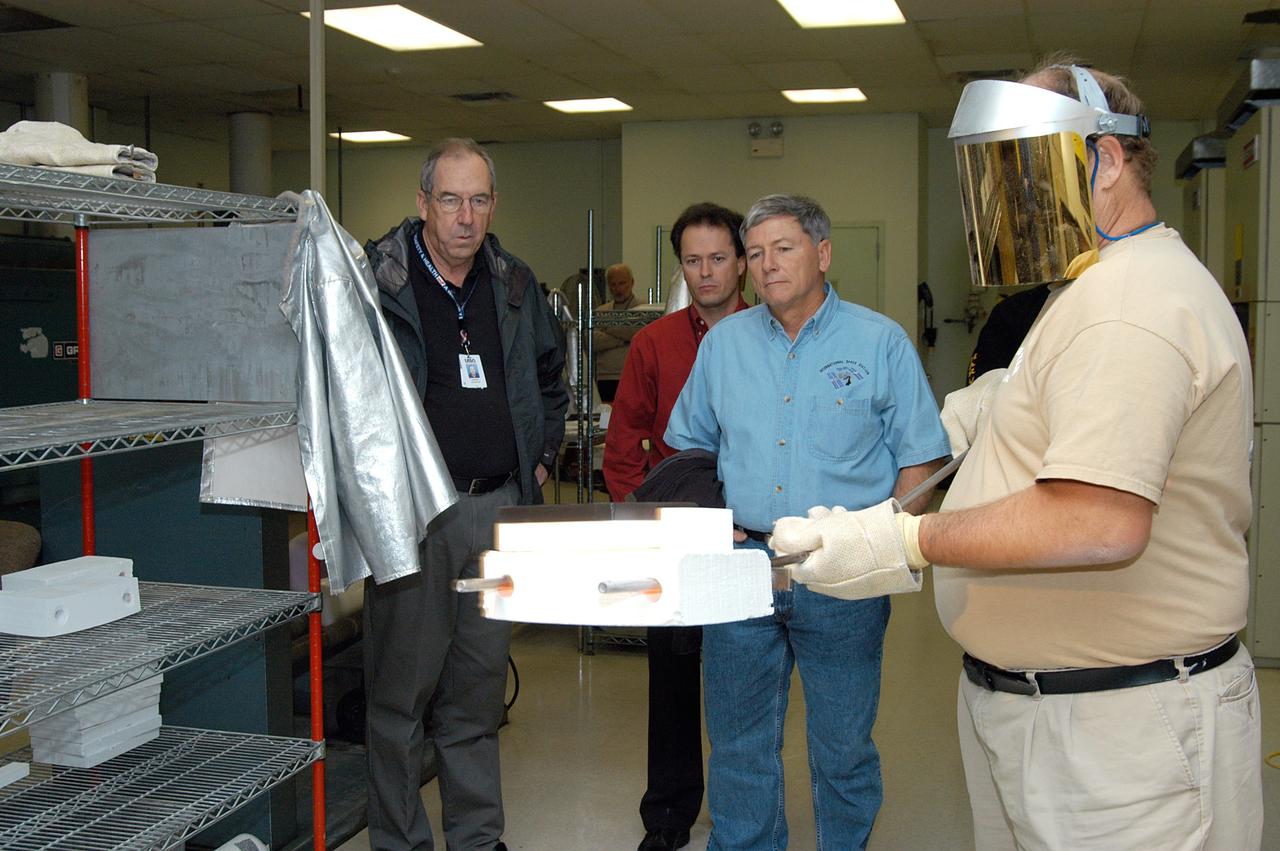
KENNEDY SPACE CENTER, FLA. -- United Space Alliance (USA) Vice President and Space Shuttle Program Manager Howard DeCastro (left) and NASA Deputy Associate Administrator for Space Station and Shuttle Programs Michael Kostelnik (third from left) watch as a USA technician (right) creates a tile for use in the Shuttle's Thermal Protection System (TPS).  NASA and USA Space Shuttle program management are participating in a leadership workday.  The day is intended to provide management with an in-depth, hands-on look at Shuttle processing activities at KSC.
KENNEDY SPACE CENTER, FLA. -- United Space Alliance (USA) Vice President and Space Shuttle Program Manager Howard DeCastro (left) and NASA Deputy Associate Administrator for Space Station and Shuttle Programs Michael Kostelnik (third from left) watch as a USA technician (right) creates a tile for use in the Shuttle's Thermal Protection System (TPS). NASA and USA Space Shuttle program management are participating in a leadership workday. The day is intended to provide management with an in-depth, hands-on look at Shuttle processing activities at KSC.
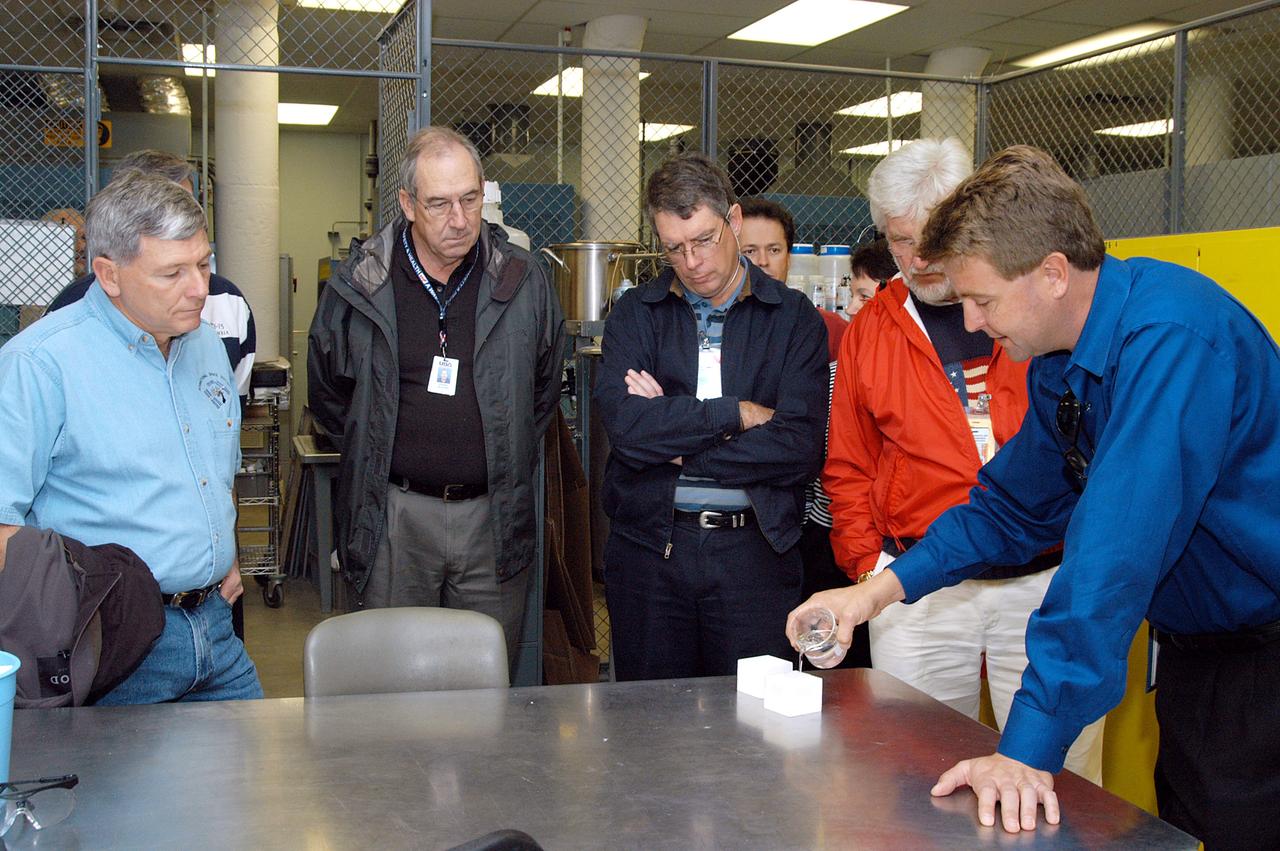
KENNEDY SPACE CENTER, FLA. -- From left, NASA Deputy Associate Administrator for Space Station and Shuttle Programs Michael Kostelnik and United Space Alliance (USA) Vice President and Space Shuttle Program Manager Howard DeCastro are briefed on the properties of the tile used in the Shuttle's Thermal Protection System (TPS) by USA Manager of the TPS Facility Martin Wilson (right).  NASA and USA Space Shuttle program management are participating in a leadership workday.  The day is intended to provide management with an in-depth, hands-on look at Shuttle processing activities at KSC.
KENNEDY SPACE CENTER, FLA. -- From left, NASA Deputy Associate Administrator for Space Station and Shuttle Programs Michael Kostelnik and United Space Alliance (USA) Vice President and Space Shuttle Program Manager Howard DeCastro are briefed on the properties of the tile used in the Shuttle's Thermal Protection System (TPS) by USA Manager of the TPS Facility Martin Wilson (right). NASA and USA Space Shuttle program management are participating in a leadership workday. The day is intended to provide management with an in-depth, hands-on look at Shuttle processing activities at KSC.
KENNEDY SPACE CENTER, FLA. -- United Space Alliance (USA) technicians demonstrate the construction of a thermal blanket used in the Shuttle's thermal protection system for USA Vice President and Space Shuttle Program Manager Howard DeCastro (second from left) and NASA Deputy Associate Administrator for Space Station and Shuttle Programs Michael Kostelnik (right).  NASA and USA Space Shuttle program management are participating in a leadership workday.  The day is intended to provide management with an in-depth, hands-on look at Shuttle processing activities at KSC.
KENNEDY SPACE CENTER, FLA. -- United Space Alliance (USA) technicians demonstrate the construction of a thermal blanket used in the Shuttle's thermal protection system for USA Vice President and Space Shuttle Program Manager Howard DeCastro (second from left) and NASA Deputy Associate Administrator for Space Station and Shuttle Programs Michael Kostelnik (right). NASA and USA Space Shuttle program management are participating in a leadership workday. The day is intended to provide management with an in-depth, hands-on look at Shuttle processing activities at KSC.
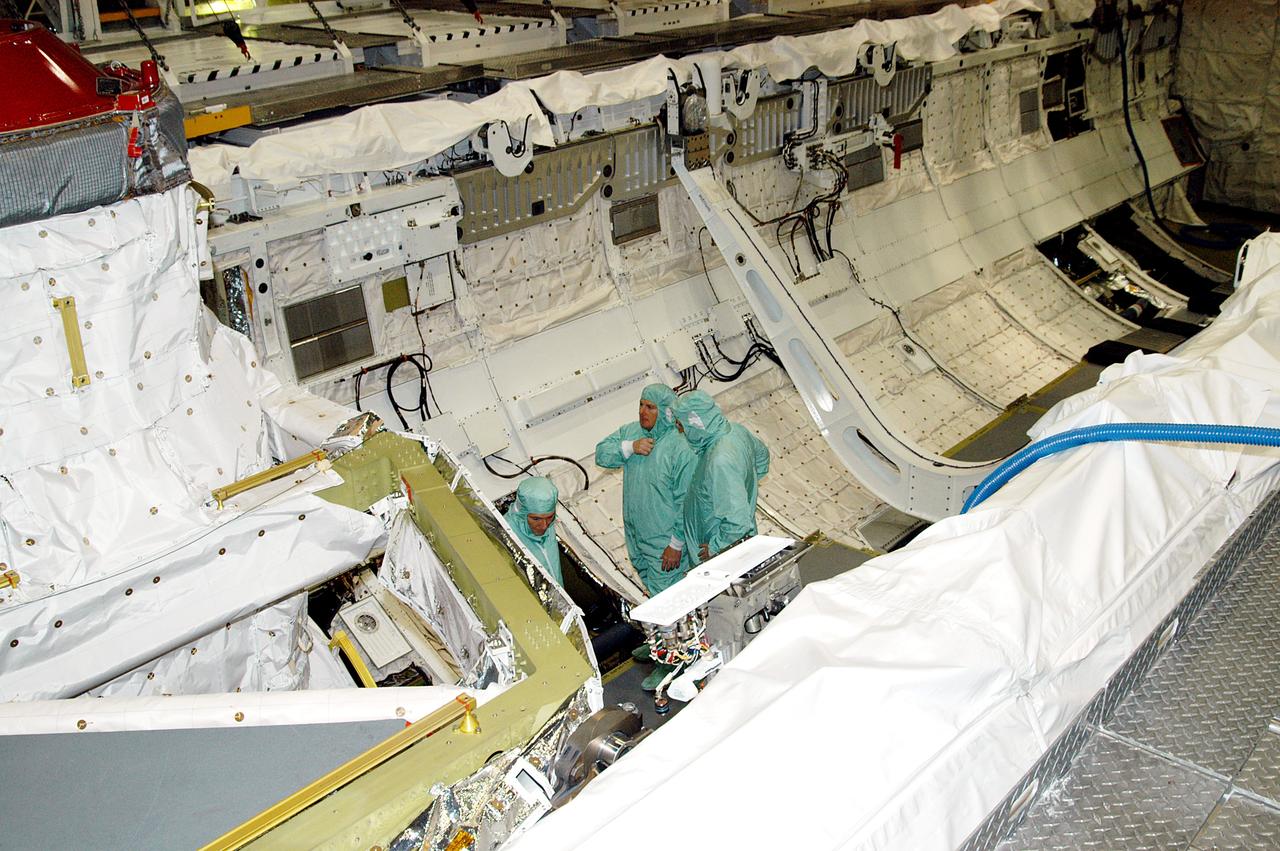
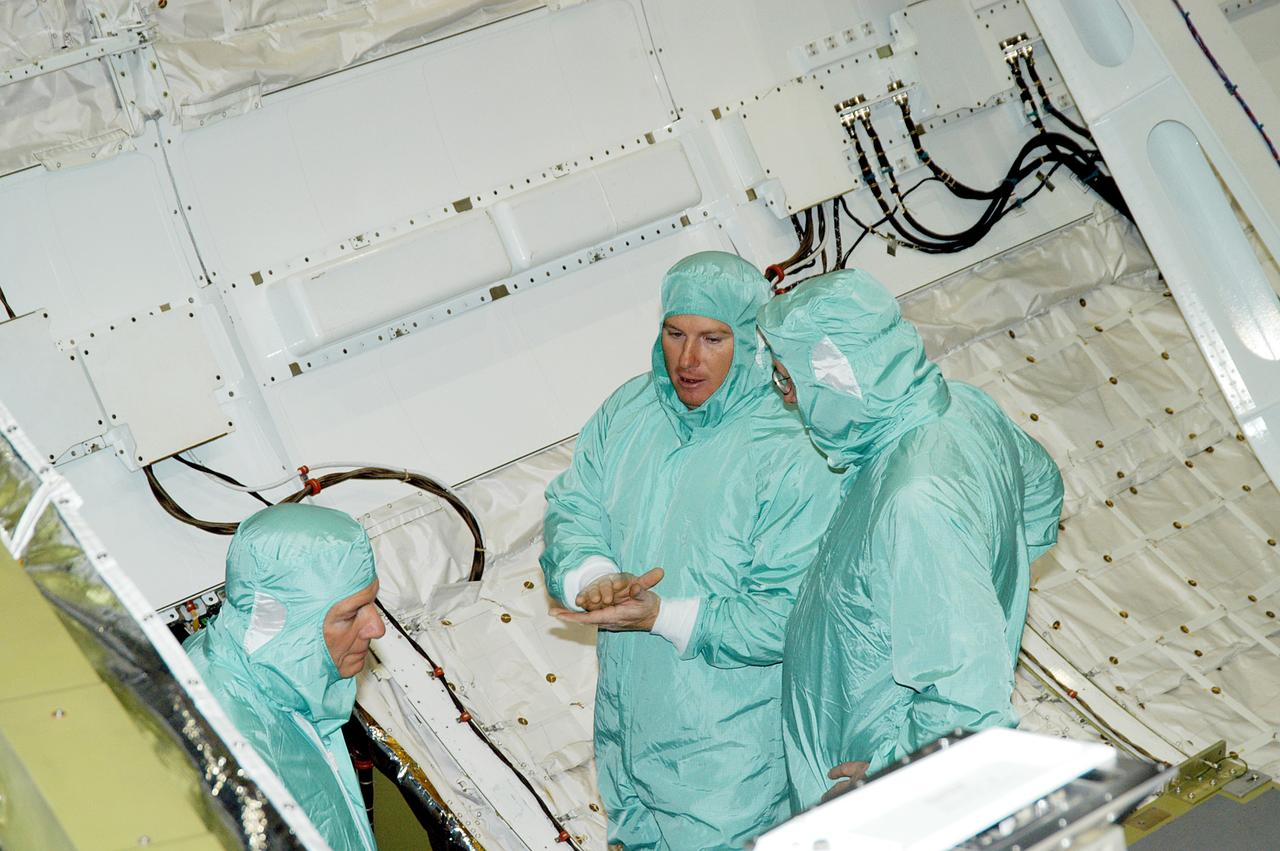
KENNEDY SPACE CENTER, FLA. -- In Orbiter Processing Facility Bay 1, NASA Deputy Associate Administrator for Space Station and Shuttle Programs Michael Kostelnik (left) and United Space Alliance (USA) Vice President and Space Shuttle Program Manager Howard DeCastro (right) are briefed by a USA technician (center) on Shuttle processing in the payload bay of orbiter Atlantis.  NASA and USA Space Shuttle program management are participating in a leadership workday.  The day is intended to provide management with an in-depth, hands-on look at Shuttle processing activities at KSC.
KENNEDY SPACE CENTER, FLA. -- In Orbiter Processing Facility Bay 1, NASA Deputy Associate Administrator for Space Station and Shuttle Programs Michael Kostelnik (left) and United Space Alliance (USA) Vice President and Space Shuttle Program Manager Howard DeCastro (right) are briefed by a USA technician (center) on Shuttle processing in the payload bay of orbiter Atlantis. NASA and USA Space Shuttle program management are participating in a leadership workday. The day is intended to provide management with an in-depth, hands-on look at Shuttle processing activities at KSC.
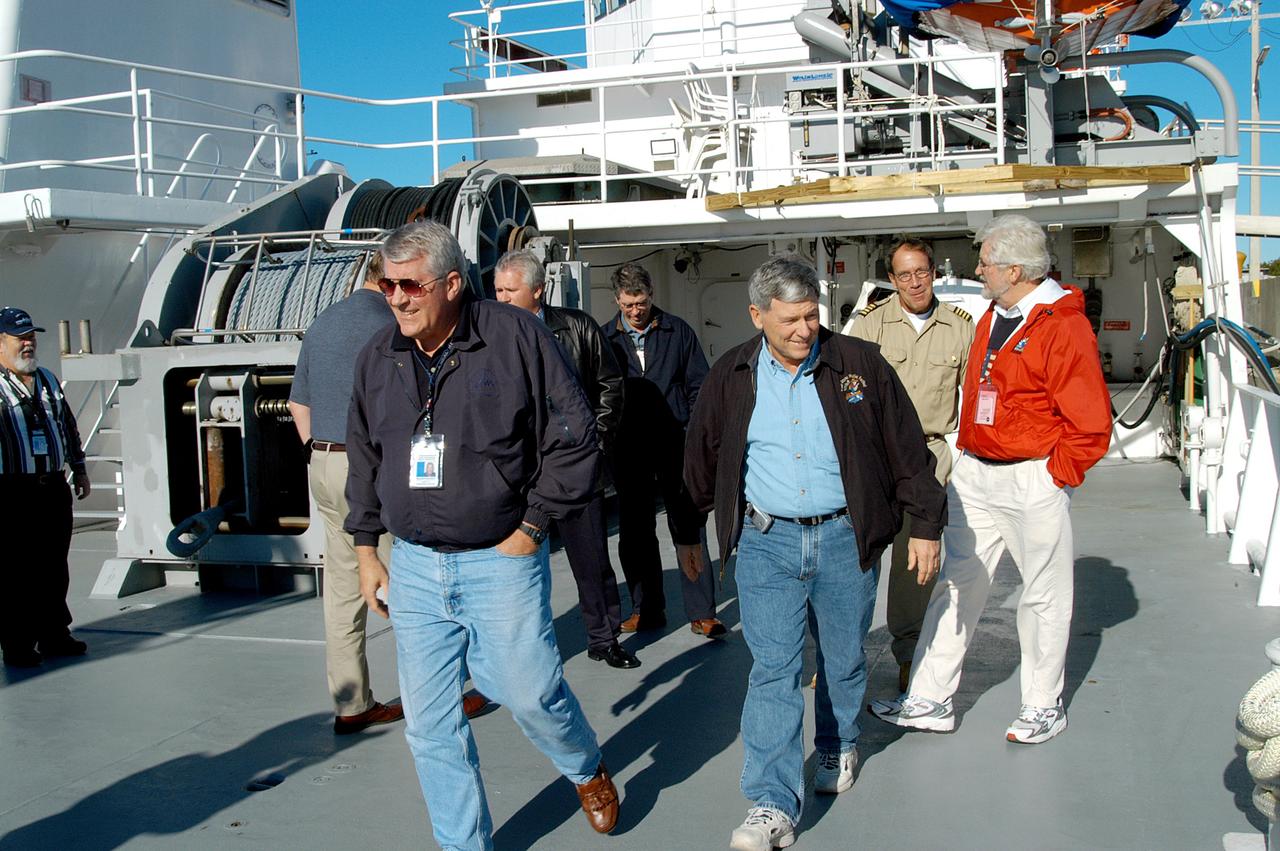
KENNEDY SPACE CENTER, FLA. -- United Space Alliance (USA) Vice President and Associate Program Manager of Florida Operations Bill Pickavance (left front) and NASA Deputy Associate Administrator for Space Station and Shuttle Programs Michael Kostelnik (right front) tour a solid rocket booster (SRB) retrieval ship at Cape Canaveral.  NASA and USA Space Shuttle program management are participating in a leadership workday.  The day is intended to provide management with an in-depth, hands-on look at Shuttle processing activities at KSC.
KENNEDY SPACE CENTER, FLA. -- United Space Alliance (USA) Vice President and Associate Program Manager of Florida Operations Bill Pickavance (left front) and NASA Deputy Associate Administrator for Space Station and Shuttle Programs Michael Kostelnik (right front) tour a solid rocket booster (SRB) retrieval ship at Cape Canaveral. NASA and USA Space Shuttle program management are participating in a leadership workday. The day is intended to provide management with an in-depth, hands-on look at Shuttle processing activities at KSC.
KENNEDY SPACE CENTER, FLA. -- In Orbiter Processing Facility Bay 1, NASA Deputy Associate Administrator for Space Station and Shuttle Programs Michael Kostelnik (left) and United Space Alliance (USA) Vice President and Space Shuttle Program Manager Howard DeCastro (right) are briefed by a USA technician (center) on Shuttle processing in the payload bay of orbiter Atlantis.  NASA and USA Space Shuttle program management are participating in a leadership workday.  The day is intended to provide management with an in-depth, hands-on look at Shuttle processing activities at KSC.
KENNEDY SPACE CENTER, FLA. -- In Orbiter Processing Facility Bay 1, NASA Deputy Associate Administrator for Space Station and Shuttle Programs Michael Kostelnik (left) and United Space Alliance (USA) Vice President and Space Shuttle Program Manager Howard DeCastro (right) are briefed by a USA technician (center) on Shuttle processing in the payload bay of orbiter Atlantis. NASA and USA Space Shuttle program management are participating in a leadership workday. The day is intended to provide management with an in-depth, hands-on look at Shuttle processing activities at KSC.
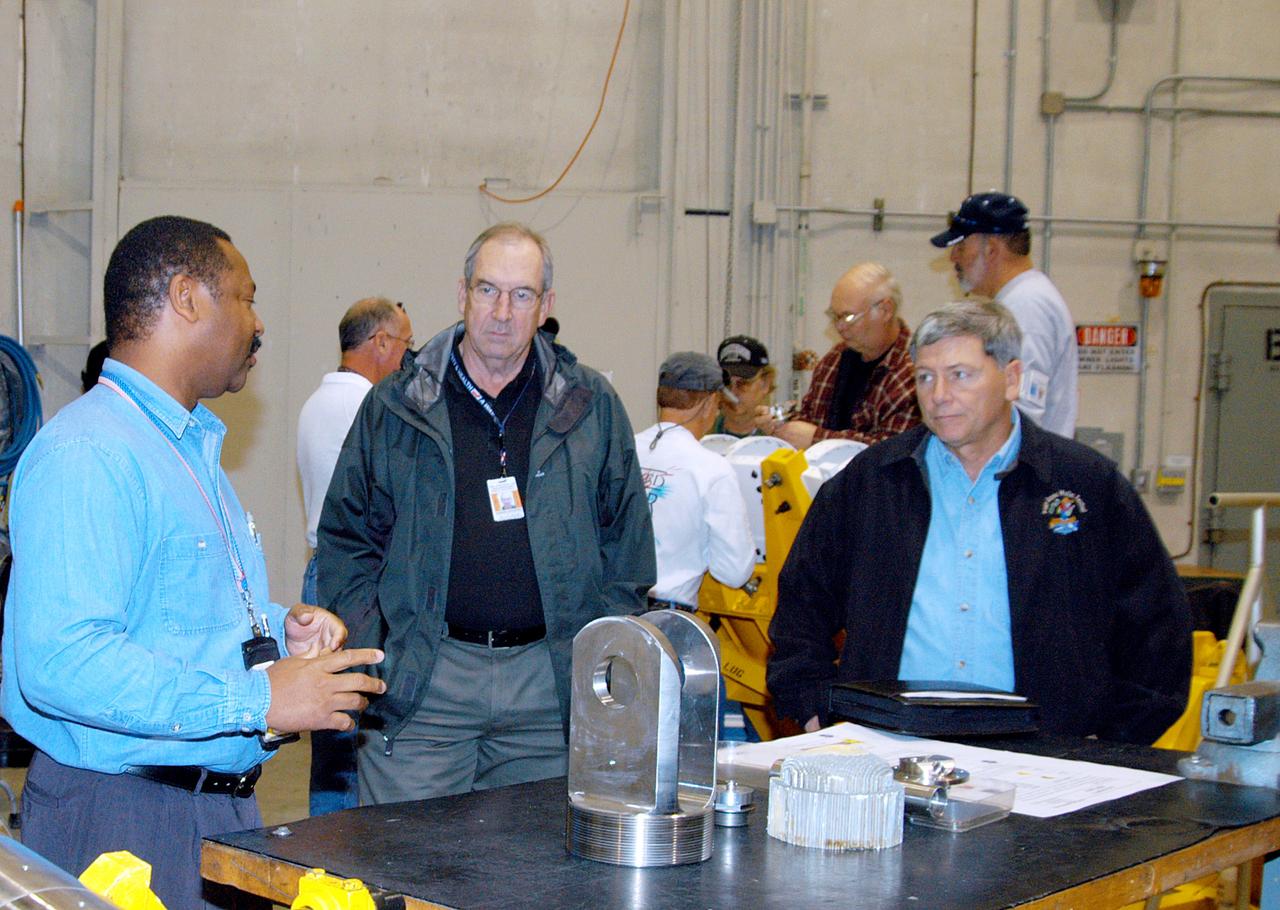
KENNEDY SPACE CENTER, FLA. -- From left, a United Space Alliance (USA) technician discusses aspects of Shuttle processing performed in the Solid Rocket Booster (SRB) Assembly and Refurbishment Facility (ARF) with USA Vice President and Space Shuttle Program Manager Howard DeCastro and NASA Deputy Associate Administrator for Space Station and Shuttle Programs Michael Kostelnik.  NASA and USA Space Shuttle program management are participating in a leadership workday.  The day is intended to provide management with an in-depth, hands-on look at Shuttle processing activities at KSC.
KENNEDY SPACE CENTER, FLA. -- From left, a United Space Alliance (USA) technician discusses aspects of Shuttle processing performed in the Solid Rocket Booster (SRB) Assembly and Refurbishment Facility (ARF) with USA Vice President and Space Shuttle Program Manager Howard DeCastro and NASA Deputy Associate Administrator for Space Station and Shuttle Programs Michael Kostelnik. NASA and USA Space Shuttle program management are participating in a leadership workday. The day is intended to provide management with an in-depth, hands-on look at Shuttle processing activities at KSC.
KENNEDY SPACE CENTER, FLA. -- United Space Alliance (USA) Vice President and Space Shuttle Program Manager Howard DeCastro (left) and NASA Deputy Associate Administrator for Space Station and Shuttle Programs Michael Kostelnik (center) are briefed on the use of a cold plate in Orbiter Processing Facility Bay 2 by a USA technician (right).  NASA and USA Space Shuttle program management are participating in a leadership workday.  The day is intended to provide management with an in-depth, hands-on look at Shuttle processing activities at KSC.
KENNEDY SPACE CENTER, FLA. -- United Space Alliance (USA) Vice President and Space Shuttle Program Manager Howard DeCastro (left) and NASA Deputy Associate Administrator for Space Station and Shuttle Programs Michael Kostelnik (center) are briefed on the use of a cold plate in Orbiter Processing Facility Bay 2 by a USA technician (right). NASA and USA Space Shuttle program management are participating in a leadership workday. The day is intended to provide management with an in-depth, hands-on look at Shuttle processing activities at KSC.
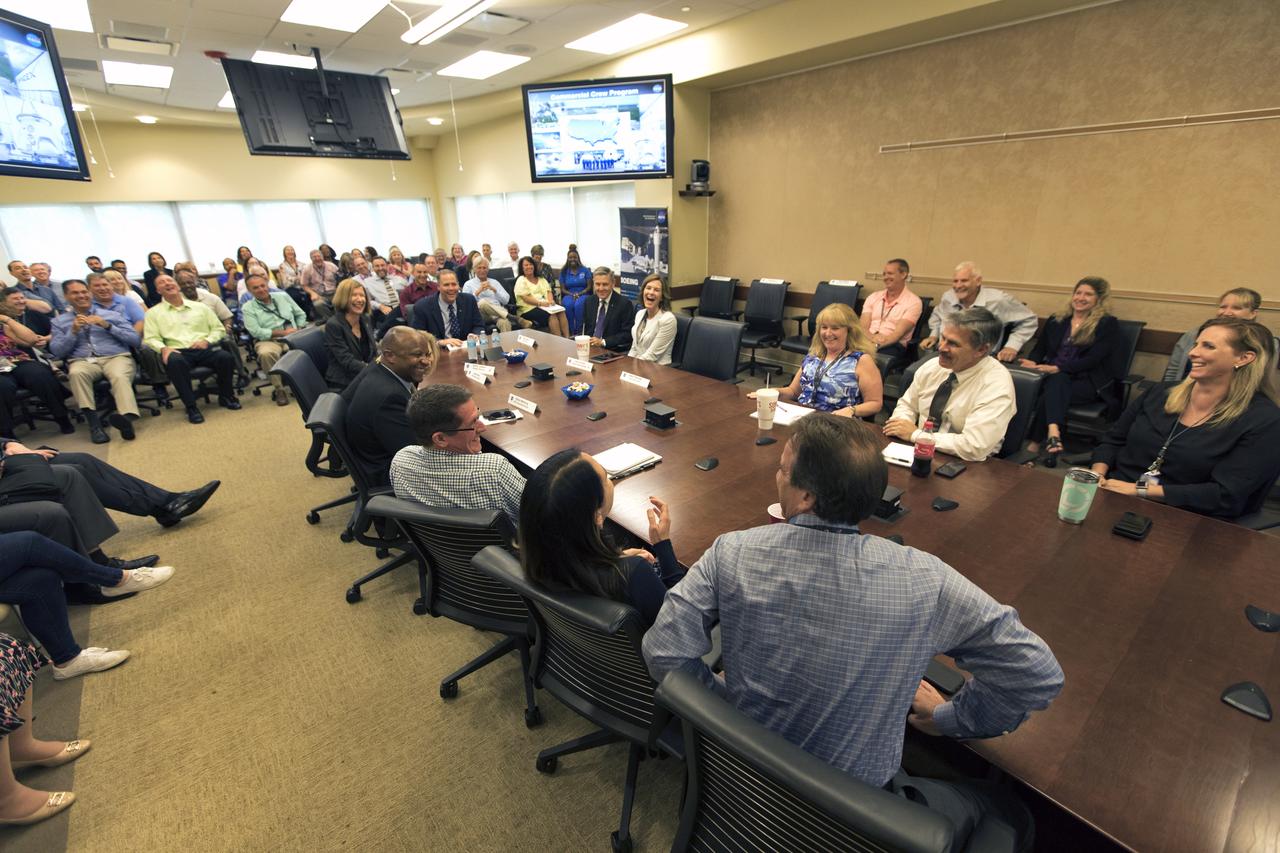
A Mars 2020 NASA Social is held at Kennedy Space Center’s News Center in Florida on July 29, 2020. Participants from left are Kennedy Deputy Director Janet Petro, NASA Deputy Administrator Jim Morhard, NASA astronaut Zena Cardman, and NASA Administrator Jim Bridenstine. The Mars Perseverance rover and Ingenuity helicopter are scheduled to launch July 30, on a United Launch Alliance Atlas V 541 rocket from Space Launch Complex 41 at nearby Cape Canaveral Air Force Station. The rover is part of NASA’s Mars Exploration Program, a long-term effort of robotic exploration of the Red Planet. The rover will search for habitable conditions in the ancient past and signs of past microbial life on Mars. The Launch Services Program at Kennedy is responsible for launch management.
Mars 2020 Facebook Live / NASA Social
Amber Allen, a program analyst in the Launch Services Program, speaks to attendees at NASA's Business Opportunities Expo 2018, on Oct. 23, inside Cruise Terminal 6 at Port Canaveral in Florida. The 28th Business Opportunities Expo featured more than 200 businesses, large and small, and government exhibitors from throughout the Space Coast and the nation. The Business Opportunities Expo is facilitated by Kennedy's Small Business Programs Office and Prime Contractor Board, along with the U.S. Air Force 45th Space Wing and Canaveral Port Authority. Vendors from a variety of product and service areas, such as computer technology, engineering services, communication equipment and services, and construction and safety products, to name a few, were at the expo. Representatives from the 45th Space Wing, Kennedy prime contractors, NASA and many more agencies and organizations were on hand to provide information and answer questions.
Small Business Expo
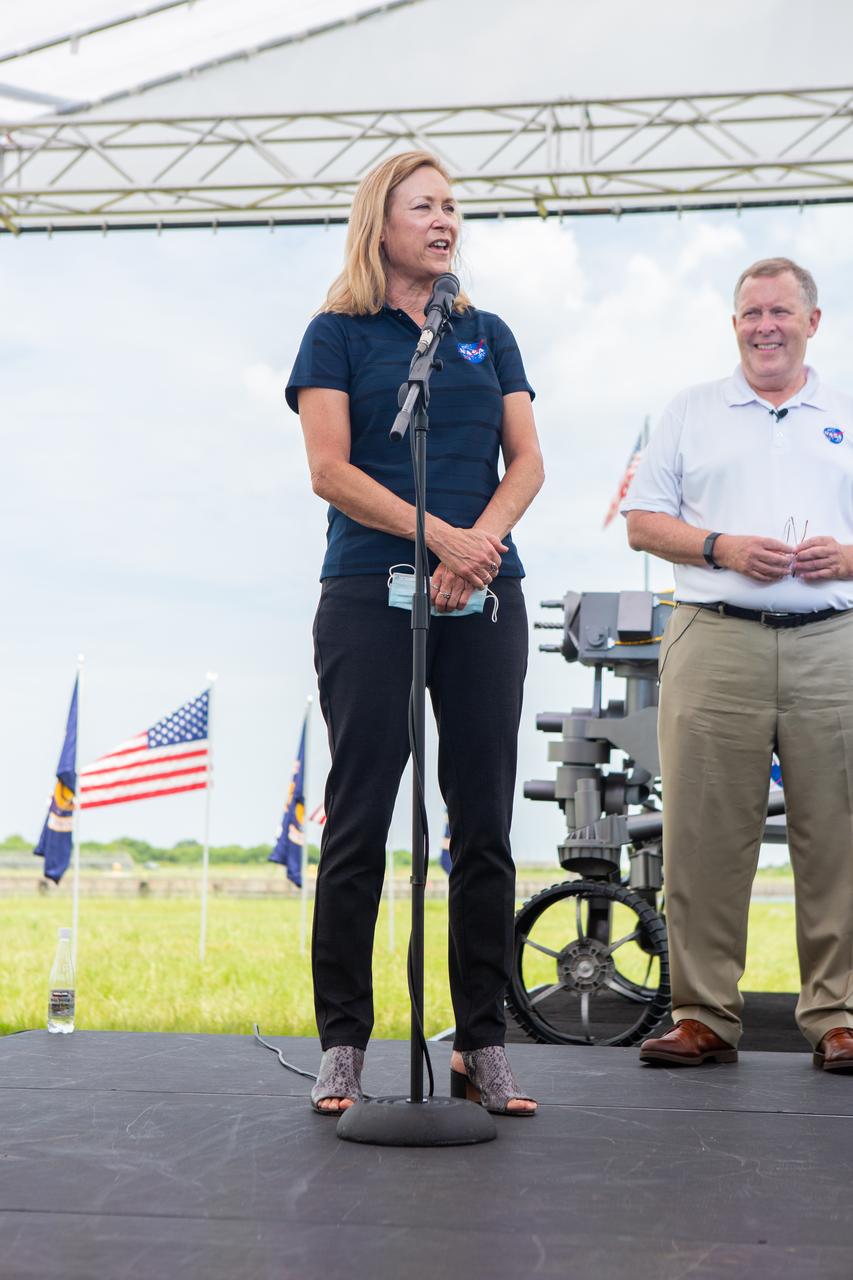
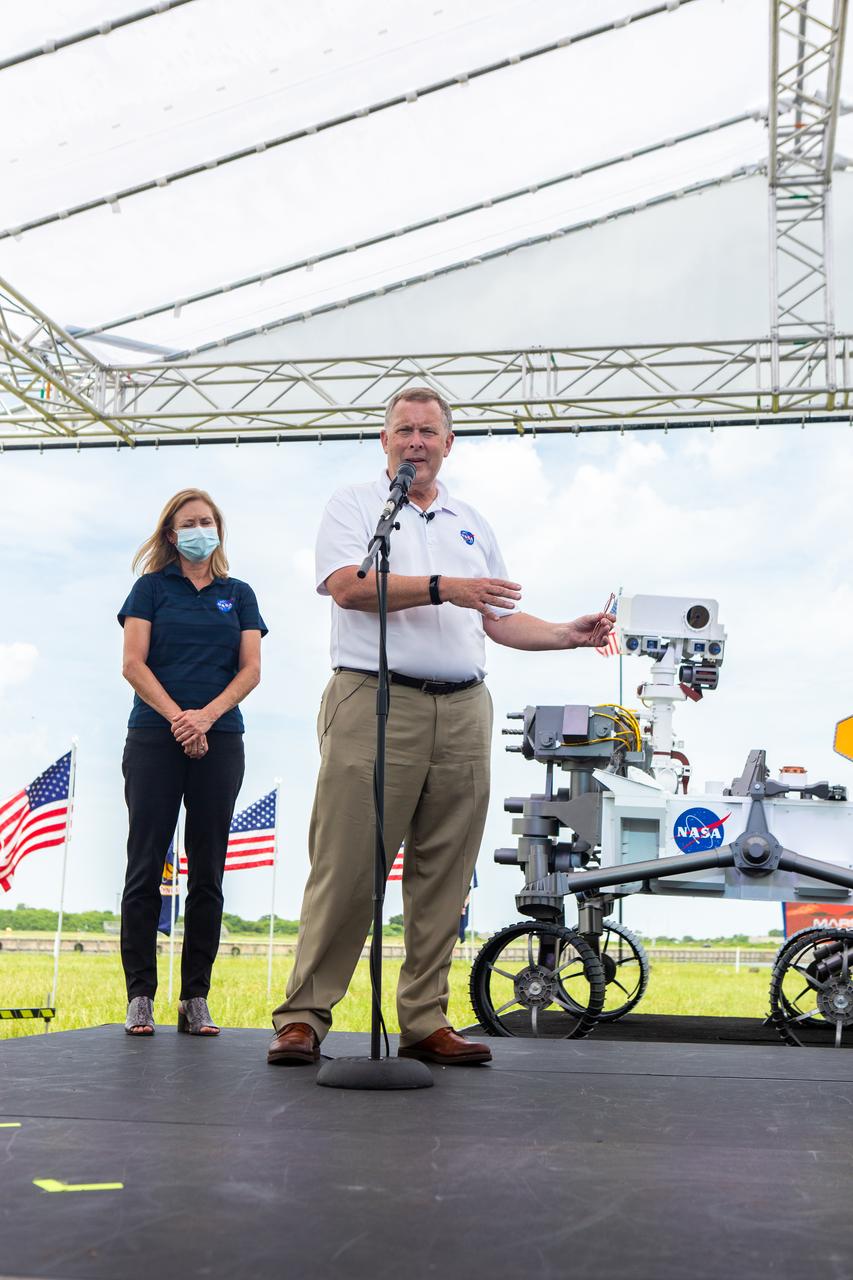
NASA Deputy Administrator Jim Morhard answers questions during a Mars 2020 NASA Social at Kennedy Space Center’s News Center in Florida on July 29, 2020. Standing behind him is Kennedy Deputy Director Janet Petro. The Mars Perseverance rover and Ingenuity helicopter are scheduled to launch July 30, on a United Launch Alliance Atlas V 541 rocket from Space Launch Complex 41 at nearby Cape Canaveral Air Force Station. The rover is part of NASA’s Mars Exploration Program, a long-term effort of robotic exploration of the Red Planet. The rover will search for habitable conditions in the ancient past and signs of past microbial life on Mars. The Launch Services Program at Kennedy is responsible for launch management.
Mars 2020 Facebook Live / NASA Social
Kennedy Space Center Deputy Director Janet Petro answers questions during a Mars 2020 NASA Social at the center’s News Center in Florida on July 29, 2020. At right is NASA Deputy Administrator Jim Morhard. The Mars Perseverance rover and Ingenuity helicopter are scheduled to launch July 30, on a United Launch Alliance Atlas V 541 rocket from Space Launch Complex 41 at nearby Cape Canaveral Air Force Station. The rover is part of NASA’s Mars Exploration Program, a long-term effort of robotic exploration of the Red Planet. The rover will search for habitable conditions in the ancient past and signs of past microbial life on Mars. The Launch Services Program at Kennedy is responsible for launch management.
Mars 2020 Facebook Live / NASA Social
NASA Administrator Jim Bridenstine, seated at the far end of table, center, visited the agency's Kennedy Space Center in Florida, on Aug. 7, 2018. Bridenstine talked with Commercial Crew Program (CCP) leadership inside a conference room at the Operations and Checkout Building. At right is Kennedy Center Director Bob Cabana. At left is Kathy Lueders, CCP manager. The administrator also toured facilities and received updates on the program.
NASA Administrator Jim Bridenstine Visits KSC - Space Life Scien
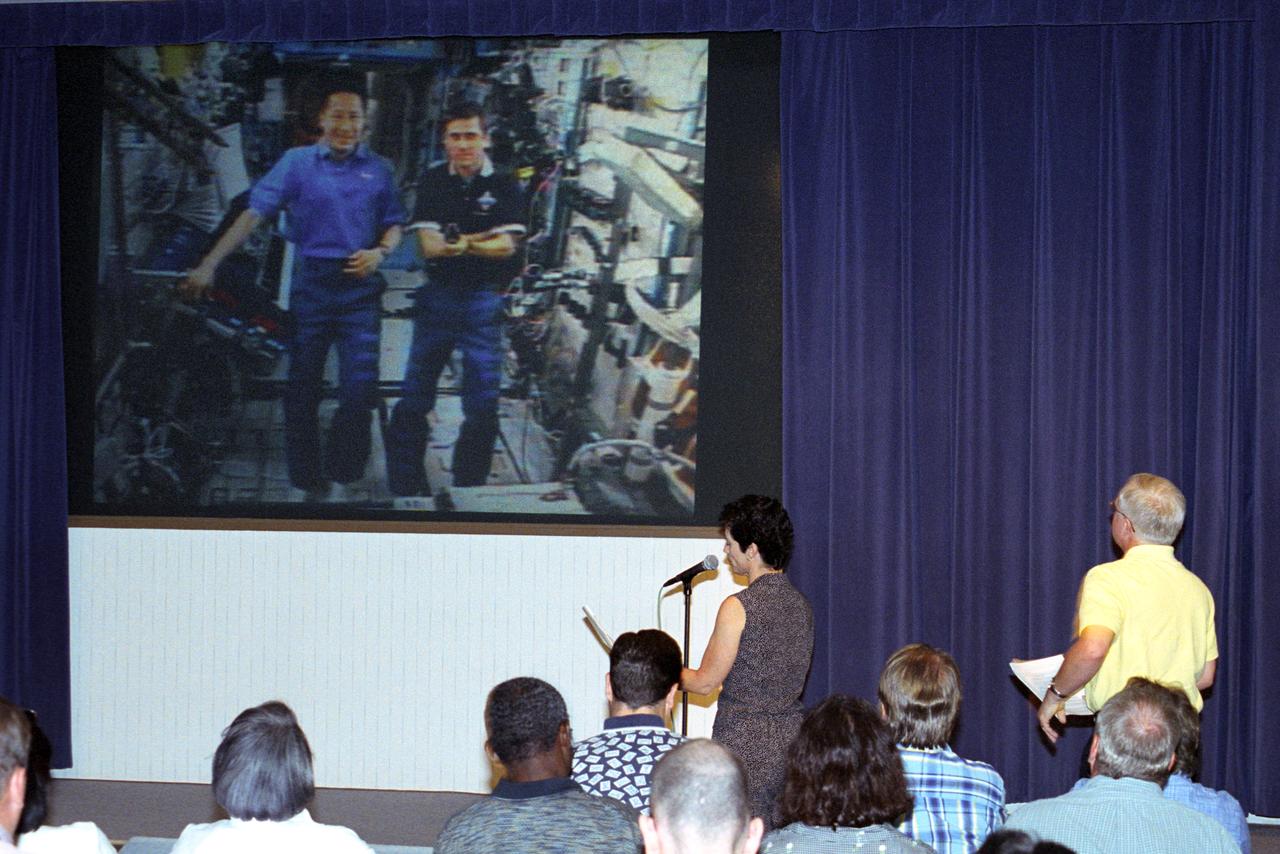
Teacher Kim Cantrell from the Edwards Air Force Base Middle School, Edwards, Calif., participating in a live uplink at NASA Dryden as part of NASA's Explorer Schools program, asks the crew of the International Space Station a question.
Teacher Kim Cantrell from the Edwards Air Force Base Middle School, Edwards, Calif., participating in a live uplink at NASA Dryden as part of NASA's Explorer Schools program, asks the crew of the International Space Station a question
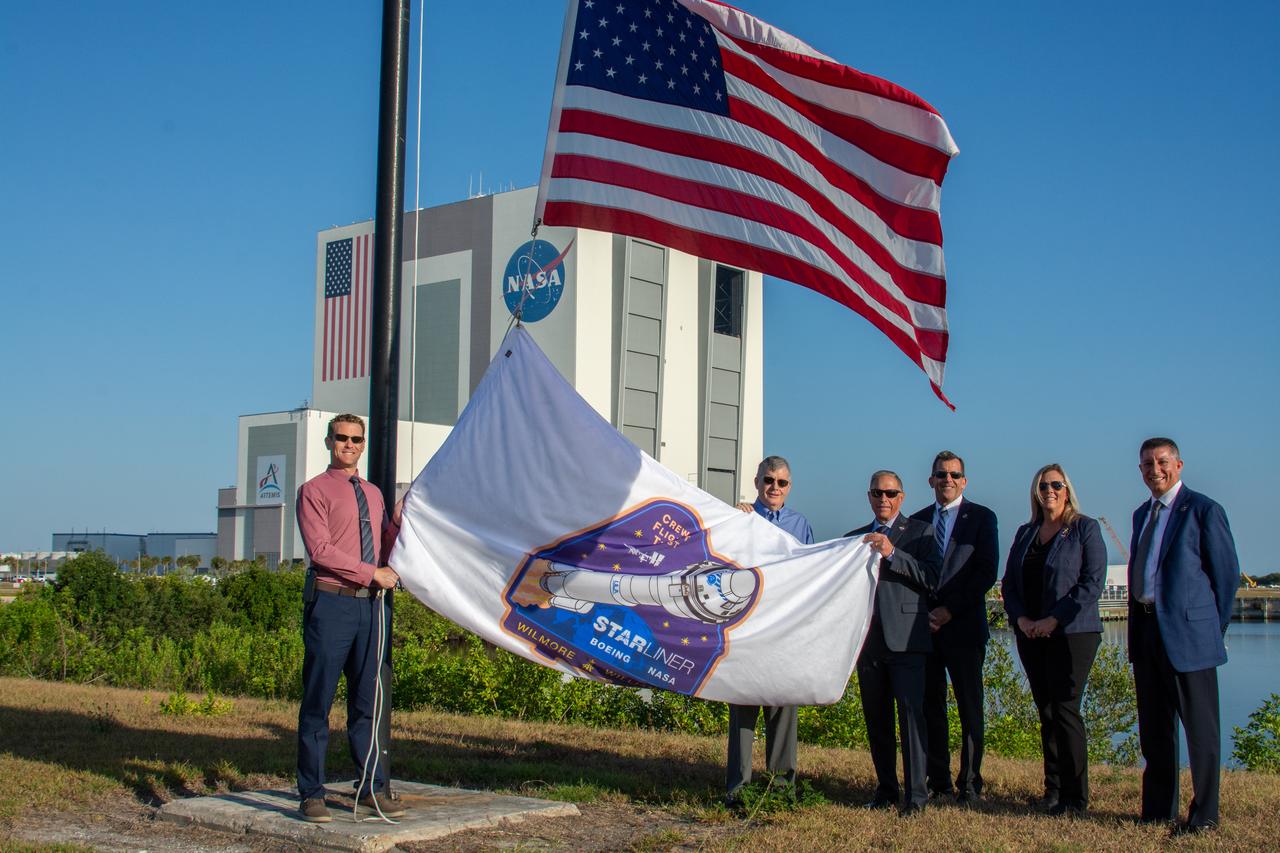
From left to right, Ian Kappes, deputy launch vehicle office manager, NASA Kennedy Space Center Commercial Crew Program; Steve Stich, manager, NASA’s Commercial Crew Program; Mark Nappi, vice president and program manager, Boeing Commercial Crew Program; Leroy Cain, mission integration and operations manager, Boeing’s Commercial Crew Program; Dana Hutcherson, deputy program manager, NASA’s Commercial Crew Program; and Richard Jones, deputy program manager, NASA’s Commercial Crew Program, prepare to raise NASA’s Boeing Crew Flight Test flag on Thursday, April 25, 2024, near the countdown clock at the Press Site at the Florida spaceport. As part of the agency’s Commercial Crew Program, NASA astronauts Butch Wilmore and Suni Williams are the first to launch to the International Space Station aboard Boeing’s Starliner spacecraft atop a United Launch Alliance Atlas V rocket from Space Launch Complex-41 at nearby Cape Canaveral Space Force Station. Liftoff is scheduled for 10:34 p.m. ET on Monday, May 6.
CFT Flag Raising
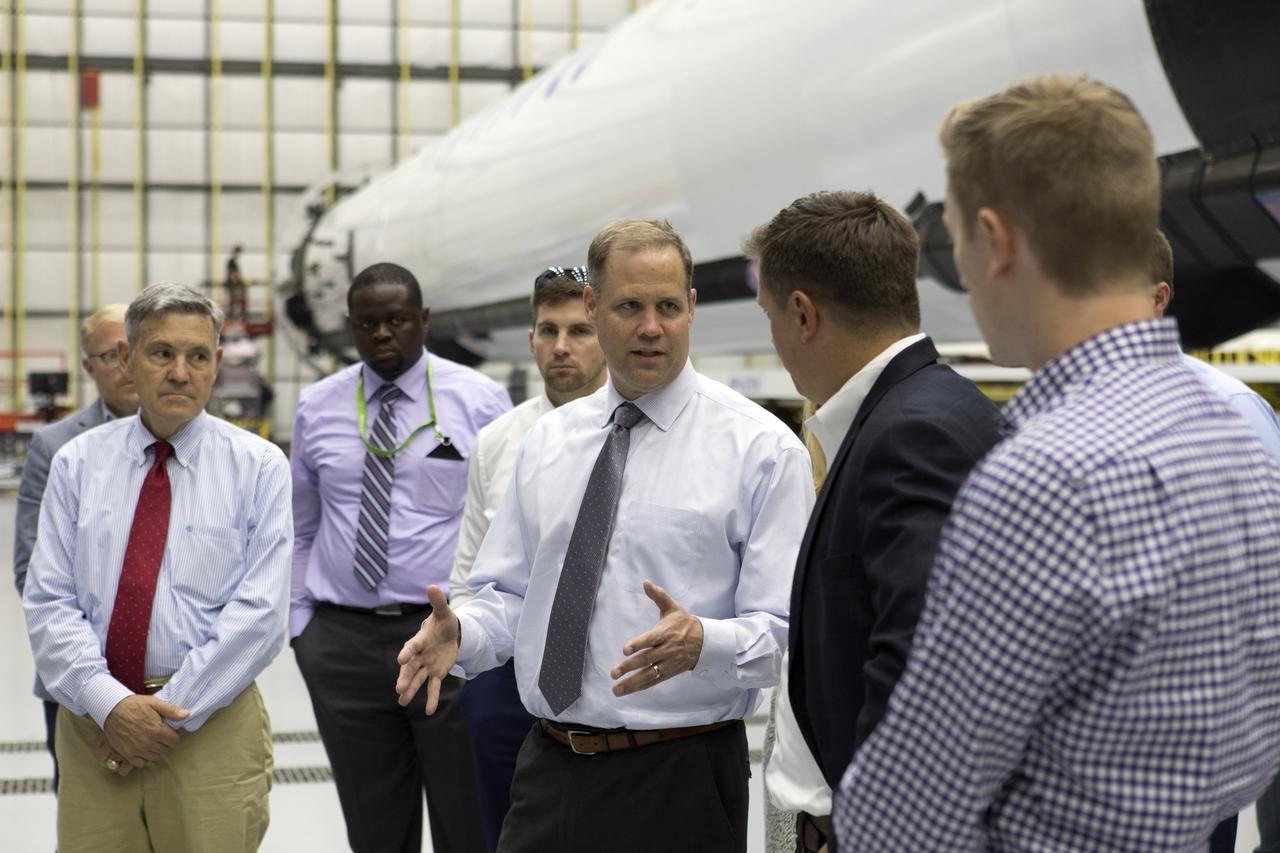
NASA Administrator Jim Bridenstine, center, tours SpaceX facilities on Aug. 8, 2018, at the agency's Kennedy Space Center in Florida. At far left is Kennedy Space Center Director Bob Cabana. Inside the SpaceX hangar at Launch Complex 39A, Bridenstine visited with workers and was updated on SpaceX accomplishments for NASA's Commercial Crew Program.
NASA Administrator Jim Bridenstine Visits KSC - SpaceX Facilitie
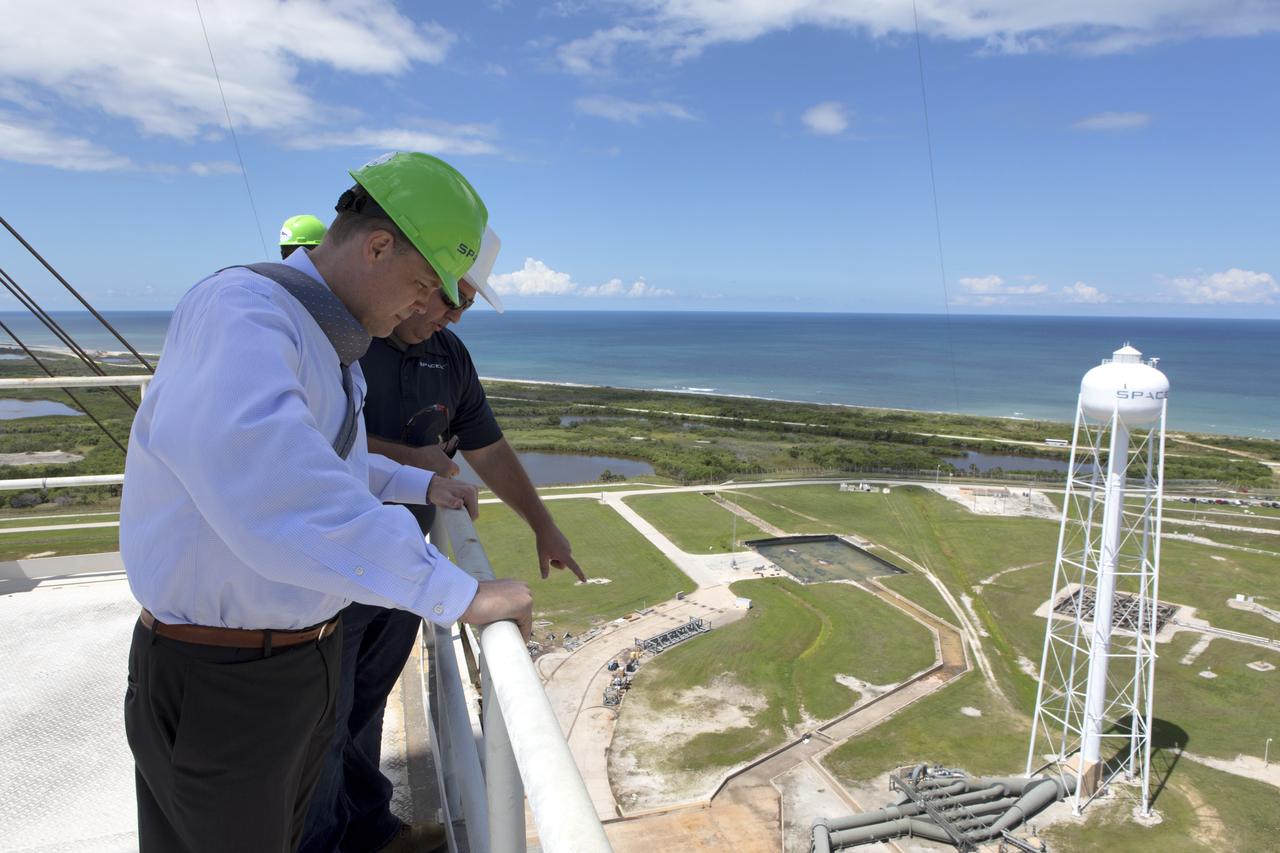
NASA Administrator Jim Bridenstine, center, in the green safety helmet, tours SpaceX Launch Complex 39A, on Aug. 8, 2018, at the agency's Kennedy Space Center in Florida. Bridenstine received updates on SpaceX accomplishments for NASA's Commercial Crew Program.
NASA Administrator Jim Bridenstine Visits KSC - SpaceX Facilitie
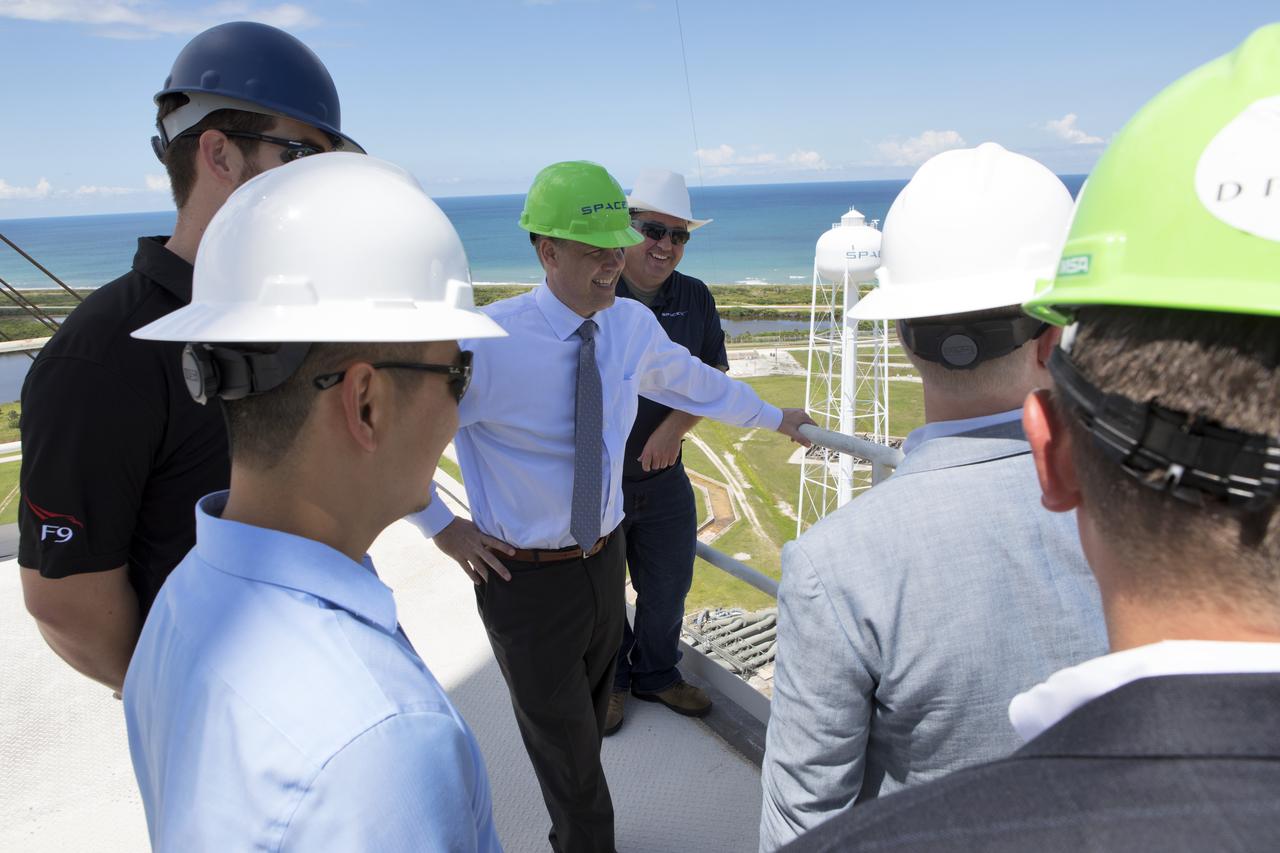
NASA Administrator Jim Bridenstine, center, in the green safety helmet, tours SpaceX Launch Complex 39A, on Aug. 8, 2018, at the agency's Kennedy Space Center in Florida. Bridenstine received updates on SpaceX accomplishments for NASA's Commercial Crew Program.
NASA Administrator Jim Bridenstine Visits KSC - SpaceX Facilitie
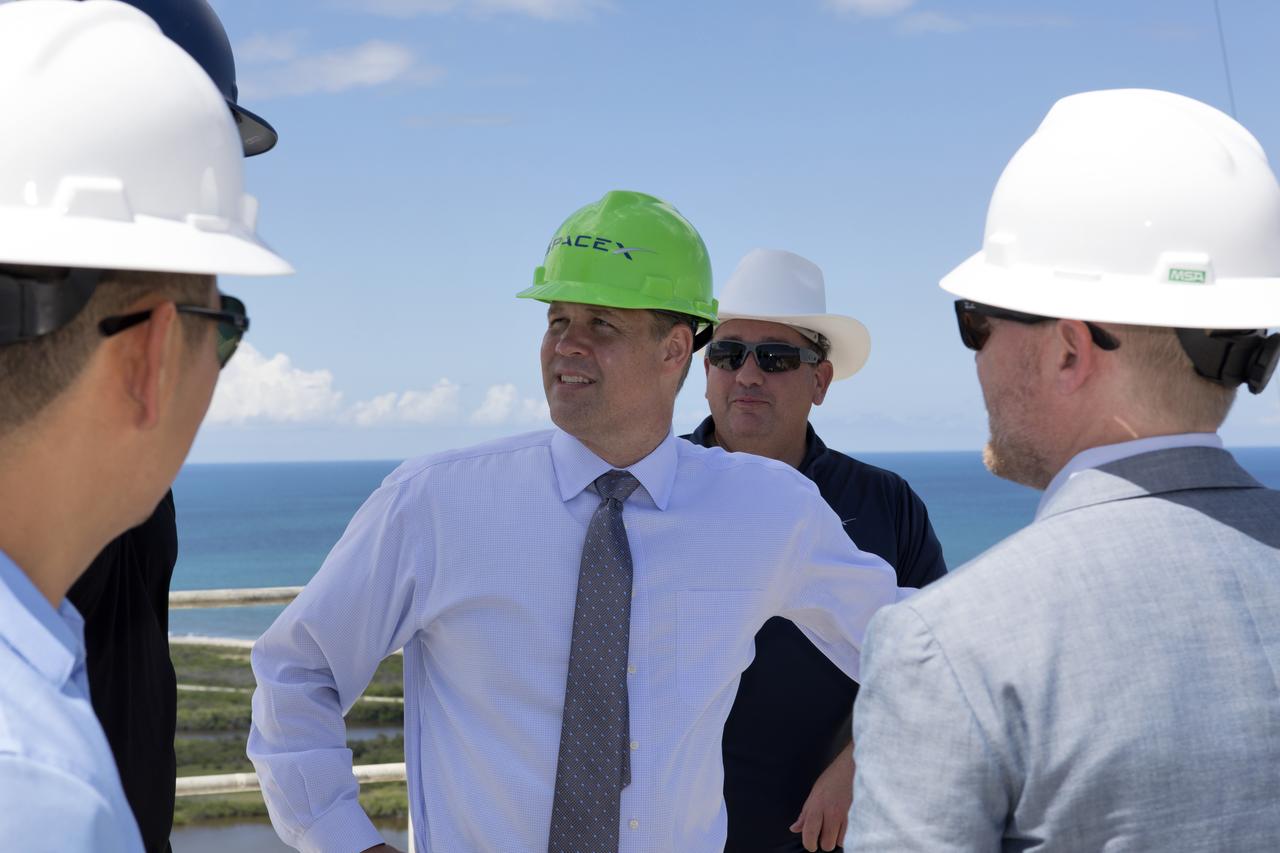
NASA Administrator Jim Bridenstine, in the green safety helmet, tours SpaceX Launch Complex 39A, on Aug. 8, 2018, at the agency's Kennedy Space Center in Florida. Bridenstine received updates on SpaceX accomplishments for NASA's Commercial Crew Program.
NASA Administrator Jim Bridenstine Visits KSC - SpaceX Facilitie
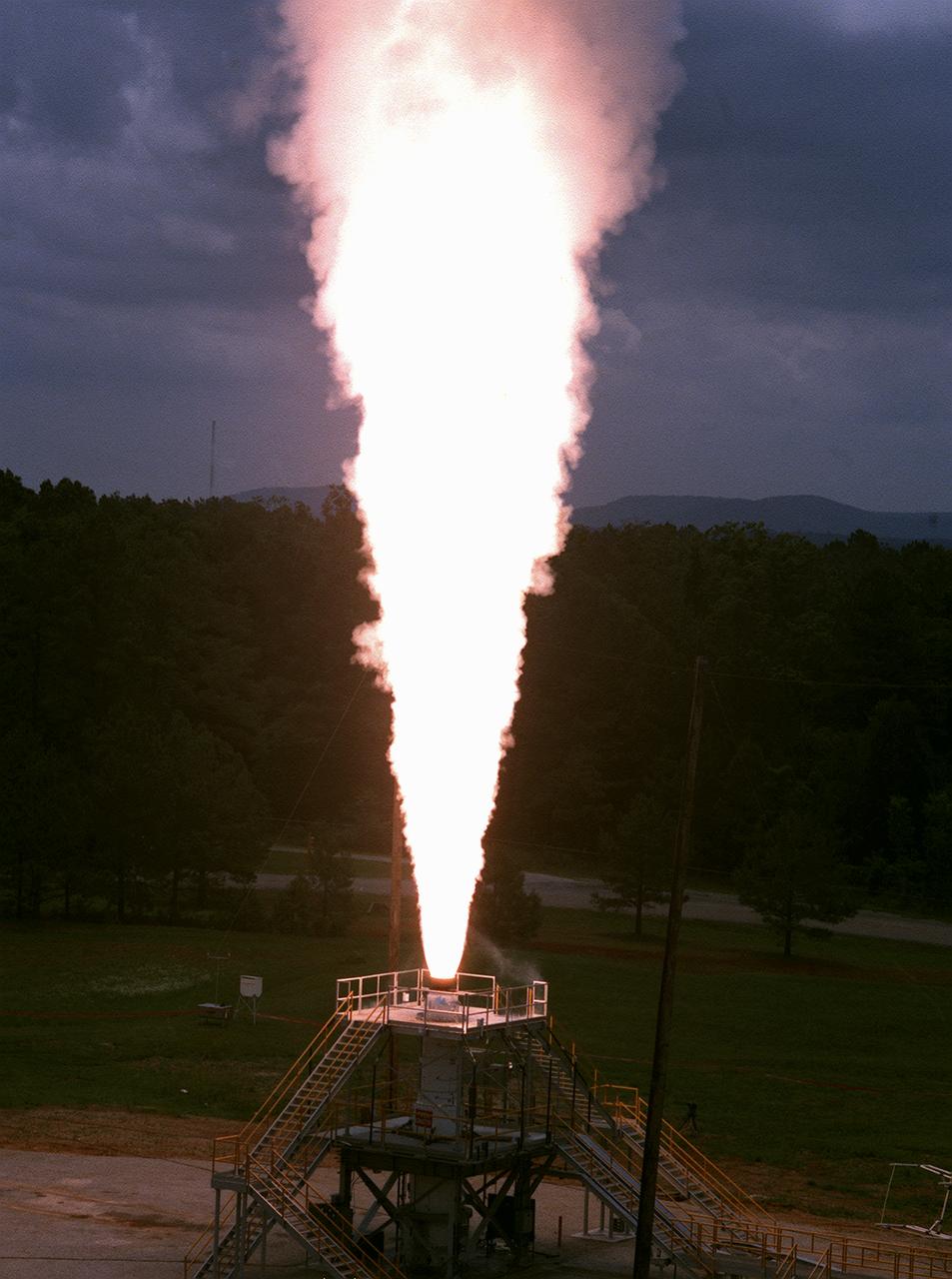
The Marshall Space Flight Center (MSFC) engineers test fired a 26-foot long, 100,000-pound-thrust solid rocket motor for 30 seconds at the MSFC east test area, the first test firing of the Modified NASA Motor (M-NASA Motor). The M-NASA Motor was fired in a newly constructed stand. The motor is 48-inches in diameter and was loaded with two propellant cartridges weighing a total of approximately 12,000 pounds. The purpose of the test was to learn more about solid rocket motor insulation and nozzle materials and to provide young engineers additional hands-on expertise in solid rocket motor technology. The test is a part of NASA's Solid Propulsion Integrity Program, that is to provide NASA engineers with the techniques, engineering tools, and computer programs to be able to better design, build, and verify solid rocket motors.
Space Shuttle Projects
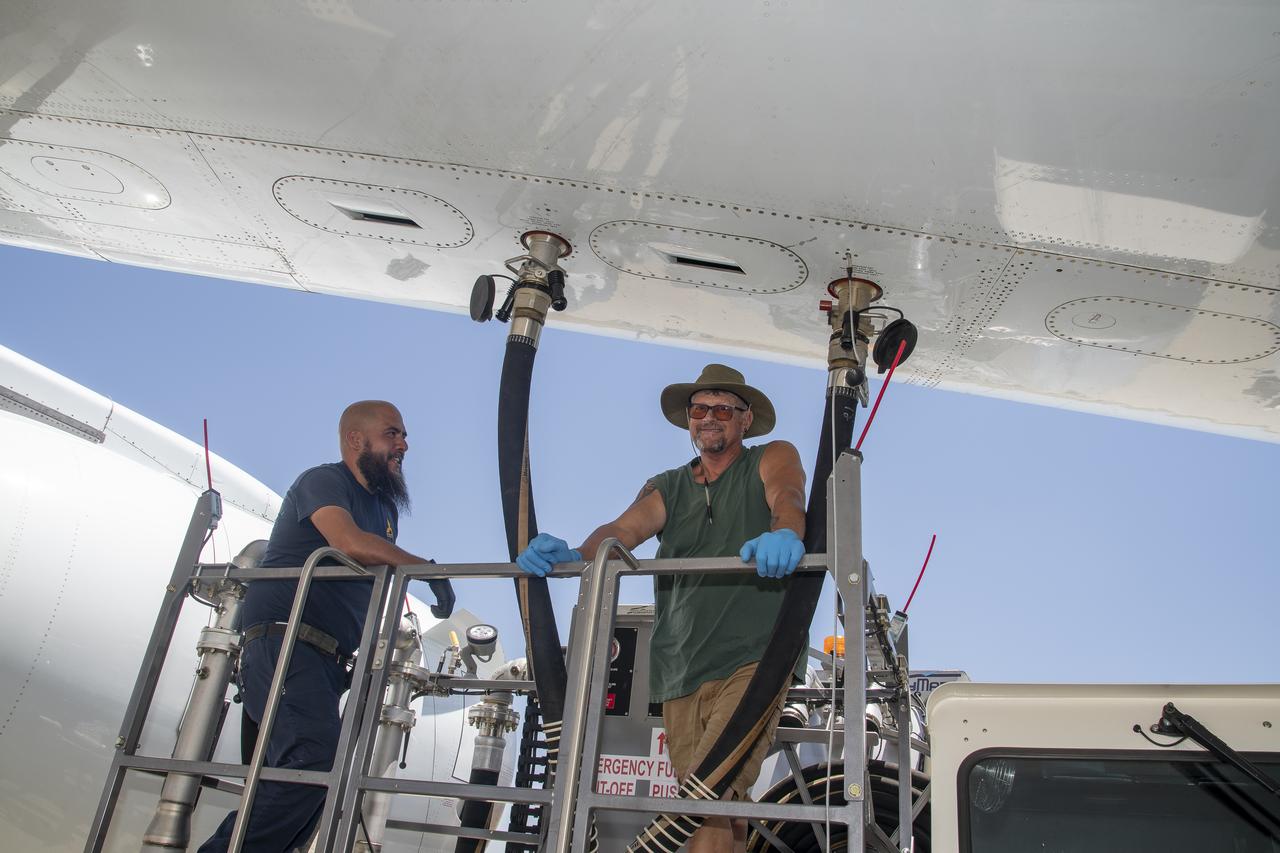
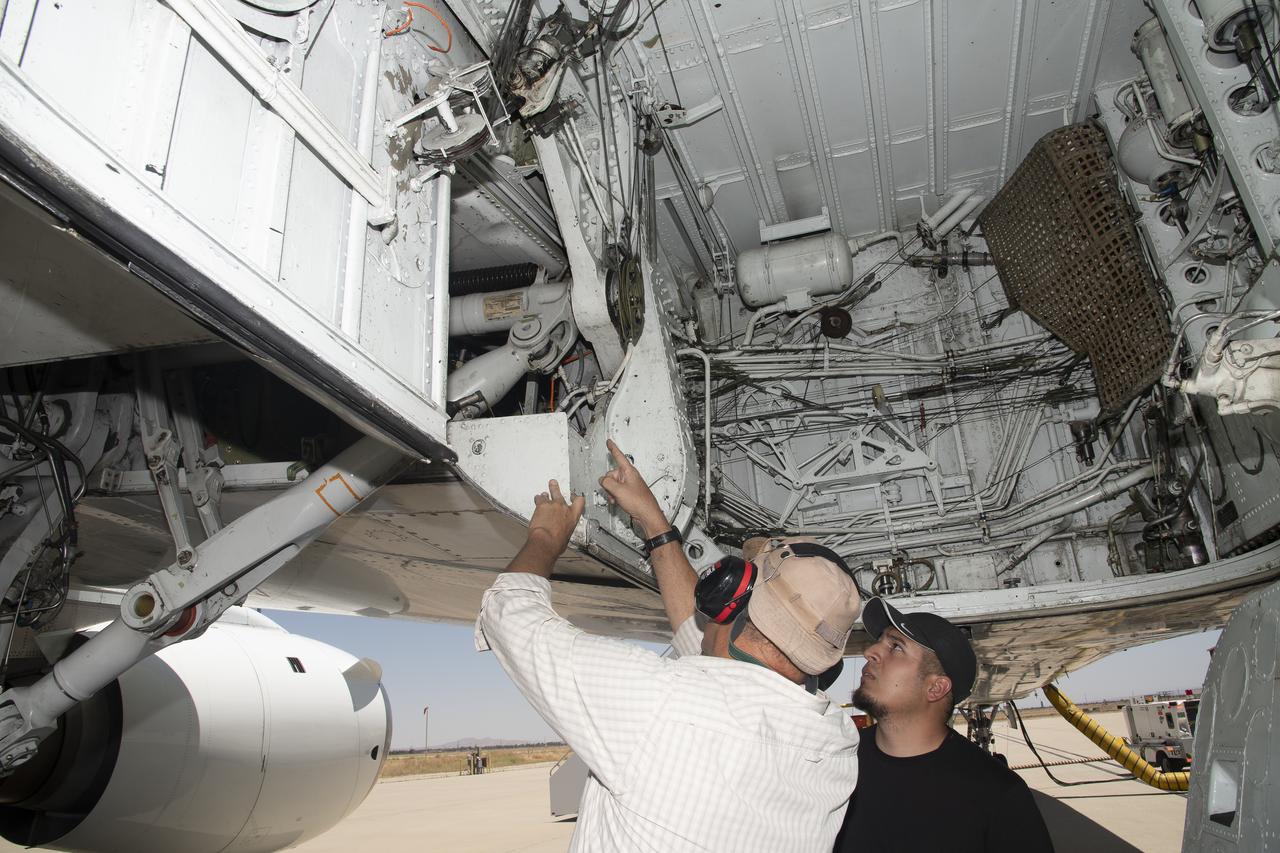
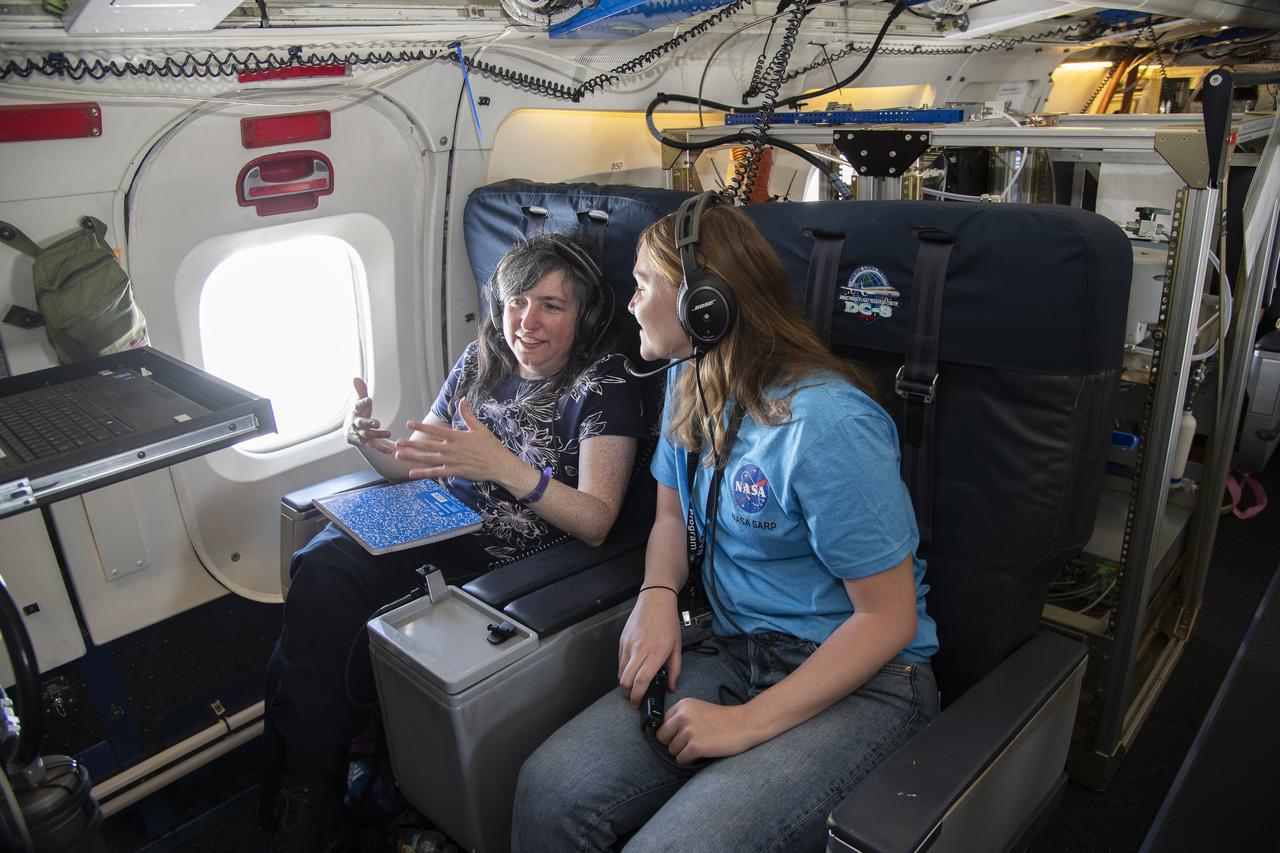
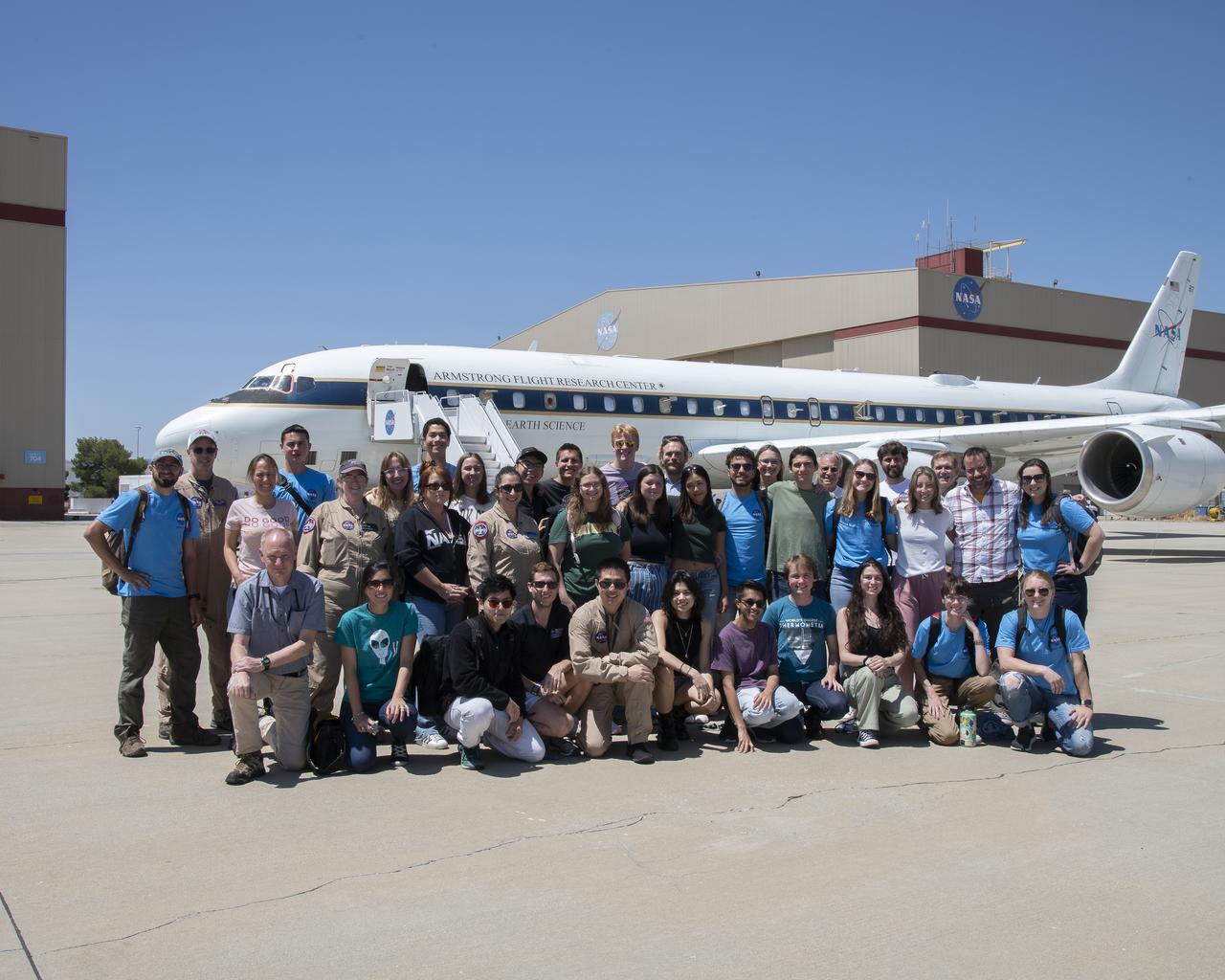
NASA Armstrong’s Student Airborne Research Program celebrates 15 years of success in 2023.  An eight-week summer internship program, SARP offers upper-level undergraduate students the opportunity to acquire hands-on research experience as part of a scientific campaign using NASA Airborne Science Program flying science laboratories—aircraft outfitted specifically for research projects.  Students onboard NASA’s DC-8 aircraft, the largest flying science laboratory in the world, help scientists from NOAA, the National Oceanic and Atmospheric Administration with a science project investigating air quality and non-vehicular pollution sources called AEROMMA, which measures Atmospheric Emissions and Reactions Observed from Megacities to Marine Areas.  In 2023, NASA also introduced a sister program, SARP East to complement the West Coast program.
SARP 2023
NASA Armstrong’s Student Airborne Research Program celebrates 15 years of success in 2023.  An eight-week summer internship program, SARP offers upper-level undergraduate students the opportunity to acquire hands-on research experience as part of a scientific campaign using NASA Airborne Science Program flying science laboratories—aircraft outfitted specifically for research projects.  Students onboard NASA’s DC-8 aircraft, the largest flying science laboratory in the world, help scientists from NOAA, the National Oceanic and Atmospheric Administration with a science project investigating air quality and non-vehicular pollution sources called AEROMMA, which measures Atmospheric Emissions and Reactions Observed from Megacities to Marine Areas.  In 2023, NASA also introduced a sister program, SARP East to complement the West Coast program.
SARP 2023
NASA Armstrong’s Student Airborne Research Program celebrates 15 years of success in 2023.  An eight-week summer internship program, SARP offers upper-level undergraduate students the opportunity to acquire hands-on research experience as part of a scientific campaign using NASA Airborne Science Program flying science laboratories—aircraft outfitted specifically for research projects.  Students onboard NASA’s DC-8 aircraft, the largest flying science laboratory in the world, help scientists from NOAA, the National Oceanic and Atmospheric Administration with a science project investigating air quality and non-vehicular pollution sources called AEROMMA, which measures Atmospheric Emissions and Reactions Observed from Megacities to Marine Areas.  In 2023, NASA also introduced a sister program, SARP East to complement the West Coast program.
SARP 2023
NASA Armstrong’s Student Airborne Research Program celebrates 15 years of success in 2023.  An eight-week summer internship program, SARP offers upper-level undergraduate students the opportunity to acquire hands-on research experience as part of a scientific campaign using NASA Airborne Science Program flying science laboratories—aircraft outfitted specifically for research projects.  Students onboard NASA’s DC-8 aircraft, the largest flying science laboratory in the world, help scientists from NOAA, the National Oceanic and Atmospheric Administration with a science project investigating air quality and non-vehicular pollution sources called AEROMMA, which measures Atmospheric Emissions and Reactions Observed from Megacities to Marine Areas.  In 2023, NASA also introduced a sister program, SARP East to complement the West Coast program.
SARP 2023