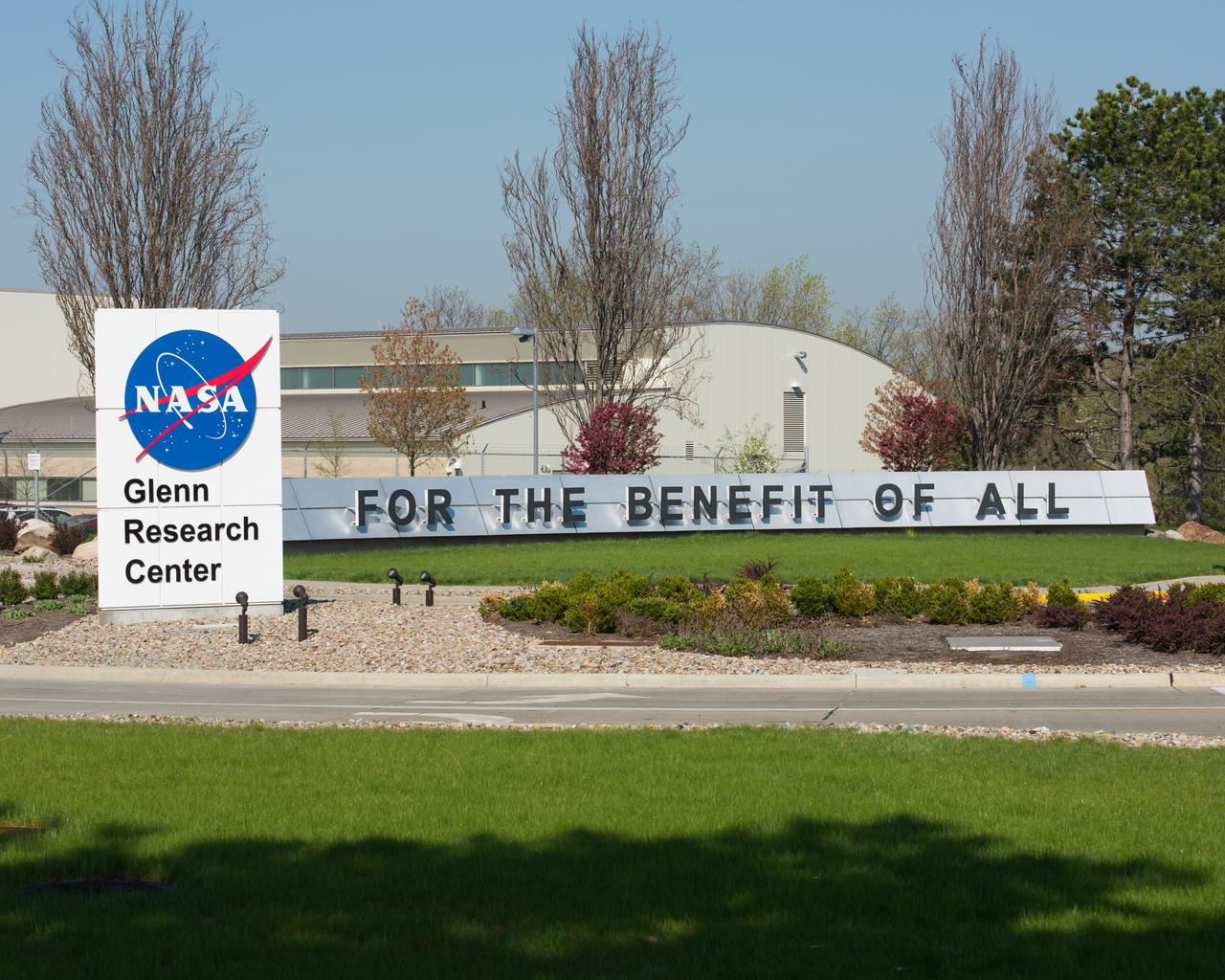
NASA Glenn Research Center Sign at the Intersection of NASA Parkway and Broiokpark Road. The sign reads: For The Benefit Of All
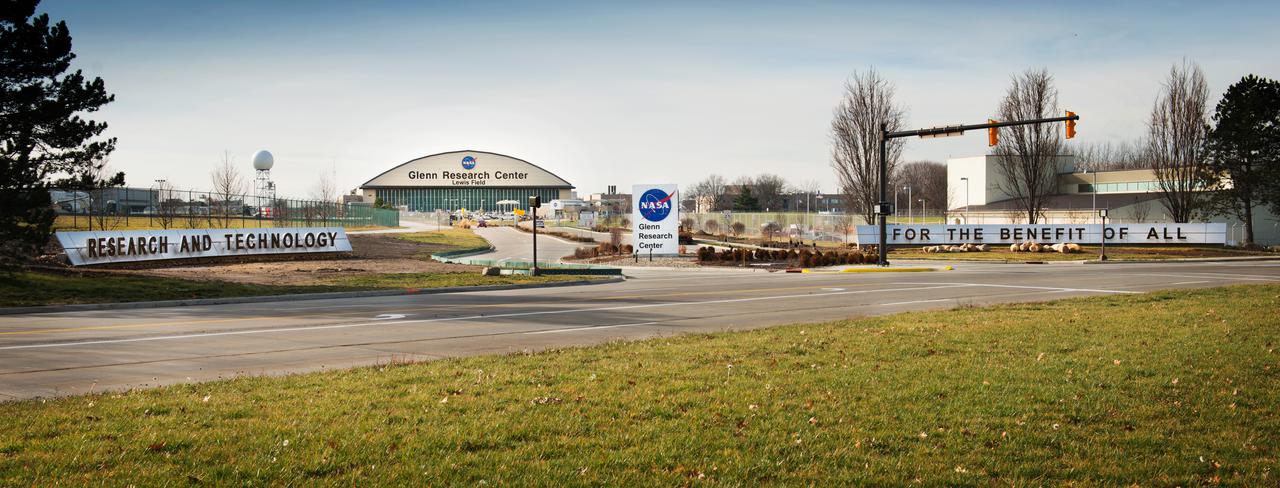
Main Entrance of NASA Glenn Research Center at Brookpark Road and NASA Parkway. The signs read: Research and Technology For The Benefit Of All.
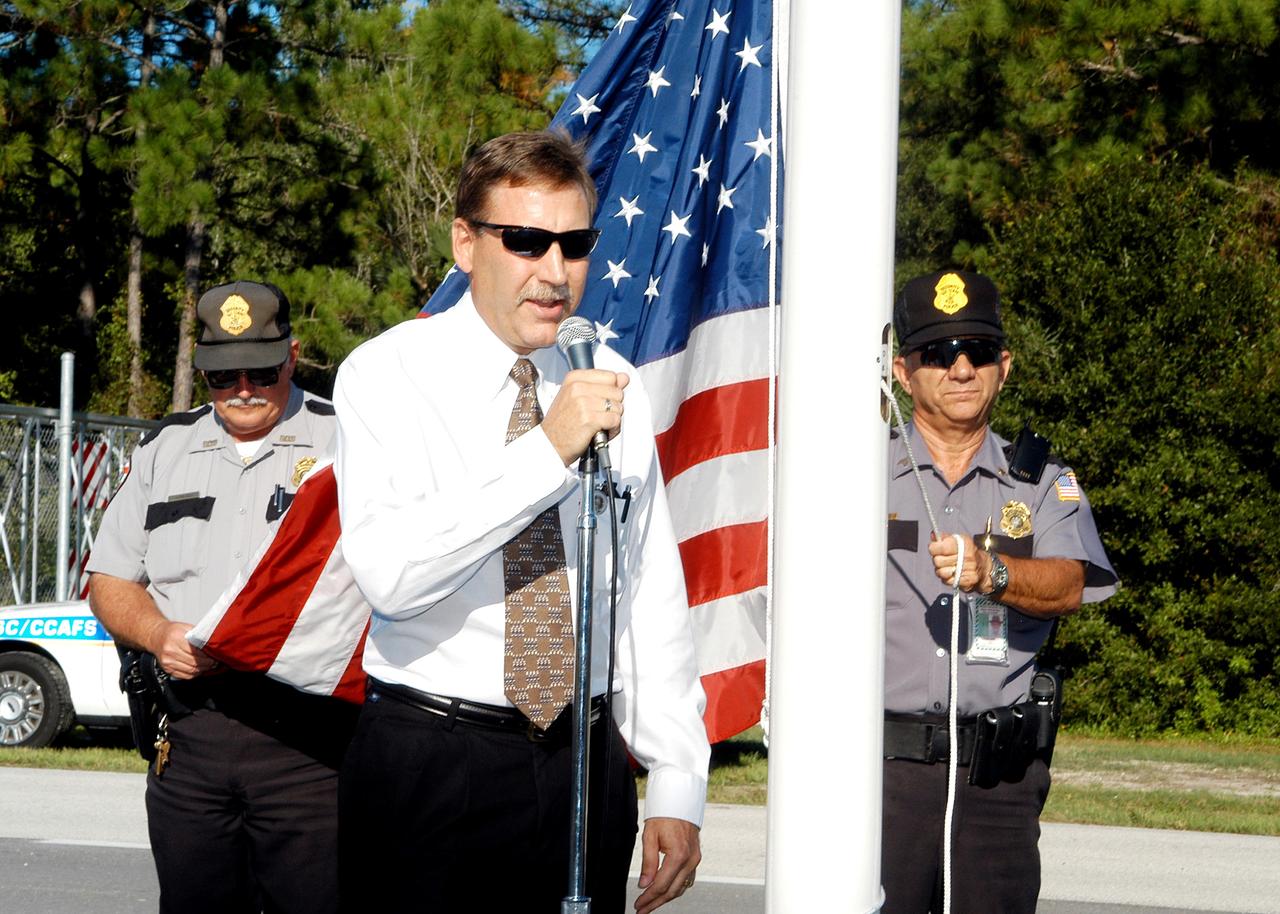
KENNEDY SPACE CENTER, FLA. - Daniel L. Tweed, with the Facilities Division, NASA Spaceport Services, addresses attendees at the ribbon cutting for the KSC Security gates. Tweed was project manager. The two new Security gates on Kennedy Parkway (Gate 2) and NASA Parkway (Gate 3) were activated Aug. 1, allowing the general public to have access to the new Space Commerce Way, which will provide access to the Research Park and KSC Visitor Complex, and providing an alternate route for the general public between Titusville and Merritt Island that is accessible 24 hours a day. The gates are staffed 24 hours daily. Others taking part in the ribbon cutting were Center Director Jim Kennedy; Chief, Protective & Safe Guards Office, Calvin L. Burch; SGS Deputy Program Manager William A. Sample; and Bobby Porter, with Oneida Construction.
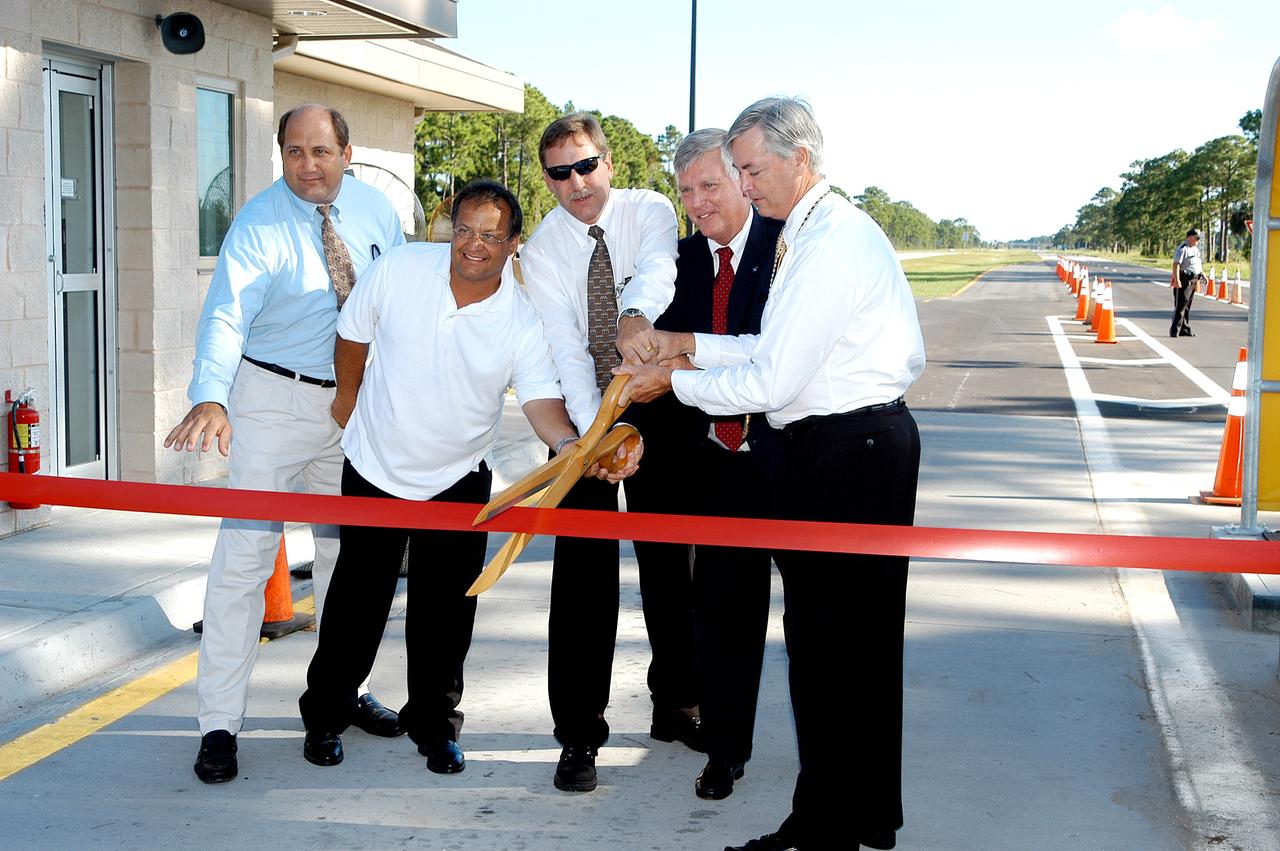
KENNEDY SPACE CENTER, FLA. - Key officials are poised to cut the ribbon officially dedicating the new Security gates on Kennedy Parkway (Gate 2) and NASA Parkway (Gate 3). From left are Wally Schroeder, with Jones, Edmunds & Associates; Bobby Porter, with Oneida Construction; Daniel Tweed, NASA project manager; Jim Kennedy, Center director; and William Sample, SGS deputy program manager. The new gates were activated Aug. 1, allowing the general public to have access to the new Space Commerce Way, which will provide access to the Research Park and KSC Visitor Complex, and providing an alternate route for the general public between Titusville and Merritt Island that is accessible 24 hours a day. The gates are staffed 24 hours daily.
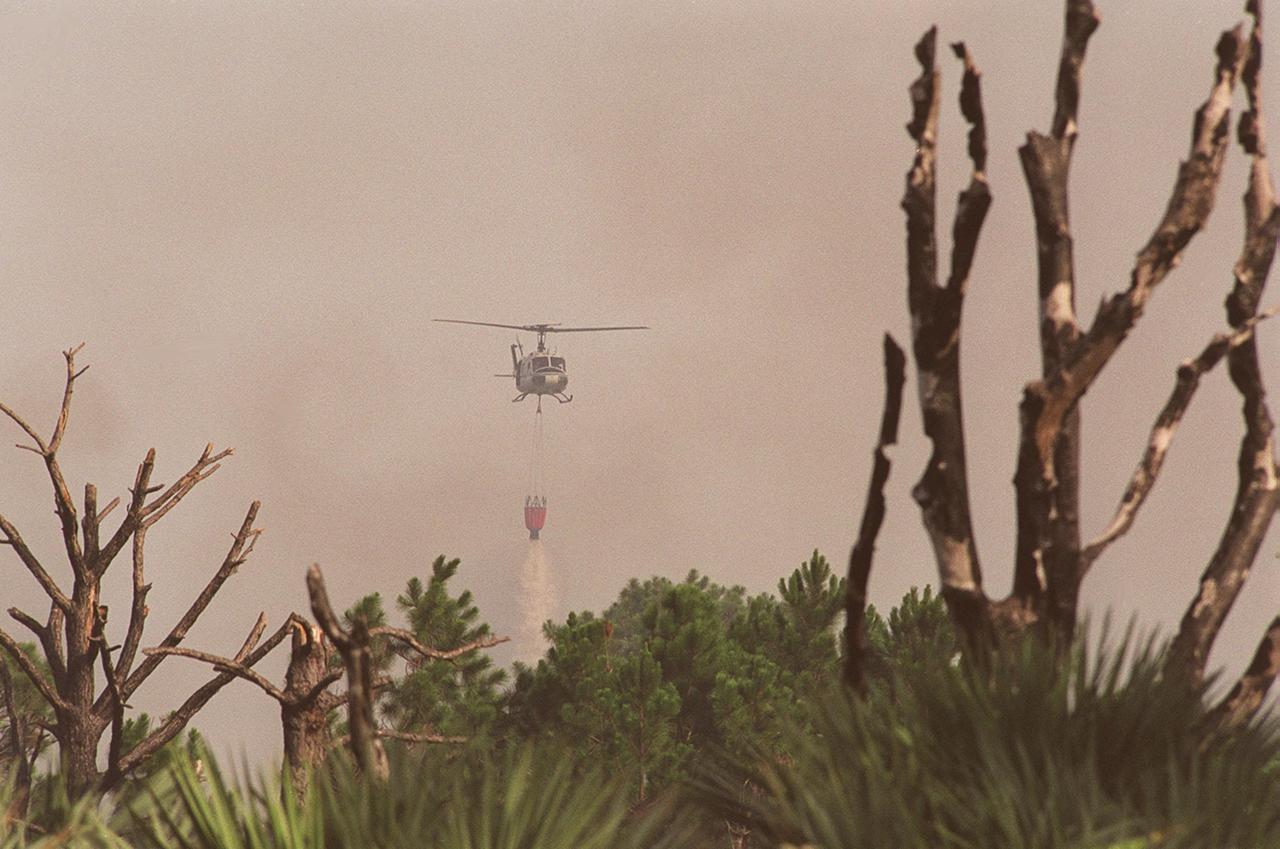
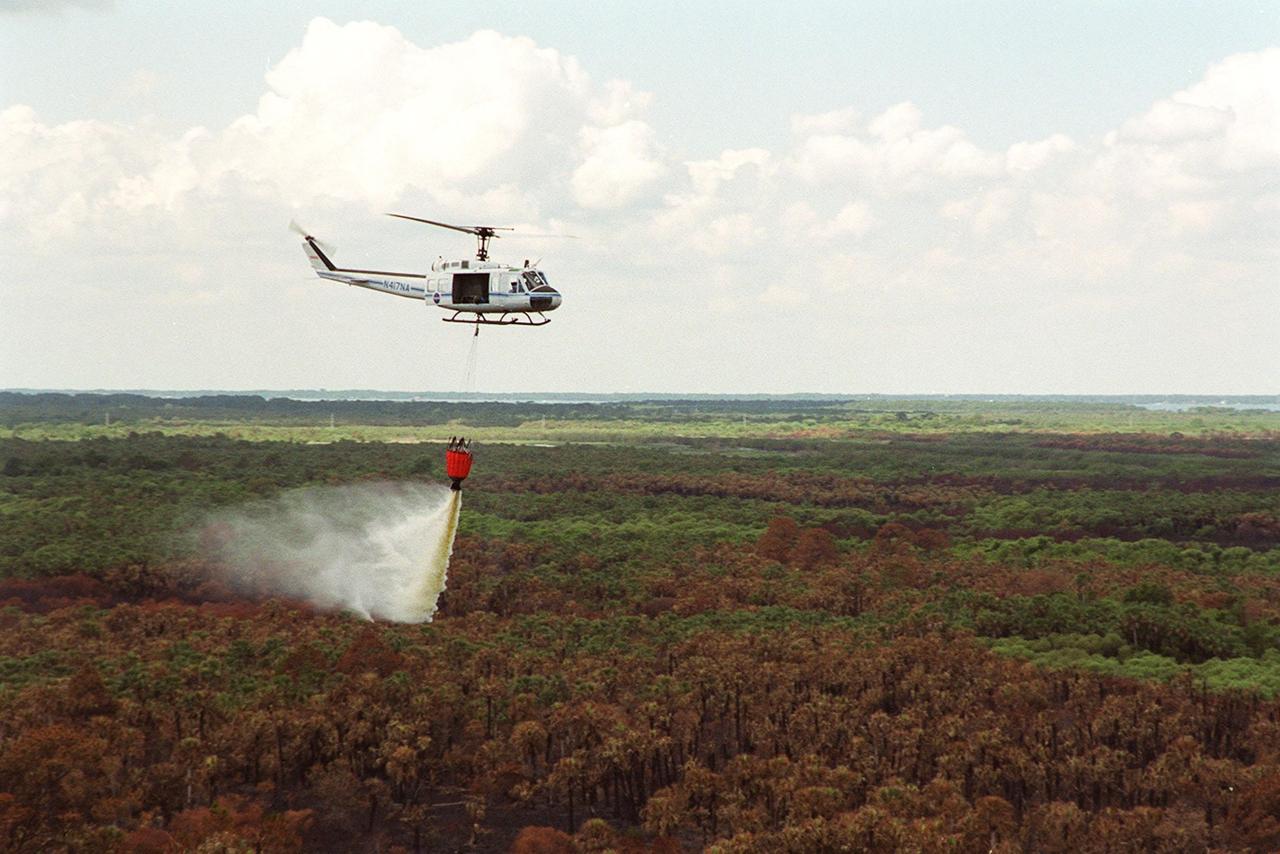
A NASA helicopter drops its cargo of water onto a wildfire at KSC. Before being extinguished, the fire burned about 20 acres at a site near gate 2C on Kennedy Parkway North (route 3)
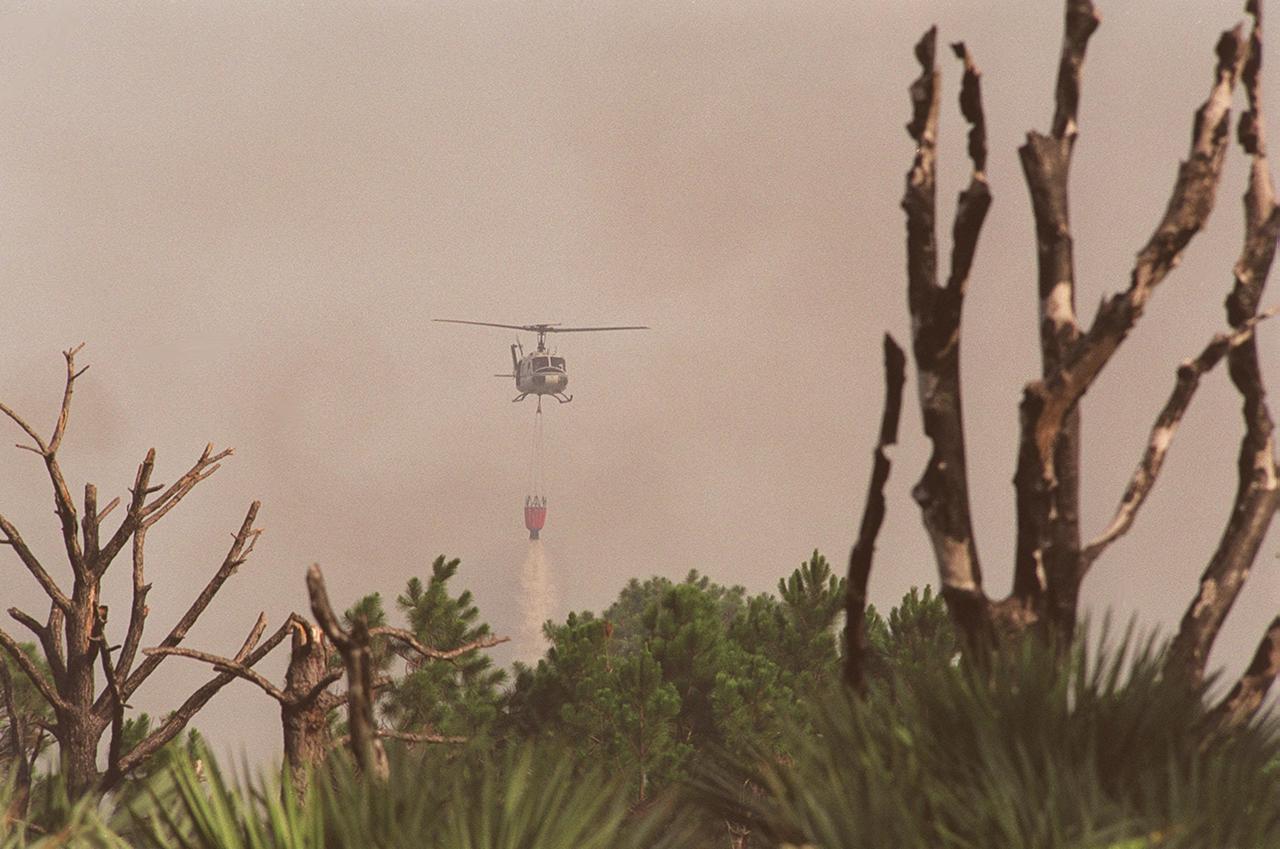
A NASA helicopter drops its cargo of water onto a wildfire at KSC. Before being extinguished, the fire burned about 20 acres at a site near gate 2C on Kennedy Parkway North (route 3)
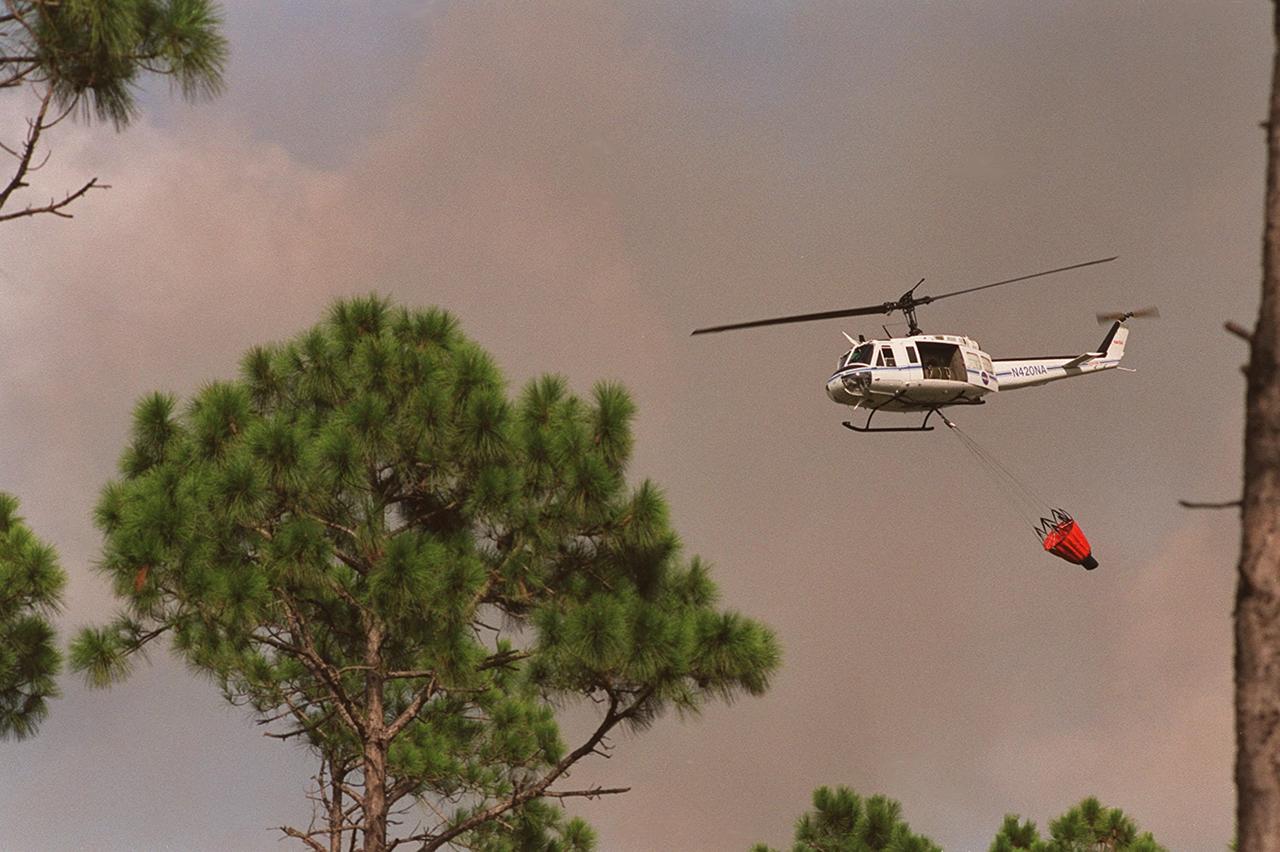
A NASA helicopter flies toward the source of the smoke to drop its load of water on a wildfire at KSC. Before being extinguished, the fire burned about 20 acres at a site near gate 2C on Kennedy Parkway North (route 3)
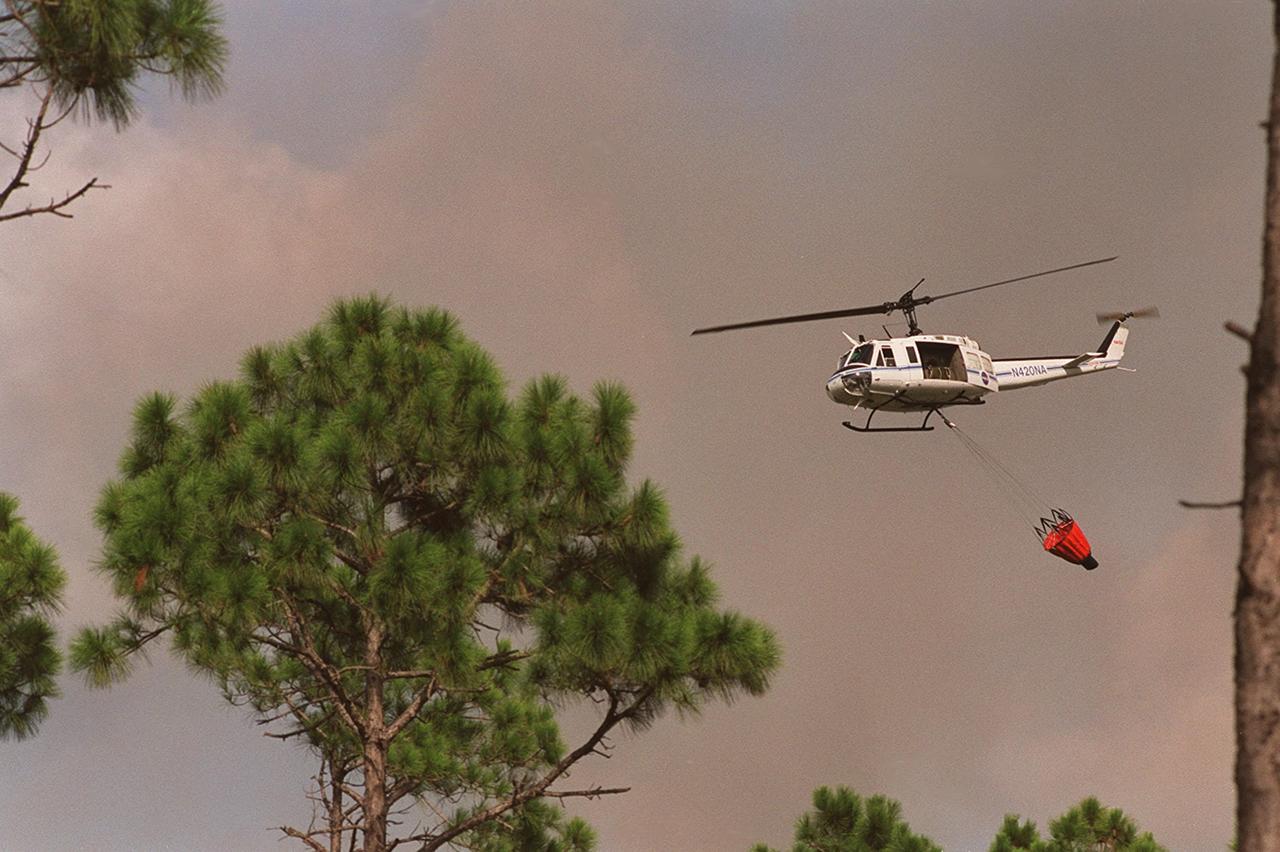
A NASA helicopter flies toward the source of the smoke to drop its load of water on a wildfire at KSC. Before being extinguished, the fire burned about 20 acres at a site near gate 2C on Kennedy Parkway North (route 3)
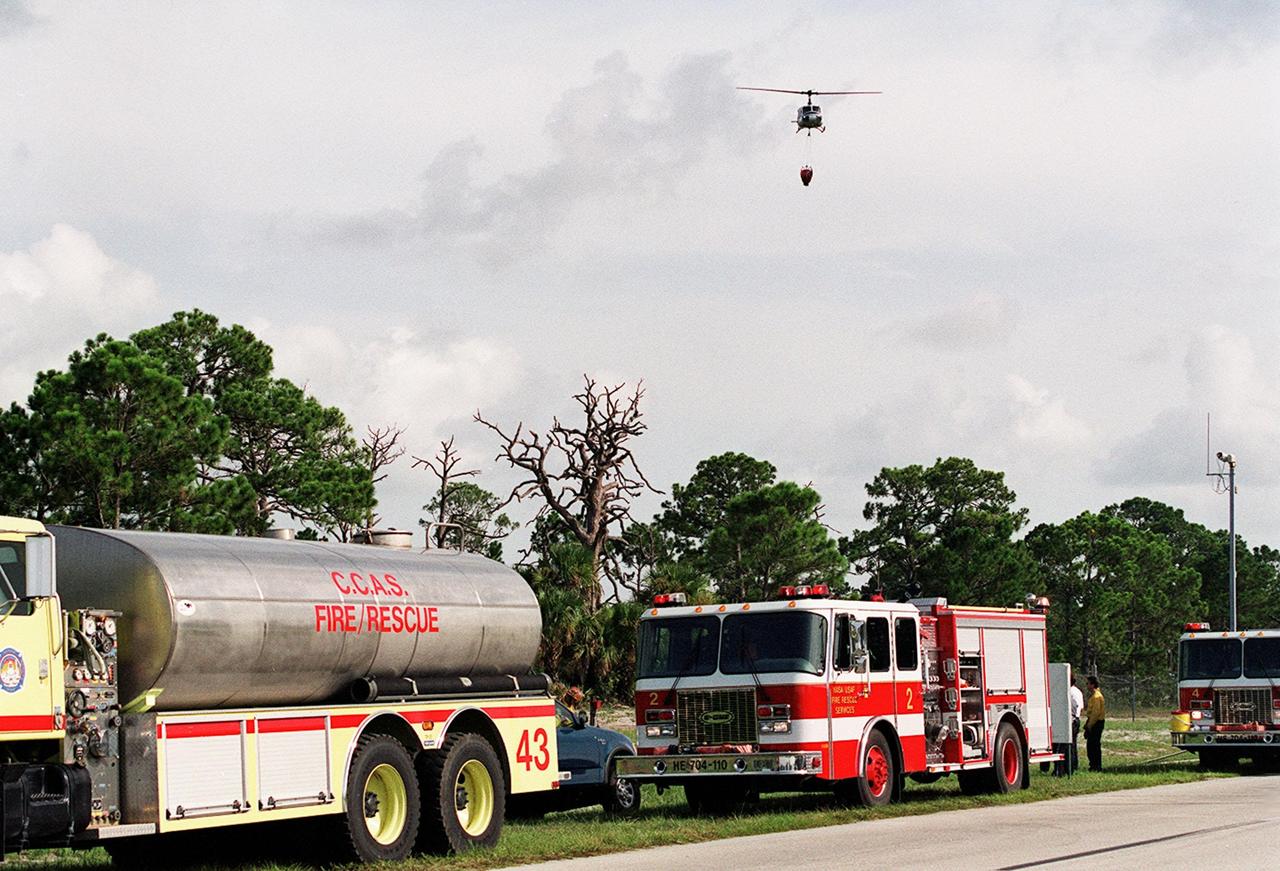
A NASA helicopter flies over fire-fighting equipment and personnel in order to drop its load of water on a wildfire at KSC. Before being extinguished, the fire burned about 20 acres at a site near gate 2C on Kennedy Parkway North (route 3)
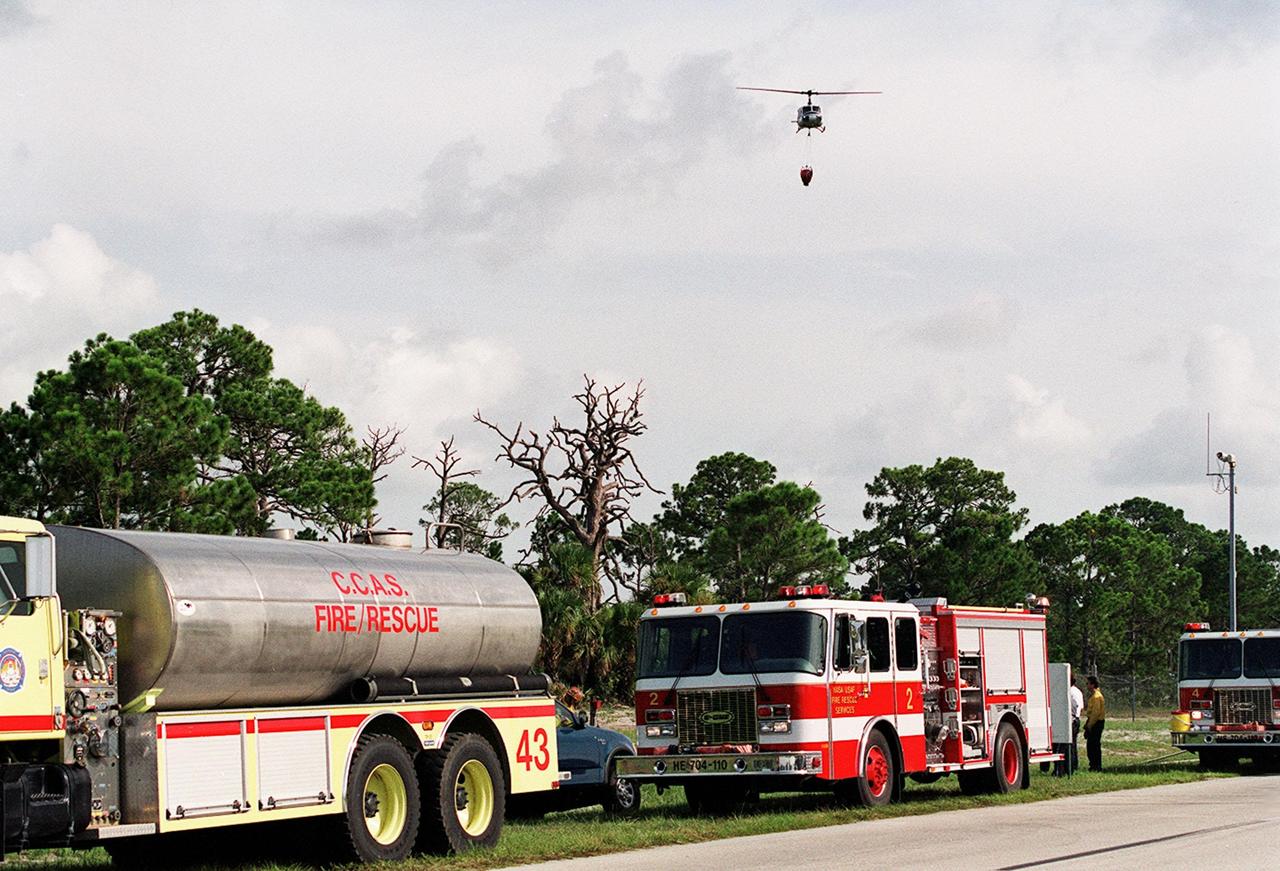
A NASA helicopter flies over fire-fighting equipment and personnel in order to drop its load of water on a wildfire at KSC. Before being extinguished, the fire burned about 20 acres at a site near gate 2C on Kennedy Parkway North (route 3)
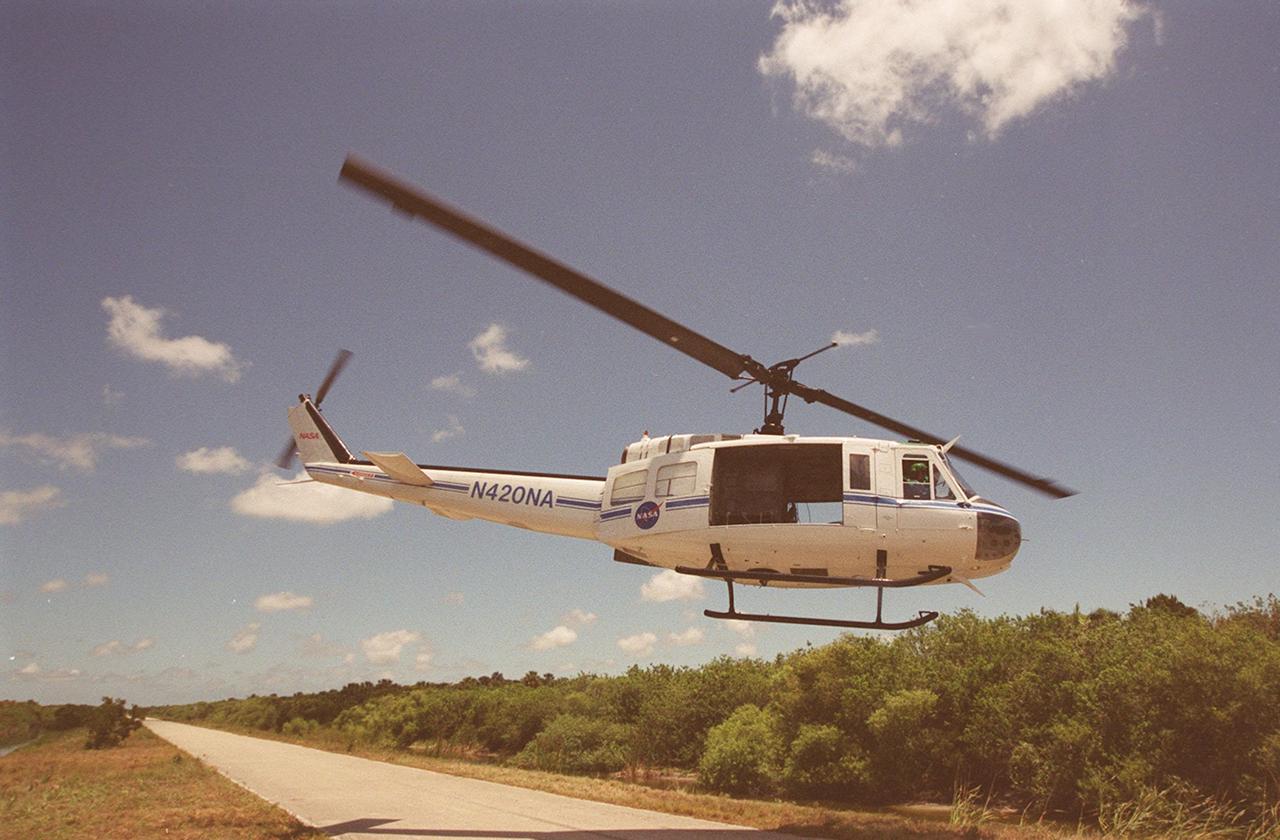
A NASA helicopter takes off to bring water to fight a small fire on Kennedy Space Center grounds. The site is between Kennedy Parkway North and the Indian River. The fire is one of many throughout Central Florida, which is suffering from drought
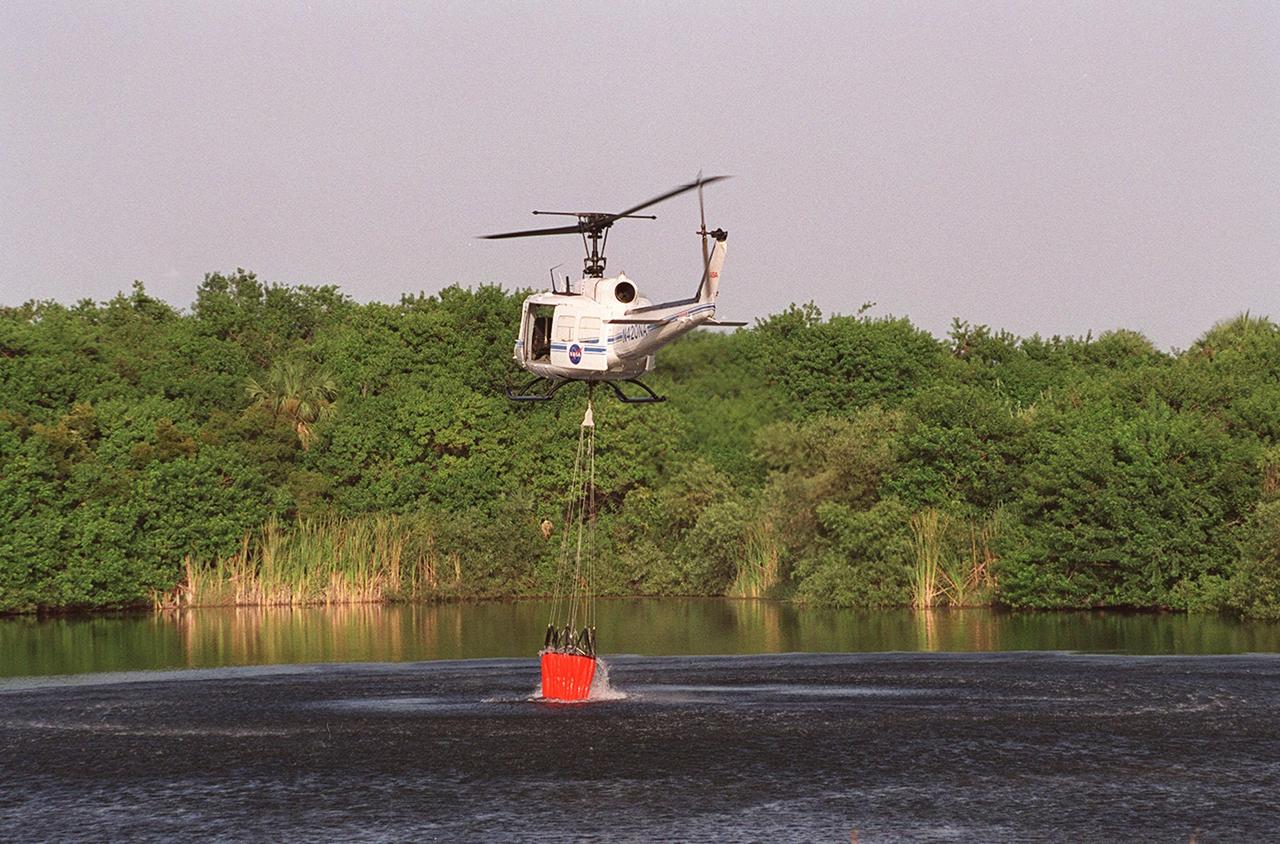
A NASA helicopter dips its fire-fighting bucket into the river to pick up and deliver a cargo of water to a wildfire at KSC. Before being extinguished, the fire burned about 20 acres at a site near gate 2C on Kennedy Parkway North (route 3)
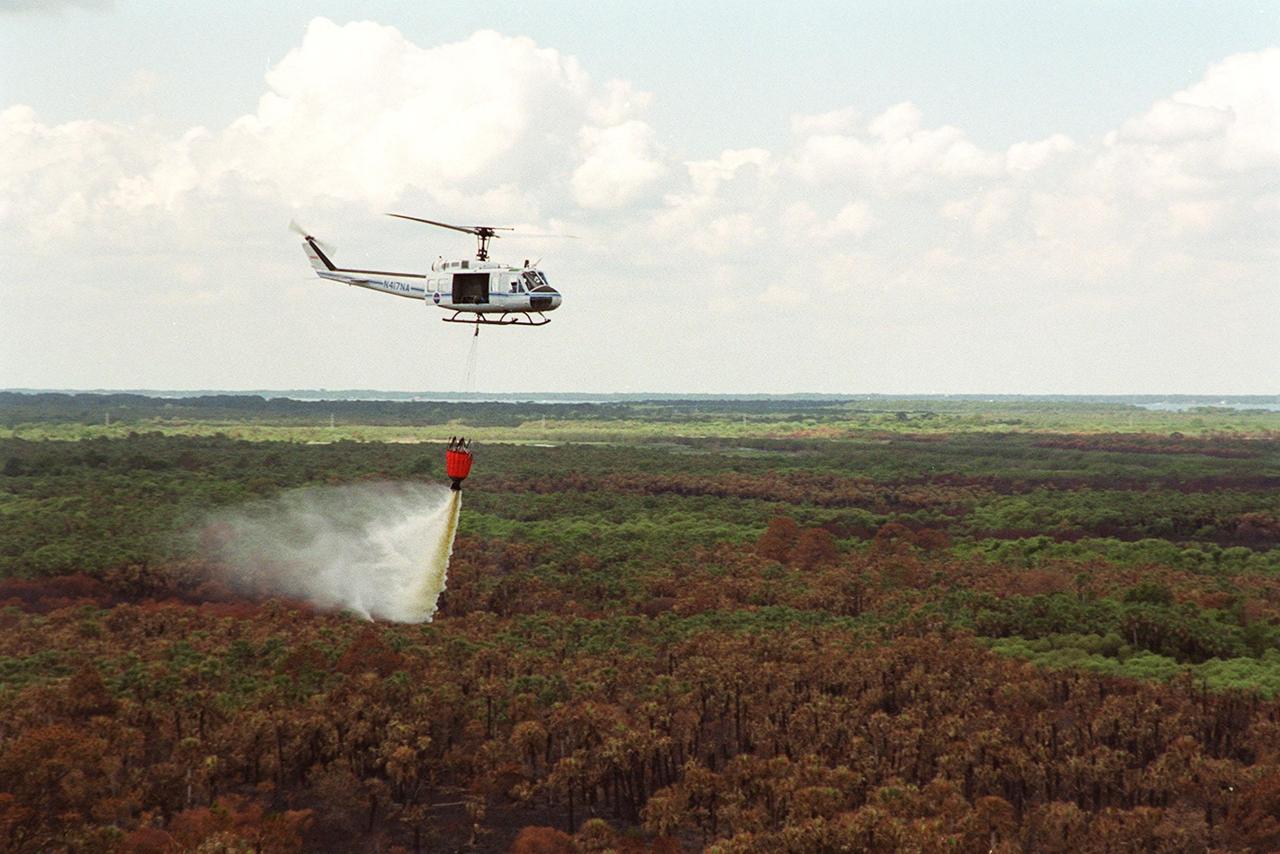
A NASA helicopter drops water from a special “bucket” onto a small fire on Kennedy Space Center grounds. The site is between Kennedy Parkway North and the Indian River. The fire is one of many throughout Central Florida, which is suffering from drought
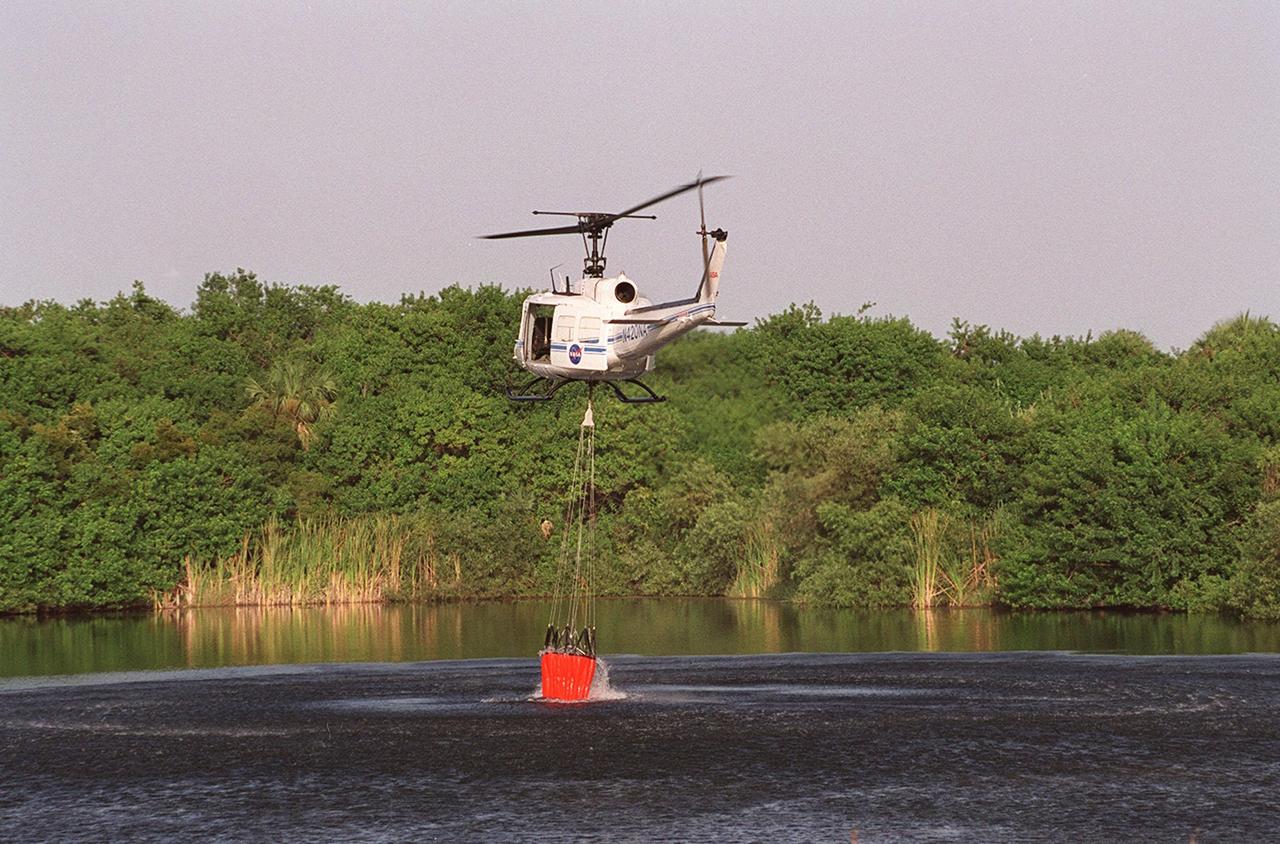
A NASA helicopter dips its fire-fighting bucket into the river to pick up and deliver a cargo of water to a wildfire at KSC. Before being extinguished, the fire burned about 20 acres at a site near gate 2C on Kennedy Parkway North (route 3)
A NASA helicopter drops water from a special “bucket” onto a small fire on Kennedy Space Center grounds. The site is between Kennedy Parkway North and the Indian River. The fire is one of many throughout Central Florida, which is suffering from drought
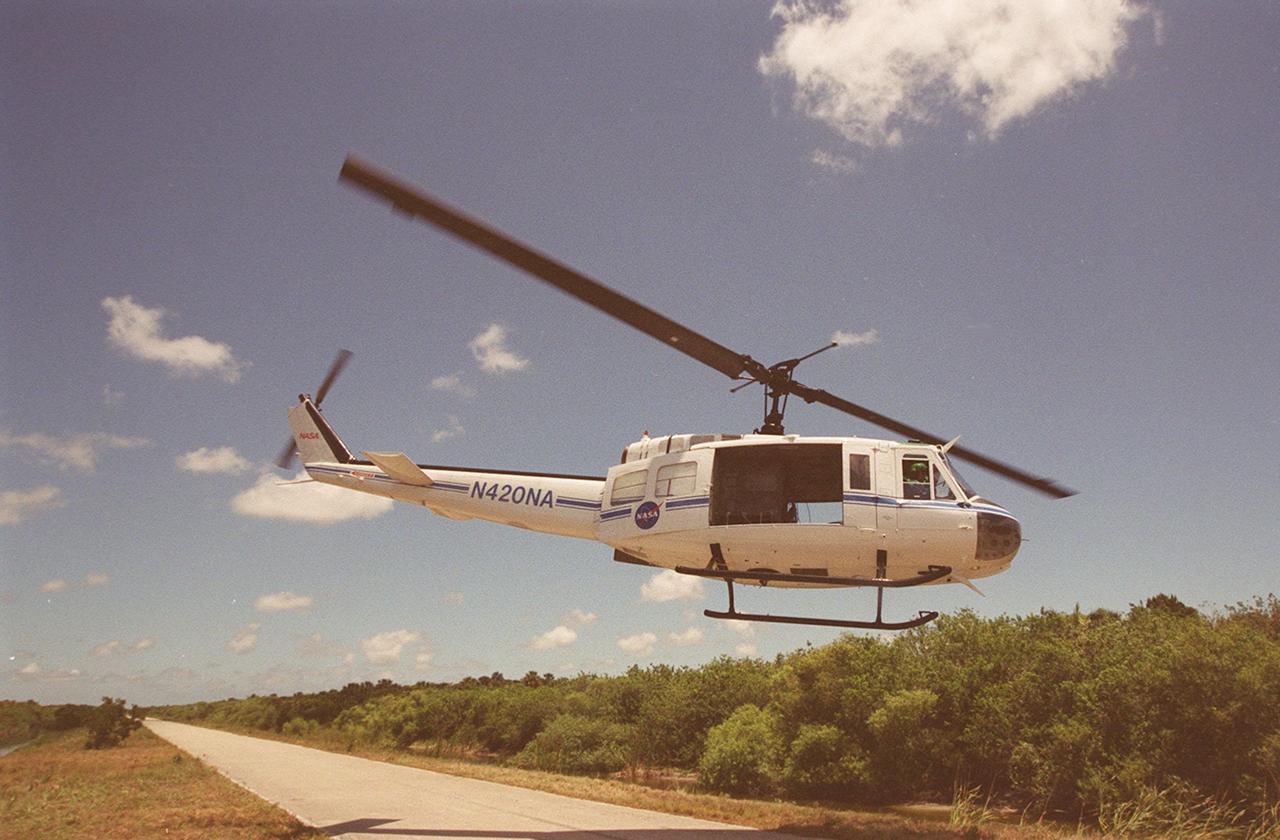
A NASA helicopter takes off to bring water to fight a small fire on Kennedy Space Center grounds. The site is between Kennedy Parkway North and the Indian River. The fire is one of many throughout Central Florida, which is suffering from drought
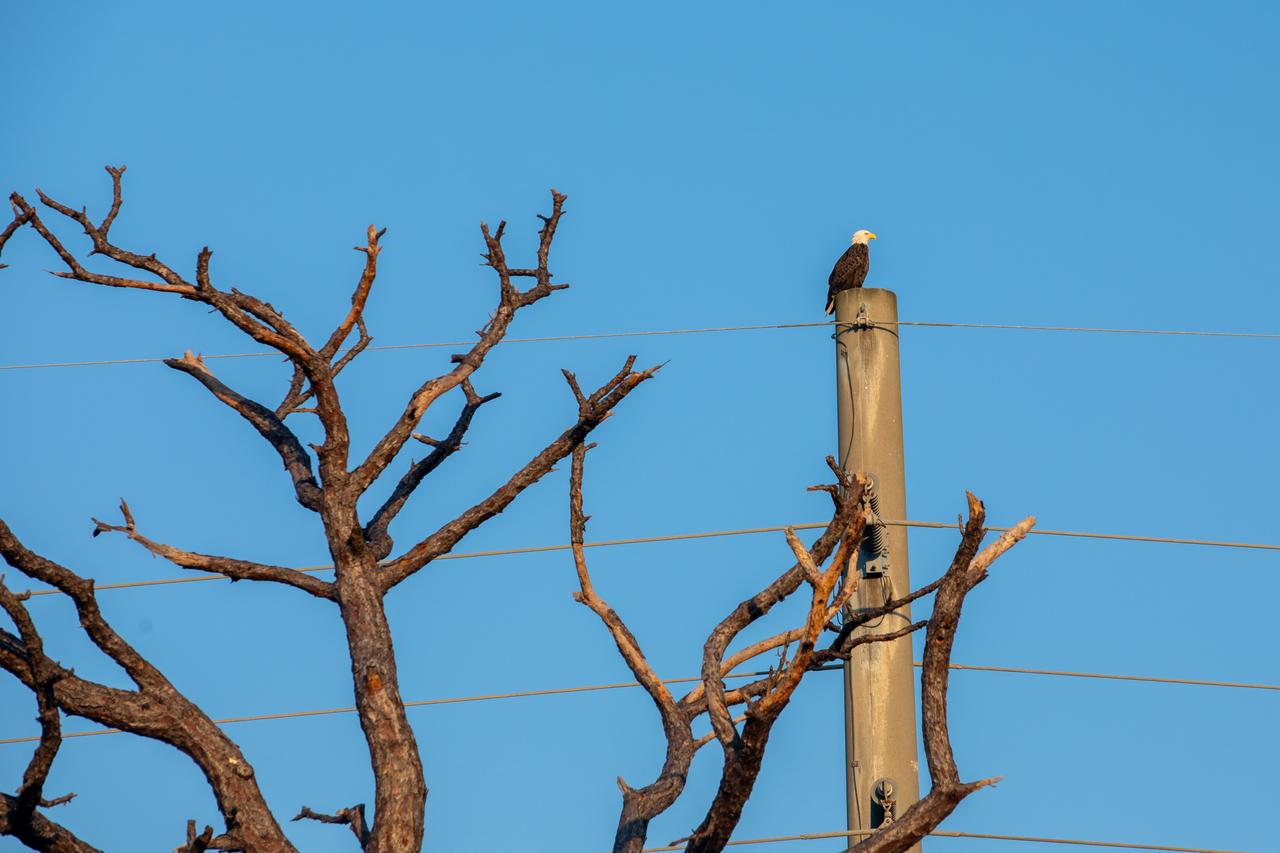
An American bald eagle is perched atop a pole on Wednesday, Sept. 18, 2024, near Kennedy Parkway North, about two miles from the Vehicle Assembly Building at NASA’s Kennedy Space Center in Florida. As of 2023, NASA’s Kennedy is home to 39 eagle territories with 33 of them active or potentially active between the months of September to March. NASA shares a boundary with the Merritt Island National Wildlife Refuge, home to more than 1,500 species of plants and animals, and 15 federally listed species.
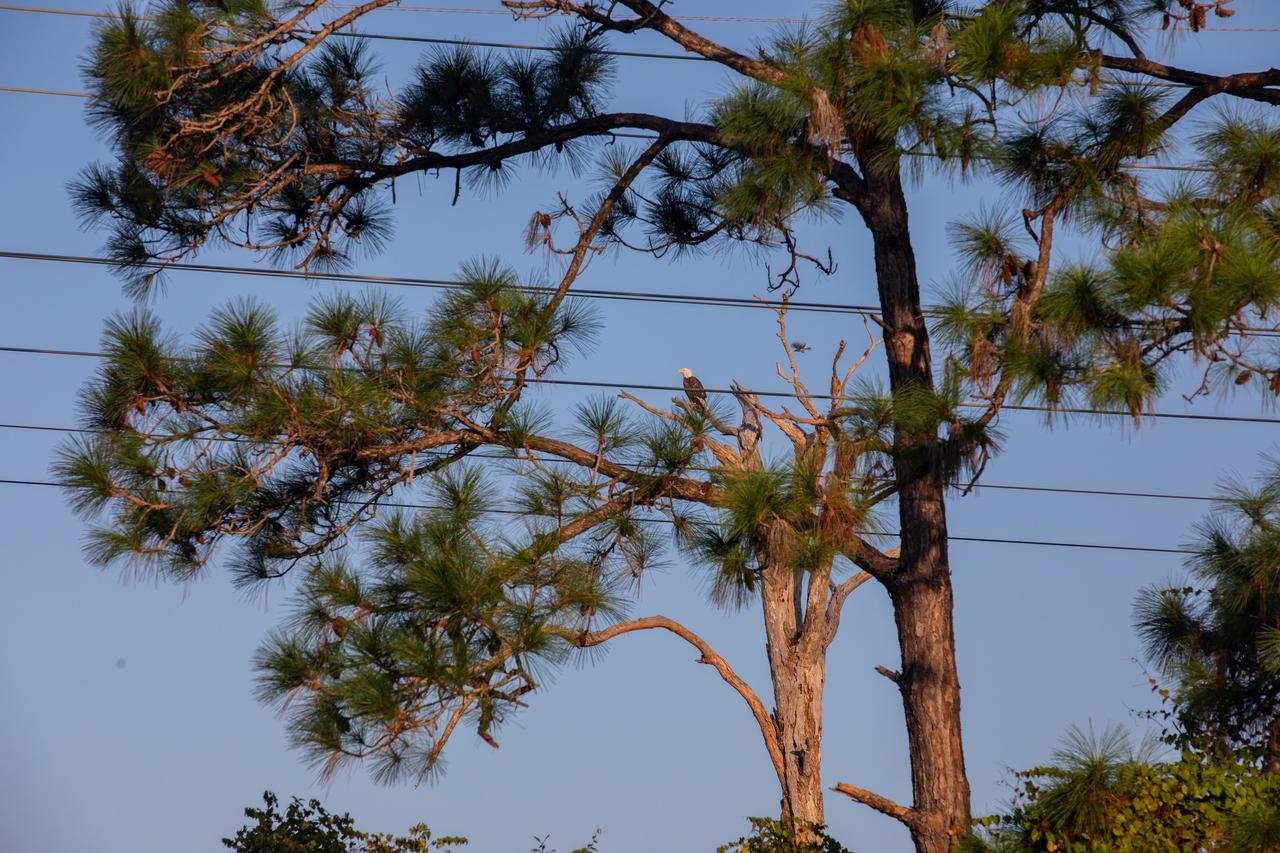
An American bald eagle is perched atop a pole on Wednesday, Sept. 18, 2024, near Kennedy Parkway North, about two miles from the Vehicle Assembly Building at NASA’s Kennedy Space Center in Florida. As of 2023, NASA’s Kennedy is home to 39 eagle territories with 33 of them active or potentially active between the months of September to March. NASA shares a boundary with the Merritt Island National Wildlife Refuge, home to more than 1,500 species of plants and animals, and 15 federally listed species.
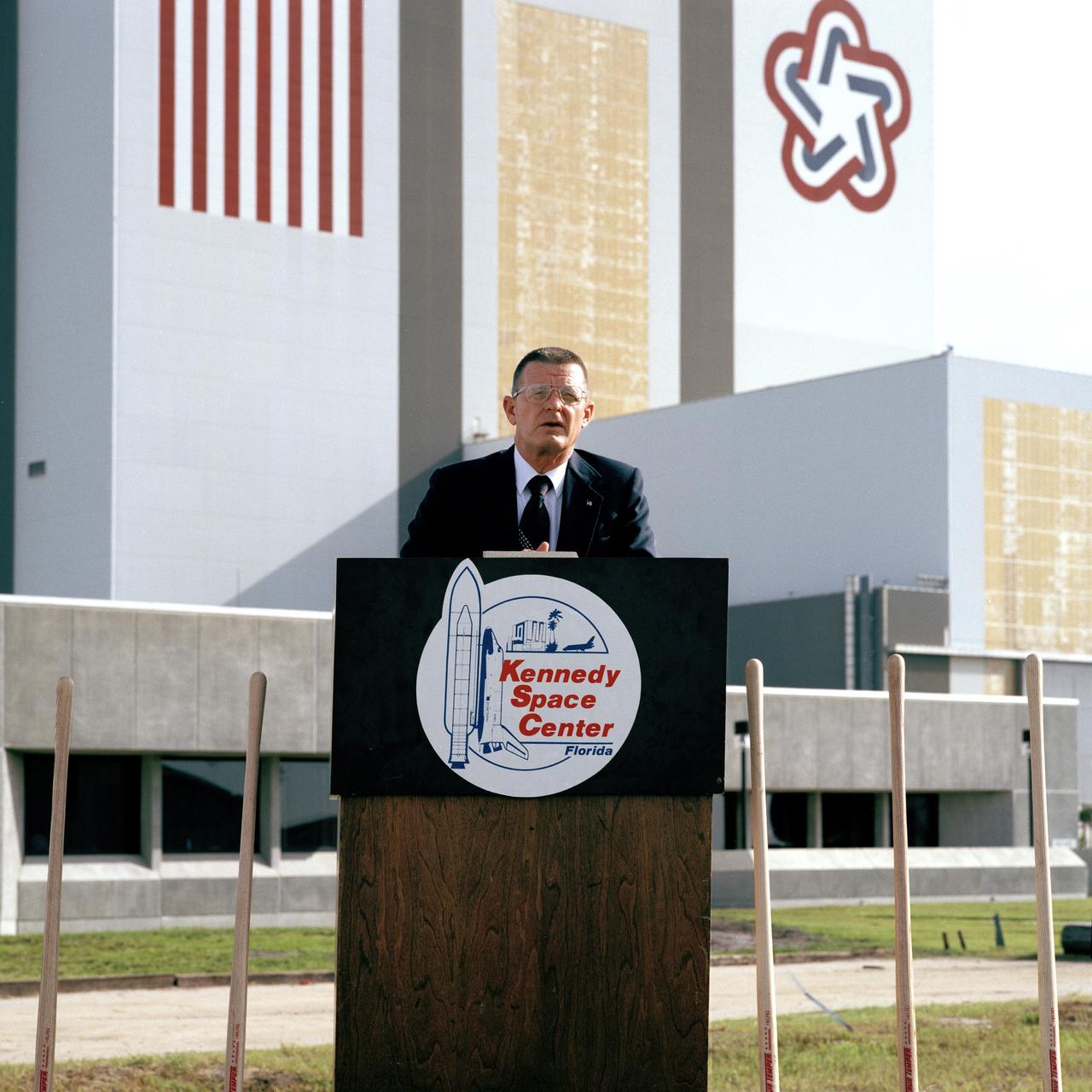
CAPE CANAVERAL, Fla. - Kennedy Space Center Director Forrest McCartney speaks at the ground-breaking ceremonies for the new Operations Support Building. This new facility will provide office accommodations for 1,700 NASA and contractor personnel. The $20,695,000, six-story, 300,000-square-foot building is located southwest of the Multi-Function Facility near the corner of the Saturn Causeway and Kennedy Parkway Roads. Construction is due to be completed by June 1990. Photo credit: NASA
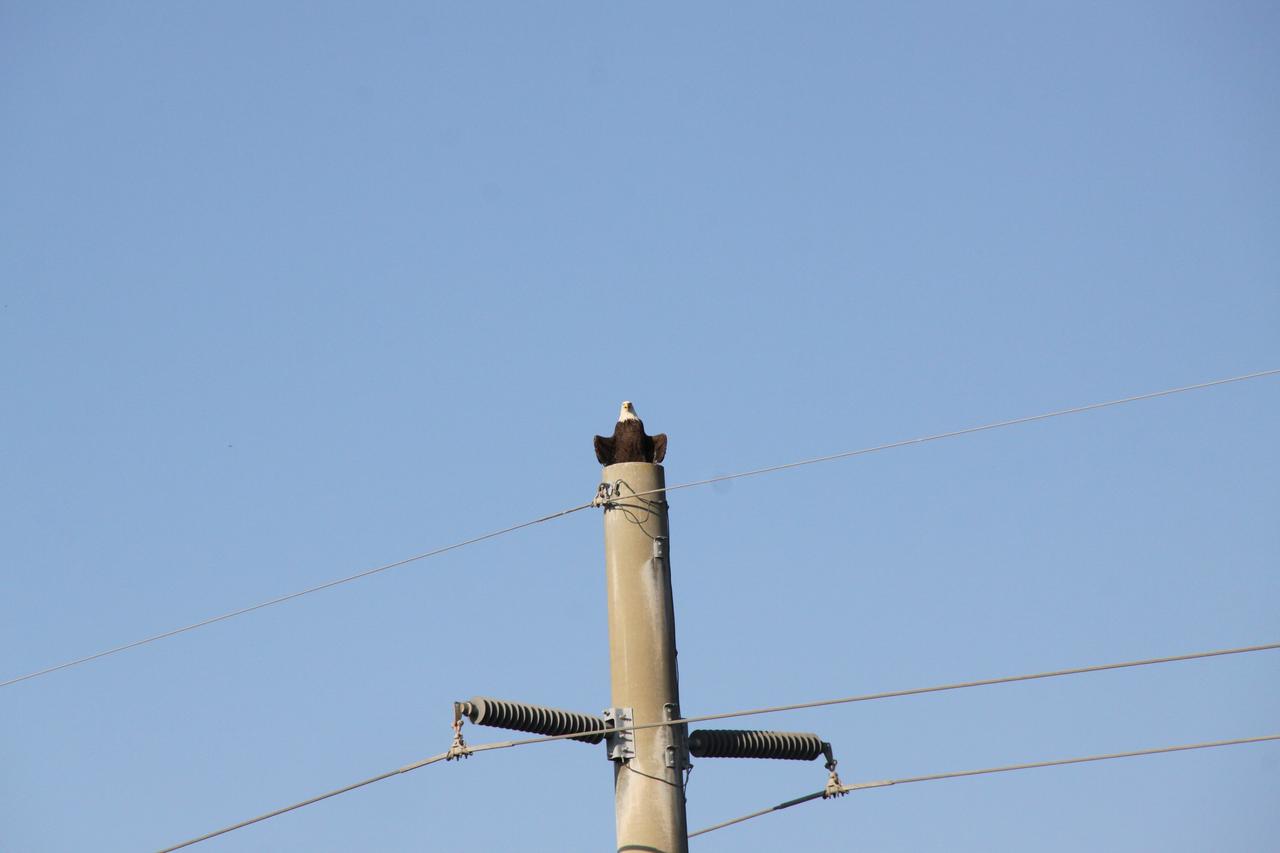
CAPE CANAVERAL, Fla. -- A bald eagle surveys NASA's Kennedy Space Center in Florida from a power pole along the Kennedy Parkway, which runs parallel to the Shuttle Landing Facility. The Merritt Island National Wildlife Refuge coexists with Kennedy and provides a habitat for 330 species of birds. A variety of other wildlife, including fish, amphibians, reptiles, mammals and plants, also inhabit the refuge. For information on the refuge, visit www.fws.gov/merrittisland/Index.html. For information on Kennedy, visit www.nasa.gov/kennedy. Photo credit: NASA/Jack Pfaller
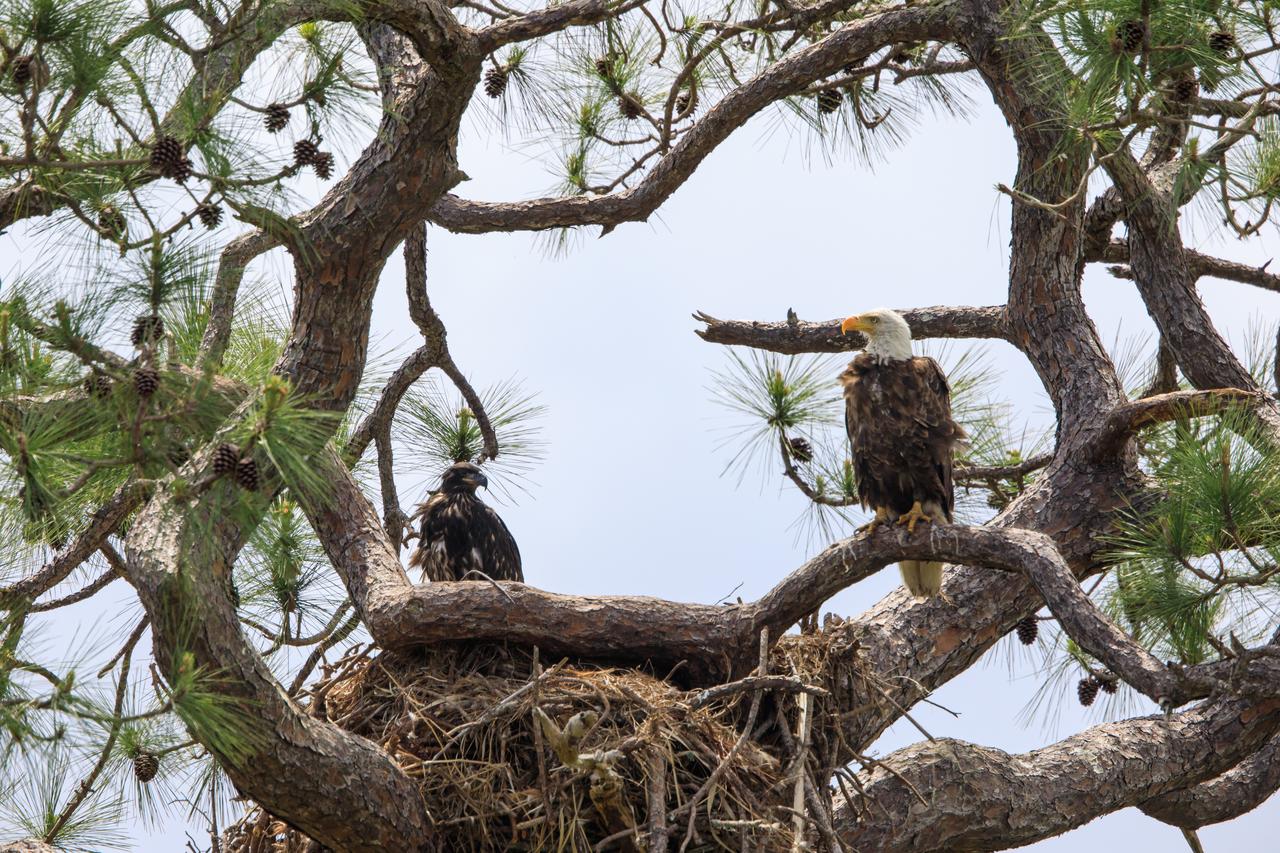
A baby American bald eagle looks out from its nest, accompanied by one of its parents, in a tree located near Kennedy Parkway North at NASA’s Kennedy Space Center in Florida on April 10, 2023. A mated pair of eagles recently built a new home in this tree after storms badly damaged their original nest located about 50 yards away. That nest was built in 1973 and had been used by eagles almost every year since 1975.
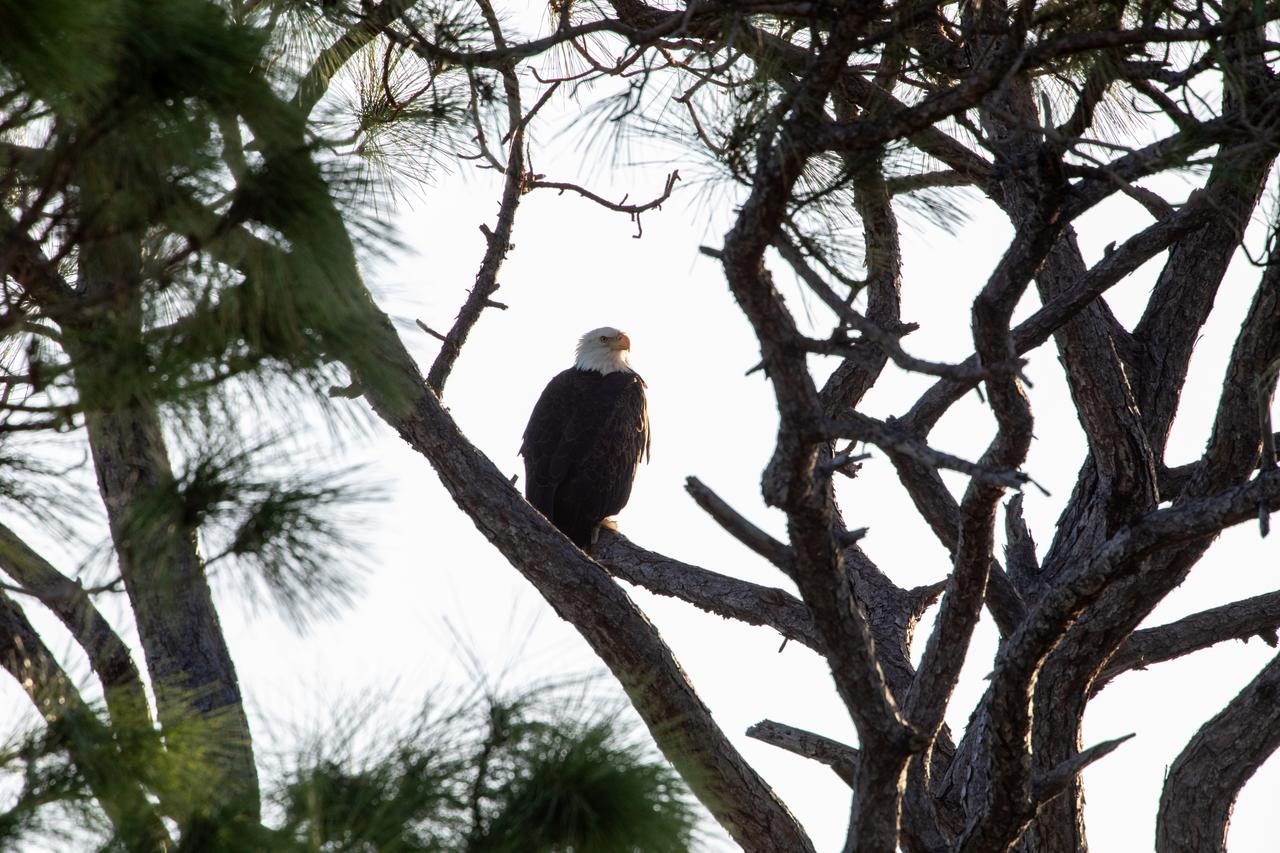
An American bald eagle is perched in a tree near its nest along Kennedy Parkway North on Monday, Nov. 4, 2024, about two miles from the Vehicle Assembly Building at NASA’s Kennedy Space Center in Florida. The spaceport shares a border with the 140,000-acre Merritt Island National Wildlife Refuge and is home to 39 eagle territories, 33 of which are active or potentially active between the months of September and March.
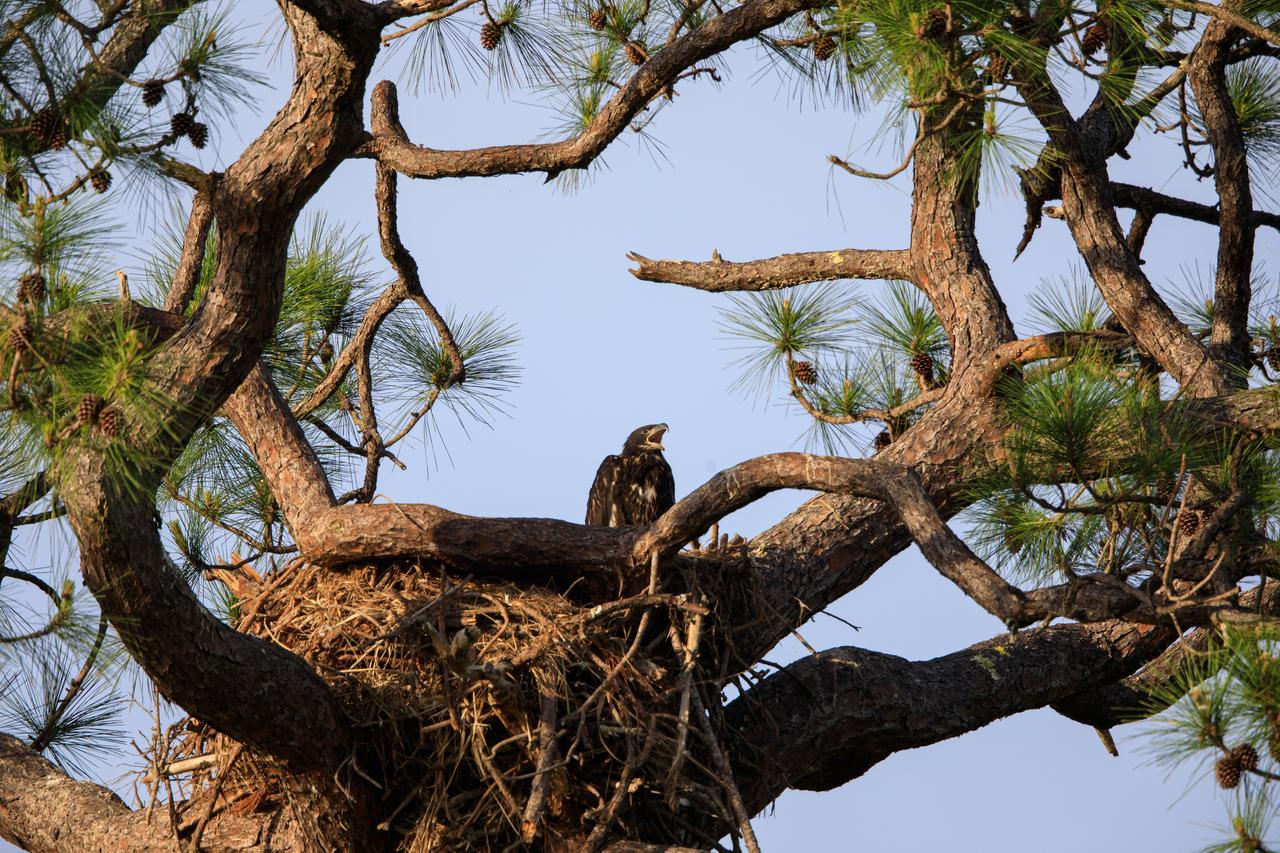
A baby American bald eagle calls out from a nest located near Kennedy Parkway North at NASA’s Kennedy Space Center in Florida on April 10, 2023. The eaglet is the lone offspring of a mated pair of eagles that recently built the new home after storms badly damaged their original nest located about 50 yards away. That nest was built in 1973 and had been used by eagles almost every year since 1975.
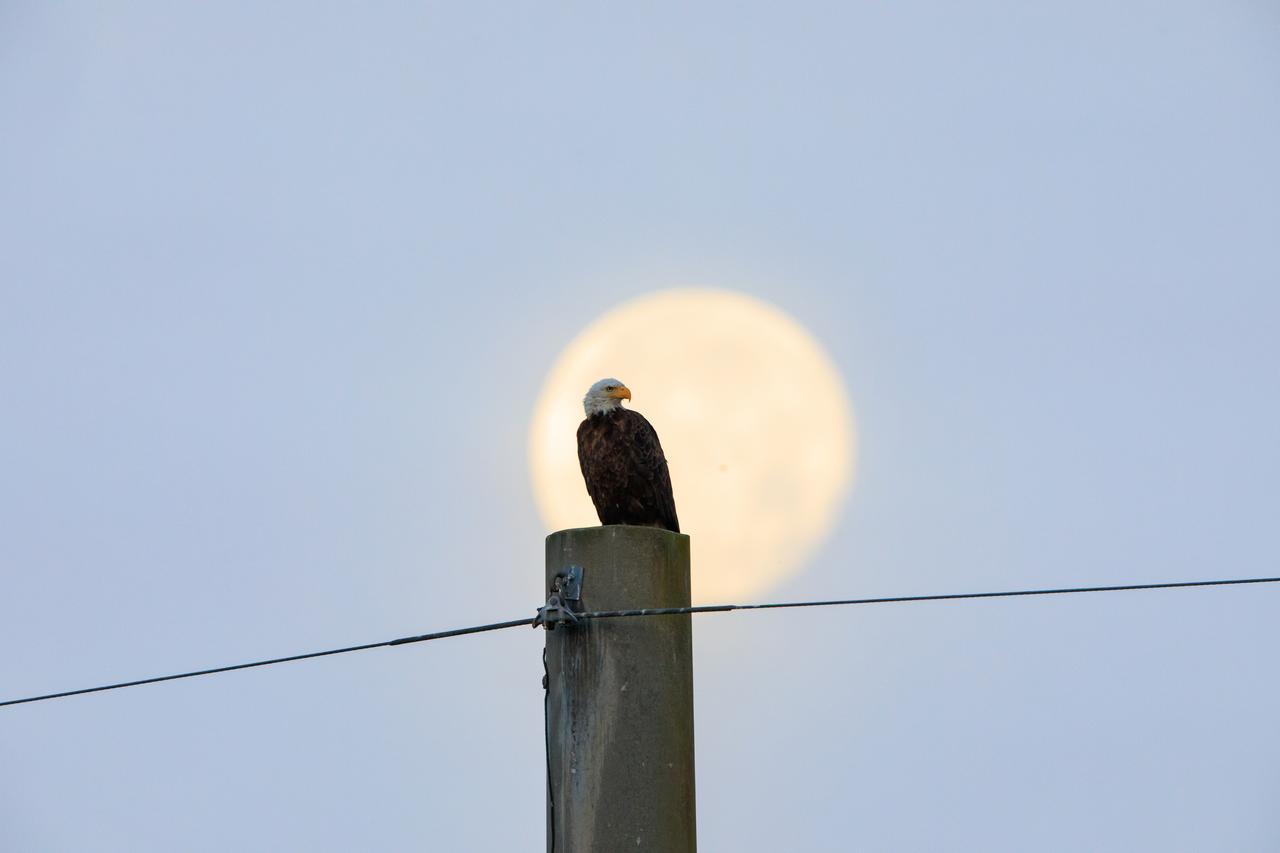
With the Moon in the background, an American bald eagle perches on a pole near its nest at NASA’s Kennedy Space Center on April 10, 2023. The eagle is part of a mated pair that takes up residence at the Florida spaceport during nesting season. This year, the pair is raising a lone baby eagle in the nest, located off of Kennedy Parkway, about two miles from the Vehicle Assembly Building. Kennedy currently is home to approximately 20 nesting pairs of bald eagles.
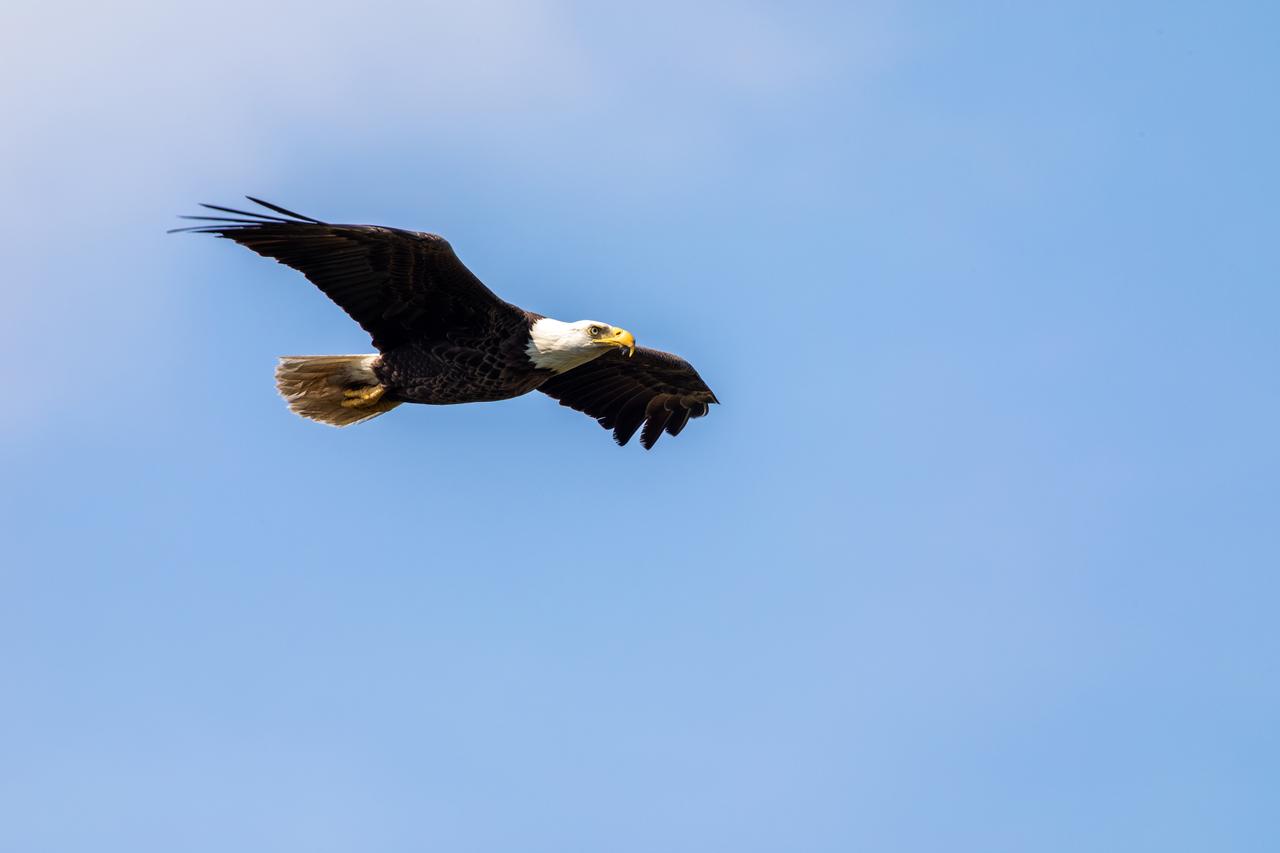
An American bald eagle soars through the sky at NASA’s Kennedy Space Center on March 8, 2023. The eagle is part of a mating pair that takes up residence at the Florida spaceport during nesting season. Recently, a baby eagle was spotted in their nest, located off of Kennedy Parkway, about two miles from the Vehicle Assembly Building. There are 39 eagle territories at Kennedy, 33 of which are active or potentially active.
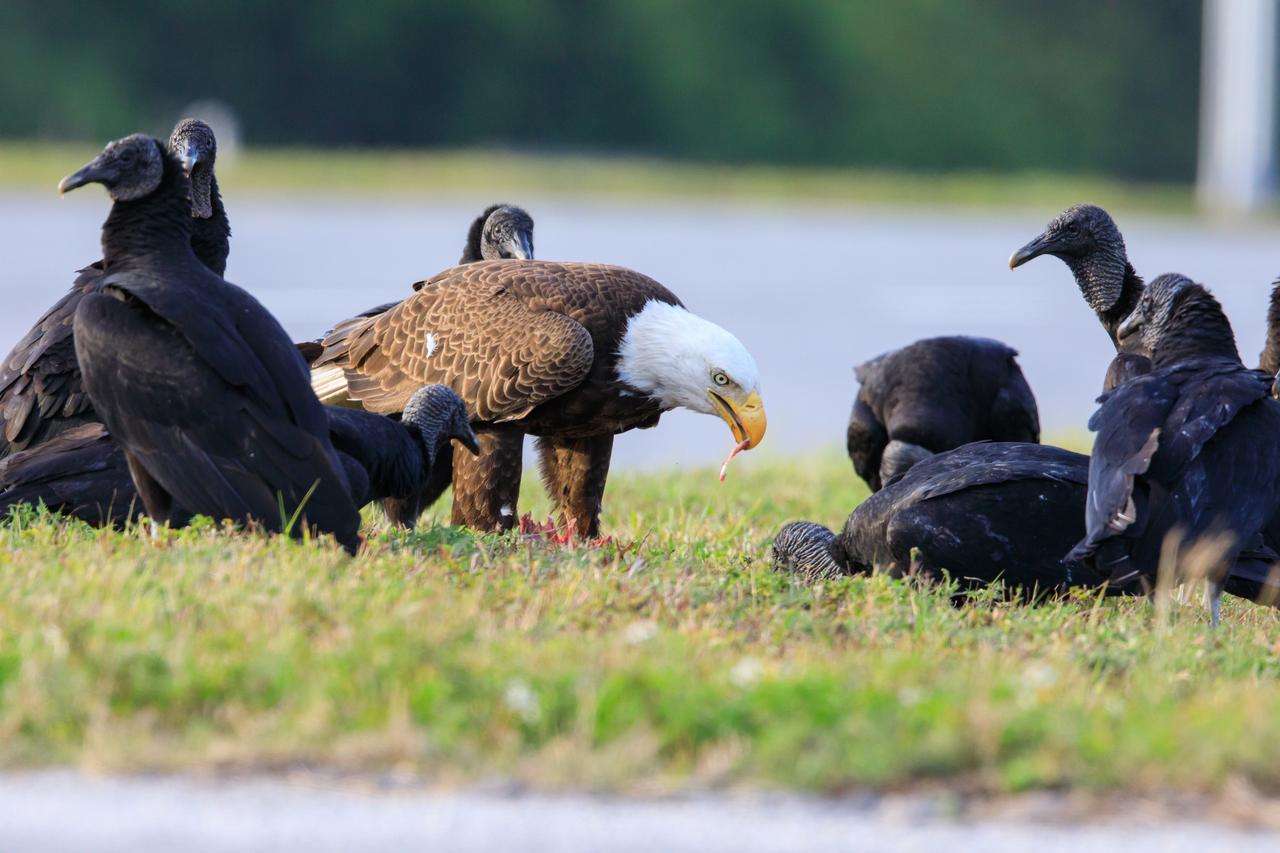
An American bald eagle feeds alongside some vultures at NASA’s Kennedy Space Center on April 10, 2023. The eagle is part of a mated pair that takes up residence at the Florida spaceport during nesting season. The pair is raising a baby eagle in their nest located off of Kennedy Parkway, about two miles from the Vehicle Assembly Building. Kennedy currently is home to approximately 20 nesting pairs of bald eagles.
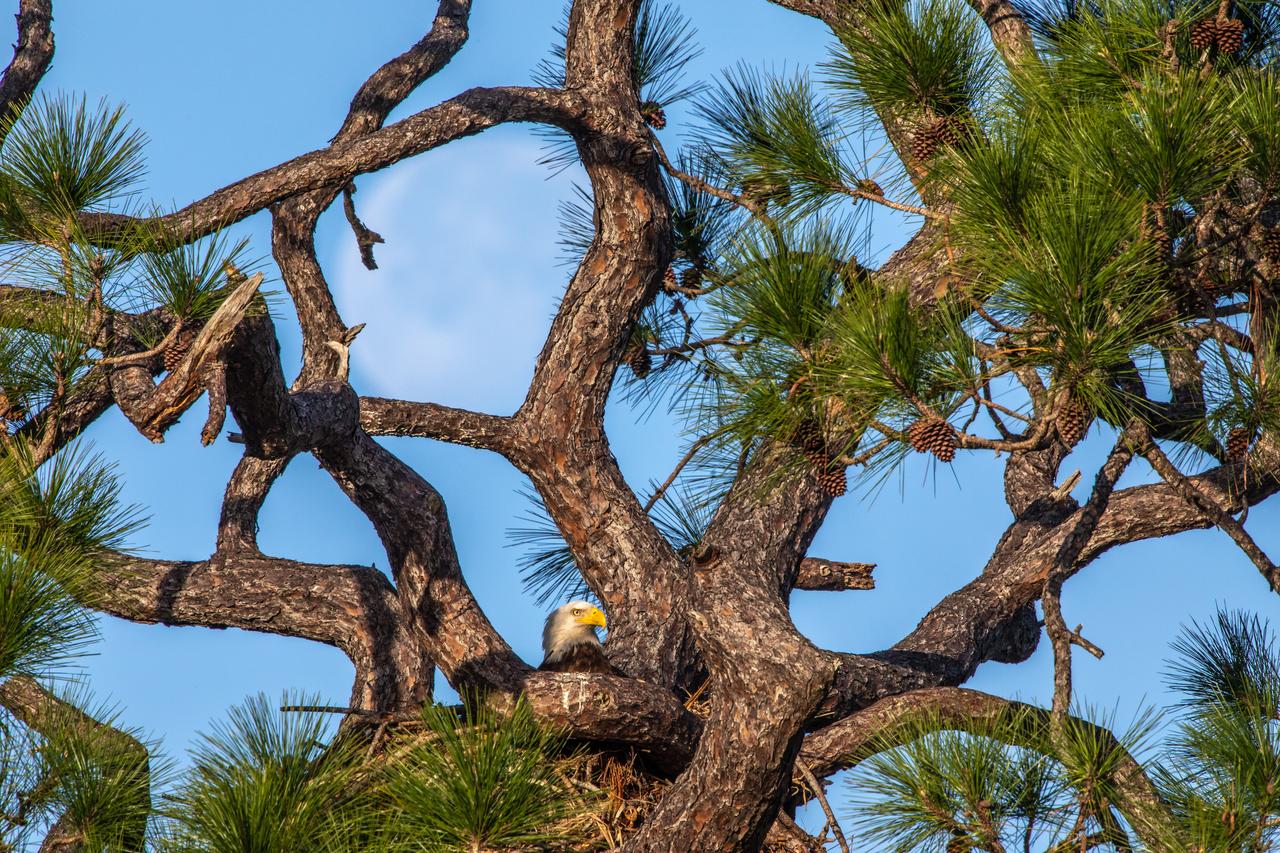
An American bald eagle occupies a nest near Kennedy Parkway North at NASA’s Kennedy Space Center on Feb. 8, 2023. Each year, eagles take up winter residence at the Florida spaceport, breeding and raising a new generation. The center shares a boundary with the Merritt Island National Wildlife Refuge, home to more than 1,500 species of plants and animals, and 15 federally listed species.

Space shuttle Atlantis is seen as it rolls down Kennedy Parkway on its way to its new home at the Kennedy Space Center Visitor Complex, Friday, Nov. 2, 2012, in Cape Canaveral, Fla. The spacecraft traveled 125,935,769 miles during 33 spaceflights, including 12 missions to the International Space Station. Its final flight, STS-135, closed out the Space Shuttle Program era with a landing on July 21, 2011. Photo Credit: (NASA/Bill Ingalls)
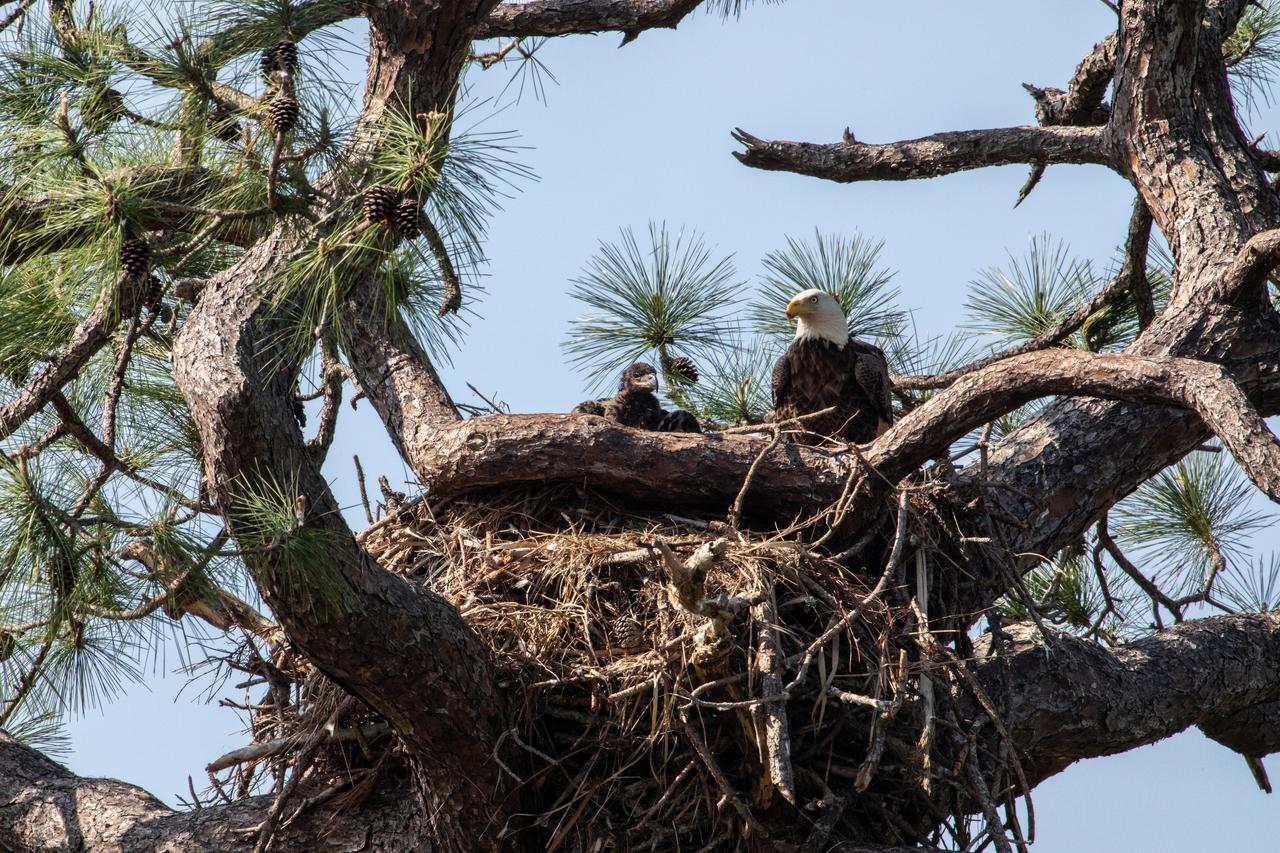
A baby American bald eagle spends time with one of its parents in a nest located near Kennedy Parkway North at NASA’s Kennedy Space Center in Florida on March 8, 2023. A mating pair of eagles recently built a new home in this tree after a combination of storms badly damaged their original nest located less than 100 yards away. That nest was built in 1973 and had been used by eagles almost every year since 1975.
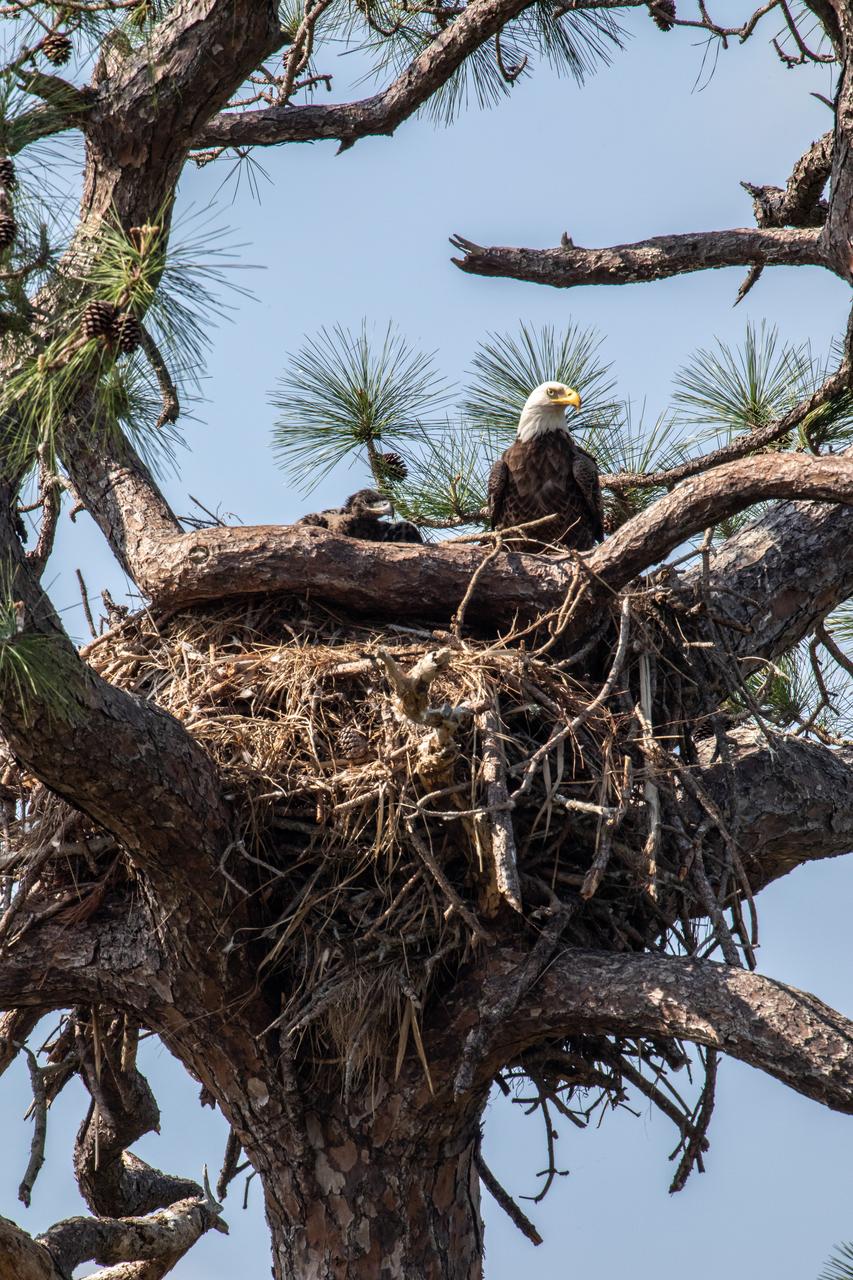
A baby American bald eagle looks out from its nest, along with one of its parents, from their temporary home located near Kennedy Parkway North at NASA’s Kennedy Space Center in Florida on March 8, 2023. A mating pair of eagles recently built a new nest in this tree after a combination of storms badly damaged their original nest located less than 100 yards away. That nest was built in 1973 and had been used by eagles almost every year since 1975.
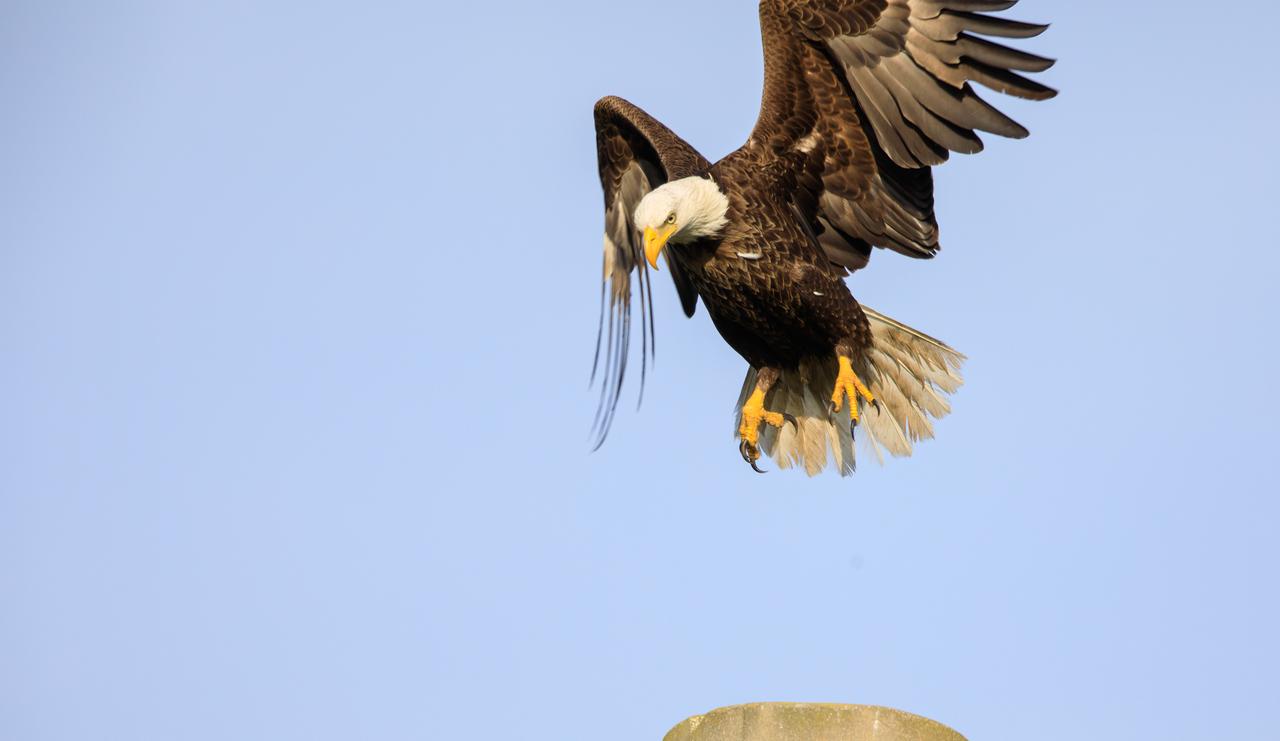
An American bald eagle swoops down to land on a pole at NASA’s Kennedy Space Center on April 10, 2023. The eagle is part of a mated pair that takes up residence at the Florida spaceport during nesting season. This year, the pair is raising a lone baby eagle in the nest, located in a tree near Kennedy Parkway, about two miles from the Vehicle Assembly Building. Kennedy currently is home to approximately 20 nesting pairs of bald eagles.
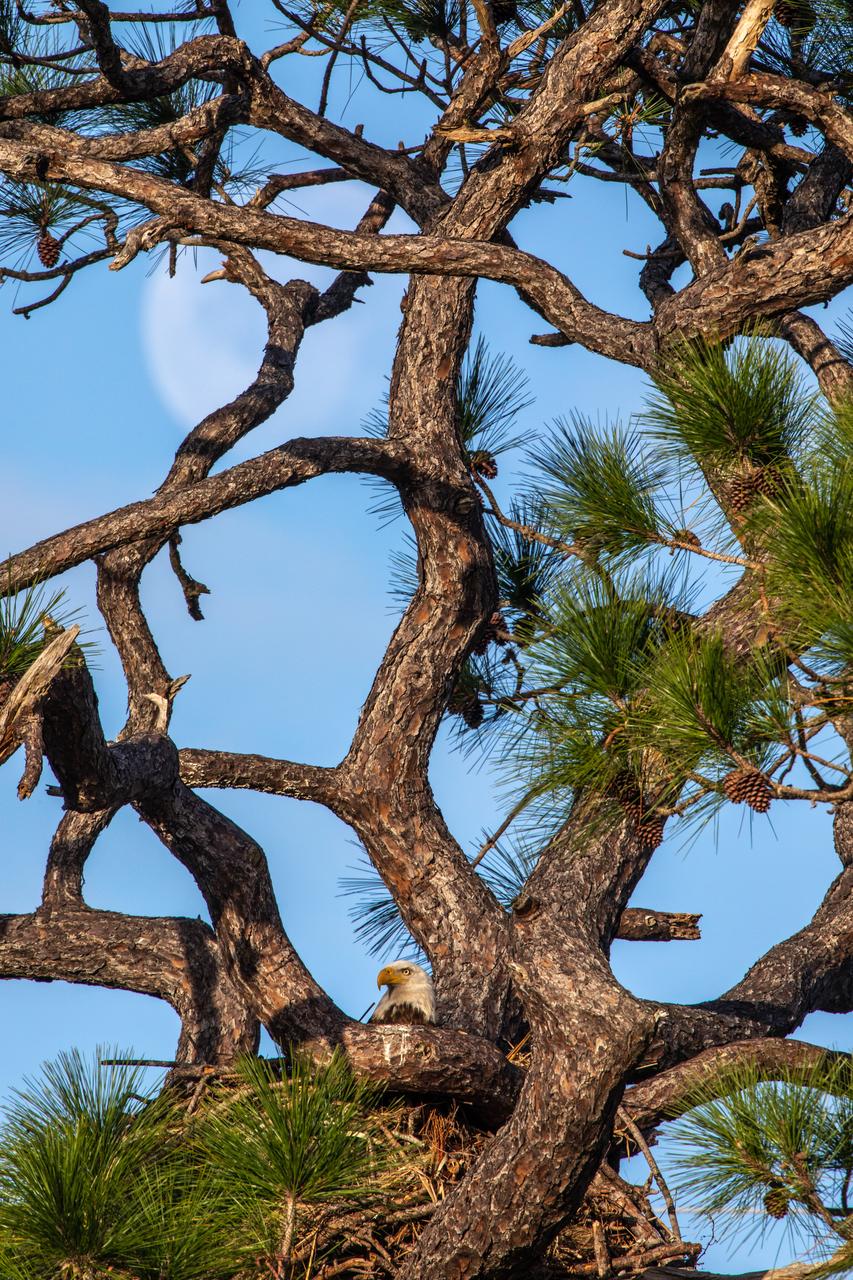
An American bald eagle occupies a nest near Kennedy Parkway North at NASA’s Kennedy Space Center on Feb. 8, 2023. Each year, eagles take up winter residence at the Florida spaceport, breeding and raising a new generation. The center shares a boundary with the Merritt Island National Wildlife Refuge, home to more than 1,500 species of plants and animals, and 15 federally listed species.
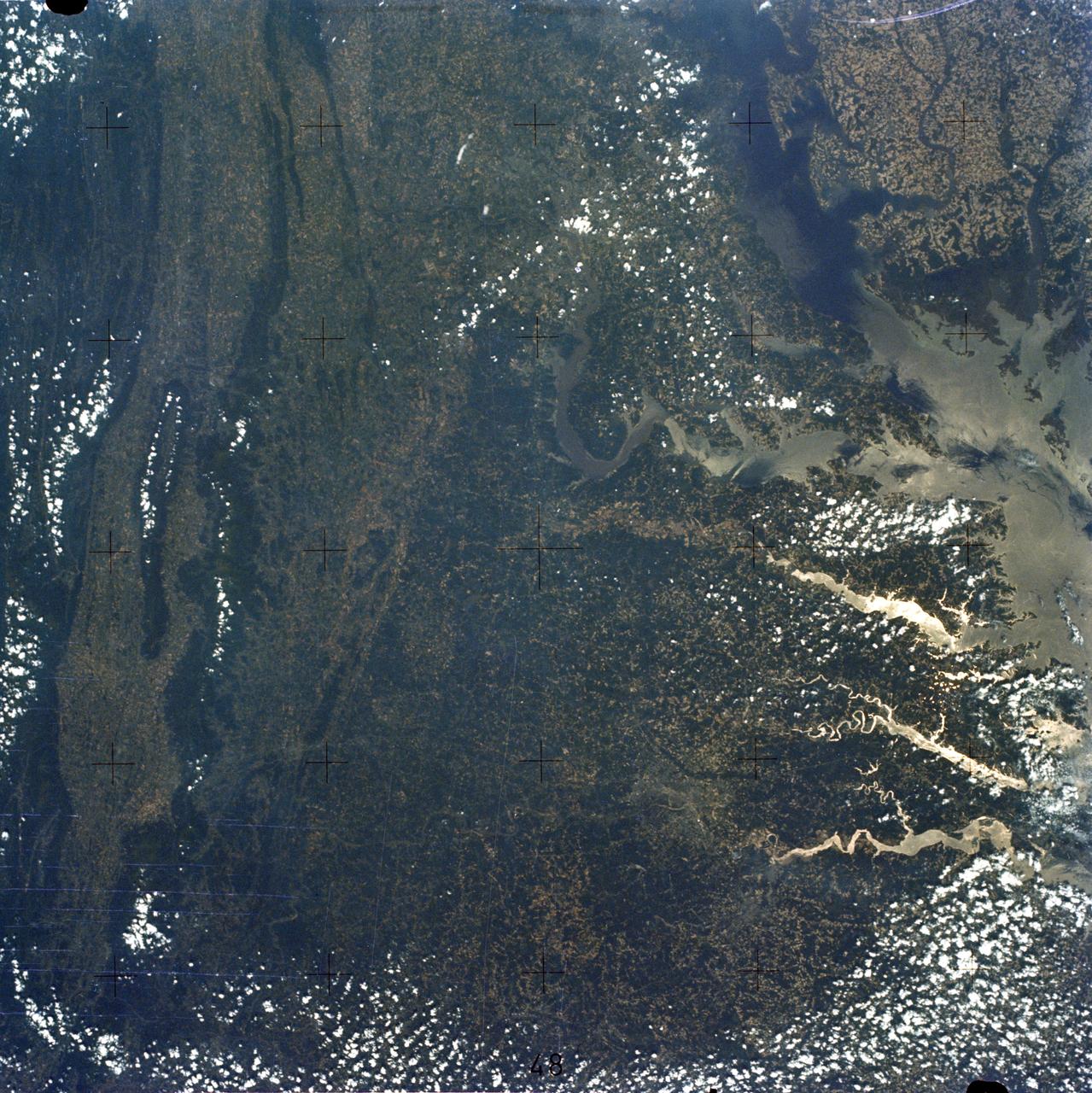
SL2-05-393 (22 June 1973) --- The nation's capital lies astride the Potomac River (38.5N, 77.5W) at the head of the Potomac Estuary. Baltimore, MD, also in the scene, is connected to Washington by the Baltimore-Washington Parkway. The suburbs of both cities tend to cluster around the Washington and Baltimore Beltways. Most of the countryside in the eastern two-thirds of this scene is either heavily forested or is in farming, dairy operations or poultry production. Photo credit: NASA
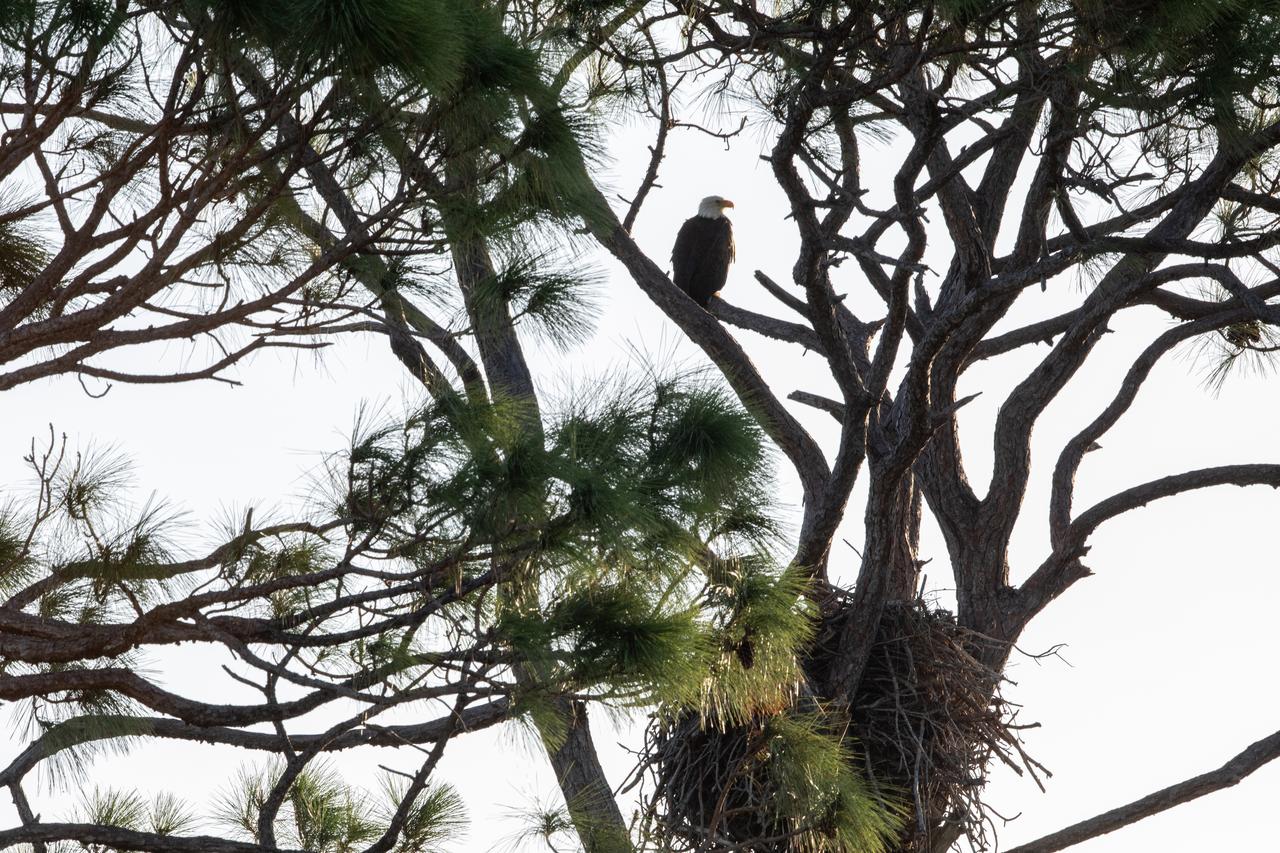
An American bald eagle is perched in a tree near its nest along Kennedy Parkway North on Monday, Nov. 4, 2024, about two miles from the Vehicle Assembly Building at NASA’s Kennedy Space Center in Florida. The spaceport shares a border with the 140,000-acre Merritt Island National Wildlife Refuge and is home to 39 eagle territories, 33 of which are active or potentially active between the months of September and March.
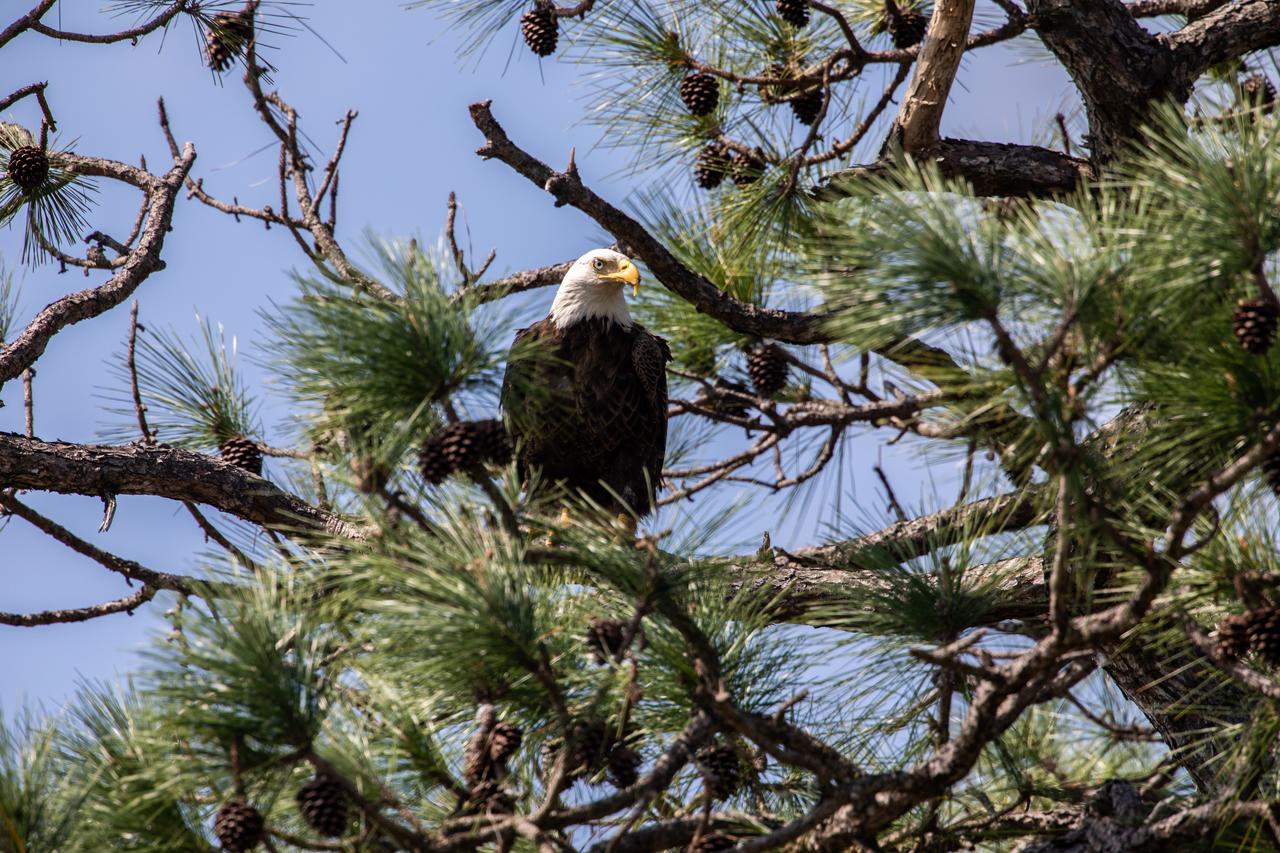
An American bald eagle is perched in a tree near its nest at NASA’s Kennedy Space Center on March 8, 2023. The eagle is part of a mating pair that takes up residence at the Florida spaceport during nesting season. Recently, a baby eagle was spotted in their nest, located off of Kennedy Parkway, about two miles from the Vehicle Assembly Building. There are 39 eagle territories at Kennedy, 33 of which are active or potentially active.
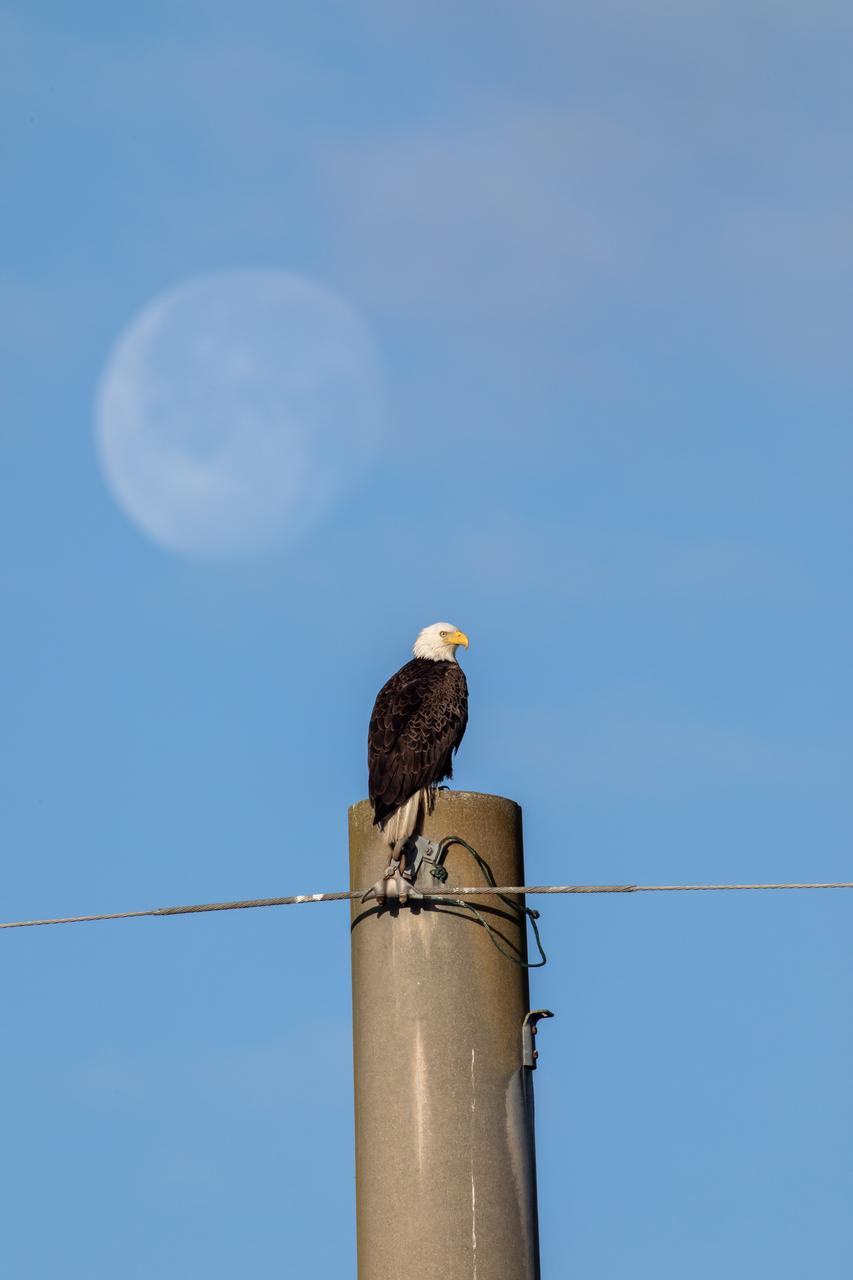
An American bald eagle is perched atop a pole near Kennedy Parkway North at NASA’s Kennedy Space Center on Feb. 8, 2023. Each year, eagles take up winter residence at the Florida spaceport, breeding and raising a new generation. The center shares a boundary with the Merritt Island National Wildlife Refuge, home to more than 1,500 species of plants and animals, and 15 federally listed species.
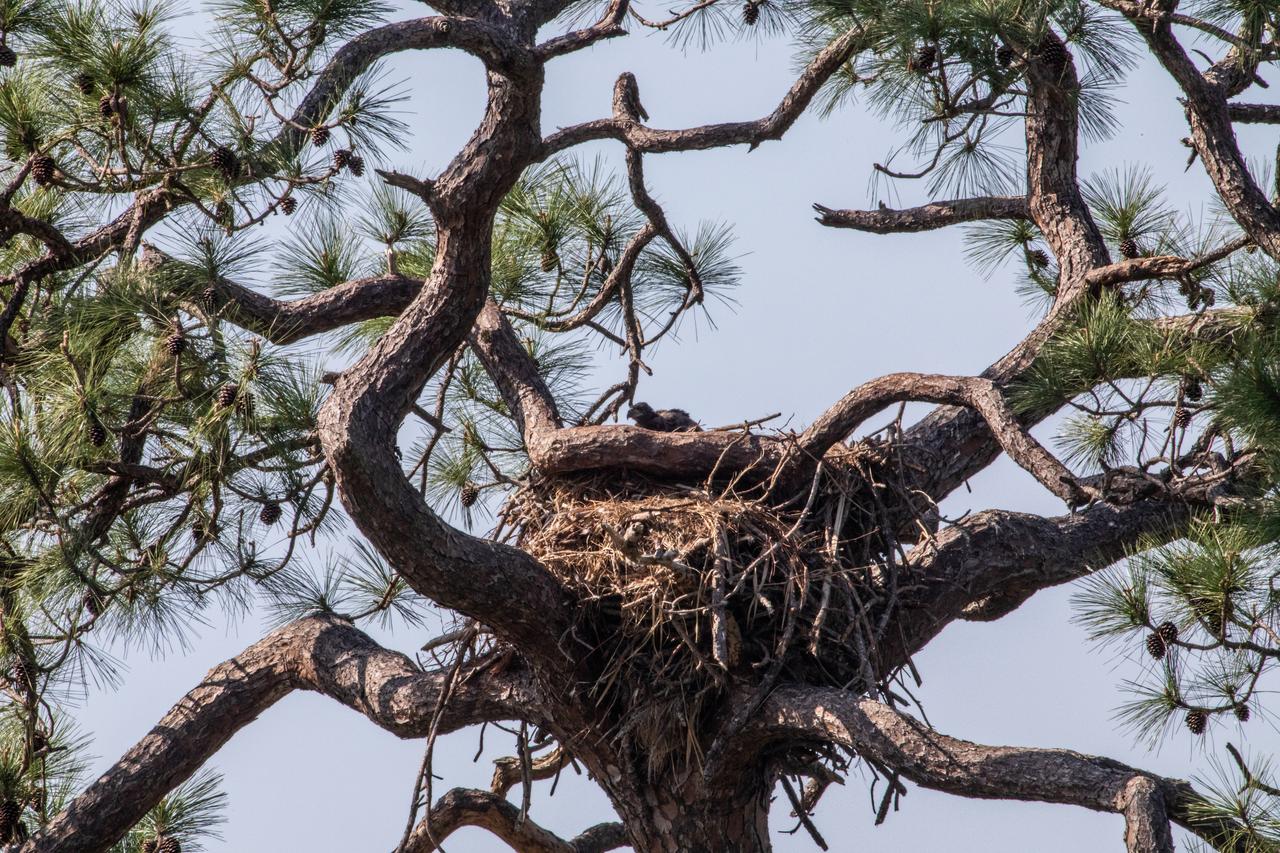
A baby American bald eagle pokes its head up from a nest located near Kennedy Parkway North at NASA’s Kennedy Space Center in Florida on March 8, 2023. A mating pair of eagles recently built a new home in this tree after a combination of storms badly damaged their original nest located less than 100 yards away. That nest was built in 1973 and had been used by eagles almost every year since 1975.
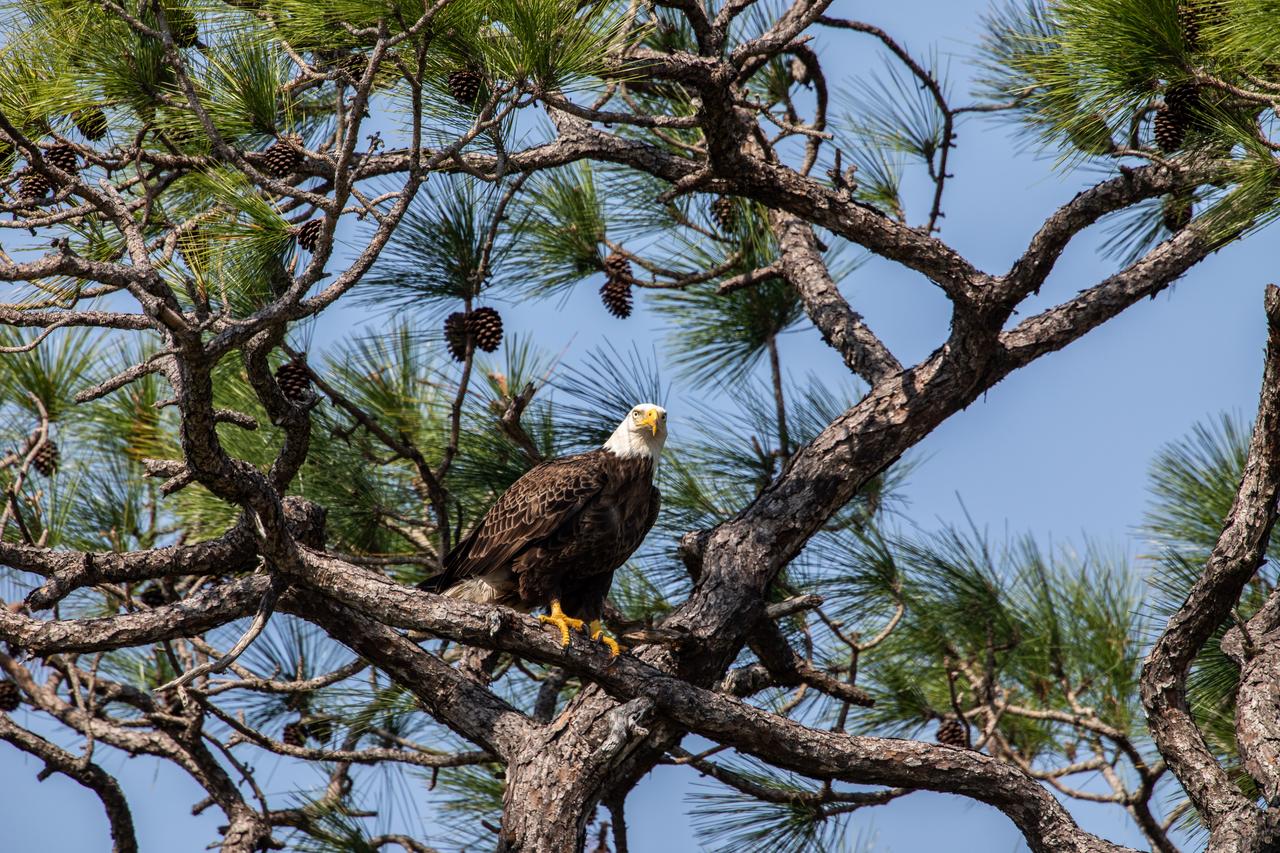
An American bald eagle is perched in a tree near its nest at NASA’s Kennedy Space Center on March 8, 2023. The eagle is part of a mating pair that takes up residence at the Florida spaceport during nesting season. Recently, a baby eagle was spotted in their nest, located off of Kennedy Parkway, about two miles from the Vehicle Assembly Building. There are 39 eagle territories at Kennedy, 33 of which are active or potentially active.
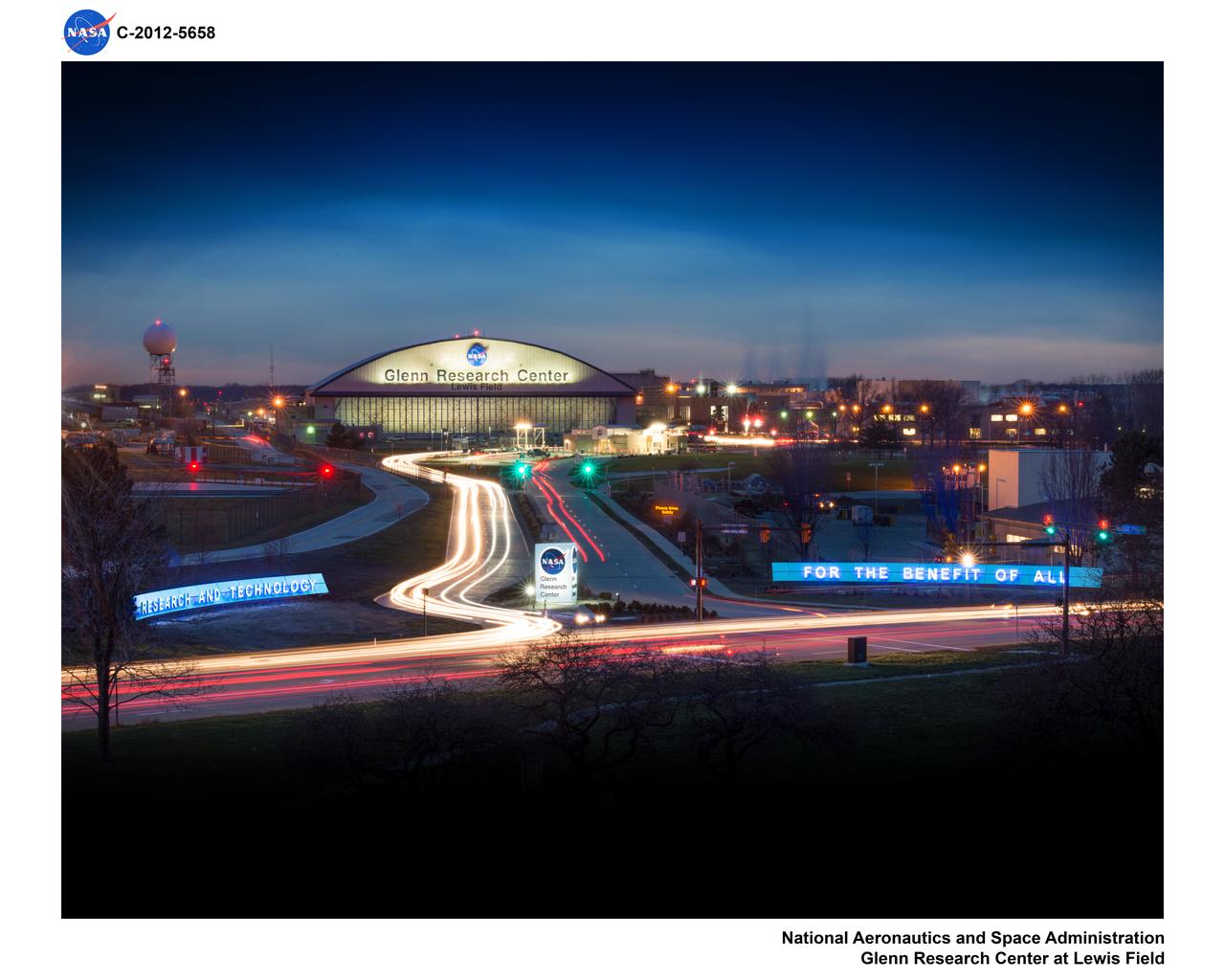
Main Gate, NASA Glenn Research Center, Cleveland, Ohio
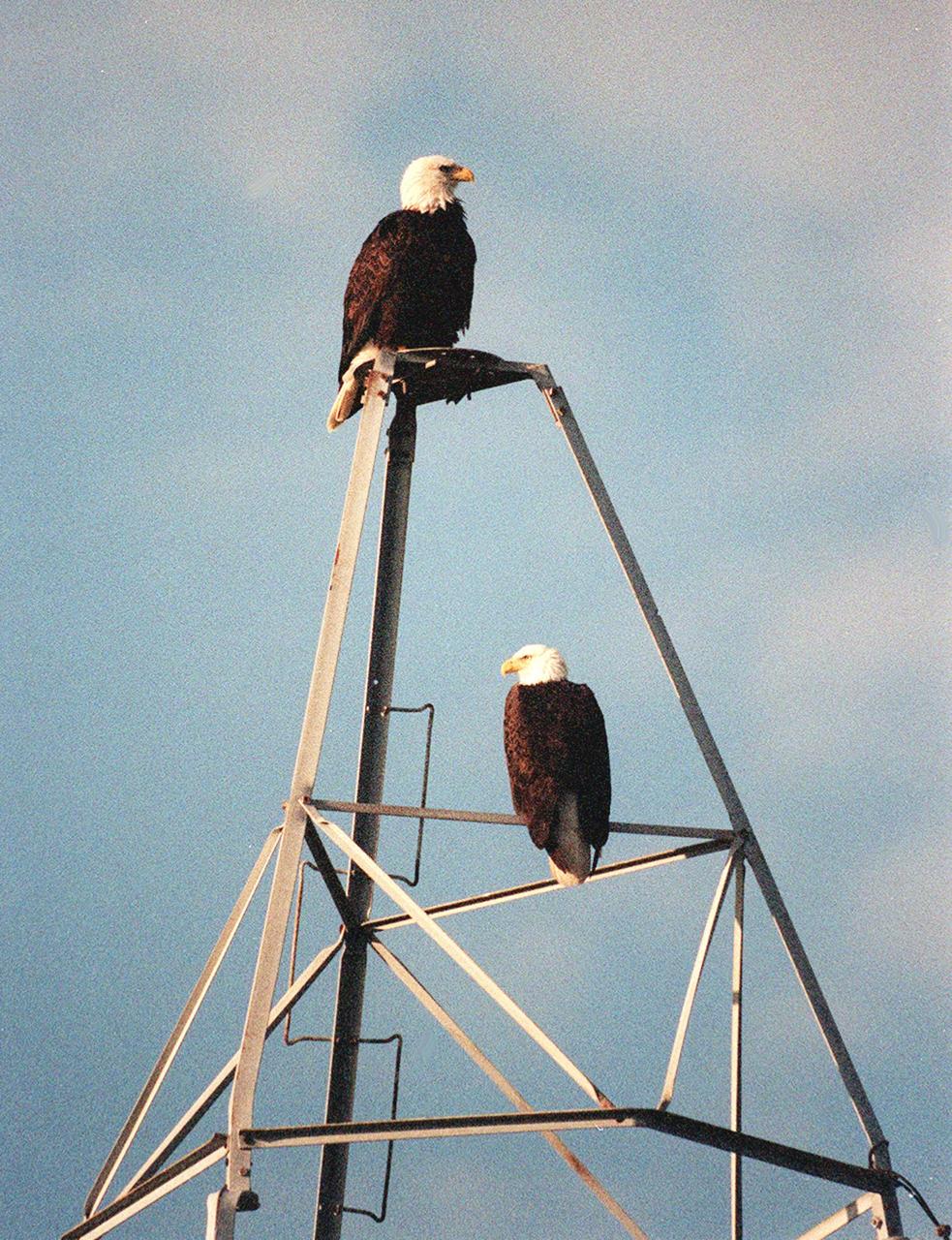
A pair of Florida bald eagles take advantage of a tower to rest and view the landscape near the intersection of the NASA Causeway and Kennedy Parkway North at Kennedy Space Center. This pair of eagles nests near Kennedy Parkway and is seen frequently by KSC commuters and visitors. The Southern Bald Eagle ranges throughout Florida and along the coasts of California, Texas, Louisiana and the south Atlantic states. Bald Eagles are listed as endangered in the U.S., except in five states where they are listed as threatened. The number of nesting pairs of the southern race once numbered several thousand; recent estimates are only 350-375. Most southern Florida eagles nesting at KSC arrive during late summer and leave for the north in late spring. They move to nest sites in October and November and lay one to three eggs. The young fledge from February to April. . Kennedy Space Center shares a boundary with the Merritt Island National Wildlife Refuge, which encompasses 92,000 acres that are a habitat for more than 331 species of birds, 31 mammals, 117 fishes, and 65 amphibians and reptiles. The marshes and open water of the refuge provide wintering areas for 23 species of migratory waterfowl, as well as a year-round home for great blue herons, great egrets, wood storks, cormorants, brown pelicans and other species of marsh and shore birds, as well as a variety of insects
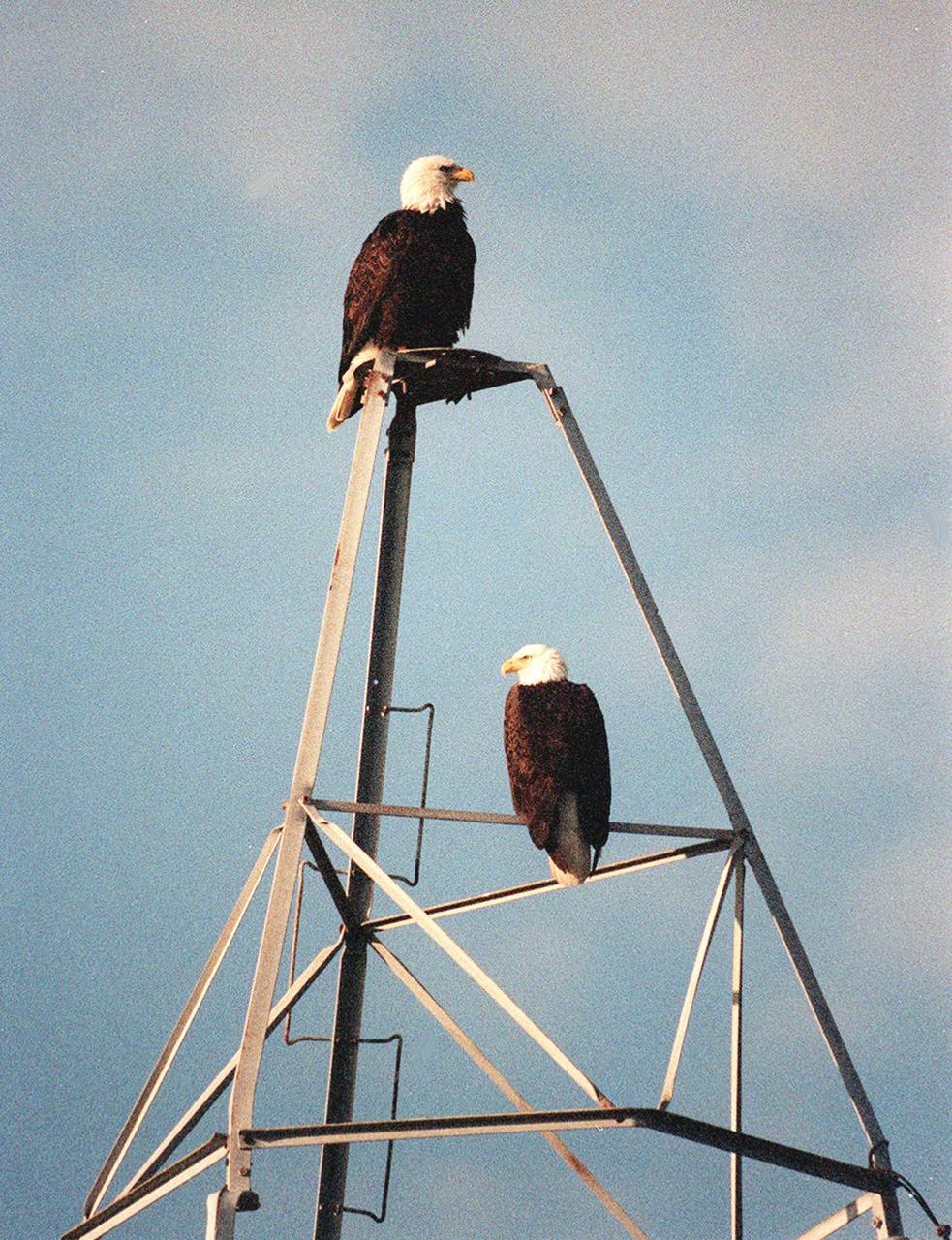
A pair of Florida bald eagles take advantage of a tower to rest and view the landscape near the intersection of the NASA Causeway and Kennedy Parkway North at Kennedy Space Center. This pair of eagles nests near Kennedy Parkway and is seen frequently by KSC commuters and visitors. The Southern Bald Eagle ranges throughout Florida and along the coasts of California, Texas, Louisiana and the south Atlantic states. Bald Eagles are listed as endangered in the U.S., except in five states where they are listed as threatened. The number of nesting pairs of the southern race once numbered several thousand; recent estimates are only 350-375. Most southern Florida eagles nesting at KSC arrive during late summer and leave for the north in late spring. They move to nest sites in October and November and lay one to three eggs. The young fledge from February to April. . Kennedy Space Center shares a boundary with the Merritt Island National Wildlife Refuge, which encompasses 92,000 acres that are a habitat for more than 331 species of birds, 31 mammals, 117 fishes, and 65 amphibians and reptiles. The marshes and open water of the refuge provide wintering areas for 23 species of migratory waterfowl, as well as a year-round home for great blue herons, great egrets, wood storks, cormorants, brown pelicans and other species of marsh and shore birds, as well as a variety of insects
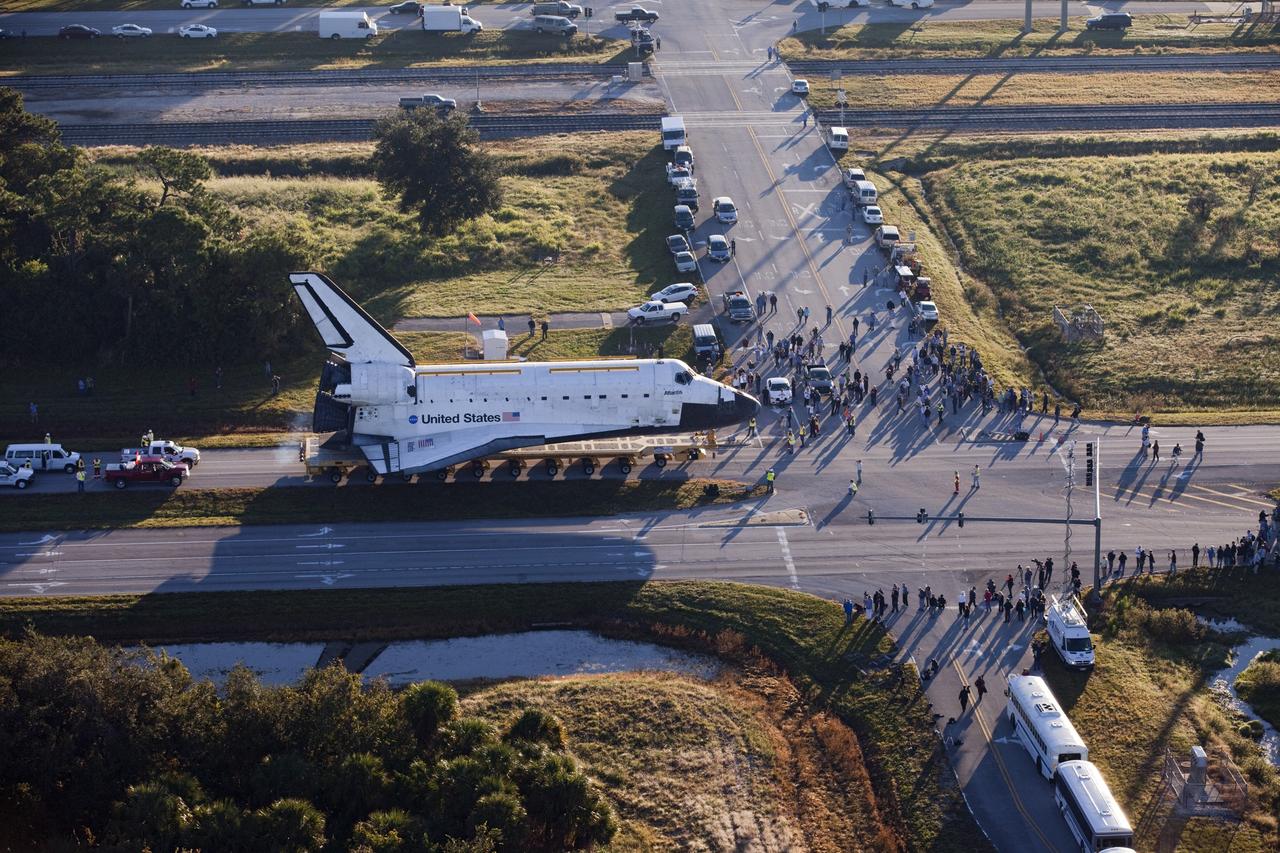
CAPE CANAVERAL, Fla. – Space shuttle Atlantis is transported along Kennedy Parkway at NASA's Kennedy Space Center in Florida on its 10-mile journey to the Kennedy Visitor Complex where it will be put on public display. As part of transition and retirement of the Space Shuttle Program, Atlantis is to be displayed at Kennedy's Visitor Complex beginning in the summer of 2013. Over the course of its 26-year career, Atlantis traveled 125,935,769 miles during 307 days in space over 33 missions. For more information, visit http://www.nasa.gov/transition Photo credit: NASA/ Kim Shiflett
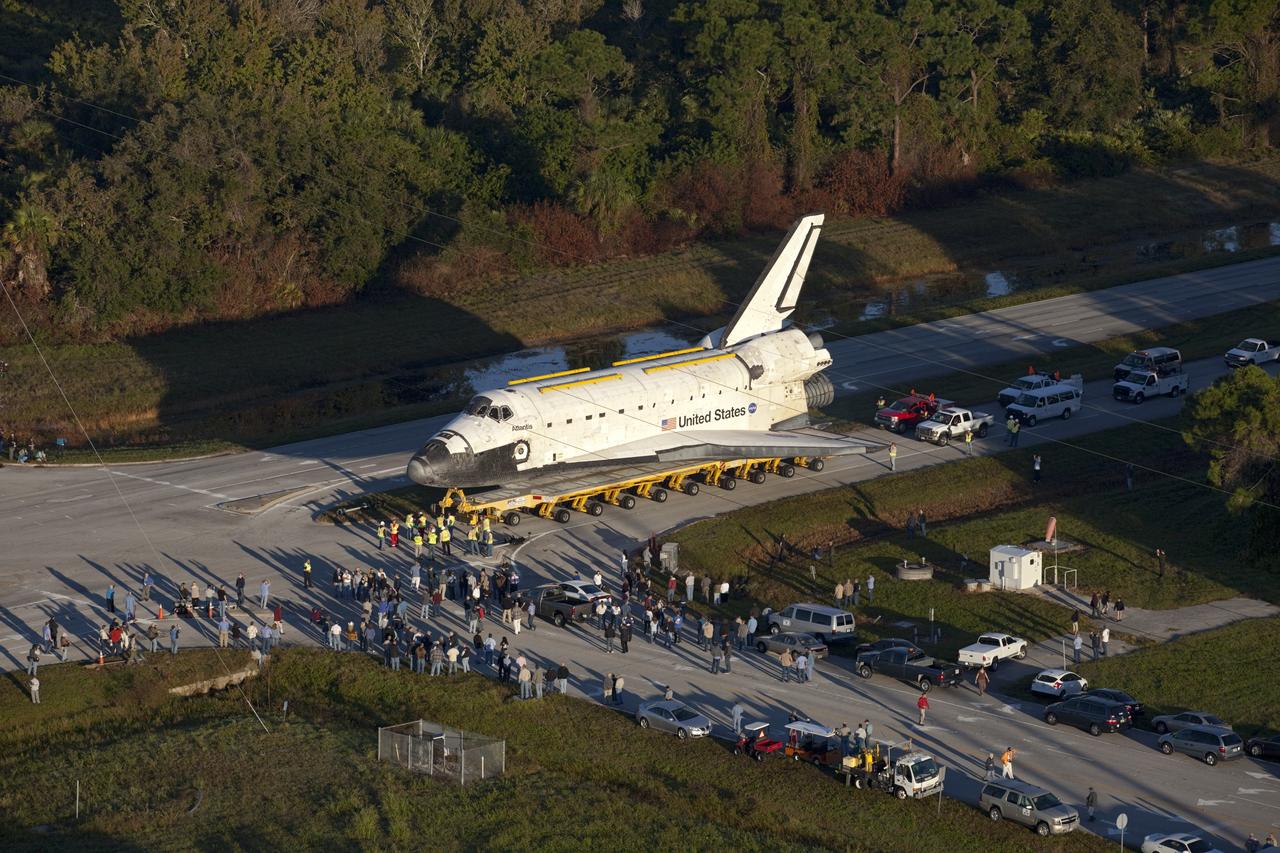
CAPE CANAVERAL, Fla. – Space shuttle Atlantis is transported along Kennedy Parkway at NASA's Kennedy Space Center in Florida on its 10-mile journey to the Kennedy Visitor Complex where it will be put on public display. As part of transition and retirement of the Space Shuttle Program, Atlantis is to be displayed at Kennedy's Visitor Complex beginning in the summer of 2013. Over the course of its 26-year career, Atlantis traveled 125,935,769 miles during 307 days in space over 33 missions. For more information, visit http://www.nasa.gov/transition Photo credit: NASA/ Kim Shiflett
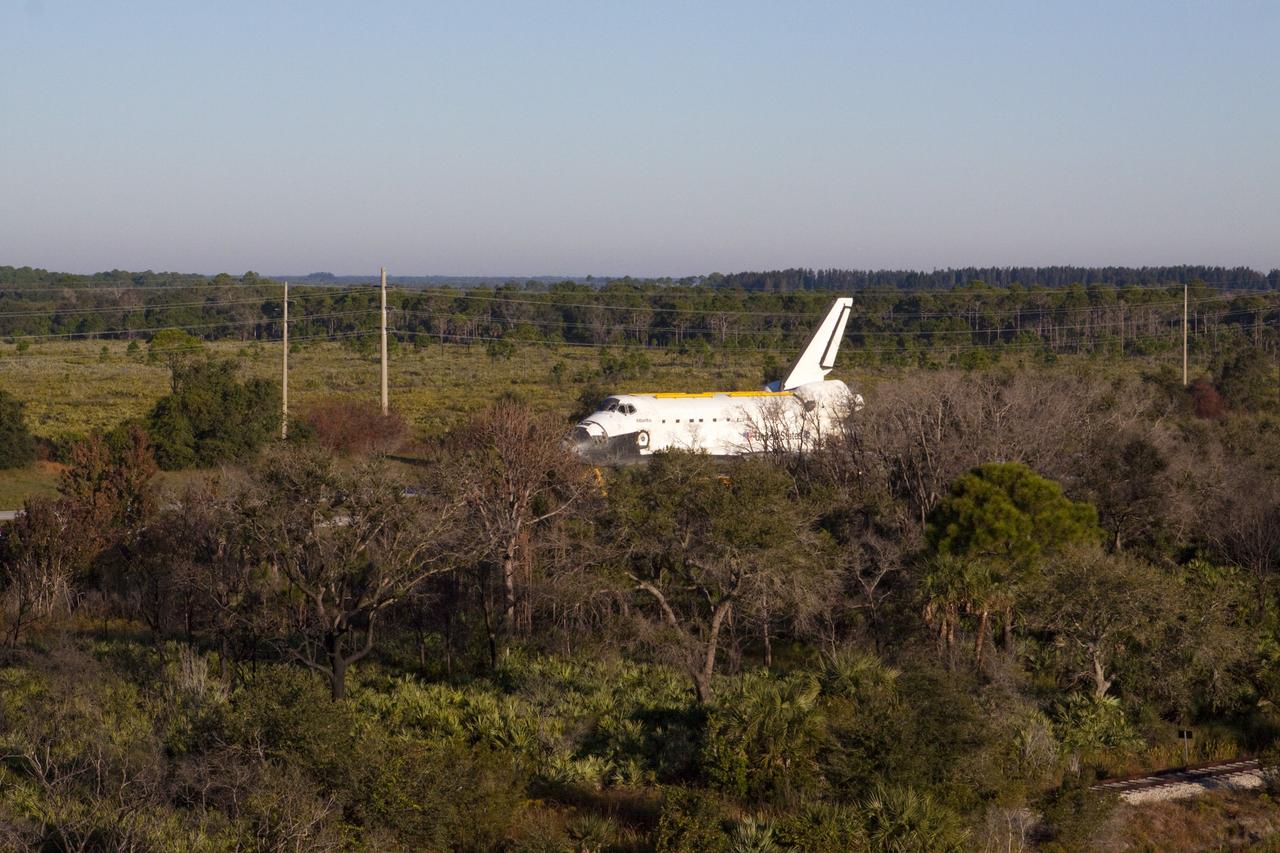
CAPE CANAVERAL, Fla. – Space shuttle Atlantis is transported along Kennedy Parkway at NASA's Kennedy Space Center in Florida on its 10-mile journey to the Kennedy Visitor Complex where it will be put on public display. As part of transition and retirement of the Space Shuttle Program, Atlantis is to be displayed at Kennedy's Visitor Complex beginning in the summer of 2013. Over the course of its 26-year career, Atlantis traveled 125,935,769 miles during 307 days in space over 33 missions. For more information, visit http://www.nasa.gov/transition Photo credit: NASA/ Kim Shiflett
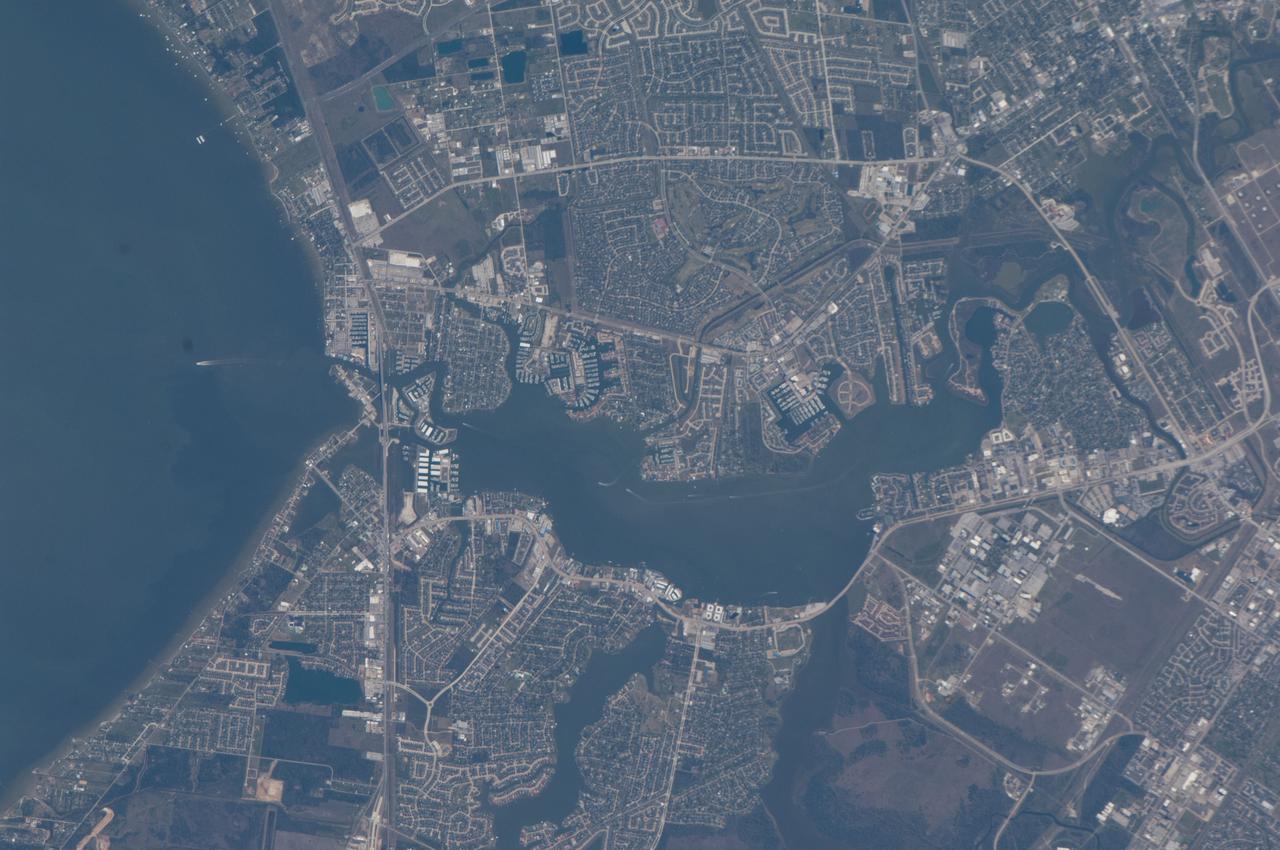
ISS034-E-067270 (12 March 2013) --- One of the Expedition 34 crew members aboard the Earth-orbiting International Space Station captured this high oblique image of the environs of NASA's 1625-acre Johnson Space Center (clearly seen in the lower right quadrant of the image). NASA Parkway can be traced from the space complex eastward almost to Galveston Bay. Though spring had not quite yet arrived, this particular week sported extremely clear skies and warmer than normal temperatures for so-called "spring-breakers."
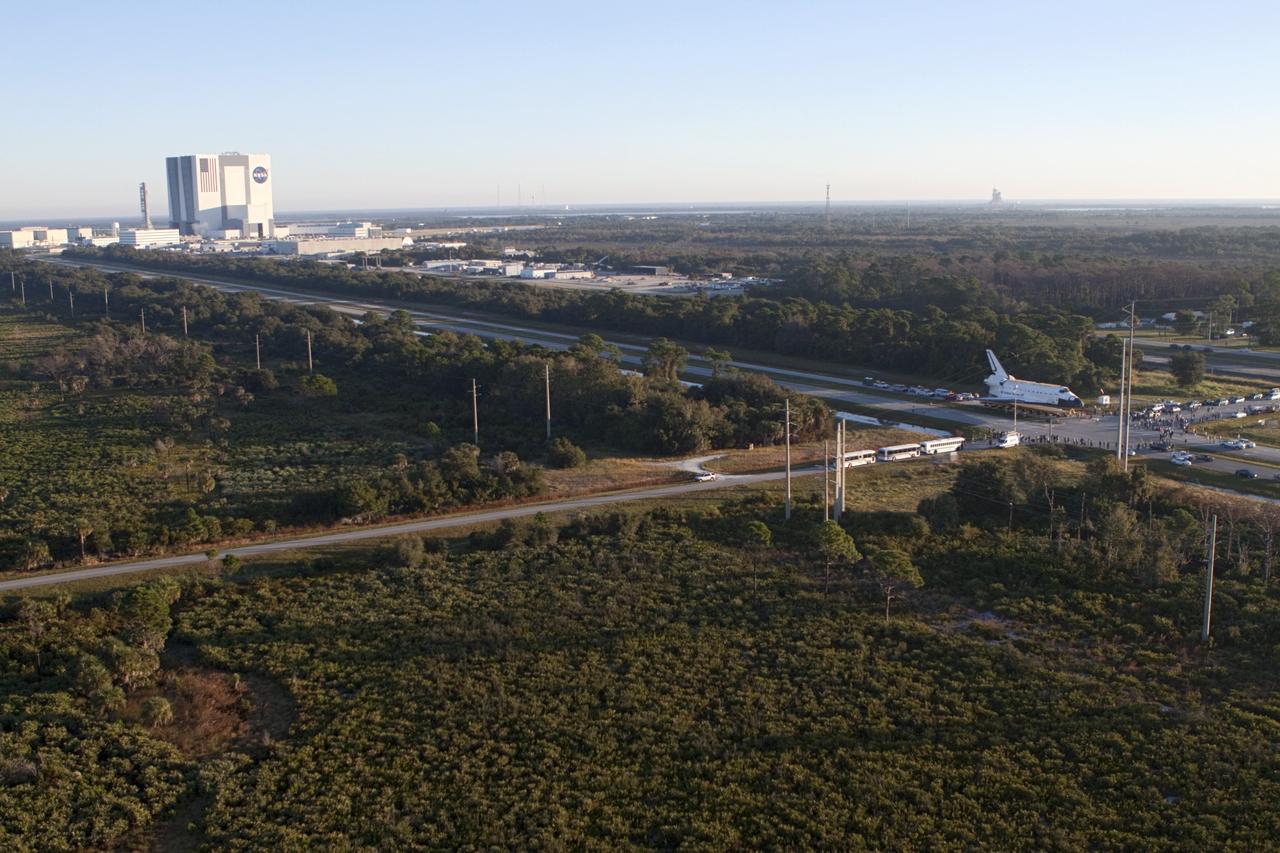
CAPE CANAVERAL, Fla. – Space shuttle Atlantis is transported along Kennedy Parkway at NASA's Kennedy Space Center in Florida on its 10-mile journey to the Kennedy Visitor Complex where it will be put on public display. As part of transition and retirement of the Space Shuttle Program, Atlantis is to be displayed at Kennedy's Visitor Complex beginning in the summer of 2013. Over the course of its 26-year career, Atlantis traveled 125,935,769 miles during 307 days in space over 33 missions. For more information, visit http://www.nasa.gov/transition Photo credit: NASA/ Kim Shiflett

CAPE CANAVERAL, Fla. – Space shuttle Atlantis is transported along Kennedy Parkway at NASA's Kennedy Space Center in Florida on its 10-mile journey to the Kennedy Visitor Complex where it will be put on public display. As part of transition and retirement of the Space Shuttle Program, Atlantis is to be displayed at Kennedy's Visitor Complex beginning in the summer of 2013. Over the course of its 26-year career, Atlantis traveled 125,935,769 miles during 307 days in space over 33 missions. For more information, visit http://www.nasa.gov/transition Photo credit: NASA/ Kim Shiflett
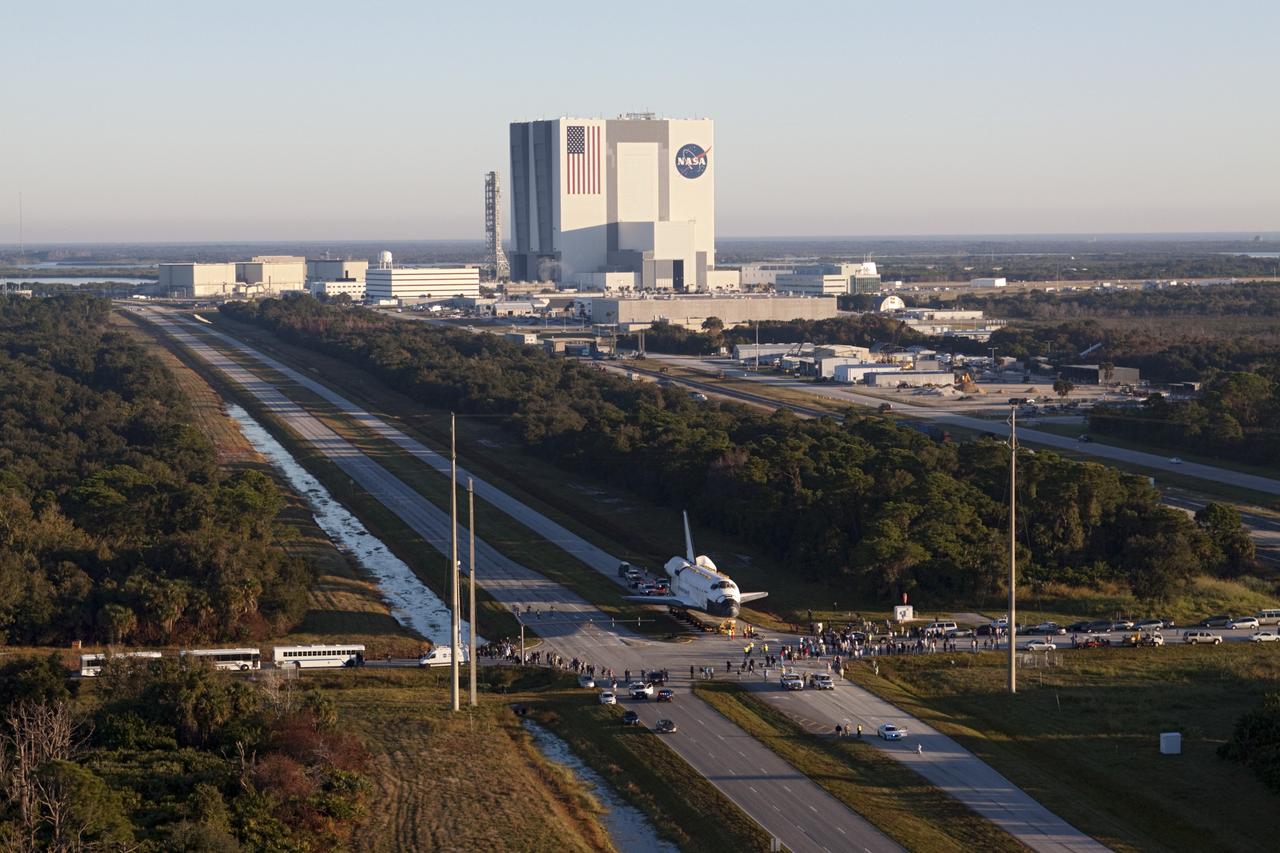
CAPE CANAVERAL, Fla. – Space shuttle Atlantis is transported along Kennedy Parkway at NASA's Kennedy Space Center in Florida on its 10-mile journey to the Kennedy Visitor Complex where it will be put on public display. As part of transition and retirement of the Space Shuttle Program, Atlantis is to be displayed at Kennedy's Visitor Complex beginning in the summer of 2013. Over the course of its 26-year career, Atlantis traveled 125,935,769 miles during 307 days in space over 33 missions. For more information, visit http://www.nasa.gov/transition Photo credit: NASA/ Kim Shiflett
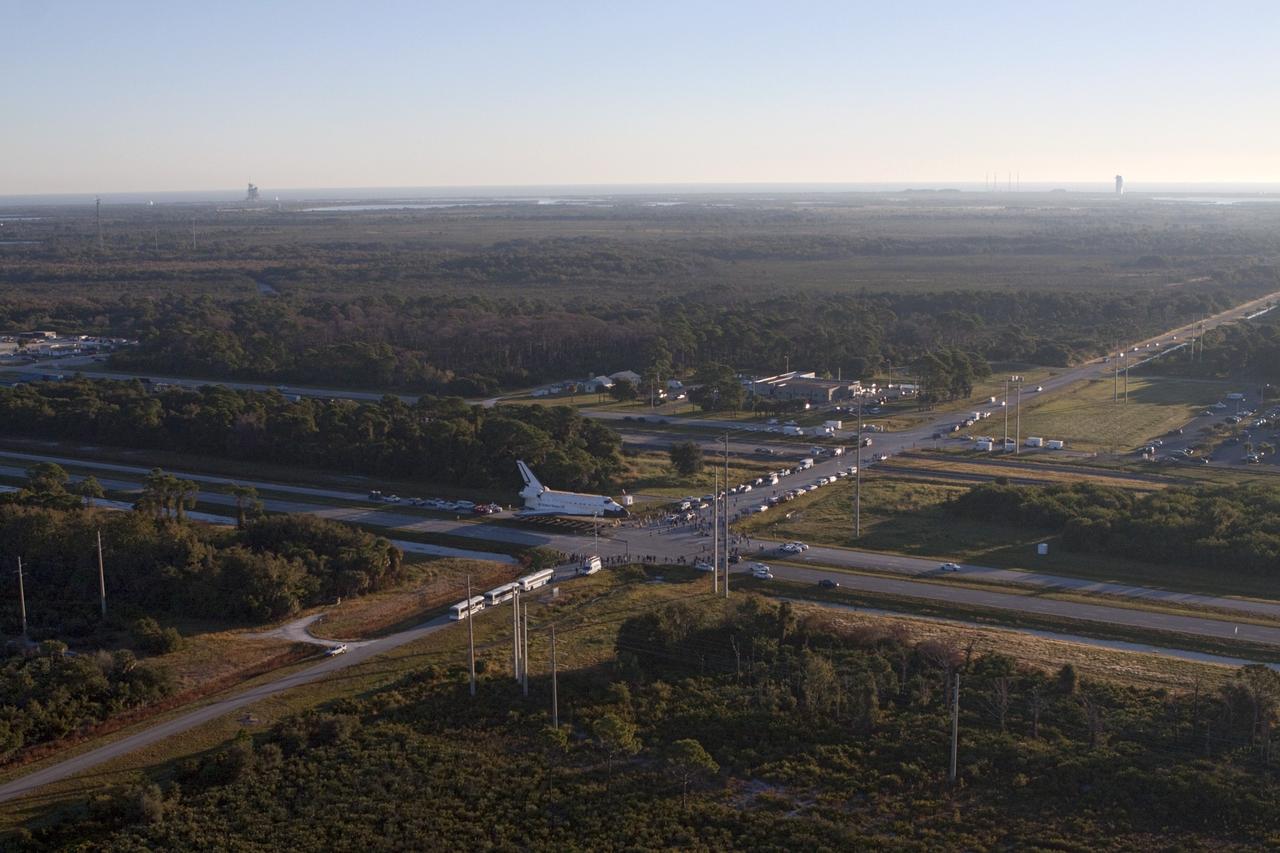
CAPE CANAVERAL, Fla. – Space shuttle Atlantis is transported along Kennedy Parkway at NASA's Kennedy Space Center in Florida on its 10-mile journey to the Kennedy Visitor Complex where it will be put on public display. As part of transition and retirement of the Space Shuttle Program, Atlantis is to be displayed at Kennedy's Visitor Complex beginning in the summer of 2013. Over the course of its 26-year career, Atlantis traveled 125,935,769 miles during 307 days in space over 33 missions. For more information, visit http://www.nasa.gov/transition Photo credit: NASA/ Kim Shiflett
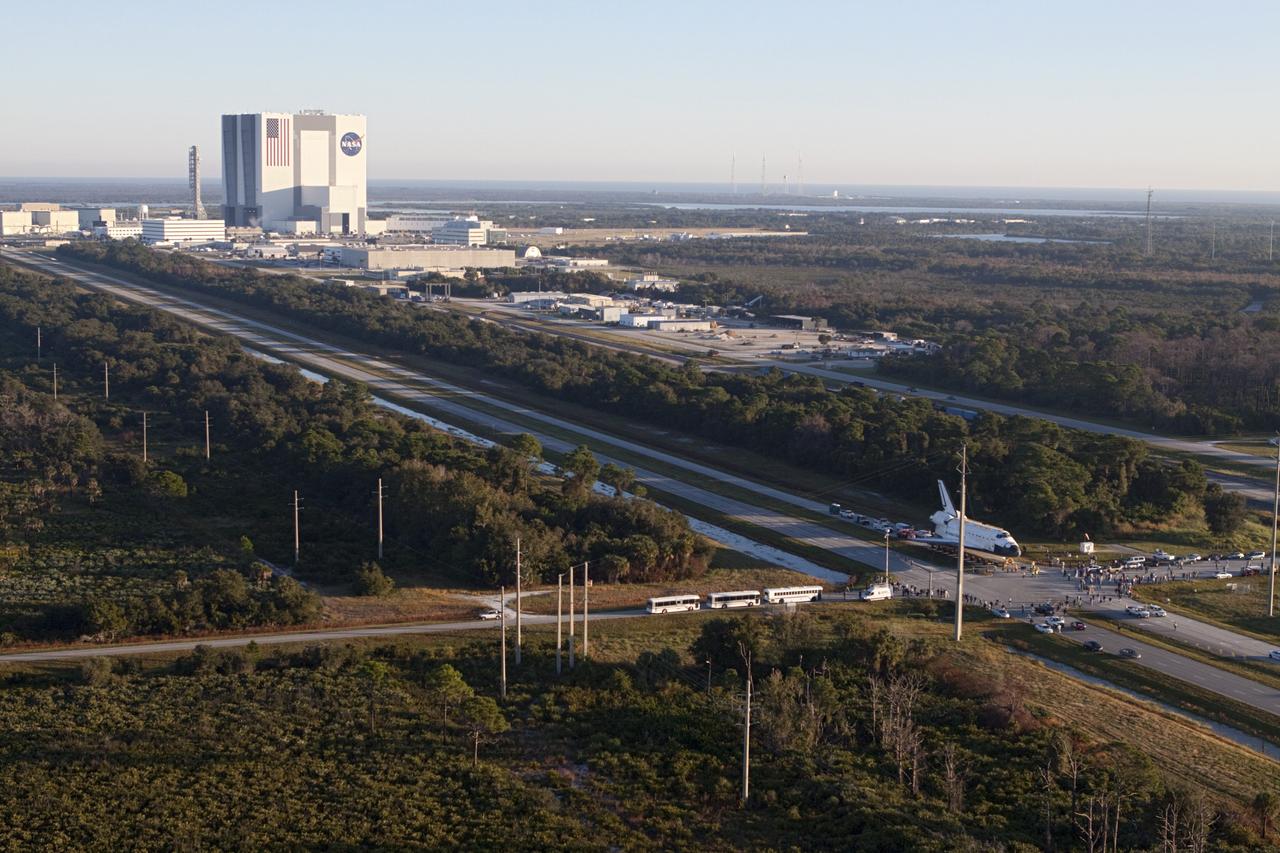
CAPE CANAVERAL, Fla. – Space shuttle Atlantis is transported along Kennedy Parkway at NASA's Kennedy Space Center in Florida on its 10-mile journey to the Kennedy Visitor Complex where it will be put on public display. As part of transition and retirement of the Space Shuttle Program, Atlantis is to be displayed at Kennedy's Visitor Complex beginning in the summer of 2013. Over the course of its 26-year career, Atlantis traveled 125,935,769 miles during 307 days in space over 33 missions. For more information, visit http://www.nasa.gov/transition Photo credit: NASA/ Kim Shiflett
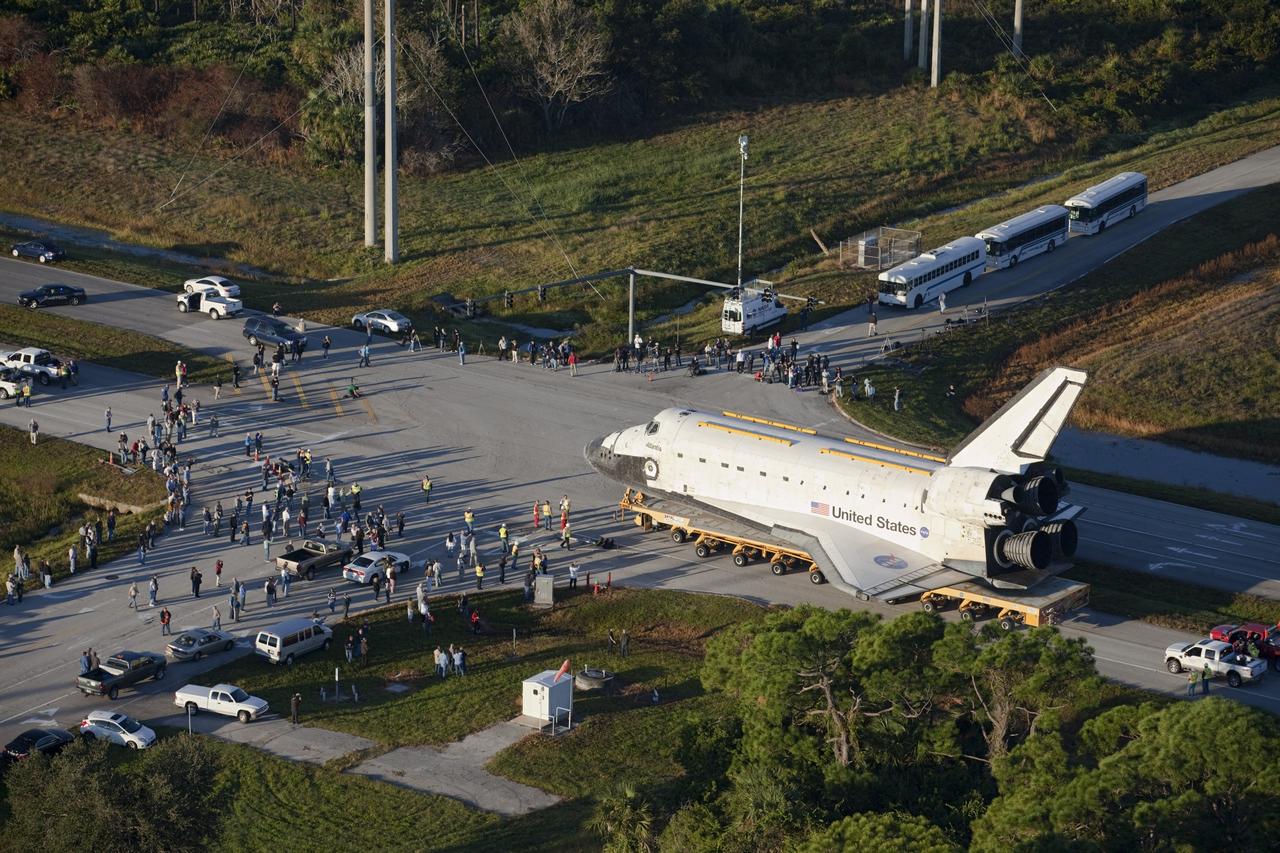
CAPE CANAVERAL, Fla. – Space shuttle Atlantis is transported along Kennedy Parkway at NASA's Kennedy Space Center in Florida on its 10-mile journey to the Kennedy Visitor Complex where it will be put on public display. As part of transition and retirement of the Space Shuttle Program, Atlantis is to be displayed at Kennedy's Visitor Complex beginning in the summer of 2013. Over the course of its 26-year career, Atlantis traveled 125,935,769 miles during 307 days in space over 33 missions. For more information, visit http://www.nasa.gov/transition Photo credit: NASA/ Kim Shiflett
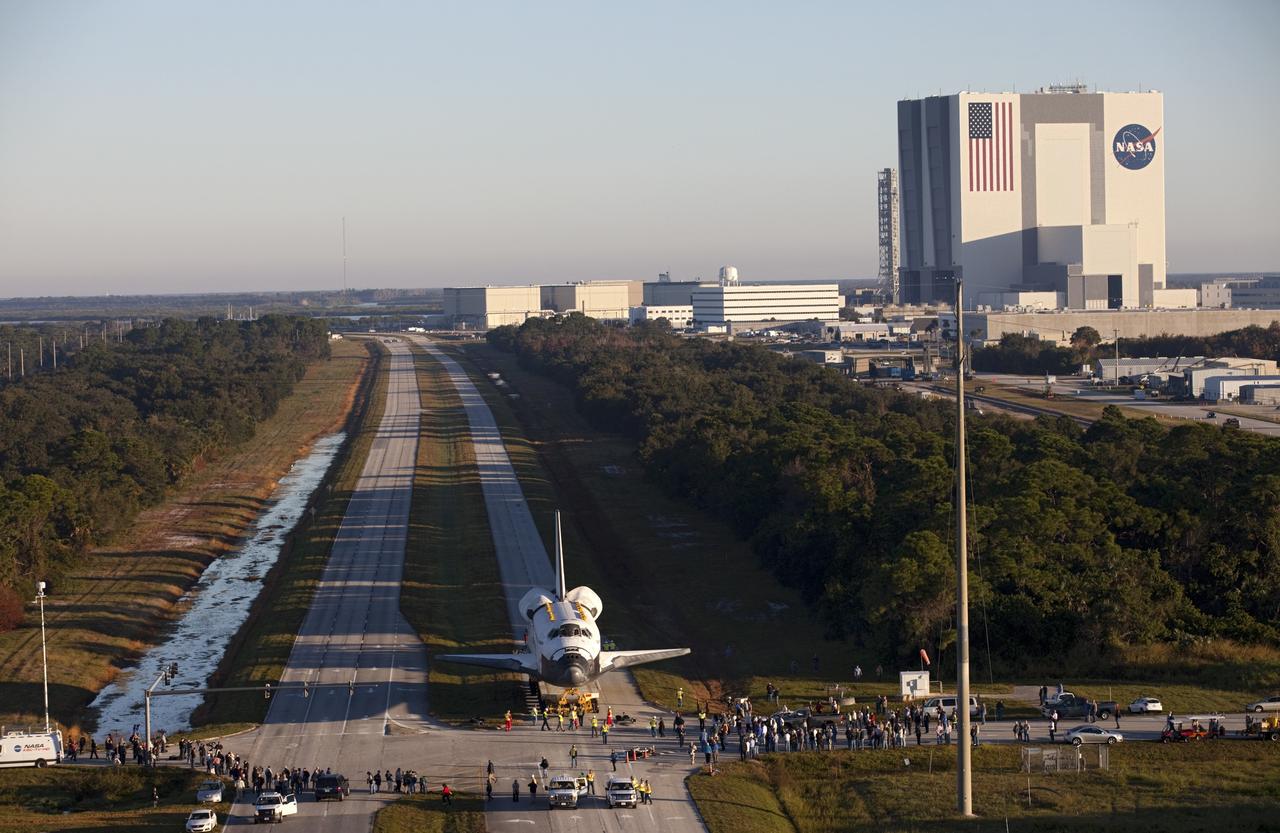
CAPE CANAVERAL, Fla. – Space shuttle Atlantis is transported along Kennedy Parkway at NASA's Kennedy Space Center in Florida on its 10-mile journey to the Kennedy Visitor Complex where it will be put on public display. As part of transition and retirement of the Space Shuttle Program, Atlantis is to be displayed at Kennedy's Visitor Complex beginning in the summer of 2013. Over the course of its 26-year career, Atlantis traveled 125,935,769 miles during 307 days in space over 33 missions. For more information, visit http://www.nasa.gov/transition Photo credit: NASA/ Kim Shiflett
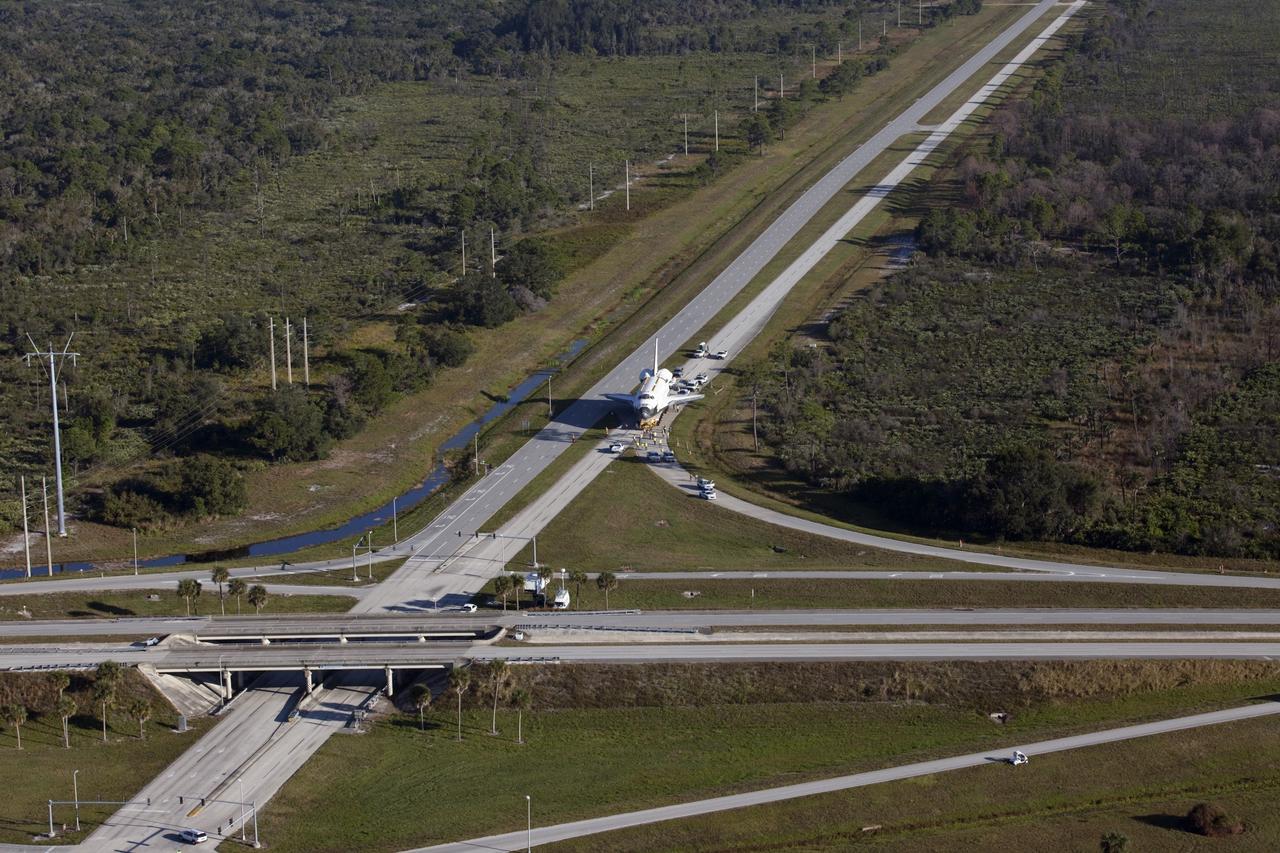
CAPE CANAVERAL, Fla. – Space shuttle Atlantis is transported along Kennedy Parkway at NASA's Kennedy Space Center in Florida on its 10-mile journey to the Kennedy Visitor Complex where it will be put on public display. As part of transition and retirement of the Space Shuttle Program, Atlantis is to be displayed at Kennedy's Visitor Complex beginning in the summer of 2013. Over the course of its 26-year career, Atlantis traveled 125,935,769 miles during 307 days in space over 33 missions. For more information, visit http://www.nasa.gov/transition Photo credit: NASA/ Kim Shiflett

CAPE CANAVERAL, Fla. – Space shuttle Atlantis is transported along Kennedy Parkway at NASA's Kennedy Space Center in Florida on its 10-mile journey to the Kennedy Visitor Complex where it will be put on public display. As part of transition and retirement of the Space Shuttle Program, Atlantis is to be displayed at Kennedy's Visitor Complex beginning in the summer of 2013. Over the course of its 26-year career, Atlantis traveled 125,935,769 miles during 307 days in space over 33 missions. For more information, visit http://www.nasa.gov/transition Photo credit: NASA/ Kim Shiflett
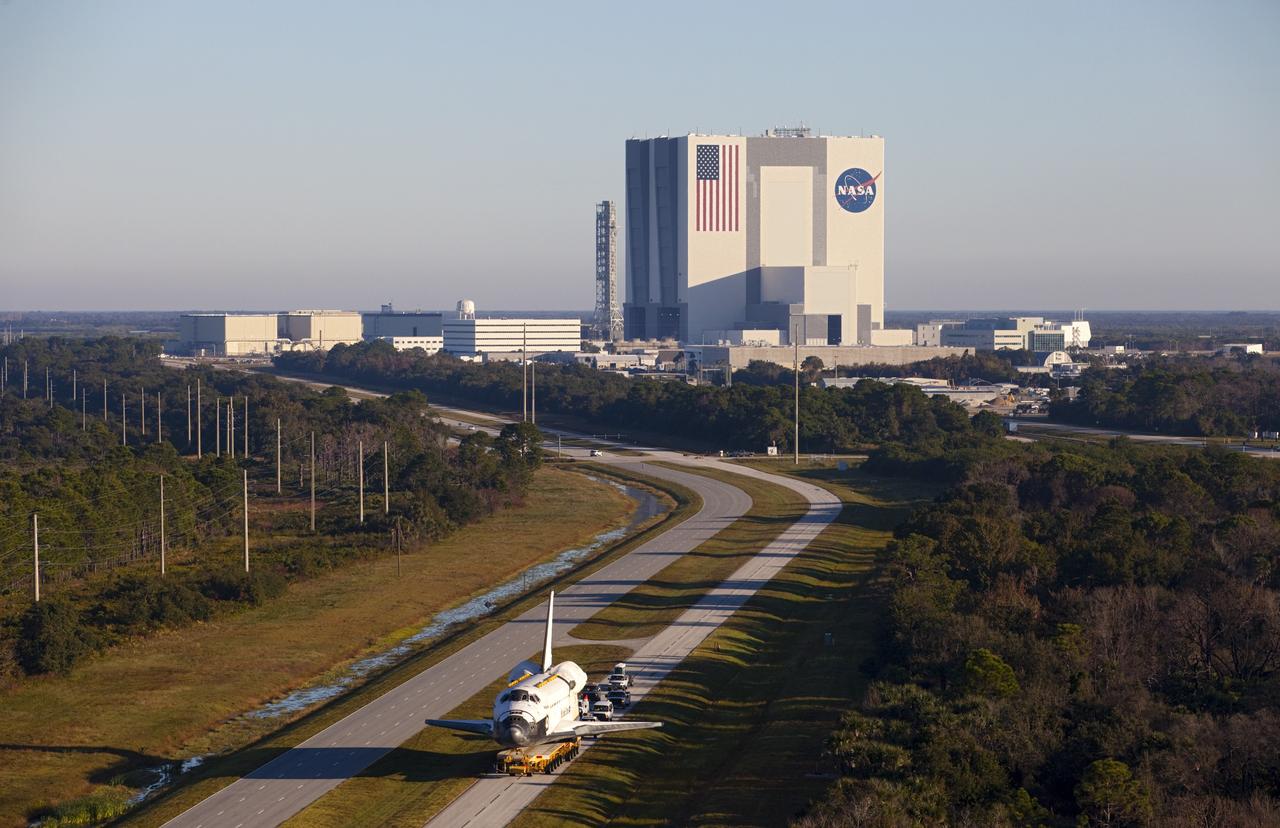
CAPE CANAVERAL, Fla. – Space shuttle Atlantis is transported along Kennedy Parkway at NASA's Kennedy Space Center in Florida on its 10-mile journey to the Kennedy Visitor Complex where it will be put on public display. As part of transition and retirement of the Space Shuttle Program, Atlantis is to be displayed at Kennedy's Visitor Complex beginning in the summer of 2013. Over the course of its 26-year career, Atlantis traveled 125,935,769 miles during 307 days in space over 33 missions. For more information, visit http://www.nasa.gov/transition Photo credit: NASA/ Kim Shiflett
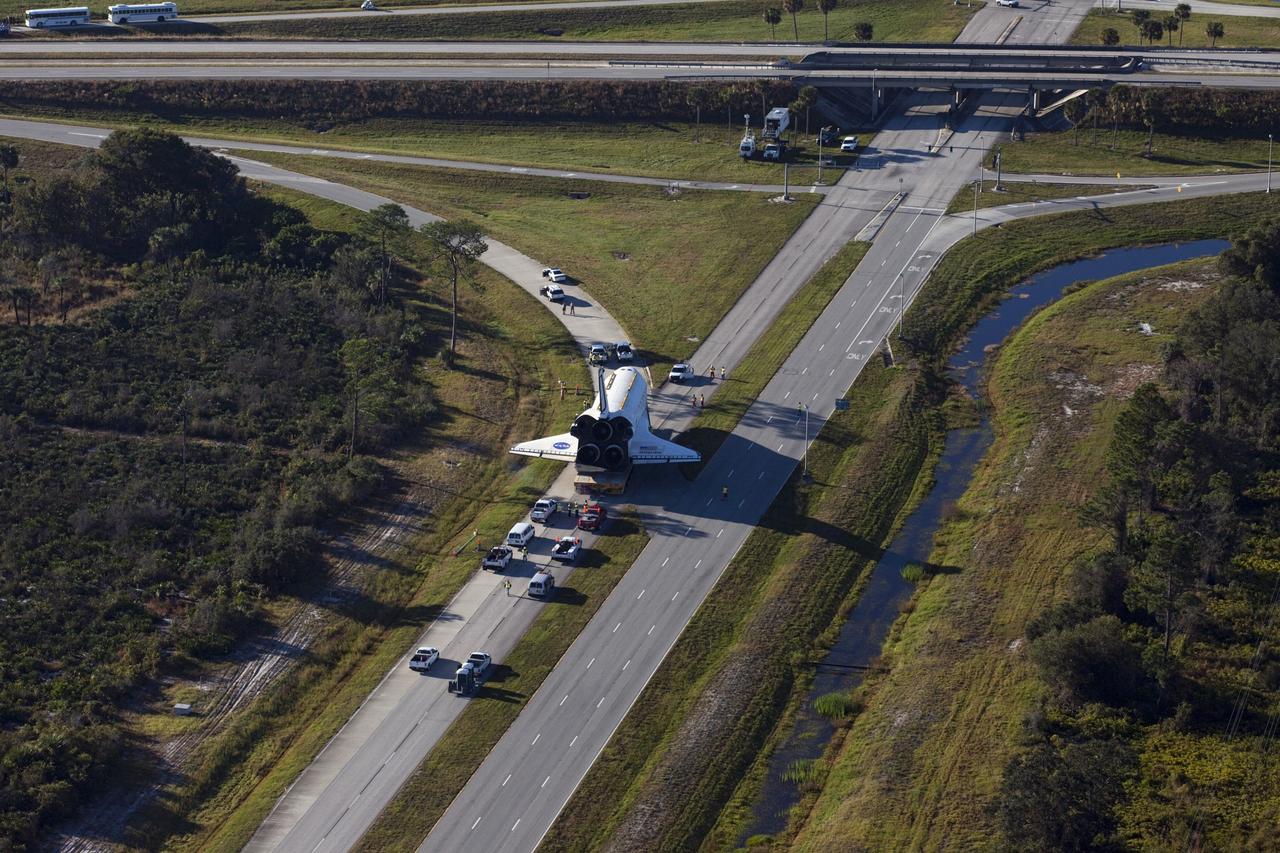
CAPE CANAVERAL, Fla. – Space shuttle Atlantis is transported along Kennedy Parkway at NASA's Kennedy Space Center in Florida on its 10-mile journey to the Kennedy Visitor Complex where it will be put on public display. As part of transition and retirement of the Space Shuttle Program, Atlantis is to be displayed at Kennedy's Visitor Complex beginning in the summer of 2013. Over the course of its 26-year career, Atlantis traveled 125,935,769 miles during 307 days in space over 33 missions. For more information, visit http://www.nasa.gov/transition Photo credit: NASA/ Kim Shiflett
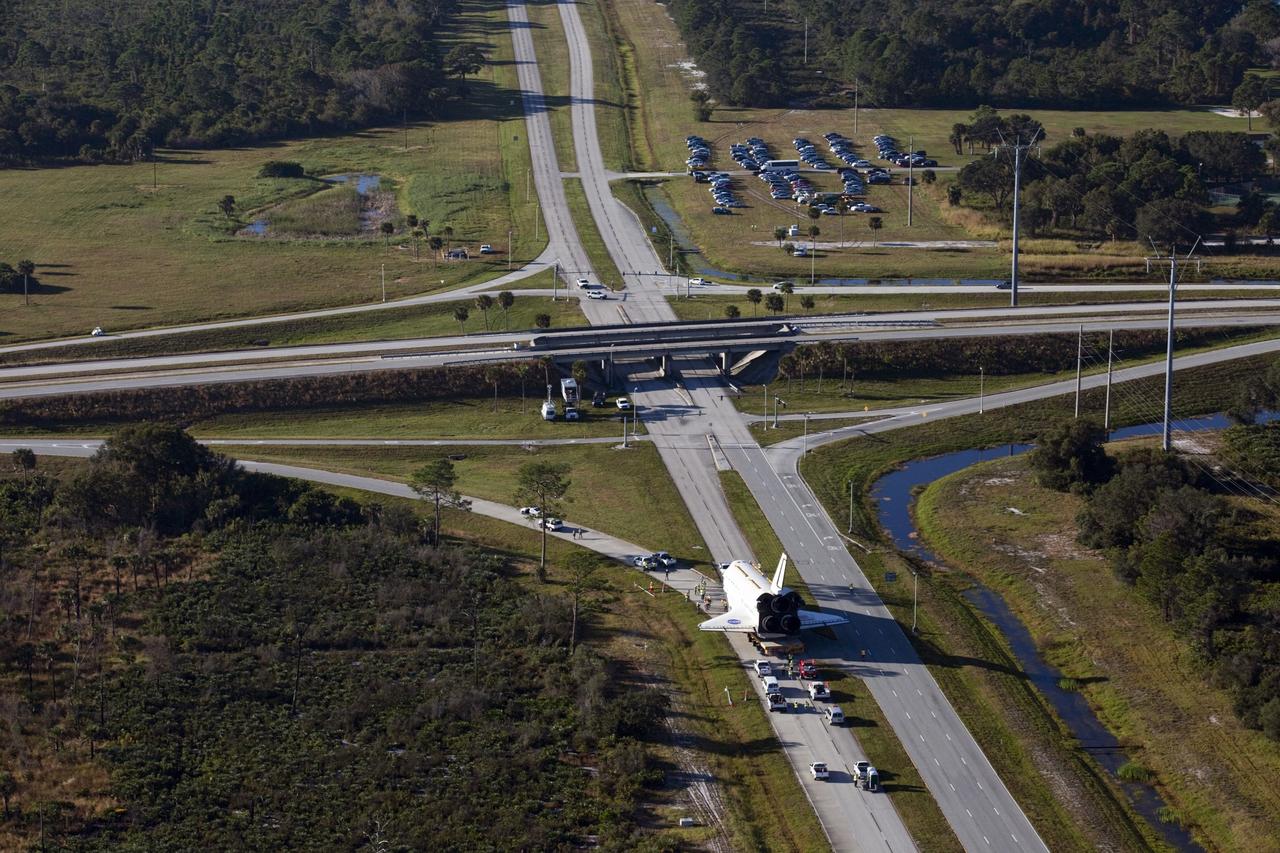
CAPE CANAVERAL, Fla. – Space shuttle Atlantis is transported along Kennedy Parkway at NASA's Kennedy Space Center in Florida on its 10-mile journey to the Kennedy Visitor Complex where it will be put on public display. As part of transition and retirement of the Space Shuttle Program, Atlantis is to be displayed at Kennedy's Visitor Complex beginning in the summer of 2013. Over the course of its 26-year career, Atlantis traveled 125,935,769 miles during 307 days in space over 33 missions. For more information, visit http://www.nasa.gov/transition Photo credit: NASA/ Kim Shiflett
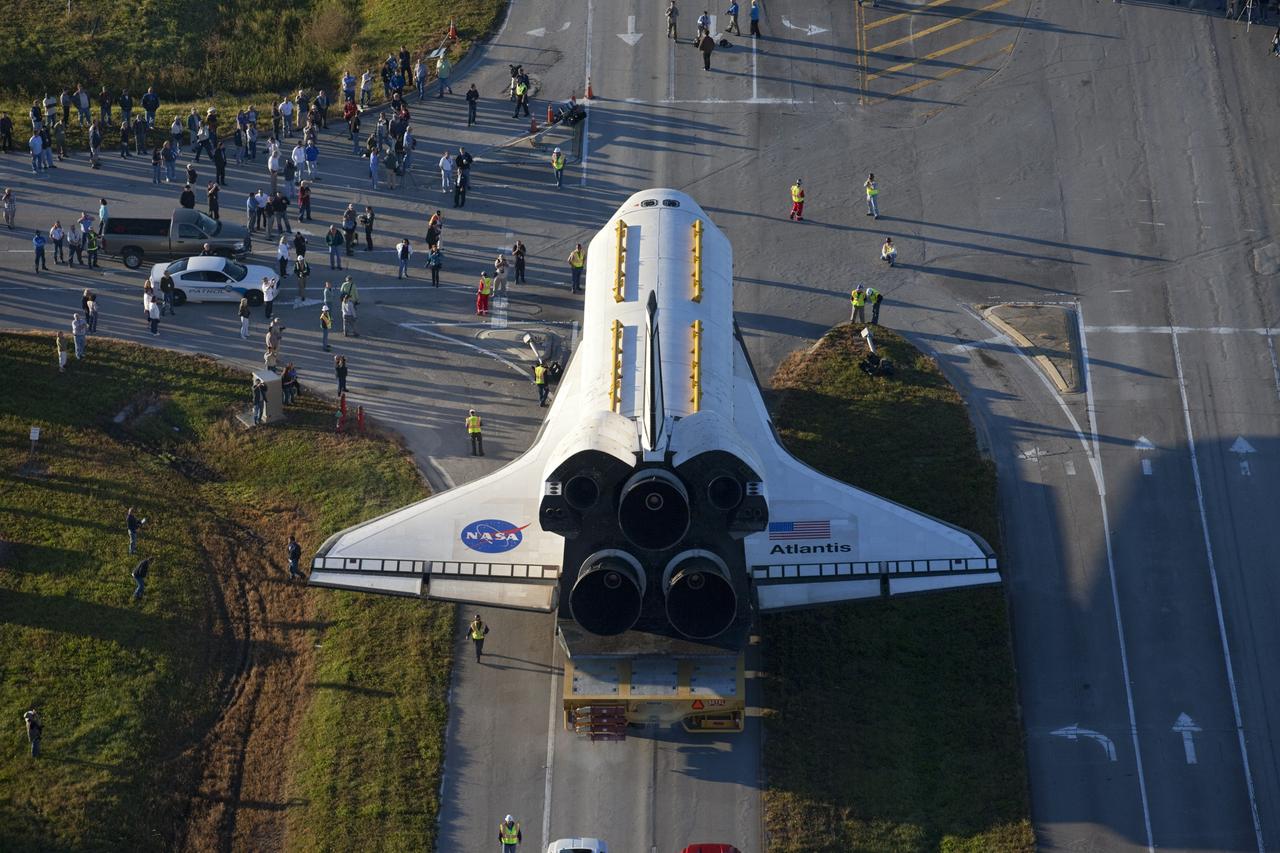
CAPE CANAVERAL, Fla. – Space shuttle Atlantis is transported along Kennedy Parkway at NASA's Kennedy Space Center in Florida on its 10-mile journey to the Kennedy Visitor Complex where it will be put on public display. As part of transition and retirement of the Space Shuttle Program, Atlantis is to be displayed at Kennedy's Visitor Complex beginning in the summer of 2013. Over the course of its 26-year career, Atlantis traveled 125,935,769 miles during 307 days in space over 33 missions. For more information, visit http://www.nasa.gov/transition Photo credit: NASA/ Kim Shiflett
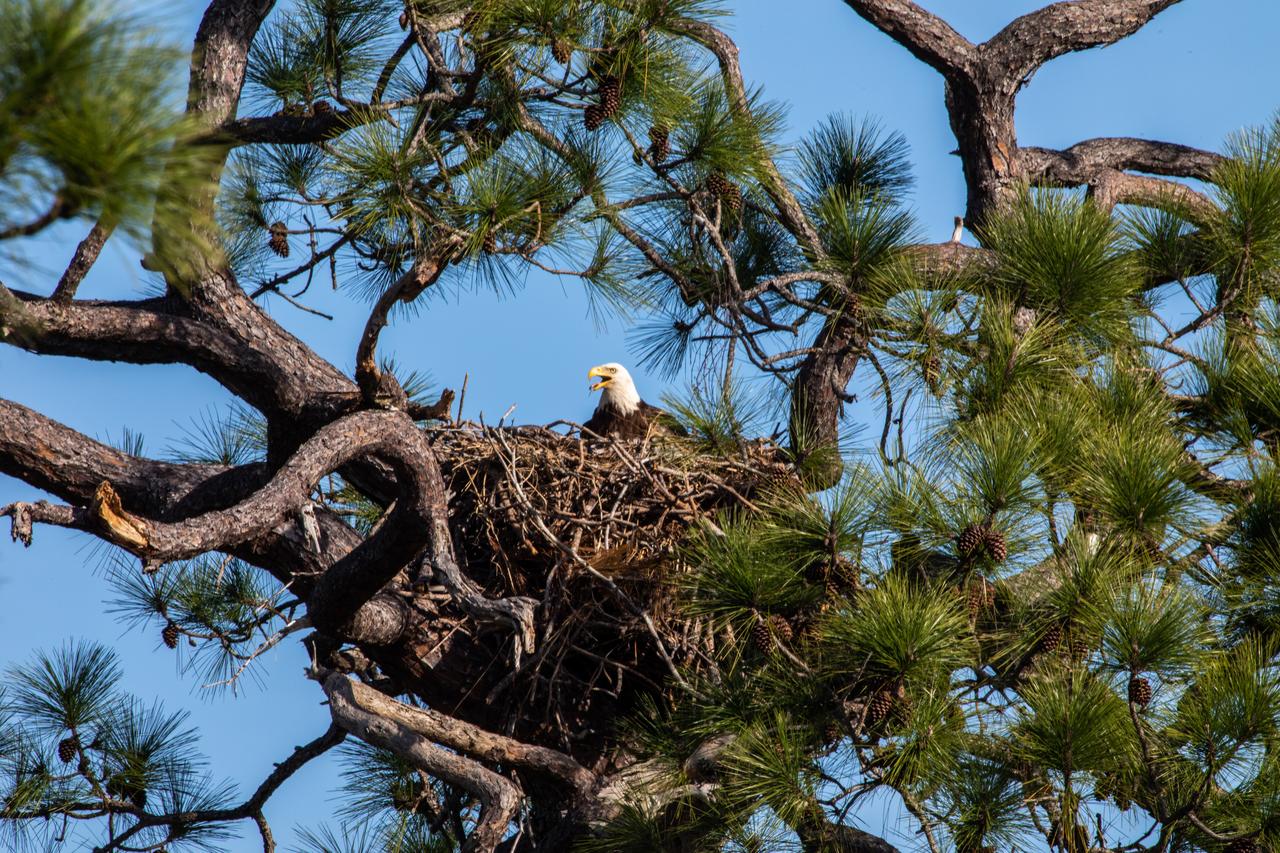
A southern bald eagle occupies a nest at NASA’s Kennedy Space Center on Jan. 20, 2023. After a recent fire burned a tree that housed an eagles’ nest for several years, the birds returned to the area on Kennedy Parkway North and built a new nest in a tree about 60 yards away. Each year, eagles take up winter residence at the Florida spaceport, breeding and raising a new generation. The center shares a boundary with the Merritt Island National Wildlife Refuge, home to more than 1,500 species of plants and animals, and 15 federally listed species.
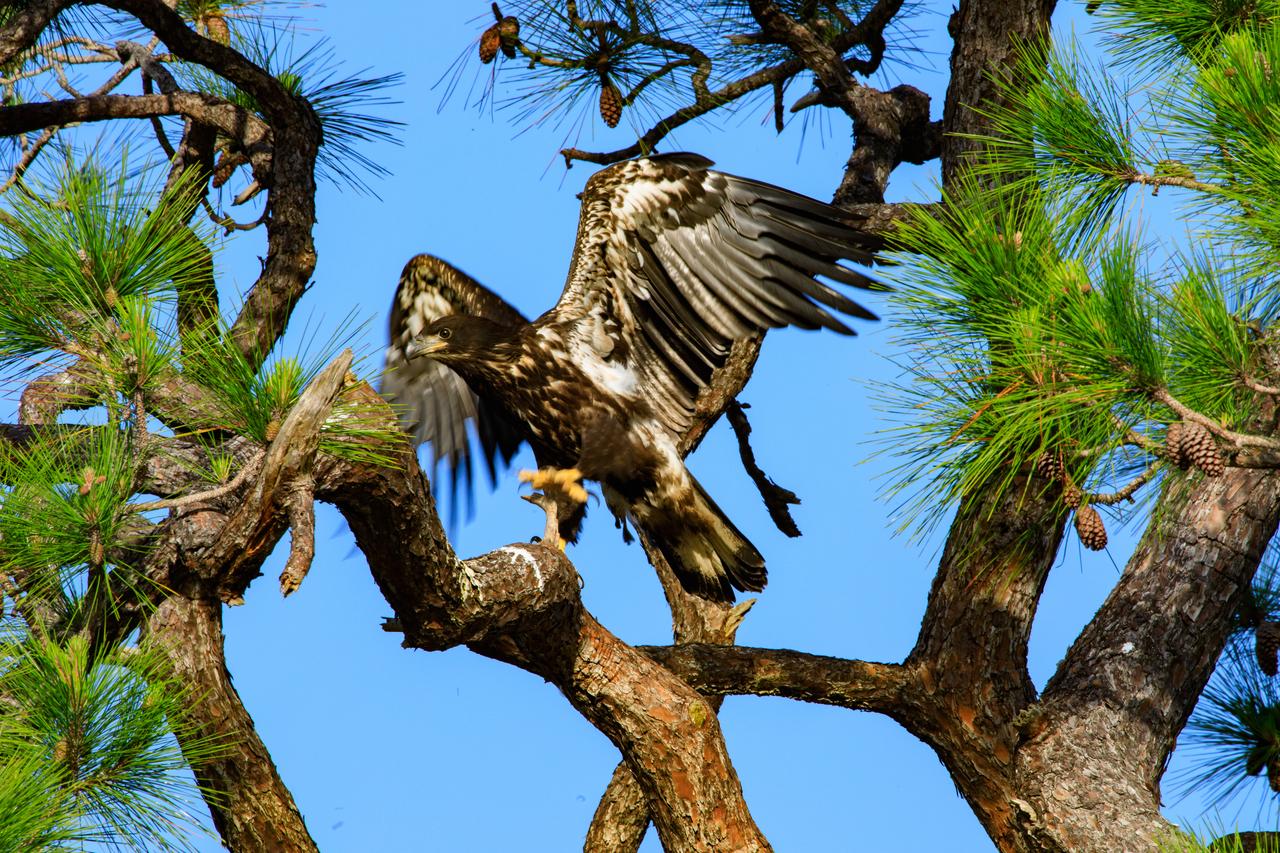
A baby American bald eagle spreads its wings to fly high above a tree that contains its nest at NASA’s Kennedy Space Center in Florida on April 26, 2023. The nest is located off Kennedy Parkway, about two miles from the Vehicle Assembly Building. The eagle is from a mated pair that recently built a new home in this tree after storms badly damaged their original nest located about 50 yards away. That nest was built in 1973 and had been used by eagles almost every year since 1975. Kennedy currently is home to approximately 20 nesting pairs of bald eagles.

This Shuttle/Gantry mockup and Post Show Dome anchor the northeast corner of the Kennedy Space Center Visitor Complex. The Astronaut Memorial is located just above. Sprawling across 70 acres on Florida's Space Coast, the complex is located off State Road 405, NASA Parkway, six miles inside the Space Center entrance. The building at the upper left is the Theater Complex. Other exhibits and buildings on the site are the Center for Space Education, Cafeteria, Space Flight Exhibit Building, Souvenir Sales Building, Spaceport Central, Ticket Pavilion and Center for Space Education
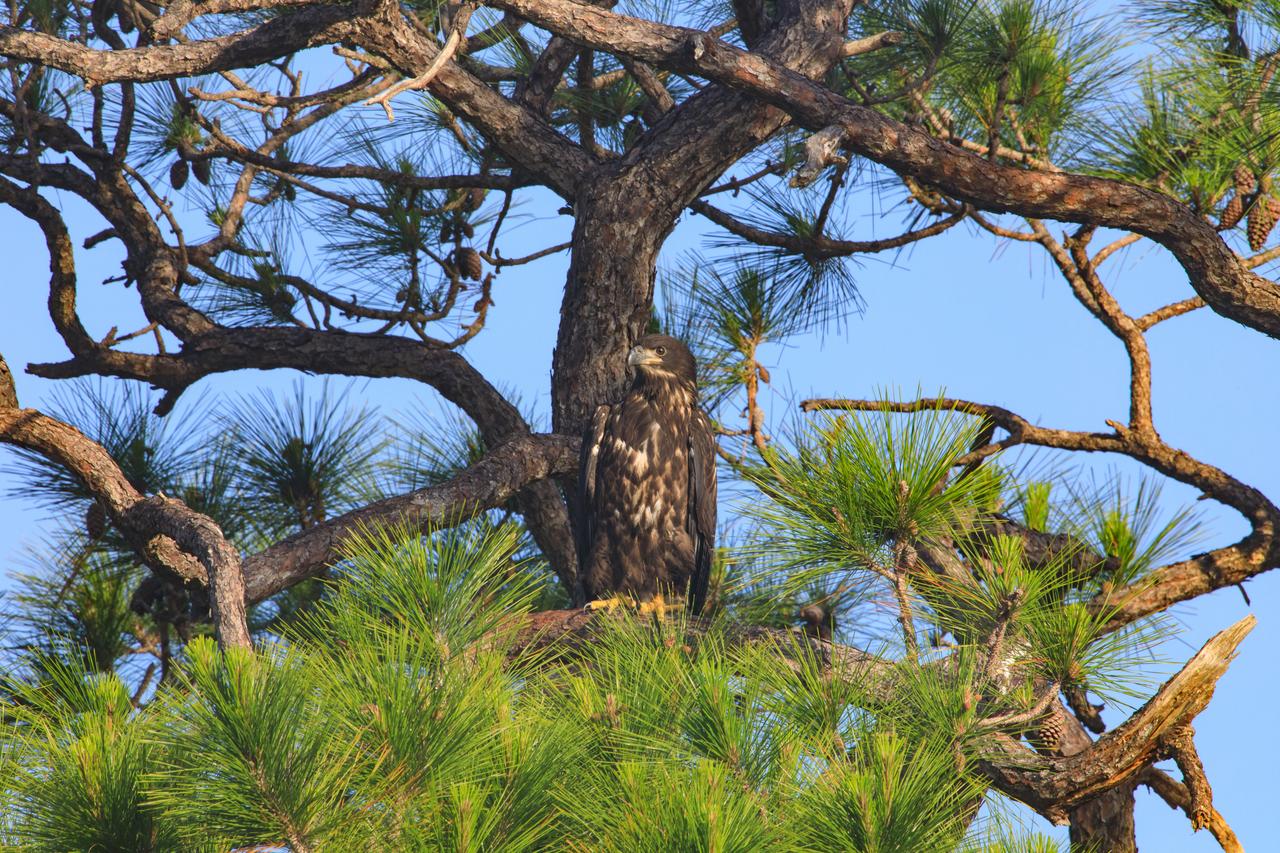
A baby American bald eagle is perched high in a tree above its nest at NASA’s Kennedy Space Center in Florida on April 26, 2023. The nest is located off Kennedy Parkway, about two miles from the Vehicle Assembly Building. The eagle is from a mated pair that recently built a new home in this tree after storms badly damaged their original nest located about 50 yards away. That nest was built in 1973 and had been used by eagles almost every year since 1975. Kennedy currently is home to approximately 20 nesting pairs of bald eagles.
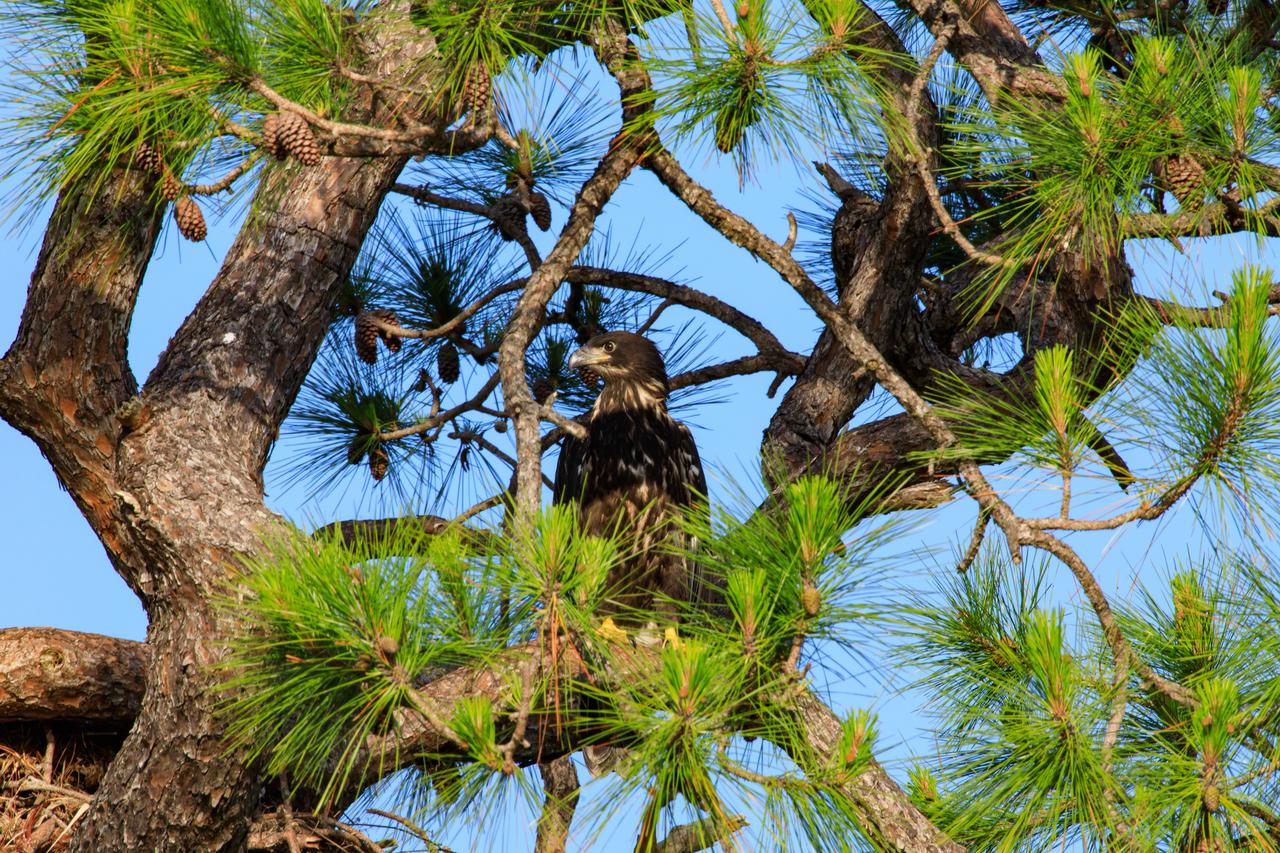
A baby American bald eagle is perched high in a tree above its nest at NASA’s Kennedy Space Center in Florida on April 26, 2023. The nest is located off Kennedy Parkway, about two miles from the Vehicle Assembly Building. The eagle is from a mated pair that recently built a new home in this tree after storms badly damaged their original nest located about 50 yards away. That nest was built in 1973 and had been used by eagles almost every year since 1975. Kennedy currently is home to approximately 20 nesting pairs of bald eagles.
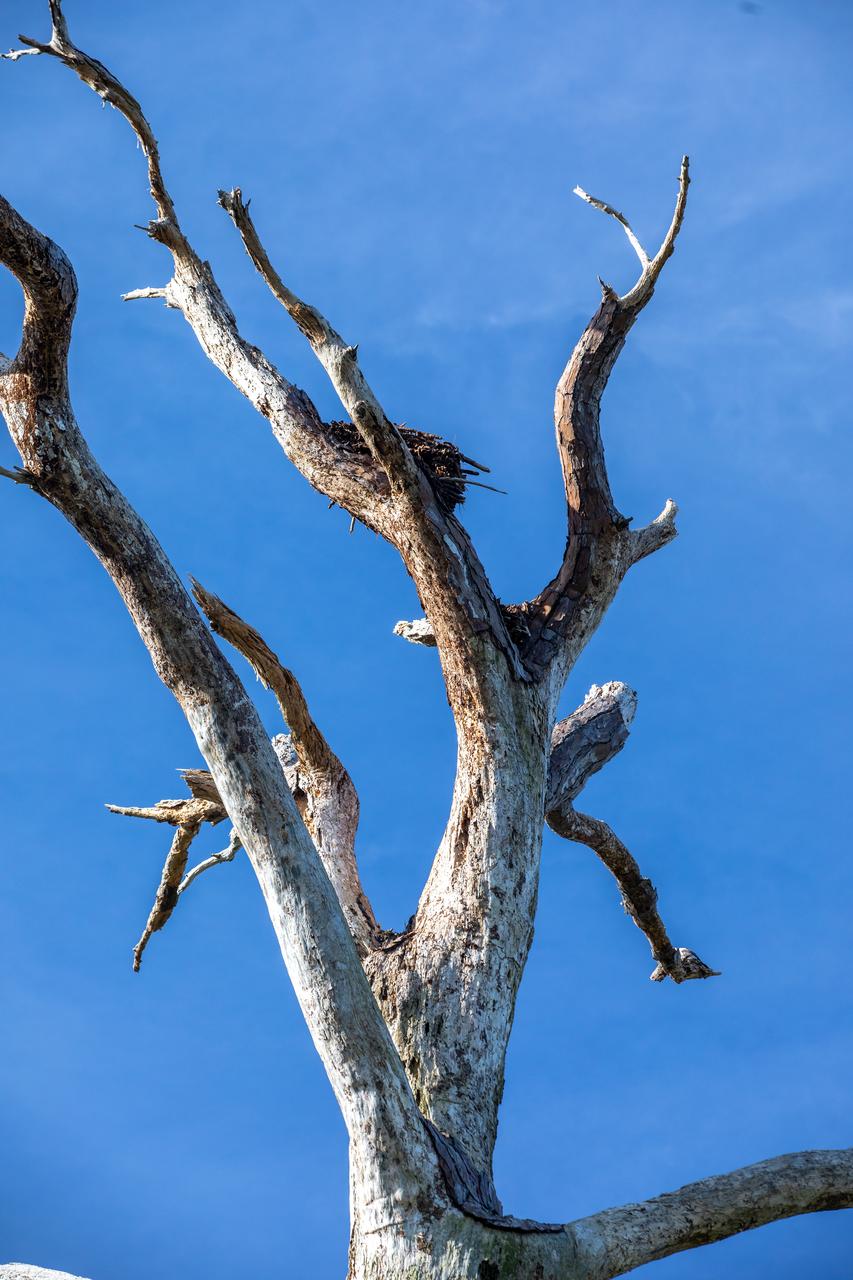
Shown in this Jan. 20, 2023, photo is the remainder of a nest used by southern bald eagles for several years at NASA’s Kennedy Space Center. After a recent fire burned the tree, the eagles returned to the area on Kennedy Parkway North and built a new nest in a tree about 60 yards away. Each year, eagles take up winter residence at the Florida spaceport, breeding and raising a new generation. The center shares a boundary with the Merritt Island National Wildlife Refuge, home to more than 1,500 species of plants and animals, and 15 federally listed species.
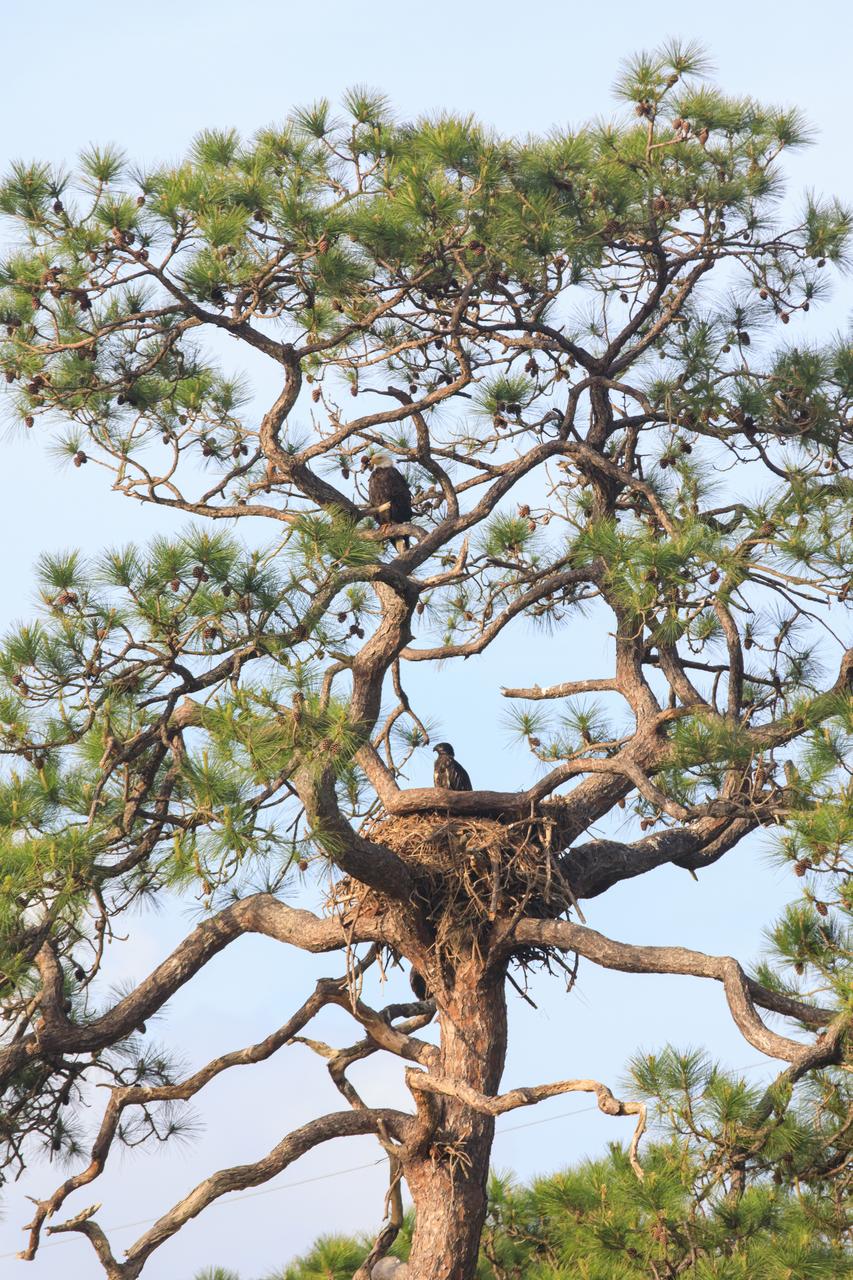
An American bald eagle is perched high in a tree above its nest at NASA’s Kennedy Space Center in Florida on April 10, 2023. Below is its baby eagle, looking up from the nest located off of Kennedy Parkway, about two miles from the Vehicle Assembly Building. The adult eagle is part of a mated pair that recently built a new home in this tree after storms badly damaged their original nest located about 50 yards away. That nest was built in 1973 and had been used by eagles almost every year since 1975.
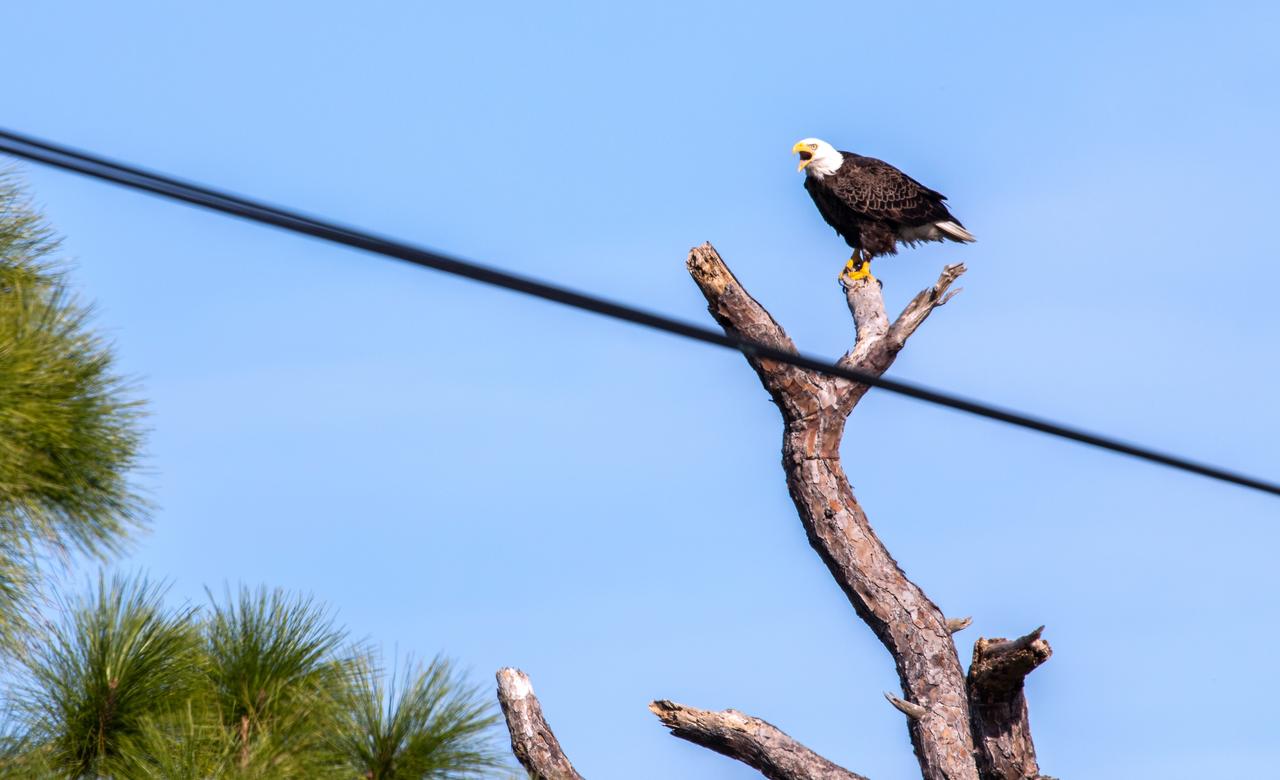
An American bald eagle is perched high in a tree above its nest at NASA’s Kennedy Space Center in Florida on April 10, 2023. The nest is located off of Kennedy Parkway, about two miles from the Vehicle Assembly Building. The adult eagle is part of a mated pair that recently built a new home in this tree after storms badly damaged their original nest located about 50 yards away. That nest was built in 1973 and had been used by eagles almost every year since 1975. Kennedy currently is home to approximately 20 nesting pairs of bald eagles.
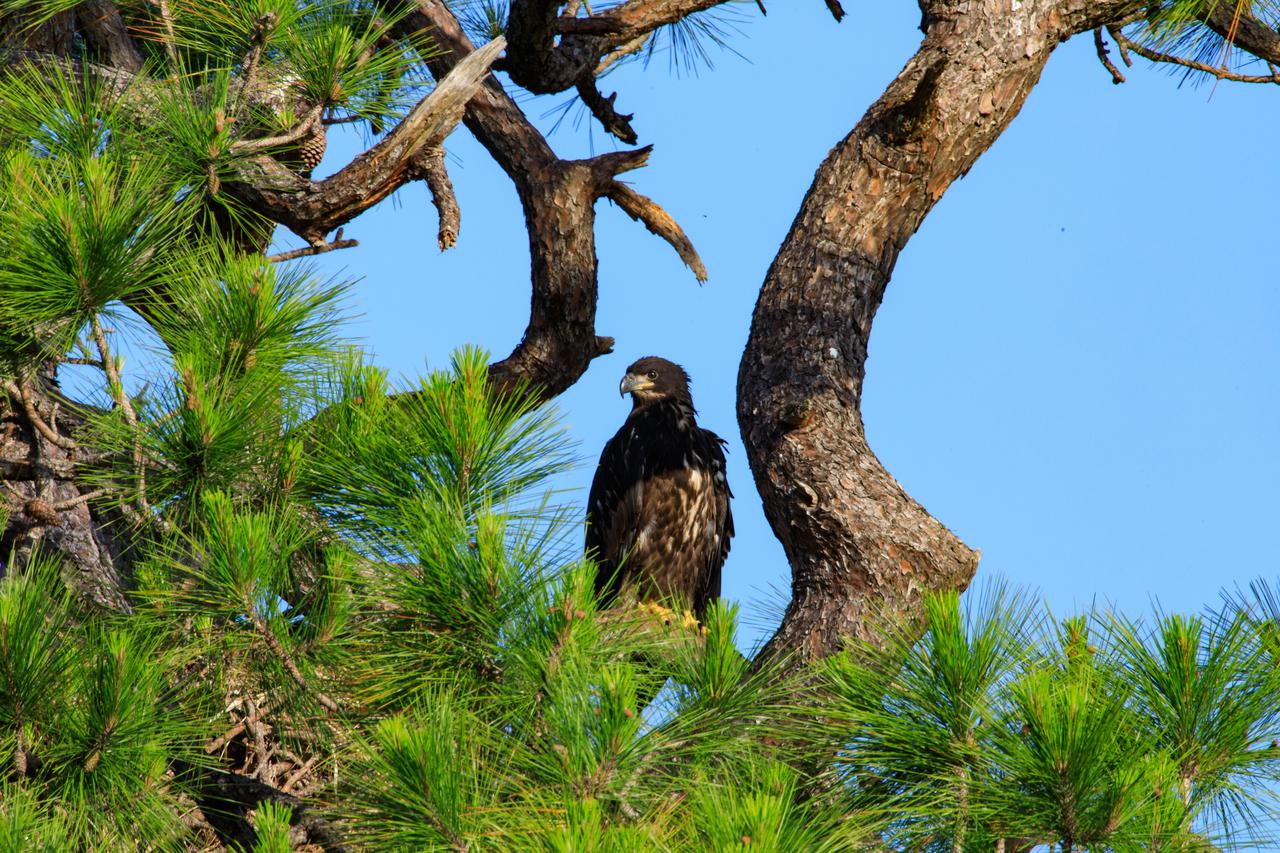
A baby American bald eagle is perched high in a tree above its nest at NASA’s Kennedy Space Center in Florida on April 26, 2023. The nest is located off Kennedy Parkway, about two miles from the Vehicle Assembly Building. The eagle is from a mated pair that recently built a new home in this tree after storms badly damaged their original nest located about 50 yards away. That nest was built in 1973 and had been used by eagles almost every year since 1975. Kennedy currently is home to approximately 20 nesting pairs of bald eagles.
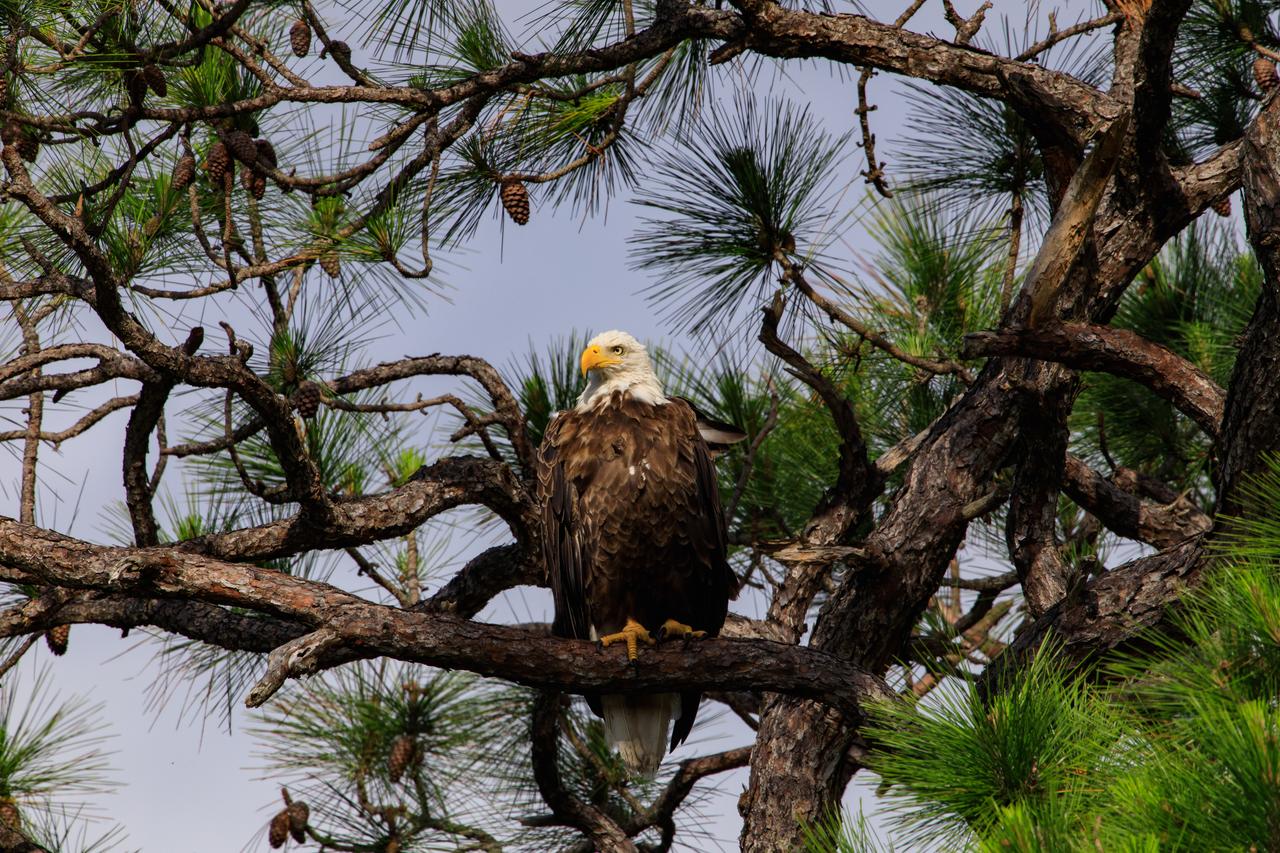
A southern bald eagle is perched in a tree at NASA’s Kennedy Space Center on Jan. 20, 2023. After a recent fire burned a tree that housed an eagles’ nest for several years, the birds returned to the area on Kennedy Parkway North and built a new nest in a tree about 60 yards away. Each year, eagles take up winter residence at the Florida spaceport, breeding and raising a new generation. The center shares a boundary with the Merritt Island National Wildlife Refuge, home to more than 1,500 species of plants and animals, and 15 federally listed species.
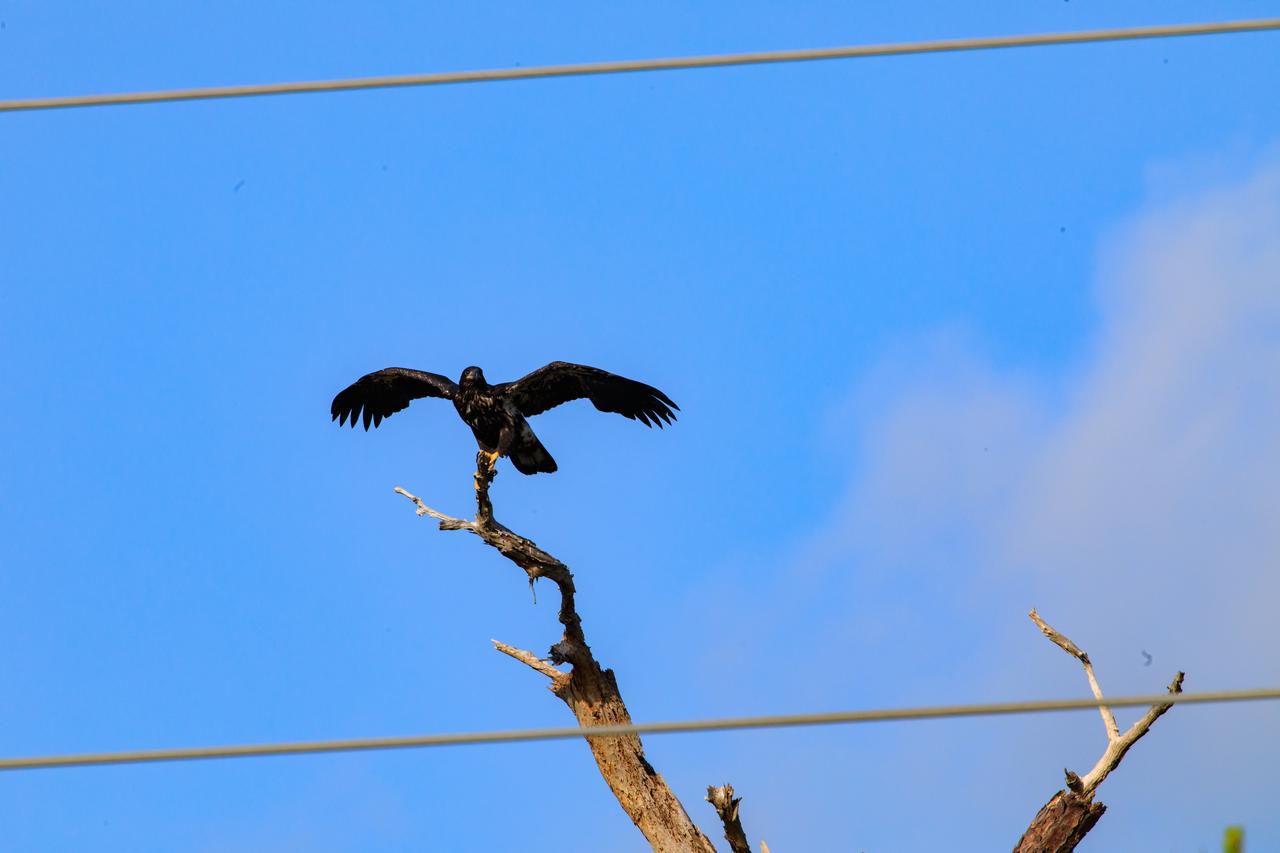
A baby American bald eagle spreads its wings to fly above a tree that contains its nest at NASA’s Kennedy Space Center in Florida on April 26, 2023. The nest is located off Kennedy Parkway, about two miles from the Vehicle Assembly Building. The eagle is from a mated pair that recently built a new home in this tree after storms badly damaged their original nest located about 50 yards away. That nest was built in 1973 and had been used by eagles almost every year since 1975. Kennedy currently is home to approximately 20 nesting pairs of bald eagles.
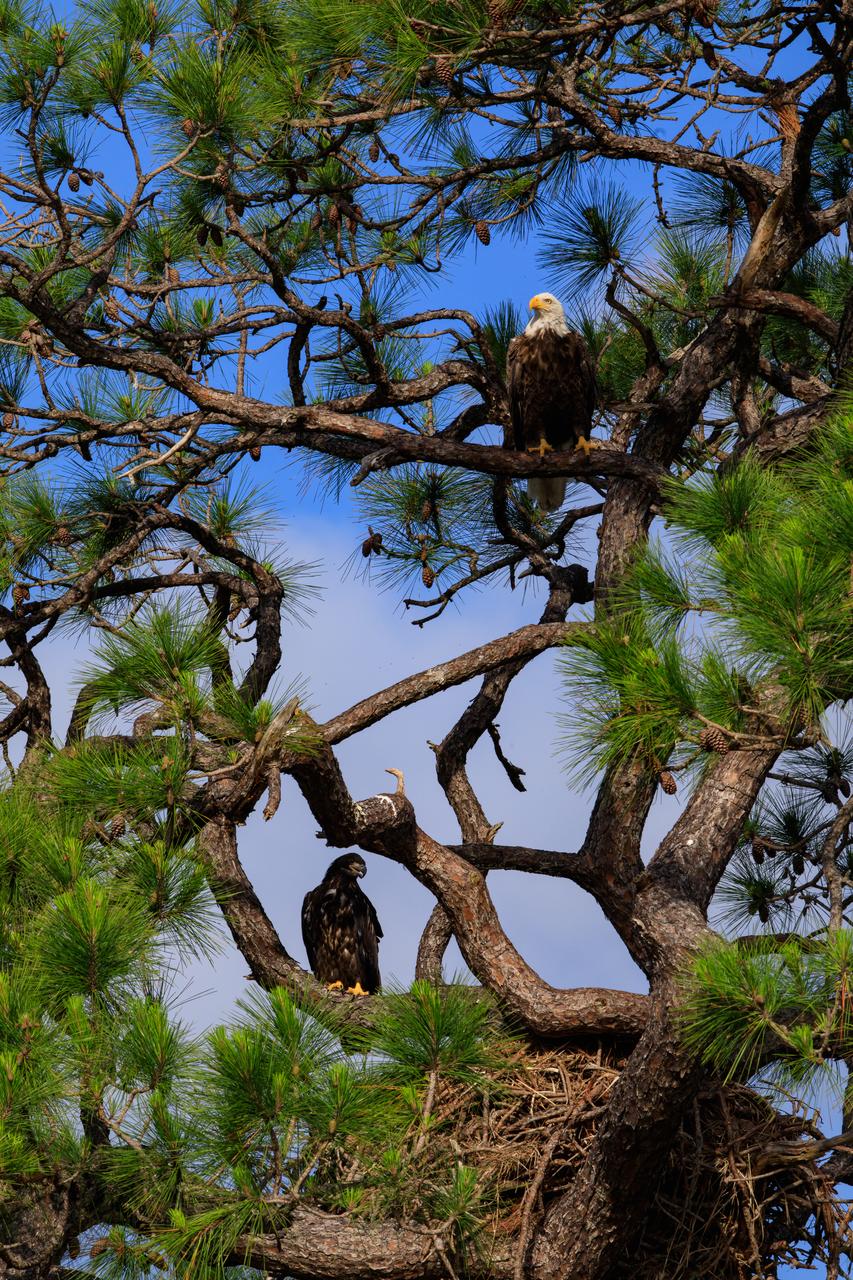
An American bald eagle is perched high in a tree above its nest at NASA’s Kennedy Space Center in Florida on April 10, 2023. Below is its baby eagle, looking up from the nest located off of Kennedy Parkway, about two miles from the Vehicle Assembly Building. The adult eagle is part of a mated pair that recently built a new home in this tree after storms badly damaged their original nest located about 50 yards away. That nest was built in 1973 and had been used by eagles almost every year since 1975. Kennedy currently is home to approximately 20 nesting pairs of bald eagles.
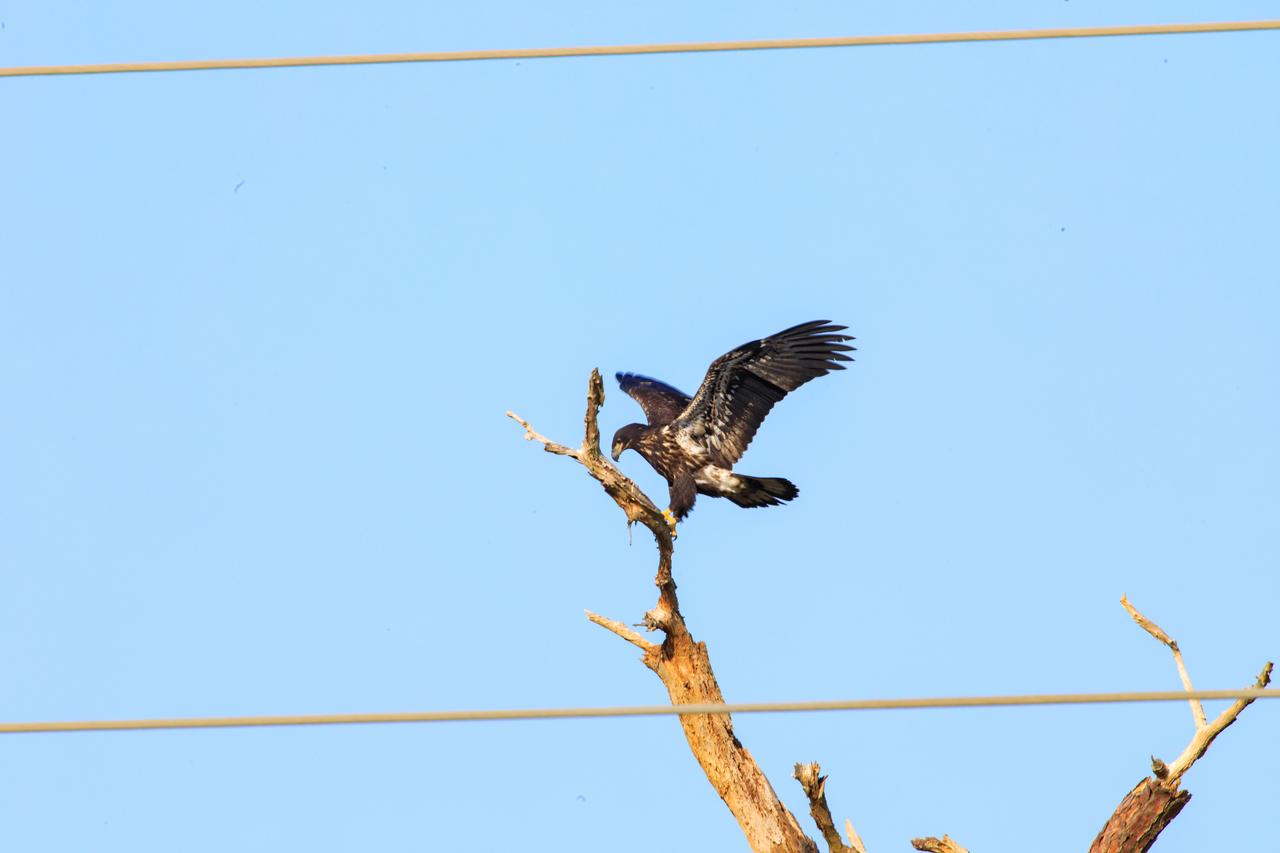
A baby American bald eagle spreads its wings to fly above a tree that contains its nest at NASA’s Kennedy Space Center in Florida on April 26, 2023. The nest is located off Kennedy Parkway, about two miles from the Vehicle Assembly Building. The eagle is from a mated pair that recently built a new home in this tree after storms badly damaged their original nest located about 50 yards away. That nest was built in 1973 and had been used by eagles almost every year since 1975. Kennedy currently is home to approximately 20 nesting pairs of bald eagles.

A southern bald eagle is perched in a tree at NASA’s Kennedy Space Center on Jan. 20, 2023. After a recent fire burned a tree that housed an eagles’ nest for several years, the birds returned to the area on Kennedy Parkway North and built a new nest in a tree about 60 yards away. Each year, eagles take up winter residence at the Florida spaceport, breeding and raising a new generation. The center shares a boundary with the Merritt Island National Wildlife Refuge, home to more than 1,500 species of plants and animals, and 15 federally listed species.
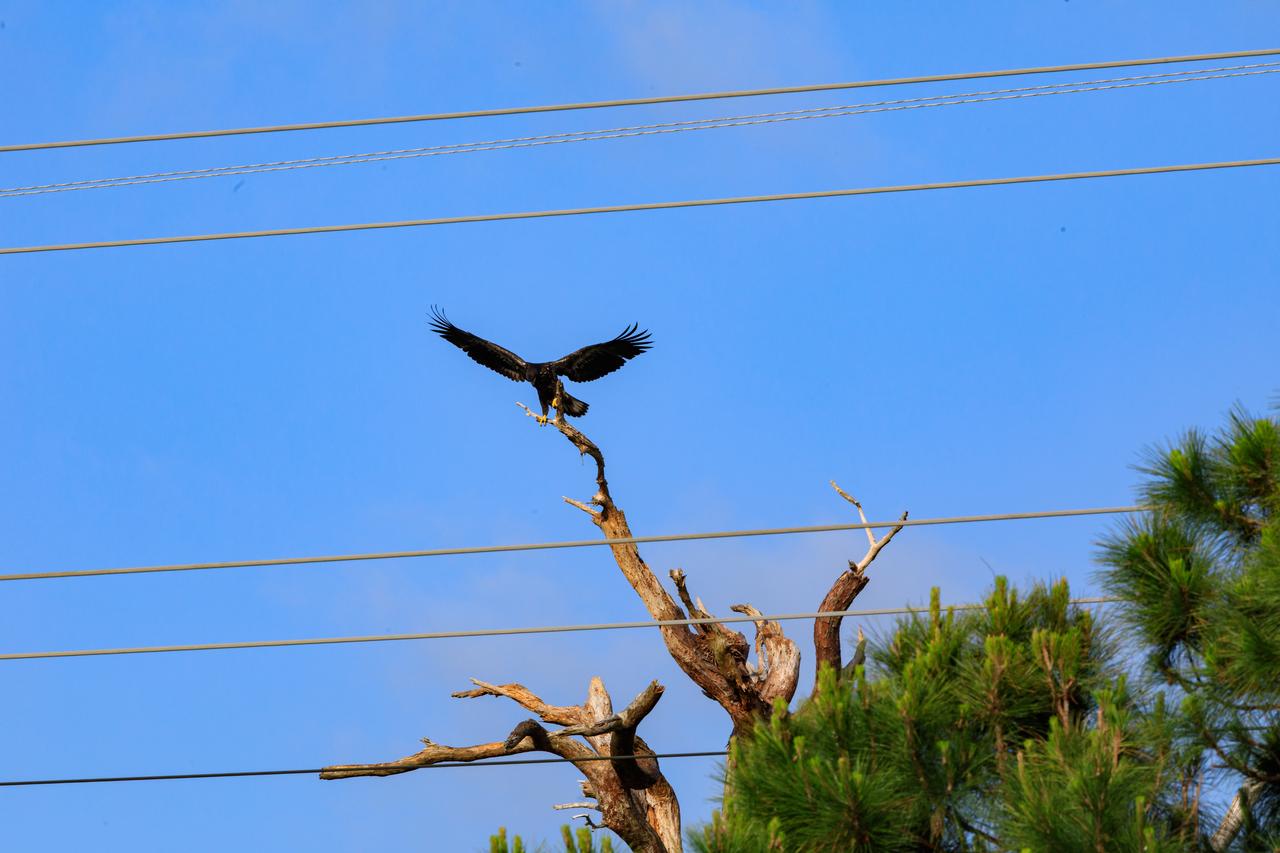
A baby American bald eagle spreads its wings to fly above a tree that contains its nest at NASA’s Kennedy Space Center in Florida on April 26, 2023. The nest is located off Kennedy Parkway, about two miles from the Vehicle Assembly Building. The eagle is from a mated pair that recently built a new home in this tree after storms badly damaged their original nest located about 50 yards away. That nest was built in 1973 and had been used by eagles almost every year since 1975. Kennedy currently is home to approximately 20 nesting pairs of bald eagles.
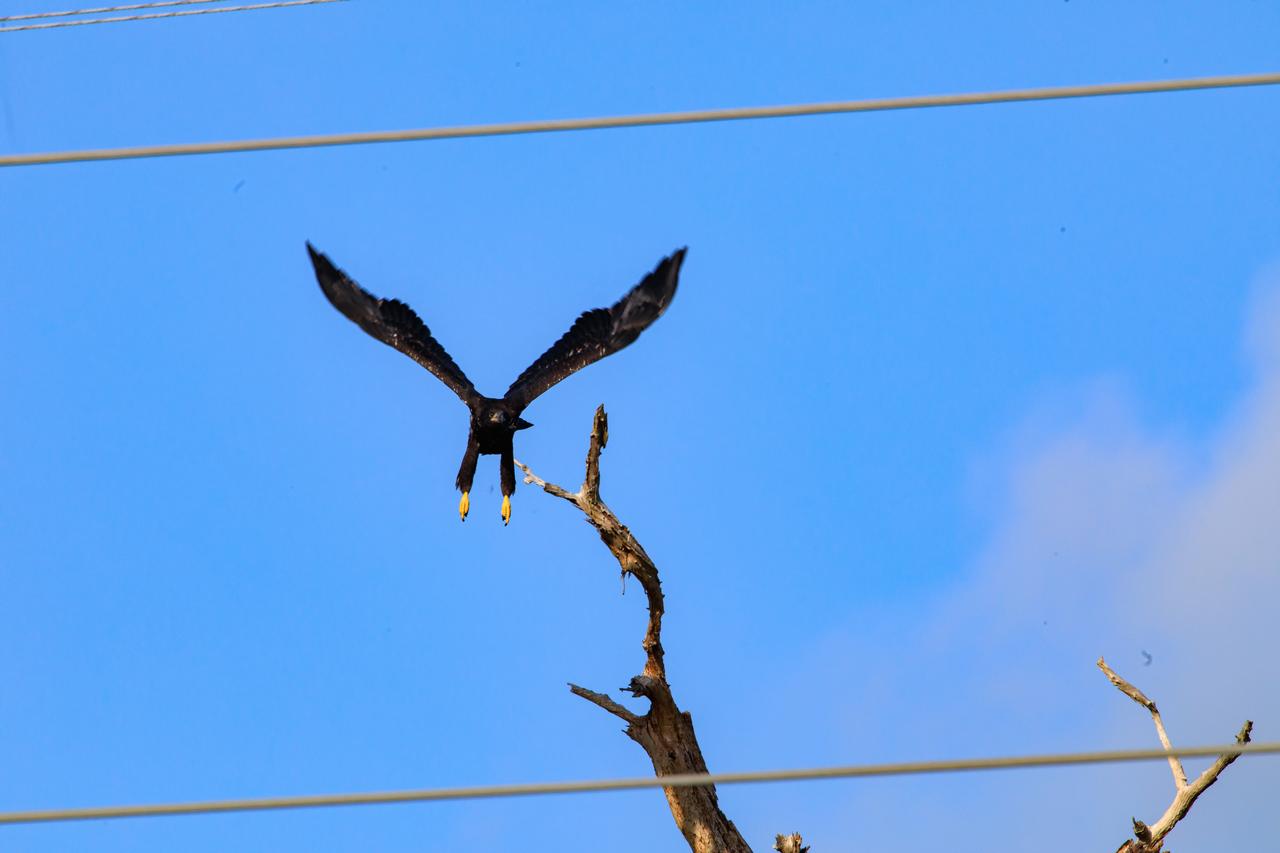
A baby American bald eagle takes flight from a tree that contains its nest at NASA’s Kennedy Space Center in Florida on April 26, 2023. The nest is located off Kennedy Parkway, about two miles from the Vehicle Assembly Building. The eagle is from a mated pair that recently built a new home in this tree after storms badly damaged their original nest located about 50 yards away. That nest was built in 1973 and had been used by eagles almost every year since 1975. Kennedy currently is home to approximately 20 nesting pairs of bald eagles.
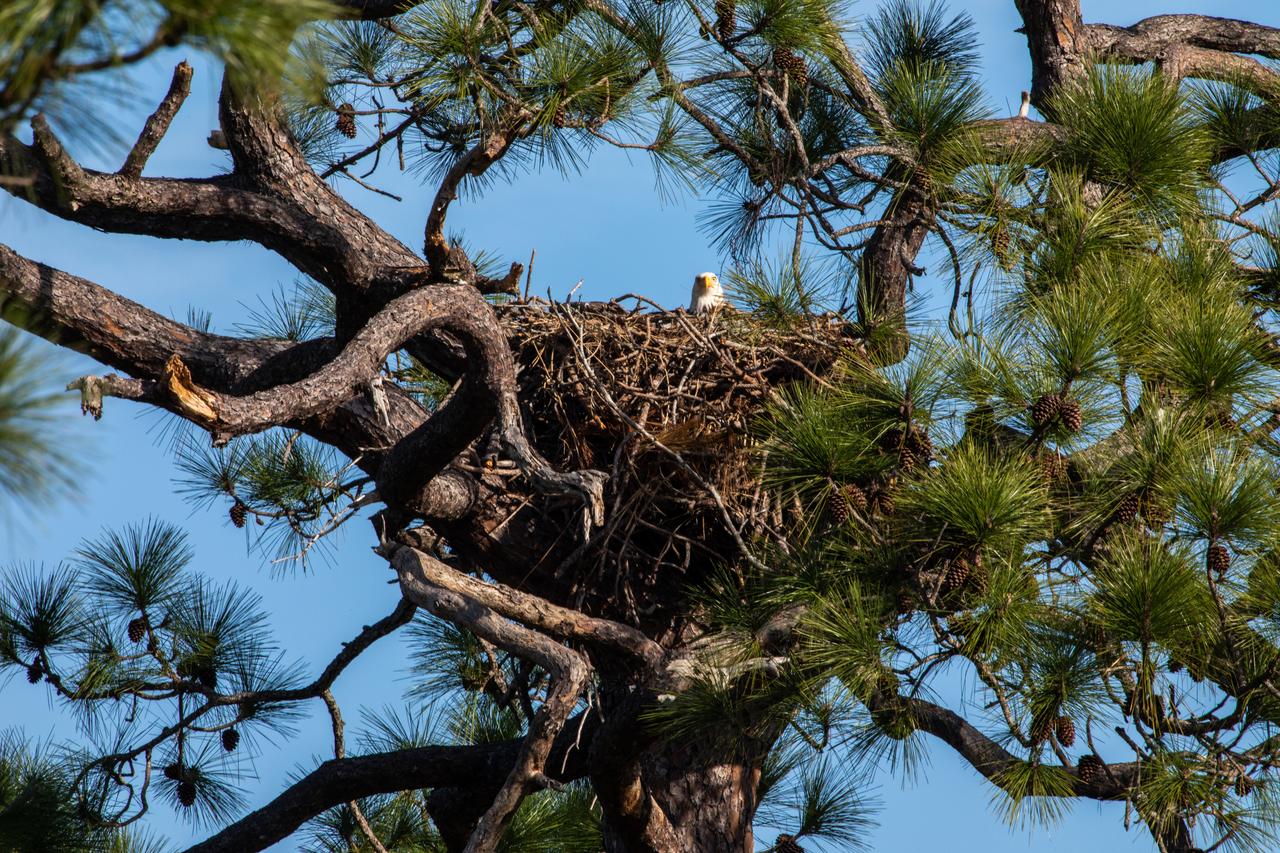
A southern bald eagle occupies a nest at NASA’s Kennedy Space Center on Jan. 20, 2023. After a recent fire burned a tree that housed an eagles’ nest for several years, the birds returned to the area on Kennedy Parkway North and built a new nest in a tree about 60 yards away. Each year, eagles take up winter residence at the Florida spaceport, breeding and raising a new generation. The center shares a boundary with the Merritt Island National Wildlife Refuge, home to more than 1,500 species of plants and animals, and 15 federally listed species.
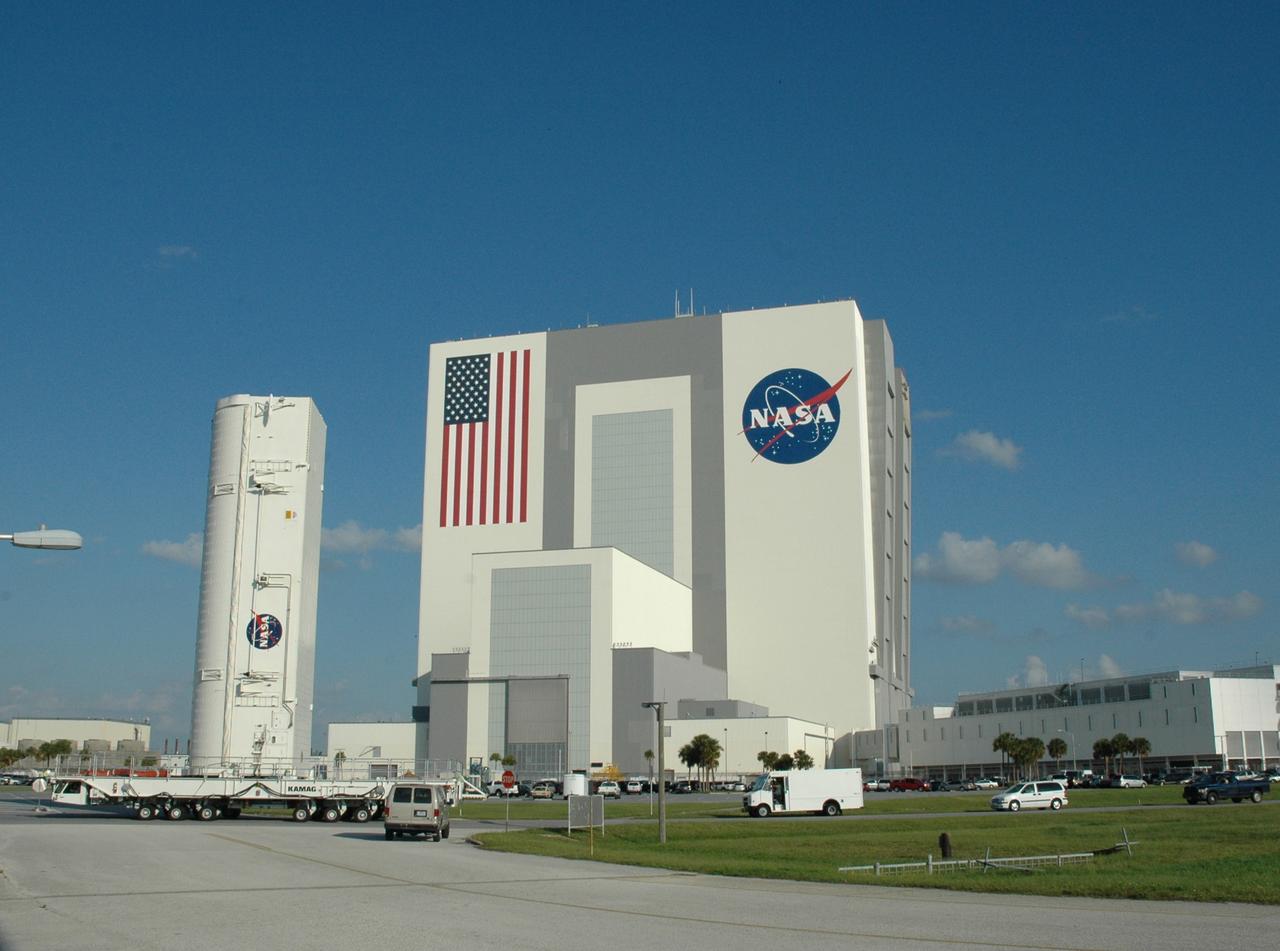
CAPE CANAVERAL, Fla. – On NASA's Kennedy Space Center in Florida, the canister with space shuttle Atlantis’ HST payload inside makes the turn past the Vehicle Assembly Building onto Kennedy Parkway. The payload comprises four carriers holding various equipment for the mission. The hardware will be transported back to Kennedy’s Payload Hazardous Servicing Facility where it will be stored until a new target launch date can be set for Atlantis’ STS-125 mission in 2009. Atlantis’ October target launch date was delayed after a device on board Hubble used in the storage and transmission of science data to Earth shut down on Sept. 27. Replacing the broken device will be added to Atlantis’ servicing mission to the telescope. Photo credit: NASA/Tim Jacobs
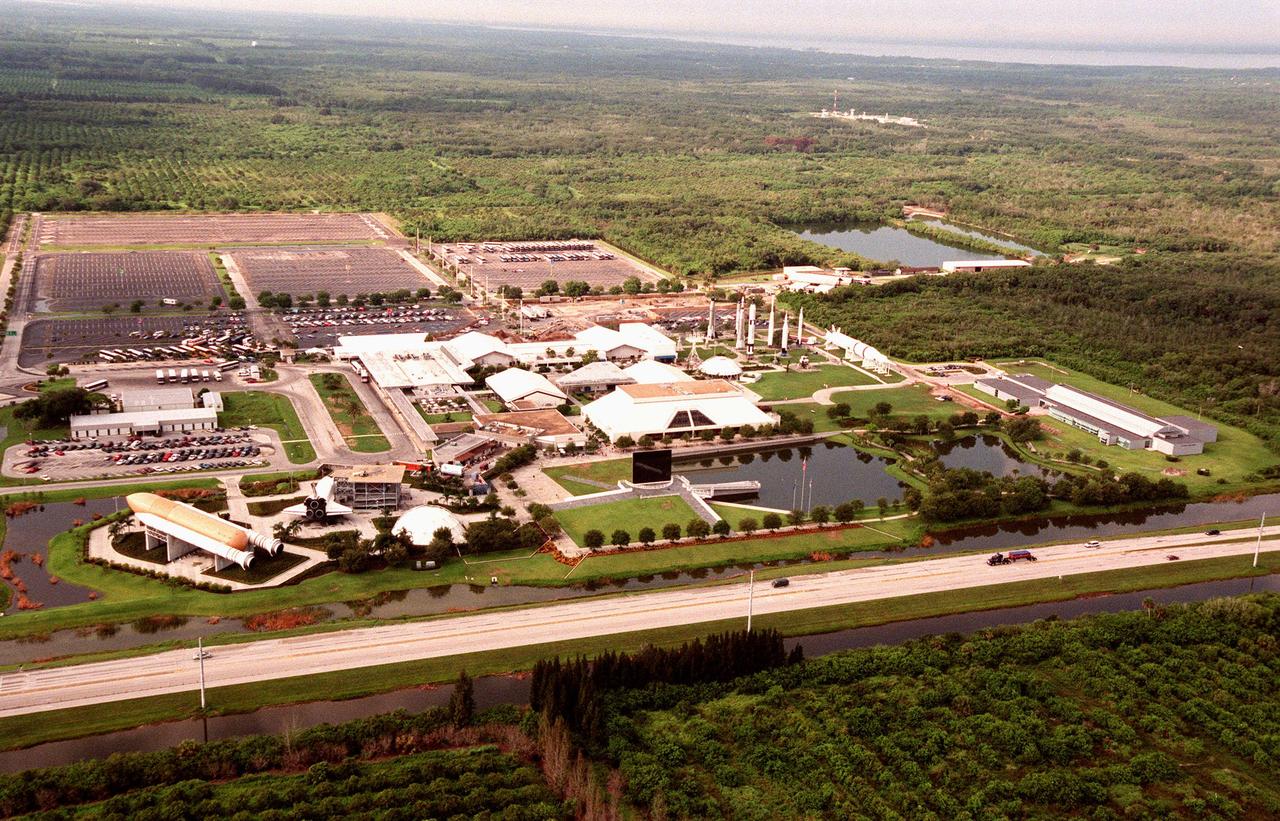
The Kennedy Space Center Visitor Center, shown in this aerial view looking south, sprawls across 70 acres on Florida's Space Coast , and is located off State Road 405, NASA Parkway, six miles inside the Space Center entrance. SR 405 can be seen at the bottom of the photo. Just above the roadway, from left can be seen the Shuttle/Gantry mockup; the Post Show Dome; the Astronaut Memorial; and to the far right, the Center for Space Education. Behind the Memorial are a cluster of buildings that include the Theater Complex, Cafeteria, Space Flight Exhibit Building, Souvenir Sales Building, Spaceport Central, and Ticket Pavilion. At the upper right are various rockets that have played a significant role in the growth of the space program.
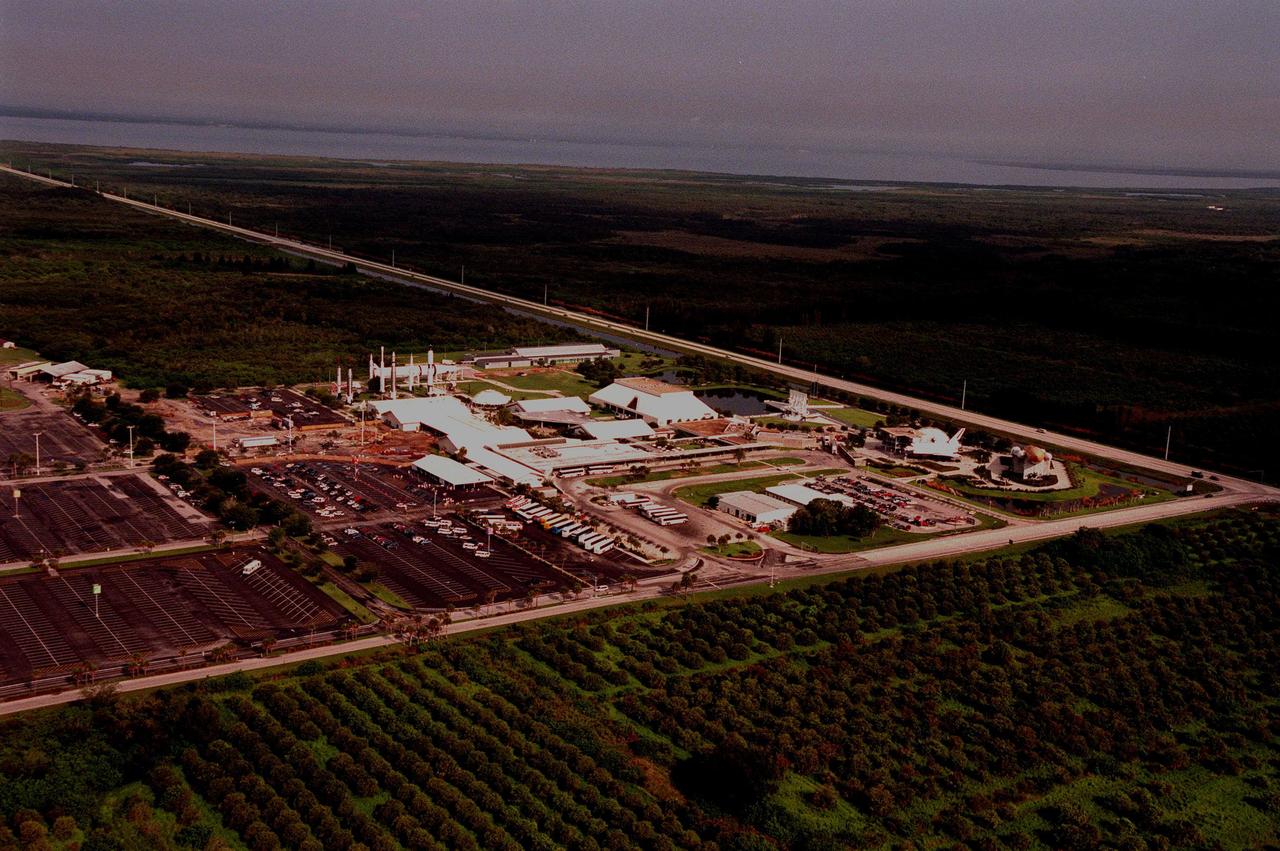
The Kennedy Space Center Visitor Center, shown in this aerial view looking northwest, sprawls across 70 acres on Florida's Space Coast and is located off State Road 405, NASA Parkway, six miles inside the Space Center entrance. SR 405 can be seen at the top of the photo (left to right). Just below the roadway, from left, can be seen the Center for Space Education, the Theater Complex, Astronaut Memorial, the Post Show Dome, and Shuttle/Gantry mockup. In front of the theater complex are a cluster of buildings that include the Cafeteria, Space Flight Exhibit Building, Souvenir Sales Building, Spaceport Central, and Ticket Pavilion. At the left of the complex are various rockets that have played a significant role in the growth of the space program. Beyond the roadway can be seen the Banana River.
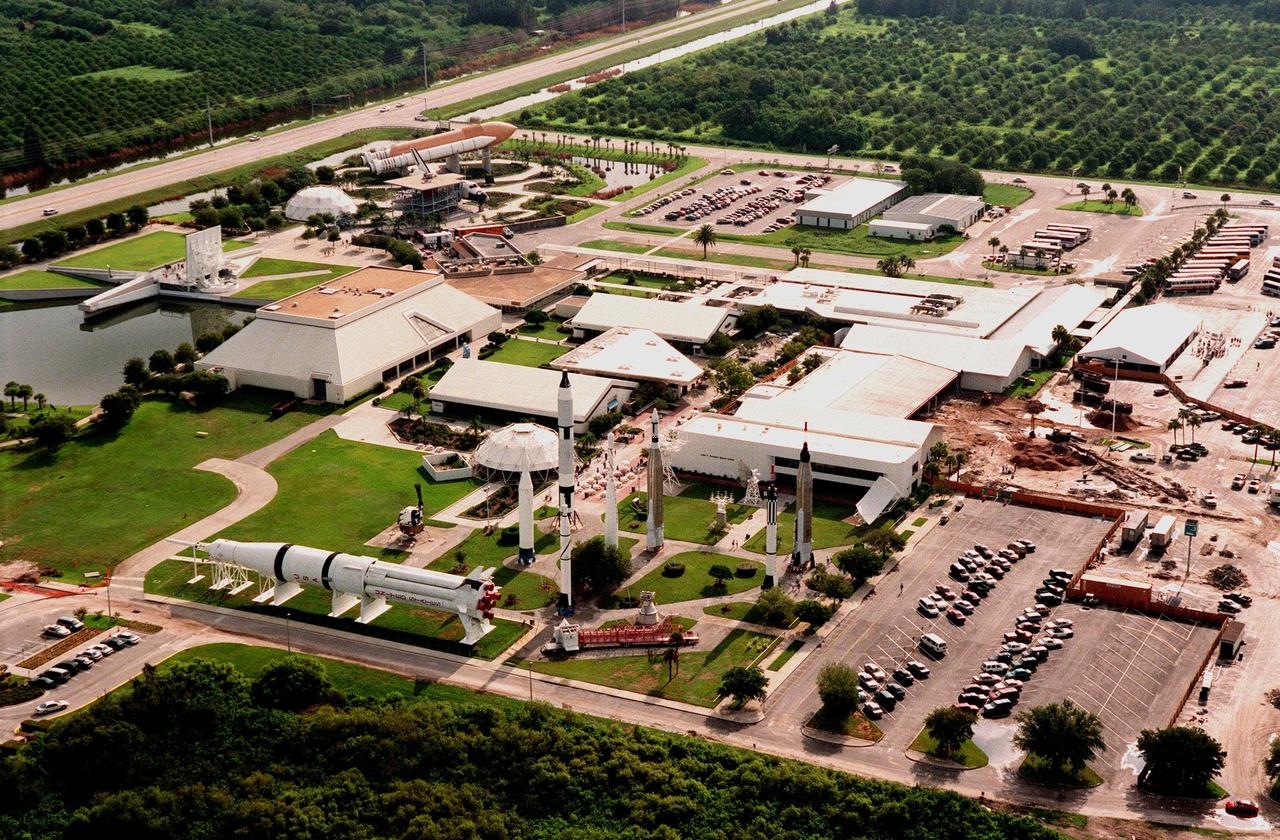
The Kennedy Space Center Visitor Complex, shown in this aerial view looking east, sprawls across 70 acres on Florida's Space Coast. It is located off State Road 405, NASA Parkway, six miles inside the Space Center entrance. SR 405 can be seen at the top left of the photo. In the foreground is the display of rockets that have played a significant role in the growth of the space program. Just above that, left to right, can be seen the Theater Complex, Space Flight Exhibit Building and Spaceport Central. Other buildings clustered at the center are the Cafeteria, Souvenir Sales Building, and Ticket Pavilion. To the left of the Theater Complex are the Astronaut Memorial, the Post Show Dome, and the Shuttle/Gantry mockup. Not seen in the photo is the Center for Space Education.
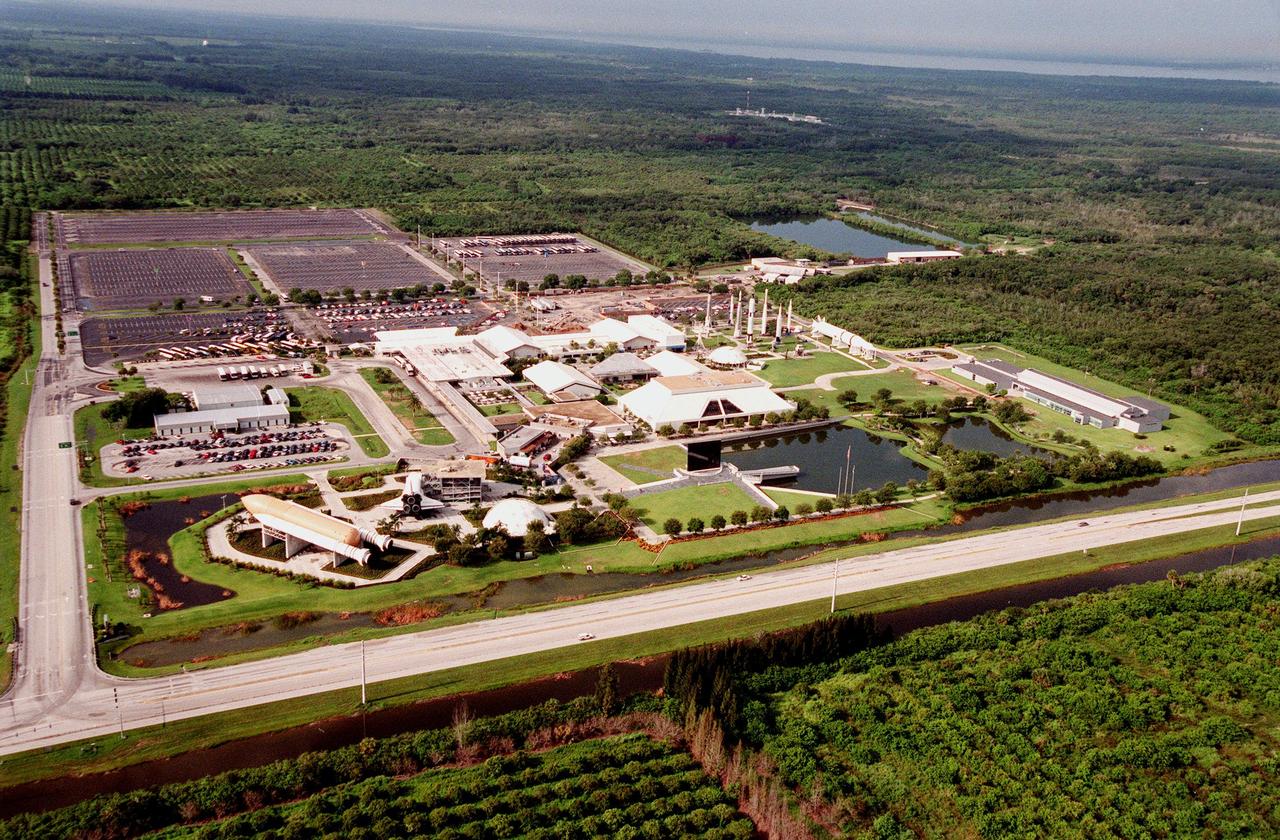
The Kennedy Space Center Visitor Complex, shown in this aerial view looking south, sprawls across 70 acres on Florida's Space Coast. It is located off State Road 405, NASA Parkway, six miles inside the Space Center entrance. SR 405 can be seen at the bottom of the photo. Just above the roadway, from left, can be seen the Shuttle/Gantry mockup, the Post Show Dome, the Astronaut Memorial, and to the far right, the Center for Space Education. Behind the Memorial are a cluster of buildings that include the Theater Complex, Cafeteria, Space Flight Exhibit Building, Souvenir Sales Building, Spaceport Central, and Ticket Pavilion. At the upper right of the site is a display of rockets that have played a significant role in the growth of the space program. Parking lots span the width of the complex on the south side.
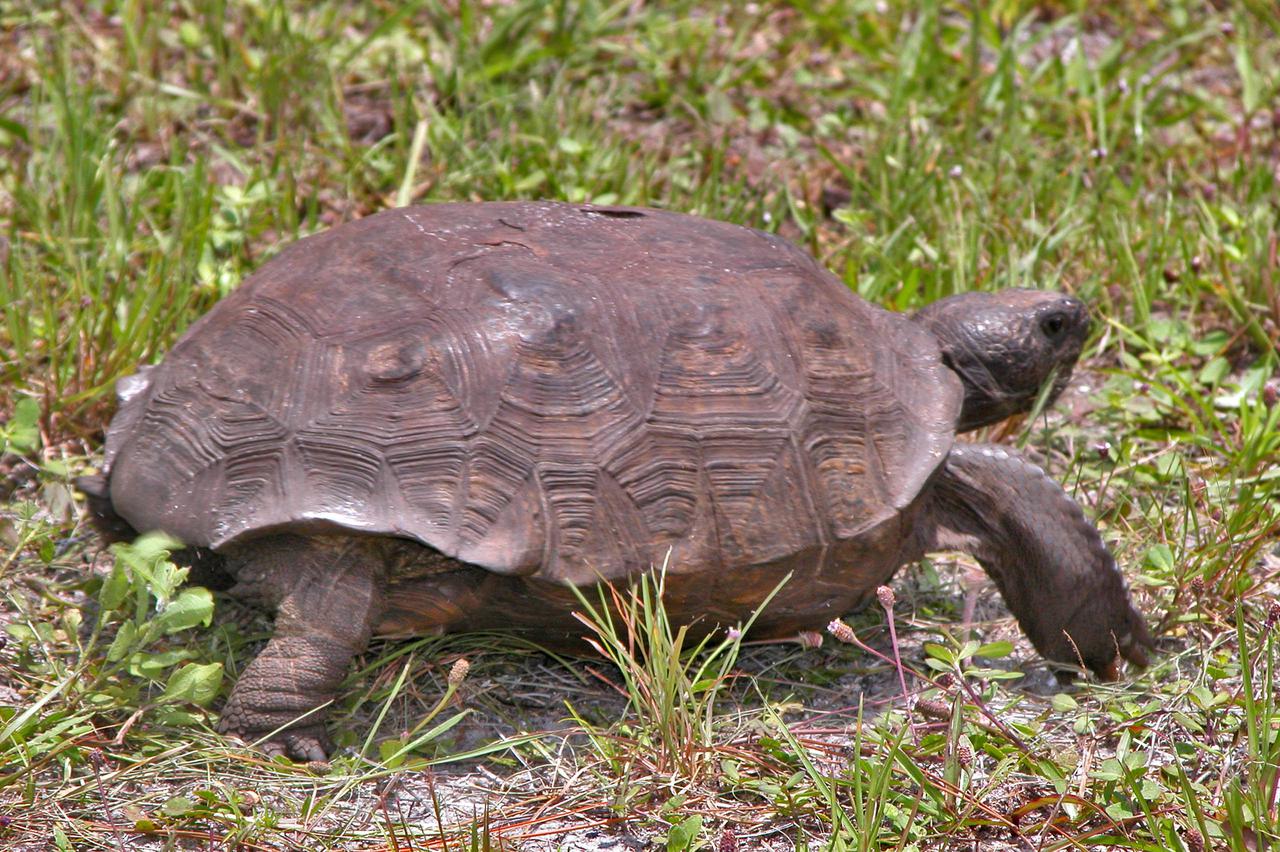
KENNEDY SPACE CENTER, FLA. - This gopher tortoise eats its way through the grass alongside Kennedy Parkway at NASA Kennedy Space Center. The sandy soils of Florida are prime habitat for the species, the only one in Florida. Gopher tortoises thrive in many of our ecosystems, pine-oak sandhills, oak hammocks, prairies, flatwoods and coastal dunes. This and other wildlife abound throughout KSC as it shares a boundary with the Merritt Island National Wildlife Refuge, home to some of the nation’s rarest and most unusual species of wildlife. The wildlife refuge is a habitat for more than 310 species of birds, 25 mammals, 117 fishes and 65 amphibians and reptiles. In addition, the Refuge supports 19 endangered or threatened wildlife species on Federal or State lists, more than any other single refuge in the U.S. Gopher tortoises are protected by law in Florida and are listed as a Species of Special Concern.
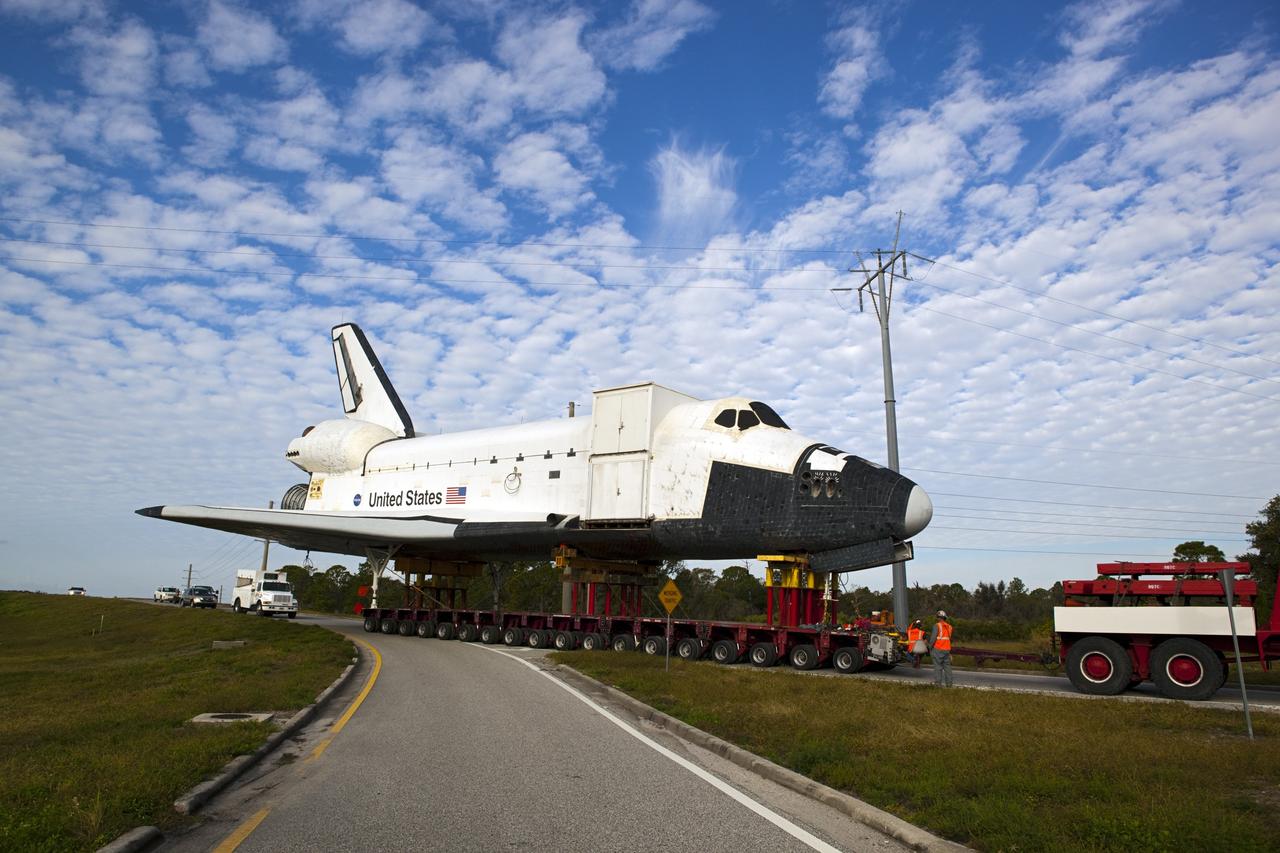
CAPE CANAVERAL, Fla. – The high-fidelity space shuttle model that was on display at the NASA Kennedy Space Center Visitor Complex in Florida monopolizes the on-ramp at the intersection of NASA Causeway and Kennedy Parkway to gain entrance to the northbound roadways on the center. It is standard procedure for large payloads and equipment to travel against the normal flow of traffic under the supervision of a move crew when being transported on or off center property. The model is being moved from the visitor complex to NASA Kennedy Space Center's Launch Complex 39 turn basin. The shuttle was part of a display at the visitor complex that also included an external tank and two solid rocket boosters that were used to show visitors the size of actual space shuttle components. The full-scale shuttle model is being transferred from Kennedy to Space Center Houston, NASA Johnson Space Center's visitor center. The model will stay at the turn basin for a few months until it is ready to be transported to Texas via barge. The move also helps clear the way for the Kennedy Space Center Visitor Complex to begin construction of a new facility next year to display space shuttle Atlantis in 2013. For more information about Space Center Houston, visit http://www.spacecenter.org. Photo credit: NASA/Dimitri Gerondidakis
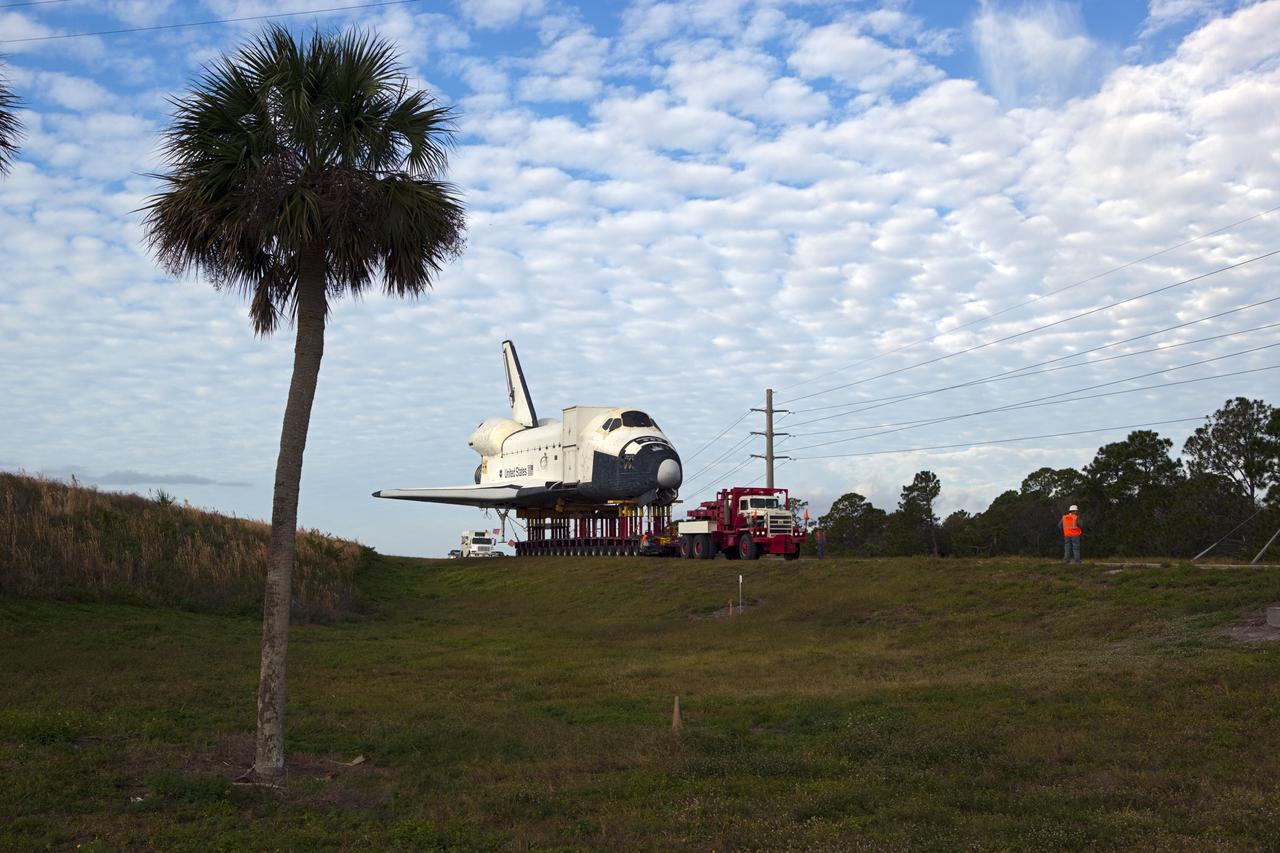
CAPE CANAVERAL, Fla. – The high-fidelity space shuttle model that was on display at the NASA Kennedy Space Center Visitor Complex in Florida negotiates the on-ramp at the intersection of NASA Causeway and Kennedy Parkway to gain entrance to the northbound roadways on the center. It is standard procedure for large payloads and equipment to travel against the normal flow of traffic under the supervision of a move crew when being transported on or off center property. The model is being moved from the visitor complex to NASA Kennedy Space Center's Launch Complex 39 turn basin. The shuttle was part of a display at the visitor complex that also included an external tank and two solid rocket boosters that were used to show visitors the size of actual space shuttle components. The full-scale shuttle model is being transferred from Kennedy to Space Center Houston, NASA Johnson Space Center's visitor center. The model will stay at the turn basin for a few months until it is ready to be transported to Texas via barge. The move also helps clear the way for the Kennedy Space Center Visitor Complex to begin construction of a new facility next year to display space shuttle Atlantis in 2013. For more information about Space Center Houston, visit http://www.spacecenter.org. Photo credit: NASA/Dimitri Gerondidakis
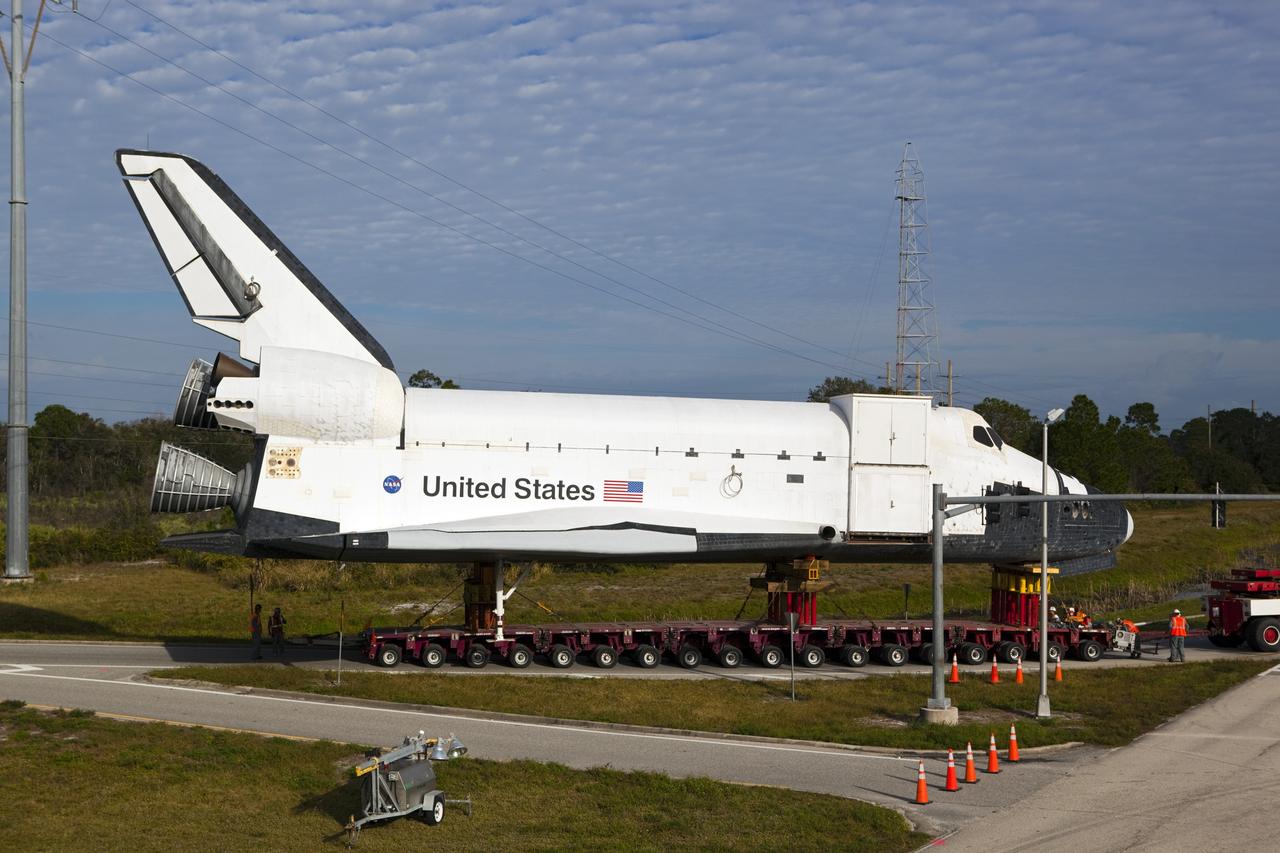
CAPE CANAVERAL, Fla. – The high-fidelity space shuttle model that was on display at the NASA Kennedy Space Center Visitor Complex in Florida arrives at the foot of the on-ramp at the intersection of NASA Causeway and Kennedy Parkway to gain entrance to the northbound roadways on the center. It is standard procedure for large payloads and equipment to travel against the normal flow of traffic under the supervision of a move crew when being transported on or off center property. The model is being moved from the visitor complex to NASA Kennedy Space Center's Launch Complex 39 turn basin. The shuttle was part of a display at the visitor complex that also included an external tank and two solid rocket boosters that were used to show visitors the size of actual space shuttle components. The full-scale shuttle model is being transferred from Kennedy to Space Center Houston, NASA Johnson Space Center's visitor center. The model will stay at the turn basin for a few months until it is ready to be transported to Texas via barge. The move also helps clear the way for the Kennedy Space Center Visitor Complex to begin construction of a new facility next year to display space shuttle Atlantis in 2013. For more information about Space Center Houston, visit http://www.spacecenter.org. Photo credit: NASA/Dimitri Gerondidakis
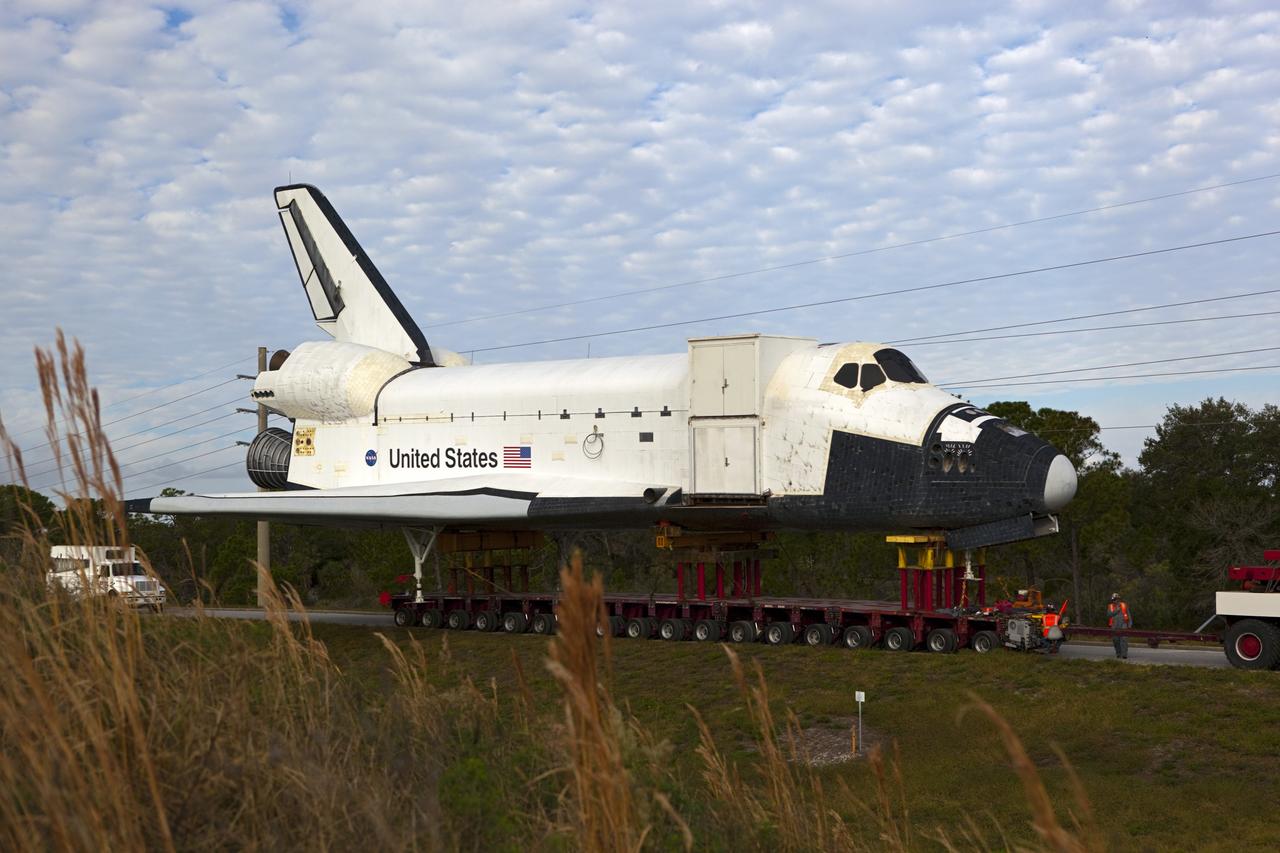
CAPE CANAVERAL, Fla. – The high-fidelity space shuttle model that was on display at the NASA Kennedy Space Center Visitor Complex in Florida moves along the on-ramp from NASA Causeway to Kennedy Parkway to gain entrance to the northbound roadways on the center. It is standard procedure for large payloads and equipment to travel against the normal flow of traffic under the supervision of a move crew when being transported on or off center property. The model is being moved from the visitor complex to NASA Kennedy Space Center's Launch Complex 39 turn basin. The shuttle was part of a display at the visitor complex that also included an external tank and two solid rocket boosters that were used to show visitors the size of actual space shuttle components. The full-scale shuttle model is being transferred from Kennedy to Space Center Houston, NASA Johnson Space Center's visitor center. The model will stay at the turn basin for a few months until it is ready to be transported to Texas via barge. The move also helps clear the way for the Kennedy Space Center Visitor Complex to begin construction of a new facility next year to display space shuttle Atlantis in 2013. For more information about Space Center Houston, visit http://www.spacecenter.org. Photo credit: NASA/Dimitri Gerondidakis
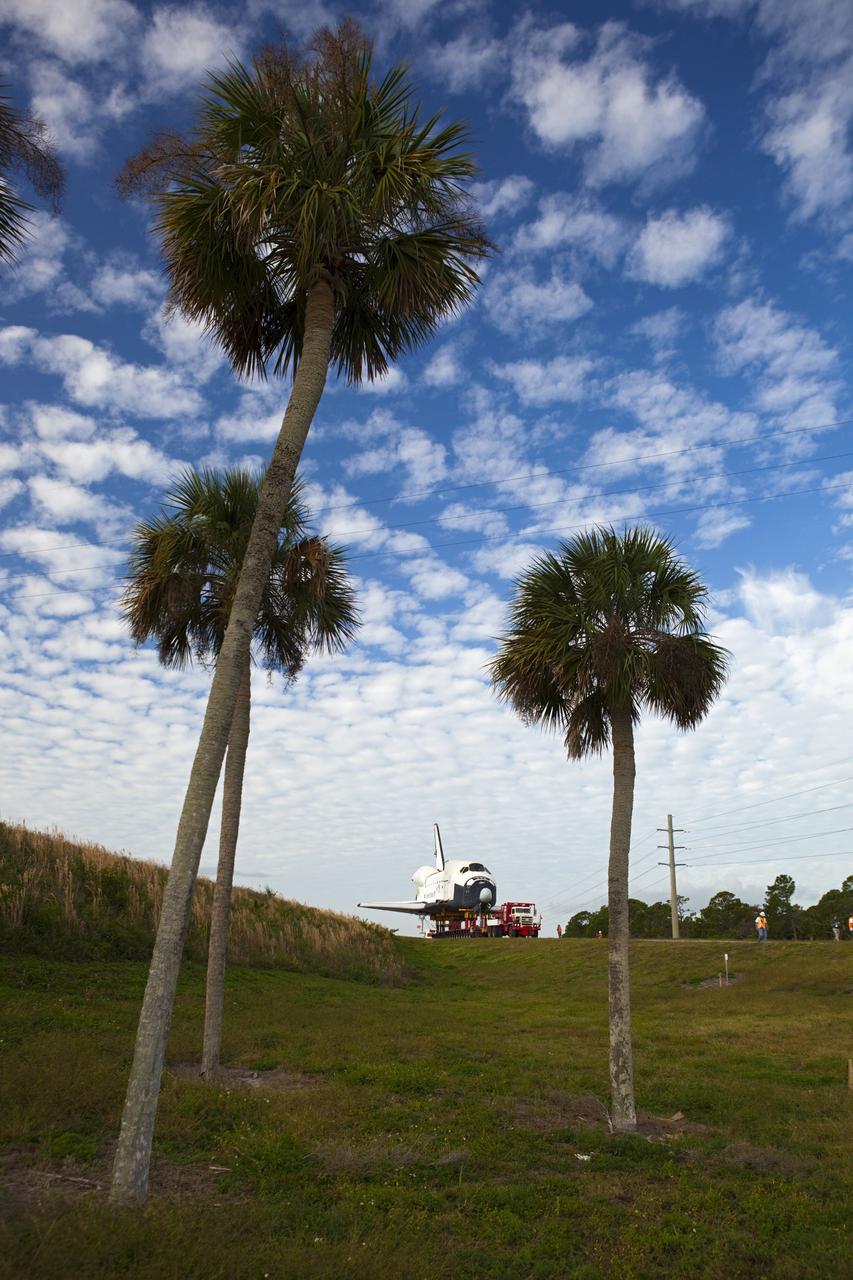
CAPE CANAVERAL, Fla. – The high-fidelity space shuttle model that was on display at the NASA Kennedy Space Center Visitor Complex in Florida uses the on-ramp at the intersection of NASA Causeway and Kennedy Parkway to gain entrance to the northbound roadways on the center. It is standard procedure for large payloads and equipment to travel against the normal flow of traffic under the supervision of a move crew when being transported on or off center property. The model is being moved from the visitor complex to NASA Kennedy Space Center's Launch Complex 39 turn basin. The shuttle was part of a display at the visitor complex that also included an external tank and two solid rocket boosters that were used to show visitors the size of actual space shuttle components. The full-scale shuttle model is being transferred from Kennedy to Space Center Houston, NASA Johnson Space Center's visitor center. The model will stay at the turn basin for a few months until it is ready to be transported to Texas via barge. The move also helps clear the way for the Kennedy Space Center Visitor Complex to begin construction of a new facility next year to display space shuttle Atlantis in 2013. For more information about Space Center Houston, visit http://www.spacecenter.org. Photo credit: NASA/Dimitri Gerondidakis
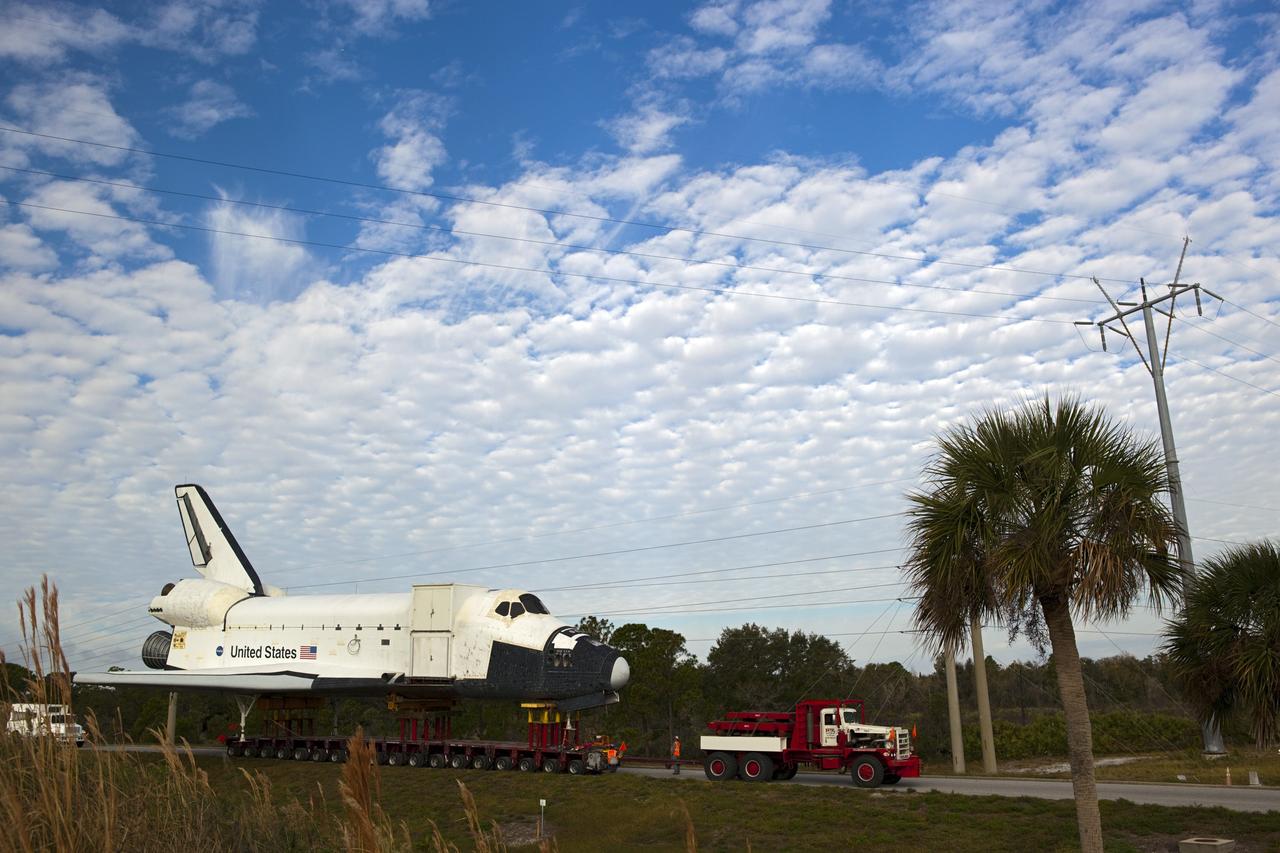
CAPE CANAVERAL, Fla. – The high-fidelity space shuttle model that was on display at the NASA Kennedy Space Center Visitor Complex in Florida creeps along the on-ramp from NASA Causeway to Kennedy Parkway to gain entrance to the northbound roadways on the center. It is standard procedure for large payloads and equipment to travel against the normal flow of traffic under the supervision of a move crew when being transported on or off center property. The model is being moved from the visitor complex to NASA Kennedy Space Center's Launch Complex 39 turn basin. The shuttle was part of a display at the visitor complex that also included an external tank and two solid rocket boosters that were used to show visitors the size of actual space shuttle components. The full-scale shuttle model is being transferred from Kennedy to Space Center Houston, NASA Johnson Space Center's visitor center. The model will stay at the turn basin for a few months until it is ready to be transported to Texas via barge. The move also helps clear the way for the Kennedy Space Center Visitor Complex to begin construction of a new facility next year to display space shuttle Atlantis in 2013. For more information about Space Center Houston, visit http://www.spacecenter.org. Photo credit: NASA/Dimitri Gerondidakis
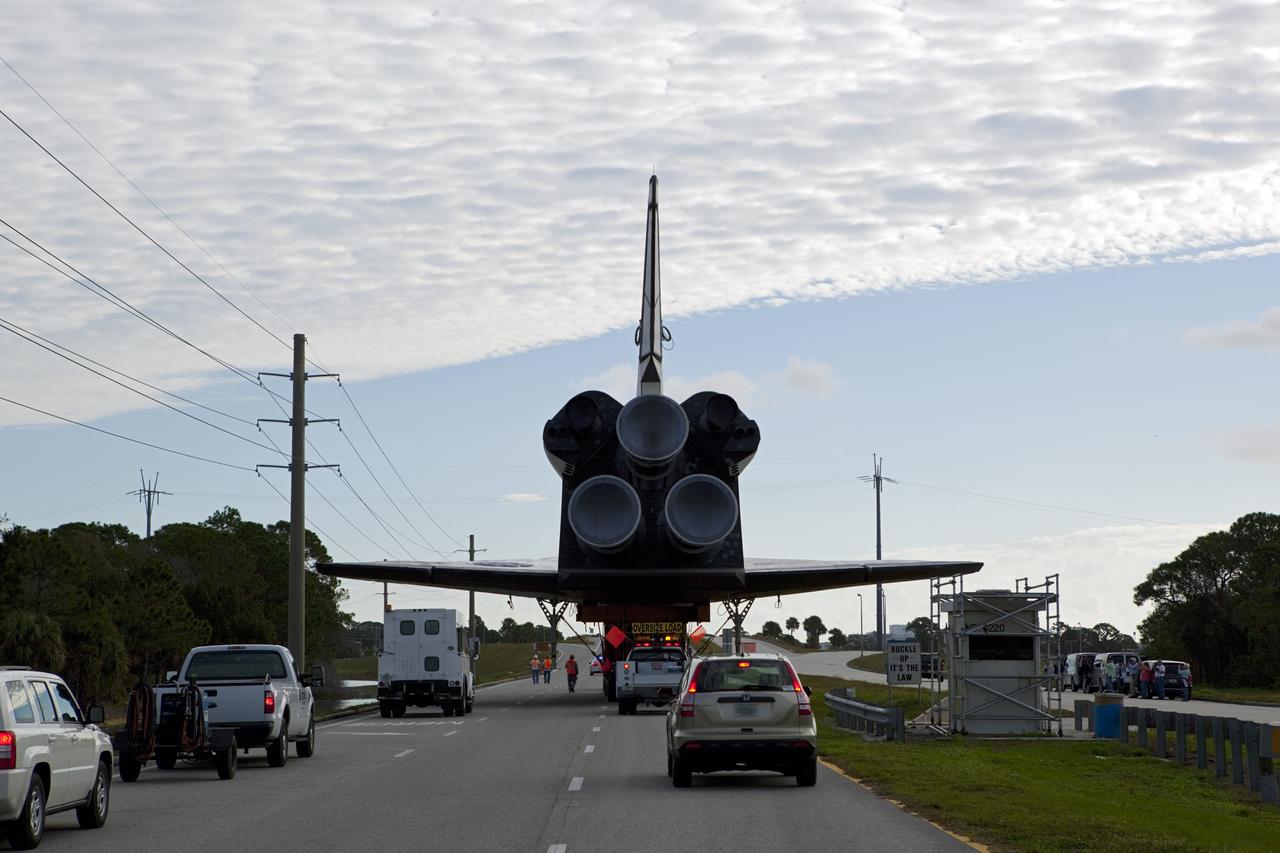
CAPE CANAVERAL, Fla. – The high-fidelity space shuttle model that was on display at the NASA Kennedy Space Center Visitor Complex in Florida nears the intersection of NASA Causeway and Kennedy Parkway. It is standard procedure for large payloads and equipment to travel against the normal flow of traffic under the supervision of a move crew when being transported on or off center property. The model is being moved from the visitor complex to NASA Kennedy Space Center's Launch Complex 39 turn basin. The shuttle was part of a display at the visitor complex that also included an external tank and two solid rocket boosters that were used to show visitors the size of actual space shuttle components. The full-scale shuttle model is being transferred from Kennedy to Space Center Houston, NASA Johnson Space Center's visitor center. The model will stay at the turn basin for a few months until it is ready to be transported to Texas via barge. The move also helps clear the way for the Kennedy Space Center Visitor Complex to begin construction of a new facility next year to display space shuttle Atlantis in 2013. For more information about Space Center Houston, visit http://www.spacecenter.org. Photo credit: NASA/Dimitri Gerondidakis
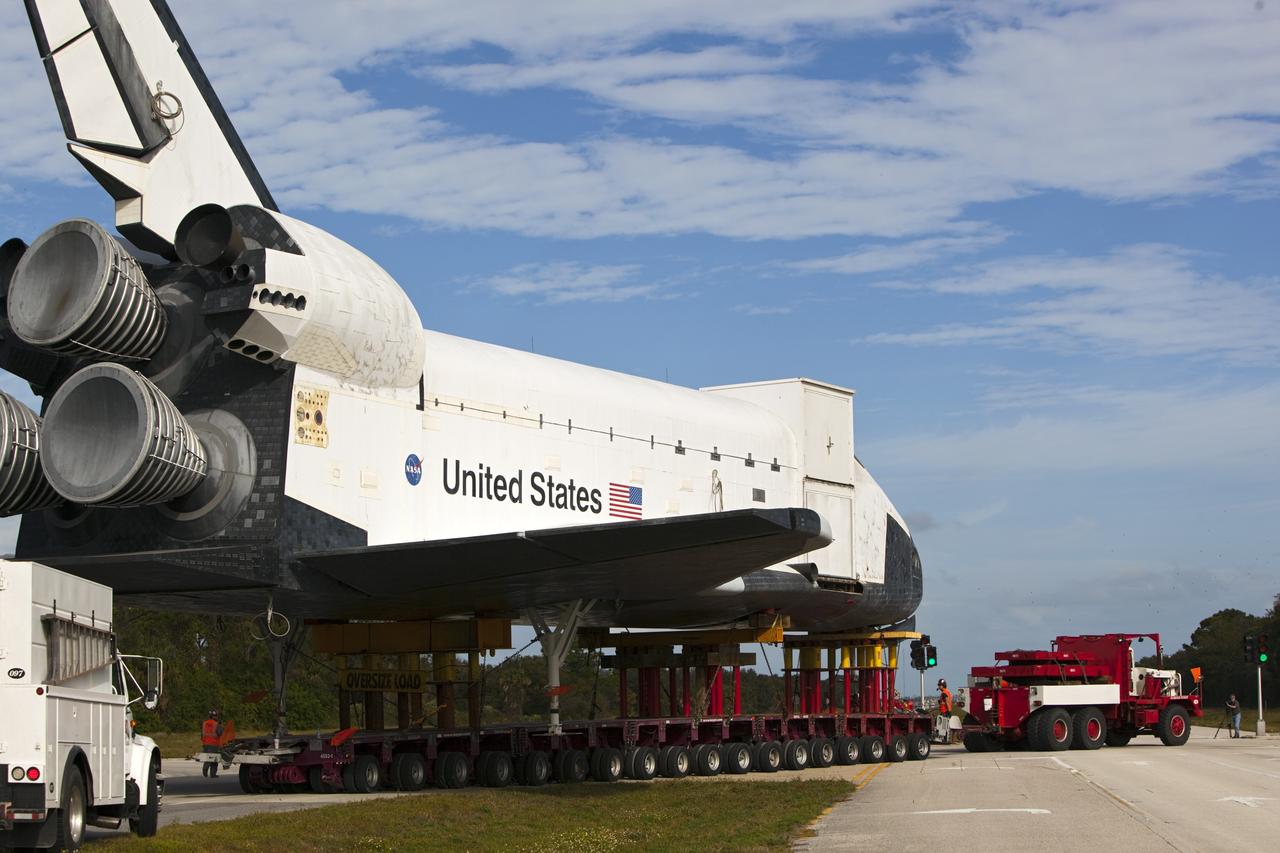
CAPE CANAVERAL, Fla. – The high-fidelity space shuttle model that was on display at the NASA Kennedy Space Center Visitor Complex in Florida negotiates the turn from Kennedy Parkway onto Schwartz Road on its way toward NASA Kennedy Space Center's Launch Complex 39 turn basin. It is standard procedure for large payloads and equipment to travel against the normal flow of traffic under the supervision of a move crew when being transported on or off center property. The shuttle was part of a display at the visitor complex that also included an external tank and two solid rocket boosters that were used to show visitors the size of actual space shuttle components. The full-scale shuttle model is being transferred from Kennedy to Space Center Houston, NASA Johnson Space Center's visitor center. The model will stay at the turn basin for a few months until it is ready to be transported to Texas via barge. The move also helps clear the way for the Kennedy Space Center Visitor Complex to begin construction of a new facility next year to display space shuttle Atlantis in 2013. For more information about Space Center Houston, visit http://www.spacecenter.org. Photo credit: NASA/Dimitri Gerondidakis
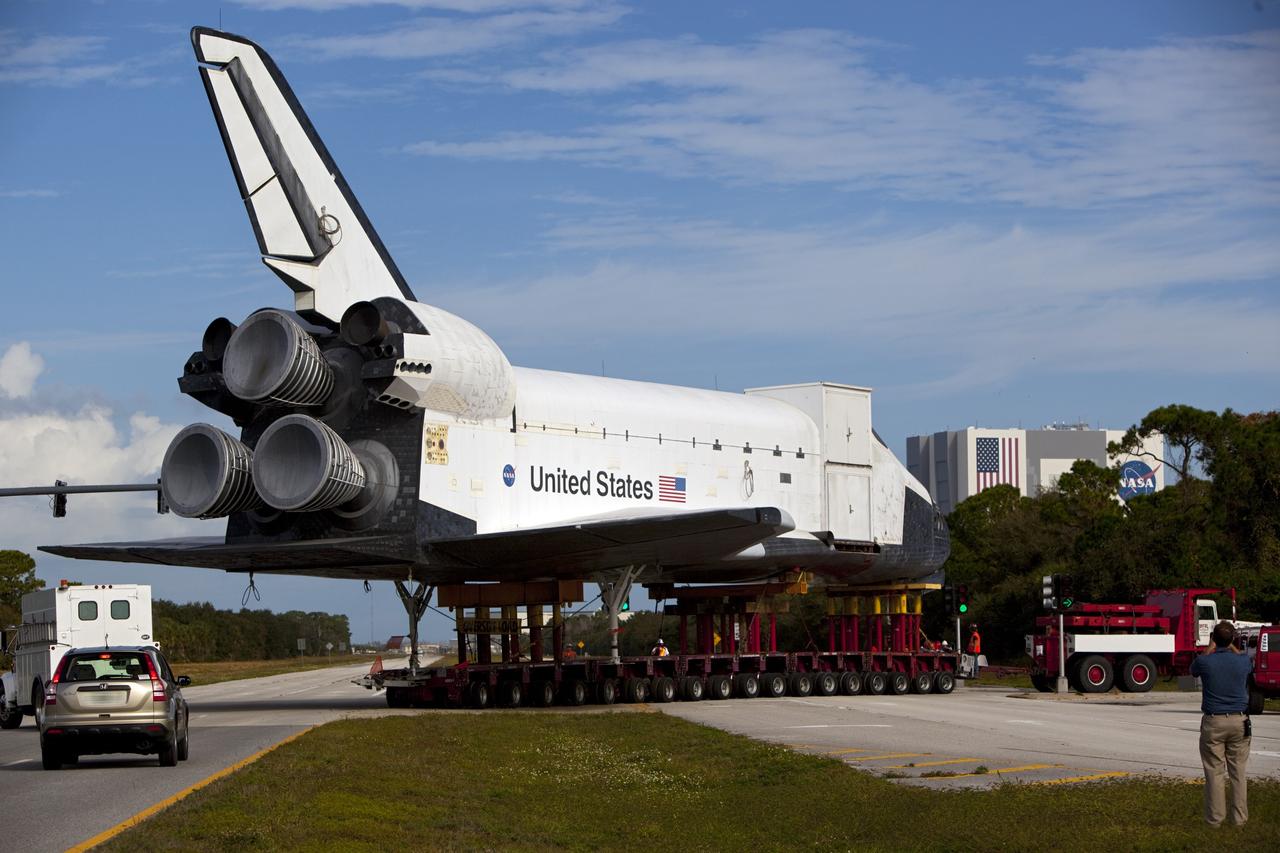
CAPE CANAVERAL, Fla. – The high-fidelity space shuttle model that was on display at the NASA Kennedy Space Center Visitor Complex in Florida negotiates the turn from Kennedy Parkway onto Schwartz Road on its way toward NASA Kennedy Space Center's Launch Complex 39 turn basin. It is standard procedure for large payloads and equipment to travel against the normal flow of traffic under the supervision of a move crew when being transported on or off center property. The 525-foot-tall Vehicle Assembly Building peeps over the treetops, at right. The shuttle was part of a display at the visitor complex that also included an external tank and two solid rocket boosters that were used to show visitors the size of actual space shuttle components. The full-scale shuttle model is being transferred from Kennedy to Space Center Houston, NASA Johnson Space Center's visitor center. The model will stay at the turn basin for a few months until it is ready to be transported to Texas via barge. The move also helps clear the way for the Kennedy Space Center Visitor Complex to begin construction of a new facility next year to display space shuttle Atlantis in 2013. For more information about Space Center Houston, visit http://www.spacecenter.org. Photo credit: NASA/Dimitri Gerondidakis
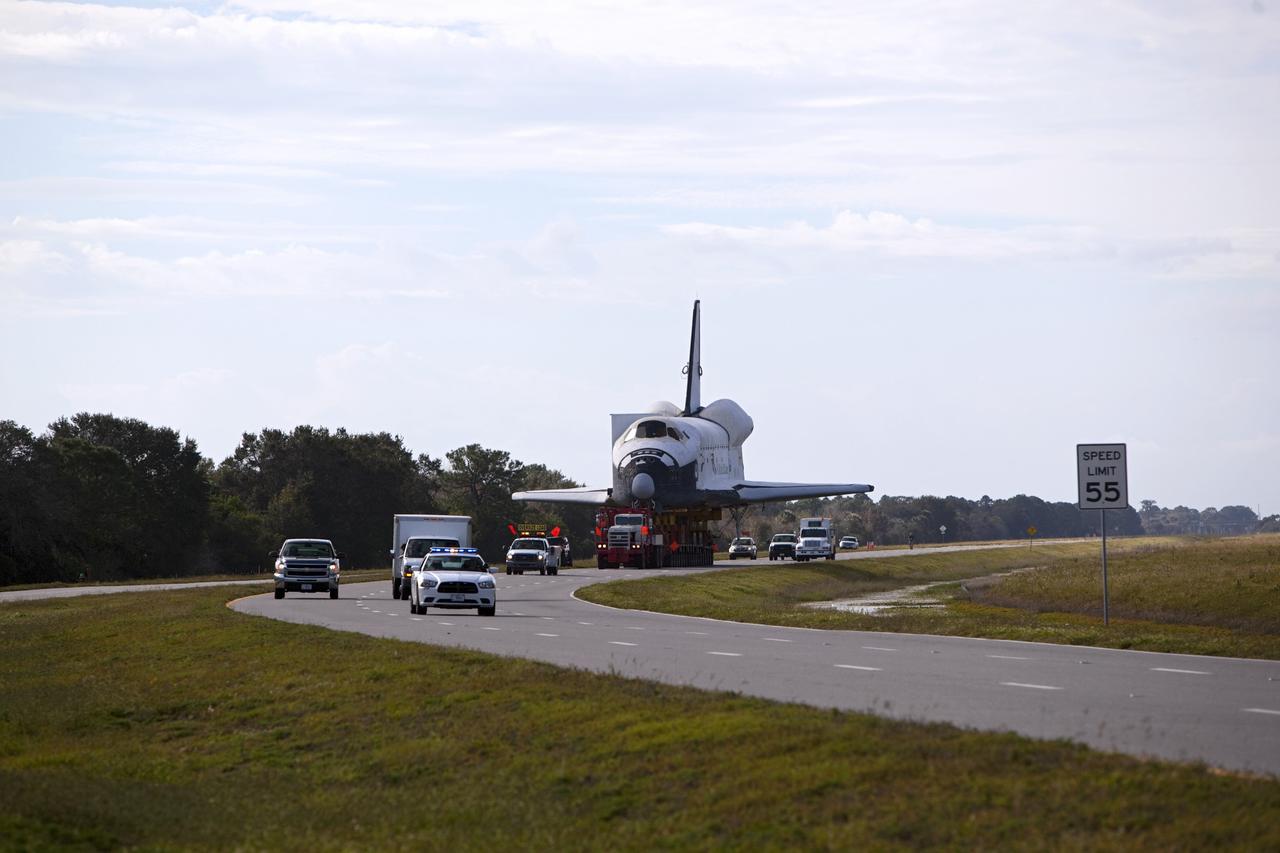
CAPE CANAVERAL, Fla. – The high-fidelity space shuttle model that was on display at the NASA Kennedy Space Center Visitor Complex in Florida travels northbound along Kennedy Parkway toward NASA Kennedy Space Center's Launch Complex 39 turn basin. It is standard procedure for large payloads and equipment to travel against the normal flow of traffic under the supervision of a move crew when being transported on or off center property. The shuttle was part of a display at the visitor complex that also included an external tank and two solid rocket boosters that were used to show visitors the size of actual space shuttle components. The full-scale shuttle model is being transferred from Kennedy to Space Center Houston, NASA Johnson Space Center's visitor center. The model will stay at the turn basin for a few months until it is ready to be transported to Texas via barge. The move also helps clear the way for the Kennedy Space Center Visitor Complex to begin construction of a new facility next year to display space shuttle Atlantis in 2013. For more information about Space Center Houston, visit http://www.spacecenter.org. Photo credit: NASA/Dimitri Gerondidakis
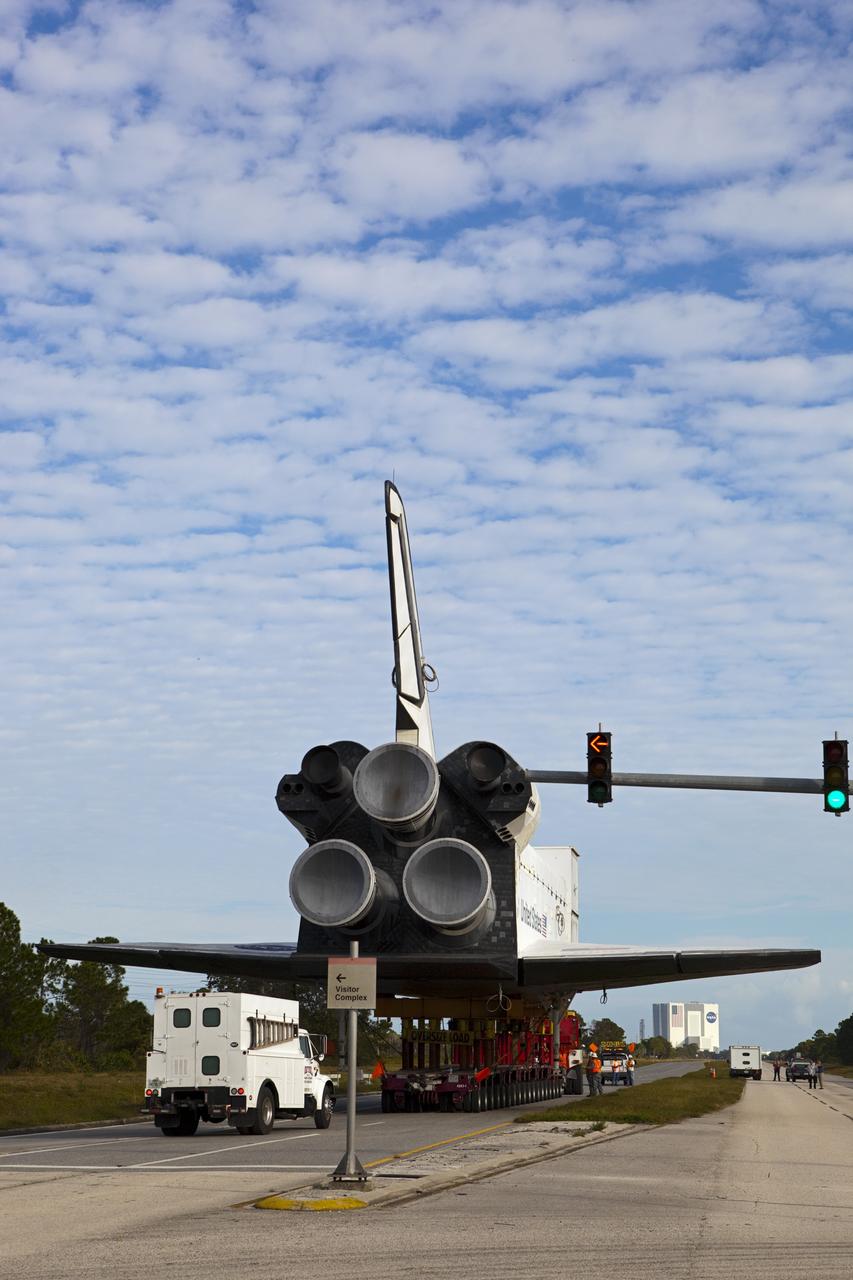
CAPE CANAVERAL, Fla. – The high-fidelity space shuttle model that was on display at the NASA Kennedy Space Center Visitor Complex in Florida moves past the traffic signals onto Kennedy Parkway as it travels northbound toward NASA Kennedy Space Center's Launch Complex 39 turn basin. It is standard procedure for large payloads and equipment to travel against the normal flow of traffic under the supervision of a move crew when being transported on or off center property. The shuttle was part of a display at the visitor complex that also included an external tank and two solid rocket boosters that were used to show visitors the size of actual space shuttle components. The full-scale shuttle model is being transferred from Kennedy to Space Center Houston, NASA Johnson Space Center's visitor center. The model will stay at the turn basin for a few months until it is ready to be transported to Texas via barge. The move also helps clear the way for the Kennedy Space Center Visitor Complex to begin construction of a new facility next year to display space shuttle Atlantis in 2013. For more information about Space Center Houston, visit http://www.spacecenter.org. Photo credit: NASA/Dimitri Gerondidakis
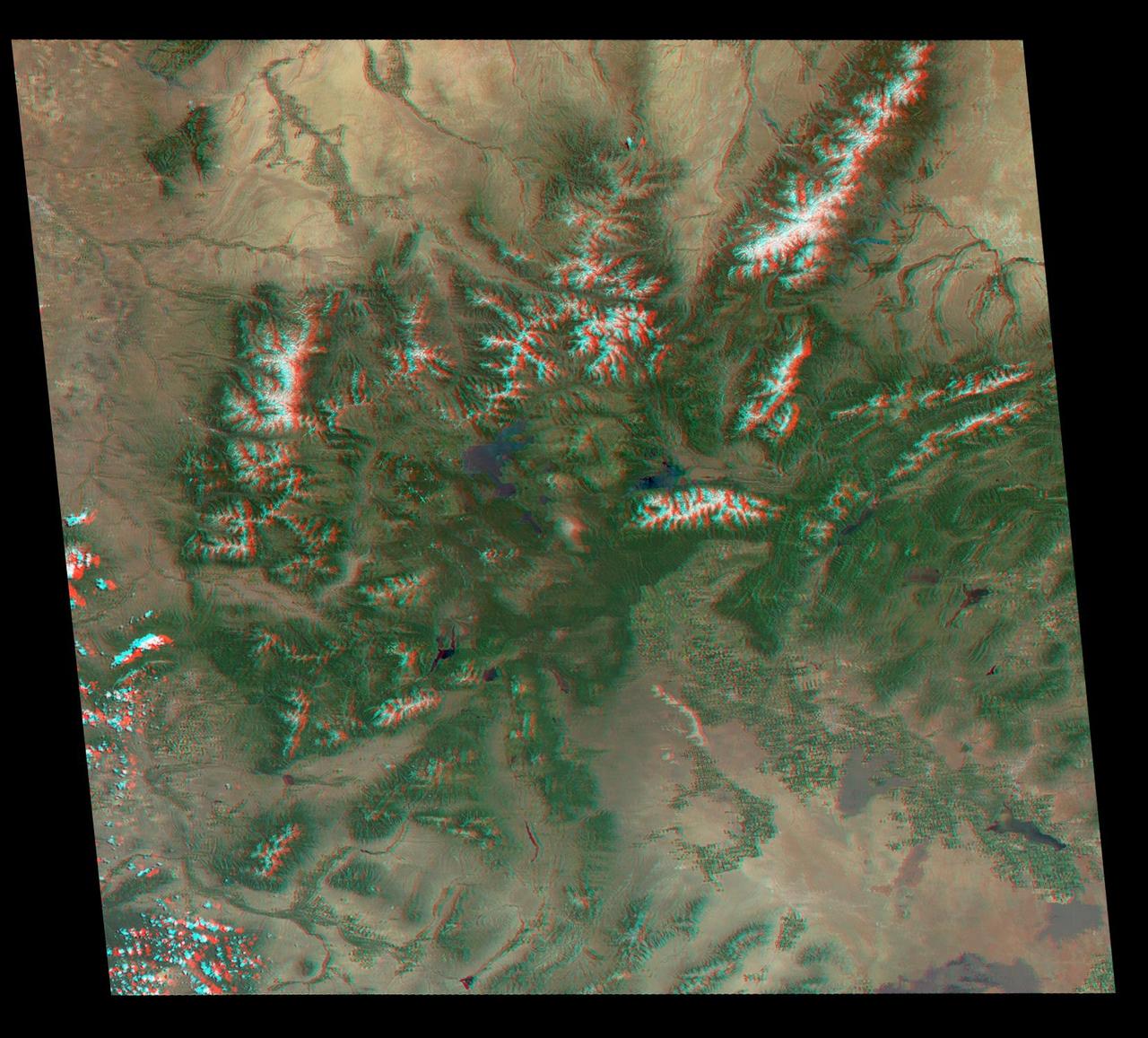
Just in time for the U.S. National Park Service's Centennial celebration on Aug. 25, NASA's Multiangle Imaging SpectroRadiometer (MISR) instrument aboard NASA's Terra satellite is releasing four new anaglyphs that showcase 33 of our nation's national parks, monuments, historical sites and recreation areas in glorious 3D. Shown in the annotated image are Grand Teton National Park, John D. Rockefeller Memorial Parkway, Yellowstone National Park, and parts of Craters of the Moon National Monument. MISR views Earth with nine cameras pointed at different angles, giving it the unique capability to produce anaglyphs, stereoscopic images that allow the viewer to experience the landscape in three dimensions. The anaglyphs were made by combining data from MISR's vertical-viewing and 46-degree forward-pointing camera. You will need red-blue glasses in order to experience the 3D effect; ensure you place the red lens over your left eye. The images have been rotated so that north is to the left in order to enable 3D viewing because the Terra satellite flies from north to south. All of the images are 235 miles (378 kilometers) from west to east. These data were acquired June 25, 2016, Orbit 87876. http://photojournal.jpl.nasa.gov/catalog/PIA20890