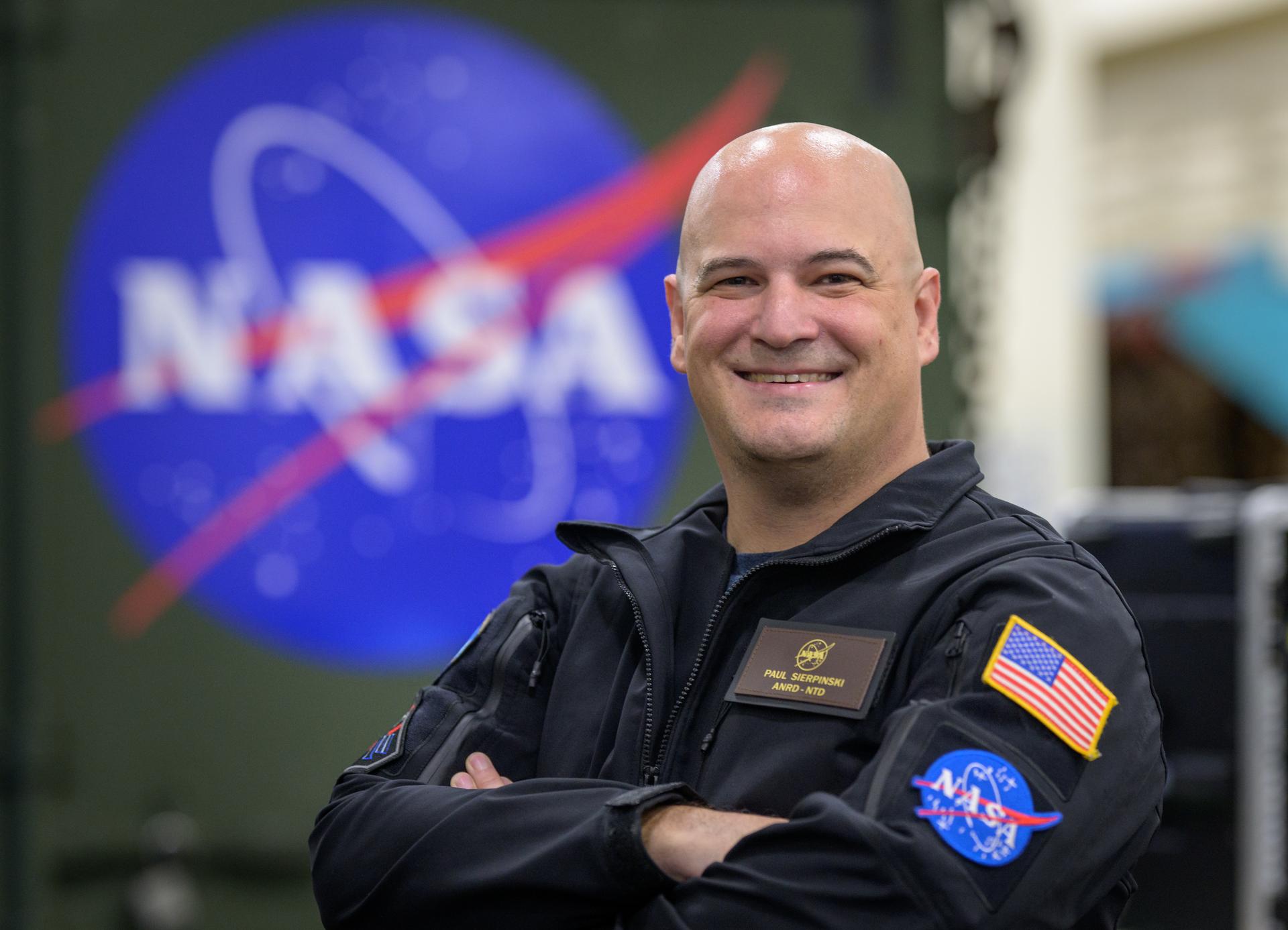
Paul Sierpinski, assistant NASA Recovery Director, poses for a portrait onboard USS John P. Murtha, Thursday, April 9, 2026, in the Pacific Ocean off the coast of California. Photo Credit: (NASA/Bill Ingalls)
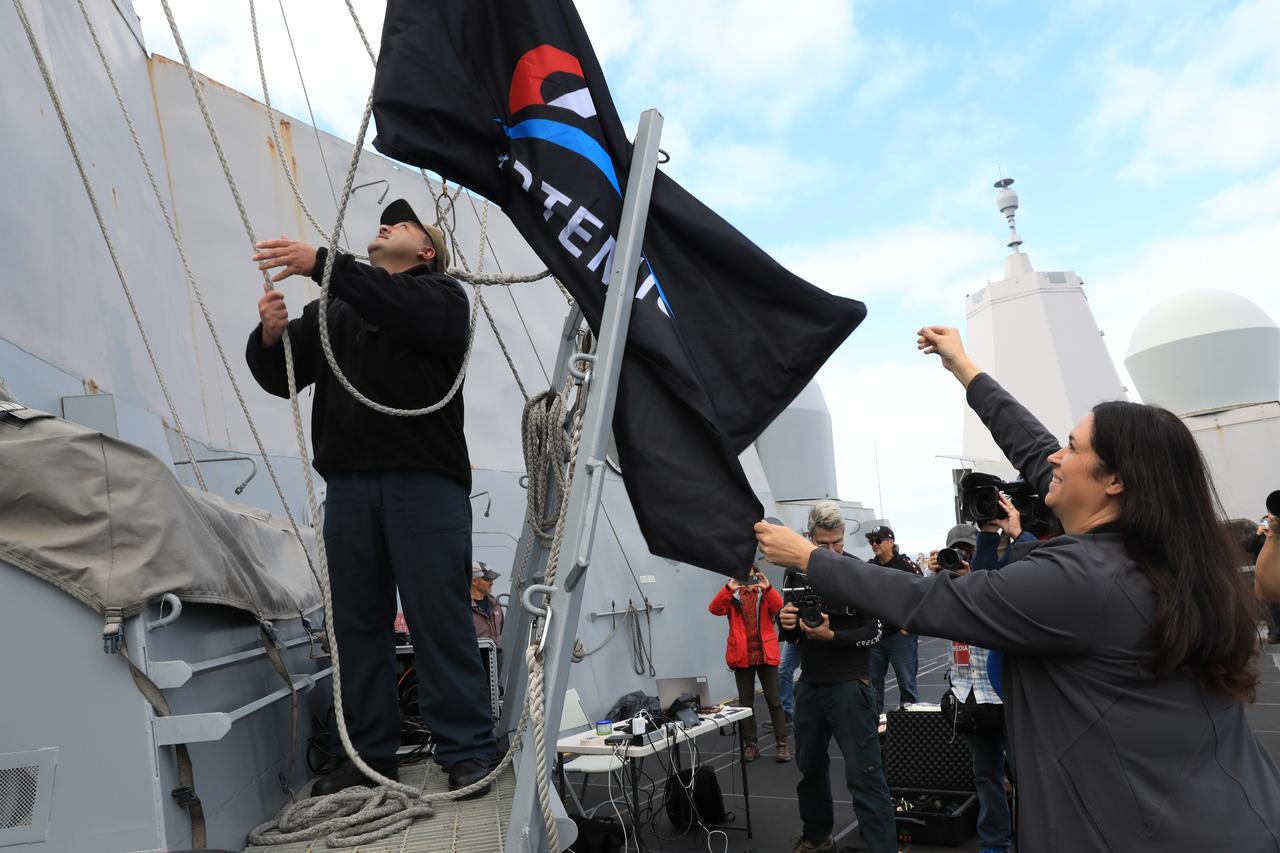
After splashdown of the Orion spacecraft on Dec. 11, 2022, NASA’s Artemis I Landing and Recovery Director Melissa Jones helps to raise the Artemis flag aboard USS Portland.
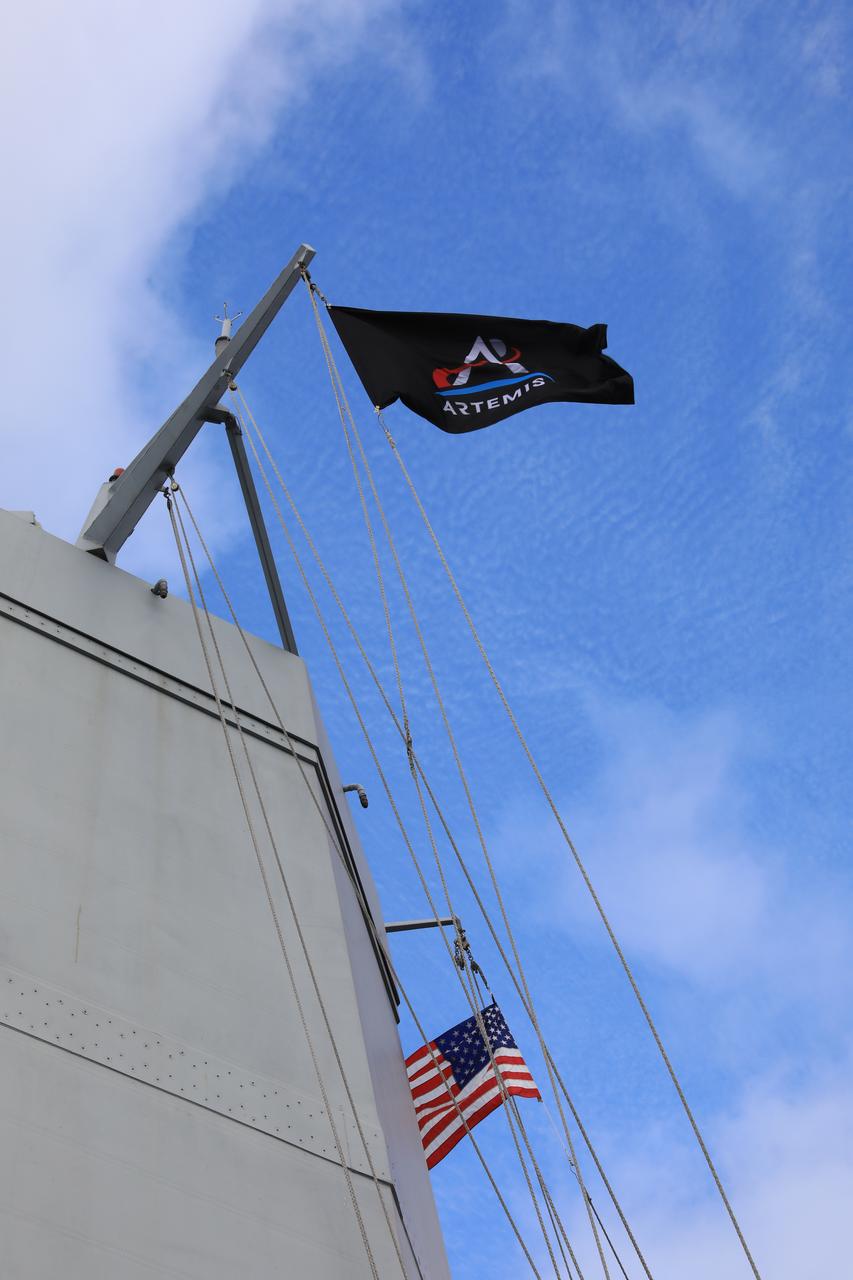
After splashdown of the Orion spacecraft on Dec. 11, 2022, NASA’s Artemis I Landing and Recovery Director Melissa Jones helps to raise the Artemis flag aboard USS Portland.

NASA’s Artemis I landing and recovery director, Melissa Jones (center), NASA astronaut Shannon Walker (right), and members of the U.S. Navy and the Department of Defense celebrate NASA’s Orion spacecraft splashing down at 12:40 p.m. EST Dec. 11, 2022 in the Pacific Ocean after a 25.5 day mission to the Moon. Orion will be recovered by NASA’s Landing and Recovery team, U.S. Navy and Department of Defense partners aboard the USS Portland.
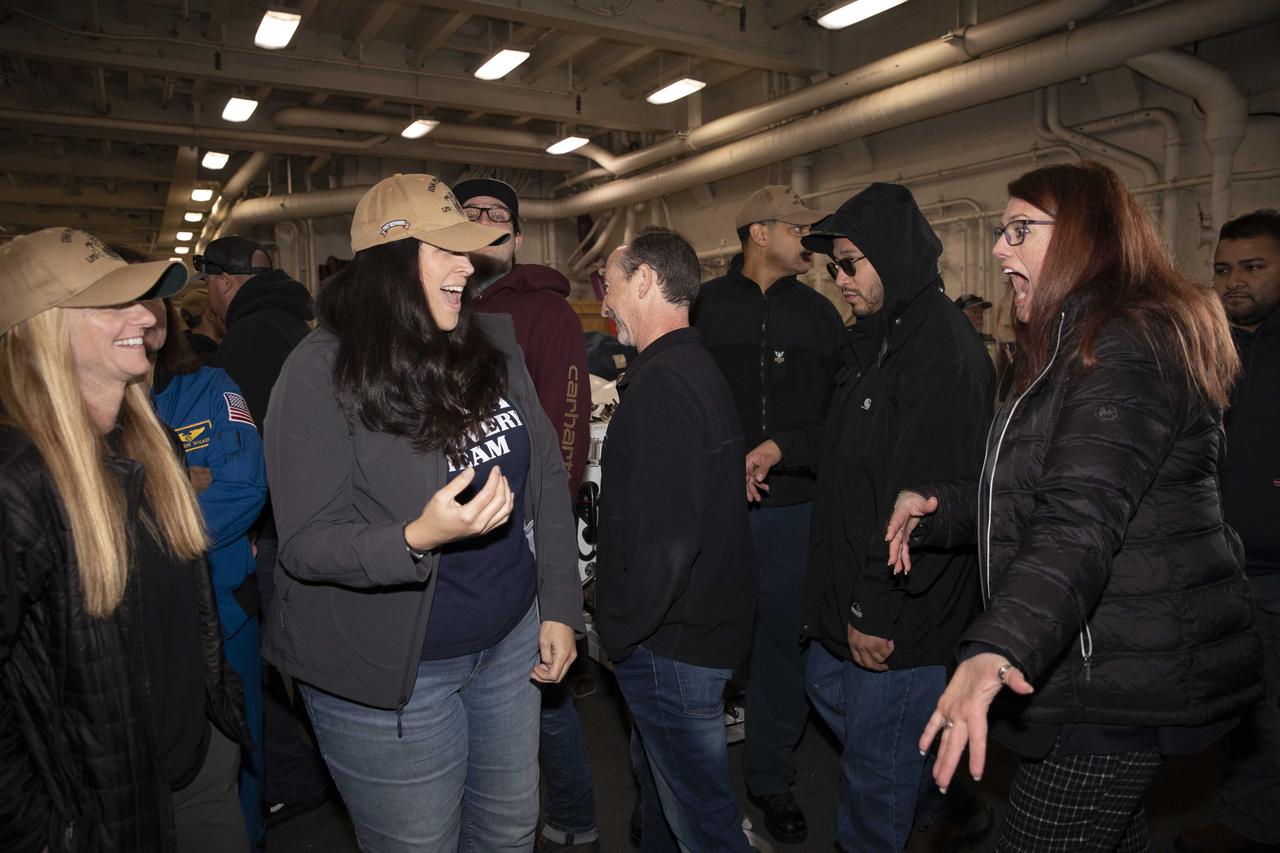
NASA Artemis Launch Director Charlie Blackwell-Thompson, at right, and Melissa Jones, NASA’s Artemis I Recovery director, second from left, both with the Exploration Ground Systems program, along with other recovery team members, exchange congratulations inside the well deck of the USS Portland at U.S. Naval Base San Diego on Dec. 13, 2022. The Orion spacecraft is secured inside the well deck after splashing down at 12:40 p.m. EST on Dec. 11, 2022. U.S. Navy divers helped recover the Orion spacecraft. NASA, the Navy and other Department of Defense partners worked together to secure the spacecraft inside the ship’s well deck approximately five hours after Orion splashed down in the Pacific Ocean off the coast of Baja, California.
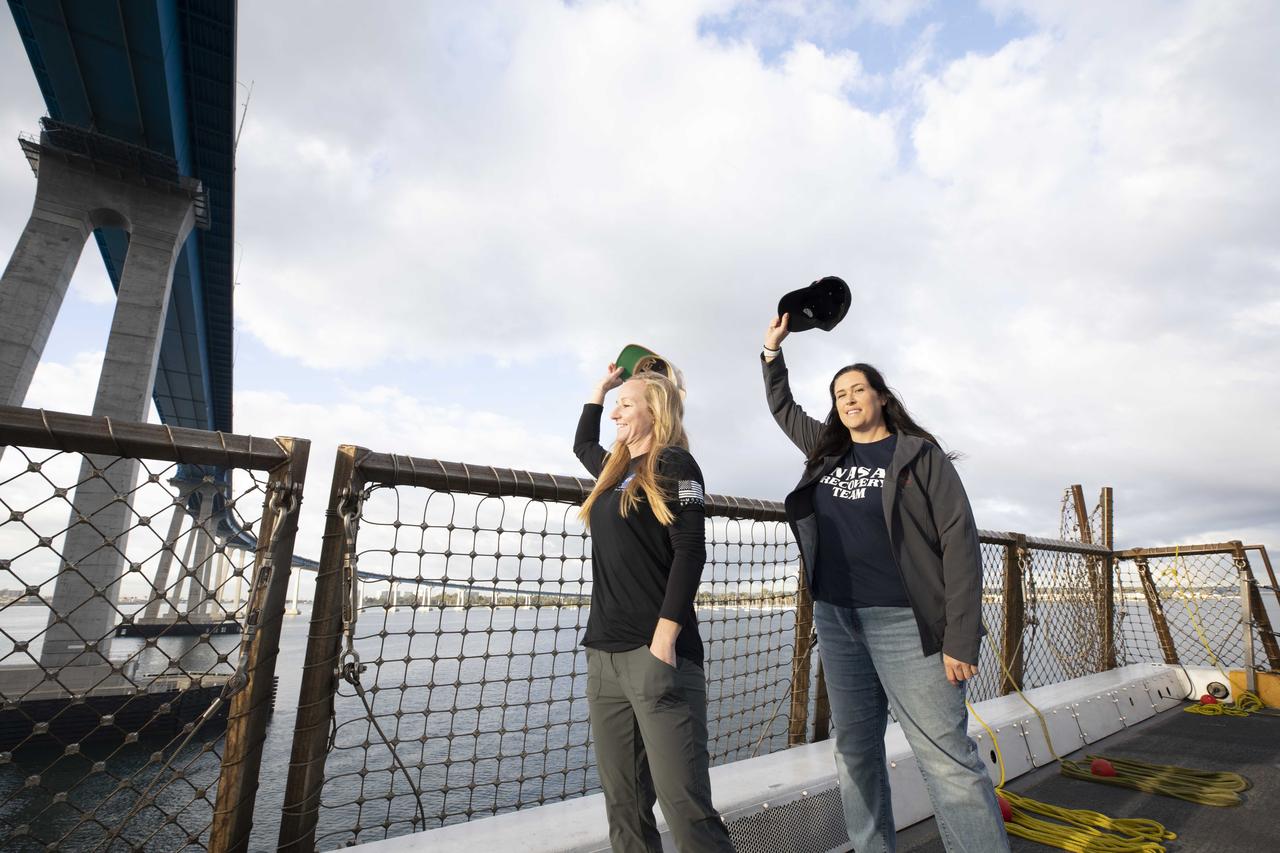
While returning to port after successfully recovering the Orion spacecraft for the Artemis I mission, NASA Artemis Recovery Director Melissa Jones, at right, and Assistant NASA Recovery Director Carla Rekucki, throw their hats in the air aboard the USS Portland as they pass under the San Diego-Coronado bridge on Dec. 13, 2022. The Artemis I Orion spacecraft is secured inside the ship’s well deck after splashing down at 12:40 p.m. EST on Dec. 11, 2022. U.S. Navy divers helped recover the Orion spacecraft. NASA, the Navy and other Department of Defense partners worked together to secure the spacecraft inside the ship’s well deck approximately five hours after Orion splashed down in the Pacific Ocean off the coast of Baja, California.
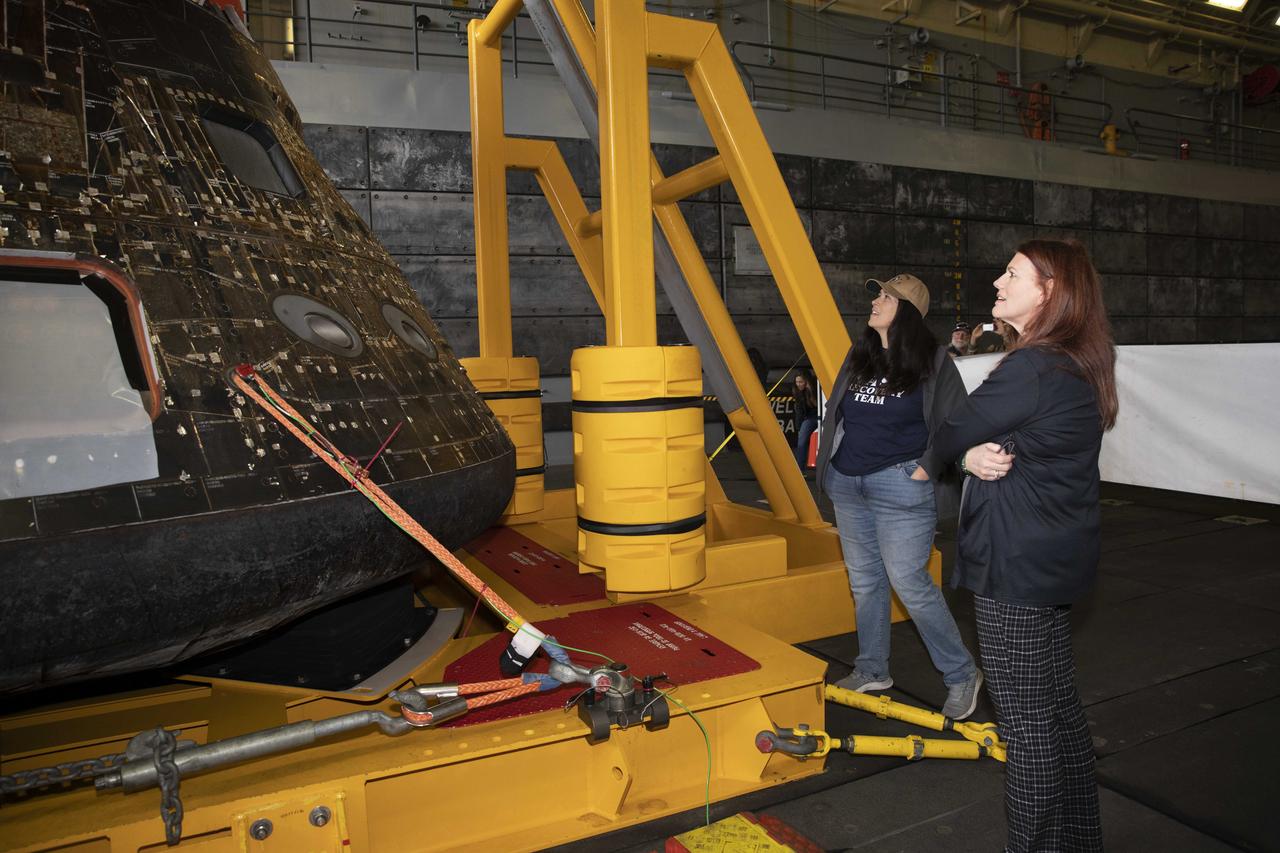
NASA Artemis Launch Director Charlie Blackwell-Thompson, at right, and Melissa Jones, NASA’s Artemis I Recovery director, both with the Exploration Ground Systems program, look at the Artemis I Orion spacecraft inside the well deck of the USS Portland at U.S. Naval Base San Diego on Dec. 13, 2022. The Orion spacecraft is secured inside the well deck after splashing down at 12:40 p.m. EST on Dec. 11, 2022. U.S. Navy divers helped recover the Orion spacecraft. NASA, the Navy and other Department of Defense partners worked together to secure the spacecraft inside the ship’s well deck approximately five hours after Orion splashed down in the Pacific Ocean off the coast of Baja, California.
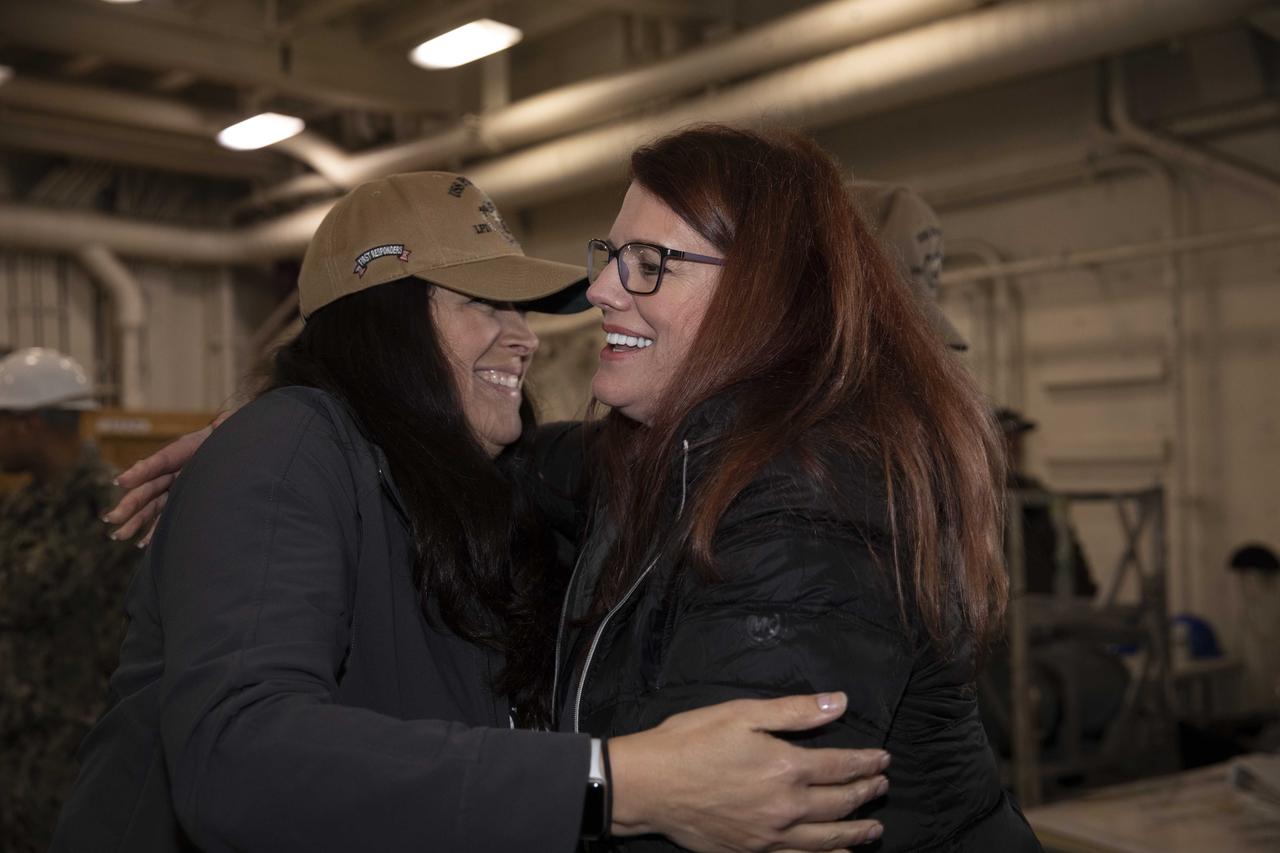
NASA Artemis Launch Director Charlie Blackwell-Thompson, at right, and Melissa Jones, NASA’s Artemis I Recovery director, both with the Exploration Ground Systems program, exchange congratulations inside the well deck of the USS Portland at U.S. Naval Base San Diego on Dec. 13, 2022. The Orion spacecraft is secured inside the well deck after splashing down at 12:40 p.m. EST on Dec. 11, 2022. U.S. Navy divers helped recover the Orion spacecraft. NASA, the Navy and other Department of Defense partners worked together to secure the spacecraft inside the ship’s well deck approximately five hours after Orion splashed down in the Pacific Ocean off the coast of Baja, California.
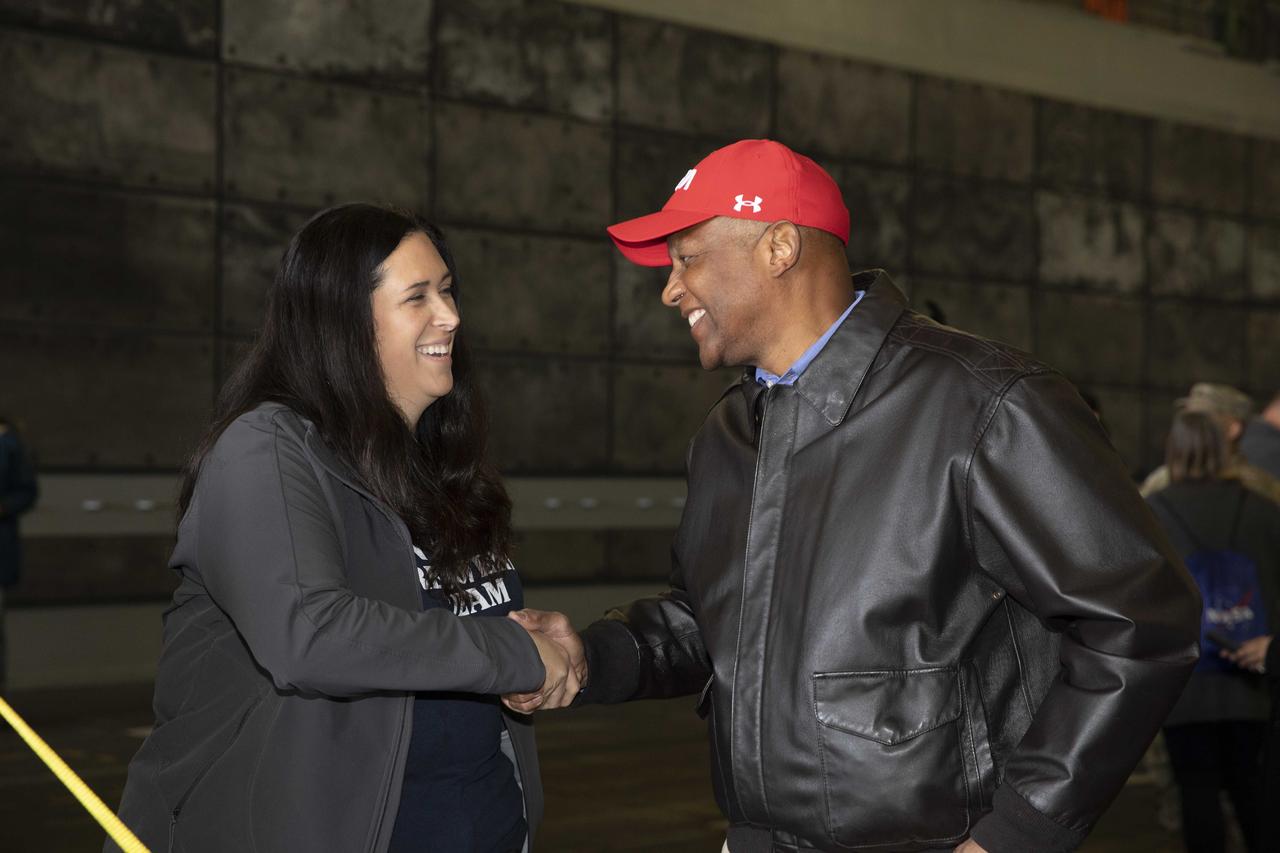
NASA Artemis I Recovery Director Melissa Jones, at right, with Exploration Ground Systems, shakes hands with Kennedy Space Center Deputy Director Kelvin Manning inside the well deck of the USS Portland at U.S. Naval Base San Diego on Dec. 13, 2022. The Artemis I Orion spacecraft is secured inside the well deck after splashing down at 12:40 p.m. EST on Dec. 11, 2022. U.S. Navy divers helped recover the Orion spacecraft. NASA, the Navy and other Department of Defense partners worked together to secure the spacecraft inside the ship’s well deck approximately five hours after Orion splashed down in the Pacific Ocean off the coast of Baja, California.
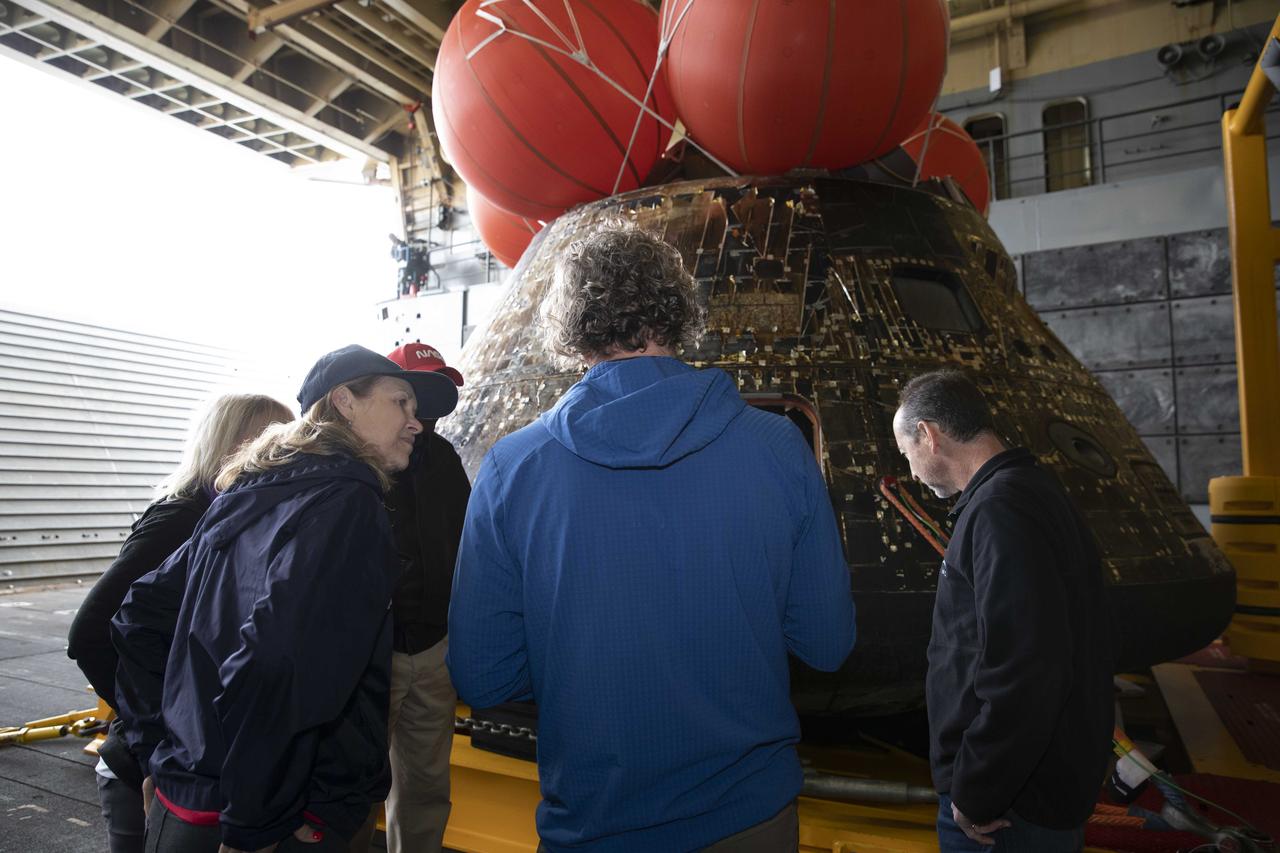
Kennedy Space Center Director Janet Petro, third from left, and recovery team members look at the Artemis I Orion spacecraft inside the well deck of the USS Portland at U.S. Naval Base San Diego on Dec. 13, 2022. The Orion spacecraft is secured inside the well deck after splashing down at 12:40 p.m. EST on Dec. 11, 2022. U.S. Navy divers helped recover the Orion spacecraft. NASA, the Navy and other Department of Defense partners worked together to secure the spacecraft inside the ship’s well deck approximately five hours after Orion splashed down in the Pacific Ocean off the coast of Baja, California.
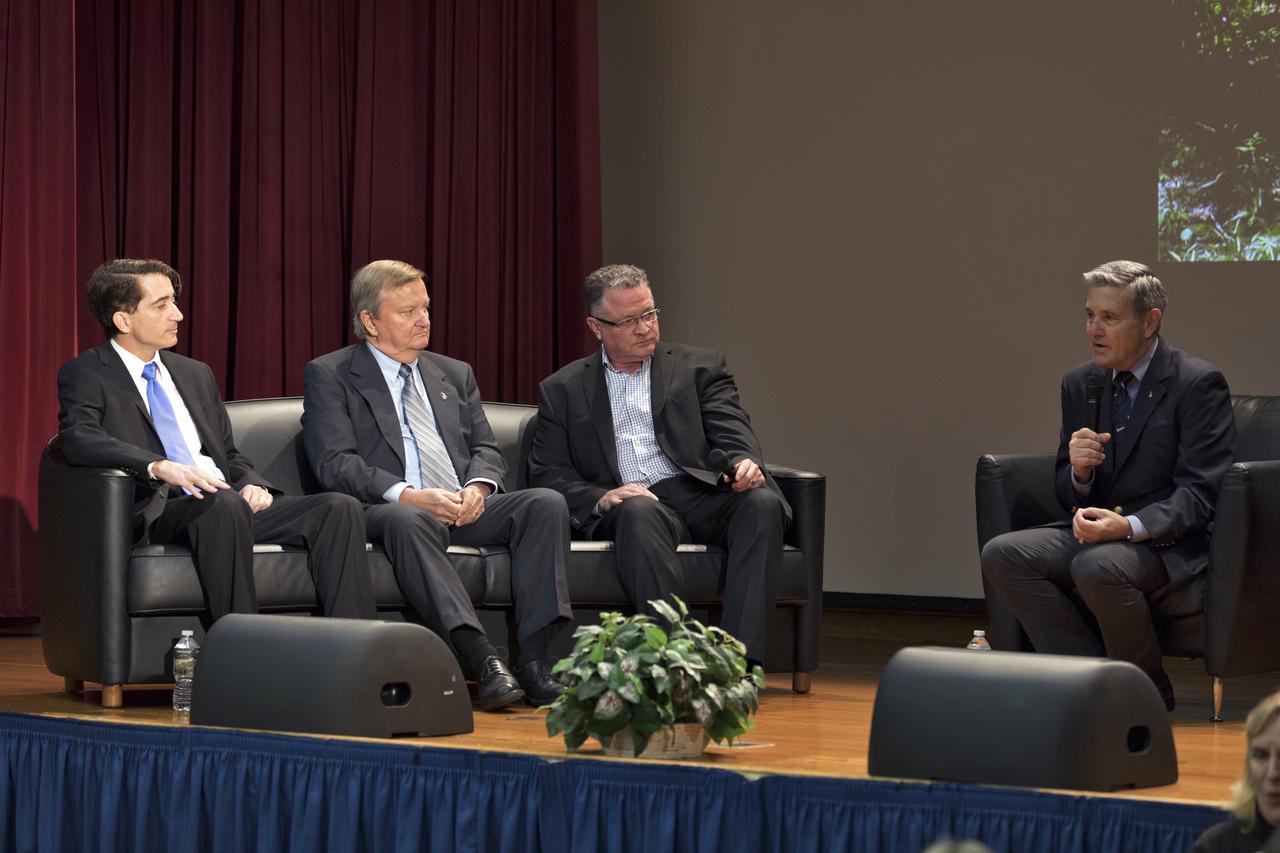
NASA Kennedy Space Center Director Bob Cabana, far right, poses a question to several panelists during an Apollo, Challenger, Columbia Lessons Learned Program (ACCLLP) employee event. The theme of the presentation was "Columbia: Lessons and Legends of Recovery." Participating, from left, are Mike Ciannilli, ACCLLP manager; Mike Leinbach, former shuttle launch director; and Dave King, NASA Columbia Recovery director and former director of Marshall Space Flight Center.
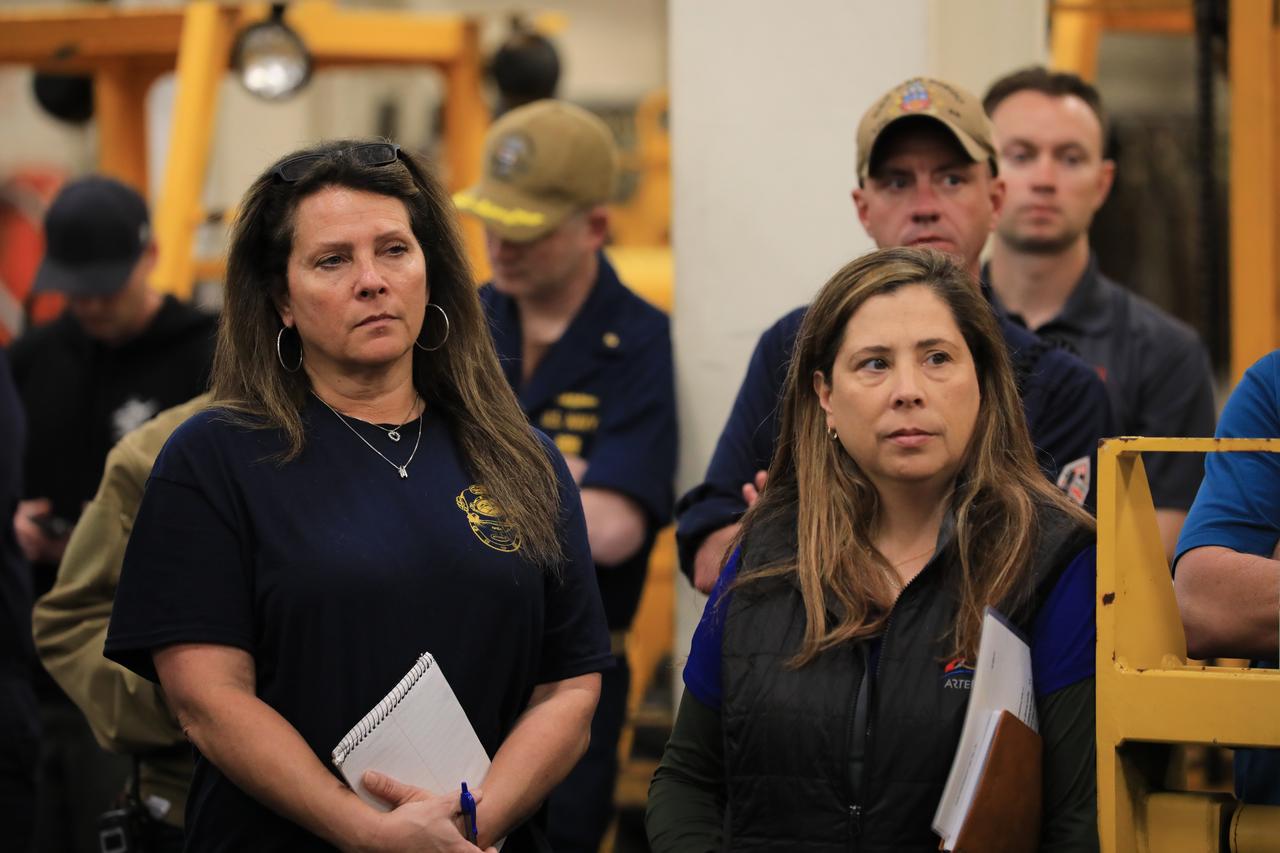
NASA Artemis Landing and Recovery Deputy Director Lisa Seiler (left) and NASA Artemis II Landing and Recovery Director Liliana Villarreal (right), along with members of NASA’s Exploration Ground System’s Landing and Recovery team and partners from the Department of Defense aboard the USS San Diego participate in a ship rider briefing on the flight deck prior to departure from Naval Base San Diego on Wednesday, Feb. 21, 2024. During this test campaign, teams will practice recovery procedures using the Crew Module Test Article, during Underway Recovery Test 11 (URT-11) off the coast of San Diego. URT-11 is the eleventh in a series of Artemis recovery tests, but the first time NASA and its partners from the Department of Defense put their Artemis II recovery procedures to the test with the astronauts.
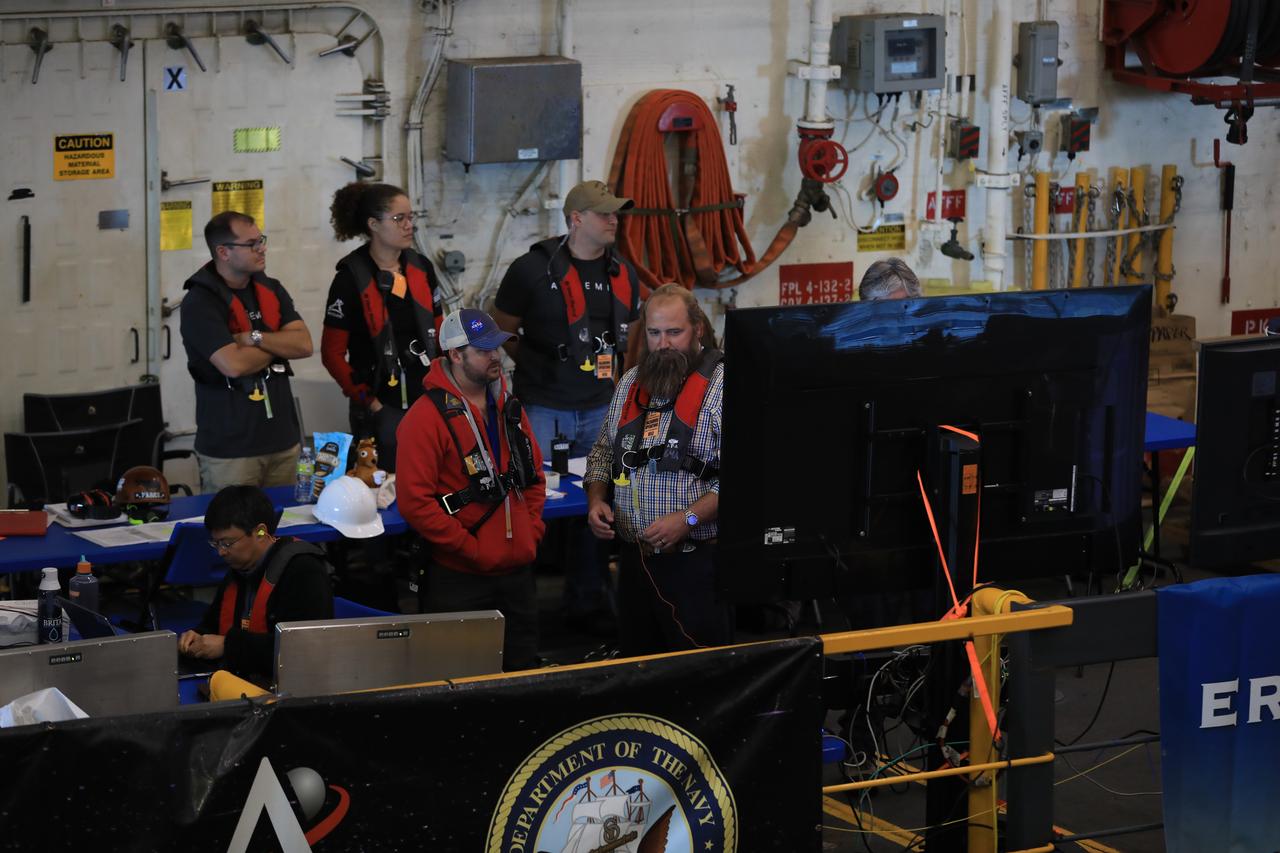
Members of NASA's Landing and Recovery Team, the U.S. Navy and the Department of Defense help bring NASA's Orion spacecraft inside the well deck of the USS Portland on Dec. 11, 2022 2022 off the coast of Baja California. After launching atop the Space Launch System rocket on Nov. 16, 2022 from the agency’s Kennedy Space Center in Florida, Orion spent 25.5 days in space before returning to Earth, completing the Artemis I mission.
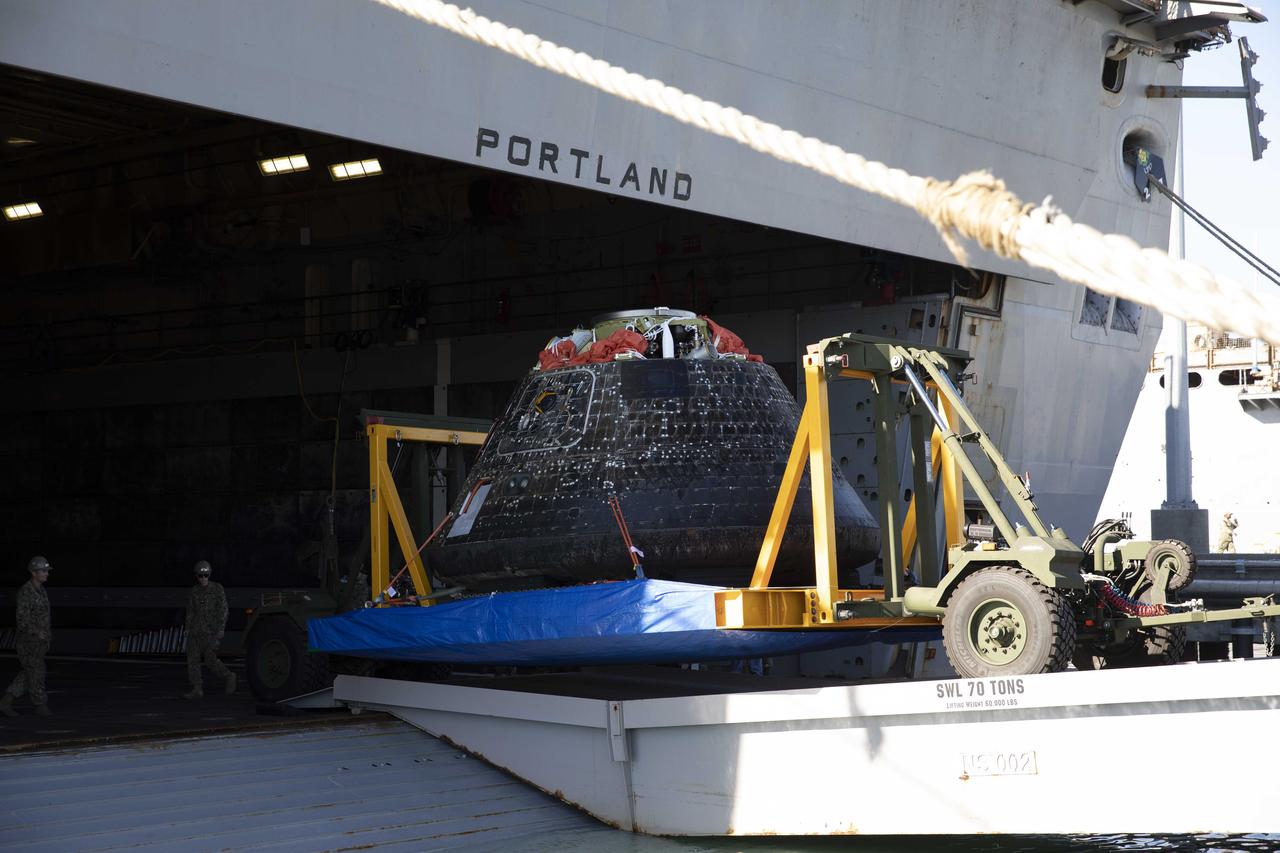
Team members with NASA’s Exploration Ground Systems program successfully removed the Artemis I Orion spacecraft from the USS Portland Dec. 14, after the ship arrived at U.S. Naval Base San Diego.
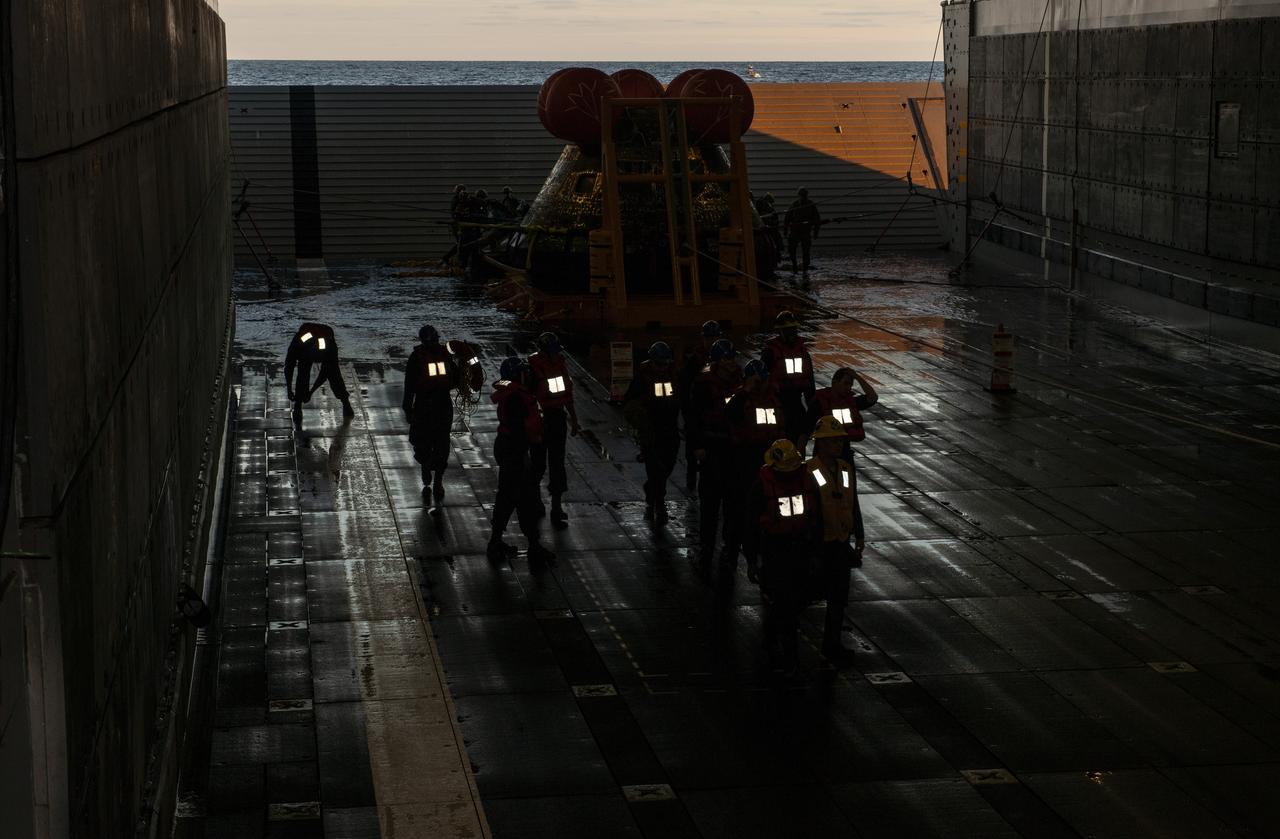
NASA’s Orion spacecraft for the Artemis I mission was successfully recovered inside the well deck of the USS Portland on Dec. 11, 2022 off the coast of Baja California. After launching atop the Space Launch System rocket on Nov. 16, 2022 from the agency’s Kennedy Space Center in Florida, Orion spent 25.5 days in space before returning to Earth, completing the Artemis I mission.
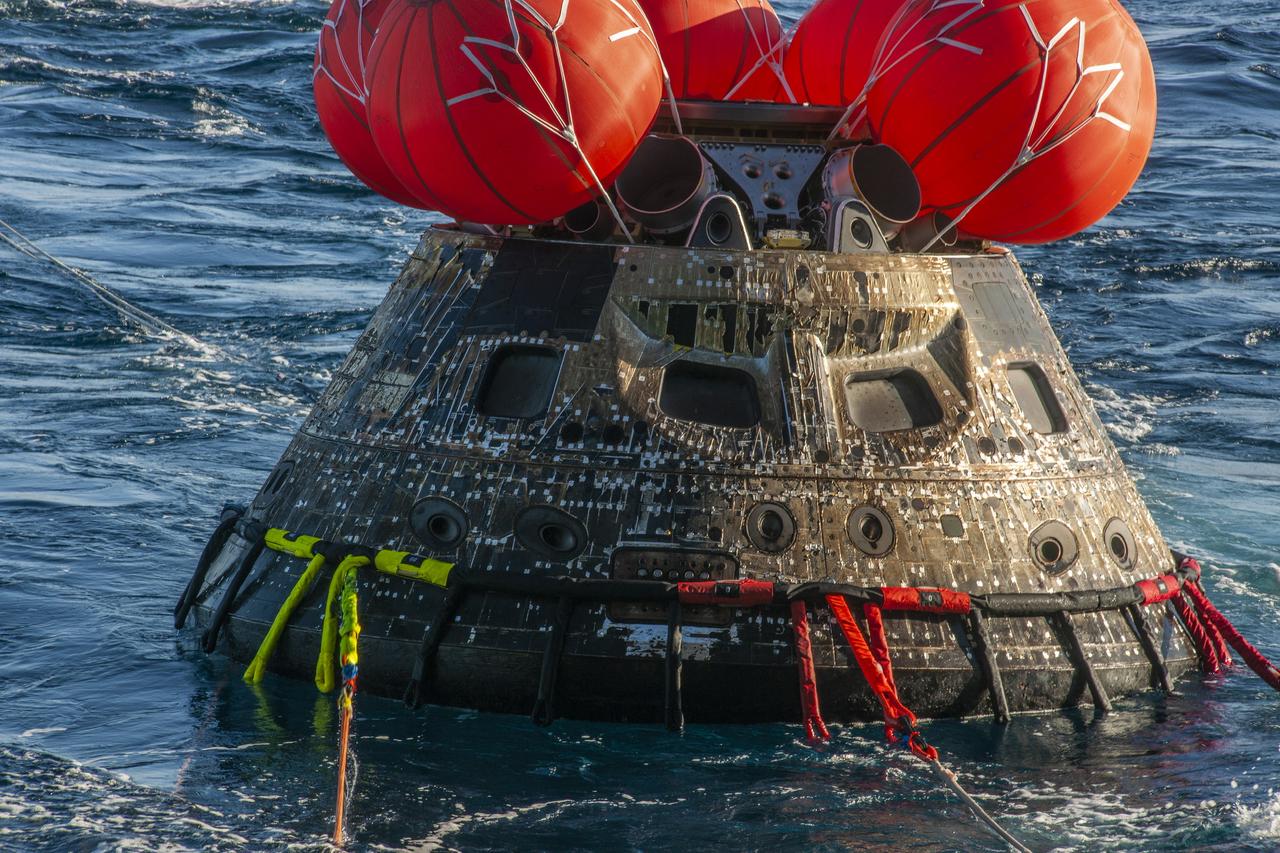
NASA’s Orion spacecraft for the Artemis I mission was successfully recovered inside the well deck of the USS Portland on Dec. 11, 2022 off the coast of Baja California. After launching atop the Space Launch System rocket on Nov. 16, 2022 from the agency’s Kennedy Space Center in Florida, Orion spent 25.5 days in space before returning to Earth, completing the Artemis I mission.
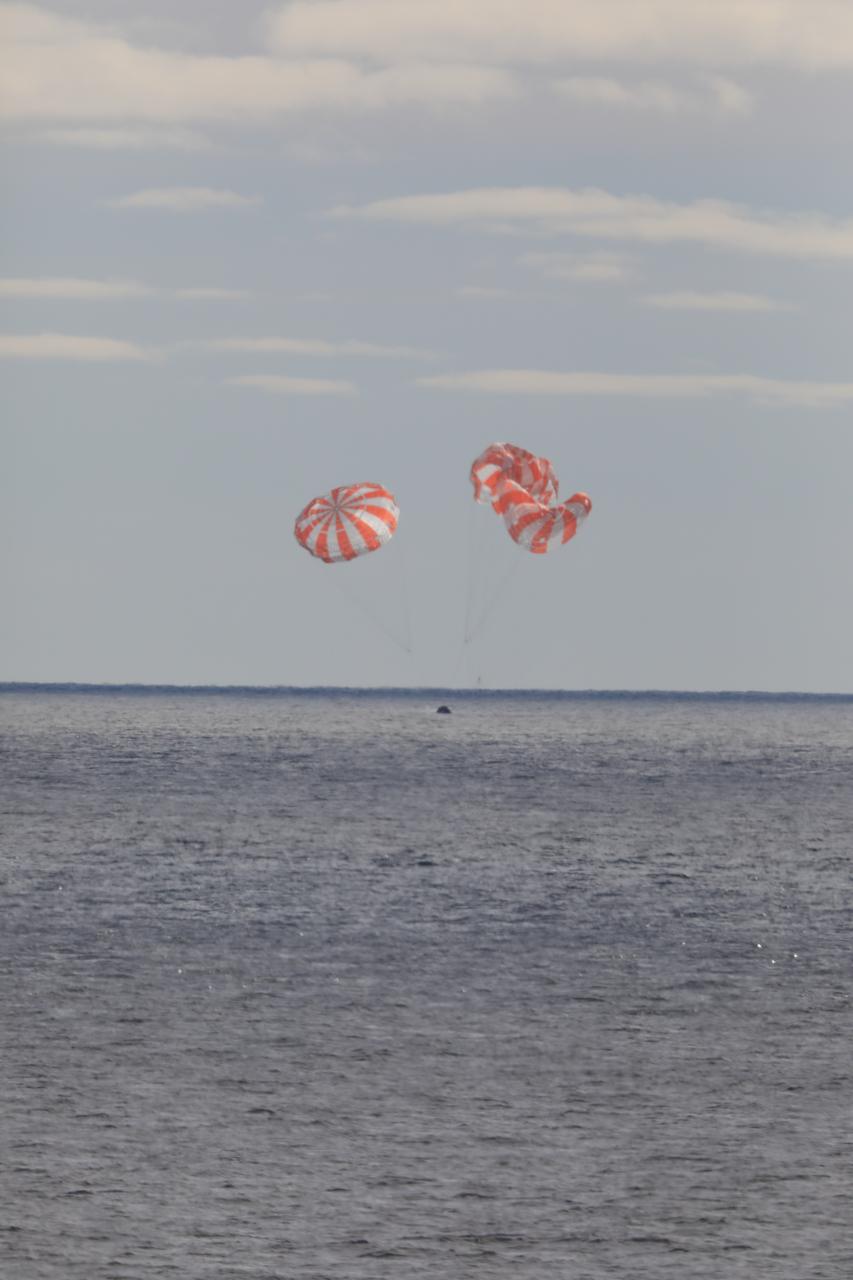
At 12:40 p.m. EST, Dec. 11, 2022, NASA’s Orion spacecraft for the Artemis I mission splashed down in the Pacific Ocean after a 25.5 day mission to the Moon. Orion will be recovered by NASA’s Landing and Recovery team, U.S. Navy and Department of Defense partners aboard the USS Portland.
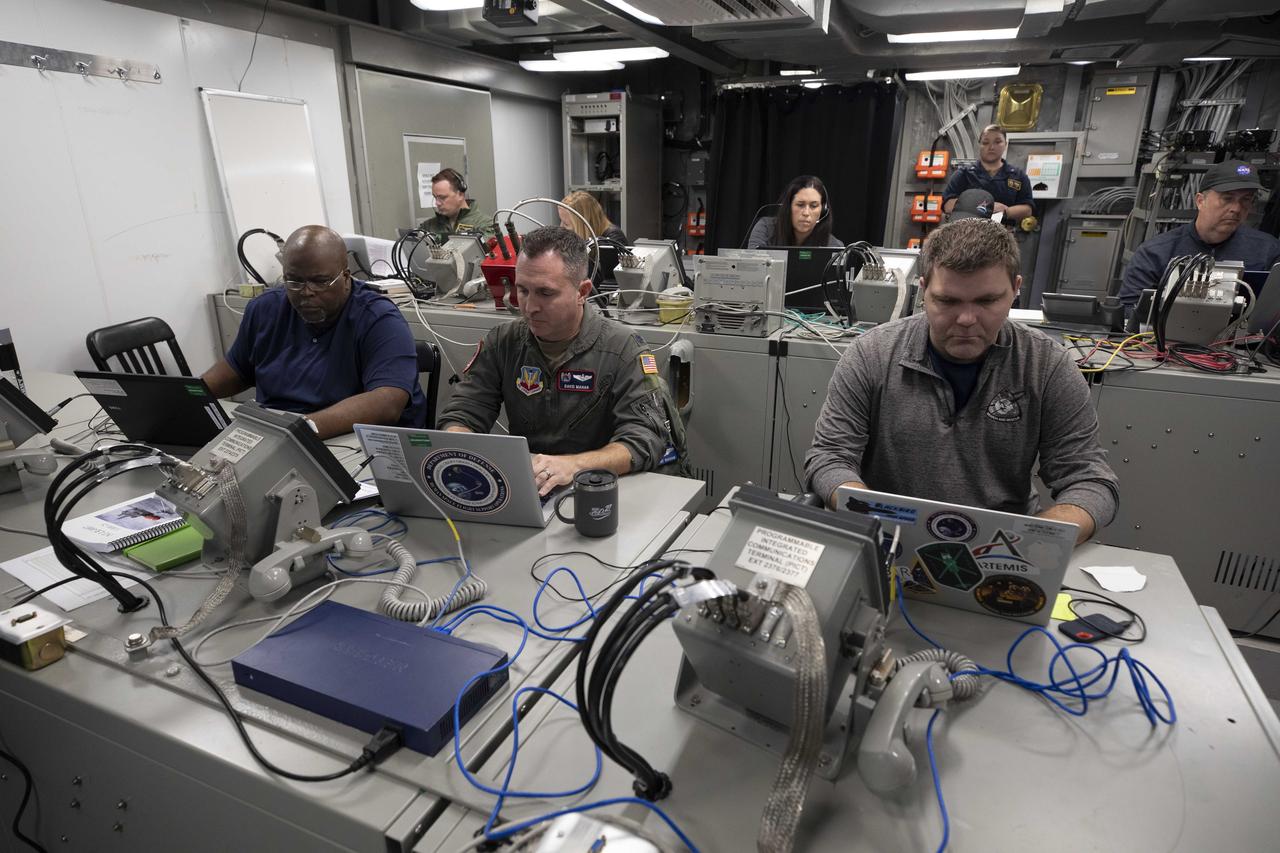
Inside a control room aboard USS Portland, members and leaders of NASA’s Landing and Recovery team run through preparations and procedures ahead of the Orion Spacecraft’s return from the Moon on Dec. 11 as part of the Artemis I mission.
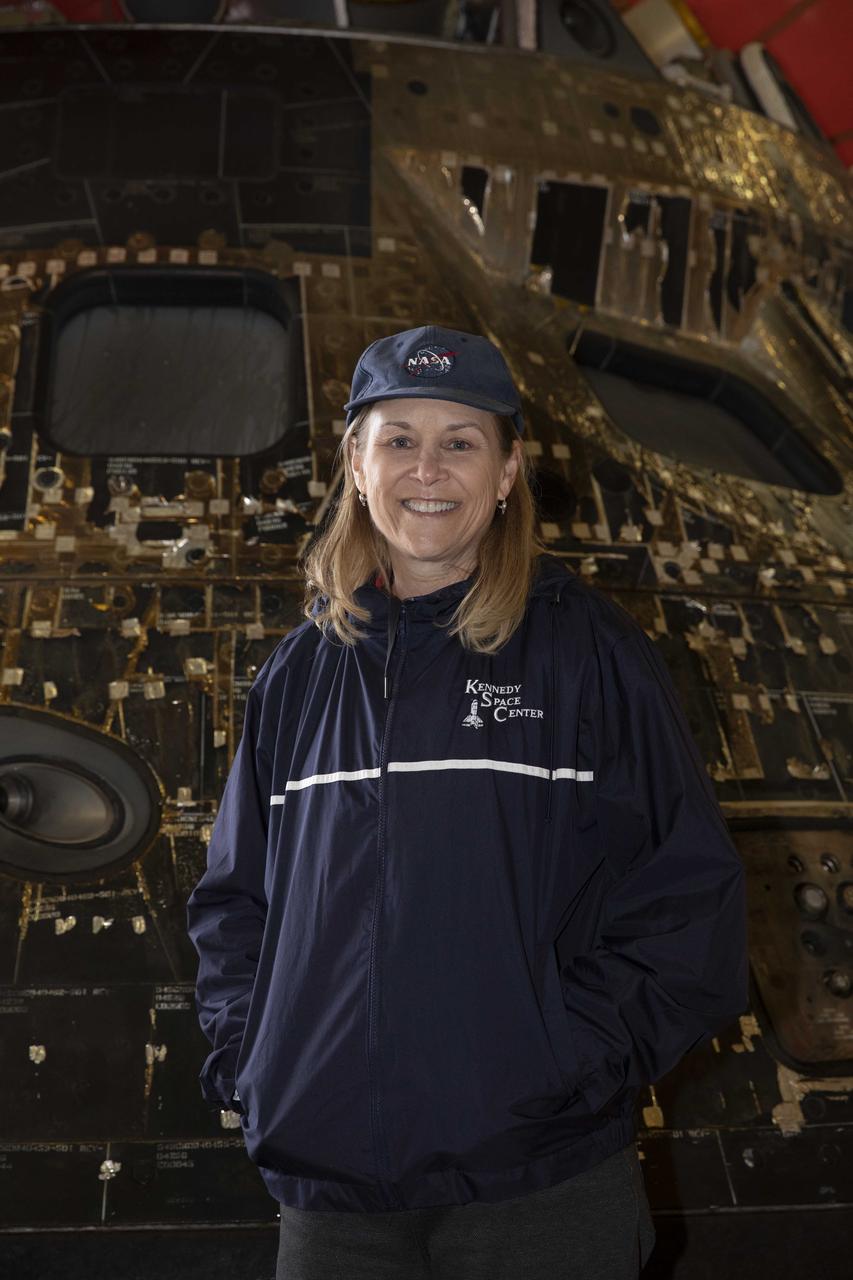
Kennedy Space Center Director Janet Petro stands near the Artemis I Orion spacecraft inside the well deck of the USS Portland at U.S. Naval Base San Diego on Dec. 13, 2022. The Orion spacecraft is secured inside the well deck after splashing down at 12:40 p.m. EST on Dec. 11, 2022. U.S. Navy divers helped recover the Orion spacecraft. NASA, the Navy and other Department of Defense partners worked together to secure the spacecraft inside the ship’s well deck approximately five hours after Orion splashed down in the Pacific Ocean off the coast of Baja, California.
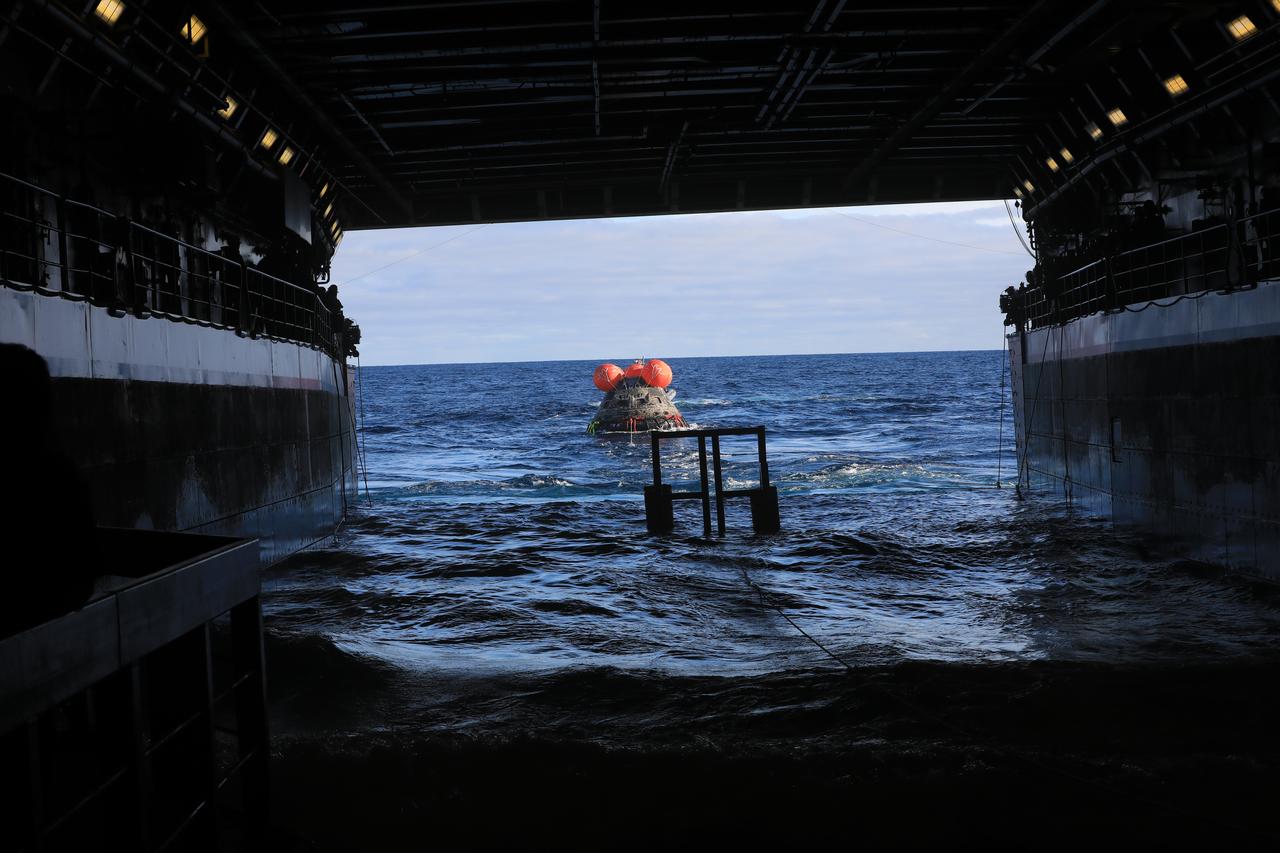
NASA’s Orion spacecraft for the Artemis I mission was successfully recovered inside the well deck of the USS Portland on Dec. 11, 2022 off the coast of Baja California. After launching atop the Space Launch System rocket on Nov. 16, 2022 from the agency’s Kennedy Space Center in Florida, Orion spent 25.5 days in space before returning to Earth, completing the Artemis I mission.
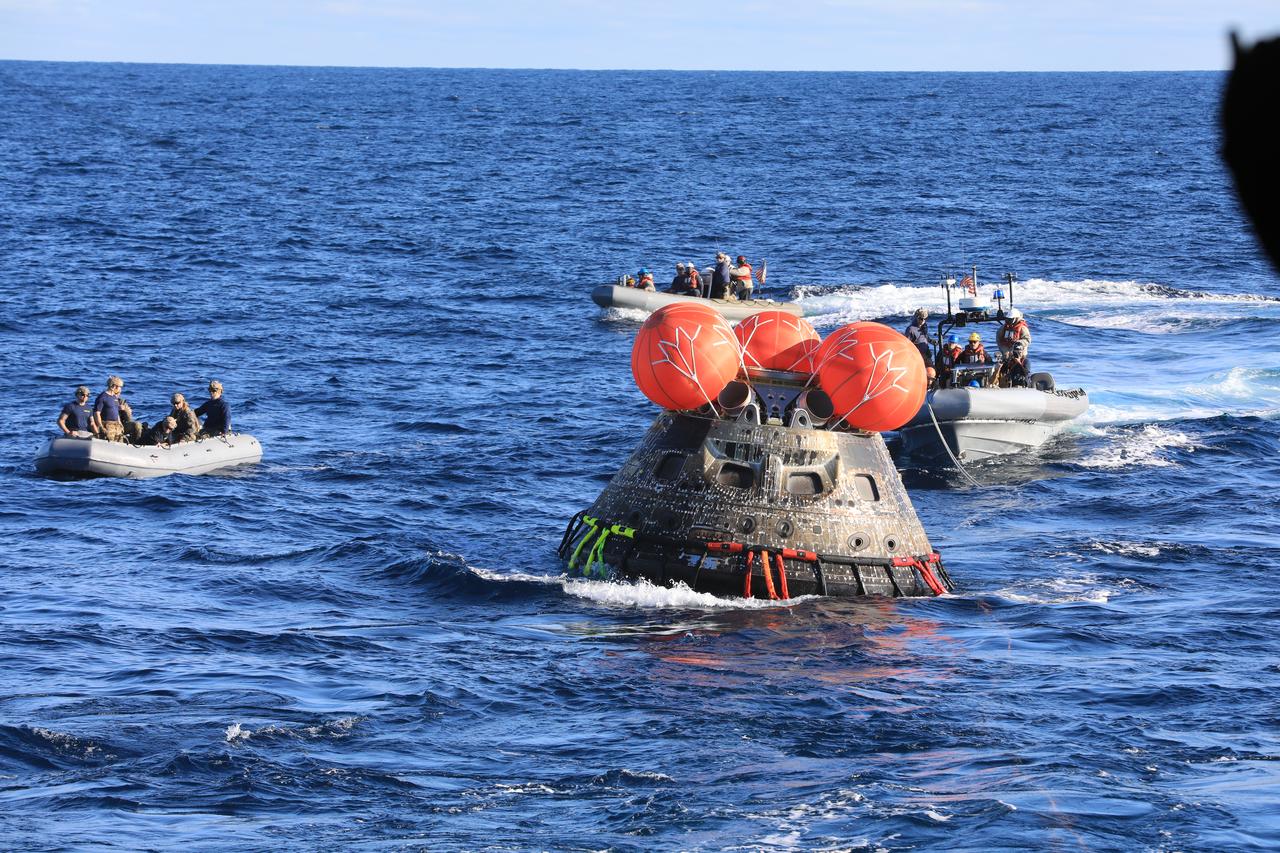
NASA’s Orion spacecraft for the Artemis I mission was successfully recovered inside the well deck of the USS Portland on Dec. 11, 2022 off the coast of Baja California. After launching atop the Space Launch System rocket on Nov. 16, 2022 from the agency’s Kennedy Space Center in Florida, Orion spent 25.5 days in space before returning to Earth, completing the Artemis I mission.
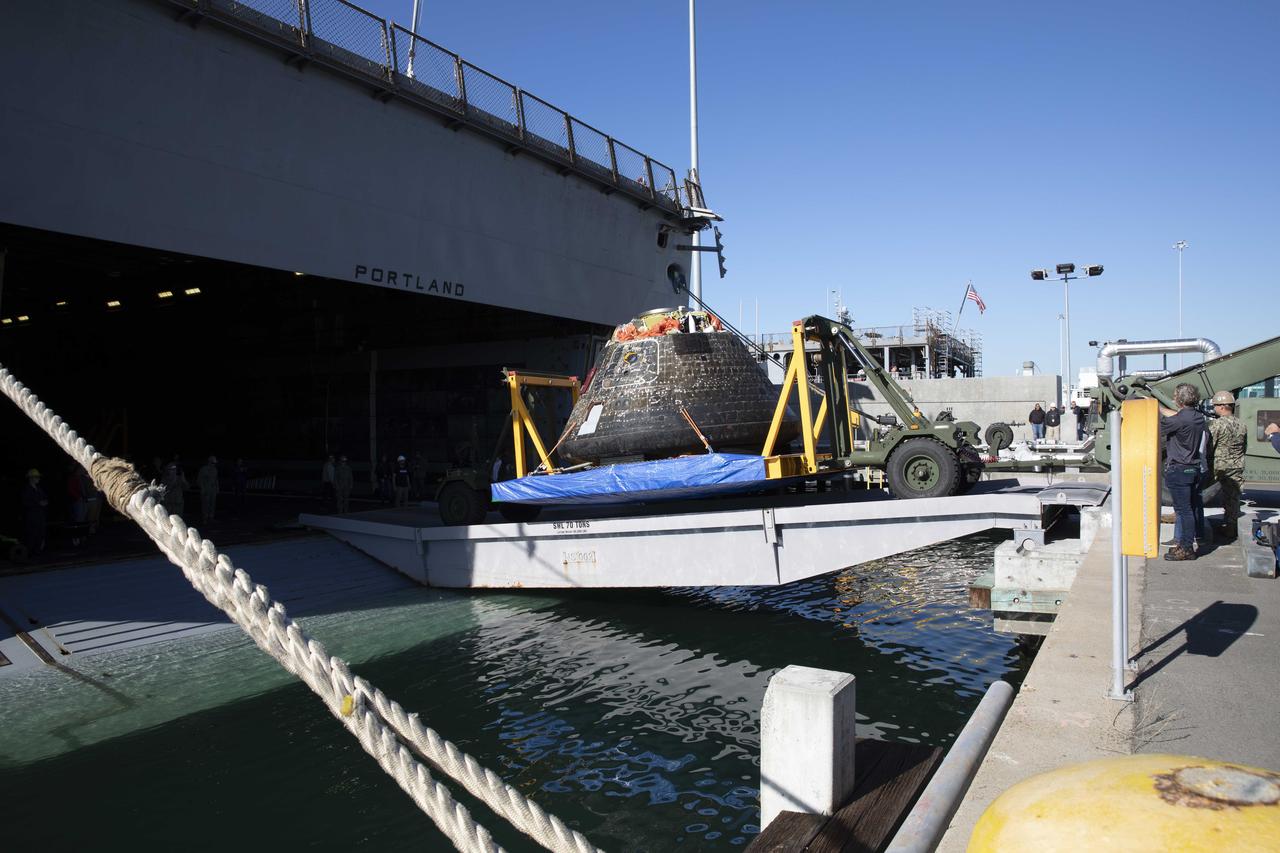
Team members with NASA’s Exploration Ground Systems program successfully removed the Artemis I Orion spacecraft from the USS Portland Dec. 14, after the ship arrived at U.S. Naval Base San Diego.
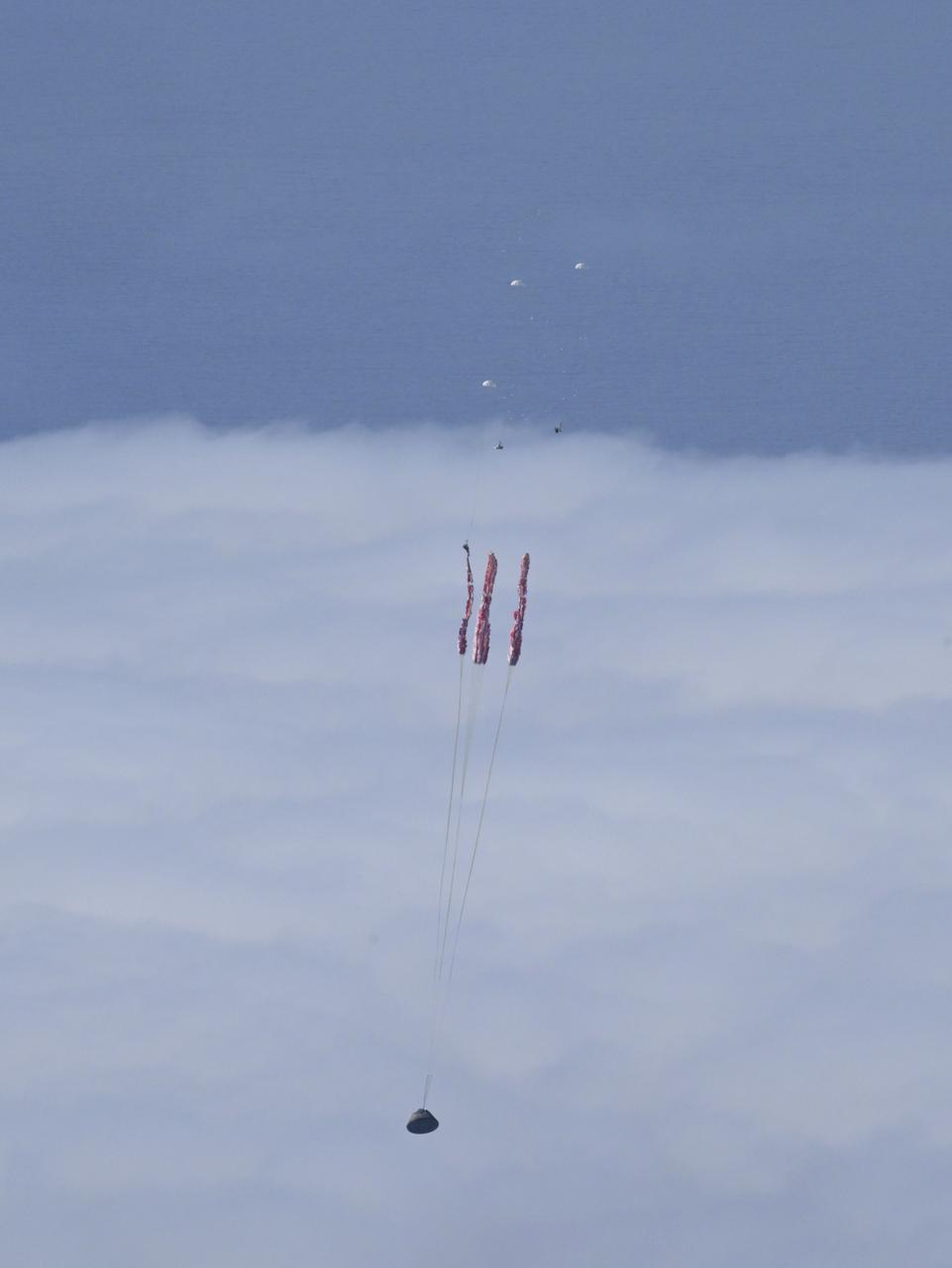
At 12:40 p.m. EST, Dec. 11, 2022, NASA’s Orion spacecraft for the Artemis I mission splashed down in the Pacific Ocean after a 25.5 day mission to the Moon. Orion will be recovered by NASA’s Landing and Recovery team, U.S. Navy and Department of Defense partners aboard the USS Portland.
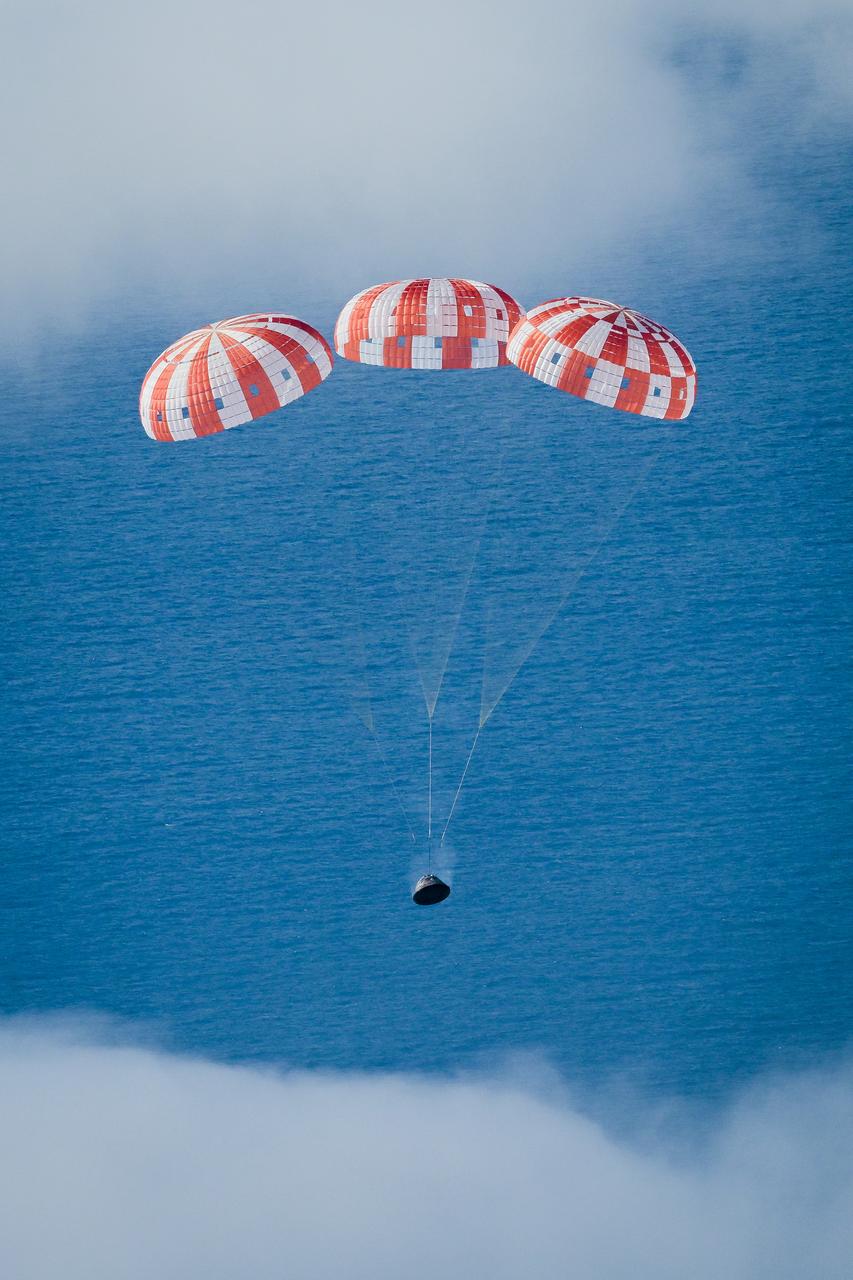
At 12:40 p.m. EST, Dec. 11, 2022, NASA’s Orion spacecraft for the Artemis I mission splashed down in the Pacific Ocean after a 25.5 day mission to the Moon. Orion will be recovered by NASA’s Landing and Recovery team, U.S. Navy and Department of Defense partners aboard the USS Portland.

After splashing down at 12:40 p.m. EST on Dec. 11, 2022, U.S. Navy divers help recover the Orion Spacecraft for the Artemis I mission. NASA, the Navy and other Department of Defense partners worked together to secure the spacecraft inside the well deck of USS Portland approximately five hours after Orion splashed down in the Pacific Ocean off the coast of California.
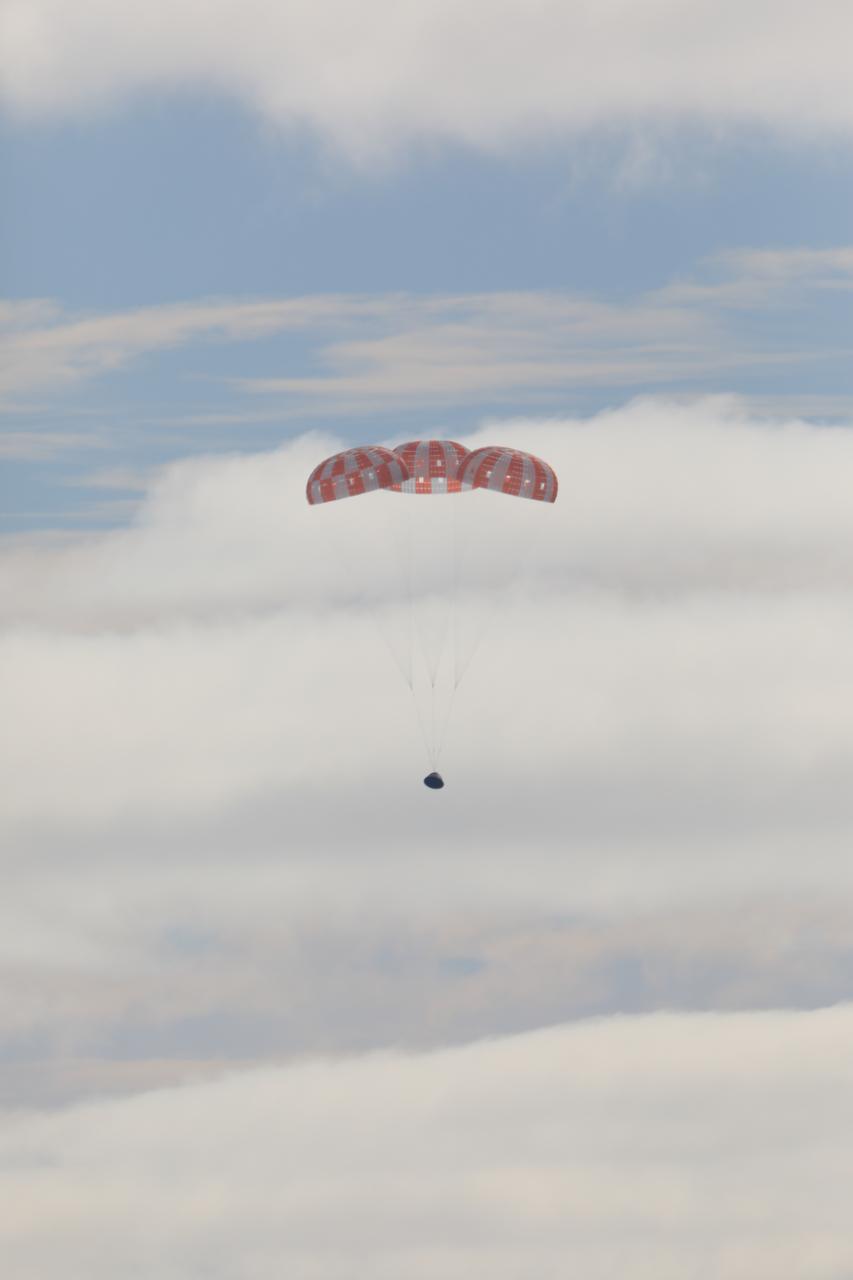
At 12:40 p.m. EST, Dec. 11, 2022, NASA’s Orion spacecraft for the Artemis I mission splashed down in the Pacific Ocean after a 25.5 day mission to the Moon. Orion will be recovered by NASA’s Landing and Recovery team, U.S. Navy and Department of Defense partners aboard the USS Portland.
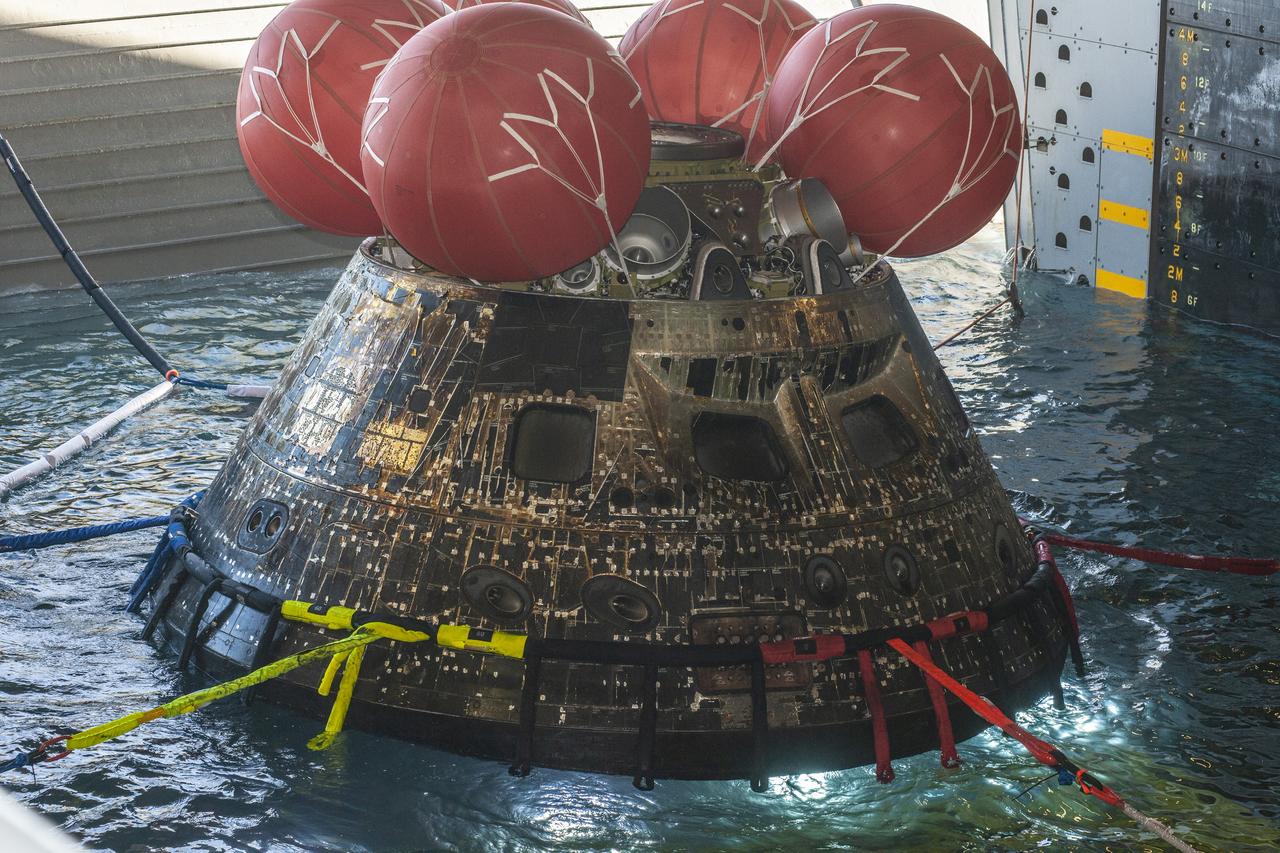
NASA’s Orion spacecraft for the Artemis I mission was successfully recovered inside the well deck of the USS Portland on Dec. 11, 2022 off the coast of Baja California. After launching atop the Space Launch System rocket on Nov. 16, 2022 from the agency’s Kennedy Space Center in Florida, Orion spent 25.5 days in space before returning to Earth, completing the Artemis I mission.
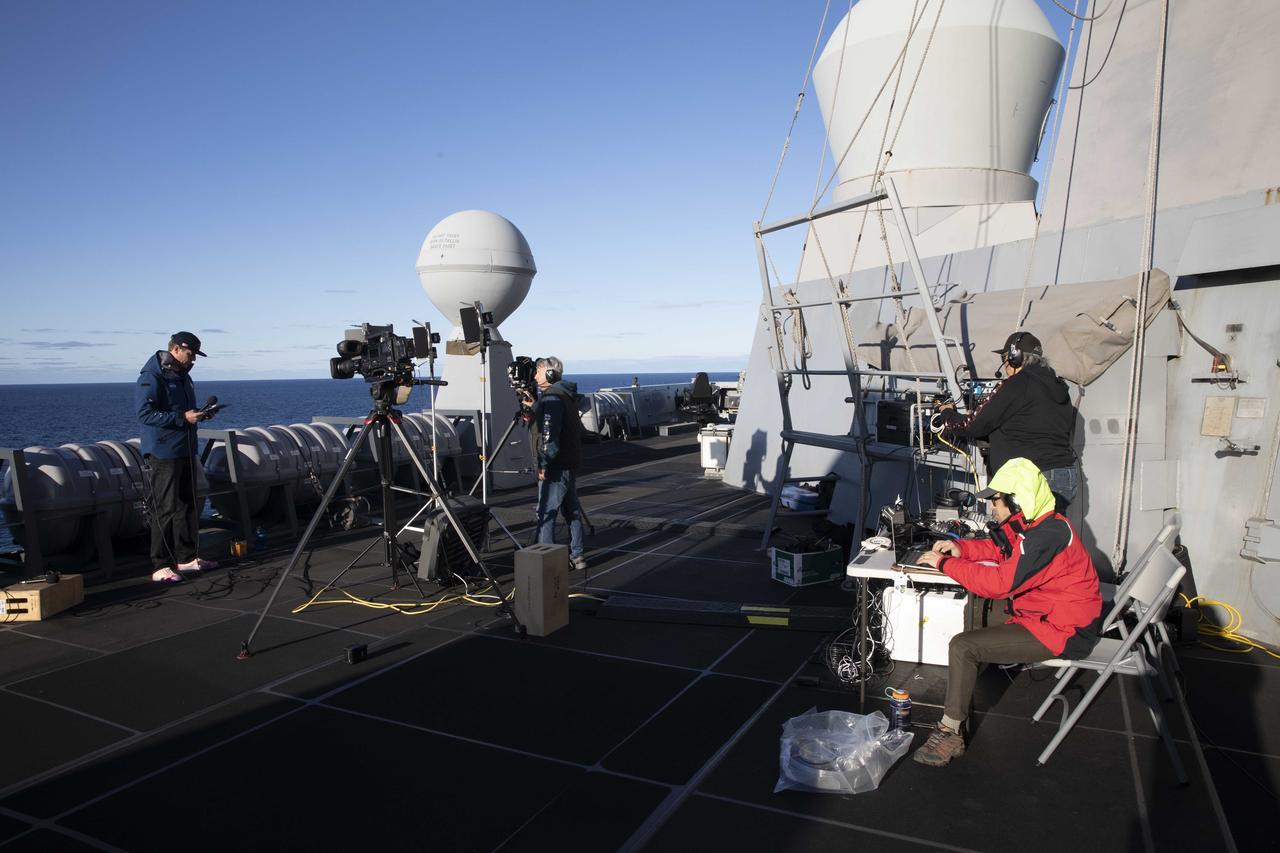
Members of Kennedy Space Center’s public affairs team prepare for live coverage of NASA’s Orion spacecraft’s splashdown for the Artemis I mission while aboard USS Portland. Orion safely splashed down in the Pacific Ocean on Dec. 11, 2022, completing a 25.5 day mission around the Moon and back.
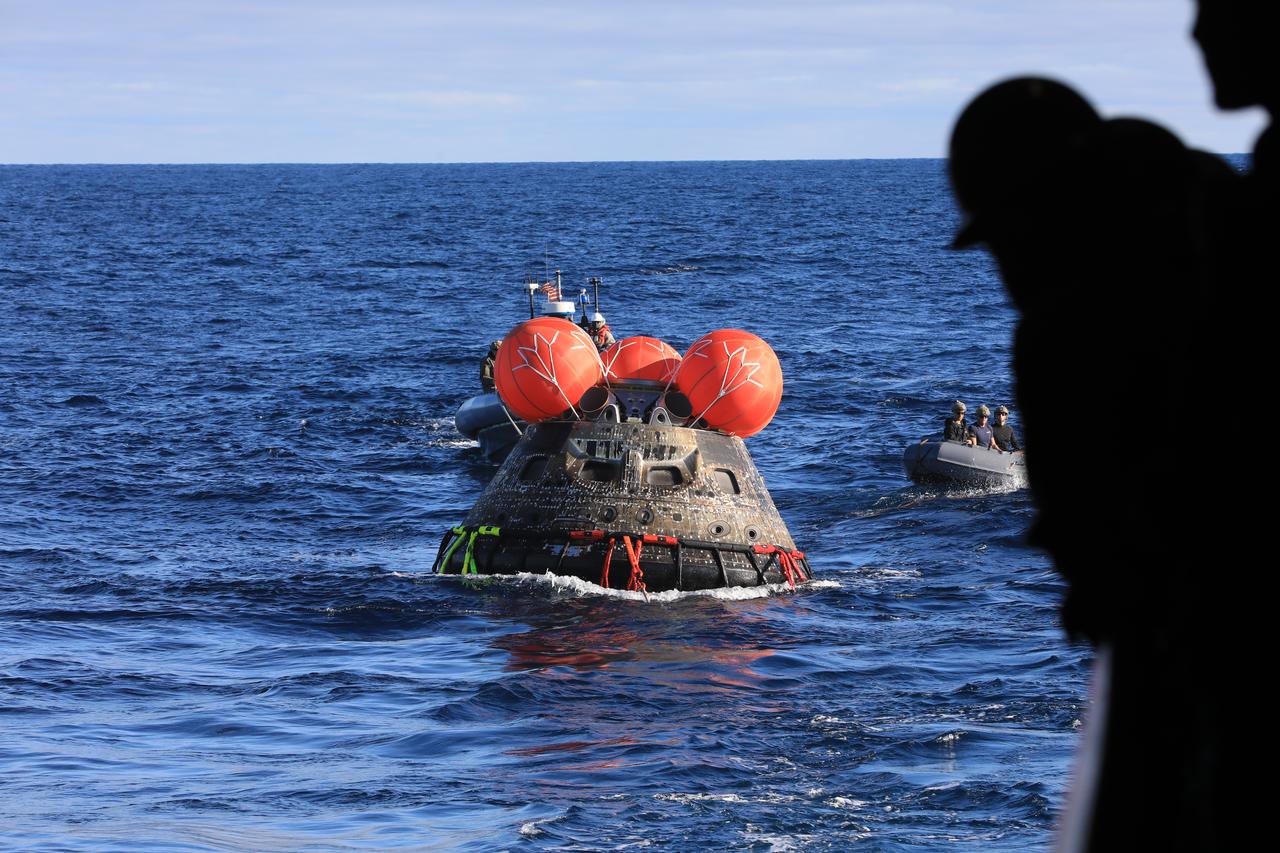
NASA’s Orion spacecraft for the Artemis I mission was successfully recovered inside the well deck of the USS Portland on Dec. 11, 2022 off the coast of Baja California. After launching atop the Space Launch System rocket on Nov. 16, 2022 from the agency’s Kennedy Space Center in Florida, Orion spent 25.5 days in space before returning to Earth, completing the Artemis I mission.
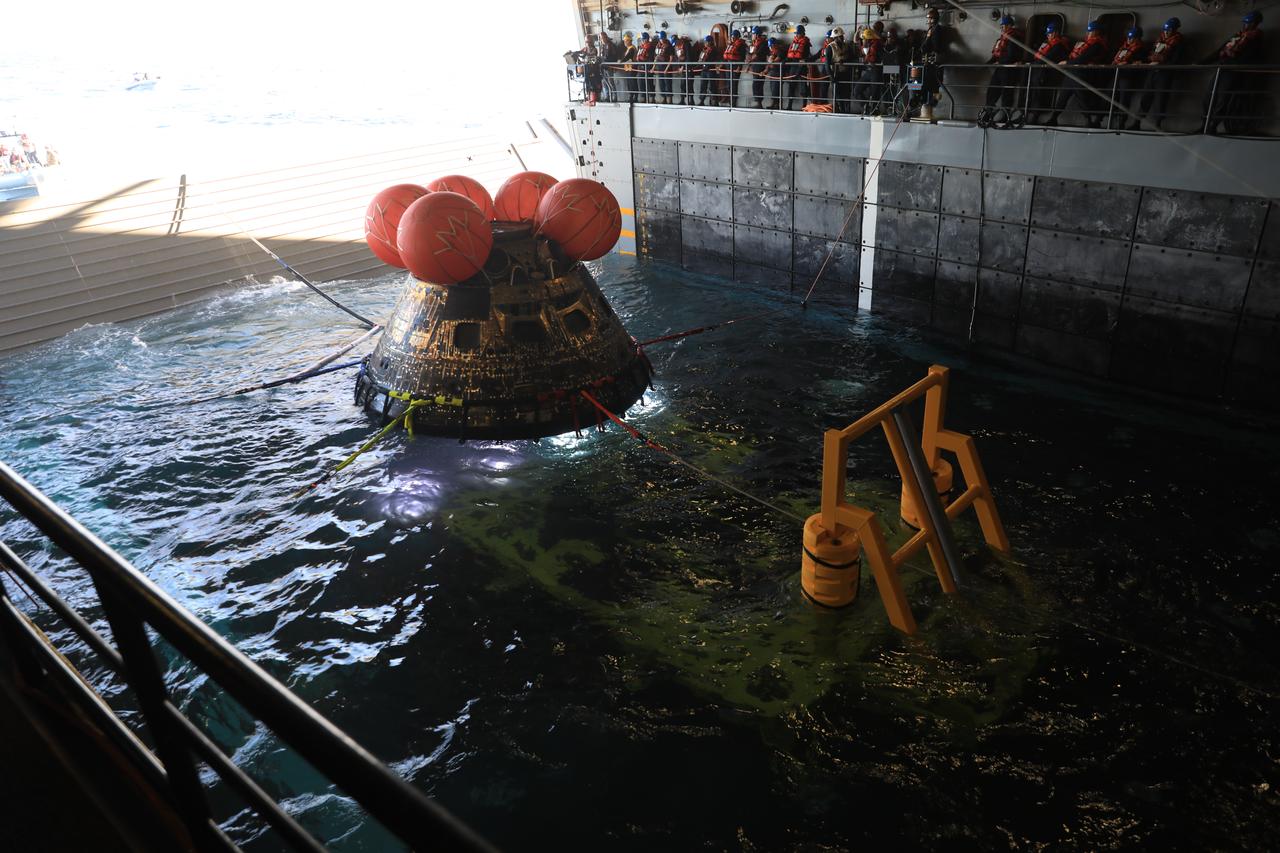
NASA’s Orion spacecraft for the Artemis I mission was successfully recovered inside the well deck of the USS Portland on Dec. 11, 2022 off the coast of Baja California. After launching atop the Space Launch System rocket on Nov. 16, 2022 from the agency’s Kennedy Space Center in Florida, Orion spent 25.5 days in space before returning to Earth, completing the Artemis I mission.
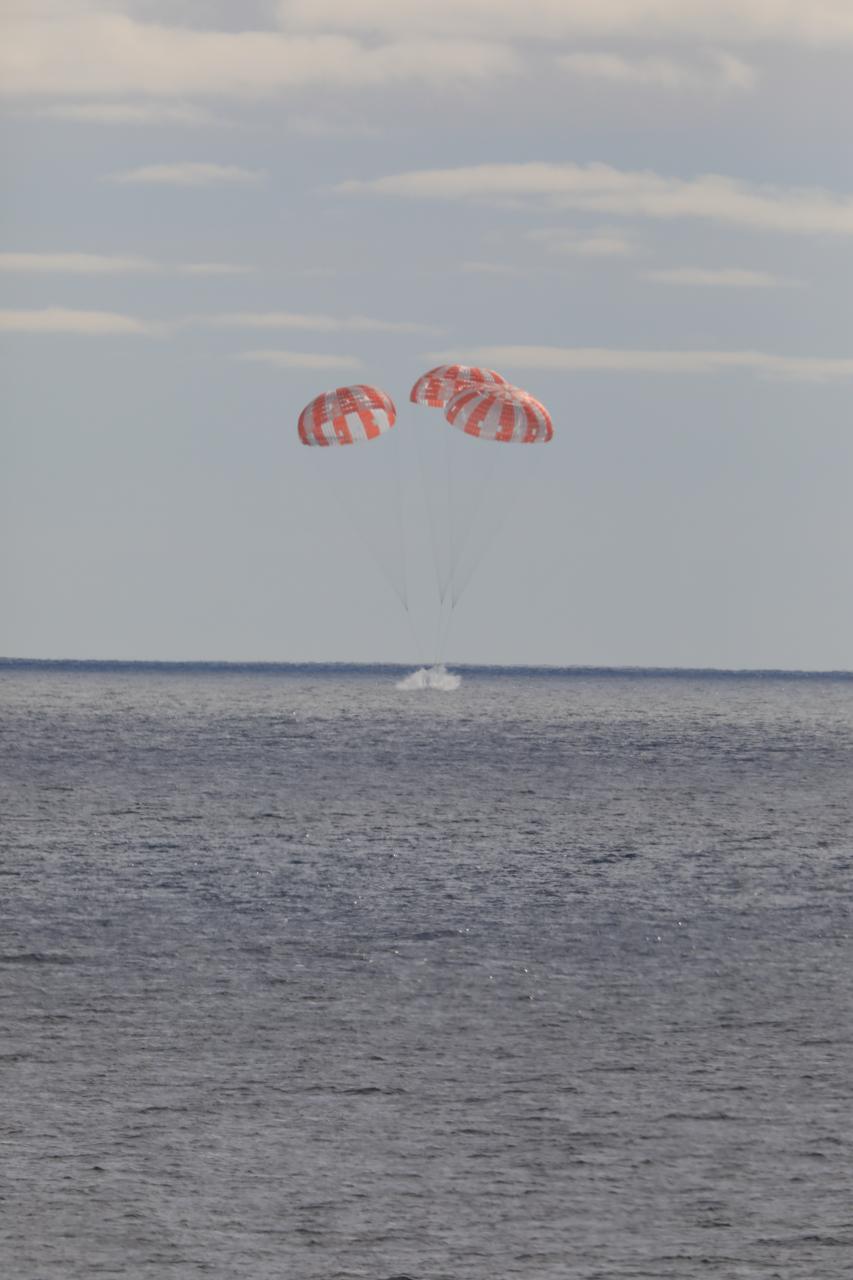
At 12:40 p.m. EST, Dec. 11, 2022, NASA’s Orion spacecraft for the Artemis I mission splashed down in the Pacific Ocean after a 25.5 day mission to the Moon. Orion will be recovered by NASA’s Landing and Recovery team, U.S. Navy and Department of Defense partners aboard the USS Portland.
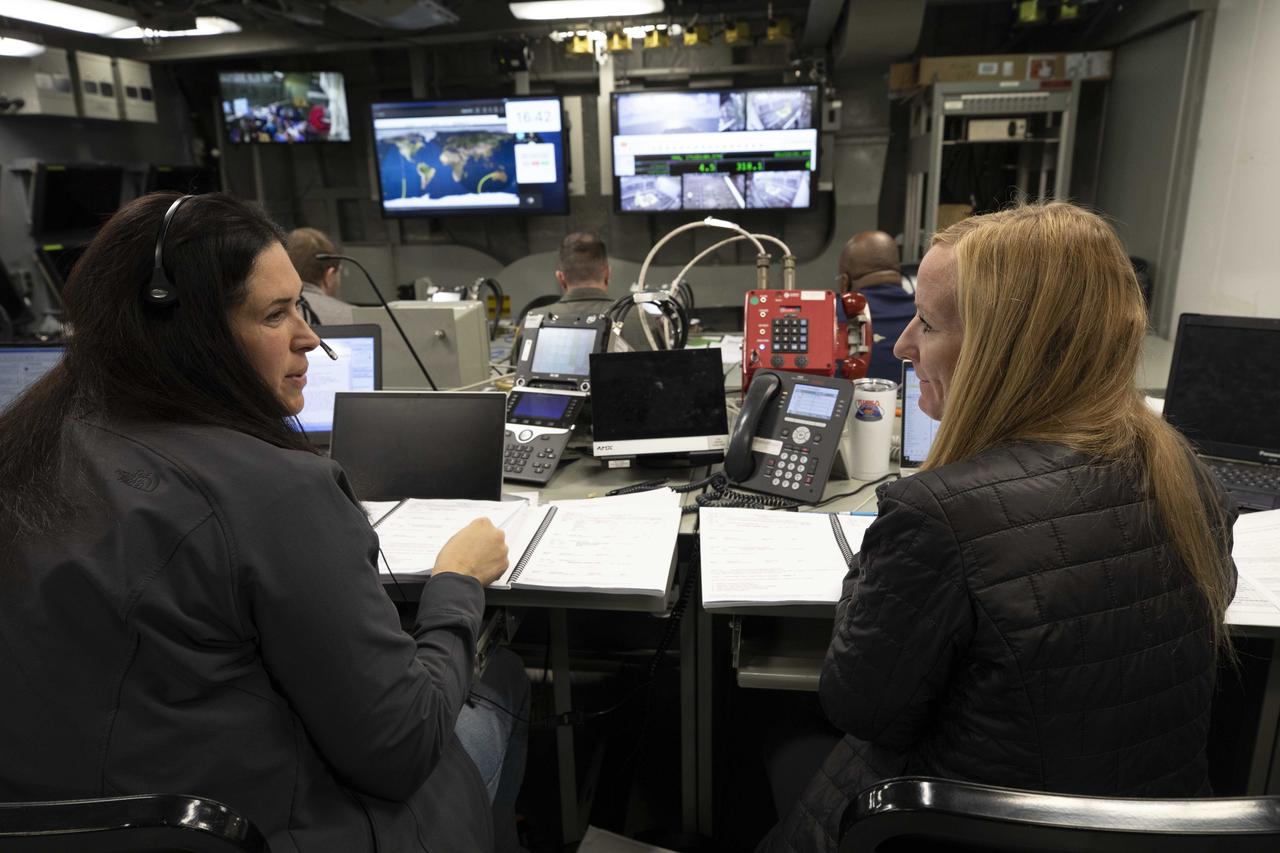
Inside a control room aboard USS Portland, members and leaders of NASA’s Landing and Recovery team run through preparations and procedures ahead of the Orion Spacecraft’s return from the Moon on Dec. 11 as part of the Artemis I mission.
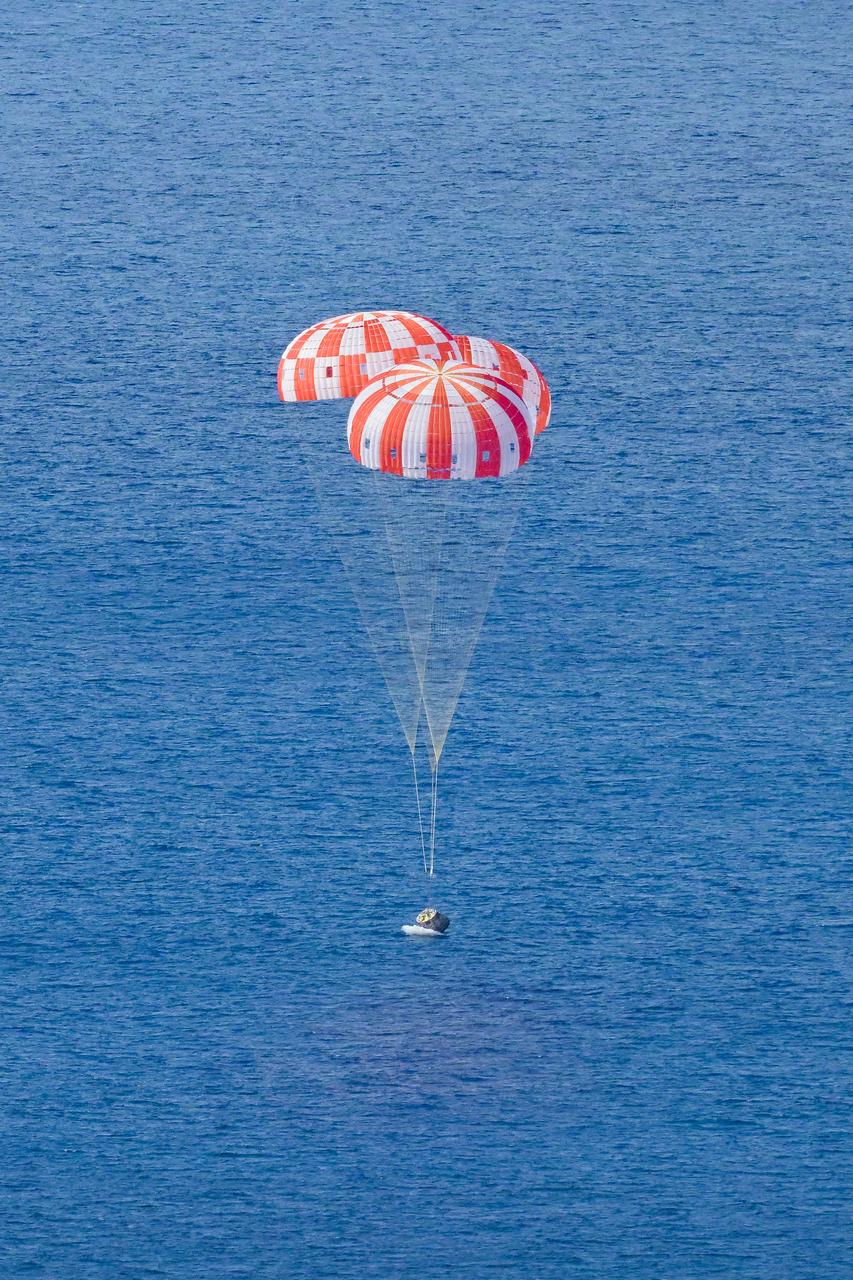
At 12:40 p.m. EST, Dec. 11, 2022, NASA’s Orion spacecraft for the Artemis I mission splashed down in the Pacific Ocean after a 25.5 day mission to the Moon. Orion will be recovered by NASA’s Landing and Recovery team, U.S. Navy and Department of Defense partners aboard the USS Portland.
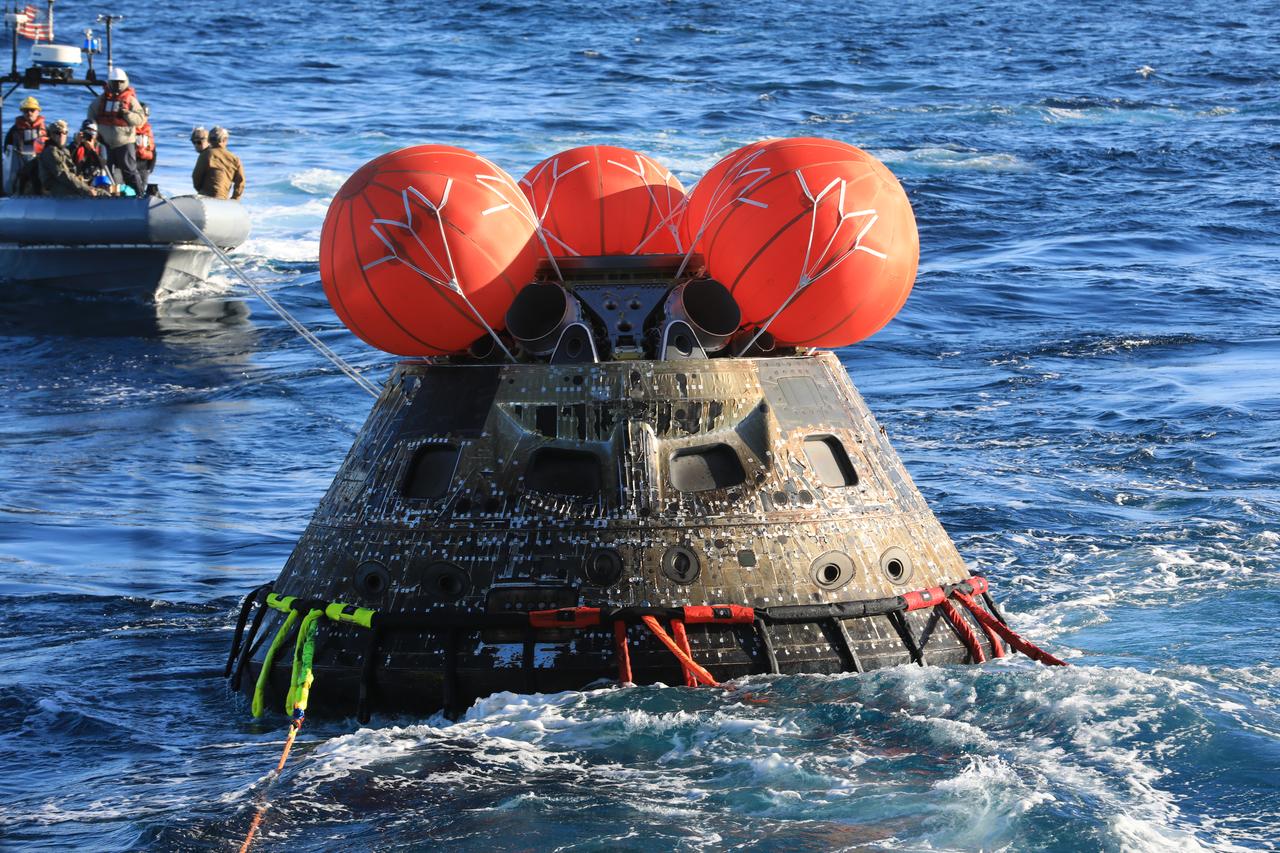
NASA’s Orion spacecraft for the Artemis I mission was successfully recovered inside the well deck of the USS Portland on Dec. 11, 2022 off the coast of Baja California. After launching atop the Space Launch System rocket on Nov. 16, 2022 from the agency’s Kennedy Space Center in Florida, Orion spent 25.5 days in space before returning to Earth, completing the Artemis I mission.
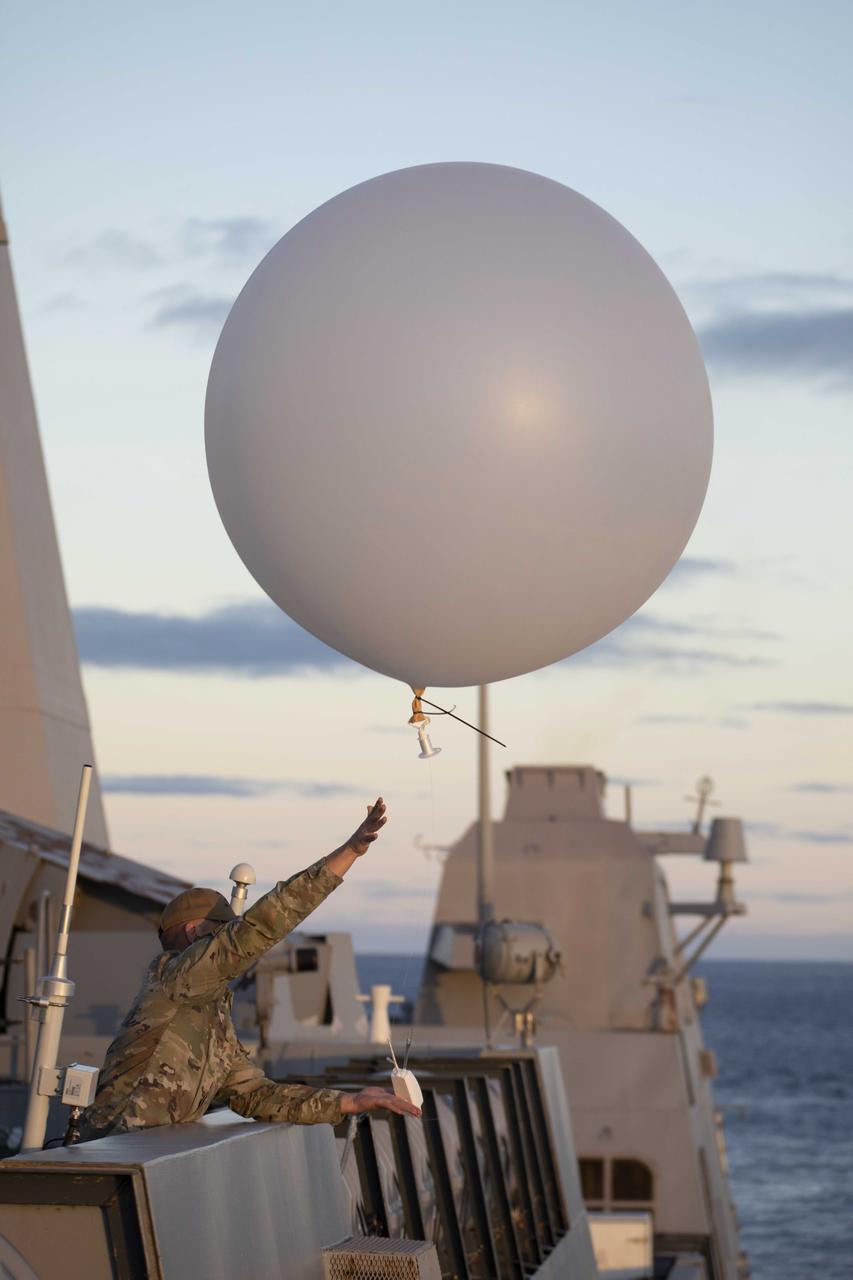
A member of the 45th Weather Squadron out of Patrick Space Force Base releases a weather balloon from the deck of USS Portland prior to splashdown of the NASA’s Orion spacecraft for the Artemis I mission on Dec. 11, 2022.
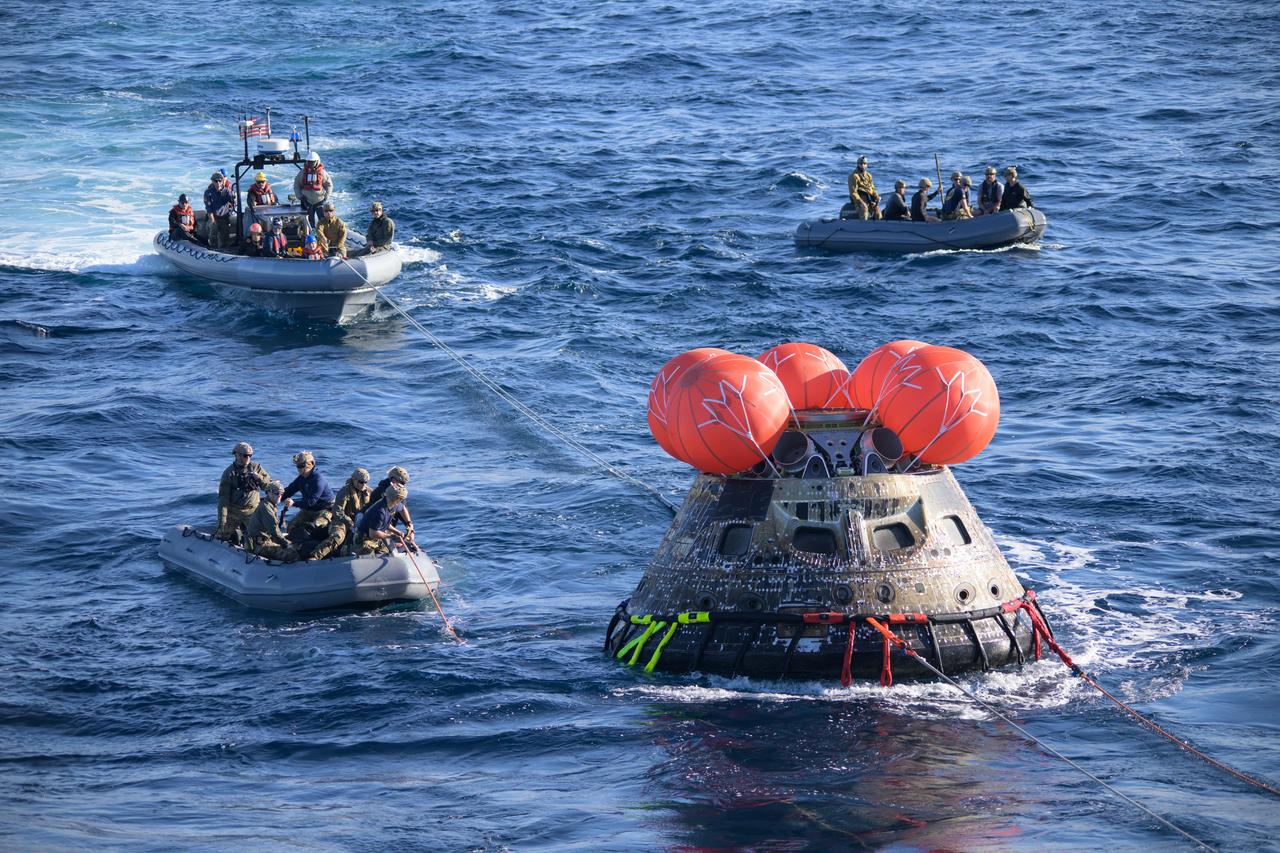
After splashing down at 12:40 p.m. EST on Dec. 11, 2022, U.S. Navy divers help recover the Orion Spacecraft for the Artemis I mission. NASA, the Navy and other Department of Defense partners worked together to secure the spacecraft inside the well deck of USS Portland approximately five hours after Orion splashed down in the Pacific Ocean off the coast of California.
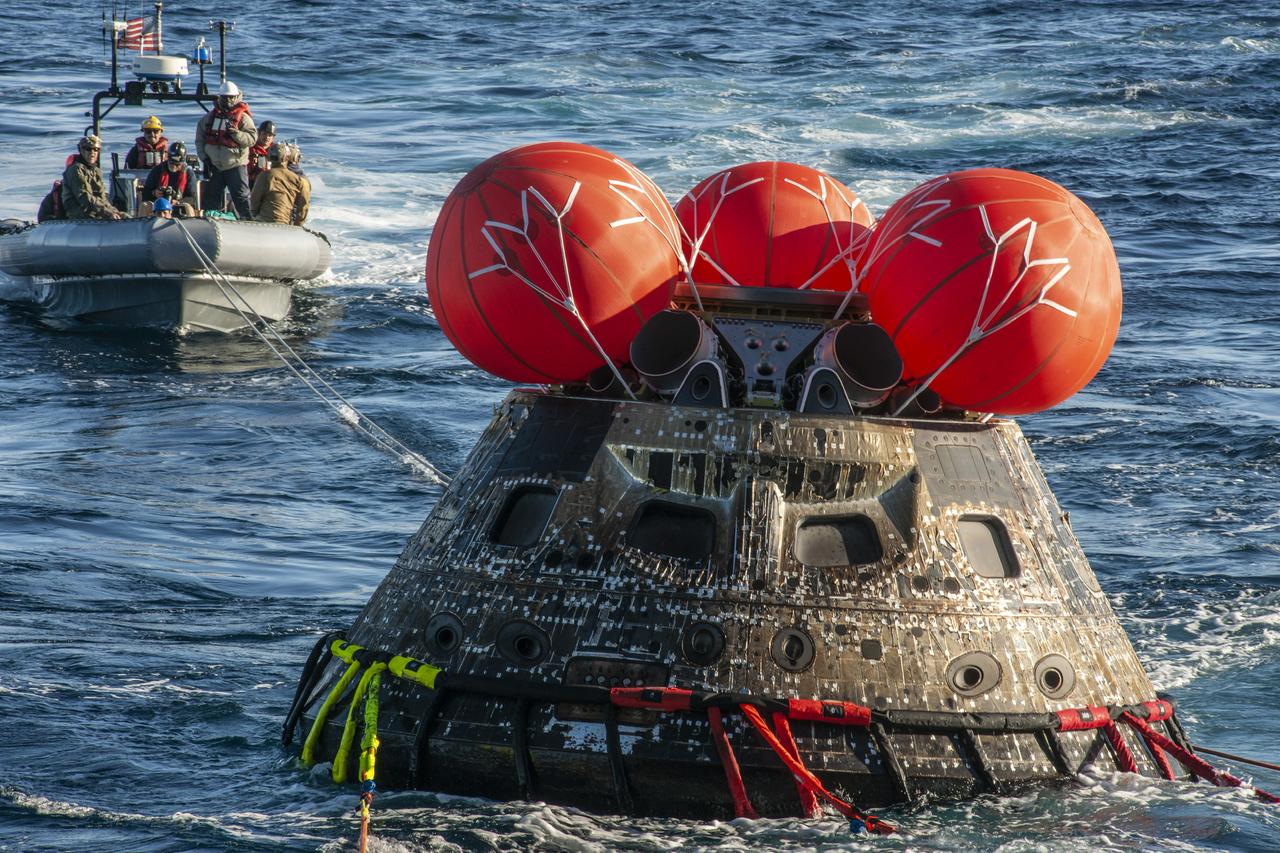
NASA’s Orion spacecraft for the Artemis I mission was successfully recovered inside the well deck of the USS Portland on Dec. 11, 2022 off the coast of Baja California. After launching atop the Space Launch System rocket on Nov. 16, 2022 from the agency’s Kennedy Space Center in Florida, Orion spent 25.5 days in space before returning to Earth, completing the Artemis I mission.
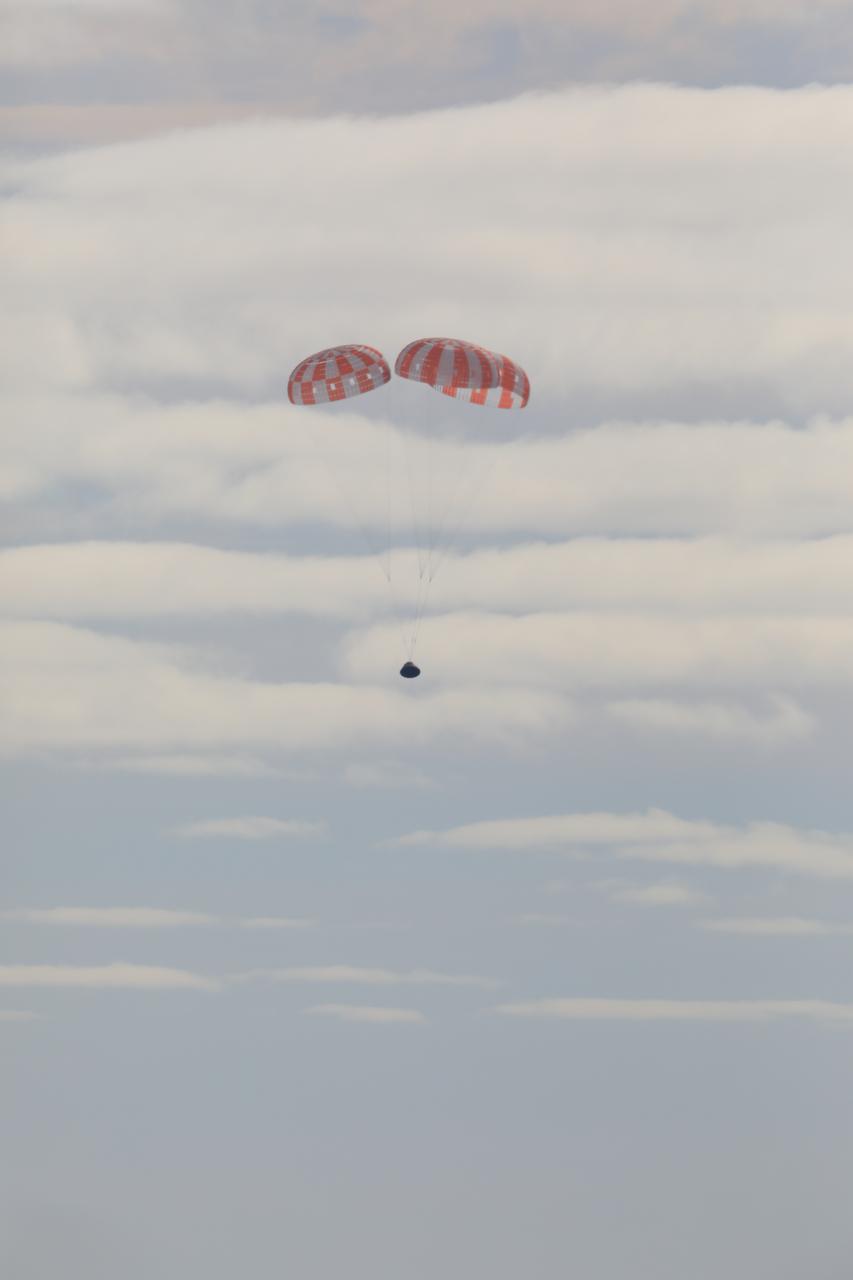
At 12:40 p.m. EST, Dec. 11, 2022, NASA’s Orion spacecraft for the Artemis I mission splashed down in the Pacific Ocean after a 25.5 day mission to the Moon. Orion will be recovered by NASA’s Landing and Recovery team, U.S. Navy and Department of Defense partners aboard the USS Portland.
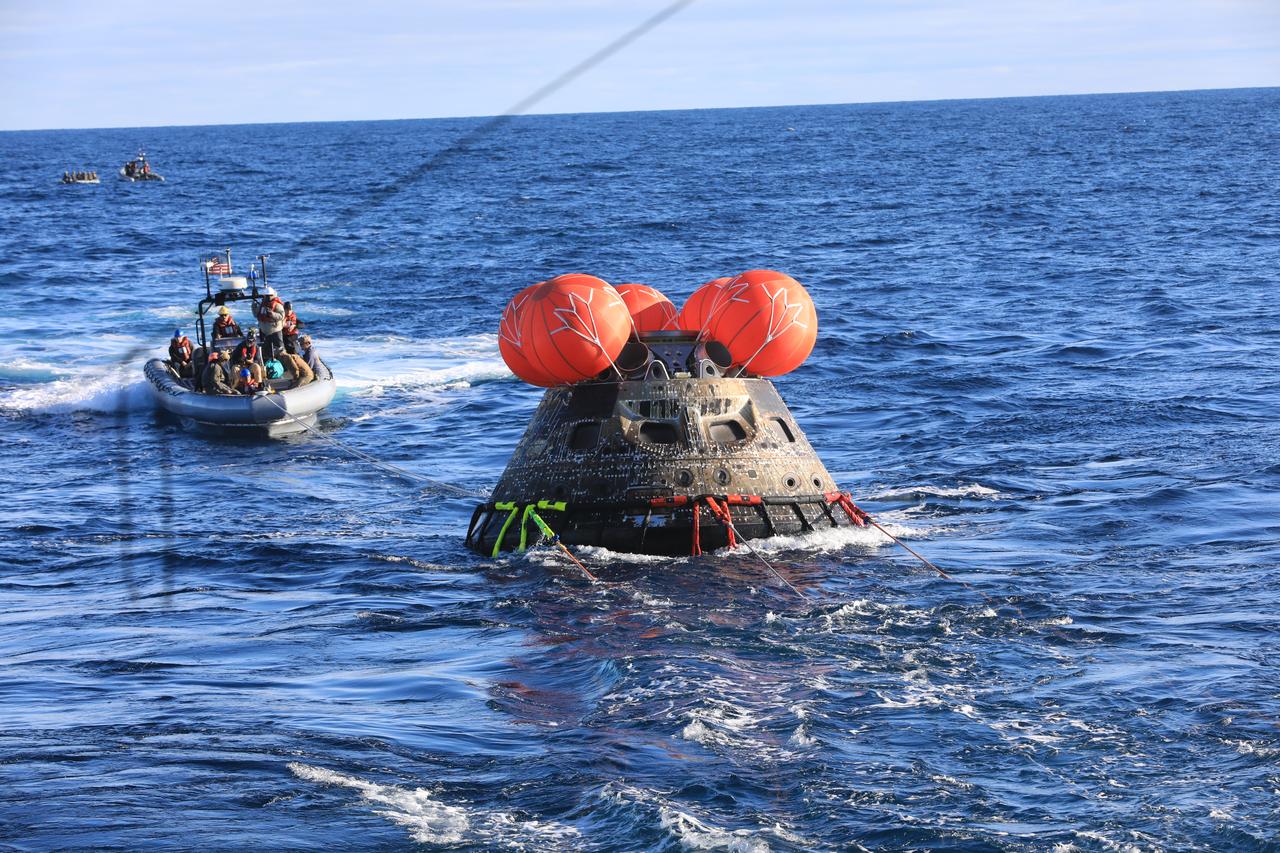
NASA’s Orion spacecraft for the Artemis I mission was successfully recovered inside the well deck of the USS Portland on Dec. 11, 2022 off the coast of Baja California. After launching atop the Space Launch System rocket on Nov. 16, 2022 from the agency’s Kennedy Space Center in Florida, Orion spent 25.5 days in space before returning to Earth, completing the Artemis I mission.

At 12:40 p.m. EST, Dec. 11, 2022, NASA’s Orion spacecraft for the Artemis I mission splashed down in the Pacific Ocean after a 25.5 day mission to the Moon. Orion will be recovered by NASA’s Landing and Recovery team, U.S. Navy and Department of Defense partners aboard the USS Portland.
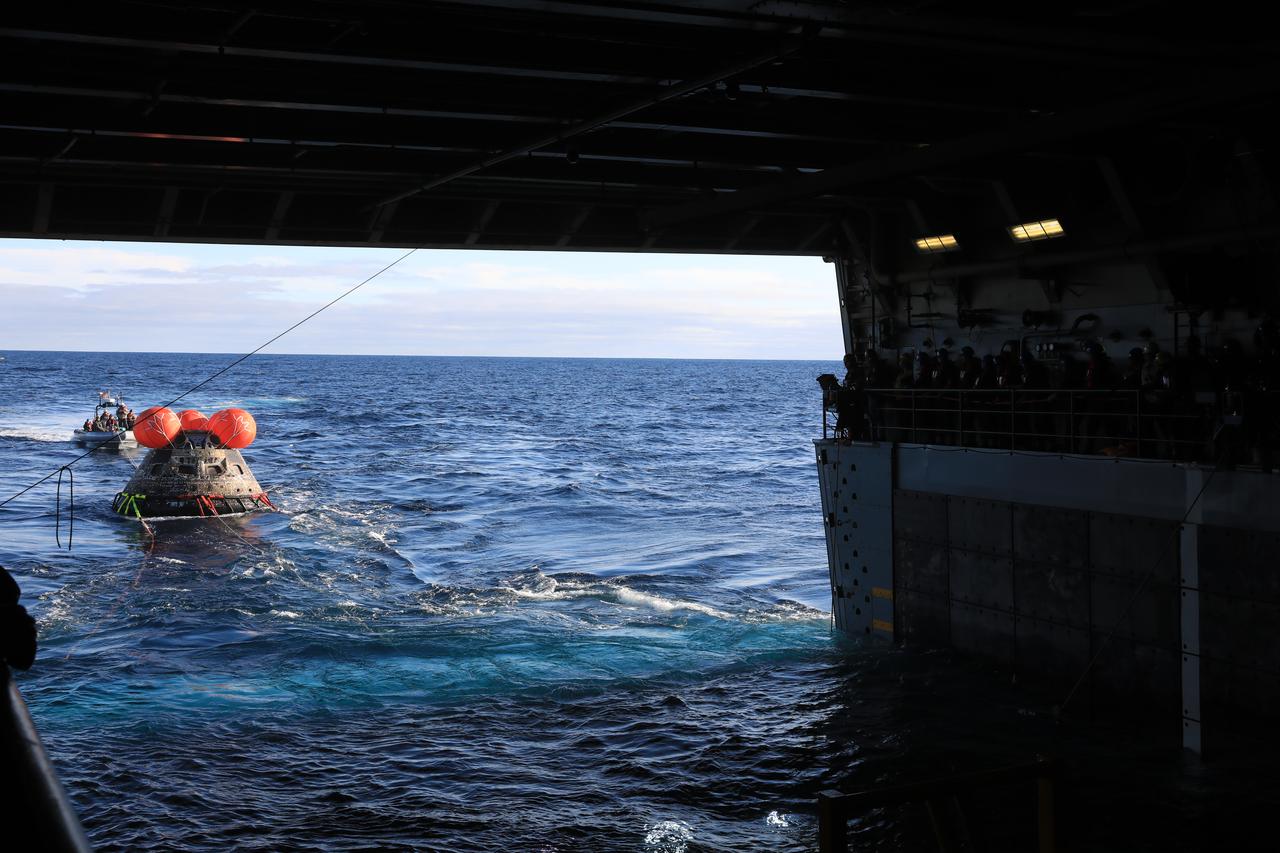
NASA’s Orion spacecraft for the Artemis I mission was successfully recovered inside the well deck of the USS Portland on Dec. 11, 2022 off the coast of Baja California. After launching atop the Space Launch System rocket on Nov. 16, 2022 from the agency’s Kennedy Space Center in Florida, Orion spent 25.5 days in space before returning to Earth, completing the Artemis I mission.
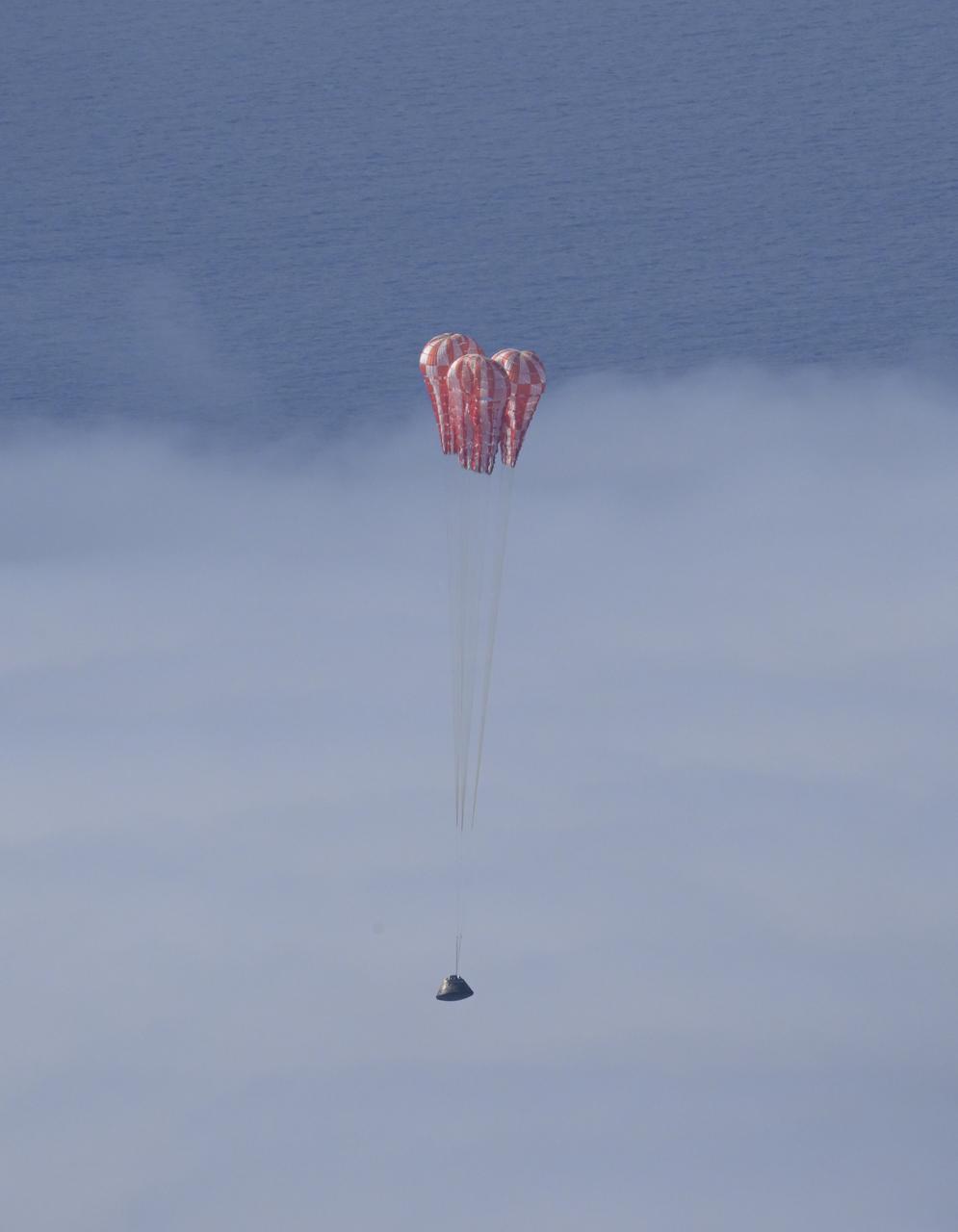
At 12:40 p.m. EST, Dec. 11, 2022, NASA’s Orion spacecraft for the Artemis I mission splashed down in the Pacific Ocean after a 25.5 day mission to the Moon. Orion will be recovered by NASA’s Landing and Recovery team, U.S. Navy and Department of Defense partners aboard the USS Portland.
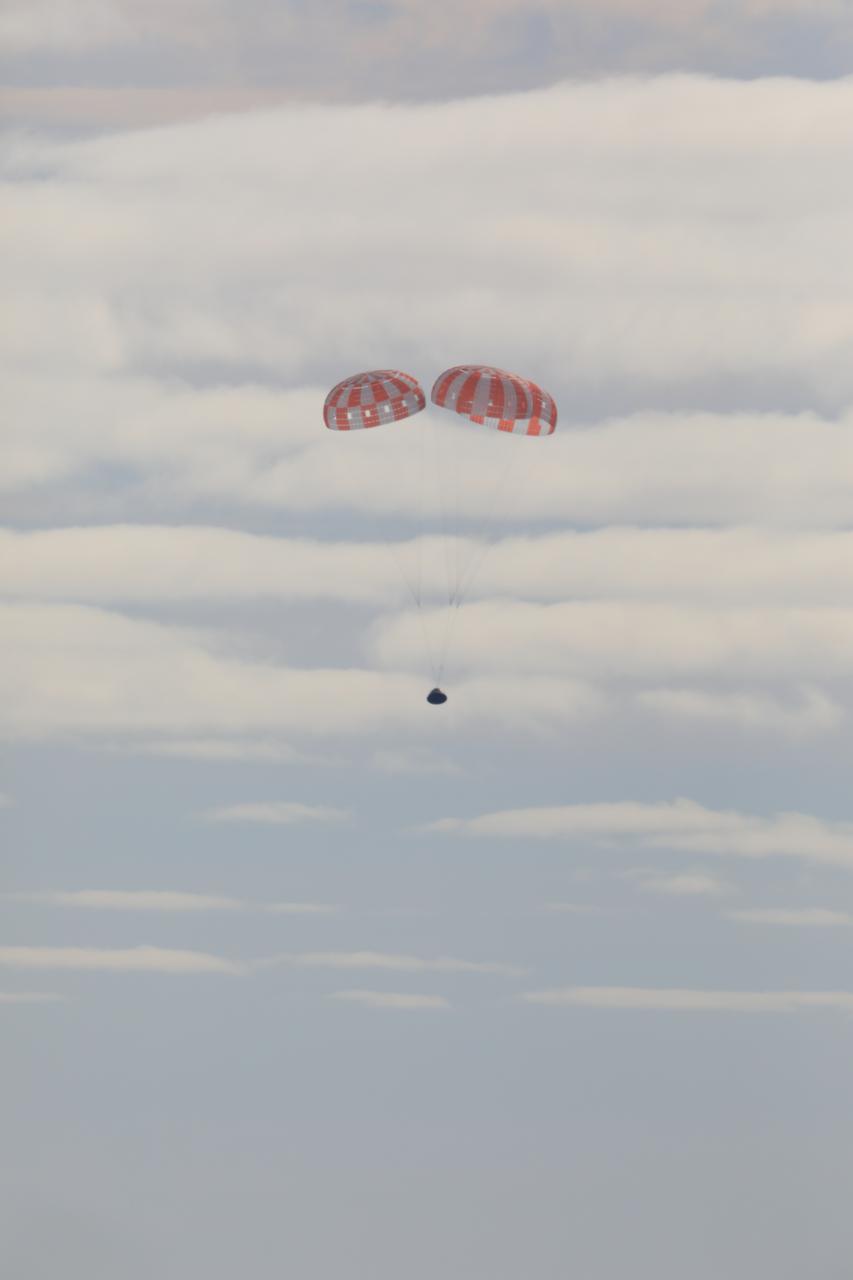
At 12:40 p.m. EST, Dec. 11, 2022, NASA’s Orion spacecraft for the Artemis I mission splashed down in the Pacific Ocean after a 25.5 day mission to the Moon. Orion will be recovered by NASA’s Landing and Recovery team, U.S. Navy and Department of Defense partners aboard the USS Portland.

NASA’s Orion spacecraft for the Artemis I mission was successfully recovered inside the well deck of the USS Portland on Dec. 11, 2022 off the coast of Baja California. After launching atop the Space Launch System rocket on Nov. 16, 2022 from the agency’s Kennedy Space Center in Florida, Orion spent 25.5 days in space before returning to Earth, completing the Artemis I mission.
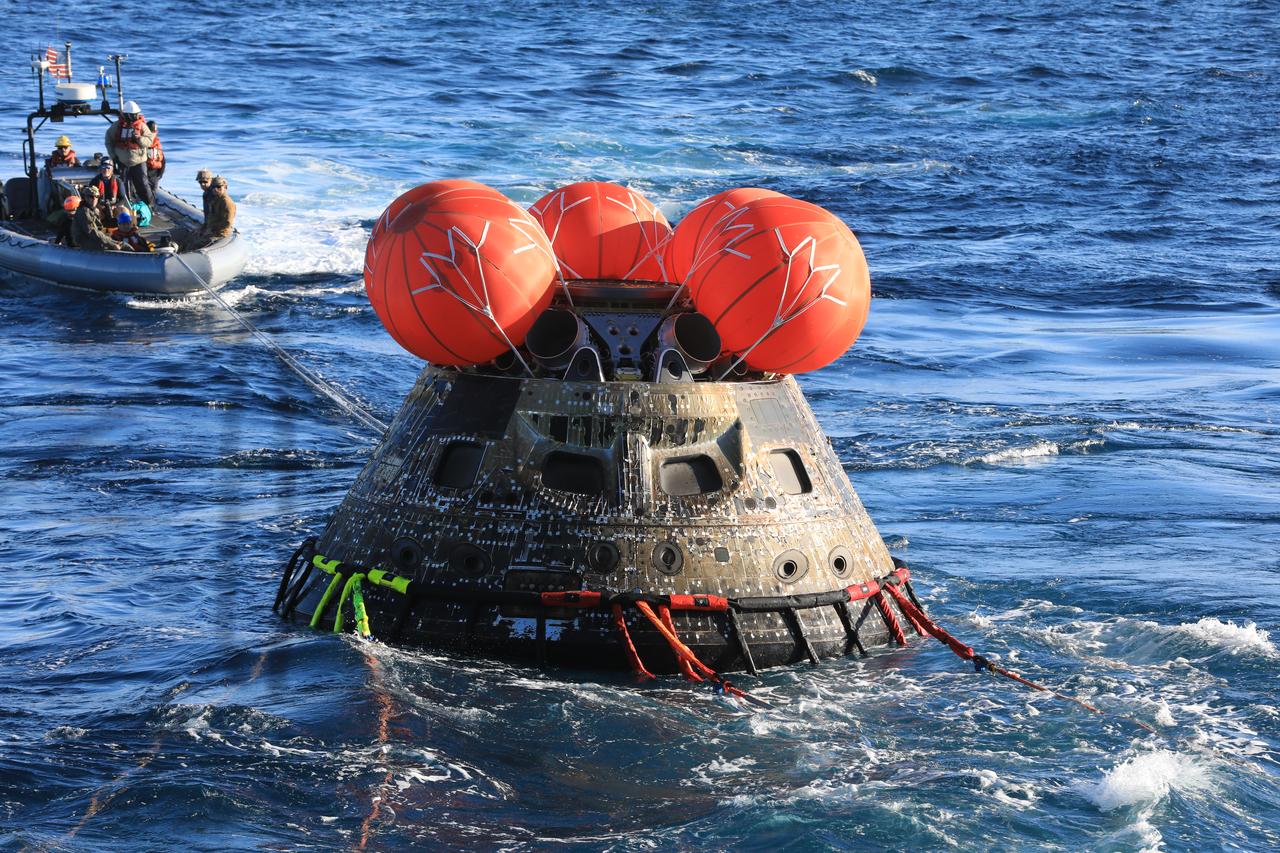
NASA’s Orion spacecraft for the Artemis I mission was successfully recovered inside the well deck of the USS Portland on Dec. 11, 2022 off the coast of Baja California. After launching atop the Space Launch System rocket on Nov. 16, 2022 from the agency’s Kennedy Space Center in Florida, Orion spent 25.5 days in space before returning to Earth, completing the Artemis I mission.
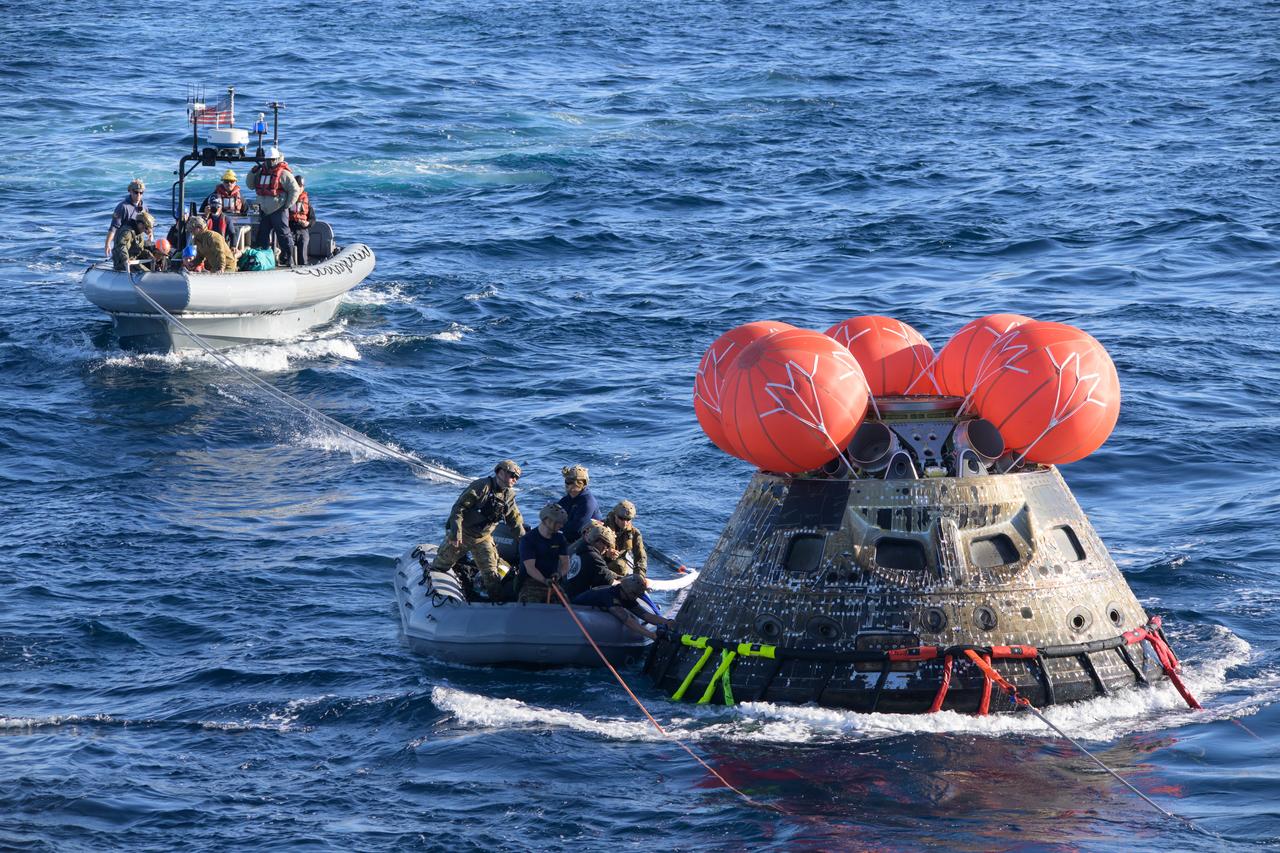
After splashing down at 12:40 p.m. EST on Dec. 11, 2022, U.S. Navy divers help recover the Orion Spacecraft for the Artemis I mission. NASA, the Navy and other Department of Defense partners worked together to secure the spacecraft inside the well deck of USS Portland approximately five hours after Orion splashed down in the Pacific Ocean off the coast of California.
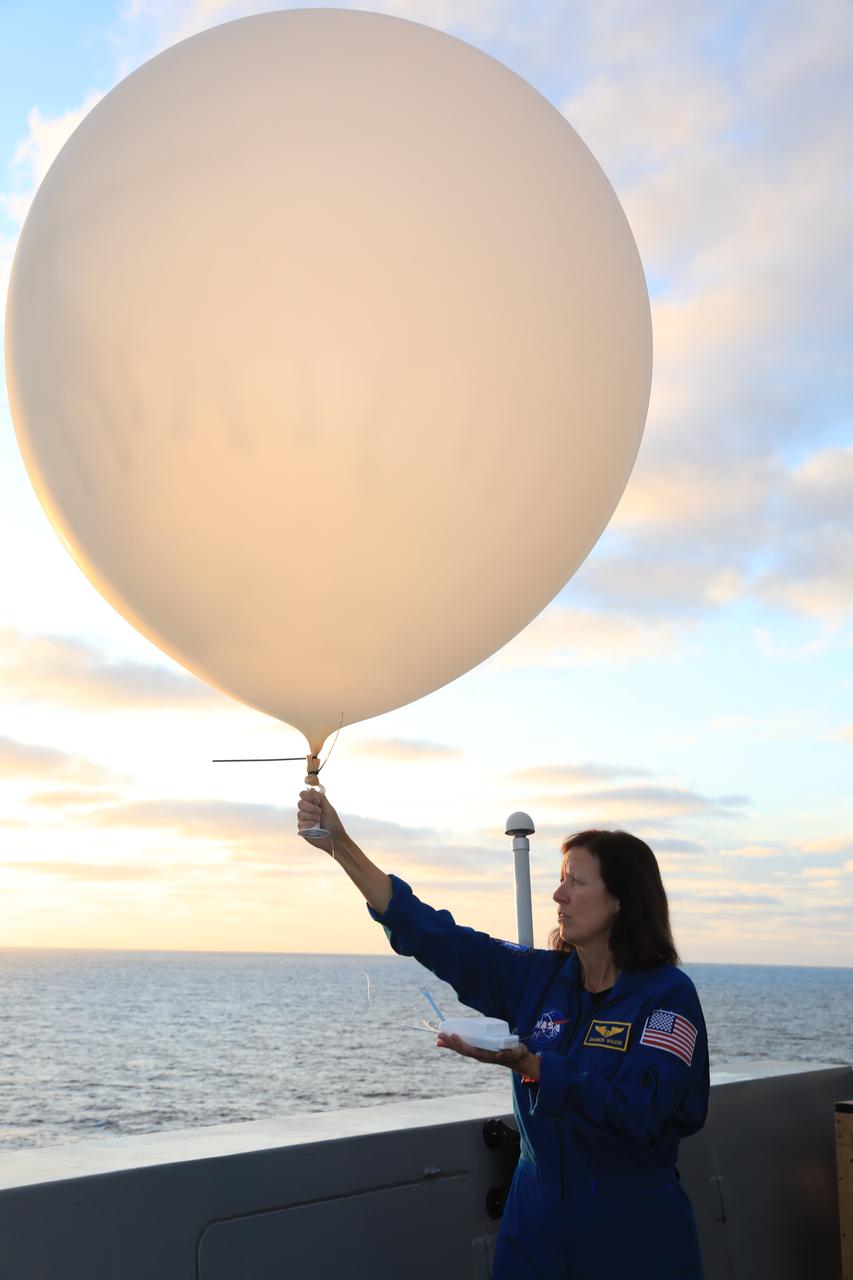
Astronaut Shannon Walker prepares to release a weather balloon from the deck of the USS Portland alongside members of the U.S. Space Force 45th Weather Squadron ahead of the splashdown of the Orion spacecraft on Dec. 11. NASA's Landing and Recovery team works alongside the DoD to safely recover Orion after Artemis missions to the Moon.
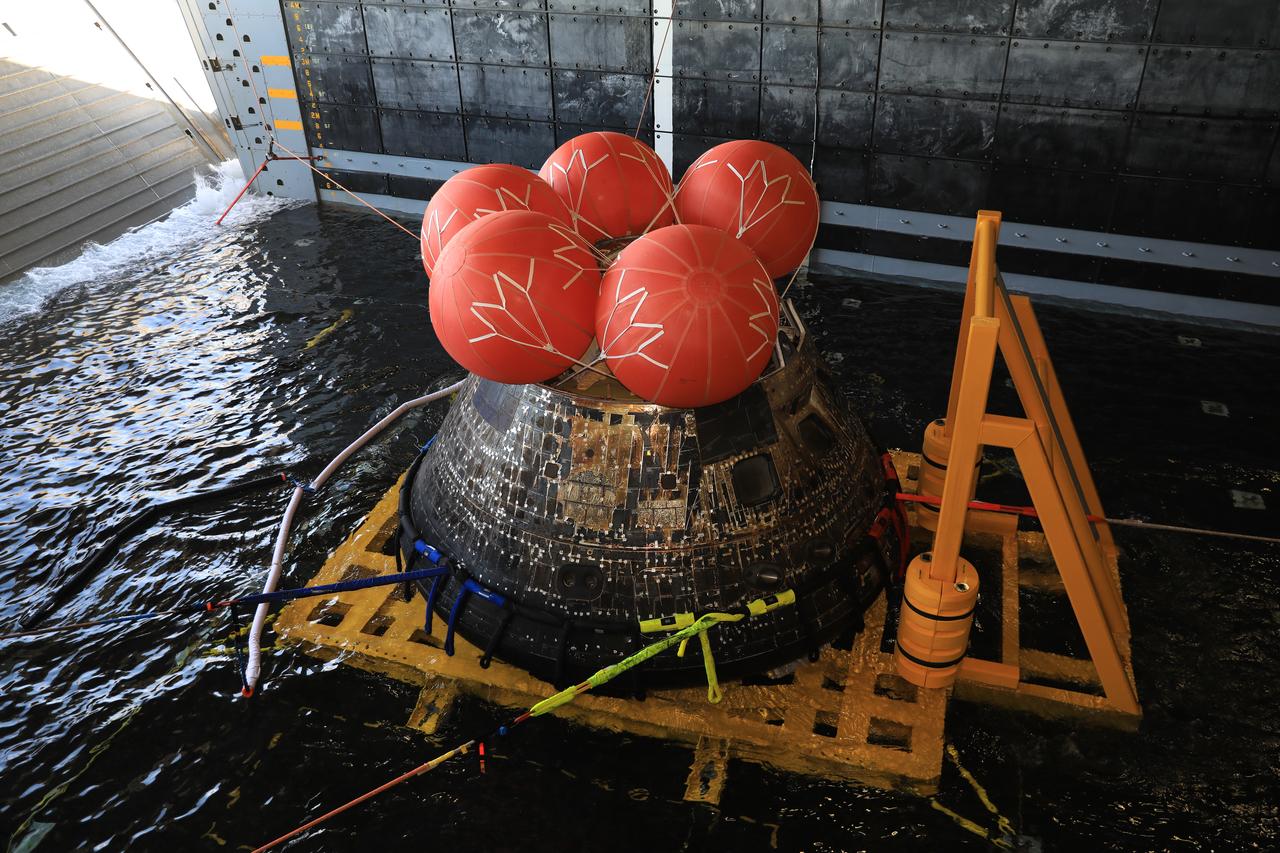
NASA’s Orion spacecraft for the Artemis I mission was successfully recovered inside the well deck of the USS Portland on Dec. 11, 2022 off the coast of Baja California. After launching atop the Space Launch System rocket on Nov. 16, 2022 from the agency’s Kennedy Space Center in Florida, Orion spent 25.5 days in space before returning to Earth, completing the Artemis I mission.
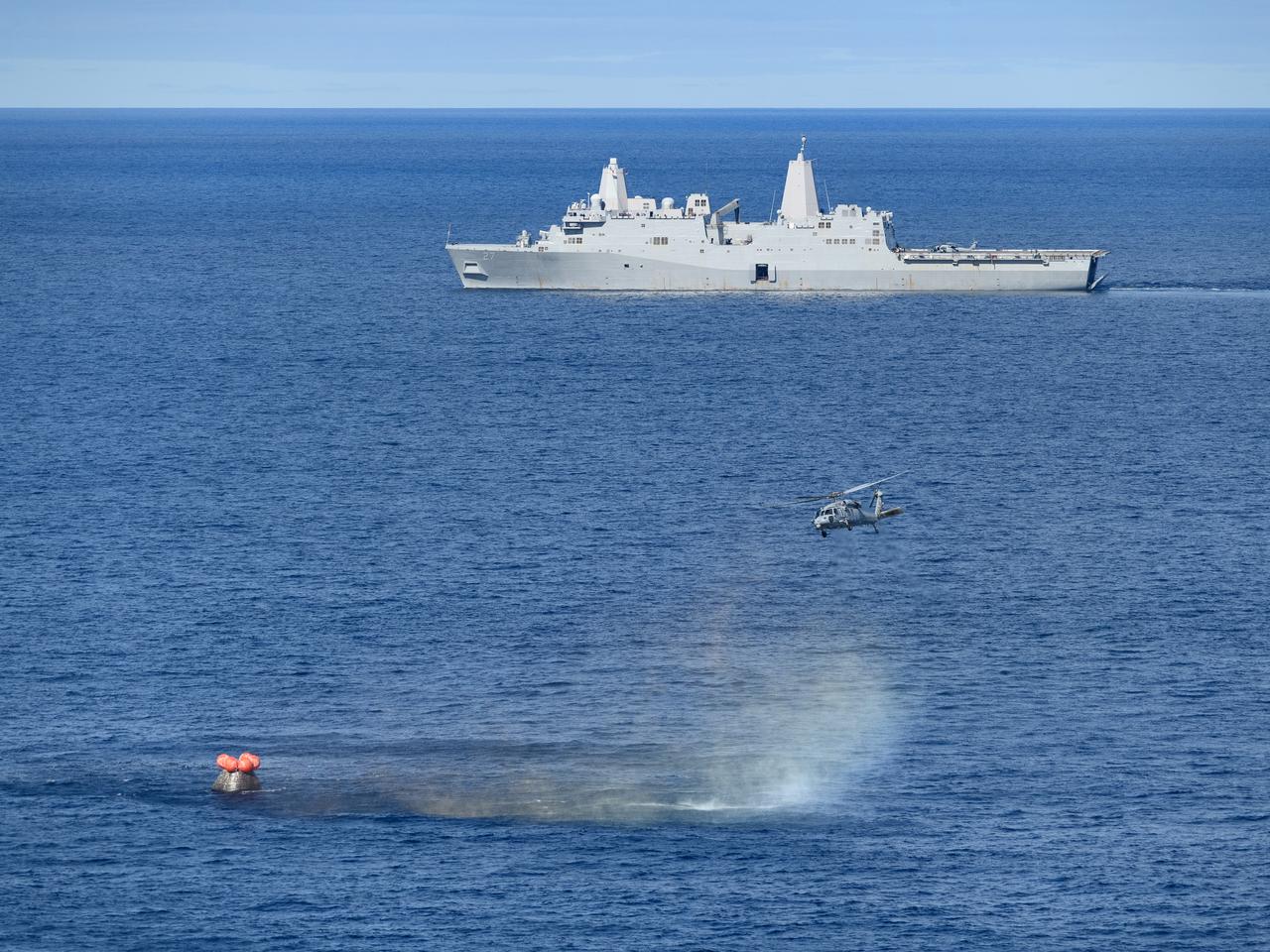
At 12:40 p.m. EST, Dec. 11, 2022, NASA’s Orion spacecraft for the Artemis I mission splashed down in the Pacific Ocean with the USS Portland seen in the distance after a 25.5 day mission to the Moon. Orion will be recovered by NASA’s Landing and Recovery team, U.S. Navy and Department of Defense partners aboard the USS Portland.

Astronaut Shannon Walker prepares to release a weather balloon from the deck of the USS Portland alongside members of the U.S. Space Force 45th Weather Squadron ahead of the splashdown of the Orion spacecraft on Dec. 11. NASA's Landing and Recovery team works alongside the DoD to safely recover Orion after Artemis missions to the Moon.
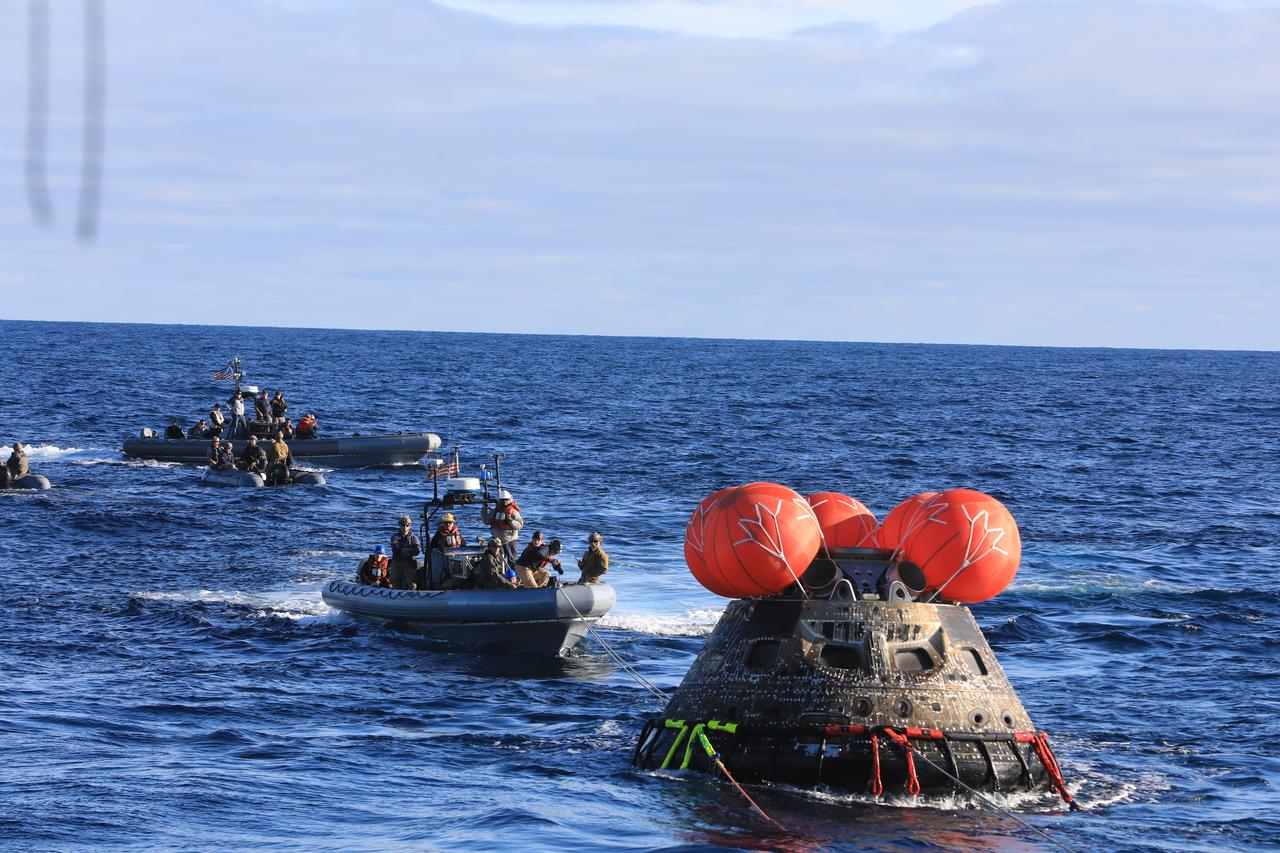
NASA’s Orion spacecraft for the Artemis I mission was successfully recovered inside the well deck of the USS Portland on Dec. 11, 2022 off the coast of Baja California. After launching atop the Space Launch System rocket on Nov. 16, 2022 from the agency’s Kennedy Space Center in Florida, Orion spent 25.5 days in space before returning to Earth, completing the Artemis I mission.
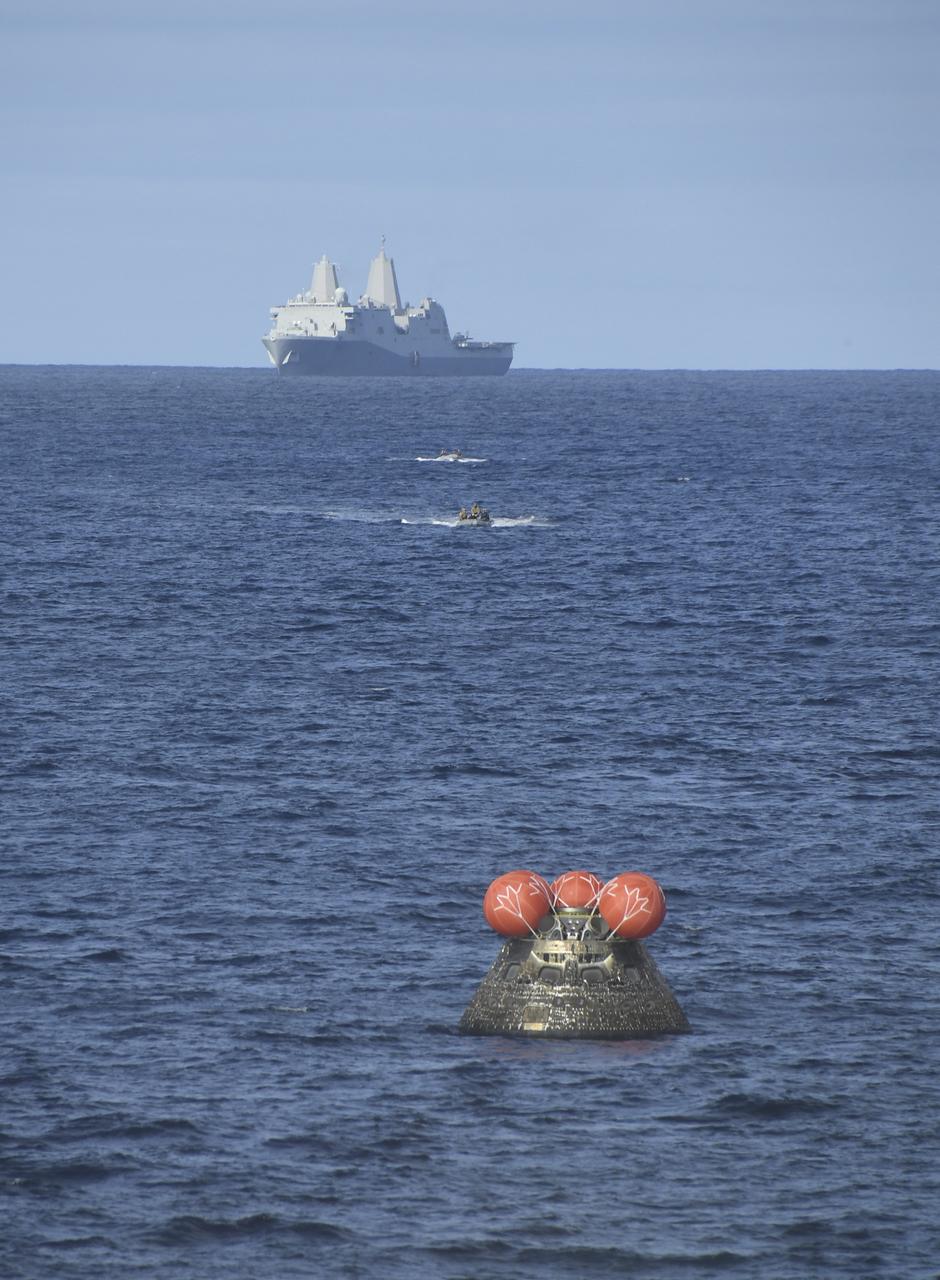
At 12:40 p.m. EST, Dec. 11, 2022, NASA’s Orion spacecraft for the Artemis I mission splashed down in the Pacific Ocean with the USS Portland seen in the distance after a 25.5 day mission to the Moon. Orion will be recovered by NASA’s Landing and Recovery team, U.S. Navy and Department of Defense partners aboard the USS Portland.
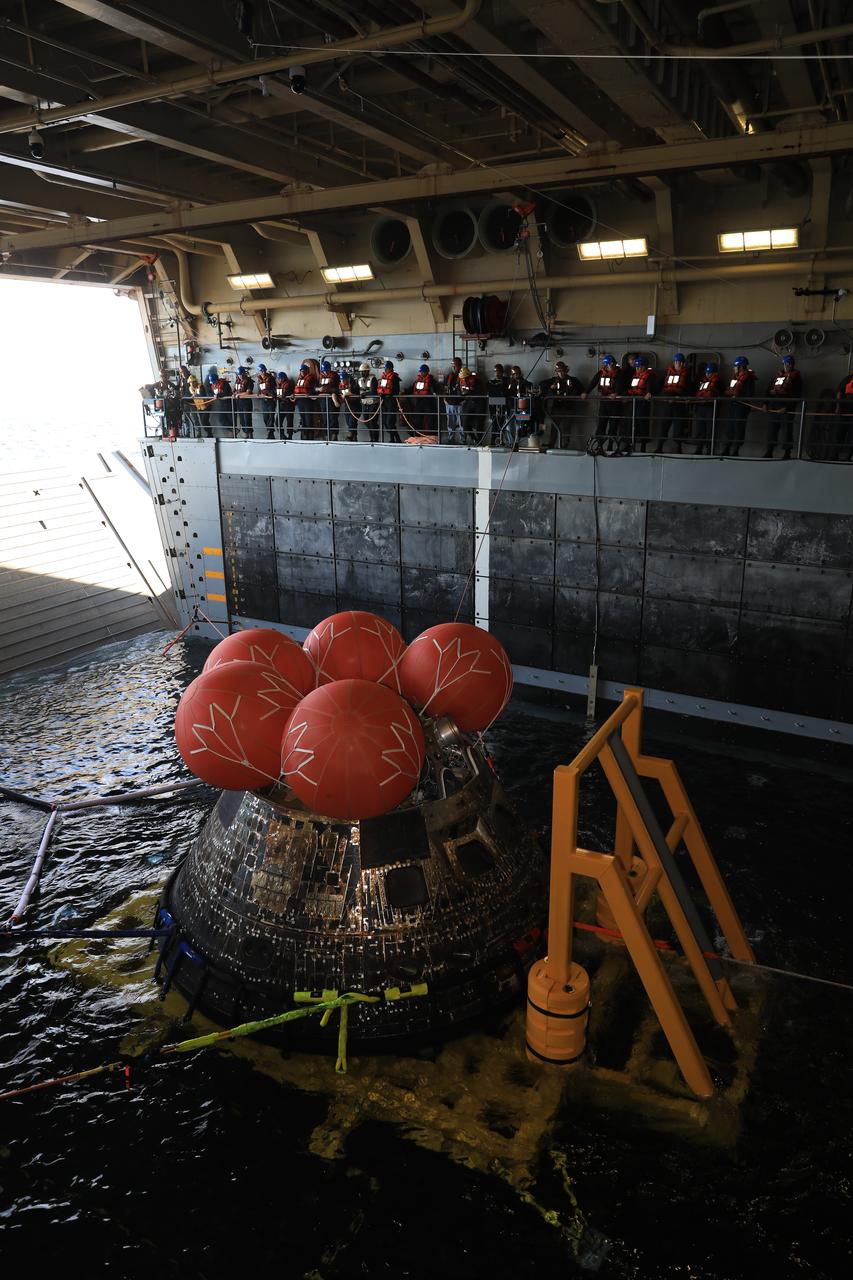
NASA’s Orion spacecraft for the Artemis I mission was successfully recovered inside the well deck of the USS Portland on Dec. 11, 2022 off the coast of Baja California. After launching atop the Space Launch System rocket on Nov. 16, 2022 from the agency’s Kennedy Space Center in Florida, Orion spent 25.5 days in space before returning to Earth, completing the Artemis I mission.
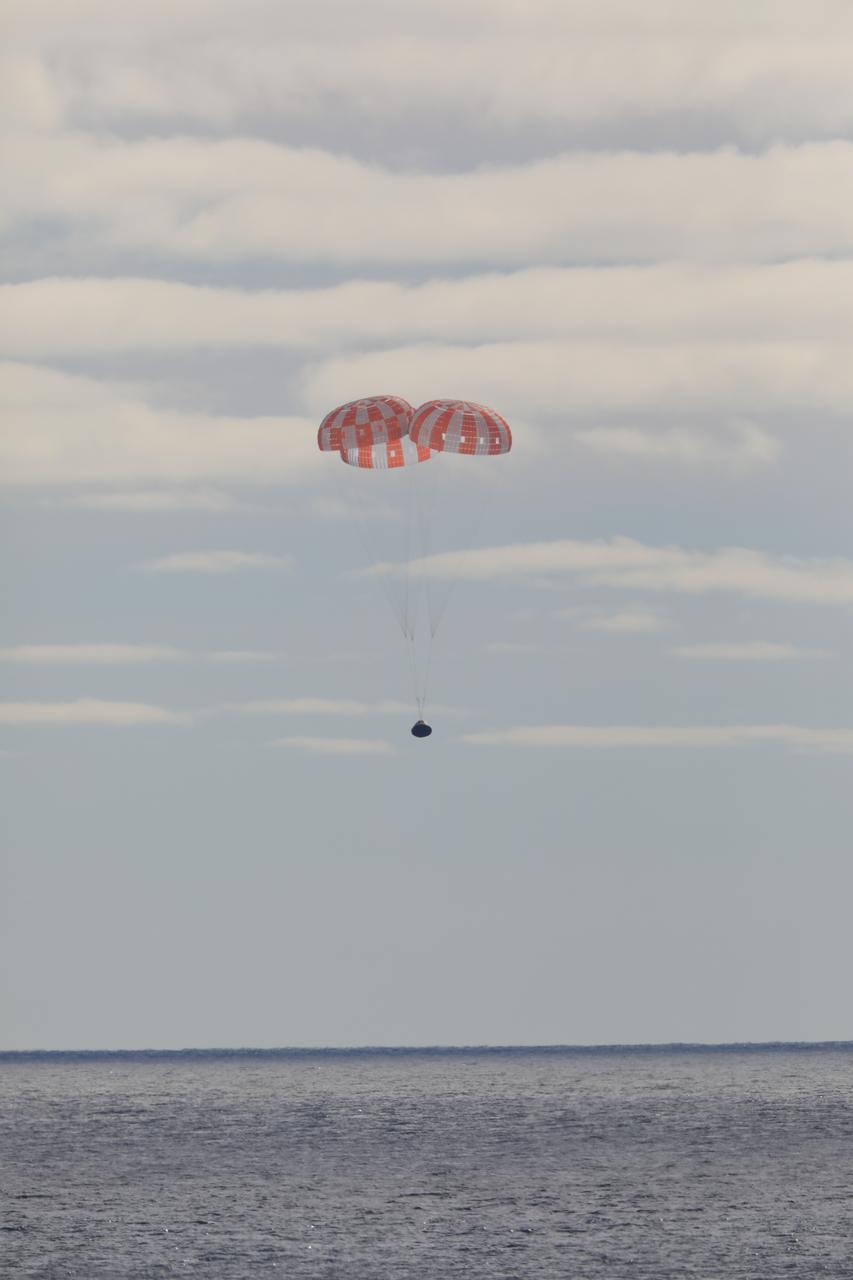
At 12:40 p.m. EST, Dec. 11, 2022, NASA’s Orion spacecraft for the Artemis I mission splashed down in the Pacific Ocean after a 25.5 day mission to the Moon. Orion will be recovered by NASA’s Landing and Recovery team, U.S. Navy and Department of Defense partners aboard the USS Portland.
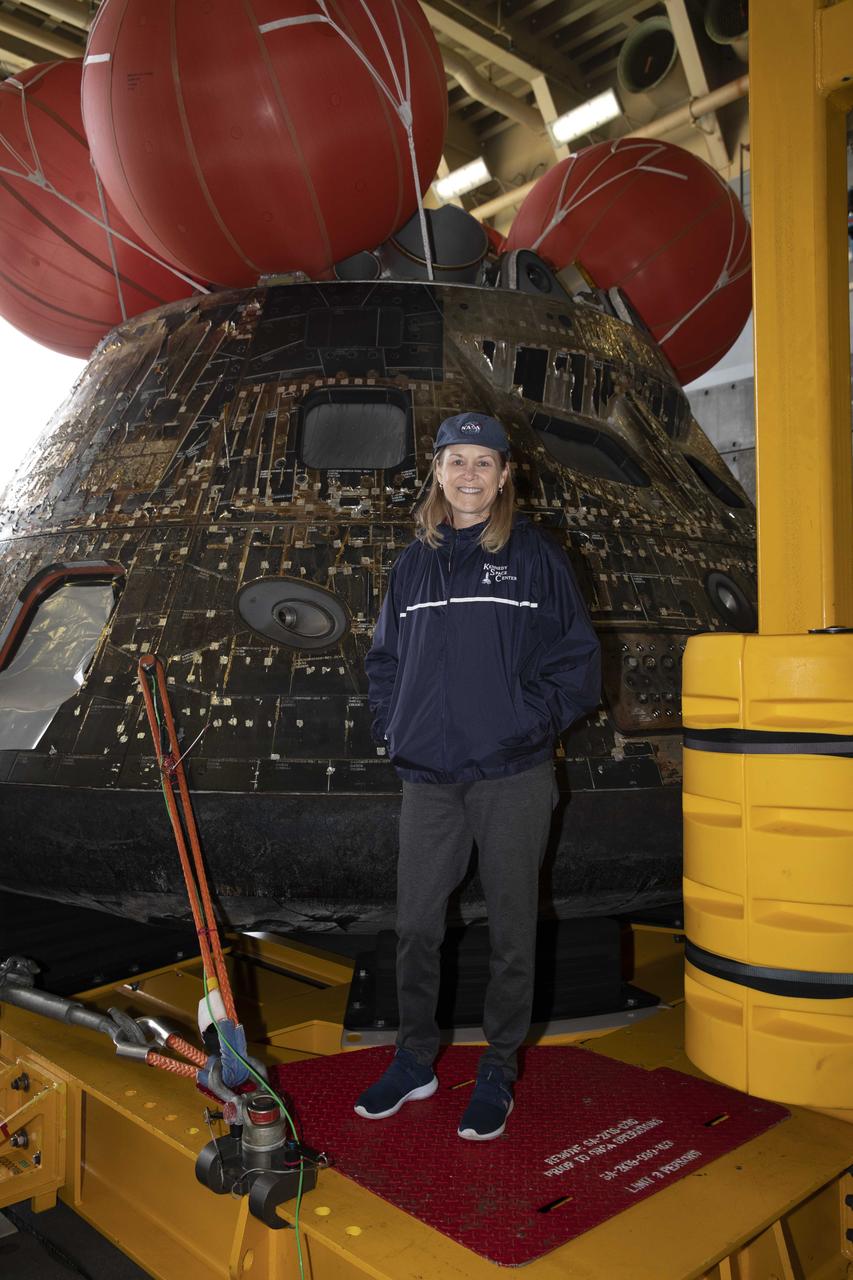
Kennedy Space Center Director Janet Petro stands near the Artemis I Orion spacecraft inside the well deck of the USS Portland at U.S. Naval Base San Diego on Dec. 13, 2022. The Orion spacecraft is secured inside the well deck after splashing down at 12:40 p.m. EST on Dec. 11, 2022. U.S. Navy divers helped recover the Orion spacecraft. NASA, the Navy and other Department of Defense partners worked together to secure the spacecraft inside the ship’s well deck approximately five hours after Orion splashed down in the Pacific Ocean off the coast of Baja, California.
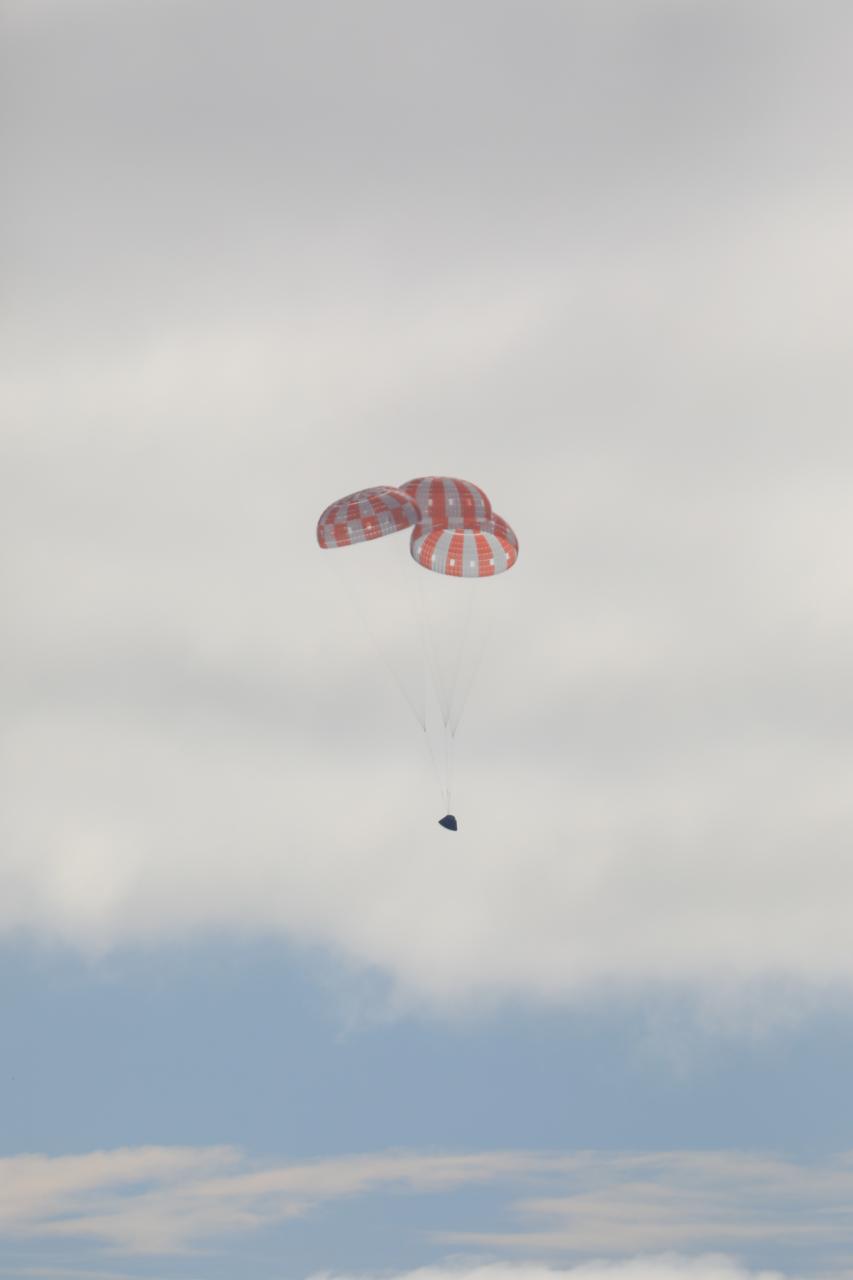
At 12:40 p.m. EST, Dec. 11, 2022, NASA’s Orion spacecraft for the Artemis I mission splashed down in the Pacific Ocean after a 25.5 day mission to the Moon. Orion will be recovered by NASA’s Landing and Recovery team, U.S. Navy and Department of Defense partners aboard the USS Portland.
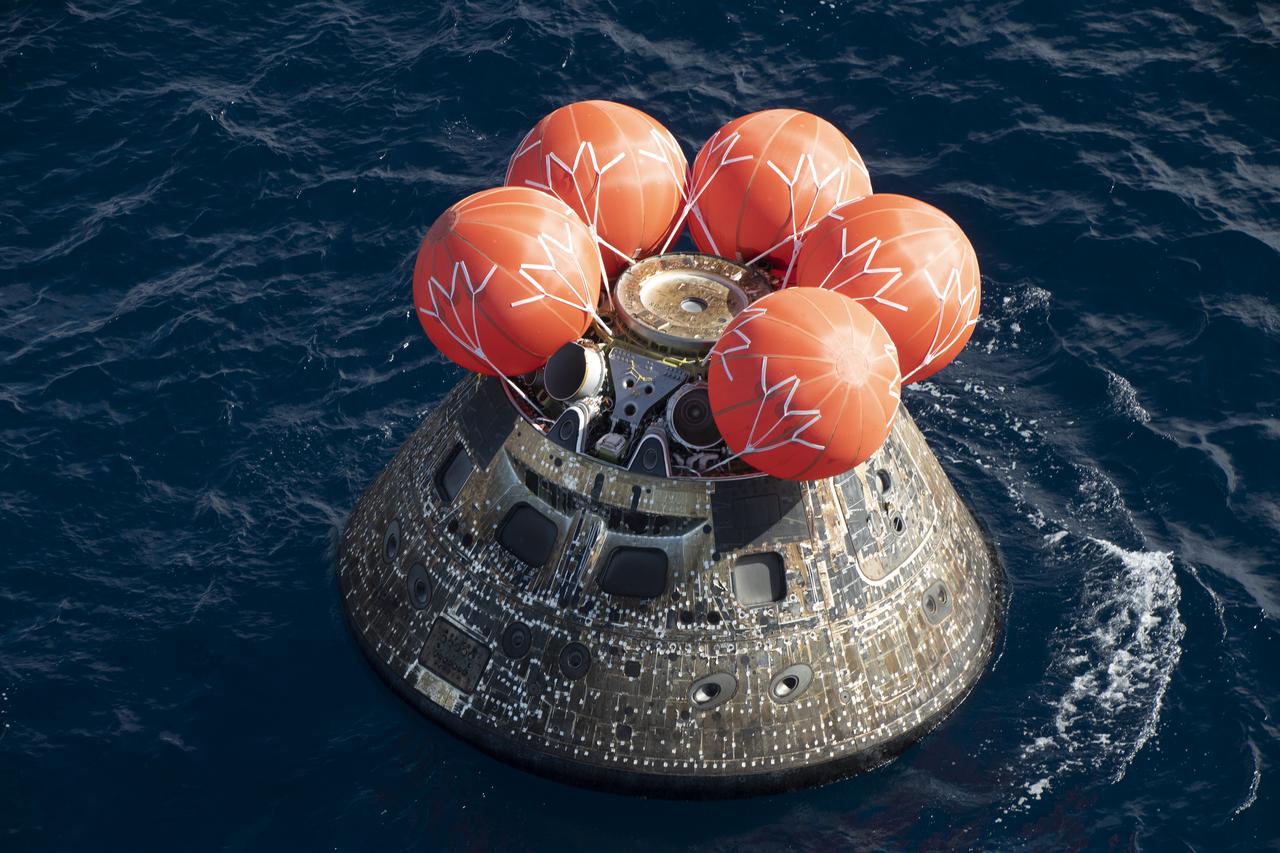
At 12:40 p.m. EST, Dec. 11, 2022, NASA’s Orion spacecraft for the Artemis I mission splashed down in the Pacific Ocean after a 25.5 day mission to the Moon. Orion will be recovered by NASA’s Landing and Recovery team, U.S. Navy and Department of Defense partners aboard the USS Portland.
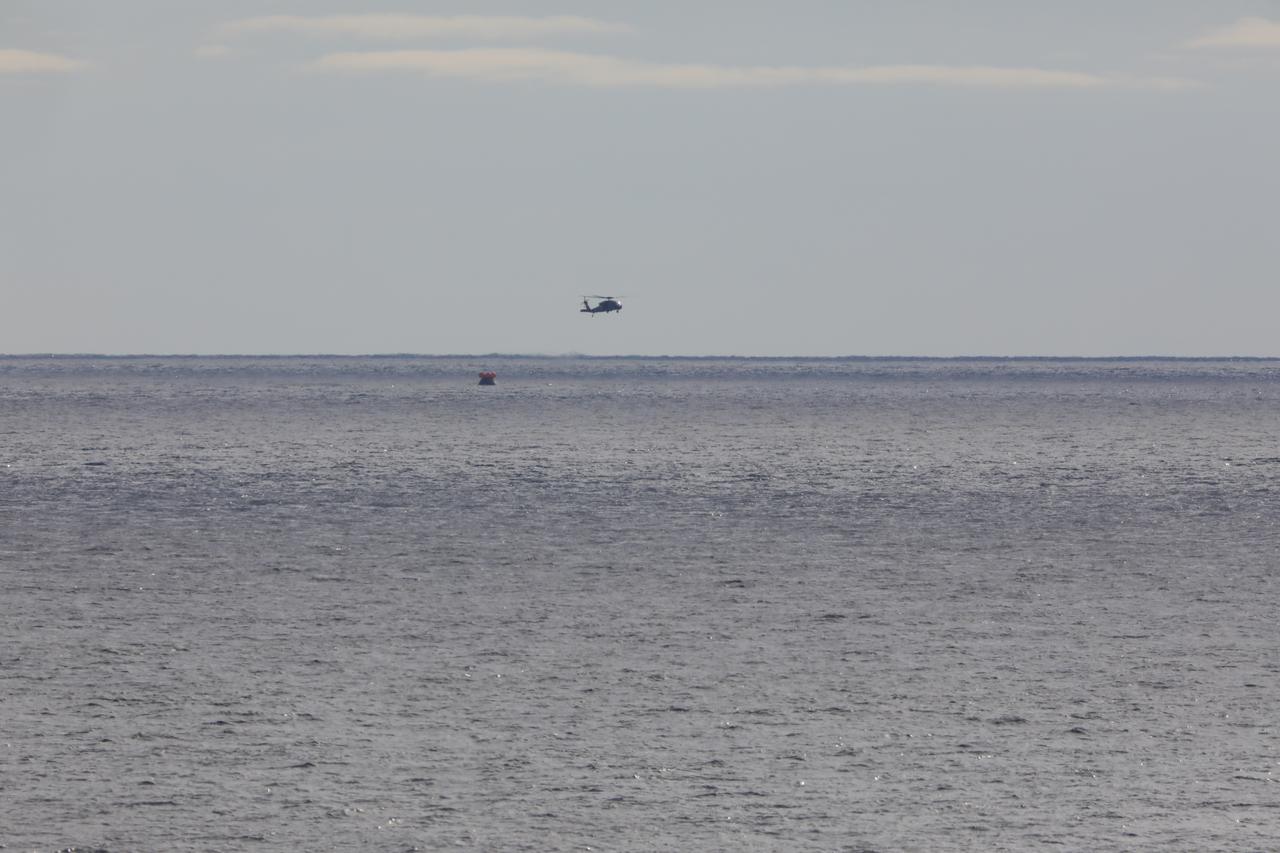
Helicopters and Navy divers surround NASA’s Orion spacecraft after it splashed down at 12:40 p.m. EST Dec. 11, 2022 in the Pacific Ocean after a 25.5 day mission to the Moon. Orion will be recovered by NASA’s Landing and Recovery team, U.S. Navy and Department of Defense partners aboard the USS Portland.
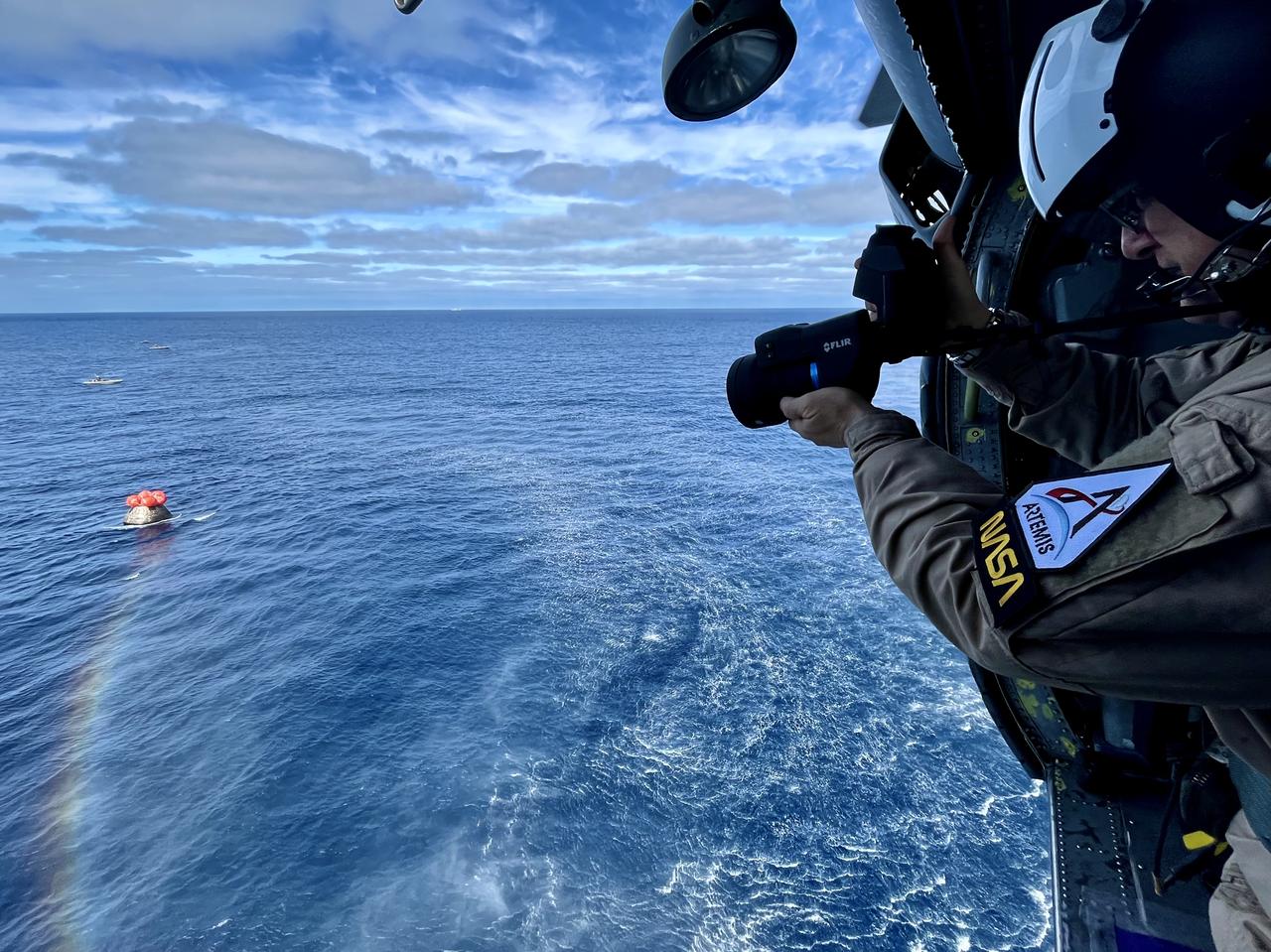
NASA’s Orion spacecraft for the Artemis I mission was successfully recovered inside the well deck of the USS Portland on Dec. 11, 2022 off the coast of Baja California. After launching atop the Space Launch System rocket on Nov. 16, 2022 from the agency’s Kennedy Space Center in Florida, Orion spent 25.5 days in space before returning to Earth, completing the Artemis I mission.
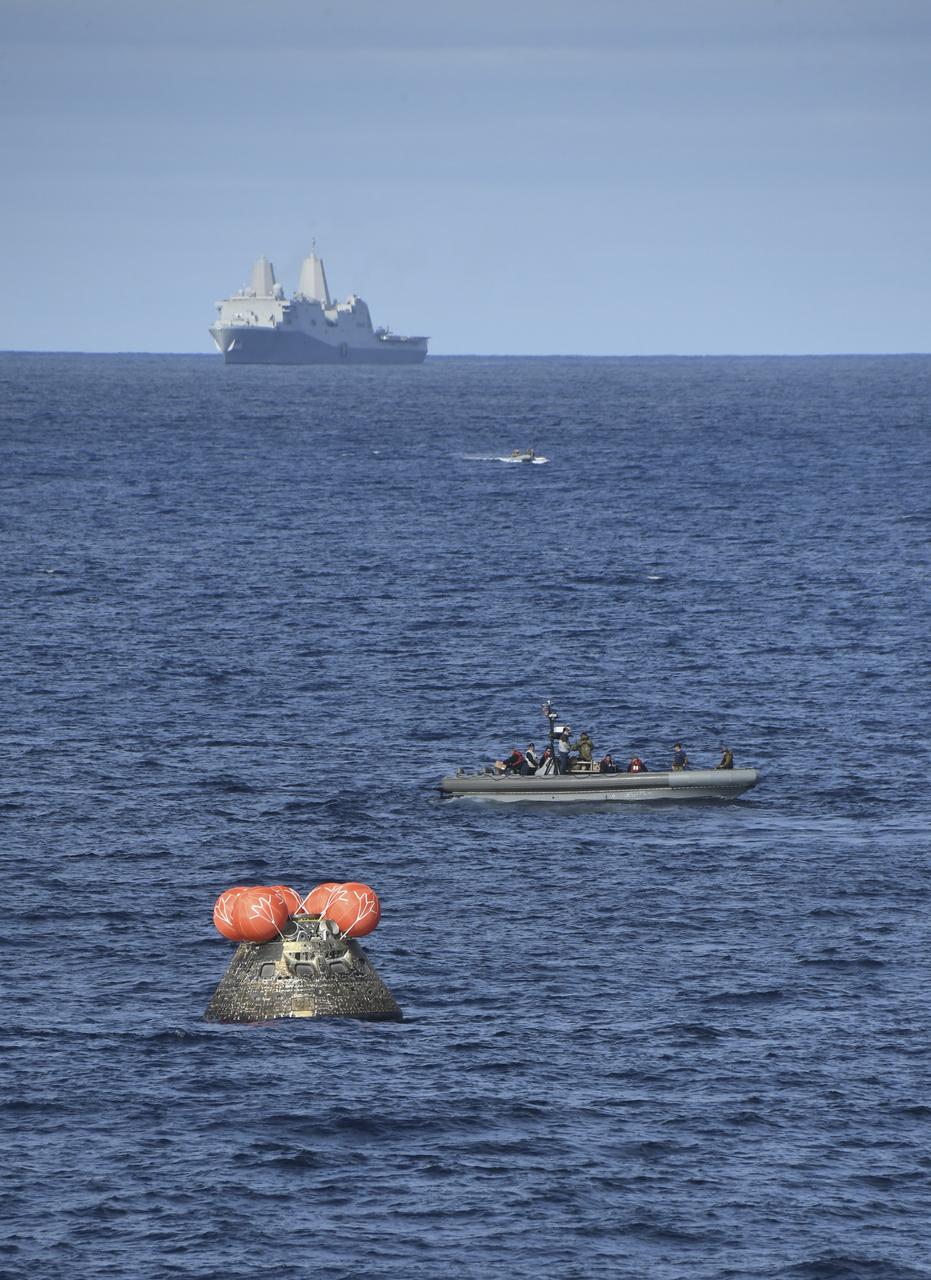
At 12:40 p.m. EST, Dec. 11, 2022, NASA’s Orion spacecraft for the Artemis I mission splashed down in the Pacific Ocean with the USS Portland seen in the distance after a 25.5 day mission to the Moon. Orion will be recovered by NASA’s Landing and Recovery team, U.S. Navy and Department of Defense partners aboard the USS Portland.
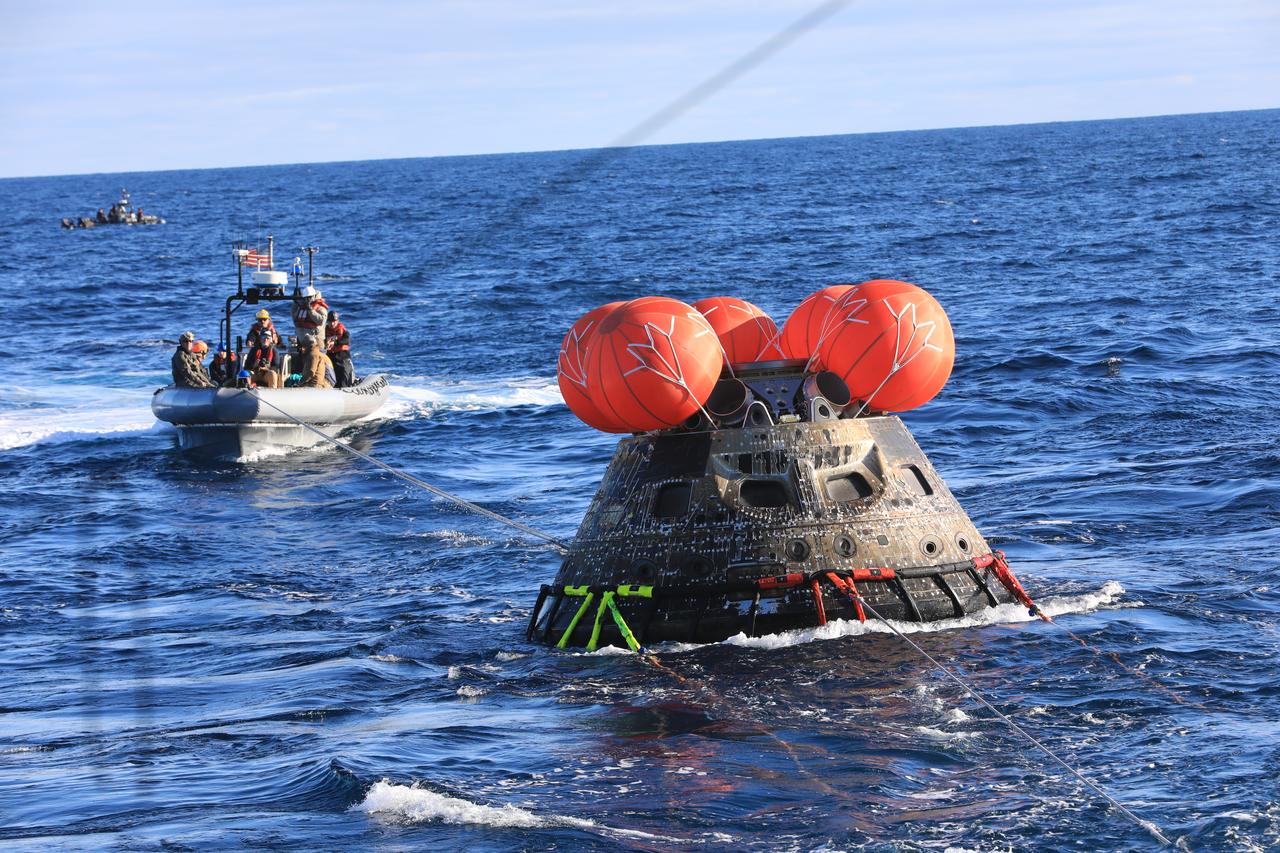
NASA’s Orion spacecraft for the Artemis I mission was successfully recovered inside the well deck of the USS Portland on Dec. 11, 2022 off the coast of Baja California. After launching atop the Space Launch System rocket on Nov. 16, 2022 from the agency’s Kennedy Space Center in Florida, Orion spent 25.5 days in space before returning to Earth, completing the Artemis I mission.
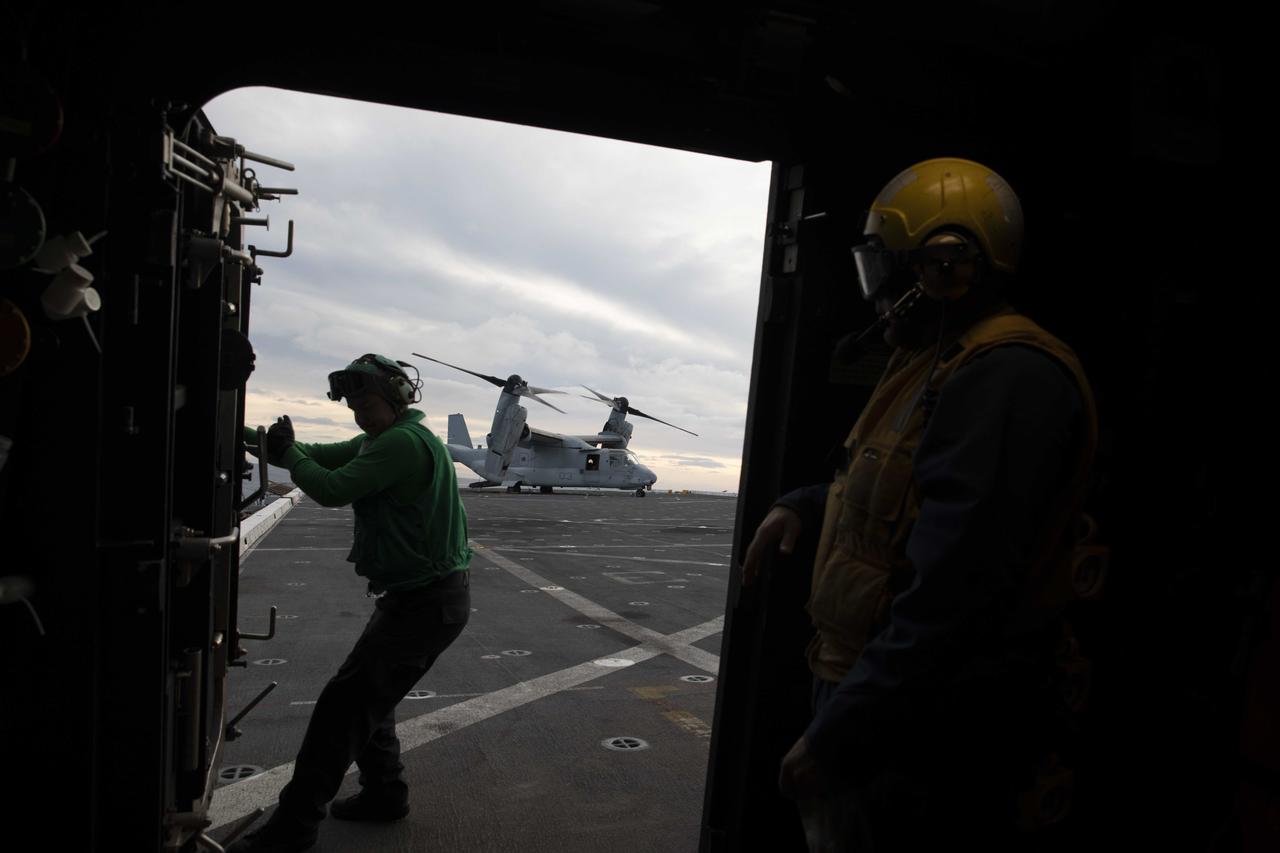
A member of the U.S. Navy helicopter team aboard USS Portland opens a door to the flight deck after a V-22 Osprey lands prior to NASA’s Orion splashdown for the Artemis I mission on Dec. 11, 2022.
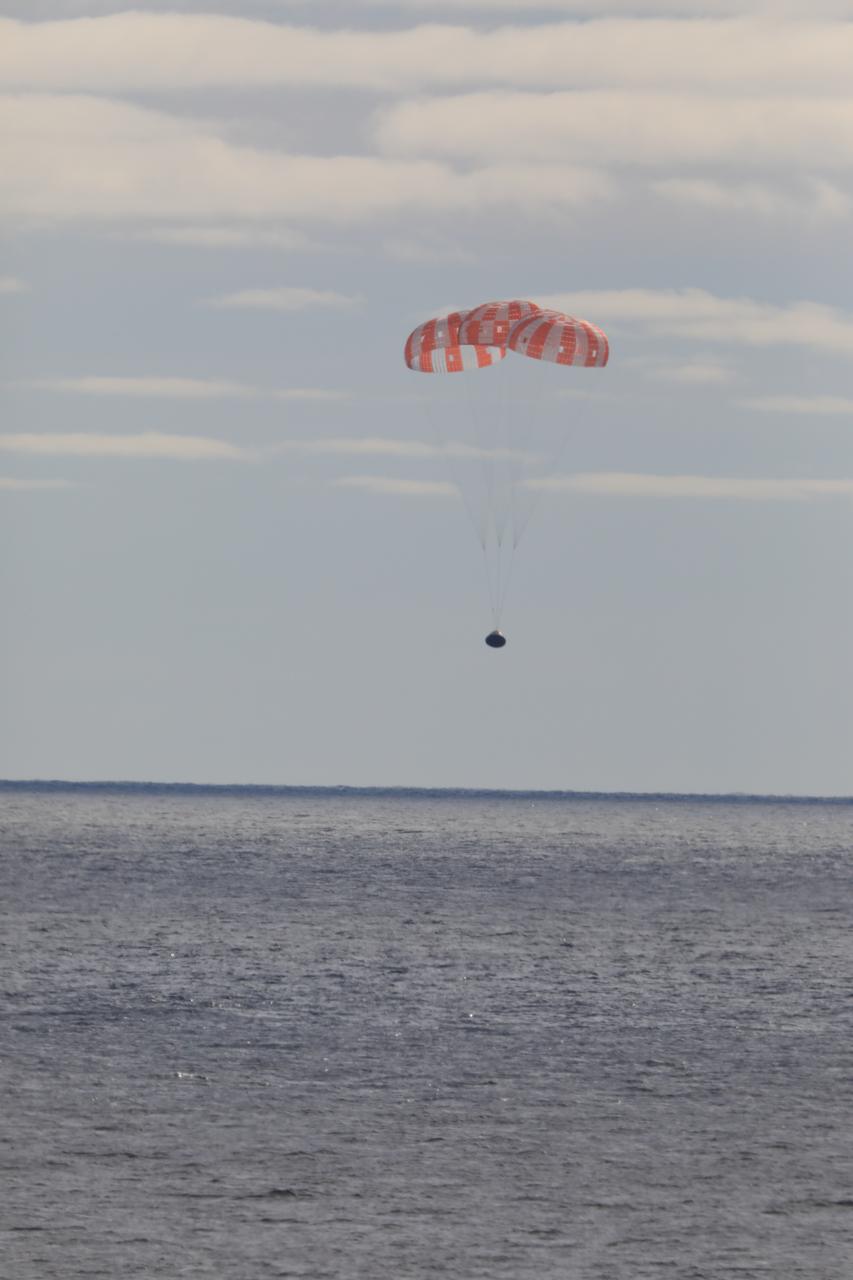
At 12:40 p.m. EST, Dec. 11, 2022, NASA’s Orion spacecraft for the Artemis I mission splashed down in the Pacific Ocean after a 25.5 day mission to the Moon. Orion will be recovered by NASA’s Landing and Recovery team, U.S. Navy and Department of Defense partners aboard the USS Portland.
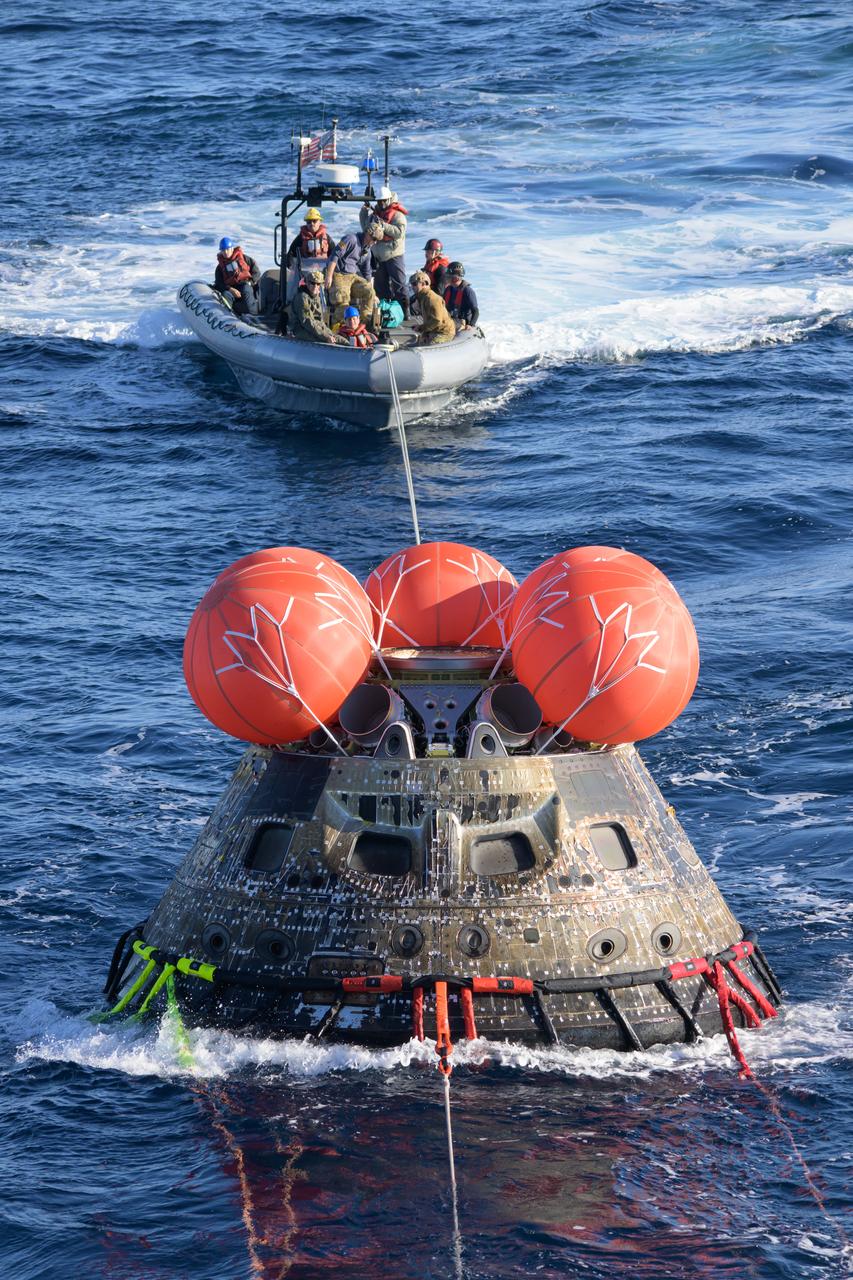
After splashing down at 12:40 p.m. EST on Dec. 11, 2022, U.S. Navy divers help recover the Orion Spacecraft for the Artemis I mission. NASA, the Navy and other Department of Defense partners worked together to secure the spacecraft inside the well deck of USS Portland approximately five hours after Orion splashed down in the Pacific Ocean off the coast of California.
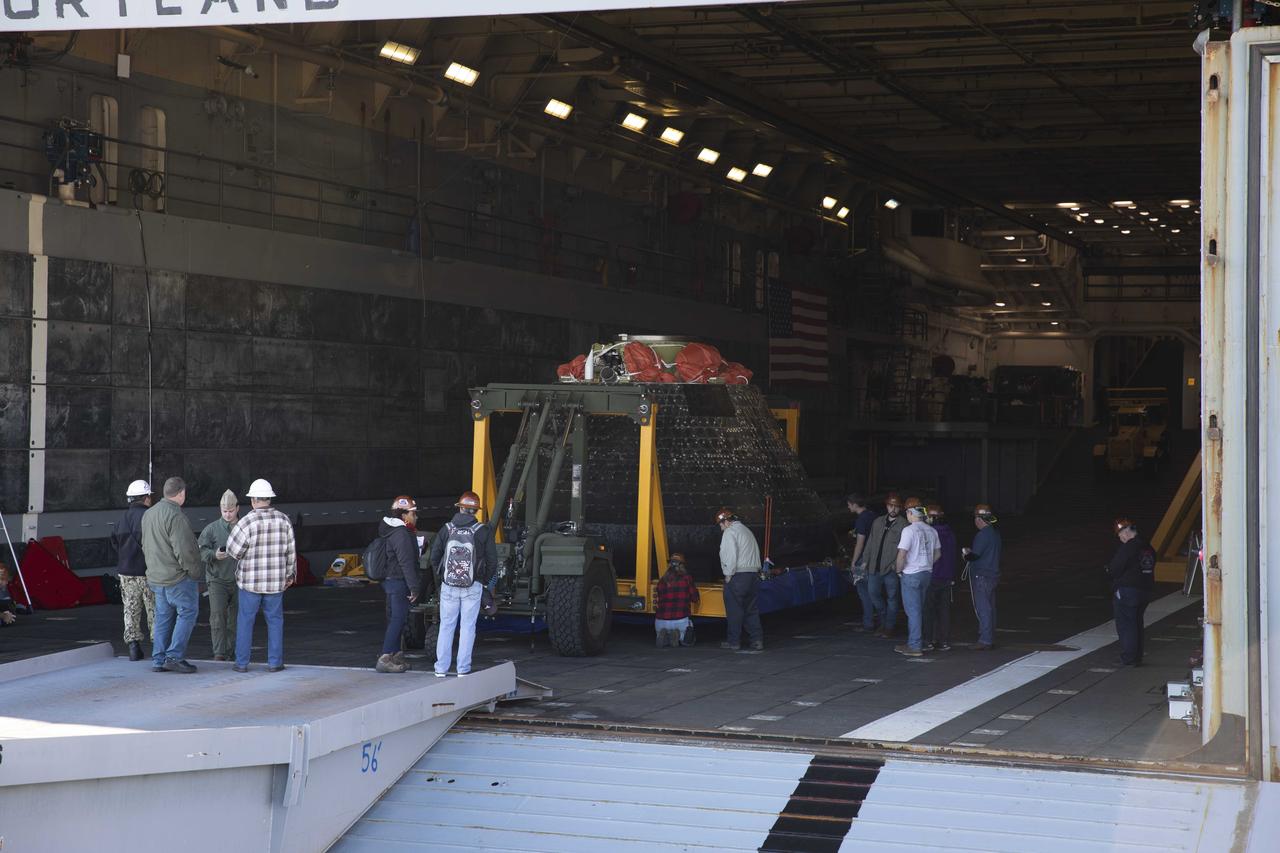
Team members with NASA’s Exploration Ground Systems program successfully removed the Artemis I Orion spacecraft from the USS Portland Dec. 14, after the ship arrived at U.S. Naval Base San Diego.
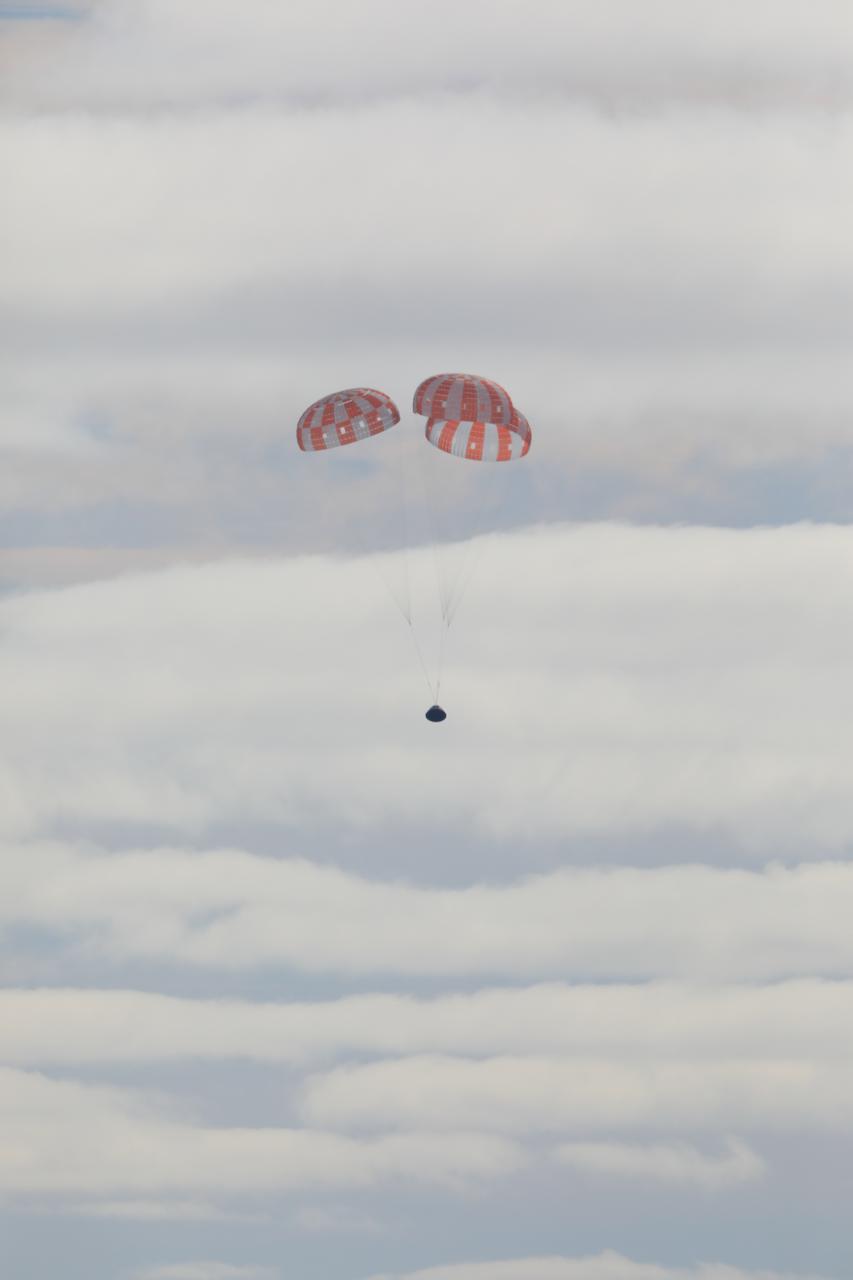
At 12:40 p.m. EST, Dec. 11, 2022, NASA’s Orion spacecraft for the Artemis I mission splashed down in the Pacific Ocean after a 25.5 day mission to the Moon. Orion will be recovered by NASA’s Landing and Recovery team, U.S. Navy and Department of Defense partners aboard the USS Portland.
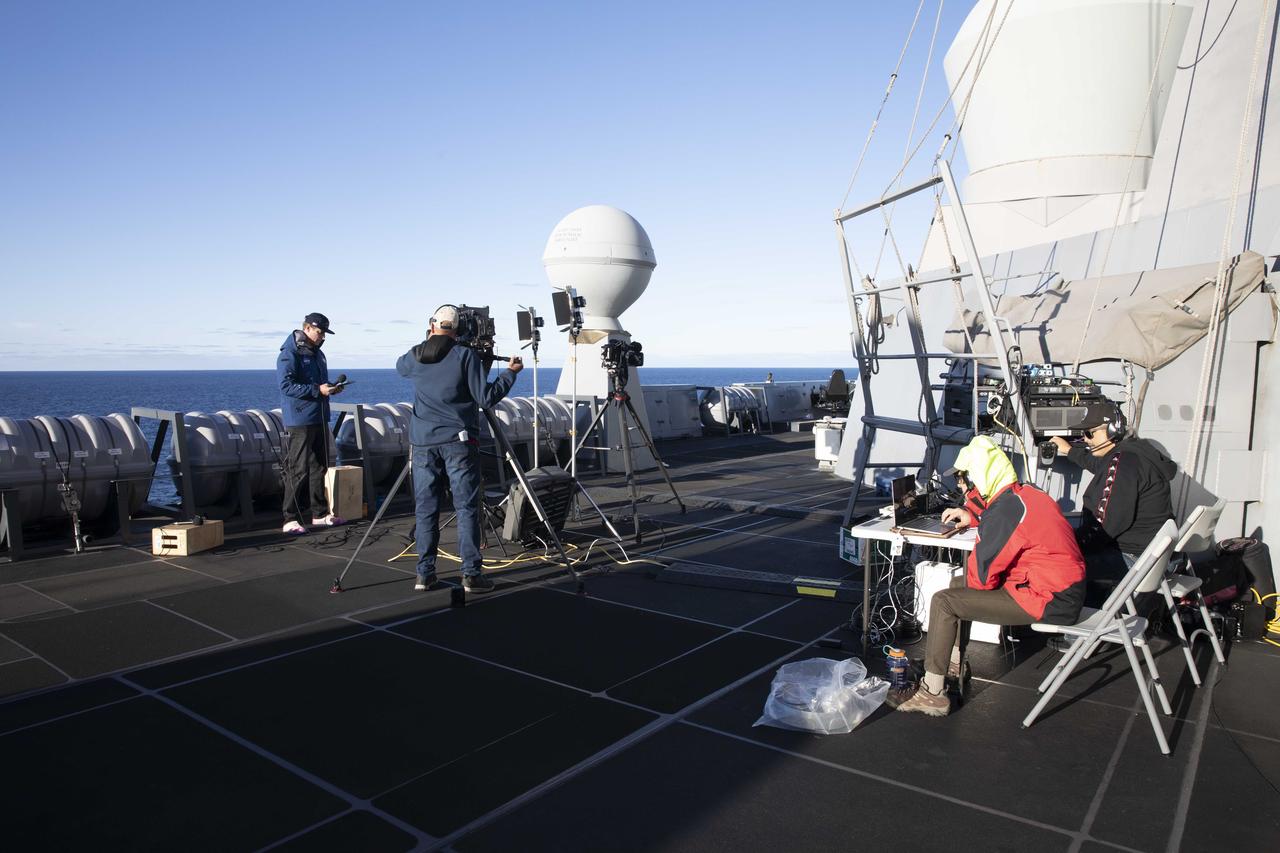
Members of Kennedy Space Center’s public affairs team prepare for live coverage of NASA’s Orion spacecraft’s splashdown for the Artemis I mission while aboard USS Portland. Orion safely splashed down in the Pacific Ocean on Dec. 11, 2022, completing a 25.5 day mission around the Moon and back.
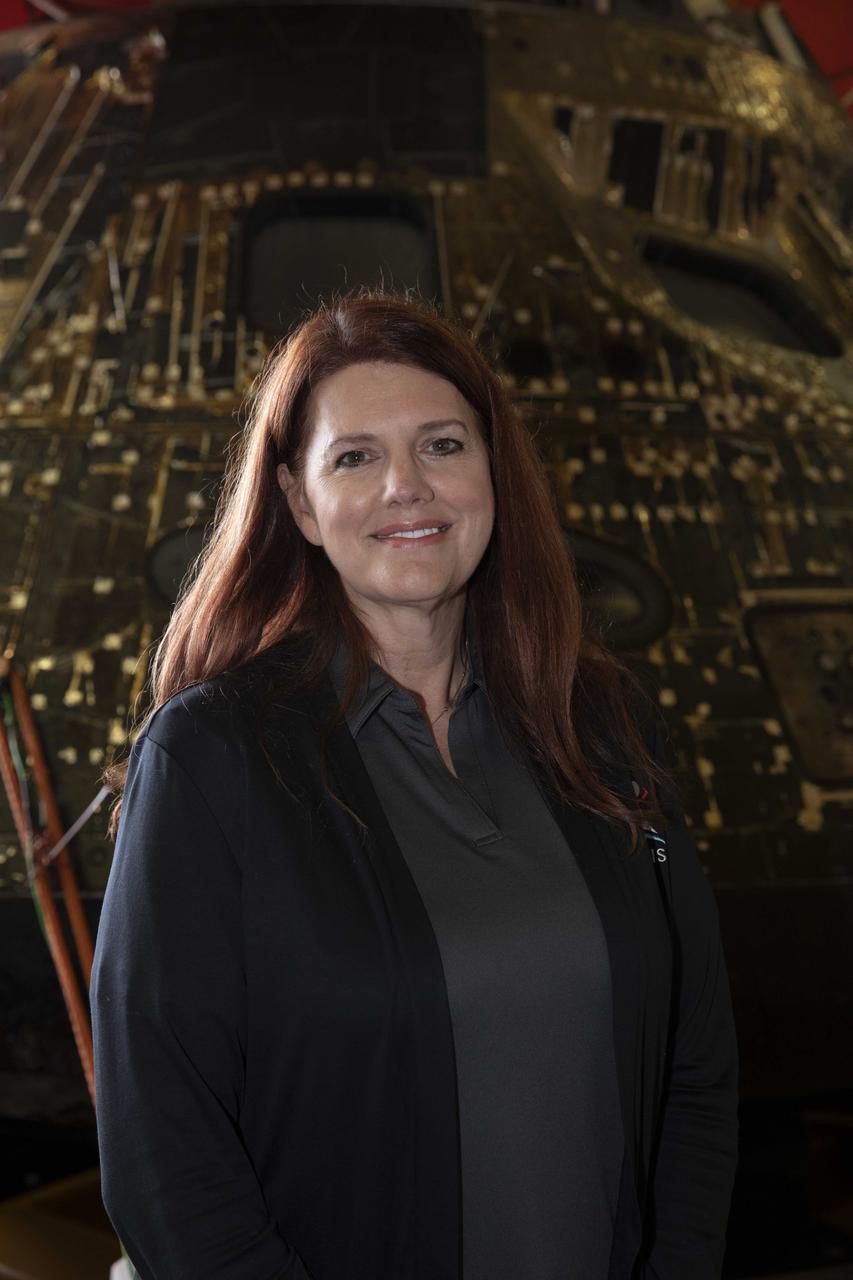
NASA Artemis Launch Director Charlie Blackwell-Thompson, with the Exploration Ground Systems program, stands near the Artemis I Orion spacecraft inside the well deck of the USS Portland at U.S. Naval Base San Diego on Dec. 13, 2022. The Orion spacecraft is secured inside the well deck after splashing down at 12:40 p.m. EST on Dec. 11, 2022. U.S. Navy divers helped recover the Orion spacecraft. NASA, the Navy and other Department of Defense partners worked together to secure the spacecraft inside the ship’s well deck approximately five hours after Orion splashed down in the Pacific Ocean off the coast of Baja, California.
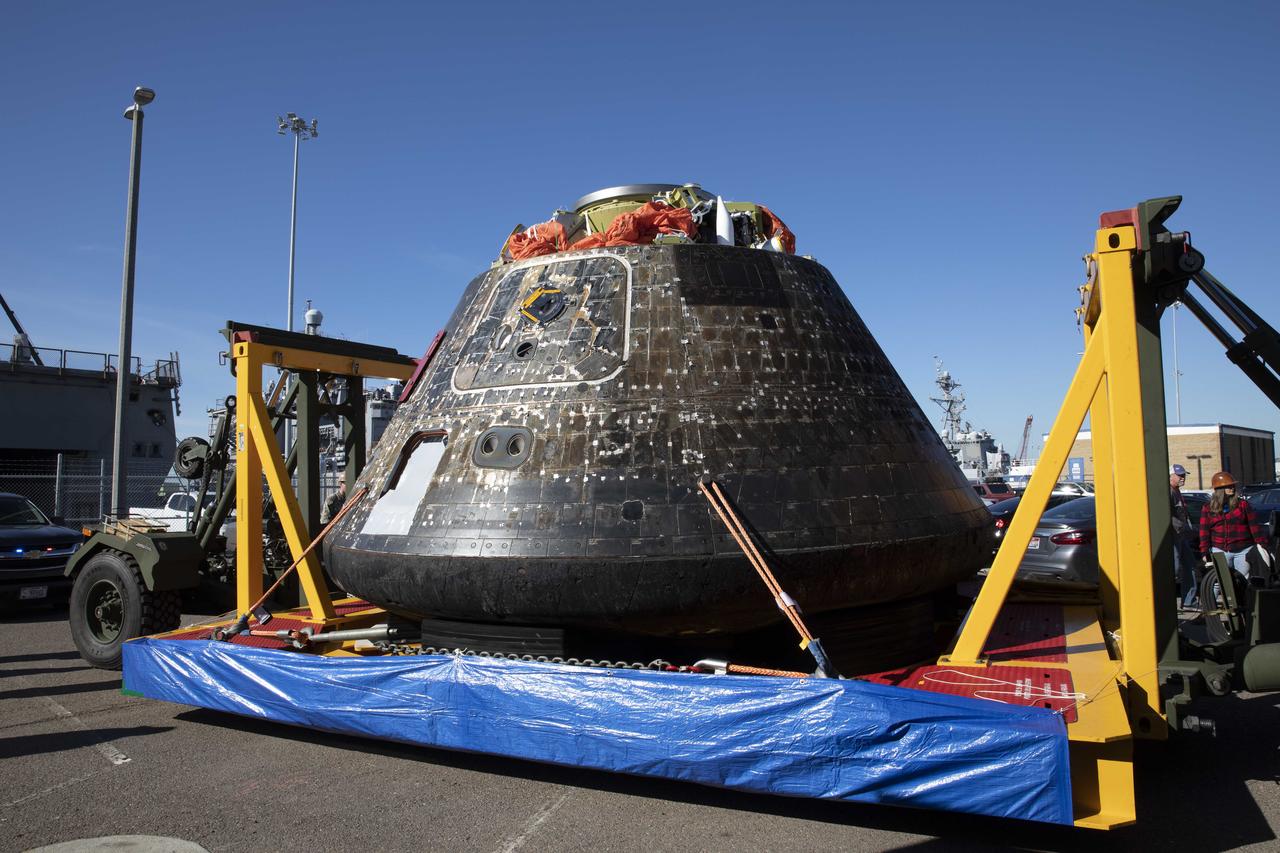
Team members with NASA’s Exploration Ground Systems program successfully removed the Artemis I Orion spacecraft from the USS Portland Dec. 14, after the ship arrived at U.S. Naval Base San Diego.
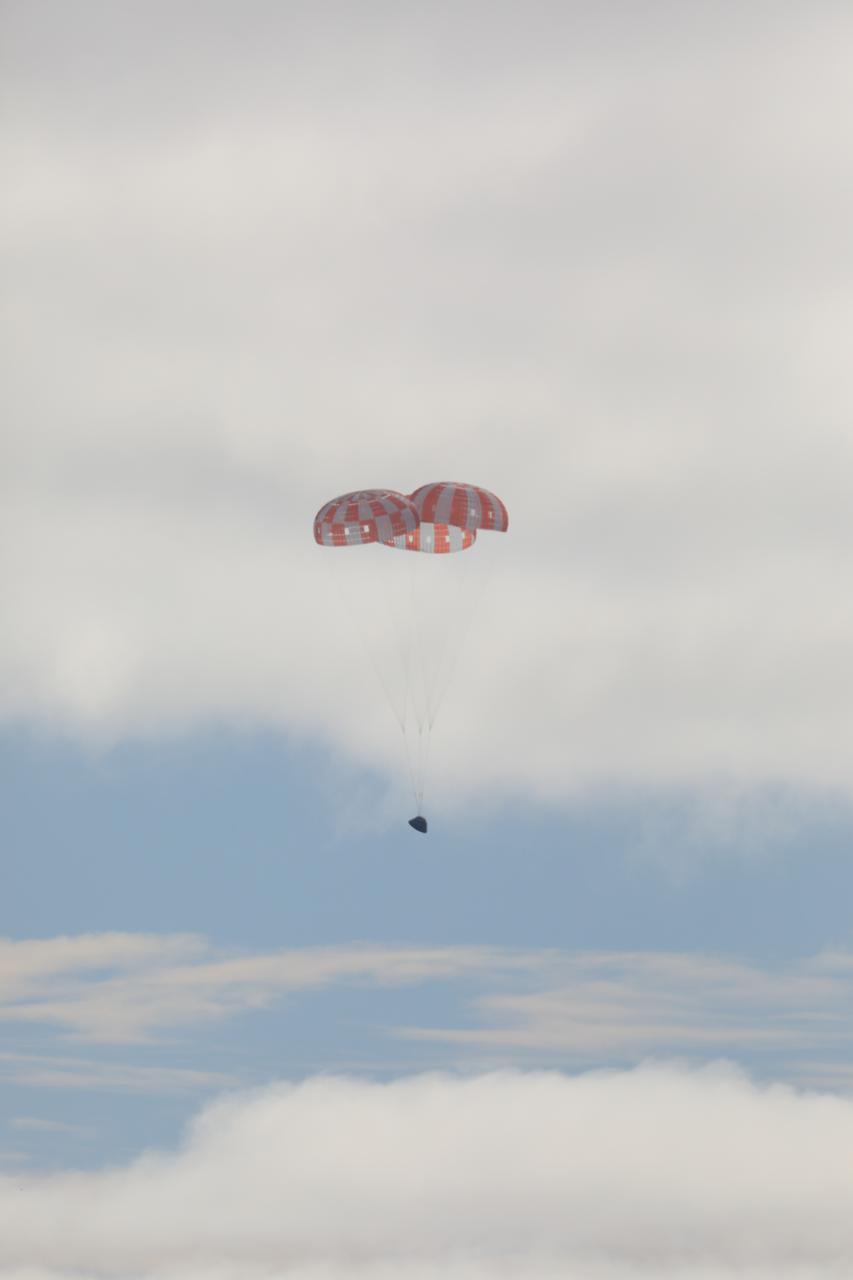
At 12:40 p.m. EST, Dec. 11, 2022, NASA’s Orion spacecraft for the Artemis I mission splashed down in the Pacific Ocean after a 25.5 day mission to the Moon. Orion will be recovered by NASA’s Landing and Recovery team, U.S. Navy and Department of Defense partners aboard the USS Portland.
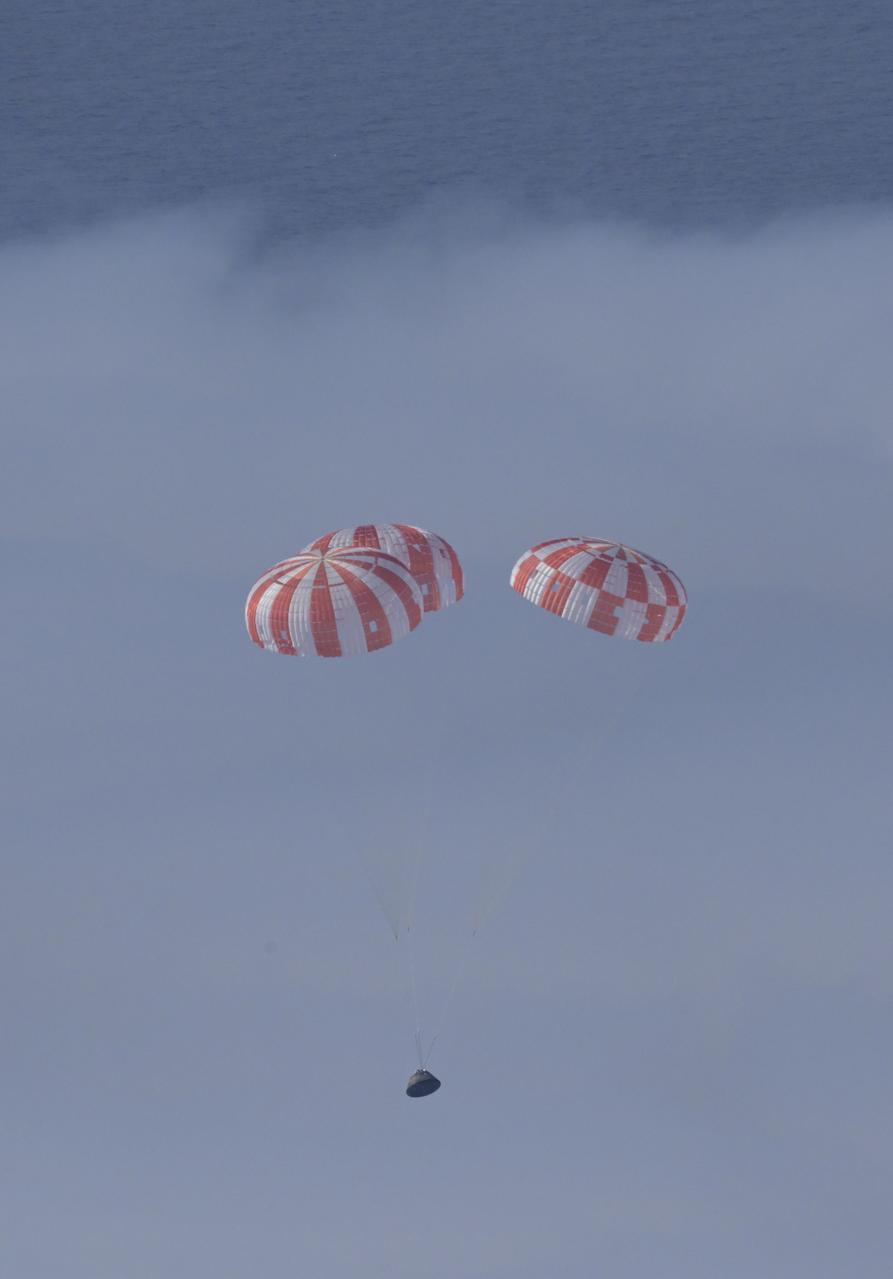
At 12:40 p.m. EST, Dec. 11, 2022, NASA’s Orion spacecraft for the Artemis I mission splashed down in the Pacific Ocean after a 25.5 day mission to the Moon. Orion will be recovered by NASA’s Landing and Recovery team, U.S. Navy and Department of Defense partners aboard the USS Portland.
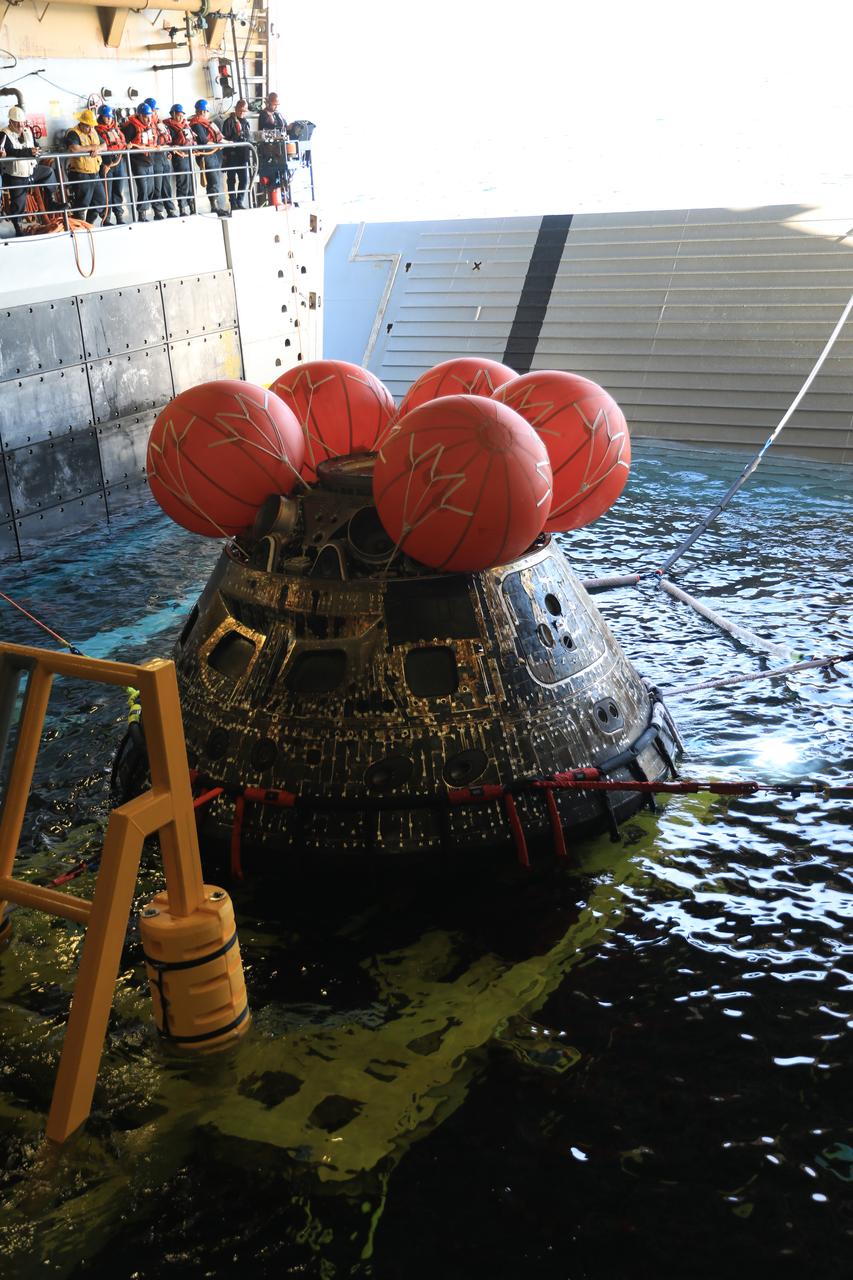
NASA’s Orion spacecraft for the Artemis I mission was successfully recovered inside the well deck of the USS Portland on Dec. 11, 2022 off the coast of Baja California. After launching atop the Space Launch System rocket on Nov. 16, 2022 from the agency’s Kennedy Space Center in Florida, Orion spent 25.5 days in space before returning to Earth, completing the Artemis I mission.
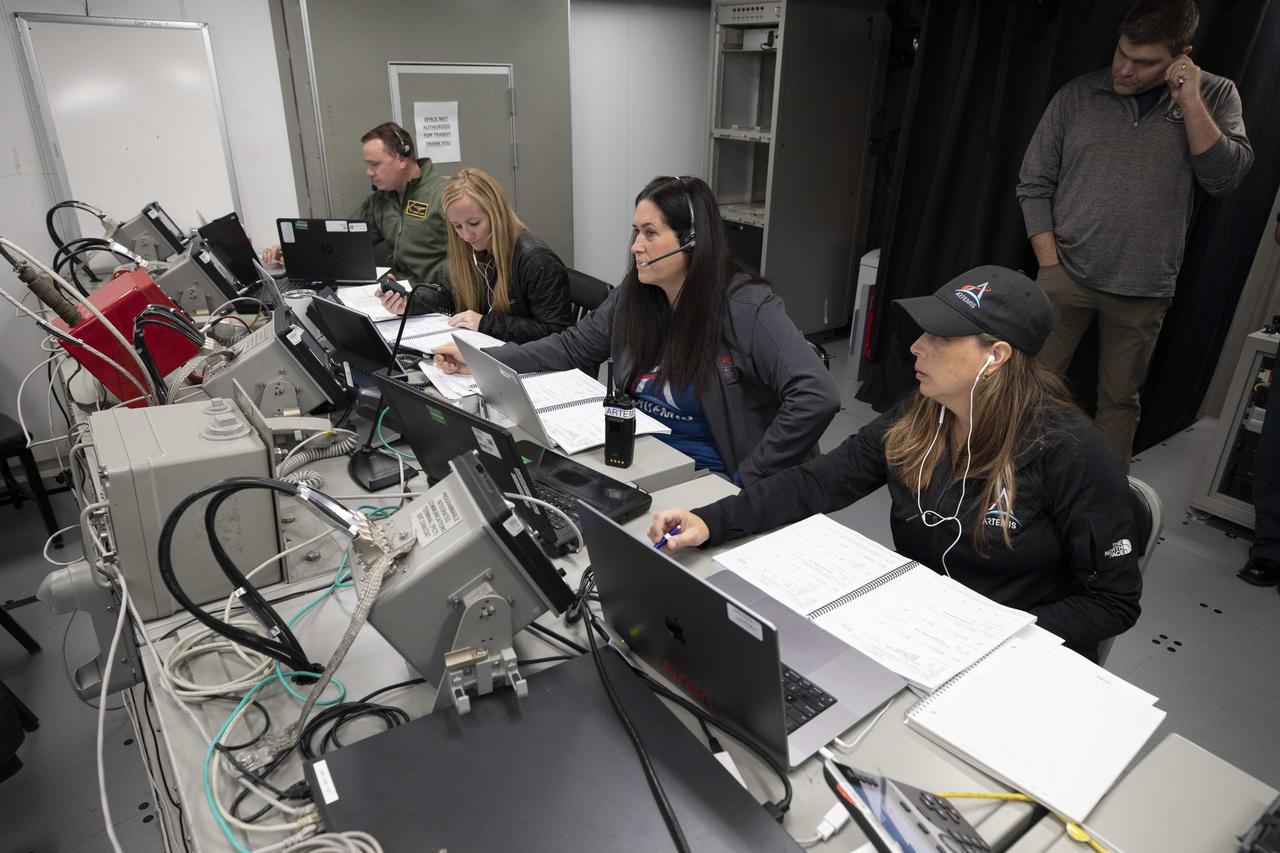
Inside a control room aboard USS Portland, members and leaders of NASA’s Landing and Recovery team run through preparations and procedures ahead of the Orion Spacecraft’s return from the Moon on Dec. 11 as part of the Artemis I mission.
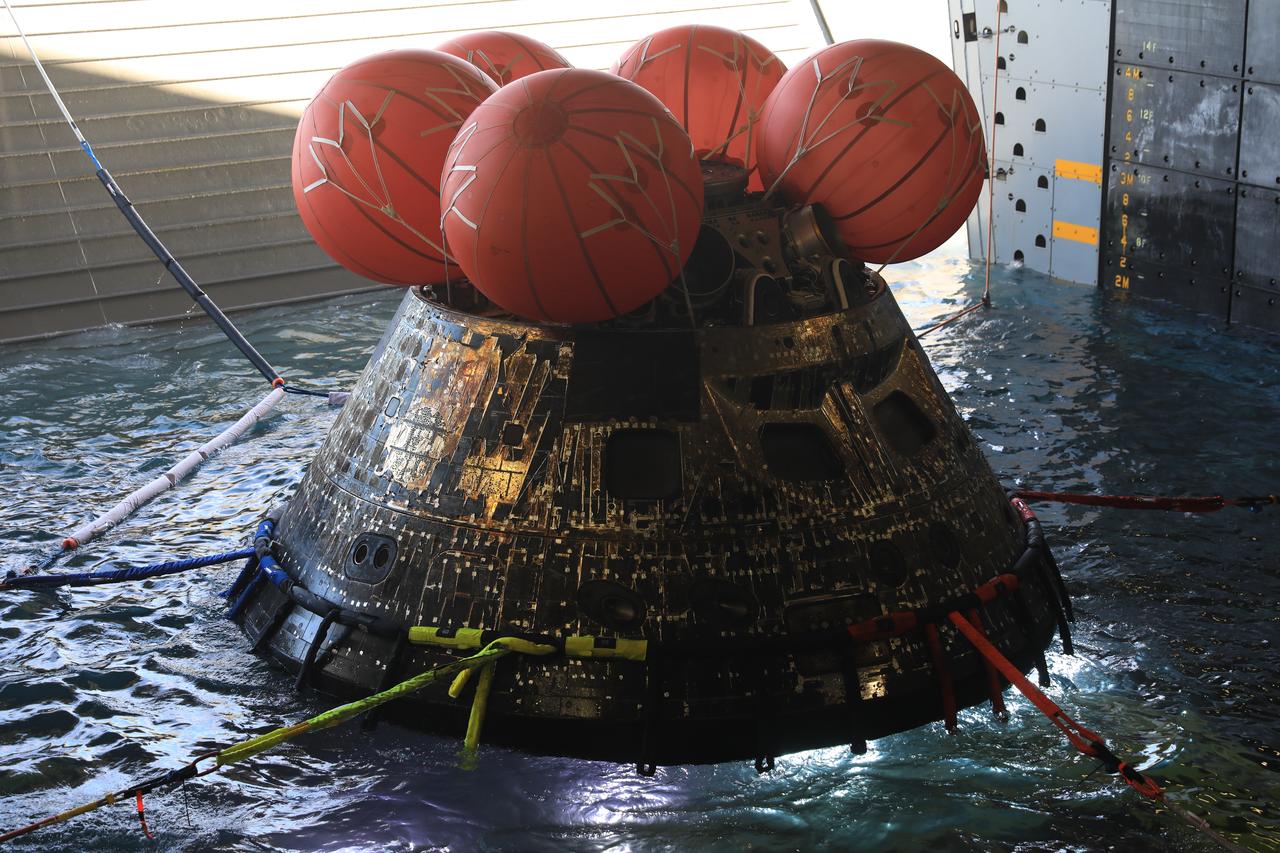
NASA’s Orion spacecraft for the Artemis I mission was successfully recovered inside the well deck of the USS Portland on Dec. 11, 2022 off the coast of Baja California. After launching atop the Space Launch System rocket on Nov. 16, 2022 from the agency’s Kennedy Space Center in Florida, Orion spent 25.5 days in space before returning to Earth, completing the Artemis I mission.
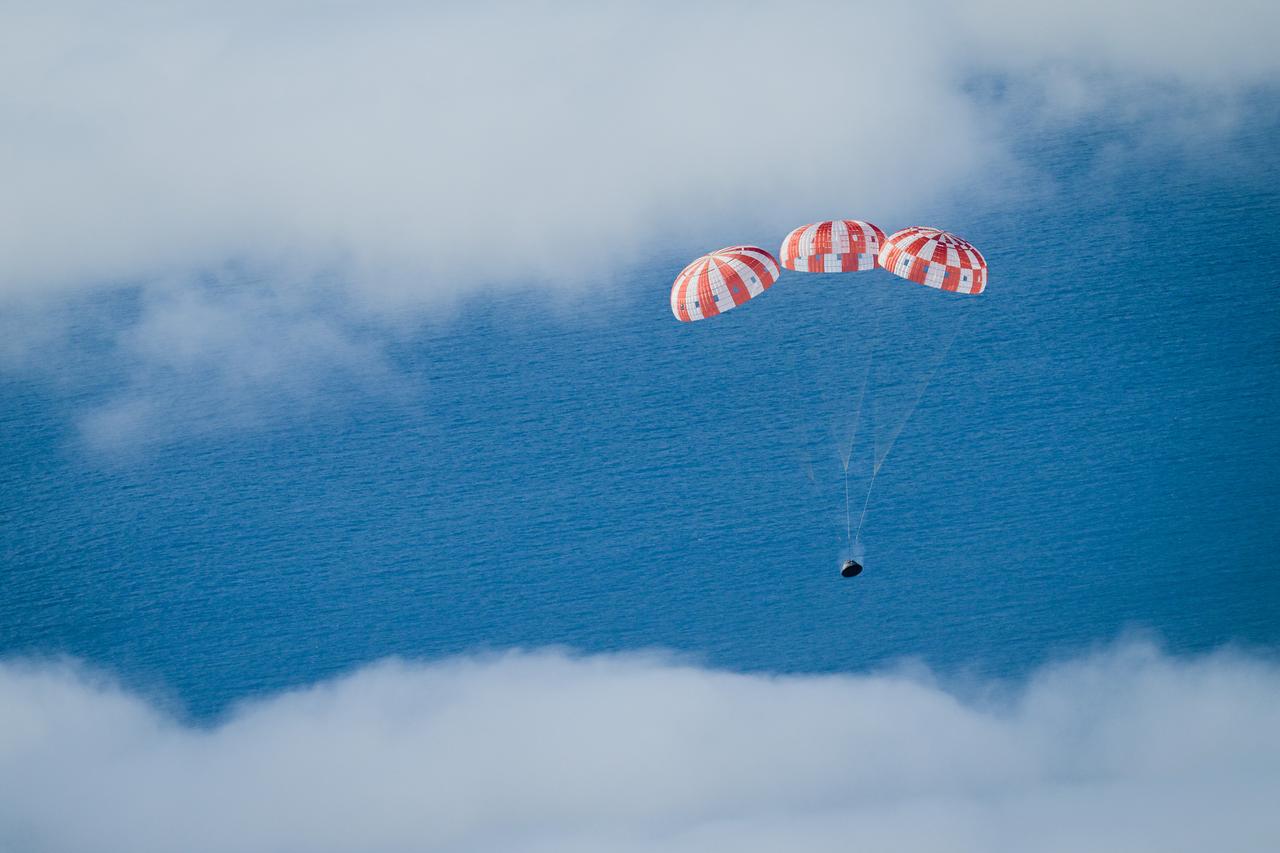
At 12:40 p.m. EST, Dec. 11, 2022, NASA’s Orion spacecraft for the Artemis I mission splashed down in the Pacific Ocean after a 25.5 day mission to the Moon. Orion will be recovered by NASA’s Landing and Recovery team, U.S. Navy and Department of Defense partners aboard the USS Portland.
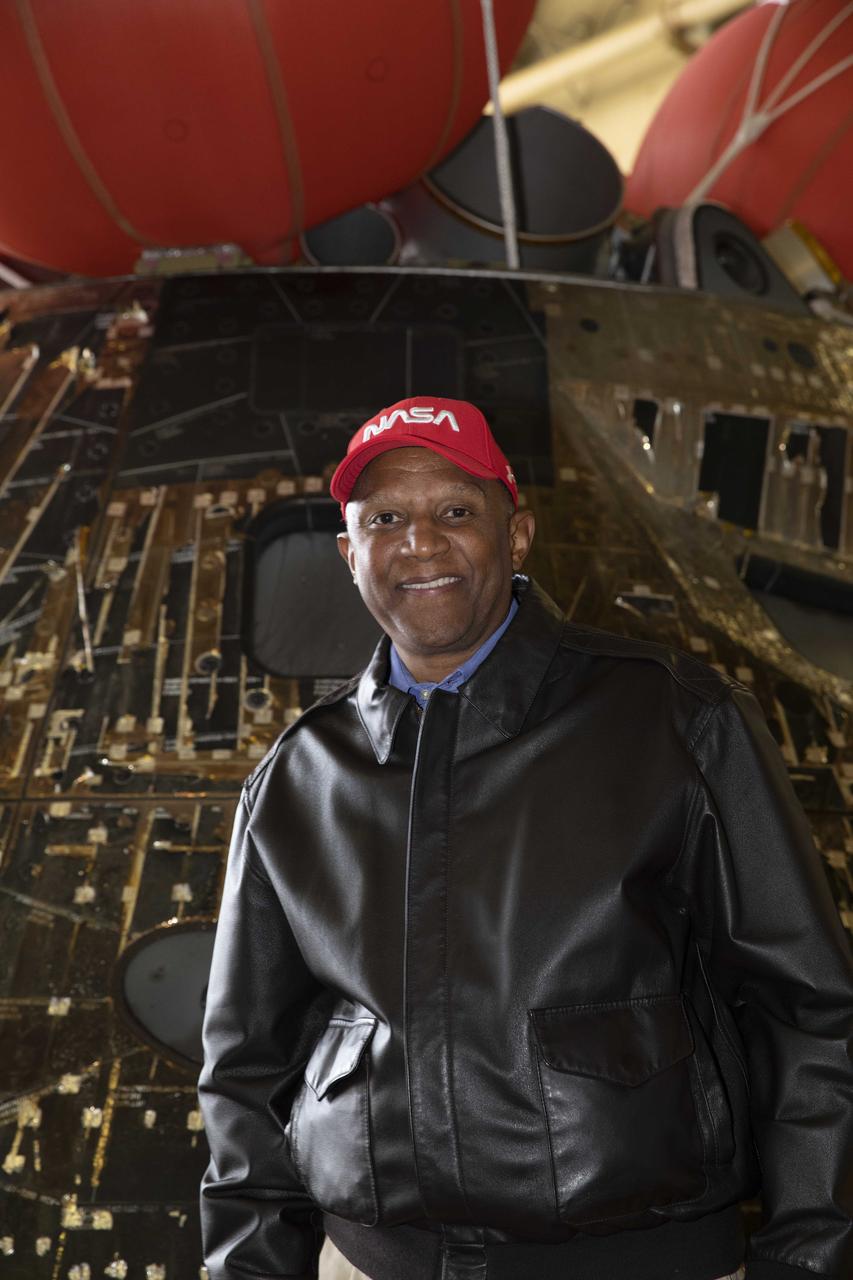
Kennedy Space Center Deputy Director Kelvin Manning stands near the Artemis I Orion spacecraft inside the well deck of the USS Portland at U.S. Naval Base San Diego on Dec. 13, 2022. The Orion spacecraft is secured inside the well deck after splashing down at 12:40 p.m. EST on Dec. 11, 2022. U.S. Navy divers helped recover the Orion spacecraft. NASA, the Navy and other Department of Defense partners worked together to secure the spacecraft inside the ship’s well deck approximately five hours after Orion splashed down in the Pacific Ocean off the coast of Baja, California.
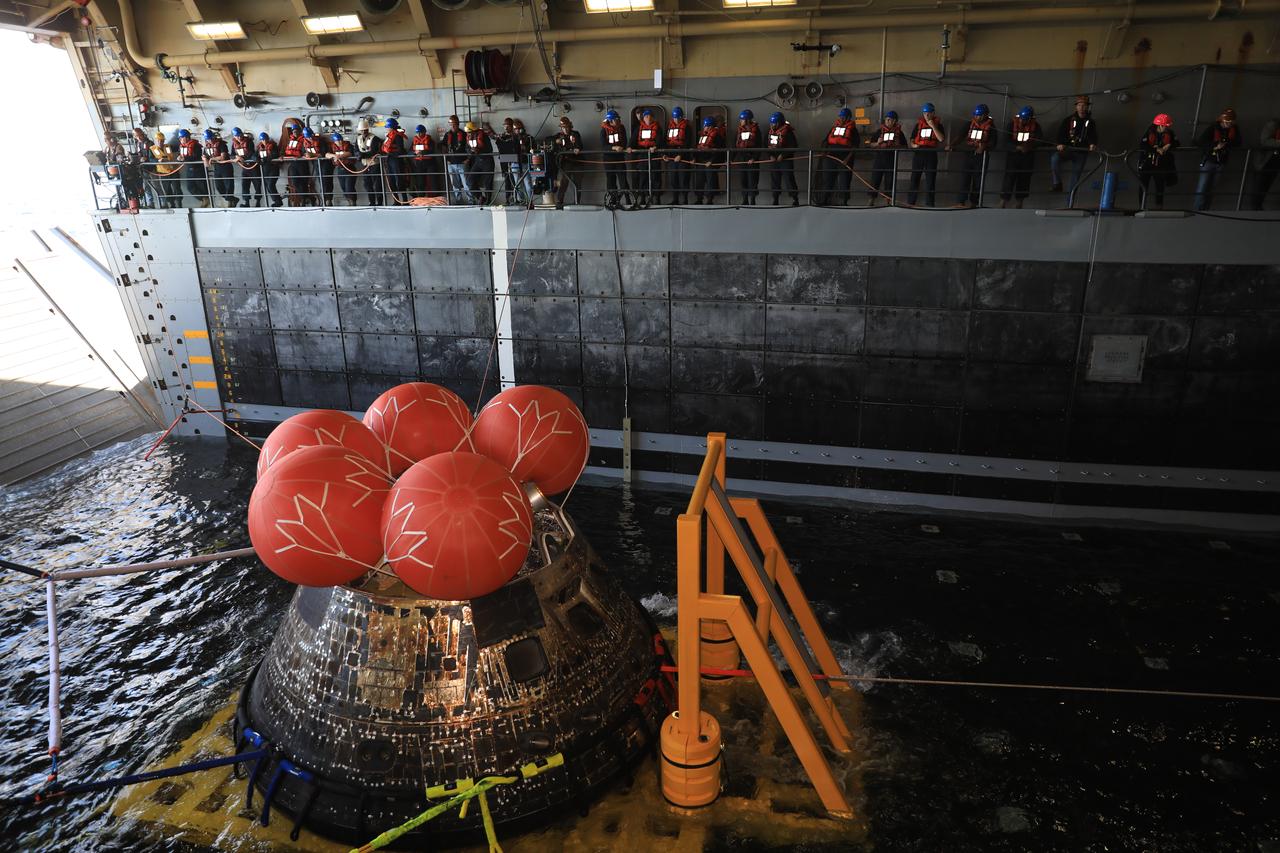
NASA’s Orion spacecraft for the Artemis I mission was successfully recovered inside the well deck of the USS Portland on Dec. 11, 2022 off the coast of Baja California. After launching atop the Space Launch System rocket on Nov. 16, 2022 from the agency’s Kennedy Space Center in Florida, Orion spent 25.5 days in space before returning to Earth, completing the Artemis I mission.
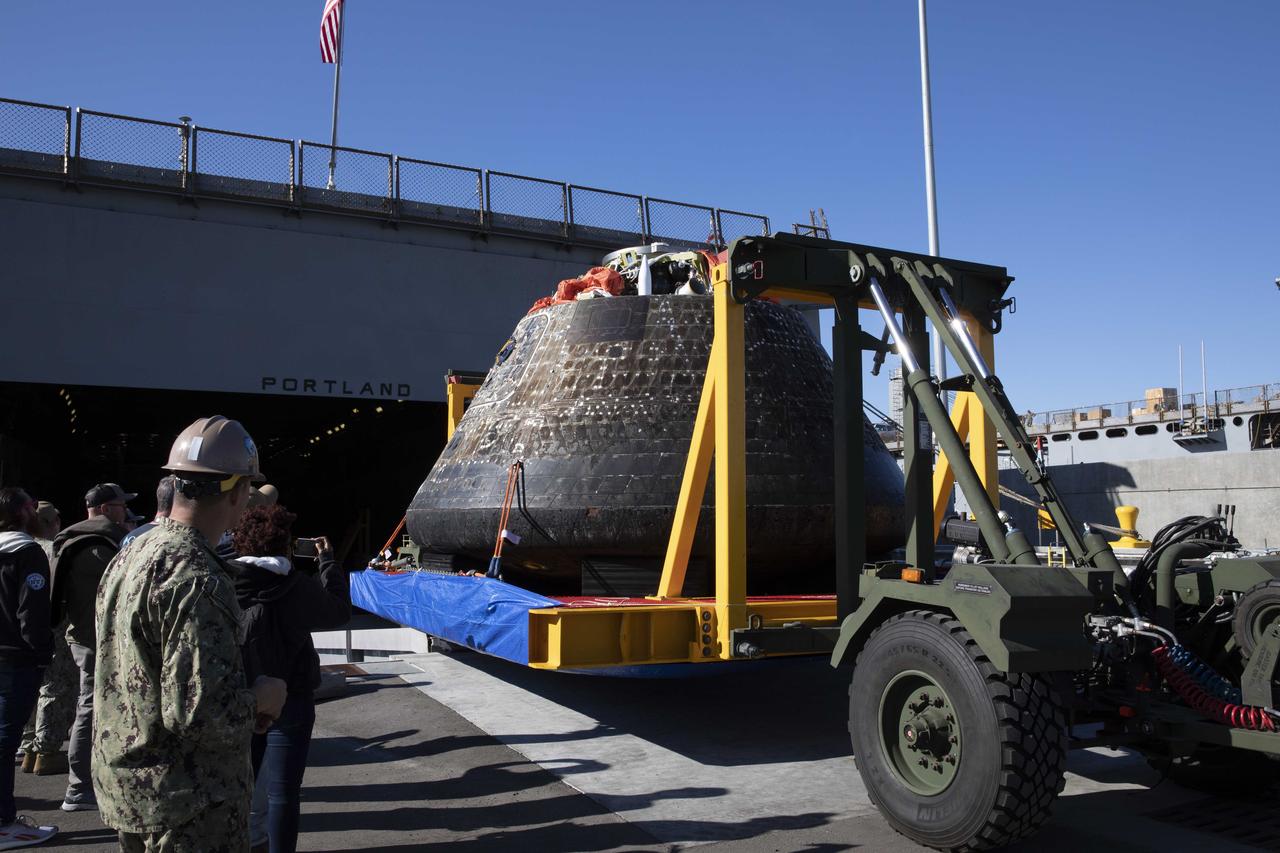
Team members with NASA’s Exploration Ground Systems program successfully removed the Artemis I Orion spacecraft from the USS Portland Dec. 14, after the ship arrived at U.S. Naval Base San Diego.
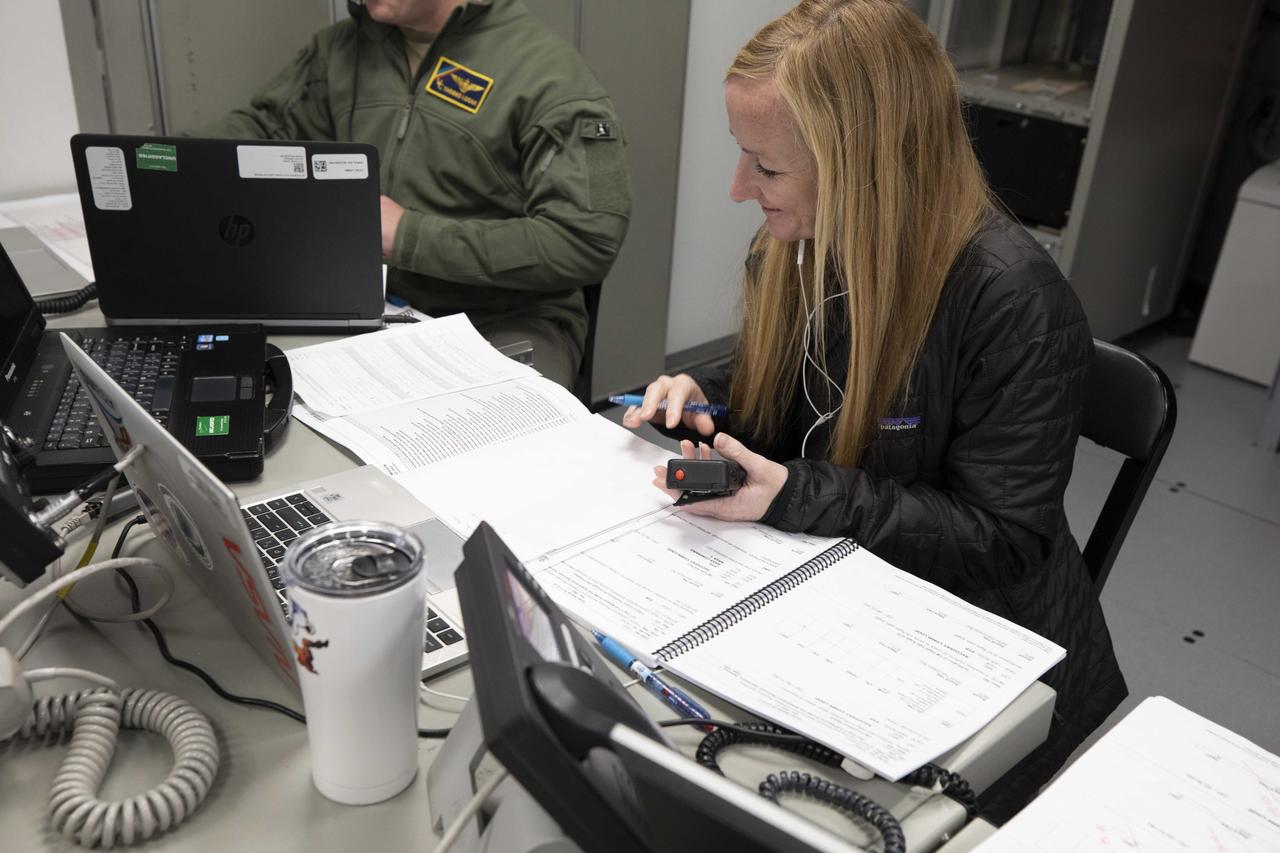
Inside a control room aboard USS Portland, members and leaders of NASA’s Landing and Recovery team run through preparations and procedures ahead of the Orion Spacecraft’s return from the Moon on Dec. 11 as part of the Artemis I mission.
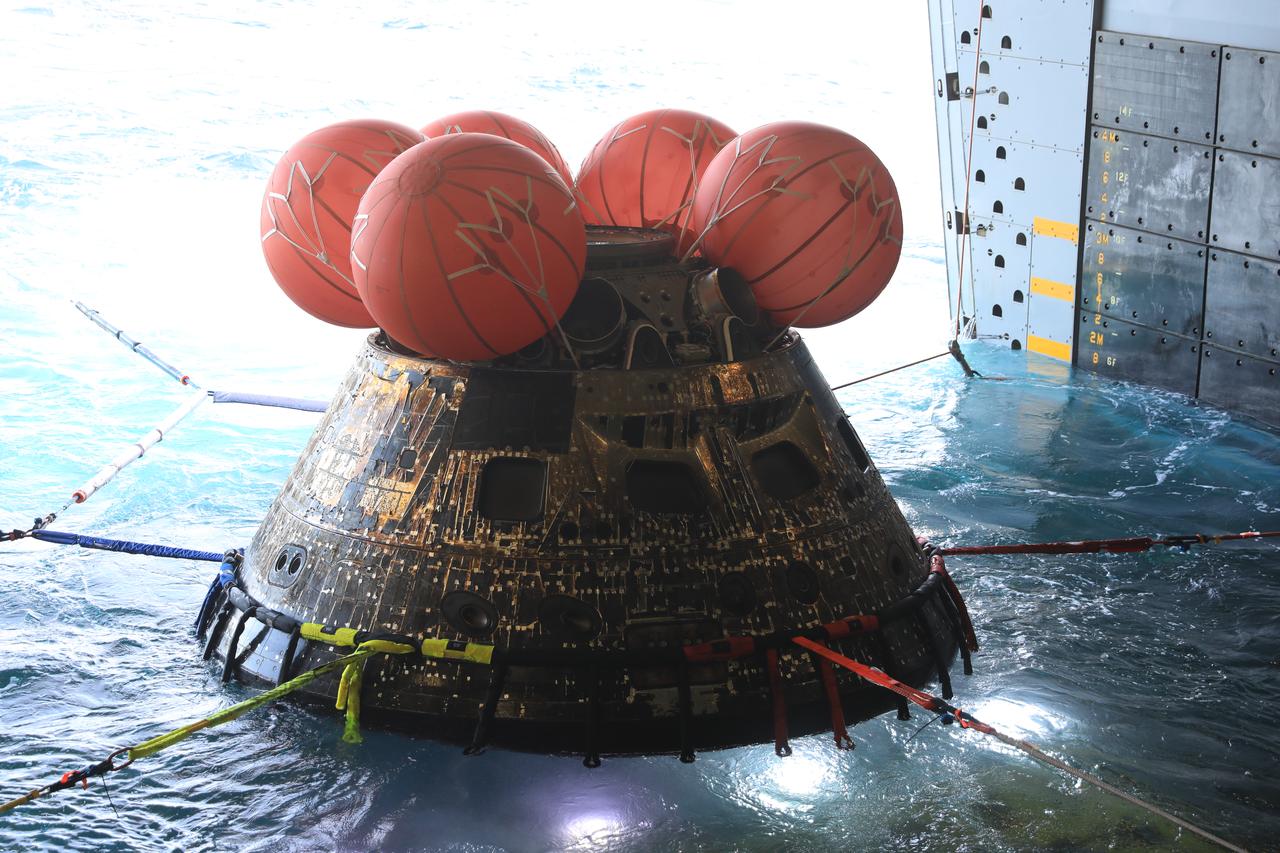
NASA’s Orion spacecraft for the Artemis I mission was successfully recovered inside the well deck of the USS Portland on Dec. 11, 2022 off the coast of Baja California. After launching atop the Space Launch System rocket on Nov. 16, 2022 from the agency’s Kennedy Space Center in Florida, Orion spent 25.5 days in space before returning to Earth, completing the Artemis I mission.
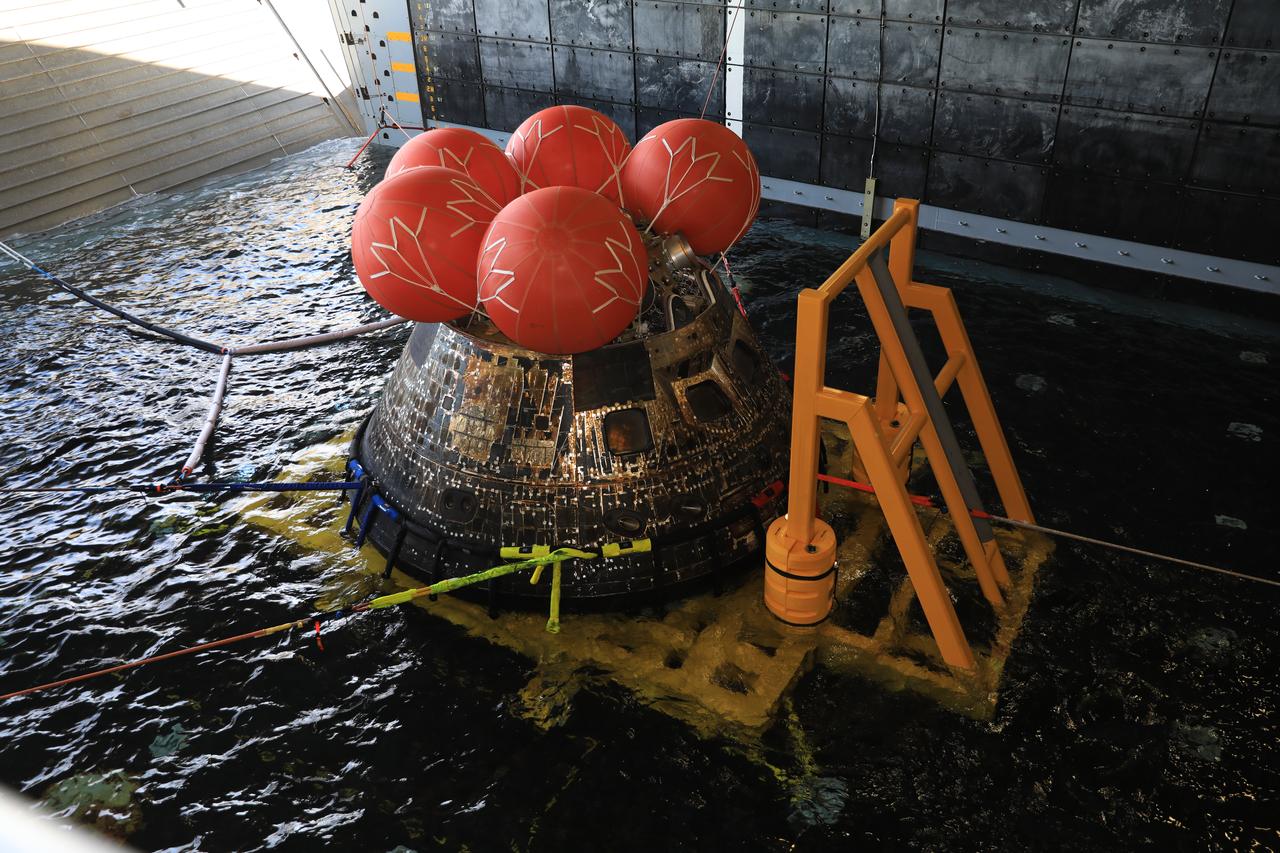
NASA’s Orion spacecraft for the Artemis I mission was successfully recovered inside the well deck of the USS Portland on Dec. 11, 2022 off the coast of Baja California. After launching atop the Space Launch System rocket on Nov. 16, 2022 from the agency’s Kennedy Space Center in Florida, Orion spent 25.5 days in space before returning to Earth, completing the Artemis I mission.

Dave King, former director of Marshall Space Flight Center in Huntsville, Alabama, and NASA Columbia Recovery director, gives the keynote speech during an Apollo, Challenger, Columbia Lessons Learned Program employee event at NASA's Kennedy Space Center in Florida. The theme of the presentation was "Columbia: Lessons and Legends of Recovery." King also participated in a panel discussion moderated by Kennedy Space Center Director Bob Cabana.
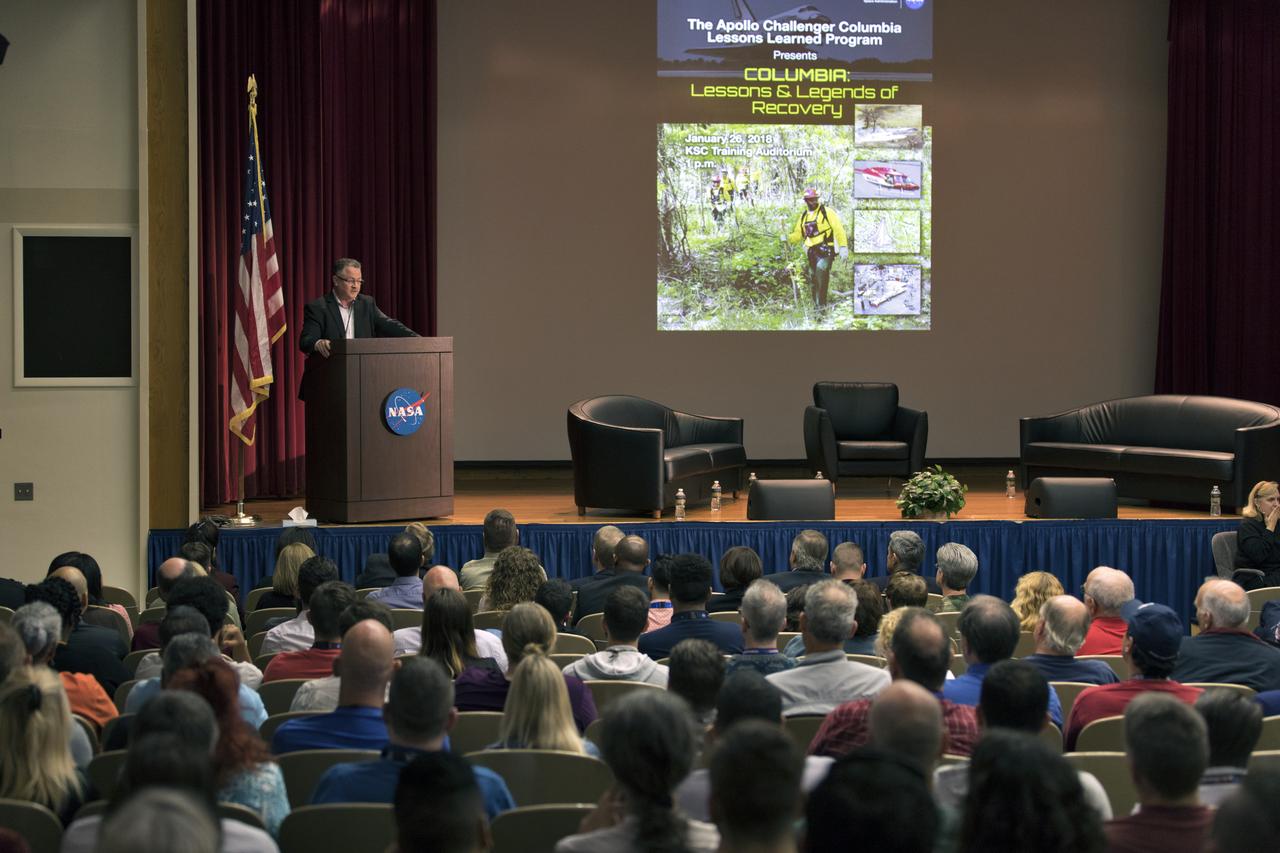
Dave King, former director of Marshall Space Flight Center in Huntsville, Alabama, and NASA Columbia Recovery director, gives the keynote speech during an Apollo, Challenger, Columbia Lessons Learned Program employee event at NASA's Kennedy Space Center in Florida. The theme of the presentation was "Columbia: Lessons and Legends of Recovery." King also participated in a panel discussion moderated by Kennedy Space Center Director Bob Cabana.
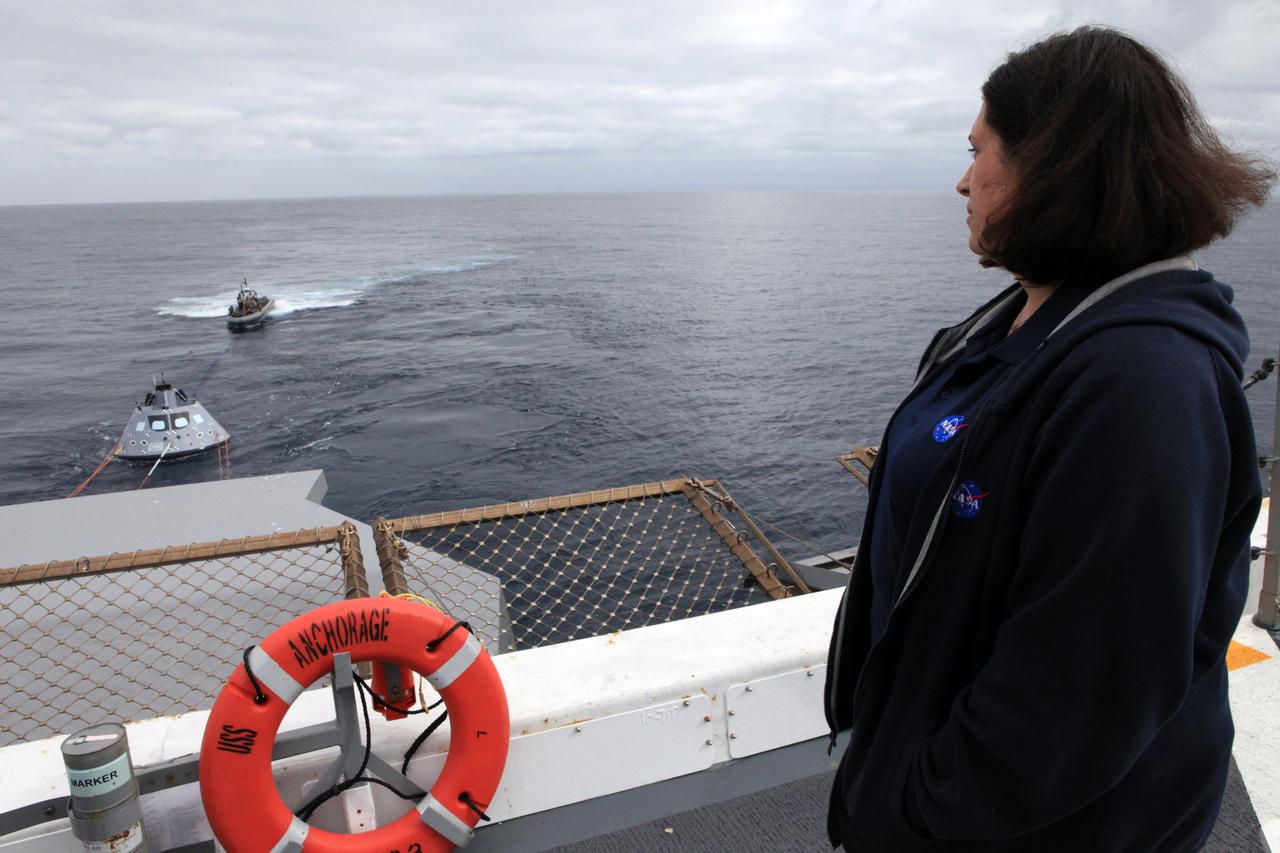
NASA Recovery Director Melissa Jones watches part of Underway Recovery Test 6, from the flight deck of the USS Anchorage. During this portion, the Orion test article is intentionally subjected to an increased sea state as the NASA Recovery Team works hard to keep control of the spacecraft. The testing with Kennedy Space Center's NASA Recovery Team and the U.S. Navy will provide important data that is being used to improve recovery procedures and hardware ahead of Orion's next flight, Exploration Mission-1, when it splashes down in the Pacific Ocean.
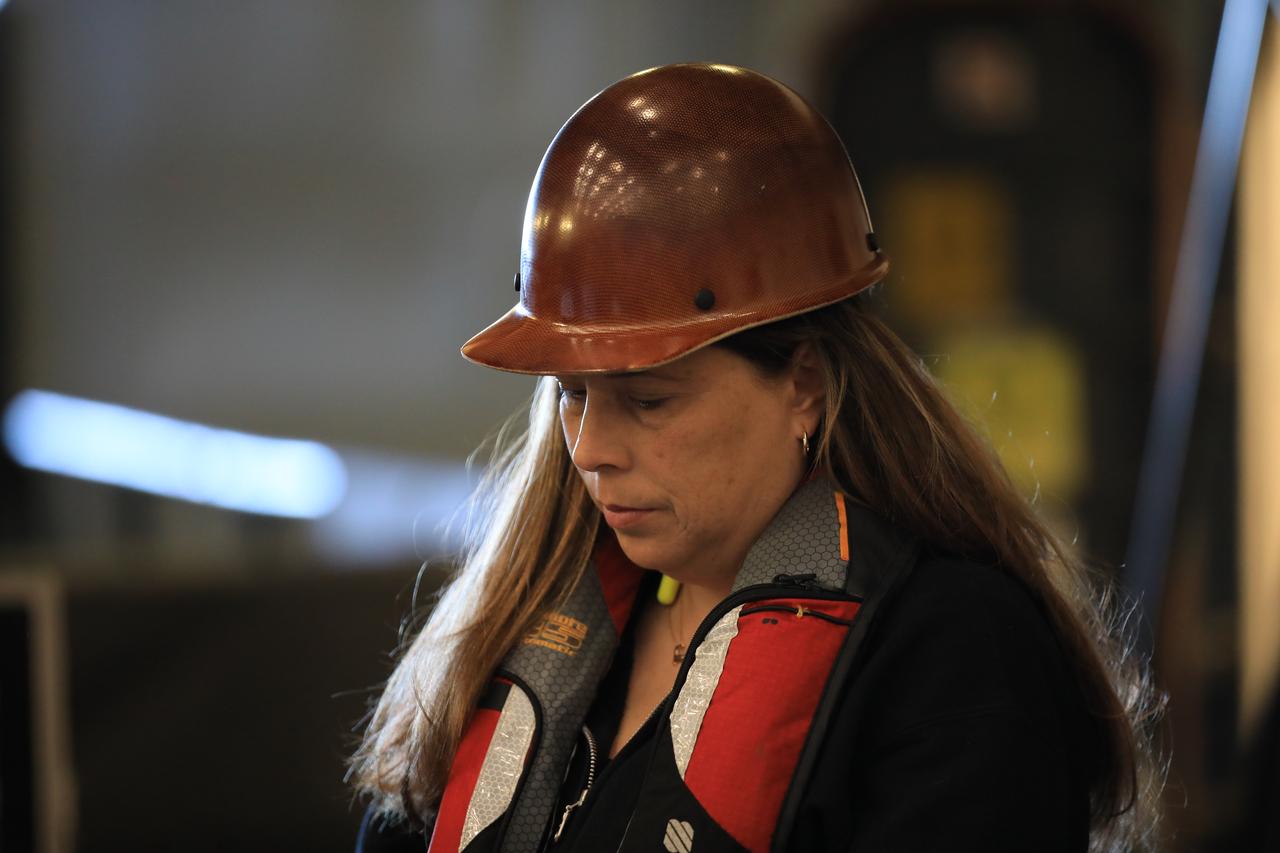
Liliana Villarreal, Artemis II Landing and Recovery Director, of NASA’s Exploration Ground System’s Landing and Recovery team monitors operations of the day aboard the USS San Diego during Underway Recovery Test 11 (URT-11) off the coast of San Diego on Thursday, Feb. 22, 2024. URT-11 is the eleventh in a series of Artemis recovery tests for members of the agency’s Landing and Recovery team and partners from the Department of Defense to practice recovery procedures using the Crew Module Test Article in preparation for Artemis II.
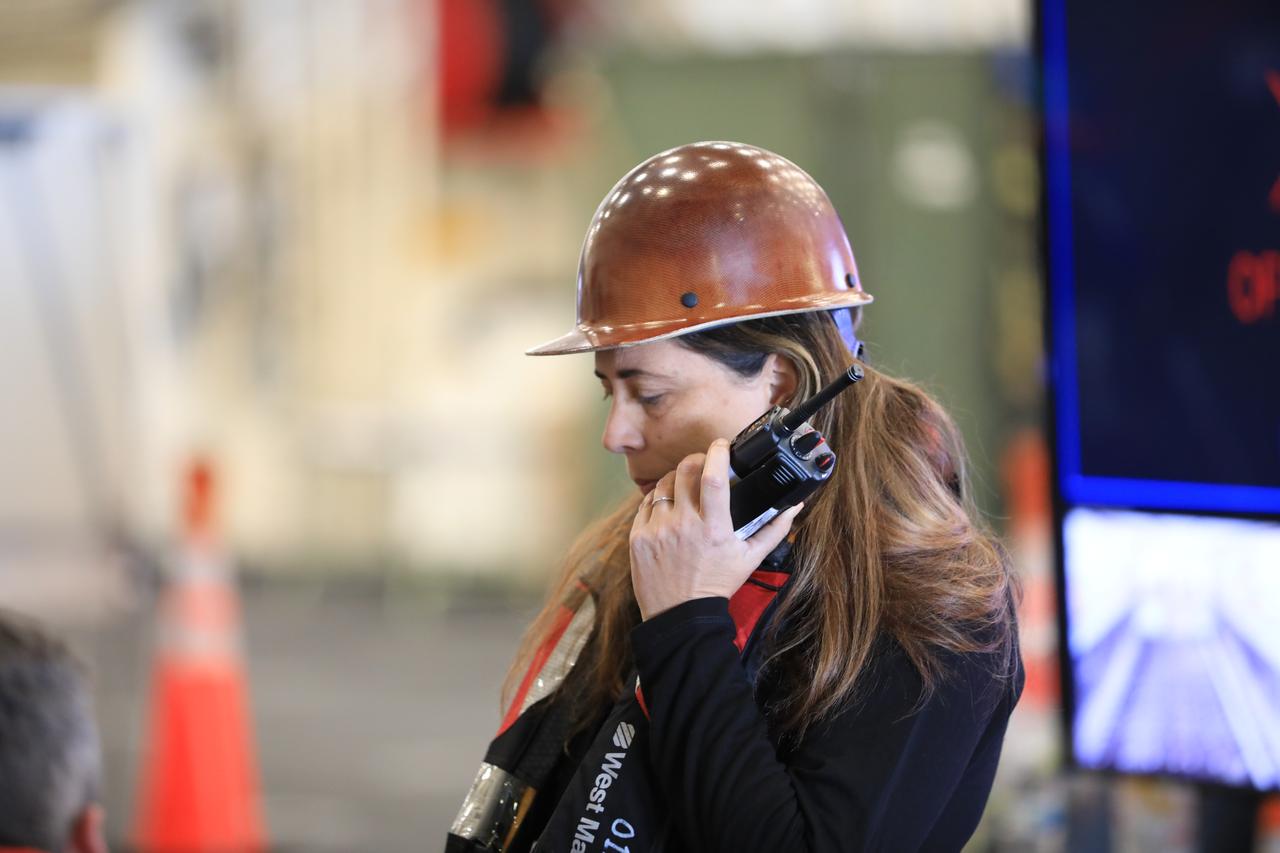
Liliana Villarreal, Artemis II Landing and Recovery Director, of NASA’s Exploration Ground System’s Landing and Recovery team monitors operations of the day aboard the USS San Diego during Underway Recovery Test 11 (URT-11) off the coast of San Diego on Saturday, Feb. 24, 2024. URT-11 is the eleventh in a series of Artemis recovery tests for members of the agency’s Landing and Recovery team and partners from the Department of Defense to practice recovery procedures using the Crew Module Test Article in preparation for Artemis II.
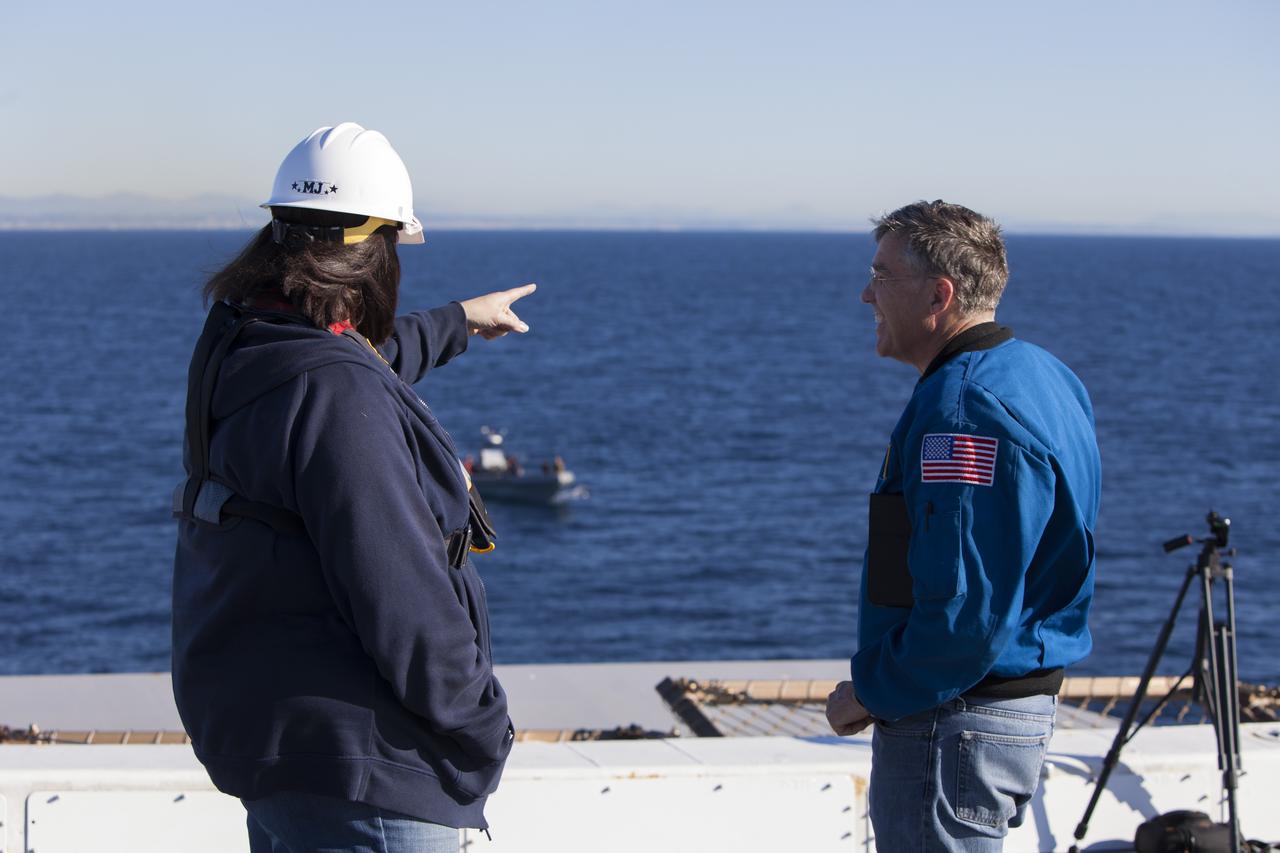
During Underway Recovery Test 6, NASA Recovery Director Melissa Jones and astronaut Stephen Bowen discuss how the recovery operations of Orion might impact astronauts onboard after spending weeks in microgravity. The testing with Kennedy Space Center's NASA Recovery Team and the U.S. Navy will provide important data that is being used to improve recovery procedures and hardware ahead of Orion's next flight, Exploration Mission-1, when it splashes down in the Pacific Ocean.
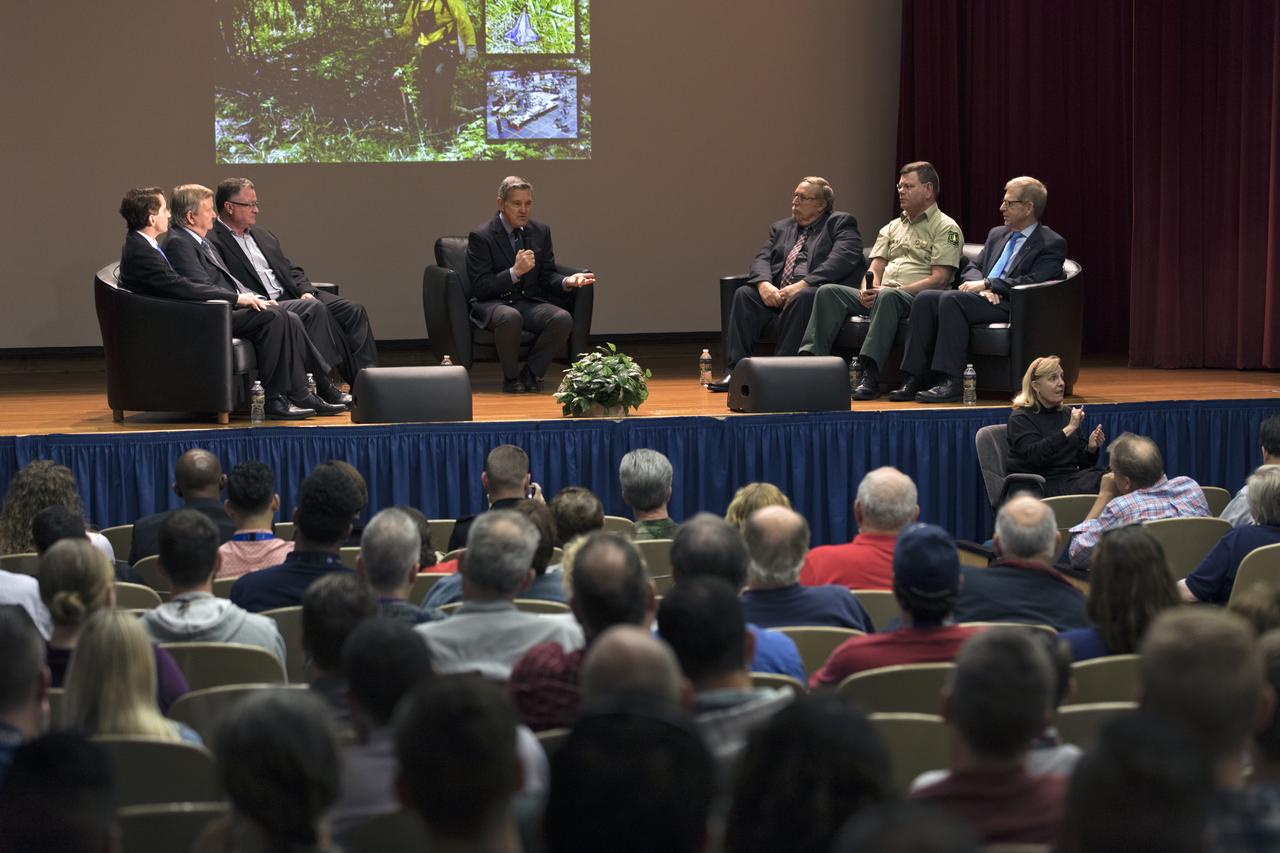
NASA Kennedy Space Center Director Bob Cabana, center, leads a panel discussion during an Apollo, Challenger, Columbia Lessons Learned Program (ACCLLP) employee event. The theme of the presentation was "Columbia: Lessons and Legends of Recovery." Participating, from left, are Mike Ciannilli, ACCLLP manager; Mike Leinbach, former shuttle launch director; Dave King, NASA Columbia Recovery director and former director of Marshall Space Flight Center; Gerry Schumann, NASA Mishap Investigation manager; Greg Cohrs, U.S. Forestry Service ranger; and Jonathan Ward, author and space historian.

NASA Kennedy Space Center Director Bob Cabana, center, leads a panel discussion during an Apollo, Challenger, Columbia Lessons Learned Program (ACCLLP) employee event. The theme of the presentation was "Columbia: Lessons and Legends of Recovery." Participating, from left, are Mike Ciannilli, ACCLLP manager; Mike Leinbach, former shuttle launch director; Dave King, NASA Columbia Recovery director and former director of Marshall Space Flight Center; Gerry Schumann, NASA Mishap Investigation manager; Greg Cohrs, U.S. Forestry Service ranger; and Jonathan Ward, author and space historian.
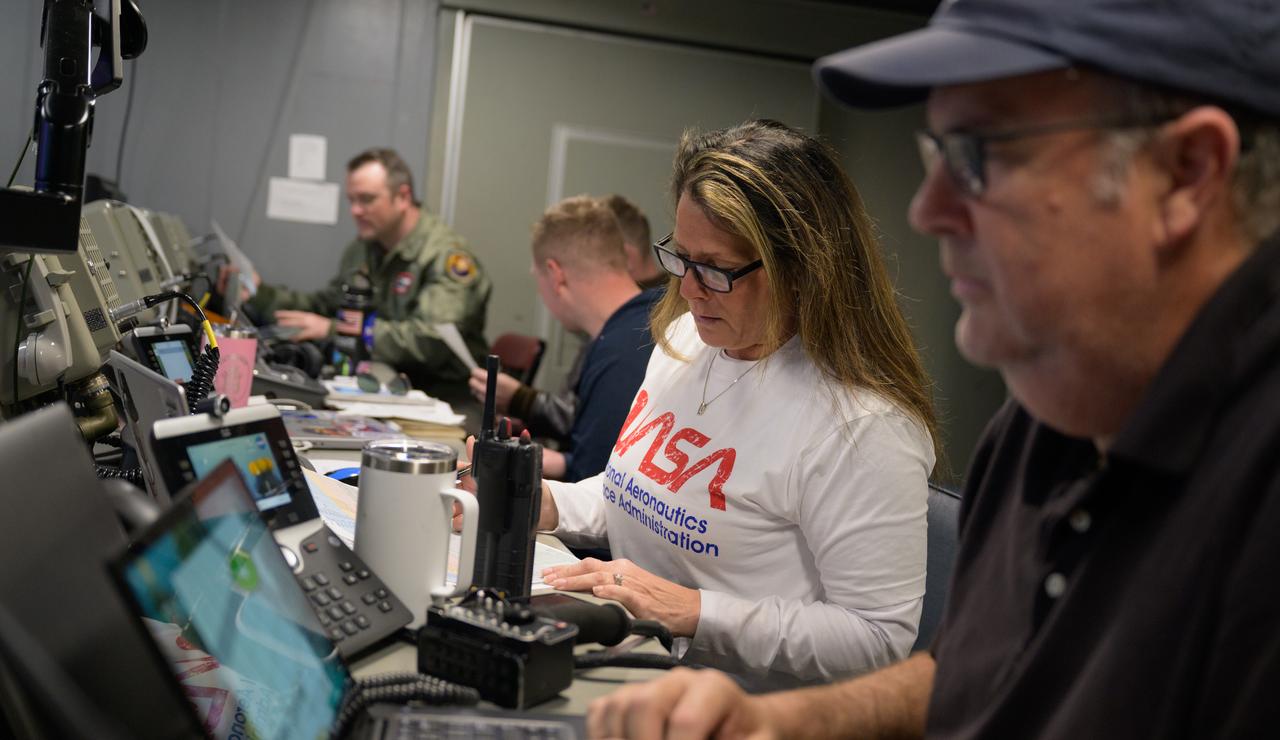
Lisa Seiler, Artemis Landing and Recovery deputy director, works inside the Landing Force Operations Center onboard USS Somerset as they practice Artemis recovery operations during Underway Recovery Test-12 off the coast of California, Saturday, March 29, 2025. During the test, NASA and Department of Defense teams are practicing to ensure recovery procedures are validated as NASA plans to send Artemis II around the Moon and splashdown in the Pacific Ocean. Photo Credit: (NASA/Bill Ingalls)
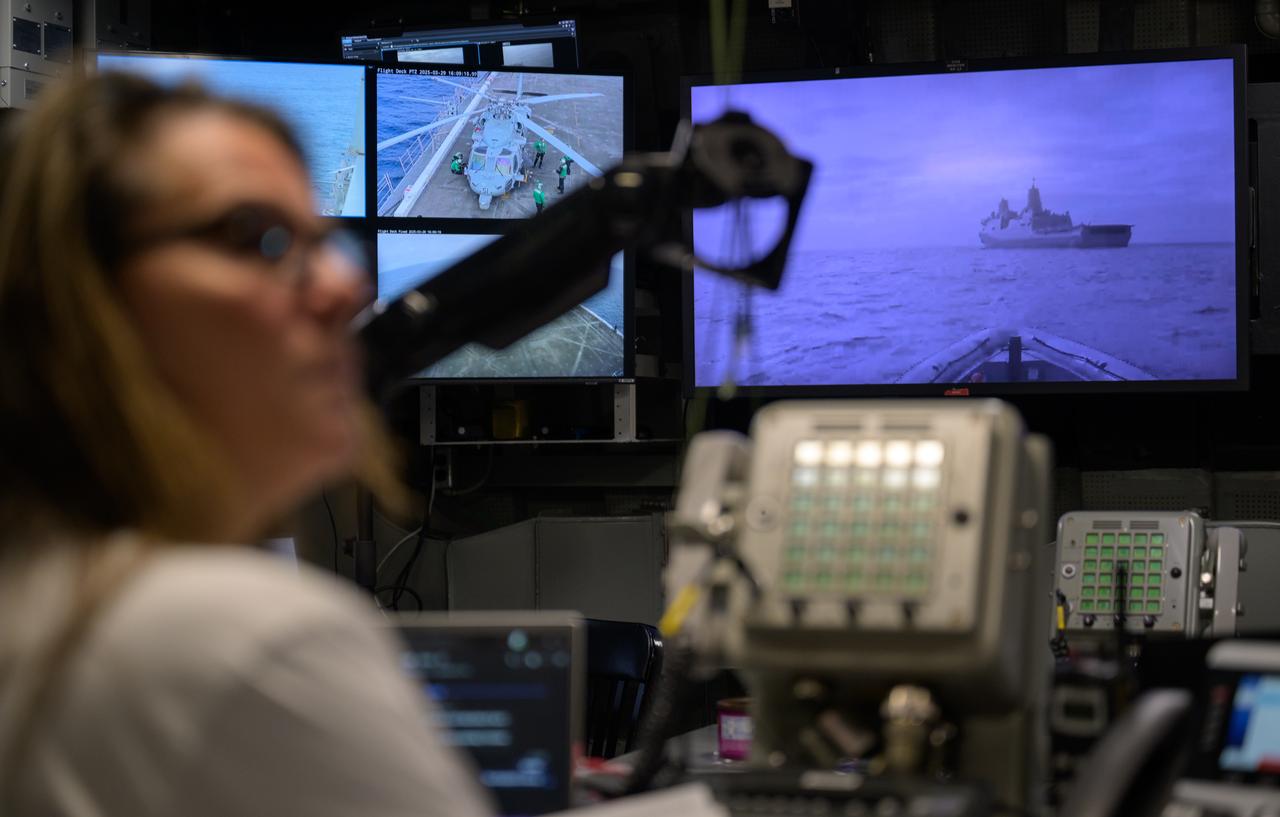
Lisa Seiler, Artemis Landing and Recovery deputy director, works inside the Landing Force Operations Center onboard USS Somerset as they practice Artemis recovery operations during Underway Recovery Test-12 off the coast of California, Saturday, March 29, 2025. During the test, NASA and Department of Defense teams are practicing to ensure recovery procedures are validated as NASA plans to send Artemis II around the Moon and splashdown in the Pacific Ocean. Photo Credit: (NASA/Bill Ingalls)
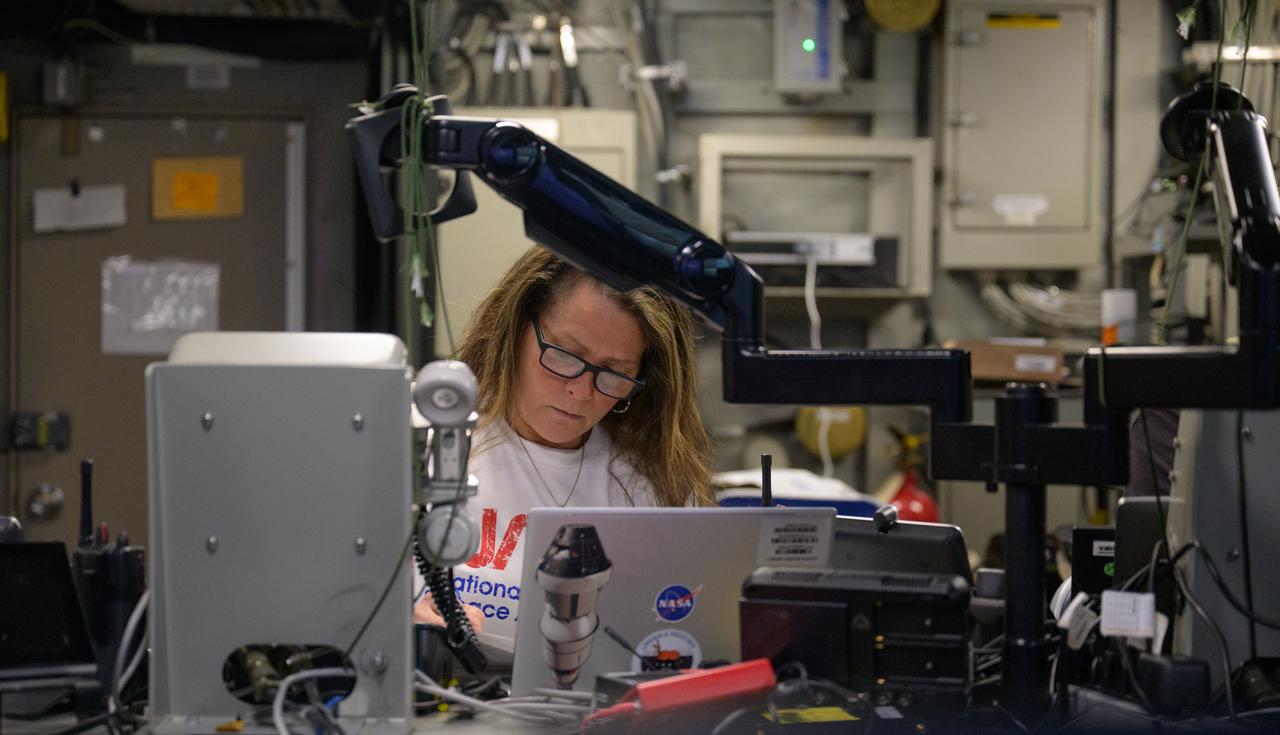
Lisa Seiler, Artemis Landing and Recovery deputy director, works inside the Landing Force Operations Center onboard USS Somerset as they practice Artemis recovery operations during Underway Recovery Test-12 off the coast of California, Saturday, March 29, 2025. During the test, NASA and Department of Defense teams are practicing to ensure recovery procedures are validated as NASA plans to send Artemis II around the Moon and splashdown in the Pacific Ocean. Photo Credit: (NASA/Bill Ingalls)
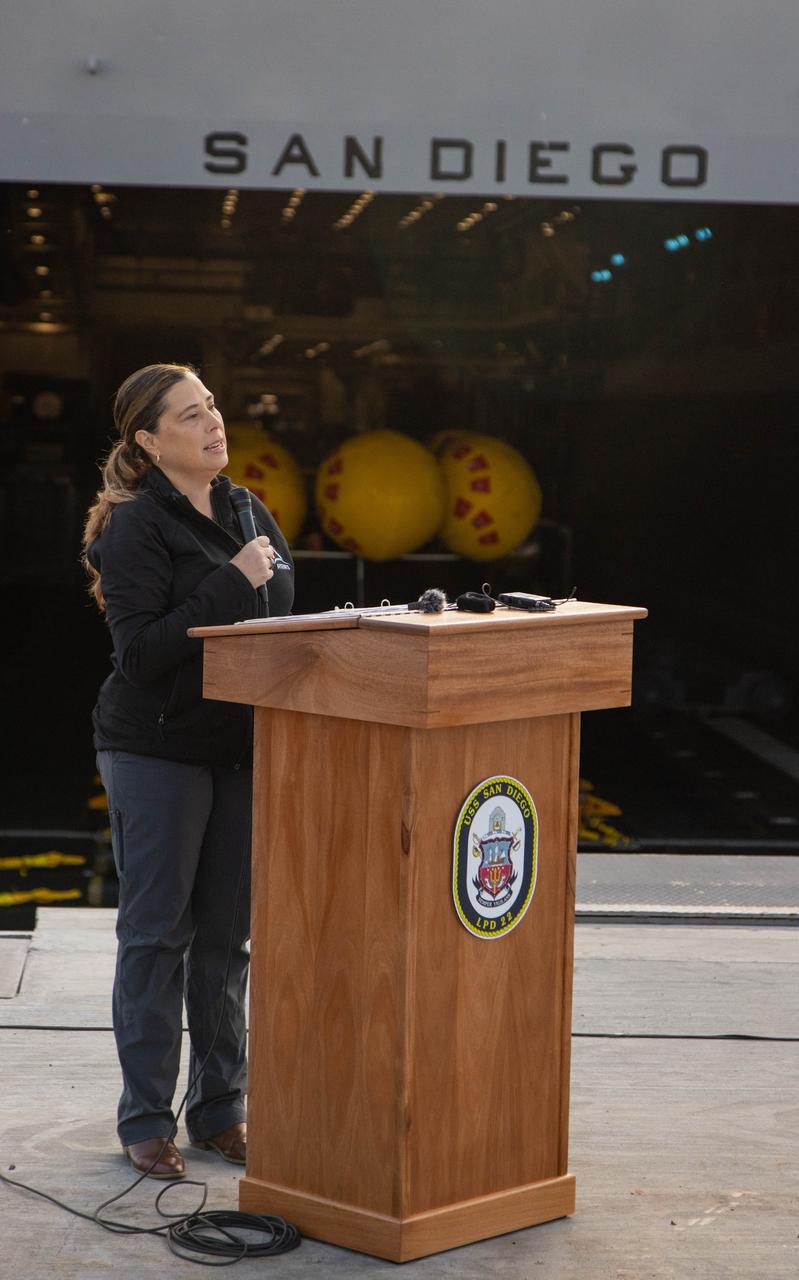
Liliana Villarreal, landing and recovery director in Exploration Ground Systems at NASA’s Kennedy Space Center in Florida speaks in a news conference held in San Diego, California on Wednesday, Feb. 28, 2024, about the Underway Recovery Test 11 (URT-11) performed off the coast of San Diego, California. URT-11 is the eleventh in a series of Artemis recovery tests, and the first time NASA and its partners put their Artemis II recovery procedures in place with the astronauts.
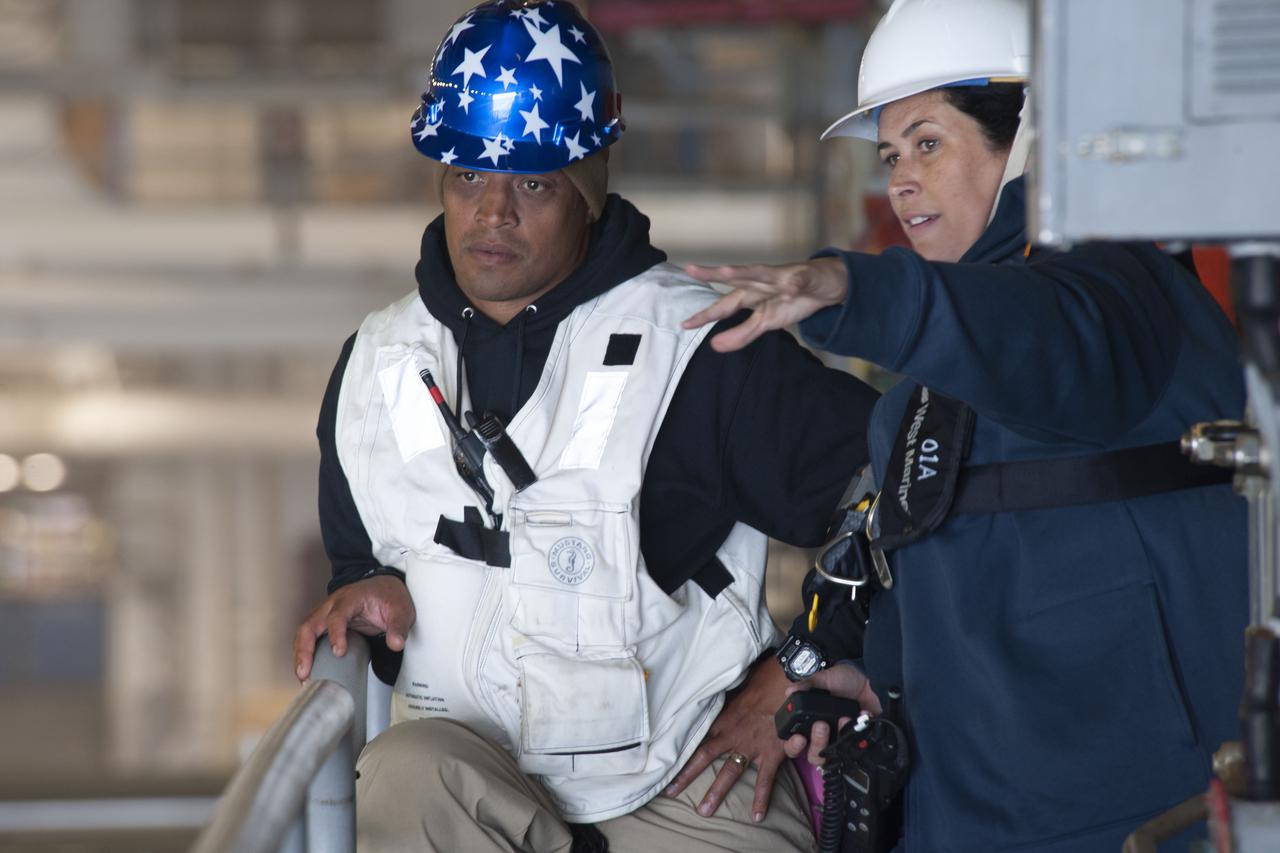
NASA Landing and Recovery Director Melissa Jones points out recovery operations to Capt. Gervy Alota, commanding officer, USS John P. Murtha (LPD 26), during Underway Recovery Test 9 (URT-9). During the weeklong test, NASA’s Landing and Recovery team is performing their final mission certification ahead of Artemis I.
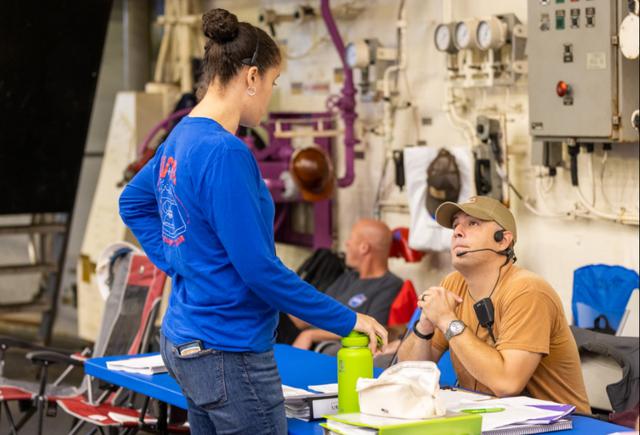
NASA Test Director (NTD) Christine St. Germain consults with fellow NTD Paul Sierpinski on day 2 of Underway Recovery Test 9 (URT-9) aboard the USS John P. Murtha. During the weeklong test, NASA’s Landing and Recovery team is performing their final mission certification ahead of Artemis I.
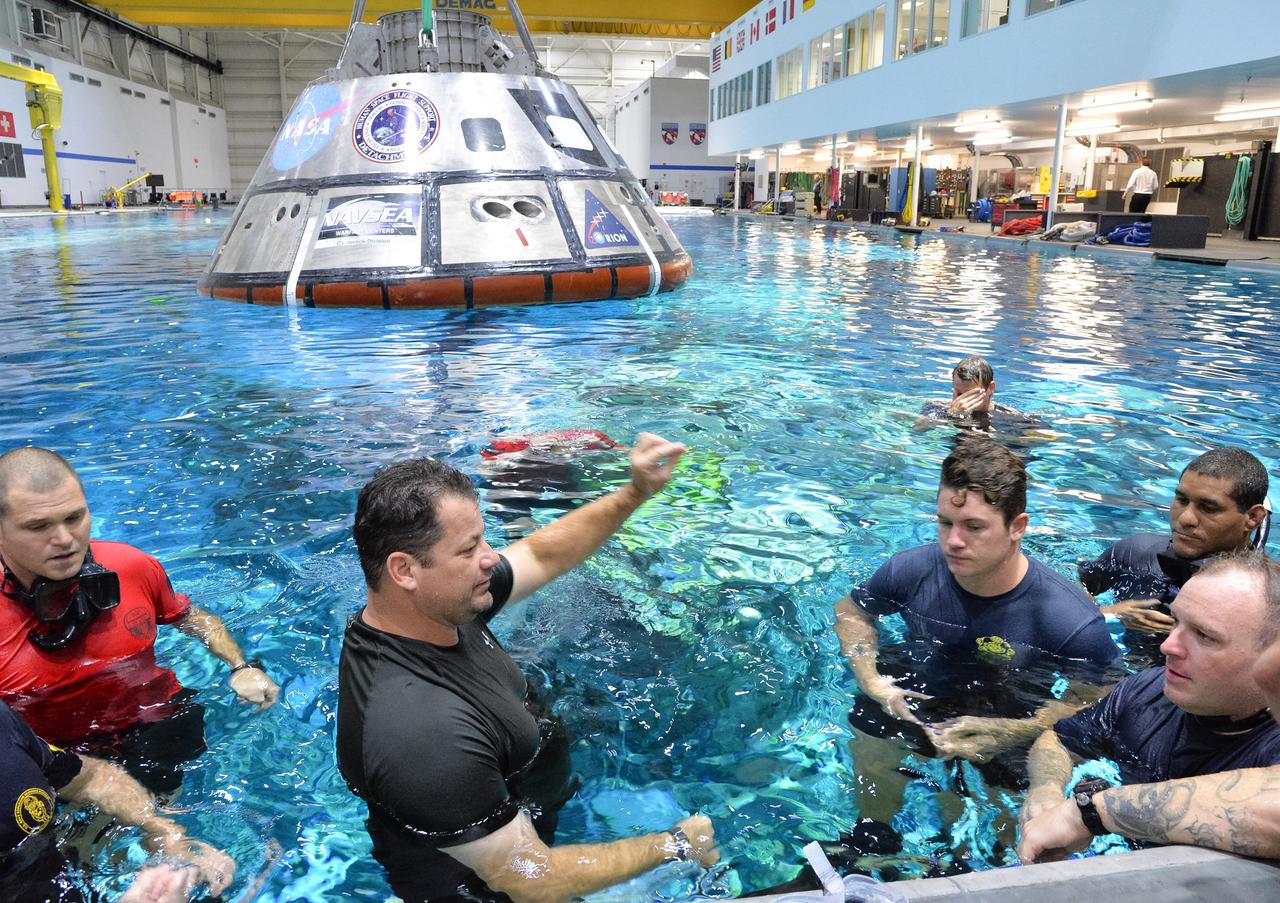
Tim Goddard, center, NASA Open Water Recovery Operations director, reviews recovery procedures with U.S. Navy divers, Air Force pararescuemen and Coast Guard rescue swimmers during training in the Neutral Buoyancy Laboratory at NASA’s Johnson Space Center in Houston. The group is practicing Orion underway recovery techniques using a test version of the Orion spacecraft. Training will help the team prepare for Underway Recovery Test 5 for Exploration Mission 1 aboard the USS San Diego in the Pacific Ocean off the coast of California in October. The Ground Systems Development and Operations Program, along with the U.S. Navy and Lockheed Martin, are preparing the recovery team, hardware and operations to support EM-1 recovery.
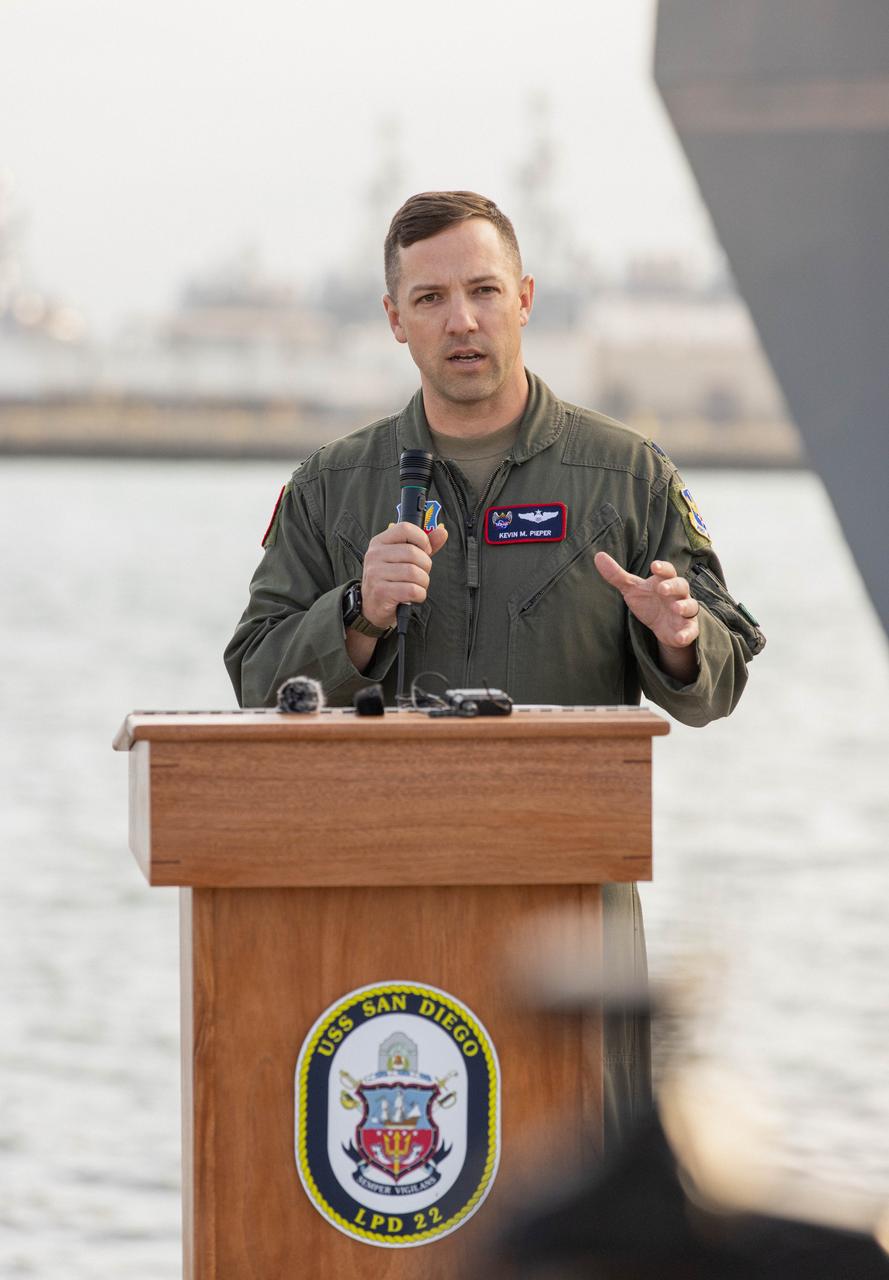
Lt. Col. Kevin Pieper, First Air Force, Detachment 3 Artemis program director discusses the Underway Recovery Test (URT-11) during a news conference held in San Diego, California on Wednesday, Feb. 28, 2024. URT-11 performed by NASA’s Exploration Ground System’s Landing and Recovery team, partners from the Department of Defense, and U.S. Navy personnel aboard the USS San Diego is the eleventh in a series of Artemis recovery tests, and the first the Artemis II recovery procedures involved the astronauts.
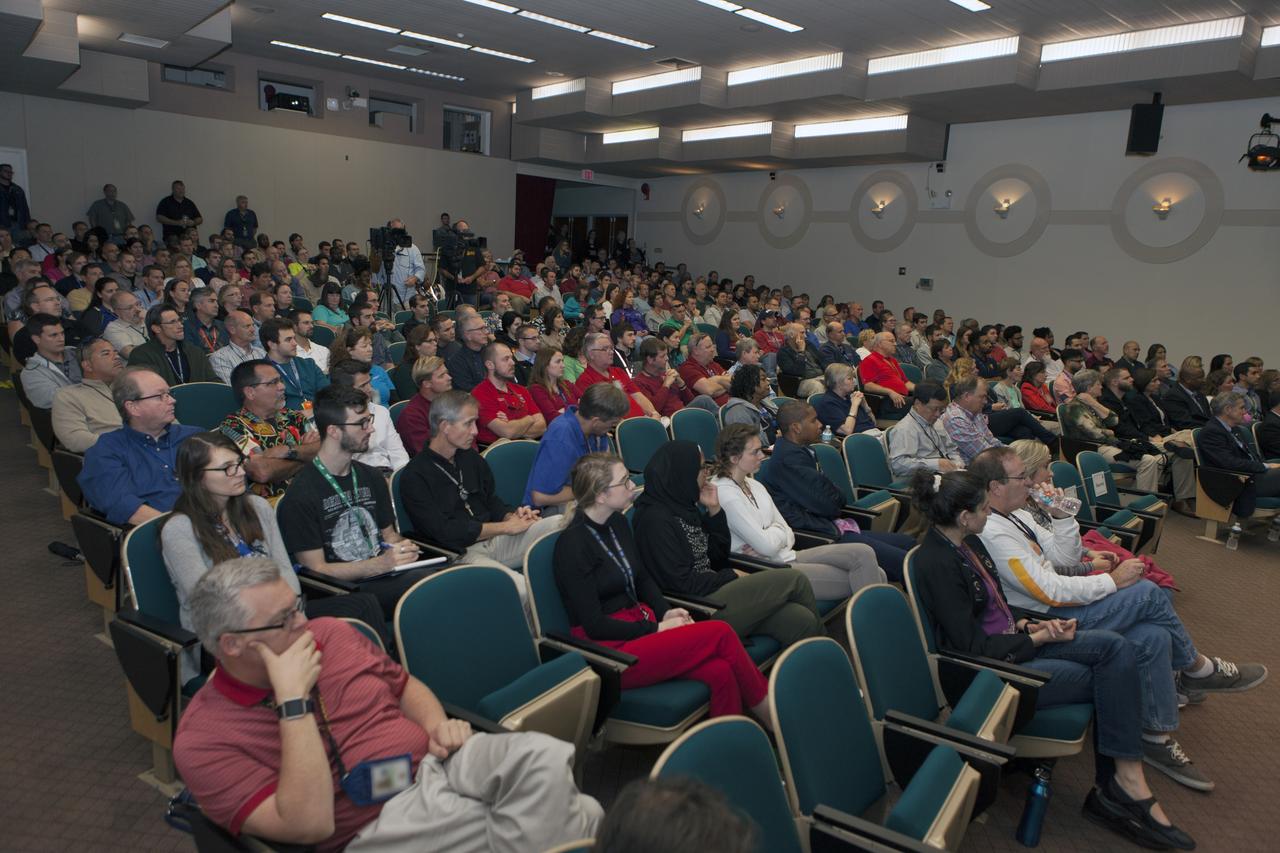
Employees listen intently during an Apollo, Challenger, Columbia Lessons Learned Program event in the Training Auditorium at NASA's Kennedy Space Center in Florida. The program's theme was "Columbia: Lessons and Legends of Recovery." Kennedy Center Director Bob Cabana moderated a panel discussion featuring guests with connections to Columbia and recovery efforts.
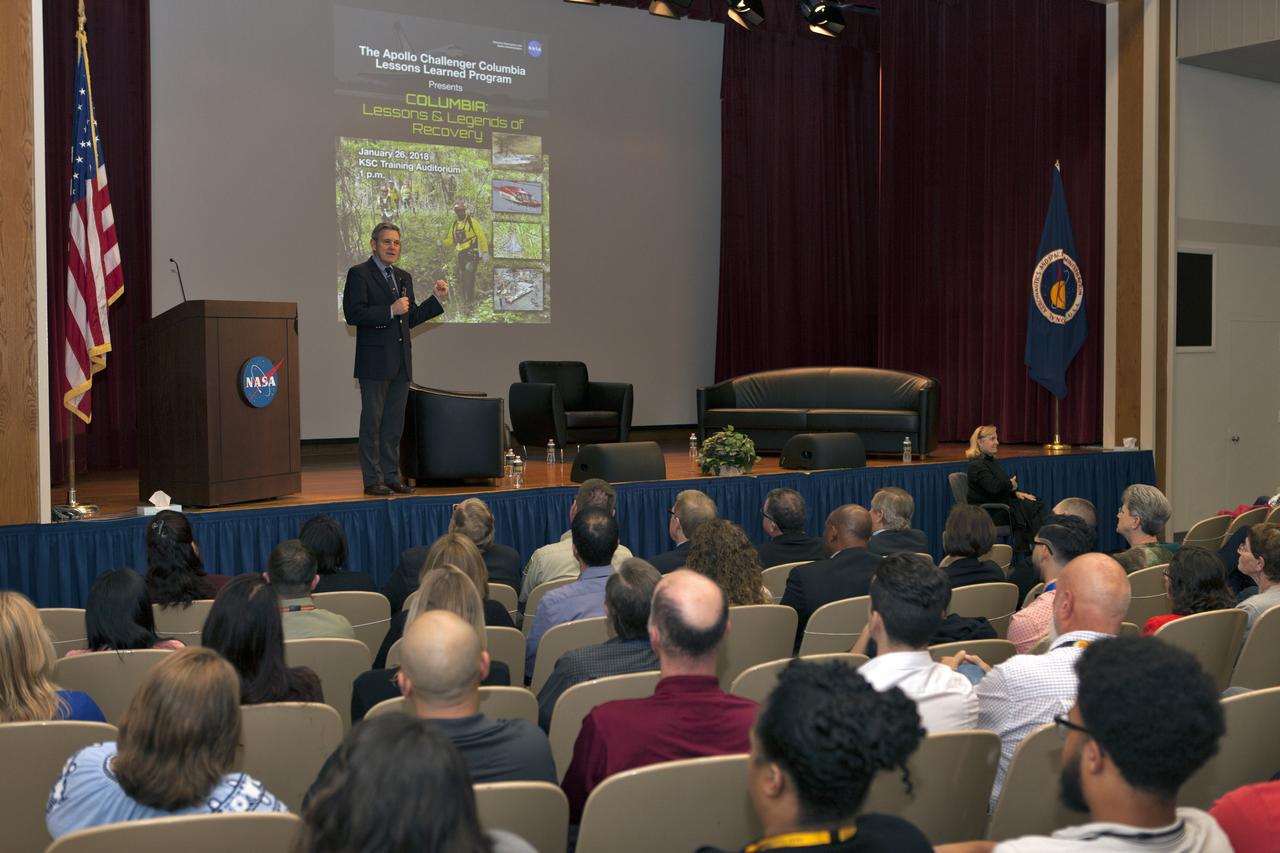
NASA Kennedy Space Center Director Bob Cabana speaks to employees during an Apollo, Challenger, Columbia Lessons Learned Program event in the center's Training Auditorium. The program's theme was "Columbia: Lessons and Legends of Recovery." Cabana moderated a panel discussion featuring guests with connections to Columbia and recovery efforts.
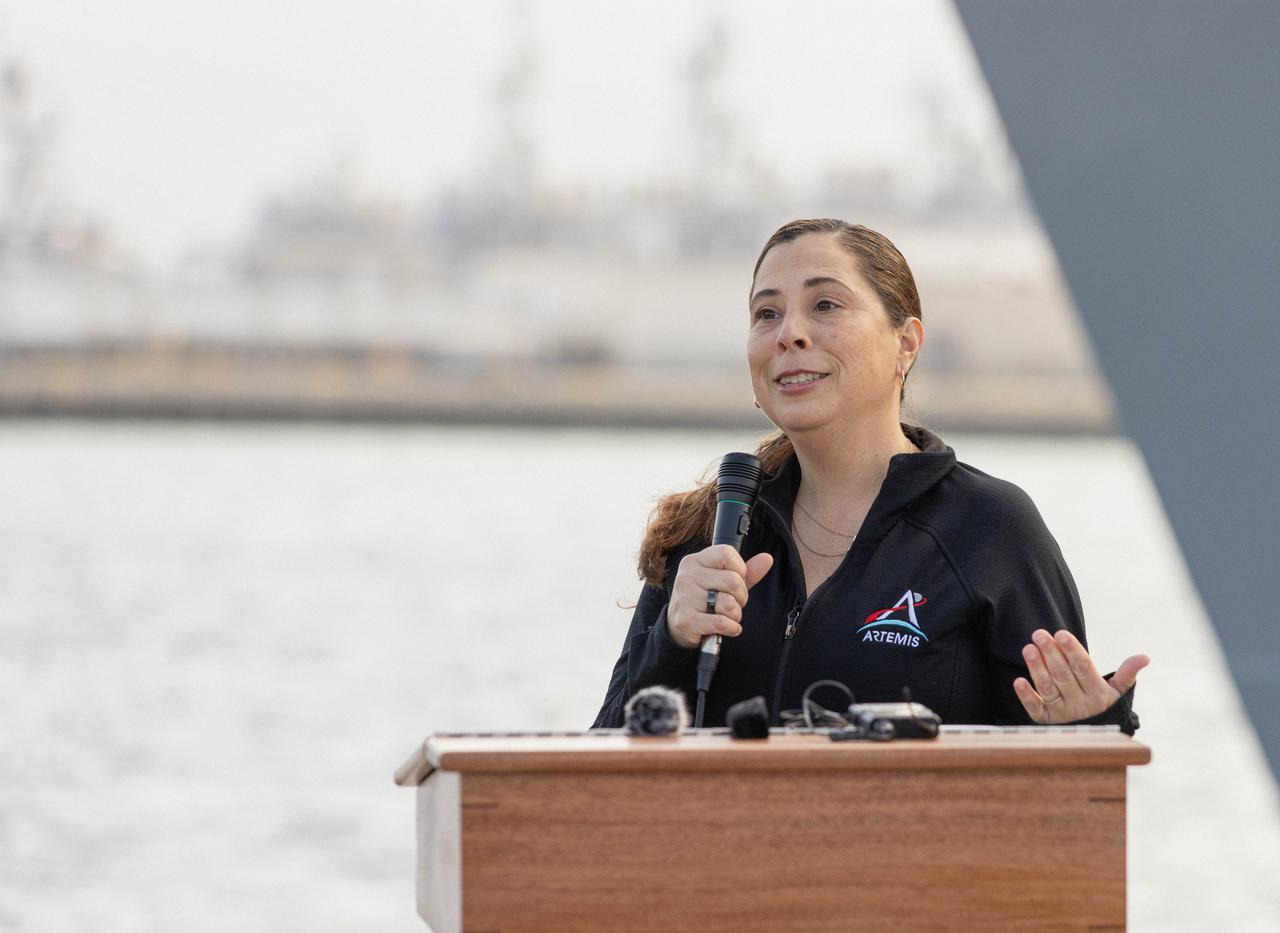
Liliana Villarreal, landing and recovery director in Exploration Ground Systems at NASA’s Kennedy Space Center in Florida speaks in a news conference held in San Diego, California on Wednesday, Feb. 28, 2024, about the Underway Recovery Test 11 (URT-11) performed off the coast of San Diego, California. URT-11 performed by NASA’s Exploration Ground System’s Landing and Recovery team, partners from the Department of Defense, and U.S. Navy personnel aboard the USS San Diego is the eleventh in a series of Artemis recovery tests, and the first the Artemis II recovery procedures involved the astronauts.