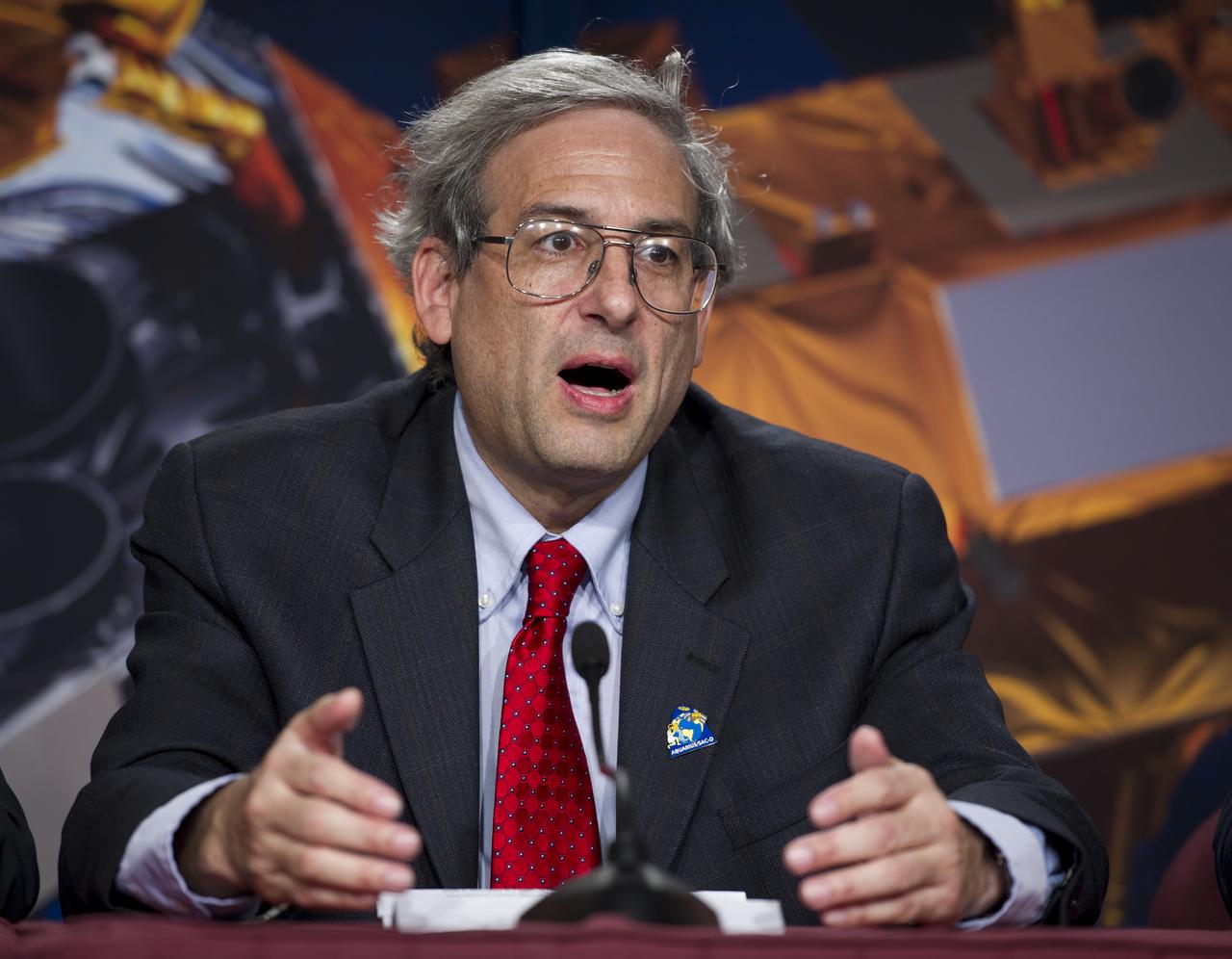
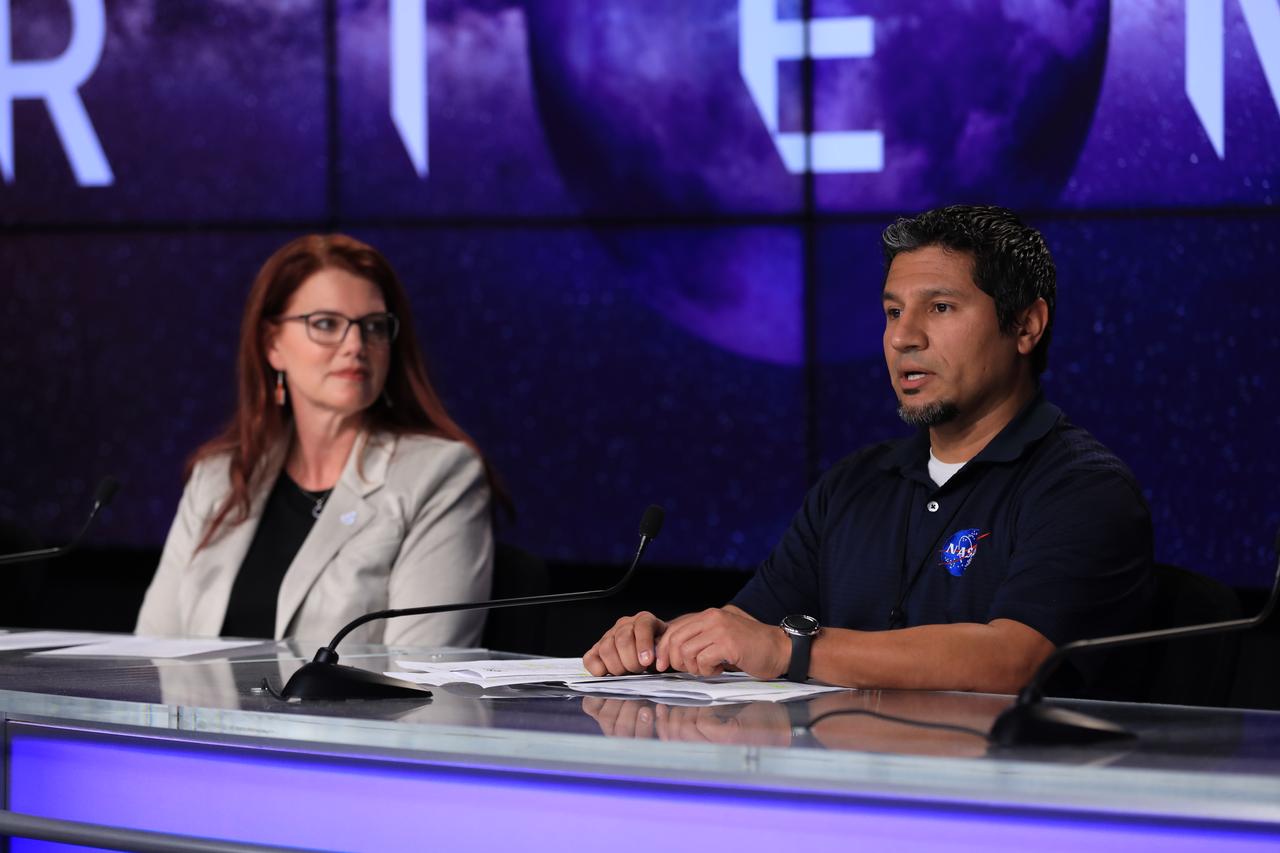
Michael Freilich, NASA Earth Science Division Director, NASA Headquarters, talks during the Aquarius/SAC-D post-launch press conference on Friday, June 10, 2011 at the NASA Resident Office, Vandenberg Air Force Base, Calif. The joint U.S./Argentinian Aquarius/Satélite de Aplicaciones Científicas (SAC)-D mission, launched earlier on Friday June 10, will map the salinity at the ocean surface, information critical to improving our understanding of two major components of Earth's climate system: the water cycle and ocean circulation. Photo Credit: (NASA/Bill Ingalls)
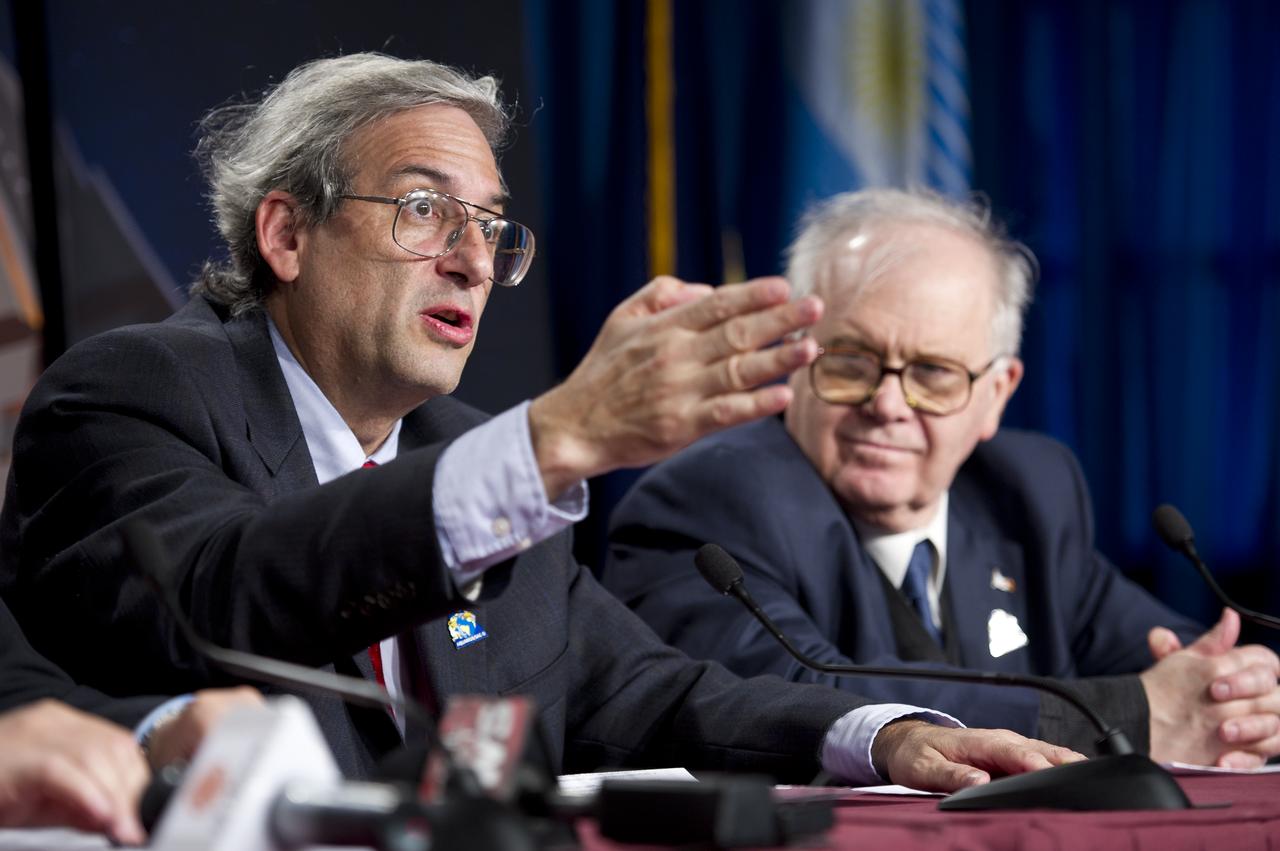
Michael Freilich, NASA Earth Science Division Director, NASA Headquarters, talks during the Aquarius/SAC-D post-launch press conference on Friday, June 10, 2011 at the NASA Resident Office, Vandenberg Air Force Base, Calif. The joint U.S./Argentinian Aquarius/Satélite de Aplicaciones Científicas (SAC)-D mission, launched earlier on Friday June 10, will map the salinity at the ocean surface, information critical to improving our understanding of two major components of Earth's climate system: the water cycle and ocean circulation. Photo Credit: (NASA/Bill Ingalls)
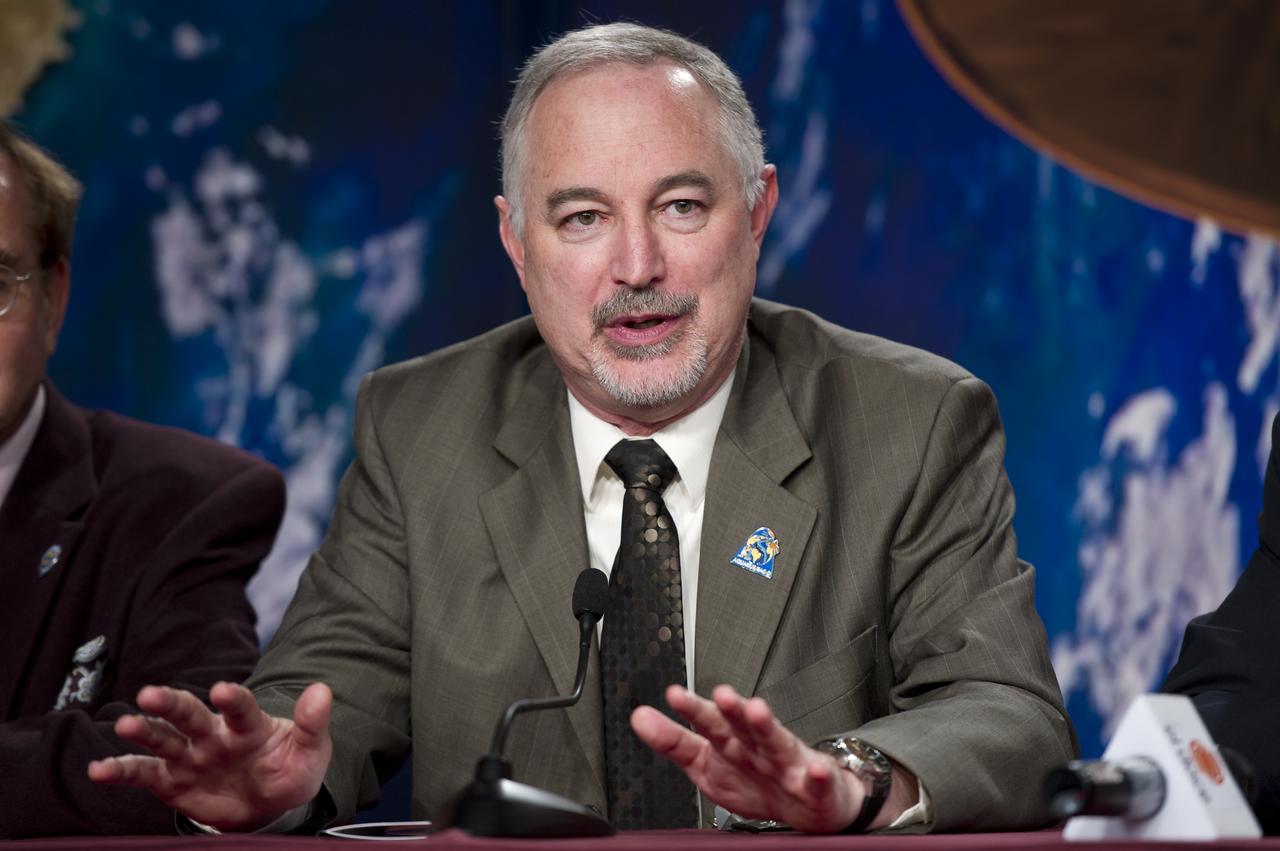
Charles Gay, Deputy Associate Administrator, NASA Science Mission Directorate, talks during the Aquarius/SAC-D post-launch press conference on Friday, June 10, 2011 at the NASA Resident Office, Vandenberg Air Force Base, Calif. The joint U.S./Argentinian Aquarius/Satélite de Aplicaciones Científicas (SAC)-D mission, launched earlier on Friday June 10, will map the salinity at the ocean surface, information critical to improving our understanding of two major components of Earth's climate system: the water cycle and ocean circulation. Photo Credit: (NASA/Bill Ingalls)
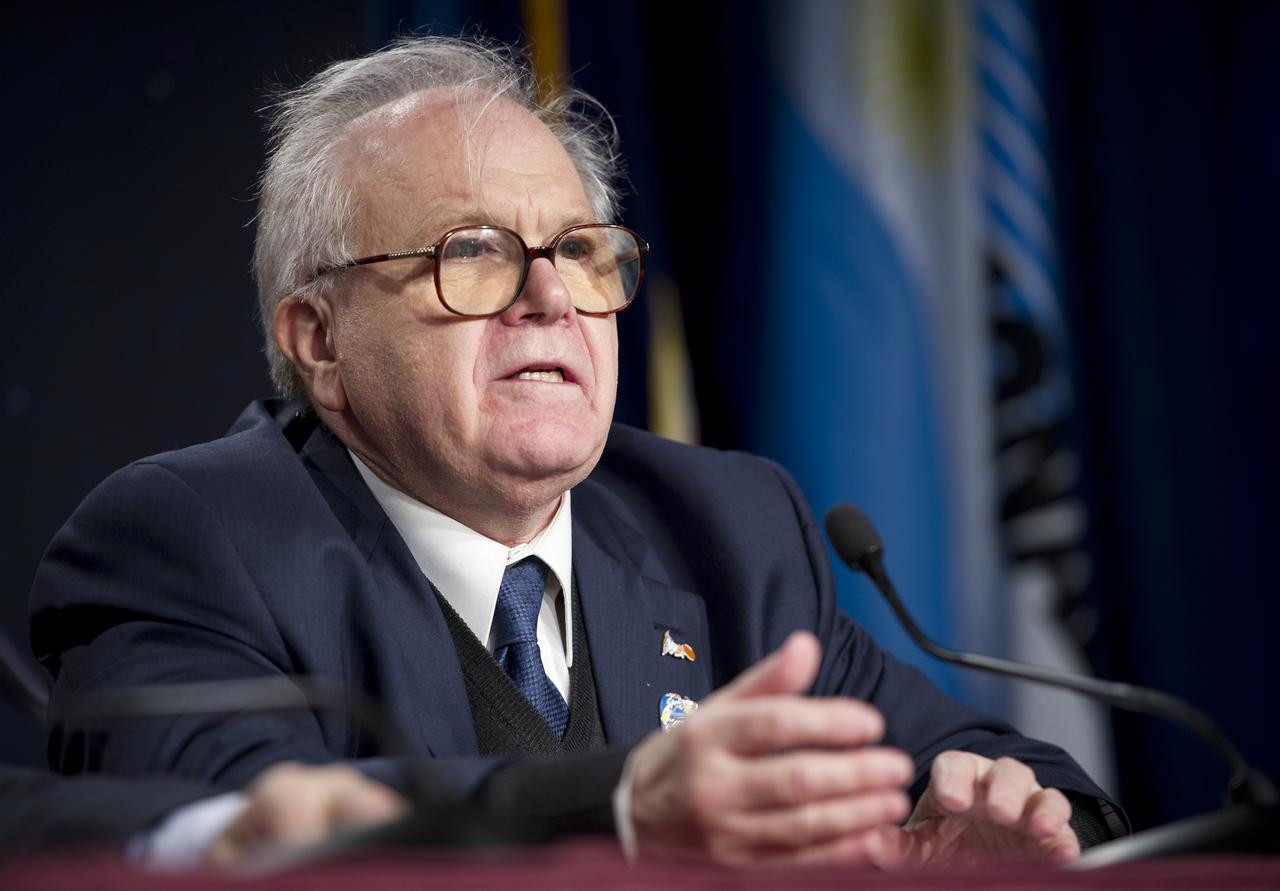
Conrado Varotto, CONAE Executive and Technical Director, Buenos Aires, talks during the Aquarius/SAC-D post-launch press conference on Friday, June 10, 2011 at the NASA Resident Office, Vandenberg Air Force Base, Calif. The joint U.S./Argentinian Aquarius/Satélite de Aplicaciones Científicas (SAC)-D mission, launched earlier on Friday June 10, will map the salinity at the ocean surface, information critical to improving our understanding of two major components of Earth's climate system: the water cycle and ocean circulation. Photo Credit: (NASA/Bill Ingalls)
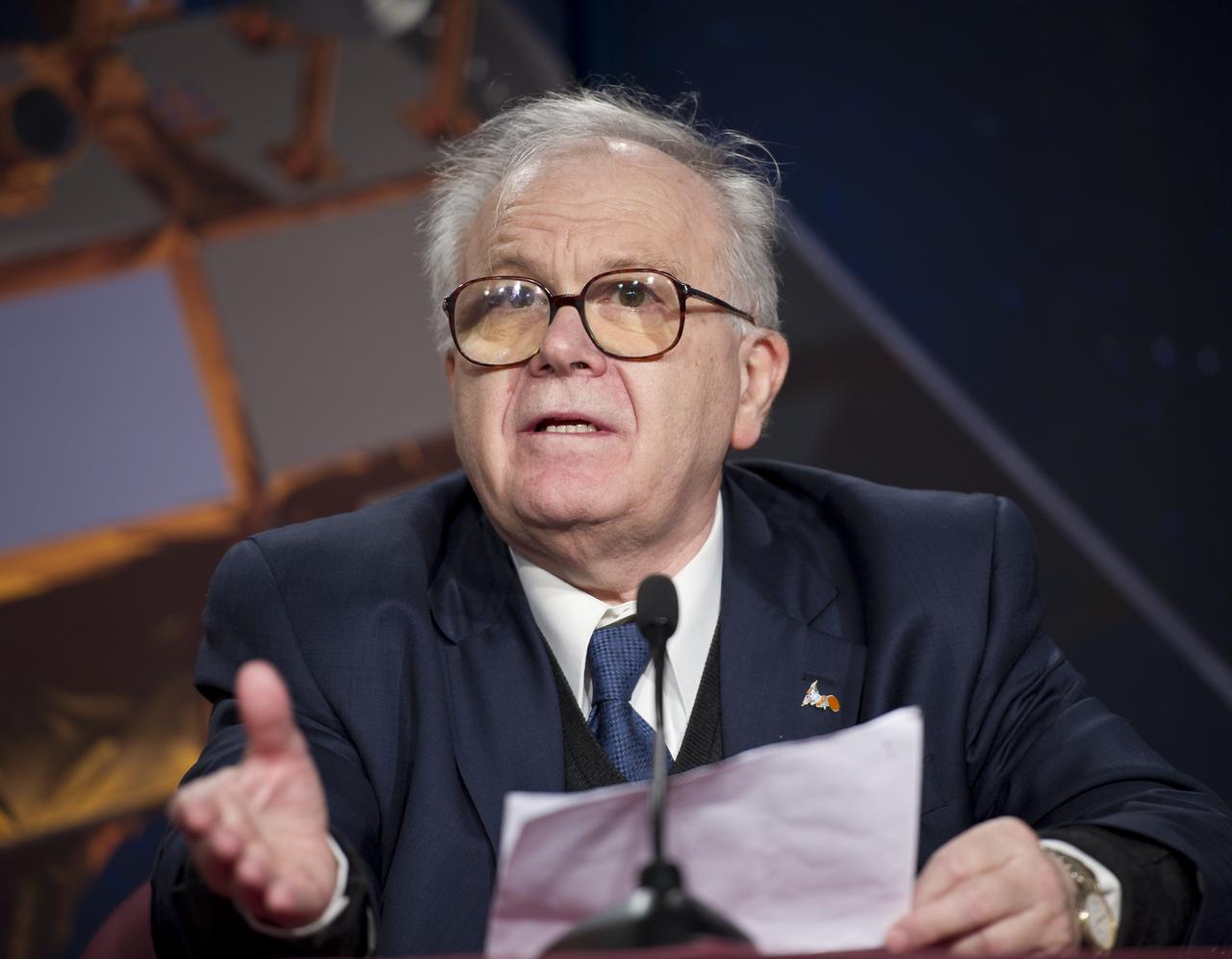
Conrado Varotto, CONAE Executive and Technical Director, Buenos Aires, talks during the Aquarius/SAC-D post-launch press conference on Friday, June 10, 2011 at the NASA Resident Office, Vandenberg Air Force Base, Calif. The joint U.S./Argentinian Aquarius/Satélite de Aplicaciones Científicas (SAC)-D mission, launched earlier on Friday June 10, will map the salinity at the ocean surface, information critical to improving our understanding of two major components of Earth's climate system: the water cycle and ocean circulation. Photo Credit: (NASA/Bill Ingalls)
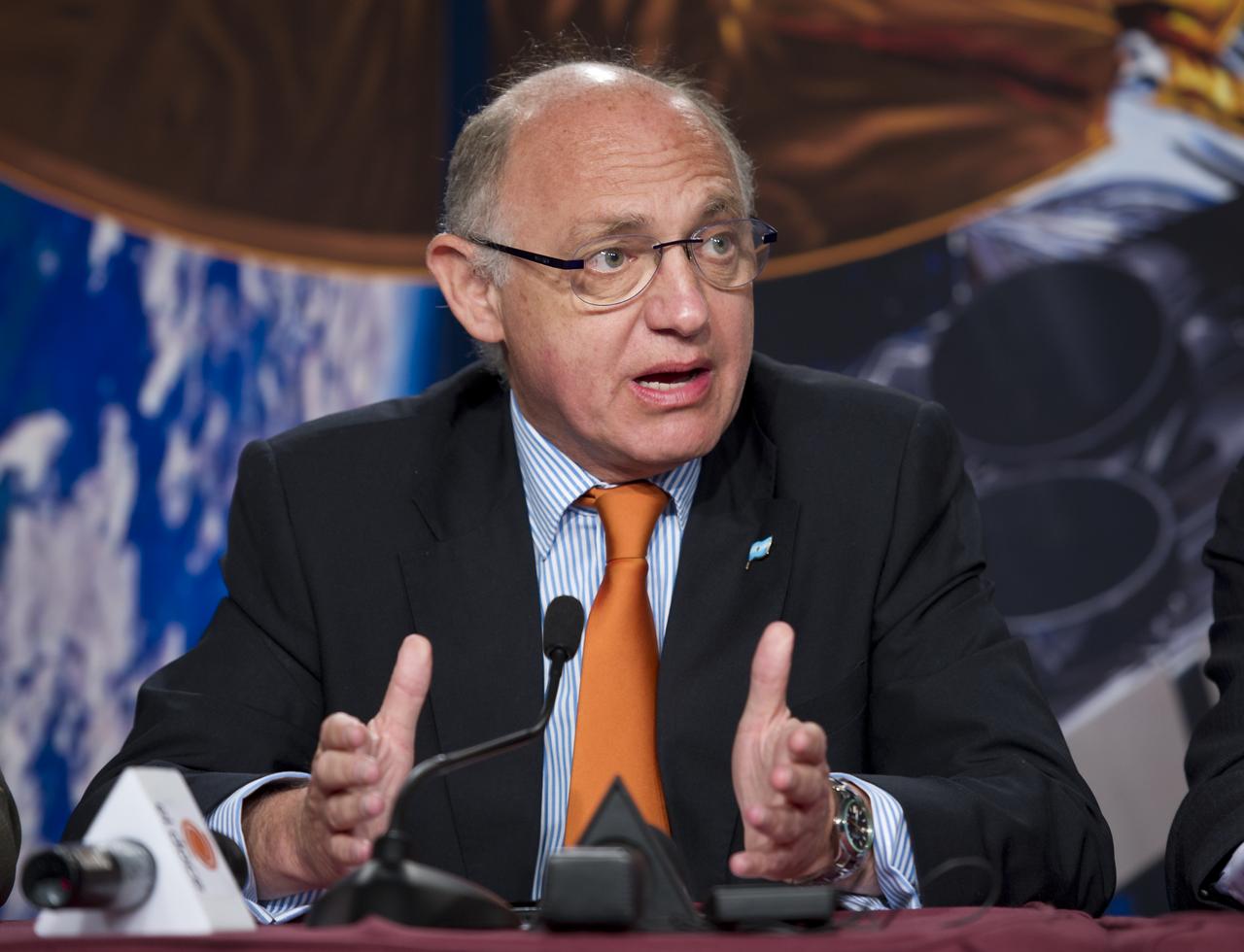
Hector Timerman, Foreign Minister of Argentina, Buenos Aires, talks during the Aquarius/SAC-D post-launch press conference on Friday, June 10, 2011 at the NASA Resident Office, Vandenberg Air Force Base, Calif. The joint U.S./Argentinian Aquarius/Satélite de Aplicaciones Científicas (SAC)-D mission, launched earlier on Friday June 10, will map the salinity at the ocean surface, information critical to improving our understanding of two major components of Earth's climate system: the water cycle and ocean circulation. Photo Credit: (NASA/Bill Ingalls)
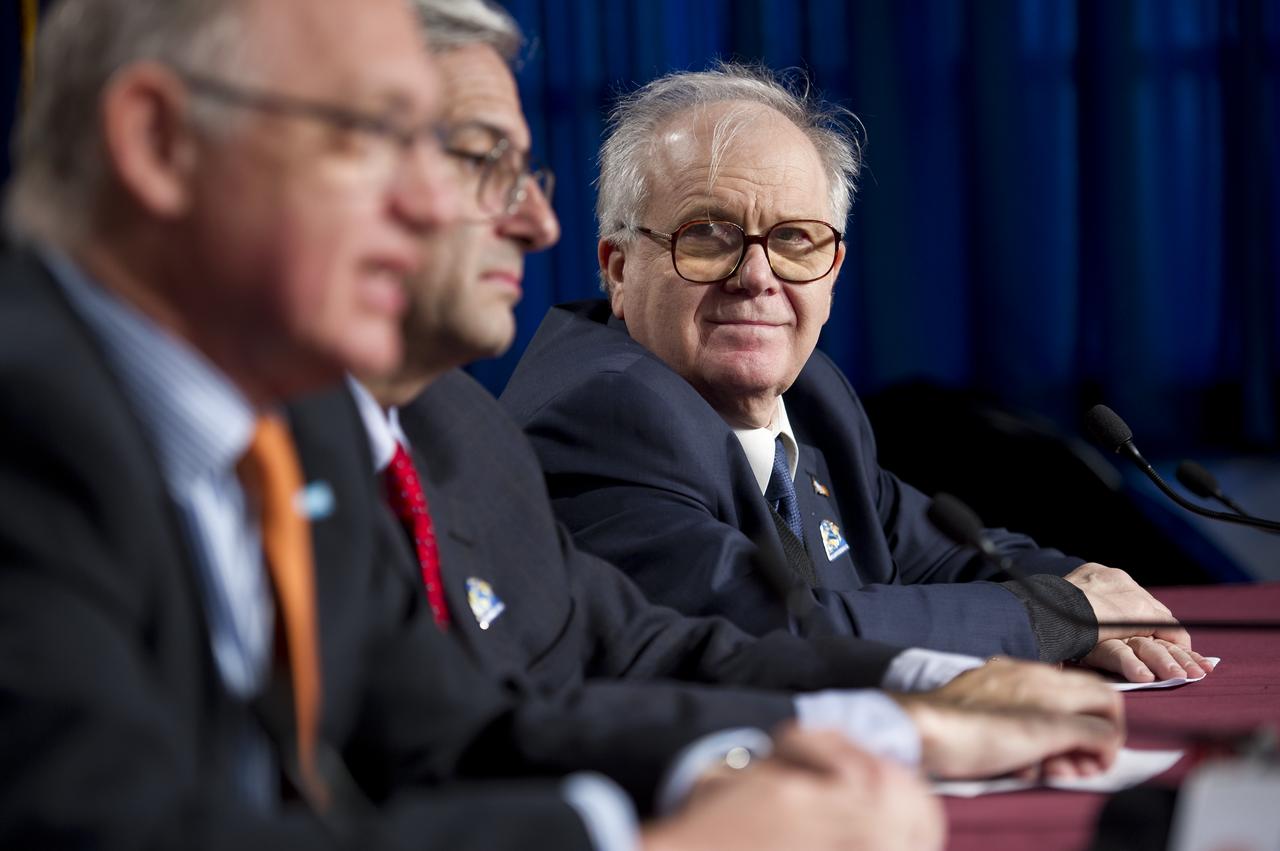
Conrado Varotto, CONAE Executive and Technical Director, Buenos Aires, looks on as other panelest speak during the Aquarius/SAC-D post-launch press conference on Friday, June 10, 2011 at the NASA Resident Office, Vandenberg Air Force Base, Calif. The joint U.S./Argentinian Aquarius/Satélite de Aplicaciones Científicas (SAC)-D mission, launched earlier on Friday June 10, will map the salinity at the ocean surface, information critical to improving our understanding of two major components of Earth's climate system: the water cycle and ocean circulation. Photo Credit: (NASA/Bill Ingalls)
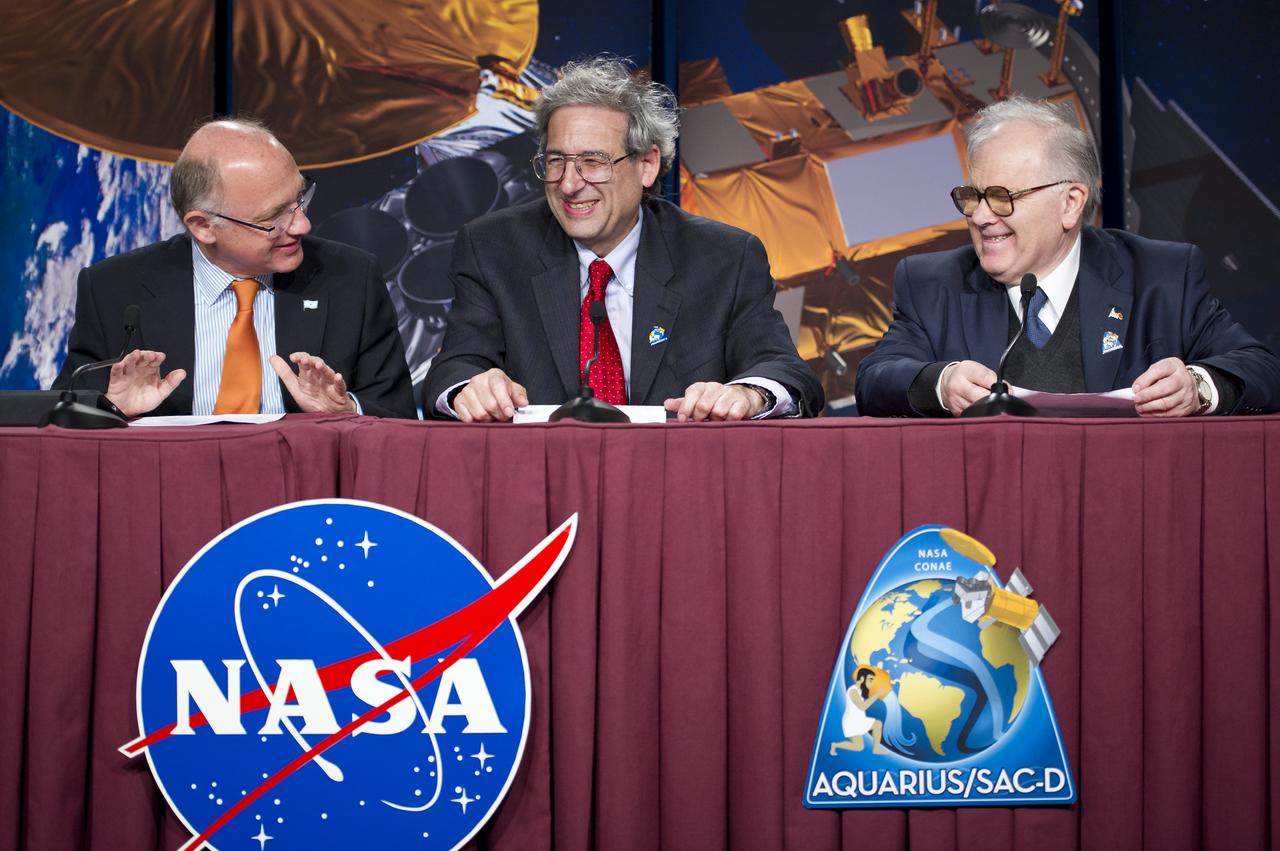
Hector Timerman, Foreign Minister of Argentina, Buenos Aires, left, Michael Freilich, NASA Earth Science Division Director, NASA Headquarters, Washington, center, and Conrado Varotto, CONAE Executive and Technical Director, Buenos Aires, laugh at the start of the Aquarius/SAC-D post-launch press conference on Friday, June 10, 2011 at the NASA Resident Office, Vandenberg Air Force Base, Calif. The joint U.S./Argentinian Aquarius/Satélite de Aplicaciones Científicas (SAC)-D mission, launched earlier on Friday June 10, will map the salinity at the ocean surface, information critical to improving our understanding of two major components of Earth's climate system: the water cycle and ocean circulation. Photo Credit: (NASA/Bill Ingalls)
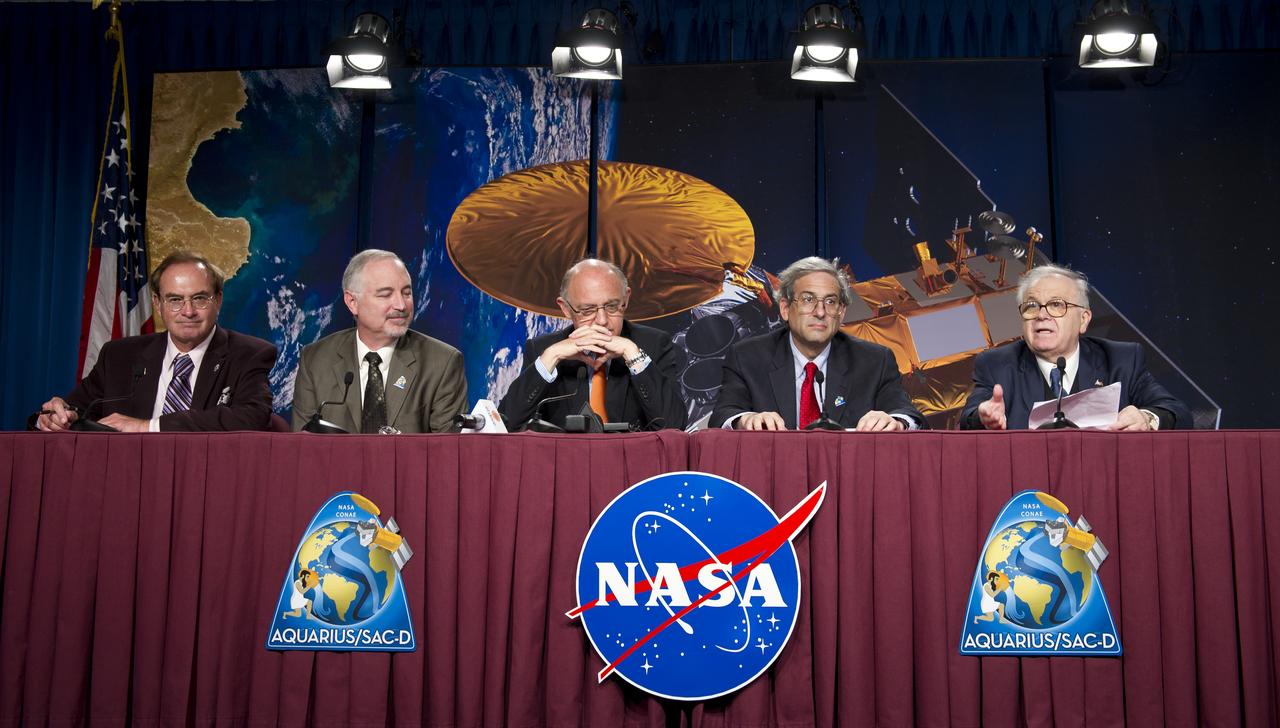
From left, George Diller, NASA Public Affairs Officer; Charles Gay, Deputy Associate Administrator, NASA Science Mission Directorate; Hector Timerman, Foreign Minister of Argentina, Buenos Aires; Michael Freilich, NASA Earth Science Division Director, NASA Headquarters; and Conrado Varotto, CONAE Executive and Technical Director, Buenos Aires, are seen at the Aquarius/SAC-D post-launch press conference on Friday, June 10, 2011 at the NASA Resident Office, Vandenberg Air Force Base, Calif. The joint U.S./Argentinian Aquarius/Satélite de Aplicaciones Científicas (SAC)-D mission, launched earlier on Friday June 10, will map the salinity at the ocean surface, information critical to improving our understanding of two major components of Earth's climate system: the water cycle and ocean circulation. Photo Credit: (NASA/Bill Ingalls)
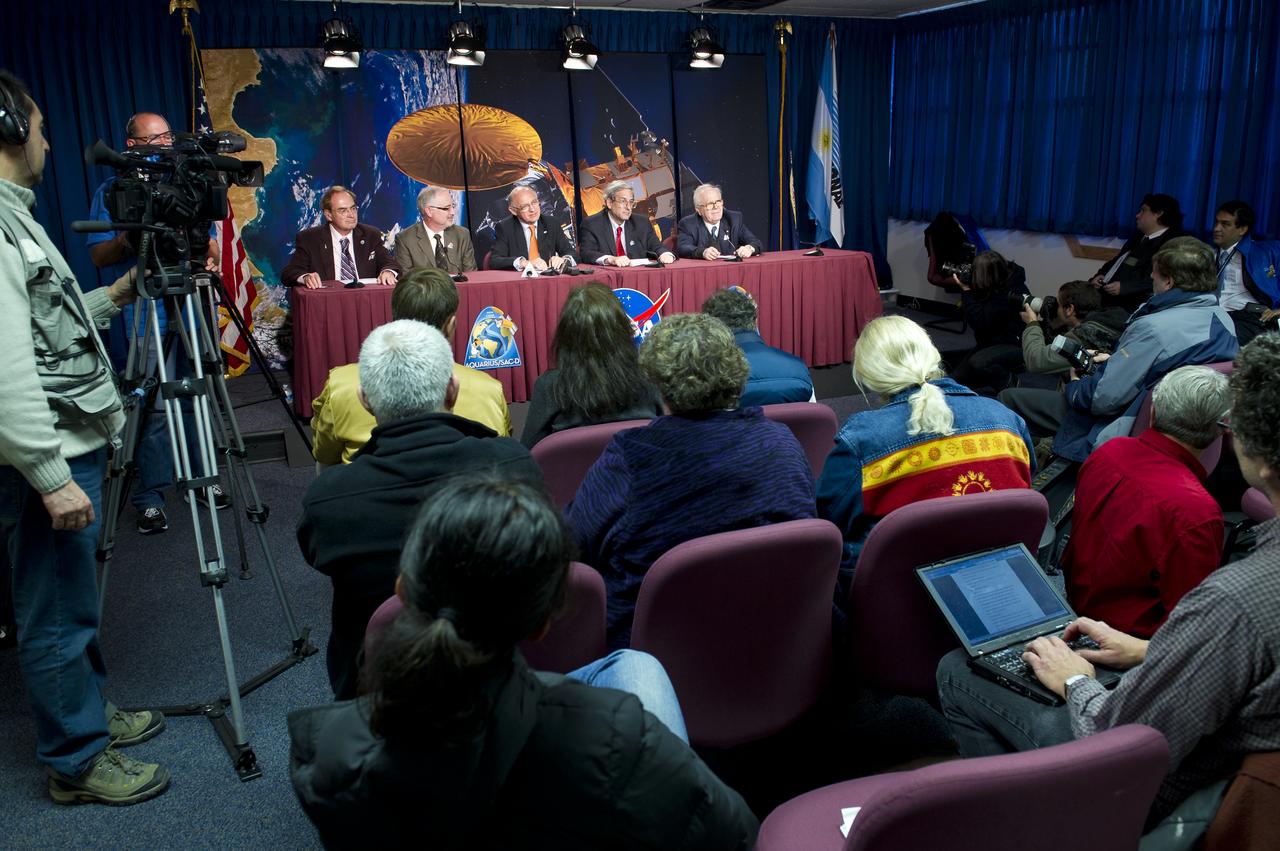
Seated from left, George Diller, NASA Public Affairs Officer; Charles Gay, Deputy Associate Administrator, NASA Science Mission Directorate; Hector Timerman, Foreign Minister of Argentina, Buenos Aires; Michael Freilich, NASA Earth Science Division Director, NASA Headquarters; and Conrado Varotto, CONAE Executive and Technical Director, Buenos Aires, are seen at the Aquarius/SAC-D post-launch press conference on Friday, June 10, 2011 at the NASA Resident Office, Vandenberg Air Force Base, Calif. The joint U.S./Argentinian Aquarius/Satélite de Aplicaciones Científicas (SAC)-D mission, launched earlier on Friday June 10, will map the salinity at the ocean surface, information critical to improving our understanding of two major components of Earth's climate system: the water cycle and ocean circulation. Photo Credit: (NASA/Bill Ingalls)
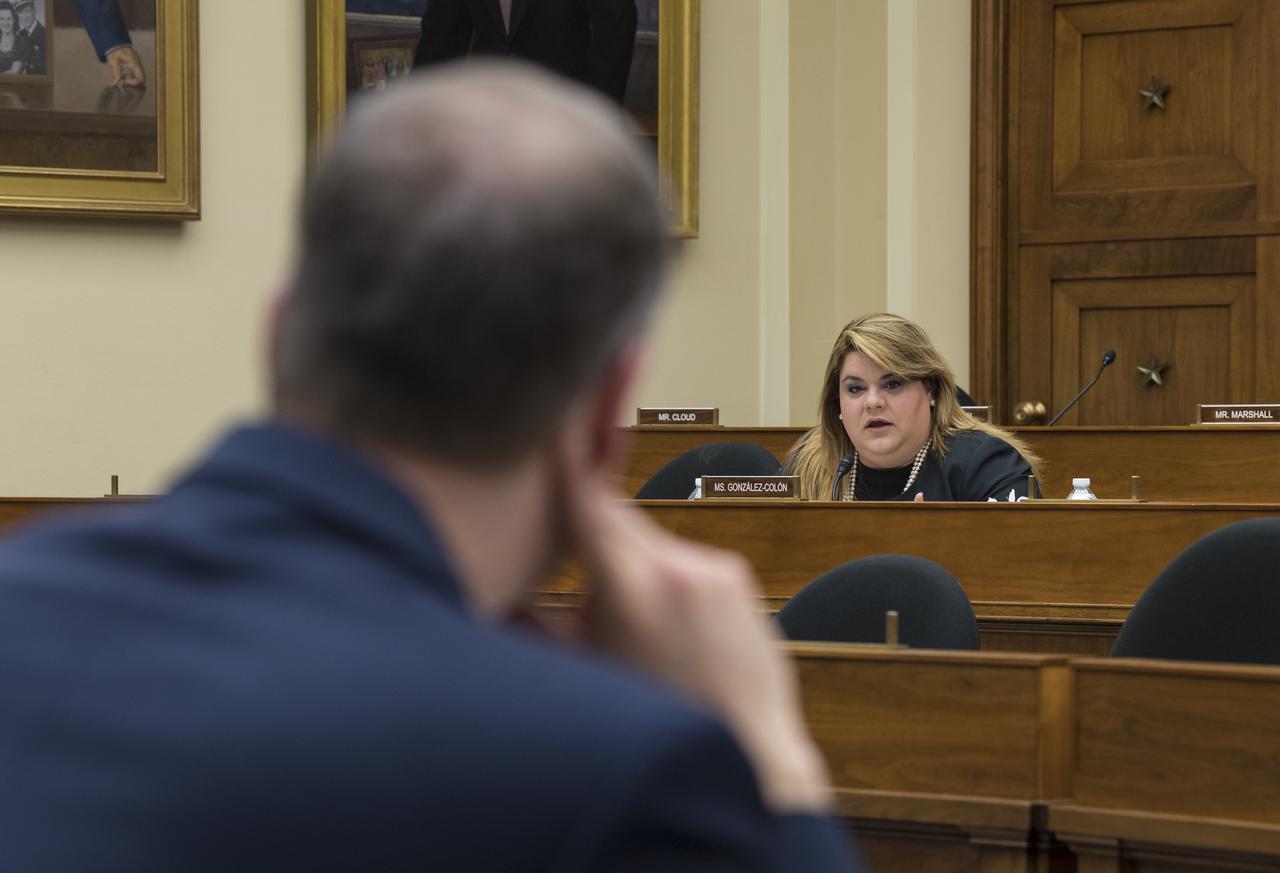
Resident Commissioner Jenniffer González-Colón, R-Puerto Rico, asks NASA Administrator Jim Bridenstine a question during a House Committee on Science, Space, and Technology hearing to review the Fiscal Year 2020 budget request for the National Aeronautics and Space Administration, Tuesday, April 2, 2019 at the Rayburn House Office Building in Washington. Photo Credit: (NASA/Aubrey Gemignani)
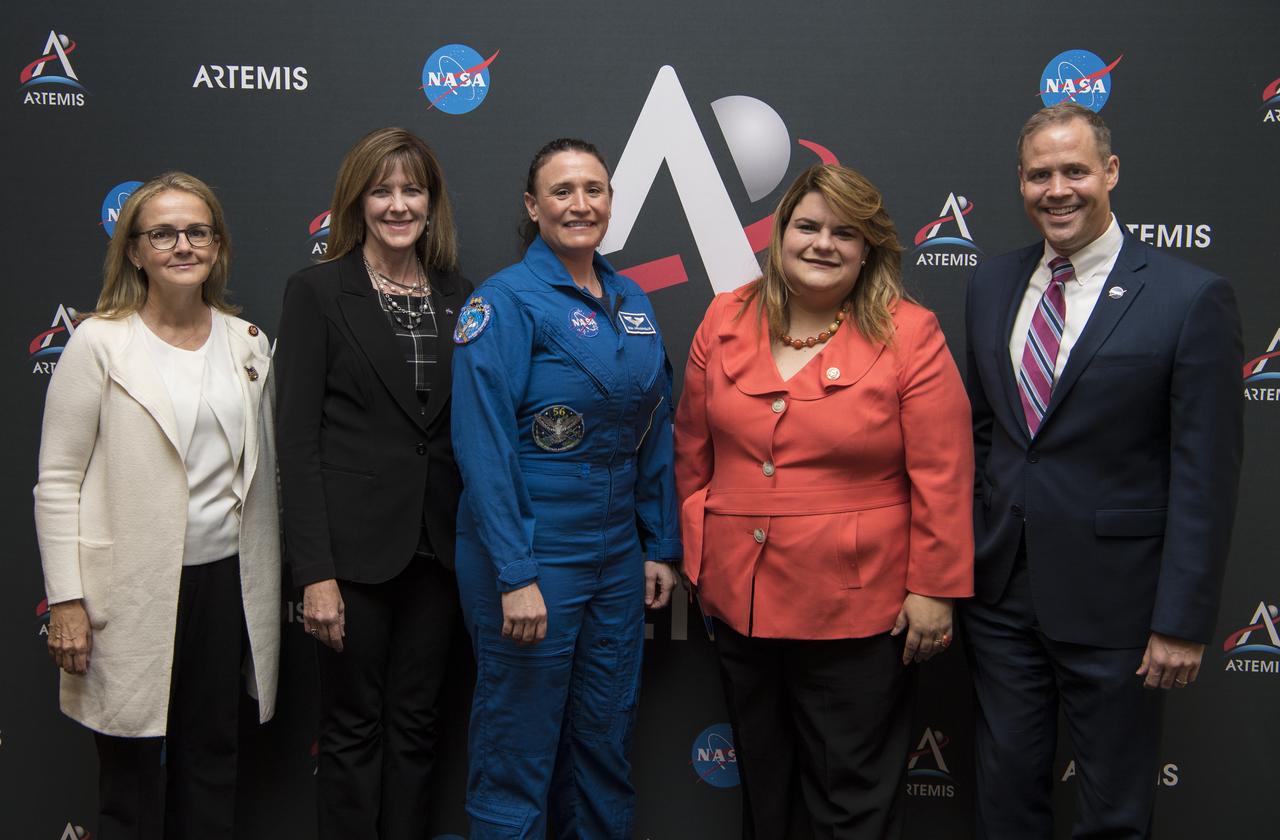
From left to right, U.S. Representative Madeleine Dean, D-Pa., former astronaut and current director of NASA’s Glenn Research Center, Dr. Janet Kavandi, NASA astronaut Serena Auñón-Chancellor, U.S. resident commissioner of Puerto Rico, Jenniffer González-Colón, R-Puerto Rico, and NASA Administrator Jim Bridenstine pose for a photo just before a bipartisan Congressional Caucus for Women’s Issues briefing on NASA’s Artemis lunar exploration program, Wednesday, September 11, 2019 at the Rayburn House Office Building in Washington. Photo Credit: (NASA/Aubrey Gemignani)
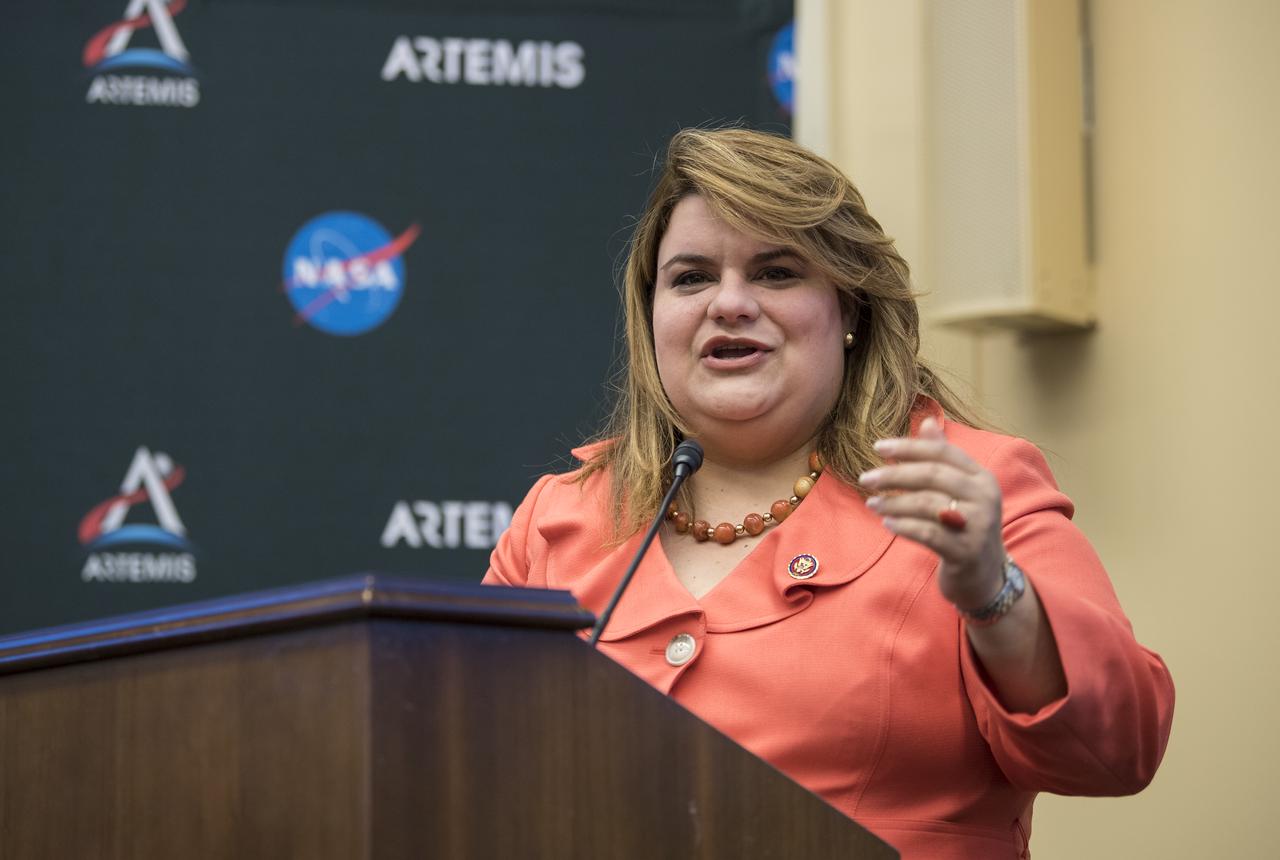
Resident Commissioner of Puerto Rico, Jenniffer González-Colón, R-Puerto Rico, provides welcoming remarks at a bipartisan Congressional Caucus for Women’s Issues briefing on NASA’s Artemis lunar exploration program, Wednesday, September 11, 2019 at the Rayburn House Office Building in Washington. Photo Credit: (NASA/Aubrey Gemignani)
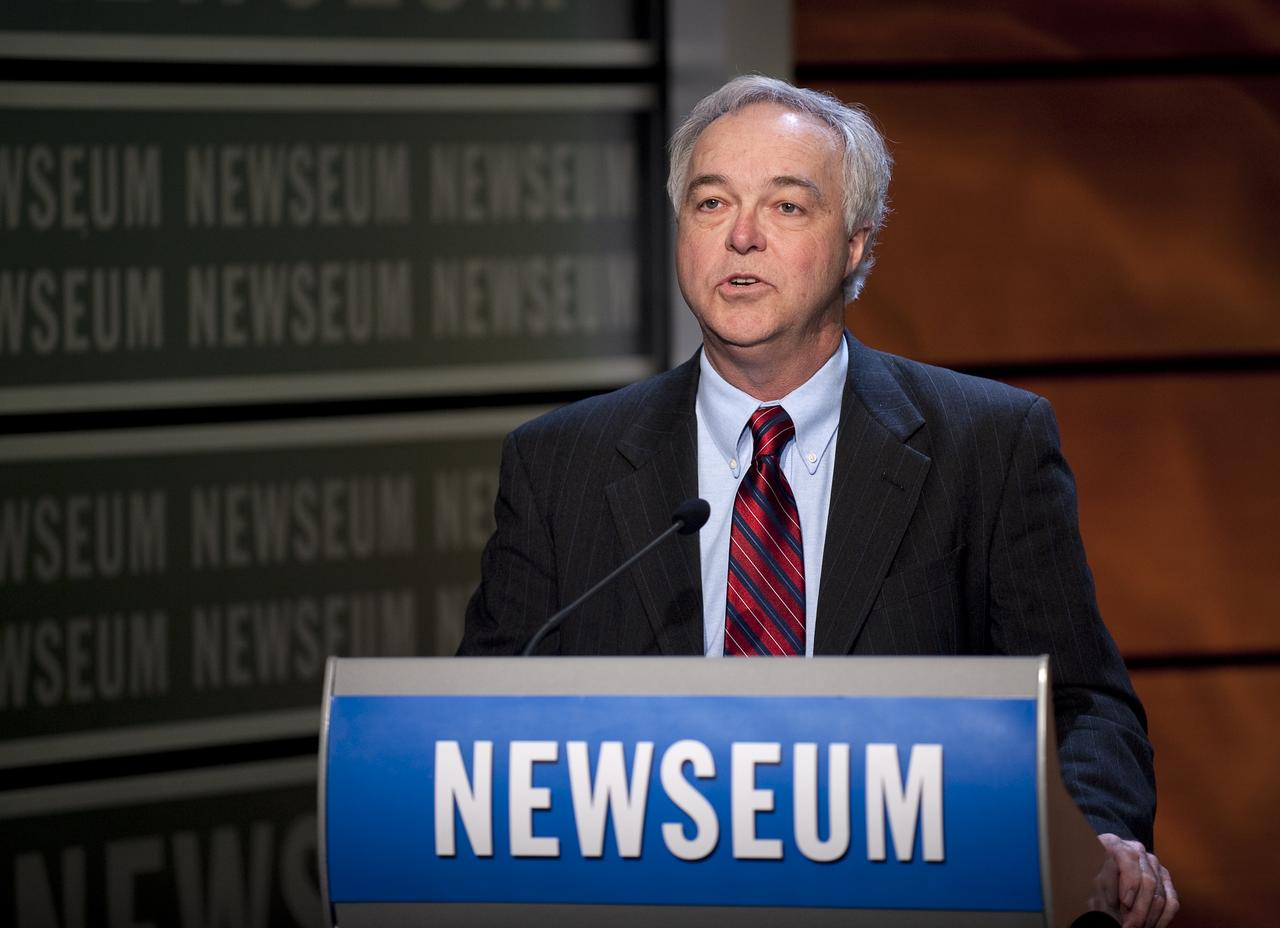
President and Chief Operating Officer of the Newseum, Kenneth Paulson, introduces the Newseum's distinguished journalist-in-residence, Nick Clooney and NASA Apollo 10 Astronaut Gene Cernan during a Newseum TV program celebrating the 40th anniversary of Apollo 10, Monday, May 18, 2009, in Washington. Photo Credit (NASA/Bill Ingalls)
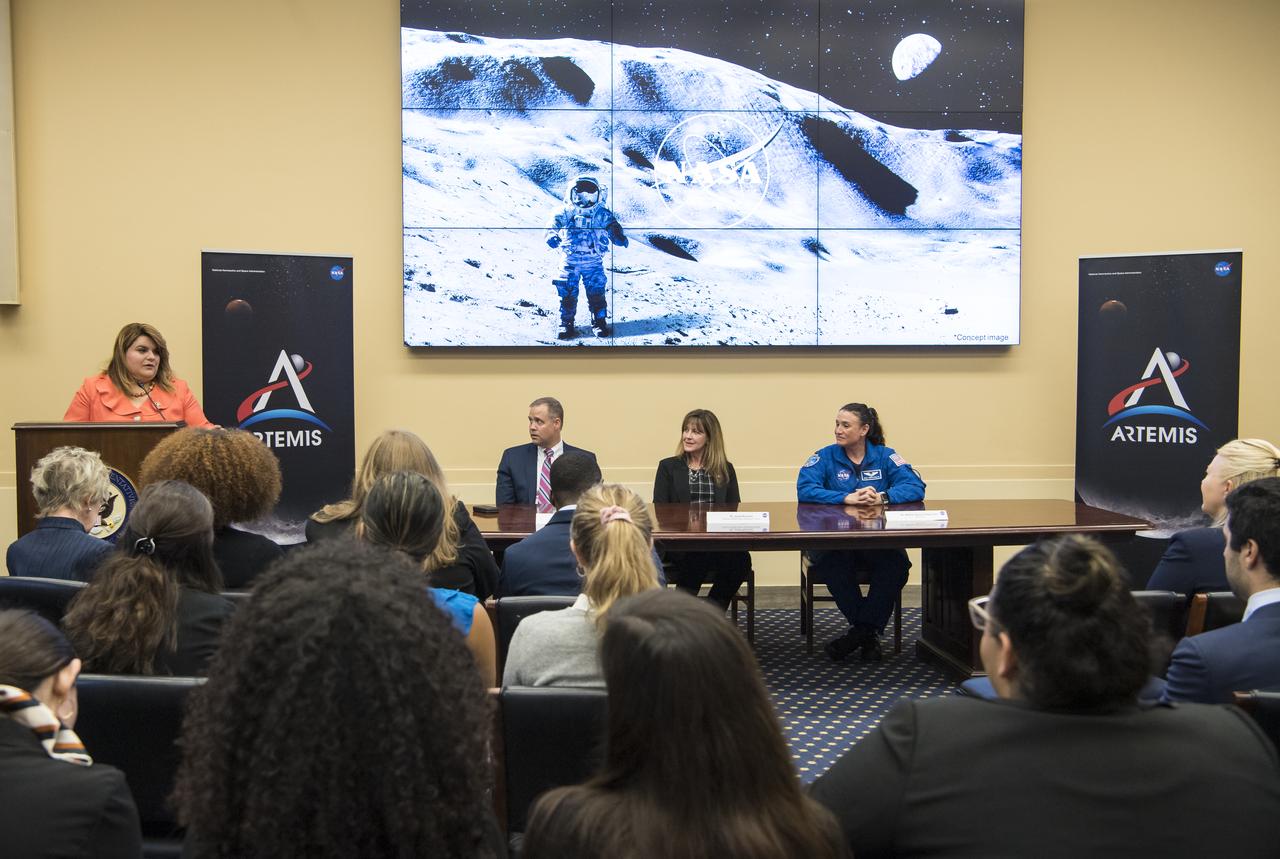
Resident Commissioner of Puerto Rico, Jenniffer González-Colón, R-Puerto Rico, provides opening remarks at a bipartisan Congressional Caucus for Women’s Issues briefing on NASA’s Artemis lunar exploration program, Wednesday, September 11, 2019 at the Rayburn House Office Building in Washington. Photo Credit: (NASA/Aubrey Gemignani)
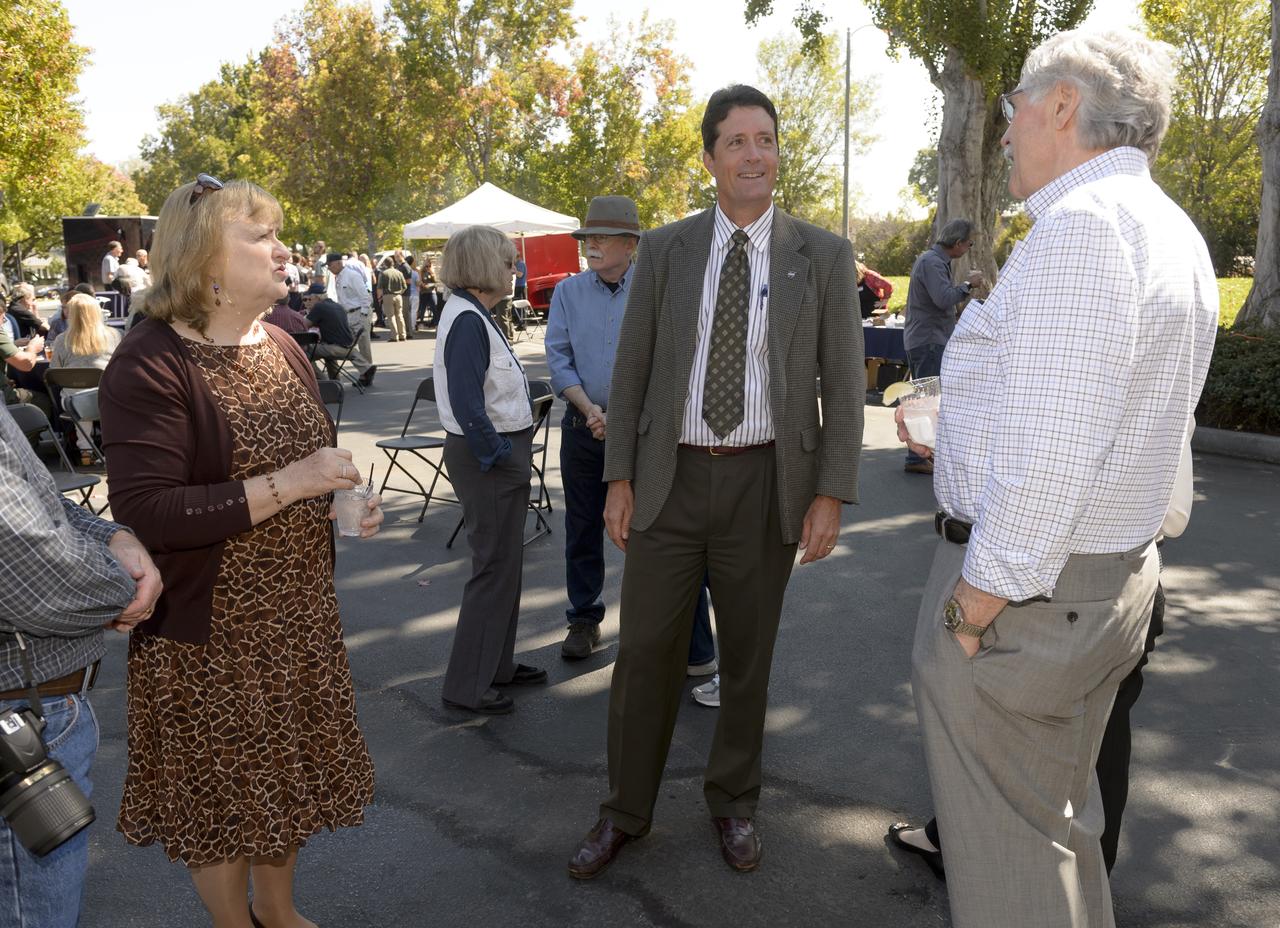
Avation Safety Reporting System (ASRS) 40th Anniversary lunch and open house at the Sunnyvale office. Linda J. Connell, ASRS Program Director (Left); Thomas A Edwards, Deputy Center Director NASA Ames; Dr. John Lauber, Resident Scientist and pioneer of the ASRS at Ames from 1972-1985 (Right).
Expedition 10 Commander and NASA Science Officer Leroy Chiao, right, Flight Engineer and Soyuz Commander Salizhan Sharipov donned their launch and entry suits and climbed aboard their Soyuz TMA-5 spacecraft Friday, October 5, 2004, at the Baikonur Cosmodrome in Kazakhstan for a dress rehearsal of launch day activities leading to their liftoff October 14 to the International Space Station. Chiao and Sharipov, the first crew of all-Asian extraction, will spend six months on the Station. Shargin will return to Earth October 24 with the Stations' current residents, Expedition 9 Commander Gennady Padalka and NASA Flight Engineer and Science Officer Mike Fincke. Photo Credit: (NASA/Bill Ingalls)
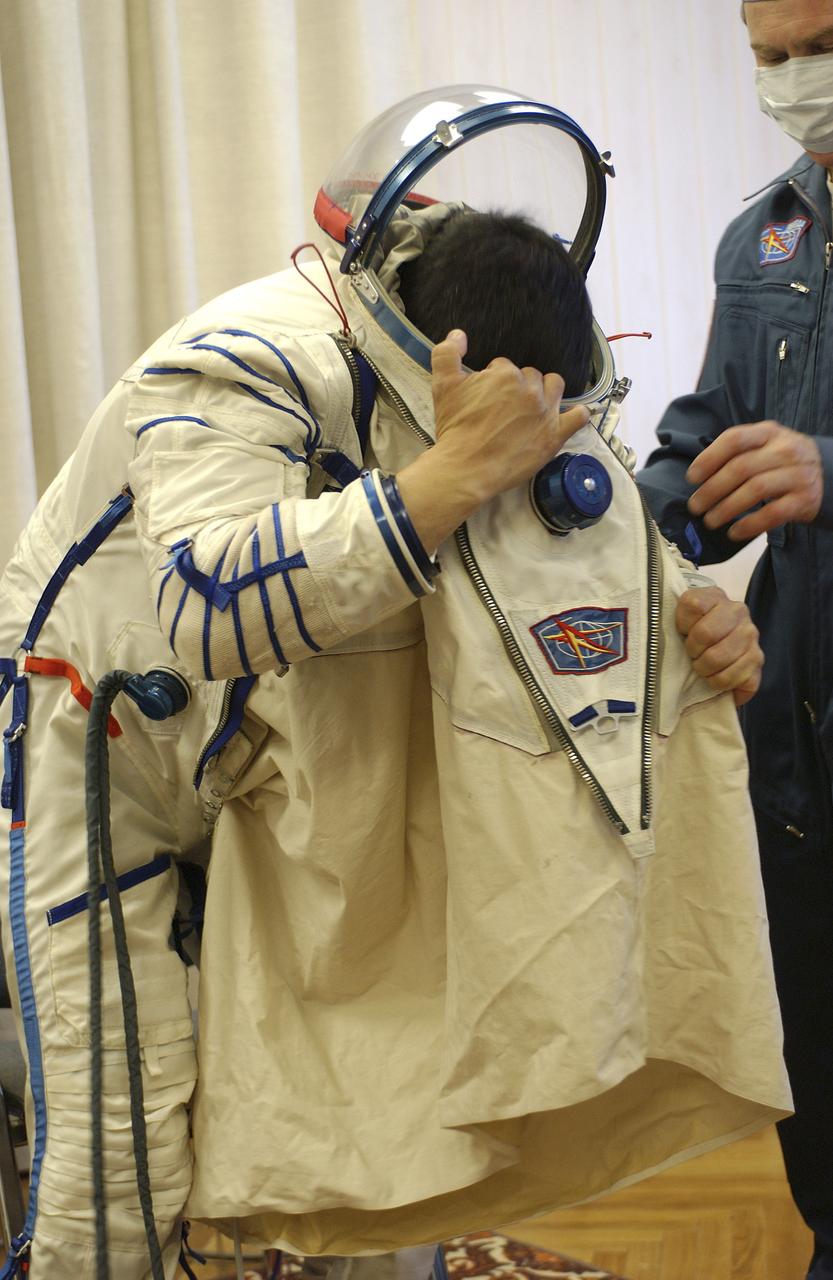
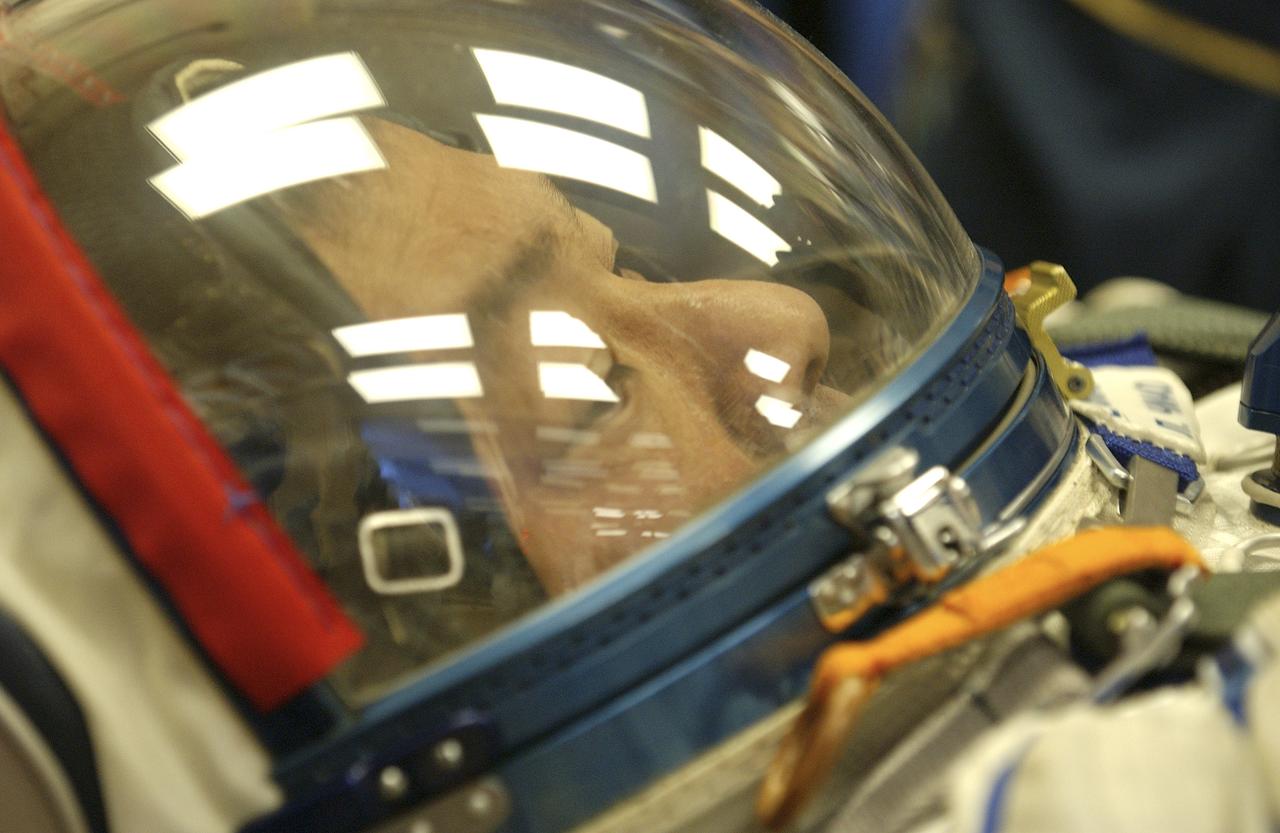
Expedition 10 Commander and NASA Science Officer Leroy Chiao donned his launch and entry suit and climbed aboard the Soyuz TMA-5 spacecraft Friday, October 5, 2004, at the Baikonur Cosmodrome in Kazakhstan for a dress rehearsal of launch day activities leading to their liftoff October 14 to the International Space Station. Chiao and Sharipov, the first crew of all-Asian extraction, will spend six months on the Station. Shargin will return to Earth October 24 with the Stations' current residents, Expedition 9 Commander Gennady Padalka and NASA Flight Engineer and Science Officer Mike Fincke. Photo Credit: (NASA/Bill Ingalls)
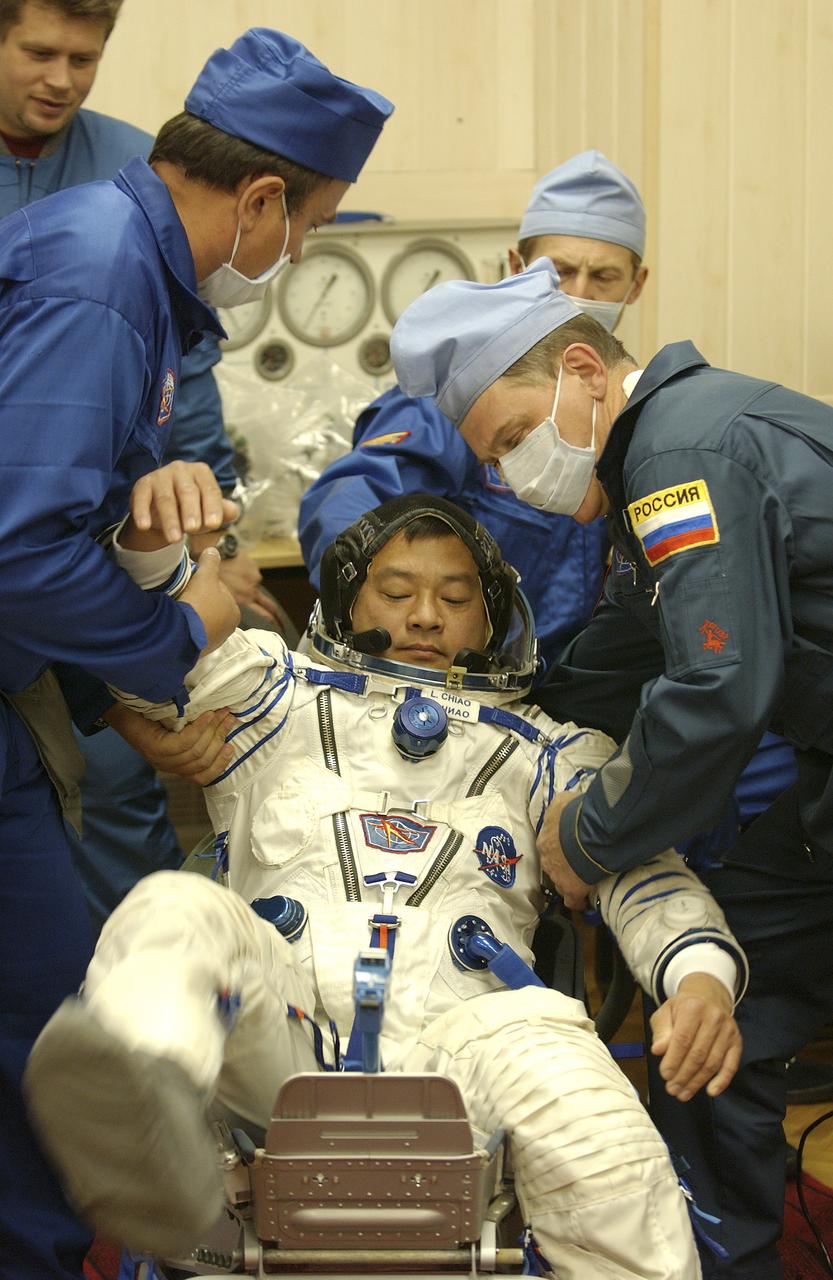
Expedition 10 Commander and NASA Science Officer Leroy Chiao, right, Flight Engineer and Soyuz Commander Salizhan Sharipov donned their launch and entry suits and climbed aboard their Soyuz TMA-5 spacecraft Friday, October 5, 2004, at the Baikonur Cosmodrome in Kazakhstan for a dress rehearsal of launch day activities leading to their liftoff October 14 to the International Space Station. Chiao and Sharipov, the first crew of all-Asian extraction, will spend six months on the Station. Shargin will return to Earth October 24 with the Stations' current residents, Expedition 9 Commander Gennady Padalka and NASA Flight Engineer and Science Officer Mike Fincke. Photo Credit: (NASA/Bill Ingalls)
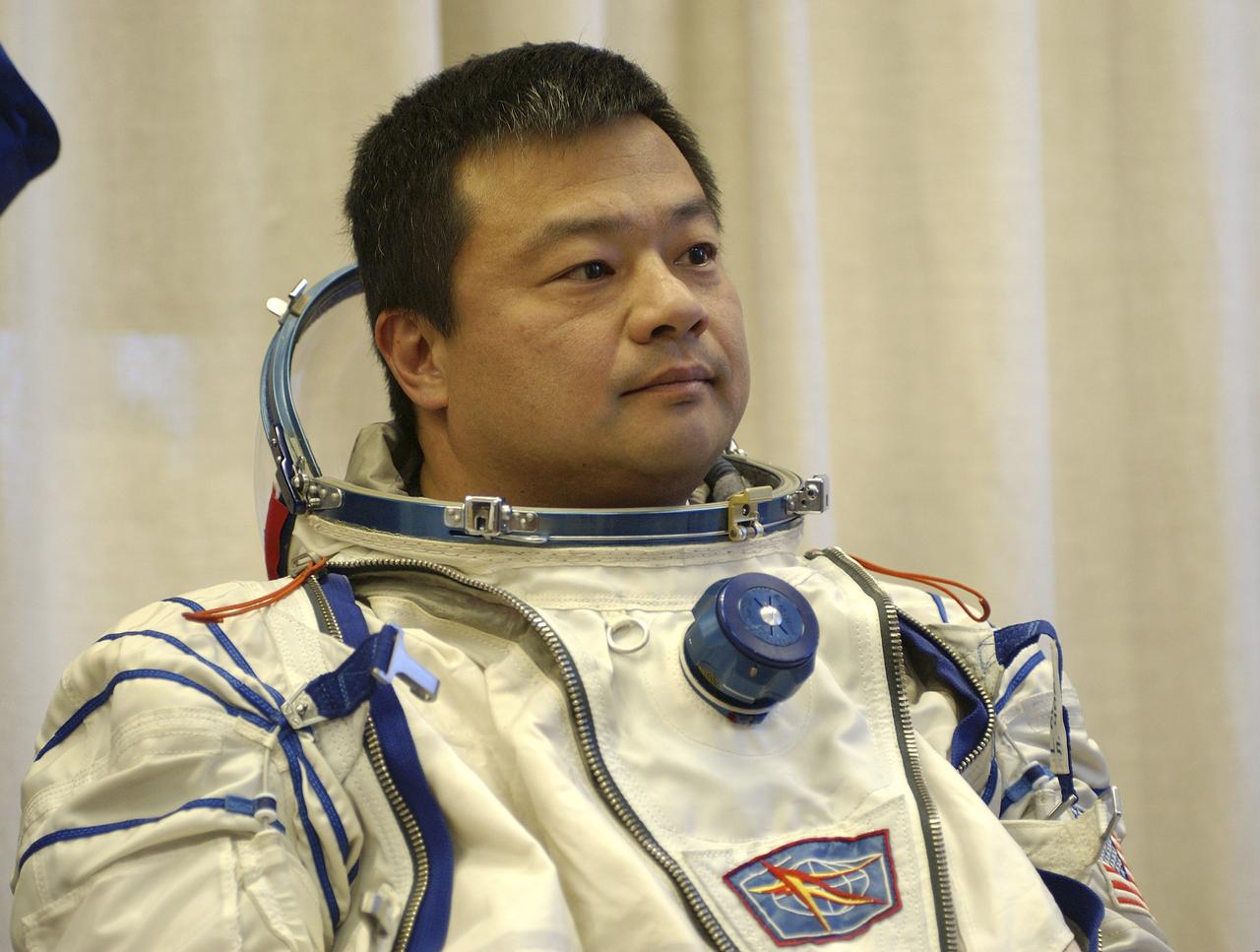
Expedition 10 Commander and NASA Science Officer Leroy Chiao donned his launch and entry suit and climbed aboard the Soyuz TMA-5 spacecraft Friday, October 5, 2004, at the Baikonur Cosmodrome in Kazakhstan for a dress rehearsal of launch day activities leading to their liftoff October 14 to the International Space Station. Chiao and Sharipov, the first crew of all-Asian extraction, will spend six months on the Station. Shargin will return to Earth October 24 with the Stations' current residents, Expedition 9 Commander Gennady Padalka and NASA Flight Engineer and Science Officer Mike Fincke. Photo Credit: (NASA/Bill Ingalls)
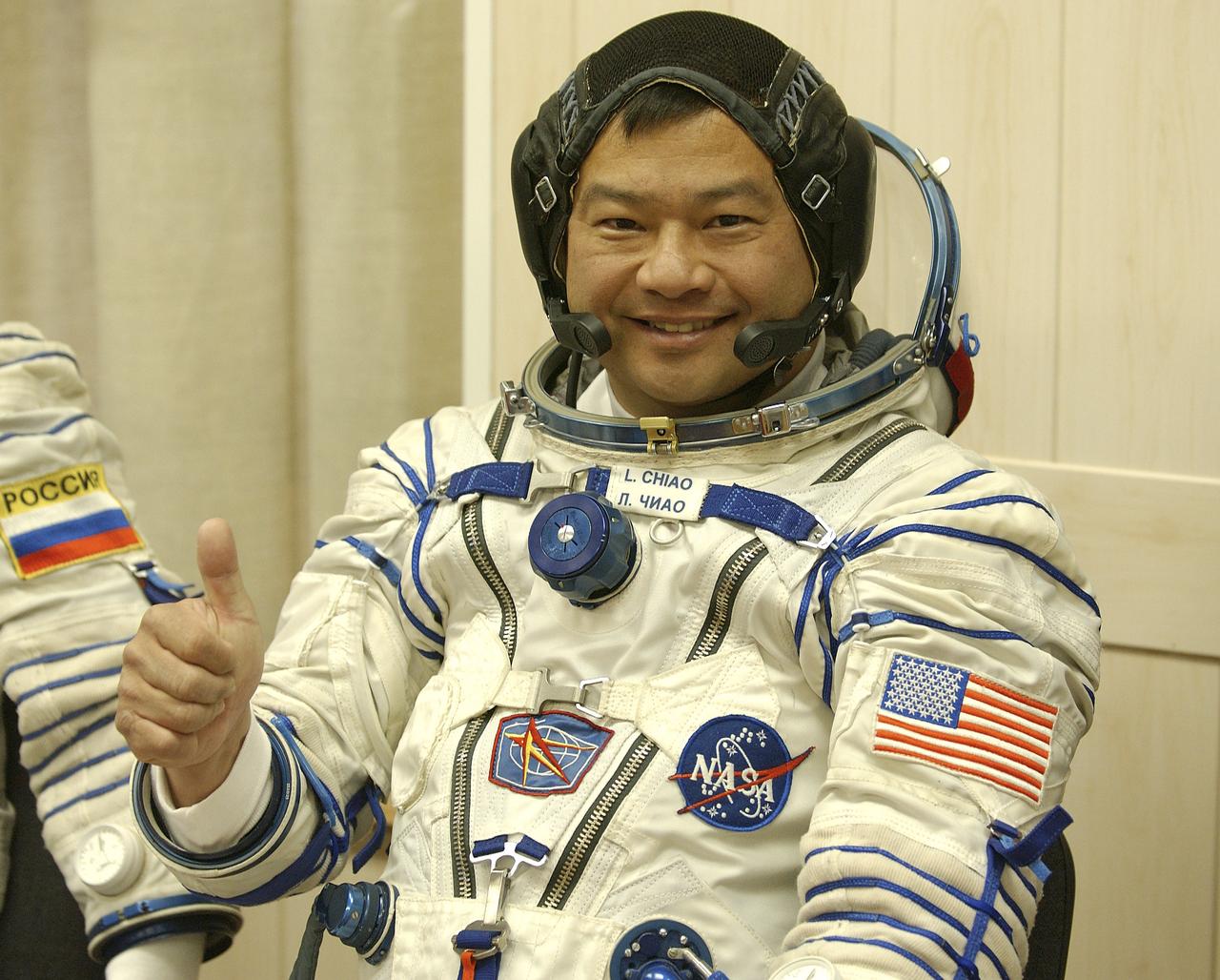
Expedition 10 Commander and NASA Science Officer Leroy Chiao donned his launch and entry suit and climbed aboard the Soyuz TMA-5 spacecraft Friday, October 5, 2004, at the Baikonur Cosmodrome in Kazakhstan for a dress rehearsal of launch day activities leading to their liftoff October 14 to the International Space Station. Chiao and Sharipov, the first crew of all-Asian extraction, will spend six months on the Station. Shargin will return to Earth October 24 with the Stations' current residents, Expedition 9 Commander Gennady Padalka and NASA Flight Engineer and Science Officer Mike Fincke. Photo Credit: (NASA/Bill Ingalls)
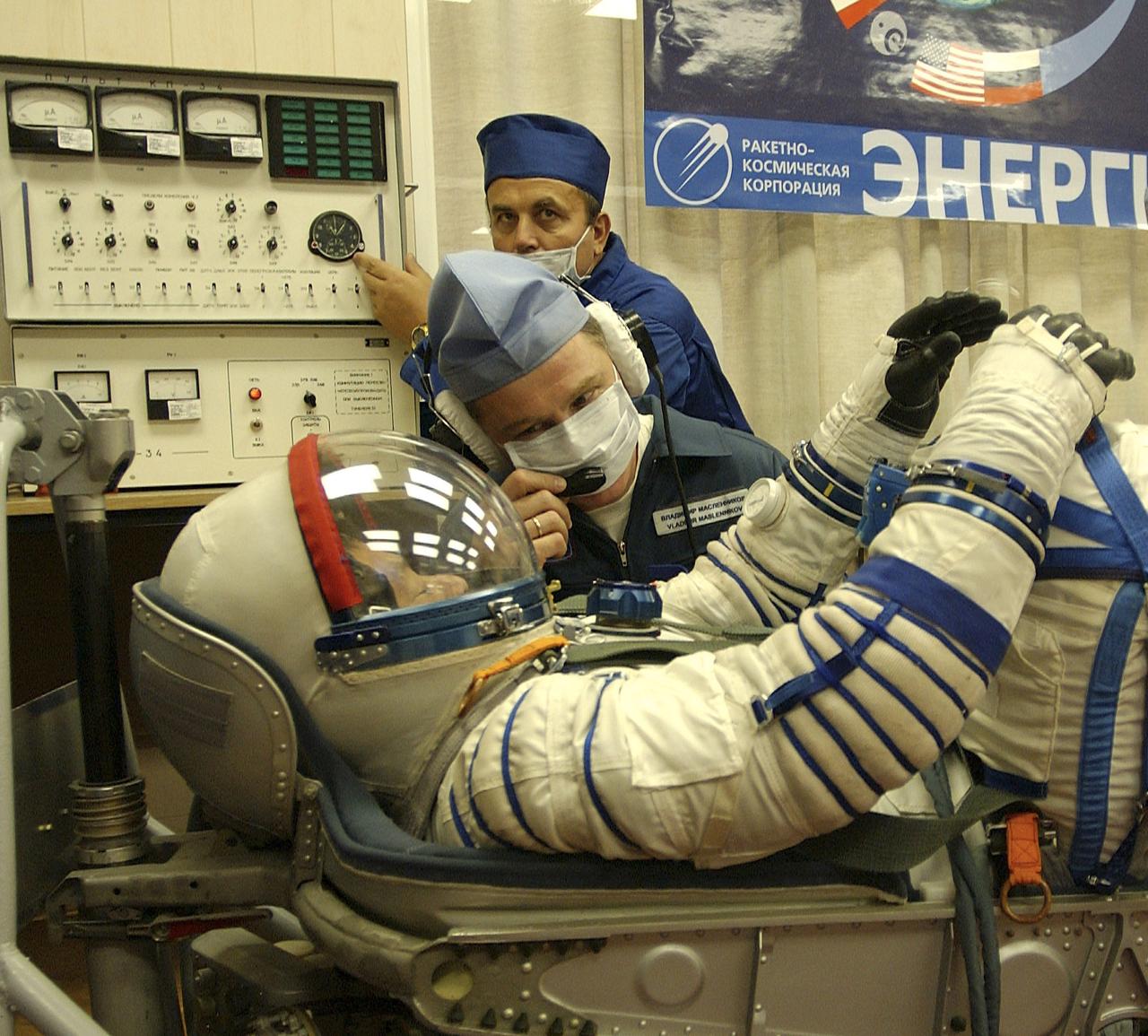
Expedition 10 Commander and NASA Science Officer Leroy Chiao, right, Flight Engineer and Soyuz Commander Salizhan Sharipov donned their launch and entry suits and climbed aboard their Soyuz TMA-5 spacecraft Friday, October 5, 2004, at the Baikonur Cosmodrome in Kazakhstan for a dress rehearsal of launch day activities leading to their liftoff October 14 to the International Space Station. Chiao and Sharipov, the first crew of all-Asian extraction, will spend six months on the Station. Shargin will return to Earth October 24 with the Stations' current residents, Expedition 9 Commander Gennady Padalka and NASA Flight Engineer and Science Officer Mike Fincke. Photo Credit: (NASA/Bill Ingalls)
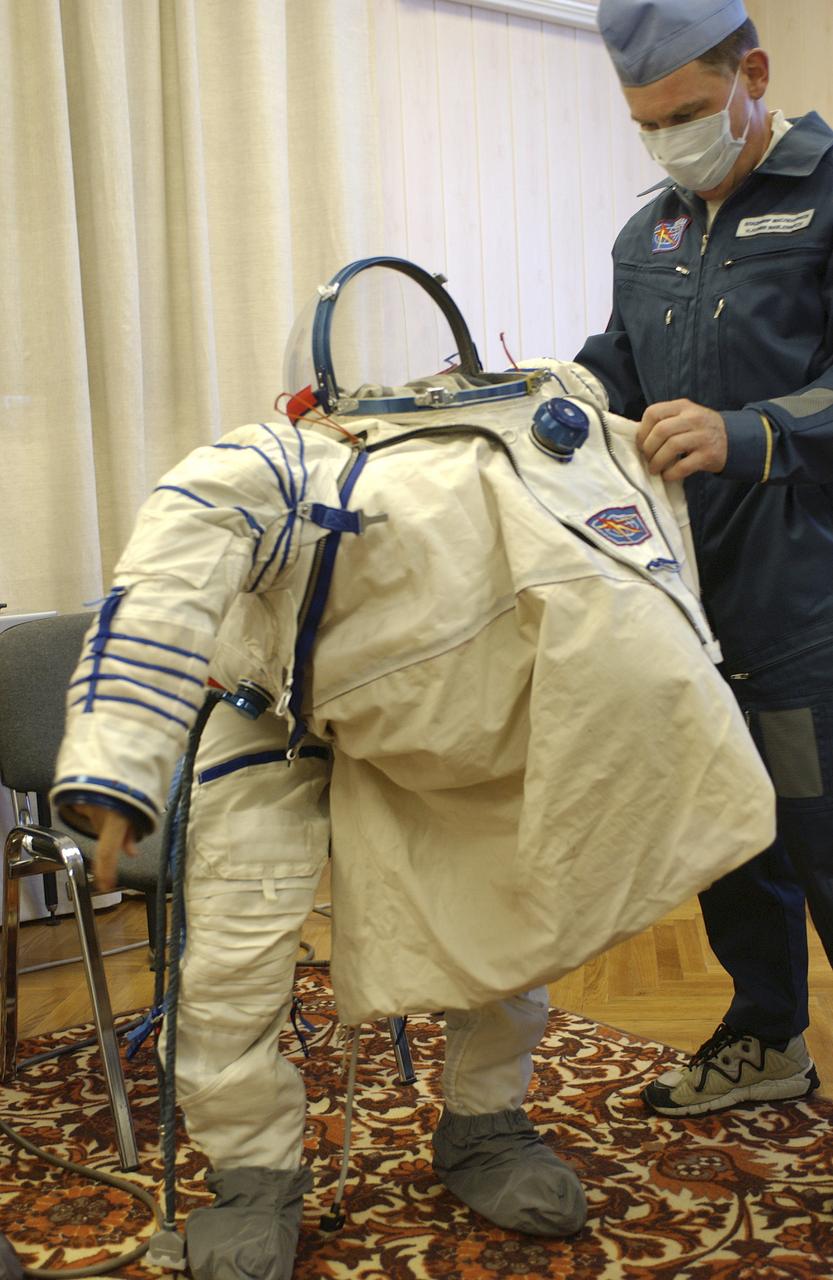
Expedition 10 Commander and NASA Science Officer Leroy Chiao donned his launch and entry suit and climbed aboard the Soyuz TMA-5 spacecraft Friday, October 5, 2004, at the Baikonur Cosmodrome in Kazakhstan for a dress rehearsal of launch day activities leading to their liftoff October 14 to the International Space Station. Chiao and Sharipov, the first crew of all-Asian extraction, will spend six months on the Station. Shargin will return to Earth October 24 with the Stations' current residents, Expedition 9 Commander Gennady Padalka and NASA Flight Engineer and Science Officer Mike Fincke. Photo Credit: (NASA/Bill Ingalls)
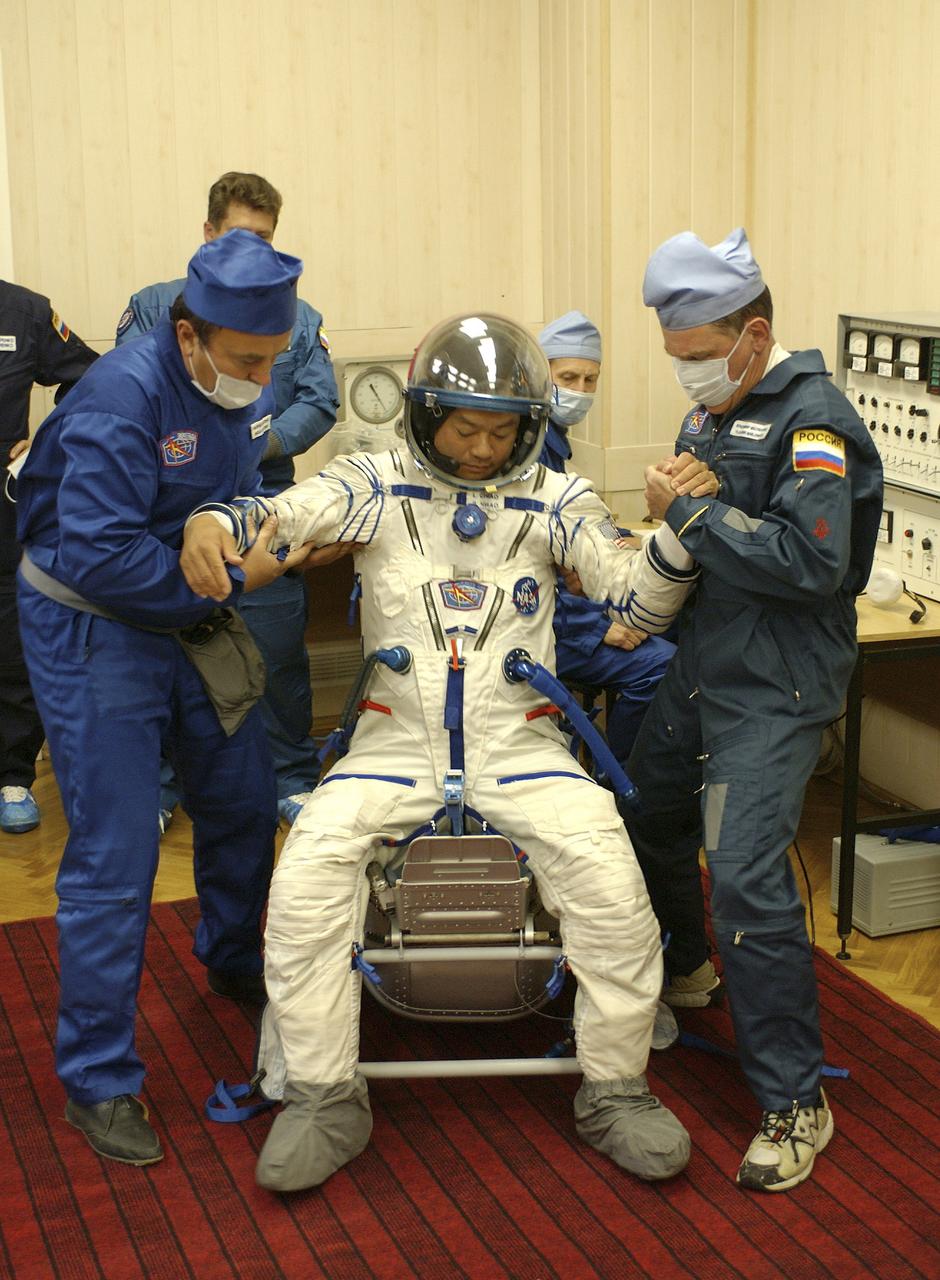
Expedition 10 Commander and NASA Science Officer Leroy Chiao donned his launch and entry suit and climbed aboard the Soyuz TMA-5 spacecraft Friday, October 5, 2004, at the Baikonur Cosmodrome in Kazakhstan for a dress rehearsal of launch day activities leading to their liftoff October 14 to the International Space Station. Chiao and Sharipov, the first crew of all-Asian extraction, will spend six months on the Station. Shargin will return to Earth October 24 with the Stations' current residents, Expedition 9 Commander Gennady Padalka and NASA Flight Engineer and Science Officer Mike Fincke. Photo Credit: (NASA/Bill Ingalls)
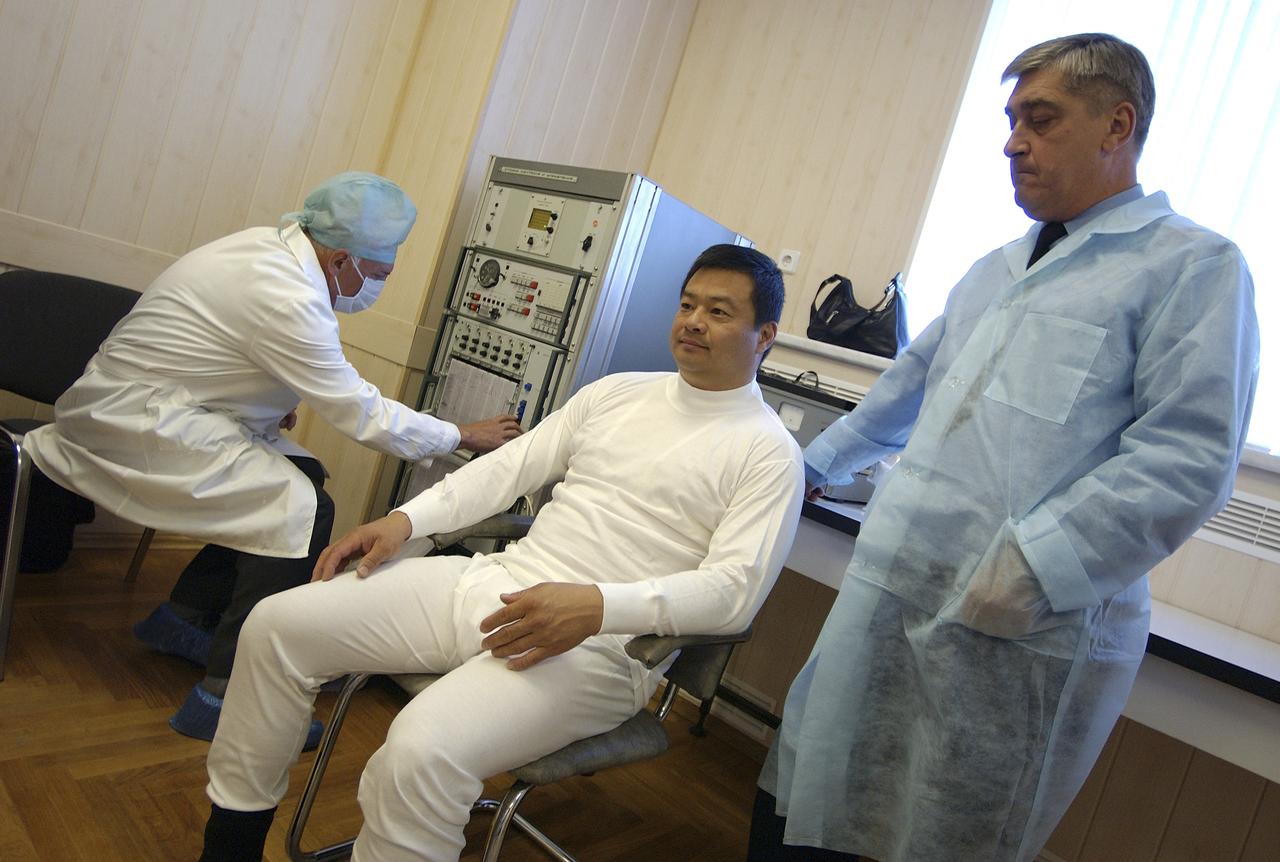
Expedition 10 Commander and NASA Science Officer Leroy Chiao donned his launch and entry suit and climbed aboard the Soyuz TMA-5 spacecraft Friday, October 5, 2004, at the Baikonur Cosmodrome in Kazakhstan for a dress rehearsal of launch day activities leading to their liftoff October 14 to the International Space Station. Chiao and Sharipov, the first crew of all-Asian extraction, will spend six months on the Station. Shargin will return to Earth October 24 with the Stations' current residents, Expedition 9 Commander Gennady Padalka and NASA Flight Engineer and Science Officer Mike Fincke. Photo Credit: (NASA/Bill Ingalls)
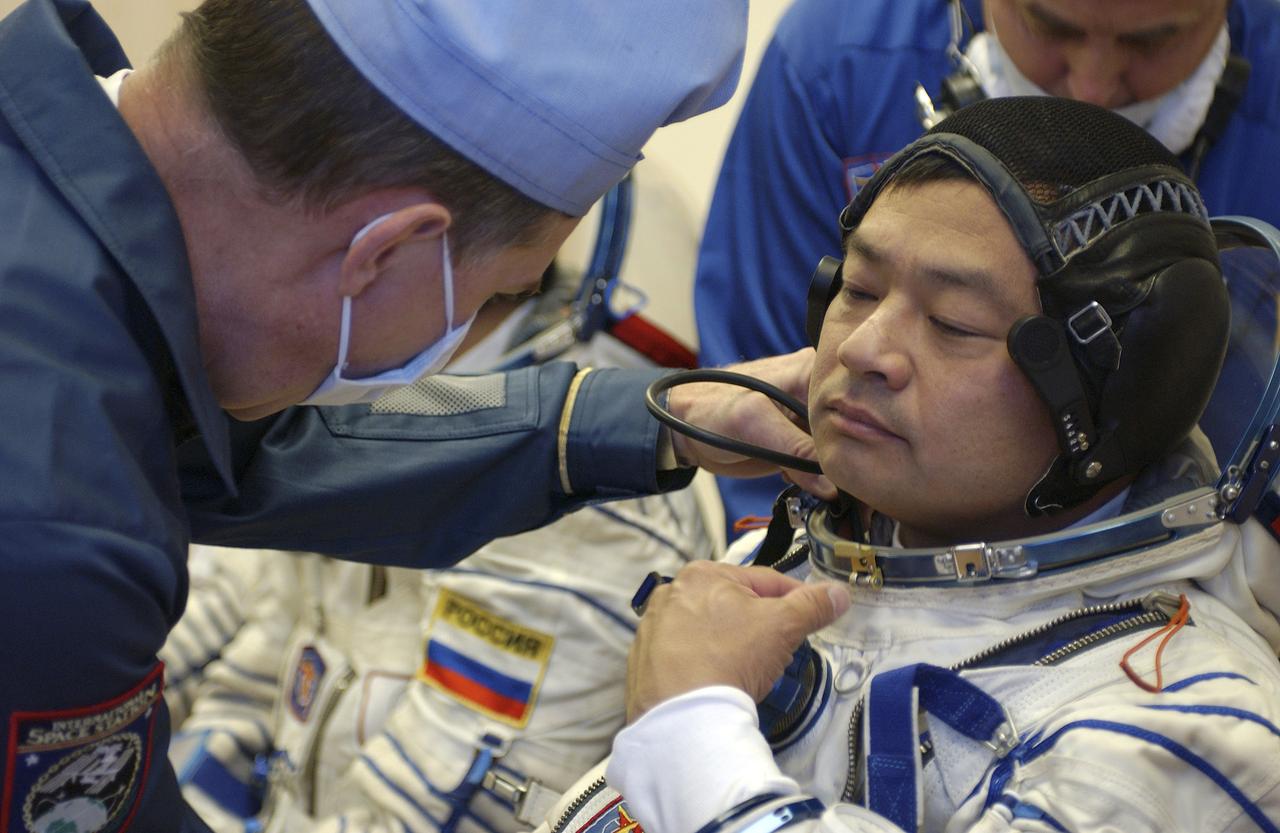
Expedition 10 Commander and NASA Science Officer Leroy Chiao donned his launch and entry suit and climbed aboard the Soyuz TMA-5 spacecraft Friday, October 5, 2004, at the Baikonur Cosmodrome in Kazakhstan for a dress rehearsal of launch day activities leading to their liftoff October 14 to the International Space Station. Chiao and Sharipov, the first crew of all-Asian extraction, will spend six months on the Station. Shargin will return to Earth October 24 with the Stations' current residents, Expedition 9 Commander Gennady Padalka and NASA Flight Engineer and Science Officer Mike Fincke. Photo Credit: (NASA/Bill Ingalls)
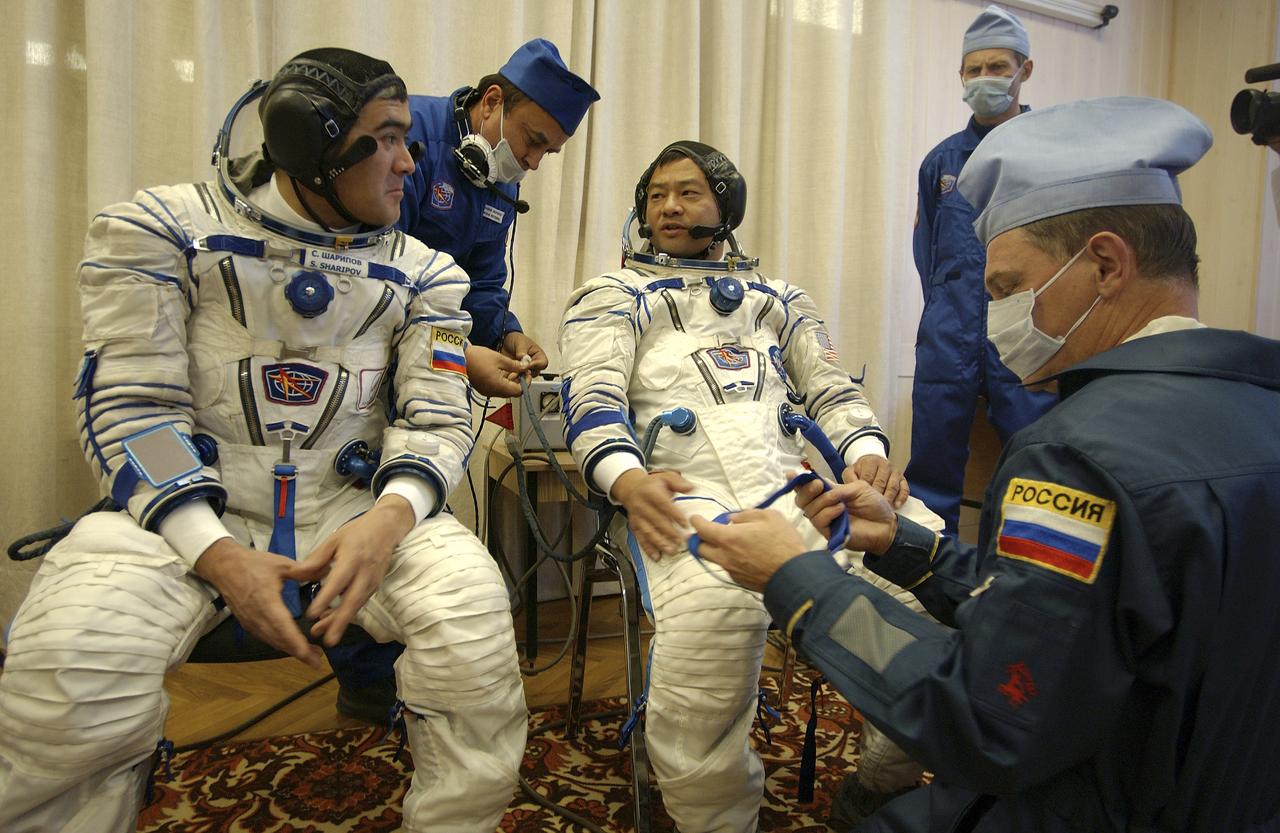
Expedition 10 Commander and NASA Science Officer Leroy Chiao, right, Flight Engineer and Soyuz Commander Salizhan Sharipov donned their launch and entry suits and climbed aboard their Soyuz TMA-5 spacecraft Friday, October 5, 2004, at the Baikonur Cosmodrome in Kazakhstan for a dress rehearsal of launch day activities leading to their liftoff October 14 to the International Space Station. Chiao and Sharipov, the first crew of all-Asian extraction, will spend six months on the Station. Shargin will return to Earth October 24 with the Stations' current residents, Expedition 9 Commander Gennady Padalka and NASA Flight Engineer and Science Officer Mike Fincke. Photo Credit: (NASA/Bill Ingalls)
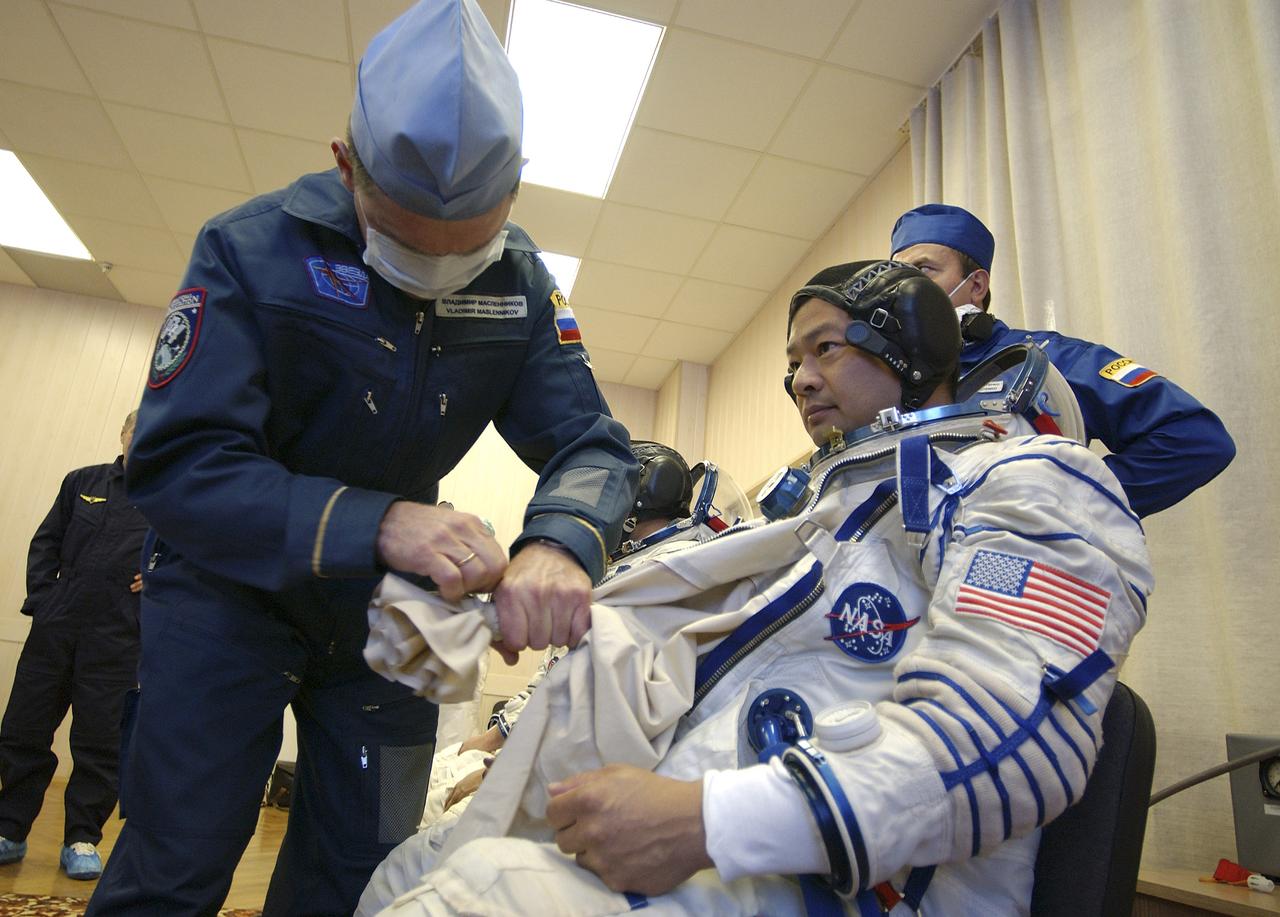
Expedition 10 Commander and NASA Science Officer Leroy Chiao donned his launch and entry suit and climbed aboard the Soyuz TMA-5 spacecraft Friday, October 5, 2004, at the Baikonur Cosmodrome in Kazakhstan for a dress rehearsal of launch day activities leading to their liftoff October 14 to the International Space Station. Chiao and Sharipov, the first crew of all-Asian extraction, will spend six months on the Station. Shargin will return to Earth October 24 with the Stations' current residents, Expedition 9 Commander Gennady Padalka and NASA Flight Engineer and Science Officer Mike Fincke. Photo Credit: (NASA/Bill Ingalls)
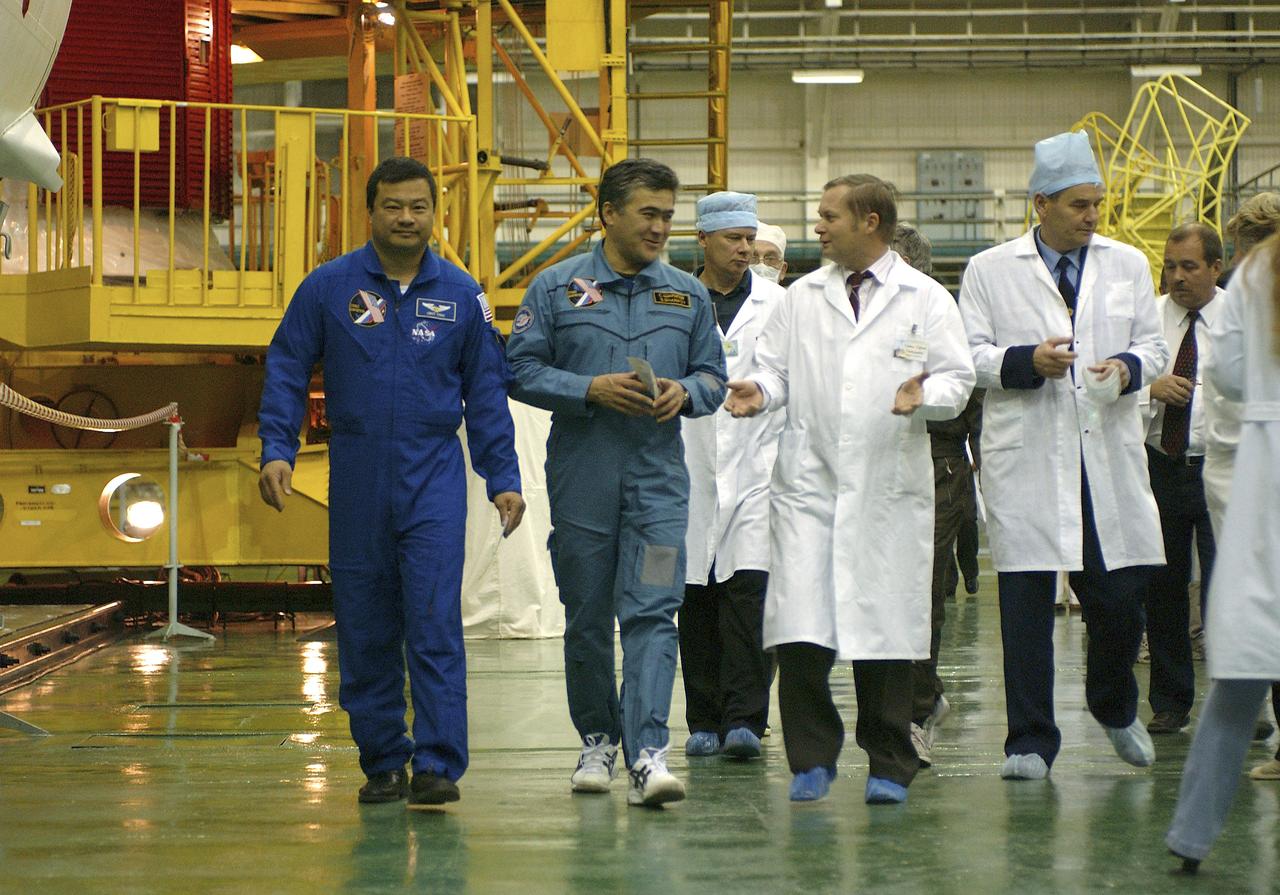
Expedition 10 Commander and NASA Science Officer Leroy Chiao, left, and Flight Engineer and Soyuz Commander Salizhan Sharipov donned their launch and entry suits and climbed aboard their Soyuz TMA-5 spacecraft Friday, October 5, 2004, at the Baikonur Cosmodrome in Kazakhstan for a dress rehearsal of launch day activities leading to their liftoff October 14 to the International Space Station. Chiao and Sharipov, the first crew of all-Asian extraction, will spend six months on the Station. Shargin will return to Earth October 24 with the Stations' current residents, Expedition 9 Commander Gennady Padalka and NASA Flight Engineer and Science Officer Mike Fincke. Photo Credit: (NASA/Bill Ingalls)
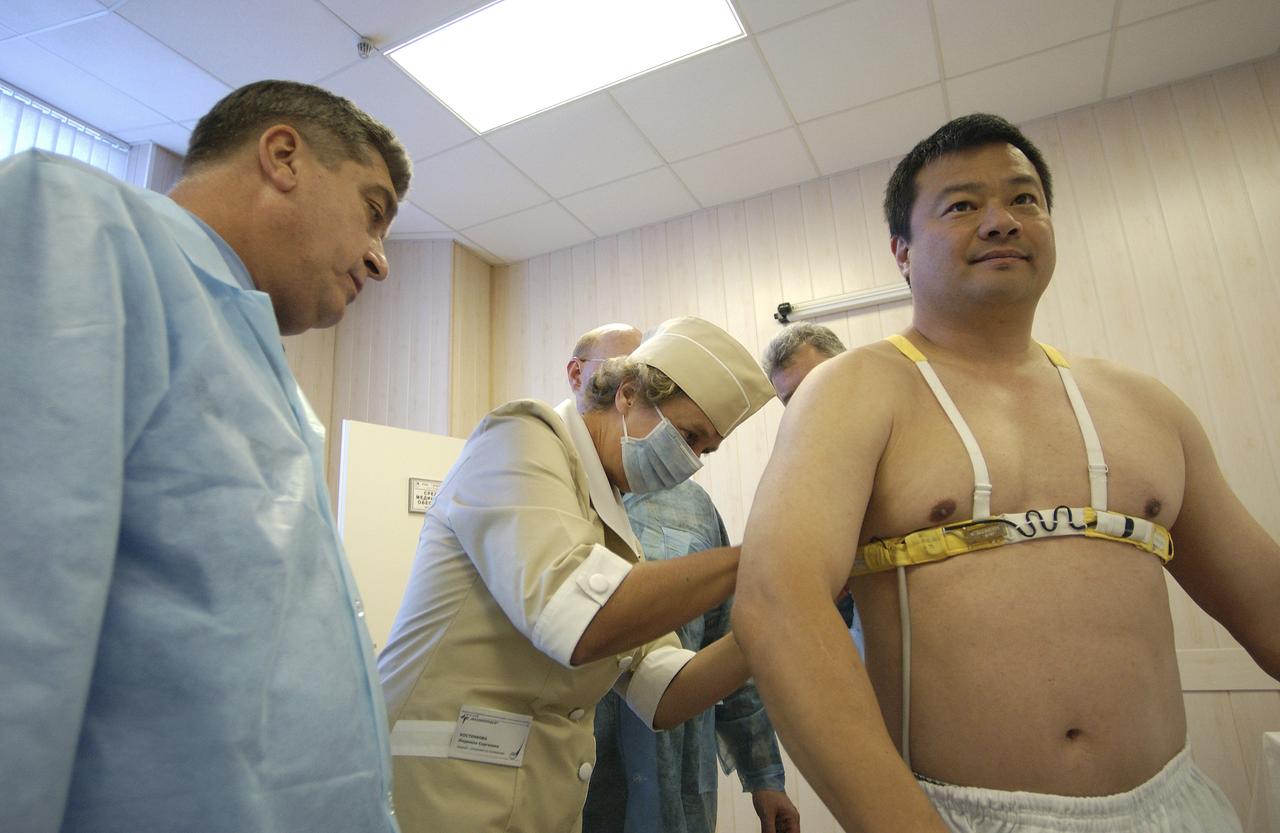
Expedition 10 Commander and NASA Science Officer Leroy Chiao donned his launch and entry suit and climbed aboard the Soyuz TMA-5 spacecraft Friday, October 5, 2004, at the Baikonur Cosmodrome in Kazakhstan for a dress rehearsal of launch day activities leading to their liftoff October 14 to the International Space Station. Chiao and Sharipov, the first crew of all-Asian extraction, will spend six months on the Station. Shargin will return to Earth October 24 with the Stations' current residents, Expedition 9 Commander Gennady Padalka and NASA Flight Engineer and Science Officer Mike Fincke. Photo Credit: (NASA/Bill Ingalls)
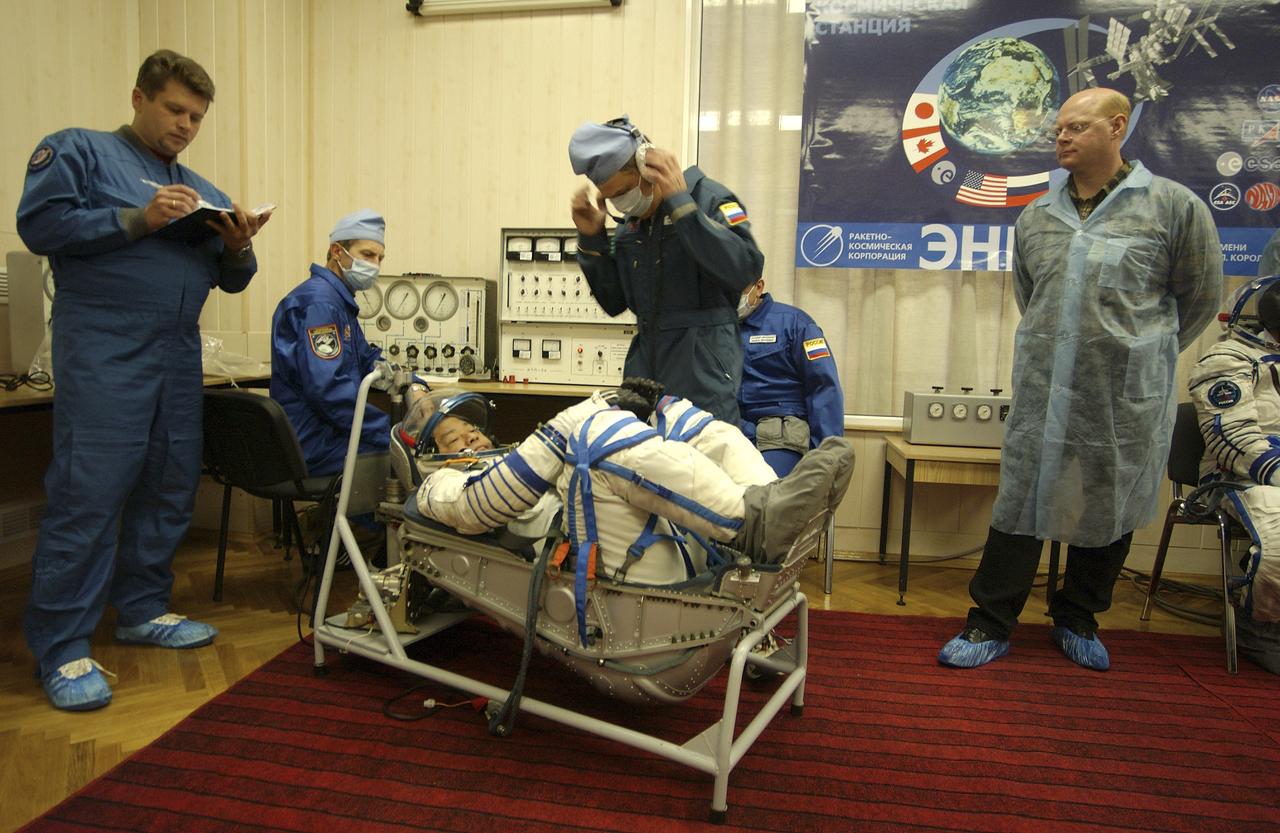
Expedition 10 Commander and NASA Science Officer Leroy Chiao, right, Flight Engineer and Soyuz Commander Salizhan Sharipov donned their launch and entry suits and climbed aboard their Soyuz TMA-5 spacecraft Friday, October 5, 2004, at the Baikonur Cosmodrome in Kazakhstan for a dress rehearsal of launch day activities leading to their liftoff October 14 to the International Space Station. Chiao and Sharipov, the first crew of all-Asian extraction, will spend six months on the Station. Shargin will return to Earth October 24 with the Stations' current residents, Expedition 9 Commander Gennady Padalka and NASA Flight Engineer and Science Officer Mike Fincke. Photo Credit: (NASA/Bill Ingalls)
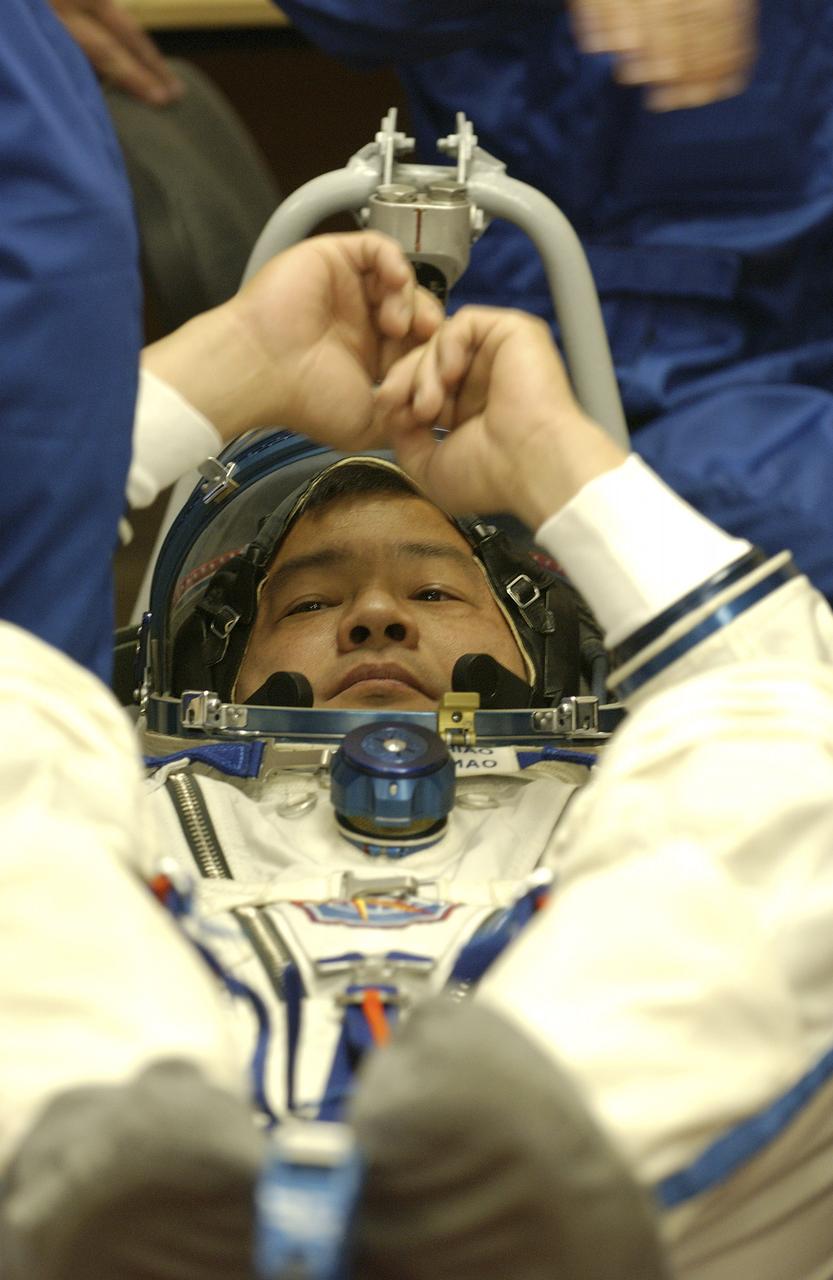
Expedition 10 Commander and NASA Science Officer Leroy Chiao, right, Flight Engineer and Soyuz Commander Salizhan Sharipov donned their launch and entry suits and climbed aboard their Soyuz TMA-5 spacecraft Friday, October 5, 2004, at the Baikonur Cosmodrome in Kazakhstan for a dress rehearsal of launch day activities leading to their liftoff October 14 to the International Space Station. Chiao and Sharipov, the first crew of all-Asian extraction, will spend six months on the Station. Shargin will return to Earth October 24 with the Stations' current residents, Expedition 9 Commander Gennady Padalka and NASA Flight Engineer and Science Officer Mike Fincke. Photo Credit: (NASA/Bill Ingalls)
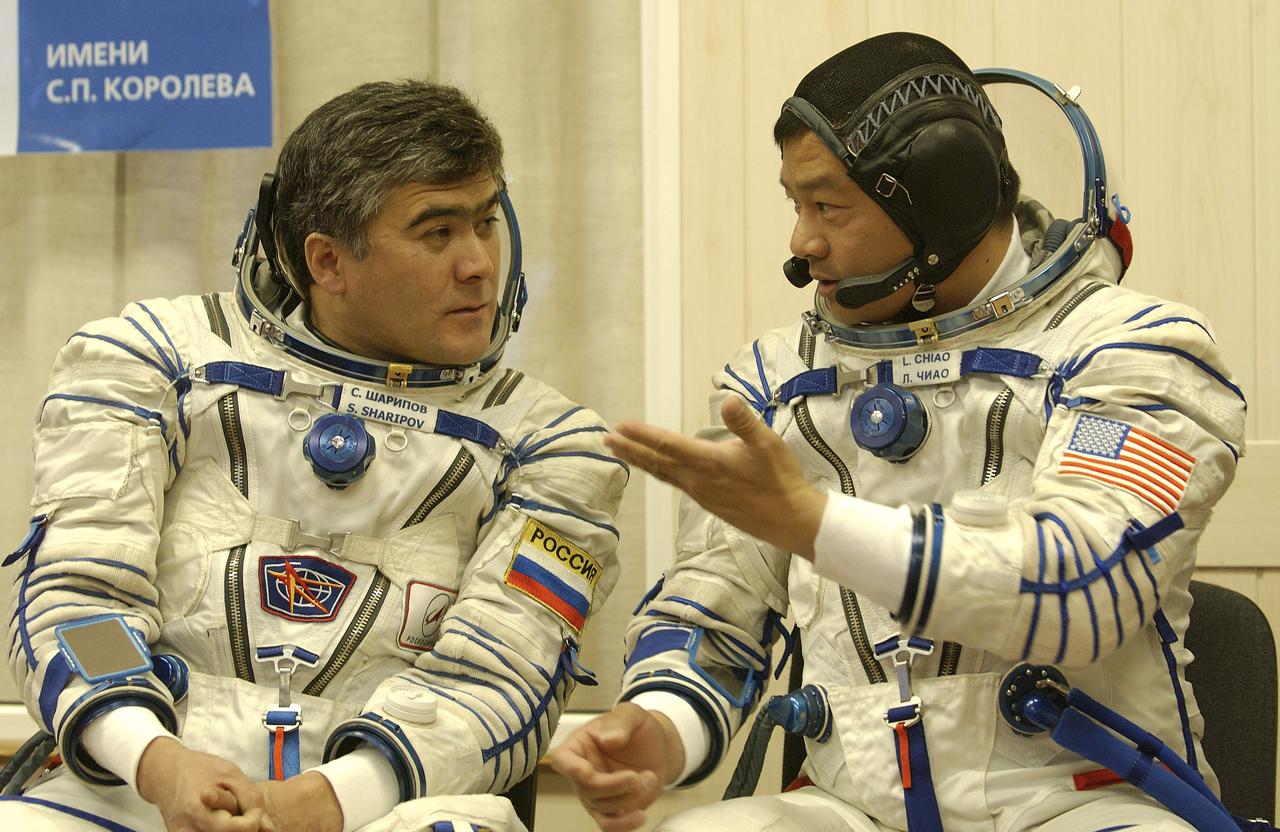
Expedition 10 Commander and NASA Science Officer Leroy Chiao, right, Flight Engineer and Soyuz Commander Salizhan Sharipov donned their launch and entry suits and climbed aboard their Soyuz TMA-5 spacecraft Friday, October 5, 2004, at the Baikonur Cosmodrome in Kazakhstan for a dress rehearsal of launch day activities leading to their liftoff October 14 to the International Space Station. Chiao and Sharipov, the first crew of all-Asian extraction, will spend six months on the Station. Shargin will return to Earth October 24 with the Stations' current residents, Expedition 9 Commander Gennady Padalka and NASA Flight Engineer and Science Officer Mike Fincke. Photo Credit: (NASA/Bill Ingalls)
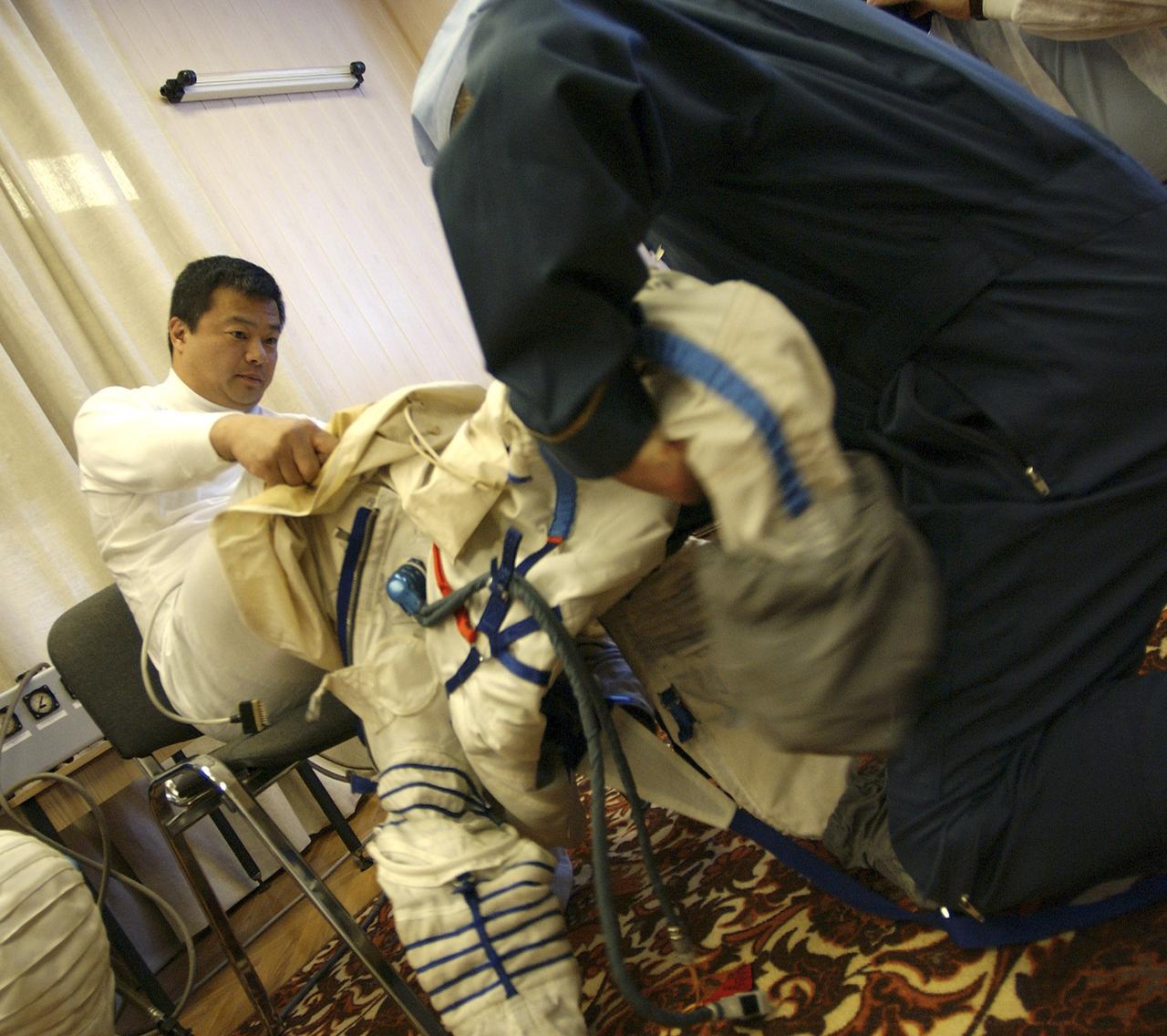
Expedition 10 Commander and NASA Science Officer Leroy Chiao donned his launch and entry suit and climbed aboard the Soyuz TMA-5 spacecraft Friday, October 5, 2004, at the Baikonur Cosmodrome in Kazakhstan for a dress rehearsal of launch day activities leading to their liftoff October 14 to the International Space Station. Chiao and Sharipov, the first crew of all-Asian extraction, will spend six months on the Station. Shargin will return to Earth October 24 with the Stations' current residents, Expedition 9 Commander Gennady Padalka and NASA Flight Engineer and Science Officer Mike Fincke. Photo Credit: (NASA/Bill Ingalls)
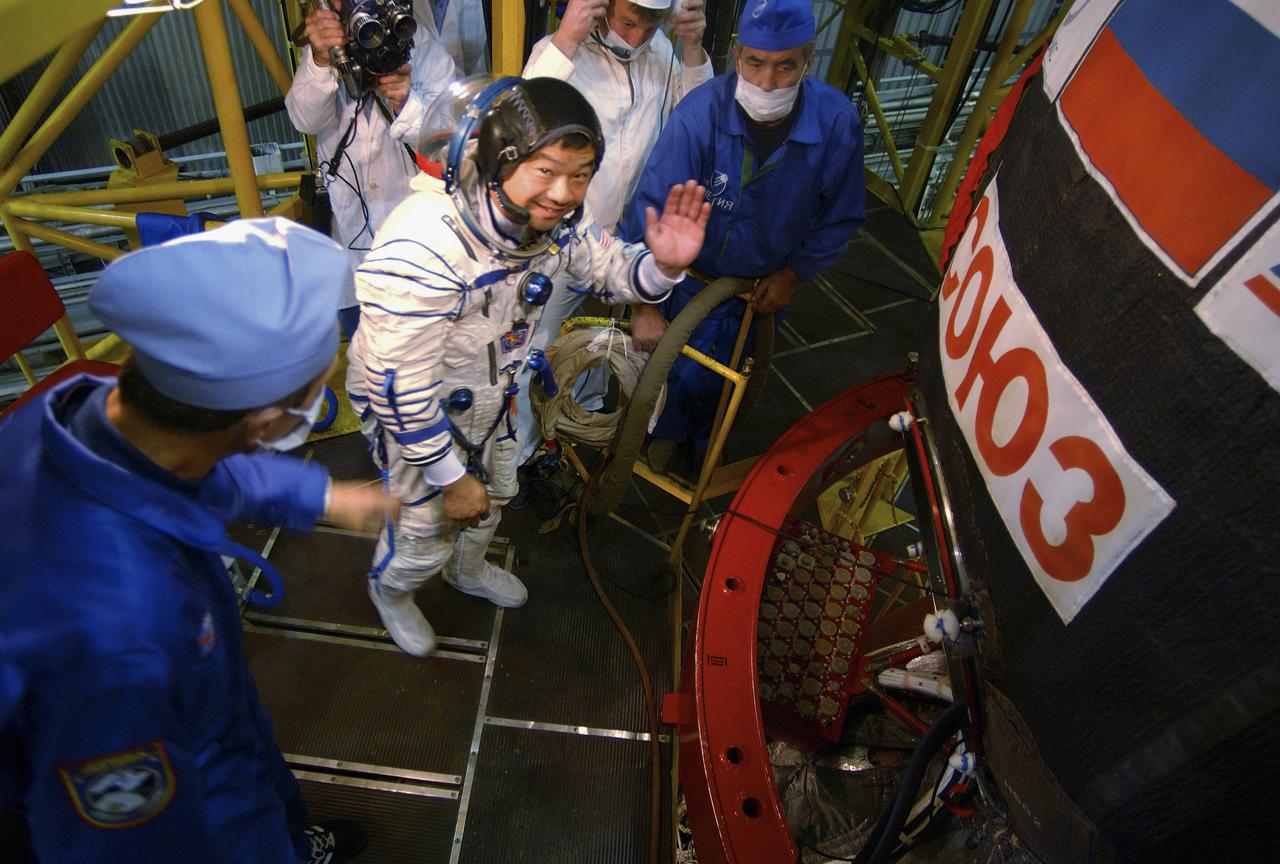
Expedition 10 Commander and NASA Science Officer Leroy Chiao donned his launch and entry suit and climbed aboard the Soyuz TMA-5 spacecraft Friday, October 5, 2004, at the Baikonur Cosmodrome in Kazakhstan for a dress rehearsal of launch day activities leading to their liftoff October 14 to the International Space Station. Chiao and Sharipov, the first crew of all-Asian extraction, will spend six months on the Station. Shargin will return to Earth October 24 with the Stations' current residents, Expedition 9 Commander Gennady Padalka and NASA Flight Engineer and Science Officer Mike Fincke. Photo Credit: (NASA/Bill Ingalls)
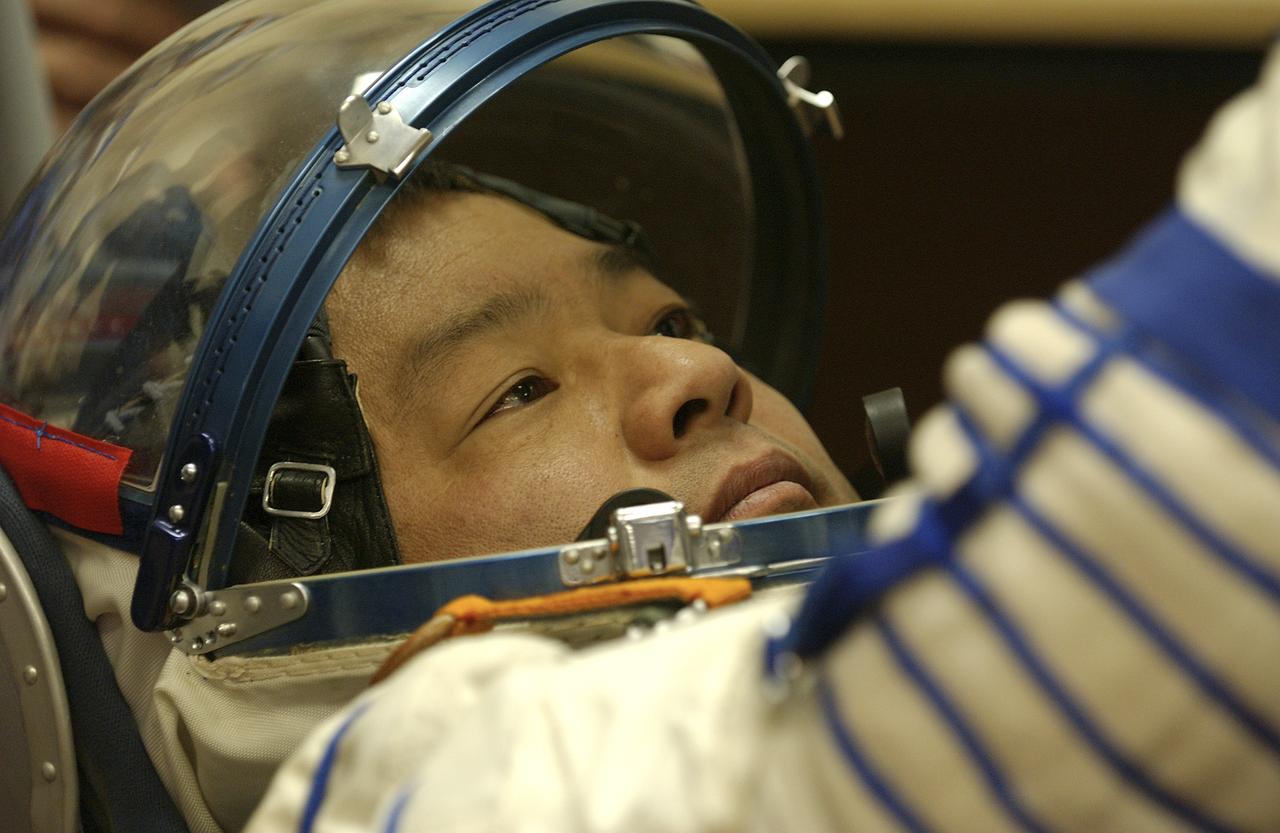
Expedition 10 Commander and NASA Science Officer Leroy Chiao, right, Flight Engineer and Soyuz Commander Salizhan Sharipov donned their launch and entry suits and climbed aboard their Soyuz TMA-5 spacecraft Friday, October 5, 2004, at the Baikonur Cosmodrome in Kazakhstan for a dress rehearsal of launch day activities leading to their liftoff October 14 to the International Space Station. Chiao and Sharipov, the first crew of all-Asian extraction, will spend six months on the Station. Shargin will return to Earth October 24 with the Stations' current residents, Expedition 9 Commander Gennady Padalka and NASA Flight Engineer and Science Officer Mike Fincke. Photo Credit: (NASA/Bill Ingalls)
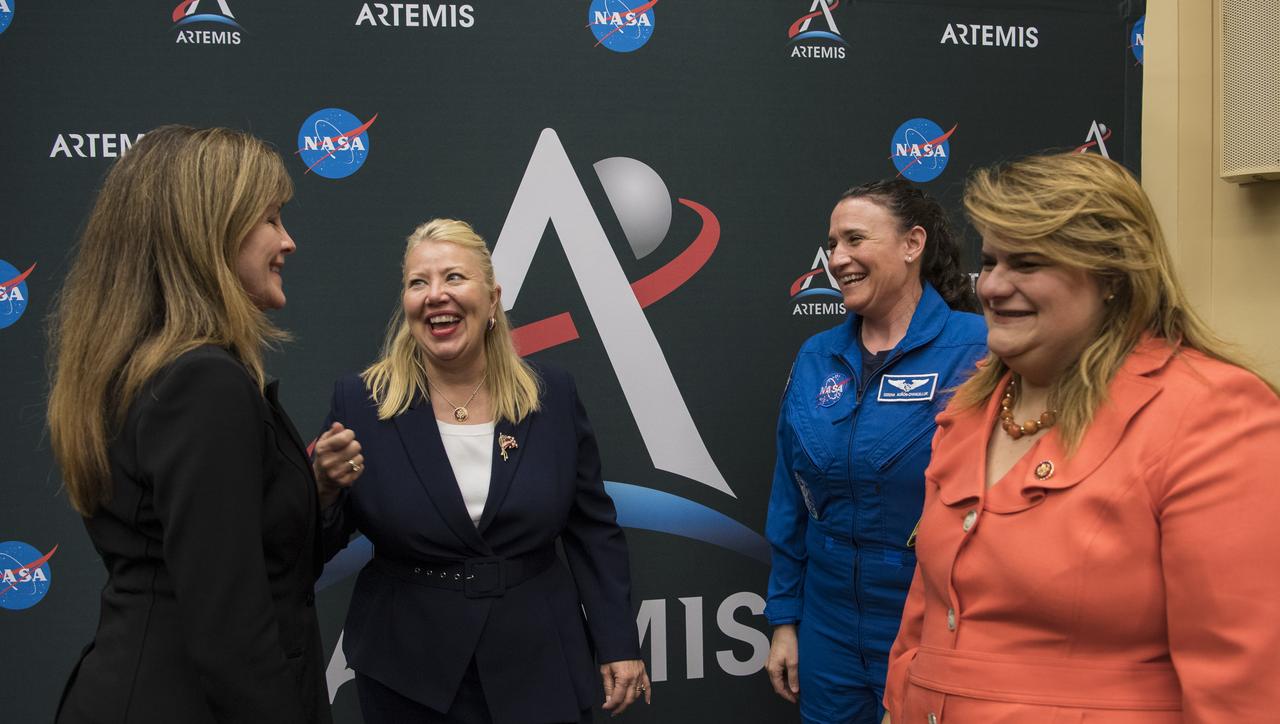
From left to right, Director of NASA’s Glenn Research Center, Dr. Janet Kavandi, Representative Debbie Lesko, R-Ariz., NASA astronaut Serena Auñón-Chancellor, and Resident Commissioner of Puerto Rico, Jenniffer González-Colón, R-Puerto Rico, speak to each other at the conclusion of a bipartisan Congressional Caucus for Women’s Issues briefing on NASA’s Artemis lunar exploration program, Wednesday, September 11, 2019 at the Rayburn House Office Building in Washington. Photo Credit: (NASA/Aubrey Gemignani)
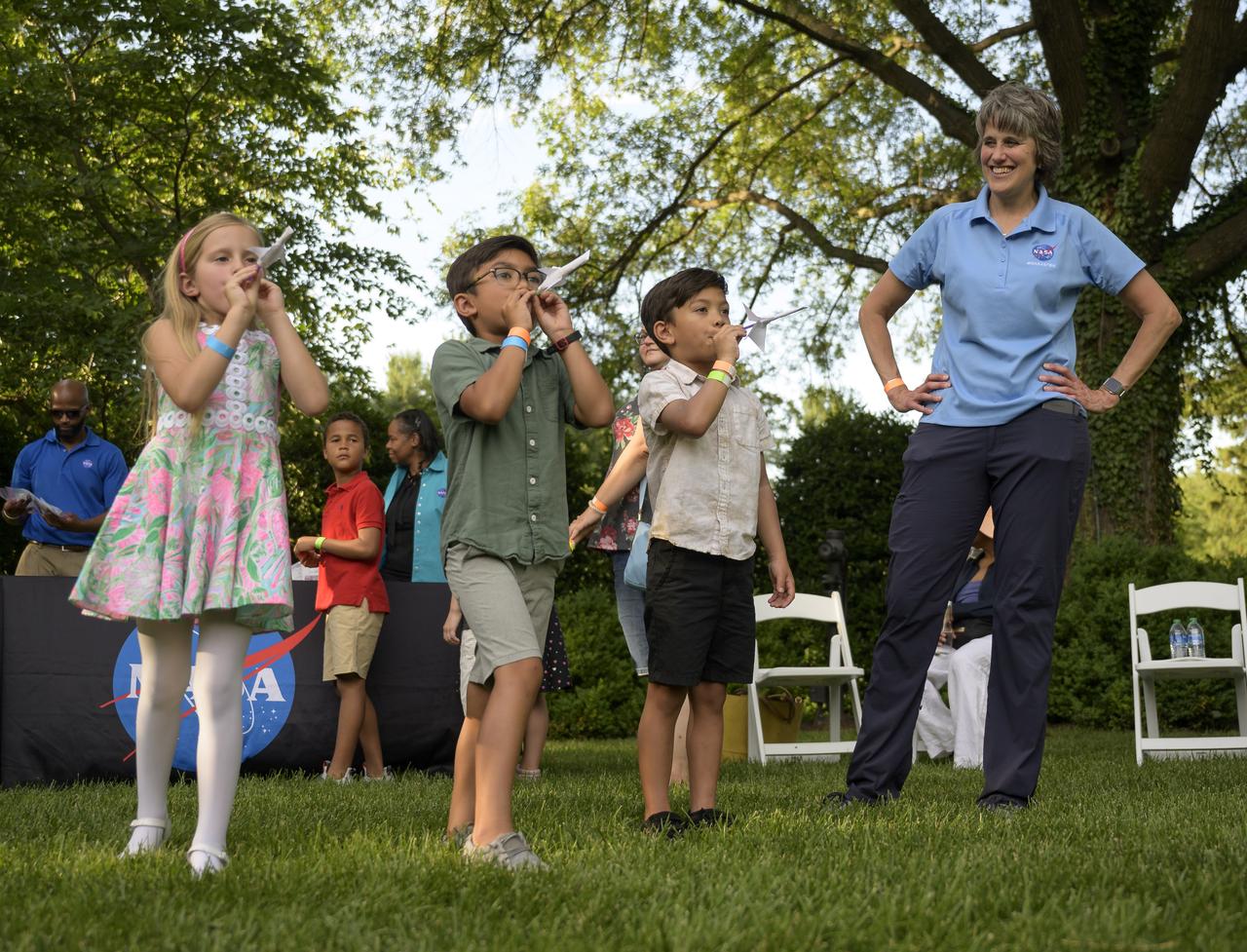
Cindy Hasselbring, NASA K-12 Education Advisor at NASA’s Office of STEM Engagement, works hands-on STEM activities with students from 4th-8th grade on the grounds of the Vice President's residence at the Naval Observatory, Friday, June 17, 2022, in Washington. The Vice President and Second Gentleman hosted an evening of NASA STEM activities at the Naval Observatory for military families and local STEM students and their families, including a special screening of Disney Pixar’s Lightyear. Photo Credit: (NASA/Bill Ingalls)
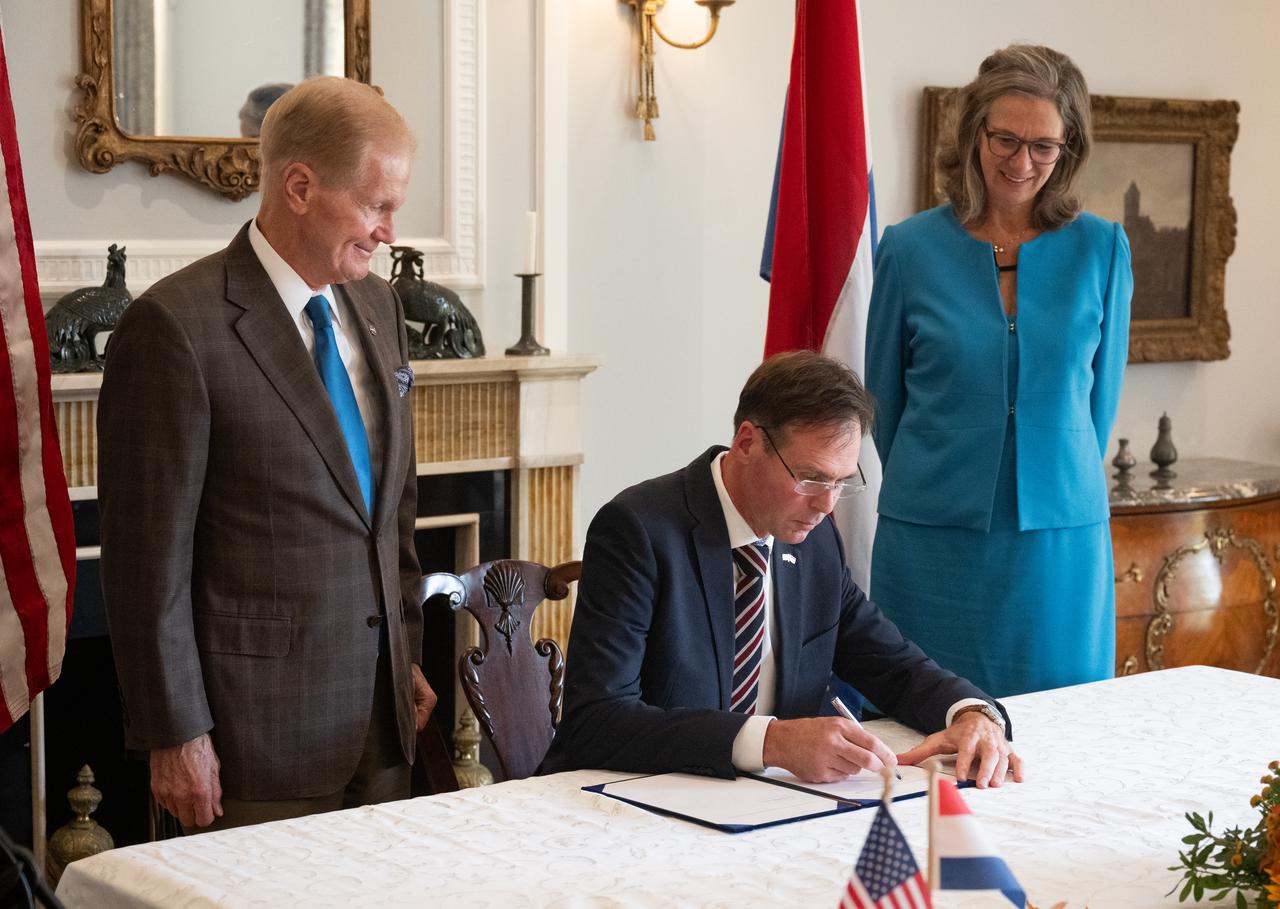
Harm van de Wetering, director of the Netherlands Space Office, center, signs the Artemis Accords as NASA Administrator Bill Nelson, left, and Ambassador of the Kingdom of the Netherlands to the United States Birgitta Tazelaar, right, look on, Wednesday, Nov. 1, 2023, at the Dutch Ambassador’s Residence in Washington. Netherlands is the 31st country to sign the Artemis Accords, which establish a practical set of principles to guide space exploration cooperation among nations participating in NASA’s Artemis program. Photo Credit: (NASA/Joel Kowsky)
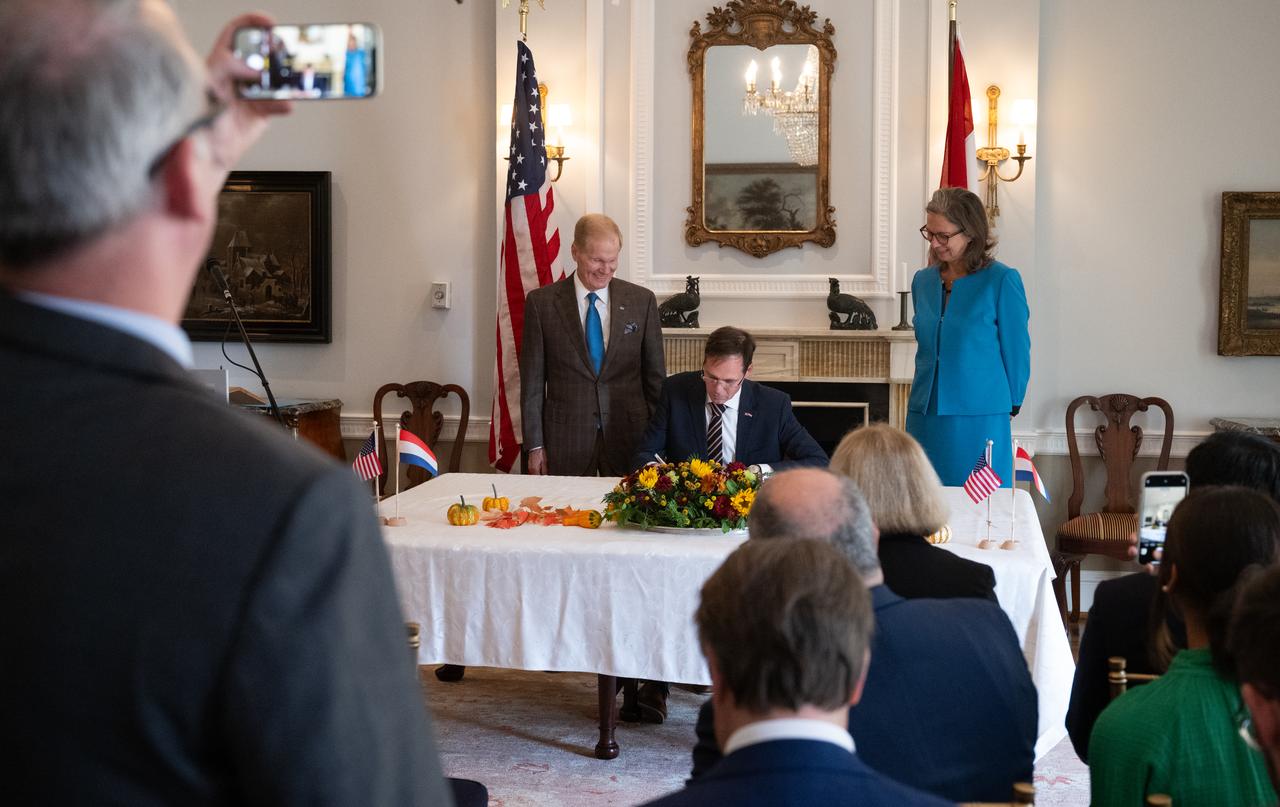
Harm van de Wetering, director of the Netherlands Space Office, center, signs the Artemis Accords as NASA Administrator Bill Nelson, left, and Ambassador of the Kingdom of the Netherlands to the United States Birgitta Tazelaar, right, look on, Wednesday, Nov. 1, 2023, at the Dutch Ambassador’s Residence in Washington. Netherlands is the 31st country to sign the Artemis Accords, which establish a practical set of principles to guide space exploration cooperation among nations participating in NASA’s Artemis program. Photo Credit: (NASA/Joel Kowsky)

Harm van de Wetering, director of the Netherlands Space Office, right, shakes hands with NASA Administrator Bill Nelson after signing the Artemis Accords, Wednesday, Nov. 1, 2023, at the Dutch Ambassador’s Residence in Washington. Netherlands is the 31st country to sign the Artemis Accords, which establish a practical set of principles to guide space exploration cooperation among nations participating in NASA’s Artemis program. Photo Credit: (NASA/Joel Kowsky)
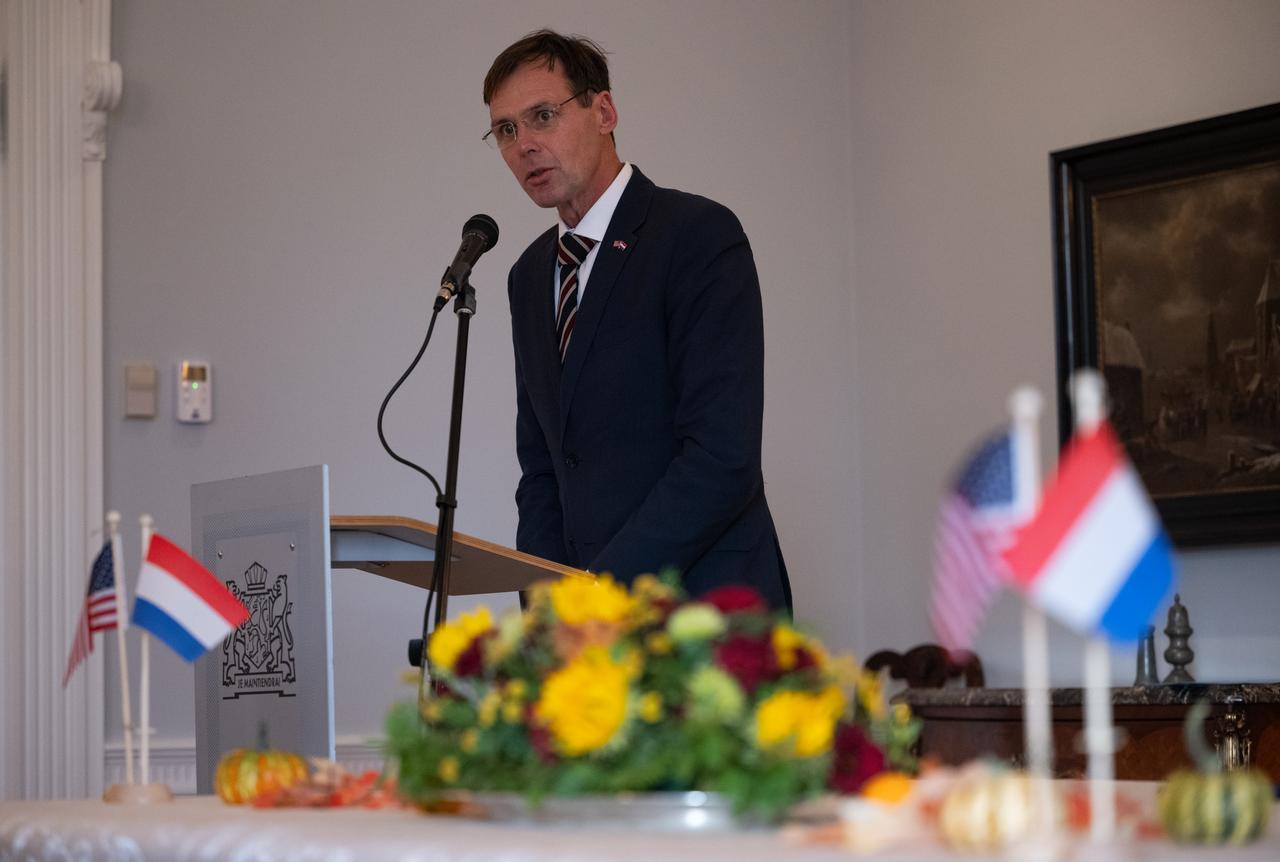
Harm van de Wetering, director of the Netherlands Space Office, delivers remarks during an Artemis Accords signing ceremony, Wednesday, Nov. 1, 2023, at the Dutch Ambassador’s Residence in Washington. Netherlands is the 31st country to sign the Artemis Accords, which establish a practical set of principles to guide space exploration cooperation among nations participating in NASA’s Artemis program. Photo Credit: (NASA/Joel Kowsky)
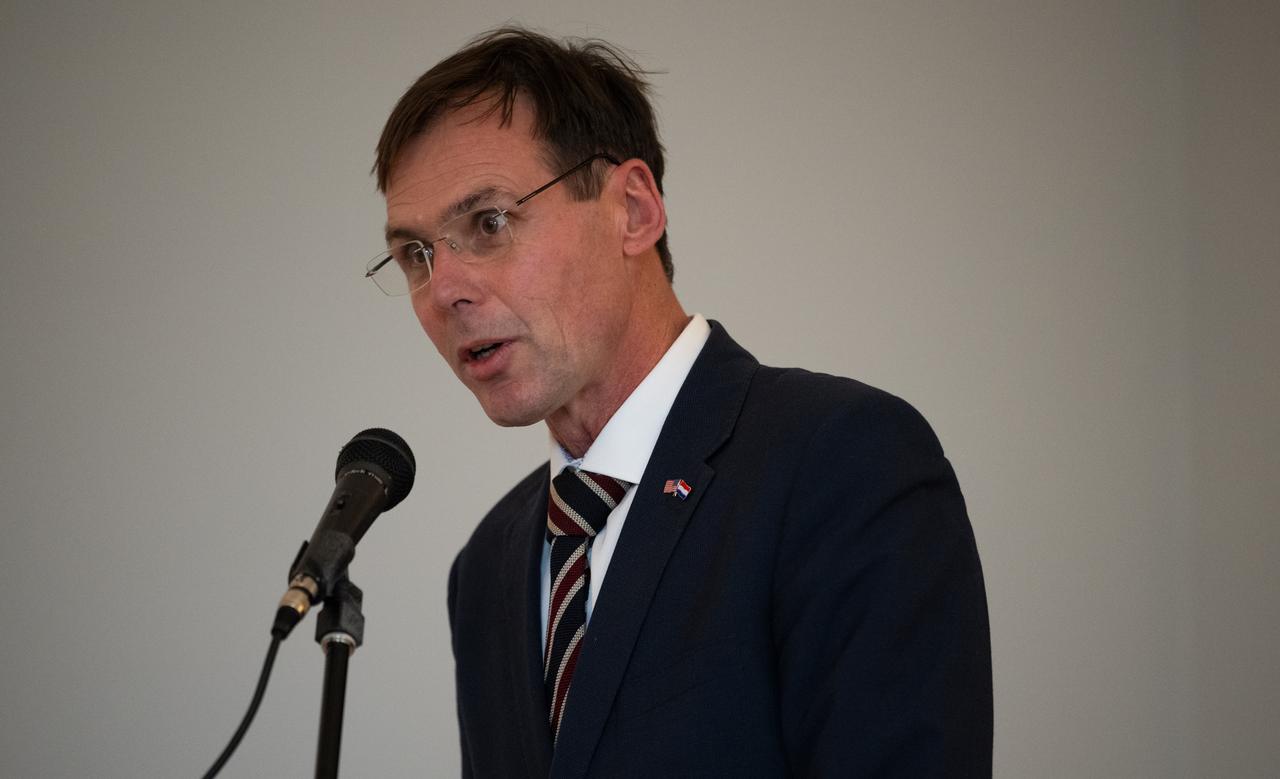
Harm van de Wetering, director of the Netherlands Space Office, delivers remarks during an Artemis Accords signing ceremony, Wednesday, Nov. 1, 2023, at the Dutch Ambassador’s Residence in Washington. Netherlands is the 31st country to sign the Artemis Accords, which establish a practical set of principles to guide space exploration cooperation among nations participating in NASA’s Artemis program. Photo Credit: (NASA/Joel Kowsky)
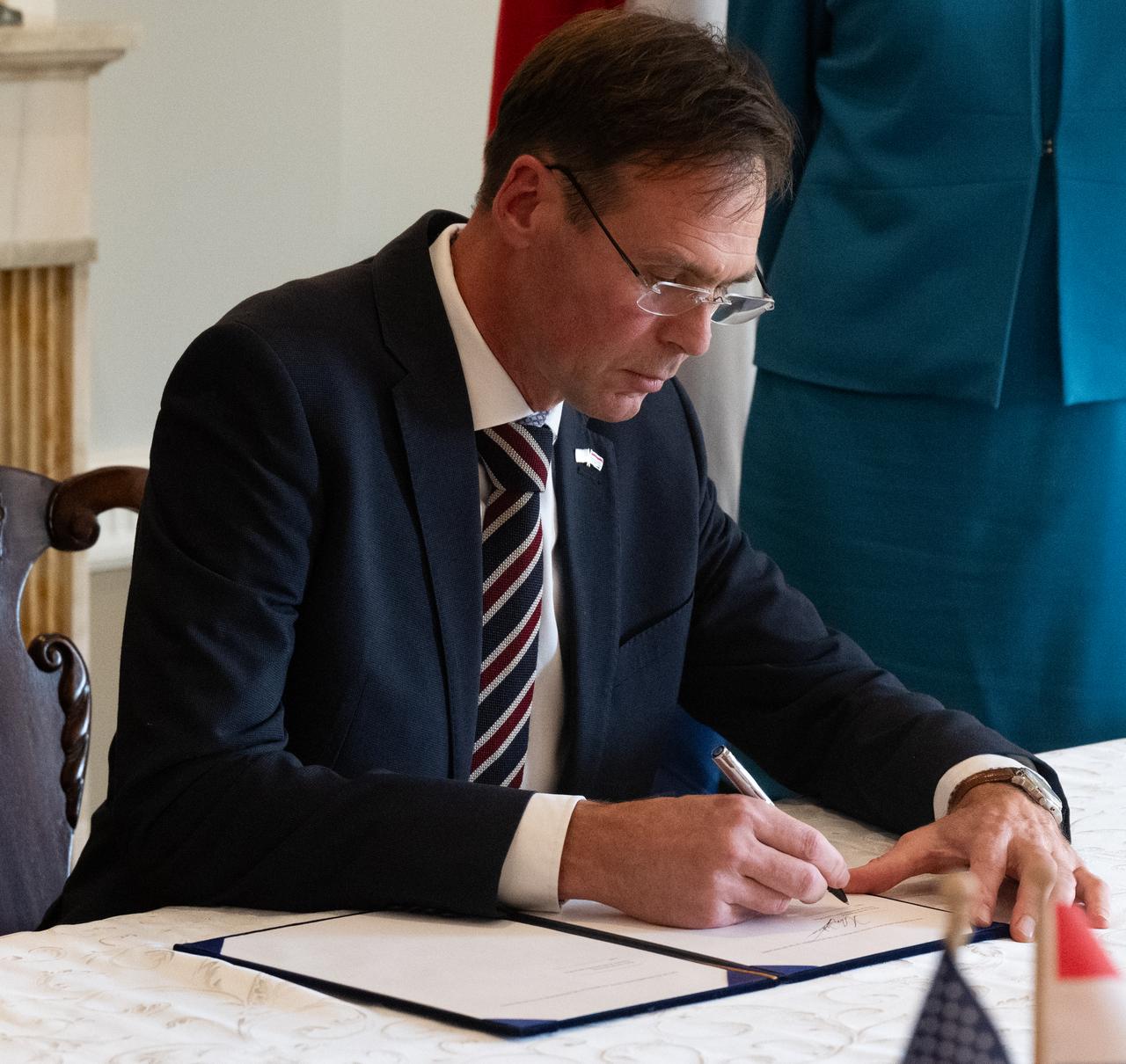
Harm van de Wetering, director of the Netherlands Space Office, center, signs the Artemis Accords, Wednesday, Nov. 1, 2023, at the Dutch Ambassador’s Residence in Washington. Netherlands is the 31st country to sign the Artemis Accords, which establish a practical set of principles to guide space exploration cooperation among nations participating in NASA’s Artemis program. Photo Credit: (NASA/Joel Kowsky)
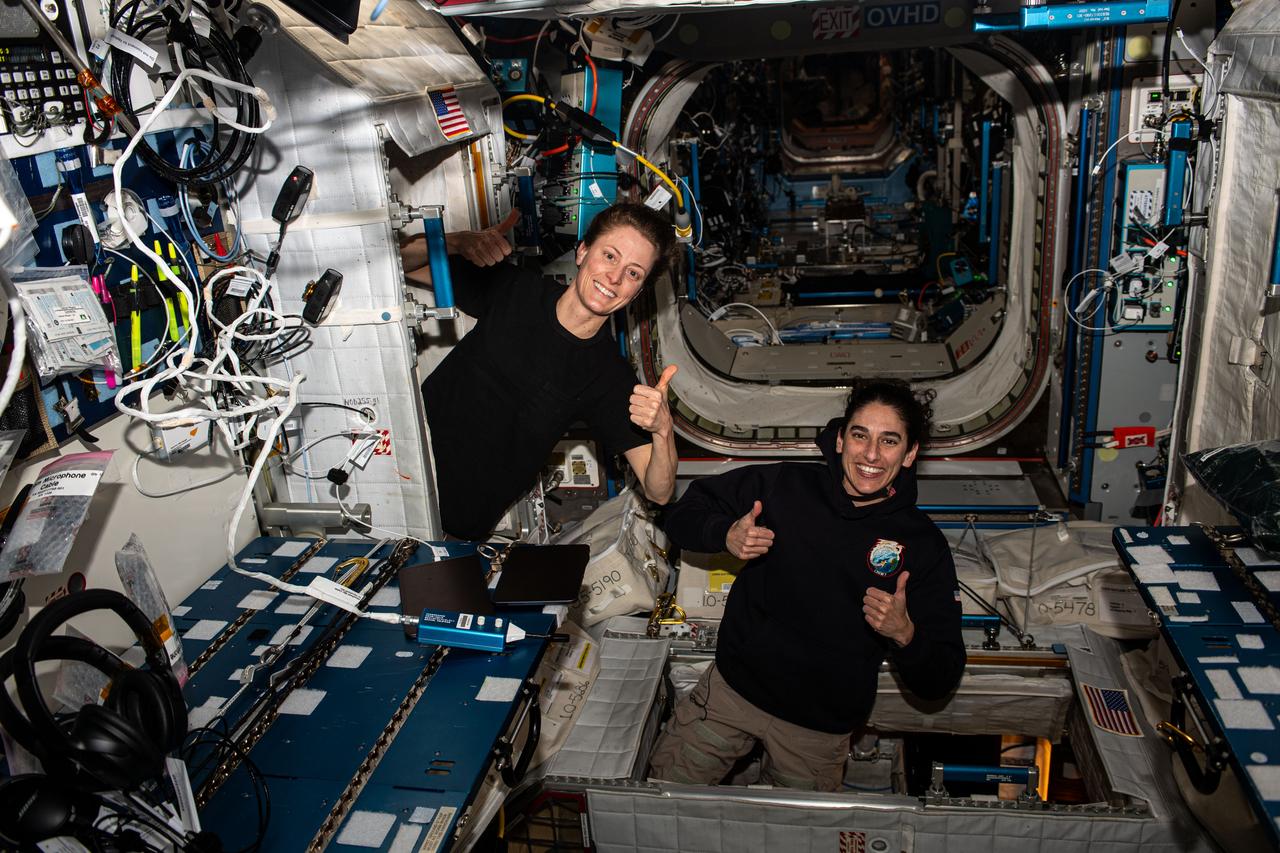
iss070e106199 (March 4, 2024) ---Expedition 70 Flight Engineers (from left) Loral O'Hara and Jasmin Moghbeli, both NASA astronauts who also reside in Texas, give a thumbs up after voting from the International Space Station. The duo filled out electronic absentee ballots that were downlinked to Mission Control Center in Houston, Texas, then sent to the county clerk's office.
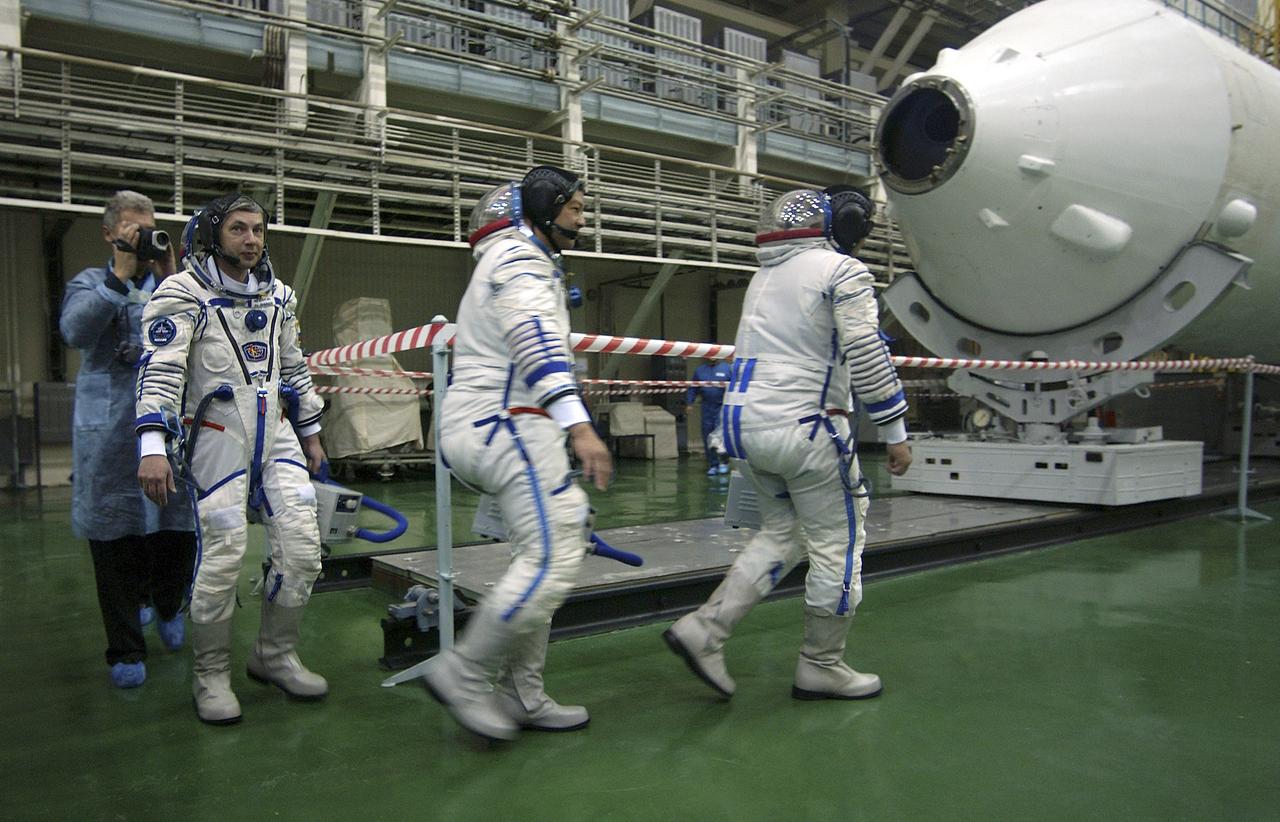
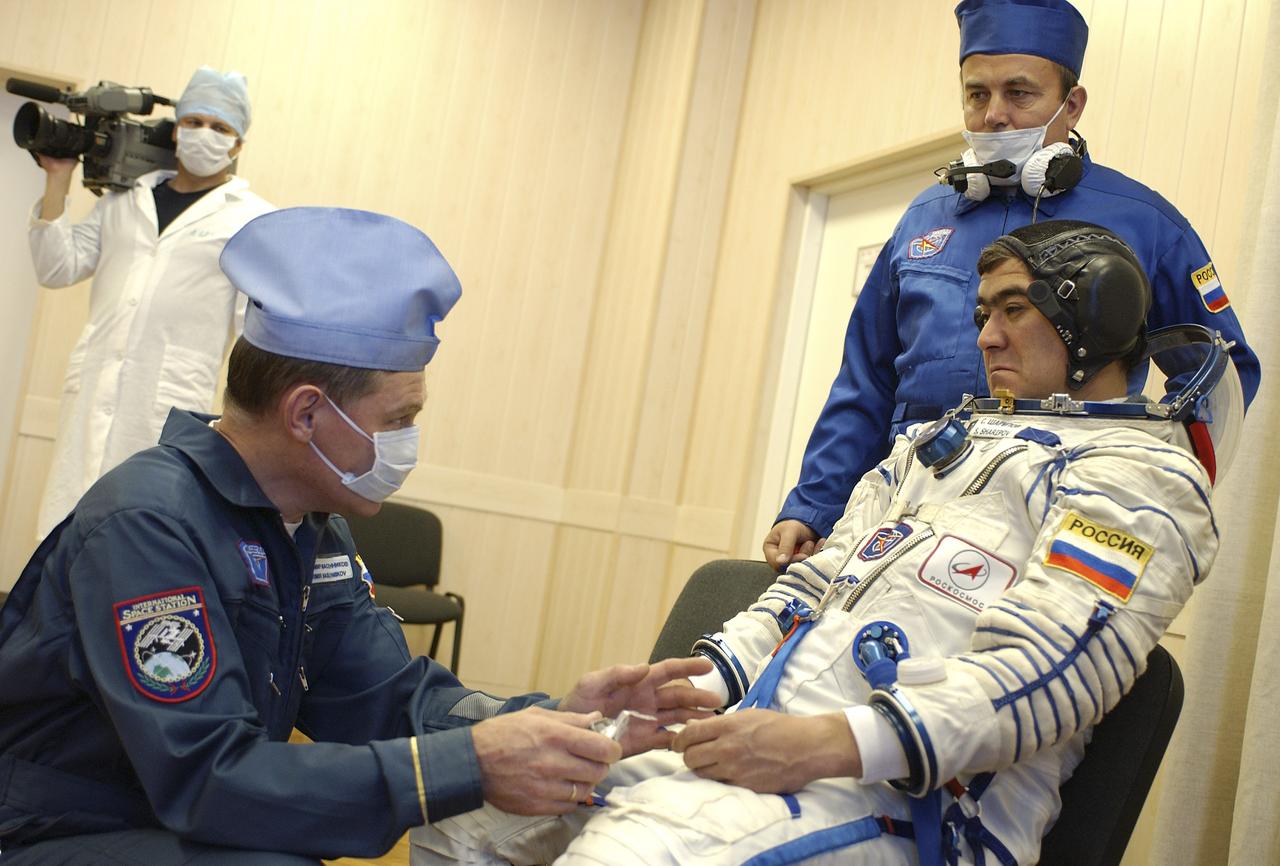
Expedition 10 Flight Engineer and Soyuz Commander Salizhan Sharipov, right, Expedition 10 Commander and NASA Science Officer Leroy Chiao, Russian Space Forces cosmonaut Yuri Shargin, left, donned their launch and entry suits and climbed aboard their Soyuz TMA-5 spacecraft Friday, October 5, 2004, at the Baikonur Cosmodrome in Kazakhstan for a dress rehearsal of launch day activities leading to their liftoff October 14 to the International Space Station. Chiao and Sharipov, the first crew of all-Asian extraction, will spend six months on the Station. Shargin will return to Earth October 24 with the Stations' current residents, Expedition 9 Commander Gennady Padalka and NASA Flight Engineer and Science Officer Mike Fincke. Photo Credit: (NASA/Bill Ingalls)
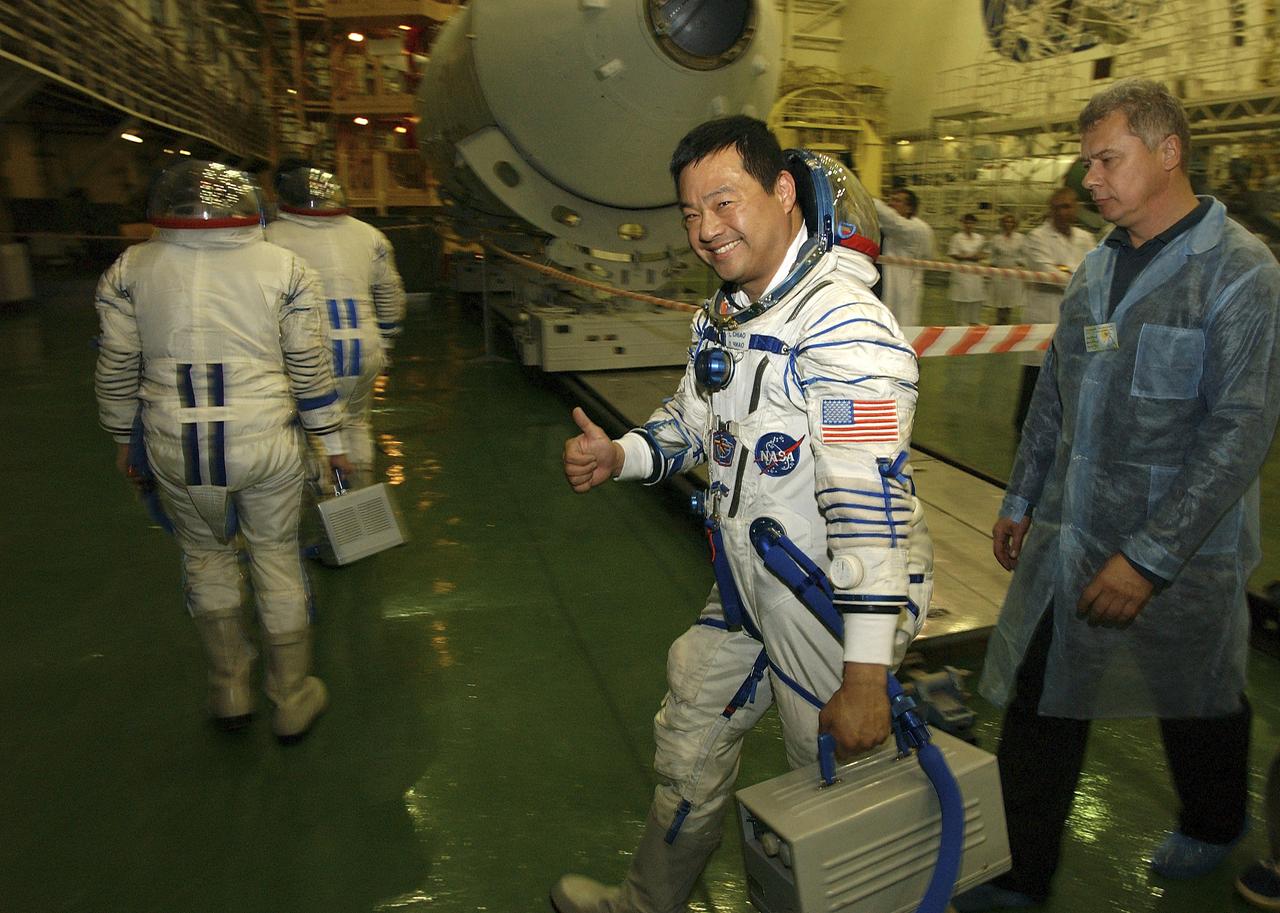
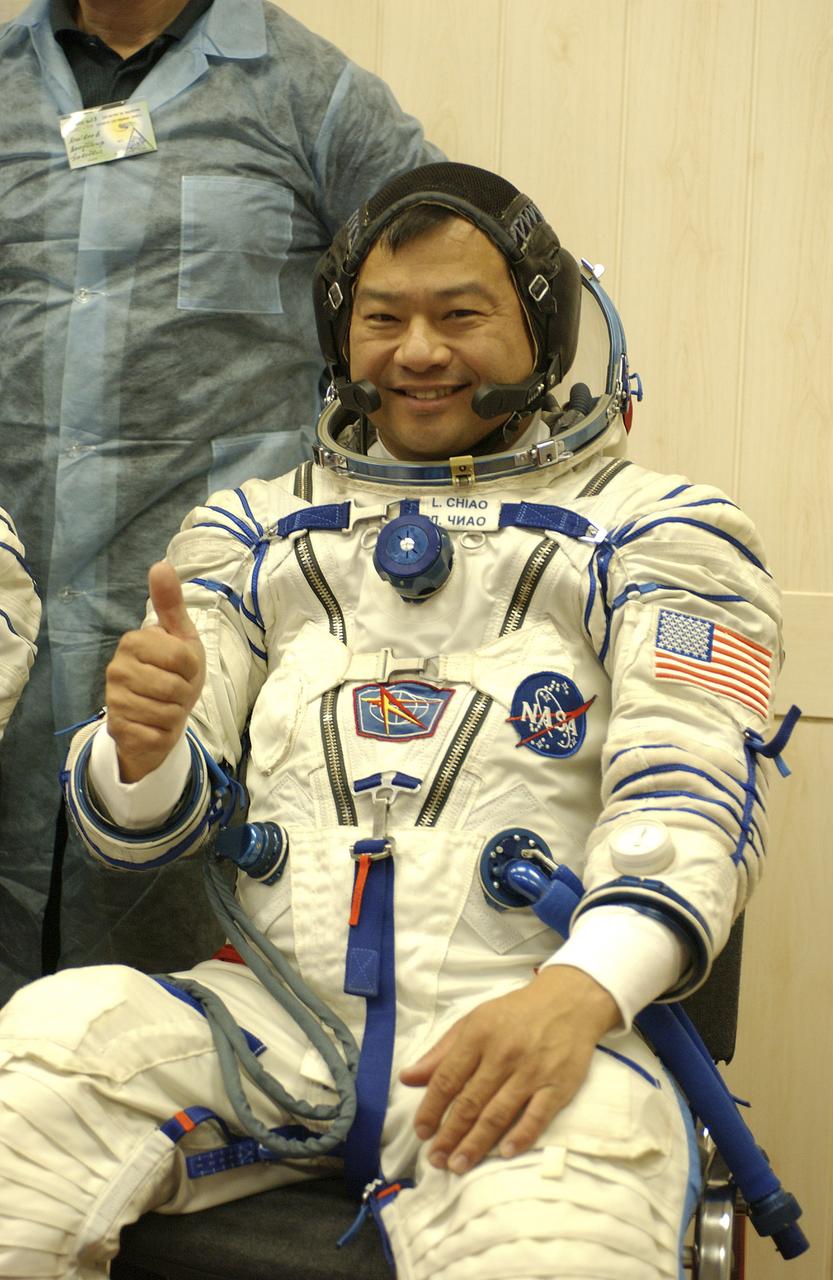
Expedition 10 Commander and NASA Science Officer Leroy Chiao, giving thumbs up, Russian Space Forces cosmonaut Yuri Shargin and Flight Engineer and Soyuz Commander Salizhan Sharipov donned their launch and entry suits and climbed aboard their Soyuz TMA-5 spacecraft Friday, October 5, 2004, at the Baikonur Cosmodrome in Kazakhstan for a dress rehearsal of launch day activities leading to their liftoff October 14 to the International Space Station. Chiao and Sharipov, the first crew of all-Asian extraction, will spend six months on the Station. Shargin will return to Earth October 24 with the Stations' current residents, Expedition 9 Commander Gennady Padalka and NASA Flight Engineer and Science Officer Mike Fincke. Photo Credit: (NASA/Bill Ingalls)
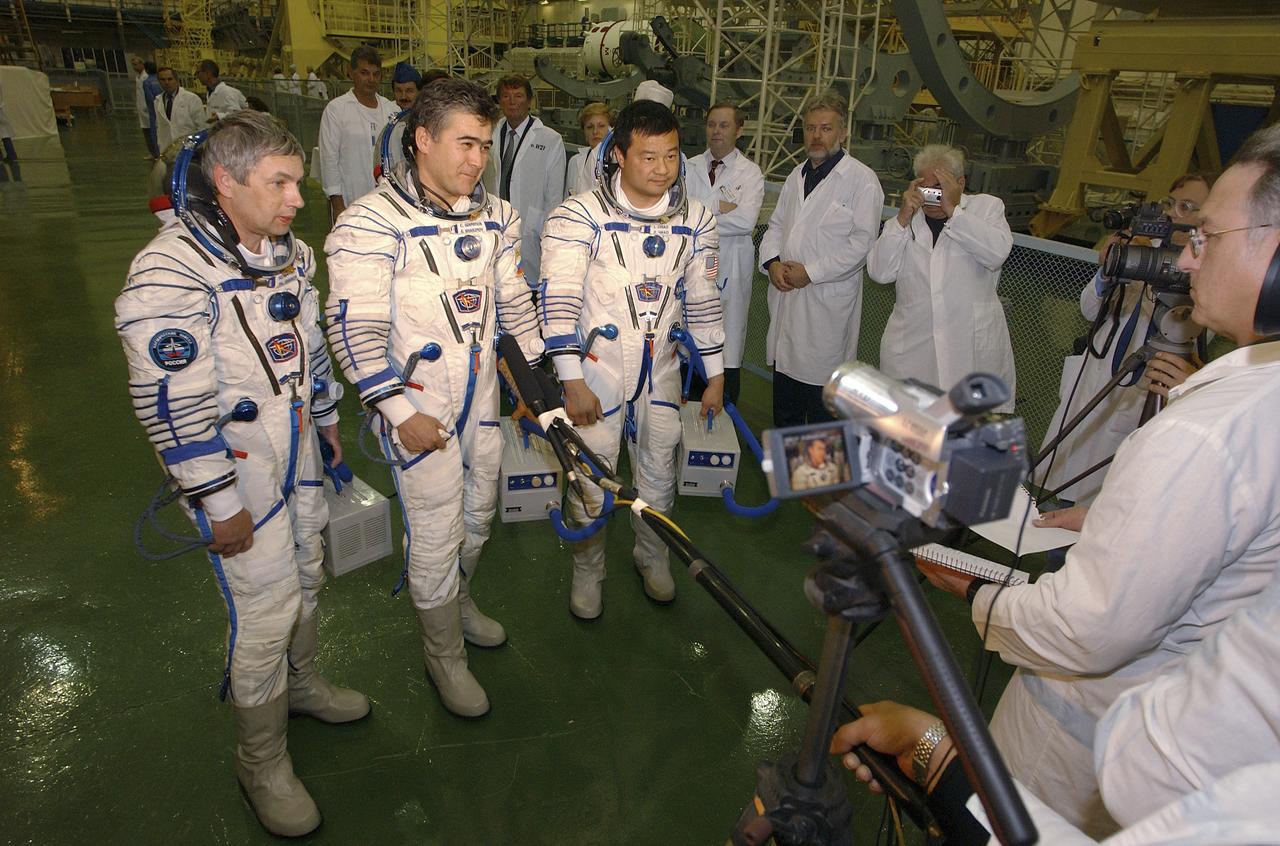
Expedition 10 Commander and NASA Science Officer Leroy Chiao, right, Flight Engineer and Soyuz Commander Salizhan Sharipov and Russian Space Forces cosmonaut Yuri Shargin, left, donned their launch and entry suits and climbed aboard their Soyuz TMA-5 spacecraft Friday, October 5, 2004, at the Baikonur Cosmodrome in Kazakhstan for a dress rehearsal of launch day activities leading to their liftoff October 14 to the International Space Station. Chiao and Sharipov, the first crew of all-Asian extraction, will spend six months on the Station. Shargin will return to Earth October 24 with the Stations' current residents, Expedition 9 Commander Gennady Padalka and NASA Flight Engineer and Science Officer Mike Fincke. Photo Credit: (NASA/Bill Ingalls)
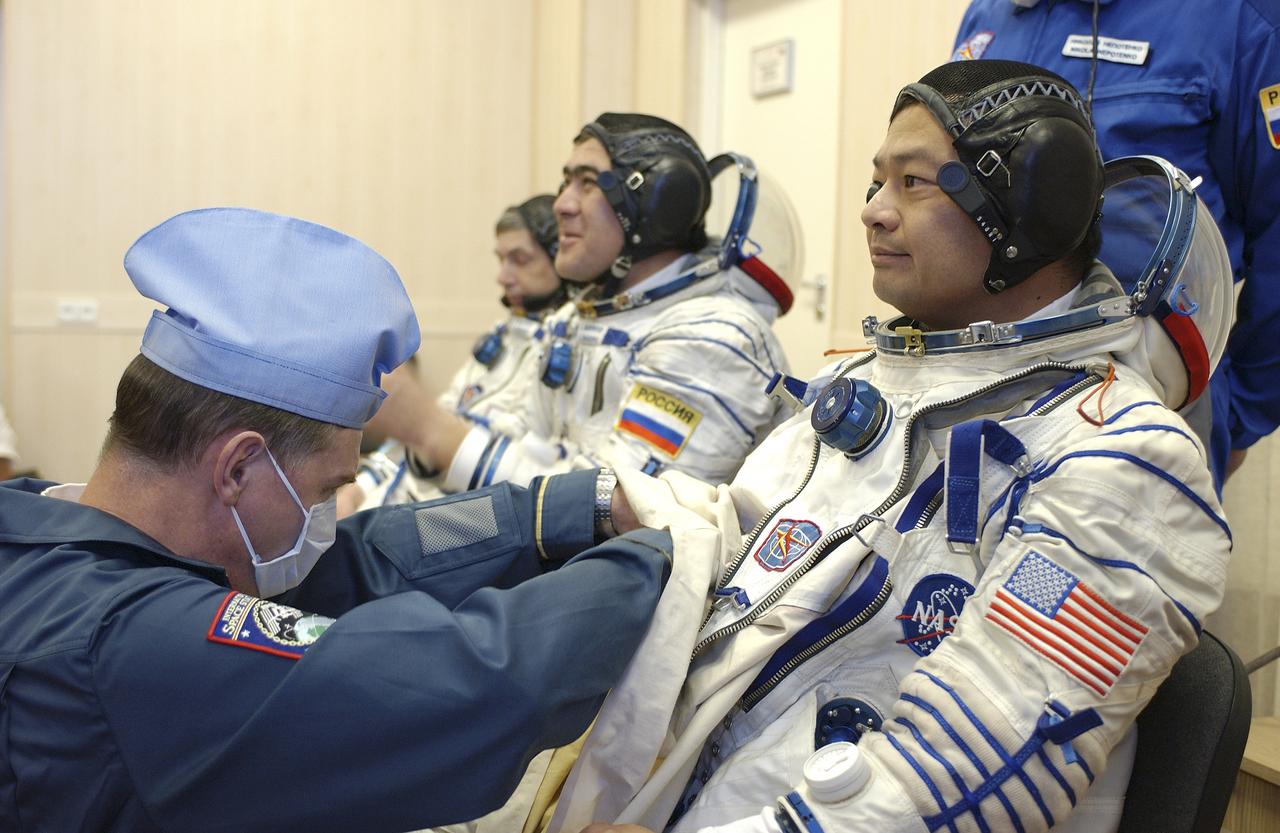
Expedition 10 Commander and NASA Science Officer Leroy Chiao, right, Flight Engineer and Soyuz Commander Salizhan Sharipov and Russian Space Forces cosmonaut Yuri Shargin, left, donned their launch and entry suits and climbed aboard their Soyuz TMA-5 spacecraft Friday, October 5, 2004, at the Baikonur Cosmodrome in Kazakhstan for a dress rehearsal of launch day activities leading to their liftoff October 14 to the International Space Station. Chiao and Sharipov, the first crew of all-Asian extraction, will spend six months on the Station. Shargin will return to Earth October 24 with the Stations' current residents, Expedition 9 Commander Gennady Padalka and NASA Flight Engineer and Science Officer Mike Fincke. Photo Credit: (NASA/Bill Ingalls)
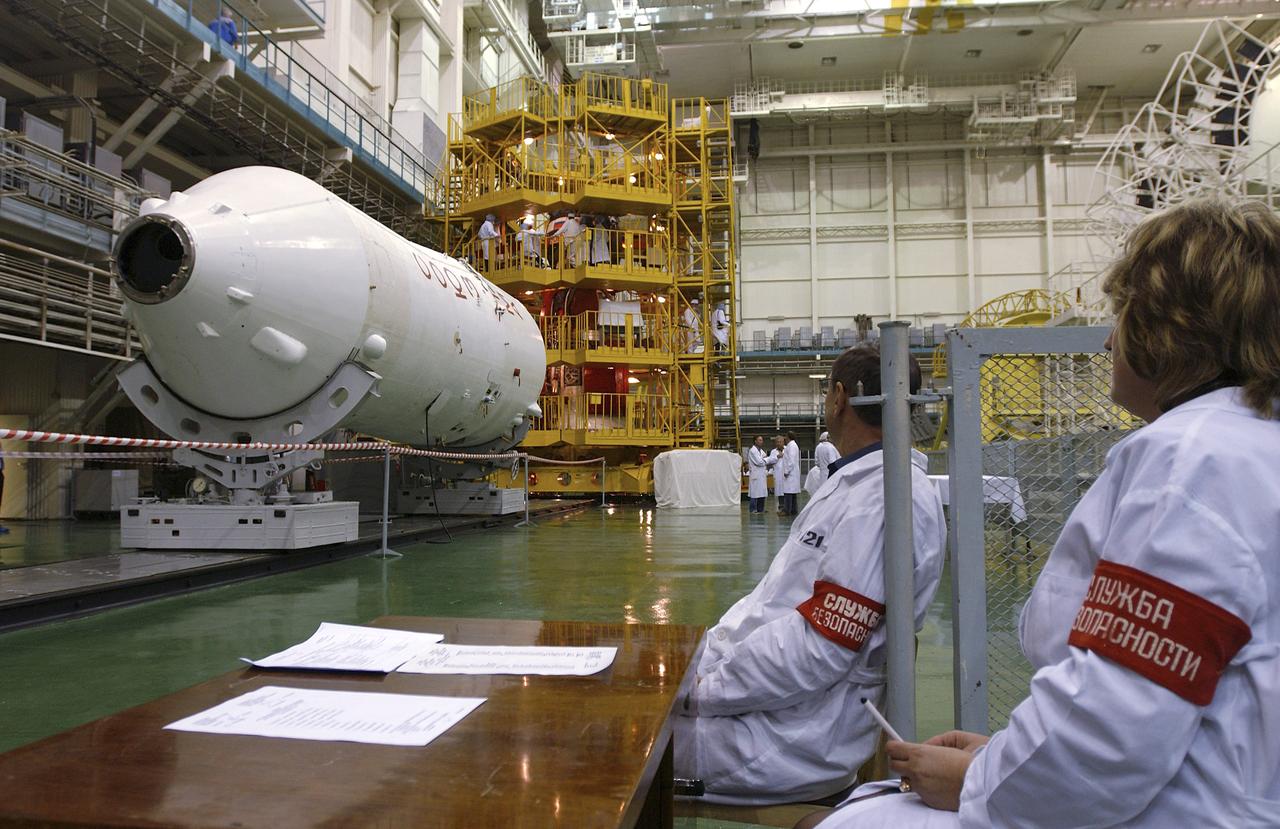
Security controls access to the Soyuz capsule and test stand area, Friday, Oct. 5, 2004, at the Baikonur Cosmodrome. Expedition 10 Commander and NASA Science Officer Leroy Chiao, Flight Engineer and Soyuz Commander Salizhan Sharipov and Russian Space Forces Cosmonaut Yuri Shargin donned their launch and entry suits and climbed aboard their Soyuz TMA-5 for a dress rehearsal of launch day activities leading to their liftoff October 14 to the International Space Station. Chiao and Sharipov, the first crew of all-Asian extraction, will spend six months on the Station. Shargin will return to Earth October 24 with the Stations' current residents, Expedition 9 Commander Gennady Padalka and NASA Flight Engineer and Science Officer Mike Fincke. Photo Credit: (NASA/Bill Ingalls)
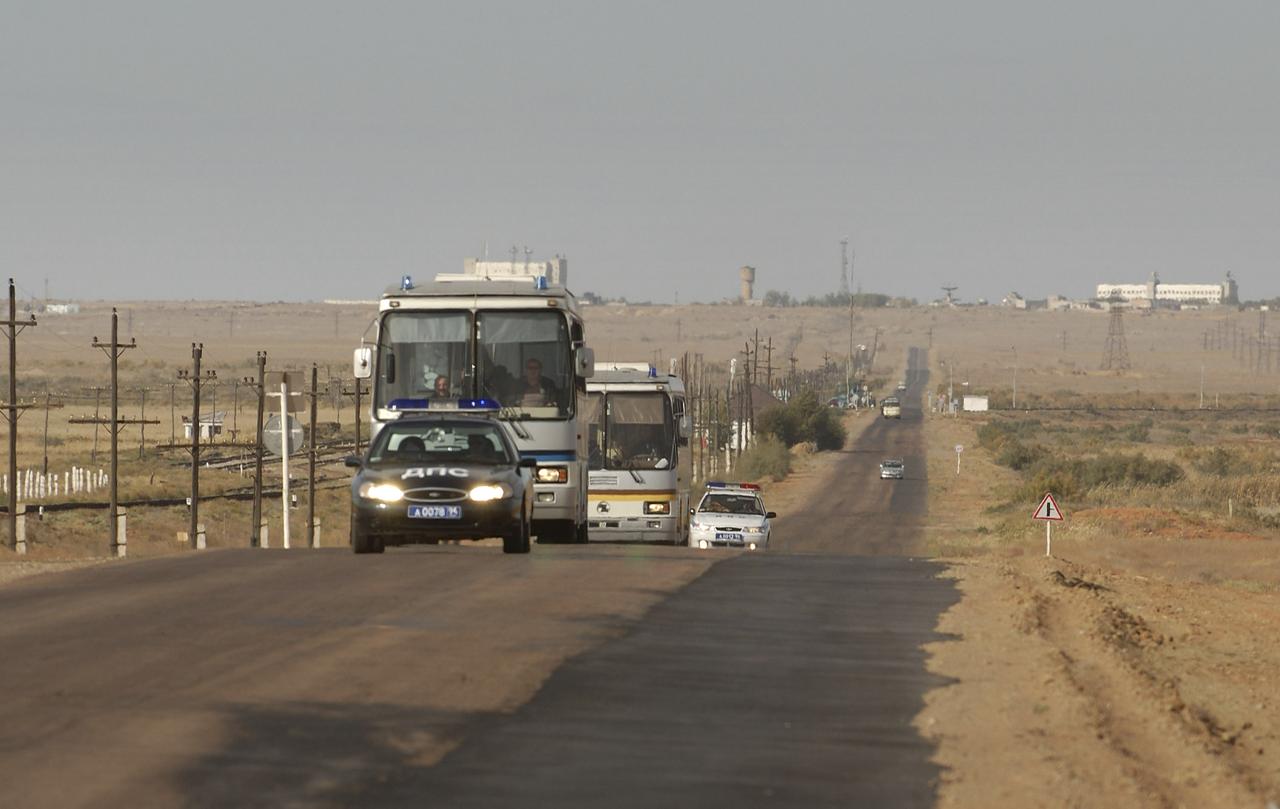
The prime and backup crew buses are escorted through the Baikonur Cosmodrome as the crew returns to the Cosmonaut Hotel. Expedition 10 Commander and NASA Science Officer Leroy Chiao, Flight Engineer and Soyuz Commander Salizhan Sharipov and Russian Space Forces Cosmonaut Yuri Shargin donned their launch and entry suits and climbed aboard their Soyuz TMA-5 spacecraft October 5, 2004 at the Baikonur Cosmodrome in Kazakhstan for a dress rehearsal of launch day activities leading to their liftoff October 14 to the International Space Station. Chiao and Sharipov, the first crew of all-Asian extraction, will spend six months on the Station, while Shargin will return to Earth October 24 with the Station’s current residents, Expedition 9 Commander Gennady Padalka and NASA Flight Engineer and Science Officer Mike Fincke. Photo Credit: “NASA/Bill Ingalls”
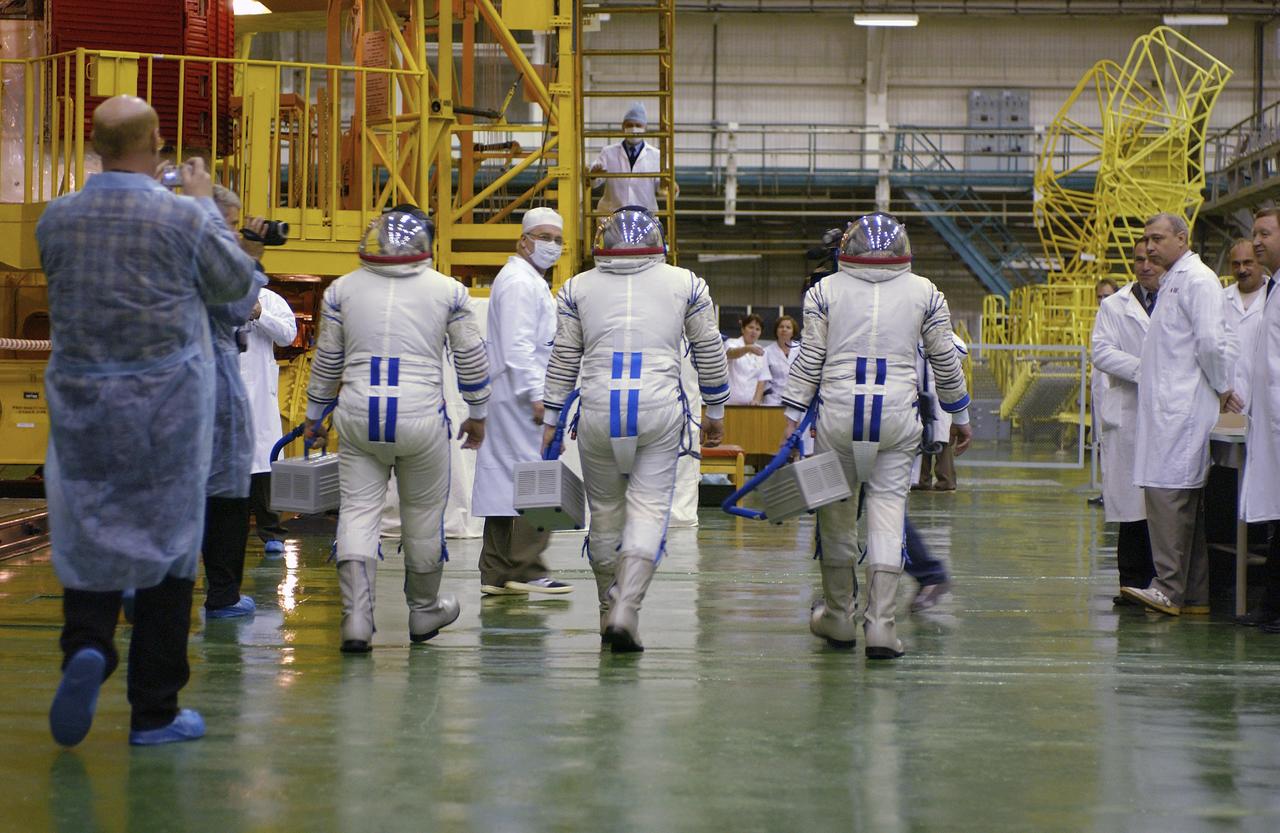
Expedition 10 Flight Engineer and Soyuz Commander Salizhan Sharipov, Expedition 10 Commander and NASA Science Officer Leroy Chiao, Russian Space Forces cosmonaut Yuri Shargin donned their launch and entry suits and climbed aboard their Soyuz TMA-5 spacecraft Friday, October 5, 2004, at the Baikonur Cosmodrome in Kazakhstan for a dress rehearsal of launch day activities leading to their liftoff October 14 to the International Space Station. Chiao and Sharipov, the first crew of all-Asian extraction, will spend six months on the Station. Shargin will return to Earth October 24 with the Stations' current residents, Expedition 9 Commander Gennady Padalka and NASA Flight Engineer and Science Officer Mike Fincke. Photo Credit: (NASA/Bill Ingalls)
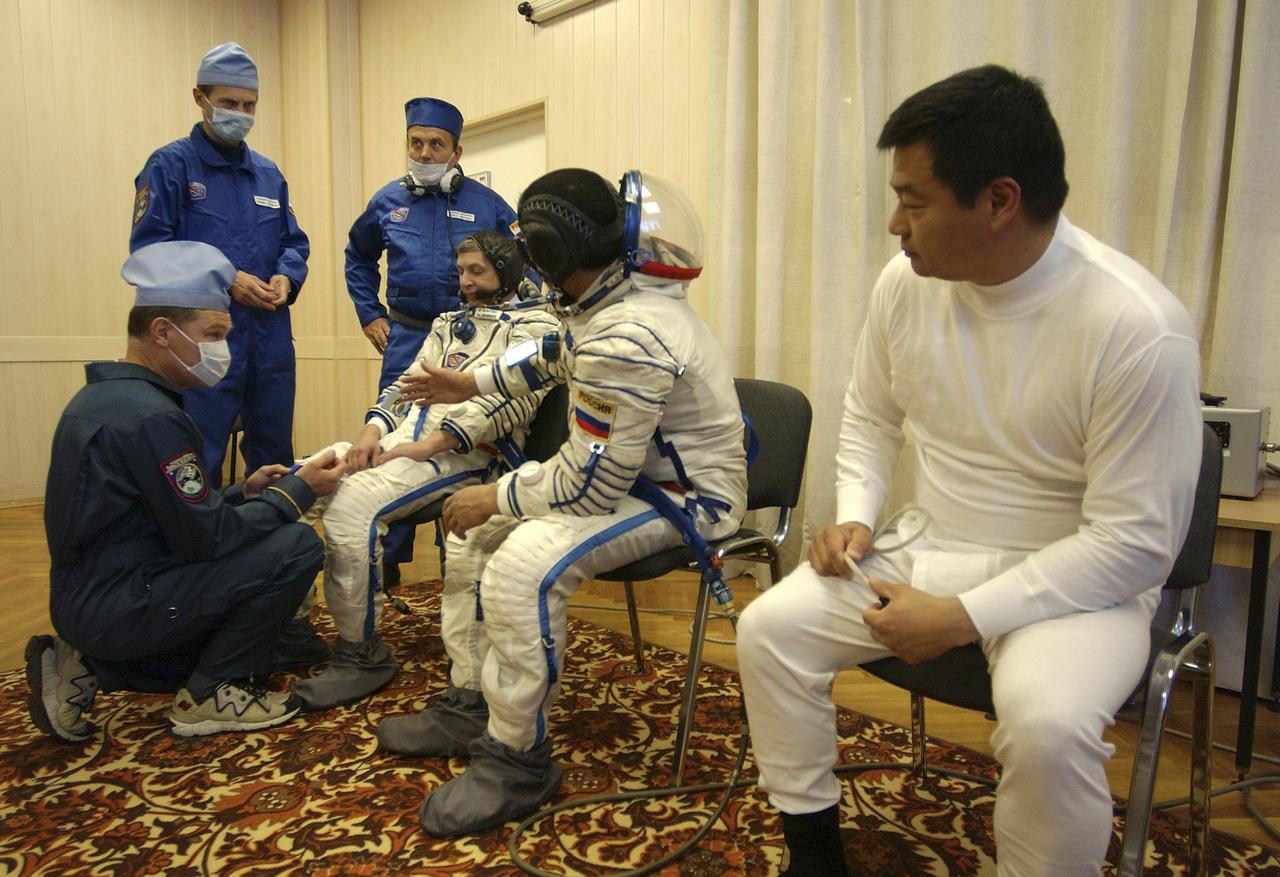
Expedition 10 Commander and NASA Science Officer Leroy Chiao, right, Flight Engineer and Soyuz Commander Salizhan Sharipov and Russian Space Forces cosmonaut Yuri Shargin, left, donned their launch and entry suits and climbed aboard their Soyuz TMA-5 spacecraft Friday, October 5, 2004, at the Baikonur Cosmodrome in Kazakhstan for a dress rehearsal of launch day activities leading to their liftoff October 14 to the International Space Station. Chiao and Sharipov, the first crew of all-Asian extraction, will spend six months on the Station. Shargin will return to Earth October 24 with the Stations' current residents, Expedition 9 Commander Gennady Padalka and NASA Flight Engineer and Science Officer Mike Fincke. Photo Credit: (NASA/Bill Ingalls)
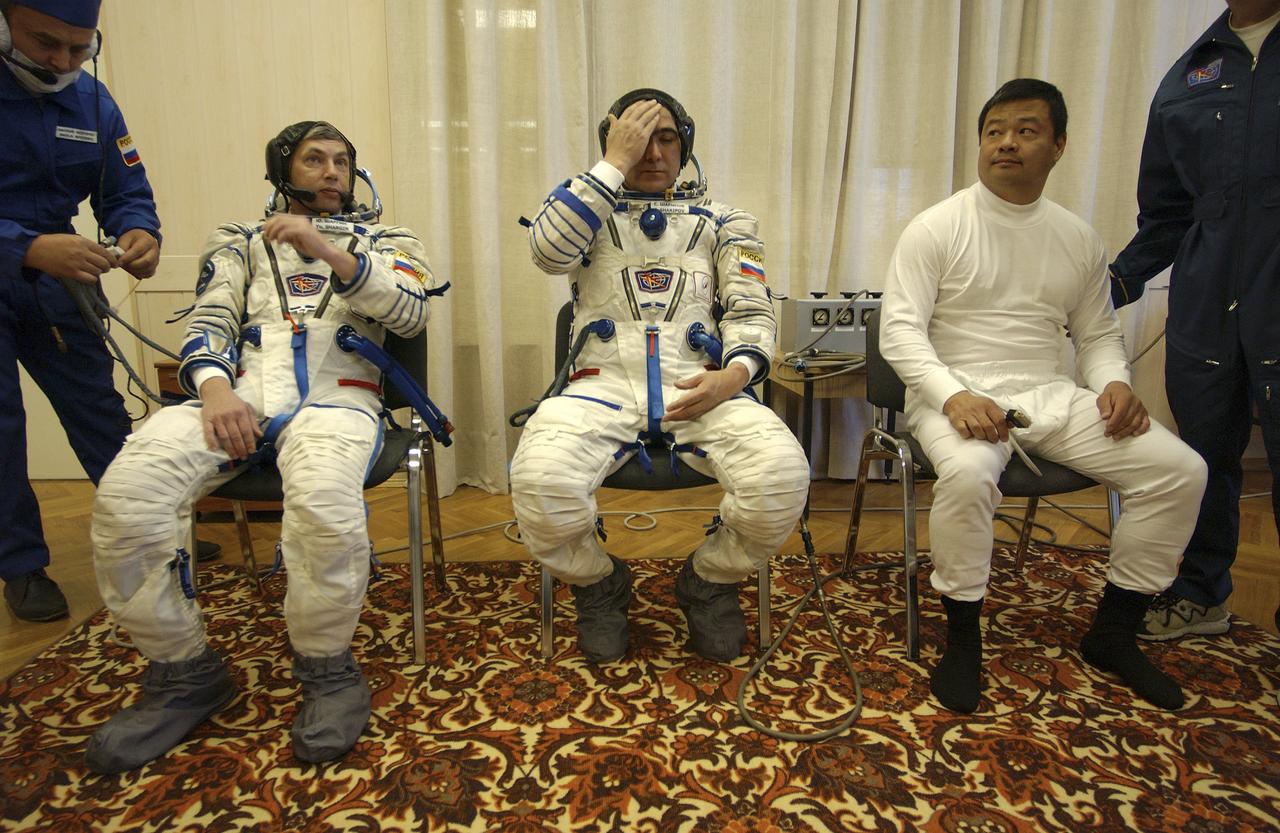
Expedition 10 Commander and NASA Science Officer Leroy Chiao, right, Flight Engineer and Soyuz Commander Salizhan Sharipov and Russian Space Forces cosmonaut Yuri Shargin, left, donned their launch and entry suits and climbed aboard their Soyuz TMA-5 spacecraft Friday, October 5, 2004, at the Baikonur Cosmodrome in Kazakhstan for a dress rehearsal of launch day activities leading to their liftoff October 14 to the International Space Station. Chiao and Sharipov, the first crew of all-Asian extraction, will spend six months on the Station. Shargin will return to Earth October 24 with the Stations' current residents, Expedition 9 Commander Gennady Padalka and NASA Flight Engineer and Science Officer Mike Fincke. Photo Credit: (NASA/Bill Ingalls)
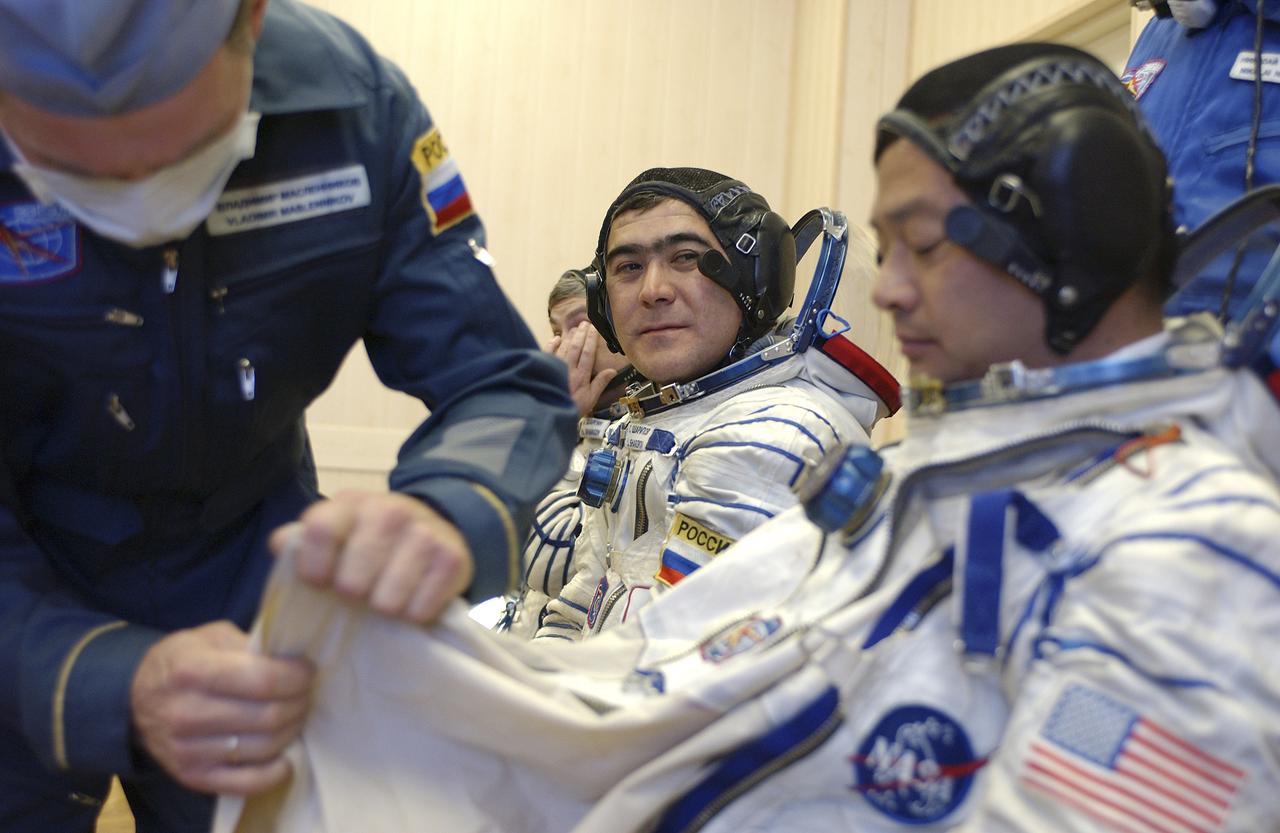
Expedition 10 Commander and NASA Science Officer Leroy Chiao, right, Flight Engineer and Soyuz Commander Salizhan Sharipov and Russian Space Forces cosmonaut Yuri Shargin, left, donned their launch and entry suits and climbed aboard their Soyuz TMA-5 spacecraft Friday, October 5, 2004, at the Baikonur Cosmodrome in Kazakhstan for a dress rehearsal of launch day activities leading to their liftoff October 14 to the International Space Station. Chiao and Sharipov, the first crew of all-Asian extraction, will spend six months on the Station. Shargin will return to Earth October 24 with the Stations' current residents, Expedition 9 Commander Gennady Padalka and NASA Flight Engineer and Science Officer Mike Fincke. Photo Credit: (NASA/Bill Ingalls)
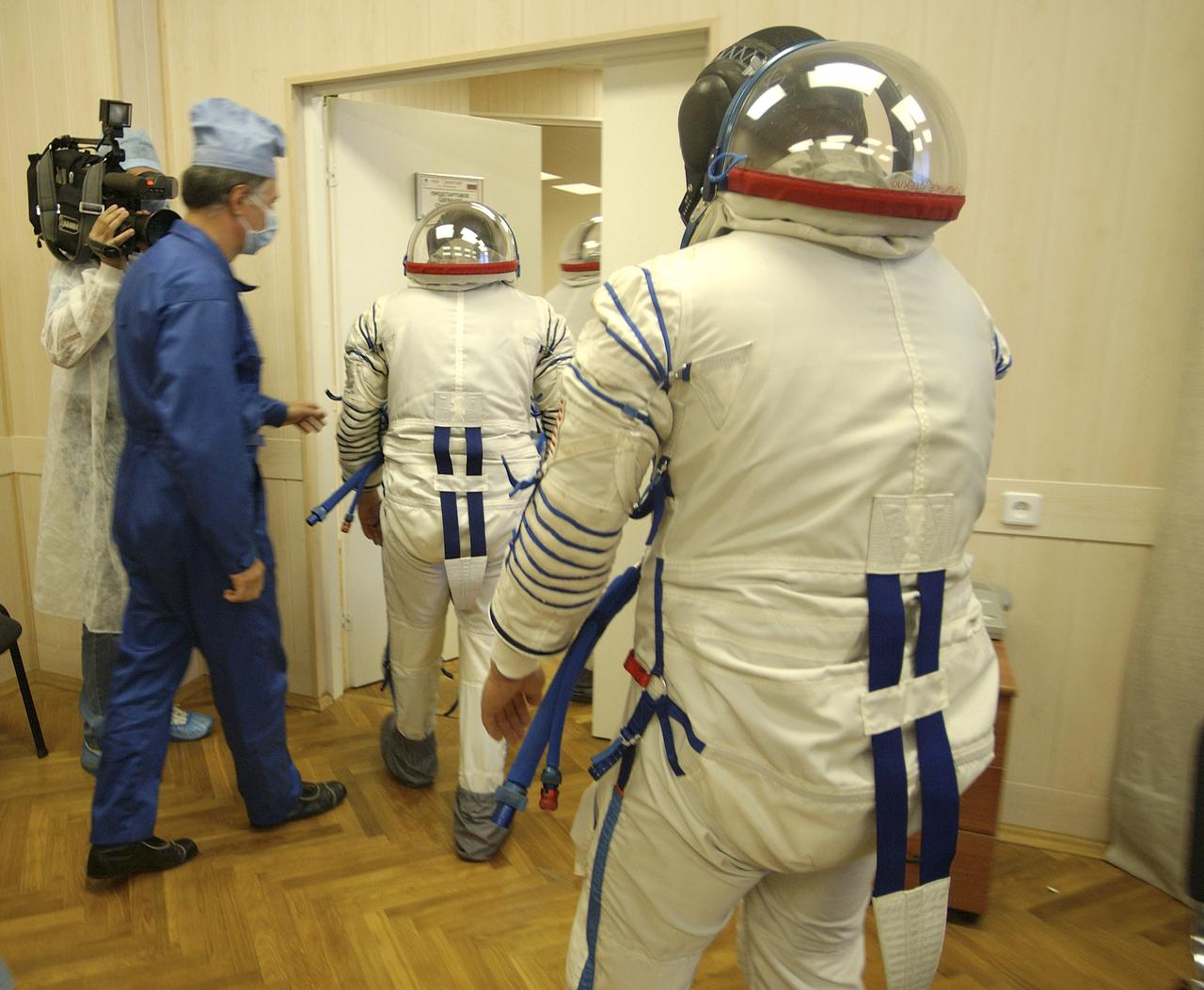
Expedition 10 Commander and NASA Science Officer Leroy Chiao, Flight Engineer and Soyuz Commander Salizhan Sharipov and Russian Space Forces cosmonaut Yuri Shargin donned their launch and entry suits and climbed aboard their Soyuz TMA-5 spacecraft Friday, October 5, 2004, at the Baikonur Cosmodrome in Kazakhstan for a dress rehearsal of launch day activities leading to their liftoff October 14 to the International Space Station. Chiao and Sharipov, the first crew of all-Asian extraction, will spend six months on the Station. Shargin will return to Earth October 24 with the Stations' current residents, Expedition 9 Commander Gennady Padalka and NASA Flight Engineer and Science Officer Mike Fincke. Photo Credit: (NASA/Bill Ingalls)

Expedition 10 Flight Engineer and Soyuz Commander Salizhan Sharipov, foreground, Expedition 10 Commander, Russian Space Forces cosmonaut Yuri Shargin and NASA Science Officer Leroy Chiao, background, donned their launch and entry suits and climbed aboard their Soyuz TMA-5 spacecraft Friday, October 5, 2004, at the Baikonur Cosmodrome in Kazakhstan for a dress rehearsal of launch day activities leading to their liftoff October 14 to the International Space Station. Chiao and Sharipov, the first crew of all-Asian extraction, will spend six months on the Station. Shargin will return to Earth October 24 with the Stations' current residents, Expedition 9 Commander Gennady Padalka and NASA Flight Engineer and Science Officer Mike Fincke. Photo Credit: (NASA/Bill Ingalls)
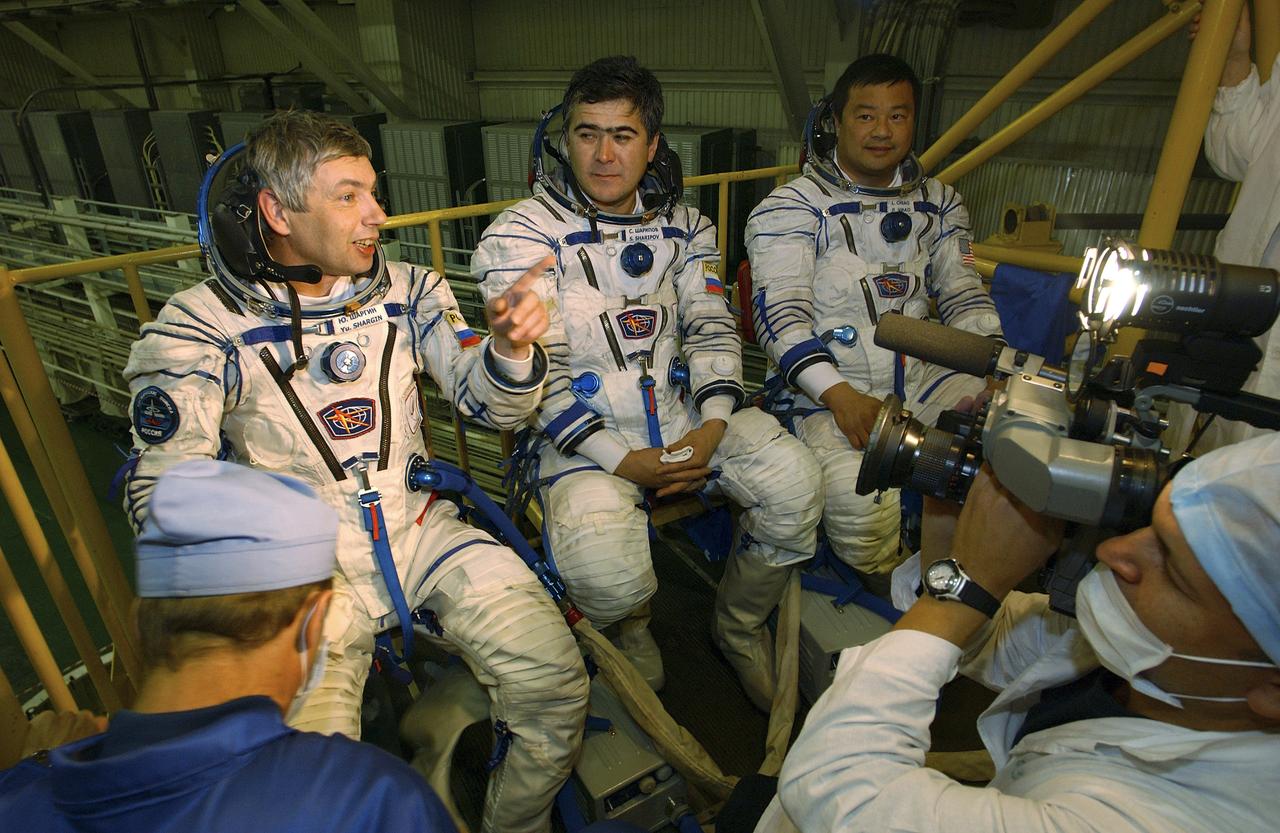
Expedition 10 Commander and NASA Science Officer Leroy Chiao, right, Flight Engineer and Soyuz Commander Salizhan Sharipov and Russian Space Forces cosmonaut Yuri Shargin, left, donned their launch and entry suits and climbed aboard their Soyuz TMA-5 spacecraft Friday, October 5, 2004, at the Baikonur Cosmodrome in Kazakhstan for a dress rehearsal of launch day activities leading to their liftoff October 14 to the International Space Station. Chiao and Sharipov, the first crew of all-Asian extraction, will spend six months on the Station. Shargin will return to Earth October 24 with the Stations' current residents, Expedition 9 Commander Gennady Padalka and NASA Flight Engineer and Science Officer Mike Fincke. Photo Credit: (NASA/Bill Ingalls)
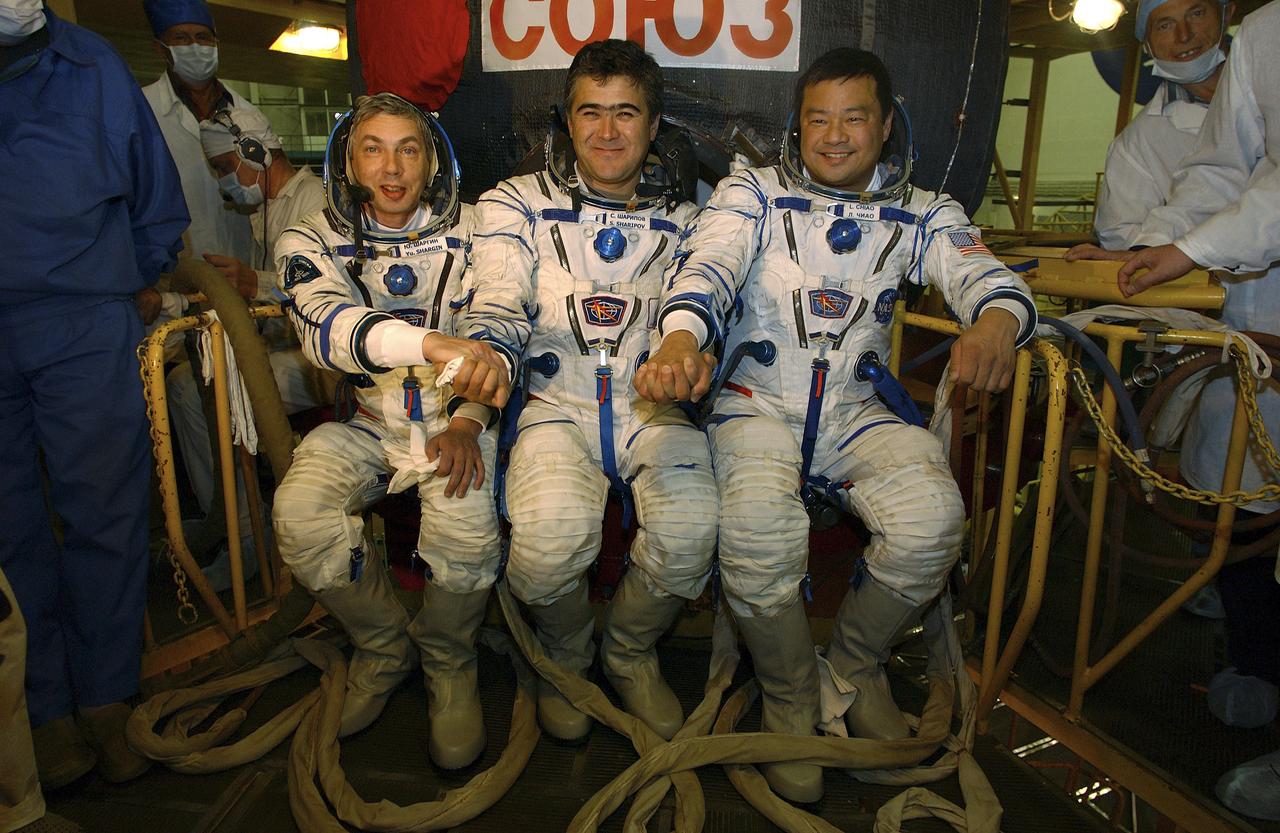
Expedition 10 Commander and NASA Science Officer Leroy Chiao, right, Flight Engineer and Soyuz Commander Salizhan Sharipov and Russian Space Forces cosmonaut Yuri Shargin, left, donned their launch and entry suits and climbed aboard their Soyuz TMA-5 spacecraft Friday, October 5, 2004, at the Baikonur Cosmodrome in Kazakhstan for a dress rehearsal of launch day activities leading to their liftoff October 14 to the International Space Station. Chiao and Sharipov, the first crew of all-Asian extraction, will spend six months on the Station. Shargin will return to Earth October 24 with the Stations' current residents, Expedition 9 Commander Gennady Padalka and NASA Flight Engineer and Science Officer Mike Fincke. Photo Credit: (NASA/Bill Ingalls)
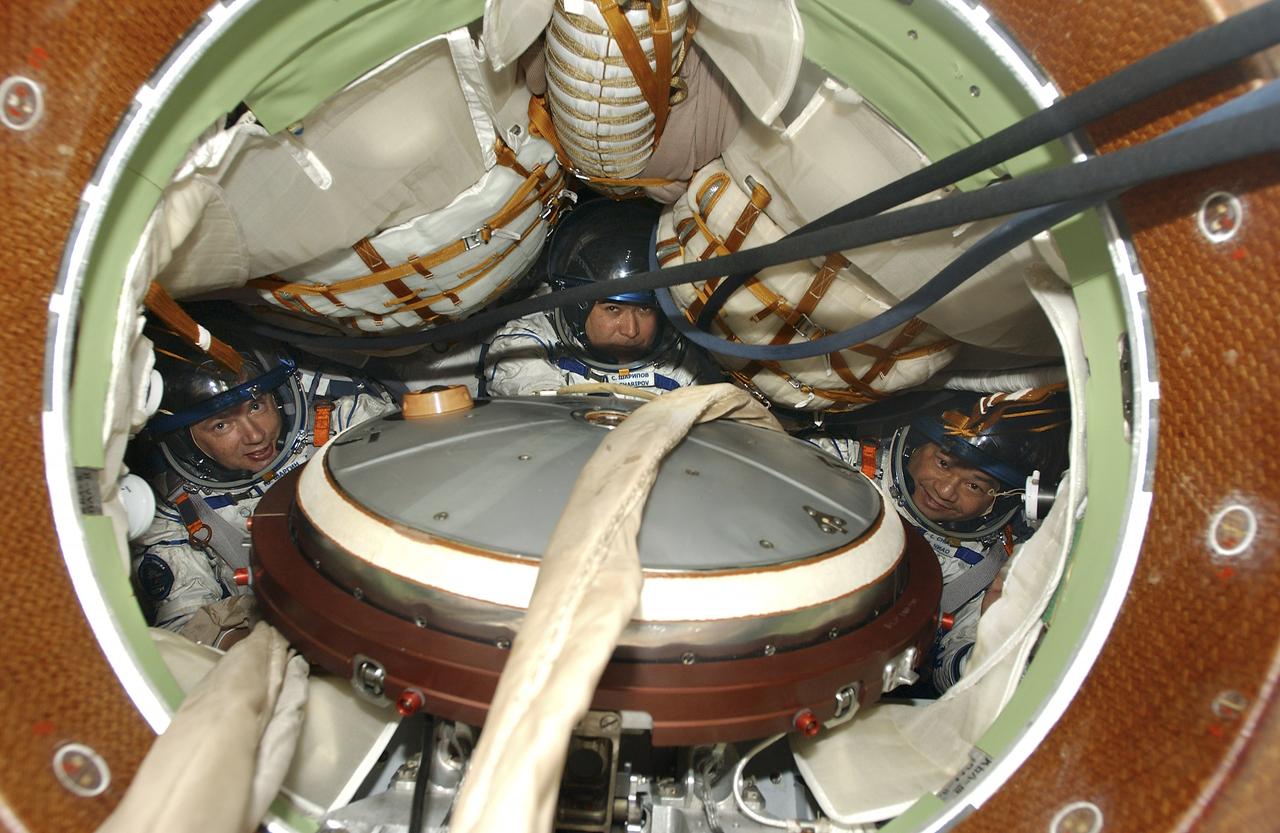
Expedition 10 Commander and NASA Science Officer Leroy Chiao, right, Flight Engineer and Soyuz Commander Salizhan Sharipov and Russian Space Forces cosmonaut Yuri Shargin, left, donned their launch and entry suits and climbed aboard their Soyuz TMA-5 spacecraft Friday, October 5, 2004, at the Baikonur Cosmodrome in Kazakhstan for a dress rehearsal of launch day activities leading to their liftoff October 14 to the International Space Station. Chiao and Sharipov, the first crew of all-Asian extraction, will spend six months on the Station. Shargin will return to Earth October 24 with the Stations' current residents, Expedition 9 Commander Gennady Padalka and NASA Flight Engineer and Science Officer Mike Fincke. Photo Credit: (NASA/Bill Ingalls)
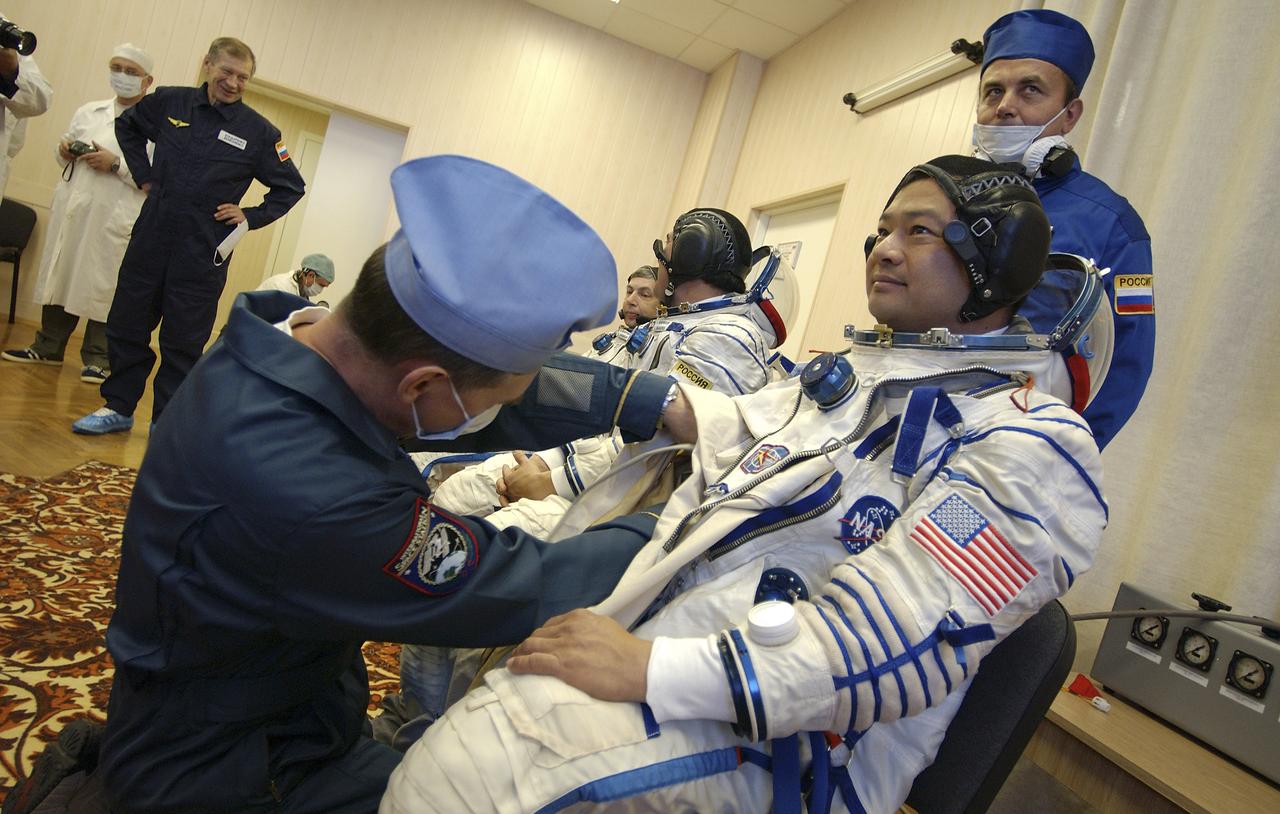
Expedition 10 Commander and NASA Science Officer Leroy Chiao, right, Flight Engineer and Soyuz Commander Salizhan Sharipov and Russian Space Forces cosmonaut Yuri Shargin, left, donned their launch and entry suits and climbed aboard their Soyuz TMA-5 spacecraft Friday, October 5, 2004, at the Baikonur Cosmodrome in Kazakhstan for a dress rehearsal of launch day activities leading to their liftoff October 14 to the International Space Station. Chiao and Sharipov, the first crew of all-Asian extraction, will spend six months on the Station. Shargin will return to Earth October 24 with the Stations' current residents, Expedition 9 Commander Gennady Padalka and NASA Flight Engineer and Science Officer Mike Fincke. Photo Credit: (NASA/Bill Ingalls)
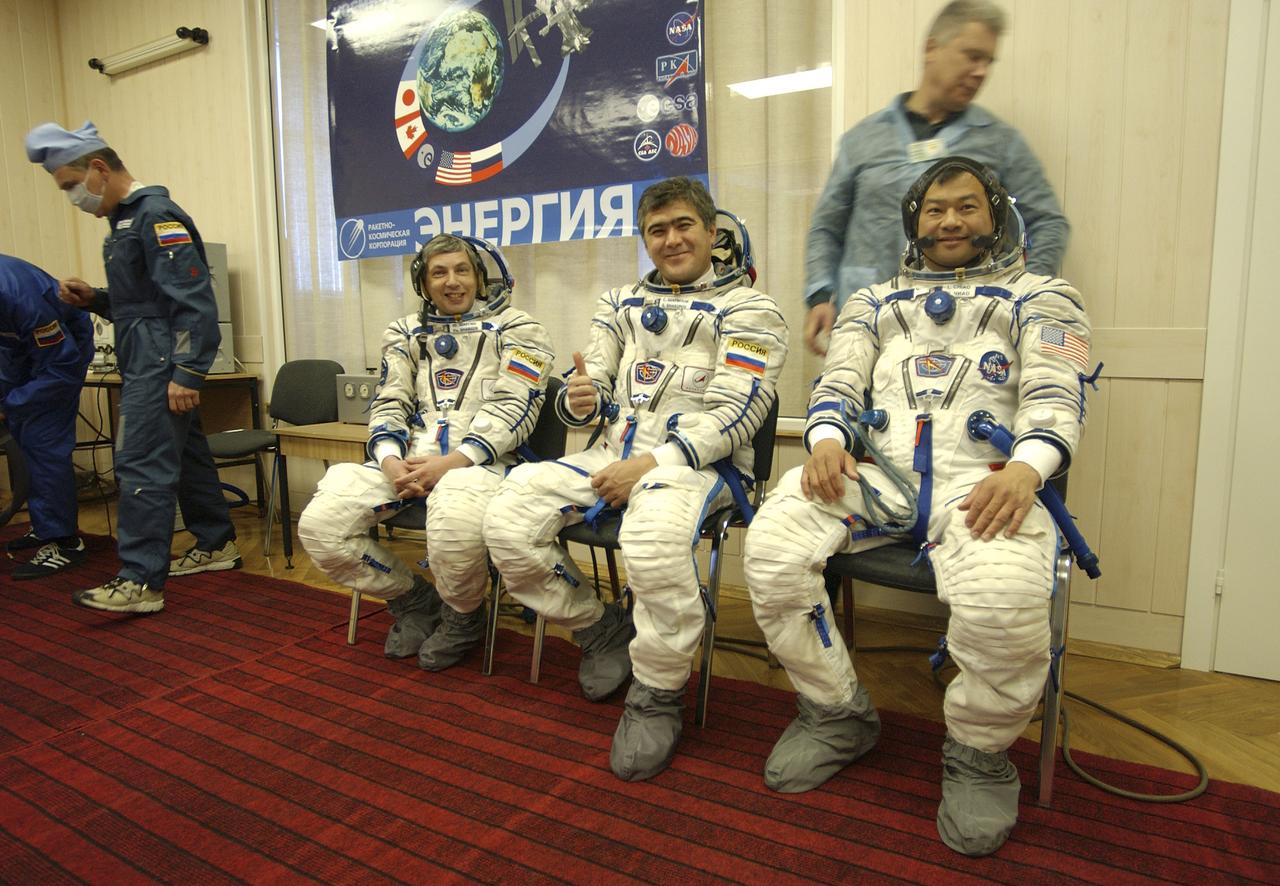
Expedition 10 Commander and NASA Science Officer Leroy Chiao, right, Flight Engineer and Soyuz Commander Salizhan Sharipov and Russian Space Forces cosmonaut Yuri Shargin, left, donned their launch and entry suits and climbed aboard their Soyuz TMA-5 spacecraft Friday, October 5, 2004, at the Baikonur Cosmodrome in Kazakhstan for a dress rehearsal of launch day activities leading to their liftoff October 14 to the International Space Station. Chiao and Sharipov, the first crew of all-Asian extraction, will spend six months on the Station. Shargin will return to Earth October 24 with the Stations' current residents, Expedition 9 Commander Gennady Padalka and NASA Flight Engineer and Science Officer Mike Fincke. Photo Credit: (NASA/Bill Ingalls)
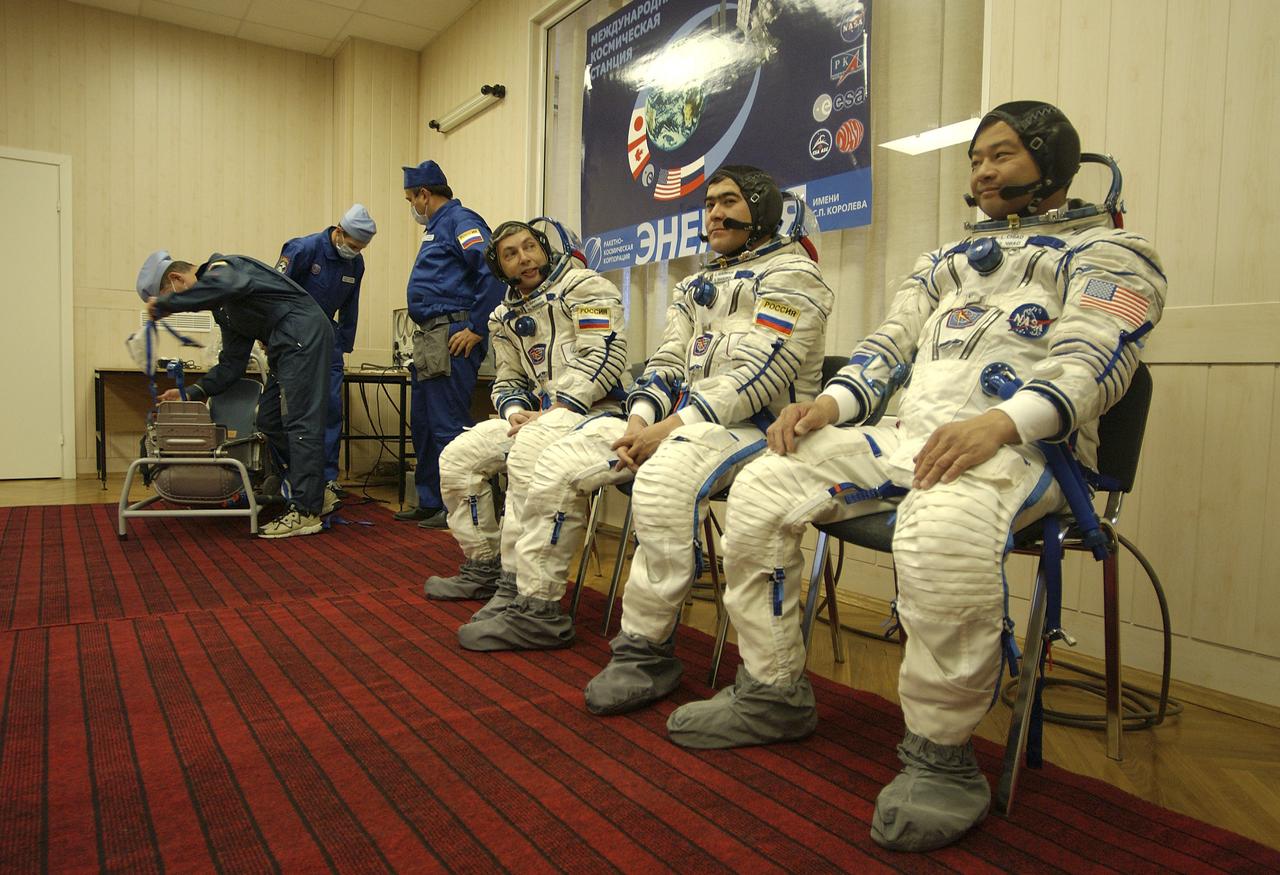
Expedition 10 Commander and NASA Science Officer Leroy Chiao, right, Flight Engineer and Soyuz Commander Salizhan Sharipov and Russian Space Forces cosmonaut Yuri Shargin, left, donned their launch and entry suits and climbed aboard their Soyuz TMA-5 spacecraft Friday, October 5, 2004, at the Baikonur Cosmodrome in Kazakhstan for a dress rehearsal of launch day activities leading to their liftoff October 14 to the International Space Station. Chiao and Sharipov, the first crew of all-Asian extraction, will spend six months on the Station. Shargin will return to Earth October 24 with the Stations' current residents, Expedition 9 Commander Gennady Padalka and NASA Flight Engineer and Science Officer Mike Fincke. Photo Credit: (NASA/Bill Ingalls)
Expedition 10 Commander and NASA Science Officer Leroy Chiao, right, Flight Engineer and Soyuz Commander Salizhan Sharipov and Russian Space Forces cosmonaut Yuri Shargin, left, donned their launch and entry suits and climbed aboard their Soyuz TMA-5 spacecraft Friday, October 5, 2004, at the Baikonur Cosmodrome in Kazakhstan for a dress rehearsal of launch day activities leading to their liftoff October 14 to the International Space Station. Chiao and Sharipov, the first crew of all-Asian extraction, will spend six months on the Station. Shargin will return to Earth October 24 with the Stations' current residents, Expedition 9 Commander Gennady Padalka and NASA Flight Engineer and Science Officer Mike Fincke. Photo Credit: (NASA/Bill Ingalls)

Harm van de Wetering, director of the Netherlands Space Office, left, NASA Administrator Bill Nelson, second from right, Chiragh Parikh, executive secretary of the National Space Council, not visible, NASA Deputy Administrator Pam Melroy, second from right, and Ambassador of the Kingdom of the Netherlands to the United States Birgitta Tazelaar, right, are seen as they speak following the signing of the Artemis Accords, Wednesday, Nov. 1, 2023, at the Dutch Ambassador’s Residence in Washington. Netherlands is the 31st country to sign the Artemis Accords, which establish a practical set of principles to guide space exploration cooperation among nations participating in NASA’s Artemis program. Photo Credit: (NASA/Joel Kowsky)
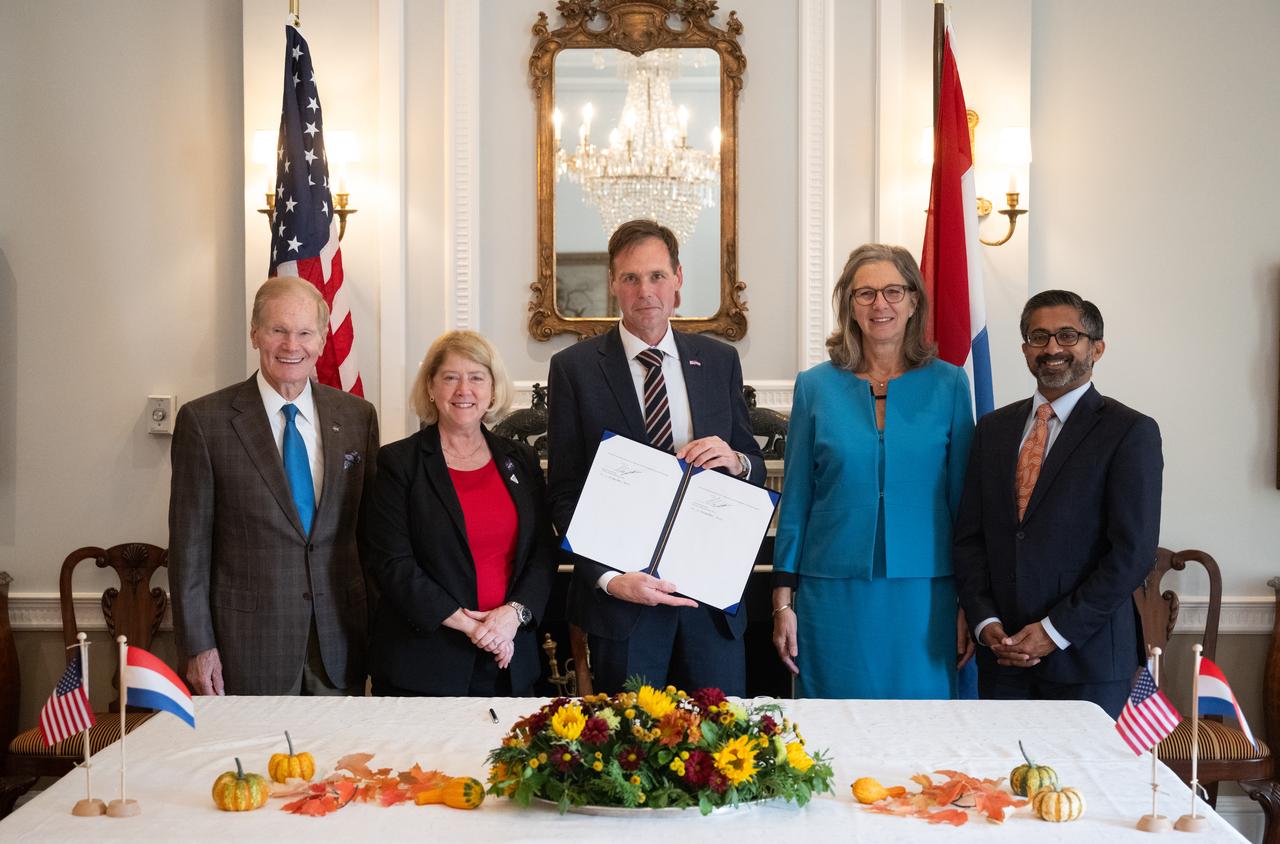
NASA Administrator Bill Nelson, left, NASA Deputy Administrator Pam Melroy, Harm van de Wetering, director of the Netherlands Space Office, Ambassador of the Kingdom of the Netherlands to the United States Birgitta Tazelaar, and Chiragh Parikh, executive secretary of the National Space Council, pose for a picture after the signing of the Artemis Accords, Wednesday, Nov. 1, 2023, at the Dutch Ambassador’s Residence in Washington. Netherlands is the 31st country to sign the Artemis Accords, which establish a practical set of principles to guide space exploration cooperation among nations participating in NASA’s Artemis program. Photo Credit: (NASA/Joel Kowsky)
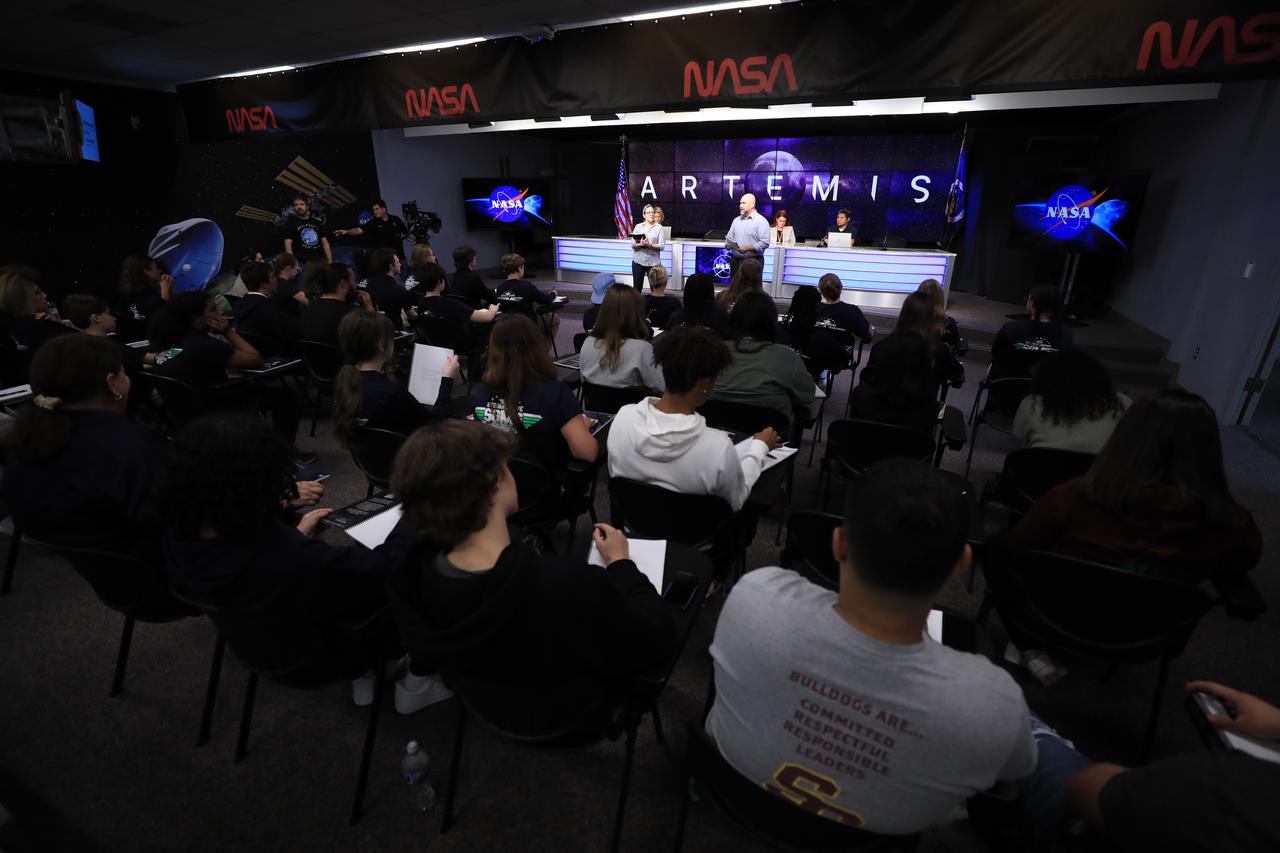
As part of NASA’s NextGen STEM project, Public Affairs Writers Danielle Sempsrott (left) and Jason Costa address students from Florida’s St. Cloud High School and Storm Grove Middle School in Vero Beach during an Artemis I student media briefing inside the John Holliman Auditorium of the News Center at NASA’s Kennedy Space Center in Florida on Jan. 19, 2023. Participants in the briefing included Kennedy Space Center Deputy Director Kelvin Manning, Artemis Launch Director Charlie Blackwell-Thompson, Manager of the Space Launch System Resident Management Office Elkin Norena, and Space Launch Delta 45 Weather Officer Melody Lovin. Along with the students participating in person, middle and high school students across the country had the opportunity to ask questions of the panel via phone to discuss the Artemis I mission and the agency’s future of human space exploration.
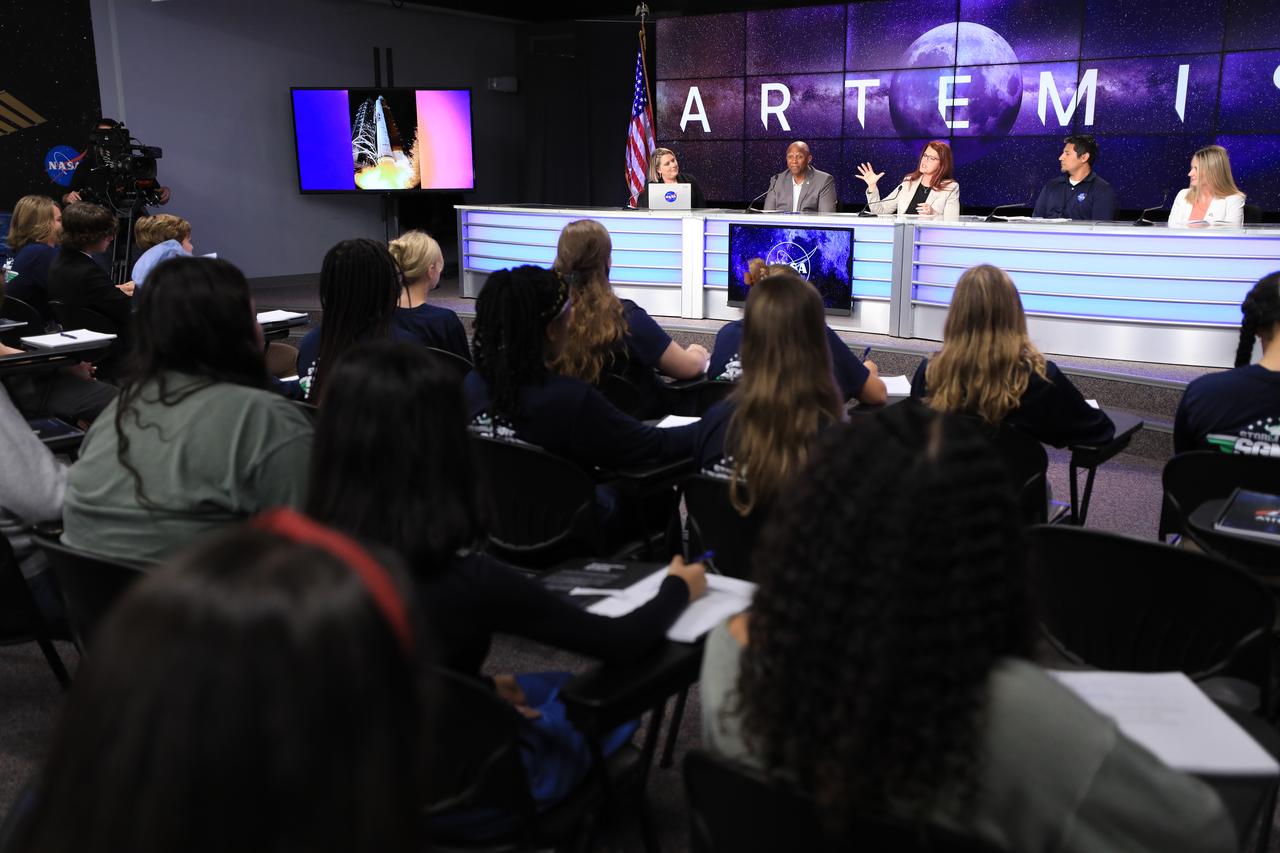
From left, NASA Communications’ Leah Martin, Kennedy Space Center Deputy Director Kelvin Manning, Artemis Launch Director Charlie Blackwell-Thompson, Space Launch System Resident Management Office Manager Elkin Norena, and Space Launch Delta 45 Weather Officer Melody Lovin participate in an Artemis I student media briefing inside the John Holliman Auditorium of the News Center at the Florida spaceport on Jan. 19, 2023. As part of NASA’s NextGen STEM project, students from Florida’s St. Cloud High School and Storm Grove Middle School in Vero Beach participated in person during the briefing, while middle and high school students across the country had the opportunity to ask questions of the panel via phone to discuss the Artemis I mission and the agency’s future of human space exploration.
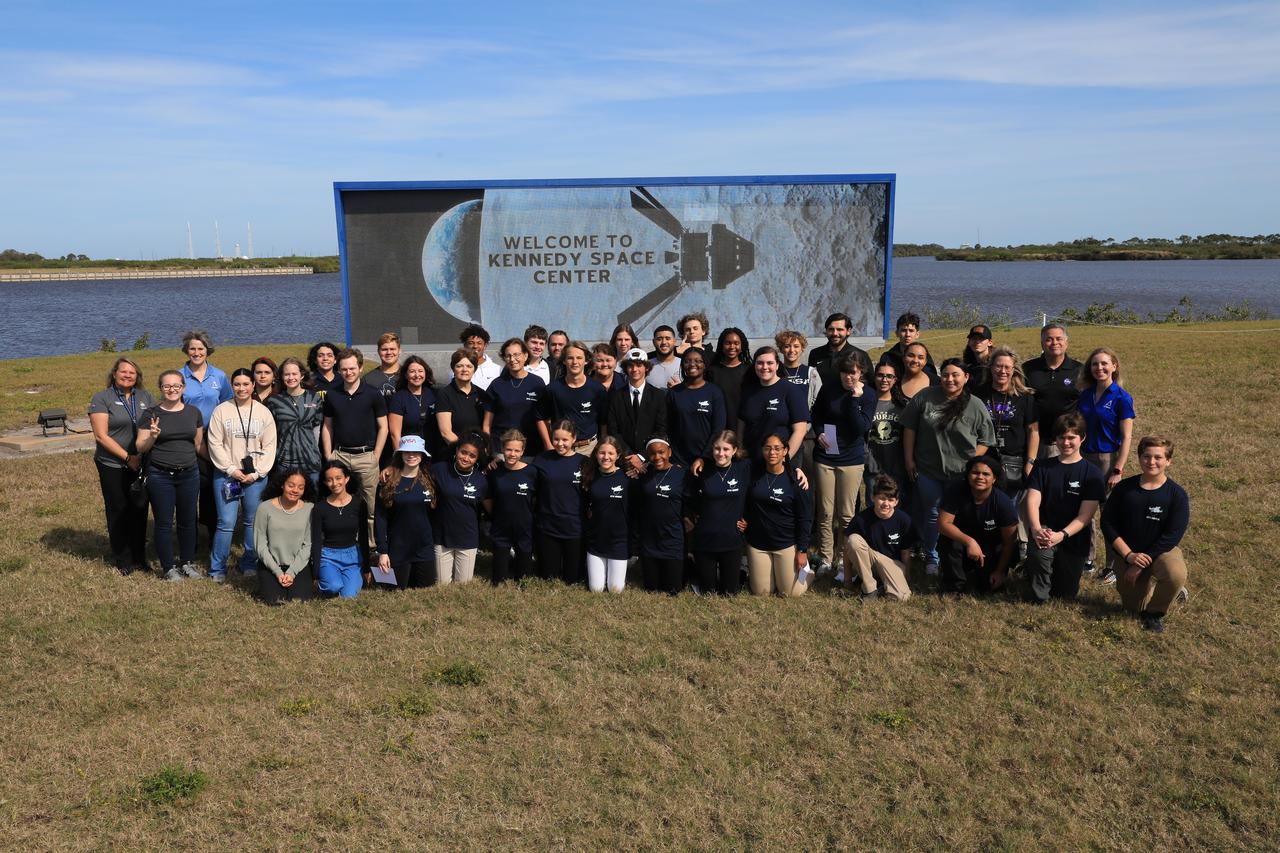
Students from Florida’s St. Cloud High School and Storm Grove Middle School in Vero Beach pose in front of the countdown clock at NASA’s Kennedy Space Center in Florida on Jan. 19, 2023. As part of NASA’s NextGen STEM project, students were invited to tour the facilities at the spaceport before participating in a televised briefing inside the John Holliman Auditorium of the News Center, featuring Kennedy Space Center Deputy Director Kelvin Manning; Artemis Launch Director Charlie Blackwell-Thompson; Manager of the Space Launch System Resident Management Office Elkin Norena; and Space Launch Delta 45 Weather Officer Melody Lovin. Along with the students participating in person, middle and high school students across the country had the opportunity to ask questions of the panel via phone to discuss the Artemis I mission and the agency’s future of human space exploration.
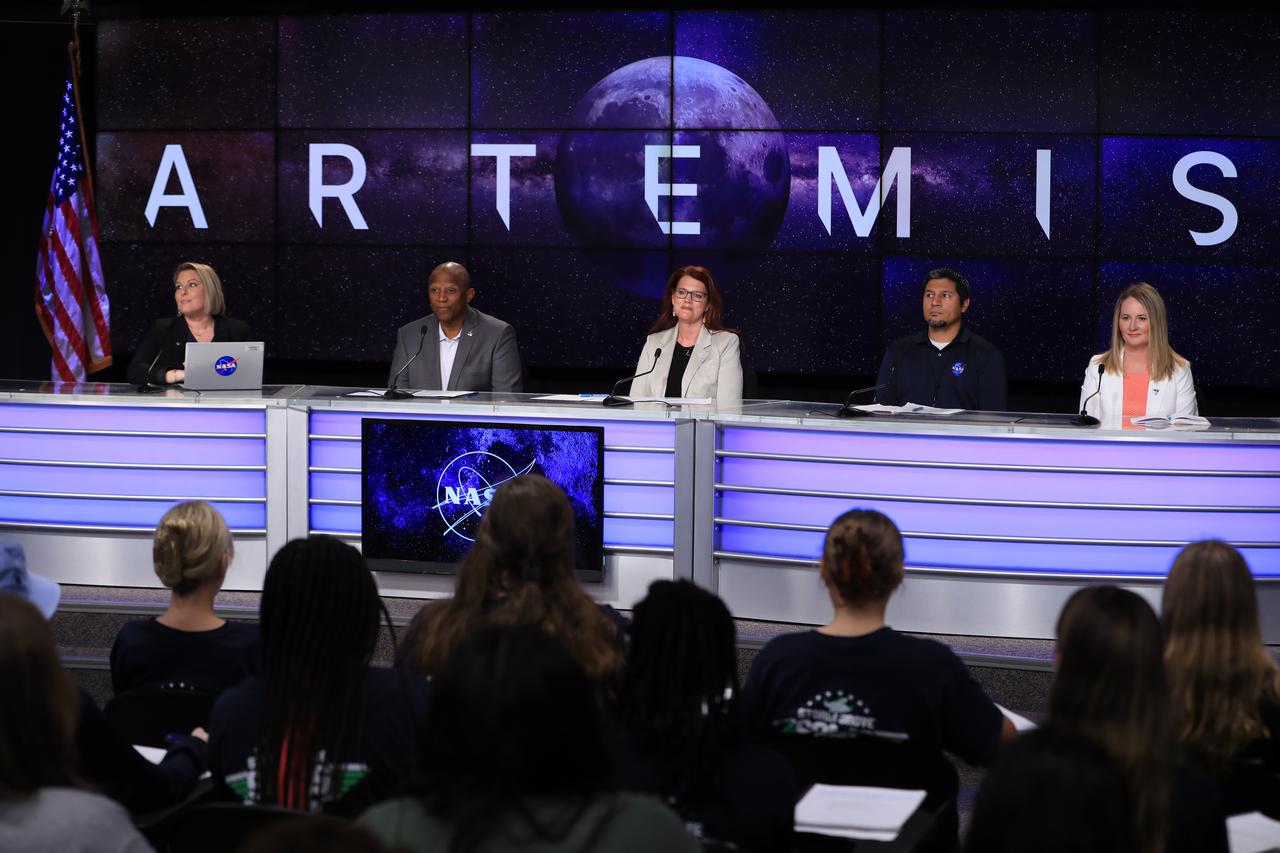
From left, NASA Communications’ Leah Martin, Kennedy Space Center Deputy Director Kelvin Manning, Artemis Launch Director Charlie Blackwell-Thompson, Space Launch System Resident Management Office Manager Elkin Norena, and Space Launch Delta 45 Weather Officer Melody Lovin participate in an Artemis I student media briefing inside the John Holliman Auditorium of the News Center on Jan. 19, 2023, at the Florida spaceport. As part of NASA’s NextGen STEM project, students from Florida’s St. Cloud High School and Storm Grove Middle School in Vero Beach, participated in person during the briefing, while middle and high school students across the country had the opportunity to ask questions of the panel via phone to discuss the Artemis I mission and the agency’s future of human space exploration.
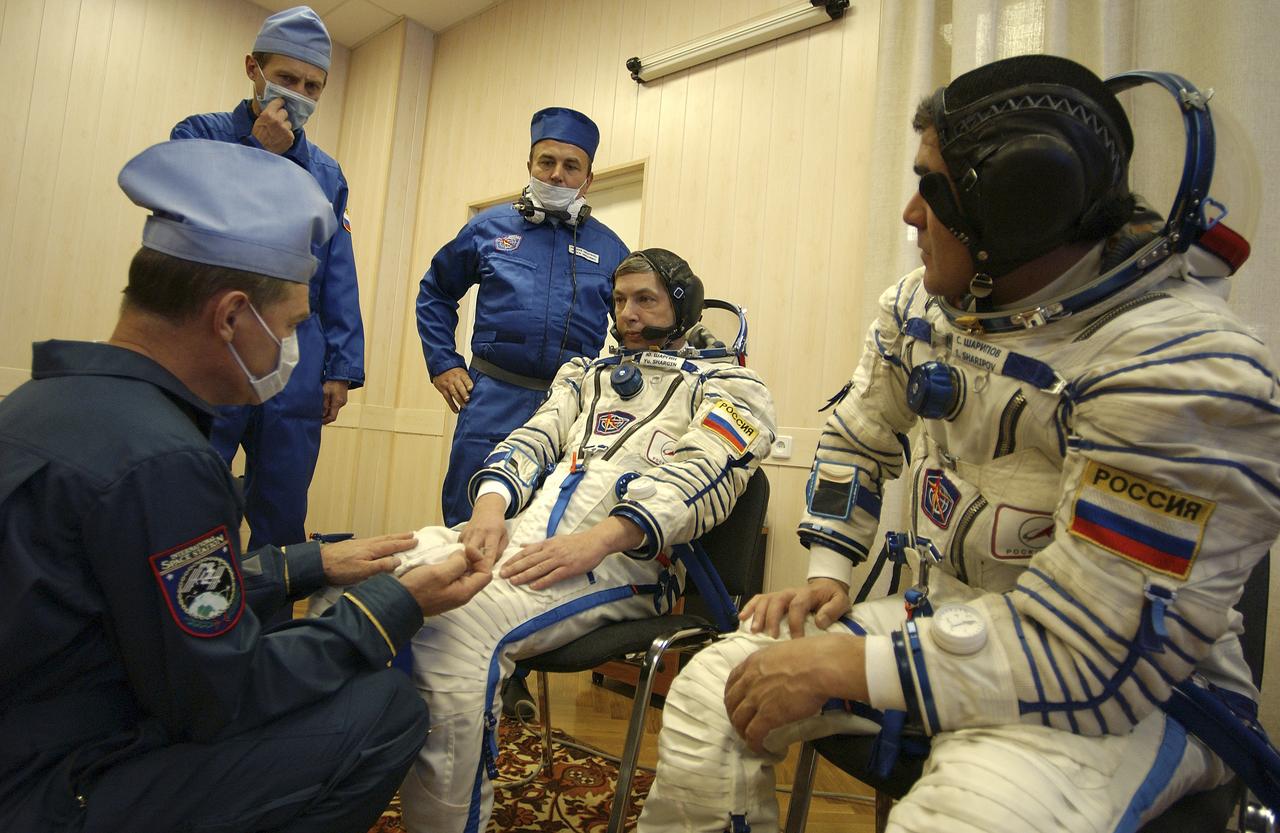
Russian Space Forces cosmonaut Yuri Shargin, center, and Expedition 10 Flight Engineer and Soyuz Commander Salizhan Sharipov donned their launch and entry suits and climbed aboard the Soyuz TMA-5 spacecraft Friday, October 5, 2004 at the Baikonur Cosmodrome in Kazakhstan for a dress rehearsal of launch day activities leading to their liftoff October 14 to the International Space Station. Chiao and Sharipov, the first crew of all-Asian extraction, will spend six months on the Station. Shargin will return to Earth October 24 with the Stations' current residents, Expedition 9 Commander Gennady Padalka and NASA Flight Engineer and Science Officer Mike Fincke. Photo Credit: (NASA/Bill Ingalls)
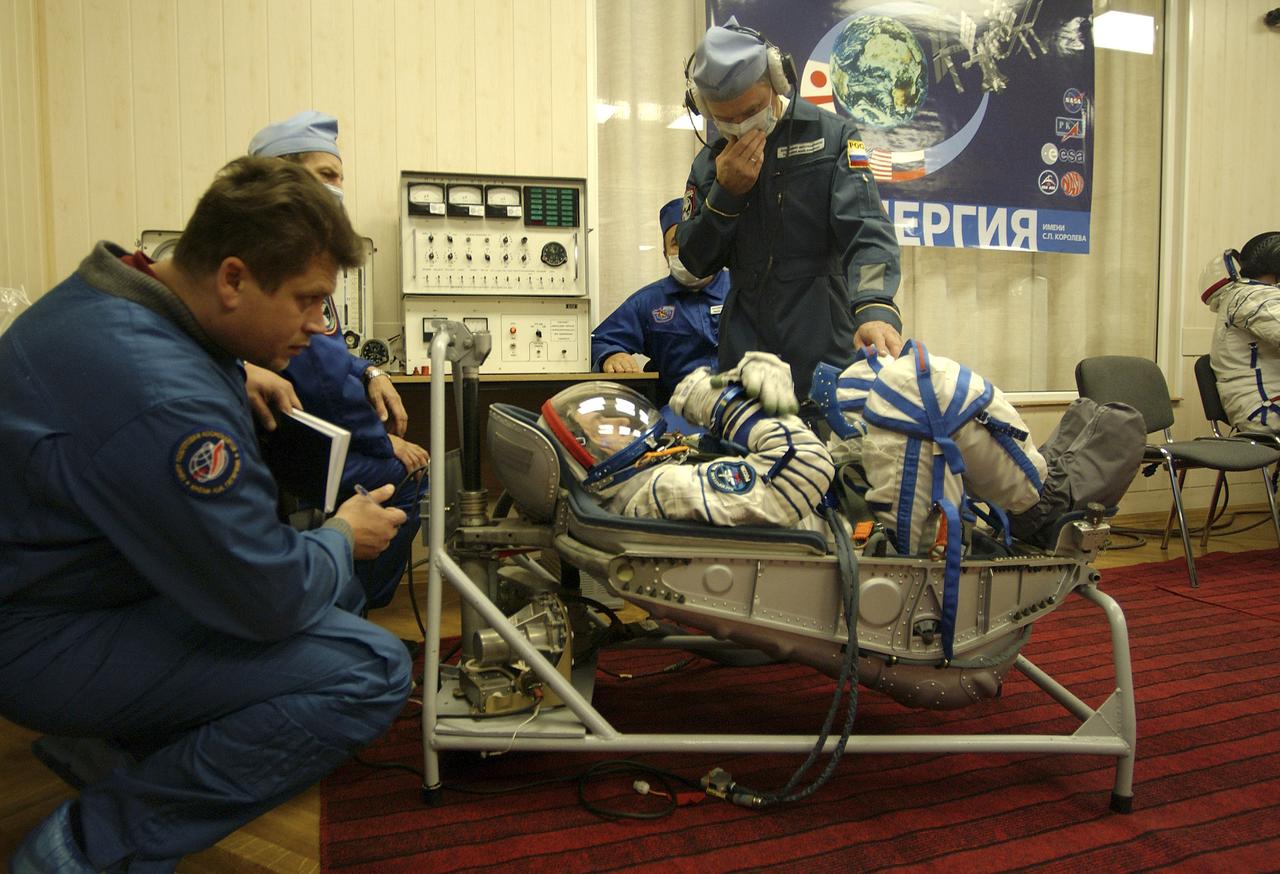
Russian Space Forces cosmonaut Yuri Shargin donned his launch and entry suit and climbed aboard the Soyuz TMA-5 spacecraft Friday, October 5, 2004, at the Baikonur Cosmodrome in Kazakhstan for a dress rehearsal of launch day activities leading to their liftoff October 14 to the International Space Station. Chiao and Sharipov, the first crew of all-Asian extraction, will spend six months on the Station. Shargin will return to Earth October 24 with the Stations' current residents, Expedition 9 Commander Gennady Padalka and NASA Flight Engineer and Science Officer Mike Fincke. Photo Credit: (NASA/Bill Ingalls)
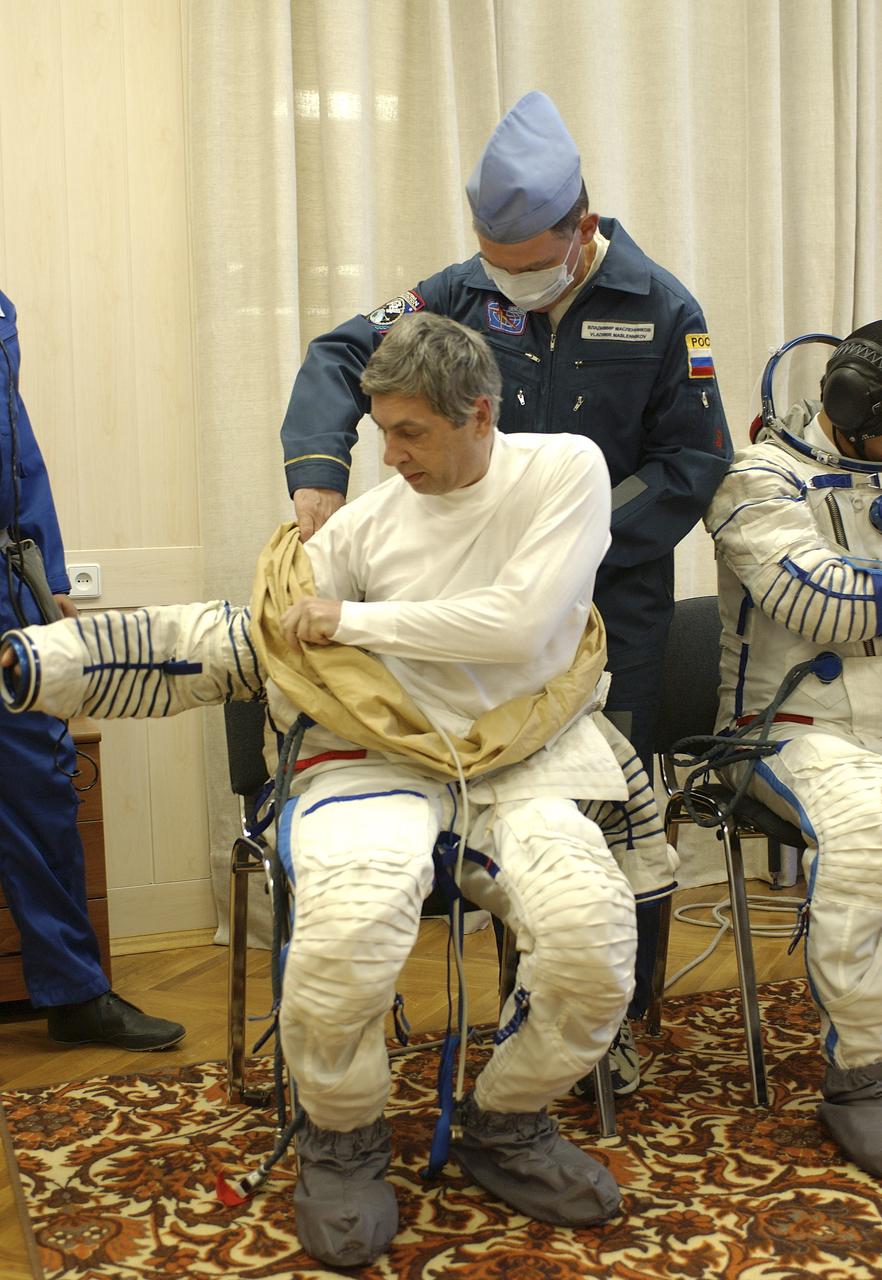
Russian Space Forces cosmonaut Yuri Shargin donned his launch and entry suit and climbed aboard the Soyuz TMA-5 spacecraft Friday, October 5, 2004, at the Baikonur Cosmodrome in Kazakhstan for a dress rehearsal of launch day activities leading to their liftoff October 14 to the International Space Station. Chiao and Sharipov, the first crew of all-Asian extraction, will spend six months on the Station. Shargin will return to Earth October 24 with the Stations' current residents, Expedition 9 Commander Gennady Padalka and NASA Flight Engineer and Science Officer Mike Fincke. Photo Credit: (NASA/Bill Ingalls)
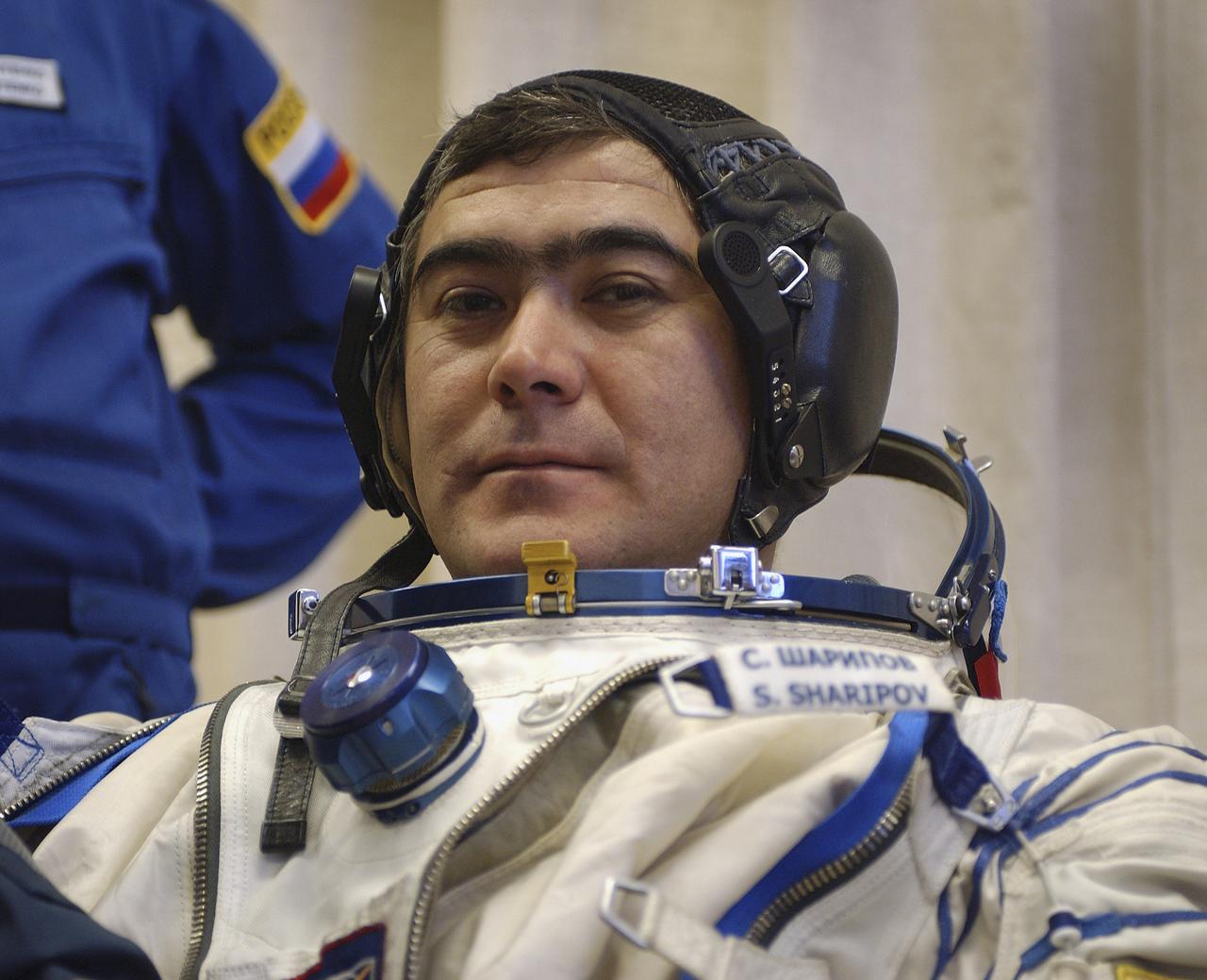
Expedition 10 Flight Engineer and Soyuz Commander Salizhan Sharipov donned his launch and entry suit and climbed aboard the Soyuz TMA-5 spacecraft Friday, October 5, 2004 at the Baikonur Cosmodrome in Kazakhstan for a dress rehearsal of launch day activities leading to their liftoff October 14 to the International Space Station. Chiao and Sharipov, the first crew of all-Asian extraction, will spend six months on the Station. Shargin will return to Earth October 24 with the Stations' current residents, Expedition 9 Commander Gennady Padalka and NASA Flight Engineer and Science Officer Mike Fincke. Photo Credit: (NASA/Bill Ingalls)
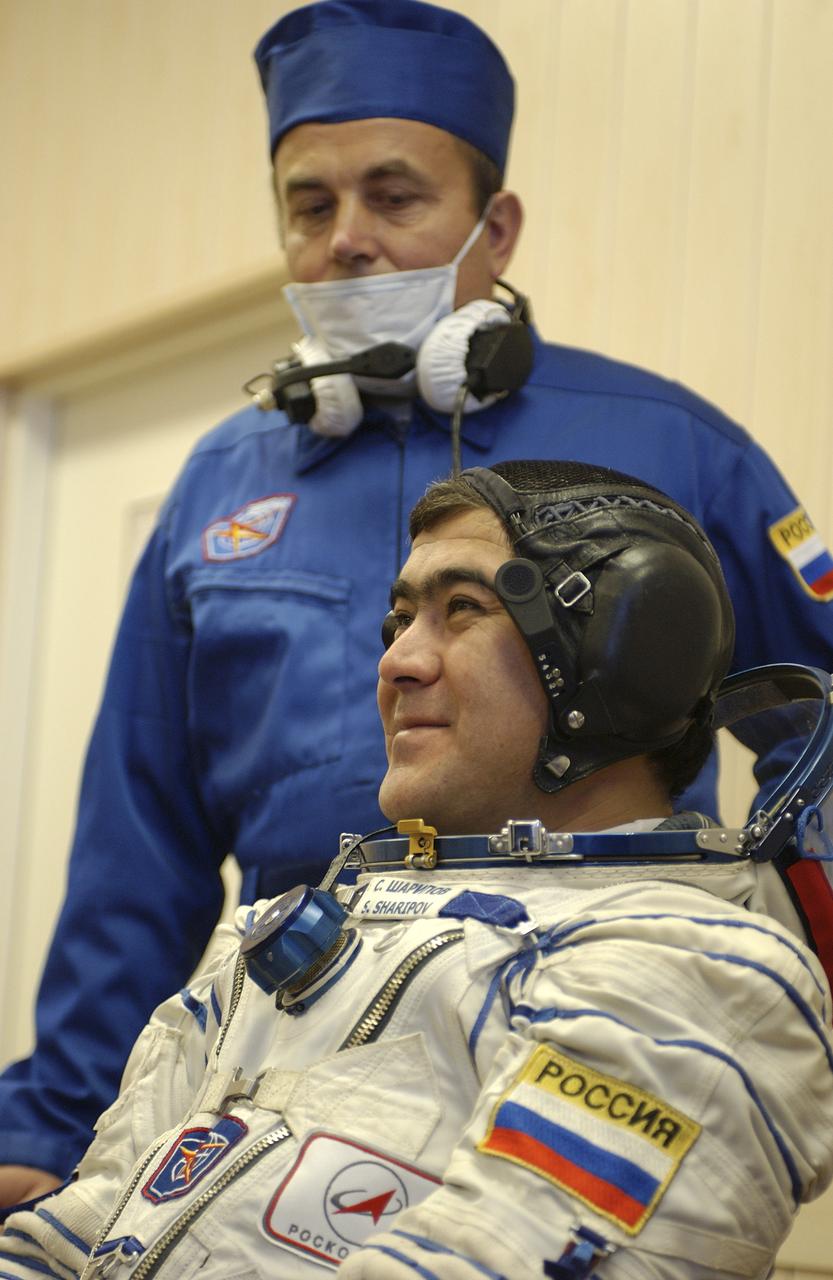
Expedition 10 Flight Engineer and Soyuz Commander Salizhan Sharipov donned his launch and entry suit and climbed aboard the Soyuz TMA-5 spacecraft Friday, October 5, 2004 at the Baikonur Cosmodrome in Kazakhstan for a dress rehearsal of launch day activities leading to their liftoff October 14 to the International Space Station. Chiao and Sharipov, the first crew of all-Asian extraction, will spend six months on the Station. Shargin will return to Earth October 24 with the Stations' current residents, Expedition 9 Commander Gennady Padalka and NASA Flight Engineer and Science Officer Mike Fincke. Photo Credit: (NASA/Bill Ingalls)
From left, NASA’s Artemis Launch Director Charlie Blackwell-Thompson and Space Launch System Resident Management Office Manager Elkin Norena participate in an Artemis I student media briefing inside the John Holliman Auditorium of the News Center at Kennedy Space Center in Florida on Jan. 19, 2023. As part of NASA’s NextGen STEM project, students from Florida’s St. Cloud High School and Storm Grove Middle School in Vero Beach participated in person during the briefing, while middle and high school students across the country had the opportunity to ask questions of the panel via phone to discuss the Artemis I mission and the agency’s future of human space exploration.
Expedition 10 Flight Engineer and Soyuz Commander Salizhan Sharipov donned his launch and entry suit and climbed aboard the Soyuz TMA-5 spacecraft Friday, October 5, 2004 at the Baikonur Cosmodrome in Kazakhstan for a dress rehearsal of launch day activities leading to their liftoff October 14 to the International Space Station. Chiao and Sharipov, the first crew of all-Asian extraction, will spend six months on the Station. Shargin will return to Earth October 24 with the Stations' current residents, Expedition 9 Commander Gennady Padalka and NASA Flight Engineer and Science Officer Mike Fincke. Photo Credit: (NASA/Bill Ingalls)
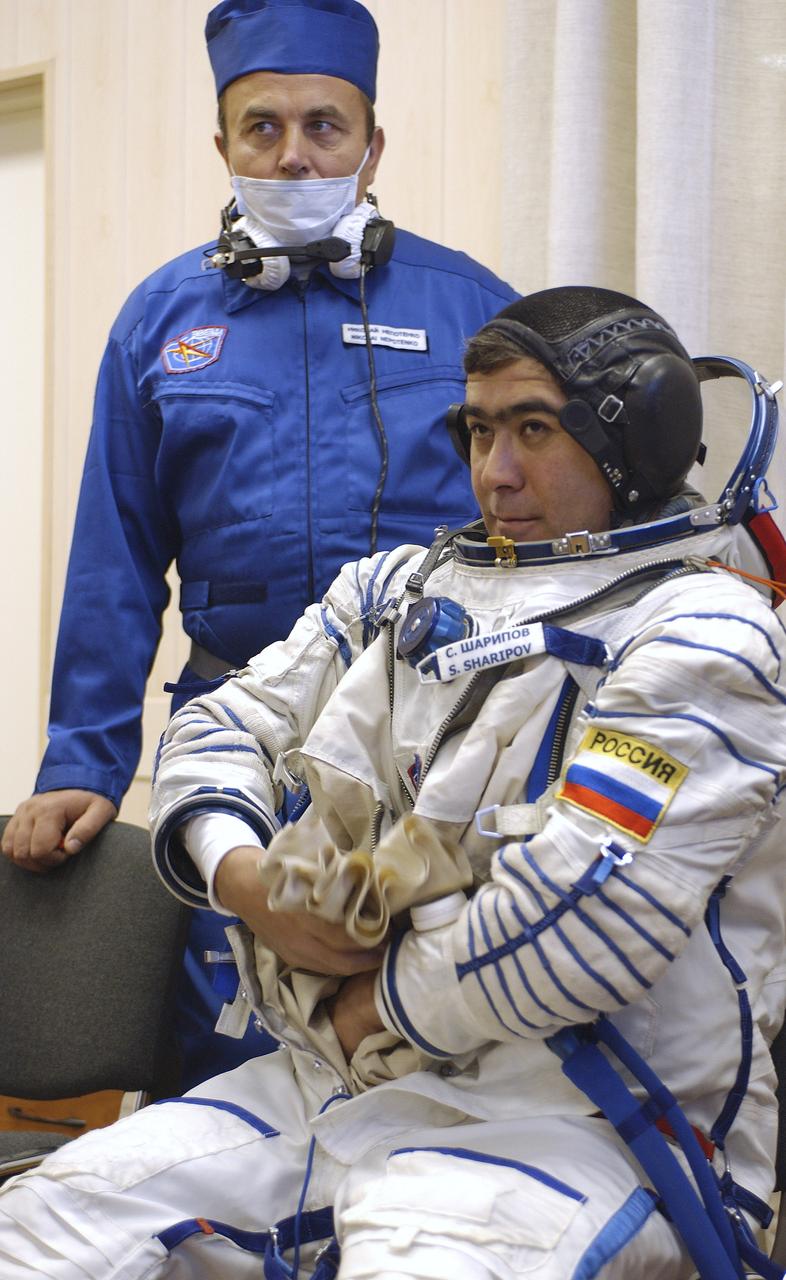
Expedition 10 Flight Engineer and Soyuz Commander Salizhan Sharipov donned his launch and entry suit and climbed aboard the Soyuz TMA-5 spacecraft Friday, October 5, 2004 at the Baikonur Cosmodrome in Kazakhstan for a dress rehearsal of launch day activities leading to their liftoff October 14 to the International Space Station. Chiao and Sharipov, the first crew of all-Asian extraction, will spend six months on the Station. Shargin will return to Earth October 24 with the Stations' current residents, Expedition 9 Commander Gennady Padalka and NASA Flight Engineer and Science Officer Mike Fincke. Photo Credit: (NASA/Bill Ingalls)
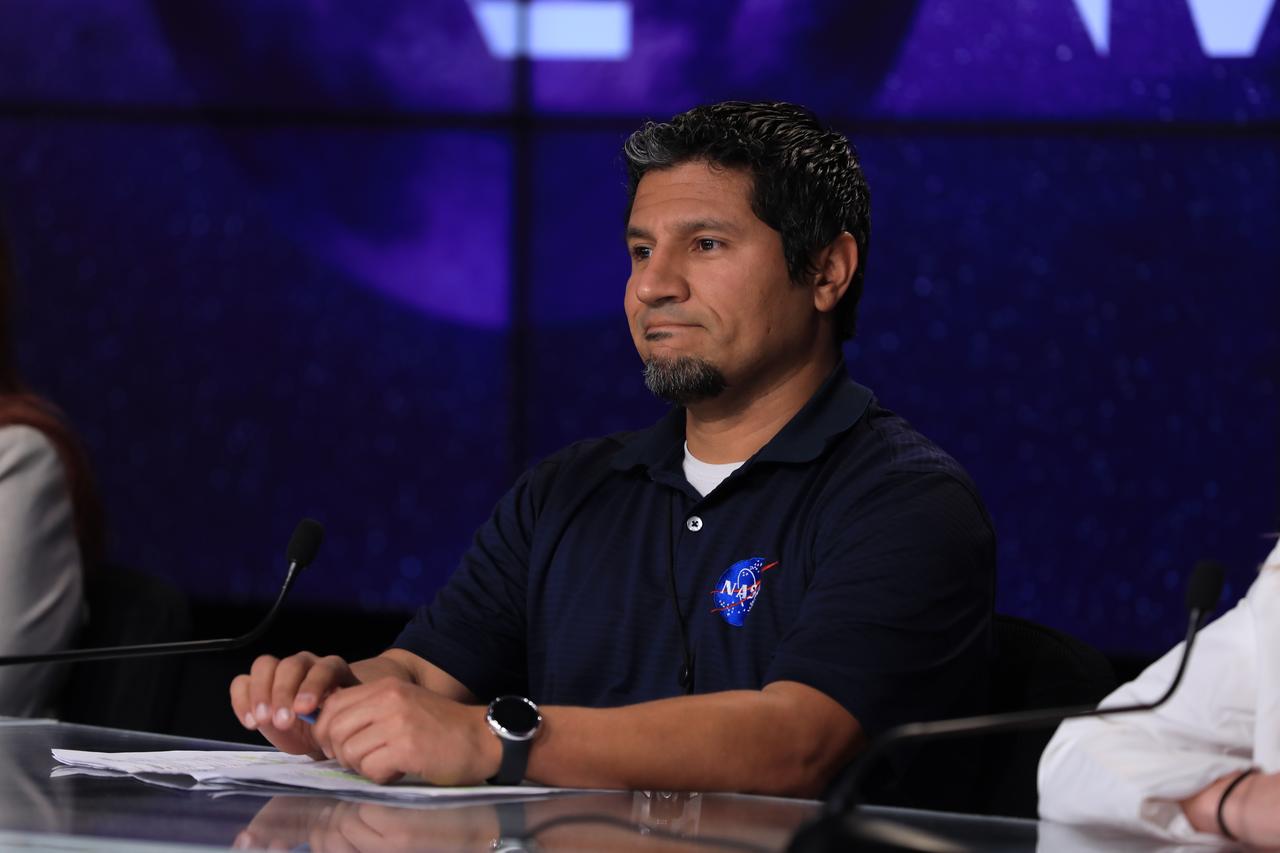
NASA’s Space Launch System Resident Management Office Manager Elkin Norena participates in an Artemis I student media briefing inside the John Holliman Auditorium of the News Center at Kennedy Space Center in Florida on Jan. 19, 2023. As part of NASA’s NextGen STEM project, students from Florida’s St. Cloud High School and Storm Grove Middle School in Vero Beach participated in person during the briefing, while middle and high school students across the country had the opportunity to ask questions of the panel via phone to discuss the Artemis I mission and the agency’s future of human space exploration.
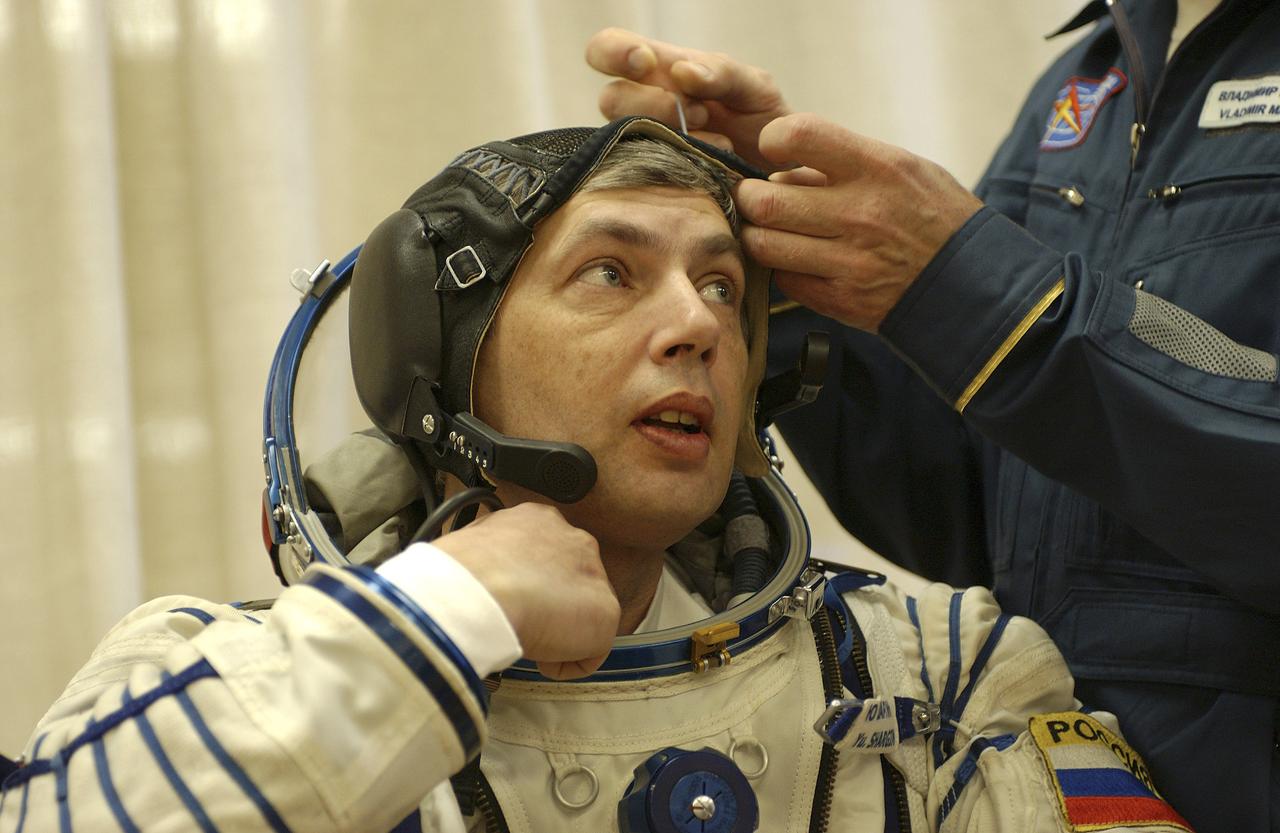
Russian Space Forces cosmonaut Yuri Shargin donned his launch and entry suit and climbed aboard the Soyuz TMA-5 spacecraft Friday, October 5, 2004, at the Baikonur Cosmodrome in Kazakhstan for a dress rehearsal of launch day activities leading to their liftoff October 14 to the International Space Station. Chiao and Sharipov, the first crew of all-Asian extraction, will spend six months on the Station. Shargin will return to Earth October 24 with the Stations' current residents, Expedition 9 Commander Gennady Padalka and NASA Flight Engineer and Science Officer Mike Fincke. Photo Credit: (NASA/Bill Ingalls)
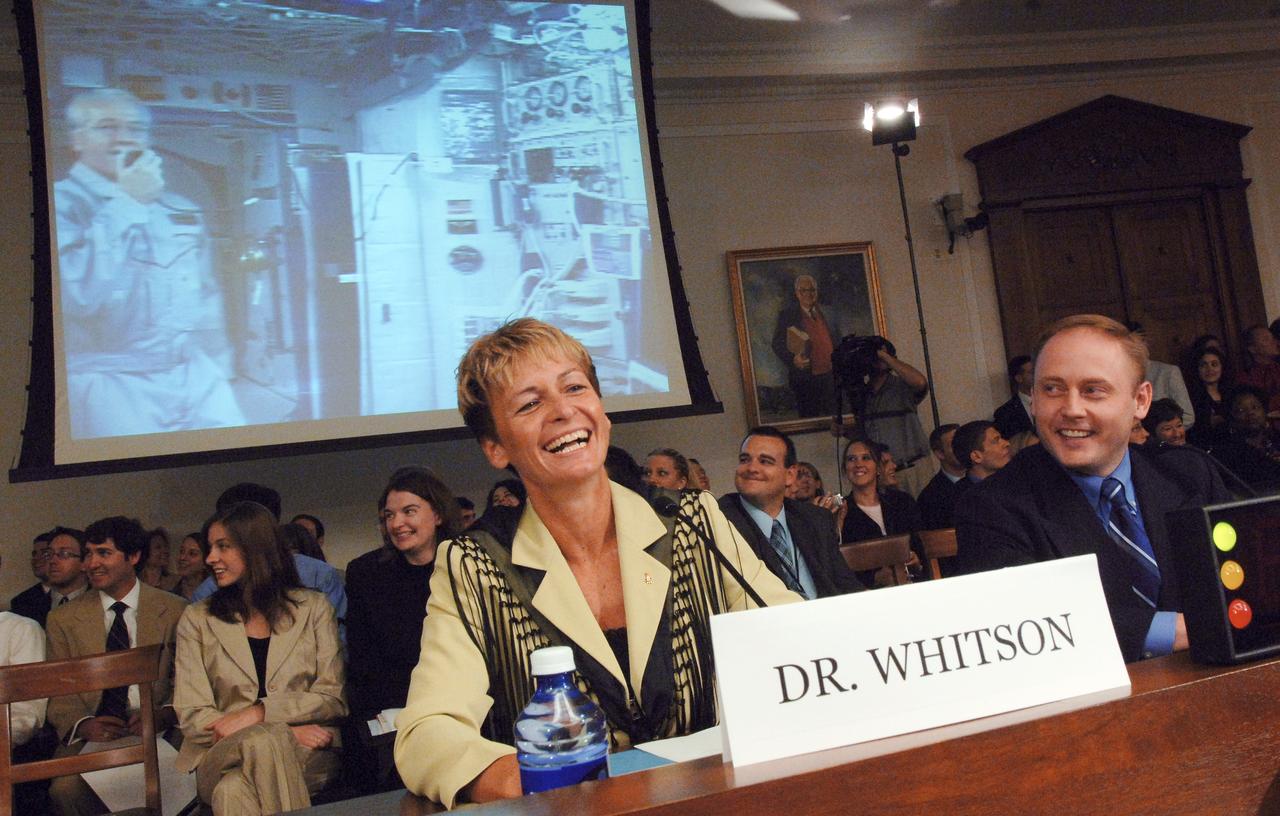
JSC2005-E-22363 (14 June 2005) --- Astronauts Peggy A. Whitson (left) and Edward M. (Mike) Fincke, former Station residents, share a laugh during the House Subcommittee on Space and Aeronautics hearing chaired by Rep. Ken Calvert (R-Calif.), as current Station astronaut John L. Phillips, Expedition 11 NASA ISS science officer and flight engineer, testifies via video screen in the background. Phillips was approximately 220 statute miles above Earth, but his radio transmissions were routed to a Tracking and Data Relay Satellite (TDRS) in geostationary orbit at an altitude of about 22,300 miles. Photo credit: NASA/Bill Ingalls.
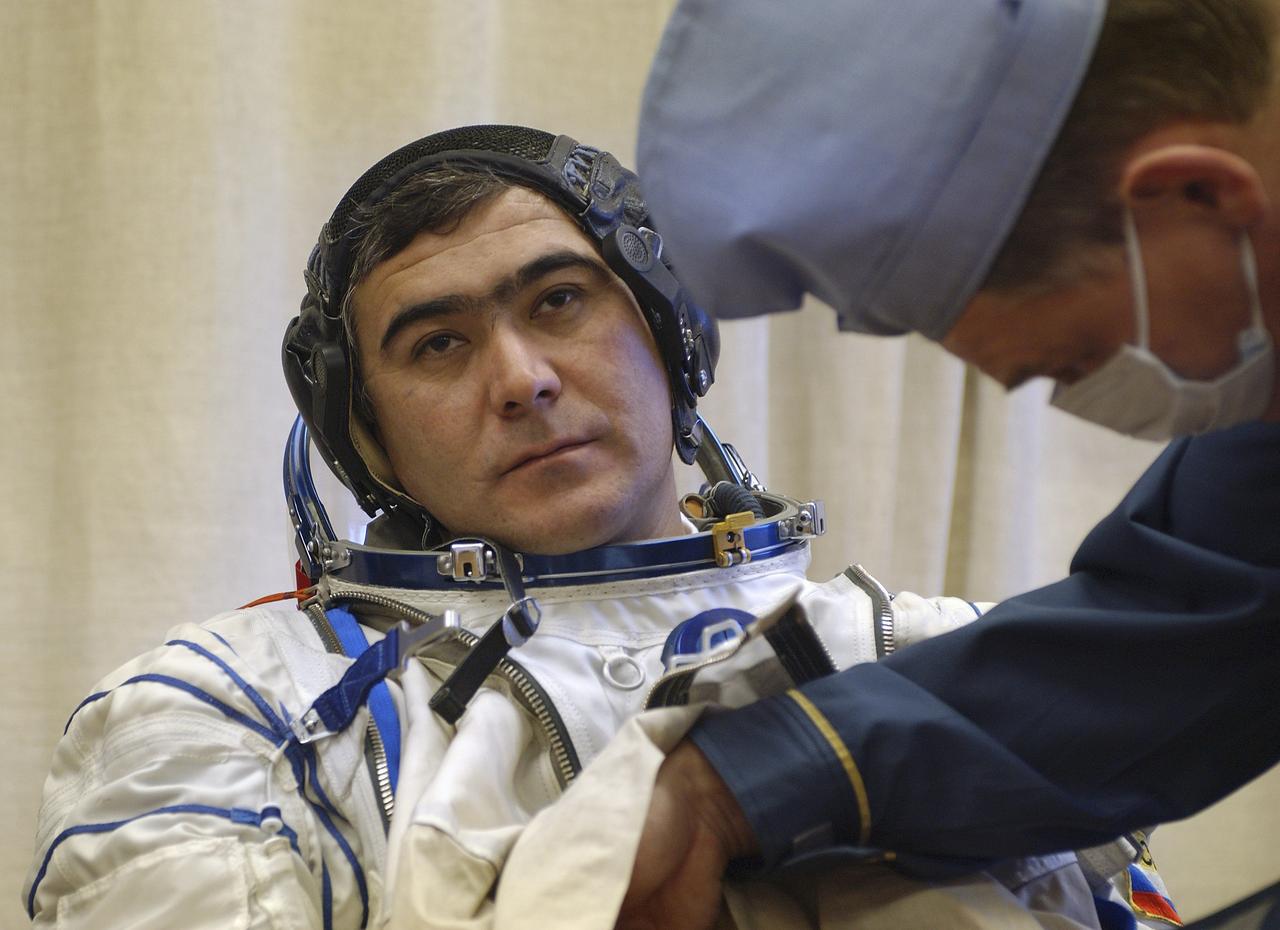
Expedition 10 Flight Engineer and Soyuz Commander Salizhan Sharipov donned his launch and entry suit and climbed aboard the Soyuz TMA-5 spacecraft Friday, October 5, 2004 at the Baikonur Cosmodrome in Kazakhstan for a dress rehearsal of launch day activities leading to their liftoff October 14 to the International Space Station. Chiao and Sharipov, the first crew of all-Asian extraction, will spend six months on the Station. Shargin will return to Earth October 24 with the Stations' current residents, Expedition 9 Commander Gennady Padalka and NASA Flight Engineer and Science Officer Mike Fincke. Photo Credit: (NASA/Bill Ingalls)
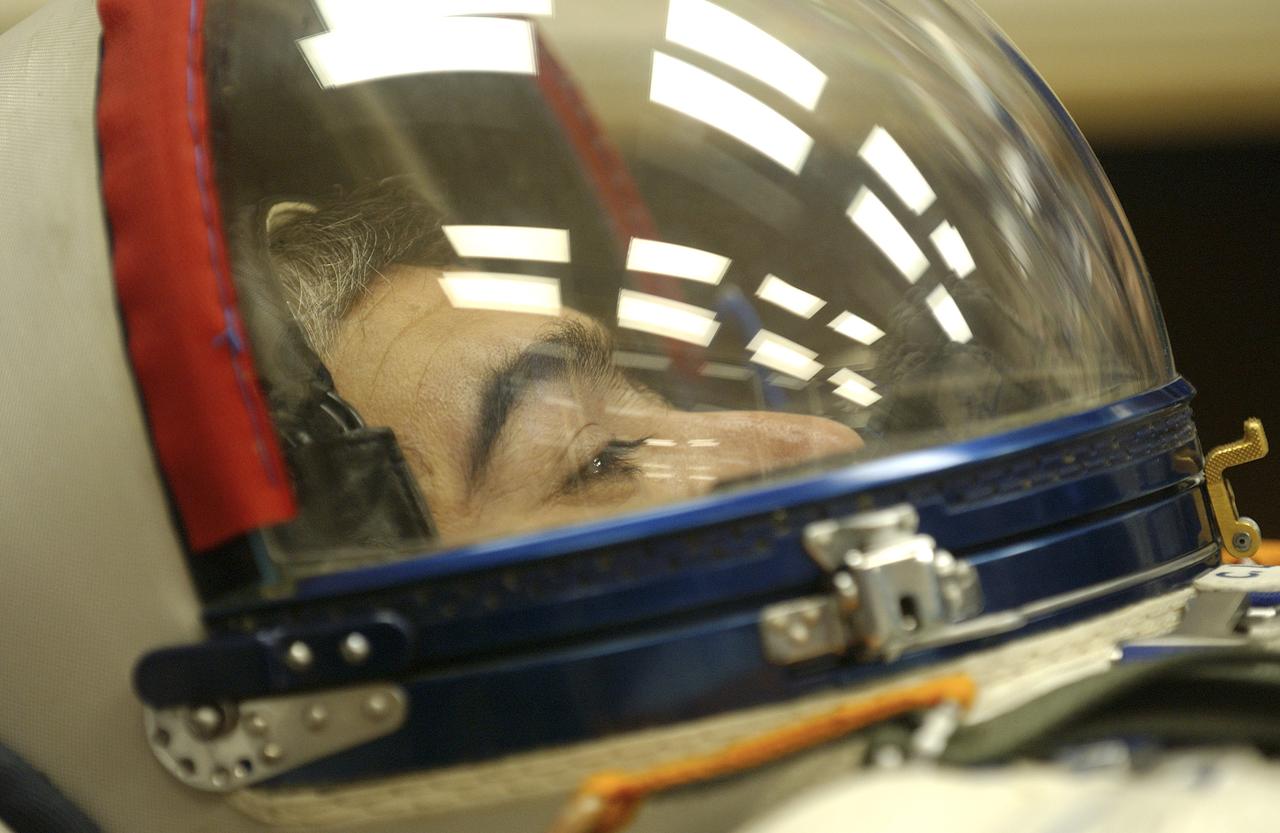
Expedition 10 Flight Engineer and Soyuz Commander Salizhan Sharipov donned his launch and entry suit and climbed aboard the Soyuz TMA-5 spacecraft Friday, October 5, 2004 at the Baikonur Cosmodrome in Kazakhstan for a dress rehearsal of launch day activities leading to their liftoff October 14 to the International Space Station. Chiao and Sharipov, the first crew of all-Asian extraction, will spend six months on the Station. Shargin will return to Earth October 24 with the Stations' current residents, Expedition 9 Commander Gennady Padalka and NASA Flight Engineer and Science Officer Mike Fincke. Photo Credit: (NASA/Bill Ingalls)
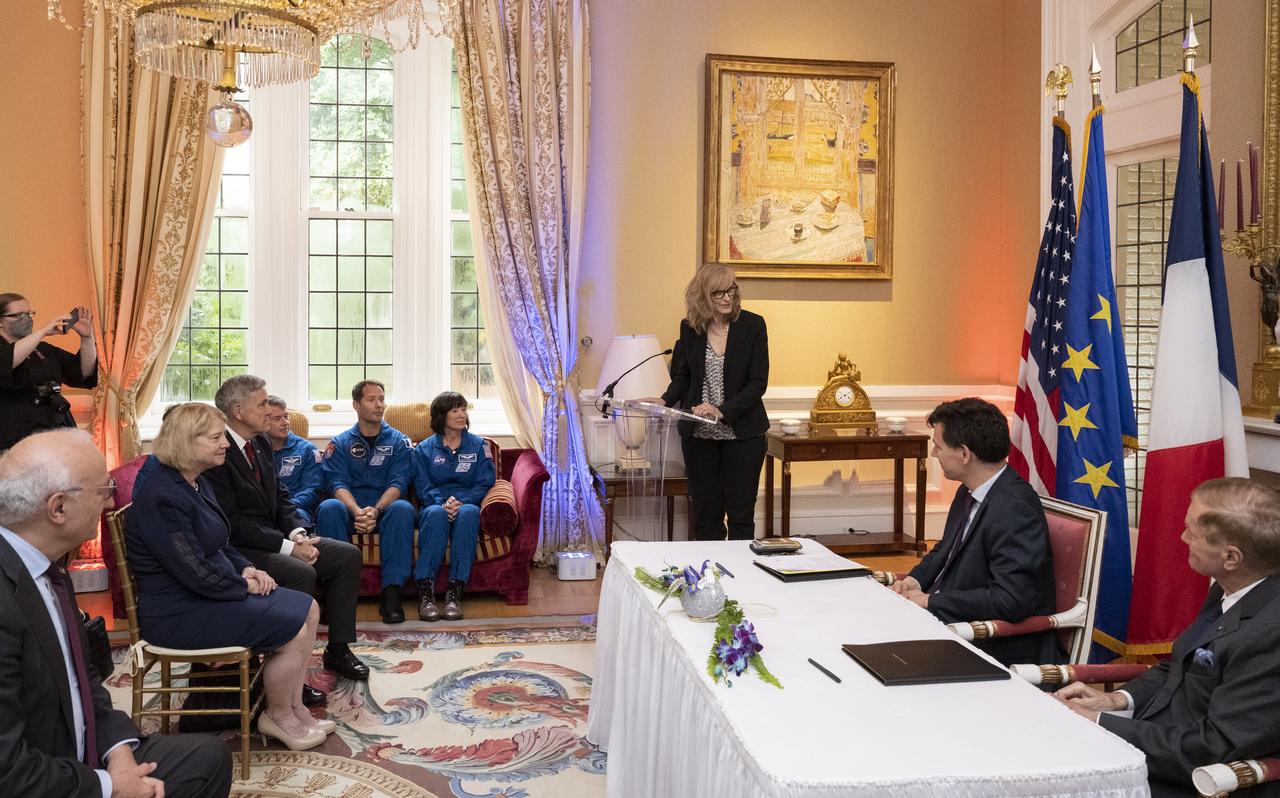
U.S. State Department Director of the Office of Space Affairs for the Bureau of Oceans and International Environmental and Scientific Affairs, Valda Vikmanis-Keller, delivers remarks during an Artemis Accords signing ceremony Tuesday, June 7, 2022, prior to the Centre National d’Etudes Spatiales (CNES) 60th Anniversary event at the French Ambassador’s Residence in Washington. France is the twentieth country to sign the Artemis Accords, which establish a practical set of principles to guide space exploration cooperation among nations participating in NASA’s Artemis program. Photo Credit: (NASA/Keegan Barber)
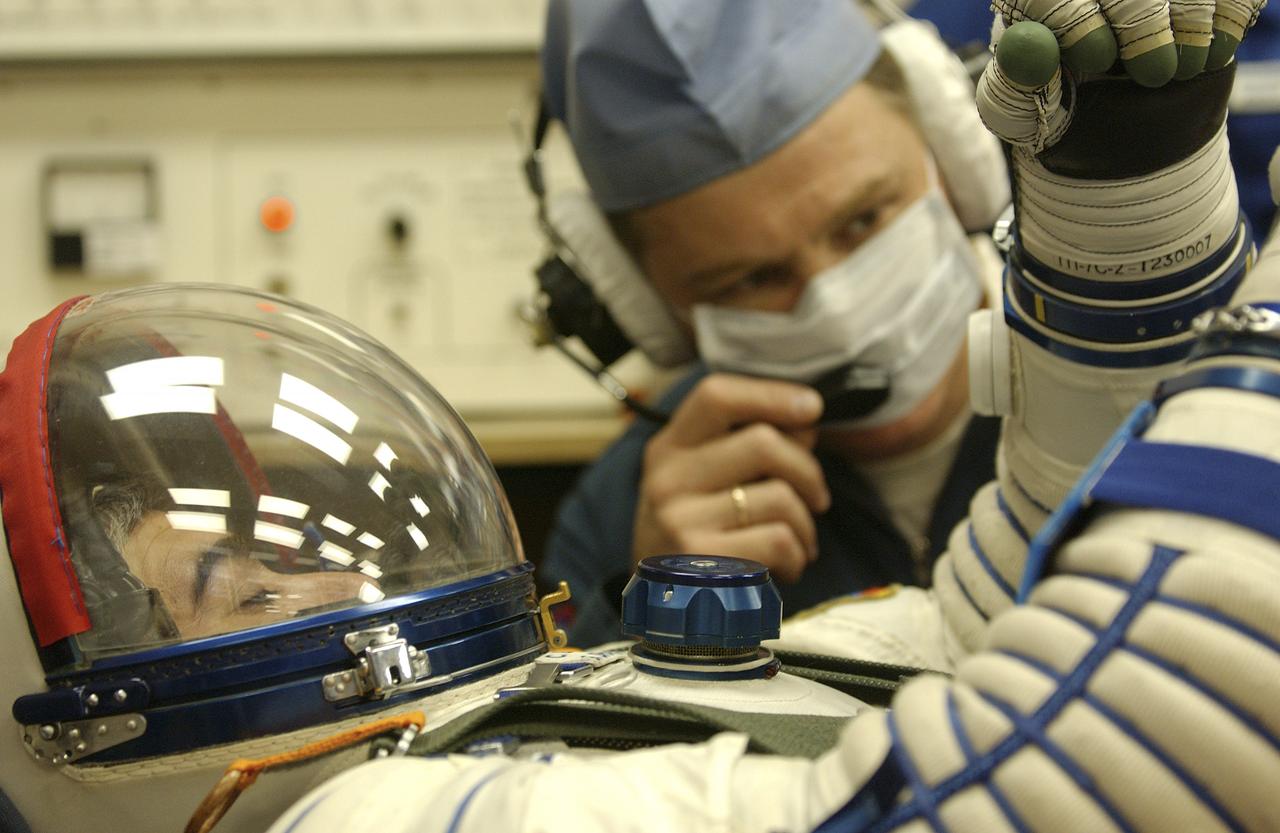
Expedition 10 Flight Engineer and Soyuz Commander Salizhan Sharipov donned his launch and entry suit and climbed aboard the Soyuz TMA-5 spacecraft Friday, October 5, 2004 at the Baikonur Cosmodrome in Kazakhstan for a dress rehearsal of launch day activities leading to their liftoff October 14 to the International Space Station. Chiao and Sharipov, the first crew of all-Asian extraction, will spend six months on the Station. Shargin will return to Earth October 24 with the Stations' current residents, Expedition 9 Commander Gennady Padalka and NASA Flight Engineer and Science Officer Mike Fincke. Photo Credit: (NASA/Bill Ingalls)
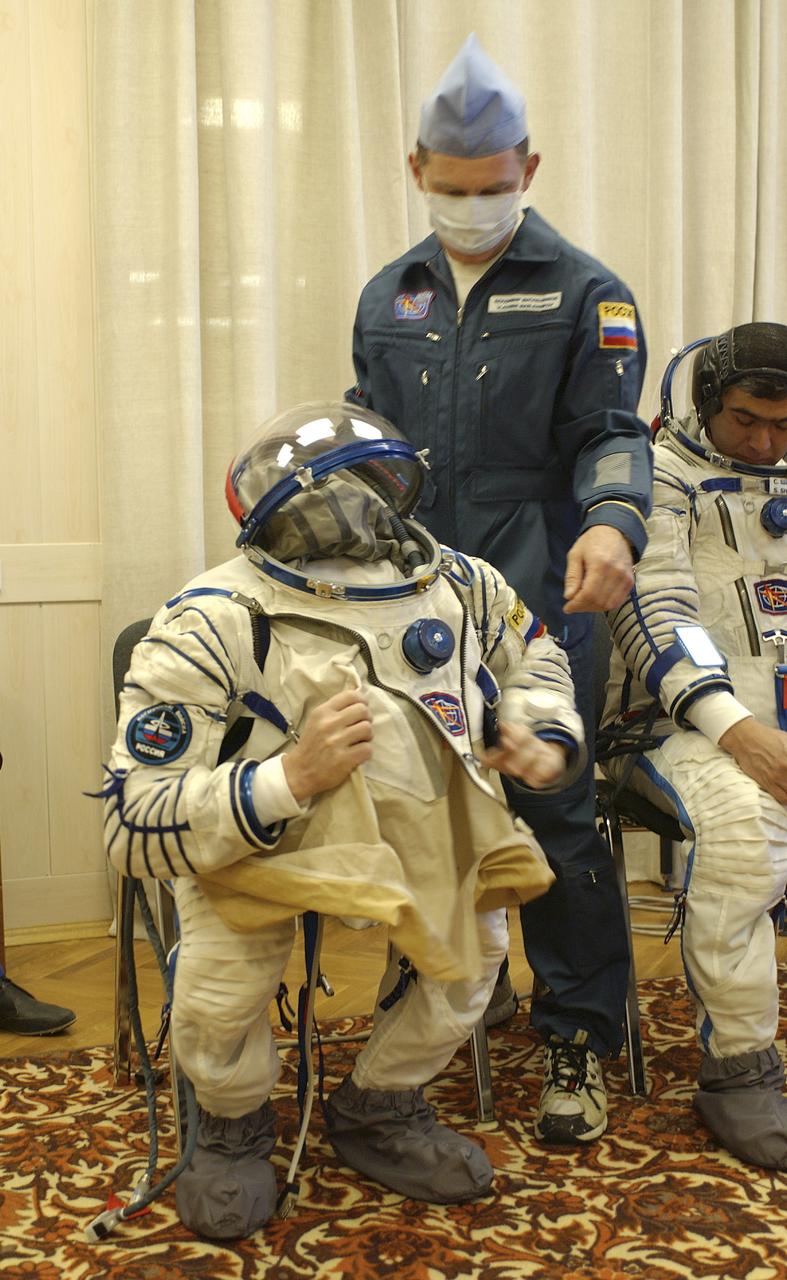
Russian Space Forces cosmonaut Yuri Shargin donned his launch and entry suit and climbed aboard the Soyuz TMA-5 spacecraft Friday, October 5, 2004, at the Baikonur Cosmodrome in Kazakhstan for a dress rehearsal of launch day activities leading to their liftoff October 14 to the International Space Station. Chiao and Sharipov, the first crew of all-Asian extraction, will spend six months on the Station. Shargin will return to Earth October 24 with the Stations' current residents, Expedition 9 Commander Gennady Padalka and NASA Flight Engineer and Science Officer Mike Fincke. Photo Credit: (NASA/Bill Ingalls)
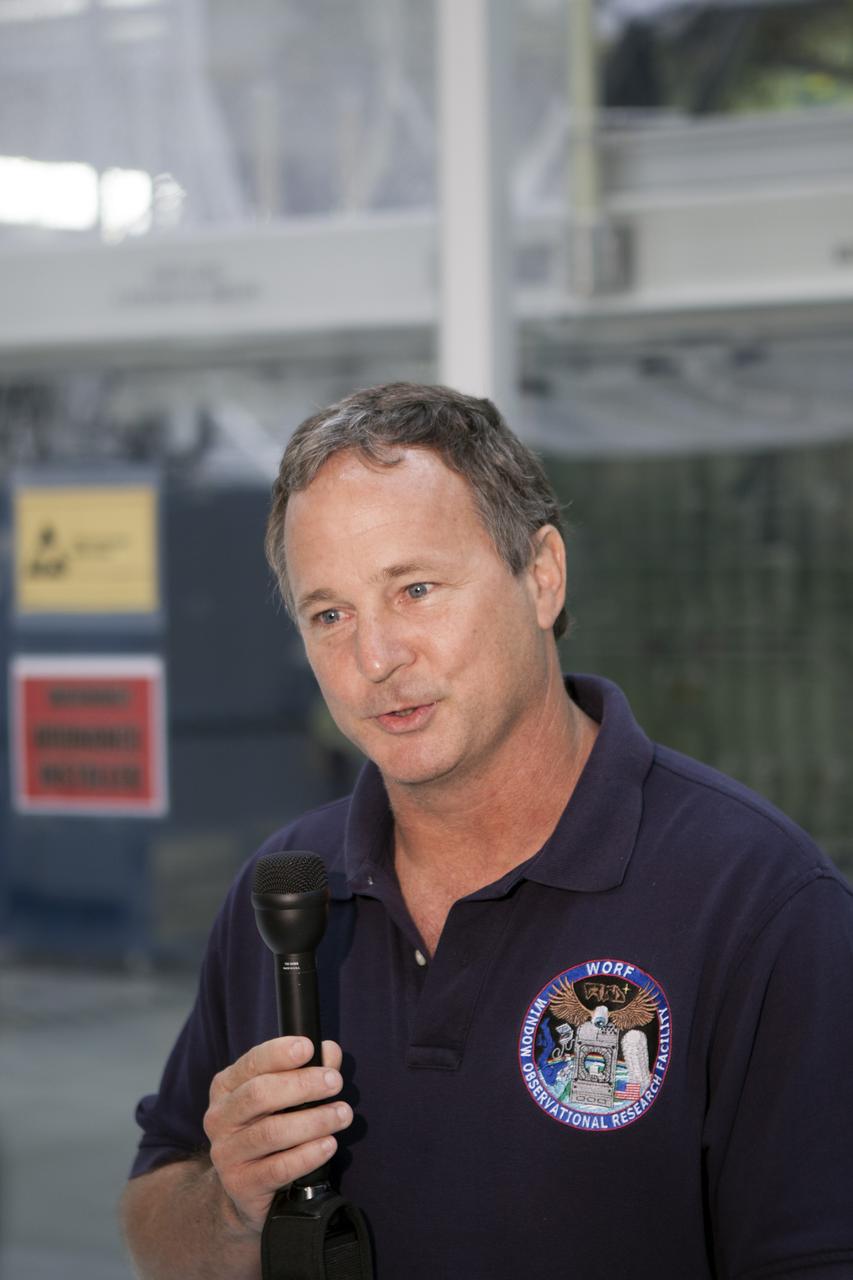
CAPE CANAVERAL, Fla. – Inside the Operations and Checkout Building high bay at NASA’s Kennedy Space Center in Florida, members of the media receive an on activities in NASA’s Ground Systems Development and Operations, or GSDO, Program, Space Launch System and Orion crew module for Exploration Test Flight 1. Speaking to the media is Tom Erdman, from Marshall Space Flight Center’s Kennedy resident office. Orion is the exploration spacecraft designed to carry crews to space beyond low Earth orbit. It will provide emergency abort capability, sustain the crew during the space travel and provide safe re-entry from deep space return velocities. Orion’s first unpiloted test flight is scheduled to launch in 2014 atop a Delta IV rocket. A second uncrewed flight test is scheduled for 2017 on NASA’s Space Launch System rocket. For more information, visit http://www.nasa.gov/orion. Photo credit: NASA/Jim Grossmann
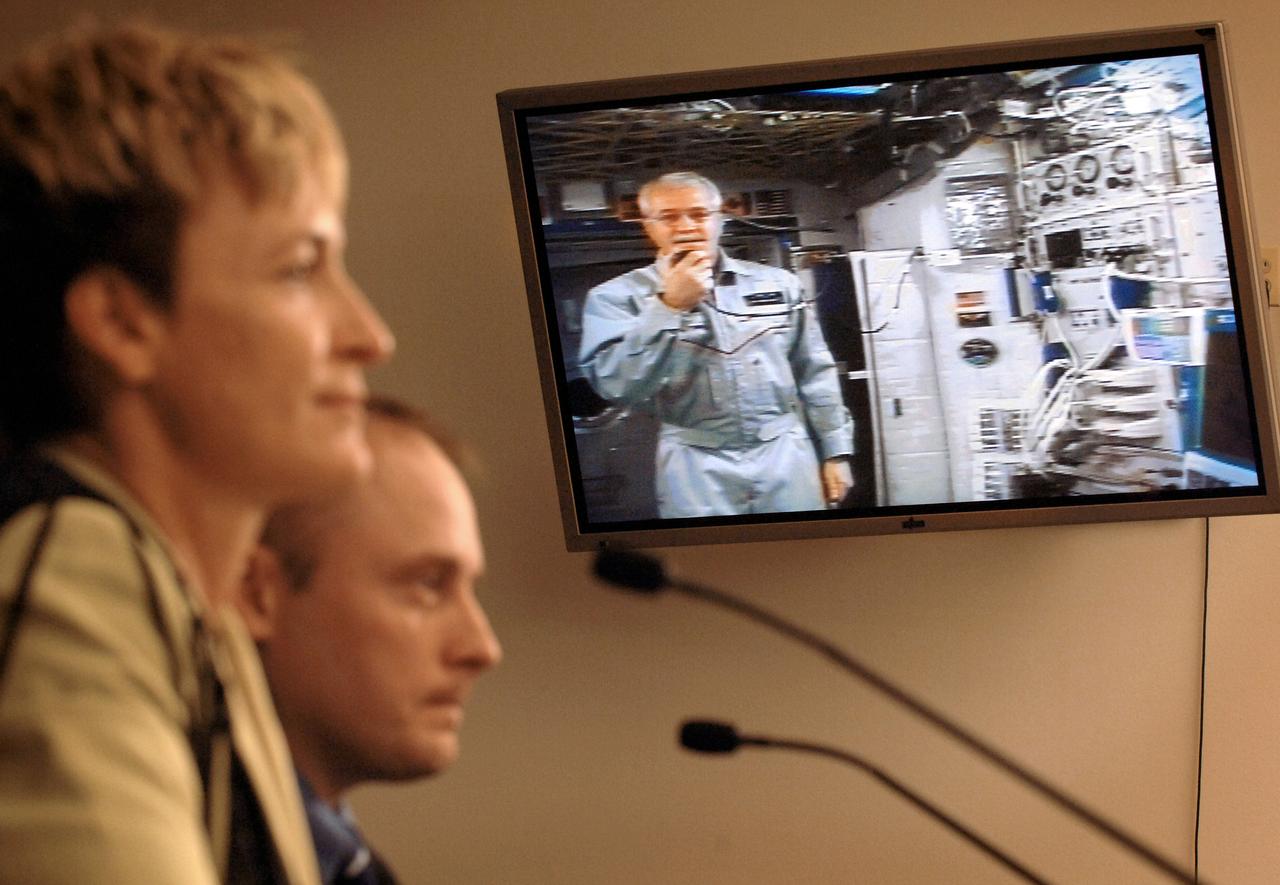
JSC2005-E-22365 (14 June 2005) --- Astronaut John L. Phillips, Expedition 11 NASA space station science officer and flight engineer, testifies via video screen before the House Subcommittee on Space and Aeronautics chaired by Rep. Ken Calvert (R-Calif.), as he orbited Earth onboard the international space station at a speed of five miles a second. Phillips was approximately 220 statute miles above Earth, but his radio transmissions were routed to a Tracking and Data Relay Satellite (TDRS) in geostationary orbit at an altitude of about 22,300 miles. Astronauts Peggy A. Whitson and Edward M. (Mike) Fincke, former station residents, are visible at left. Photo credit: NASA/Bill Ingalls.
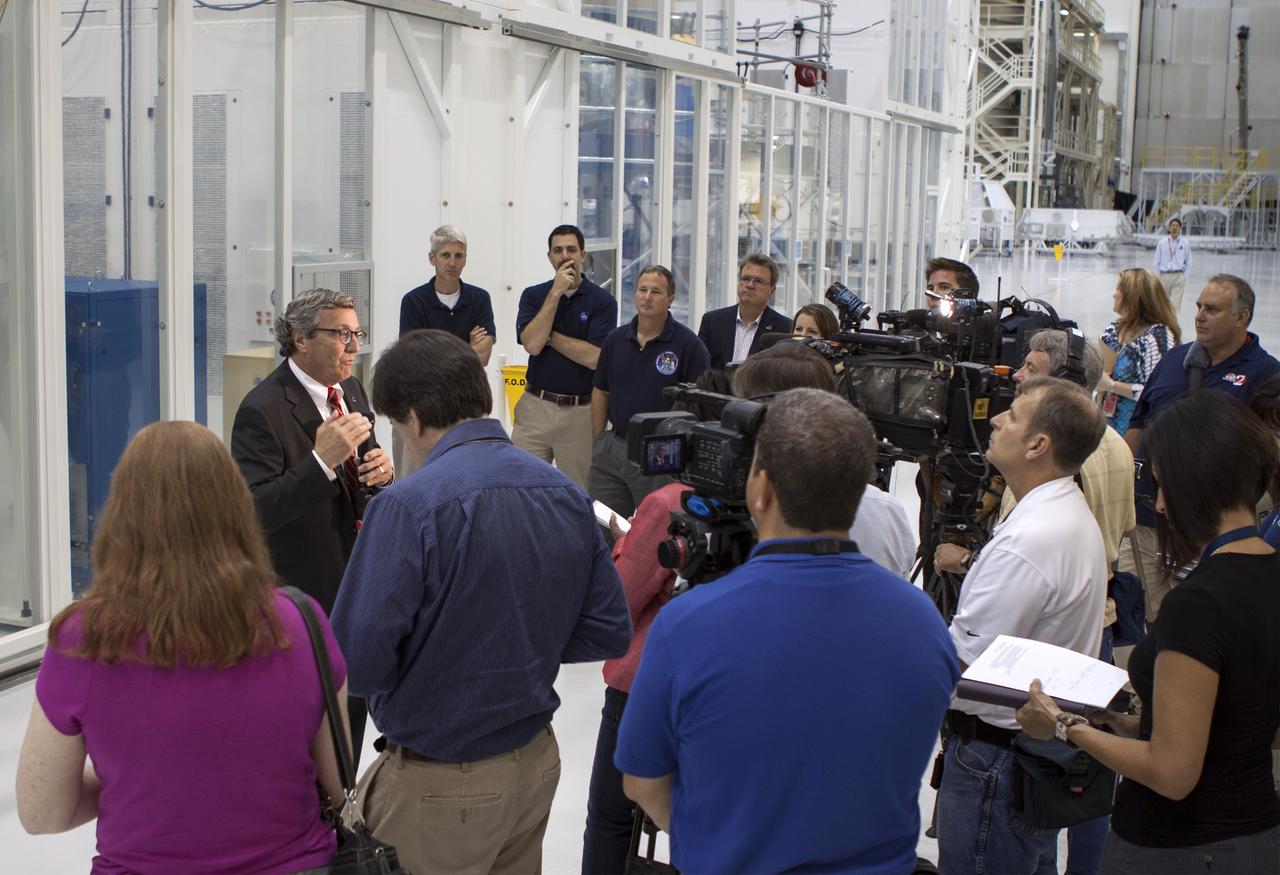
CAPE CANAVERAL, Fla. – Inside the Operations and Checkout Building high bay at NASA’s Kennedy Space Center in Florida, members of the media receive an on activities in NASA’s Ground Systems Development and Operations, or GSDO, Program, Space Launch System and Orion crew module for Exploration Test Flight 1. Speaking to the media is Larry Price, Lockheed Martin deputy program manager for Orion. In the background, from left are Scott Wilson, manager of Orion Production Operations at Kennedy Jeremy Parsons, chief of the GSDO Operations Integration Office at Kennedy Tom Erdman, from Marshall Space Flight Center’s Kennedy resident office and Jules Schneider, Lockheed Martin manager of Orion Production Operations. Orion is the exploration spacecraft designed to carry crews to space beyond low Earth orbit. It will provide emergency abort capability, sustain the crew during the space travel and provide safe re-entry from deep space return velocities. Orion’s first unpiloted test flight is scheduled to launch in 2014 atop a Delta IV rocket. A second uncrewed flight test is scheduled for 2017 on NASA’s Space Launch System rocket. For more information, visit http://www.nasa.gov/orion. Photo credit: NASA/Jim Grossmann
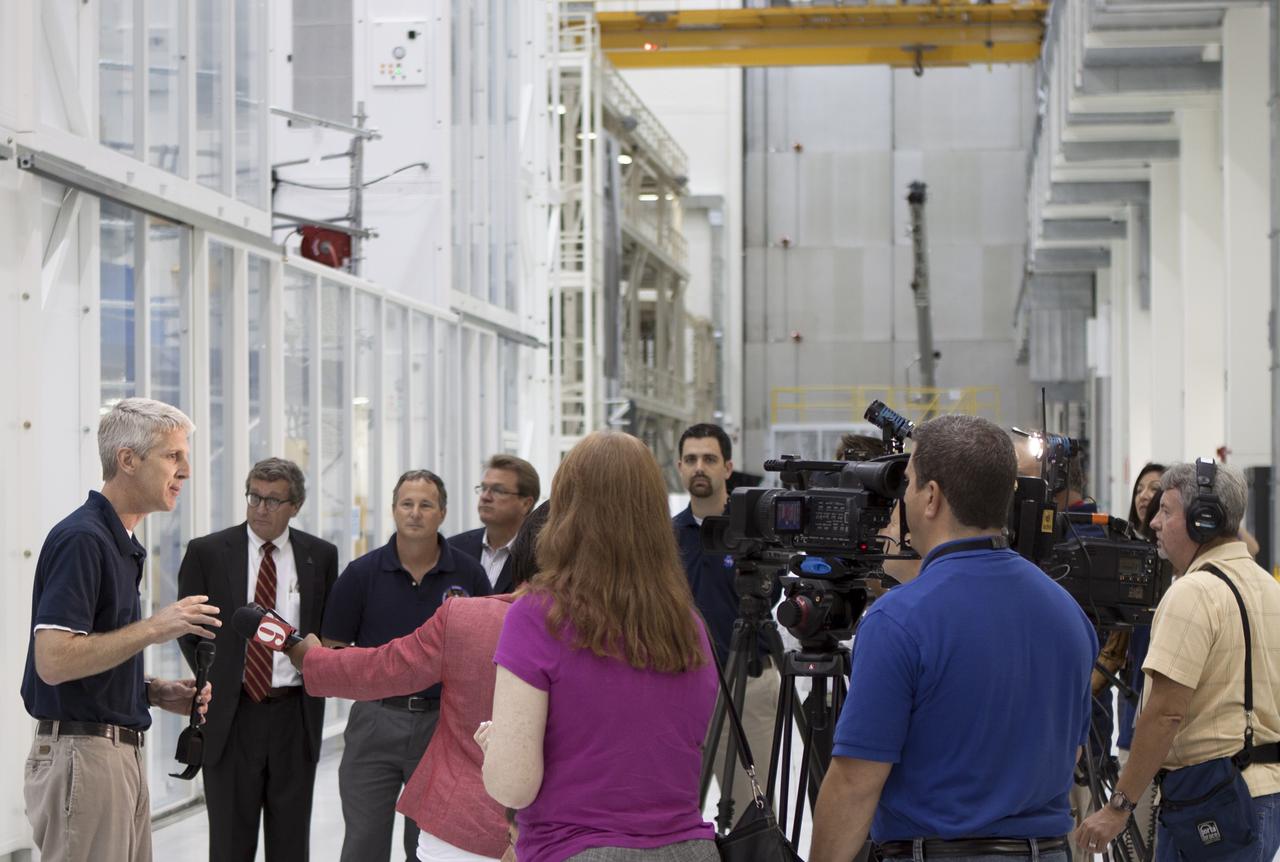
CAPE CANAVERAL, Fla. – Inside the Operations and Checkout Building high bay at NASA’s Kennedy Space Center in Florida, members of the media receive an on activities in NASA’s Ground Systems Development and Operations, or GSDO, Program, Space Launch System and Orion crew module for Exploration Test Flight 1. Speaking to the media, from left are Scott Wilson, manager of Orion Production Operations at Kennedy Larry Price, Lockheed Martin deputy program manager for Orion Tom Erdman, from Marshall Space Flight Center’s Kennedy resident office Jules Schneider, Lockheed Martin manager of Orion Production Operations and Jeremy Parsons, chief of the GSDO Operations Integration Office at Kennedy. Orion is the exploration spacecraft designed to carry crews to space beyond low Earth orbit. It will provide emergency abort capability, sustain the crew during the space travel and provide safe re-entry from deep space return velocities. Orion’s first unpiloted test flight is scheduled to launch in 2014 atop a Delta IV rocket. A second uncrewed flight test is scheduled for 2017 on NASA’s Space Launch System rocket. For more information, visit http://www.nasa.gov/orion. Photo credit: NASA/Jim Grossmann
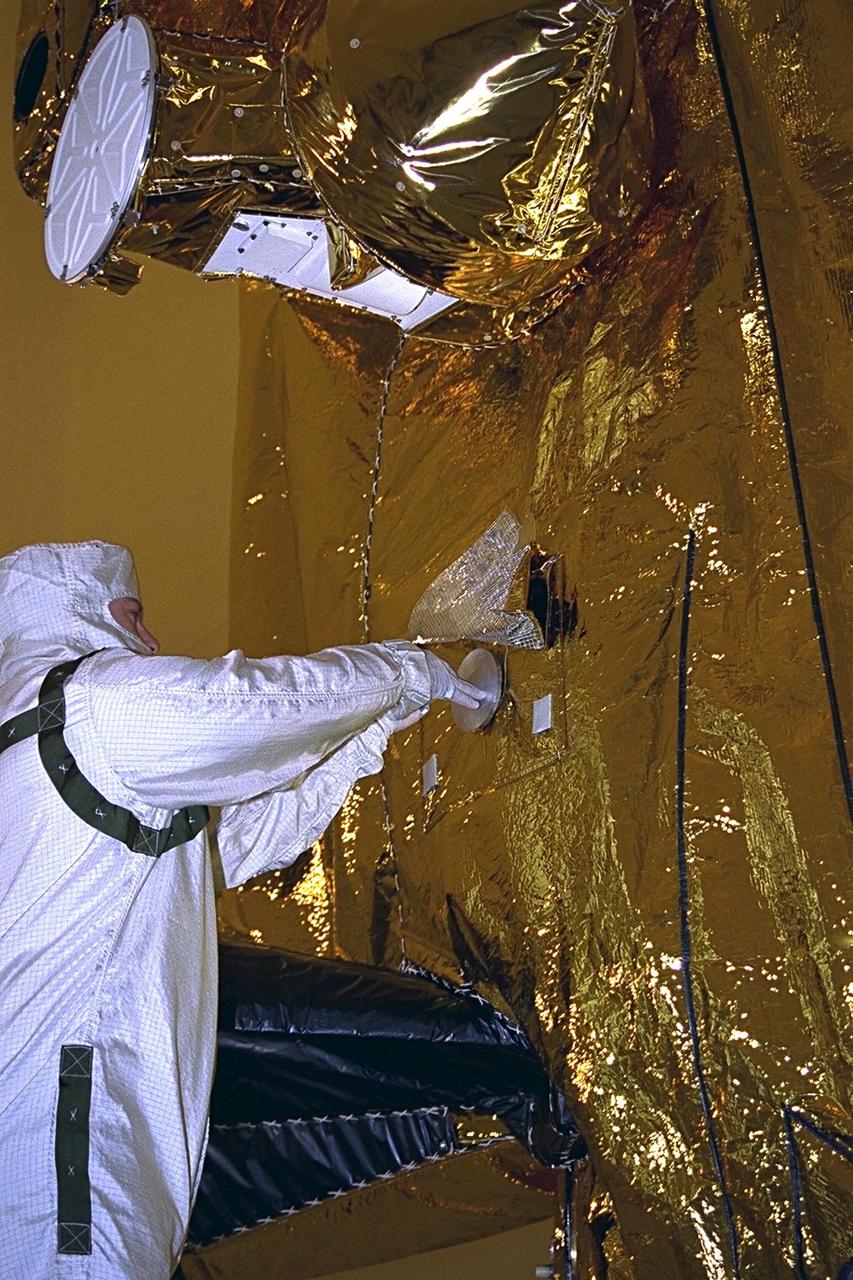
In the Payload Hazardous Servicing Facility (PHSF), Dan Maynard, a Jet Propulsion Laboratory technician, inserts the Digital Video Disk (DVD) into a shallow cavity between two pieces of aluminum that will protect it from micrometeoroid impacts. The package will be mounted to the side of the two-story-tall spacecraft beneath a pallet carrying cameras and other space instruments that will be used to study the Saturnian system. A specially designed, multicolored patch of thermal blanket material will be installed over the disk package. Along with the spacecraft, the disk will reside in Saturn's orbit centuries after the primary mission is completed in July 2008. The Cassini mission is managed for NASA's Office of Space Science, Washington, D.C., by the Jet Propulsion Laboratory, a division of the California Institute of Technology
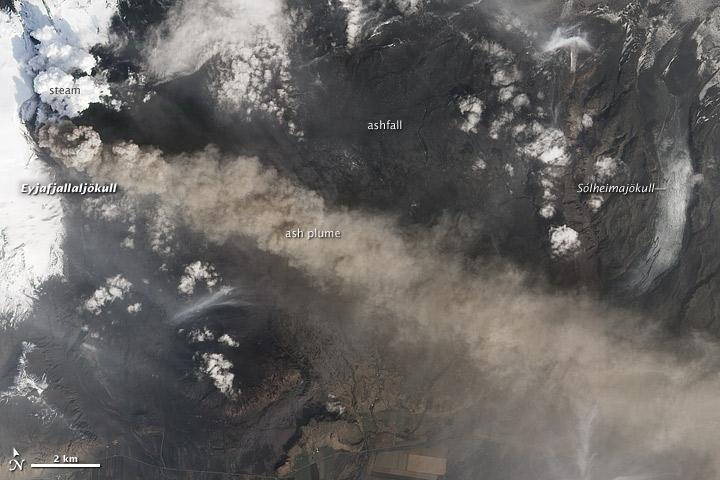
NASA satellite image acquired May 2, 2010 To see the full view of this image go to: <a href="http://www.flickr.com/photos/gsfc/4584266582/">www.flickr.com/photos/gsfc/4584266582/</a> Ash and steam continued billowing from Eyjafjallajökull Volcano in early May 2010. The Advanced Land Imager (ALI) on NASA’s Earth Observing-1 (EO-1) satellite captured this natural-color image on May 2, 2010. The volcano’s summit is near the left edge of this image, capped by a dark plume. The plume is dull gray-brown, indicating that its principal visible component is volcanic ash. Ash from the plume blows toward the east-southeast, passing over a charcoal-colored ash field on the land surface. Just to the north of Eyjafjallajökull’s summit are white puffs of steam, likely from surface lava flows vaporizing snow and glacial ice. On May 4, 2010, the Icelandic Meteorological Office warned that Eyjafjallajökull showed no signs of ending its eruptive activity in the near future. The Met Office reported that ash from the volcano had reached a height of 5.8 to 6.0 kilometers (19,000 to 20,000 feet) above sea level, and had spread 65 to 80 kilometers (40 to 50 miles) east-southeast of the volcano, where it impeded visibility for local residents. The Met Office also reported that lava continued flowing down a steep hill north of the crater. NASA image by Robert Simmon, using ALI data from the EO-1 team. Caption by Michon Scott. Instrument: EO-1 – ALI To view other images from the Earth Observatory go to: <a href="http://earthobservatory.nasa.gov/" rel="nofollow">earthobservatory.nasa.gov/</a> <b><a href="http://www.nasa.gov/centers/goddard/home/index.html" rel="nofollow">NASA Goddard Space Flight Center</a></b> is home to the nation's largest organization of combined scientists, engineers and technologists that build spacecraft, instruments and new technology to study the Earth, the sun, our solar system, and the universe.
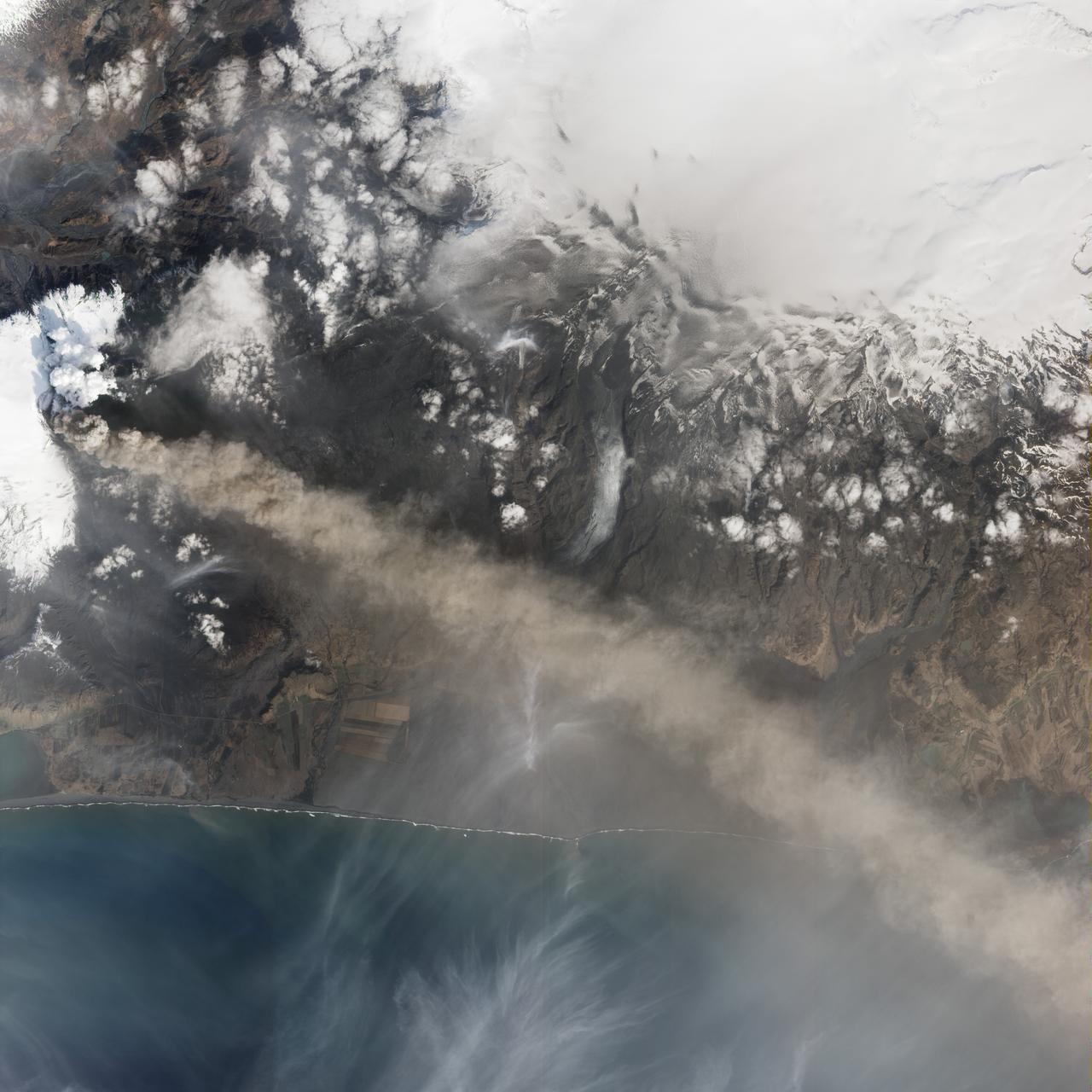
NASA satellite image acquired May 2, 2010 To view a detail of this image go to: <a href="http://www.flickr.com/photos/gsfc/4584266734/">www.flickr.com/photos/gsfc/4584266734/</a> Ash and steam continued billowing from Eyjafjallajökull Volcano in early May 2010. The Advanced Land Imager (ALI) on NASA’s Earth Observing-1 (EO-1) satellite captured this natural-color image on May 2, 2010. The volcano’s summit is near the left edge of this image, capped by a dark plume. The plume is dull gray-brown, indicating that its principal visible component is volcanic ash. Ash from the plume blows toward the east-southeast, passing over a charcoal-colored ash field on the land surface. Just to the north of Eyjafjallajökull’s summit are white puffs of steam, likely from surface lava flows vaporizing snow and glacial ice. On May 4, 2010, the Icelandic Meteorological Office warned that Eyjafjallajökull showed no signs of ending its eruptive activity in the near future. The Met Office reported that ash from the volcano had reached a height of 5.8 to 6.0 kilometers (19,000 to 20,000 feet) above sea level, and had spread 65 to 80 kilometers (40 to 50 miles) east-southeast of the volcano, where it impeded visibility for local residents. The Met Office also reported that lava continued flowing down a steep hill north of the crater. NASA image by Robert Simmon, using ALI data from the EO-1 team. Caption by Michon Scott. Instrument: EO-1 – ALI To view other images from the Earth Observatory go to: <a href="http://earthobservatory.nasa.gov/" rel="nofollow">earthobservatory.nasa.gov/</a> <b><a href="http://www.nasa.gov/centers/goddard/home/index.html" rel="nofollow">NASA Goddard Space Flight Center</a></b> is home to the nation's largest organization of combined scientists, engineers and technologists that build spacecraft, instruments and new technology to study the Earth, the sun, our solar system, and the universe.
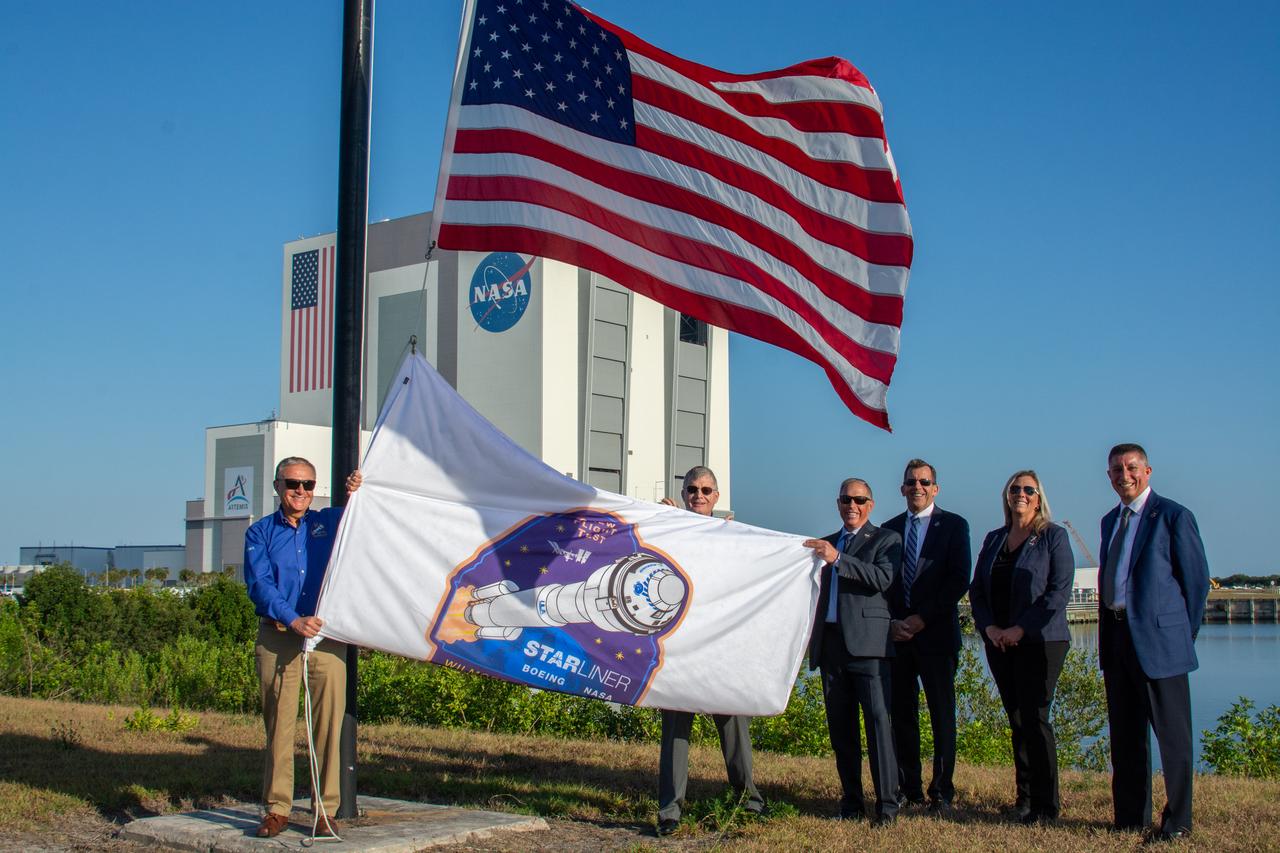
From left to right, Rami Intriago, Boeing Starliner resident office manager, NASA’s Kennedy Space Center Commercial Crew Program; Steve Stich, manager, NASA’s Commercial Crew Program; Mark Nappi, vice president and manager, Boeing Commercial Crew Program; Leroy Cain, mission integration and operations manager, Boeing’s Commercial Crew Program; Dana Hutcherson, deputy manager, NASA’s Commercial Crew Program; and Richard Jones, deputy manager, NASA’s Johnson Space Center Commercial Crew Program, prepare to raise NASA’s Boeing Crew Flight Test flag on Thursday, April 25, 2024, near the countdown clock at the Press Site at the Florida spaceport. As part of the agency’s Commercial Crew Program, NASA astronauts Butch Wilmore and Suni Williams are the first to launch to the International Space Station aboard Boeing’s Starliner spacecraft atop a United Launch Alliance Atlas V rocket from Space Launch Complex-41 at nearby Cape Canaveral Space Force Station. Liftoff is scheduled for 10:34 p.m. ET on Monday, May 6.
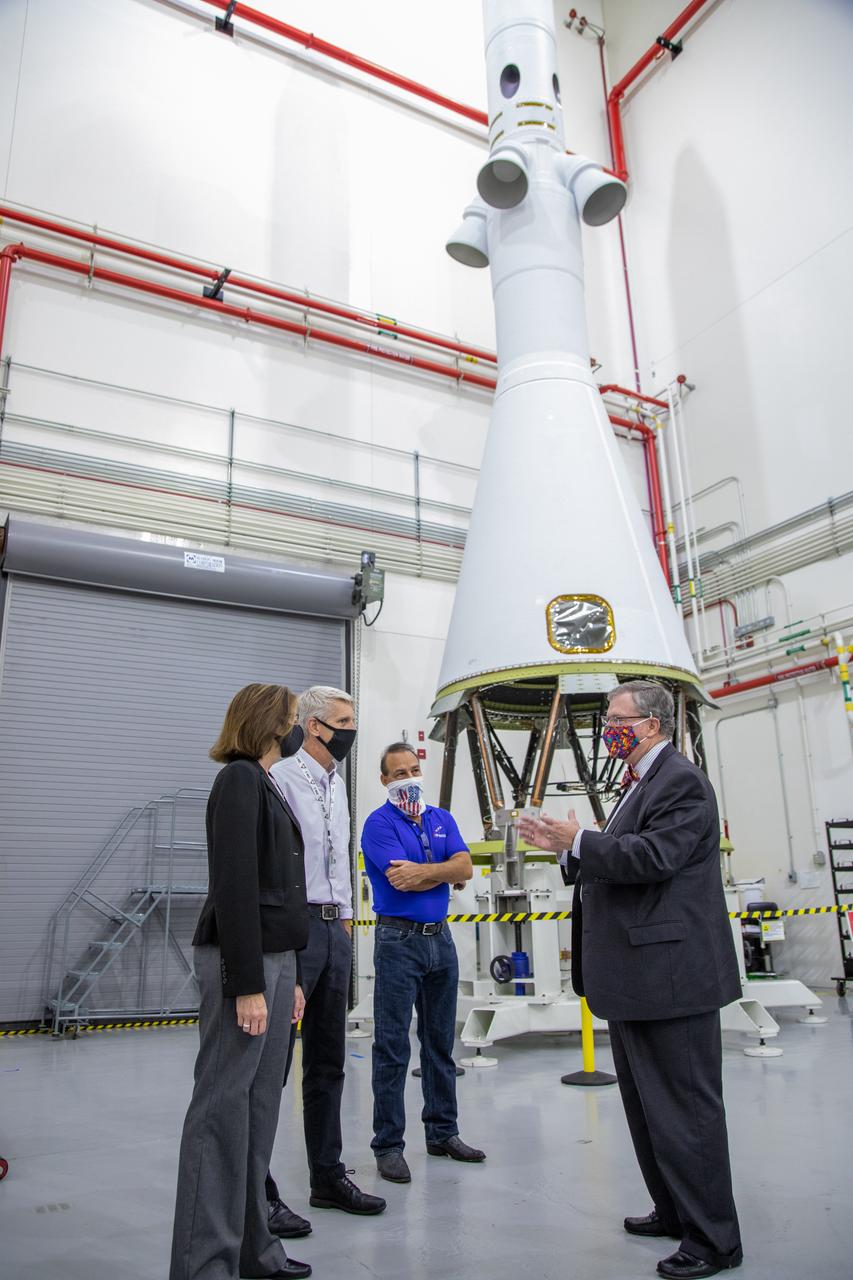
Catherine Koerner, far left, NASA Orion Program manager, along with senior managers from Orion and Lockheed Martin, tour the Launch Abort System Facility at NASA’s Kennedy Space Center in Florida on Oct. 6, 2020. Accompanying her from left, are Scott Wilson, NASA Kennedy Orion Production Operations manager; Carlos Garcia, NASA Kennedy Launch Abort System Assembly, Integration and Test lead and Resident office manager; and Mike Hawes, Lockheed Martin vice president and Orion Program manager. They are viewing the launch abort system for the Artemis I mission. Koerner also viewed the Orion spacecraft for the Artemis I and II missions in the Neil Armstrong Operations and Checkout Building. The first in a series of increasingly complex missions, Artemis I will test the Orion spacecraft and Space Launch System as an integrated system ahead of crewed flights to the Moon. Under the Artemis program, NASA will land the first woman and the next man on the Moon in 2024.
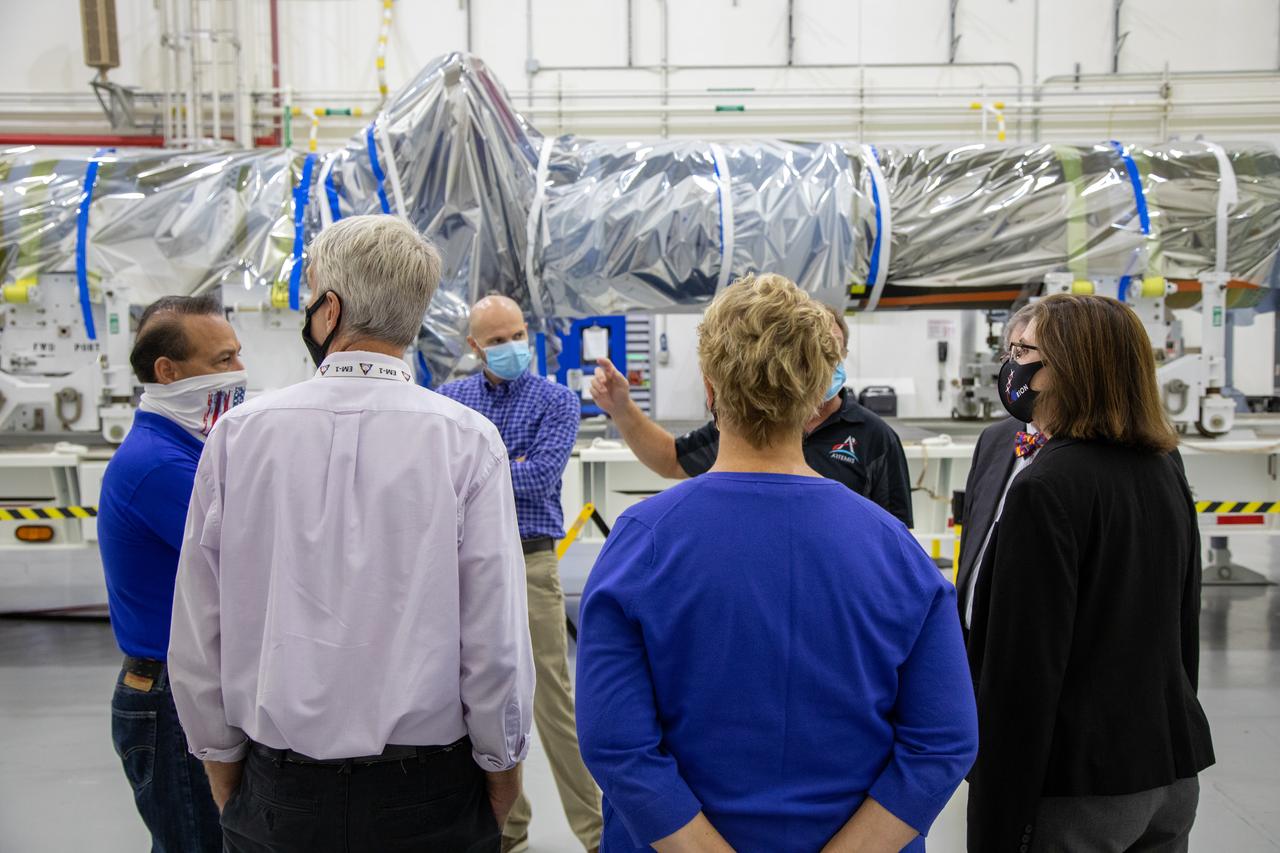
Catherine Koerner, far right, NASA Orion Program manager, along with senior managers from Orion and Lockheed Martin, tour the Launch Abort System Facility at NASA’s Kennedy Space Center in Florida on Oct. 6, 2020. Accompanying her from left, are Carlos Garcia, NASA Kennedy Launch Abort System Assembly, Integration and Test lead and Resident office manager; Scott Wilson, NASA Kennedy Orion Production Operations manager; Jim Skaggs, Kennedy Operations senior manager with Lockheed Martin; Jules Schneider, Kennedy Assembly, Test and Launch Operations director with Lockheed Martin; Mike Hawes, Lockheed Martin vice president and Orion Program manager; and Annette Hasbrook, Orion Program assistant manager. They are viewing the launch abort system for the Artemis II mission. Koerner also viewed the Orion spacecraft for the Artemis I and II missions in the Neil Armstrong Operations and Checkout Building. The first in a series of increasingly complex missions, Artemis I will test the Orion spacecraft and Space Launch System as an integrated system ahead of crewed flights to the Moon. Under the Artemis program, NASA will land the first woman and the next man on the Moon in 2024.
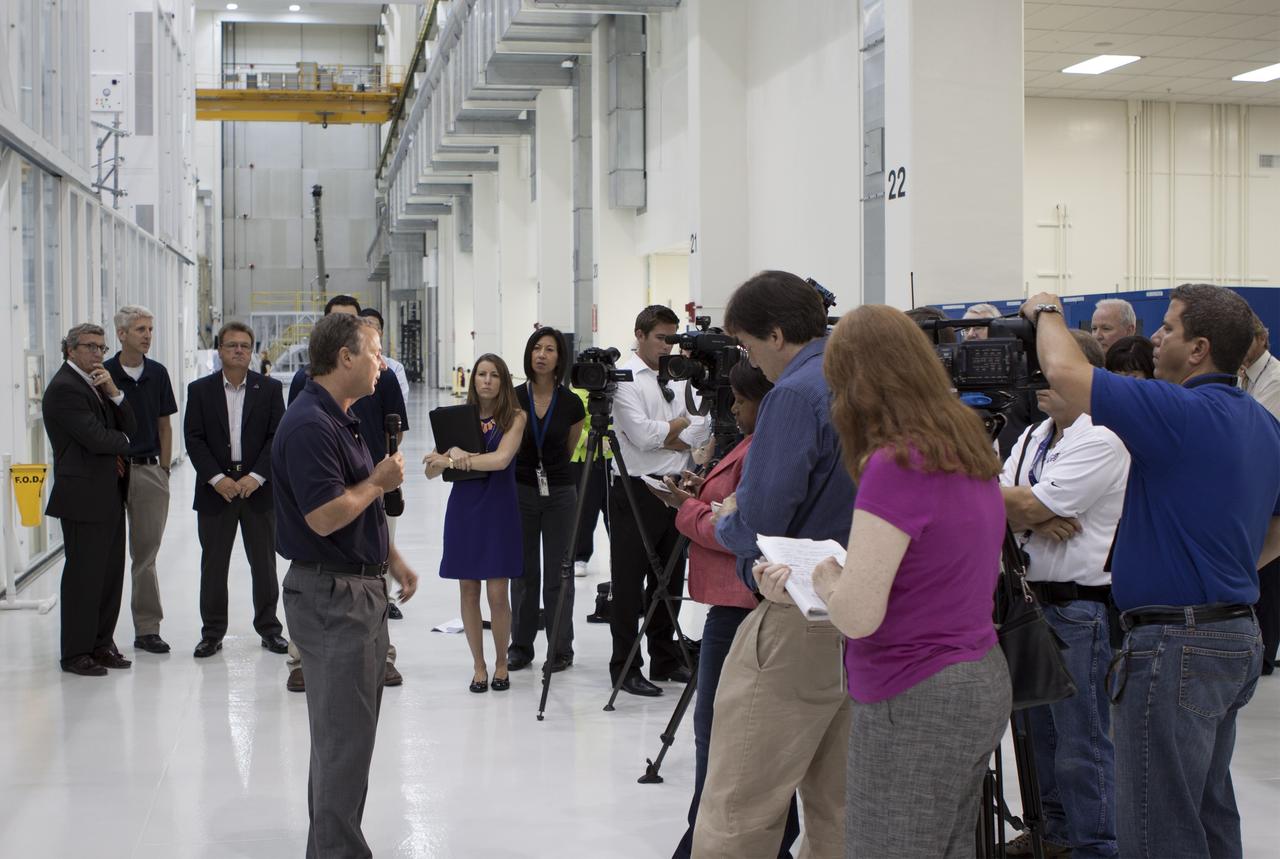
CAPE CANAVERAL, Fla. – Inside the Operations and Checkout Building high bay at NASA’s Kennedy Space Center in Florida, members of the media receive an on activities in NASA’s Ground Systems Development and Operations, or GSDO, Program, Space Launch System and Orion crew module for Exploration Test Flight 1. Speaking to the media about the Space Launch System is Tom Erdman, from Marshall Space Flight Center’s Kennedy resident office. Orion is the exploration spacecraft designed to carry crews to space beyond low Earth orbit. It will provide emergency abort capability, sustain the crew during the space travel and provide safe re-entry from deep space return velocities. Orion’s first unpiloted test flight is scheduled to launch in 2014 atop a Delta IV rocket. A second uncrewed flight test is scheduled for 2017 on NASA’s Space Launch System rocket. For more information, visit http://www.nasa.gov/orion. Photo credit: NASA/Jim Grossmann
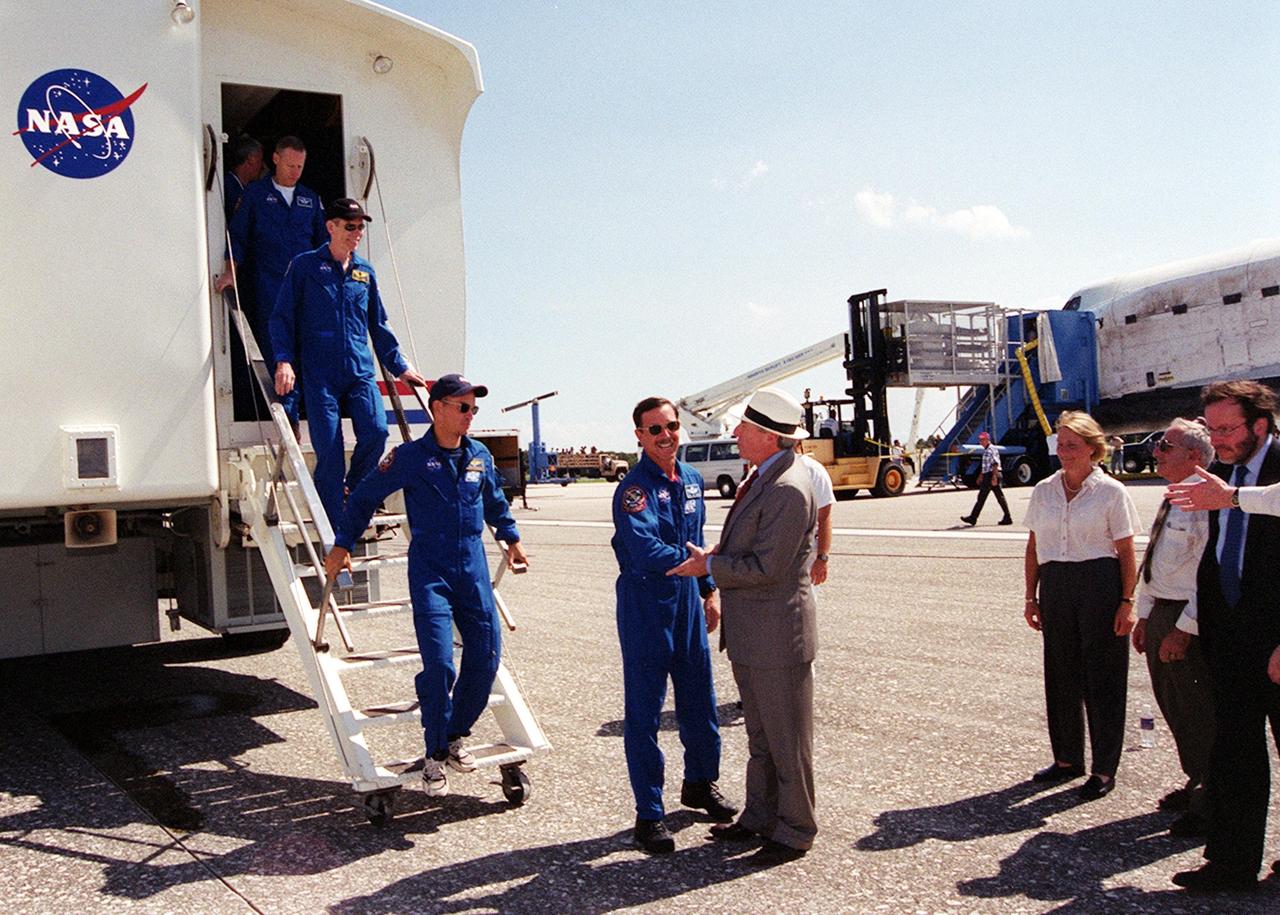
KENNEDY SPACE CENTER, Fla. - As members of the STS-105 crew exit the Crew Transfer Vehicle (CTV) following Discovery's landing on KSC's Shuttle Landing Facility runway 15, they are greeted by NASA Administrator Dan Goldin. From left are Mission Specialists Patrick Forrester and Daniel Barry, Pilot Frederick "Rick" Sturckow, and Commander Scott "Doc" Horowitz (shaking hands with Goldin). Looking on are, from left, Kathie Olsen, NASA chief scientist; Joe Rothenberg, associate administrator, Office of Space Flight; and Courtney Stadd, NASA Headquarters chief of staff. Main gear touchdown was at 2:22:58 p.m. EDT; wheel stop, at 2:24:06 p.m. EDT. The 11-day, 21-hour, 12-minute STS-105 mission accomplished the goals set for the 11th flight to the International Space Station: swapout of the resident Station crew; delivery of equipment, supplies and scientific experiments; and installation of the Early Ammonia Servicer and heater cables for the S0 truss on the Station. Discovery traveled 4.3 million miles on its 30th flight into space, the 106th mission of the Space Shuttle program. Out of five missions in 2001, the landing was the first to occur in daylight at KSC.
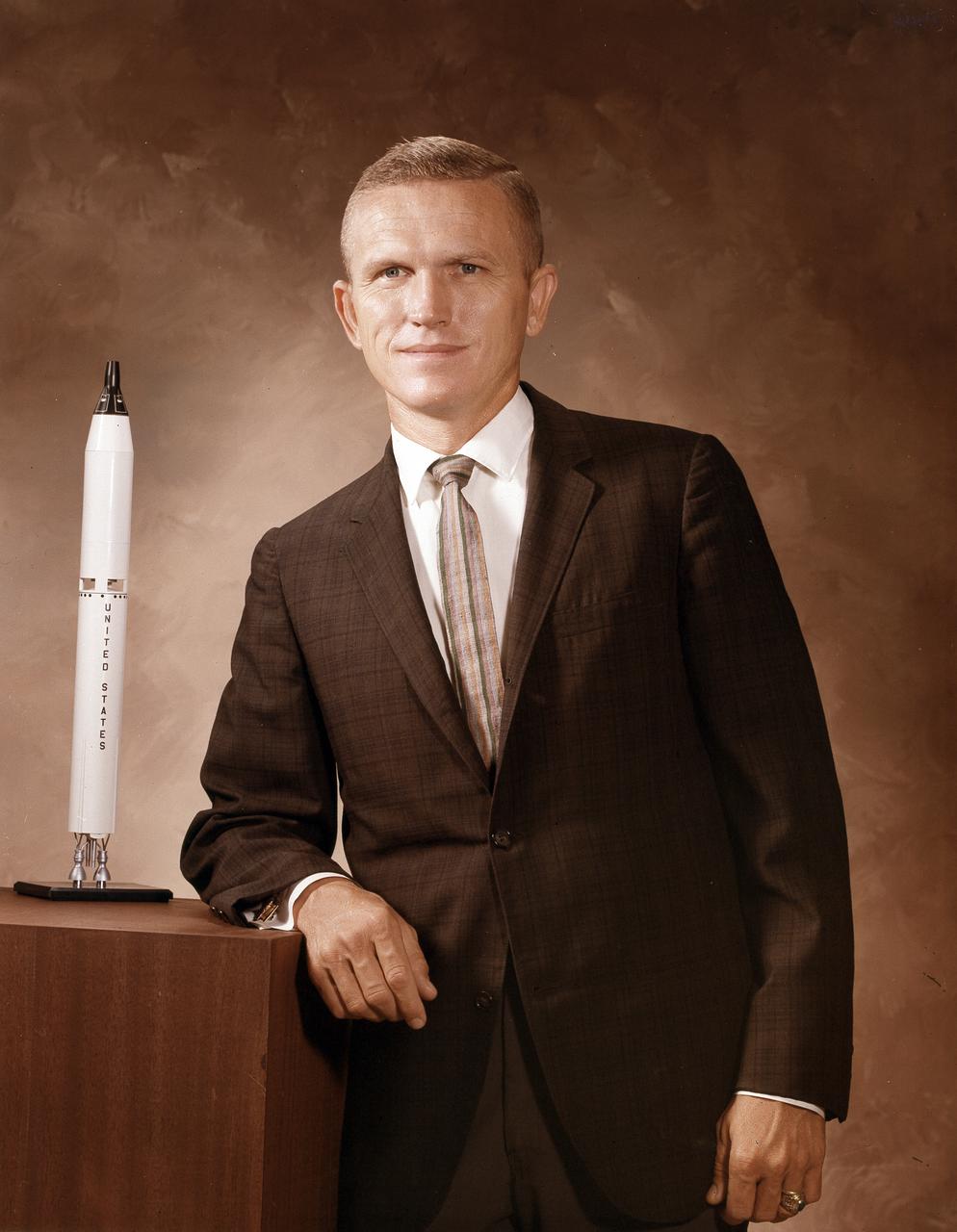
This is the official portrait of astronaut Frank Borman. A career Air Force officer from 1950, his assignments included service as a fighter pilot, an operational pilot and instructor, an experimental test pilot and an assistant professor of thermodynamics and fluid mechanics at West Point. When selected by NASA, Frank Borman was an instructor at the Aerospace Research Pilot School at Edwards AFB, California. In 1967 he served as a member of the Apollo 204 Fire Investigation Board, investigating the causes of the fire which killed three astronauts aboard an Apollo spacecraft. Later he became the Apollo Program Resident Manager, heading the team that reengineered the Apollo spacecraft. He also served as Field Director of the NASA Space Station Task Force. Frank Borman retired from the air Force in 1970, but is well remembered as a part of American history as a pioneer in the exploration of space. He is a veteran of both the Gemini 7, 1965 Space Orbital Rendezvous with Gemini 6 and the first manned lunar orbital mission, Apollo 8, in 1968.
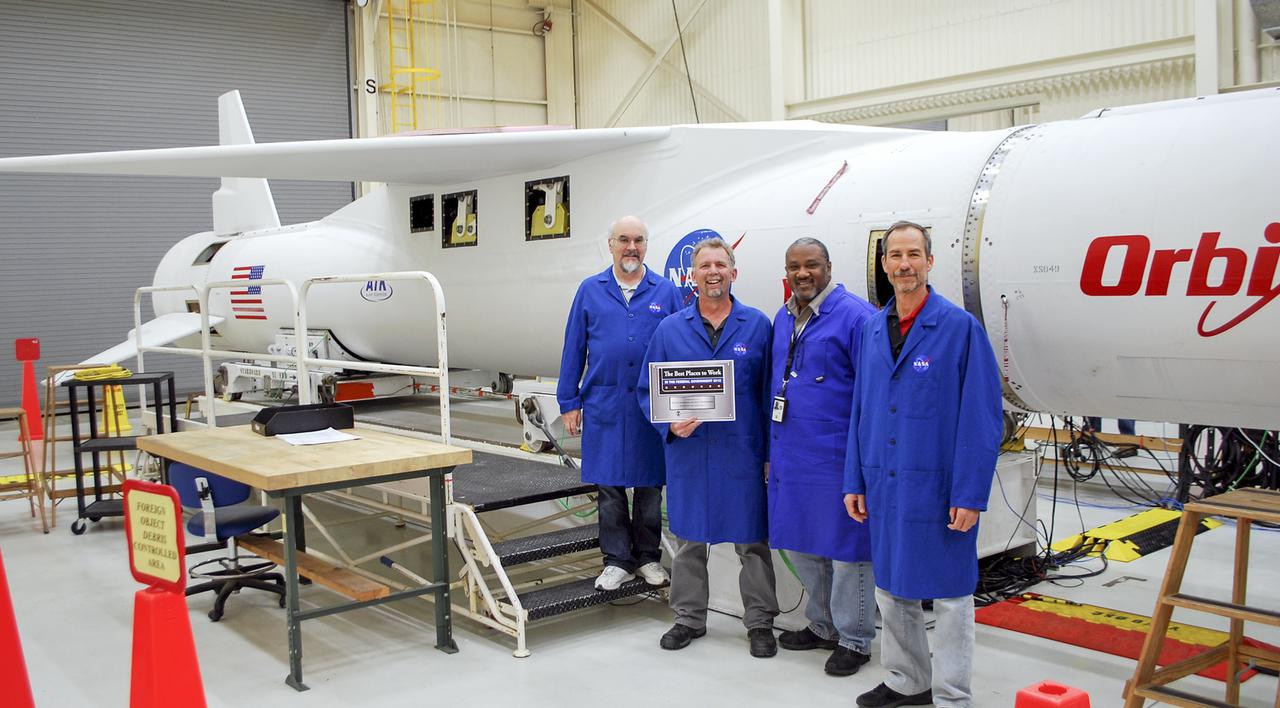
VANDENBERG AIR FORCE BASE, Calif. – Kennedy Space Center Resident Office personnel representing the NASA Launch Services Program at Vandenberg Air Force Base in California, display the Best Places to Work in the Federal Government plaque. NASA ranked No. 1 the “large” category, those which have more than 15,000 employees. From the left are Bob Rasmison, Randy Beaudoin, Kevin Monette, and Jeff Ehrsam. Rasmison and Ehrsam work together in integration and engineering as the spacecraft's liaison at the processing facility and pre-launch site locations. Beaudoin is an electrical engineer that follows manufacturing, assembly and integration of electrical systems and components to insure compliance with technical specifications and standards. Monette is the Safety and Mission Assurance representative providing independent assessment to help determine residual risk associated with launch vehicle flight readiness. They are standing next to the Orbital Sciences Corporation's Pegasus rocket which will launch the Interface Region Imaging Spectrograph IRIS spacecraft. Scheduled for launch from Vandenberg Air Force Base no earlier than June 26, 2013, IRIS will open a new window of discovery by tracing the flow of energy and plasma through the chromospheres and transition region into the sun’s corona using spectrometry and imaging. IRIS fills a crucial gap in our ability to advance studies of the sun-to-Earth connection by tracing the flow of energy and plasma through the foundation of the corona and the region around the sun known as the heliosphere. For more information, visit http:__iris.gsfc.nasa.gov Photo credit: NASA_Randy Beaudoin