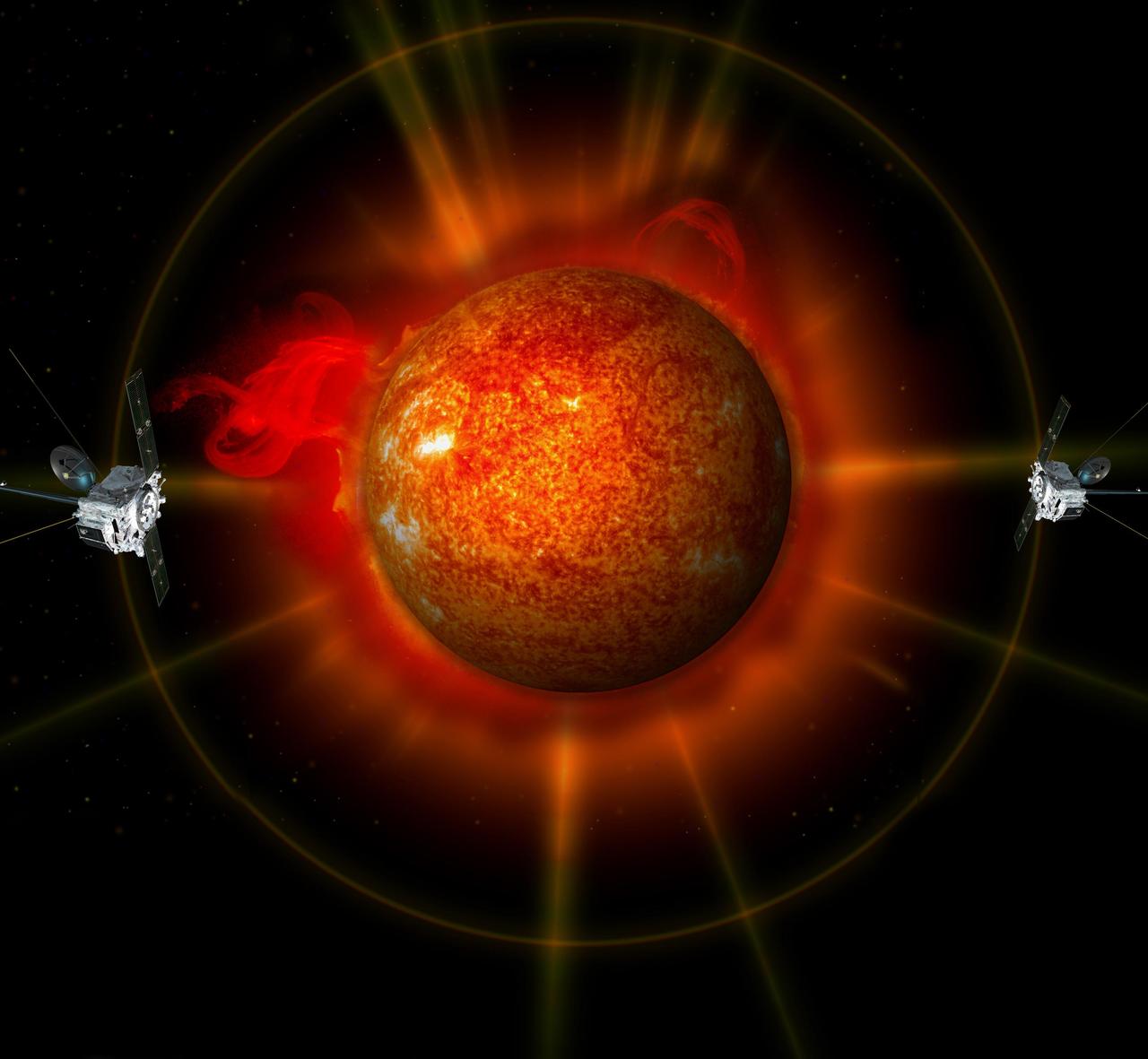
An artist's concept of STEREO surrounding the sun. Credit: NASA To read more about STEREO go to: <a href="http://www.nasa.gov/mission_pages/stereo/news/entire-sun.html" rel="nofollow">www.nasa.gov/mission_pages/stereo/news/entire-sun.html</a> <b><a href="http://www.nasa.gov/centers/goddard/home/index.html" rel="nofollow">NASA Goddard Space Flight Center</a></b> enables NASA’s mission through four scientific endeavors: Earth Science, Heliophysics, Solar System Exploration, and Astrophysics. Goddard plays a leading role in NASA’s accomplishments by contributing compelling scientific knowledge to advance the Agency’s mission. <b>Follow us on <a href="http://twitter.com/NASA_GoddardPix" rel="nofollow">Twitter</a></b> <b>Join us on <a href="http://www.facebook.com/pages/Greenbelt-MD/NASA-Goddard/395013845897?ref=tsd" rel="nofollow">Facebook</a></b>
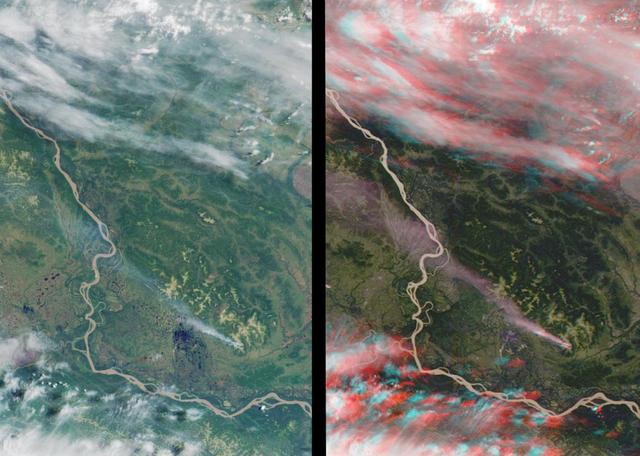
This stereo view of western Alaska was acquired by NASA Terra satellite on June 25, 2000. 3D glasses are necessary to view this image.
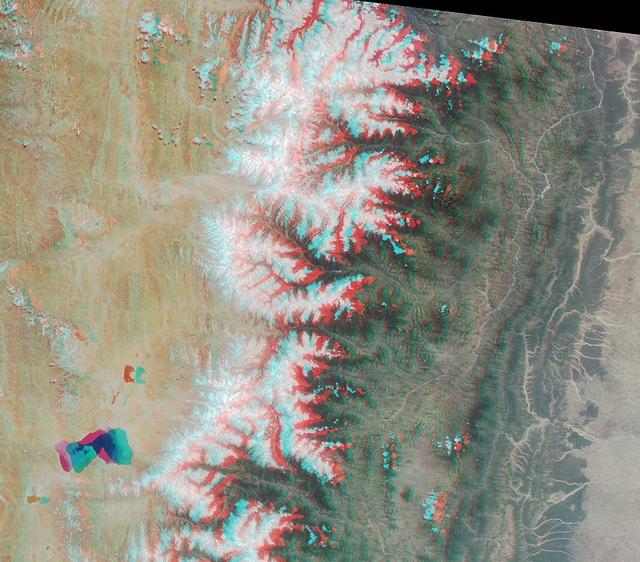
The Tibetan Plateau and a portion of the Himalayan Mountain chain are captured in this stereo image acptured by NASA Terra satellite May 14, 2000 Terra orbit 2153.
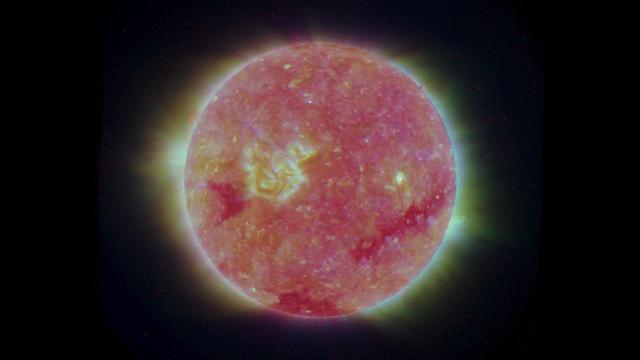
NASA Solar TErrestrial RElations Observatory STEREO satellites have provided the first three-dimensional images of the Sun. The structure of the corona shows well in this image.

NASA Solar TErrestrial RElations Observatory STEREO satellites have provided the first three-dimensional images of the Sun. The structure of the corona shows well in this image.
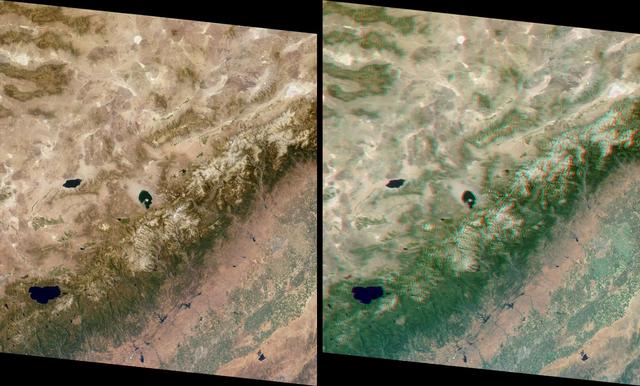
This stereo view of the Sierra Nevada mountains near the California-Nevada border was acquired on August 12, 2000 by NASA Terra satellite. 3D glasses are necessary to view this image.
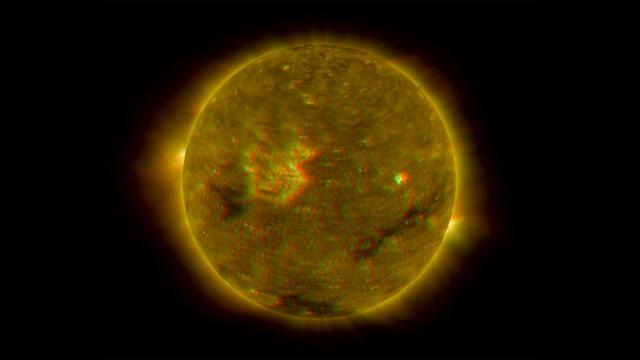
NASA Solar TErrestrial RElations Observatory STEREO satellites have provided the first three-dimensional images of the Sun. The structure of the corona shows well in this image. 3D glasses are necessary to view this image.
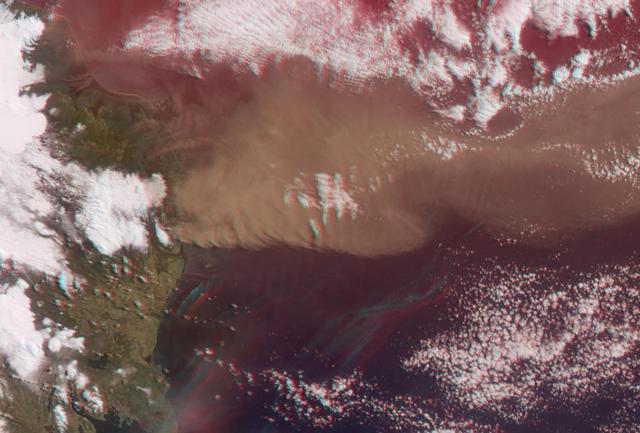
NASA Terra satellite flew directly over Iceland on April 19, 2010, to capture this stereo anaglyph generated from the nadir and 46-degree forward-viewing cameras of the Eyjafjallajökull volcano and its erupting ash plume. 3D glasses are necessary to vie

This stereo image from NASA Terra satellite show the Mauna Kea and Mauna Loa volcanoes in Hawaii; a southern face of a line of cumulus clouds off the north coast of Hawaii is also visible. 3D glasses are necessary to view this image.
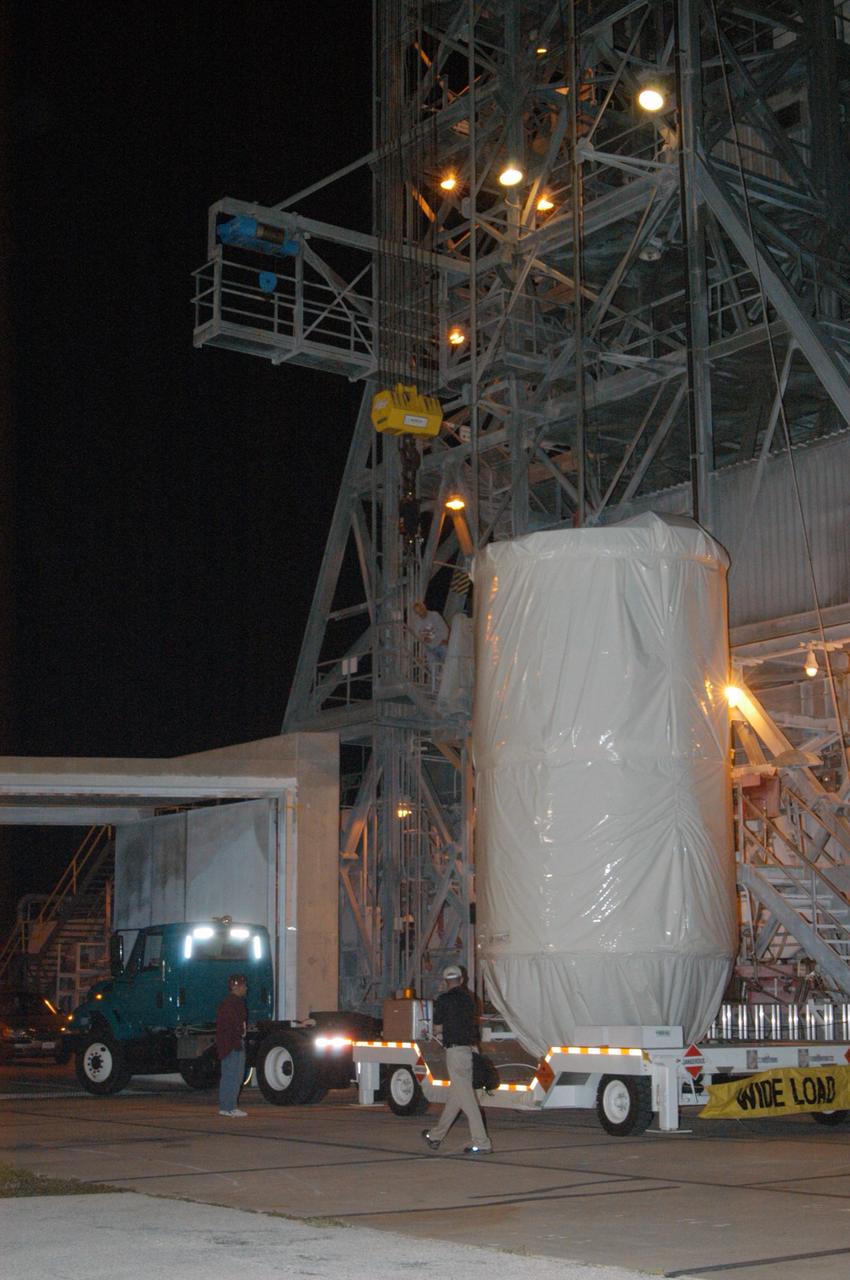
KENNEDY SPACE CENTER, FLA. - After arriving at Launch Pad 17-B on Cape Canaveral Air Force Station, the STEREO spacecraft waits for a crane to be fitted over it and be lifted into the mobile service tower. STEREO will be mated with its launch vehicle, a Boeing Delta II rocket. STEREO stands for Solar Terrestrial Relations Observatory and comprises two spacecraft. The STEREO mission is the first to take measurements of the sun and solar wind in 3-dimension. This new view will improve our understanding of space weather and its impact on the Earth. The STEREO mission is managed by Goddard Space Flight Center. The Applied Physics Laboratory designed and built the spacecraft. The laboratory will maintain command and control of the observatories throughout the mission, while NASA tracks and receives the data, determines the orbit of the satellites, and coordinates the science results. STEREO is expected to lift off Oct. 25. Photo credit: NASA/George Shelton
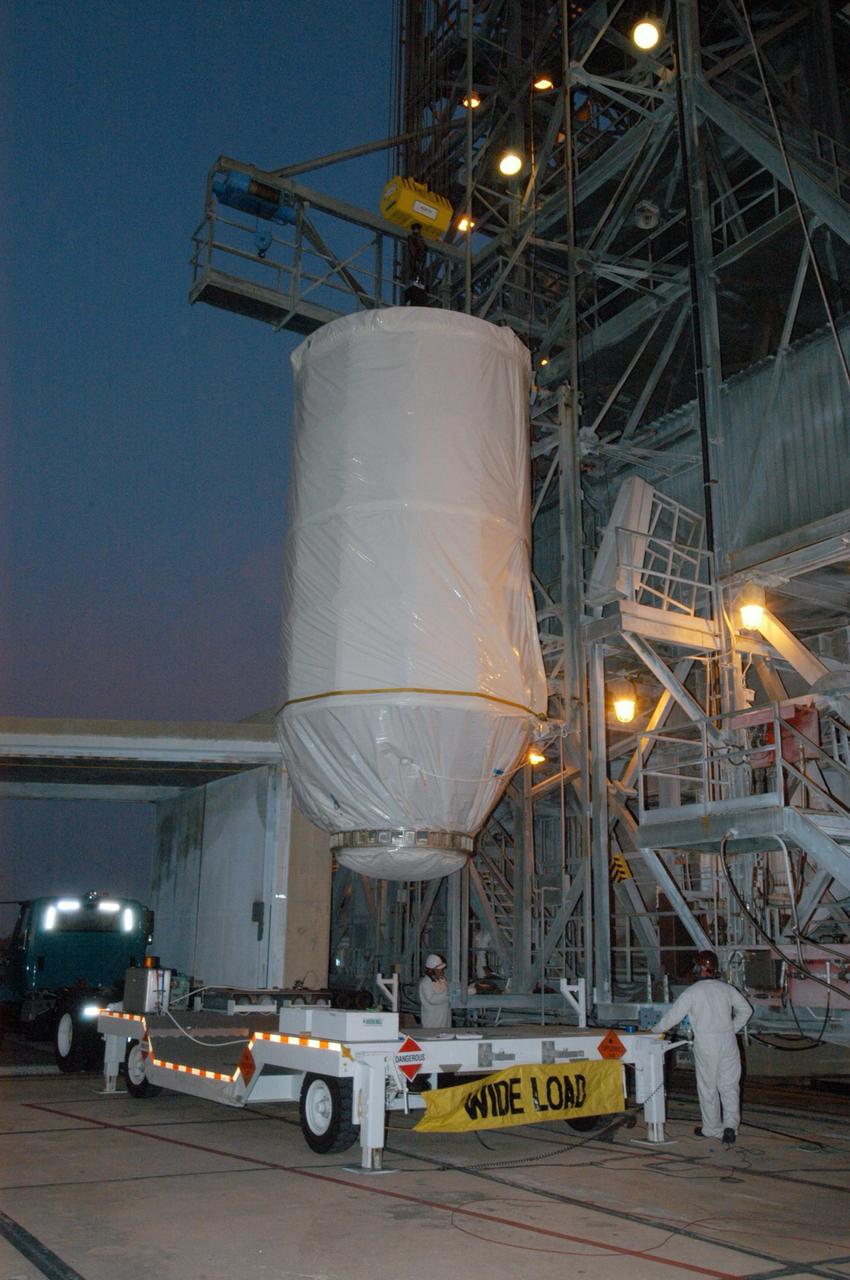
KENNEDY SPACE CENTER, FLA. - On Launch Pad 17-B at Cape Canaveral Air Force Station, the STEREO spacecraft is lifted off its transporter alongside the mobile service tower. In the tower, STEREO will be mated with its launch vehicle, a Boeing Delta II rocket. STEREO stands for Solar Terrestrial Relations Observatory and comprises two spacecraft. The STEREO mission is the first to take measurements of the sun and solar wind in 3-dimension. This new view will improve our understanding of space weather and its impact on the Earth. The STEREO mission is managed by Goddard Space Flight Center. The Applied Physics Laboratory designed and built the spacecraft. The laboratory will maintain command and control of the observatories throughout the mission, while NASA tracks and receives the data, determines the orbit of the satellites, and coordinates the science results. STEREO is expected to lift off Oct. 25. Photo credit: NASA/George Shelton
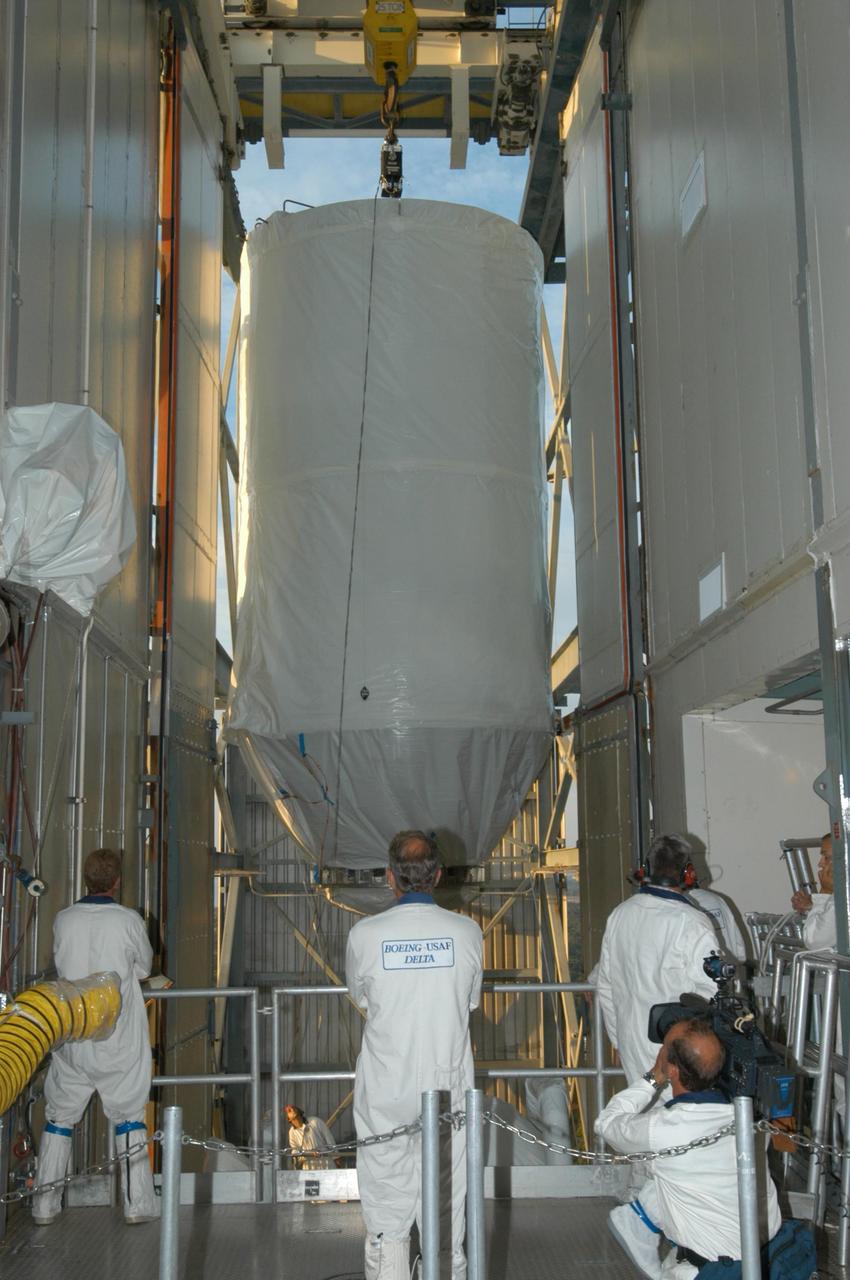
KENNEDY SPACE CENTER, FLA. - On Launch Pad 17-B at Cape Canaveral Air Force Station, workers observe the progress of the STEREO spacecraft as it glides inside the mobile service tower. After it is in the tower, STEREO will be mated with its launch vehicle, a Boeing Delta II rocket. STEREO stands for Solar Terrestrial Relations Observatory and comprises two spacecraft. The STEREO mission is the first to take measurements of the sun and solar wind in 3-dimension. This new view will improve our understanding of space weather and its impact on the Earth. The STEREO mission is managed by Goddard Space Flight Center. The Applied Physics Laboratory designed and built the spacecraft. The laboratory will maintain command and control of the observatories throughout the mission, while NASA tracks and receives the data, determines the orbit of the satellites, and coordinates the science results. STEREO is expected to lift off Oct. 25. Photo credit: NASA/George Shelton
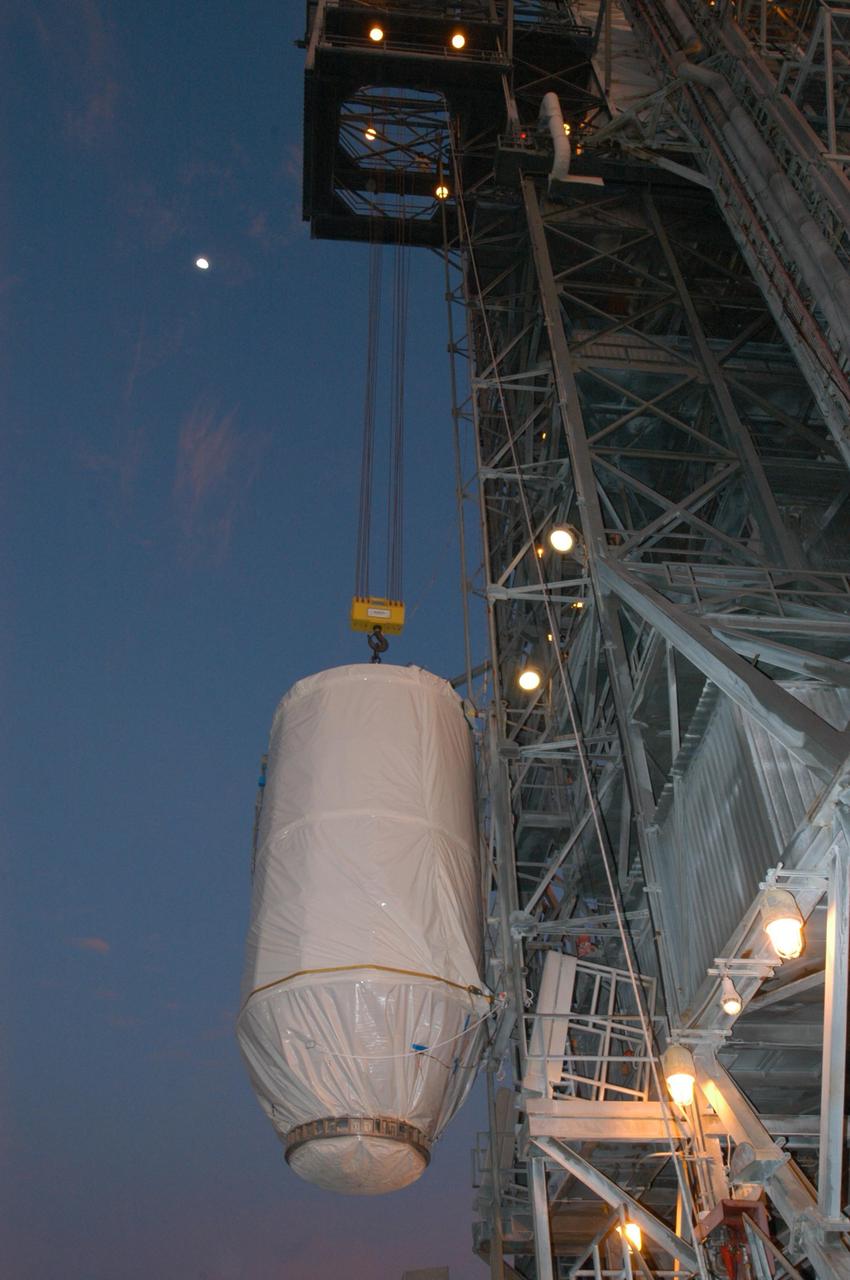
KENNEDY SPACE CENTER, FLA. - Against a pre-dawn sky on Launch Pad 17-B at Cape Canaveral Air Force Station, the STEREO spacecraft is lifted alongside the mobile service tower. In the tower, STEREO will be mated with its launch vehicle, a Boeing Delta II rocket. STEREO stands for Solar Terrestrial Relations Observatory and comprises two spacecraft. The STEREO mission is the first to take measurements of the sun and solar wind in 3-dimension. This new view will improve our understanding of space weather and its impact on the Earth. The STEREO mission is managed by Goddard Space Flight Center. The Applied Physics Laboratory designed and built the spacecraft. The laboratory will maintain command and control of the observatories throughout the mission, while NASA tracks and receives the data, determines the orbit of the satellites, and coordinates the science results. STEREO is expected to lift off Oct. 25. Photo credit: NASA/George Shelton
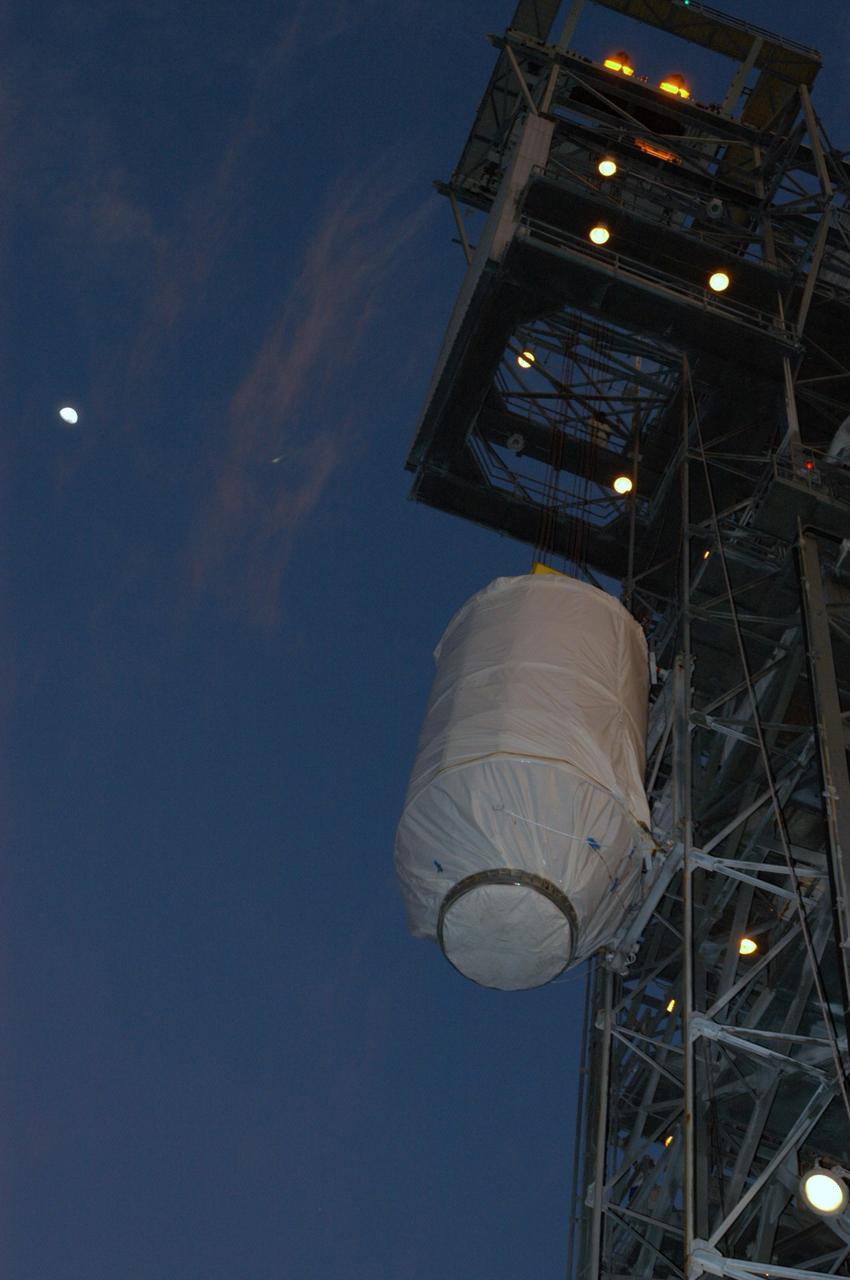
KENNEDY SPACE CENTER, FLA. - Against a pre-dawn sky on Launch Pad 17-B at Cape Canaveral Air Force Station, the STEREO spacecraft is lifted up toward the platform on the mobile service tower. In the tower, STEREO will be mated with its launch vehicle, a Boeing Delta II rocket. STEREO stands for Solar Terrestrial Relations Observatory and comprises two spacecraft. The STEREO mission is the first to take measurements of the sun and solar wind in 3-dimension. This new view will improve our understanding of space weather and its impact on the Earth. The STEREO mission is managed by Goddard Space Flight Center. The Applied Physics Laboratory designed and built the spacecraft. The laboratory will maintain command and control of the observatories throughout the mission, while NASA tracks and receives the data, determines the orbit of the satellites, and coordinates the science results. STEREO is expected to lift off Oct. 25. Photo credit: NASA/George Shelton
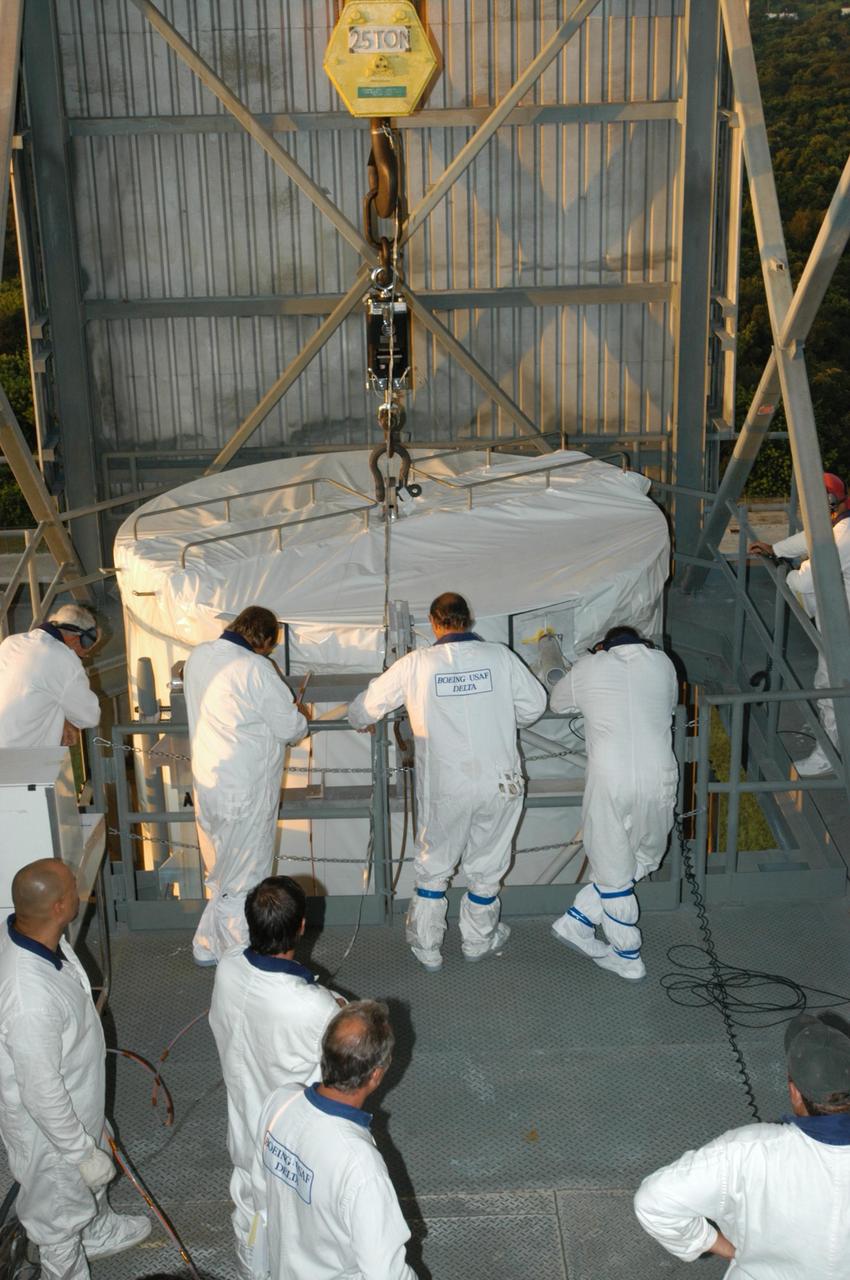
KENNEDY SPACE CENTER, FLA. - Viewed from inside the mobile service tower on Launch Pad 17-B at Cape Canaveral Air Force Station, workers watch the progress of the STEREO spacecraft being lifted. Once in the tower, STEREO will be mated with its launch vehicle, a Boeing Delta II rocket. STEREO stands for Solar Terrestrial Relations Observatory and comprises two spacecraft. The STEREO mission is the first to take measurements of the sun and solar wind in 3-dimension. This new view will improve our understanding of space weather and its impact on the Earth. The STEREO mission is managed by Goddard Space Flight Center. The Applied Physics Laboratory designed and built the spacecraft. The laboratory will maintain command and control of the observatories throughout the mission, while NASA tracks and receives the data, determines the orbit of the satellites, and coordinates the science results. STEREO is expected to lift off Oct. 25. Photo credit: NASA/George Shelton
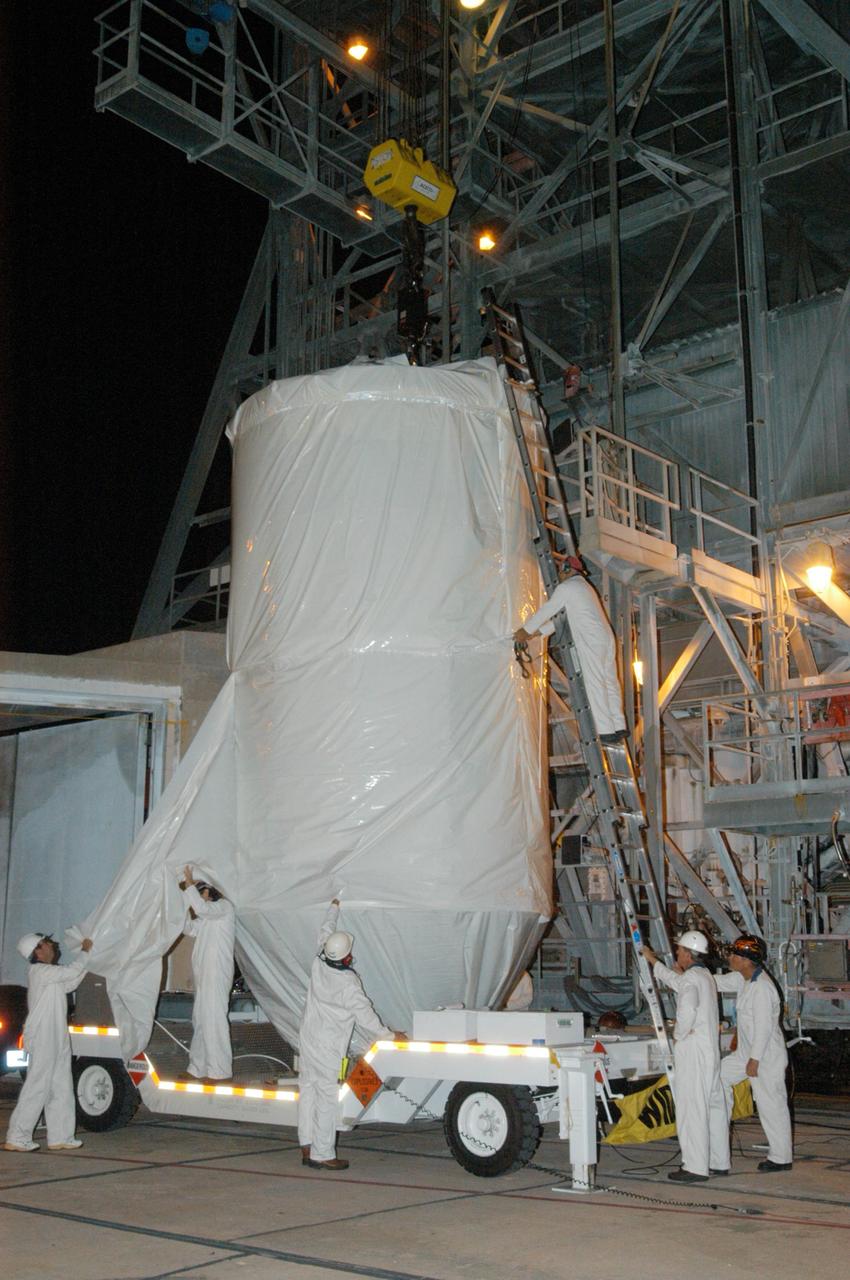
KENNEDY SPACE CENTER, FLA. - After arriving at Launch Pad 17-B on Cape Canaveral Air Force Station, the STEREO spacecraft is fitted with a crane to lift it into the mobile service tower. STEREO will be mated with its launch vehicle, a Boeing Delta II rocket. STEREO stands for Solar Terrestrial Relations Observatory and comprises two spacecraft. The STEREO mission is the first to take measurements of the sun and solar wind in 3-dimension. This new view will improve our understanding of space weather and its impact on the Earth. The STEREO mission is managed by Goddard Space Flight Center. The Applied Physics Laboratory designed and built the spacecraft. The laboratory will maintain command and control of the observatories throughout the mission, while NASA tracks and receives the data, determines the orbit of the satellites, and coordinates the science results. STEREO is expected to lift off Oct. 25. Photo credit: NASA/George Shelton
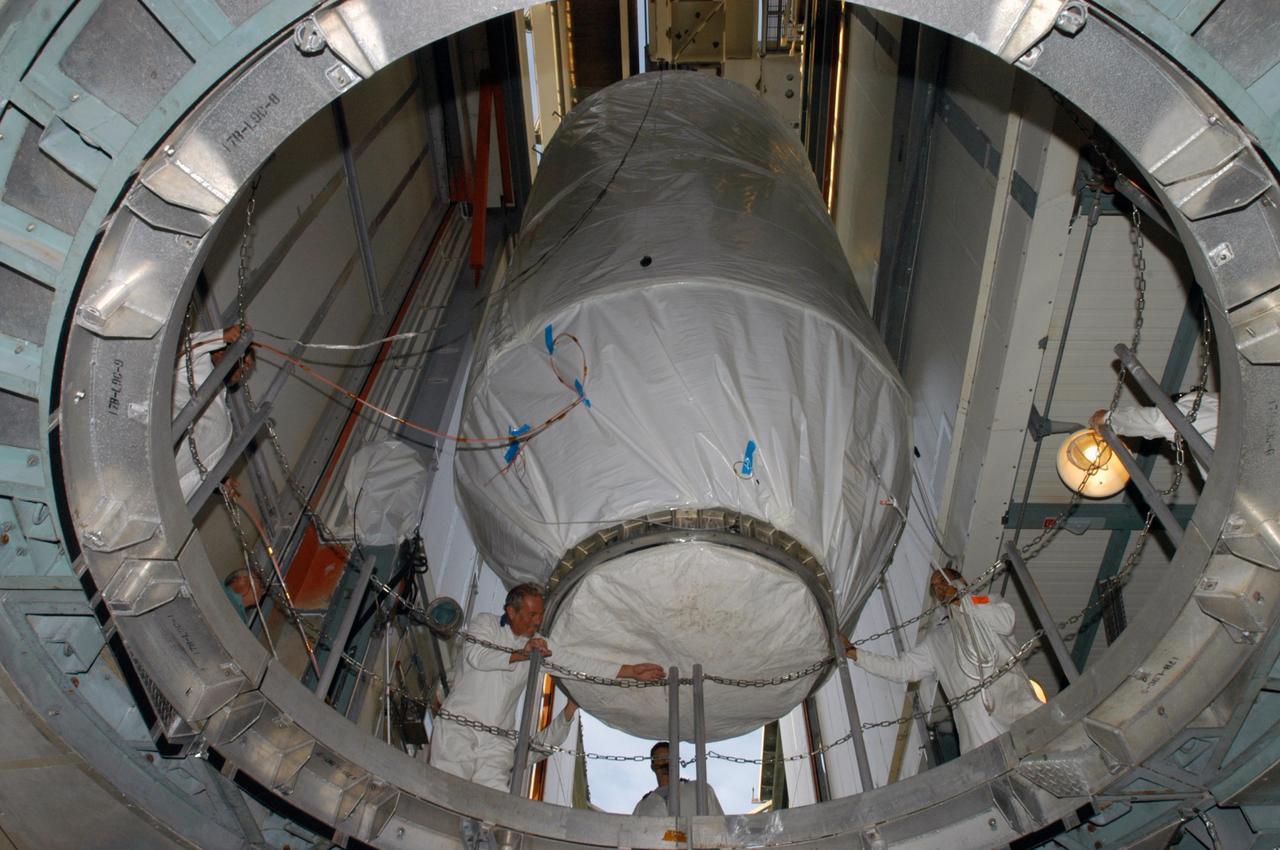
KENNEDY SPACE CENTER, FLA. - Inside the mobile service tower on Launch Pad 17-B at Cape Canaveral Air Force Station, workers check the clearance of the STEREO spacecraft as it is moved away from the opening. In the tower, STEREO will be mated with its launch vehicle, a Boeing Delta II rocket. STEREO stands for Solar Terrestrial Relations Observatory and comprises two spacecraft. The STEREO mission is the first to take measurements of the sun and solar wind in 3-dimension. This new view will improve our understanding of space weather and its impact on the Earth. The STEREO mission is managed by Goddard Space Flight Center. The Applied Physics Laboratory designed and built the spacecraft. The laboratory will maintain command and control of the observatories throughout the mission, while NASA tracks and receives the data, determines the orbit of the satellites, and coordinates the science results. STEREO is expected to lift off Oct. 25. Photo credit: NASA/George Shelton
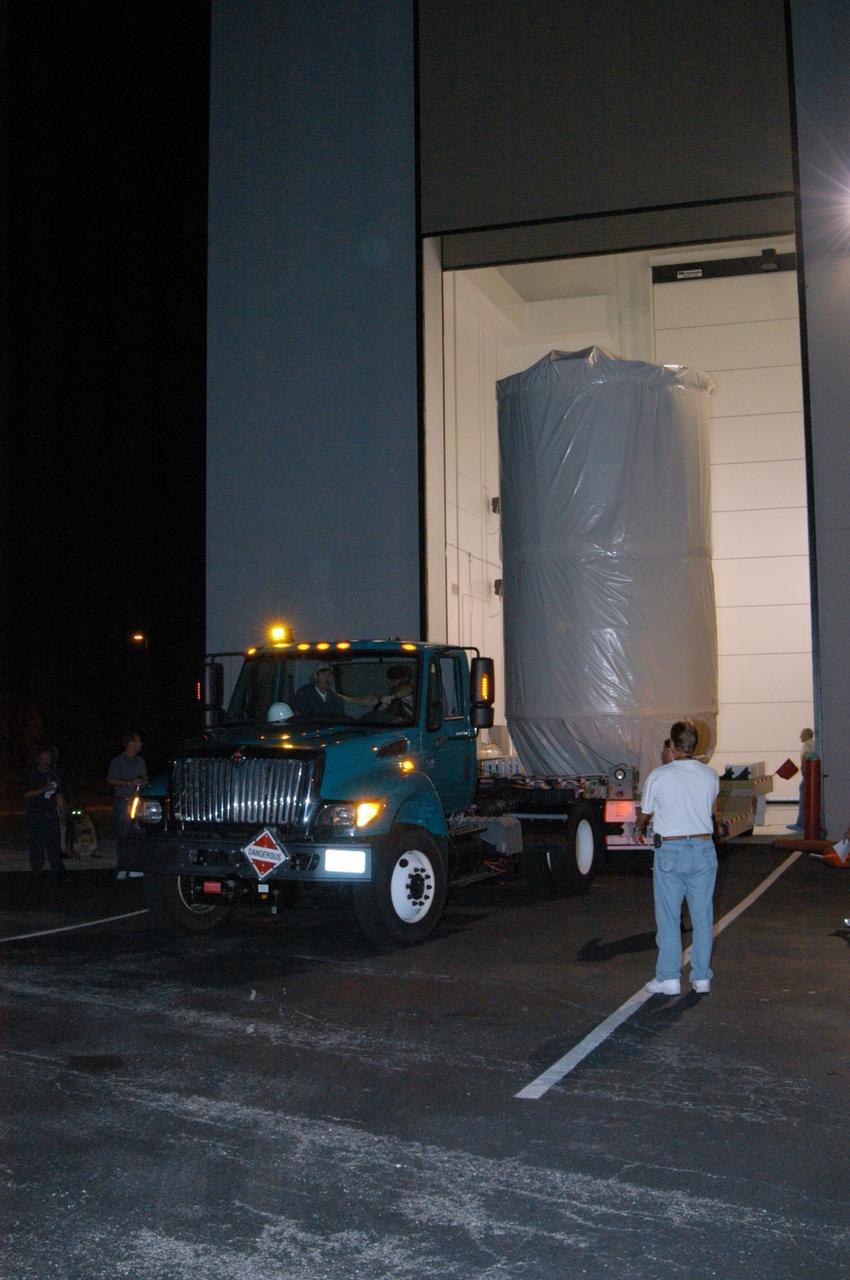
KENNEDY SPACE CENTER, FLA. - At Astrotech Space Operations in Titusville, Fla., the transporter carrying the STEREO spacecraft is attached to the truck for transportation to Launch Pad 17-B on Cape Canaveral Air Force Station. At the pad the spacecraft will be lifted into the mobile service tower. STEREO stands for Solar Terrestrial Relations Observatory and comprises two spacecraft. The STEREO mission is the first to take measurements of the sun and solar wind in 3-dimension. This new view will improve our understanding of space weather and its impact on the Earth. The STEREO mission is managed by Goddard Space Flight Center. The Applied Physics Laboratory designed and built the spacecraft. The laboratory will maintain command and control of the observatories throughout the mission, while NASA tracks and receives the data, determines the orbit of the satellites, and coordinates the science results. STEREO is expected to lift off Oct. 25. Photo credit: NASA/George Shelton
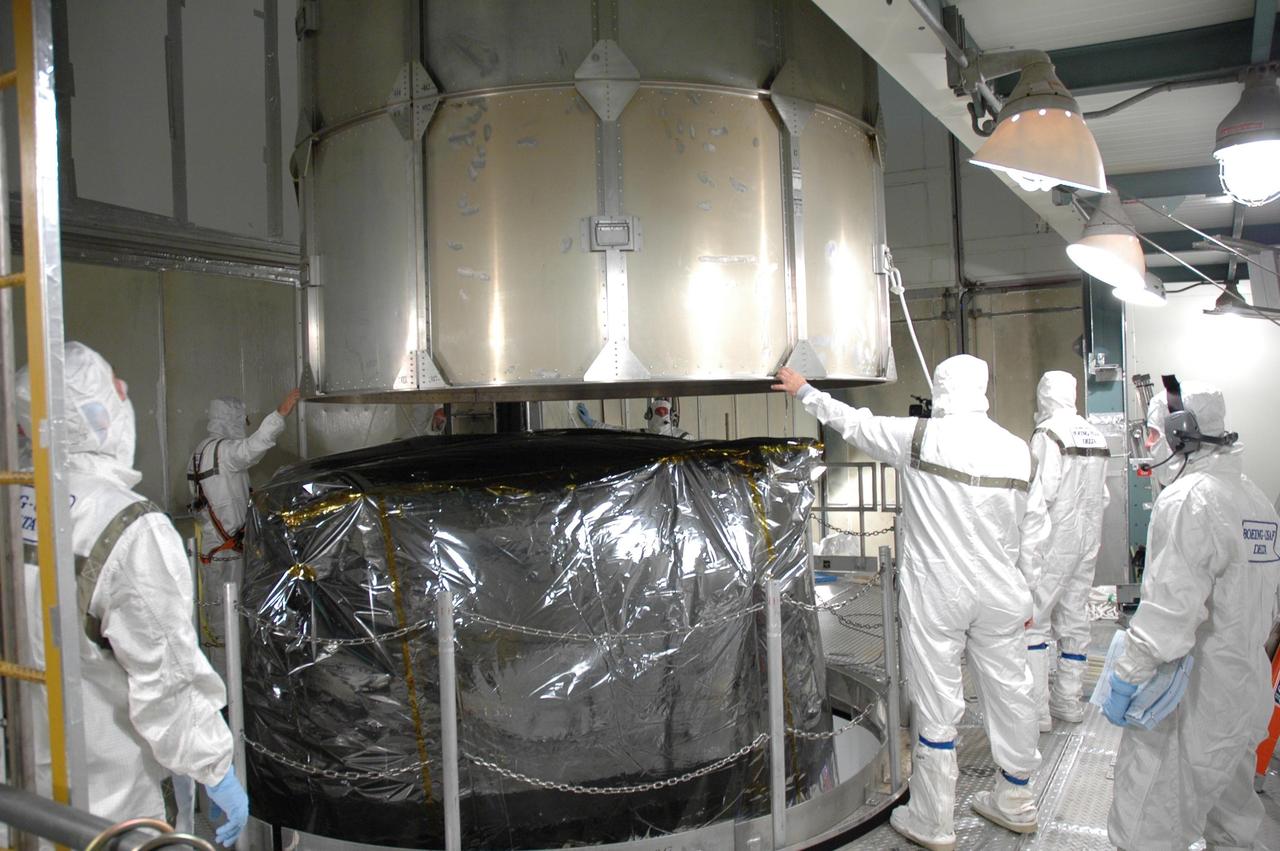
KENNEDY SPACE CENTER, FLA. - Inside the mobile service tower on Launch Pad 17-B at Cape Canaveral Air Force Station, workers help guide the upper segement of the transportation canister away from the STEREO spacecraft. STEREO is being prepared for launch, scheduled for Oct. 25. STEREO stands for Solar Terrestrial Relations Observatory and comprises two spacecraft that will launch in a piggyback mode, separating after reaching the appropriate orbit. The STEREO mission is the first to take measurements of the sun and solar wind in 3-dimension. This new view will improve our understanding of space weather and its impact on the Earth. The STEREO mission is managed by Goddard. The Applied Physics Laboratory designed and built the spacecraft. The laboratory will maintain command and control of the observatories throughout the mission, while NASA tracks and receives the data, determines the orbit of the satellites, and coordinates the science results. Photo credit: NASA/Jim Grossmann
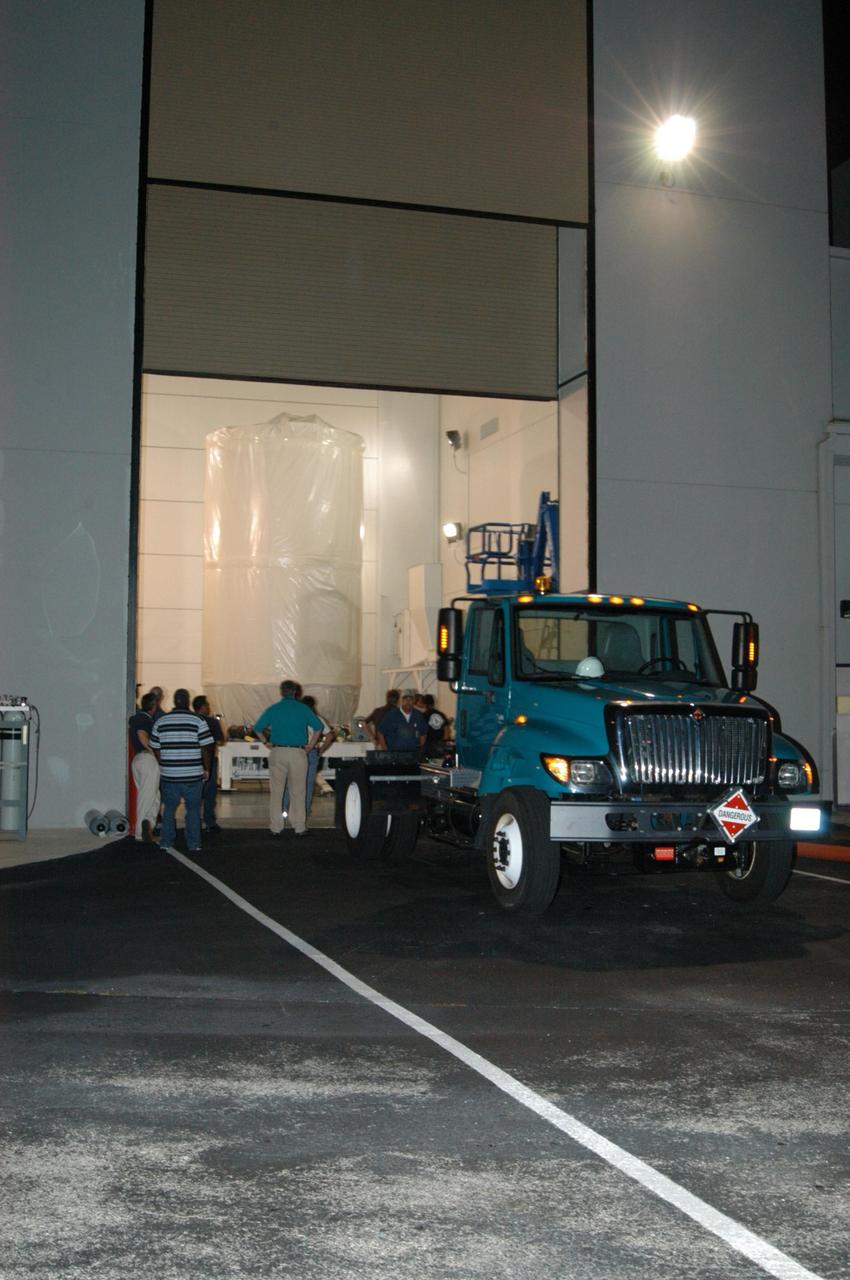
KENNEDY SPACE CENTER, FLA. - At Astrotech Space Operations in Titusville, Fla., the transporter carrying the STEREO spacecraft is secured to the truck that will transport it to Launch Pad 17-B on Cape Canaveral Air Force Station. At the pad, the spacecraft will be lifted into the mobile service tower. STEREO stands for Solar Terrestrial Relations Observatory and comprises two spacecraft. The STEREO mission is the first to take measurements of the sun and solar wind in 3-dimension. This new view will improve our understanding of space weather and its impact on the Earth. The STEREO mission is managed by Goddard Space Flight Center. The Applied Physics Laboratory designed and built the spacecraft. The laboratory will maintain command and control of the observatories throughout the mission, while NASA tracks and receives the data, determines the orbit of the satellites, and coordinates the science results. STEREO is expected to lift off Oct. 25. Photo credit: NASA/George Shelton
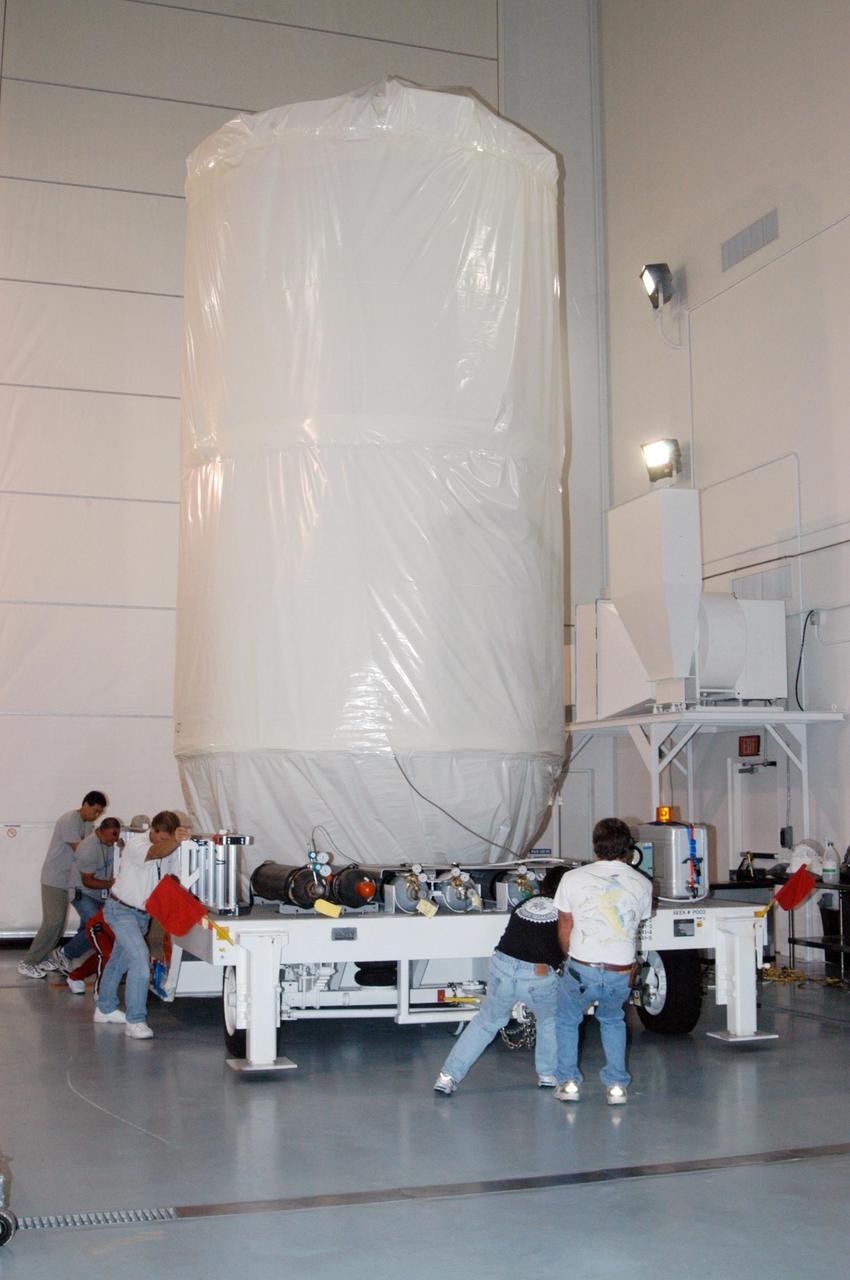
KENNEDY SPACE CENTER, FLA. - At Astrotech Space Operations in Titusville, Fla., the STEREO spacecraft is being moved out of the high bay. A truck will transport the spacecraft to Launch Pad 17-B on Cape Canaveral Air Force Station where it will be lifted into the mobile service tower. STEREO stands for Solar Terrestrial Relations Observatory and comprises two spacecraft. The STEREO mission is the first to take measurements of the sun and solar wind in 3-dimension. This new view will improve our understanding of space weather and its impact on the Earth. The STEREO mission is managed by Goddard. The Applied Physics Laboratory designed and built the spacecraft. The laboratory will maintain command and control of the observatories throughout the mission, while NASA tracks and receives the data, determines the orbit of the satellites, and coordinates the science results. STEREO is expected to lift off Oct. 25. Photo credit: NASA/George Shelton
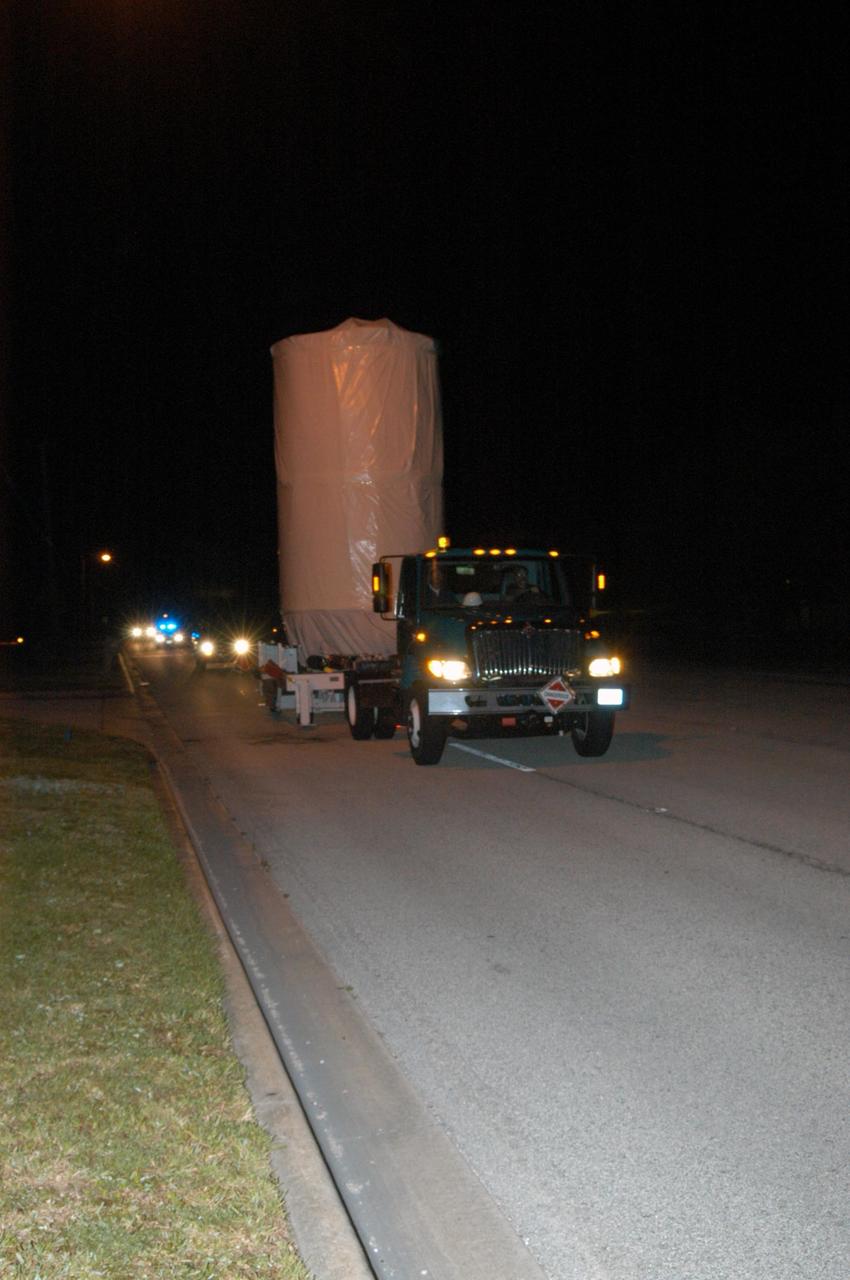
KENNEDY SPACE CENTER, FLA. - With a convoy of escorts, the STEREO spacecraft is transported to Launch Pad 17-B on Cape Canaveral Air Force Station. At the pad the spacecraft will be lifted into the mobile service tower. STEREO stands for Solar Terrestrial Relations Observatory and comprises two spacecraft. The STEREO mission is the first to take measurements of the sun and solar wind in 3-dimension. This new view will improve our understanding of space weather and its impact on the Earth. The STEREO mission is managed by Goddard Space Flight Center. The Applied Physics Laboratory designed and built the spacecraft. The laboratory will maintain command and control of the observatories throughout the mission, while NASA tracks and receives the data, determines the orbit of the satellites, and coordinates the science results. STEREO is expected to lift off Oct. 25. Photo credit: NASA/George Shelton
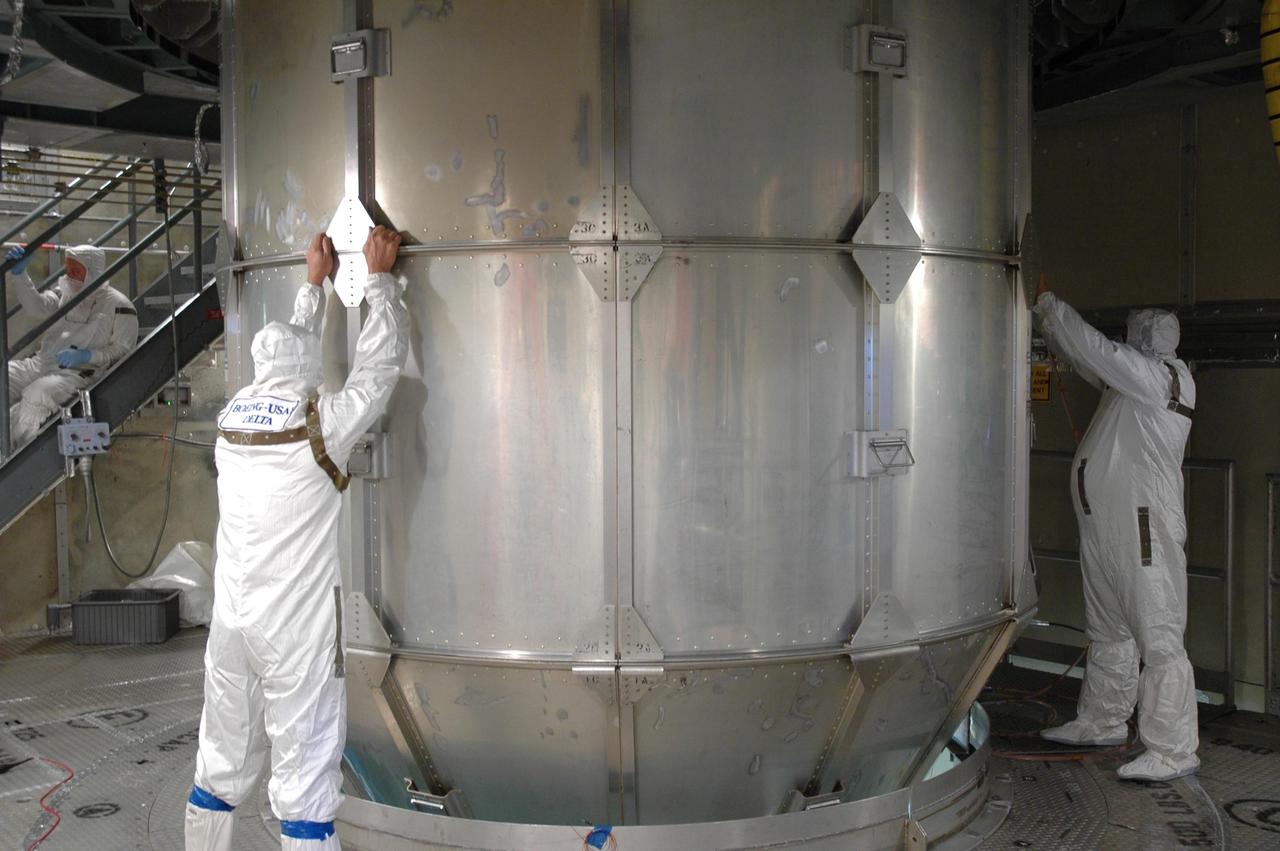
KENNEDY SPACE CENTER, FLA. - Inside the mobile service tower on Launch Pad 17-B at Cape Canaveral Air Force Station, workers unlatch the transportation canister segments that enclose the STEREO spacecraft. The spacecraft is being prepared for launch, scheduled for Oct. 25. STEREO stands for Solar Terrestrial Relations Observatory and comprises two spacecraft that will launch in a piggyback mode, separating after reaching the appropriate orbit. The STEREO mission is the first to take measurements of the sun and solar wind in 3-dimension. This new view will improve our understanding of space weather and its impact on the Earth. The STEREO mission is managed by Goddard. The Applied Physics Laboratory designed and built the spacecraft. The laboratory will maintain command and control of the observatories throughout the mission, while NASA tracks and receives the data, determines the orbit of the satellites, and coordinates the science results. Photo credit: NASA/Jim Grossmann
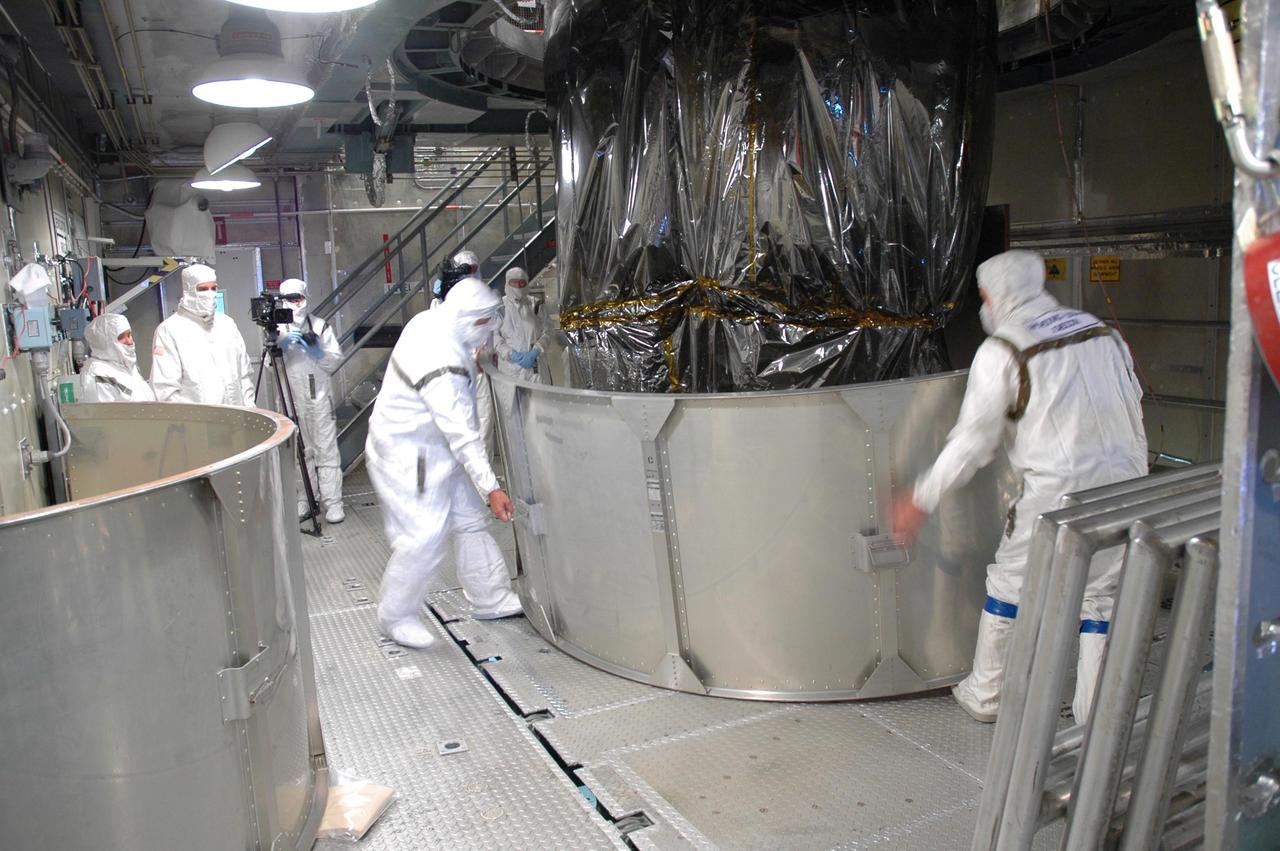
KENNEDY SPACE CENTER, FLA. - Inside the mobile service tower on Launch Pad 17-B at Cape Canaveral Air Force Station, workers begin removing the lower segment of the transportation canister that encloses the STEREO spacecraft. The spacecraft is being prepared for launch, scheduled for Oct. 25. STEREO stands for Solar Terrestrial Relations Observatory and comprises two spacecraft that will launch in a piggyback mode, separating after reaching the appropriate orbit. The STEREO mission is the first to take measurements of the sun and solar wind in 3-dimension. This new view will improve our understanding of space weather and its impact on the Earth. The STEREO mission is managed by Goddard. The Applied Physics Laboratory designed and built the spacecraft. The laboratory will maintain command and control of the observatories throughout the mission, while NASA tracks and receives the data, determines the orbit of the satellites, and coordinates the science results. Photo credit: NASA/Jim Grossmann
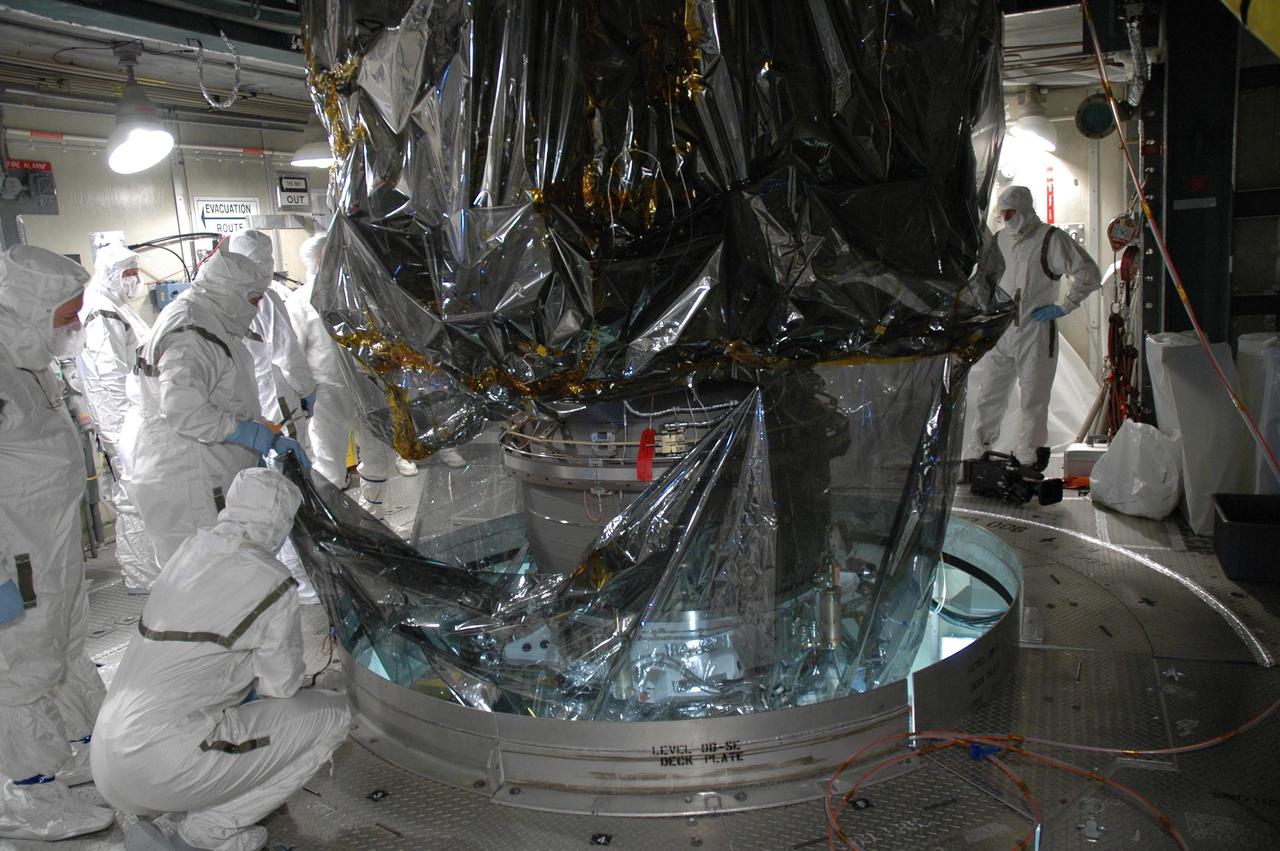
KENNEDY SPACE CENTER, FLA. - Inside the mobile service tower on Launch Pad 17-B at Cape Canaveral Air Force Station, workers begin removing the protective cover surrounding the STEREO spacecraft. The spacecraft is being prepared for launch, scheduled for Oct. 25. STEREO stands for Solar Terrestrial Relations Observatory and comprises two spacecraft that will launch in a piggyback mode, separating after reaching the appropriate orbit. The STEREO mission is the first to take measurements of the sun and solar wind in 3-dimension. This new view will improve our understanding of space weather and its impact on the Earth. The STEREO mission is managed by Goddard. The Applied Physics Laboratory designed and built the spacecraft. The laboratory will maintain command and control of the observatories throughout the mission, while NASA tracks and receives the data, determines the orbit of the satellites, and coordinates the science results. Photo credit: NASA/Jim Grossmann

KENNEDY SPACE CENTER, FLA. - Inside the mobile service tower on Launch Pad 17-B at Cape Canaveral Air Force Station, the transportation canister and protective cover have been removed from the STEREO spacecraft in preparation for launch. The scheduled launch date is Oct. 25. STEREO stands for Solar Terrestrial Relations Observatory and comprises two spacecraft that will launch in a piggyback mode, separating after reaching the appropriate orbit. The STEREO mission is the first to take measurements of the sun and solar wind in 3-dimension. This new view will improve our understanding of space weather and its impact on the Earth. The STEREO mission is managed by Goddard. The Applied Physics Laboratory designed and built the spacecraft. The laboratory will maintain command and control of the observatories throughout the mission, while NASA tracks and receives the data, determines the orbit of the satellites, and coordinates the science results. Photo credit: NASA/Jim Grossmann
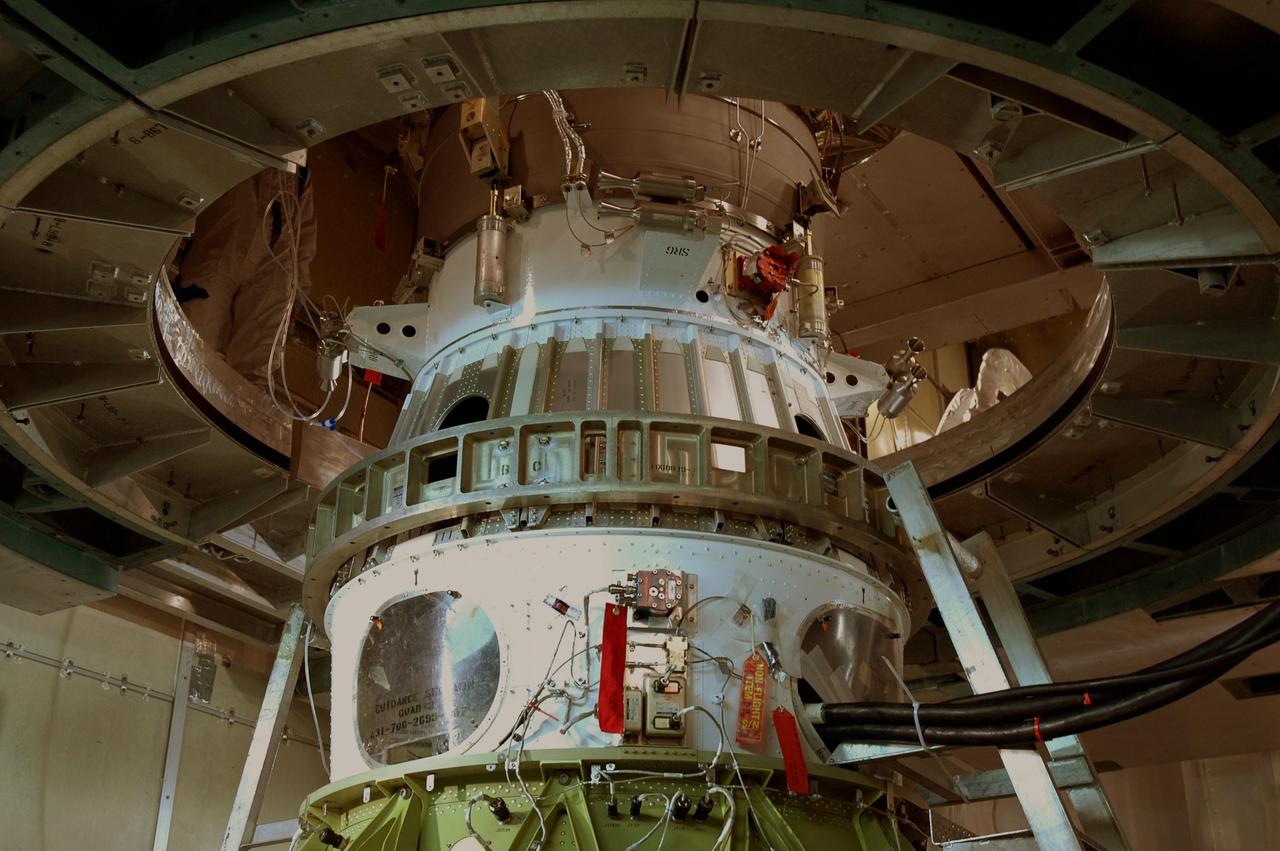
KENNEDY SPACE CENTER, FLA. - Inside the mobile service tower on Launch Pad 17-B at Cape Canaveral Air Force Station, the transportation canister and protective cover have been removed from the STEREO spacecraft in preparation for launch. The scheduled launch date is Oct. 25. STEREO stands for Solar Terrestrial Relations Observatory and comprises two spacecraft that will launch in a piggyback mode, separating after reaching the appropriate orbit. The STEREO mission is the first to take measurements of the sun and solar wind in 3-dimension. This new view will improve our understanding of space weather and its impact on the Earth. The STEREO mission is managed by Goddard. The Applied Physics Laboratory designed and built the spacecraft. The laboratory will maintain command and control of the observatories throughout the mission, while NASA tracks and receives the data, determines the orbit of the satellites, and coordinates the science results. Photo credit: NASA/Jim Grossmann
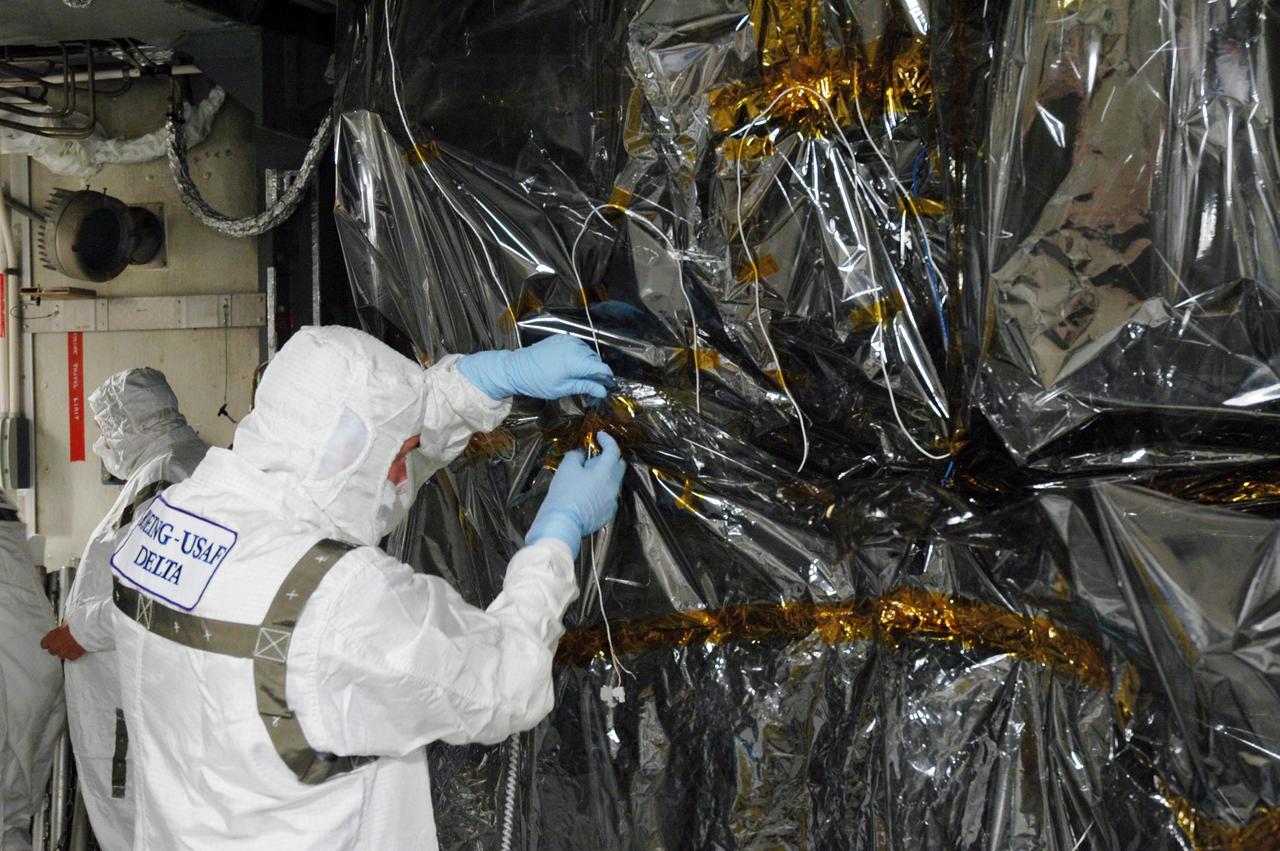
KENNEDY SPACE CENTER, FLA. - Inside the mobile service tower on Launch Pad 17-B at Cape Canaveral Air Force Station, workers begin removing the protective cover surrounding the STEREO spacecraft. The spacecraft is being prepared for launch, scheduled for Oct. 25. STEREO stands for Solar Terrestrial Relations Observatory and comprises two spacecraft that will launch in a piggyback mode, separating after reaching the appropriate orbit. The STEREO mission is the first to take measurements of the sun and solar wind in 3-dimension. This new view will improve our understanding of space weather and its impact on the Earth. The STEREO mission is managed by Goddard. The Applied Physics Laboratory designed and built the spacecraft. The laboratory will maintain command and control of the observatories throughout the mission, while NASA tracks and receives the data, determines the orbit of the satellites, and coordinates the science results. Photo credit: NASA/Jim Grossmann

KENNEDY SPACE CENTER, FLA. - Inside the mobile service tower on Launch Pad 17-B at Cape Canaveral Air Force Station, workers observe the lifting of the upper segment of the transportation canister that encloses the STEREO spacecraft. The spacecraft is being prepared for launch, scheduled for Oct. 25. STEREO stands for Solar Terrestrial Relations Observatory and comprises two spacecraft that will launch in a piggyback mode, separating after reaching the appropriate orbit. The STEREO mission is the first to take measurements of the sun and solar wind in 3-dimension. This new view will improve our understanding of space weather and its impact on the Earth. The STEREO mission is managed by Goddard. The Applied Physics Laboratory designed and built the spacecraft. The laboratory will maintain command and control of the observatories throughout the mission, while NASA tracks and receives the data, determines the orbit of the satellites, and coordinates the science results. Photo credit: NASA/Jim Grossmann
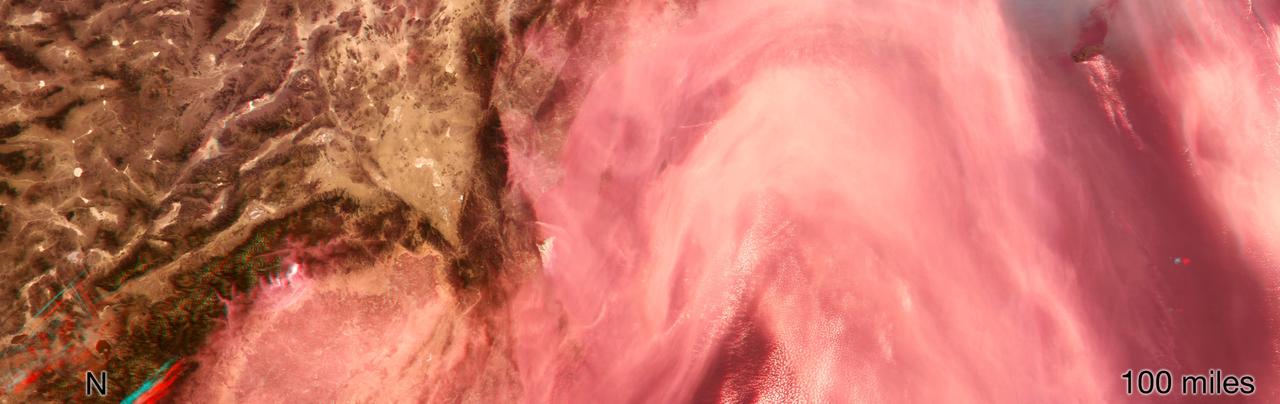
Data from the Multi-angle Imaging SpectroRadiometer (MISR) instrument aboard NASA's Terra satellite was used to produce this stereo anaglyph of the Woolsey Fire in southern California on Nov. 11, 2018. It shows a three-dimensional view of the smoke plume -- visible through red-blue 3D glasses. https://photojournal.jpl.nasa.gov/catalog/PIA22817
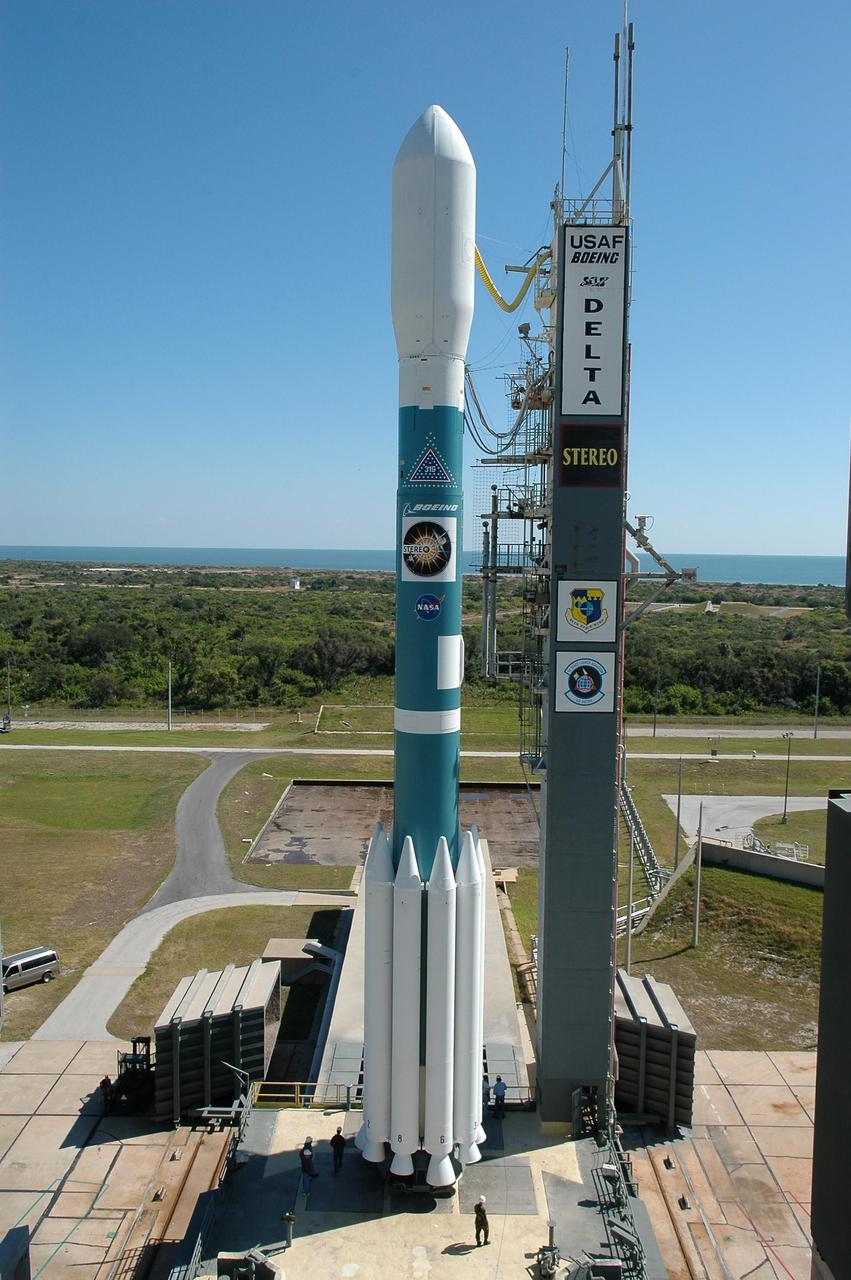
KENNEDY SPACE CENTER, FLA. - After the mobile service tower has rolled away, the Delta II rocket with the STEREO spacecraft at top stands alone next to the launch gantry. Liftoff is scheduled in a window between 8:38 and 8:53 p.m. on Oct. 25. STEREO (Solar Terrestrial Relations Observatory) is a two-year mission using two nearly identical observatories, one ahead of Earth in its orbit and the other trailing behind. The duo will provide 3-D measurements of the sun and its flow of energy, enabling scientists to study the nature of coronal mass ejections and why they happen. The ejections are a major source of the magnetic disruptions on Earth and are a key component of space weather. The disruptions can greatly effect satellite operations, communications, power systems, humans in space and global climate. Designed and built by the Johns Hopkins University Applied Physics Laboratory (APL) , the STEREO mission is being managed by NASA Goddard Space Flight Center. APL will maintain command and control of the observatories throughout the mission, while NASA tracks and receives the data, determines the orbit of the satellites, and coordinates the science results. Photo credit: NASA/Kim Shiflett
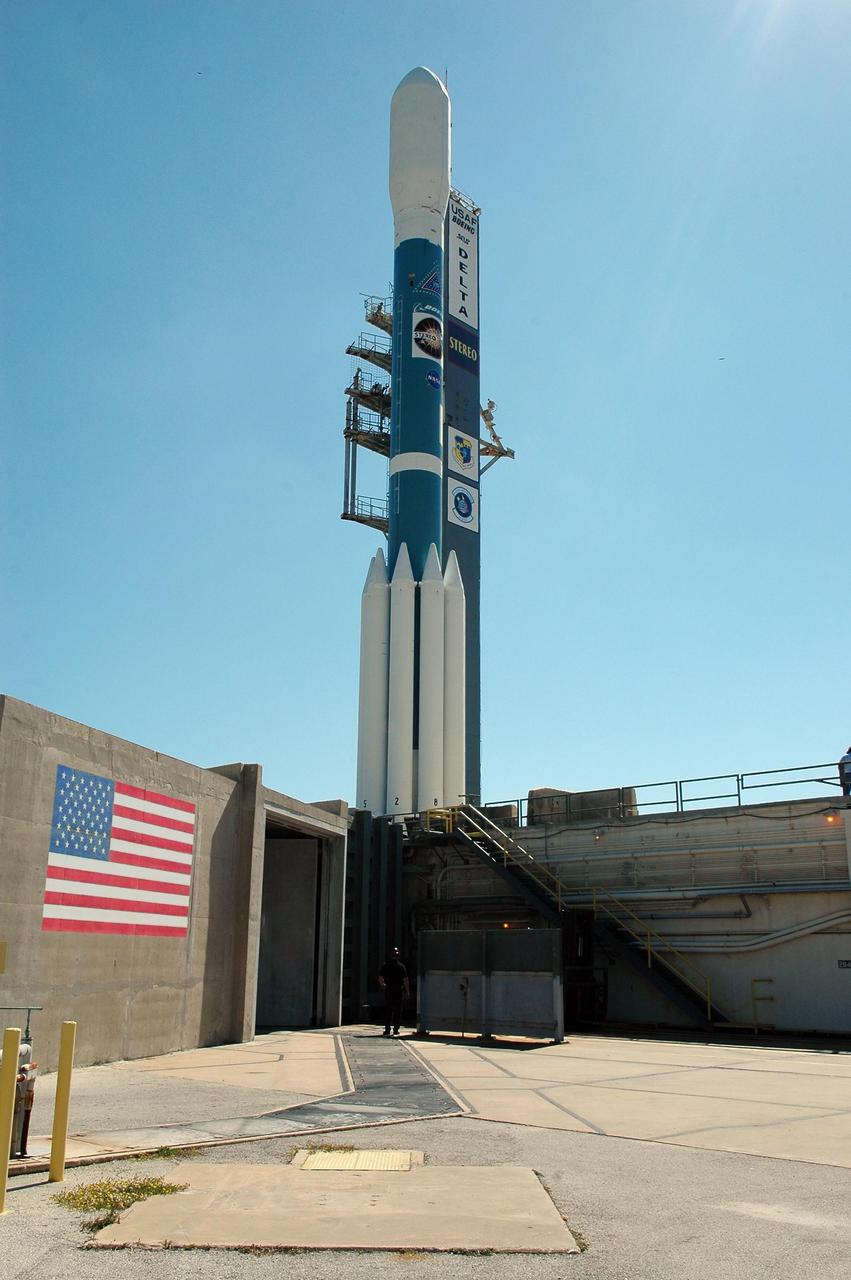
KENNEDY SPACE CENTER, FLA. - The Delta II rocket with the STEREO spacecraft at top stands next to the launch gantry, ready for liftoff. Launch is scheduled in a window between 8:38 and 8:53 p.m. on Oct. 25.STEREO (Solar Terrestrial Relations Observatory) is a two-year mission using two nearly identical observatories, one ahead of Earth in its orbit and the other trailing behind. The duo will provide 3-D measurements of the sun and its flow of energy, enabling scientists to study the nature of coronal mass ejections and why they happen. The ejections are a major source of the magnetic disruptions on Earth and are a key component of space weather. The disruptions can greatly effect satellite operations, communications, power systems, humans in space and global climate. Designed and built by the Johns Hopkins University Applied Physics Laboratory (APL) , the STEREO mission is being managed by NASA Goddard Space Flight Center. APL will maintain command and control of the observatories throughout the mission, while NASA tracks and receives the data, determines the orbit of the satellites, and coordinates the science results. Photo credit: NASA/Kim Shiflett
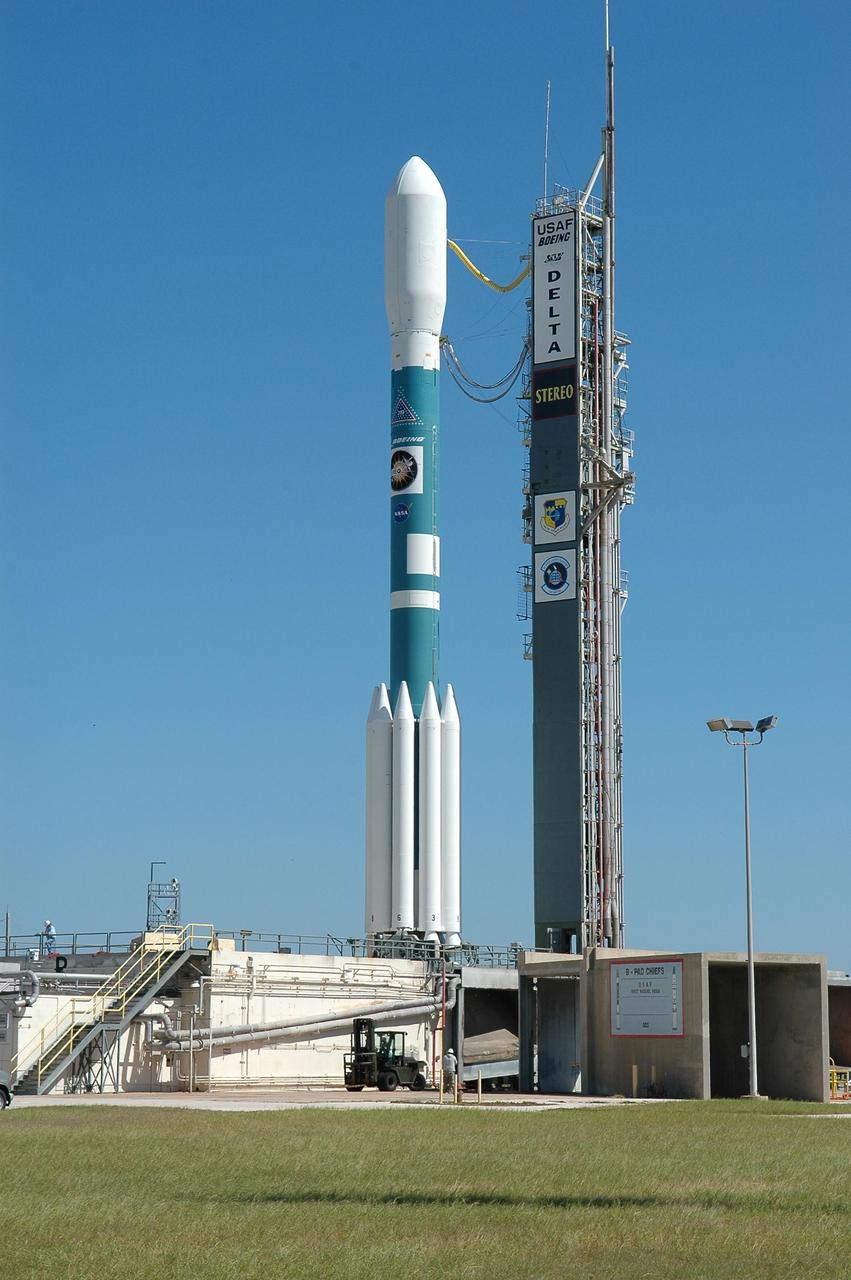
KENNEDY SPACE CENTER, FLA. - The Delta II rocket with the STEREO spacecraft at top stands next to the launch gantry, ready for liftoff. Launch is scheduled in a window between 8:38 and 8:53 p.m. on Oct. 25. STEREO (Solar Terrestrial Relations Observatory) is a two-year mission using two nearly identical observatories, one ahead of Earth in its orbit and the other trailing behind. The duo will provide 3-D measurements of the sun and its flow of energy, enabling scientists to study the nature of coronal mass ejections and why they happen. The ejections are a major source of the magnetic disruptions on Earth and are a key component of space weather. The disruptions can greatly effect satellite operations, communications, power systems, humans in space and global climate. Designed and built by the Johns Hopkins University Applied Physics Laboratory (APL) , the STEREO mission is being managed by NASA Goddard Space Flight Center. APL will maintain command and control of the observatories throughout the mission, while NASA tracks and receives the data, determines the orbit of the satellites, and coordinates the science results. Photo credit: NASA/Kim Shiflett
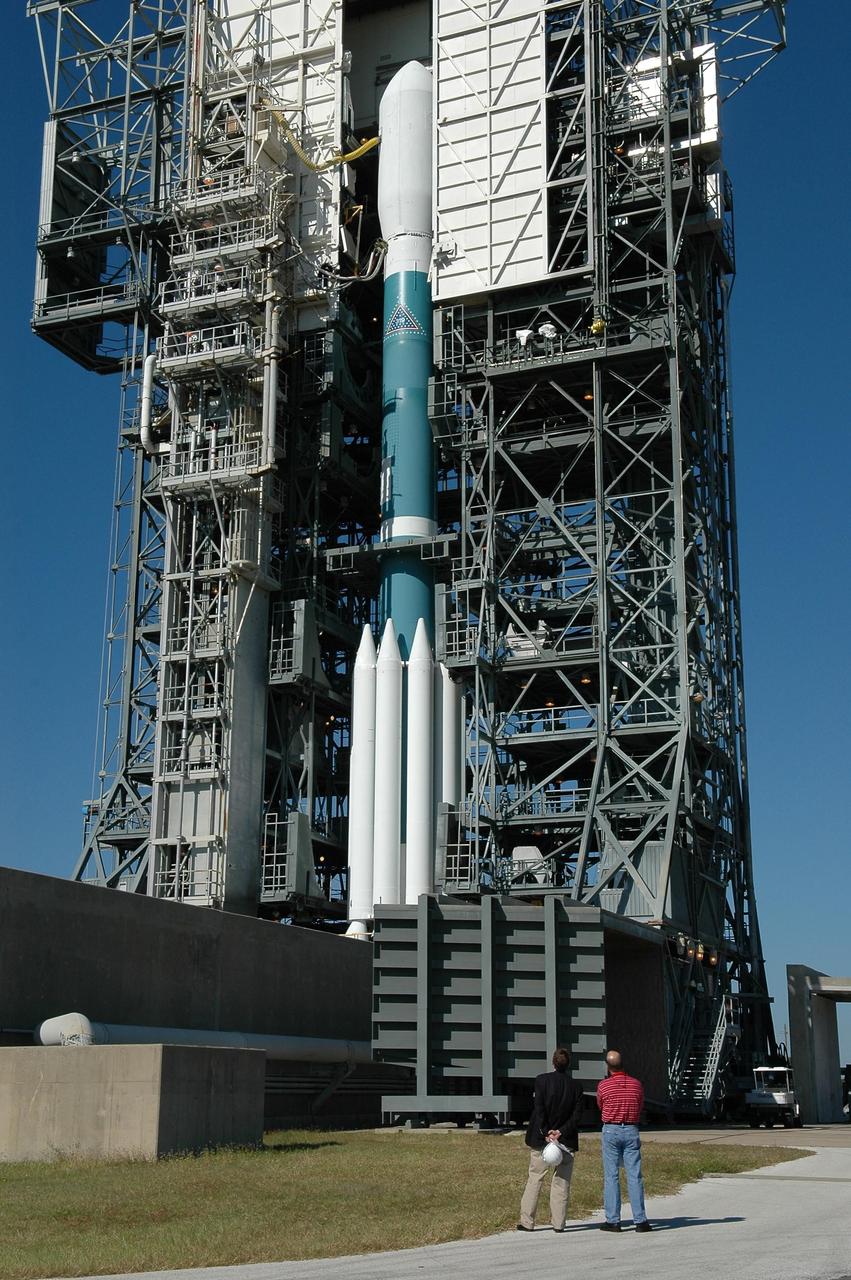
KENNEDY SPACE CENTER, FLA. - The mobile service tower begins to roll away from the STEREO spacecraft aboard the Delta II launch vehicle in preparation for launch. Liftoff is scheduled in a window between 8:38 and 8:53 p.m. on Oct. 25. STEREO (Solar Terrestrial Relations Observatory) is a two-year mission using two nearly identical observatories, one ahead of Earth in its orbit and the other trailing behind. The duo will provide 3-D measurements of the sun and its flow of energy, enabling scientists to study the nature of coronal mass ejections and why they happen. The ejections are a major source of the magnetic disruptions on Earth and are a key component of space weather. The disruptions can greatly effect satellite operations, communications, power systems, humans in space and global climate. Designed and built by the Johns Hopkins University Applied Physics Laboratory (APL) , the STEREO mission is being managed by NASA Goddard Space Flight Center. APL will maintain command and control of the observatories throughout the mission, while NASA tracks and receives the data, determines the orbit of the satellites, and coordinates the science results. Photo credit: NASA/Kim Shiflett

KENNEDY SPACE CENTER, FLA. - Captured in the water of the Banana River, the brilliant light from the Delta II carrying the STEREO spacecraft lights up the night sky. Liftoff from Launch Pad 17-B at Cape Canaveral Air Force Station was at 8:52 p.m. EDT. STEREO (Solar Terrestrial Relations Observatory) is a two-year mission using two nearly identical observatories, one ahead of Earth in its orbit and the other trailing behind. The duo will provide 3-D measurements of the sun and its flow of energy, enabling scientists to study the nature of coronal mass ejections and why they happen. The ejections are a major source of the magnetic disruptions on Earth and are a key component of space weather. The disruptions can greatly effect satellite operations, communications, power systems, humans in space and global climate. Designed and built by the Johns Hopkins University Applied Physics Laboratory (APL) , the STEREO mission is being managed by NASA Goddard Space Flight Center. APL will maintain command and control of the observatories throughout the mission, while NASA tracks and receives the data, determines the orbit of the satellites, and coordinates the science results. Photo credit: NASA/Jim Grossmann

KENNEDY SPACE CENTER, FLA. - The Banana River reflects the brilliant launch of the Delta II carrying the STEREO spacecraft. Liftoff from Launch Pad 17-B at Cape Canaveral Air Force Station was at 8:52 p.m. EDT. STEREO (Solar Terrestrial Relations Observatory) is a two-year mission using two nearly identical observatories, one ahead of Earth in its orbit and the other trailing behind. The duo will provide 3-D measurements of the sun and its flow of energy, enabling scientists to study the nature of coronal mass ejections and why they happen. The ejections are a major source of the magnetic disruptions on Earth and are a key component of space weather. The disruptions can greatly effect satellite operations, communications, power systems, humans in space and global climate. Designed and built by the Johns Hopkins University Applied Physics Laboratory (APL) , the STEREO mission is being managed by NASA Goddard Space Flight Center. APL will maintain command and control of the observatories throughout the mission, while NASA tracks and receives the data, determines the orbit of the satellites, and coordinates the science results. Photo credit: NASA/Jim Grossmann
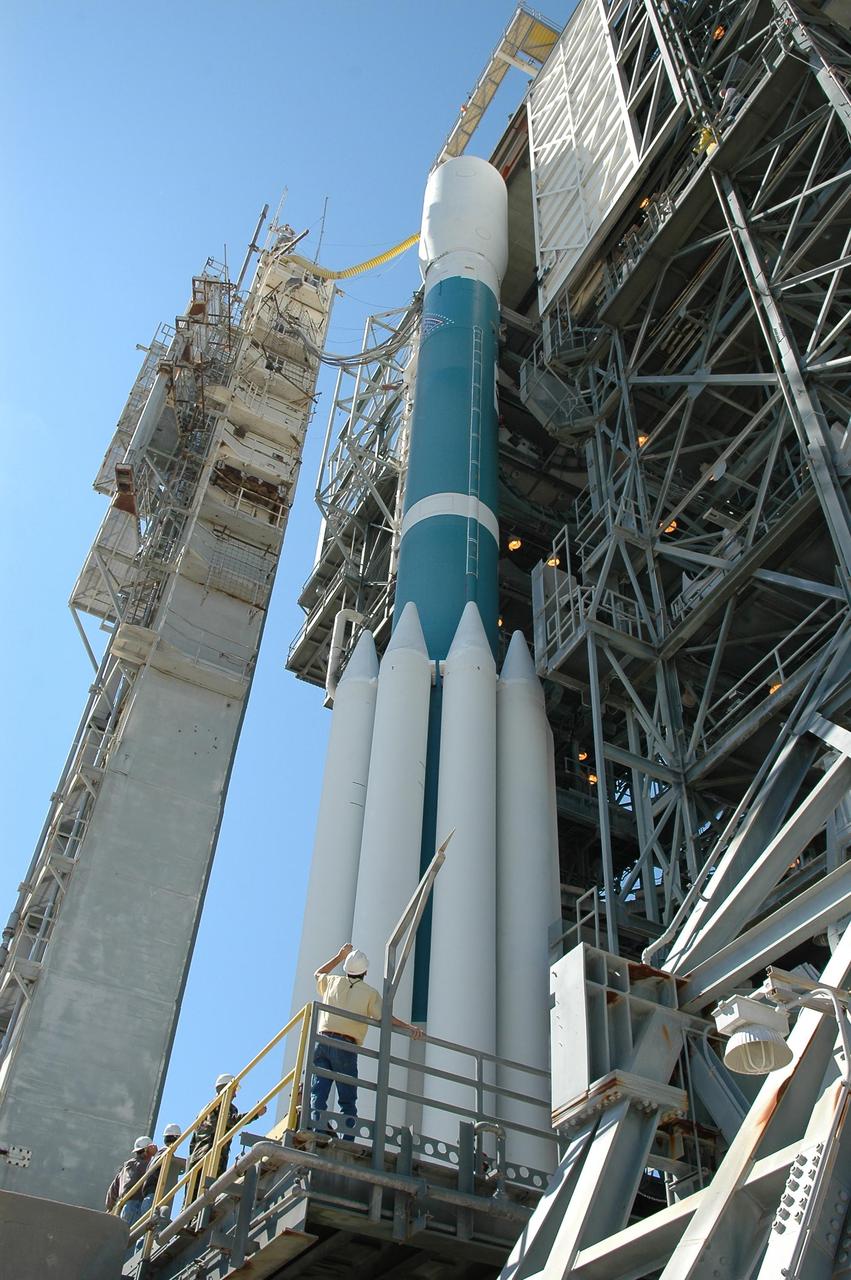
KENNEDY SPACE CENTER, FLA. - The mobile service tower (right) begins to roll away from the STEREO spacecraft aboard the Delta II launch vehicle in preparation for launch. Liftoff is scheduled in a window between 8:38 and 8:53 p.m. on Oct. 25. STEREO (Solar Terrestrial Relations Observatory) is a two-year mission using two nearly identical observatories, one ahead of Earth in its orbit and the other trailing behind. The duo will provide 3-D measurements of the sun and its flow of energy, enabling scientists to study the nature of coronal mass ejections and why they happen. The ejections are a major source of the magnetic disruptions on Earth and are a key component of space weather. The disruptions can greatly effect satellite operations, communications, power systems, humans in space and global climate. Designed and built by the Johns Hopkins University Applied Physics Laboratory (APL) , the STEREO mission is being managed by NASA Goddard Space Flight Center. APL will maintain command and control of the observatories throughout the mission, while NASA tracks and receives the data, determines the orbit of the satellites, and coordinates the science results. Photo credit: NASA/Kim Shiflett
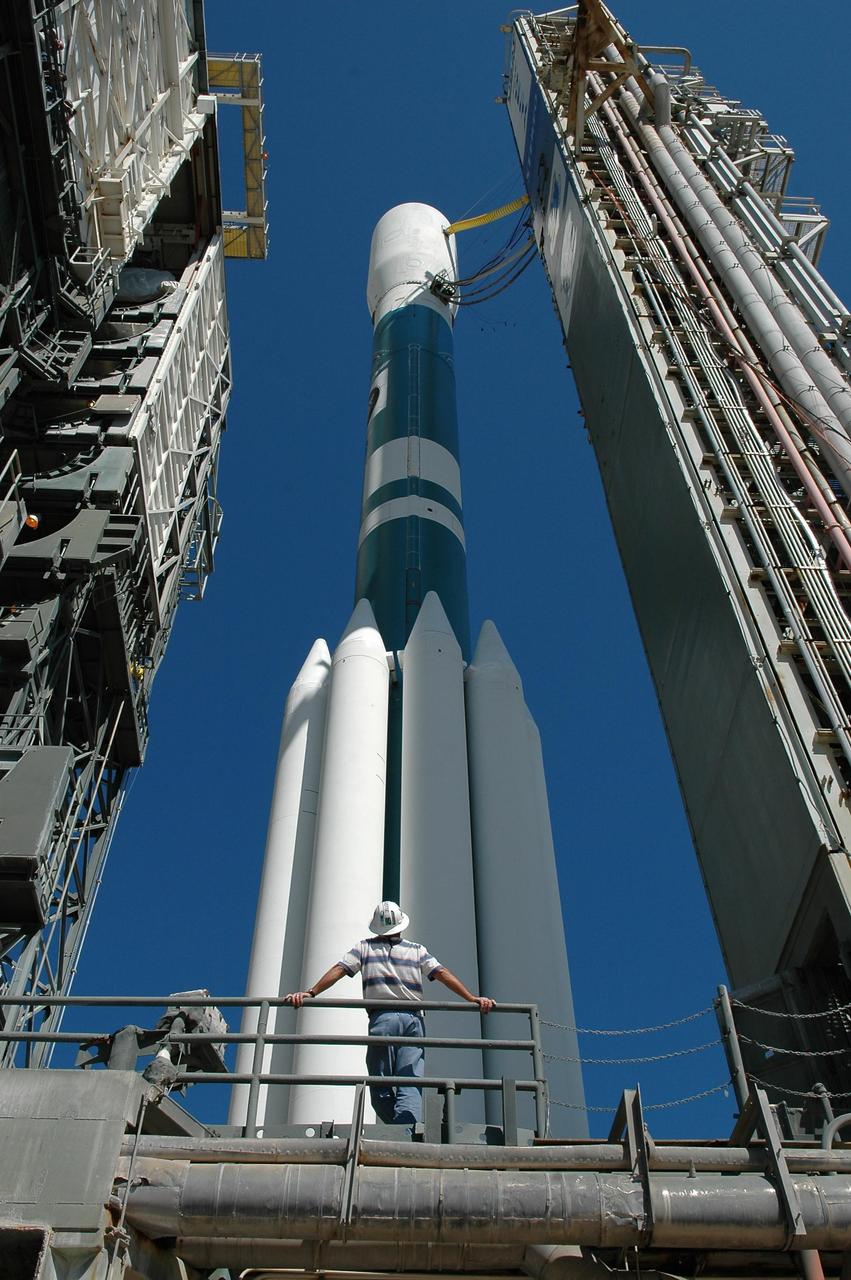
KENNEDY SPACE CENTER, FLA. - The mobile service tower (left) rolls away from the STEREO spacecraft aboard the Delta II launch vehicle in preparation for launch. Liftoff is scheduled in a window between 8:38 and 8:53 p.m. on Oct. 25. STEREO (Solar Terrestrial Relations Observatory) is a two-year mission using two nearly identical observatories, one ahead of Earth in its orbit and the other trailing behind. The duo will provide 3-D measurements of the sun and its flow of energy, enabling scientists to study the nature of coronal mass ejections and why they happen. The ejections are a major source of the magnetic disruptions on Earth and are a key component of space weather. The disruptions can greatly effect satellite operations, communications, power systems, humans in space and global climate. Designed and built by the Johns Hopkins University Applied Physics Laboratory (APL) , the STEREO mission is being managed by NASA Goddard Space Flight Center. APL will maintain command and control of the observatories throughout the mission, while NASA tracks and receives the data, determines the orbit of the satellites, and coordinates the science results. Photo credit: NASA/Kim Shiflett
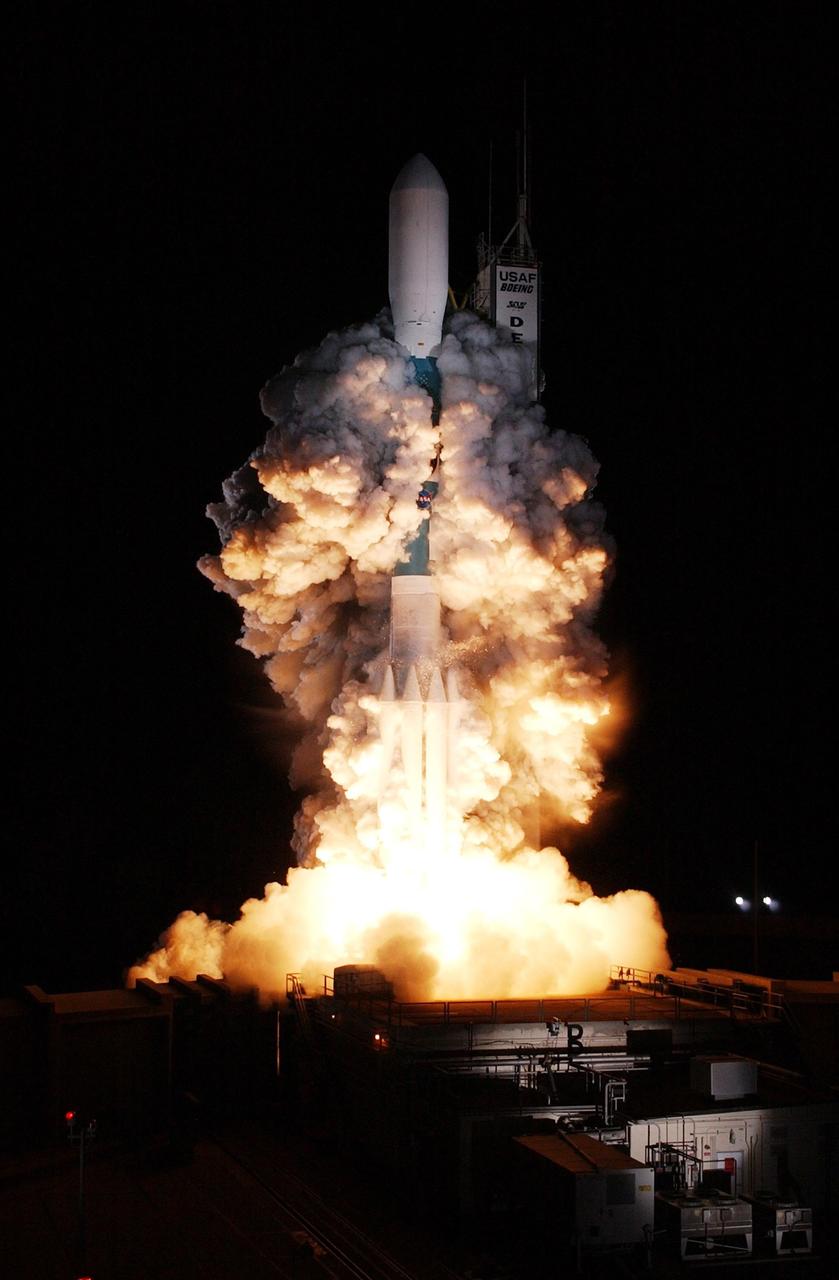
KENNEDY SPACE CENTER, FLA. - Just after liftoff, clouds of smoke billow up and around the Delta II rocket carrying the STEREO spacecraft on top. Liftoff from Launch Pad 17-B at Cape Canaveral Air Force Station was at 8:52 p.m. EDT. STEREO (Solar Terrestrial Relations Observatory) is a two-year mission using two nearly identical observatories, one ahead of Earth in its orbit and the other trailing behind. The duo will provide 3-D measurements of the sun and its flow of energy, enabling scientists to study the nature of coronal mass ejections and why they happen. The ejections are a major source of the magnetic disruptions on Earth and are a key component of space weather. The disruptions can greatly effect satellite operations, communications, power systems, humans in space and global climate. Designed and built by the Johns Hopkins University Applied Physics Laboratory (APL) , the STEREO mission is being managed by NASA Goddard Space Flight Center. APL will maintain command and control of the observatories throughout the mission, while NASA tracks and receives the data, determines the orbit of the satellites, and coordinates the science results.
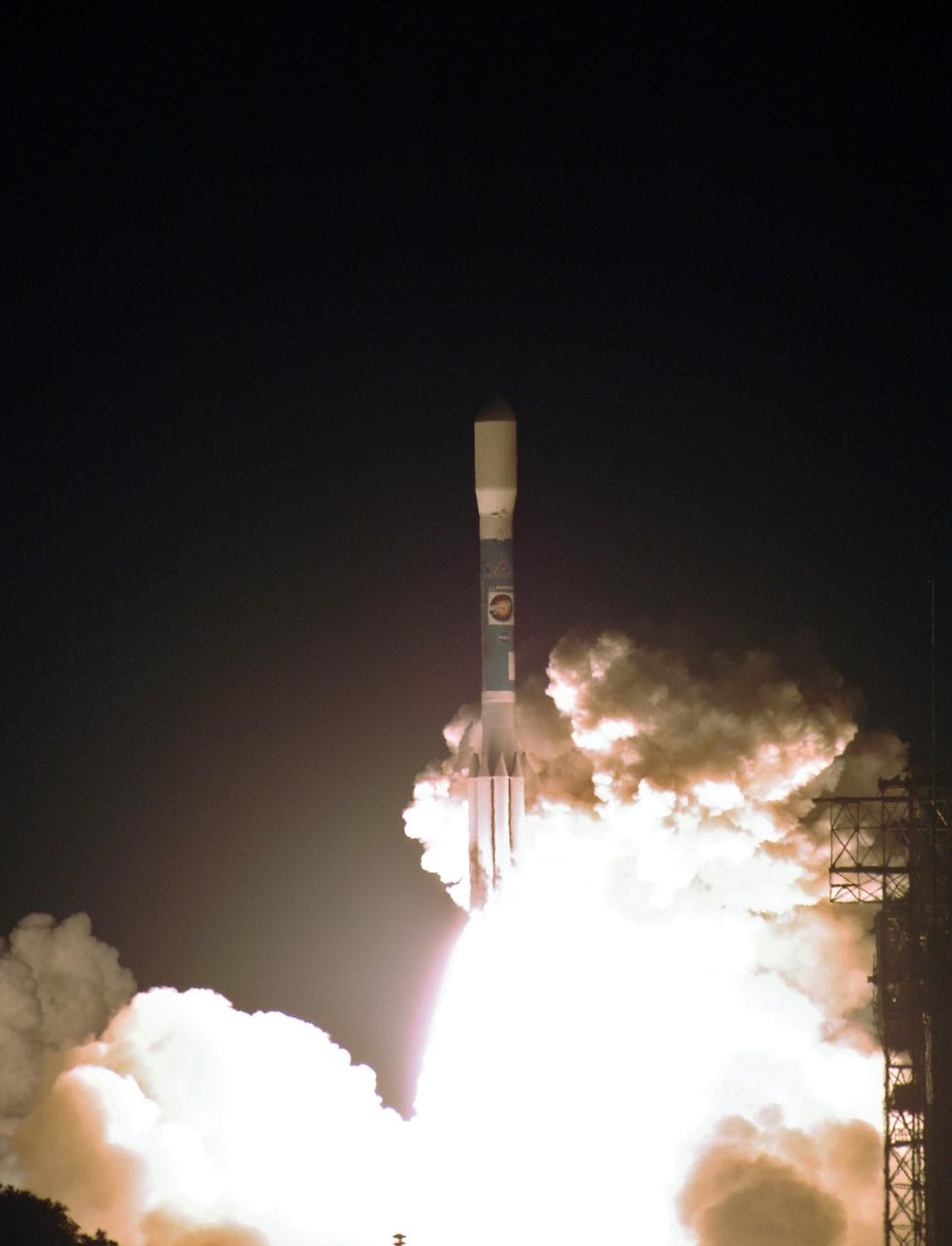
KENNEDY SPACE CENTER, FLA. - The Delta II launch vehicle carrying the STEREO spacecraft hurtles through the smoke and steam after liftoff from Launch Pad 17-B at Cape Canaveral Air Force Station. Liftoff was at 8:52 p.m. EDT. STEREO (Solar Terrestrial Relations Observatory) is a two-year mission using two nearly identical observatories, one ahead of Earth in its orbit and the other trailing behind. The duo will provide 3-D measurements of the sun and its flow of energy, enabling scientists to study the nature of coronal mass ejections and why they happen. The ejections are a major source of the magnetic disruptions on Earth and are a key component of space weather. The disruptions can greatly effect satellite operations, communications, power systems, humans in space and global climate. Designed and built by the Johns Hopkins University Applied Physics Laboratory (APL) , the STEREO mission is being managed by NASA Goddard Space Flight Center. APL will maintain command and control of the observatories throughout the mission, while NASA tracks and receives the data, determines the orbit of the satellites, and coordinates the science results.
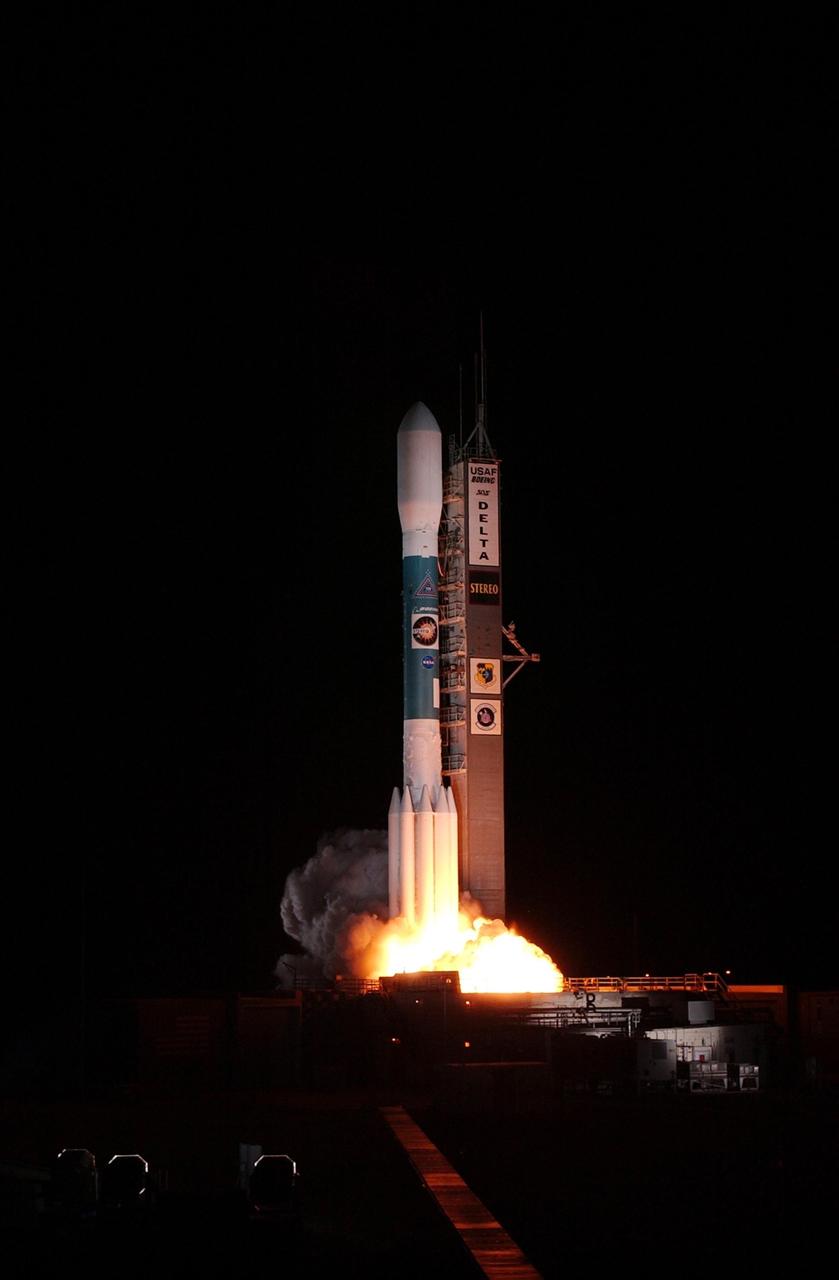
KENNEDY SPACE CENTER, FLA. - At liftoff, clouds of smoke spread beneath the Delta II rocket carrying the STEREO spacecraft on top. Liftoff from Launch Pad 17-B at Cape Canaveral Air Force Station was at 8:52 p.m. EDT. STEREO (Solar Terrestrial Relations Observatory) is a two-year mission using two nearly identical observatories, one ahead of Earth in its orbit and the other trailing behind. The duo will provide 3-D measurements of the sun and its flow of energy, enabling scientists to study the nature of coronal mass ejections and why they happen. The ejections are a major source of the magnetic disruptions on Earth and are a key component of space weather. The disruptions can greatly effect satellite operations, communications, power systems, humans in space and global climate. Designed and built by the Johns Hopkins University Applied Physics Laboratory (APL) , the STEREO mission is being managed by NASA Goddard Space Flight Center. APL will maintain command and control of the observatories throughout the mission, while NASA tracks and receives the data, determines the orbit of the satellites, and coordinates the science results.
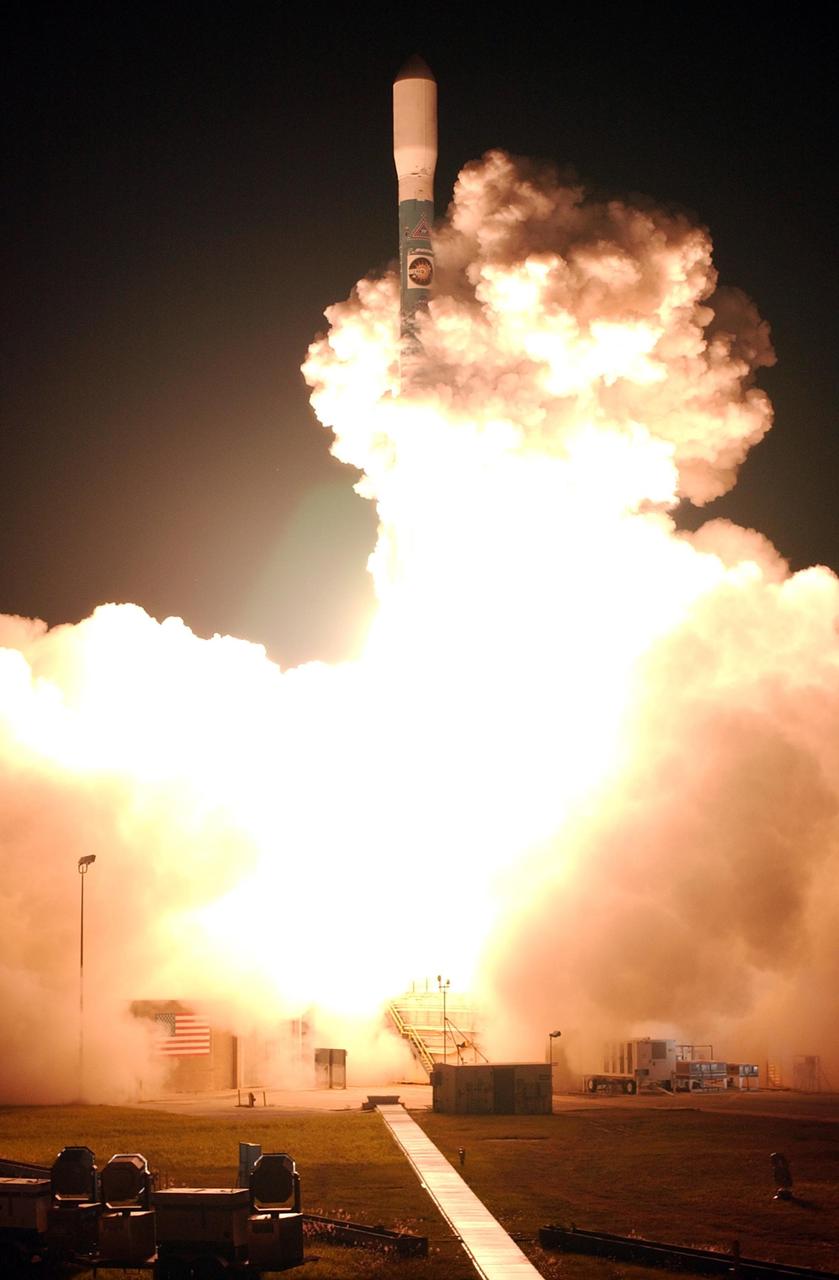
KENNEDY SPACE CENTER, FLA. - The Delta II rocket carrying the STEREO spacecraft on top streaks through the smoke as it climbs to orbit. Liftoff from Launch Pad 17-B at Cape Canaveral Air Force Station was at 8:52 p.m. EDT. STEREO (Solar Terrestrial Relations Observatory) is a two-year mission using two nearly identical observatories, one ahead of Earth in its orbit and the other trailing behind. The duo will provide 3-D measurements of the sun and its flow of energy, enabling scientists to study the nature of coronal mass ejections and why they happen. The ejections are a major source of the magnetic disruptions on Earth and are a key component of space weather. The disruptions can greatly effect satellite operations, communications, power systems, humans in space and global climate. Designed and built by the Johns Hopkins University Applied Physics Laboratory (APL) , the STEREO mission is being managed by NASA Goddard Space Flight Center. APL will maintain command and control of the observatories throughout the mission, while NASA tracks and receives the data, determines the orbit of the satellites, and coordinates the science results.
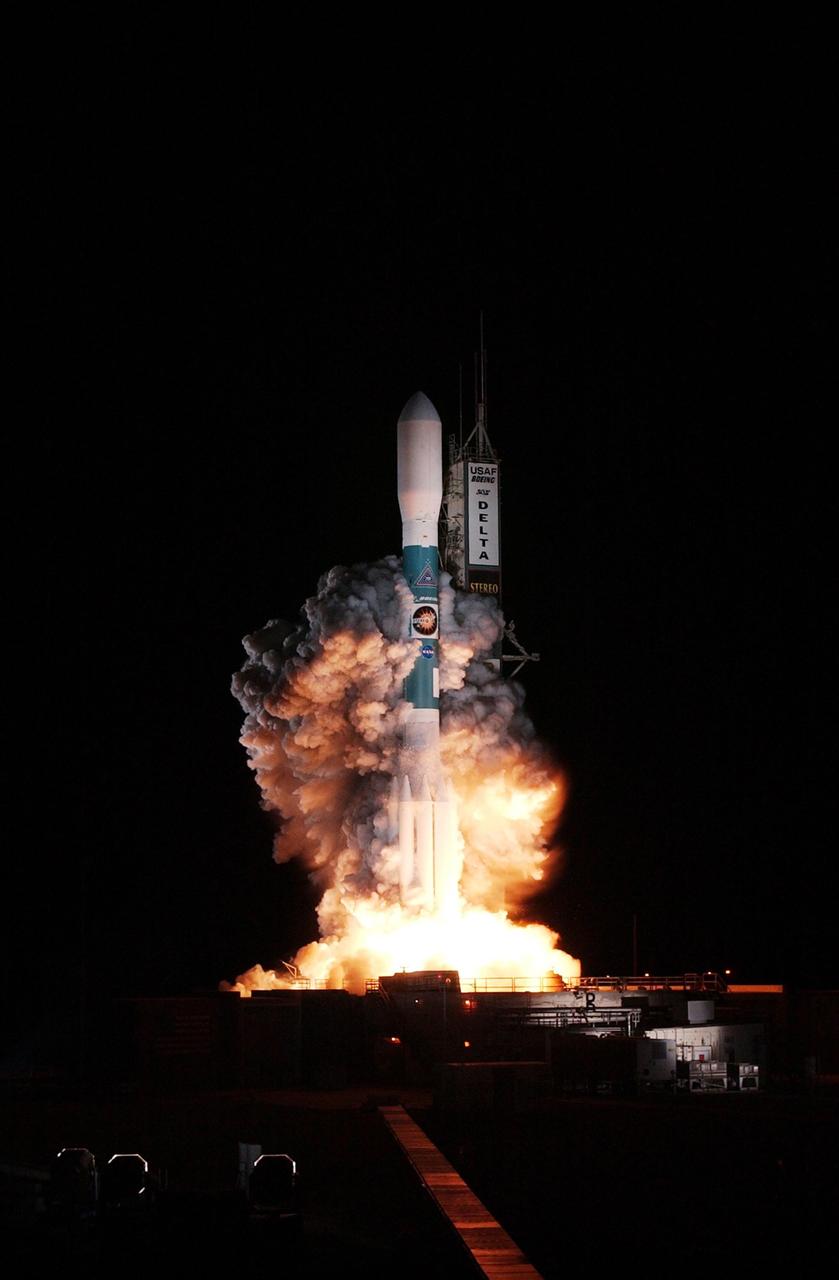
KENNEDY SPACE CENTER, FLA. - Just after liftoff, clouds of smoke billow up and around the Delta II rocket carrying the STEREO spacecraft on top. Liftoff from Launch Pad 17-B at Cape Canaveral Air Force Station was at 8:52 p.m. EDT. STEREO (Solar Terrestrial Relations Observatory) is a two-year mission using two nearly identical observatories, one ahead of Earth in its orbit and the other trailing behind. The duo will provide 3-D measurements of the sun and its flow of energy, enabling scientists to study the nature of coronal mass ejections and why they happen. The ejections are a major source of the magnetic disruptions on Earth and are a key component of space weather. The disruptions can greatly effect satellite operations, communications, power systems, humans in space and global climate. Designed and built by the Johns Hopkins University Applied Physics Laboratory (APL) , the STEREO mission is being managed by NASA Goddard Space Flight Center. APL will maintain command and control of the observatories throughout the mission, while NASA tracks and receives the data, determines the orbit of the satellites, and coordinates the science results.

KENNEDY SPACE CENTER, FLA. - Just at liftoff, clouds of smoke and steam rise around the Delta II rocket carrying the STEREO spacecraft on top. Liftoff from Launch Pad 17-B at Cape Canaveral Air Force Station was at 8:52 p.m. EDT. STEREO (Solar Terrestrial Relations Observatory) is a two-year mission using two nearly identical observatories, one ahead of Earth in its orbit and the other trailing behind. The duo will provide 3-D measurements of the sun and its flow of energy, enabling scientists to study the nature of coronal mass ejections and why they happen. The ejections are a major source of the magnetic disruptions on Earth and are a key component of space weather. The disruptions can greatly effect satellite operations, communications, power systems, humans in space and global climate. Designed and built by the Johns Hopkins University Applied Physics Laboratory (APL) , the STEREO mission is being managed by NASA Goddard Space Flight Center. APL will maintain command and control of the observatories throughout the mission, while NASA tracks and receives the data, determines the orbit of the satellites, and coordinates the science results.
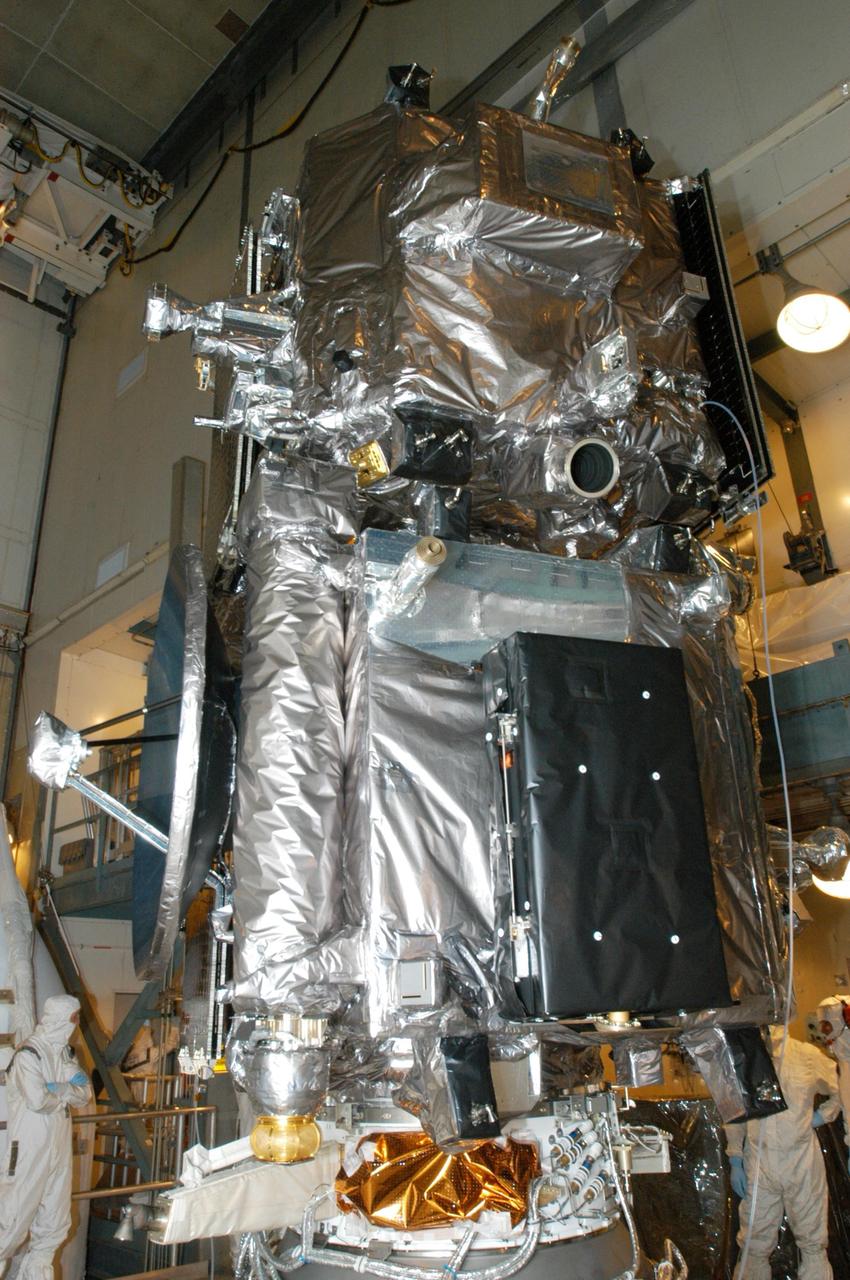
KENNEDY SPACE CENTER, FLA. - Inside the mobile service tower on Launch Pad 17-B at Cape Canaveral Air Force Station, workers prepare the twin observatories known as STEREO for encapsulation in the fairing. The fairing is a molded structure that fits flush with the outside surface of the Delta II upper stage booster and forms an aerodynamically smooth nose cone, protecting the spacecraft during launch and ascent. The STEREO (Solar Terrestrial Relations Observatory) mission is the first to take measurements of the sun and solar wind in 3-dimension. This new view will improve our understanding of space weather and its impact on the Earth. Designed and built by the Applied Physics Laboratory (APL) , the STEREO mission is being managed by NASA Goddard Space Flight Center. APL will maintain command and control of the observatories throughout the mission, while NASA tracks and receives the data, determines the orbit of the satellites, and coordinates the science results. STEREO is expected to lift off Oct. 25. Photo credit: NASA/George Shelton
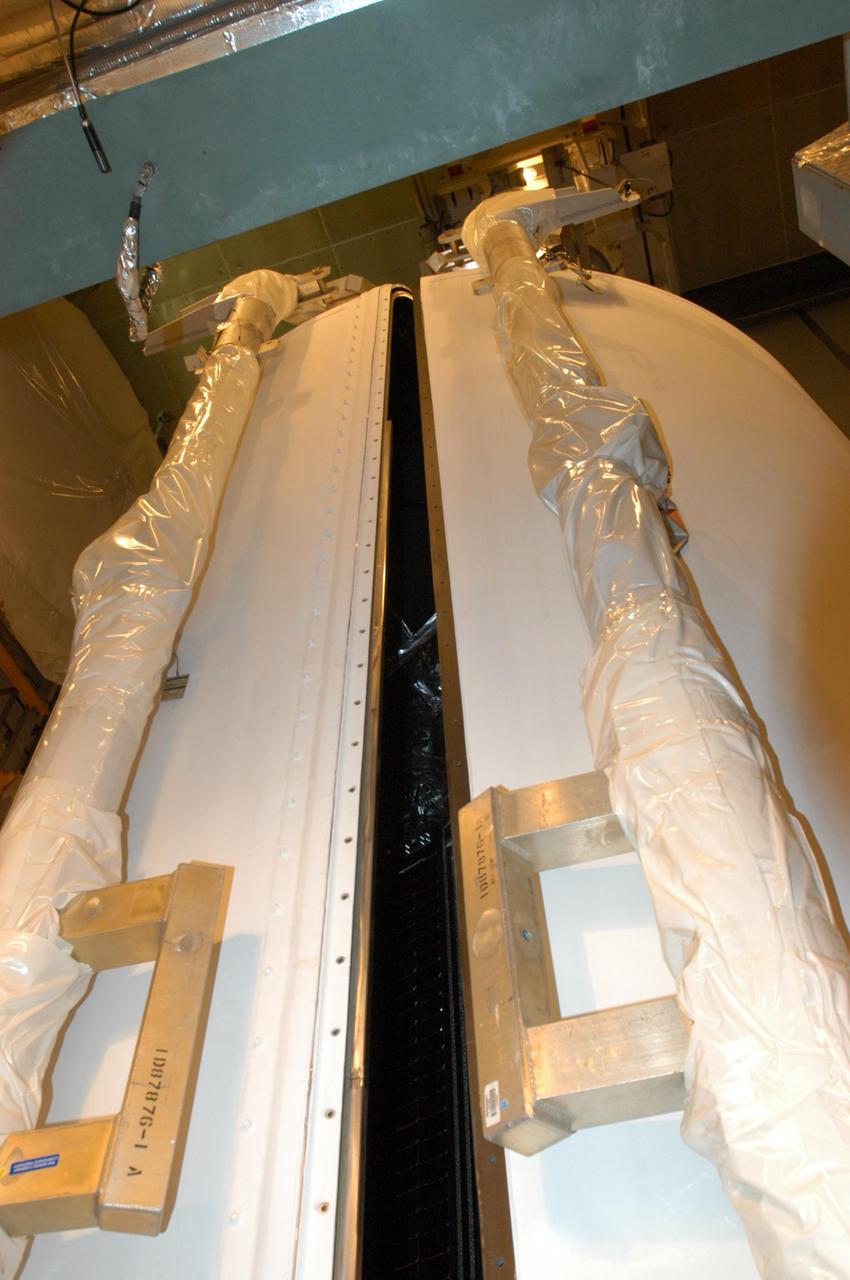
KENNEDY SPACE CENTER, FLA. - Inside the mobile service tower on Launch Pad 17-B at Cape Canaveral Air Force Station, the two fairing segments close in around the STEREO spacecraft. The fairing is a molded structure that fits flush with the outside surface of the Delta II upper stage booster and forms an aerodynamically smooth nose cone, protecting the spacecraft during launch and ascent. The STEREO (Solar Terrestrial Relations Observatory) mission is the first to take measurements of the sun and solar wind in 3-dimension. This new view will improve our understanding of space weather and its impact on the Earth. Designed and built by the Applied Physics Laboratory (APL) , the STEREO mission is being managed by NASA Goddard Space Flight Center. APL will maintain command and control of the observatories throughout the mission, while NASA tracks and receives the data, determines the orbit of the satellites, and coordinates the science results. STEREO is expected to lift off Oct. 25. Photo credit: NASA/George Shelton
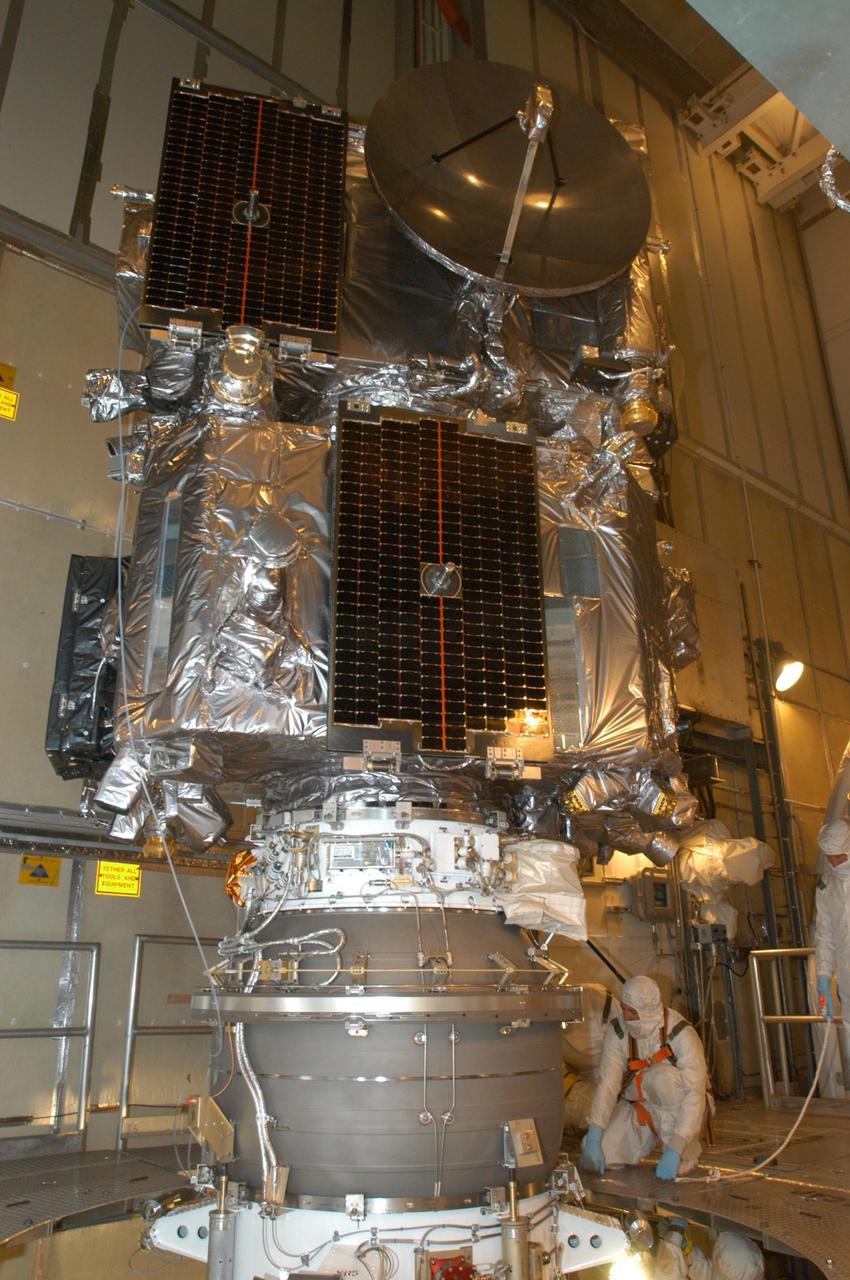
KENNEDY SPACE CENTER, FLA. - Inside the mobile service tower on Launch Pad 17-B at Cape Canaveral Air Force Station, workers prepare the twin observatories known as STEREO for encapsulation in the fairing. The fairing is a molded structure that fits flush with the outside surface of the Delta II upper stage booster and forms an aerodynamically smooth nose cone, protecting the spacecraft during launch and ascent. The STEREO (Solar Terrestrial Relations Observatory) mission is the first to take measurements of the sun and solar wind in 3-dimension. This new view will improve our understanding of space weather and its impact on the Earth. Designed and built by the Applied Physics Laboratory (APL) , the STEREO mission is being managed by NASA Goddard Space Flight Center. APL will maintain command and control of the observatories throughout the mission, while NASA tracks and receives the data, determines the orbit of the satellites, and coordinates the science results. STEREO is expected to lift off Oct. 25. Photo credit: NASA/George Shelton
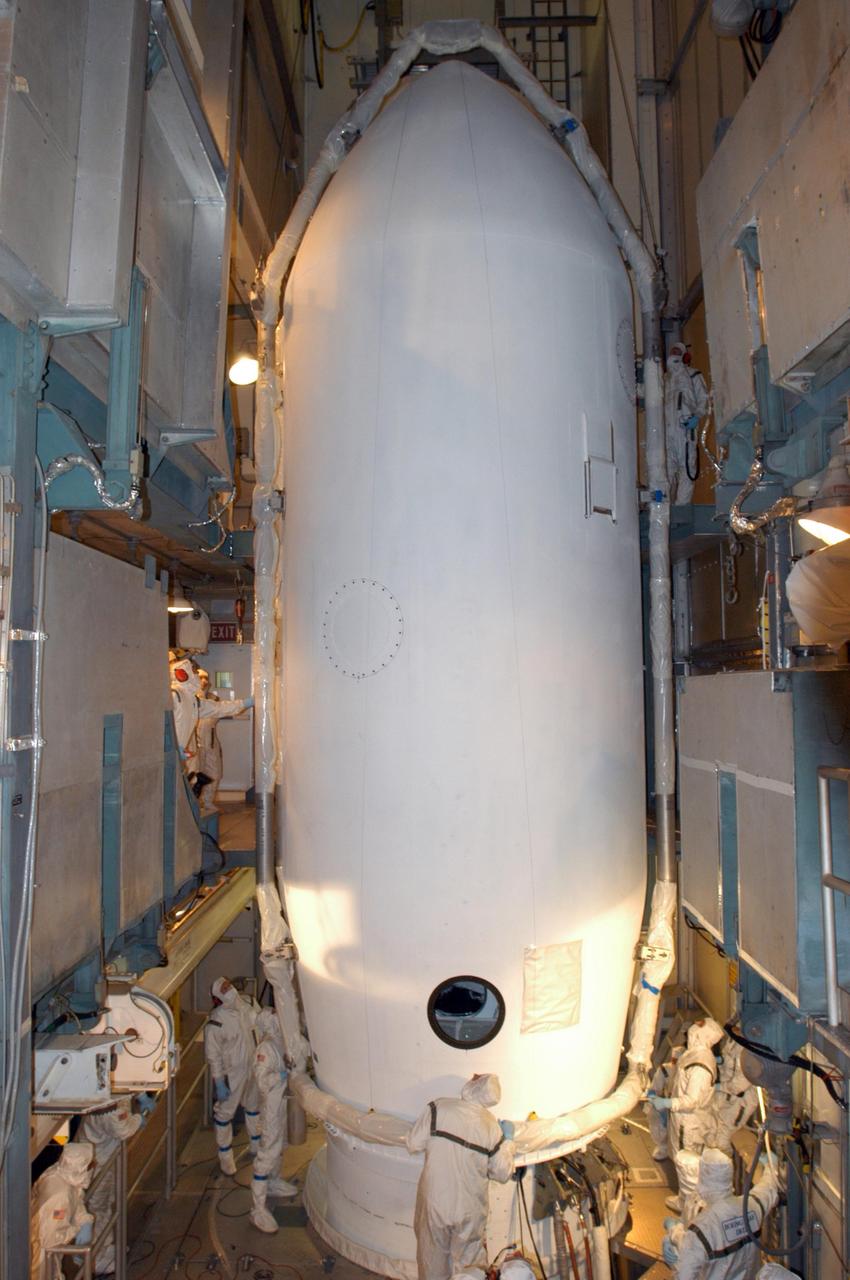
KENNEDY SPACE CENTER, FLA. - Inside the mobile service tower on Launch Pad 17-B at Cape Canaveral Air Force Station, workers maneuver the second half of the fairing into place around the STEREO spacecraft. The fairing is a molded structure that fits flush with the outside surface of the Delta II upper stage booster and forms an aerodynamically smooth nose cone, protecting the spacecraft during launch and ascent. The STEREO (Solar Terrestrial Relations Observatory) mission is the first to take measurements of the sun and solar wind in 3-dimension. This new view will improve our understanding of space weather and its impact on the Earth. Designed and built by the Applied Physics Laboratory (APL) , the STEREO mission is being managed by NASA Goddard Space Flight Center. APL will maintain command and control of the observatories throughout the mission, while NASA tracks and receives the data, determines the orbit of the satellites, and coordinates the science results. STEREO is expected to lift off Oct. 25. Photo credit: NASA/George Shelton
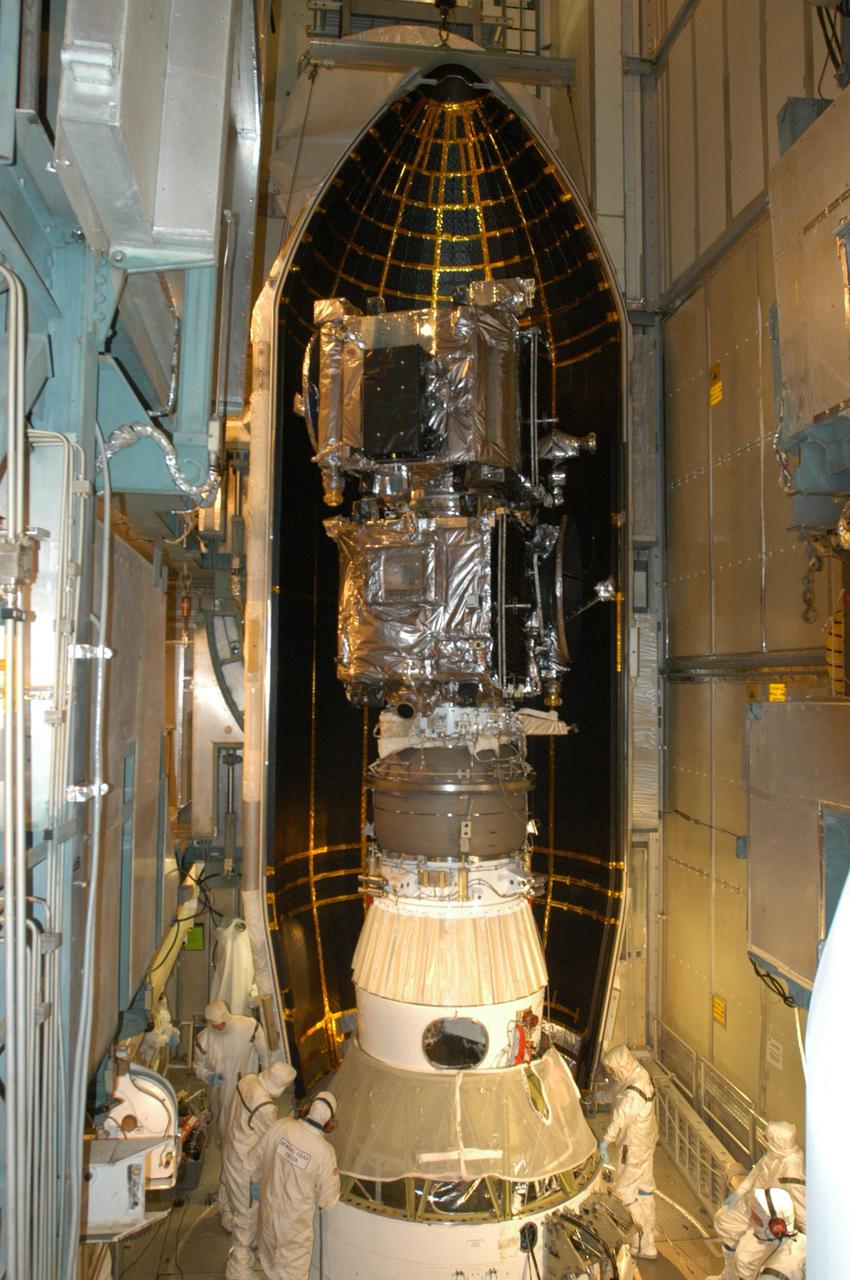
KENNEDY SPACE CENTER, FLA. - Inside the mobile service tower on Launch Pad 17-B at Cape Canaveral Air Force Station, workers check the placement of the first half of the fairing around the STEREO spacecraft. The fairing is a molded structure that fits flush with the outside surface of the Delta II upper stage booster and forms an aerodynamically smooth nose cone, protecting the spacecraft during launch and ascent. The STEREO (Solar Terrestrial Relations Observatory) mission is the first to take measurements of the sun and solar wind in 3-dimension. This new view will improve our understanding of space weather and its impact on the Earth. Designed and built by the Applied Physics Laboratory (APL) , the STEREO mission is being managed by NASA Goddard Space Flight Center. APL will maintain command and control of the observatories throughout the mission, while NASA tracks and receives the data, determines the orbit of the satellites, and coordinates the science results. STEREO is expected to lift off Oct. 25. Photo credit: NASA/George Shelton
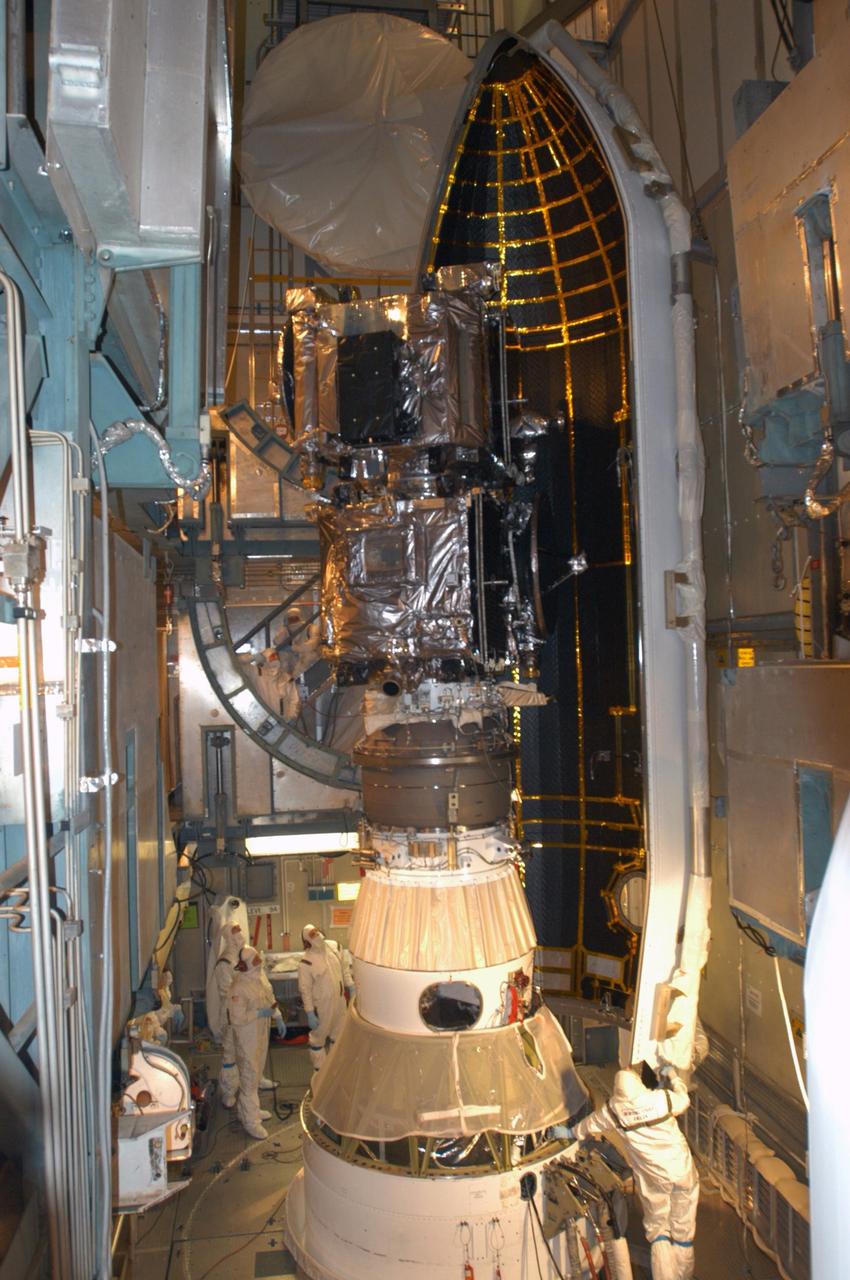
KENNEDY SPACE CENTER, FLA. - Inside the mobile service tower on Launch Pad 17-B at Cape Canaveral Air Force Station, workers help maneuver one segment of the fairing around the STEREO spacecraft. The fairing is a molded structure that fits flush with the outside surface of the Delta II upper stage booster and forms an aerodynamically smooth nose cone, protecting the spacecraft during launch and ascent. The STEREO (Solar Terrestrial Relations Observatory) mission is the first to take measurements of the sun and solar wind in 3-dimension. This new view will improve our understanding of space weather and its impact on the Earth. Designed and built by the Applied Physics Laboratory (APL) , the STEREO mission is being managed by NASA Goddard Space Flight Center. APL will maintain command and control of the observatories throughout the mission, while NASA tracks and receives the data, determines the orbit of the satellites, and coordinates the science results. STEREO is expected to lift off Oct. 25. Photo credit: NASA/George Shelton
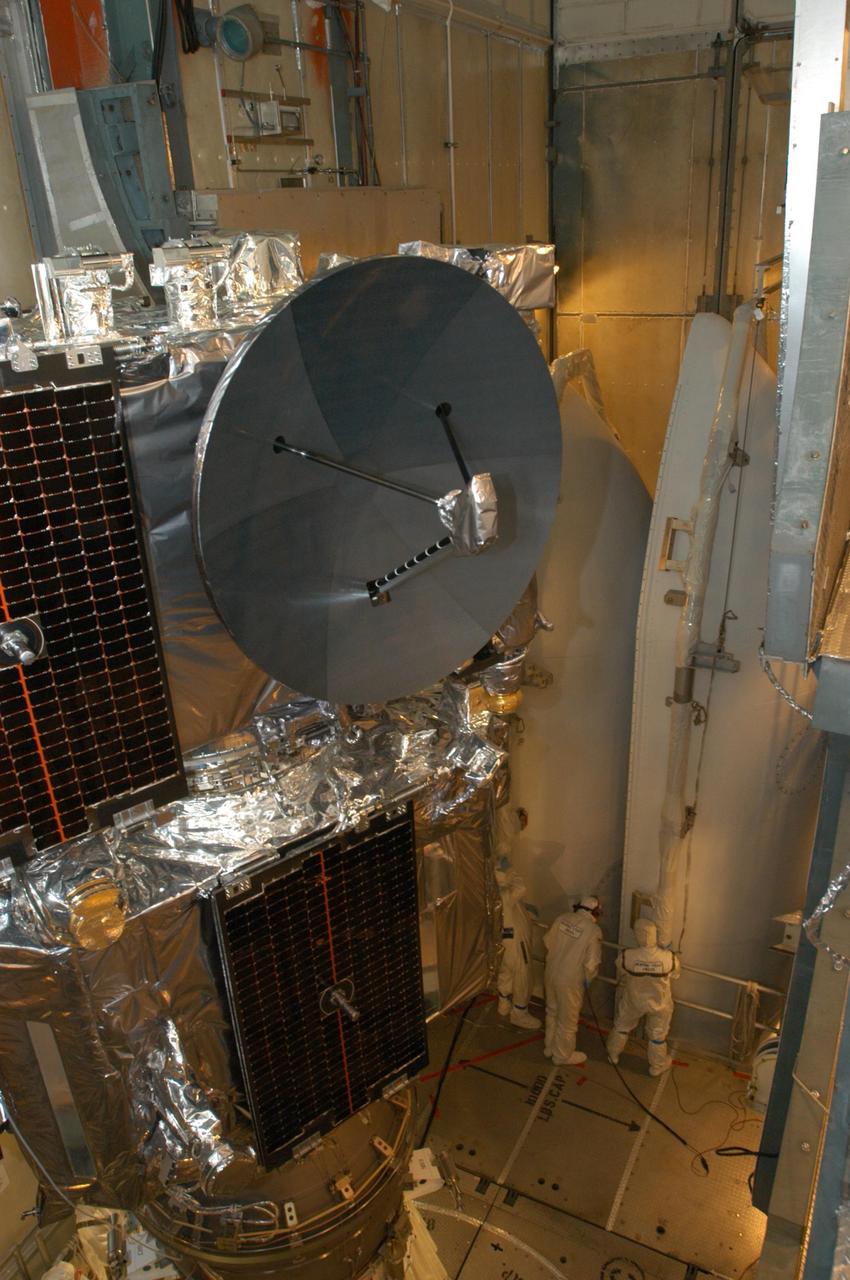
KENNEDY SPACE CENTER, FLA. - Inside the mobile service tower on Launch Pad 17-B at Cape Canaveral Air Force Station, workers (background) observe the lifting of the two fairing segments that will encapsulate the STEREO spacecraft (foreground). The fairing is a molded structure that fits flush with the outside surface of the Delta II upper stage booster and forms an aerodynamically smooth nose cone, protecting the spacecraft during launch and ascent. The STEREO (Solar Terrestrial Relations Observatory) mission is the first to take measurements of the sun and solar wind in 3-dimension. This new view will improve our understanding of space weather and its impact on the Earth. Designed and built by the Applied Physics Laboratory (APL) , the STEREO mission is being managed by NASA Goddard Space Flight Center. APL will maintain command and control of the observatories throughout the mission, while NASA tracks and receives the data, determines the orbit of the satellites, and coordinates the science results. STEREO is expected to lift off Oct. 25. Photo credit: NASA/George Shelton
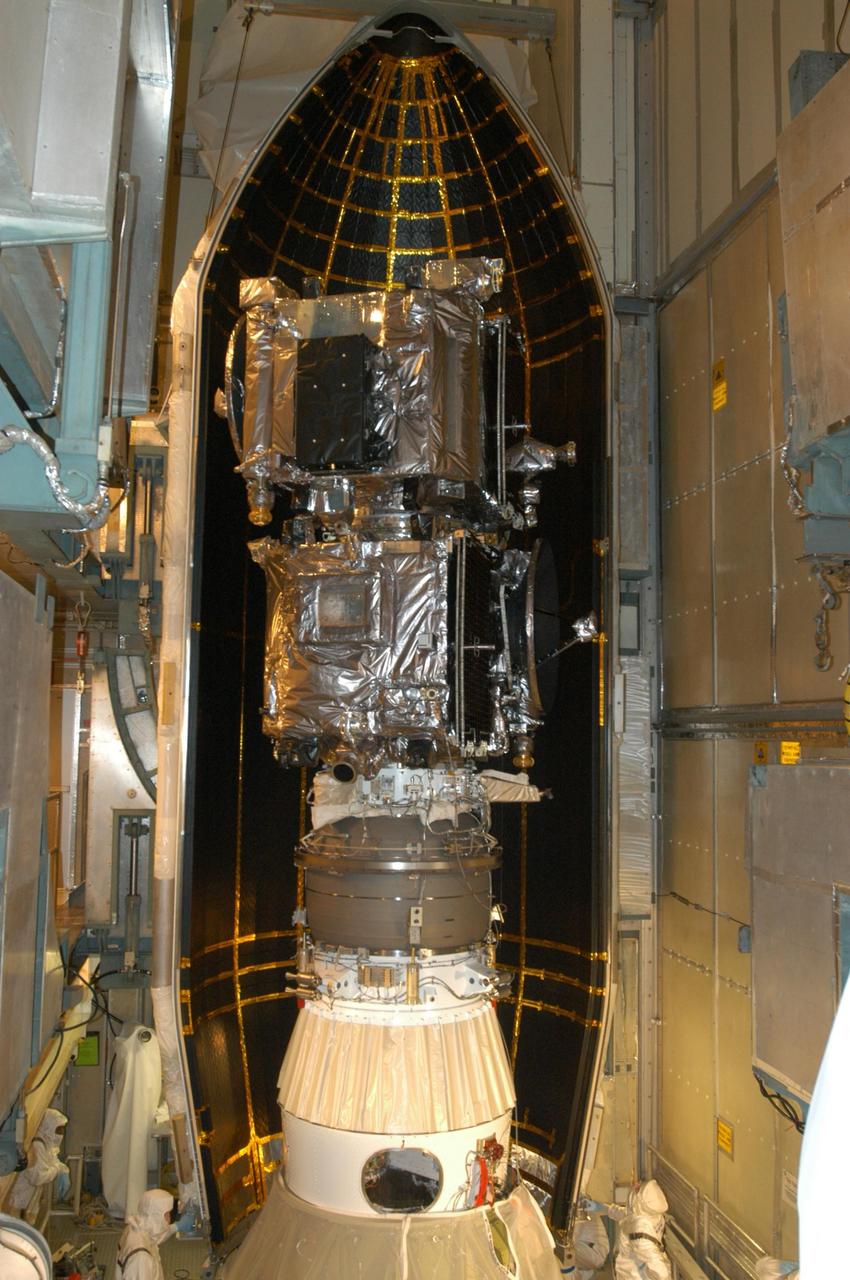
KENNEDY SPACE CENTER, FLA. - Inside the mobile service tower on Launch Pad 17-B at Cape Canaveral Air Force Station, the first half of the fairing is moved into place around the STEREO spacecraft. The fairing is a molded structure that fits flush with the outside surface of the Delta II upper stage booster and forms an aerodynamically smooth nose cone, protecting the spacecraft during launch and ascent. The STEREO (Solar Terrestrial Relations Observatory) mission is the first to take measurements of the sun and solar wind in 3-dimension. This new view will improve our understanding of space weather and its impact on the Earth. Designed and built by the Applied Physics Laboratory (APL) , the STEREO mission is being managed by NASA Goddard Space Flight Center. APL will maintain command and control of the observatories throughout the mission, while NASA tracks and receives the data, determines the orbit of the satellites, and coordinates the science results. STEREO is expected to lift off Oct. 25. Photo credit: NASA/George Shelton
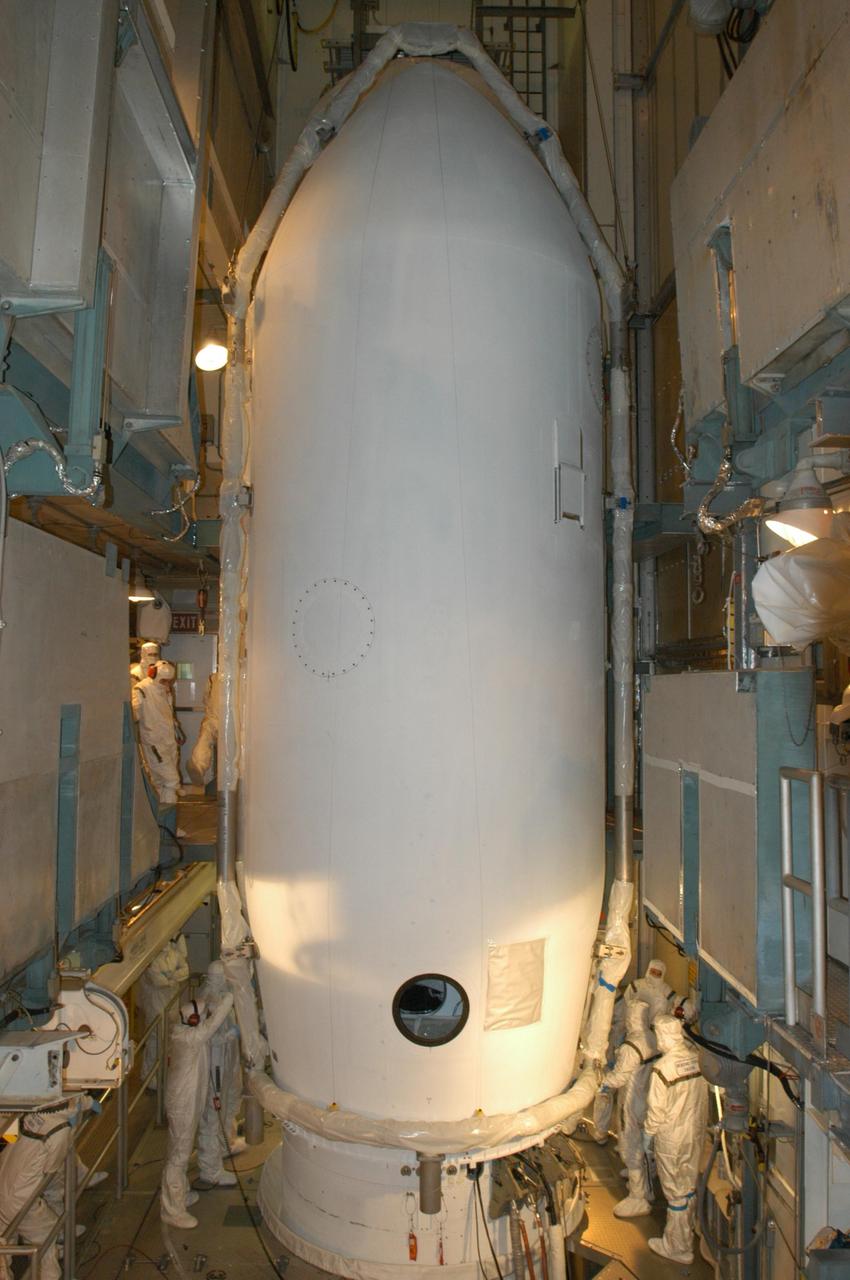
KENNEDY SPACE CENTER, FLA. - Inside the mobile service tower on Launch Pad 17-B at Cape Canaveral Air Force Station, workers secure the two halves of the fairing that enclose the STEREO spacecraft. The fairing is a molded structure that fits flush with the outside surface of the Delta II upper stage booster and forms an aerodynamically smooth nose cone, protecting the spacecraft during launch and ascent. The STEREO (Solar Terrestrial Relations Observatory) mission is the first to take measurements of the sun and solar wind in 3-dimension. This new view will improve our understanding of space weather and its impact on the Earth. Designed and built by the Applied Physics Laboratory (APL) , the STEREO mission is being managed by NASA Goddard Space Flight Center. APL will maintain command and control of the observatories throughout the mission, while NASA tracks and receives the data, determines the orbit of the satellites, and coordinates the science results. STEREO is expected to lift off Oct. 25. Photo credit: NASA/George Shelton
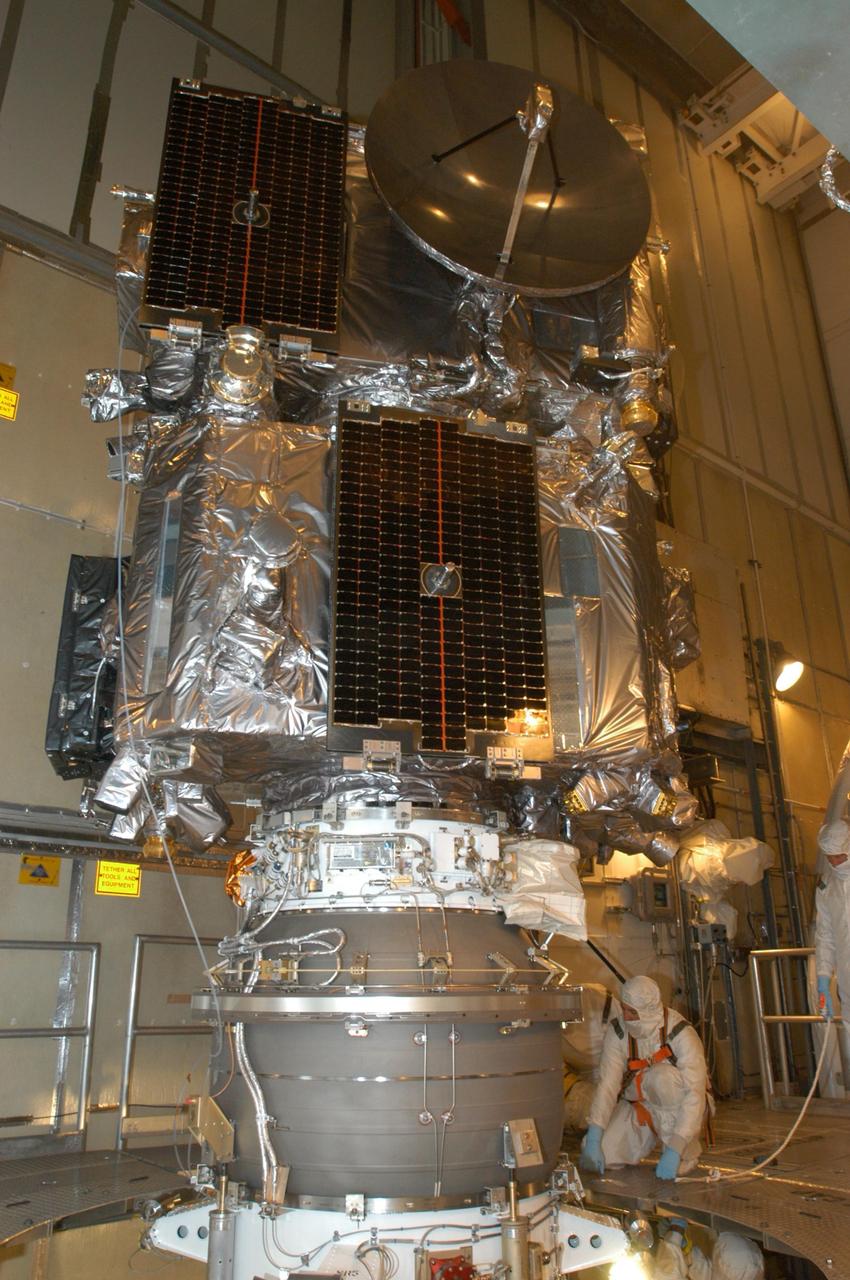
KENNEDY SPACE CENTER, FLA. - Inside the mobile service tower on Launch Pad 17-B at Cape Canaveral Air Force Station, workers prepare the twin observatories known as STEREO for encapsulation in the fairing. The fairing is a molded structure that fits flush with the outside surface of the Delta II upper stage booster and forms an aerodynamically smooth nose cone, protecting the spacecraft during launch and ascent. The STEREO (Solar Terrestrial Relations Observatory) mission is the first to take measurements of the sun and solar wind in 3-dimension. This new view will improve our understanding of space weather and its impact on the Earth. Designed and built by the Applied Physics Laboratory (APL) , the STEREO mission is being managed by NASA Goddard Space Flight Center. APL will maintain command and control of the observatories throughout the mission, while NASA tracks and receives the data, determines the orbit of the satellites, and coordinates the science results. STEREO is expected to lift off Oct. 25. Photo credit: NASA/George Shelton
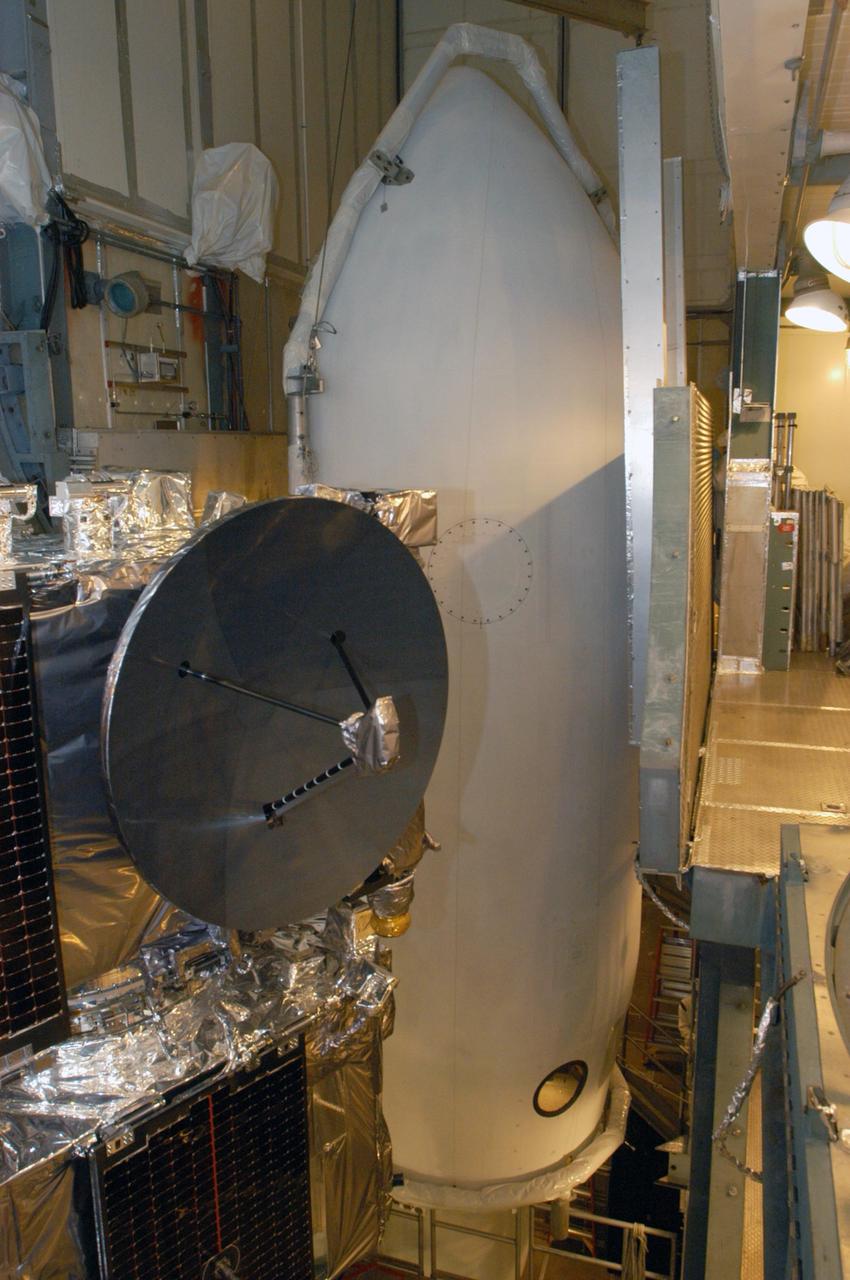
KENNEDY SPACE CENTER, FLA. - Inside the mobile service tower on Launch Pad 17-B at Cape Canaveral Air Force Station, one segment of the fairing is lifted toward the STEREO spacecraft in the foreground. The fairing is a molded structure that fits flush with the outside surface of the Delta II upper stage booster and forms an aerodynamically smooth nose cone, protecting the spacecraft during launch and ascent. The STEREO (Solar Terrestrial Relations Observatory) mission is the first to take measurements of the sun and solar wind in 3-dimension. This new view will improve our understanding of space weather and its impact on the Earth. Designed and built by the Applied Physics Laboratory (APL) , the STEREO mission is being managed by NASA Goddard Space Flight Center. APL will maintain command and control of the observatories throughout the mission, while NASA tracks and receives the data, determines the orbit of the satellites, and coordinates the science results. STEREO is expected to lift off Oct. 25. Photo credit: NASA/George Shelton
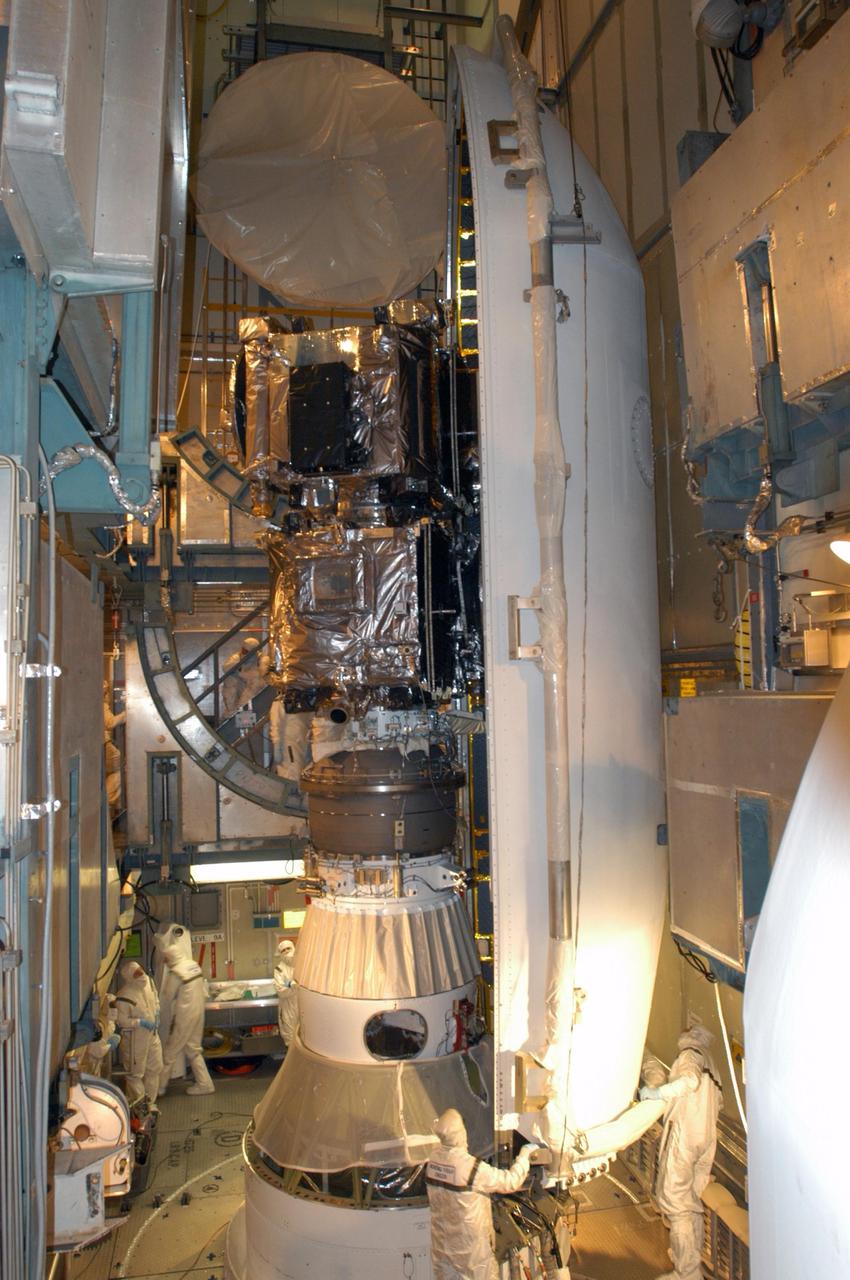
KENNEDY SPACE CENTER, FLA. - Inside the mobile service tower on Launch Pad 17-B at Cape Canaveral Air Force Station, workers help maneuver one segment of the fairing around the STEREO spacecraft. The fairing is a molded structure that fits flush with the outside surface of the Delta II upper stage booster and forms an aerodynamically smooth nose cone, protecting the spacecraft during launch and ascent. The STEREO (Solar Terrestrial Relations Observatory) mission is the first to take measurements of the sun and solar wind in 3-dimension. This new view will improve our understanding of space weather and its impact on the Earth. Designed and built by the Applied Physics Laboratory (APL) , the STEREO mission is being managed by NASA Goddard Space Flight Center. APL will maintain command and control of the observatories throughout the mission, while NASA tracks and receives the data, determines the orbit of the satellites, and coordinates the science results. STEREO is expected to lift off Oct. 25. Photo credit: NASA/George Shelton
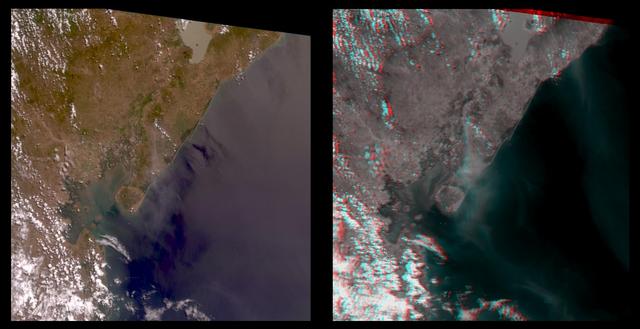
The true-color image at left is a downward-looking (nadir) view of the area around the San Cristobal volcano, which erupted the previous day. This image is oriented with east at the top and north at the left. The right image is a stereo anaglyph of the same area, created from red band multi-angle data taken by the 45.6-degree aftward and 70.5-degree aftward cameras on the Multi-angle Imaging SpectroRadiometer (MISR) instrument on NASA's Terra satellite. View this image through red/blue 3D glasses, with the red filter over the left eye. A plume from San Cristobal (approximately at image center) is much easier to see in the anaglyph, due to 3 effects: the long viewing path through the atmosphere at the oblique angles, the reduced reflection from the underlying water, and the 3D stereoscopic height separation. In this image, the plume floats between the surface and the overlying cumulus clouds. A second plume is also visible in the upper right (southeast of San Cristobal). This very thin plume may originate from the Masaya volcano, which is continually degassing at as low rate. The spatial resolution is 275 meters (300 yards). http://photojournal.jpl.nasa.gov/catalog/PIA02600
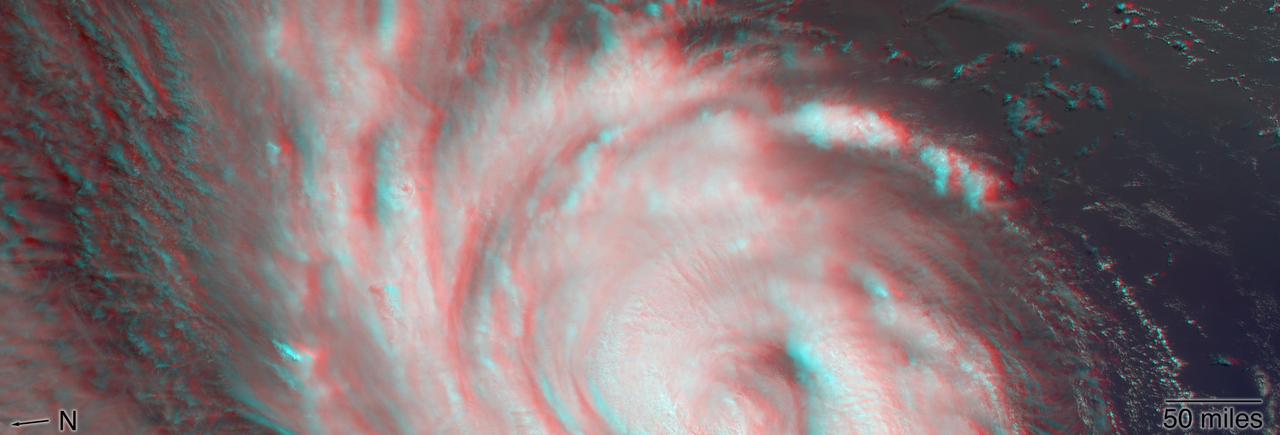
NASA's Multi-angle Imaging SpectroRadiometer (MISR) passed over Hurricane Florence as it approached the eastern coast of the United States on Thursday, September 13, 2018. At the time the image was acquired, Florence was a large Category 2 storm and coastal areas were already being hit with tropical-storm-force winds. The MISR instrument, flying onboard NASA's Terra satellite, carries nine cameras that observe Earth at different angles. It takes about seven minutes for all the cameras to observe the same location. This stereo anaglyph shows a 3D view of Florence. You will need red-blue 3D glasses, with the red lens placed over the left eye, to view the effect. The anaglyph shows the high clouds associated with strong thunderstorms in the eyewall of hurricane and individual strong thunderstorms in the outer rain bands. These smaller storms can sometimes spawn tornadoes. https://photojournal.jpl.nasa.gov/catalog/PIA22701

STEREO witnessed the March 5, 2013, CME from the side of the sun – Earth is far to the left of this picture. While the SOHO images show a halo CME, STEREO shows the CME clearly moving away from Earth. Credit: NASA/STEREO --- CME WEEK: What To See in CME Images Two main types of explosions occur on the sun: solar flares and coronal mass ejections. Unlike the energy and x-rays produced in a solar flare – which can reach Earth at the speed of light in eight minutes – coronal mass ejections are giant, expanding clouds of solar material that take one to three days to reach Earth. Once at Earth, these ejections, also called CMEs, can impact satellites in space or interfere with radio communications. During CME WEEK from Sept. 22 to 26, 2014, we explore different aspects of these giant eruptions that surge out from the star we live with. When a coronal mass ejection blasts off the sun, scientists rely on instruments called coronagraphs to track their progress. Coronagraphs block out the bright light of the sun, so that the much fainter material in the solar atmosphere -- including CMEs -- can be seen in the surrounding space. CMEs appear in these images as expanding shells of material from the sun's atmosphere -- sometimes a core of colder, solar material (called a filament) from near the sun's surface moves in the center. But mapping out such three-dimensional components from a two-dimensional image isn't easy. Watch the slideshow to find out how scientists interpret what they see in CME pictures. The images in the slideshow are from the three sets of coronagraphs NASA currently has in space. One is on the joint European Space Agency and NASA Solar and Heliospheric Observatory, or SOHO. SOHO launched in 1995, and sits between Earth and the sun about a million miles away from Earth. The other two coronagraphs are on the two spacecraft of the NASA Solar Terrestrial Relations Observatory, or STEREO, mission, which launched in 2006. The two STEREO spacecraft are both currently viewing the far side of the sun. Together these instruments help scientists create a three-dimensional model of any CME as its journey unfolds through interplanetary space. Such information can show why a given characteristic of a CME close to the sun might lead to a given effect near Earth, or any other planet in the solar system. <b><a href="http://www.nasa.gov/audience/formedia/features/MP_Photo_Guidelines.html" rel="nofollow">NASA image use policy.</a></b> <b><a href="http://www.nasa.gov/centers/goddard/home/index.html" rel="nofollow">NASA Goddard Space Flight Center</a></b> enables NASA’s mission through four scientific endeavors: Earth Science, Heliophysics, Solar System Exploration, and Astrophysics. Goddard plays a leading role in NASA’s accomplishments by contributing compelling scientific knowledge to advance the Agency’s mission. <b>Follow us on <a href="http://twitter.com/NASAGoddardPix" rel="nofollow">Twitter</a></b> <b>Like us on <a href="http://www.facebook.com/pages/Greenbelt-MD/NASA-Goddard/395013845897?ref=tsd" rel="nofollow">Facebook</a></b> <b>Find us on <a href="http://instagram.com/nasagoddard?vm=grid" rel="nofollow">Instagram</a></b>
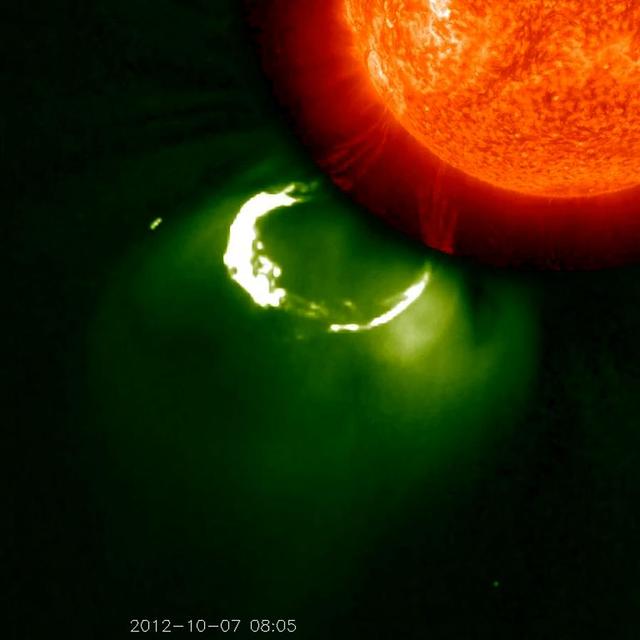
This CME image from Oct. 7, 2012, captured by two instruments on STEREO, shows the eruption from its base out into space. The base of the CME near the sun is seen in extreme ultraviolet light emitted directly from the solar material; the growing loop is seen in visible light. Credit: NASA/STEREO CME WEEK: What To See in CME Images Two main types of explosions occur on the sun: solar flares and coronal mass ejections. Unlike the energy and x-rays produced in a solar flare – which can reach Earth at the speed of light in eight minutes – coronal mass ejections are giant, expanding clouds of solar material that take one to three days to reach Earth. Once at Earth, these ejections, also called CMEs, can impact satellites in space or interfere with radio communications. During CME WEEK from Sept. 22 to 26, 2014, we explore different aspects of these giant eruptions that surge out from the star we live with. When a coronal mass ejection blasts off the sun, scientists rely on instruments called coronagraphs to track their progress. Coronagraphs block out the bright light of the sun, so that the much fainter material in the solar atmosphere -- including CMEs -- can be seen in the surrounding space. CMEs appear in these images as expanding shells of material from the sun's atmosphere -- sometimes a core of colder, solar material (called a filament) from near the sun's surface moves in the center. But mapping out such three-dimensional components from a two-dimensional image isn't easy. Watch the slideshow to find out how scientists interpret what they see in CME pictures. The images in the slideshow are from the three sets of coronagraphs NASA currently has in space. One is on the joint European Space Agency and NASA Solar and Heliospheric Observatory, or SOHO. SOHO launched in 1995, and sits between Earth and the sun about a million miles away from Earth. The other two coronagraphs are on the two spacecraft of the NASA Solar Terrestrial Relations Observatory, or STEREO, mission, which launched in 2006. The two STEREO spacecraft are both currently viewing the far side of the sun. Together these instruments help scientists create a three-dimensional model of any CME as its journey unfolds through interplanetary space. Such information can show why a given characteristic of a CME close to the sun might lead to a given effect near Earth, or any other planet in the solar system...<b><a href="http://www.nasa.gov/audience/formedia/features/MP_Photo_Guidelines.html" rel="nofollow">NASA image use policy.</a></b> <b><a href="http://www.nasa.gov/centers/goddard/home/index.html" rel="nofollow">NASA Goddard Space Flight Center</a></b> enables NASA’s mission through four scientific endeavors: Earth Science, Heliophysics, Solar System Exploration, and Astrophysics. Goddard plays a leading role in NASA’s accomplishments by contributing compelling scientific knowledge to advance the Agency’s mission. <b>Follow us on <a href="http://twitter.com/NASAGoddardPix" rel="nofollow">Twitter</a></b> <b>Like us on <a href="http://www.facebook.com/pages/Greenbelt-MD/NASA-Goddard/395013845897?ref=tsd" rel="nofollow">Facebook</a></b> <b>Find us on <a href="http://instagram.com/nasagoddard?vm=grid" rel="nofollow">Instagram</a></b>
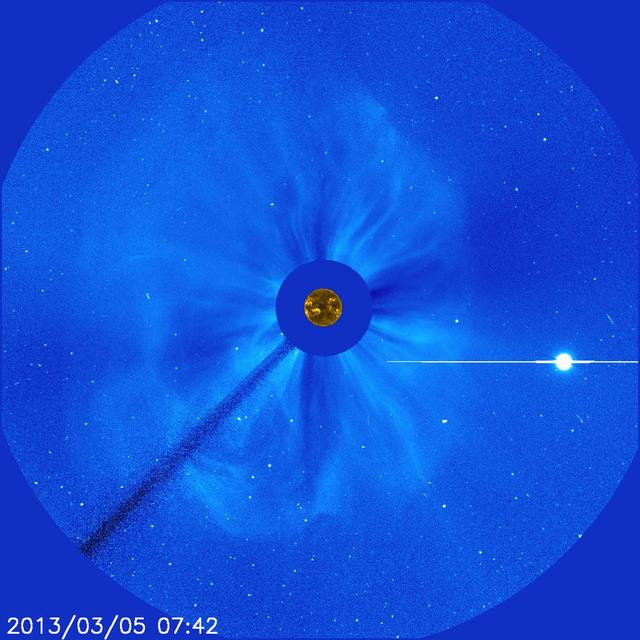
There's no way to tell from this SOHO image whether the halo CME on March 5, 2013, originated from the front or far of the sun. But the STEREO spacecraft were watching the sun from the sides and showed it was from the far side. The bright planet is Venus. Credit: NASA/SOHO CME WEEK: What To See in CME Images Two main types of explosions occur on the sun: solar flares and coronal mass ejections. Unlike the energy and x-rays produced in a solar flare – which can reach Earth at the speed of light in eight minutes – coronal mass ejections are giant, expanding clouds of solar material that take one to three days to reach Earth. Once at Earth, these ejections, also called CMEs, can impact satellites in space or interfere with radio communications. During CME WEEK from Sept. 22 to 26, 2014, we explore different aspects of these giant eruptions that surge out from the star we live with. When a coronal mass ejection blasts off the sun, scientists rely on instruments called coronagraphs to track their progress. Coronagraphs block out the bright light of the sun, so that the much fainter material in the solar atmosphere -- including CMEs -- can be seen in the surrounding space. CMEs appear in these images as expanding shells of material from the sun's atmosphere -- sometimes a core of colder, solar material (called a filament) from near the sun's surface moves in the center. But mapping out such three-dimensional components from a two-dimensional image isn't easy. Watch the slideshow to find out how scientists interpret what they see in CME pictures. The images in the slideshow are from the three sets of coronagraphs NASA currently has in space. One is on the joint European Space Agency and NASA Solar and Heliospheric Observatory, or SOHO. SOHO launched in 1995, and sits between Earth and the sun about a million miles away from Earth. The other two coronagraphs are on the two spacecraft of the NASA Solar Terrestrial Relations Observatory, or STEREO, mission, which launched in 2006. The two STEREO spacecraft are both currently viewing the far side of the sun. Together these instruments help scientists create a three-dimensional model of any CME as its journey unfolds through interplanetary space. Such information can show why a given characteristic of a CME close to the sun might lead to a given effect near Earth, or any other planet in the solar system...<b><a href="http://www.nasa.gov/audience/formedia/features/MP_Photo_Guidelines.html" rel="nofollow">NASA image use policy.</a></b> <b><a href="http://www.nasa.gov/centers/goddard/home/index.html" rel="nofollow">NASA Goddard Space Flight Center</a></b> enables NASA’s mission through four scientific endeavors: Earth Science, Heliophysics, Solar System Exploration, and Astrophysics. Goddard plays a leading role in NASA’s accomplishments by contributing compelling scientific knowledge to advance the Agency’s mission. <b>Follow us on <a href="http://twitter.com/NASAGoddardPix" rel="nofollow">Twitter</a></b> <b>Like us on <a href="http://www.facebook.com/pages/Greenbelt-MD/NASA-Goddard/395013845897?ref=tsd" rel="nofollow">Facebook</a></b> <b>Find us on <a href="http://instagram.com/nasagoddard?vm=grid" rel="nofollow">Instagram</a></b>
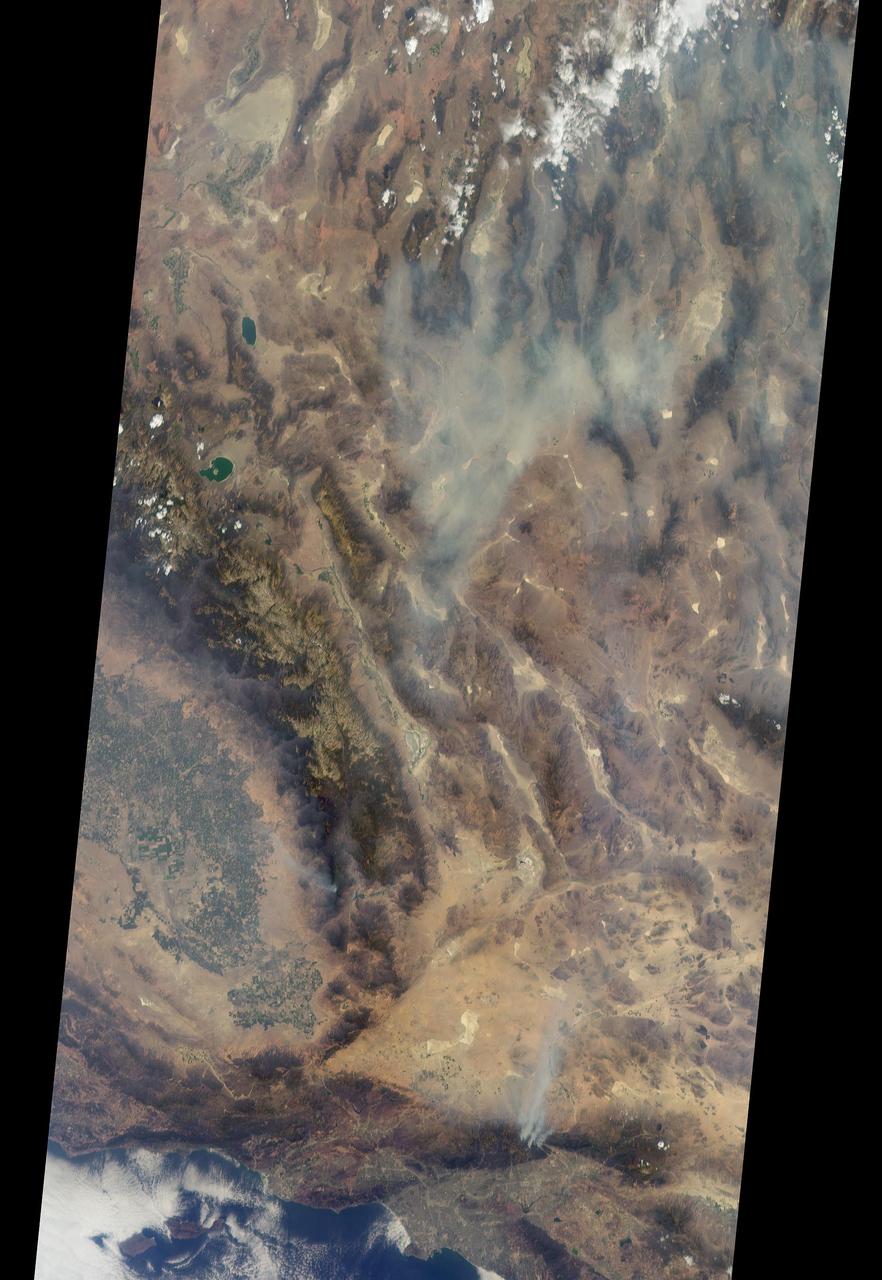
On Aug. 16, 2016, at around 10:30 a.m., a brush fire ignited in the Cajon Pass east of Los Angeles, just to the west of Interstate 15. Within a matter of hours, extreme temperatures, high winds and low humidity allowed the fire to spread rapidly, burning through brush left tinder-dry by years of drought. Firefighters quickly responded, ordering the evacuation of about 83,000 people in and around the Cajon Pass, Wrightwood, Lytle Creek, Oak Hills and surrounding areas. An as-yet uncounted number of homes and structures have burned, and Interstate 15 remains closed to downed power lines and barrier damage. By Aug. 17, the fire had expanded to more than 30,000 acres and remains zero percent contained as some 1,300 firefighters continue to battle to save homes and evacuate residents. The Multi-angle Imaging SpectroRadiometer (MISR) instrument aboard NASA's Terra satellite passed over the region on Aug. 17 around 11:50 a.m. PDT and captured this natural-color image from MISR's 70-degree forward-viewing camera, which covers an areas about 257 miles (414 kilometers) wide. The oblique view angle makes the smoke more apparent than it would be in a more conventional vertical view. The Los Angeles metropolitan area is the large gray area on the coast in the center of the image. Three plumes from the Blue Cut Fire are clearly visible in the mountains to the north. This oblique view also shows an enormous cloud of smoke spreading northeastward over a significant portion of eastern California and Nevada. This smoke probably originated from the fire as it consumed almost 20,000 acres on the evening of the 16th and traveled north overnight. Also visible from this oblique view is considerable haziness filling California's Central Valley, to the northwest of the Blue Cut Fire. This haziness is most likely due to smoke from several other fires burning in California, including the Soberanes Fire near Monterey, the Clayton Fire that has destroyed 175 structures north of San Francisco, the Chimney Fire and the Cedar Fire, which is visible in the image in the southern Sierra Nevada. The total number of acres burned in California this year has tripled in just the past week. The 3D stereo anaglyph is made by combining data from MISR's 60-degree and 70-degree forward-viewing cameras. You will need red-blue glasses to view the 3D effect (ensure the red lens is over your left eye). In order to enable stereo viewing, the image has been rotated so north is to the left. These data were acquired during Terra orbit 88648. http://photojournal.jpl.nasa.gov/catalog/PIA20888
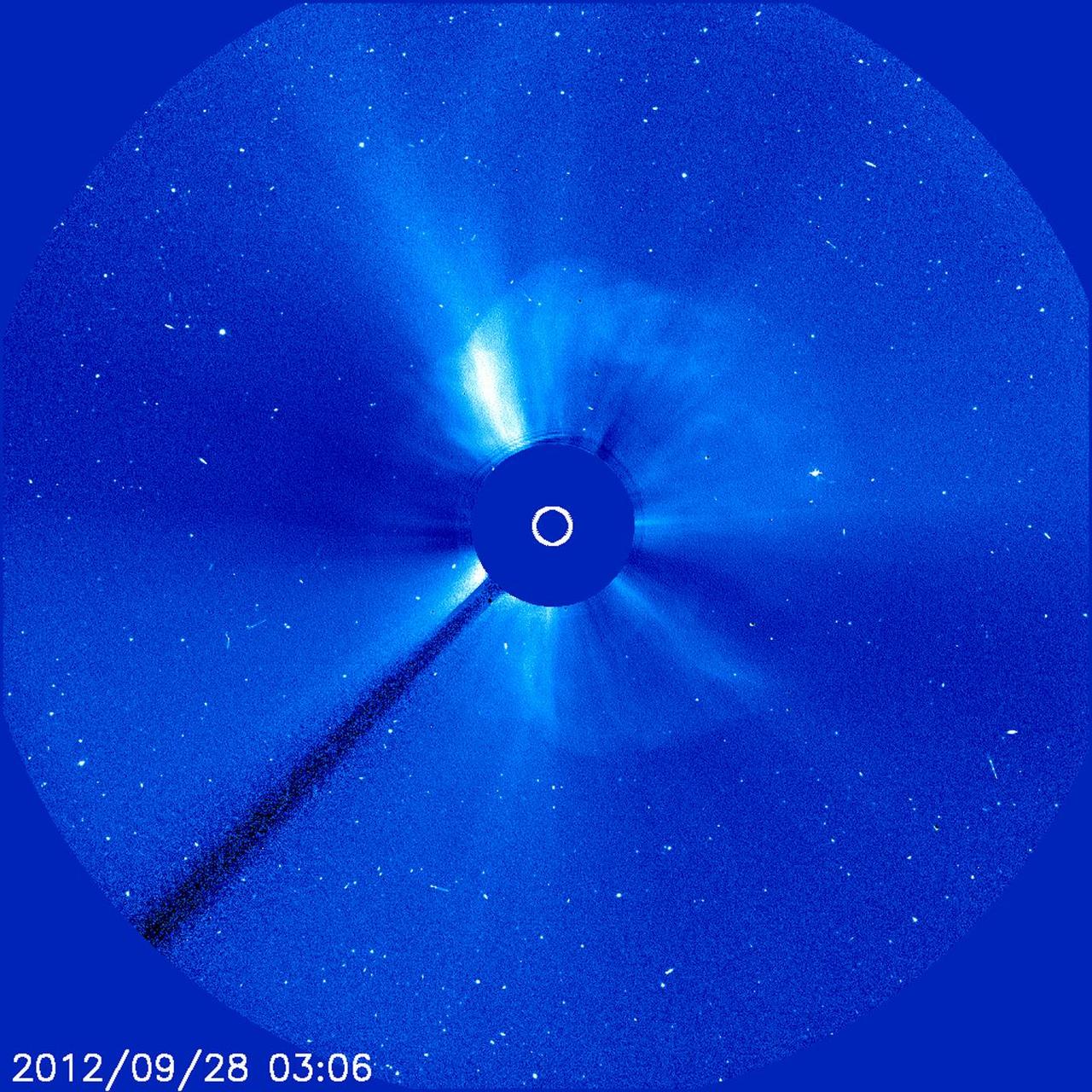
A giant cloud appears to expand outward from the sun in all directions in this image from Sept. 28, 2012, which is called a halo CME. This kind of image occurs when a CME moves toward Earth – as here – or directly away from it. Credit: ESA/NASA/SOHO CME WEEK: What To See in CME Images Two main types of explosions occur on the sun: solar flares and coronal mass ejections. Unlike the energy and x-rays produced in a solar flare – which can reach Earth at the speed of light in eight minutes – coronal mass ejections are giant, expanding clouds of solar material that take one to three days to reach Earth. Once at Earth, these ejections, also called CMEs, can impact satellites in space or interfere with radio communications. During CME WEEK from Sept. 22 to 26, 2014, we explore different aspects of these giant eruptions that surge out from the star we live with. When a coronal mass ejection blasts off the sun, scientists rely on instruments called coronagraphs to track their progress. Coronagraphs block out the bright light of the sun, so that the much fainter material in the solar atmosphere -- including CMEs -- can be seen in the surrounding space. CMEs appear in these images as expanding shells of material from the sun's atmosphere -- sometimes a core of colder, solar material (called a filament) from near the sun's surface moves in the center. But mapping out such three-dimensional components from a two-dimensional image isn't easy. Watch the slideshow to find out how scientists interpret what they see in CME pictures. The images in the slideshow are from the three sets of coronagraphs NASA currently has in space. One is on the joint European Space Agency and NASA Solar and Heliospheric Observatory, or SOHO. SOHO launched in 1995, and sits between Earth and the sun about a million miles away from Earth. The other two coronagraphs are on the two spacecraft of the NASA Solar Terrestrial Relations Observatory, or STEREO, mission, which launched in 2006. The two STEREO spacecraft are both currently viewing the far side of the sun. Together these instruments help scientists create a three-dimensional model of any CME as its journey unfolds through interplanetary space. Such information can show why a given characteristic of a CME close to the sun might lead to a given effect near Earth, or any other planet in the solar system...<b><a href="http://www.nasa.gov/audience/formedia/features/MP_Photo_Guidelines.html" rel="nofollow">NASA image use policy.</a></b> <b><a href="http://www.nasa.gov/centers/goddard/home/index.html" rel="nofollow">NASA Goddard Space Flight Center</a></b> enables NASA’s mission through four scientific endeavors: Earth Science, Heliophysics, Solar System Exploration, and Astrophysics. Goddard plays a leading role in NASA’s accomplishments by contributing compelling scientific knowledge to advance the Agency’s mission. <b>Follow us on <a href="http://twitter.com/NASAGoddardPix" rel="nofollow">Twitter</a></b> <b>Like us on <a href="http://www.facebook.com/pages/Greenbelt-MD/NASA-Goddard/395013845897?ref=tsd" rel="nofollow">Facebook</a></b> <b>Find us on <a href="http://instagram.com/nasagoddard?vm=grid" rel="nofollow">Instagram</a></b>
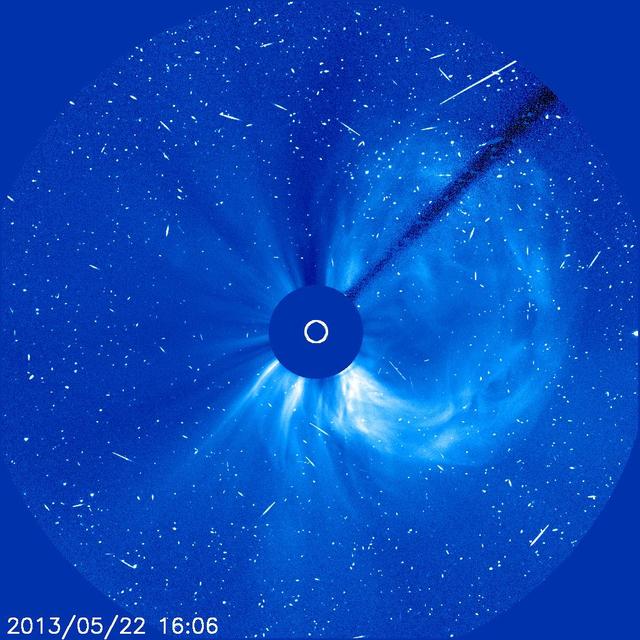
A solar flare associated with the coronal mass ejection seen in this image generated a flurry of fast-moving solar protons. As each one hits the CCD camera on SOHO, it produces a brief snow-like speckle in the image. Credit: NASA/SOHO CME WEEK: What To See in CME Images Two main types of explosions occur on the sun: solar flares and coronal mass ejections. Unlike the energy and x-rays produced in a solar flare – which can reach Earth at the speed of light in eight minutes – coronal mass ejections are giant, expanding clouds of solar material that take one to three days to reach Earth. Once at Earth, these ejections, also called CMEs, can impact satellites in space or interfere with radio communications. During CME WEEK from Sept. 22 to 26, 2014, we explore different aspects of these giant eruptions that surge out from the star we live with. When a coronal mass ejection blasts off the sun, scientists rely on instruments called coronagraphs to track their progress. Coronagraphs block out the bright light of the sun, so that the much fainter material in the solar atmosphere -- including CMEs -- can be seen in the surrounding space. CMEs appear in these images as expanding shells of material from the sun's atmosphere -- sometimes a core of colder, solar material (called a filament) from near the sun's surface moves in the center. But mapping out such three-dimensional components from a two-dimensional image isn't easy. Watch the slideshow to find out how scientists interpret what they see in CME pictures. The images in the slideshow are from the three sets of coronagraphs NASA currently has in space. One is on the joint European Space Agency and NASA Solar and Heliospheric Observatory, or SOHO. SOHO launched in 1995, and sits between Earth and the sun about a million miles away from Earth. The other two coronagraphs are on the two spacecraft of the NASA Solar Terrestrial Relations Observatory, or STEREO, mission, which launched in 2006. The two STEREO spacecraft are both currently viewing the far side of the sun. Together these instruments help scientists create a three-dimensional model of any CME as its journey unfolds through interplanetary space. Such information can show why a given characteristic of a CME close to the sun might lead to a given effect near Earth, or any other planet in the solar system...<b><a href="http://www.nasa.gov/audience/formedia/features/MP_Photo_Guidelines.html" rel="nofollow">NASA image use policy.</a></b> <b><a href="http://www.nasa.gov/centers/goddard/home/index.html" rel="nofollow">NASA Goddard Space Flight Center</a></b> enables NASA’s mission through four scientific endeavors: Earth Science, Heliophysics, Solar System Exploration, and Astrophysics. Goddard plays a leading role in NASA’s accomplishments by contributing compelling scientific knowledge to advance the Agency’s mission. <b>Follow us on <a href="http://twitter.com/NASAGoddardPix" rel="nofollow">Twitter</a></b> <b>Like us on <a href="http://www.facebook.com/pages/Greenbelt-MD/NASA-Goddard/395013845897?ref=tsd" rel="nofollow">Facebook</a></b> <b>Find us on <a href="http://instagram.com/nasagoddard?vm=grid" rel="nofollow">Instagram</a></b>
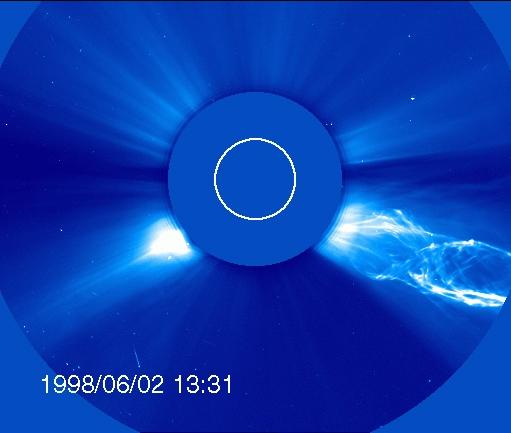
OHO captured this image of a CME from the side – but the structure looks much different from the classic light bulb CME. The filament of material bursting off the sun has a helical magnetic structure, which is unraveling like a piece of yarn during the eruption. Credit: ESA/NASA/SOHO..---..CME WEEK: What To See in CME Images Two main types of explosions occur on the sun: solar flares and coronal mass ejections. Unlike the energy and x-rays produced in a solar flare – which can reach Earth at the speed of light in eight minutes – coronal mass ejections are giant, expanding clouds of solar material that take one to three days to reach Earth. Once at Earth, these ejections, also called CMEs, can impact satellites in space or interfere with radio communications. During CME WEEK from Sept. 22 to 26, 2014, we explore different aspects of these giant eruptions that surge out from the star we live with. When a coronal mass ejection blasts off the sun, scientists rely on instruments called coronagraphs to track their progress. Coronagraphs block out the bright light of the sun, so that the much fainter material in the solar atmosphere -- including CMEs -- can be seen in the surrounding space. CMEs appear in these images as expanding shells of material from the sun's atmosphere -- sometimes a core of colder, solar material (called a filament) from near the sun's surface moves in the center. But mapping out such three-dimensional components from a two-dimensional image isn't easy. Watch the slideshow to find out how scientists interpret what they see in CME pictures. The images in the slideshow are from the three sets of coronagraphs NASA currently has in space. One is on the joint European Space Agency and NASA Solar and Heliospheric Observatory, or SOHO. SOHO launched in 1995, and sits between Earth and the sun about a million miles away from Earth. The other two coronagraphs are on the two spacecraft of the NASA Solar Terrestrial Relations Observatory, or STEREO, mission, which launched in 2006. The two STEREO spacecraft are both currently viewing the far side of the sun. Together these instruments help scientists create a three-dimensional model of any CME as its journey unfolds through interplanetary space. Such information can show why a given characteristic of a CME close to the sun might lead to a given effect near Earth, or any other planet in the solar system...<b><a href="http://www.nasa.gov/audience/formedia/features/MP_Photo_Guidelines.html" rel="nofollow">NASA image use policy.</a></b> <b><a href="http://www.nasa.gov/centers/goddard/home/index.html" rel="nofollow">NASA Goddard Space Flight Center</a></b> enables NASA’s mission through four scientific endeavors: Earth Science, Heliophysics, Solar System Exploration, and Astrophysics. Goddard plays a leading role in NASA’s accomplishments by contributing compelling scientific knowledge to advance the Agency’s mission. <b>Follow us on <a href="http://twitter.com/NASAGoddardPix" rel="nofollow">Twitter</a></b> <b>Like us on <a href="http://www.facebook.com/pages/Greenbelt-MD/NASA-Goddard/395013845897?ref=tsd" rel="nofollow">Facebook</a></b> <b>Find us on <a href="http://instagram.com/nasagoddard?vm=grid" rel="nofollow">Instagram</a></b>
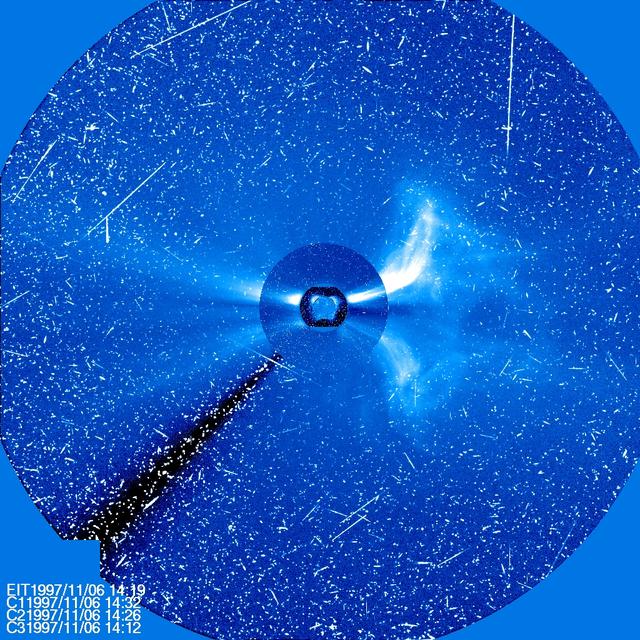
Four different instruments on SOHO show a large CME on Nov. 6, 1997. The sun is at the center, with three coronagraph images of different sizes around it. The streaks of white light are from protons hitting the SOHO cameras producing a snowy effect typical of a significant flare. ..Credit: NASA/SOHO..---..CME WEEK: What To See in CME Images Two main types of explosions occur on the sun: solar flares and coronal mass ejections. Unlike the energy and x-rays produced in a solar flare – which can reach Earth at the speed of light in eight minutes – coronal mass ejections are giant, expanding clouds of solar material that take one to three days to reach Earth. Once at Earth, these ejections, also called CMEs, can impact satellites in space or interfere with radio communications. During CME WEEK from Sept. 22 to 26, 2014, we explore different aspects of these giant eruptions that surge out from the star we live with. When a coronal mass ejection blasts off the sun, scientists rely on instruments called coronagraphs to track their progress. Coronagraphs block out the bright light of the sun, so that the much fainter material in the solar atmosphere -- including CMEs -- can be seen in the surrounding space. CMEs appear in these images as expanding shells of material from the sun's atmosphere -- sometimes a core of colder, solar material (called a filament) from near the sun's surface moves in the center. But mapping out such three-dimensional components from a two-dimensional image isn't easy. Watch the slideshow to find out how scientists interpret what they see in CME pictures. The images in the slideshow are from the three sets of coronagraphs NASA currently has in space. One is on the joint European Space Agency and NASA Solar and Heliospheric Observatory, or SOHO. SOHO launched in 1995, and sits between Earth and the sun about a million miles away from Earth. The other two coronagraphs are on the two spacecraft of the NASA Solar Terrestrial Relations Observatory, or STEREO, mission, which launched in 2006. The two STEREO spacecraft are both currently viewing the far side of the sun. Together these instruments help scientists create a three-dimensional model of any CME as its journey unfolds through interplanetary space. Such information can show why a given characteristic of a CME close to the sun might lead to a given effect near Earth, or any other planet in the solar system...<b><a href="http://www.nasa.gov/audience/formedia/features/MP_Photo_Guidelines.html" rel="nofollow">NASA image use policy.</a></b> <b><a href="http://www.nasa.gov/centers/goddard/home/index.html" rel="nofollow">NASA Goddard Space Flight Center</a></b> enables NASA’s mission through four scientific endeavors: Earth Science, Heliophysics, Solar System Exploration, and Astrophysics. Goddard plays a leading role in NASA’s accomplishments by contributing compelling scientific knowledge to advance the Agency’s mission. <b>Follow us on <a href="http://twitter.com/NASAGoddardPix" rel="nofollow">Twitter</a></b> <b>Like us on <a href="http://www.facebook.com/pages/Greenbelt-MD/NASA-Goddard/395013845897?ref=tsd" rel="nofollow">Facebook</a></b> <b>Find us on <a href="http://instagram.com/nasagoddard?vm=grid" rel="nofollow">Instagram</a></b>
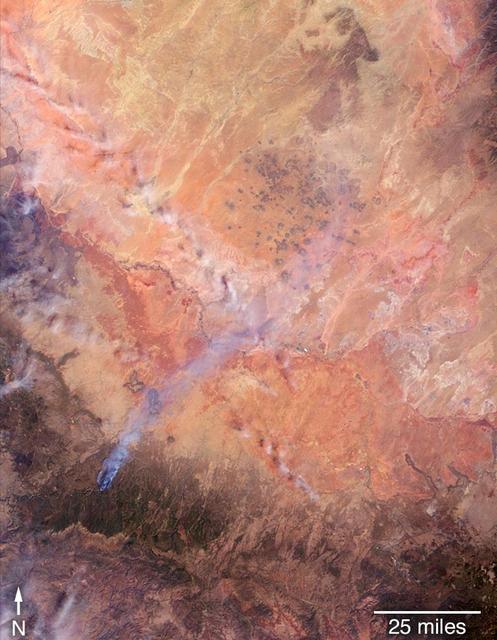
On April 27, 2018, the Tinder Fire ignited in eastern Arizona near the Blue Ridge Reservoir, about 50 miles (80 kilometers) southeast of Flagstaff and 20 miles (32 kilometers) northeast of Payson. During the first 24 hours it remained relatively small at 500 acres (202 hectares), but on April 29, during red flag wind conditions, it exploded to 8,600 acres (3,480 hectares). Residents of rural communities in the area were forced to evacuate and an unknown number of structures were burned. As of April 30, the Tinder Fire had burned a total of 11,400 acres (4,613 hectares). On April 30 at 11:15 a.m. local time, the Multi-angle Imaging SpectroRadiometer (MISR) captured imagery of the Tinder Fire as it passed overhead on NASA's Terra satellite. The MISR instrument has nine cameras that view Earth at different angles. This image shows the view from MISR's nadir (downward-pointing) camera. The angular information from MISR's images is used to calculate the height of the smoke plume, results of which are superimposed on the right-hand image. This shows that the plume top near the active fire was at approximately 13,000 feet altitude (4,000 meters). In general, higher-altitude plumes transport smoke greater distances from the source, impacting communities downwind. A stereo anaglyph providing a three-dimensional view of the plume is also shown. Red-blue glasses with the red lens placed over your left eye are required to observe the 3D effect. These data were acquired during Terra orbit 97691. An annotated figure and anaglyph are available at https://photojournal.jpl.nasa.gov/catalog/PIA00698
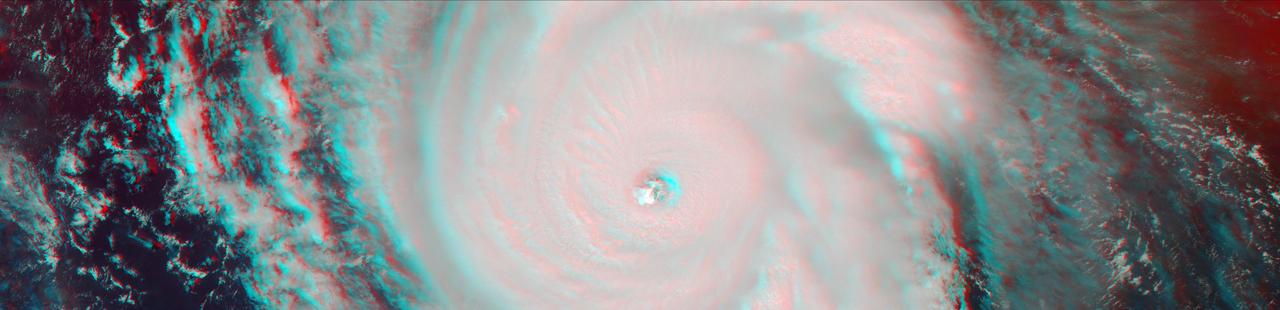
On Sept. 7, the Multi-angle Imaging SpectroRadiometer (MISR) instrument on NASA's Terra satellite passed over Hurricane Irma at approximately 11:20 am local time. The MISR instrument comprises nine cameras that view the Earth at different angles, and since it takes roughly seven minutes for all nine cameras to capture the same location, the motion of the clouds between images allows scientists to calculate the wind speed at the cloud tops. This stereo anaglyph combines two of the MISR angles to show a three-dimensional view of Irma. You will need red-blue glasses to view the anaglyph; place the red lens over your left eye. At this time, Irma's eye was located approximately 60 miles (100 kilometers) north of the Dominican Republic and 140 miles (230 kilometers) north of its capital, Santo Domingo. Irma was a powerful Category 5 hurricane, with wind speeds at the ocean surface up to 185 miles (300 kilometers) per hour. The MISR data show that at cloud top, winds near the eye wall (the most destructive part of the storm) were approximately 90 miles per hour (145 kilometers per hour), and the maximum cloud-top wind speed throughout the storm calculated by MISR was 135 miles per hour (220 kilometers per hour). While the hurricane's dominant rotation direction is counter-clockwise, winds near the eye wall are consistently pointing outward from it. This is an indication of outflow, the process by which a hurricane draws in warm, moist air at the surface and ejects cool, dry air at its cloud tops. https://photojournal.jpl.nasa.gov/catalog/PIA21945
In December of 1968, the crew of Apollo 8 became the first people to leave our home planet and travel to another body in space. But as crew members Frank Borman, James Lovell, and William Anders all later recalled, the most important thing they discovered was Earth. Using photo mosaics and elevation data from Lunar Reconnaissance Orbiter (LRO), this video commemorates the 45th anniversary of Apollo 8's historic flight by recreating the moment when the crew first saw and photographed the Earth rising from behind the Moon. Narrator Andrew Chaikin, author of A Man on the Moon, sets the scene for a three-minute visualization of the view from both inside and outside the spacecraft accompanied by the onboard audio of the astronauts. The visualization draws on numerous historical sources, including the actual cloud pattern on Earth from the ESSA-7 satellite and dozens of photographs taken by Apollo 8, and it reveals new, historically significant information about the Earthrise photographs. It has not been widely known, for example, that the spacecraft was rolling when the photos were taken, and that it was this roll that brought the Earth into view. The visualization establishes the precise timing of the roll and, for the first time ever, identifies which window each photograph was taken from. The key to the new work is a set of vertical stereo photographs taken by a camera mounted in the Command Module's rendezvous window and pointing straight down onto the lunar surface. It automatically photographed the surface every 20 seconds. By registering each photograph to a model of the terrain based on LRO data, the orientation of the spacecraft can be precisely determined. Credit: NASA's Scientific Visualization Studio <b><a href="http://www.nasa.gov/audience/formedia/features/MP_Photo_Guidelines.html" rel="nofollow">NASA image use policy.</a></b> <b><a href="http://www.nasa.gov/centers/goddard/home/index.html" rel="nofollow">NASA Goddard Space Flight Center</a></b> enables NASA’s mission through four scientific endeavors: Earth Science, Heliophysics, Solar System Exploration, and Astrophysics. Goddard plays a leading role in NASA’s accomplishments by contributing compelling scientific knowledge to advance the Agency’s mission. <b>Follow us on <a href="http://twitter.com/NASA_GoddardPix" rel="nofollow">Twitter</a></b> <b>Like us on <a href="http://www.facebook.com/pages/Greenbelt-MD/NASA-Goddard/395013845897?ref=tsd" rel="nofollow">Facebook</a></b> <b>Find us on <a href="http://instagram.com/nasagoddard?vm=grid" rel="nofollow">Instagram</a></b>
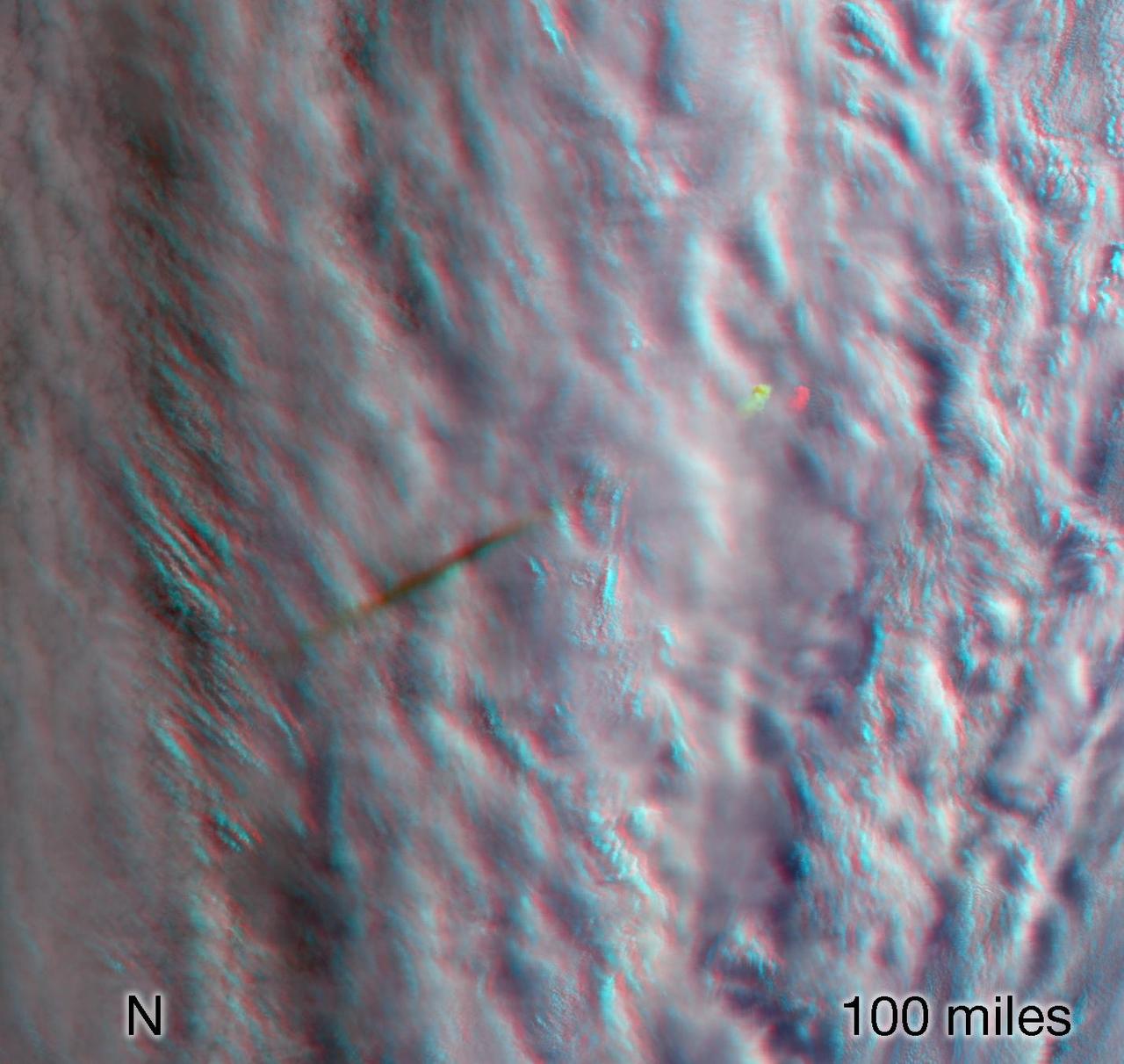
This stereo anaglyph combines two views from the Multi-angle Imaging SpectroRadiometer (MISR) instrument aboard the Terra satellite. The images were taken minutes after a fireball - the term used for exceptionally bright meteors that are visible over a wide area - exploded over the Bering Sea on Dec. 18, 2018. The anaglyph has been rotated 93.8 degrees counterclockwise to enable 3D viewing. The 3D effect can be seen with red-blue glasses. https://photojournal.jpl.nasa.gov/catalog/PIA23050
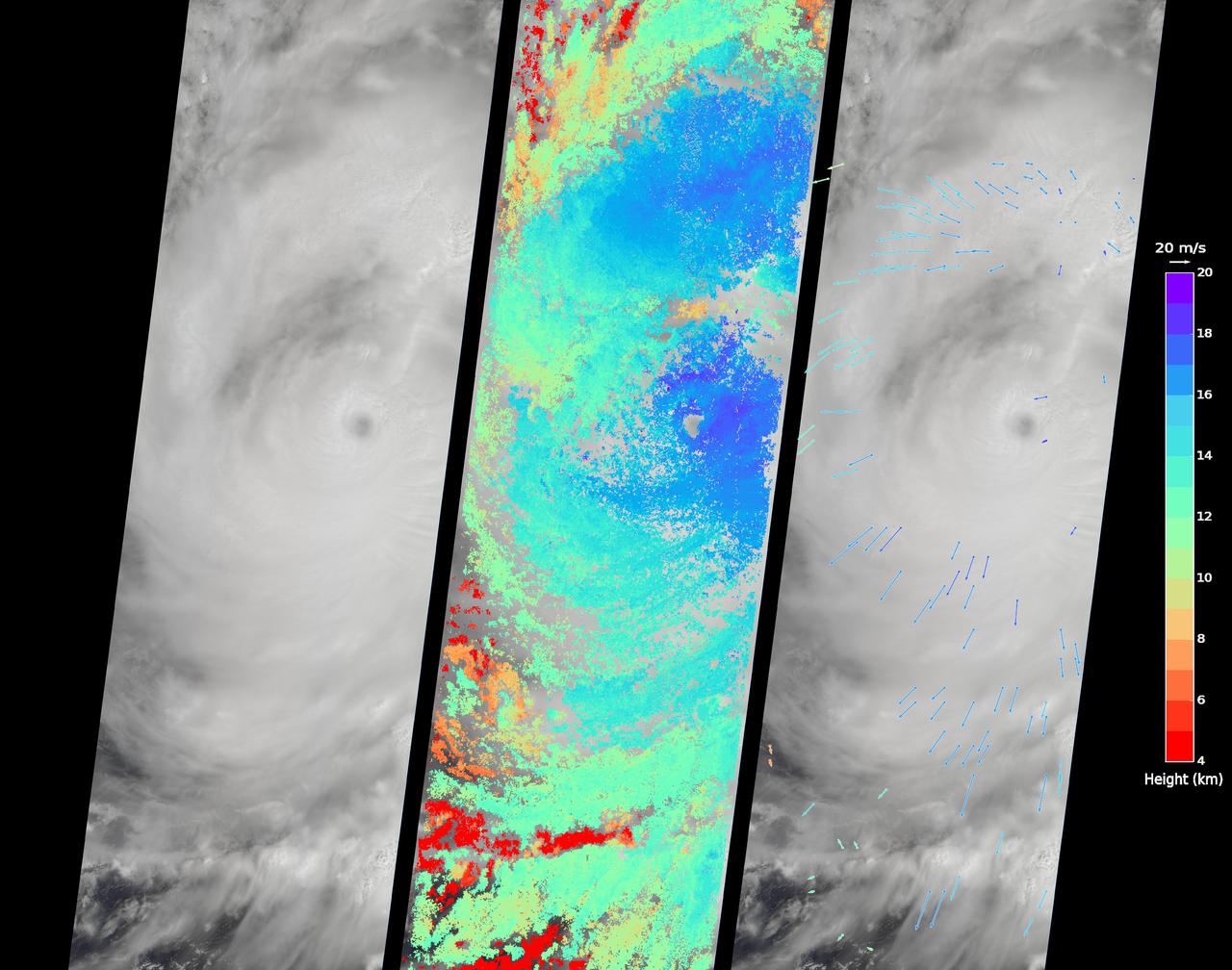
On Sept. 14, 2016, the eye of Super Typhoon Meranti passed just south of Taiwan. The enormous storm, classified as a Category 5 typhoon at the time, still caused much disruption on the island. Nearly 500,000 homes lost power, schools were closed, and most flights were cancelled. Maximum wind speeds were 180 miles per hour (290 kilometers per hour) as the storm passed, and more than 25 inches (64 centimeters) of rain fell on some areas of the country. However, the storm did not pass over Taiwan's mountainous landscape, which would have weakened it. That means it will remain strong as it heads toward mainland China, unlike Super Typhoon Nepartak in July, which weakened from a Category 5 typhoon to a tropical storm after crossing Taiwan. Meranti is currently maintaining Category 4 strength and is expected to make landfall near Shantou, Guangdong province, on Thursday, September 15. The coast of China is more vulnerable to storm surges than Taiwan due to shallower coastal waters and recent rainfall. There is risk of substantial flooding. On Sept. 14, at 10:45 AM local time, the Multi-angle Imaging SpectroRadiometer (MISR) instrument aboard NASA's Terra satellite passed directly over the eye of Meranti. On the left is a natural-color image from MISR's nadir-pointing camera. At this time the eye of Meranti was just off the southern tip of Taiwan, which is invisible under the clouds. The coast of China is barely visible through the clouds in the upper left portion of the image. The small eye and dense high clouds are both markers of the storm's power. MISR's nine cameras, each pointed at a different angle, can be used to determine the heights of clouds based on geometric shifts among the nine images. The middle panel shows these stereo-derived cloud top heights superimposed on the natural color image. The clouds of the central core of Typhoon Meranti have heights ranging between 16 and 20 kilometers (10 and 12.5 miles). It takes about seven minutes for all nine cameras to image the same location on the ground, and wind velocity can be calculated from the motion of the clouds over this seven-minute period. The right panel plots these wind velocities as vectors which indicate both direction and speed. The length of the arrow corresponds to the wind speed, which can be compared to the reference 20 meters per second (45 miles per hour) arrow in the key. Hurricanes and typhoons in the Northern Hemisphere rotate counterclockwise due to the Earth's rotation, but these wind vectors mainly show motion outward from the eye at the storm tops. This is due to the fact that hurricanes draw in moist air at low altitudes, which then flows upwards and outwards around the eye reversing direction. These data were acquired during Terra orbit 88865. http://photojournal.jpl.nasa.gov/catalog/PIA17309
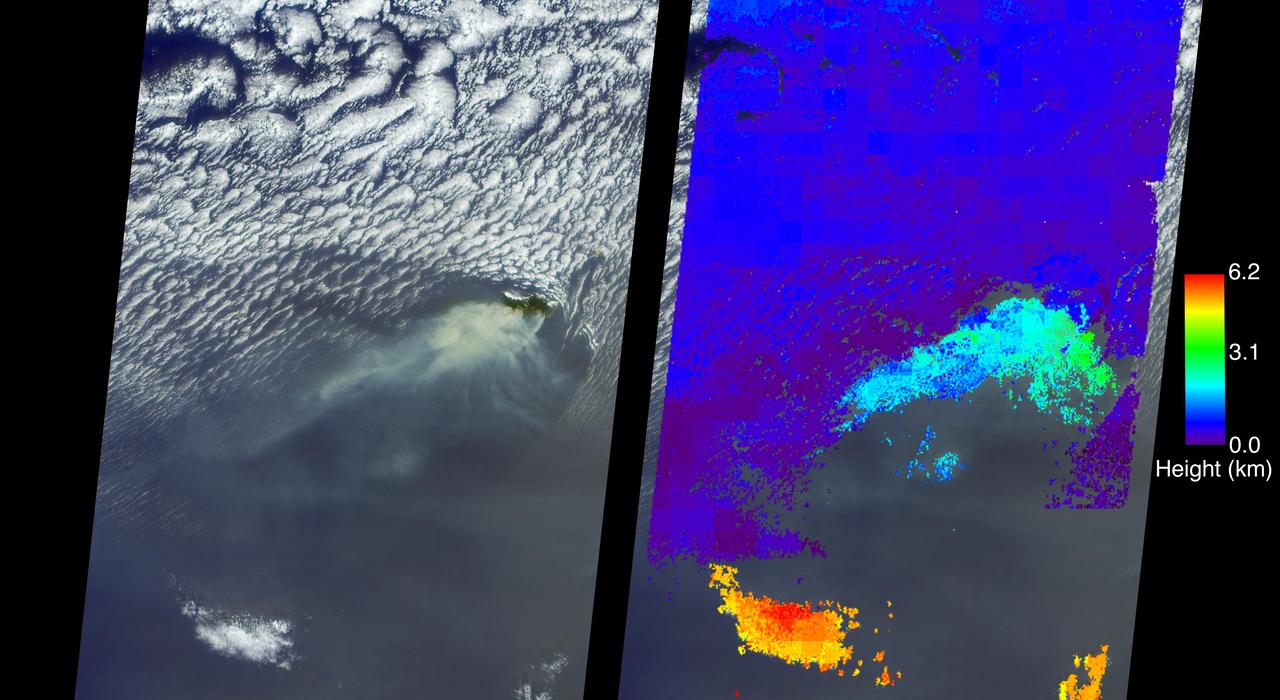
A wildfire spread to the capital city of Funchal on the island of Madeira, an autonomous region of Portugal, over the nighttime hours of Tuesday, Aug. 9, 2016, with three deaths reported and hundreds of others hospitalized. Several homes and a luxury hotel have burned, and a thousand people have been evacuated. The three fatalities are reported to be elderly people who were unable to escape when their homes caught fire. The fire ignited Monday, Aug. 8, after several weeks of scorching temperatures topping 95 degrees Fahrenheit and very dry weather. The entire island is only 30 miles (48 kilometers) from end to end, which naturally makes protecting the island's 270,000 residents and many tourists more difficult. The MISR (Multi-angle Imaging SpectroRadiometer) instrument aboard NASA's Terra satellite passed directly over the island of Madeira on Wednesday, Aug. 10, 2016. The left image is a true-color image taken by MISR's 60-degree forward-pointing camera. This oblique view gives a better view of the smoke than a downward-pointing view. The island of Madeira is the only land within the field of view, and the smoke from the wildfire is being blown to the southwest. The city of Funchal is located on the southeastern coast of the island. MISR's nine cameras, each viewing Earth at a different angle, can be used to determine the height of clouds and smoke above the surface in much the same way that our two eyes, pointing in slightly different directions, give us depth perception. The right-hand image shows MISR's publically available standard cloud top height product. These data show that the main body of clouds is indeed very low, less than 0.6 miles (1 kilometer) above sea level, while the smoke plume is about 1.9 miles (3 kilometers) high at the source, dropping lower as it is blown to the southwest. A stereo "anaglyph" of this scene is also available at PIA20886. As can be seen from both the MISR height product and the 3D anaglyph, the isolated clouds to the south are much higher than either the low clouds or the plume. Interestingly, the low clouds drop to almost sea level and then die out near where the smoke is present. These data were acquired during Terra orbit 88524. http://photojournal.jpl.nasa.gov/catalog/PIA20887