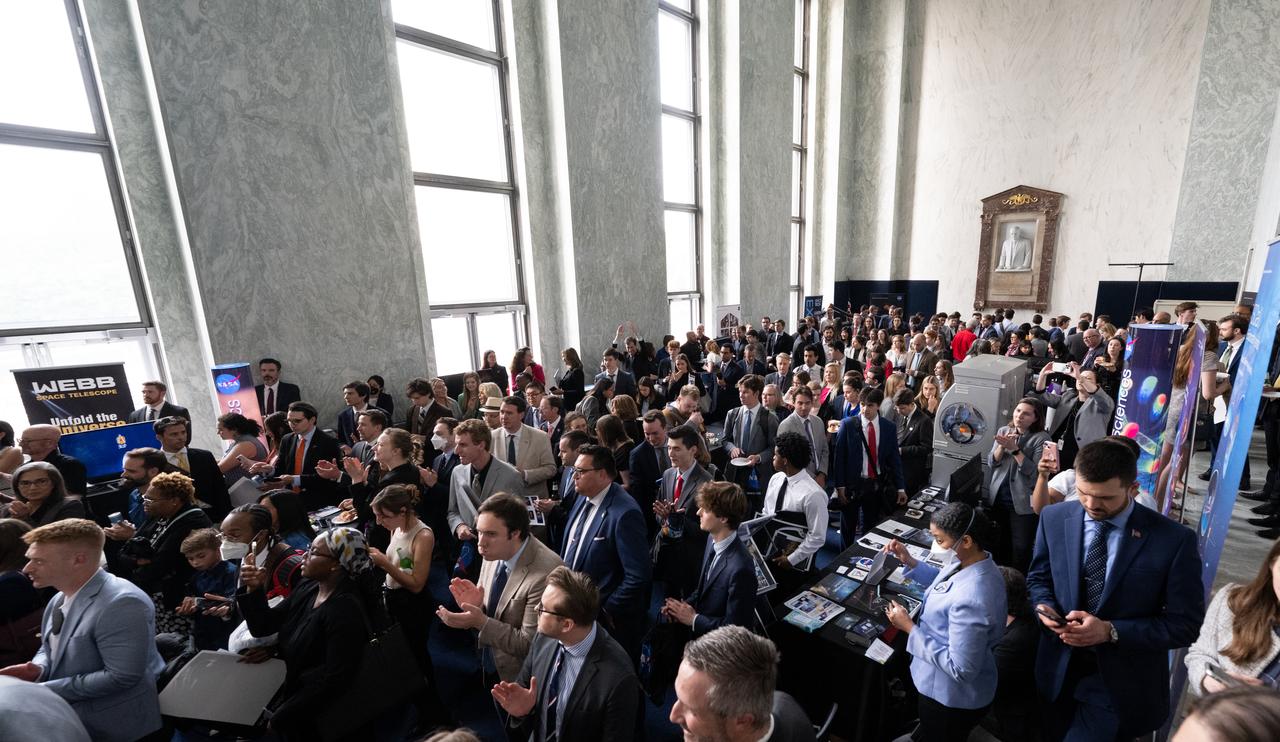
Attendees view exhibits and listen to speakers during NASA’s Science Day on the Hill event, Wednesday, June 7, 2023, at the Rayburn House Office Building in Washington. Photo Credit: (NASA/Joel Kowsky)
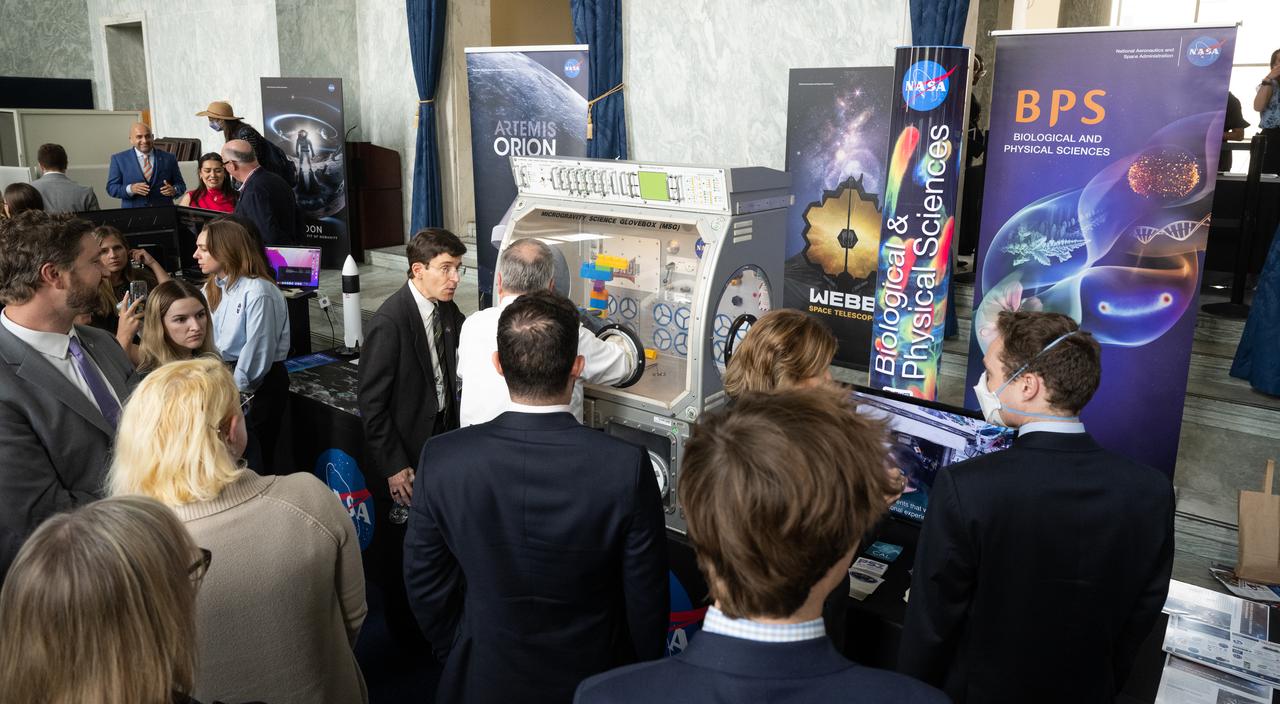
Attendees view exhibits during NASA’s Science Day on the Hill event, Wednesday, June 7, 2023, at the Rayburn House Office Building in Washington. Photo Credit: (NASA/Joel Kowsky)
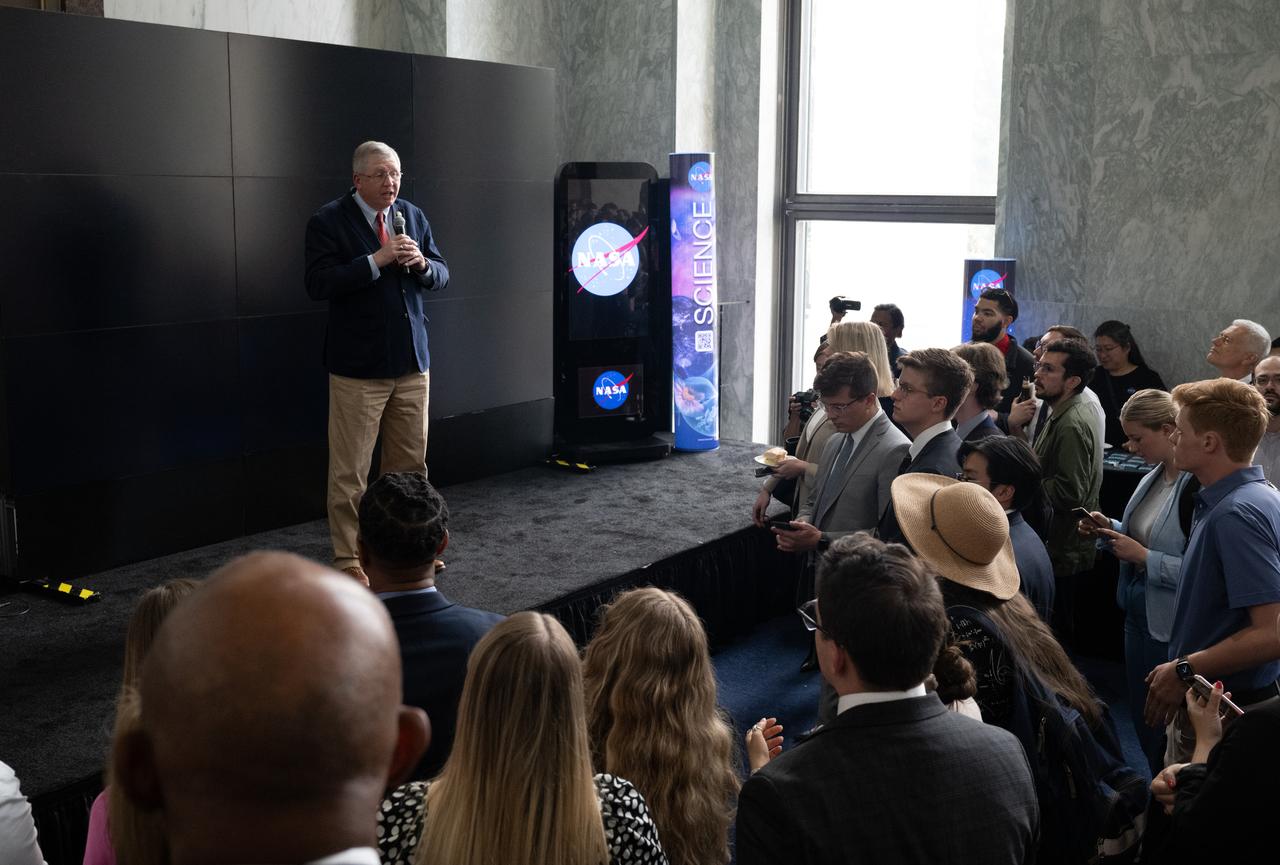
NASA Associate administrator Bob Cabana speaks during NASA’s Science Day on the Hill event, Wednesday, June 7, 2023, at the Rayburn House Office Building in Washington. Photo Credit: (NASA/Joel Kowsky)
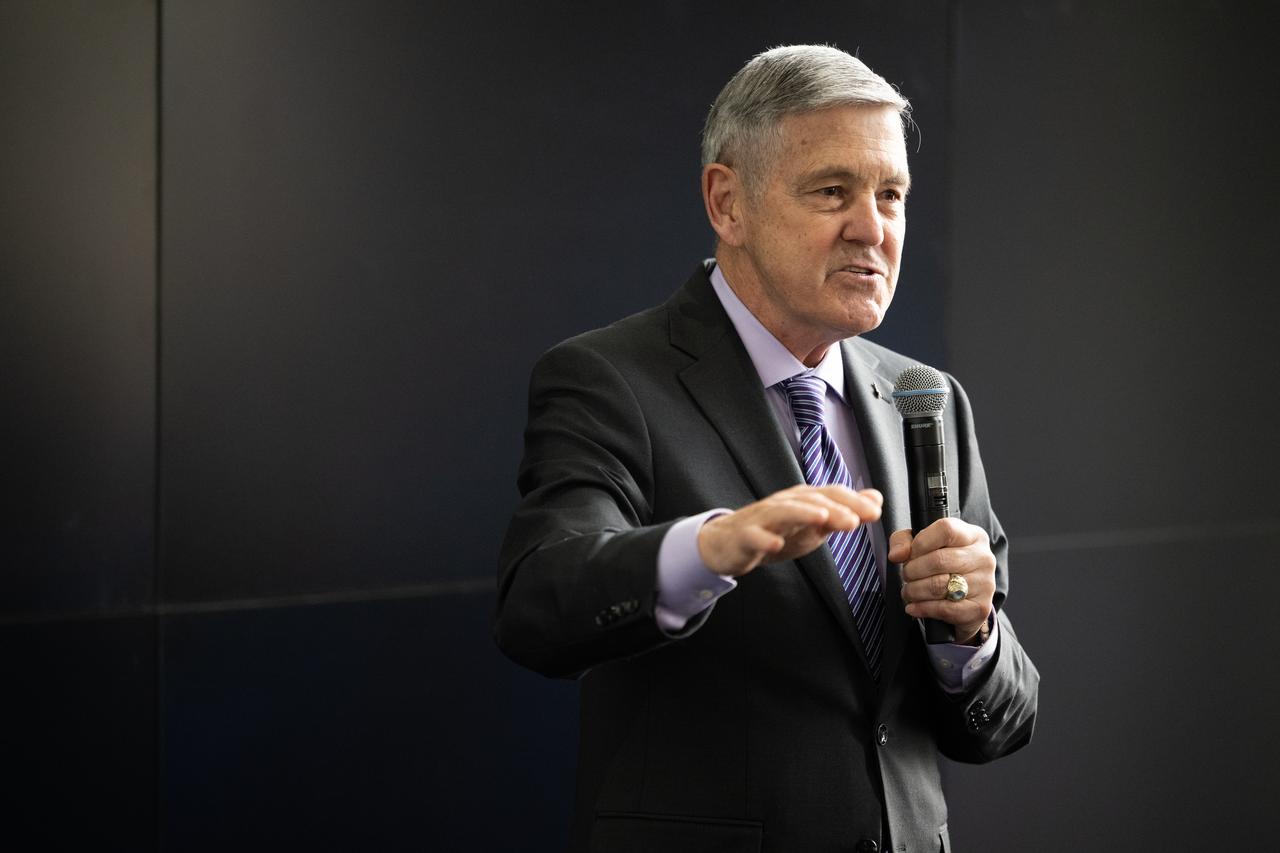
Rep. Frank Lucas, R-Okla., speaks during NASA’s Science Day on the Hill event, Wednesday, June 7, 2023, at the Rayburn House Office Building in Washington. Photo Credit: (NASA/Joel Kowsky)
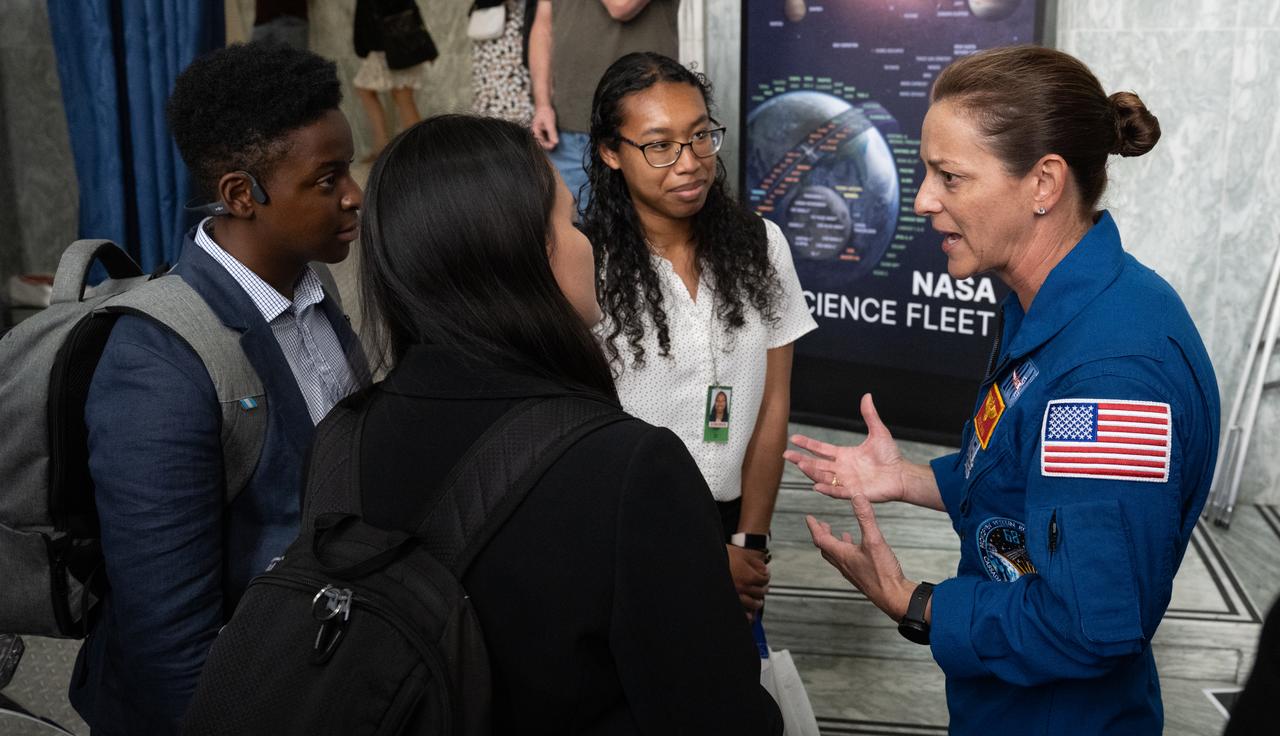
NASA’s SpaceX Crew-5 astronaut Nicole Mann of NASA speaks to attendees of NASA’s Science Day on the Hill event, Wednesday, June 7, 2023, at the Rayburn House Office Building in Washington. Mann and fellow crewmates Josh Cassada of NASA and Koichi Wakata of the Japan Aerospace Exploration Agency (JAXA) spent 157 days in space as part of Expedition 68 aboard the International Space Station. Photo Credit: (NASA/Joel Kowsky)
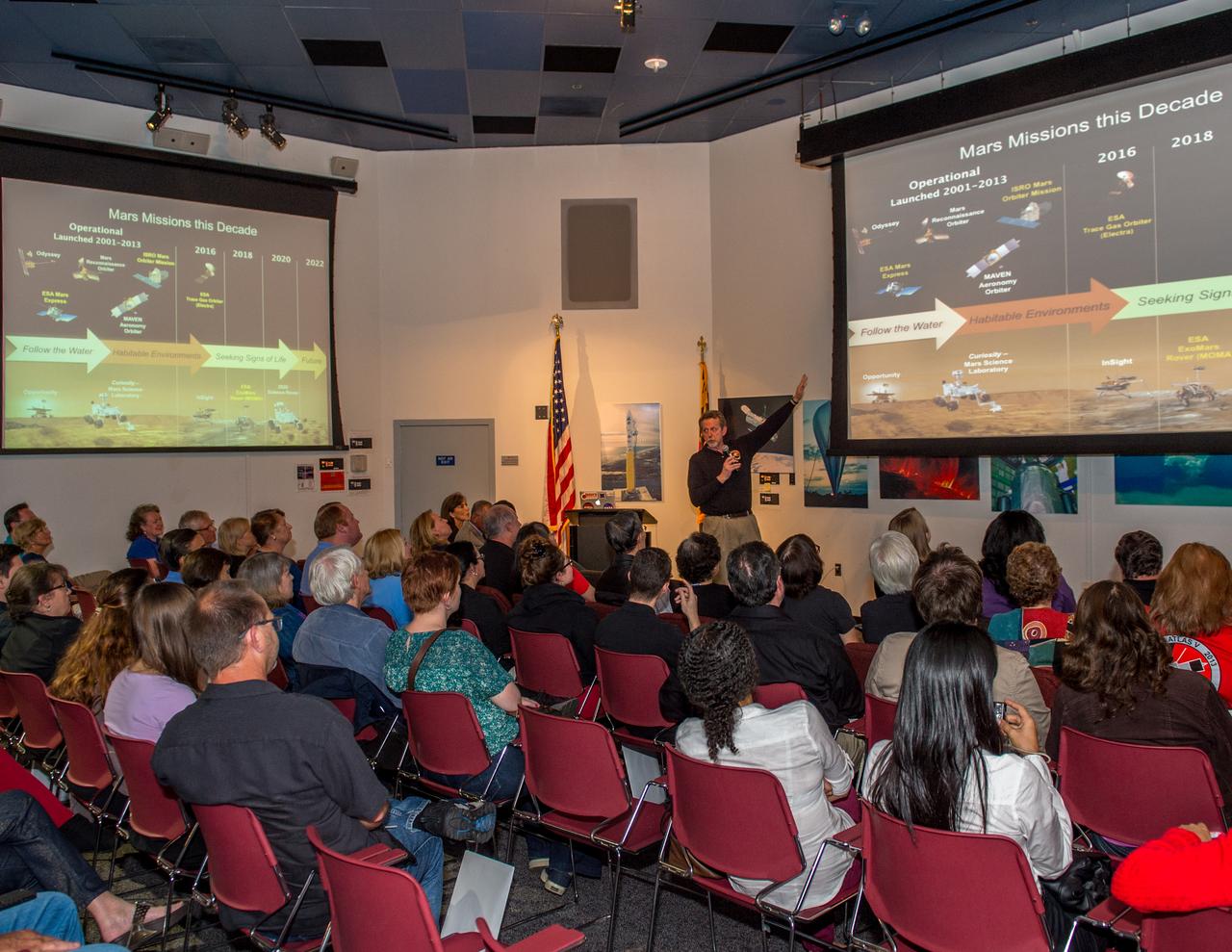
James Green , NASA PLanetary Science Division Director at the Mars Atmosphere and Volatile Evolution Mission (MAVEN) ORBIT INSERTION event
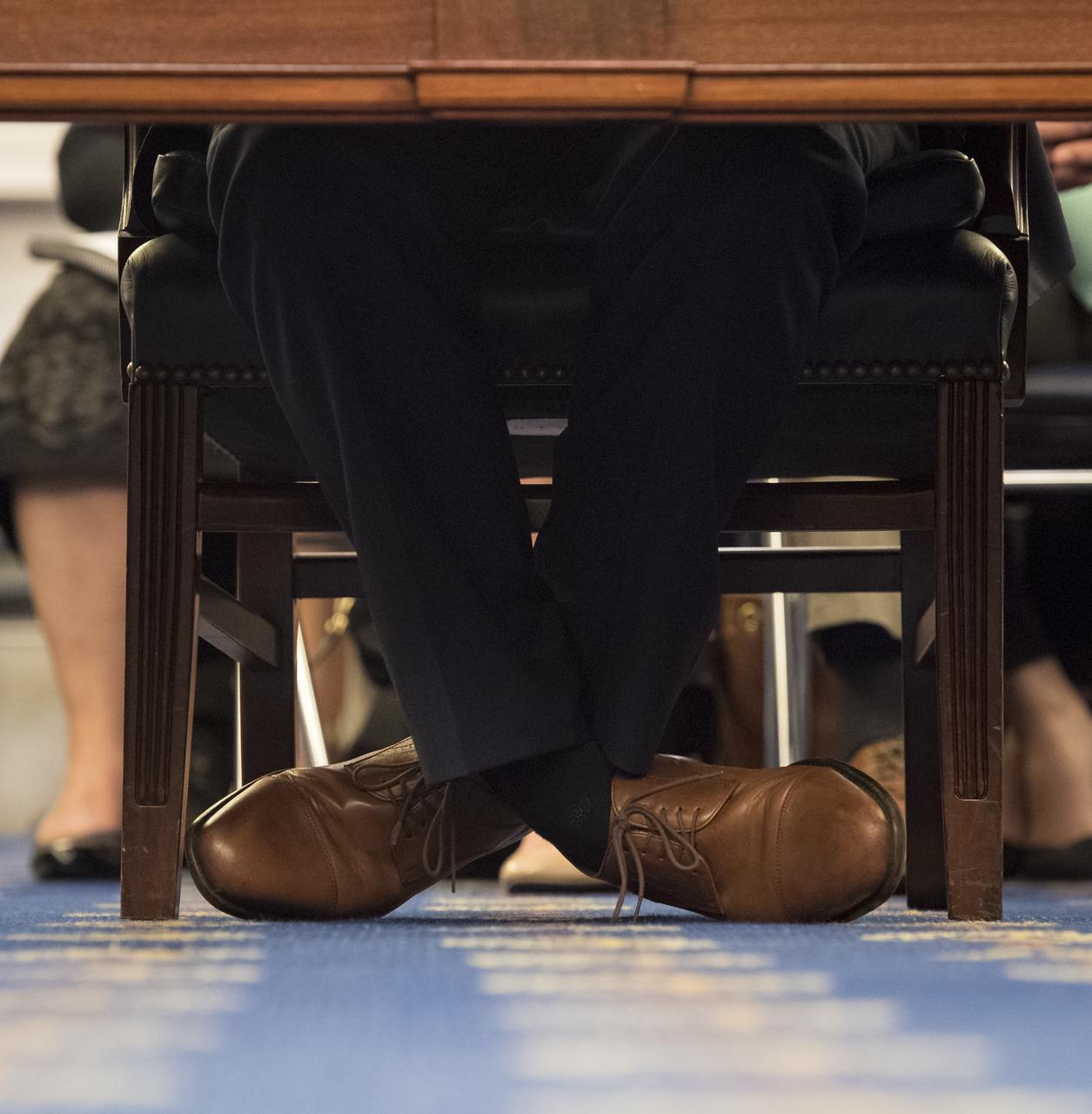
NASA Administrator Jim Bridenstine's shoes are seen while testifying during a Subcommittee on Space, Science, and Competitiveness hearing titled, "Global Space Race: Ensuring the United States Remains the Leader in Space," Wednesday, September 26, 2018 at the Russell Senate Office Building in Washington. Photo Credit: (NASA/Aubrey Gemignani)
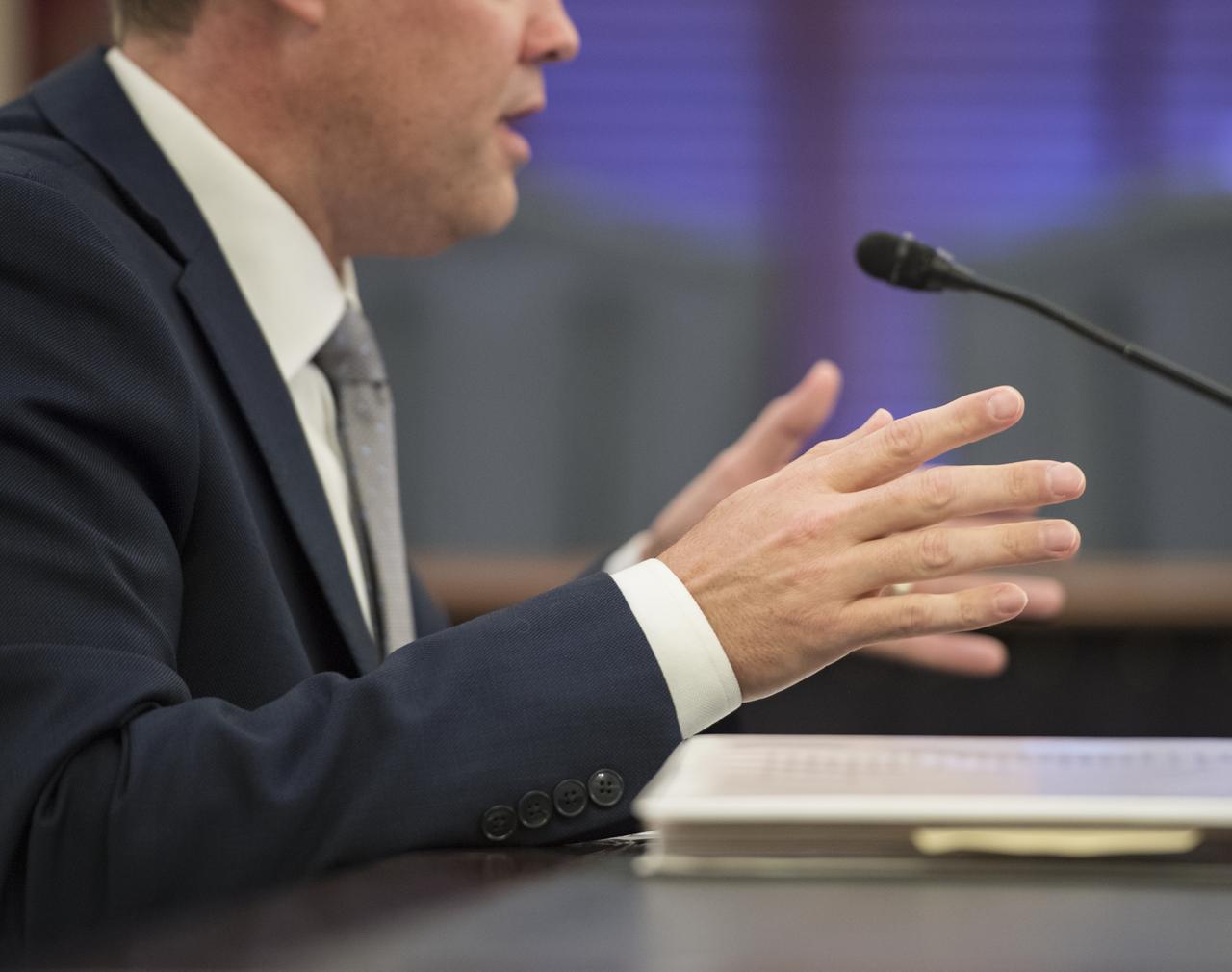
NASA Administrator Jim Bridenstine testifies during a Subcommittee on Space, Science, and Competitiveness hearing titled, "Global Space Race: Ensuring the United States Remains the Leader in Space," Wednesday, September 26, 2018 at the Russell Senate Office Building in Washington. Photo Credit: (NASA/Aubrey Gemignani)
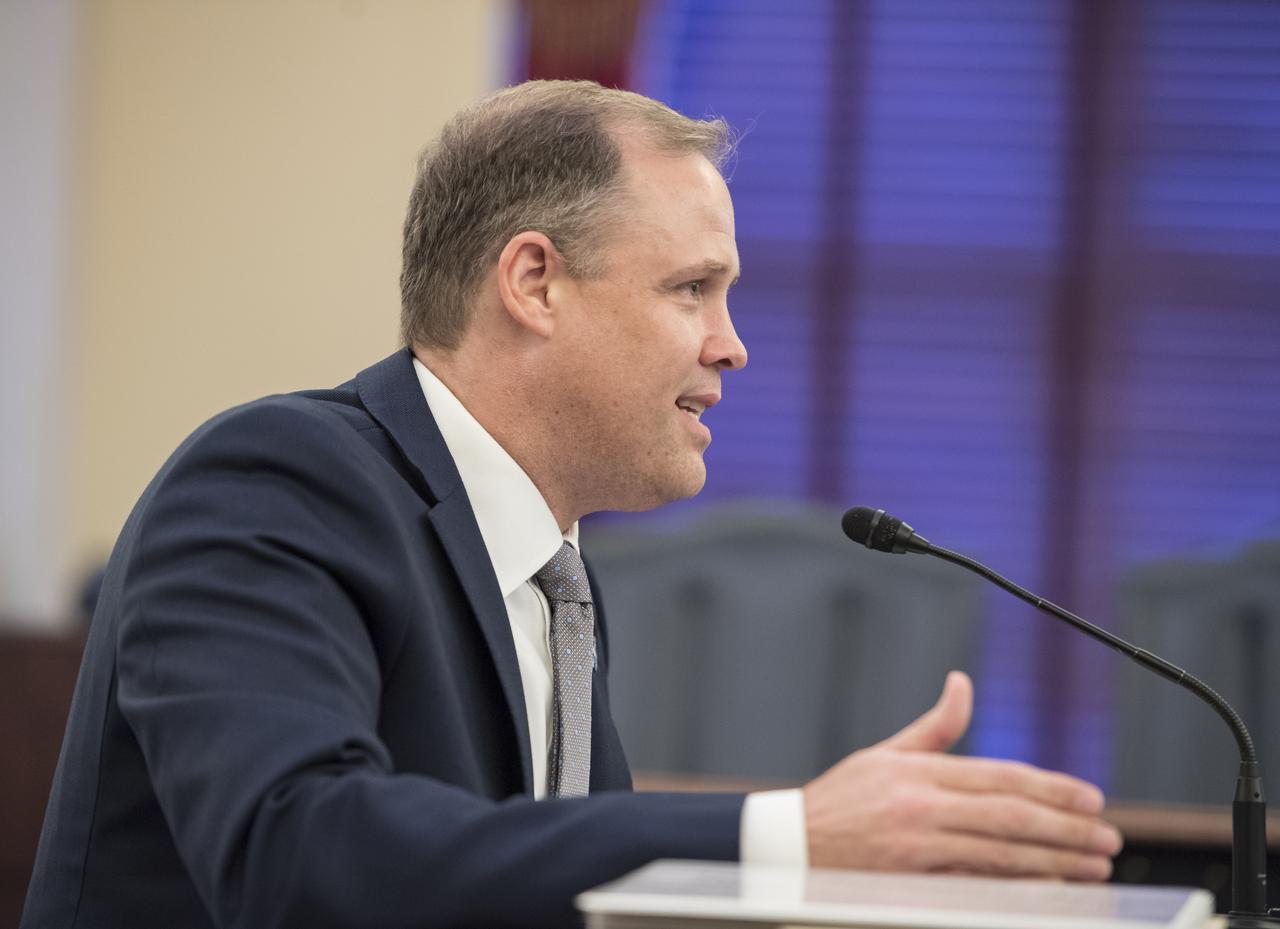
NASA Administrator Jim Bridenstine testifies during a Subcommittee on Space, Science, and Competitiveness hearing titled, "Global Space Race: Ensuring the United States Remains the Leader in Space," Wednesday, September 26, 2018 at the Russell Senate Office Building in Washington. Photo Credit: (NASA/Aubrey Gemignani)

NASA Administrator Jim Bridenstine gestures with a bottle of water while testifying during a Subcommittee on Space, Science, and Competitiveness hearing titled, "Global Space Race: Ensuring the United States Remains the Leader in Space," Wednesday, September 26, 2018 at the Russell Senate Office Building in Washington. Photo Credit: (NASA/Aubrey Gemignani)

NASA Administrator Jim Bridenstine testifies during a Subcommittee on Space, Science, and Competitiveness hearing titled, "Global Space Race: Ensuring the United States Remains the Leader in Space," Wednesday, September 26, 2018 at the Russell Senate Office Building in Washington. Photo Credit: (NASA/Aubrey Gemignani)
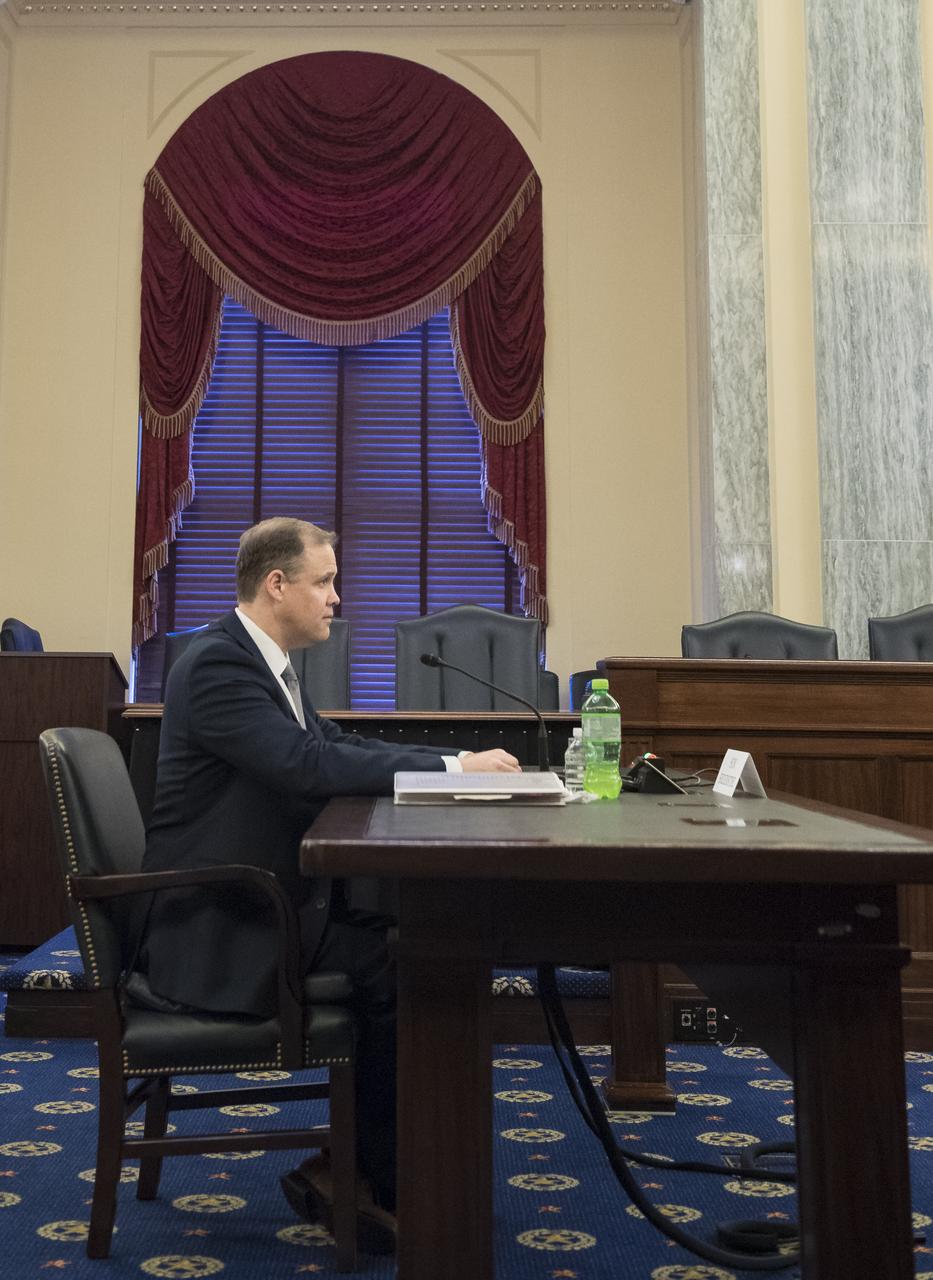
NASA Administrator Jim Bridenstine testifies during a Subcommittee on Space, Science, and Competitiveness hearing titled, "Global Space Race: Ensuring the United States Remains the Leader in Space," Wednesday, September 26, 2018 at the Russell Senate Office Building in Washington. Photo Credit: (NASA/Aubrey Gemignani)
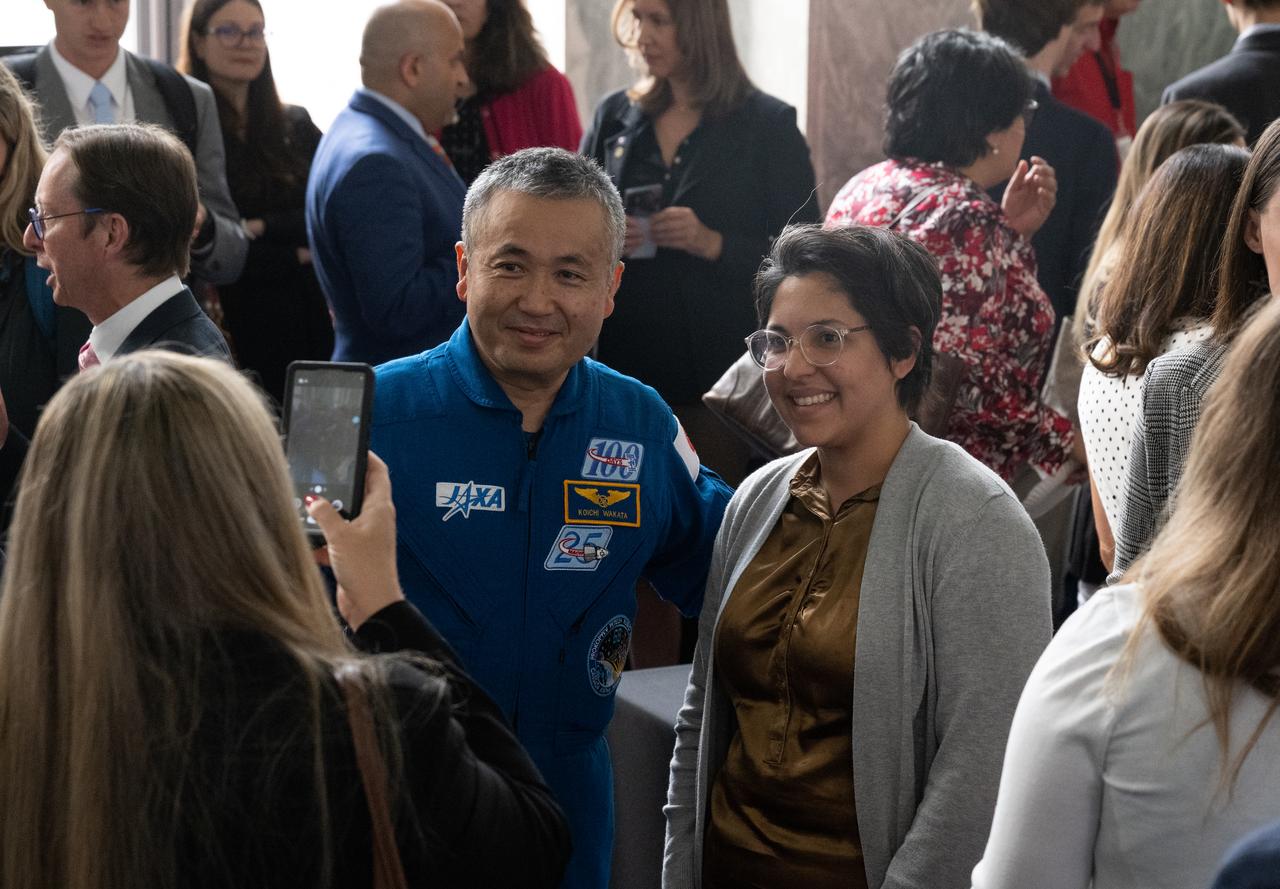
NASA’s SpaceX Crew-5 astronaut Koichi Wakata of the Japan Aerospace Exploration Agency (JAXA) takes a picture with an attendee during NASA’s Science Day on the Hill event, Wednesday, June 7, 2023, at the Rayburn House Office Building in Washington. Photo Credit: (NASA/Joel Kowsky)
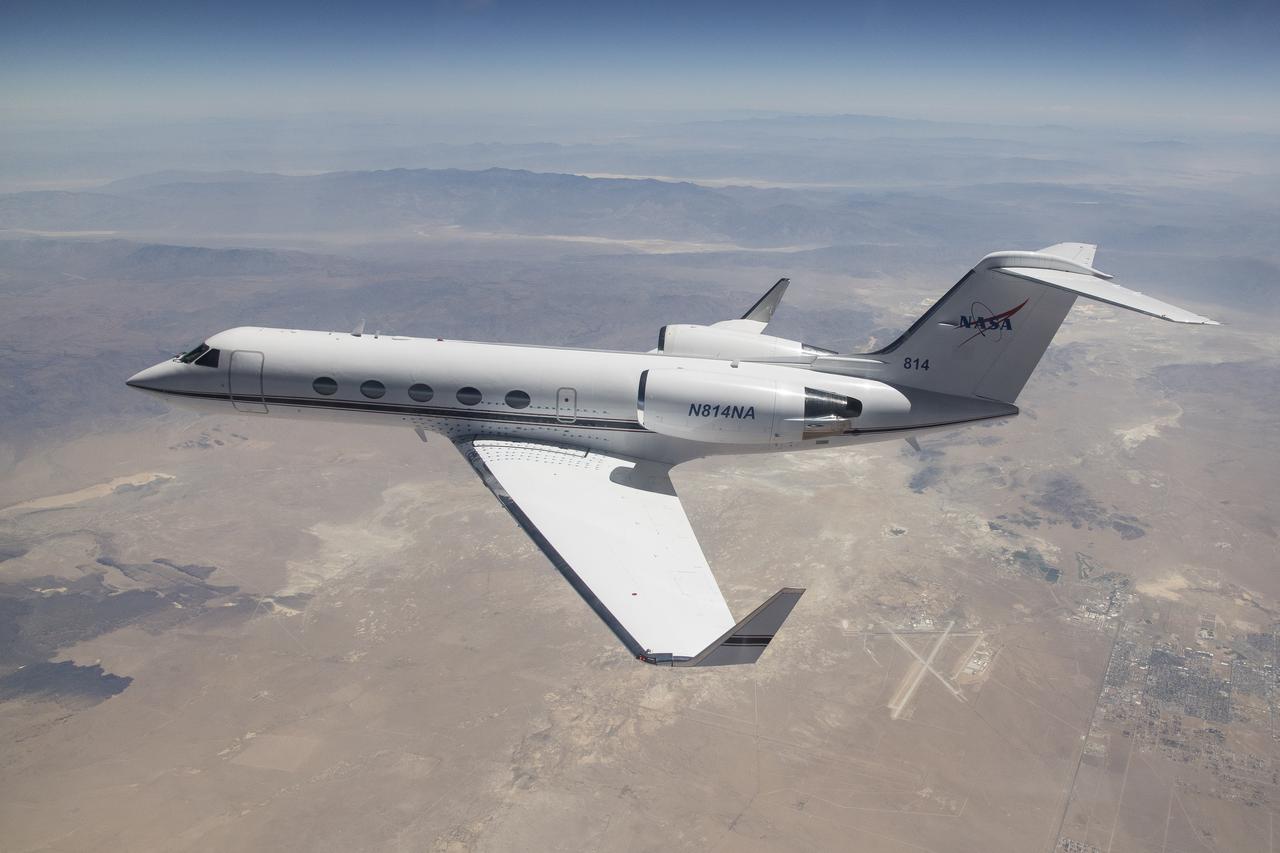
In a series of baseline flights beginning on June 24, 2024, the G-IV aircraft flew over the Antelope Valley to analyze aircraft performance. To accommodate a new radar instrument developed by JPL, NASA’s Airborne Science Program has selected the Gulfstream-IV aircraft to be modified and operated by Armstrong Flight Research Center in Edwards, California and will accommodate new instrumentation on board in support of the agency’s science mission directorate. Baseline flights began at NASA Armstrong in June 2024
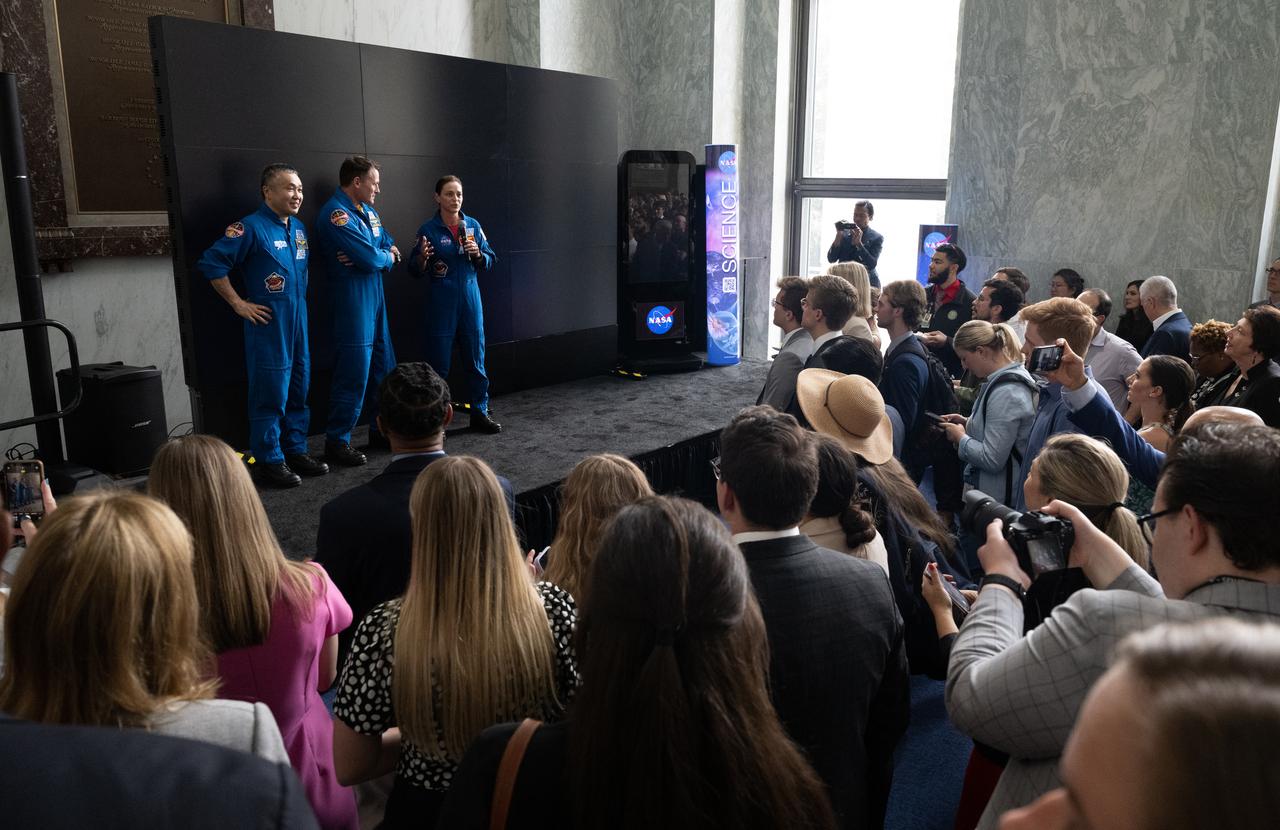
NASA’s SpaceX Crew-5 astronauts Koichi Wakata of the Japan Aerospace Exploration Agency (JAXA), left, and Josh Cassada and Nicole Mann of NASA, speak during NASA’s Science Day on the Hill event, Wednesday, June 7, 2023, at the Rayburn House Office Building in Washington. Mann, Cassada, and Wakata spent 157 days in space as part of Expedition 68 aboard the International Space Station. Photo Credit: (NASA/Joel Kowsky)
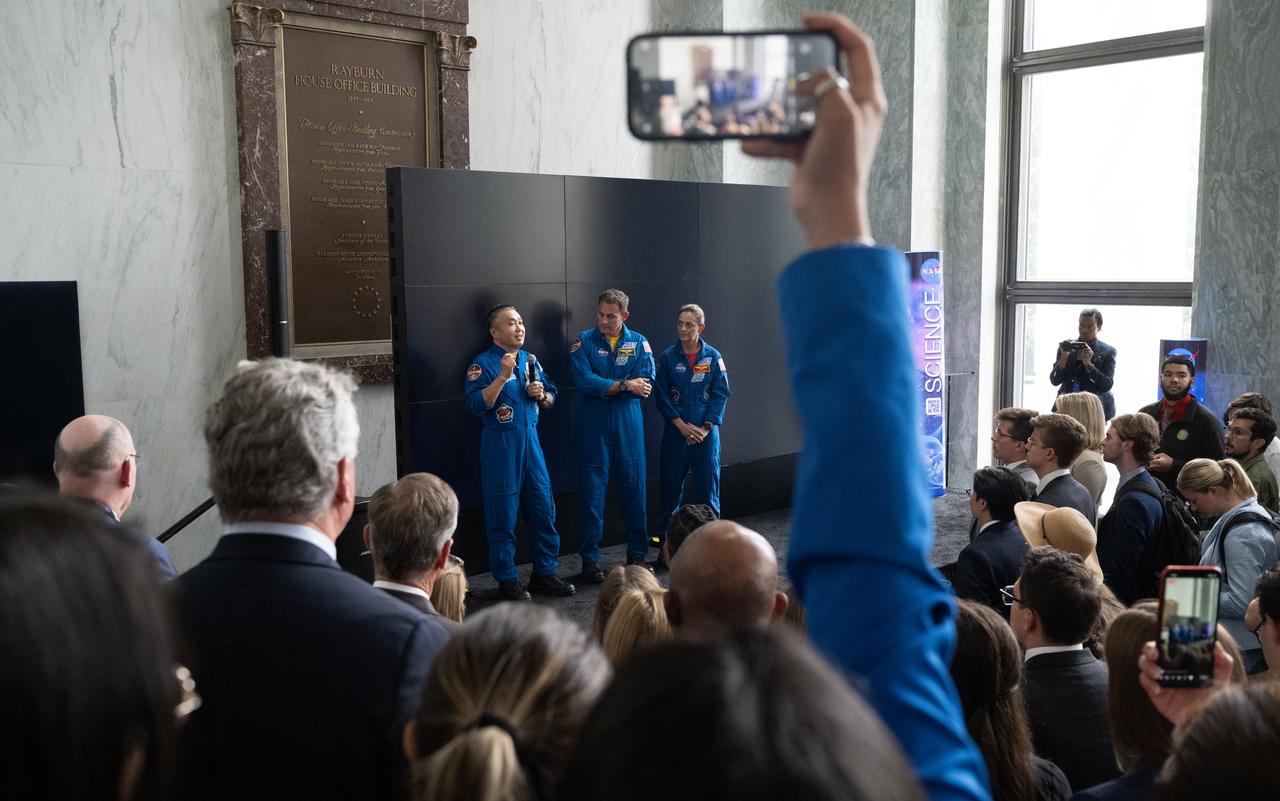
NASA’s SpaceX Crew-5 astronauts Koichi Wakata of the Japan Aerospace Exploration Agency (JAXA), left, and Josh Cassada and Nicole Mann of NASA, speak during NASA’s Science Day on the Hill event, Wednesday, June 7, 2023, at the Rayburn House Office Building in Washington. Mann, Cassada, and Wakata spent 157 days in space as part of Expedition 68 aboard the International Space Station. Photo Credit: (NASA/Joel Kowsky)
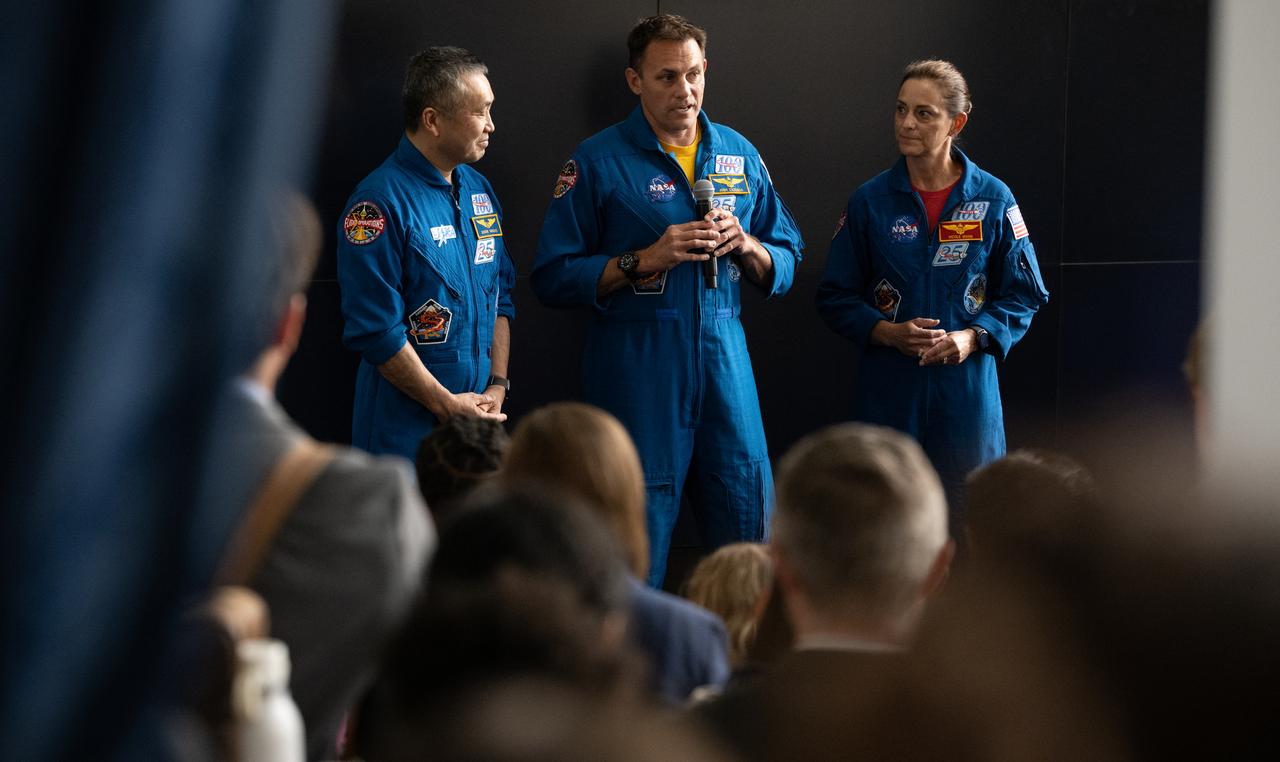
NASA’s SpaceX Crew-5 astronauts Koichi Wakata of the Japan Aerospace Exploration Agency (JAXA), left, and Josh Cassada and Nicole Mann of NASA, speak during NASA’s Science Day on the Hill event, Wednesday, June 7, 2023, at the Rayburn House Office Building in Washington. Mann, Cassada, and Wakata spent 157 days in space as part of Expedition 68 aboard the International Space Station. Photo Credit: (NASA/Joel Kowsky)
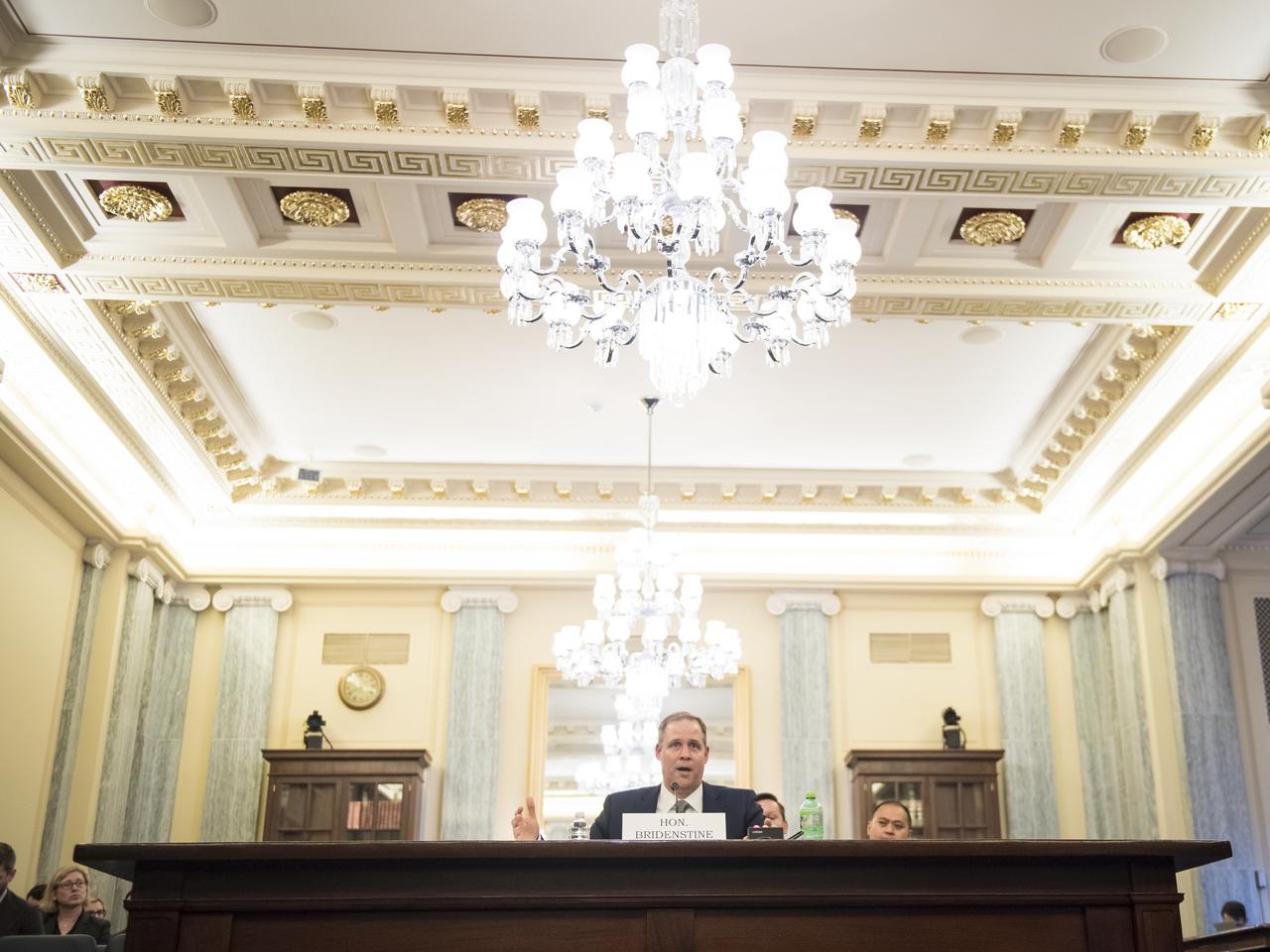
NASA Administrator Jim Bridenstine testifies during a Subcommittee on Space, Science, and Competitiveness hearing titled, "Global Space Race: Ensuring the United States Remains the Leader in Space," Wednesday, September 26, 2018 at the Russell Senate Office Building in Washington. Photo Credit: (NASA/Aubrey Gemignani)
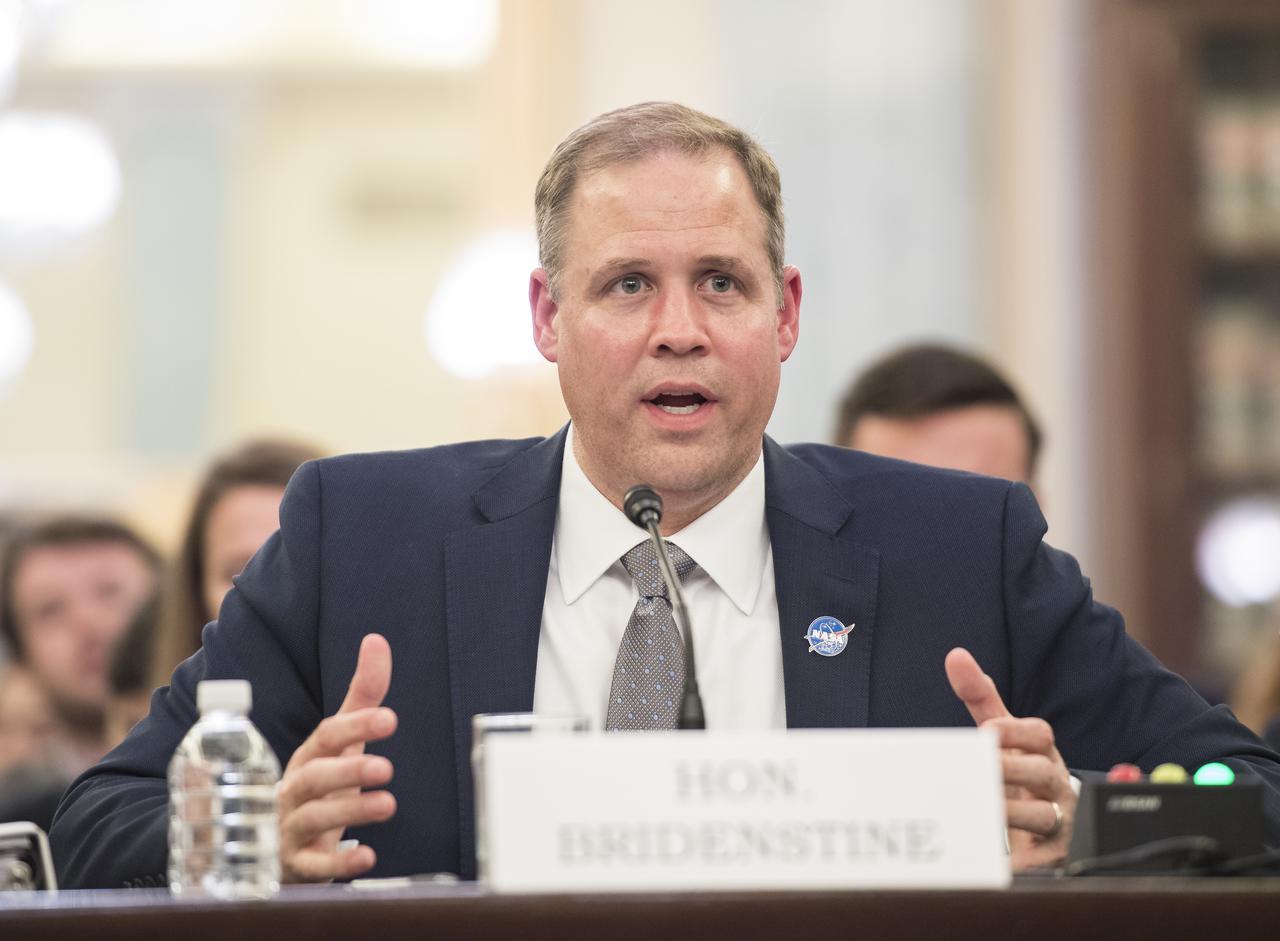
NASA Administrator Jim Bridenstine testifies during a Subcommittee on Space, Science, and Competitiveness hearing titled, "Global Space Race: Ensuring the United States Remains the Leader in Space," Wednesday, September 26, 2018 at the Russell Senate Office Building in Washington. Photo Credit: (NASA/Aubrey Gemignani)
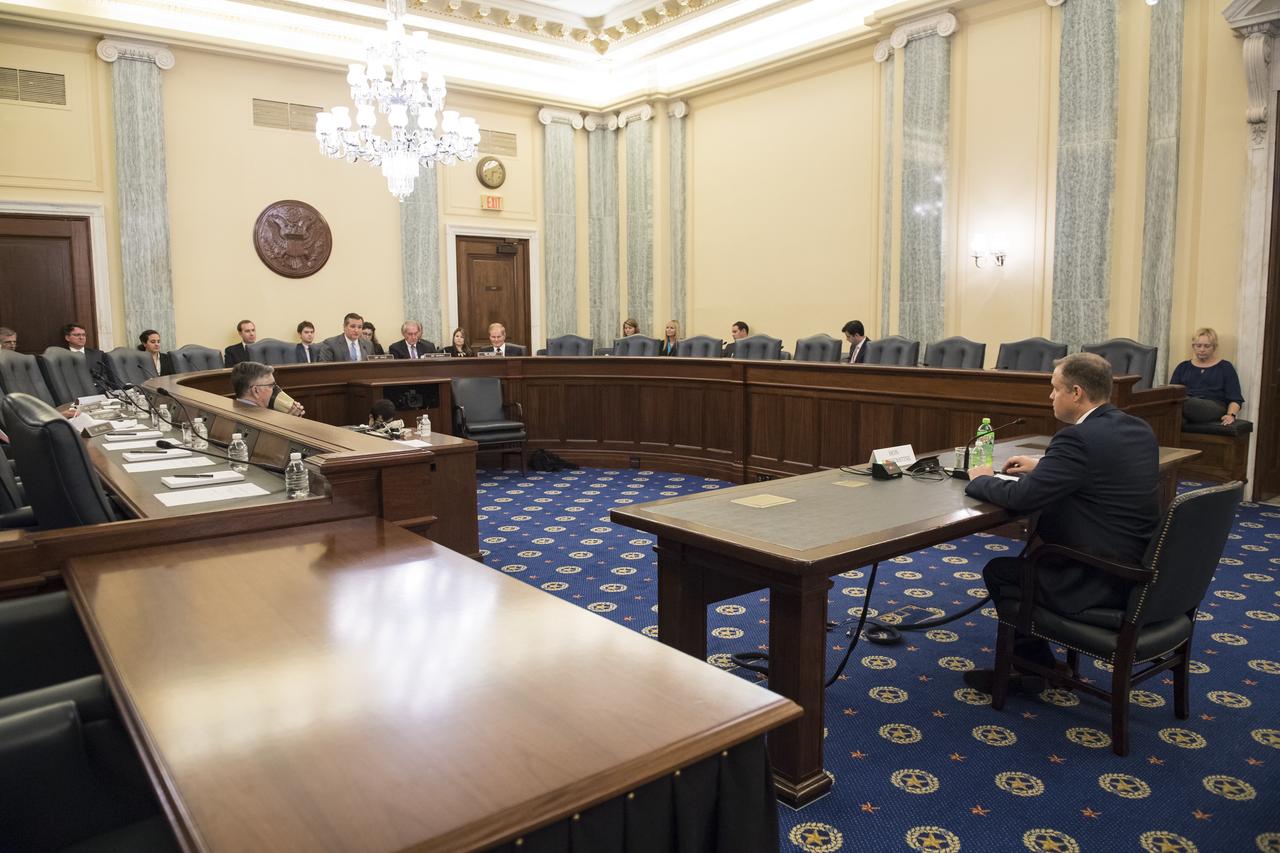
NASA Administrator Jim Bridenstine testifies during a Subcommittee on Space, Science, and Competitiveness hearing titled, "Global Space Race: Ensuring the United States Remains the Leader in Space," Wednesday, September 26, 2018 at the Russell Senate Office Building in Washington. Photo Credit: (NASA/Aubrey Gemignani)
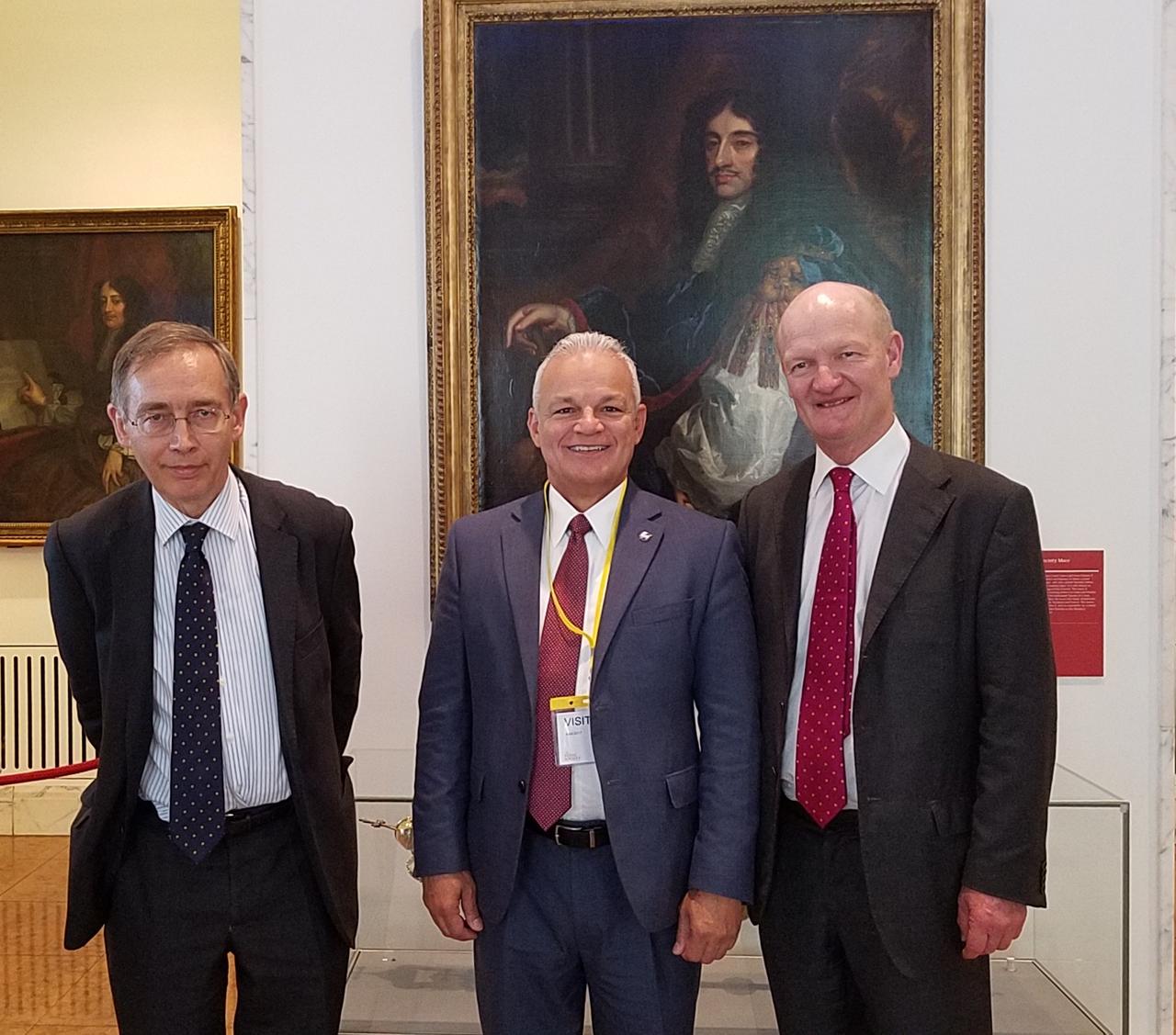
NASA Acting Chief Technologist Douglas Terrier (right) tours London’s Science Museum with Dr. David Rooney, Keeper of Technologies and Engineer and Doug Millard, Deputy Keeper of Technologies and Engineering.
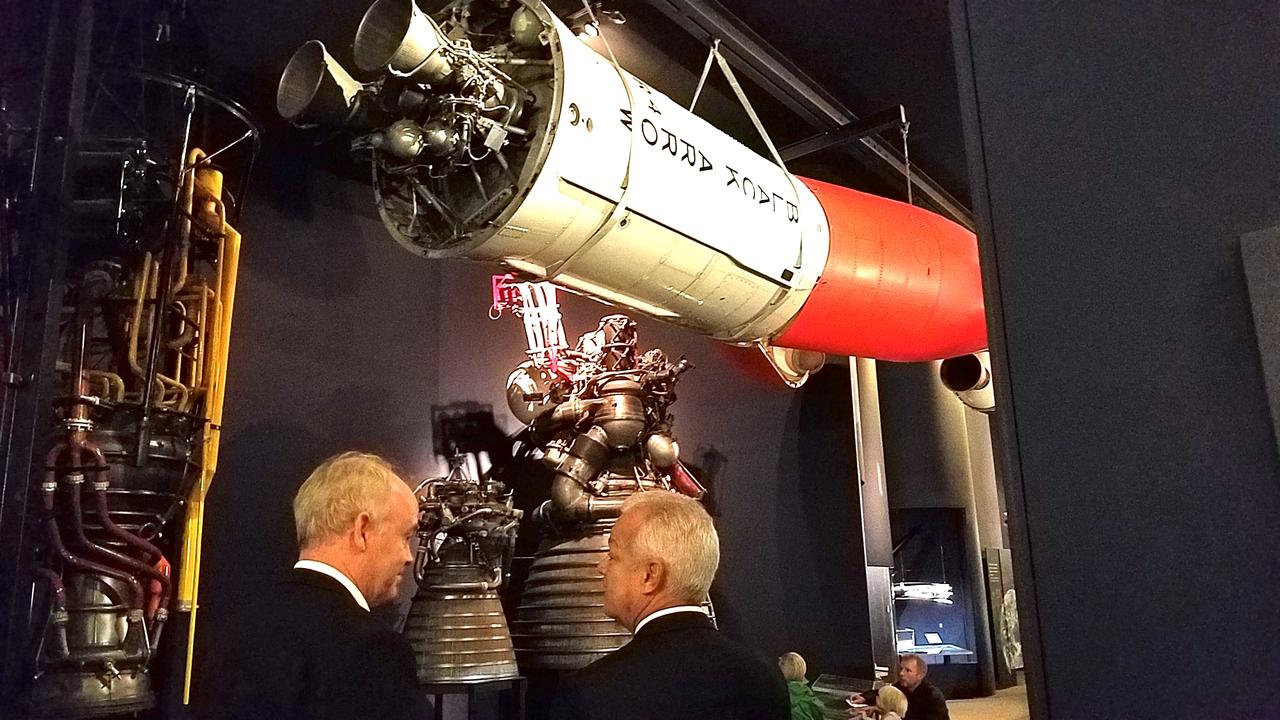
NASA Acting Chief Technologist Douglas Terrier (right) tours London’s Science Museum with Dr. David Rooney, Keeper of Technologies and Engineer and Doug Millard, Deputy Keeper of Technologies and Engineering.
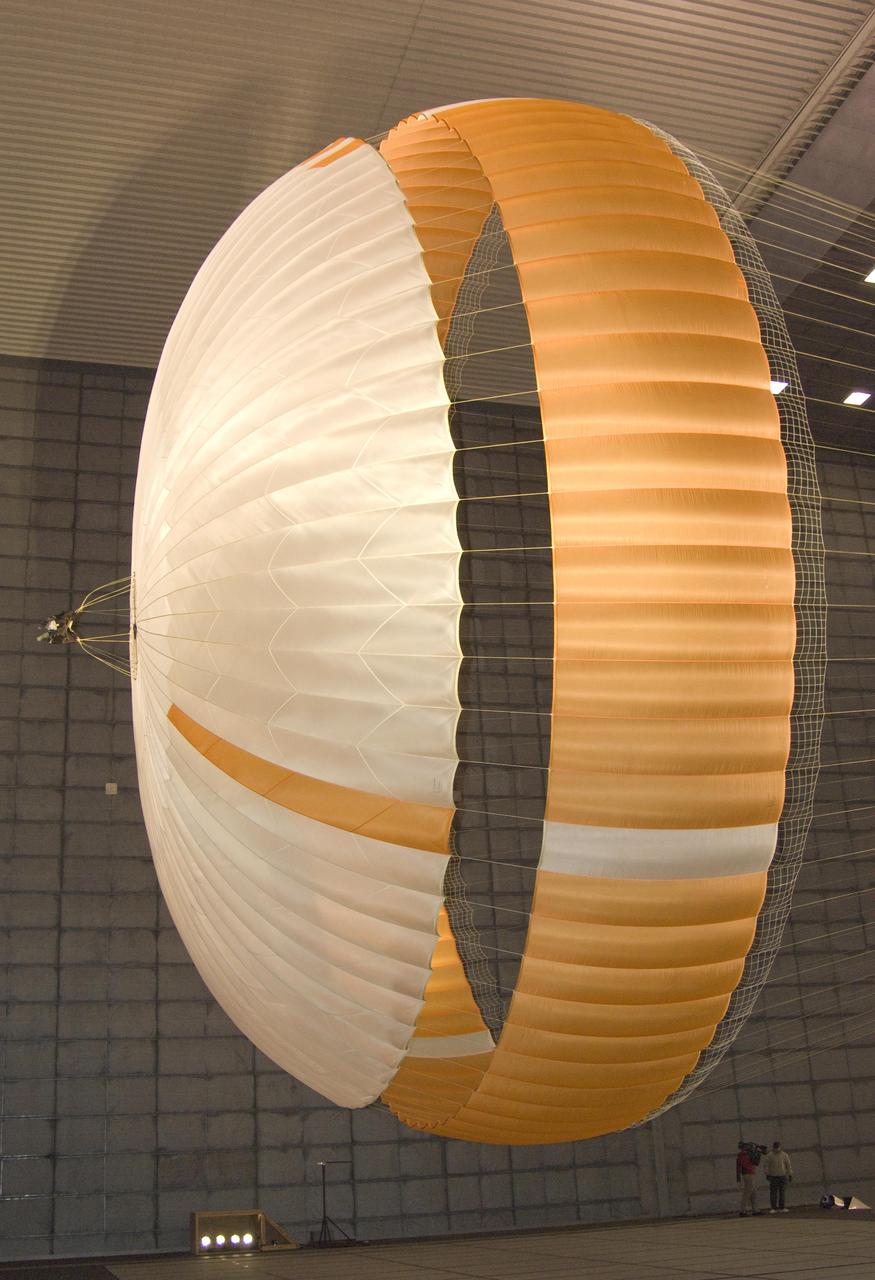
The parachute for NASA Mars Science Laboratory mission opens to a diameter of nearly 16 meters 51 feet. This image shows a duplicate qualification-test parachute inside the world's largest wind tunnel, at NASA Ames Research Center, Moffett Field, Calif. The Mars Science Laboratory will be launched in 2011 for a landing on Mars in 2012. Its parachute is the largest ever built to fly on an extraterrestrial mission. The parachute uses a configuration called disk-gap-band, with 80 suspension lines. Most of the orange and white fabric is nylon, though a small disk of heavier polyester is used near the vent in the apex of the canopy due to higher stresses there. http://photojournal.jpl.nasa.gov/catalog/PIA11994
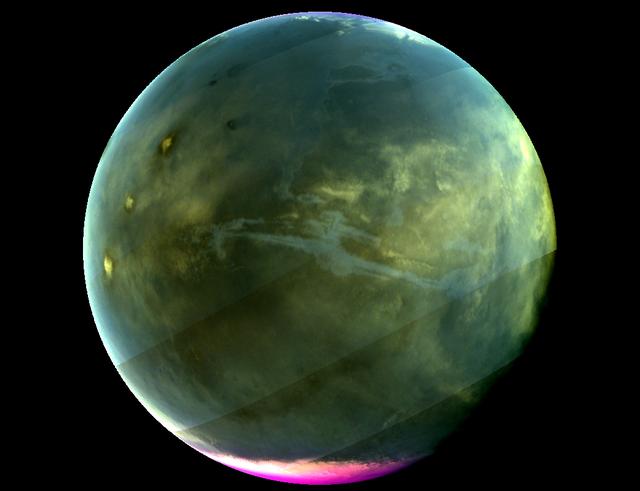
Caption: MAVEN's Imaging UltraViolet Spectrograph obtained this image of Mars on July 13, 2016, when the planet appeared nearly full when viewed from the highest altitudes in the MAVEN orbit. The ultraviolet colors of the planet have been rendered in false color, to show what we would see with ultraviolet-sensitive eyes. The ultraviolet (UV) view gives several new perspectives on Mars. Valles Marineris, a two-thousand-mile canyon system, appears prominently across the middle of the image as a blue gash. The deep canyon appears blue due to the scattering of ultraviolet light by the atmosphere, so strong that we cannot make out the bottom of the canyon. The greenish cast of the planet as a whole is a combination of the reflection of the surface plus the atmospheric scattering. The three tall Tharsis volcanoes appear near the left edge, dotted by white clouds forming as the winds flow over them. Bright white polar caps appear at both poles, typical for this season, in which there is a transition from southern-hemisphere winter to summer. The magenta-colored region visible at the south pole shows where ozone is absorbing ultraviolet light — the same property of ozone that protects life on Earth from harmful UV radiation. While ozone tends to be destroyed by chemical processes in the winter on Earth, different atmospheric chemistry at Mars caused it to build up in the winter there. A hint of ozone is also visible near the north pole; more will accumulate there as winter is coming. IUVS obtains images of Mars every orbit when the sunlit portion of the planet is visible from high altitude. Credits: NASA/Goddard/University of Colorado/LASP Read more: <a href="http://go.nasa.gov/2d9aU1N" rel="nofollow">go.nasa.gov/2d9aU1N</a> Today, NASA’s Mars Atmosphere and Volatile EvolutioN (MAVEN) mission completed one Mars year of science observations. One Mars year is just under two Earth years. MAVEN launched on Nov. 18, 2013, and went into orbit around Mars on Sept. 21, 2014. During its time at Mars, MAVEN has answered many questions about the Red Planet. “Taken together, the MAVEN results tell us that loss of gas from the atmosphere to space has been the major force behind the climate having changed from a warm, wet environment to the cold, dry one that we see today,” said Bruce Jakosky, MAVEN principal investigator, from the University of Colorado in Boulder. NASA recently declared that MAVEN had achieved mission success during its primary mission. Mission success means that the spacecraft operated as intended, made the expected science measurements, and achieved its proposed science objectives. <b><a href="http://www.nasa.gov/audience/formedia/features/MP_Photo_Guidelines.html" rel="nofollow">NASA image use policy.</a></b> <b><a href="http://www.nasa.gov/centers/goddard/home/index.html" rel="nofollow">NASA Goddard Space Flight Center</a></b> enables NASA’s mission through four scientific endeavors: Earth Science, Heliophysics, Solar System Exploration, and Astrophysics. Goddard plays a leading role in NASA’s accomplishments by contributing compelling scientific knowledge to advance the Agency’s mission. <b>Follow us on <a href="http://twitter.com/NASAGoddardPix" rel="nofollow">Twitter</a></b> <b>Like us on <a href="http://www.facebook.com/pages/Greenbelt-MD/NASA-Goddard/395013845897?ref=tsd" rel="nofollow">Facebook</a></b> <b>Find us on <a href="http://instagrid.me/nasagoddard/?vm=grid" rel="nofollow">Instagram</a></b>
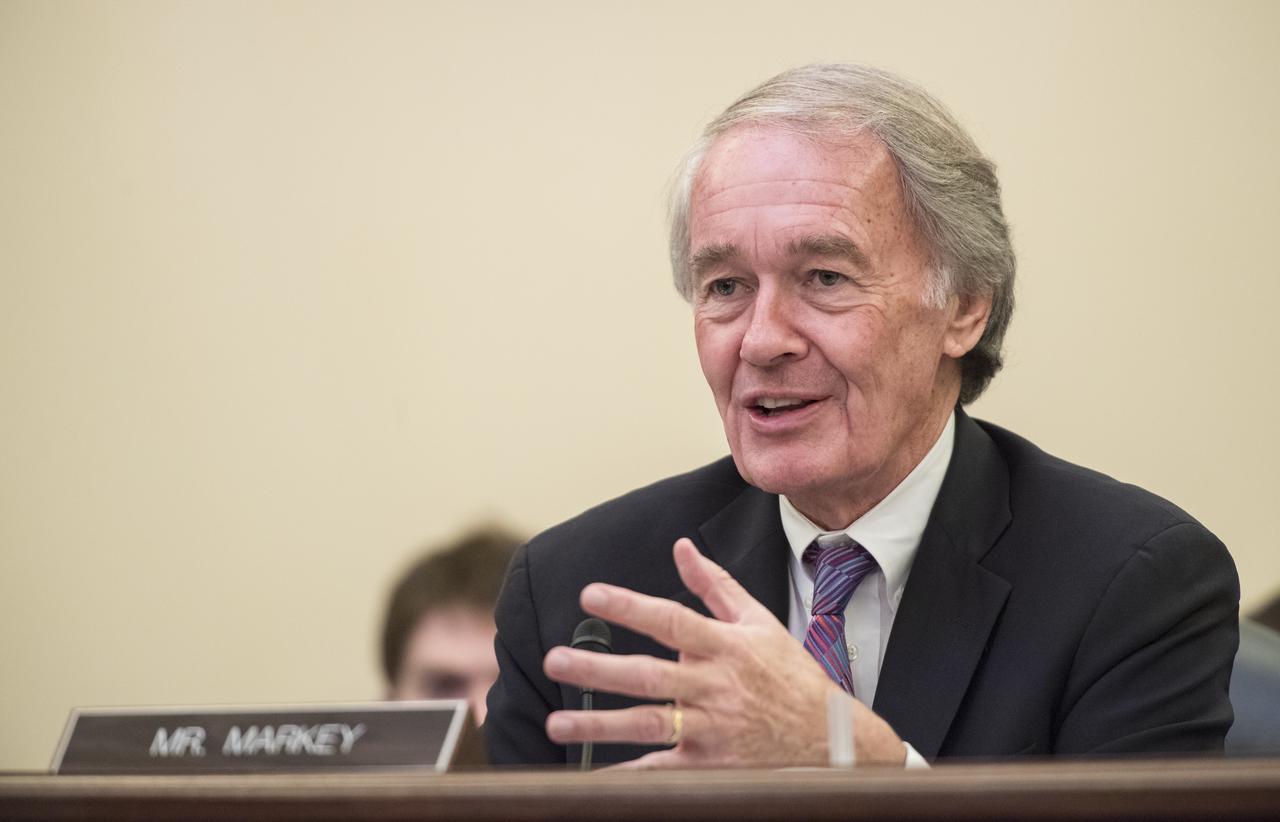
Senator Ed Markey, D-Mass, asks NASA Administrator Jim Bridenstine a question during a Subcommittee on Space, Science, and Competitiveness hearing titled, "Global Space Race: Ensuring the United States Remains the Leader in Space," Wednesday, September 26, 2018 at the Russell Senate Office Building in Washington. Photo Credit: (NASA/Aubrey Gemignani)
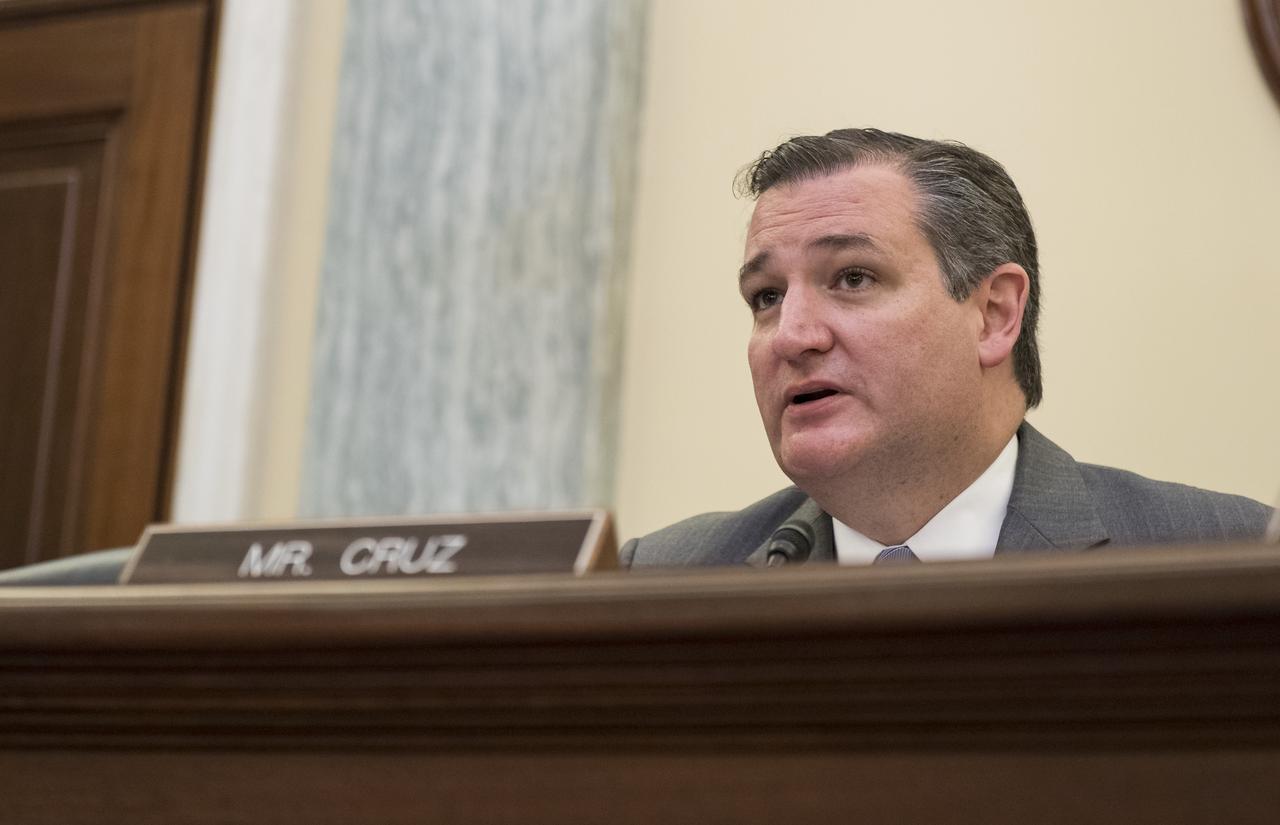
Chairman Ted Cruz, R-Texas, asks NASA Administrator Jim Bridenstine a question during a Subcommittee on Space, Science, and Competitiveness hearing titled, "Global Space Race: Ensuring the United States Remains the Leader in Space," Wednesday, September 26, 2018 at the Russell Senate Office Building in Washington. Photo Credit: (NASA/Aubrey Gemignani)
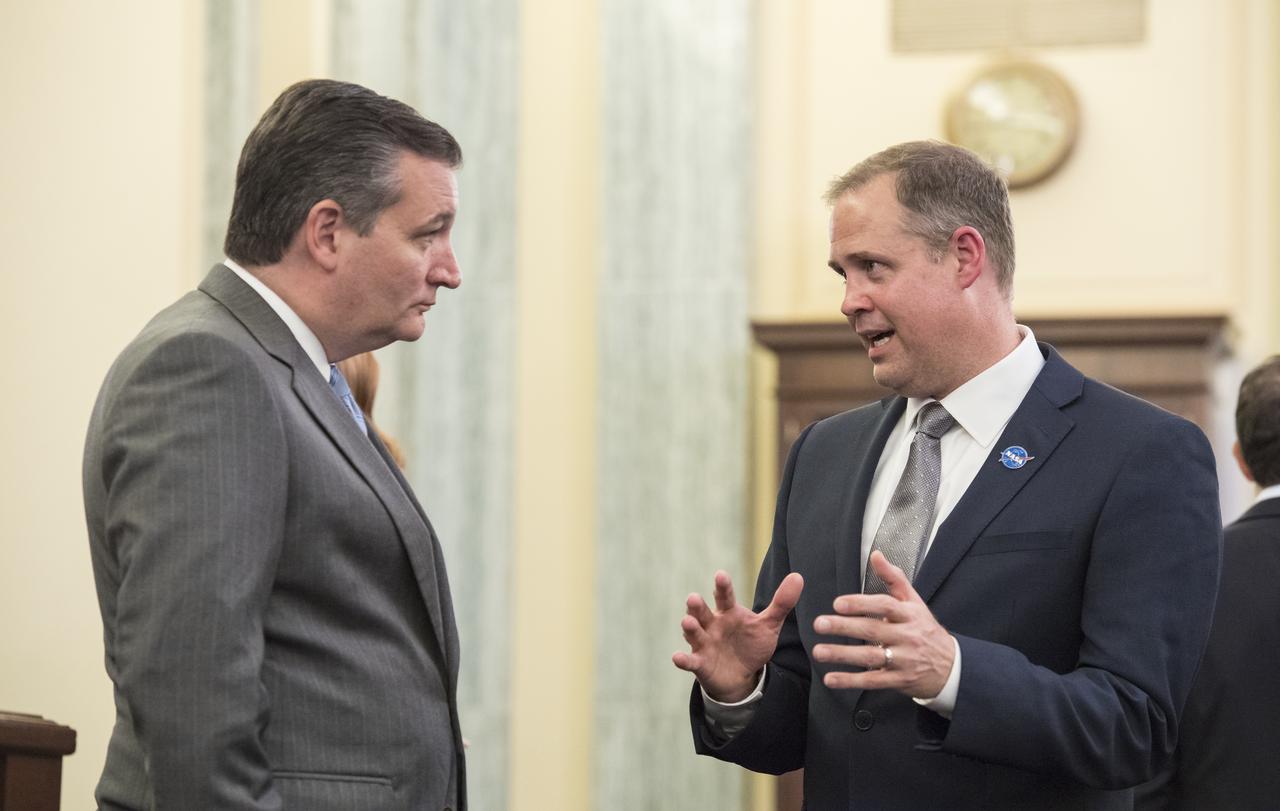
NASA Administrator Jim Bridenstine, right, speaks with Chairman Ted Cruz, R-Texas after testifying at a Subcommittee on Space, Science, and Competitiveness hearing titled, "Global Space Race: Ensuring the United States Remains the Leader in Space," Wednesday, September 26, 2018 at the Russell Senate Office Building in Washington. Photo Credit: (NASA/Aubrey Gemignani)
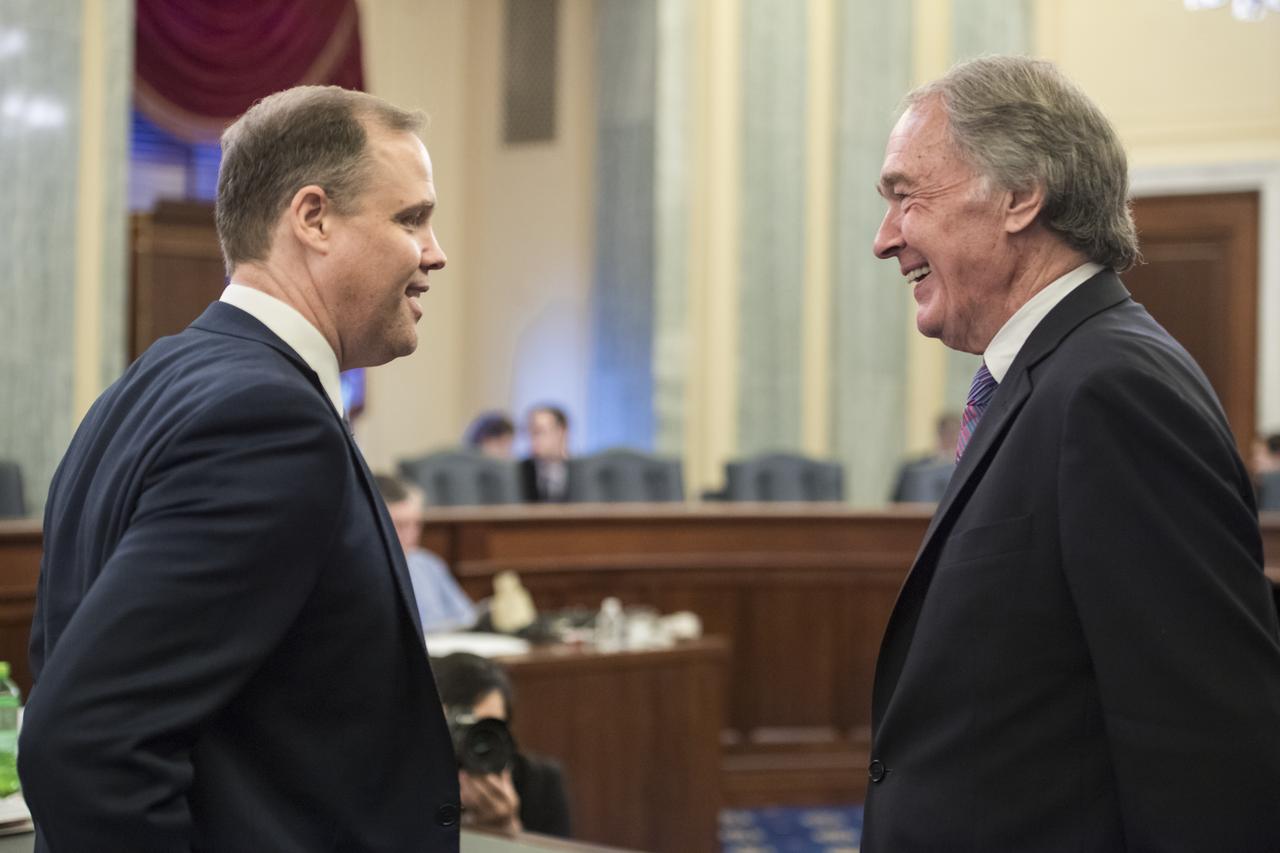
NASA Administrator Jim Bridenstine, left, speaks with Senator Ed Markey, D-Mass, before testifying at a Subcommittee on Space, Science, and Competitiveness hearing titled, "Global Space Race: Ensuring the United States Remains the Leader in Space," Wednesday, September 26, 2018 at the Russell Senate Office Building in Washington. Photo Credit: (NASA/Aubrey Gemignani)
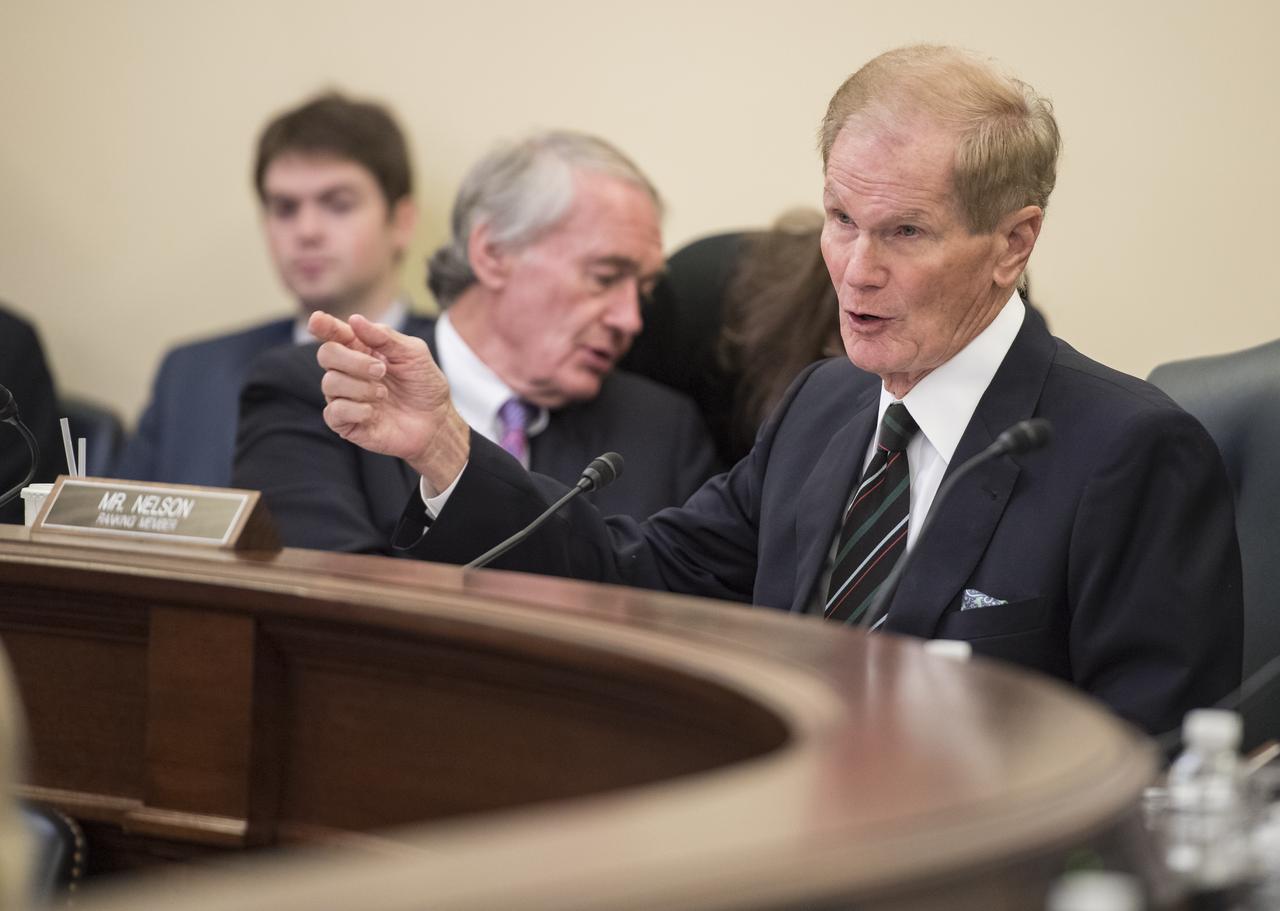
Senator Bill Nelson, D-Fla, asks NASA Administrator Jim Bridenstine a question during a Subcommittee on Space, Science, and Competitiveness hearing titled, "Global Space Race: Ensuring the United States Remains the Leader in Space," Wednesday, September 26, 2018 at the Russell Senate Office Building in Washington. Photo Credit: (NASA/Aubrey Gemignani)

This summer, with sea ice across the Arctic Ocean shrinking to below-average levels, a NASA airborne survey of polar ice just completed its first flights. Its target: aquamarine pools of melt water on the ice surface that may be accelerating the overall sea ice retreat. NASA’s Operation IceBridge completed the first research flight of its new 2016 Arctic summer campaign on July 13. The science flights, which continue through July 25, are collecting data on sea ice in a year following a record-warm winter in the Arctic. Read more: <a href="http://go.nasa.gov/29T6mxc" rel="nofollow">go.nasa.gov/29T6mxc</a> Caption: A large pool of melt water over sea ice, as seen from an Operation IceBridge flight over the Beaufort Sea on July 14, 2016. During this summer campaign, IceBridge will map the extent, frequency and depth of melt ponds like these to help scientists forecast the Arctic sea ice yearly minimum extent in September. Credit: NASA/Operation IceBridge

This graphic illustrates the main science objectives of NASA's Europa Clipper mission to Jupiter's moon Europa: to understand the nature of Europa's icy shell and confirm the existence of a subsurface ocean, investigate Europa's composition, characterize its geology, and determine the level of activity, such as possible water plumes. Clockwise from top left: an artist's concept of Europa's interior, which likely contains a global ocean beneath the icy surface, with possible hydrothermal activity on the ocean floor; water signatures at Europa's Manannán Crater made visible by mapping colors onto infrared data from NASA's Galileo mission to Jupiter; ultraviolet observations by the Hubble Space Telescope showing evidence of a possible plume at Europa and indicating possible activity at the moon; and a color view of Europa's Conamara Chaos region based on an image from NASA's Galileo mission. Europa Clipper's three main science objectives are to determine the thickness of the moon's icy shell and its interactions with the ocean below, to investigate its composition, and to characterize its geology. The mission's detailed exploration of Europa will help scientists better understand the astrobiological potential for habitable worlds beyond our planet. https://photojournal.jpl.nasa.gov/catalog/PIA26461
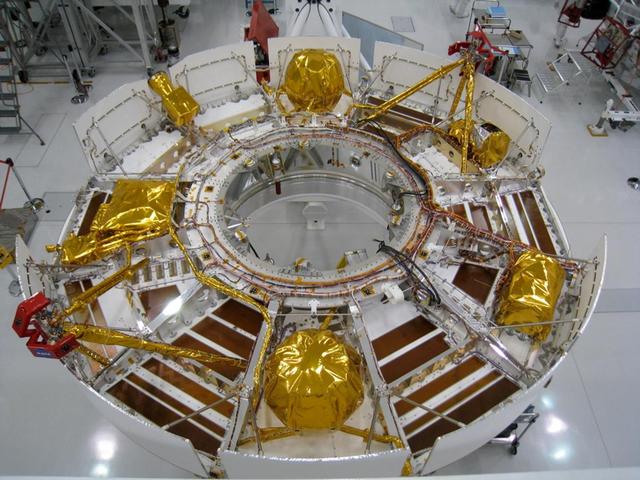
This portion of NASA Mars Science Laboratory spacecraft, called the cruise stage, will do its work during the flight between Earth and Mars after launch in the fall of 2011.
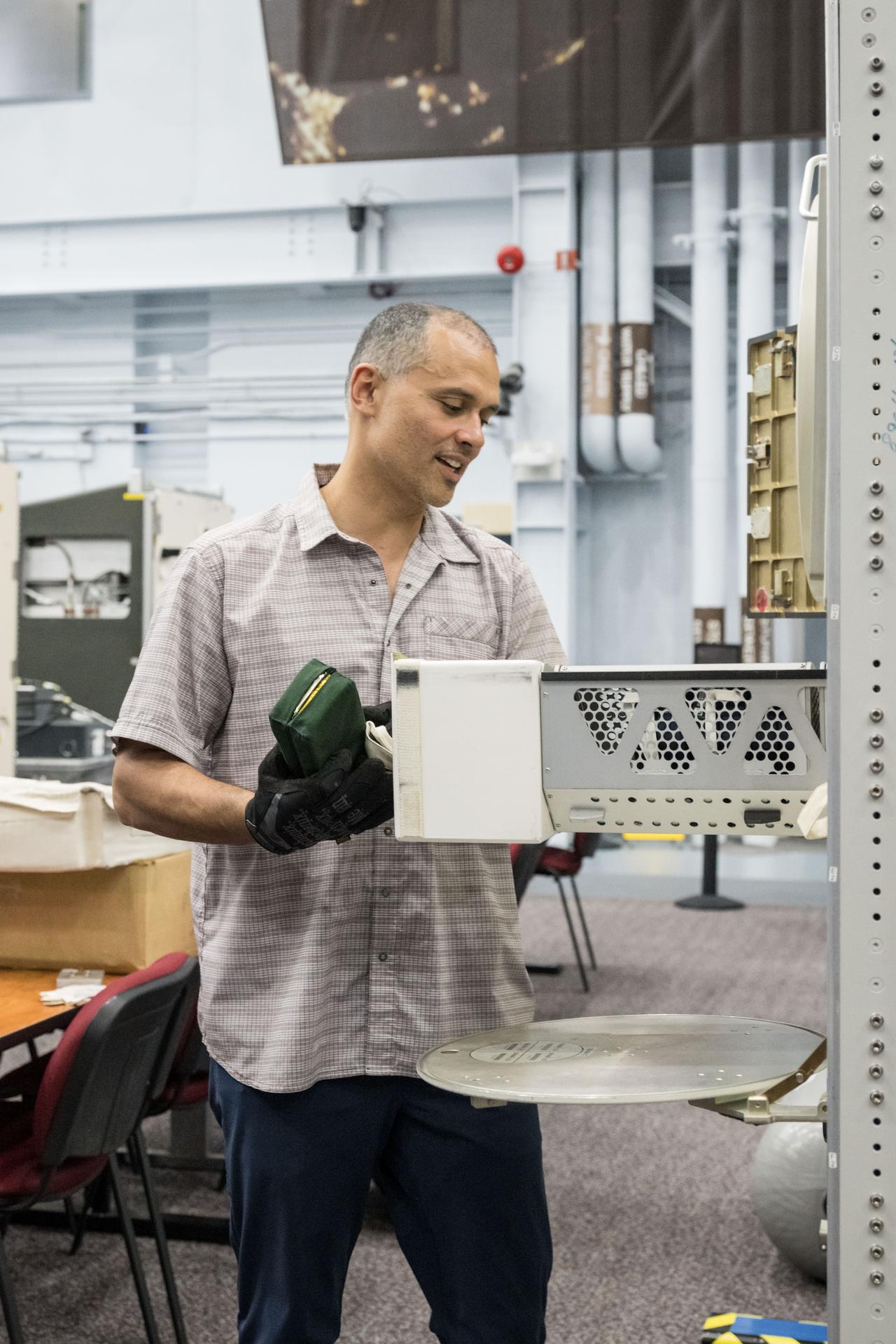
jsc2025e044593 (May 1, 2025) --- NASA astronaut and Expedition 75 flight engineer Anil Menon familiarizes himself with science hardware at Johnson Space Center's Space Vehicle Mockup Facility in Houston, Texas, ahead of his upcoming mission to the International Space Station. Credit: NASA/Helen Arase Vargas
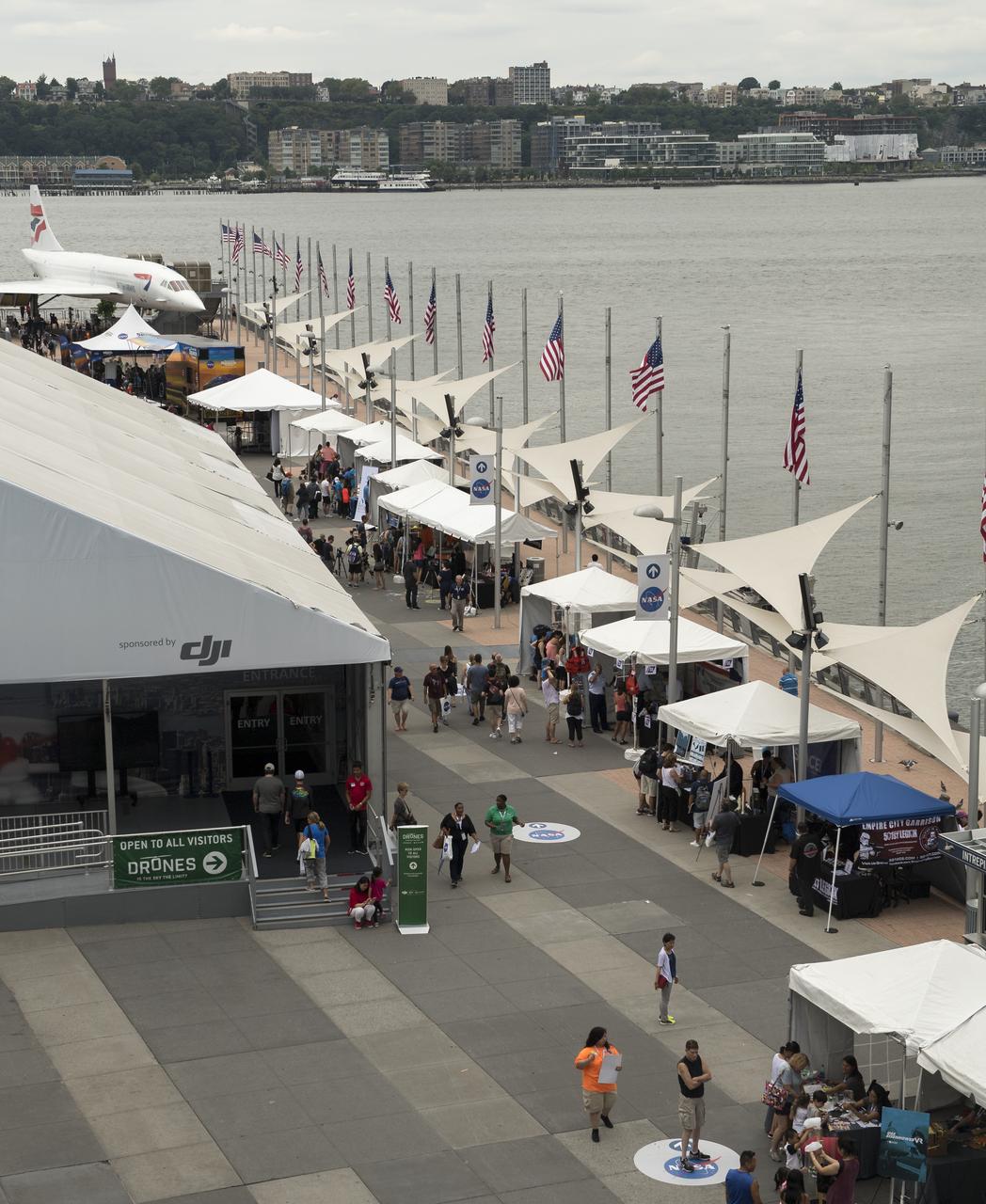
NASA exhibits line Pier 86 during the Intrepid Space & Science Festival, Saturday, Aug. 5, 2017 held at the Intrepid Sea, Air & Space Museum in New York City. The week-long festival featured talks, films and cutting-edge displays showcasing NASA technology. Photo Credit: (NASA/Bill Ingalls)
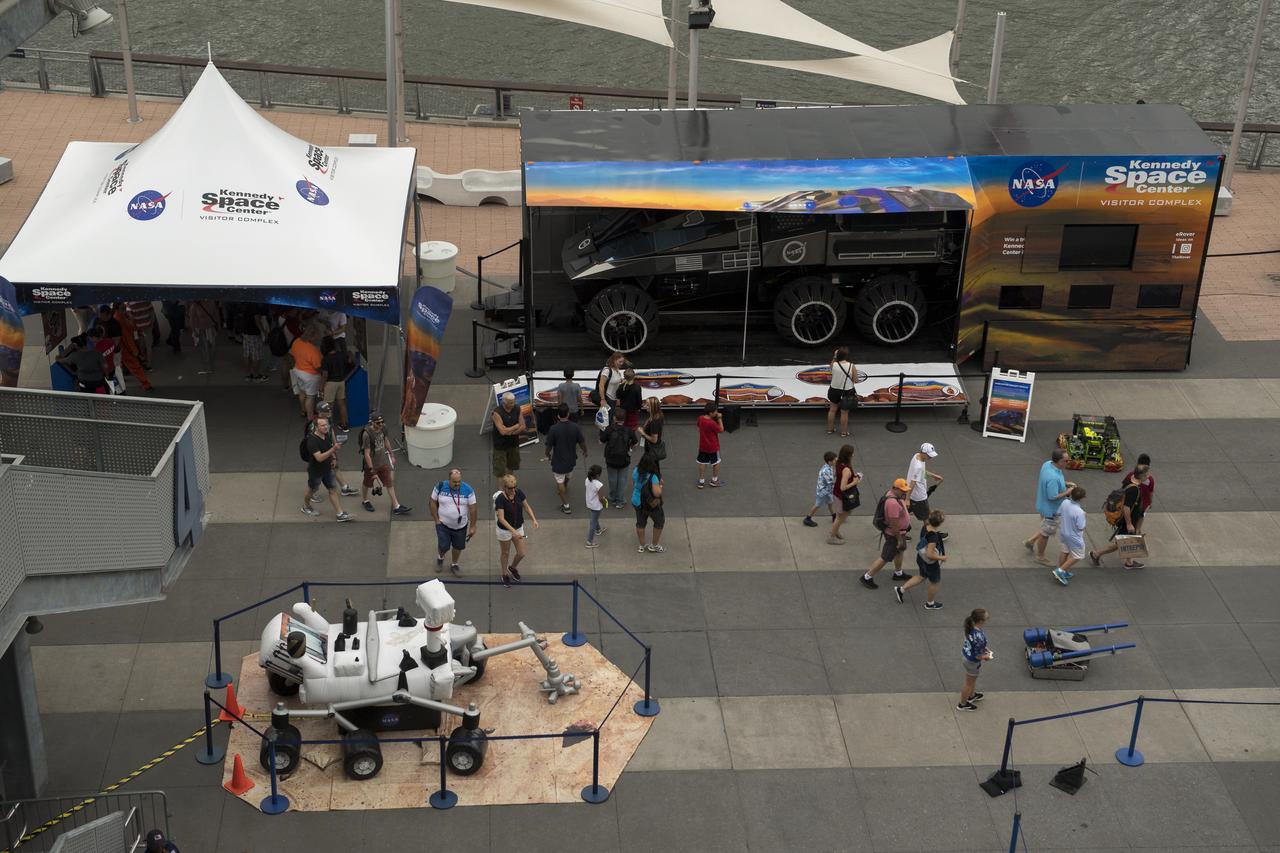
NASA exhibits line Pier 86 during the Intrepid Space & Science Festival, Saturday, Aug. 5, 2017 held at the Intrepid Sea, Air & Space Museum in New York City. The week-long festival featured talks, films and cutting-edge displays showcasing NASA technology. Photo Credit: (NASA/Bill Ingalls)
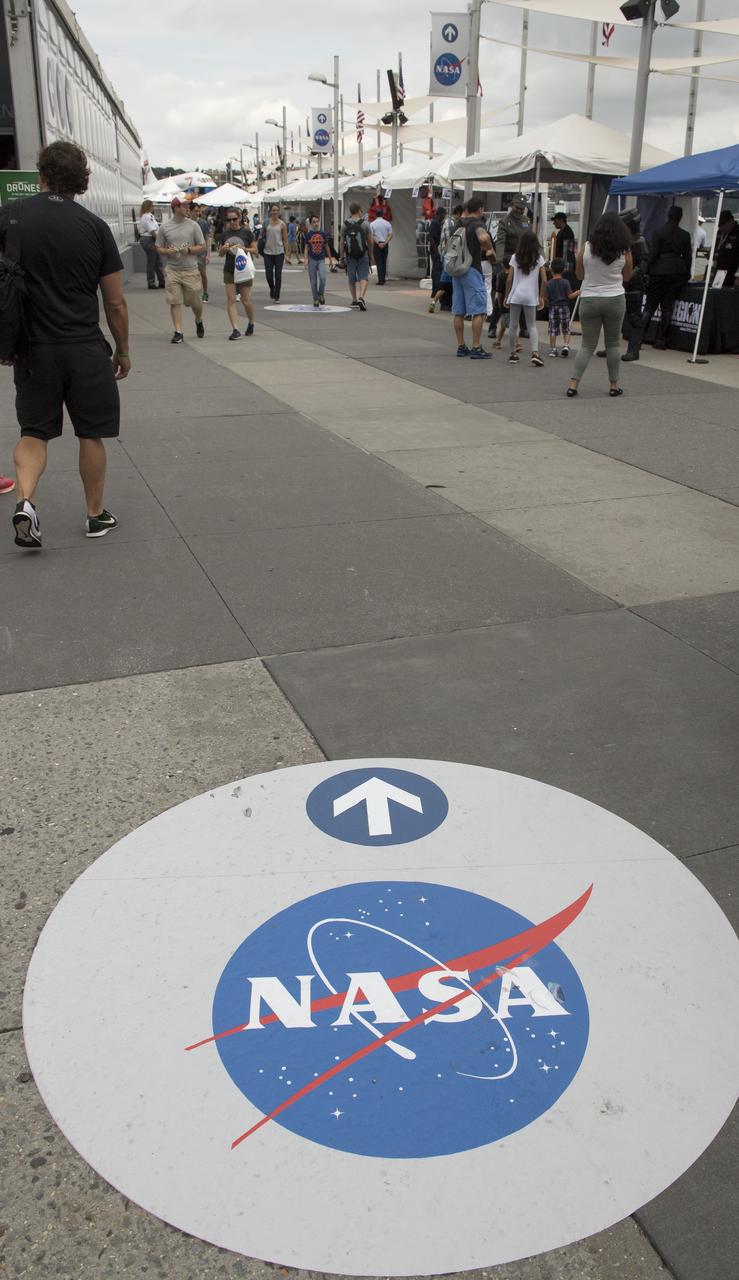
Signage points the way to NASA exhibits at the Intrepid Space & Science Festival, Saturday, Aug. 5, 2017 held at the Intrepid Sea, Air & Space Museum in New York City. The week-long festival featured talks, films and cutting-edge displays showcasing NASA technology. Photo Credit: (NASA/Bill Ingalls)
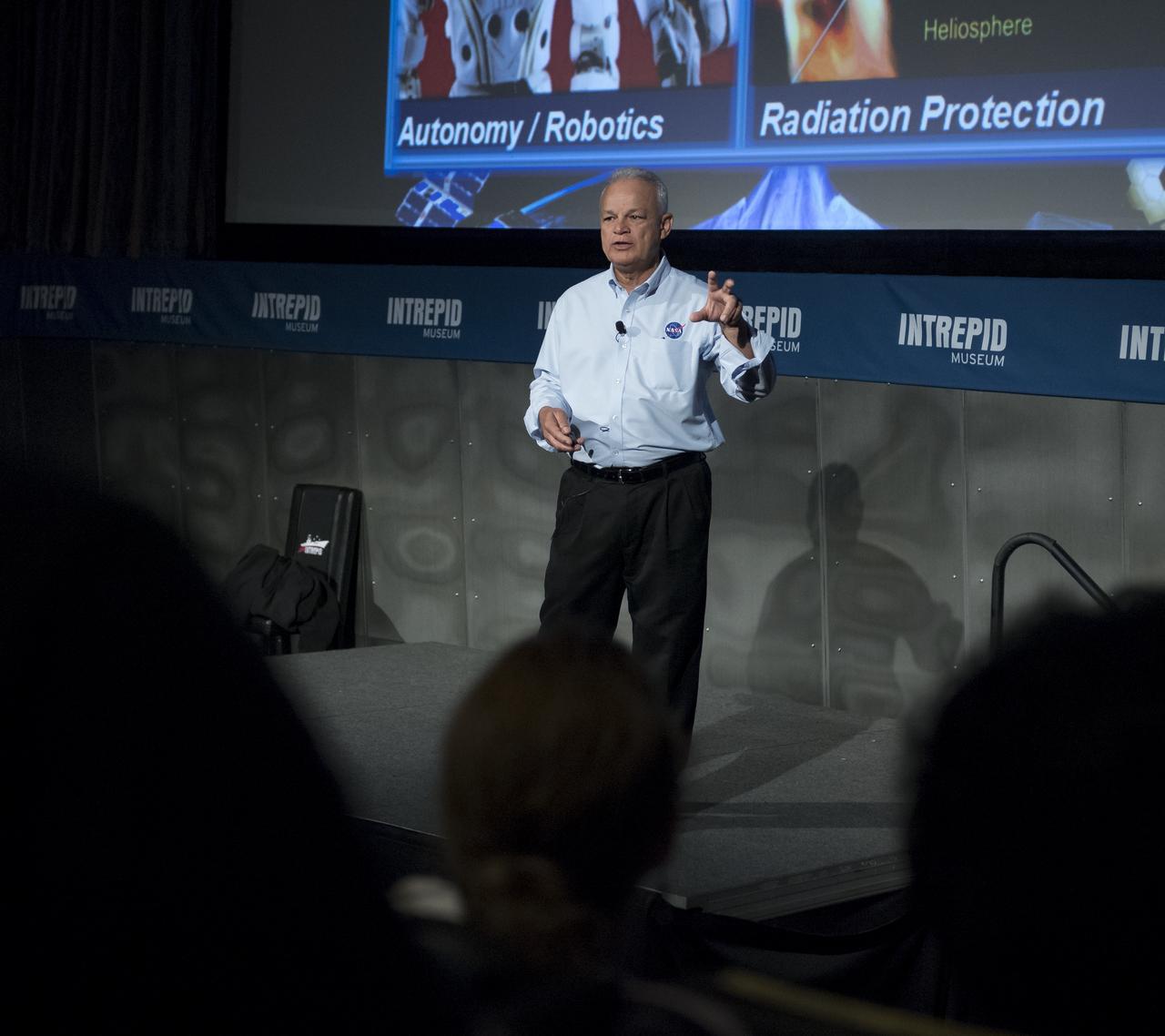
NASA Acting Chief Technologist Douglas Terrier gives a talk to teachers attending a professional development workshop held in tandem with the Intrepid Space & Science Festival, Saturday, Aug. 5, 2017 at the Intrepid Sea, Air & Space Museum in New York City. The week-long festival featured talks, films and cutting-edge displays showcasing NASA technology. Photo Credit: (NASA/Bill Ingalls)
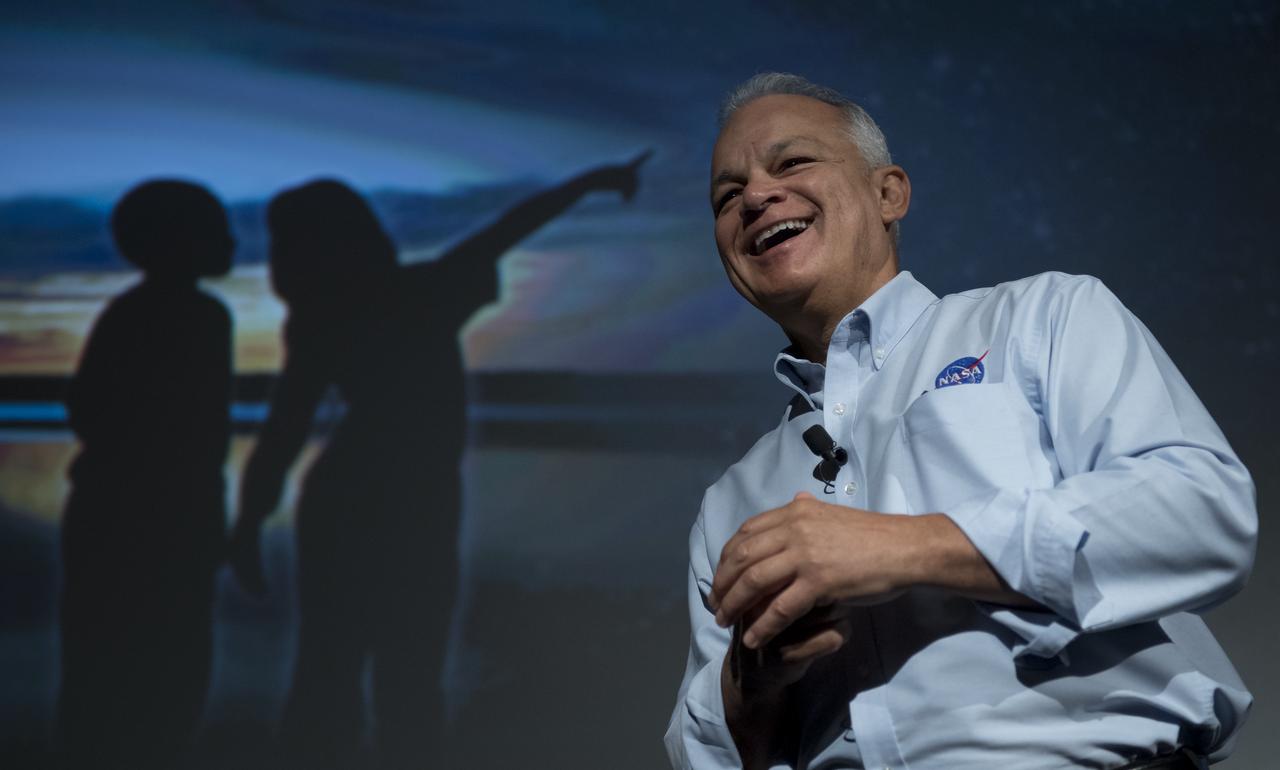
NASA Acting Chief Technologist Douglas Terrier gives a talk to teachers attending a professional development workshop held in tandem with the Intrepid Space & Science Festival, Saturday, Aug. 5, 2017 at the Intrepid Sea, Air & Space Museum in New York City. The week-long festival featured talks, films and cutting-edge displays showcasing NASA technology. Photo Credit: (NASA/Bill Ingalls)
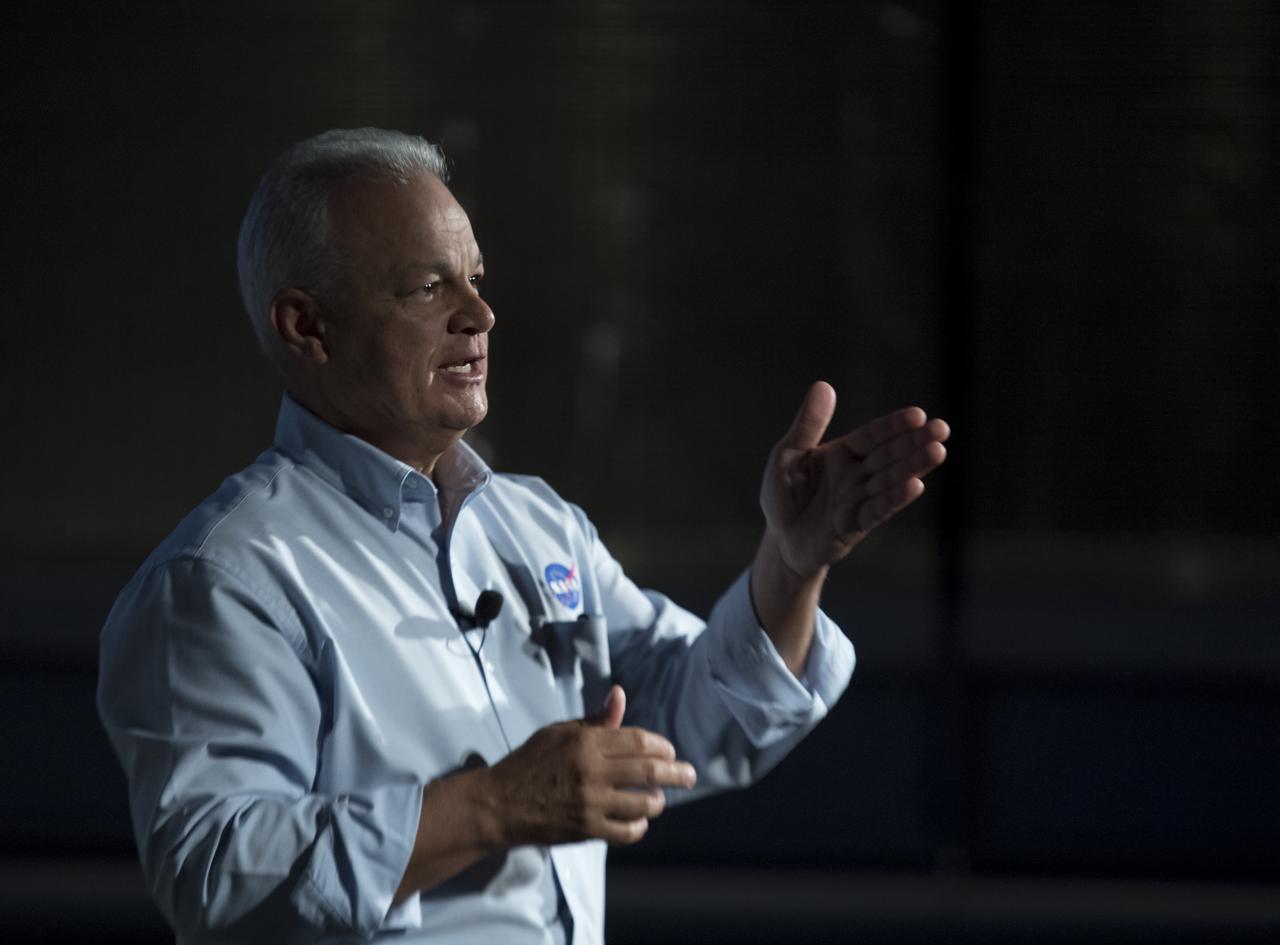
NASA Acting Chief Technologist Douglas Terrier gives a talk to teachers attending a professional development workshop held in tandem with the Intrepid Space & Science Festival, Saturday, Aug. 5, 2017 at the Intrepid Sea, Air & Space Museum in New York City. The week-long festival featured talks, films and cutting-edge displays showcasing NASA technology. Photo Credit: (NASA/Bill Ingalls)
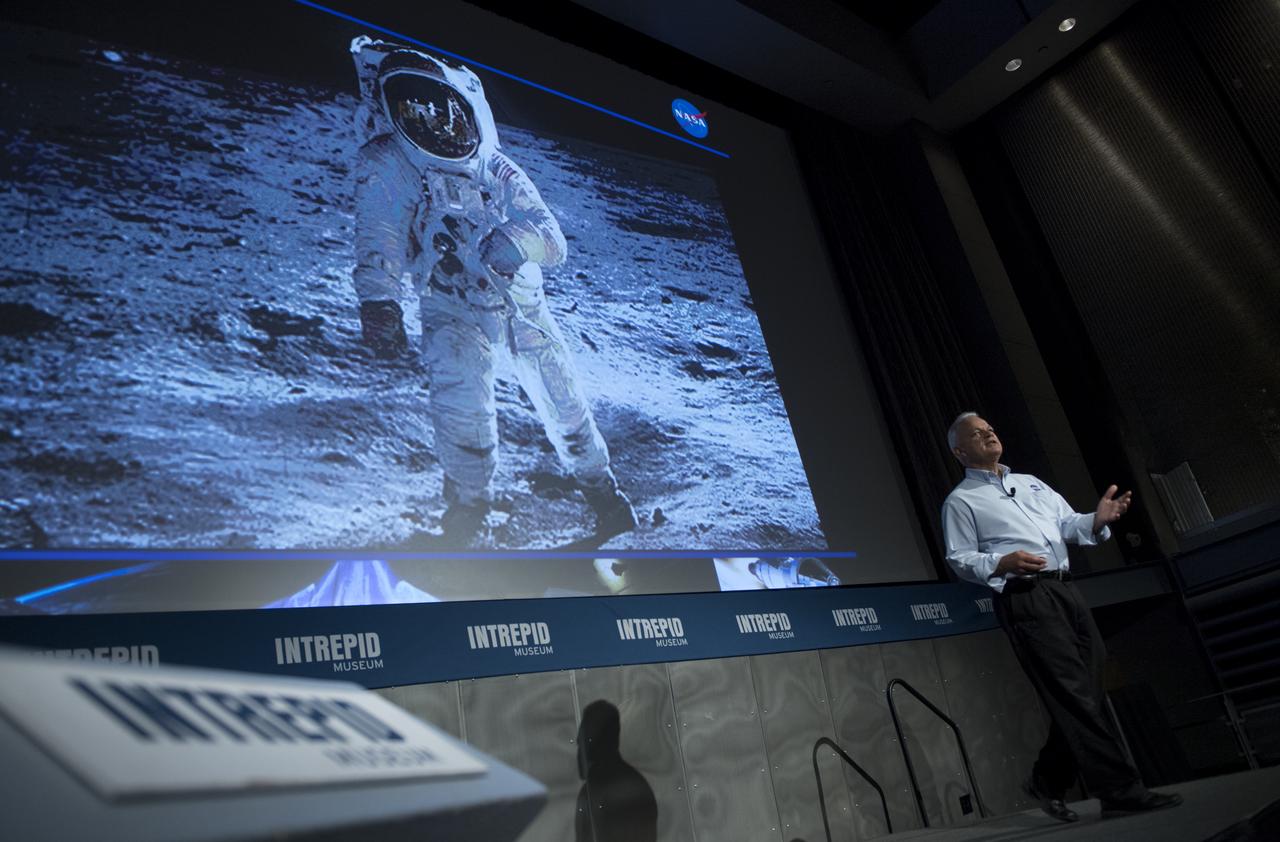
NASA Acting Chief Technologist Douglas Terrier gives a talk to teachers attending a professional development workshop held in tandem with the Intrepid Space & Science Festival, Saturday, Aug. 5, 2017 at the Intrepid Sea, Air & Space Museum in New York City. The week-long festival featured talks, films and cutting-edge displays showcasing NASA technology. Photo Credit: (NASA/Bill Ingalls)

NASA exhibits under white tents line Pier 86 during the Intrepid Space & Science Festival, Saturday, Aug. 5, 2017 held at the Intrepid Sea, Air & Space Museum in New York City. The week-long festival featured talks, films and cutting-edge displays showcasing NASA technology. Photo Credit: (NASA/Bill Ingalls)
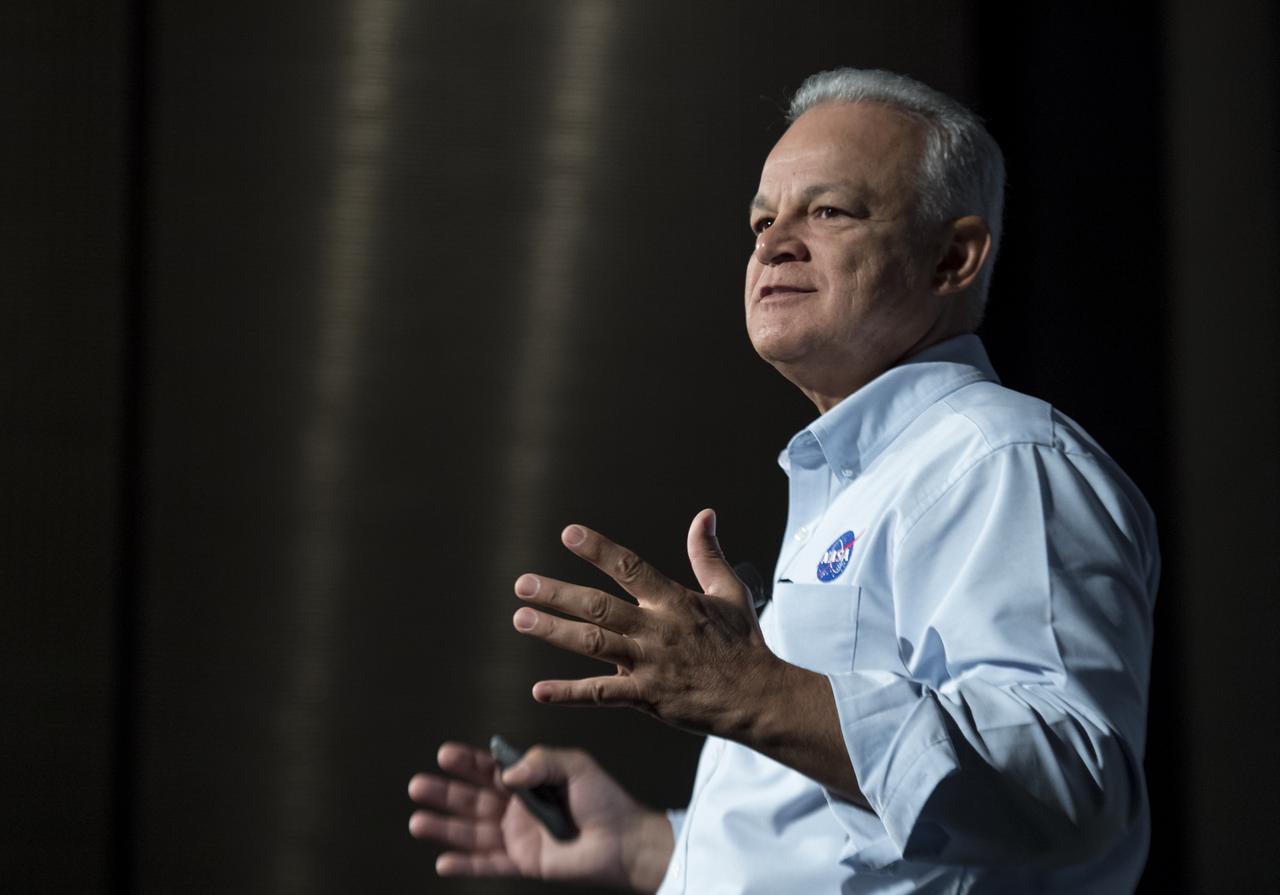
NASA Acting Chief Technologist Douglas Terrier gives a talk to teachers attending a professional development workshop held in tandem with the Intrepid Space & Science Festival, Saturday, Aug. 5, 2017 at the Intrepid Sea, Air & Space Museum in New York City. The week-long festival featured talks, films and cutting-edge displays showcasing NASA technology. Photo Credit: (NASA/Bill Ingalls)

NASA Acting Chief Technologist Douglas Terrier gives a talk to teachers attending a professional development workshop held in tandem with the Intrepid Space & Science Festival, Saturday, Aug. 5, 2017 at the Intrepid Sea, Air & Space Museum in New York City. The week-long festival featured talks, films and cutting-edge displays showcasing NASA technology. Photo Credit: (NASA/Bill Ingalls)
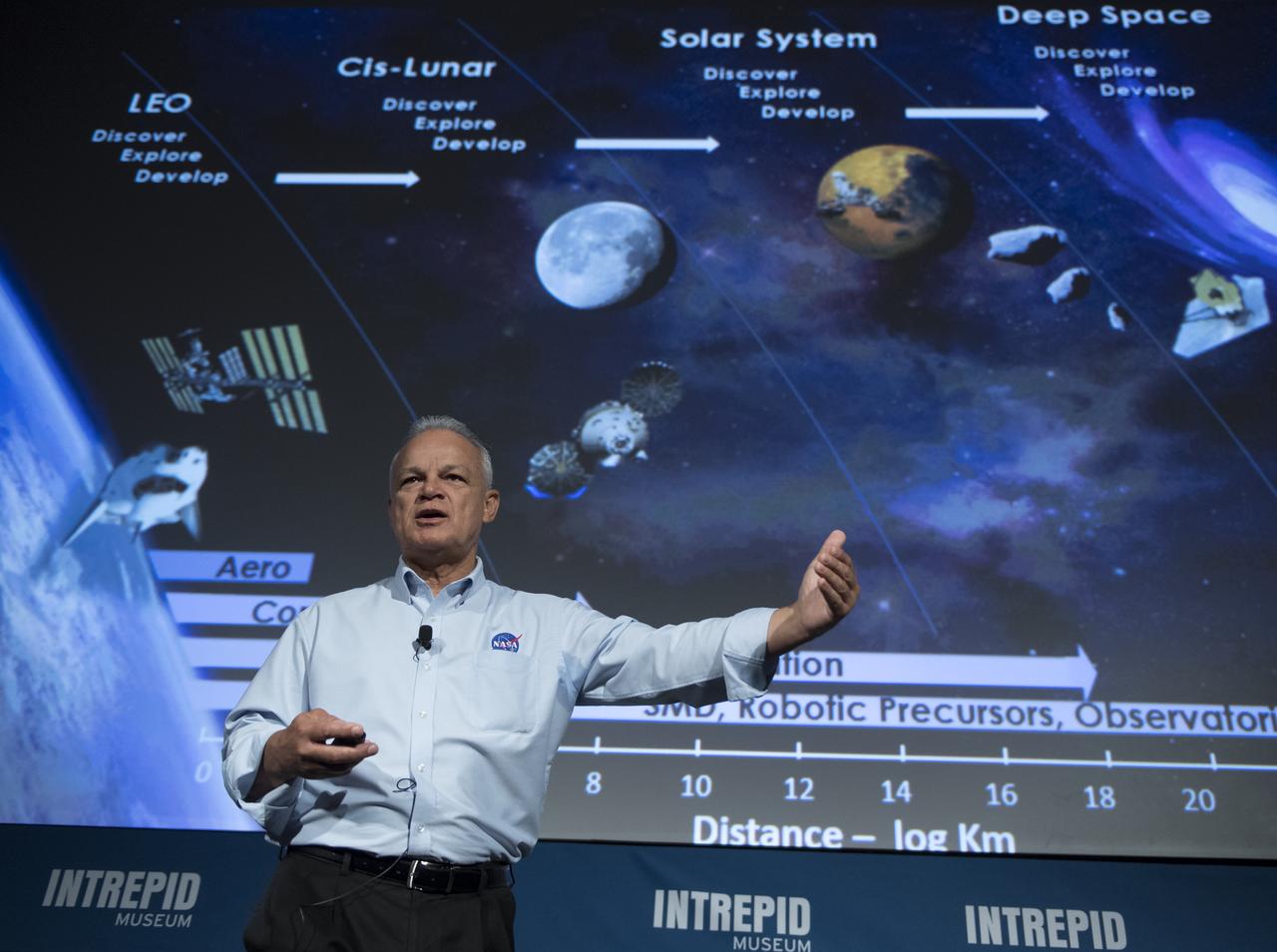
NASA Acting Chief Technologist Douglas Terrier gives a talk to teachers attending a professional development workshop held in tandem with the Intrepid Space & Science Festival, Saturday, Aug. 5, 2017 at the Intrepid Sea, Air & Space Museum in New York City. The week-long festival featured talks, films and cutting-edge displays showcasing NASA technology. Photo Credit: (NASA/Bill Ingalls)

An inflatable scale model of the SLS rocket is seen on Pier 86 during the Intrepid Space & Science Festival, Saturday, Aug. 5, 2017 held at the Intrepid Sea, Air & Space Museum in New York City. The week-long festival featured talks, films and cutting-edge displays showcasing NASA technology. Photo Credit: (NASA/Bill Ingalls)
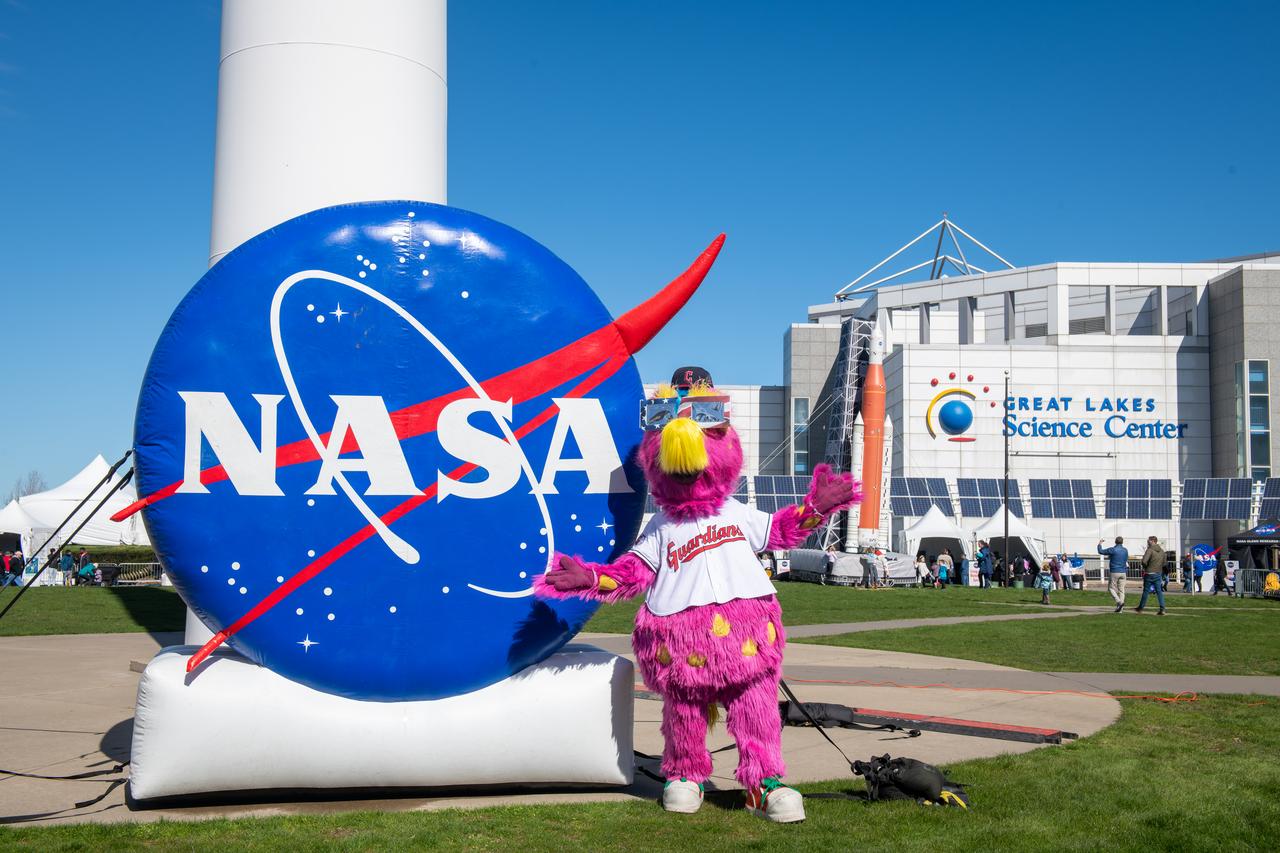
The Cleveland Guardians mascot, Slider poses in front of the NASA sign at the Total Solar Eclipse Fest at the Great Lakes Science Center April 6, 2024. A total solar eclipse swept across a narrow portion of the North American continent from Mexico’s Pacific coast to the Atlantic coast of Newfoundland, Canada. A partial solar eclipse was visible across the entire North American continent along with parts of Central America and Europe.
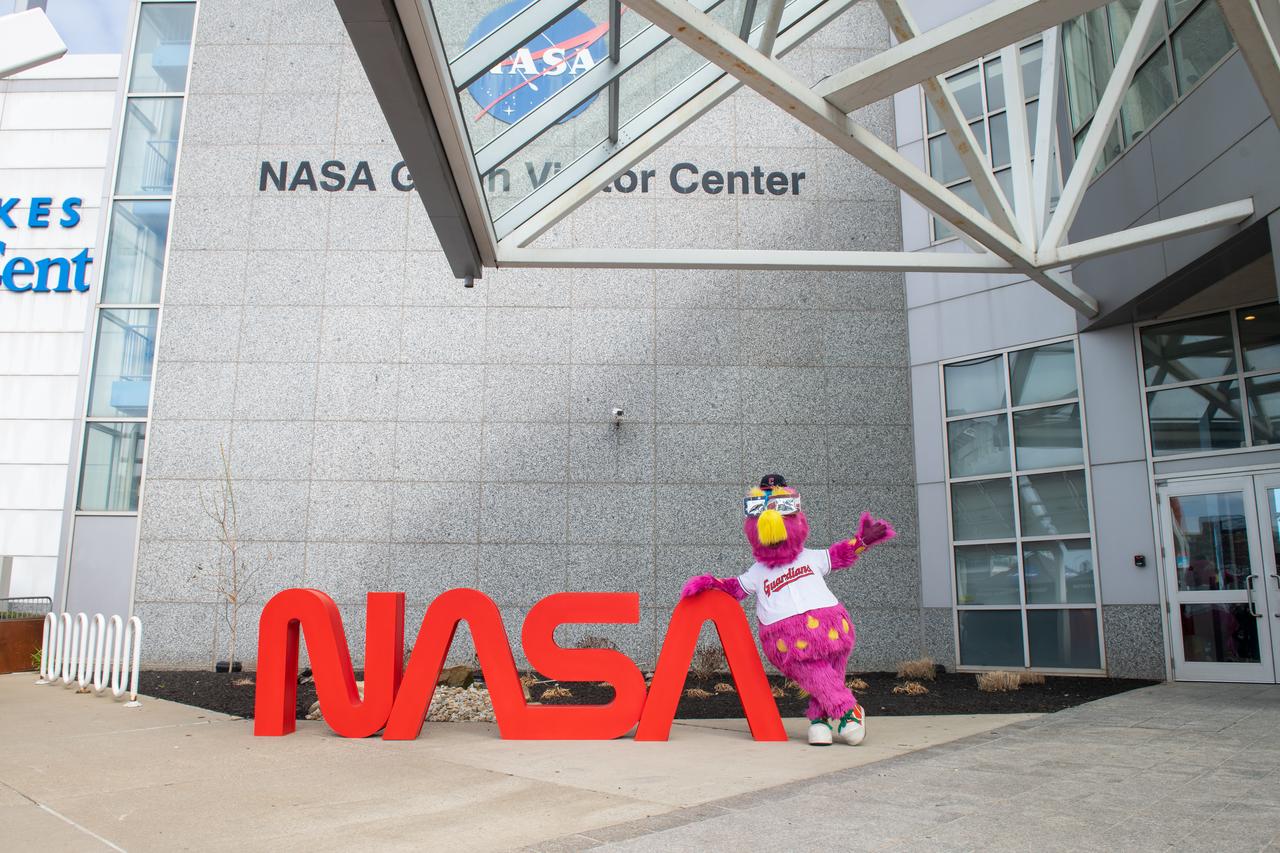
The Cleveland Guardians mascot, Slider poses in front of the NASA sign at the Total Solar Eclipse Fest at the Great Lakes Science Center April 6, 2024. A total solar eclipse swept across a narrow portion of the North American continent from Mexico’s Pacific coast to the Atlantic coast of Newfoundland, Canada. A partial solar eclipse was visible across the entire North American continent along with parts of Central America and Europe.
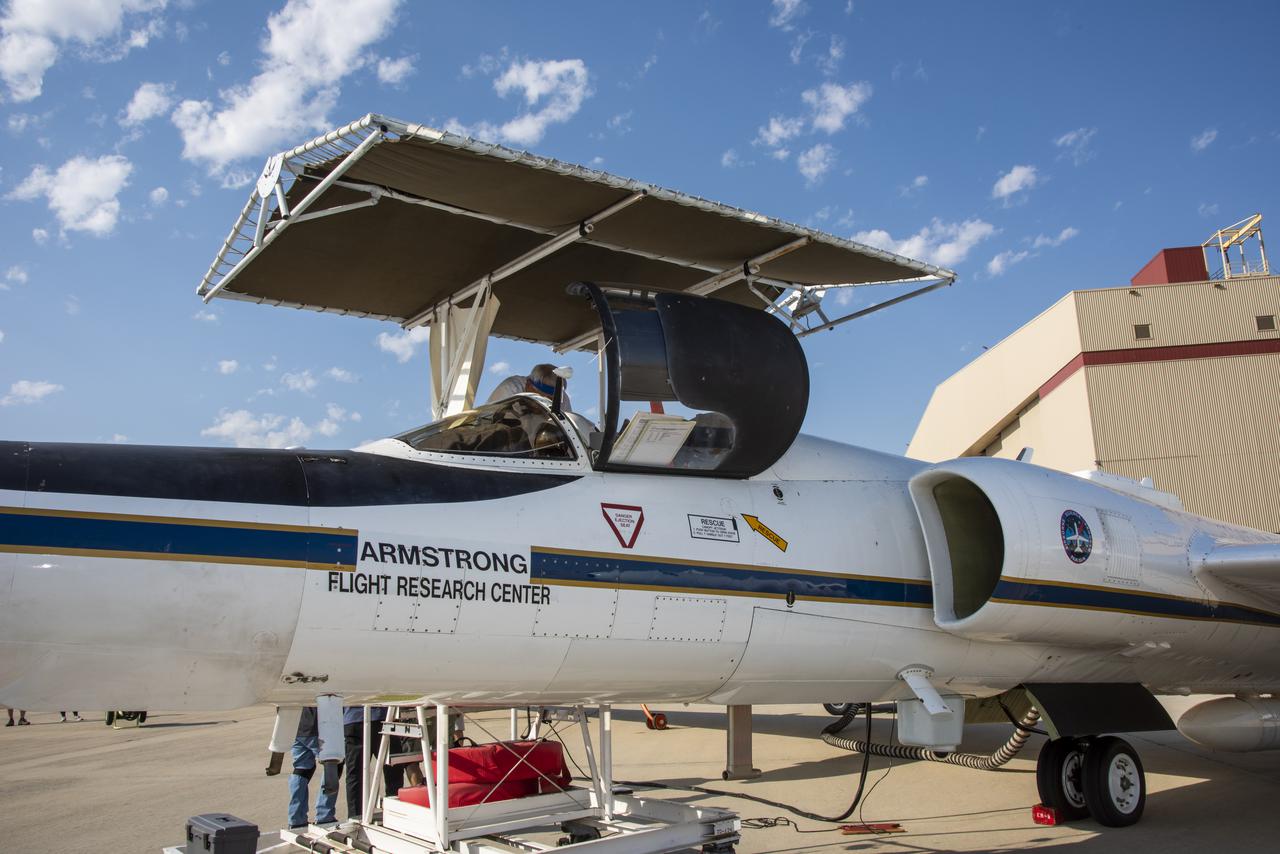
NASA's Armstrong Flight Research Center ER-2 #809 high-altitude aircraft prepared for Dynamics and Chemistry of the Summer Stratosphere (DCOTSS) science flights in Palmdale, CA on June 17, 2021
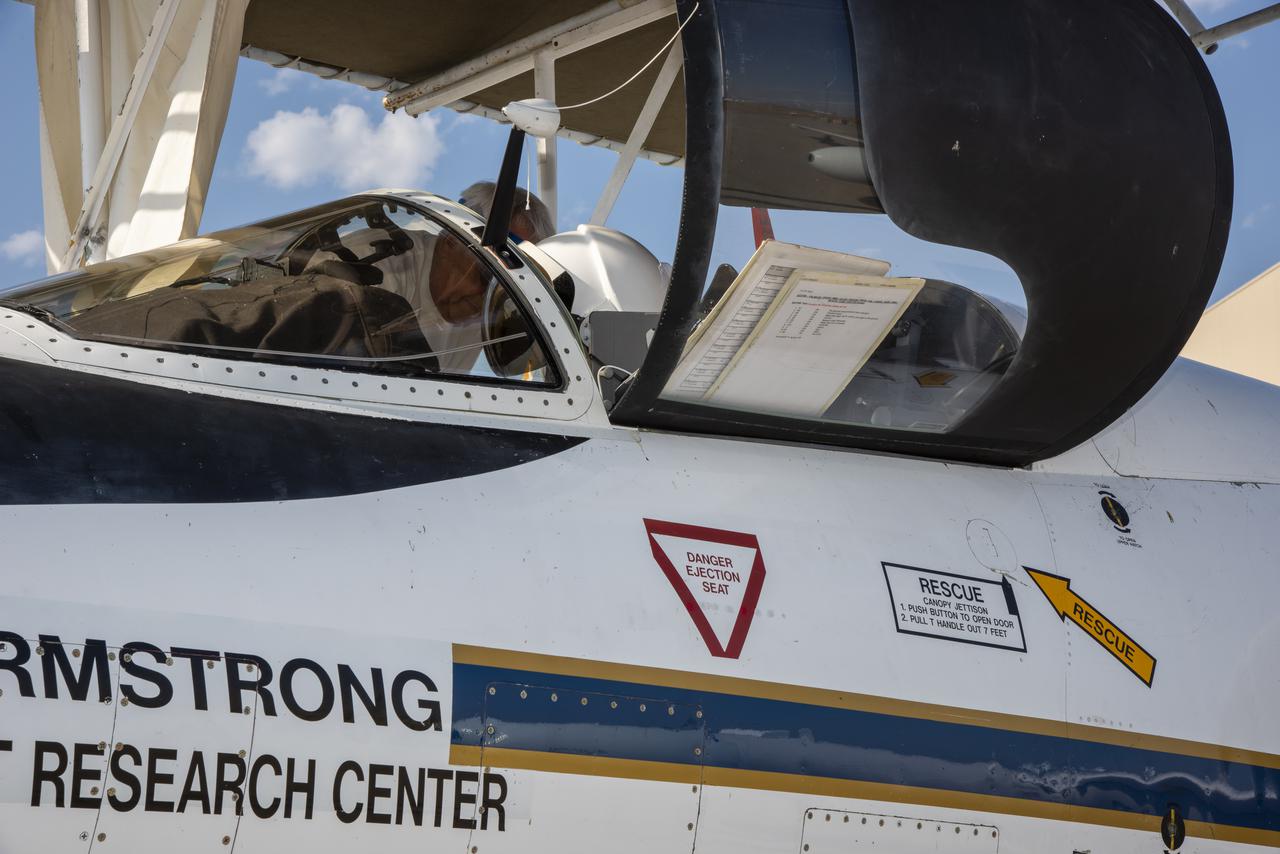
NASA's Armstrong Flight Research Center ER-2 #809 high-altitude aircraft prepared for Dynamics and Chemistry of the Summer Stratosphere (DCOTSS) science flights in Palmdale, CA on June 17, 2021.
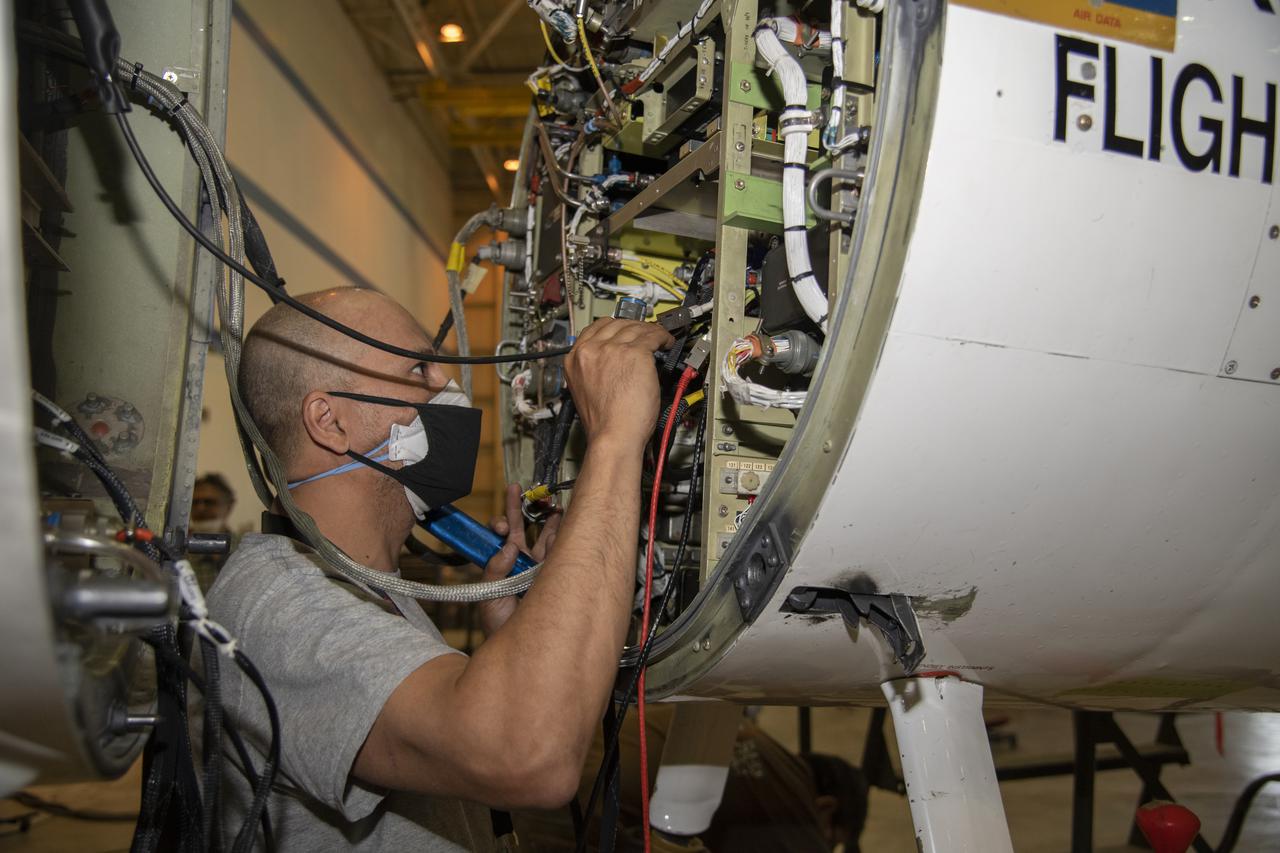
NASA’s Armstrong Flight Research Center ER-2 #809 high-altitude aircraft maintained by avionics technician Gregory Bantalin for Dynamics and Chemistry of the Summer Stratosphere (DCOTSS) science flights.
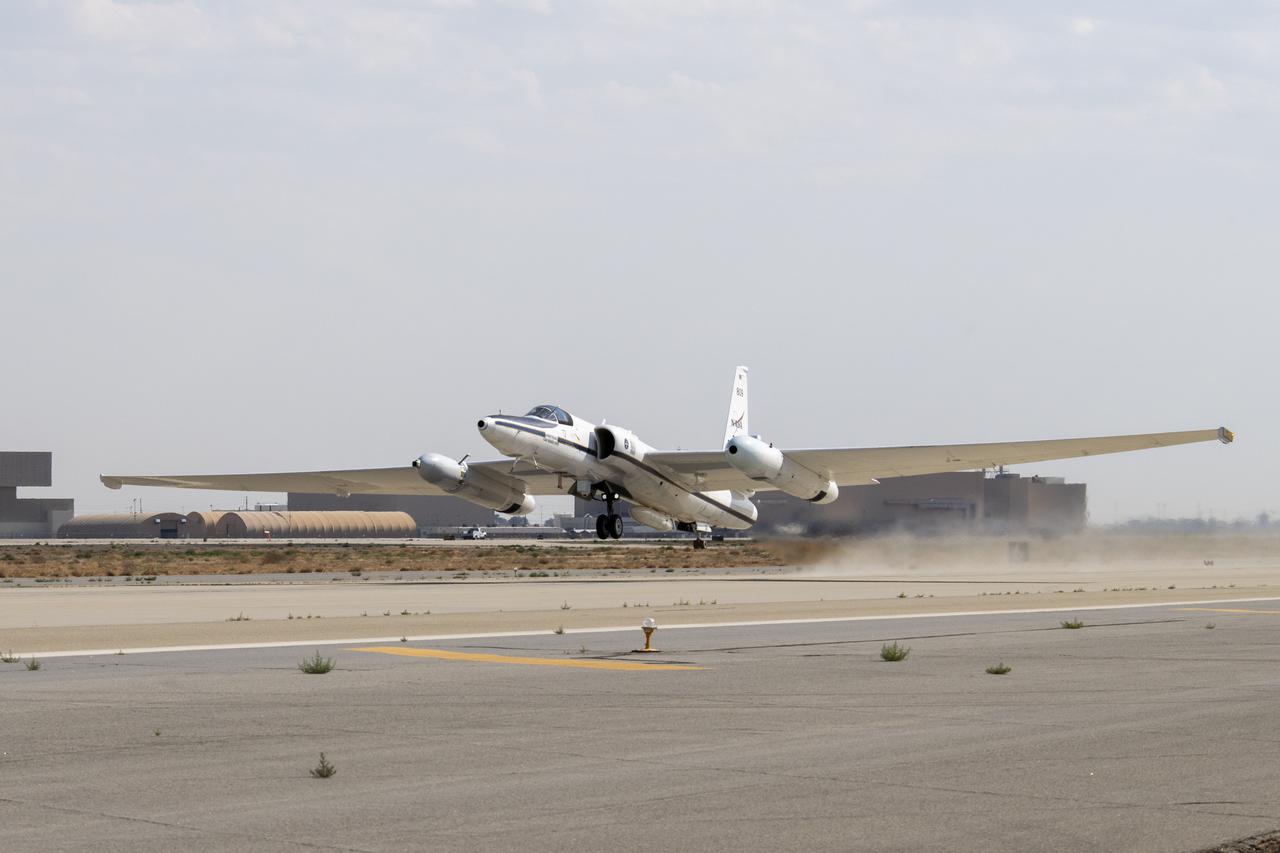
NASA’s Armstrong Flight Research Center ER-2 #809 high-altitude aircraft taking off for Dynamics and Chemistry of the Summer Stratosphere (DCOTSS) science flights in Palmdale, CA on June 17, 2021.
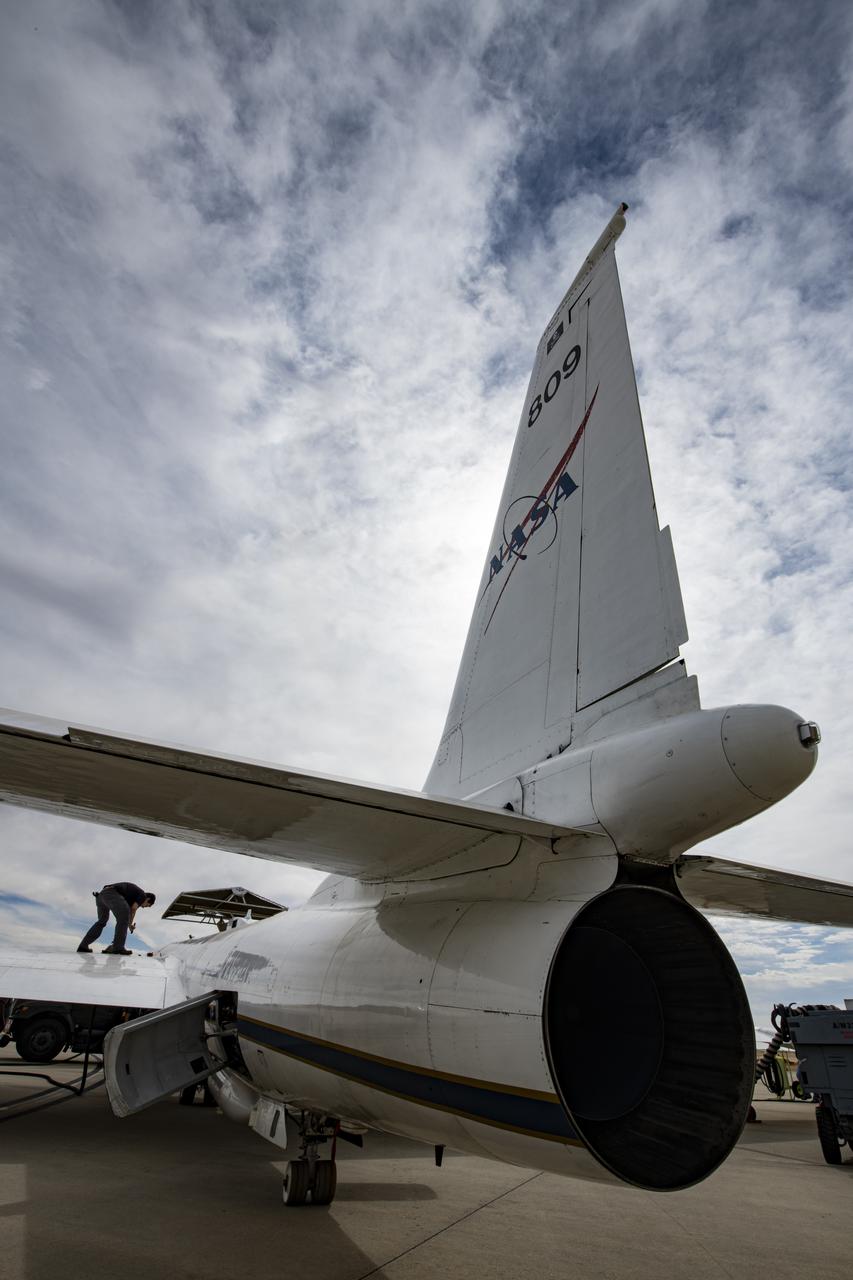
NASA's Armstrong Flight Research Center ER-2 #809 high-altitude aircraft prepped for Dynamics and Chemistry of the Summer Stratosphere (DCOTSS) science flights in Palmdale, CA.
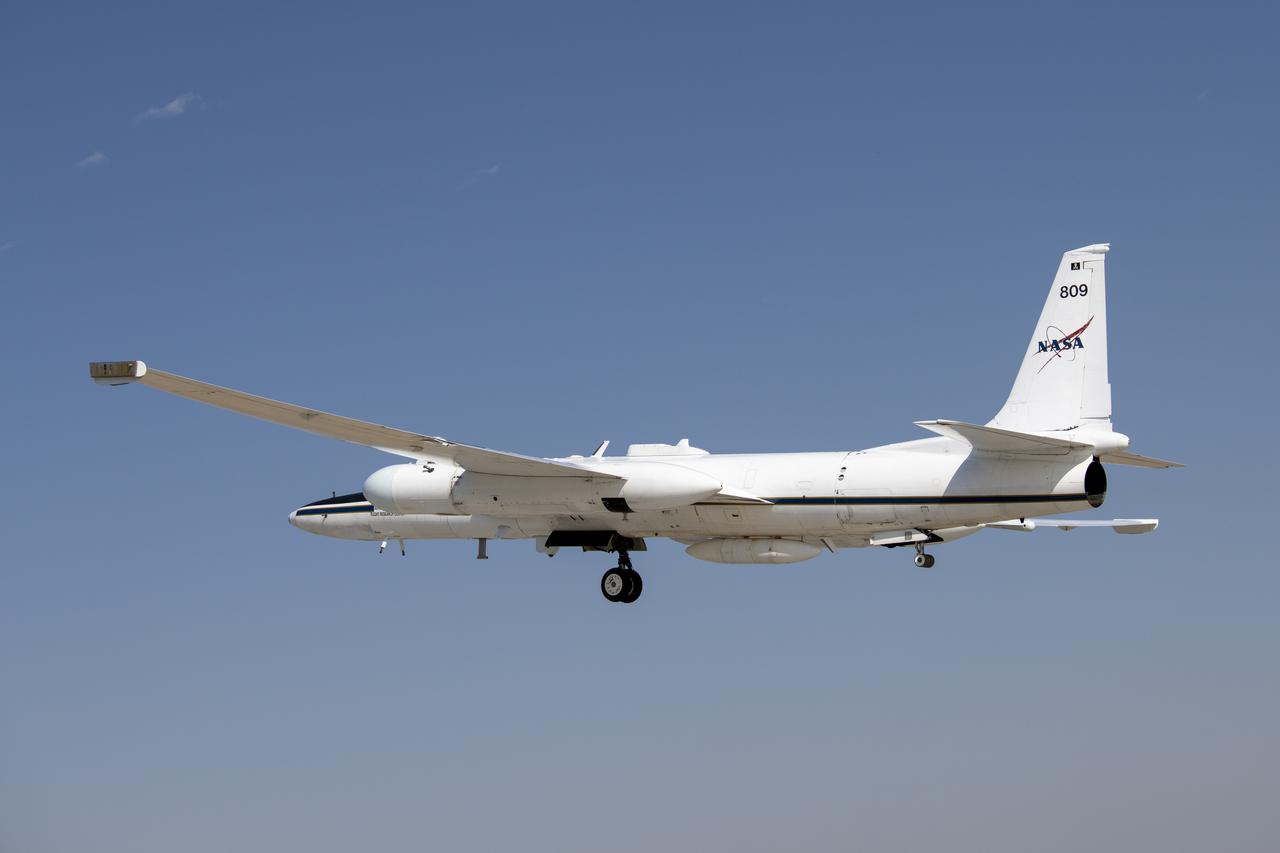
NASA's Armstrong Flight Research Center operates ER-2 #809 high-altitude aircraft for Dynamics and Chemistry of the Summer Stratosphere (DCOTSS) science flights on June 17, 2021.
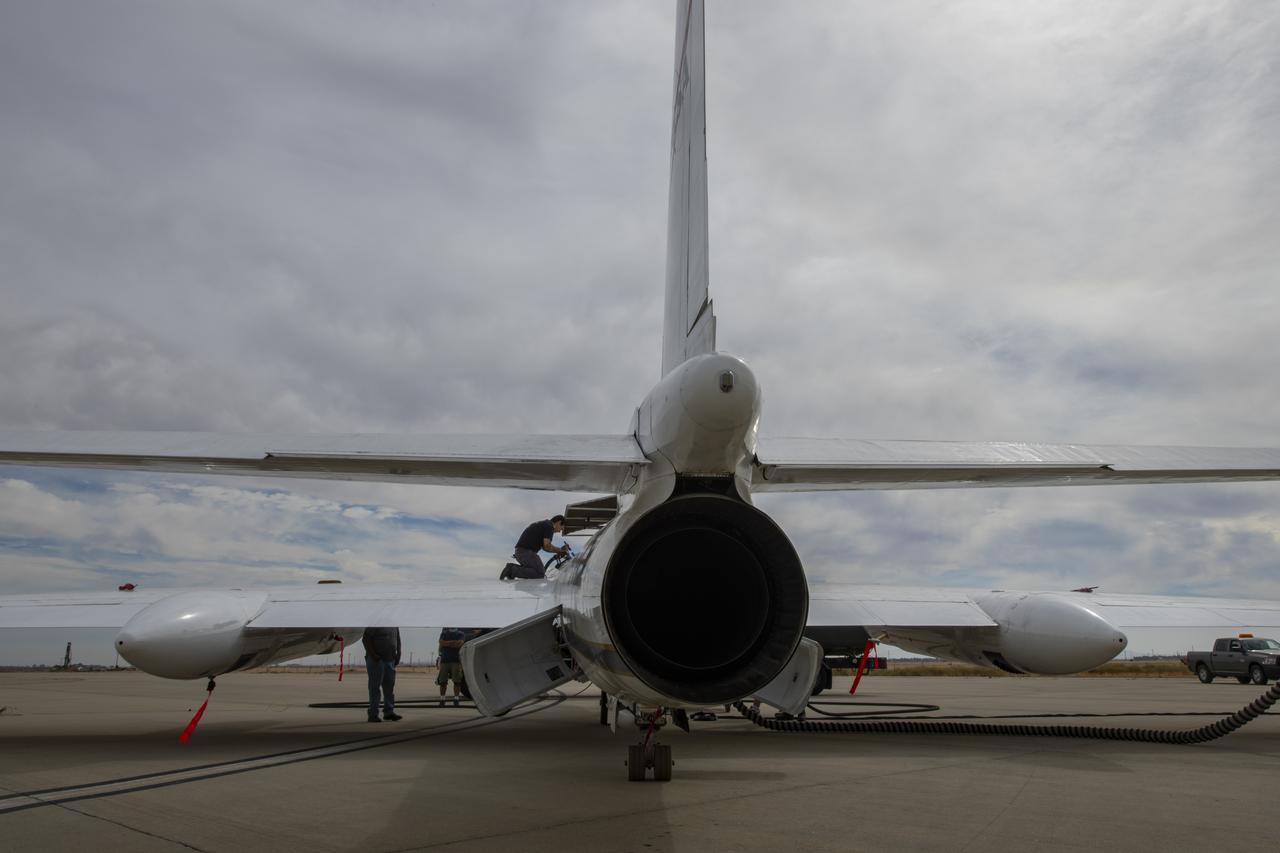
NASA's Armstrong Flight Research Center ER-2 #809 high-altitude aircraft prepped for Dynamics and Chemistry of the Summer Stratosphere (DCOTSS) science flights in Palmdale, CA.
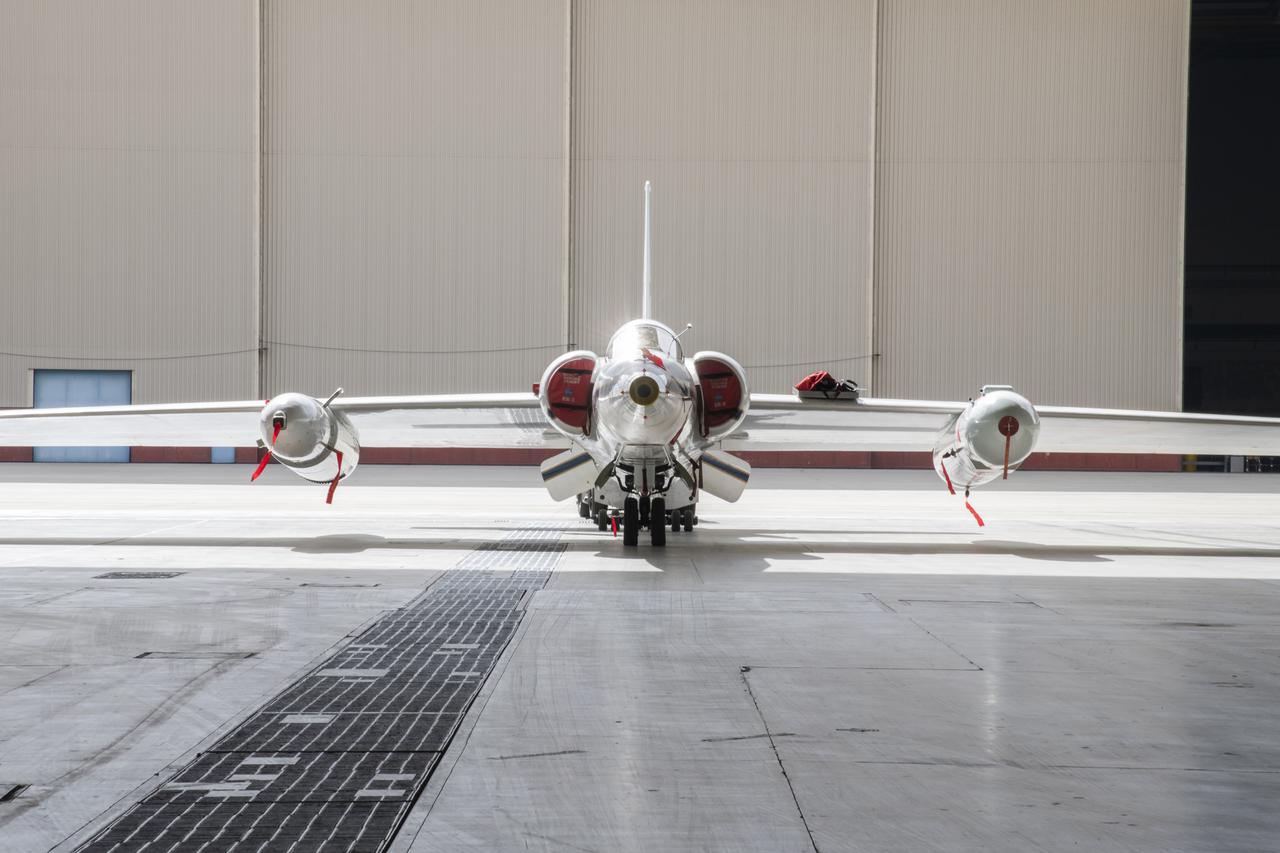
NASA’s Armstrong Flight Research Center ER-2 #809 high-altitude aircraft prepped for Dynamics and Chemistry of the Summer Stratosphere (DCOTSS) science flights in Palmdale, CA.

NASA's Armstrong Flight Research Center ER-2 pilot Gary Toroni and engineering technician Raul "Corky" Cortes preparing for Dynamics and Chemistry of the Summer Stratosphere (DCOTSS) science flights in Palmdale, CA on June 17, 2021.
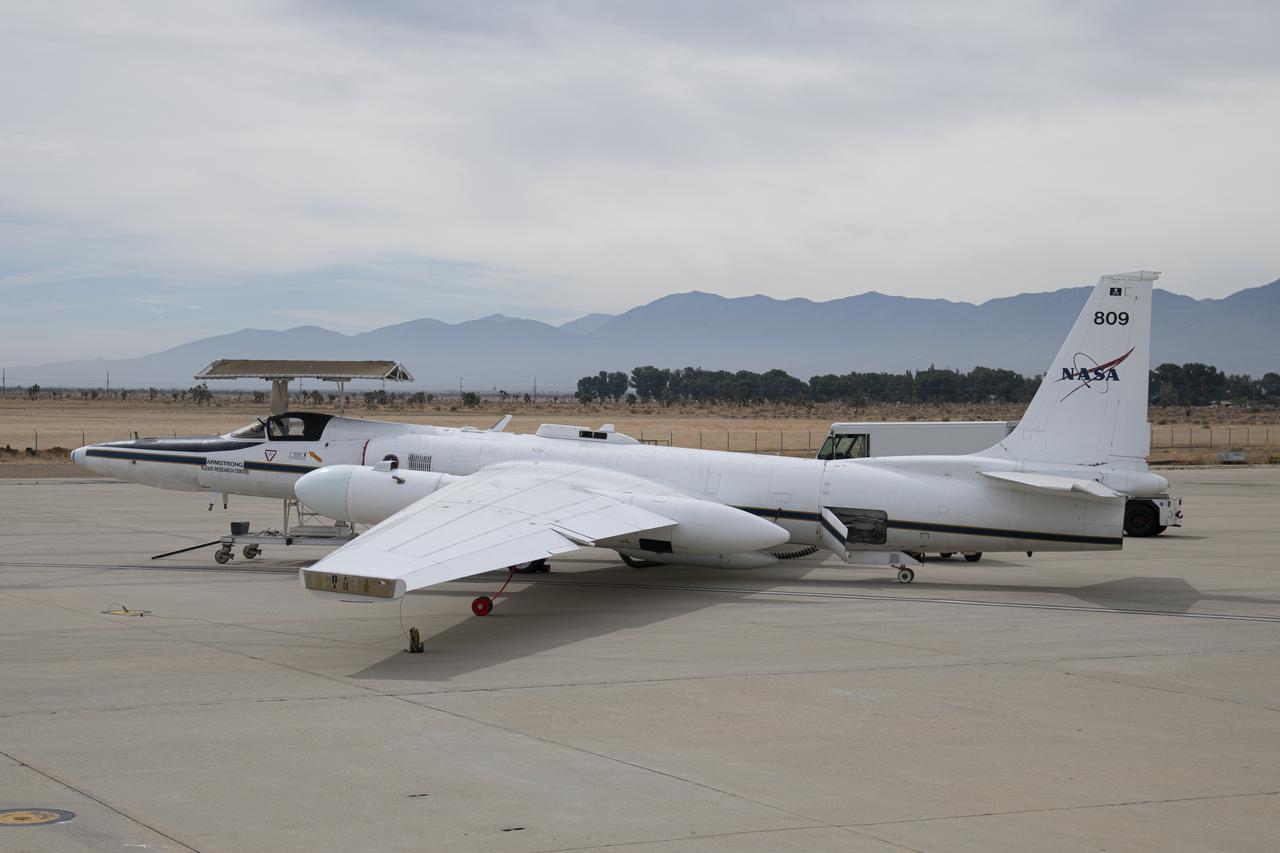
NASA's Armstrong Flight Research Center ER-2 #809 high-altitude aircraft prepped for Dynamics and Chemistry of the Summer Stratosphere (DCOTSS) science flights in Palmdale, CA.
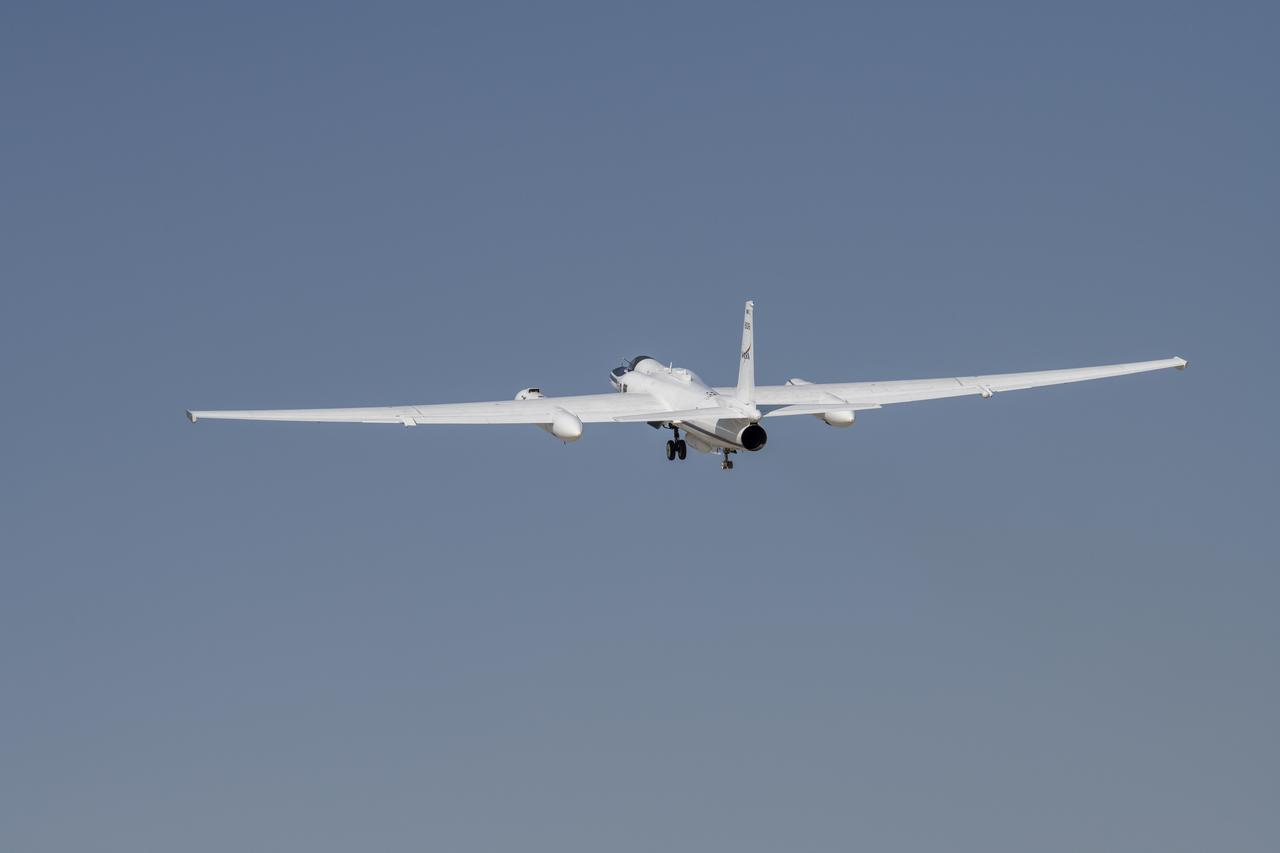
NASA’s Armstrong Flight Research Center operates ER-2 #809 high-altitude aircraft for Dynamics and Chemistry of the Summer Stratosphere (DCOTSS) science flights on June 17, 2021.
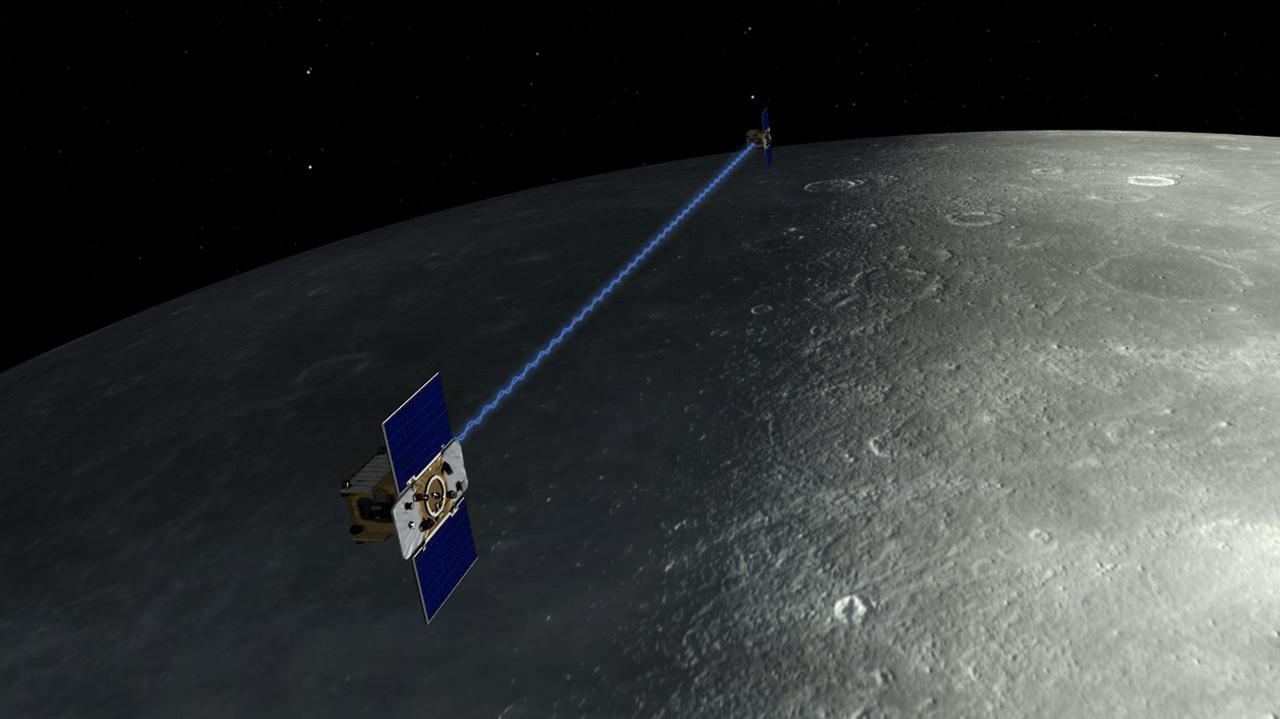
An artist depiction of the twin spacecraft that comprise NASA GRAIL mission. During the GRAIL mission science phase, spacecraft Ebb and Flow transmit radio signals precisely defining the distance between them as they orbit the moon in formation.
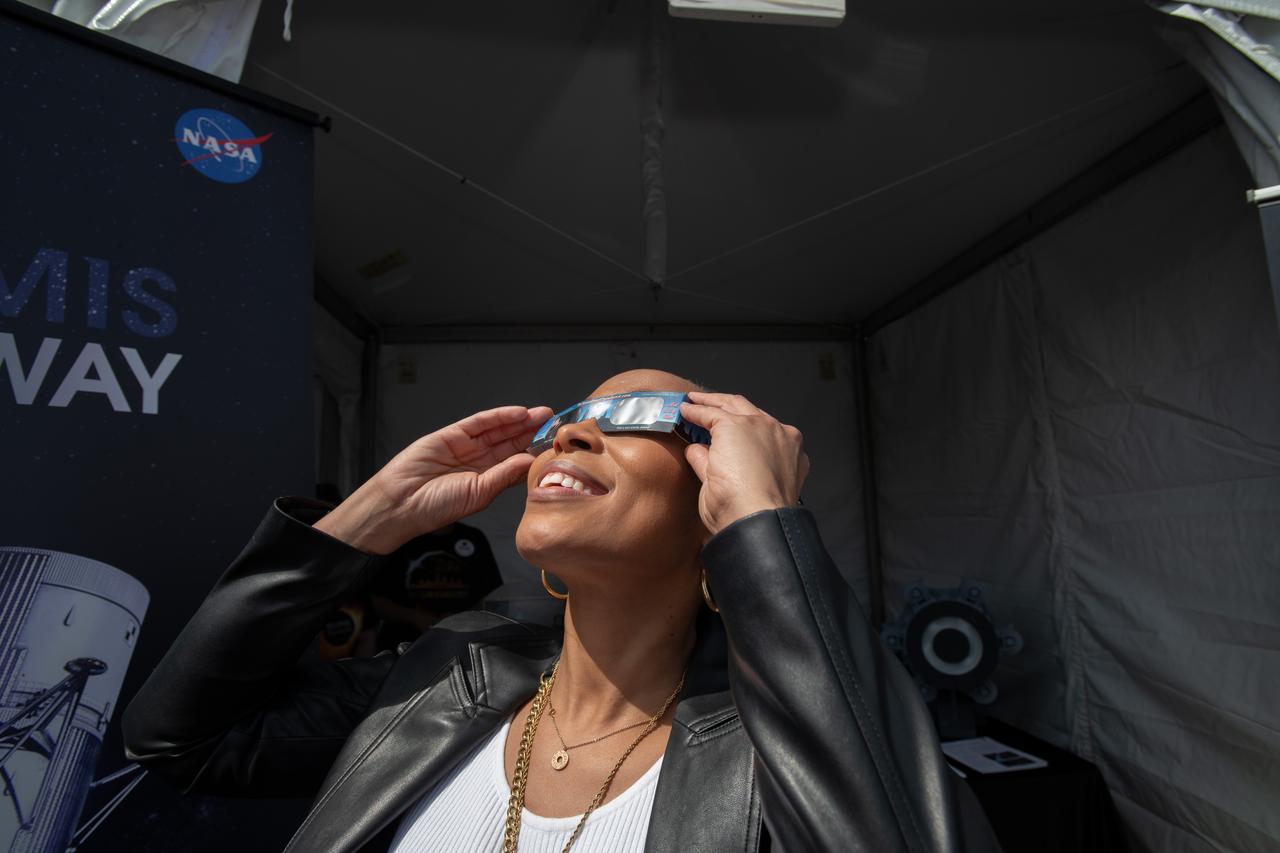
Representative Shontel Brown views the eclipse. NASA Glenn Research Center and the Great Lakes Science Center hosted a three-day celestial celebration in downtown Cleveland, OH. This free, outdoor, family-friendly science and arts festival will feature free concerts, performances, speakers, and hands-on science activities with community partners. A total solar eclipse swept across a narrow portion of the North American continent from Mexico’s Pacific coast to the Atlantic coast of Newfoundland, Canada. A partial solar eclipse was visible across the entire North American continent along with parts of Central America and Europe. Photo Credit: (NASA/Sara Lowthian-Hanna)
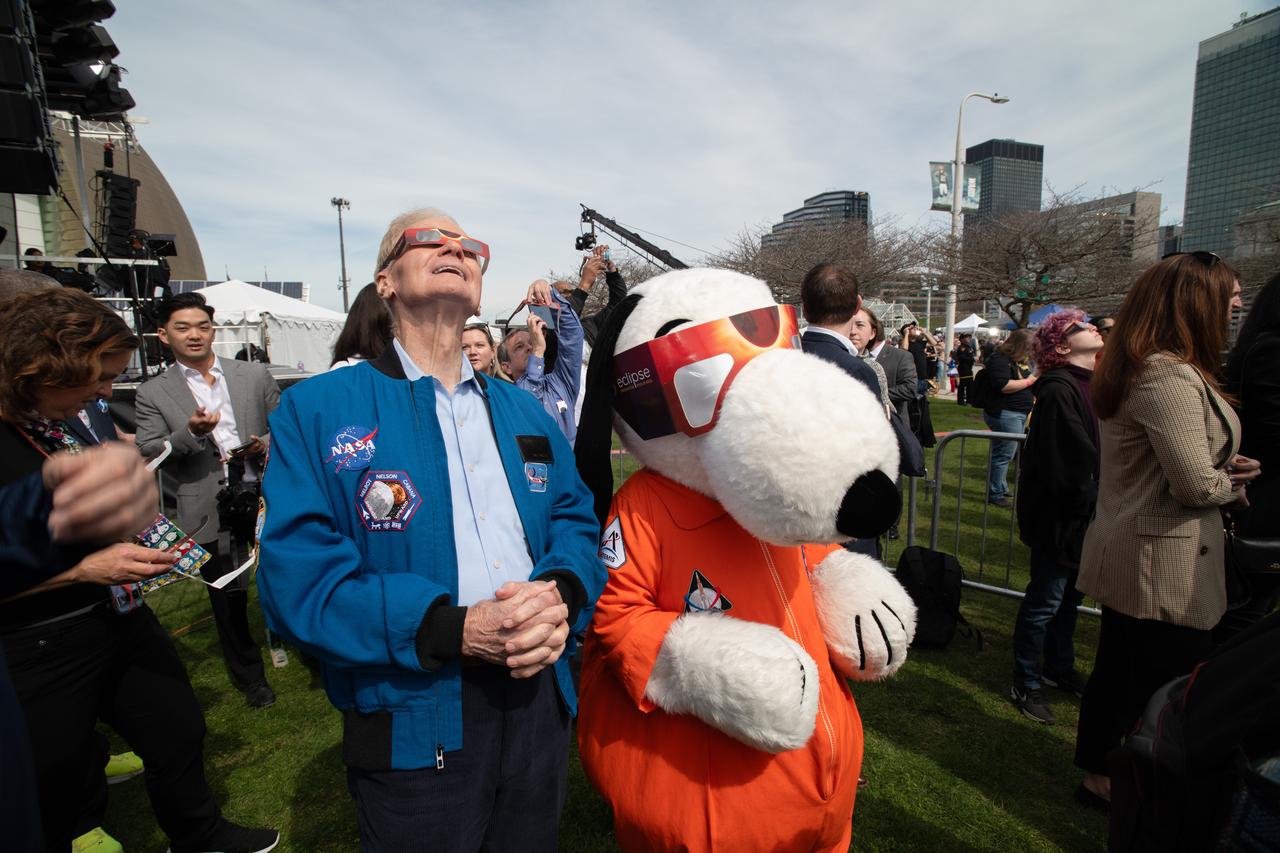
Administrator Bill Nelson and Snoopy view the eclipse just before totality on April 8,2024. NASA Glenn Research Center and the Great Lakes Science Center hosted a three-day celestial celebration in downtown Cleveland, OH. This free, outdoor, family-friendly science and arts festival will feature free concerts, performances, speakers, and hands-on science activities with community partners. A total solar eclipse swept across a narrow portion of the North American continent from Mexico’s Pacific coast to the Atlantic coast of Newfoundland, Canada. A partial solar eclipse was visible across the entire North American continent along with parts of Central America and Europe. Photo Credit: (NASA/Sara Lowthian-Hanna)
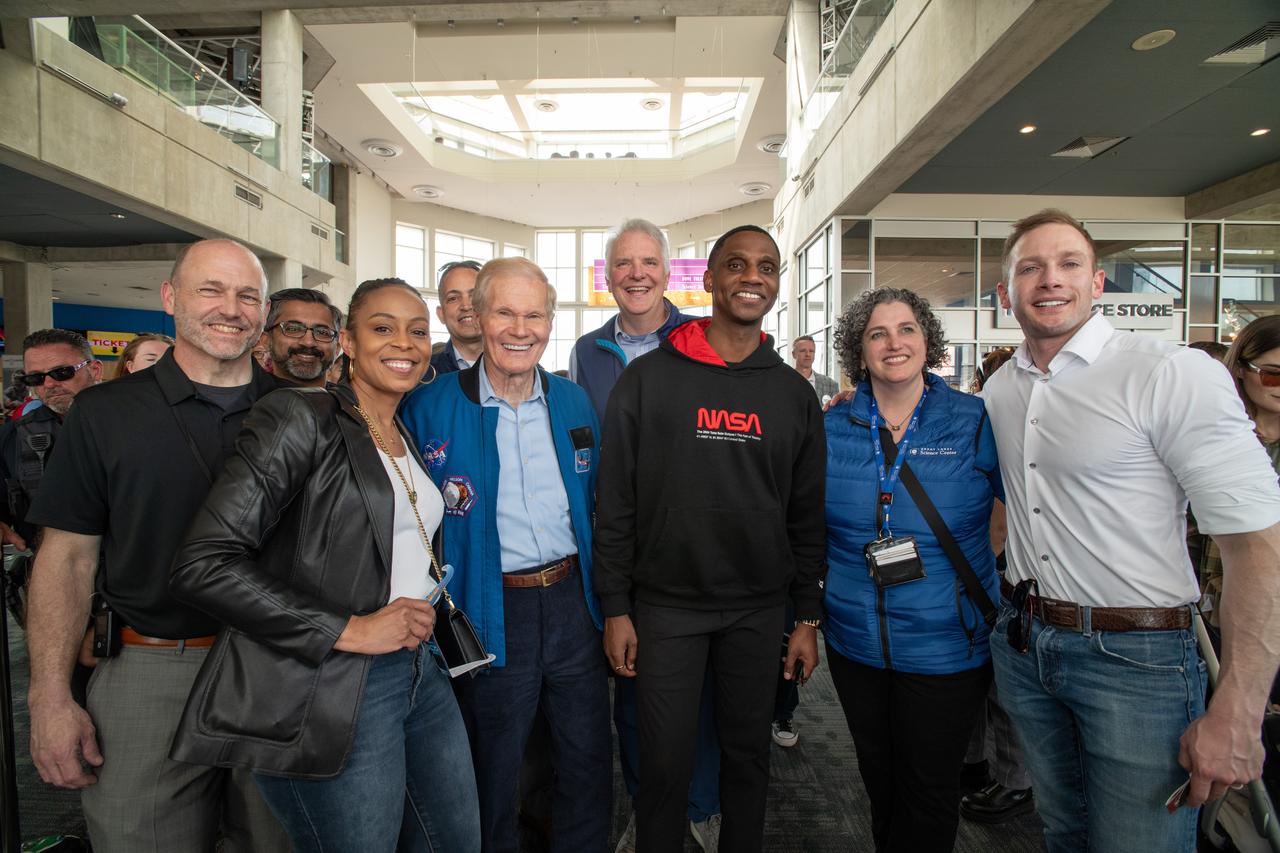
GRC Center Director Jimmy Kenyon, President & CEO of Greater Cleveland Partnership Baiju R. Shah, Representative Shontel Brown, Administrator Bill Nelson, Cuyahoga County Executive Chris Ronayne, Cleveland Mayor Justin Bibb, Great Lakes Science Center President and CEO Kristen Ellenbogen, Represenative Max Miller, pose for a photo together. NASA Glenn Research Center and the Great Lakes Science Center hosted a three-day celestial celebration in downtown Cleveland, OH. This free, outdoor, family-friendly science and arts festival will feature free concerts, performances, speakers, and hands-on science activities with community partners. A total solar eclipse swept across a narrow portion of the North American continent from Mexico’s Pacific coast to the Atlantic coast of Newfoundland, Canada. A partial solar eclipse was visible across the entire North American continent along with parts of Central America and Europe.
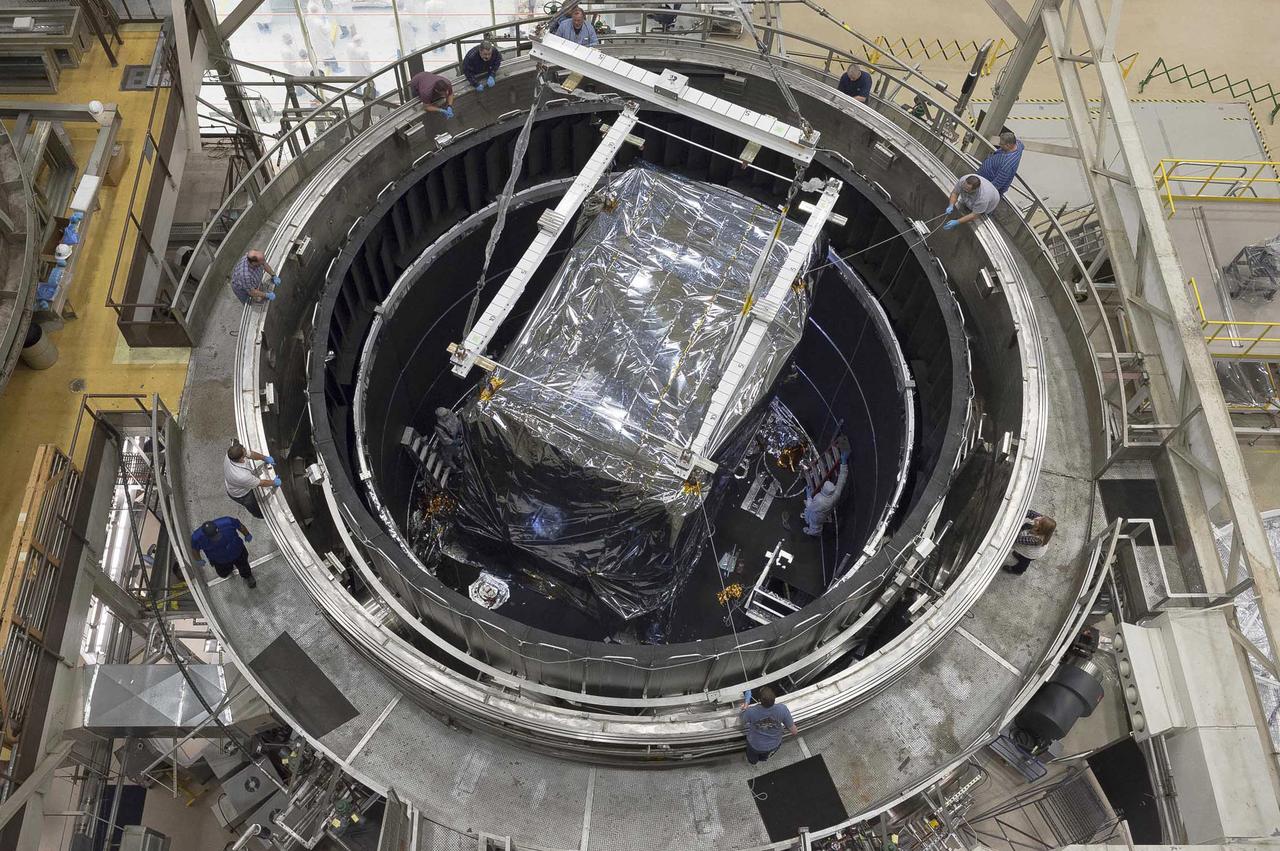
At NASA's James Webb Space Telescope's final destination in space, one million miles away from Earth, it will operate at incredibly cold temperatures of -387 degrees Fahrenheit, or 40 degrees Kelvin. This is 260 degrees Fahrenheit colder than any place on the Earth’s surface has ever been. So first, this final super cold test at Goddard will prepare the Integrated Science Instrument Module (ISIM), or the “heart” of the telescope, for space. Read more: <a href="http://go.nasa.gov/1KFPwJG" rel="nofollow">go.nasa.gov/1KFPwJG</a> Credit: NASA/Goddard/Chris Gunn <b><a href="http://www.nasa.gov/audience/formedia/features/MP_Photo_Guidelines.html" rel="nofollow">NASA image use policy.</a></b> <b><a href="http://www.nasa.gov/centers/goddard/home/index.html" rel="nofollow">NASA Goddard Space Flight Center</a></b> enables NASA’s mission through four scientific endeavors: Earth Science, Heliophysics, Solar System Exploration, and Astrophysics. Goddard plays a leading role in NASA’s accomplishments by contributing compelling scientific knowledge to advance the Agency’s mission. <b>Follow us on <a href="http://twitter.com/NASAGoddardPix" rel="nofollow">Twitter</a></b> <b>Like us on <a href="http://www.facebook.com/pages/Greenbelt-MD/NASA-Goddard/395013845897?ref=tsd" rel="nofollow">Facebook</a></b> <b>Find us on <a href="http://instagrid.me/nasagoddard/?vm=grid" rel="nofollow">Instagram</a></b>
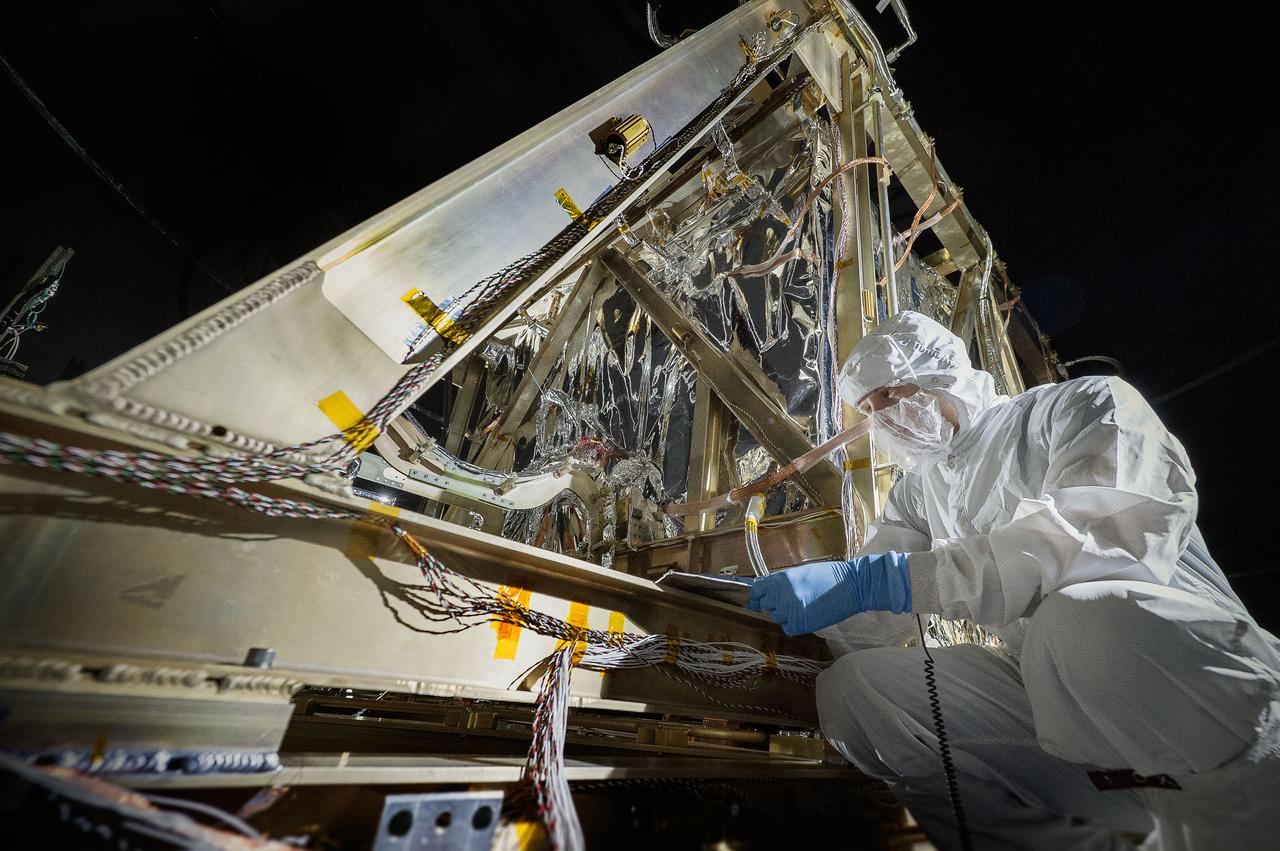
At NASA's James Webb Space Telescope's final destination in space, one million miles away from Earth, it will operate at incredibly cold temperatures of -387 degrees Fahrenheit, or 40 degrees Kelvin. This is 260 degrees Fahrenheit colder than any place on the Earth’s surface has ever been. So first, this final super cold test at Goddard will prepare the Integrated Science Instrument Module (ISIM), or the “heart” of the telescope, for space. Read more: <a href="http://go.nasa.gov/1KFPwJG" rel="nofollow">go.nasa.gov/1KFPwJG</a> Contamination Control Engineer Alan Abeel conducts final inspections and places contamination foils before the start of the test. Credit: NASA/Goddard/Chris Gunn <b><a href="http://www.nasa.gov/audience/formedia/features/MP_Photo_Guidelines.html" rel="nofollow">NASA image use policy.</a></b> <b><a href="http://www.nasa.gov/centers/goddard/home/index.html" rel="nofollow">NASA Goddard Space Flight Center</a></b> enables NASA’s mission through four scientific endeavors: Earth Science, Heliophysics, Solar System Exploration, and Astrophysics. Goddard plays a leading role in NASA’s accomplishments by contributing compelling scientific knowledge to advance the Agency’s mission. <b>Follow us on <a href="http://twitter.com/NASAGoddardPix" rel="nofollow">Twitter</a></b> <b>Like us on <a href="http://www.facebook.com/pages/Greenbelt-MD/NASA-Goddard/395013845897?ref=tsd" rel="nofollow">Facebook</a></b> <b>Find us on <a href="http://instagrid.me/nasagoddard/?vm=grid" rel="nofollow">Instagram</a></b>
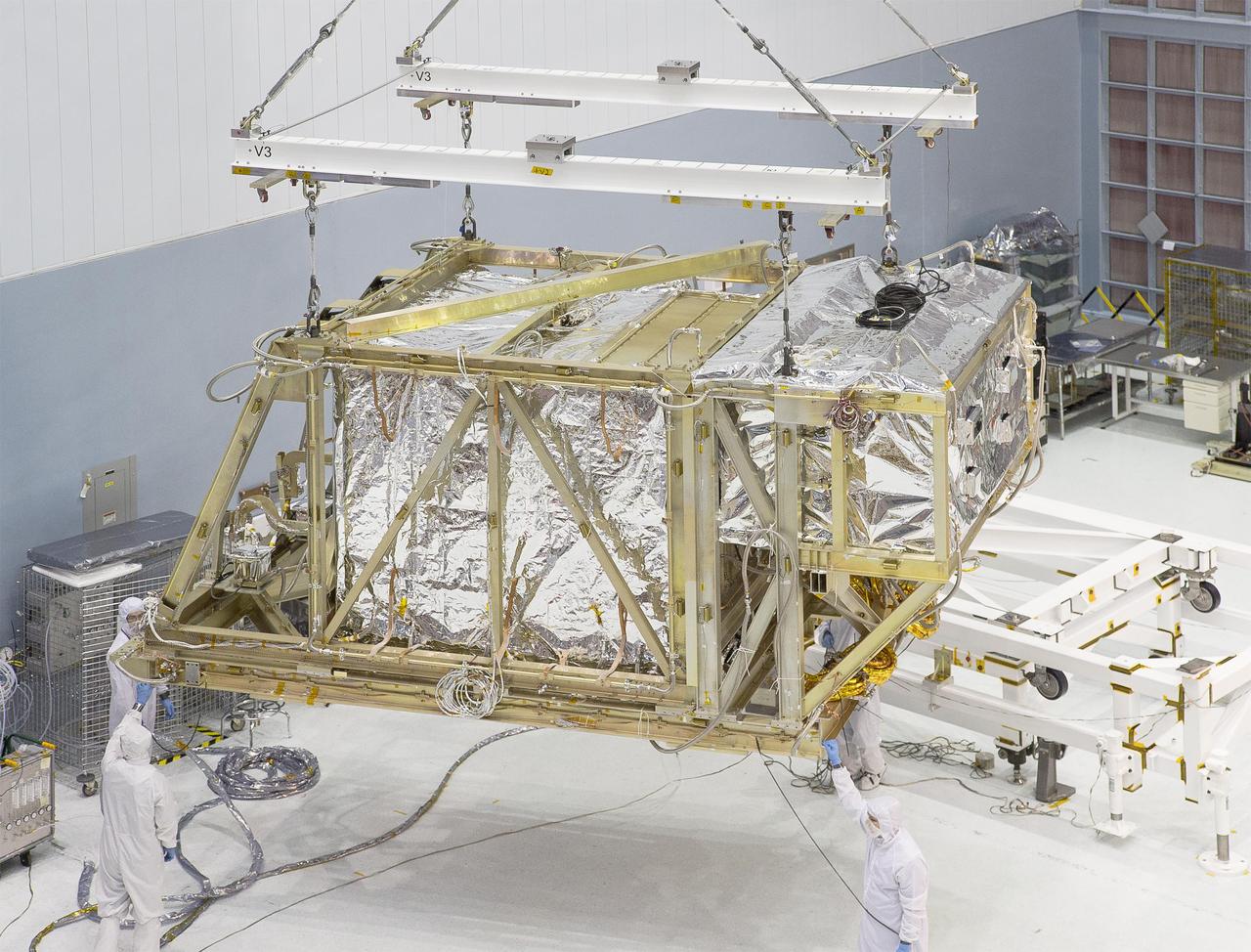
At NASA's James Webb Space Telescope's final destination in space, one million miles away from Earth, it will operate at incredibly cold temperatures of -387 degrees Fahrenheit, or 40 degrees Kelvin. This is 260 degrees Fahrenheit colder than any place on the Earth’s surface has ever been. So first, this final super cold test at Goddard will prepare the Integrated Science Instrument Module (ISIM), or the “heart” of the telescope, for space. Read more: <a href="http://go.nasa.gov/1KFPwJG" rel="nofollow">go.nasa.gov/1KFPwJG</a> Credit: NASA/Goddard/Chris Gunn <b><a href="http://www.nasa.gov/audience/formedia/features/MP_Photo_Guidelines.html" rel="nofollow">NASA image use policy.</a></b> <b><a href="http://www.nasa.gov/centers/goddard/home/index.html" rel="nofollow">NASA Goddard Space Flight Center</a></b> enables NASA’s mission through four scientific endeavors: Earth Science, Heliophysics, Solar System Exploration, and Astrophysics. Goddard plays a leading role in NASA’s accomplishments by contributing compelling scientific knowledge to advance the Agency’s mission. <b>Follow us on <a href="http://twitter.com/NASAGoddardPix" rel="nofollow">Twitter</a></b> <b>Like us on <a href="http://www.facebook.com/pages/Greenbelt-MD/NASA-Goddard/395013845897?ref=tsd" rel="nofollow">Facebook</a></b> <b>Find us on <a href="http://instagrid.me/nasagoddard/?vm=grid" rel="nofollow">Instagram</a></b>
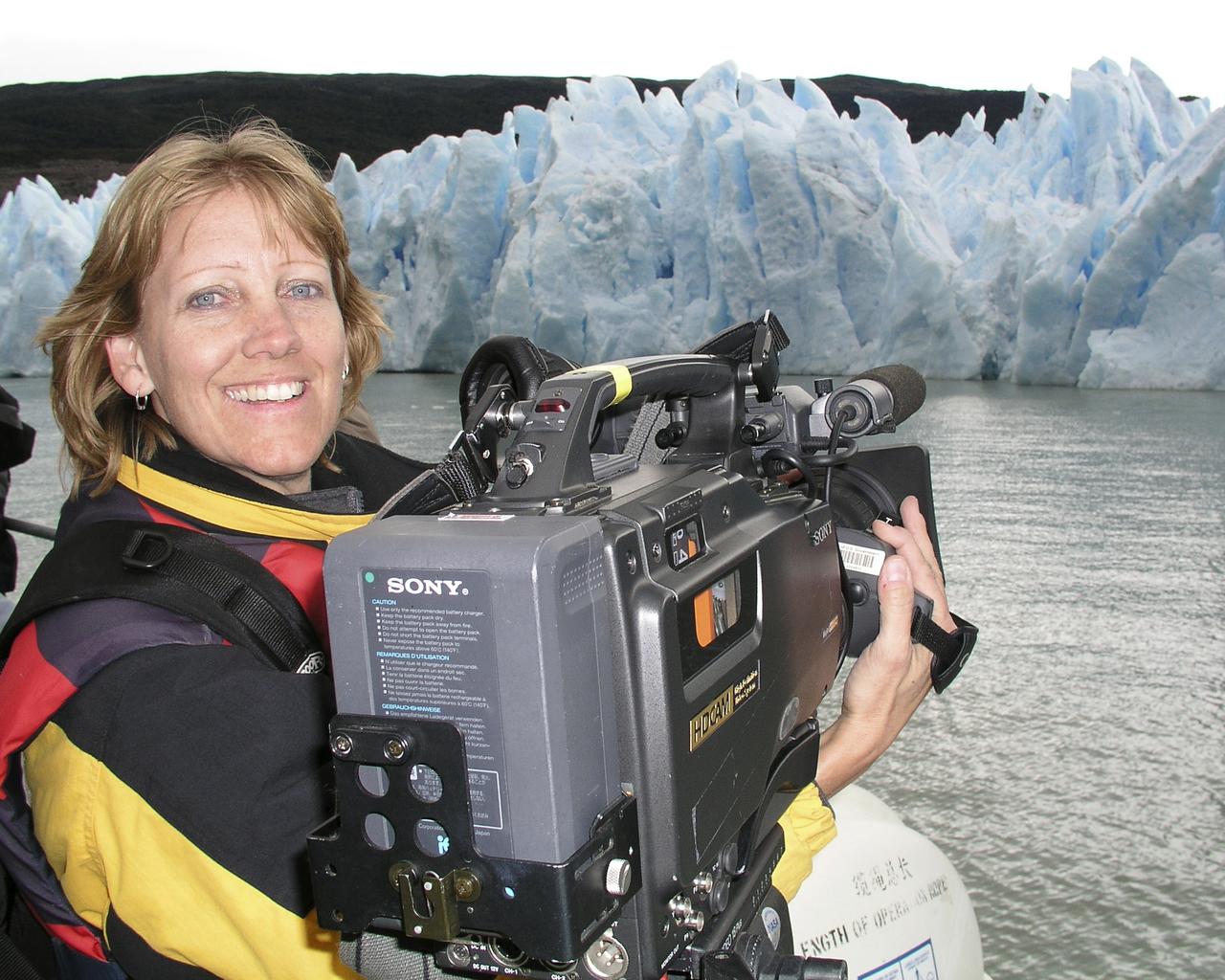
Lori Losey, an employee of Arcata Associates at Dryden, was honored with NASA's 2004 Videographer of the Year award for her work in two of the three categories in the NASA video competition, public affairs and documentation. In the public affairs category, Losey received a first-place citation for her footage of an Earth Science mission that was flown aboard NASA's DC-8 Flying Laboratory in South America last year. Her footage not only depicted the work of the scientists aboard the aircraft and on the ground, but she also obtained spectacular footage of flora and fauna in the mission's target area that helped communicate the environmental research goals of the project. Losey also took first place in the documentation category for her acquisition of technical videography of the X-45A Unmanned Combat Air Vehicle flight tests. The video, shot with a hand-held camera from the rear seat of a NASA F/A-18 mission support aircraft, demonstrated her capabilities in recording precise technical visual data in a very challenging airborne environment. The award was presented to Losey during a NASA reception at the National Association of Broadcasters convention in Las Vegas April 19. A three-judge panel evaluated entries for public affairs, documentation and production videography on professional excellence, technical quality, originality, creativity within restrictions of the project, and applicability to NASA and its mission. Entries consisted of a continuous video sequence or three views of the same subject for a maximum of three minutes duration. Linda Peters, Arcata Associates' Video Systems Supervisor at NASA Dryden, noted, "Lori is a talented videographer who has demonstrated extraordinary abilities with the many opportunities she has received in her career at NASA." Losey's award was the second major NASA video award won by members of the Dryden video team in two years. Steve Parcel took first place in the documentation category last year for his camera and editing
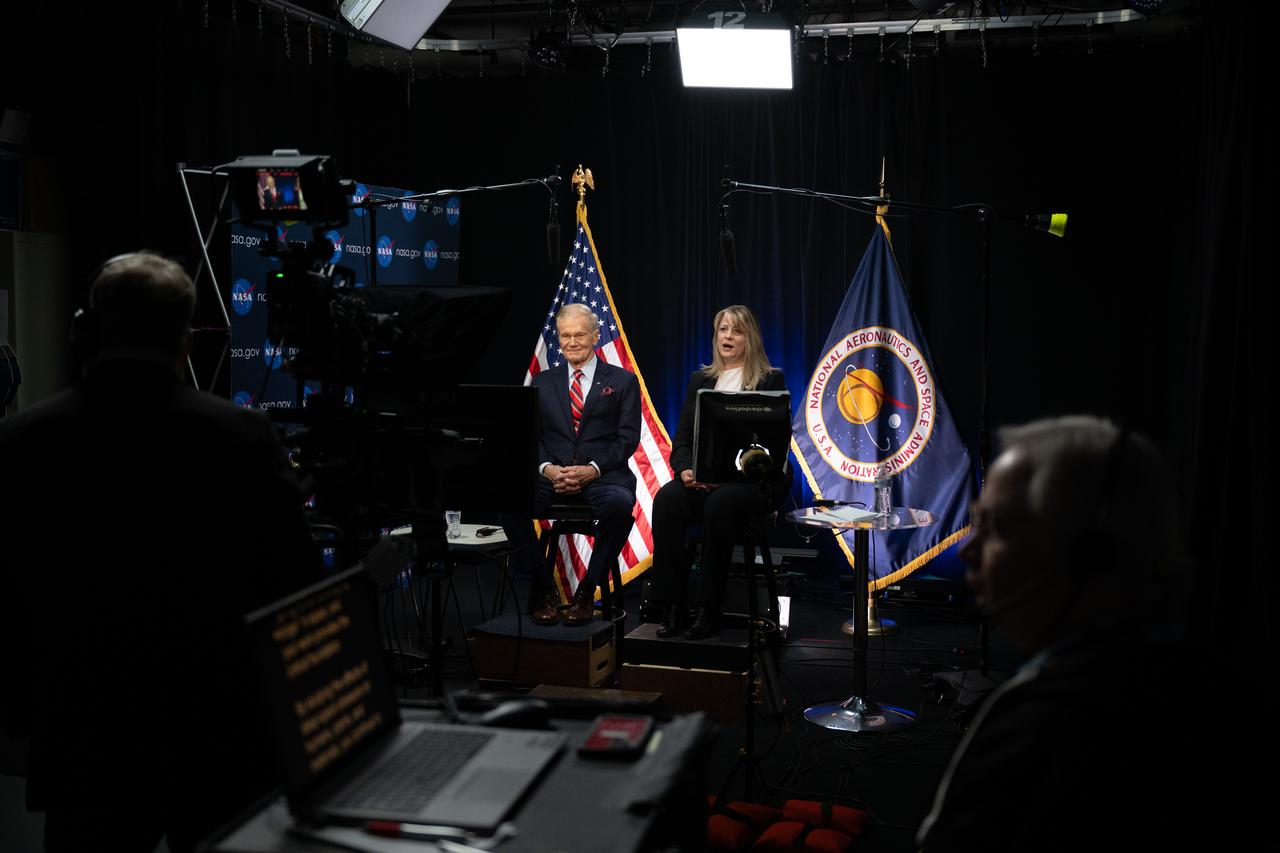
NASA Administrator Bill Nelson, left, and Lisa Carnell, director of NASA’s Biological and Physical Sciences Division are seen during an Earth-to-space call with astronauts aboard the International Space Station, Wednesday, Feb. 21, 2024, at the Mary W. Jackson NASA Headquarters building in Washington. Nelson and Carnell spoke with Expedition 70 crew members Andreas Mogenson of ESA, Jasmin Moghbeli of NASA, and Satoshi Furukawa of JAXA about recent science research and technology demonstrations aboard the orbiting laboratory. Photo Credit: (NASA/Joel Kowsky)
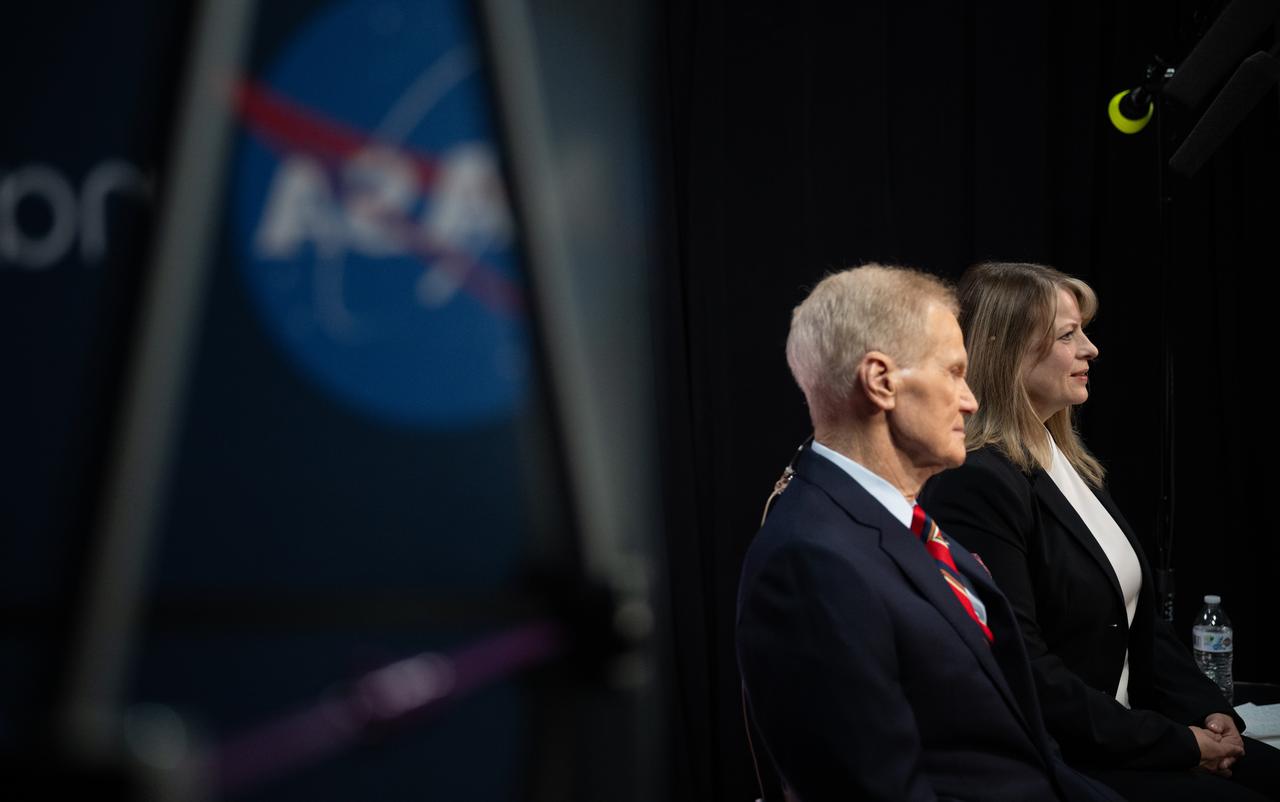
NASA Administrator Bill Nelson, left, and Lisa Carnell, director of NASA’s Biological and Physical Sciences Division are seen during an Earth-to-space call with astronauts aboard the International Space Station, Wednesday, Feb. 21, 2024, at the Mary W. Jackson NASA Headquarters building in Washington. Nelson and Carnell spoke with Expedition 70 crew members Andreas Mogenson of ESA, Jasmin Moghbeli of NASA, and Satoshi Furukawa of JAXA about recent science research and technology demonstrations aboard the orbiting laboratory. Photo Credit: (NASA/Joel Kowsky)
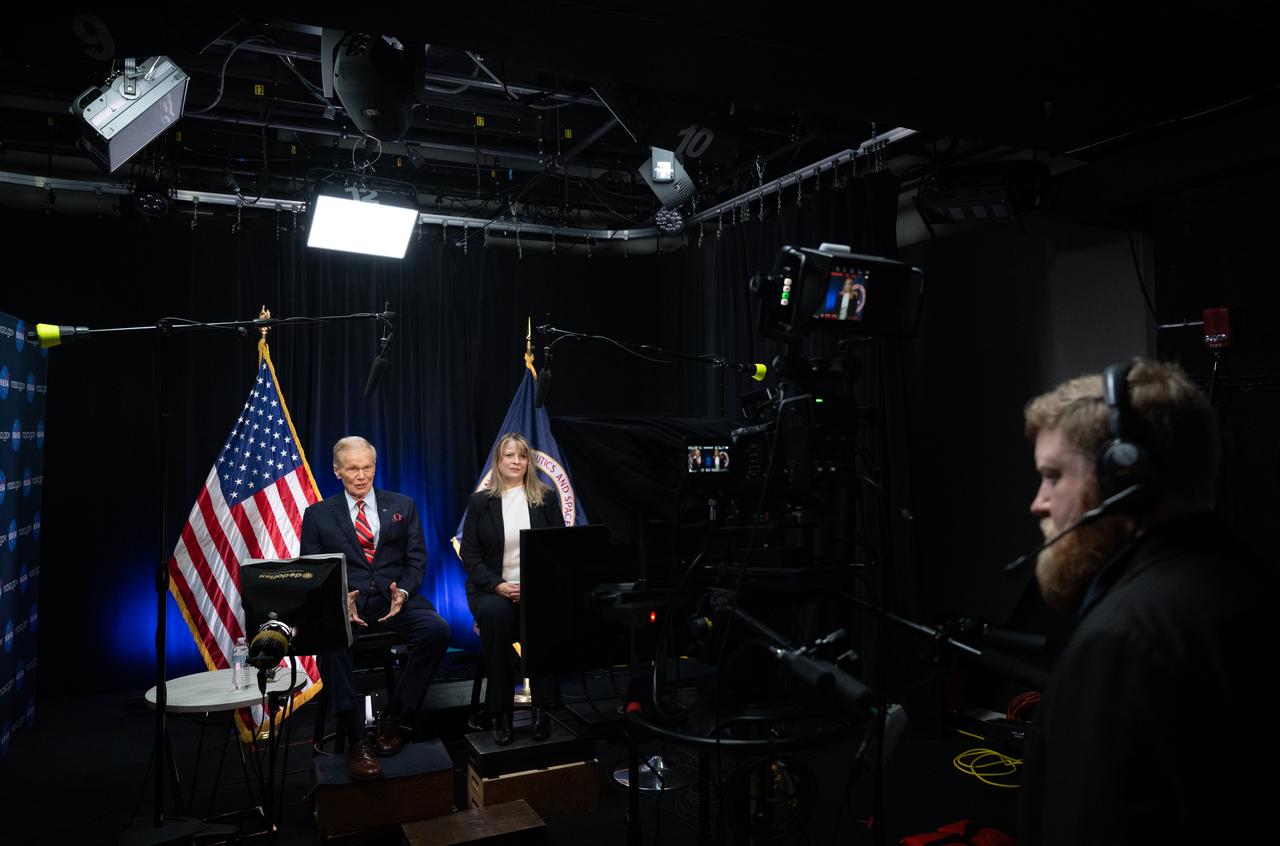
NASA Administrator Bill Nelson, left, and Lisa Carnell, director of NASA’s Biological and Physical Sciences Division are seen during an Earth-to-space call with astronauts aboard the International Space Station, Wednesday, Feb. 21, 2024, at the Mary W. Jackson NASA Headquarters building in Washington. Nelson and Carnell spoke with Expedition 70 crew members Andreas Mogenson of ESA, Jasmin Moghbeli of NASA, and Satoshi Furukawa of JAXA about recent science research and technology demonstrations aboard the orbiting laboratory. Photo Credit: (NASA/Joel Kowsky)
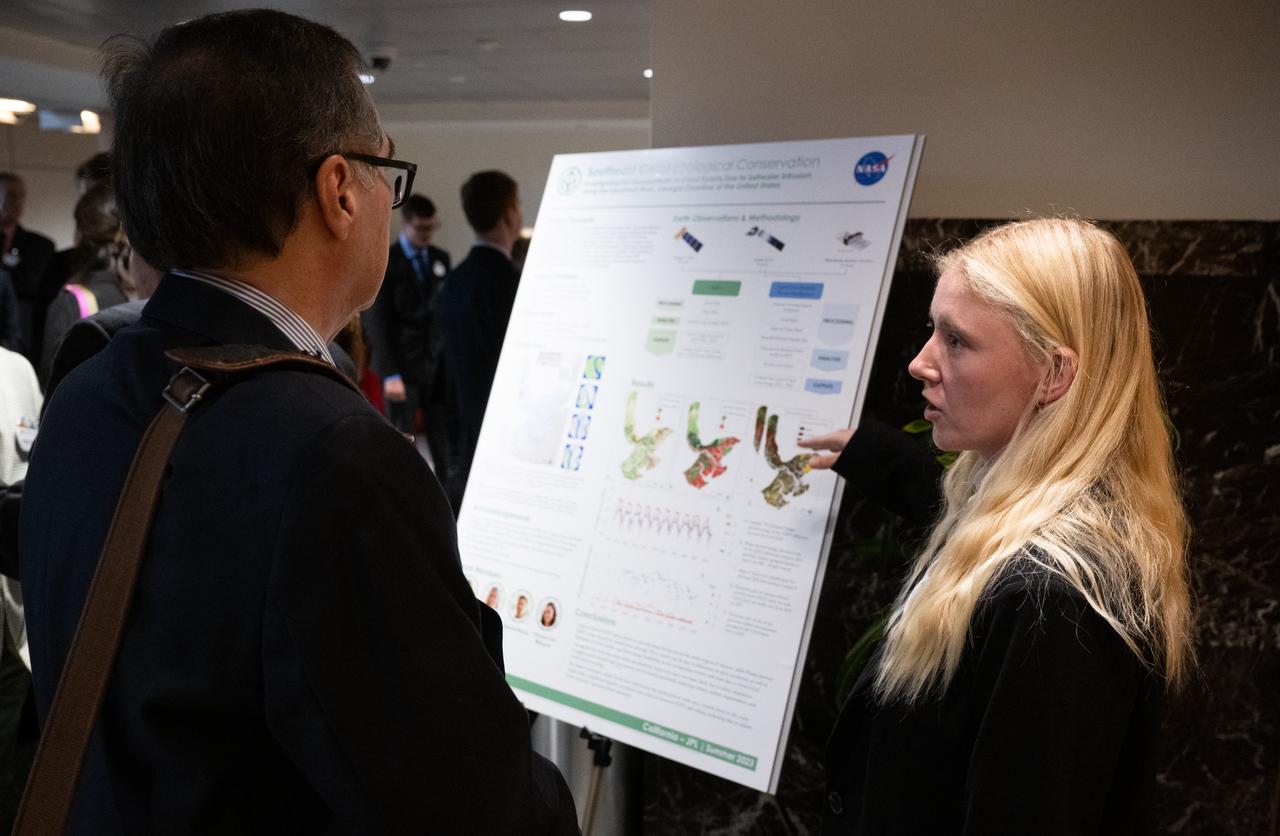
Students and young professionals discuss their projects during the 2023 DEVELOP Day, Wednesday, Aug. 9, 2023, at the Mary W. Jackson NASA Headquarters building in Washington. Every summer students and young professionals from NASA’s Applied Sciences’ DEVELOP National Program come to NASA Headquarters to present their research. This year marks the 25th year of DEVELOP, a training and development program where students work on Earth science research projects, mentored by science advisors from NASA and partner agencies, and extend research results to local communities. Photo Credit: (NASA/Joel Kowsky)
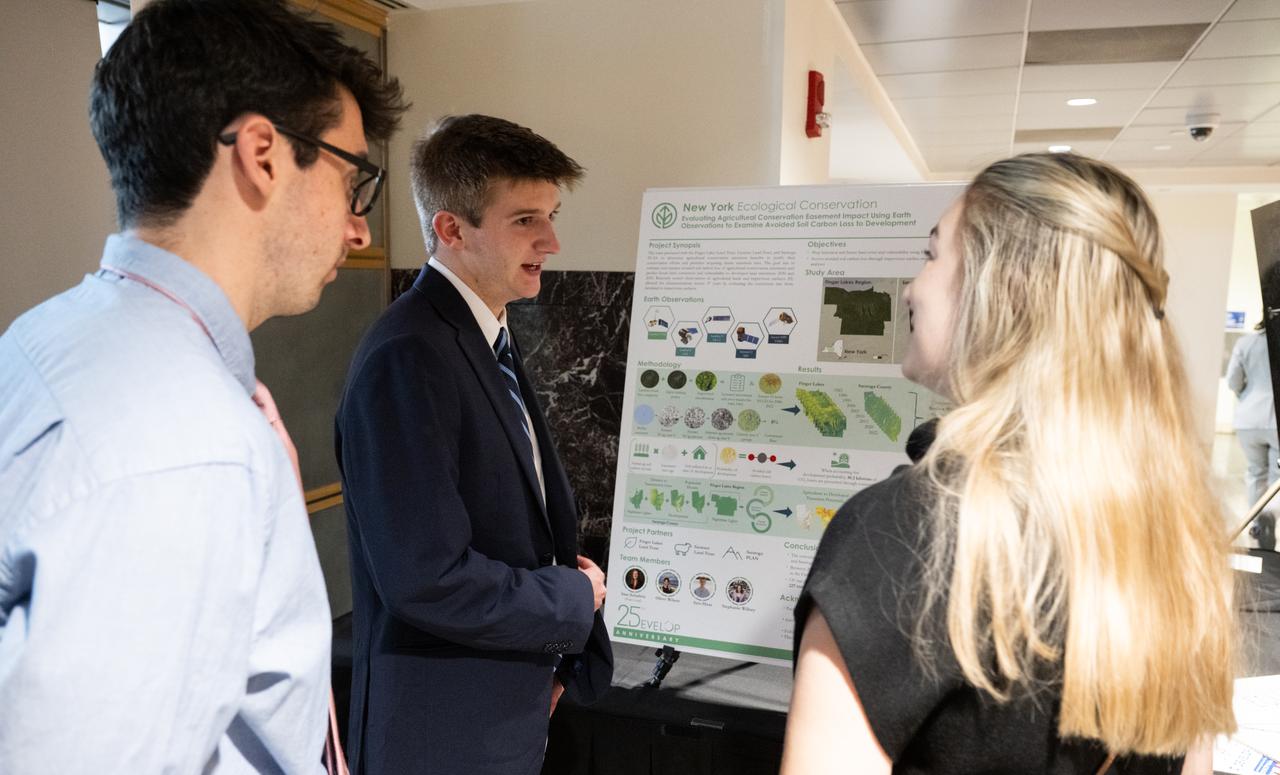
Students and young professionals discuss their projects during the 2023 DEVELOP Day, Wednesday, Aug. 9, 2023, at the Mary W. Jackson NASA Headquarters building in Washington. Every summer students and young professionals from NASA’s Applied Sciences’ DEVELOP National Program come to NASA Headquarters to present their research. This year marks the 25th year of DEVELOP, a training and development program where students work on Earth science research projects, mentored by science advisors from NASA and partner agencies, and extend research results to local communities. Photo Credit: (NASA/Joel Kowsky)
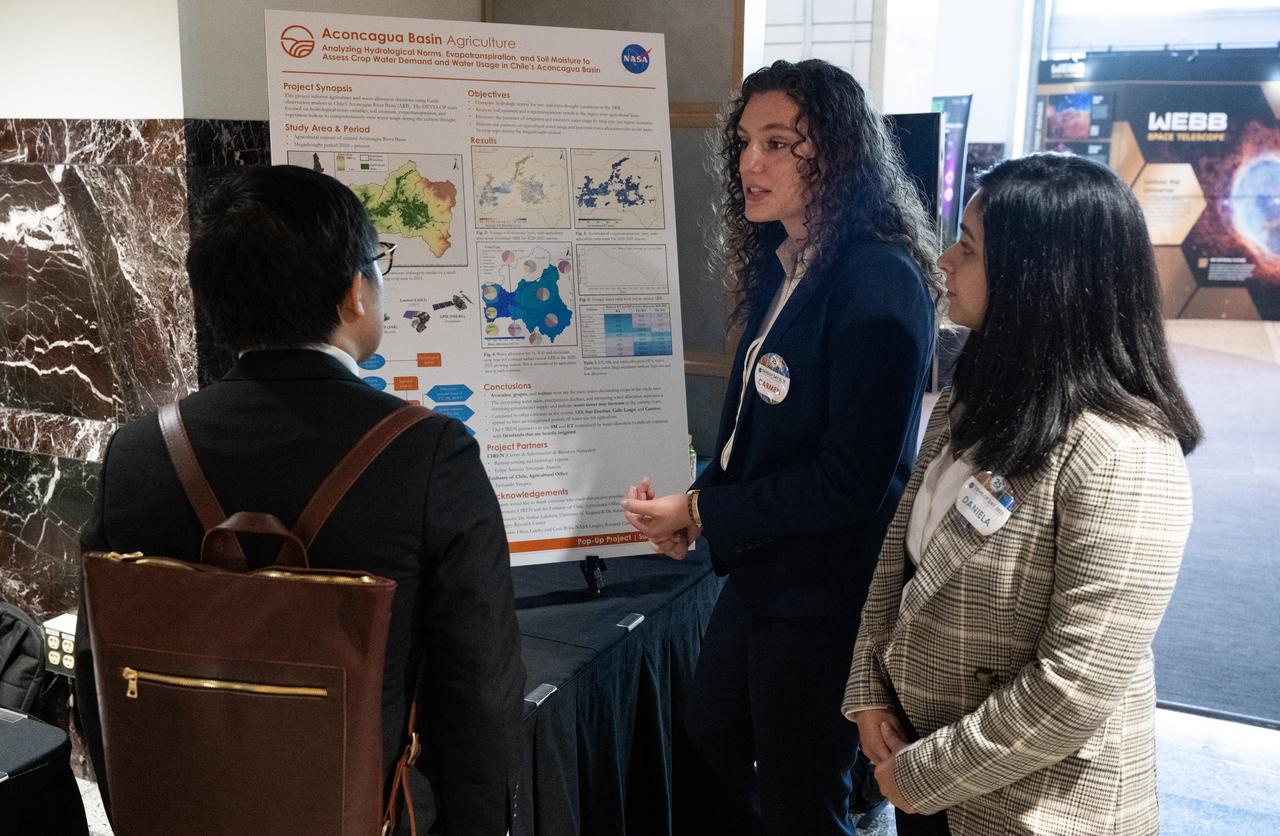
Students and young professionals discuss their projects during the 2023 DEVELOP Day, Wednesday, Aug. 9, 2023, at the Mary W. Jackson NASA Headquarters building in Washington. Every summer students and young professionals from NASA’s Applied Sciences’ DEVELOP National Program come to NASA Headquarters to present their research. This year marks the 25th year of DEVELOP, a training and development program where students work on Earth science research projects, mentored by science advisors from NASA and partner agencies, and extend research results to local communities. Photo Credit: (NASA/Joel Kowsky)
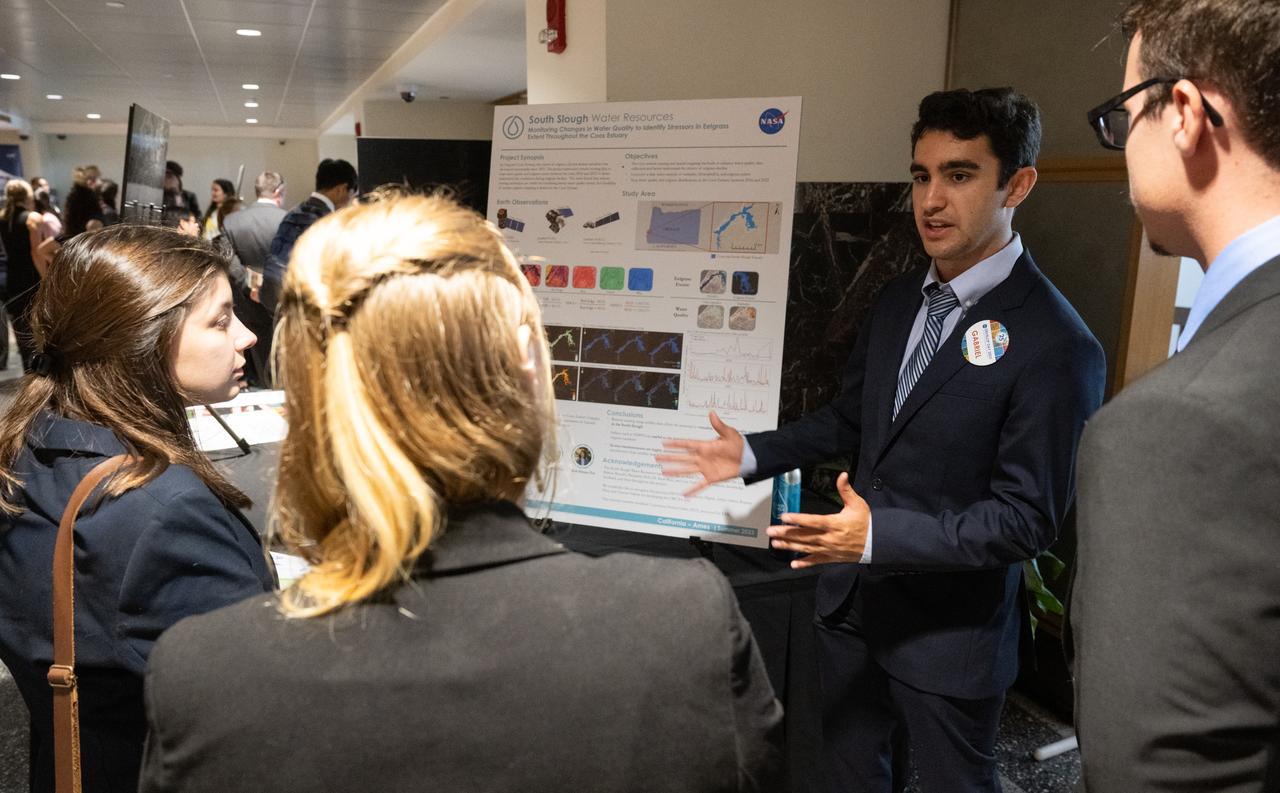
Students and young professionals discuss their projects during the 2023 DEVELOP Day, Wednesday, Aug. 9, 2023, at the Mary W. Jackson NASA Headquarters building in Washington. Every summer students and young professionals from NASA’s Applied Sciences’ DEVELOP National Program come to NASA Headquarters to present their research. This year marks the 25th year of DEVELOP, a training and development program where students work on Earth science research projects, mentored by science advisors from NASA and partner agencies, and extend research results to local communities. Photo Credit: (NASA/Joel Kowsky)
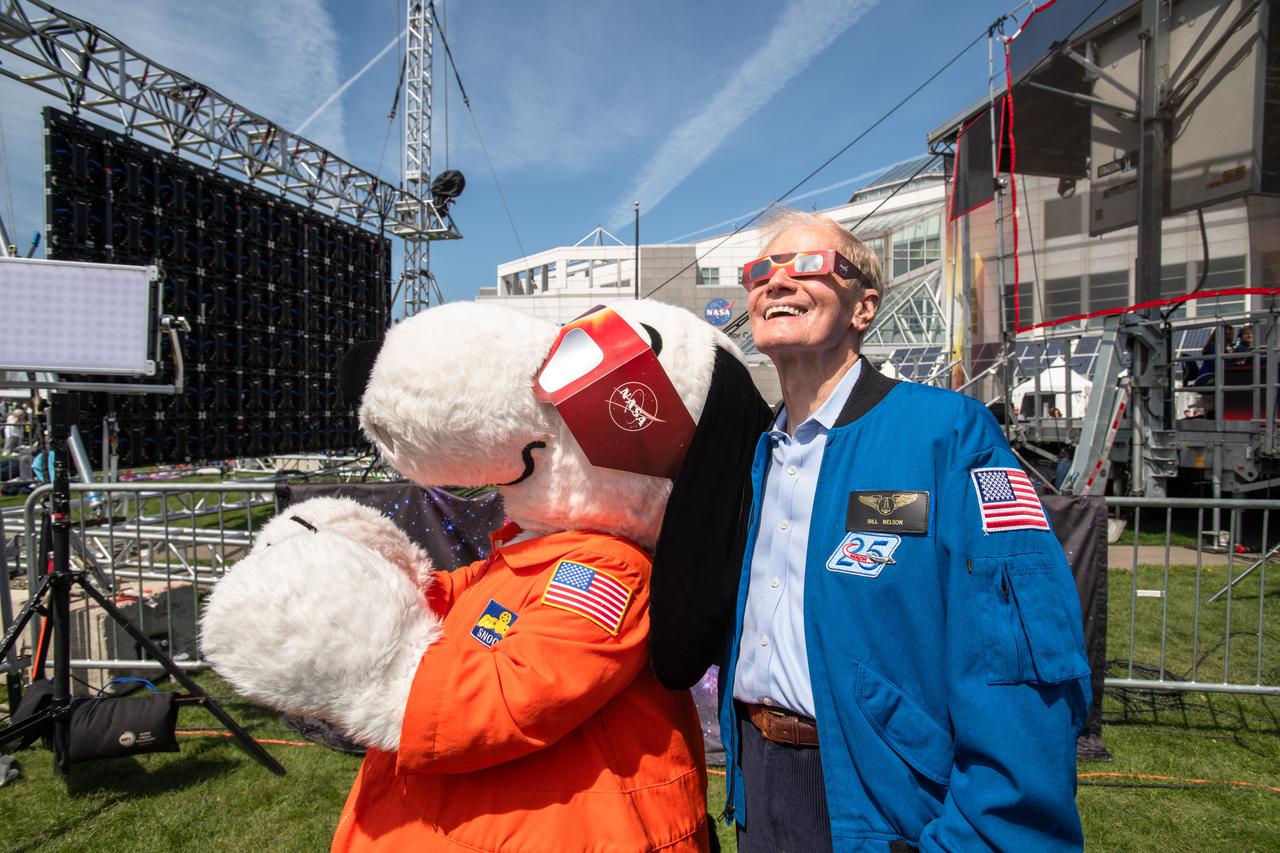
Administrator Bill Nelson and Snoopy view the eclipse together on April 8, 2024. NASA Glenn Research Center and the Great Lakes Science Center hosted a three-day celestial celebration in downtown Cleveland, OH. This free, outdoor, family-friendly science and arts festival will feature free concerts, performances, speakers, and hands-on science activities with community partners. A total solar eclipse swept across a narrow portion of the North American continent from Mexico’s Pacific coast to the Atlantic coast of Newfoundland, Canada. A partial solar eclipse was visible across the entire North American continent along with parts of Central America and Europe. Photo Credit: (NASA/Sara Lowthian-Hanna)
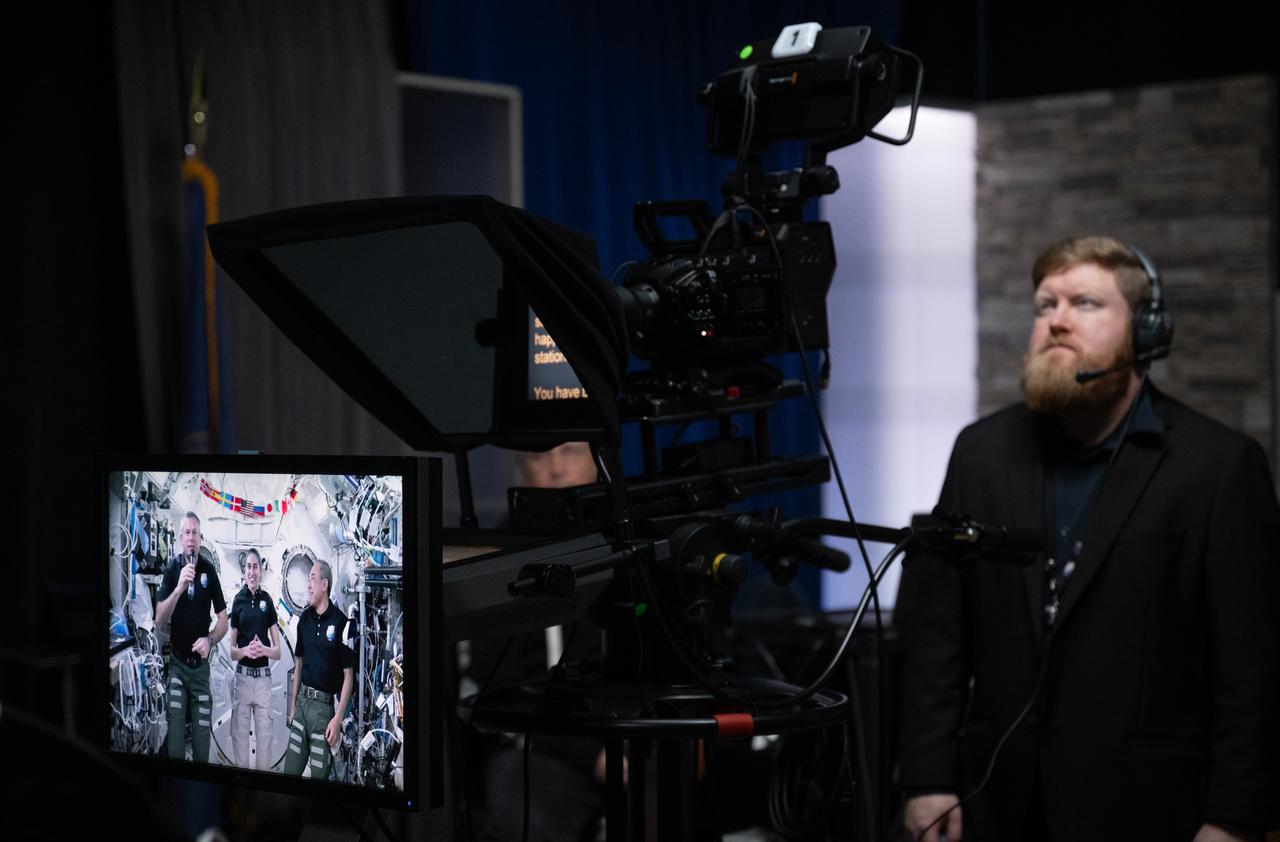
Expedition 70 crew members Andreas Mogenson of ESA left, Jasmin Moghbeli of NASA, and Satoshi Furukawa of JAXA are seen aboard the International Space Station on a monitor as they talk with NASA Administrator Bill Nelson and Lisa Carnell, director of NASA’s Biological and Physical Sciences Division, during an Earth-to-space call, Wednesday, Feb. 21, 2024, at the Mary W. Jackson NASA Headquarters building in Washington. Nelson and Carnell spoke with Mogenson, Moghbeli, and Furukawa about recent science research and technology demonstrations aboard the orbiting laboratory. Photo Credit: (NASA/Joel Kowsky)
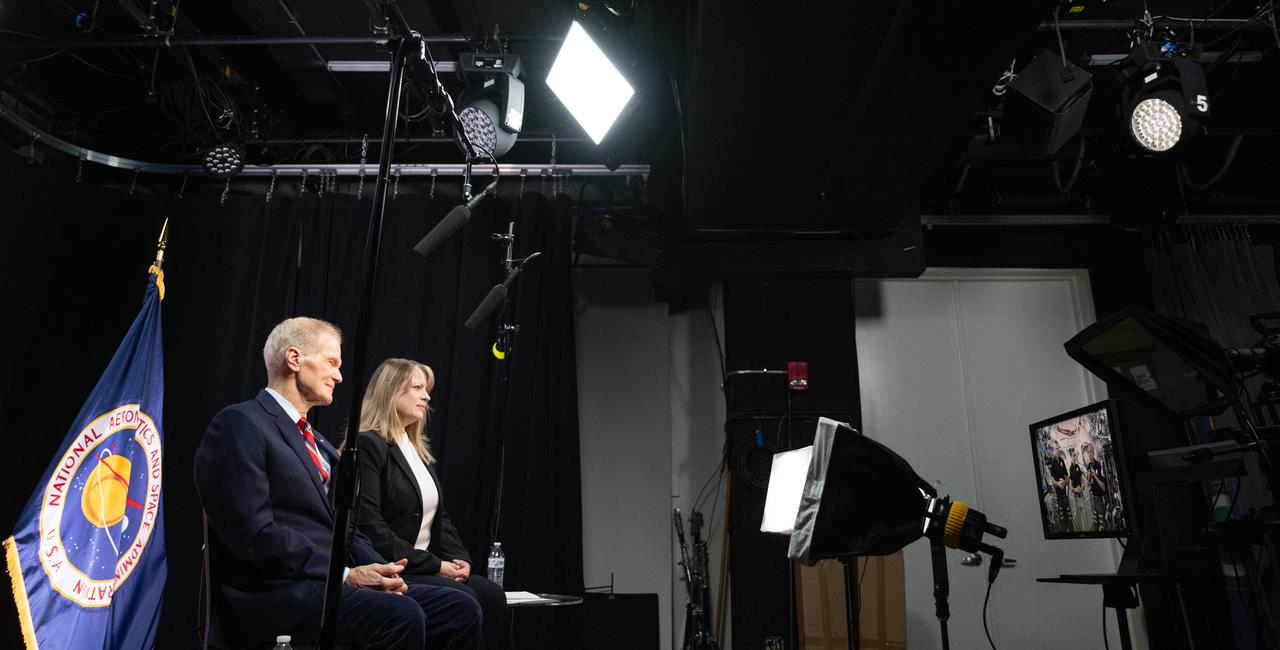
NASA Administrator Bill Nelson, left, and Lisa Carnell, director of NASA’s Biological and Physical Sciences Division are seen during an Earth-to-space call with Expedition 70 crew members Andreas Mogenson of ESA, Jasmin Moghbeli of NASA, and Satoshi Furukawa of JAXA aboard the International Space Station, visible on monitor to the right, Wednesday, Feb. 21, 2024, at the Mary W. Jackson NASA Headquarters building in Washington. Nelson and Carnell spoke with Mogenson, Moghbeli, and Furukawa about recent science research and technology demonstrations aboard the orbiting laboratory. Photo Credit: (NASA/Joel Kowsky)
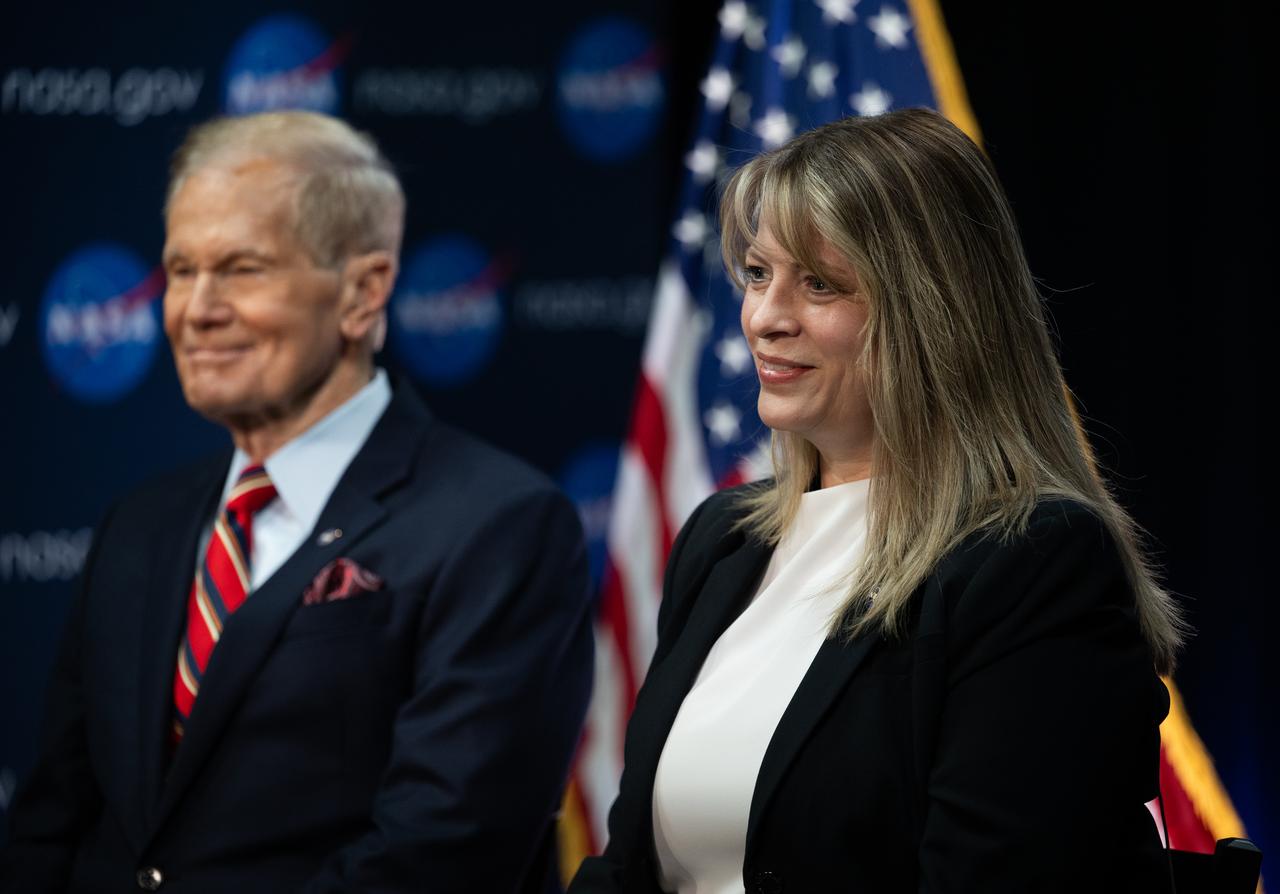
Lisa Carnell, director of NASA’s Biological and Physical Sciences Division, right, speaks along side NASA Administrator Bill Nelson during an Earth-to-space call with astronauts aboard the International Space Station, Wednesday, Feb. 21, 2024, at the Mary W. Jackson NASA Headquarters building in Washington. Nelson and Carnell spoke with Expedition 70 crew members Andreas Mogenson of ESA, Jasmin Moghbeli of NASA, and Satoshi Furukawa of JAXA about recent science research and technology demonstrations aboard the orbiting laboratory. Photo Credit: (NASA/Joel Kowsky)
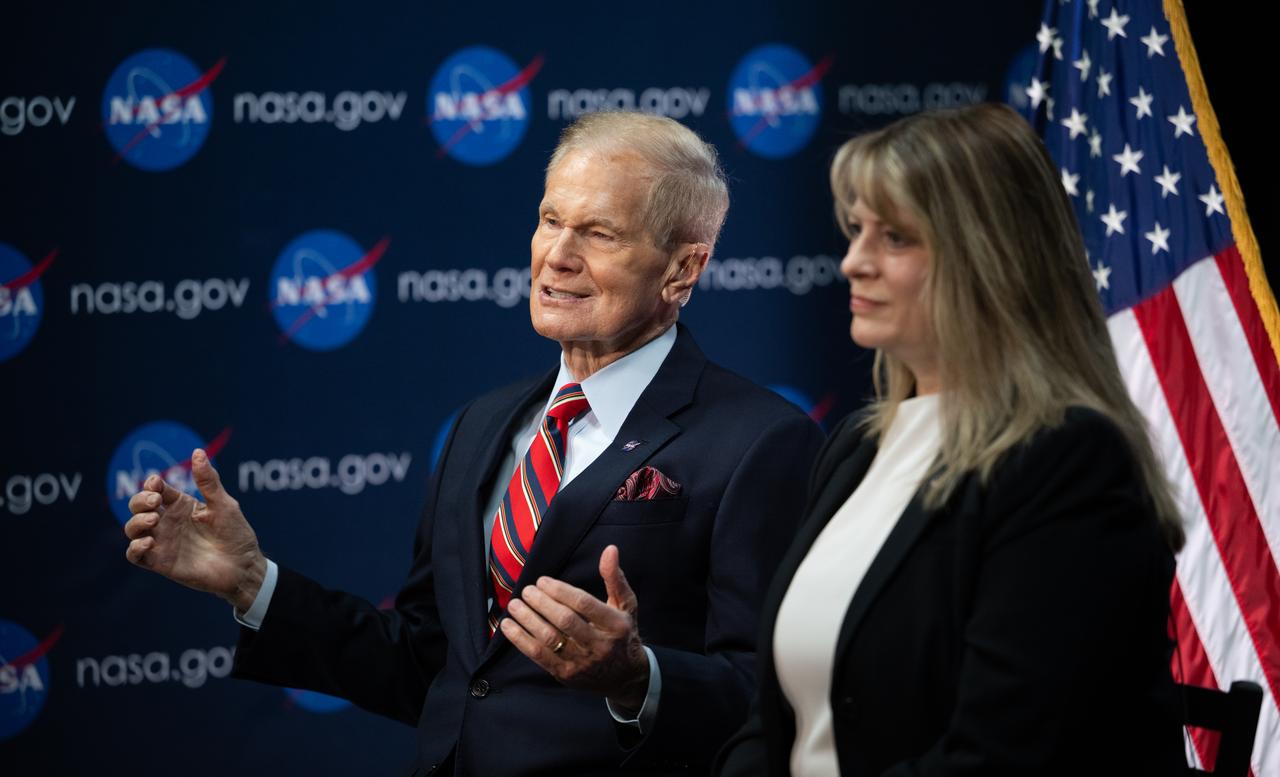
NASA Administrator Bill Nelson, left, speaks along side Lisa Carnell, director of NASA’s Biological and Physical Sciences Division during an Earth-to-space call with astronauts aboard the International Space Station, Wednesday, Feb. 21, 2024, at the Mary W. Jackson NASA Headquarters building in Washington. Nelson and Carnell spoke with Expedition 70 crew members Andreas Mogenson of ESA, Jasmin Moghbeli of NASA, and Satoshi Furukawa of JAXA about recent science research and technology demonstrations aboard the orbiting laboratory. Photo Credit: (NASA/Joel Kowsky)

From left to right, Dr. Frederic Bertley, president and CEO, Center of Science and Industry (COSI); NASA Administrator Bill Nelson; JoAnn Newman, president and CEO, Orlando Science Center; and Stephen White, chief strategy officer, COSI helped kick off a new initiative to deliver food and hands-on science, technology, engineering, and math kits, called Learning Lunchboxes, at New Beginnings Church – The Gathering Place in Orlando, Florida on Friday, June 3. The lunchboxes are aimed at inspiring and educating youth and families about NASA’s upcoming Artemis missions, which includes landing the first woman and person of color on the Moon and helping prepare for human exploration of Mars. Partners on the initiative with NASA include COSI, the Second Harvest Food Bank, and the Orlando Science Center. The NASA Artemis Learning Lunchbox is made possible through NASA’s Teams Engaging Affiliated Museums and Informal Institutions (TEAM II) program. NASA Learning Lunchboxes provide five space-focused learning activities that showcase the diversity of STEM at NASA. COSI will distribute 30,000 NASA Learning Lunchboxes at local food banks across the country to help feed hungry lives and feed hungry minds. This innovative, community-based model will bring together other science centers and museums, afterschool providers, and community leaders to highlight the importance of STEM. This project also includes digital extension resources.
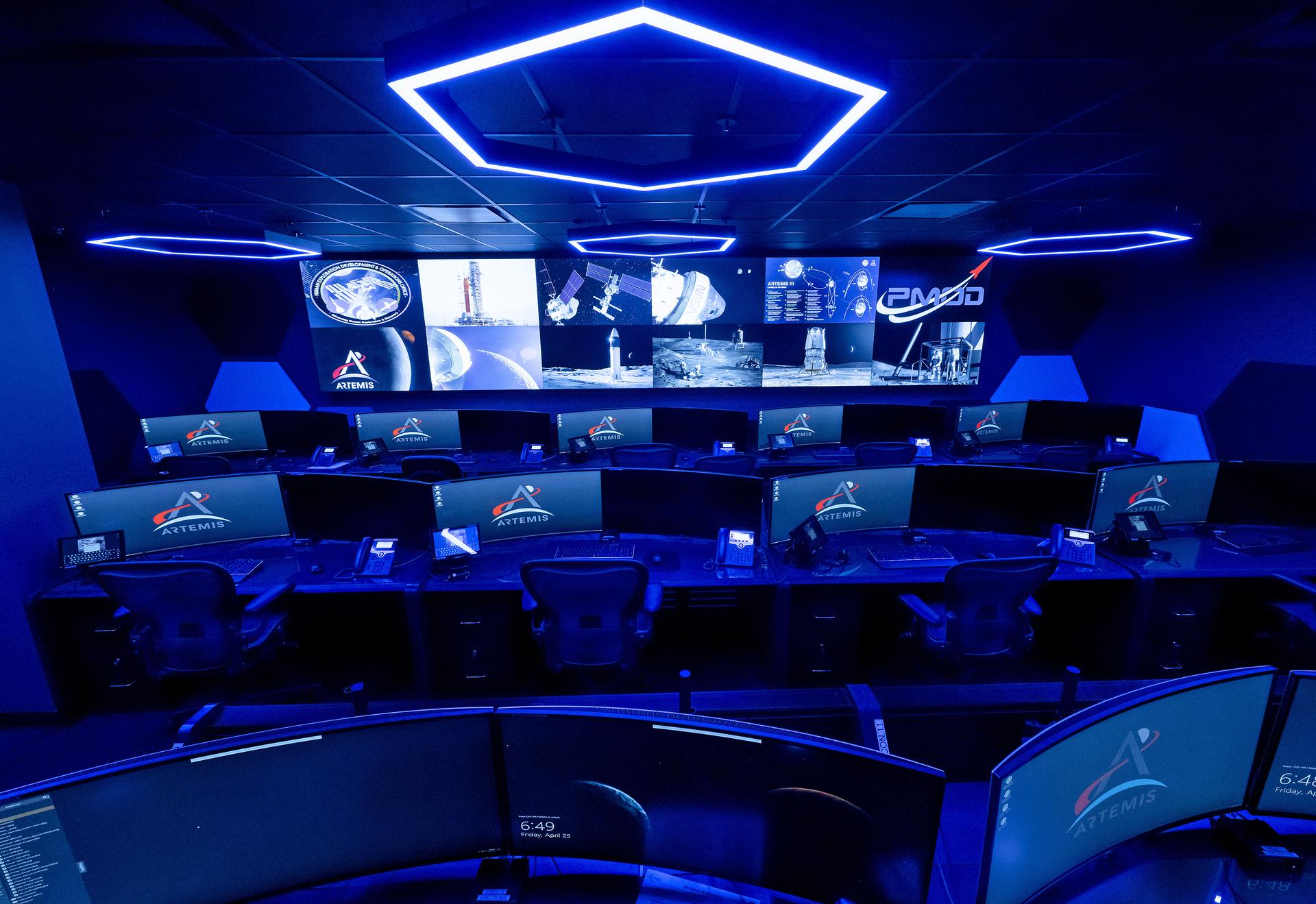
These photos offer a look inside the twin control rooms at NASA’s Marshall Space Flight Center in Huntsville, Alabama, where engineers will monitor Artemis science and future landing operations for Artemis. The LUCA (Lunar Utilization Control Area) and LESA (Lander Engineering Support Area) rooms are part of the Huntsville Operations Support Center at NASA Marshall. The LUCA is specially designed to support a wide variety of science operations on and around the Moon – and beyond. Engineers in the LUCA monitored operations for the Lunar Node-1 experiment, an autonomous navigation payload that was part of the first NASA Commercial Lunar Payload Services (CLPS) launch on Intuitive Machines’ Nova-C lunar lander in 2024. NASA Marshall flight controllers will use the LUCA again for Artemis II to monitor science operations. Beginning with Artemis III, members of the NASA Human Landing System Mission Insight Support Team – a group of engineers, safety leads, flight operations experts, and technical authorities – will work in the LESA. There, they will monitor lander systems in real-time and be involved in key decision-making processes throughout the mission. For more information, contact NASA Marshall’s Office of Communications at 256-544-0034.
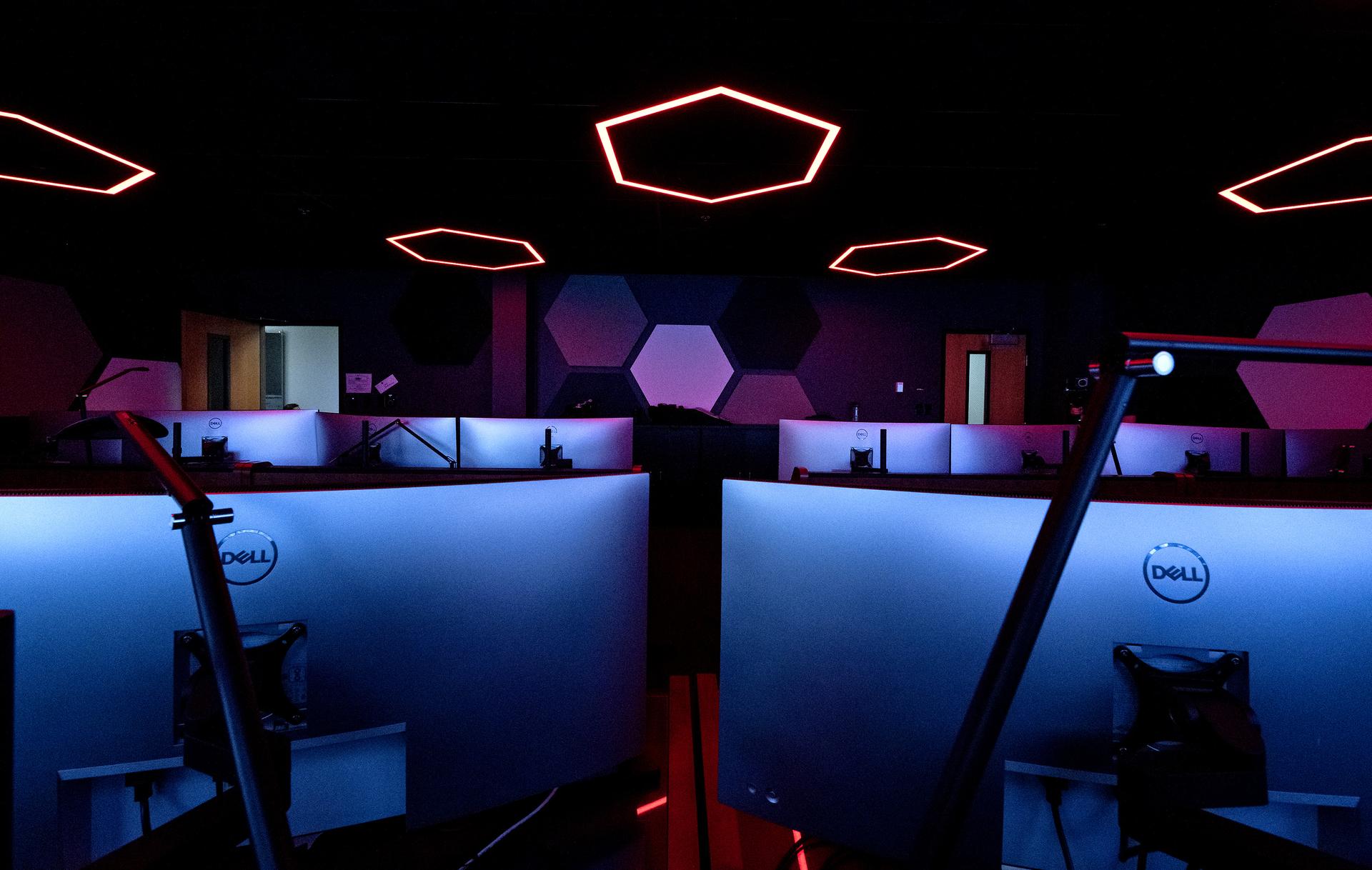
These photos offer a look inside the twin control rooms at NASA’s Marshall Space Flight Center in Huntsville, Alabama, where engineers will monitor Artemis science and future landing operations for Artemis. The LUCA (Lunar Utilization Control Area) and LESA (Lander Engineering Support Area) rooms are part of the Huntsville Operations Support Center at NASA Marshall. The LUCA is specially designed to support a wide variety of science operations on and around the Moon – and beyond. Engineers in the LUCA monitored operations for the Lunar Node-1 experiment, an autonomous navigation payload that was part of the first NASA Commercial Lunar Payload Services (CLPS) launch on Intuitive Machines’ Nova-C lunar lander in 2024. NASA Marshall flight controllers will use the LUCA again for Artemis II to monitor science operations. Beginning with Artemis III, members of the NASA Human Landing System Mission Insight Support Team – a group of engineers, safety leads, flight operations experts, and technical authorities – will work in the LESA. There, they will monitor lander systems in real-time and be involved in key decision-making processes throughout the mission. For more information, contact NASA Marshall’s Office of Communications at 256-544-0034.
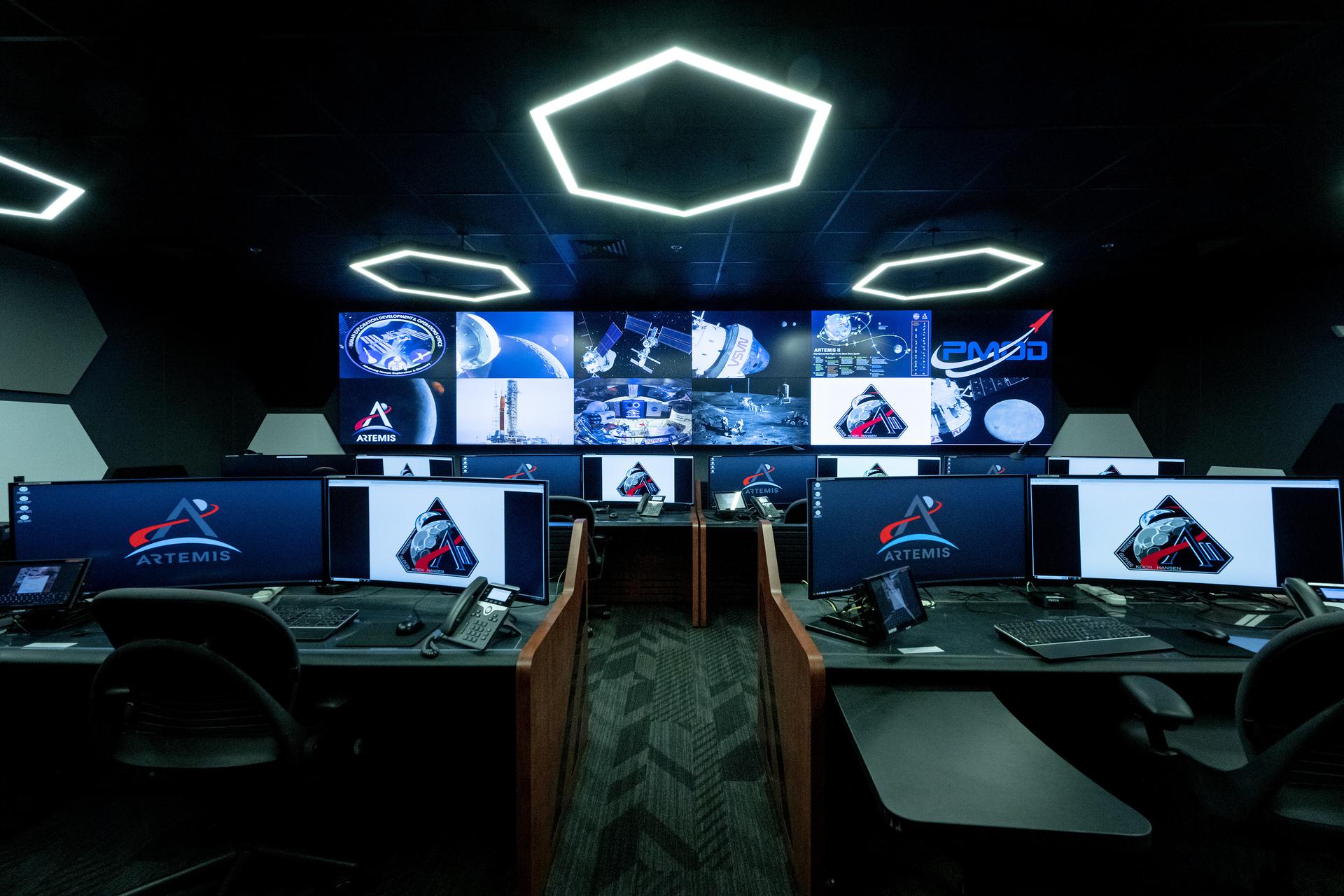
These photos offer a look inside the twin control rooms at NASA’s Marshall Space Flight Center in Huntsville, Alabama, where engineers will monitor Artemis science and future landing operations for Artemis. The LUCA (Lunar Utilization Control Area) and LESA (Lander Engineering Support Area) rooms are part of the Huntsville Operations Support Center at NASA Marshall. The LUCA is specially designed to support a wide variety of science operations on and around the Moon – and beyond. Engineers in the LUCA monitored operations for the Lunar Node-1 experiment, an autonomous navigation payload that was part of the first NASA Commercial Lunar Payload Services (CLPS) launch on Intuitive Machines’ Nova-C lunar lander in 2024. NASA Marshall flight controllers will use the LUCA again for Artemis II to monitor science operations. Beginning with Artemis III, members of the NASA Human Landing System Mission Insight Support Team – a group of engineers, safety leads, flight operations experts, and technical authorities – will work in the LESA. There, they will monitor lander systems in real-time and be involved in key decision-making processes throughout the mission. For more information, contact NASA Marshall’s Office of Communications at 256-544-0034.
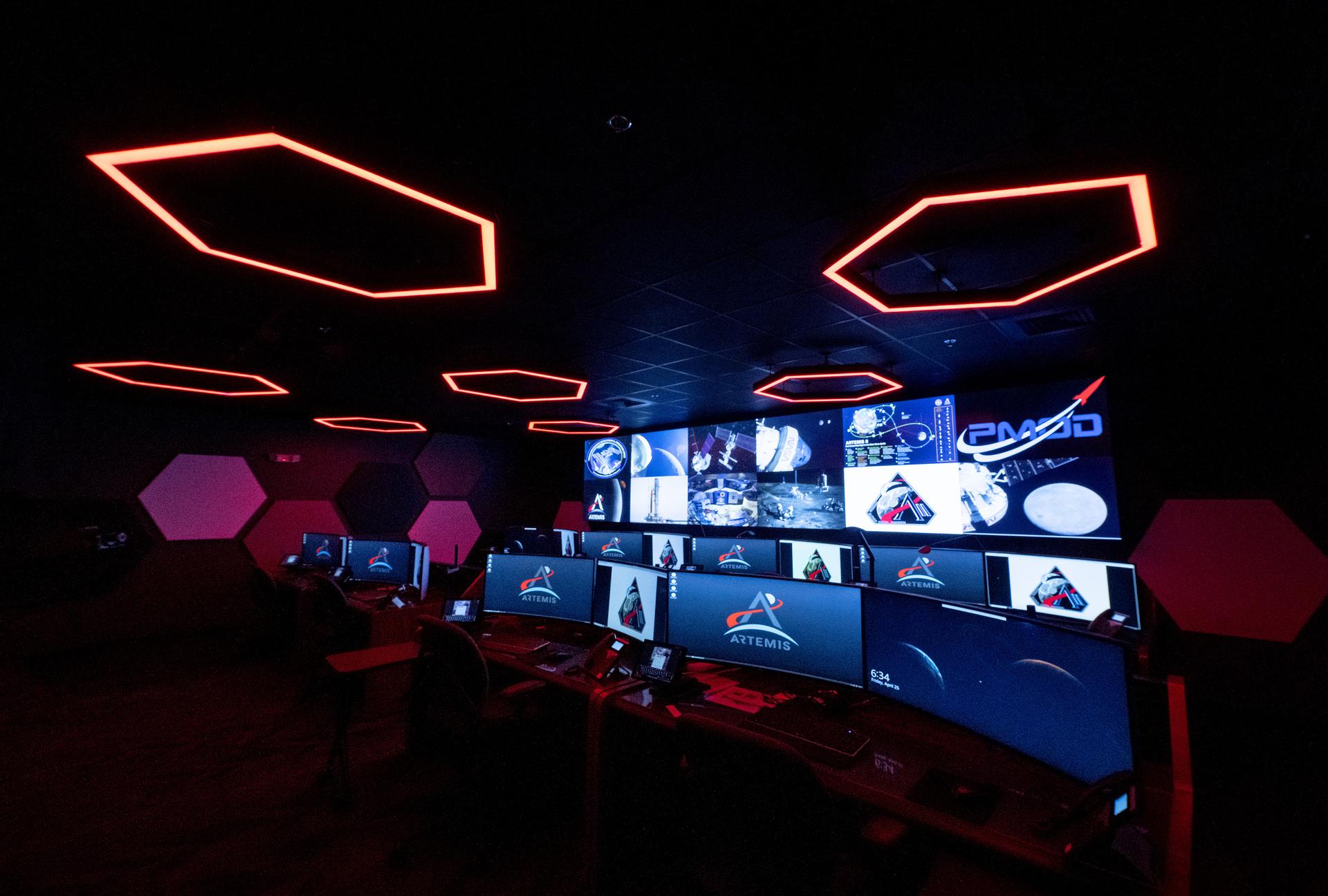
These photos offer a look inside the twin control rooms at NASA’s Marshall Space Flight Center in Huntsville, Alabama, where engineers will monitor Artemis science and future landing operations for Artemis. The LUCA (Lunar Utilization Control Area) and LESA (Lander Engineering Support Area) rooms are part of the Huntsville Operations Support Center at NASA Marshall. The LUCA is specially designed to support a wide variety of science operations on and around the Moon – and beyond. Engineers in the LUCA monitored operations for the Lunar Node-1 experiment, an autonomous navigation payload that was part of the first NASA Commercial Lunar Payload Services (CLPS) launch on Intuitive Machines’ Nova-C lunar lander in 2024. NASA Marshall flight controllers will use the LUCA again for Artemis II to monitor science operations. Beginning with Artemis III, members of the NASA Human Landing System Mission Insight Support Team – a group of engineers, safety leads, flight operations experts, and technical authorities – will work in the LESA. There, they will monitor lander systems in real-time and be involved in key decision-making processes throughout the mission. For more information, contact NASA Marshall’s Office of Communications at 256-544-0034.
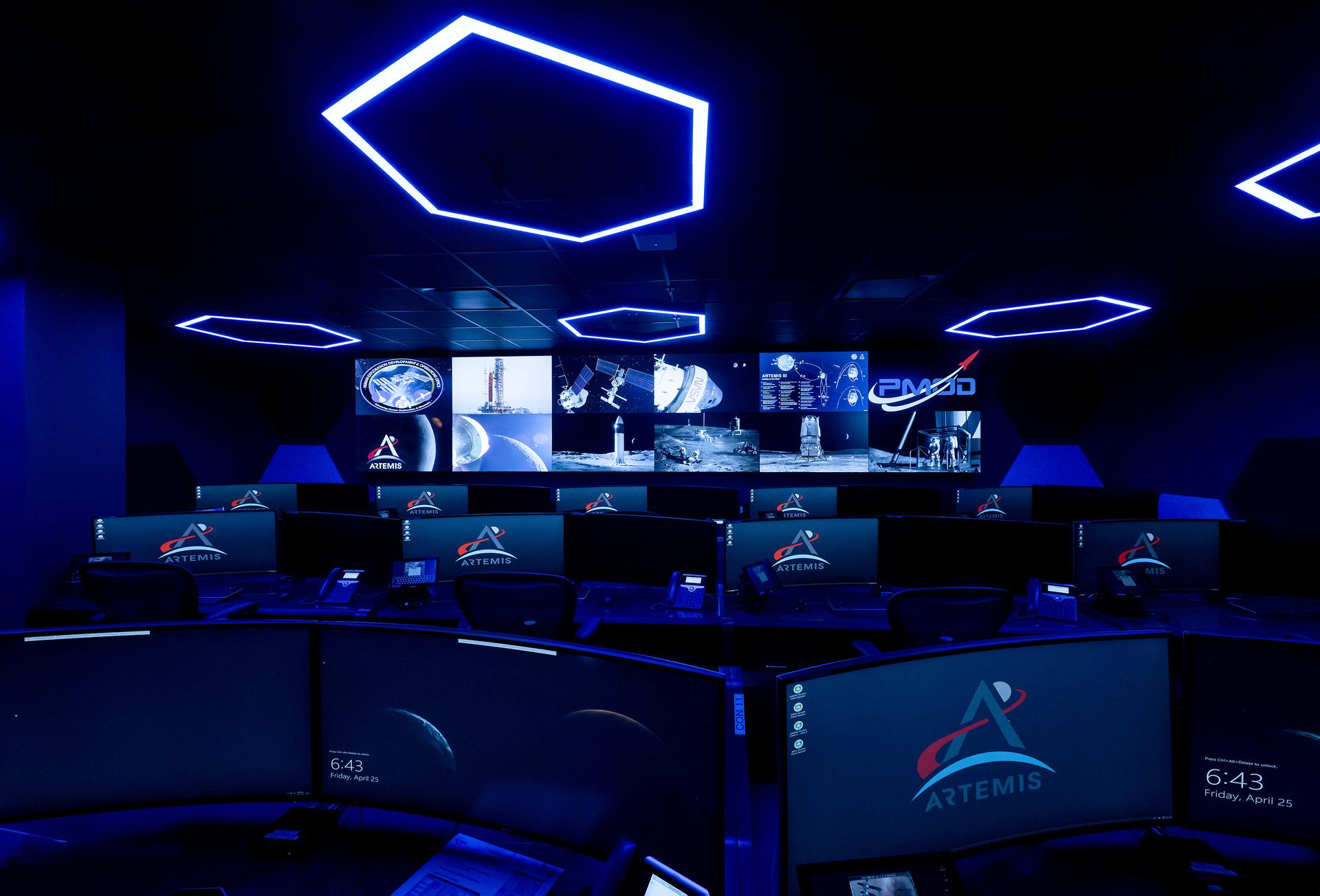
These photos offer a look inside the twin control rooms at NASA’s Marshall Space Flight Center in Huntsville, Alabama, where engineers will monitor Artemis science and future landing operations for Artemis. The LUCA (Lunar Utilization Control Area) and LESA (Lander Engineering Support Area) rooms are part of the Huntsville Operations Support Center at NASA Marshall. The LUCA is specially designed to support a wide variety of science operations on and around the Moon – and beyond. Engineers in the LUCA monitored operations for the Lunar Node-1 experiment, an autonomous navigation payload that was part of the first NASA Commercial Lunar Payload Services (CLPS) launch on Intuitive Machines’ Nova-C lunar lander in 2024. NASA Marshall flight controllers will use the LUCA again for Artemis II to monitor science operations. Beginning with Artemis III, members of the NASA Human Landing System Mission Insight Support Team – a group of engineers, safety leads, flight operations experts, and technical authorities – will work in the LESA. There, they will monitor lander systems in real-time and be involved in key decision-making processes throughout the mission. For more information, contact NASA Marshall’s Office of Communications at 256-544-0034.
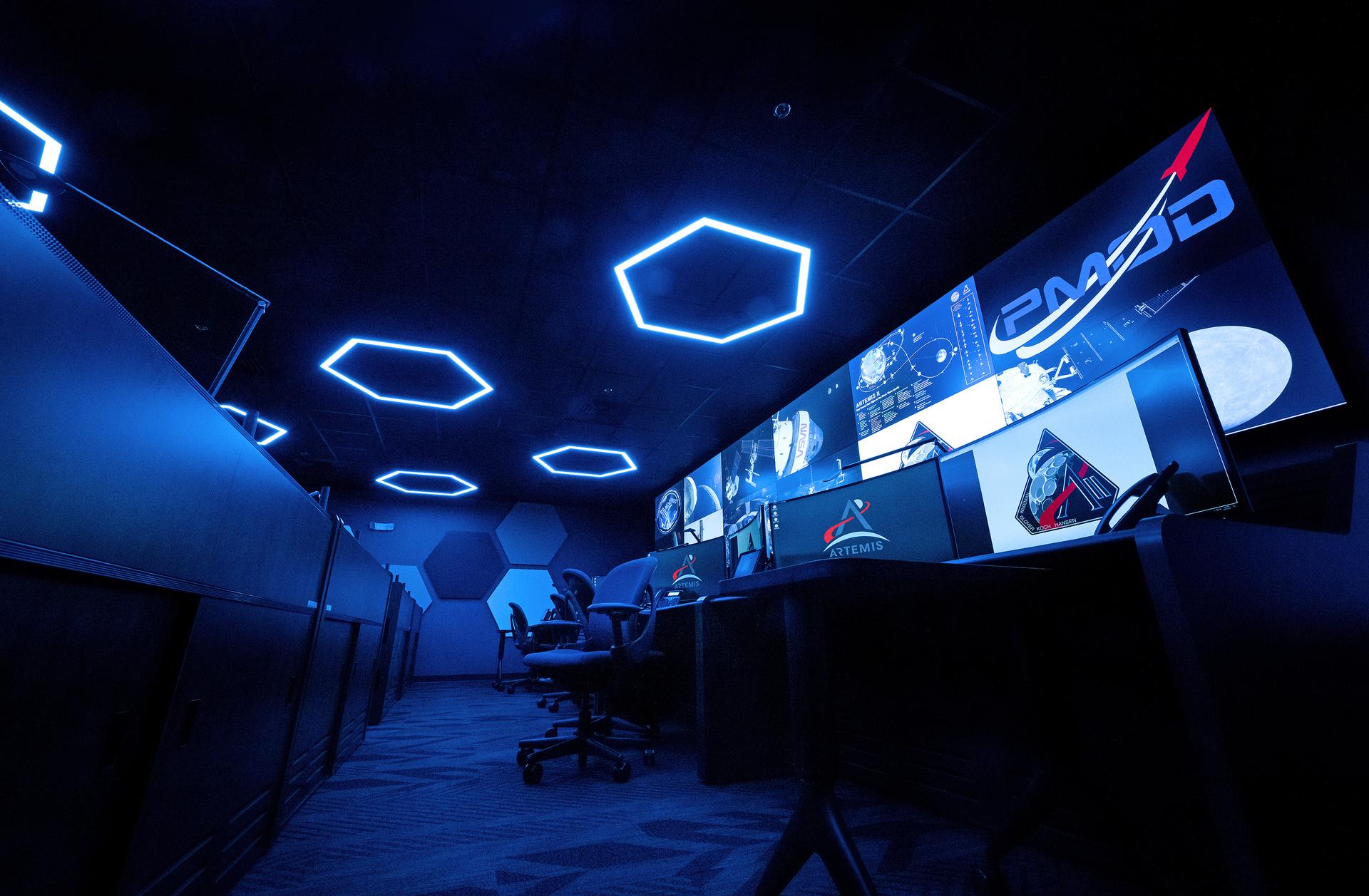
These photos offer a look inside the twin control rooms at NASA’s Marshall Space Flight Center in Huntsville, Alabama, where engineers will monitor Artemis science and future landing operations for Artemis. The LUCA (Lunar Utilization Control Area) and LESA (Lander Engineering Support Area) rooms are part of the Huntsville Operations Support Center at NASA Marshall. The LUCA is specially designed to support a wide variety of science operations on and around the Moon – and beyond. Engineers in the LUCA monitored operations for the Lunar Node-1 experiment, an autonomous navigation payload that was part of the first NASA Commercial Lunar Payload Services (CLPS) launch on Intuitive Machines’ Nova-C lunar lander in 2024. NASA Marshall flight controllers will use the LUCA again for Artemis II to monitor science operations. Beginning with Artemis III, members of the NASA Human Landing System Mission Insight Support Team – a group of engineers, safety leads, flight operations experts, and technical authorities – will work in the LESA. There, they will monitor lander systems in real-time and be involved in key decision-making processes throughout the mission. For more information, contact NASA Marshall’s Office of Communications at 256-544-0034.
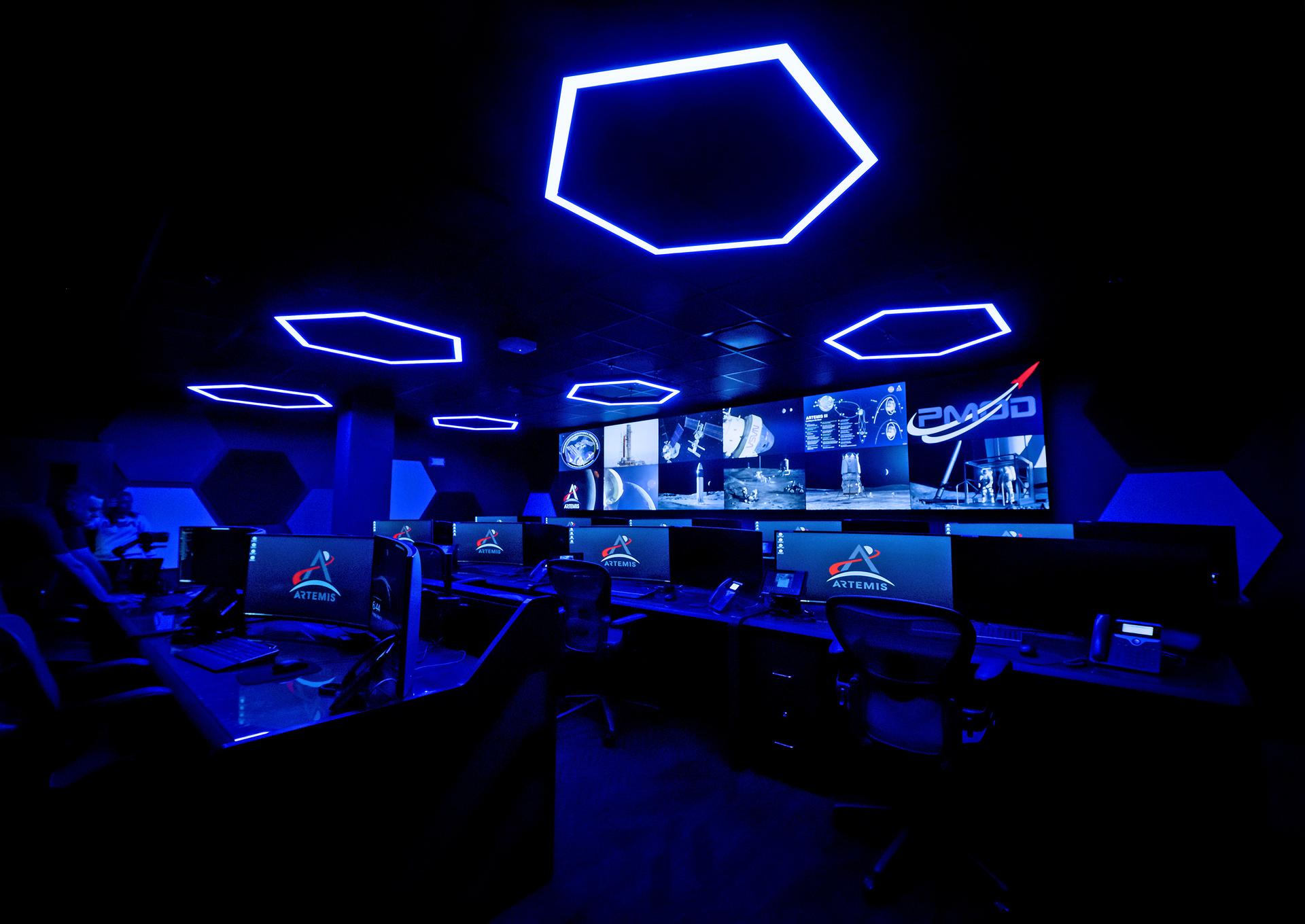
These photos offer a look inside the twin control rooms at NASA’s Marshall Space Flight Center in Huntsville, Alabama, where engineers will monitor Artemis science and future landing operations for Artemis. The LUCA (Lunar Utilization Control Area) and LESA (Lander Engineering Support Area) rooms are part of the Huntsville Operations Support Center at NASA Marshall. The LUCA is specially designed to support a wide variety of science operations on and around the Moon – and beyond. Engineers in the LUCA monitored operations for the Lunar Node-1 experiment, an autonomous navigation payload that was part of the first NASA Commercial Lunar Payload Services (CLPS) launch on Intuitive Machines’ Nova-C lunar lander in 2024. NASA Marshall flight controllers will use the LUCA again for Artemis II to monitor science operations. Beginning with Artemis III, members of the NASA Human Landing System Mission Insight Support Team – a group of engineers, safety leads, flight operations experts, and technical authorities – will work in the LESA. There, they will monitor lander systems in real-time and be involved in key decision-making processes throughout the mission. For more information, contact NASA Marshall’s Office of Communications at 256-544-0034.
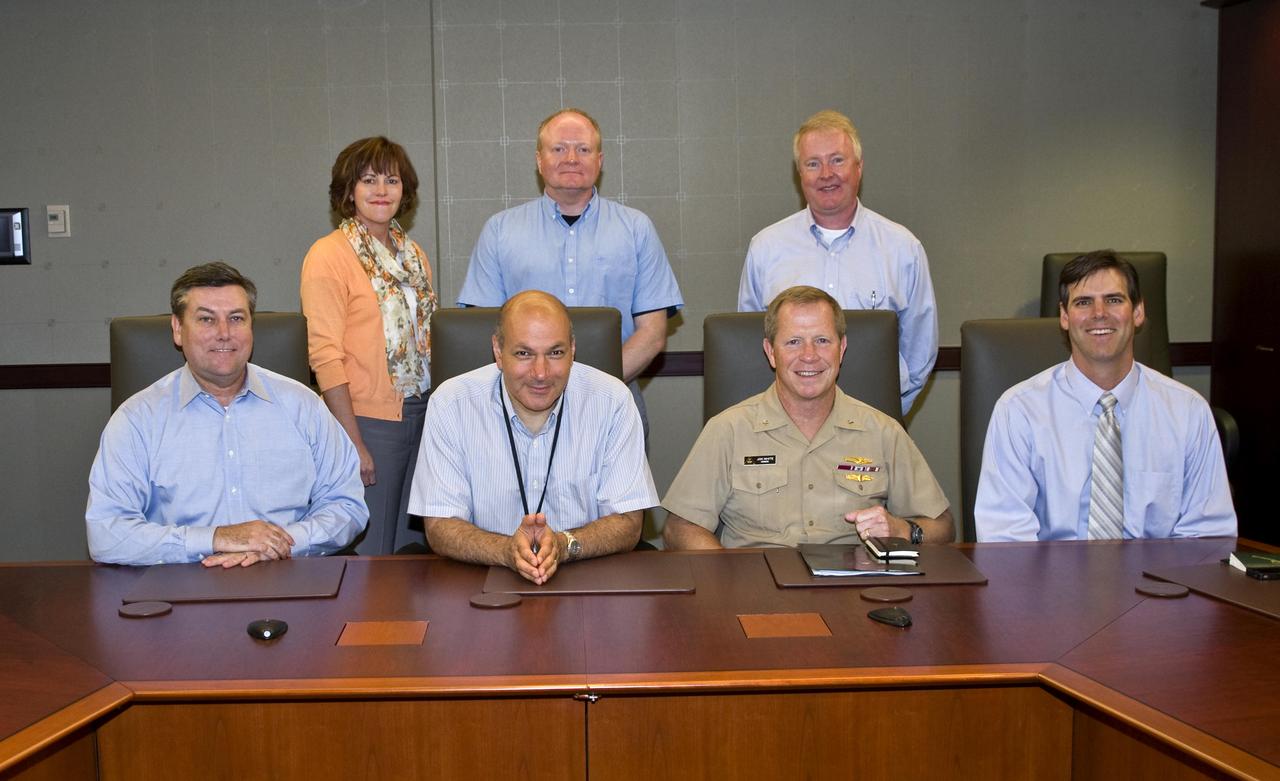
NASA Chief Scientist Dr. Waleed Abdalati visited Stennis Space Center on July 19, to learn about the extensive science capabilities onsite. Shown at right are: (seated, l to r), Stennis Center Director Patrick Scheuermann; Dr. Abdalati; U.S. Navy Rear Adm. Jonathan White; NOAA National Data Buoy Center Program Manager Shannon McArthur; (standing, l to r) Stennis Project Directorate Assistant Director Anne Peek; Stennis Applied Science & Technology Project Office Chief Duane Armstrong; and Stennis Project Directorate Director Keith Brock.
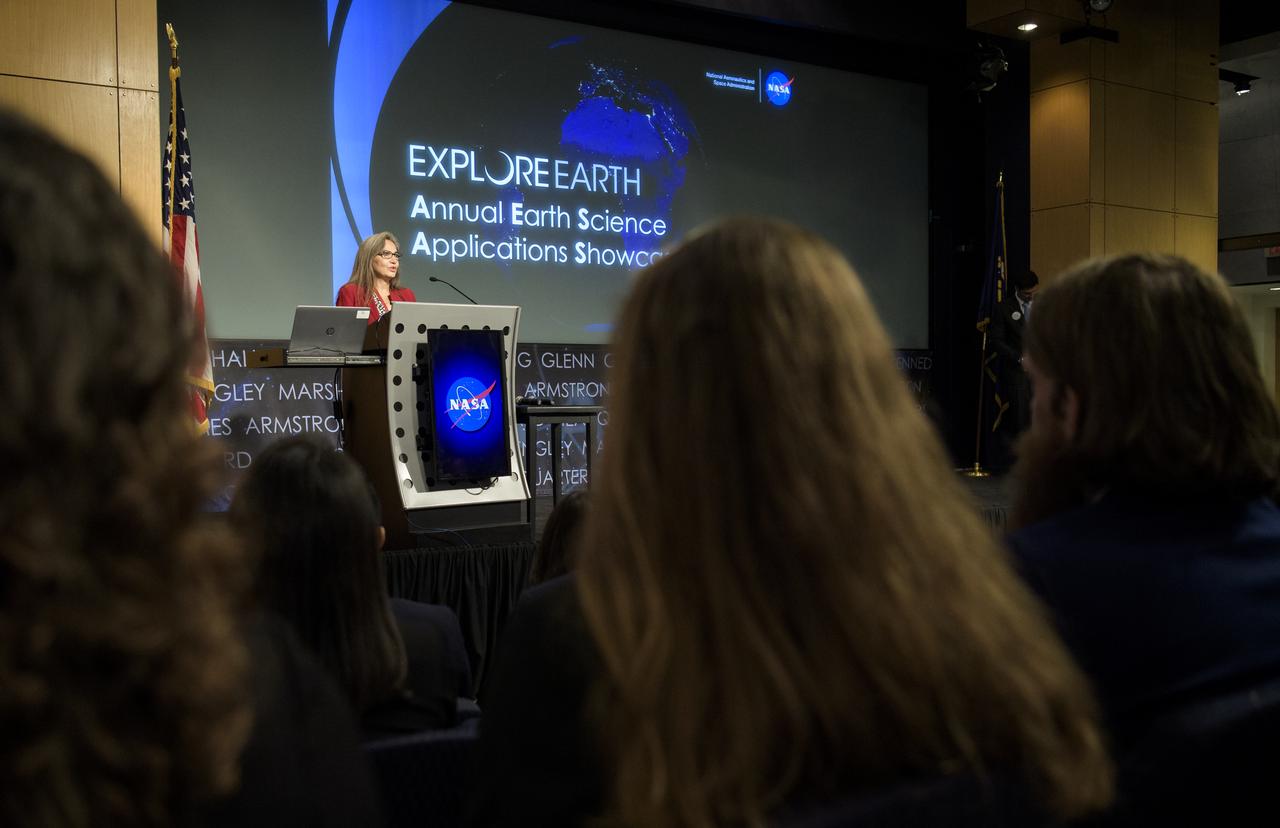
Sandra Cauffman, acting Director of the Earth Sciences Division of the Science Mission Directorate at NASA Headquarters, speaks during the 2019 Annual Earth Science Applications Showcase, Thursday, Aug. 1, 2019 at NASA Headquarters in Washington, DC. Every summer students and young professionals from NASA’s Applied Sciences’ DEVELOP National Program come to NASA Headquarters and present their research projects. DEVELOP is a training and development program where students work on Earth science research projects, mentored by science advisers from NASA and partner agencies, and extend research results to local communities. Photo Credit: (NASA/Joel Kowsky)
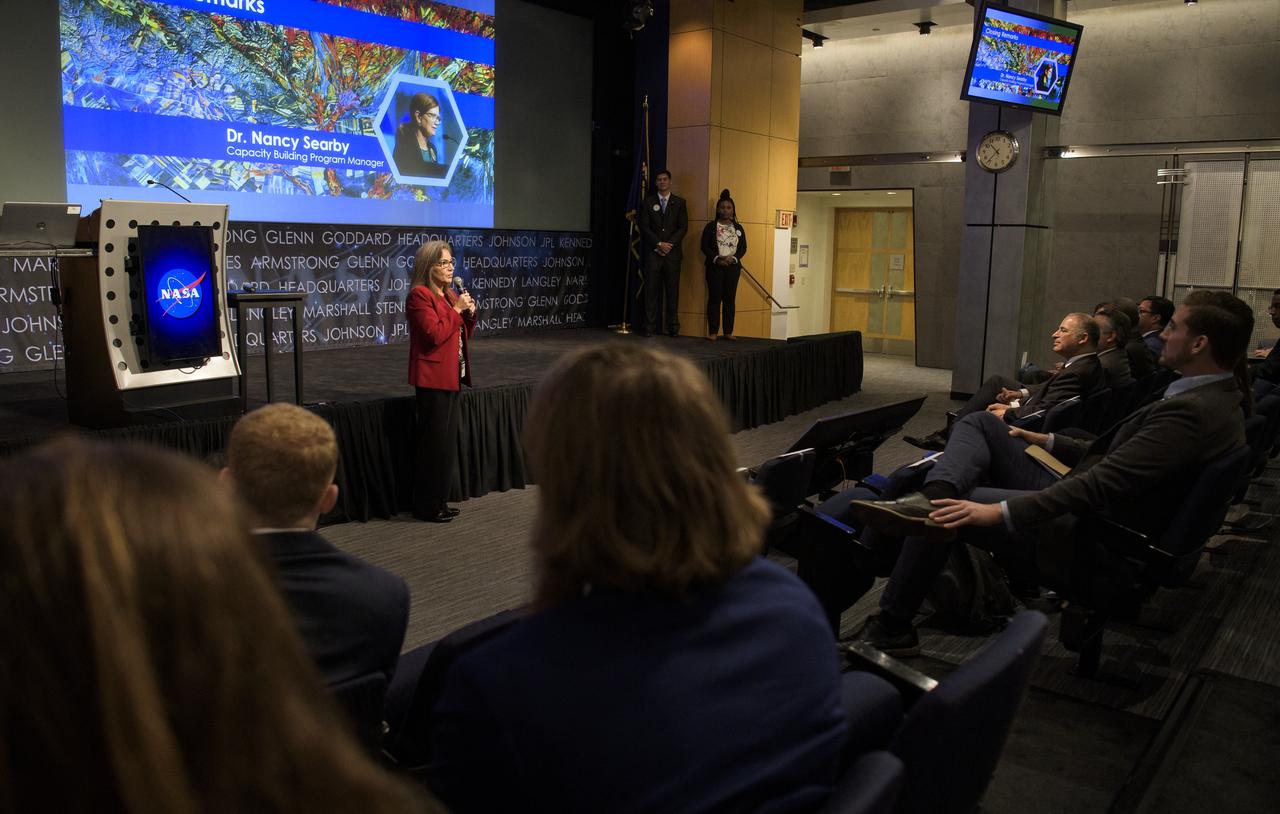
Sandra Cauffman, acting Director of the Earth Sciences Division of the Science Mission Directorate at NASA Headquarters, speaks during the 2019 Annual Earth Science Applications Showcase, Thursday, Aug. 1, 2019 at NASA Headquarters in Washington, DC. Every summer students and young professionals from NASA’s Applied Sciences’ DEVELOP National Program come to NASA Headquarters and present their research projects. DEVELOP is a training and development program where students work on Earth science research projects, mentored by science advisers from NASA and partner agencies, and extend research results to local communities. Photo Credit: (NASA/Joel Kowsky)

Capacity Building Program Manager for NASA's Applied Sciences Program (Earth Science Division) Nancy Searby speaks during the 2019 Annual Earth Science Applications Showcase, Thursday, Aug. 1, 2019 at NASA Headquarters in Washington, DC. Every summer students and young professionals from NASA’s Applied Sciences’ DEVELOP National Program come to NASA Headquarters and present their research projects. DEVELOP is a training and development program where students work on Earth science research projects, mentored by science advisers from NASA and partner agencies, and extend research results to local communities. Photo Credit: (NASA/Joel Kowsky)
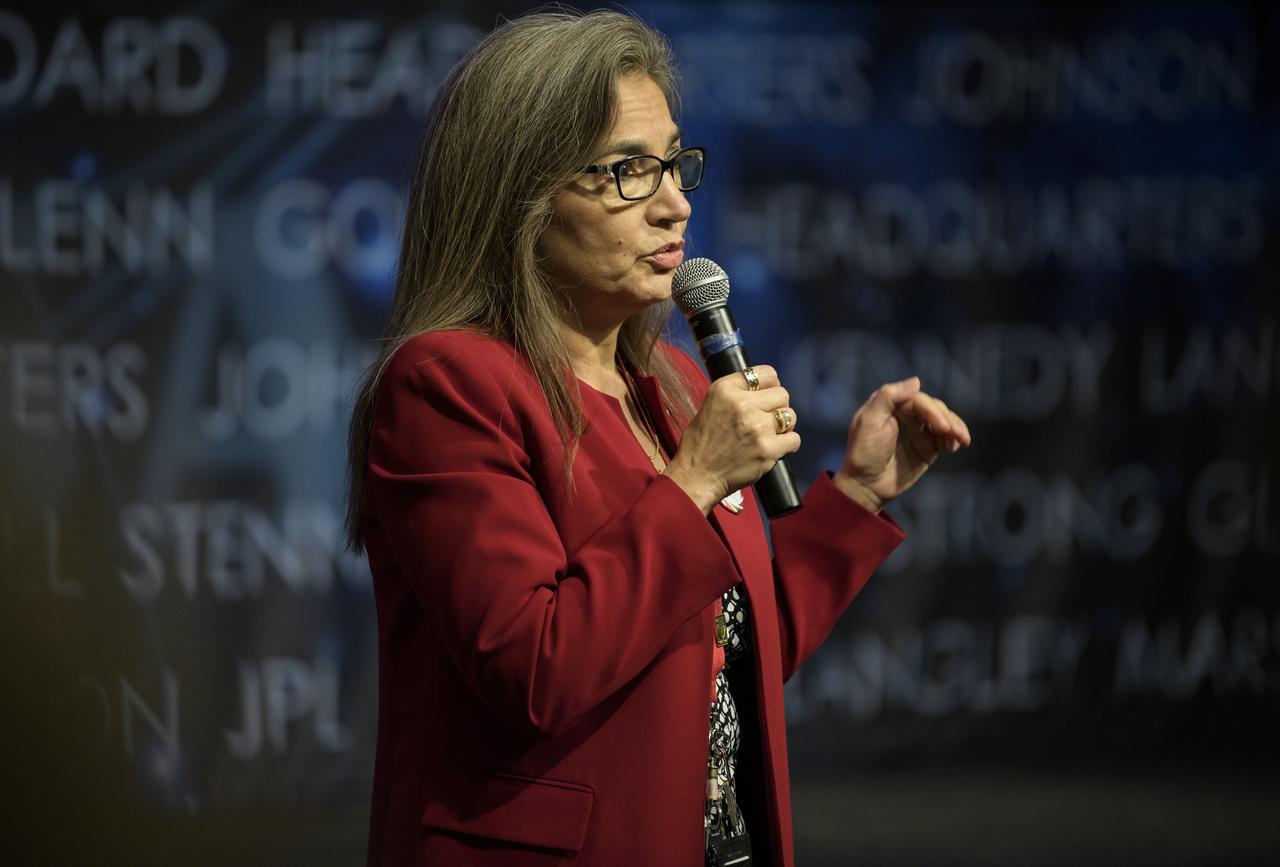
Sandra Cauffman, acting Director of the Earth Sciences Division of the Science Mission Directorate at NASA Headquarters, speaks during the 2019 Annual Earth Science Applications Showcase, Thursday, Aug. 1, 2019 at NASA Headquarters in Washington, DC. Every summer students and young professionals from NASA’s Applied Sciences’ DEVELOP National Program come to NASA Headquarters and present their research projects. DEVELOP is a training and development program where students work on Earth science research projects, mentored by science advisers from NASA and partner agencies, and extend research results to local communities. Photo Credit: (NASA/Joel Kowsky)
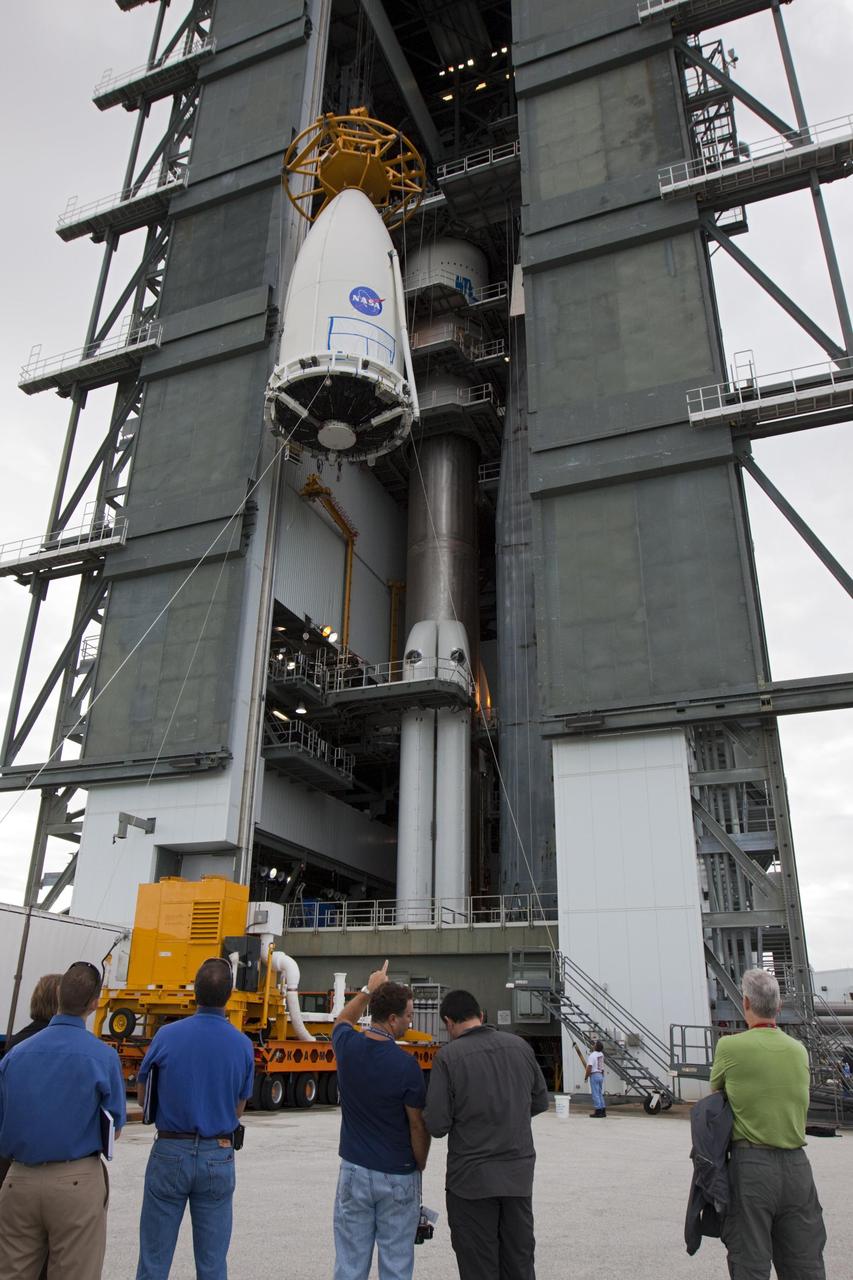
Employees at Space Launch Complex 41 of Cape Canaveral Air Force Station, Fla., keep watch as the payload fairing containing NASA Mars Science Laboratory spacecraft is lifted up the side of the Vertical Integration Facility on Nov. 3, 2011.

NASA and science investigators from MIT participate in a science briefing for the agency's Transiting Exoplanet Survey Satellite (TESS) in the Press Site auditorium at Kennedy Space Center in Florida. Padi Boyd, TESS Guest Investigator Program lead, NASA’s Goddard Space Flight Center, answered questions during the briefing. TESS is the next step in the search for planets outside of our solar system. The mission will find exoplanets that periodically block part of the light from their host stars, events called transits. The satellite will survey the nearest and brightest stars for two years to search for transiting exoplanets. TESS will launch on a SpaceX Falcon 9 rocket from Space Launch Complex 40 at Cape Canaveral Air Force Station no earlier than 6:32 p.m. EDT on Monday, April 16.

NASA and science investigators from MIT participate in a science briefing for the agency's Transiting Exoplanet Survey Satellite (TESS) in the Press Site auditorium at Kennedy Space Center in Florida. Stephen Rinehart, TESS Project scientist, NASA’s Goddard Space Flight Center, answered questions during the briefing. TESS is the next step in the search for planets outside of our solar system. The mission will find exoplanets that periodically block part of the light from their host stars, events called transits. The satellite will survey the nearest and brightest stars for two years to search for transiting exoplanets. TESS will launch on a SpaceX Falcon 9 rocket from Space Launch Complex 40 at Cape Canaveral Air Force Station no earlier than 6:32 p.m. EDT on Monday, April 16.

NASA and science investigators from MIT participate in a science briefing for the agency's Transiting Exoplanet Survey Satellite (TESS) in the Press Site auditorium at Kennedy Space Center in Florida. Claire Saravia, NASA Communications, moderated the briefing. TESS is the next step in the search for planets outside of our solar system. The mission will find exoplanets that periodically block part of the light from their host stars, events called transits. The satellite will survey the nearest and brightest stars for two years to search for transiting exoplanets. TESS will launch on a SpaceX Falcon 9 rocket from Space Launch Complex 40 at Cape Canaveral Air Force Station no earlier than 6:32 p.m. EDT on Monday, April 16.

NASA and science investigators from MIT participate in a science briefing for the agency's Transiting Exoplanet Survey Satellite (TESS) in the Press Site auditorium at Kennedy Space Center in Florida. Felicia Chou, NASA Communications, asks questions from online participants during the briefing. TESS is the next step in the search for planets outside of our solar system. The mission will find exoplanets that periodically block part of the light from their host stars, events called transits. The satellite will survey the nearest and brightest stars for two years to search for transiting exoplanets. TESS will launch on a SpaceX Falcon 9 rocket from Space Launch Complex 40 at Cape Canaveral Air Force Station no earlier than 6:32 p.m. EDT on Monday, April 16.

NASA and science investigators from MIT participate in a science briefing for the agency's Transiting Exoplanet Survey Satellite (TESS) in the Press Site auditorium at Kennedy Space Center in Florida. Diana Dragomir, NASA Hubble Postdoctoral Fellow, Massachusetts Institute of Technology, answered questions during the briefing. TESS is the next step in the search for planets outside of our solar system. The mission will find exoplanets that periodically block part of the light from their host stars, events called transits. The satellite will survey the nearest and brightest stars for two years to search for transiting exoplanets. TESS will launch on a SpaceX Falcon 9 rocket from Space Launch Complex 40 at Cape Canaveral Air Force Station no earlier than 6:32 p.m. EDT on Monday, April 16.

NASA and science investigators from MIT participate in a science briefing for the agency's Transiting Exoplanet Survey Satellite (TESS) in the Press Site auditorium at Kennedy Space Center in Florida. Paul Hertz, Astrophysics Division director, NASA Headquarters, answered questions during the briefing. TESS is the next step in the search for planets outside of our solar system. The mission will find exoplanets that periodically block part of the light from their host stars, events called transits. The satellite will survey the nearest and brightest stars for two years to search for transiting exoplanets. TESS will launch on a SpaceX Falcon 9 rocket from Space Launch Complex 40 at Cape Canaveral Air Force Station no earlier than 6:32 p.m. EDT on Monday, April 16.
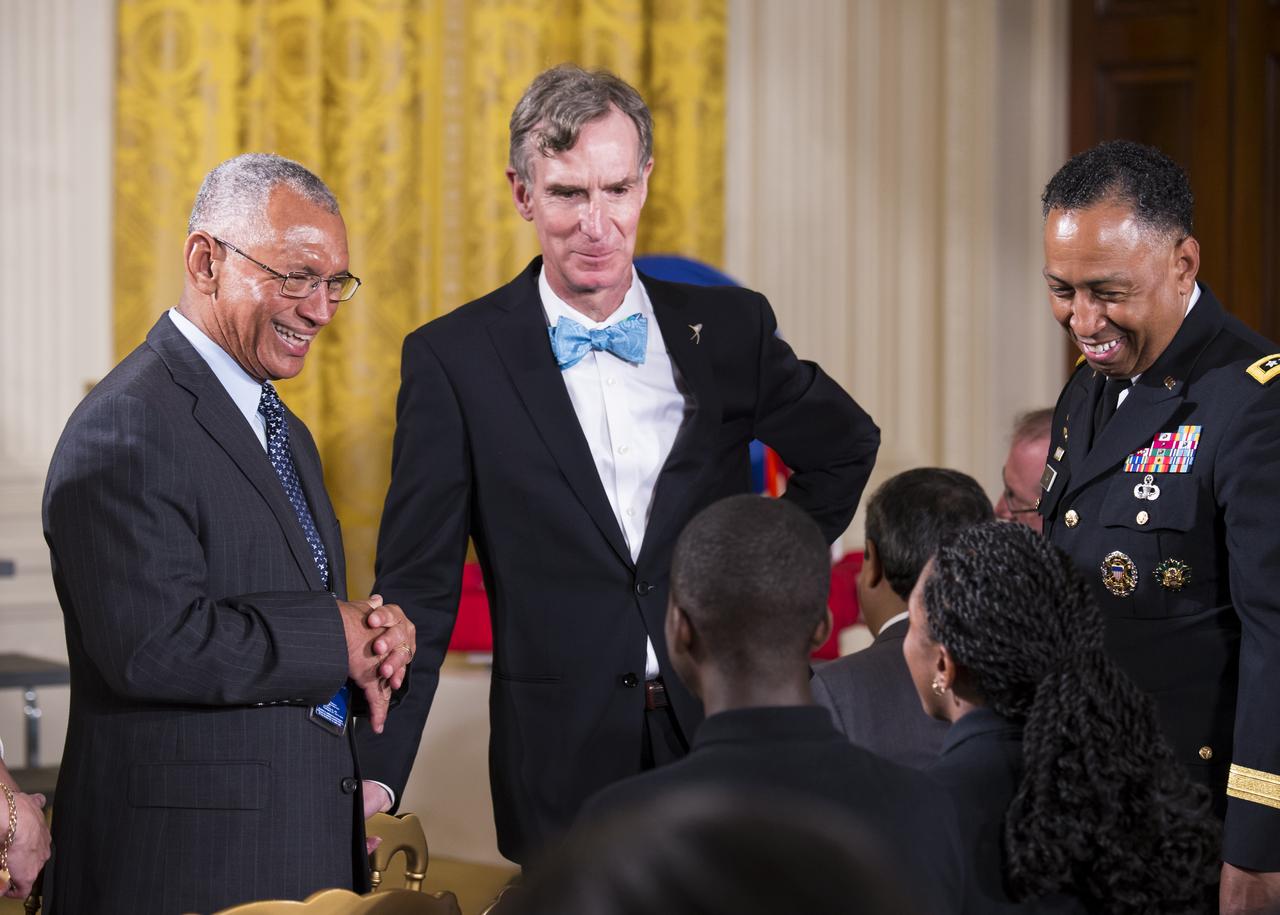
NASA Administrator Charles Bolden (left) and Bill Nye, The Science Guy, speak with some students that participated in the White House Science Fair. The fourth White House Science Fair was held at the White House on May 27, 2014 and included 100 students from more than 30 different states who competed in science, technology, engineering, and math (STEM) competitions. (Photo Credit: NASA/Aubrey Gemignani)

Thomas Zurbuchen, Associate Administrator for NASA's Science Mission Directorate, speaks during the 2019 Annual Earth Science Applications Showcase, Thursday, Aug. 1, 2019 at NASA Headquarters in Washington, DC. Every summer students and young professionals from NASA’s Applied Sciences’ DEVELOP National Program come to NASA Headquarters and present their research projects. DEVELOP is a training and development program where students work on Earth science research projects, mentored by science advisers from NASA and partner agencies, and extend research results to local communities. Photo Credit: (NASA/Joel Kowsky)