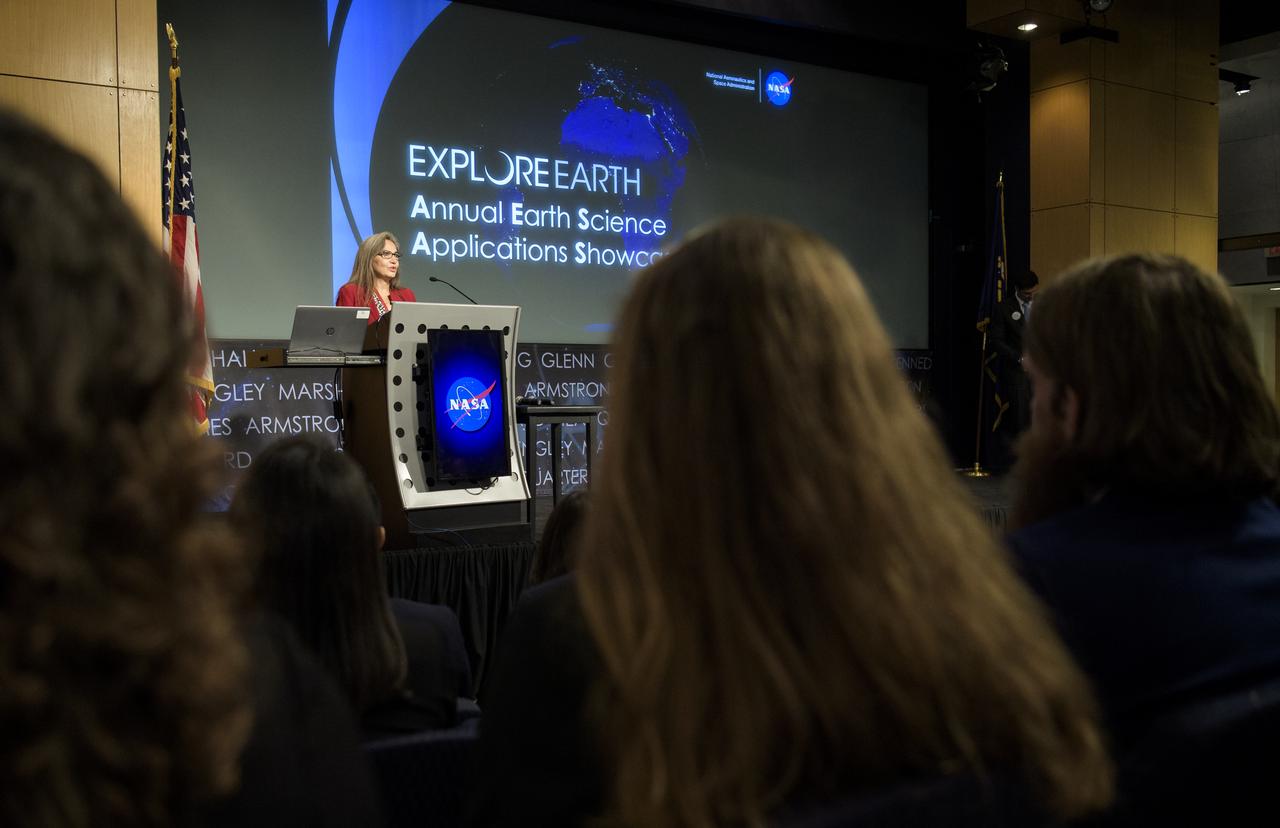
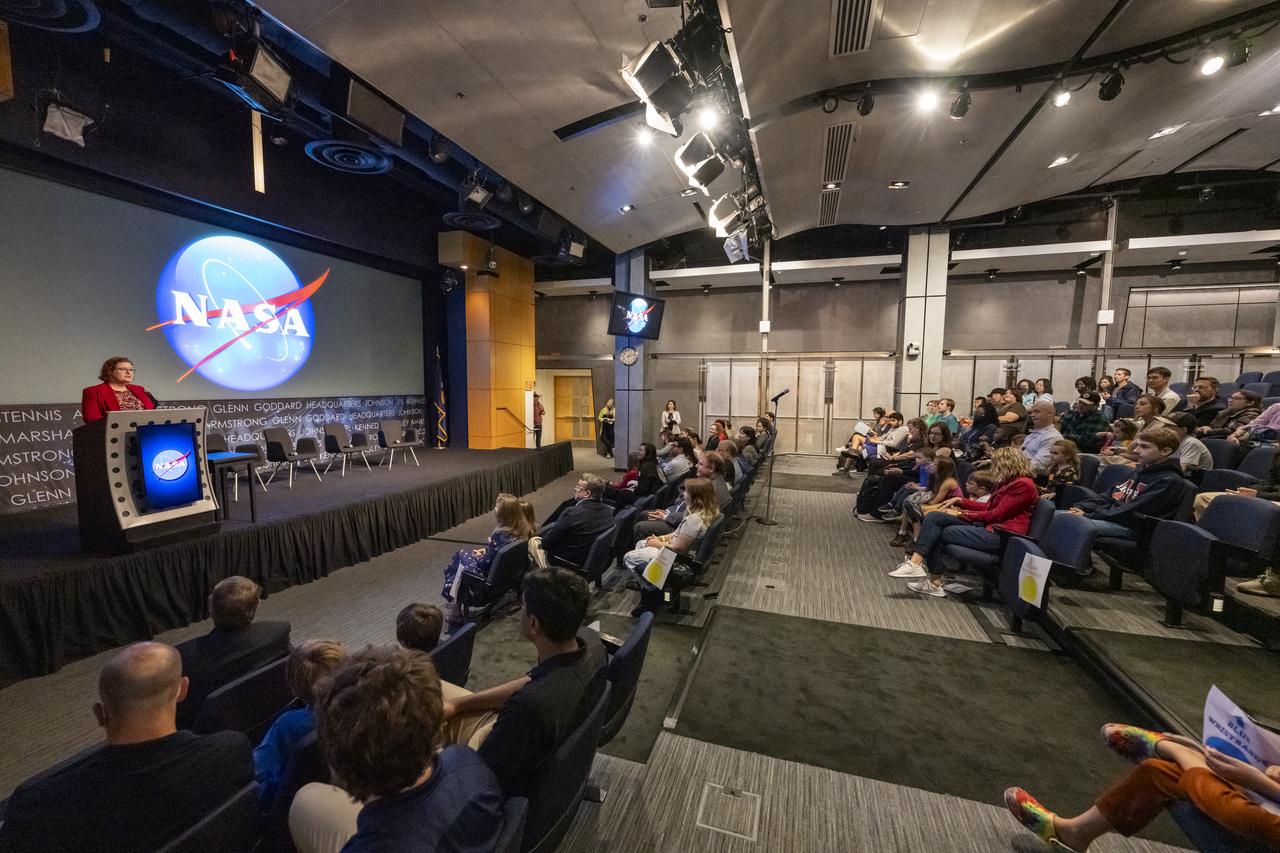
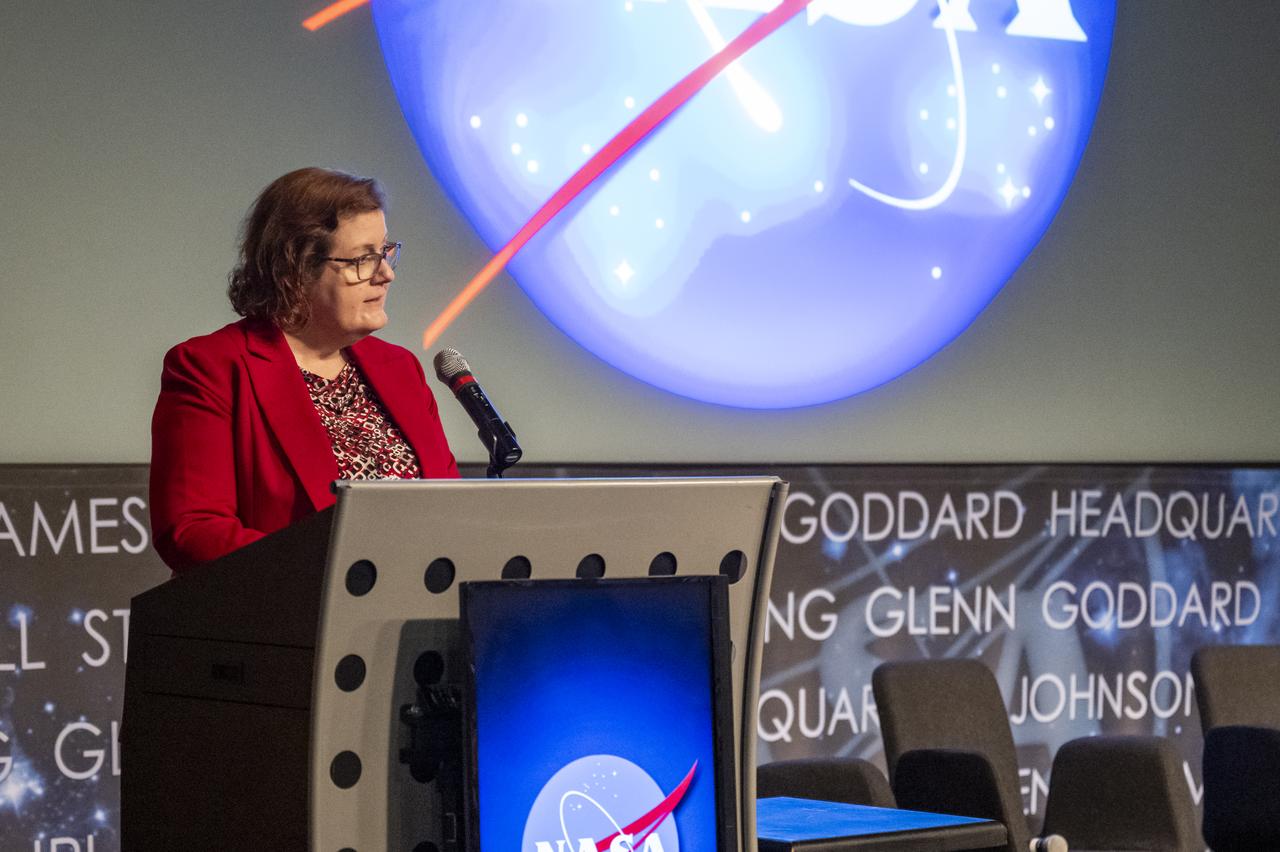
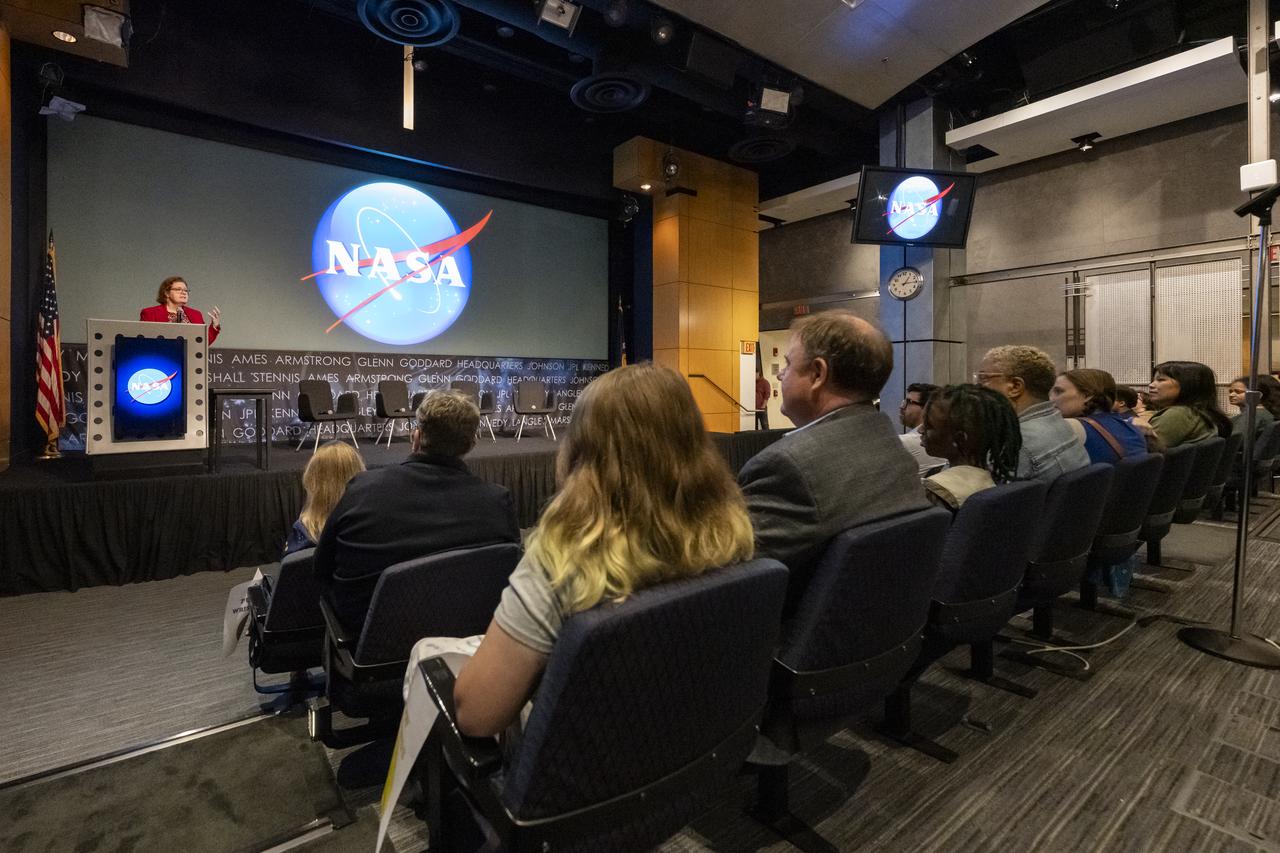
Sandra Cauffman, acting Director of the Earth Sciences Division of the Science Mission Directorate at NASA Headquarters, speaks during the 2019 Annual Earth Science Applications Showcase, Thursday, Aug. 1, 2019 at NASA Headquarters in Washington, DC. Every summer students and young professionals from NASA’s Applied Sciences’ DEVELOP National Program come to NASA Headquarters and present their research projects. DEVELOP is a training and development program where students work on Earth science research projects, mentored by science advisers from NASA and partner agencies, and extend research results to local communities. Photo Credit: (NASA/Joel Kowsky)
Sandra Cauffman, acting Director of the Earth Sciences Division of the Science Mission Directorate at NASA Headquarters, speaks during the 2019 Annual Earth Science Applications Showcase, Thursday, Aug. 1, 2019 at NASA Headquarters in Washington, DC. Every summer students and young professionals from NASA’s Applied Sciences’ DEVELOP National Program come to NASA Headquarters and present their research projects. DEVELOP is a training and development program where students work on Earth science research projects, mentored by science advisers from NASA and partner agencies, and extend research results to local communities. Photo Credit: (NASA/Joel Kowsky)
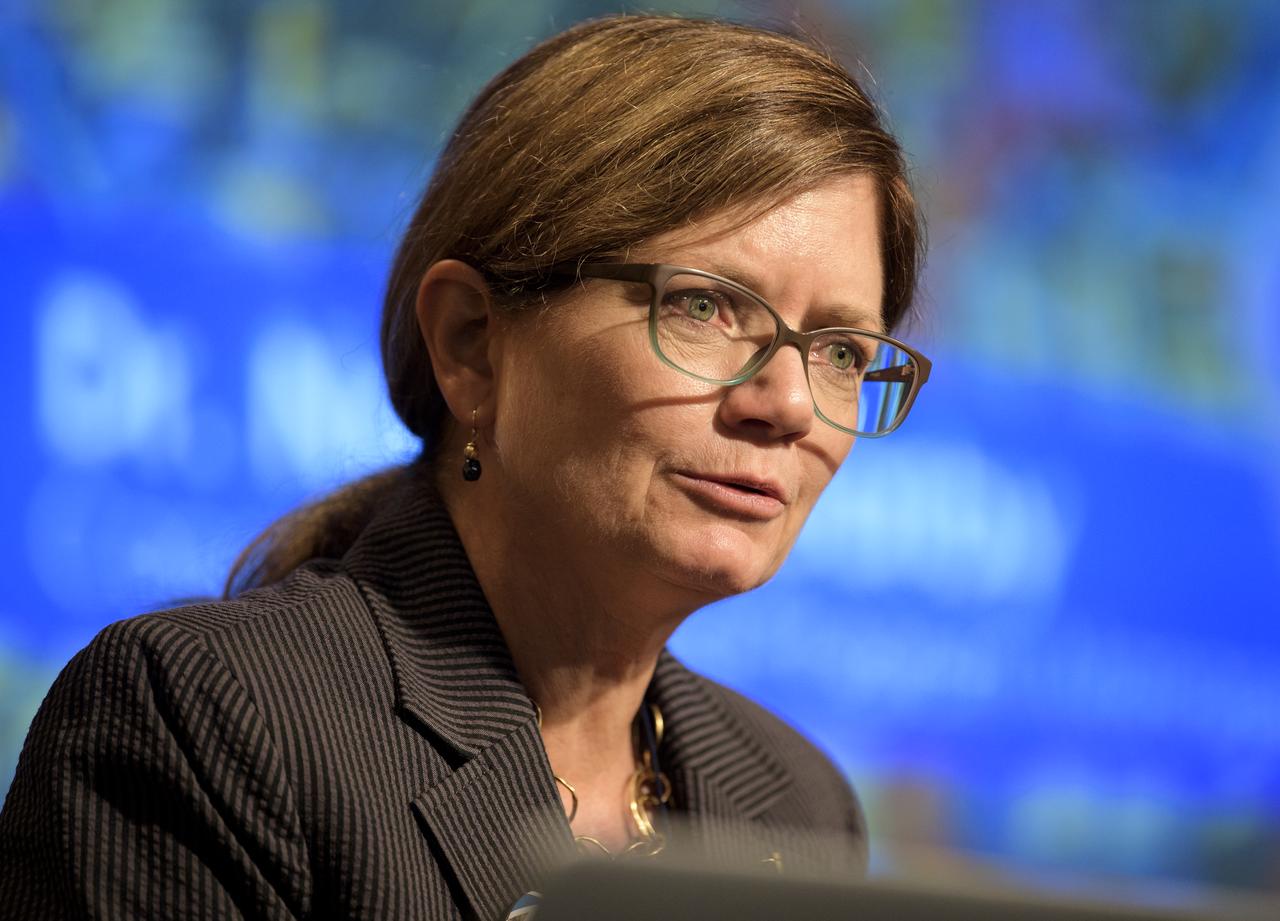
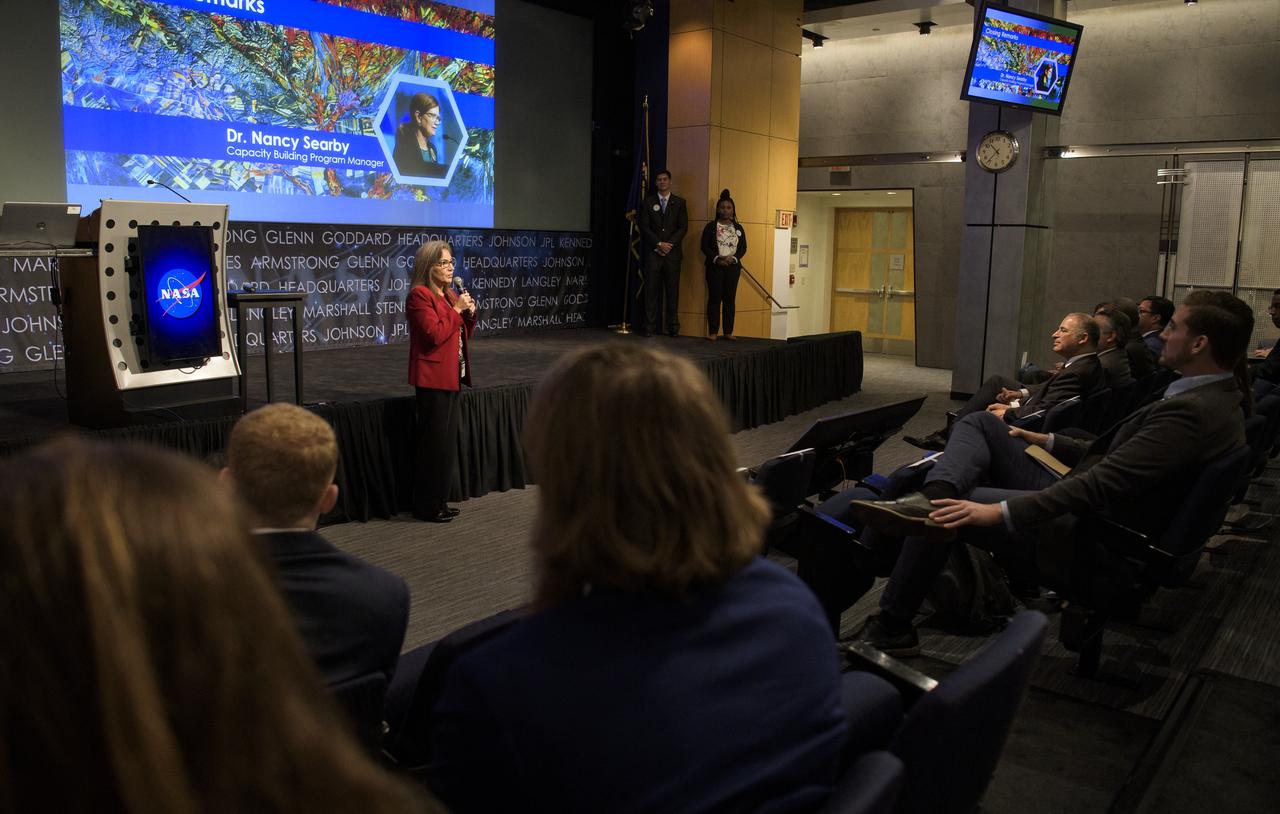
Capacity Building Program Manager for NASA's Applied Sciences Program (Earth Science Division) Nancy Searby speaks during the 2019 Annual Earth Science Applications Showcase, Thursday, Aug. 1, 2019 at NASA Headquarters in Washington, DC. Every summer students and young professionals from NASA’s Applied Sciences’ DEVELOP National Program come to NASA Headquarters and present their research projects. DEVELOP is a training and development program where students work on Earth science research projects, mentored by science advisers from NASA and partner agencies, and extend research results to local communities. Photo Credit: (NASA/Joel Kowsky)
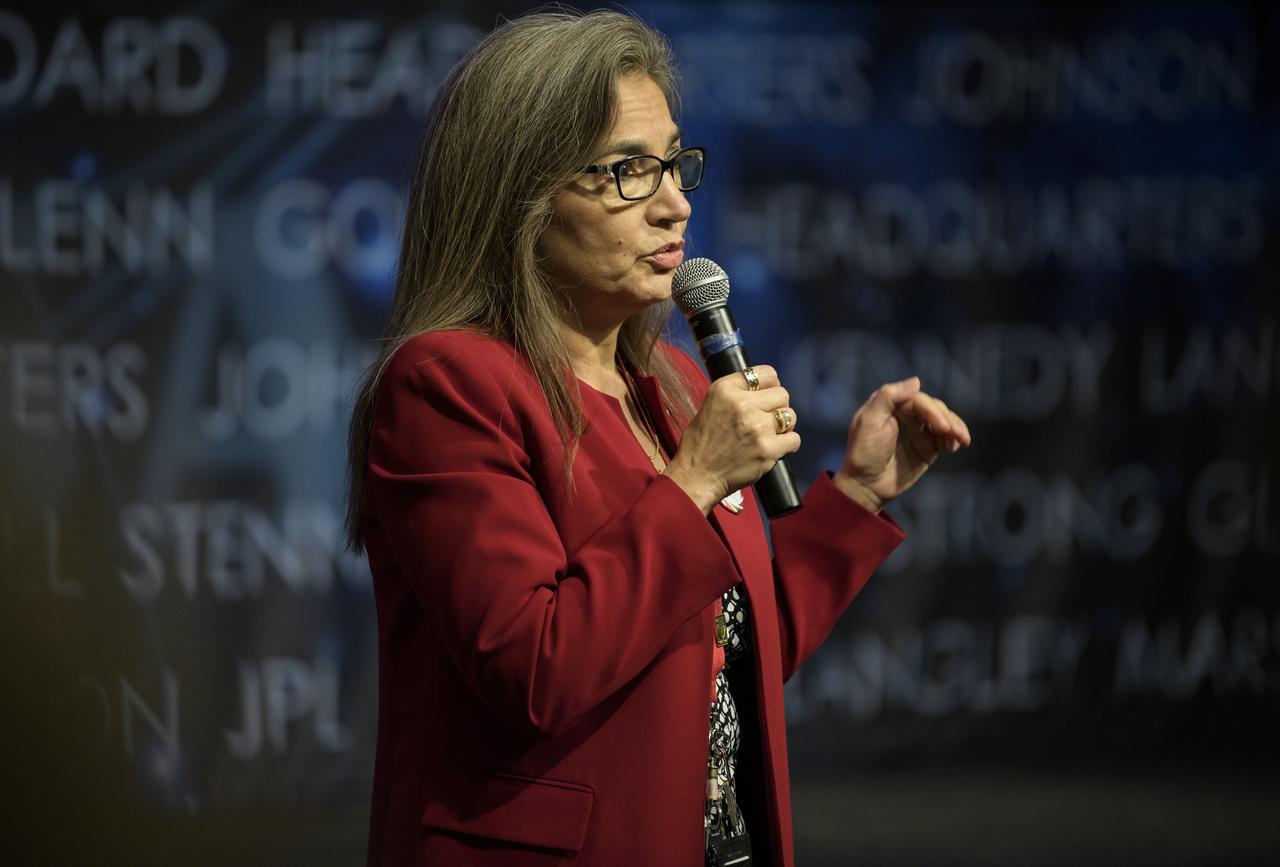
Sandra Cauffman, acting Director of the Earth Sciences Division of the Science Mission Directorate at NASA Headquarters, speaks during the 2019 Annual Earth Science Applications Showcase, Thursday, Aug. 1, 2019 at NASA Headquarters in Washington, DC. Every summer students and young professionals from NASA’s Applied Sciences’ DEVELOP National Program come to NASA Headquarters and present their research projects. DEVELOP is a training and development program where students work on Earth science research projects, mentored by science advisers from NASA and partner agencies, and extend research results to local communities. Photo Credit: (NASA/Joel Kowsky)
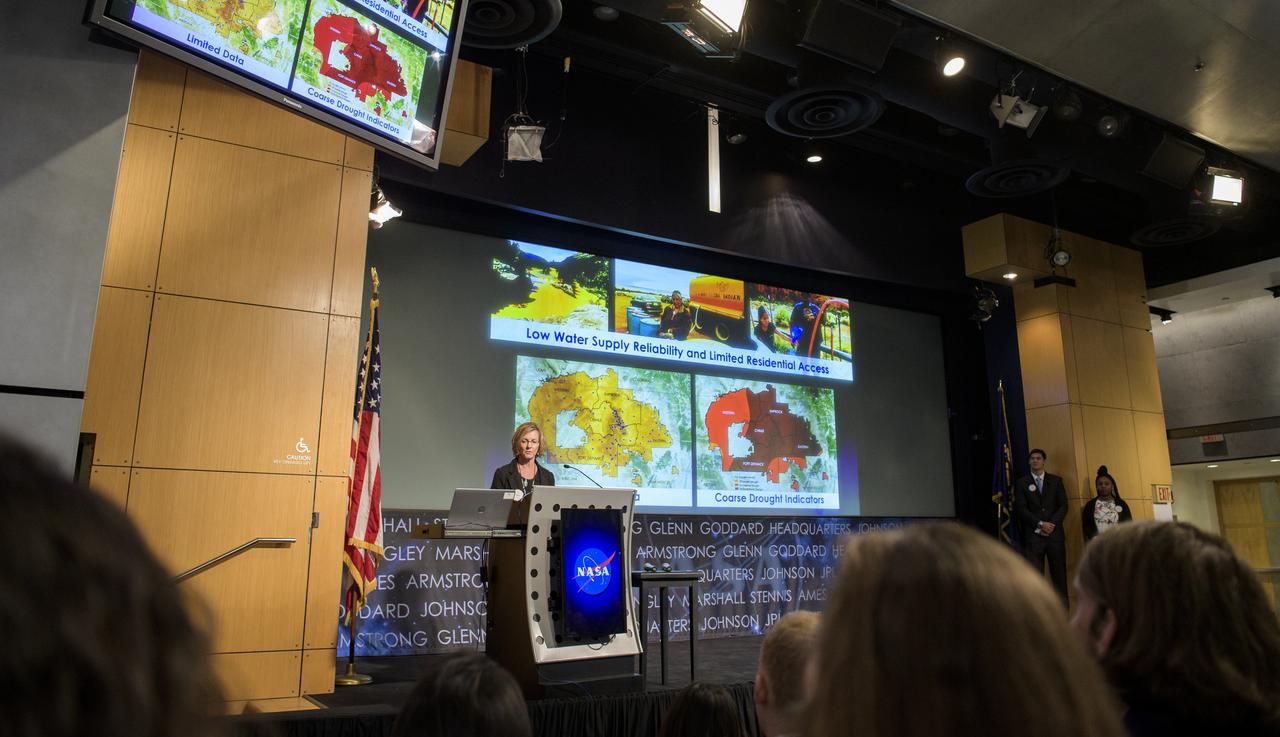
Cindy Schmidt, a research scientist in the Earth Science Division at NASA's Ames Research Center, speaks about the Indigenous Peoples Pilot and drought monitoring in the Navajo Nation during the 2019 Annual Earth Science Applications Showcase, Thursday, Aug. 1, 2019 at NASA Headquarters in Washington, DC. Every summer students and young professionals from NASA’s Applied Sciences’ DEVELOP National Program come to NASA Headquarters and present their research projects. DEVELOP is a training and development program where students work on Earth science research projects, mentored by science advisers from NASA and partner agencies, and extend research results to local communities. Photo Credit: (NASA/Joel Kowsky)

Students and young professionals discuss their projects at the Earth Science Applications Showcase Wednesday, August 1, 2018 at NASA Headquarters in Washington. Every summer, participants in NASA’s Applied Sciences’ DEVELOP National Program come to NASA Headquarters and present their research projects. DEVELOP is a training and development program where students work on Earth science research projects, mentored by science advisers from NASA and partner agencies, and extend research results to local communities. Photo Credit: (NASA/Aubrey Gemignani)
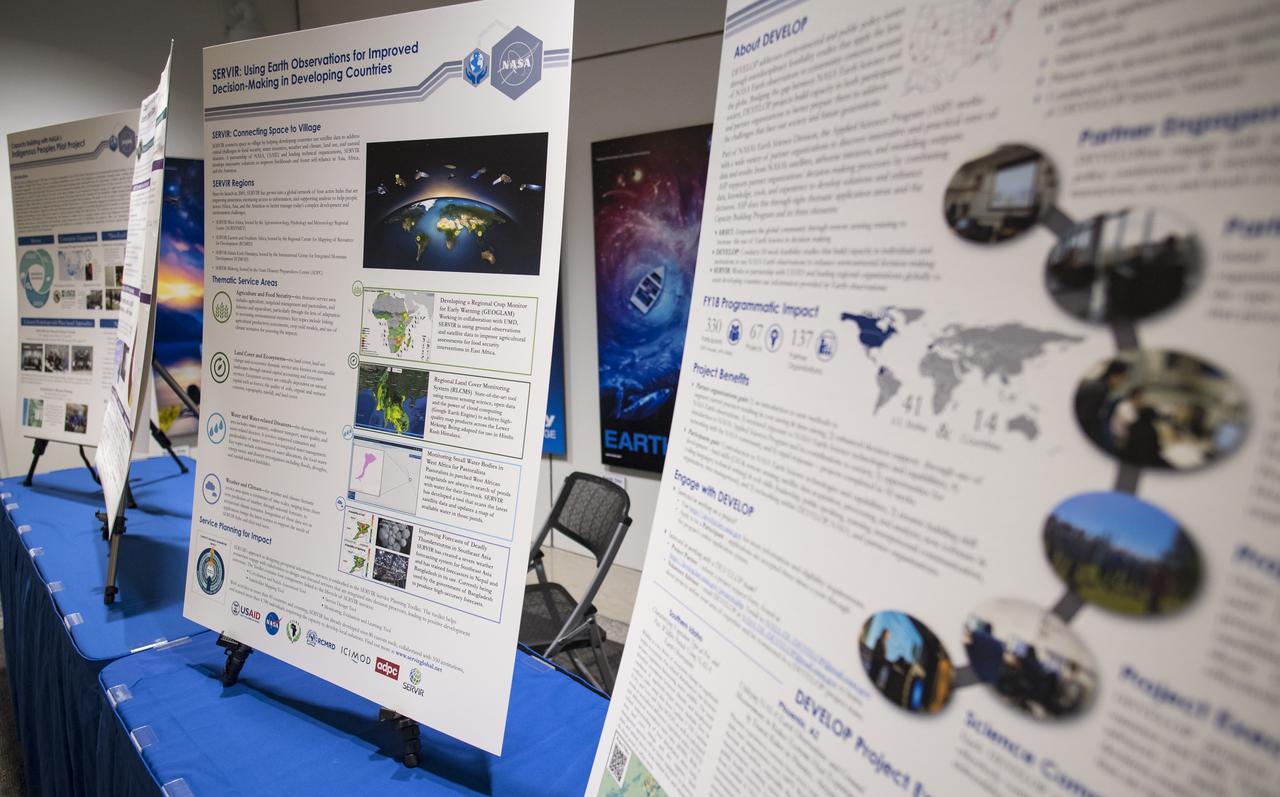
Posters are seen at the Earth Science Applications Showcase Wednesday, August 1, 2018 at NASA Headquarters in Washington. Every summer, participants in NASA’s Applied Sciences’ DEVELOP National Program come to NASA Headquarters and present their research projects. DEVELOP is a training and development program where students work on Earth science research projects, mentored by science advisers from NASA and partner agencies, and extend research results to local communities. Photo Credit: (NASA/Aubrey Gemignani)
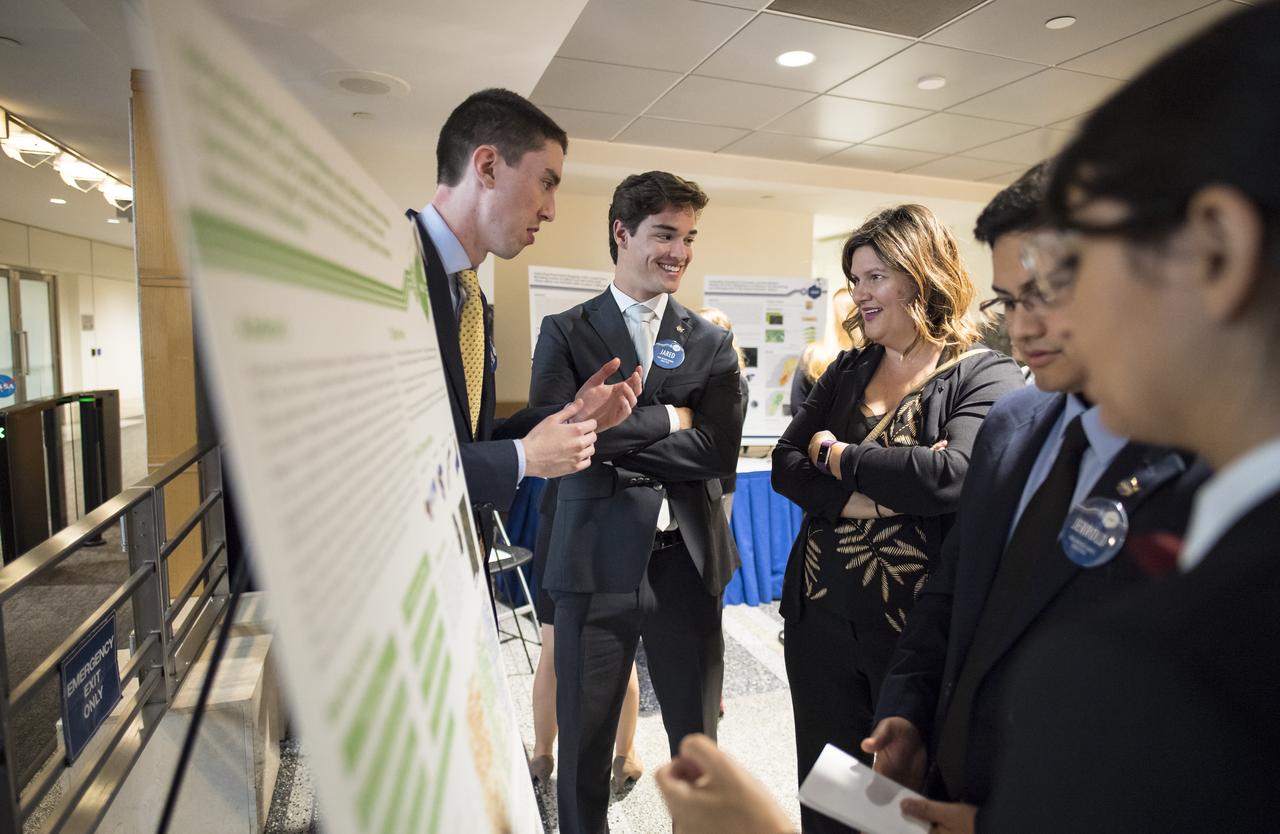
Students and young professionals discuss their projects at the Earth Science Applications Showcase Wednesday, August 1, 2018 at NASA Headquarters in Washington. Every summer, participants in NASA’s Applied Sciences’ DEVELOP National Program come to NASA Headquarters and present their research projects. DEVELOP is a training and development program where students work on Earth science research projects, mentored by science advisers from NASA and partner agencies, and extend research results to local communities. Photo Credit: (NASA/Aubrey Gemignani)
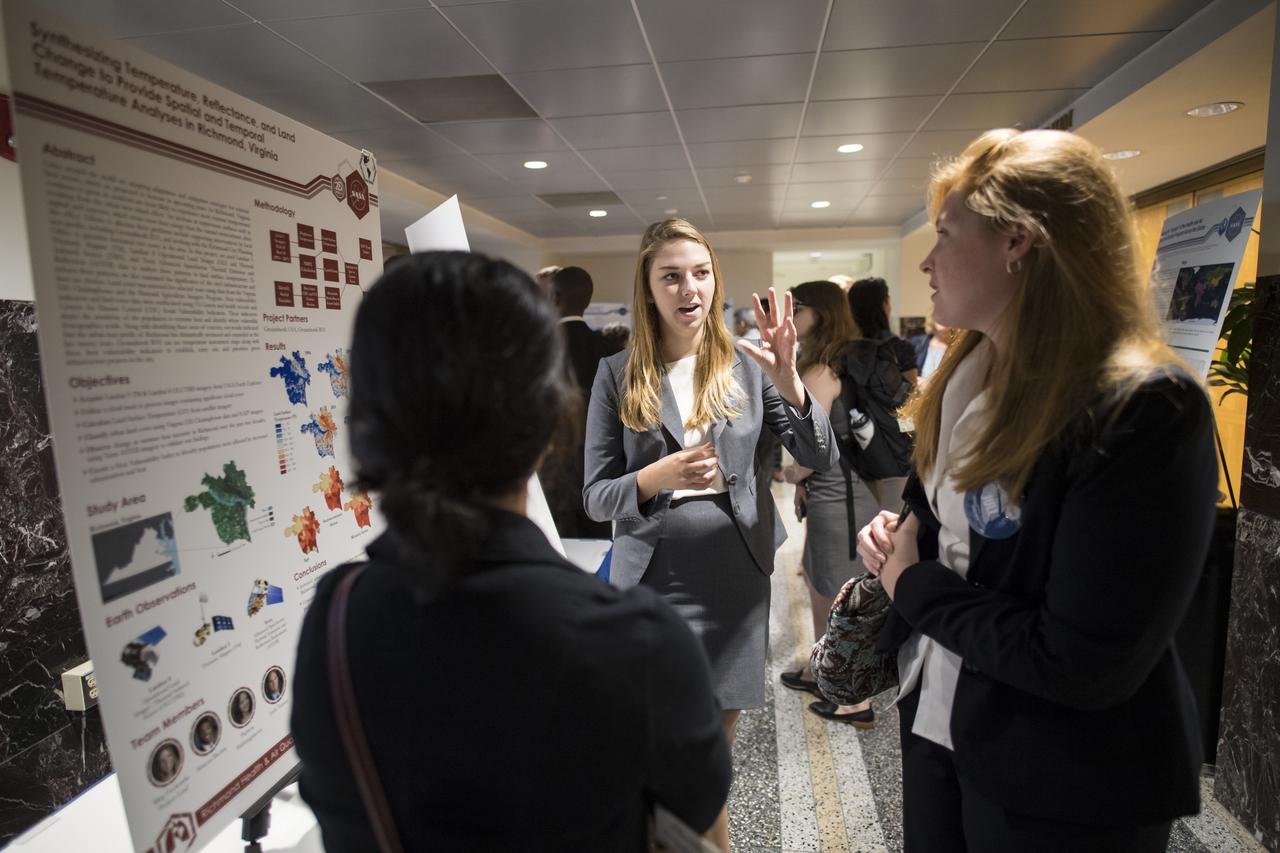
Students and young professionals discuss their projects at the Earth Science Applications Showcase Wednesday, August 1, 2018 at NASA Headquarters in Washington. Every summer, participants in NASA’s Applied Sciences’ DEVELOP National Program come to NASA Headquarters and present their research projects. DEVELOP is a training and development program where students work on Earth science research projects, mentored by science advisers from NASA and partner agencies, and extend research results to local communities. Photo Credit: (NASA/Aubrey Gemignani)

Students and young professionals discuss their projects at the Earth Science Applications Showcase Wednesday, August 1, 2018 at NASA Headquarters in Washington. Every summer, participants in NASA’s Applied Sciences’ DEVELOP National Program come to NASA Headquarters and present their research projects. DEVELOP is a training and development program where students work on Earth science research projects, mentored by science advisers from NASA and partner agencies, and extend research results to local communities. Photo Credit: (NASA/Aubrey Gemignani)
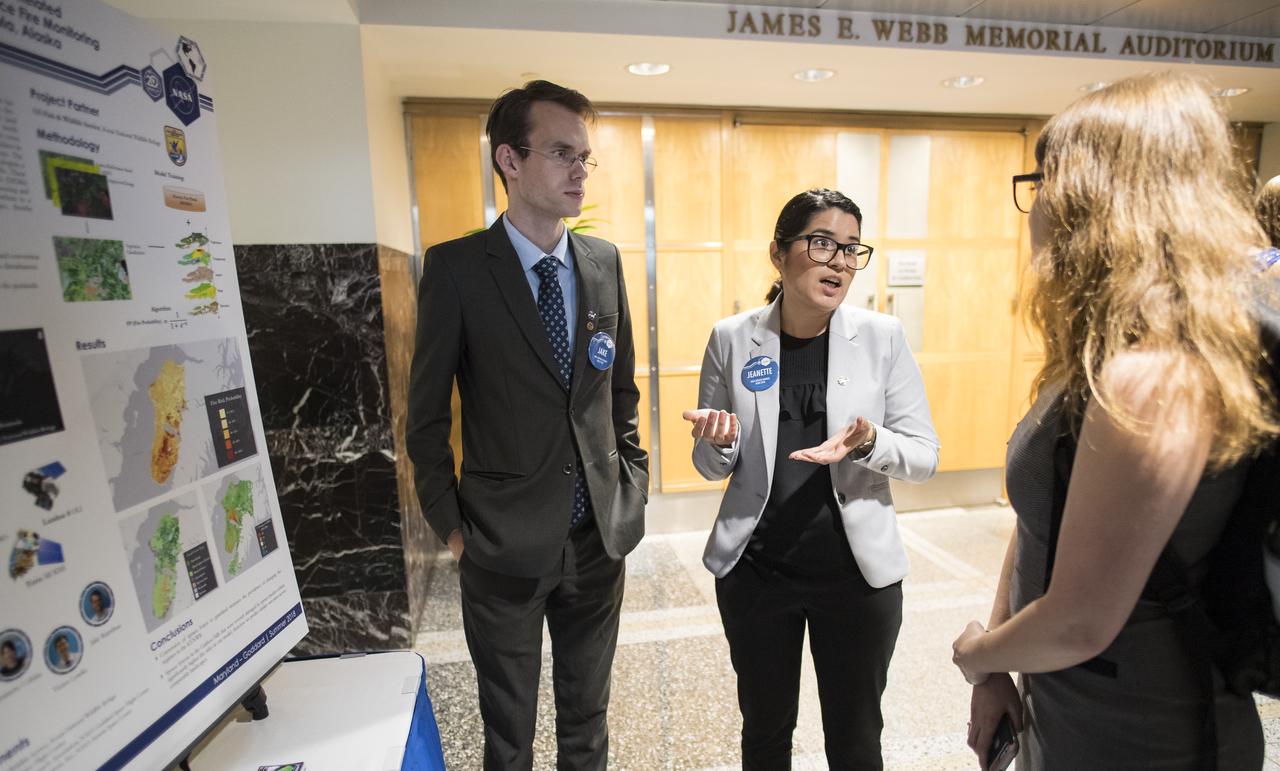
Students and young professionals discuss their projects at the Earth Science Applications Showcase Wednesday, August 1, 2018 at NASA Headquarters in Washington. Every summer, participants in NASA’s Applied Sciences’ DEVELOP National Program come to NASA Headquarters and present their research projects. DEVELOP is a training and development program where students work on Earth science research projects, mentored by science advisers from NASA and partner agencies, and extend research results to local communities. Photo Credit: (NASA/Aubrey Gemignani)
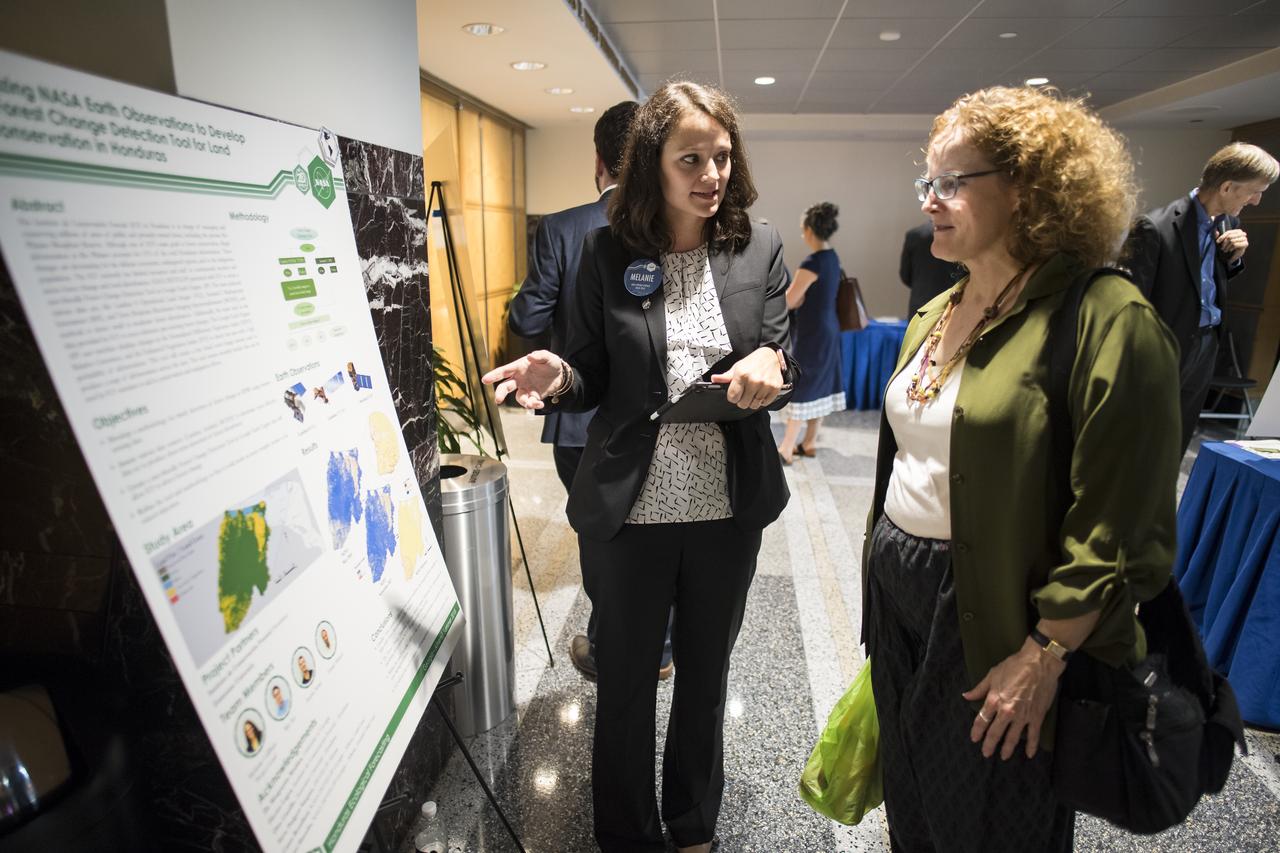
Students and young professionals discuss their projects at the Earth Science Applications Showcase Wednesday, August 1, 2018 at NASA Headquarters in Washington. Every summer, participants in NASA’s Applied Sciences’ DEVELOP National Program come to NASA Headquarters and present their research projects. DEVELOP is a training and development program where students work on Earth science research projects, mentored by science advisers from NASA and partner agencies, and extend research results to local communities. Photo Credit: (NASA/Aubrey Gemignani)
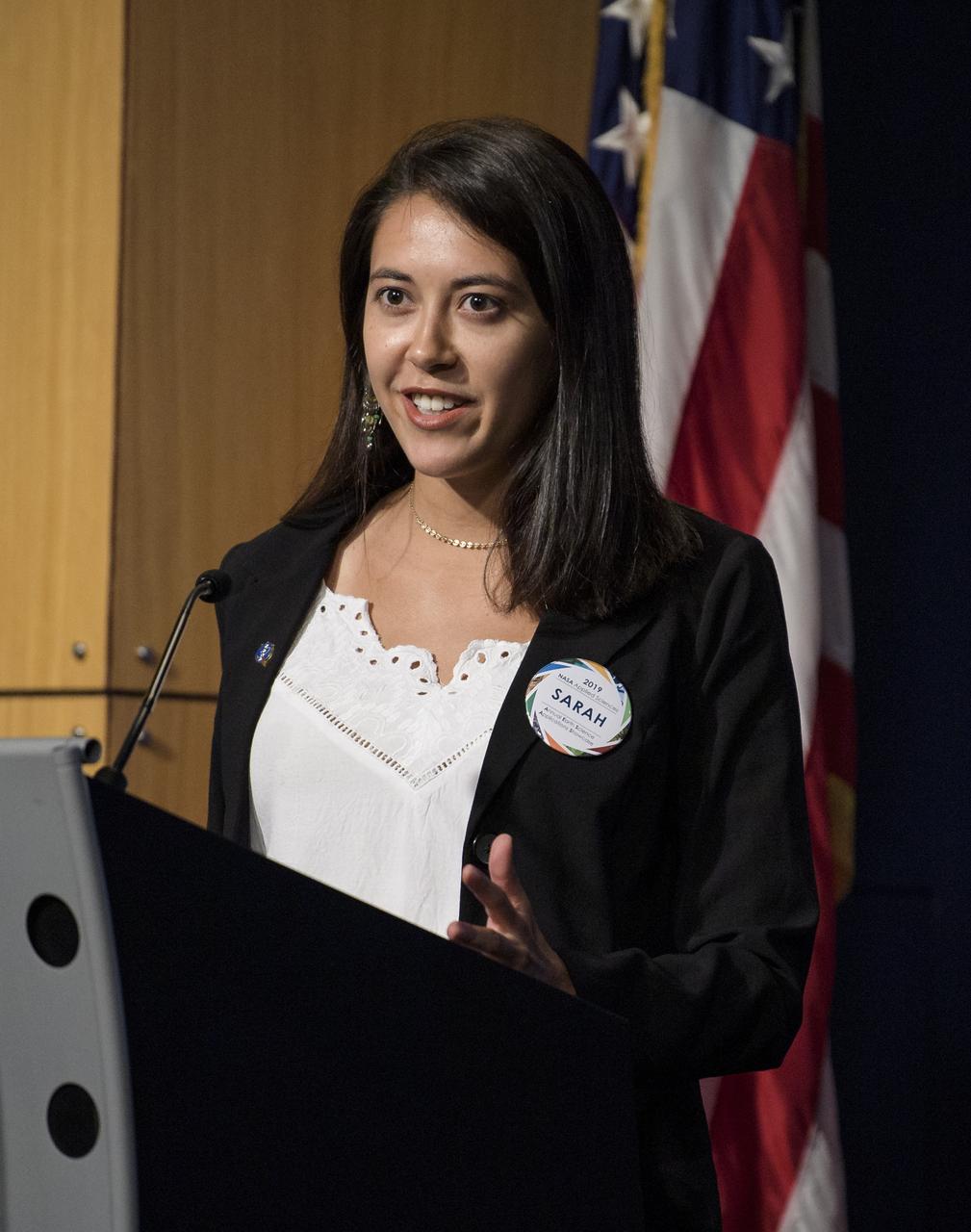
Sarah Aldama, project lead for DEVELOP Dominican Republic Disasters, speaks about mapping landslide susceptibility and exposure in the Dominican Republic using NASA's earth observation data during the 2019 Annual Earth Science Applications Showcase, Thursday, Aug. 1, 2019 at NASA Headquarters in Washington, DC. Every summer students and young professionals from NASA’s Applied Sciences’ DEVELOP National Program come to NASA Headquarters and present their research projects. DEVELOP is a training and development program where students work on Earth science research projects, mentored by science advisers from NASA and partner agencies, and extend research results to local communities. Photo Credit: (NASA/Joel Kowsky)
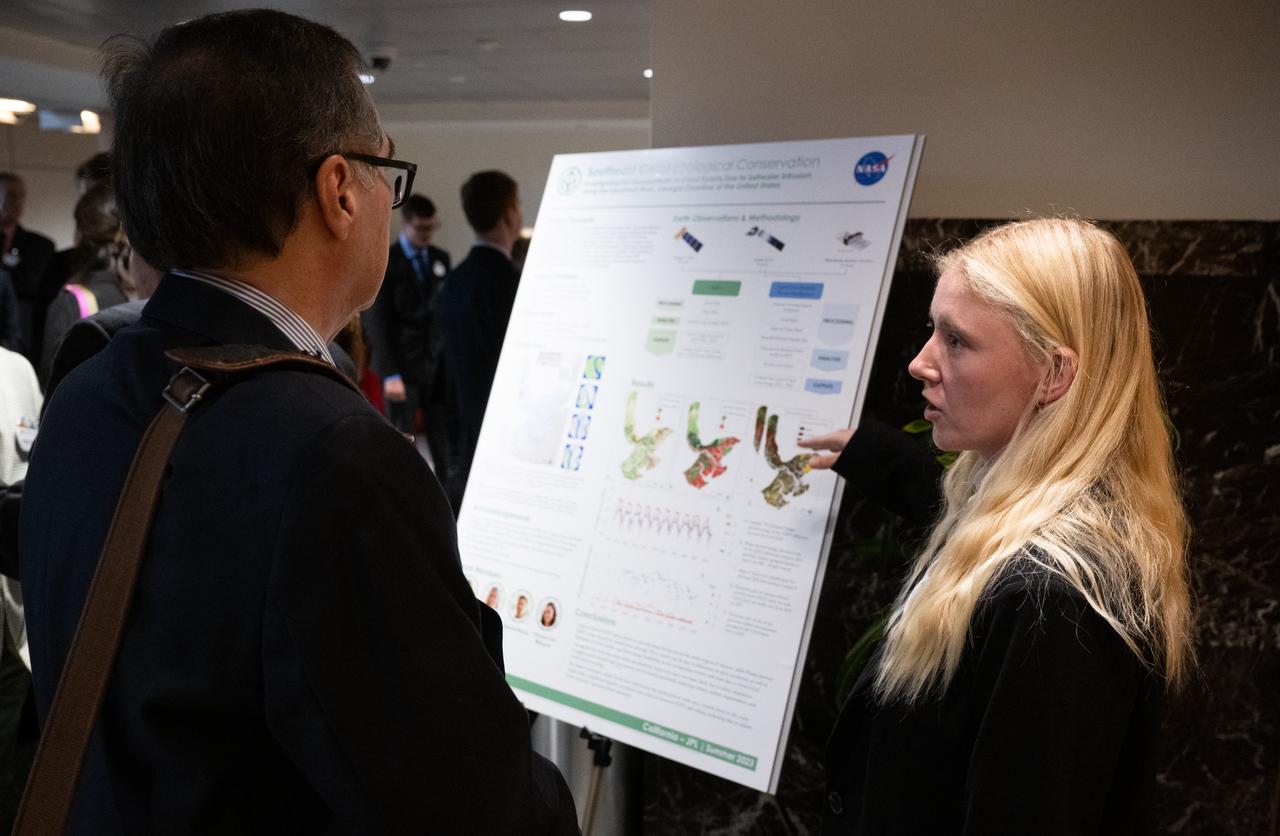
Students and young professionals discuss their projects during the 2023 DEVELOP Day, Wednesday, Aug. 9, 2023, at the Mary W. Jackson NASA Headquarters building in Washington. Every summer students and young professionals from NASA’s Applied Sciences’ DEVELOP National Program come to NASA Headquarters to present their research. This year marks the 25th year of DEVELOP, a training and development program where students work on Earth science research projects, mentored by science advisors from NASA and partner agencies, and extend research results to local communities. Photo Credit: (NASA/Joel Kowsky)
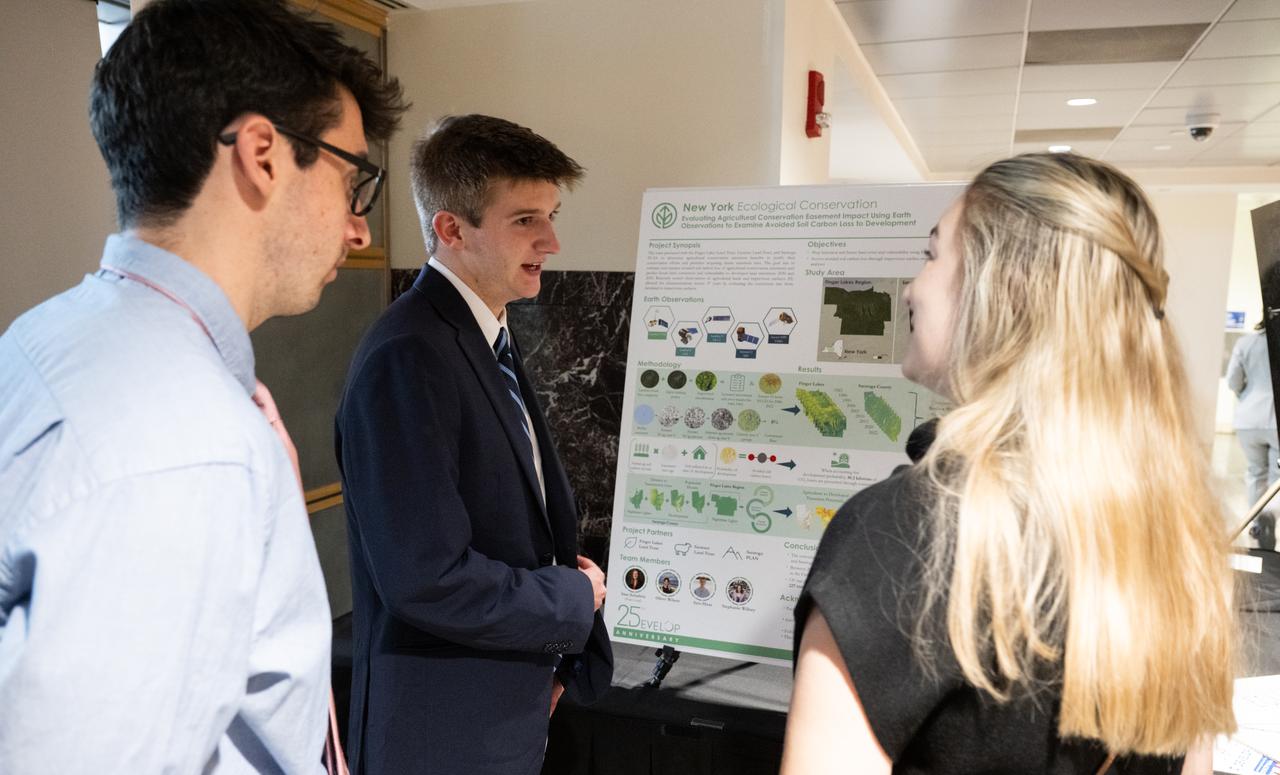
Students and young professionals discuss their projects during the 2023 DEVELOP Day, Wednesday, Aug. 9, 2023, at the Mary W. Jackson NASA Headquarters building in Washington. Every summer students and young professionals from NASA’s Applied Sciences’ DEVELOP National Program come to NASA Headquarters to present their research. This year marks the 25th year of DEVELOP, a training and development program where students work on Earth science research projects, mentored by science advisors from NASA and partner agencies, and extend research results to local communities. Photo Credit: (NASA/Joel Kowsky)
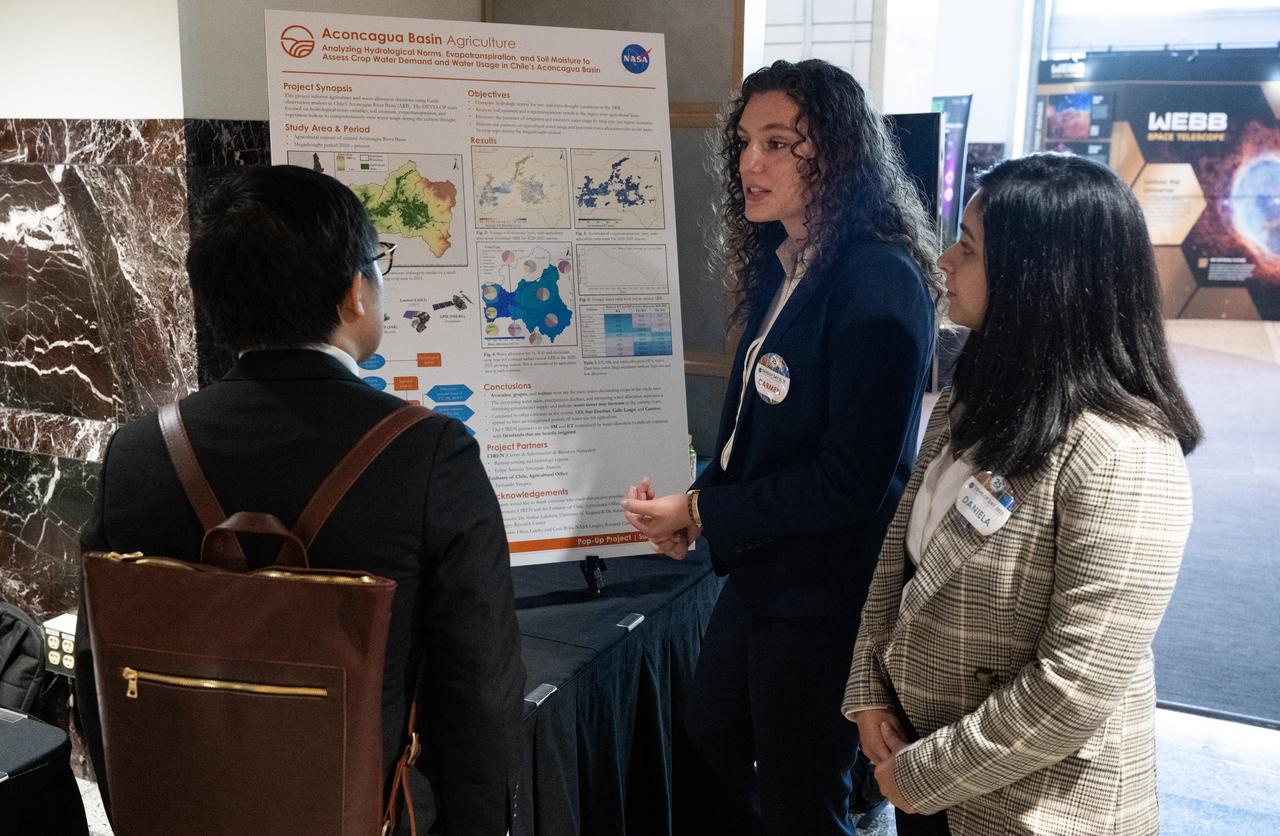
Students and young professionals discuss their projects during the 2023 DEVELOP Day, Wednesday, Aug. 9, 2023, at the Mary W. Jackson NASA Headquarters building in Washington. Every summer students and young professionals from NASA’s Applied Sciences’ DEVELOP National Program come to NASA Headquarters to present their research. This year marks the 25th year of DEVELOP, a training and development program where students work on Earth science research projects, mentored by science advisors from NASA and partner agencies, and extend research results to local communities. Photo Credit: (NASA/Joel Kowsky)
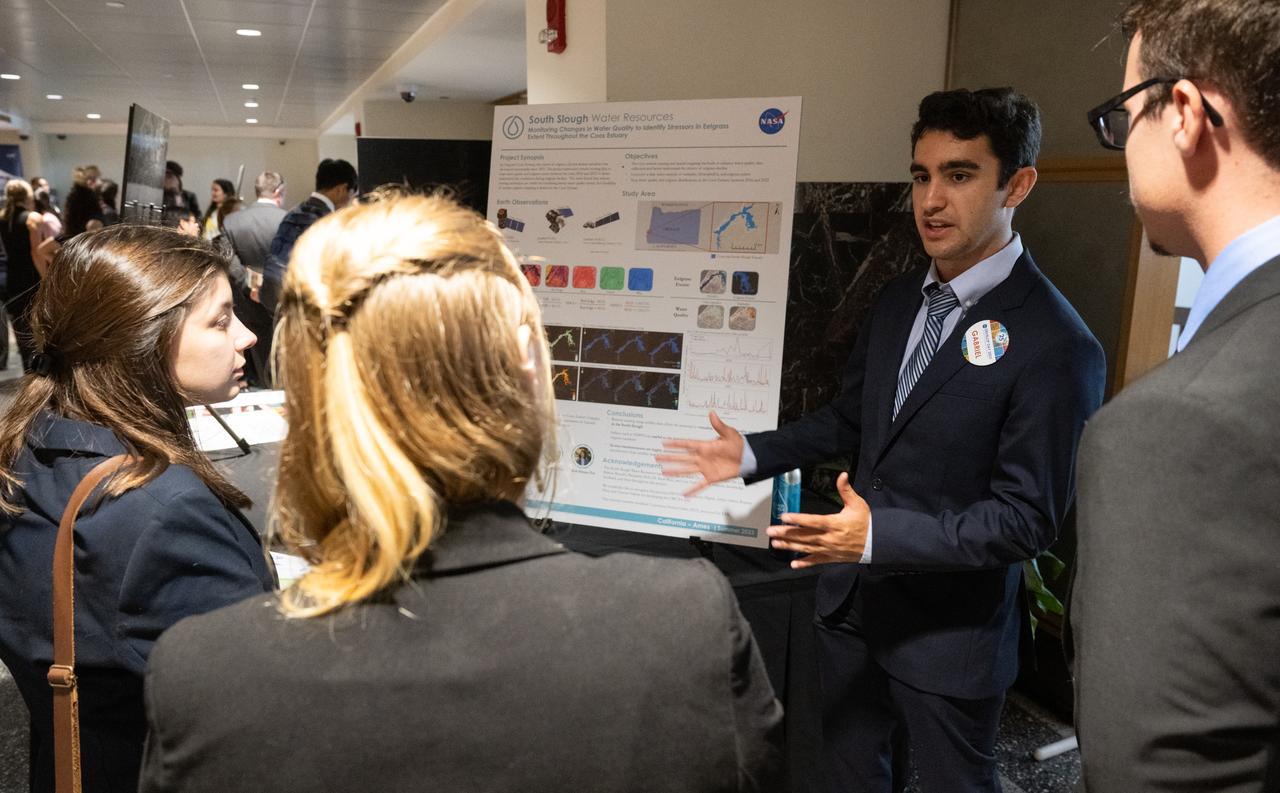
Students and young professionals discuss their projects during the 2023 DEVELOP Day, Wednesday, Aug. 9, 2023, at the Mary W. Jackson NASA Headquarters building in Washington. Every summer students and young professionals from NASA’s Applied Sciences’ DEVELOP National Program come to NASA Headquarters to present their research. This year marks the 25th year of DEVELOP, a training and development program where students work on Earth science research projects, mentored by science advisors from NASA and partner agencies, and extend research results to local communities. Photo Credit: (NASA/Joel Kowsky)
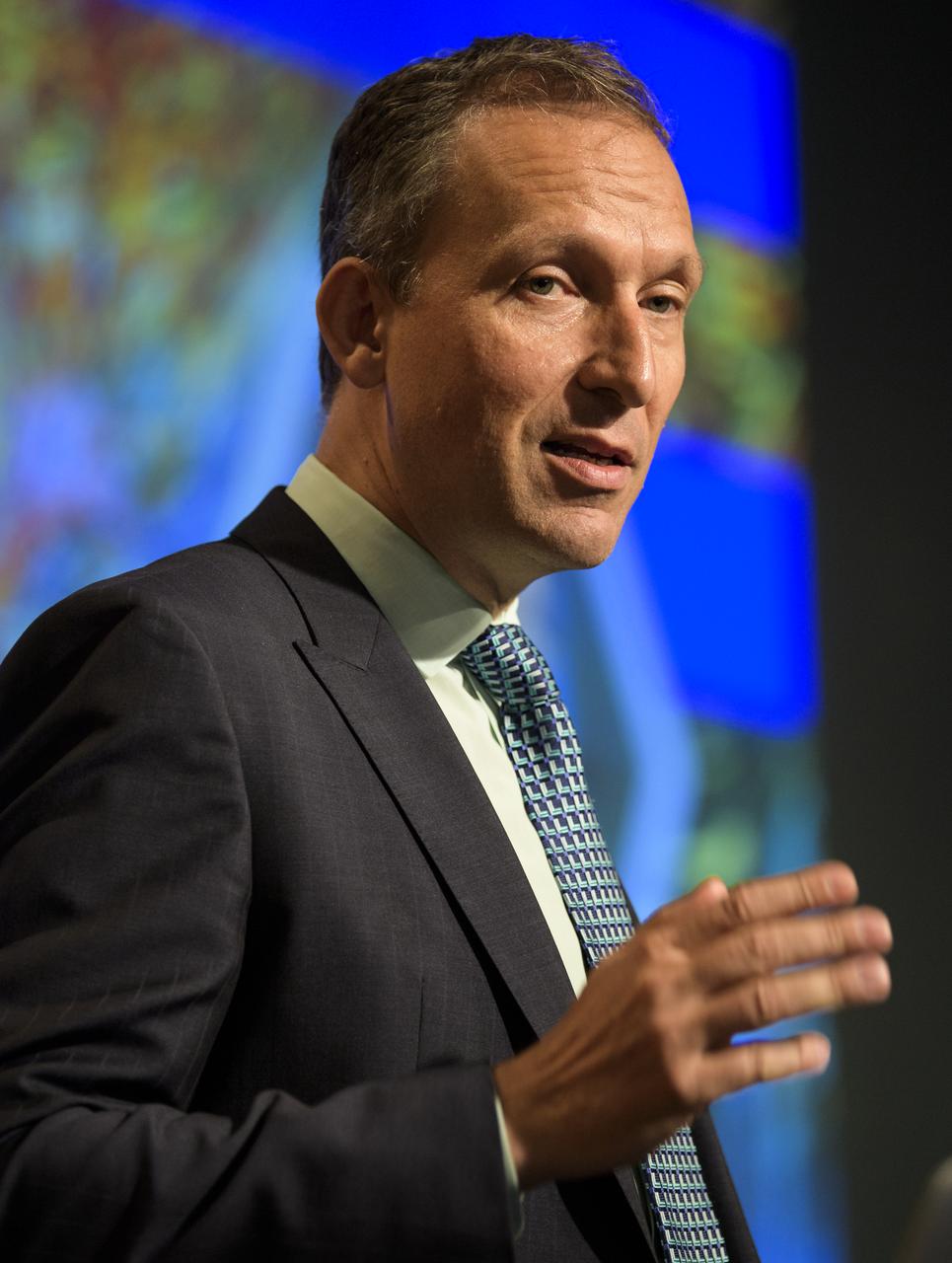
Thomas Zurbuchen, Associate Administrator for NASA's Science Mission Directorate, speaks during the 2019 Annual Earth Science Applications Showcase, Thursday, Aug. 1, 2019 at NASA Headquarters in Washington, DC. Every summer students and young professionals from NASA’s Applied Sciences’ DEVELOP National Program come to NASA Headquarters and present their research projects. DEVELOP is a training and development program where students work on Earth science research projects, mentored by science advisers from NASA and partner agencies, and extend research results to local communities. Photo Credit: (NASA/Joel Kowsky)
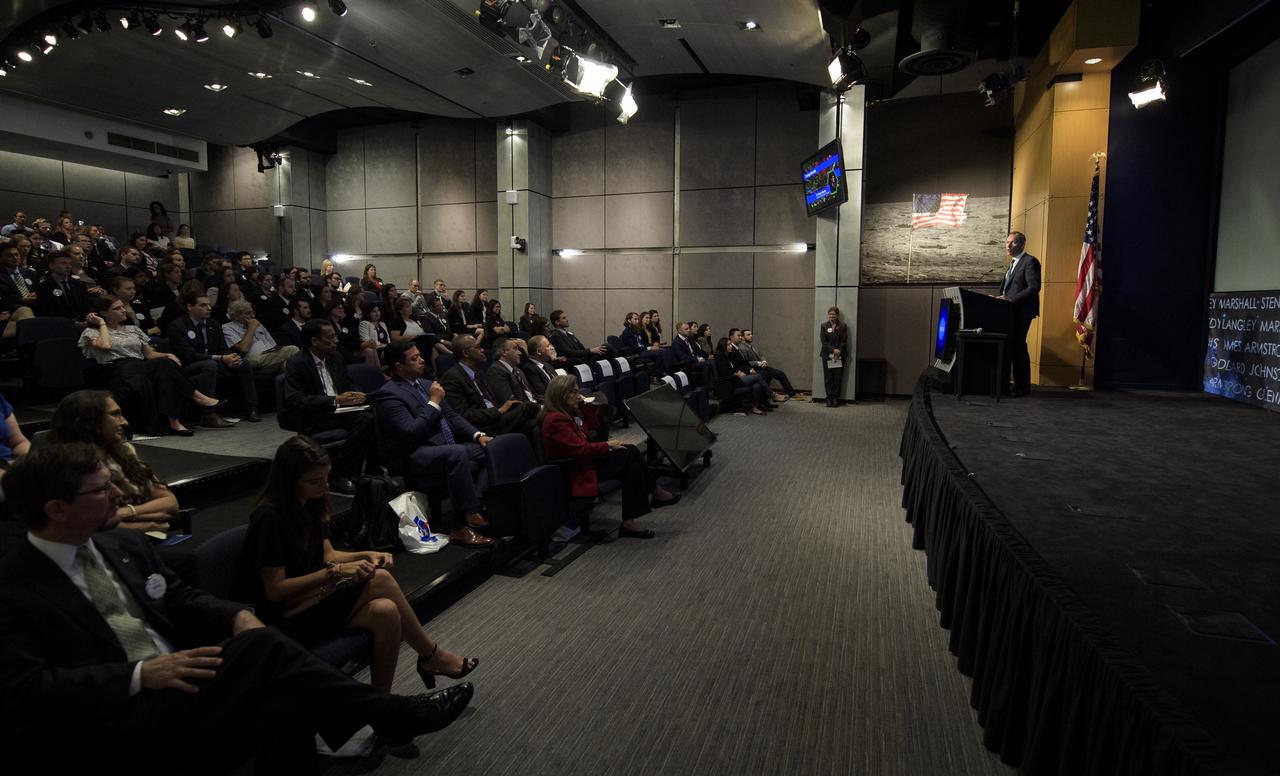
Thomas Zurbuchen, Associate Administrator for NASA's Science Mission Directorate, speaks during the 2019 Annual Earth Science Applications Showcase, Thursday, Aug. 1, 2019 at NASA Headquarters in Washington, DC. Every summer students and young professionals from NASA’s Applied Sciences’ DEVELOP National Program come to NASA Headquarters and present their research projects. DEVELOP is a training and development program where students work on Earth science research projects, mentored by science advisers from NASA and partner agencies, and extend research results to local communities. Photo Credit: (NASA/Joel Kowsky)
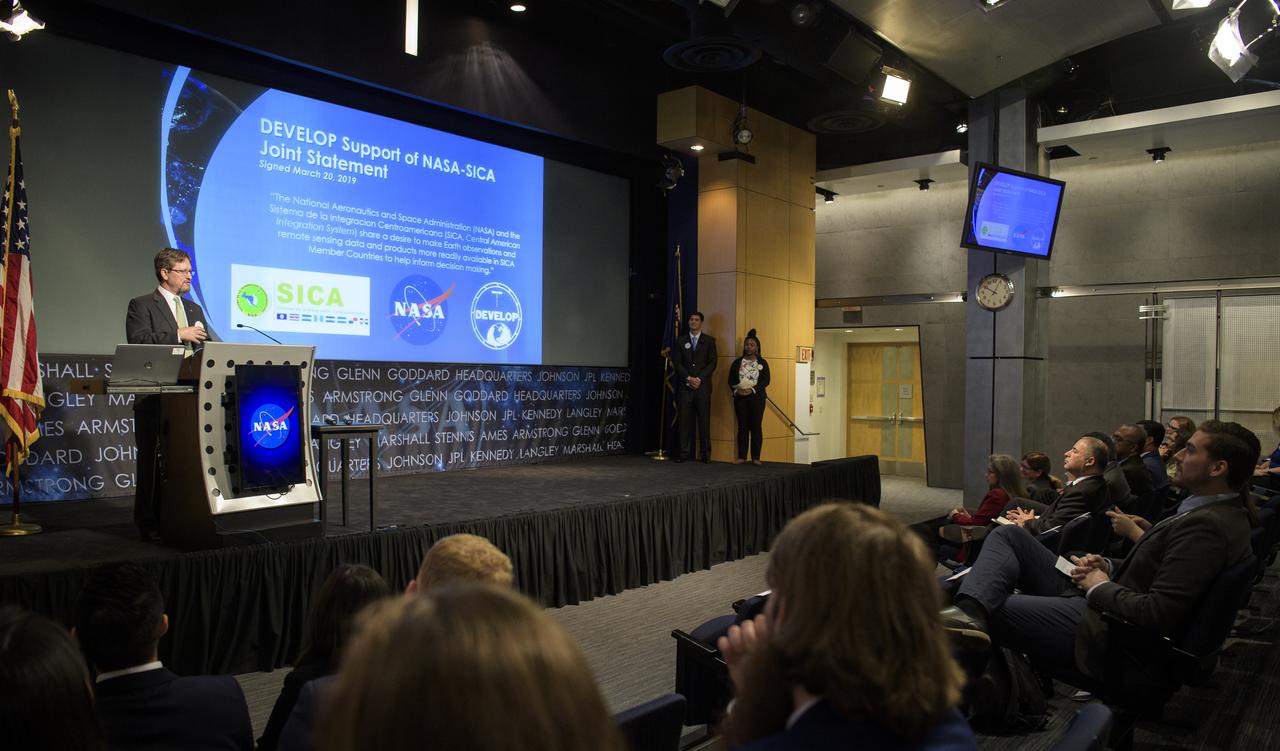
Kenton Ross, DEVELOP's National Science Advisor, speaks about SICA during the 2019 Annual Earth Science Applications Showcase, Thursday, Aug. 1, 2019 at NASA Headquarters in Washington, DC. Every summer students and young professionals from NASA’s Applied Sciences’ DEVELOP National Program come to NASA Headquarters and present their research projects. DEVELOP is a training and development program where students work on Earth science research projects, mentored by science advisers from NASA and partner agencies, and extend research results to local communities. Photo Credit: (NASA/Joel Kowsky)

Australian Space Agency Head Enrico Palermo, left, and NASA Deputy Administrator Pam Melroy, shake hands after signing a joint statement of intent for cooperation in Earth science during the 37th Space Symposium, Monday, April 4, 2022, in Colorado Springs, Colorado. Photo Credit: (NASA/Bill Ingalls)
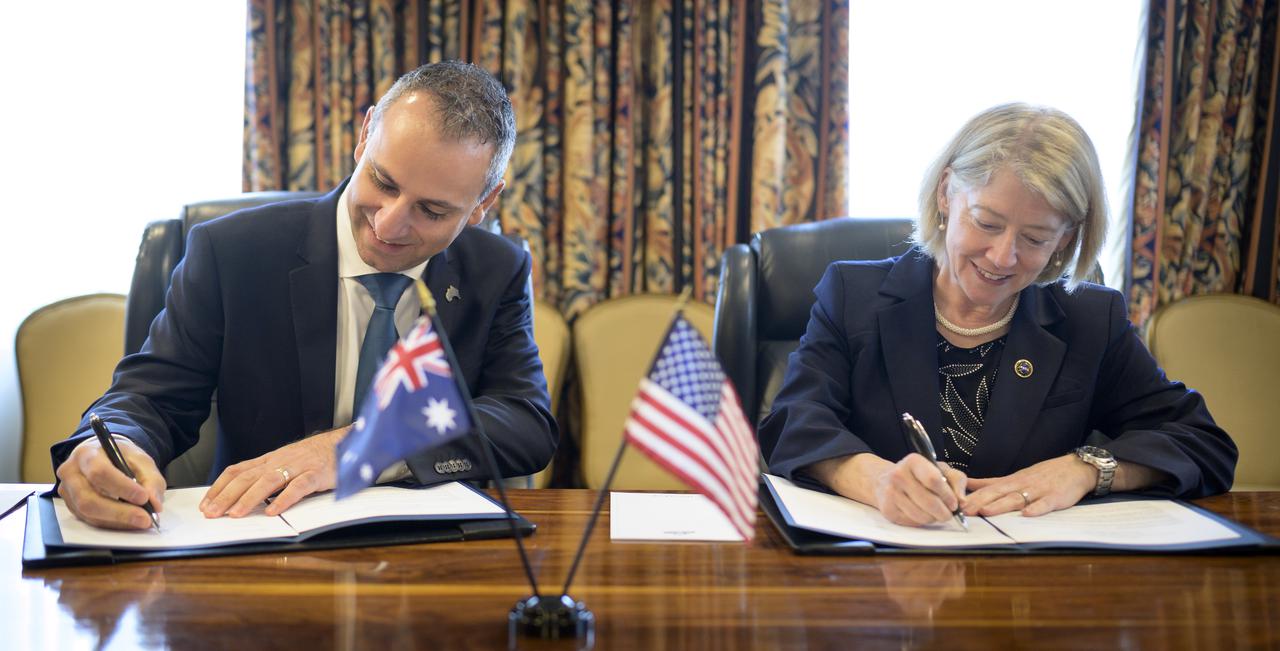
Australian Space Agency Head Enrico Palermo, left, and NASA Deputy Administrator Pam Melroy, sign a joint statement of intent for cooperation in Earth science during the 37th Space Symposium, Monday, April 4, 2022, in Colorado Springs, Colorado. Photo Credit: (NASA/Bill Ingalls)
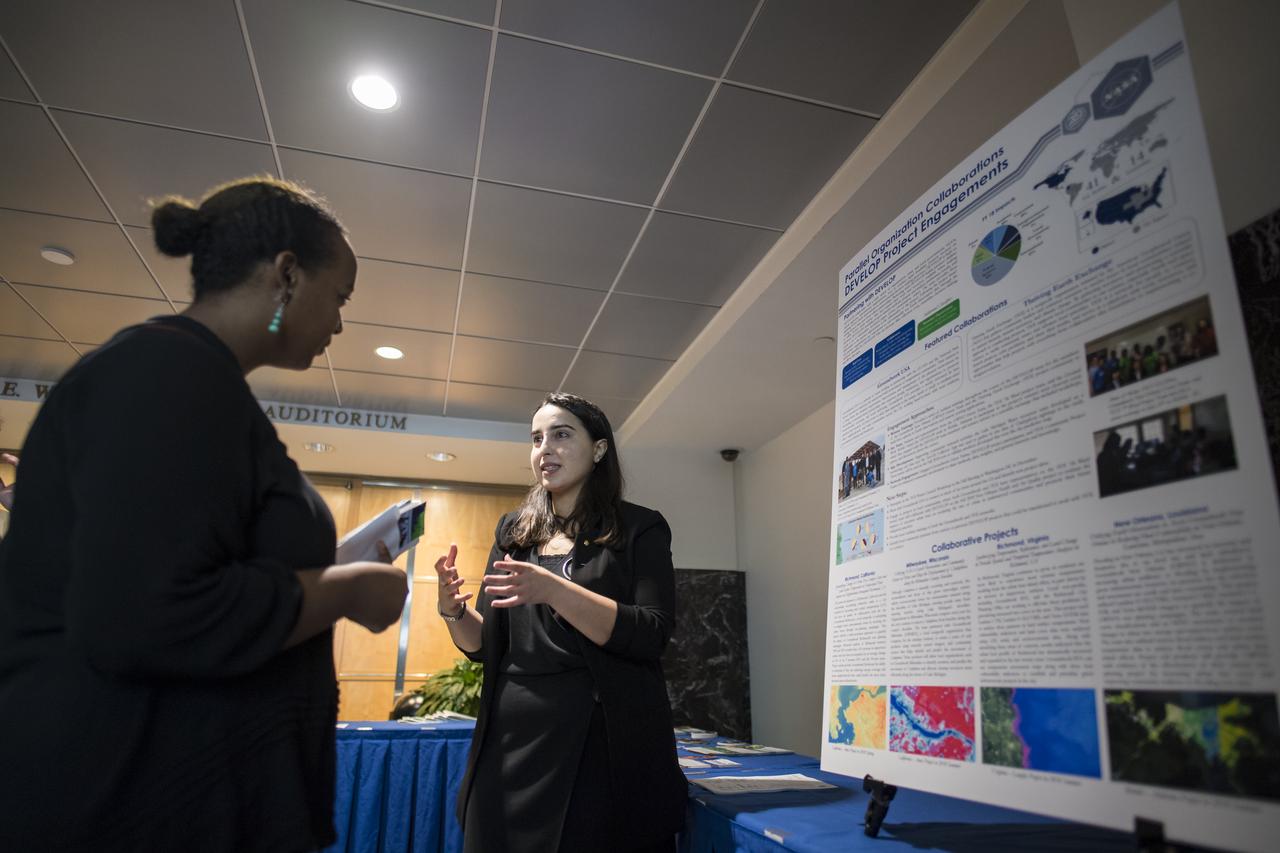
Farnaz Bayat from Mobile, Alabama, discusses her project with a participant at the Earth Science Applications Showcase Wednesday, August 1, 2018 at NASA Headquarters in Washington. Farnaz has been with the DEVELOP program since 2016 and has worked on several projects, including her current one using NASA Earth observations to identify areas in New Orleans that are vulnerable to flooding. DEVELOP is a training and development program where students work on Earth science research projects, mentored by science advisers from NASA and partner agencies, and extend research results to local communities. Photo Credit: (NASA/Aubrey Gemignani)
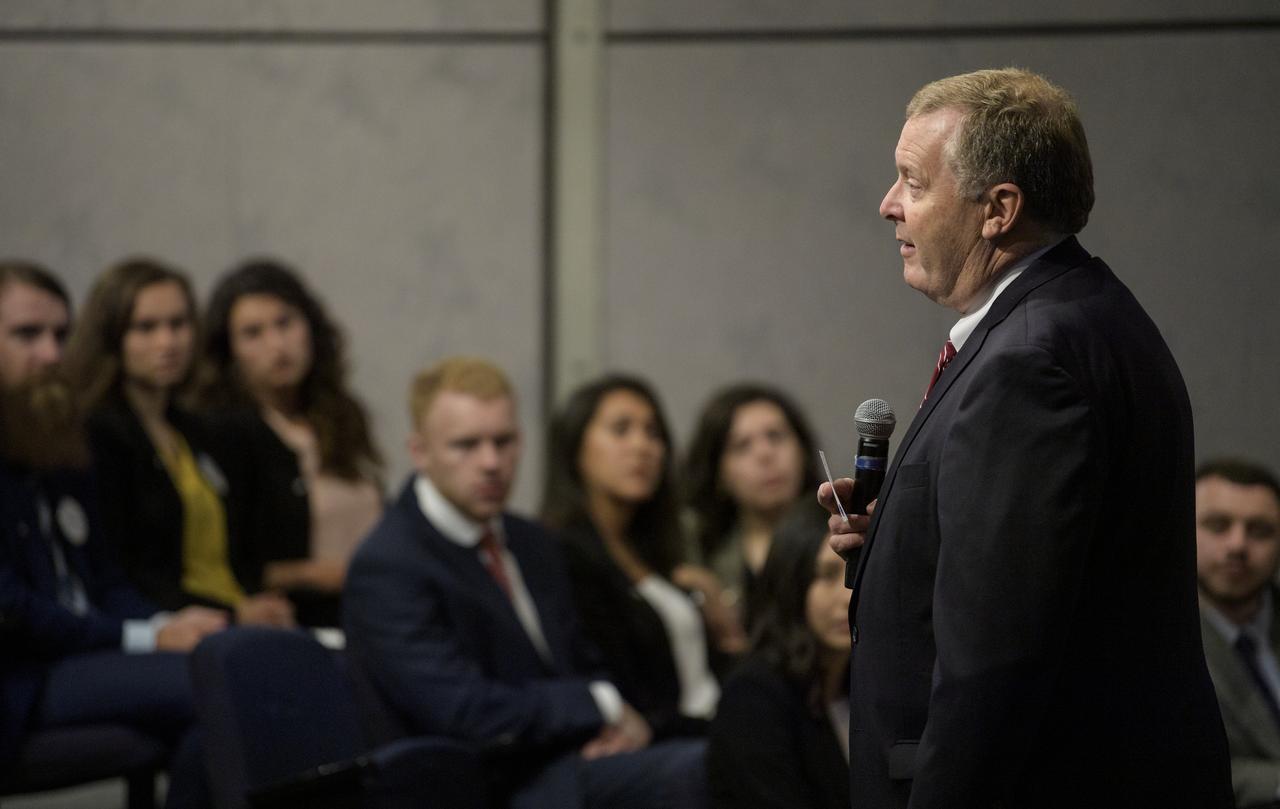
NASA Deputy Administrator Jim Morhard speaks during the 2019 Annual Earth Science Applications Showcase, Thursday, Aug. 1, 2019 at NASA Headquarters in Washington, DC. Every summer students and young professionals from NASA’s Applied Sciences’ DEVELOP National Program come to NASA Headquarters and present their research projects. DEVELOP is a training and development program where students work on Earth science research projects, mentored by science advisers from NASA and partner agencies, and extend research results to local communities. Photo Credit: (NASA/Joel Kowsky)
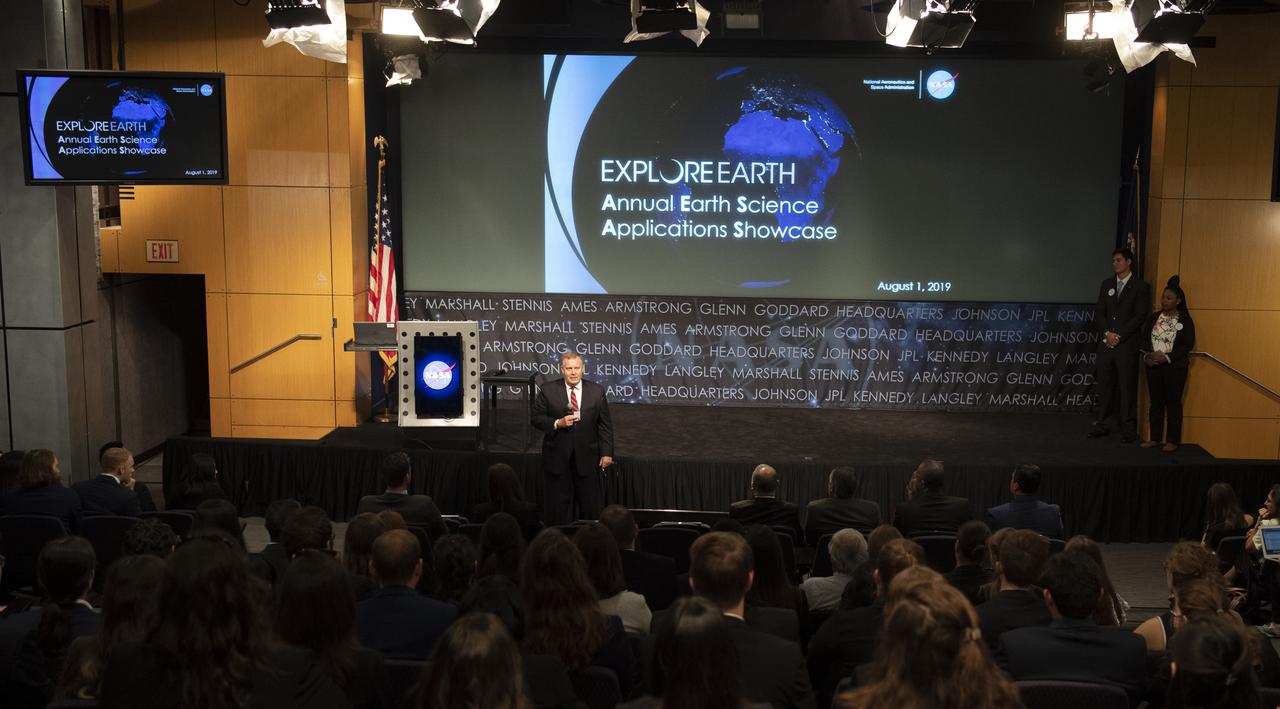
NASA Deputy Administrator Jim Morhard speaks during the 2019 Annual Earth Science Applications Showcase, Thursday, Aug. 1, 2019 at NASA Headquarters in Washington, DC. Every summer students and young professionals from NASA’s Applied Sciences’ DEVELOP National Program come to NASA Headquarters and present their research projects. DEVELOP is a training and development program where students work on Earth science research projects, mentored by science advisers from NASA and partner agencies, and extend research results to local communities. Photo Credit: (NASA/Joel Kowsky)
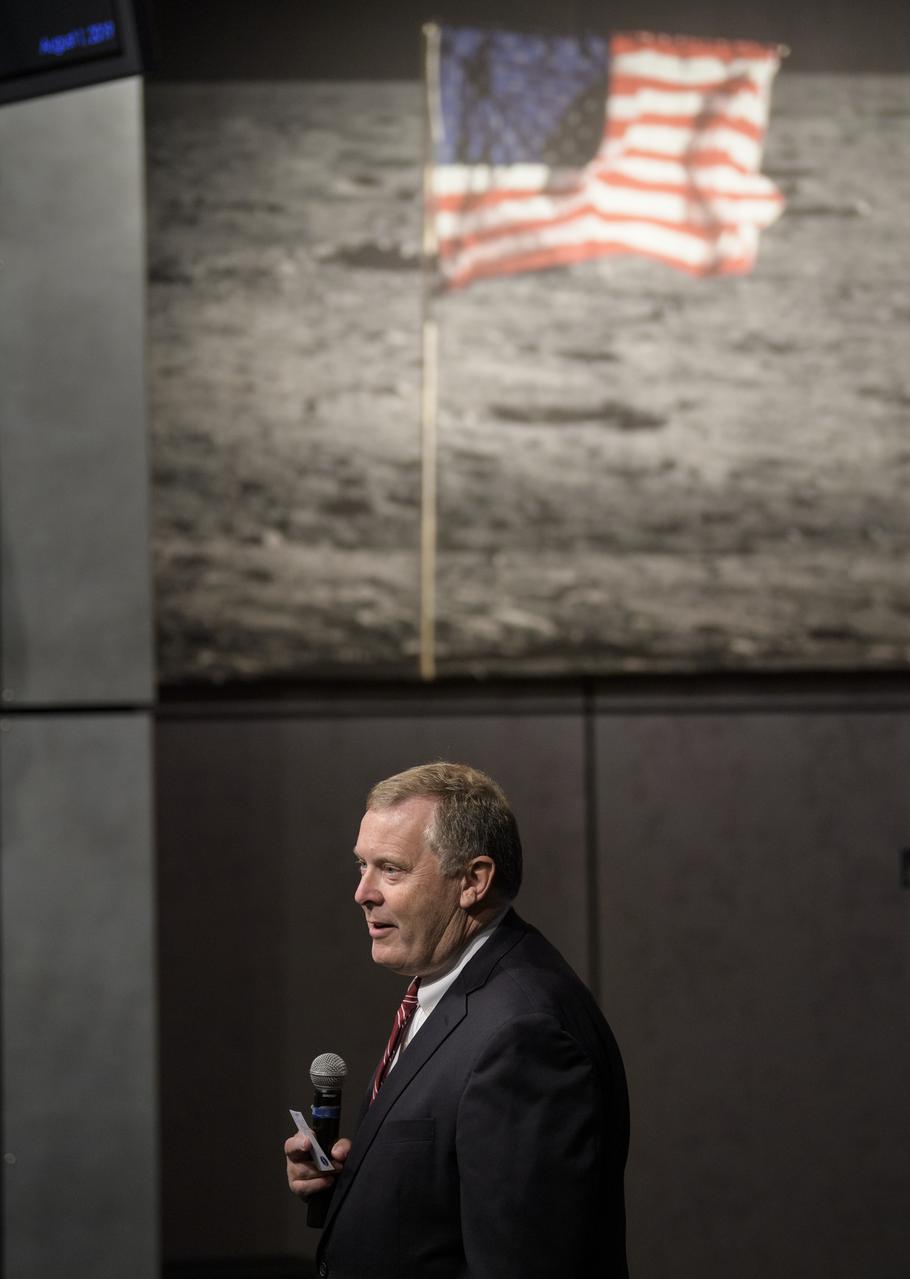
NASA Deputy Administrator Jim Morhard speaks during the 2019 Annual Earth Science Applications Showcase, Thursday, Aug. 1, 2019 at NASA Headquarters in Washington, DC. Every summer students and young professionals from NASA’s Applied Sciences’ DEVELOP National Program come to NASA Headquarters and present their research projects. DEVELOP is a training and development program where students work on Earth science research projects, mentored by science advisers from NASA and partner agencies, and extend research results to local communities. Photo Credit: (NASA/Joel Kowsky)
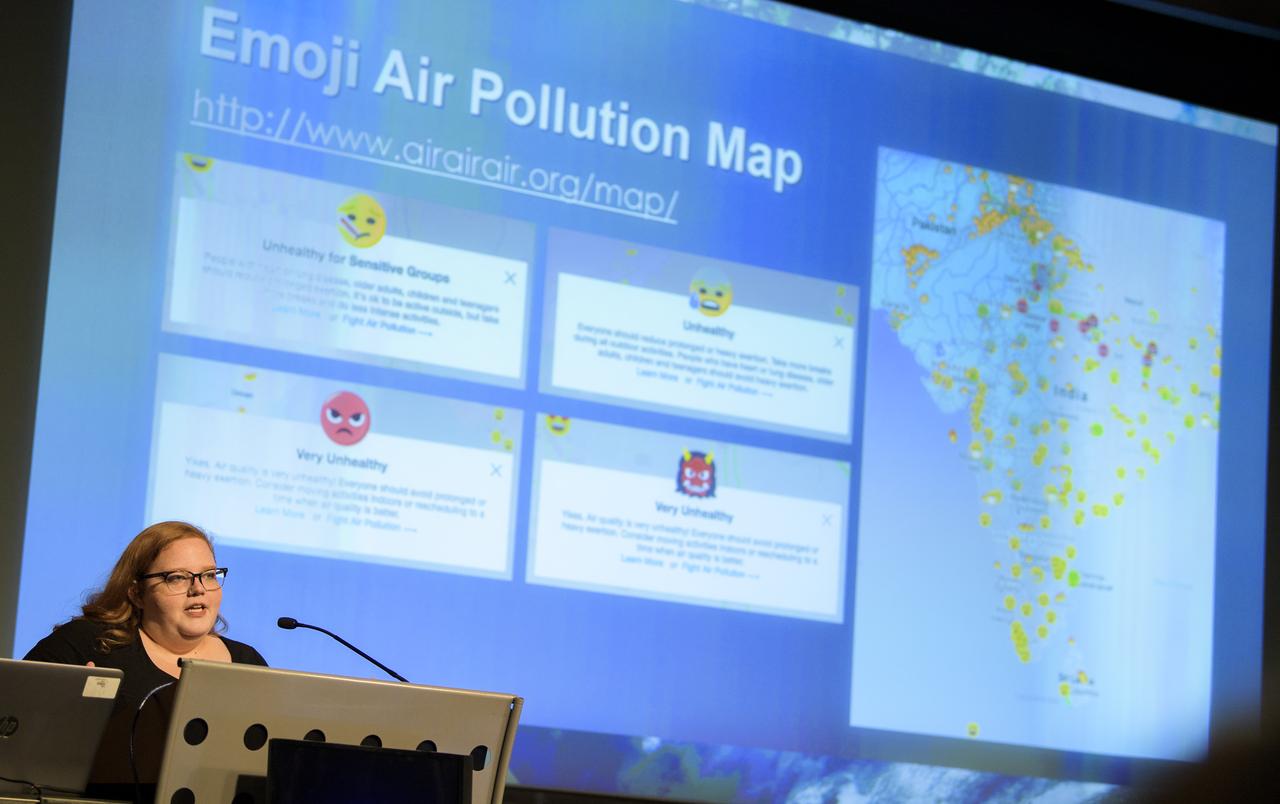
Elizabeth Hook, outreach coordinator for NASA's Applied Remote Sensing Training (ARSET) Program speaks about ARSET and its impact during the 2019 Annual Earth Science Applications Showcase, Thursday, Aug. 1, 2019 at NASA Headquarters in Washington, DC. Every summer students and young professionals from NASA’s Applied Sciences’ DEVELOP National Program come to NASA Headquarters and present their research projects. DEVELOP is a training and development program where students work on Earth science research projects, mentored by science advisers from NASA and partner agencies, and extend research results to local communities. Photo Credit: (NASA/Joel Kowsky)
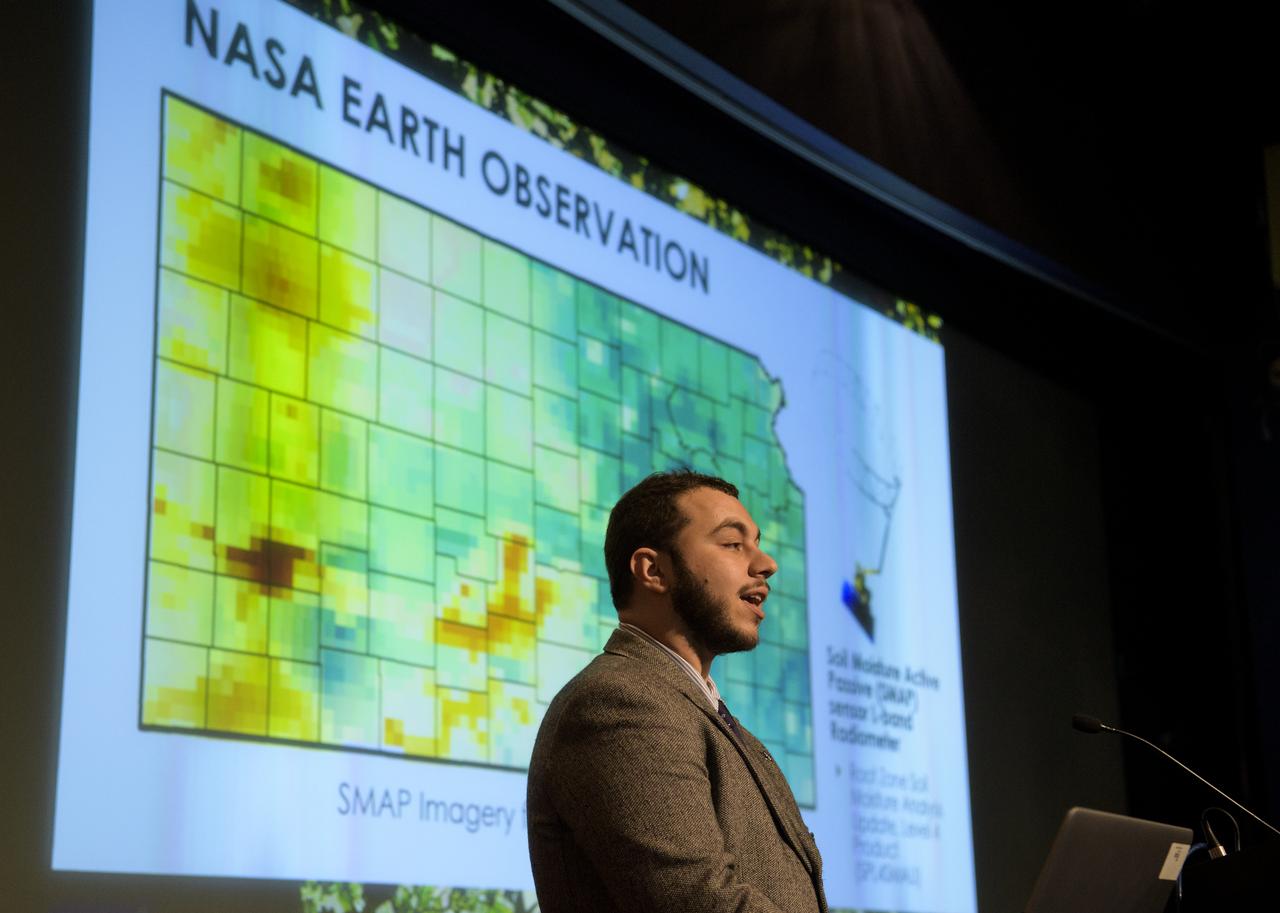
Max Dunsker speaks about the DEVELOP Kansas Agriculture and Food Security Project, which modeled soil drydown parameters for drought mitigation, during the 2019 Annual Earth Science Applications Showcase, Thursday, Aug. 1, 2019 at NASA Headquarters in Washington, DC. Every summer students and young professionals from NASA’s Applied Sciences’ DEVELOP National Program come to NASA Headquarters and present their research projects. DEVELOP is a training and development program where students work on Earth science research projects, mentored by science advisers from NASA and partner agencies, and extend research results to local communities. Photo Credit: (NASA/Joel Kowsky)
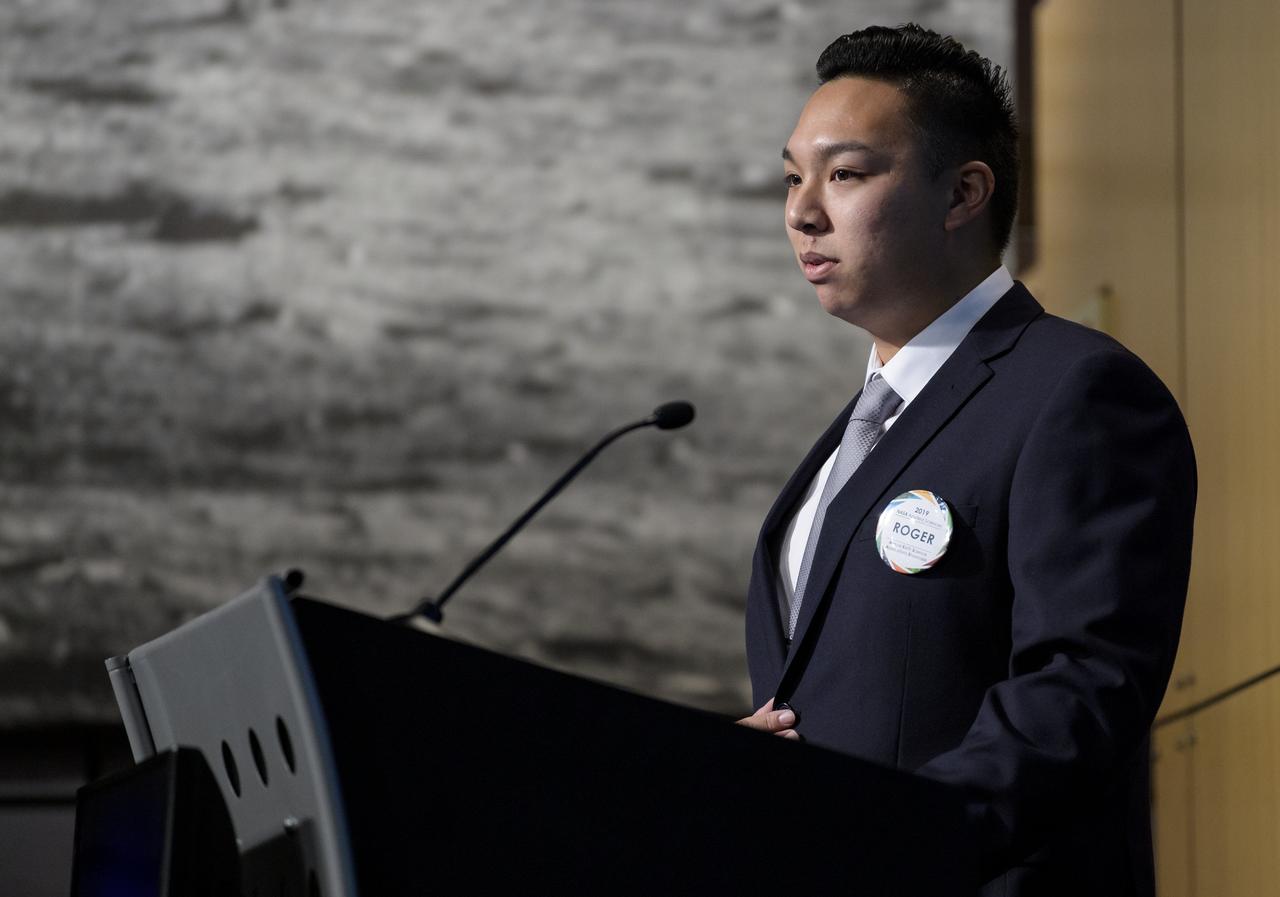
Roger Ly speaks about DEVELOP's Santa Monica Mountains Ecological Forecasting III project during the 2019 Annual Earth Science Applications Showcase, Thursday, Aug. 1, 2019 at NASA Headquarters in Washington, DC. Every summer students and young professionals from NASA’s Applied Sciences’ DEVELOP National Program come to NASA Headquarters and present their research projects. DEVELOP is a training and development program where students work on Earth science research projects, mentored by science advisers from NASA and partner agencies, and extend research results to local communities. Photo Credit: (NASA/Joel Kowsky)
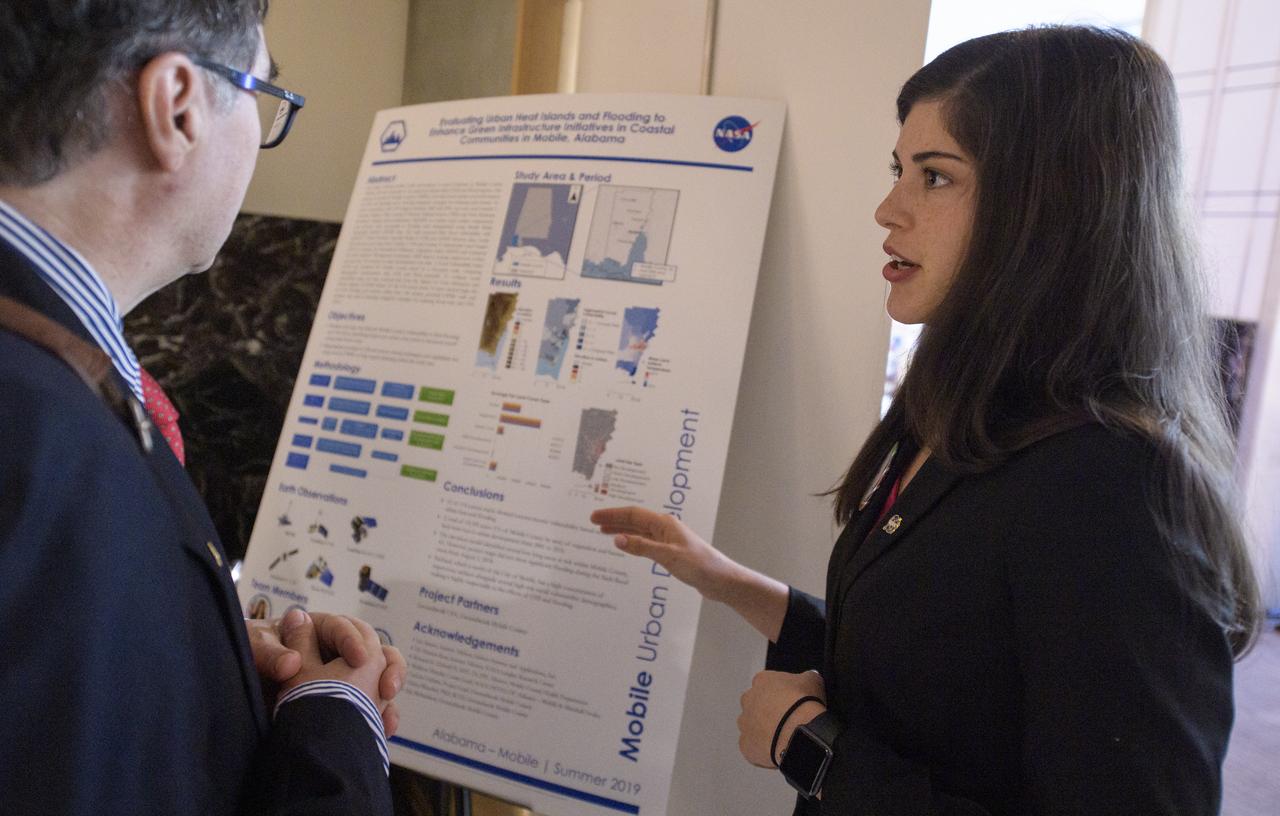
Students and young professionals discuss their projects during the 2019 Annual Earth Science Applications Showcase, Thursday, Aug. 1, 2019 at NASA Headquarters in Washington, DC. Every summer students and young professionals from NASA’s Applied Sciences’ DEVELOP National Program come to NASA Headquarters and present their research projects. DEVELOP is a training and development program where students work on Earth science research projects, mentored by science advisers from NASA and partner agencies, and extend research results to local communities. Photo Credit: (NASA/Joel Kowsky)
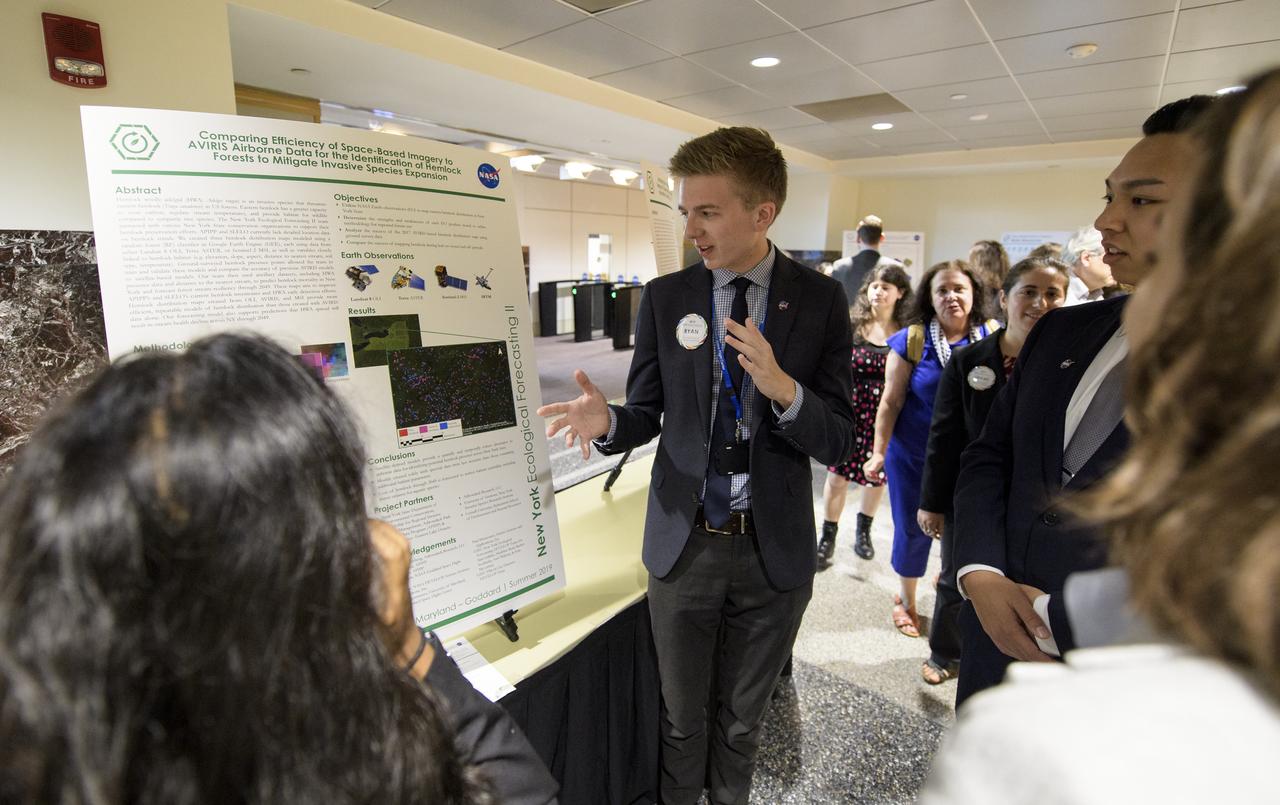
Students and young professionals discuss their projects during the 2019 Annual Earth Science Applications Showcase, Thursday, Aug. 1, 2019 at NASA Headquarters in Washington, DC. Every summer students and young professionals from NASA’s Applied Sciences’ DEVELOP National Program come to NASA Headquarters and present their research projects. DEVELOP is a training and development program where students work on Earth science research projects, mentored by science advisers from NASA and partner agencies, and extend research results to local communities. Photo Credit: (NASA/Joel Kowsky)
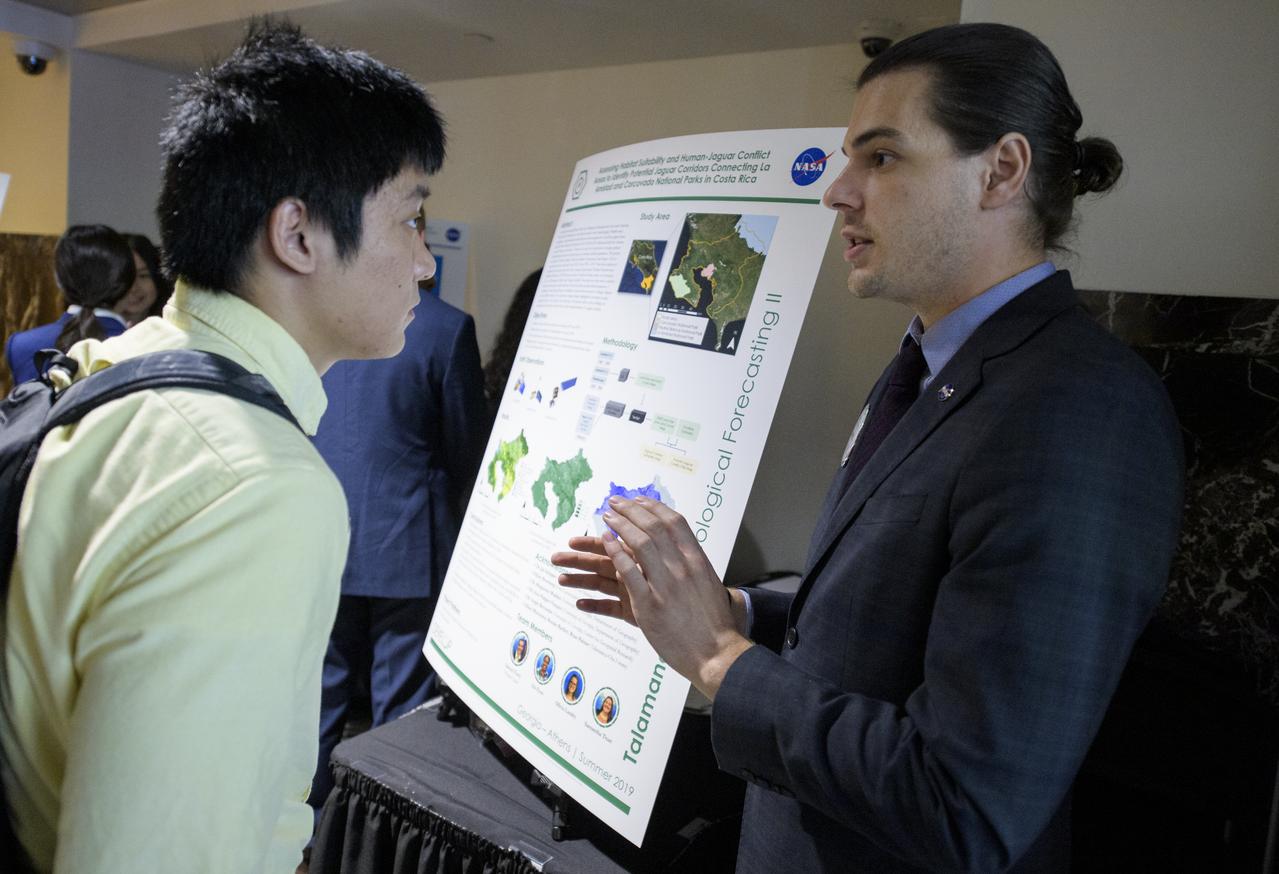
Students and young professionals discuss their projects during the 2019 Annual Earth Science Applications Showcase, Thursday, Aug. 1, 2019 at NASA Headquarters in Washington, DC. Every summer students and young professionals from NASA’s Applied Sciences’ DEVELOP National Program come to NASA Headquarters and present their research projects. DEVELOP is a training and development program where students work on Earth science research projects, mentored by science advisers from NASA and partner agencies, and extend research results to local communities. Photo Credit: (NASA/Joel Kowsky)
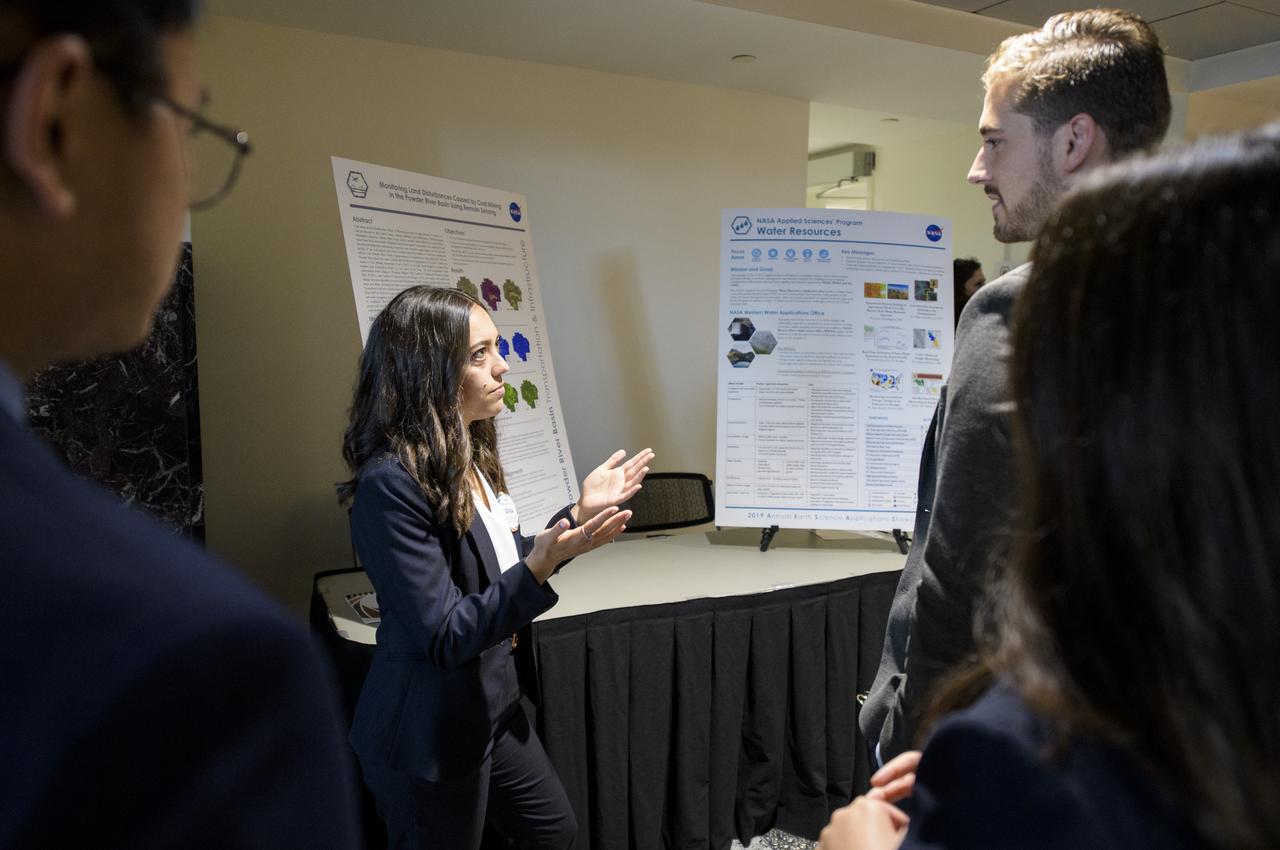
Students and young professionals discuss their projects during the 2019 Annual Earth Science Applications Showcase, Thursday, Aug. 1, 2019 at NASA Headquarters in Washington, DC. Every summer students and young professionals from NASA’s Applied Sciences’ DEVELOP National Program come to NASA Headquarters and present their research projects. DEVELOP is a training and development program where students work on Earth science research projects, mentored by science advisers from NASA and partner agencies, and extend research results to local communities. Photo Credit: (NASA/Joel Kowsky)
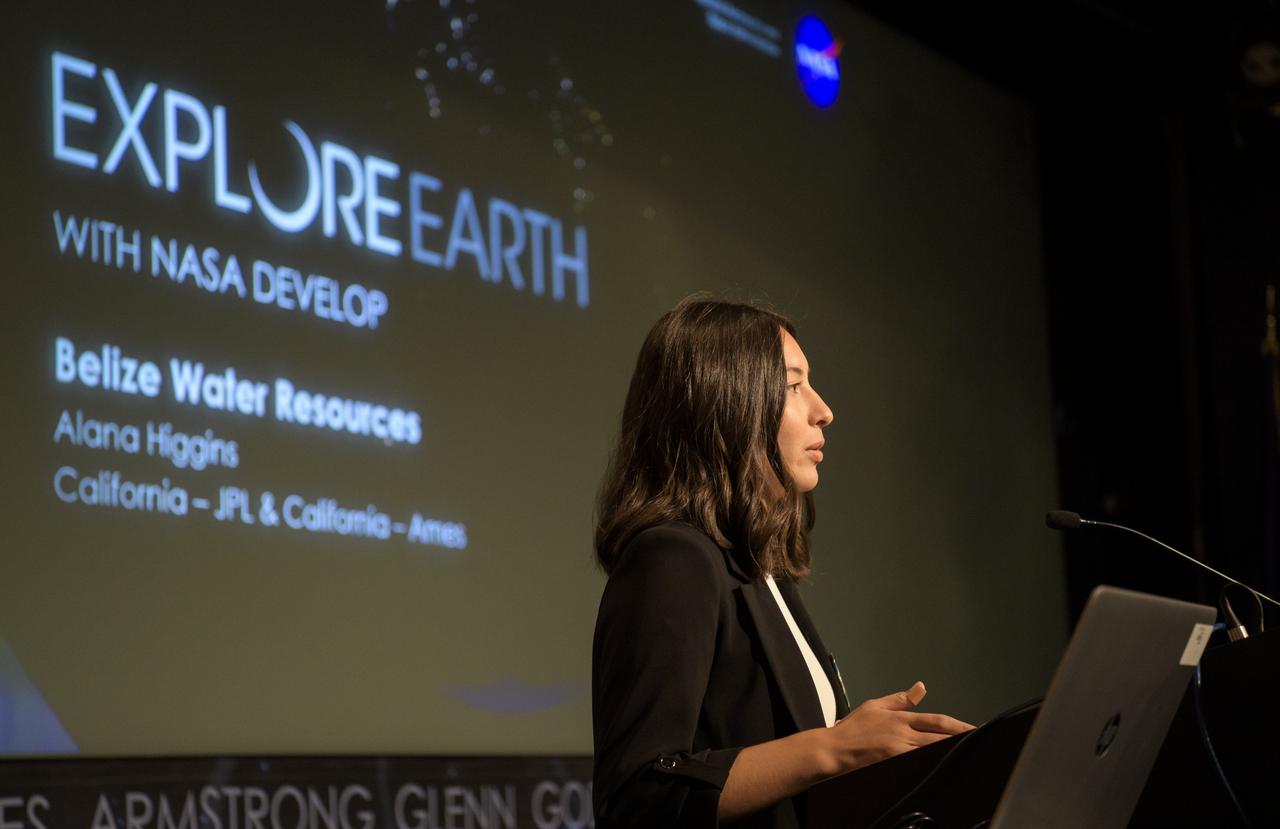
Alana Higgins speaks about water resources in Belize during the 2019 Annual Earth Science Applications Showcase, Thursday, Aug. 1, 2019 at NASA Headquarters in Washington, DC. Every summer students and young professionals from NASA’s Applied Sciences’ DEVELOP National Program come to NASA Headquarters and present their research projects. DEVELOP is a training and development program where students work on Earth science research projects, mentored by science advisers from NASA and partner agencies, and extend research results to local communities. Photo Credit: (NASA/Joel Kowsky)
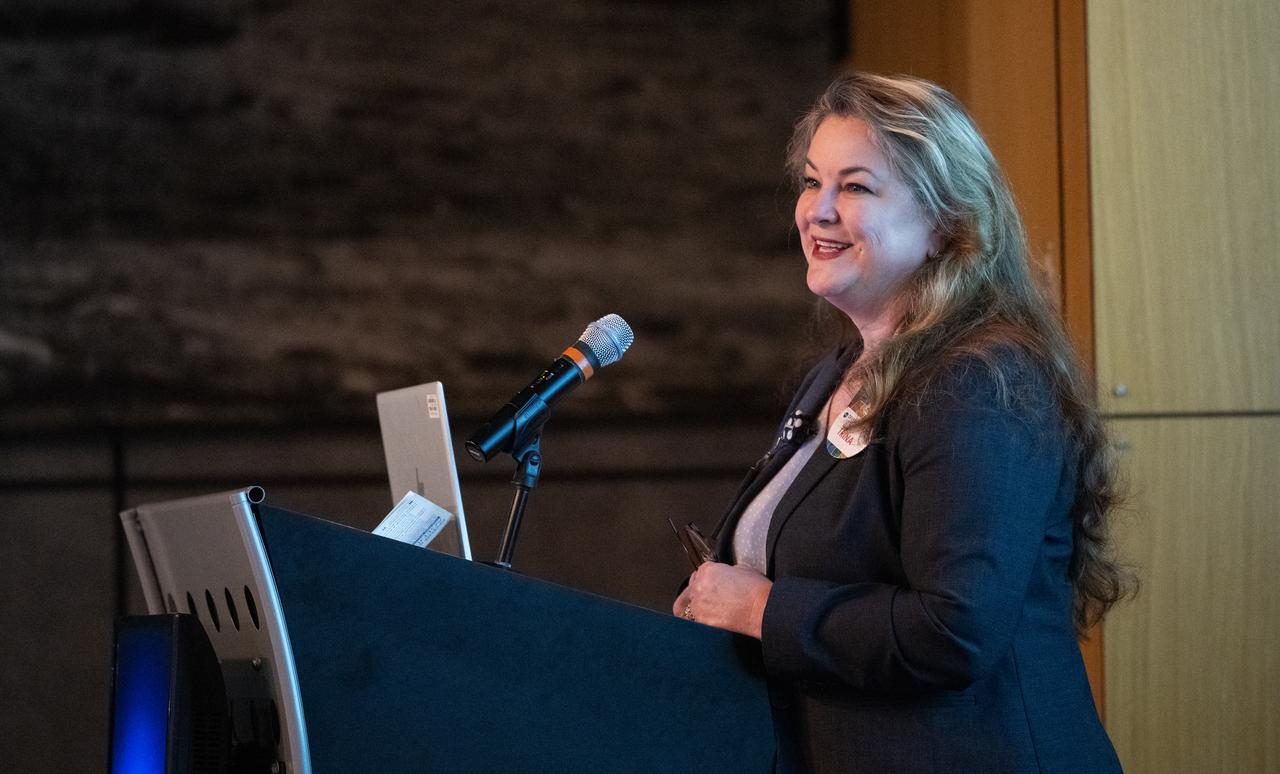
Trina Dyal, Director of the Science Directorate at NASA’s Langley Research Center, delivers closing remarks during the 2023 DEVELOP Day, Wednesday, Aug. 9, 2023, at the Mary W. Jackson NASA Headquarters building in Washington. Every summer students and young professionals from NASA’s Applied Sciences’ DEVELOP National Program come to NASA Headquarters to present their research. This year marks the 25th year of DEVELOP, a training and development program where students work on Earth science research projects, mentored by science advisors from NASA and partner agencies, and extend research results to local communities. Photo Credit: (NASA/Joel Kowsky)
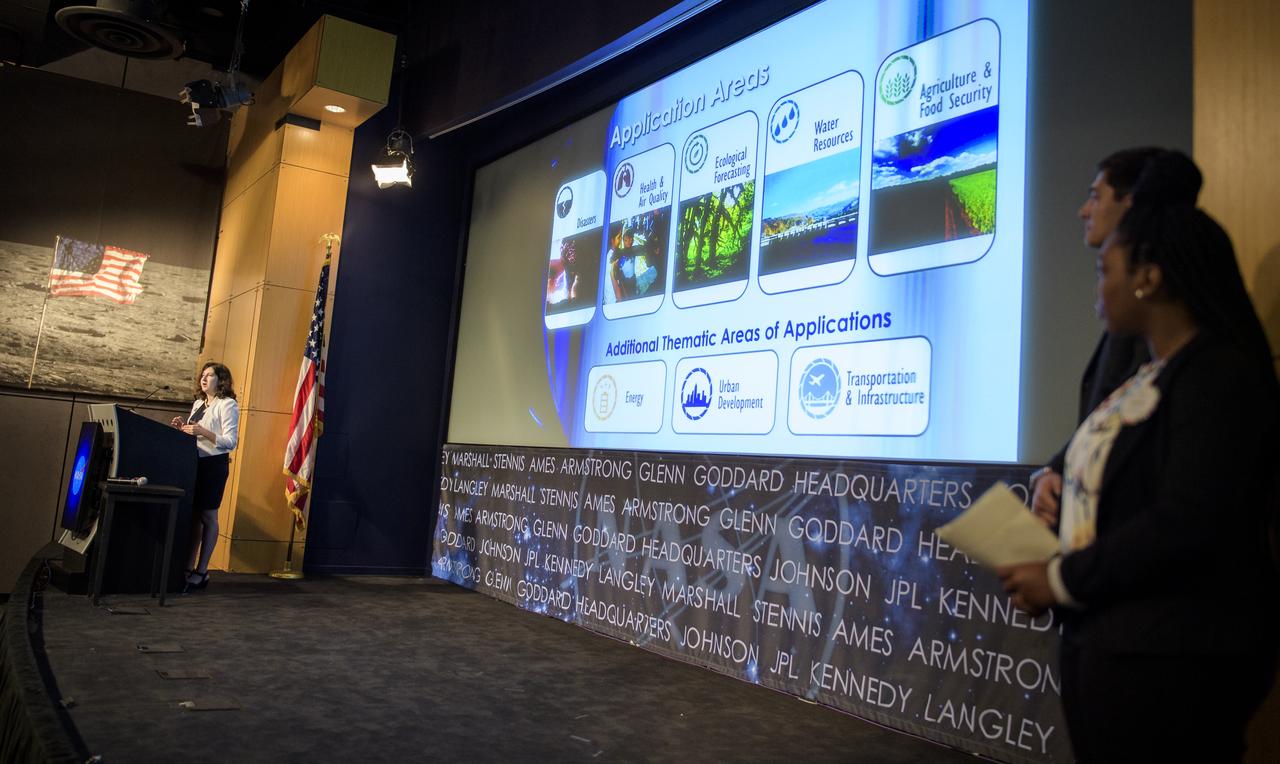
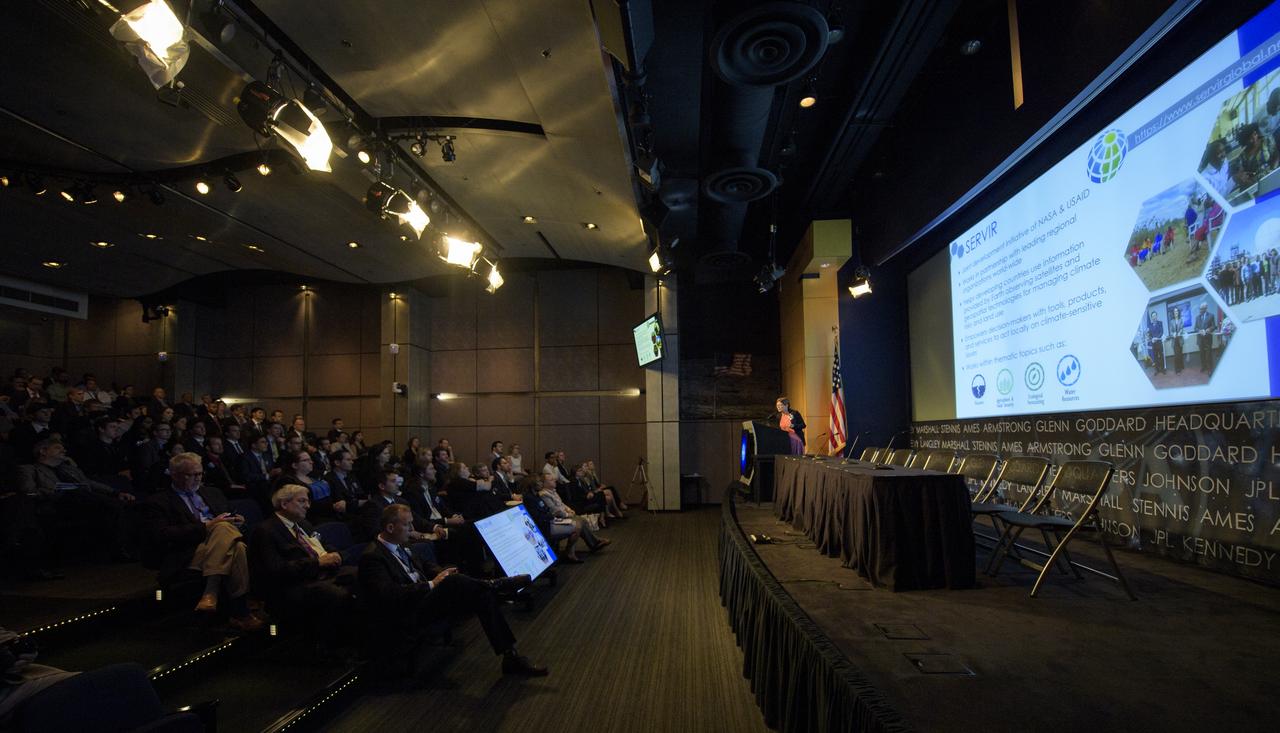
Emily Sylak-Glassman, Program Manager for the Applied Sciences Program in NASA's Earth Science Divison, speaks during the 2019 Annual Earth Science Applications Showcase, Thursday, Aug. 1, 2019 at NASA Headquarters in Washington, DC. Every summer students and young professionals from NASA’s Applied Sciences’ DEVELOP National Program come to NASA Headquarters and present their research projects. DEVELOP is a training and development program where students work on Earth science research projects, mentored by science advisers from NASA and partner agencies, and extend research results to local communities. Photo Credit: (NASA/Joel Kowsky)
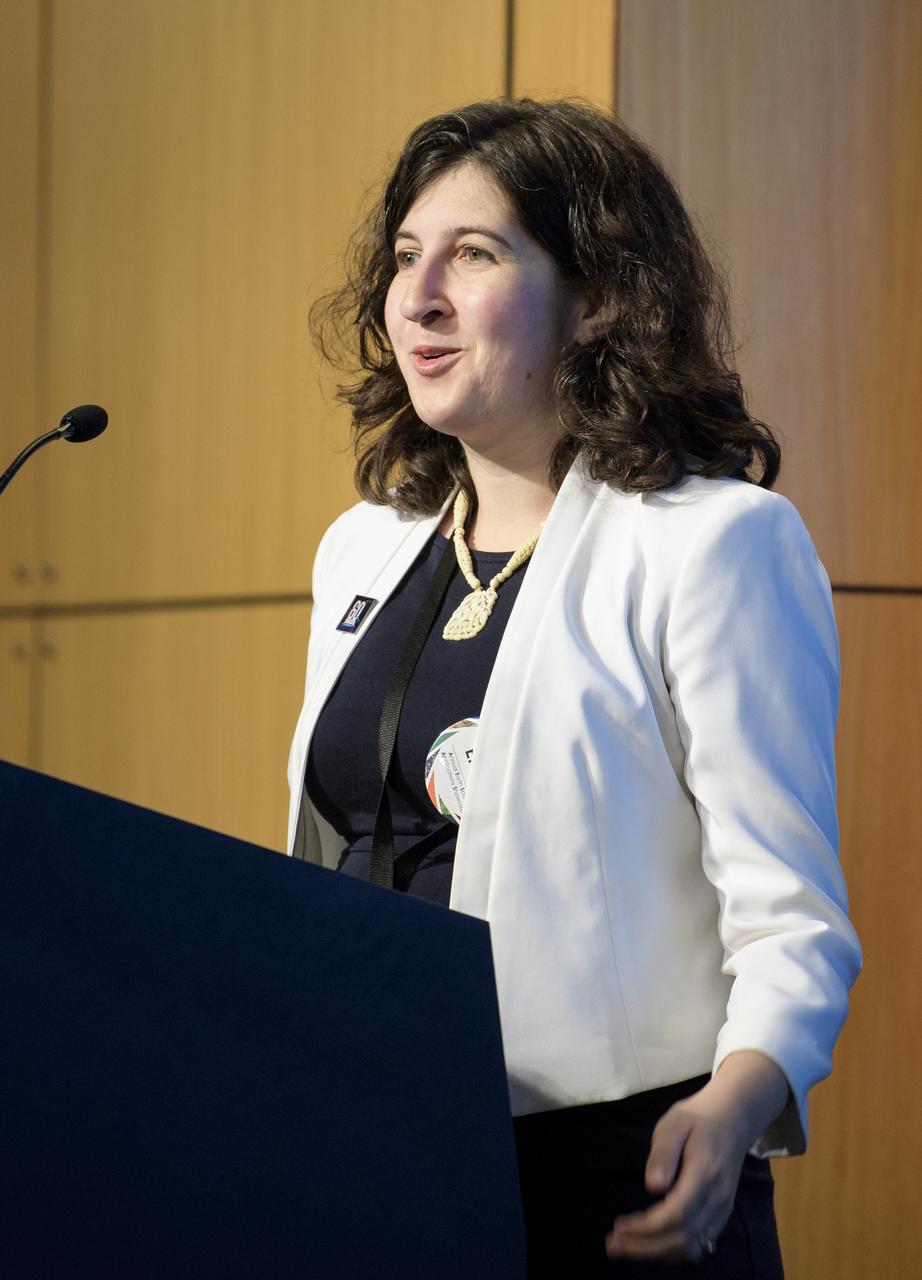
Emily Sylak-Glassman, Program Manager for the Applied Sciences Program in NASA's Earth Science Divison, speaks during the 2019 Annual Earth Science Applications Showcase, Thursday, Aug. 1, 2019 at NASA Headquarters in Washington, DC. Every summer students and young professionals from NASA’s Applied Sciences’ DEVELOP National Program come to NASA Headquarters and present their research projects. DEVELOP is a training and development program where students work on Earth science research projects, mentored by science advisers from NASA and partner agencies, and extend research results to local communities. Photo Credit: (NASA/Joel Kowsky)
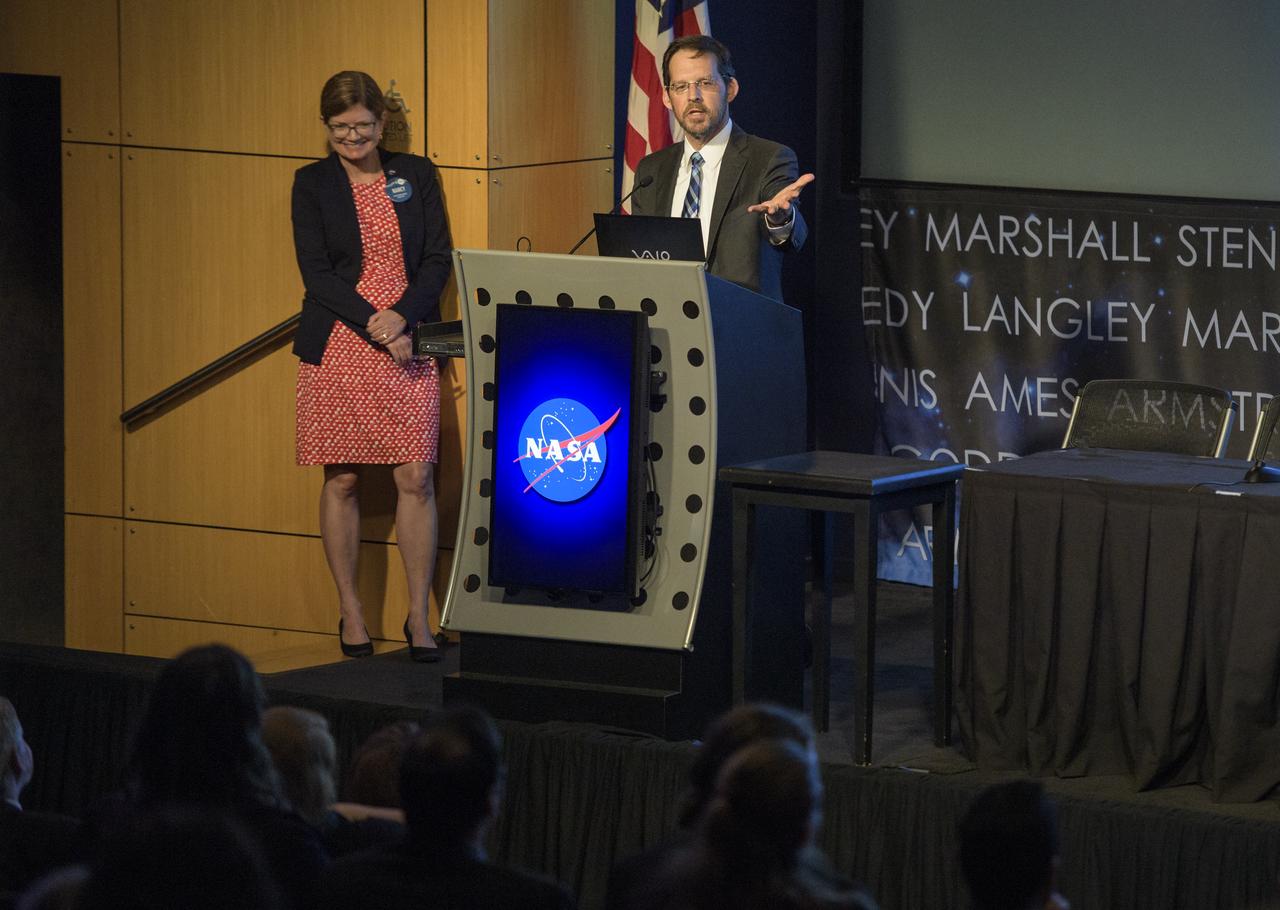
Capacity Building Program Manager for NASA's Applied Sciences Program (Earth Science Division) Nancy Searby speaks during the 2018 Annual Earth Science Applications Showcase, Wednesday, Aug. 1, 2018 at NASA Headquarters in Washington. Every summer students and young professionals from NASA’s Applied Sciences’ DEVELOP National Program come to NASA Headquarters and present their research projects. DEVELOP is a training and development program where students work on Earth science research projects, mentored by science advisers from NASA and partner agencies, and extend research results to local communities. Photo Credit: (NASA/Joel Kowsky)
NASA Director of Applied Sciences Program (Earth Science Division) Lawrence Friedl speaks during the 2016 Annual Earth Science Applications Showcase, Wednesday, Aug. 1, 2018 at NASA Headquarters in Washington. Every summer students and young professionals from NASA’s Applied Sciences’ DEVELOP National Program come to NASA Headquarters and present their research projects. DEVELOP is a training and development program where students work on Earth science research projects, mentored by science advisers from NASA and partner agencies, and extend research results to local communities. Photo Credit: (NASA/Joel Kowsky)
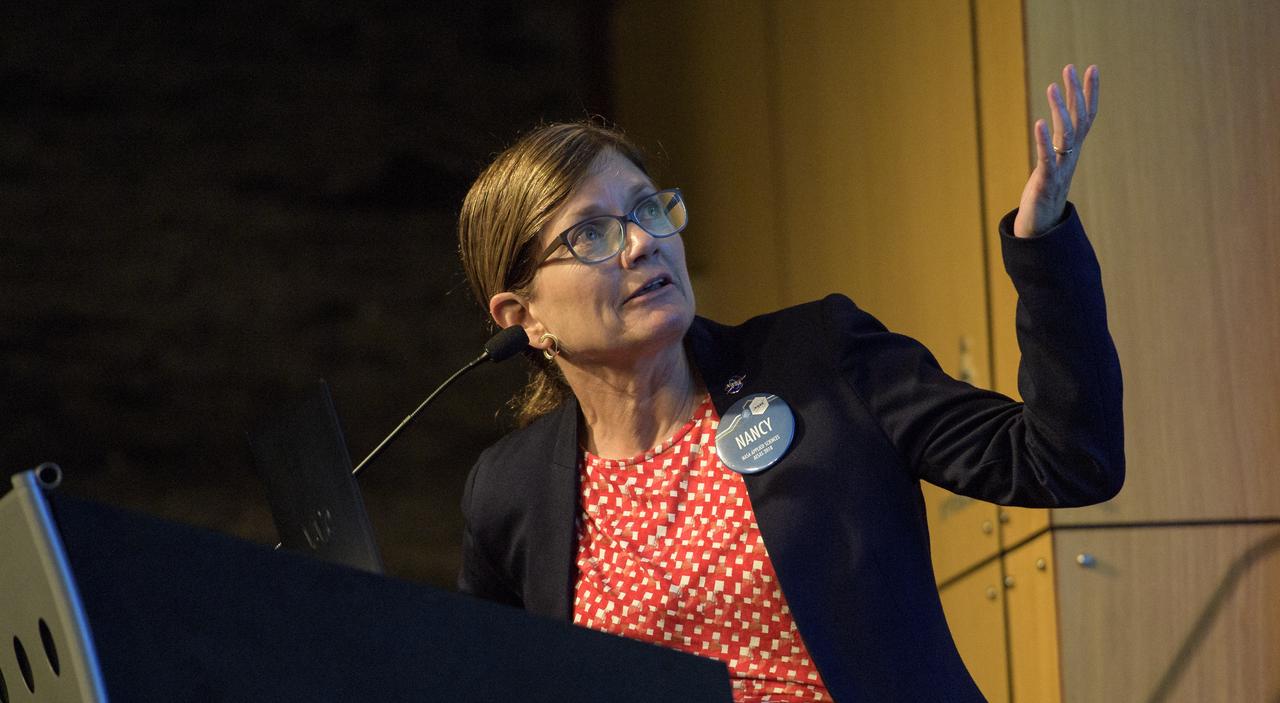
Capacity Building Program Manager for NASA's Applied Sciences Program (Earth Science Division) Nancy Searby speaks during the 2018 Annual Earth Science Applications Showcase, Wednesday, Aug. 1, 2018 at NASA Headquarters in Washington. Every summer students and young professionals from NASA’s Applied Sciences’ DEVELOP National Program come to NASA Headquarters and present their research projects. DEVELOP is a training and development program where students work on Earth science research projects, mentored by science advisers from NASA and partner agencies, and extend research results to local communities. Photo Credit: (NASA/Joel Kowsky)
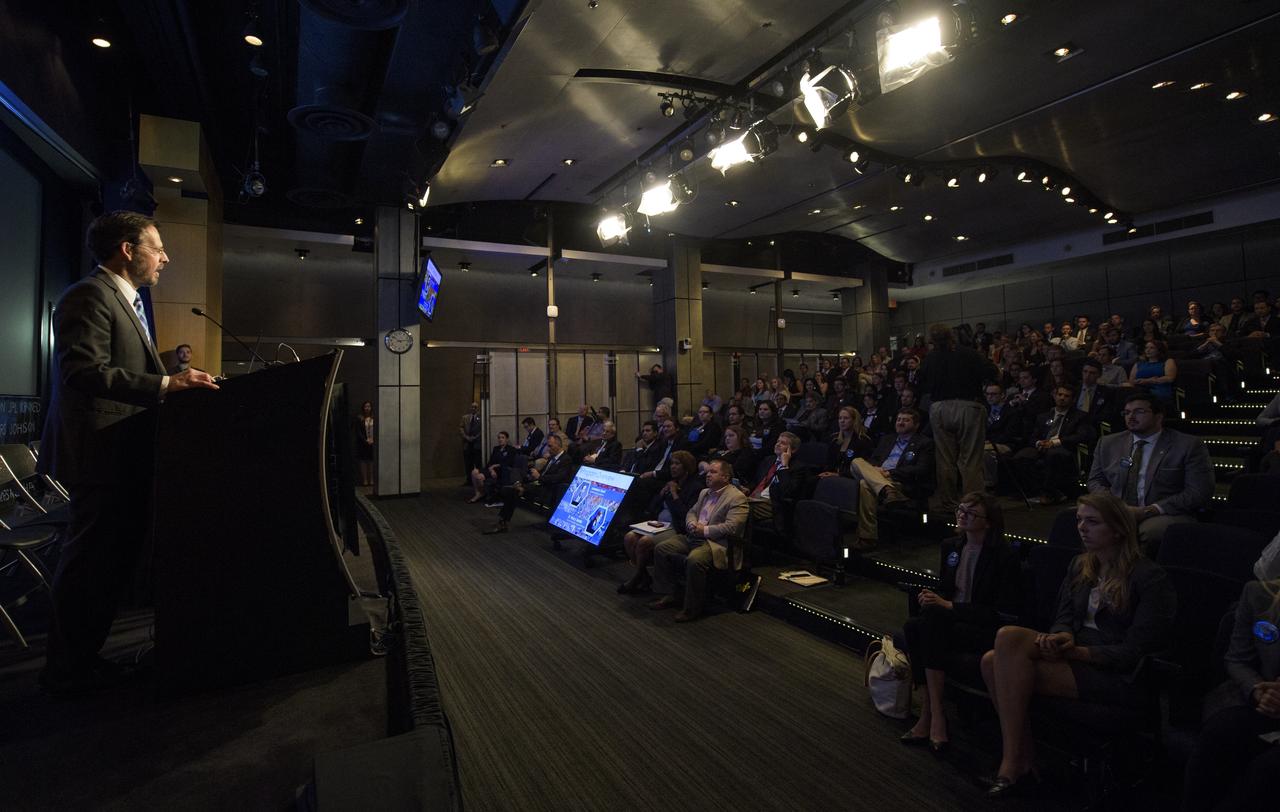
NASA Director of Applied Sciences Program (Earth Science Division) Lawrence Friedl speaks during the 2018 Annual Earth Science Applications Showcase, Wednesday, Aug. 1, 2018 at NASA Headquarters in Washington. Every summer students and young professionals from NASA’s Applied Sciences’ DEVELOP National Program come to NASA Headquarters and present their research projects. DEVELOP is a training and development program where students work on Earth science research projects, mentored by science advisers from NASA and partner agencies, and extend research results to local communities. Photo Credit: (NASA/Joel Kowsky)
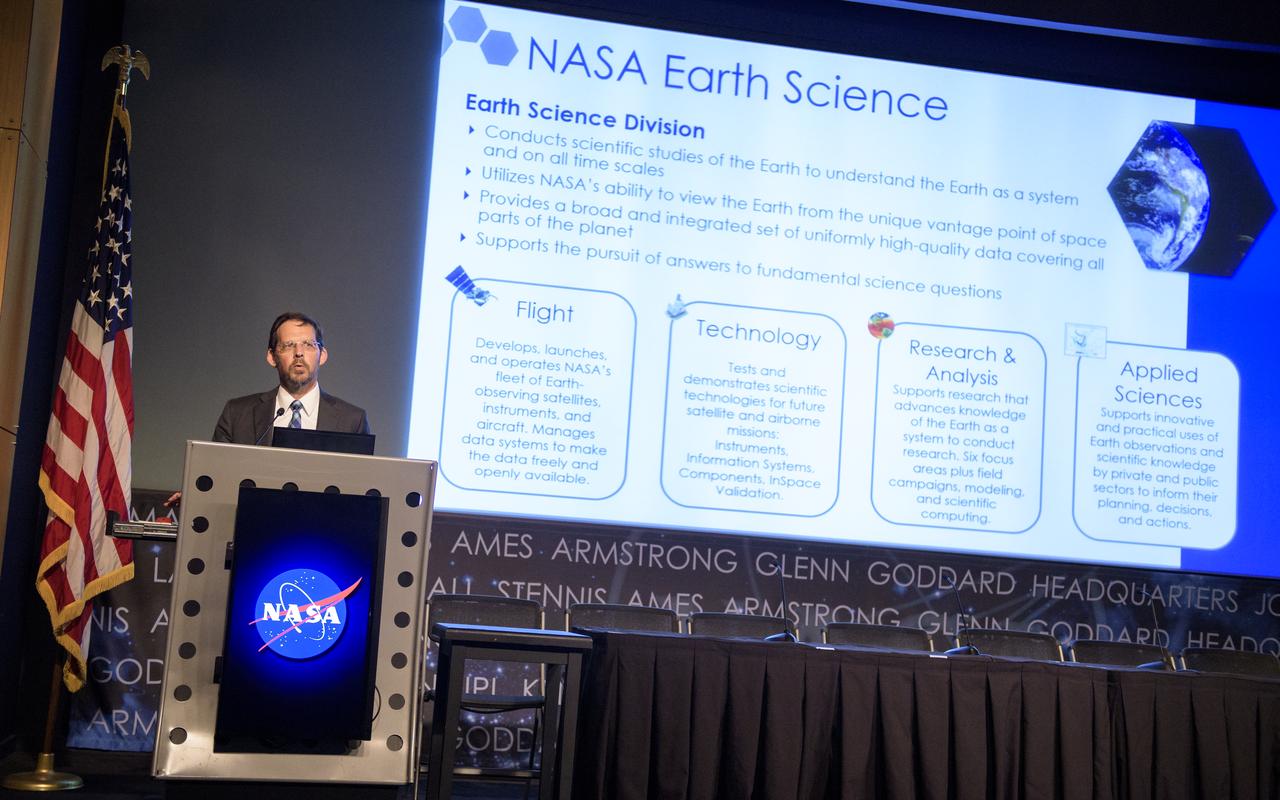
NASA Director of Applied Sciences Program (Earth Science Division) Lawrence Friedl speaks during the 2018 Annual Earth Science Applications Showcase, Wednesday, Aug. 1, 2018 at NASA Headquarters in Washington. Every summer students and young professionals from NASA’s Applied Sciences’ DEVELOP National Program come to NASA Headquarters and present their research projects. DEVELOP is a training and development program where students work on Earth science research projects, mentored by science advisers from NASA and partner agencies, and extend research results to local communities. Photo Credit: (NASA/Joel Kowsky)
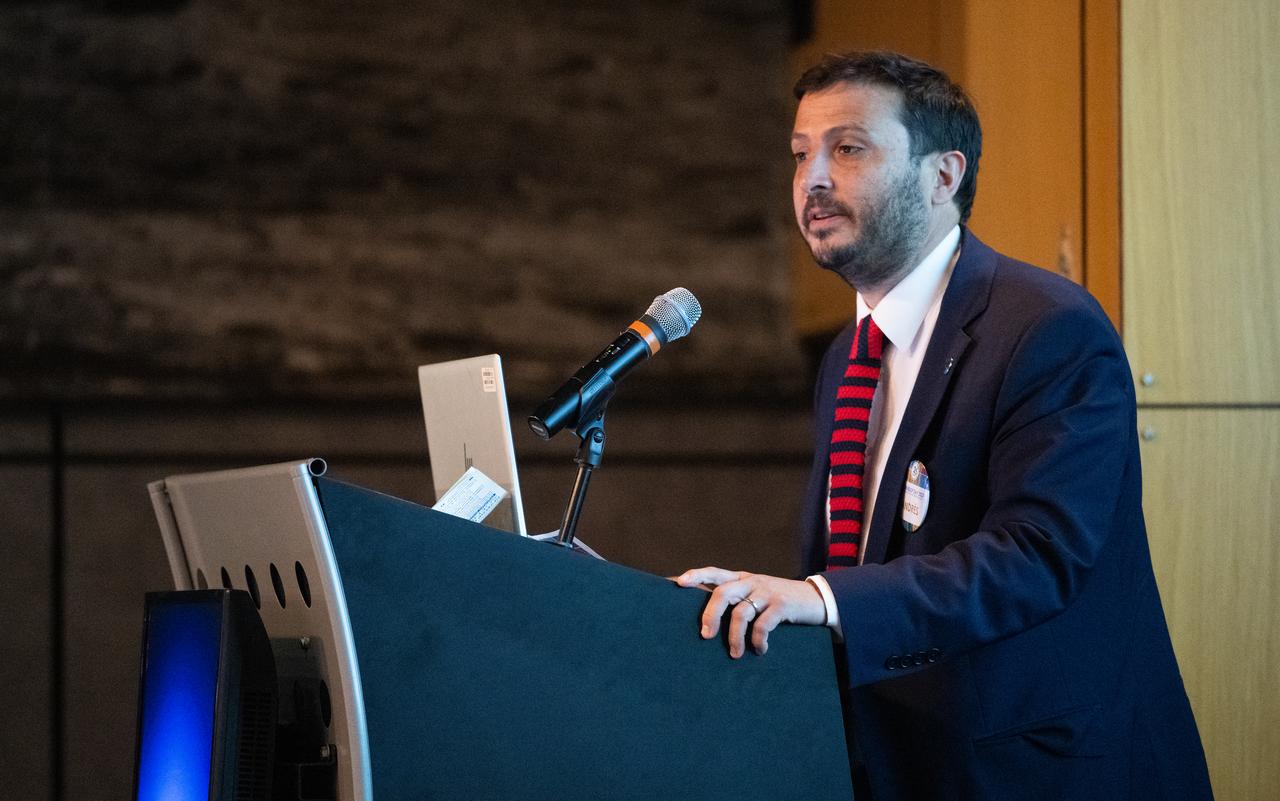
Andrés Rodriguez, Agricultural Attaché at the Embassy of Chile, delivers closing remarks during the 2023 DEVELOP Day, Wednesday, Aug. 9, 2023, at the Mary W. Jackson NASA Headquarters building in Washington. Every summer students and young professionals from NASA’s Applied Sciences’ DEVELOP National Program come to NASA Headquarters to present their research. This year marks the 25th year of DEVELOP, a training and development program where students work on Earth science research projects, mentored by science advisors from NASA and partner agencies, and extend research results to local communities. Photo Credit: (NASA/Joel Kowsky)
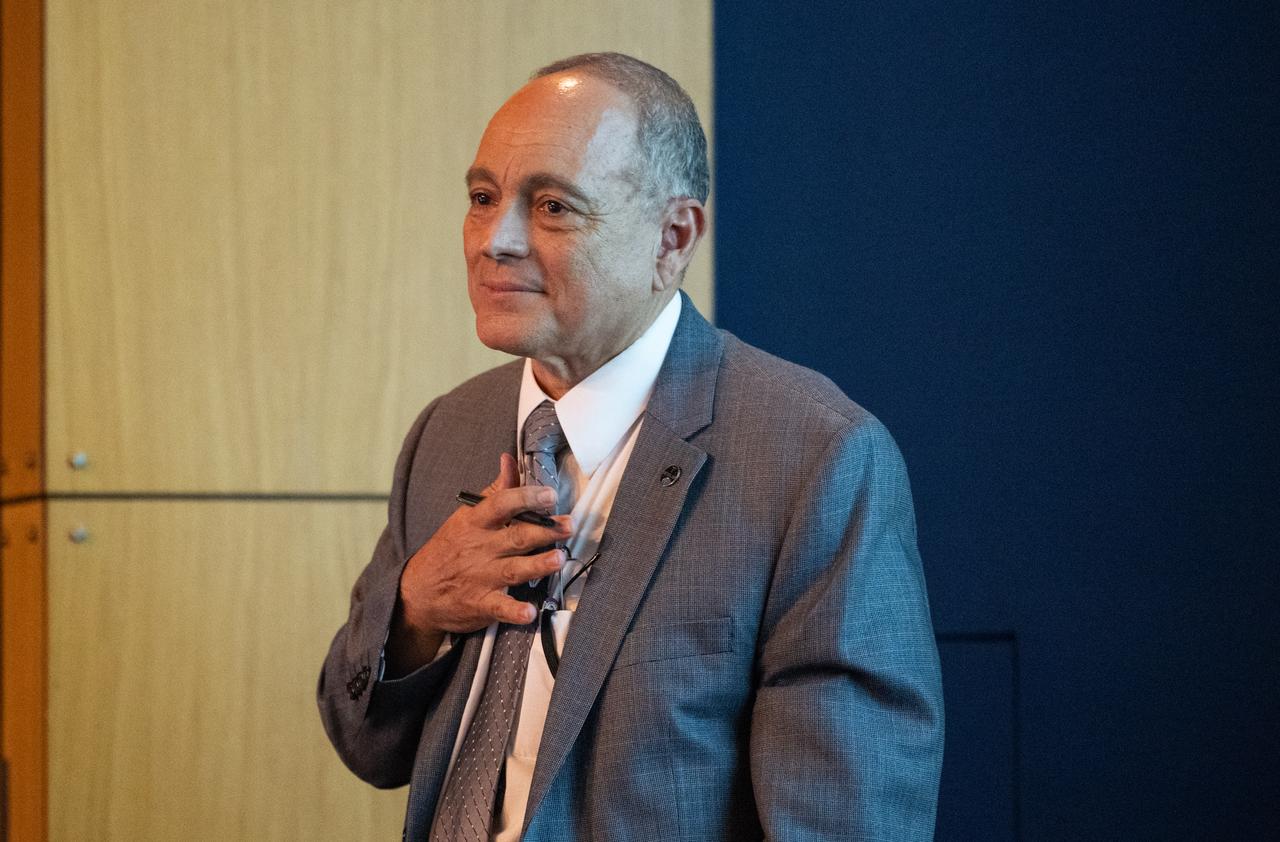
Mike Ruiz, former program manager for DEVELOP, delivers closing remarks during the 2023 DEVELOP Day, Wednesday, Aug. 9, 2023, at the Mary W. Jackson NASA Headquarters building in Washington. Every summer students and young professionals from NASA’s Applied Sciences’ DEVELOP National Program come to NASA Headquarters to present their research. This year marks the 25th year of DEVELOP, a training and development program where students work on Earth science research projects, mentored by science advisors from NASA and partner agencies, and extend research results to local communities. Photo Credit: (NASA/Joel Kowsky)
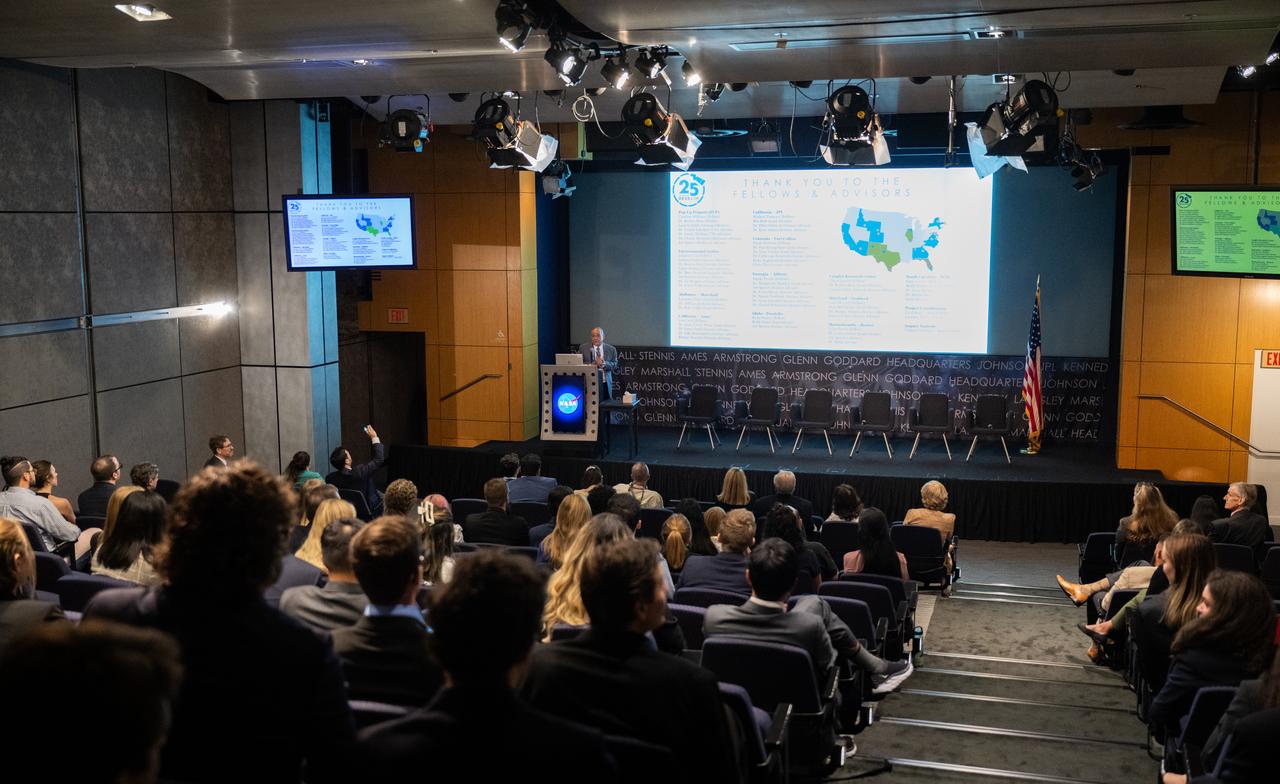
Mike Ruiz, former program manager for DEVELOP, delivers closing remarks during the 2023 DEVELOP Day, Wednesday, Aug. 9, 2023, at the Mary W. Jackson NASA Headquarters building in Washington. Every summer students and young professionals from NASA’s Applied Sciences’ DEVELOP National Program come to NASA Headquarters to present their research. This year marks the 25th year of DEVELOP, a training and development program where students work on Earth science research projects, mentored by science advisors from NASA and partner agencies, and extend research results to local communities. Photo Credit: (NASA/Joel Kowsky)
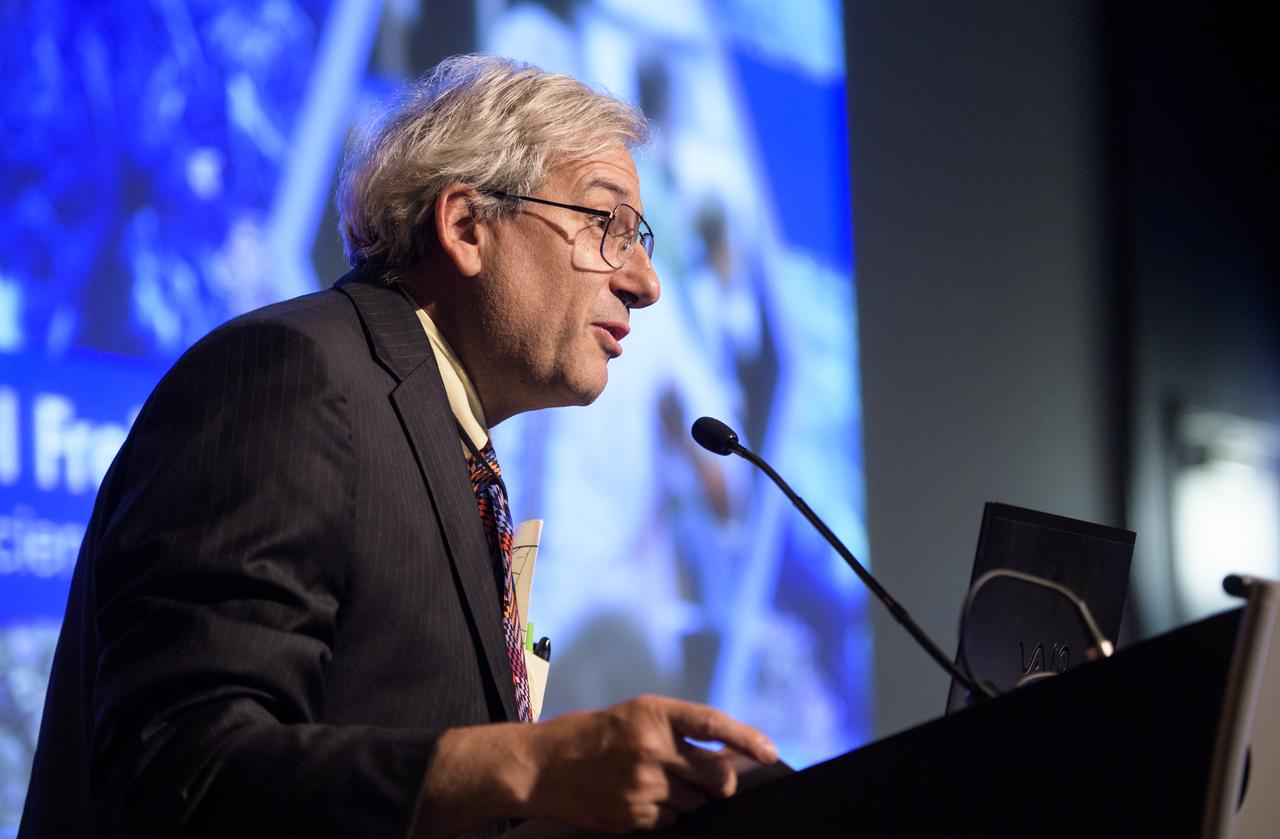
Michael Freilich, Director of the Earth Science Division at NASA Headquarters, speaks during the 2018 Annual Earth Science Applications Showcase, Wednesday, Aug. 1, 2018 at NASA Headquarters in Washington. Every summer students and young professionals from NASA’s Applied Sciences’ DEVELOP National Program come to NASA Headquarters and present their research projects. DEVELOP is a training and development program where students work on Earth science research projects, mentored by science advisers from NASA and partner agencies, and extend research results to local communities. Photo Credit: (NASA/Joel Kowsky)
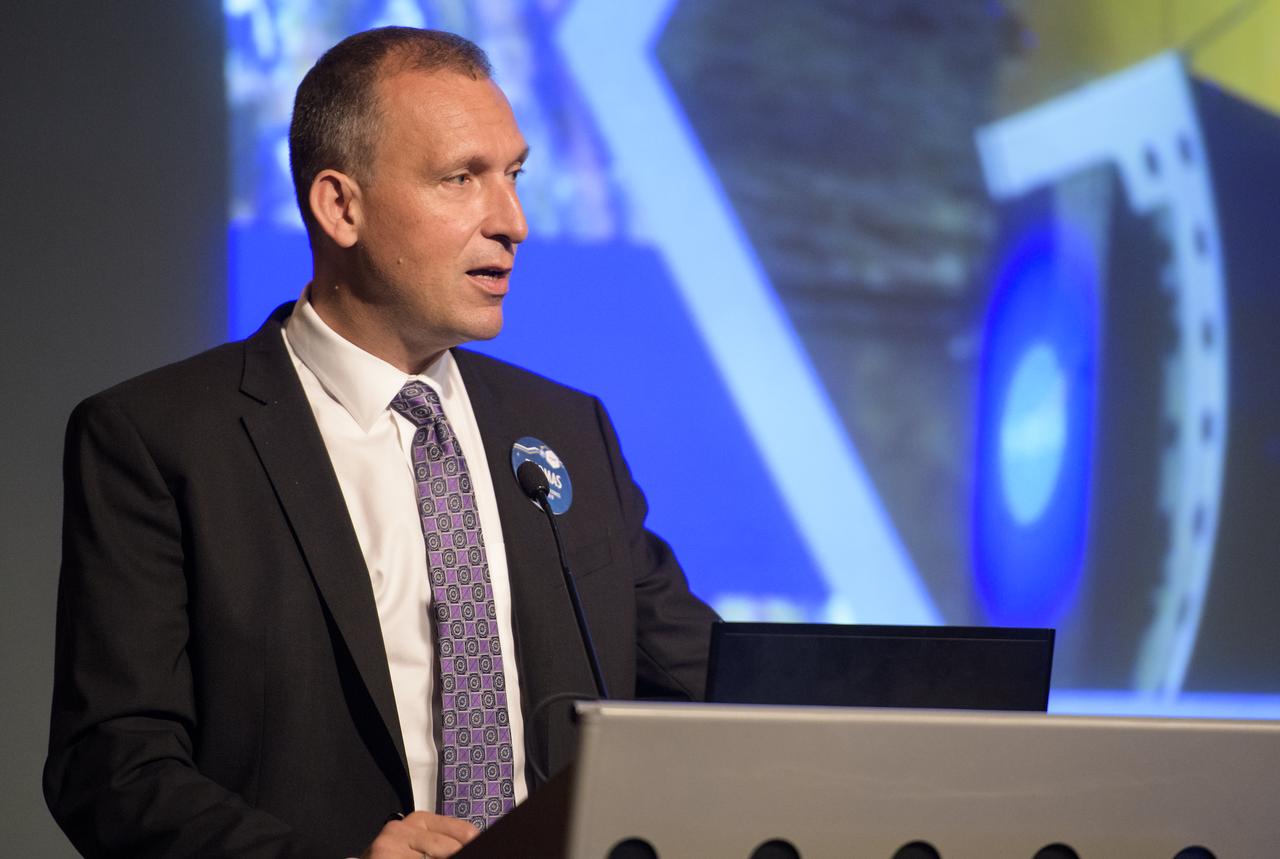
Thomas Zurbuchen, Associate Administrator for NASA's Science Mission Directorate, speaks during the 2018 Annual Earth Science Applications Showcase, Wednesday, Aug. 1, 2018 at NASA Headquarters in Washington. Every summer students and young professionals from NASA’s Applied Sciences’ DEVELOP National Program come to NASA Headquarters and present their research projects. DEVELOP is a training and development program where students work on Earth science research projects, mentored by science advisers from NASA and partner agencies, and extend research results to local communities. Photo Credit: (NASA/Joel Kowsky)
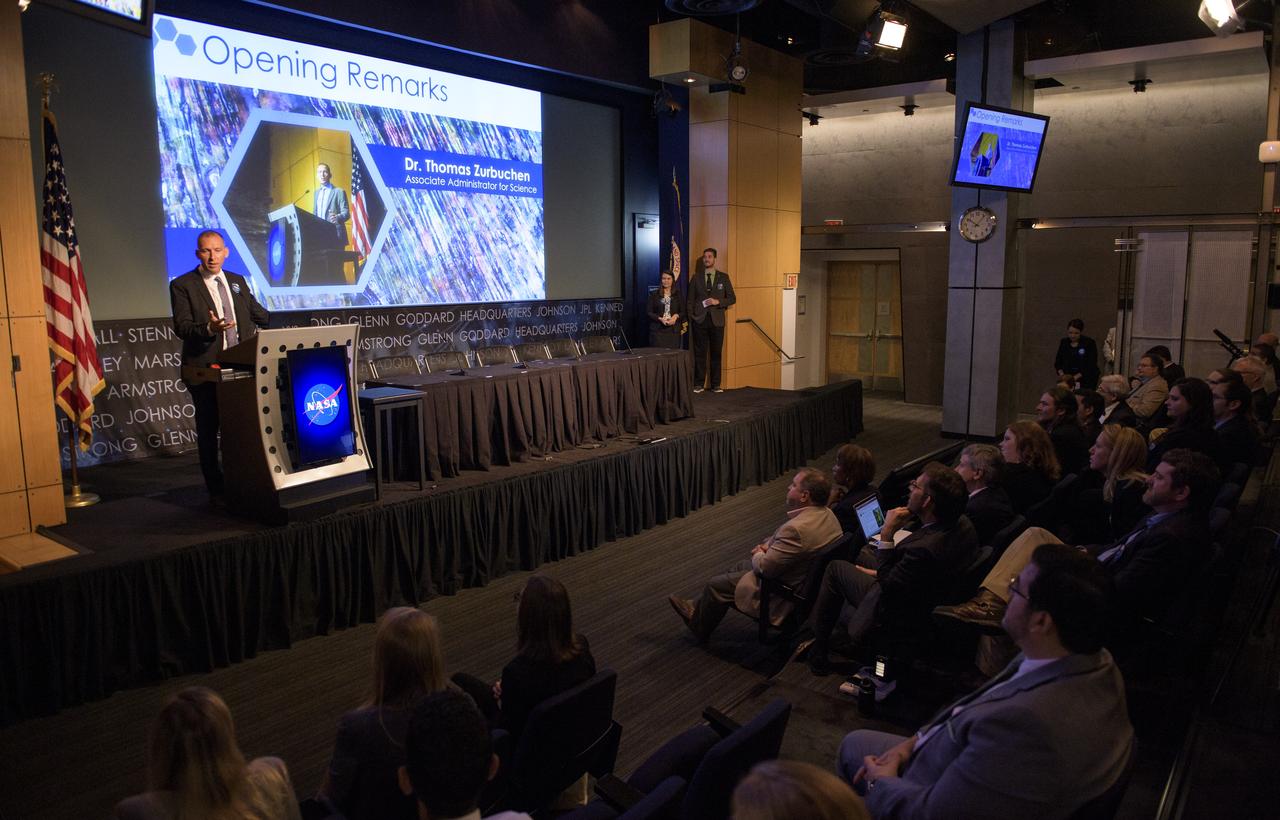
Thomas Zurbuchen, Associate Administrator for NASA's Science Mission Directorate, speaks during the 2016 Annual Earth Science Applications Showcase, Wednesday, Aug. 1, 2018 at NASA Headquarters in Washington. Every summer students and young professionals from NASA’s Applied Sciences’ DEVELOP National Program come to NASA Headquarters and present their research projects. DEVELOP is a training and development program where students work on Earth science research projects, mentored by science advisers from NASA and partner agencies, and extend research results to local communities. Photo Credit: (NASA/Joel Kowsky)
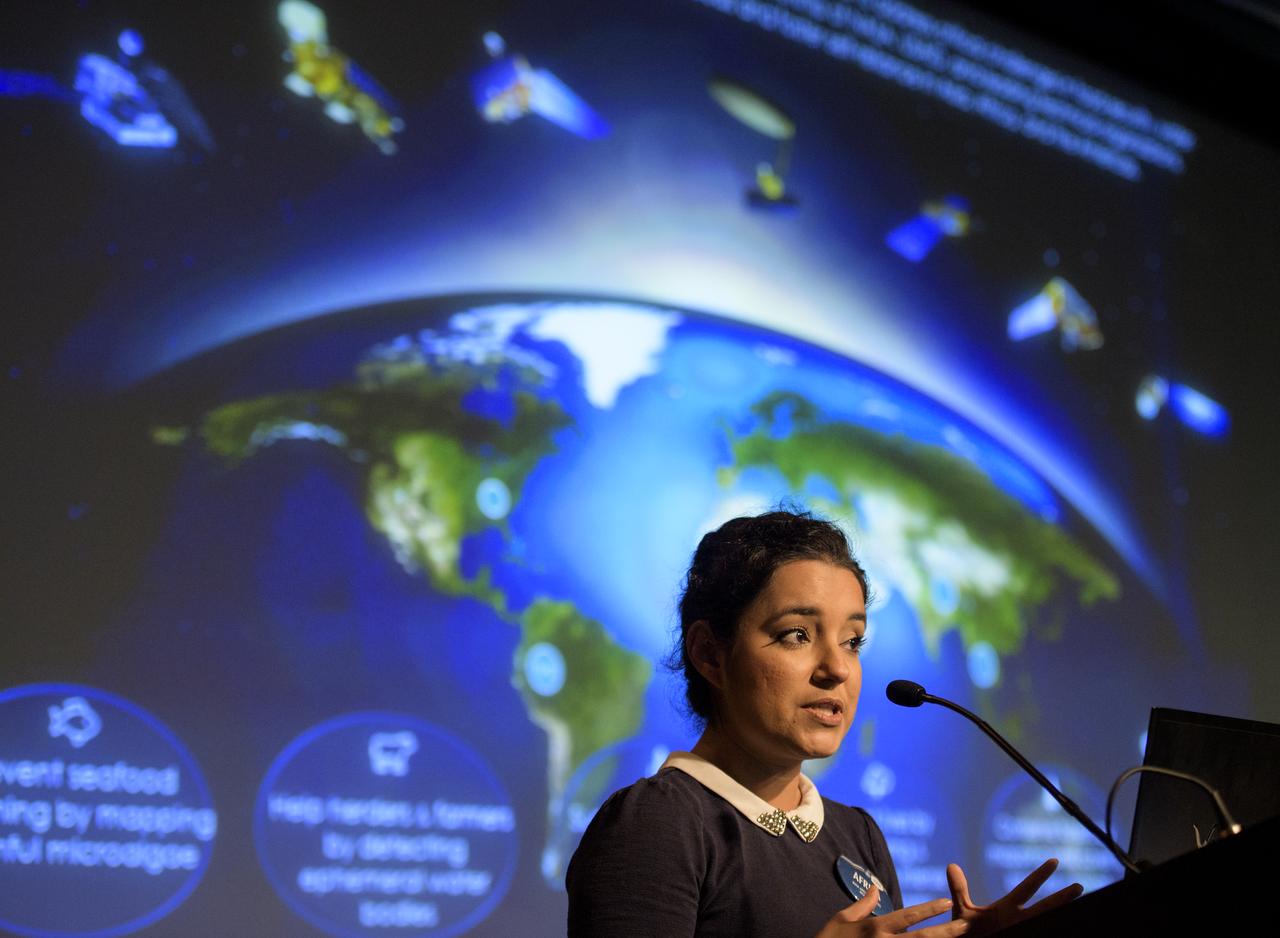
Africa Flores, Land Cover and Land Use Change Theme Lead for SERVIR, speaks during the 2018 Annual Earth Science Applications Showcase, Wednesday, Aug. 1, 2018 at NASA Headquarters in Washington. Every summer students and young professionals from NASA’s Applied Sciences’ DEVELOP National Program come to NASA Headquarters and present their research projects. DEVELOP is a training and development program where students work on Earth science research projects, mentored by science advisers from NASA and partner agencies, and extend research results to local communities. Photo Credit: (NASA/Joel Kowsky)
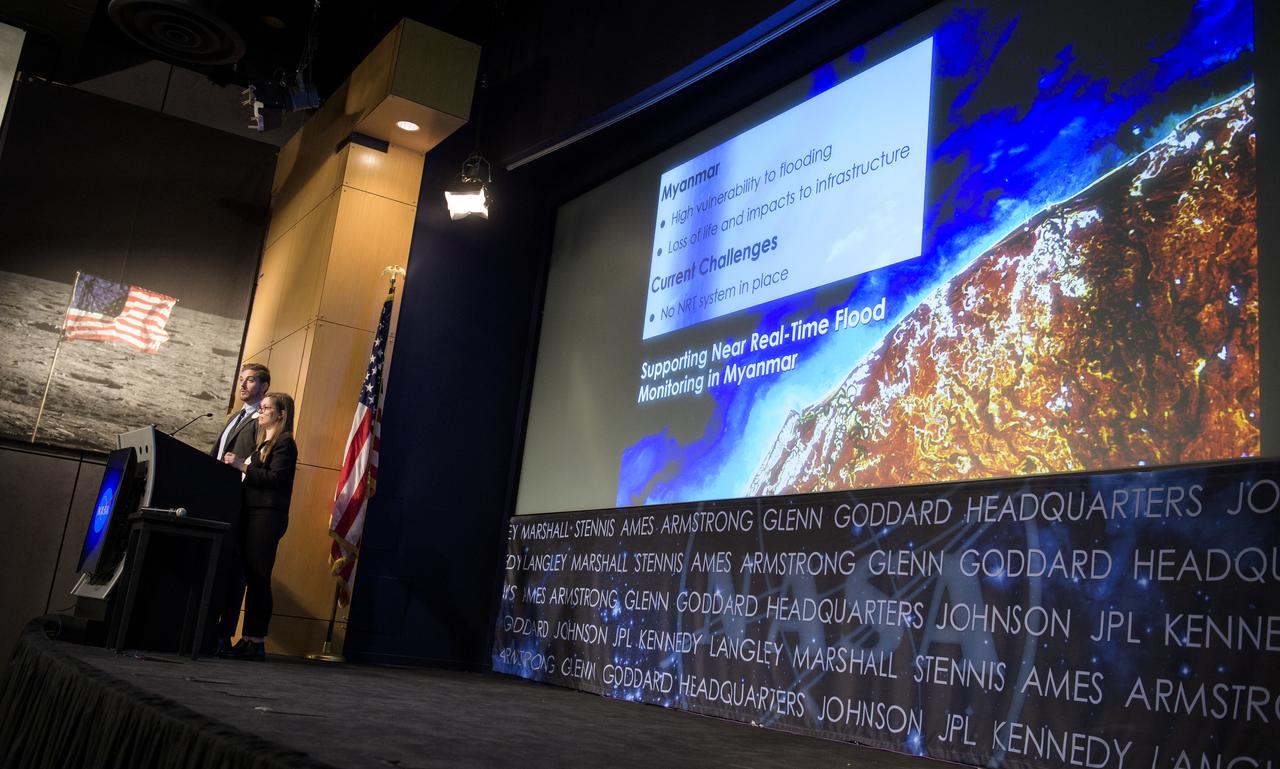
Tim Mayer, Mekong Regional Science Associate for SERVIR, and Helen Baldwin, Hindu Kush Himalaya Regional Science Associate for SERVIR, speak about SERVIR's water related disaster services during the 2019 Annual Earth Science Applications Showcase, Thursday, Aug. 1, 2019 at NASA Headquarters in Washington, DC. Every summer students and young professionals from NASA’s Applied Sciences’ DEVELOP National Program come to NASA Headquarters and present their research projects. DEVELOP is a training and development program where students work on Earth science research projects, mentored by science advisers from NASA and partner agencies, and extend research results to local communities. Photo Credit: (NASA/Joel Kowsky)
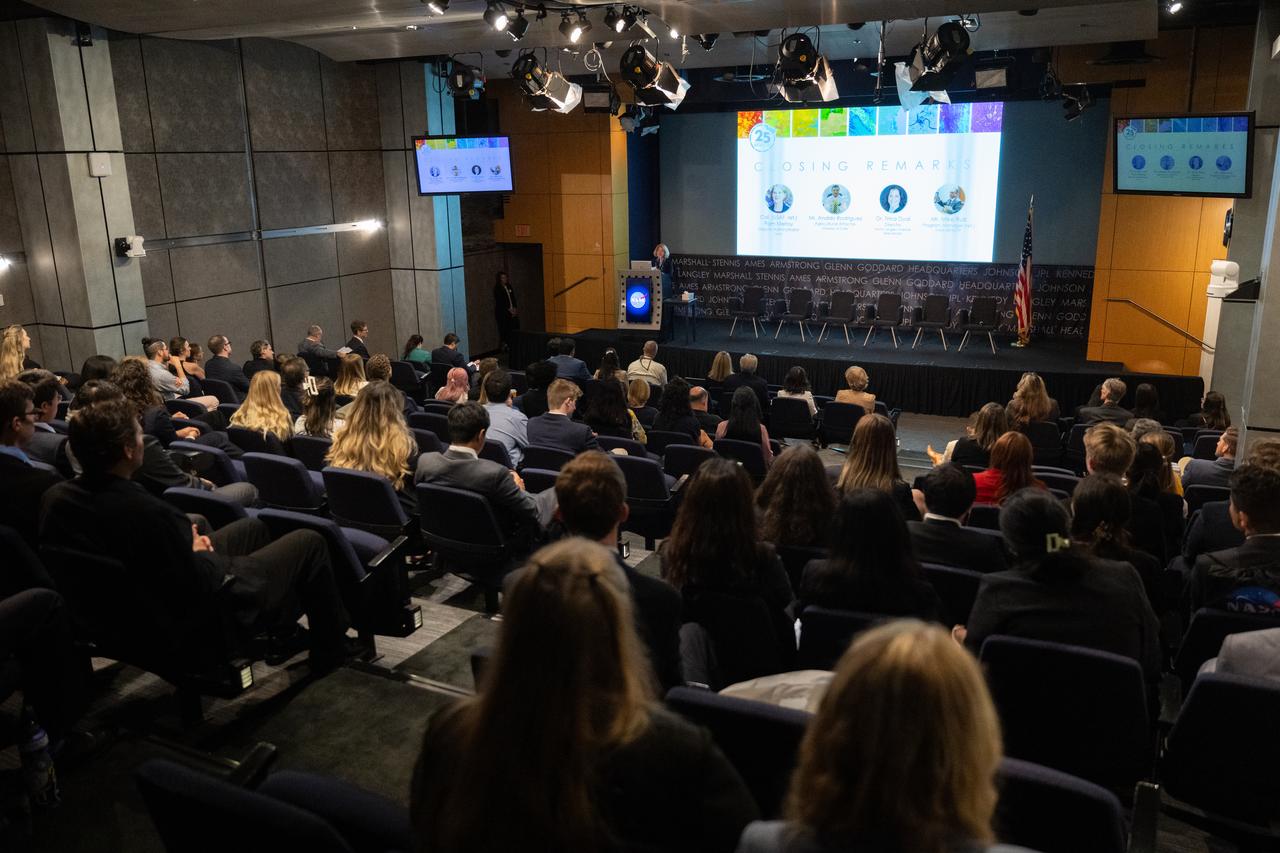
NASA Deputy Administrator Pam Melroy delivers closing remarks during the 2023 DEVELOP Day, Wednesday, Aug. 9, 2023, at the Mary W. Jackson NASA Headquarters building in Washington. Every summer students and young professionals from NASA’s Applied Sciences’ DEVELOP National Program come to NASA Headquarters to present their research. This year marks the 25th year of DEVELOP, a training and development program where students work on Earth science research projects, mentored by science advisors from NASA and partner agencies, and extend research results to local communities. Photo Credit: (NASA/Joel Kowsky)
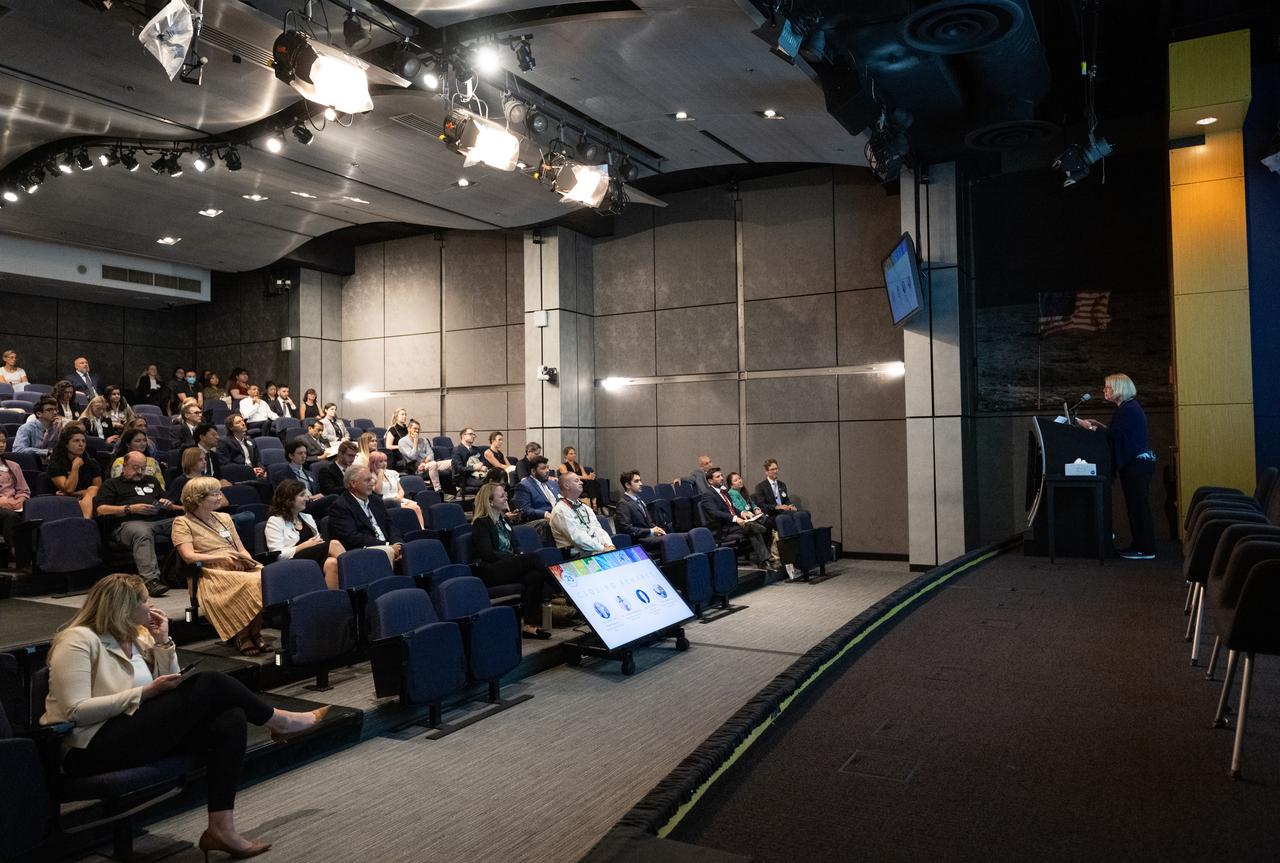
NASA Deputy Administrator Pam Melroy delivers closing remarks during the 2023 DEVELOP Day, Wednesday, Aug. 9, 2023, at the Mary W. Jackson NASA Headquarters building in Washington. Every summer students and young professionals from NASA’s Applied Sciences’ DEVELOP National Program come to NASA Headquarters to present their research. This year marks the 25th year of DEVELOP, a training and development program where students work on Earth science research projects, mentored by science advisors from NASA and partner agencies, and extend research results to local communities. Photo Credit: (NASA/Joel Kowsky)
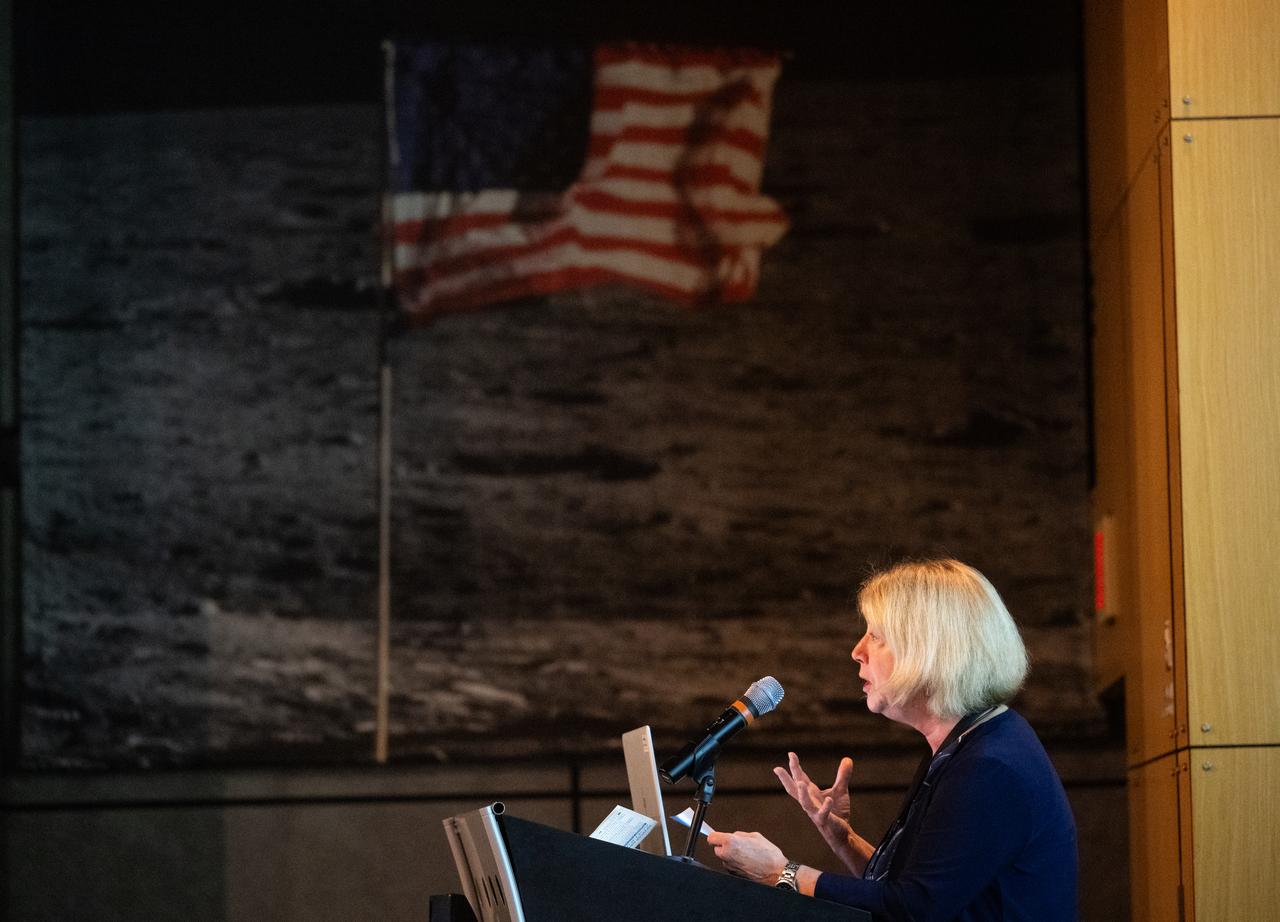
NASA Deputy Administrator Pam Melroy delivers closing remarks during the 2023 DEVELOP Day, Wednesday, Aug. 9, 2023, at the Mary W. Jackson NASA Headquarters building in Washington. Every summer students and young professionals from NASA’s Applied Sciences’ DEVELOP National Program come to NASA Headquarters to present their research. This year marks the 25th year of DEVELOP, a training and development program where students work on Earth science research projects, mentored by science advisors from NASA and partner agencies, and extend research results to local communities. Photo Credit: (NASA/Joel Kowsky)
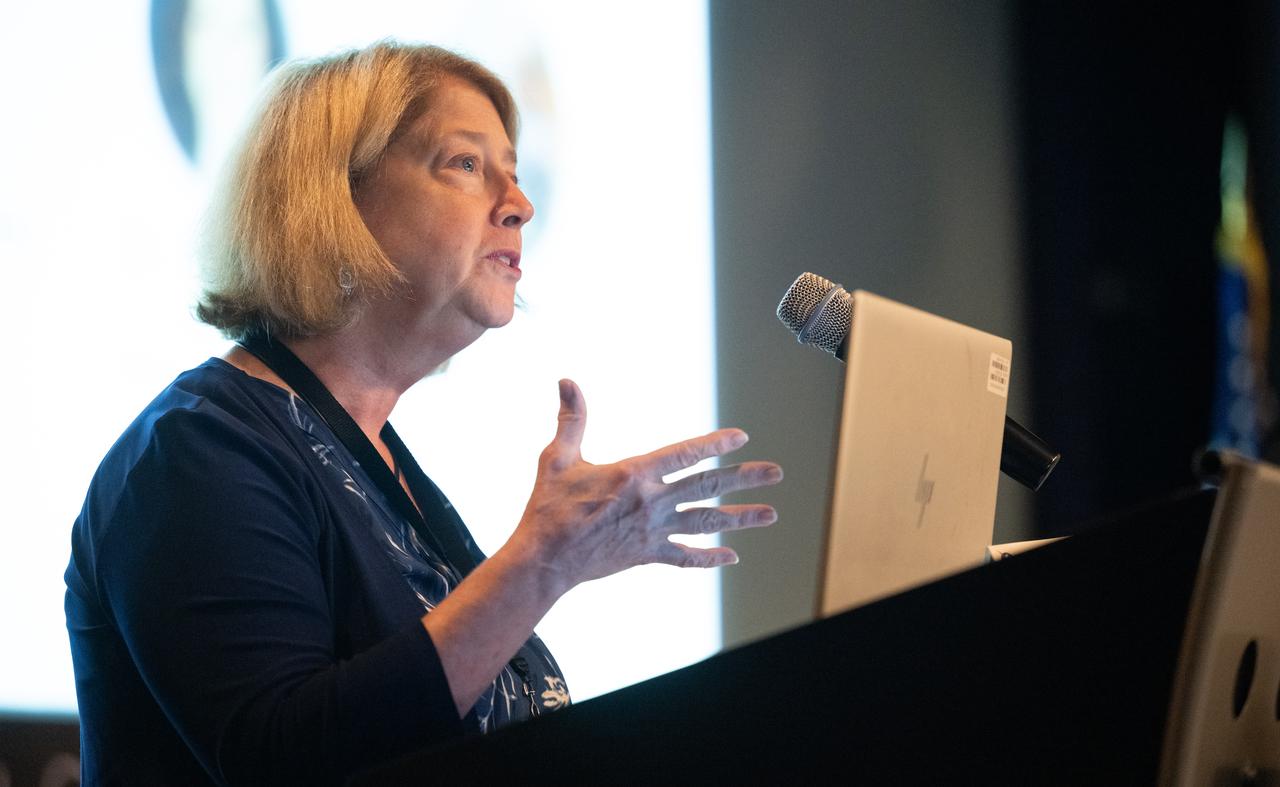
NASA Deputy Administrator Pam Melroy delivers closing remarks during the 2023 DEVELOP Day, Wednesday, Aug. 9, 2023, at the Mary W. Jackson NASA Headquarters building in Washington. Every summer students and young professionals from NASA’s Applied Sciences’ DEVELOP National Program come to NASA Headquarters to present their research. This year marks the 25th year of DEVELOP, a training and development program where students work on Earth science research projects, mentored by science advisors from NASA and partner agencies, and extend research results to local communities. Photo Credit: (NASA/Joel Kowsky)
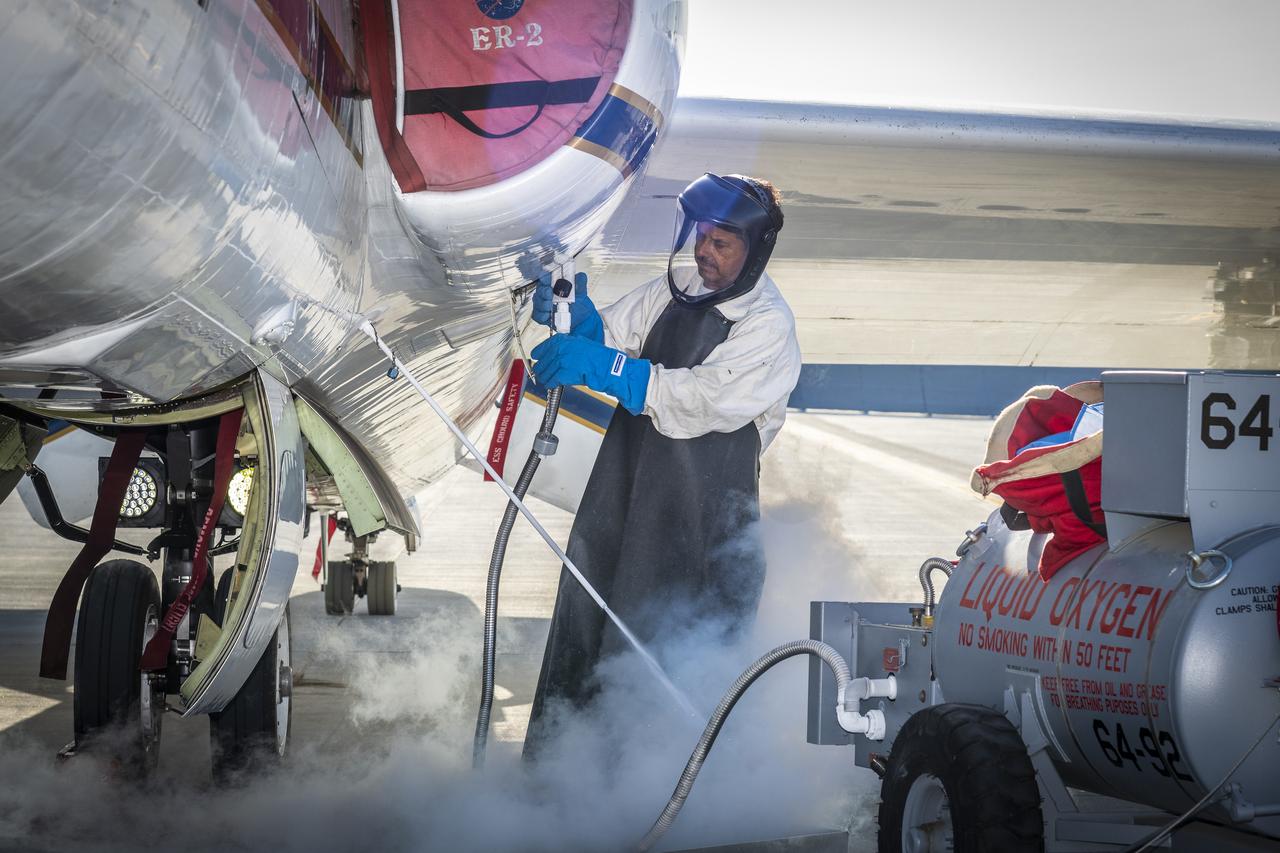
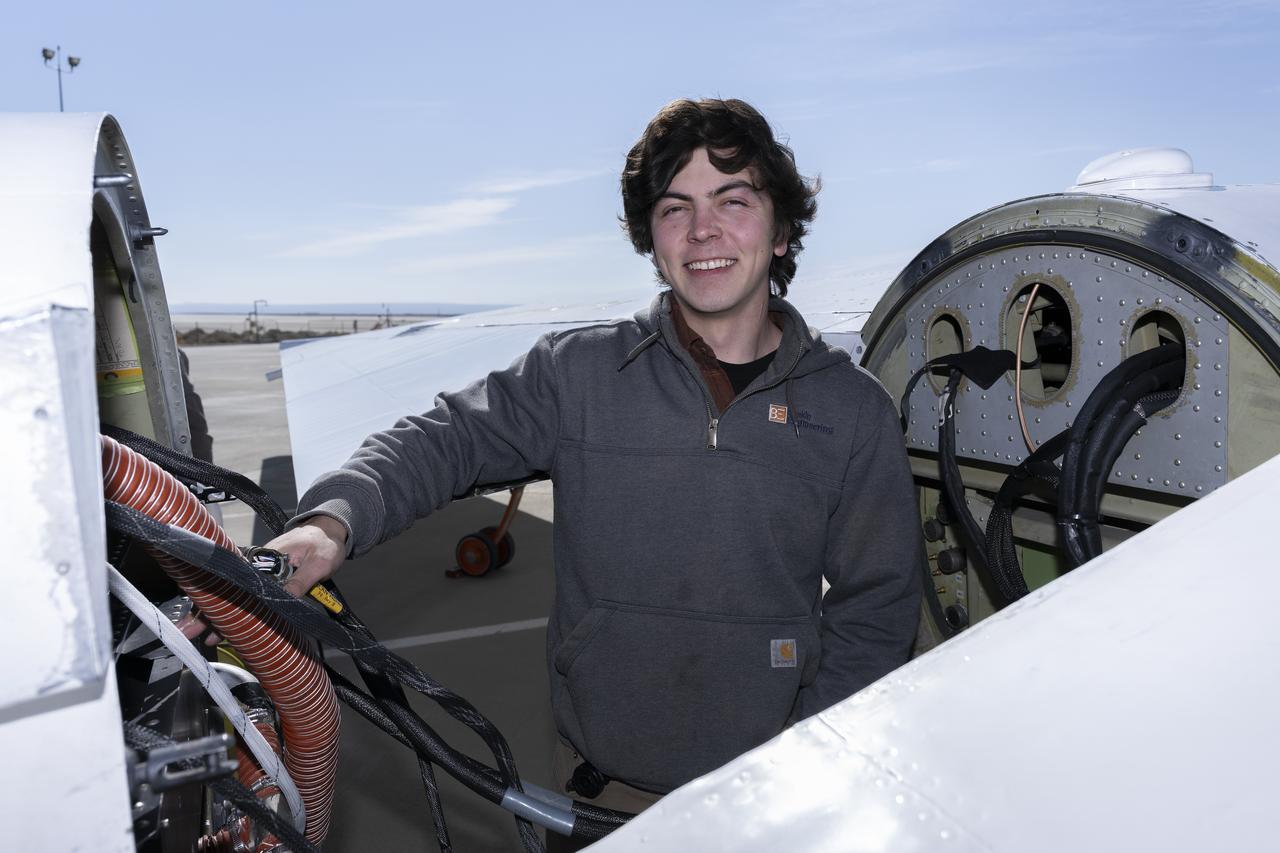
Francisco Rodriguez (aircraft mechanic) services liquid oxygen or LOX on the ER-2 during the Geological Earth Mapping Experiment (GEMx) research project. Experts like Rodriguez sustain a high standard of safety on airborne science aircraft like the ER-2 and science missions like GEMx. The ER-2 is based out of NASA’s Armstrong Flight Research Center in Edwards, California.
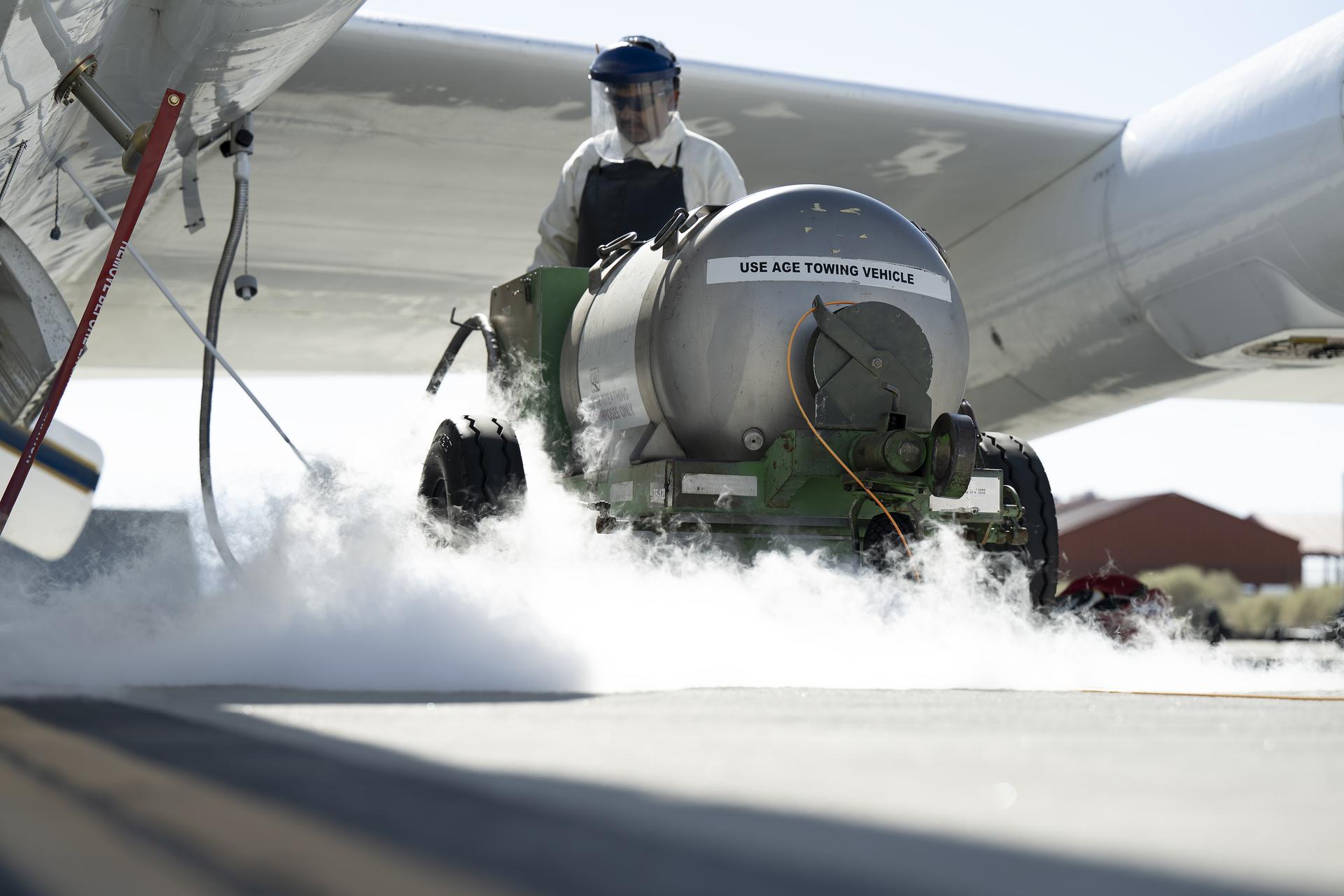
NASA engineer technician Francisco Rodriguez gives a NASA ER-2 aircraft a liquid oxygen refill (LOX) in preparation for the INjected Smoke and PYRocumulonimbus Experiment (INSPYRE) at NASA’s Armstrong Flight Research Center in Edwards, California, on Wednesday, July 15, 2026. This Earth science campaign studies wildfire‑generated thunderstorms, and researchers are seeking to better understand how these storms form, how high the storms send smoke, where this smoke travels, and the effects after the smoke reaches upper layers of the atmosphere.
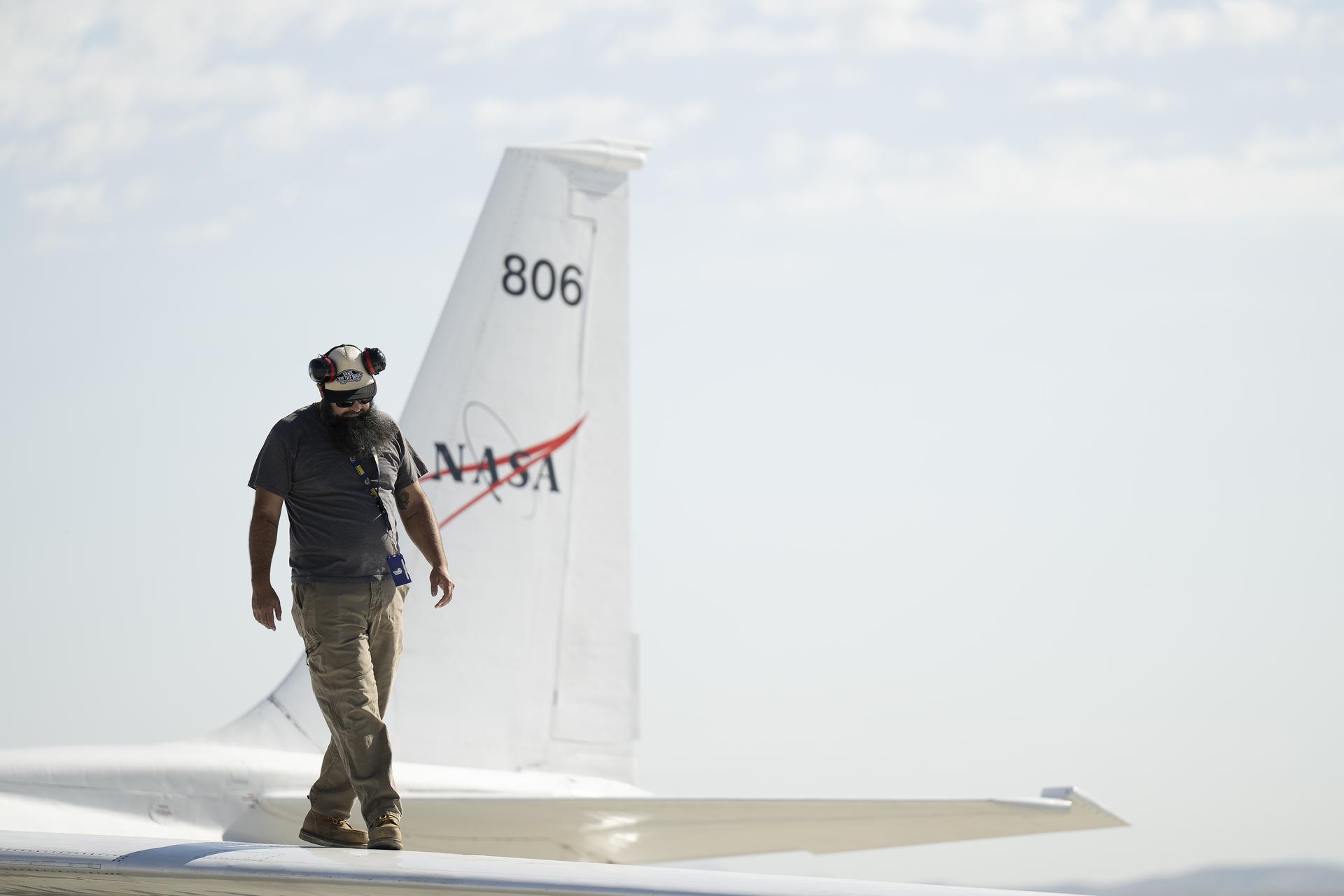
NASA quality assurance technician Jose Preito prepares an ER‑2 aircraft for the INjected Smoke and PYRocumulonimbus Experiment (INSPYRE) based at NASA’s Armstrong Flight Research Center in Edwards, California, on Wednesday, July 15, 2026. This Earth science campaign studies wildfire‑generated thunderstorms, and researchers are seeking to better understand how these storms form, how high the storms send smoke, where this smoke travels, and the effects after the smoke reaches upper layers of the atmosphere.
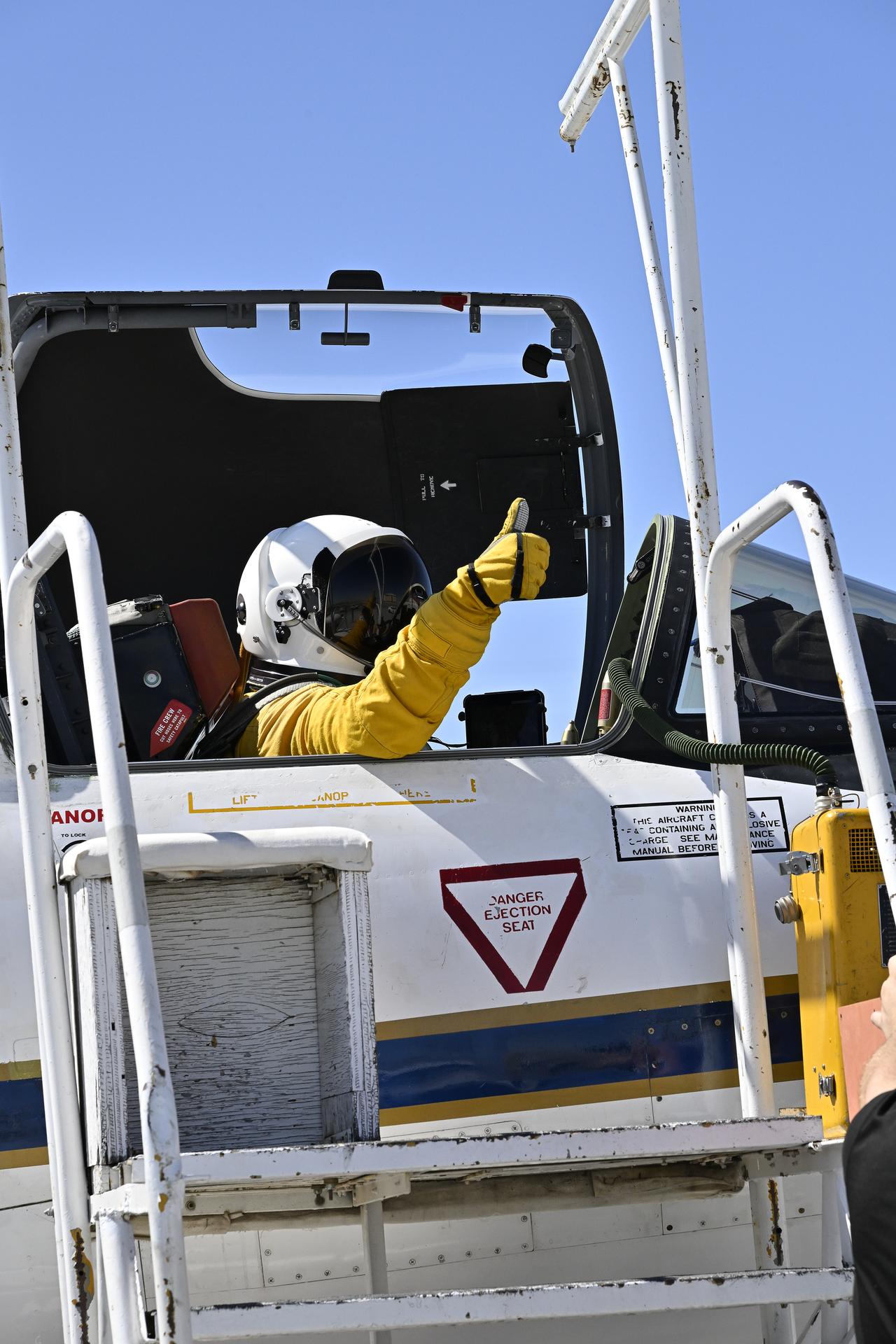
NASA pilot Kirt Stallings prepares for the INjected Smoke and PYRocumulonimbus Experiment (INSPYRE) at NASA’s Armstrong Flight Research Center in Edwards, California, on Wednesday, July 15, 2026. This Earth science campaign studies wildfire‑generated thunderstorms, and researchers are seeking to better understand how these storms form, how high the storms send smoke, where this smoke travels, and the effects after the smoke reaches upper layers of the atmosphere.
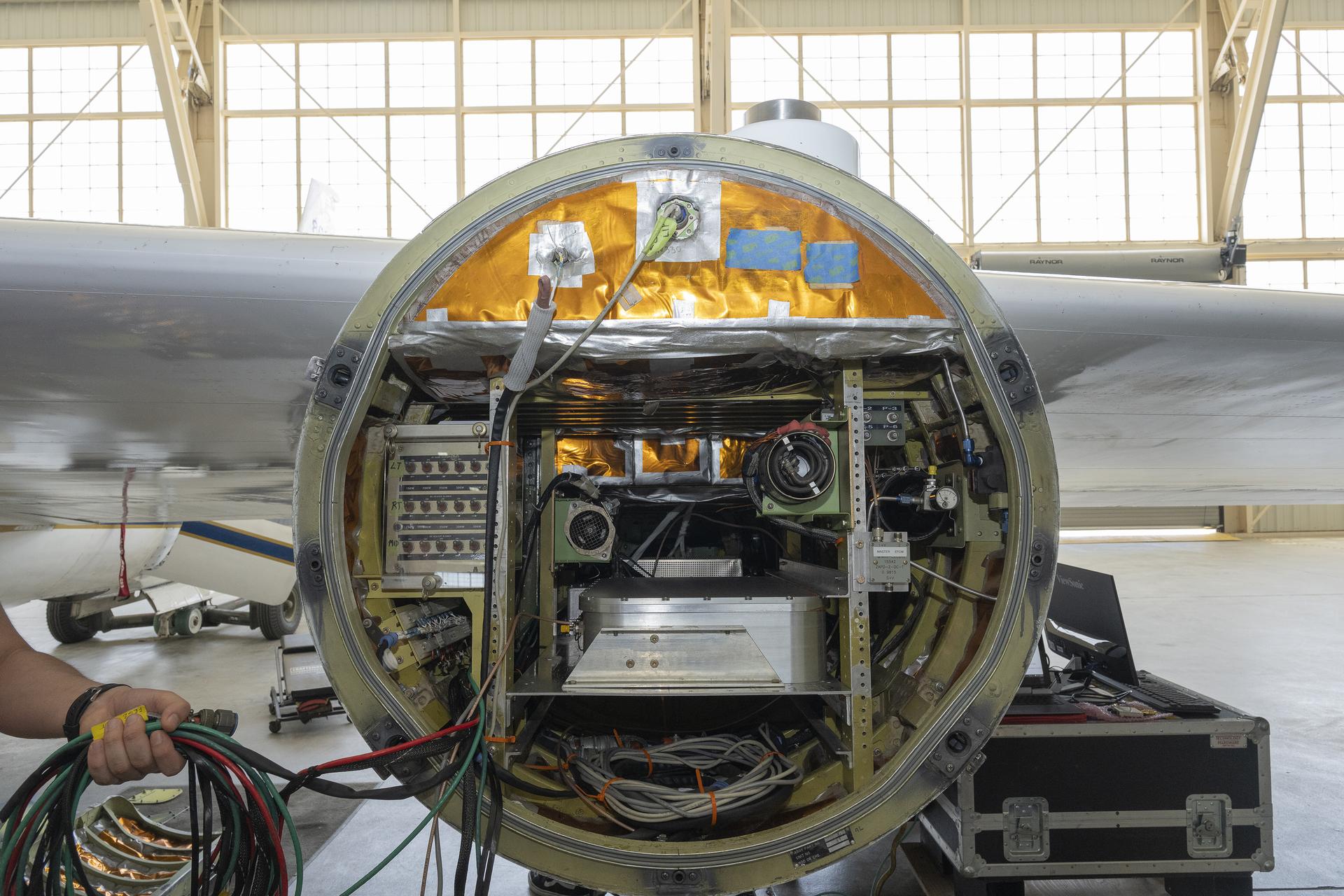
An ER‑2 aircraft based at NASA’s Armstrong Flight Research Center in Edwards, California, carries a pod full of instruments for the INjected Smoke and PYRocumulonimbus Experiment (INSPYRE) on Thursday, July 9, 2026. This Earth science campaign studies wildfire‑generated thunderstorms. Researchers are seeking to better understand how these storms form, how high the storms send smoke, where this smoke travels, and the effect after the smoke reaches upper layers of the atmosphere.
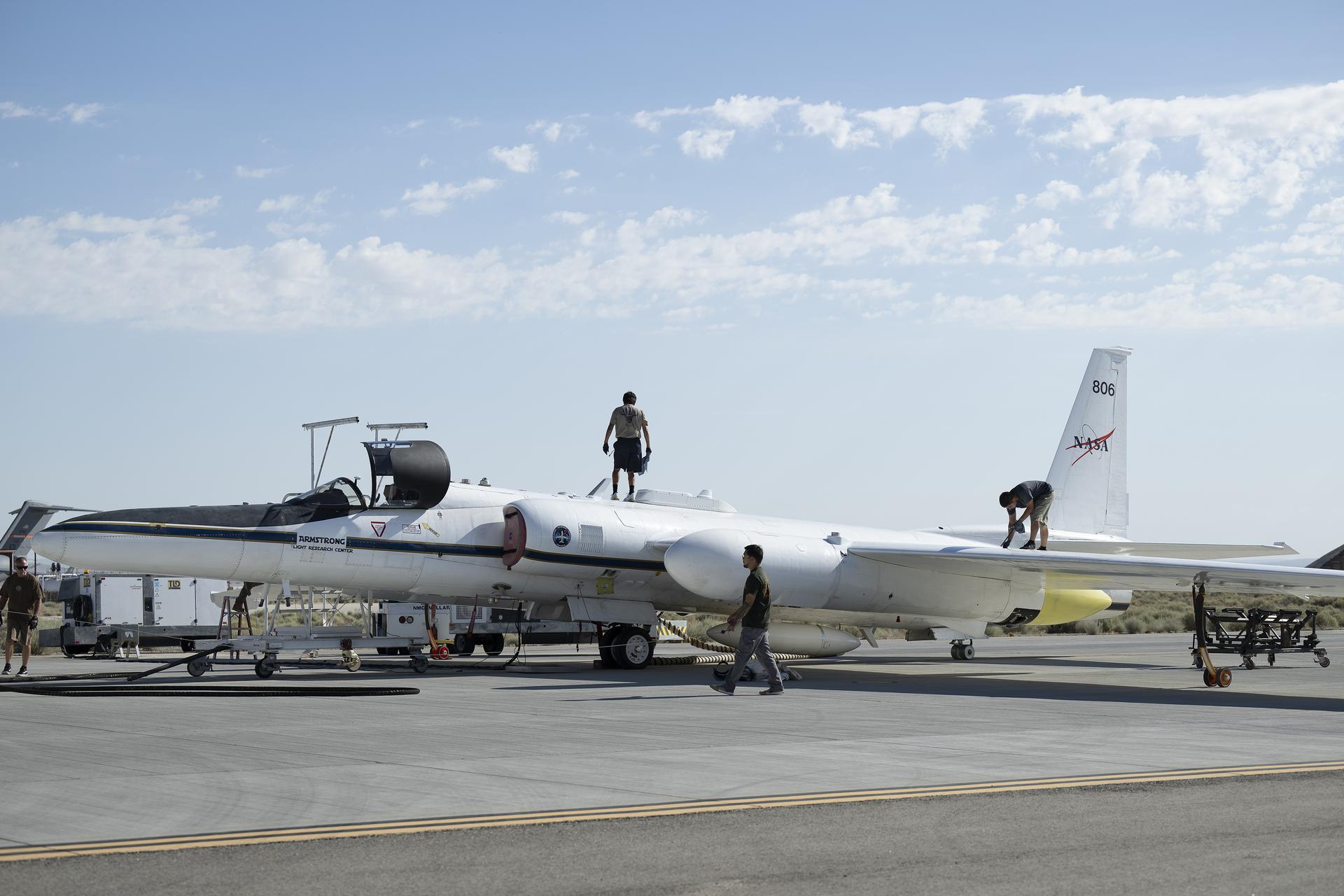
Ground crew members, from left, Bobby Henderson, Francisco Rodriguez, Geo Sablan, and Vincent Moreno prepare an ER‑2 aircraft for the INjected Smoke and PYRocumulonimbus Experiment (INSPYRE) at NASA’s Armstrong Flight Research Center in Edwards, California, on Wednesday, July 15, 2026. This Earth science campaign studies wildfire‑generated thunderstorms, and researchers are seeking to better understand how these storms form, how high the storms send smoke, where this smoke travels, and the effects after the smoke reaches upper layers of the atmosphere.
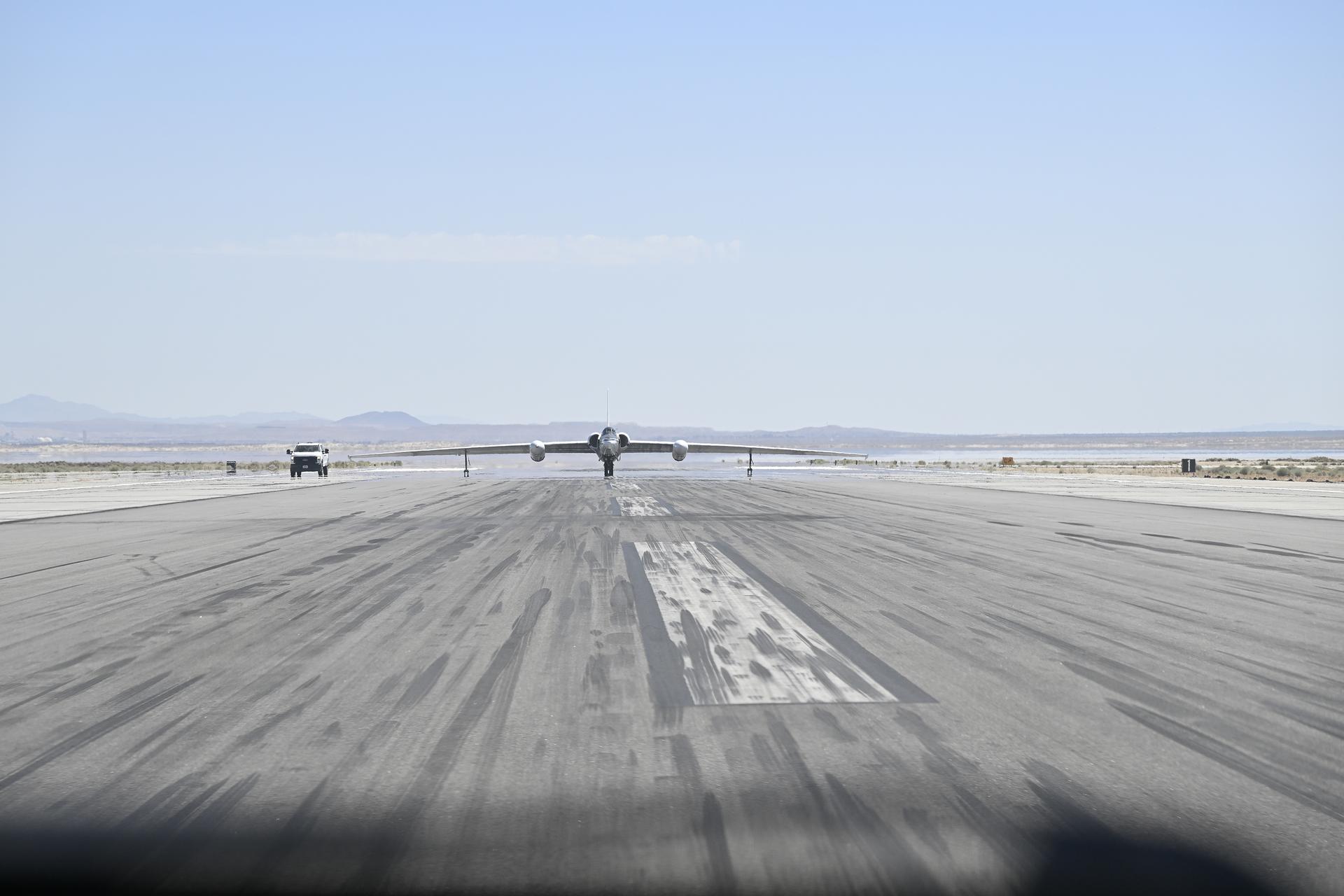
An ER‑2 aircraft prepares for the INjected Smoke and PYRocumulonimbus Experiment (INSPYRE) at NASA’s Armstrong Flight Research Center in Edwards, California, on Wednesday, July 15, 2026. This Earth science campaign studies wildfire‑generated thunderstorms, and researchers are seeking to better understand how these storms form, how high the storms send smoke, where this smoke travels, and the effects after the smoke reaches upper layers of the atmosphere.

Dr. David H. Grinspoon, Senior Scientist, Planetary Science Institute, moderates a panel at the “Ancient Earth, Alien Earths” Event at NASA Headquarters in Washington, DC Wednesday, August 20, 2014. The event was sponsored by NASA, the National Science Foundation (NSF), and the Smithsonian Institution and highlighted how research on early Earth could help guide our search for habitable planets orbiting other stars. Photo Credit: (NASA/Aubrey Gemignani)
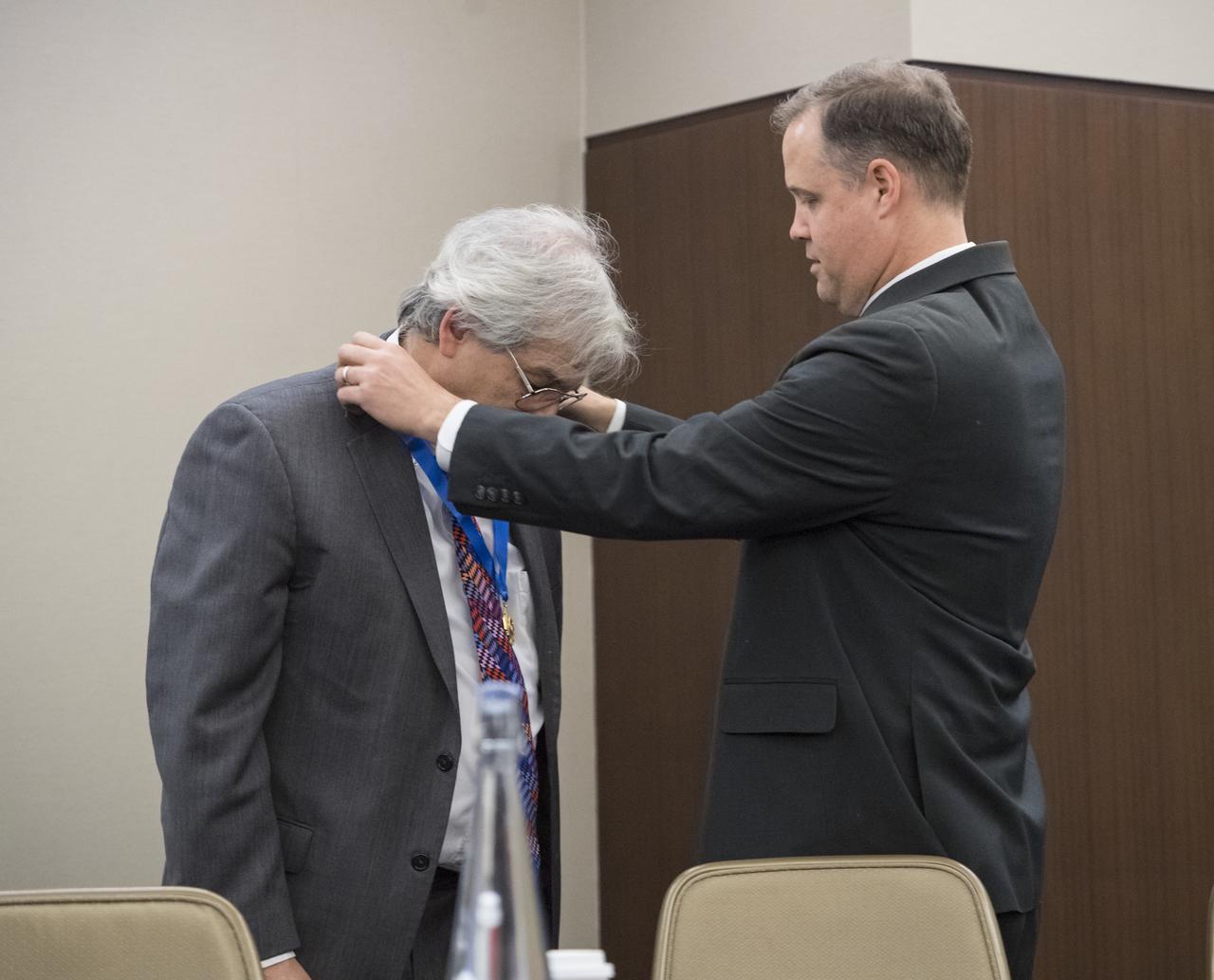
NASA Administrator Jim Bridenstine awards Dr. Michael Freilich, Earth Science Director, Science Mission Directorate, NASA, the NASA Distinguished Service Medal at the Earth Science Town Hall at the American Geophysical Union (AGU) annual meeting, Tuesday, December 11, 2018 at the Marriott Marquis in Washington. Photo Credit: (NASA/Aubrey Gemignani)
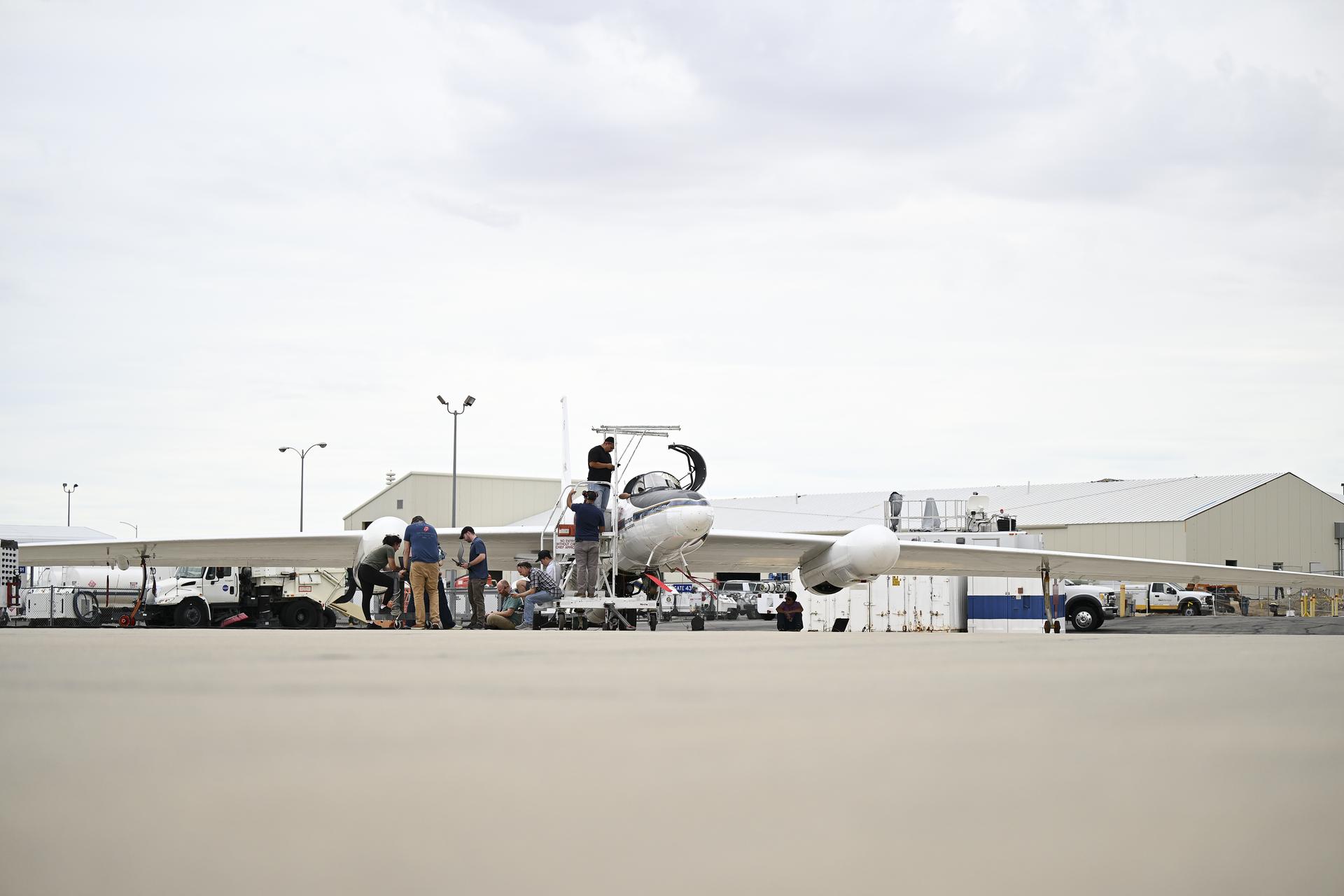
Ground crew team members, from left, Sophie Abou-Rizk, Michael Greenberg, Grant Finneman, Matthew Walker McLinden, Ted Hildum, Terry Hu, Jose Prieto, and Jesse Orellana prepare an ER‑2 aircraft for the INjected Smoke and PYRocumulonimbus Experiment (INSPYRE) on Monday, July 13, 2026. The aircraft is based at NASA’s Armstrong Flight Research Center in Edwards, California. This Earth science campaign studies wildfire‑generated thunderstorms and researchers are seeking to better understand how these storms form, how high the storms send smoke, where this smoke travels, and the effects after the smoke reaches upper layers of the atmosphere.
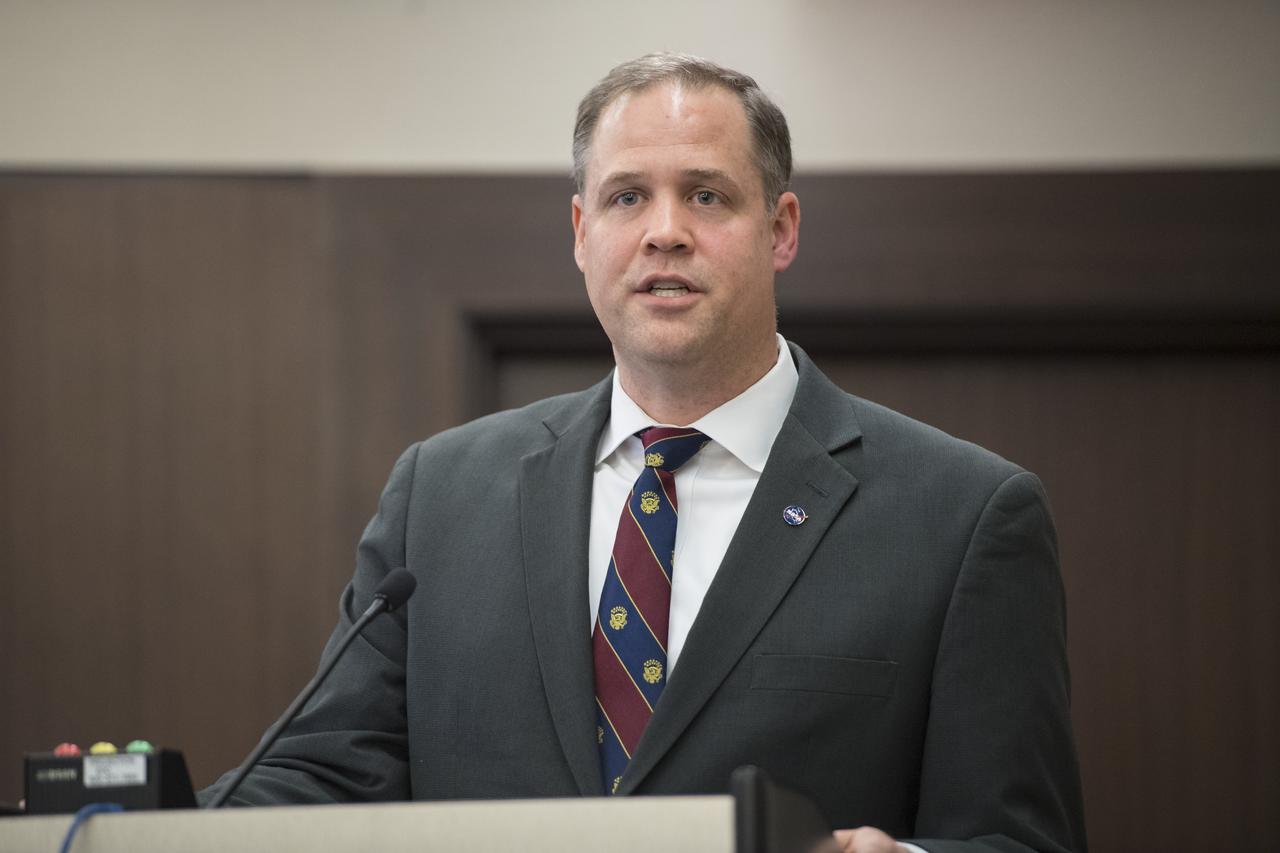
NASA Administrator Jim Bridenstine speaks at the Earth Science Town Hall at the American Geophysical Union (AGU) annual meeting, Tuesday, December 11, 2018 at the Marriott Marquis in Washington. Photo Credit: (NASA/Aubrey Gemignani)
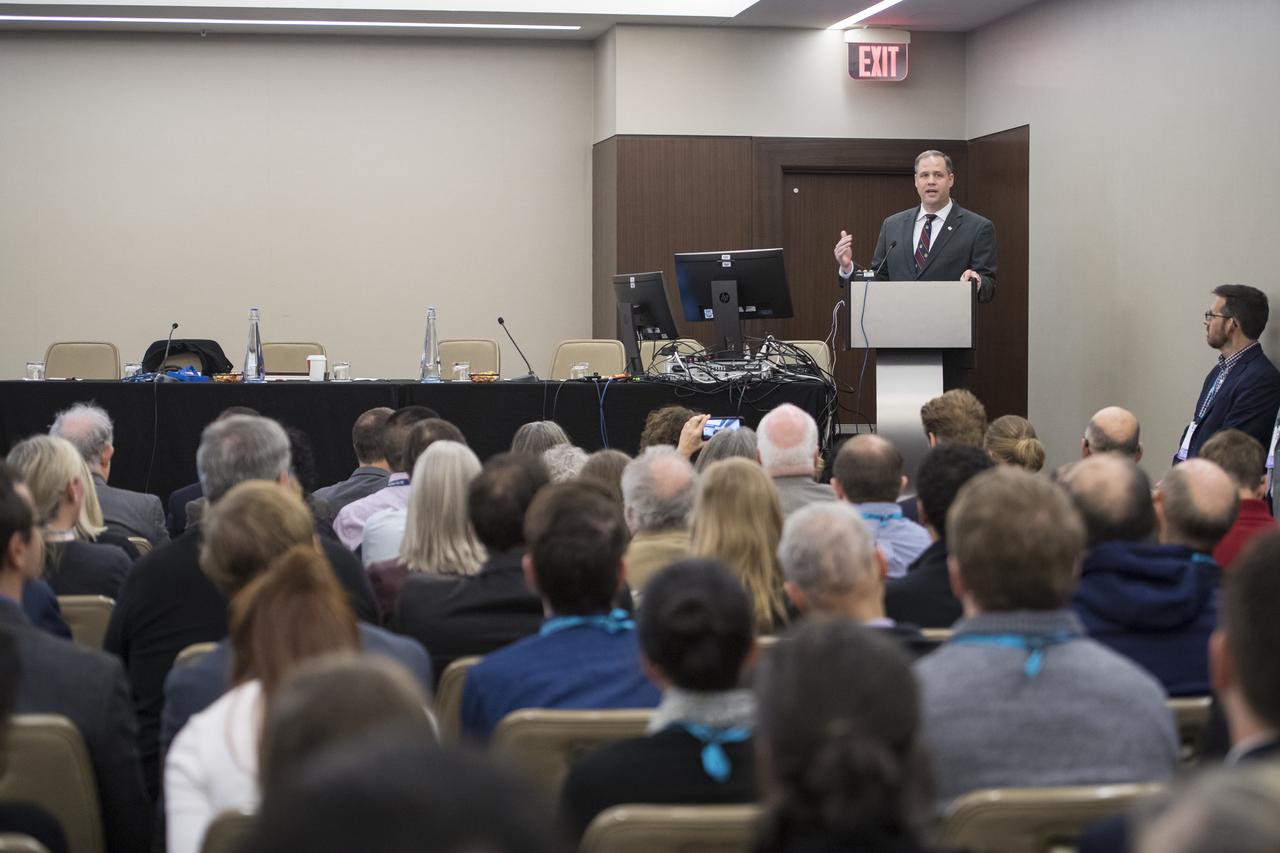
NASA Administrator Jim Bridenstine speaks at the Earth Science Town Hall at the American Geophysical Union (AGU) annual meeting, Tuesday, December 11, 2018 at the Marriott Marquis in Washington. Photo Credit: (NASA/Aubrey Gemignani)
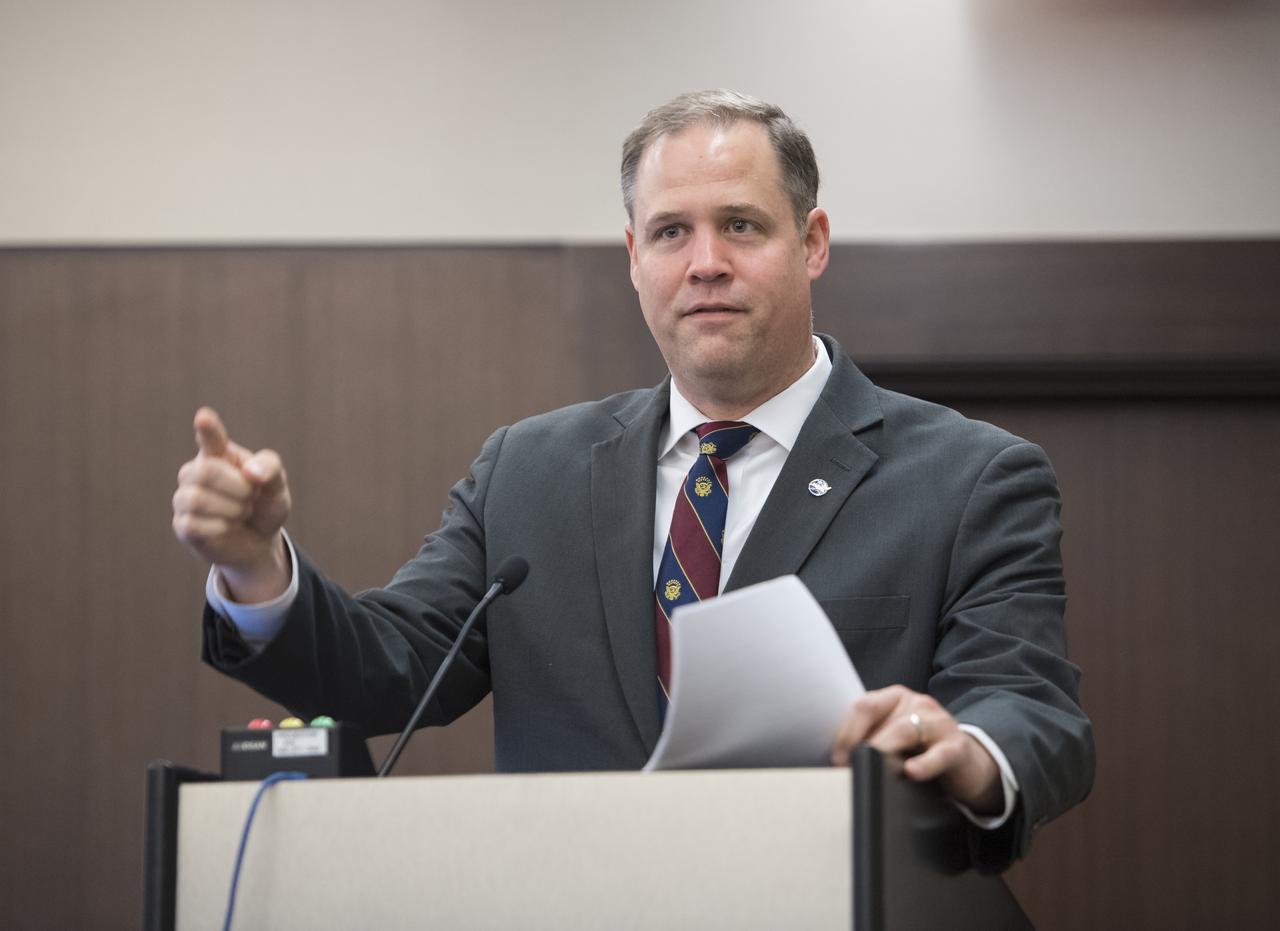
NASA Administrator Jim Bridenstine speaks at the Earth Science Town Hall at the American Geophysical Union (AGU) annual meeting, Tuesday, December 11, 2018 at the Marriott Marquis in Washington. Photo Credit: (NASA/Aubrey Gemignani)
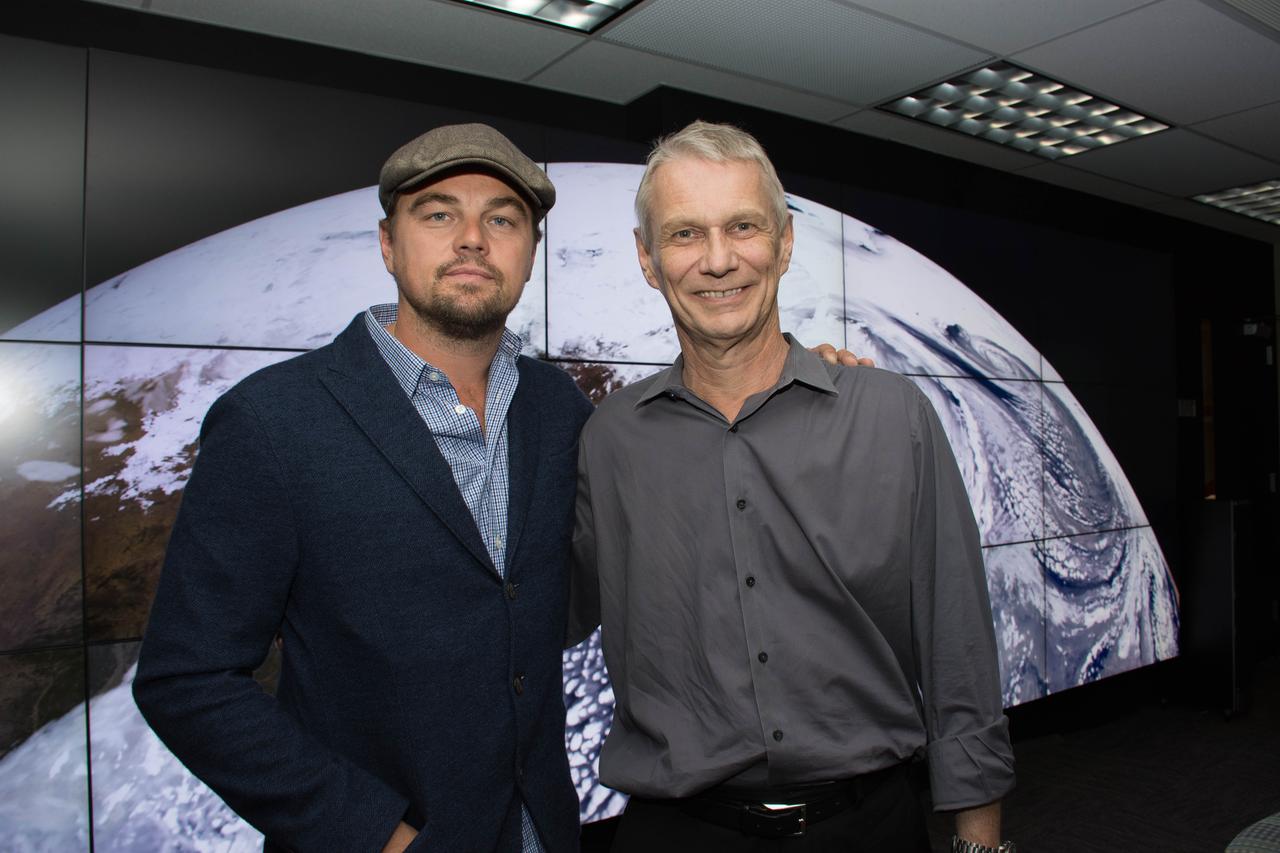
Academy Award®- winning actor and environmental activist Leonardo DiCaprio visited NASA’s Goddard Space Flight Center in Greenbelt, Maryland on Saturday, April 23, 2016. During his visit, Mr. DiCaprio interviewed Dr. Piers Sellers, an Earth scientist, former astronaut and current deputy director of Goddard’s Sciences and Exploration Directorate. The two discussed the different missions NASA has underway to study changes in the Earth’s atmosphere, water and land masses for a climate change documentary that Mr. DiCaprio has in production. Using a wall-size, high-definition display system that shows visual representations based on actual science data, Mr. DiCaprio and Dr. Sellers discussed data results from NASA’s fleet of satellites in Earth’s orbit. During his visit, Mr. DiCaprio also visited the facility holding NASA’s James Webb Space Telescope that is being developed as a large infrared telescope with a 6.5-meter primary mirror. The telescope will be launched on an Ariane 5 rocket from French Guiana in October of 2018, and will be a premier observatory of the next decade, serving thousands of astronomers worldwide. Credit: NASA/Goddard/Rebecca Roth <b><a href="http://www.nasa.gov/audience/formedia/features/MP_Photo_Guidelines.html" rel="nofollow">NASA image use policy.</a></b> <b><a href="http://www.nasa.gov/centers/goddard/home/index.html" rel="nofollow">NASA Goddard Space Flight Center</a></b> enables NASA’s mission through four scientific endeavors: Earth Science, Heliophysics, Solar System Exploration, and Astrophysics. Goddard plays a leading role in NASA’s accomplishments by contributing compelling scientific knowledge to advance the Agency’s mission. <b>Follow us on <a href="http://twitter.com/NASAGoddardPix" rel="nofollow">Twitter</a></b> <b>Like us on <a href="http://www.facebook.com/pages/Greenbelt-MD/NASA-Goddard/395013845897?ref=tsd" rel="nofollow">Facebook</a></b> <b>Find us on <a href="http://instagrid.me/nasagoddard/?vm=grid" rel="nofollow">Instagram</a></b>
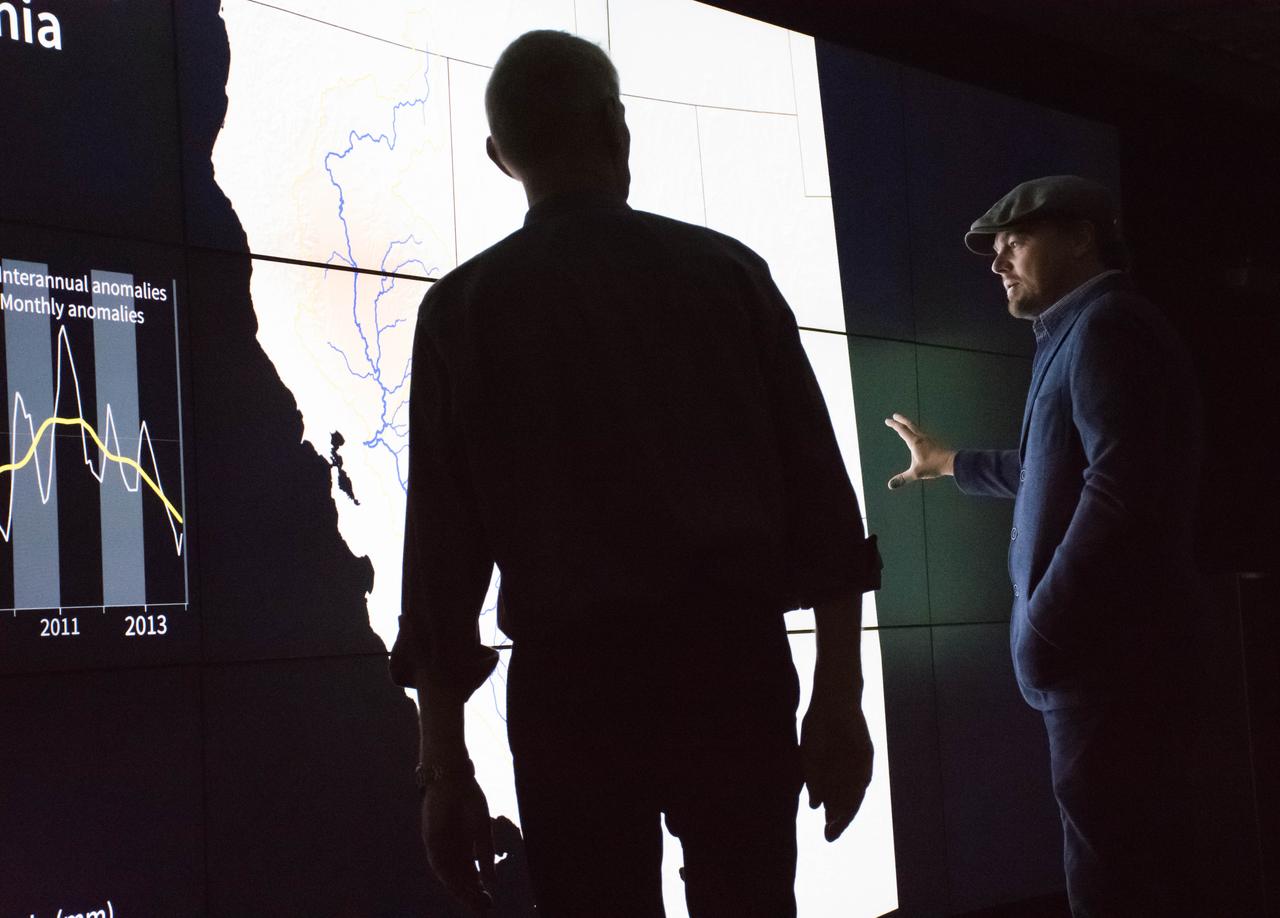
Academy Award®- winning actor and environmental activist Leonardo DiCaprio visited NASA’s Goddard Space Flight Center in Greenbelt, Maryland on Saturday, April 23, 2016. During his visit, Mr. DiCaprio interviewed Dr. Piers Sellers, an Earth scientist, former astronaut and current deputy director of Goddard’s Sciences and Exploration Directorate. The two discussed the different missions NASA has underway to study changes in the Earth’s atmosphere, water and land masses for a climate change documentary that Mr. DiCaprio has in production. Using a wall-size, high-definition display system that shows visual representations based on actual science data, Mr. DiCaprio and Dr. Sellers discussed data results from NASA’s fleet of satellites in Earth’s orbit. During his visit, Mr. DiCaprio also visited the facility holding NASA’s James Webb Space Telescope that is being developed as a large infrared telescope with a 6.5-meter primary mirror. The telescope will be launched on an Ariane 5 rocket from French Guiana in October of 2018, and will be a premier observatory of the next decade, serving thousands of astronomers worldwide. Credit: NASA/Goddard/Rebecca Roth <b><a href="http://www.nasa.gov/audience/formedia/features/MP_Photo_Guidelines.html" rel="nofollow">NASA image use policy.</a></b> <b><a href="http://www.nasa.gov/centers/goddard/home/index.html" rel="nofollow">NASA Goddard Space Flight Center</a></b> enables NASA’s mission through four scientific endeavors: Earth Science, Heliophysics, Solar System Exploration, and Astrophysics. Goddard plays a leading role in NASA’s accomplishments by contributing compelling scientific knowledge to advance the Agency’s mission. <b>Follow us on <a href="http://twitter.com/NASAGoddardPix" rel="nofollow">Twitter</a></b> <b>Like us on <a href="http://www.facebook.com/pages/Greenbelt-MD/NASA-Goddard/395013845897?ref=tsd" rel="nofollow">Facebook</a></b> <b>Find us on <a href="http://instagrid.me/nasagoddard/?vm=grid" rel="nofollow">Instagram</a></b>
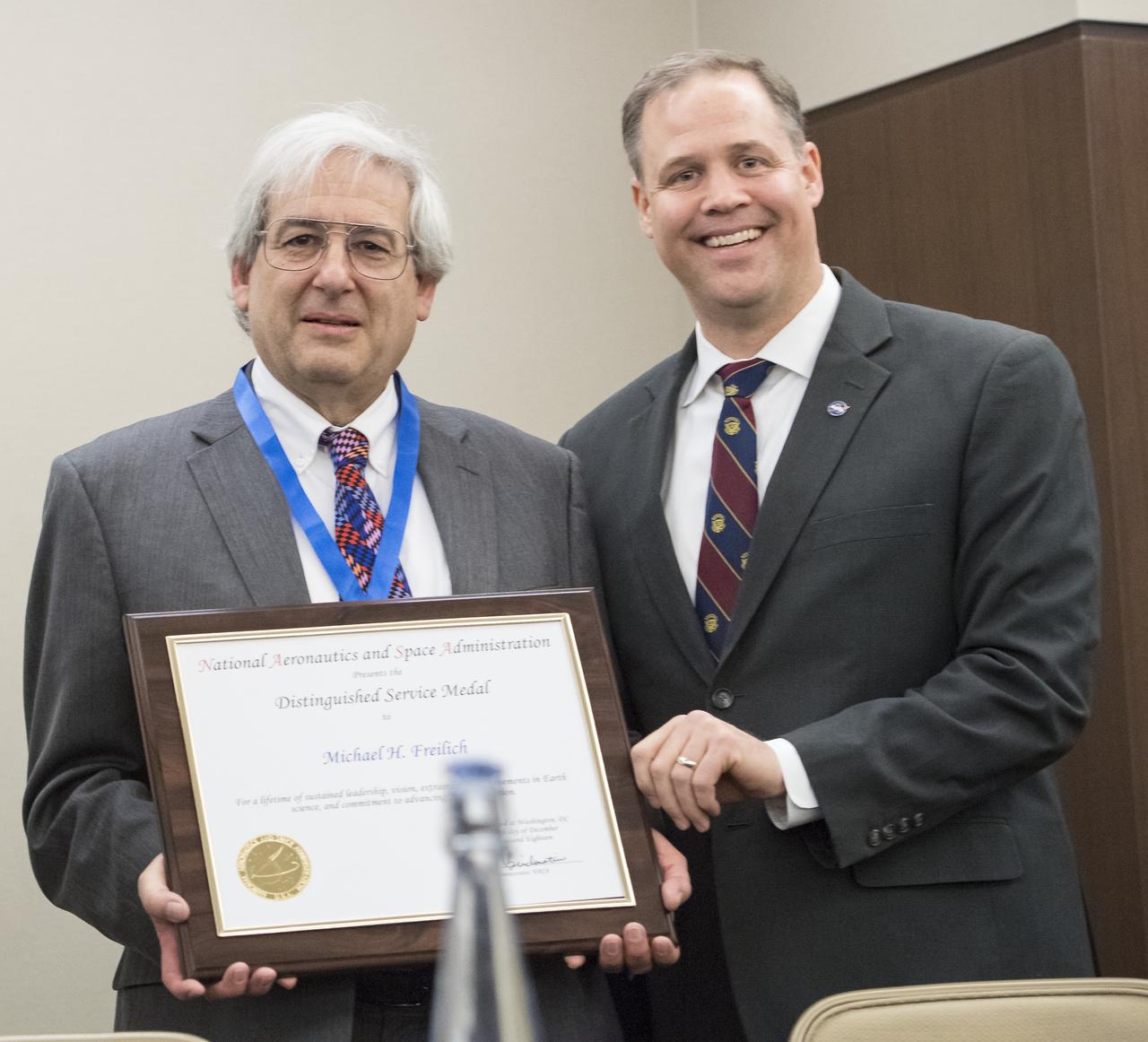
NASA Administrator Jim Bridenstine, right, and Dr. Michael Freilich, Earth Science Director, Science Mission Directorate, NASA, pose for a photo after Dr. Freilich was awarded the NASA Distinguished Service Medal at the Earth Science Town Hall at the American Geophysical Union (AGU) annual meeting, Tuesday, December 11, 2018 at the Marriott Marquis in Washington. Photo Credit: (NASA/Aubrey Gemignani)
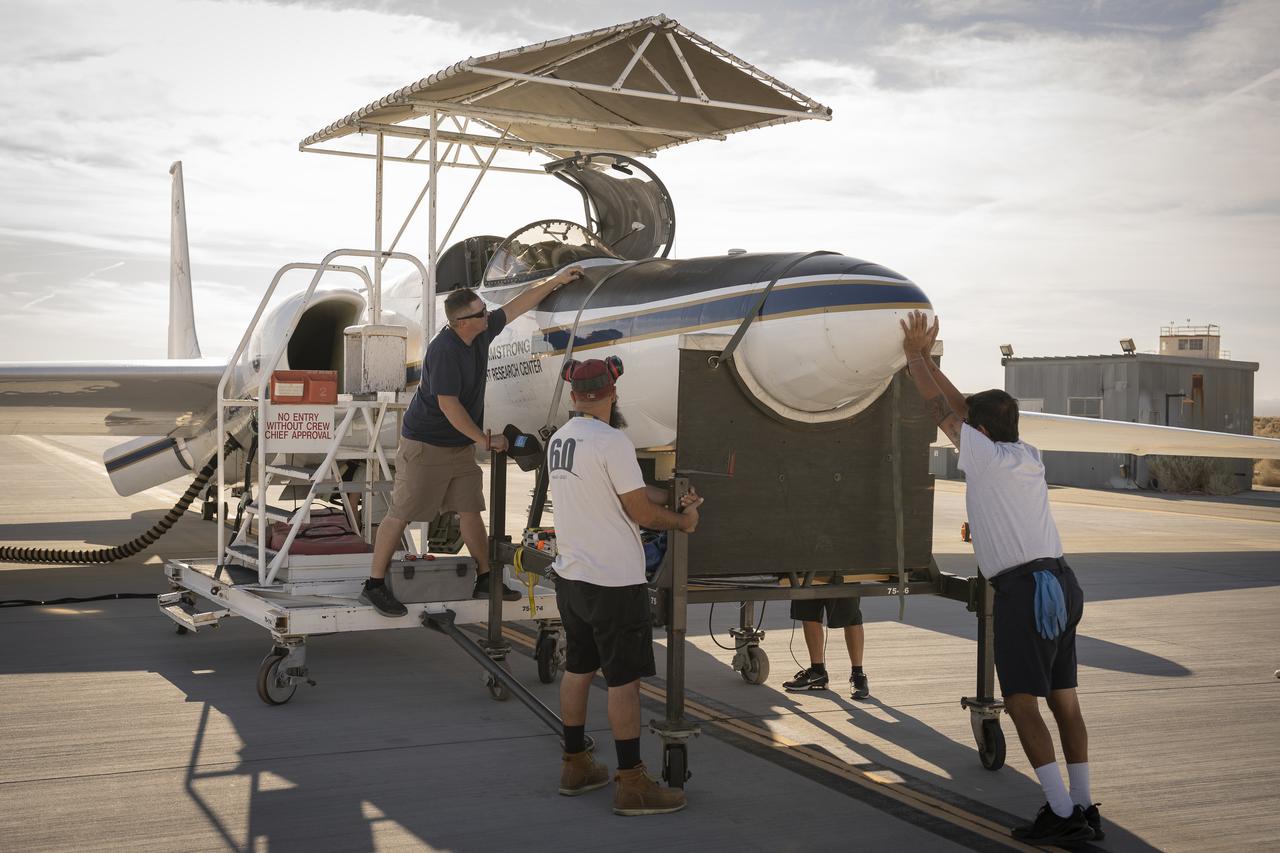
Crew members reattach the nose cone of NASA’s Armstrong Flight Research Center’s ER-2 aircraft at Edwards, California, on Thursday, Aug. 21, 2025, ahead of a mission for the Geological Earth Mapping Experiment (GEMx). The aircraft’s nose houses key science instruments used to collect data during flight.

NASA Earth Day 2019 Poster - Web

NASA Earth Day 2019 Poster - Print
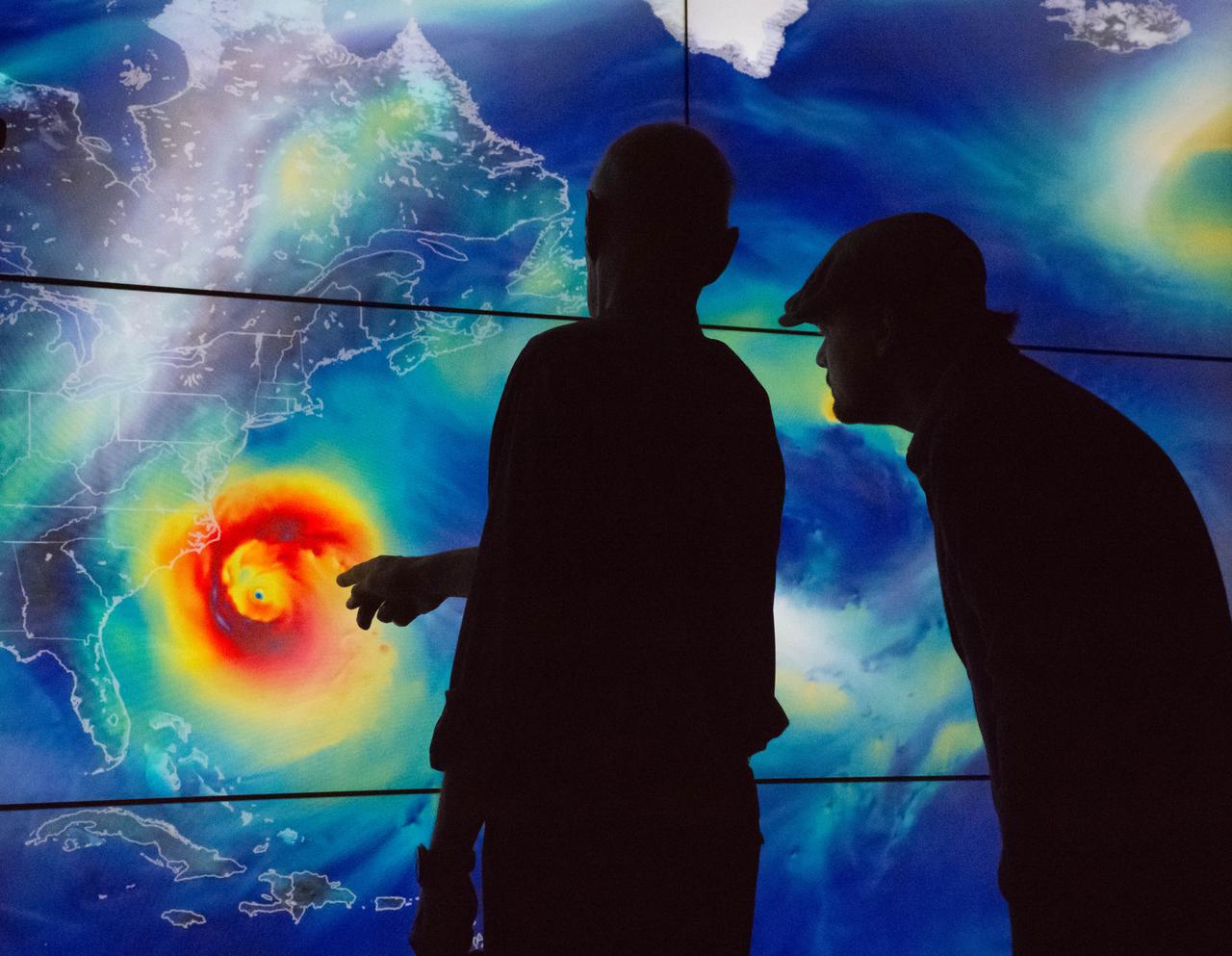
Academy Award®- winning actor and environmental activist Leonardo DiCaprio visited NASA’s Goddard Space Flight Center in Greenbelt, Maryland on Saturday, April 23, 2016. During his visit, Mr. DiCaprio interviewed Dr. Piers Sellers, an Earth scientist, former astronaut and current deputy director of Goddard’s Sciences and Exploration Directorate. The two discussed the different missions NASA has underway to study changes in the Earth’s atmosphere, water and land masses for a climate change documentary that Mr. DiCaprio has in production. Using a wall-size, high-definition display system that shows visual representations based on actual science data, Mr. DiCaprio and Dr. Sellers discussed data results from NASA’s fleet of satellites in Earth’s orbit. The visual shows Hurricane Sandy. The visual uses data from Goddard Earth Observing System Model, Version 5 (GEOS-5) to simulate surface wind speeds across the Atlantic during Sandy’s lifecycle. <a href="http://svs.gsfc.nasa.gov/cgi-bin/details.cgi?aid=30465" rel="nofollow">svs.gsfc.nasa.gov/cgi-bin/details.cgi?aid=30465</a> During his visit, Mr. DiCaprio also visited the facility holding NASA’s James Webb Space Telescope that is being developed as a large infrared telescope with a 6.5-meter primary mirror. The telescope will be launched on an Ariane 5 rocket from French Guiana in October of 2018, and will be a premier observatory of the next decade, serving thousands of astronomers worldwide. Credit: NASA/Goddard/Rebecca Roth <b><a href="http://www.nasa.gov/audience/formedia/features/MP_Photo_Guidelines.html" rel="nofollow">NASA image use policy.</a></b> <b><a href="http://www.nasa.gov/centers/goddard/home/index.html" rel="nofollow">NASA Goddard Space Flight Center</a></b> enables NASA’s mission through four scientific endeavors: Earth Science, Heliophysics, Solar System Exploration, and Astrophysics. Goddard plays a leading role in NASA’s accomplishments by contributing compelling scientific knowledge to advance the Agency’s mission. <b>Follow us on <a href="http://twitter.com/NASAGoddardPix" rel="nofollow">Twitter</a></b> <b>Like us on <a href="http://www.facebook.com/pages/Greenbelt-MD/NASA-Goddard/395013845897?ref=tsd" rel="nofollow">Facebook</a></b> <b>Find us on <a href="http://instagrid.me/nasagoddard/?vm=grid" rel="nofollow">Instagram</a></b>
A team of experts wrap up science flights on the ER-2 aircraft at Armstrong Flight Research Center in Edwards, California after the GSFC Lidar Observation and Validation Experiment (GLOVE) in February 2025. Nikolas Gibson from NASA Ames Research Center integrates the enhanced MODIS Airbrone Simulator (eMAS) instrument onto the ER-2. As a collaboration between engineers, scientists, and aircraft professionals, GLOVE aims to improve satellite data products for Earth Science applications.
NASA Earth Science Division Deputy Director Julie Robinson delivers remarks during an Earth Information Center (EIC) student engagement event, Friday, June 23, 2023, at the Mary W. Jackson NASA Headquarters building in Washington. The EIC is a new immersive experience that combines live data sets with cutting-edge data visualization and storytelling to allow visitors to see how our planet is changing. Photo Credit: (NASA/Keegan Barber)
NASA Earth Science Division Deputy Director Julie Robinson delivers remarks during an Earth Information Center (EIC) student engagement event, Friday, June 23, 2023, at the Mary W. Jackson NASA Headquarters building in Washington. The EIC is a new immersive experience that combines live data sets with cutting-edge data visualization and storytelling to allow visitors to see how our planet is changing. Photo Credit: (NASA/Keegan Barber)
NASA Earth Science Division Deputy Director Julie Robinson delivers remarks during an Earth Information Center (EIC) student engagement event, Friday, June 23, 2023, at the Mary W. Jackson NASA Headquarters building in Washington. The EIC is a new immersive experience that combines live data sets with cutting-edge data visualization and storytelling to allow visitors to see how our planet is changing. Photo Credit: (NASA/Keegan Barber)
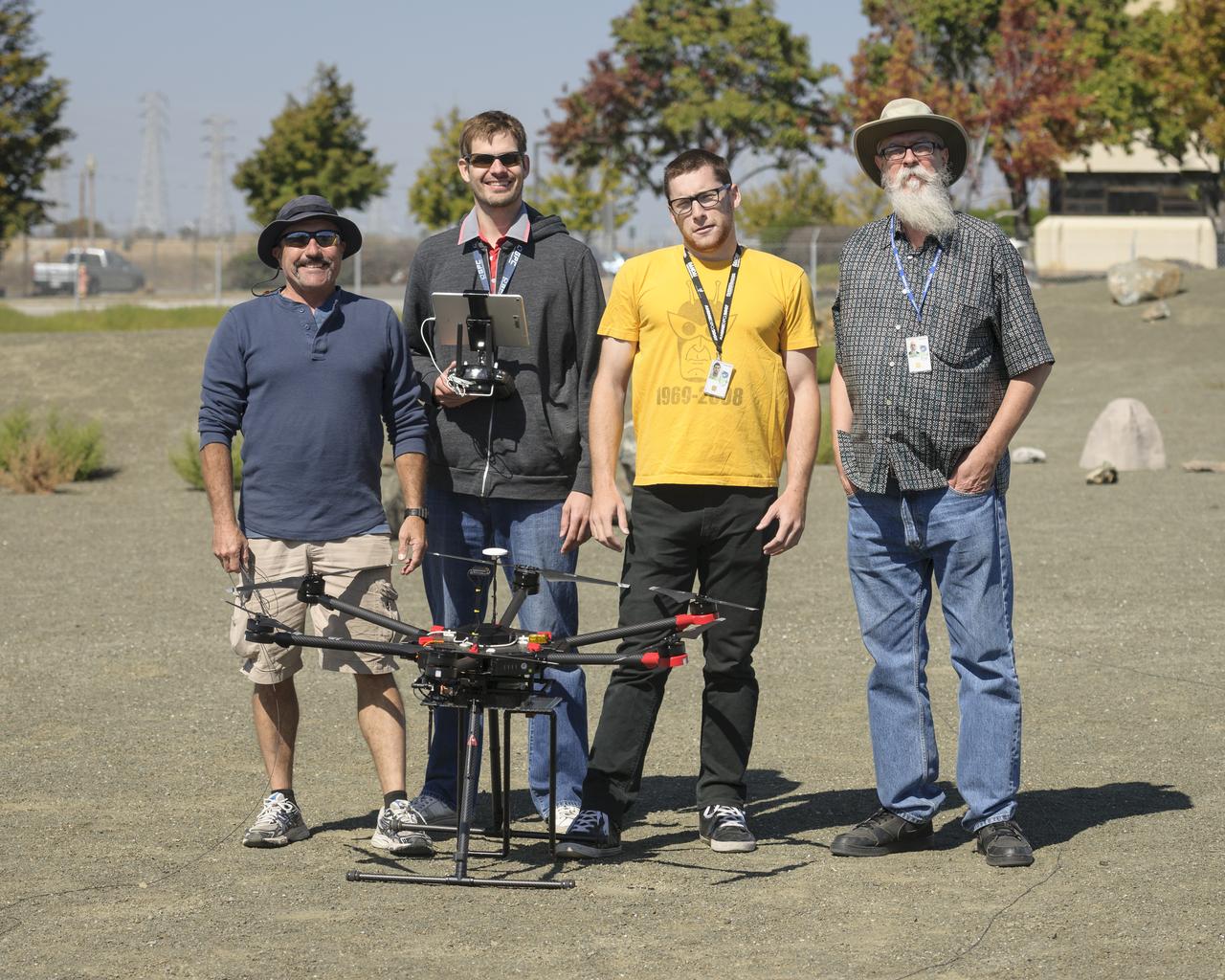
Flight Test in the Roverscape (N-269) at NASA's Ames Research Center, the project team tests the DJI Matrice 600 Unmanned Aerial Vehicle (UAV) equipped with a radio tracking receiver to study the invasive asian carp in the Mississippi River. Rick, Kolyer, Jonas Jonsson, Ethan, Pinsker, Bob Dahlgren.
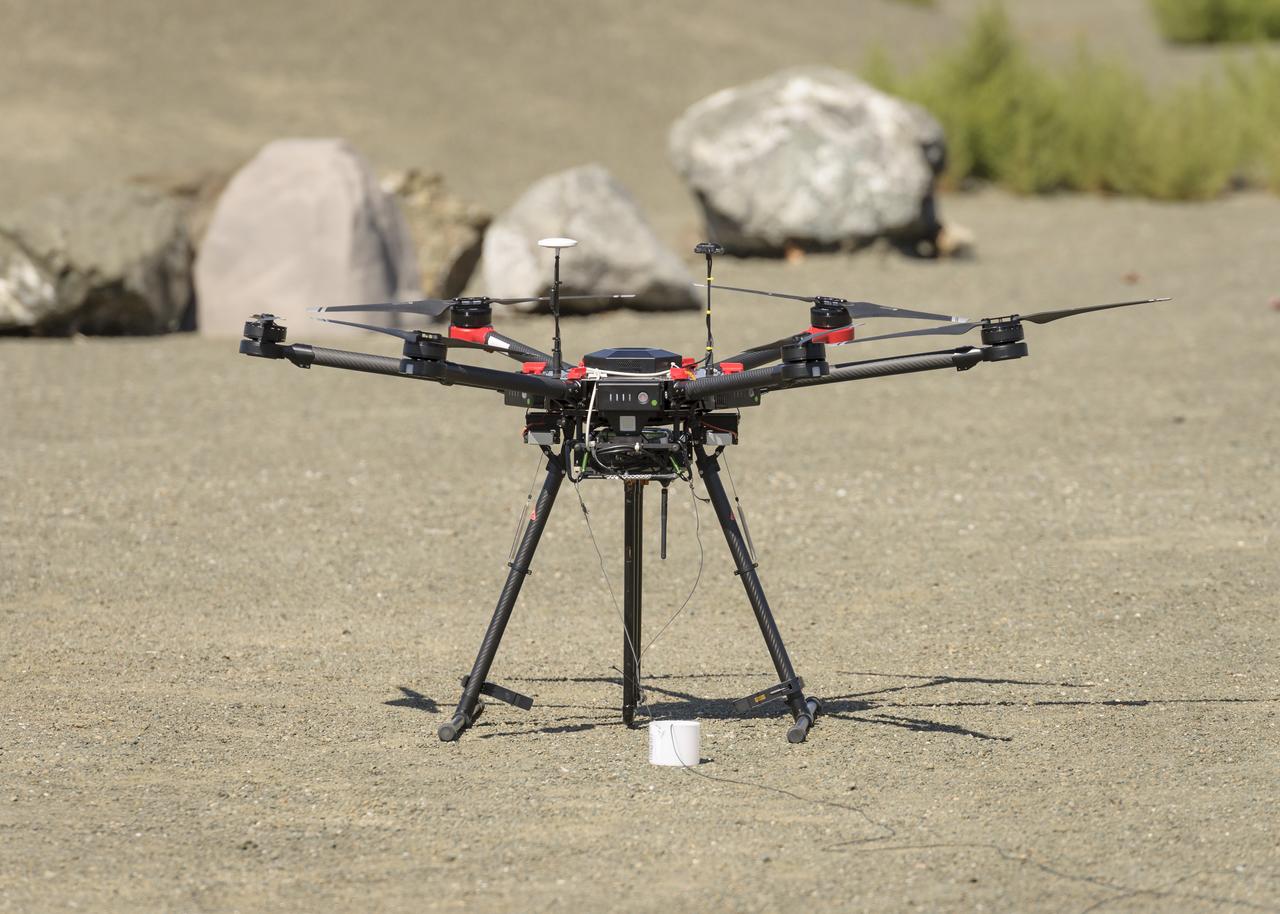
Flight Test in the Roverscape (N-269) at NASA's Ames Research Center, the project team tests the DJI Matrice 600 Unmanned Aerial Vehicle (UAV) equipped with a radio tracking receiver to study the invasive asian carp in the Mississippi River.
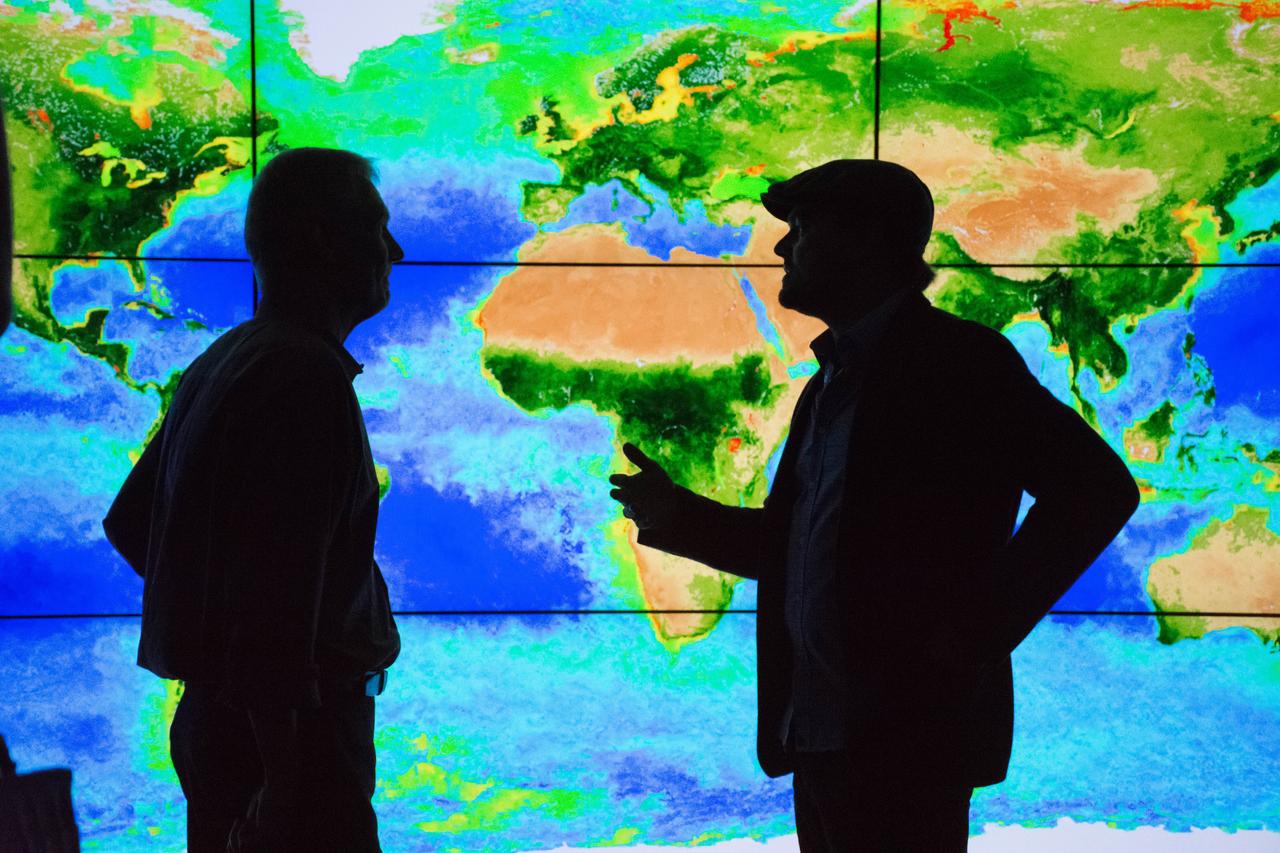
Academy Award®- winning actor and environmental activist Leonardo DiCaprio visited NASA’s Goddard Space Flight Center in Greenbelt, Maryland on Saturday, April 23, 2016. During his visit, Mr. DiCaprio interviewed Dr. Piers Sellers, an Earth scientist, former astronaut and current deputy director of Goddard’s Sciences and Exploration Directorate. The two discussed the different missions NASA has underway to study changes in the Earth’s atmosphere, water and land masses for a climate change documentary that Mr. DiCaprio has in production. Using a wall-size, high-definition display system that shows visual representations based on actual science data, Mr. DiCaprio and Dr. Sellers discussed data results from NASA’s fleet of satellites in Earth’s orbit. The background visual shows the biosphere with data from a NASA satellite instrument called the Sea-viewing Wide Field-of-View Sensor (SeaWiFS). <a href="http://svs.gsfc.nasa.gov/cgi-bin/details.cgi?aid=10704" rel="nofollow">svs.gsfc.nasa.gov/cgi-bin/details.cgi?aid=10704</a> During his visit, Mr. DiCaprio also visited the facility holding NASA’s James Webb Space Telescope that is being developed as a large infrared telescope with a 6.5-meter primary mirror. The telescope will be launched on an Ariane 5 rocket from French Guiana in October of 2018, and will be a premier observatory of the next decade, serving thousands of astronomers worldwide. Credit: NASA/Goddard/Rebecca Roth <b><a href="http://www.nasa.gov/audience/formedia/features/MP_Photo_Guidelines.html" rel="nofollow">NASA image use policy.</a></b> <b><a href="http://www.nasa.gov/centers/goddard/home/index.html" rel="nofollow">NASA Goddard Space Flight Center</a></b> enables NASA’s mission through four scientific endeavors: Earth Science, Heliophysics, Solar System Exploration, and Astrophysics. Goddard plays a leading role in NASA’s accomplishments by contributing compelling scientific knowledge to advance the Agency’s mission. <b>Follow us on <a href="http://twitter.com/NASAGoddardPix" rel="nofollow">Twitter</a></b> <b>Like us on <a href="http://www.facebook.com/pages/Greenbelt-MD/NASA-Goddard/395013845897?ref=tsd" rel="nofollow">Facebook</a></b> <b>Find us on <a href="http://instagrid.me/nasagoddard/?vm=grid" rel="nofollow">Instagram</a></b>
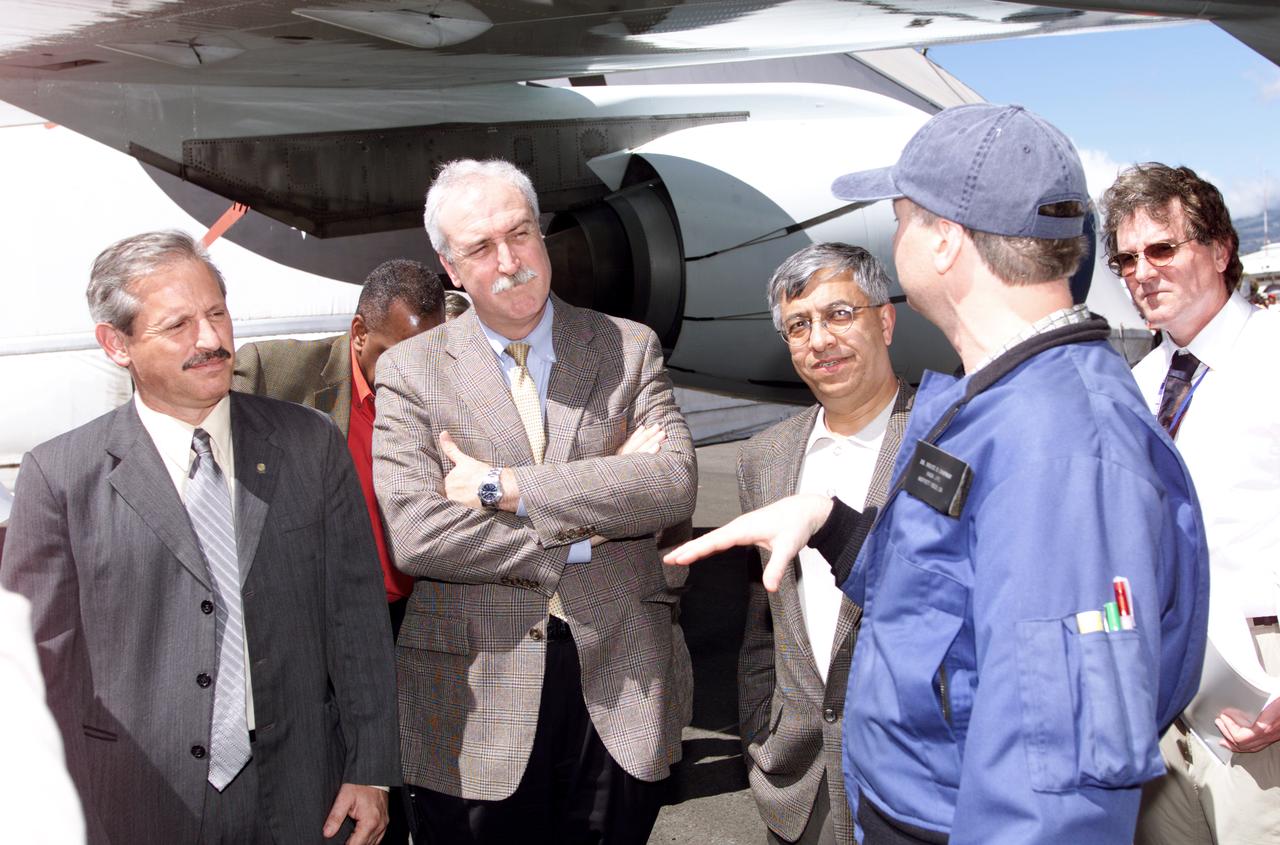
Personnel viewing AirSAR hardware while touring the outside of NASA's DC-8 during a stop-off on the AirSAR 2004 Mesoamerica campaign, L-R: Fernando Gutierrez, Costa Rican Minister of Science and Technology(MICIT); NASA Administrator Sean O'Keefe; Dr. Gahssem Asrar, NASA Associate Administrator for Earth Science Enterprises; JPL scientist Bruce Chapman; and Craig Dobson, NASA Program Manager for AirSAR. AirSAR 2004 Mesoamerica is a three-week expedition by an international team of scientists that will use an all-weather imaging tool, called the Airborne Synthetic Aperture Radar (AirSAR), in a mission ranging from the tropical rain forests of Central America to frigid Antarctica.
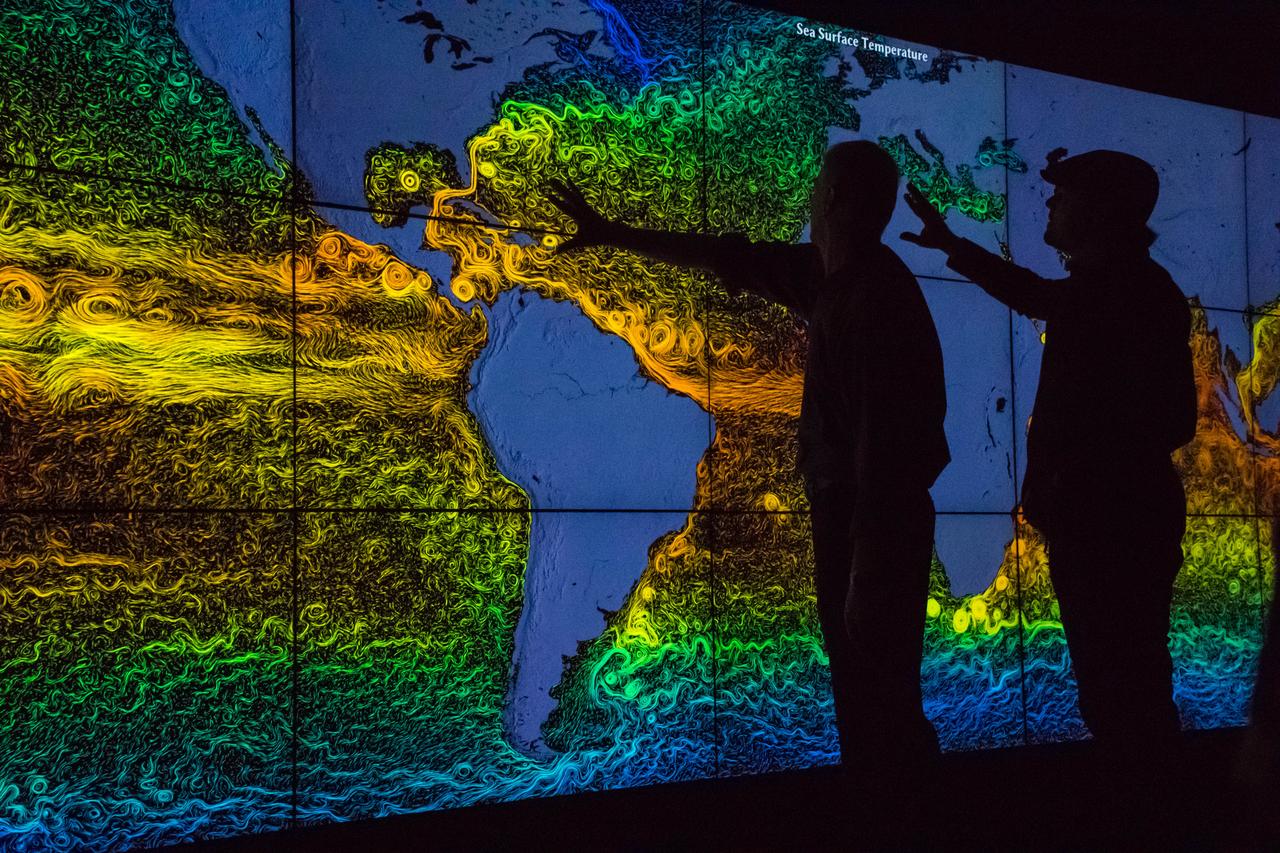
Academy Award®- winning actor and environmental activist Leonardo DiCaprio visited NASA’s Goddard Space Flight Center in Greenbelt, Maryland on Saturday, April 23, 2016. During his visit, Mr. DiCaprio interviewed Dr. Piers Sellers, an Earth scientist, former astronaut and current deputy director of Goddard’s Sciences and Exploration Directorate. The two discussed the different missions NASA has underway to study changes in the Earth’s atmosphere, water and land masses for a climate change documentary that Mr. DiCaprio has in production. Using a wall-size, high-definition display system that shows visual representations based on actual science data, Mr. DiCaprio and Dr. Sellers discussed data results from NASA’s fleet of satellites in Earth’s orbit. The background image showing global sea surface circulation colored by temperature where reds are warm areas (32 degrees Celsius) and blues are cold regions (0 degrees Celsius). The data used for this visual is a joint MIT/JPL project called Estimating the Circulation and Climate of the Ocean, Phase II (ECCO2). For more info on this visual, <a href="http://svs.gsfc.nasa.gov/cgi-bin/details.cgi?aid=3912" rel="nofollow">svs.gsfc.nasa.gov/cgi-bin/details.cgi?aid=3912</a> During his visit, Mr. DiCaprio also visited the facility holding NASA’s James Webb Space Telescope that is being developed as a large infrared telescope with a 6.5-meter primary mirror. The telescope will be launched on an Ariane 5 rocket from French Guiana in October of 2018, and will be a premier observatory of the next decade, serving thousands of astronomers worldwide. Credit: NASA/Goddard/Rebecca Roth <b><a href="http://www.nasa.gov/audience/formedia/features/MP_Photo_Guidelines.html" rel="nofollow">NASA image use policy.</a></b> <b><a href="http://www.nasa.gov/centers/goddard/home/index.html" rel="nofollow">NASA Goddard Space Flight Center</a></b> enables NASA’s mission through four scientific endeavors: Earth Science, Heliophysics, Solar System Exploration, and Astrophysics. Goddard plays a leading role in NASA’s accomplishments by contributing compelling scientific knowledge to advance the Agency’s mission. <b>Follow us on <a href="http://twitter.com/NASAGoddardPix" rel="nofollow">Twitter</a></b> <b>Like us on <a href="http://www.facebook.com/pages/Greenbelt-MD/NASA-Goddard/395013845897?ref=tsd" rel="nofollow">Facebook</a></b> <b>Find us on <a href="http://instagrid.me/nasagoddard/?vm=grid" rel="nofollow">Instagram</a></b>
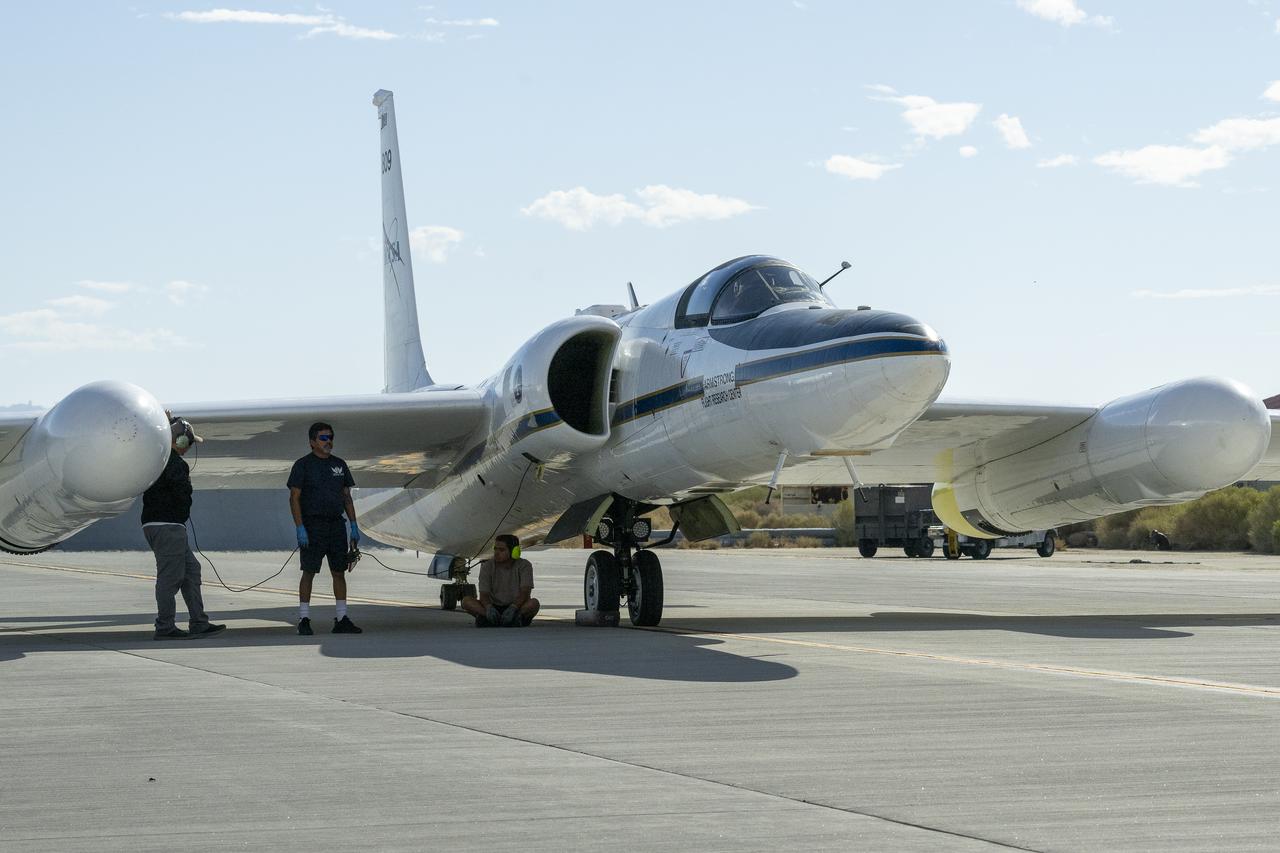
Crew members prepare NASA Armstrong Flight Research Center’s ER-2 aircraft for flight at Edwards, California, on Tuesday, Sept. 23, 2025, in support of the Geological Earth Mapping Experiment (GEMx). The high-altitude science aircraft operates between 20,000 and 70,000 feet. For this mission, pilots flew at approximately 65,000 feet, requiring them to wear specially designed pressure suits.
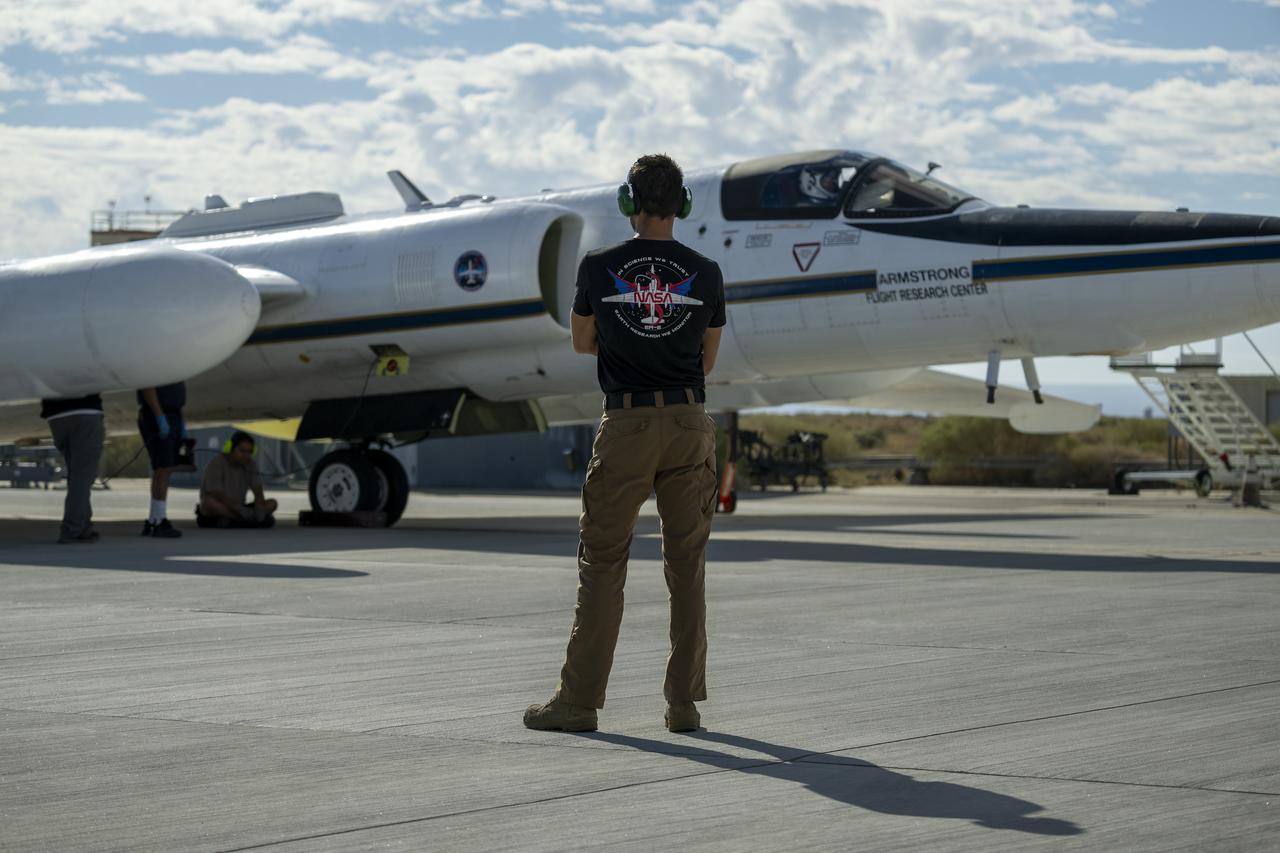
Crew members prepare NASA Armstrong Flight Research Center’s ER-2 aircraft for flight at Edwards, California, on Tuesday, Sept. 23, 2025, in support of the Geological Earth Mapping Experiment (GEMx). The high-altitude science aircraft operates between 20,000 and 70,000 feet. For this mission, pilots flew at approximately 65,000 feet, requiring them to wear specially designed pressure suits.
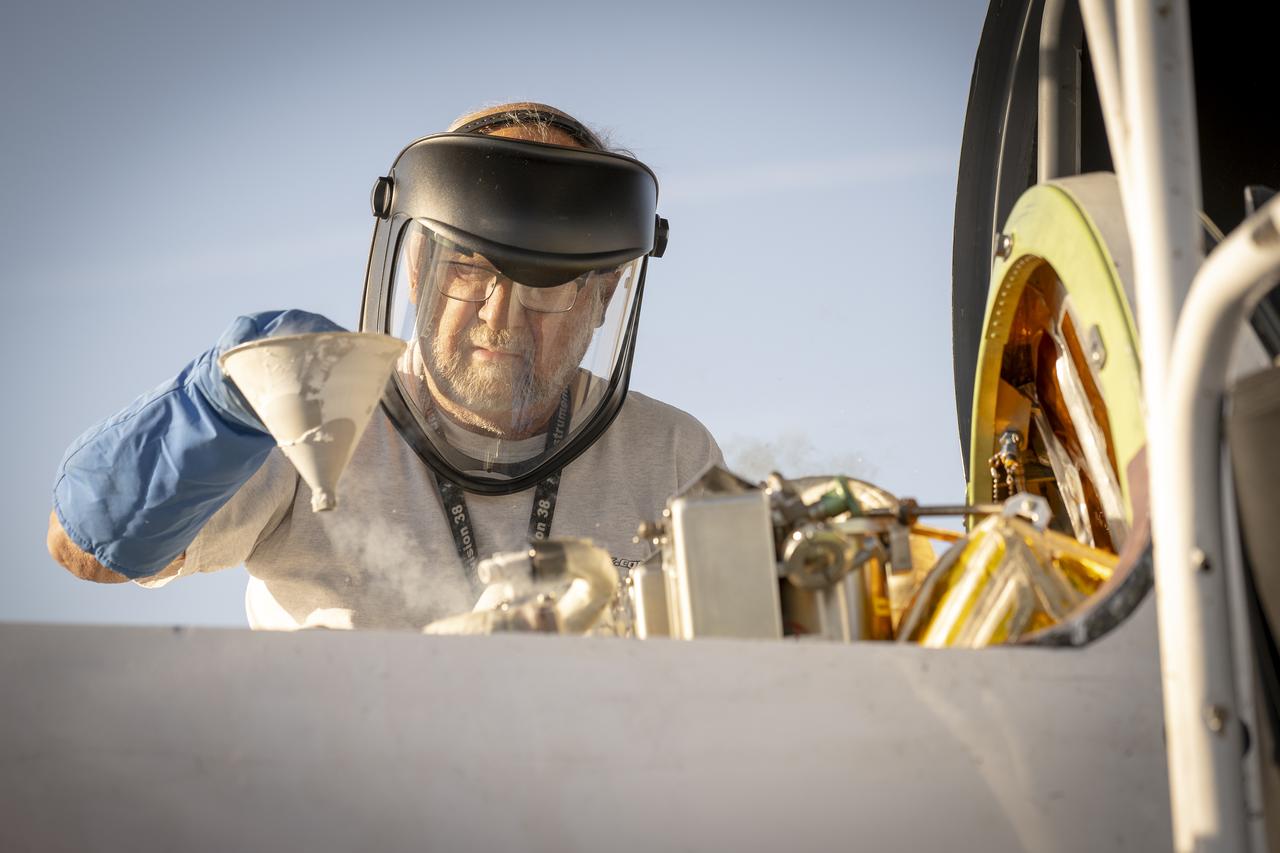
A crew member handles liquid nitrogen servicing for NASA’s Armstrong Flight Research Center’s ER-2 aircraft at Edwards, California, on Thursday, Aug. 21, 2025. Liquid nitrogen is used to support key science instruments for extended flight durations in critical research missions, such as the Geological Earth Mapping Experiment (GEMx), which requires flights of up to eight hours at approximately 65,000 feet altitude.
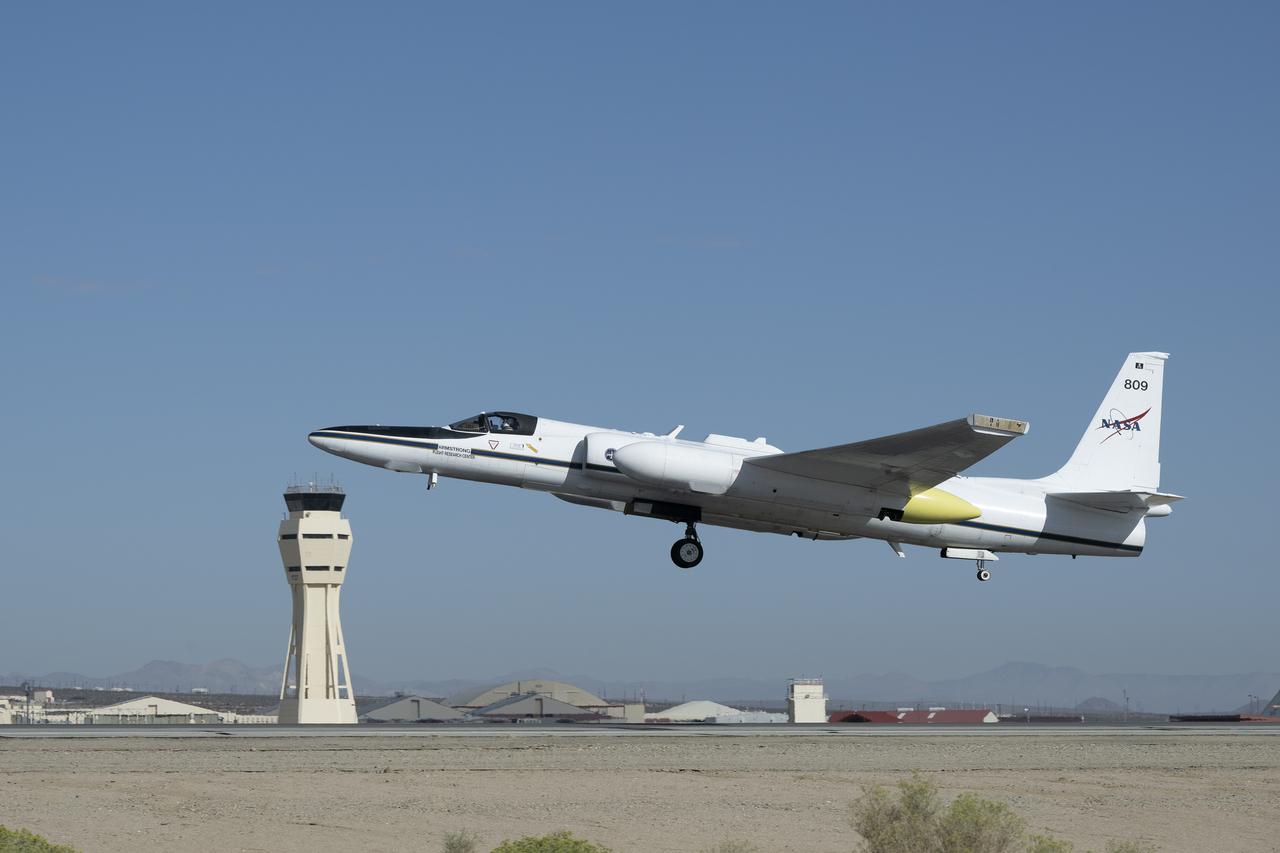
NASA Armstrong Flight Research Center’s ER-2 aircraft lifts off from Edwards, California, on Tuesday, Sept. 23, 2025, in support of the Geological Earth Mapping Experiment (GEMx). The high-altitude science aircraft operates between 20,000 and 70,000 feet. For this mission, pilots flew at approximately 65,000 feet, requiring them to wear specially designed pressure suits.
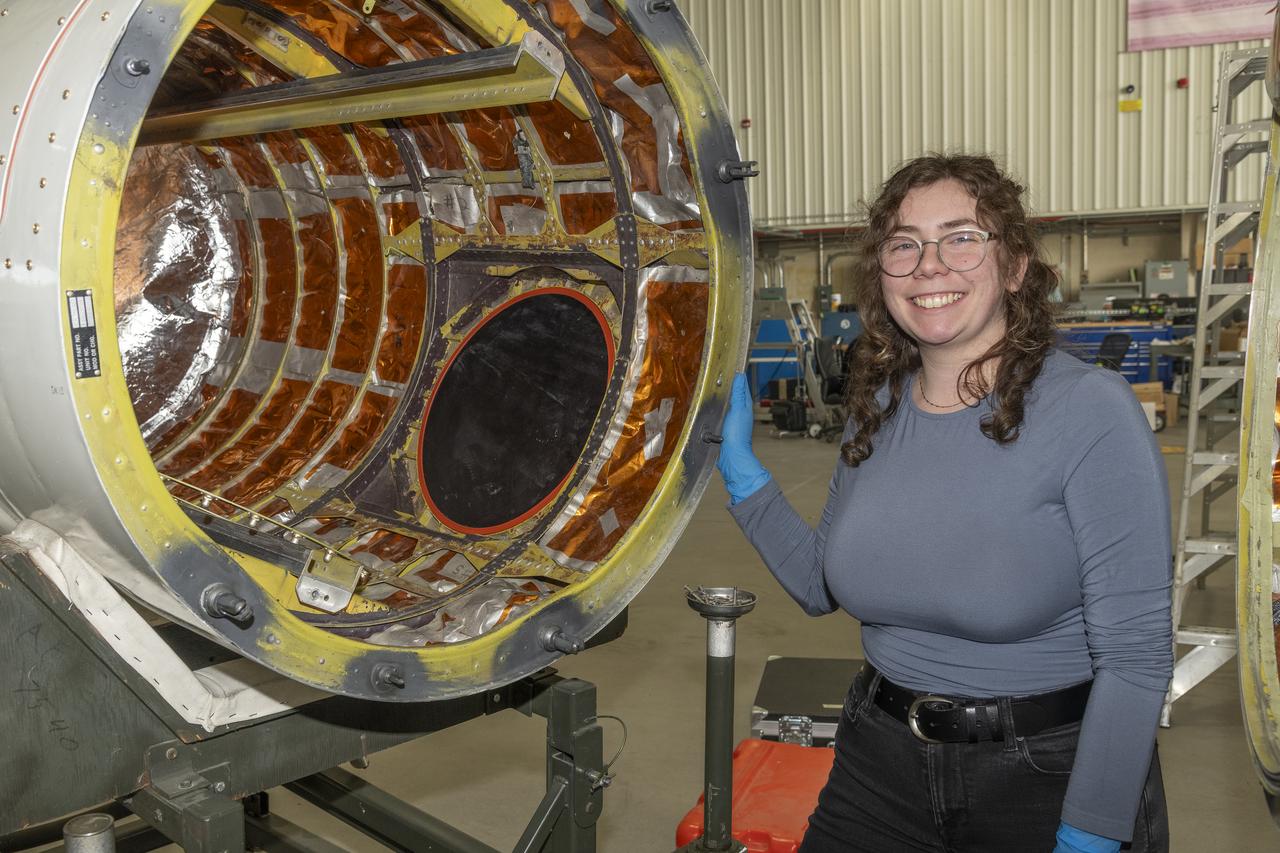
A team of experts prepares the ER-2 aircraft at Armstrong Flight Research Center in Edwards, California for the GSFC Lidar Observation and Validation Experiment (GLOVE) in February 2025. Researcher Jennifer Moore from NASA’s Goddard Space Flight Center smiles beside the ER-2 aircraft’s forebody pod where the Cloud Physics Lidar (CPL) instrument will be installed. As a collaboration between engineers, scientists, and aircraft professionals, GLOVE aims to improve satellite data products for Earth Science applications.
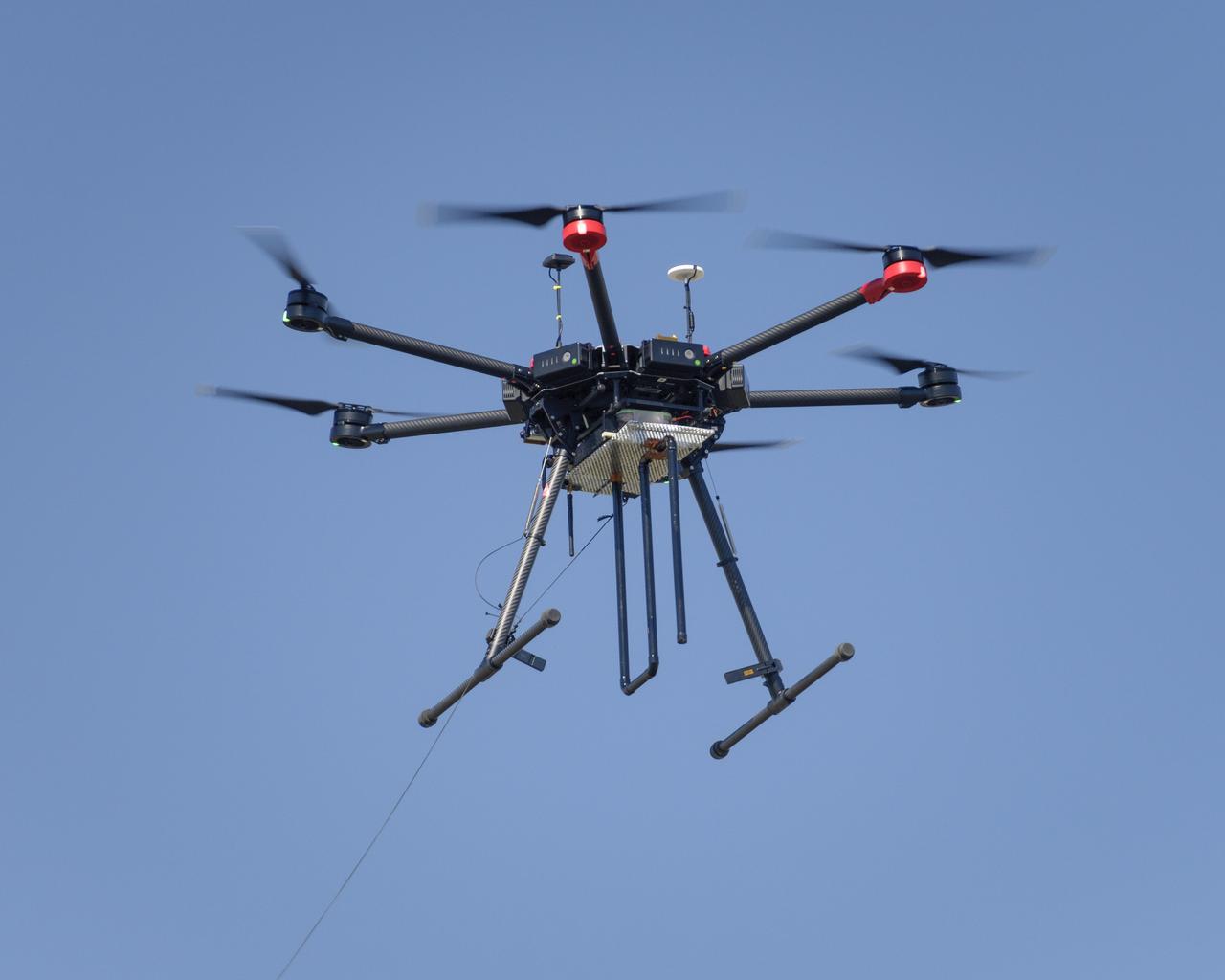
Flight Test in the Roverscape (N-269) at NASA's Ames Research Center, the project team tests the DJI Matrice 600 Unmanned Aerial Vehicle (UAV) equipped with a radio tracking receiver to study the invasive asian carp in the Mississippi River.
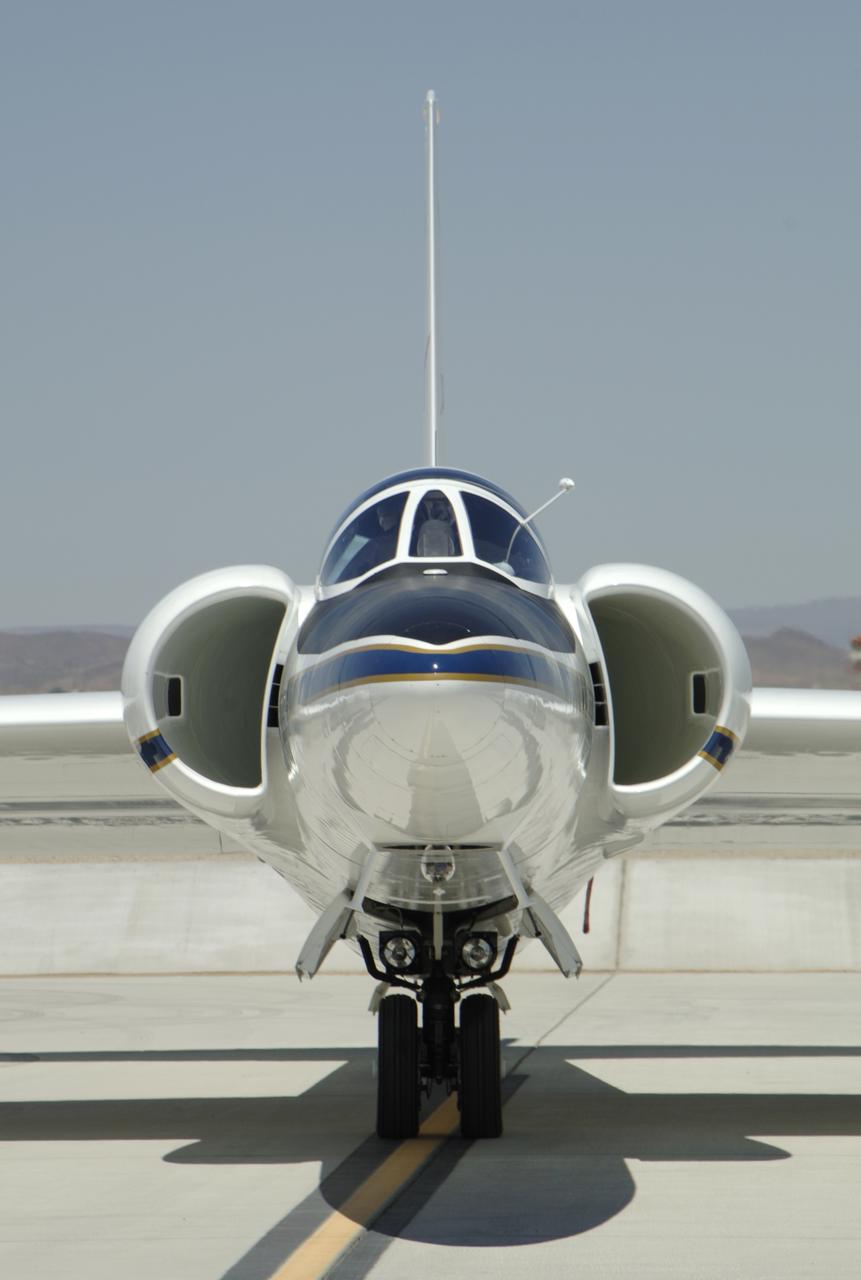
The large air intakes for its powerful engine are obvious as NASA's high-flying ER-2 #806 Earth resources aircraft taxies out for another science mission.
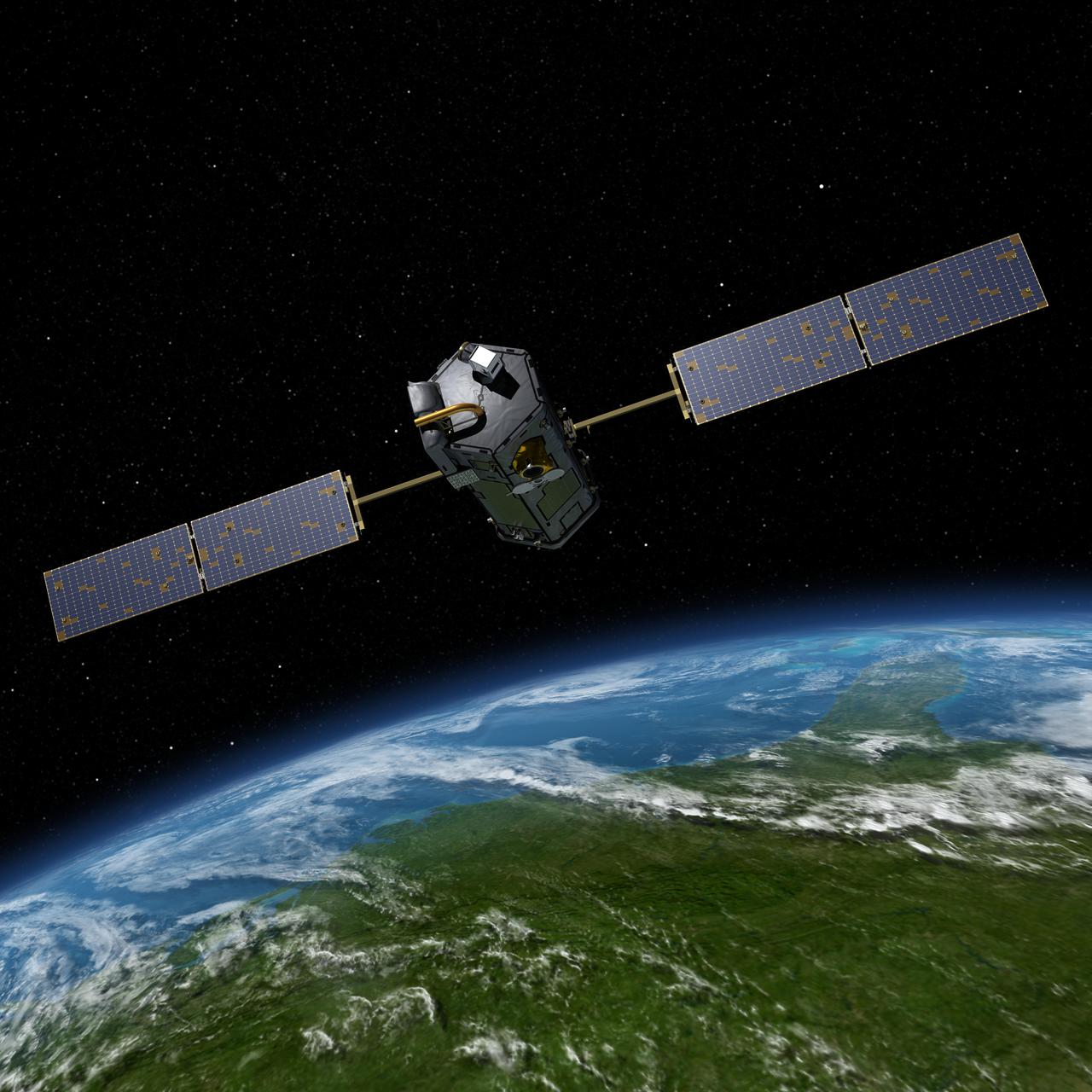
Artist rendering of NASA Orbiting Carbon Observatory OCO-2, one of five new NASA Earth science missions set to launch in 2014, and one of three managed by JPL.
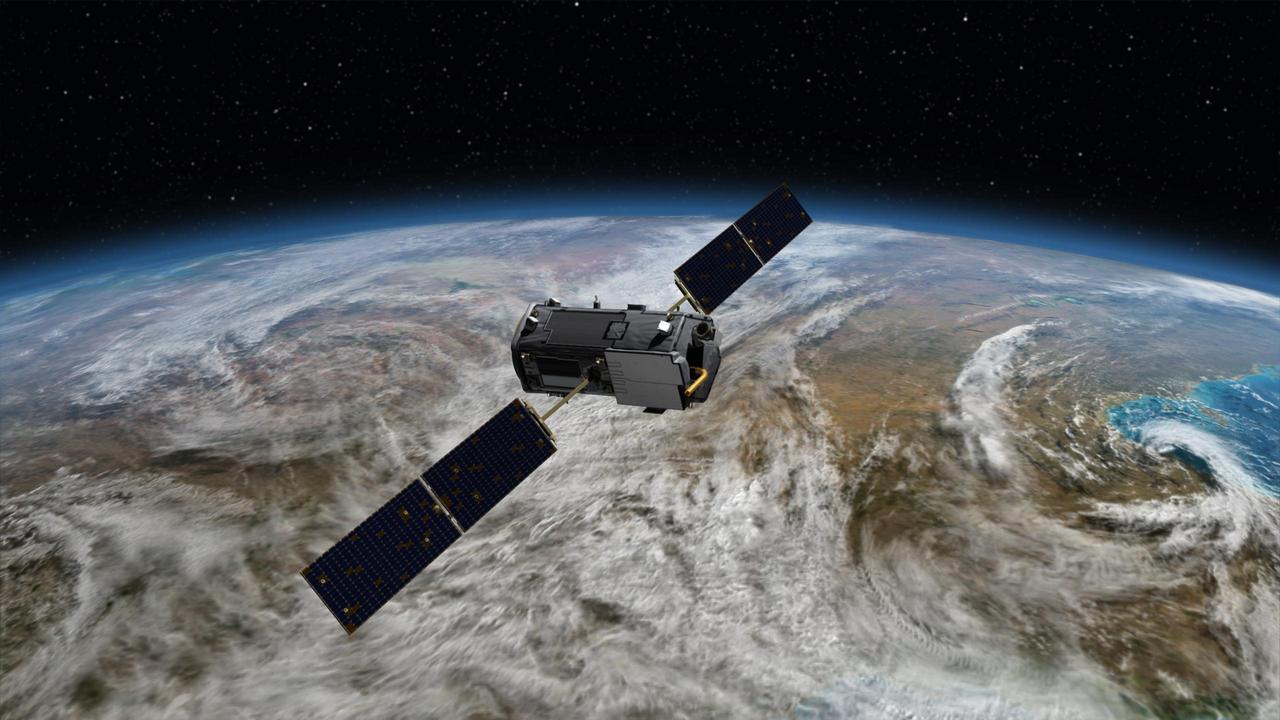
Artist rendering of NASA Orbiting Carbon Observatory OCO-2, one of five new NASA Earth science missions set to launch in 2014, and one of three managed by JPL.
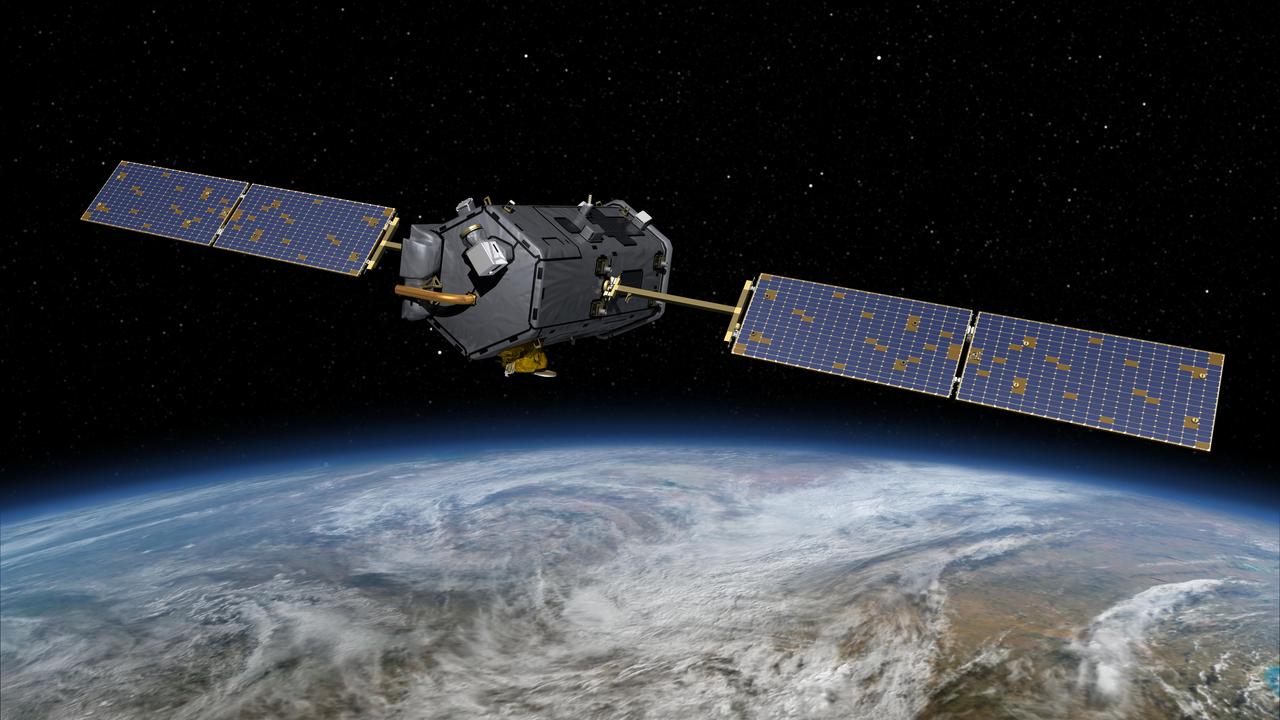
This most recent artist rendering shows NASA Orbiting Carbon Observatory OCO-2, one of five new NASA Earth science missions set to launch in 2014, and one of three managed by the Jet Propulsion Laboratory JPL.
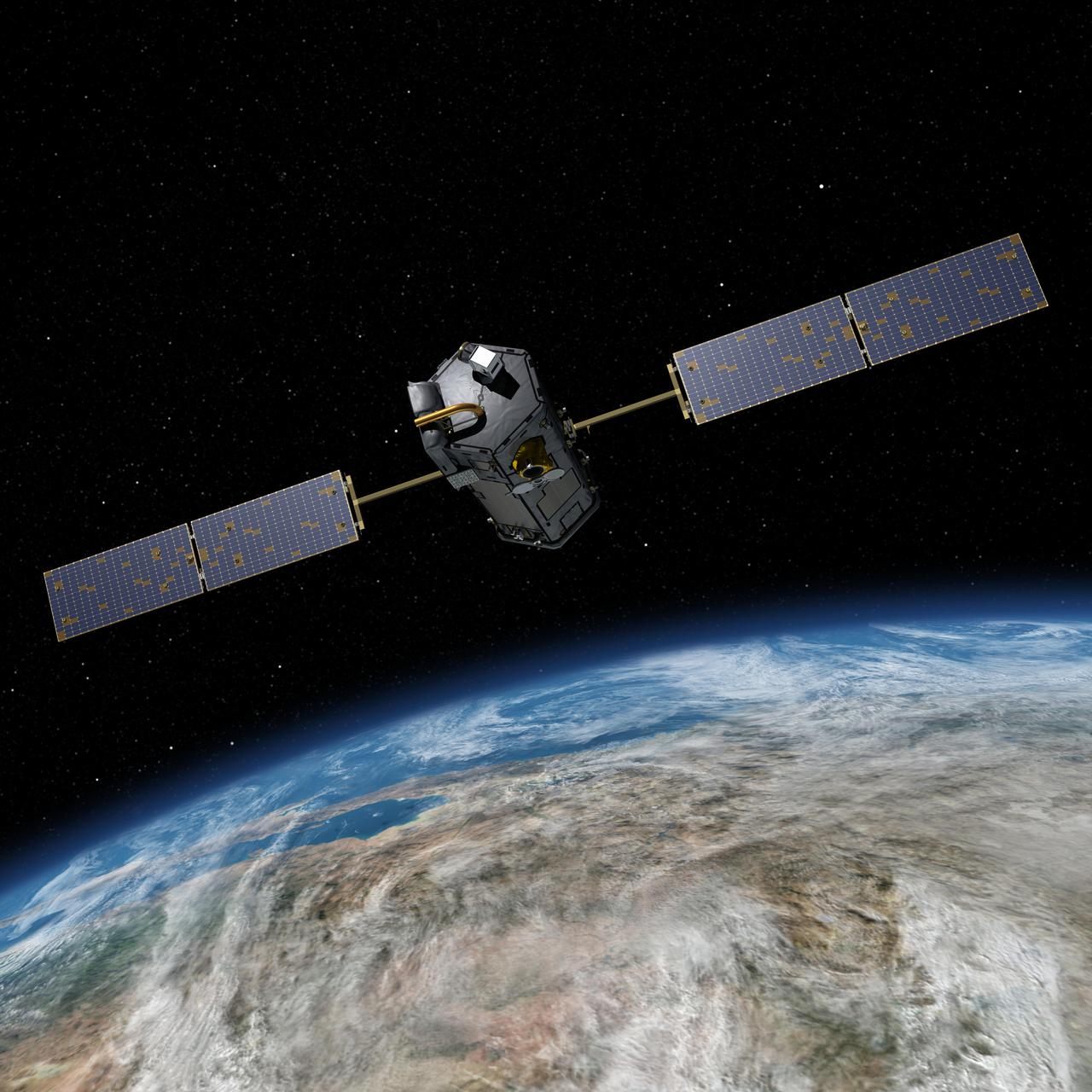
This most recent artist rendering shows NASA Orbiting Carbon Observatory OCO-2, one of five new NASA Earth science missions set to launch in 2014, and one of three managed by the Jet Propulsion Laboratory JPL.
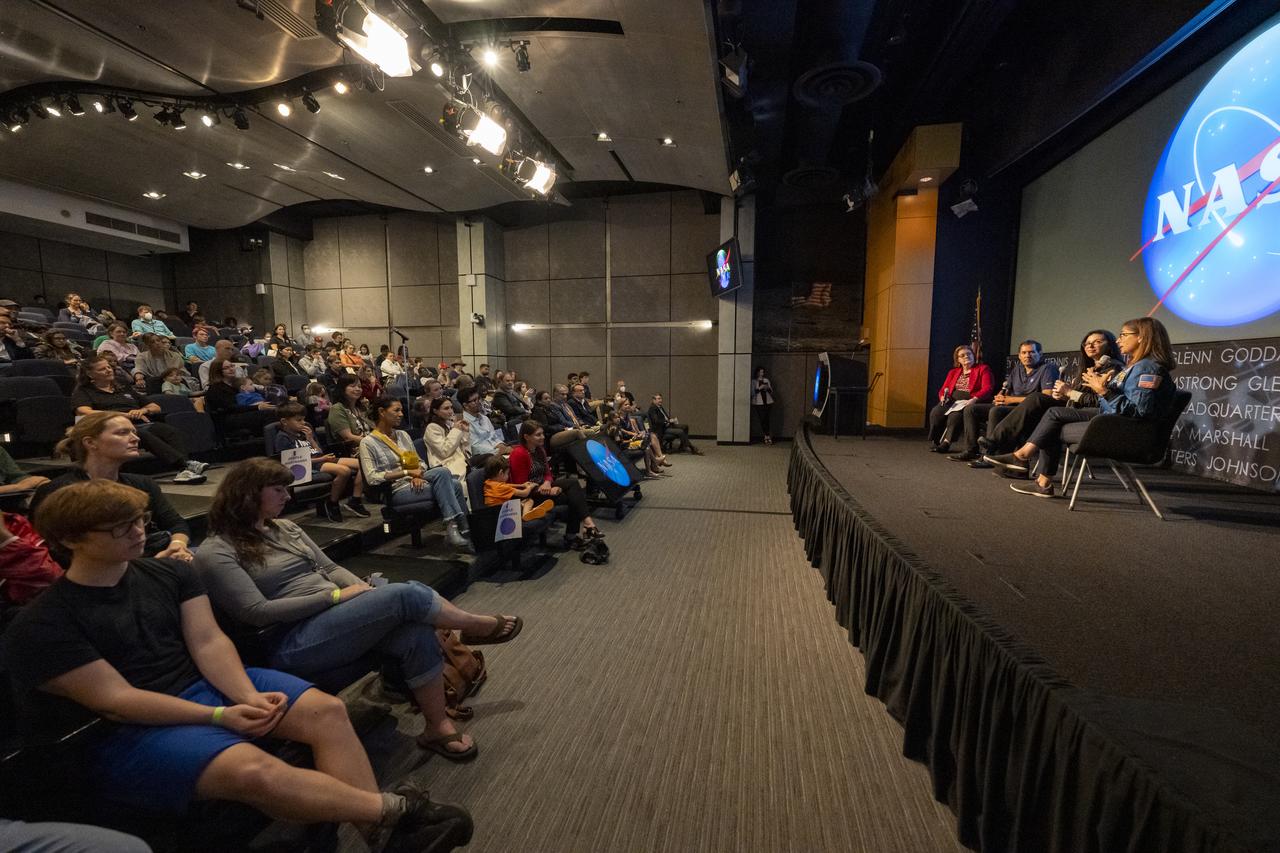
From left to right, NASA Earth Science Division Deputy Director Julie Robinson, NASA Scientific Visualization Studio Lead Mark Subbarao, NASA Jet Propulsion Laboratory (JPL) Art Director Erica Bernhard, and Former NASA Astronaut Nicole Stott participate in a fireside chat during an Earth Information Center (EIC) student engagement event, Friday, June 23, 2023, at the Mary W. Jackson NASA Headquarters building in Washington. The EIC is a new immersive experience that combines live data sets with cutting-edge data visualization and storytelling to allow visitors to see how our planet is changing. Photo Credit: (NASA/Keegan Barber)
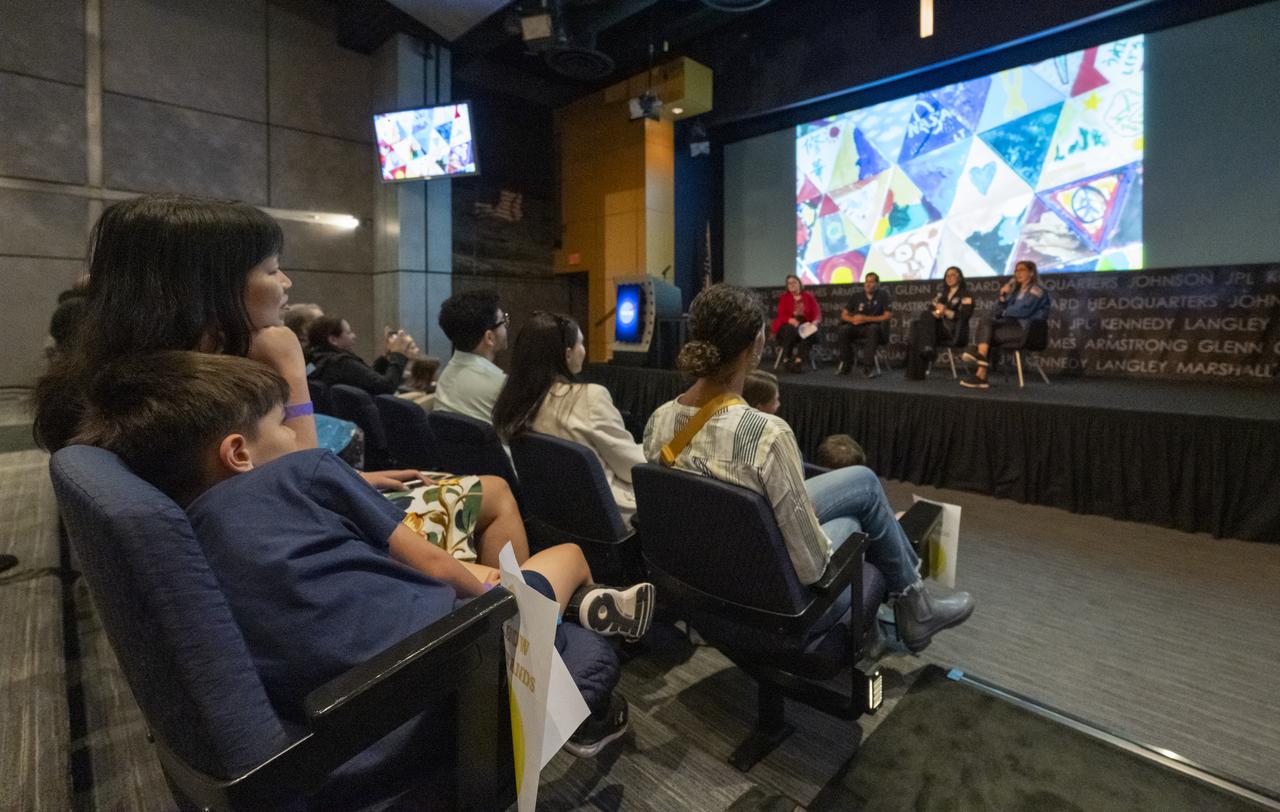
From left to right, NASA Earth Science Division Deputy Director Julie Robinson, NASA Scientific Visualization Studio Lead Mark Subbarao, NASA Jet Propulsion Laboratory (JPL) Art Director Erica Bernhard, and Former NASA Astronaut Nicole Stott participate in a fireside chat during an Earth Information Center (EIC) student engagement event, Friday, June 23, 2023, at the Mary W. Jackson NASA Headquarters building in Washington. The EIC is a new immersive experience that combines live data sets with cutting-edge data visualization and storytelling to allow visitors to see how our planet is changing. Photo Credit: (NASA/Keegan Barber)
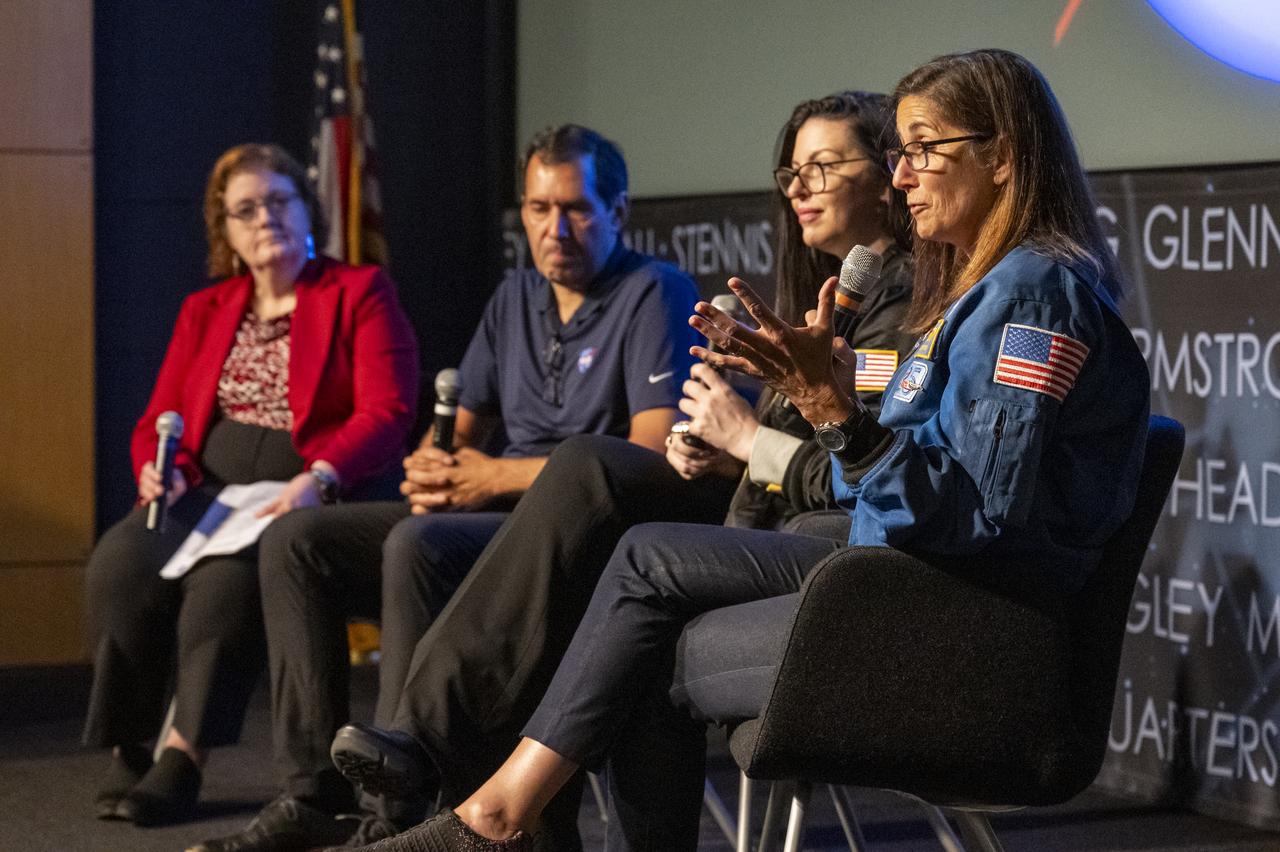
From left to right, NASA Earth Science Division Deputy Director Julie Robinson, NASA Scientific Visualization Studio Lead Mark Subbarao, NASA Jet Propulsion Laboratory (JPL) Art Director Erica Bernhard, and Former NASA Astronaut Nicole Stott participate in a fireside chat during an Earth Information Center (EIC) student engagement event, Friday, June 23, 2023, at the Mary W. Jackson NASA Headquarters building in Washington. The EIC is a new immersive experience that combines live data sets with cutting-edge data visualization and storytelling to allow visitors to see how our planet is changing. Photo Credit: (NASA/Keegan Barber)
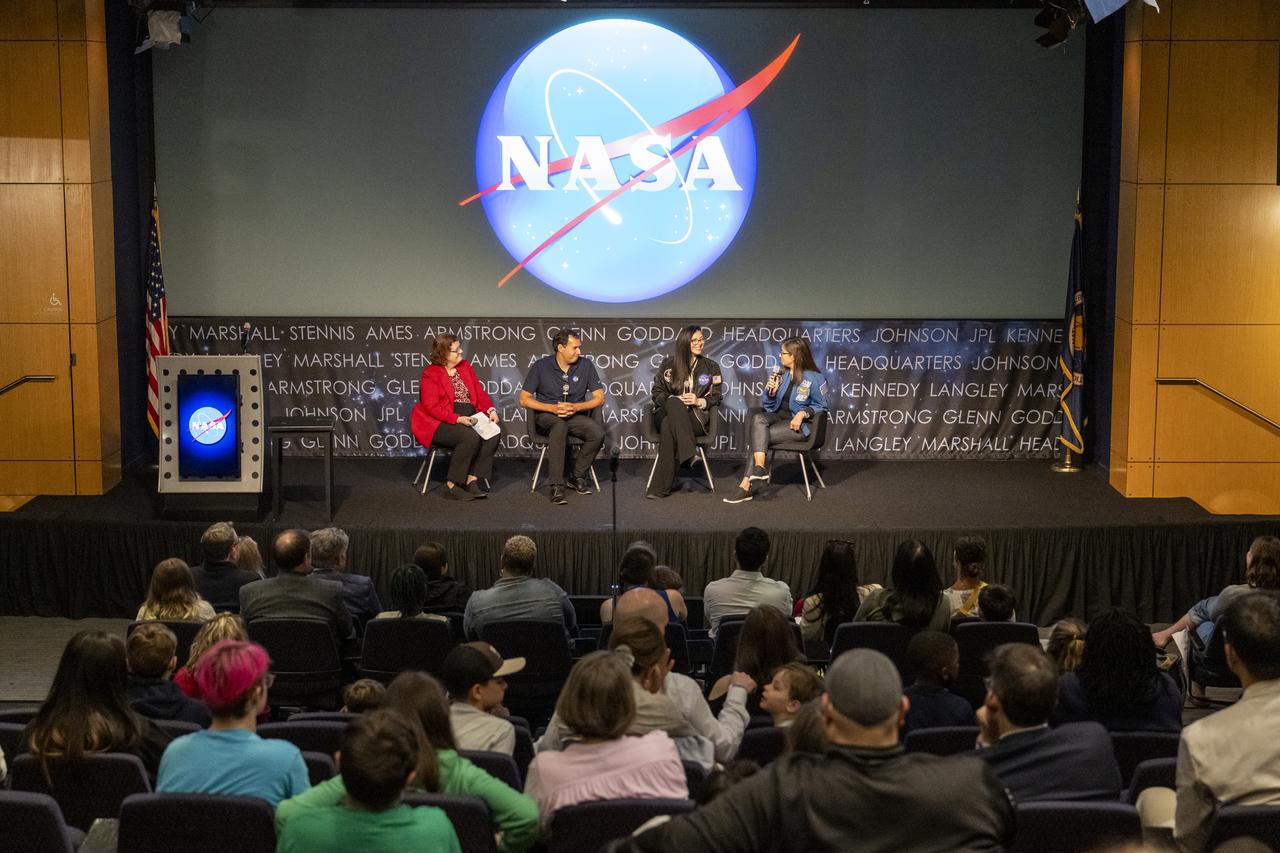
From left to right, NASA Earth Science Division Deputy Director Julie Robinson, NASA Scientific Visualization Studio Lead Mark Subbarao, NASA Jet Propulsion Laboratory (JPL) Art Director Erica Bernhard, and Former NASA Astronaut Nicole Stott participate in a fireside chat during an Earth Information Center (EIC) student engagement event, Friday, June 23, 2023, at the Mary W. Jackson NASA Headquarters building in Washington. The EIC is a new immersive experience that combines live data sets with cutting-edge data visualization and storytelling to allow visitors to see how our planet is changing. Photo Credit: (NASA/Keegan Barber)
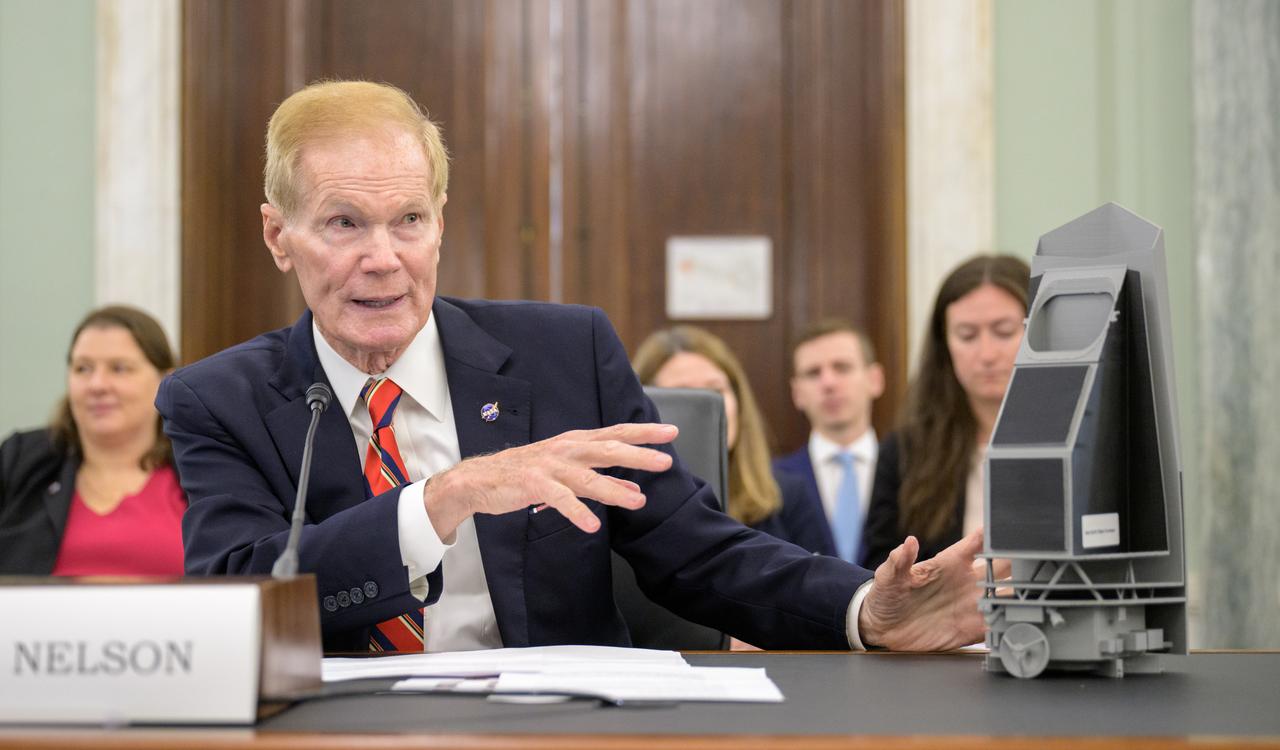
NASA Administrator Bill Nelson points to a model of the Near-Earth Object Surveyor space telescope (NEO Surveyor) as he testifies before the Senate Committee on Commerce, Science, and Transportation during a hearing titled “Examining NASA’s Budget and Priorities,” Tuesday, May 16, 2023, at the Russell Senate Office Building in Washington. Photo Credit: (NASA/Bill Ingalls)
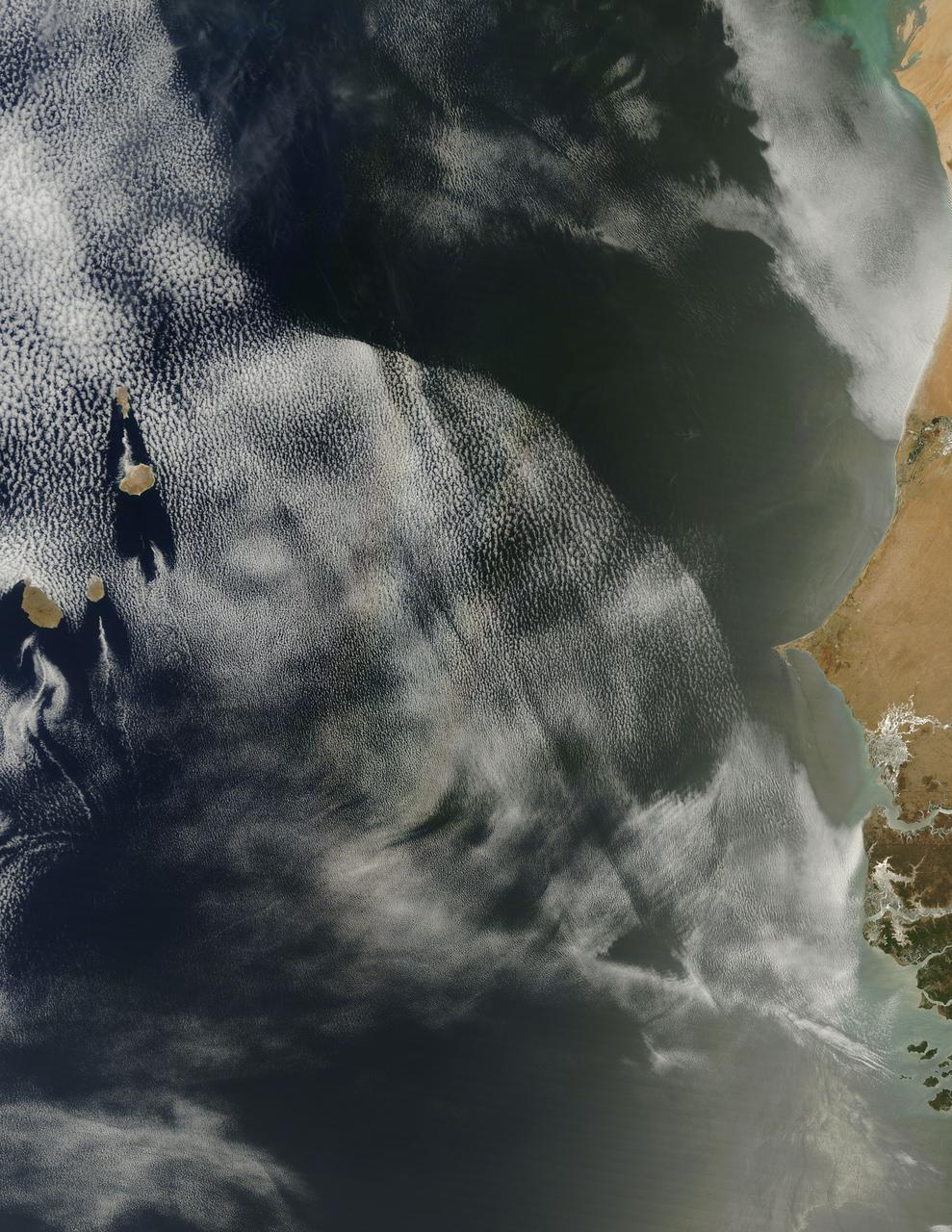
On April 23, 2013 NASA’s Terra satellite passed off the coast of West Africa, allowing the Moderate Resolution Imaging Spectroradiometer (MODIS) flying aboard to capture a curious phenomenon over the cloud deck below. The rainbow-like discoloration that can be seen streaking across the bank of marine cumulus clouds near the center of this image is known as a “glory”. A glory is caused by the scattering of sunlight by a cloud made of water droplets that are all roughly the same size, and is only produced when the light is just right. In order for a glory to be viewed, the observer’s anti-solar point must fall on the cloud deck below. In this case the observer is the Terra satellite, and the anti-solar point is where the sun is directly behind you – 180° from the MODIS line of sight. Water and ice particles in the cloud bend the light, breaking it into all its wavelengths, and the result is colorful flare, which may contain all of the colors of the rainbow. Credit: NASA/GSFC/Jeff Schmaltz/MODIS Land Rapid Response Team <b><a href="http://www.nasa.gov/audience/formedia/features/MP_Photo_Guidelines.html" rel="nofollow">NASA image use policy.</a></b> <b><a href="http://www.nasa.gov/centers/goddard/home/index.html" rel="nofollow">NASA Goddard Space Flight Center</a></b> enables NASA’s mission through four scientific endeavors: Earth Science, Heliophysics, Solar System Exploration, and Astrophysics. Goddard plays a leading role in NASA’s accomplishments by contributing compelling scientific knowledge to advance the Agency’s mission. <b>Follow us on <a href="http://twitter.com/NASA_GoddardPix" rel="nofollow">Twitter</a></b> <b>Like us on <a href="http://www.facebook.com/pages/Greenbelt-MD/NASA-Goddard/395013845897?ref=tsd" rel="nofollow">Facebook</a></b> <b>Find us on <a href="http://instagram.com/nasagoddard?vm=grid" rel="nofollow">Instagram</a></b>