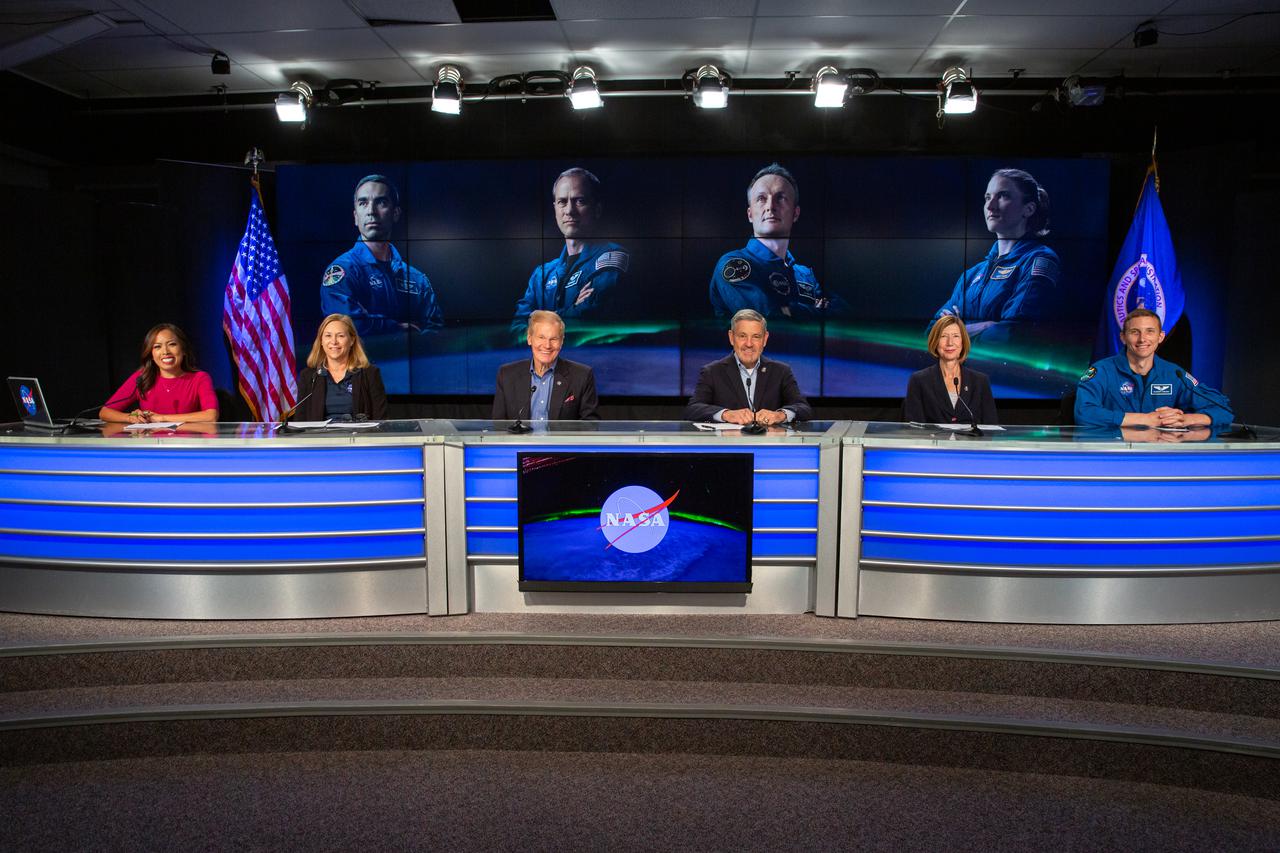
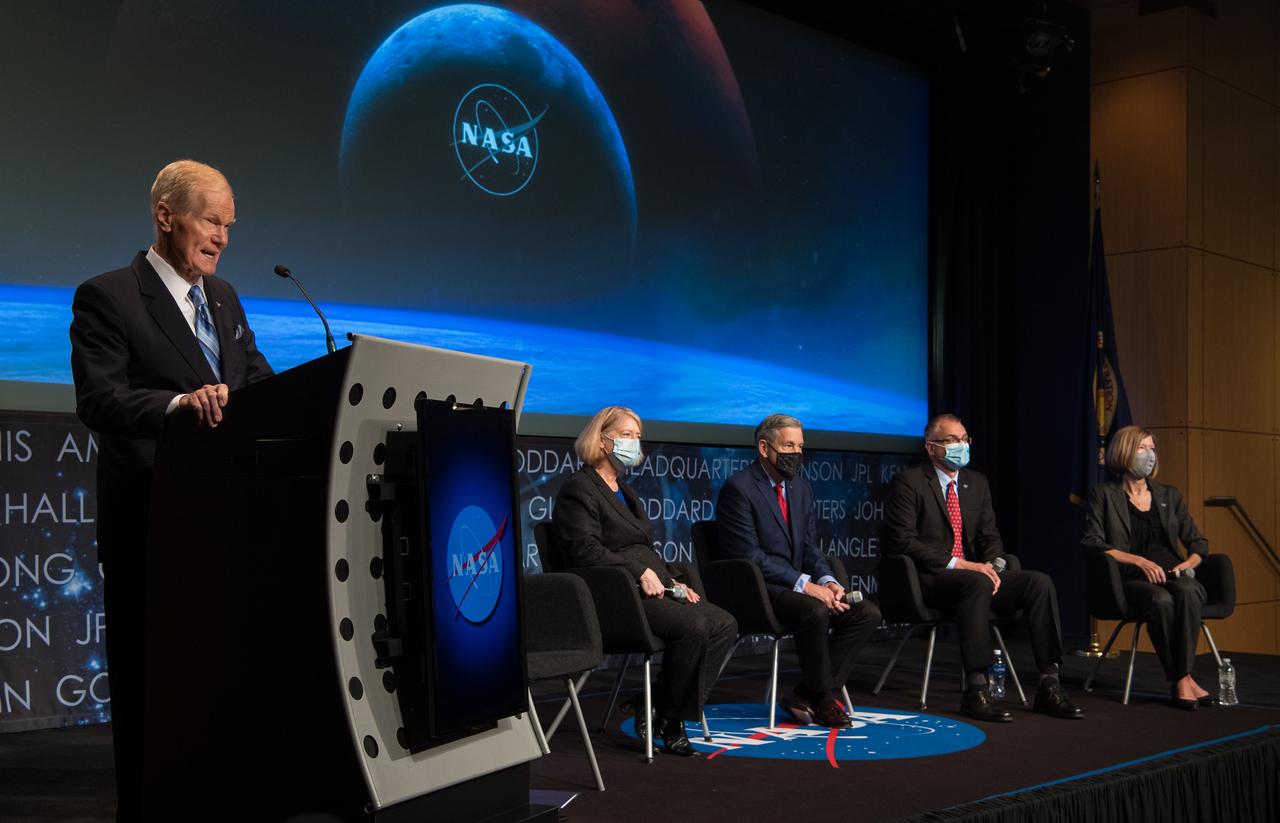
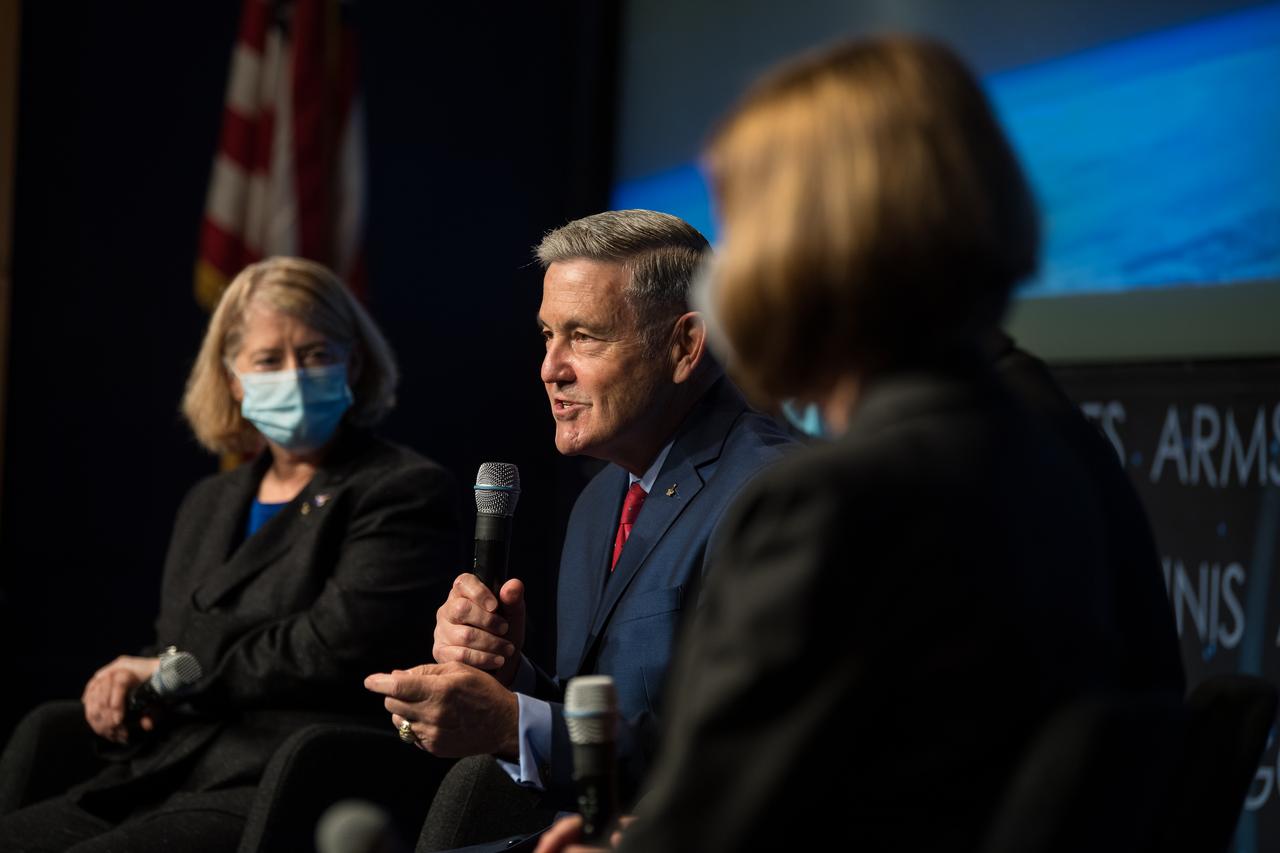
NASA Administrator Bill Nelson, third from left, joins Kennedy Space Center Director Janet Petro, second from left, on Oct. 29, 2021, at the center for a briefing on the upcoming SpaceX Crew-3 mission. The briefing was moderated by Megan Cruz, far left, NASA Communications. Also participating were Bob Cabana, NASA associate administrator; Kathy Lueders, NASA associate administrator for Space Operations; and NASA astronaut Woody Hoburg. The SpaceX Falcon 9 with Crew Dragon atop is scheduled to launch Oct. 31 at 2:21 a.m. EDT from Launch Complex 39A at Kennedy. Crew Dragon will carry four astronauts to the International Space Station for NASA’s Commercial Crew Program. Crew-3 is the third crew rotation flight to the space station, and the first flight of a new Crew Dragon spacecraft.
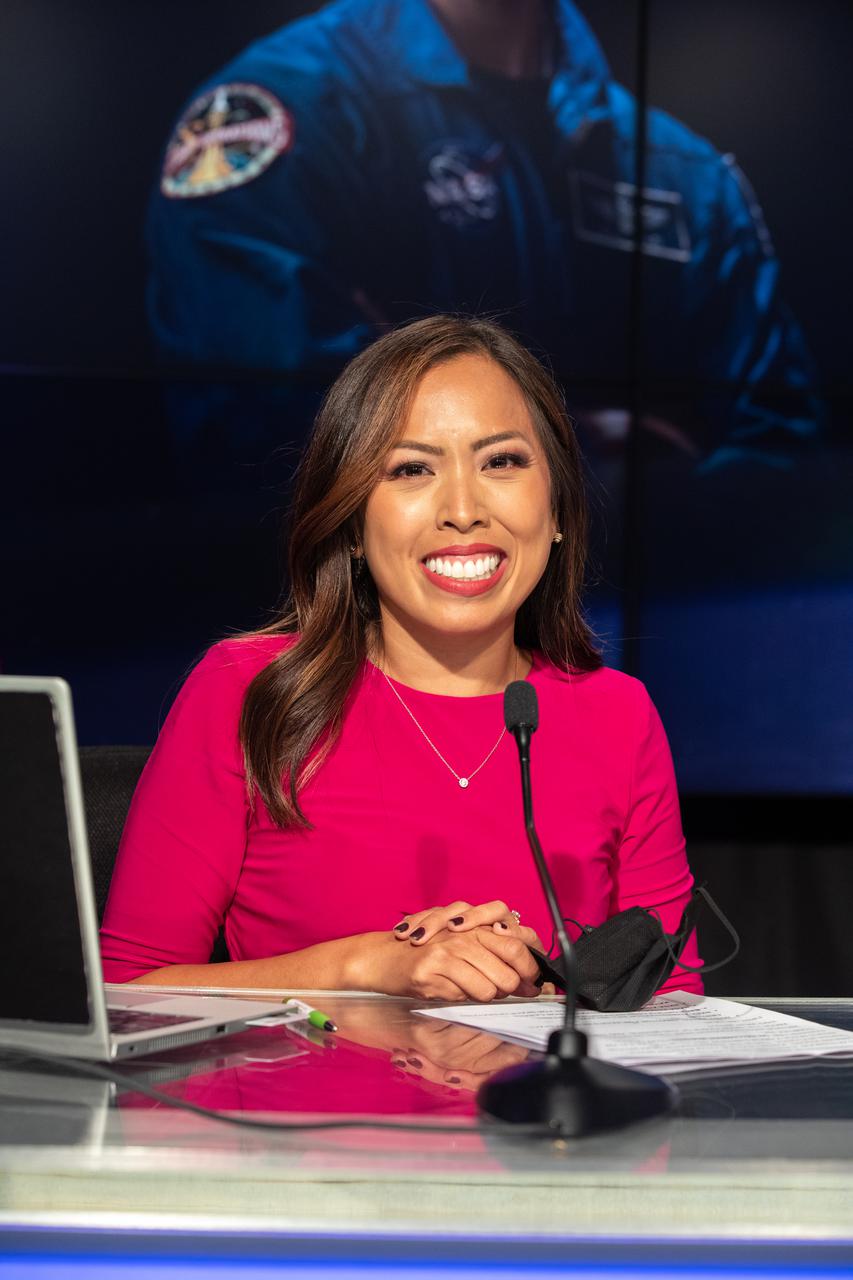
Megan Cruz, NASA Communications, moderates a briefing on the upcoming SpaceX Crew-3 mission, featuring NASA Administrator Bill Nelson, at Kennedy Space Center in Florida on Oct. 29, 2021. Participants included Kennedy Director Janet Petro, Bob Cabana, NASA associate administrator, Kathy Lueders, NASA associate administrator for Space Operations; and NASA astronaut Woody Hoburg. The SpaceX Falcon 9 with Crew Dragon atop is scheduled to launch Oct. 31 at 2:21 a.m. EDT from Launch Complex 39A at Kennedy. Crew Dragon will carry four astronauts to the International Space Station for NASA’s Commercial Crew Program. Crew-3 is the third crew rotation flight to the space station, and the first flight of a new Crew Dragon spacecraft.
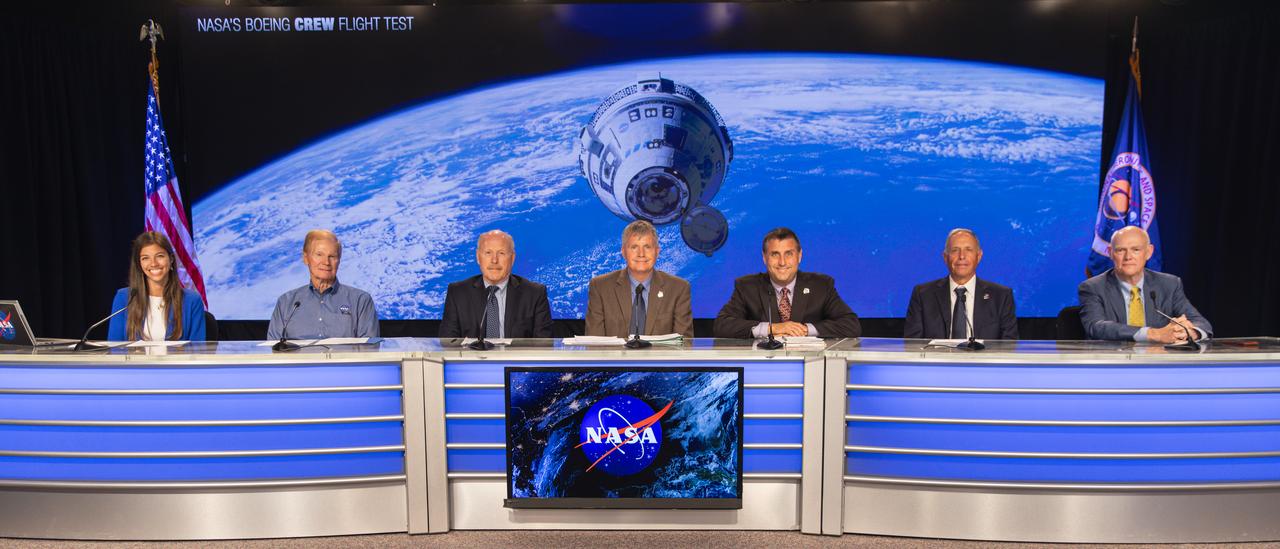
A postlaunch news conference at the agency’s Kennedy Space Center in Florida is held on Wednesday, June 5, 2024, following the launch of NASA’s Boeing Crew Flight Test with NASA astronauts Butch Wilmore and Suni Williams from Space Launch Complex-41 at nearby Cape Canaveral Space Force Station. Participants, from left to right are, Antonia Jaramillo, NASA Communications; NASA Administrator Bill Nelson; NASA Associate Administrator for Space Operations Ken Bowersox; NASA Commercial Crew Program Manager Steve Stich; NASA Deputy Associate Administrator for Space Operations Mission Directorate, Joel Montalbano; Vice President and Program Manager of Boeing’s Commercial Crew Program Mark Nappi; and ULA (United Launch Alliance) President of Government and CEO Tory Bruno,. Liftoff of the ULA Atlas V rocket and Boeing Starliner spacecraft occurred at 10:52 a.m. EDT on Wednesday, June 5.
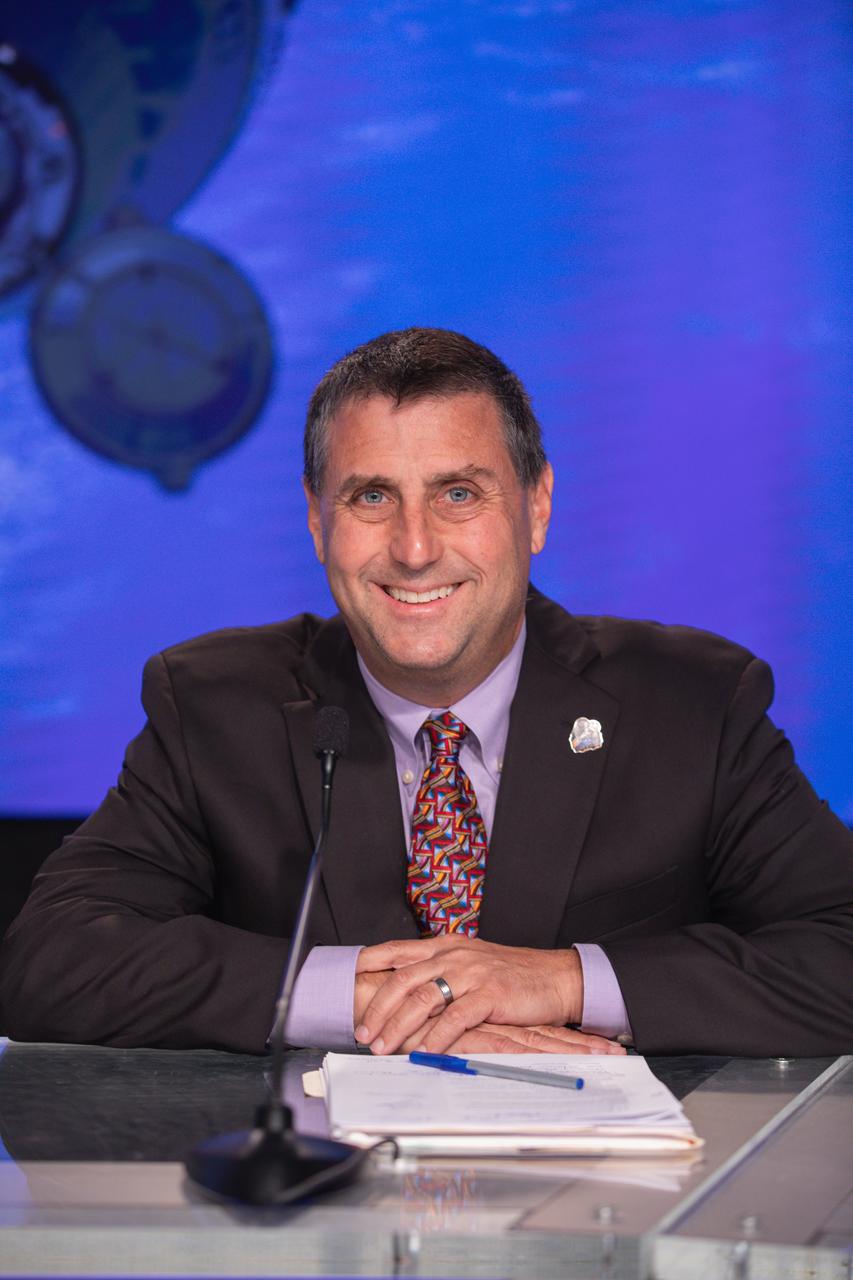
NASA Deputy Associate Administrator for Space Operations Mission Directorate, Joel Montalbano participates in a postlaunch news conference at the agency’s Kennedy Space Center in Florida held on Wednesday, June 5, 2024, at the agency’s Kennedy Space Center in Florida following the first launch attempt of NASA’s Boeing Crew Flight Test. As part of the agency’s Commercial Crew Program, the first crewed launch to the International Space Station aboard Boeing’s Starliner spacecraft atop a United Launch Alliance Atlas V rocket from Space Launch Complex-41 at nearby Cape Canaveral Space Force Station was targeted for 10:52 a.m. EDT.
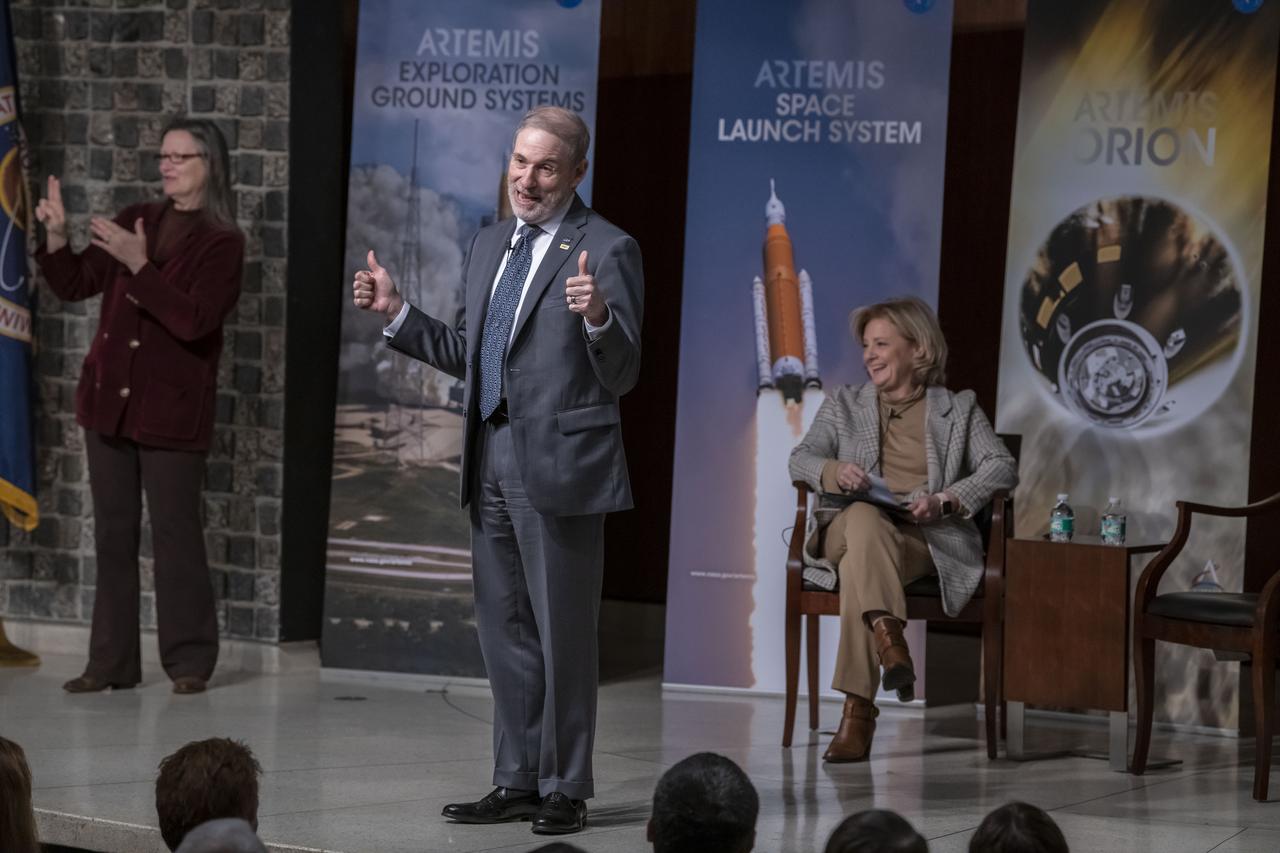
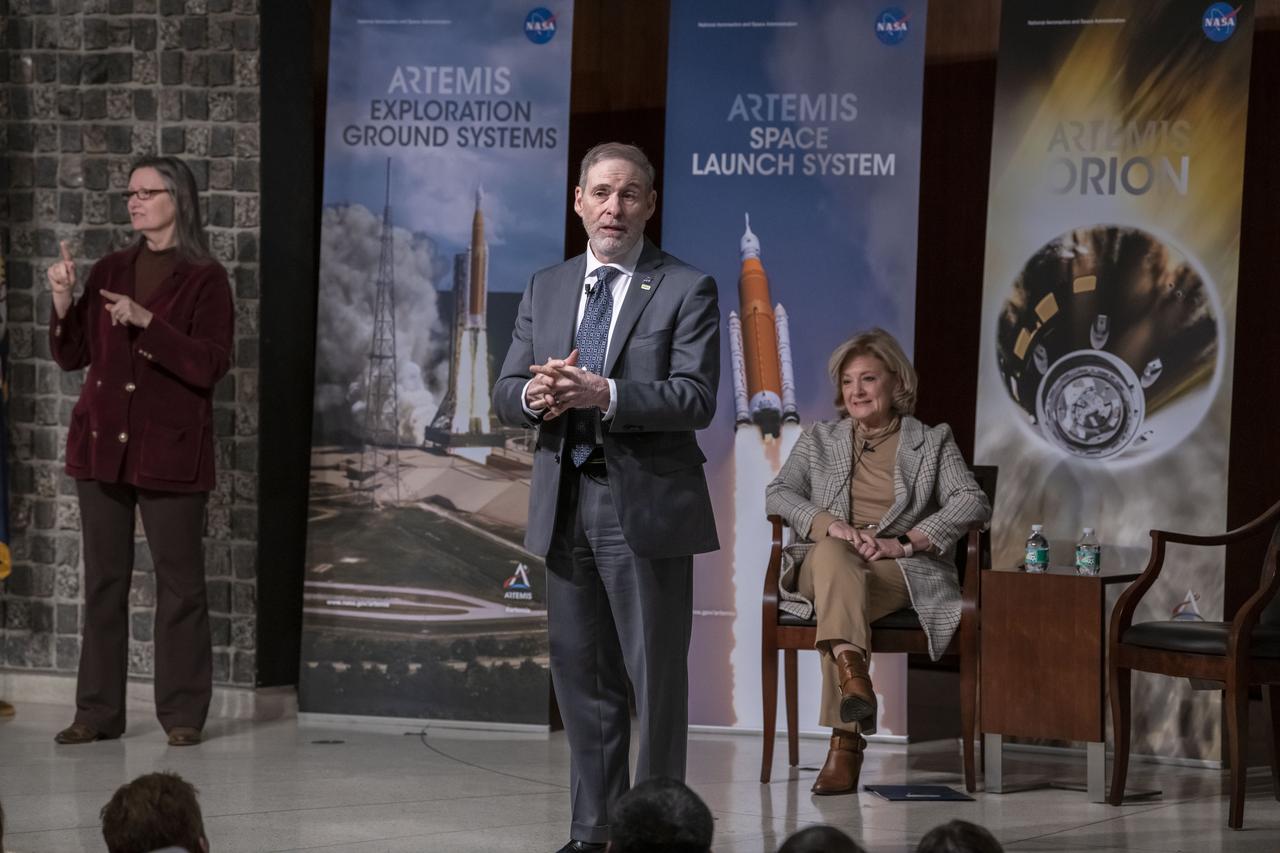
NASA Administrator Bill Nelson speaks during a NASA town hall to discuss the reorganization of the Human Exploration and Operations Mission Directorate into two mission directorates: Exploration Systems Development Mission Directorate (ESDMD) and Space Operations Mission Directorate (SpaceOps), Tuesday, Sept. 21, 2021 at the Mary W. Jackson NASA Headquarters building in Washington. Panelists were from left to right, NASA Deputy Administrator Pam Melroy; NASA Associate Administrator Bob Cabana; NASA Associate Administrator for the Exploration Systems Development Mission Directorate (ESDMD), Jim Free; and NASA Associate Administrator for the Space Operations Mission Directorate (SpaceOps), Kathy Lueders. Photo Credit: (NASA/Aubrey Gemignani)
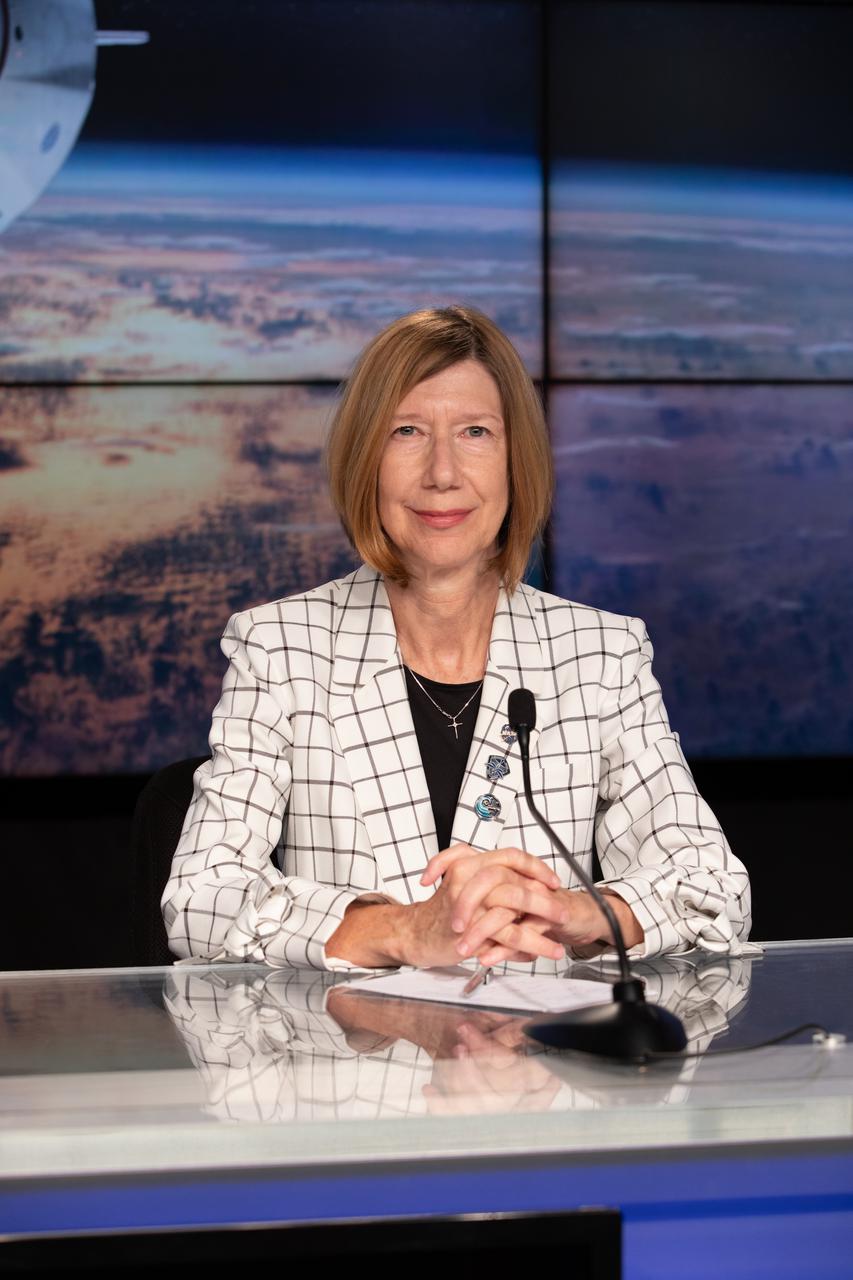
Kathryn Lueders, associate administrator, Space Operations Mission Directorate, NASA Headquarters in Washington, is introduced during a Crew-4 press briefing April 26, 2022, at NASA’s Kennedy Space Center in Florida ahead of the agency’s SpaceX Crew-4 launch. NASA astronauts Kjell Lindgren, Bob Hines, and Jessica Watkins, along with ESA (European Space Agency) astronaut Samantha Cristoforetti, will launch aboard the SpaceX Dragon, named Freedom by the Crew-4 crew, atop the company’s Falcon 9 rocket on April 27, 2022, to the International Space Station. Launch is targeted for 3:52 a.m. EDT from Pad 39A.
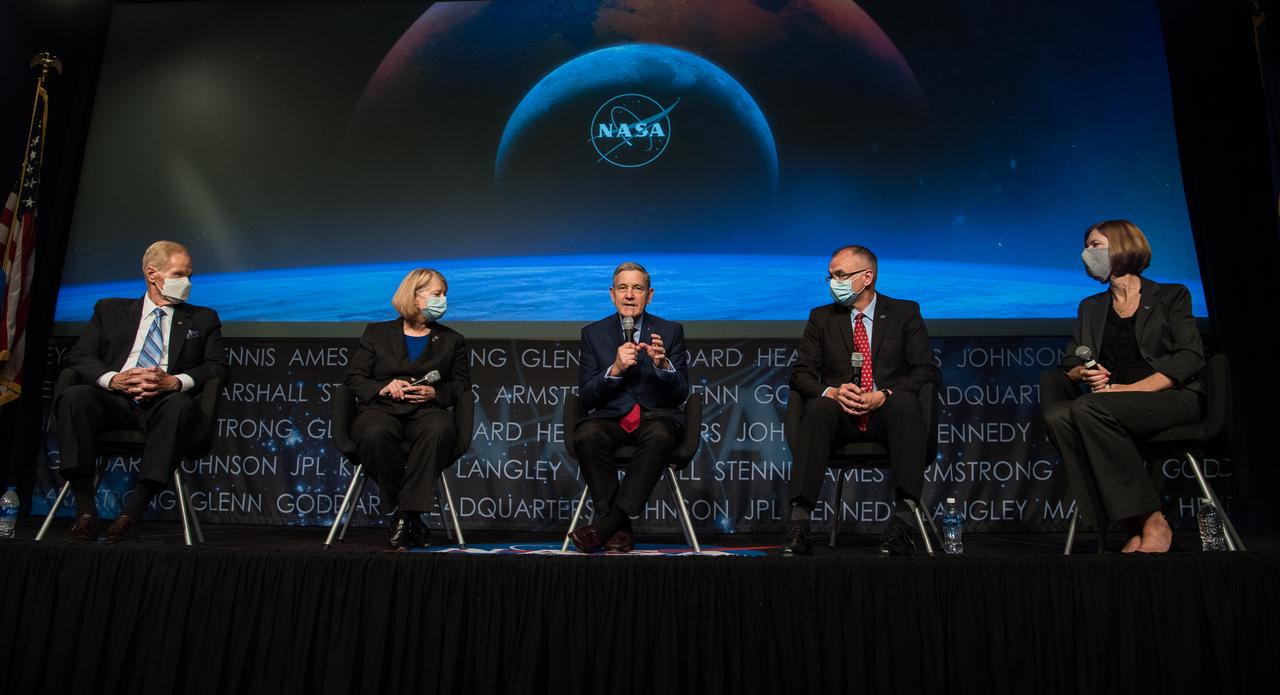
NASA Associate Administrator Bob Cabana speaks on a panel during a NASA town hall to discuss the reorganization of the Human Exploration and Operations Mission Directorate into two mission directorates: Exploration Systems Development Mission Directorate (ESDMD) and Space Operations Mission Directorate (SpaceOps), Tuesday, Sept. 21, 2021 at the Mary W. Jackson NASA Headquarters building in Washington. Panelists were, from left to right, NASA Administrator Bill Nelson; NASA Deputy Administrator Pam Melroy; Cabana; NASA Associate Administrator for the Exploration Systems Development Mission Directorate (ESDMD), Jim Free; and NASA Associate Administrator for the Space Operations Mission Directorate (SpaceOps), Kathy Lueders. Photo Credit: (NASA/Aubrey Gemignani)
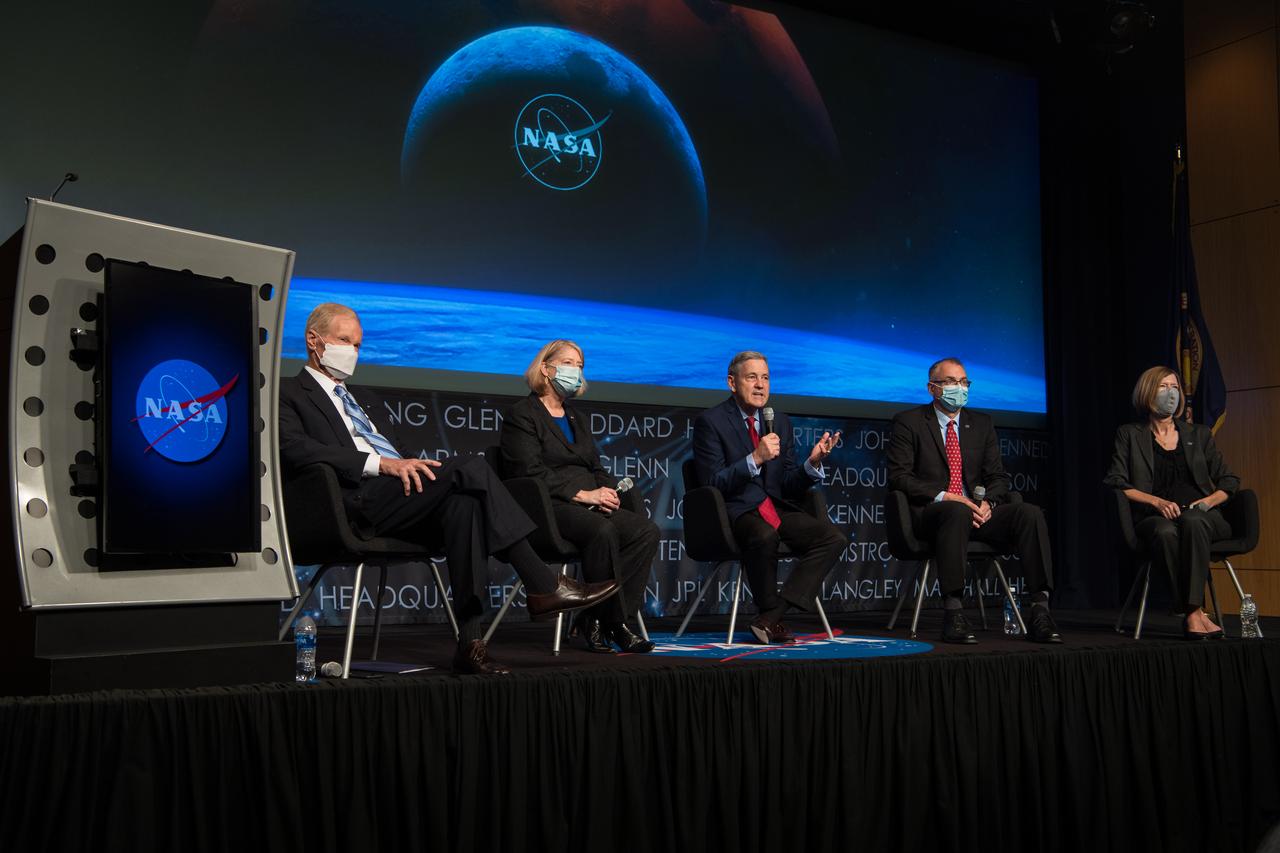
Panelists are seen from left to right, NASA Administrator Bill Nelson; NASA Deputy Administrator Pam Melroy; NASA Associate Administrator Bob Cabana; NASA Associate Administrator for the Exploration Systems Development Mission Directorate (ESDMD), Jim Free; and NASA Associate Administrator for the Space Operations Mission Directorate (SpaceOps), Kathy Lueders, during a NASA town hall to discuss the reorganization of the Human Exploration and Operations Mission Directorate into two mission directorates: ESDMD and SpaceOps, Tuesday, Sept. 21, 2021 at the Mary W. Jackson NASA Headquarters building in Washington. Kathy Lueders will lead SpaceOps in launch and space operations including the International Space Station, the commercialization of low-Earth orbit, and eventually operations on and around the Moon. Jim Free will lead ESDMD to define and manage systems development for programs critical to NASA’s Artemis program and in the planning of NASA’s Moon to Mars exploration. Photo Credit: (NASA/Aubrey Gemignani)
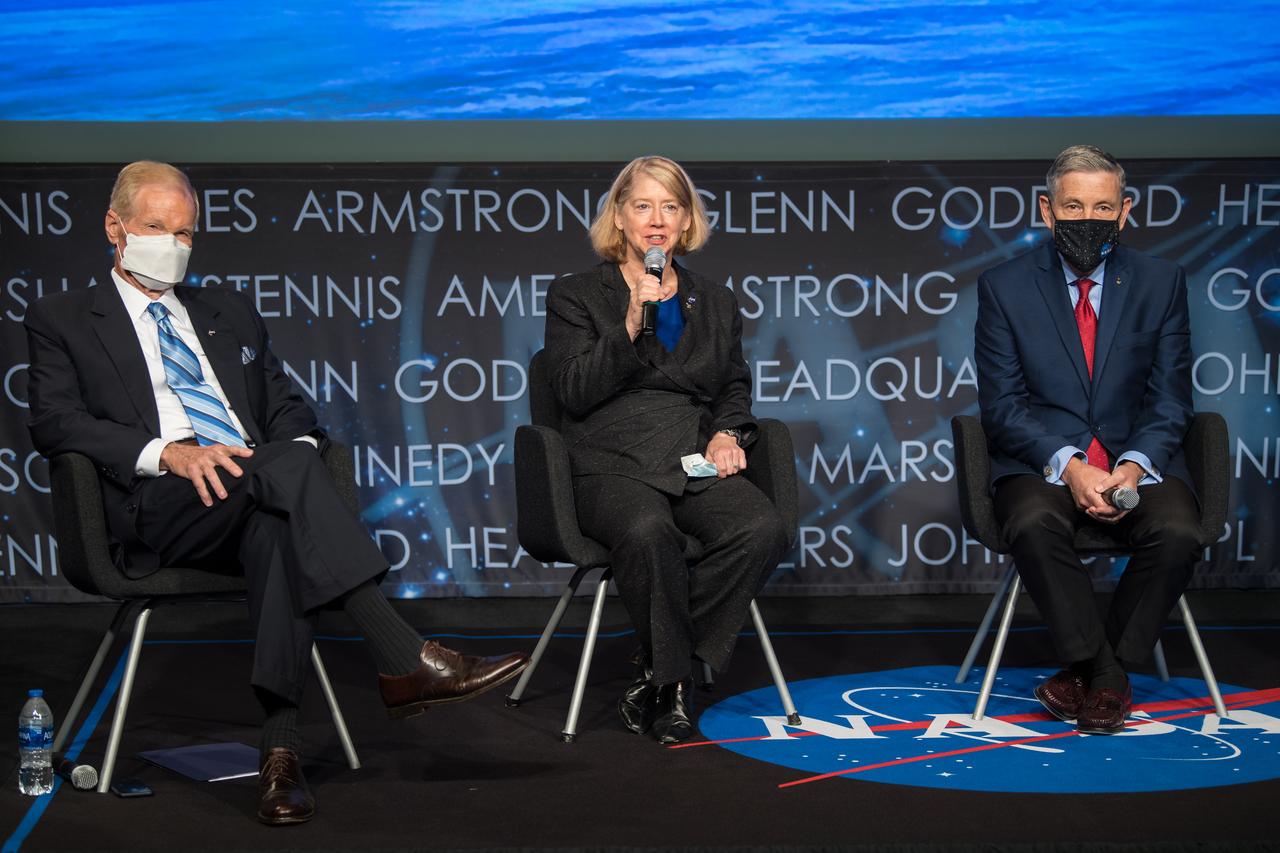
NASA Deputy Administrator Pam Melroy speaks alongside NASA Administrator Bill Nelson, left, and NASA Associate Administrator Bob Cabana, right, during a NASA town hall to discuss the reorganization of the Human Exploration and Operations Mission Directorate into two mission directorates: Exploration Systems Development Mission Directorate (ESDMD) and Space Operations Mission Directorate (SpaceOps), Tuesday, Sept. 21, 2021 at the Mary W. Jackson NASA Headquarters building in Washington. NASA Associate Administrator for SpaceOps, Kathy Lueders, will lead launch and space operations including the International Space Station, the commercialization of low-Earth orbit, and eventually operations on and around the Moon. NASA Associate Administrator for the ESDMD, Jim Free, will lead efforts to define and manage systems development for programs critical to NASA’s Artemis program and the planning of NASA’s Moon to Mars exploration. Photo Credit: (NASA/Aubrey Gemignani)
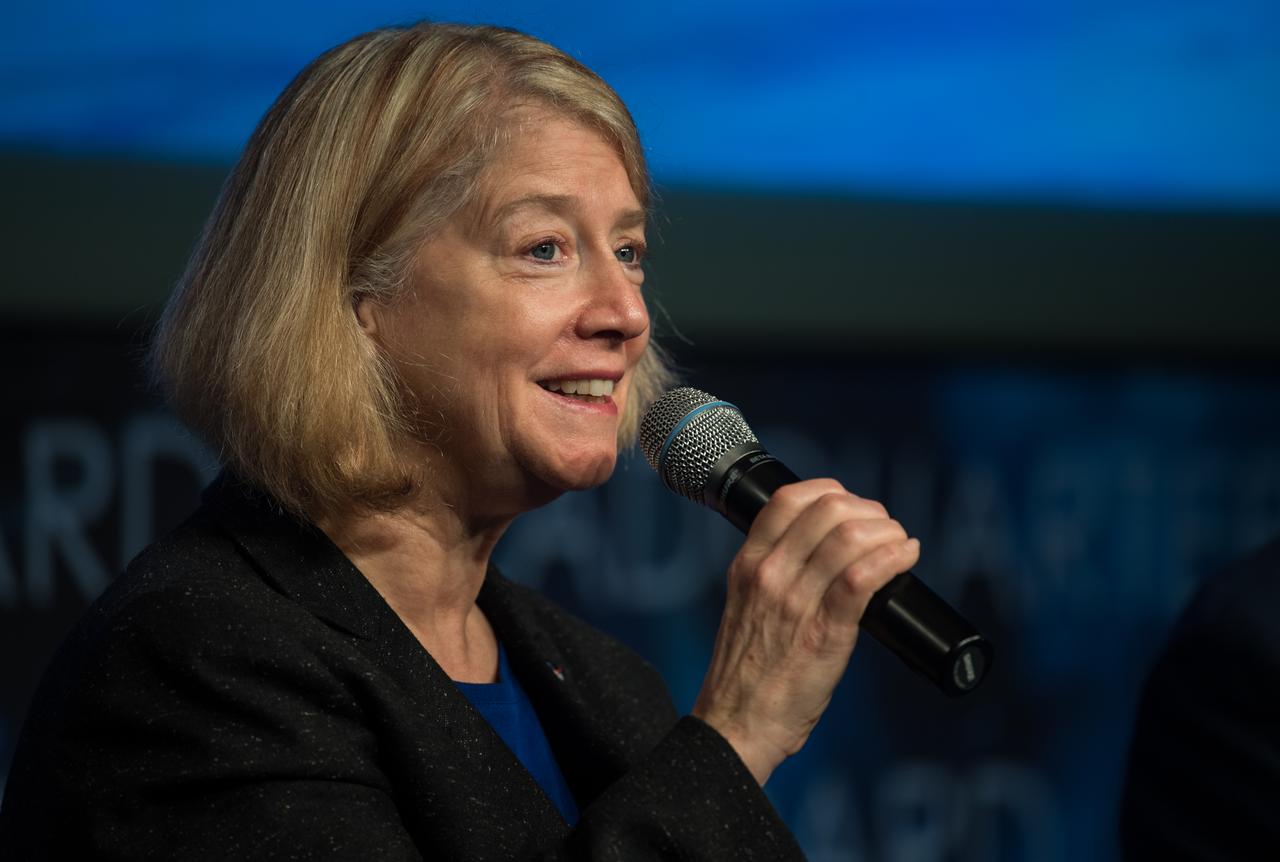
NASA Deputy Administrator Pam Melroy speaks during a NASA town hall to discuss the reorganization of the Human Exploration and Operations Mission Directorate into two mission directorates: Exploration Systems Development Mission Directorate (ESDMD) and Space Operations Mission Directorate (SpaceOps), Tuesday, Sept. 21, 2021 at the Mary W. Jackson NASA Headquarters building in Washington. NASA Associate Administrator for SpaceOps, Kathy Lueders, will lead launch and space operations including the International Space Station, the commercialization of low-Earth orbit, and eventually operations on and around the Moon. NASA Associate Administrator for the ESDMD, Jim Free, will lead efforts to define and manage systems development for programs critical to NASA’s Artemis program and the planning of NASA’s Moon to Mars exploration. Photo Credit: (NASA/Aubrey Gemignani)
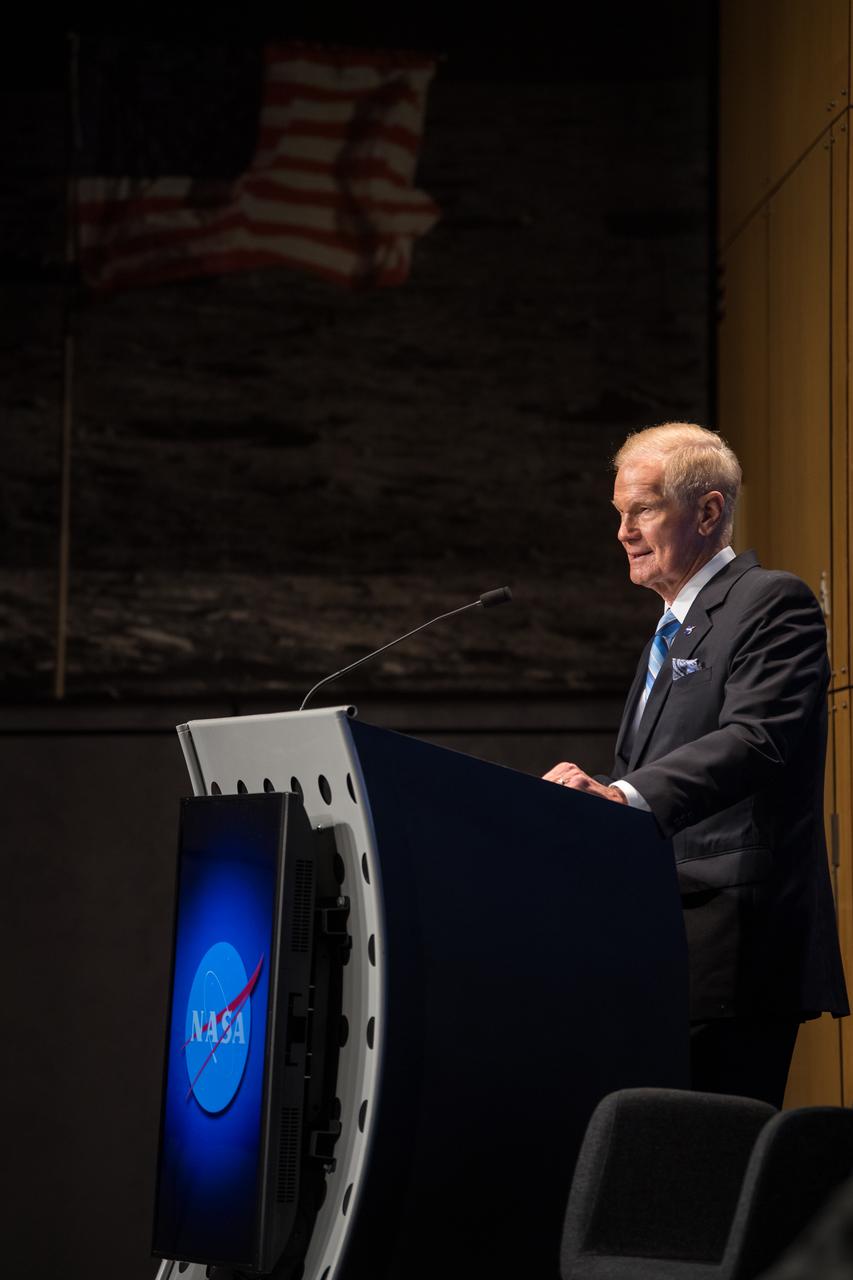
NASA Administrator Bill Nelson speaks during a NASA town hall to discuss the reorganization of the Human Exploration and Operations Mission Directorate into two mission directorates: Exploration Systems Development Mission Directorate (ESDMD) and Space Operations Mission Directorate (SpaceOps), Tuesday, Sept. 21, 2021 at the Mary W. Jackson NASA Headquarters building in Washington. NASA Associate Administrator for SpaceOps, Kathy Lueders, will lead launch and space operations including the International Space Station, the commercialization of low-Earth orbit, and eventually operations on and around the Moon. NASA Associate Administrator for the ESDMD, Jim Free, will lead efforts to define and manage systems development for programs critical to NASA’s Artemis program and the planning of NASA’s Moon to Mars exploration. Photo Credit: (NASA/Aubrey Gemignani)
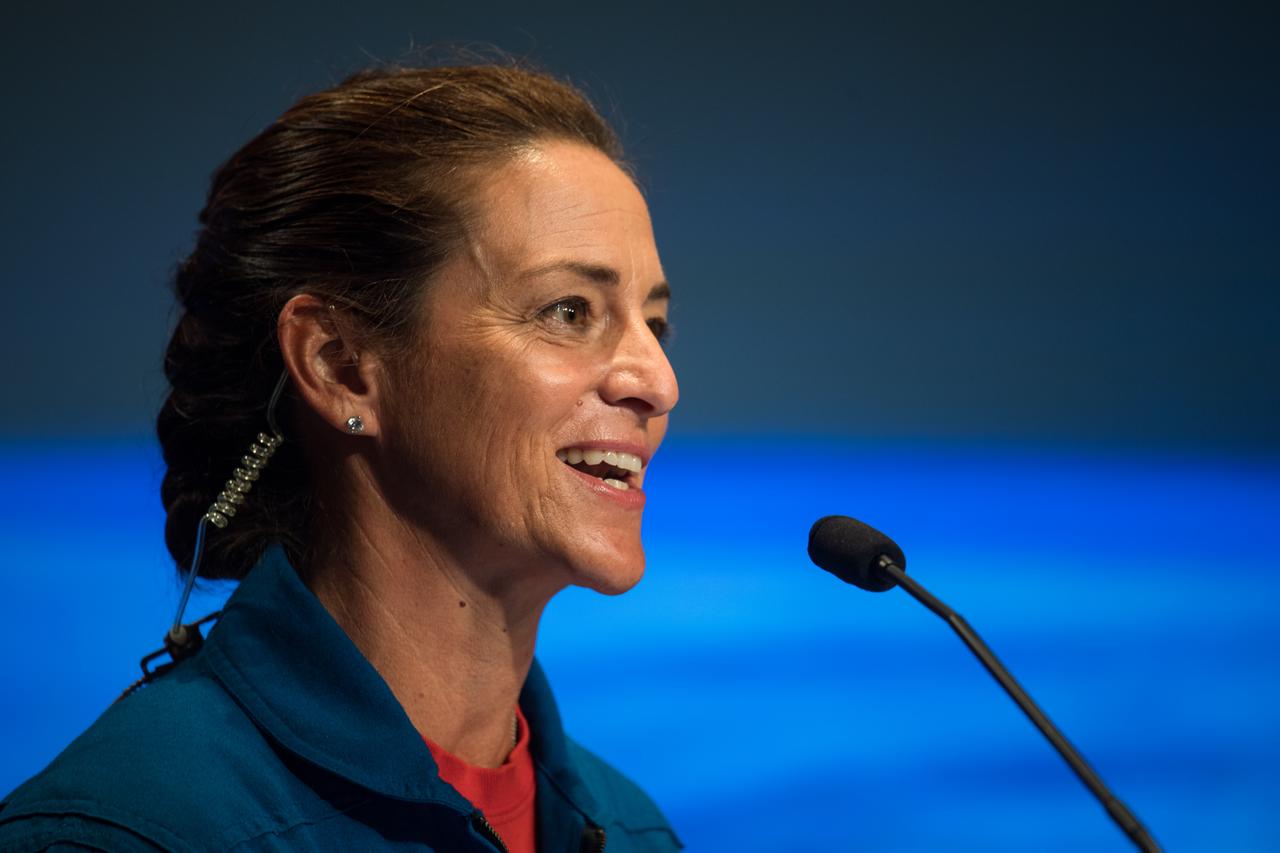
NASA astronaut Nicole Mann speaks during a NASA town hall to discuss the reorganization of the Human Exploration and Operations Mission Directorate into two mission directorates: Exploration Systems Development Mission Directorate (ESDMD) and Space Operations Mission Directorate (SpaceOps), Tuesday, Sept. 21, 2021 at the Mary W. Jackson NASA Headquarters building in Washington. NASA Associate Administrator for SpaceOps, Kathy Lueders, will lead launch and space operations including the International Space Station, the commercialization of low-Earth orbit, and eventually operations on and around the Moon. NASA Associate Administrator for the ESDMD, Jim Free, will lead efforts to define and manage systems development for programs critical to NASA’s Artemis program and the planning of NASA’s Moon to Mars exploration. Photo Credit: (NASA/Aubrey Gemignani)
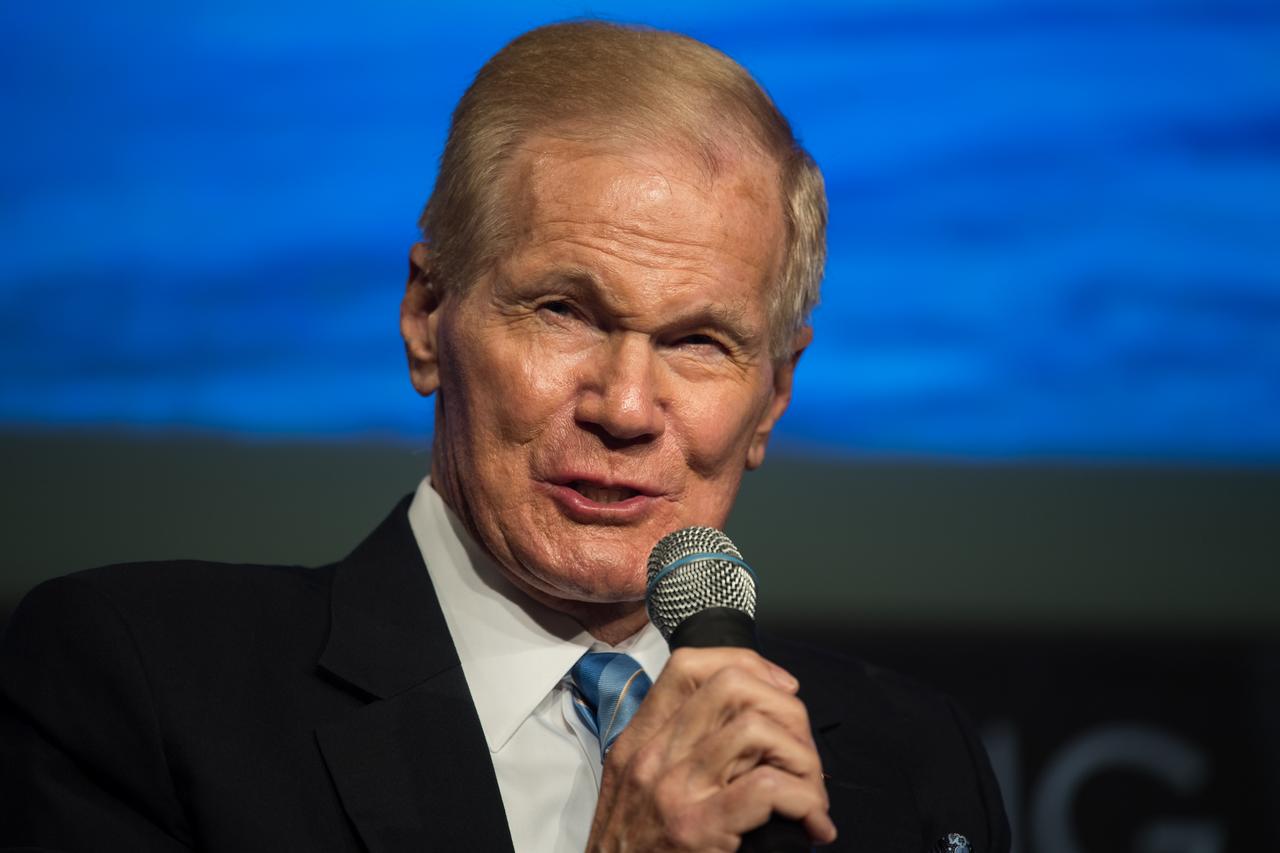
NASA Administrator Bill Nelson speaks during a NASA town hall to discuss the reorganization of the Human Exploration and Operations Mission Directorate into two mission directorates: Exploration Systems Development Mission Directorate (ESDMD) and Space Operations Mission Directorate (SpaceOps), Tuesday, Sept. 21, 2021 at the Mary W. Jackson NASA Headquarters building in Washington. NASA Associate Administrator for SpaceOps, Kathy Lueders, will lead launch and space operations including the International Space Station, the commercialization of low-Earth orbit, and eventually operations on and around the Moon. NASA Associate Administrator for the ESDMD, Jim Free, will lead efforts to define and manage systems development for programs critical to NASA’s Artemis program and the planning of NASA’s Moon to Mars exploration. Photo Credit: (NASA/Aubrey Gemignani)
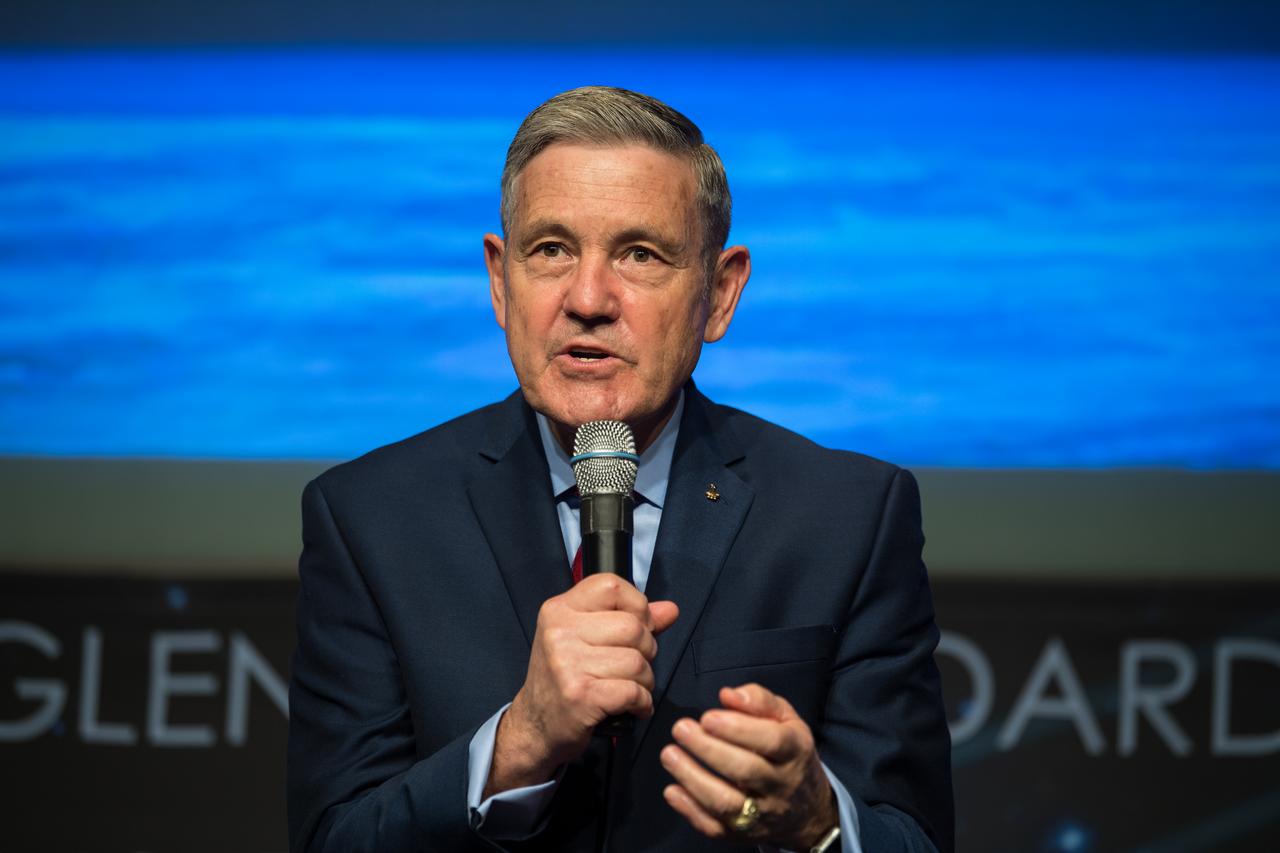
NASA Associate Administrator Bob Cabana speaks during a NASA town hall to discuss the reorganization of the Human Exploration and Operations Mission Directorate into two mission directorates: Exploration Systems Development Mission Directorate (ESDMD) and Space Operations Mission Directorate (SpaceOps), Tuesday, Sept. 21, 2021 at the Mary W. Jackson NASA Headquarters building in Washington. NASA Associate Administrator for SpaceOps, Kathy Lueders, will lead launch and space operations including the International Space Station, the commercialization of low-Earth orbit, and eventually operations on and around the Moon. NASA Associate Administrator for the ESDMD, Jim Free, will lead efforts to define and manage systems development for programs critical to NASA’s Artemis program and the planning of NASA’s Moon to Mars exploration. Photo Credit: (NASA/Aubrey Gemignani)
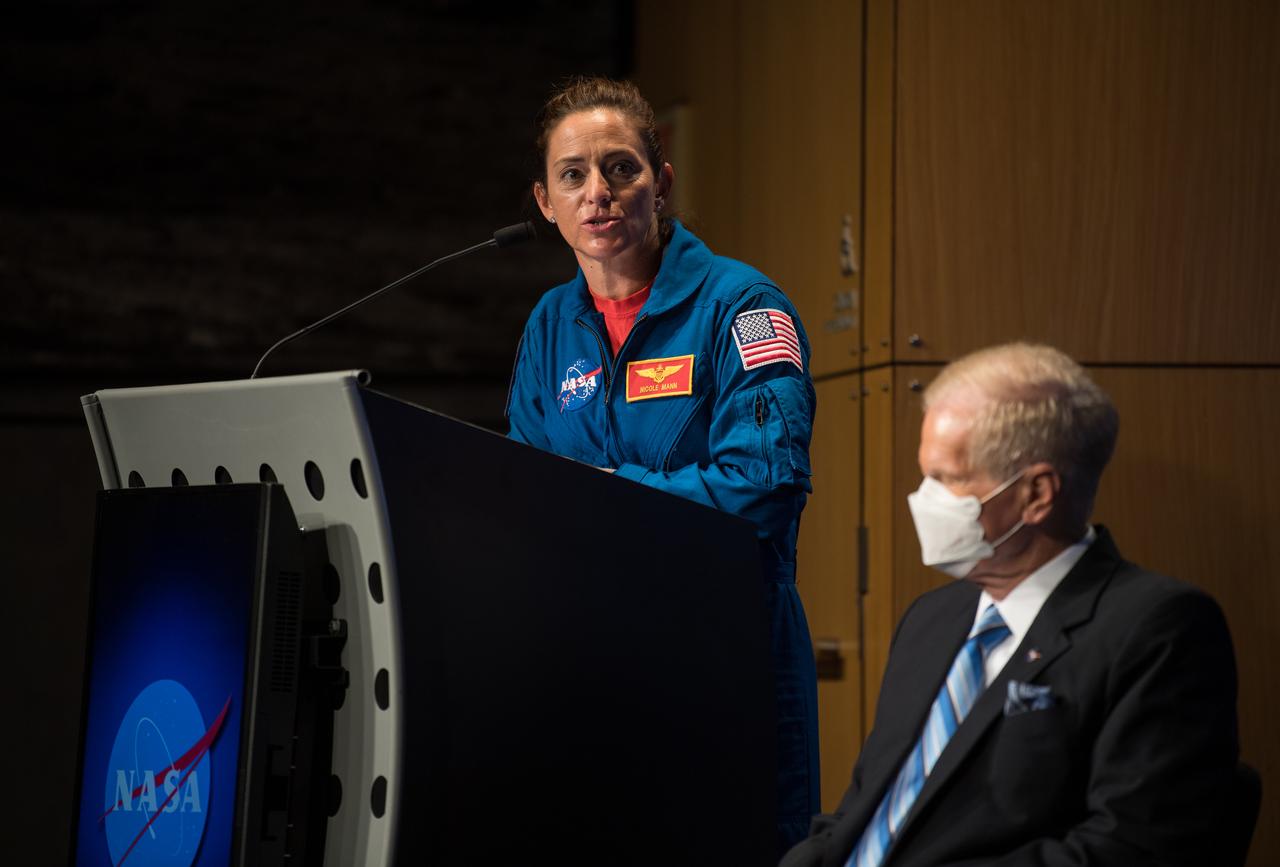
NASA astronaut Nicole Mann asks the panelists a question during a NASA town hall to discuss the reorganization of the Human Exploration and Operations Mission Directorate into two mission directorates: Exploration Systems Development Mission Directorate (ESDMD) and Space Operations Mission Directorate (SpaceOps), Tuesday, Sept. 21, 2021 at the Mary W. Jackson NASA Headquarters building in Washington. NASA Associate Administrator for SpaceOps, Kathy Lueders, will lead launch and space operations including the International Space Station, the commercialization of low-Earth orbit, and eventually operations on and around the Moon. NASA Associate Administrator for the ESDMD, Jim Free, will lead efforts to define and manage systems development for programs critical to NASA’s Artemis program and the planning of NASA’s Moon to Mars exploration. Photo Credit: (NASA/Aubrey Gemignani)
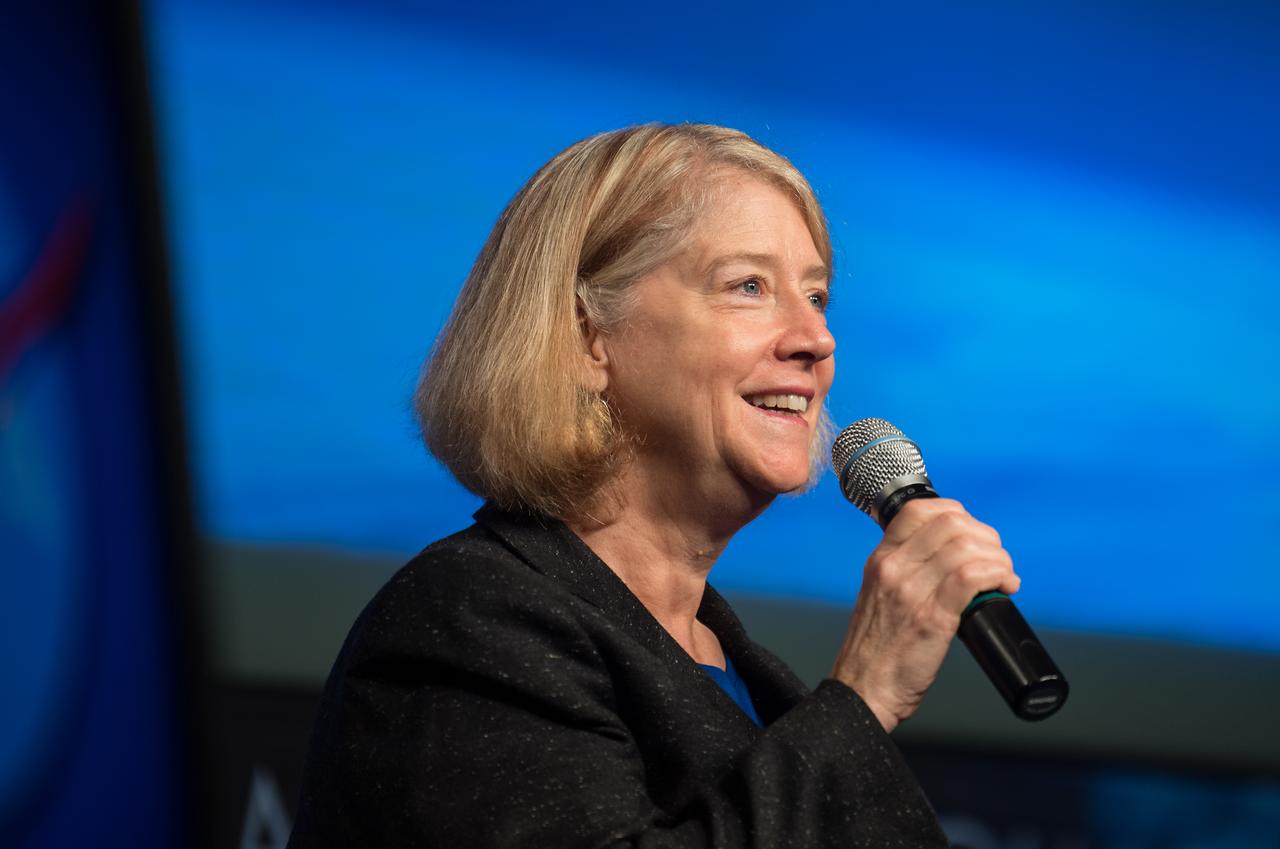
NASA Deputy Administrator Pam Melroy speaks during a NASA town hall to discuss the reorganization of the Human Exploration and Operations Mission Directorate into two mission directorates: Exploration Systems Development Mission Directorate (ESDMD) and Space Operations Mission Directorate (SpaceOps), Tuesday, Sept. 21, 2021 at the Mary W. Jackson NASA Headquarters building in Washington. NASA Associate Administrator for SpaceOps, Kathy Lueders, will lead launch and space operations including the International Space Station, the commercialization of low-Earth orbit, and eventually operations on and around the Moon. NASA Associate Administrator for the ESDMD, Jim Free, will lead efforts to define and manage systems development for programs critical to NASA’s Artemis program and the planning of NASA’s Moon to Mars exploration. Photo Credit: (NASA/Aubrey Gemignani)
NASA Associate Administrator Bob Cabana speaks during a NASA town hall to discuss the reorganization of the Human Exploration and Operations Mission Directorate into two mission directorates: Exploration Systems Development Mission Directorate (ESDMD) and Space Operations Mission Directorate (SpaceOps), Tuesday, Sept. 21, 2021 at the Mary W. Jackson NASA Headquarters building in Washington. NASA Associate Administrator for SpaceOps, Kathy Lueders, will lead launch and space operations including the International Space Station, the commercialization of low-Earth orbit, and eventually operations on and around the Moon. NASA Associate Administrator for the ESDMD, Jim Free, will lead efforts to define and manage systems development for programs critical to NASA’s Artemis program and the planning of NASA’s Moon to Mars exploration. Photo Credit: (NASA/Aubrey Gemignani)
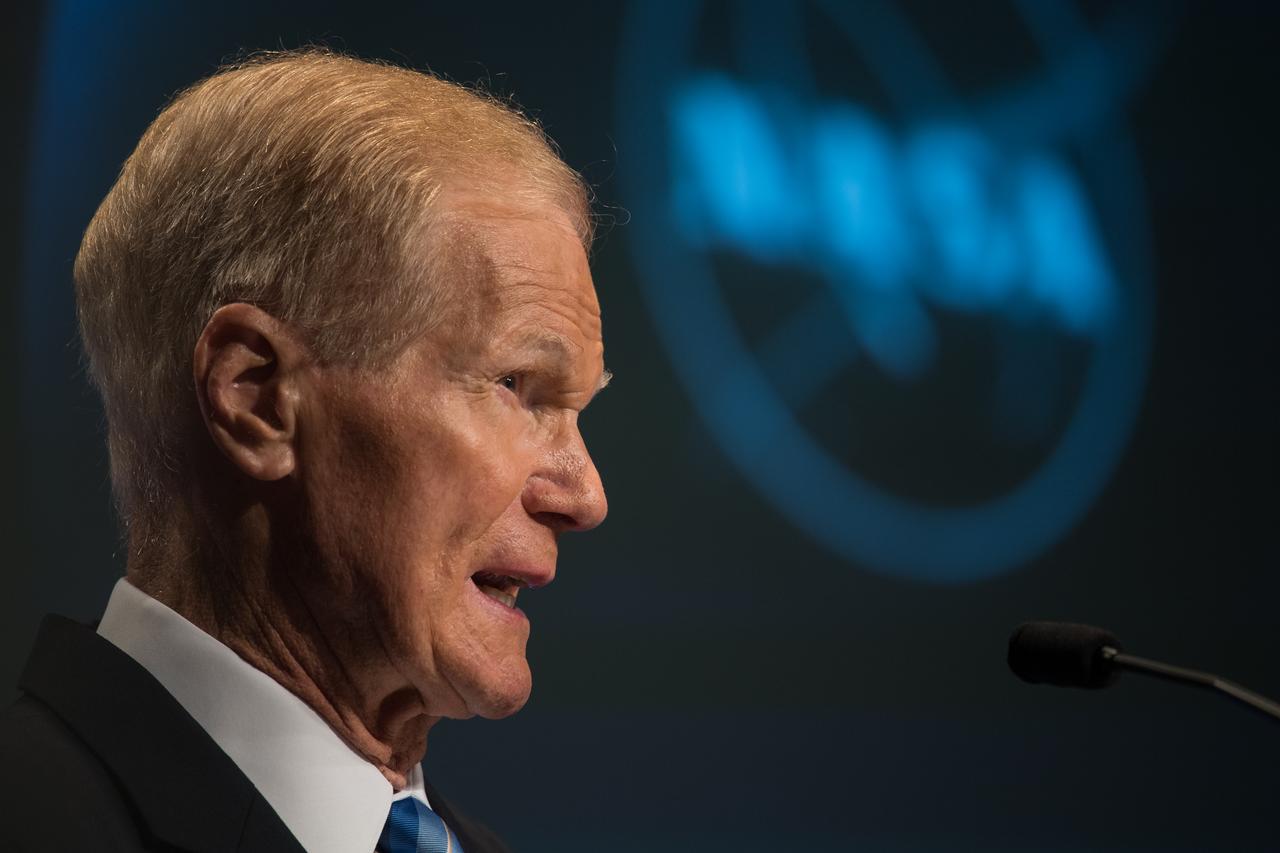
NASA Administrator Bill Nelson speaks during a NASA town hall to discuss the reorganization of the Human Exploration and Operations Mission Directorate into two mission directorates: Exploration Systems Development Mission Directorate (ESDMD) and Space Operations Mission Directorate (SpaceOps), Tuesday, Sept. 21, 2021 at the Mary W. Jackson NASA Headquarters building in Washington. NASA Associate Administrator for SpaceOps, Kathy Lueders, will lead launch and space operations including the International Space Station, the commercialization of low-Earth orbit, and eventually operations on and around the Moon. NASA Associate Administrator for the ESDMD, Jim Free, will lead efforts to define and manage systems development for programs critical to NASA’s Artemis program and the planning of NASA’s Moon to Mars exploration. Photo Credit: (NASA/Aubrey Gemignani)
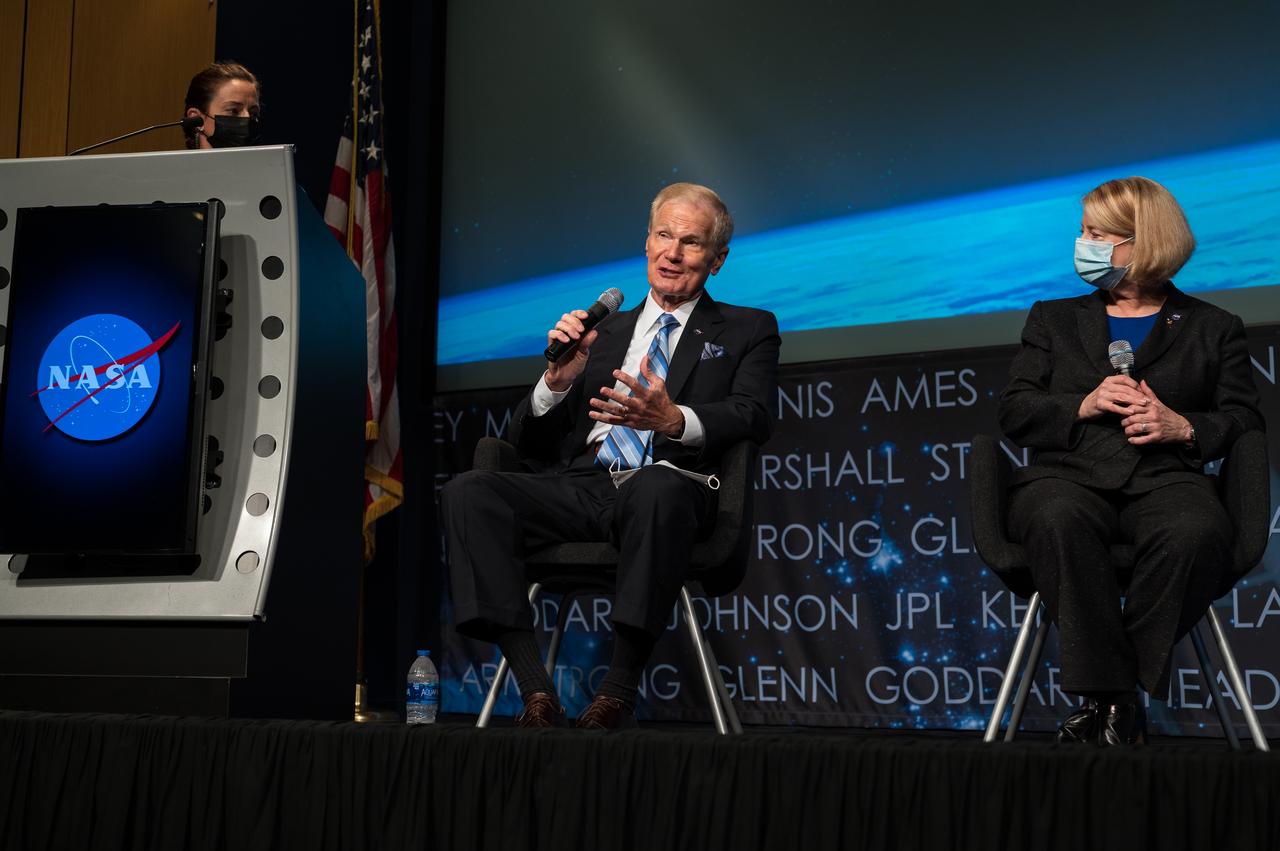
NASA Administrator Bill Nelson speaks during a NASA town hall to discuss the reorganization of the Human Exploration and Operations Mission Directorate into two mission directorates: Exploration Systems Development Mission Directorate (ESDMD) and Space Operations Mission Directorate (SpaceOps), Tuesday, Sept. 21, 2021 at the Mary W. Jackson NASA Headquarters building in Washington. NASA Associate Administrator for SpaceOps, Kathy Lueders, will lead launch and space operations including the International Space Station, the commercialization of low-Earth orbit, and eventually operations on and around the Moon. NASA Associate Administrator for the ESDMD, Jim Free, will lead efforts to define and manage systems development for programs critical to NASA’s Artemis program and the planning of NASA’s Moon to Mars exploration. Photo Credit: (NASA/Aubrey Gemignani)
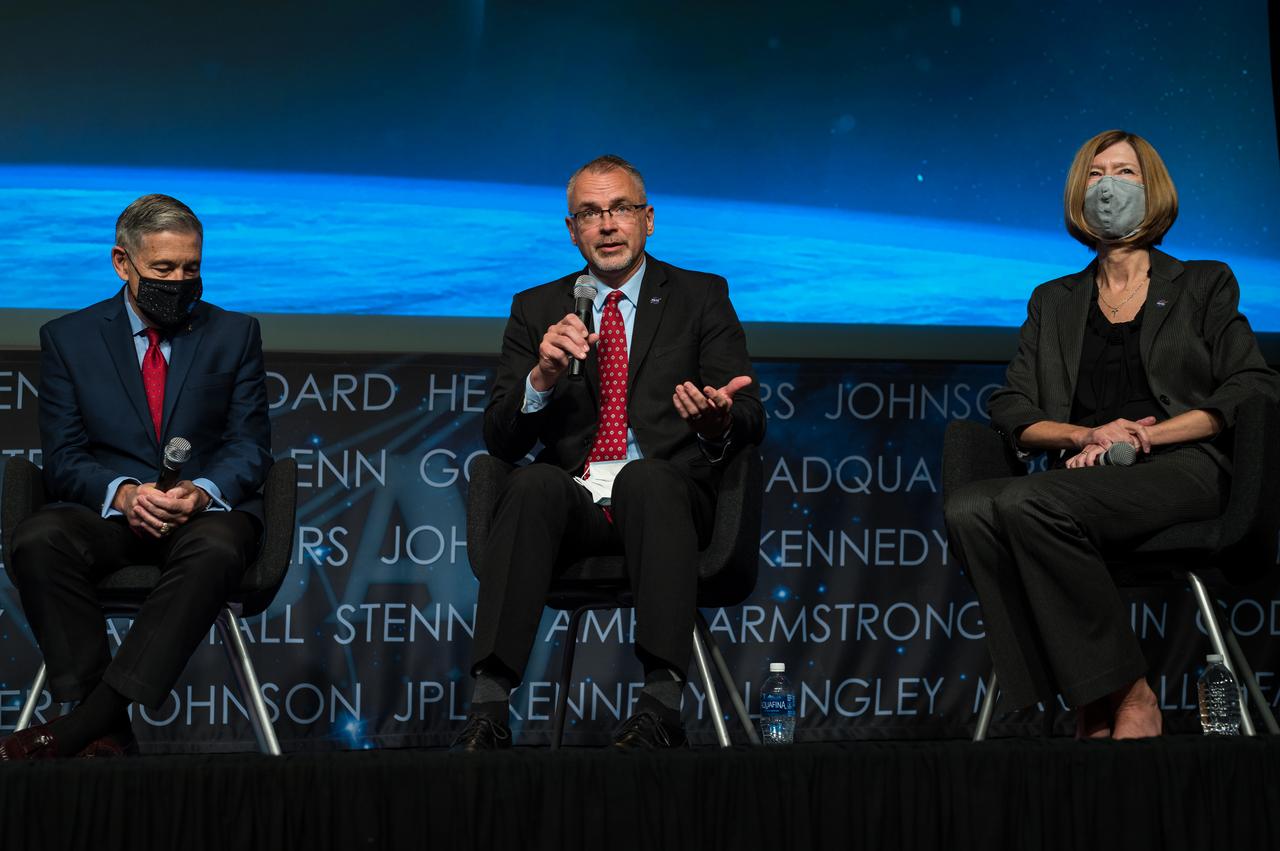
NASA Associate Administrator for the Exploration Systems Development Mission Directorate (ESDMD), Jim Free, speaks alongside NASA Associate Administrator Bob Cabana, left, and NASA Associate Administrator for Space Operations Mission Directorate (SpaceOps), Kathy Lueders, right, during a NASA town hall to discuss the reorganization of the Human Exploration and Operations Mission Directorate into two mission directorates: ESDMD and SpaceOps, Tuesday, Sept. 21, 2021 at the Mary W. Jackson NASA Headquarters building in Washington. Lueders will lead launch and space operations including the International Space Station, the commercialization of low-Earth orbit, and eventually operations on and around the Moon. Free will lead efforts to define and manage systems development for programs critical to NASA’s Artemis program and the planning of NASA’s Moon to Mars exploration. Photo Credit: (NASA/Aubrey Gemignani)

NASA Associate Administrator Bob Cabana speaks during a NASA town hall to discuss the reorganization of the Human Exploration and Operations Mission Directorate into two mission directorates: Exploration Systems Development Mission Directorate (ESDMD) and Space Operations Mission Directorate (SpaceOps), Tuesday, Sept. 21, 2021 at the Mary W. Jackson NASA Headquarters building in Washington. NASA Associate Administrator for SpaceOps, Kathy Lueders, will lead launch and space operations including the International Space Station, the commercialization of low-Earth orbit, and eventually operations on and around the Moon. NASA Associate Administrator for the ESDMD, Jim Free, will lead efforts to define and manage systems development for programs critical to NASA’s Artemis program and the planning of NASA’s Moon to Mars exploration. Photo Credit: (NASA/Aubrey Gemignani)
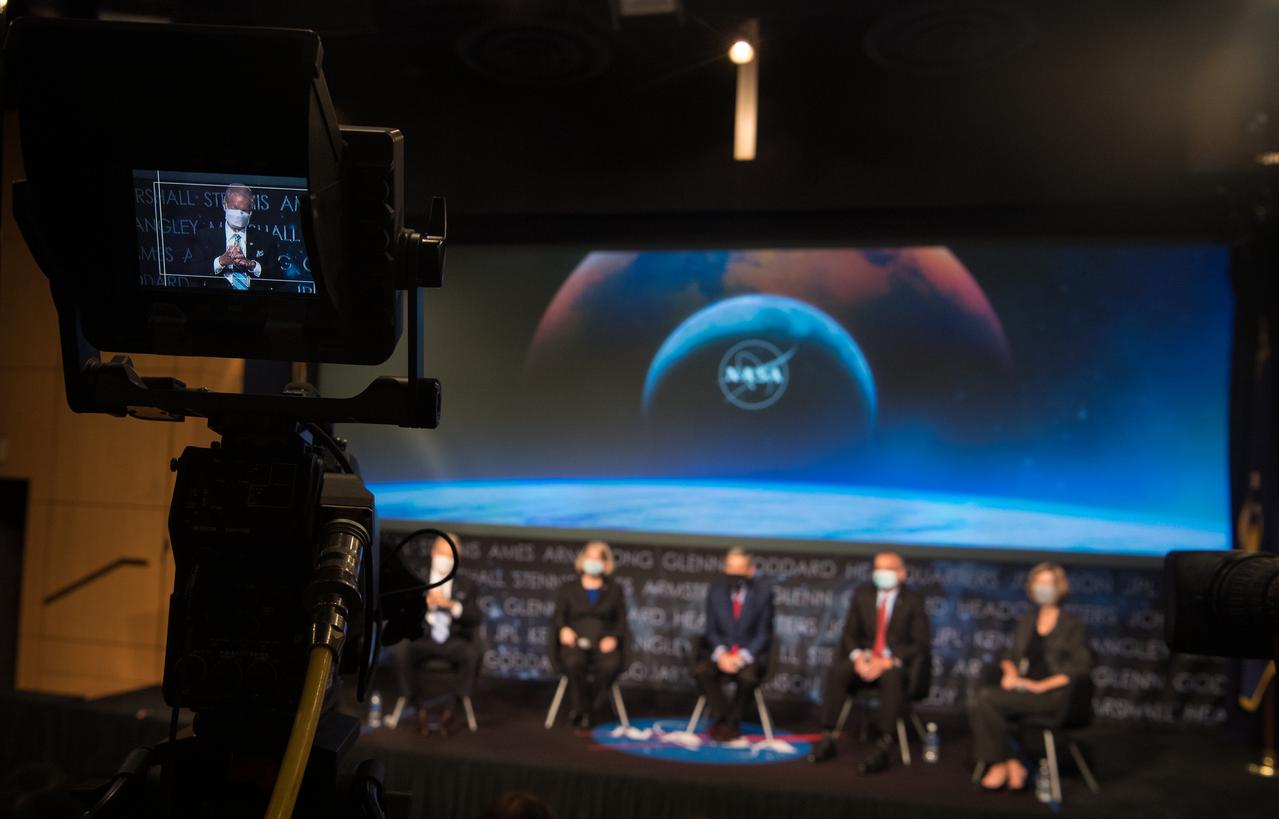
NASA Administrator Bill Nelson is seen through a video camera before a NASA town hall to discuss the reorganization of the Human Exploration and Operations Mission Directorate into two mission directorates: Exploration Systems Development Mission Directorate (ESDMD) and Space Operations Mission Directorate (SpaceOps), Tuesday, Sept. 21, 2021 at the Mary W. Jackson NASA Headquarters building in Washington. NASA Associate Administrator for SpaceOps, Kathy Lueders, will lead launch and space operations including the International Space Station, the commercialization of low-Earth orbit, and eventually operations on and around the Moon. NASA Associate Administrator for the ESDMD, Jim Free, will lead efforts to define and manage systems development for programs critical to NASA’s Artemis program and the planning of NASA’s Moon to Mars exploration. Photo Credit: (NASA/Aubrey Gemignani)
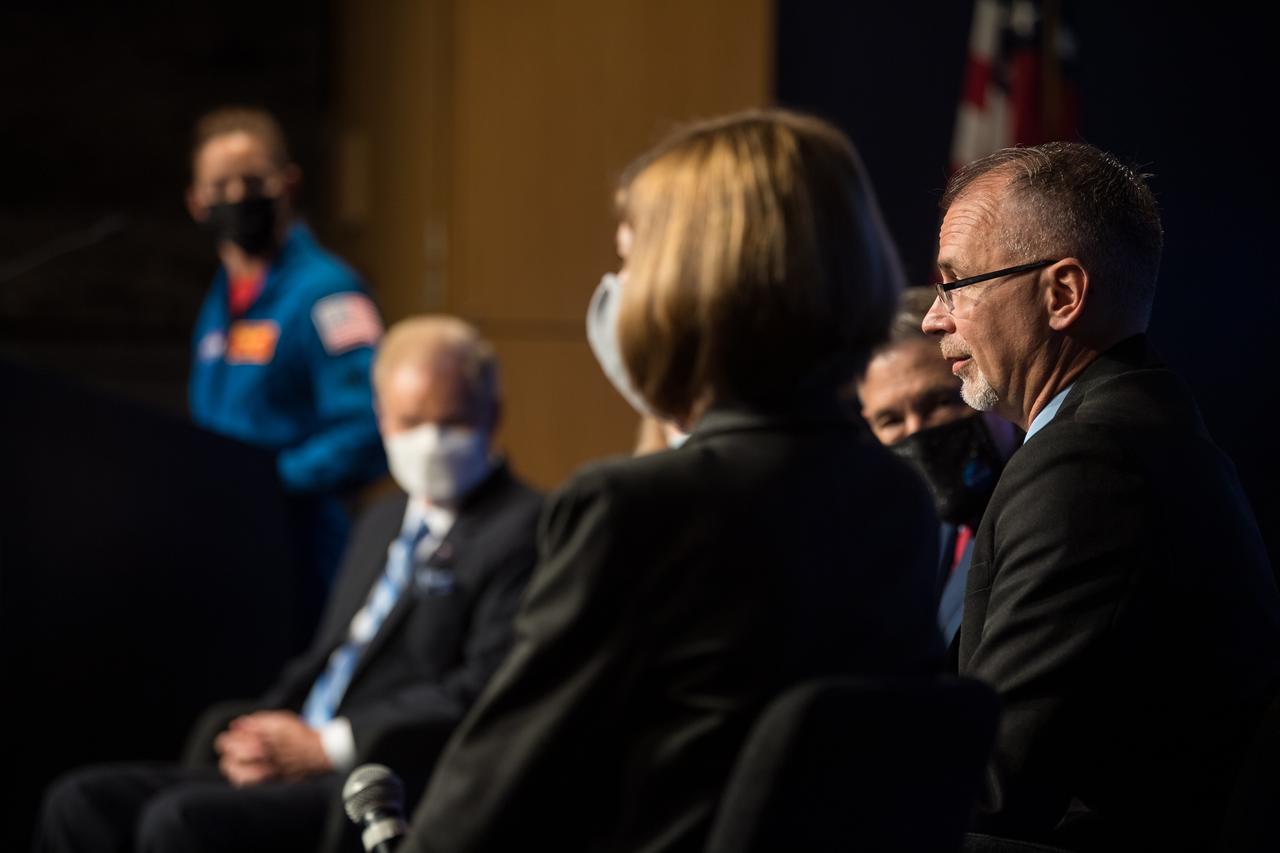
NASA Associate Administrator for the Exploration Systems Development Mission Directorate (ESDMD), Jim Free, speaks during a NASA town hall to discuss the reorganization of the Human Exploration and Operations Mission Directorate into two mission directorates: ESDMD and Space Operations Mission Directorate (SpaceOps), Tuesday, Sept. 21, 2021 at the Mary W. Jackson NASA Headquarters building in Washington. NASA Associate Administrator for SpaceOps, Kathy Lueders, will lead launch and space operations including the International Space Station, the commercialization of low-Earth orbit, and eventually operations on and around the Moon. Head of ESDMD, Jim Free, will lead efforts to define and manage systems development for programs critical to NASA’s Artemis program and the planning of NASA’s Moon to Mars exploration. Photo Credit: (NASA/Aubrey Gemignani)
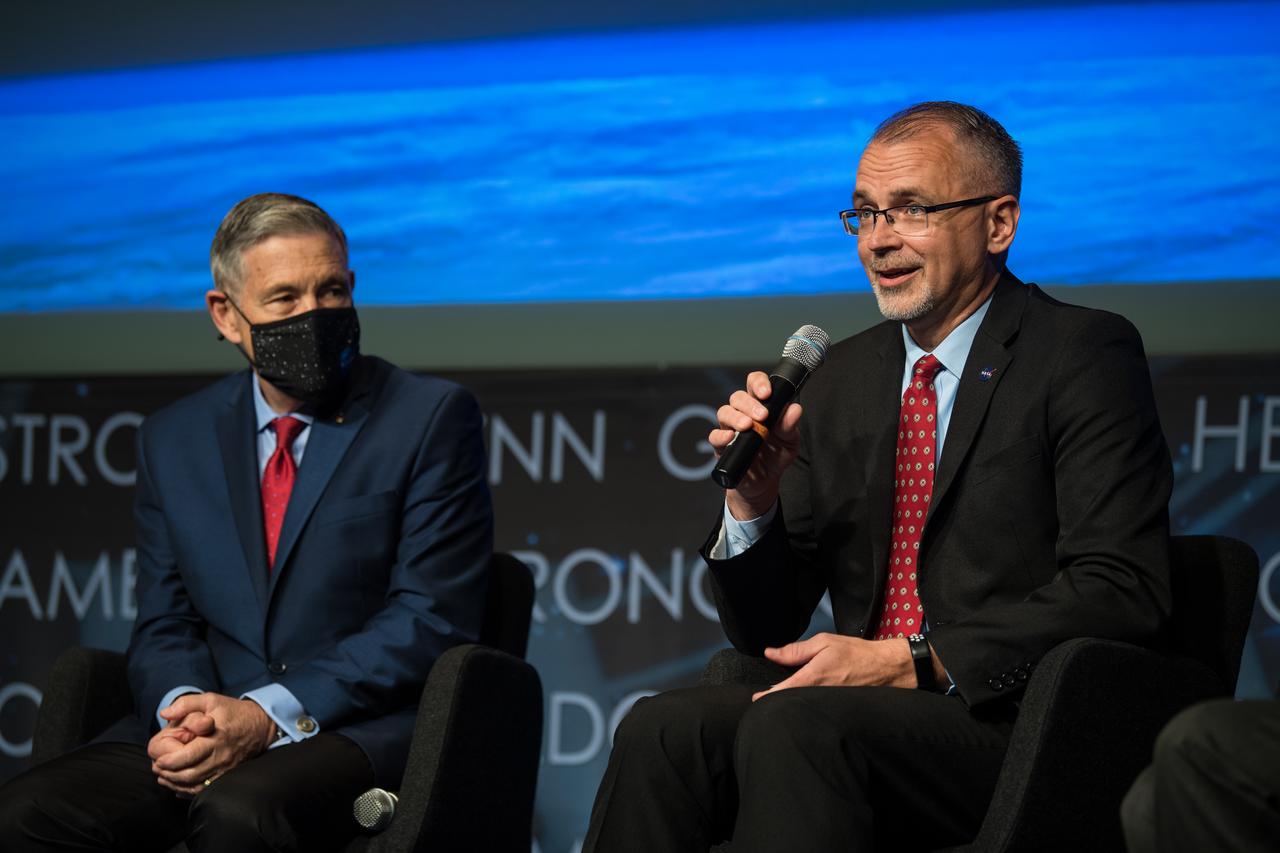
NASA Associate Administrator for the Exploration Systems Development Mission Directorate (ESDMD), Jim Free, speaks during a NASA town hall to discuss the reorganization of the Human Exploration and Operations Mission Directorate into two mission directorates: ESDMD and Space Operations Mission Directorate (SpaceOps), Tuesday, Sept. 21, 2021 at the Mary W. Jackson NASA Headquarters building in Washington. NASA Associate Administrator for SpaceOps, Kathy Lueders, will lead launch and space operations including the International Space Station, the commercialization of low-Earth orbit, and eventually operations on and around the Moon. Head of ESDMD, Jim Free, will lead efforts to define and manage systems development for programs critical to NASA’s Artemis program and the planning of NASA’s Moon to Mars exploration. Photo Credit: (NASA/Aubrey Gemignani)
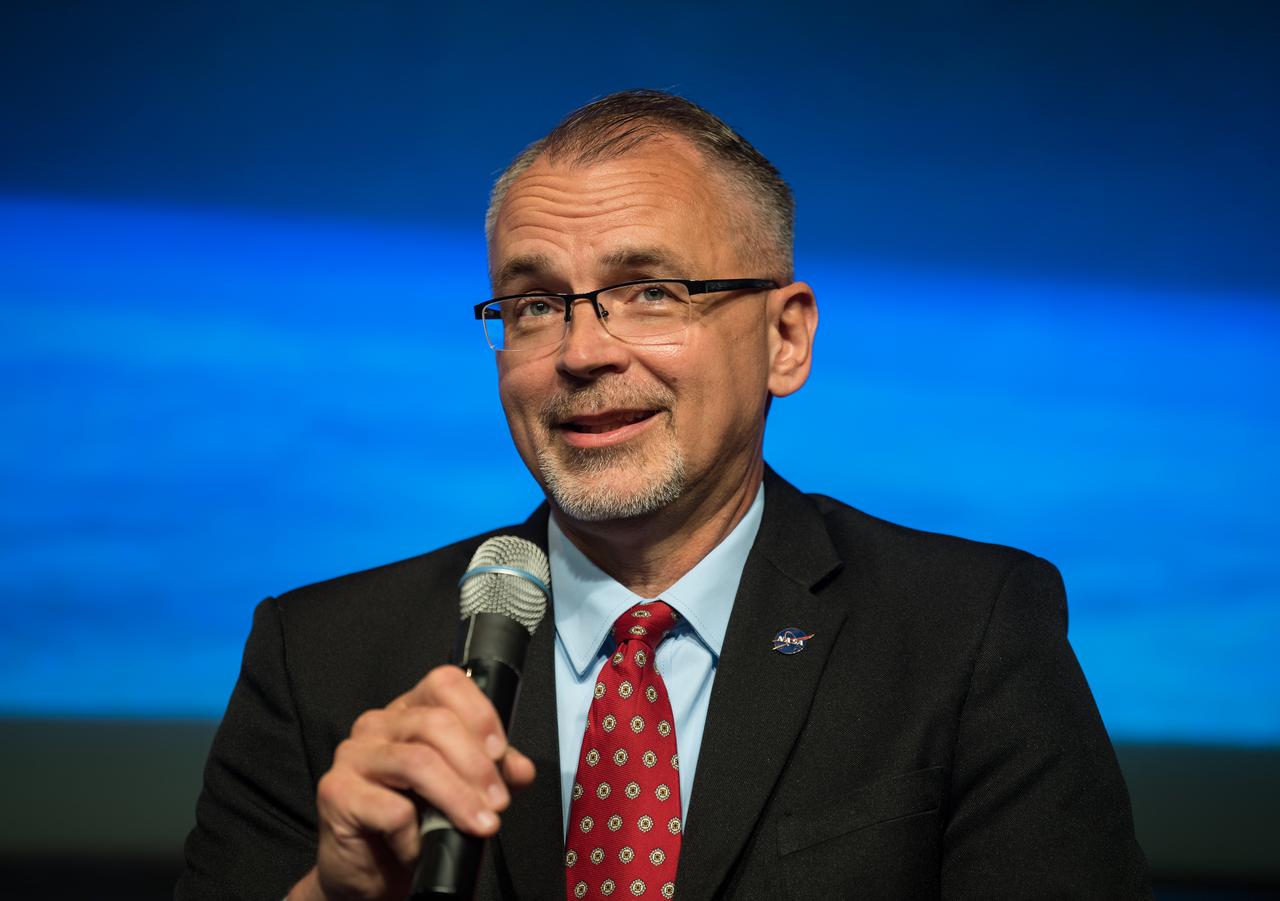
NASA Associate Administrator for the Exploration Systems Development Mission Directorate (ESDMD), Jim Free, speaks during a NASA town hall to discuss the reorganization of the Human Exploration and Operations Mission Directorate into two mission directorates: ESDMD and Space Operations Mission Directorate (SpaceOps), Tuesday, Sept. 21, 2021 at the Mary W. Jackson NASA Headquarters building in Washington. NASA Associate Administrator for SpaceOps, Kathy Lueders, will lead launch and space operations including the International Space Station, the commercialization of low-Earth orbit, and eventually operations on and around the Moon. Head of ESDMD, Jim Free, will lead efforts to define and manage systems development for programs critical to NASA’s Artemis program and the planning of NASA’s Moon to Mars exploration. Photo Credit: (NASA/Aubrey Gemignani)
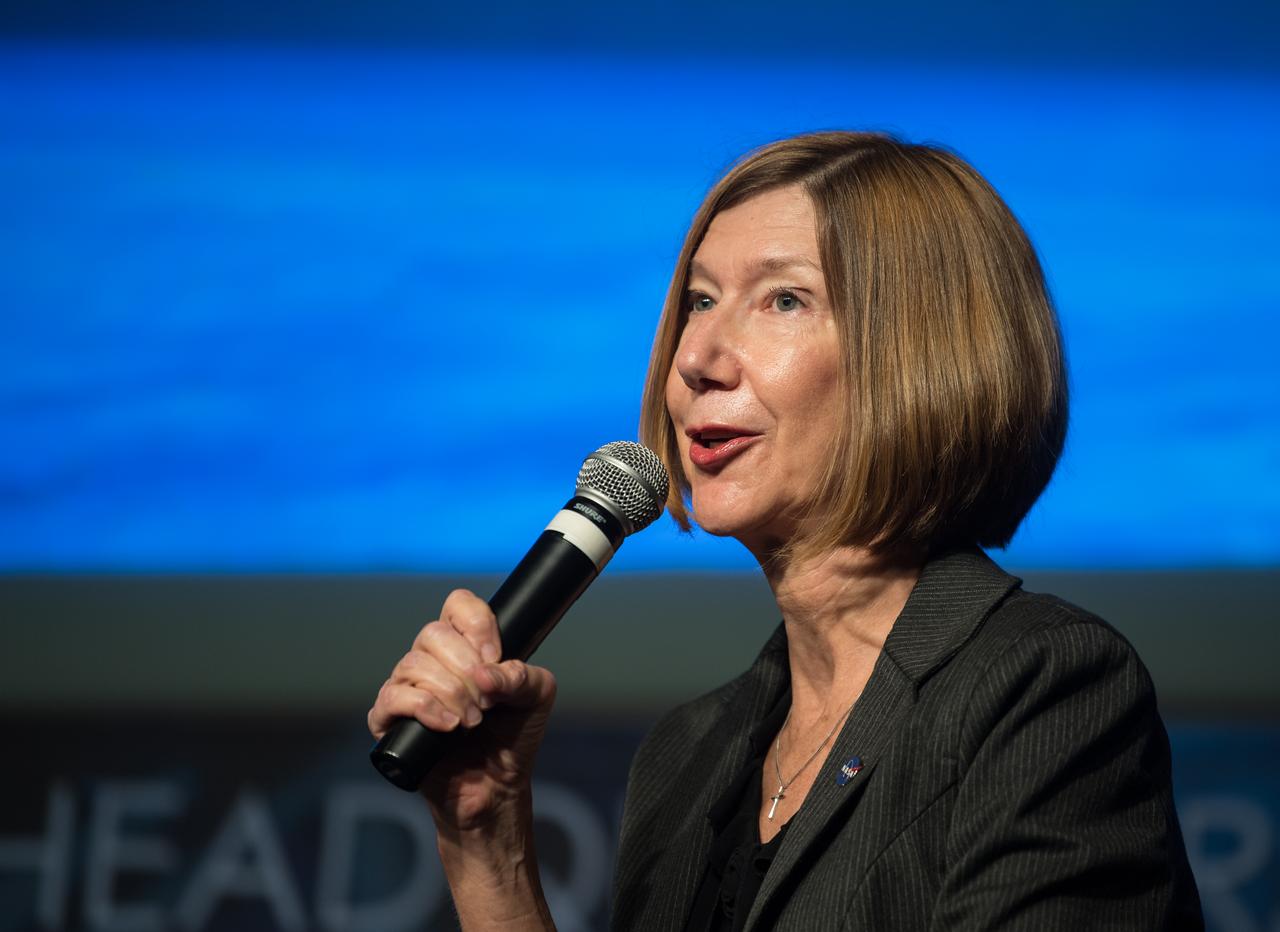
NASA Associate Administrator for the Space Operations Mission Directorate (SpaceOps), Kathy Lueders, speaks during a NASA town hall to discuss the reorganization of the Human Exploration and Operations Mission Directorate into two mission directorates: SpaceOps and the Exploration Systems Development Mission Directorate (ESDMD), Tuesday, Sept. 21, 2021 at the Mary W. Jackson NASA Headquarters building in Washington. As head of SpaceOps, Kathy Lueders will lead launch and space operations including the International Space Station, the commercialization of low-Earth orbit, and eventually operations on and around the Moon. Associate Administrator of ESDMD, Jim Free, will lead efforts to define and manage systems development for programs critical to NASA’s Artemis program and the planning of NASA’s Moon to Mars exploration. Photo Credit: (NASA/Aubrey Gemignani)
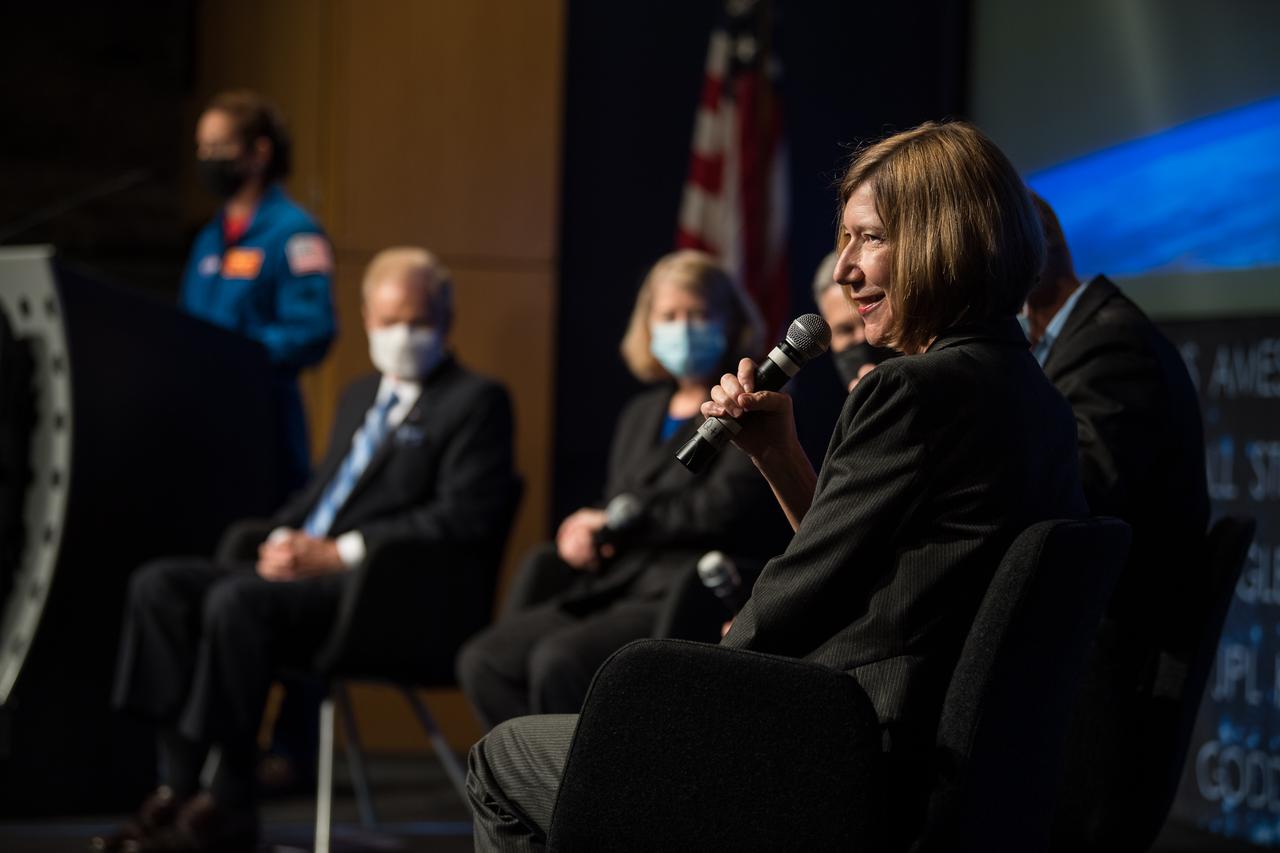
NASA Associate Administrator for the Space Operations Mission Directorate (SpaceOps), Kathy Lueders, speaks during a NASA town hall to discuss the reorganization of the Human Exploration and Operations Mission Directorate into two mission directorates: SpaceOps and the Exploration Systems Development Mission Directorate (ESDMD), Tuesday, Sept. 21, 2021 at the Mary W. Jackson NASA Headquarters building in Washington. As head of SpaceOps, Kathy Lueders will lead launch and space operations including the International Space Station, the commercialization of low-Earth orbit, and eventually operations on and around the Moon. Associate Administrator of ESDMD, Jim Free, will lead efforts to define and manage systems development for programs critical to NASA’s Artemis program and the planning of NASA’s Moon to Mars exploration. Photo Credit: (NASA/Aubrey Gemignani)
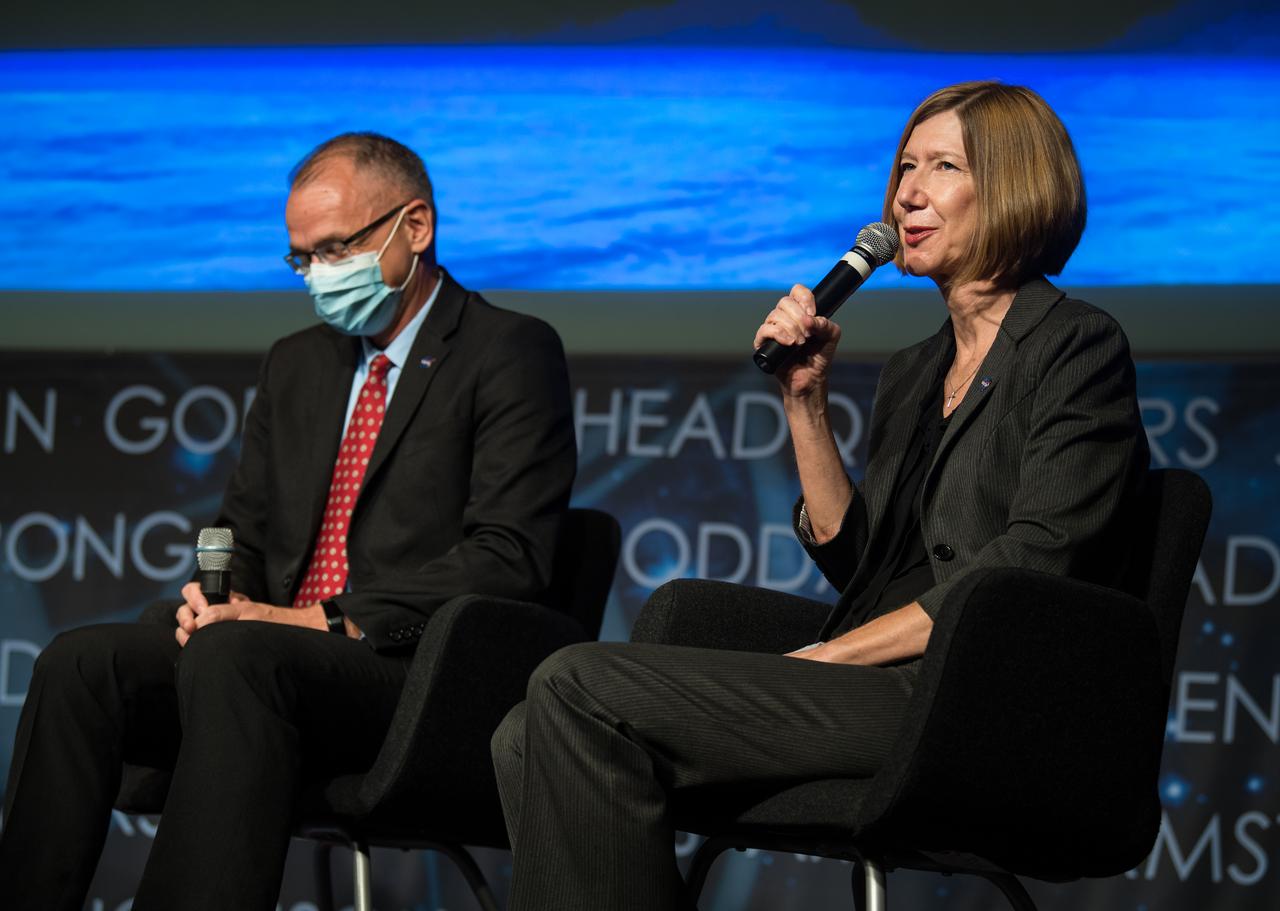
NASA Associate Administrator for the Space Operations Mission Directorate (SpaceOps), Kathy Lueders, right, speaks during a NASA town hall to discuss the reorganization of the Human Exploration and Operations Mission Directorate into two mission directorates: SpaceOps and the Exploration Systems Development Mission Directorate (ESDMD), Tuesday, Sept. 21, 2021 at the Mary W. Jackson NASA Headquarters building in Washington. As head of SpaceOps, Kathy Lueders will lead launch and space operations including the International Space Station, the commercialization of low-Earth orbit, and eventually operations on and around the Moon. Associate Administrator of ESDMD, Jim Free, left, will lead efforts to define and manage systems development for programs critical to NASA’s Artemis program and the planning of NASA’s Moon to Mars exploration. Photo Credit: (NASA/Aubrey Gemignani)
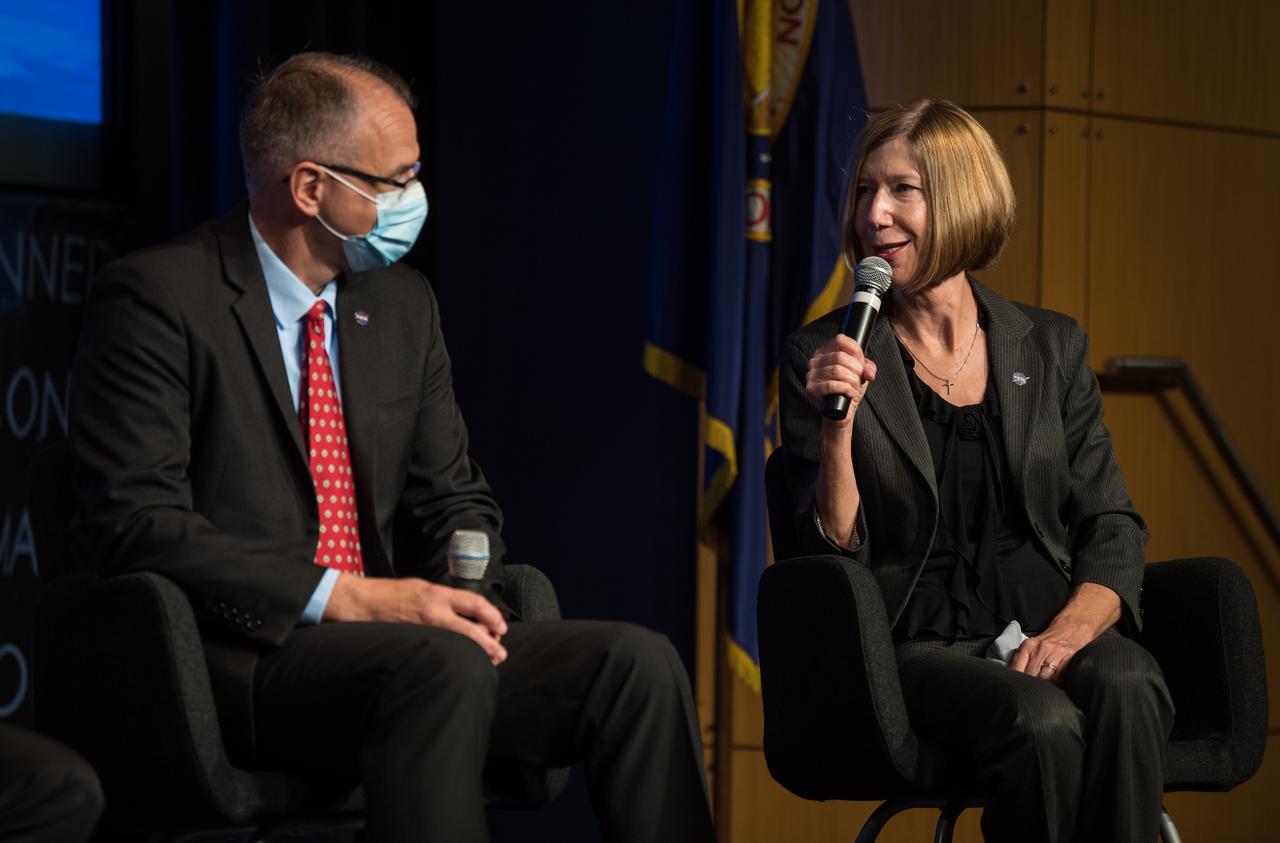
NASA Associate Administrator for the Space Operations Mission Directorate (SpaceOps), Kathy Lueders, right, speaks during a NASA town hall to discuss the reorganization of the Human Exploration and Operations Mission Directorate into two mission directorates: SpaceOps and the Exploration Systems Development Mission Directorate (ESDMD), Tuesday, Sept. 21, 2021 at the Mary W. Jackson NASA Headquarters building in Washington. As head of SpaceOps, Kathy Lueders will lead launch and space operations including the International Space Station, the commercialization of low-Earth orbit, and eventually operations on and around the Moon. Associate Administrator of ESDMD, Jim Free, left, will lead efforts to define and manage systems development for programs critical to NASA’s Artemis program and the planning of NASA’s Moon to Mars exploration. Photo Credit: (NASA/Aubrey Gemignani)
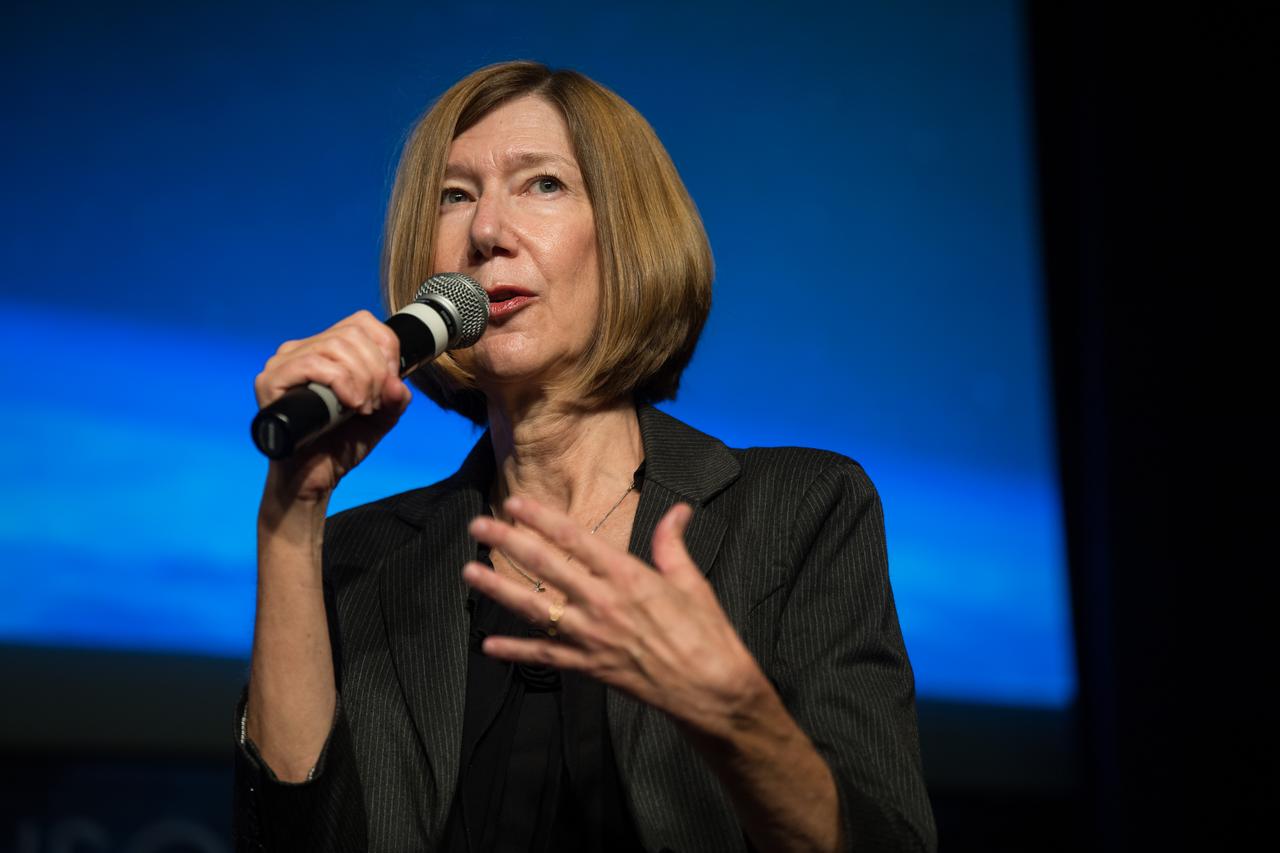
NASA Associate Administrator for the Space Operations Mission Directorate (SpaceOps), Kathy Lueders, speaks during a NASA town hall to discuss the reorganization of the Human Exploration and Operations Mission Directorate into two mission directorates: SpaceOps and the Exploration Systems Development Mission Directorate (ESDMD), Tuesday, Sept. 21, 2021 at the Mary W. Jackson NASA Headquarters building in Washington. As head of SpaceOps, Kathy Lueders will lead launch and space operations including the International Space Station, the commercialization of low-Earth orbit, and eventually operations on and around the Moon. Associate Administrator of ESDMD, Jim Free, will lead efforts to define and manage systems development for programs critical to NASA’s Artemis program and the planning of NASA’s Moon to Mars exploration. Photo Credit: (NASA/Aubrey Gemignani)
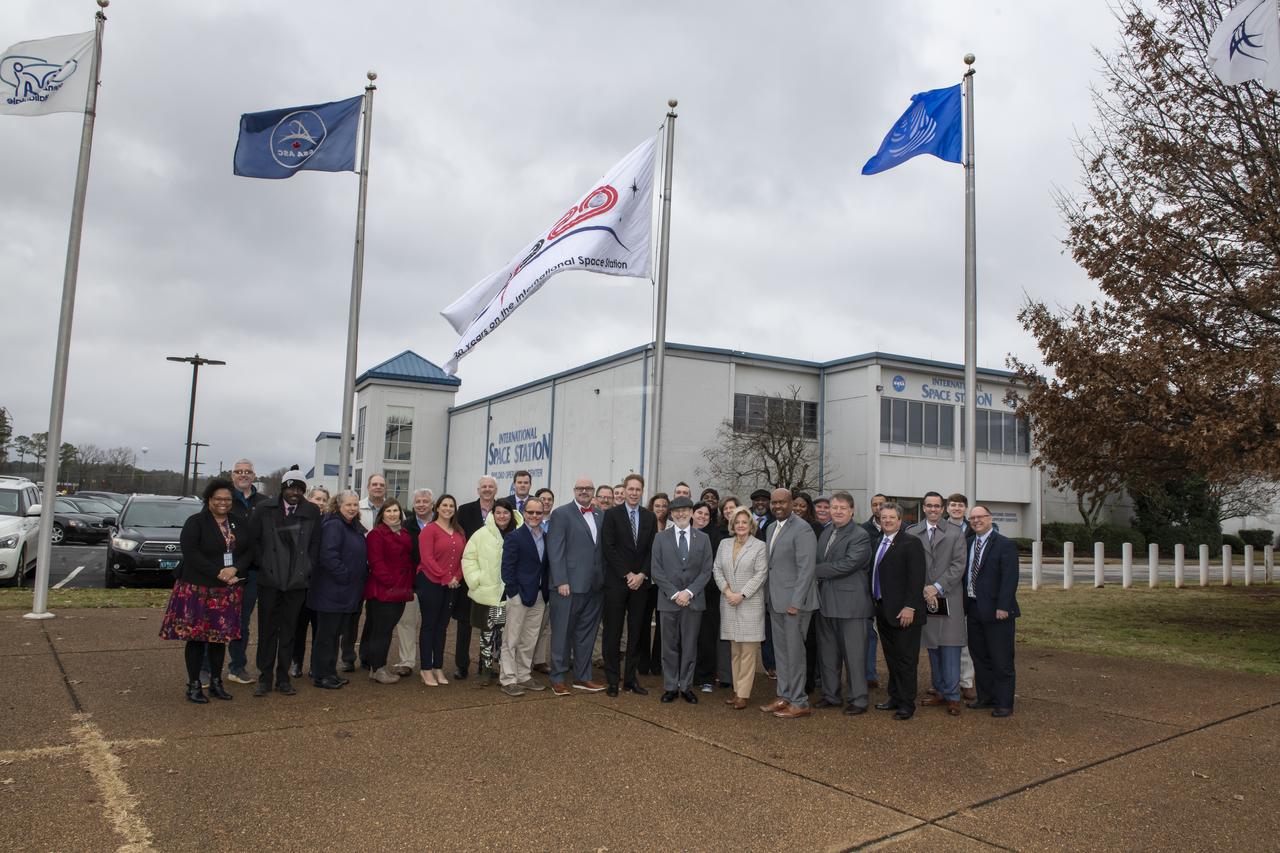
NASA Associate Administrator for the Human Exploration and Operations Mission Directorate and Marshall Center Director Jody Singer participate in the hanging of a new International Space Station flag out side of the Huntsville Operations Support Center (HOSC). Also participating were employees of the support center and the Payload Operations Integration Center.
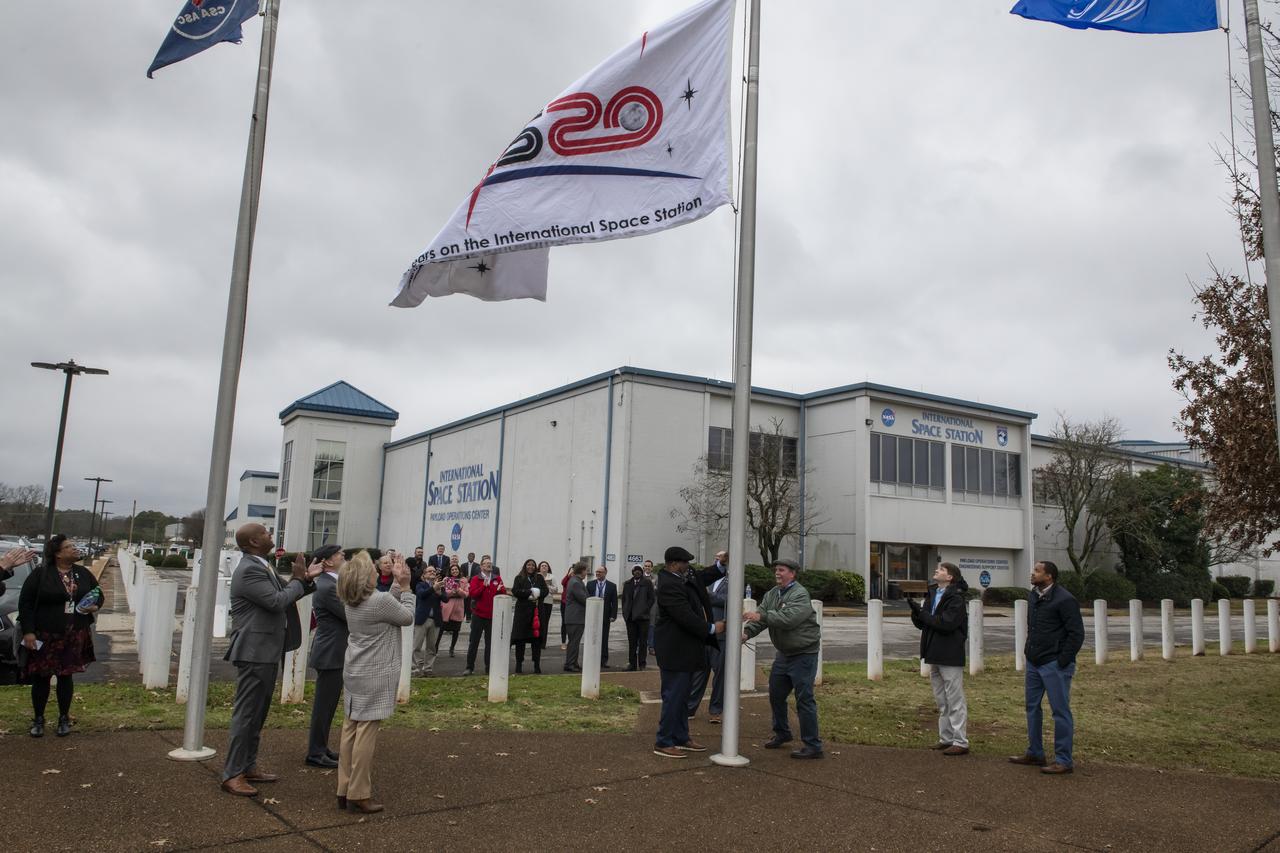
NASA Associate Administrator for the Human Exploration and Operations Mission Directorate and Marshall Center Director Jody Singer participate in the hanging of a new International Space Station flag out side of the Huntsville Operations Support Center (HOSC). Also participating were employees of the support center and the Payload Operations Integration Center.
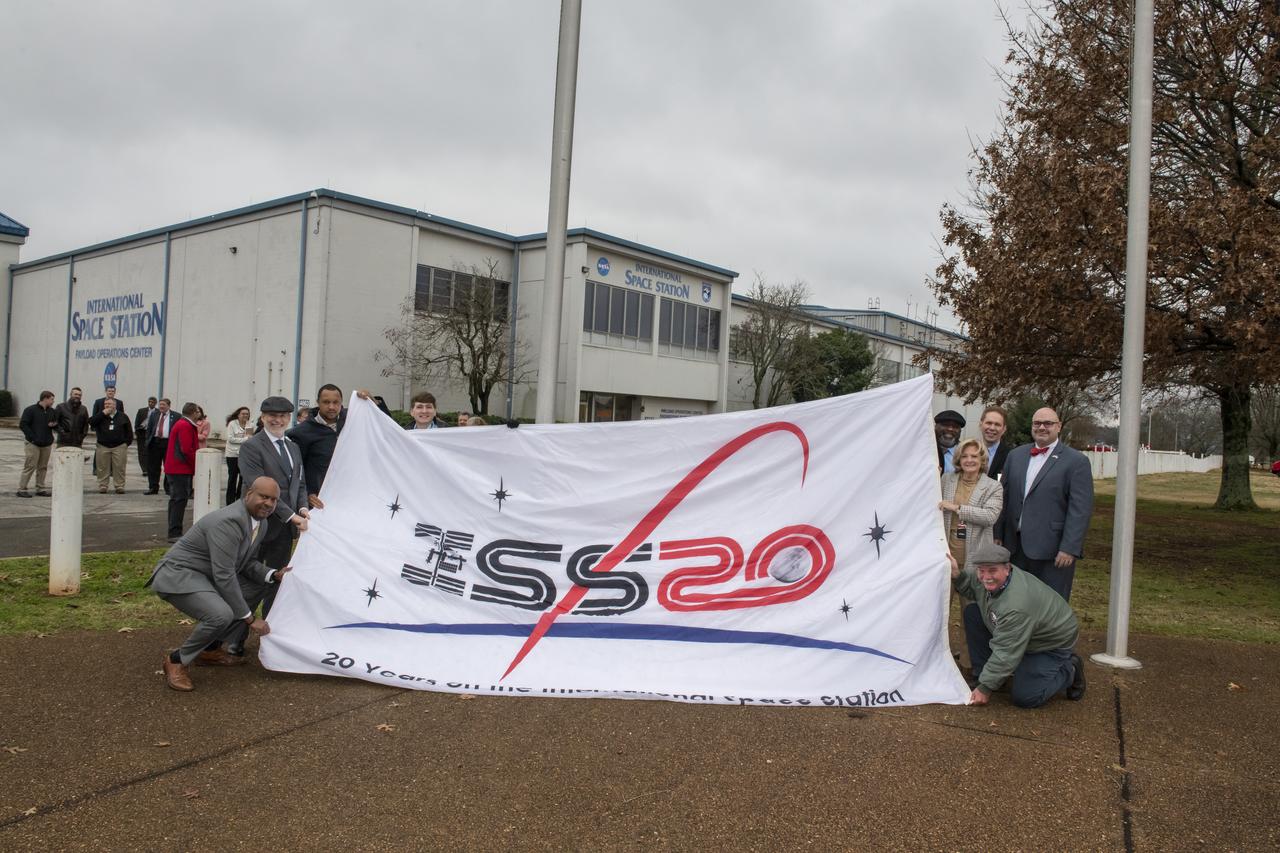
NASA Associate Administrator for the Human Exploration and Operations Mission Directorate and Marshall Center Director Jody Singer participate in the hanging of a new International Space Station flag out side of the Huntsville Operations Support Center (HOSC). Also participating were employees of the support center and the Payload Operations Integration Center.
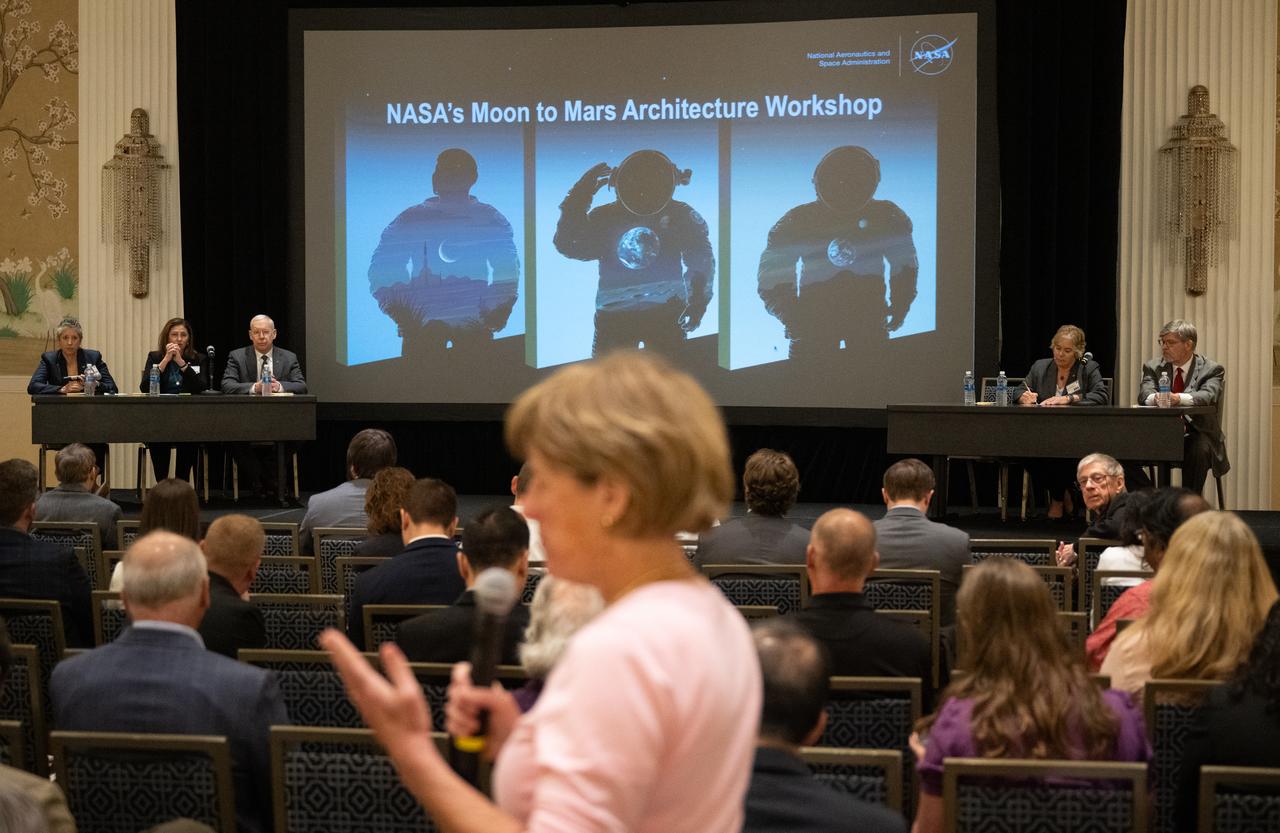
Nujoud Merancy, architecture lead for NASA's Exploration Systems Development Mission Directorate, Catherine Koerner, deputy associate administrator for NASA's Exploration Systems Development Mission Directorate, Patrick Forrester, special advisor in NASA's Space Operations Mission Directorate, Michelle Munk, chief architect for NASA’s Space Technology Mission Directorate, and Joel Kearns, deputy associate administrator for Exploration in NASA's Science Mission Directorate, listen to a question during NASA’s Moon to Mars Architecture Workshop, Tuesday, June 27, 2023, at the Gaylord National Resort and Convention Center in National Harbor, Md. Following the release of the 2022 Architecture Concept Review, NASA is conducting the workshop to engage the broader space community and collect feedback from U.S. industry and academia to inform the Moon to Mars mission architecture and operational delivery. Photo Credit: (NASA/Joel Kowsky)
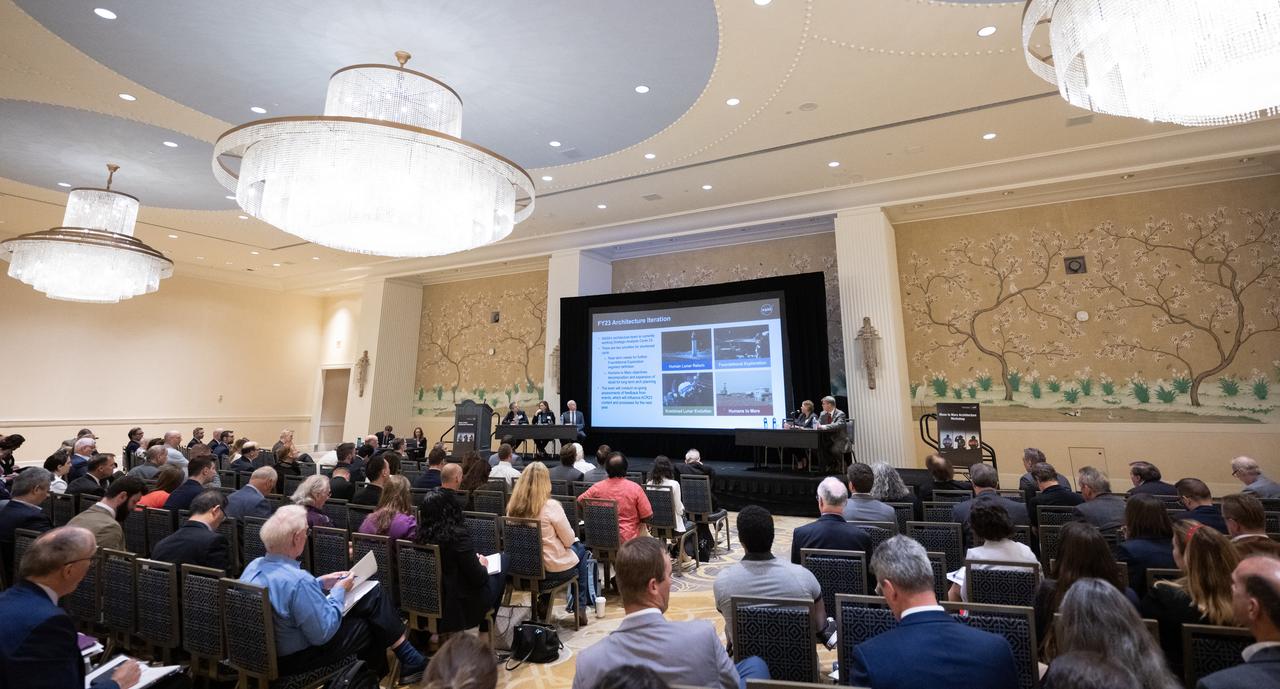
Nujoud Merancy, architecture lead for NASA's Exploration Systems Development Mission Directorate, Catherine Koerner, deputy associate administrator for NASA's Exploration Systems Development Mission Directorate, Patrick Forrester, special advisor in NASA's Space Operations Mission Directorate, Michelle Munk, chief architect for NASA’s Space Technology Mission Directorate, and Joel Kearns, deputy associate administrator for Exploration in NASA's Science Mission Directorate, are seen on stage during NASA’s Moon to Mars Architecture Workshop, Tuesday, June 27, 2023, at the Gaylord National Resort and Convention Center in National Harbor, Md. Following the release of the 2022 Architecture Concept Review, NASA is conducting the workshop to engage the broader space community and collect feedback from U.S. industry and academia to inform the Moon to Mars mission architecture and operational delivery. Photo Credit: (NASA/Joel Kowsky)
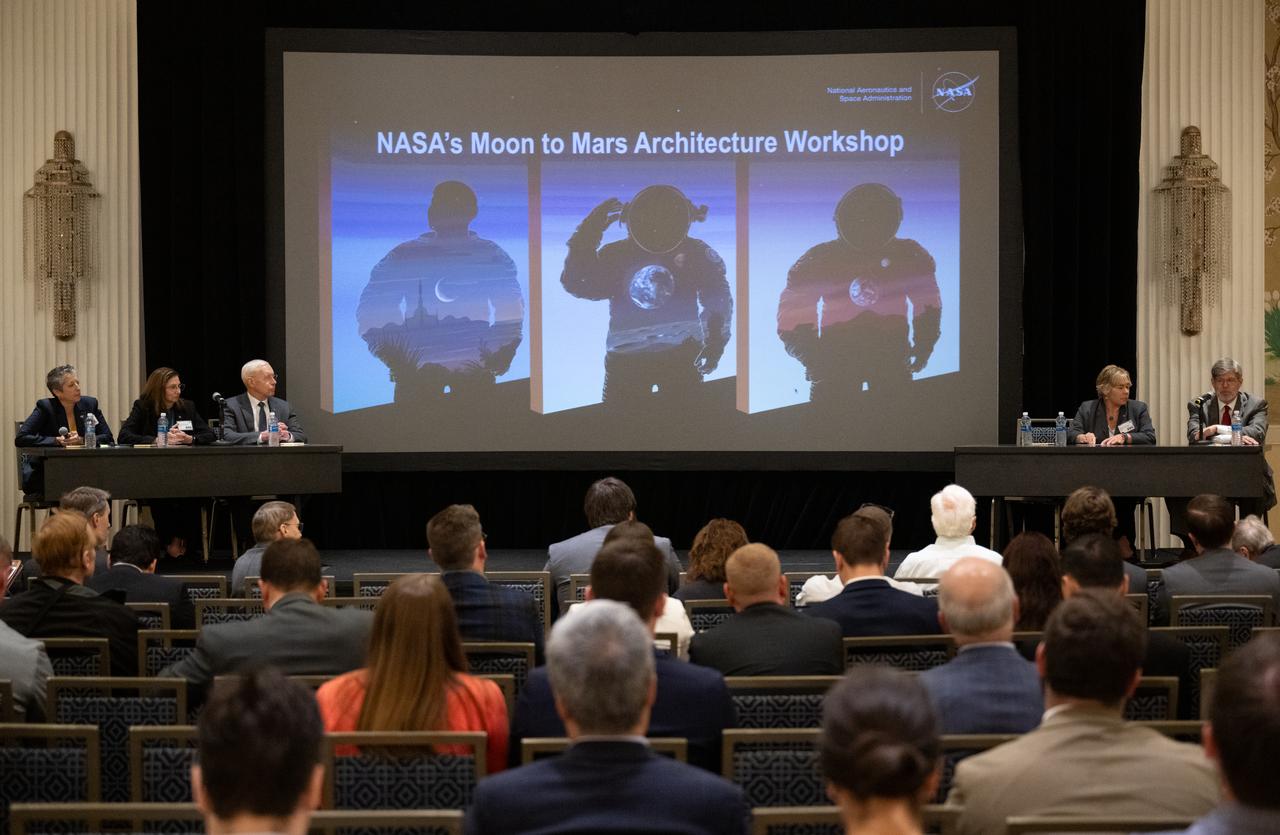
Nujoud Merancy, architecture lead for NASA's Exploration Systems Development Mission Directorate, Catherine Koerner, deputy associate administrator for NASA's Exploration Systems Development Mission Directorate, Patrick Forrester, special advisor in NASA's Space Operations Mission Directorate, Michelle Munk, chief architect for NASA’s Space Technology Mission Directorate, and Joel Kearns, deputy associate administrator for Exploration in NASA's Science Mission Directorate, are seen on stage during NASA’s Moon to Mars Architecture Workshop, Tuesday, June 27, 2023, at the Gaylord National Resort and Convention Center in National Harbor, Md. Following the release of the 2022 Architecture Concept Review, NASA is conducting the workshop to engage the broader space community and collect feedback from U.S. industry and academia to inform the Moon to Mars mission architecture and operational delivery. Photo Credit: (NASA/Joel Kowsky)
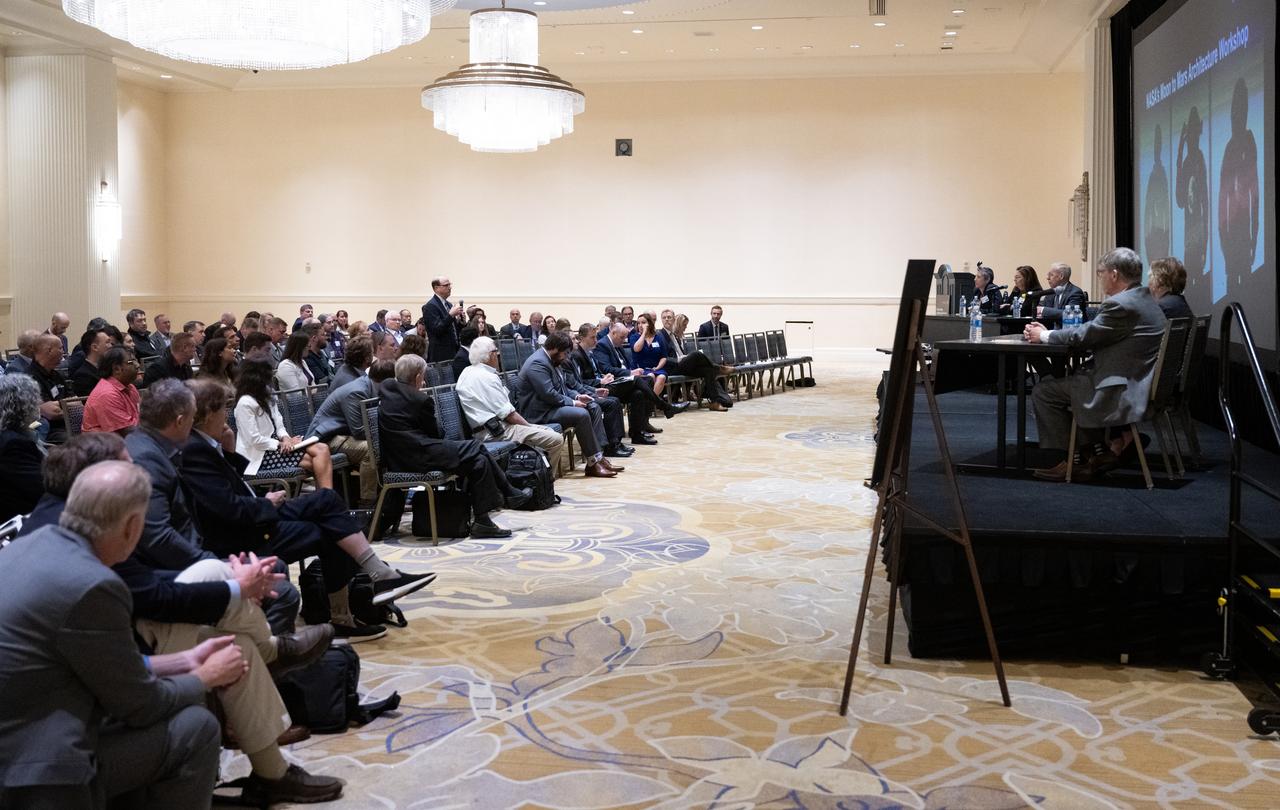
Nujoud Merancy, architecture lead for NASA's Exploration Systems Development Mission Directorate, Catherine Koerner, deputy associate administrator for NASA's Exploration Systems Development Mission Directorate, Patrick Forrester, special advisor in NASA's Space Operations Mission Directorate, Michelle Munk, chief architect for NASA’s Space Technology Mission Directorate, and Joel Kearns, deputy associate administrator for Exploration in NASA's Science Mission Directorate, listen to a question during NASA’s Moon to Mars Architecture Workshop, Tuesday, June 27, 2023, at the Gaylord National Resort and Convention Center in National Harbor, Md. Following the release of the 2022 Architecture Concept Review, NASA is conducting the workshop to engage the broader space community and collect feedback from U.S. industry and academia to inform the Moon to Mars mission architecture and operational delivery. Photo Credit: (NASA/Joel Kowsky)
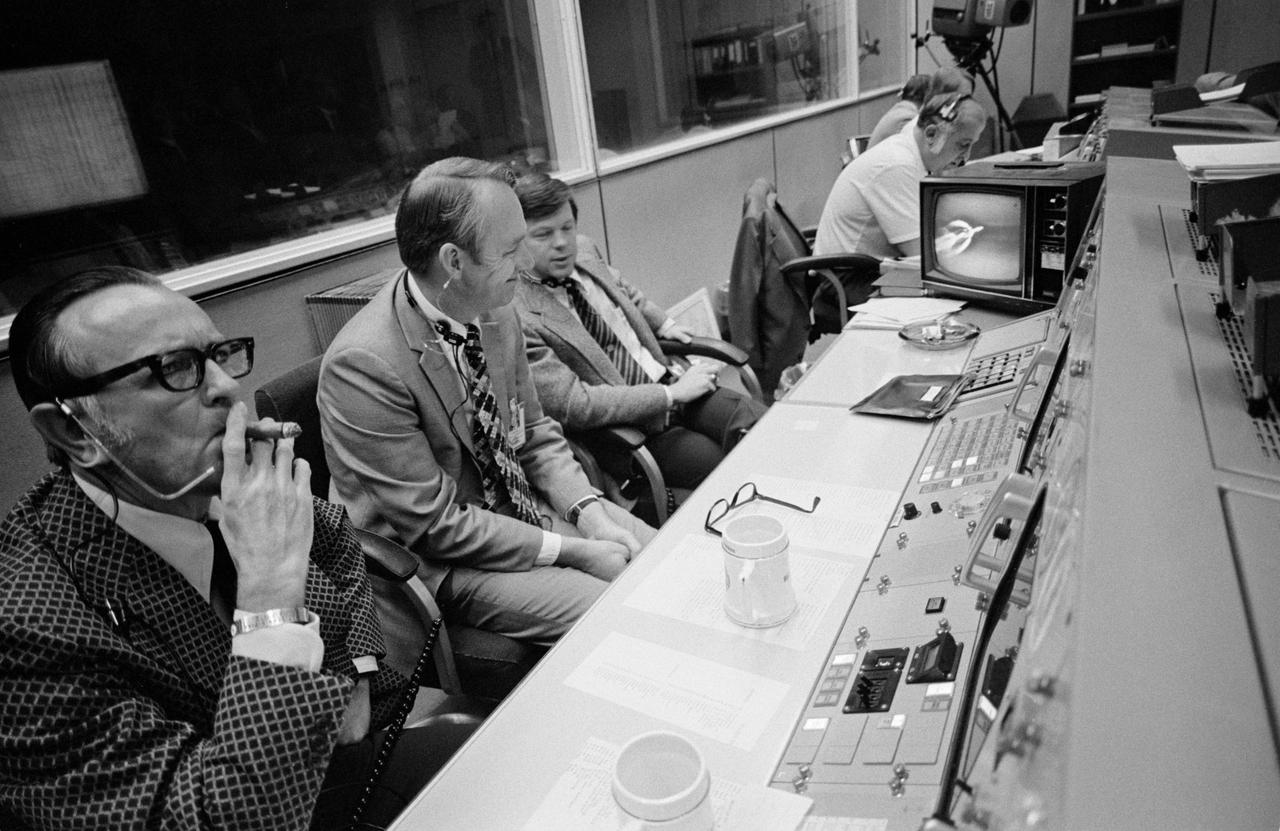
S73-36909 (16 Nov. 2013) --- An overall view of the Flight Operations Director's console in the Mission Operations Control Room in the Mission Control Center at Johnson Space Center during the launch of the Skylab 4 mission. The television monitor records the progress of the flight seconds after liftoff. Left to right, are Dr. Christopher C. Kraft Jr., JSC Director; Howard W. Tindall Jr., JSC Director of Flight Operations; and Flight Director M.P. Frank. Public Affairs commentator John E. McLeish can be seen at the PAO console in the background. Photo credit: NASA
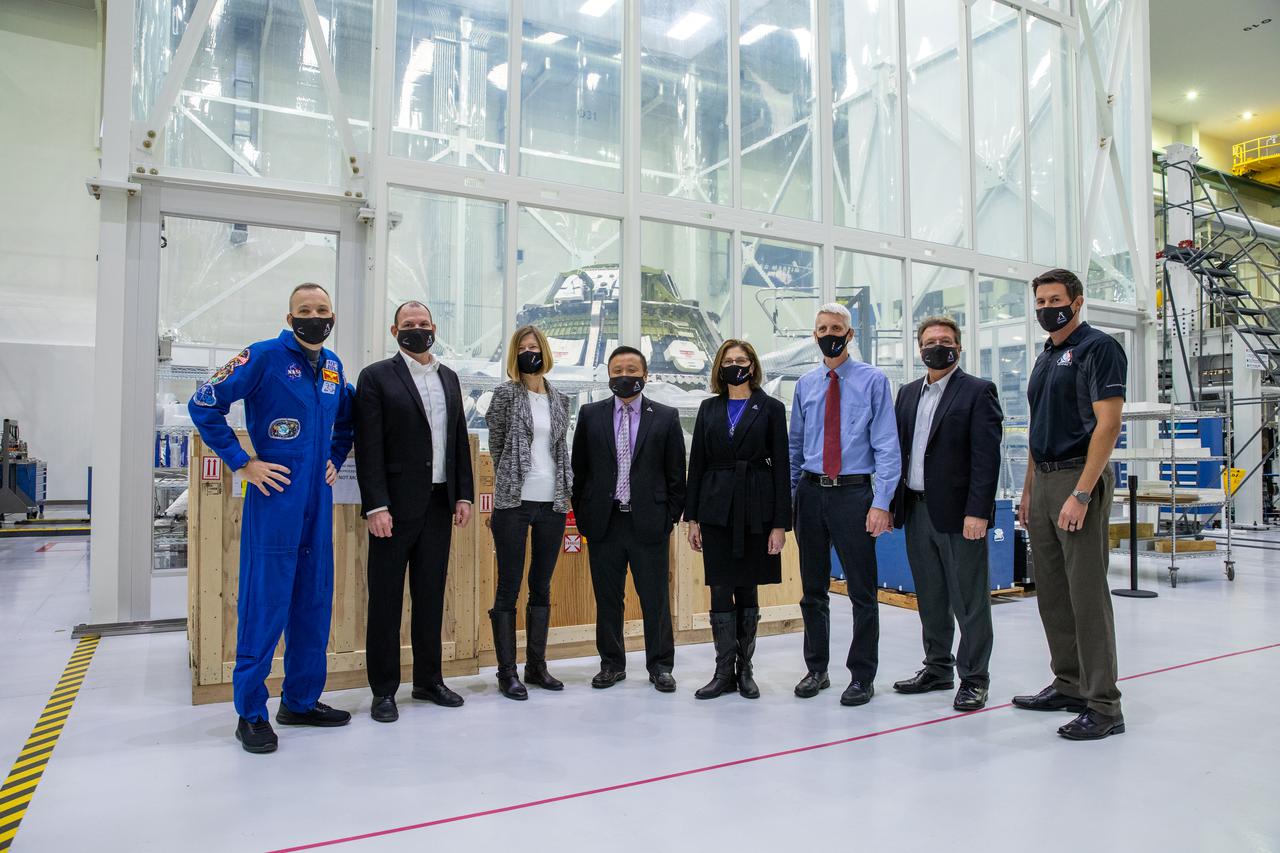
Kathy Lueders, third from left, associate administrator of the Human Exploration and Operations Mission Directorate, tours the Neil Armstrong Operations and Checkout Building high bay at NASA’s Kennedy Space Center in Florida on Jan. 14, 2021. In the background is the Orion crew module for the Artemis II mission. From left are NASA astronaut Randy Bresnik; Tony Antonelli, Lockheed Martin Orion Program director and Artemis II Mission director; Howard Hu, Orion deputy program manager; Cathy Koerner, Orion Program manager; Scott Wilson, Orion Production Operations manager; Jules Schneider, Lockheed Martin director of Orion Assembly, Test and Launch Operations at Kennedy; and Nathan Varn, Lockheed Martin Production Control director. The group also viewed the Orion spacecraft for Artemis I as it was lowered onto a transporter for the move to the Multi-Payload Processing Facility to begin ground processing by the Exploration Ground Systems and Jacobs teams.
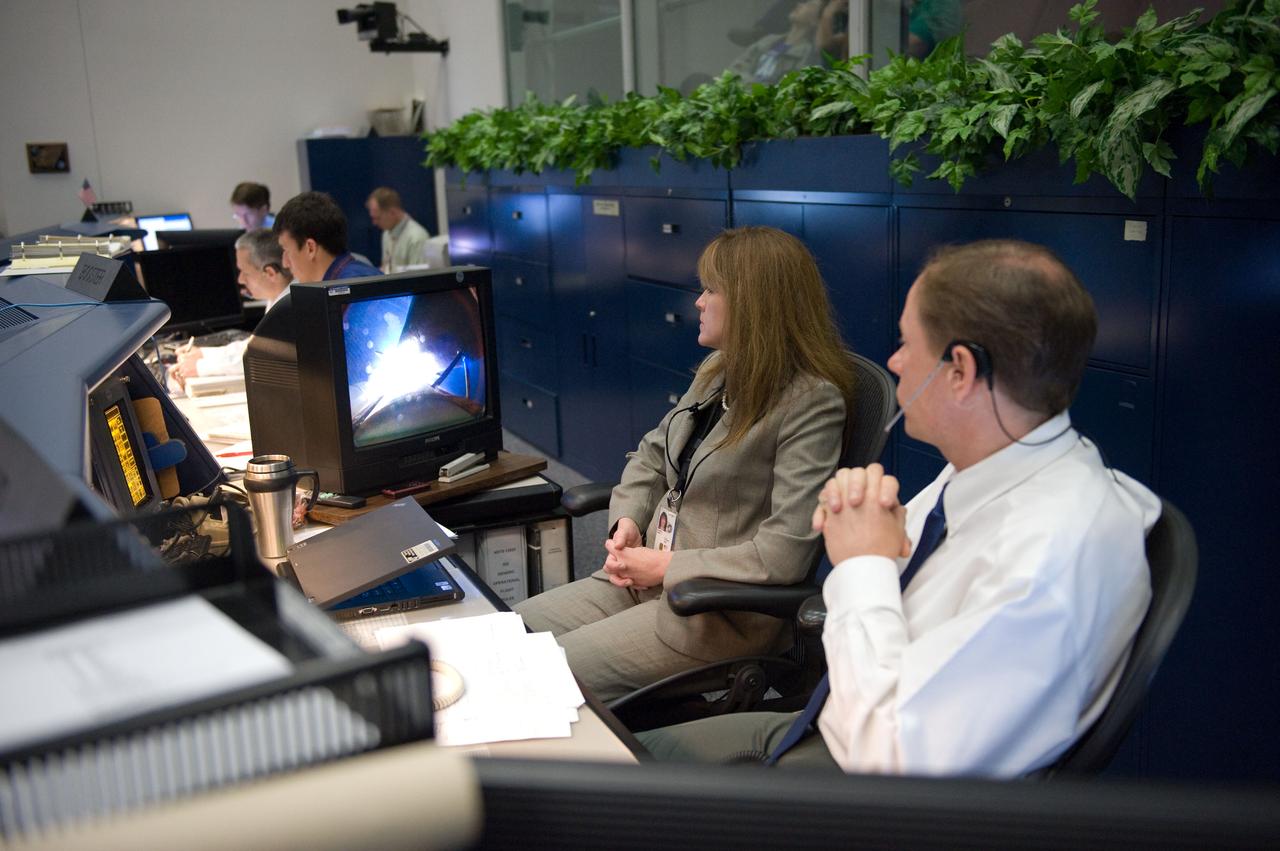
JSC2010-E-046805 (5 April 2010) --- John McCullough, chief of the Flight Director Office; and Janet Kavandi, deputy director, Flight Crew Operations, watch television screens at the Mission Operations Directorate (MOD) console in the space shuttle flight control room in the Mission Control Center at NASA's Johnson Space Center during launch a few hundred miles away in Florida, site of space shuttle Discovery's STS-131 liftoff.
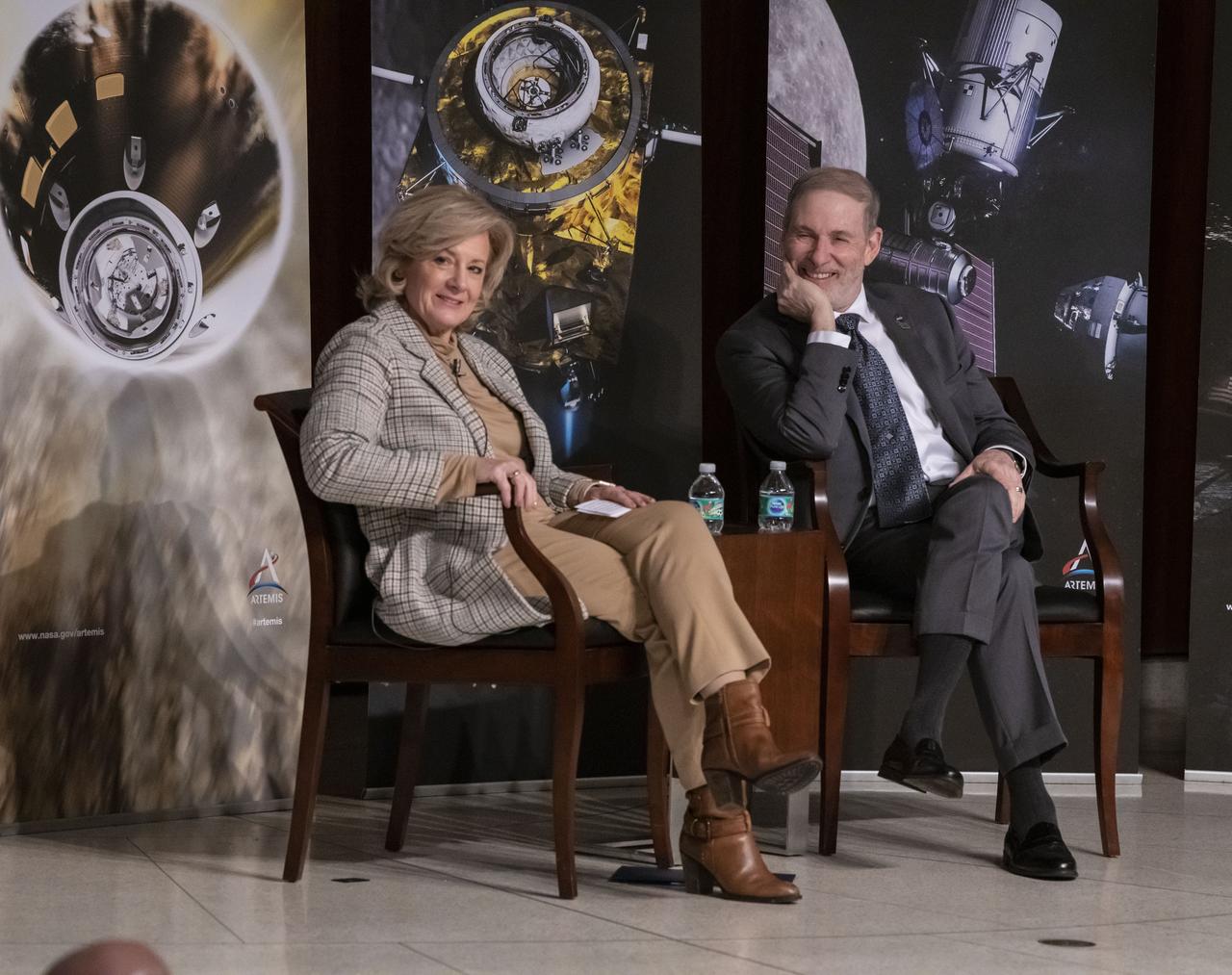
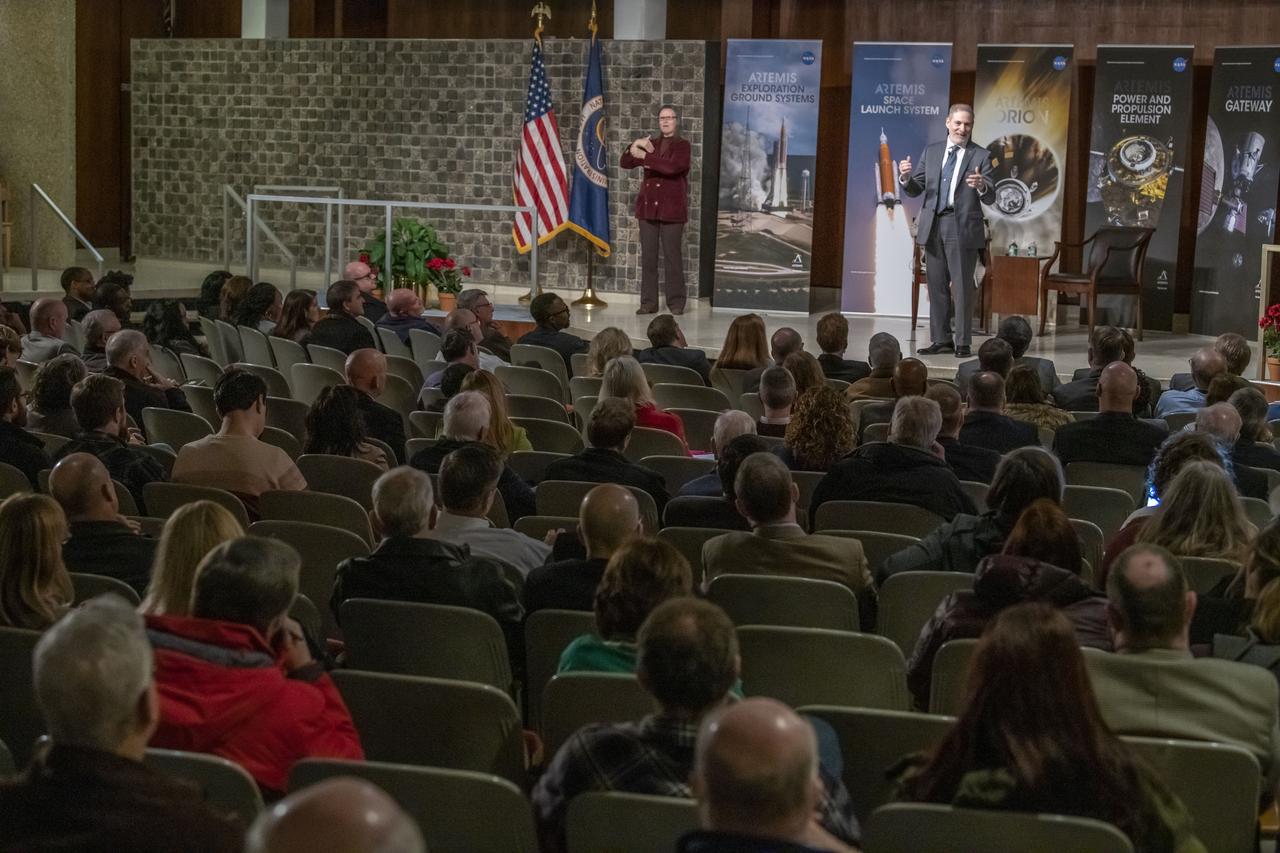
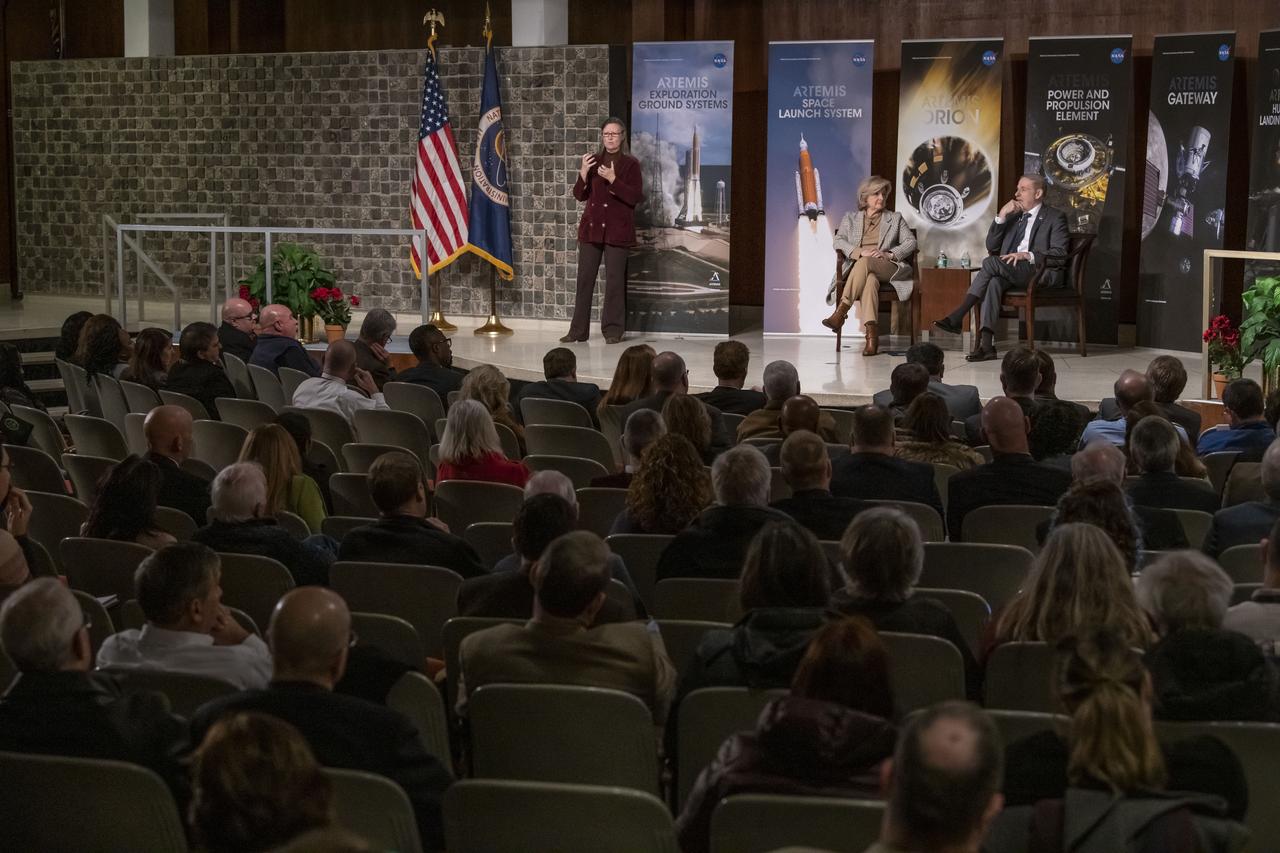
Douglas Loverro, NASA Associate Administrator for the Human Exploration and Operations Mission Directorate, and Marshall Center Director Jody Singer participate in a Town Hall with Marshall Space Flight Center employees
Douglas Loverro, NASA Associate Administrator for the Human Exploration and Operations Mission Directorate, and Marshall Center Director Jody Singer participate in a Town Hall with Marshall Space Flight Center employees
Douglas Loverro, NASA Associate Administrator for the Human Exploration and Operations Mission Directorate, and Marshall Center Director Jody Singer participate in a Town Hall with Marshall Space Flight Center employees
Douglas Loverro, NASA Associate Administrator for the Human Exploration and Operations Mission Directorate, and Marshall Center Director Jody Singer participate in a Town Hall with Marshall Space Flight Center employees
Douglas Loverro, NASA Associate Administrator for the Human Exploration and Operations Mission Directorate, and Marshall Center Director Jody Singer participate in a Town Hall with Marshall Space Flight Center employees
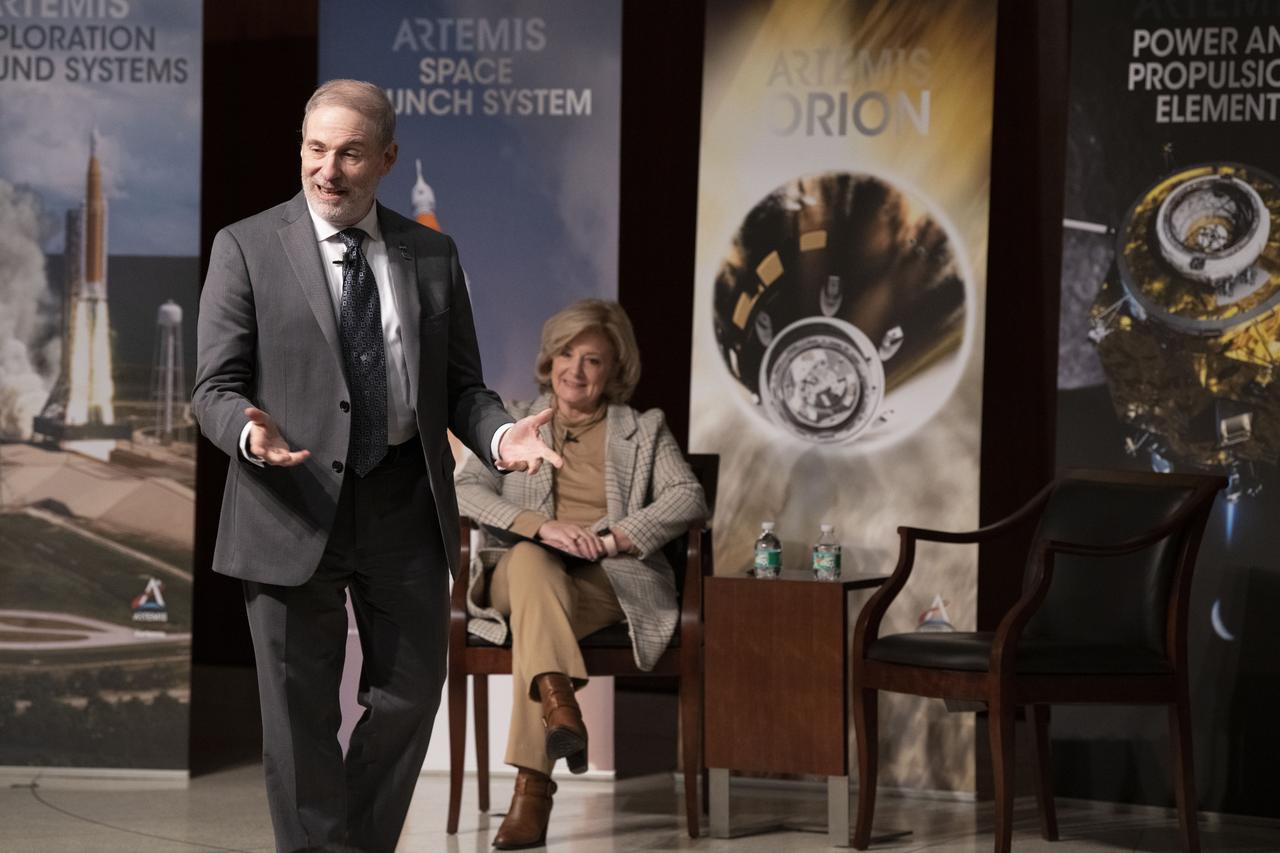
Douglas Loverro, NASA Associate Administrator for the Human Exploration and Operations Mission Directorate, and Marshall Center Director Jody Singer participate in a Town Hall with Marshall Space Flight Center employees
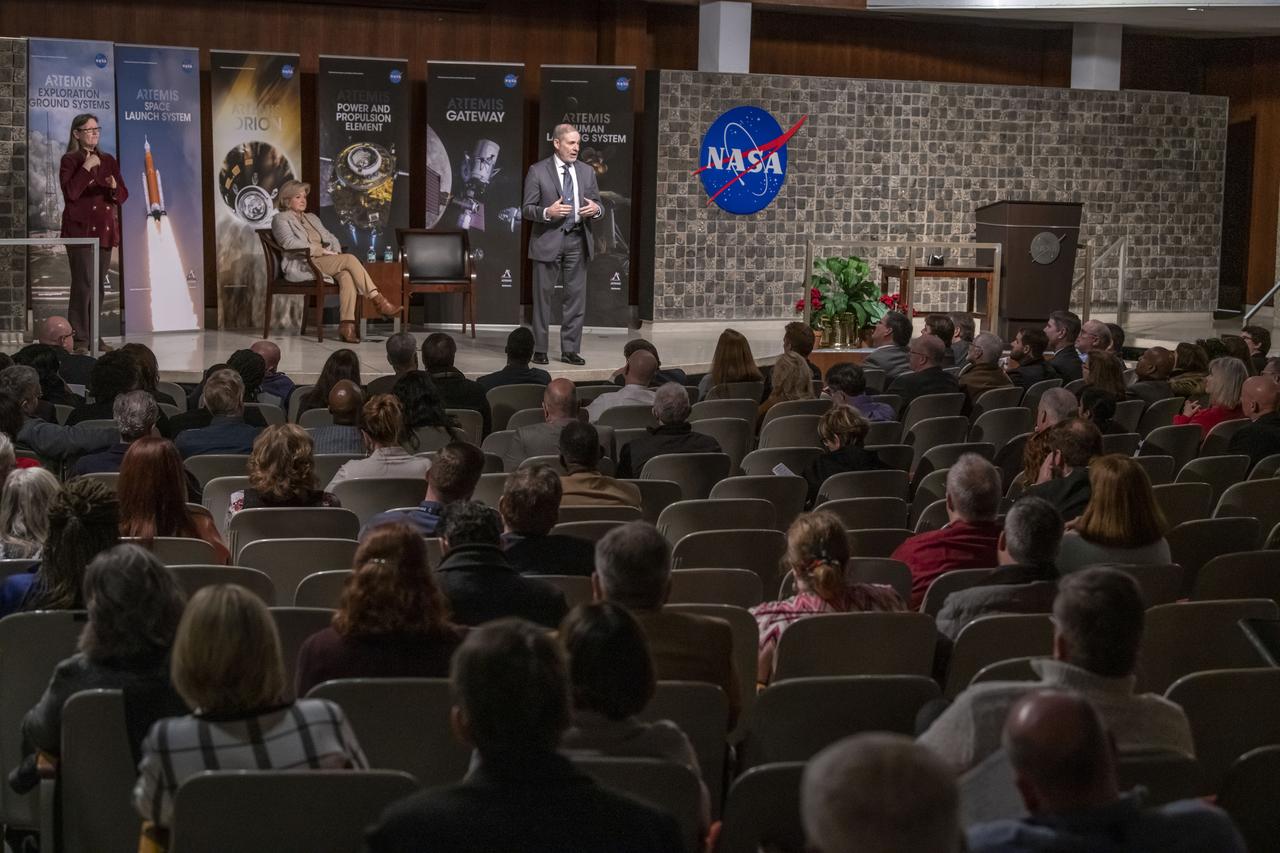
Douglas Loverro, NASA Associate Administrator for the Human Exploration and Operations Mission Directorate, and Marshall Center Director Jody Singer participate in a Town Hall with Marshall Space Flight Center employees
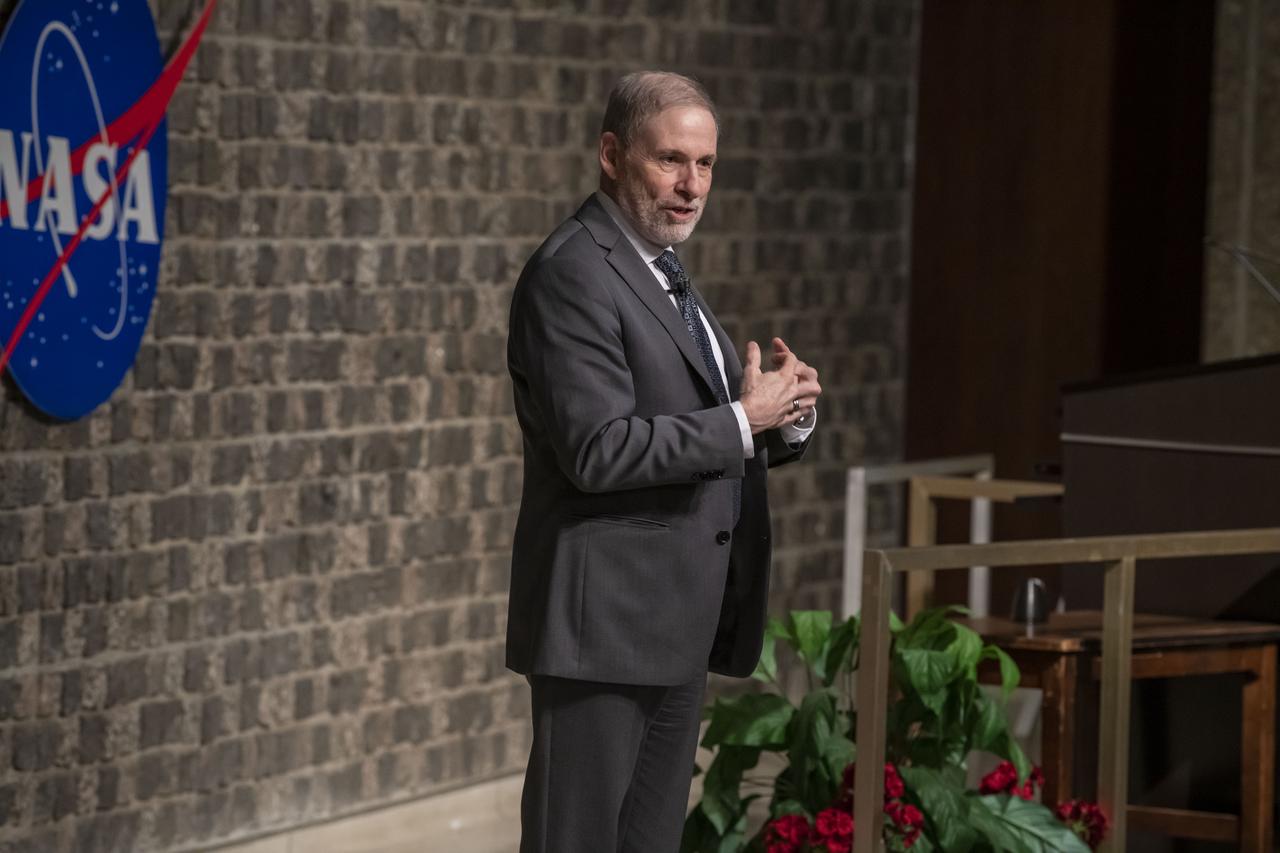
Douglas Loverro, NASA Associate Administrator for the Human Exploration and Operations Mission Directorate, and Marshall Center Director Jody Singer participate in a Town Hall with Marshall Space Flight Center employees
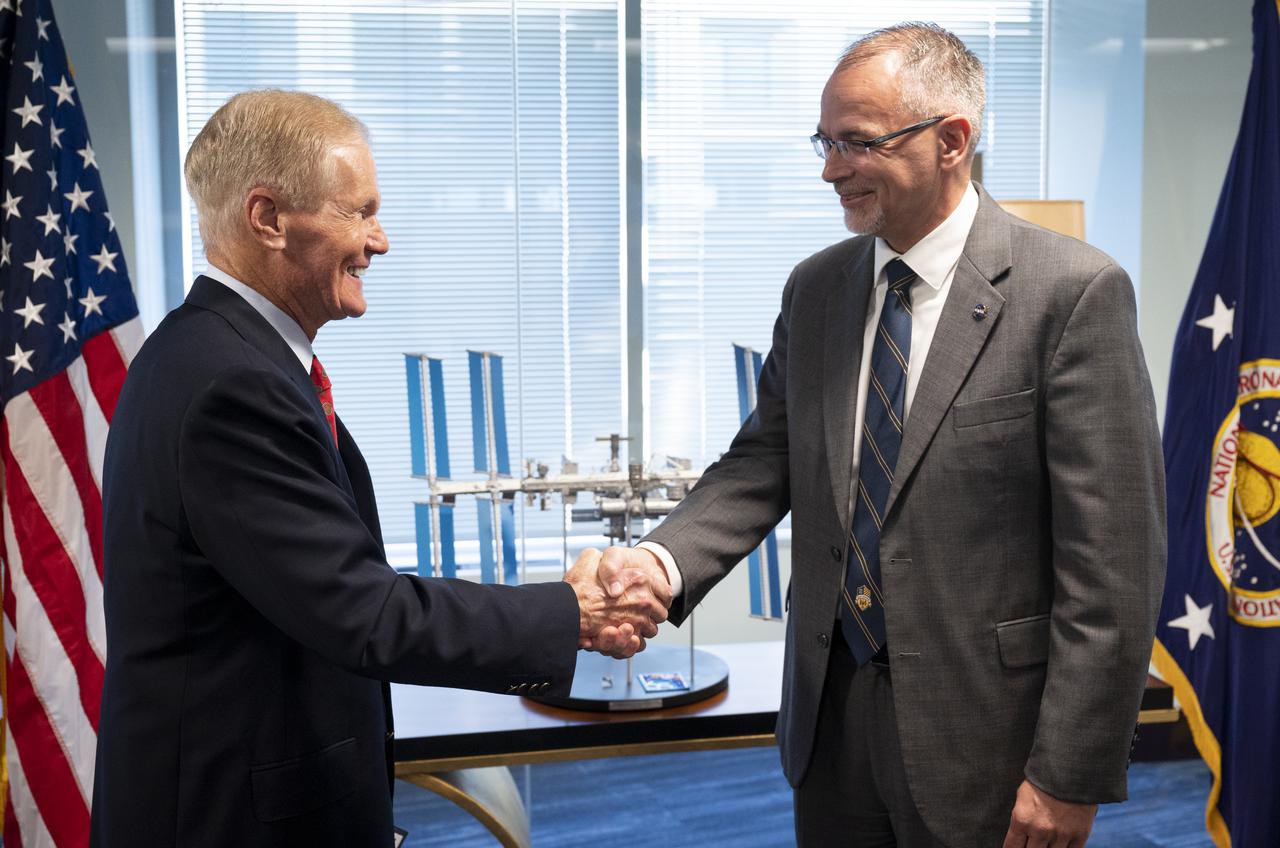
NASA Administrator Bill Nelson, left, shakes hands with Jim Free after being sworn in as the first associate administrator of the new Exploration Systems Development Mission Directorate, Monday, Sept. 20, 2021, at the Mary W. Jackson NASA Headquarters building in Washington. NASA is working to establish ESDMD to focus on planning and developing future space systems while a new Space Operations Mission Directorate will focus on operations. Both areas will support NASA’s Moon to Mars exploration approach. Photo Credit: NASA/Joel Kowsky)
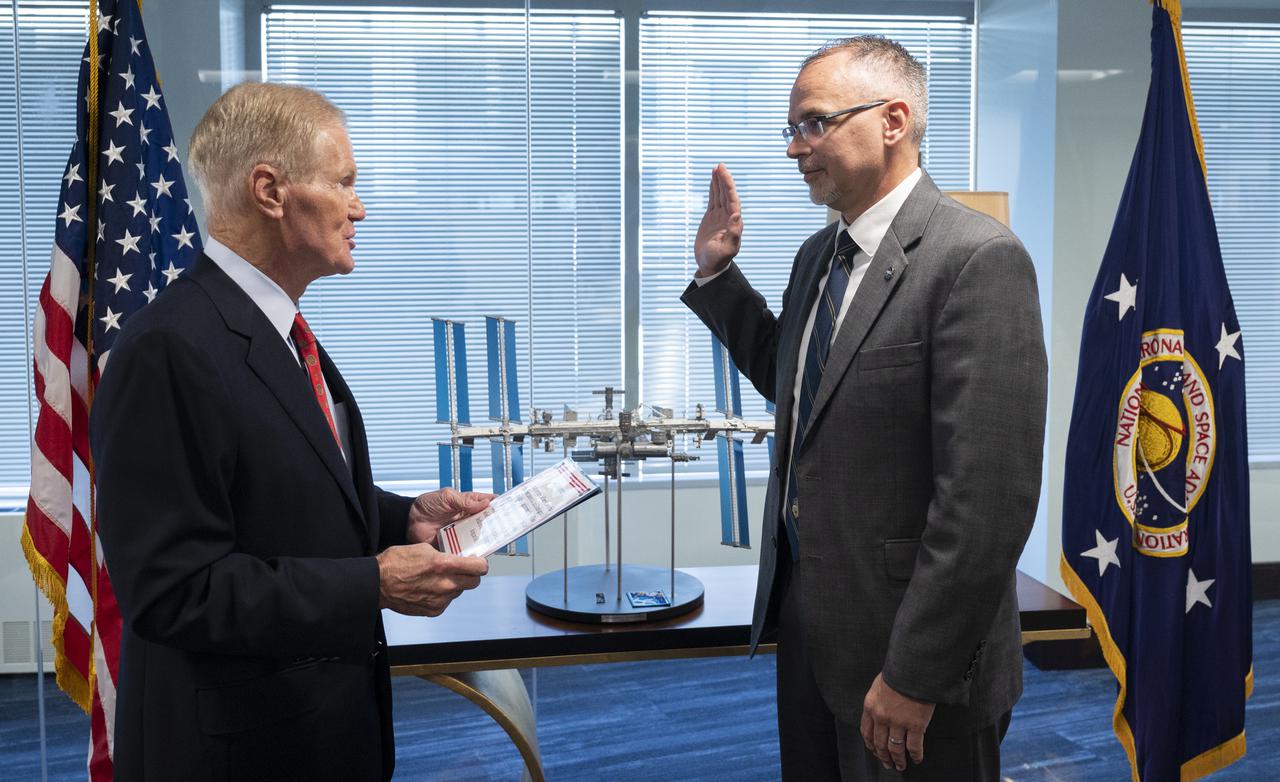
NASA Administrator Bill Nelson, left, swears in Jim Free as the first associate administrator of the new Exploration Systems Development Mission Directorate, Monday, Sept. 20, 2021, at the Mary W. Jackson NASA Headquarters building in Washington. NASA is working to establish ESDMD to focus on planning and developing future space systems while a new Space Operations Mission Directorate will focus on operations. Both areas will support NASA’s Moon to Mars exploration approach. Photo Credit: NASA/Joel Kowsky)
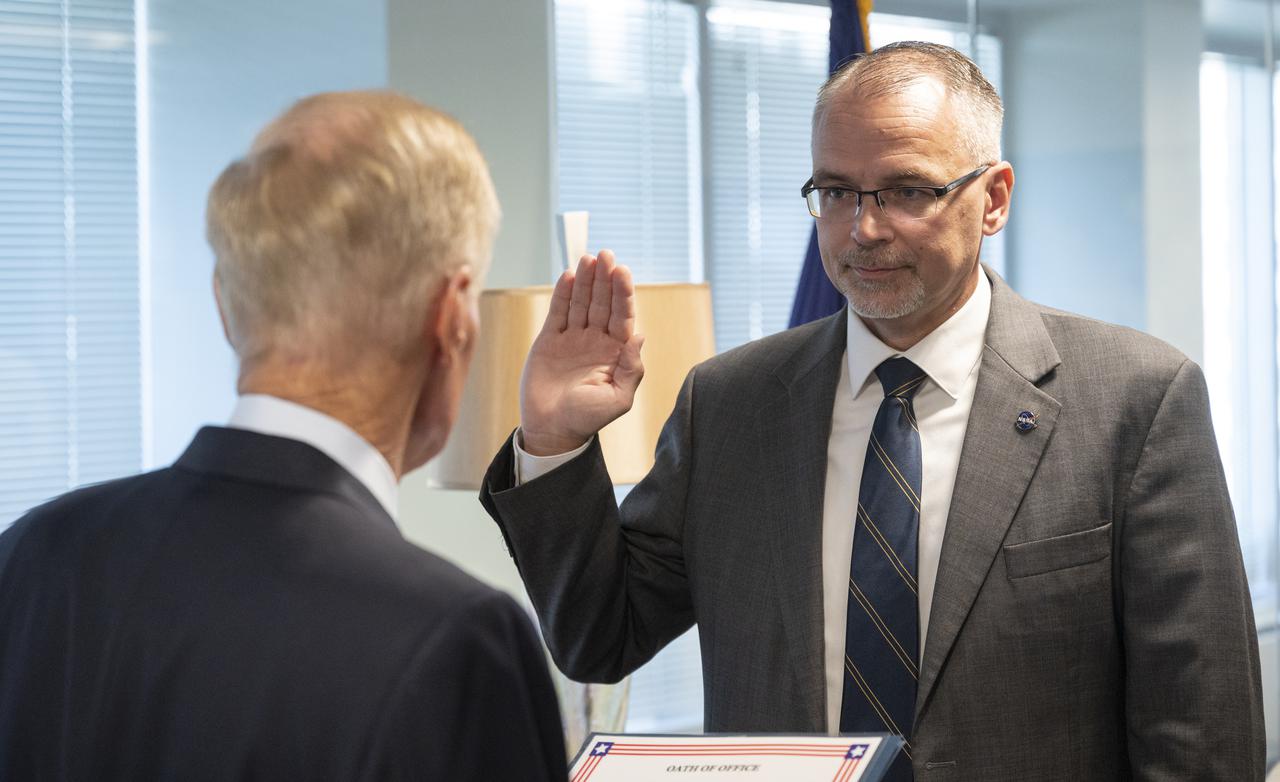
NASA Administrator Bill Nelson, left, swears in Jim Free as the first associate administrator of the new Exploration Systems Development Mission Directorate, Monday, Sept. 20, 2021, at the Mary W. Jackson NASA Headquarters building in Washington. NASA is working to establish ESDMD to focus on planning and developing future space systems while a new Space Operations Mission Directorate will focus on operations. Both areas will support NASA’s Moon to Mars exploration approach. Photo Credit: NASA/Joel Kowsky)
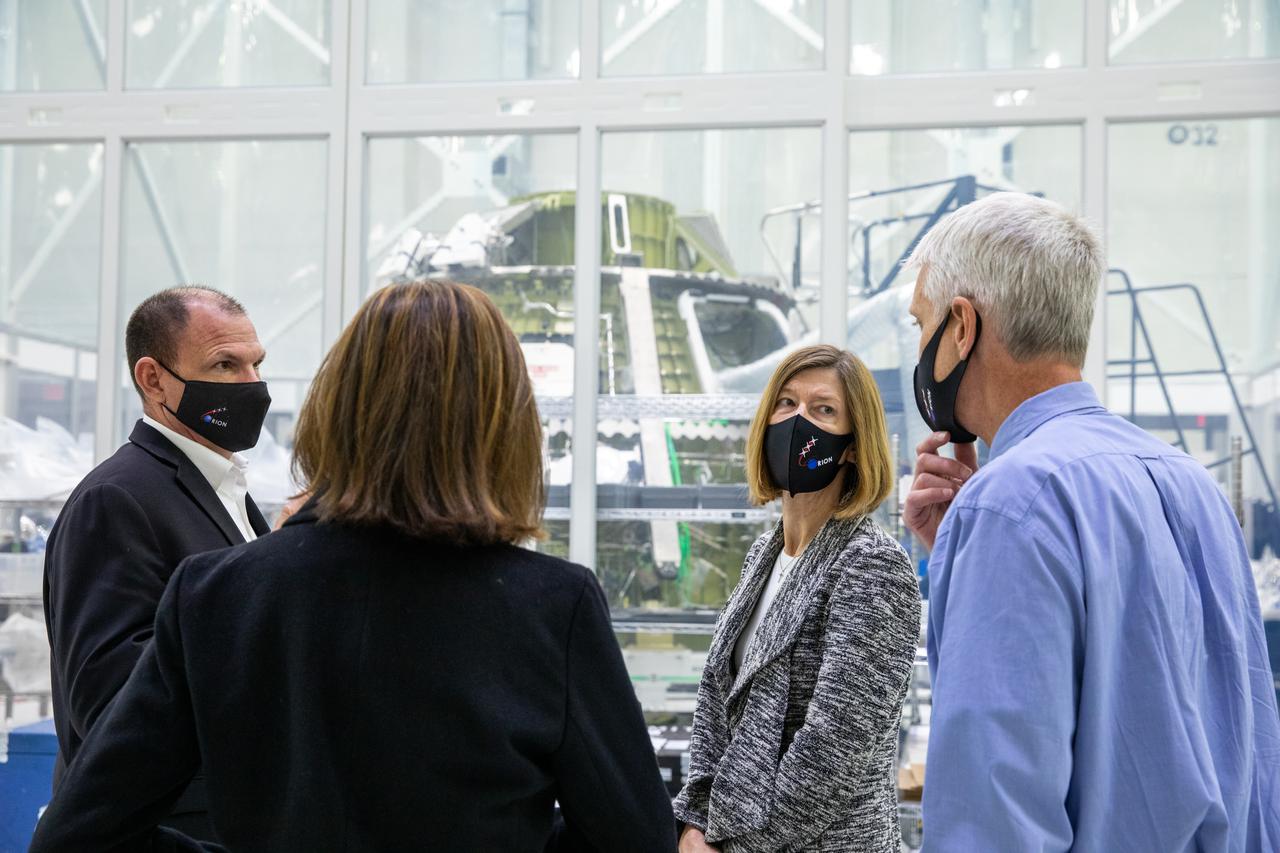
Kathy Lueders, second from right, associate administrator of the Human Exploration and Operations Mission Directorate, tours the Neil Armstrong Operations and Checkout Building high bay at NASA’s Kennedy Space Center in Florida on Jan. 14, 2021. In the background is the Orion crew module for the Artemis II mission. From left are Tony Antonelli, Lockheed Martin Orion Program director and Artemis II Mission director; Cathy Koerner, Orion Program manager; and Scott Wilson, Orion Production Operations manager. The group also viewed the Orion spacecraft for Artemis I as it was lowered onto a transporter for the move to the Multi-Payload Processing Facility to begin ground processing by the Exploration Ground Systems and Jacobs teams.
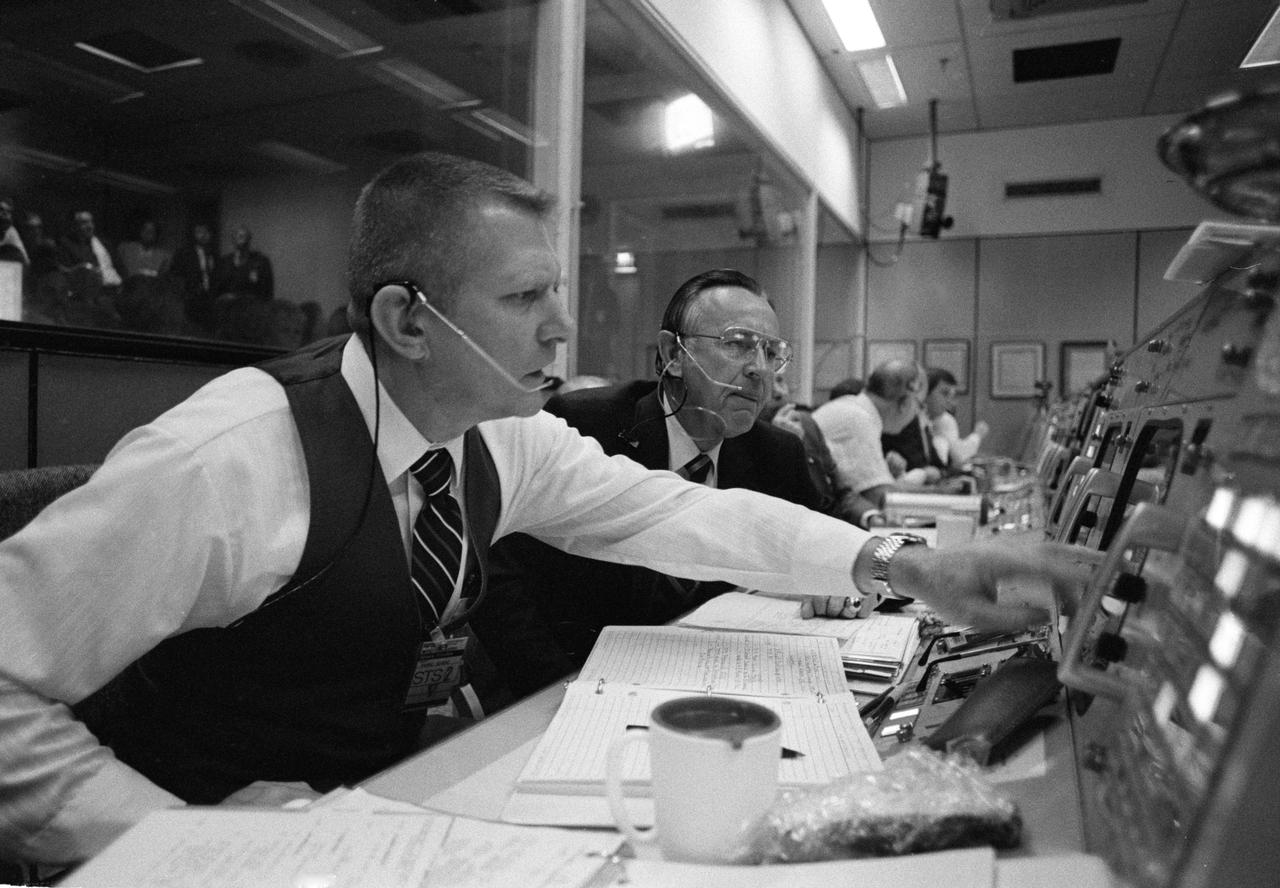
S81-39431 (12 Nov. 1981) --- Eugene F. Kranz, left, and Dr. Christopher C. Kraft Jr. monitor data displayed on the FOD console in the mission operations control room (MOCR) in the Johnson Space Center?s mission control center following the successful launch of the Columbia, and the beginning of NASA?s second space shuttle mission. Dr. Kraft is director of the Johnson Space Center and Kranz is deputy director of the flight operations directorate (FOD) at JSC. Houston time for the launch was approximately 9:10 a.m., Nov 12, 1981. Photo credit: NASA
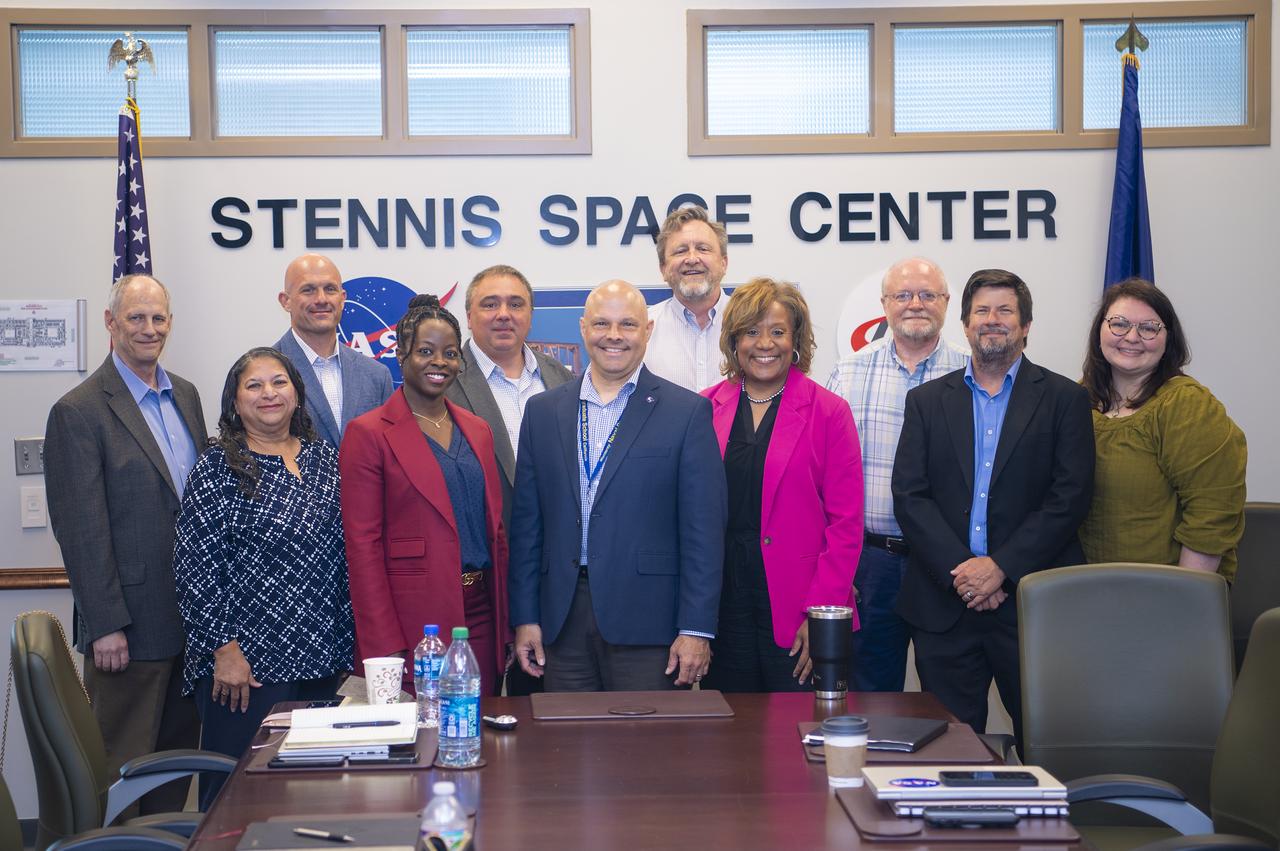
Members of NASA’s Mission Support Directorate met with leaders from NASA’s Stennis Space Center and the NASA Shared Services Center during an onsite visit June 3. The group also participated in an in-depth tour of the NASA Stennis facilities. Pictured (left to right) are Ron Bald, chief counsel for the Office of the General Counsel at NASA Stennis and NASA Shared Services Center; Dinna Cottrell, chief information officer for the NASA Stennis and NASA Shared Services Center Office of the Chief Information Officer; Eli Ouder, procurement officer for NASA Stennis and NASA Shared Services Center; Stacy Houston, executive officer for NASA’s Mission Support Directorate; Michael Tubbs, acting director for the NASA Stennis Center Operations Directorate; Michael Hess, deputy associate administrator for NASA’s Mission Support Directorate; Rodney McKellip, associate director for NASA Stennis; Nichole Pinkney, program manager for NASA’s Mission Support Directorate; Duane Armstrong, manager for the NASA Stennis Strategic Development Office; Gary Benton, director for the NASA Stennis Safety and Mission Assurance Directorate; and Alison Butsch, associate chief financial officer for the External Business Operations Division within the NASA Stennis Office of the Chief Financial Officer.
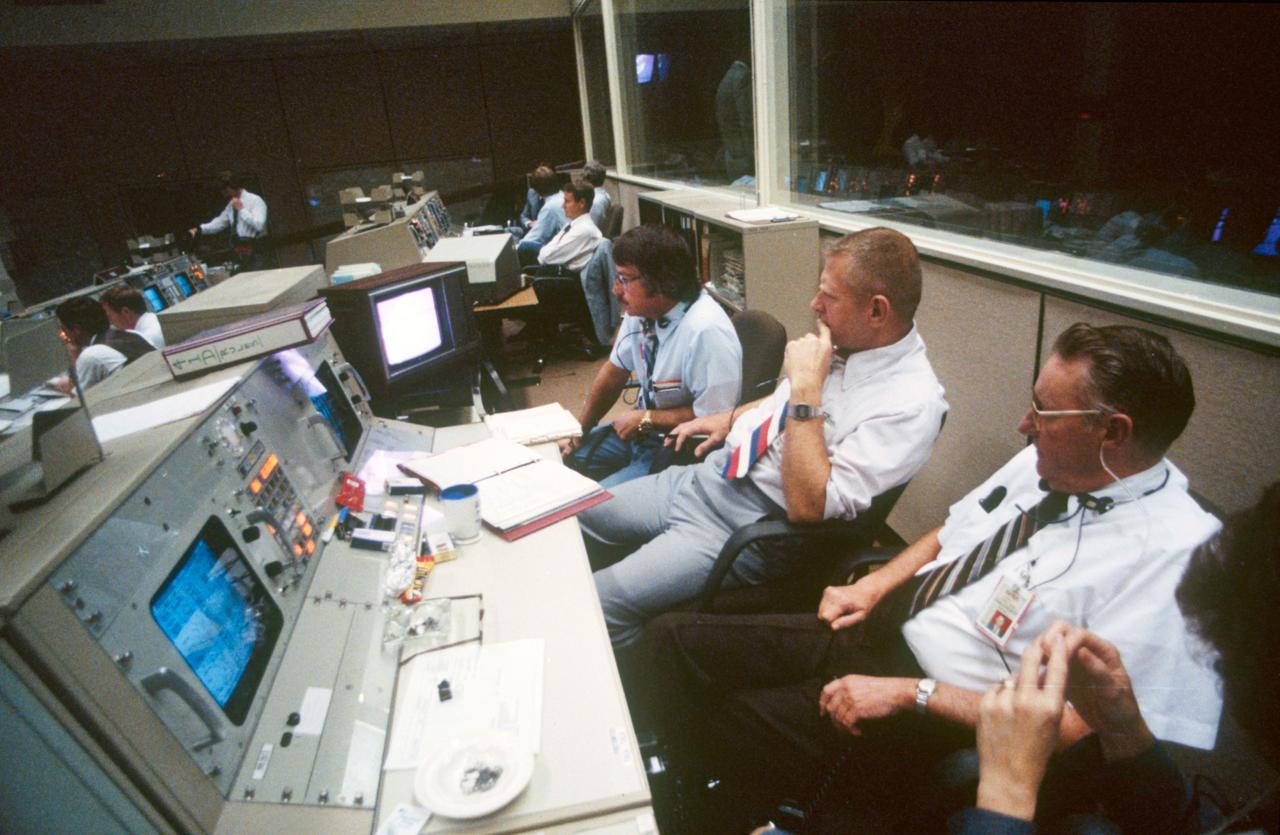
41D-3073 (30 Aug 1984) --- The beginning stages of a busy six-day mission are monitored by some NASA officials in the flight control room (FCR-1) of the Johnson Space Center's (JSC) mission control center (MCC). They are (l.-r., foreground) Daniel M. Germany, manager of the Shuttle flight equipment project offices; Eugene F. Kranz, director of mission operations; and Clifford E. Charlesworth, director of space operations.
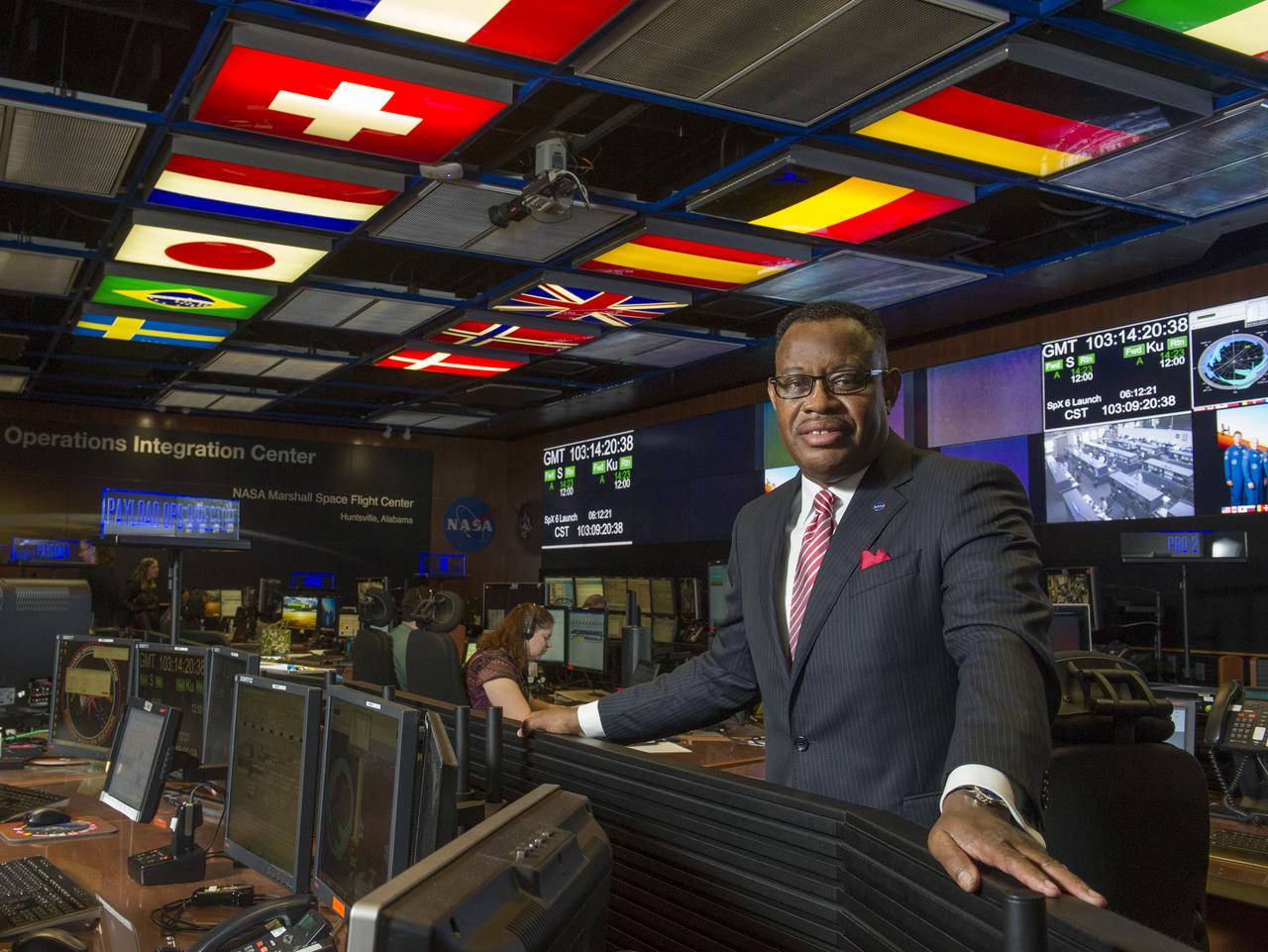
LEWIS WOOTEN, NEW DIRECTOR OF THE MISSION OPERATIONS LABORATORY AT NASA'S MARSHALL SPACE FLIGHT CENTER IN HUNTSVILLE, ALABAMA, MANAGES OPERATIONS IN THE PAYLOAD OPERATIONS INTEGRATION CENTER-THE COMMAND POST FOR ALL SCIENCE AND RESEARCH ACTIVITIES ON THE INTERNATIONAL SPACE STATION
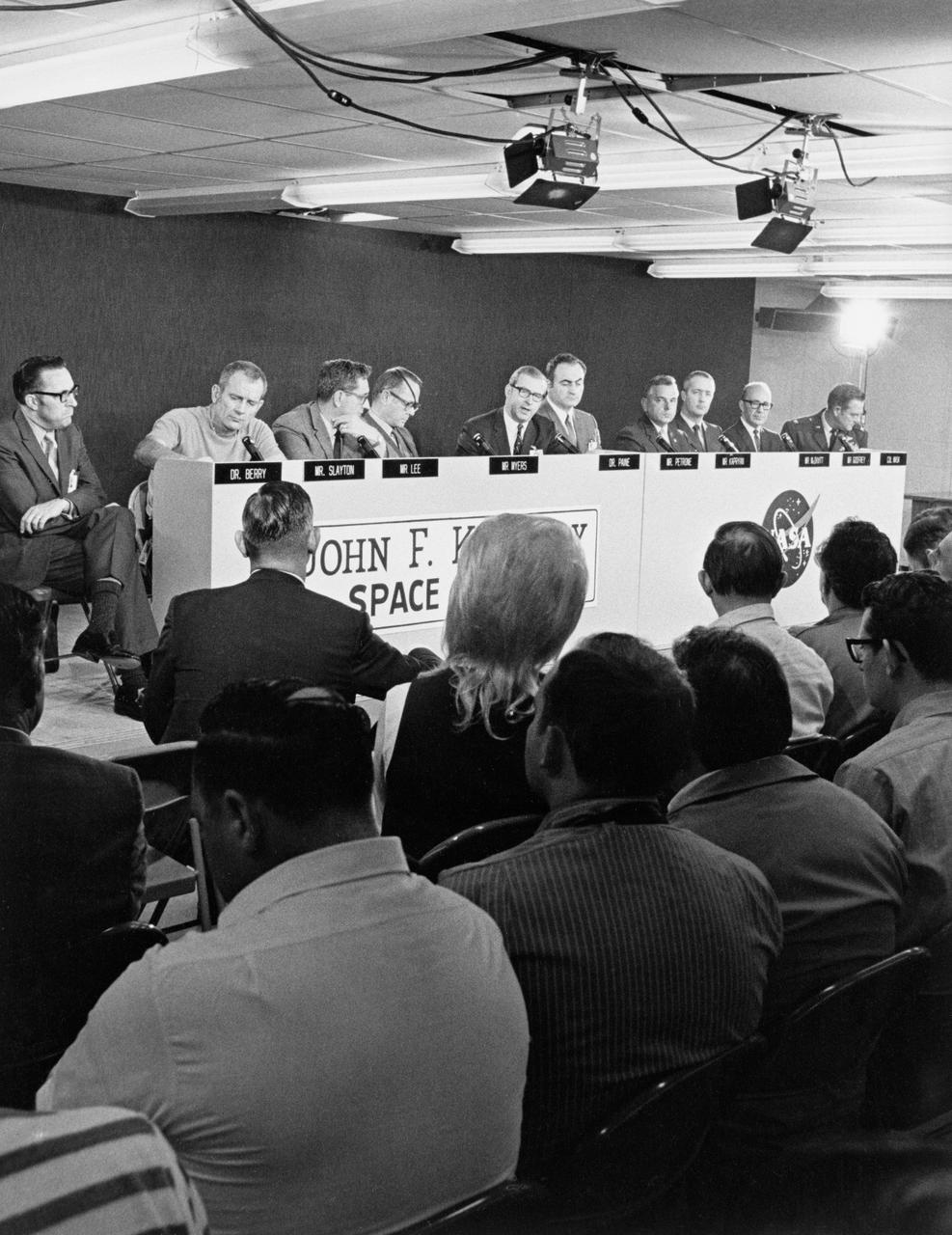
S70-36782 (10 April 1970) --- Several NASA and military officials (background at dais) meet the press on April 10, 1970, during a scheduled a T-1 prelaunch briefing for the Apollo 13 mission in the Apollo News Center at the Kennedy Space Center. The briefing participants, from the left, are Dr. Charles A. Berry, Director, Medical Research and Operations Directorate, Manned Spacecraft Center (MSC); Dr. Donald K. (Deke) Slayton, director of flight crew operations, MSC; Chester M. Lee of the Apollo Program Directorate, Office Manned Space Flight (OMSF),NASA Hq. and Apollo 13 Mission Director; Dale Myers, Associate Administrator, OMSF,NASA Hq.; Dr. Thomas O. Paine, NASA Administrator; Dr. Rocco A. Petrone, Apollo Program Director, OMSF,NASA Hq.; Walter J. Kapryan, NASA's Director of Launch Operations; James A. McDivitt, Manager of the Apollo Spacecraft Program Office; Roy E. Godfrey, Manager, Saturn Program Office; and Col. Kenneth J. Mask, USAF, DOD Manned Space Flight Support Office. Photo credit: NASA
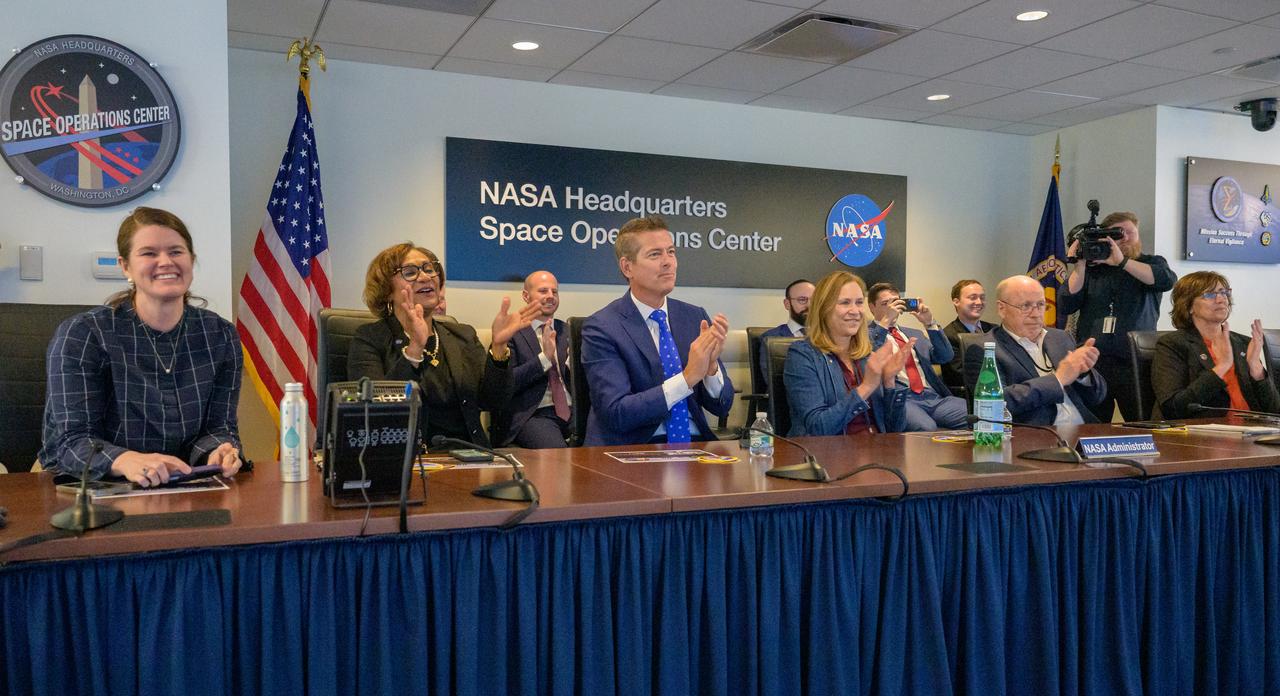
NASA Deputy Associate Administrator Casey Swails, left, acting NASA Associate Administrator Vanessa Wyche, U.S. Transportation Secretary Sean Duffy, acting NASA Administrator Janet Petro, NASA Associate Administrator for the Space Operations Mission Directorate Ken Bowersox, and NASA Director of the International Space Station and acting director of the Commercial Spaceflight Division, Robyn Gatens, react as they watch the SpaceX Dragon spacecraft splash down with NASA astronauts Butch Wilmore, Suni Williams, Nick Hague, and Roscosmos cosmonaut Aleksandr Gorbunov, Tuesday, March 18, 2025, from the Space Operations Center at the Mary W. Jackson NASA Headquarters Building in Washington. Photo Credit: (NASA/Bill Ingalls)
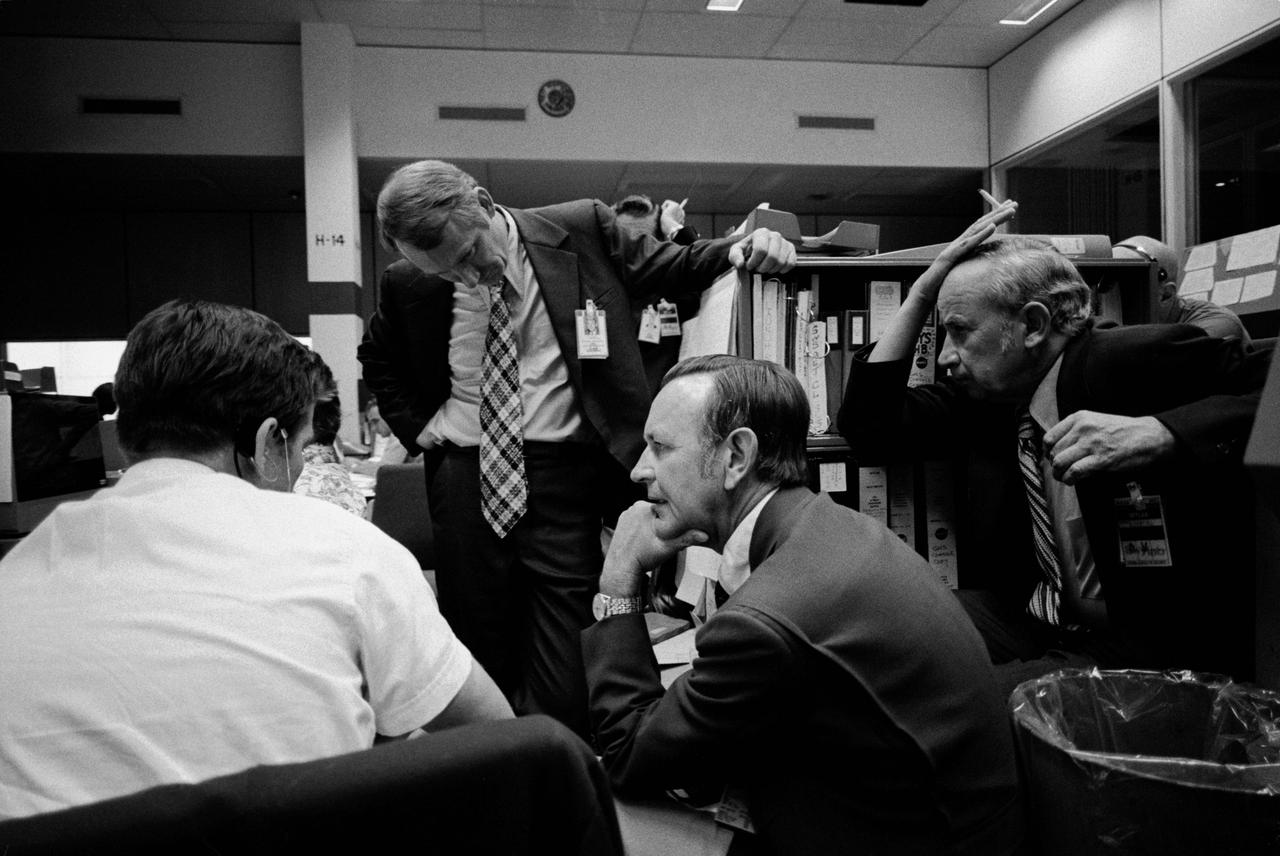
S73-31875 (2 Aug. 1973) --- After learning of a problem in the Command/Service Module which was used to transport the Skylab 3 crew to the orbiting Skylab space station cluster, NASA officials held various meetings to discuss the problem. Here, four men monitor the current status of the problem in the Mission Operations Control Room (MOCR) of the Mission Control Center (MCC) at the Johnson Space Center (JSC). From the left are Gary E. Coen, Guidance and Navigation System flight controller; Howard W. Tindall Jr., Director of Flight Operations at JSC; Dr. Christopher C. Kraft Jr., JSC Director; and Sigurd A. Sjoberg, JSC Deputy Director. Photo credit: NASA
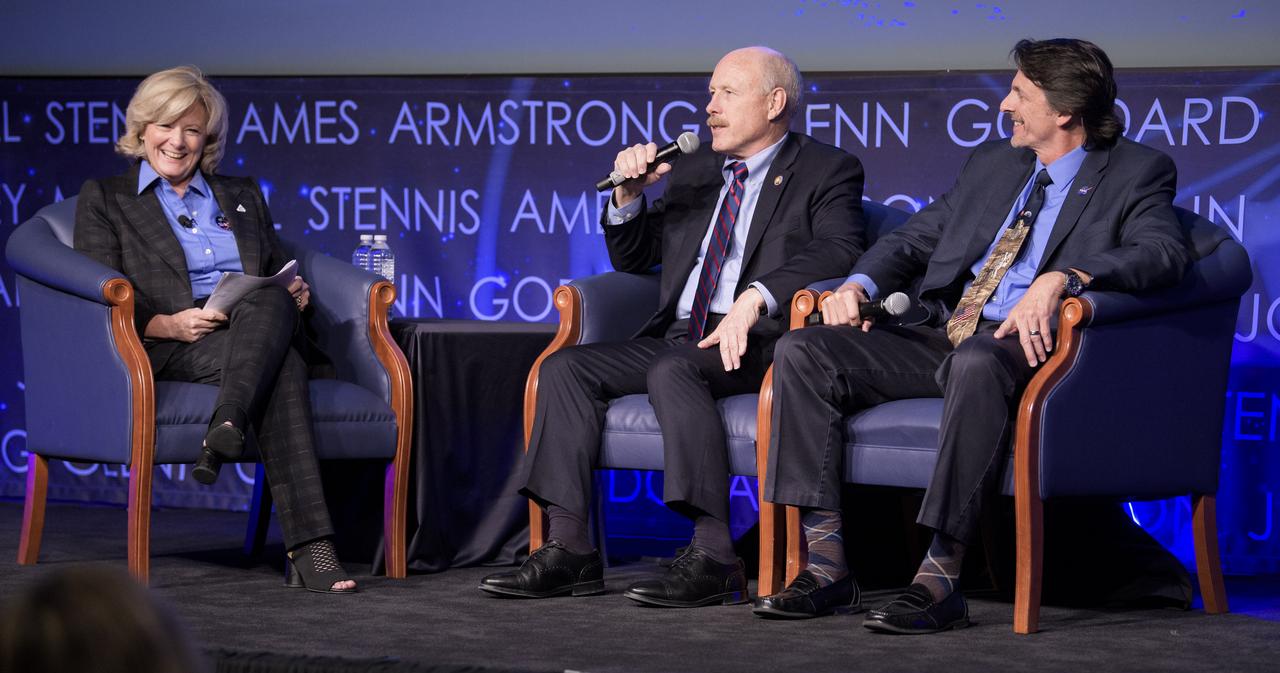
Jody Singer, Director of NASA’s Marshall Space Flight Center, left, Ken Bowersox, acting Associate Administrator for NASA's Human Exploration and Operations Mission Directorate, center, and Steve Clarke, Deputy Associate Administrator for Exploration in NASA’s Science Mission Directorate, right, discuss the agency’s Artemis program during an interactive STEM discussion with students attending the 70th International Astronautical Congress, Wednesday, Oct. 23, 2019, at NASA Headquarters in Washington. Photo Credit: (NASA/Joel Kowsky)

Steve Clarke, Deputy Associate Administrator for Exploration in NASA’s Science Mission Directorate, right, is seen with Ken Bowersox, acting Associate Administrator for NASA's Human Exploration and Operations Mission Directorate, center, and Jody Singer, Director of NASA’s Marshall Space Flight Center, left, during an interactive STEM discussion with students attending the 70th International Astronautical Congress, Wednesday, Oct. 23, 2019, at NASA Headquarters in Washington. Photo Credit: (NASA/Joel Kowsky)
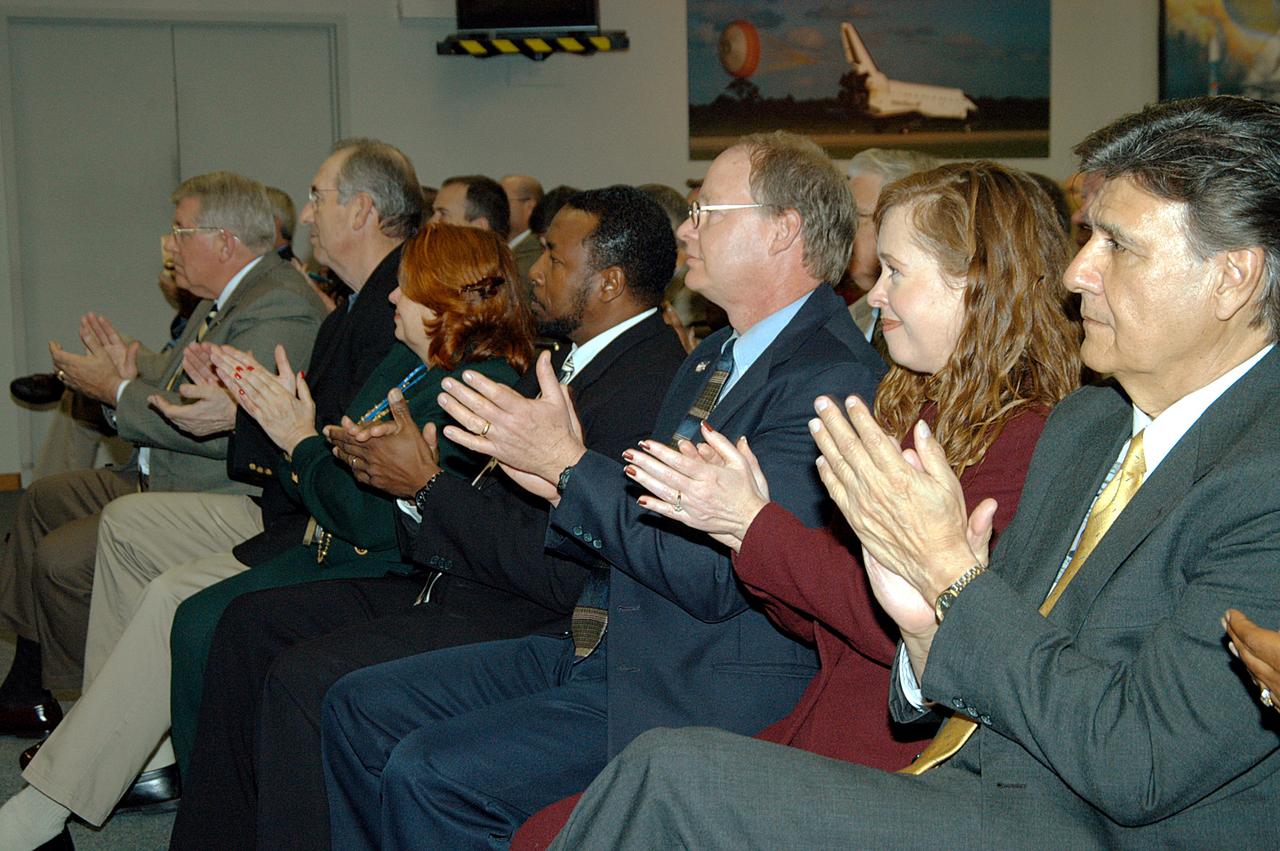
KENNEDY SPACE CENTER, FLA. -- In the KSC television studio, KSC management and other employees applaud President George W. Bush, who addressed the public and an assembly of government officials at NASA Headquarters as he outlined a new focus and vision for the space agency. Seated in the front row, left to right, are Bill Pickavance vice president and associate program manager of Florida Operations, United Space Alliance (USA) ; Howard DeCastro, vice president and Space Shuttle program manager, USA; Shannon Roberts, with External Affairs; Woodrow Whitlow, KSC deputy director; Bruce Buckingham, assistant to Dr. Whitlow; Lisa Malone, director of External Affairs; and Ken Aguilar, chief, Equal Opportunity office. The President stated his goals for NASA’s new mission: Completing the International Space Station, retiring the Space Shuttle orbiters, developing a new crew exploration vehicle, and returning to the moon and beyond within the next two decades. Pres. Bush was welcomed by NASA Administrator Sean O’Keefe and Expedition 8 Commander Michael Foale, who greeted him from the International Space Station. Members of the Washington, D.C., audience included astronauts Eileen Collins, Ed Lu and Michael Lopez-Alegria, and former astronaut Gene Cernan.
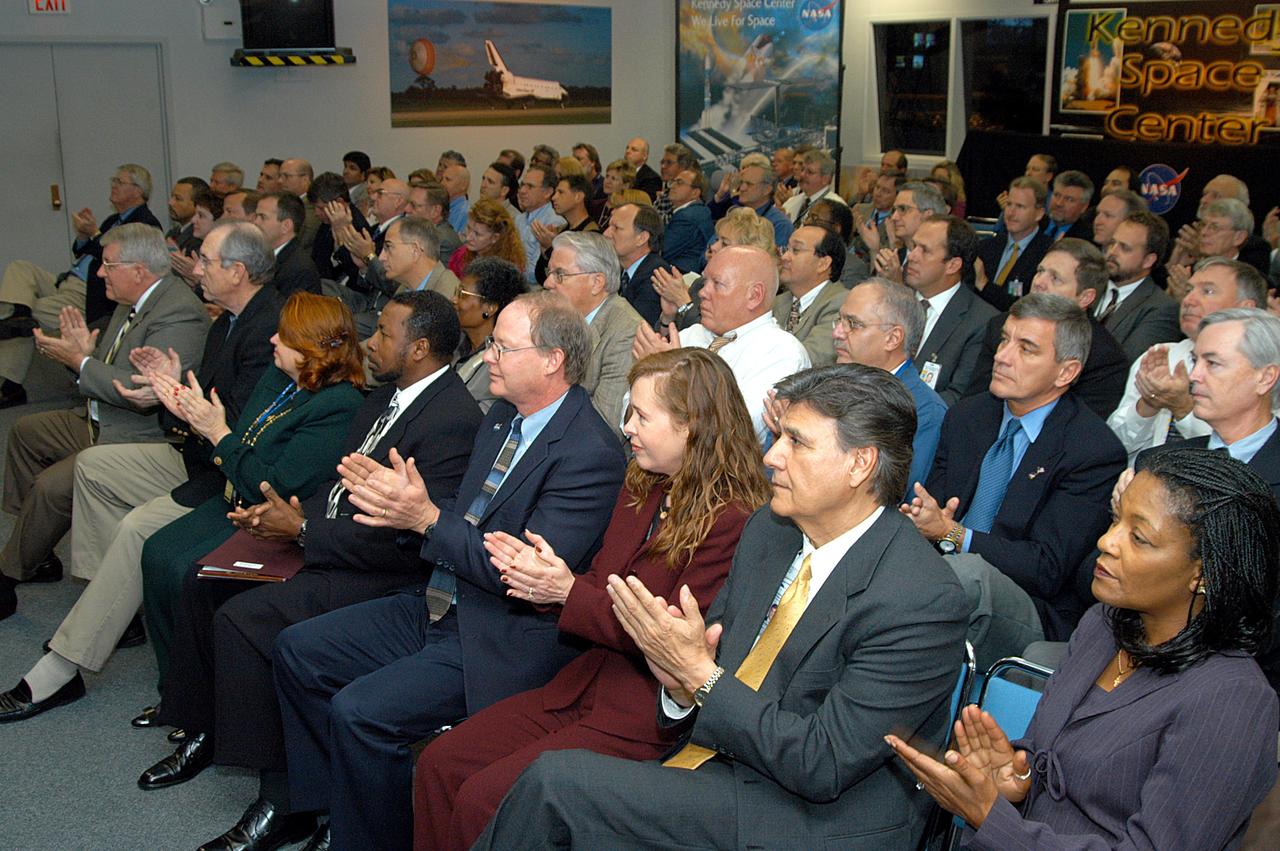
KENNEDY SPACE CENTER, FLA. -- In the KSC television studio, KSC management and other employees applaud President George W. Bush, who addressed the public and an assembly of government officials at NASA Headquarters as he outlined a new focus and vision for the space agency. Seated in the front row, left to right, are Bill Pickavance vice president and associate program manager of Florida Operations, United Space Alliance (USA) ; Howard DeCastro, vice president and Space Shuttle program manager, USA; Shannon Roberts, with External Affairs; Woodrow Whitlow, KSC deputy director; Bruce Buckingham, assistant to Dr. Whitlow; Lisa Malone, director of External Affairs; Ken Aguilar, chief, Equal Opportunity office; and Cheryl Cox, External Affairs. The President stated his goals for NASA’s new mission: Completing the International Space Station, retiring the Space Shuttle orbiters, developing a new crew exploration vehicle, and returning to the moon and beyond within the next two decades. Pres. Bush was welcomed by NASA Administrator Sean O’Keefe and Expedition 8 Commander Michael Foale, who greeted him from the International Space Station. Members of the Washington, D.C., audience included astronauts Eileen Collins, Ed Lu and Michael Lopez-Alegria, and former astronaut Gene Cernan.
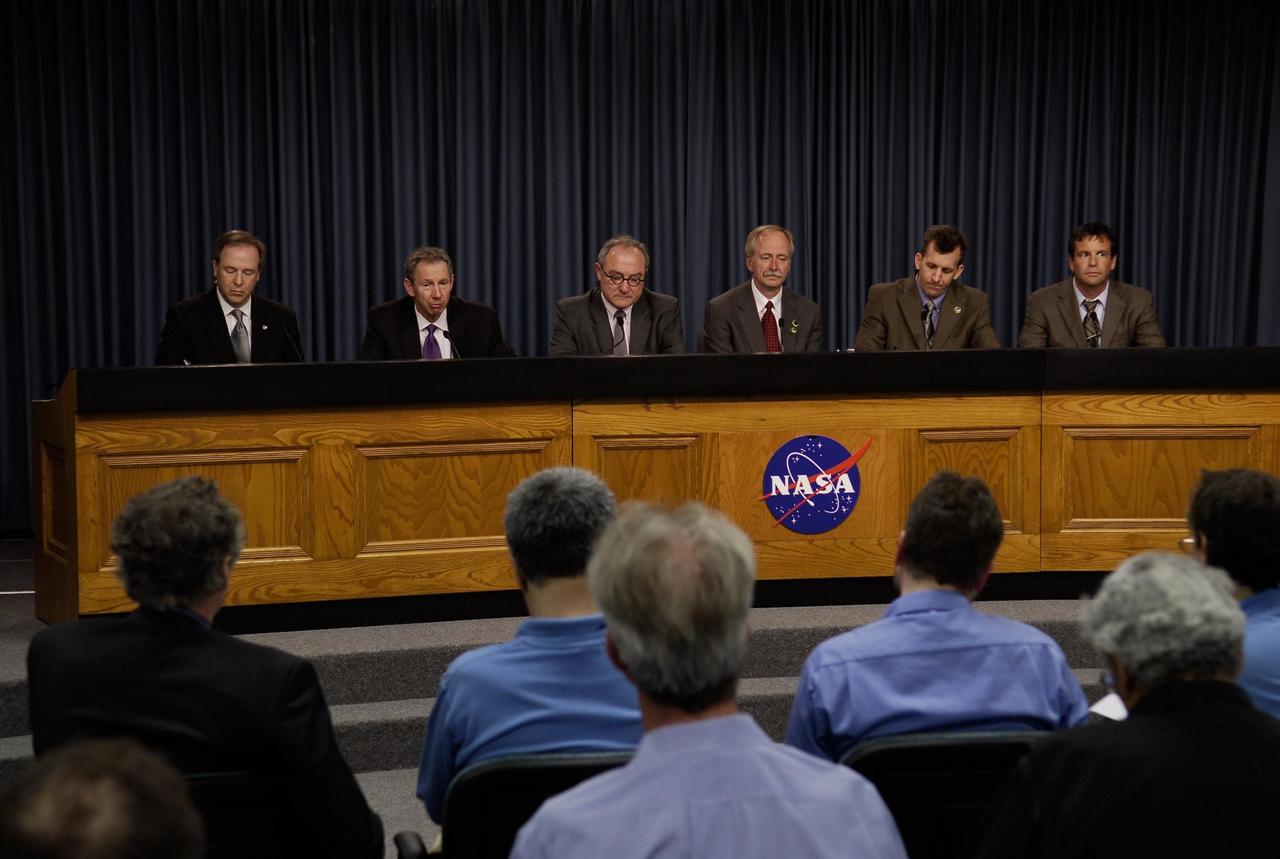
KENNEDY SPACE CENTER, FLA. -- Following the successful launch of space shuttle Atlantis on mission STS-122, NASA VIPs appear at a news conference to give their views about the launch and mission. From left are NASA Assistant Administrator for Public Affairs David Mould, NASA Administrator Michael Griffin, European Space Agency Director General Jean-Jacques Dordain, Associate Administrator for Space Operations Bill Gerstenmaier, Director of Mission Launch Integration LeRoy Cain and STS-122 Launch Director Doug Lyons. During the 11-day mission, the crew's prime objective is to attach the Columbus laboratory to the Harmony module, adding to the station's size and capabilities. Photo credit: NASA/Kim Shiflett
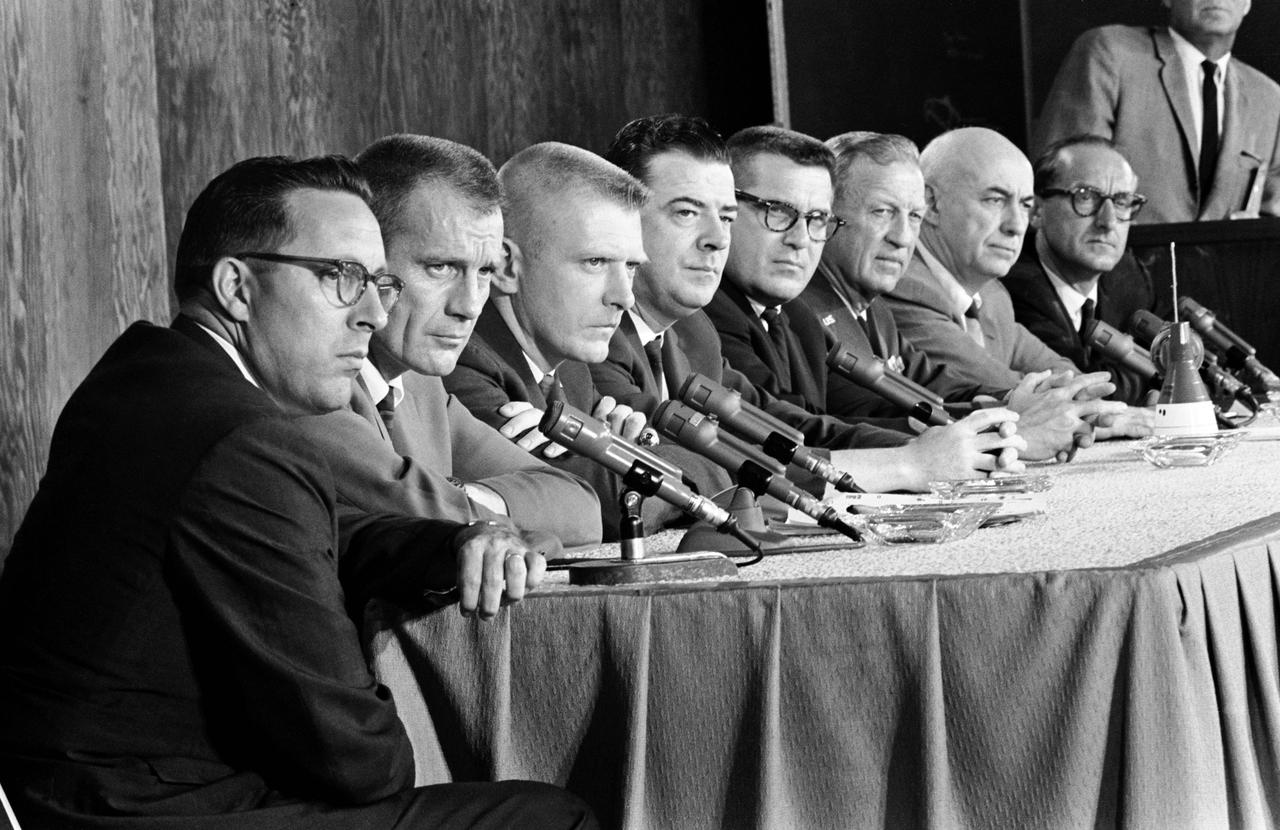
S66-32629 (1966) --- Left to right are Dr. Charles A. Berry, MSC Medical Director; Dr. Donald K. (Deke) Slayton, Director of Flight Crew Operations; Eugene F. Kranz, Flight Director; Charles W. Mathews, Gemini Program Manager, Manned Spacecraft Center; William C. Schneider, Gemini Mission Manager, NASA Headquarters; General Leighton Davis; Dr. Robert R. Gilruth, MSC Director; and Dr. George E. Mueller, Associate Administrator for Manned Space Flight, NASA Headquarters.
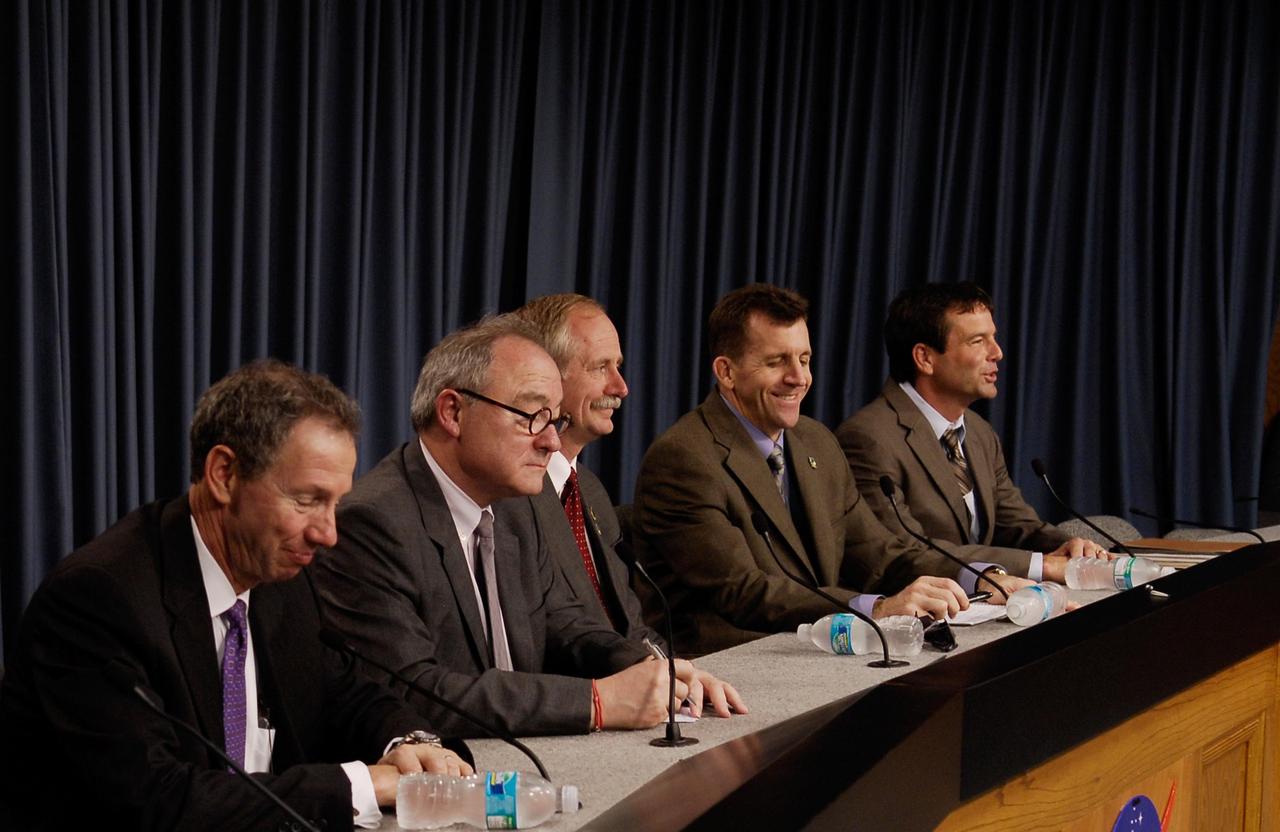
KENNEDY SPACE CENTER, FLA. -- Following the successful launch of space shuttle Atlantis on mission STS-122, NASA VIPs appear at a news conference to give their views about the launch and mission. From left are NASA Administrator Michael Griffin, European Space Agency Director General Jean-Jacques Dordain, Associate Administrator for Space Operations Bill Gerstenmaier, Director of Mission Launch Integration LeRoy Cain and STS-122 Launch Director Doug Lyons. During the 11-day mission, the crew's prime objective is to attach the Columbus laboratory to the Harmony module, adding to the station's size and capabilities. Photo credit: NASA/Kim Shiflett
KENNEDY SPACE CENTER, FLA. -- Following the successful launch of space shuttle Atlantis on mission STS-122, NASA VIPs appear at a news conference to give their views about the launch and mission. Seen here are Associate Administrator for Space Operations Bill Gerstenmaier, Director of Mission Launch Integration LeRoy Cain and STS-122 Launch Director Doug Lyons. Also on the dais but not pictured are NASA Administrator Michael Griffin and European Space Agency Director General Jean-Jacques Dordain. During the 11-day mission, the crew's prime objective is to attach the Columbus laboratory to the Harmony module, adding to the station's size and capabilities. Photo credit: NASA/Kim Shiflett

Officials from NASA, National Oceanic and Atmospheric Administration (NOAA), SpaceX participate in a prelaunch news conference on Monday, June 24, 2024, at NASA’s Kennedy Space Center in Florida for the launch of GOES-U (Geostationary Operational Environmental Satellite U) mission. From left to right, Steve Volz, assistant administrator, NOAA’s Satellite and Information Service; Pam Sullivan, director, GOES-R Program, NOAA; John Gagosian, director, Joint Agency Satellite Division; Denton Gibson, launch director, Launch Services Program, NASA; Julianna Scheiman, director, NASA Science Missions, SpaceX; Brian Cizek, launch weather officer, 45th Weather Squadron, U.S. Space Force

Officials from NASA, National Oceanic and Atmospheric Administration (NOAA), SpaceX participate in a prelaunch news conference on Monday, June 24, 2024, at NASA’s Kennedy Space Center in Florida for the launch of GOES-U (Geostationary Operational Environmental Satellite U) mission. From left to right, Steve Volz, assistant administrator, NOAA’s Satellite and Information Service; Pam Sullivan, director, GOES-R Program, NOAA; John Gagosian, director, Joint Agency Satellite Division; Denton Gibson, launch director, Launch Services Program, NASA; Julianna Scheiman, director, NASA Science Missions, SpaceX; Brian Cizek, launch weather officer, 45th Weather Squadron, U.S. Space Force
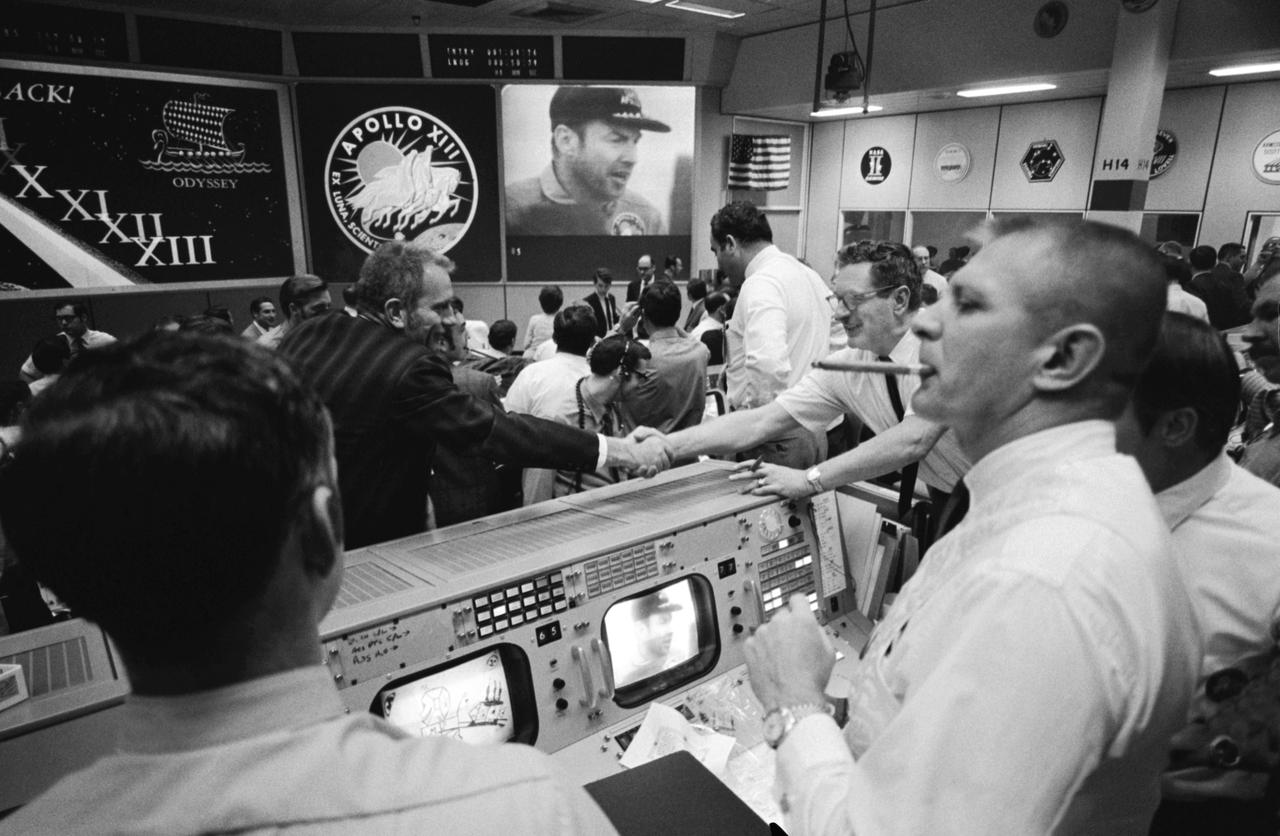
S70-35145 (17 April 1970) --- Overall view of Mission Operations Control Room in Mission Control Center at the Manned Spacecraft Center (MSC) during the ceremonies aboard the USS Iwo Jima, prime recovery ship for the Apollo 13 mission. Dr. Donald K. Slayton (in black shirt, left of center), director of Flight Crew Operations at MSC, and Chester M. Lee of the Apollo Program Directorate, Office of Manned Space Flight, NASA Headquarters, shake hands, while Dr. Rocco A. Petrone, Apollo program director, Office of Manned Space Flight, NASA Headquarters (standing, near Lee), watches the large screen showing astronaut James A. Lovell Jr., Apollo 13 commander, during the onboard ceremonies. In the foreground, Glynn S. Lunney (extreme left) and Eugene F. Kranz (smoking a cigar), two Apollo 13 flight directors, view the activity from their consoles.
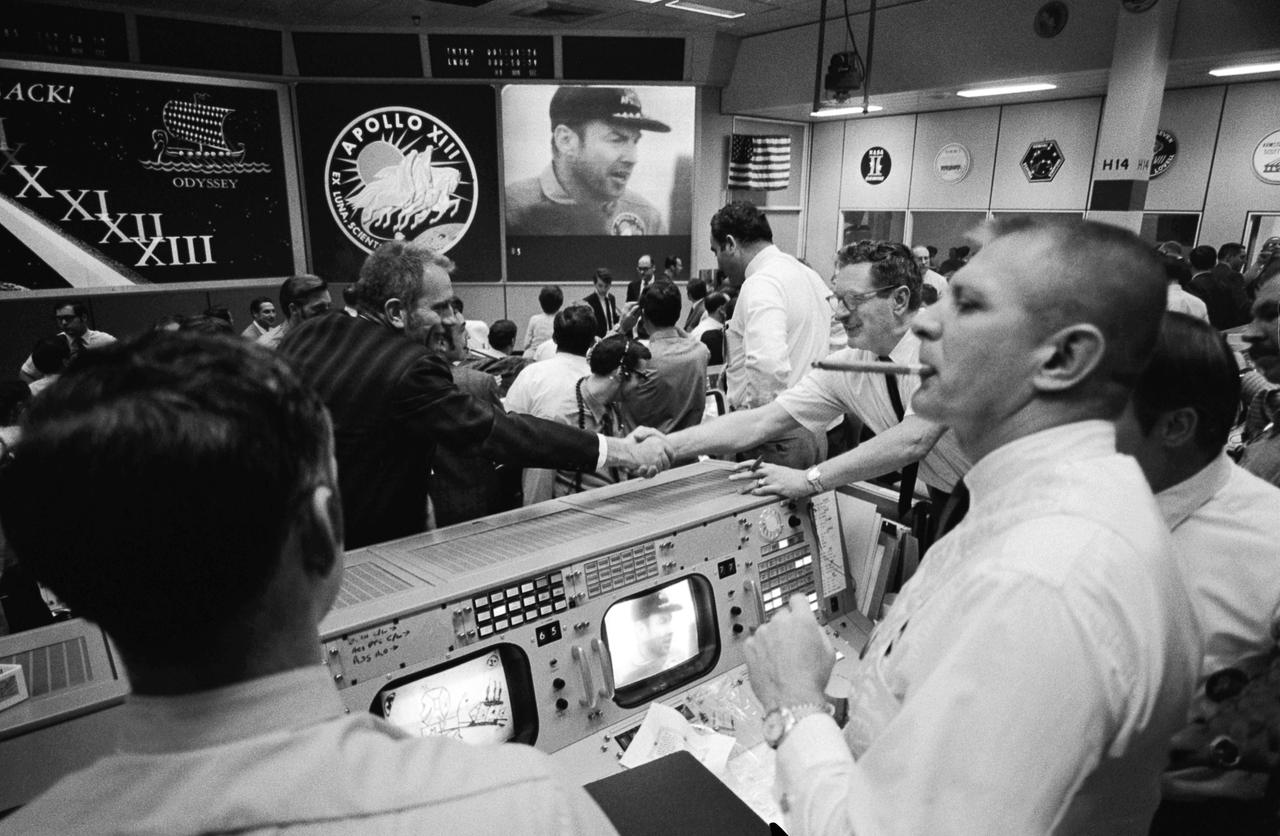
S70-35145 (17 April 1970) --- Overall view of Mission Operations Control Room in Mission Control Center at the Manned Spacecraft Center (MSC) during the ceremonies aboard the USS Iwo Jima, prime recovery ship for the Apollo 13 mission. Dr. Donald K. Slayton (in black shirt, left of center), director of Flight Crew Operations at MSC, and Chester M. Lee of the Apollo Program Directorate, Office of Manned Space Flight, NASA Headquarters, shake hands, while Dr. Rocco A. Petrone, Apollo program director, Office of Manned Space Flight, NASA Headquarters (standing, near Lee), watches the large screen showing astronaut James A. Lovell Jr., Apollo 13 commander, during the onboard ceremonies. In the foreground, Glynn S. Lunney (extreme left) and Eugene F. Kranz (smoking a cigar), two Apollo 13 flight directors, view the activity from their consoles.
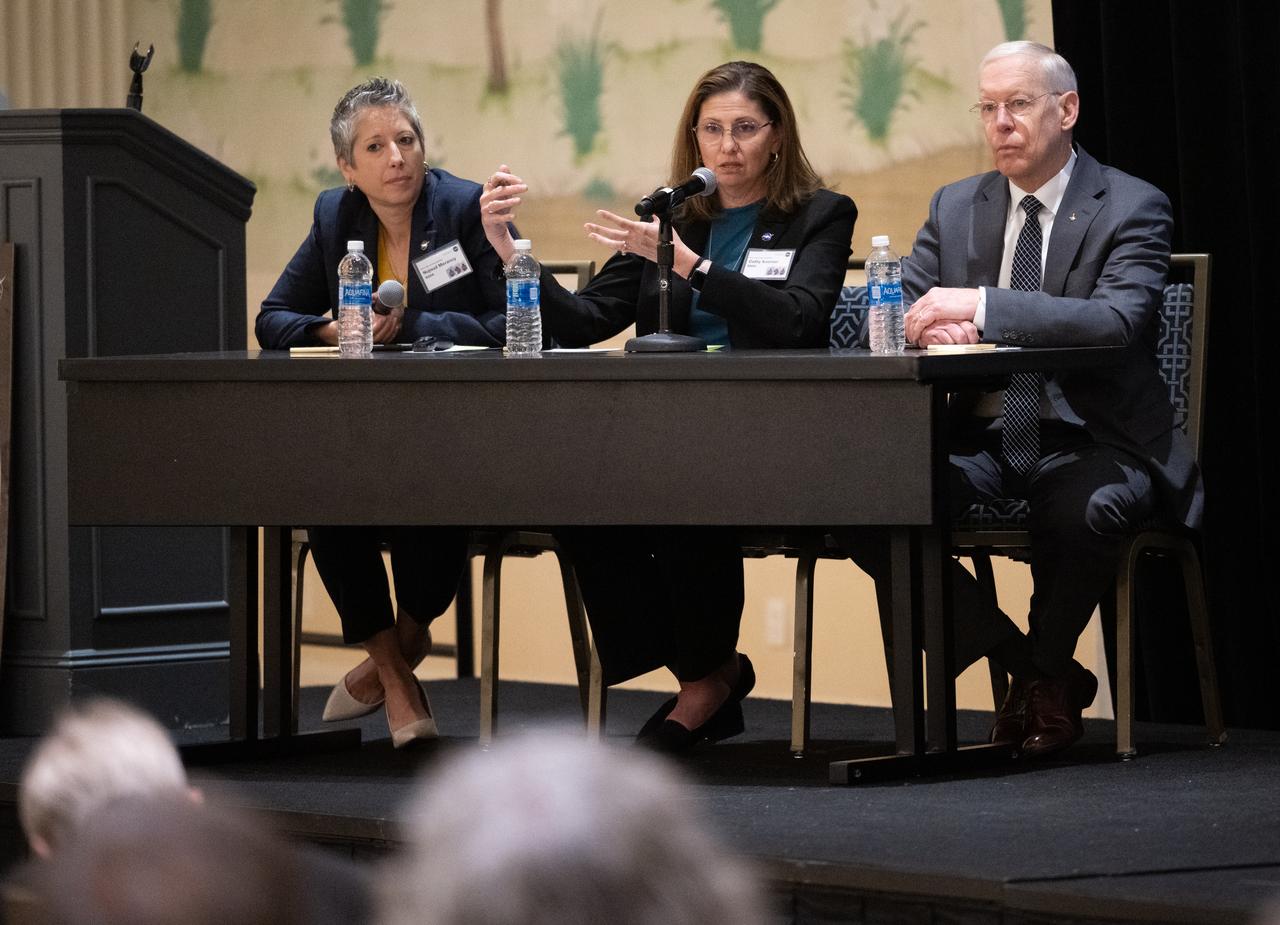
Catherine Koerner, deputy associate administrator for NASA's Exploration Systems Development Mission Directorate, center, is seen alongside Nujoud Merancy, architecture lead for NASA's Exploration Systems Development Mission Directorate, left, and Patrick Forrester, special advisor in NASA's Space Operations Mission Directorate, right, during NASA’s Moon to Mars Architecture Workshop, Tuesday, June 27, 2023, at the Gaylord National Resort and Convention Center in National Harbor, Md. Following the release of the 2022 Architecture Concept Review, NASA is conducting the workshop to engage the broader space community and collect feedback from U.S. industry and academia to inform the Moon to Mars mission architecture and operational delivery. Photo Credit: (NASA/Joel Kowsky)
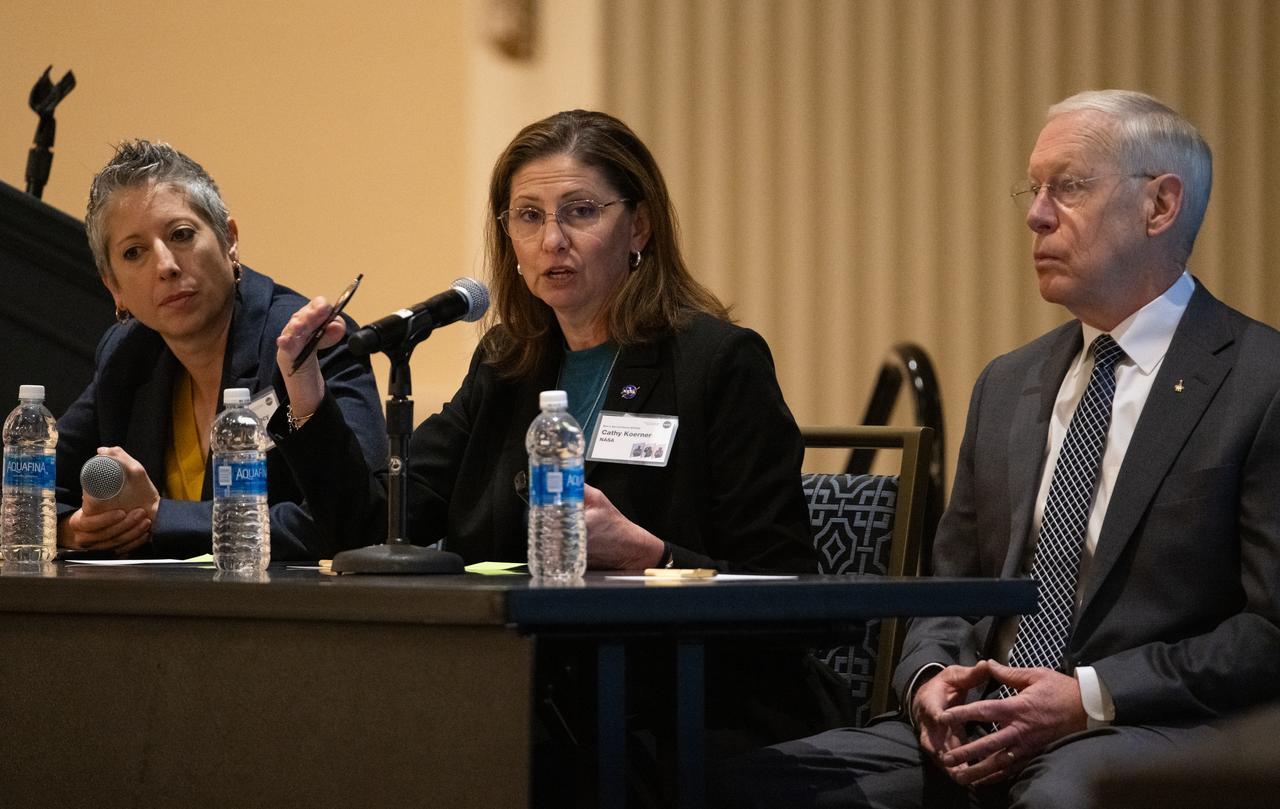
Catherine Koerner, deputy associate administrator for NASA's Exploration Systems Development Mission Directorate, center, is seen alongside Nujoud Merancy, architecture lead for NASA's Exploration Systems Development Mission Directorate, left, and Patrick Forrester, special advisor in NASA's Space Operations Mission Directorate, right, during NASA’s Moon to Mars Architecture Workshop, Tuesday, June 27, 2023, at the Gaylord National Resort and Convention Center in National Harbor, Md. Following the release of the 2022 Architecture Concept Review, NASA is conducting the workshop to engage the broader space community and collect feedback from U.S. industry and academia to inform the Moon to Mars mission architecture and operational delivery. Photo Credit: (NASA/Joel Kowsky)
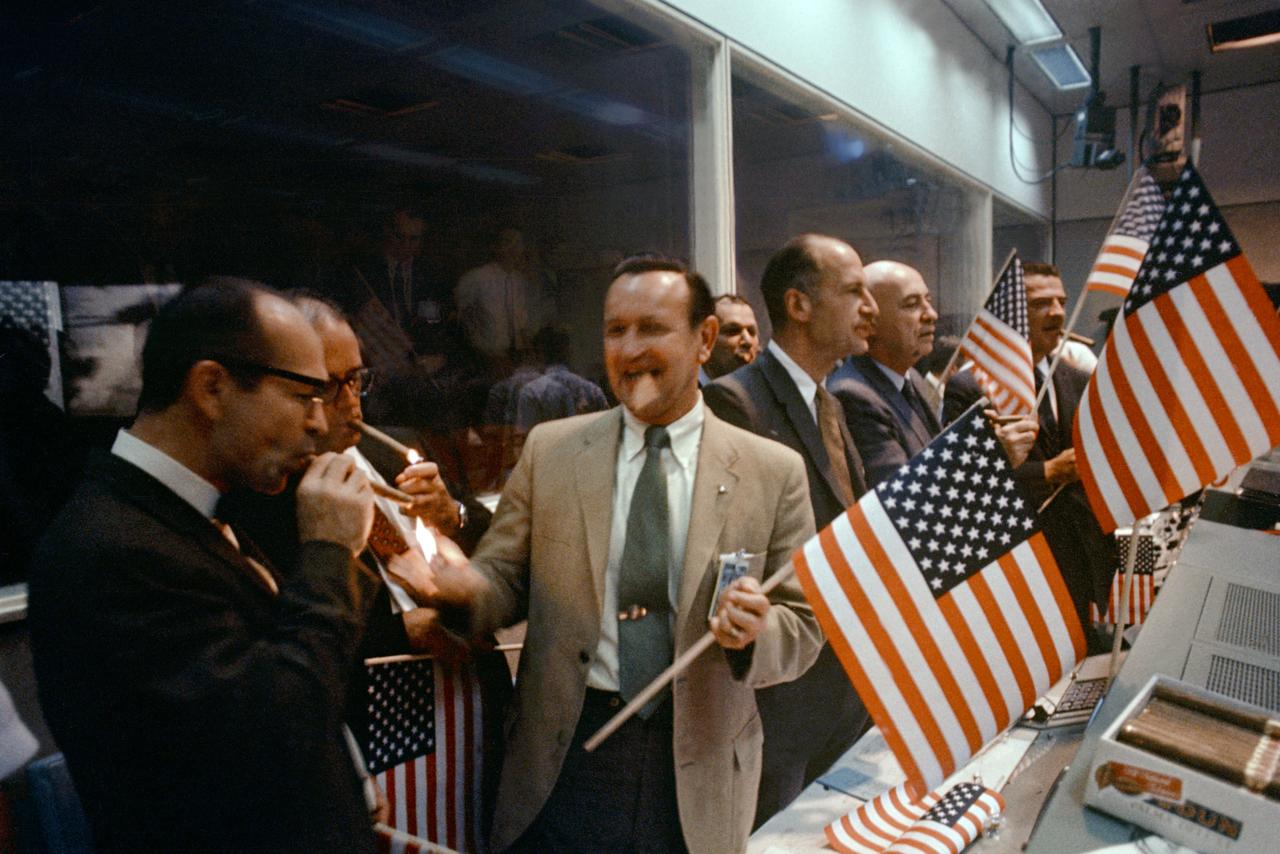
S69-40302 (24 July 1969) --- A group of NASA and Manned Spacecraft Center (MSC) officials join in with the flight controllers in the Mission Operations Control Room (MOCR) in the Mission Control Center (MCC), Building 30, in celebrating the successful conclusion of the Apollo 11 lunar landing mission. From left foreground are Dr. Maxime A. Faget, MSC Director of Engineering and Development; George S. Trimble, MSC Deputy Director; Dr. Christopher C. Kraft Jr., MSC Director of Flight Operations; Julian Scheer (in back), Assistant Administrator, Office of Public Affairs, NASA Headquarters; George M. Low, Manager, Apollo Spacecraft Program, MSC; Dr. Robert R. Gilruth, MSC Director; and Charles W. Mathews, Deputy Associate Administrator, Office of Manned Space Flight, NASA Headquarters.
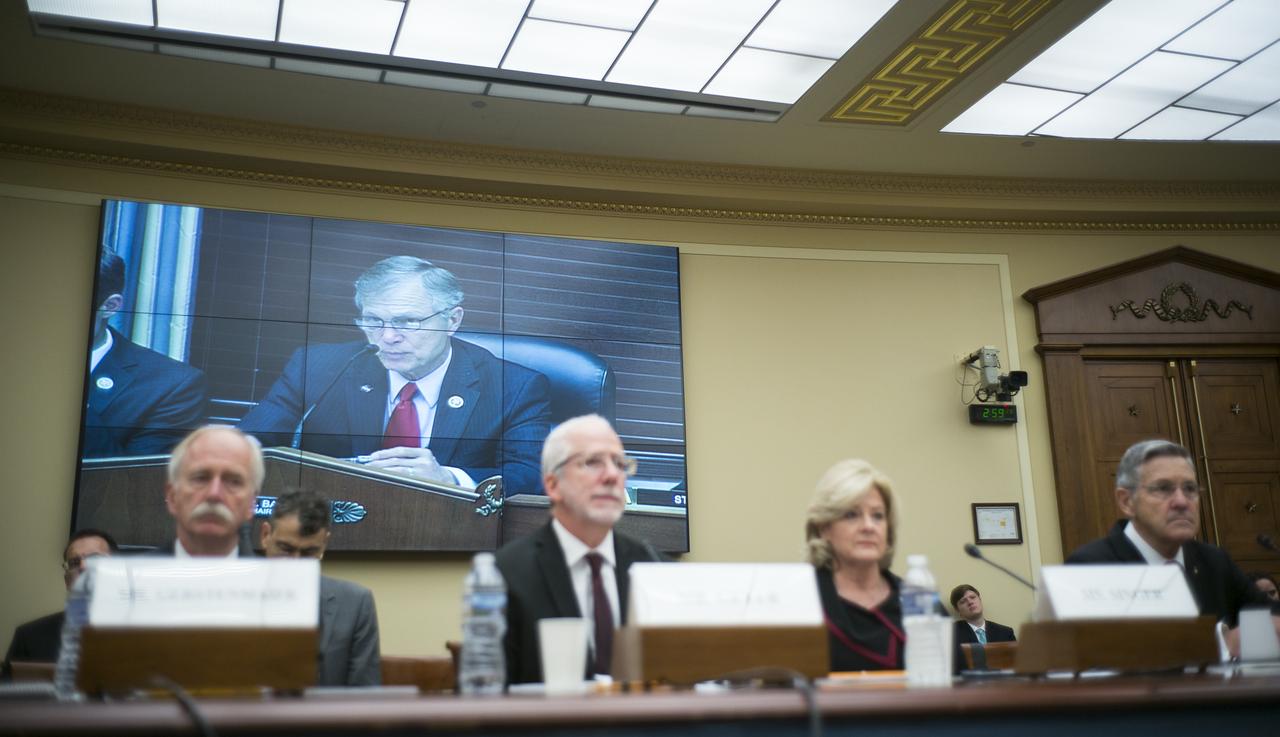
Chairman Brian Babin, R-Texas, asks a question of NASA's Associate Administrator for the Human Exploration and Operations Mission Directorate William Gerstenmaier, left, Mark Geyer, Director of NASA's Johnson Space Center, second from left, Jody Singer, Director of NASA's Marshall Space Flight Center, second from right, and Robert Cabana, Director of NASA's Kennedy Space Center, right, during a House Subcommittee on Space hearing titled "60 Years of NASA Leadership in Human Space Exploration: Past, Present, and Future," Wednesday, Sept. 26, 2018 at the Rayburn House Office Building in Washington. Photo Credit: (NASA/Joel Kowsky)
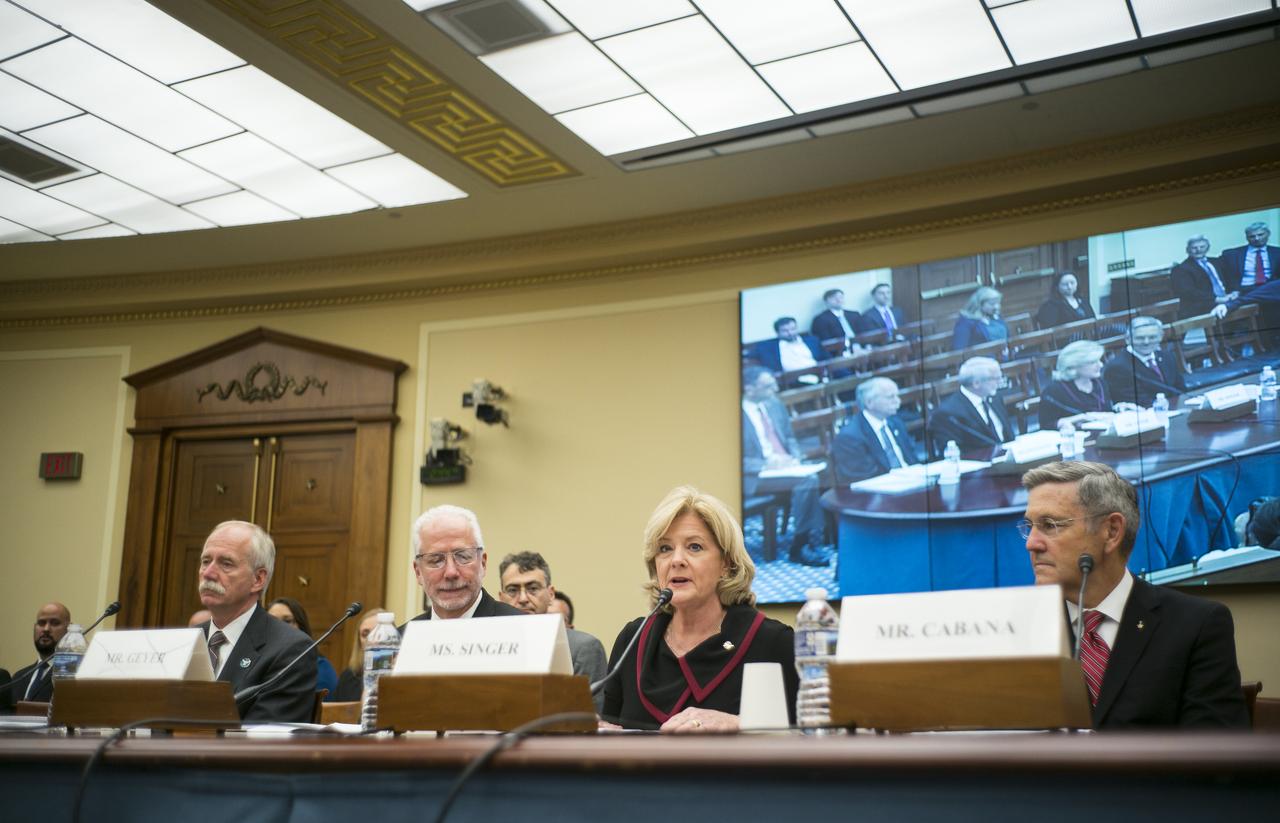
Jody Singer, Director of NASA's Marshall Space Flight Center, second from right, testifies during a House Subcommittee on Space hearing titled "60 Years of NASA Leadership in Human Space Exploration: Past, Present, and Future," Wednesday, Sept. 26, 2018 at the Rayburn House Office Building in Washington. NASA's Associate Administrator for the Human Exploration and Operations Mission Directorate William Gerstenmaier, left, Mark Geyer, Director of NASA's Johnson Space Center, second from left, and Robert Cabana, Director of NASA's Kennedy Space Center, right, also testified during the hearing. Photo Credit: (NASA/Joel Kowsky)
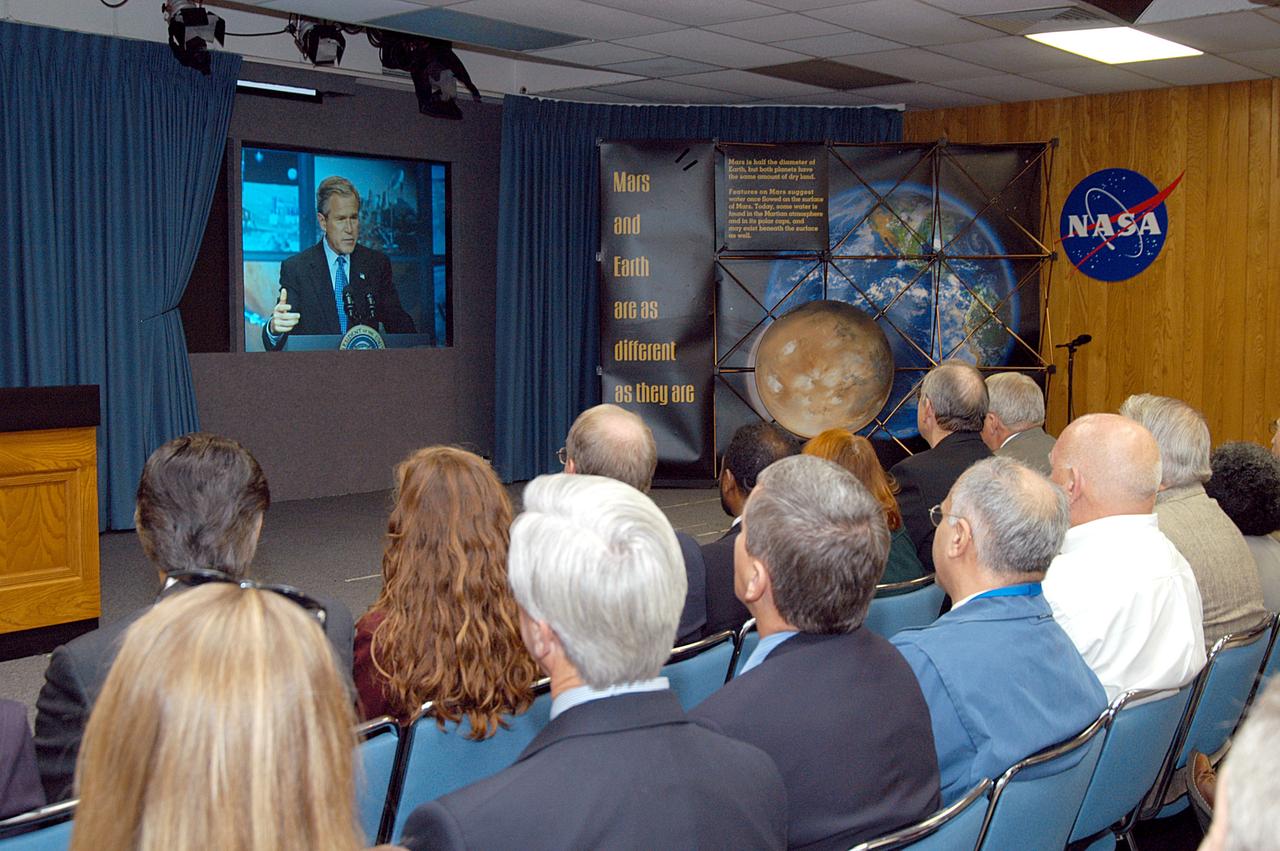
KENNEDY SPACE CENTER, FLA. -- KSC management and other employees gather in the Center’s television studio to watch the address by President George W. Bush from NASA Headquarters stating his goals for NASA’s new mission. Seated in the front row, left to right, are Ken Aguilar, chief, Equal Opportunity office; Lisa Malone, director of External Affairs; Bruce Buckingham, assistant to Dr. Woodrow Whitlow, KSC deputy director; Dr. Whitlow; Shannon Roberts, with External Affairs; Howard DeCastro, vice president and Space Shuttle program manager, United Space Alliance; and Bill Pickavance vice president and associate program manager of Florida Operations, USA. The President’s goals are completing the International Space Station, retiring the Space Shuttle orbiters, developing a new crew exploration vehicle, and returning to the moon and beyond within the next two decades. Pres. Bush was welcomed by NASA Administrator Sean O’Keefe and Expedition 8 Commander Michael Foale, who greeted him from the International Space Station. Members of the Washington, D.C., audience included astronauts Eileen Collins, Ed Lu and Michael Lopez-Alegria, and former astronaut Gene Cernan.

From left, Joel Montalbano acting associate administrator for NASA’s Space Operations Mission Directorate at NASA Headquarters and Nicky Fox, associate administrator, Science Mission Directorate, NASA Headquarters, participate in the Artemis II Flight Readiness Review with NASA leadership on Wednesday, March 11, 2026, at NASA’s Kennedy Space Center in Florida. The review is an assessment of the readiness of NASA’s SLS (Space Launch System) rocket and Orion spacecraft to support the Artemis II test flight as four astronauts journey around the Moon and return to Earth.
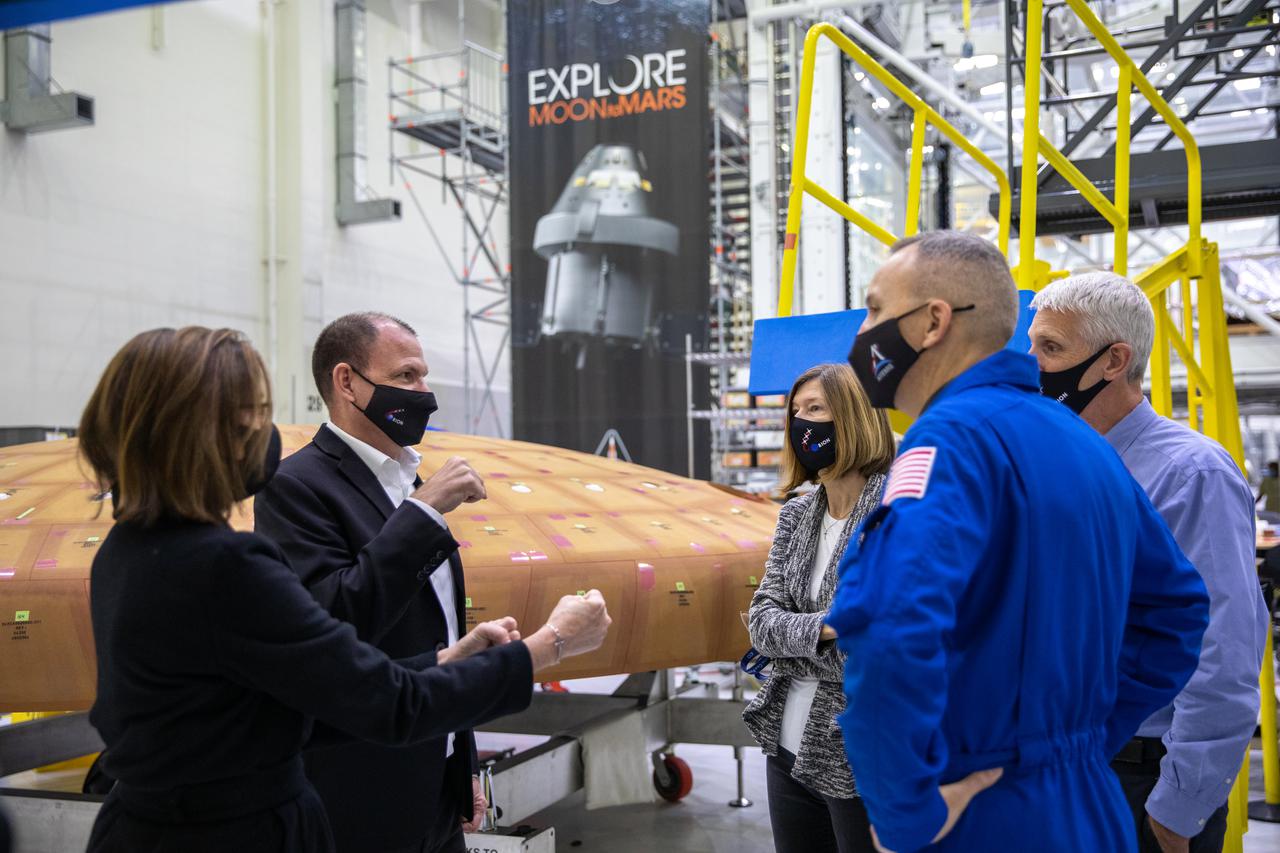
Kathy Lueders, third from right, associate administrator of the Human Exploration and Operations Mission Directorate, tours the Neil Armstrong Operations and Checkout Building high bay at NASA’s Kennedy Space Center in Florida on Jan. 14, 2021. In the background is the heat shield for the Orion crew module for the Artemis II mission. From left are Cathy Koerner, Orion Program manager; Tony Antonelli, Lockheed Martin Orion Program director and Artemis II Mission director; NASA astronaut Randy Bresnik; and Scott Wilson, Orion Production Operations manager. The group also viewed the Orion spacecraft for Artemis I as it was lowered onto a transporter for the move to the Multi-Payload Processing Facility to begin ground processing by the Exploration Ground Systems and Jacobs teams.
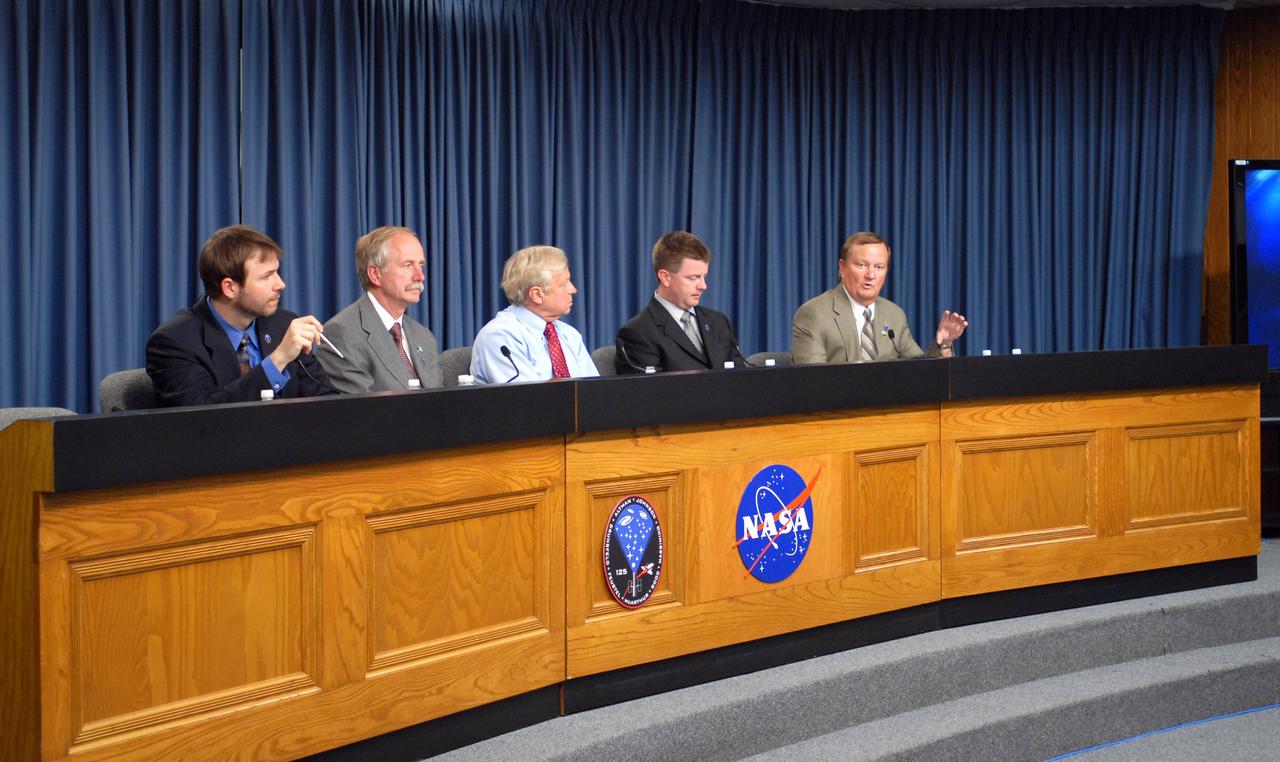
CAPE CANAVERAL, Fla. – During a press conference in the NASA News Auditorium at NASA's Kennedy Space Center in Florida, Shuttle Launch Director Mike Leinbach, right, answers a question from the media. Others from left are NASA Public Affairs Officer John Yembrick, who moderated, Associate Administrator for NASA's Space Operations Directorate William Gerstenmaier, Associate Administrator for NASA's Science Mission Directorate Ed Weiler and Launch Integration Manager Mike Moses. The conference followed the successful launch of space shuttle Atlantis on the STS-125 mission to service NASA's Hubble Space Telescope. Atlantis' 11-day flight will include five spacewalks to refurbish and upgrade the telescope with state-of-the-art science instruments that will expand Hubble's capabilities and extend its operational lifespan through at least 2014. The payload includes a Wide Field Camera 3, Fine Guidance Sensor and the Cosmic Origins Spectrograph. Photo credit: NASA/Jim Grossmann
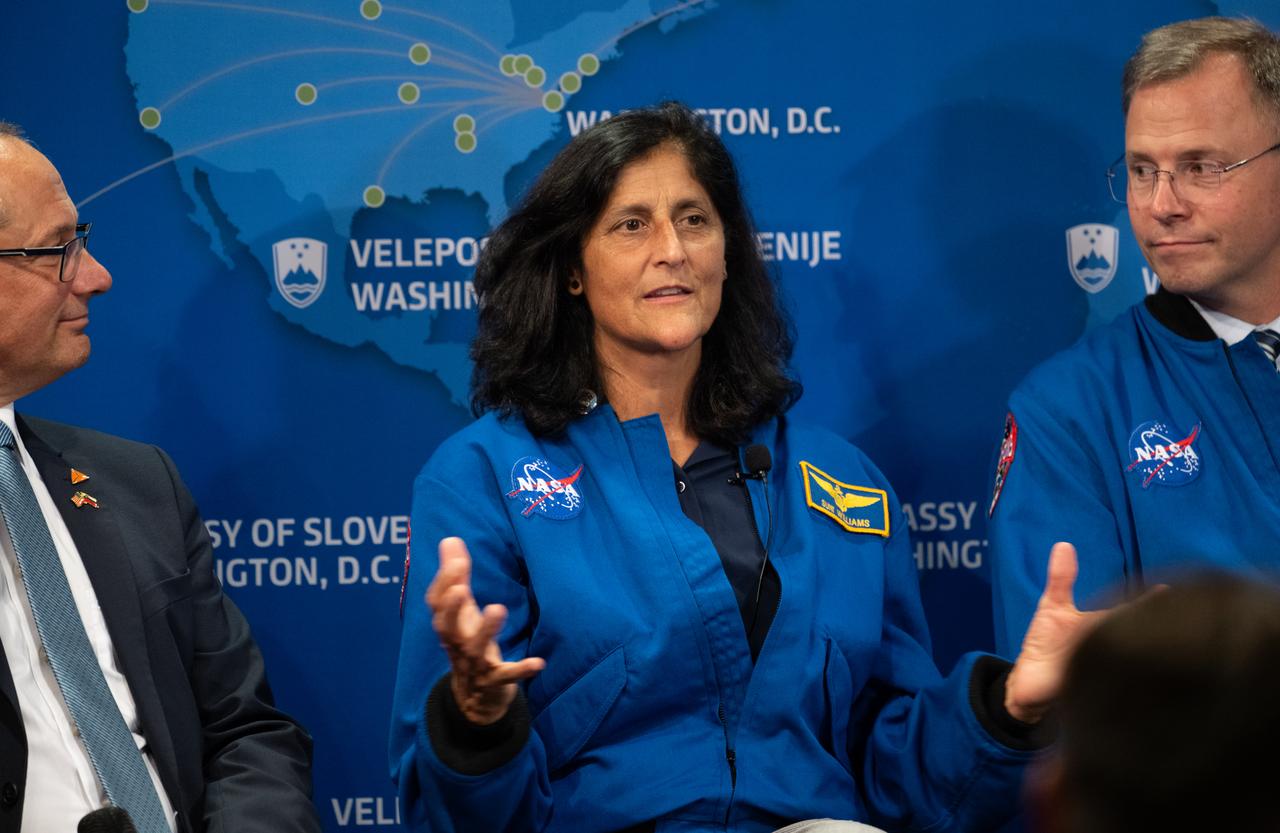
NASA astronaut Suni Williams, answers a question during a panel discussion at the Embassy of Slovenia alongside fellow NASA astronauts Don Pettit, Suni Williams, and Nick Hague, Robyn Gatens, director of International Space Station and acting director of the Commercial Space Flight Division of NASA's Space Operations Mission Directorate, Lee Echerd,, senior mission manager and commercial crew program lead at SpaceX, and Marko Novak, advisor of management board at Dewesoft Slovenia, Wednesday, Sept. 17, 2025, in Washington. Hague, Wilmore, Williams, and Pettit served as part of Expedition 72 onboard the International Space Station. Photo Credit: (NASA/Joel Kowsky)
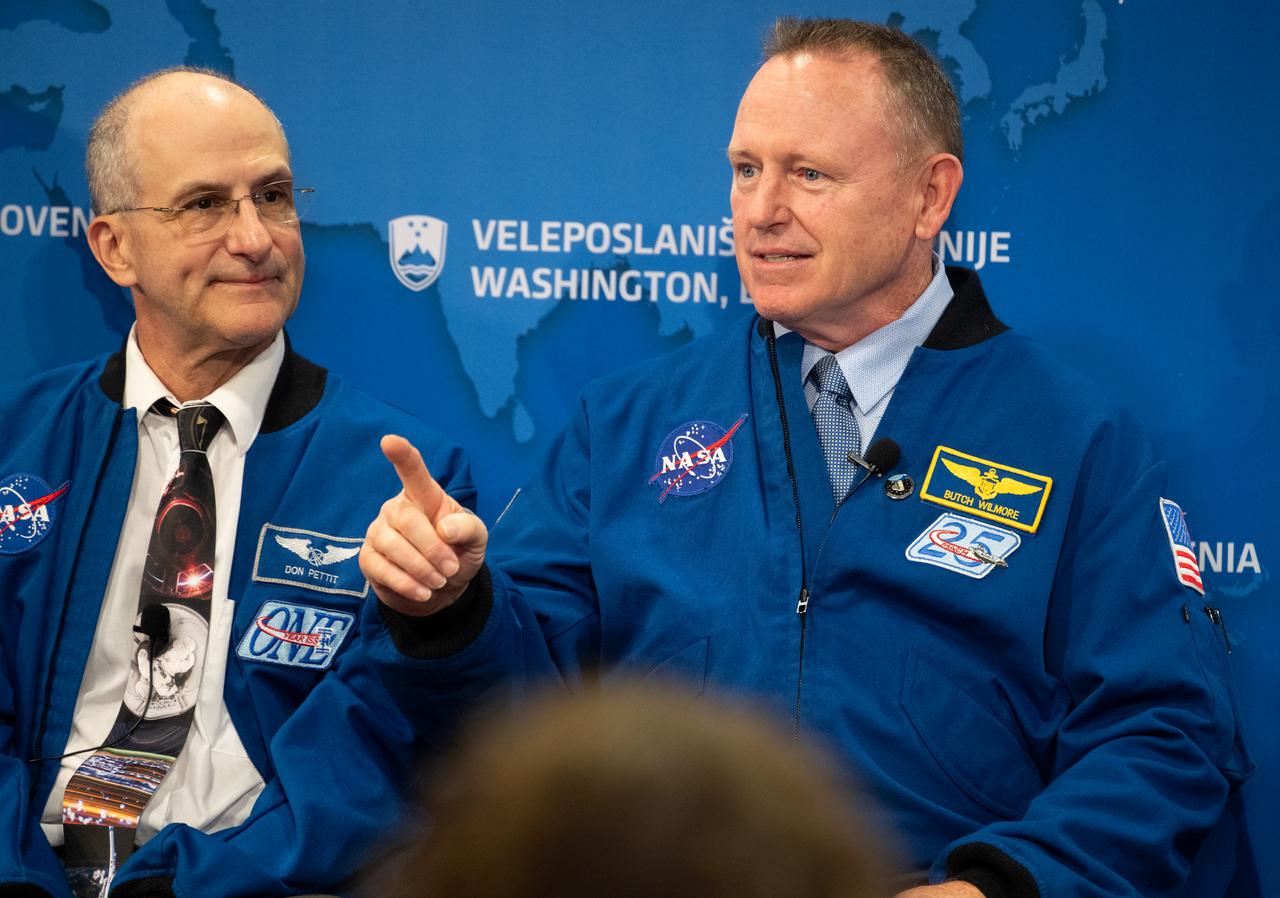
NASA astronaut Butch Wilmore, answers a question during a panel discussion at the Embassy of Slovenia alongside fellow NASA astronauts Don Pettit, Suni Williams, and Nick Hague, Robyn Gatens, director of International Space Station and acting director of the Commercial Space Flight Division of NASA's Space Operations Mission Directorate, Lee Echerd,, senior mission manager and commercial crew program lead at SpaceX, and Marko Novak, advisor of management board at Dewesoft Slovenia, Wednesday, Sept. 17, 2025, in Washington. Hague, Wilmore, Williams, and Pettit served as part of Expedition 72 onboard the International Space Station. Photo Credit: (NASA/Joel Kowsky)
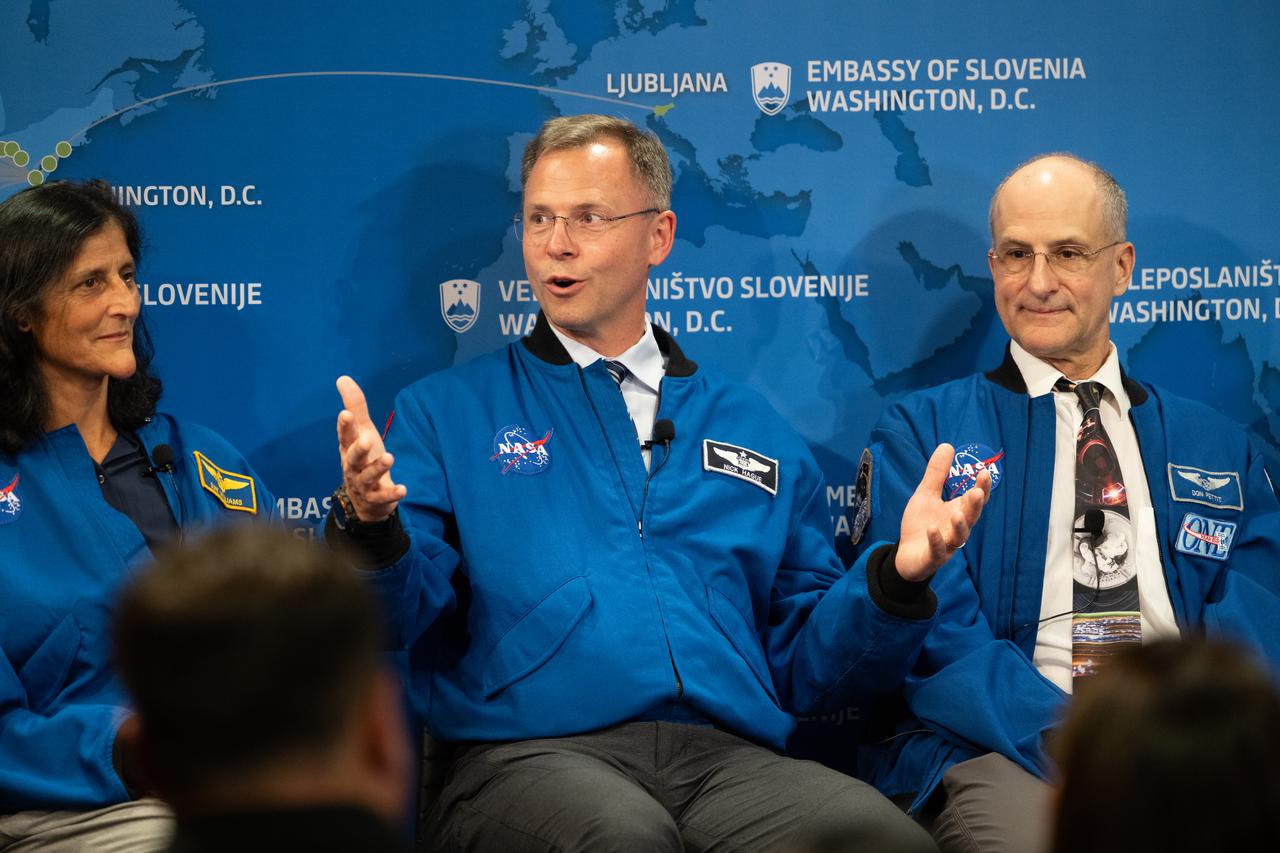
NASA astronaut Nick Hague, answers a question during a panel discussion at the Embassy of Slovenia with fellow NASA astronauts Don Pettit, Suni Williams, and Nick Hague, Robyn Gatens, director of International Space Station and acting director of the Commercial Space Flight Division of NASA's Space Operations Mission Directorate, Lee Echerd,, senior mission manager and commercial crew program lead at SpaceX, and Marko Novak, advisor of management board at Dewesoft Slovenia, Wednesday, Sept. 17, 2025, in Washington. Hague, Wilmore, Williams, and Pettit served as part of Expedition 72 onboard the International Space Station. Photo Credit: (NASA/Joel Kowsky)
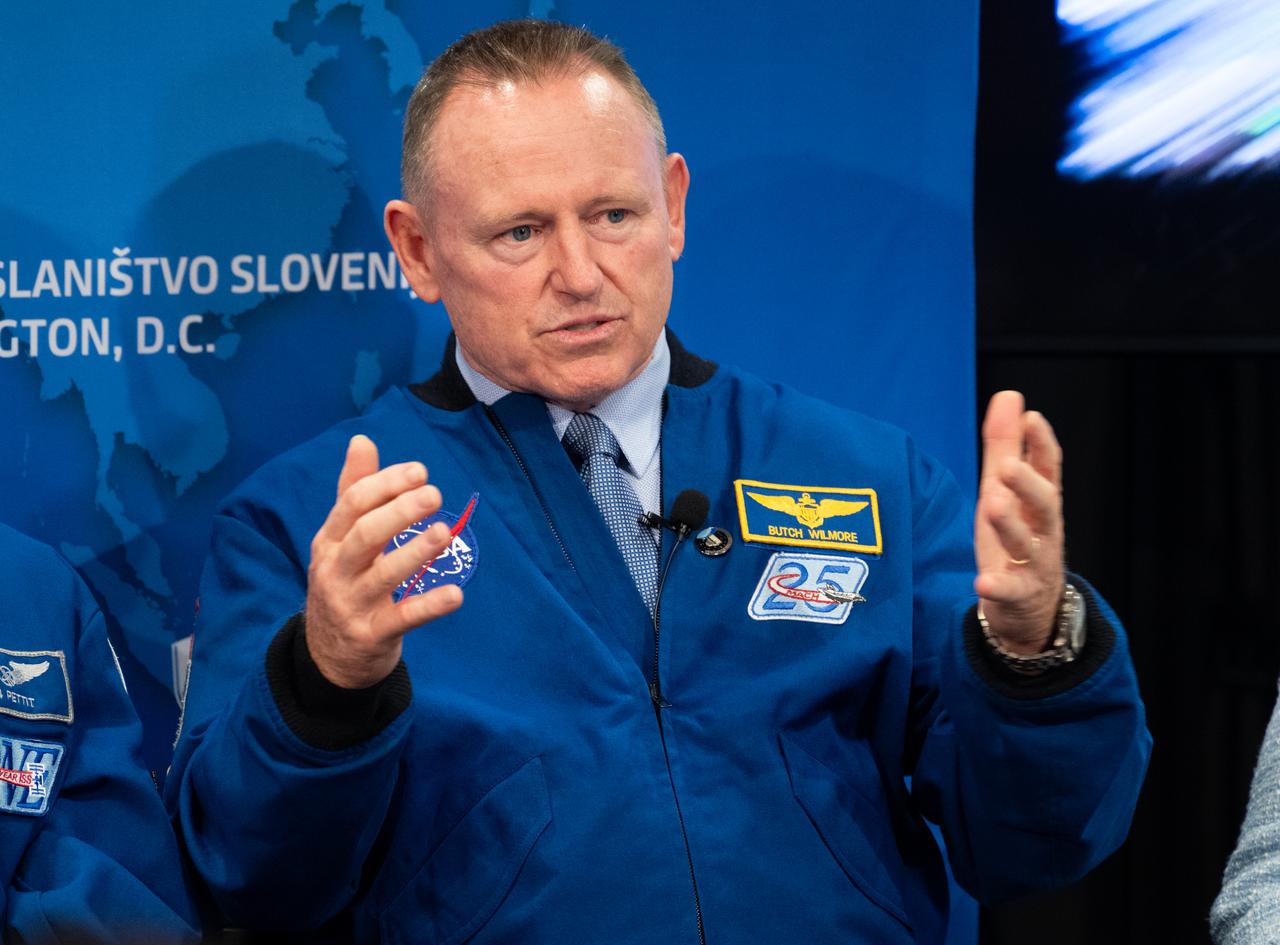
NASA astronaut Butch Wilmore, answers a question during a panel discussion at the Embassy of Slovenia alongside fellow NASA astronauts Don Pettit, Suni Williams, and Nick Hague, Robyn Gatens, director of International Space Station and acting director of the Commercial Space Flight Division of NASA's Space Operations Mission Directorate, Lee Echerd,, senior mission manager and commercial crew program lead at SpaceX, and Marko Novak, advisor of management board at Dewesoft Slovenia, Wednesday, Sept. 17, 2025, in Washington. Hague, Wilmore, Williams, and Pettit served as part of Expedition 72 onboard the International Space Station. Photo Credit: (NASA/Joel Kowsky)
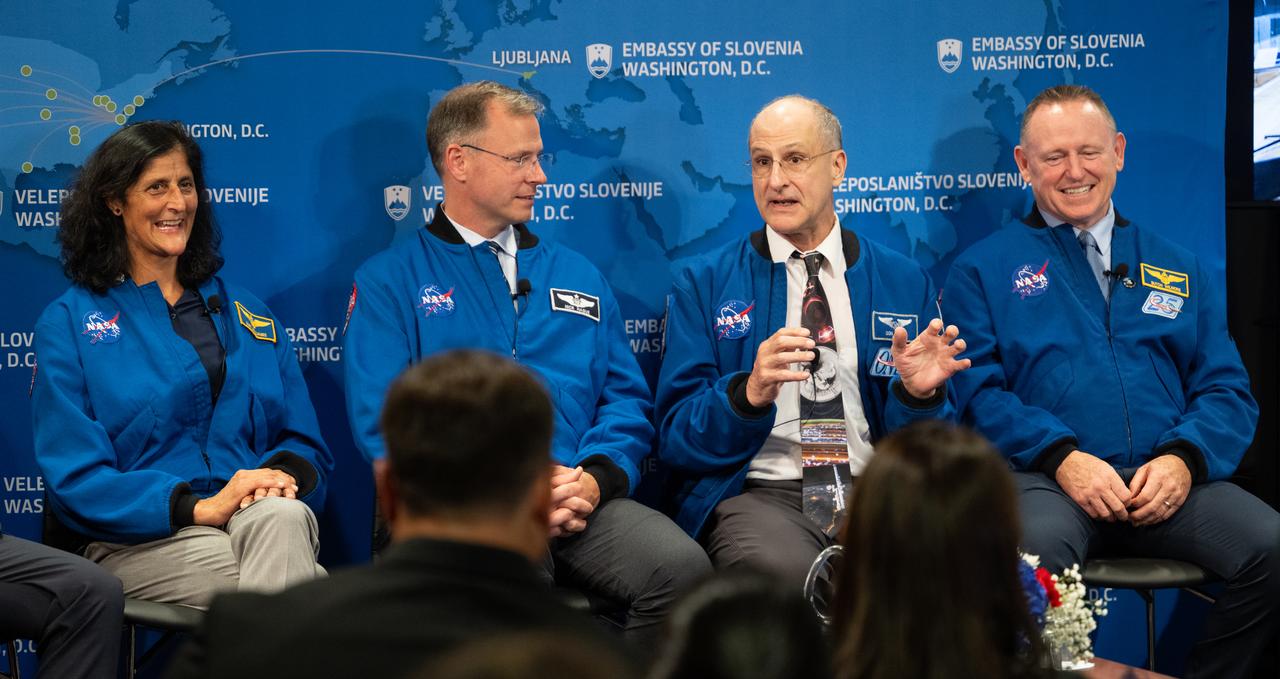
NASA astronaut Don Pettit, second from right, answers a question alongside fellow NASA astronauts Suni Williams, left, Nick Hague and Butch Wilmore during a panel discussion at the Embassy of Slovenia along with Robyn Gatens, director of International Space Station and acting director of the Commercial Space Flight Division of NASA's Space Operations Mission Directorate, Lee Echerd,, senior mission manager and commercial crew program lead at SpaceX, and Marko Novak, advisor of management board at Dewesoft Slovenia, Wednesday, Sept. 17, 2025, in Washington. Hague, Wilmore, Williams, and Pettit served as part of Expedition 72 onboard the International Space Station. Photo Credit: (NASA/Joel Kowsky)
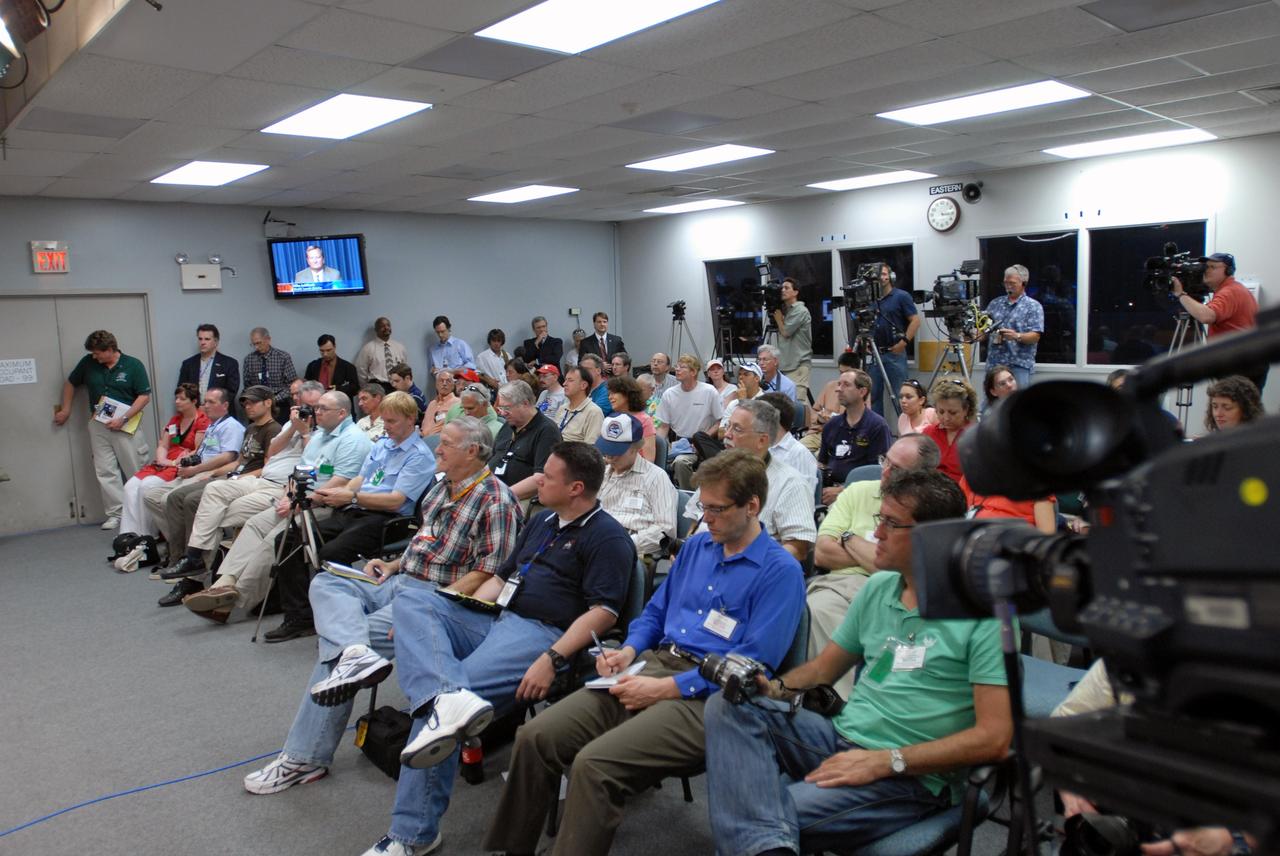
CAPE CANAVERAL, Fla. – The NASA News Auditorium is filled with media during the post-launch press conference at NASA's Kennedy Space Center in Florida. Featured on the dais were Associate Administrator for NASA's Space Operations Directorate William Gerstenmaier, Associate Administrator for NASA's Science Mission Directorate Ed Weiler, Launch Integration Manager Mike Moses and Shuttle Launch Director Mike Leinbach. The conference followed the successful launch of space shuttle Atlantis on the STS-125 mission to service NASA's Hubble Space Telescope. Atlantis' 11-day flight will include five spacewalks to refurbish and upgrade the telescope with state-of-the-art science instruments that will expand Hubble's capabilities and extend its operational lifespan through at least 2014. The payload includes a Wide Field Camera 3, Fine Guidance Sensor and the Cosmic Origins Spectrograph. Photo credit: NASA/Jim Grossmann

Meghan Allen, senior vice president for strategic engagements at Space Foundation, left, moderates a panel discussion at the Embassy of Slovenia with Marko Novak, advisor of management board at Dewesoft Slovenia, NASA astronauts Suni Williams, Nick Hague, Don Pettit, and Butch Wilmore, Robyn Gatens, director of International Space Station and acting director of the Commercial Space Flight Division of NASA's Space Operations Mission Directorate, and Lee Echerd, senior mission manager and commercial crew program lead at SpaceX, Wednesday, Sept. 17, 2025, in Washington. Hague, Wilmore, Williams, and Pettit served as part of Expedition 72 onboard the International Space Station. Photo Credit: (NASA/Joel Kowsky)
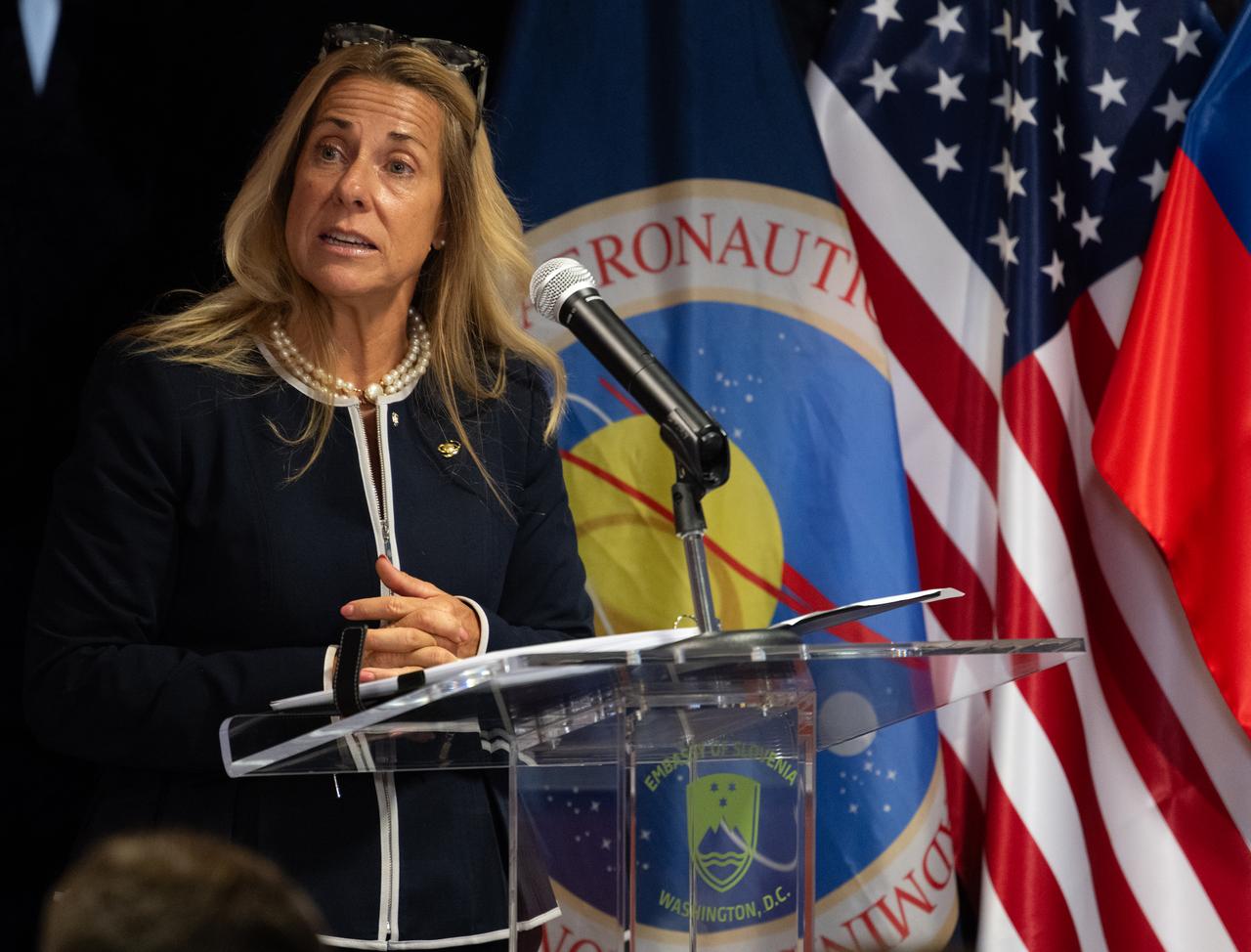
Meghan Allen, senior vice president for strategic engagements at Space Foundation, moderates a panel discussion at the Embassy of Slovenia with NASA astronauts Suni Williams, Butch Wilmore, Nick Hague, and Don Pettit, Robyn Gatens, director of International Space Station and acting director of the Commercial Space Flight Division of NASA's Space Operations Mission Directorate, Marko Novak, advisor of management board Dewesoft Slovenia, and Lee Echerd, senior mission manager and commercial crew program lead at SpaceX, Wednesday, Sept. 17, 2025, in Washington. Hague, Wilmore, Williams, and Pettit served as part of Expedition 72 onboard the International Space Station. Photo Credit: (NASA/Joel Kowsky)
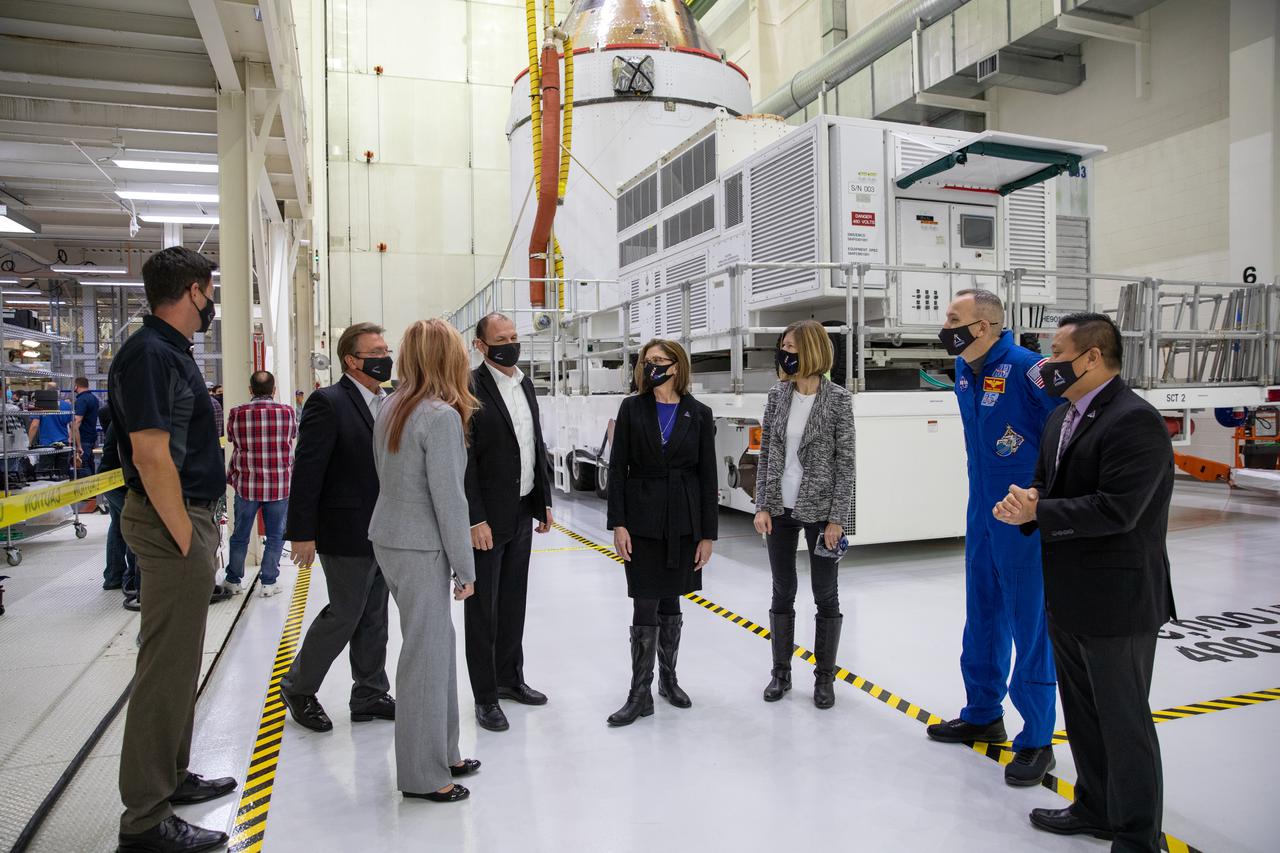
Orion is revealed for one of the final times on Jan. 14, as it is readied atop its transport pallet from the Neil Armstrong Operations and Checkout Building at NASA’s Kennedy Space Center in Florida, along its path to the pad ahead of the Artemis I launch. Inside the high bay, from left, are Nathan Varn, Lockheed Martin Production Control director; Jules Schneider, Lockheed Martin director of Orion Assembly, Test and Launch Operations at Kennedy; Kelly DeFazio, Lockheed Martin Orion Program director for production operations; Tony Antonelli, Lockheed Martin Orion Program director and Artemis II Mission director; Cathy Koerner, Orion Program manager; Kathy Lueders, associate administrator of the Human Exploration and Operations Mission Directorate; astronaut Randy Bresnik; and Howard Hu, Orion deputy program manager. Teams across the globe have worked tirelessly to assemble the spacecraft, which will receive a protective covering prior to departing for the Multi-Payload Processing Facility to begin ground processing by the Exploration Ground Systems and Jacobs teams.
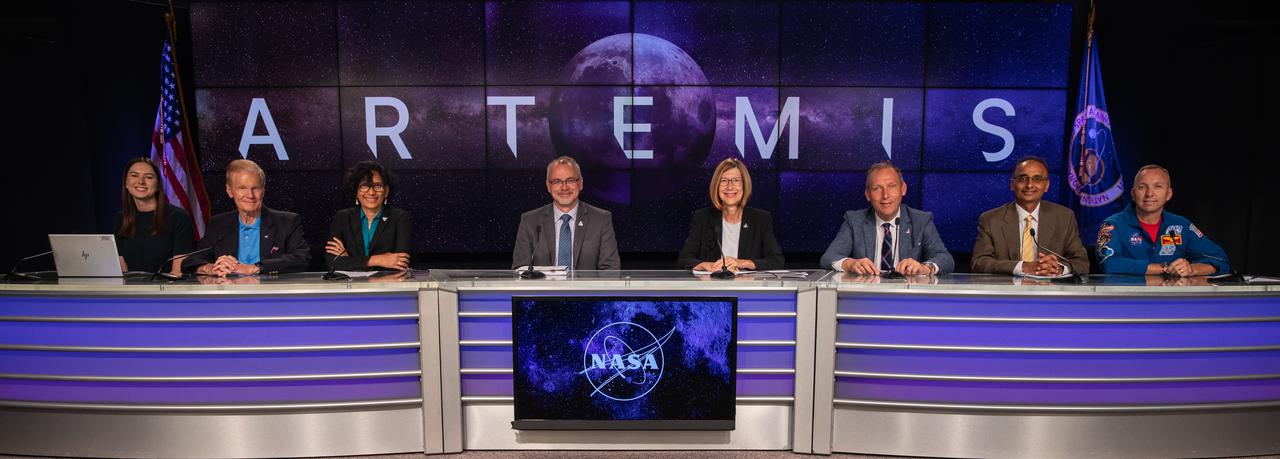
NASA holds a prelaunch media briefing on the agency’s Moon to Mars exploration plans on Aug. 27, 2022, at the agency’s Kennedy Space Center in Florida, as the clock counts down to the launch of Artemis I scheduled for Aug. 29, at 8:33 a.m. EDT from Kennedy’s Launch Complex 39B. From left, are Jackie McGuinness, NASA press secretary; Bill Nelson, NASA administrator; Bhavya Lal, NASA associate administrator for technology, policy and strategy; Jim Free, NASA associate administrator, Exploration Systems Development Mission Directorate; Kathy Lueders, NASA associate administrator, Space Operations Mission Directorate; Thomas Zurbuchen, NASA associate administrator, Science Mission Directorate; Prasun Desai, NASA deputy associate administrator, Space Technology Mission Directorate; and Randy Bresnik, NASA astronaut. The first in a series of increasingly complex missions, Artemis I will provide a foundation for human deep space exploration and demonstrate our commitment and capability to extend human presence to the Moon and beyond. The primary goal of Artemis I is to thoroughly test the integrated systems before crewed missions by operating the spacecraft in a deep space environment, testing Orion’s heat shield, and recovering the crew module after reentry, descent, and splashdown.
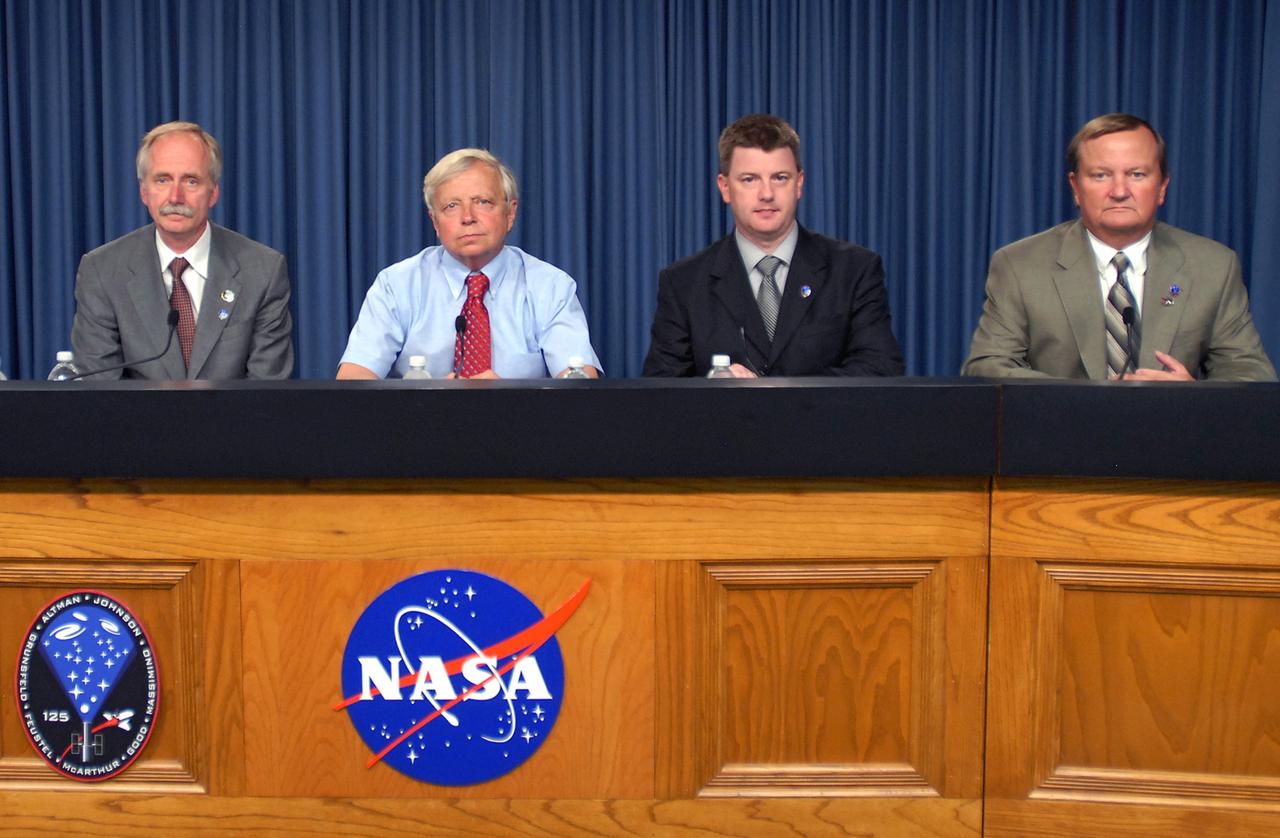
CAPE CANAVERAL, Fla. – At NASA's Kennedy Space Center in Florida, a press conference following the successful launch of space shuttle Atlantis on the STS-125 mission featured (from left) Associate Administrator for NASA's Space Operations Directorate William Gerstenmaier, Associate Administrator for NASA's Science Mission Directorate Ed Weiler, Launch Integration Manager Mike Moses and Shuttle Launch Director Mike Leinbach. Atlantis will rendezvous with NASA's Hubble Space Telescope. Liftoff was on time at 2:01 p.m. EDT. Atlantis' 11-day flight will include five spacewalks to refurbish and upgrade the telescope with state-of-the-art science instruments that will expand Hubble's capabilities and extend its operational lifespan through at least 2014. The payload includes a Wide Field Camera 3, Fine Guidance Sensor and the Cosmic Origins Spectrograph. Photo credit: NASA/Jim Grossmann
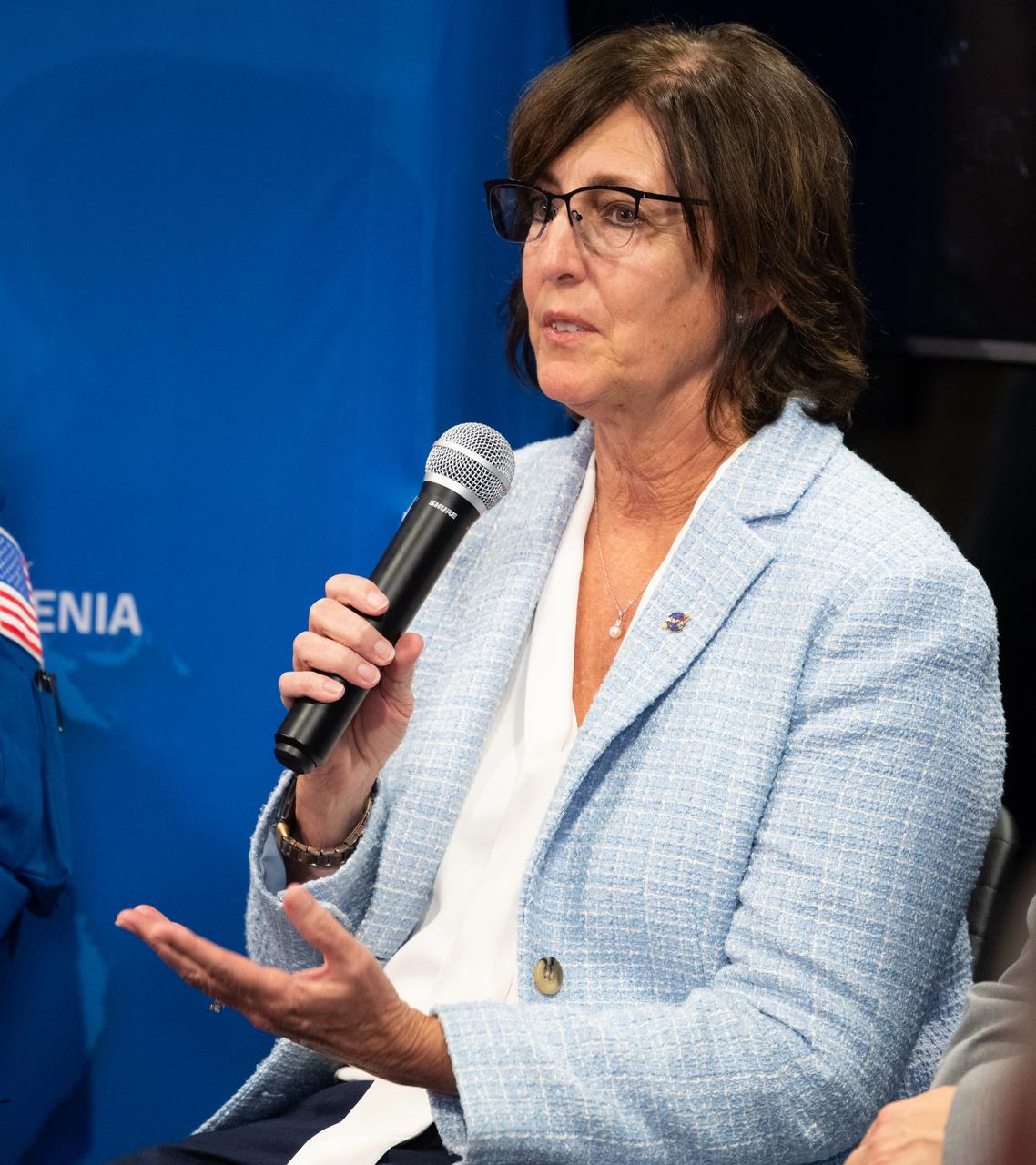
Robyn Gatens, director of International Space Station and acting director of the Commercial Space Flight Division of NASA's Space Operations Mission Directorate, answers a question during a panel discussion at the Embassy of Slovenia alongside NASA astronauts Butch Wilmore, Don Pettit, Suni Williams, and Nick Hague, Lee Echerd,, senior mission manager and commercial crew program lead at SpaceX, and Marko Novak, advisor of management board at Dewesoft Slovenia, Wednesday, Sept. 17, 2025, in Washington. Hague, Wilmore, Williams, and Pettit served as part of Expedition 72 onboard the International Space Station. Photo Credit: (NASA/Joel Kowsky)
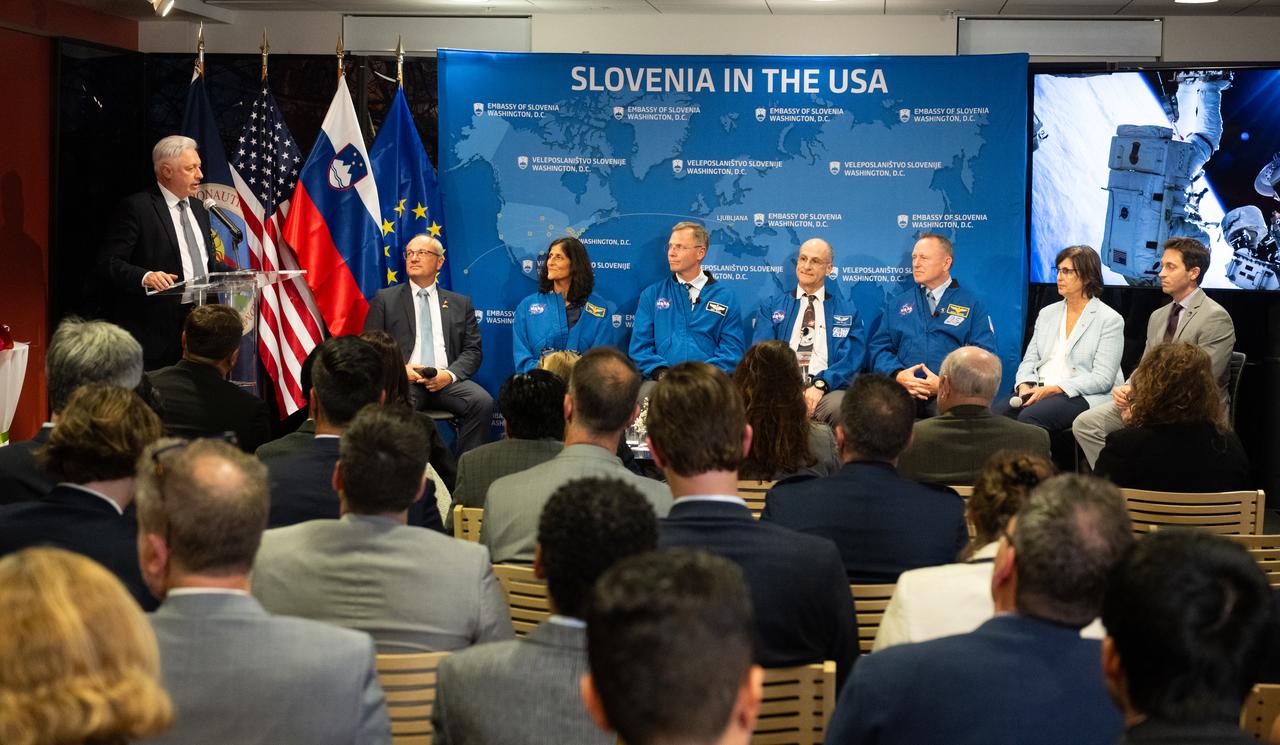
Iztok Mirošič, Ambassador of the Republic of Slovenia to the United States, provides closing remarks during a panel discussion with Marko Novak, advisor of management board Dewesoft Slovenia, NASA astronauts Suni Williams, Butch Wilmore, Nick Hague, and Don Pettit, Robyn Gatens, director of International Space Station and acting director of the Commercial Space Flight Division of NASA's Space Operations Mission Directorate, and Lee Echerd, senior mission manager and commercial crew program lead at SpaceX, at the Embassy of Slovenia, Wednesday, Sept. 17, 2025, in Washington. Hague, Wilmore, Williams, and Pettit served as part of Expedition 72 onboard the International Space Station. Photo Credit: (NASA/Joel Kowsky)
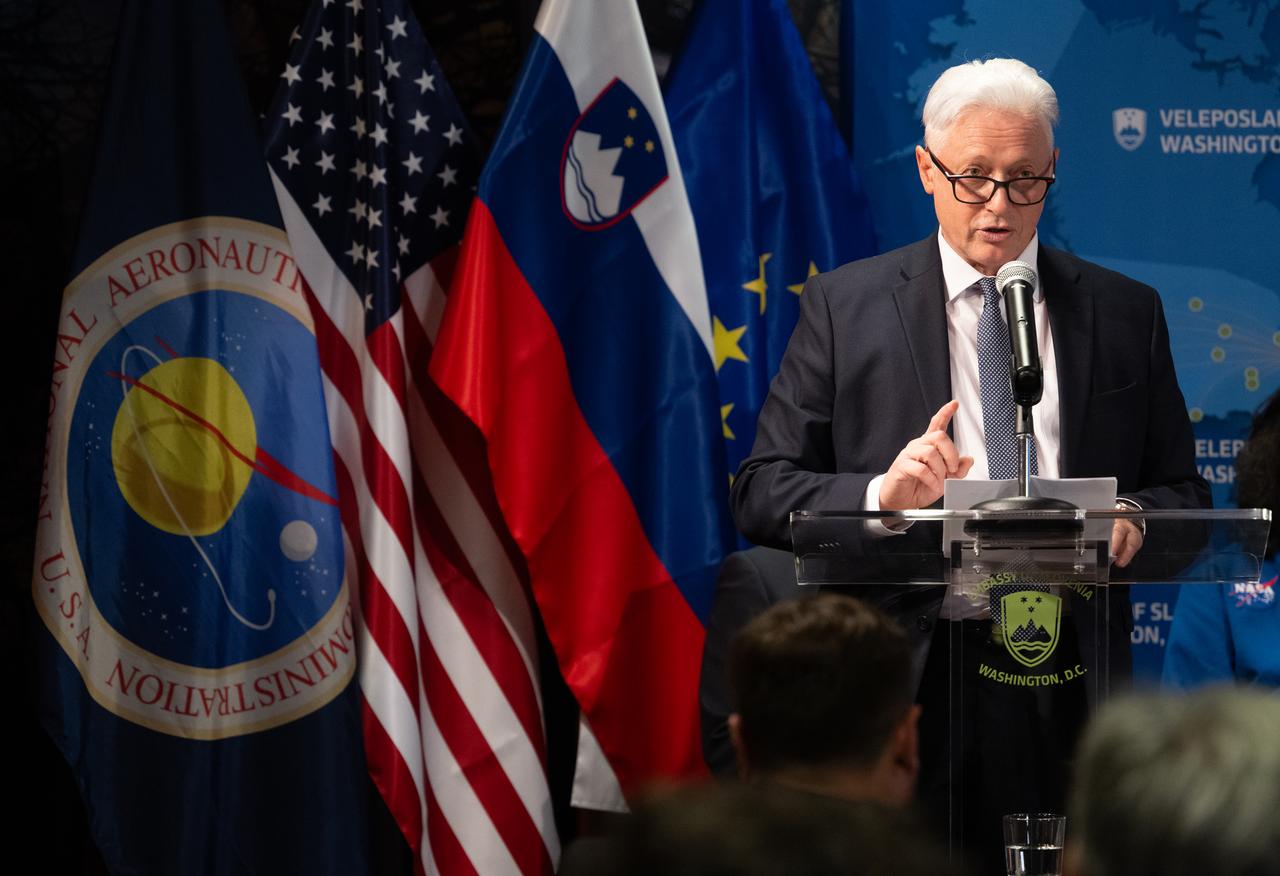
Iztok Mirošič, Ambassador of the Republic of Slovenia to the United States, provides opening remarks during a panel discussion with NASA astronauts Suni Williams, Butch Wilmore, Nick Hague, and Don Pettit, Robyn Gatens, director of International Space Station and acting director of the Commercial Space Flight Division of NASA's Space Operations Mission Directorate, Marko Novak, advisor of management board Dewesoft Slovenia, and Lee Echerd, senior mission manager and commercial crew program lead at SpaceX, at the Embassy of Slovenia, Wednesday, Sept. 17, 2025, in Washington. Hague, Wilmore, Williams, and Pettit served as part of Expedition 72 onboard the International Space Station. Photo Credit: (NASA/Joel Kowsky)
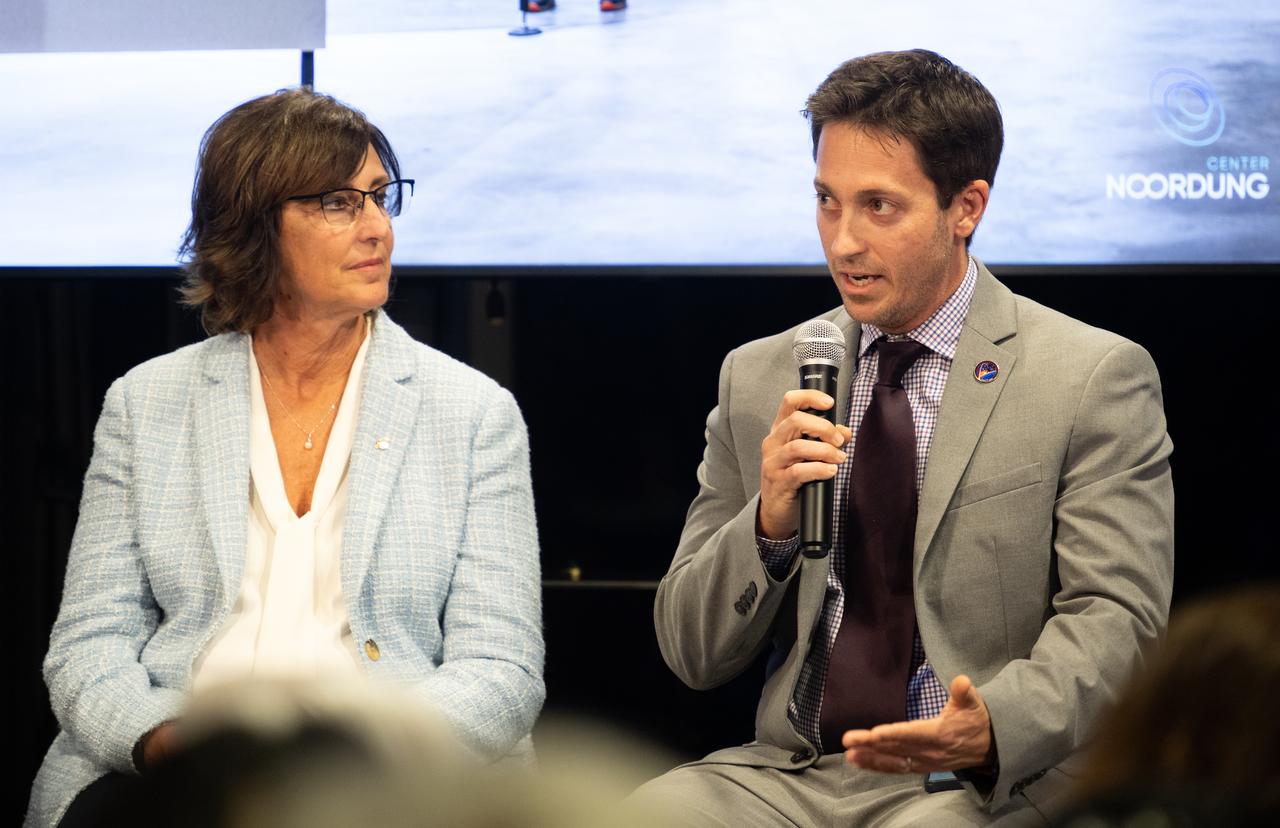
Lee Echerd, senior mission manager and commercial crew program lead at SpaceX, right, answers a question during a panel discussion at the Embassy of Slovenia with Robyn Gatens, director of International Space Station and acting director of the Commercial Space Flight Division of NASA's Space Operations Mission Directorate, left, and NASA astronauts Don Pettit, Suni Williams, Butch Wilmore, and Nick Hague, and Marko Novak, advisor of management board at Dewesoft Slovenia, Wednesday, Sept. 17, 2025, in Washington. Hague, Wilmore, Williams, and Pettit served as part of Expedition 72 onboard the International Space Station. Photo Credit: (NASA/Joel Kowsky)
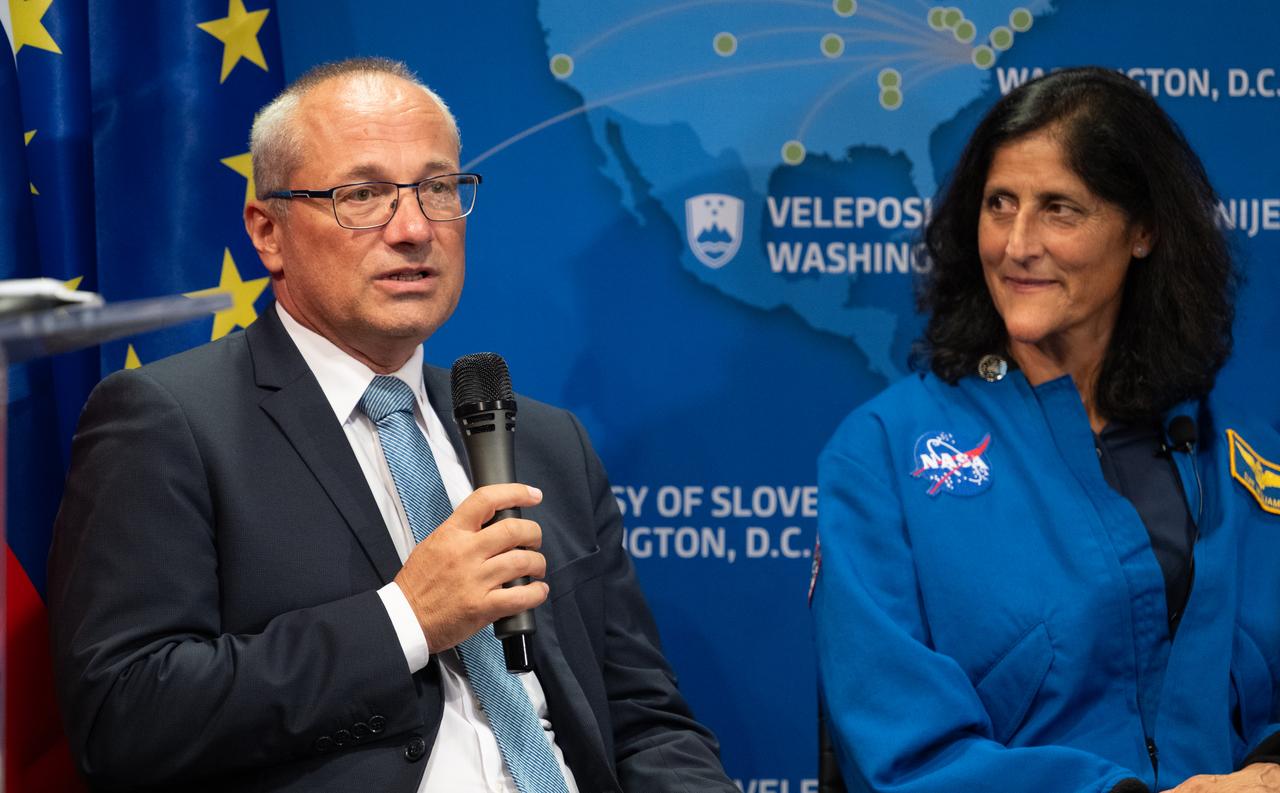
Marko Novak, advisor of management board at Dewesoft Slovenia, answers a question during a panel discussion at the Embassy of Slovenia with NASA astronauts Suni Williams, Don Pettit, Butch Wilmore, and Nick Hague, Robyn Gatens, director of International Space Station and acting director of the Commercial Space Flight Division of NASA's Space Operations Mission Directorate, and Lee Echerd, senior mission manager and commercial crew program lead at SpaceX, Wednesday, Sept. 17, 2025, in Washington. Hague, Wilmore, Williams, and Pettit served as part of Expedition 72 onboard the International Space Station. Photo Credit: (NASA/Joel Kowsky)
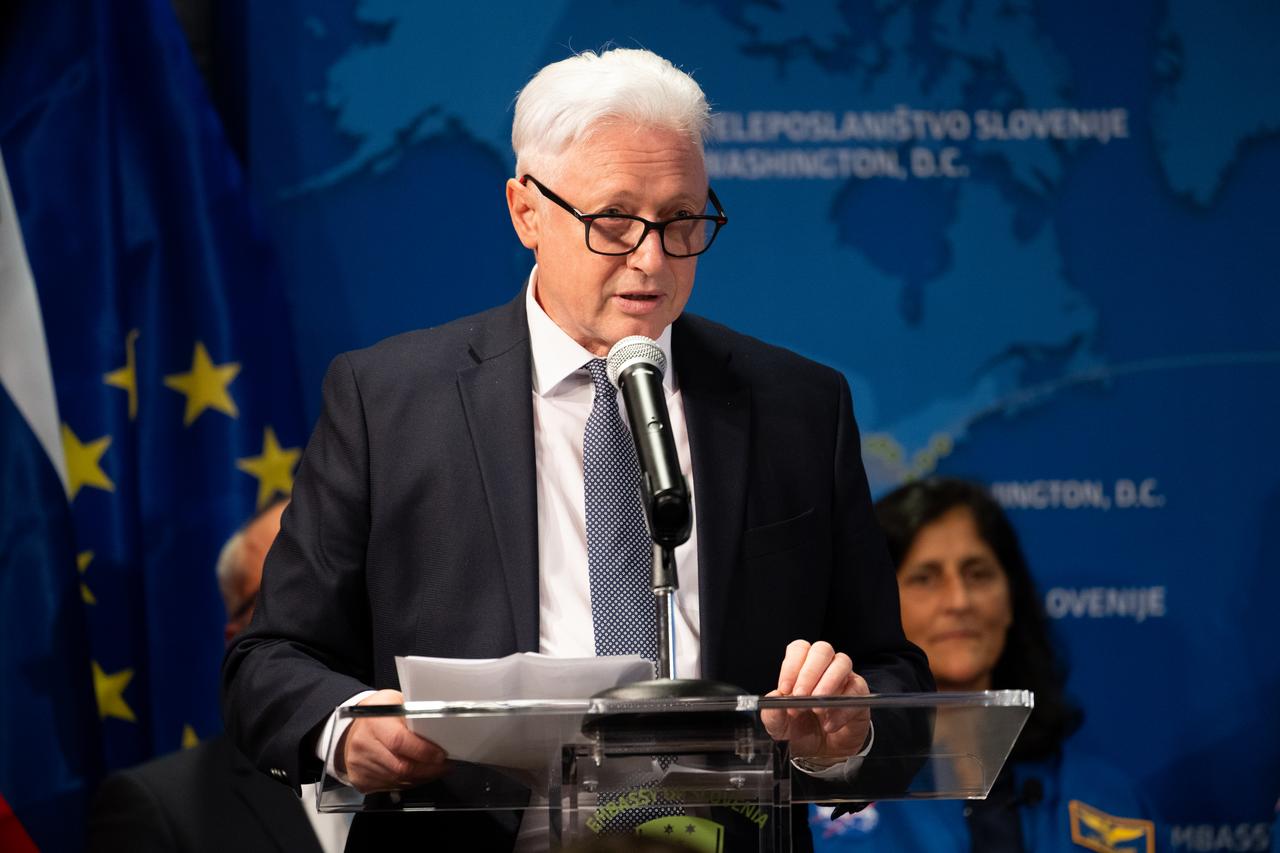
Iztok Mirošič, Ambassador of the Republic of Slovenia to the United States, provides opening remarks during a panel discussion with NASA astronauts Suni Williams, Butch Wilmore, Nick Hague, and Don Pettit, Robyn Gatens, director of International Space Station and acting director of the Commercial Space Flight Division of NASA's Space Operations Mission Directorate, Marko Novak, advisor of management board Dewesoft Slovenia, and Lee Echerd, senior mission manager and commercial crew program lead at SpaceX, at the Embassy of Slovenia, Wednesday, Sept. 17, 2025, in Washington. Hague, Wilmore, Williams, and Pettit served as part of Expedition 72 onboard the International Space Station. Photo Credit: (NASA/Joel Kowsky)
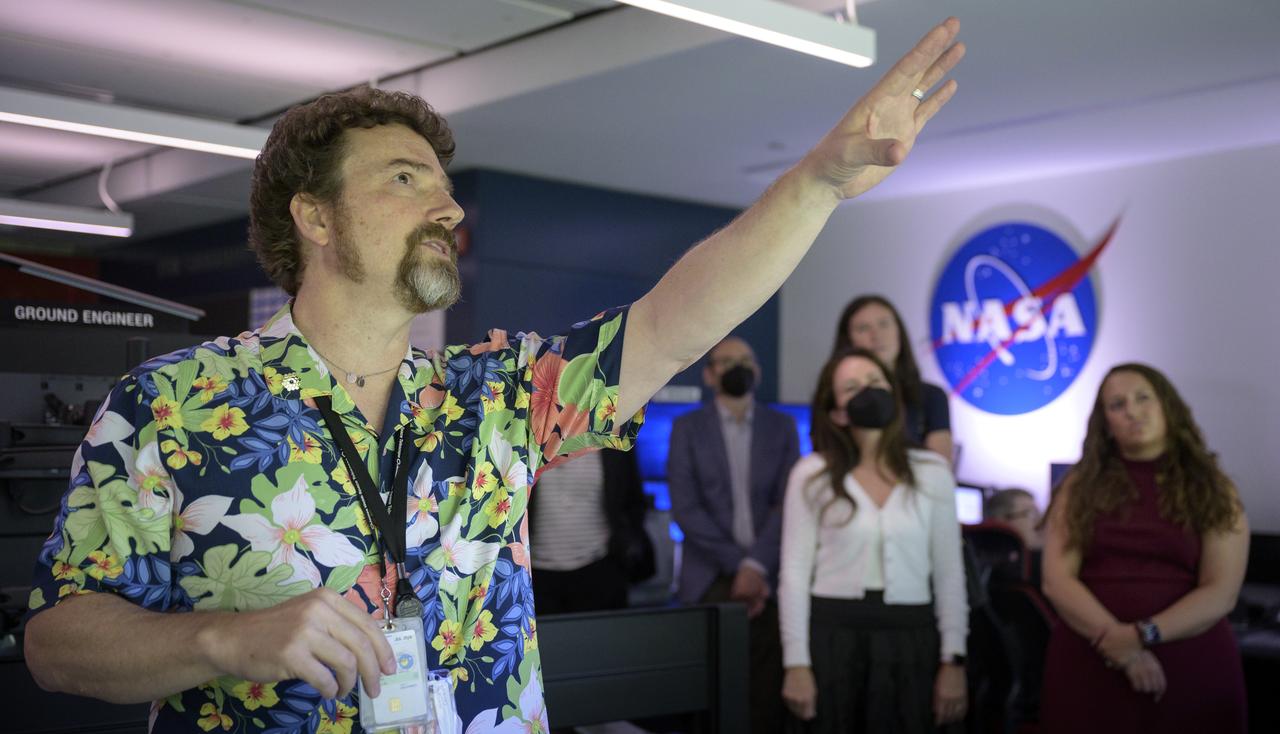
NASA James Webb Space Telescope Mission Operations Manager Carl Starr gives a tour of the NASA James Webb Space Telescope Mission Operations Center, Wednesday, June 29, 2022, at the Space Telescope Science Institute (STScI) in Baltimore. Prior to the tour the NASA Deputy Administrator Pam Melroy and NASA Associate Administrator for the Science Mission Directorate Thomas Zurbuchen spoke at a briefing that focused on the status of NASA’s James Webb Space Telescope in its final weeks of preparing for its science mission, as well as overviews of planned science for Webb’s first year of operations. Photo Credit: (NASA/Bill Ingalls)
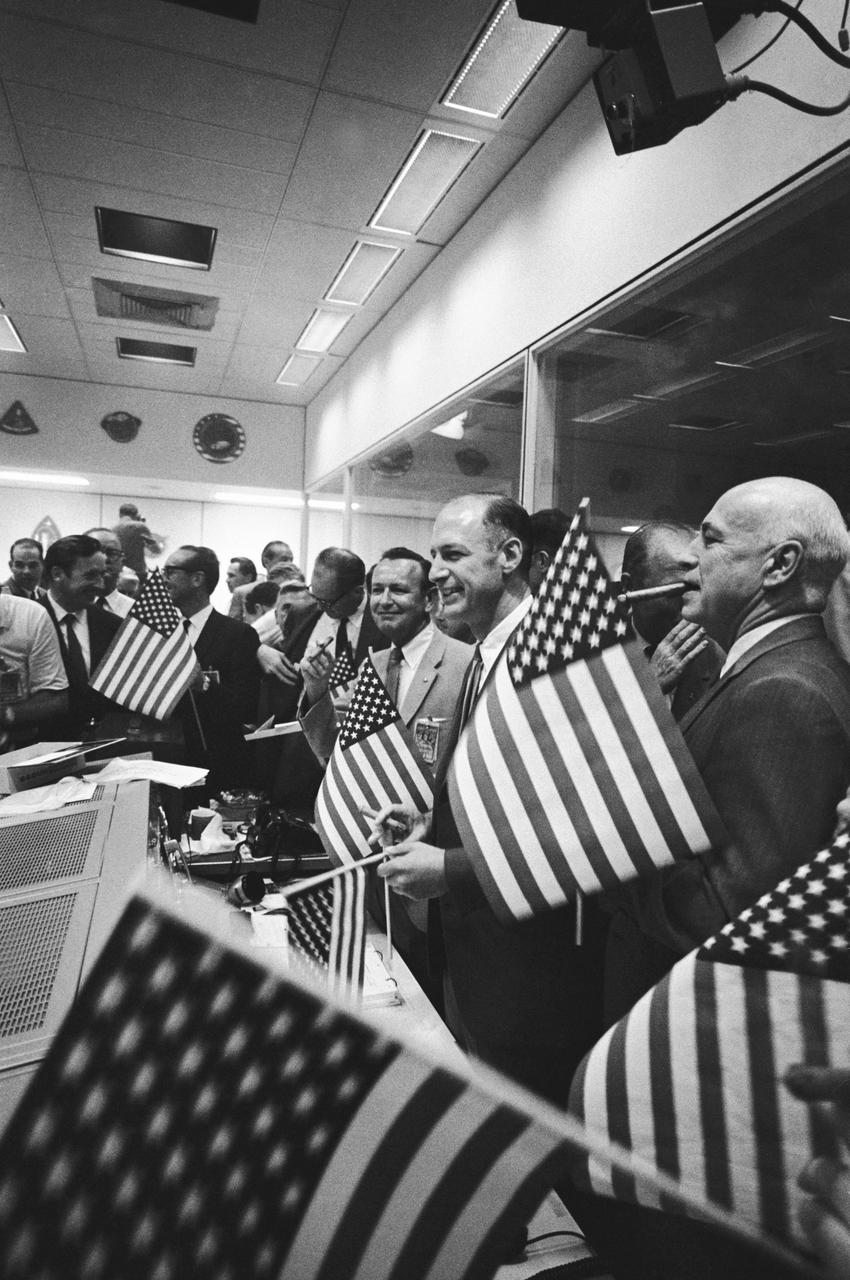
S69-40024 (24 July 1969) --- NASA and Manned Spacecraft Center (MSC) officials join in with the flight controllers, in the Mission Operations Control Room (MOCR) in the Mission Control Center (MCC), in celebrating the successful conclusion of the Apollo 11 lunar landing mission. Identifiable in the picture, starting in foreground, are Dr. Robert R. Gilruth, MSC Director; George M. Low, Manager, Apollo Spacecraft Program, MSC; Dr. Christopher C. Kraft Jr., MSC Director of Flight Operation; U.S. Air Force Lt. Gen. Samuel C. Phillips (with glasses, looking downward), Apollo Program Director, Office of Manned Space Flight, NASA Headquarters; and Dr. George E. Mueller (with glasses, looking toward left), Associate Administrator, Office of Manned Space Flight, NASA Headquarters. Former astronaut John H. Glenn Jr. is standing behind Mr. Low.
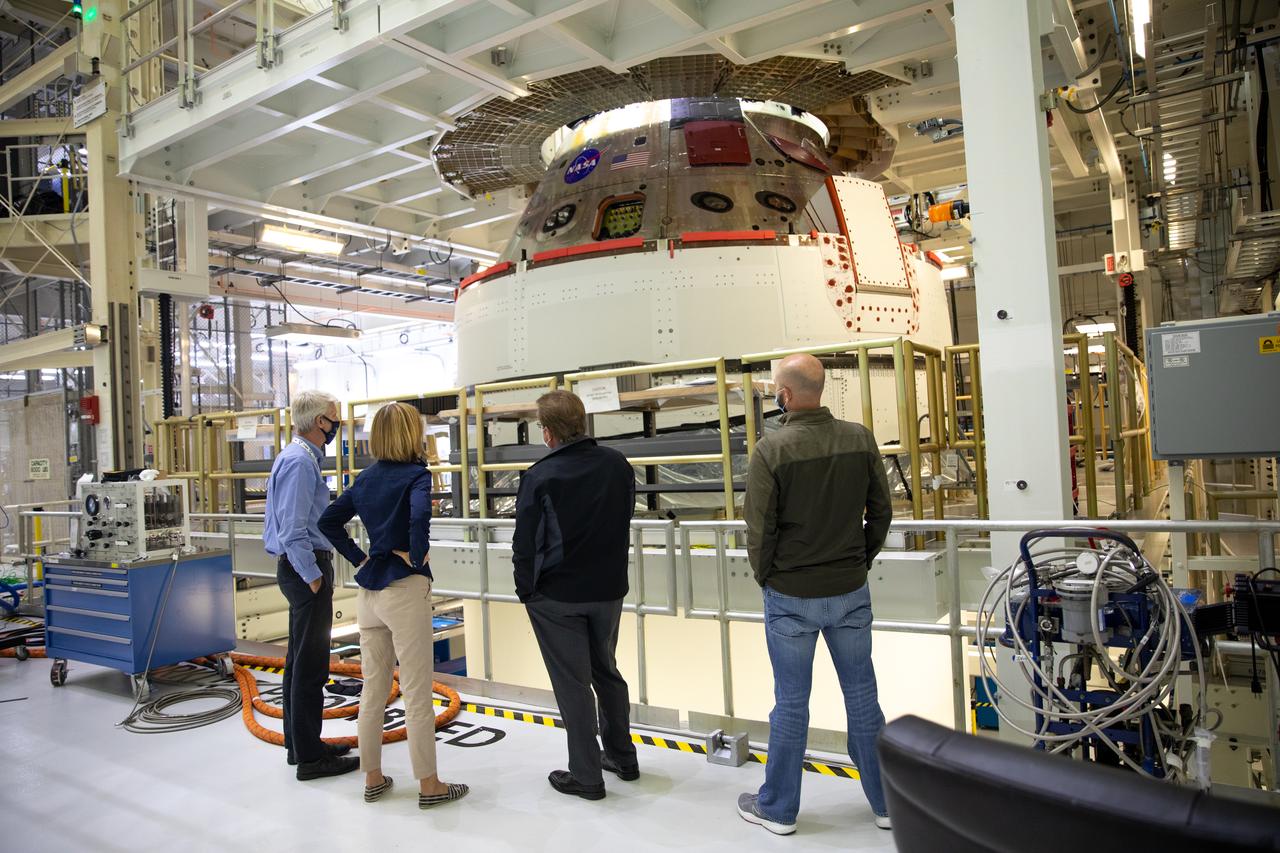
Senior managers from Orion, NASA, and Lockheed Martin view the Artemis I spacecraft during a visit to the Neil Armstrong Operations and Checkout Building high bay at NASA’s Kennedy Space Center in Florida on Nov. 5, 2020. From left are Scott Wilson, manager, Orion Production Office; Kathy Lueders, associate administrator of NASA’s Human Exploration and Operations Mission Directorate; Jules Schneider, director of Assembly, Test, and Launch Operations for Lockheed Martin; and Jim Skaggs, senior manager of Kennedy Operations for Lockheed Martin. The first in a series of increasingly complex missions, Artemis I will test the Space Launch System rocket and Orion spacecraft as an integrated system prior to crewed flights to the Moon. Under the Artemis program, NASA is planning to land the first woman and the next man on the lunar surface by 2024.