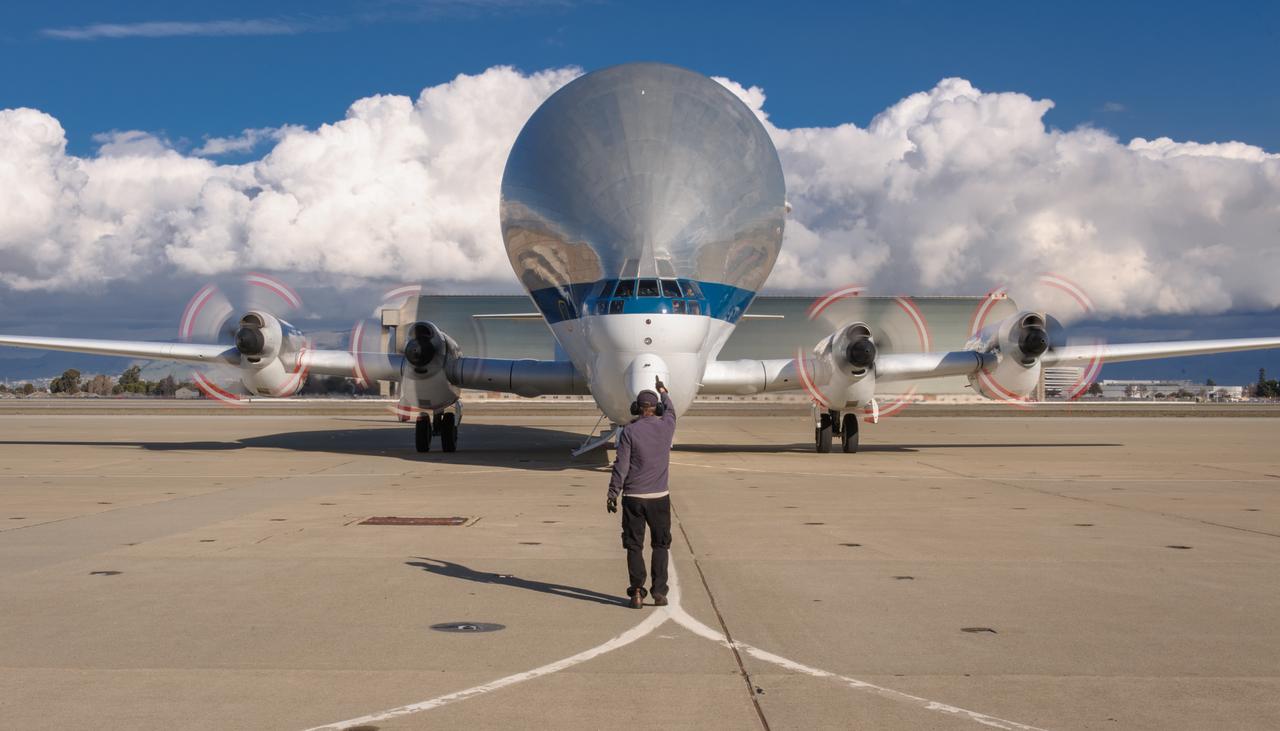
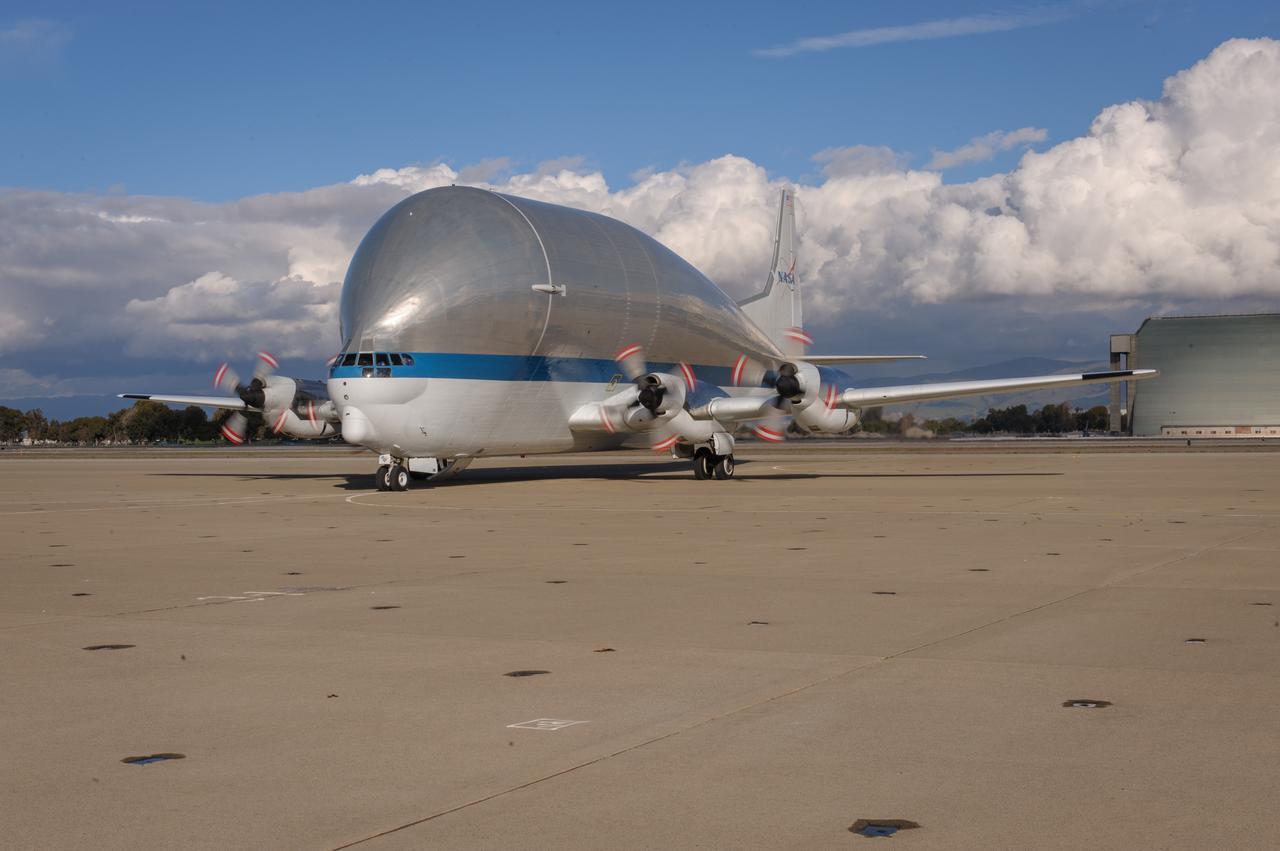
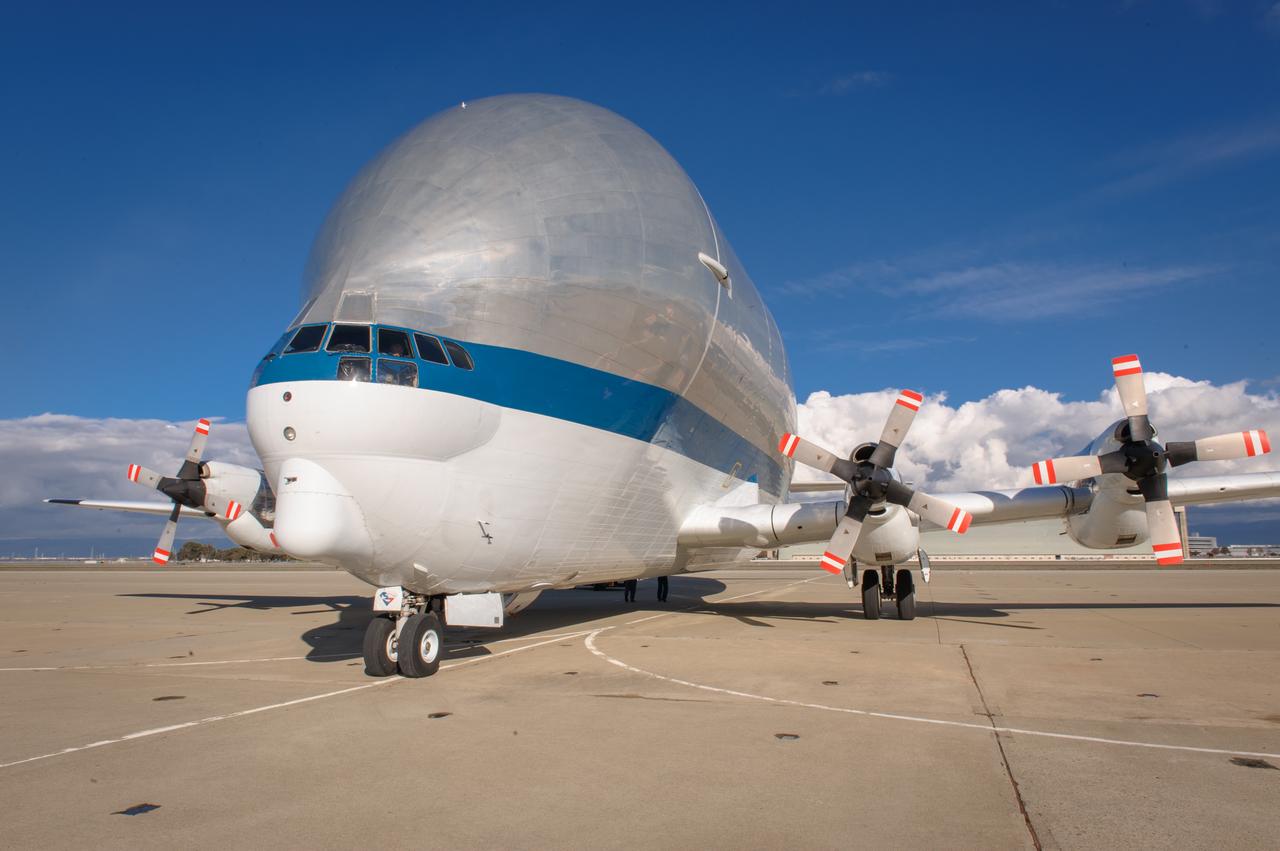
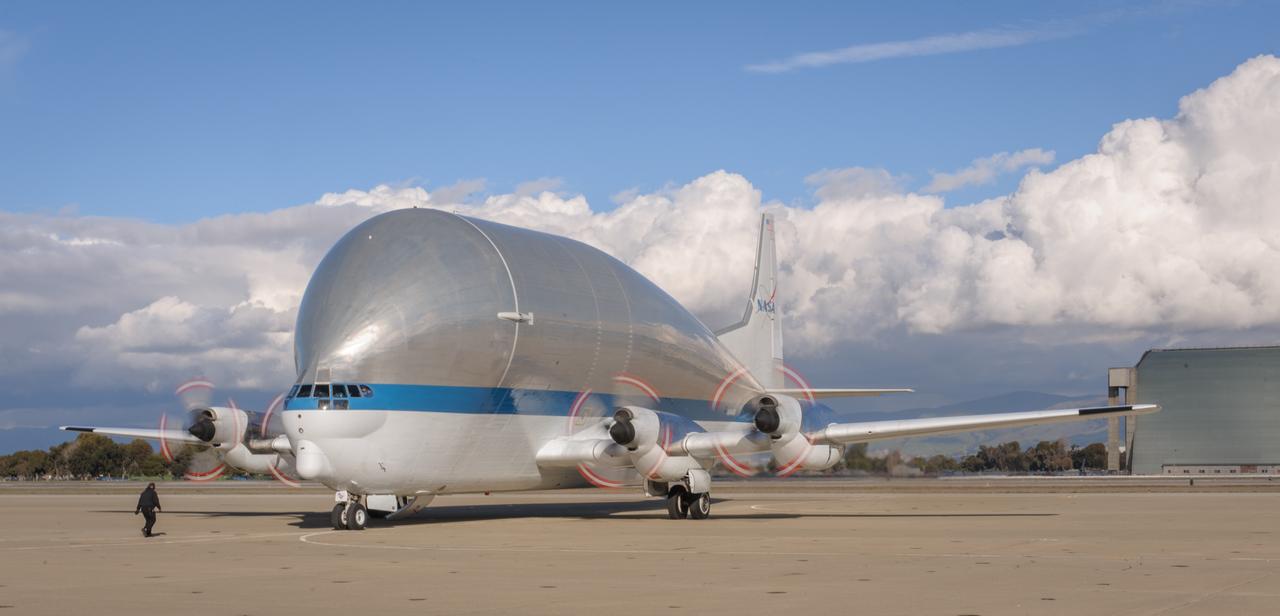
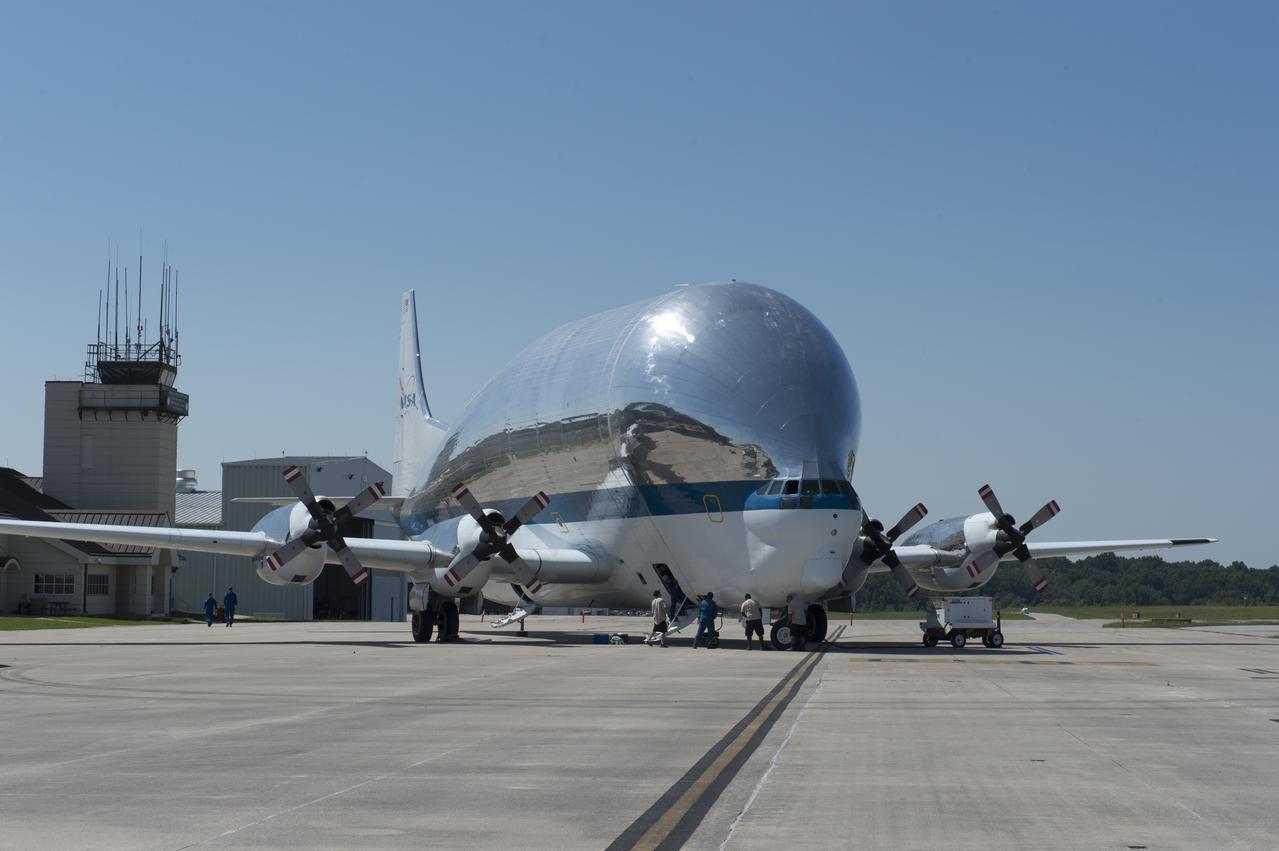
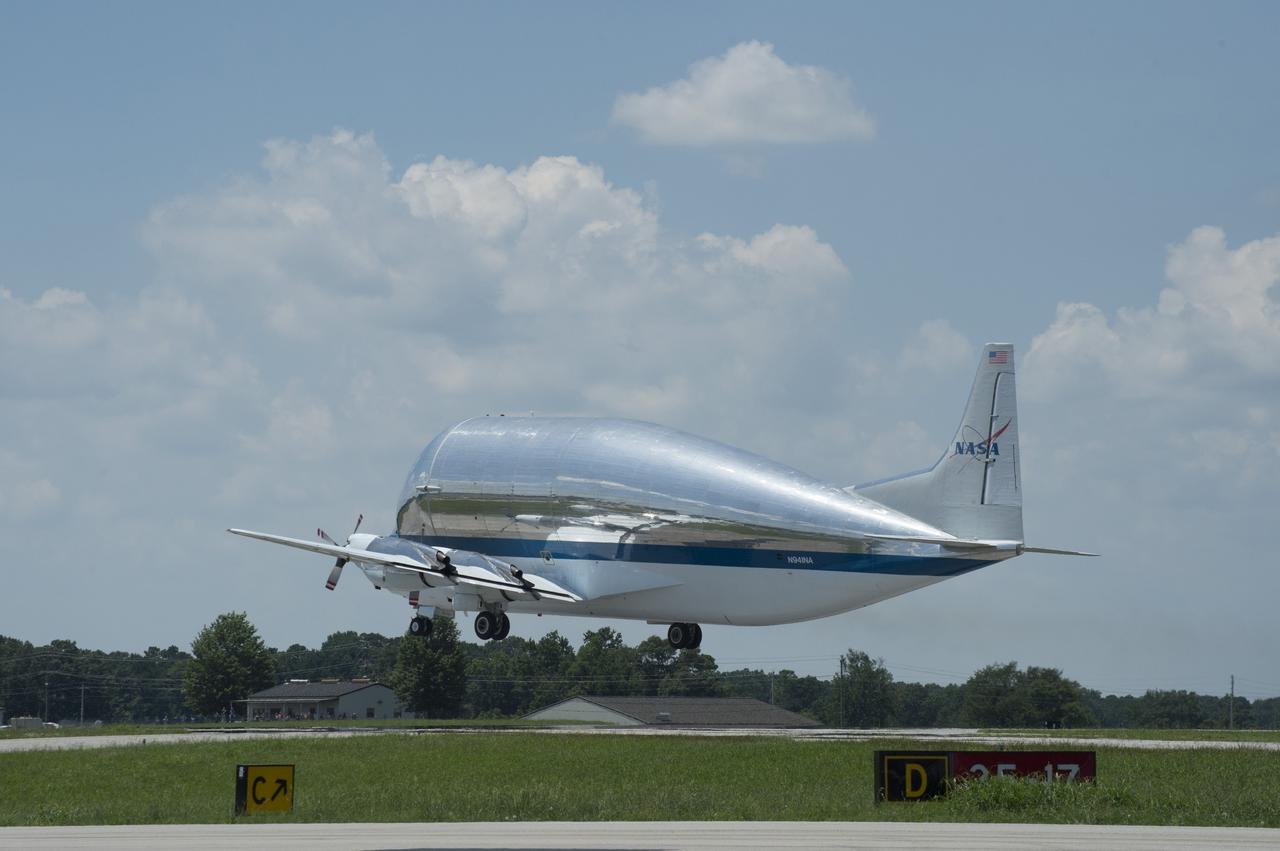
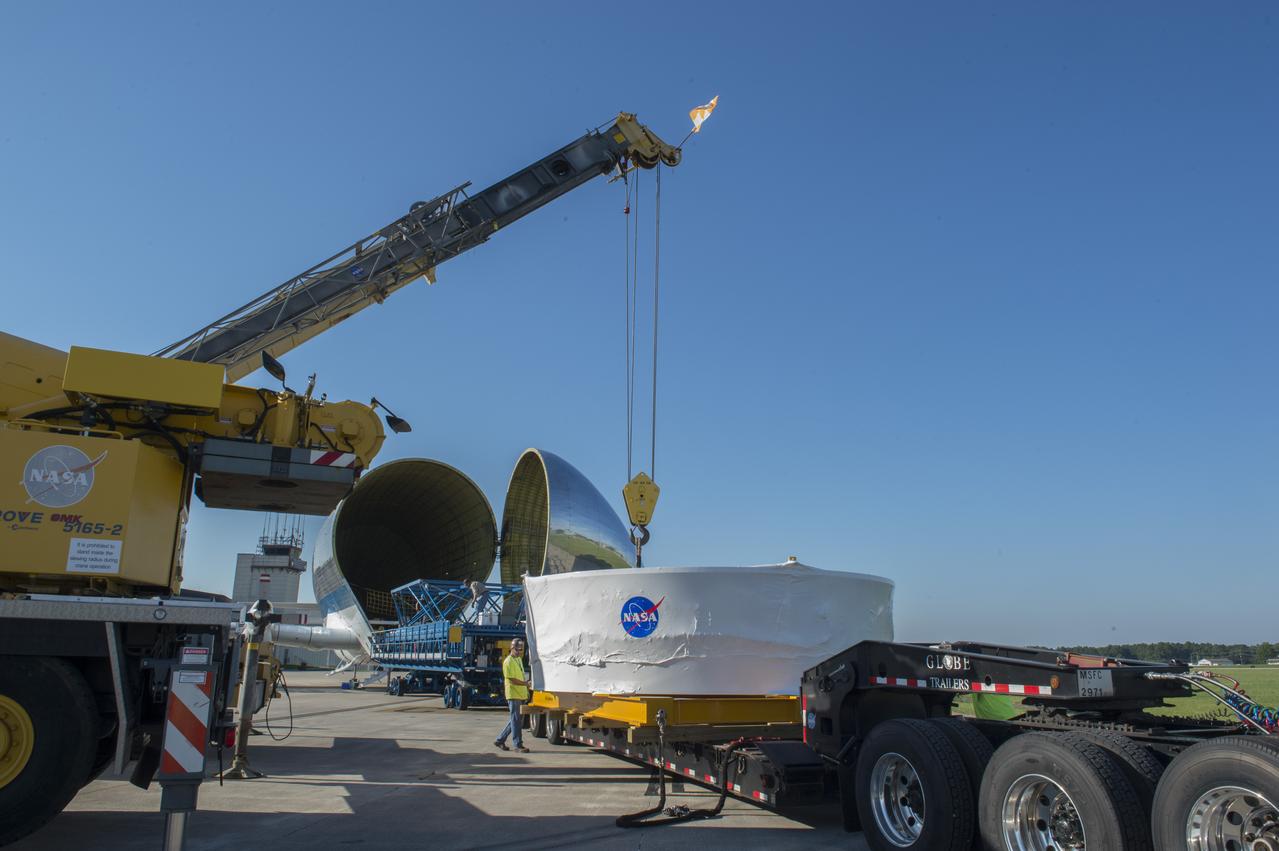
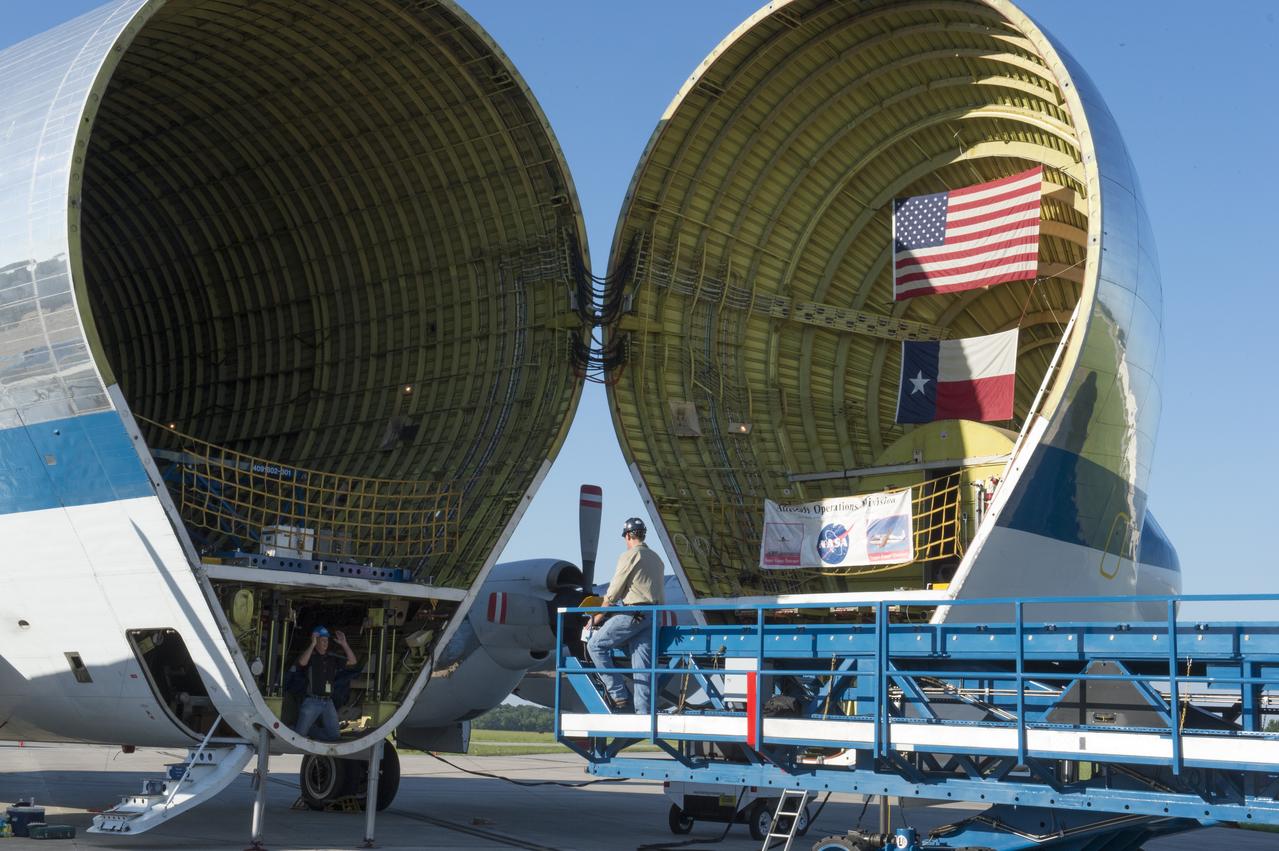
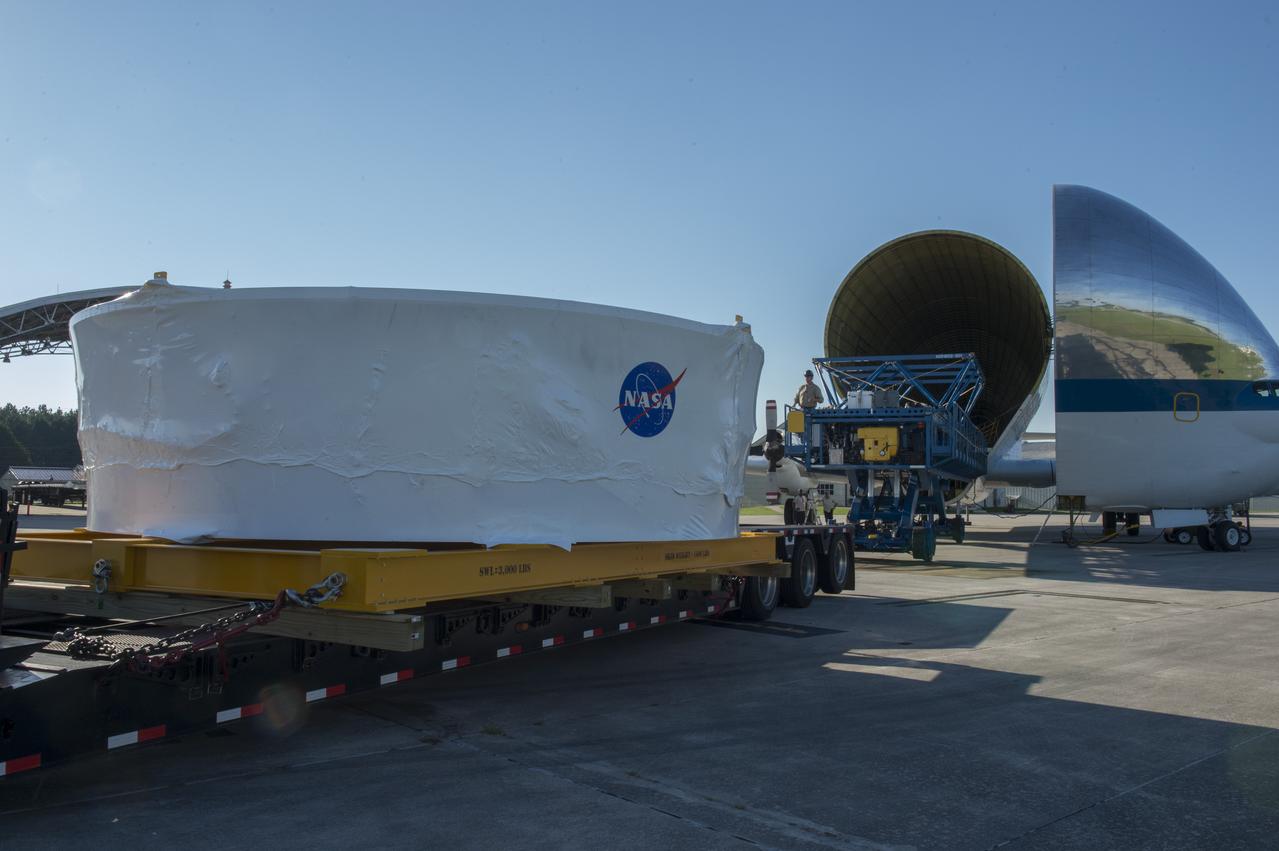
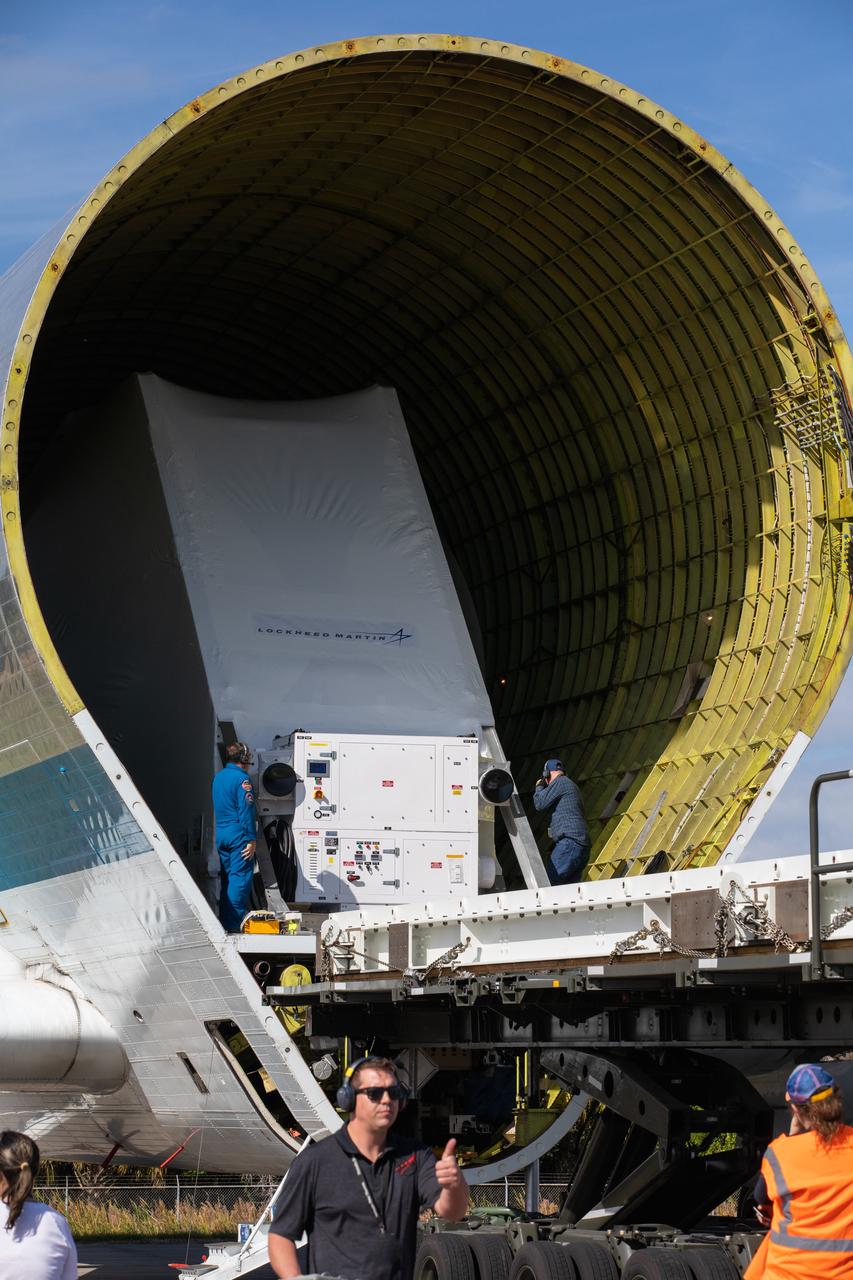
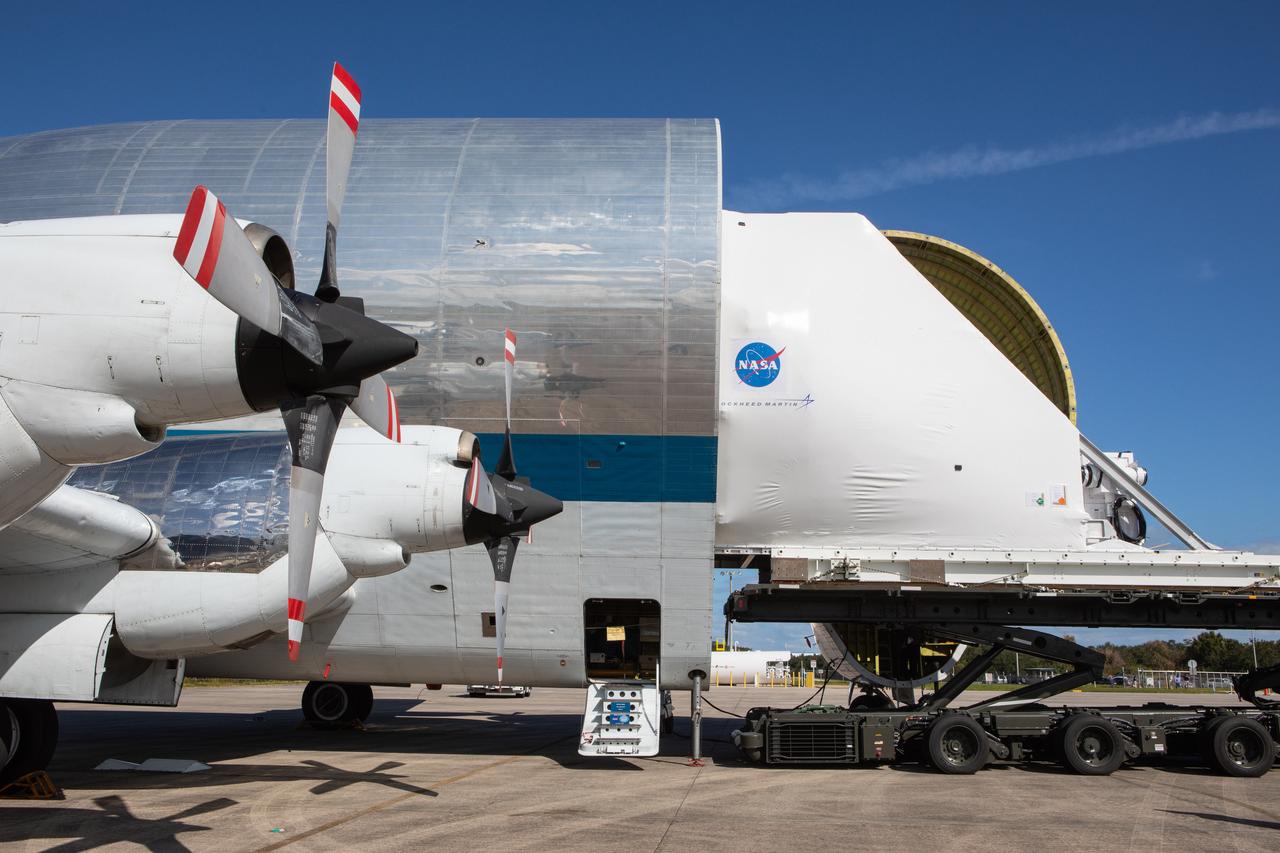
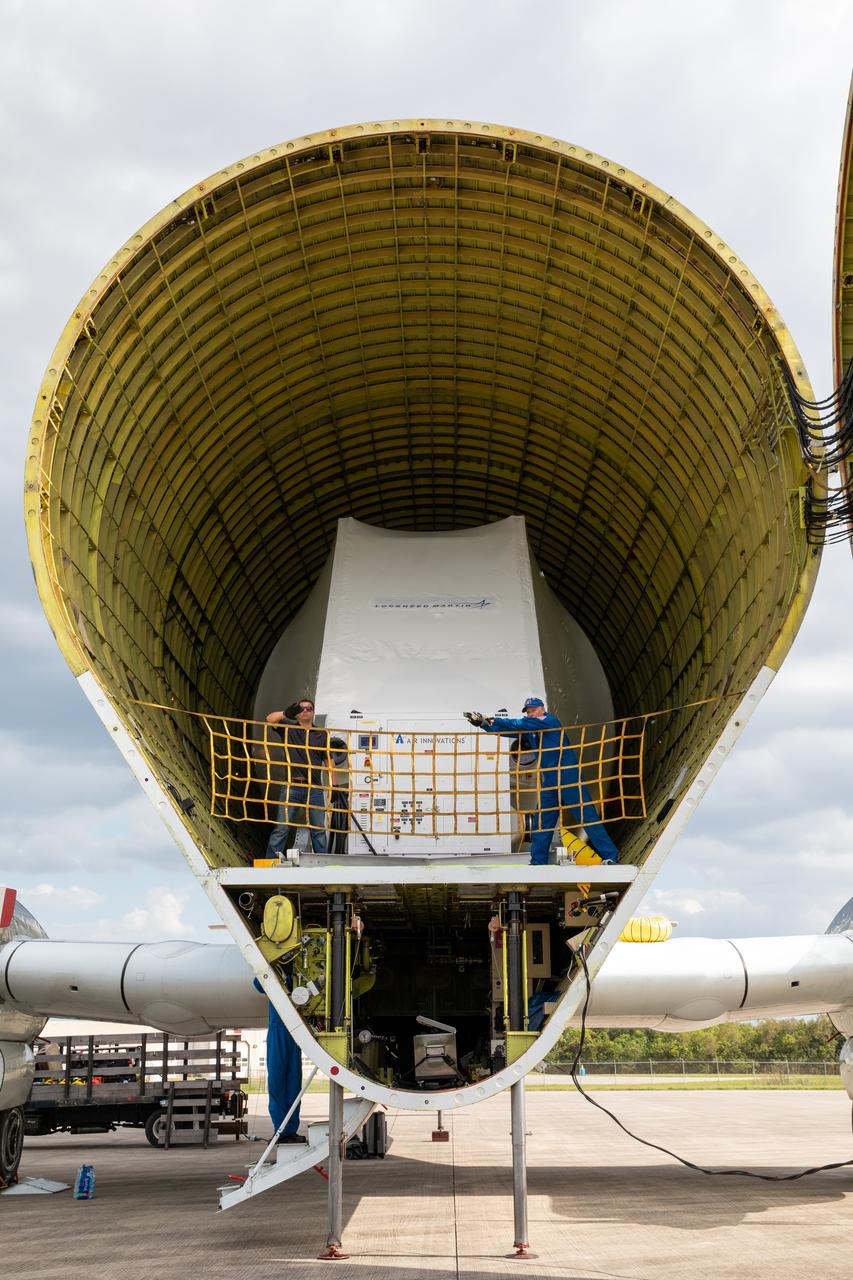
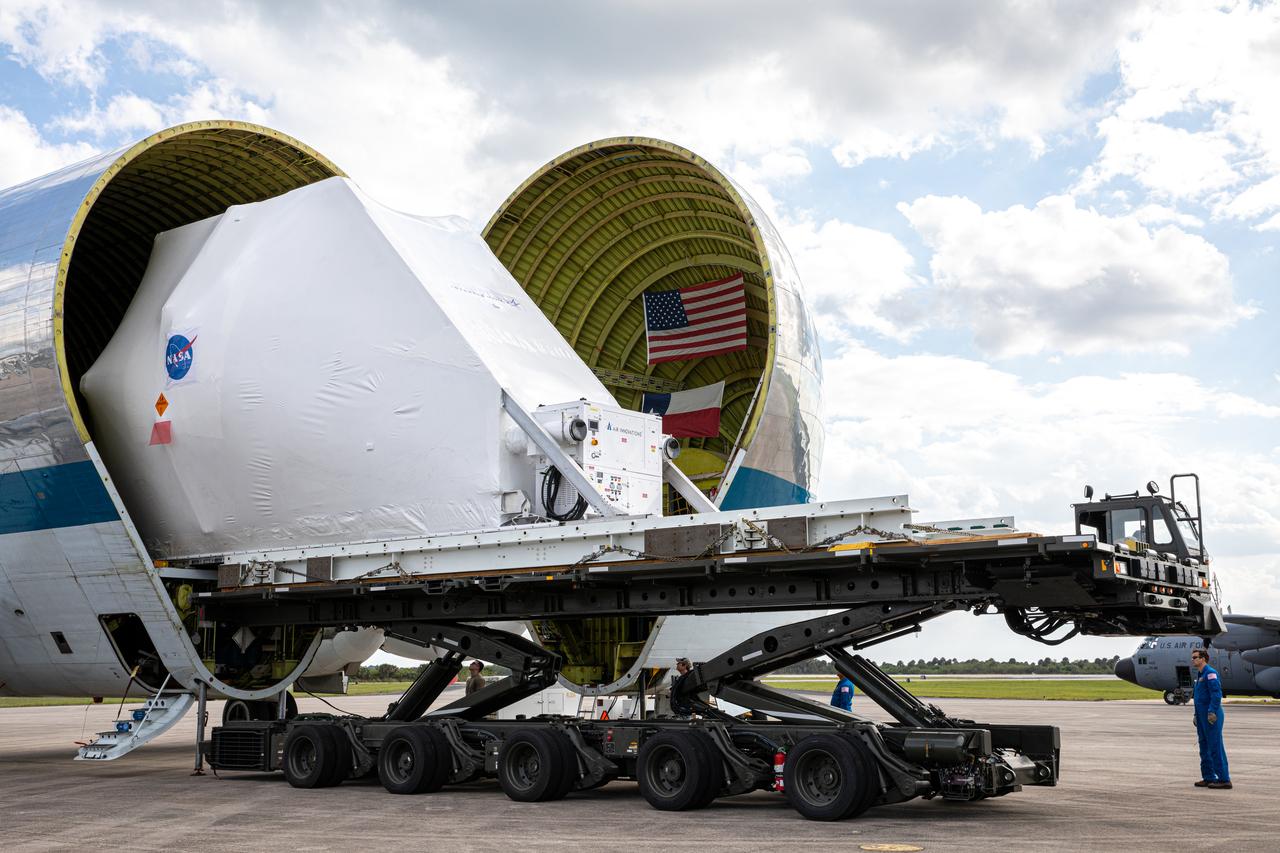
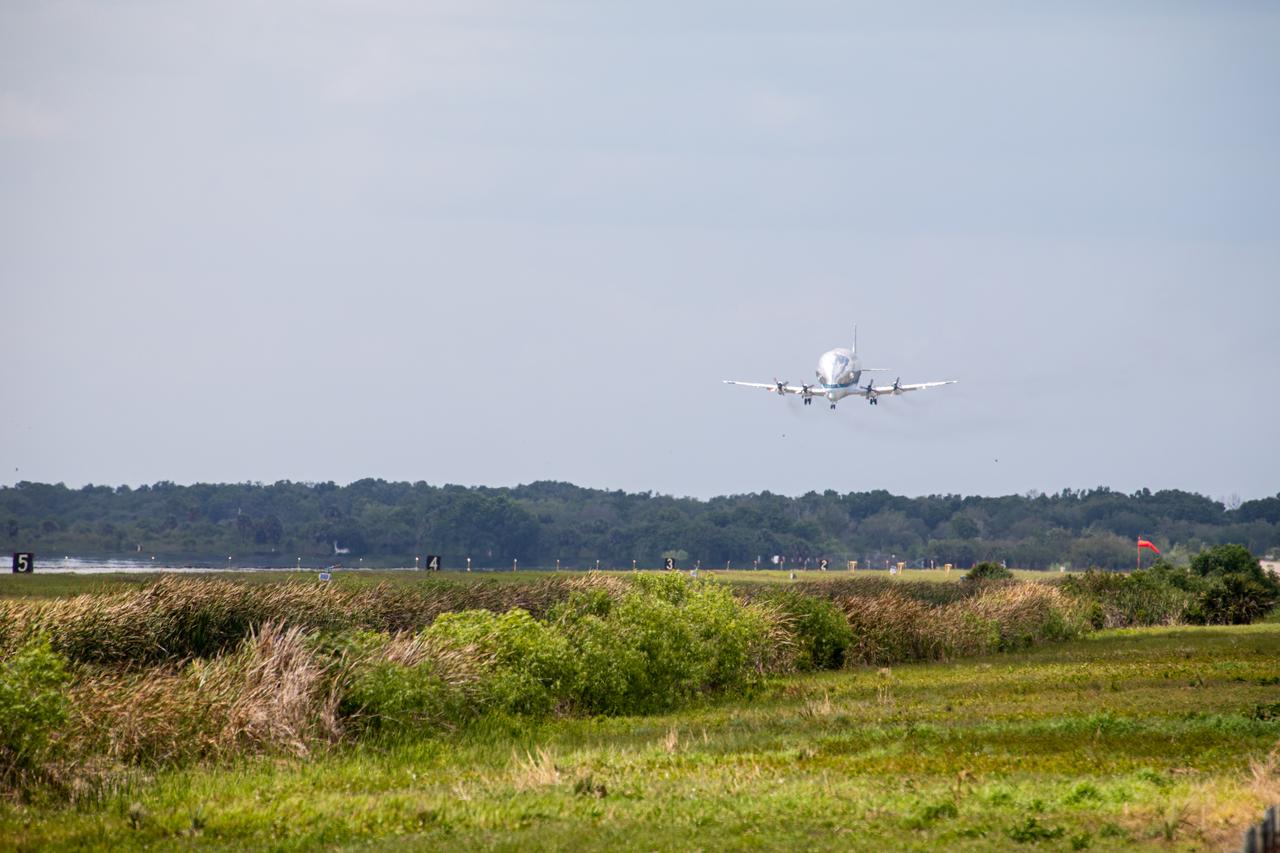
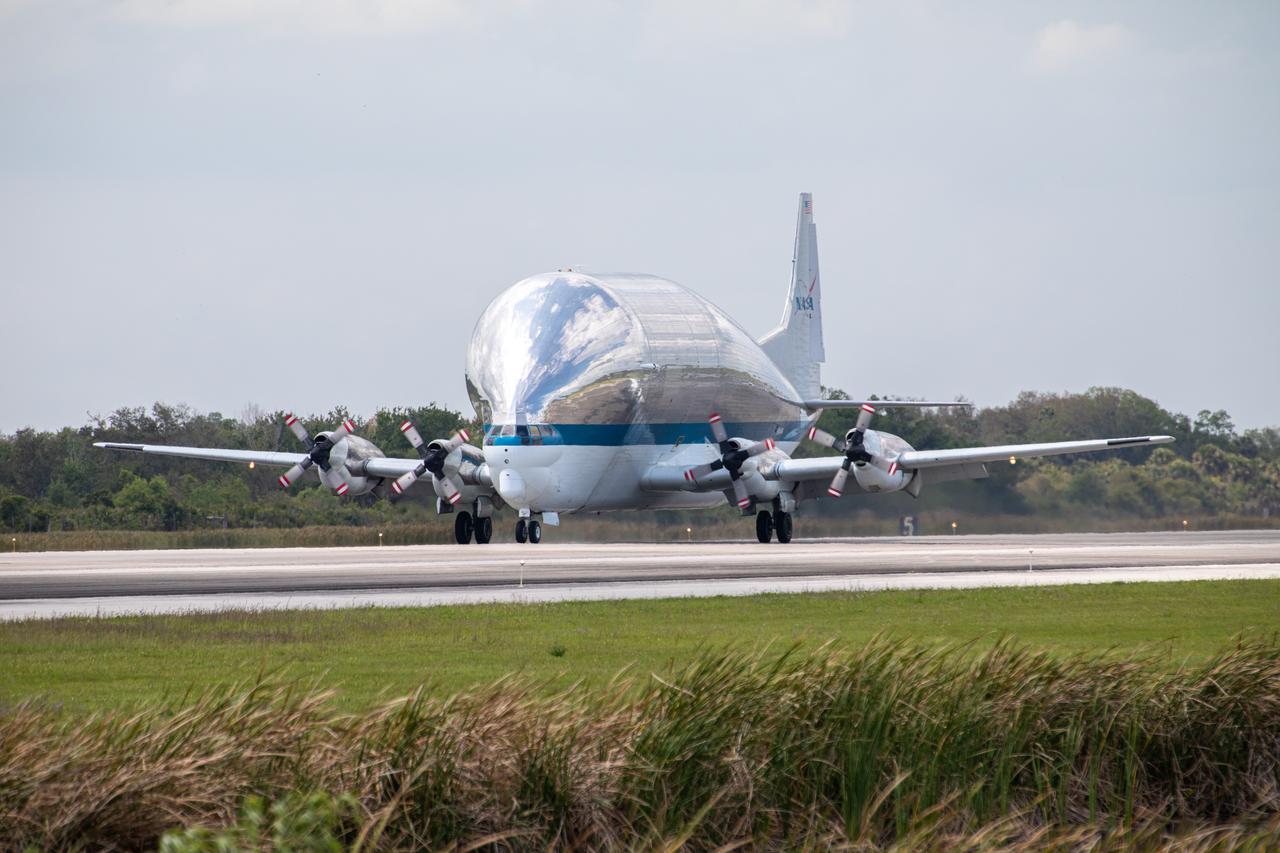
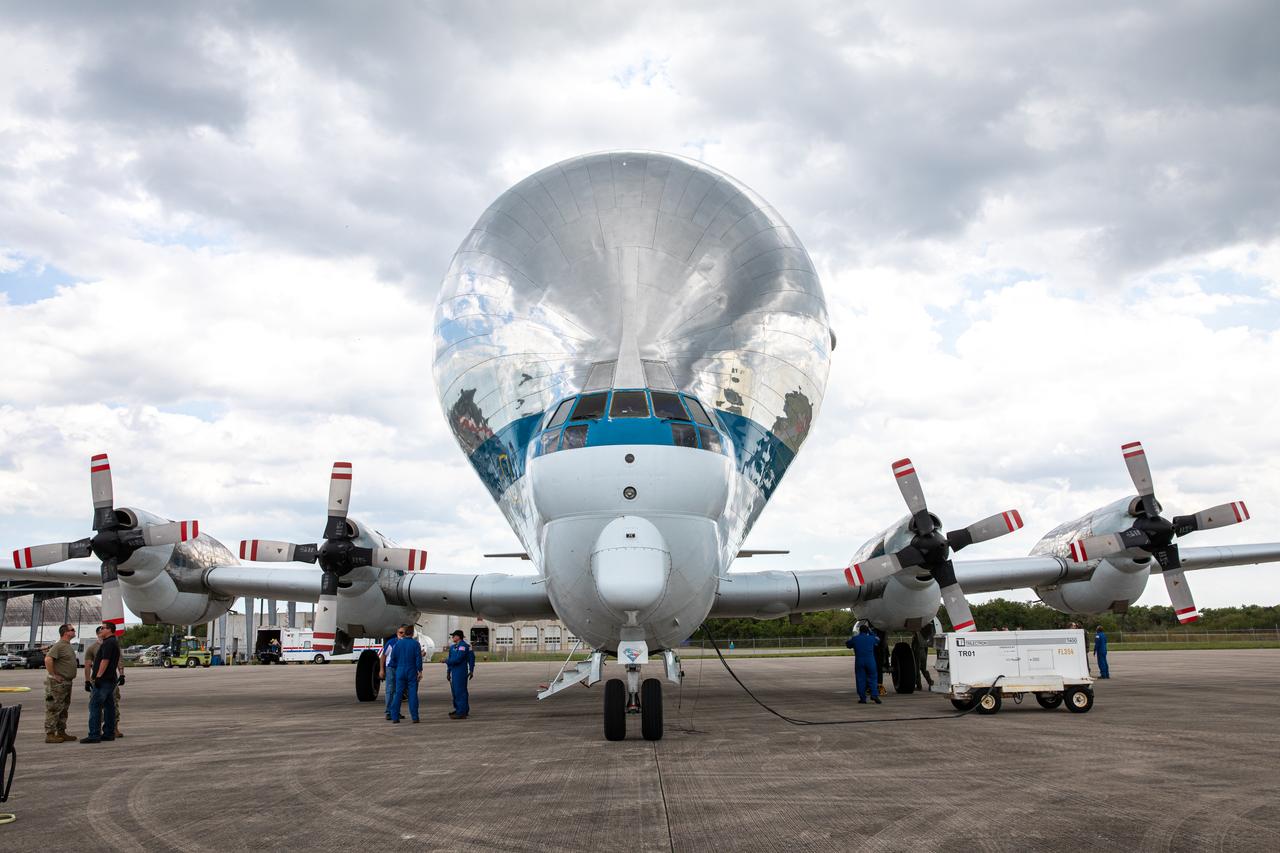
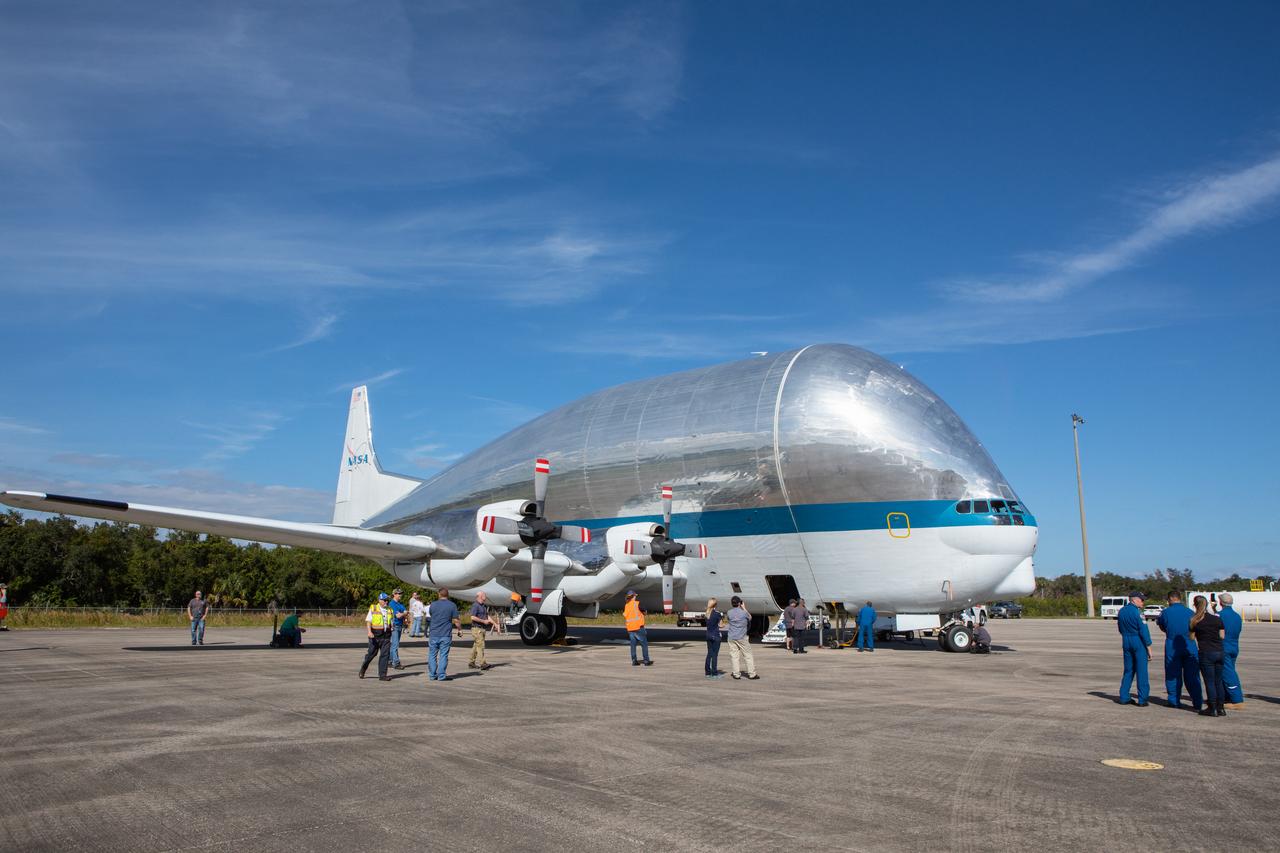
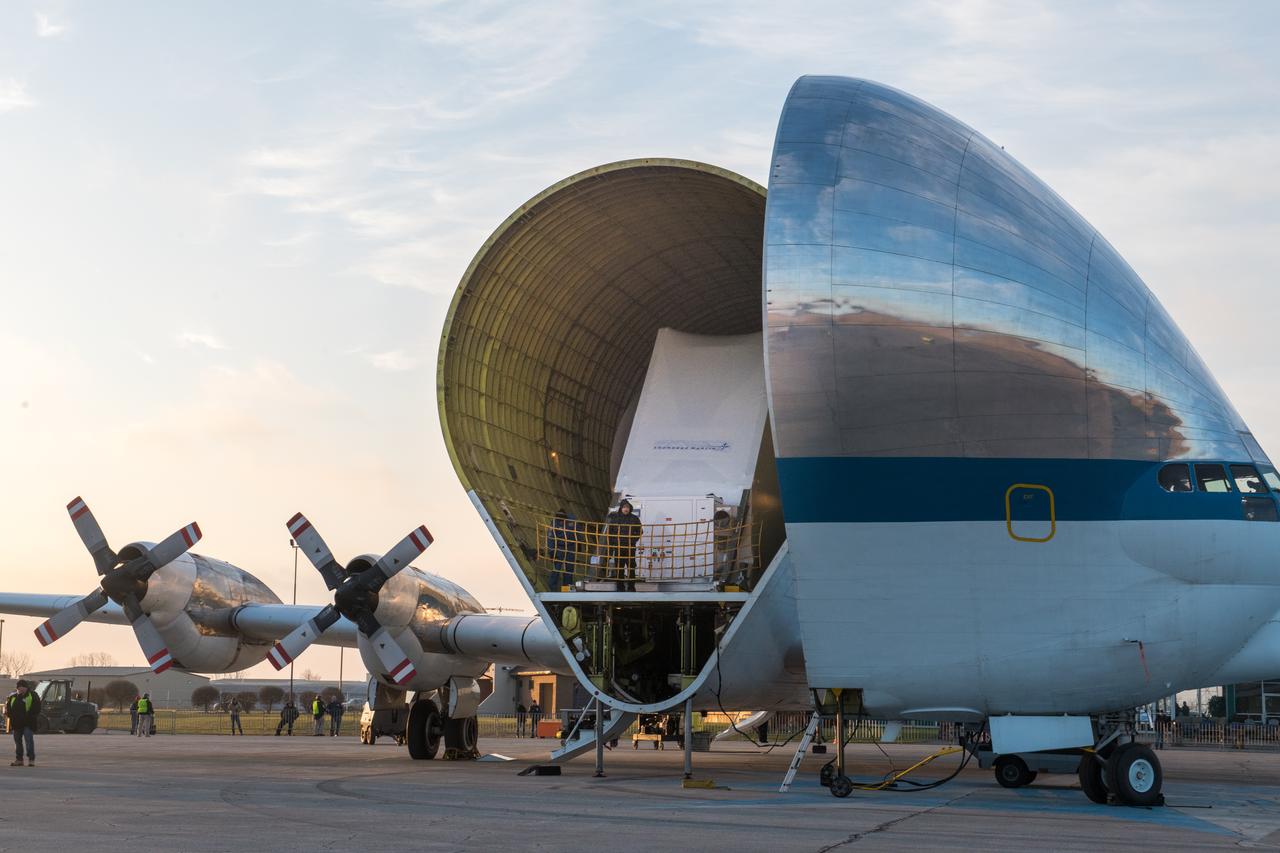
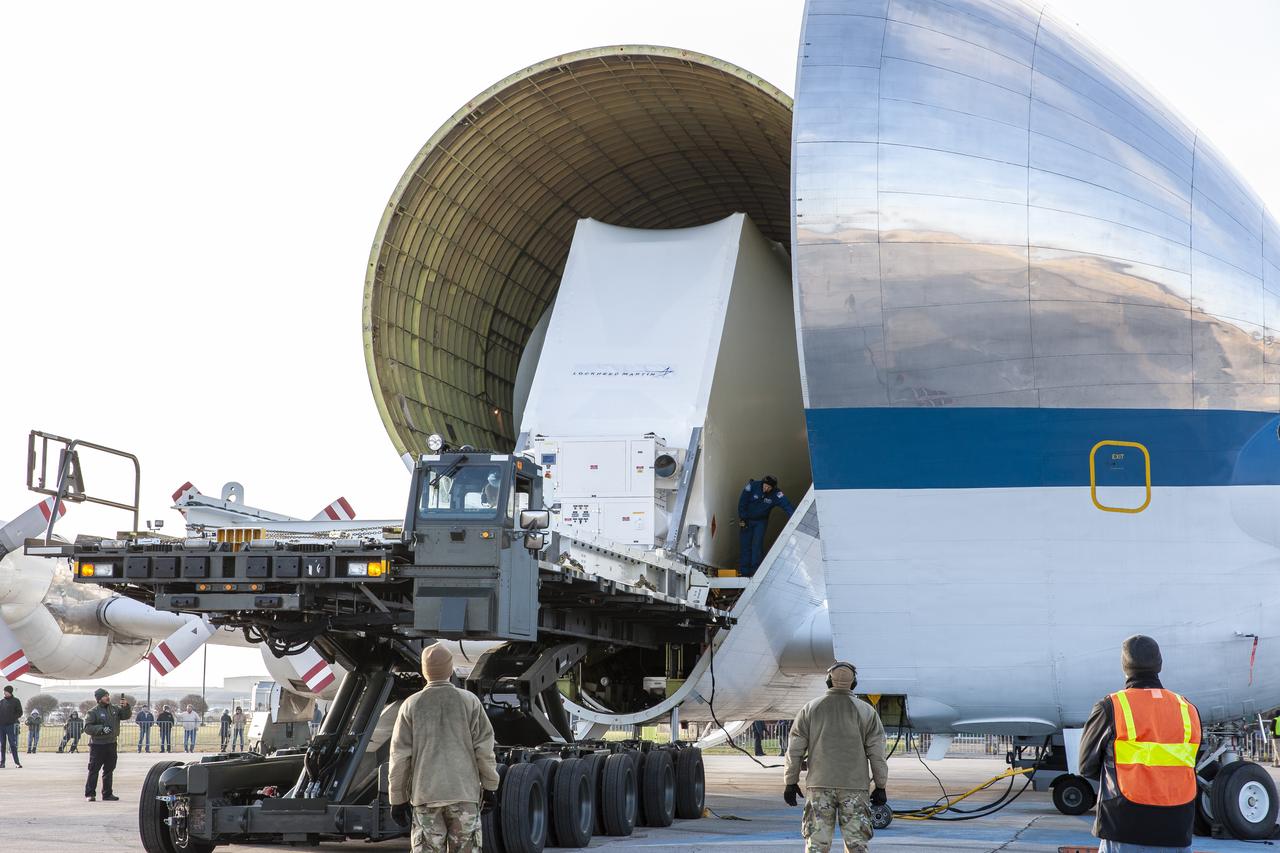
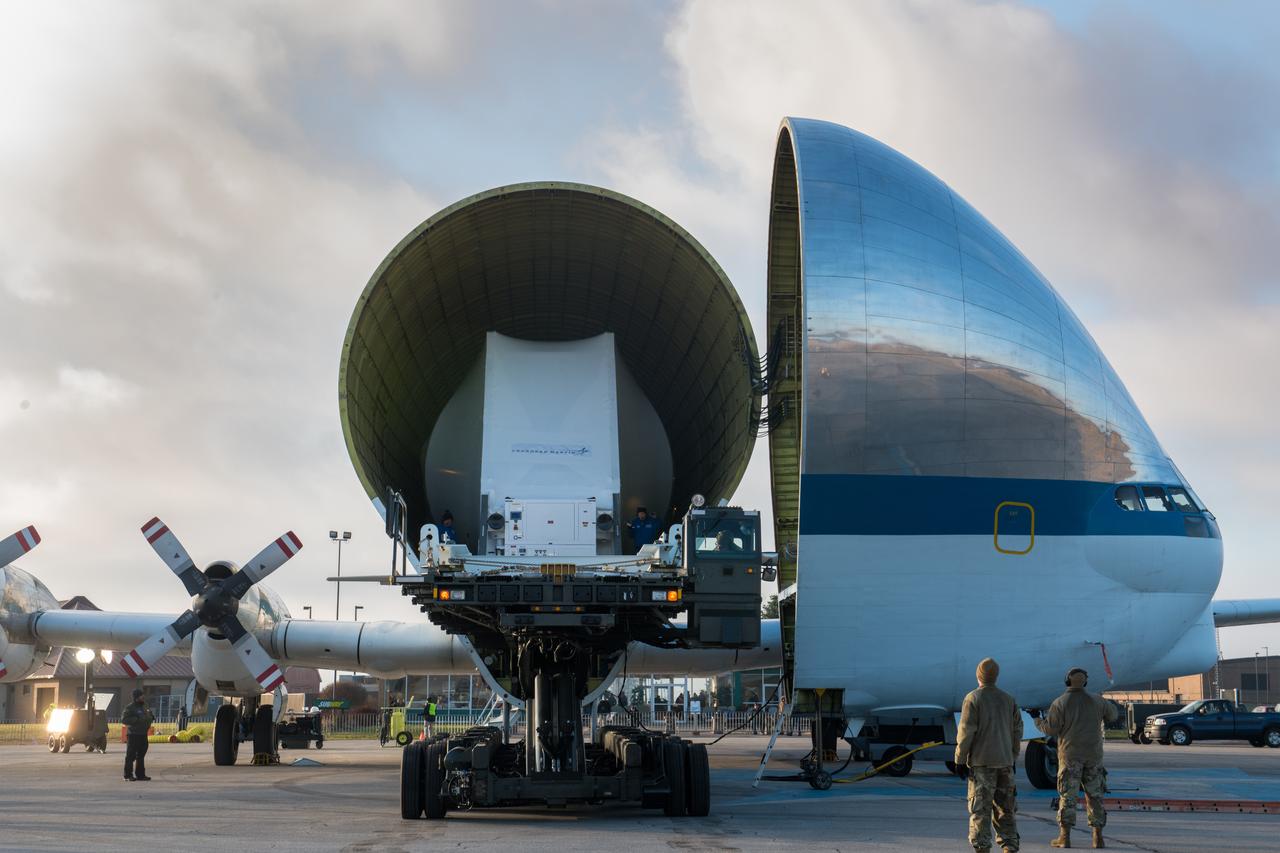
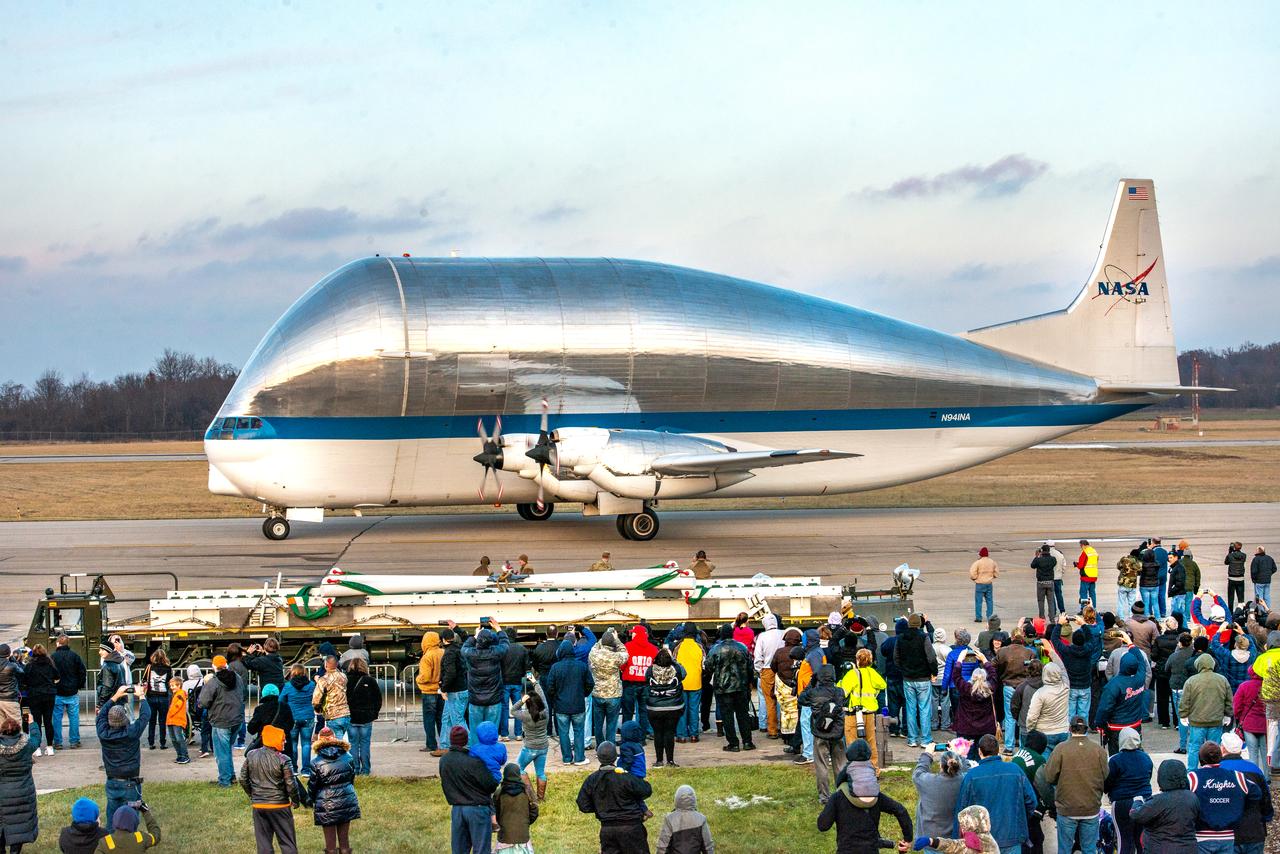
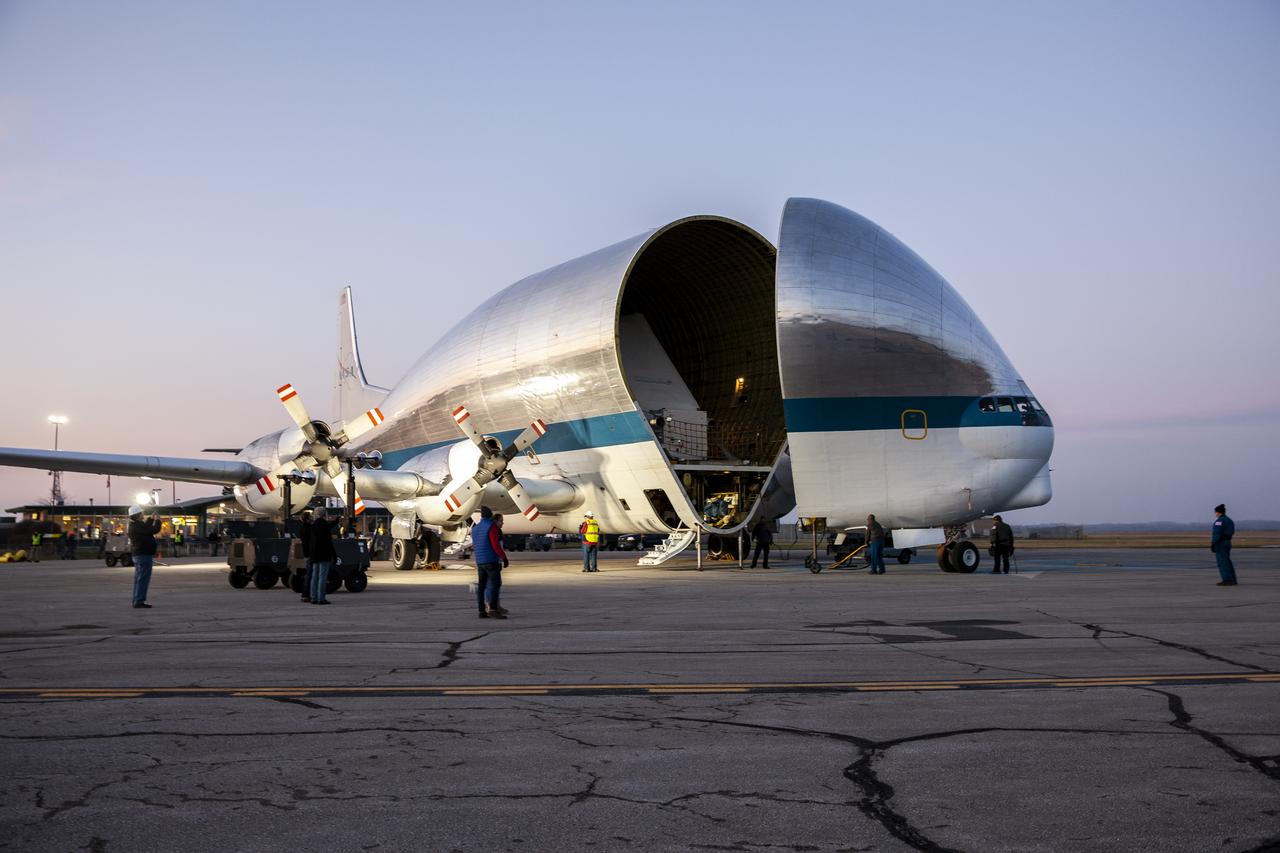
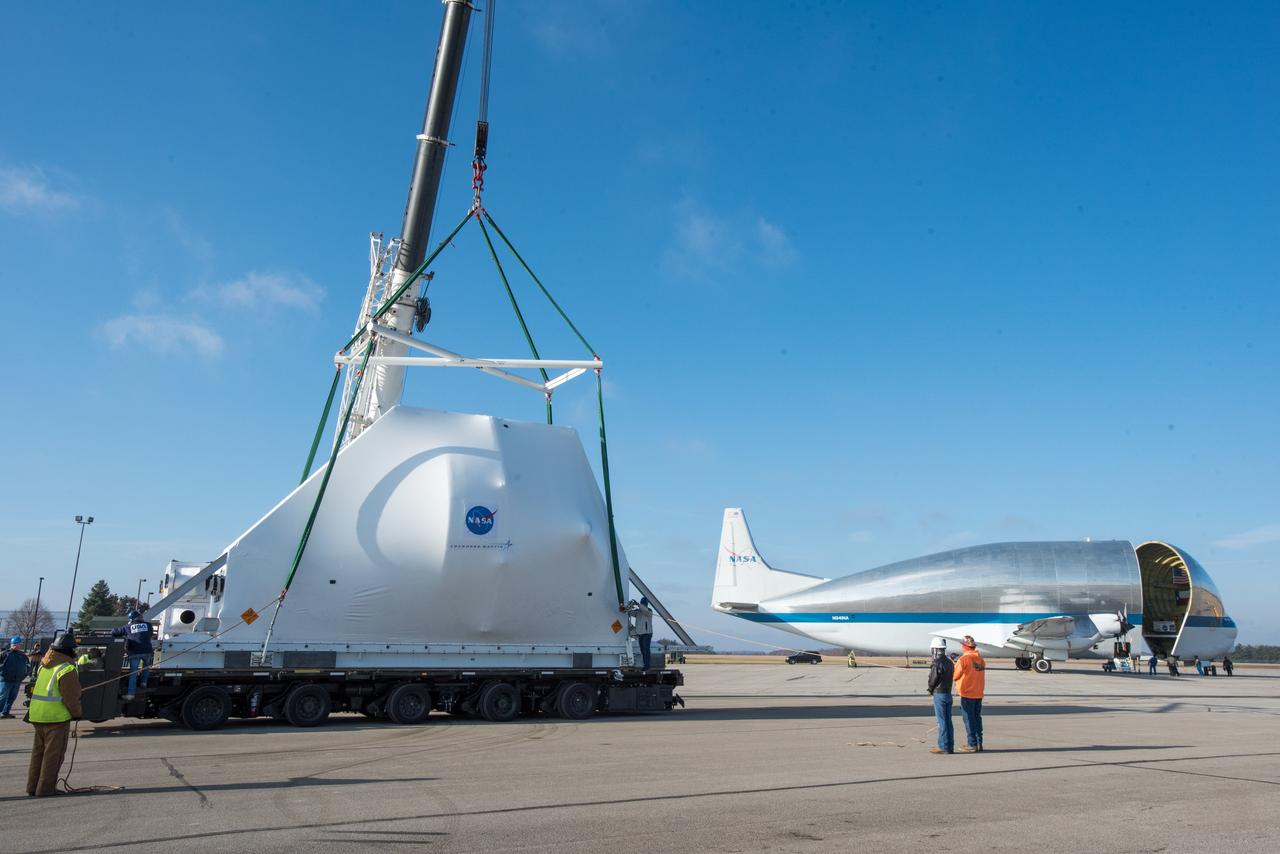
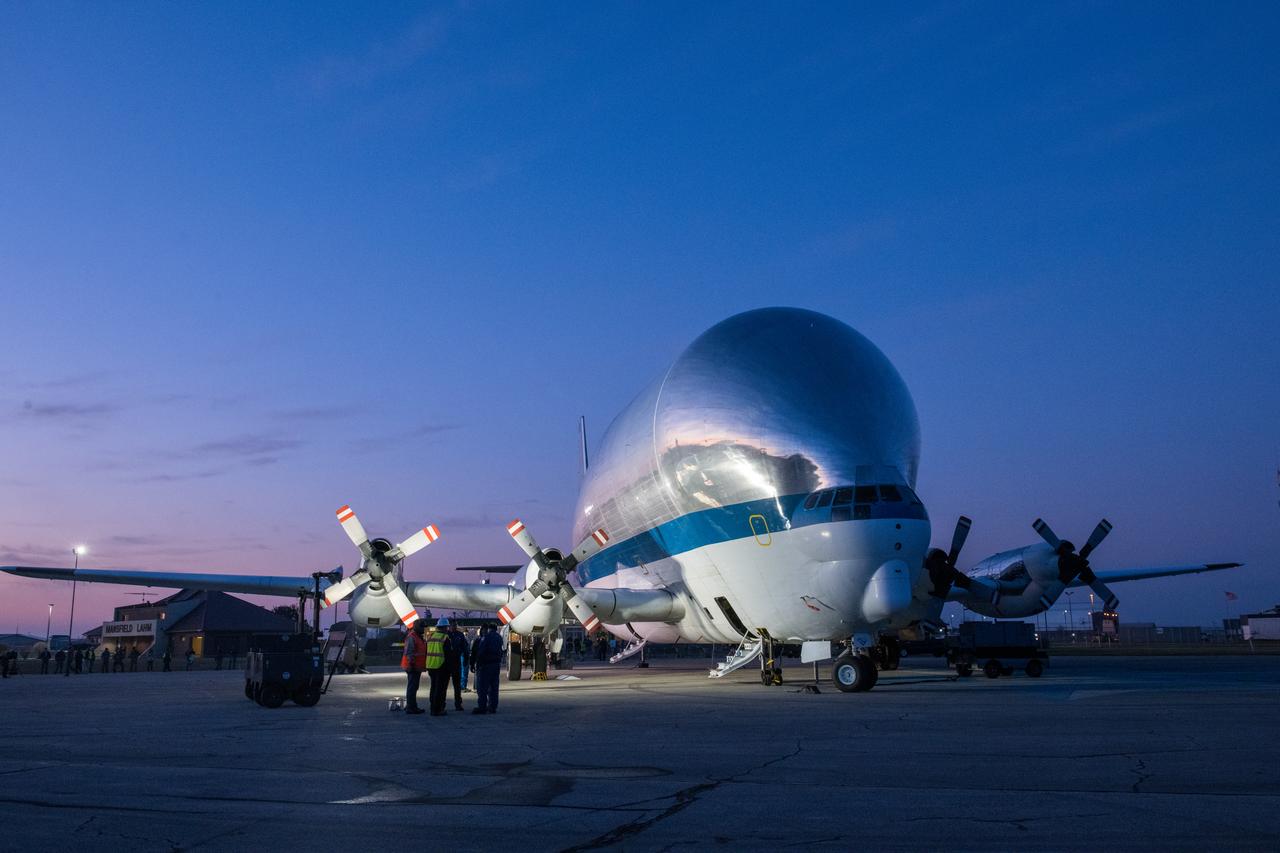
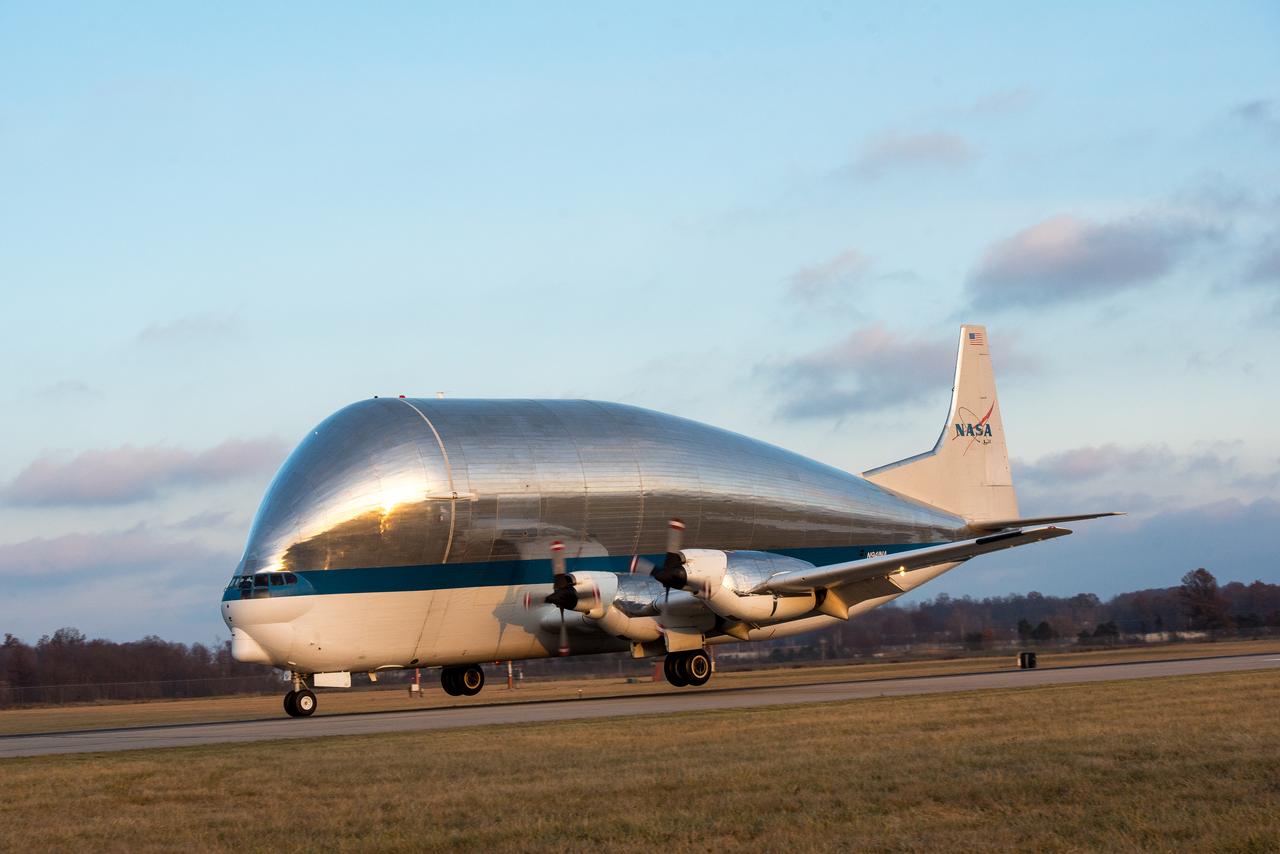
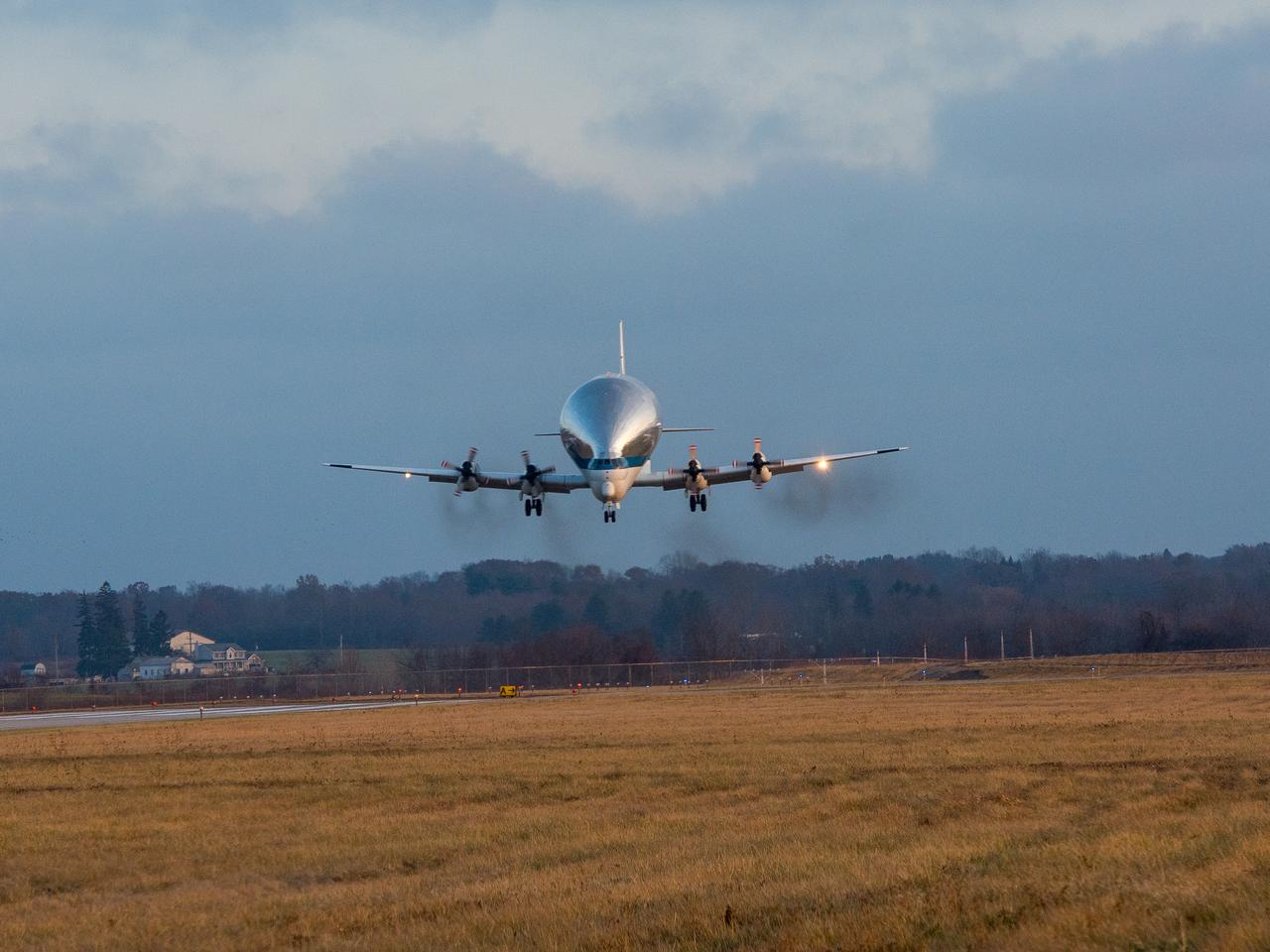
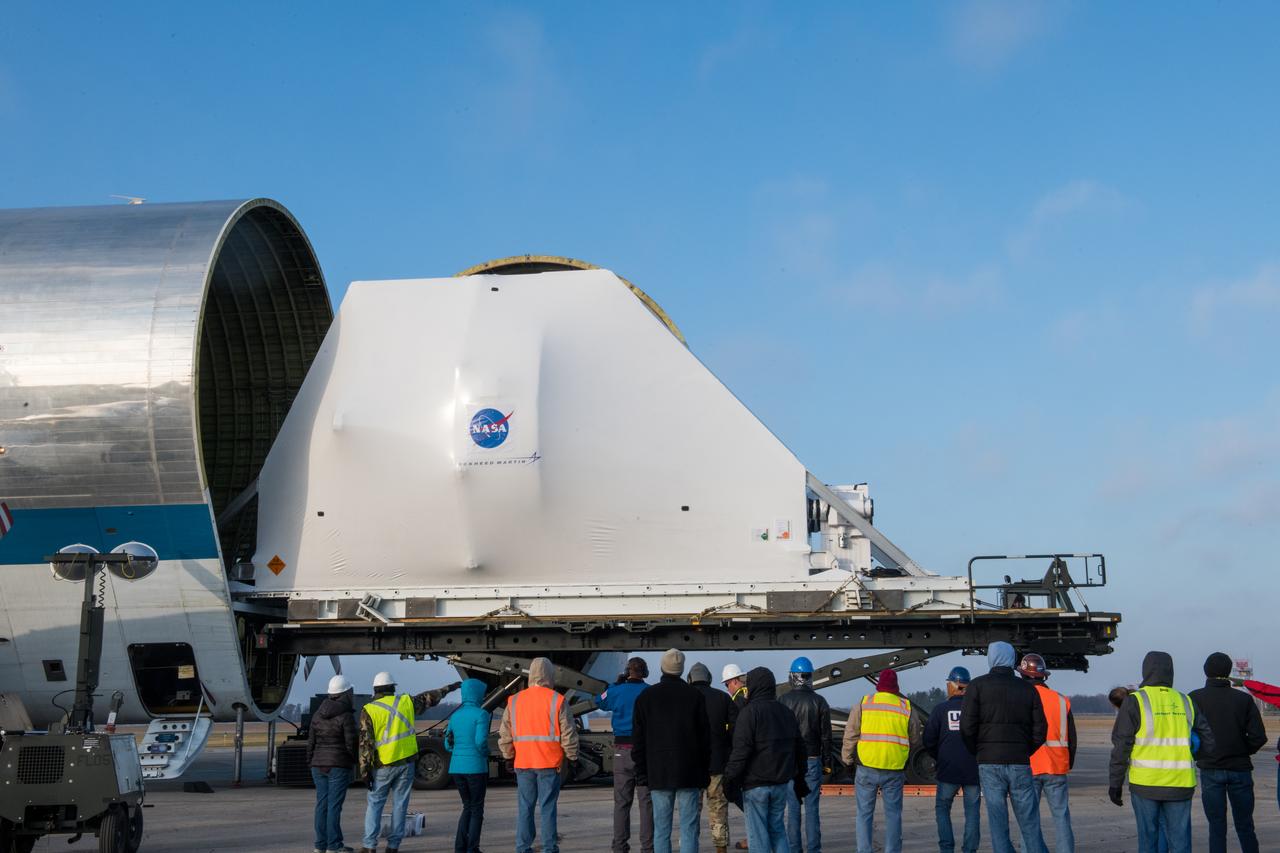
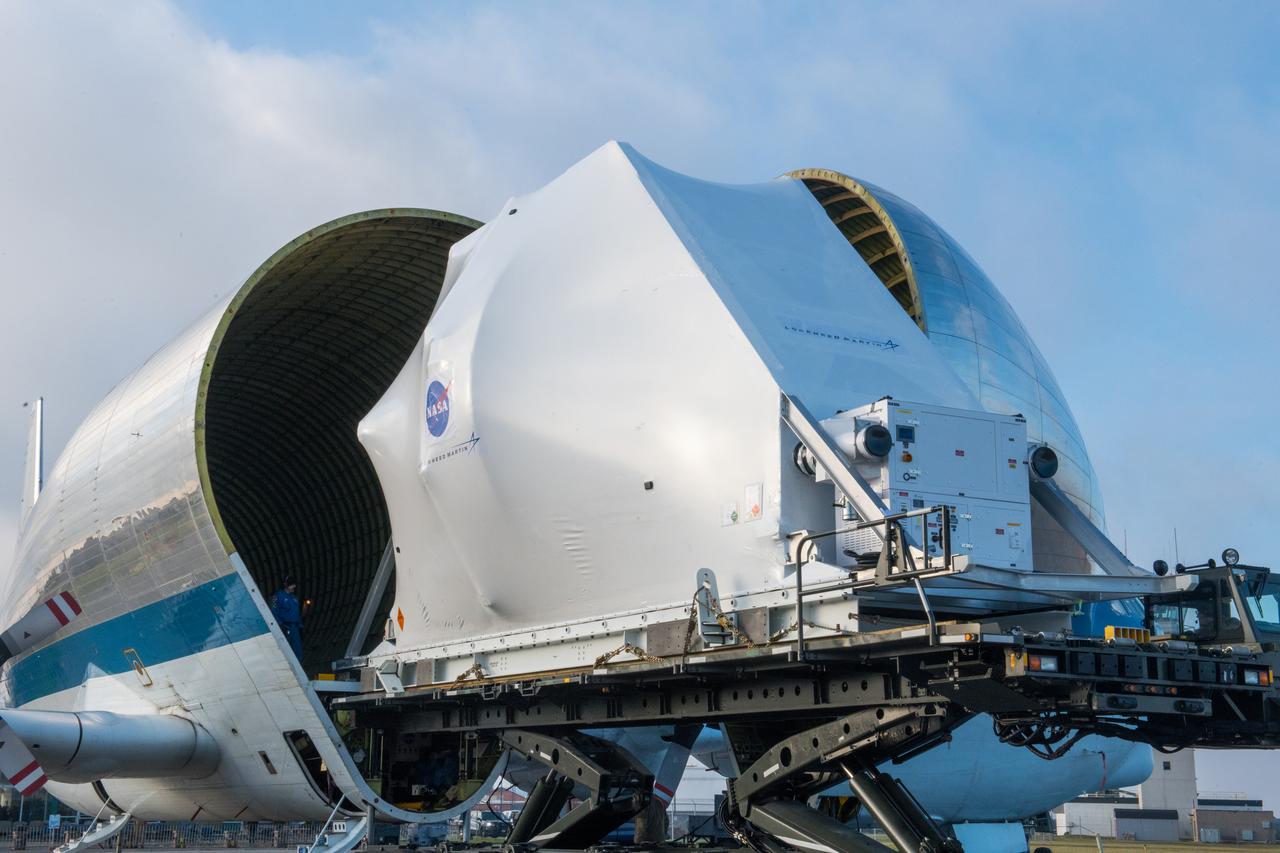
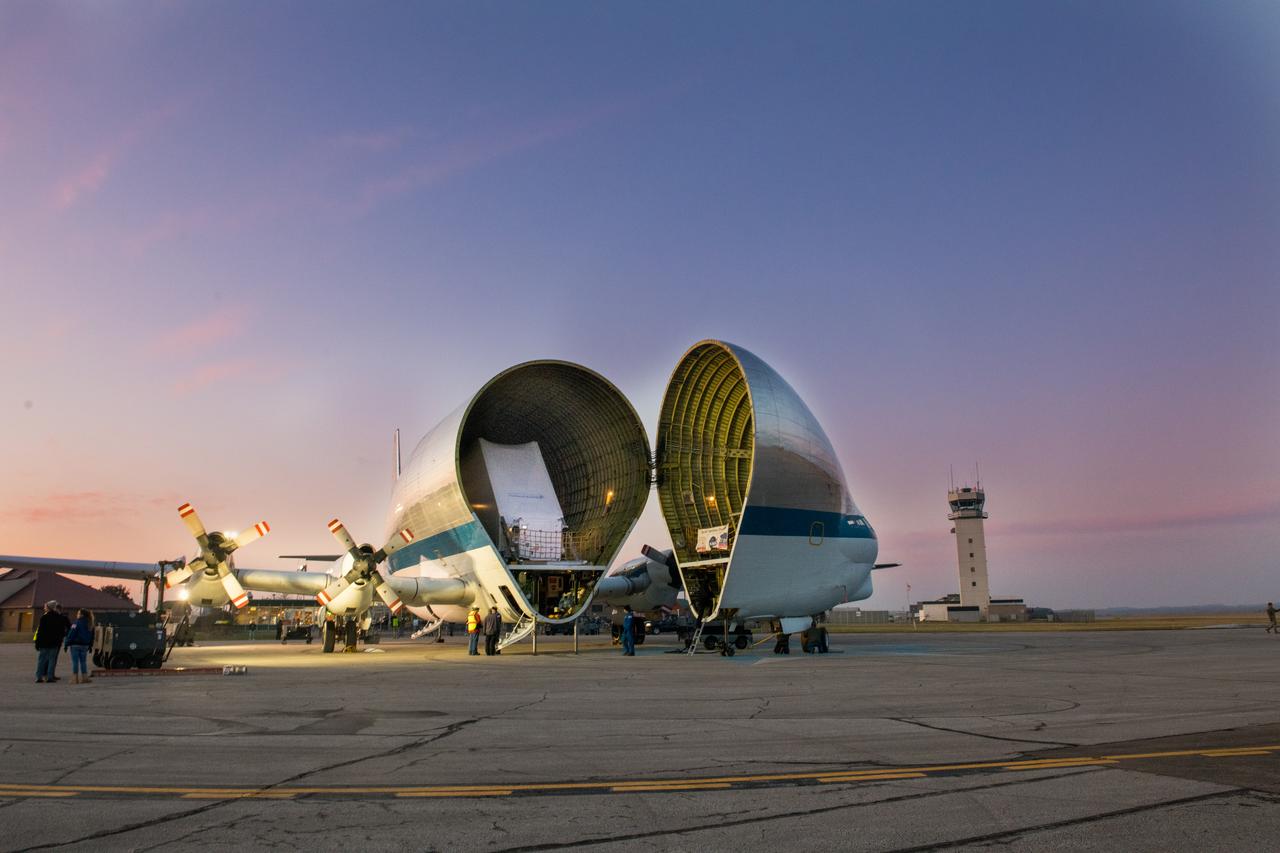
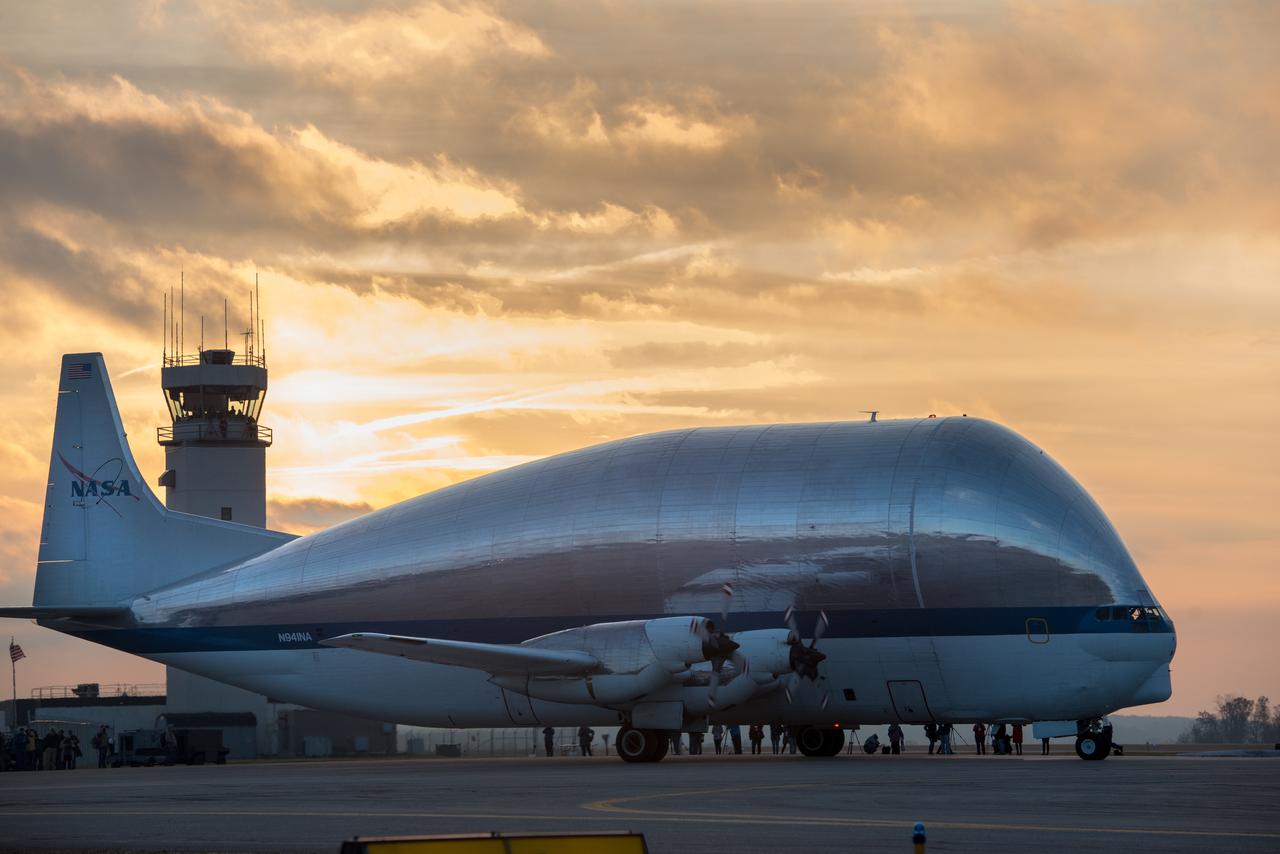
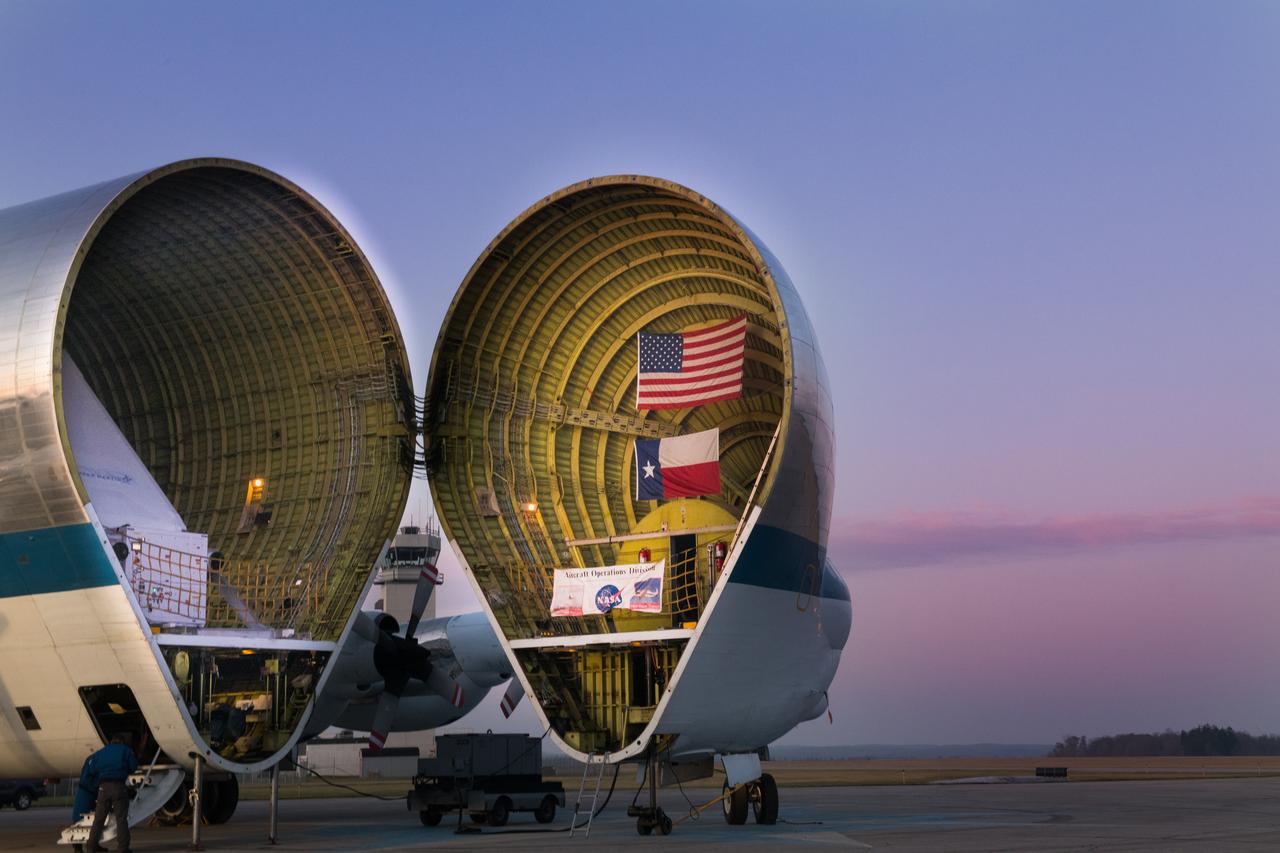
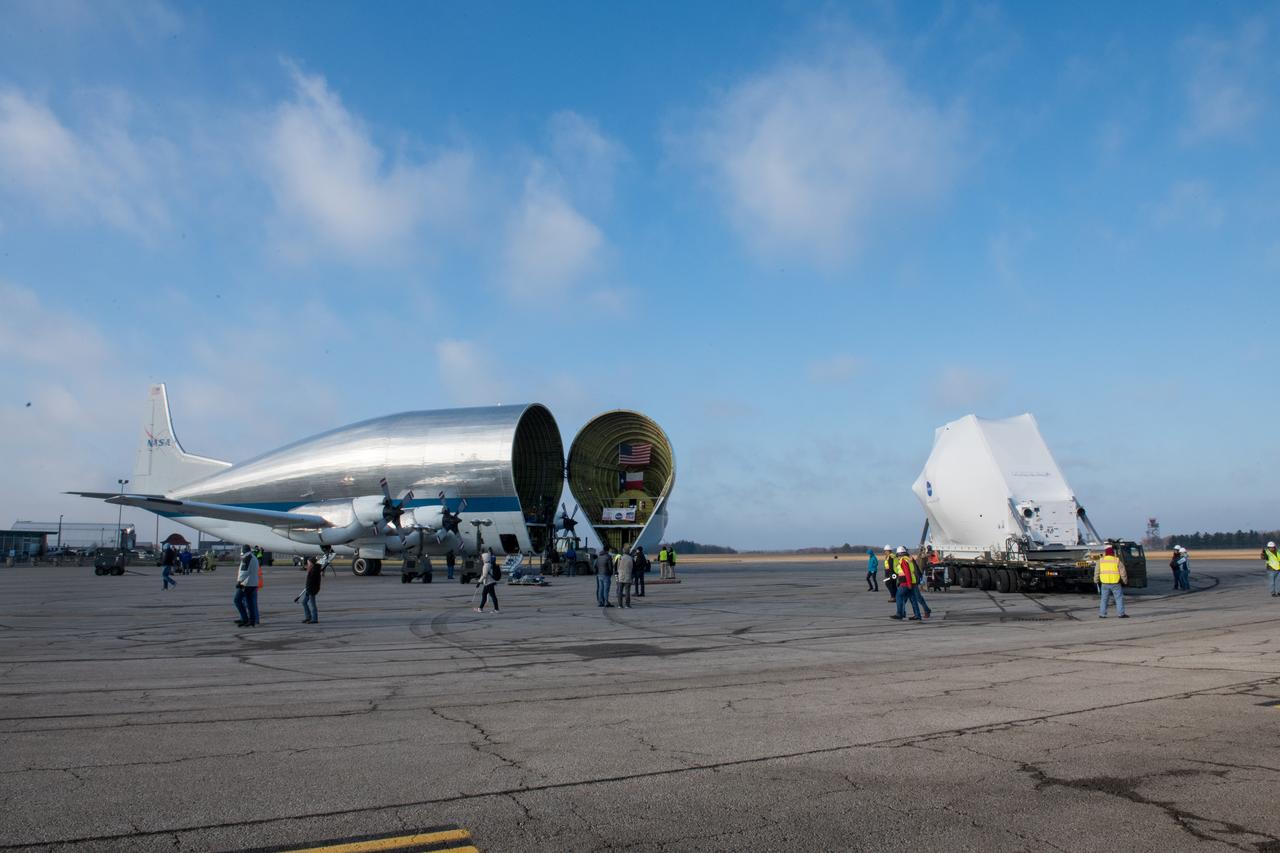
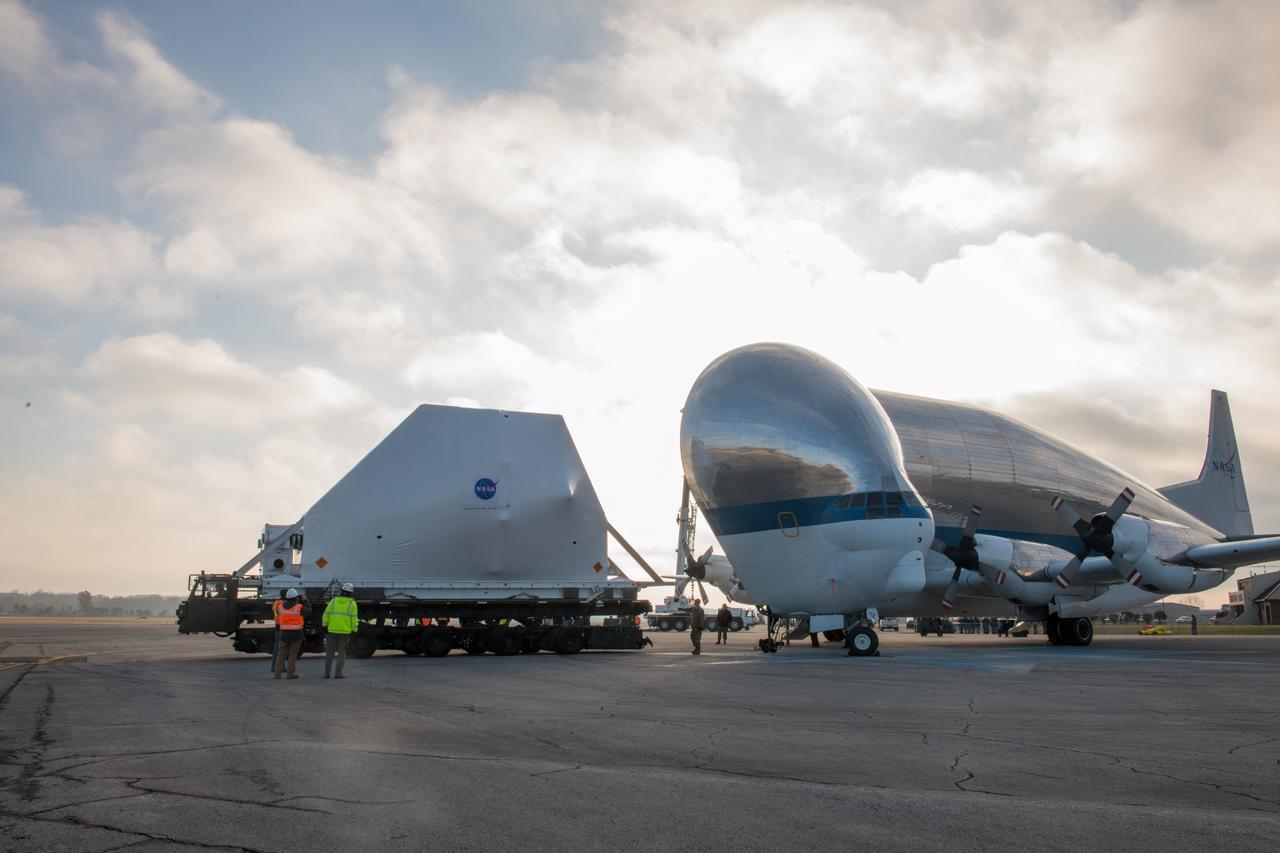
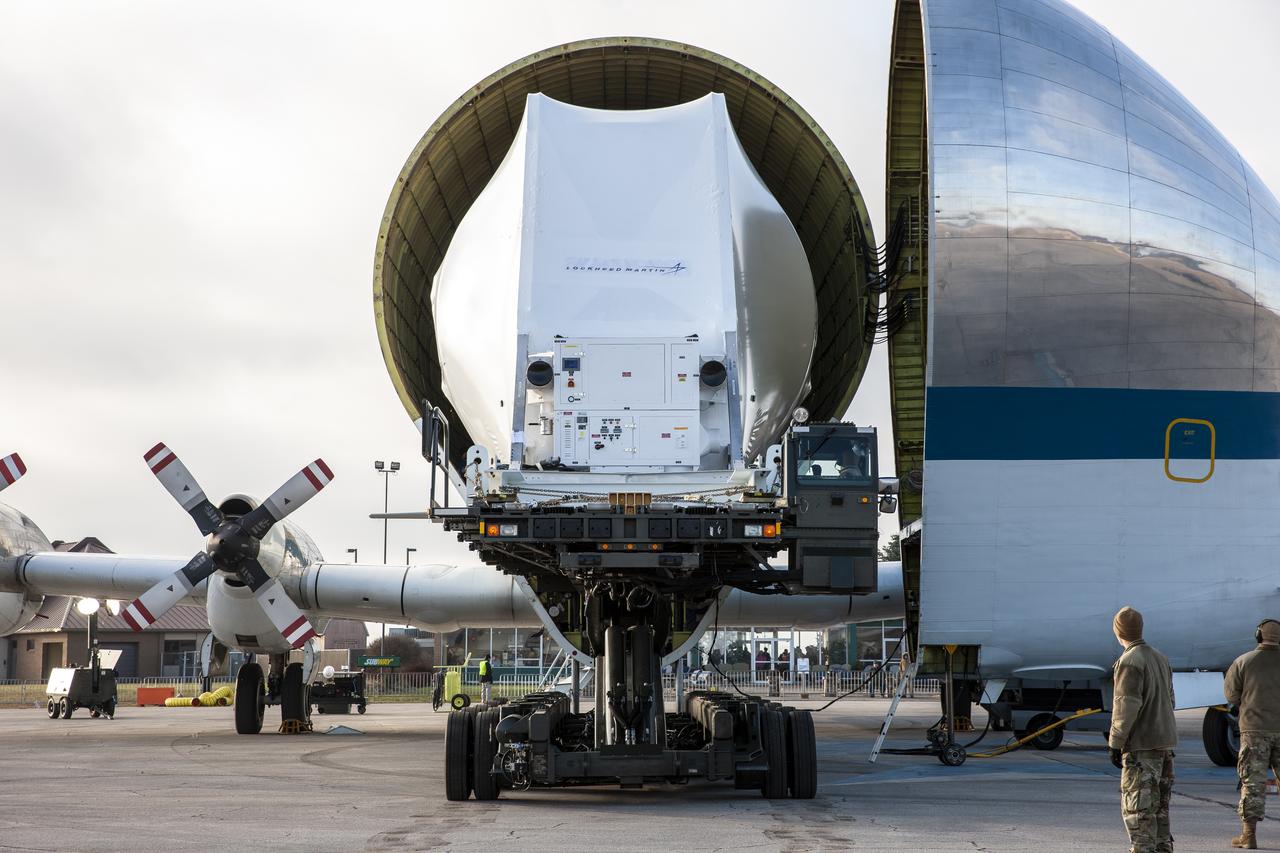
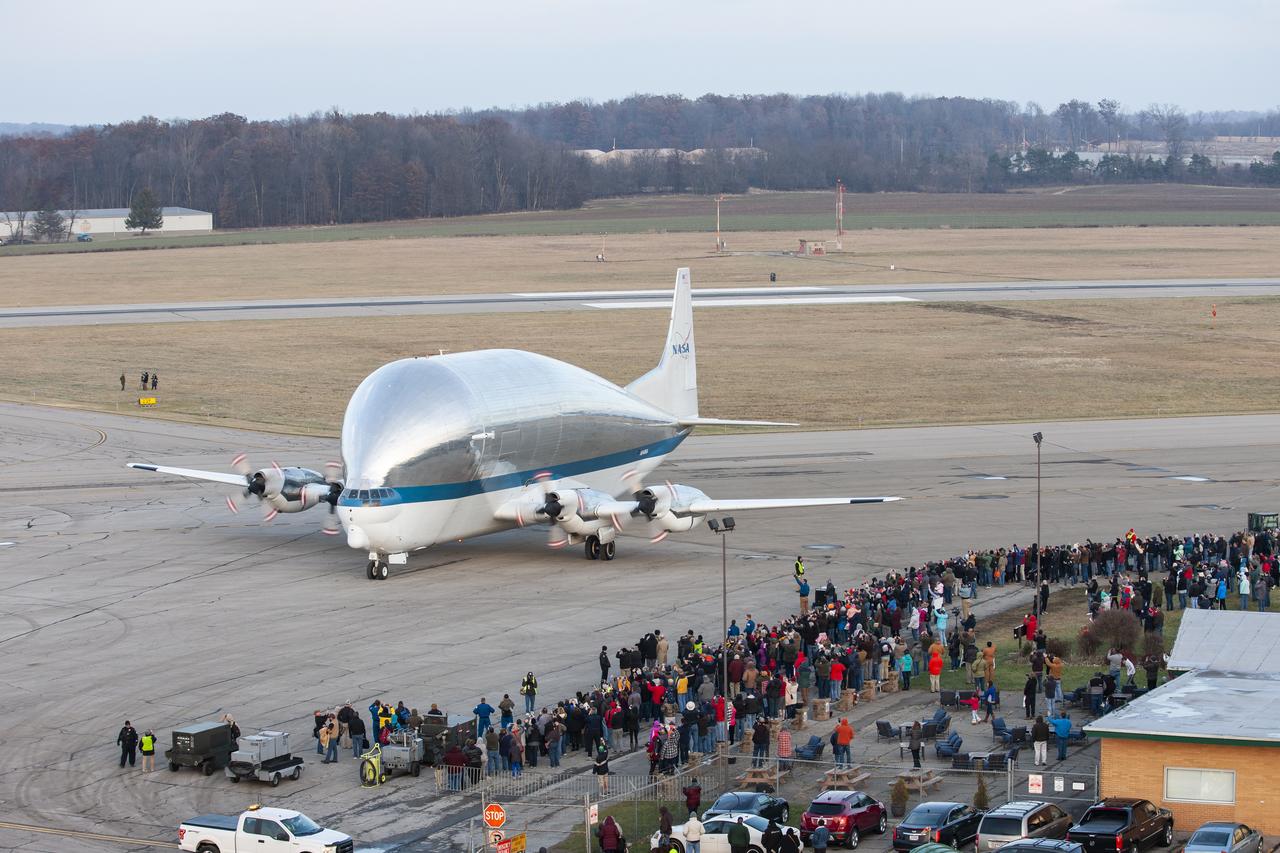
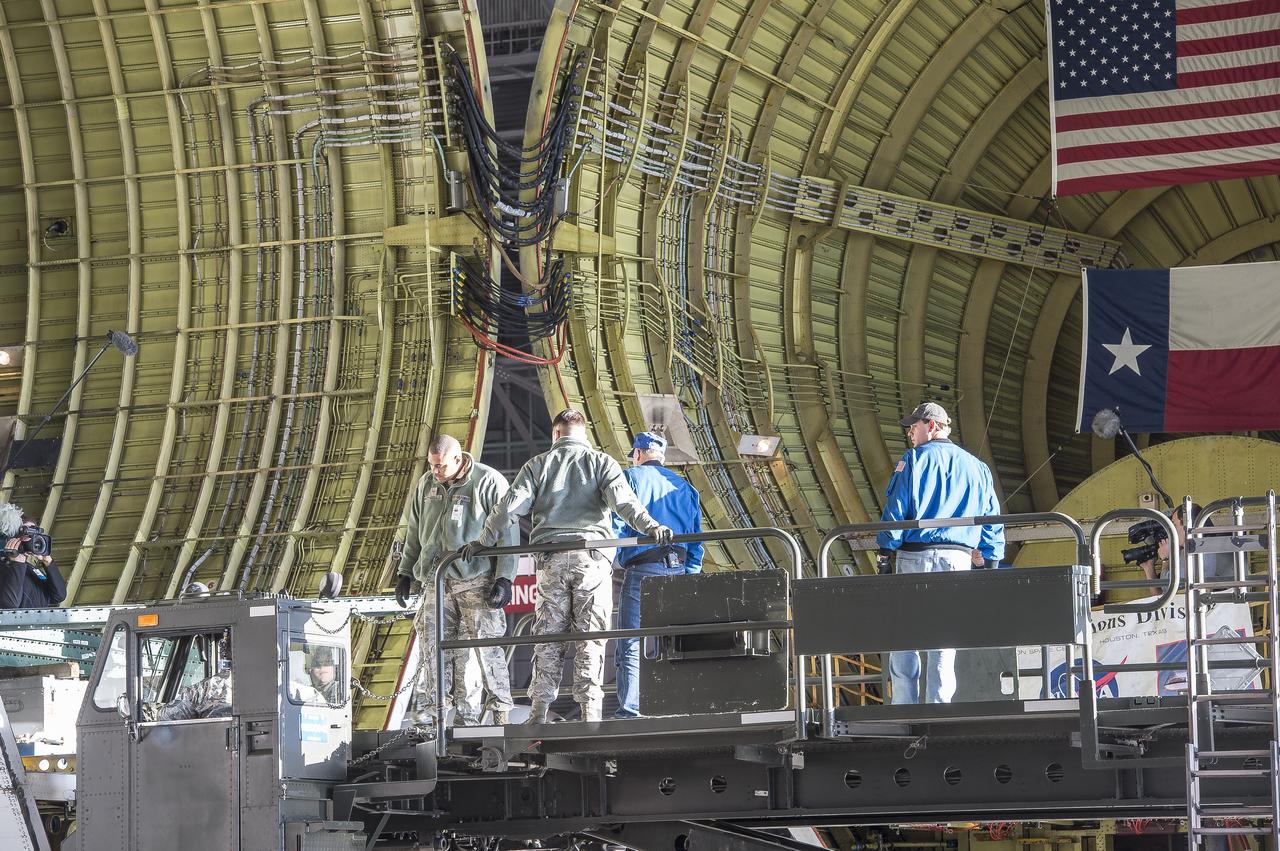
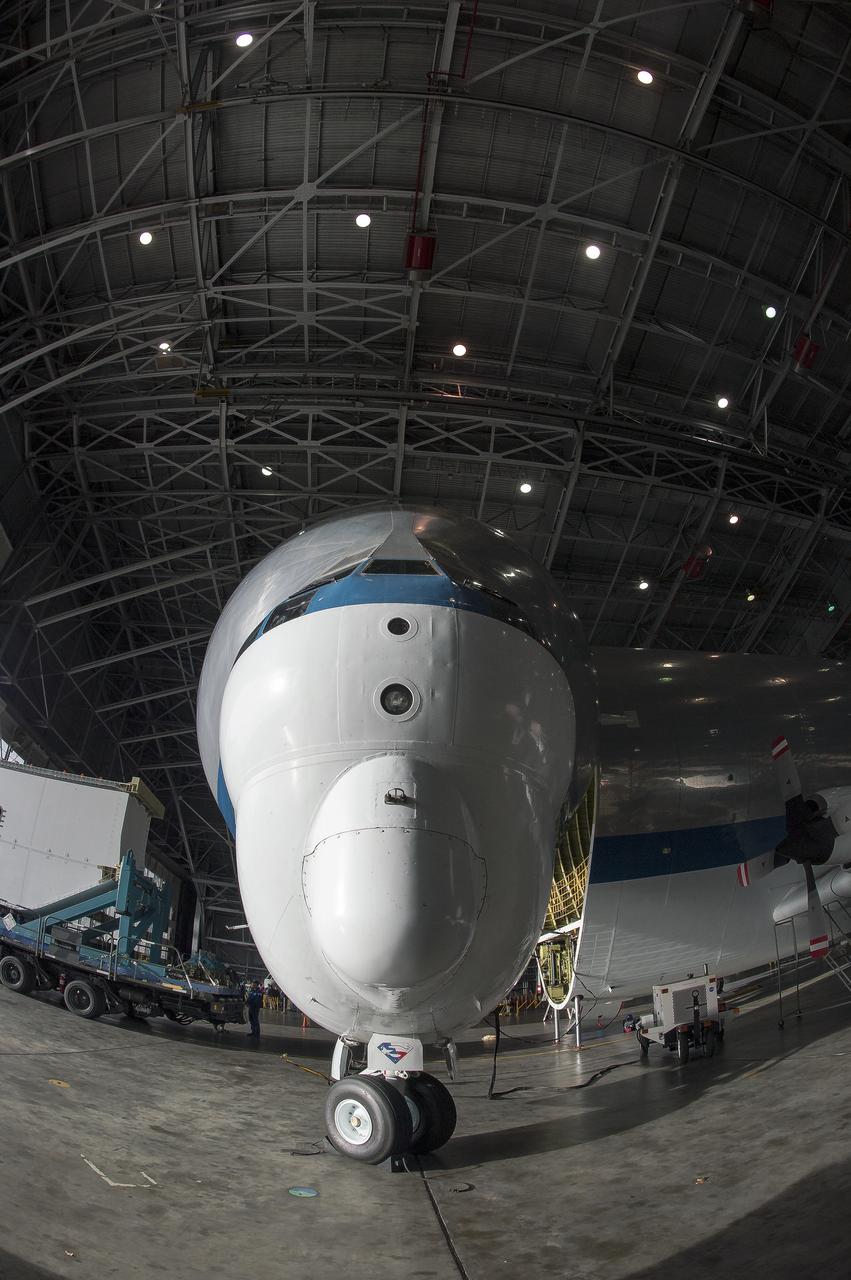
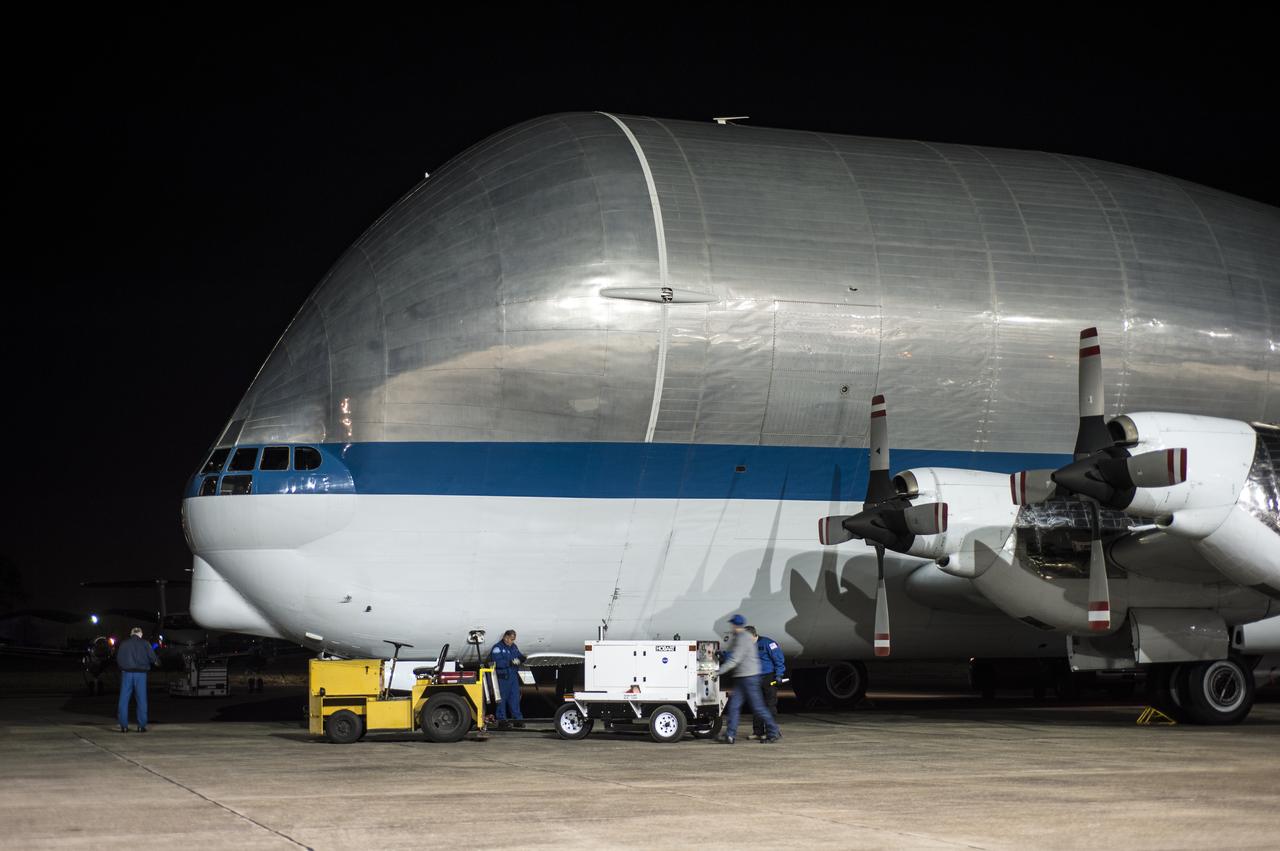
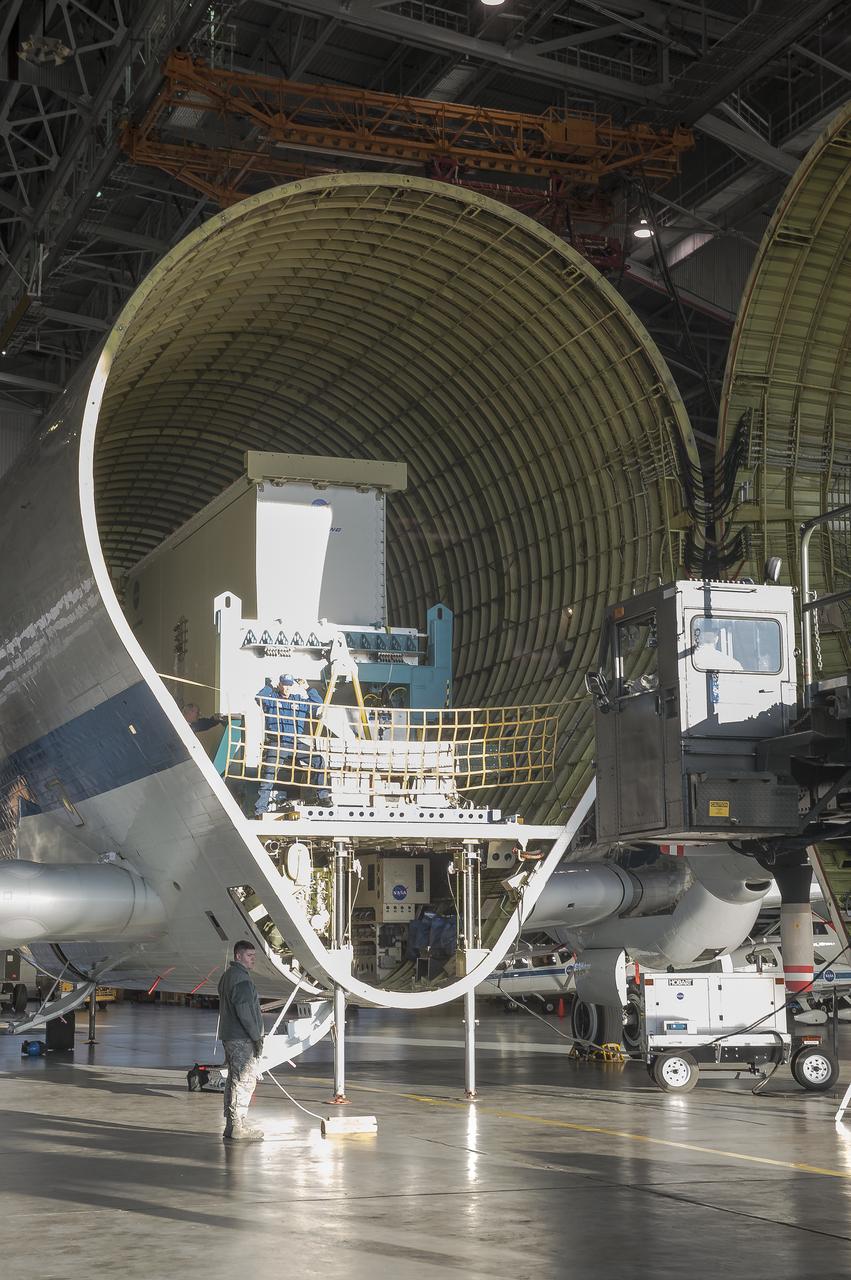
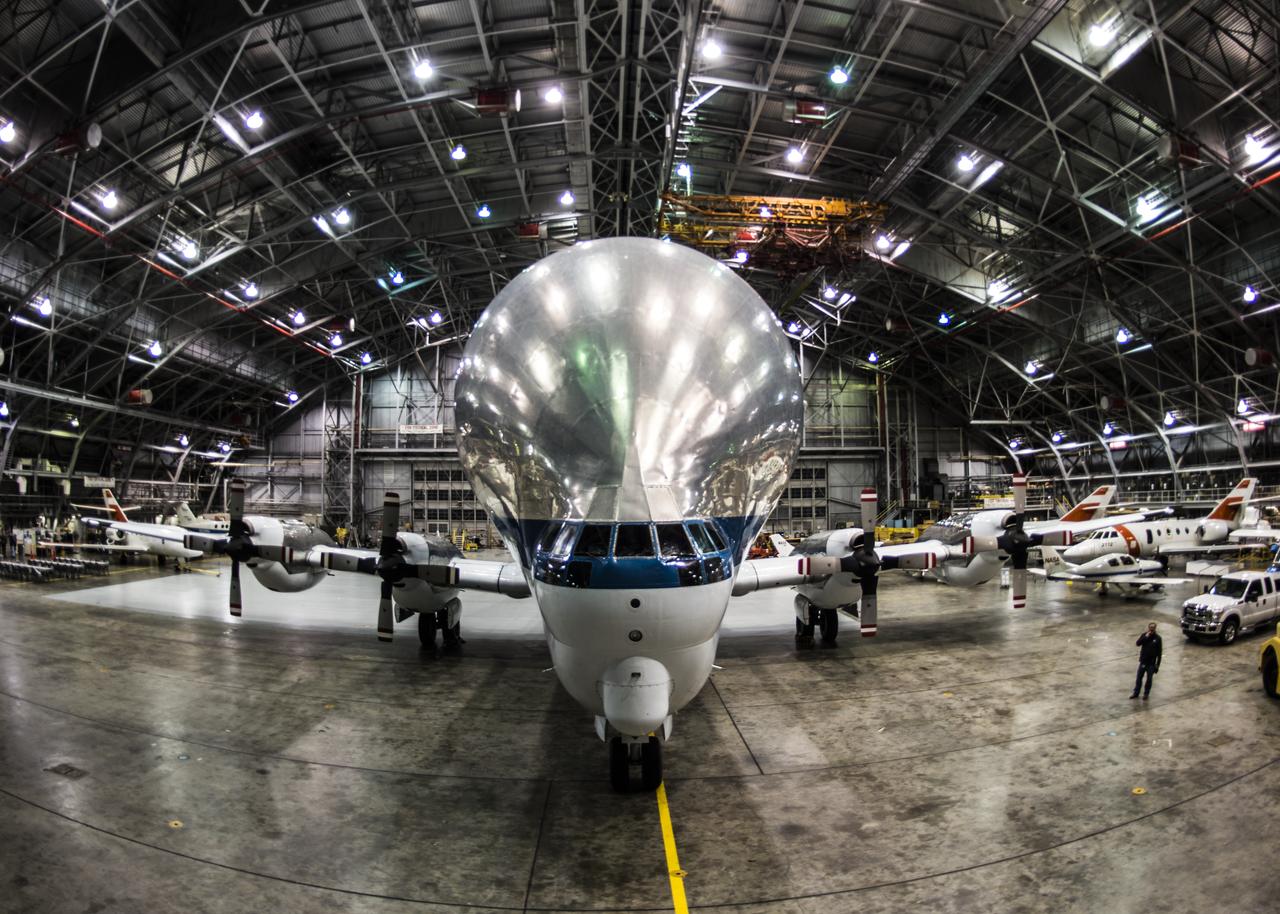
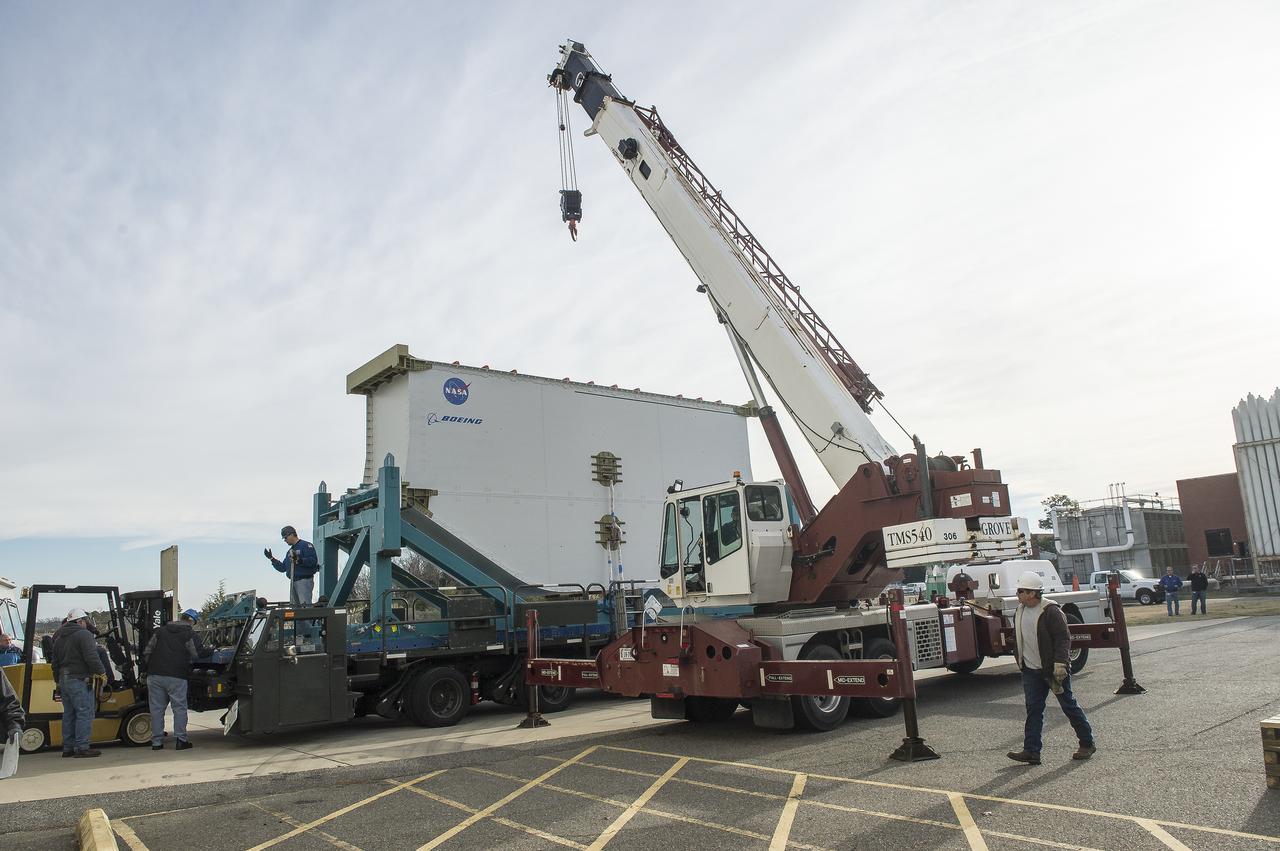
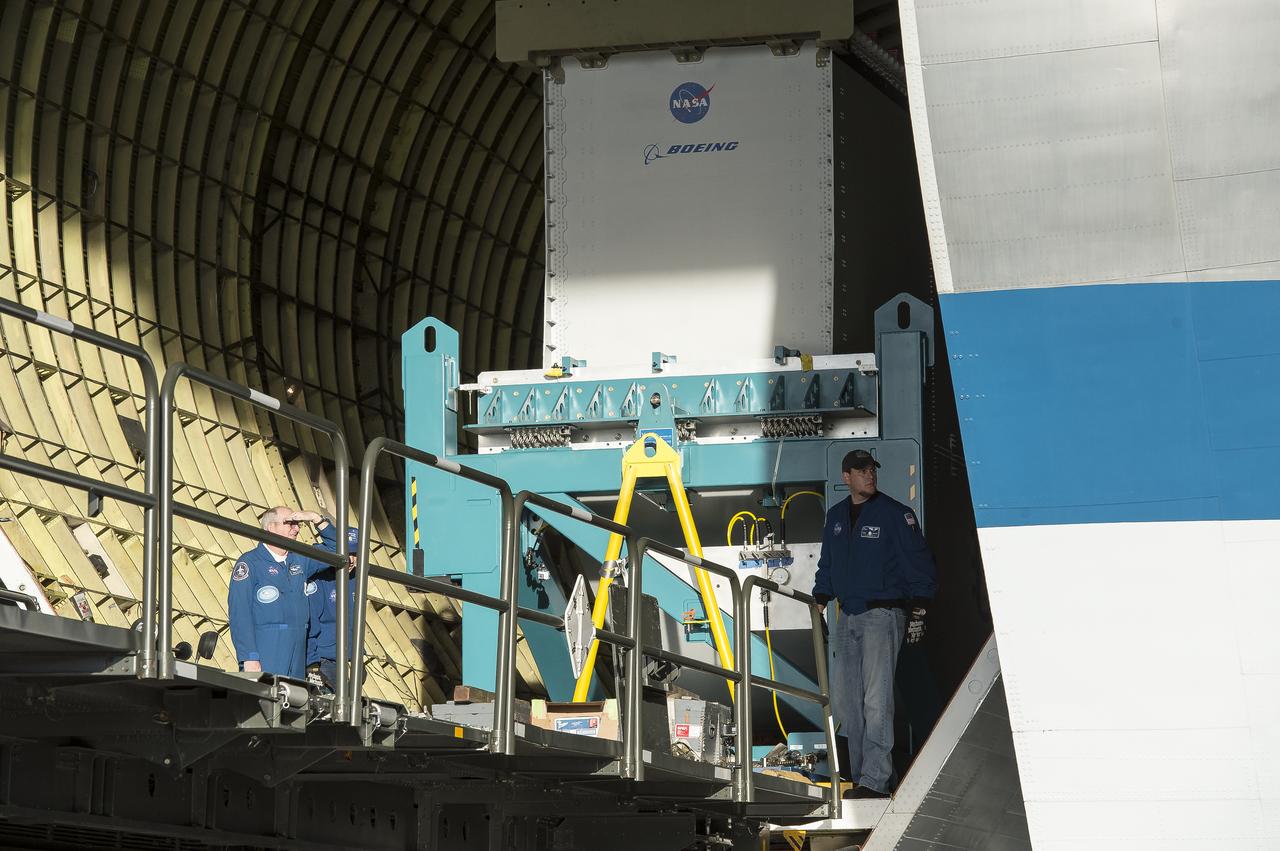
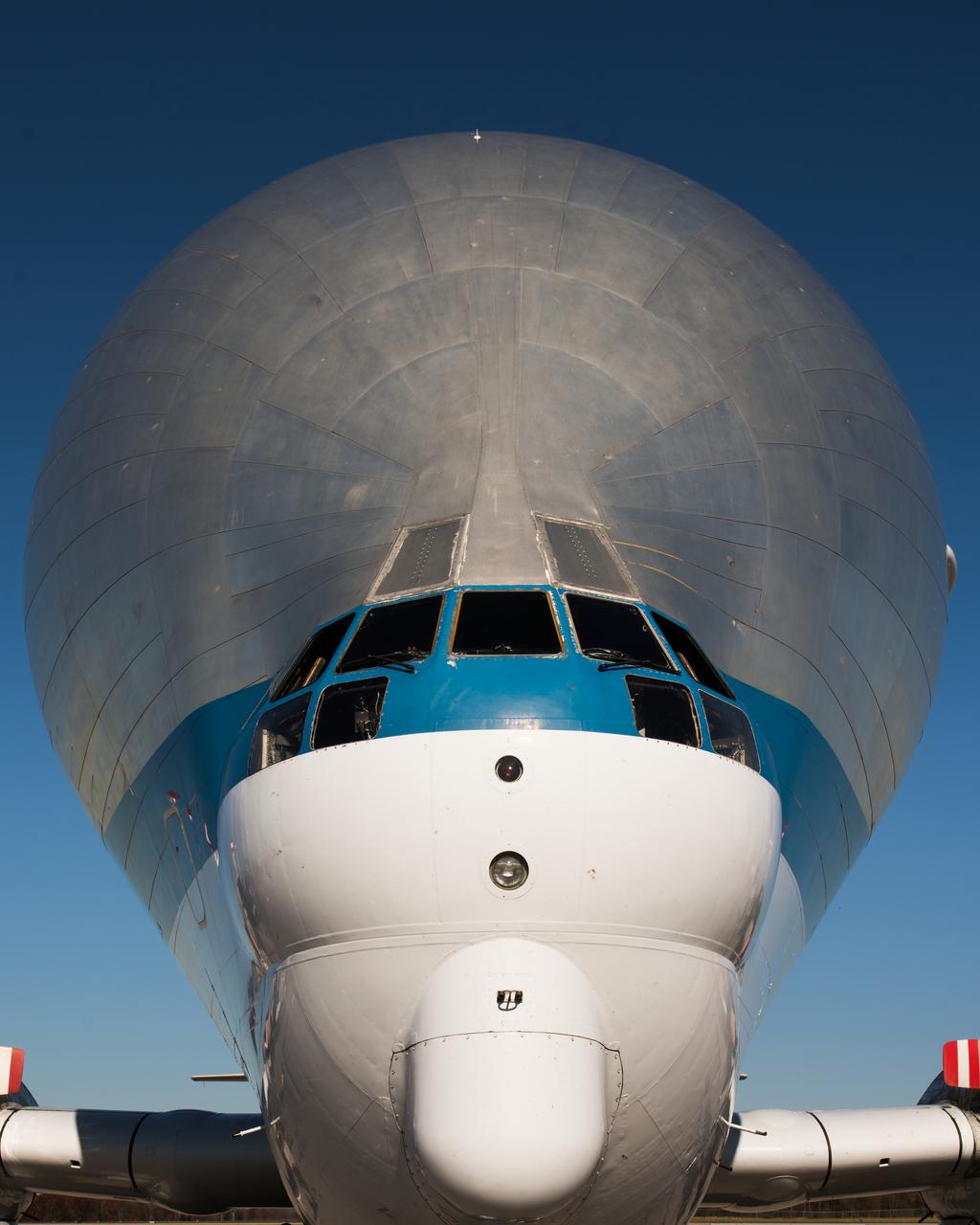
Front view of NASA’s Super Guppy aircraft after it touched down at Mansfield’s Lahm Airport in November, 2015. The crew delivered the crew module adaptor for Orion’s testing at NASA's Plum Brook Station next year.

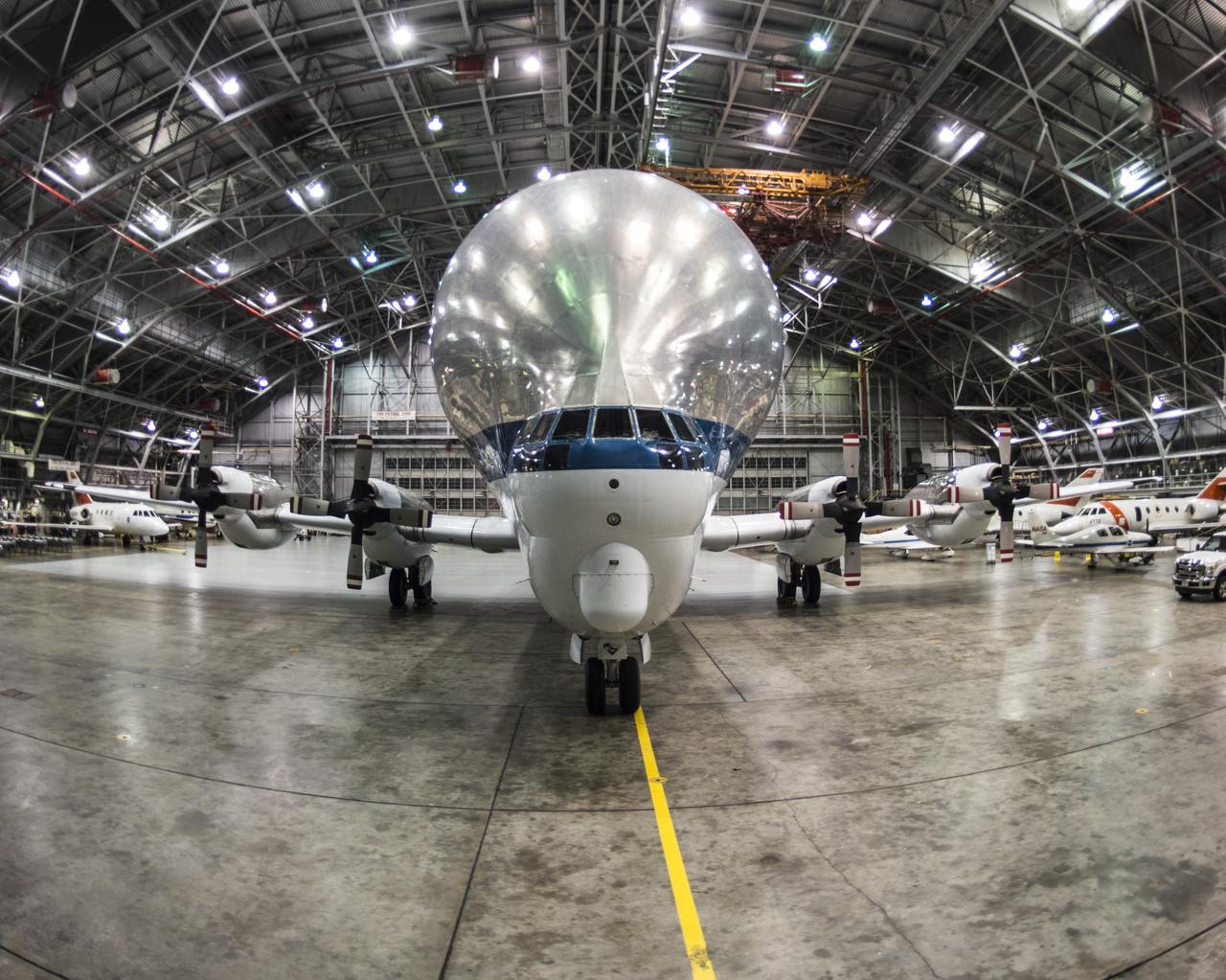
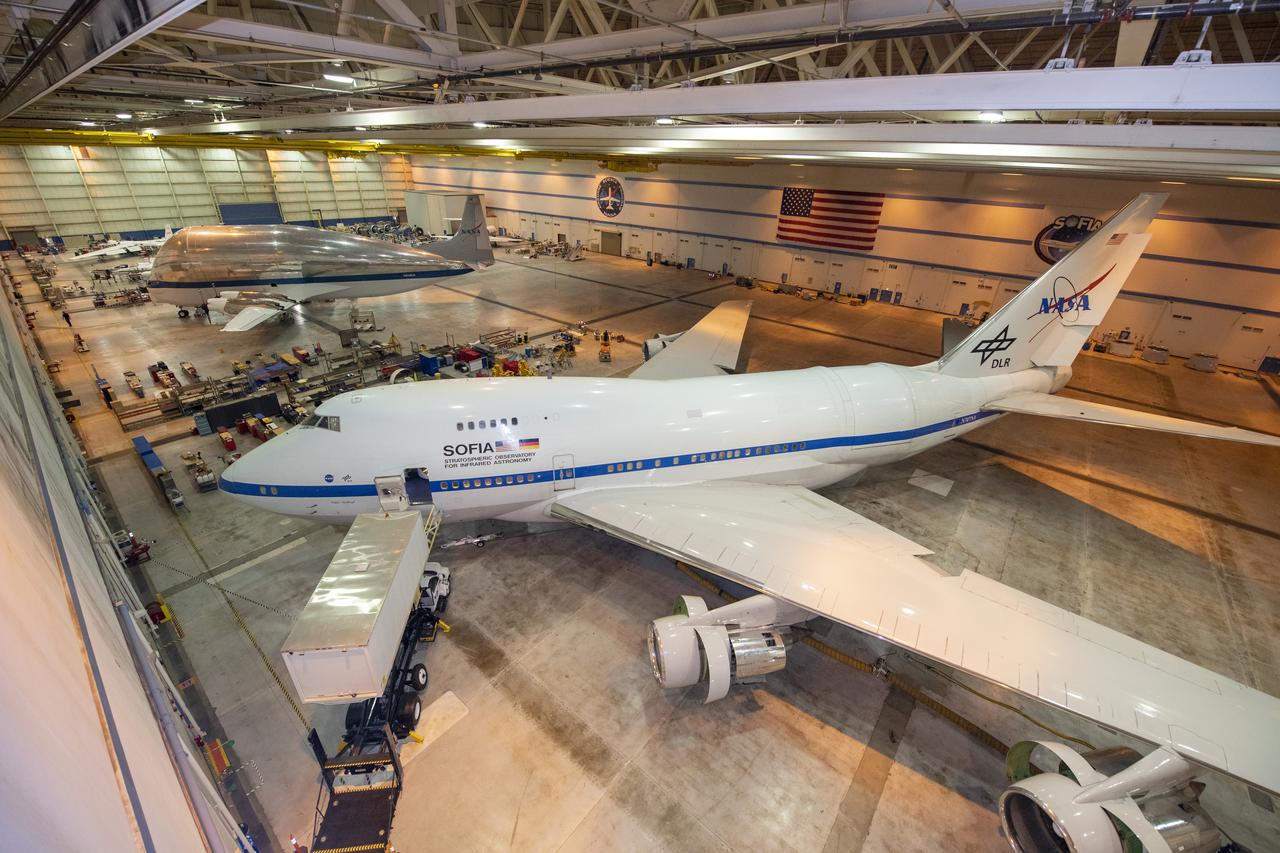
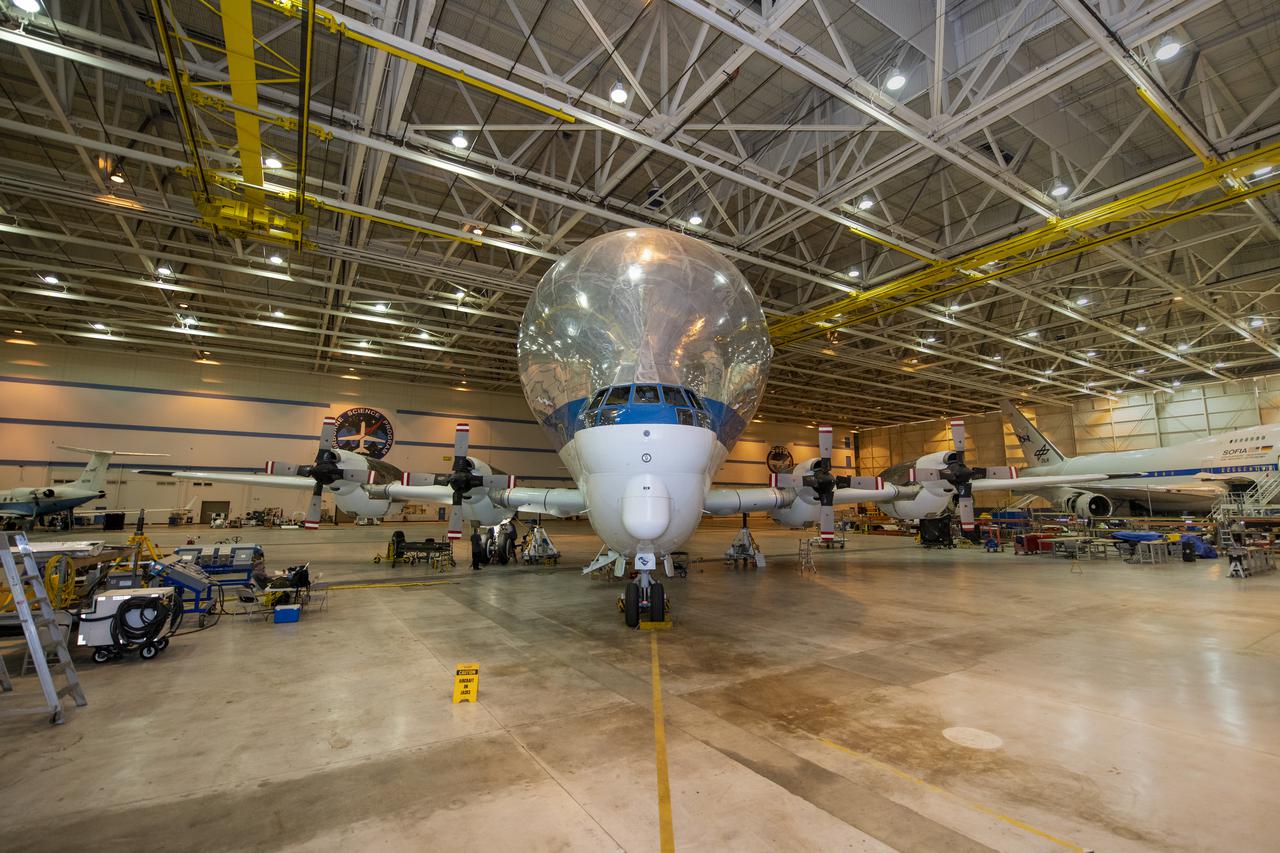
NASA's Super Guppy Turbine cargo aircraft in the hangar with SOFIA at NASA's Armstrong Flight Research Center on August 24, 2021. The Super Guppy aircraft, operated by NASA's Johnson Space Center, aids in the transportation of oversized aerospace cargo in a practical and economical way. NASA's Stratospheric Observatory for Infrared Astronomy (SOFIA), maintained and operated by NASA's Armstrong Flight Research Center, is the world's largest airborne astronomical observatory, complementing NASA's space telescopes as well as major Earth-based telescopes.

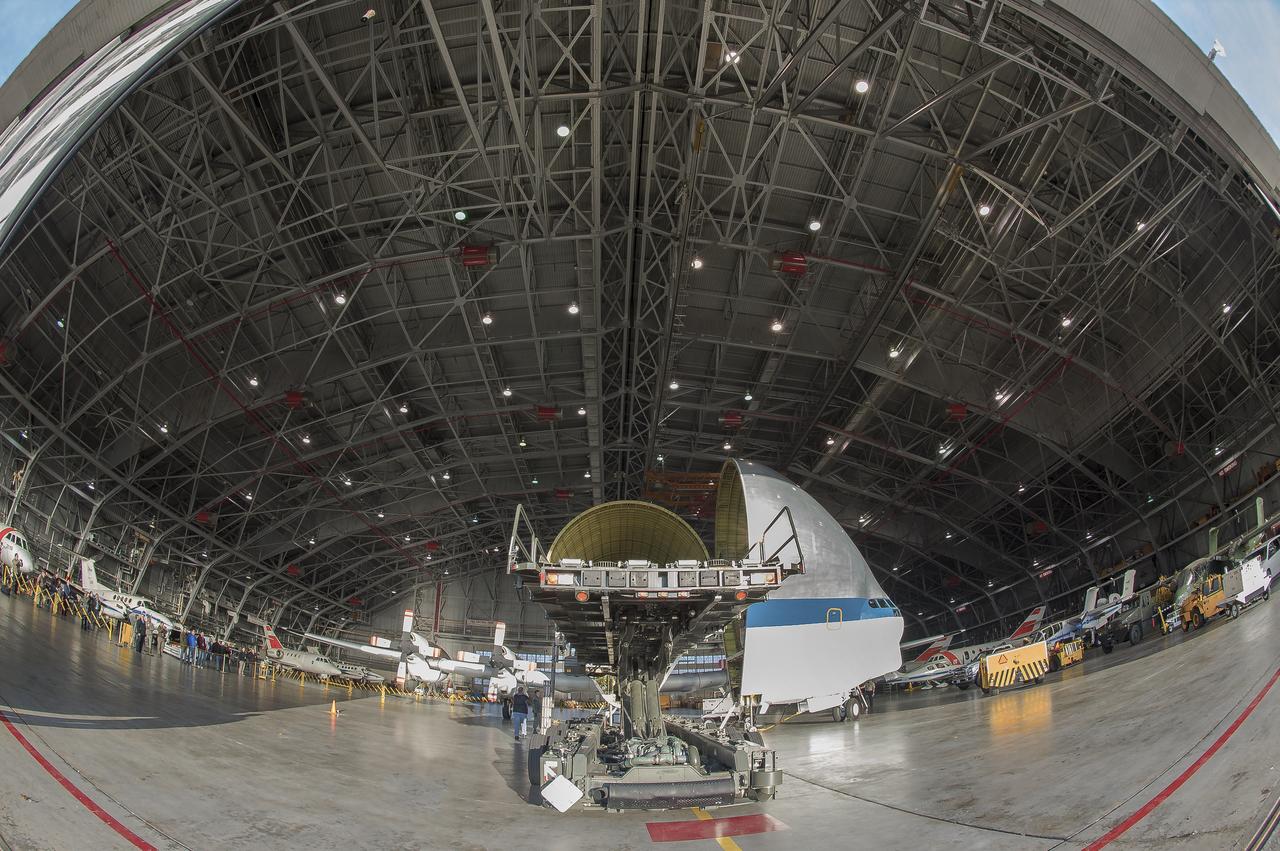
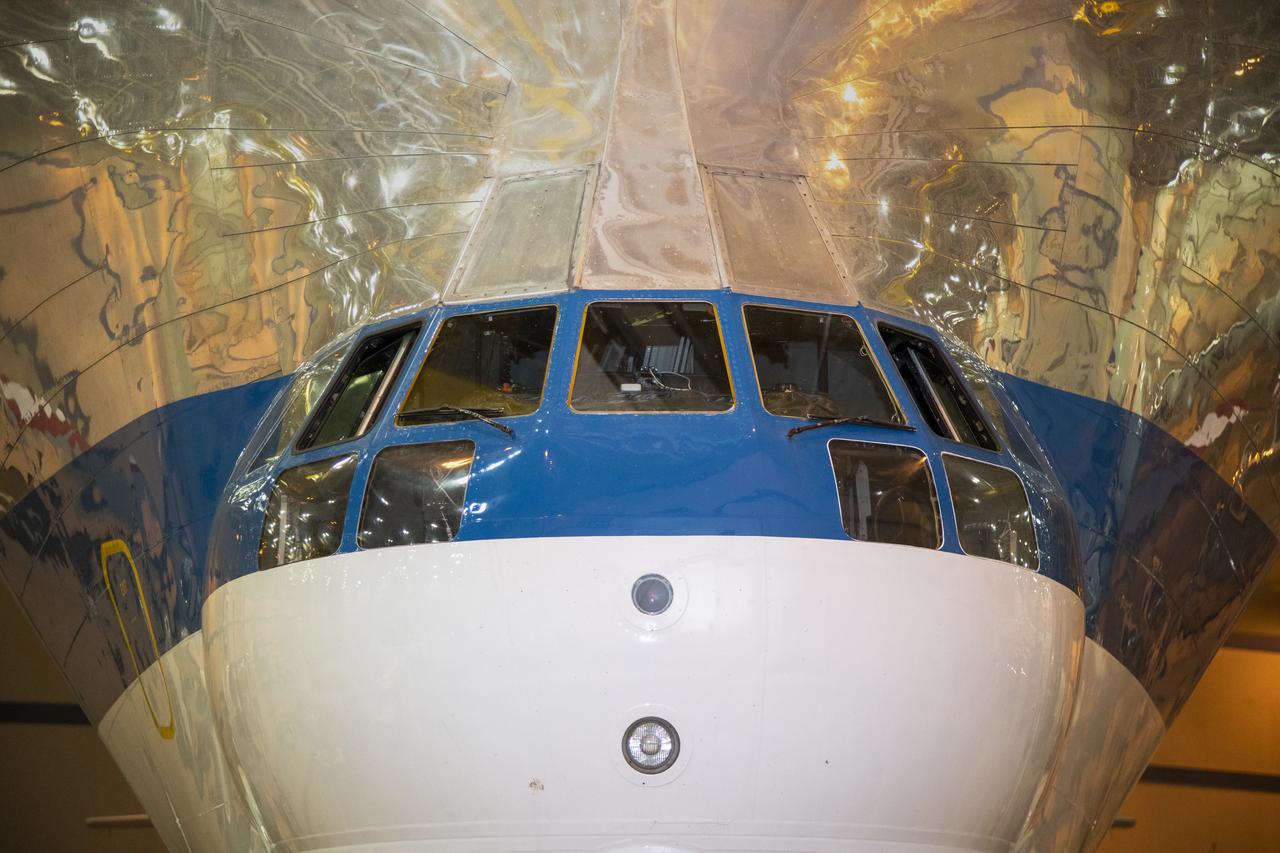
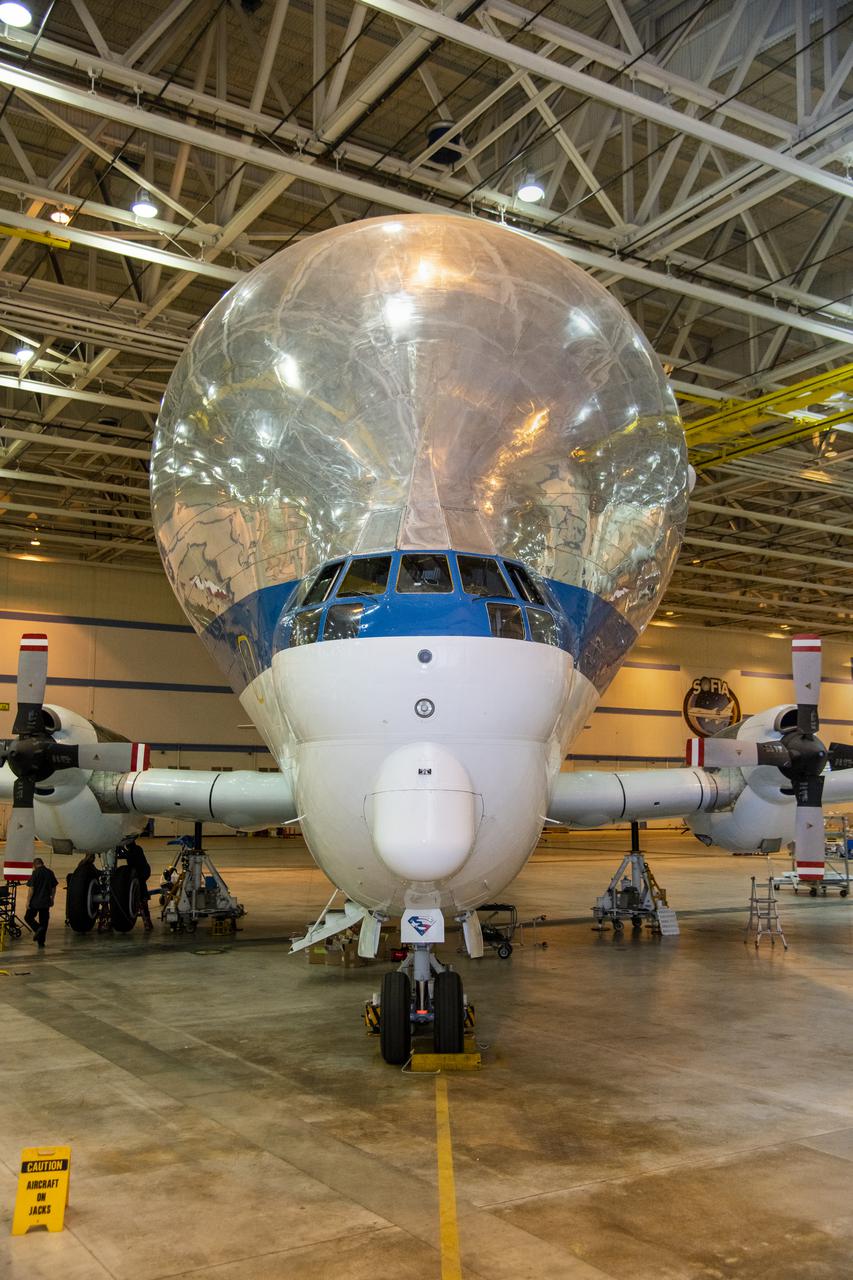
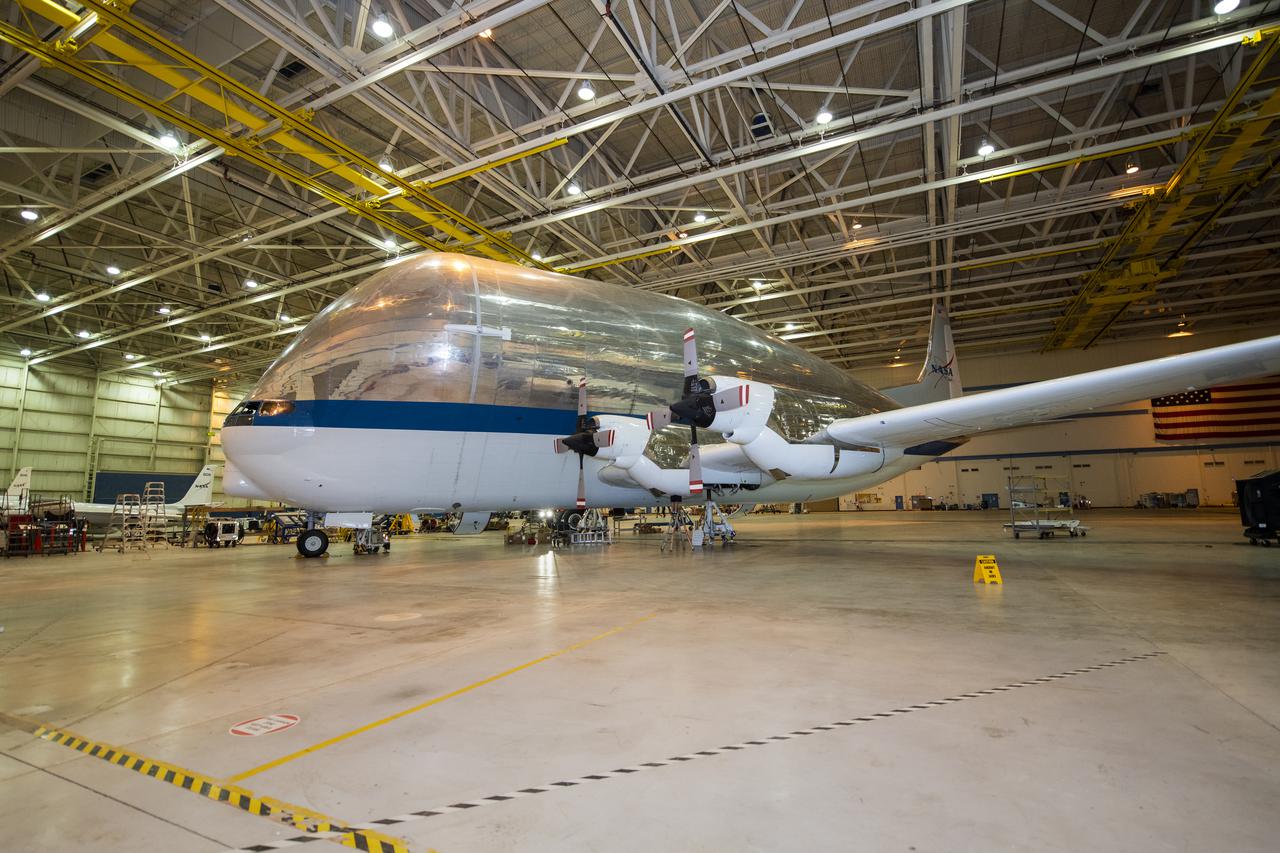
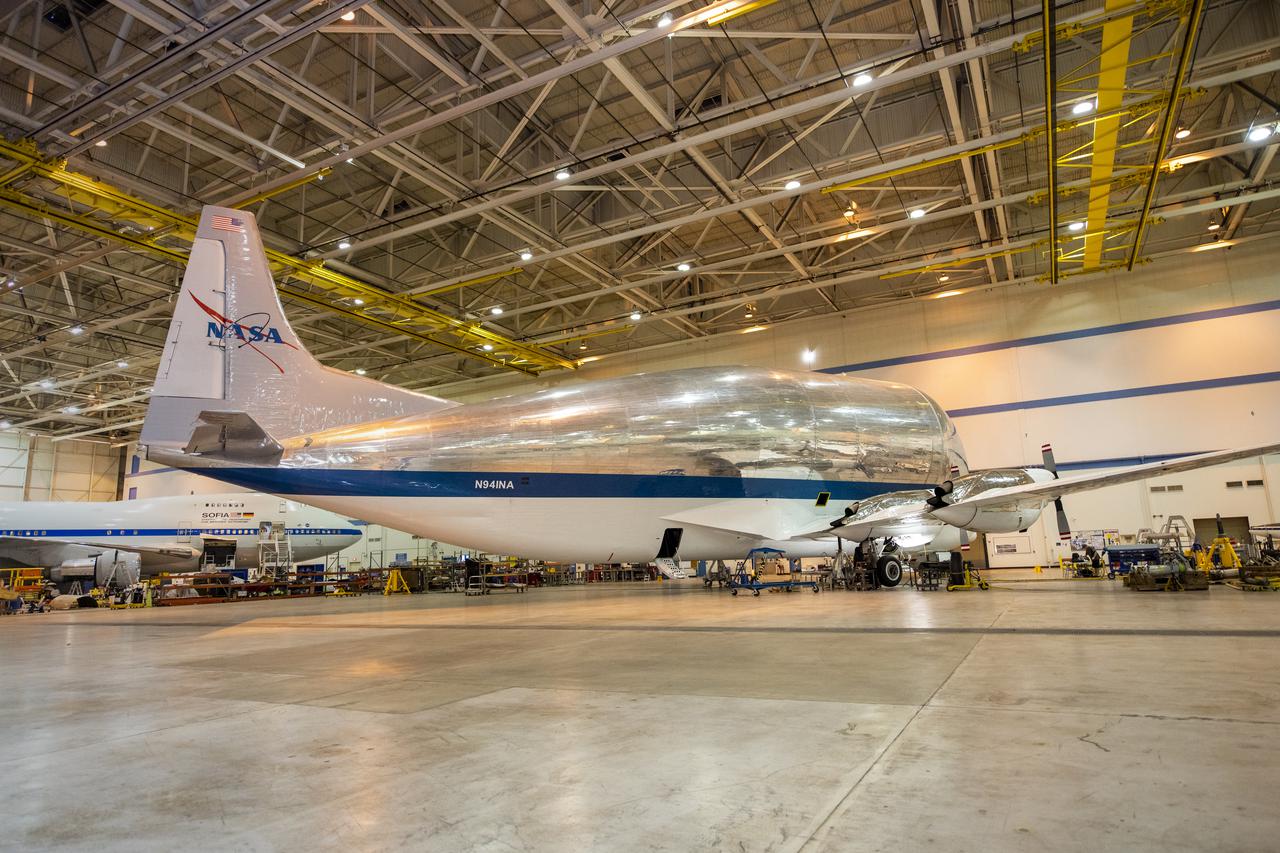
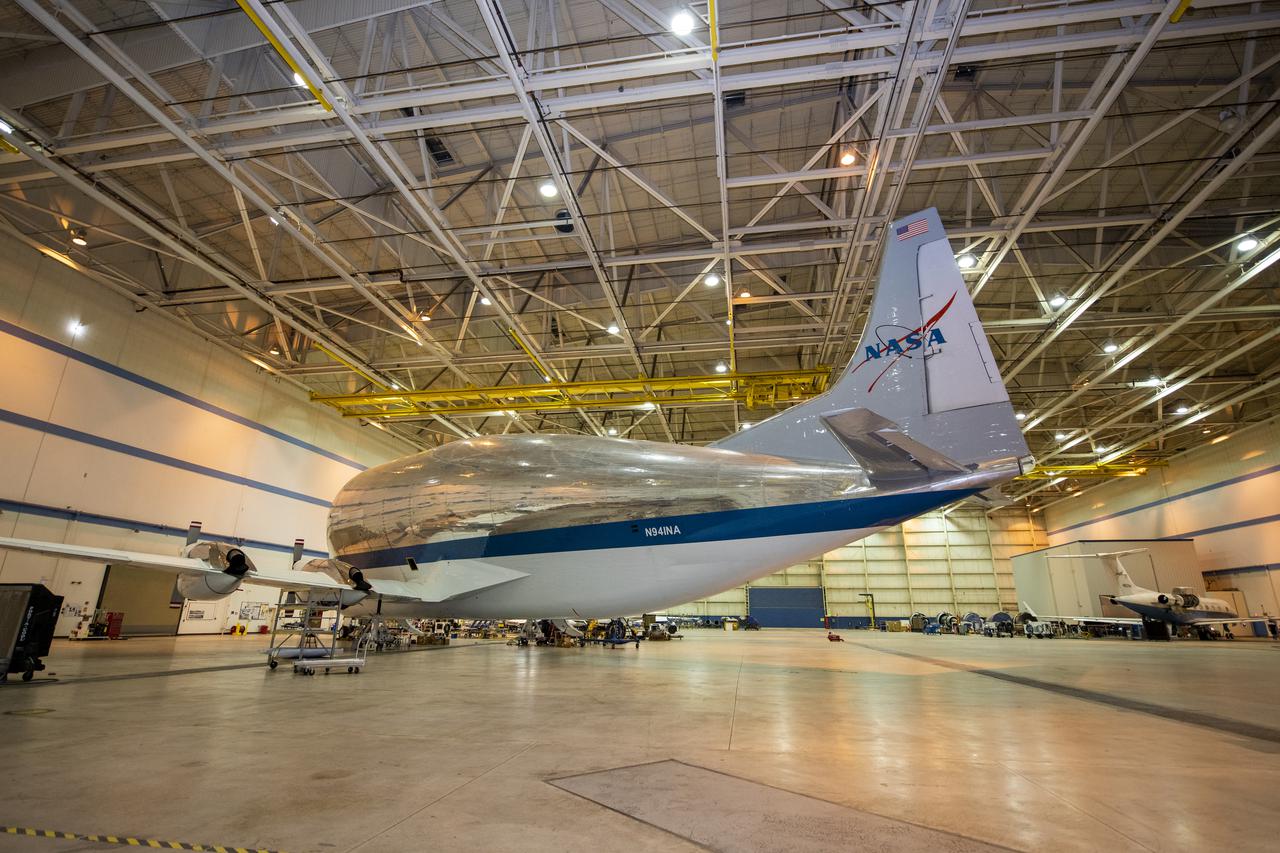
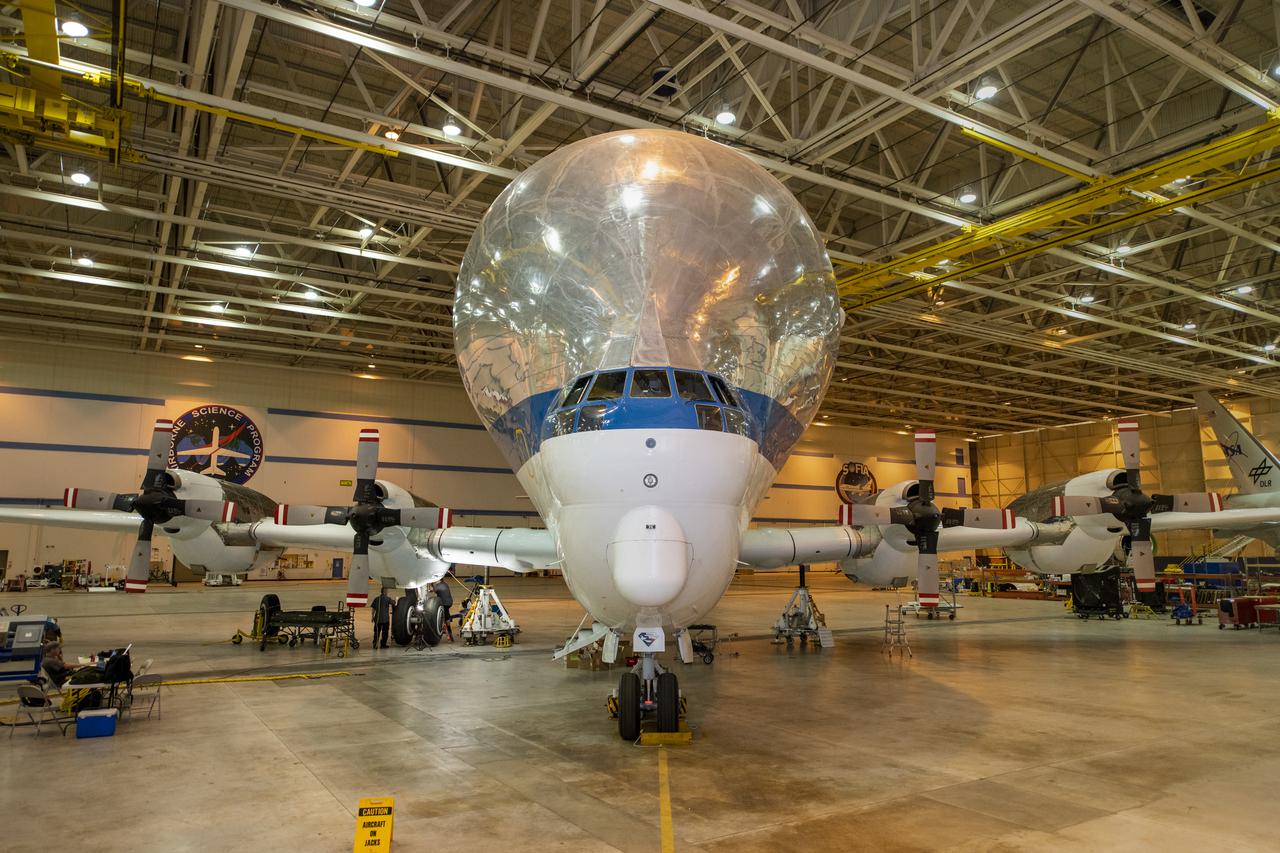
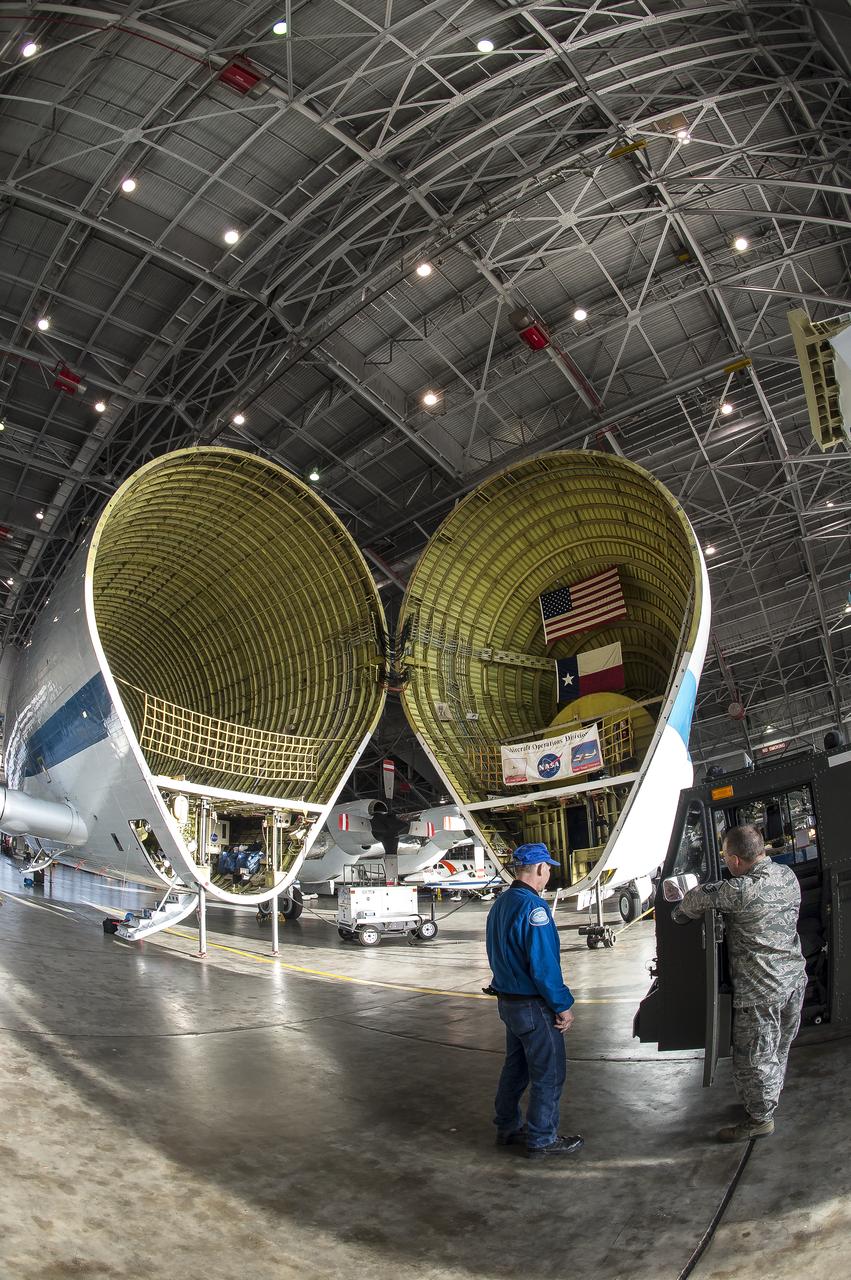
NASA's Super Guppy Turbine cargo aircraft in the hangar at NASA's Armstrong Flight Research Center on August 24, 2021. This unique whale-like aircraft arrived at the center's Building 703 in Palmdale, CA to support crews in the performance of routine maintenance. The Super Guppy aircraft, operated by NASA's Johnson Space Center, aids in the transportation of oversized aerospace cargo in a practical and economical way.

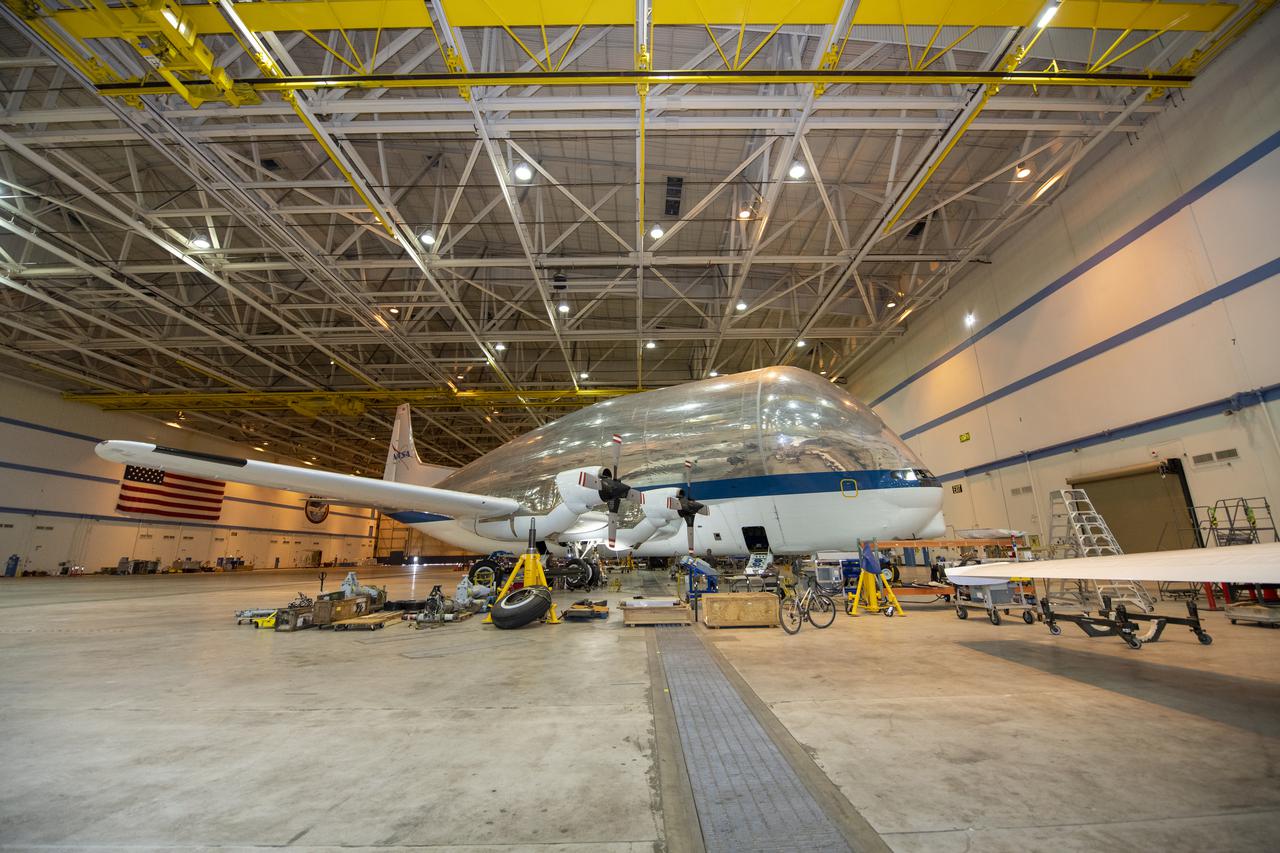
NASA's Super Guppy Turbine cargo aircraft in the hangar at NASA's Armstrong Flight Research Center on August 24, 2021. This unique whale-like aircraft arrived at the center's Building 703 in Palmdale, CA to support crews in the performance of routine maintenance. The Super Guppy aircraft, operated by NASA's Johnson Space Center, aids in the transportation of oversized aerospace cargo in a practical and economical way.

NASA's Super Guppy Turbine cargo aircraft in the hangar at NASA's Armstrong Flight Research Center on August 24, 2021. This unique whale-like aircraft arrived at the center's Building 703 in Palmdale, CA to support crews in the performance of routine maintenance. The Super Guppy aircraft, operated by NASA's Johnson Space Center, aids in the transportation of oversized aerospace cargo in a practical and economical way.

NASA’s Super Guppy Turbine cargo aircraft in the hangar at NASA’s Armstrong Flight Research Center on August 24, 2021. This unique whale-like aircraft arrived at the center’s Building 703 in Palmdale, CA to support crews in the performance of routine maintenance. The Super Guppy aircraft, operated by NASA’s Johnson Space Center, aids in the transportation of oversized aerospace cargo in a practical and economical way.

NASA's Super Guppy Turbine cargo aircraft in the hangar at NASA's Armstrong Flight Research Center on August 24, 2021. This unique whale-like aircraft arrived at the center's Building 703 in Palmdale, CA to support crews in the performance of routine maintenance. The Super Guppy aircraft, operated by NASA's Johnson Space Center, aids in the transportation of oversized aerospace cargo in a practical and economical way.

NASA’s Super Guppy Turbine cargo aircraft in the hangar at NASA’s Armstrong Flight Research Center on August 24, 2021. This unique whale-like aircraft arrived at the center’s Building 703 in Palmdale, CA to support crews in the performance of routine maintenance. The Super Guppy aircraft, operated by NASA’s Johnson Space Center, aids in the transportation of oversized aerospace cargo in a practical and economical way.

NASA's Super Guppy Turbine cargo aircraft in the hangar at NASA's Armstrong Flight Research Center on August 24, 2021. This unique whale-like aircraft arrived at the center's Building 703 in Palmdale, CA to support crews in the performance of routine maintenance. The Super Guppy aircraft, operated by NASA's Johnson Space Center, aids in the transportation of oversized aerospace cargo in a practical and economical way.

NASA’s Super Guppy Turbine cargo aircraft in the hangar at NASA’s Armstrong Flight Research Center on August 24, 2021. This unique whale-like aircraft arrived at the center’s Building 703 in Palmdale, CA to support crews in the performance of routine maintenance. The Super Guppy aircraft, operated by NASA’s Johnson Space Center, aids in the transportation of oversized aerospace cargo in a practical and economical way.

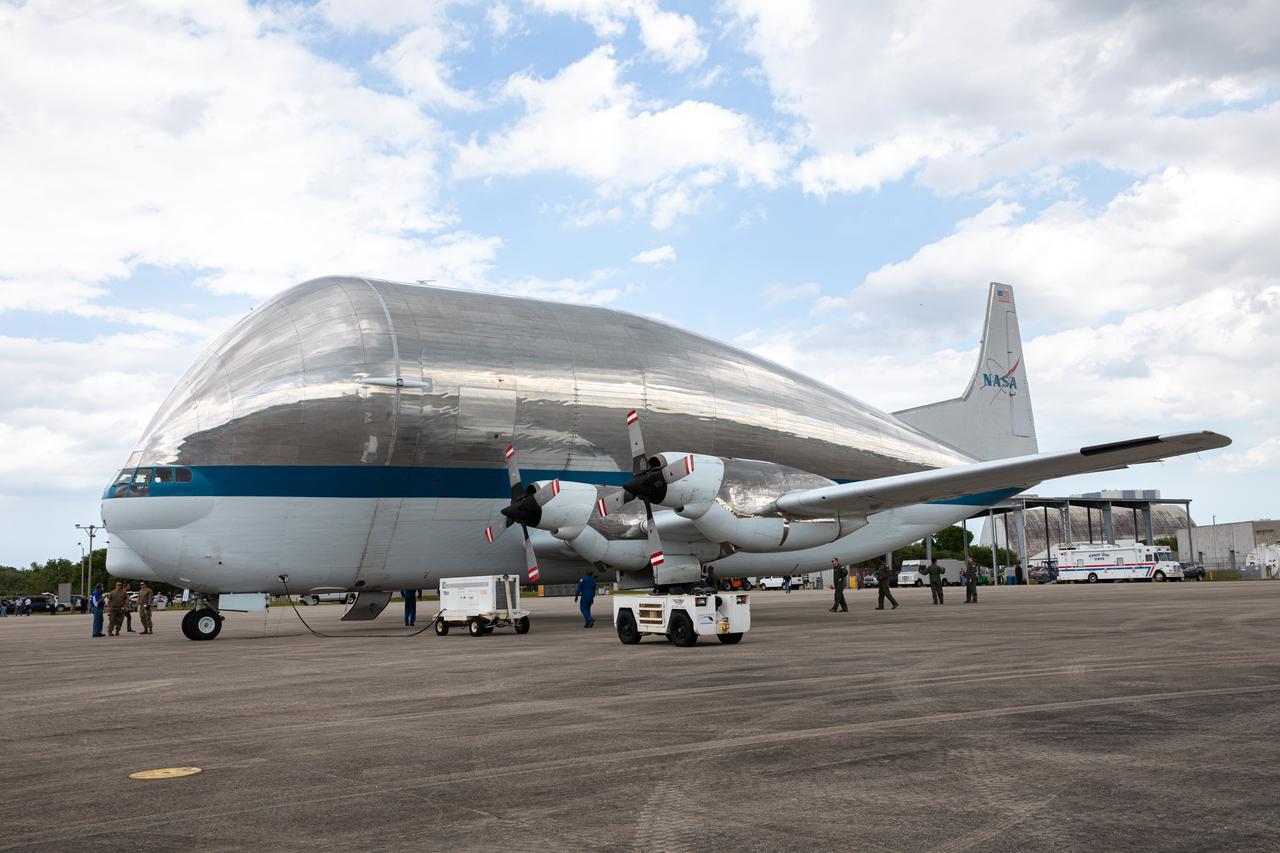
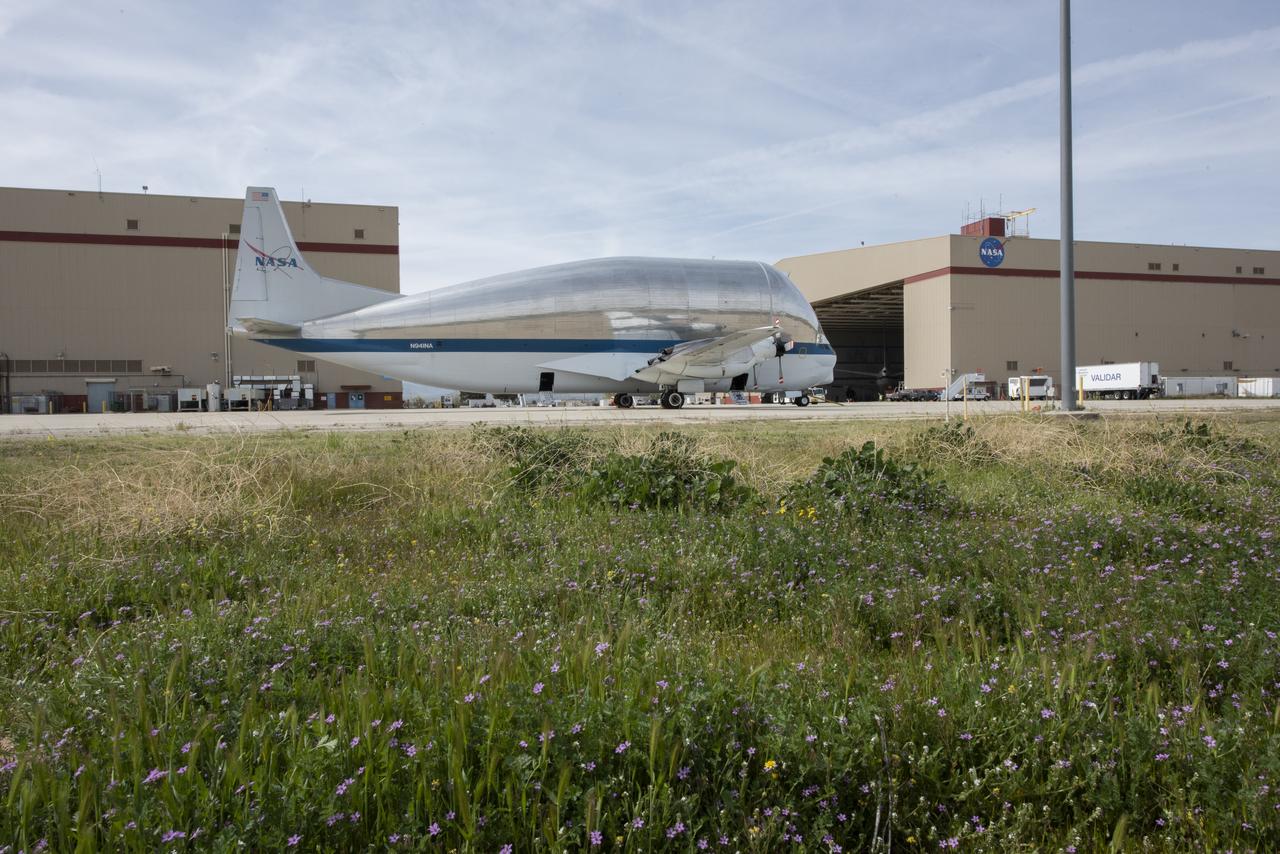
NASA’s Super Guppy cargo transport aircraft parked on the ramp in front of NASA’s Armstrong Flight Research Center Building 703.

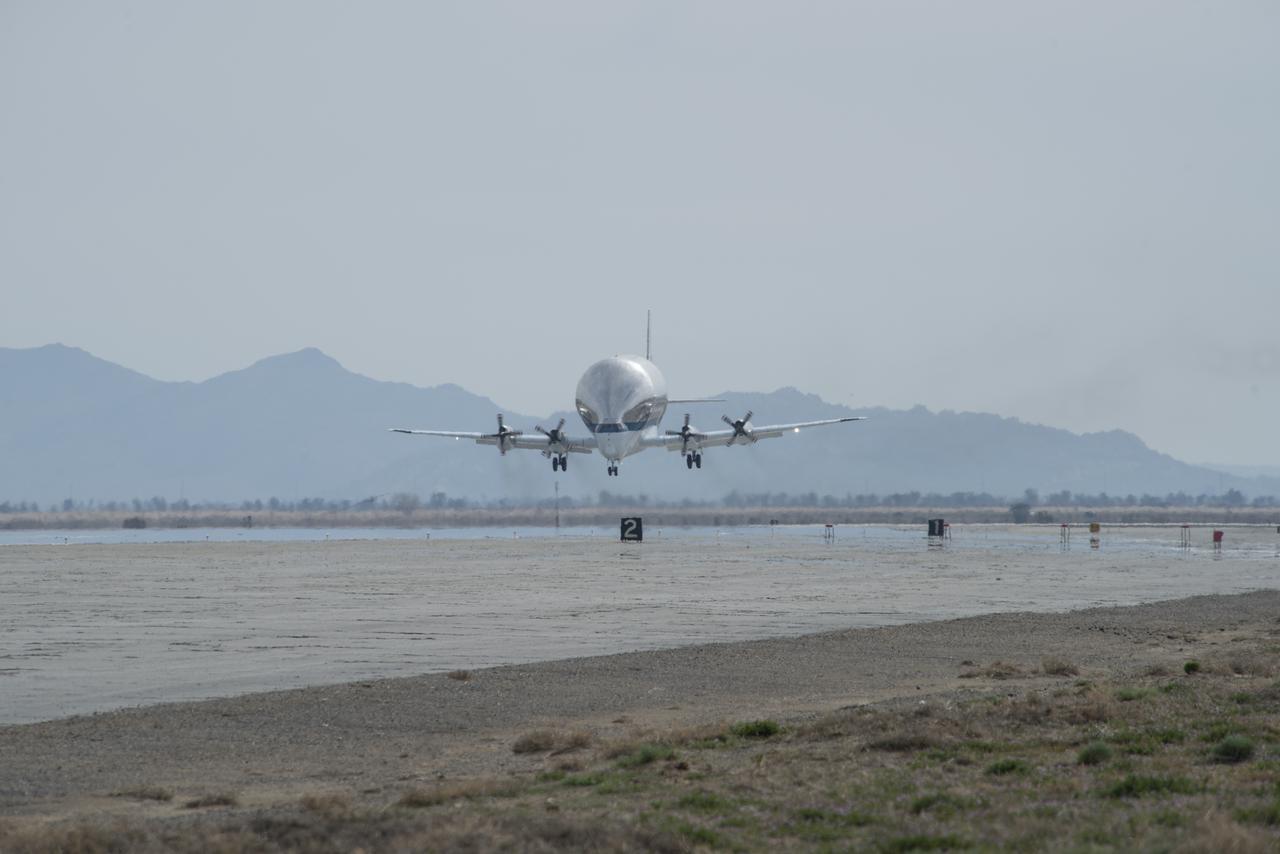
NASA's Super Guppy cargo transport aircraft coming in for landing at Plant 42 in Palmdale, California on April 1, 2019.

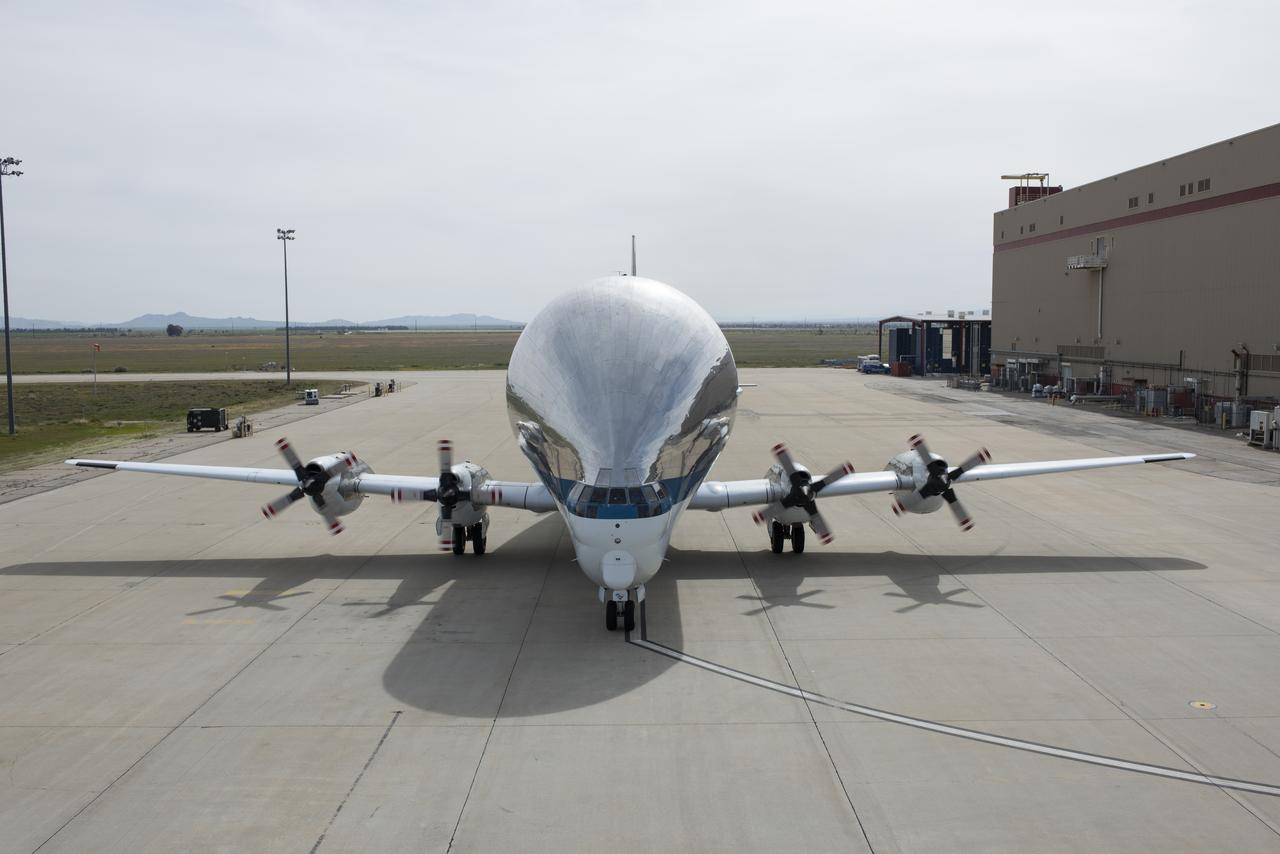
Front view of NASA’s Super Guppy cargo transport aircraft as it taxis in at NASA’s Armstrong Flight Research Center Building 703 ramp.

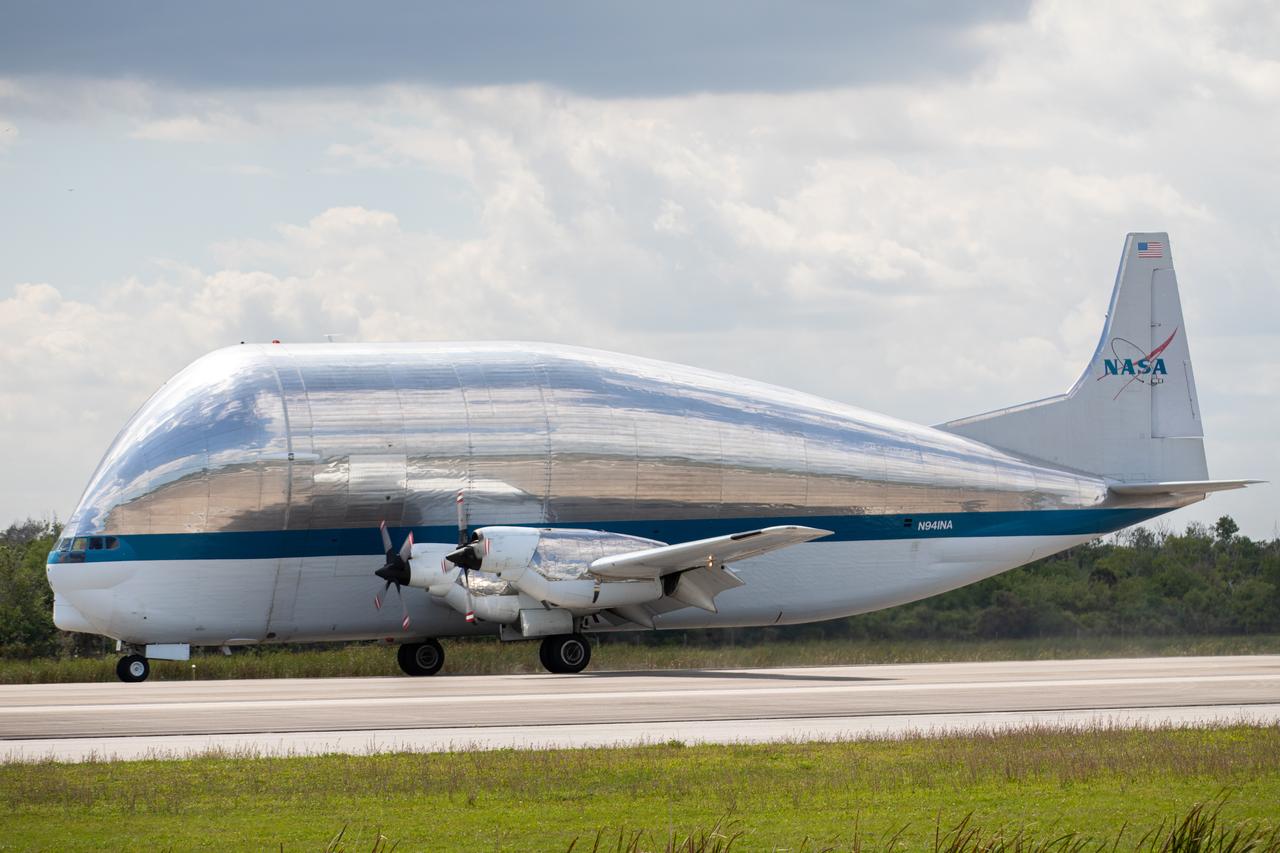
NASA N941NA is the last Super Guppy Turbine Cargo Airplane in service.

NASA N941NA is the last Super Guppy Turbine Cargo Airplane in service.

NASA N941NA is the last Super Guppy Turbine Cargo Airplane in service.

NASA N941NA is the last Super Guppy Turbine Cargo Airplane in service.

NASA N941NA is the last Super Guppy Turbine Cargo Airplane in service.

NASA's Super Guppy cargo transport aircraft taxis in from the Plant 42 runway to NASA"s Armstrong Flight Research Center Building 703 ramp. The aircraft is being stored in the hangar during its phase maintenance check.

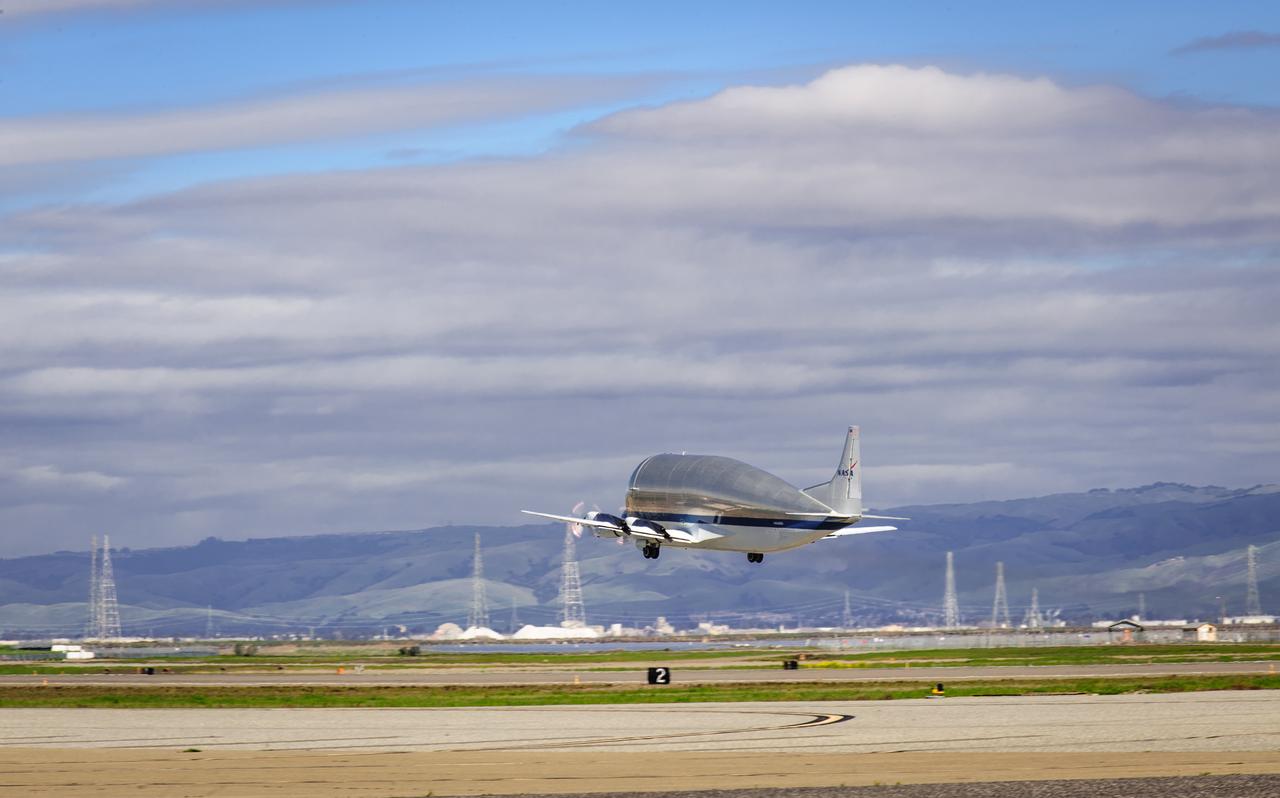
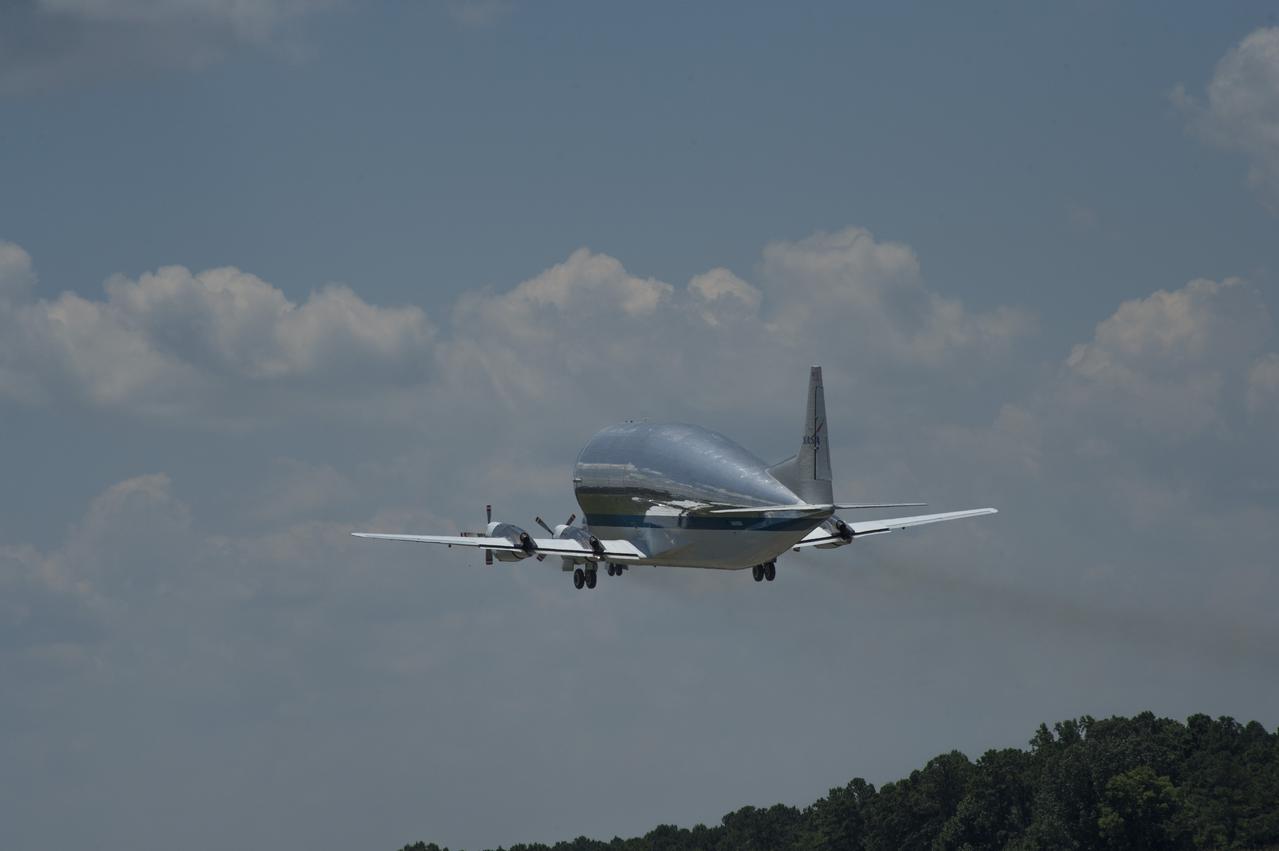
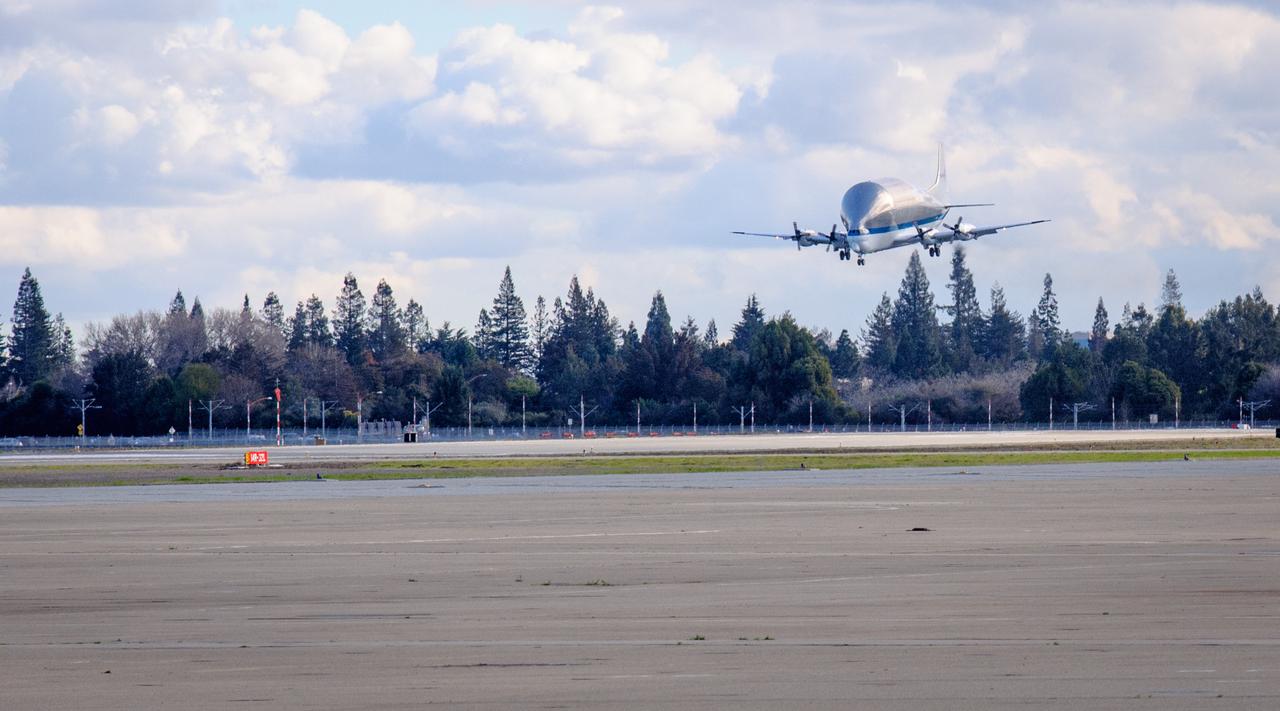
NASA N941NA lift off from Ames Research Center at Moffett Field, it is the last Super Guppy still flying.

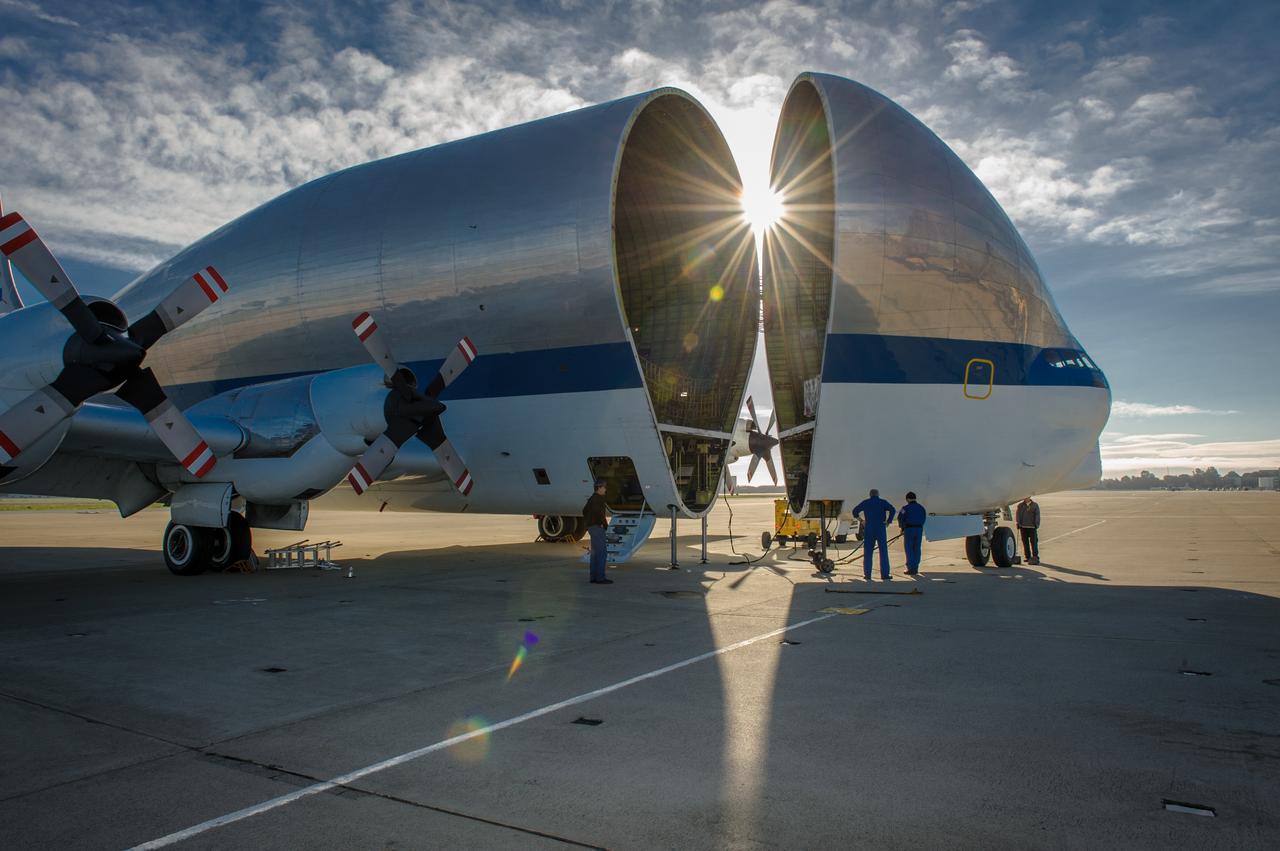
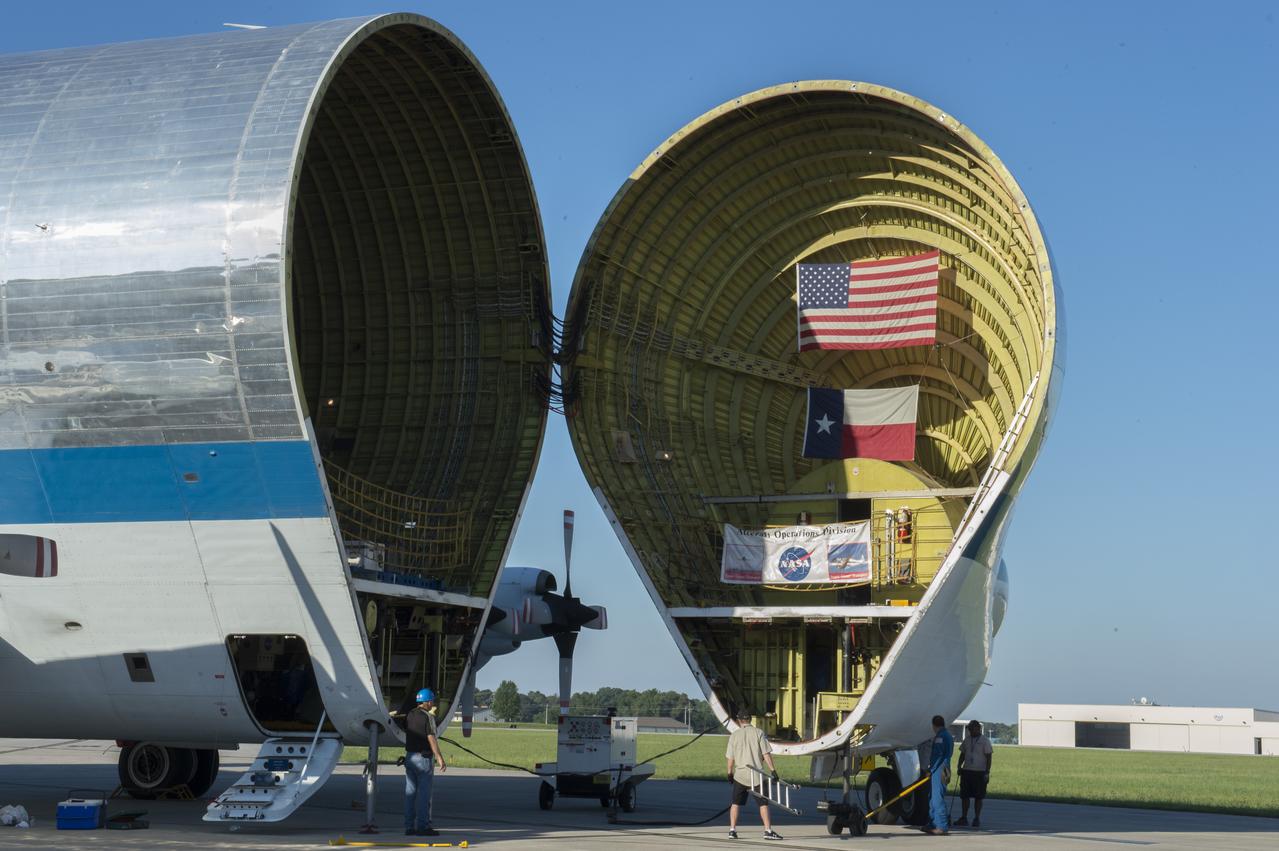
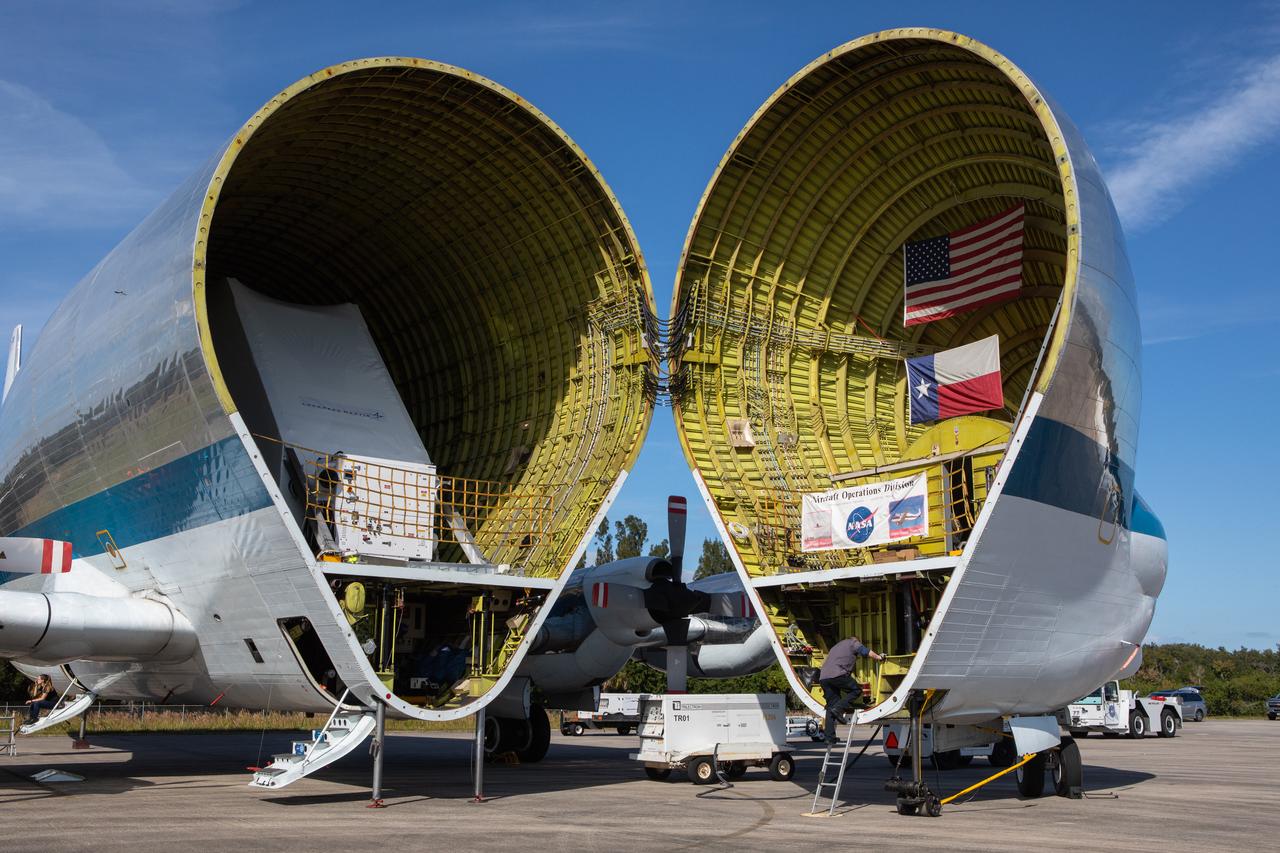
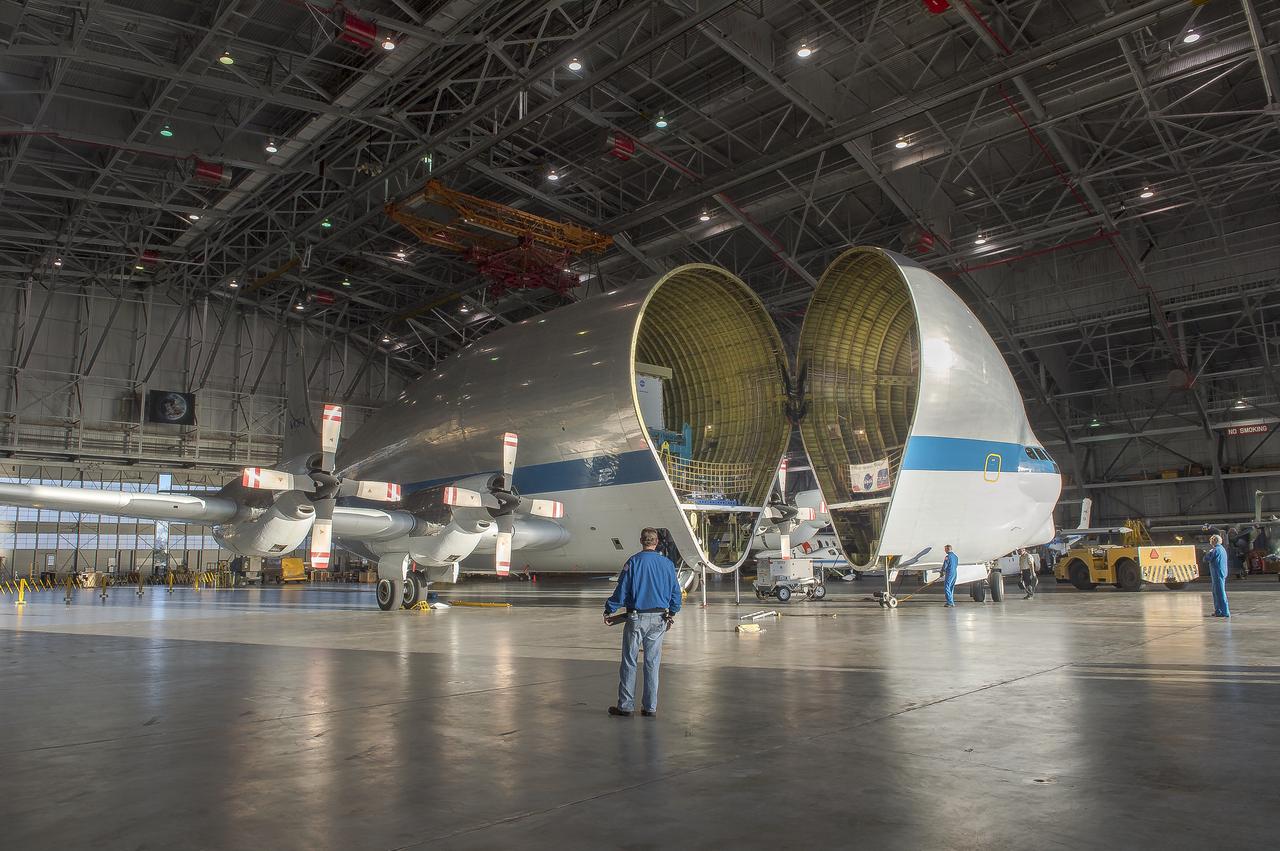
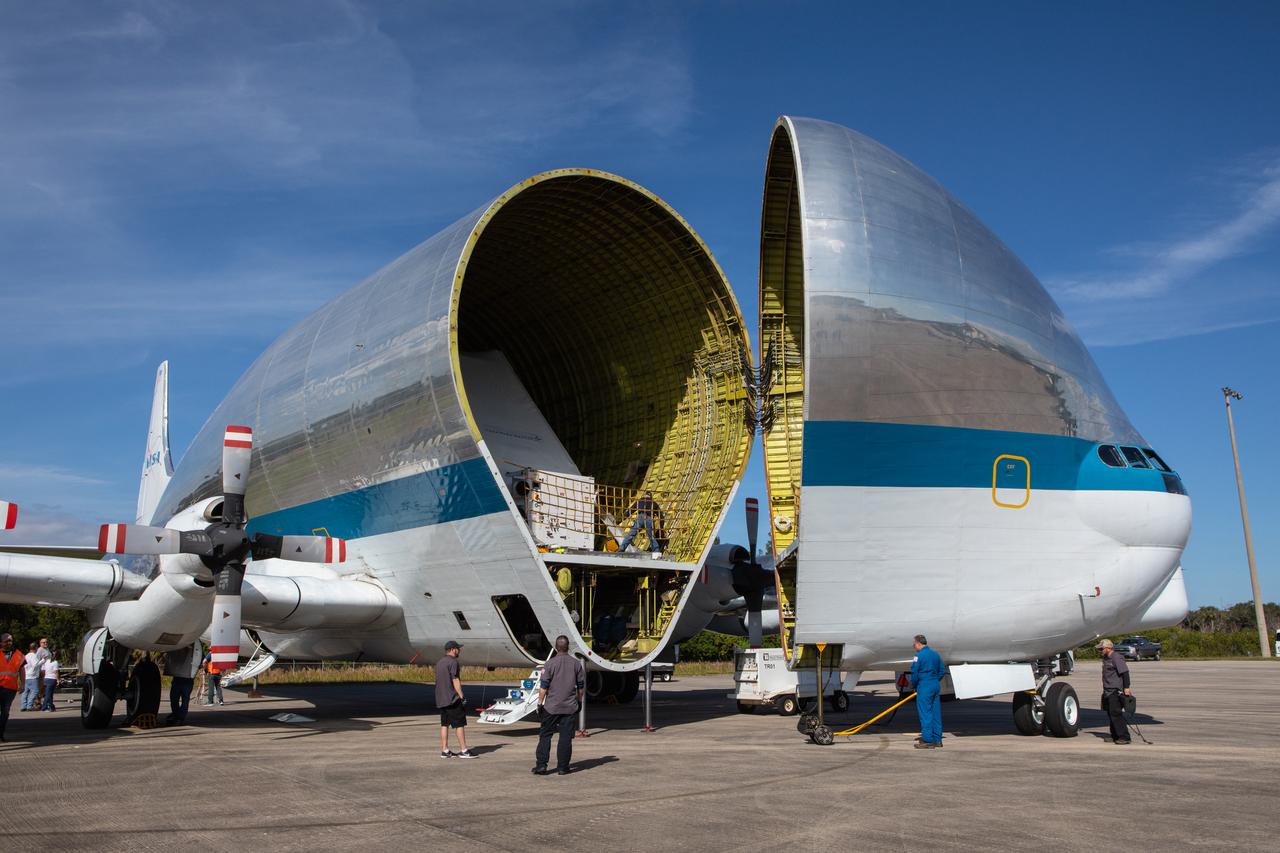
NASA N941NA Superguppy lands at the Moffett Field. Cargo is loaded into the Super Guppy when the aircraft's "fold-away" nose rotates 110 degrees to the left, allowing unobstructed access to the 25 foot diameter fuselage.

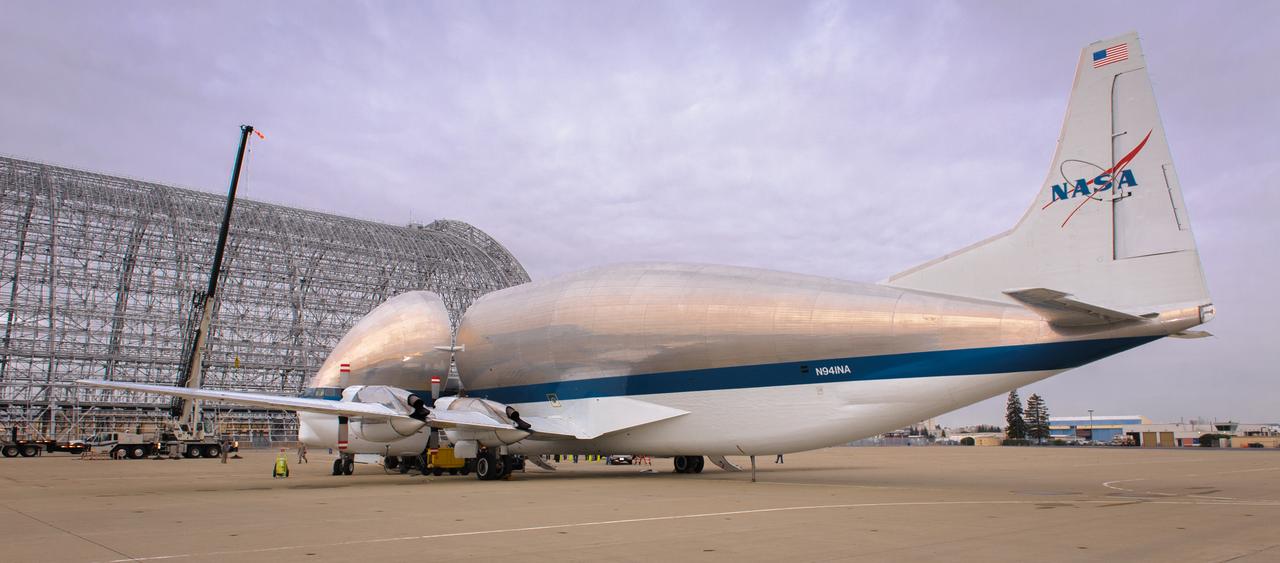
NASA N941NA parked in front of Hangar 1 at Moffett Field. Cargo is loaded into the Super Guppy when the aircraft's "fold-away" nose rotates 110 degrees to the left, allowing unobstructed access to the 25 foot diameter fuselage.

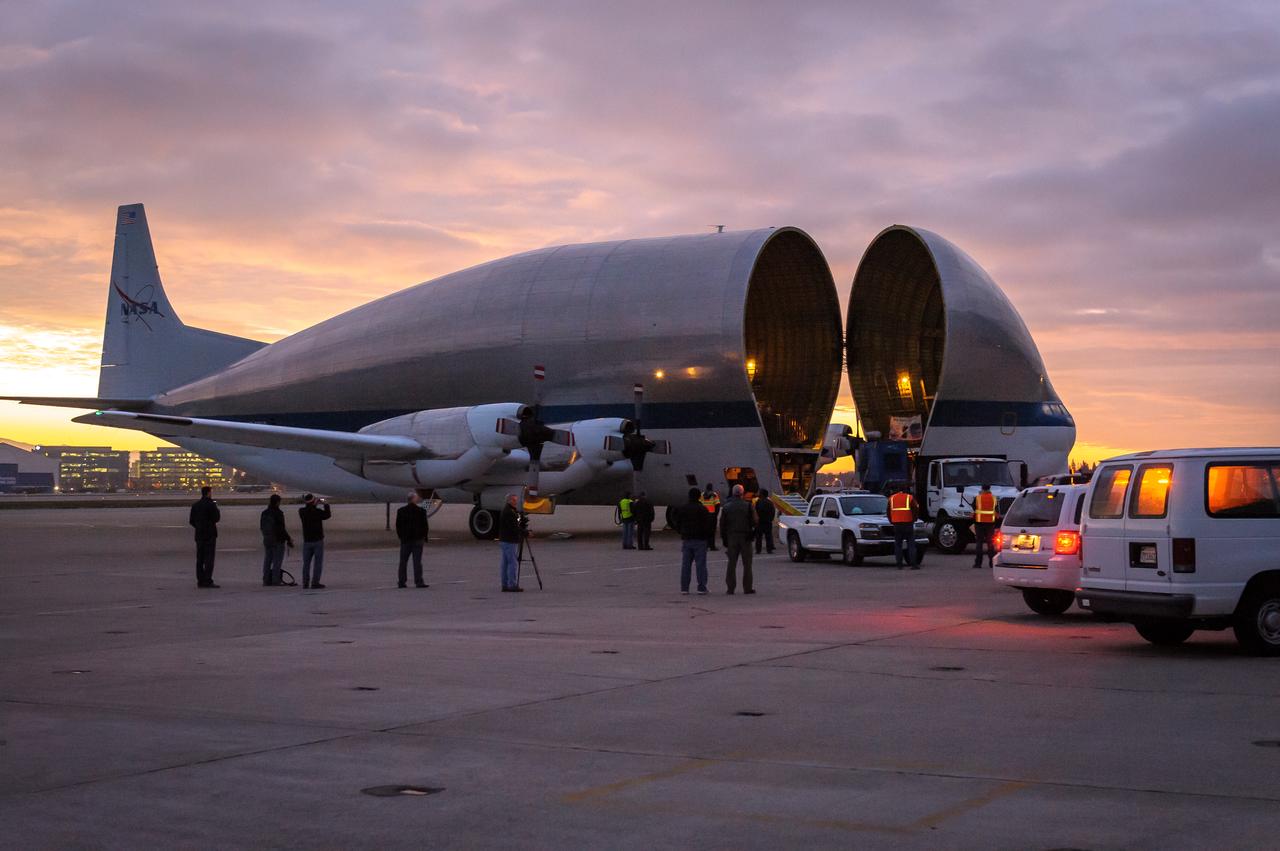
NASA N941NA Superguppy at Moffett Field. Cargo is loaded into the Super Guppy when the aircraft's "fold-away" nose rotates 110 degrees to the left, allowing unobstructed access to the 25 foot diameter fuselage.

NASA's Super Guppie aircraft on to tarmac of Redstone Arsenal airfield prior to liftoff with the Orion stage adapter which will be transported to Denver, Colorado for further testing.

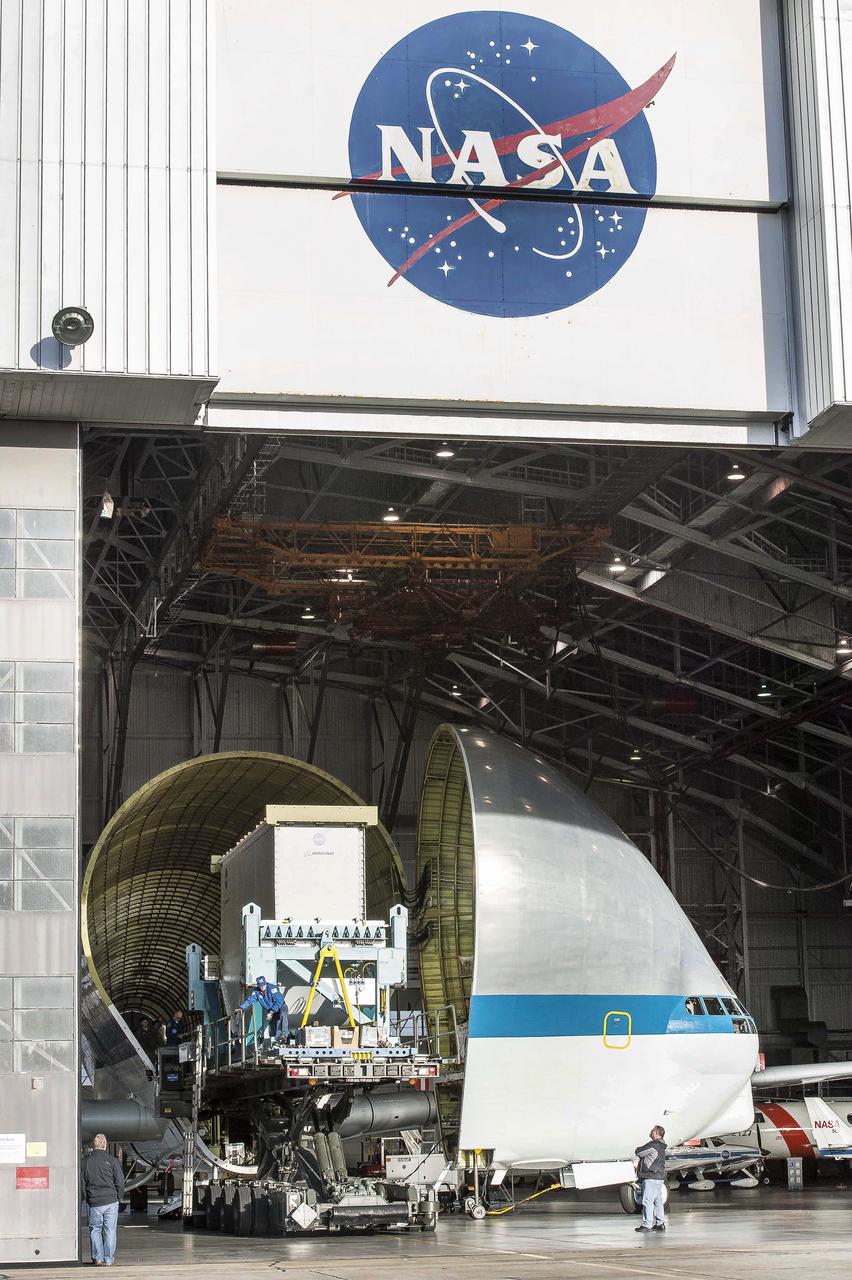
NASA's Super Guppie arrives at Redstone Arsenal airfield to transport the Orion stage adapter to Denver Colorado for further testing. The nose is open exposing the cargo bay.

NASA's Super Guppie aircraft lifts off from Redstone Arsenal's airfield with the Orion stage adapter which will be transported to Denver, Colorado for further testing.

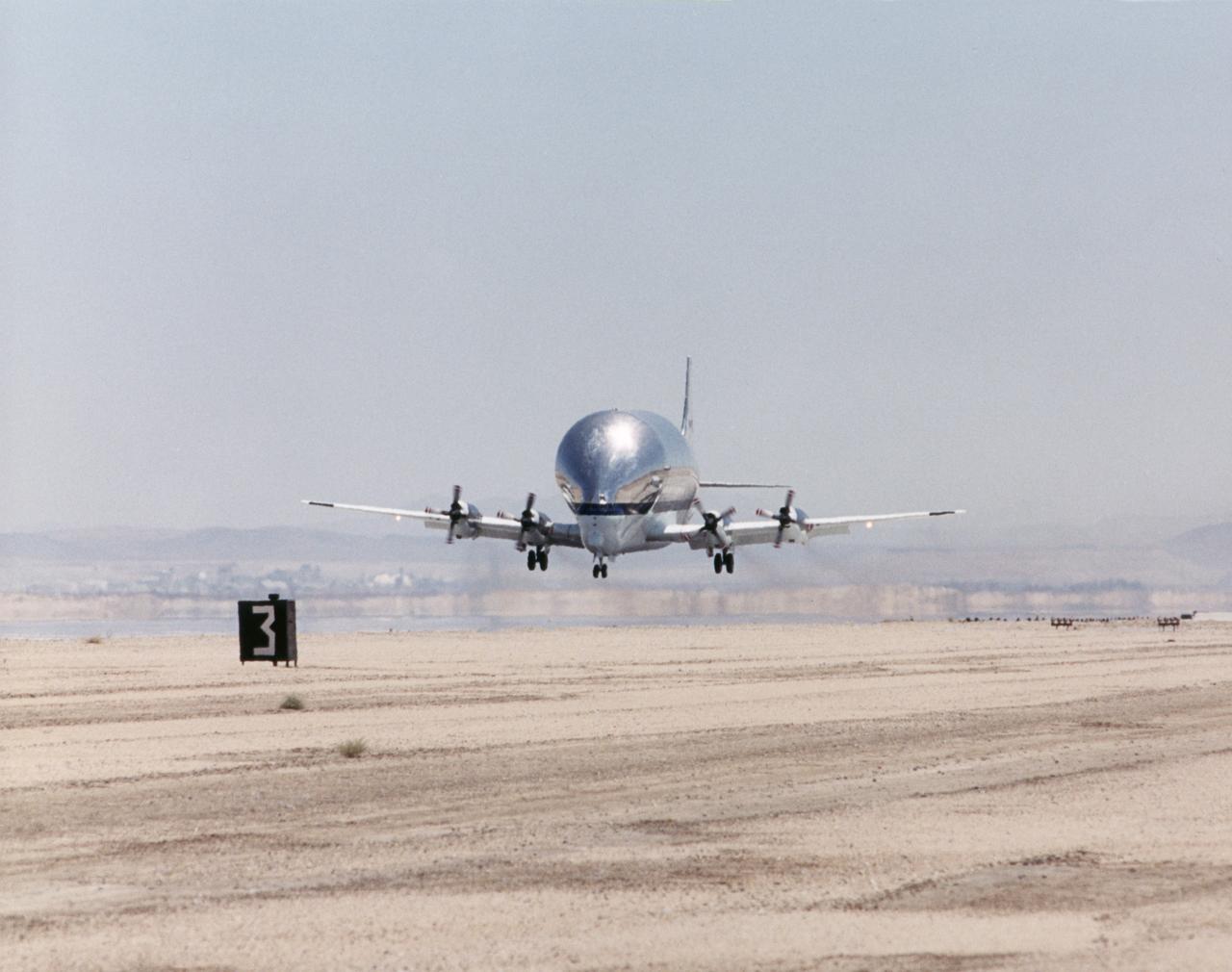
NASA's Super Guppy transport aircraft landed at Edwards Air Force Base, Calif. on July 11, 2000, to deliver the latest version of the X-38 drop vehicle to Dryden. The X-38s are intended as prototypes for a possible "crew lifeboat" for the International Space Station. The X-38 vehicle 131R will demonstrate a huge 7,500 square-foot parafoil that will that will enable the potential crew return vehicle to land on the length of a football field after returning from space. The crew return vehicle is intended to serve as a possible emergency transport to carry a crew to safety in the event of problems with the International Space Station. The Super Guppy evolved from the 1960s-vintage Pregnant Guppy, used for transporting outsized sections of the Apollo moon rocket. The Super Guppy was modified from 1950s-vintage Boeing C-97. NASA acquired its Super Guppy from the European Space Agency in 1997.

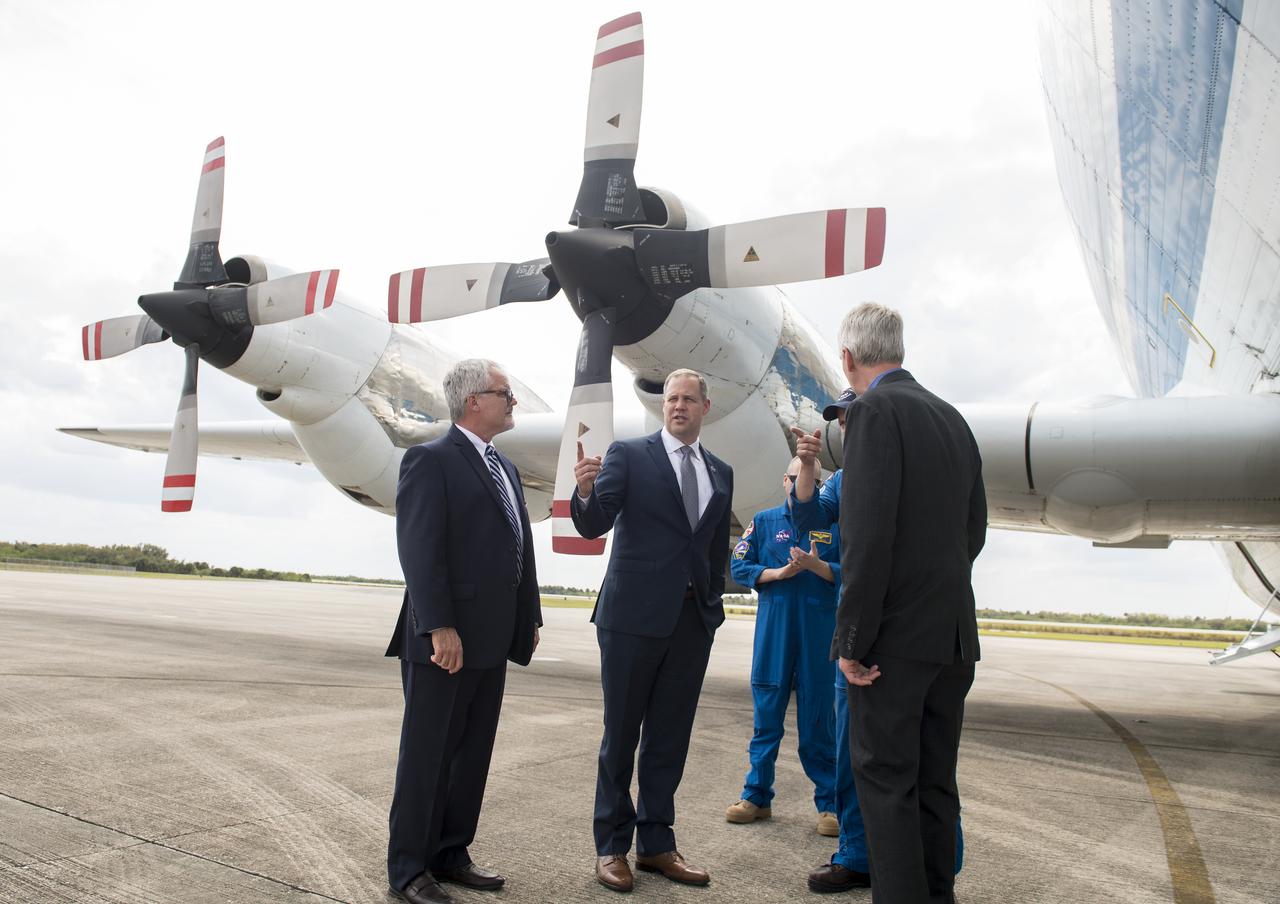
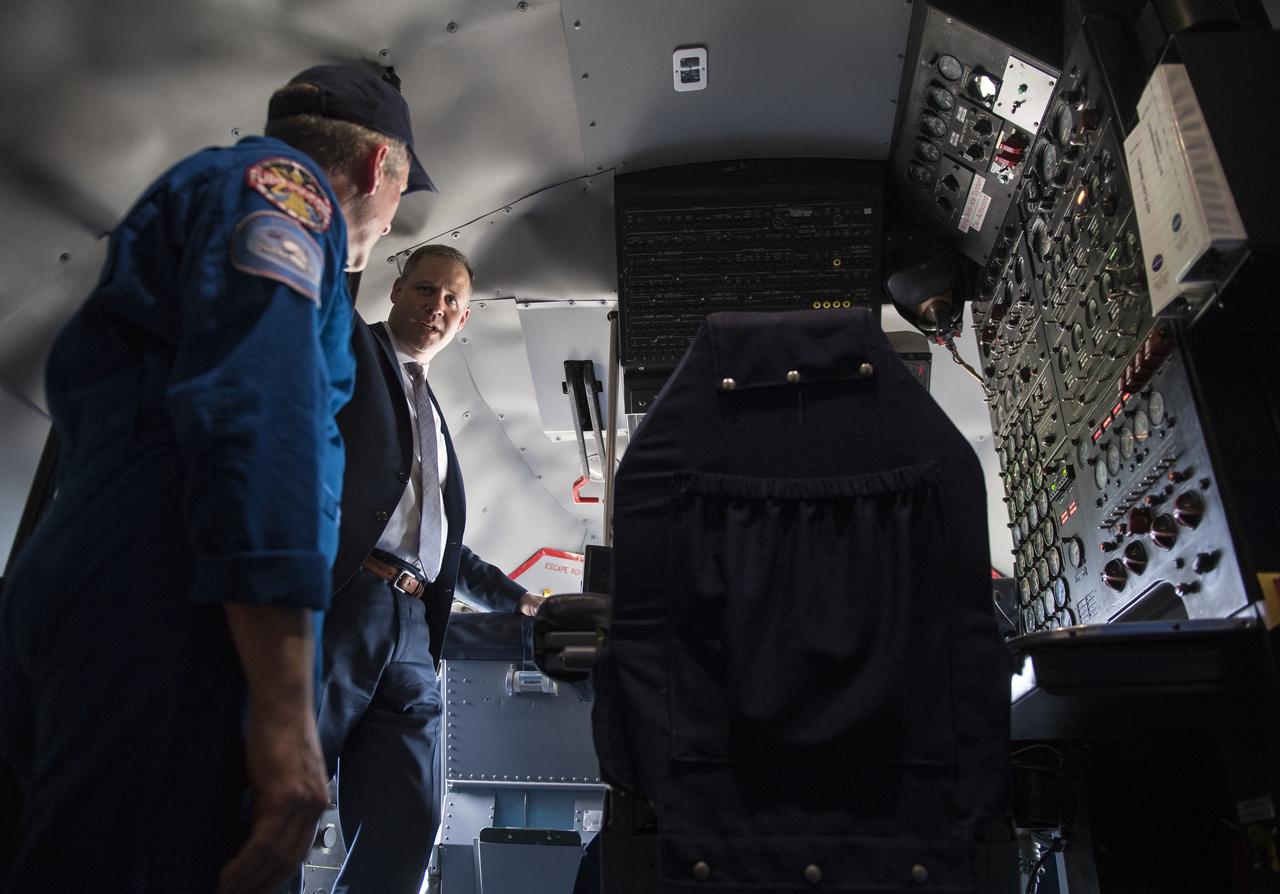
NASA Administrator Jim Bridenstine speaks with Orion and Super Guppy managers before touring the Super Guppy that will carry the flight frame with the Orion crew module and service module inside, to a testing facility in Sandusky, Ohio, for full thermal vacuum testing, Monday, March 11, 2019 at Kennedy Space Center in Florida. For information on NASA's Moon to Mars plans, visit: www.nasa.gov/moontomars Photo credit: (NASA/Aubrey Gemignani)

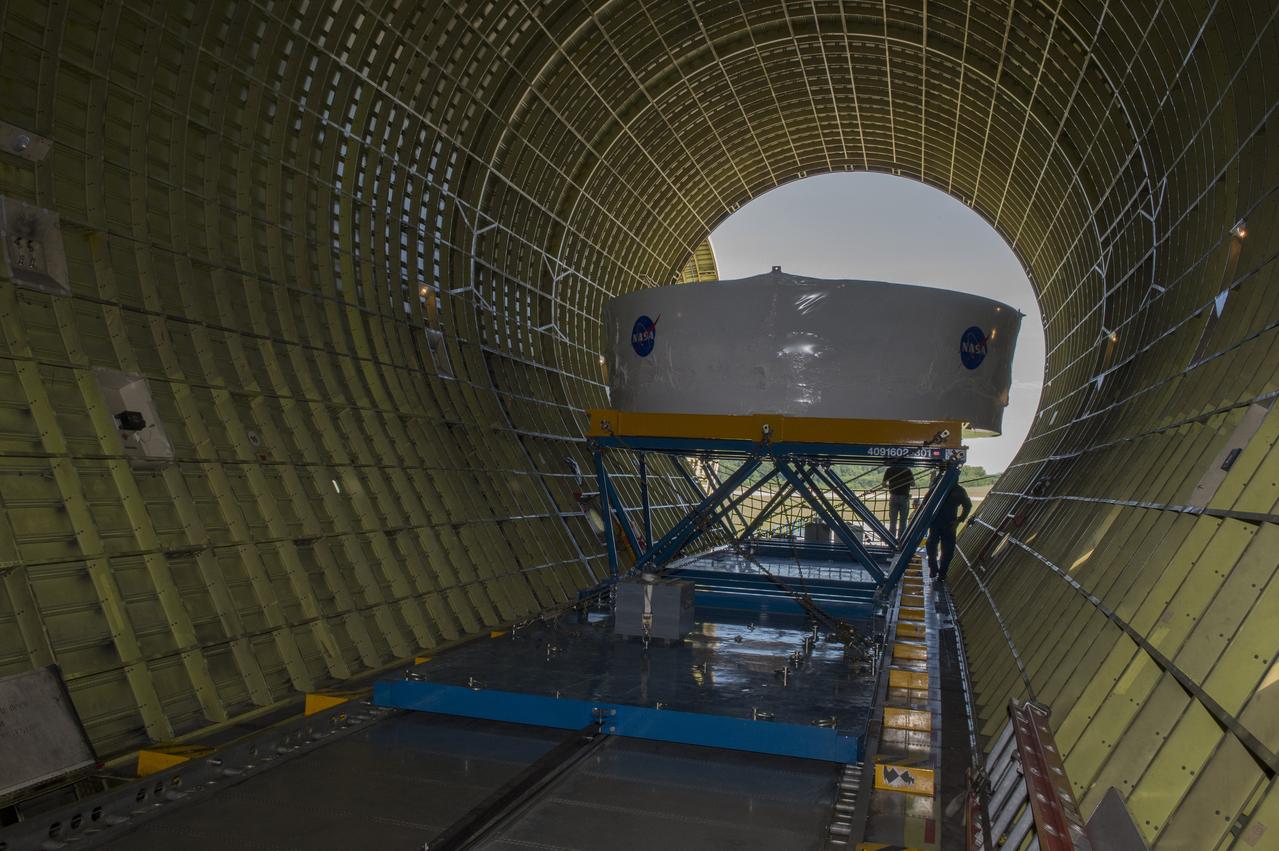
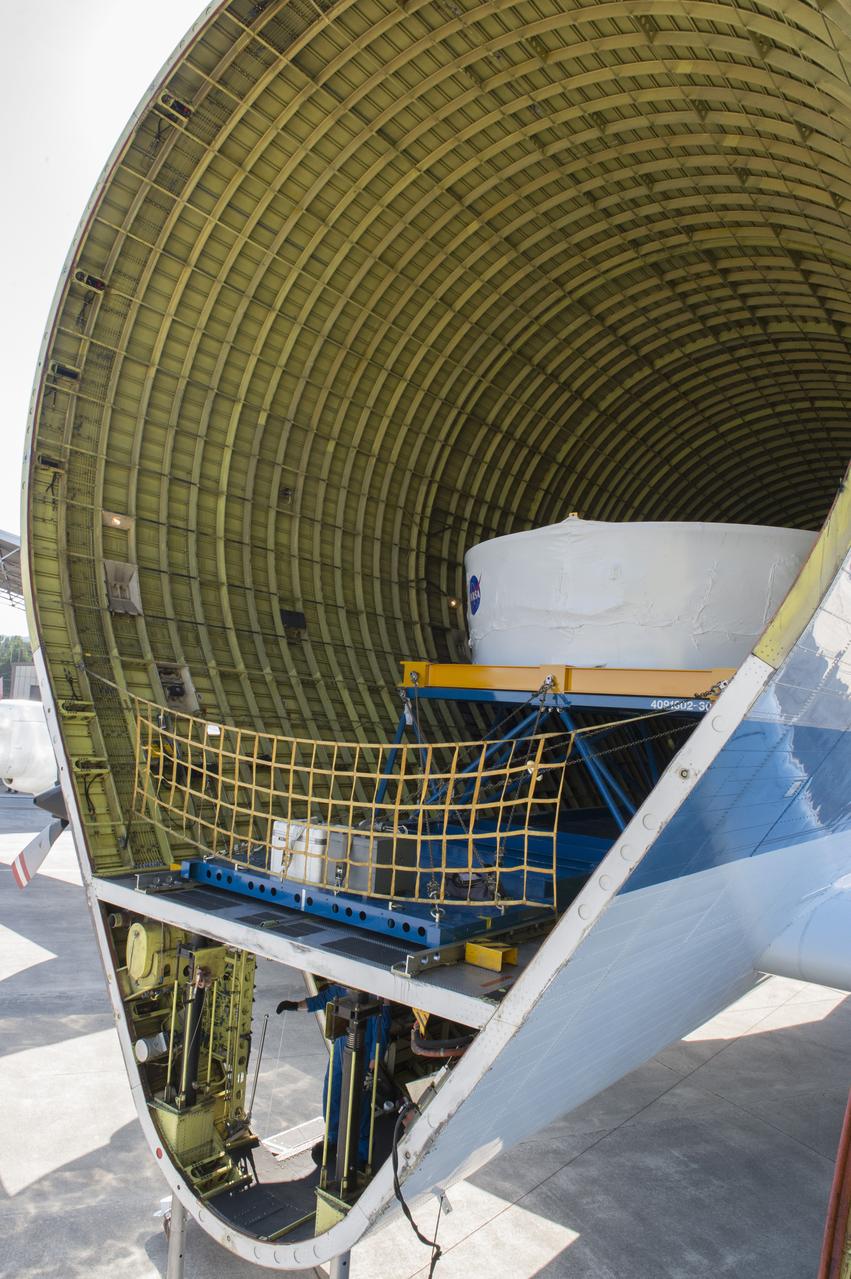
The Orion stage adapter is being placed inside the cargo bay of NASA's Super Guppie aircraft before being flown to Denver, Colorado for further testing.

NASA's Super Guppie aircraft lifts off from Redstone Arsenal's airfield with the Orion stage adapter which will be transported to Denver, Colorado for further testing.

The Orion stage adapter shown inside the cargo bay of NASA's Super Guppie aircraft prior to being flown to Denver, Colorado for further testing.

The Orion stage adapter is being positioned for lifting onto the loading platform before being loaded into NASA's Super Guppie aircraft. The adapter will be flown to Denver, Colorado for further testing.

The platform which will be used to load the Orion stage adapter is shown being positioned in front of NASA's Super Guppie. After being tested at Marshall Space Flight Center the stage adapter will be flown to Denver, Colorado for further testing.

The Orion stage adapter is being positioned for lifting onto the loading platform before being loaded into NASA's Super Guppie aircraft. The adapter will be flown to Denver, Colorado for further testing.

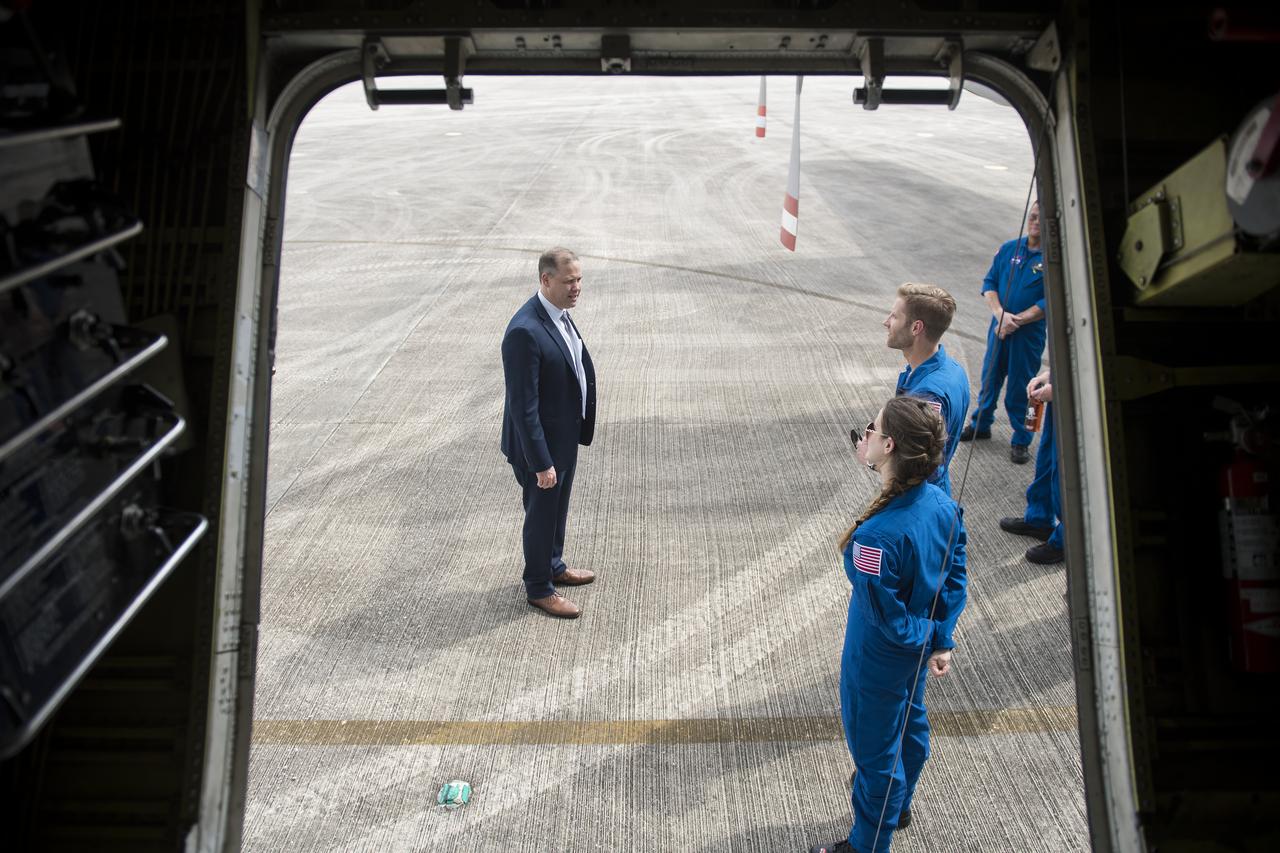
NASA Administrator Jim Bridenstine speaks with pilots and engineers of the super guppy that will carry the flight frame with the Orion crew module and service module inside, to a testing facility in Sandusky, Ohio, for full thermal vacuum testing, Monday, March 11, 2019 at Kennedy Space Center in Florida. For information on NASA's Moon to Mars plans, visit: www.nasa.gov/moontomars Photo credit: (NASA/Aubrey Gemignani)

NASA Administrator Jim Bridenstine tours the super guppy that will carry the flight frame with the Orion crew module and service module inside, to a testing facility in Sandusky, Ohio, for full thermal vacuum testing, Monday, March 11, 2019 at Kennedy Space Center in Florida. For information on NASA's Moon to Mars plans, visit: www.nasa.gov/moontomars Photo credit: (NASA/Aubrey Gemignani)

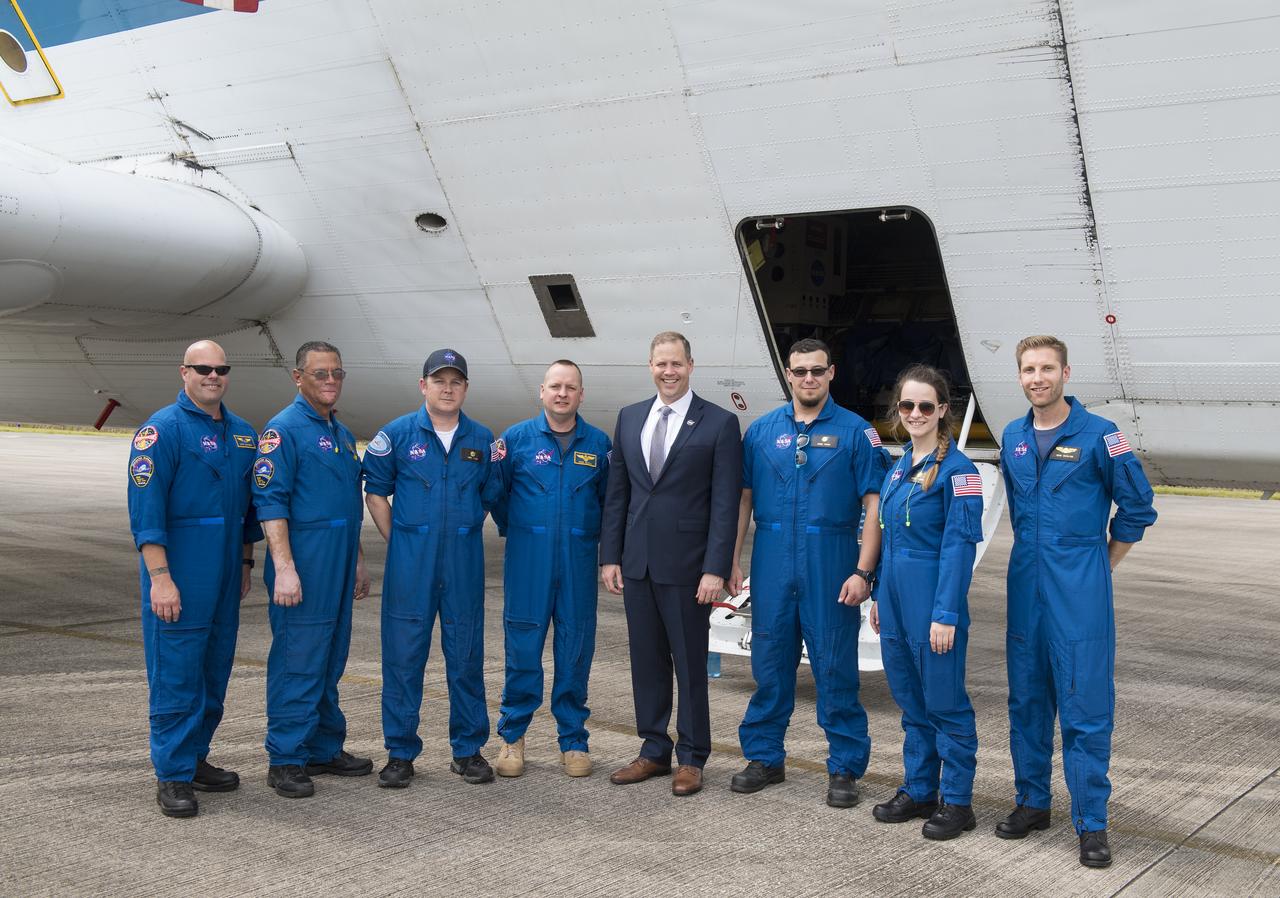
NASA Administrator Jim Bridenstine poses for a photo with pilots and engineers of the super guppy that will carry the flight frame with the Orion crew module and service module inside, to a testing facility in Sandusky, Ohio, for full thermal vacuum testing, Monday, March 11, 2019 at Kennedy Space Center in Florida. For information on NASA's Moon to Mars plans, visit: www.nasa.gov/moontomars Photo credit: (NASA/Aubrey Gemignani)

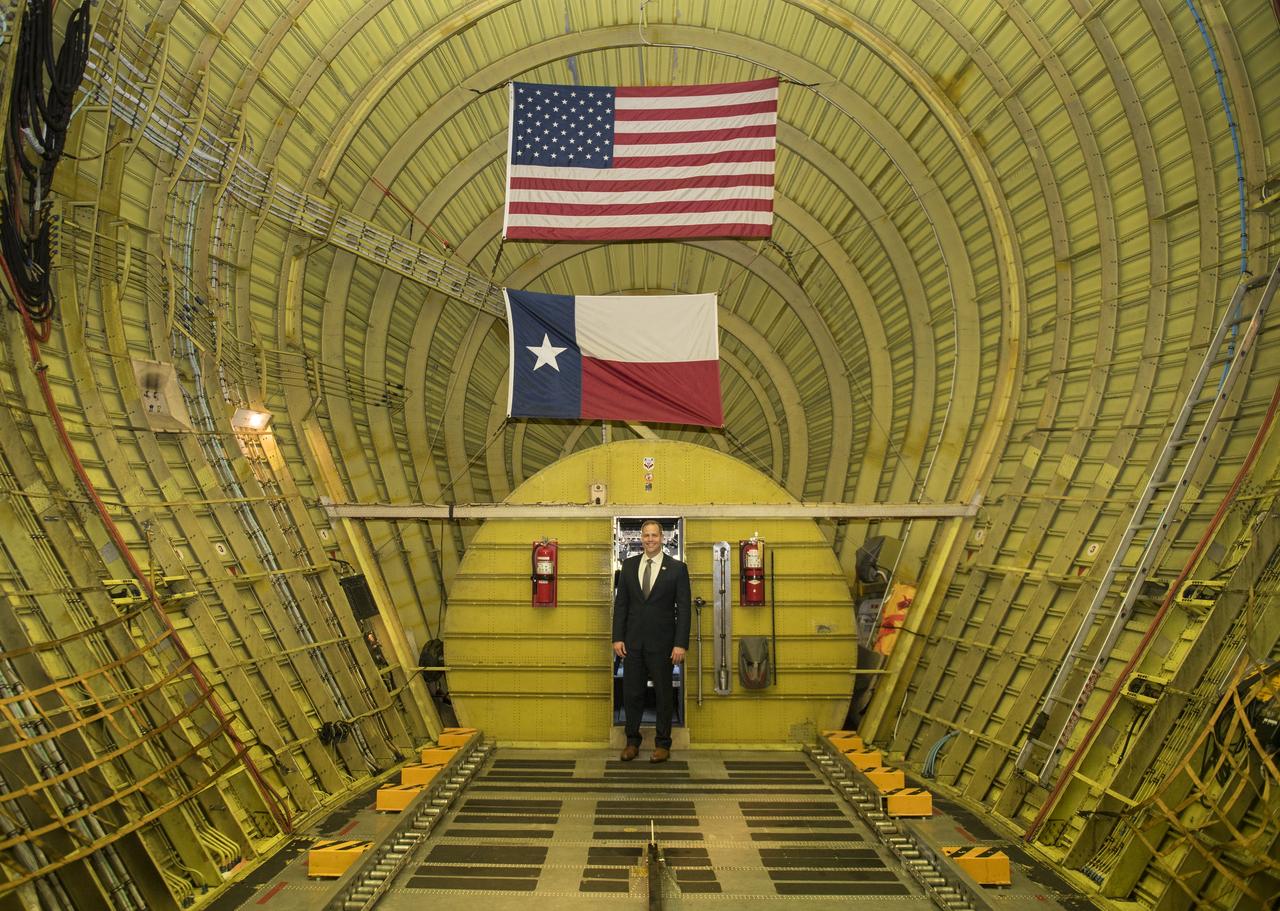
NASA Administrator Jim Bridenstine poses for a photo inside the super guppy that will carry the flight frame with the Orion crew module and service module inside, to a testing facility in Sandusky, Ohio, for full thermal vacuum testing, Monday, March 11, 2019 at Kennedy Space Center in Florida. For information on NASA's Moon to Mars plans, visit: www.nasa.gov/moontomars Photo credit: (NASA/Aubrey Gemignani)

NASA’s Orion spacecraft is loaded into the agency’s Super Guppy aircraft at the Launch and Landing Facility runway at Kennedy Space Center in Florida on Nov. 21, 2019. The spacecraft’s crew and service modules are flying to NASA’s Plum Brook Station in Sandusky, Ohio, for full thermal vacuum testing. In this unique facility, the crew and service modules will be put through extensive testing to ensure they can survive the rigors of launch, space travel, re-entry and splashdown. The Orion spacecraft will launch atop the agency's Space Launch System rocket on Artemis I.
NASA’s Orion spacecraft is loaded into the agency’s Super Guppy aircraft at the Launch and Landing Facility runway at Kennedy Space Center in Florida on Nov. 21, 2019. The spacecraft’s crew and service modules are flying to NASA’s Plum Brook Station in Sandusky, Ohio, for full thermal vacuum testing. In this unique facility, the crew and service modules will be put through extensive testing to ensure they can survive the rigors of launch, space travel, re-entry and splashdown. The Orion spacecraft will launch atop the agency's Space Launch System rocket on Artemis I.
NASA’s Orion spacecraft is loaded into the agency’s Super Guppy aircraft at the Launch and Landing Facility runway at Kennedy Space Center in Florida on Nov. 21, 2019. The spacecraft’s crew and service modules are flying to NASA’s Plum Brook Station in Sandusky, Ohio, for full thermal vacuum testing. In this unique facility, the crew and service modules will be put through extensive testing to ensure they can survive the rigors of launch, space travel, re-entry and splashdown. The Orion spacecraft will launch atop the agency's Space Launch System rocket on Artemis I.
NASA’s Orion spacecraft is loaded into the agency’s Super Guppy aircraft at the Launch and Landing Facility runway at Kennedy Space Center in Florida on Nov. 21, 2019. The spacecraft’s crew and service modules are flying to NASA’s Plum Brook Station in Sandusky, Ohio, for full thermal vacuum testing. In this unique facility, the crew and service modules will be put through extensive testing to ensure they can survive the rigors of launch, space travel, re-entry and splashdown. The Orion spacecraft will launch atop the agency's Space Launch System rocket on Artemis I.
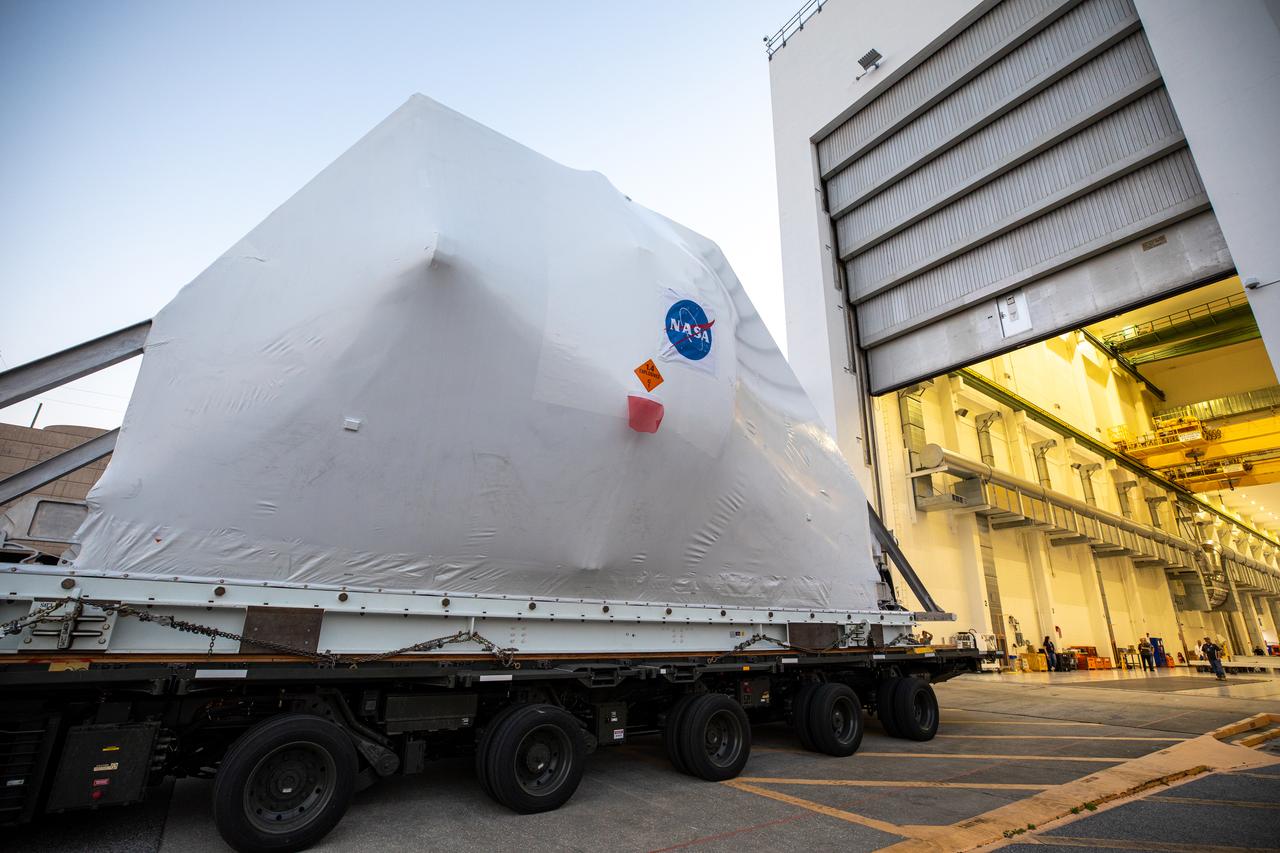
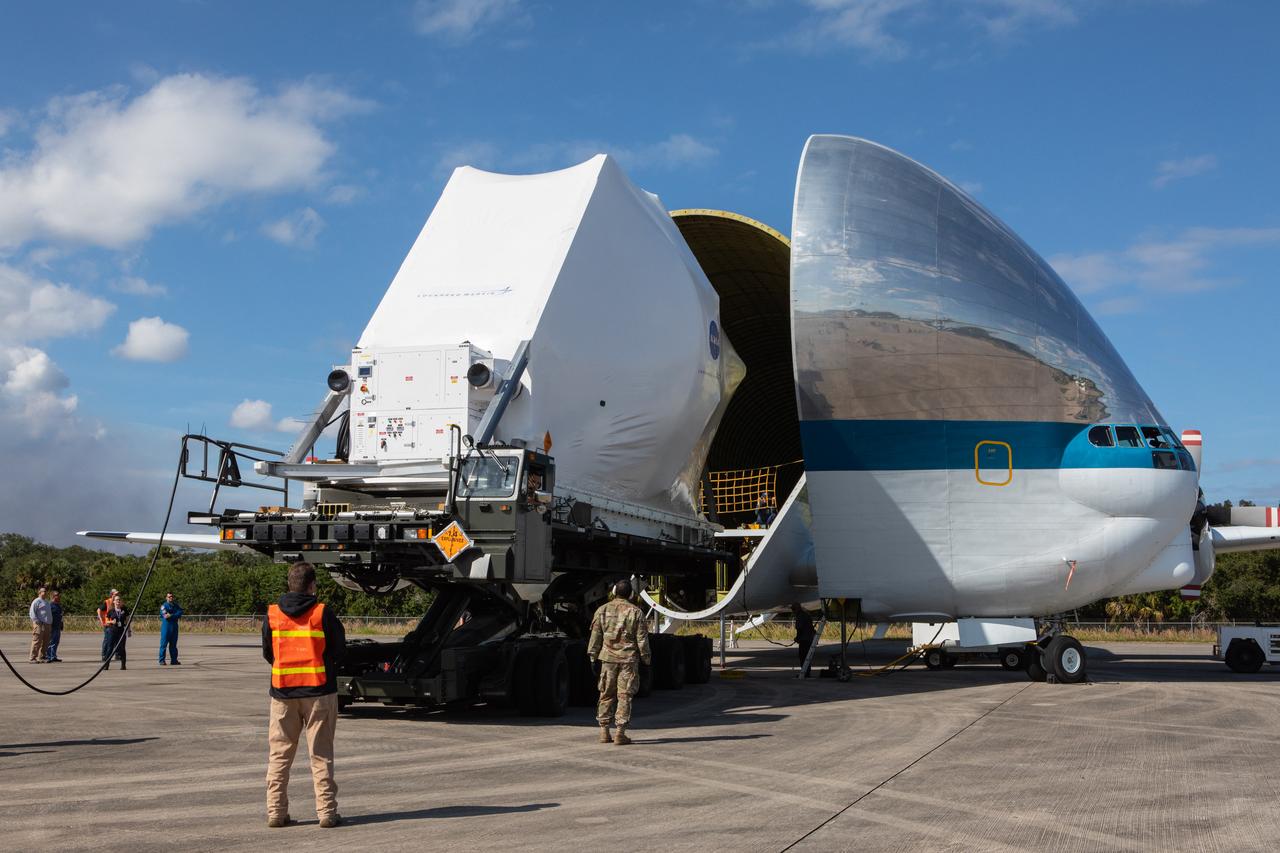
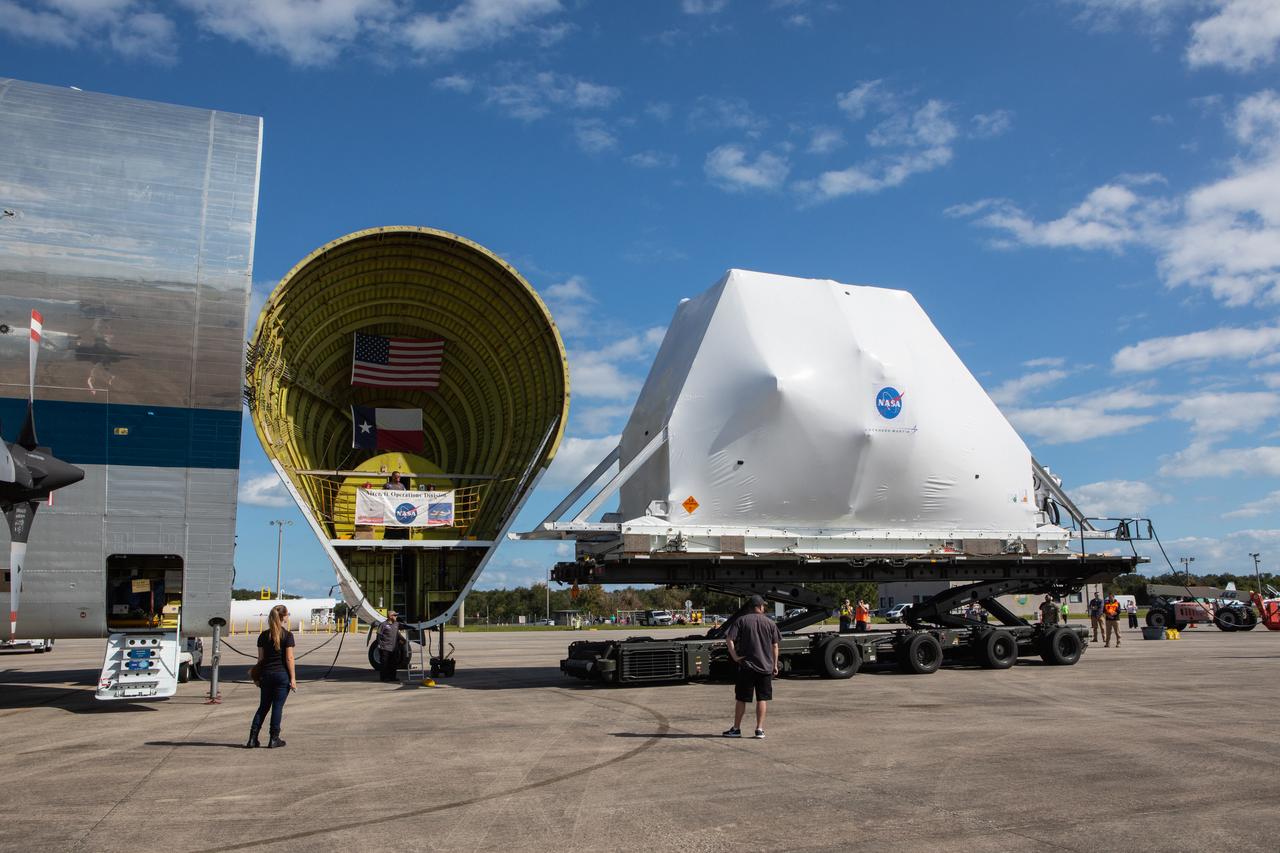
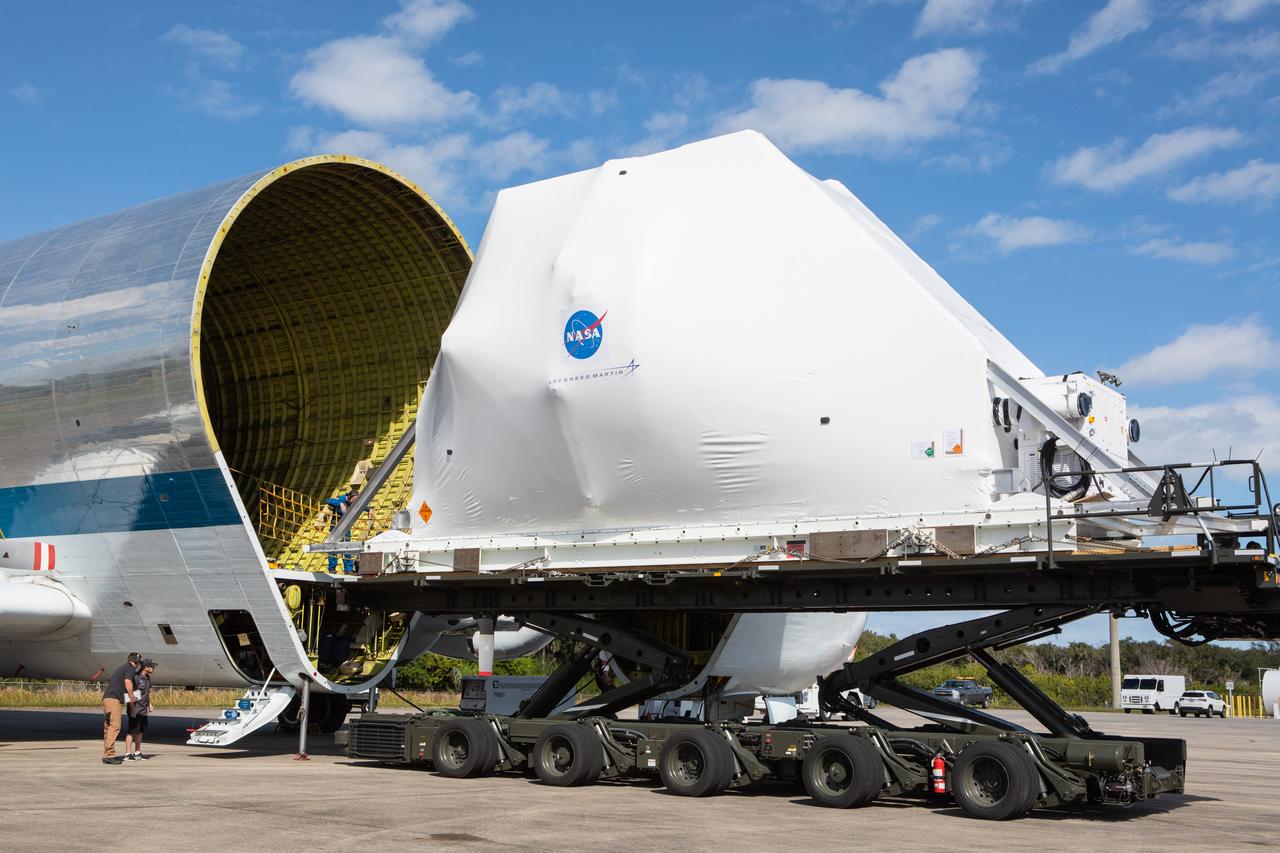
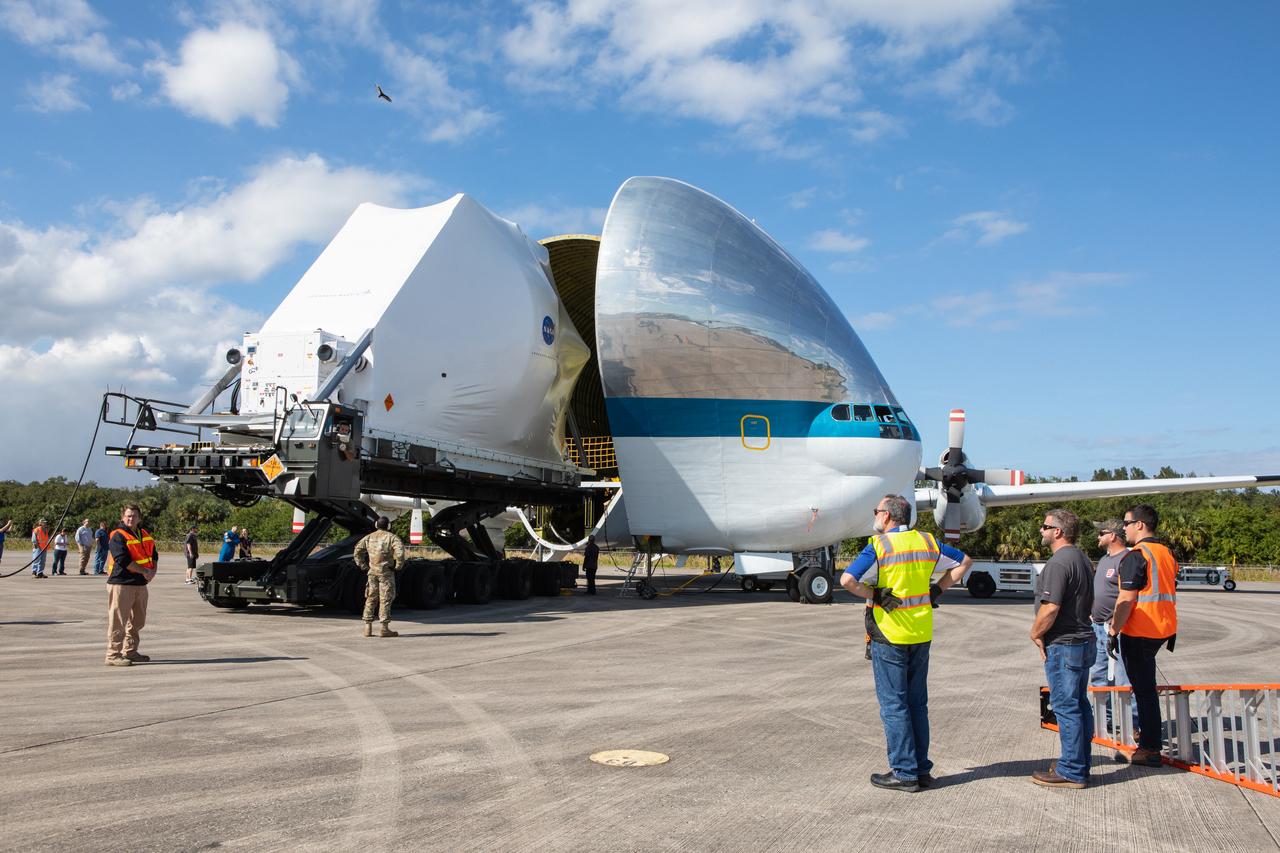
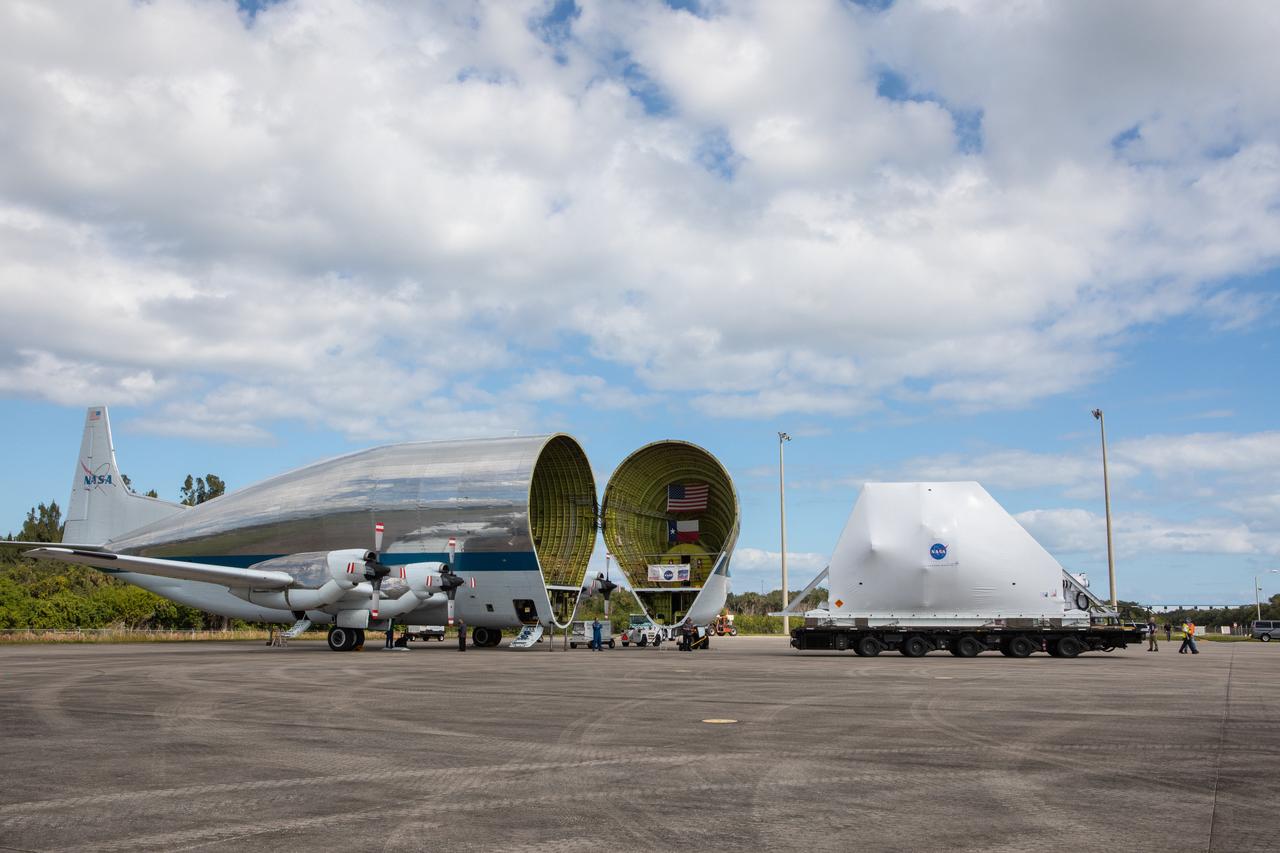
NASA’s Orion spacecraft, protected in its shipping container, is removed from the agency’s Super Guppy aircraft at the Launch and Landing Facility runway at Kennedy Space Center on March 25, 2020, for transportation to the Neil Armstrong Operations and Checkout Building. After testing at NASA’s Plum Brook Station in Ohio verified it can handle the extreme conditions of a deep-space environment, the spacecraft has returned to the Florida spaceport for final testing and assembly. Following this, it will be integrated with the Space Launch System rocket for Artemis I – the first in a series of increasingly complex missions to the Moon that will ultimately lead to the exploration of Mars.

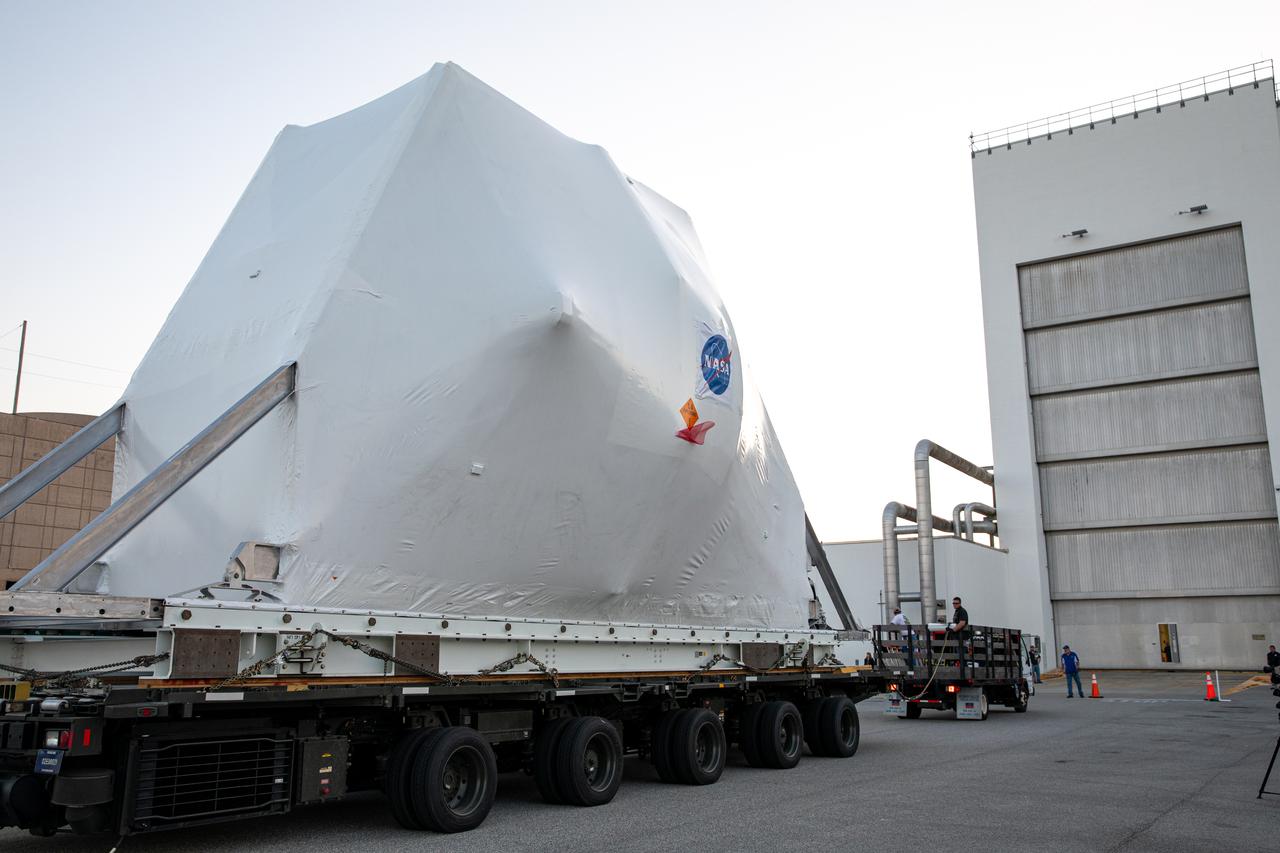
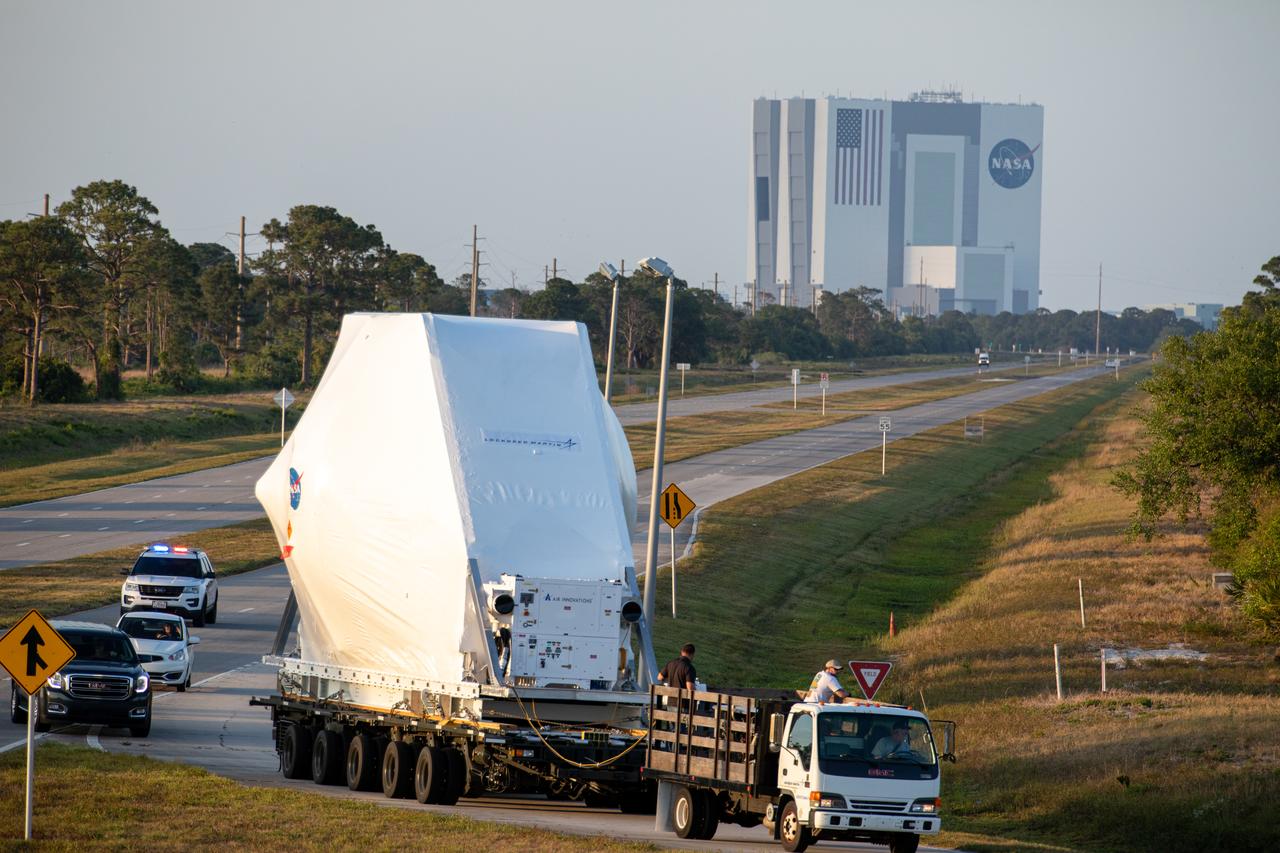
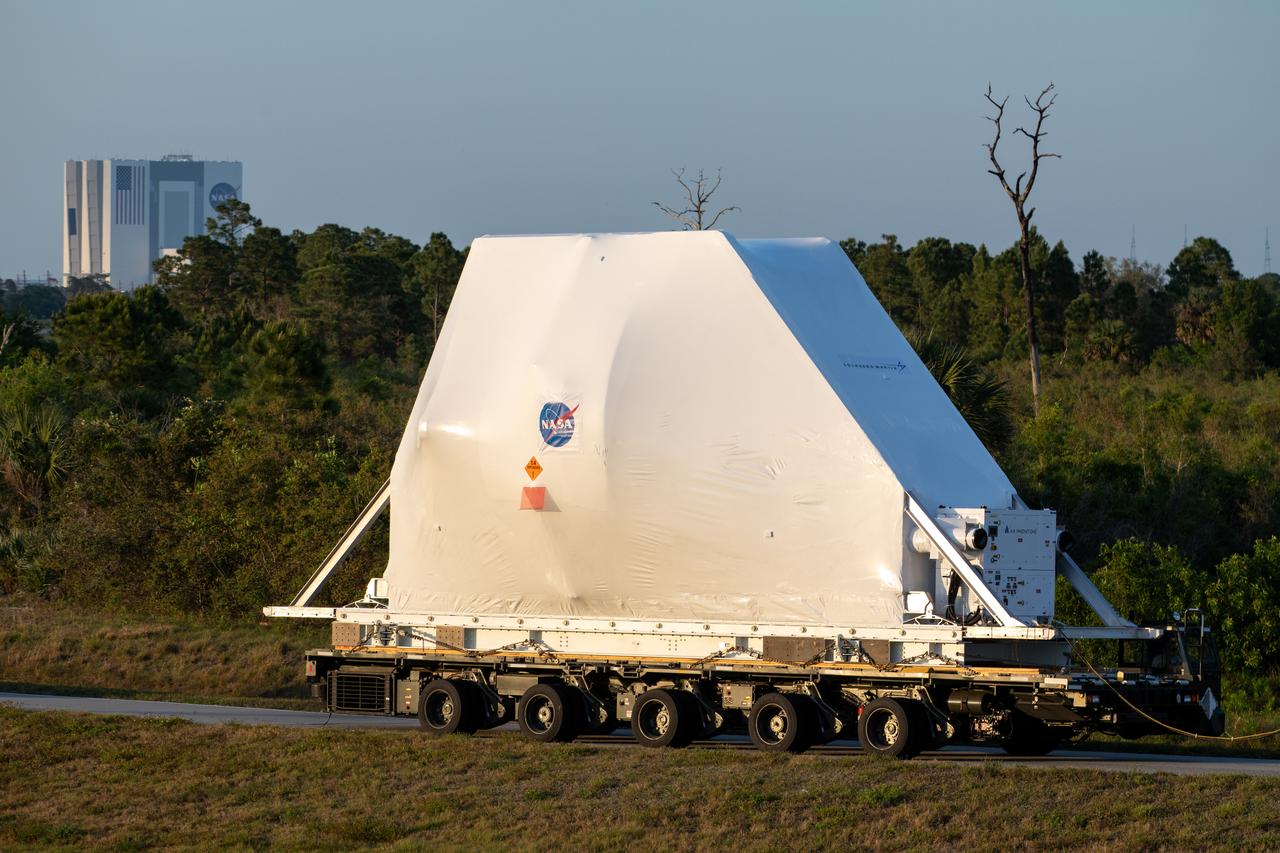
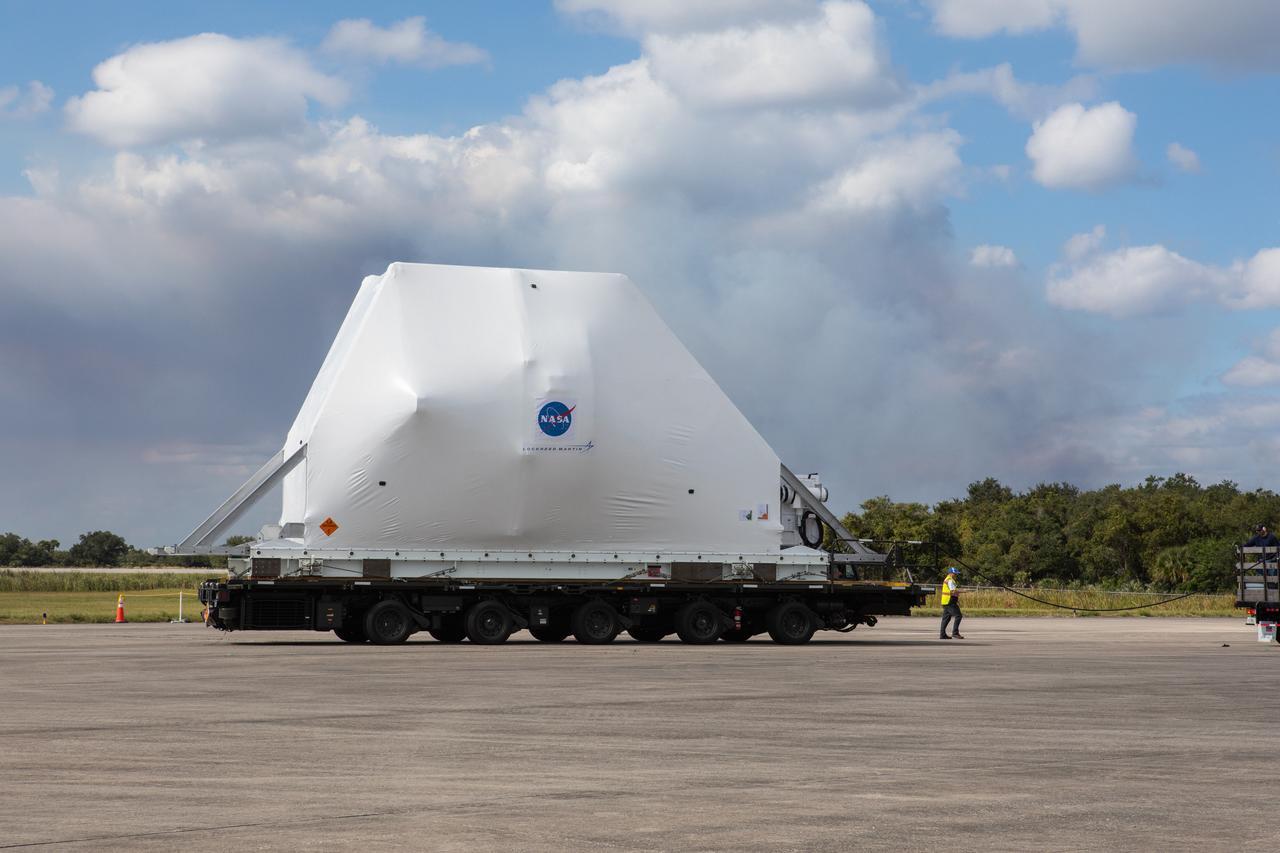
NASA’s Orion spacecraft, protected in its shipping container, is loaded onto a transporter at the Launch and Landing Facility at Kennedy Space Center for its move to the Neil Armstrong Operations and Checkout Building on March 25, 2020. After testing at NASA’s Plum Brook Station in Ohio verified it can handle the extreme conditions of a deep-space environment, the spacecraft – carried by the agency’s Super Guppy aircraft – has returned to the Florida spaceport for final testing and assembly. Following this, Orion will be integrated with the Space Launch System rocket for Artemis I – the first in a series of increasingly complex missions to the Moon that will ultimately lead to the exploration of Mars.

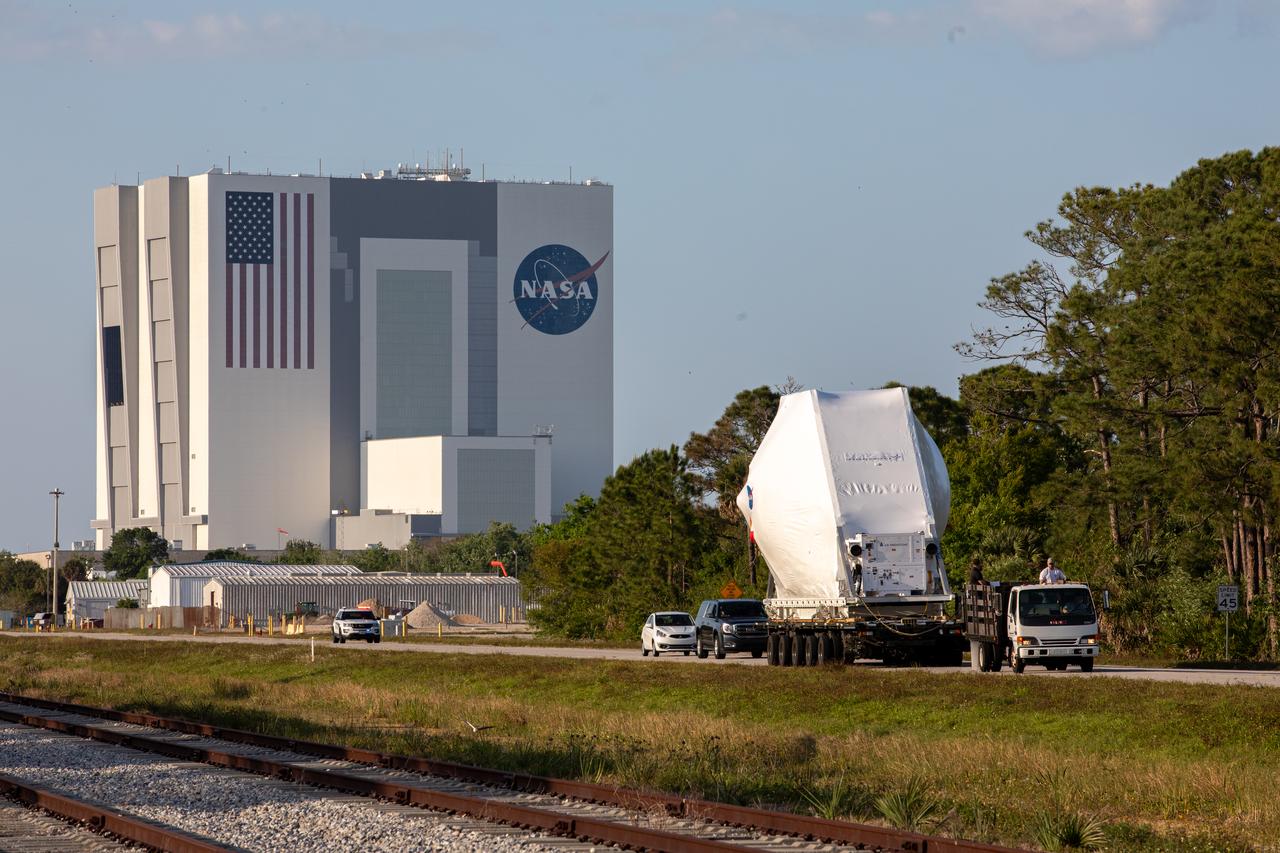
The Orion spacecraft, secured atop a transporter in its shipping container, arrives at the Neil Armstrong Operations and Checkout Building at NASA’s Kennedy Space Center in Florida on March 25, 2020, for final testing and assembly. The spacecraft was transported to Kennedy in NASA’s Super Guppy aircraft from the agency’s Plum Brook Station in Ohio, where it underwent two phase of environmental testing. Following these final preparations, Orion will be integrated with the Space Launch System rocket for the Artemis I launch – the first in a series of increasingly complex missions to the Moon that will ultimately lead to the exploration of Mars.

NASA’s Orion spacecraft, protected in its shipping container, is loaded onto a transporter at the Launch and Landing Facility at Kennedy Space Center for its move to the Neil Armstrong Operations and Checkout Building on March 25, 2020. After testing at NASA’s Plum Brook Station in Ohio verified it can handle the extreme conditions of a deep-space environment, the spacecraft – carried by the agency’s Super Guppy aircraft – has returned to the Florida spaceport for final testing and assembly. Following this, Orion will be integrated with the Space Launch System rocket for Artemis I – the first in a series of increasingly complex missions to the Moon that will ultimately lead to the exploration of Mars.

The Orion spacecraft, secured atop a transporter in its shipping container, arrives at the Neil Armstrong Operations and Checkout Building at NASA’s Kennedy Space Center in Florida on March 25, 2020, for final testing and assembly. The spacecraft was transported to Kennedy in NASA’s Super Guppy aircraft from the agency’s Plum Brook Station in Ohio, where it underwent two phase of environmental testing. Following these final preparations, Orion will be integrated with the Space Launch System rocket for the Artemis I launch – the first in a series of increasingly complex missions to the Moon that will ultimately lead to the exploration of Mars.

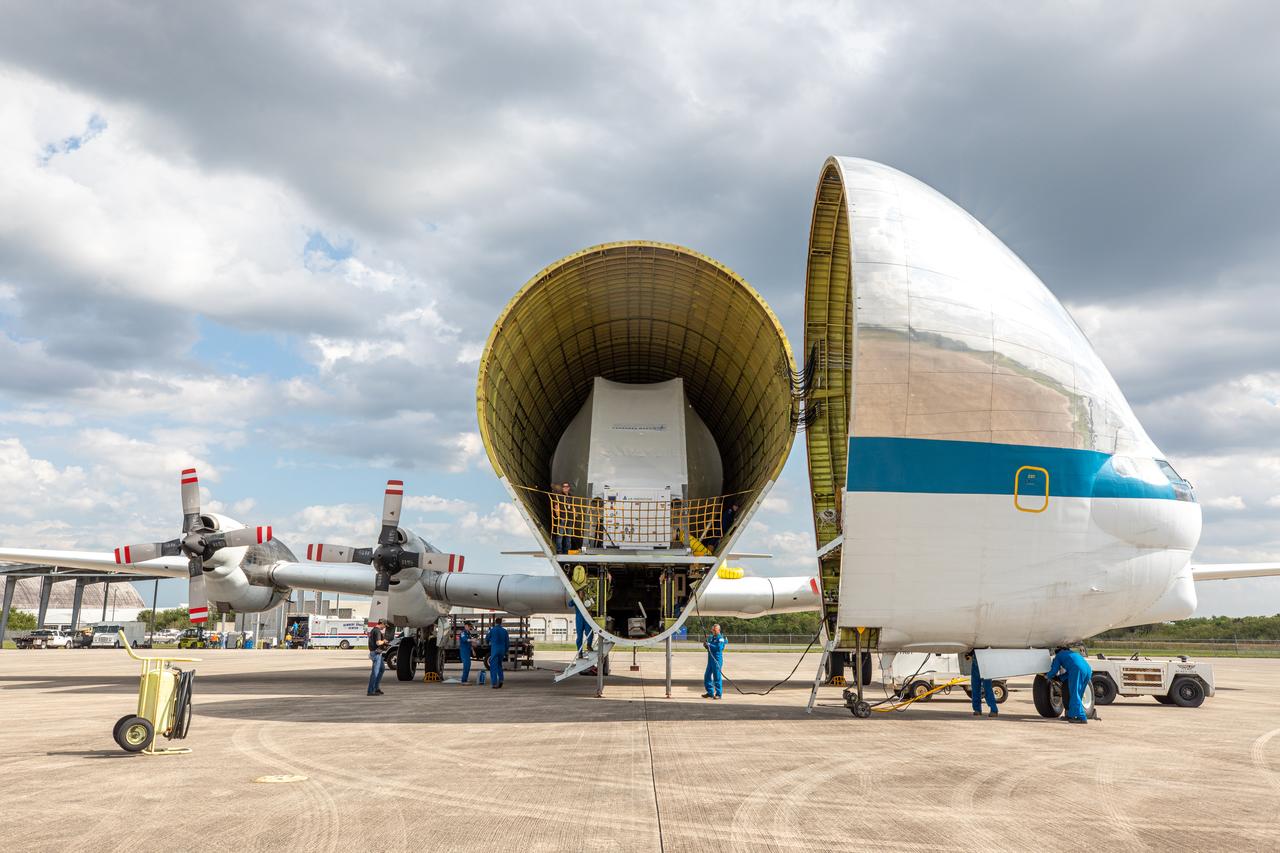
NASA’s Super Guppy aircraft, carrying the Orion spacecraft, touches down at the Launch and Landing Facility at the agency’s Kennedy Space Center in Florida on March 25, 2020. The container holding Orion can be seen in the open aircraft. The spacecraft was transported from NASA’s Plum Brook Station in Ohio, where it underwent two phases of testing to demonstrate it can handle the extreme conditions of a deep-space environment. The container will be offloaded and secured onto a transporter for its move to the Neil Armstrong Operations and Checkout Building for final testing and assembly. Following this, Orion will be integrated with the Space Launch System rocket for Artemis I – the first in a series of increasingly complex missions to the Moon that will ultimately lead to the exploration of Mars.

NASA’s Orion spacecraft, protected in its shipping container, is removed from the agency’s Super Guppy aircraft at the Launch and Landing Facility runway at Kennedy Space Center on March 25, 2020, for transportation to the Neil Armstrong Operations and Checkout Building. After testing at NASA’s Plum Brook Station in Ohio verified it can handle the extreme conditions of a deep-space environment, the spacecraft has returned to the Florida spaceport for final testing and assembly. Following this, it will be integrated with the Space Launch System rocket for Artemis I – the first in a series of increasingly complex missions to the Moon that will ultimately lead to the exploration of Mars.

NASA’s Orion spacecraft, protected in its shipping container, is removed from the agency’s Super Guppy aircraft at the Launch and Landing Facility runway at Kennedy Space Center on March 25, 2020, for transportation to the Neil Armstrong Operations and Checkout Building. After testing at NASA’s Plum Brook Station in Ohio verified it can handle the extreme conditions of a deep-space environment, the spacecraft has returned to the Florida spaceport for final testing and assembly. Following this, it will be integrated with the Space Launch System rocket for Artemis I – the first in a series of increasingly complex missions to the Moon that will ultimately lead to the exploration of Mars.

The Orion spacecraft, secured atop a transporter in its shipping container, arrives at the Neil Armstrong Operations and Checkout Building at NASA’s Kennedy Space Center in Florida on March 25, 2020, for final testing and assembly. The spacecraft was transported to Kennedy in NASA’s Super Guppy aircraft from the agency’s Plum Brook Station in Ohio, where it underwent two phase of environmental testing. Following these final preparations, Orion will be integrated with the Space Launch System rocket for the Artemis I launch – the first in a series of increasingly complex missions to the Moon that will ultimately lead to the exploration of Mars.

NASA’s Orion spacecraft, protected in its shipping container, is loaded onto a transporter at the Launch and Landing Facility at Kennedy Space Center for its move to the Neil Armstrong Operations and Checkout Building on March 25, 2020. After testing at NASA’s Plum Brook Station in Ohio verified it can handle the extreme conditions of a deep-space environment, the spacecraft – carried by the agency’s Super Guppy aircraft – has returned to the Florida spaceport for final testing and assembly. Following this, Orion will be integrated with the Space Launch System rocket for Artemis I – the first in a series of increasingly complex missions to the Moon that will ultimately lead to the exploration of Mars.

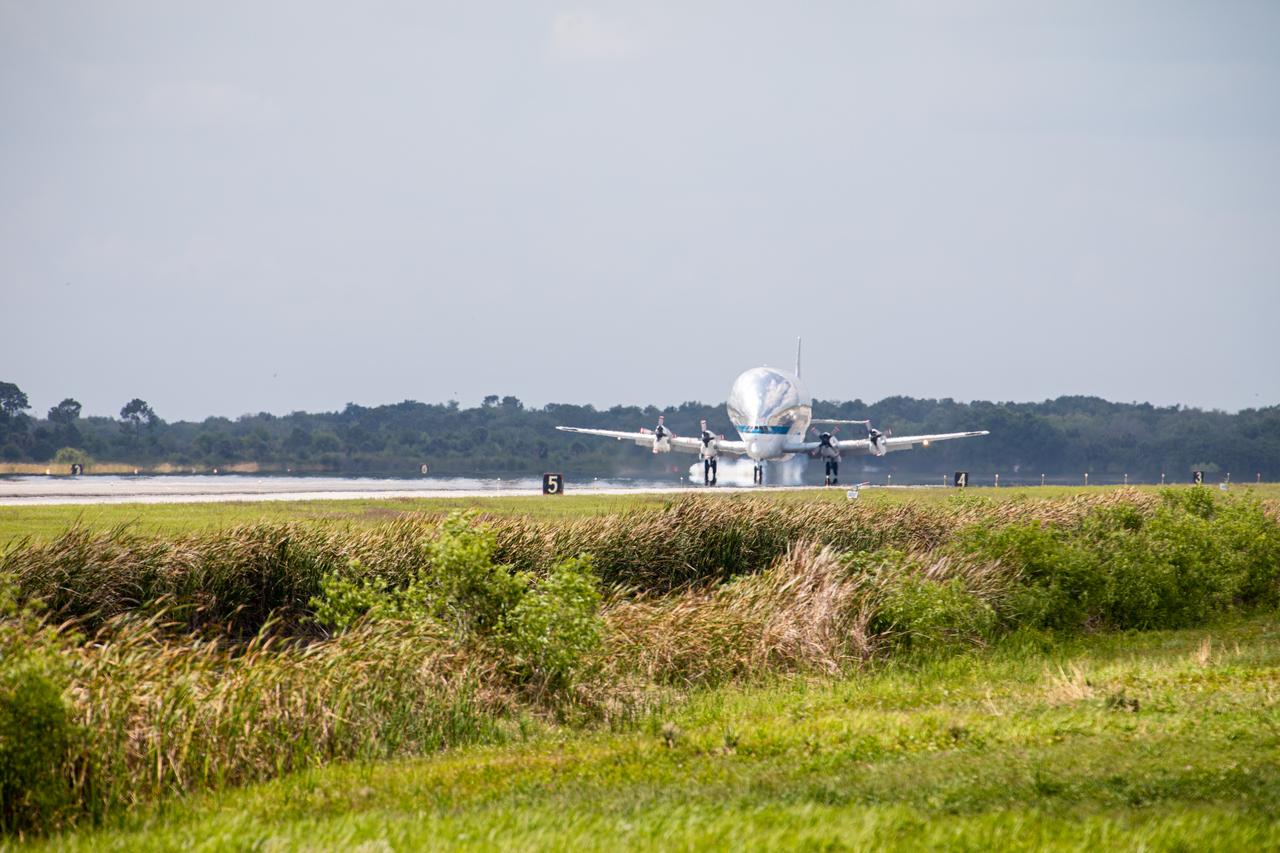
NASA’s Super Guppy aircraft, carrying the Orion spacecraft, lands at the Launch and Landing Facility runway at Kennedy Space Center in Florida on March 25, 2020. Orion has returned to Kennedy after testing at the agency’s Plum Brook Station in Ohio verified the spacecraft can handle the extreme conditions of a deep-space environment. The spacecraft will now undergo final testing and assembly prior to being integrated with the Space Launch System rocket. Orion will fly on the agency’s Artemis I mission – the first in a series of increasingly complex missions to the Moon that will ultimately lead to the exploration of Mars.

NASA’s Super Guppy aircraft, carrying the Orion spacecraft, lands at the Launch and Landing Facility runway at Kennedy Space Center in Florida on March 25, 2020. Orion has returned to Kennedy after testing at the agency’s Plum Brook Station in Ohio verified the spacecraft can handle the extreme conditions of a deep-space environment. The spacecraft will now undergo final testing and assembly prior to being integrated with the Space Launch System rocket. Orion will fly on the agency’s Artemis I mission – the first in a series of increasingly complex missions to the Moon that will ultimately lead to the exploration of Mars.

NASA’s Super Guppy aircraft, carrying the Orion spacecraft, lands at the Launch and Landing Facility runway at Kennedy Space Center in Florida on March 25, 2020. Orion has returned to Kennedy after testing at the agency’s Plum Brook Station in Ohio verified the spacecraft can handle the extreme conditions of a deep-space environment. The spacecraft will now undergo final testing and assembly prior to being integrated with the Space Launch System rocket. Orion will fly on the agency’s Artemis I mission – the first in a series of increasingly complex missions to the Moon that will ultimately lead to the exploration of Mars.

NASA’s Super Guppy aircraft, carrying the Orion spacecraft, lands at the Launch and Landing Facility runway at Kennedy Space Center in Florida on March 25, 2020. Orion has returned to Kennedy after testing at the agency’s Plum Brook Station in Ohio verified the spacecraft can handle the extreme conditions of a deep-space environment. The spacecraft will now undergo final testing and assembly prior to being integrated with the Space Launch System rocket. Orion will fly on the agency’s Artemis I mission – the first in a series of increasingly complex missions to the Moon that will ultimately lead to the exploration of Mars.

NASA’s Super Guppy aircraft, carrying the Orion spacecraft, lands at the Launch and Landing Facility runway at Kennedy Space Center in Florida on March 25, 2020. Orion has returned to Kennedy after testing at the agency’s Plum Brook Station in Ohio verified the spacecraft can handle the extreme conditions of a deep-space environment. The spacecraft will now undergo final testing and assembly prior to being integrated with the Space Launch System rocket. Orion will fly on the agency’s Artemis I mission – the first in a series of increasingly complex missions to the Moon that will ultimately lead to the exploration of Mars.

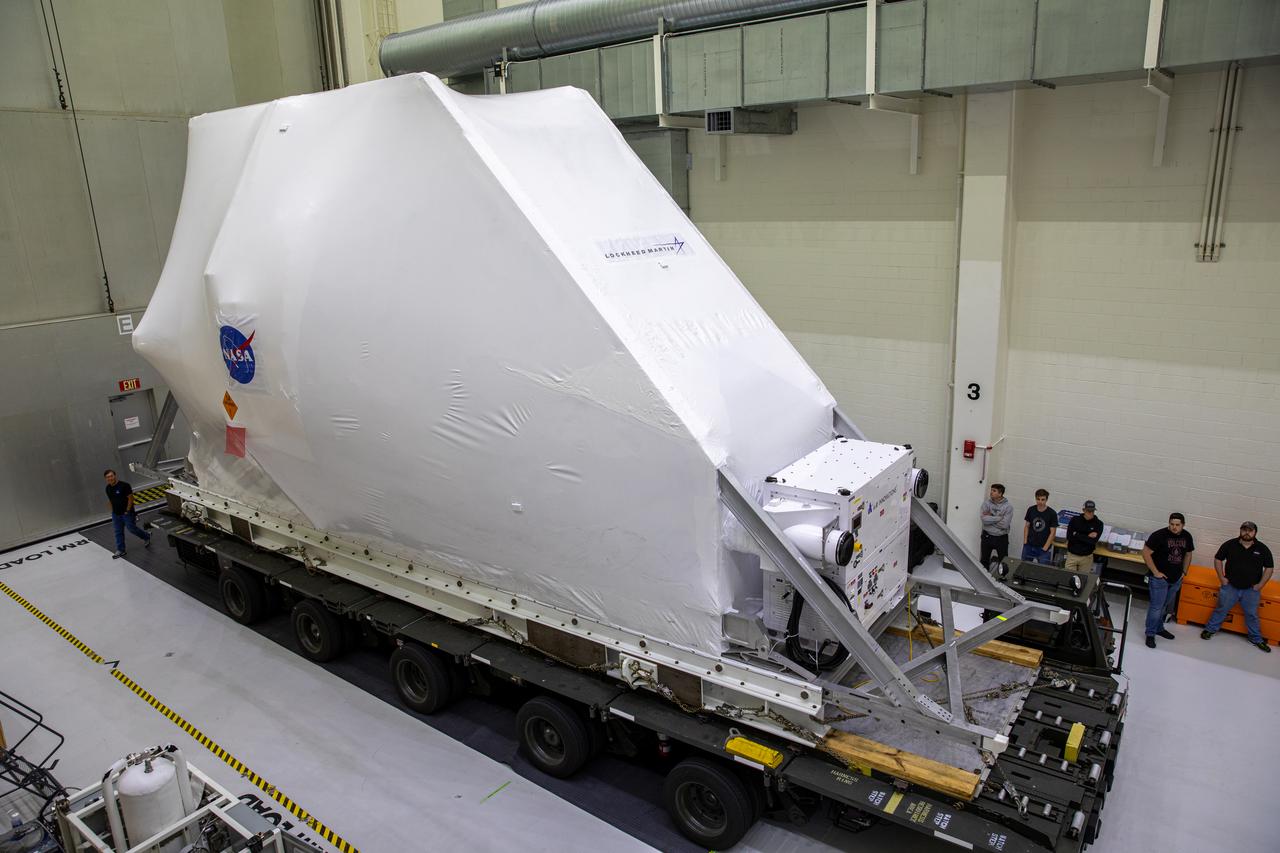
NASA’s Orion spacecraft, wrapped up for shipping, is moved into position for loading into the agency’s Super Guppy aircraft at the Launch and Landing Facility runway at Kennedy Space Center in Florida on Nov. 21, 2019. The spacecraft’s crew and service modules are flying to NASA’s Plum Brook Station in Sandusky, Ohio, for full thermal vacuum testing. In this unique facility, the crew and service modules will be put through extensive testing to ensure they can survive the rigors of launch, space travel, re-entry and splashdown. The Orion spacecraft will launch atop the agency's Space Launch System rocket on Artemis I.
NASA’s Orion spacecraft, wrapped up for shipping, is carefully aligned for loading into the agency’s Super Guppy aircraft at the Launch and Landing Facility runway at Kennedy Space Center in Florida on Nov. 21, 2019. The spacecraft’s crew and service modules are flying to NASA’s Plum Brook Station in Sandusky, Ohio, for full thermal vacuum testing. In this unique facility, the crew and service modules will be put through extensive testing to ensure they can survive the rigors of launch, space travel, re-entry and splashdown. The Orion spacecraft will launch atop the agency's Space Launch System rocket on Artemis I.
NASA’s Orion spacecraft, wrapped up for shipping, arrives at Kennedy Space Center’s Launch and Landing Facility runway for loading into the agency’s Super Guppy aircraft on Nov. 21, 2019. The spacecraft’s crew and service modules are flying from the Florida spaceport to NASA’s Plum Brook Station in Sandusky, Ohio, for full thermal vacuum testing. In this unique facility, the crew and service modules will be put through extensive testing to ensure they can survive the rigors of launch, space travel, re-entry and splashdown. The Orion spacecraft will launch atop the agency's Space Launch System rocket on Artemis I.
NASA’s Orion spacecraft, wrapped up for shipping, is moved into position for loading into the agency’s Super Guppy aircraft at the Launch and Landing Facility runway at Kennedy Space Center in Florida on Nov. 21, 2019. The spacecraft’s crew and service modules are flying to NASA’s Plum Brook Station in Sandusky, Ohio, for full thermal vacuum testing. In this unique facility, the crew and service modules will be put through extensive testing to ensure they can survive the rigors of launch, space travel, re-entry and splashdown. The Orion spacecraft will launch atop the agency's Space Launch System rocket on Artemis I.
NASA’s Orion spacecraft, wrapped up for shipping, arrives at Kennedy Space Center’s Launch and Landing Facility runway for loading into the agency’s Super Guppy aircraft on Nov. 21, 2019. The spacecraft’s crew and service modules are flying from the Florida spaceport to NASA’s Plum Brook Station in Sandusky, Ohio, for full thermal vacuum testing. In this unique facility, the crew and service modules will be put through extensive testing to ensure they can survive the rigors of launch, space travel, re-entry and splashdown. The Orion spacecraft will launch atop the agency's Space Launch System rocket on Artemis I.
NASA’s Orion spacecraft, wrapped up for shipping, arrives at Kennedy Space Center’s Launch and Landing Facility runway for loading into the agency’s Super Guppy aircraft on Nov. 21, 2019. The spacecraft’s crew and service modules are flying from the Florida spaceport to NASA’s Plum Brook Station in Sandusky, Ohio, for full thermal vacuum testing. In this unique facility, the crew and service modules will be put through extensive testing to ensure they can survive the rigors of launch, space travel, re-entry and splashdown. The Orion spacecraft will launch atop the agency's Space Launch System rocket on Artemis I.
NASA’s Orion spacecraft has been loaded into the agency’s Super Guppy aircraft at the Launch and Landing Facility runway at Kennedy Space Center in Florida on Nov. 21, 2019. The spacecraft’s crew and service modules are flying to NASA’s Plum Brook Station in Sandusky, Ohio, for full thermal vacuum testing. In this unique facility, the crew and service modules will be put through extensive testing to ensure they can survive the rigors of launch, space travel, re-entry and splashdown. The Orion spacecraft will launch atop the agency's Space Launch System rocket on Artemis I.
NASA’s Orion spacecraft, wrapped up for shipping, arrives at Kennedy Space Center’s Launch and Landing Facility runway for loading into the agency’s Super Guppy aircraft on Nov. 21, 2019. The spacecraft’s crew and service modules are flying from the Florida spaceport to NASA’s Plum Brook Station in Sandusky, Ohio, for full thermal vacuum testing. In this unique facility, the crew and service modules will be put through extensive testing to ensure they can survive the rigors of launch, space travel, re-entry and splashdown. The Orion spacecraft will launch atop the agency's Space Launch System rocket on Artemis I.
NASA’s Orion spacecraft, wrapped up for shipping, is moved into position for loading into the agency’s Super Guppy aircraft at the Launch and Landing Facility runway at Kennedy Space Center in Florida on Nov. 21, 2019. The spacecraft’s crew and service modules are flying to NASA’s Plum Brook Station in Sandusky, Ohio, for full thermal vacuum testing. In this unique facility, the crew and service modules will be put through extensive testing to ensure they can survive the rigors of launch, space travel, re-entry and splashdown. The Orion spacecraft will launch atop the agency's Space Launch System rocket on Artemis I.
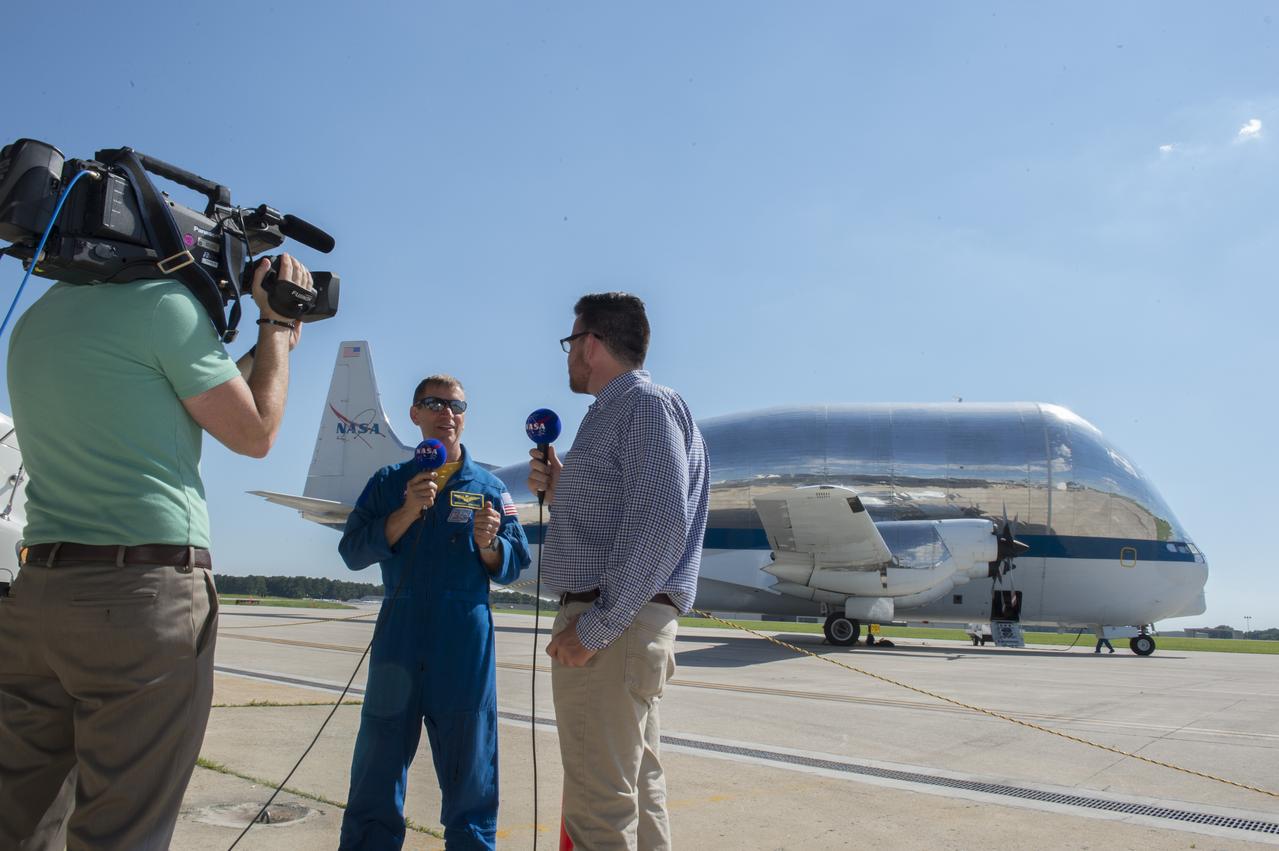
Marshall Space Flight Center public affairs officer, Brian Massey, interviews Gregory Johnson, NASA's Super Guppie pilot, after the arrival of the aircraft to ferry the Orion stage adapter to Denver, Colorado for further testing.
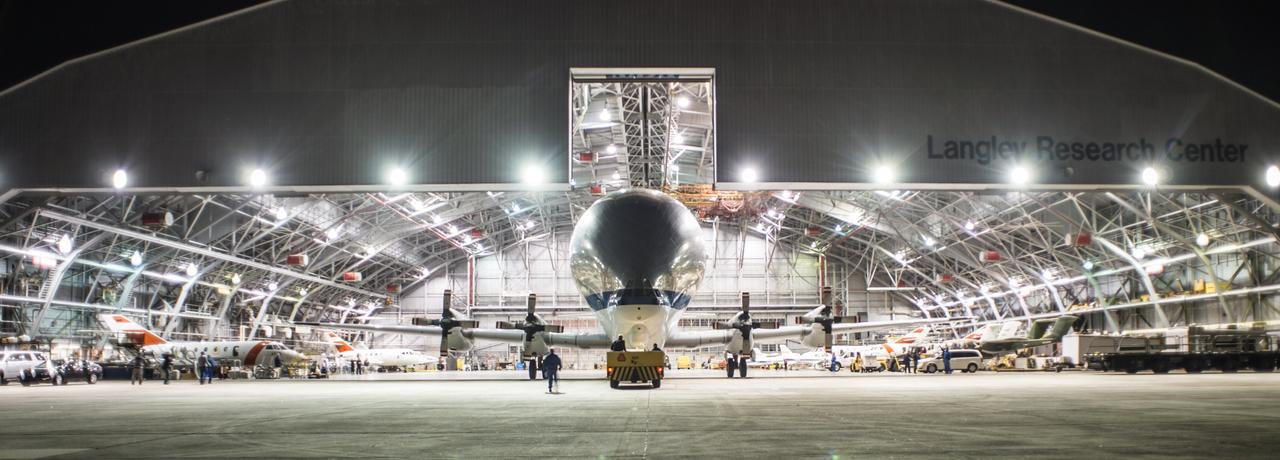
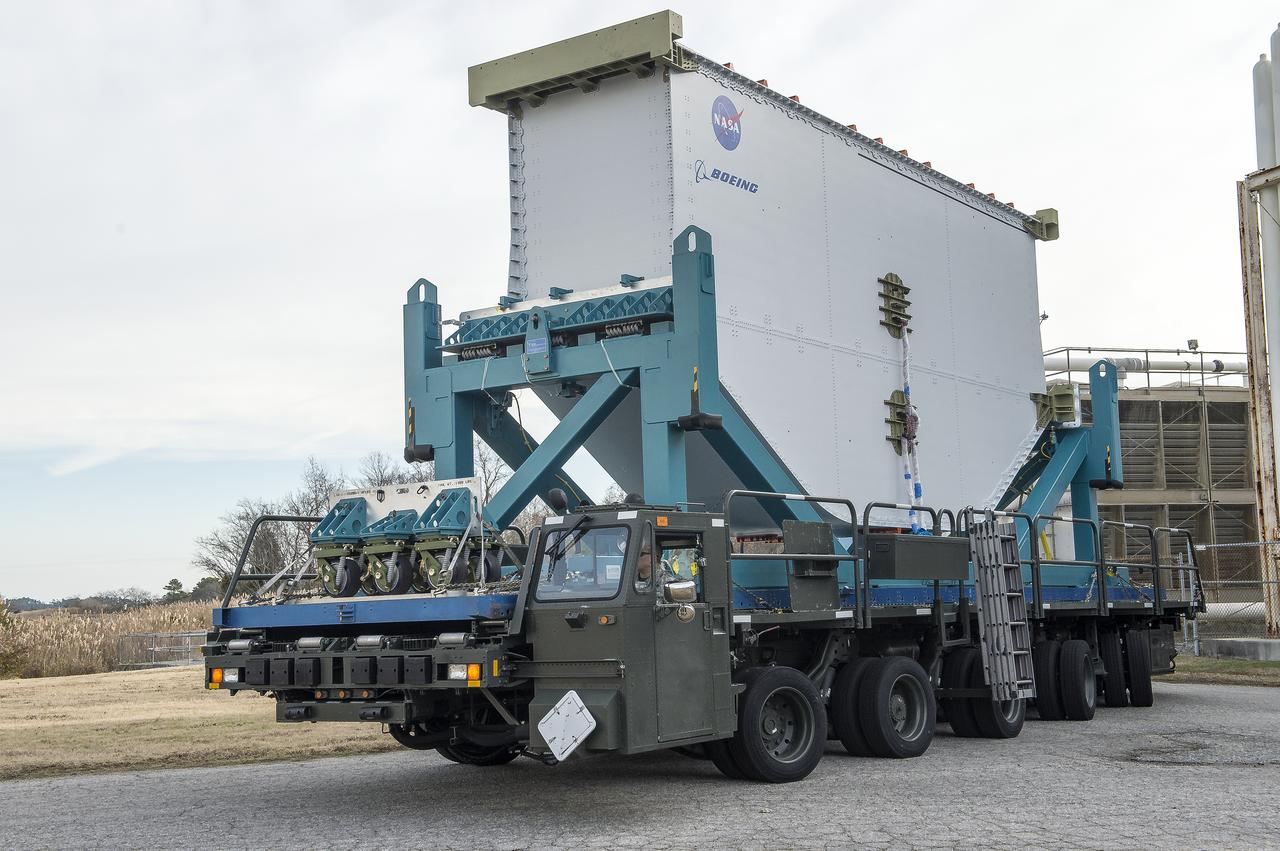
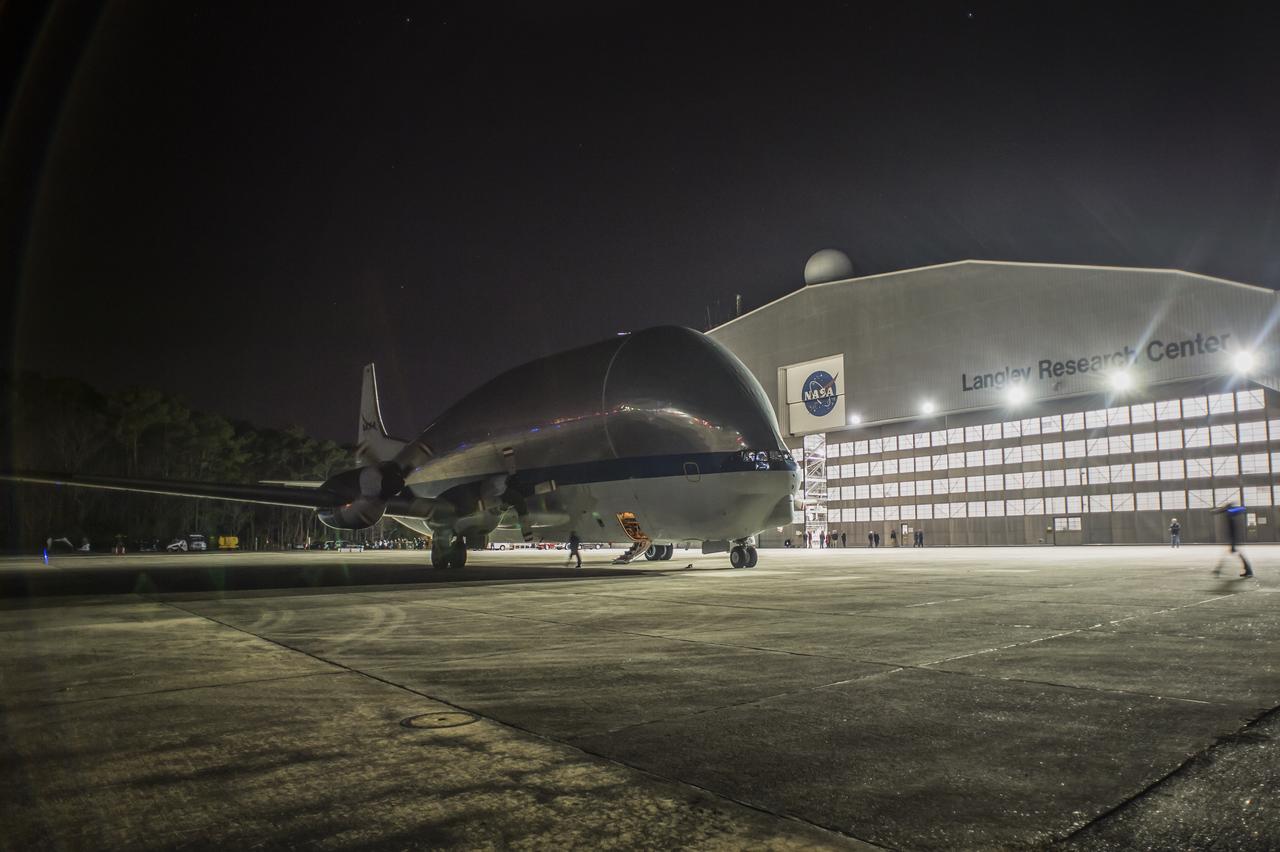
Super Guppy arrival and (MBB) Multi-Bay Box Delivery ; Super Guppy arrival and MBB Delivery: super Guppy arrival at NASA Langley hangar, and unloading of (MBB) multi-bay box, transport of MBB to COLTS and move into building 1256.
Super Guppy arrival and (MBB) Multi-Bay Box Delivery ; Super Guppy arrival and MBB Delivery: super Guppy arrival at NASA Langley hangar, and unloading of (MBB) multi-bay box, transport of MBB to COLTS and move into building 1256.

Super Guppy arrival and (MBB) Multi-Bay Box Delivery ; Super Guppy arrival and MBB Delivery: super Guppy arrival at NASA Langley hangar, and unloading of (MBB) multi-bay box, transport of MBB to COLTS and move into building 1256.

Super Guppy arrival and (MBB) Multi-Bay Box Delivery ; Super Guppy arrival and MBB Delivery: super Guppy arrival at NASA Langley hangar, and unloading of (MBB) multi-bay box, transport of MBB to COLTS and move into building 1256.

Super Guppy arrival and (MBB) Multi-Bay Box Delivery ; Super Guppy arrival and MBB Delivery: super Guppy arrival at NASA Langley hangar, and unloading of (MBB) multi-bay box, transport of MBB to COLTS and move into building 1256.

Super Guppy arrival and (MBB) Multi-Bay Box Delivery ; Super Guppy arrival and MBB Delivery: super Guppy arrival at NASA Langley hangar, and unloading of (MBB) multi-bay box, transport of MBB to COLTS and move into building 1256.

Super Guppy arrival and (MBB) Multi-Bay Box Delivery ; Super Guppy arrival and MBB Delivery: super Guppy arrival at NASA Langley hangar, and unloading of (MBB) multi-bay box, transport of MBB to COLTS and move into building 1256.

Super Guppy arrival and (MBB) Multi-Bay Box Delivery ; Super Guppy arrival and MBB Delivery: super Guppy arrival at NASA Langley hangar, and unloading of (MBB) multi-bay box, transport of MBB to COLTS and move into building 1256.

Super Guppy arrival and (MBB) Multi-Bay Box Delivery ; Super Guppy arrival and MBB Delivery: super Guppy arrival at NASA Langley hangar, and unloading of (MBB) multi-bay box, transport of MBB to COLTS and move into building 1256.

Super Guppy arrival and (MBB) Multi-Bay Box Delivery ; Super Guppy arrival and MBB Delivery: super Guppy arrival at NASA Langley hangar, and unloading of (MBB) multi-bay box, transport of MBB to COLTS and move into building 1256.

Super Guppy arrival and (MBB) Multi-Bay Box Delivery ; Super Guppy arrival and MBB Delivery: super Guppy arrival at NASA Langley hangar, and unloading of (MBB) multi-bay box, transport of MBB to COLTS and move into building 1256.

Super Guppy arrival and (MBB) Multi-Bay Box Delivery ; Super Guppy arrival and MBB Delivery: super Guppy arrival at NASA Langley hangar, and unloading of (MBB) multi-bay box, transport of MBB to COLTS and move into building 1256.

Super Guppy arrival and (MBB) Multi-Bay Box Delivery ; Super Guppy arrival and MBB Delivery: super Guppy arrival at NASA Langley hangar, and unloading of (MBB) multi-bay box, transport of MBB to COLTS and move into building 1256.

Super Guppy arrival and (MBB) Multi-Bay Box Delivery ; Super Guppy arrival and MBB Delivery: super Guppy arrival at NASA Langley hangar, and unloading of (MBB) multi-bay box, transport of MBB to COLTS and move into building 1256.

Super Guppy arrival and (MBB) Multi-Bay Box Delivery ; Super Guppy arrival and MBB Delivery: super Guppy arrival at NASA Langley hangar, and unloading of (MBB) multi-bay box, transport of MBB to COLTS and move into building 1256.

Super Guppy arrival and (MBB) Multi-Bay Box Delivery ; Super Guppy arrival and MBB Delivery: super Guppy arrival at NASA Langley hangar, and unloading of (MBB) multi-bay box, transport of MBB to COLTS and move into building 1256.

Super Guppy arrival and (MBB) Multi-Bay Box Delivery ; Super Guppy arrival and MBB Delivery: super Guppy arrival at NASA Langley hangar, and unloading of (MBB) multi-bay box, transport of MBB to COLTS and move into building 1256.

Super Guppy arrival and (MBB) Multi-Bay Box Delivery ; Super Guppy arrival and MBB Delivery: super Guppy arrival at NASA Langley hangar, and unloading of (MBB) multi-bay box, transport of MBB to COLTS and move into building 1256.

Super Guppy arrival and (MBB) Multi-Bay Box Delivery ; Super Guppy arrival and MBB Delivery: super Guppy arrival at NASA Langley hangar, and unloading of (MBB) multi-bay box, transport of MBB to COLTS and move into building 1256.

Super Guppy arrival and (MBB) Multi-Bay Box Delivery ; Super Guppy arrival and MBB Delivery: super Guppy arrival at NASA Langley hangar, and unloading of (MBB) multi-bay box, transport of MBB to COLTS and move into building 1256.

Super Guppy arrival and (MBB) Multi-Bay Box Delivery ; Super Guppy arrival and MBB Delivery: super Guppy arrival at NASA Langley hangar, and unloading of (MBB) multi-bay box, transport of MBB to COLTS and move into building 1256.

Super Guppy arrival and (MBB) Multi-Bay Box Delivery ; Super Guppy arrival and MBB Delivery: super Guppy arrival at NASA Langley hangar, and unloading of (MBB) multi-bay box, transport of MBB to COLTS and move into building 1256.

Super Guppy arrival and (MBB) Multi-Bay Box Delivery ; Super Guppy arrival and MBB Delivery: super Guppy arrival at NASA Langley hangar, and unloading of (MBB) multi-bay box, transport of MBB to COLTS and move into building 1256.

Orion Spacecraft Arrives in Ohio Aboard the Super Guppy at Mansfield Lahm Airport

Orion Spacecraft Arrives in Ohio Aboard the Super Guppy at Mansfield Lahm Airport

Orion Spacecraft Arrives in Ohio Aboard the Super Guppy at Mansfield Lahm Airport

Orion Spacecraft Arrives in Ohio Aboard the Super Guppy at Mansfield Lahm Airport

Orion Spacecraft Arrives in Ohio Aboard the Super Guppy at Mansfield Lahm Airport

Orion Spacecraft Arrives in Ohio Aboard the Super Guppy at Mansfield Lahm Airport

Orion Spacecraft Arrives in Ohio Aboard the Super Guppy at Mansfield Lahm Airport

Orion Spacecraft Arrives in Ohio Aboard the Super Guppy at Mansfield Lahm Airport

Orion Spacecraft Arrives in Ohio Aboard the Super Guppy at Mansfield Lahm Airport

Orion Spacecraft Arrives in Ohio Aboard the Super Guppy at Mansfield Lahm Airport