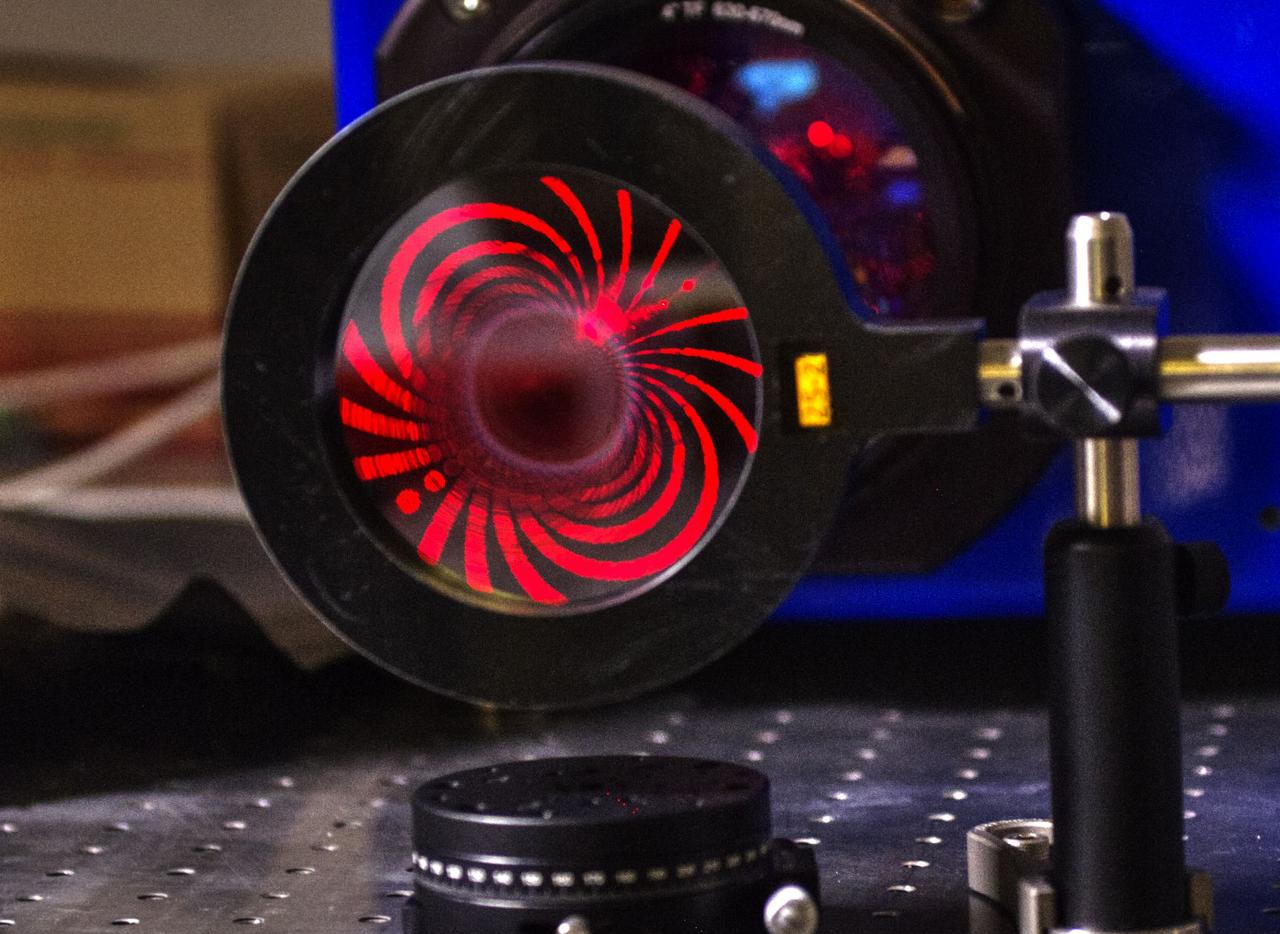
It’s an age-old astronomical truth: To resolve smaller and smaller physical details of distant celestial objects, scientists need larger and larger light-collecting mirrors. This challenge is not easily overcome given the high cost and impracticality of building and — in the case of space observatories — launching large-aperture telescopes. However, a team of scientists and engineers at NASA’s Goddard Space Flight Center in Greenbelt, Maryland, has begun testing a potentially more affordable alternative called the photon sieve. This new-fangled telescope optic could give scientists the resolution they need to see finer details still invisible with current observing tools – a jump in resolution that could help answer a 50-year-old question about the physical processes heating the sun's million-degree corona. Read more: <a href="http://go.nasa.gov/2abhanr" rel="nofollow">go.nasa.gov/2abhanr</a> Credit: NASA/Goddard/W. Hrybyk
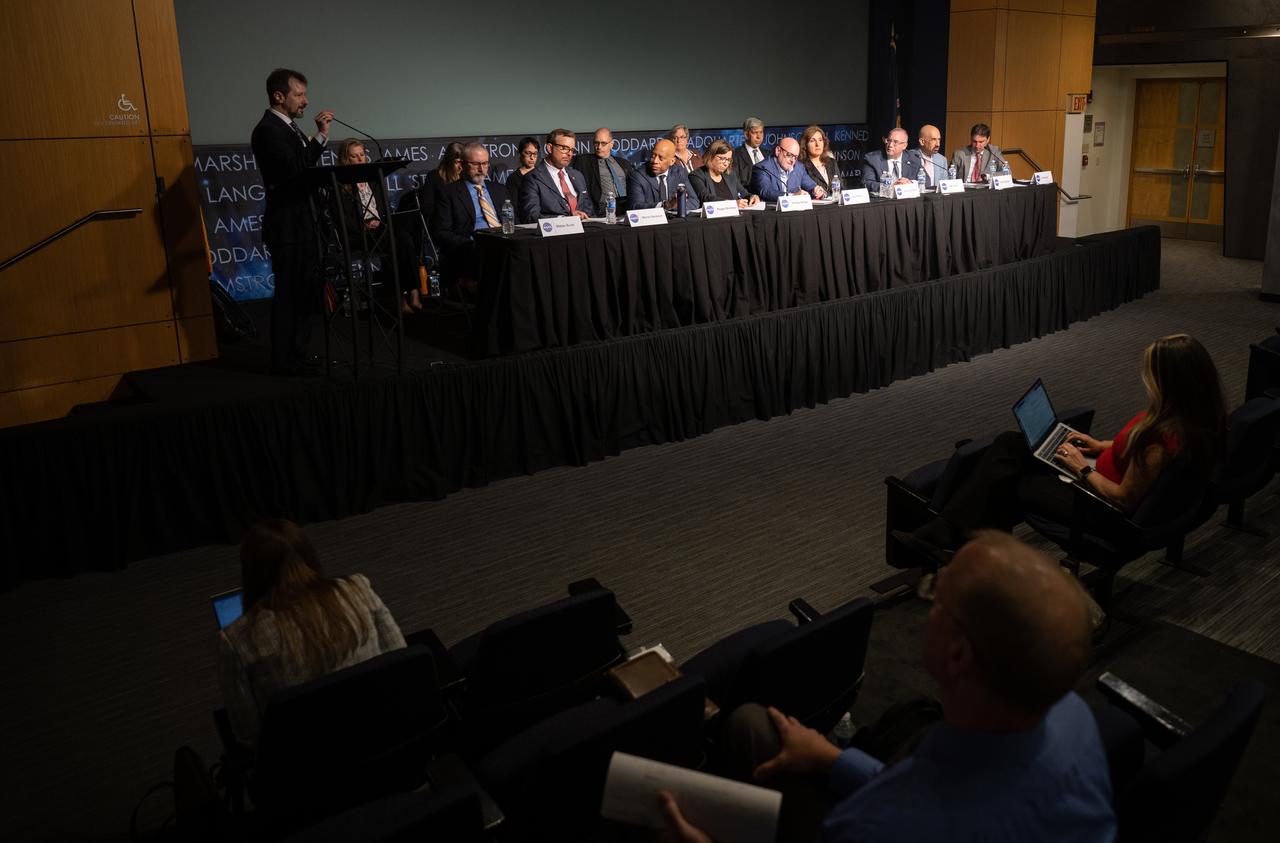
Members of NASA’s unidentified anomalous phenomena (UAP) independent study team are seen during a public meeting, Wednesday, May 31, 2023 at the Mary W. Jackson NASA Headquarters building in Washington. The UAP independent study team is a counsel of 16 community experts across diverse areas on matters relevant to potential methods of study for unidentified anomalous phenomena. NASA commissioned the nine-month study to examine UAP from a scientific perspective and create a roadmap for how to use data and the tools of science to move our understanding of UAP forward. Photo Credit: (NASA/Joel Kowsky)

“We like to say that Archean Earth is the most alien planet we have geochemical data for,” For astronomers trying to understand which distant planets might have habitable conditions, the role of atmospheric haze has been hazy. To help sort it out, a team of researchers has been looking to Earth – specifically Earth during the Archean era, an epic 1-1/2-billion-year period early in our planet’s history. Read more: <a href="http://go.nasa.gov/2kTBhPU" rel="nofollow">go.nasa.gov/2kTBhPU</a> Caption: When haze built up in the atmosphere of Archean Earth, the young planet might have looked like this artist's interpretation - a pale orange dot. A team led by Goddard scientists thinks the haze was self-limiting, cooling the surface by about 36 degrees Fahrenheit (20 Kelvins) – not enough to cause runaway glaciation. The team’s modeling suggests that atmospheric haze might be helpful for identifying earthlike exoplanets that could be habitable. Credits: NASA’s Goddard Space Flight Center/Francis Reddy

David Spergel, chair of NASA's independent study on unidentified anomalous phenomena and President of the Simons Foundation, speaks during a public meeting of NASA’s unidentified anomalous phenomena (UAP) independent study team, Wednesday, May 31, 2023 at the Mary W. Jackson NASA Headquarters building in Washington. The UAP independent study team is a counsel of 16 community experts across diverse areas on matters relevant to potential methods of study for unidentified anomalous phenomena. NASA commissioned the nine-month study to examine UAP from a scientific perspective and create a roadmap for how to use data and the tools of science to move our understanding of UAP forward. Photo Credit: (NASA/Joel Kowsky)
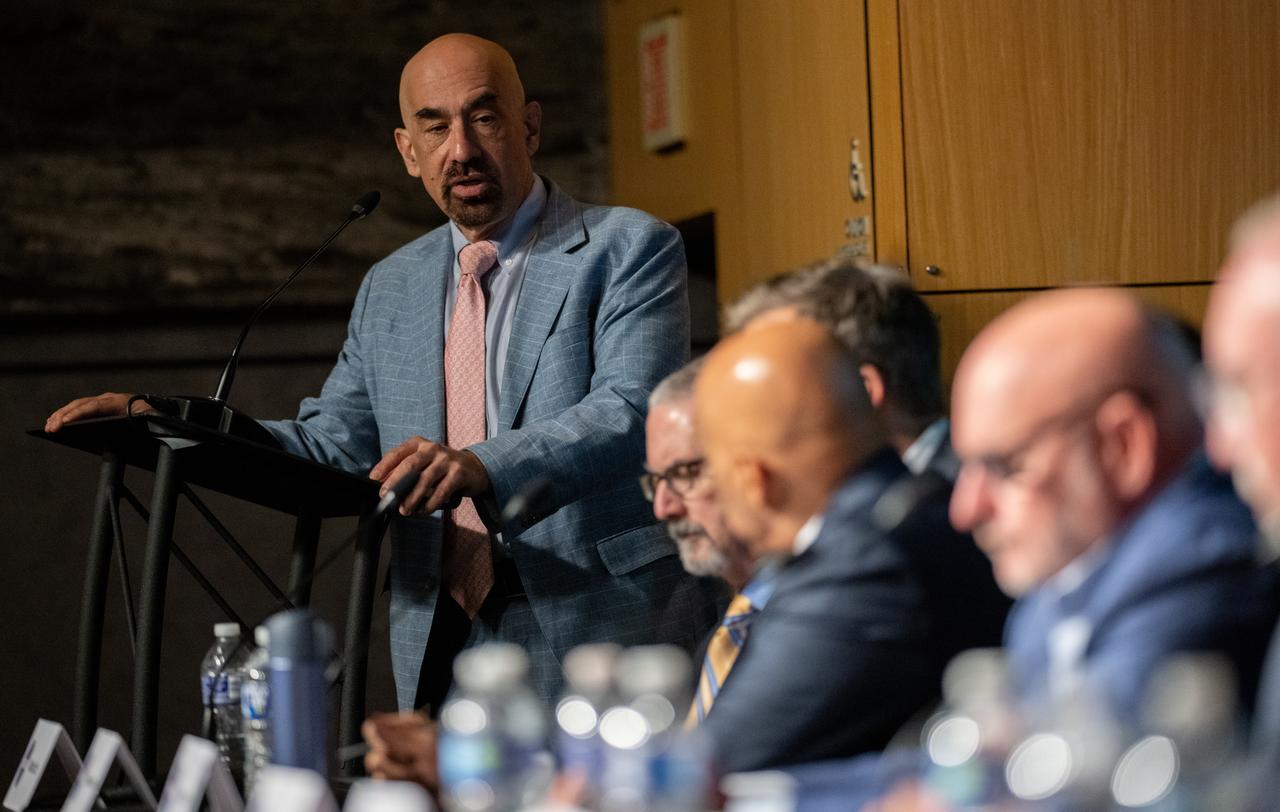
David Spergel, chair of NASA's independent study on unidentified anomalous phenomena and President of the Simons Foundation, speaks during a public meeting of NASA’s unidentified anomalous phenomena (UAP) independent study team, Wednesday, May 31, 2023 at the Mary W. Jackson NASA Headquarters building in Washington. The UAP independent study team is a counsel of 16 community experts across diverse areas on matters relevant to potential methods of study for unidentified anomalous phenomena. NASA commissioned the nine-month study to examine UAP from a scientific perspective and create a roadmap for how to use data and the tools of science to move our understanding of UAP forward. Photo Credit: (NASA/Joel Kowsky)

David Spergel, chair of NASA's independent study on unidentified anomalous phenomena and President of the Simons Foundation, speaks during a public meeting of NASA’s unidentified anomalous phenomena (UAP) independent study team, Wednesday, May 31, 2023 at the Mary W. Jackson NASA Headquarters building in Washington. The UAP independent study team is a counsel of 16 community experts across diverse areas on matters relevant to potential methods of study for unidentified anomalous phenomena. NASA commissioned the nine-month study to examine UAP from a scientific perspective and create a roadmap for how to use data and the tools of science to move our understanding of UAP forward. Photo Credit: (NASA/Joel Kowsky)
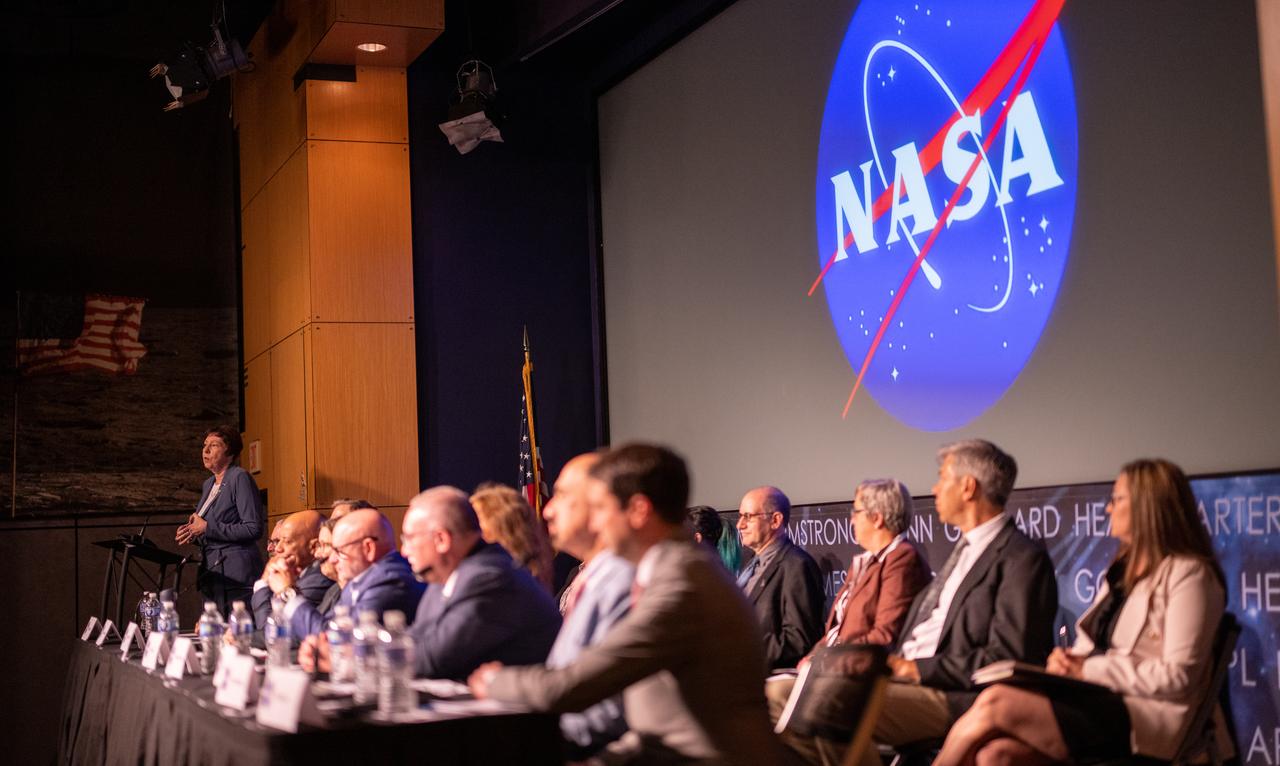
Nicola Fox, associate administrator for NASA's Science Mission Directorate, speaks during a public meeting of NASA’s unidentified anomalous phenomena (UAP) independent study team, Wednesday, May 31, 2023 at the Mary W. Jackson NASA Headquarters building in Washington. The UAP independent study team is a counsel of 16 community experts across diverse areas on matters relevant to potential methods of study for unidentified anomalous phenomena. NASA commissioned the nine-month study to examine UAP from a scientific perspective and create a roadmap for how to use data and the tools of science to move our understanding of UAP forward. Photo Credit: (NASA/Joel Kowsky)

Daniel Evans, assistant deputy associate administrator for Research in NASA's Science Mission Directorate, gives opening remarks are seen during a public meeting of NASA’s unidentified anomalous phenomena (UAP) independent study team, Wednesday, May 31, 2023 at the Mary W. Jackson NASA Headquarters building in Washington. The UAP independent study team is a counsel of 16 community experts across diverse areas on matters relevant to potential methods of study for unidentified anomalous phenomena. NASA commissioned the nine-month study to examine UAP from a scientific perspective and create a roadmap for how to use data and the tools of science to move our understanding of UAP forward. Photo Credit: (NASA/Joel Kowsky)
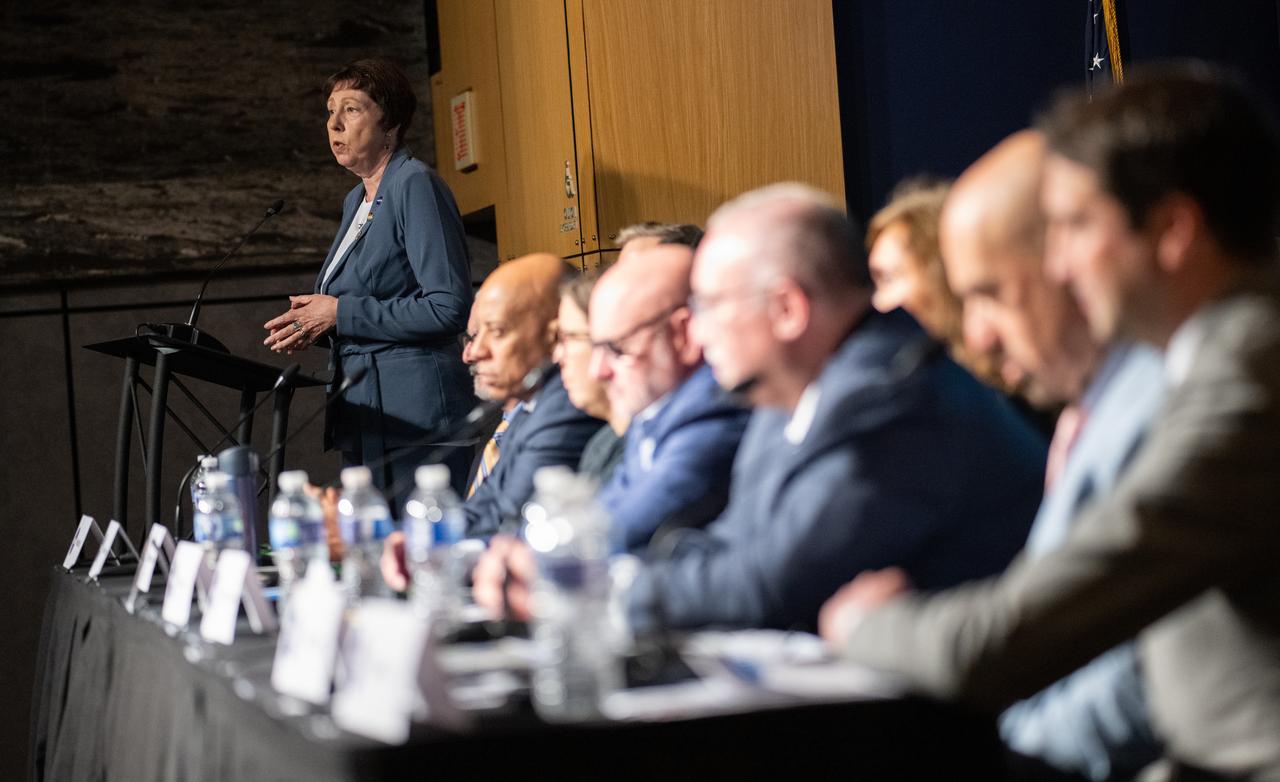
Nicola Fox, associate administrator for NASA's Science Mission Directorate, speaks during a public meeting of NASA’s unidentified anomalous phenomena (UAP) independent study team, Wednesday, May 31, 2023 at the Mary W. Jackson NASA Headquarters building in Washington. The UAP independent study team is a counsel of 16 community experts across diverse areas on matters relevant to potential methods of study for unidentified anomalous phenomena. NASA commissioned the nine-month study to examine UAP from a scientific perspective and create a roadmap for how to use data and the tools of science to move our understanding of UAP forward. Photo Credit: (NASA/Joel Kowsky)
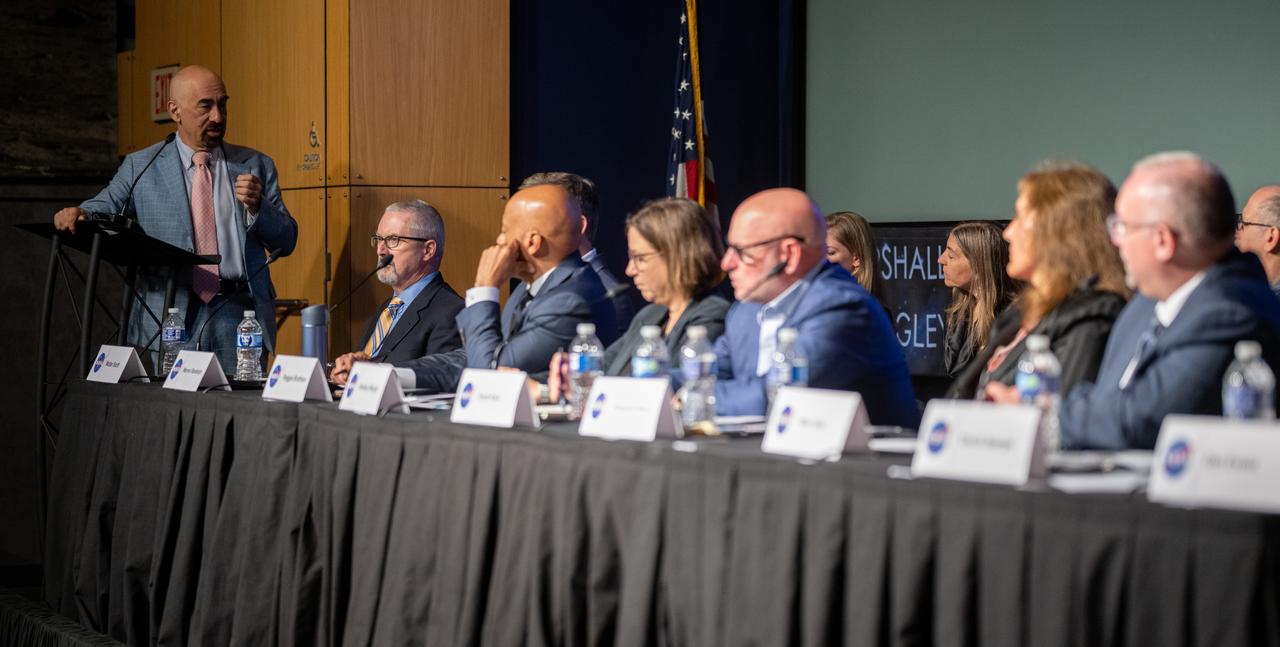
David Spergel, chair of NASA's independent study on unidentified anomalous phenomena and President of the Simons Foundation, answers a question during a public meeting of NASA’s unidentified anomalous phenomena (UAP) independent study team, Wednesday, May 31, 2023 at the Mary W. Jackson NASA Headquarters building in Washington. The UAP independent study team is a counsel of 16 community experts across diverse areas on matters relevant to potential methods of study for unidentified anomalous phenomena. NASA commissioned the nine-month study to examine UAP from a scientific perspective and create a roadmap for how to use data and the tools of science to move our understanding of UAP forward. Photo Credit: (NASA/Joel Kowsky)
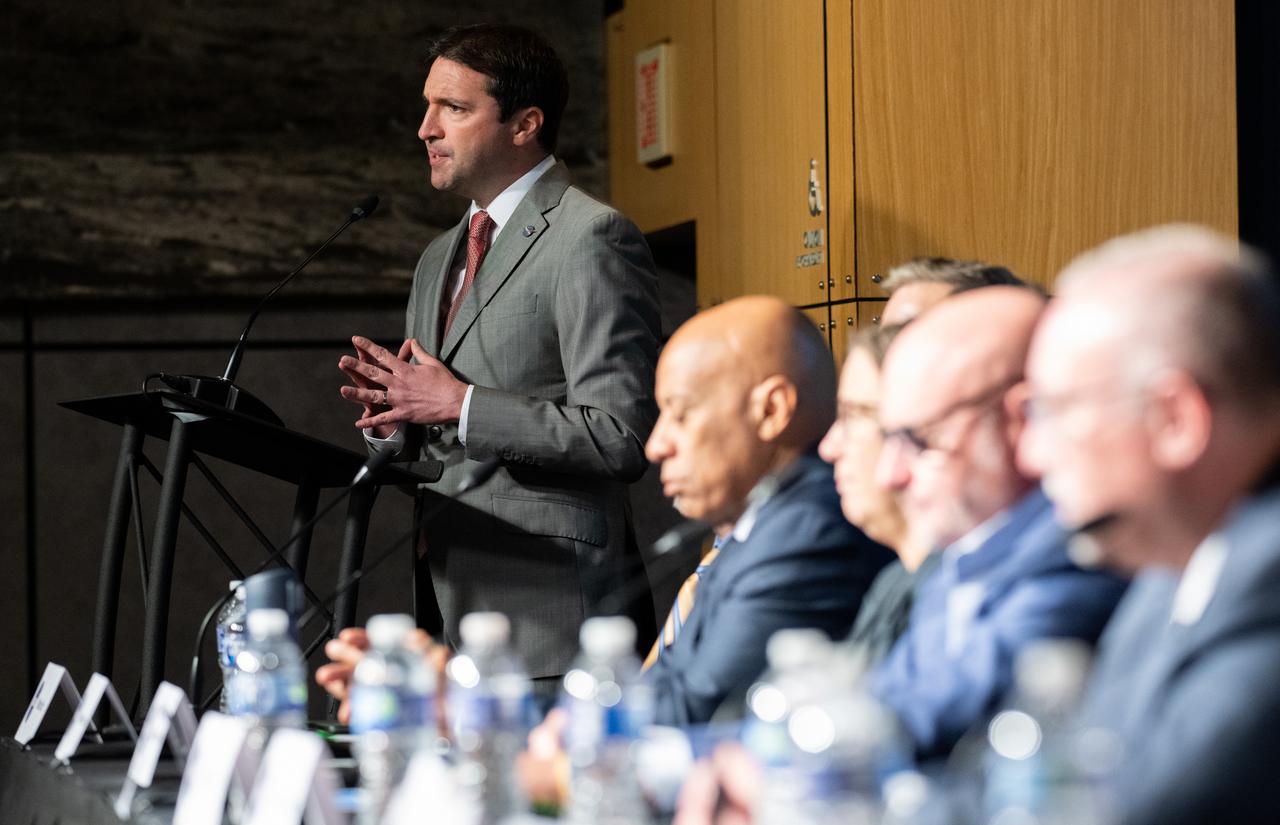
Daniel Evans, assistant deputy associate administrator for Research in NASA's Science Mission Directorate, gives opening remarks are seen during a public meeting of NASA’s unidentified anomalous phenomena (UAP) independent study team, Wednesday, May 31, 2023 at the Mary W. Jackson NASA Headquarters building in Washington. The UAP independent study team is a counsel of 16 community experts across diverse areas on matters relevant to potential methods of study for unidentified anomalous phenomena. NASA commissioned the nine-month study to examine UAP from a scientific perspective and create a roadmap for how to use data and the tools of science to move our understanding of UAP forward. Photo Credit: (NASA/Joel Kowsky)
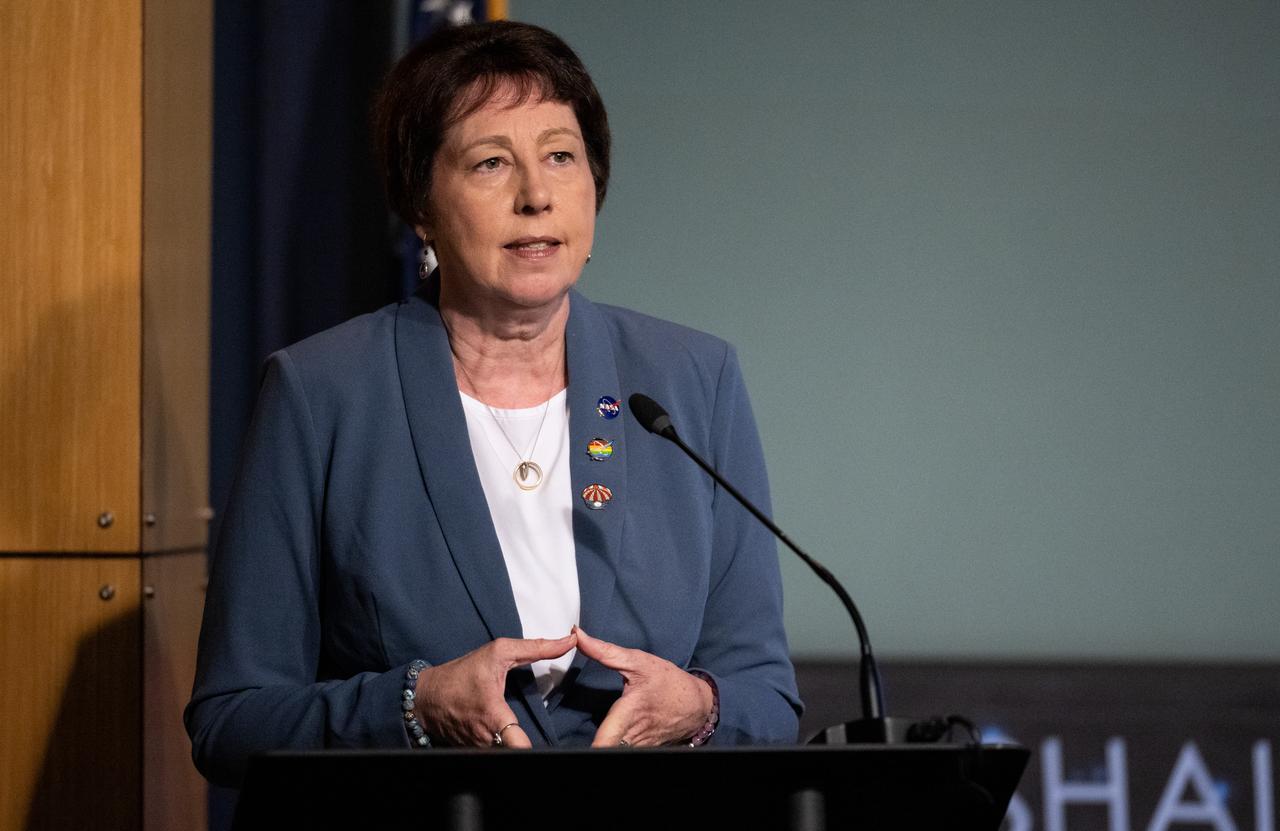
Nicola Fox, associate administrator for NASA's Science Mission Directorate, speaks during a public meeting of NASA’s unidentified anomalous phenomena (UAP) independent study team, Wednesday, May 31, 2023 at the Mary W. Jackson NASA Headquarters building in Washington. The UAP independent study team is a counsel of 16 community experts across diverse areas on matters relevant to potential methods of study for unidentified anomalous phenomena. NASA commissioned the nine-month study to examine UAP from a scientific perspective and create a roadmap for how to use data and the tools of science to move our understanding of UAP forward. Photo Credit: (NASA/Joel Kowsky)
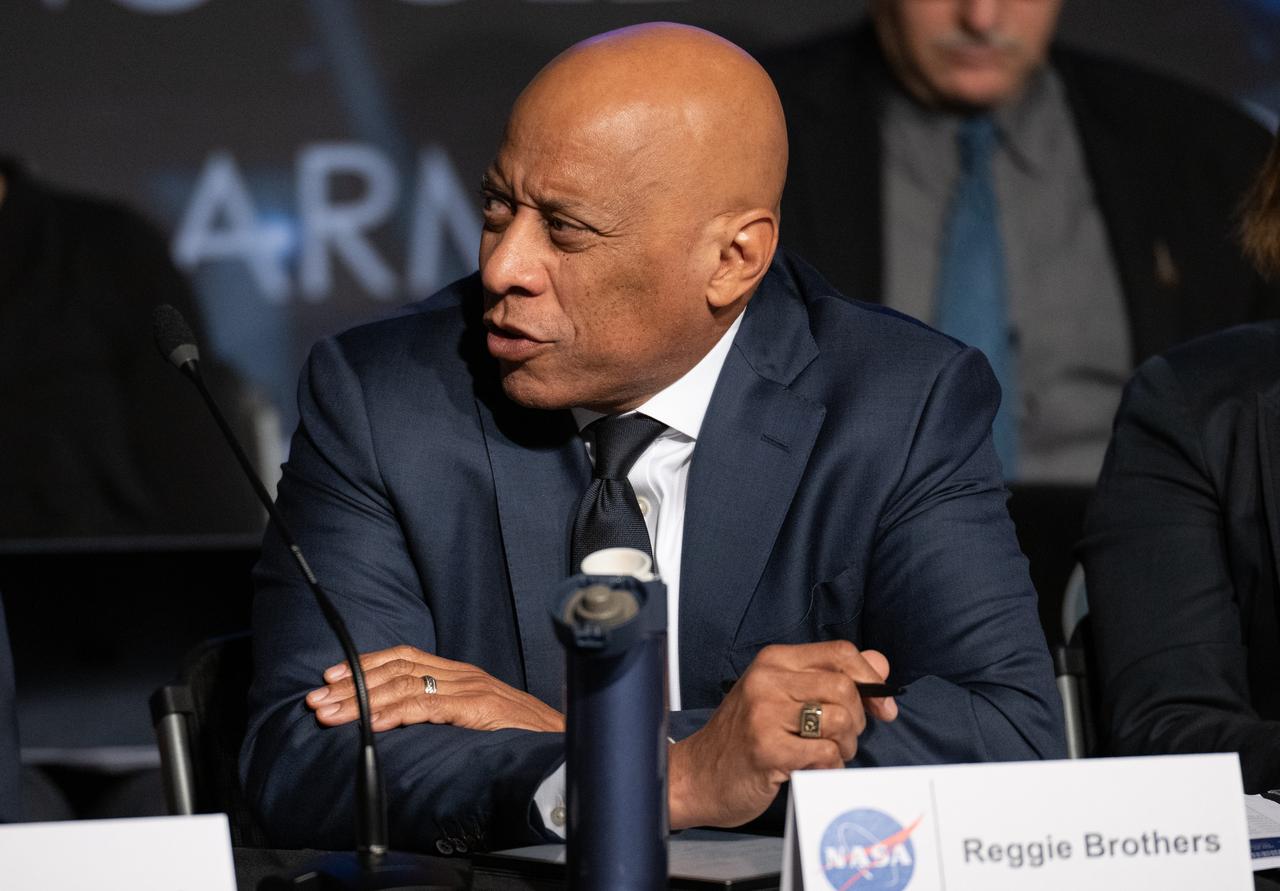
Reggie Brothers, operating partner at AE Industrial Partners, asks a question during a public meeting of NASA’s unidentified anomalous phenomena (UAP) independent study team, Wednesday, May 31, 2023 at the Mary W. Jackson NASA Headquarters building in Washington. The UAP independent study team is a counsel of 16 community experts across diverse areas on matters relevant to potential methods of study for unidentified anomalous phenomena. NASA commissioned the nine-month study to examine UAP from a scientific perspective and create a roadmap for how to use data and the tools of science to move our understanding of UAP forward. Photo Credit: (NASA/Joel Kowsky)
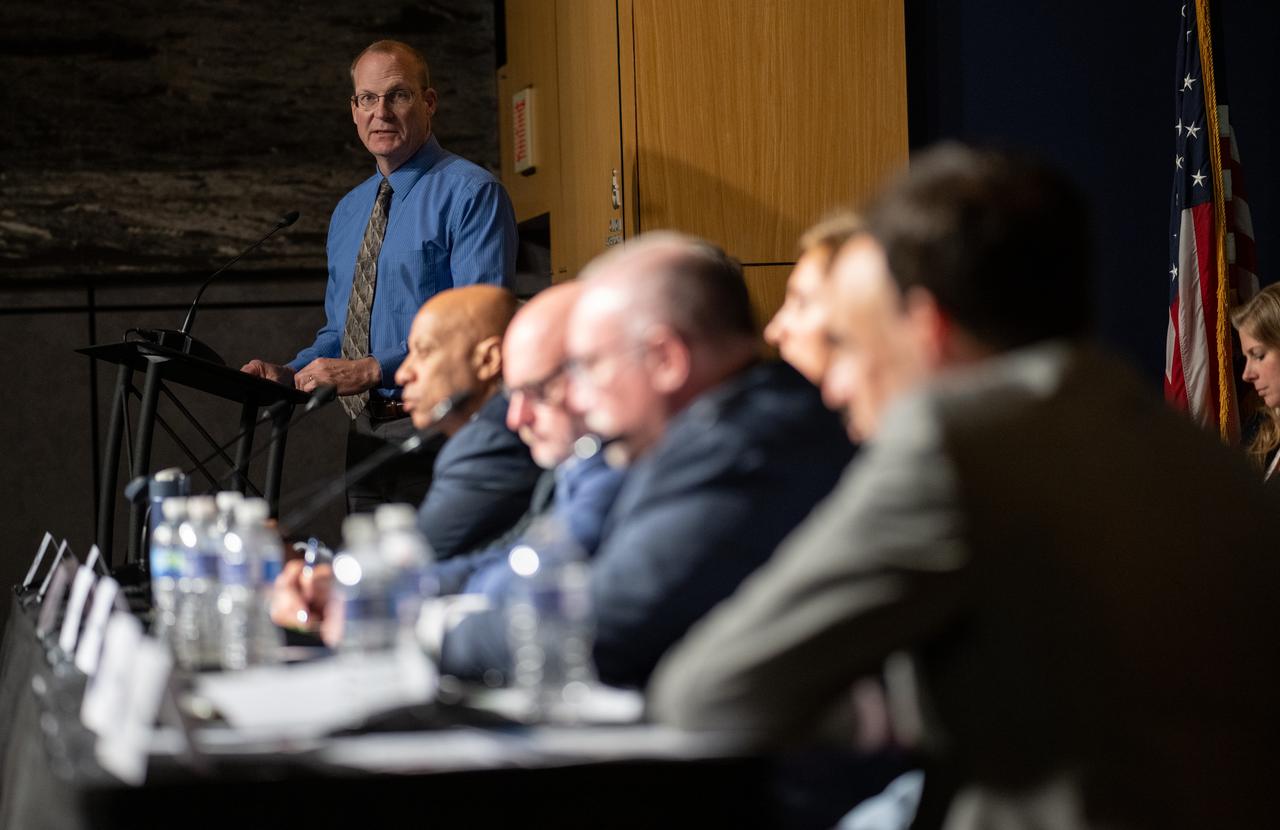
Mike Freie, technical advisor in the Air Traffic Surveillance Service Office at the FAA, gives a presentation during a public meeting of NASA’s unidentified anomalous phenomena (UAP) independent study team, Wednesday, May 31, 2023 at the Mary W. Jackson NASA Headquarters building in Washington. The UAP independent study team is a counsel of 16 community experts across diverse areas on matters relevant to potential methods of study for unidentified anomalous phenomena. NASA commissioned the nine-month study to examine UAP from a scientific perspective and create a roadmap for how to use data and the tools of science to move our understanding of UAP forward. Photo Credit: (NASA/Joel Kowsky)
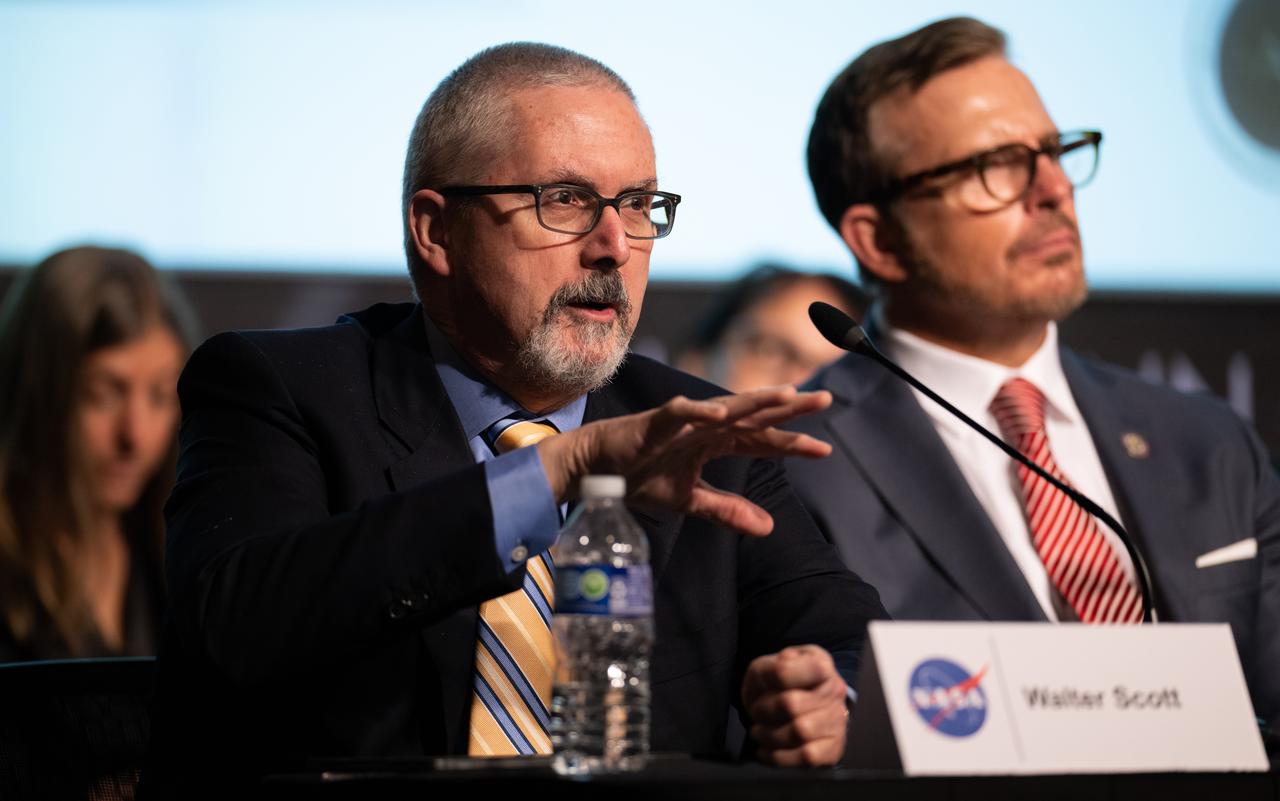
Walter Scott, executive vice president and chief technology officer of Maxar, is seen during a public meeting of NASA’s unidentified anomalous phenomena (UAP) independent study team, Wednesday, May 31, 2023 at the Mary W. Jackson NASA Headquarters building in Washington. The UAP independent study team is a counsel of 16 community experts across diverse areas on matters relevant to potential methods of study for unidentified anomalous phenomena. NASA commissioned the nine-month study to examine UAP from a scientific perspective and create a roadmap for how to use data and the tools of science to move our understanding of UAP forward. Photo Credit: (NASA/Joel Kowsky)
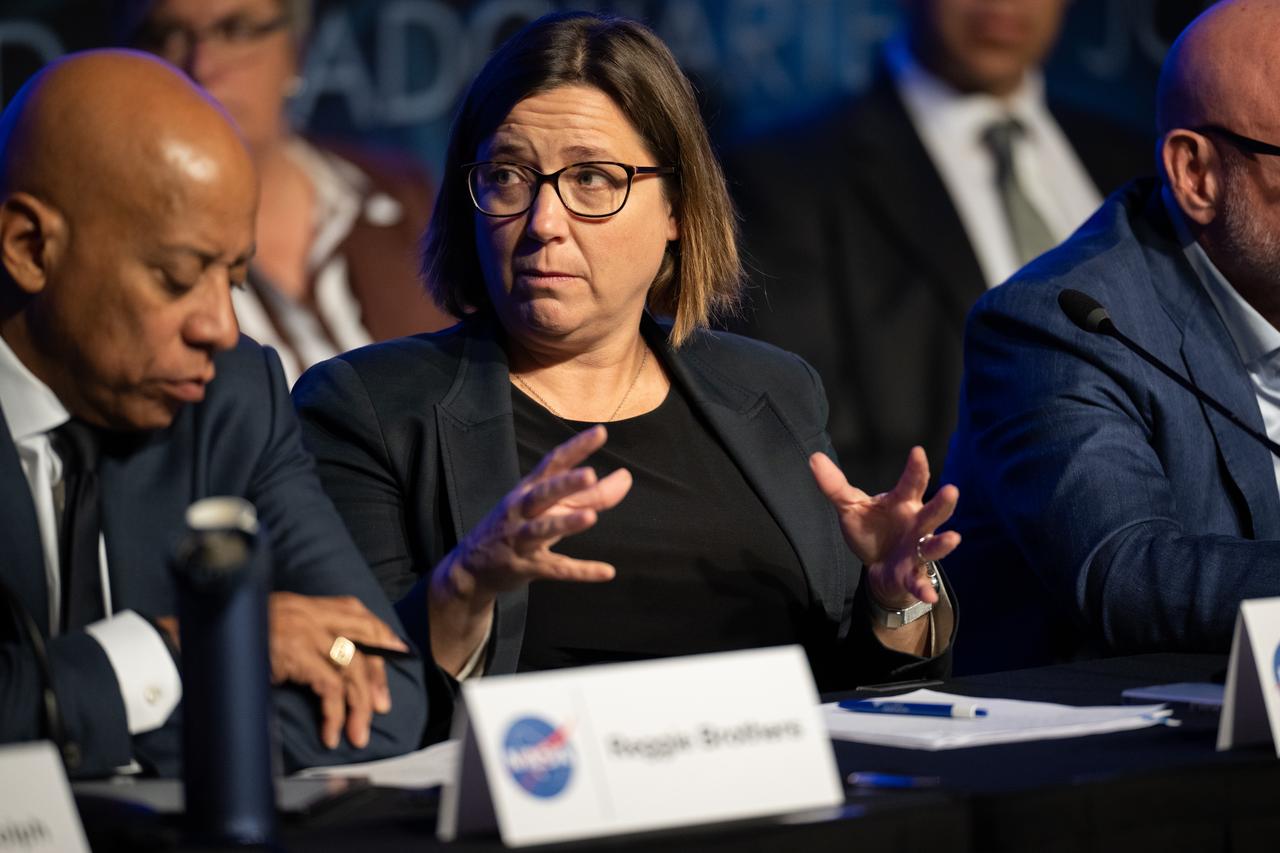
Shelley Wright, professor of Physics at the University of California San Diego's Center for Astrophysics and Space Studies, is seen during a public meeting of NASA’s unidentified anomalous phenomena (UAP) independent study team, Wednesday, May 31, 2023 at the Mary W. Jackson NASA Headquarters building in Washington. The UAP independent study team is a counsel of 16 community experts across diverse areas on matters relevant to potential methods of study for unidentified anomalous phenomena. NASA commissioned the nine-month study to examine UAP from a scientific perspective and create a roadmap for how to use data and the tools of science to move our understanding of UAP forward. Photo Credit: (NASA/Joel Kowsky)
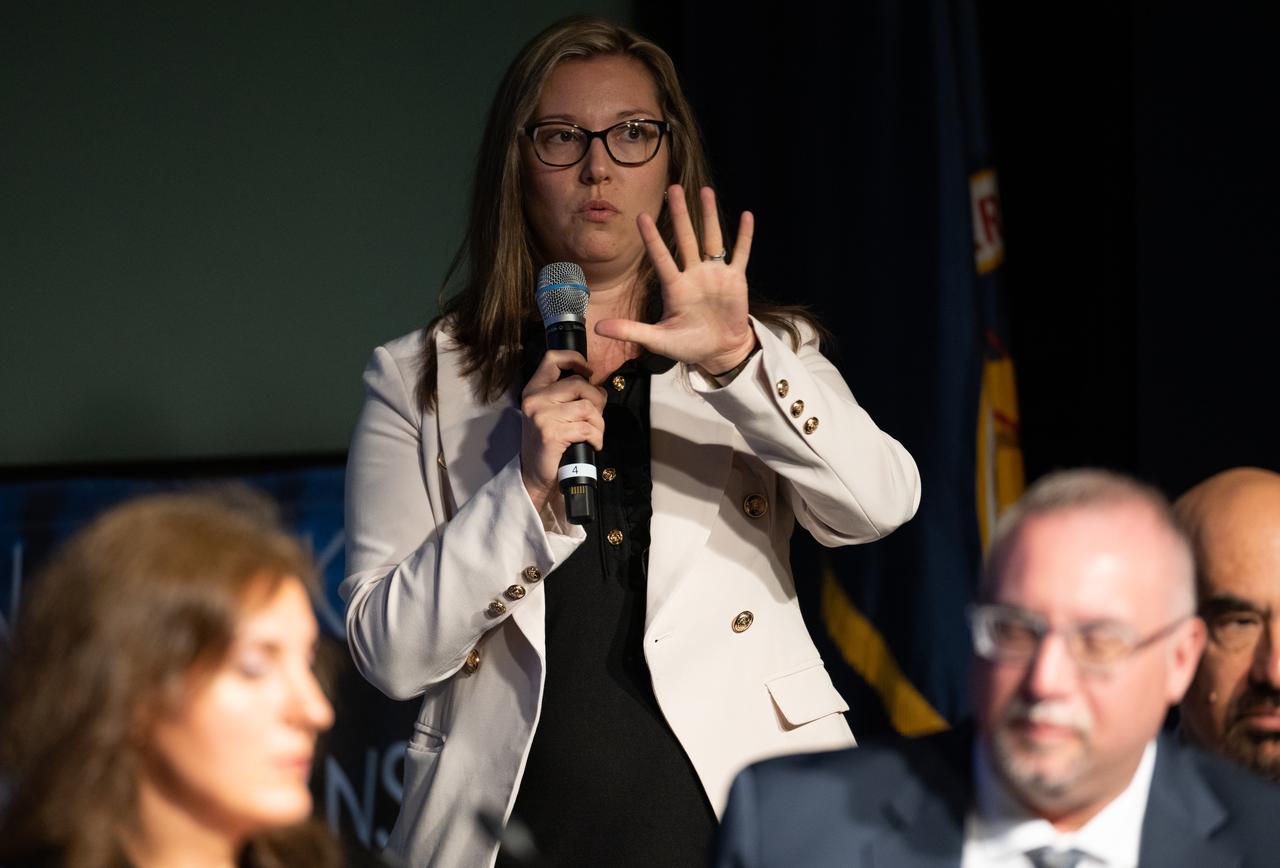
Jennifer Buss, CEO of the Potomac Institute of Policy Studies, asks a question during a public meeting of NASA’s unidentified anomalous phenomena (UAP) independent study team, Wednesday, May 31, 2023 at the Mary W. Jackson NASA Headquarters building in Washington. The UAP independent study team is a counsel of 16 community experts across diverse areas on matters relevant to potential methods of study for unidentified anomalous phenomena. NASA commissioned the nine-month study to examine UAP from a scientific perspective and create a roadmap for how to use data and the tools of science to move our understanding of UAP forward. Photo Credit: (NASA/Joel Kowsky)
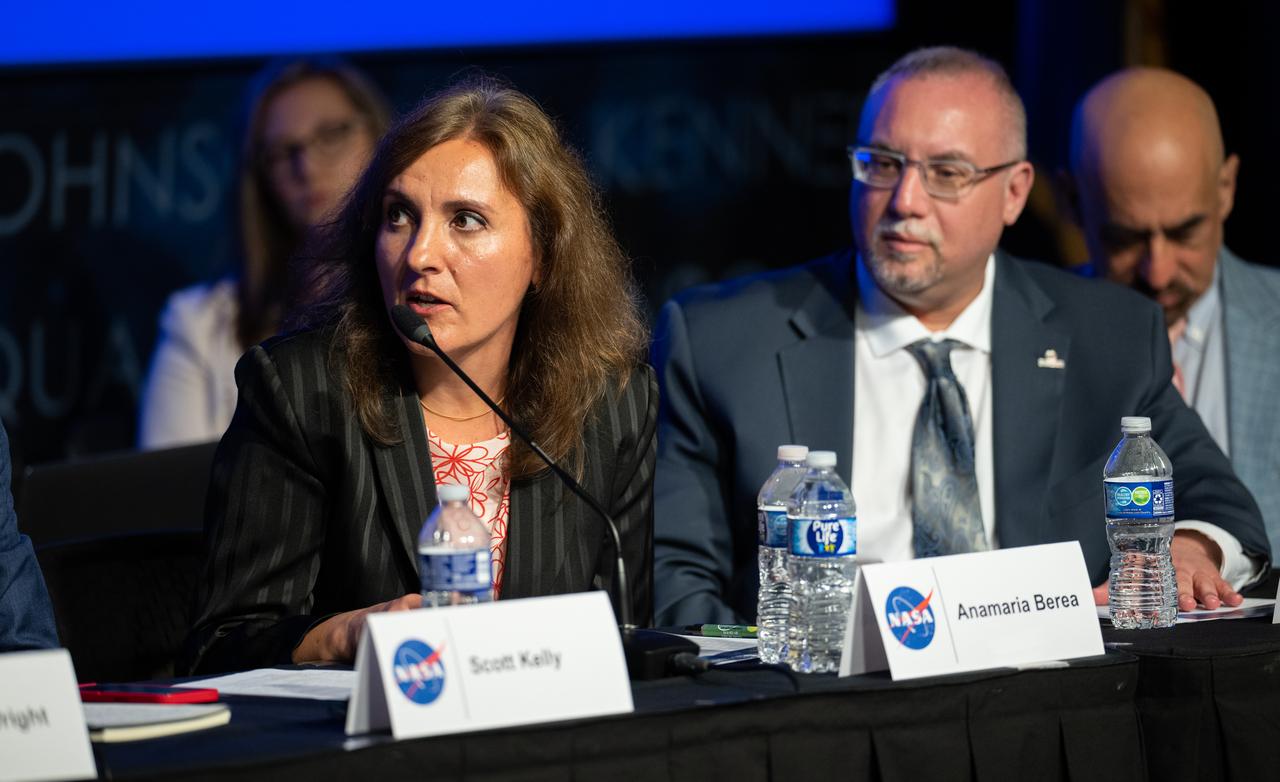
Anamaria Berea, associate professor of Computational and Data Science at George Mason University, left, asks a question during a public meeting of NASA’s unidentified anomalous phenomena (UAP) independent study team, Wednesday, May 31, 2023 at the Mary W. Jackson NASA Headquarters building in Washington. The UAP independent study team is a counsel of 16 community experts across diverse areas on matters relevant to potential methods of study for unidentified anomalous phenomena. NASA commissioned the nine-month study to examine UAP from a scientific perspective and create a roadmap for how to use data and the tools of science to move our understanding of UAP forward. Photo Credit: (NASA/Joel Kowsky)
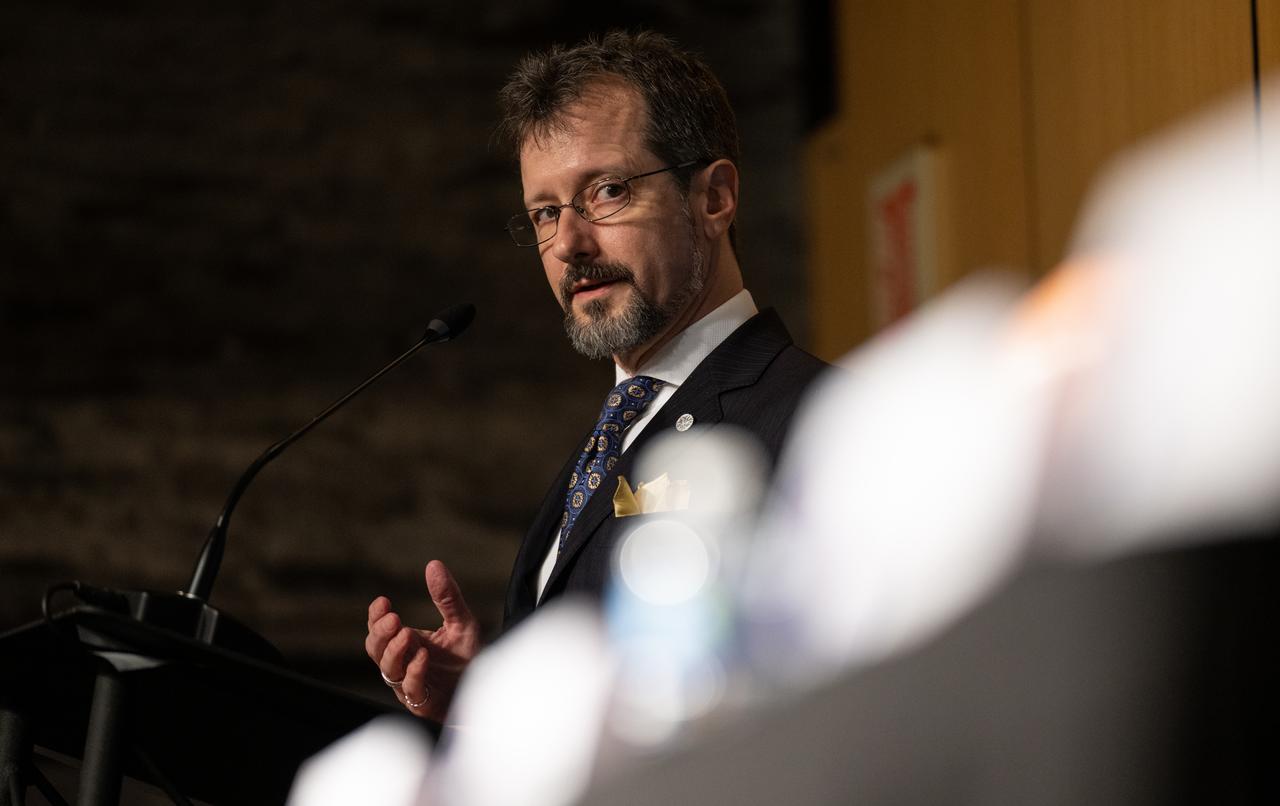
Dr. Sean Kirkpatrick, director of All-domain Anomaly Resolution Office at the Department of Defense, gives a presentation during a public meeting of NASA’s unidentified anomalous phenomena (UAP) independent study team, Wednesday, May 31, 2023 at the Mary W. Jackson NASA Headquarters building in Washington. The UAP independent study team is a counsel of 16 community experts across diverse areas on matters relevant to potential methods of study for unidentified anomalous phenomena. NASA commissioned the nine-month study to examine UAP from a scientific perspective and create a roadmap for how to use data and the tools of science to move our understanding of UAP forward. Photo Credit: (NASA/Joel Kowsky)
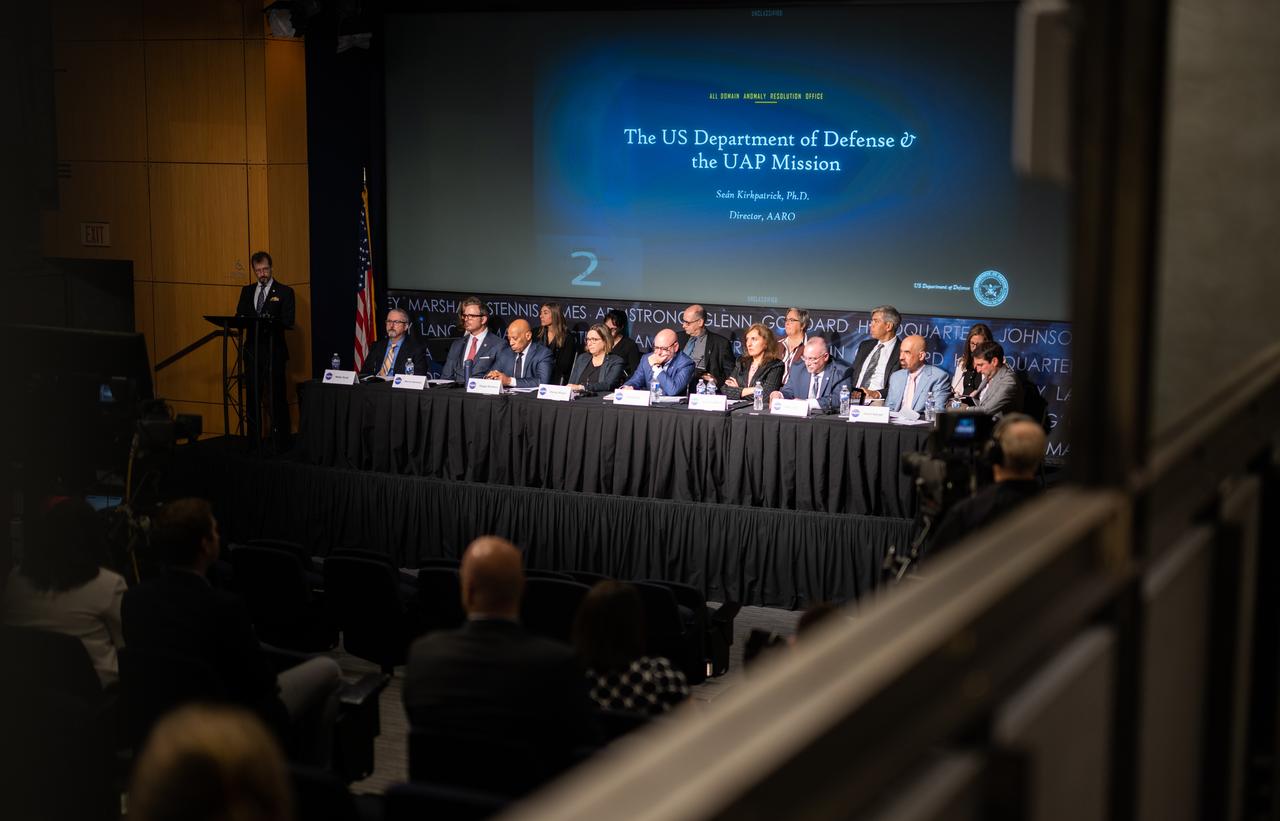
Dr. Sean Kirkpatrick, director of All-domain Anomaly Resolution Office at the Department of Defense, left, gives a presentation during a public meeting of NASA’s unidentified anomalous phenomena (UAP) independent study team, Wednesday, May 31, 2023 at the Mary W. Jackson NASA Headquarters building in Washington. The UAP independent study team is a counsel of 16 community experts across diverse areas on matters relevant to potential methods of study for unidentified anomalous phenomena. NASA commissioned the nine-month study to examine UAP from a scientific perspective and create a roadmap for how to use data and the tools of science to move our understanding of UAP forward. Photo Credit: (NASA/Joel Kowsky)
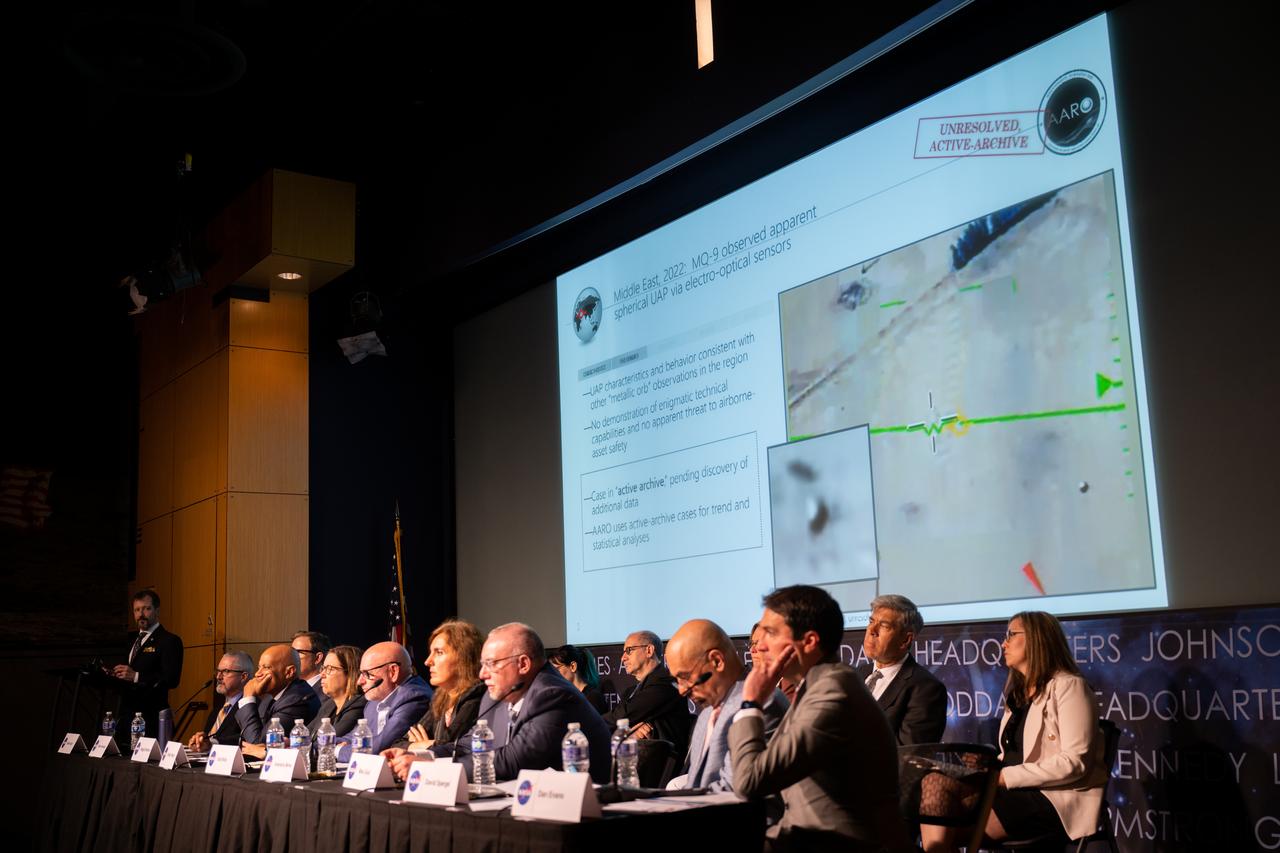
Dr. Sean Kirkpatrick, director of All-domain Anomaly Resolution Office at the Department of Defense, left, gives a presentation during a public meeting of NASA’s unidentified anomalous phenomena (UAP) independent study team, Wednesday, May 31, 2023 at the Mary W. Jackson NASA Headquarters building in Washington. The UAP independent study team is a counsel of 16 community experts across diverse areas on matters relevant to potential methods of study for unidentified anomalous phenomena. NASA commissioned the nine-month study to examine UAP from a scientific perspective and create a roadmap for how to use data and the tools of science to move our understanding of UAP forward. Photo Credit: (NASA/Joel Kowsky)
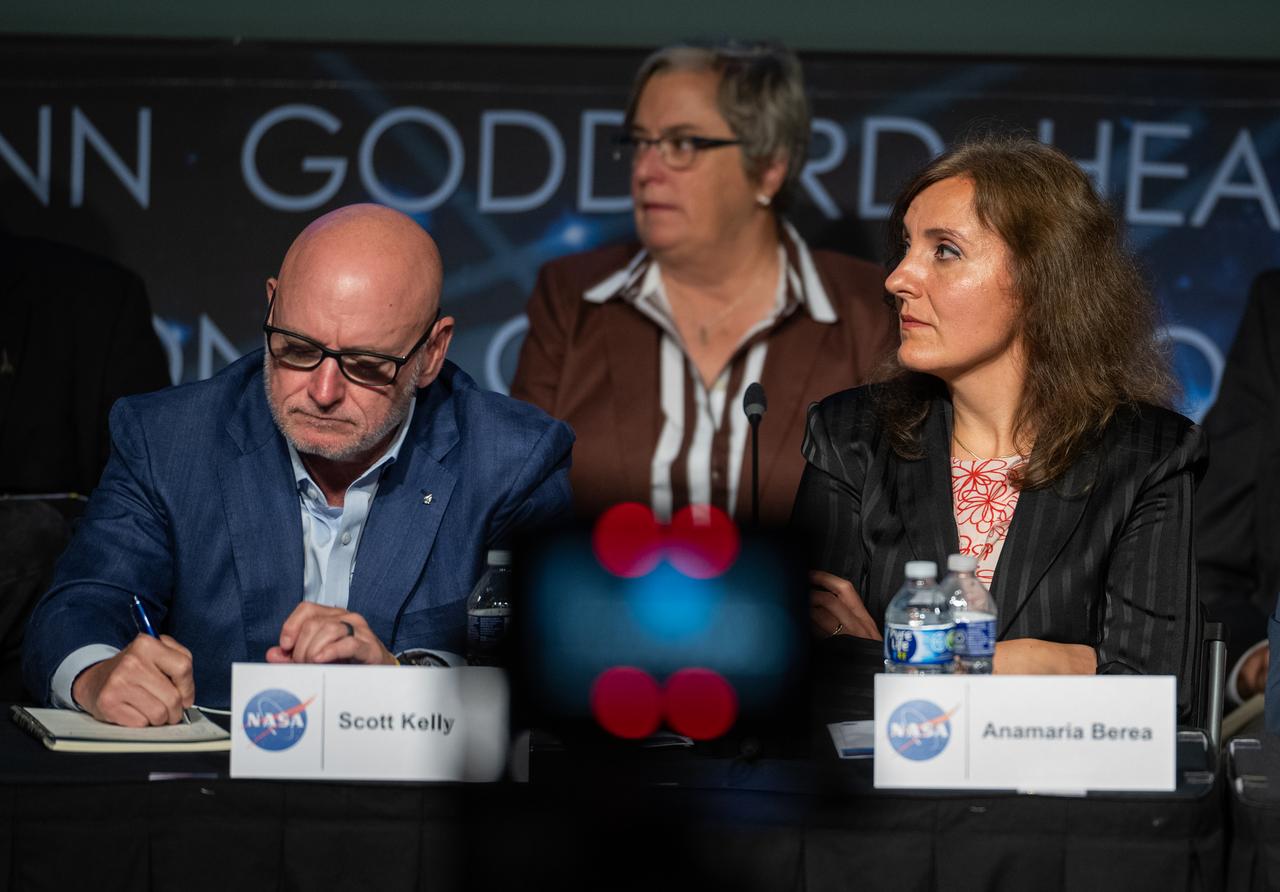
Scott Kelly, former NASA astronaut, left, and Anamaria Berea, associate professor of Computational and Data Science at George Mason University, are seen during a public meeting of NASA’s unidentified anomalous phenomena (UAP) independent study team, Wednesday, May 31, 2023 at the Mary W. Jackson NASA Headquarters building in Washington. The UAP independent study team is a counsel of 16 community experts across diverse areas on matters relevant to potential methods of study for unidentified anomalous phenomena. NASA commissioned the nine-month study to examine UAP from a scientific perspective and create a roadmap for how to use data and the tools of science to move our understanding of UAP forward. Photo Credit: (NASA/Joel Kowsky)
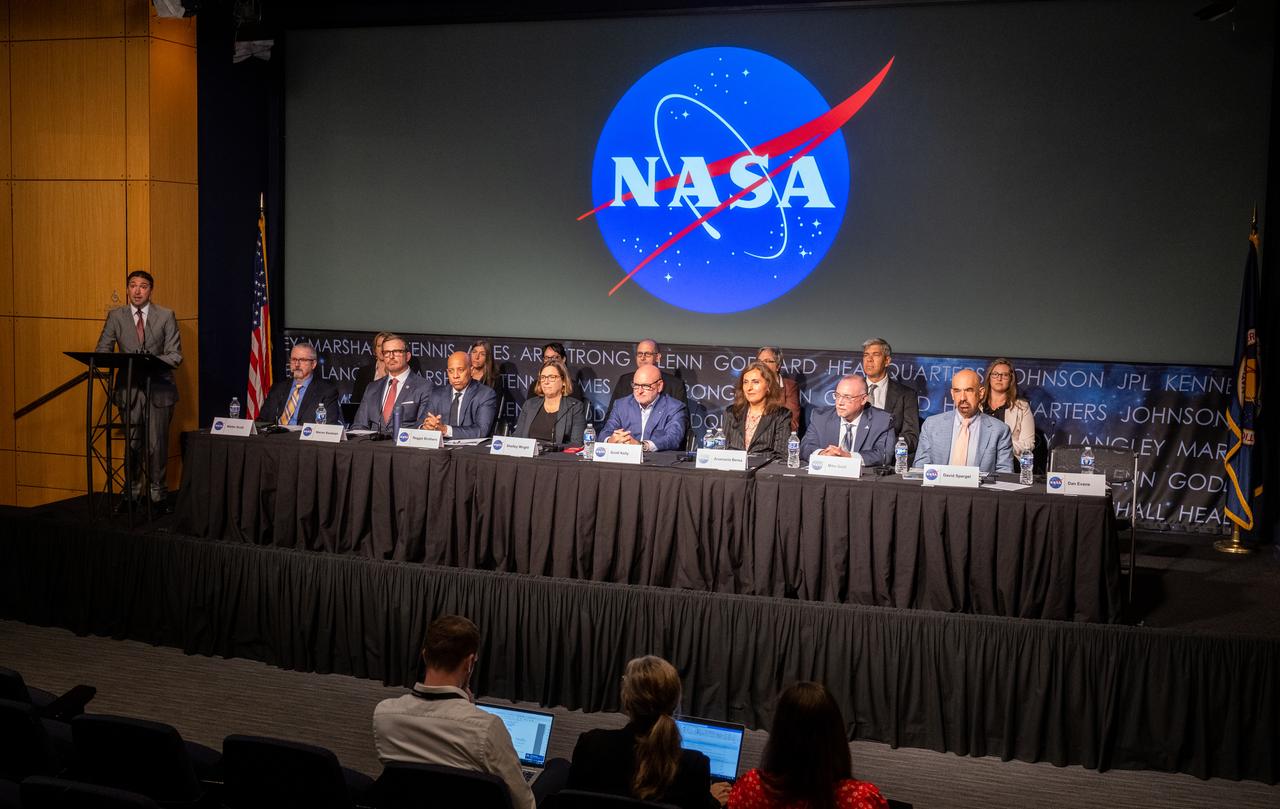
Daniel Evans, assistant deputy associate administrator for Research in NASA's Science Mission Directorate, left, gives opening remarks are seen during a public meeting of NASA’s unidentified anomalous phenomena (UAP) independent study team, Wednesday, May 31, 2023 at the Mary W. Jackson NASA Headquarters building in Washington. The UAP independent study team is a counsel of 16 community experts across diverse areas on matters relevant to potential methods of study for unidentified anomalous phenomena. NASA commissioned the nine-month study to examine UAP from a scientific perspective and create a roadmap for how to use data and the tools of science to move our understanding of UAP forward. Photo Credit: (NASA/Joel Kowsky)
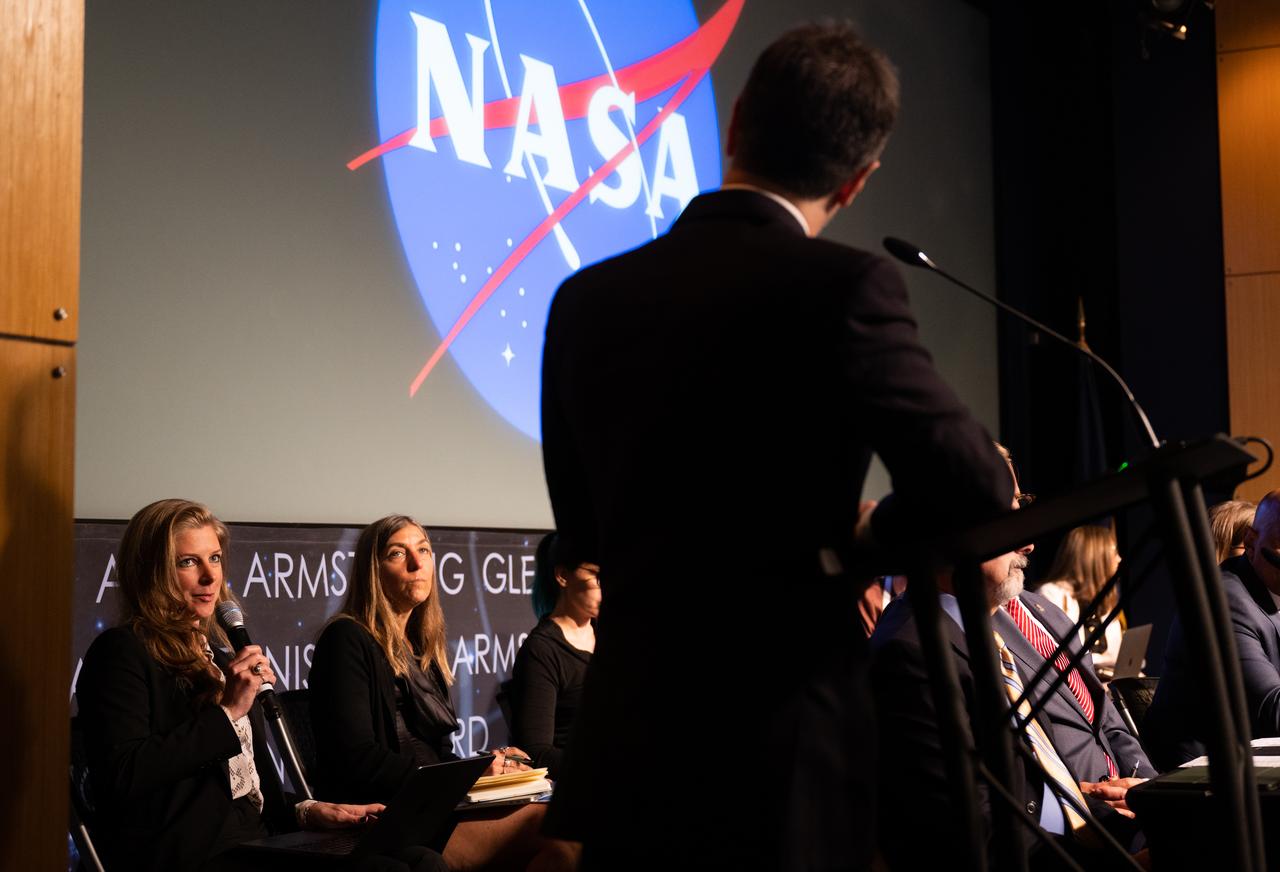
Nadia Drake, science journalist, left, asks a question of Dr. Sean Kirkpatrick, director of All-domain Anomaly Resolution Office at the Department of Defense, during a public meeting of NASA’s unidentified anomalous phenomena (UAP) independent study team, Wednesday, May 31, 2023 at the Mary W. Jackson NASA Headquarters building in Washington. The UAP independent study team is a counsel of 16 community experts across diverse areas on matters relevant to potential methods of study for unidentified anomalous phenomena. NASA commissioned the nine-month study to examine UAP from a scientific perspective and create a roadmap for how to use data and the tools of science to move our understanding of UAP forward. Photo Credit: (NASA/Joel Kowsky)
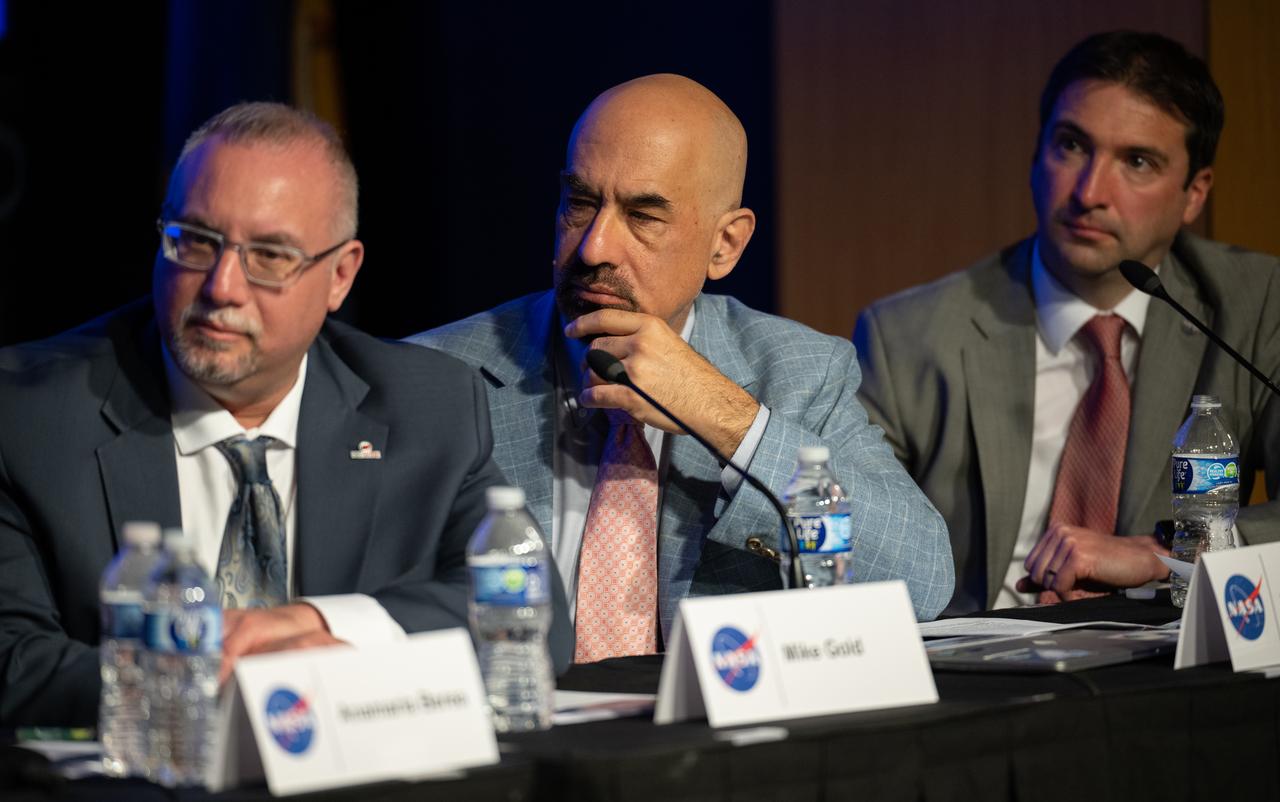
Mike Gold, chief growth officer at Redwire, left, David Spergel, chair of NASA's independent study on unidentified anomalous phenomena and President of the Simons Foundation, center, and Daniel Evans, assistant deputy associate administrator for Research in NASA's Science Mission Directorate, right, are seen during a public meeting of NASA’s unidentified anomalous phenomena (UAP) independent study team, Wednesday, May 31, 2023 at the Mary W. Jackson NASA Headquarters building in Washington. The UAP independent study team is a counsel of 16 community experts across diverse areas on matters relevant to potential methods of study for unidentified anomalous phenomena. NASA commissioned the nine-month study to examine UAP from a scientific perspective and create a roadmap for how to use data and the tools of science to move our understanding of UAP forward. Photo Credit: (NASA/Joel Kowsky)

Warren Randolph, deputy executive director of the Accident Investigation and Prevention for Aviation Safety at the FAA, left, Reggie Brothers, operating partner at AE Industrial Partners, center, and Shelley Wright, professor of Physics at the University of California San Diego's Center for Astrophysics and Space Studies, right, are seen during a public meeting of NASA’s unidentified anomalous phenomena (UAP) independent study team, Wednesday, May 31, 2023 at the Mary W. Jackson NASA Headquarters building in Washington. The UAP independent study team is a counsel of 16 community experts across diverse areas on matters relevant to potential methods of study for unidentified anomalous phenomena. NASA commissioned the nine-month study to examine UAP from a scientific perspective and create a roadmap for how to use data and the tools of science to move our understanding of UAP forward. Photo Credit: (NASA/Joel Kowsky)
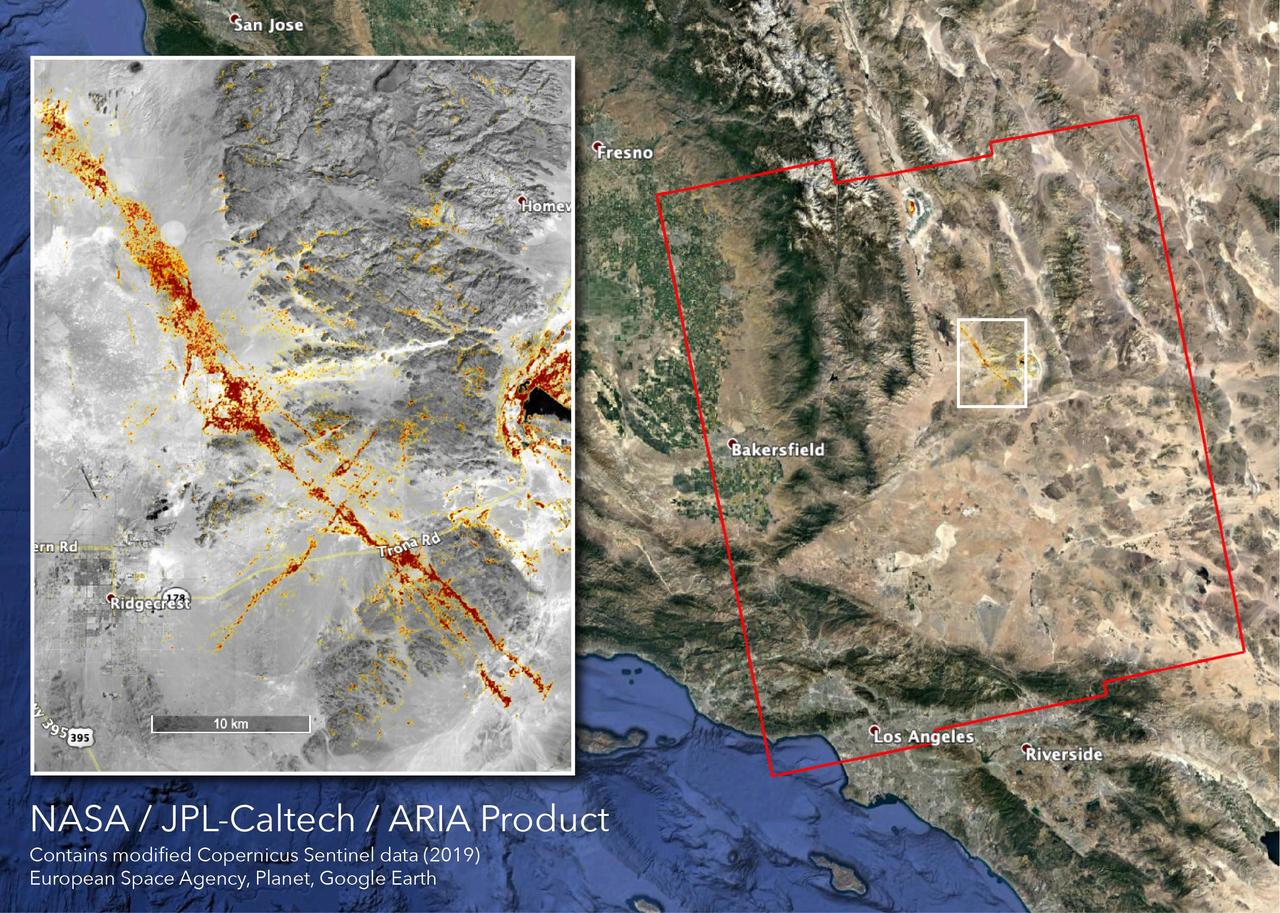
The Advanced Rapid Imaging and Analysis (ARIA) team at NASA's Jet Propulsion Laboratory in Pasadena, California, created this map depicting areas that are likely damaged as a result of the recent major earthquakes in Southern California. The color variation from yellow to red indicates increasingly more significant surface change, or damage. The map covers an area of 155 by 186 miles (250 by 300 kilometers), shown by the large red polygon. Each pixel measures about 33 yards (30 meters) across. To make the map, the team used synthetic aperture radar (SAR) images from the European Space Agency's Copernicus Sentinel-1 satellites from before and after the sequence of quakes — July 4, 2019 and July 10, 2019 respectively. The map may be less reliable over vegetated areas but can provide useful guidance in identifying damaged areas. https://photojournal.jpl.nasa.gov/catalog/PIA23354
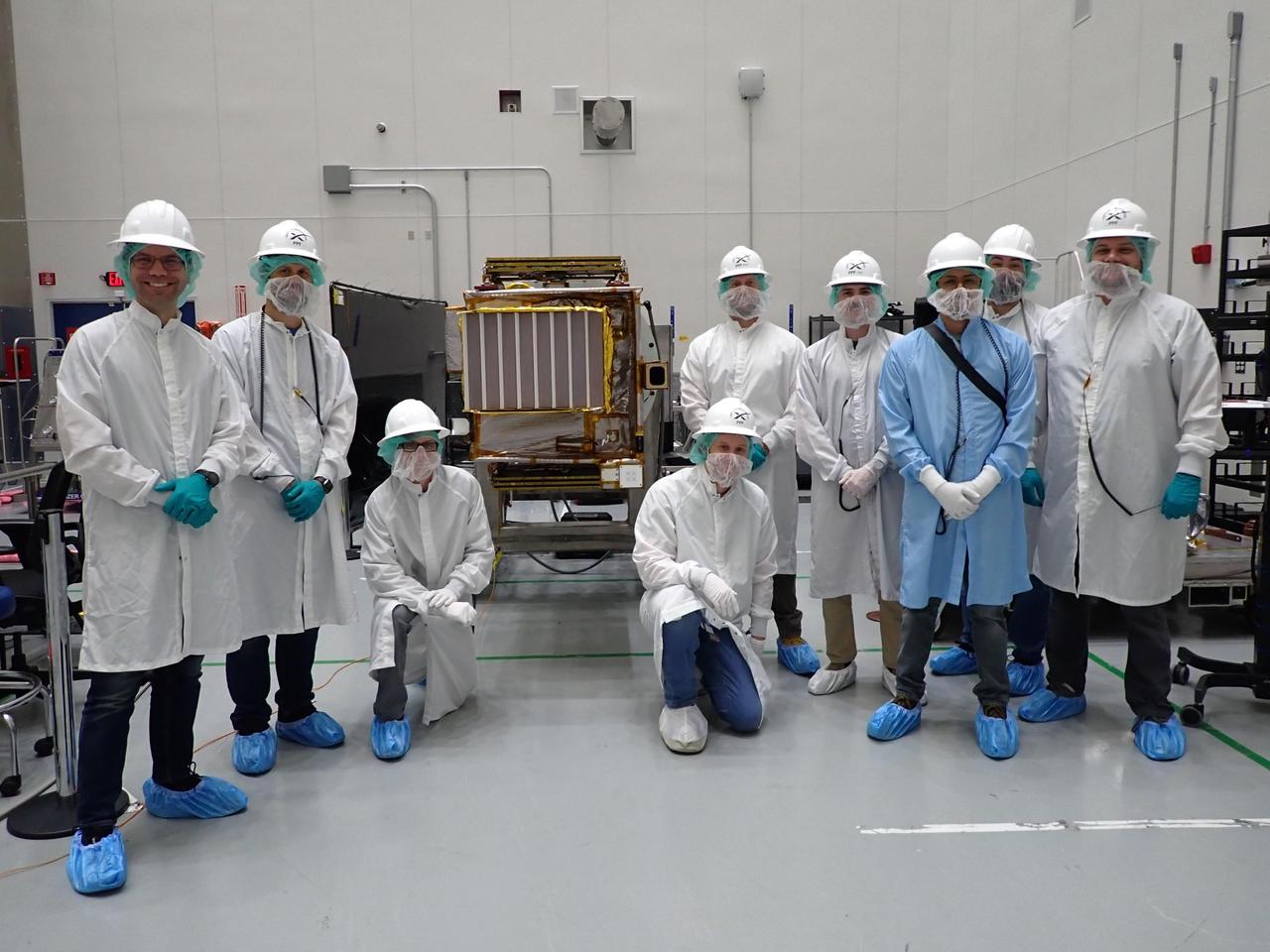
Members of NASA's Lunar Trailblazer team pose with the spacecraft at SpaceX's payload processing facility at NASA's Kennedy Space Center in Florida in early February 2025. The grated radiator of the High-resolution Volatiles and Minerals Moon Mapper (HVM³) instrument is facing the camera. Pictured, from left: Andrew Klesh, Jeff Pyle, Ryan Kressler, Willie Parker, Jon Newman, Alex Sugarman, David Rodriquez, Chris Calamateos-Brown, and David Hobbs. https://photojournal.jpl.nasa.gov/catalog/PIA26581
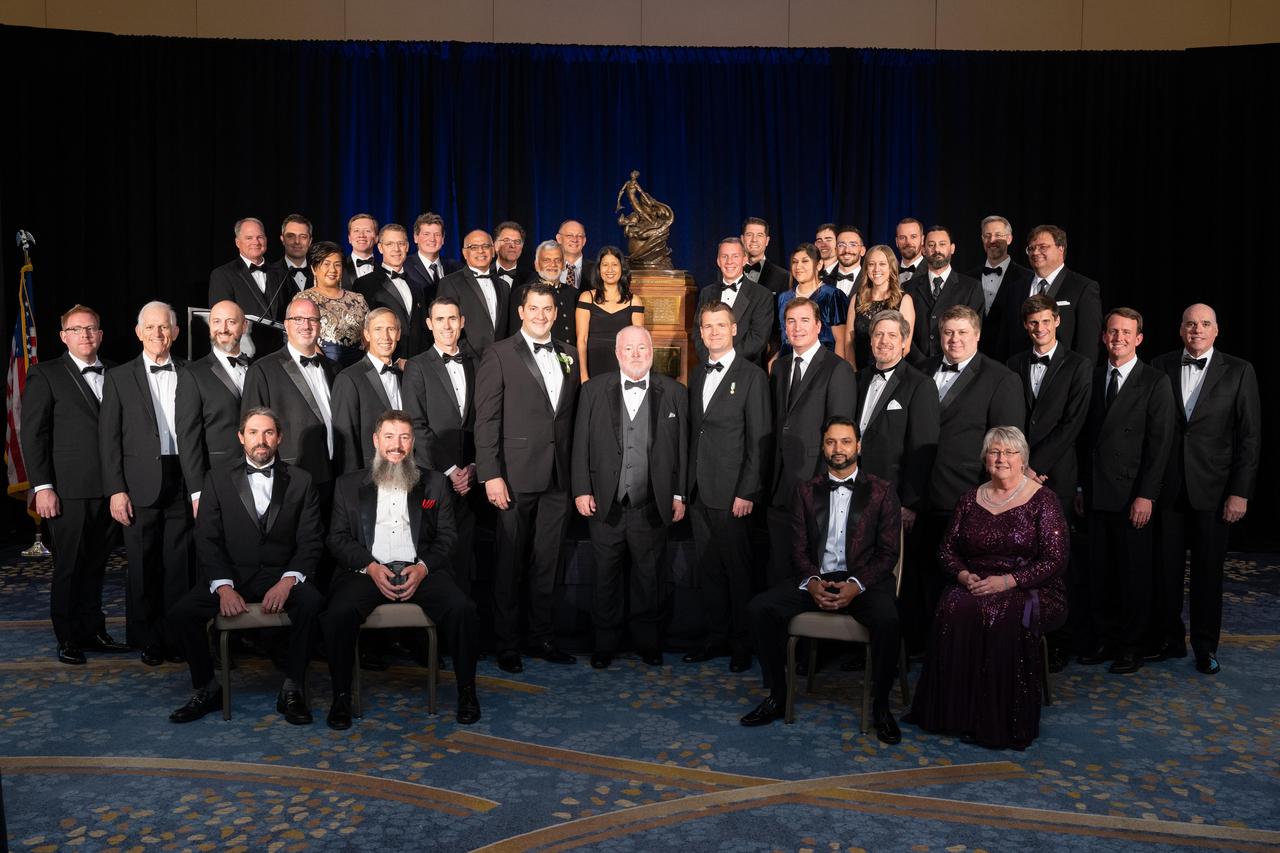
Members of NASA's Ingenuity Mars Helicopter team are pictured with the Collier Trophy during the Robert J. Collier Dinner in Washington on June 9, 2022. The team was awarded the 2021 Collier Trophy "for the first powered, controlled flight of an aircraft on another planet, thereby opening the skies of Mars and other worlds for future scientific discovery and exploration," the award citation states. This historic trophy – which is on permanent display at the Smithsonian Air and Space Museum in Washington – is awarded annually by the National Aeronautic Association "for the greatest achievement in aeronautics or astronautics in America, with respect to improving the performance, efficiency, and safety of air or space vehicles, the value of which has been thoroughly demonstrated by actual use during the preceding year." https://photojournal.jpl.nasa.gov/catalog/PIA25324

The No Chase COA (NCC) team at NASA Armstrong Flight Research Center pose for a group photo with the unmanned aircraft system the Ikhana.
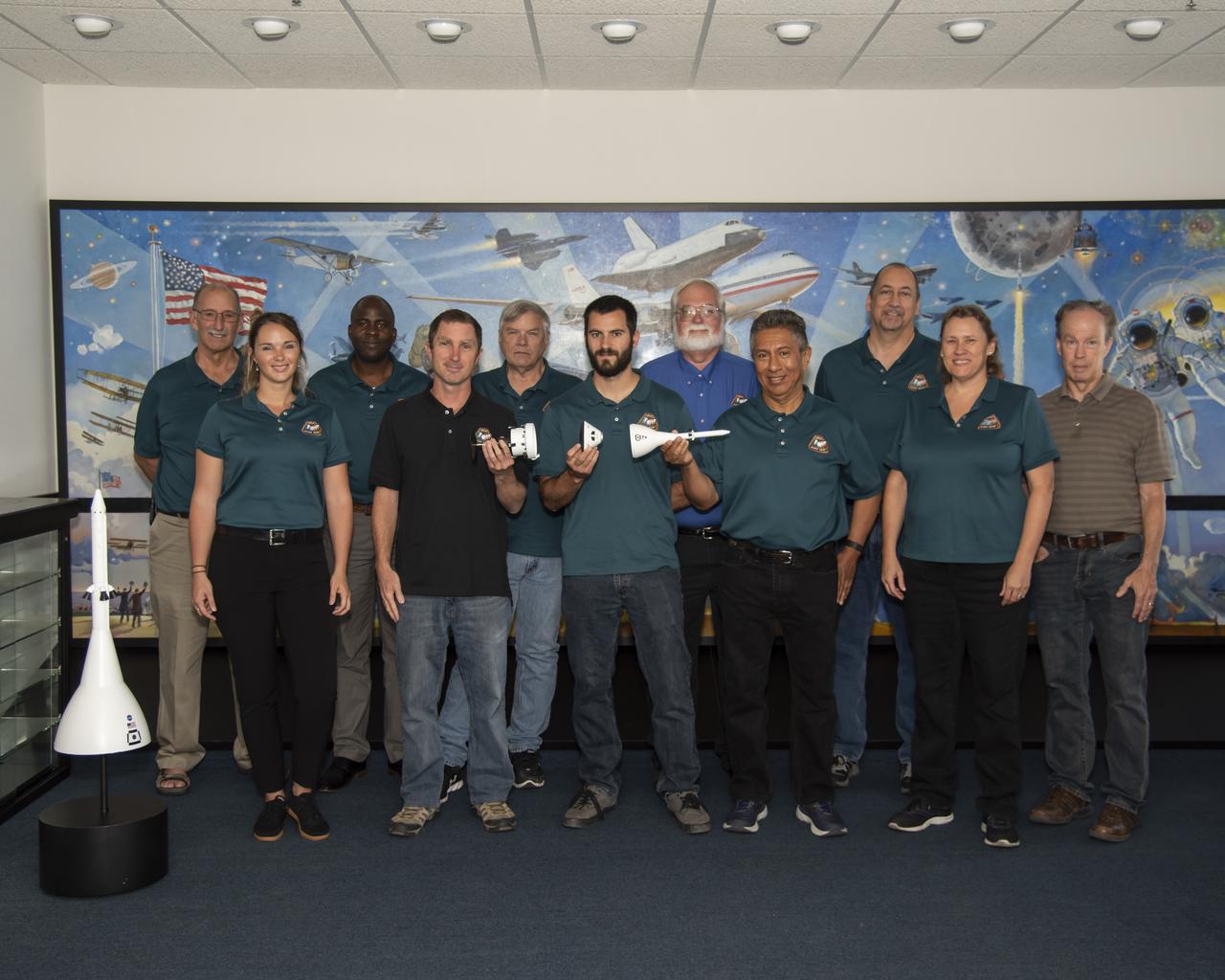
Members of the NASA Armstrong Flight Research Center Ascent Abort-2 management and engineering team contributed to the AA-2 launch at Cape Canaveral in Florida July 2, 2019. From left are Gary Martin, Rose Blomquist, Ernest Mwajagu, Lucas Moxey, Leo Gross, Jeff Sutherland, Chuck Rogers, Joe Hernandez, David Dowdell, Jeri Myers and Dan Nolan. Additional engineering team members include Paul Aristo, Bob Clark and Nikki Martin. Team members hold elements of the stack that was launched to show how the separation ring, crew module and Launch Abort System fit together.

After years of tests and development, NASA’s Balloon Program team is on the cusp of expanding the envelope in high-altitude, heavy-lift ballooning with its super pressure balloon (SPB) technology. NASA’s scientific balloon experts are in Wanaka, New Zealand, prepping for the fourth flight of an 18.8 million-cubic-foot (532,000 cubic-meter) balloon, with the ambitious goal of achieving an ultra-long-duration flight of up to 100 days at mid-latitudes. Launch of the pumpkin-shaped, football stadium-size balloon is scheduled for sometime after April 1, 2016, from Wanaka Airport, pending final checkouts and flight readiness of the balloon and supporting systems. Once launched, the SPB, which is made from 22-acres of polyethylene film – similar to a sandwich bag, but stronger and more durable – will ascend to a nearly constant float altitude of 110,000 feet (33.5 km). The balloon will travel eastward carrying a 2,260-pound (1,025 kg) payload consisting of tracking, communications and scientific instruments. NASA expects the SPB to circumnavigate the globe once every one to three weeks, depending on wind speeds in the stratosphere. Read more: <a href="http://go.nasa.gov/1p56xKR" rel="nofollow">go.nasa.gov/1p56xKR</a> <b><a href="http://www.nasa.gov/audience/formedia/features/MP_Photo_Guidelines.html" rel="nofollow">NASA image use policy.</a></b> <b><a href="http://www.nasa.gov/centers/goddard/home/index.html" rel="nofollow">NASA Goddard Space Flight Center</a></b> enables NASA’s mission through four scientific endeavors: Earth Science, Heliophysics, Solar System Exploration, and Astrophysics. Goddard plays a leading role in NASA’s accomplishments by contributing compelling scientific knowledge to advance the Agency’s mission. <b>Follow us on <a href="http://twitter.com/NASAGoddardPix" rel="nofollow">Twitter</a></b> <b>Like us on <a href="http://www.facebook.com/pages/Greenbelt-MD/NASA-Goddard/395013845897?ref=tsd" rel="nofollow">Facebook</a></b> <b>Find us on <a href="http://instagrid.me/nasagoddard/?vm=grid" rel="nofollow">Instagram</a></b>

After years of tests and development, NASA’s Balloon Program team is on the cusp of expanding the envelope in high-altitude, heavy-lift ballooning with its super pressure balloon (SPB) technology. NASA’s scientific balloon experts are in Wanaka, New Zealand, prepping for the fourth flight of an 18.8 million-cubic-foot (532,000 cubic-meter) balloon, with the ambitious goal of achieving an ultra-long-duration flight of up to 100 days at mid-latitudes. Launch of the pumpkin-shaped, football stadium-size balloon is scheduled for sometime after April 1, 2016, from Wanaka Airport, pending final checkouts and flight readiness of the balloon and supporting systems. Once launched, the SPB, which is made from 22-acres of polyethylene film – similar to a sandwich bag, but stronger and more durable – will ascend to a nearly constant float altitude of 110,000 feet (33.5 km). The balloon will travel eastward carrying a 2,260-pound (1,025 kg) payload consisting of tracking, communications and scientific instruments. NASA expects the SPB to circumnavigate the globe once every one to three weeks, depending on wind speeds in the stratosphere. Read more: <a href="http://go.nasa.gov/1p56xKR" rel="nofollow">go.nasa.gov/1p56xKR</a> <b><a href="http://www.nasa.gov/audience/formedia/features/MP_Photo_Guidelines.html" rel="nofollow">NASA image use policy.</a></b> <b><a href="http://www.nasa.gov/centers/goddard/home/index.html" rel="nofollow">NASA Goddard Space Flight Center</a></b> enables NASA’s mission through four scientific endeavors: Earth Science, Heliophysics, Solar System Exploration, and Astrophysics. Goddard plays a leading role in NASA’s accomplishments by contributing compelling scientific knowledge to advance the Agency’s mission. <b>Follow us on <a href="http://twitter.com/NASAGoddardPix" rel="nofollow">Twitter</a></b> <b>Like us on <a href="http://www.facebook.com/pages/Greenbelt-MD/NASA-Goddard/395013845897?ref=tsd" rel="nofollow">Facebook</a></b> <b>Find us on <a href="http://instagrid.me/nasagoddard/?vm=grid" rel="nofollow">Instagram</a></b>
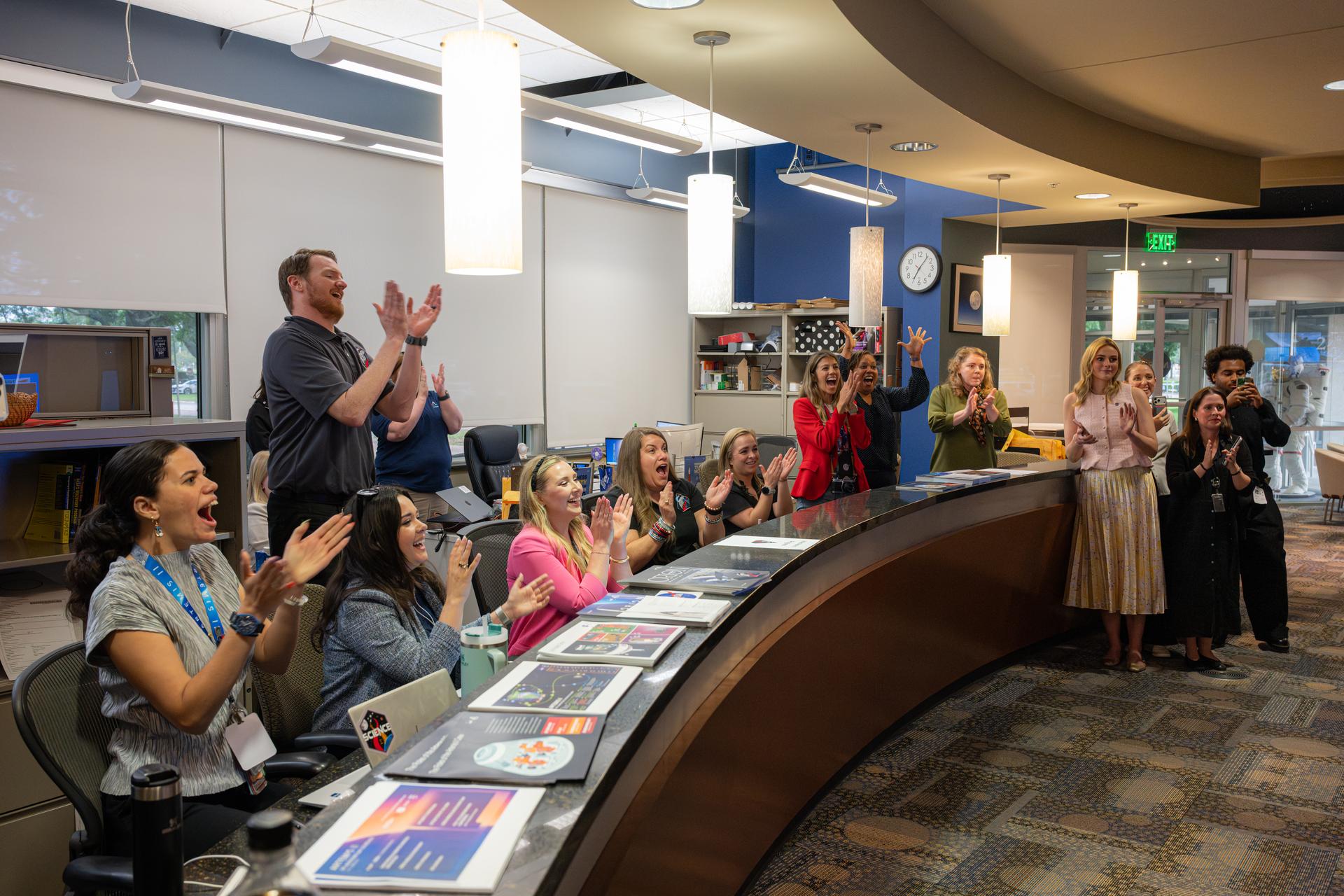
Members of NASA’s communications team react to the successful splashdown of the Orion spacecraft during the Artemis II mission, Friday, Apr. 10, 2026, at NASA’s Johnson Space Center in Houston, Texas. Photo Credit: (NASA/John Kraus)
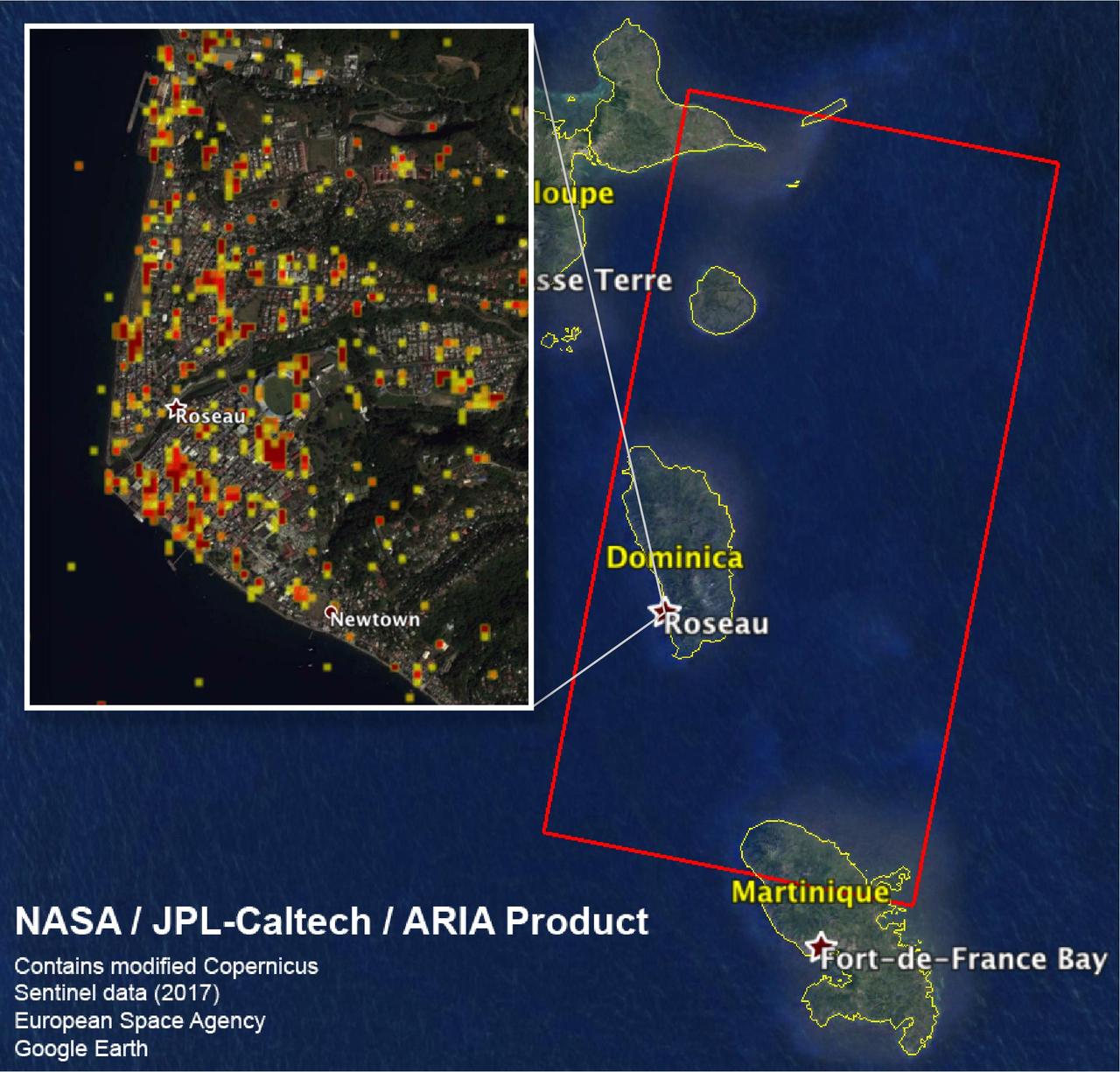
The Advanced Rapid Imaging and Analysis (ARIA) team at NASA's Jet Propulsion Laboratory in Pasadena, California, and Caltech, also in Pasadena, created this Damage Proxy Map (DPM) depicting areas including the Commonwealth of Dominica, that are likely damaged (shown by red and yellow pixels) as a result of Hurricane Maria (a Category 5 storm at landfall in Dominica on Sept. 18, 2017). The map is derived from synthetic aperture radar (SAR) images from the Copernicus Sentinel-1 satellites, operated by the European Space Agency (ESA). The images were taken before (March 27, 2017) and after (Sept. 23, 2017) the landfall of the storm. The map covers the area within the large red polygon, which measures 53 by 106 miles (85 by 170 kilometers). Each pixel measures about 98 feet (30 meters) across. The color variation from yellow to red indicates increasingly more significant ground surface change. Preliminary validation was done by comparing the data to a crowdsourced map by Clemson Center for Geospatial Technologies and optical satellite imagery feom DigitalGlobe. This damage proxy map should be used as guidance to identify damaged areas, and may be less reliable over vegetated areas. Sentinel-1 data were accessed through the Copernicus Open Access Hub. The image contains modified Copernicus Sentinel data (2017), processed by ESA and analyzed by the NASA/JPL-Caltech ARIA team. This research was carried out at JPL under a contract with NASA. https://photojournal.jpl.nasa.gov/catalog/PIA22037

NASA leadership marked the accomplishments of the team at the agency’s Michoud Assembly Facility in New Orleans, where technicians recently completed welding together the pressure vessel for the Orion spacecraft and continue to manufacture the core stage of the Space Launch System rocket.
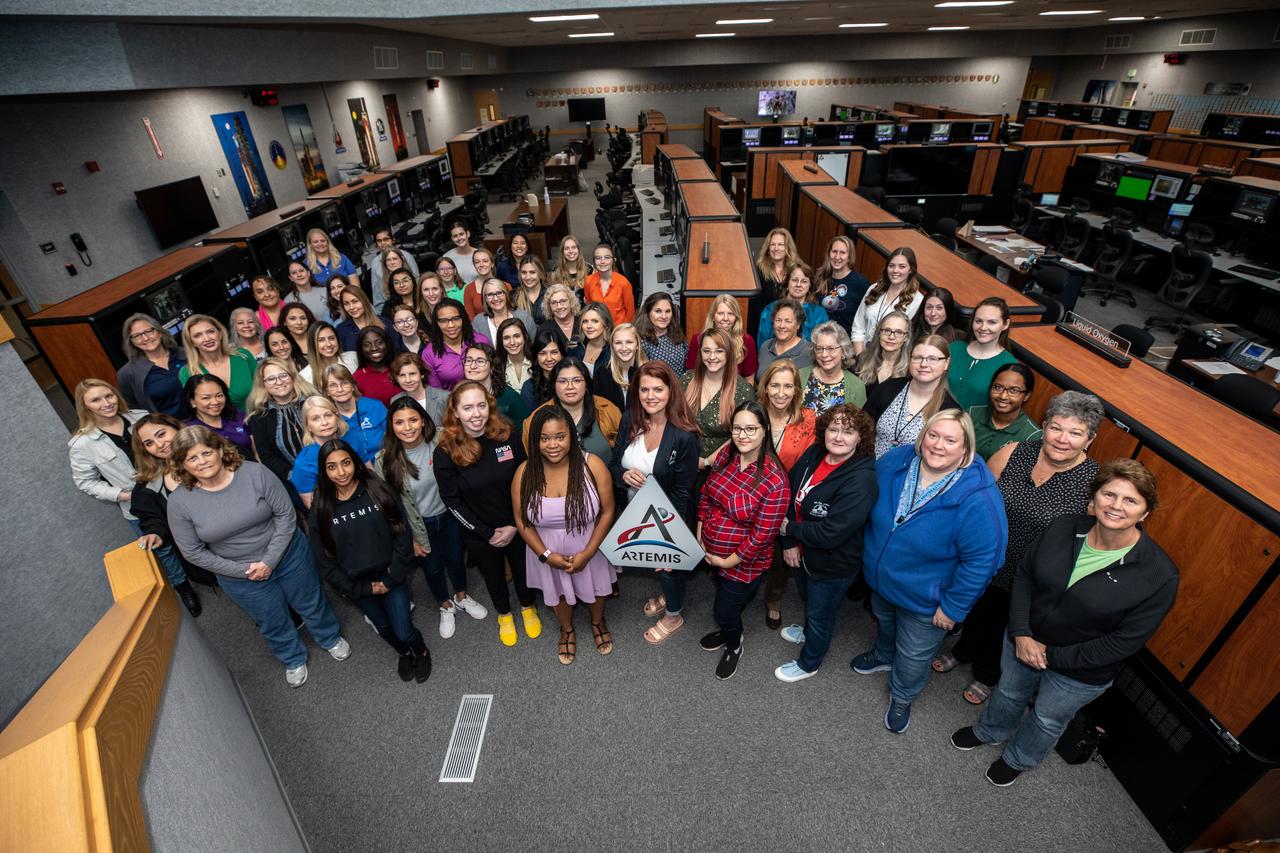
The women who comprise the Artemis launch team are photographed inside Firing Room 1 of the Launch Control Center at NASA’s Kennedy Space Center in Florida on Feb. 10, 2023. In the center, holding the Artemis mission logo, is NASA’s first female Launch Director Charlie Blackwell-Thompson. The team, which is about 30% women, launched the agency’s Artemis I mission – the first in an increasingly complex series of missions to return humans to the Moon – from Kennedy’s Launch Pad 39B on Nov. 16, 2022. The primary goal of Artemis I was to thoroughly test the Space Launch System rocket and Orion spacecraft’s integrated systems before crewed missions to the lunar surface. Under Artemis, NASA aims to land the first woman and first person of color on the Moon and establish sustainable lunar exploration in the near future.
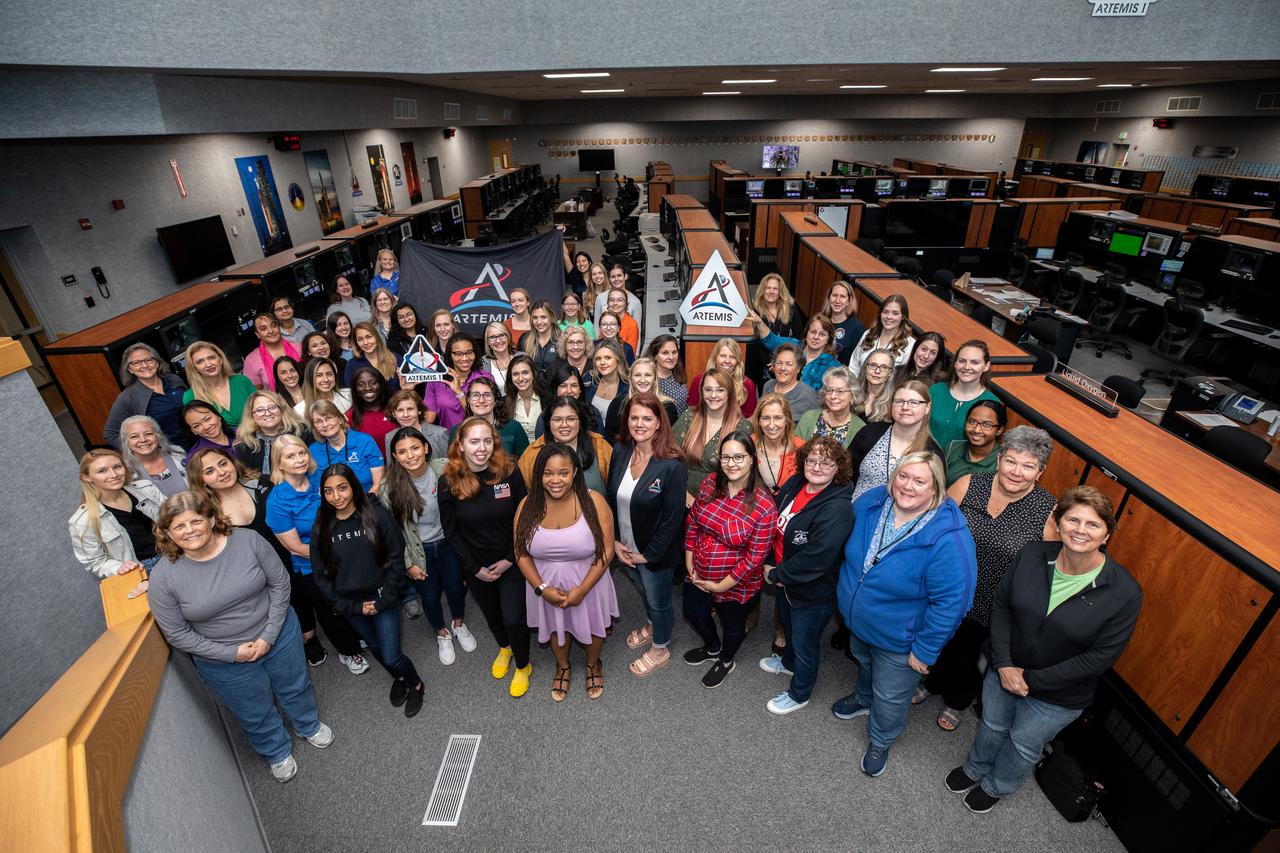
The women who comprise the Artemis launch team are photographed inside Firing Room 1 of the Launch Control Center at NASA’s Kennedy Space Center in Florida on Feb. 10, 2023. In the center of the front row is NASA’s first female Launch Director Charlie Blackwell-Thompson. The team, which is about 30% women, launched the agency’s Artemis I mission – the first in an increasingly complex series of missions to return humans to the Moon – from Kennedy’s Launch Pad 39B on Nov. 16, 2022. The primary goal of Artemis I was to thoroughly test the Space Launch System rocket and Orion spacecraft’s integrated systems before crewed missions to the lunar surface. Under Artemis, NASA aims to land the first woman and first person of color on the Moon and establish sustainable lunar exploration in the near future.
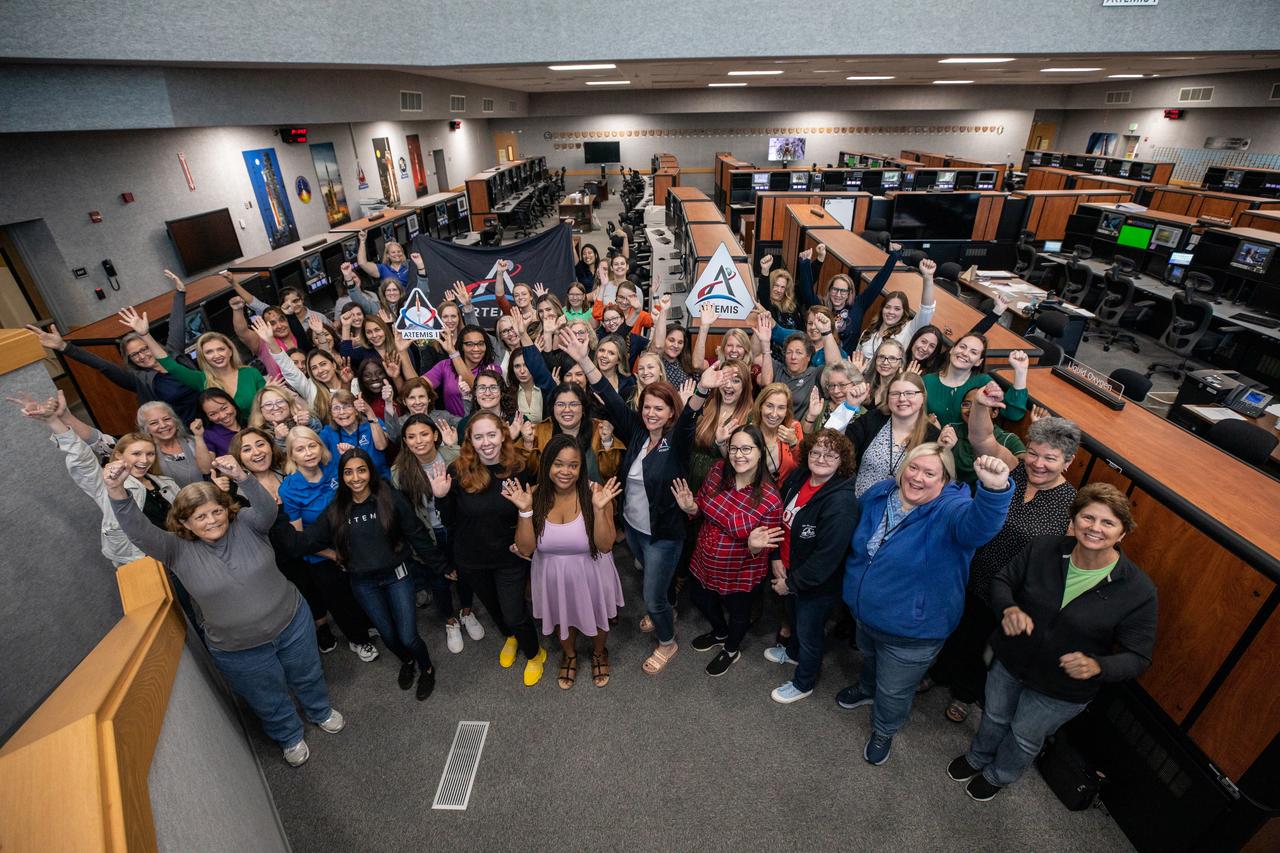
The women who comprise the Artemis launch team are photographed inside Firing Room 1 of the Launch Control Center at NASA’s Kennedy Space Center in Florida on Feb. 10, 2023. In the center of the front row is NASA’s first female Launch Director Charlie Blackwell-Thompson. The team, which is about 30% women, launched the agency’s Artemis I mission – the first in an increasingly complex series of missions to return humans to the Moon – from Kennedy’s Launch Pad 39B on Nov. 16, 2022. The primary goal of Artemis I was to thoroughly test the Space Launch System rocket and Orion spacecraft’s integrated systems before crewed missions to the lunar surface. Under Artemis, NASA aims to land the first woman and first person of color on the Moon and establish sustainable lunar exploration in the near future.
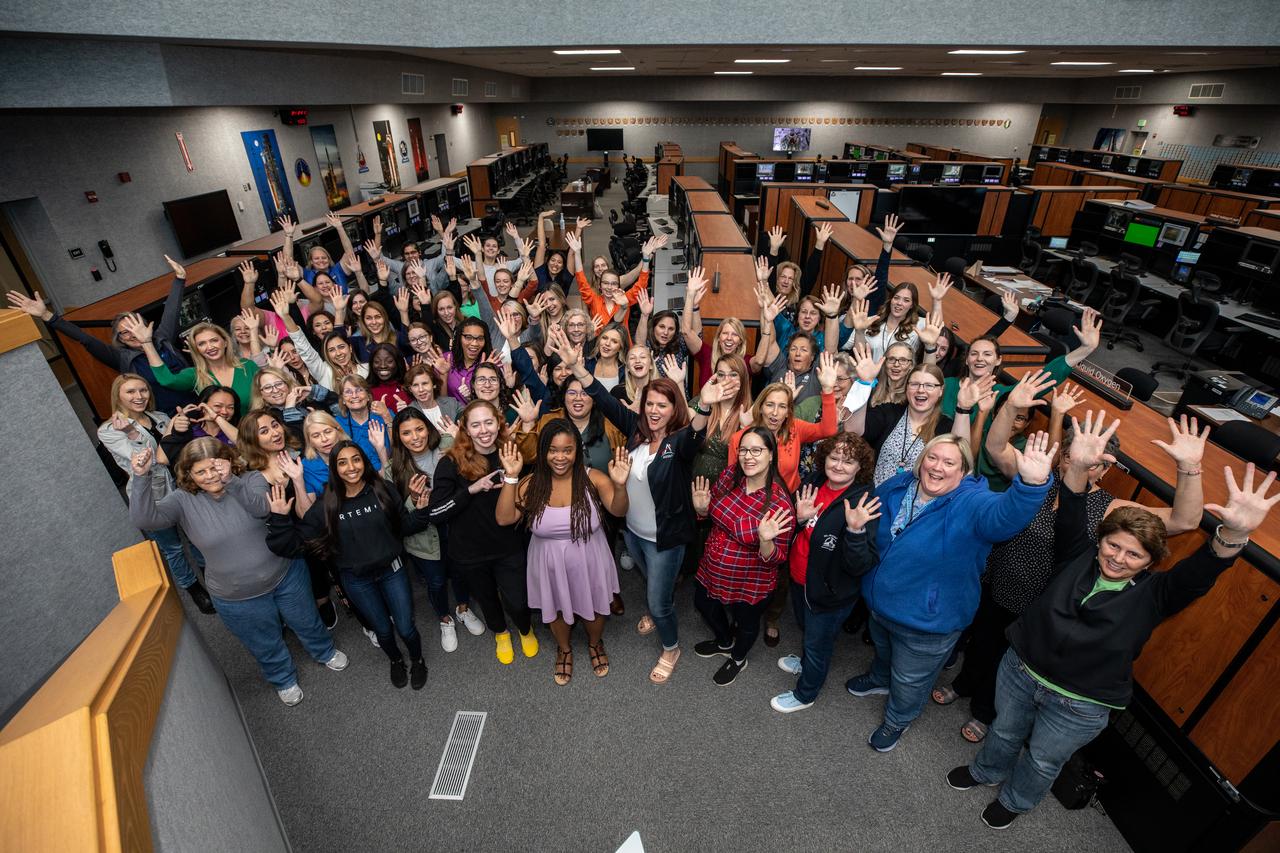
The women who comprise the Artemis launch team are photographed inside Firing Room 1 of the Launch Control Center at NASA’s Kennedy Space Center in Florida on Feb. 10, 2023. In the center of the front row is NASA’s first female Launch Director Charlie Blackwell-Thompson. The team, which is about 30% women, launched the agency’s Artemis I mission – the first in an increasingly complex series of missions to return humans to the Moon – from Kennedy’s Launch Pad 39B on Nov. 16, 2022. The primary goal of Artemis I was to thoroughly test the Space Launch System rocket and Orion spacecraft’s integrated systems before crewed missions to the lunar surface. Under Artemis, NASA aims to land the first woman and first person of color on the Moon and establish sustainable lunar exploration in the near future.
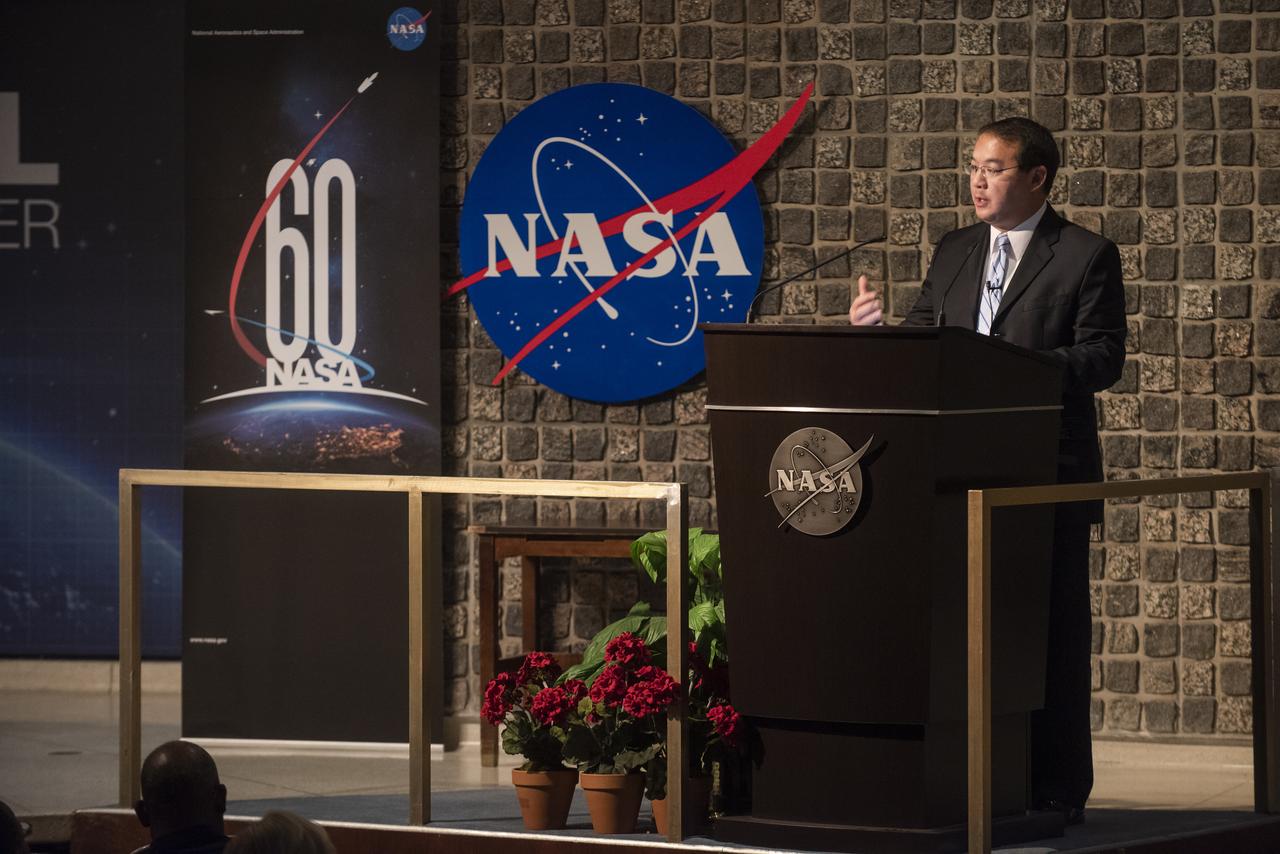
Steve Shih, NASA associate administrator for Diversity & Equal Opportunity, addresses NASA team members during a Nov. 6 mentoring event at the agency's Marshall Space Flight Center. Shih discussed ways for team members on both sides of the mentoring equation to get the most out of the experience.
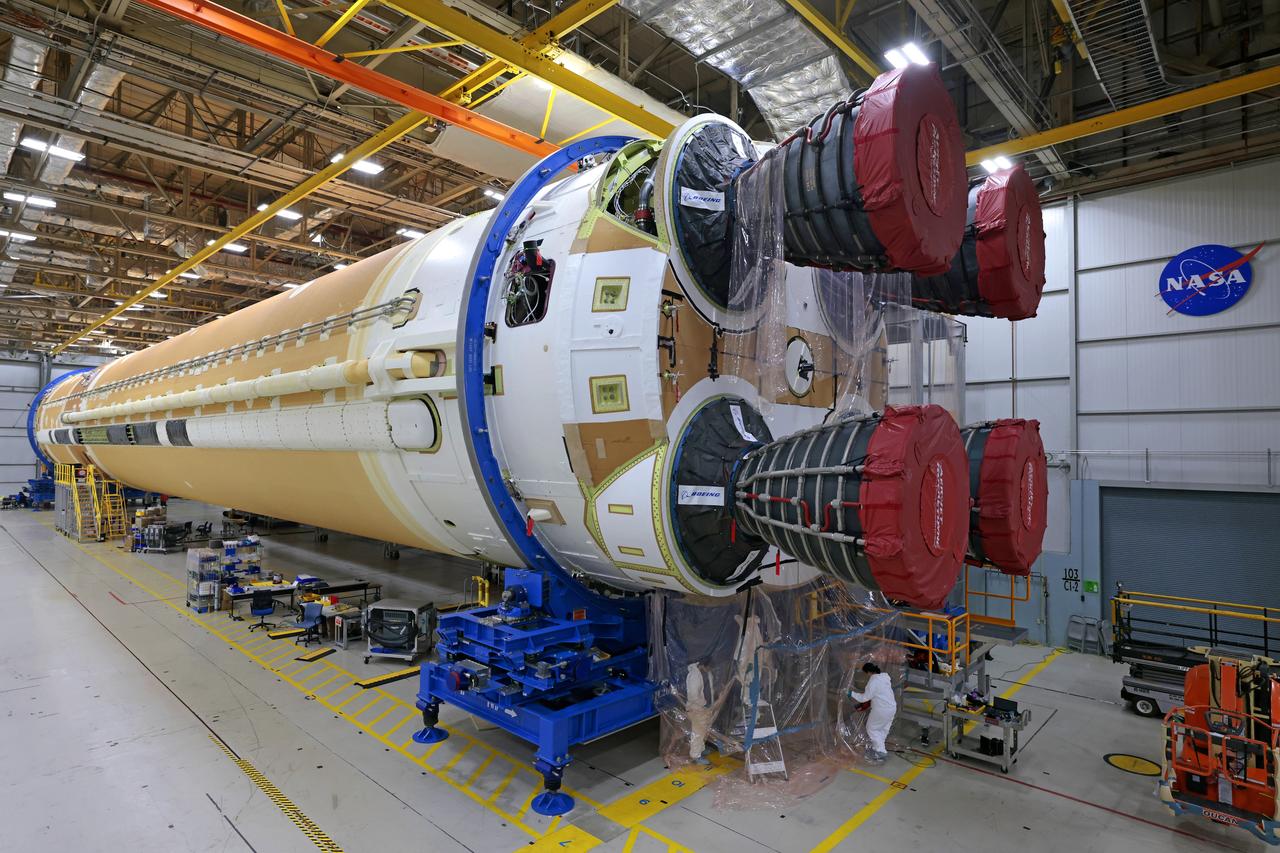
Teams at NASA’s Michoud Assembly Facility in New Orleans are preparing the core stage of the agency’s SLS (Space Launch System) for shipment to the agency’s Kennedy Space Center in Florida. The 212-foot-tall core stage and its four RS-25 engines will help power Artemis II, the first crewed mission of NASA’s Artemis campaign. Crews removed the external access stands, or scaffolding, in preparation for moving the rocket hardware to another area of the facility. Image credit: NASA/Michael DeMocker
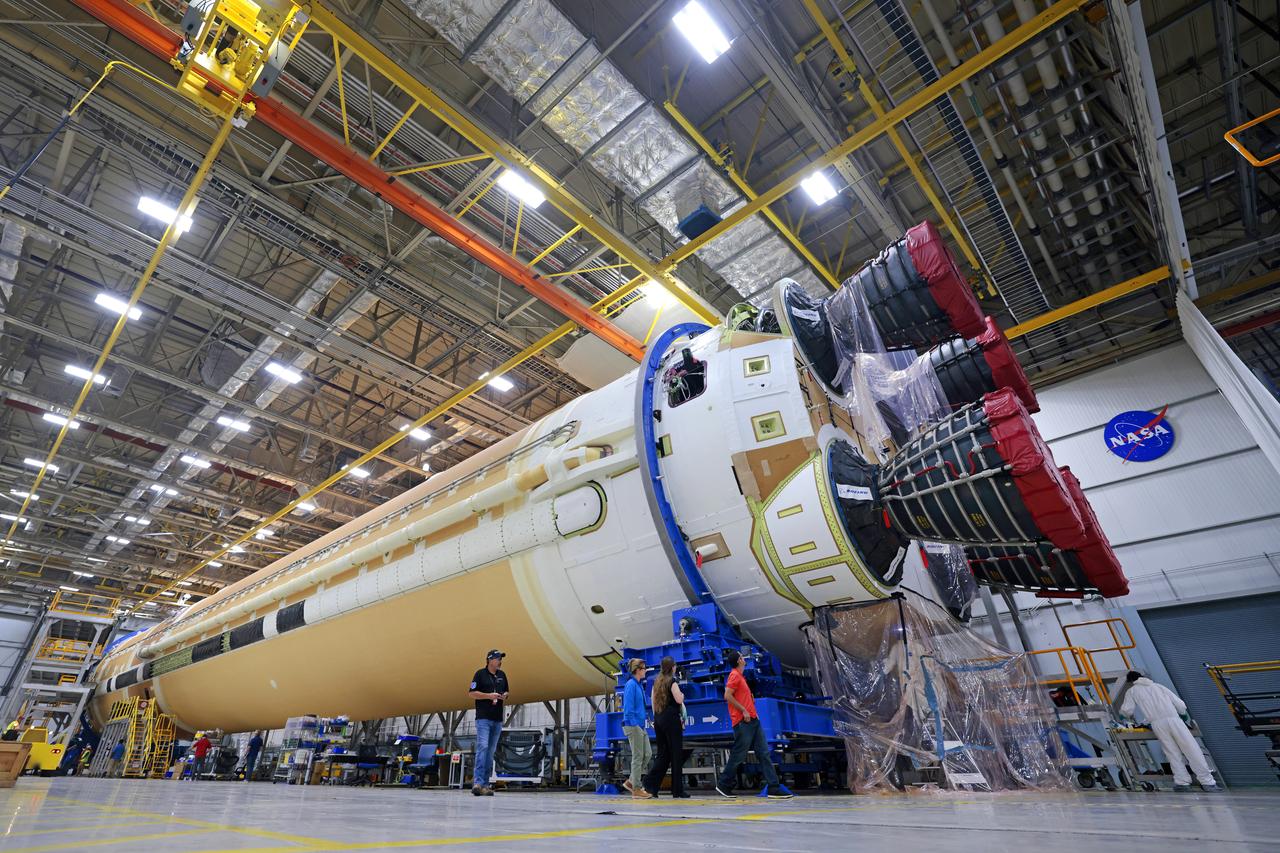
Teams at NASA’s Michoud Assembly Facility in New Orleans are preparing the core stage of the agency’s SLS (Space Launch System) for shipment to the agency’s Kennedy Space Center in Florida. The 212-foot-tall core stage and its four RS-25 engines will help power Artemis II, the first crewed mission of NASA’s Artemis campaign. Crews removed the external access stands, or scaffolding, in preparation for moving the rocket hardware to another area of the facility. Image credit: NASA/Michael DeMocker

Young visitors to NASA's John C. Stennis Space Center prepare to launch 'stomp rockets' during STEM-Ulate to Innovate activities at the facility July 13. The NASA Foundations of Influence, Relationships, Success and Teamwork (FIRST) Team sponsored STEM-Ulate to Innovate for more than 100 children ages 9-11. Children from area Boys & Girls Clubs participated in hands-on activities, presentations and demonstrations by professional engineers, all designed to promote the relevance of science, technology, engineering and mathematics (STEM).
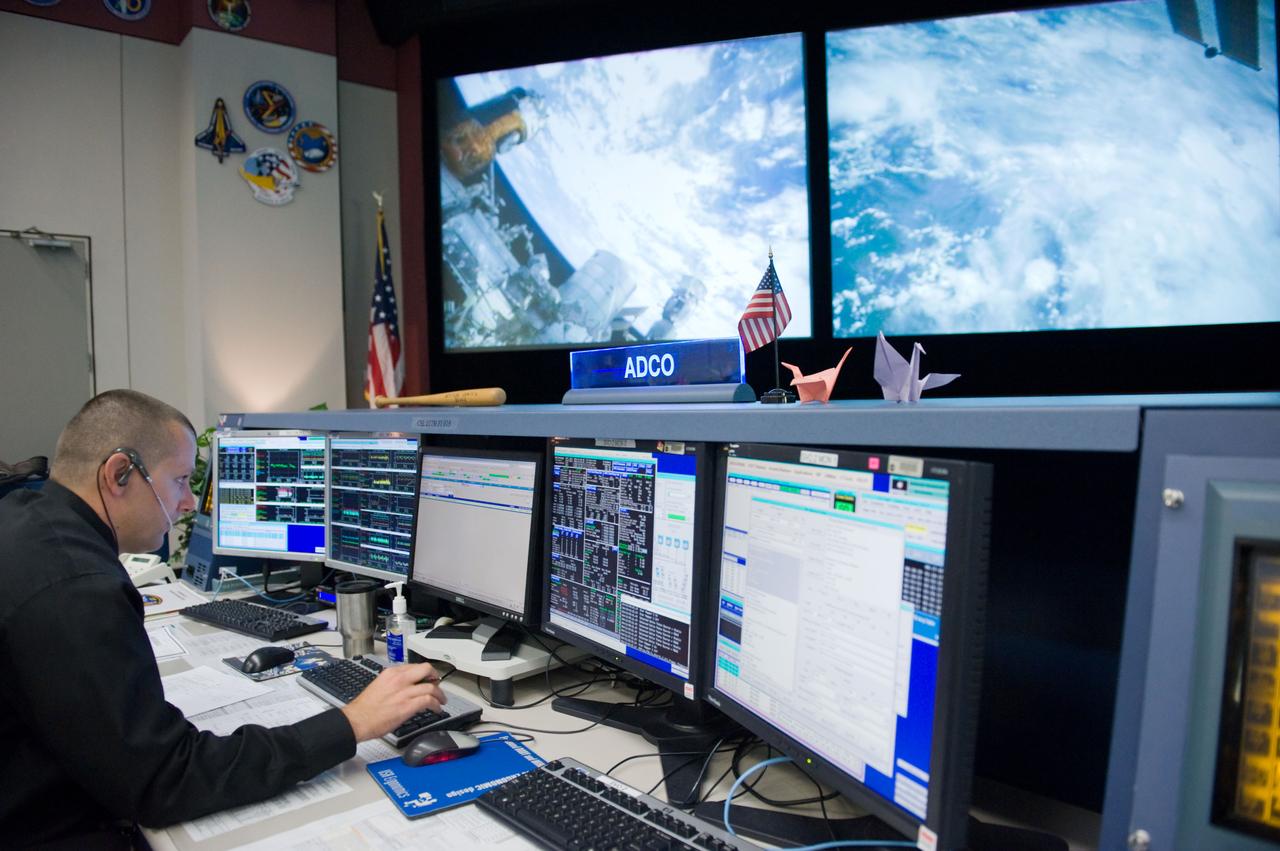
PHOTO DATE: 3-25-11 LOCATION: Bldg. 30M, FCR-1 SUBJECT: JAXA flight control team gave the Folding Paper Cranes to NASA ISS mission control team and now they are decorated on their consoles. The Folding Paper Cranes are for the people who suffer terrible pain from the earthquake in Japan. PHOTOGRAPHER: Lauren Harnett
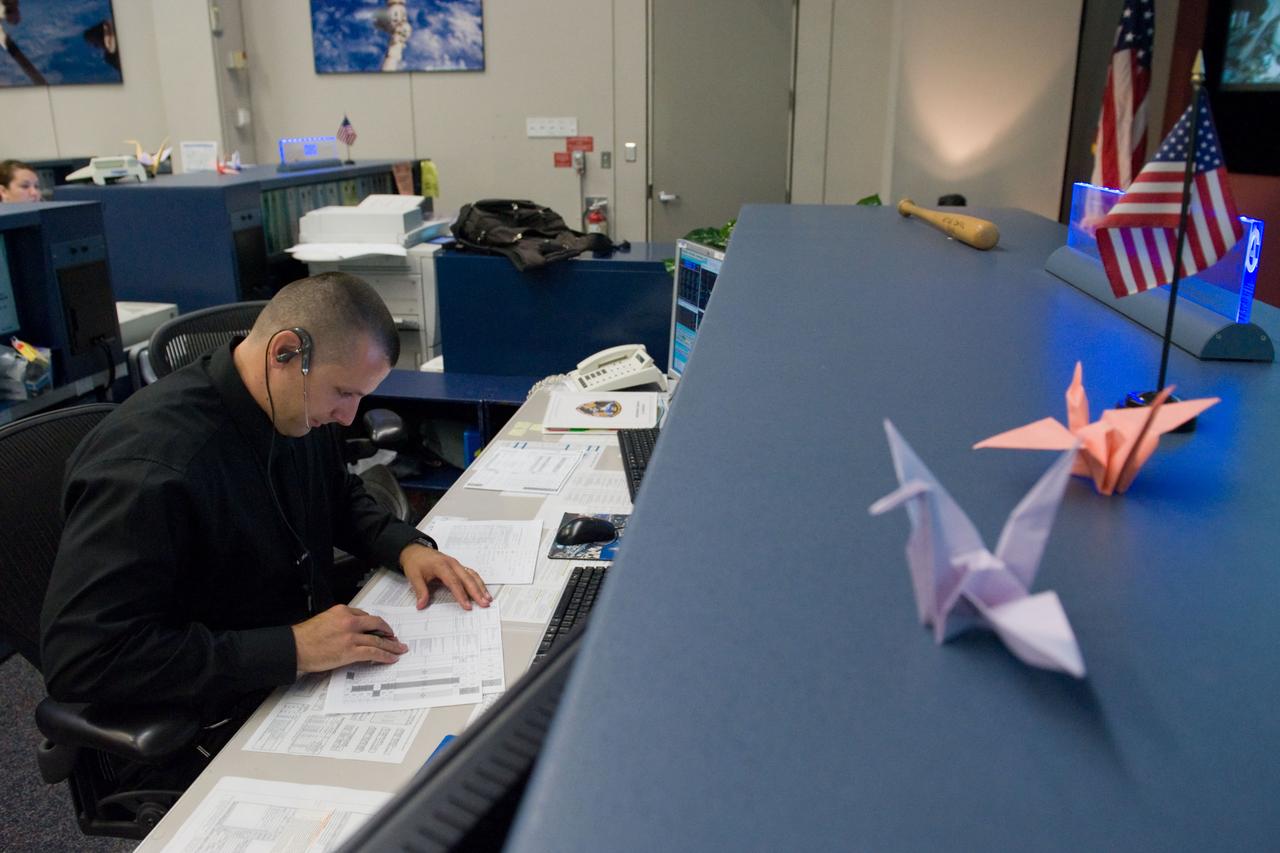
PHOTO DATE: 3-25-11 LOCATION: Bldg. 30M, FCR-1 SUBJECT: JAXA flight control team gave the Folding Paper Cranes to NASA ISS mission control team and now they are decorated on their consoles. The Folding Paper Cranes are for the people who suffer terrible pain from the earthquake in Japan. PHOTOGRAPHER: Lauren Harnett
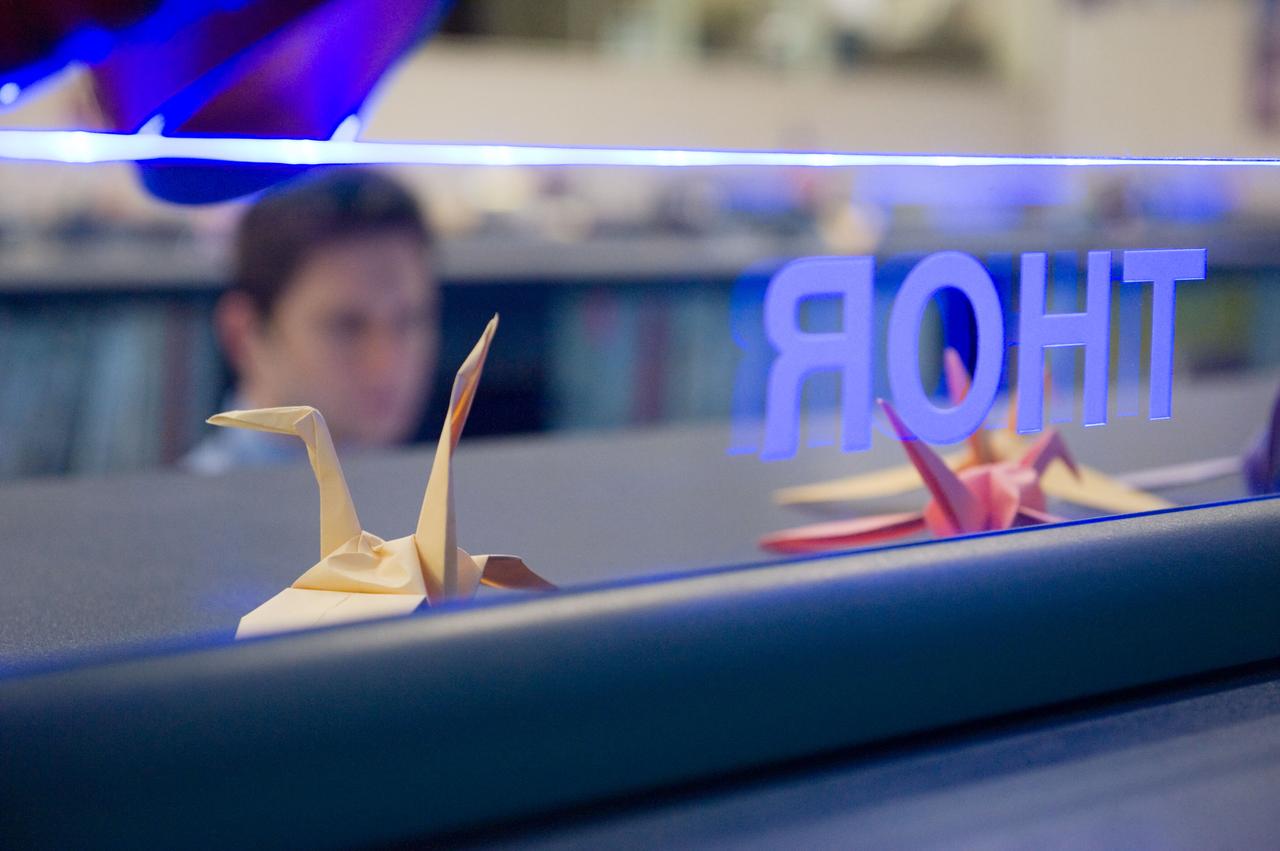
PHOTO DATE: 3-25-11 LOCATION: Bldg. 30M, FCR-1 SUBJECT: JAXA flight control team gave the Folding Paper Cranes to NASA ISS mission control team and now they are decorated on their consoles. The Folding Paper Cranes are for the people who suffer terrible pain from the earthquake in Japan. PHOTOGRAPHER: Lauren Harnett
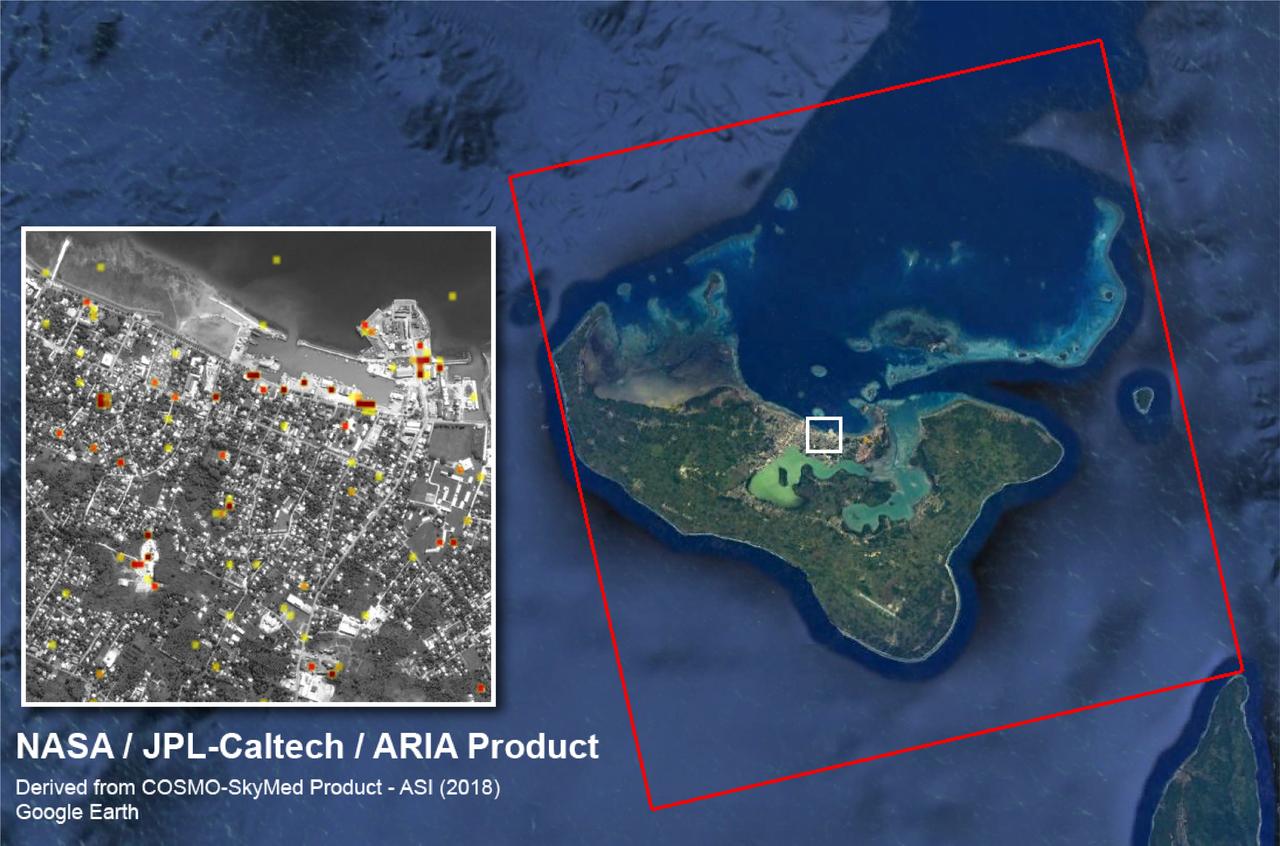
The Advanced Rapid Imaging and Analysis (ARIA) team at NASA's Jet Propulsion Laboratory created this Damage Proxy Map (DPM) of Tongatapu, the main island of Tonga, following the landfall of Cyclone Gita, a Category 4 storm that hit Tonga on Feb. 12-13, 2018. The map depicts areas that are likely damaged from the storm, shown by red and yellow pixels. The map was produced by comparing two pairs of interferometric synthetic aperture radar (InSAR) images from the COSMO-SkyMed satellites, operated by the Italian Space Agency (ASI). The pre- and post-cyclone images were acquired on Jan. 19 and Feb. 13, 2018, respectively. The later image was acquired just 4-1/2 hours after the peak damage by the cyclone. The map covers the entire island of Tongatapu (the 25-by-25-mile, or 40-by-40 kilometer SAR image footprint indicated with the large red polygon). Each pixel measures about 98 feet (30 meters) across. The color variation from yellow to red indicates increasingly more significant ground surface change. Preliminary validation of the SAR data was done by comparing them with high-resolution optical imagery acquired by DigitalGlobe. This Damage Proxy Map should be used as guidance to identify damaged areas and may be less reliable over vegetated and flooded areas. https://photojournal.jpl.nasa.gov/catalog/PIA22257
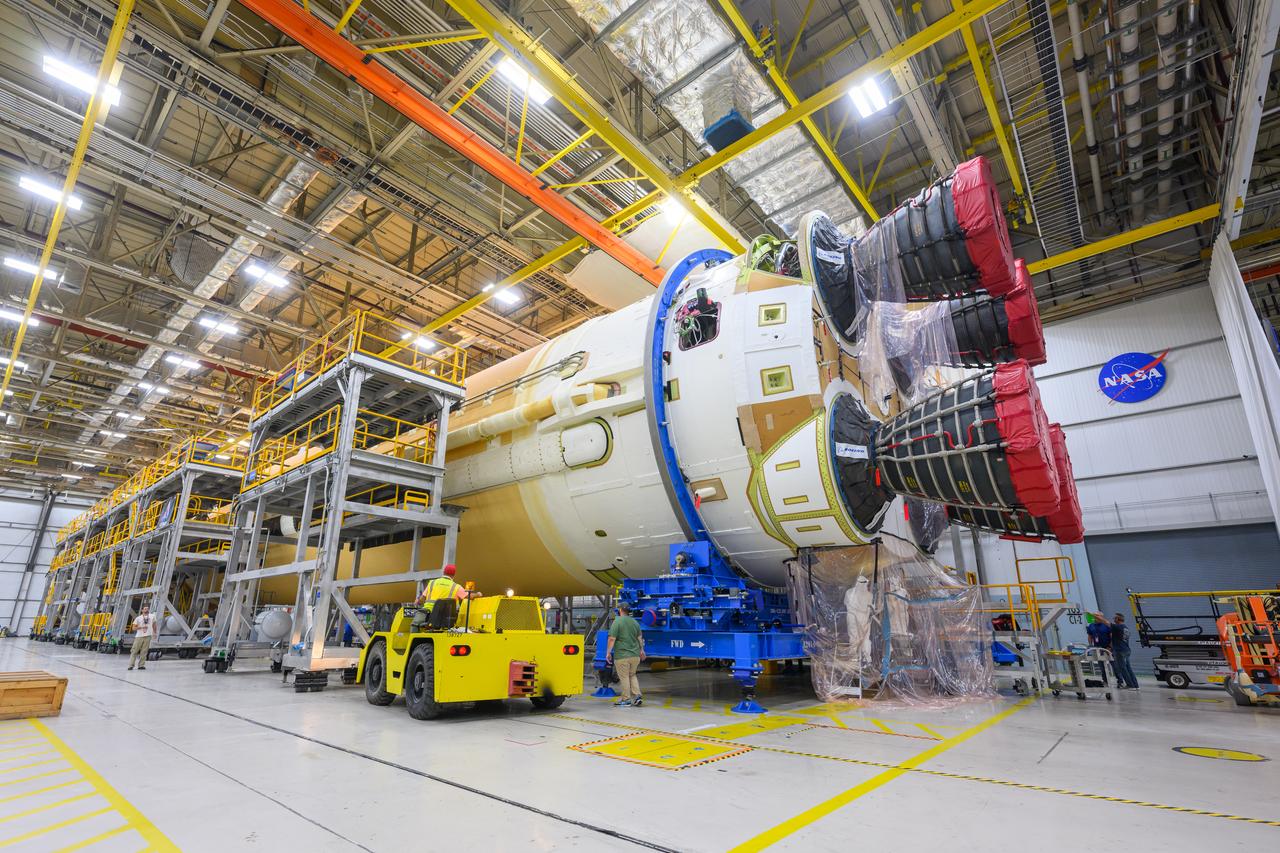
Teams at NASA’s Michoud Assembly Facility in New Orleans are preparing the core stage of the agency’s SLS (Space Launch System) for shipment to the agency’s Kennedy Space Center in Florida. The 212-foot-tall core stage and its four RS-25 engines will help power Artemis II, the first crewed mission of NASA’s Artemis campaign. Crews removed the external access stands, or scaffolding, in preparation for moving the rocket hardware to another area of the facility.
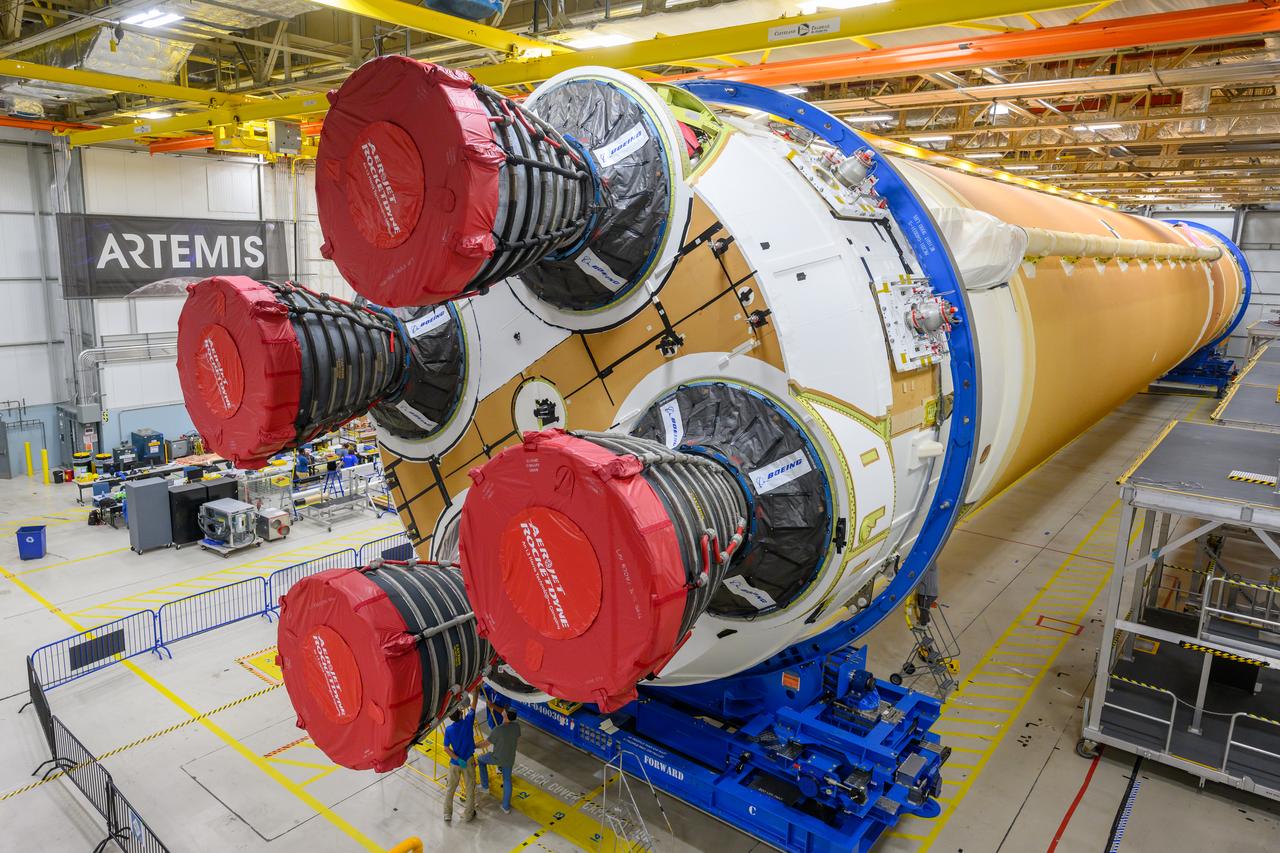
Teams at NASA’s Michoud Assembly Facility in New Orleans are preparing the core stage of the agency’s SLS (Space Launch System) for shipment to the agency’s Kennedy Space Center in Florida. The 212-foot-tall core stage and its four RS-25 engines will help power Artemis II, the first crewed mission of NASA’s Artemis campaign. Crews removed the external access stands, or scaffolding, in preparation for moving the rocket hardware to another area of the facility.
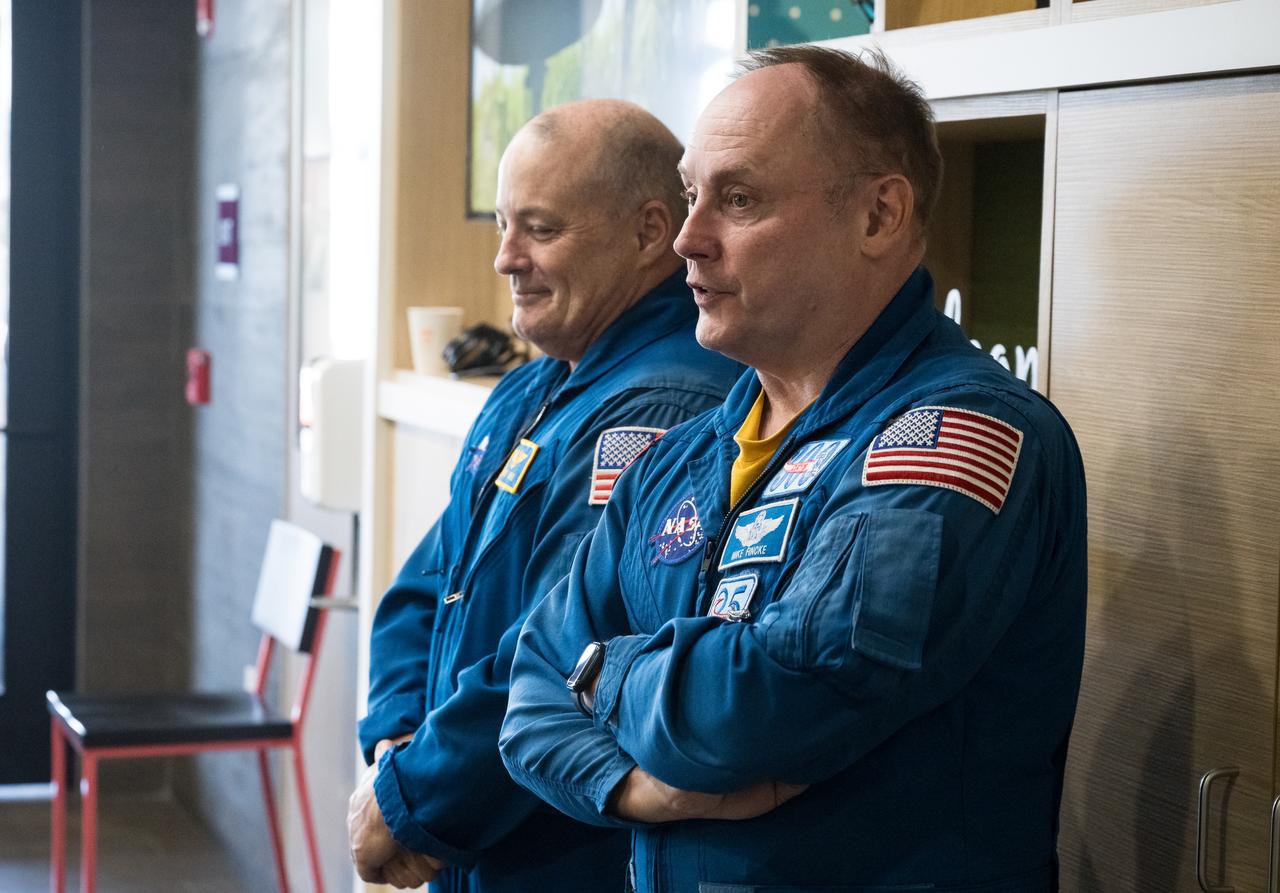
NASA Astronauts Scott Tingle, left, and Mike Fincke, speak with Boeing and NASA landing teams before the landing of NASA’s Boeing Crew Flight Test Starliner spacecraft, Friday, Sept. 6, 2024, in Las Cruces, New Mexico. The uncrewed spacecraft is scheduled to land at White Sands Missile Range’s Space Harbor later today, Mountain Time (Sept. 7 Eastern Time). This approach allows NASA and Boeing to continue gathering testing data. Photo Credit: (NASA/Aubrey Gemignani)
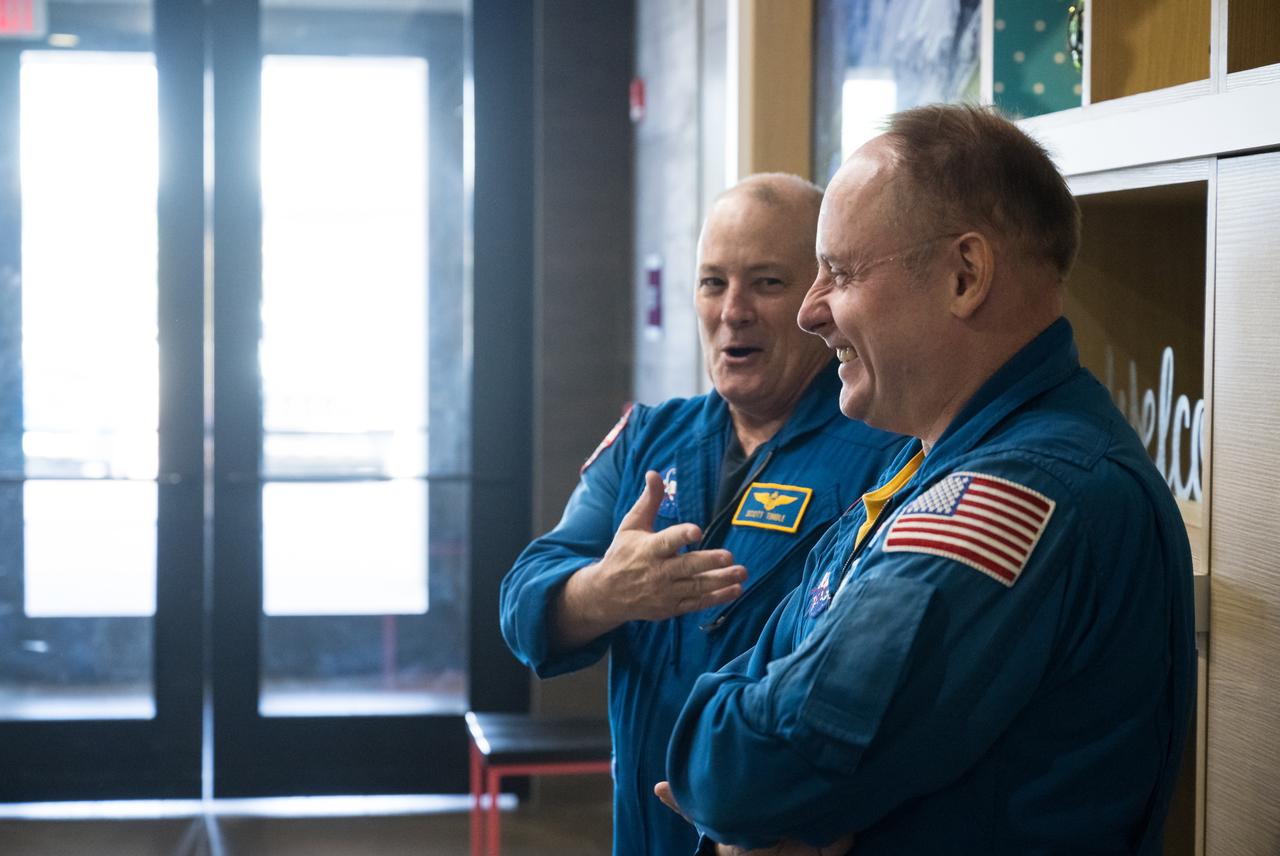
NASA Astronauts Scott Tingle, left, and Mike Fincke, speak with Boeing and NASA landing teams before the landing of NASA’s Boeing Crew Flight Test Starliner spacecraft, Friday, Sept. 6, 2024, in Las Cruces, New Mexico. The uncrewed spacecraft is scheduled to land at White Sands Missile Range’s Space Harbor later today, Mountain Time (Sept. 7 Eastern Time). This approach allows NASA and Boeing to continue gathering testing data. Photo Credit: (NASA/Aubrey Gemignani)

Members of NASA's Artemis geology team discuss science objectives during a mission simulation at NASA's Johnson Space Center on Oct. 22, 2025. Credits: NASA/Robert Markowitz
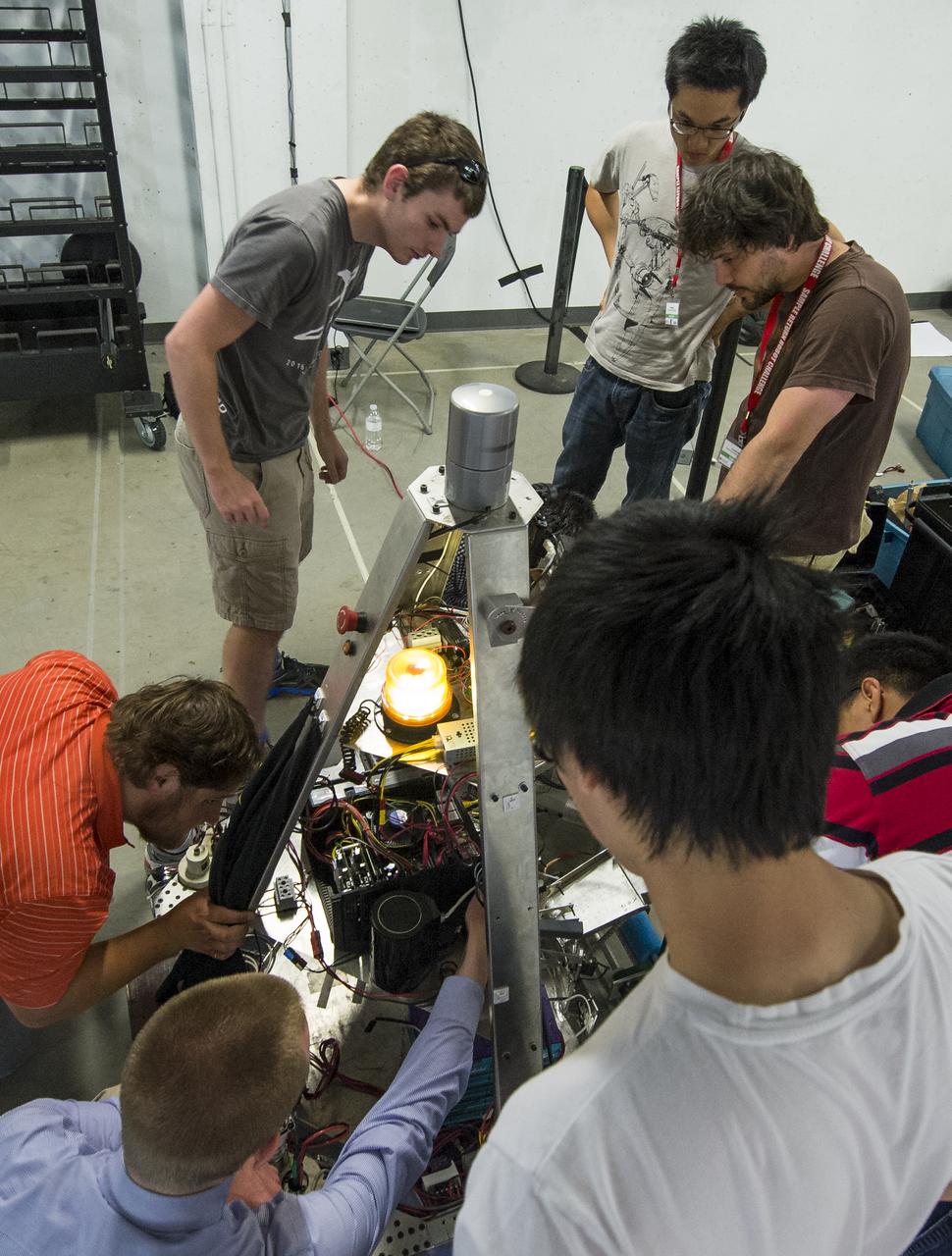
The University of Waterloo Robotics Team, from Ontario, Canada, prepares their robot for the 2014 NASA Centennial Challenges Sample Return Robot Challenge, Tuesday, June 10, 2014, at the Worcester Polytechnic Institute (WPI) in Worcester, Mass. The team from the University of Waterloo is one of eighteen teams competing for a $1.5 million NASA prize purse. Teams will be required to demonstrate autonomous robots that can locate and collect samples from a wide and varied terrain, operating without human control. The objective of this NASA-WPI Centennial Challenge is to encourage innovations in autonomous navigation and robotics technologies. Innovations stemming from the challenge may improve NASA's capability to explore a variety of destinations in space, as well as enhance the nation's robotic technology for use in industries and applications on Earth. Photo Credit: (NASA/Joel Kowsky)
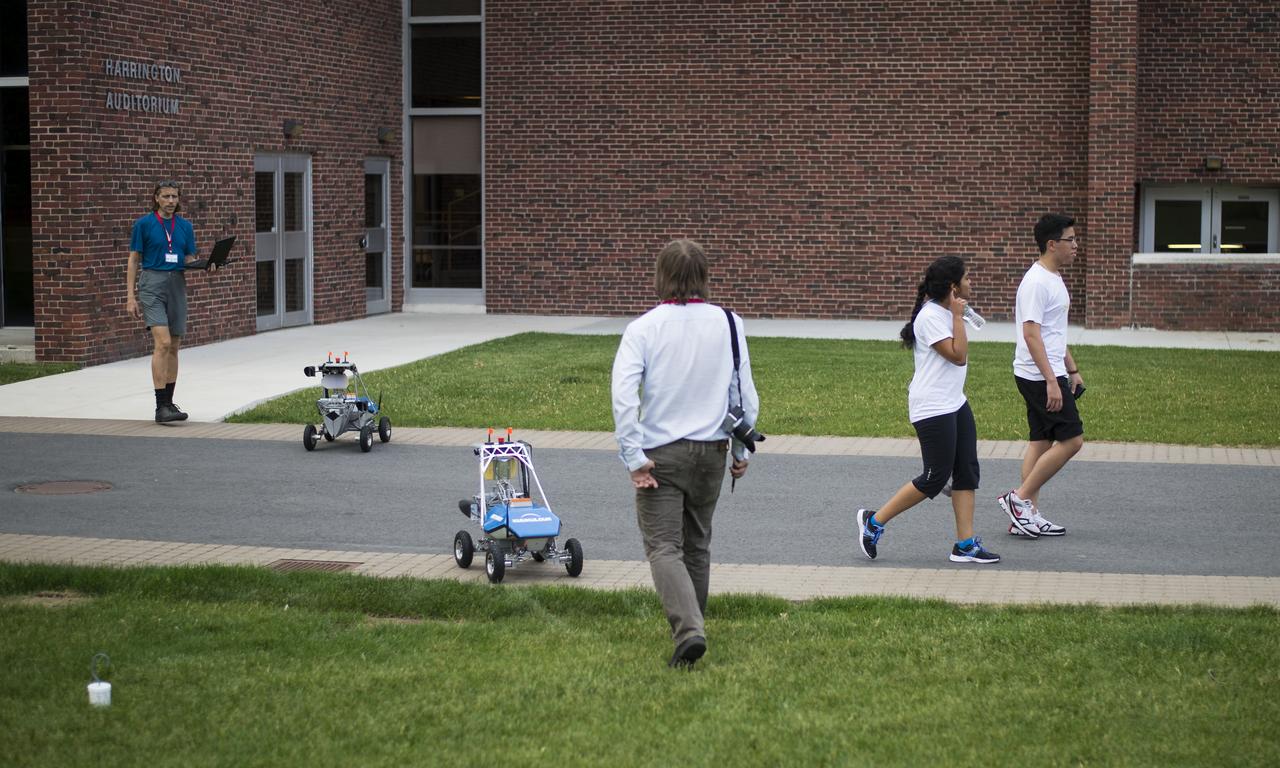
A pair of Worcester Polytechnic Institute (WPI) students walk past a pair of team KuuKulgur's robots on the campus quad, during a final tuneup before the start of competition at the 2014 NASA Centennial Challenges Sample Return Robot Challenge, Tuesday, June 10, 2014, at the Worcester Polytechnic Institute (WPI) in Worcester, Mass. Team KuuKulgur is one of eighteen teams competing for a $1.5 million NASA prize purse. Teams will be required to demonstrate autonomous robots that can locate and collect samples from a wide and varied terrain, operating without human control. The objective of this NASA-WPI Centennial Challenge is to encourage innovations in autonomous navigation and robotics technologies. Innovations stemming from the challenge may improve NASA's capability to explore a variety of destinations in space, as well as enhance the nation's robotic technology for use in industries and applications on Earth. Photo Credit: (NASA/Joel Kowsky)
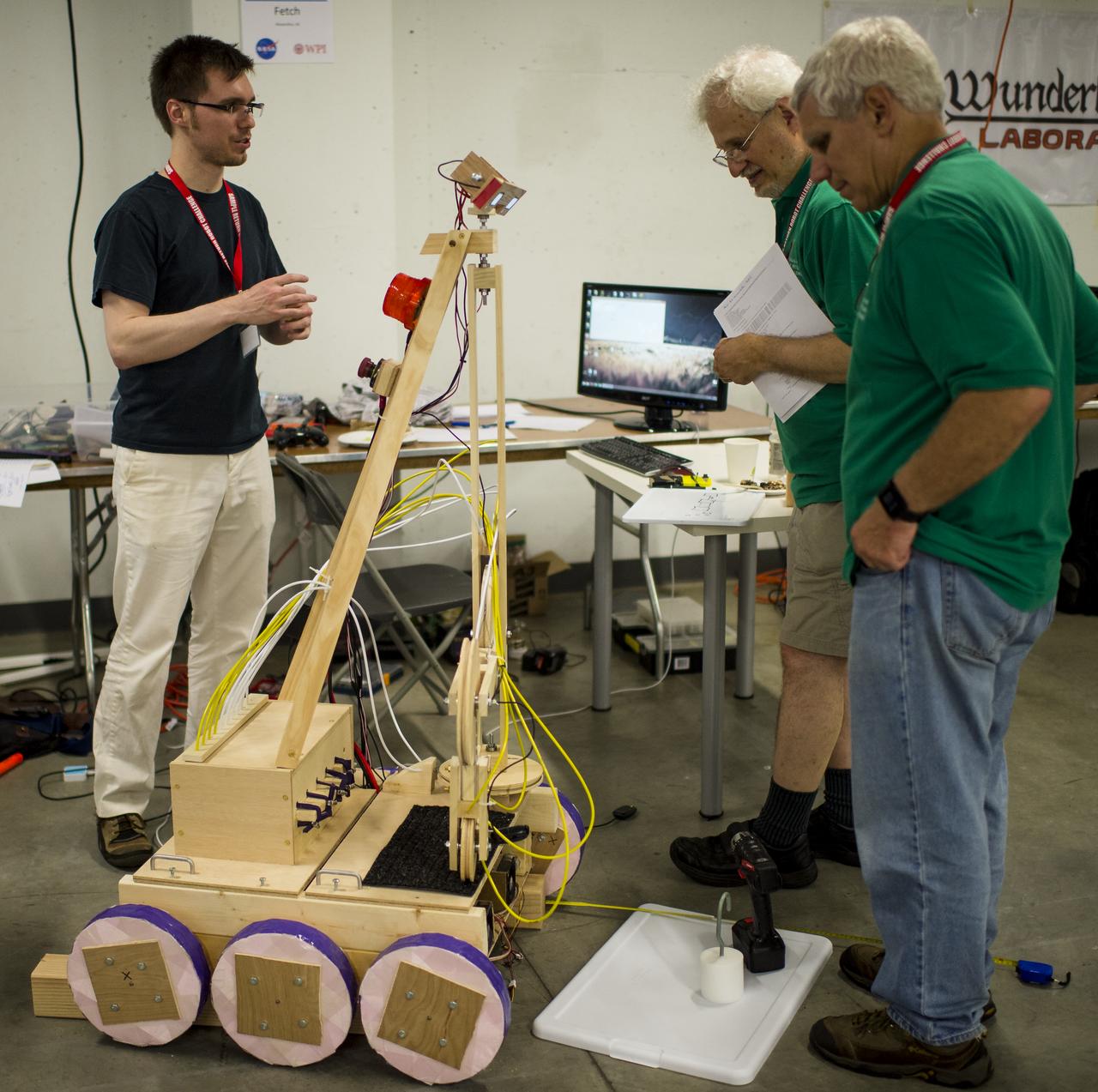
James Leopore, of team Fetch, from Alexandria, Virginia, speaks with judges as he prepares for the NASA 2014 Sample Return Robot Challenge, Tuesday, June 10, 2014, at the Worcester Polytechnic Institute (WPI) in Worcester, Mass. Team Fetch is one of eighteen teams competing for a $1.5 million NASA prize purse. Teams will be required to demonstrate autonomous robots that can locate and collect samples from a wide and varied terrain, operating without human control. The objective of this NASA-WPI Centennial Challenge is to encourage innovations in autonomous navigation and robotics technologies. Innovations stemming from the challenge may improve NASA's capability to explore a variety of destinations in space, as well as enhance the nation's robotic technology for use in industries and applications on Earth. Photo Credit: (NASA/Joel Kowsky)
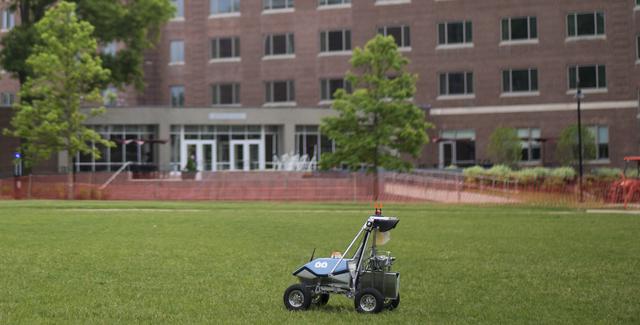
A team KuuKulgur Robot from Estonia is seen on the practice field during the 2014 NASA Centennial Challenges Sample Return Robot Challenge, Tuesday, June 10, 2014, at the Worcester Polytechnic Institute (WPI) in Worcester, Mass. Team KuuKulgur is one of eighteen teams competing for a $1.5 million NASA prize purse. Teams will be required to demonstrate autonomous robots that can locate and collect samples from a wide and varied terrain, operating without human control. The objective of this NASA-WPI Centennial Challenge is to encourage innovations in autonomous navigation and robotics technologies. Innovations stemming from the challenge may improve NASA's capability to explore a variety of destinations in space, as well as enhance the nation's robotic technology for use in industries and applications on Earth. Photo Credit: (NASA/Joel Kowsky)
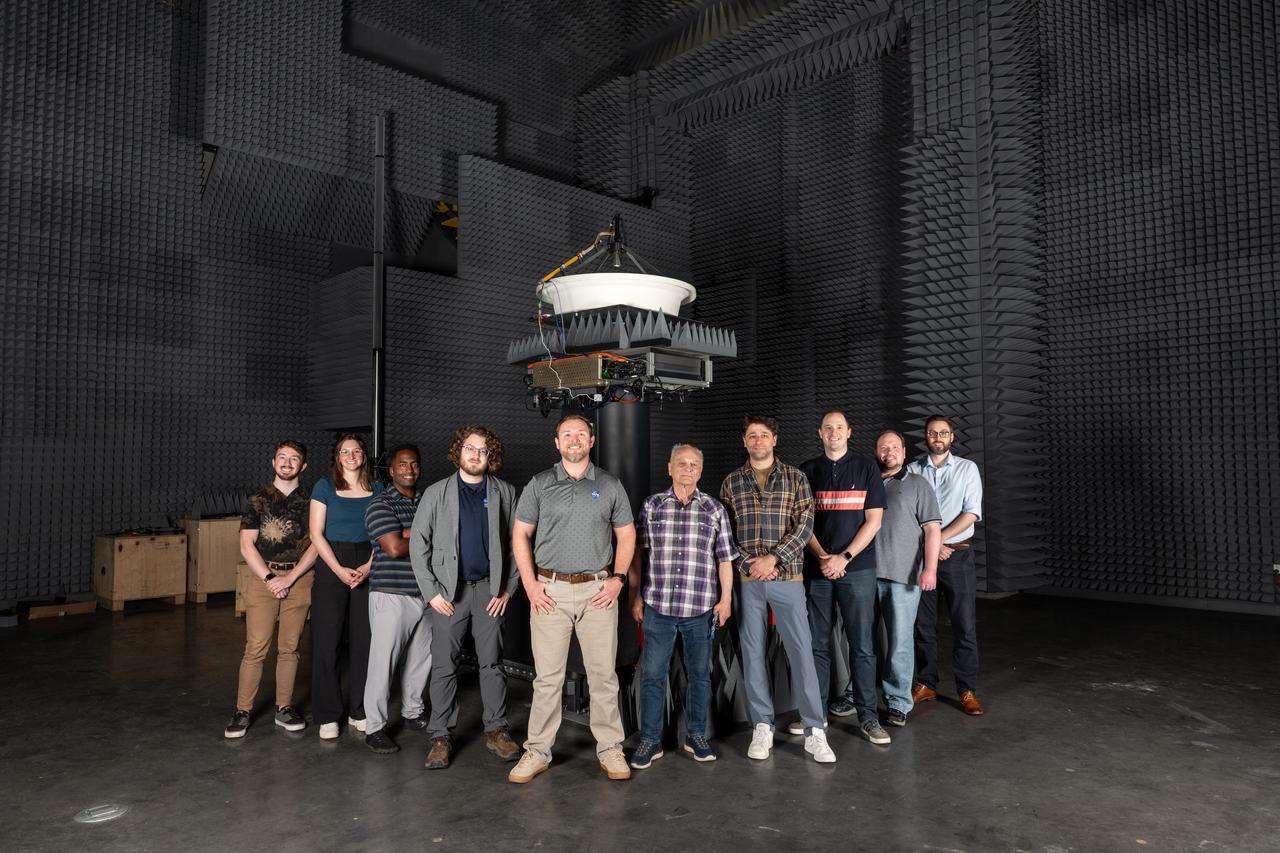
NASA’s Beaming Energy for Air Mobility team successfully completed a first-of-its-kind power beaming test at NASA Glenn on June 4, 2025. Later this year, the tested transmitter will be used in a demonstration to wirelessly transmit power using microwaves to a custom power receiver — a step toward gap-filling technology that could one day deliver power on the surface of the Moon or Mars. Pictured from left to right are Hayden Klopp, Rebecca Buehrle, Kerry Johnson, Avery Brock, Seth Schisler, Vladimir Volman, Seth Waldstein, David Rinehart, Rocco Viggiano, and Donald Dornbusch.
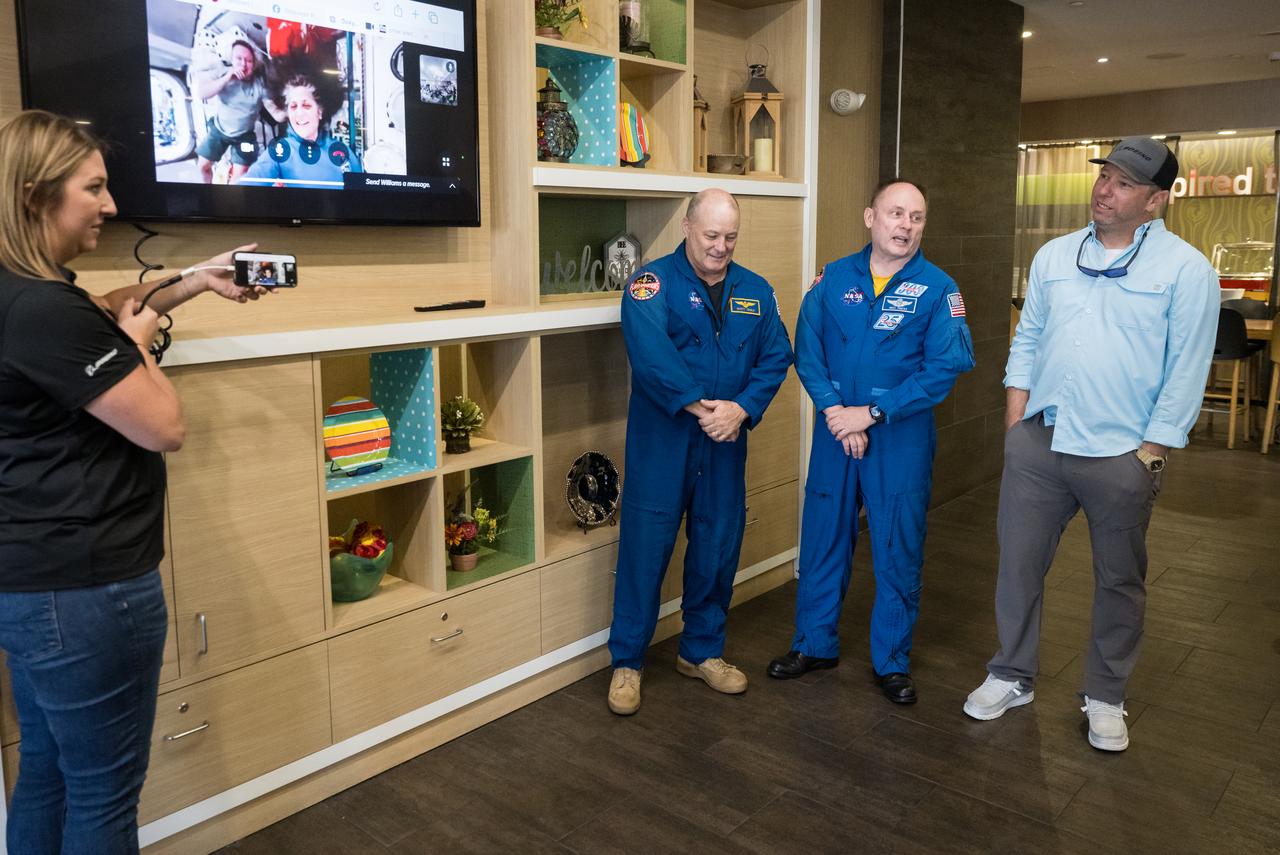
NASA Astronauts Butch Wilmore, left, and Suni Williams, speak with Boeing and NASA landing teams by phone from the International Space Station, before the landing of NASA’s Boeing Crew Flight Test Starliner spacecraft, Friday, Sept. 6, 2024, in Las Cruces, New Mexico. The uncrewed spacecraft is scheduled to land at White Sands Missile Range’s Space Harbor later today, Mountain Time (Sept. 7 Eastern Time). This approach allows NASA and Boeing to continue gathering testing data. Photo Credit: (NASA/Aubrey Gemignani)
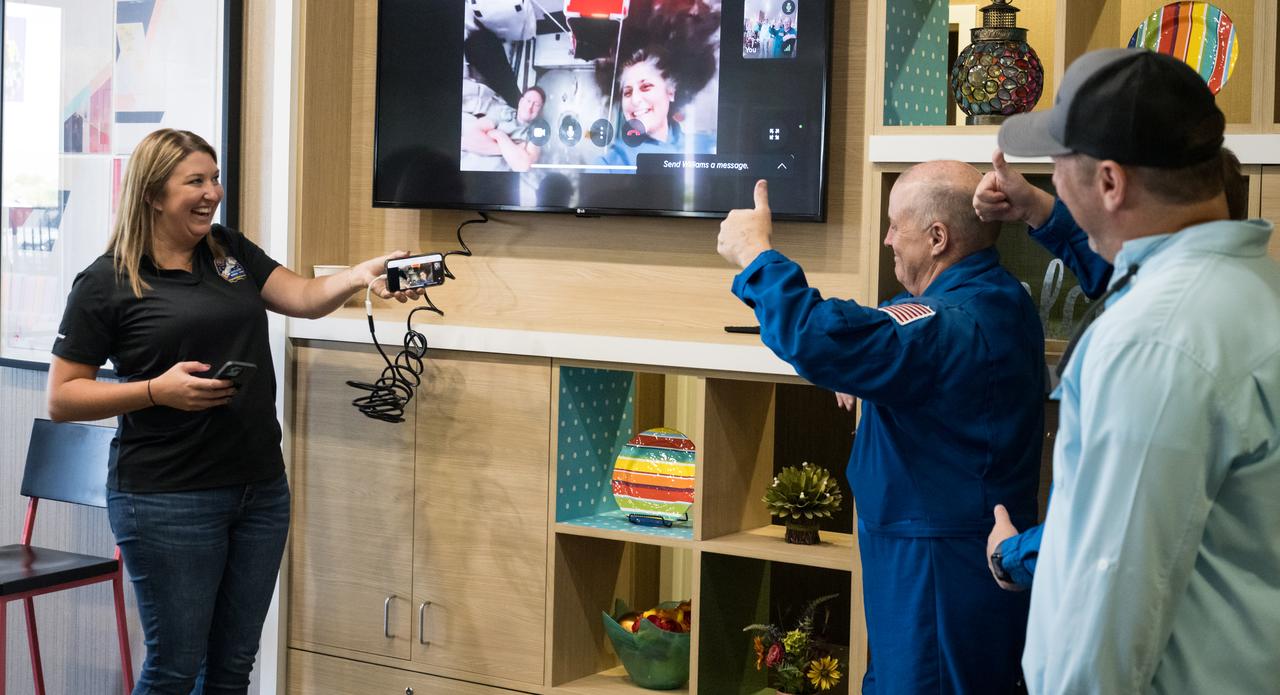
NASA Astronauts Butch Wilmore, left, and Suni Williams, speak with Boeing and NASA landing teams by phone from the International Space Station, before the landing of NASA’s Boeing Crew Flight Test Starliner spacecraft, Friday, Sept. 6, 2024, in Las Cruces, New Mexico. The uncrewed spacecraft is scheduled to land at White Sands Missile Range’s Space Harbor later today, Mountain Time (Sept. 7 Eastern Time). This approach allows NASA and Boeing to continue gathering testing data. Photo Credit: (NASA/Aubrey Gemignani)
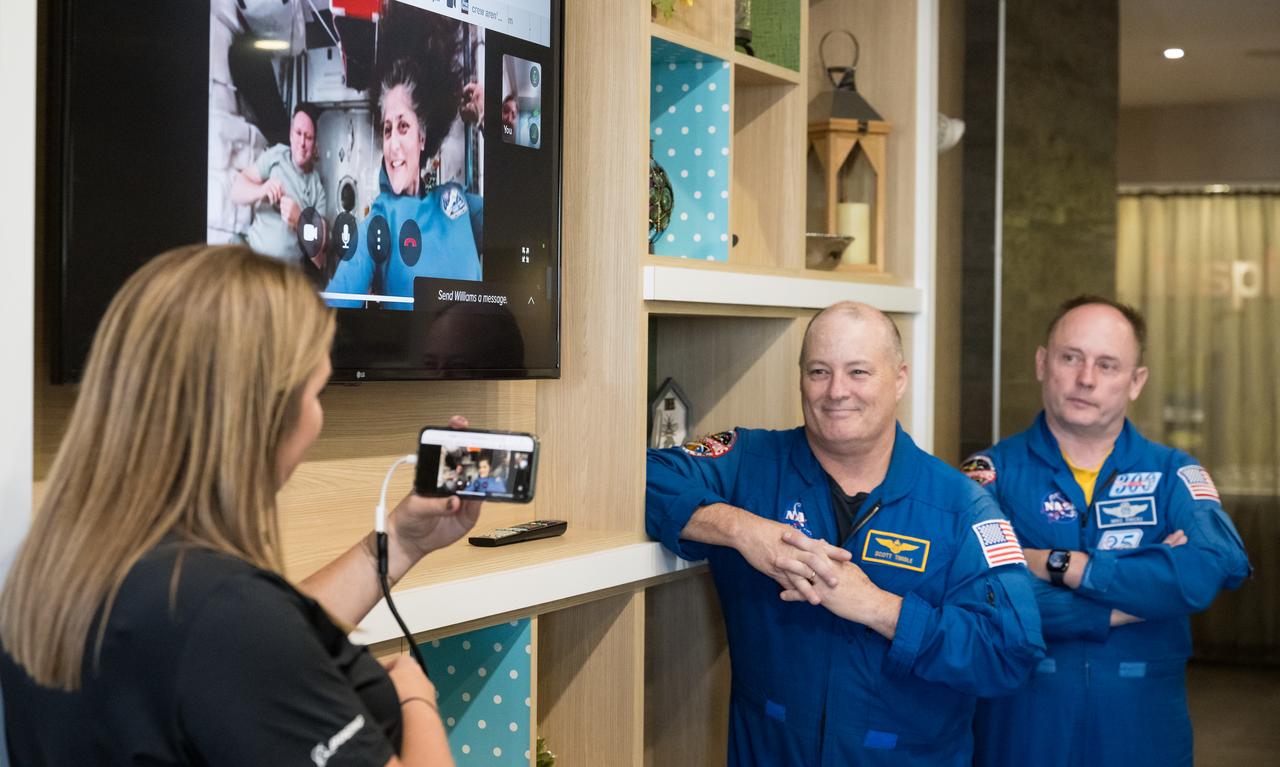
NASA Astronauts Butch Wilmore, left, and Suni Williams, speak with Boeing and NASA landing teams by phone from the International Space Station, before the landing of NASA’s Boeing Crew Flight Test Starliner spacecraft, Friday, Sept. 6, 2024, in Las Cruces, New Mexico. The uncrewed spacecraft is scheduled to land at White Sands Missile Range’s Space Harbor later today, Mountain Time (Sept. 7 Eastern Time). This approach allows NASA and Boeing to continue gathering testing data. Photo Credit: (NASA/Aubrey Gemignani)
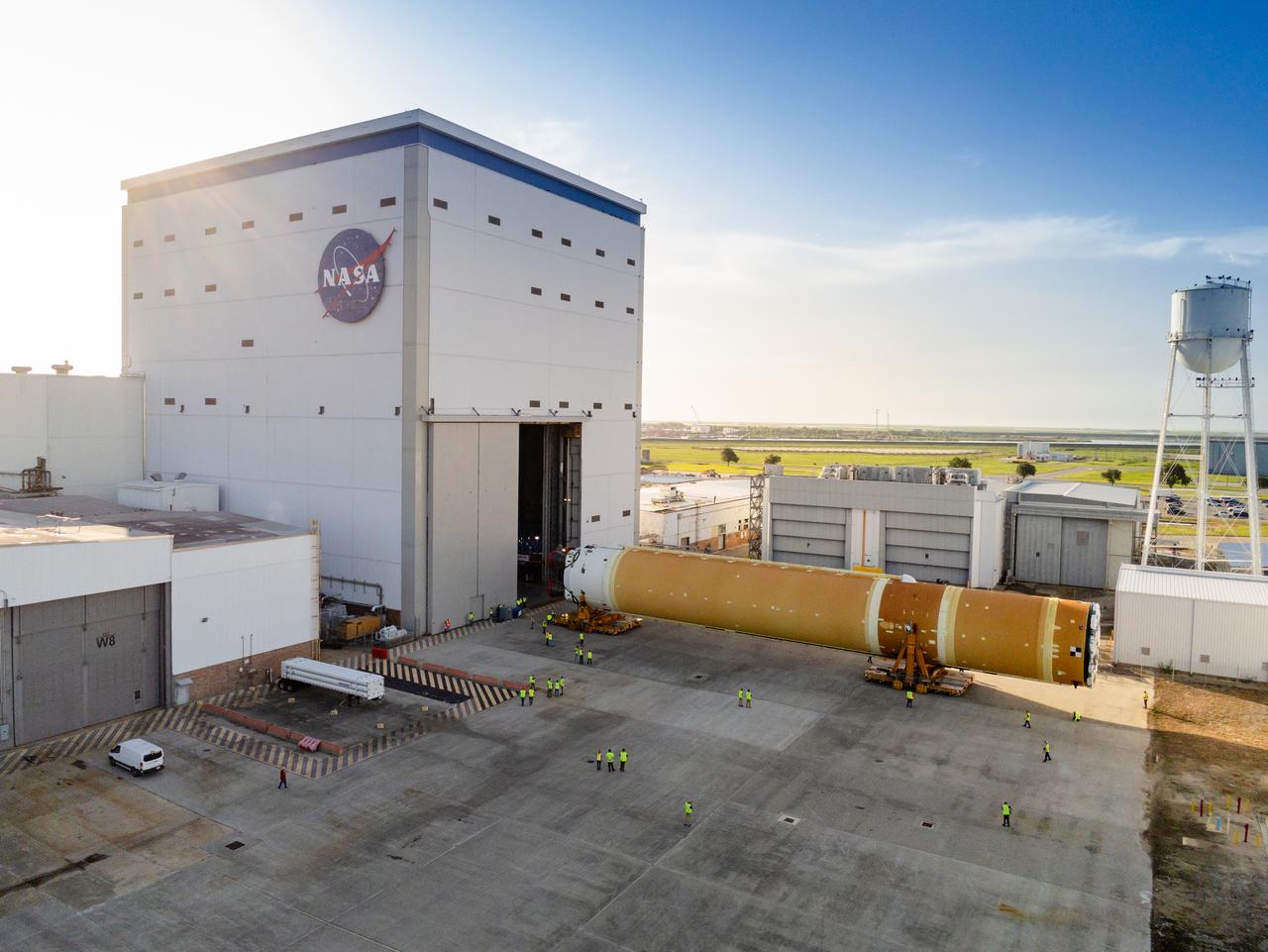
This photo shows NASA and Boeing, the SLS core stage lead contractor, preparing the SLS (Space Launch System) rocket core stage for shipment at NASA’s Michoud Assembly Facility in New Orleans. On July 6, NASA and Boeing moved the Artemis II rocket stage to Building 110. The move comes as teams prepare to roll the massive rocket stage with its four RS-25 engines to the agency’s Pegasus barge for delivery to NASA’s Kennedy Space Center in Florida in mid-July. Prior to the move, technicians began removing external access stands, or scaffolding, surrounding the core stage to assess the interior elements, including its complex avionics and flight propulsion systems. The stage is fully manufactured at NASA Michoud.
This photo shows NASA and Boeing, the SLS core stage lead contractor, preparing the SLS (Space Launch System) rocket core stage for shipment at NASA’s Michoud Assembly Facility in New Orleans. On July 6, NASA and Boeing moved the Artemis II rocket stage to Building 110. The move comes as teams prepare to roll the massive rocket stage with its four RS-25 engines to the agency’s Pegasus barge for delivery to NASA’s Kennedy Space Center in Florida in mid-July. Prior to the move, technicians began removing external access stands, or scaffolding, surrounding the core stage to assess the interior elements, including its complex avionics and flight propulsion systems. The stage is fully manufactured at NASA Michoud.
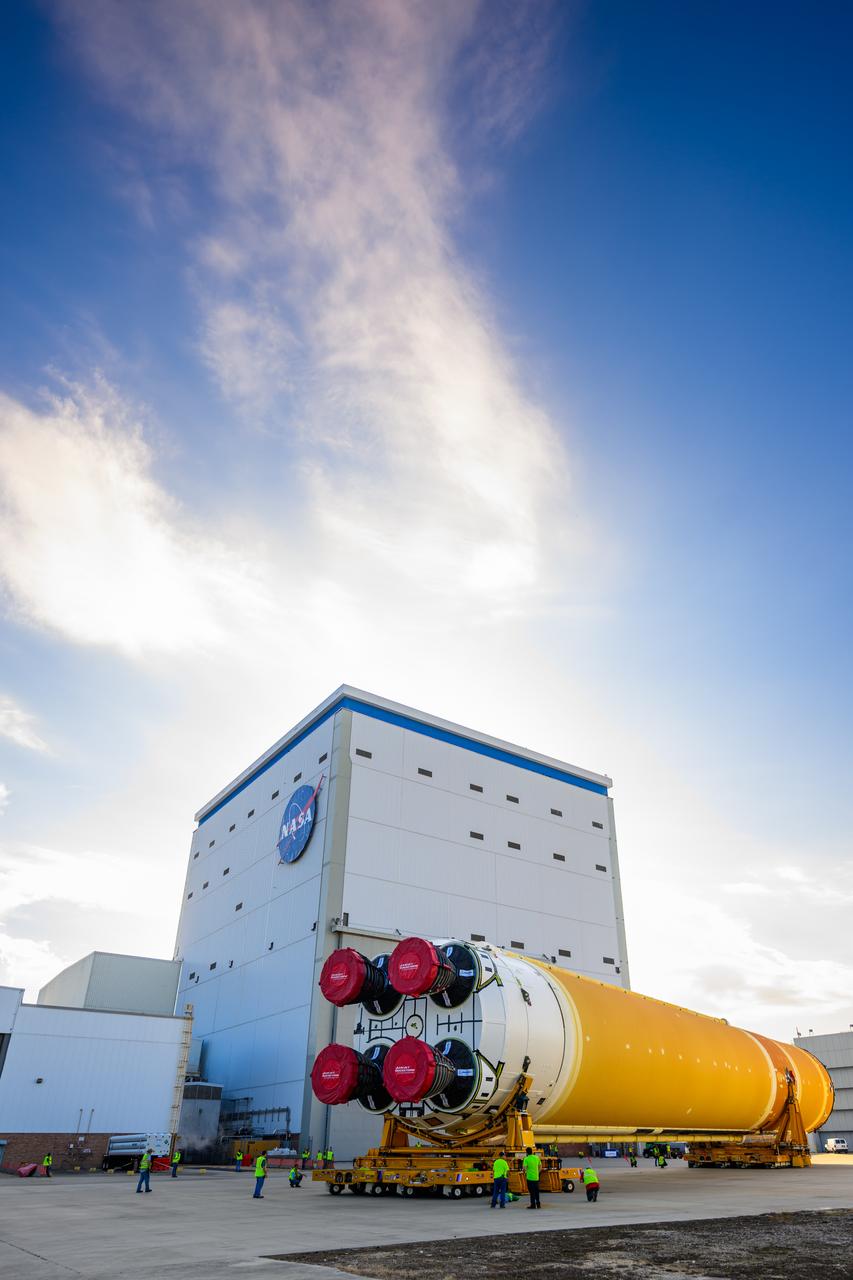
This photo shows NASA and Boeing, the SLS core stage lead contractor, preparing the SLS (Space Launch System) rocket core stage for shipment at NASA’s Michoud Assembly Facility in New Orleans. On July 6, NASA and Boeing moved the Artemis II rocket stage to Building 110. The move comes as teams prepare to roll the massive rocket stage with its four RS-25 engines to the agency’s Pegasus barge for delivery to NASA’s Kennedy Space Center in Florida in mid-July. Prior to the move, technicians began removing external access stands, or scaffolding, surrounding the core stage to assess the interior elements, including its complex avionics and flight propulsion systems. The stage is fully manufactured at NASA Michoud.
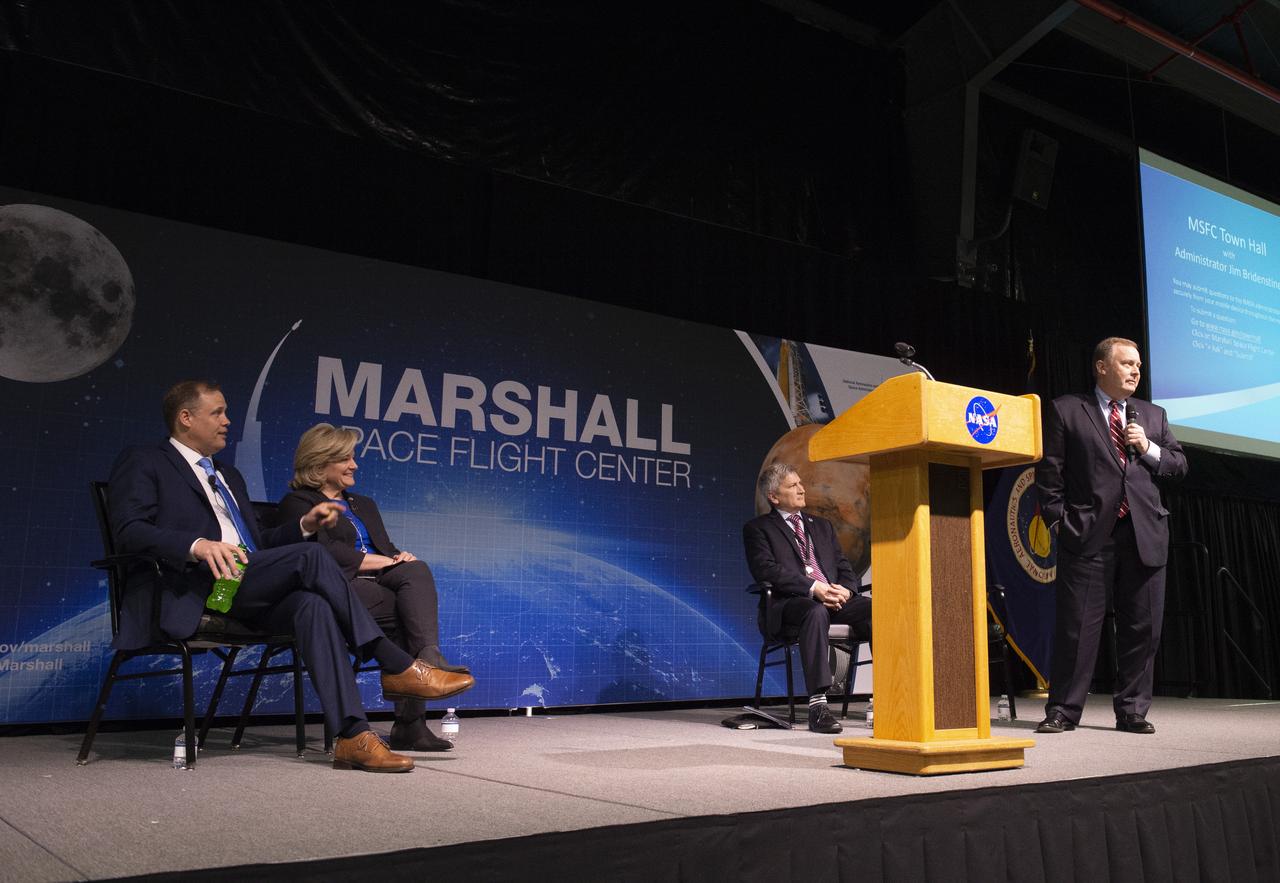
NASA Administrator Jim Bridenstine addresses Marshall team members during his March 26 all-hands event. Joining him on stage in Activities Building 4316 were Marshall Director Jody Singer, left, and Johnny Stephenson, right, director of the Office of Strategic Analysis & Communications with James Morhard, NASA deputy administrator.

The Stellar Automation Systems team poses for a picture with their robot after attempting the level one challenge during the 2014 NASA Centennial Challenges Sample Return Robot Challenge, Wednesday, June 11, 2014, at the Worcester Polytechnic Institute (WPI) in Worcester, Mass. Eighteen teams are competing for a $1.5 million NASA prize purse. Teams will be required to demonstrate autonomous robots that can locate and collect samples from a wide and varied terrain, operating without human control. The objective of this NASA-WPI Centennial Challenge is to encourage innovations in autonomous navigation and robotics technologies. Innovations stemming from the challenge may improve NASA's capability to explore a variety of destinations in space, as well as enhance the nation's robotic technology for use in industries and applications on Earth. Photo Credit: (NASA/Joel Kowsky)
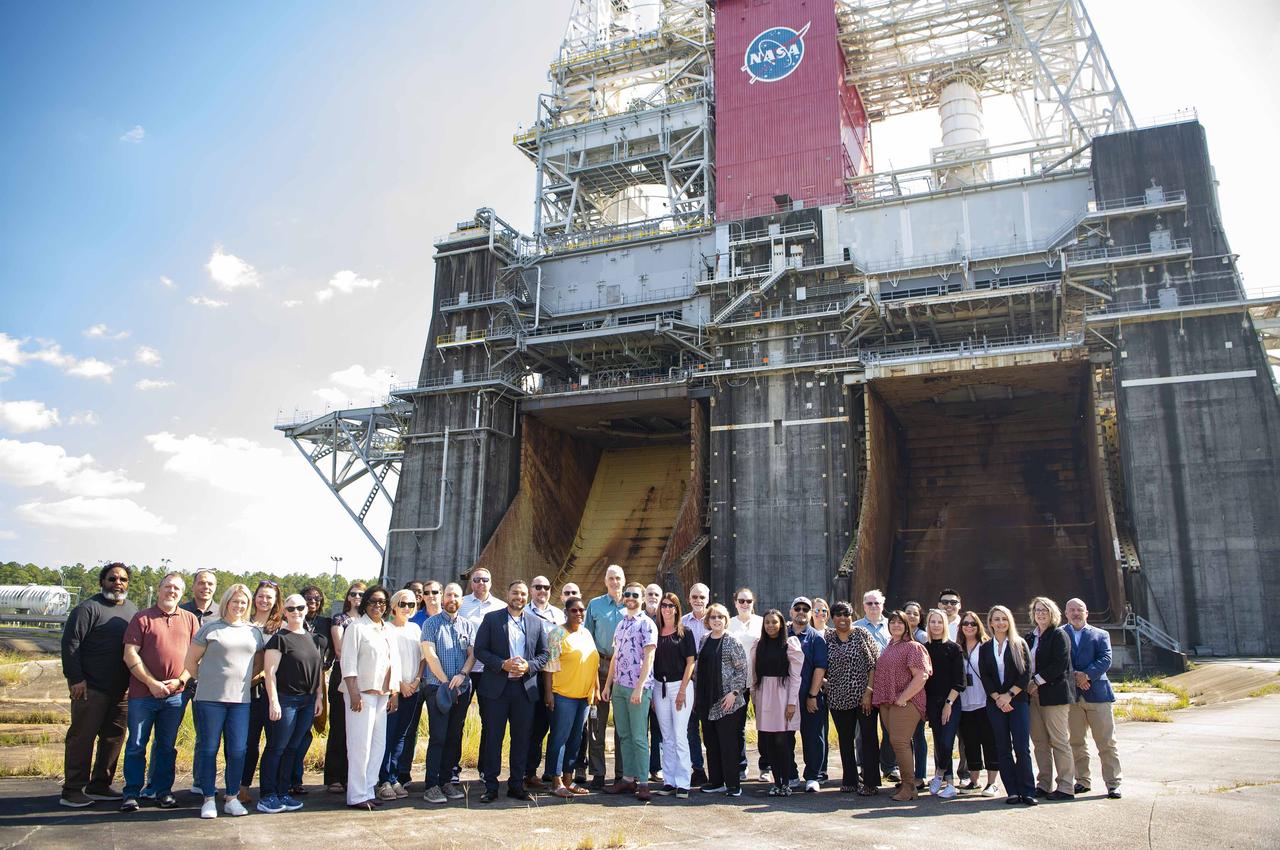
The NASA Office of the Chief Information Officer Integrated Design and Assurance Systems team are shown at the Thad Cochran Test Stand (B-1/B-2) during a tour of NASA Stennis on Oct. 9. To accomplish NASA’s vision, the agency depends heavily on many things and information technology is key among them. Information technology capabilities enable NASA’s discoveries, allow sharing of mission data, improve workforce productivity, and increase mission quality, resilience, and cost-effectiveness. To enable success for NASA’s mission portfolio, the Office of the Chief Information Officer goals are to deliver great customer experiences; achieve consistent operational excellence; transform NASA through information and technology; and ensure proactive, resilient cybersecurity – all delivered by an exceptional team.
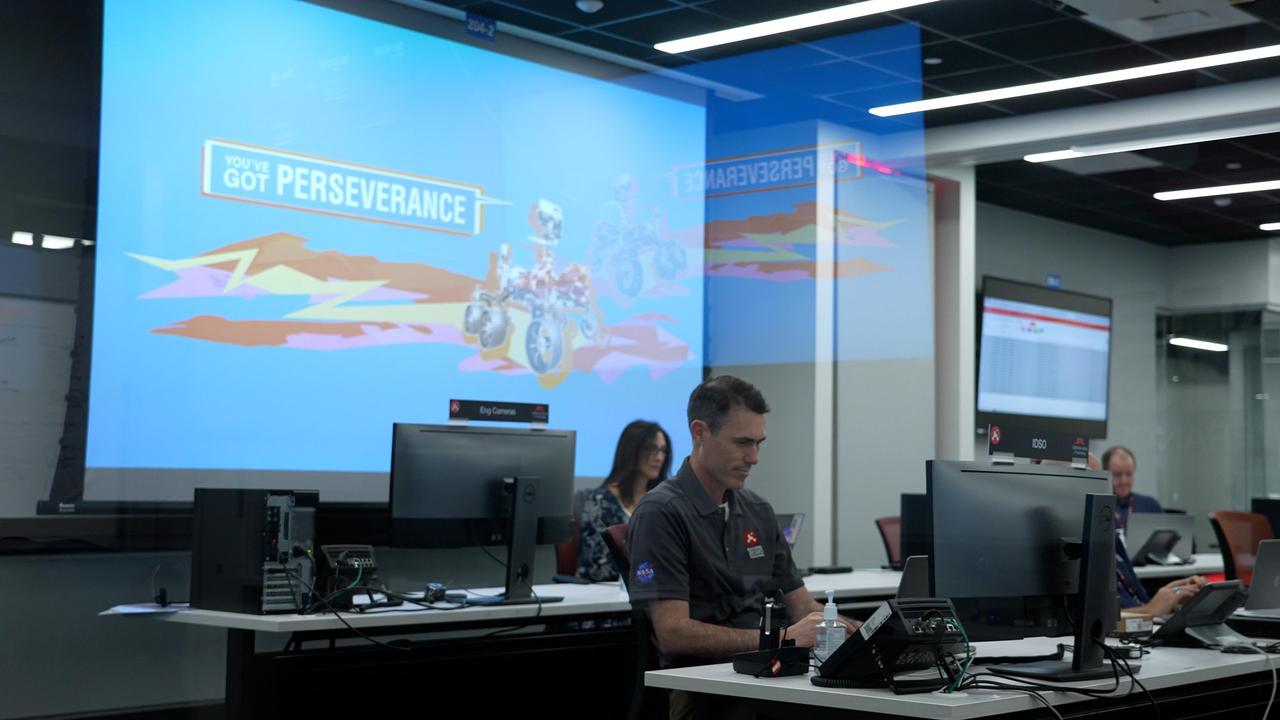
Students who have overcome academic challenges were honored on Dec. 6, 2022 at a virtual "You've Got Perseverance" event. They received personal messages from NASA's Perseverance rover and interacted with team members, including Robert Hogg (foreground). https://photojournal.jpl.nasa.gov/catalog/PIA25637
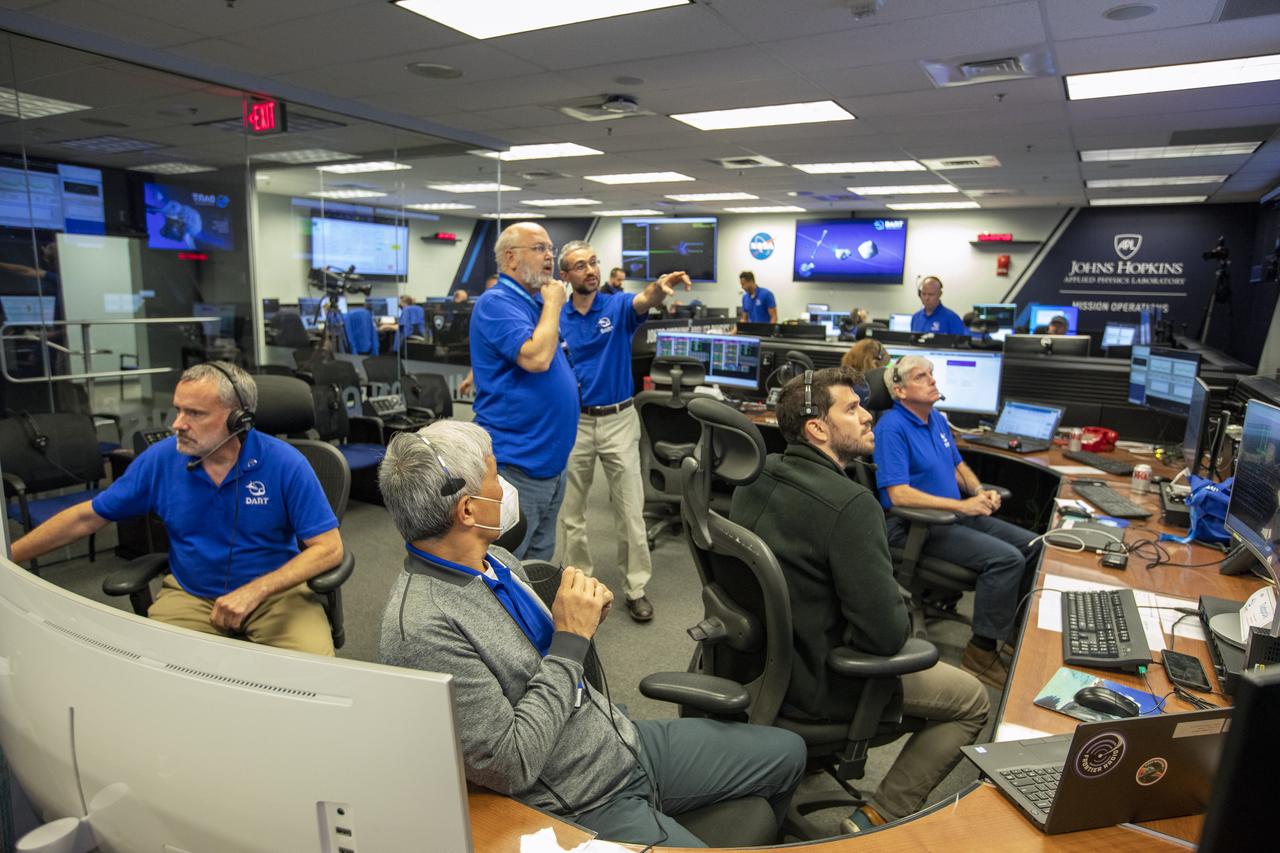
NASA’s Double Asteroid Redirection Test (DART) command team at Johns Hopkins University, Applied Physics Laboratory monitoring the DART spacecraft’s impact into the asteroid Dimorphos. The operation is the first of its kind test to redirect deadly asteroids from hitting Earth.
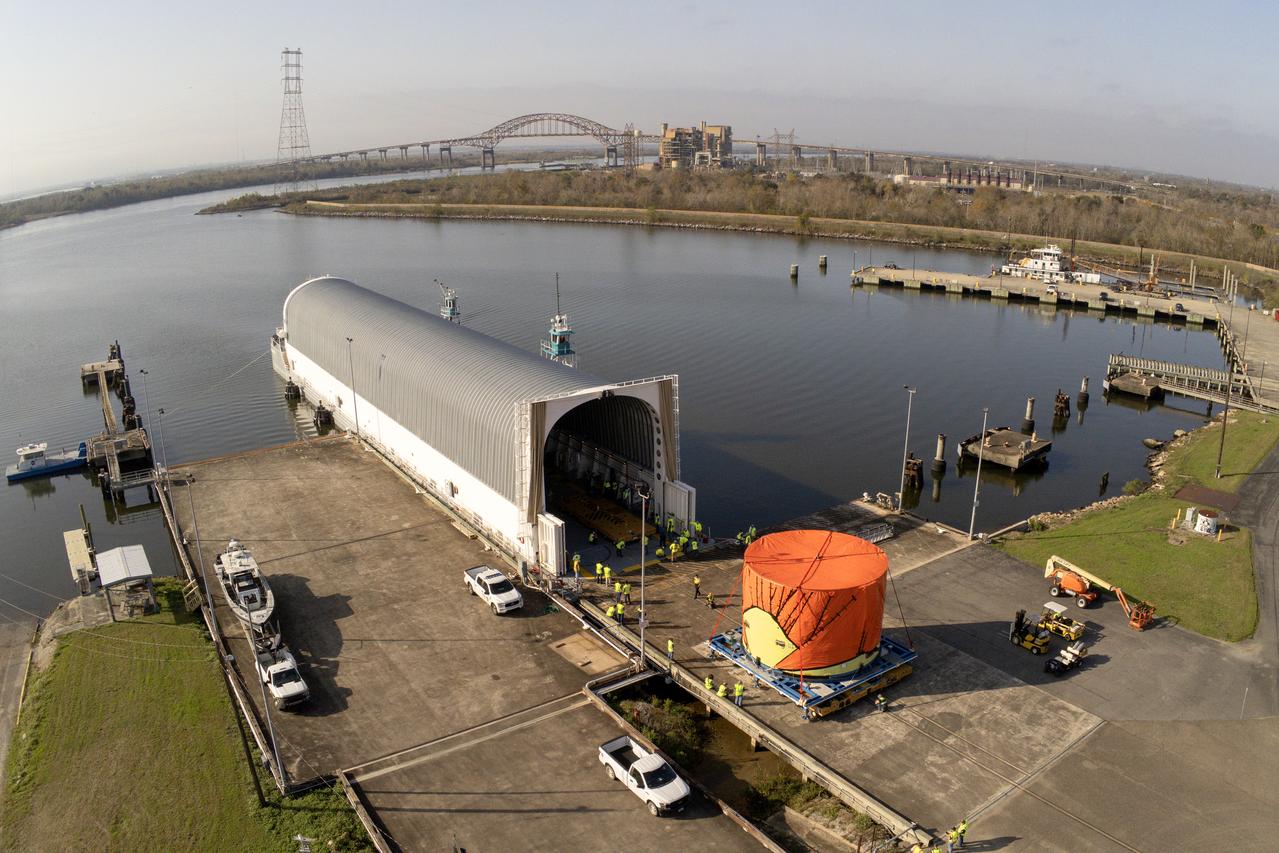
Teams at NASA’s Michoud Assembly Facility in New Orleans move the engine section flight hardware to the agency’s Pegasus barge on Sunday, December 4, 2022. The barge will ferry the engine section of NASA’s Space Launch System (SLS) rocket for Artemis III to the agency’s Kennedy Space Center in Florida. Once there, teams at Kennedy will finish outfitting the engine section, which comprises the tail-end of the rocket’s 212-foot-tall core stage, before integrating it to the rest of the stage. Beginning with production for Artemis III, NASA and core stage lead contractor Boeing will use Michoud, where the SLS core stages are currently manufactured, to produce and outfit the core stage’s five elements, and available space at Kennedy for final assembly and integration. Image credit: NASA/Michael DeMocker
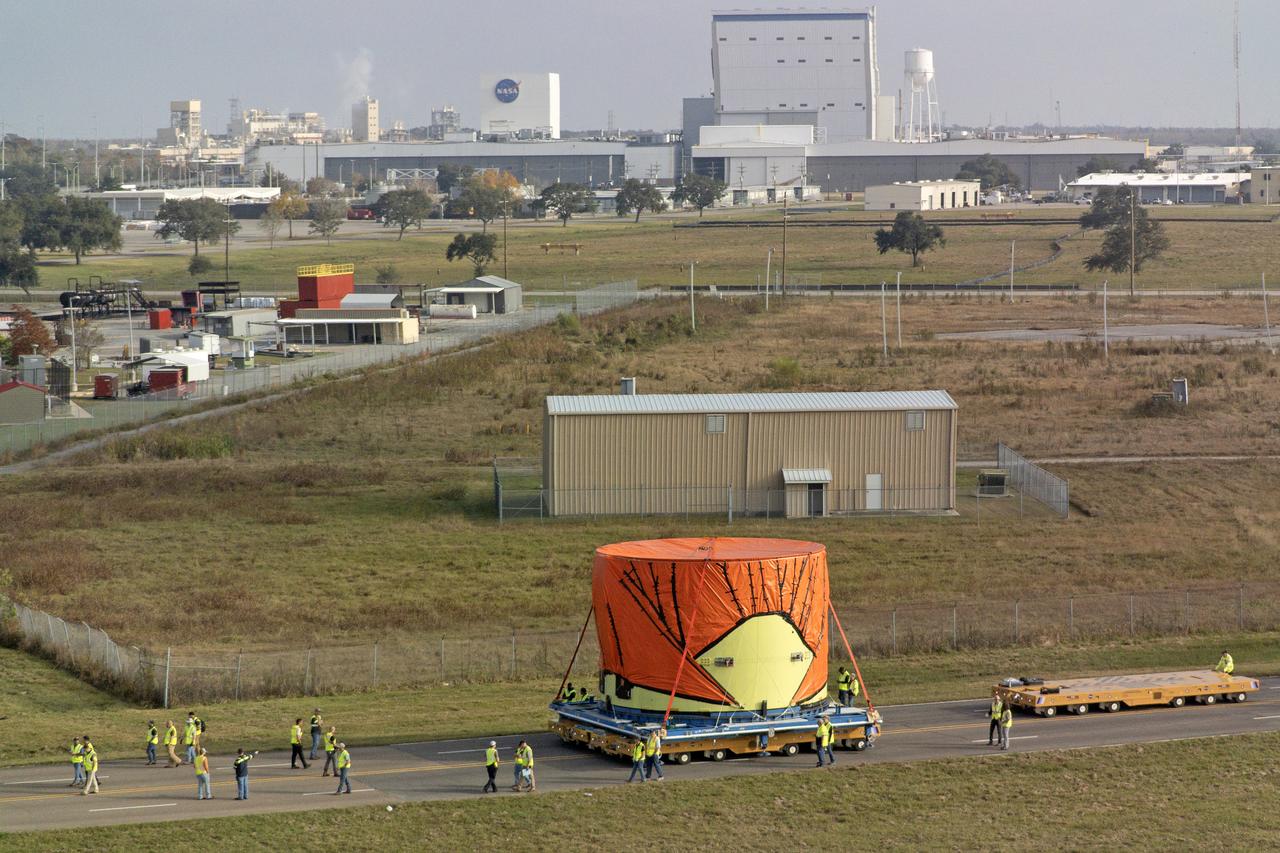
Teams at NASA’s Michoud Assembly Facility in New Orleans move the engine section flight hardware to the agency’s Pegasus barge on Sunday, December 4, 2022. The barge will ferry the engine section of NASA’s Space Launch System (SLS) rocket for Artemis III to the agency’s Kennedy Space Center in Florida. Once there, teams at Kennedy will finish outfitting the engine section, which comprises the tail-end of the rocket’s 212-foot-tall core stage, before integrating it to the rest of the stage. Beginning with production for Artemis III, NASA and core stage lead contractor Boeing will use Michoud, where the SLS core stages are currently manufactured, to produce and outfit the core stage’s five elements, and available space at Kennedy for final assembly and integration. Image credit: NASA/Michael DeMocker
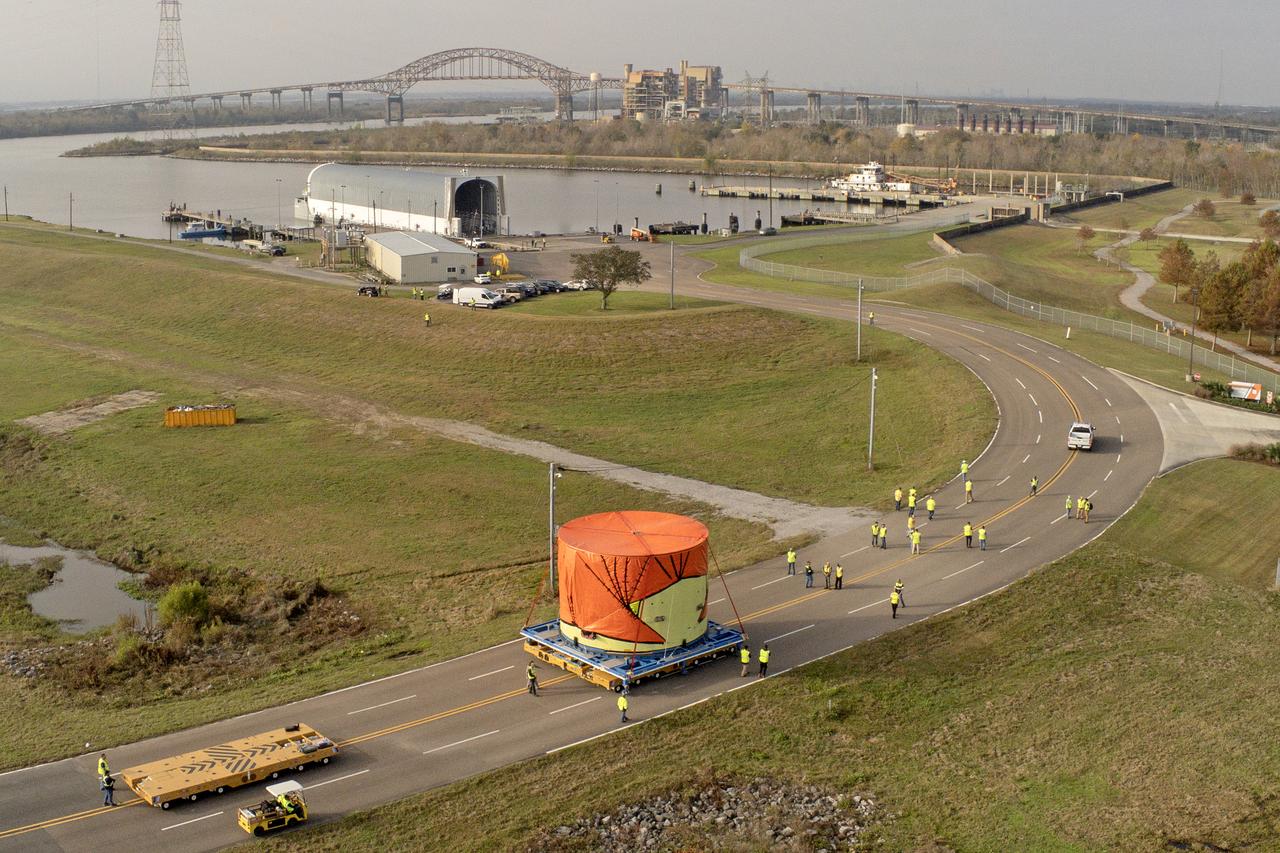
Teams at NASA’s Michoud Assembly Facility in New Orleans move the engine section flight hardware to the agency’s Pegasus barge on Sunday, December 4, 2022. The barge will ferry the engine section of NASA’s Space Launch System (SLS) rocket for Artemis III to the agency’s Kennedy Space Center in Florida. Once there, teams at Kennedy will finish outfitting the engine section, which comprises the tail-end of the rocket’s 212-foot-tall core stage, before integrating it to the rest of the stage. Beginning with production for Artemis III, NASA and core stage lead contractor Boeing will use Michoud, where the SLS core stages are currently manufactured, to produce and outfit the core stage’s five elements, and available space at Kennedy for final assembly and integration. Image credit: NASA/Michael DeMocker

NASA and DoD members of the Artemis I recovery team run practice flight operations procedures aboard the USS Portland (LPD 27). The team is out at sea ahead of the Dec. 11 Orion splashdown in the Pacific Ocean.

NASA and DoD members of the Artemis I recovery team run practice flight operations procedures aboard the USS Portland (LPD 27). The team is out at sea ahead of the Dec. 11 Orion splashdown in the Pacific Ocean.
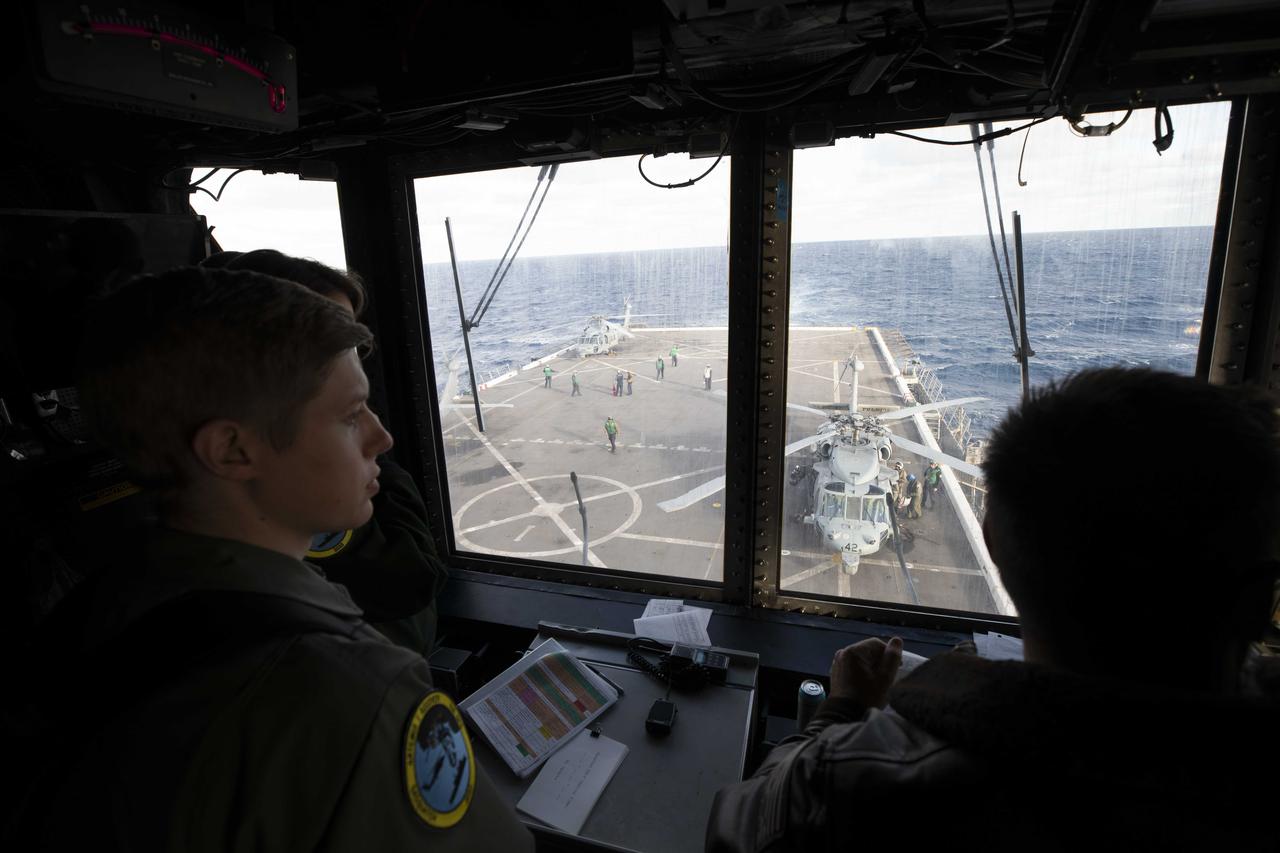
NASA and DoD members of the Artemis I recovery team run practice flight operations procedures aboard the USS Portland (LPD 27). The team is out at sea ahead of the Dec. 11 Orion splashdown in the Pacific Ocean.
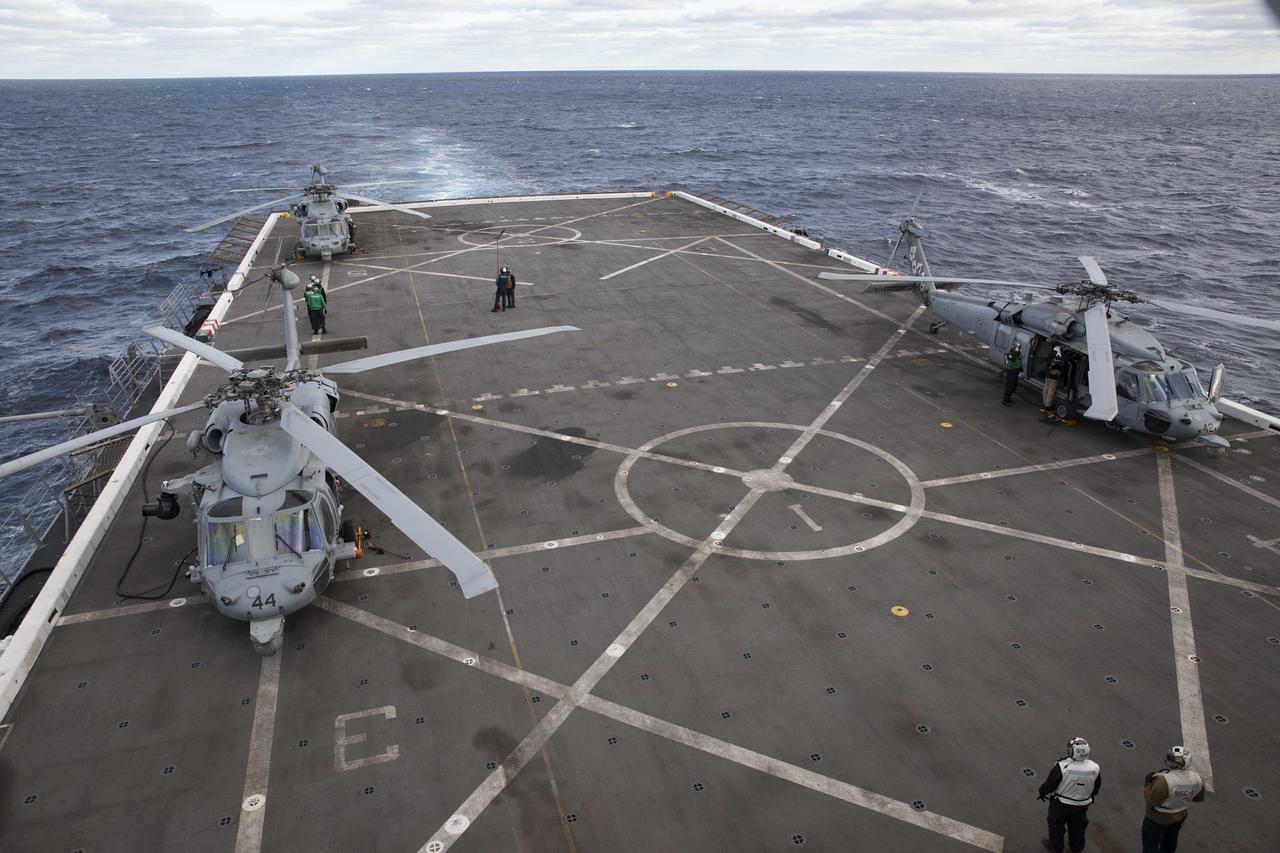
NASA and DoD members of the Artemis I recovery team run practice flight operations procedures aboard the USS Portland (LPD 27). The team is out at sea ahead of the Dec. 11 Orion splashdown in the Pacific Ocean.
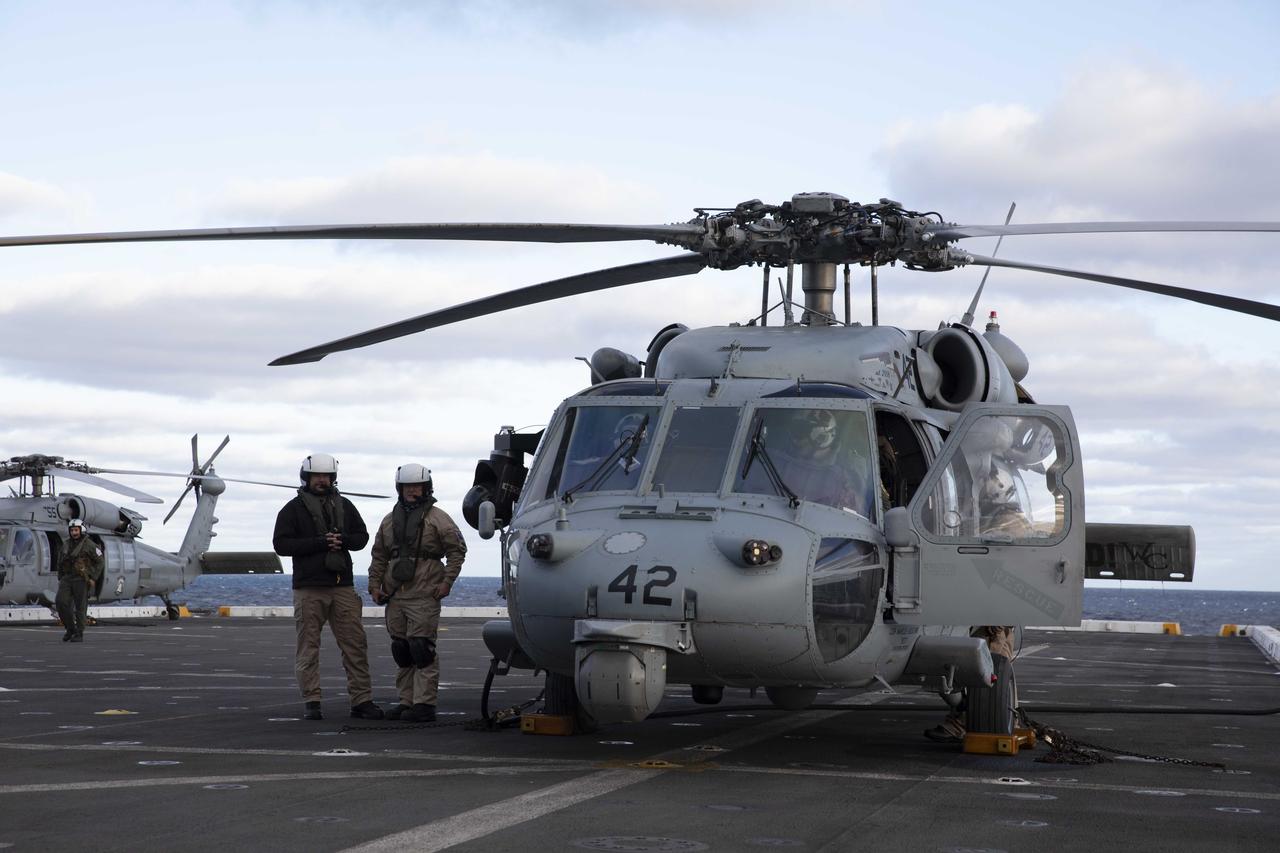
NASA and DoD members of the Artemis I recovery team run practice flight operations procedures aboard the USS Portland (LPD 27). The team is out at sea ahead of the Dec. 11 Orion splashdown in the Pacific Ocean.

NASA’s Air Operations Co-Lead Don Reed briefs the air ops team during Underway Recovery Test 9 (URT-9) aboard the USS John P. Murtha. During the weeklong test, NASA’s Landing and Recovery team is performing their final mission certification ahead of Artemis I.
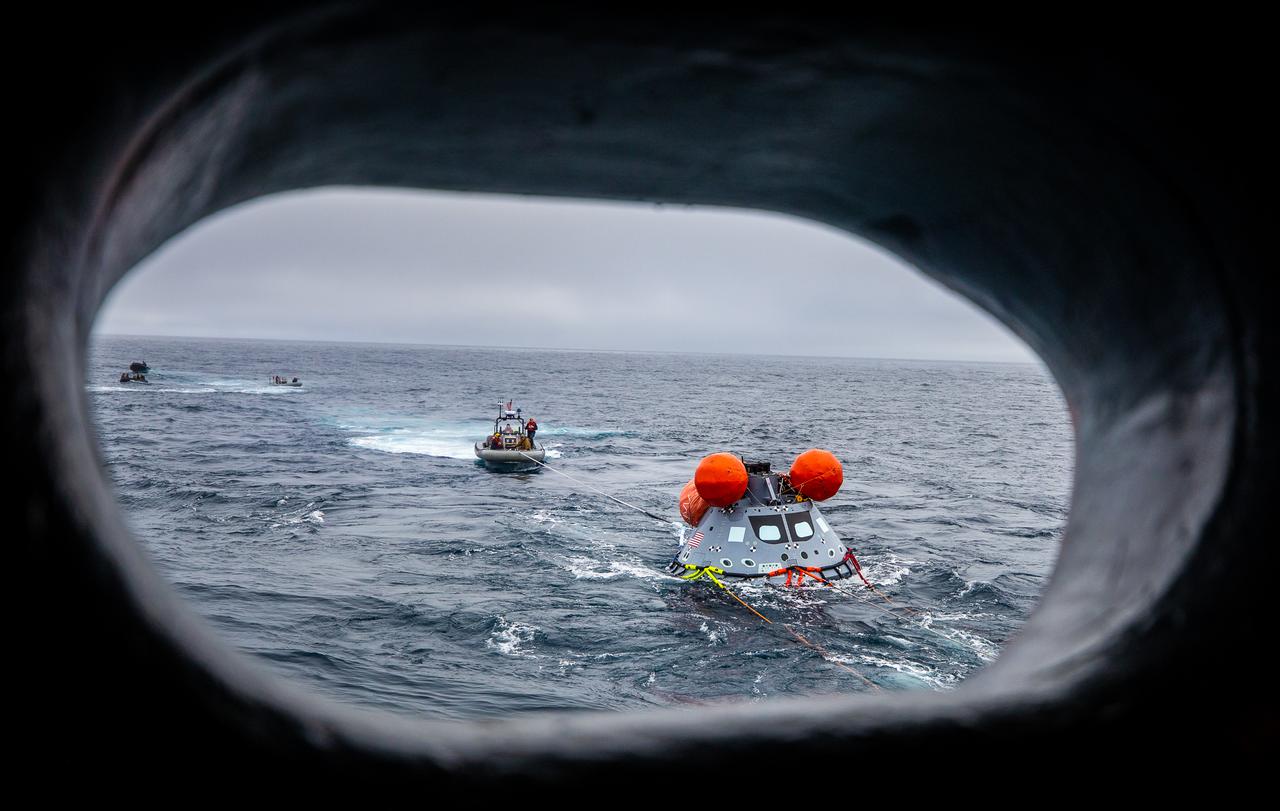
Day 2 of Underway Recovery Test 9 (URT-9) put NASA’s Landing and Recovery Team through its paces as they practiced recovering a mock Orion capsule into the back of the USS John P. Murtha. During the weeklong test, NASA’s Landing and Recovery team is performing their final mission certification ahead of Artemis I.
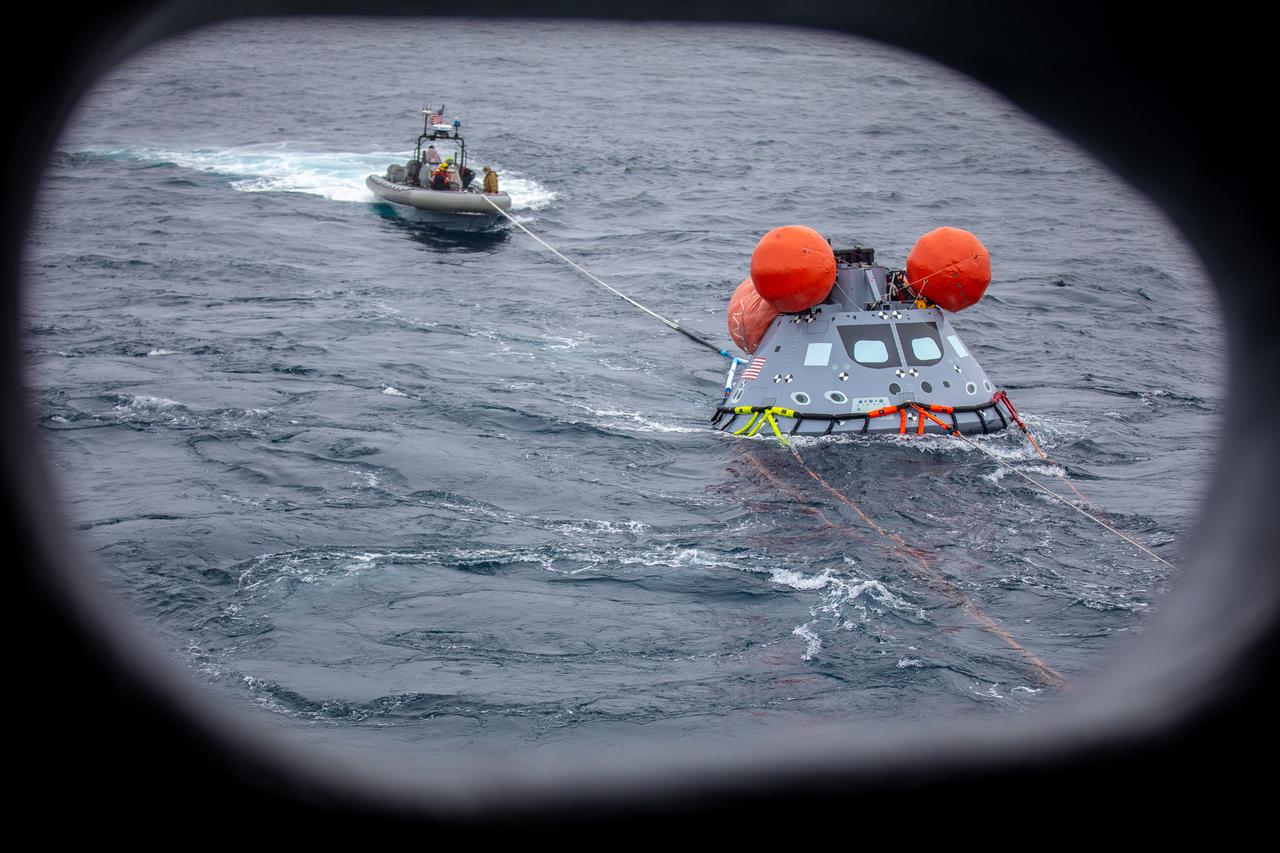
Day 2 of Underway Recovery Test 9 (URT-9) put NASA’s Landing and Recovery Team through its paces as they practiced recovering a mock Orion capsule into the back of the USS John P. Murtha. During the weeklong test, NASA’s Landing and Recovery team is performing their final mission certification ahead of Artemis I.
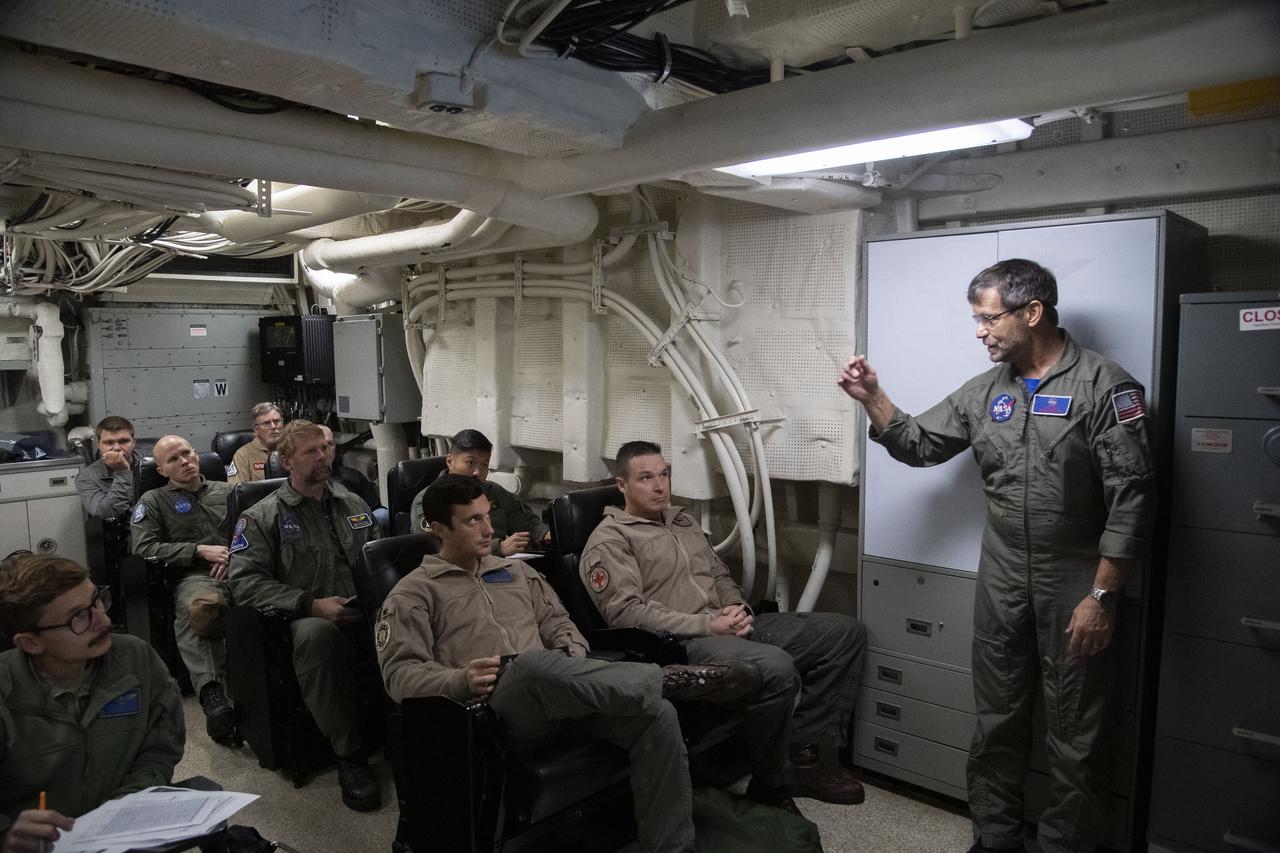
NASA’s Air Operations Co-Lead Don Reed briefs the air ops team during Underway Recovery Test 9 (URT-9) aboard the USS John P. Murtha. During the weeklong test, NASA’s Landing and Recovery team is performing their final mission certification ahead of Artemis I.
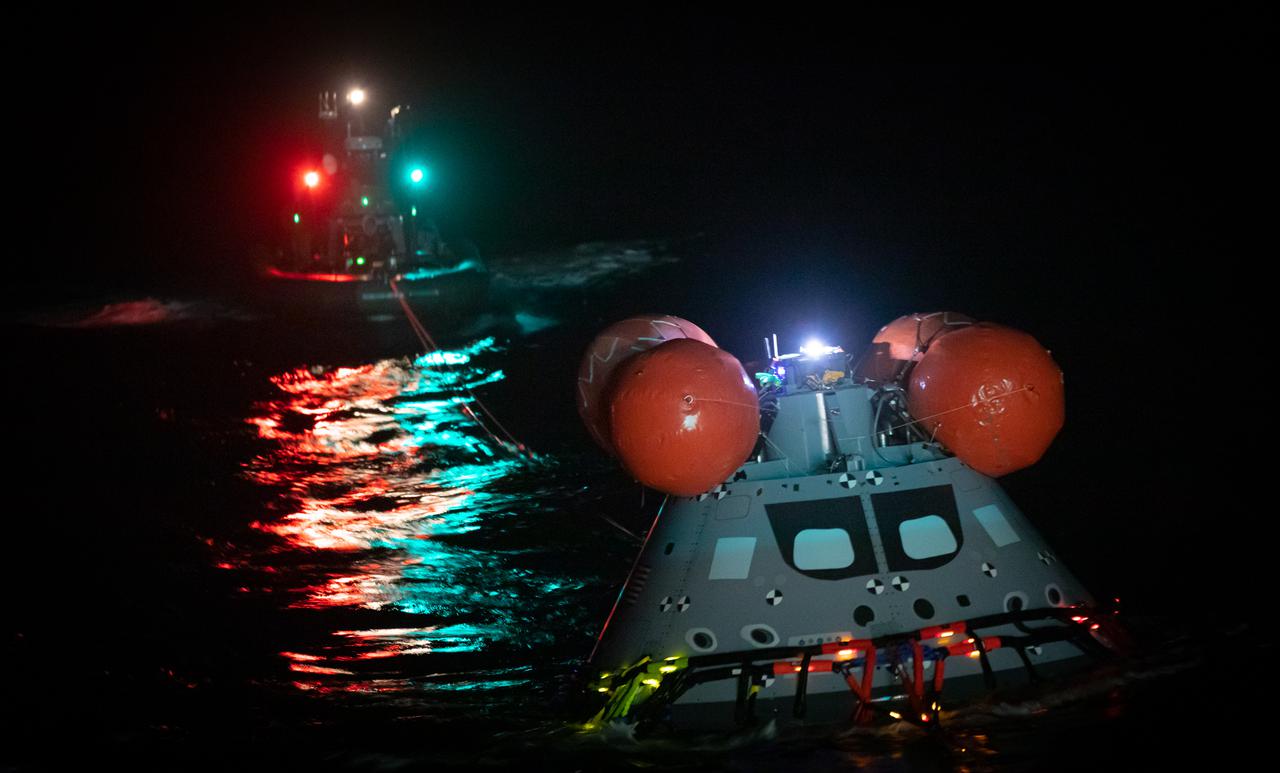
NASA’s Landing and Recovery Team secures a mock Orion capsule during the last exercise of Underway Recovery Test 9 (URT-9) aboard the USS John P. Murtha. During the weeklong test, NASA’s Landing and Recovery team is performing their final mission certification ahead of Artemis I.
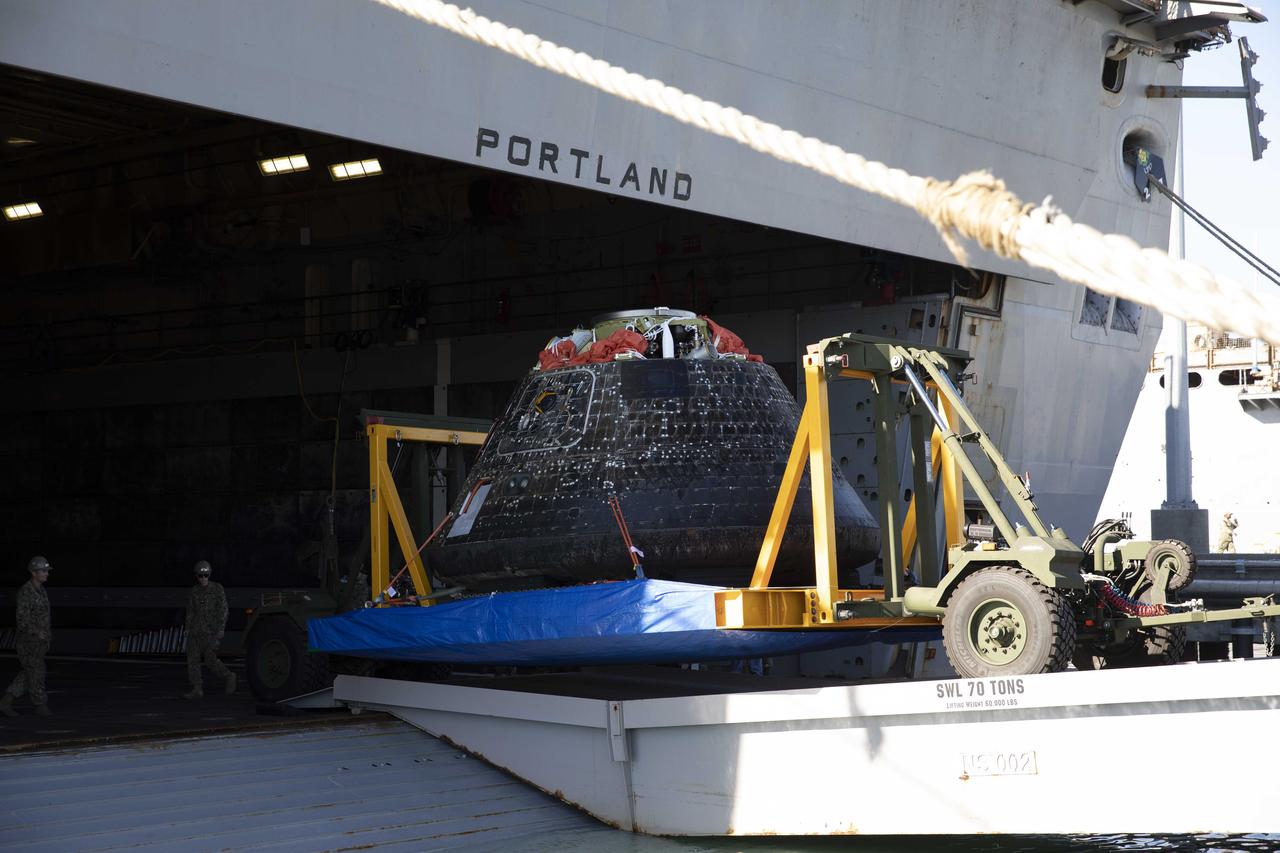
Team members with NASA’s Exploration Ground Systems program successfully removed the Artemis I Orion spacecraft from the USS Portland Dec. 14, after the ship arrived at U.S. Naval Base San Diego.
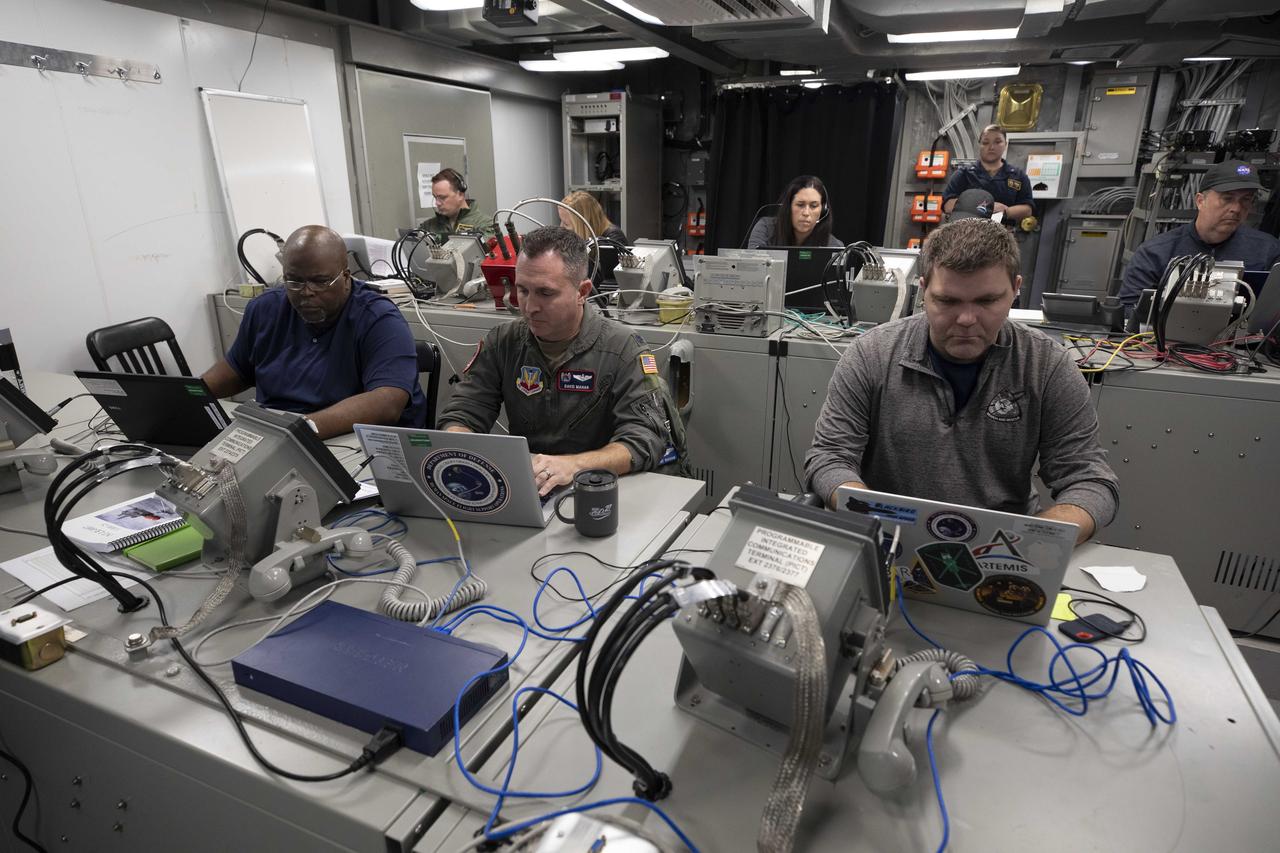
Inside a control room aboard USS Portland, members and leaders of NASA’s Landing and Recovery team run through preparations and procedures ahead of the Orion Spacecraft’s return from the Moon on Dec. 11 as part of the Artemis I mission.
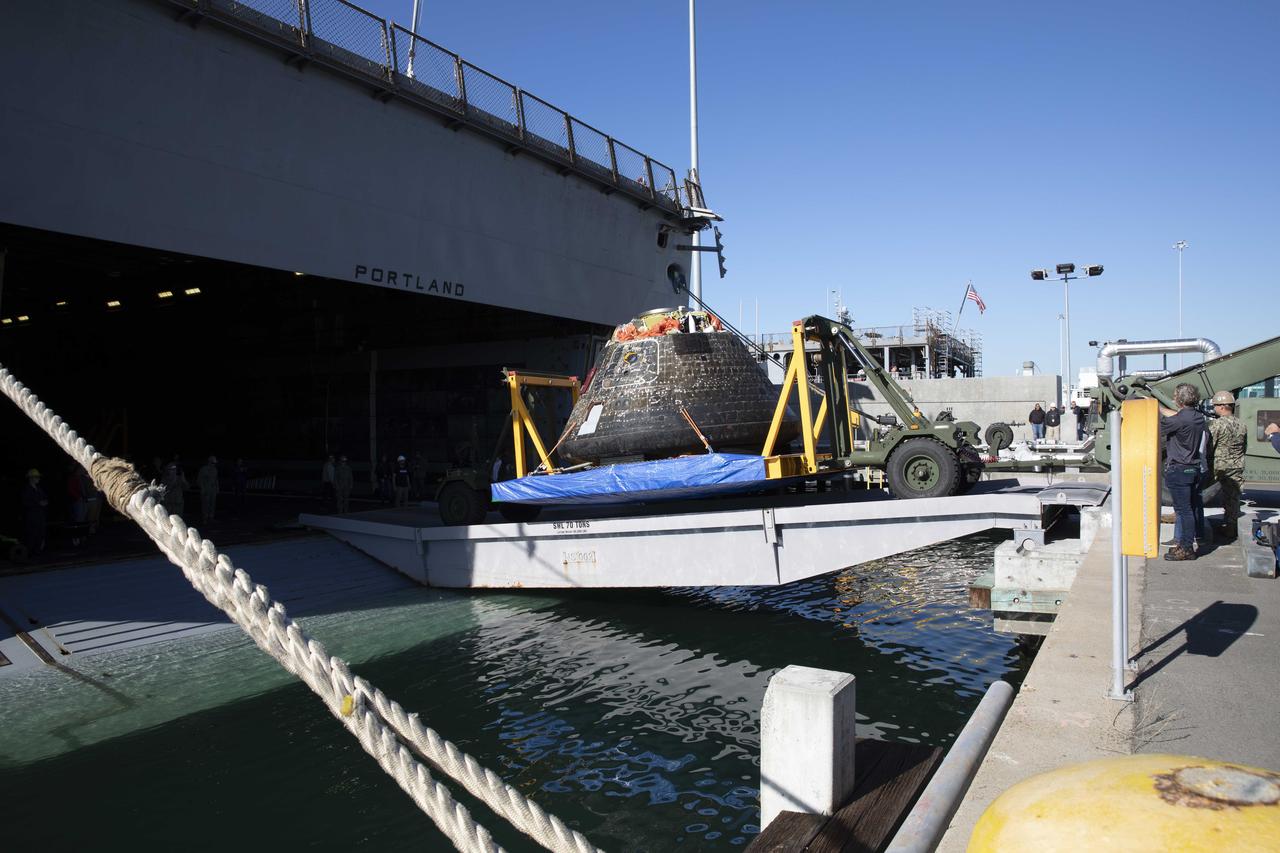
Team members with NASA’s Exploration Ground Systems program successfully removed the Artemis I Orion spacecraft from the USS Portland Dec. 14, after the ship arrived at U.S. Naval Base San Diego.
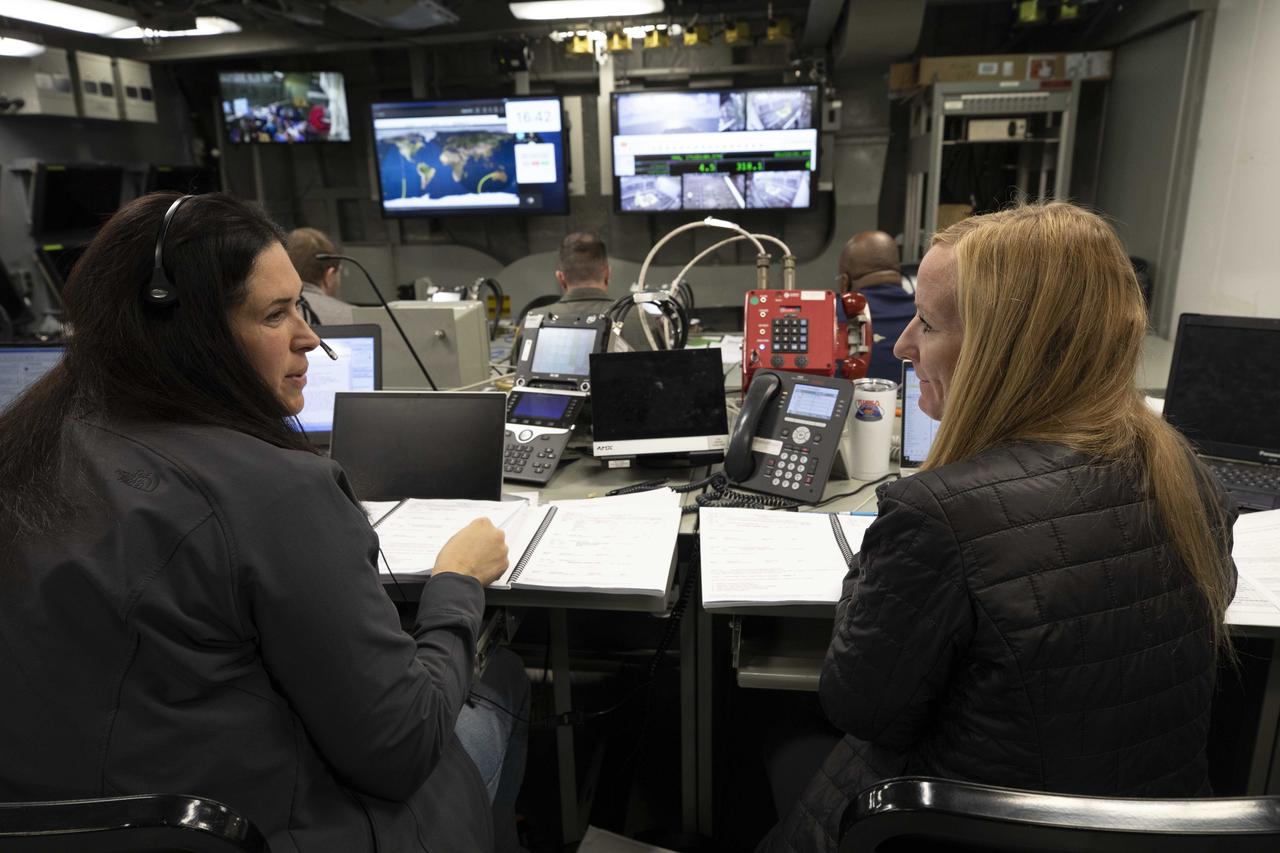
Inside a control room aboard USS Portland, members and leaders of NASA’s Landing and Recovery team run through preparations and procedures ahead of the Orion Spacecraft’s return from the Moon on Dec. 11 as part of the Artemis I mission.
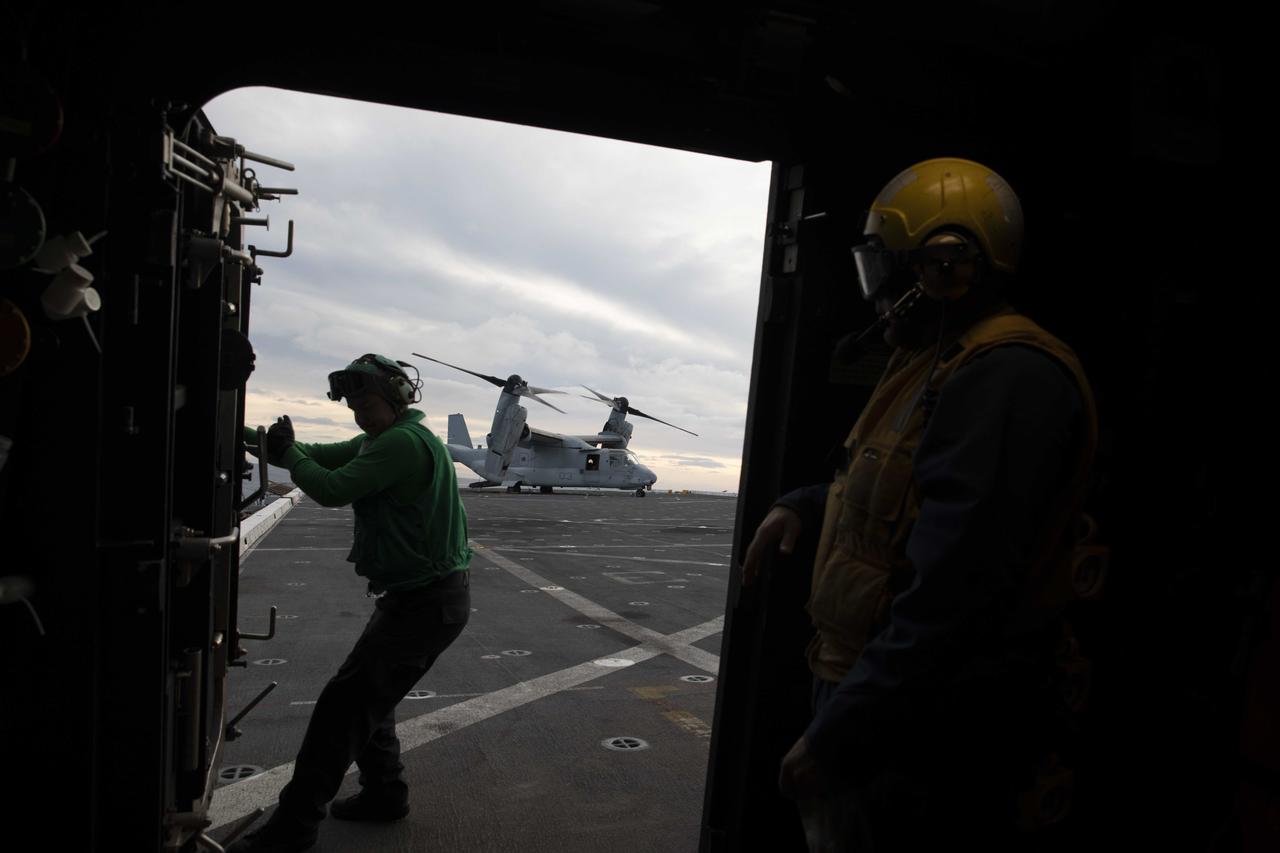
A member of the U.S. Navy helicopter team aboard USS Portland opens a door to the flight deck after a V-22 Osprey lands prior to NASA’s Orion splashdown for the Artemis I mission on Dec. 11, 2022.
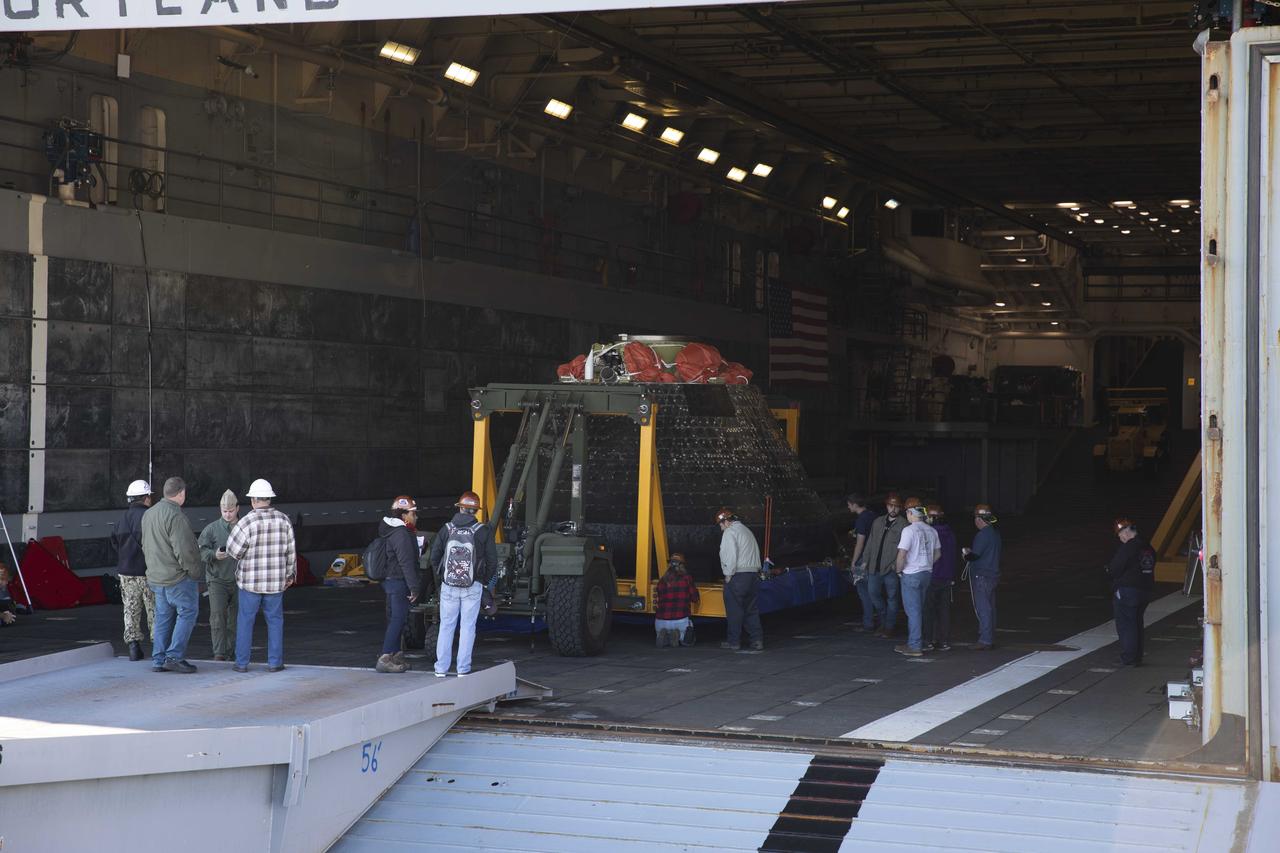
Team members with NASA’s Exploration Ground Systems program successfully removed the Artemis I Orion spacecraft from the USS Portland Dec. 14, after the ship arrived at U.S. Naval Base San Diego.
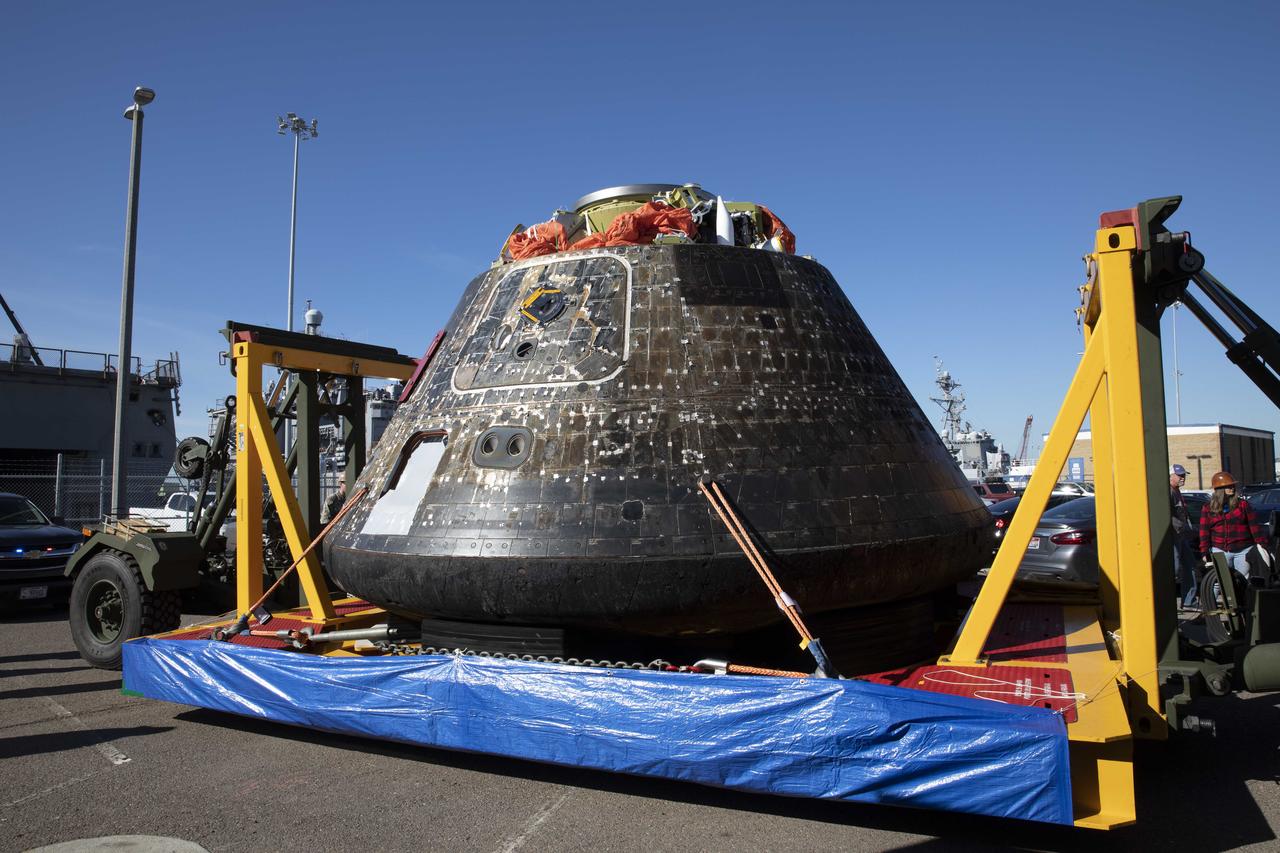
Team members with NASA’s Exploration Ground Systems program successfully removed the Artemis I Orion spacecraft from the USS Portland Dec. 14, after the ship arrived at U.S. Naval Base San Diego.
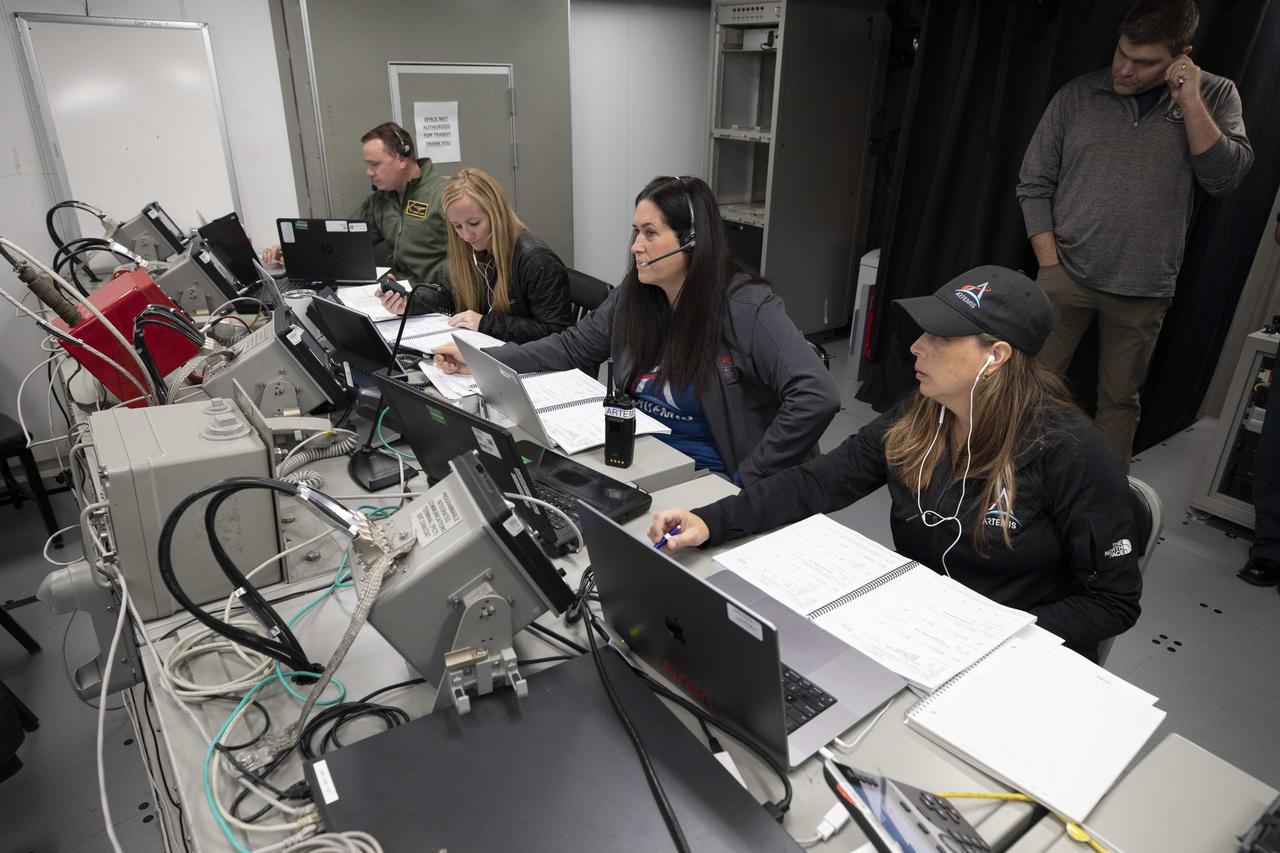
Inside a control room aboard USS Portland, members and leaders of NASA’s Landing and Recovery team run through preparations and procedures ahead of the Orion Spacecraft’s return from the Moon on Dec. 11 as part of the Artemis I mission.
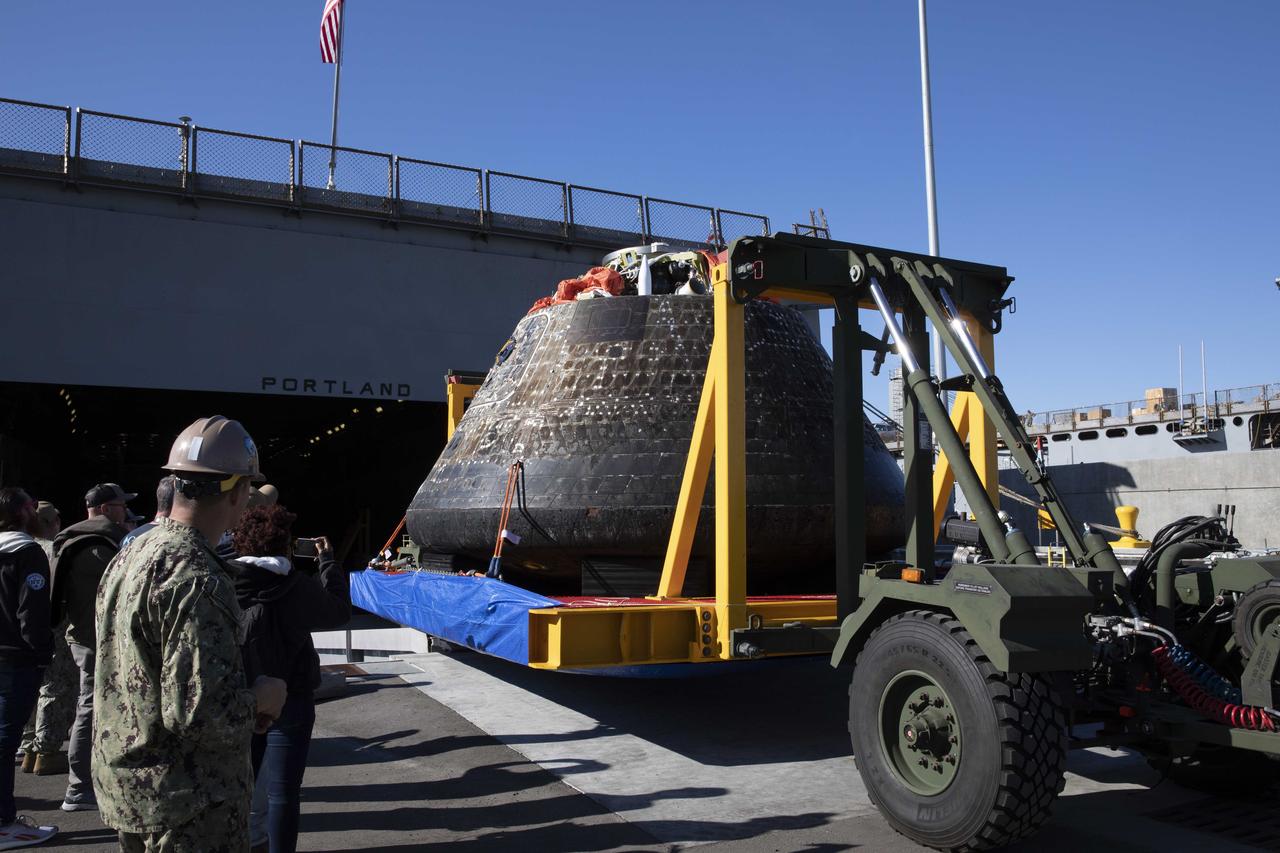
Team members with NASA’s Exploration Ground Systems program successfully removed the Artemis I Orion spacecraft from the USS Portland Dec. 14, after the ship arrived at U.S. Naval Base San Diego.
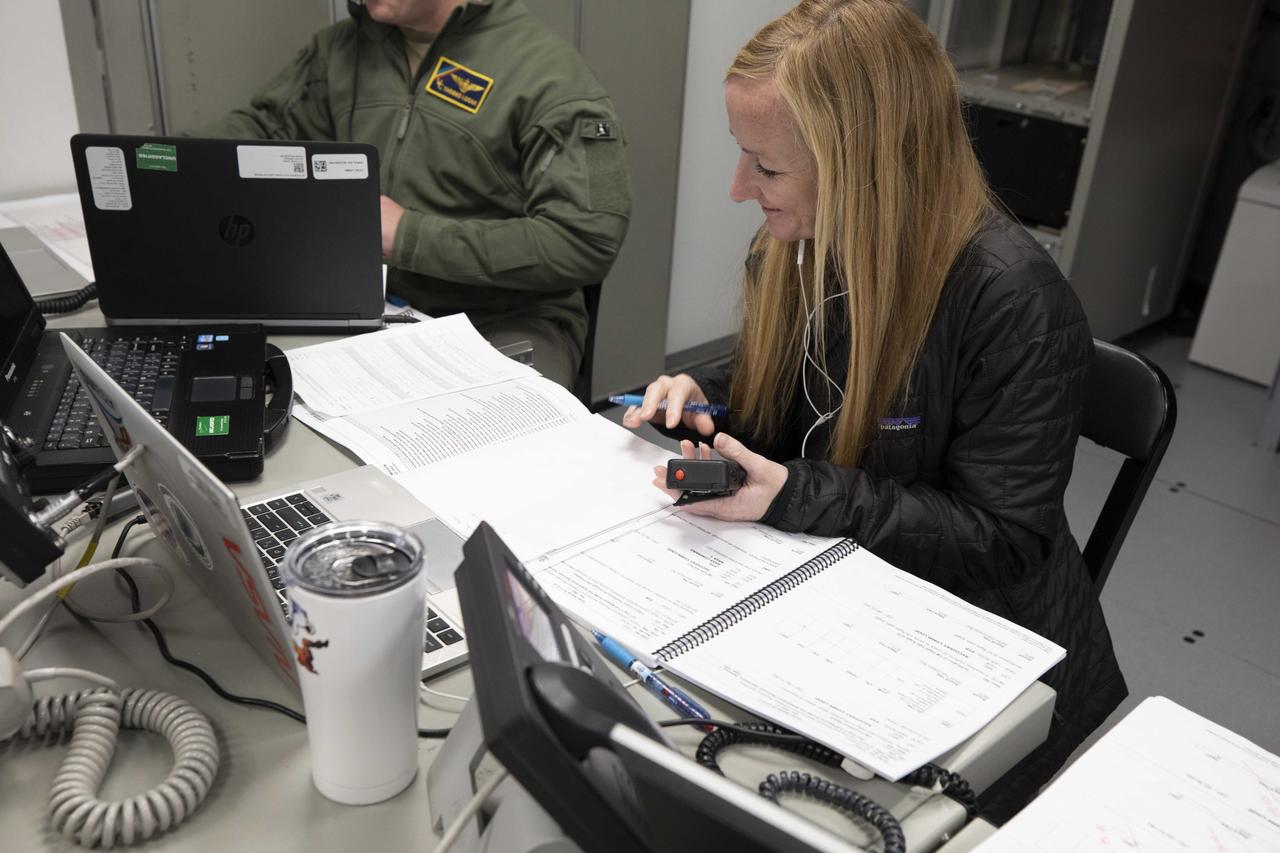
Inside a control room aboard USS Portland, members and leaders of NASA’s Landing and Recovery team run through preparations and procedures ahead of the Orion Spacecraft’s return from the Moon on Dec. 11 as part of the Artemis I mission.
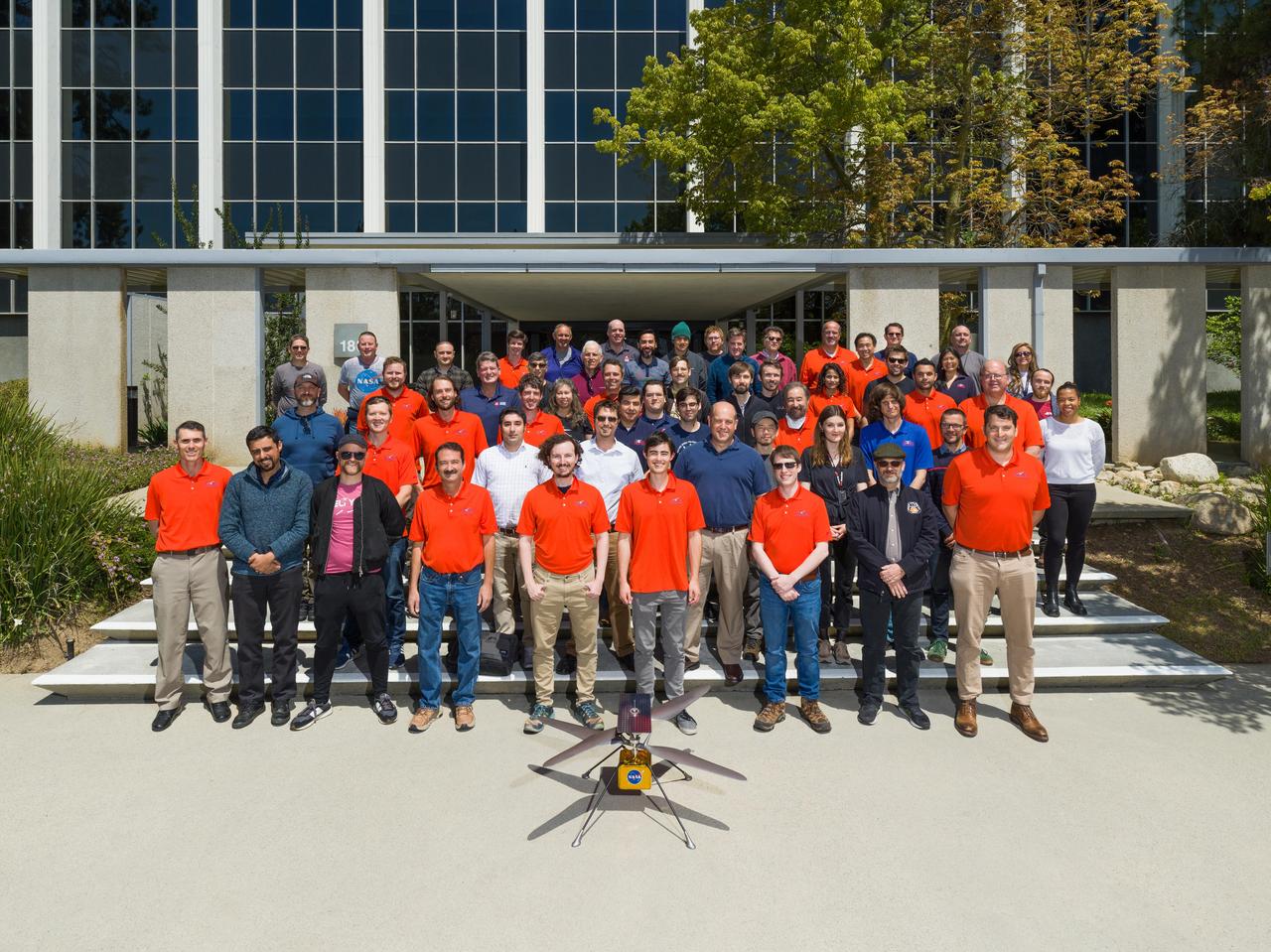
Members of NASA's Ingenuity Mars Helicopter team got together for a team photo on the second anniversary of the rotorcraft's first flight on Mars. The image was taken at the agency's Jet Propulsion Laboratory in Southern California on April 19, 2023. https://photojournal.jpl.nasa.gov/catalog/PIA25882
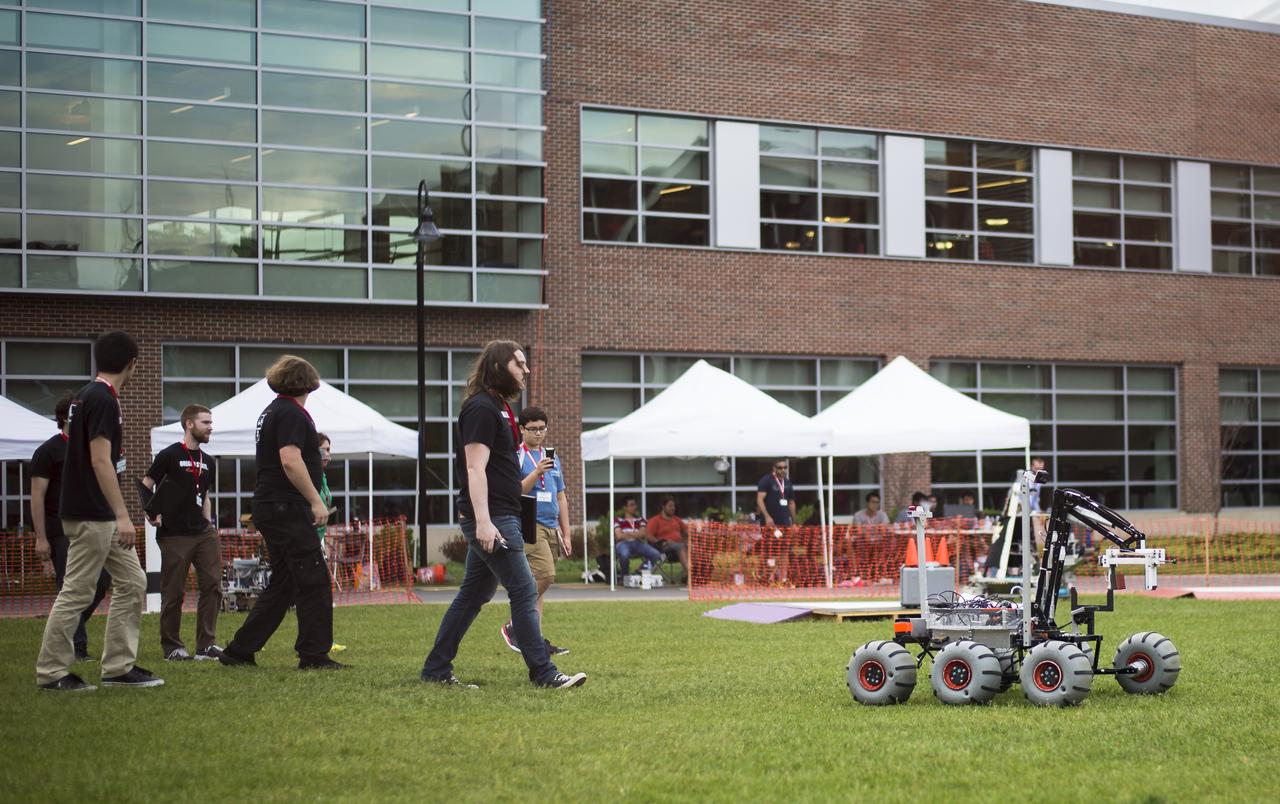
The Oregon State University Mars Rover Team, from Corvallis, Oregon, follows their robot on the practice field during the 2014 NASA Centennial Challenges Sample Return Robot Challenge, Tuesday, June 10, 2014, at the Worcester Polytechnic Institute (WPI) in Worcester, Mass. The Oregon State University Mars Rover Team is one of eighteen teams competing for a $1.5 million NASA prize purse. Teams will be required to demonstrate autonomous robots that can locate and collect samples from a wide and varied terrain, operating without human control. The objective of this NASA-WPI Centennial Challenge is to encourage innovations in autonomous navigation and robotics technologies. Innovations stemming from the challenge may improve NASA's capability to explore a variety of destinations in space, as well as enhance the nation's robotic technology for use in industries and applications on Earth. Photo Credit: (NASA/Joel Kowsky)
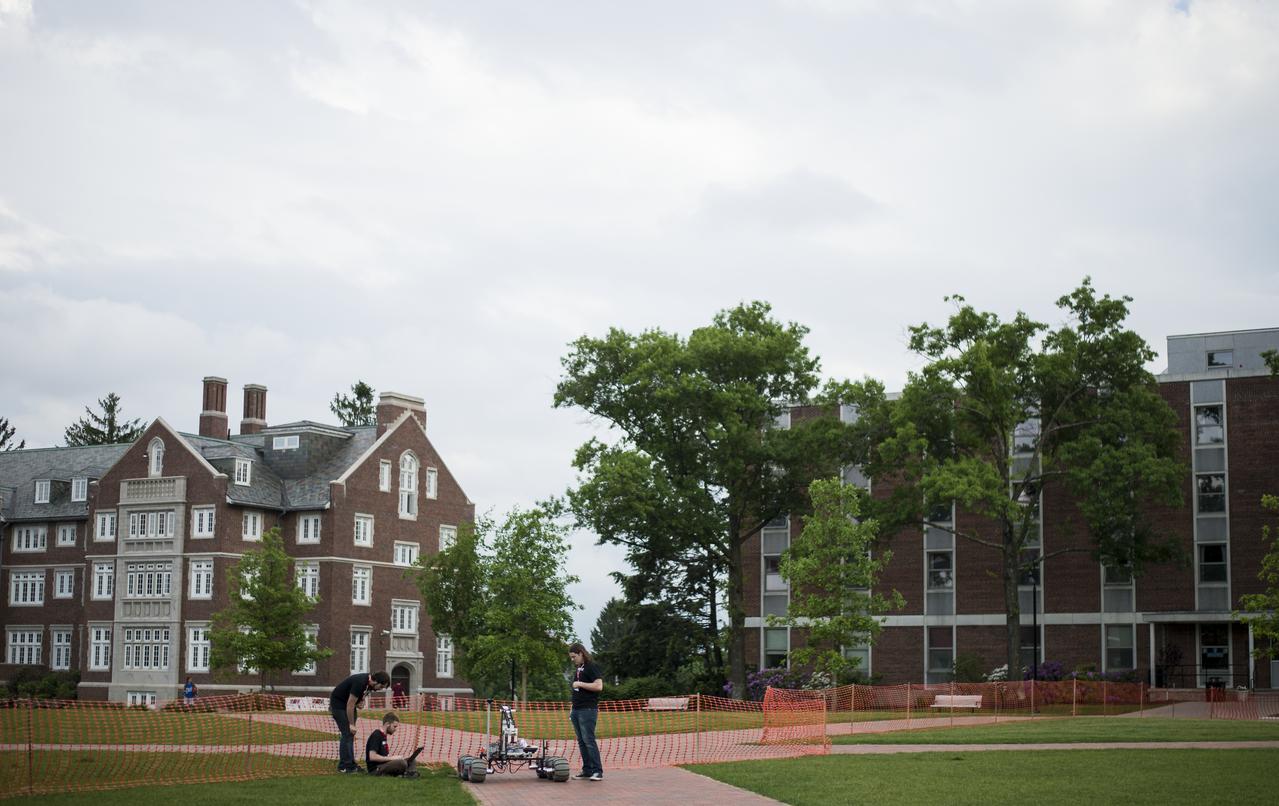
The Oregon State University Mars Rover Team follows their robot on the practice field during the 2014 NASA Centennial Challenges Sample Return Robot Challenge, Tuesday, June 10, 2014, at the Worcester Polytechnic Institute (WPI) in Worcester, Mass. The Oregon State University Mars Rover Team is one of eighteen teams competing for a $1.5 million NASA prize purse. Teams will be required to demonstrate autonomous robots that can locate and collect samples from a wide and varied terrain, operating without human control. The objective of this NASA-WPI Centennial Challenge is to encourage innovations in autonomous navigation and robotics technologies. Innovations stemming from the challenge may improve NASA's capability to explore a variety of destinations in space, as well as enhance the nation's robotic technology for use in industries and applications on Earth. Photo Credit: (NASA/Joel Kowsky)
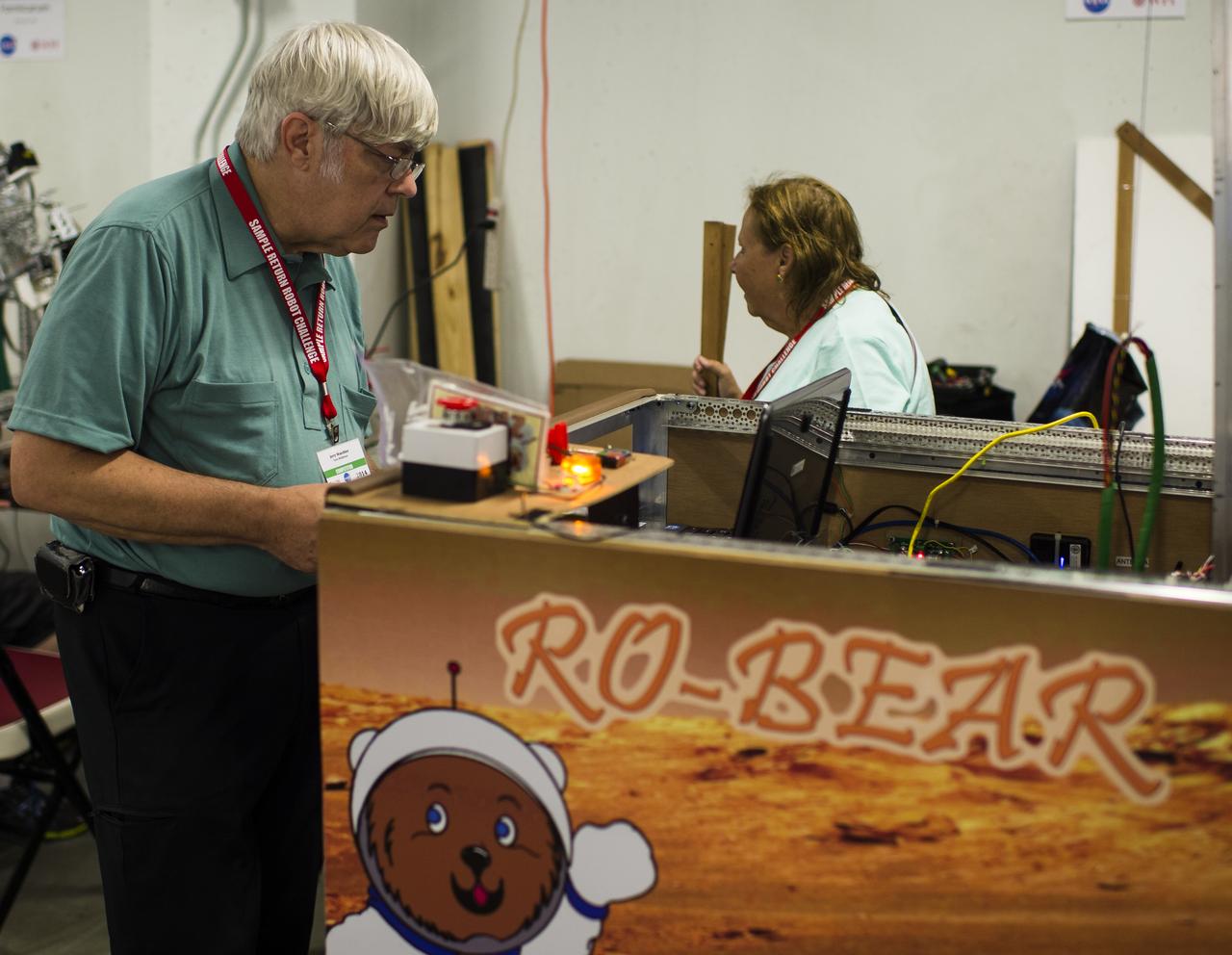
Jerry Waechter of team Middleman from Dunedin, Florida, works on their robot named Ro-Bear during the 2014 NASA Centennial Challenges Sample Return Robot Challenge, Tuesday, June 10, 2014, at the Worcester Polytechnic Institute (WPI) in Worcester, Mass. Team Middleman is one of eighteen teams competing for a $1.5 million NASA prize purse. Teams will be required to demonstrate autonomous robots that can locate and collect samples from a wide and varied terrain, operating without human control. The objective of this NASA-WPI Centennial Challenge is to encourage innovations in autonomous navigation and robotics technologies. Innovations stemming from the challenge may improve NASA's capability to explore a variety of destinations in space, as well as enhance the nation's robotic technology for use in industries and applications on Earth. Photo Credit: (NASA/Joel Kowsky)
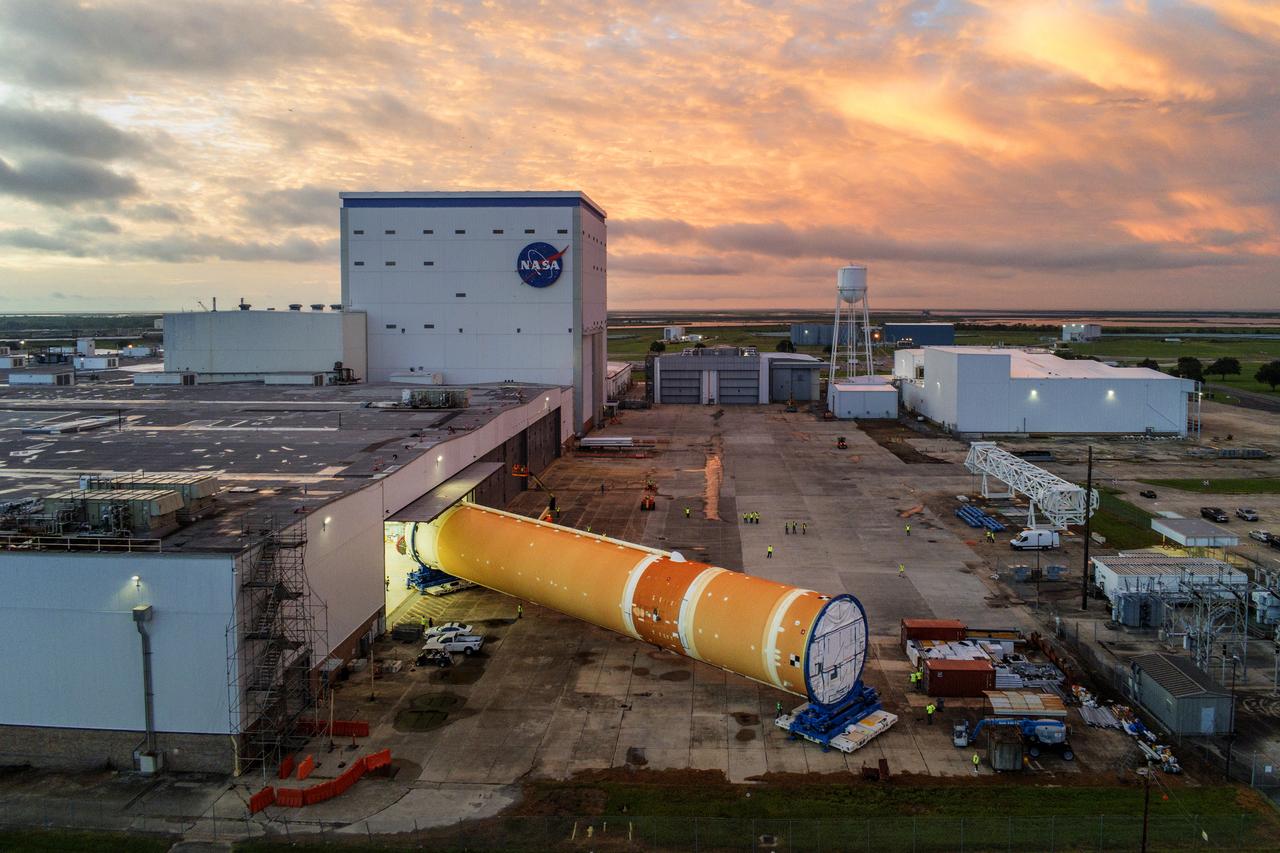
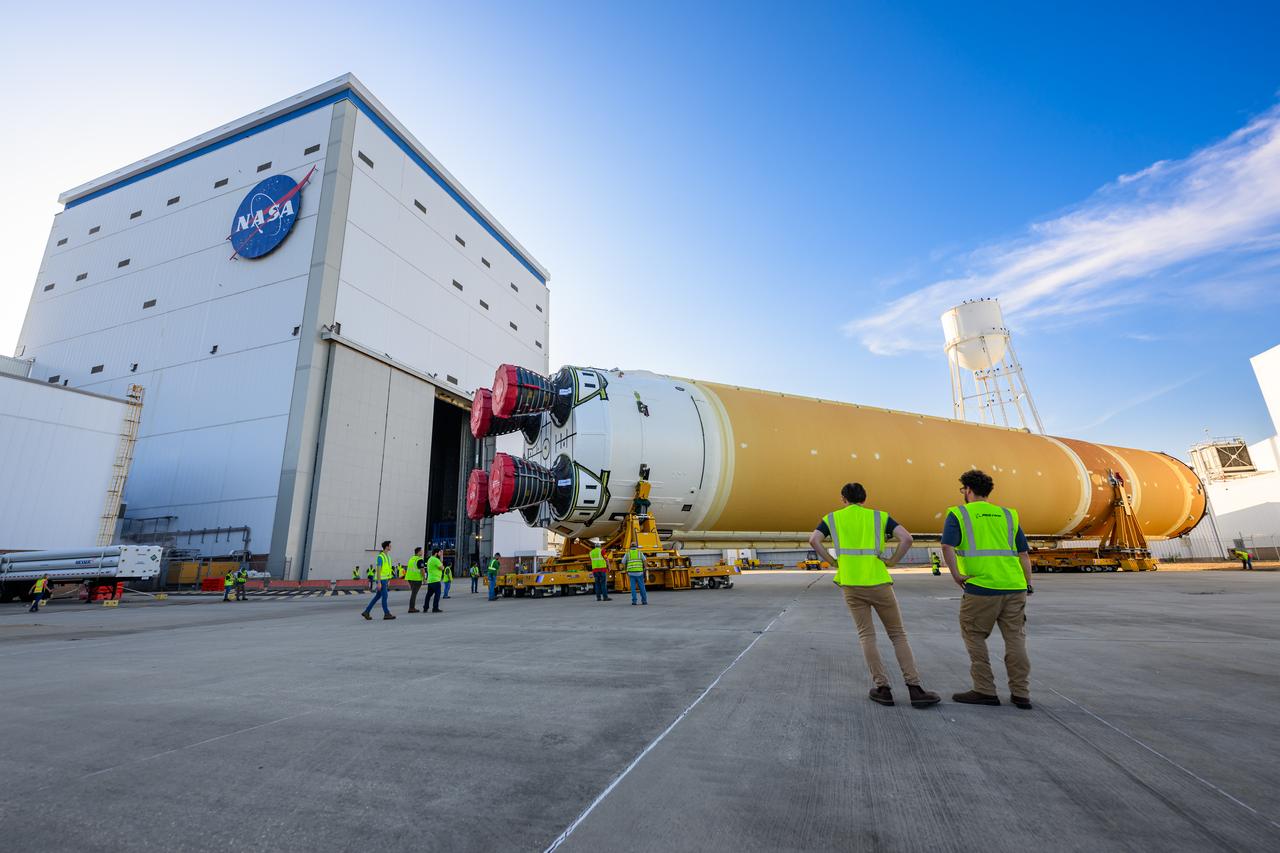
This photo shows NASA and Boeing, the SLS core stage lead contractor, preparing the SLS (Space Launch System) rocket core stage for shipment at NASA’s Michoud Assembly Facility in New Orleans. On July 6, NASA and Boeing moved the Artemis II rocket stage to Building 110. The move comes as teams prepare to roll the massive rocket stage with its four RS-25 engines to the agency’s Pegasus barge for delivery to NASA’s Kennedy Space Center in Florida in mid-July. Prior to the move, technicians began removing external access stands, or scaffolding, surrounding the core stage to assess the interior elements, including its complex avionics and flight propulsion systems. The stage is fully manufactured at NASA Michoud. NASA is working to land the first woman, first person of color, and its first international partner astronaut on the Moon under Artemis. SLS is part of NASA’s backbone for deep space exploration, along with the Orion spacecraft, supporting ground systems, advanced spacesuits and rovers, the Gateway in orbit around the Moon, and commercial human landing systems. SLS is the only rocket that can send Orion, astronauts, and supplies to the Moon in a single launch. Image credit: NASA/Michael DeMocker
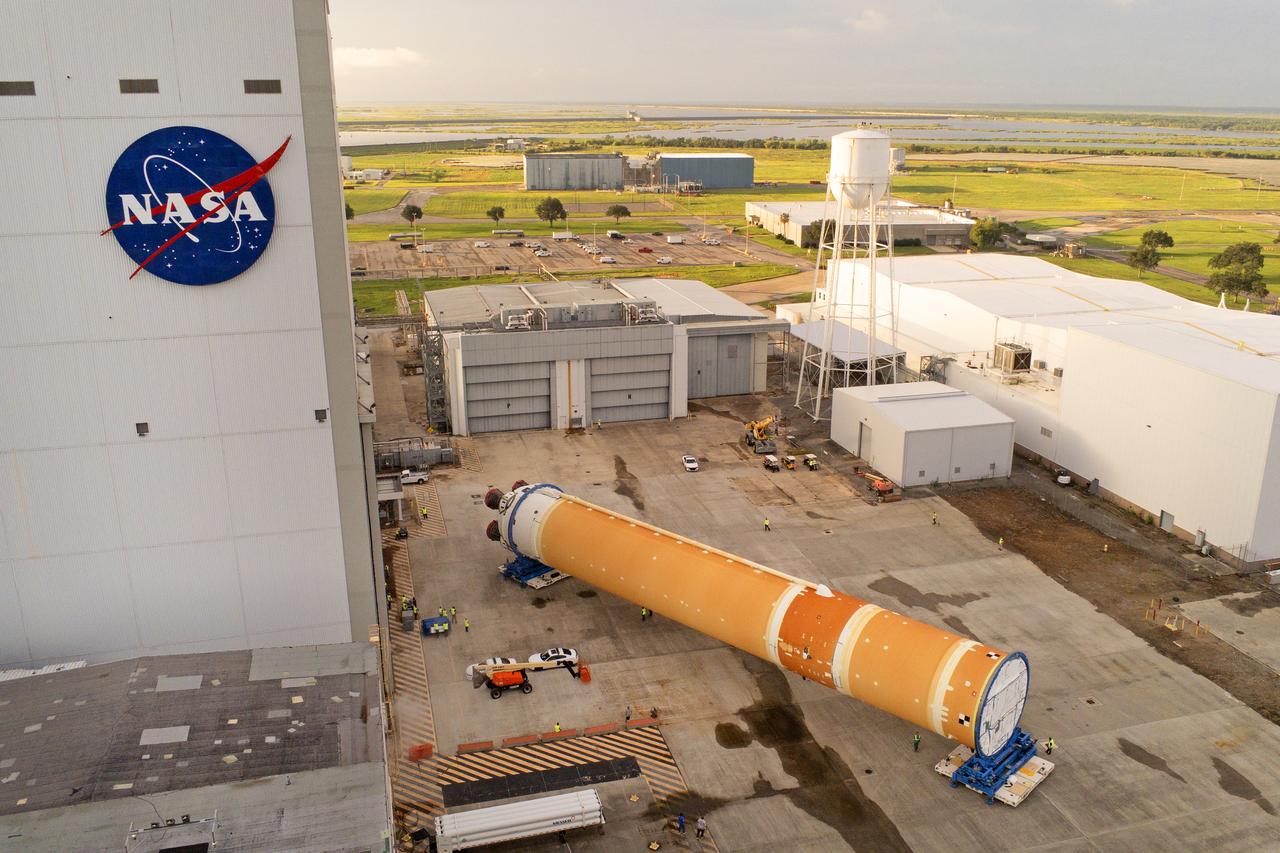
This photo shows NASA and Boeing, the SLS core stage lead contractor, preparing the SLS (Space Launch System) rocket core stage for shipment at NASA’s Michoud Assembly Facility in New Orleans. On July 6, NASA and Boeing moved the Artemis II rocket stage to Building 110. The move comes as teams prepare to roll the massive rocket stage with its four RS-25 engines to the agency’s Pegasus barge for delivery to NASA’s Kennedy Space Center in Florida in mid-July. Prior to the move, technicians began removing external access stands, or scaffolding, surrounding the core stage to assess the interior elements, including its complex avionics and flight propulsion systems. The stage is fully manufactured at NASA Michoud. NASA is working to land the first woman, first person of color, and its first international partner astronaut on the Moon under Artemis. SLS is part of NASA’s backbone for deep space exploration, along with the Orion spacecraft, supporting ground systems, advanced spacesuits and rovers, the Gateway in orbit around the Moon, and commercial human landing systems. SLS is the only rocket that can send Orion, astronauts, and supplies to the Moon in a single launch. Image credit: NASA/Michael DeMocker
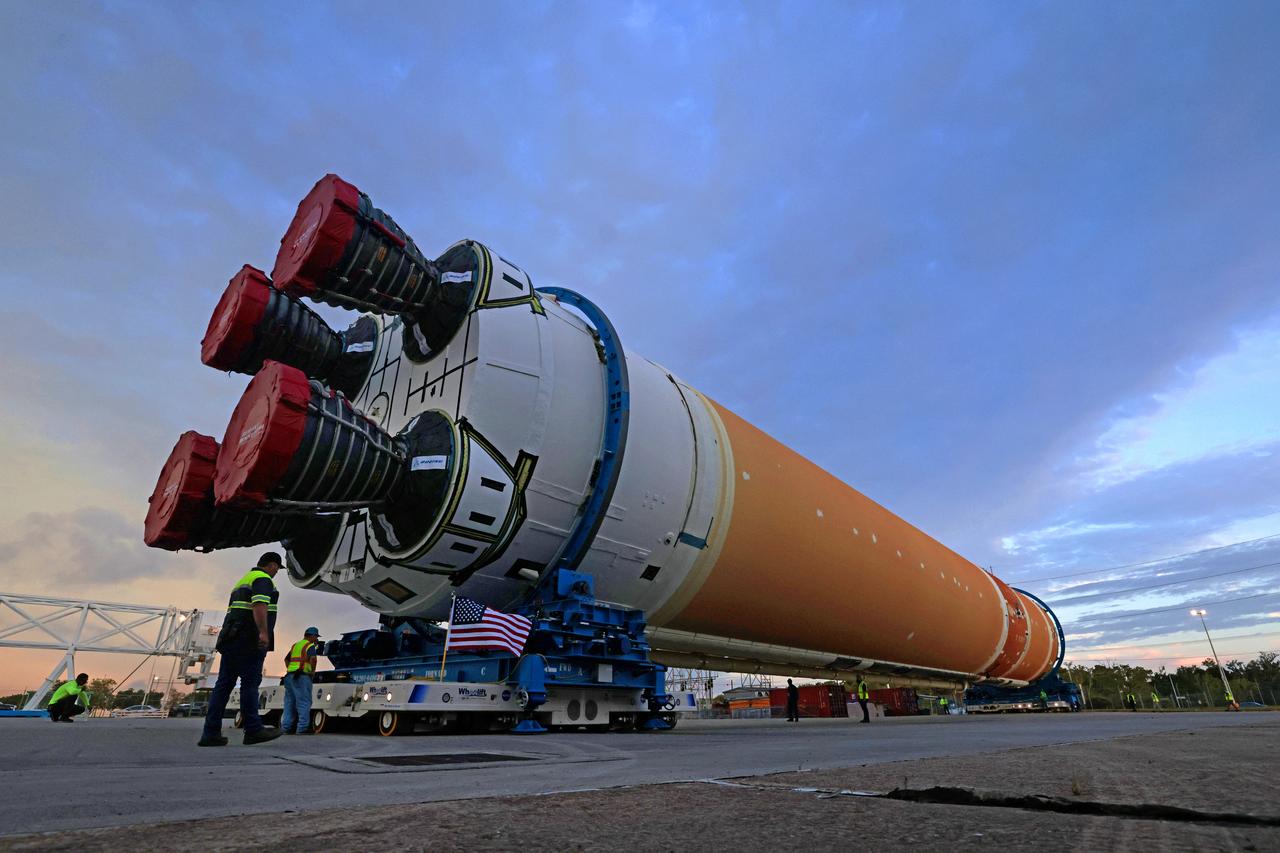
This photo shows NASA and Boeing, the SLS core stage lead contractor, preparing the SLS (Space Launch System) rocket core stage for shipment at NASA’s Michoud Assembly Facility in New Orleans. On July 6, NASA and Boeing moved the Artemis II rocket stage to Building 110. The move comes as teams prepare to roll the massive rocket stage with its four RS-25 engines to the agency’s Pegasus barge for delivery to NASA’s Kennedy Space Center in Florida in mid-July. Prior to the move, technicians began removing external access stands, or scaffolding, surrounding the core stage to assess the interior elements, including its complex avionics and flight propulsion systems. The stage is fully manufactured at NASA Michoud. NASA is working to land the first woman, first person of color, and its first international partner astronaut on the Moon under Artemis. SLS is part of NASA’s backbone for deep space exploration, along with the Orion spacecraft, supporting ground systems, advanced spacesuits and rovers, the Gateway in orbit around the Moon, and commercial human landing systems. SLS is the only rocket that can send Orion, astronauts, and supplies to the Moon in a single launch. Image credit: NASA/Michael DeMocker

Nicola Fox, associate administrator for NASA's Science Mission Directorate, answers a question during a media briefing to discuss the findings from an unidentified anomalous phenomena (UAP) independent study team, Thursday, Sept. 14, 2023, at the Mary W. Jackson NASA Headquarters building in Washington. The UAP independent study team, commissioned in 2022, is a counsel of 16 community experts across diverse areas on matters relevant to potential methods of study for unidentified anomalous phenomena. NASA published the team’s full report online, which aims to inform about what possible data could be collected in the future to shed light on the nature and origin of UAP. Photo Credit: (NASA/Aubrey Gemignani)