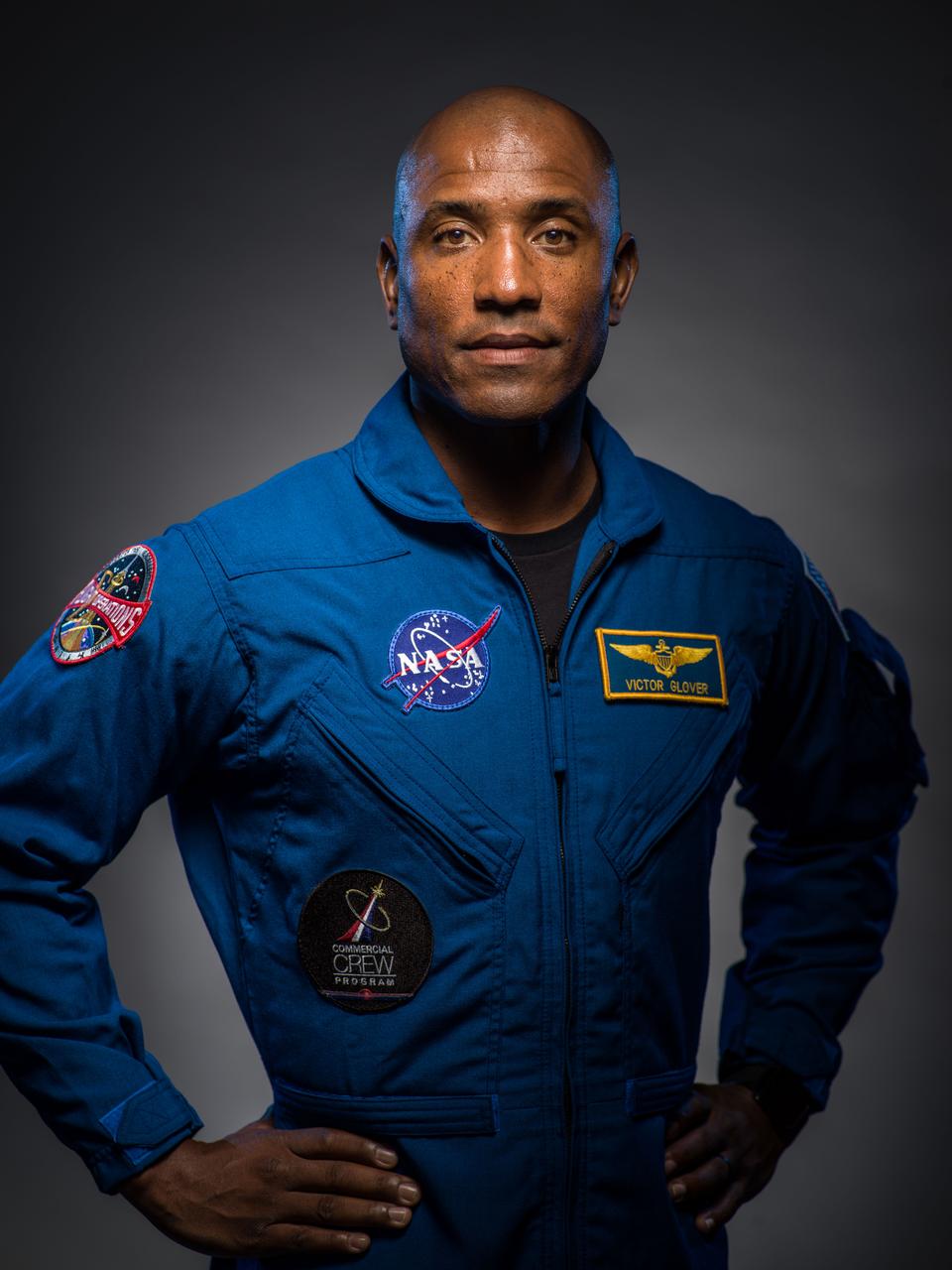
jsc2018e067775_alt (Aug. 1, 2018) --- NASA Astronaut Victor Glover has been assigned to the second flight of SpaceX’s Crew Dragon.
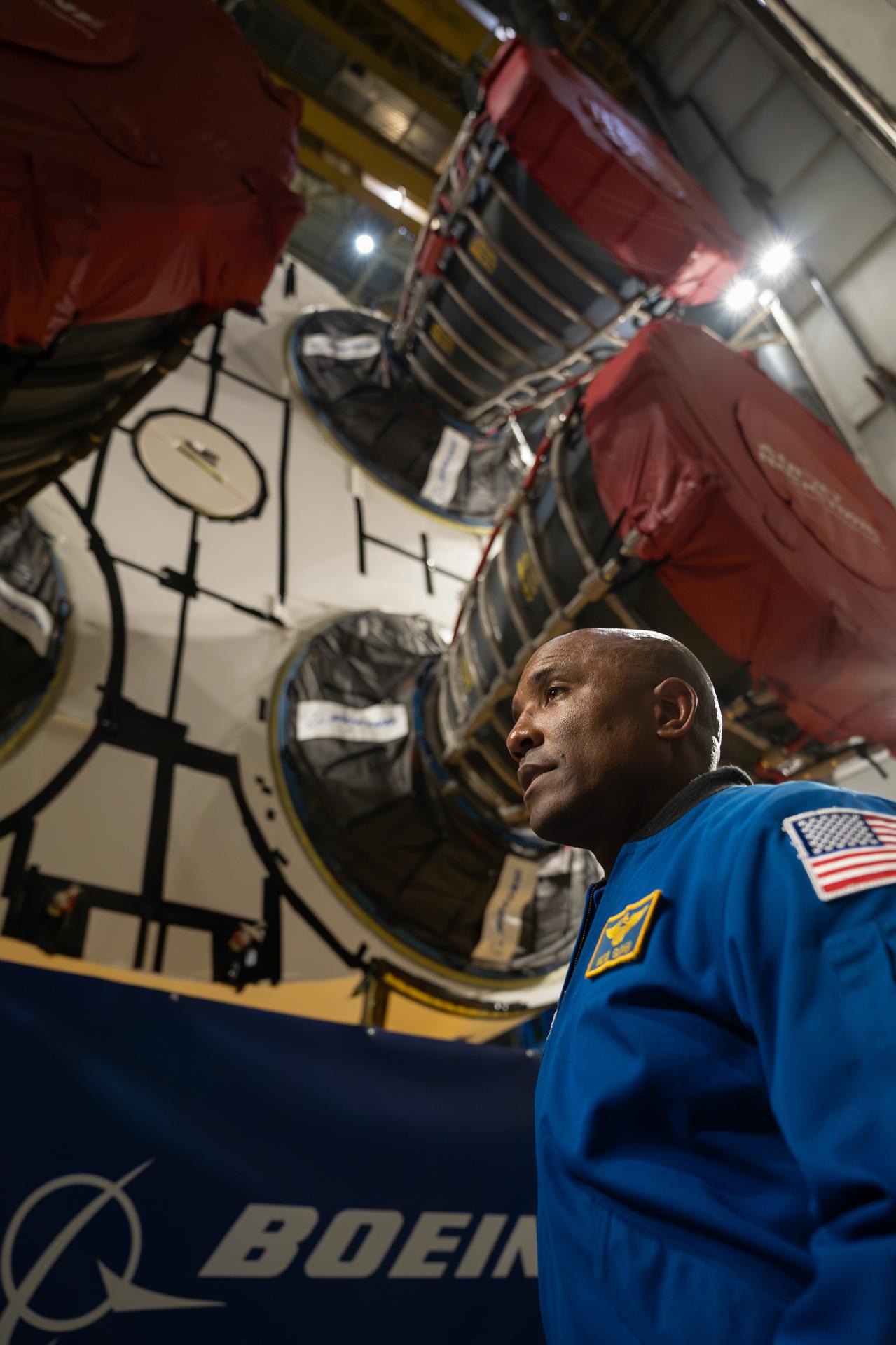
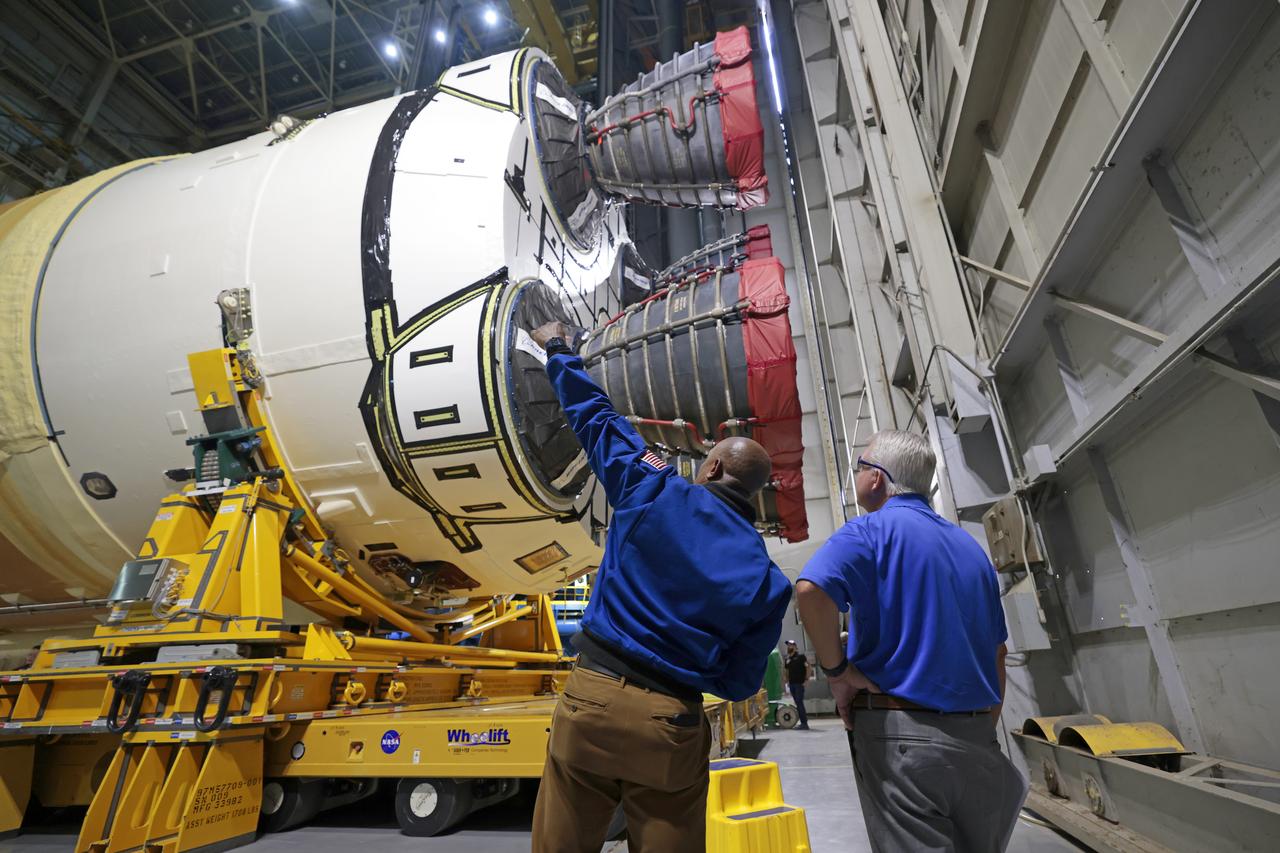
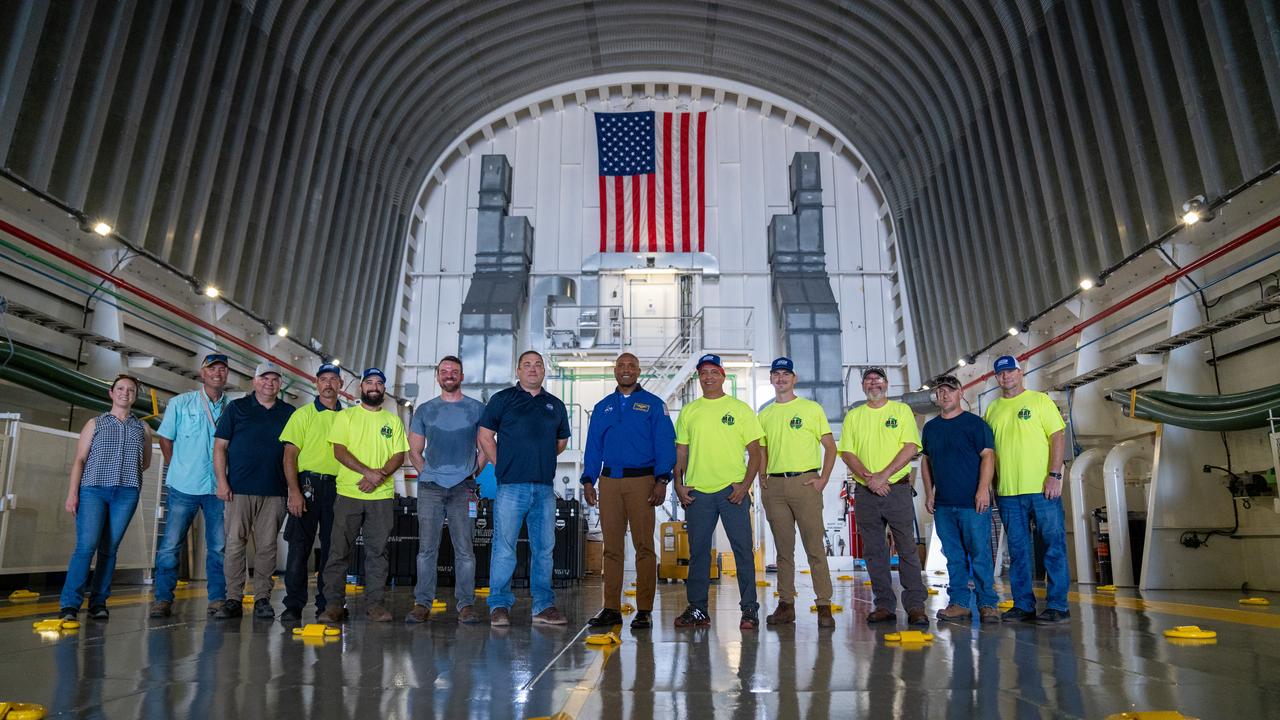
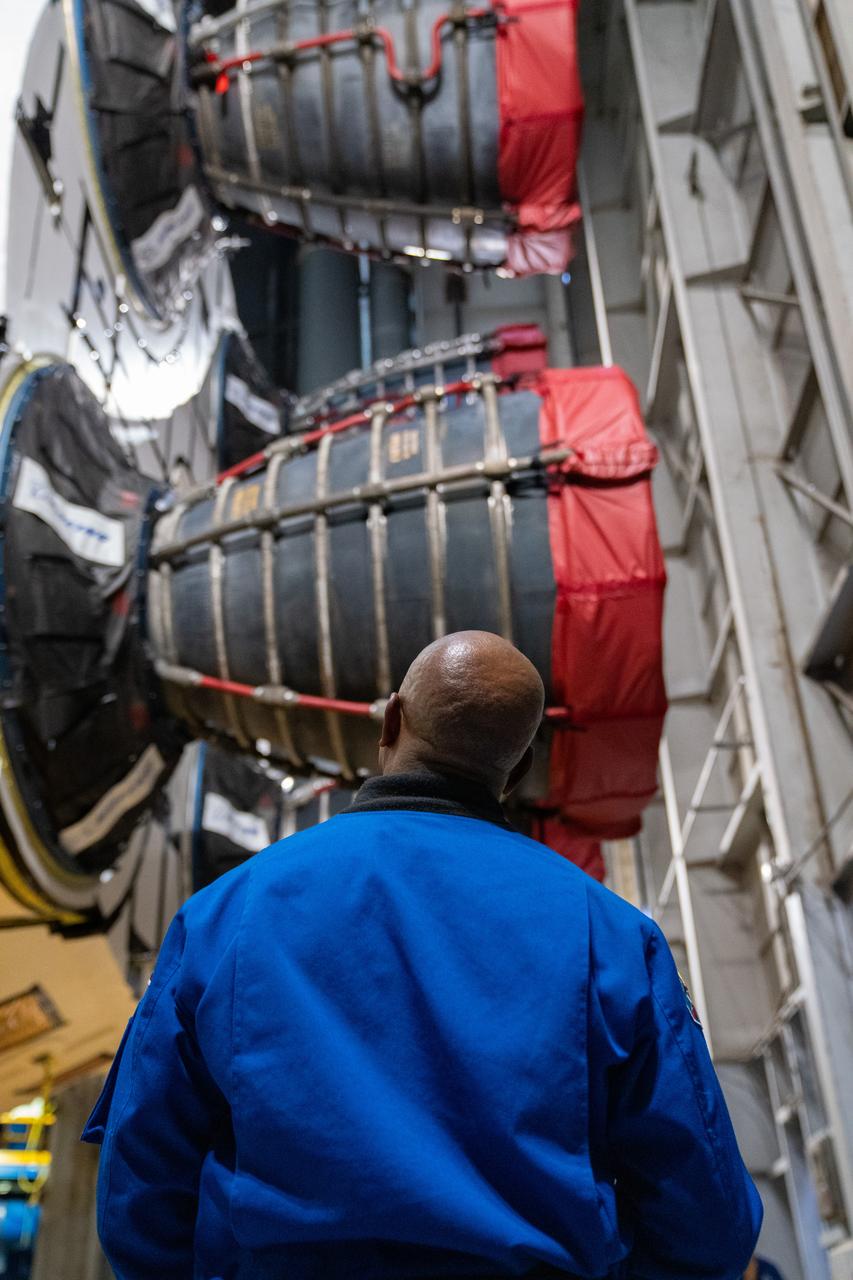
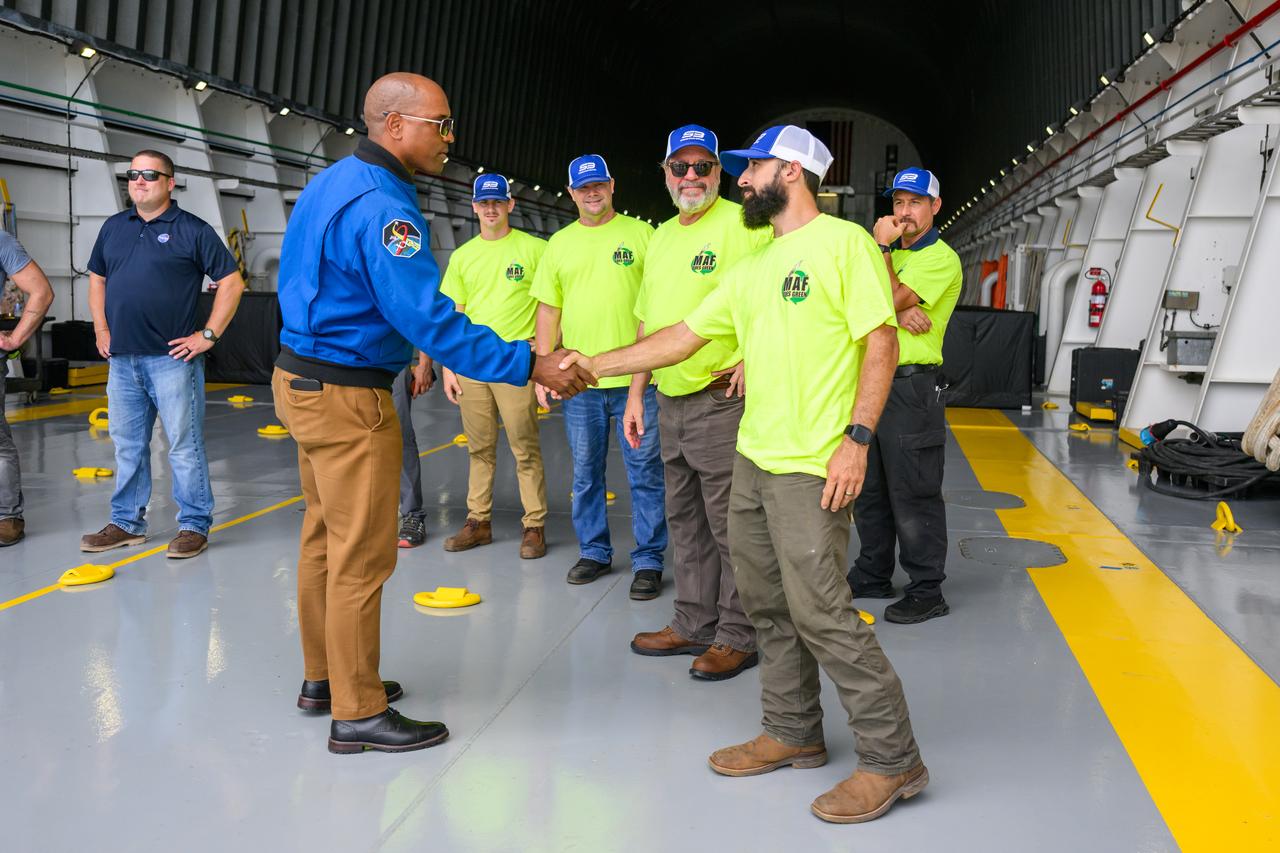
NASA astronaut Victor Glover views the core stage of the SLS (Space Launch System) rocket that will help power Artemis II at NASA’s Michoud Assembly Facility in New Orleans July 15. Glover will pilot Artemis II, the first crewed mission of NASA’s Artemis campaign. Crews moved the 212-foot-tall core stage with its four RS-25 engines to Building 110 at NASA Michoud prior to rolling it out to NASA’s Pegasus barge July 16 for delivery to NASA’s Kennedy Space Center in Florida.
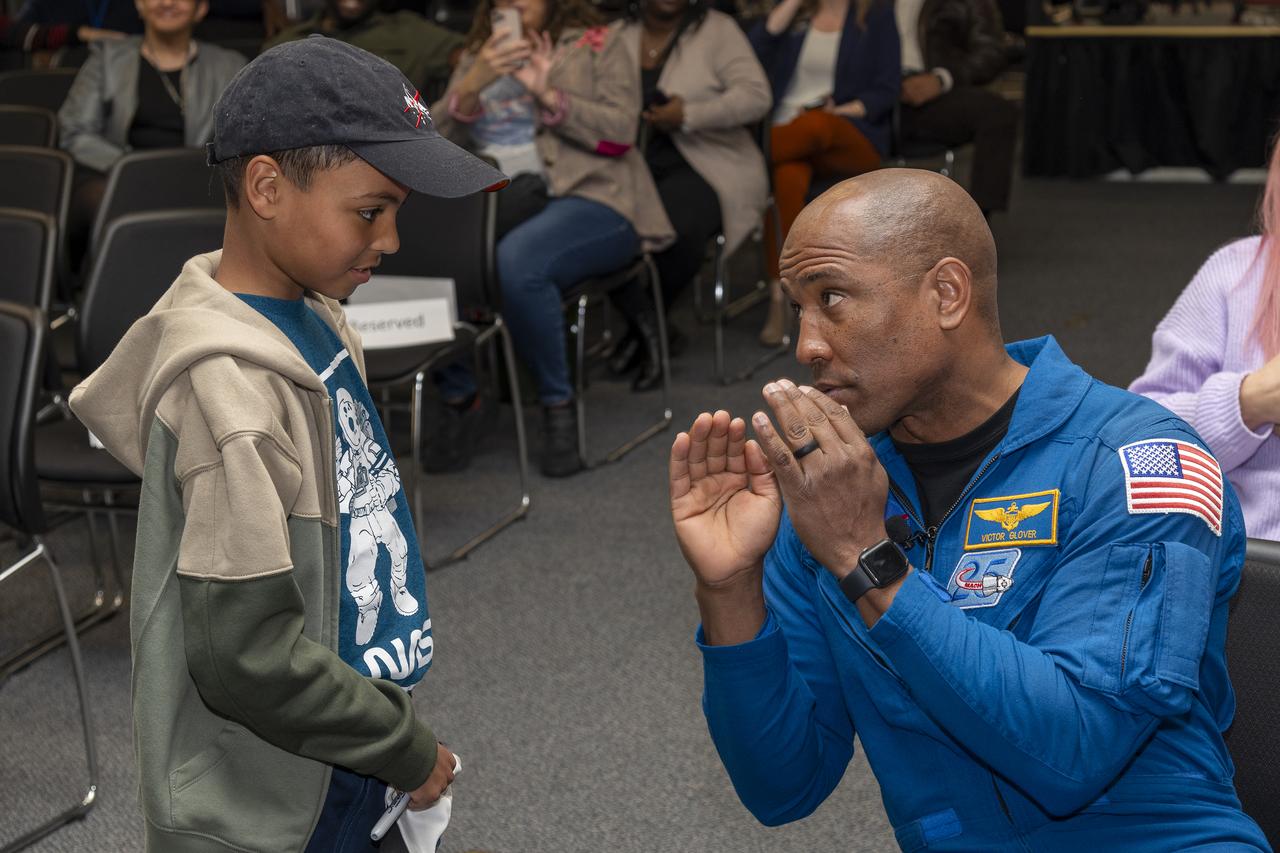
NASA Artemis II astronaut Victor Glover met with Edwards Air Force Base school-age children at a joint NASA and Air Force Black Employee Resource Group event at NASA’s Armstrong Flight Research Center in Edwards, California on Feb. 15.
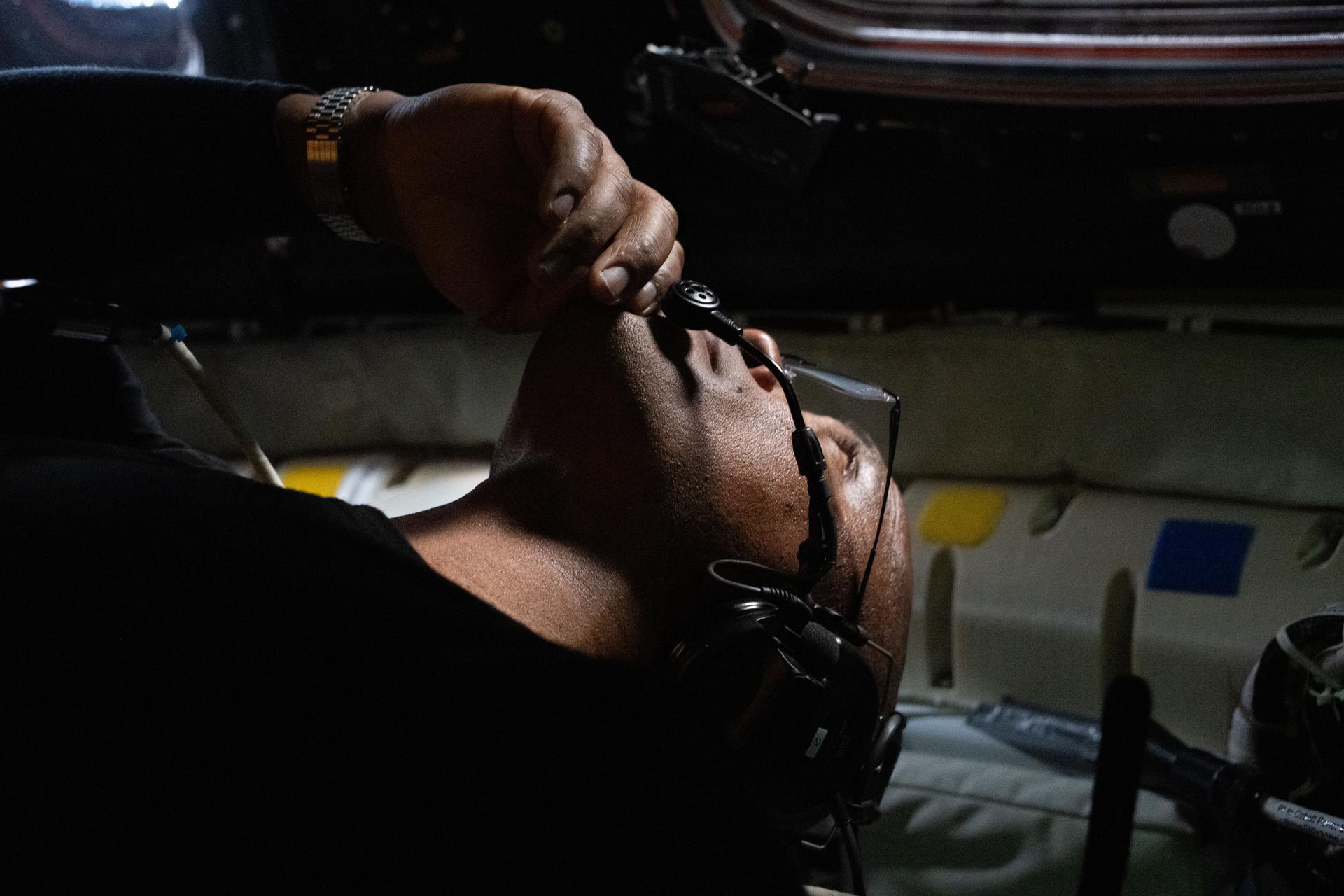
art002e016198 (April 6, 2026) – NASA astronaut and Artemis II Pilot Victor Glover pictured here in the Orion spacecraft during the Artemis II lunar flyby. Glover and his fellow crewmates spent approximately seven hours taking turns at the Orion windows capturing science data to share with their team back on Earth. At closest approach, they came within 4,067 miles of the Moon’s surface.

art002e016204 (April 6, 2026) – NASA astronaut and Artemis II Pilot Victor Glover pictured here in the Orion spacecraft during the Artemis II lunar flyby. Glover and his fellow crewmates spent approximately seven hours taking turns at the Orion windows capturing science data to share with their team back on Earth. At closest approach, they came within 4,067 miles of the Moon’s surface.

Artemis II astronaut Victor J. Glover participates in NASA Langley’s Open House on Saturday, Oct. 21. More than 37,000 people registered to attend the NASA Langley open house. Starting with the Annual 5K Moon Walk Run and the talented Nils Larson, X59 pilot and Astronaut Victor Glover reunited at Langley’s hangar and hosted by Center Director Clayton Turner.
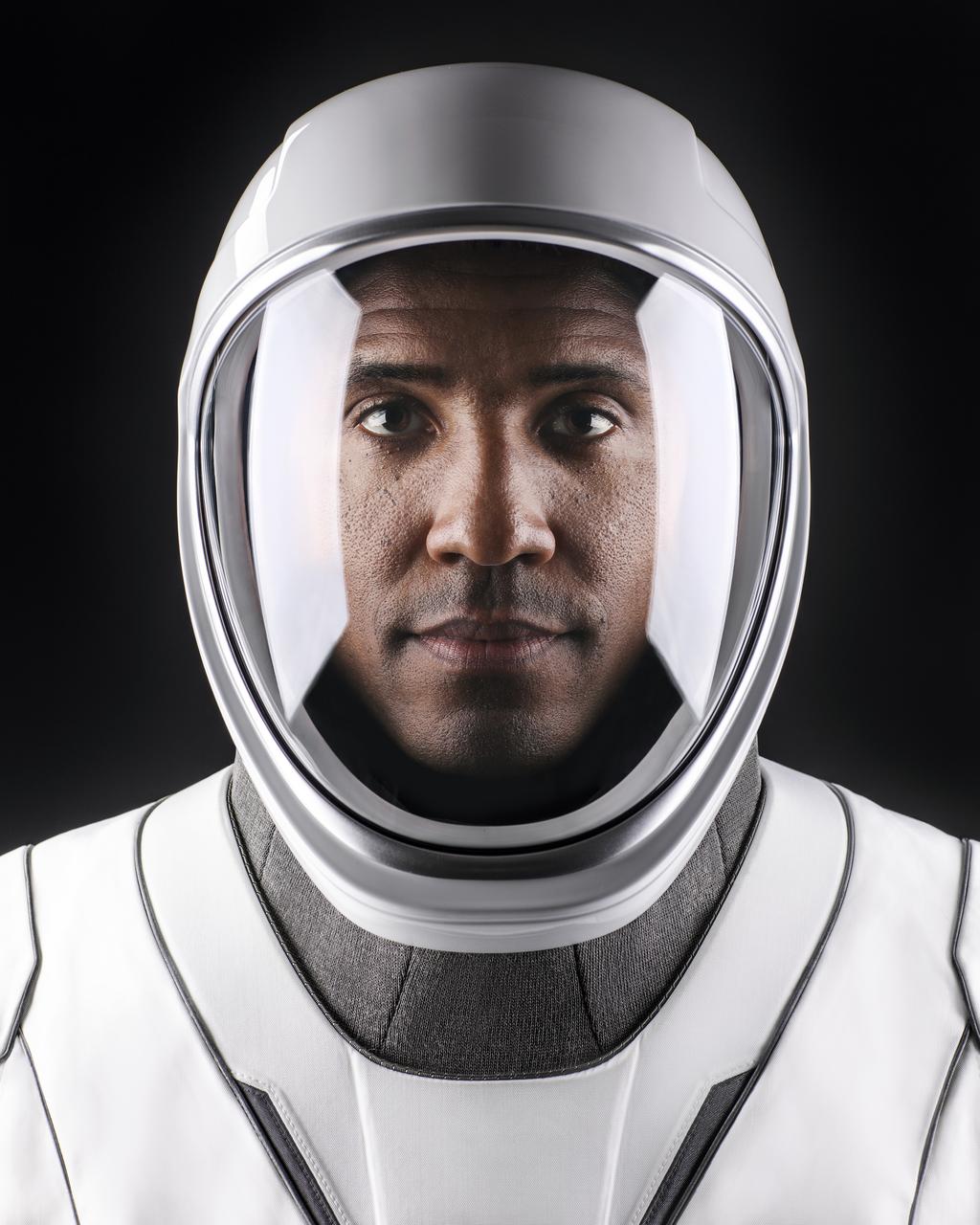
NASA astronaut and Pilot Victor Glover will launch to the International Space Station on the agency’s SpaceX Crew-1 mission. This will be the first operational mission to the orbiting laboratory under NASA’s Commercial Crew Program following the agency’s certification of SpaceX’s crew transportation system. Glover, along with crewmates Michael Hopkins and Shannon Walker – both NASA astronauts – and Japan Aerospace Exploration Agency astronaut Soichi Noguchi, will launch from Kennedy Space Center’s Launch Complex 39A in Florida.
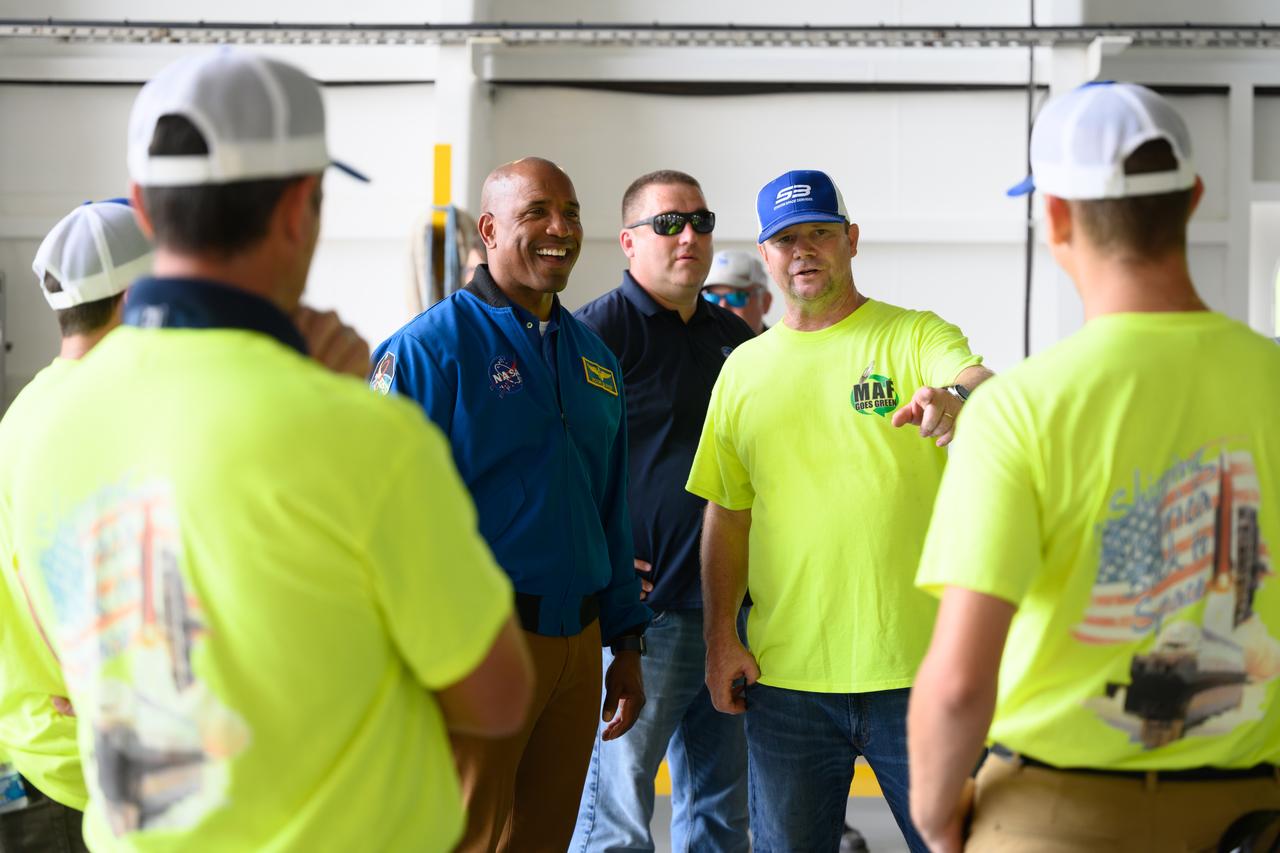
NASA astronaut Victor Glover views the core stage of the SLS (Space Launch System) rocket that will help power Artemis II at NASA’s Michoud Assembly Facility in New Orleans July 15. Glover will pilot Artemis II, the first crewed mission of NASA’s Artemis campaign. Crews moved the 212-foot-tall core stage with its four RS-25 engines to Building 110 at NASA Michoud prior to rolling it out to NASA’s Pegasus barge July 16 for delivery to NASA’s Kennedy Space Center in Florida. The core stage has two giant propellant tanks that collectively hold more than 733,000 gallons of super cold liquid propellant to feed the stage’s four RS-25 engines. Together, the engines produce more than 2 million pounds of thrust to help send astronauts inside NASA’s Orion spacecraft to venture around the Moon for Artemis II. NASA is working to land the first woman, first person of color, and its first international partner astronaut on the Moon under Artemis. SLS is part of NASA’s backbone for deep space exploration, along with the Orion spacecraft, supporting ground systems, advanced spacesuits and rovers, the Gateway in orbit around the Moon, and commercial human landing systems. SLS is the only rocket that can send Orion, astronauts, and supplies to the Moon in a single launch.
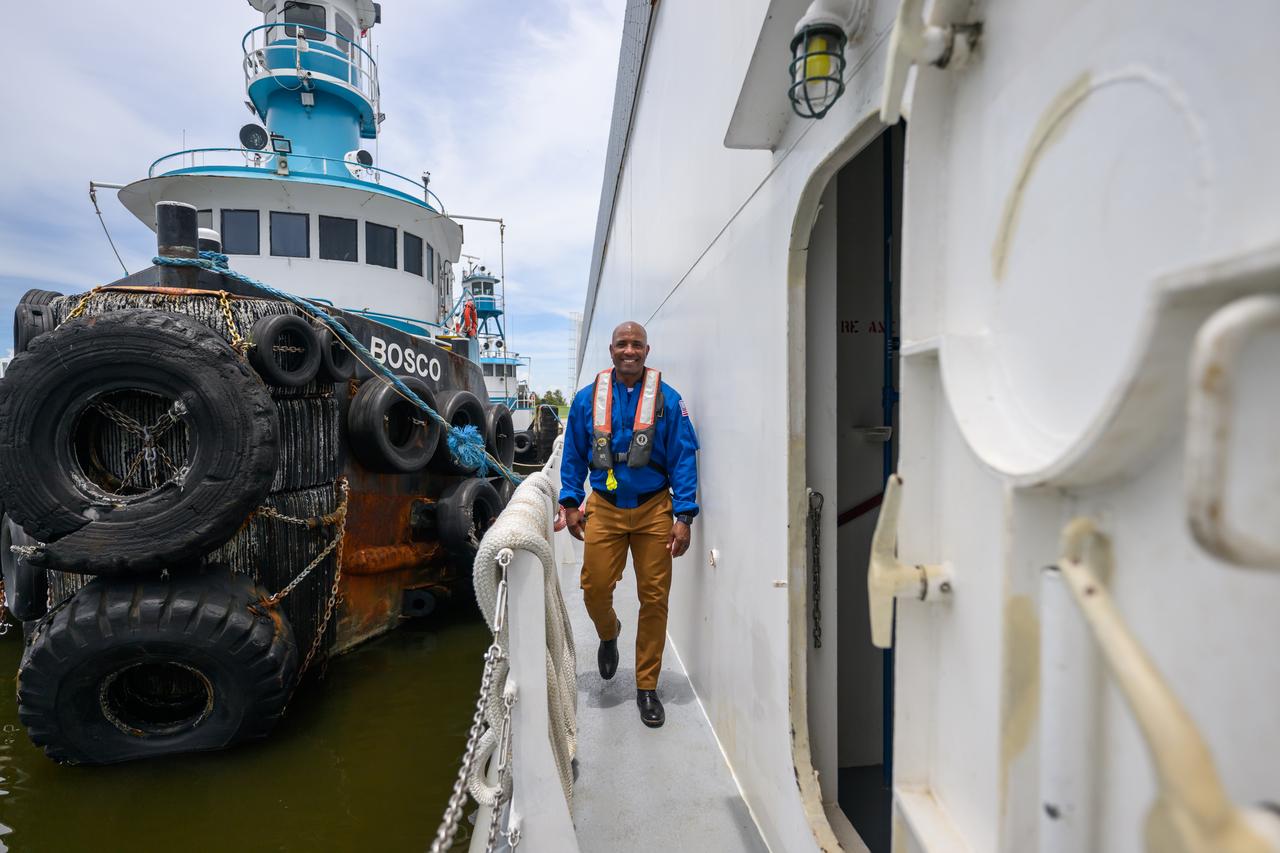
NASA astronaut Victor Glover views the core stage of the SLS (Space Launch System) rocket that will help power Artemis II at NASA’s Michoud Assembly Facility in New Orleans July 15. Glover will pilot Artemis II, the first crewed mission of NASA’s Artemis campaign. Crews moved the 212-foot-tall core stage with its four RS-25 engines to Building 110 at NASA Michoud prior to rolling it out to NASA’s Pegasus barge July 16 for delivery to NASA’s Kennedy Space Center in Florida. The core stage has two giant propellant tanks that collectively hold more than 733,000 gallons of super cold liquid propellant to feed the stage’s four RS-25 engines. Together, the engines produce more than 2 million pounds of thrust to help send astronauts inside NASA’s Orion spacecraft to venture around the Moon for Artemis II. NASA is working to land the first woman, first person of color, and its first international partner astronaut on the Moon under Artemis. SLS is part of NASA’s backbone for deep space exploration, along with the Orion spacecraft, supporting ground systems, advanced spacesuits and rovers, the Gateway in orbit around the Moon, and commercial human landing systems. SLS is the only rocket that can send Orion, astronauts, and supplies to the Moon in a single launch.
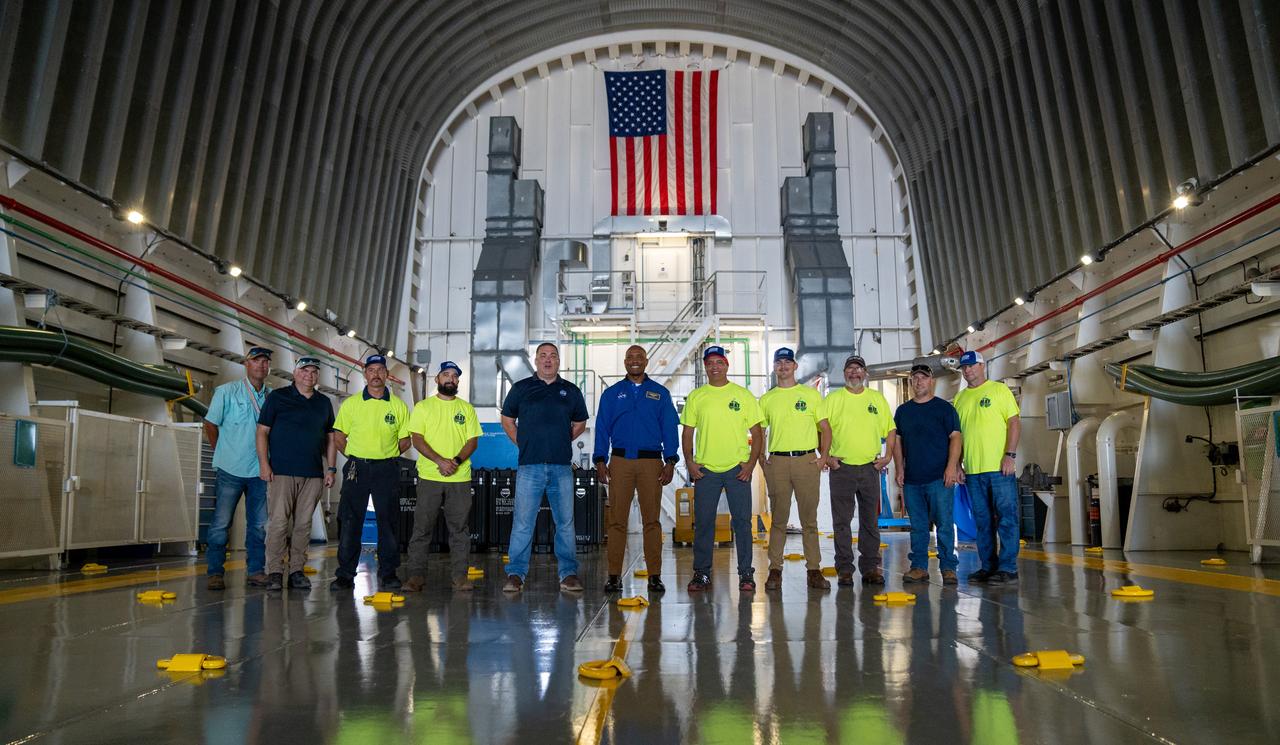
NASA astronaut Victor Glover views the core stage of the SLS (Space Launch System) rocket that will help power Artemis II at NASA’s Michoud Assembly Facility in New Orleans July 15. Glover will pilot Artemis II, the first crewed mission of NASA’s Artemis campaign. Crews moved the 212-foot-tall core stage with its four RS-25 engines to Building 110 at NASA Michoud prior to rolling it out to NASA’s Pegasus barge July 16 for delivery to NASA’s Kennedy Space Center in Florida. The core stage has two giant propellant tanks that collectively hold more than 733,000 gallons of super cold liquid propellant to feed the stage’s four RS-25 engines. Together, the engines produce more than 2 million pounds of thrust to help send astronauts inside NASA’s Orion spacecraft to venture around the Moon for Artemis II. NASA is working to land the first woman, first person of color, and its first international partner astronaut on the Moon under Artemis. SLS is part of NASA’s backbone for deep space exploration, along with the Orion spacecraft, supporting ground systems, advanced spacesuits and rovers, the Gateway in orbit around the Moon, and commercial human landing systems. SLS is the only rocket that can send Orion, astronauts, and supplies to the Moon in a single launch.
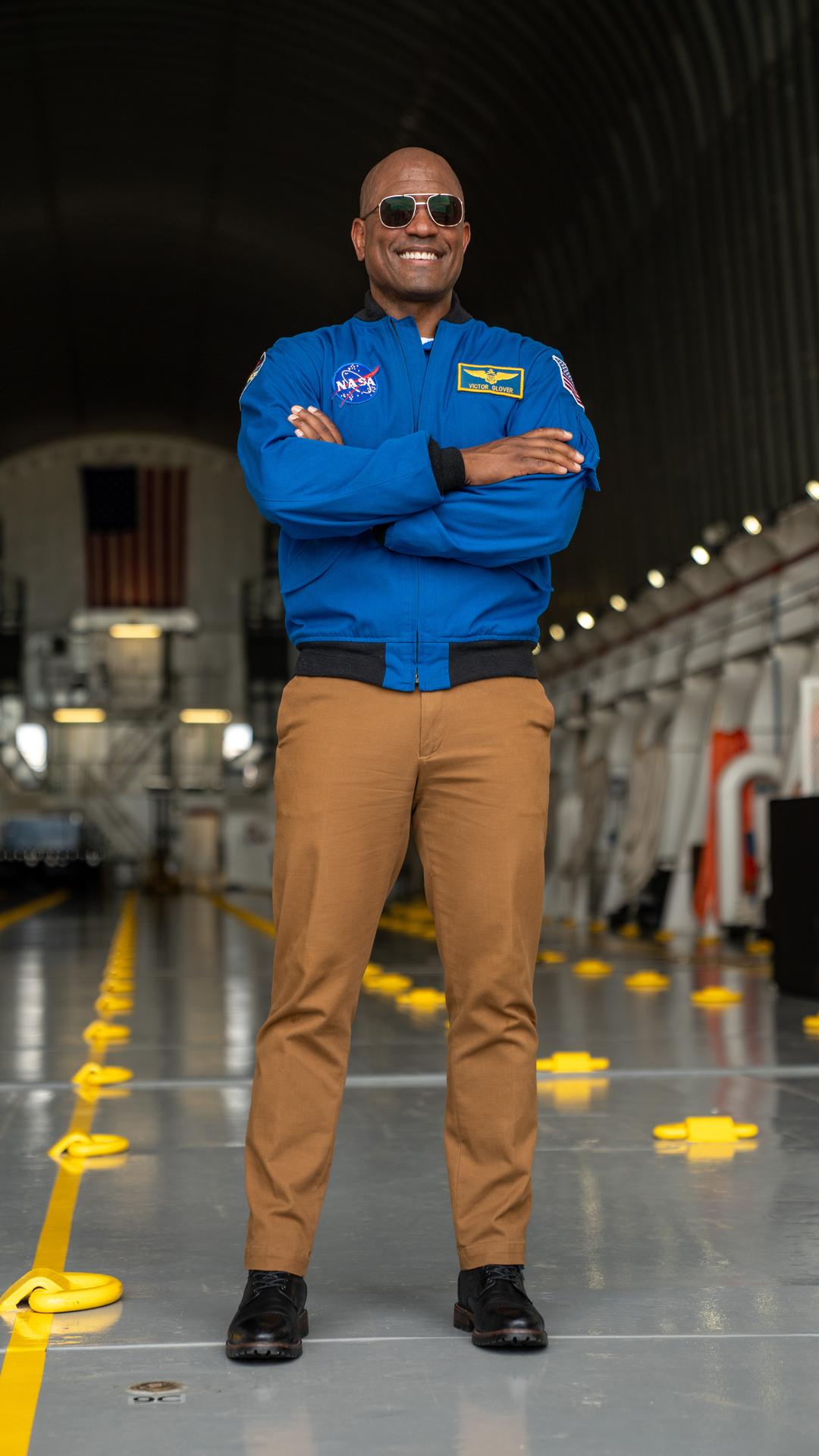
NASA astronaut Victor Glover views the core stage of the SLS (Space Launch System) rocket that will help power Artemis II at NASA’s Michoud Assembly Facility in New Orleans July 15. Glover will pilot Artemis II, the first crewed mission of NASA’s Artemis campaign. Crews moved the 212-foot-tall core stage with its four RS-25 engines to Building 110 at NASA Michoud prior to rolling it out to NASA’s Pegasus barge July 16 for delivery to NASA’s Kennedy Space Center in Florida. The core stage has two giant propellant tanks that collectively hold more than 733,000 gallons of super cold liquid propellant to feed the stage’s four RS-25 engines. Together, the engines produce more than 2 million pounds of thrust to help send astronauts inside NASA’s Orion spacecraft to venture around the Moon for Artemis II. NASA is working to land the first woman, first person of color, and its first international partner astronaut on the Moon under Artemis. SLS is part of NASA’s backbone for deep space exploration, along with the Orion spacecraft, supporting ground systems, advanced spacesuits and rovers, the Gateway in orbit around the Moon, and commercial human landing systems. SLS is the only rocket that can send Orion, astronauts, and supplies to the Moon in a single launch.
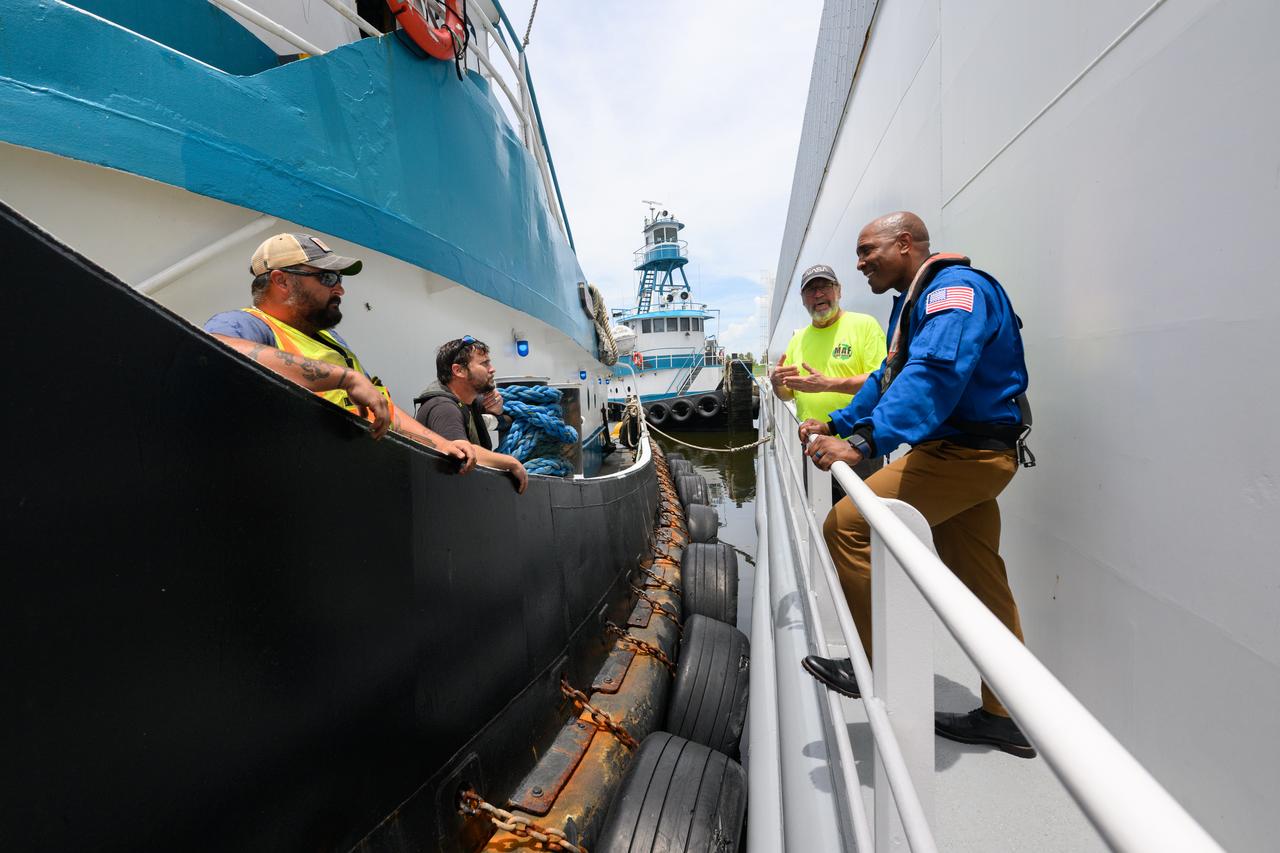
NASA astronaut Victor Glover views the core stage of the SLS (Space Launch System) rocket that will help power Artemis II at NASA’s Michoud Assembly Facility in New Orleans July 15. Glover will pilot Artemis II, the first crewed mission of NASA’s Artemis campaign. Crews moved the 212-foot-tall core stage with its four RS-25 engines to Building 110 at NASA Michoud prior to rolling it out to NASA’s Pegasus barge July 16 for delivery to NASA’s Kennedy Space Center in Florida. The core stage has two giant propellant tanks that collectively hold more than 733,000 gallons of super cold liquid propellant to feed the stage’s four RS-25 engines. Together, the engines produce more than 2 million pounds of thrust to help send astronauts inside NASA’s Orion spacecraft to venture around the Moon for Artemis II. NASA is working to land the first woman, first person of color, and its first international partner astronaut on the Moon under Artemis. SLS is part of NASA’s backbone for deep space exploration, along with the Orion spacecraft, supporting ground systems, advanced spacesuits and rovers, the Gateway in orbit around the Moon, and commercial human landing systems. SLS is the only rocket that can send Orion, astronauts, and supplies to the Moon in a single launch.

NASA astronaut Victor Glover views the core stage of the SLS (Space Launch System) rocket that will help power Artemis II at NASA’s Michoud Assembly Facility in New Orleans July 15. Glover will pilot Artemis II, the first crewed mission of NASA’s Artemis campaign. Crews moved the 212-foot-tall core stage with its four RS-25 engines to Building 110 at NASA Michoud prior to rolling it out to NASA’s Pegasus barge July 16 for delivery to NASA’s Kennedy Space Center in Florida. The core stage has two giant propellant tanks that collectively hold more than 733,000 gallons of super cold liquid propellant to feed the stage’s four RS-25 engines. Together, the engines produce more than 2 million pounds of thrust to help send astronauts inside NASA’s Orion spacecraft to venture around the Moon for Artemis II. NASA is working to land the first woman, first person of color, and its first international partner astronaut on the Moon under Artemis. SLS is part of NASA’s backbone for deep space exploration, along with the Orion spacecraft, supporting ground systems, advanced spacesuits and rovers, the Gateway in orbit around the Moon, and commercial human landing systems. SLS is the only rocket that can send Orion, astronauts, and supplies to the Moon in a single launch.
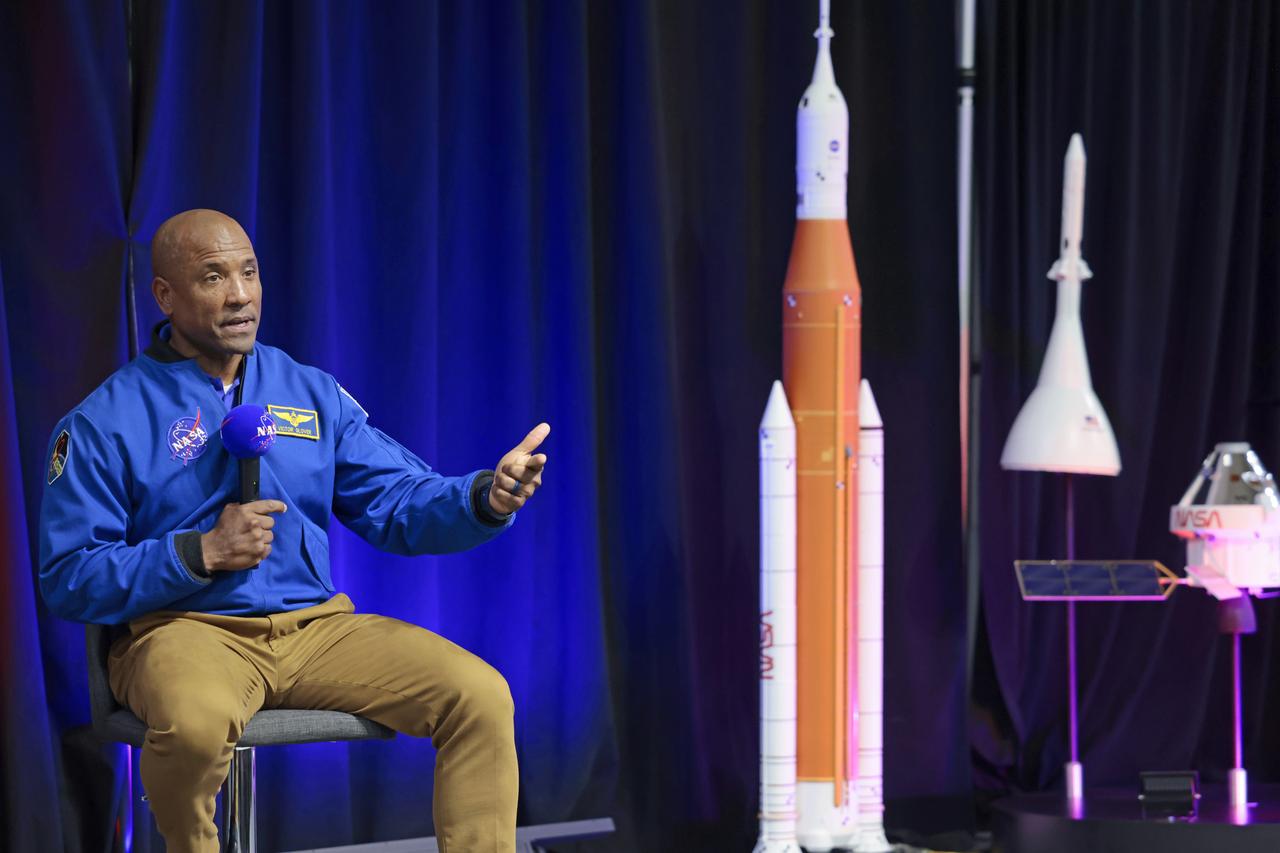
NASA astronaut Victor Glover views the core stage of the SLS (Space Launch System) rocket that will help power Artemis II at NASA’s Michoud Assembly Facility in New Orleans July 15. Glover will pilot Artemis II, the first crewed mission of NASA’s Artemis campaign. Crews moved the 212-foot-tall core stage with its four RS-25 engines to Building 110 at NASA Michoud prior to rolling it out to NASA’s Pegasus barge July 16 for delivery to NASA’s Kennedy Space Center in Florida. The core stage has two giant propellant tanks that collectively hold more than 733,000 gallons of super cold liquid propellant to feed the stage’s four RS-25 engines. Together, the engines produce more than 2 million pounds of thrust to help send astronauts inside NASA’s Orion spacecraft to venture around the Moon for Artemis II. NASA is working to land the first woman, first person of color, and its first international partner astronaut on the Moon under Artemis. SLS is part of NASA’s backbone for deep space exploration, along with the Orion spacecraft, supporting ground systems, advanced spacesuits and rovers, the Gateway in orbit around the Moon, and commercial human landing systems. SLS is the only rocket that can send Orion, astronauts, and supplies to the Moon in a single launch.
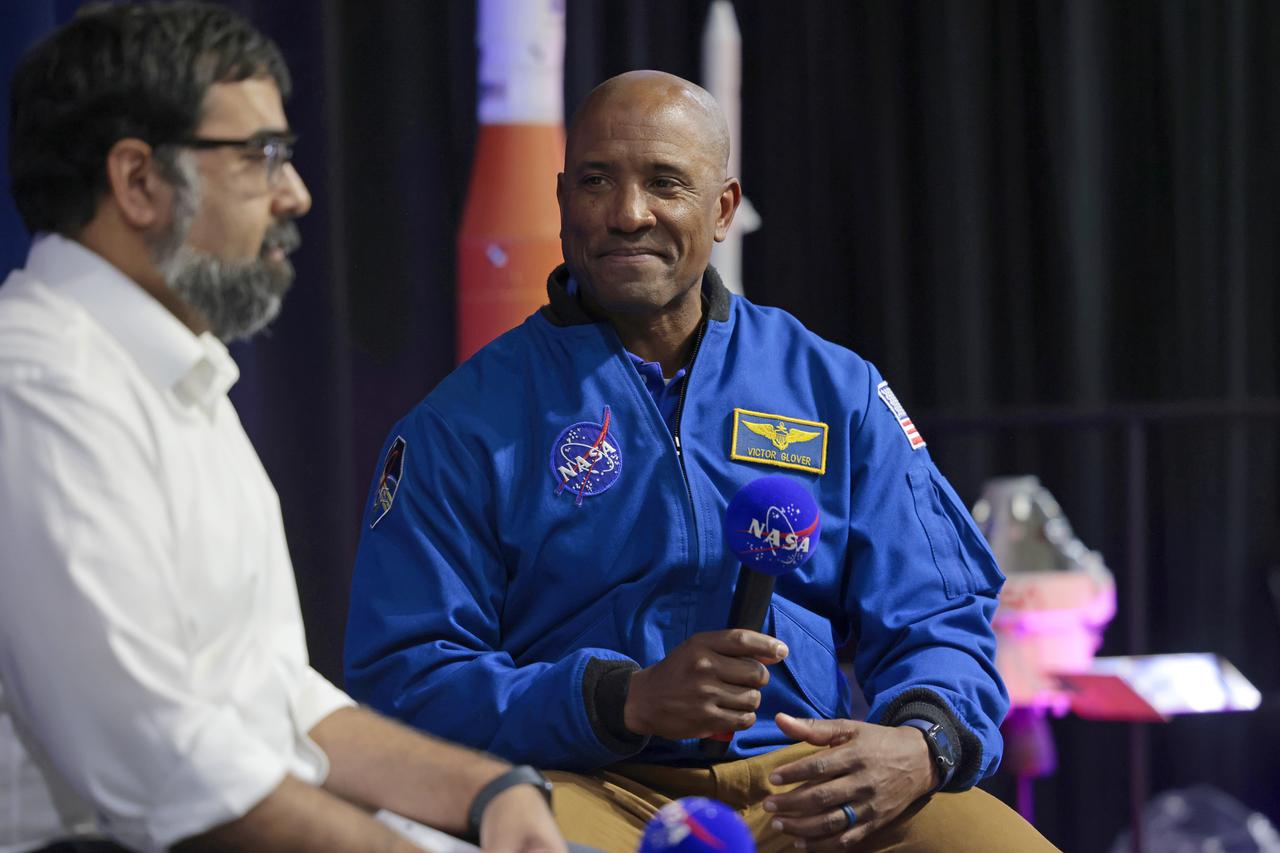
NASA astronaut Victor Glover views the core stage of the SLS (Space Launch System) rocket that will help power Artemis II at NASA’s Michoud Assembly Facility in New Orleans July 15. Glover will pilot Artemis II, the first crewed mission of NASA’s Artemis campaign. Crews moved the 212-foot-tall core stage with its four RS-25 engines to Building 110 at NASA Michoud prior to rolling it out to NASA’s Pegasus barge July 16 for delivery to NASA’s Kennedy Space Center in Florida. The core stage has two giant propellant tanks that collectively hold more than 733,000 gallons of super cold liquid propellant to feed the stage’s four RS-25 engines. Together, the engines produce more than 2 million pounds of thrust to help send astronauts inside NASA’s Orion spacecraft to venture around the Moon for Artemis II. NASA is working to land the first woman, first person of color, and its first international partner astronaut on the Moon under Artemis. SLS is part of NASA’s backbone for deep space exploration, along with the Orion spacecraft, supporting ground systems, advanced spacesuits and rovers, the Gateway in orbit around the Moon, and commercial human landing systems. SLS is the only rocket that can send Orion, astronauts, and supplies to the Moon in a single launch.
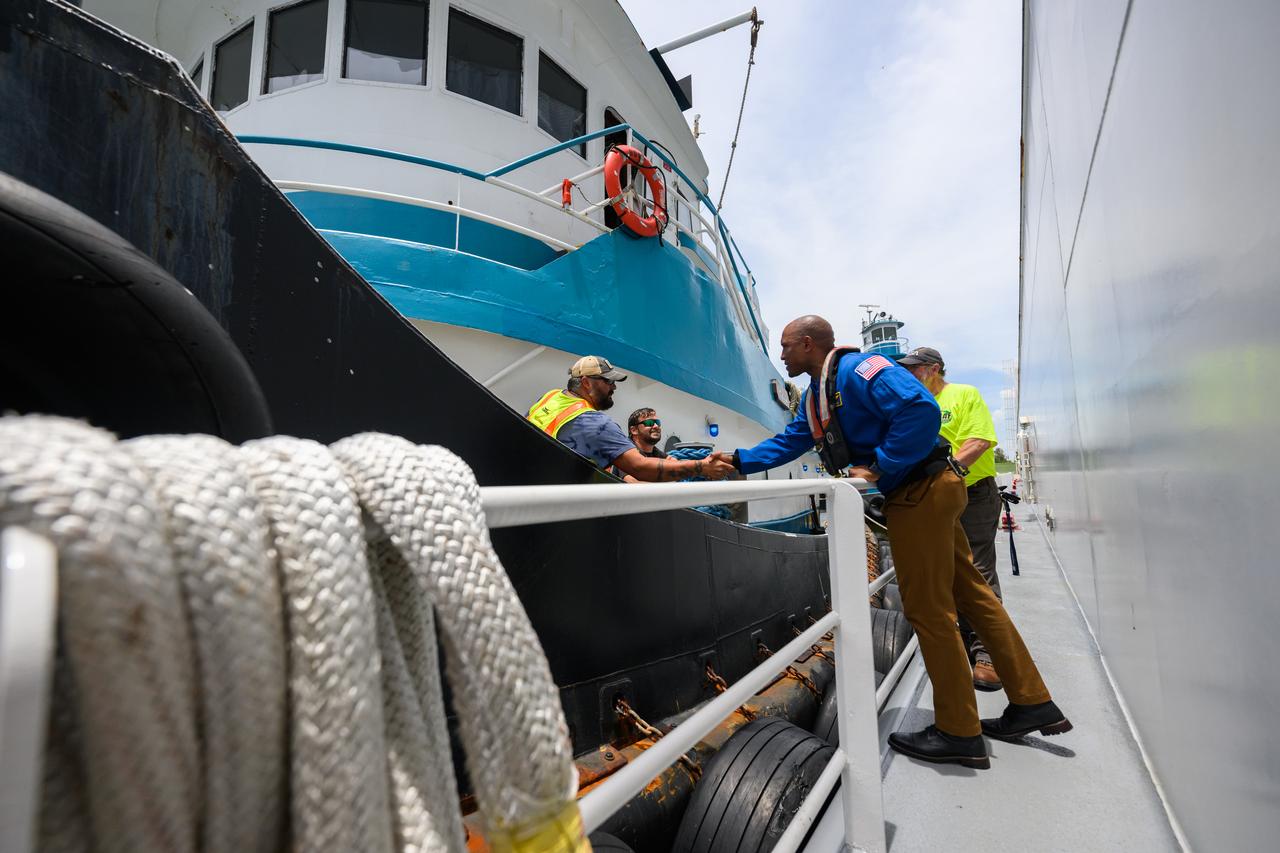
NASA astronaut Victor Glover views the core stage of the SLS (Space Launch System) rocket that will help power Artemis II at NASA’s Michoud Assembly Facility in New Orleans July 15. Glover will pilot Artemis II, the first crewed mission of NASA’s Artemis campaign. Crews moved the 212-foot-tall core stage with its four RS-25 engines to Building 110 at NASA Michoud prior to rolling it out to NASA’s Pegasus barge July 16 for delivery to NASA’s Kennedy Space Center in Florida. The core stage has two giant propellant tanks that collectively hold more than 733,000 gallons of super cold liquid propellant to feed the stage’s four RS-25 engines. Together, the engines produce more than 2 million pounds of thrust to help send astronauts inside NASA’s Orion spacecraft to venture around the Moon for Artemis II. NASA is working to land the first woman, first person of color, and its first international partner astronaut on the Moon under Artemis. SLS is part of NASA’s backbone for deep space exploration, along with the Orion spacecraft, supporting ground systems, advanced spacesuits and rovers, the Gateway in orbit around the Moon, and commercial human landing systems. SLS is the only rocket that can send Orion, astronauts, and supplies to the Moon in a single launch.

NASA astronaut Victor Glover views the core stage of the SLS (Space Launch System) rocket that will help power Artemis II at NASA’s Michoud Assembly Facility in New Orleans July 15. Glover will pilot Artemis II, the first crewed mission of NASA’s Artemis campaign. Crews moved the 212-foot-tall core stage with its four RS-25 engines to Building 110 at NASA Michoud prior to rolling it out to NASA’s Pegasus barge July 16 for delivery to NASA’s Kennedy Space Center in Florida. The core stage has two giant propellant tanks that collectively hold more than 733,000 gallons of super cold liquid propellant to feed the stage’s four RS-25 engines. Together, the engines produce more than 2 million pounds of thrust to help send astronauts inside NASA’s Orion spacecraft to venture around the Moon for Artemis II. NASA is working to land the first woman, first person of color, and its first international partner astronaut on the Moon under Artemis. SLS is part of NASA’s backbone for deep space exploration, along with the Orion spacecraft, supporting ground systems, advanced spacesuits and rovers, the Gateway in orbit around the Moon, and commercial human landing systems. SLS is the only rocket that can send Orion, astronauts, and supplies to the Moon in a single launch.
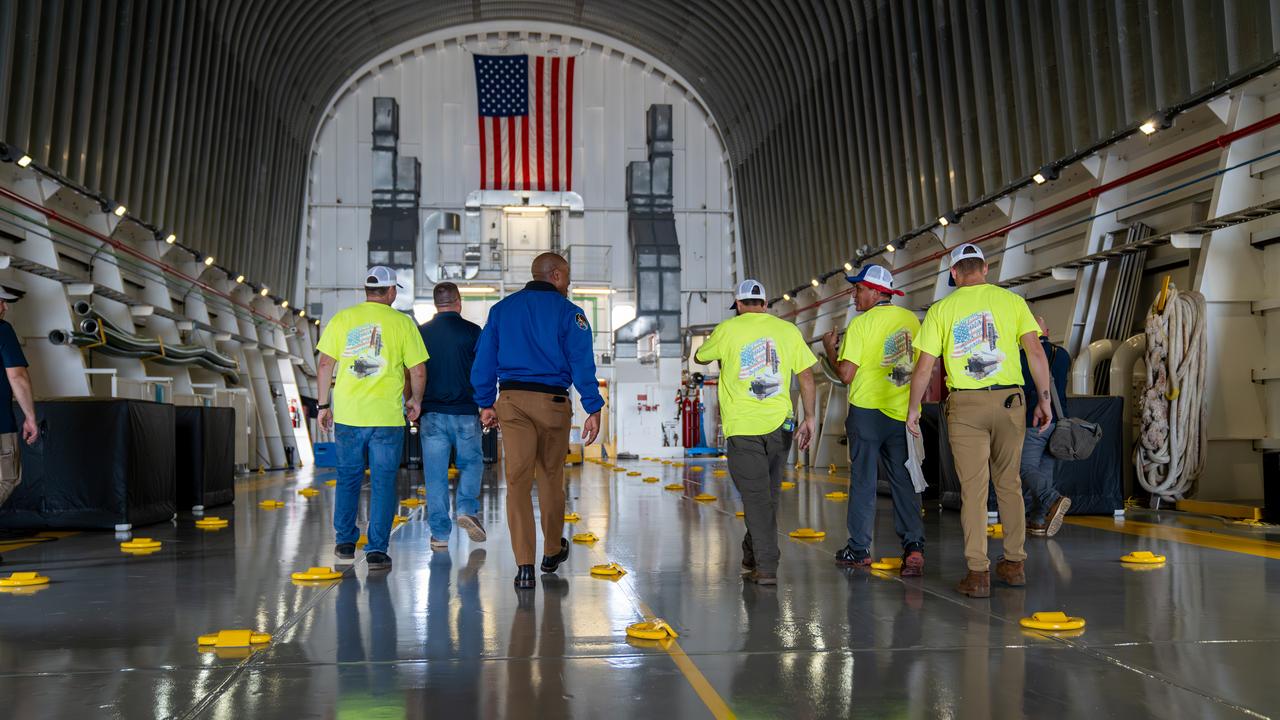
NASA astronaut Victor Glover views the core stage of the SLS (Space Launch System) rocket that will help power Artemis II at NASA’s Michoud Assembly Facility in New Orleans July 15. Glover will pilot Artemis II, the first crewed mission of NASA’s Artemis campaign. Crews moved the 212-foot-tall core stage with its four RS-25 engines to Building 110 at NASA Michoud prior to rolling it out to NASA’s Pegasus barge July 16 for delivery to NASA’s Kennedy Space Center in Florida. The core stage has two giant propellant tanks that collectively hold more than 733,000 gallons of super cold liquid propellant to feed the stage’s four RS-25 engines. Together, the engines produce more than 2 million pounds of thrust to help send astronauts inside NASA’s Orion spacecraft to venture around the Moon for Artemis II. NASA is working to land the first woman, first person of color, and its first international partner astronaut on the Moon under Artemis. SLS is part of NASA’s backbone for deep space exploration, along with the Orion spacecraft, supporting ground systems, advanced spacesuits and rovers, the Gateway in orbit around the Moon, and commercial human landing systems. SLS is the only rocket that can send Orion, astronauts, and supplies to the Moon in a single launch.
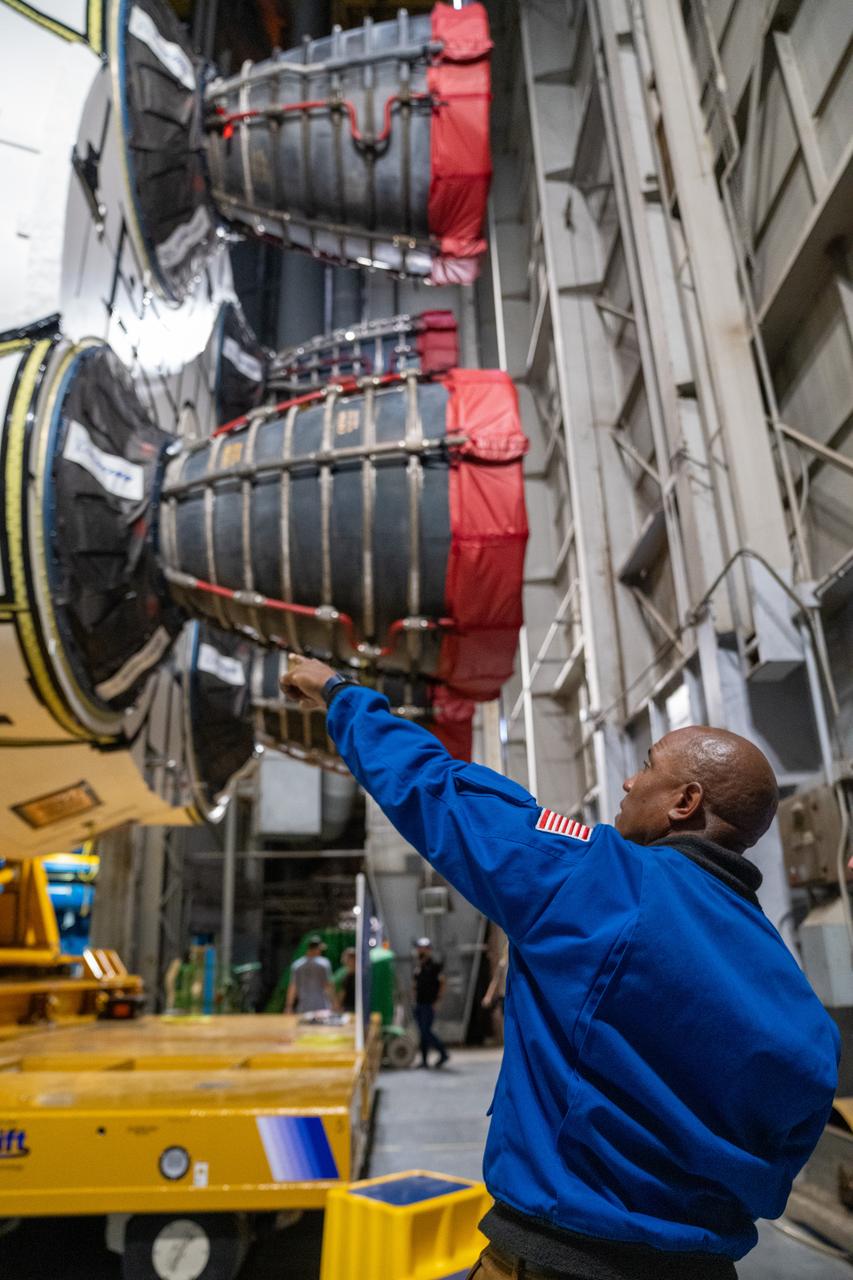
NASA astronaut Victor Glover views the core stage of the SLS (Space Launch System) rocket that will help power Artemis II at NASA’s Michoud Assembly Facility in New Orleans July 15. Glover will pilot Artemis II, the first crewed mission of NASA’s Artemis campaign. Crews moved the 212-foot-tall core stage with its four RS-25 engines to Building 110 at NASA Michoud prior to rolling it out to NASA’s Pegasus barge July 16 for delivery to NASA’s Kennedy Space Center in Florida. The core stage has two giant propellant tanks that collectively hold more than 733,000 gallons of super cold liquid propellant to feed the stage’s four RS-25 engines. Together, the engines produce more than 2 million pounds of thrust to help send astronauts inside NASA’s Orion spacecraft to venture around the Moon for Artemis II. NASA is working to land the first woman, first person of color, and its first international partner astronaut on the Moon under Artemis. SLS is part of NASA’s backbone for deep space exploration, along with the Orion spacecraft, supporting ground systems, advanced spacesuits and rovers, the Gateway in orbit around the Moon, and commercial human landing systems. SLS is the only rocket that can send Orion, astronauts, and supplies to the Moon in a single launch.
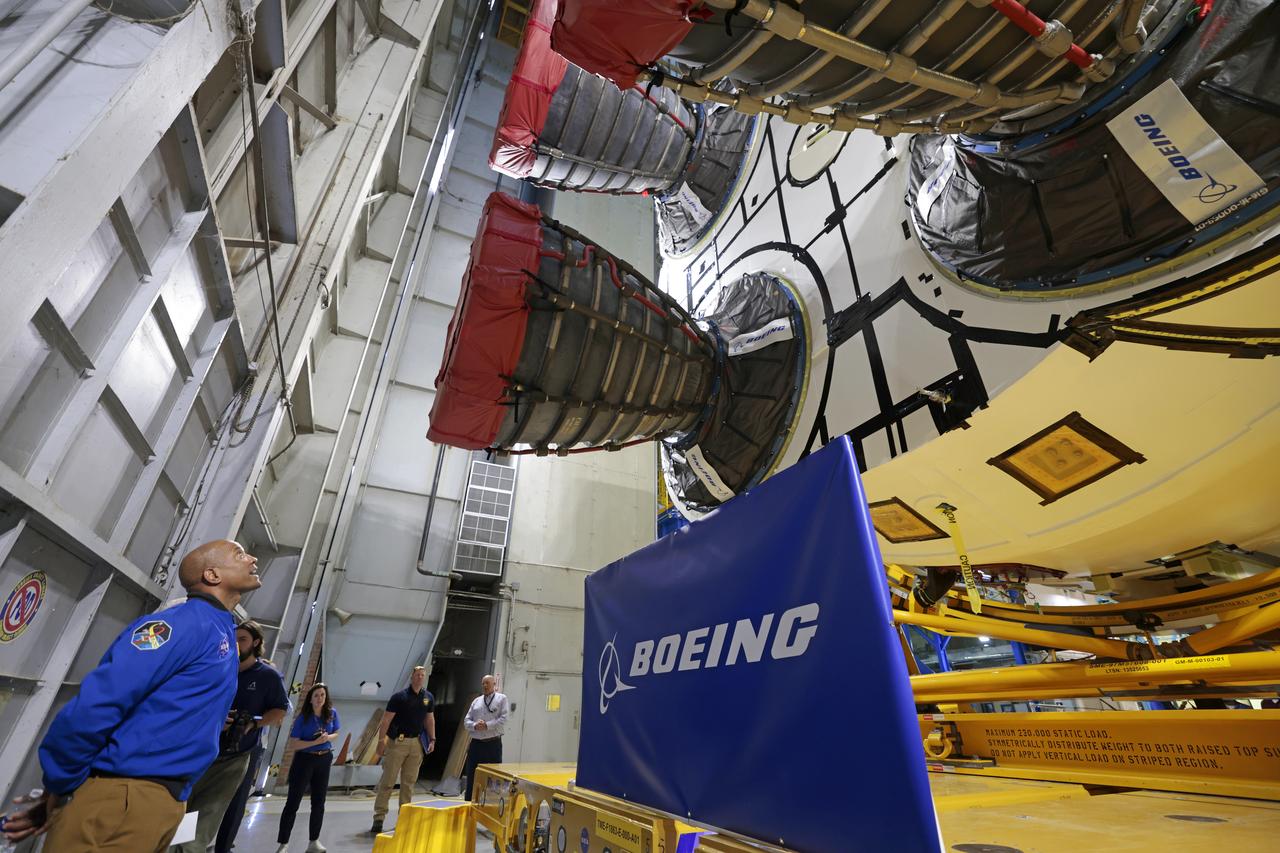
NASA astronaut Victor Glover views the core stage of the SLS (Space Launch System) rocket that will help power Artemis II at NASA’s Michoud Assembly Facility in New Orleans July 15. Glover will pilot Artemis II, the first crewed mission of NASA’s Artemis campaign. Crews moved the 212-foot-tall core stage with its four RS-25 engines to Building 110 at NASA Michoud prior to rolling it out to NASA’s Pegasus barge July 16 for delivery to NASA’s Kennedy Space Center in Florida. The core stage has two giant propellant tanks that collectively hold more than 733,000 gallons of super cold liquid propellant to feed the stage’s four RS-25 engines. Together, the engines produce more than 2 million pounds of thrust to help send astronauts inside NASA’s Orion spacecraft to venture around the Moon for Artemis II. NASA is working to land the first woman, first person of color, and its first international partner astronaut on the Moon under Artemis. SLS is part of NASA’s backbone for deep space exploration, along with the Orion spacecraft, supporting ground systems, advanced spacesuits and rovers, the Gateway in orbit around the Moon, and commercial human landing systems. SLS is the only rocket that can send Orion, astronauts, and supplies to the Moon in a single launch.
NASA astronaut Victor Glover views the core stage of the SLS (Space Launch System) rocket that will help power Artemis II at NASA’s Michoud Assembly Facility in New Orleans July 15. Glover will pilot Artemis II, the first crewed mission of NASA’s Artemis campaign. Crews moved the 212-foot-tall core stage with its four RS-25 engines to Building 110 at NASA Michoud prior to rolling it out to NASA’s Pegasus barge July 16 for delivery to NASA’s Kennedy Space Center in Florida. The core stage has two giant propellant tanks that collectively hold more than 733,000 gallons of super cold liquid propellant to feed the stage’s four RS-25 engines. Together, the engines produce more than 2 million pounds of thrust to help send astronauts inside NASA’s Orion spacecraft to venture around the Moon for Artemis II. NASA is working to land the first woman, first person of color, and its first international partner astronaut on the Moon under Artemis. SLS is part of NASA’s backbone for deep space exploration, along with the Orion spacecraft, supporting ground systems, advanced spacesuits and rovers, the Gateway in orbit around the Moon, and commercial human landing systems. SLS is the only rocket that can send Orion, astronauts, and supplies to the Moon in a single launch.
NASA astronaut Victor Glover views the core stage of the SLS (Space Launch System) rocket that will help power Artemis II at NASA’s Michoud Assembly Facility in New Orleans July 15. Glover will pilot Artemis II, the first crewed mission of NASA’s Artemis campaign. Crews moved the 212-foot-tall core stage with its four RS-25 engines to Building 110 at NASA Michoud prior to rolling it out to NASA’s Pegasus barge July 16 for delivery to NASA’s Kennedy Space Center in Florida. The core stage has two giant propellant tanks that collectively hold more than 733,000 gallons of super cold liquid propellant to feed the stage’s four RS-25 engines. Together, the engines produce more than 2 million pounds of thrust to help send astronauts inside NASA’s Orion spacecraft to venture around the Moon for Artemis II. NASA is working to land the first woman, first person of color, and its first international partner astronaut on the Moon under Artemis. SLS is part of NASA’s backbone for deep space exploration, along with the Orion spacecraft, supporting ground systems, advanced spacesuits and rovers, the Gateway in orbit around the Moon, and commercial human landing systems. SLS is the only rocket that can send Orion, astronauts, and supplies to the Moon in a single launch.
NASA astronaut Victor Glover views the core stage of the SLS (Space Launch System) rocket that will help power Artemis II at NASA’s Michoud Assembly Facility in New Orleans July 15. Glover will pilot Artemis II, the first crewed mission of NASA’s Artemis campaign. Crews moved the 212-foot-tall core stage with its four RS-25 engines to Building 110 at NASA Michoud prior to rolling it out to NASA’s Pegasus barge July 16 for delivery to NASA’s Kennedy Space Center in Florida. The core stage has two giant propellant tanks that collectively hold more than 733,000 gallons of super cold liquid propellant to feed the stage’s four RS-25 engines. Together, the engines produce more than 2 million pounds of thrust to help send astronauts inside NASA’s Orion spacecraft to venture around the Moon for Artemis II. NASA is working to land the first woman, first person of color, and its first international partner astronaut on the Moon under Artemis. SLS is part of NASA’s backbone for deep space exploration, along with the Orion spacecraft, supporting ground systems, advanced spacesuits and rovers, the Gateway in orbit around the Moon, and commercial human landing systems. SLS is the only rocket that can send Orion, astronauts, and supplies to the Moon in a single launch.
NASA astronaut Victor Glover views the core stage of the SLS (Space Launch System) rocket that will help power Artemis II at NASA’s Michoud Assembly Facility in New Orleans July 15. Glover will pilot Artemis II, the first crewed mission of NASA’s Artemis campaign. Crews moved the 212-foot-tall core stage with its four RS-25 engines to Building 110 at NASA Michoud prior to rolling it out to NASA’s Pegasus barge July 16 for delivery to NASA’s Kennedy Space Center in Florida. The core stage has two giant propellant tanks that collectively hold more than 733,000 gallons of super cold liquid propellant to feed the stage’s four RS-25 engines. Together, the engines produce more than 2 million pounds of thrust to help send astronauts inside NASA’s Orion spacecraft to venture around the Moon for Artemis II. NASA is working to land the first woman, first person of color, and its first international partner astronaut on the Moon under Artemis. SLS is part of NASA’s backbone for deep space exploration, along with the Orion spacecraft, supporting ground systems, advanced spacesuits and rovers, the Gateway in orbit around the Moon, and commercial human landing systems. SLS is the only rocket that can send Orion, astronauts, and supplies to the Moon in a single launch.
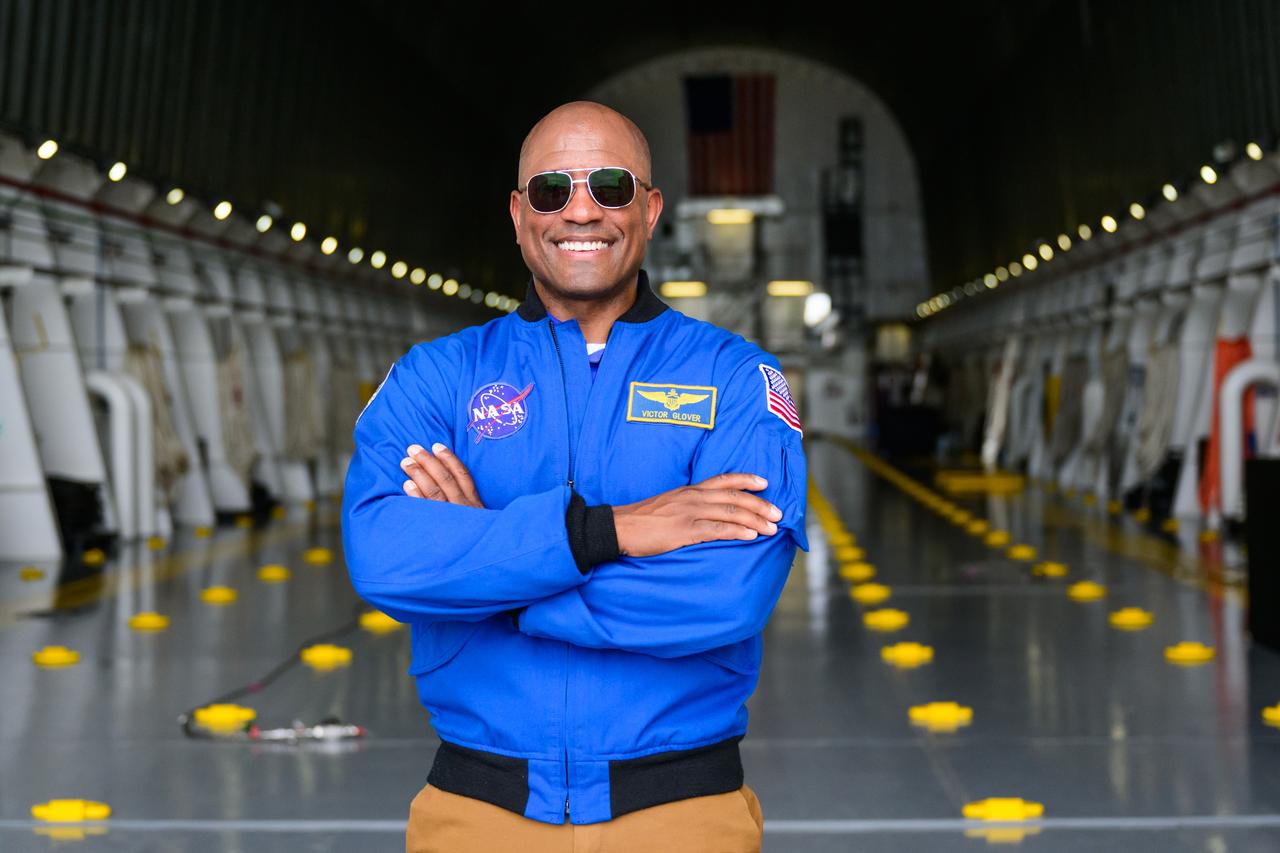
NASA astronaut Victor Glover views the core stage of the SLS (Space Launch System) rocket that will help power Artemis II at NASA’s Michoud Assembly Facility in New Orleans July 15. Glover will pilot Artemis II, the first crewed mission of NASA’s Artemis campaign. Crews moved the 212-foot-tall core stage with its four RS-25 engines to Building 110 at NASA Michoud prior to rolling it out to NASA’s Pegasus barge July 16 for delivery to NASA’s Kennedy Space Center in Florida. The core stage has two giant propellant tanks that collectively hold more than 733,000 gallons of super cold liquid propellant to feed the stage’s four RS-25 engines. Together, the engines produce more than 2 million pounds of thrust to help send astronauts inside NASA’s Orion spacecraft to venture around the Moon for Artemis II. NASA is working to land the first woman, first person of color, and its first international partner astronaut on the Moon under Artemis. SLS is part of NASA’s backbone for deep space exploration, along with the Orion spacecraft, supporting ground systems, advanced spacesuits and rovers, the Gateway in orbit around the Moon, and commercial human landing systems. SLS is the only rocket that can send Orion, astronauts, and supplies to the Moon in a single launch.
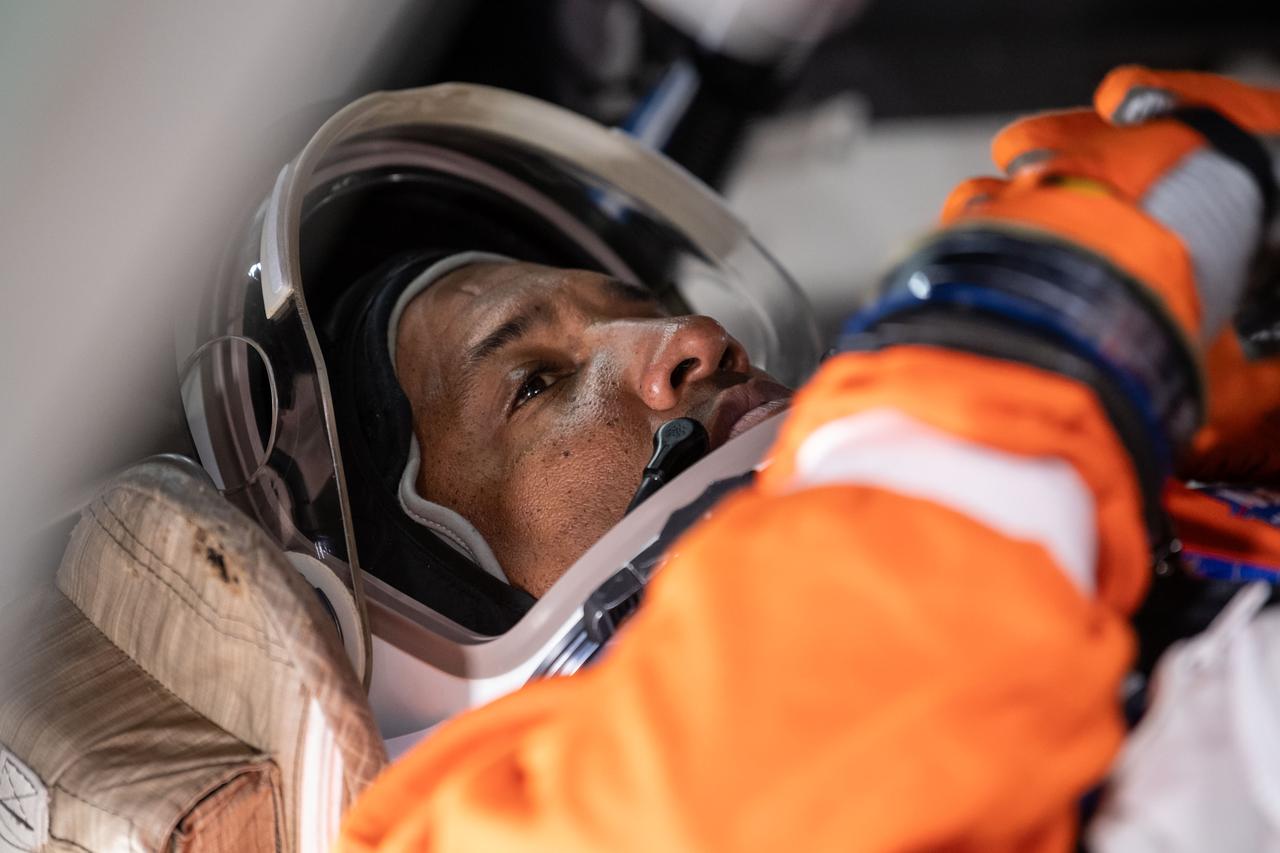
jsc2025e004071 (Jan. 30, 2025) --- NASA astronaut and Artemis II Pilot Victor Glover inside of the Orion spacecraft mockup during Post Insertion and Deorbit Preparation training at the Space Vehicle Mockup Facility in Houston, Texas. The crew practiced getting the Orion spacecraft configured once in orbit, how to make it habitable, and suited up in their entry pressure suits to prepare for their return from the Moon. Credit: NASA/Mark Sowa
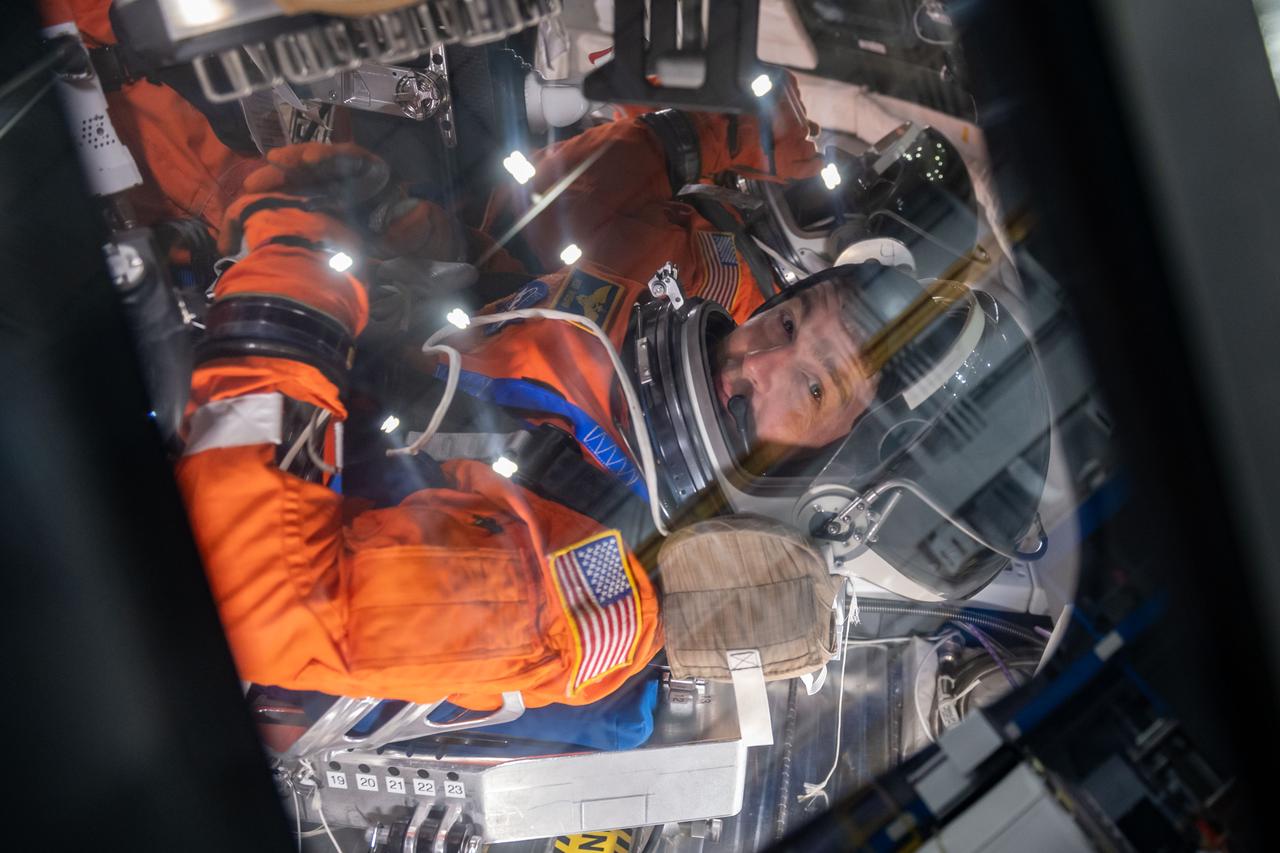
jsc2025e004075 (Jan. 30, 2025) --- NASA astronauts and Artemis II crew members Reid Wiseman and Victor Glover inside of the Orion spacecraft mockup during Post Insertion and Deorbit Preparation training at the Space Vehicle Mockup Facility in Houston, Texas. The crew practiced getting the Orion spacecraft configured once in orbit, how to make it habitable, and suited up in their entry pressure suits to prepare for their return from the Moon. Credit: NASA/Mark Sowa

Artemis II astronaut Victor J. Glover participates in NASA Langley’s Open House on Saturday, Oct. 21. More than 37,000 people registered to attend the NASA Langley open house. Starting with the Annual 5K Moon Walk Run and the talented Nils Larson, X59 pilot and Astronaut Victor Glover reunited at Langley’s hangar and hosted by Center Director Clayton Turner.

Artemis II astronaut Victor J. Glover participates in NASA Langley’s Open House on Saturday, Oct. 21. More than 37,000 people registered to attend the NASA Langley open house. Starting with the Annual 5K Moon Walk Run and the talented Nils Larson, X59 pilot and Astronaut Victor Glover reunited at Langley’s hangar and hosted by Center Director Clayton Turner.

More than 37,000 people registered to attend the NASA Langley open house. Starting with the Annual 5K Moon Walk Run and the talented Nils Larson, X59 pilot and Astronaut Victor Glover reunited at Langley’s hangar and hosted by Center Director Clayton Turner.
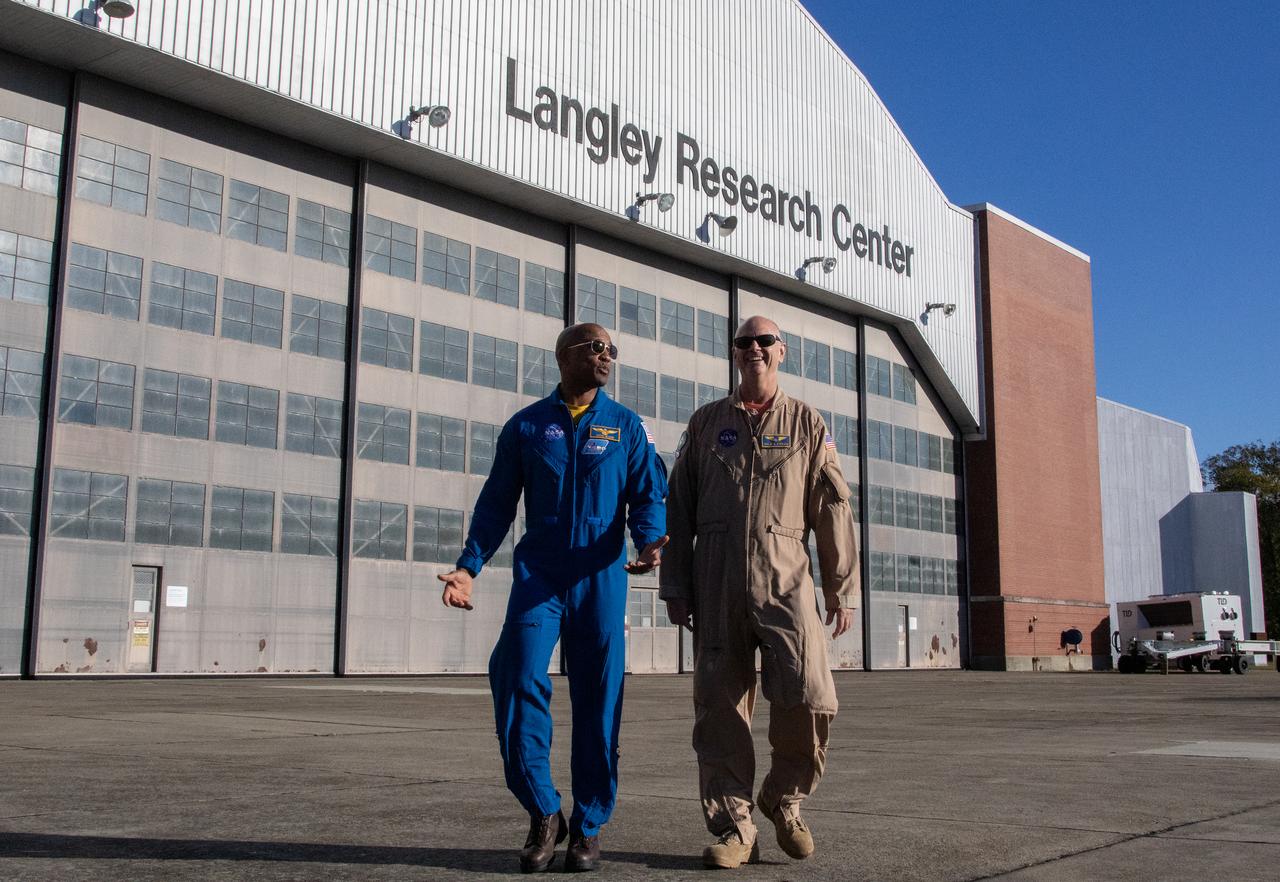
Former flight test instructor and current NASA test pilot Nils Larson reunited with former student and current astronaut Victor Glover on Oct. 21 during an open house at NASA's Langley Research Center in Hampton, Virginia.

Acting NASA Administrator Sean Duffy speaks with Artemis II NASA astronaut Victor Glover, Wednesday, July 30, 2025, at NASA’s Kennedy Space Center in Florida. Photo Credit: (NASA/Aubrey Gemignani)
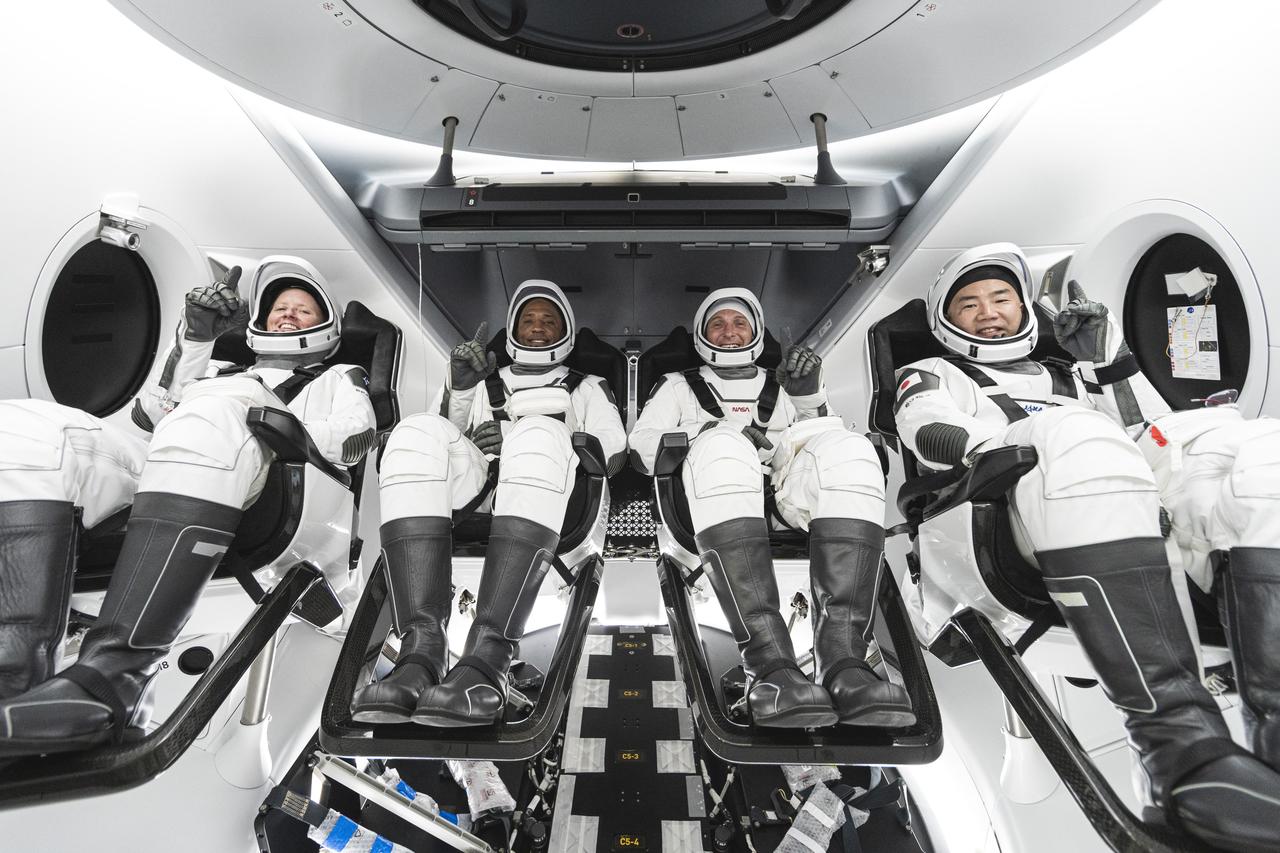
From left, Mission Specialist Shannon Walker, Pilot Victor Glover, Crew Dragon Commander Michael Hopkins – all NASA astronauts – and Japan Aerospace Exploration Agency (JAXA) astronaut and Mission Specialist Soichi Noguchi are seated in SpaceX’s Crew Dragon spacecraft during crew equipment interface training. Walker, Glover, Hopkins, and Noguchi will launch to the International Space Station on the agency’s SpaceX Crew-1 mission. This will be the first operational mission to the orbiting laboratory under NASA’s Commercial Crew Program following the agency’s certification of SpaceX’s crew transportation system. The crew will launch from Kennedy Space Center’s Launch Complex 39A in Florida.
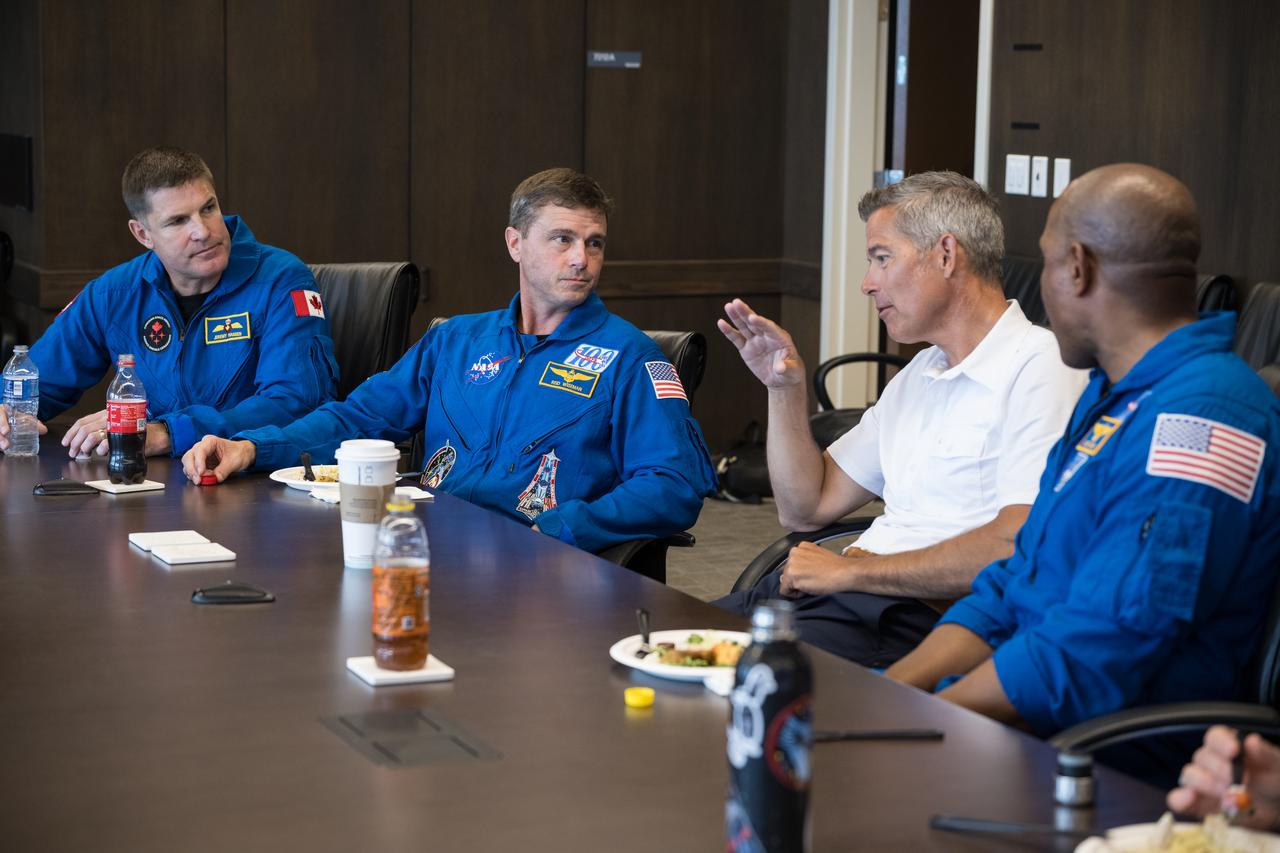
Acting NASA Administrator Sean Duffy, center, speaks with Artemis II astronauts, from right to left, NASA astronauts Victor Glover, Reid Wiseman, Christina Koch (not pictured), and Canadian Space Agency (CSA) astronaut Jeremy Hansen, Wednesday, July 30, 2025, at NASA’s Kennedy Space Center in Florida. Photo Credit: (NASA/Aubrey Gemignani)
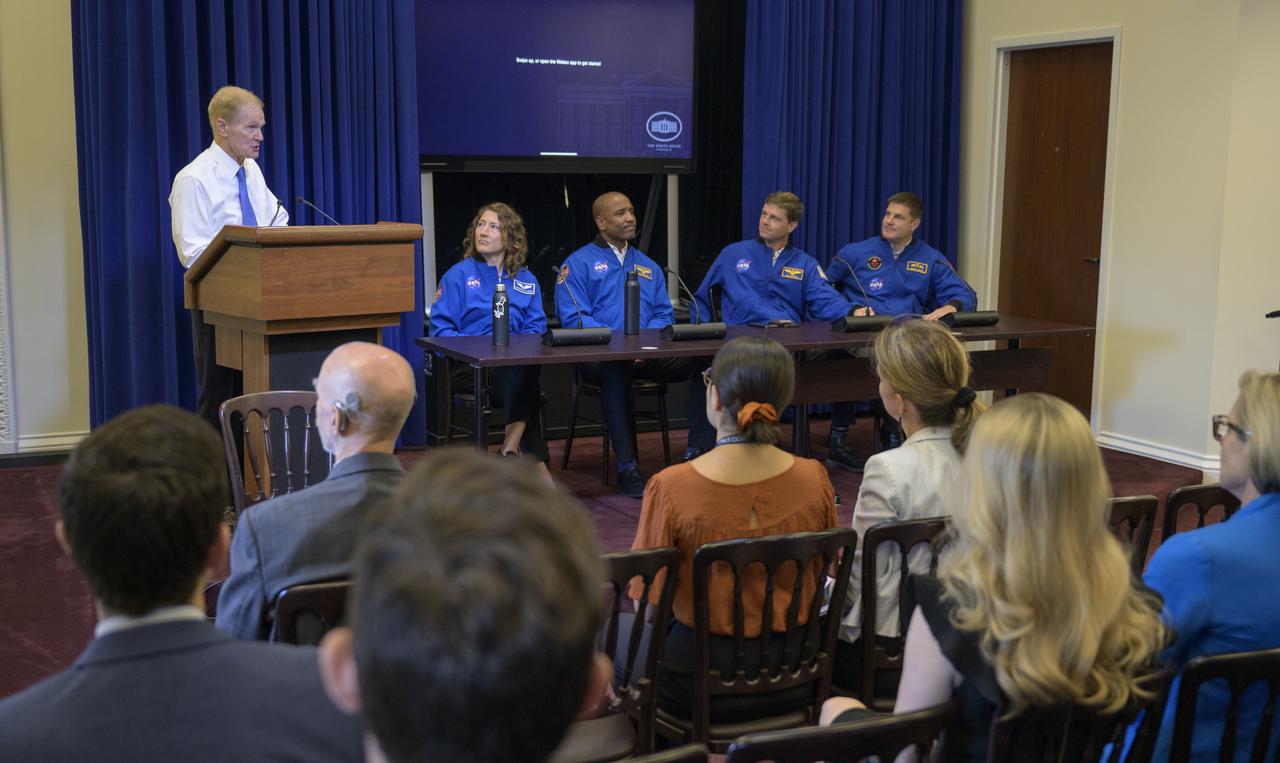
NASA Administrator Bill Nelson gives remarks during a White House staff briefing with Artemis II crew, NASA astronauts Christina Koch, left, Victor Glover, Reid Wiseman, and Canadian Space Agency (CSA) astronaut Jeremy Hansen, right, Thursday, June 6, 2024, at the Eisenhower Executive Office Building in Washington. Photo Credit: (NASA/Bill Ingalls)
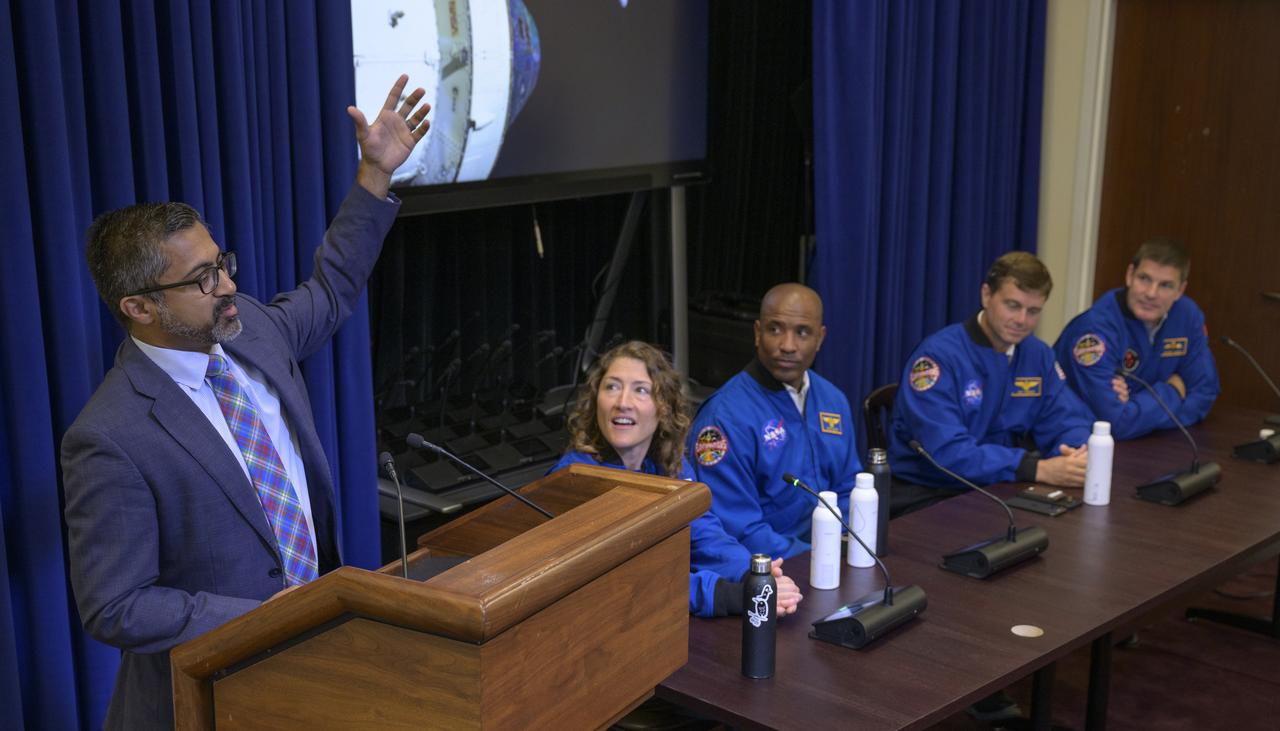
Chirag Parikh, Deputy Assistant to the President and Executive Secretary of the National Space Council gives remarks during a White House staff briefing with Artemis II crew, NASA astronauts Christina Koch, left, Victor Glover, Reid Wiseman, and Canadian Space Agency (CSA) astronaut Jeremy Hansen, right, Thursday, June 6, 2024, at the Eisenhower Executive Office Building in Washington. Photo Credit: (NASA/Bill Ingalls)
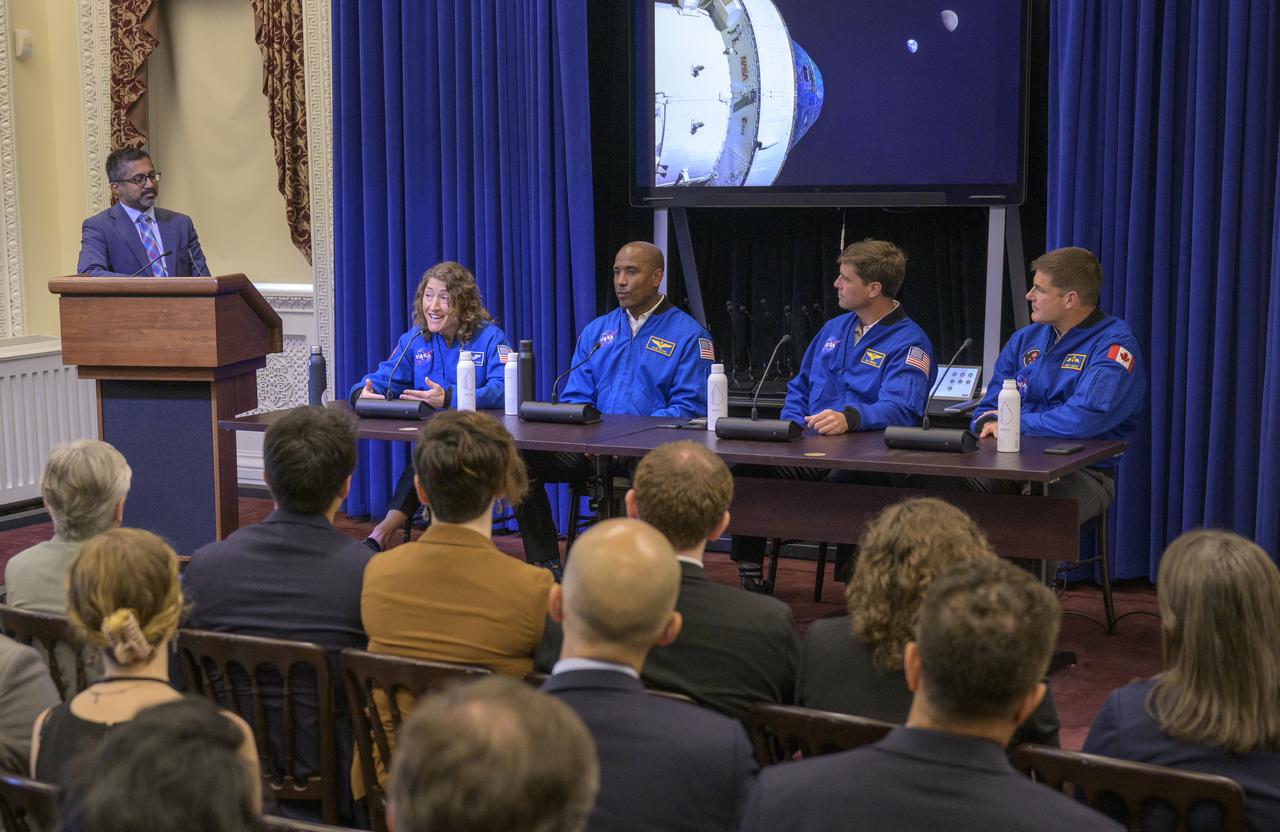
Chirag Parikh, Deputy Assistant to the President and Executive Secretary of the National Space Council gives remarks during a White House staff briefing with Artemis II crew, NASA astronauts Christina Koch, left, Victor Glover, Reid Wiseman, and Canadian Space Agency (CSA) astronaut Jeremy Hansen, right, Thursday, June 6, 2024, at the Eisenhower Executive Office Building in Washington. Photo Credit: (NASA/Bill Ingalls)
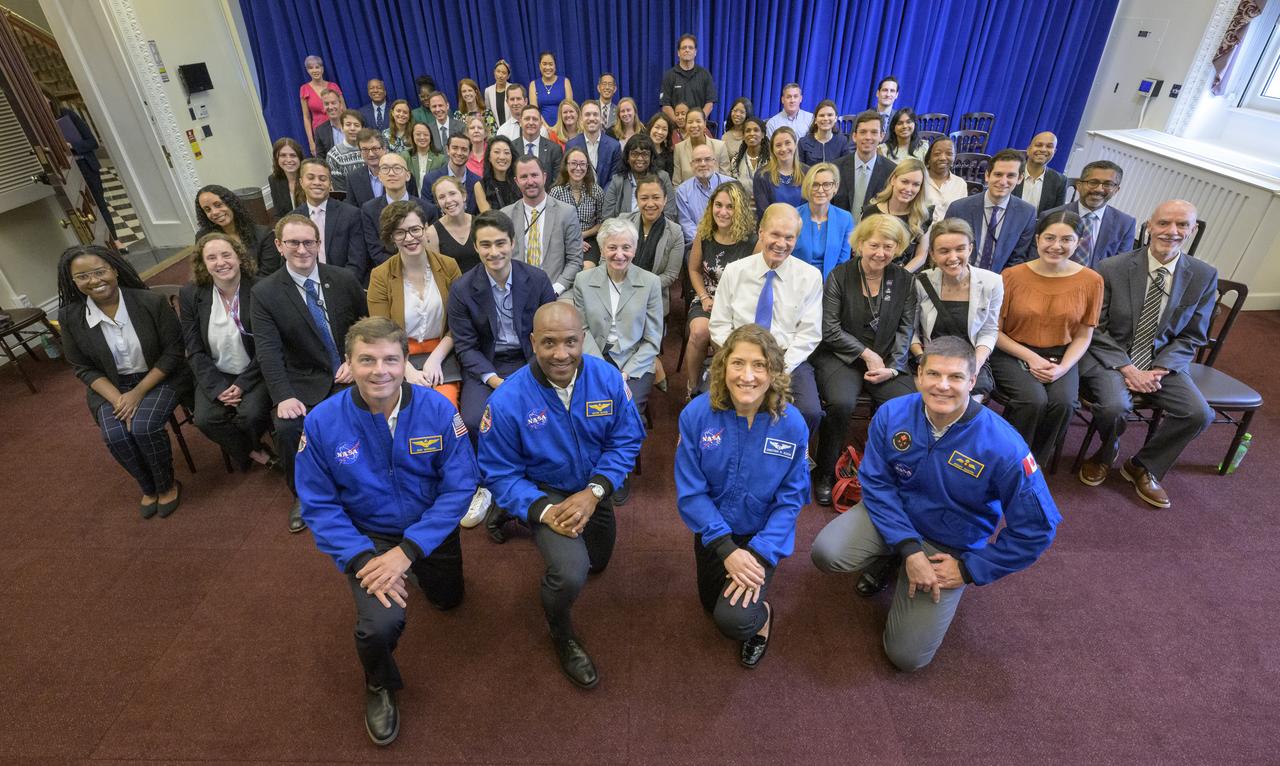
The Artemis II crew, NASA astronauts Reid Wiseman, left, Victor Glover, Christina Koch, and Canadian Space Agency (CSA) astronaut Jeremy Hansen, right, pose for a group photograph with White House staff after a briefing, Thursday, June 6, 2024, at the Eisenhower Executive Office Building in Washington. Photo Credit: (NASA/Bill Ingalls)
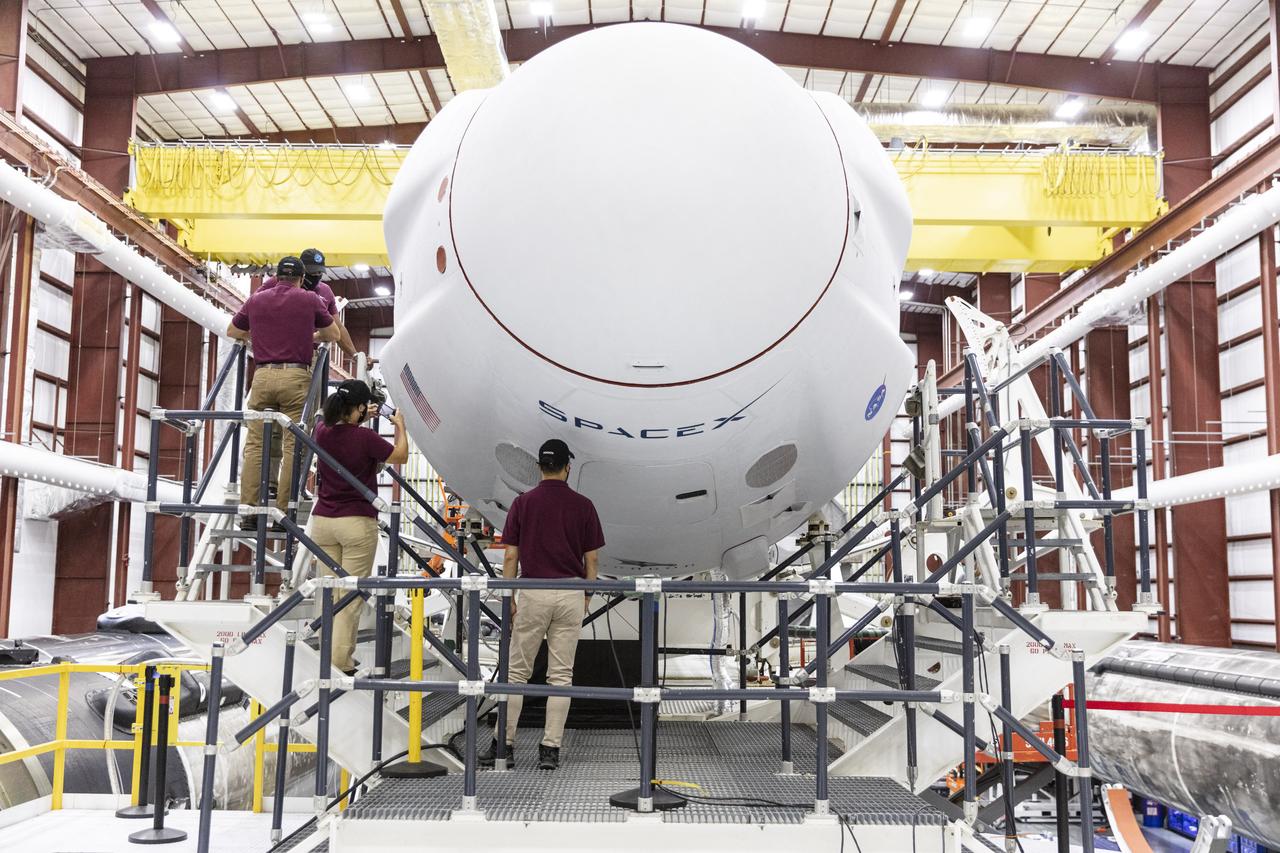
The astronauts for NASA’s SpaceX Crew-1 mission visit the Crew Dragon spacecraft, named Resilience by the crew, inside the SpaceX hangar at Launch Complex 39A on Nov. 8, 2020. NASA astronauts Michael Hopkins, Victor Glover, and Shannon Walker, along with Soichi Noguchi of the Japan Aerospace Exploration Agency (JAXA), will launch on SpaceX’s Falcon 9 rocket and Crew Dragon on the first crew rotation mission to the International Space Station as part of NASA’s Commercial Crew Program.
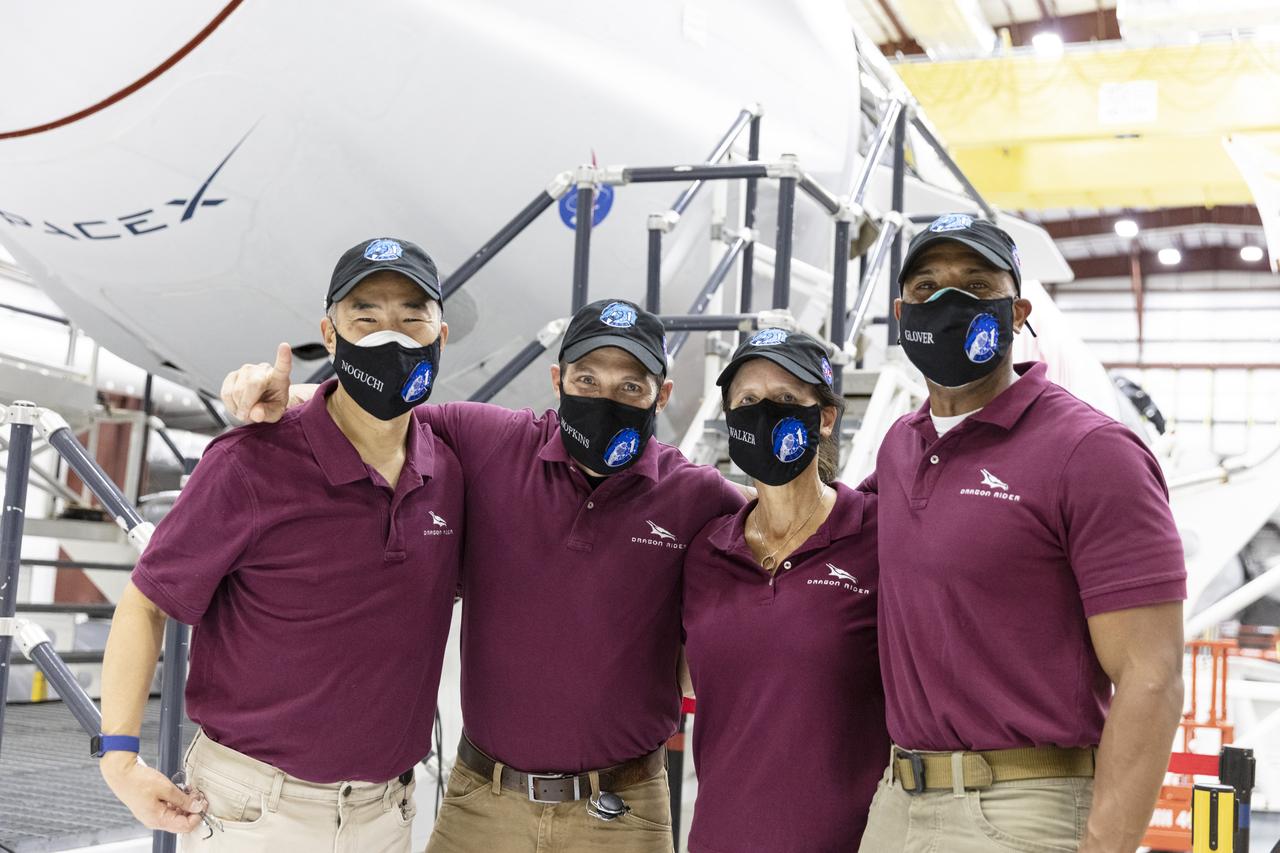
The astronauts for NASA’s SpaceX Crew-1 mission pose for a photo in front of the Crew Dragon spacecraft, named Resilience by the crew, inside the SpaceX hangar at Launch Complex 39A on Nov. 8, 2020. From left, JAXA astronaut Soichi Noguchi, mission specialist; NASA astronaut Michael Hopkins, spacecraft commander; NASA astronaut Shannon Walker, mission specialist; and NASA astronaut Victor Glover, pilot. Crew-1 is the first crew rotation mission of a U.S. commercial spacecraft with astronauts to the International Space Station as part of NASA’s Commercial Crew Program.
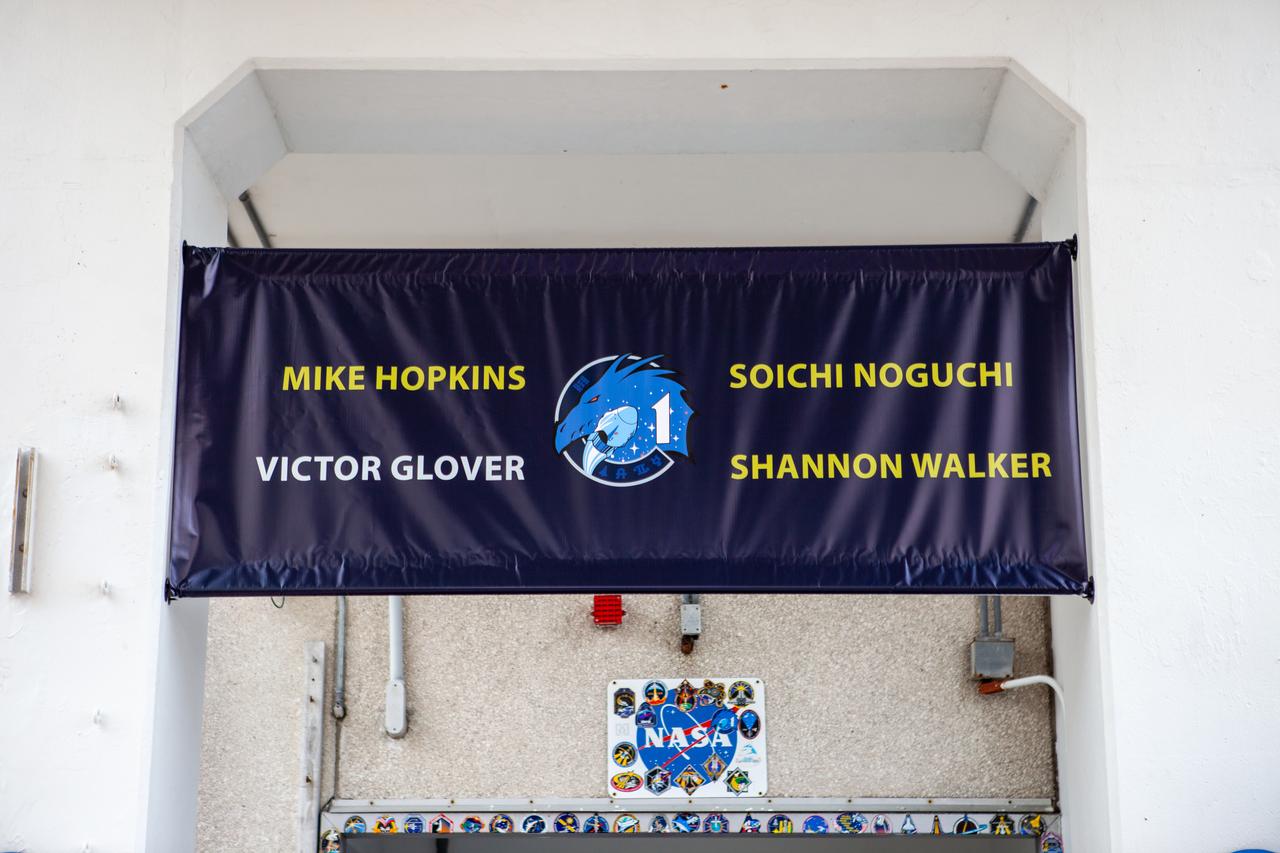
A banner hangs above the door where NASA SpaceX’s Crew-1 astronauts will exit from at the Neil Armstrong Operations and Checkout Building at NASA’s Kennedy Space Center in Florida on Nov. 15, 2020. NASA astronauts Michael Hopkins, Victor Glover and Shannon Walker, and JAXA astronaut Soichi Noguchi, will board two Tesla vehicles for the trip to Launch Complex 39A. Crew-1 is the first regular crew mission of a U.S. commercial spacecraft with astronauts to the International Space Station as part of NASA’s Commercial Crew Program. The SpaceX Crew Dragon Resilience capsule will launch atop the company’s Falcon 9 rocket from Pad 39A to the space station for a six-month science mission.
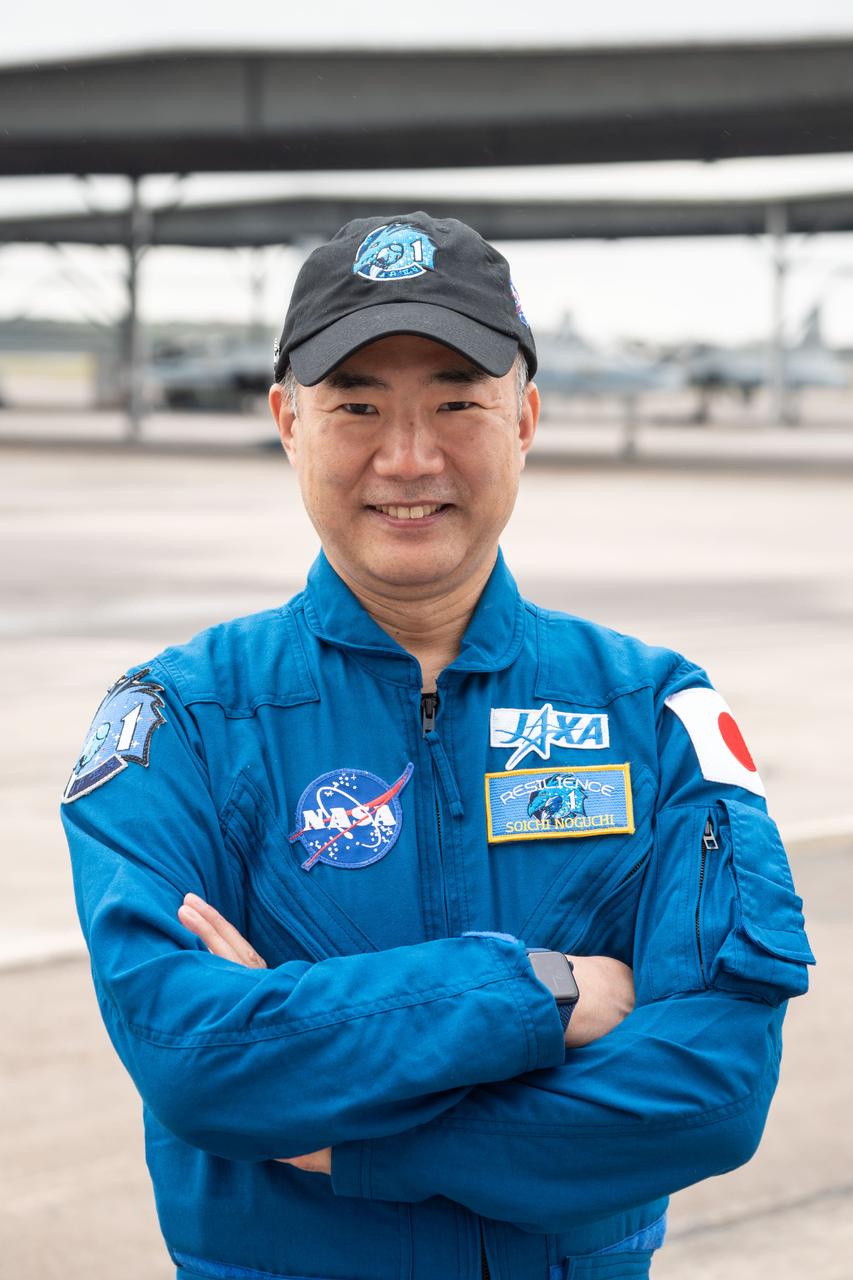
Soichi Noguchi (shown) of the Japan Aerospace Exploration Agency (JAXA), along with NASA astronauts Michael Hopkins, Victor Glover, and Shannon Walker, board a plane from Ellington Field near the agency’s Johnson Space Center in Houston, Texas, en route to Kennedy Space Center in Florida for NASA’s SpaceX Crew-1 mission to begin final launch preparations. Crew-1 is the first operational mission of the SpaceX Crew Dragon spacecraft and Falcon 9 rocket to the International Space Station as part of the agency’s Commercial Crew Program.
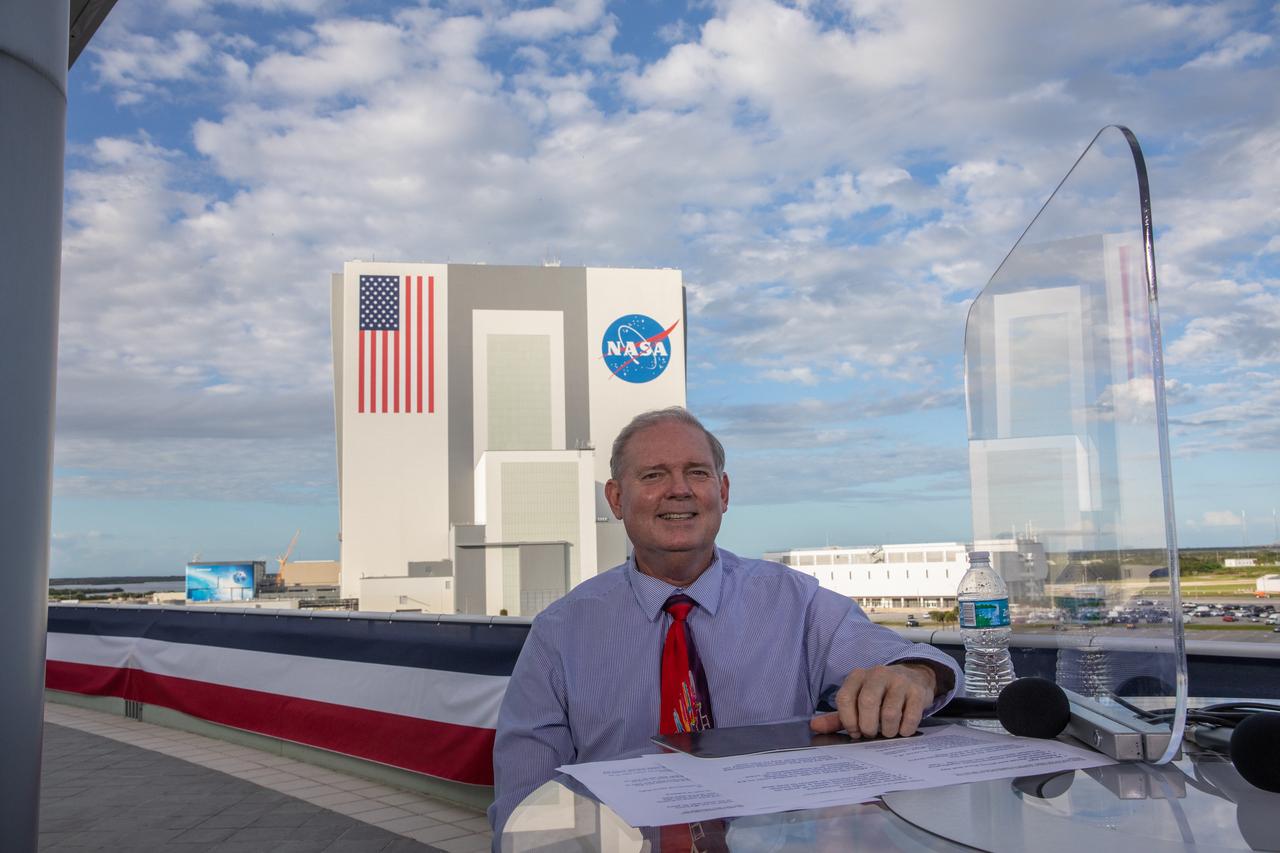
During live television coverage of NASA SpaceX’s Crew-1 launch on Nov. 15, 2020, Kyle Herring, NASA Communications, discusses the launch and the agency’s 20th anniversary of human presence on the International Space Station at Kennedy Space Center in Florida. Crew-1 is the first regular crew mission of a U.S. commercial spacecraft with astronauts to the space station as part of NASA’s Commercial Crew Program. The Crew Dragon Resilience capsule will launch atop a Falcon 9 rocket from Launch Complex 39A carrying NASA astronauts Michael Hopkins, Victor Glover, Shannon Walker and Japan Aerospace Exploration Agency (JAXA) astronaut Soichi Noguchi to the space station for a six-month science mission.
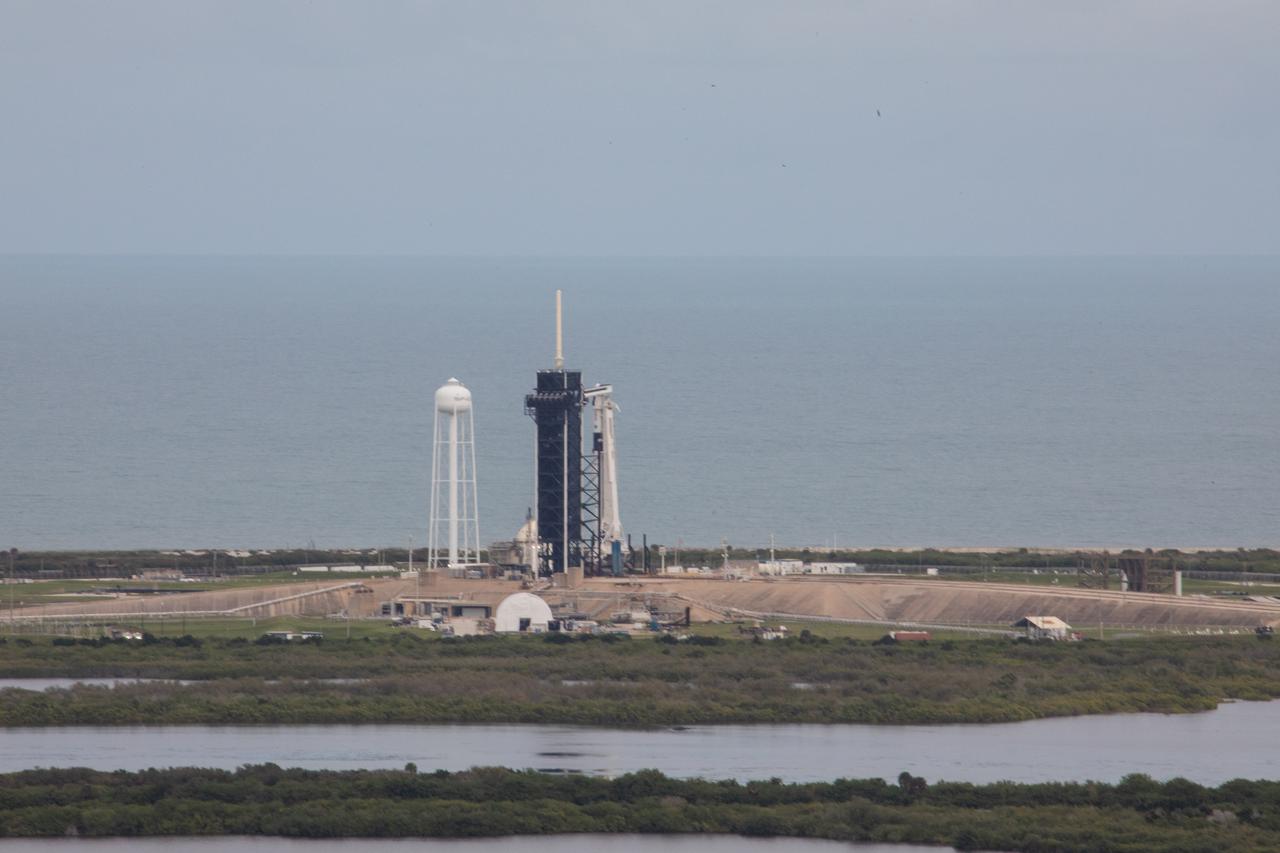
A SpaceX Falcon 9 rocket sits on Launch Pad 39A at NASA’s Kennedy Space Center in Florida on Nov. 15, 2020, ready for launch. The Crew Dragon Resilience capsule sits atop with NASA’s SpaceX Crew-1 NASA astronauts, Michael Hopkins, spacecraft commander; Victor Glover, pilot; Shannon Walker, mission specialist; and Japan Aerospace Exploration Agency astronaut Soichi Noguchi, mission specialist. Crew-1 is the first regular crew mission of a U.S. commercial spacecraft with astronauts to the International Space Station as part of NASA’s Commercial Crew Program. The Crew Dragon will dock with the space station and the crew will remain on the orbiting laboratory for a six-month science mission.
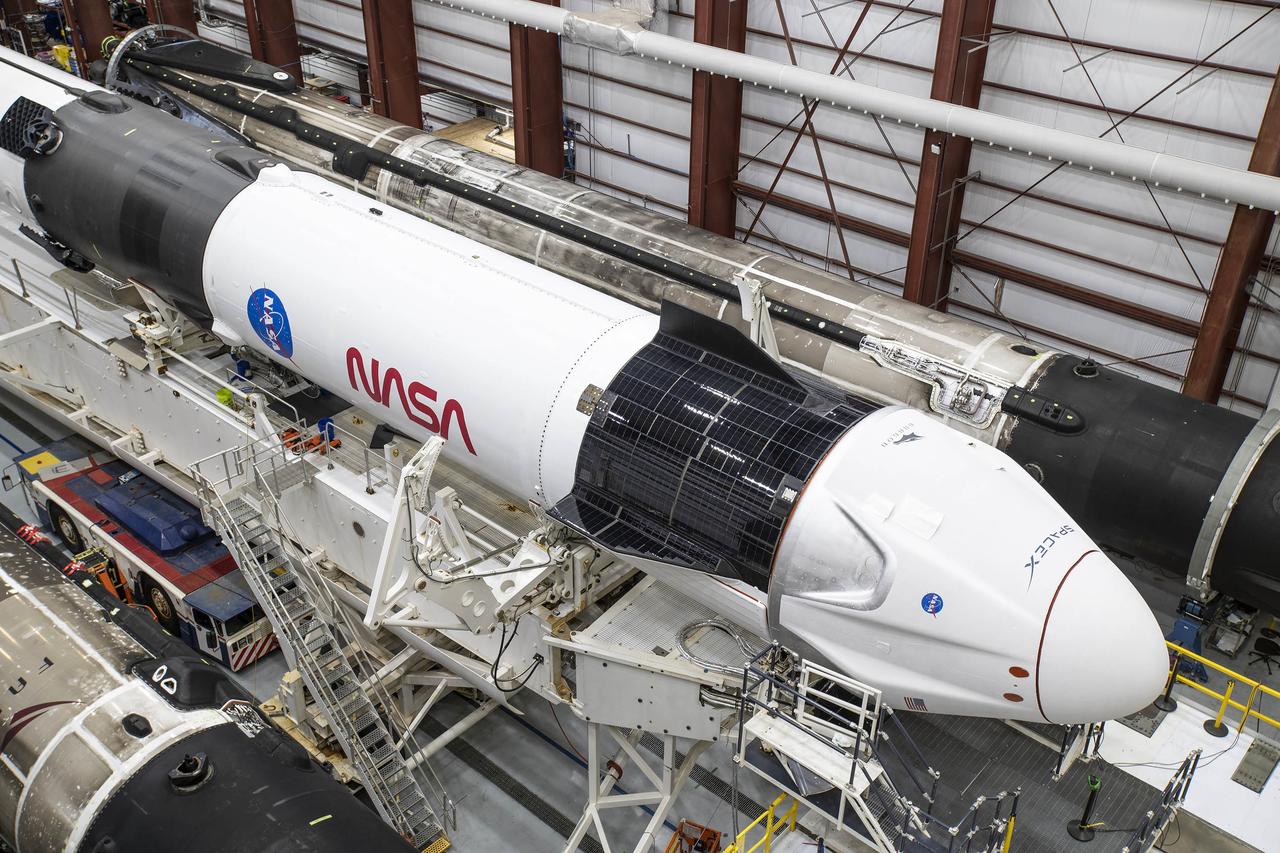
A SpaceX Falcon 9 rocket and Crew Dragon Resilience for NASA SpaceX’s Crew-1 mission are seen inside the SpaceX Hangar at NASA’s Kennedy Space Center in Florida on Nov. 9, 2020, before rollout to Launch Pad 39A. Crew-1 is the first regular crew mission of a U.S. commercial spacecraft with astronauts to the International Space Station as part of NASA’s Commercial Crew Program. The Crew Dragon capsule will launch atop a Falcon 9 rocket from Launch Complex 39A carrying NASA astronauts Michael Hopkins, Victor Glover, Shannon Walker and Japan Aerospace Exploration Agency (JAXA) astronaut Soichi Noguchi to the space station for a six-month science mission.
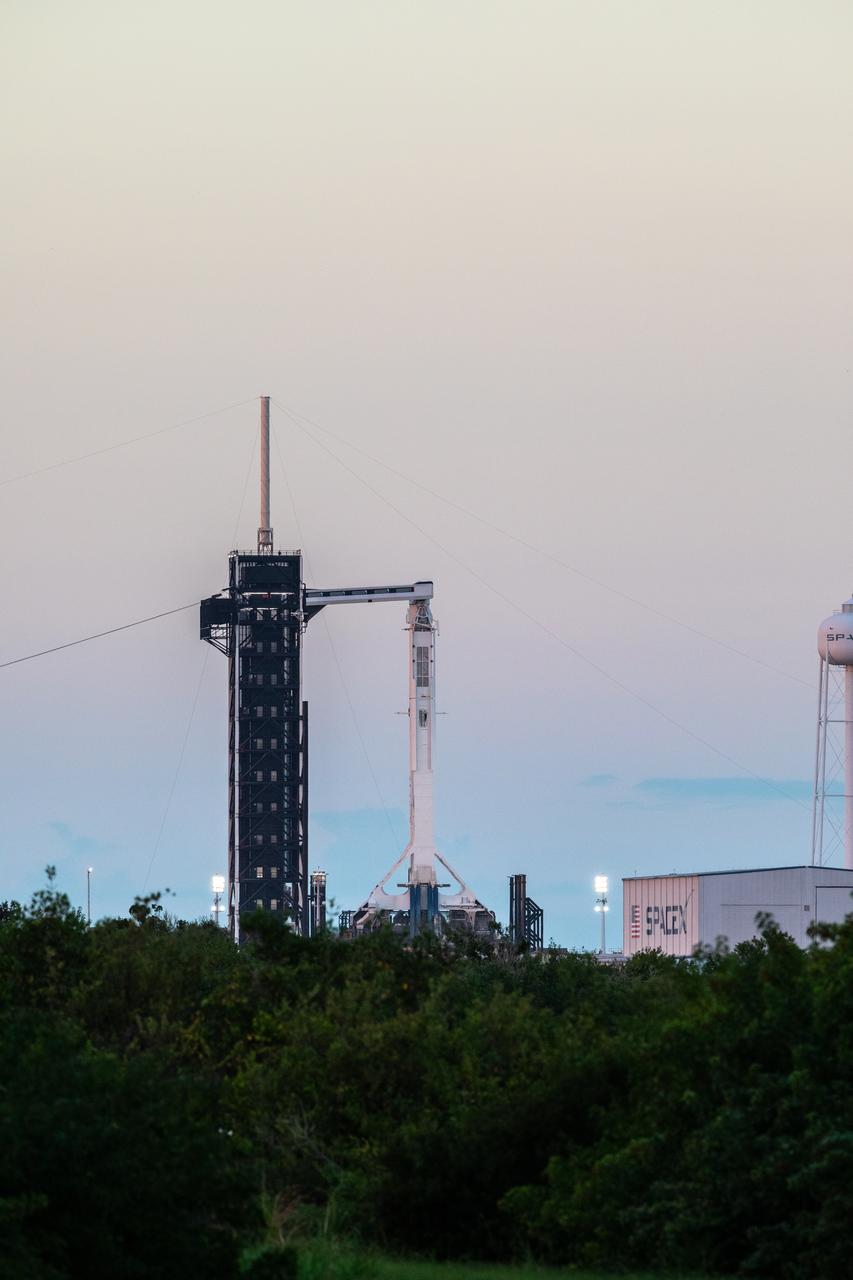
A SpaceX Falcon 9 rocket sits on Launch Pad 39A at NASA’s Kennedy Space Center in Florida on Nov. 15, 2020, ready for launch. The Crew Dragon Resilience capsule sits atop with NASA’s SpaceX Crew-1 NASA astronauts, Michael Hopkins, spacecraft commander; Victor Glover, pilot; Shannon Walker, mission specialist; and Japan Aerospace Exploration Agency astronaut Soichi Noguchi, mission specialist. Crew-1 is the first regular crew mission of a U.S. commercial spacecraft with astronauts to the International Space Station as part of NASA’s Commercial Crew Program. The Crew Dragon will dock with the space station and the crew will remain on the orbiting laboratory for a six-month science mission.
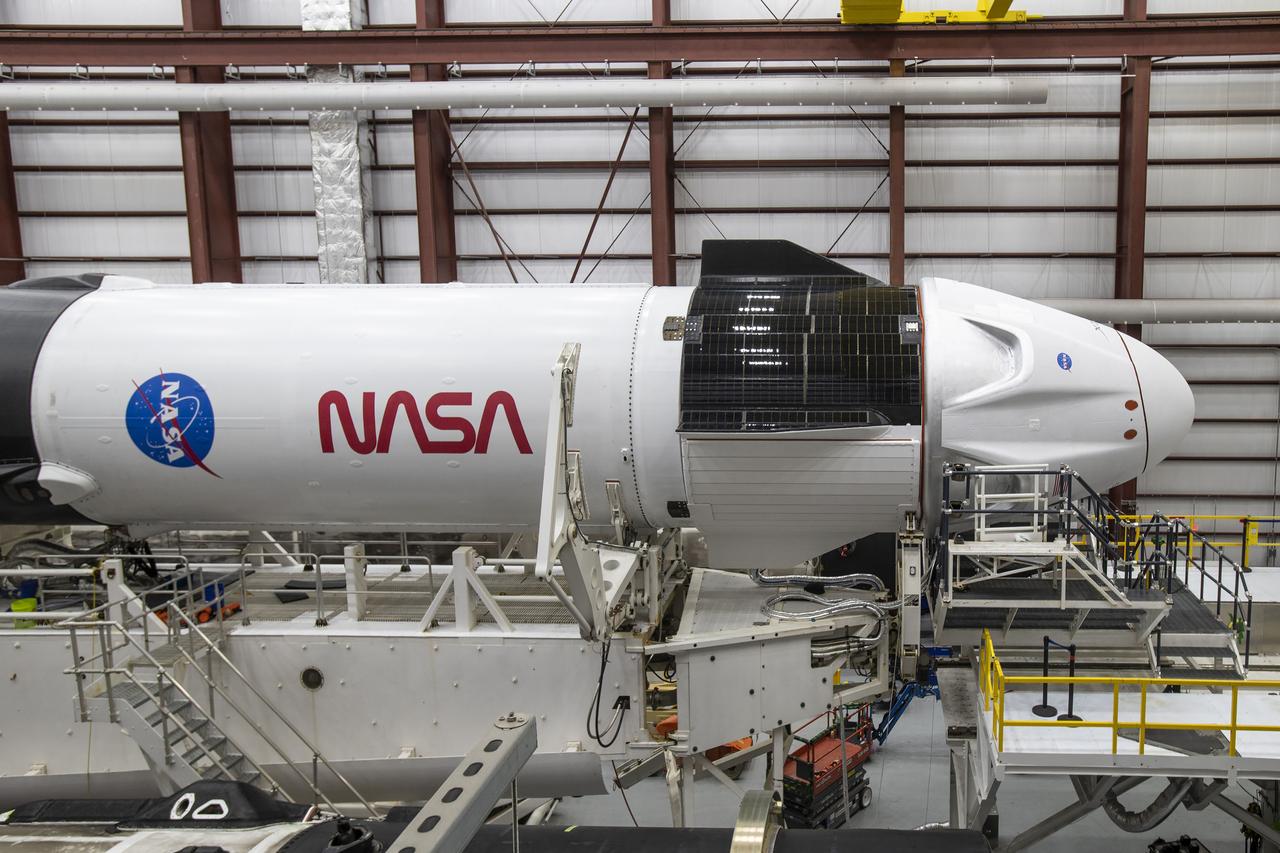
A SpaceX Falcon 9 rocket and Crew Dragon Resilience for NASA SpaceX’s Crew-1 mission are seen inside the SpaceX Hangar at NASA’s Kennedy Space Center in Florida on Nov. 9, 2020, before rollout to Launch Pad 39A. Crew-1 is the first regular crew mission of a U.S. commercial spacecraft with astronauts to the International Space Station as part of NASA’s Commercial Crew Program. The Crew Dragon capsule will launch atop a Falcon 9 rocket from Launch Complex 39A carrying NASA astronauts Michael Hopkins, Victor Glover, Shannon Walker and Japan Aerospace Exploration Agency (JAXA) astronaut Soichi Noguchi to the space station for a six-month science mission.
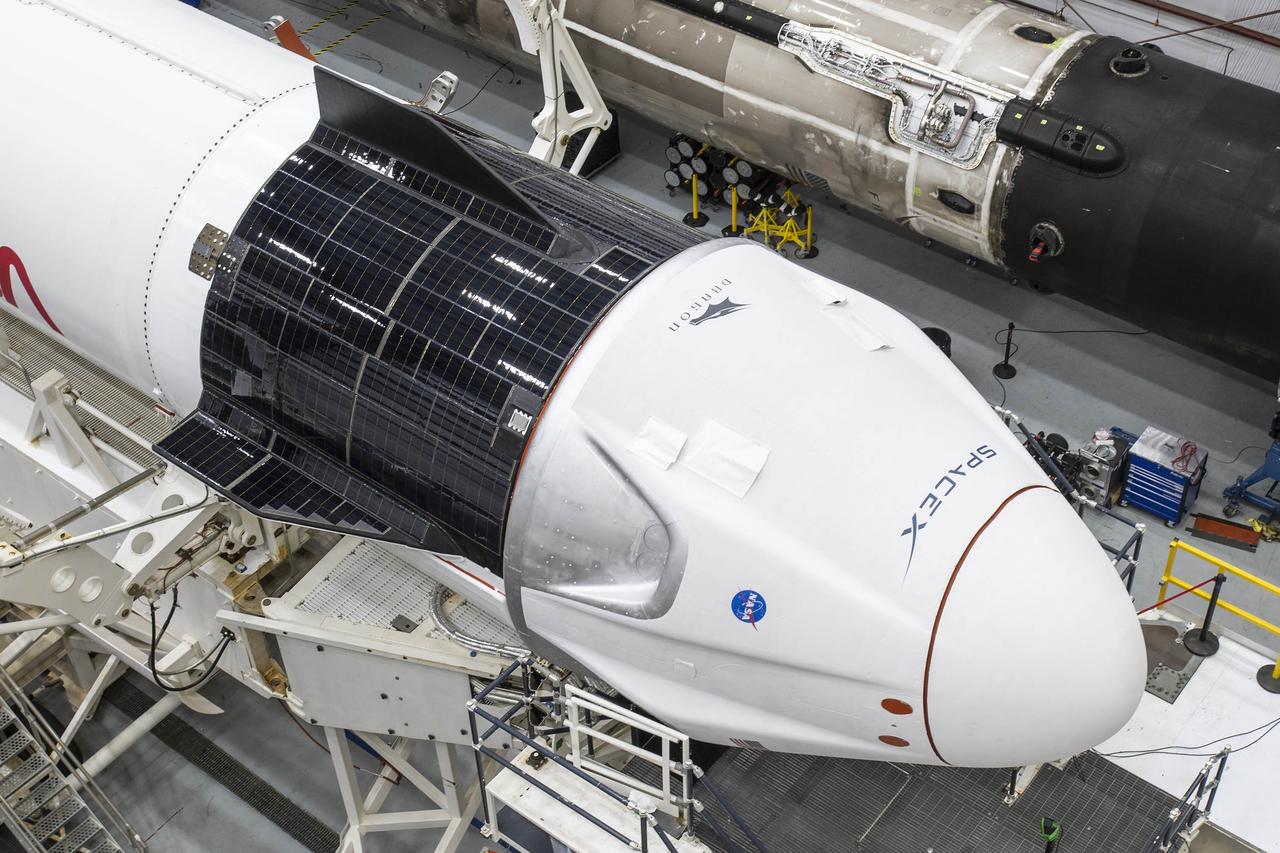
A SpaceX Falcon 9 rocket and Crew Dragon Resilience for NASA SpaceX’s Crew-1 mission are seen inside the SpaceX Hangar at NASA’s Kennedy Space Center in Florida on Nov. 9, 2020, before rollout to Launch Pad 39A. Crew-1 is the first regular crew mission of a U.S. commercial spacecraft with astronauts to the International Space Station as part of NASA’s Commercial Crew Program. The Crew Dragon capsule will launch atop a Falcon 9 rocket from Launch Complex 39A carrying NASA astronauts Michael Hopkins, Victor Glover, Shannon Walker and Japan Aerospace Exploration Agency (JAXA) astronaut Soichi Noguchi to the space station for a six-month science mission.
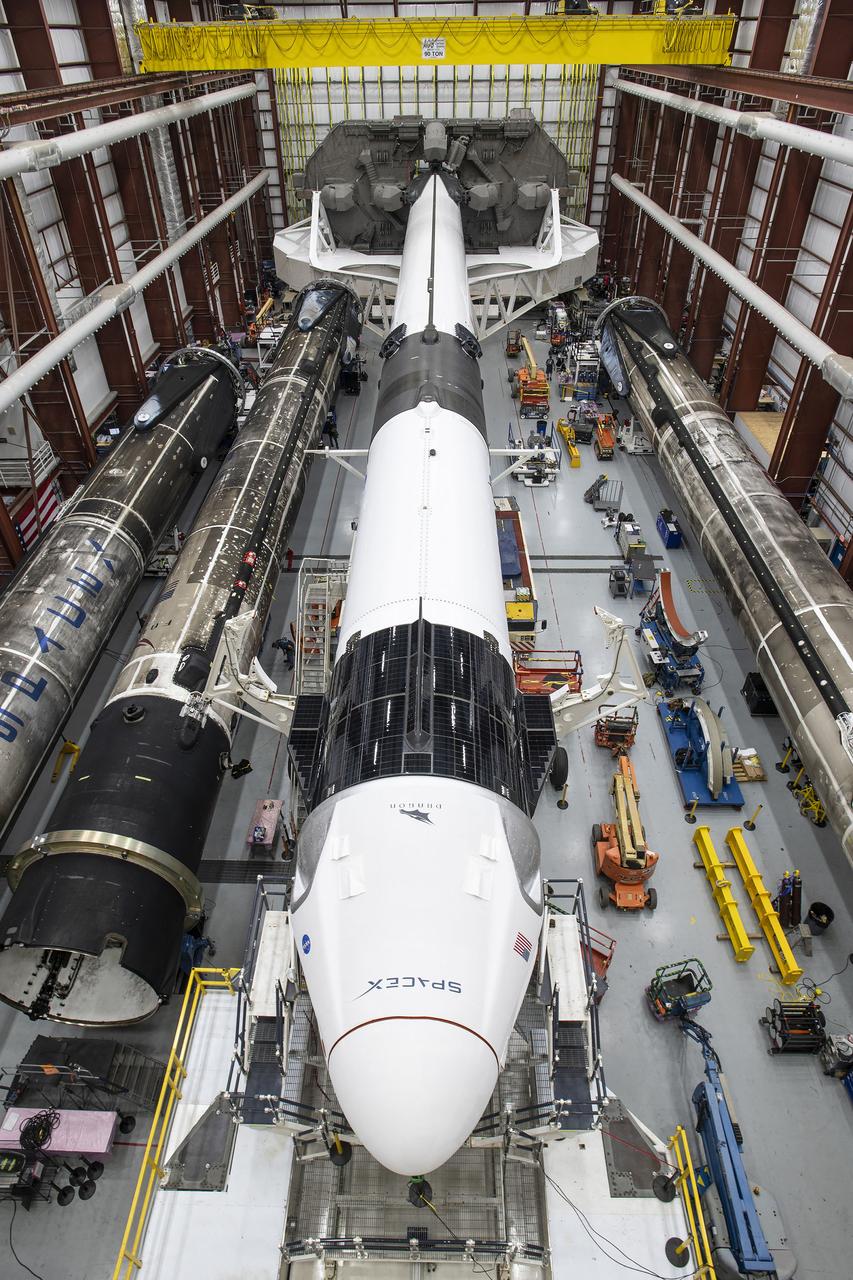
A SpaceX Falcon 9 rocket and Crew Dragon Resilience for NASA SpaceX’s Crew-1 mission are seen inside the SpaceX Hangar at NASA’s Kennedy Space Center in Florida on Nov. 9, 2020, before rollout to Launch Pad 39A. Crew-1 is the first regular crew mission of a U.S. commercial spacecraft with astronauts to the International Space Station as part of NASA’s Commercial Crew Program. The Crew Dragon capsule will launch atop a Falcon 9 rocket from Launch Complex 39A carrying NASA astronauts Michael Hopkins, Victor Glover, Shannon Walker and Japan Aerospace Exploration Agency (JAXA) astronaut Soichi Noguchi to the space station for a six-month science mission.
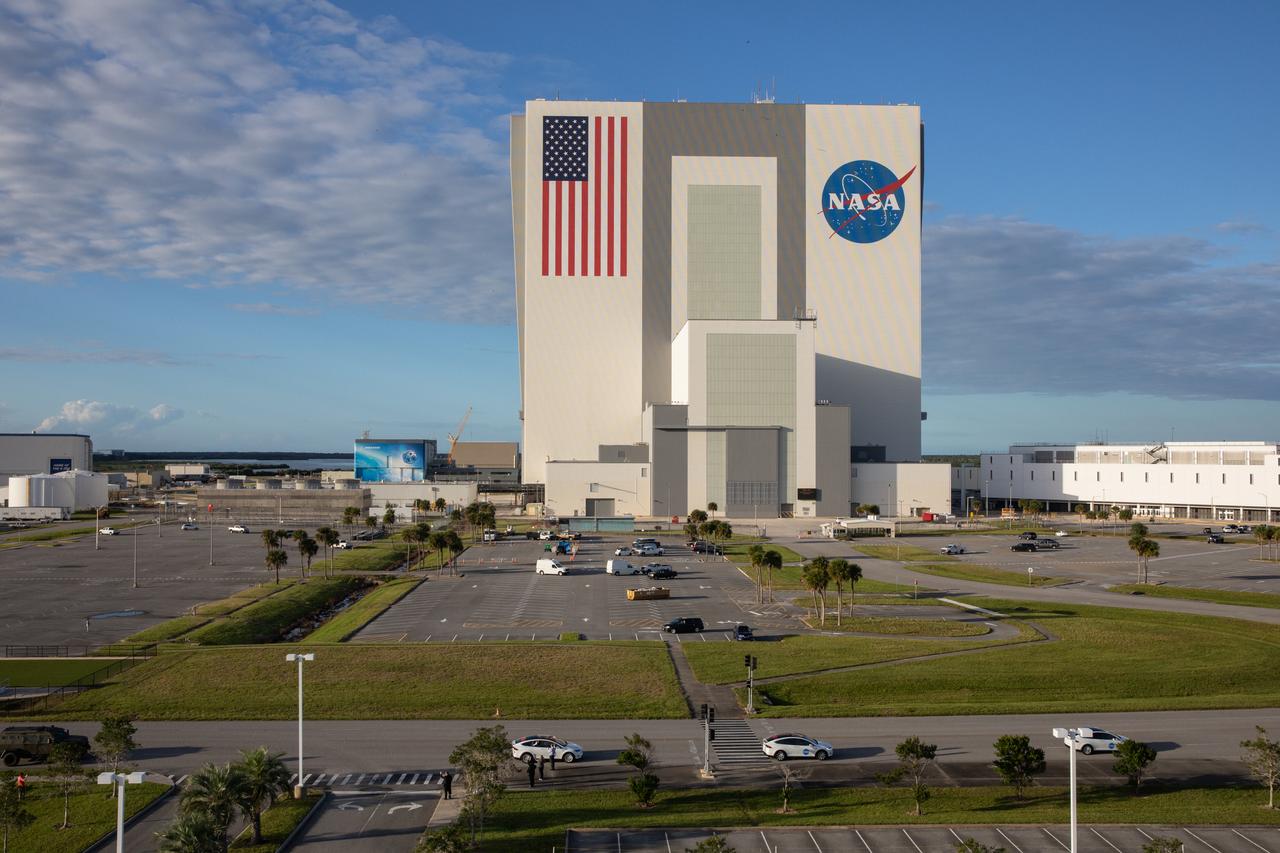
A view of the iconic Vehicle Assembly Building from the observation deck of the Operations Support Building II at NASA’s Kennedy Space Center in Florida on Nov. 15, 2020. A SpaceX Falcon 9 rocket with the Crew Dragon Resilience atop is on Launch Pad 39A for the Crew-1 mission to the International Space Station. Crew-1 is the first regular crew mission of a U.S. commercial spacecraft with astronauts to the space station as part of NASA’s Commercial Crew Program. The Crew Dragon will carry NASA astronauts Michael Hopkins, Victor Glover, Shannon Walker and Japan Aerospace Exploration Agency (JAXA) astronaut Soichi Noguchi to the space station for a six-month science mission.
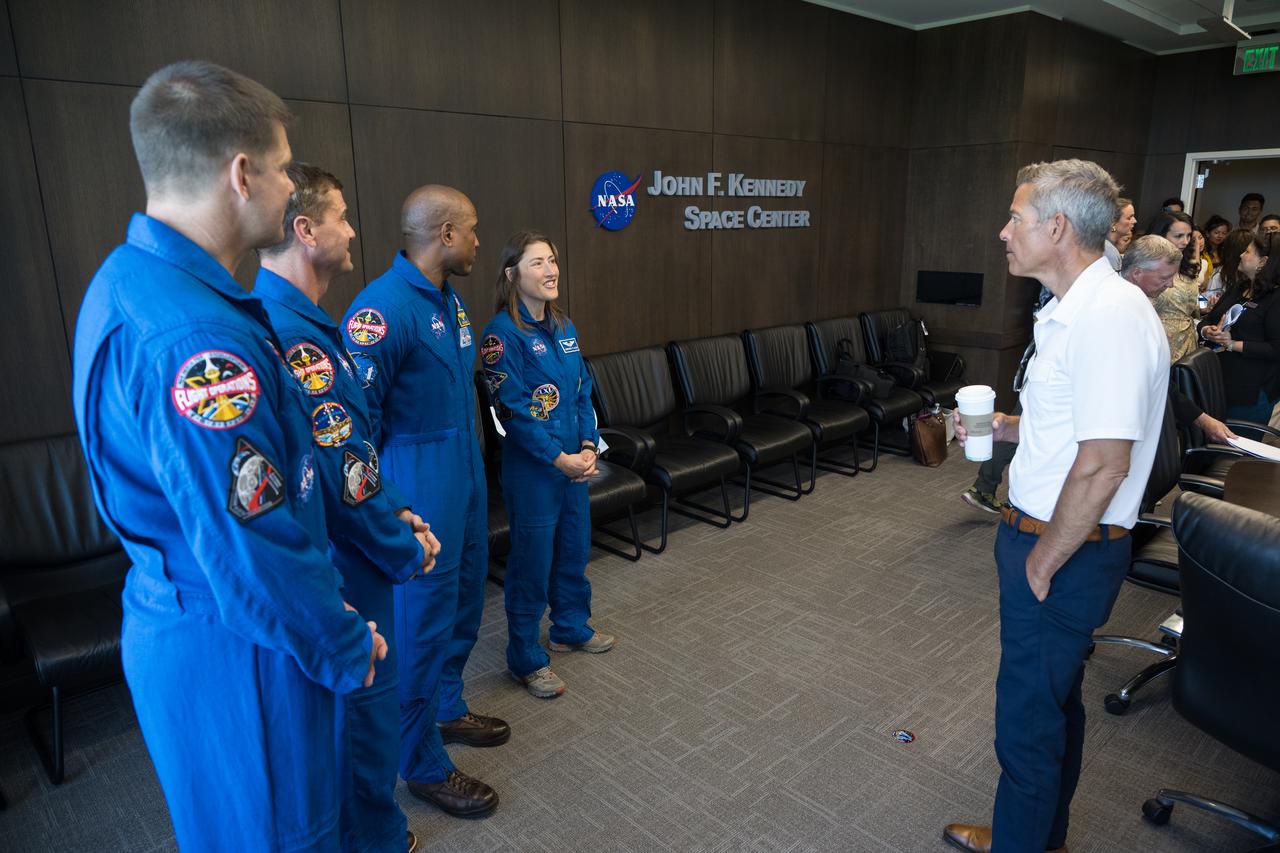
Acting NASA Administrator Sean Duffy, right, meets with Artemis II astronauts, from right to left, NASA astronauts Christina Koch, Victor Glover, Reid Wiseman, and Canadian Space Agency (CSA) astronaut Jeremy Hansen, Wednesday, July 30, 2025, at NASA’s Kennedy Space Center in Florida. Photo Credit: (NASA/Aubrey Gemignani)
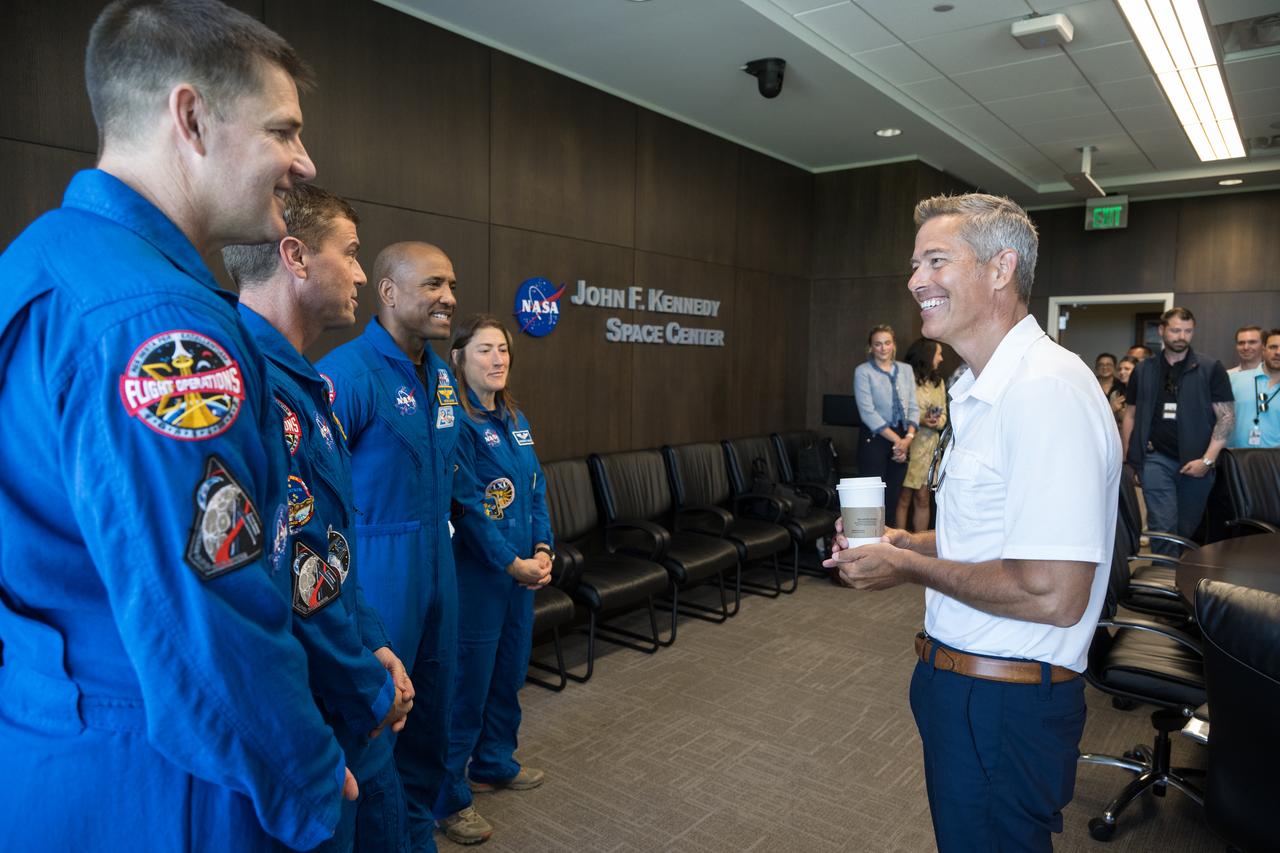
Acting NASA Administrator Sean Duffy, right, meets with Artemis II astronauts, from right to left, NASA astronauts Christina Koch, Victor Glover, Reid Wiseman, and Canadian Space Agency (CSA) astronaut Jeremy Hansen, Wednesday, July 30, 2025, at NASA’s Kennedy Space Center in Florida. Photo Credit: (NASA/Aubrey Gemignani)
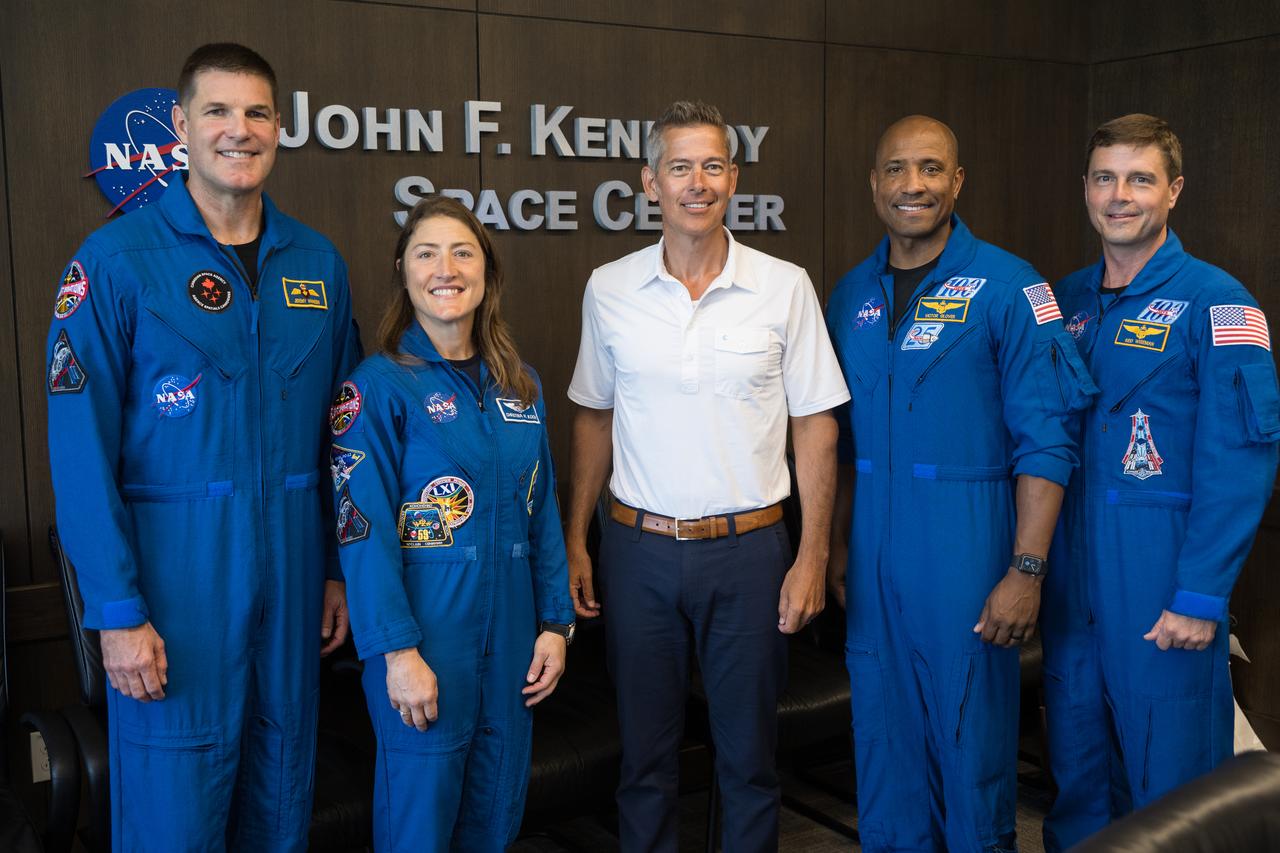
Acting NASA Administrator Sean Duffy, center, meets with Artemis II astronauts, from right to left, NASA astronauts Reid Wiseman, Victor Glover, Christina Koch, , and Canadian Space Agency (CSA) astronaut Jeremy Hansen, Wednesday, July 30, 2025, at NASA’s Kennedy Space Center in Florida. Photo Credit: (NASA/Aubrey Gemignani)
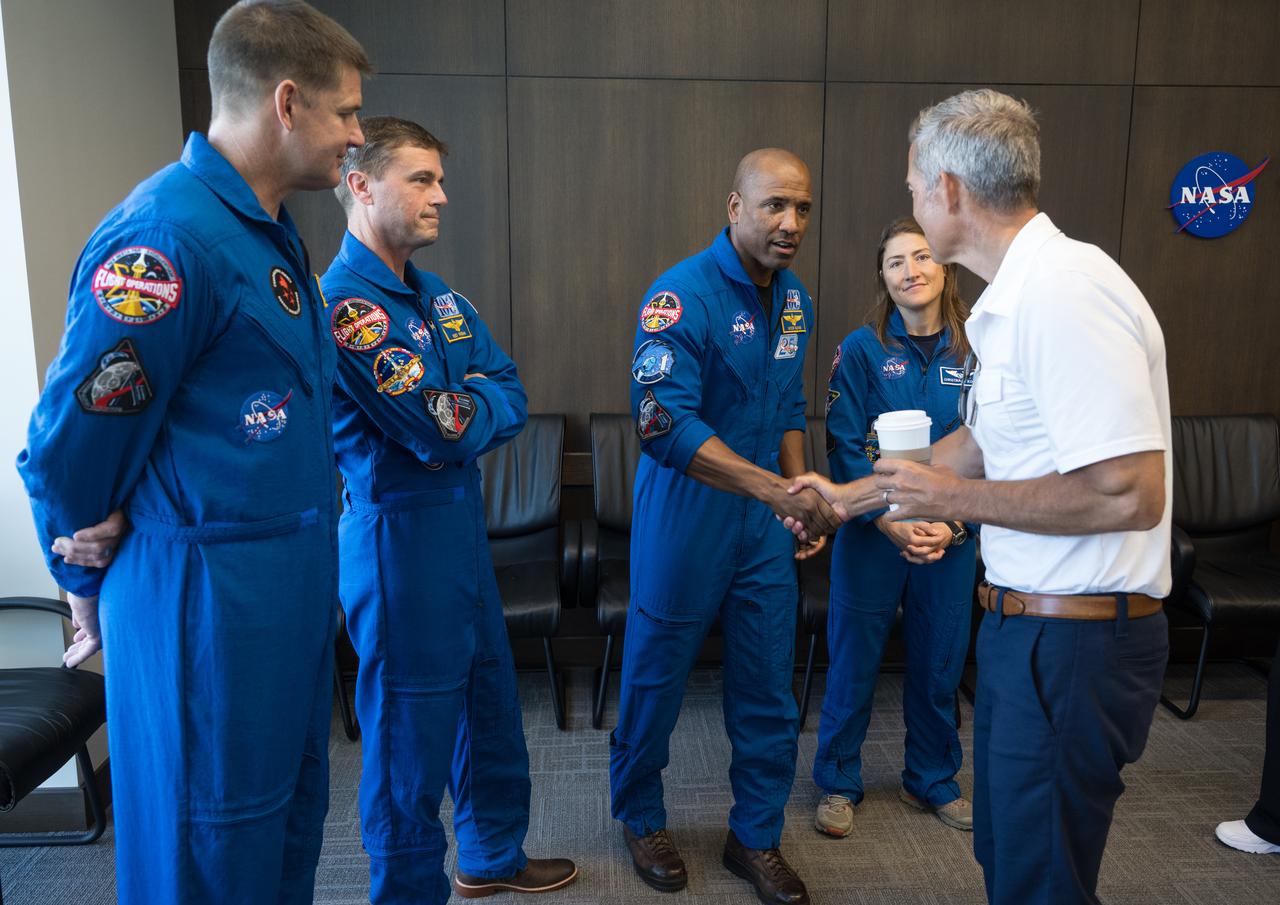
Acting NASA Administrator Sean Duffy, right, meets with Artemis II astronauts, from right to left, NASA astronauts Christina Koch, Victor Glover, Reid Wiseman, and Canadian Space Agency (CSA) astronaut Jeremy Hansen, Wednesday, July 30, 2025, at NASA’s Kennedy Space Center in Florida. Photo Credit: (NASA/Aubrey Gemignani)
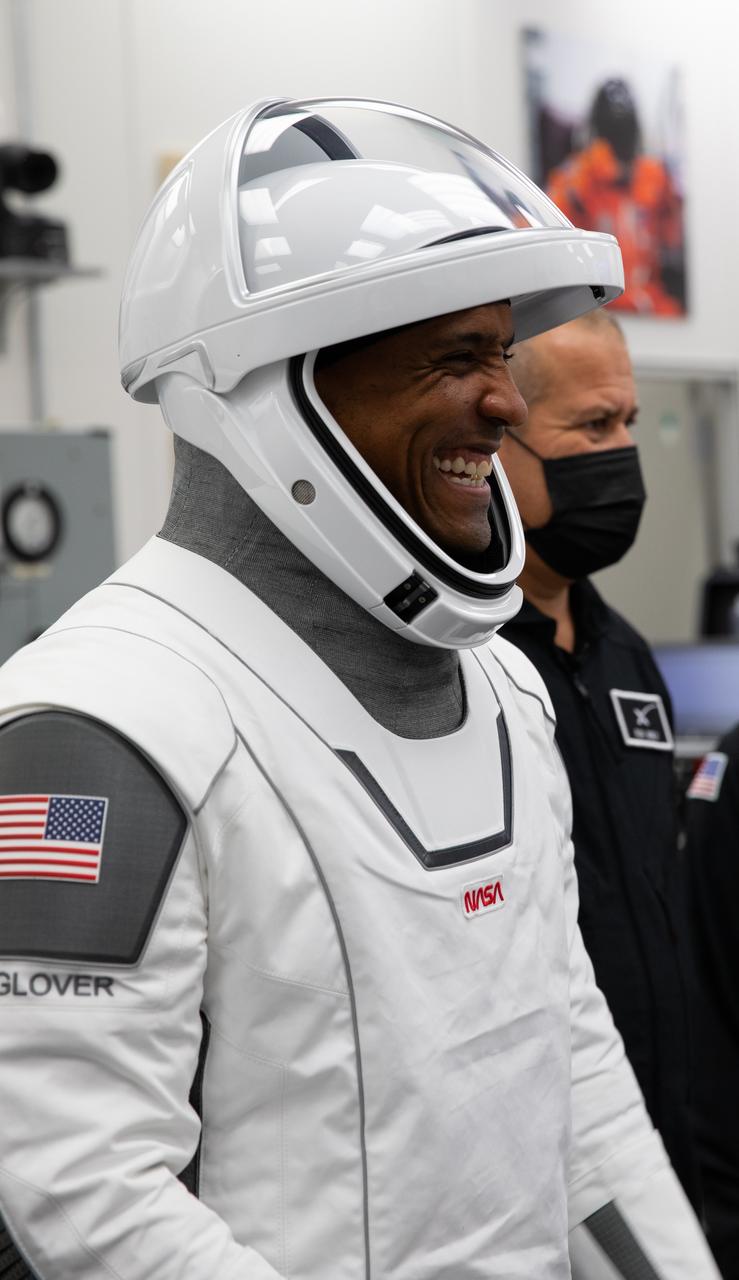
Inside the crew suit-up room in the Neil Armstrong Operations and Checkout Building at NASA’s Kennedy Space Center in Florida, on Nov. 15, 2020, NASA astronaut Victor Glover, pilot, is suited up in a SpaceX spacesuit in preparation for NASA SpaceX’s Crew-1 mission. Crew-1 is the first regular crew mission of a U.S. commercial spacecraft with astronauts to the International Space Station as part of NASA’s Commercial Crew Program. The SpaceX Crew Dragon Resilience capsule will launch atop the company’s Falcon 9 rocket from Launch Complex 39A to the space station for a six-month science mission.
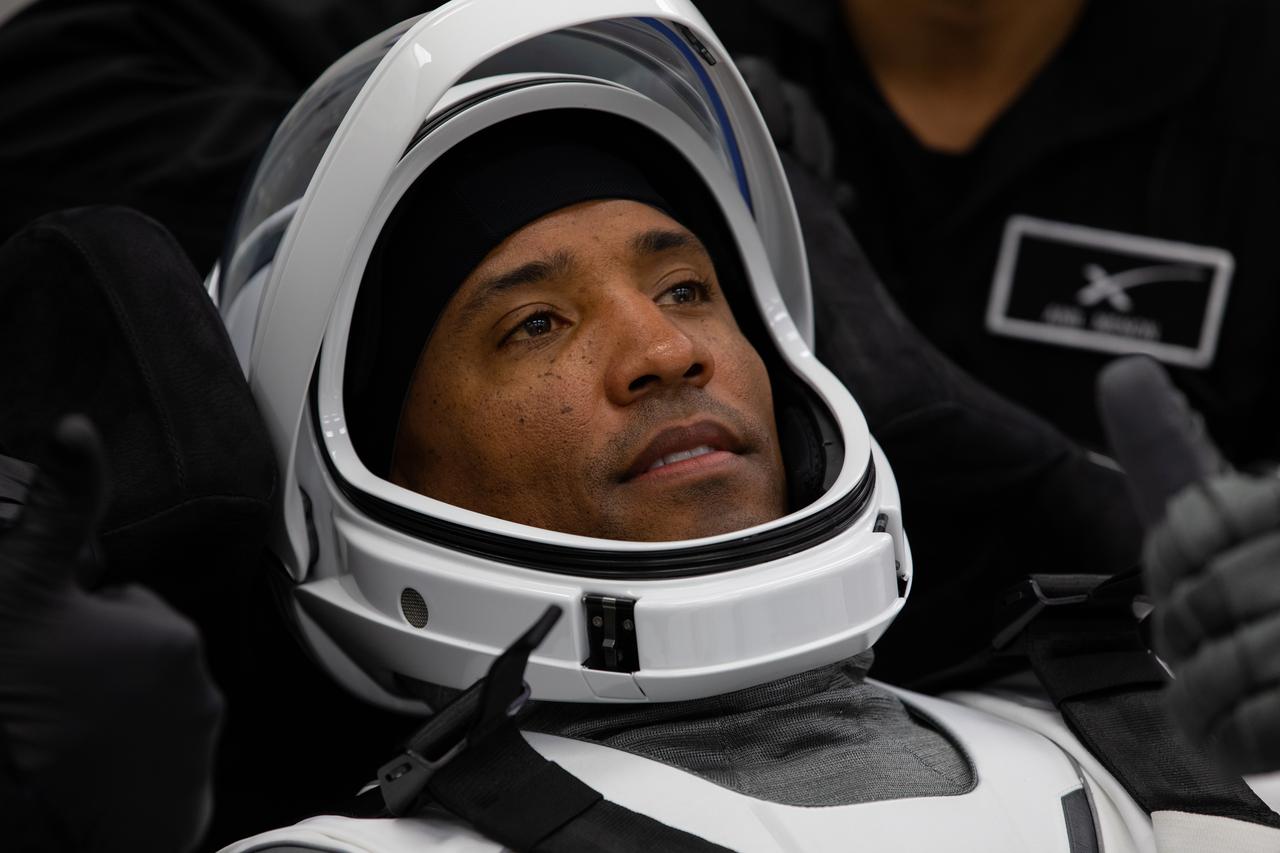
Inside the crew suit-up room in the Neil Armstrong Operations and Checkout Building at NASA’s Kennedy Space Center in Florida, on Nov. 15, 2020, NASA astronaut Victor Glover, pilot, dons a SpaceX spacesuit in preparation for NASA SpaceX’s Crew-1 mission. Crew-1 is the first regular crew mission of a U.S. commercial spacecraft with astronauts to the International Space Station as part of NASA’s Commercial Crew Program. The SpaceX Crew Dragon Resilience capsule will launch atop the company’s Falcon 9 rocket from Launch Complex 39A to the space station for a six-month science mission.
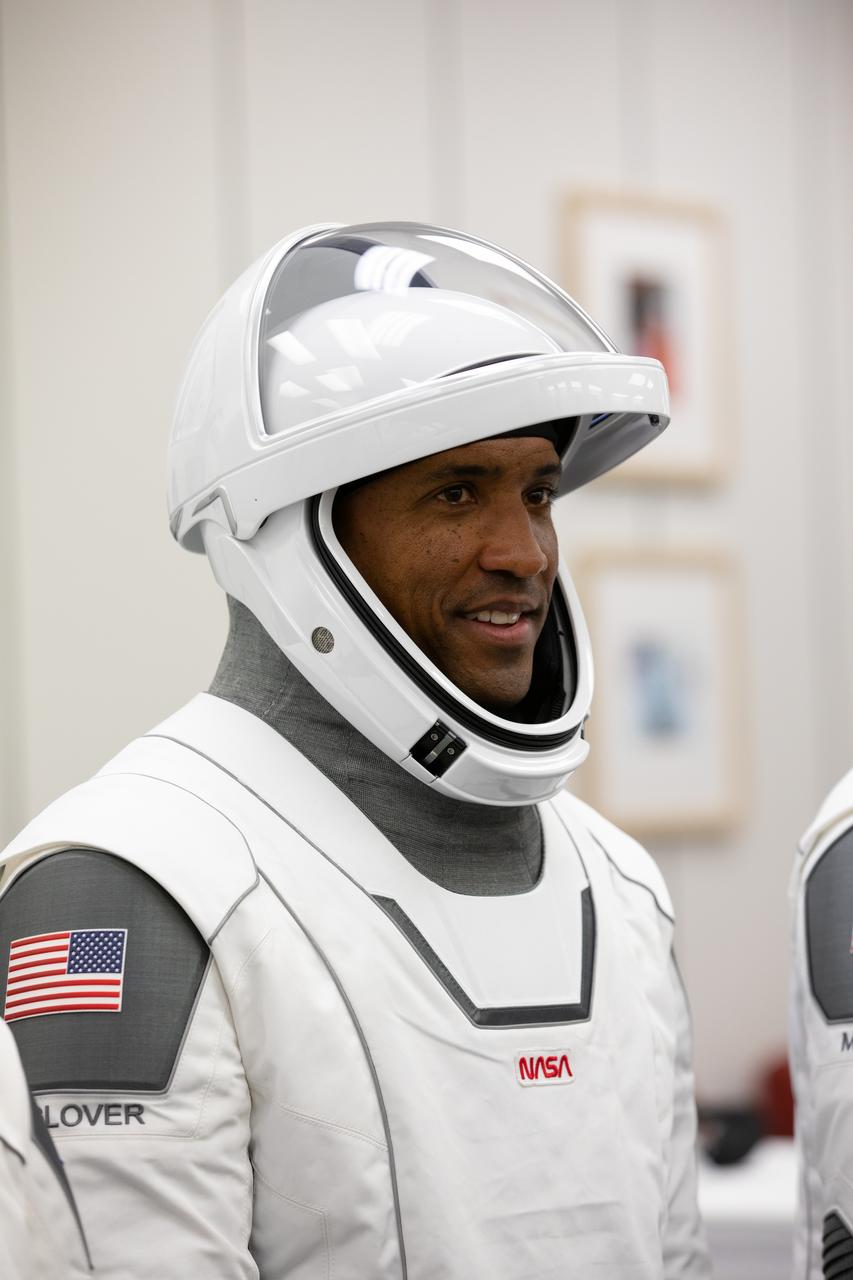
Inside the crew suit-up room in the Neil Armstrong Operations and Checkout Building at NASA’s Kennedy Space Center in Florida, on Nov. 15, 2020, NASA astronaut Victor Glover, pilot, is shown in a SpaceX spacesuit in preparation for NASA SpaceX’s Crew-1 mission. Crew-1 is the first regular crew mission of a U.S. commercial spacecraft with astronauts to the International Space Station as part of NASA’s Commercial Crew Program. The SpaceX Crew Dragon Resilience capsule will launch atop the company’s Falcon 9 rocket from Launch Complex 39A to the space station for a six-month science mission.
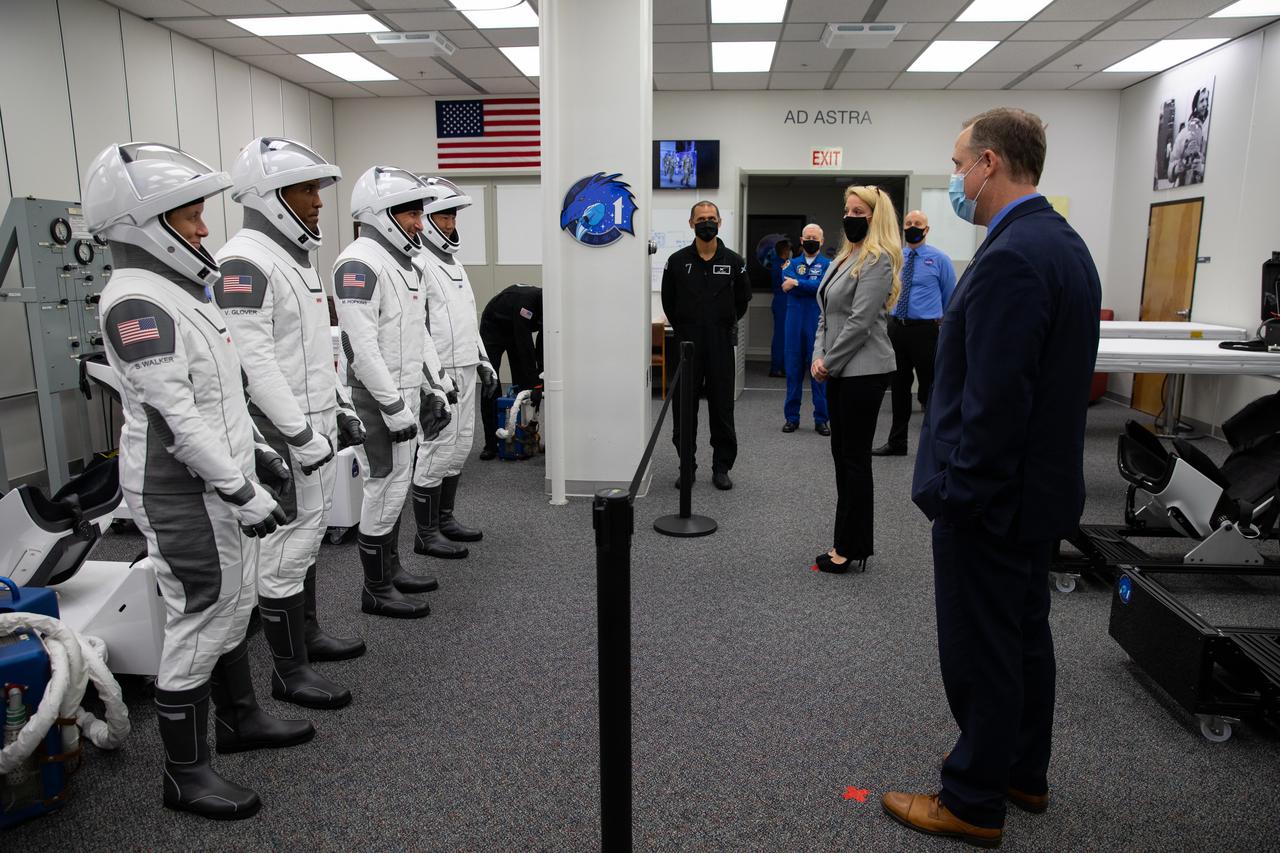
Inside the crew suit-up room in the Neil Armstrong Operations and Checkout Building at NASA’s Kennedy Space Center in Florida, on Nov. 15, 2020, NASA Administrator Jim Bridenstine, at far right, and Gwynne Shotwell, SpaceX president and chief operating officer, visit with the Crew-1 astronauts. From left are NASA astronaut Shannon Walker, mission specialist; NASA astronaut Victor Glover, pilot; NASA astronaut Michael Hopkins, spacecraft commander; and JAXA astronaut Soichi Noguchi, mission specialist. They are wearing SpaceX spacesuits in preparation for NASA SpaceX’s Crew-1 mission. Crew-1 is the first regular crew mission of a U.S. commercial spacecraft with astronauts to the International Space Station as part of NASA’s Commercial Crew Program. The SpaceX Crew Dragon Resilience capsule will launch atop the company’s Falcon 9 rocket from Launch Complex 39A to the space station for a six-month science mission.
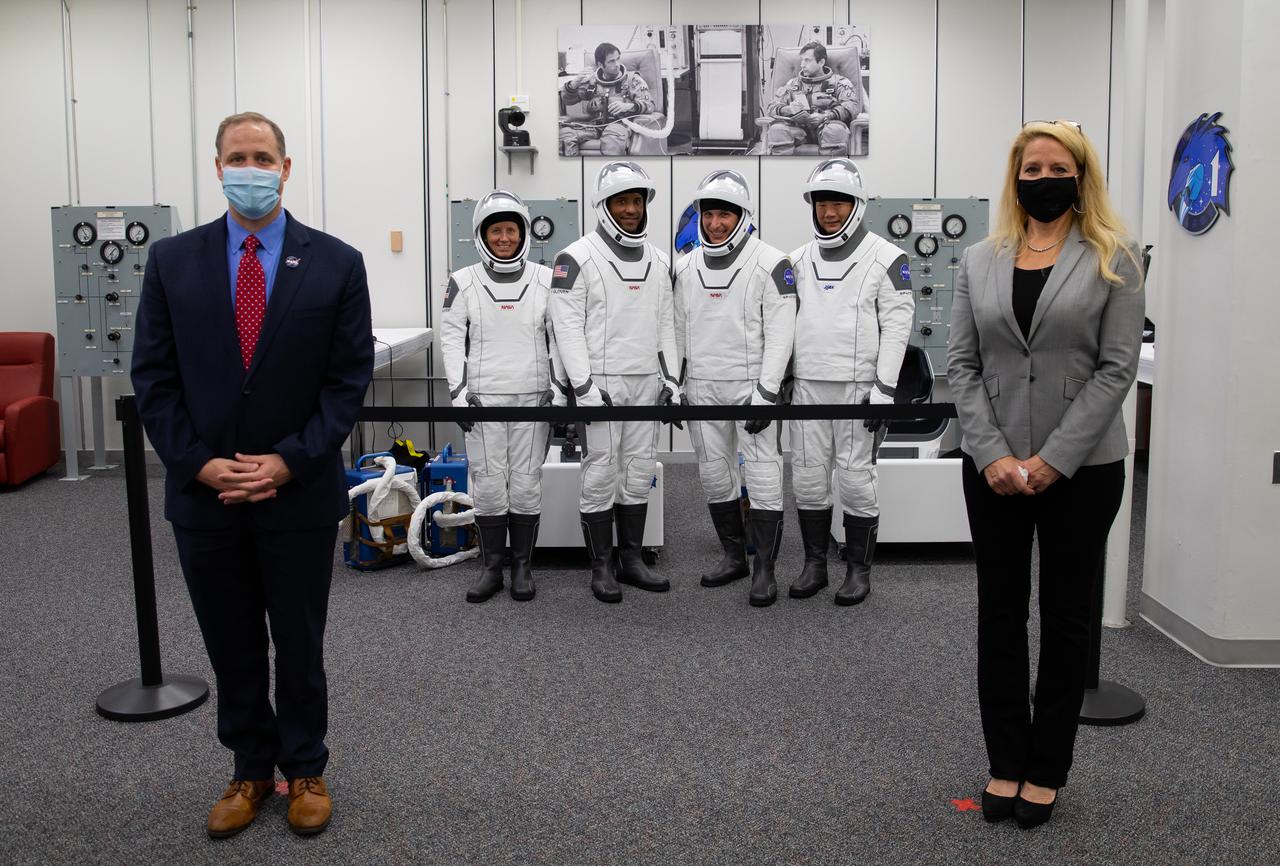
Inside the crew suit-up room in the Neil Armstrong Operations and Checkout Building at NASA’s Kennedy Space Center in Florida, on Nov. 15, 2020, NASA Administrator Jim Bridenstine, in front, at left, and Gwynne Shotwell, SpaceX president and chief operating officer, in front, at right, visit with the Crew-1 astronauts. Behind them from left are NASA astronaut Shannon Walker, mission specialist; NASA astronaut Victor Glover, pilot; NASA astronaut Michael Hopkins, spacecraft commander; and JAXA astronaut Soichi Noguchi, mission specialist. They are wearing SpaceX spacesuits in preparation for NASA SpaceX’s Crew-1 mission. Crew-1 is the first regular crew mission of a U.S. commercial spacecraft with astronauts to the International Space Station as part of NASA’s Commercial Crew Program. The SpaceX Crew Dragon Resilience capsule will launch atop the company’s Falcon 9 rocket from Launch Complex 39A to the space station for a six-month science mission.
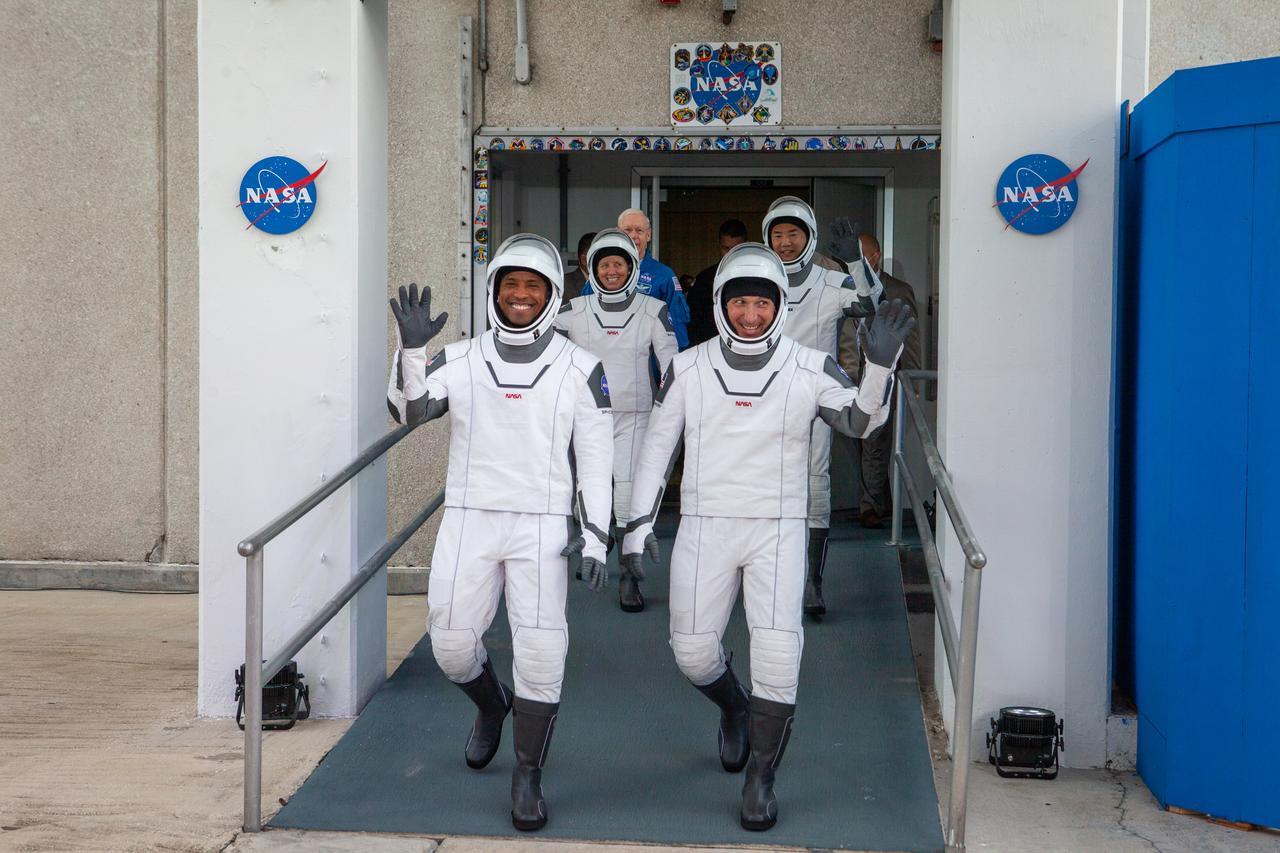
NASA SpaceX’s Crew-1 astronauts emerge from the Neil Armstrong Operations and Checkout Building at NASA’s Kennedy Space Center in Florida on Nov. 15, 2020. In front, from left are NASA astronaut Victor Glover, pilot, and NASA astronaut Michael Hopkins, spacecraft commander. Behind them, from left are NASA astronaut Shannon Walker, mission specialist, and JAXA astronaut Soichi Noguchi, mission specialist. They will board two Tesla vehicles for the trip to Launch Complex 39A. Crew-1 is the first regular crew mission of a U.S. commercial spacecraft with astronauts to the International Space Station as part of NASA’s Commercial Crew Program. The SpaceX Crew Dragon Resilience capsule will launch atop the company’s Falcon 9 rocket from Pad 39A to the space station for a six-month science mission.
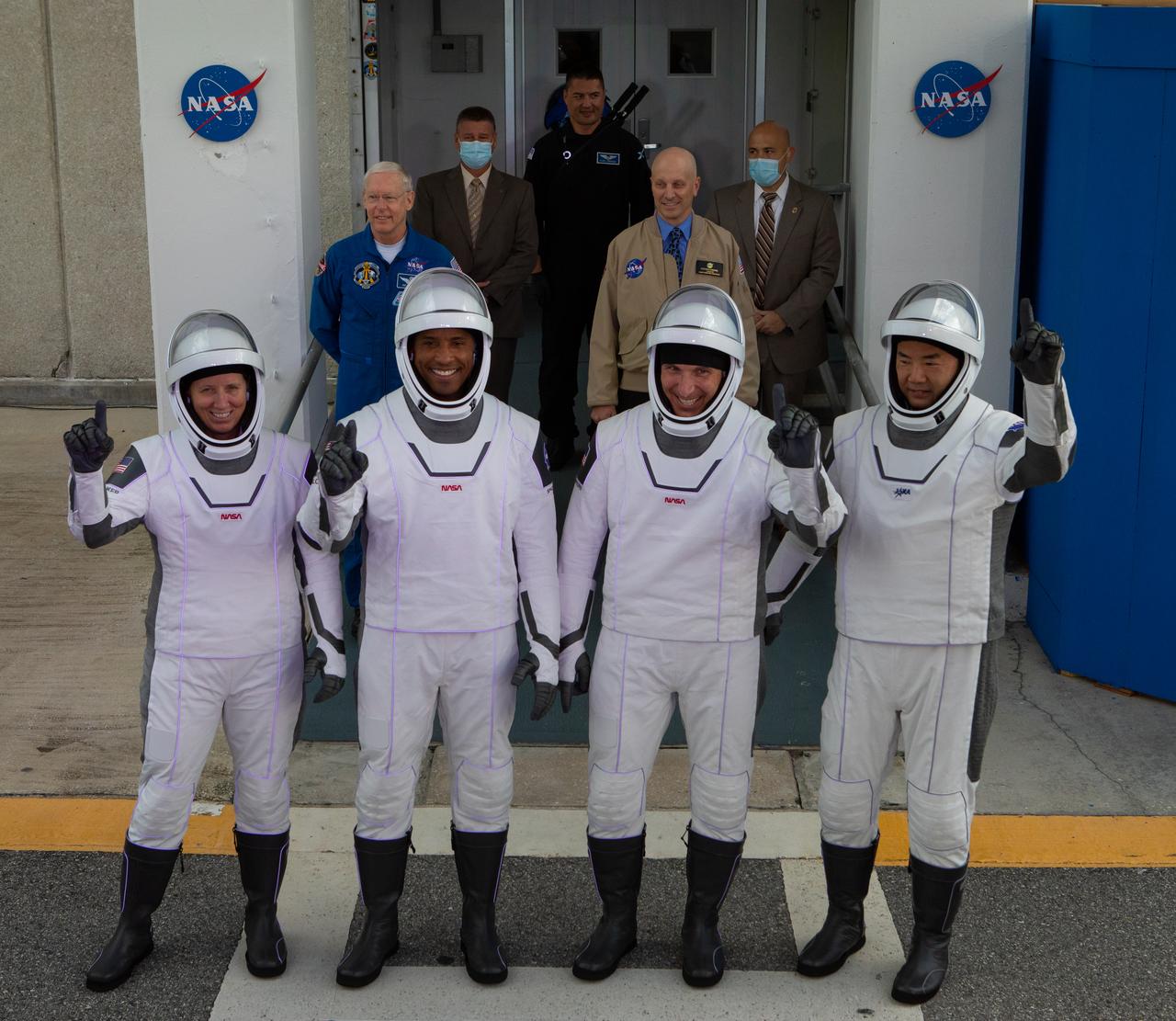
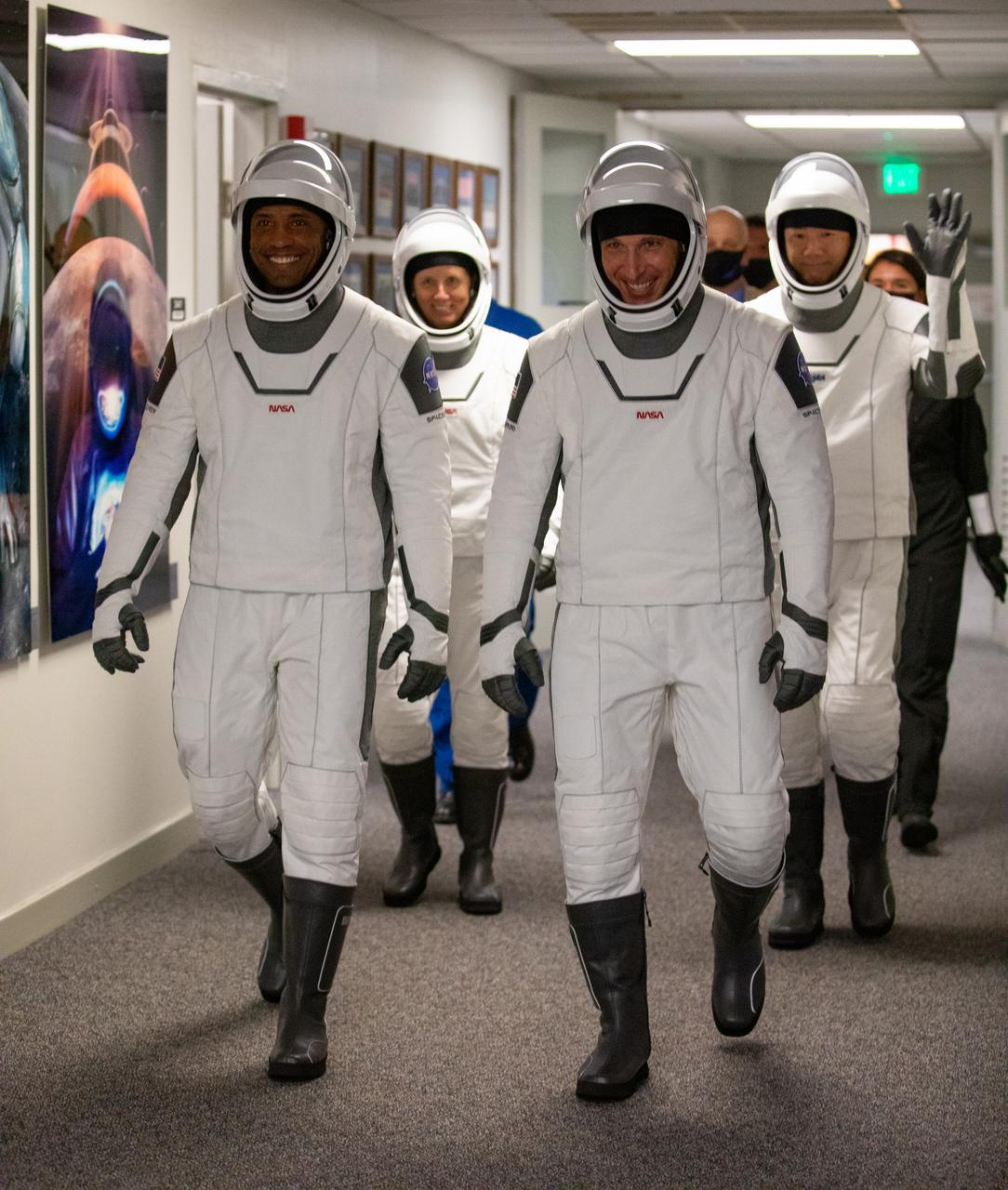
The NASA SpaceX Crew-1 astronauts emerge from the Neil Armstrong Operations and Checkout Building at NASA’s Kennedy Space Center in Florida on Nov. 15, 2020. From left are NASA astronaut Shannon Walker, mission specialist; NASA astronaut Victor Glover, pilot; NASA astronaut Michael Hopkins, spacecraft commander; and JAXA astronaut Soichi Noguchi, mission specialist. They will board two Tesla vehicles for the trip to Launch Complex 39A. Crew-1 is the first regular crew mission of a U.S. commercial spacecraft with astronauts to the International Space Station as part of NASA’s Commercial Crew Program. The SpaceX Crew Dragon Resilience capsule will launch atop the company’s Falcon 9 rocket from Pad 39A to the space station for a six-month science mission.
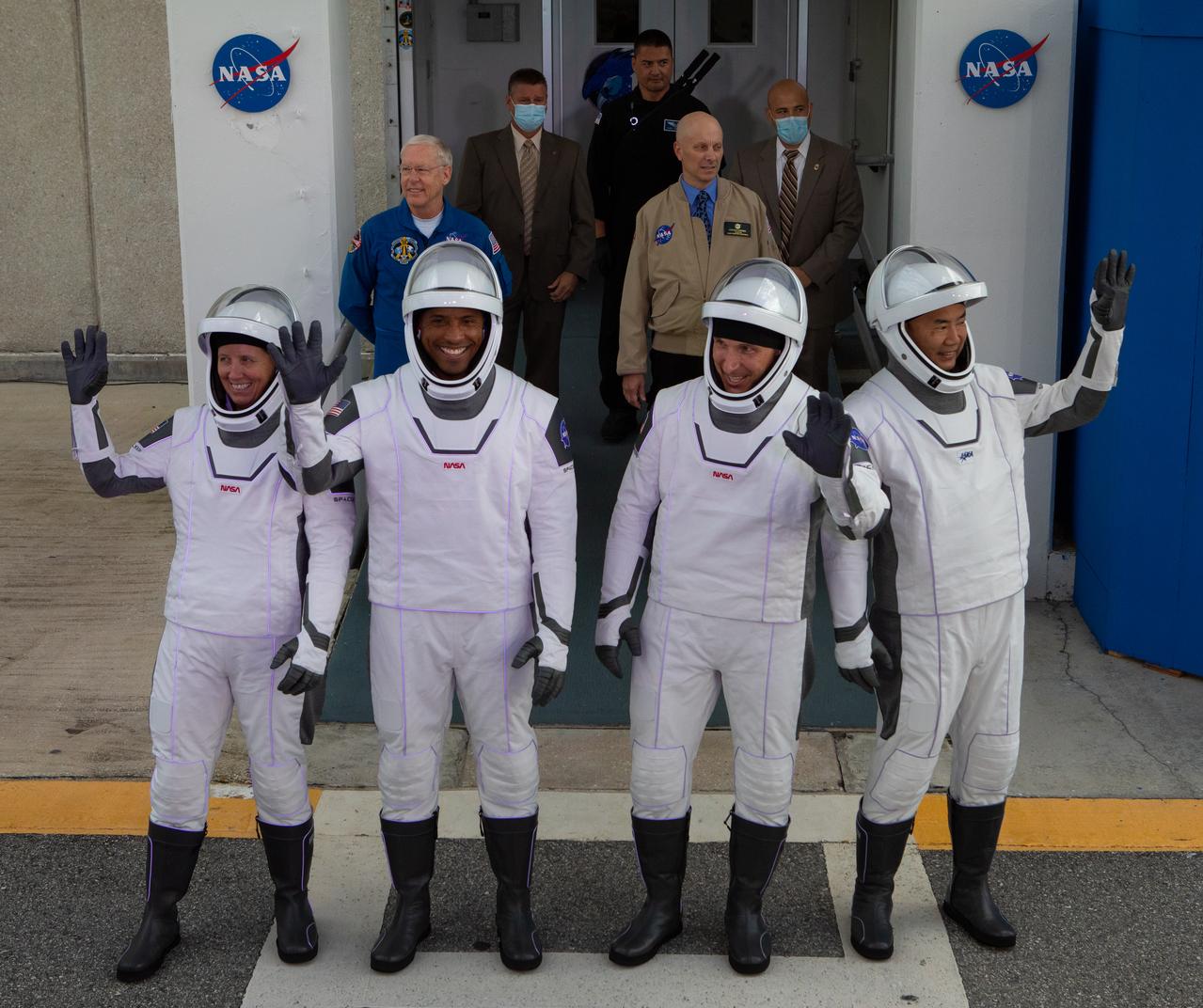
The NASA SpaceX Crew-1 astronauts emerge from the Neil Armstrong Operations and Checkout Building at NASA’s Kennedy Space Center in Florida on Nov. 15, 2020. From left are NASA astronaut Shannon Walker, mission specialist; NASA astronaut Victor Glover, pilot; NASA astronaut Michael Hopkins, spacecraft commander; and JAXA astronaut Soichi Noguchi, mission specialist. They will board two Tesla vehicles for the trip to Launch Complex 39A. Crew-1 is the first regular crew mission of a U.S. commercial spacecraft with astronauts to the International Space Station as part of NASA’s Commercial Crew Program. The SpaceX Crew Dragon Resilience capsule will launch atop the company’s Falcon 9 rocket from Pad 39A to the space station for a six-month science mission.
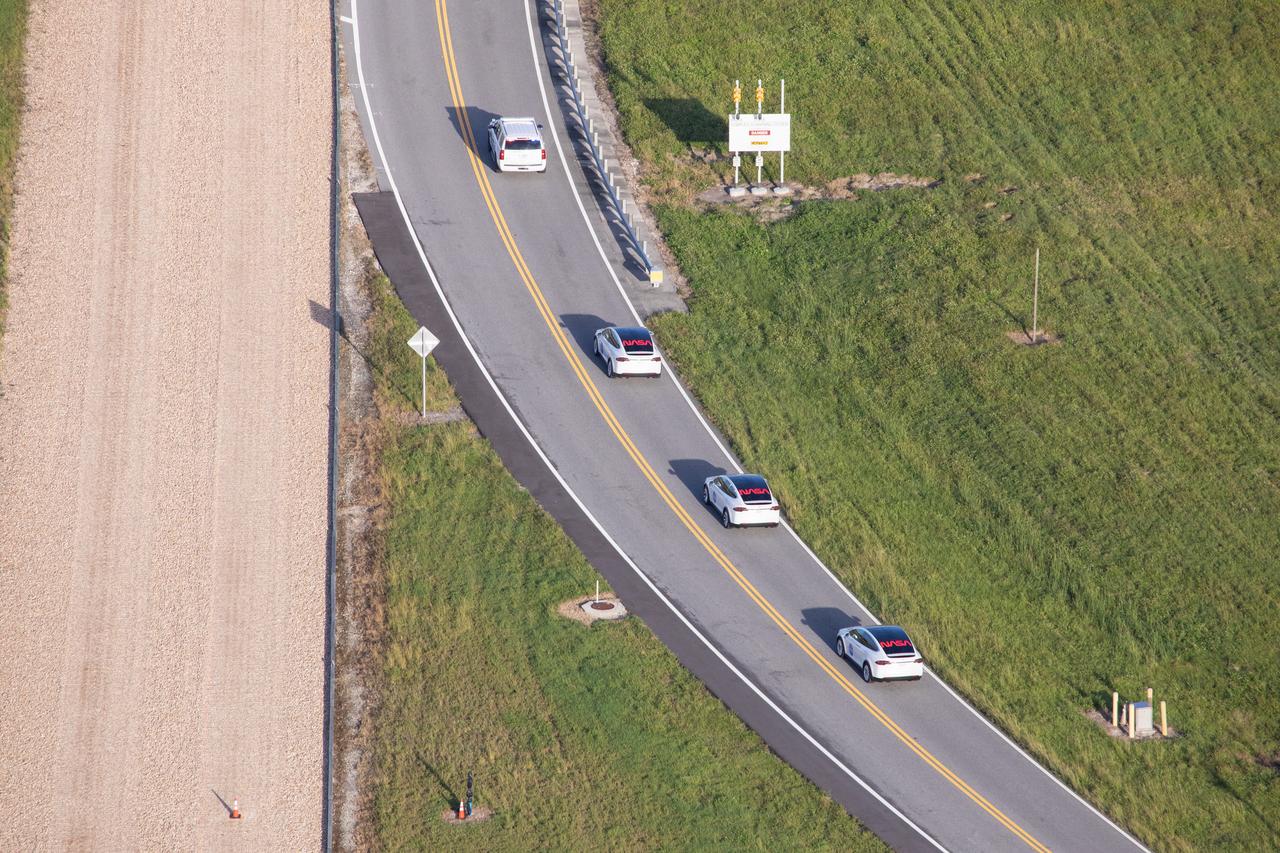
Two Tesla vehicles carrying the NASA SpaceX Crew-1 astronauts are on their way to Launch Complex 39A on Nov. 15, 2020, at NASA’s Kennedy Space Center in Florida. Inside the vehicles are NASA astronaut Michael Hopkins, spacecraft commander; NASA astronaut Victor Glover, pilot; NASA astronaut Shannon Walker, mission specialist; and Japan Aerospace Exploration Agency astronaut Soichi Noguchi, mission specialist. Crew-1 is the first regular crew mission of a U.S. commercial spacecraft with astronauts to the International Space Station as part of NASA’s Commercial Crew Program. The SpaceX Crew Dragon Resilience capsule will launch atop the company’s Falcon 9 rocket from Pad 39A to the space station for a six-month science mission.
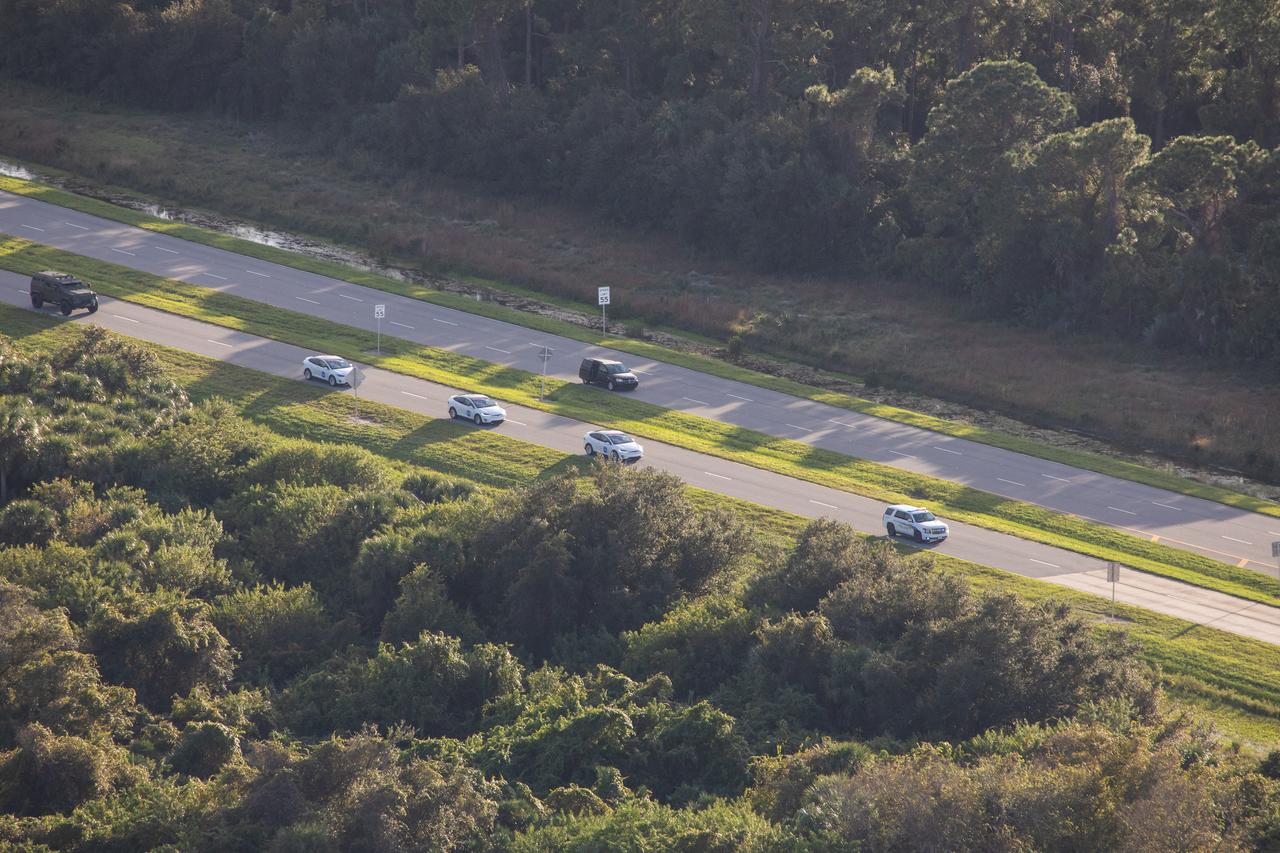
Two Tesla vehicles carrying the NASA SpaceX Crew-1 astronauts are on their way to Launch Complex 39A on Nov. 15, 2020, at NASA’s Kennedy Space Center in Florida. Inside the vehicles are NASA astronaut Michael Hopkins, spacecraft commander; NASA astronaut Victor Glover, pilot; NASA astronaut Shannon Walker, mission specialist; and Japan Aerospace Exploration Agency astronaut Soichi Noguchi, mission specialist. Crew-1 is the first regular crew mission of a U.S. commercial spacecraft with astronauts to the International Space Station as part of NASA’s Commercial Crew Program. The SpaceX Crew Dragon Resilience capsule will launch atop the company’s Falcon 9 rocket from Pad 39A to the space station for a six-month science mission.
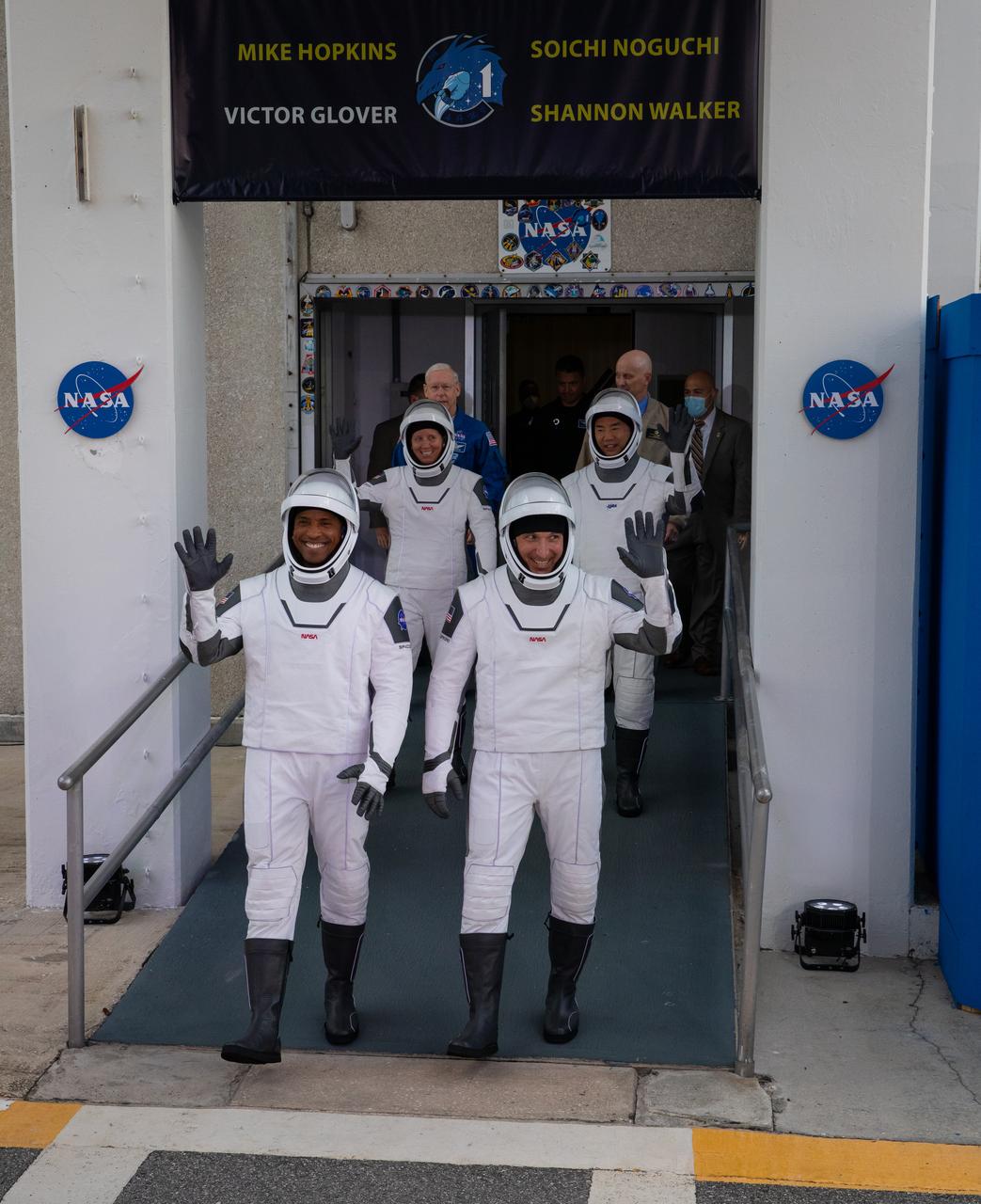
The NASA SpaceX Crew-1 astronauts emerge from the Neil Armstrong Operations and Checkout Building at NASA’s Kennedy Space Center in Florida on Nov. 15, 2020. In front, from left are NASA astronaut Victor Glover, pilot, and NASA astronaut Michael Hopkins, spacecraft commander. Behind them, from left are NASA astronaut Shannon Walker, and JAXA astronaut Soichi Noguchi, mission specialist. They will board two Tesla vehicles for the trip to Launch Complex 39A. Crew-1 is the first regular crew mission of a U.S. commercial spacecraft with astronauts to the International Space Station as part of NASA’s Commercial Crew Program. The SpaceX Crew Dragon Resilience capsule will launch atop the company’s Falcon 9 rocket from Pad 39A to the space station for a six-month science mission.
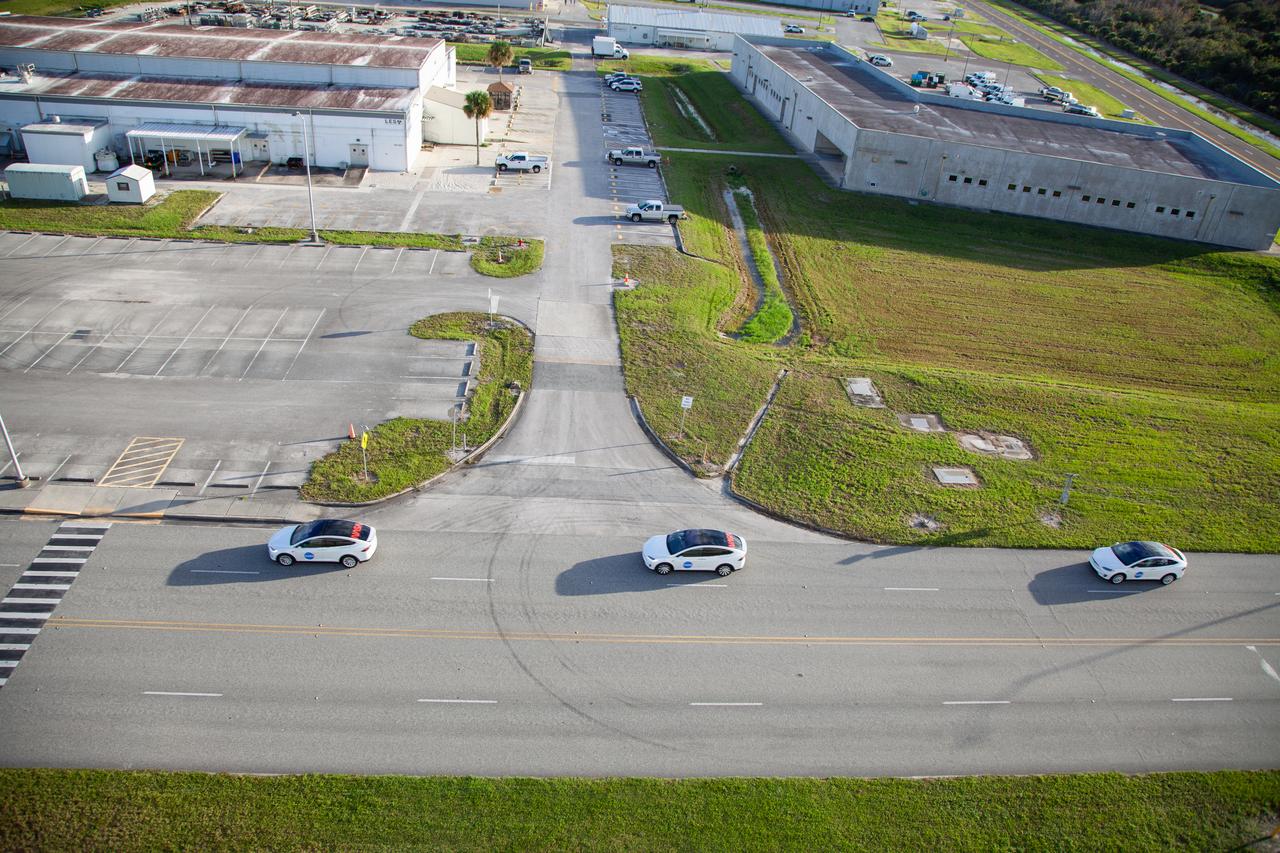
Two Tesla vehicles carrying the NASA SpaceX Crew-1 astronauts are on their way to Launch Complex 39A on Nov. 15, 2020, at NASA’s Kennedy Space Center in Florida. Inside the vehicles are NASA astronaut Michael Hopkins, spacecraft commander; NASA astronaut Victor Glover, pilot; NASA astronaut Shannon Walker, mission specialist; and Japan Aerospace Exploration Agency astronaut Soichi Noguchi, mission specialist. Crew-1 is the first regular crew mission of a U.S. commercial spacecraft with astronauts to the International Space Station as part of NASA’s Commercial Crew Program. The SpaceX Crew Dragon Resilience capsule will launch atop the company’s Falcon 9 rocket from Pad 39A to the space station for a six-month science mission.
The NASA SpaceX Crew-1 astronauts emerge from the Neil Armstrong Operations and Checkout Building at NASA’s Kennedy Space Center in Florida on Nov. 15, 2020. In front, from left are NASA astronaut Victor Glover, pilot; and NASA astronaut Michael Hopkins, spacecraft commander. Behind them, from left are NASA astronaut Shannon Walker, mission specialist, and JAXA astronaut Soichi Noguchi, mission specialist. They will board two Tesla vehicles for the trip to Launch Complex 39A. Crew-1 is the first regular crew mission of a U.S. commercial spacecraft with astronauts to the International Space Station as part of NASA’s Commercial Crew Program. The SpaceX Crew Dragon Resilience capsule will launch atop the company’s Falcon 9 rocket from Pad 39A to the space station for a six-month science mission.
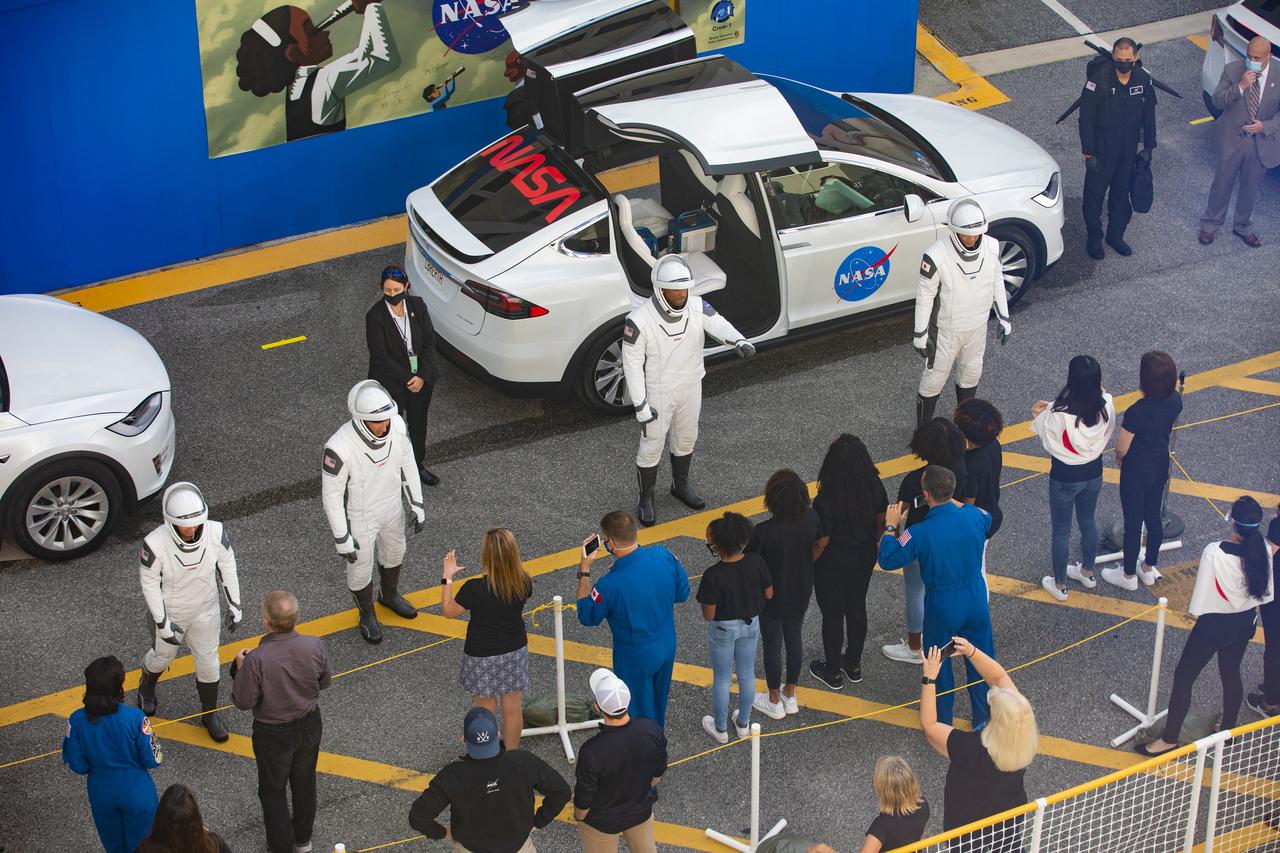
The NASA SpaceX Crew-1 astronauts visit with family members after emerging from the Neil Armstrong Operations and Checkout Building at NASA’s Kennedy Space Center in Florida on Nov. 15, 2020. From left, are NASA astronaut Shannon Walker, mission specialist; NASA astronaut Michael Hopkins, spacecraft commander; NASA astronaut Victor Glover, pilot; and JAXA astronaut Soichi Noguchi, mission specialist. They will board two Tesla vehicles for the trip to Launch Complex 39A. Crew-1 is the first regular crew mission of a U.S. commercial spacecraft with astronauts to the International Space Station as part of NASA’s Commercial Crew Program. The SpaceX Crew Dragon Resilience capsule will launch atop the company’s Falcon 9 rocket from Pad 39A to the space station for a six-month science mission.
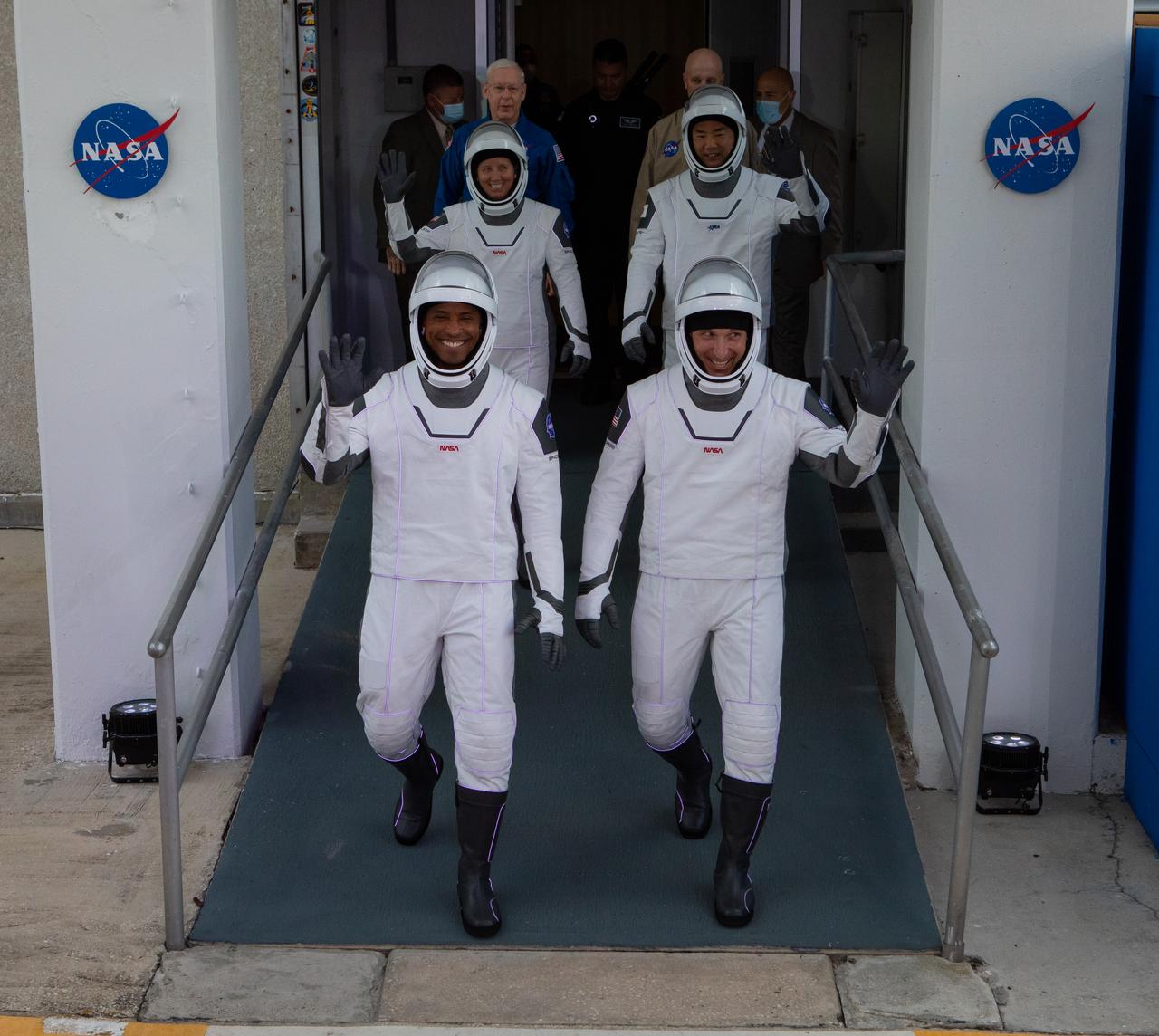
The NASA SpaceX Crew-1 astronauts emerge from the Neil Armstrong Operations and Checkout Building at NASA’s Kennedy Space Center in Florida on Nov. 15, 2020. In front, from left are NASA astronaut Victor Glover, pilot; and NASA astronaut Michael Hopkins, spacecraft commander. Behind them, from left are NASA astronaut Shannon Walker, mission specialist, and JAXA astronaut Soichi Noguchi, mission specialist. They will board two Tesla vehicles for the trip to Launch Complex 39A. Crew-1 is the first regular crew mission of a U.S. commercial spacecraft with astronauts to the International Space Station as part of NASA’s Commercial Crew Program. The SpaceX Crew Dragon Resilience capsule will launch atop the company’s Falcon 9 rocket from Pad 39A to the space station for a six-month science mission.
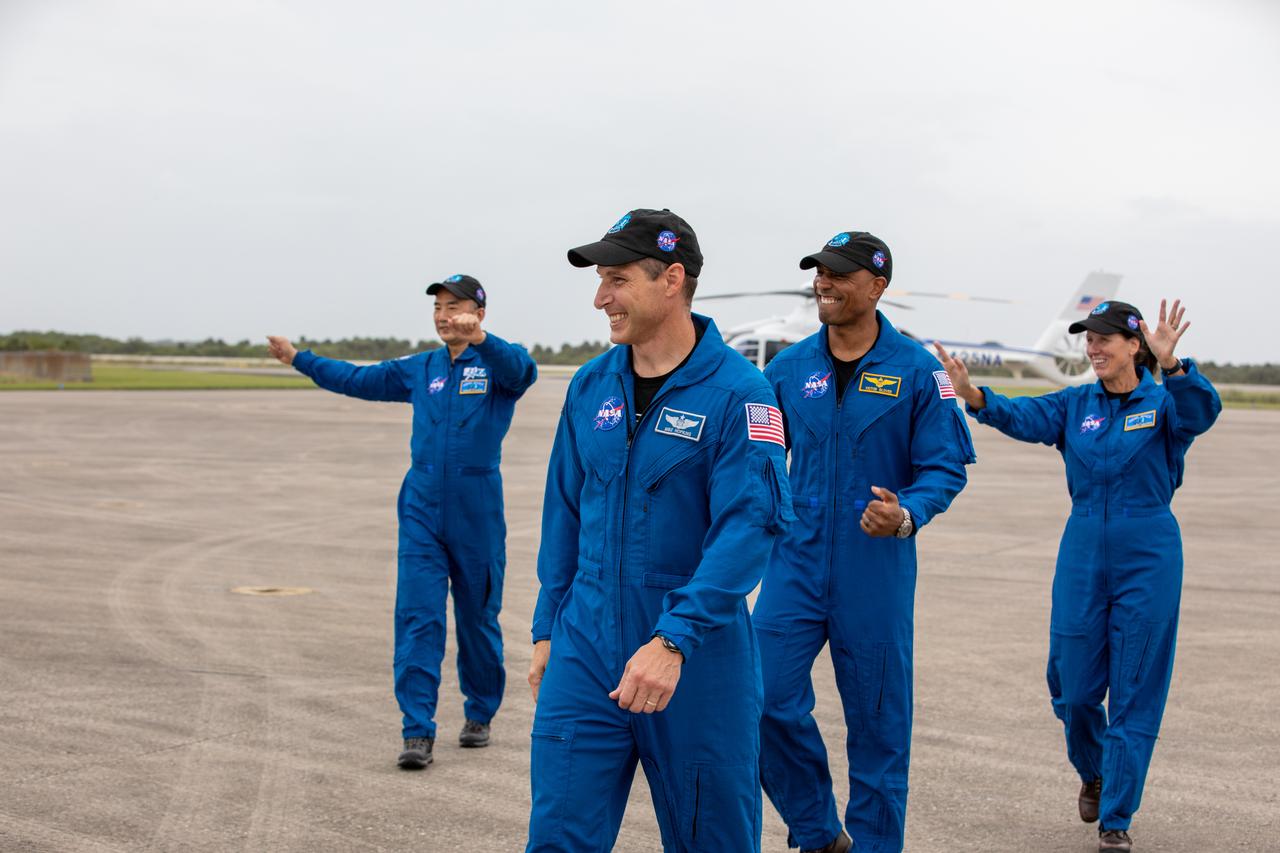
The astronauts for NASA’s SpaceX Crew-1 mission arrive at the Launch and Landing Facility at the agency’s Kennedy Space Center in Florida for a media event on Nov. 8, 2020. From left are, JAXA astronaut Soichi Noguchi, mission specialist; NASA astronaut Michael Hopkins, spacecraft commander; NASA astronaut Victor Glover, pilot; and NASA astronaut Shannon Walker, mission specialist. Crew-1 is the first crew rotation mission of a U.S. commercial spacecraft with astronauts to the International Space Station as part of NASA’s Commercial Crew Program. The SpaceX Crew Dragon spacecraft, named Resilience, will launch atop a Falcon 9 rocket from Kennedy’s Launch Complex 39A.
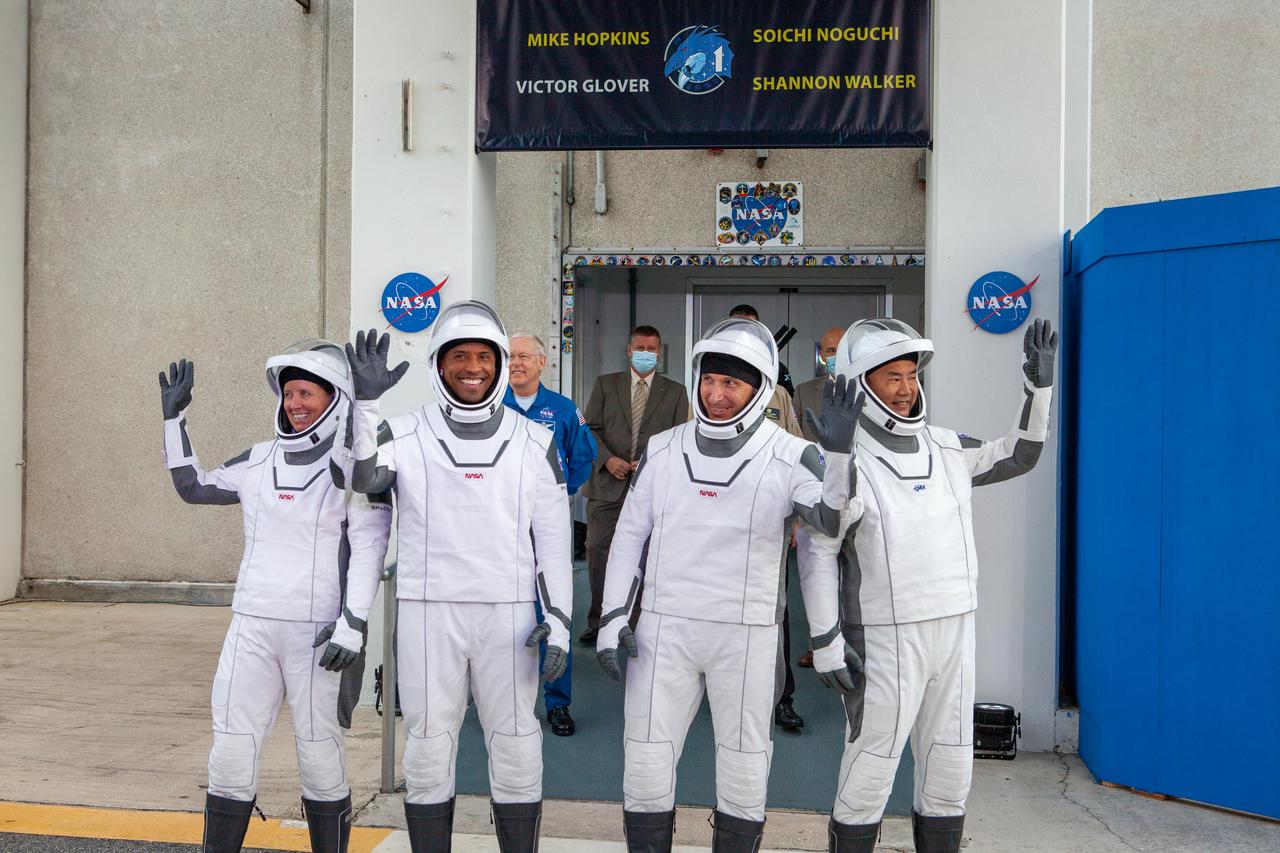
NASA SpaceX’s Crew-1 astronauts emerge from the Neil Armstrong Operations and Checkout Building at NASA’s Kennedy Space Center in Florida on Nov. 15, 2020 and stop to wave to family members, guests and members of the media. From left are NASA astronaut Shannon Walker, mission specialist; Victor Glover, pilot; NASA astronaut Michael Hopkins, spacecraft commander and JAXA astronaut Soichi Noguchi, mission specialist. They will board two Tesla vehicles for the trip to Launch Complex 39A. Crew-1 is the first regular crew mission of a U.S. commercial spacecraft with astronauts to the International Space Station as part of NASA’s Commercial Crew Program. The SpaceX Crew Dragon Resilience capsule will launch atop the company’s Falcon 9 rocket from Pad 39A to the space station for a six-month science mission.

A crew arrival media event for NASA’s SpaceX Crew-1 mission is held Nov. 8, 2020, at the Launch and Landing Facility at the agency’s Kennedy Space Center in Florida. Speaking to the media is NASA astronaut Michael Hopkins, spacecraft commander. Behind him are NASA astronaut Shannon Walker, mission specialist; NASA astronaut Victor Glover, pilot; and JAXA astronaut Soichi Noguchi, mission specialist. Crew-1 is the first crew rotation mission of a U.S. commercial spacecraft with astronauts to the International Space Station as part of NASA’s Commercial Crew Program. The SpaceX Crew Dragon spacecraft, named Resilience, will launch atop a Falcon 9 rocket from Kennedy’s Launch Complex 39A.
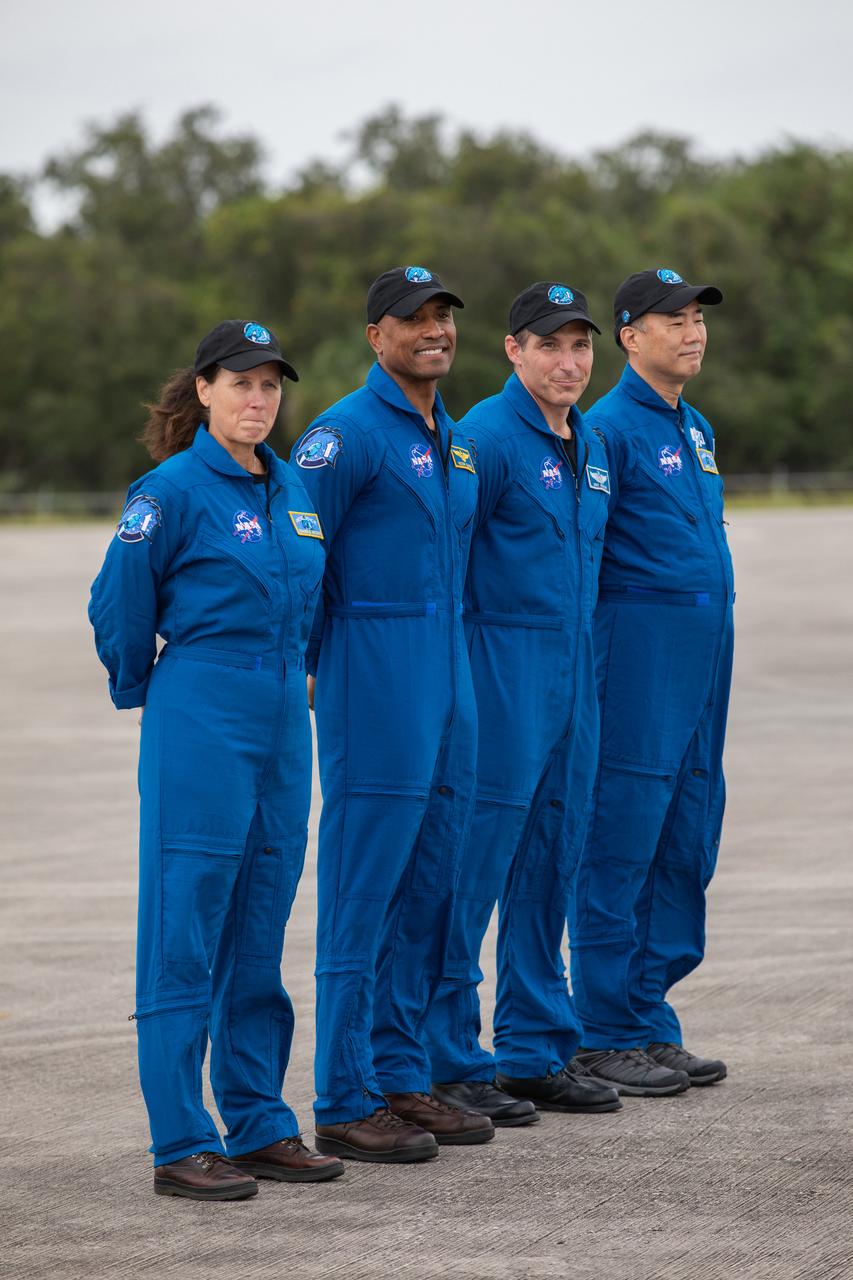
A crew arrival media event for NASA’s SpaceX Crew-1 mission is held Nov. 8, 2020, at the Launch and Landing Facility at the agency’s Kennedy Space Center in Florida. From left are NASA astronaut Shannon Walker, mission specialist; NASA astronaut Victor Glover, pilot; NASA astronaut Michael Hopkins, spacecraft commander; and JAXA astronaut Soichi Noguchi, mission specialist. Crew-1 is the first crew rotation mission of a U.S. commercial spacecraft with astronauts to the International Space Station as part of NASA’s Commercial Crew Program. The SpaceX Crew Dragon spacecraft, named Resilience, will launch atop a Falcon 9 rocket from Kennedy’s Launch Complex 39A.
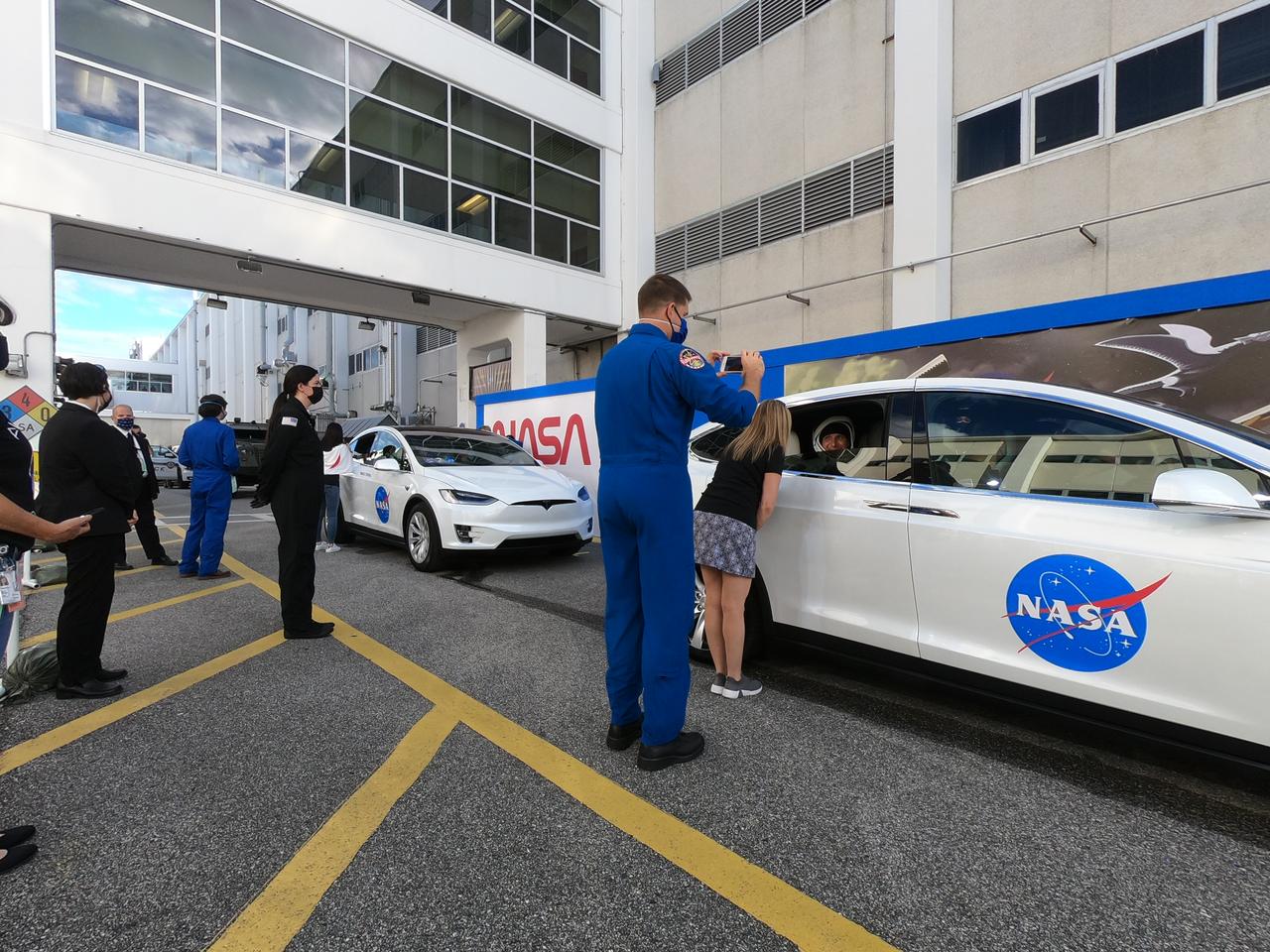
Family members of NASA SpaceX’s Crew-1 astronauts say goodbye as the astronauts are secured inside two Tesla vehicles for the trip to Launch Complex 39A after emerging from the Neil Armstrong Operations and Checkout Building at NASA’s Kennedy Space Center in Florida on Nov. 15, 2020. NASA astronauts Shannon Walker, mission specialist; Michael Hopkins, spacecraft commander; and Victor Glover, pilot; along with JAXA astronaut Soichi Noguchi, mission specialist, will board the Crew Dragon at the launch pad. Crew-1 is the first regular crew mission of a U.S. commercial spacecraft with astronauts to the International Space Station as part of NASA’s Commercial Crew Program. The SpaceX Crew Dragon Resilience capsule will launch atop the company’s Falcon 9 rocket from Pad 39A to the space station for a six-month science mission.
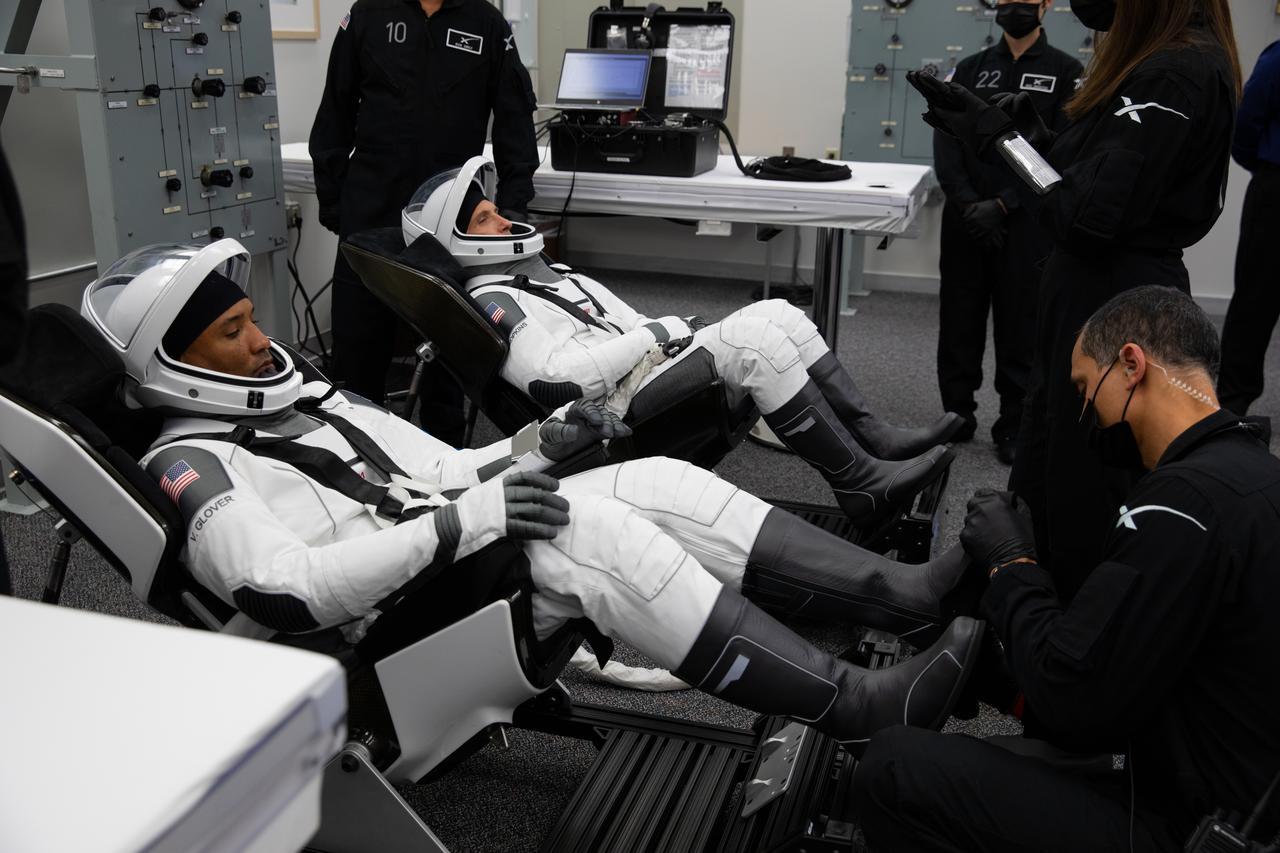
Inside the crew suit-up room in the Neil Armstrong Operations and Checkout Building at NASA’s Kennedy Space Center in Florida, on Nov. 15, 2020, the suit-up team helps Crew-1 astronauts into the SpaceX spacesuits. From left, NASA astronaut Victor Glover, pilot, and NASA astronaut Michael Hopkins, spacecraft commander, are wearing SpaceX spacesuits in preparation for NASA SpaceX’s Crew-1 mission. Crew-1 is the first regular crew mission of a U.S. commercial spacecraft with astronauts to the International Space Station as part of NASA’s Commercial Crew Program. The SpaceX Crew Dragon Resilience capsule will launch atop the company’s Falcon 9 rocket from Launch Complex 39A to the space station for a six-month science mission.
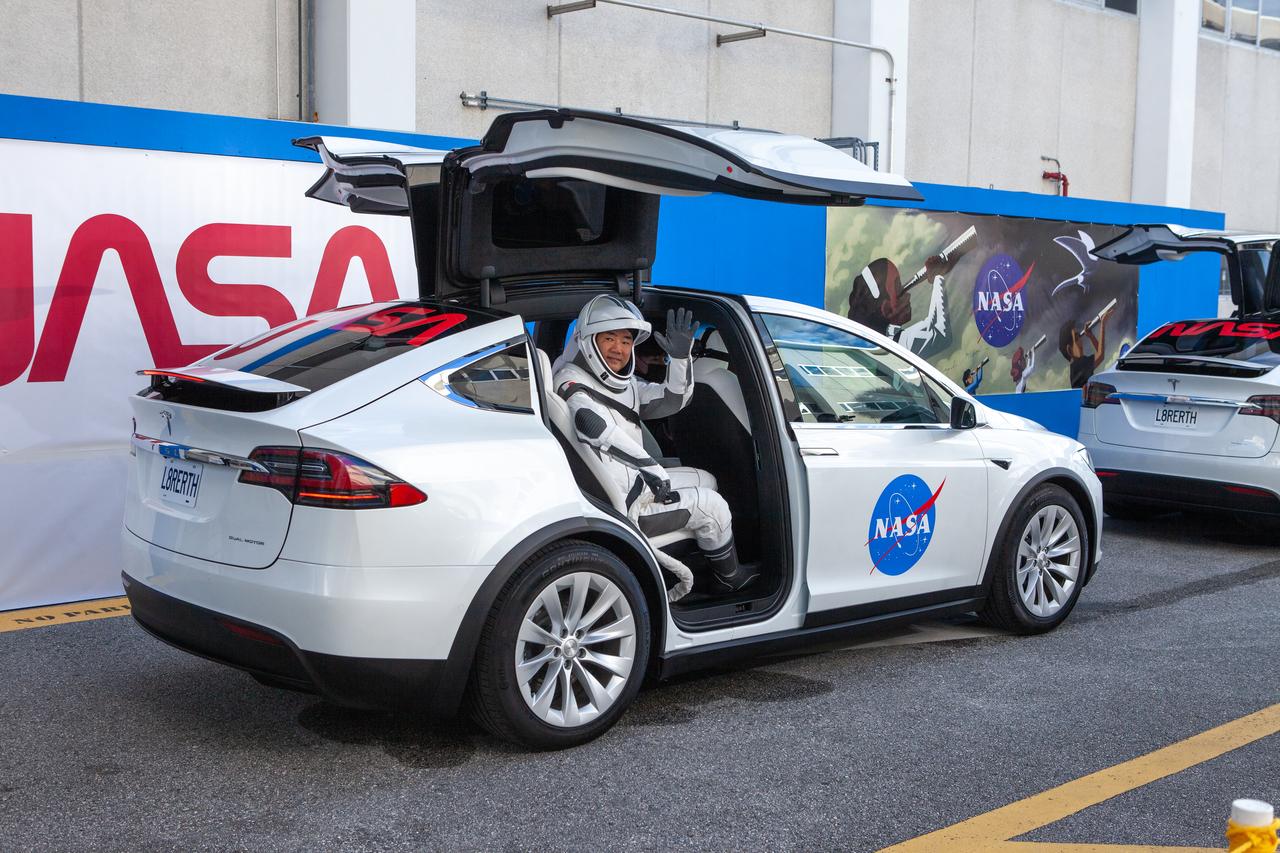
NASA SpaceX’s Crew-1 astronauts board two Tesla vehicles for the trip to Launch Complex 39A after emerging from the Neil Armstrong Operations and Checkout Building at NASA’s Kennedy Space Center in Florida on Nov. 15, 2020. NASA astronauts Michael Hopkins, spacecraft commander; Victor Glover, pilot; and Shannon Walker, mission specialist; and JAXA astronaut Soichi Noguchi, mission specialist will board the Crew Dragon for the first regular crew mission of a U.S. commercial spacecraft with astronauts to the International Space Station as part of NASA’s Commercial Crew Program. The SpaceX Crew Dragon Resilience capsule will launch atop the company’s Falcon 9 rocket from Pad 39A to the space station for a six-month science mission.
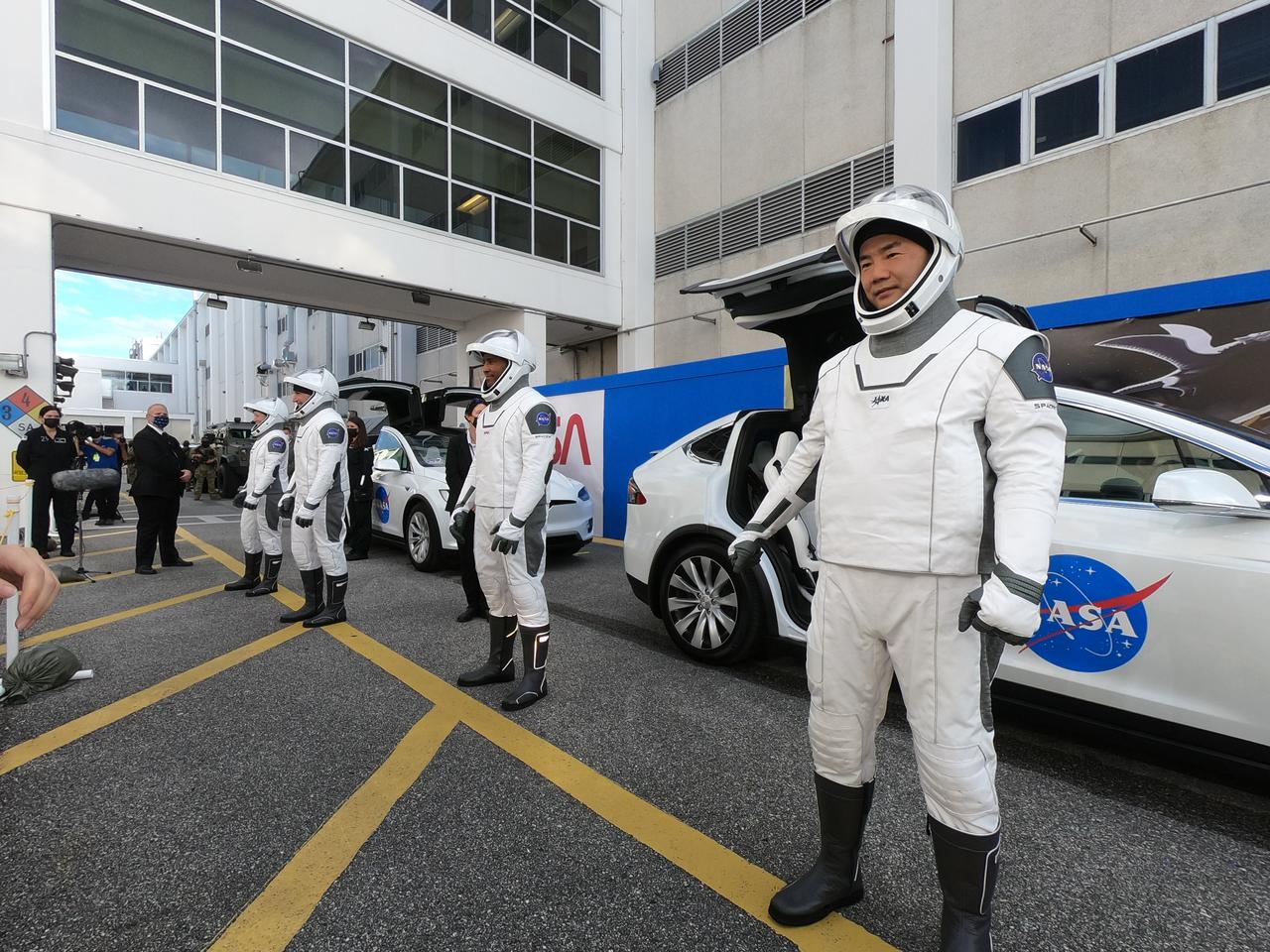
NASA SpaceX’s Crew-1 astronauts get ready to board two Tesla vehicles for the trip to Launch Complex 39A after emerging from the Neil Armstrong Operations and Checkout Building at NASA’s Kennedy Space Center in Florida on Nov. 15, 2020. In view at far right is JAXA astronaut Soichi Noguchi, mission specialist. From left are NASA astronauts Shannon Walker, mission specialist; Michael Hopkins, spacecraft commander; and Victor Glover, pilot. Crew-1 is the first regular crew mission of a U.S. commercial spacecraft with astronauts to the International Space Station as part of NASA’s Commercial Crew Program. The SpaceX Crew Dragon Resilience capsule will launch atop the company’s Falcon 9 rocket from Pad 39A to the space station for a six-month science mission.
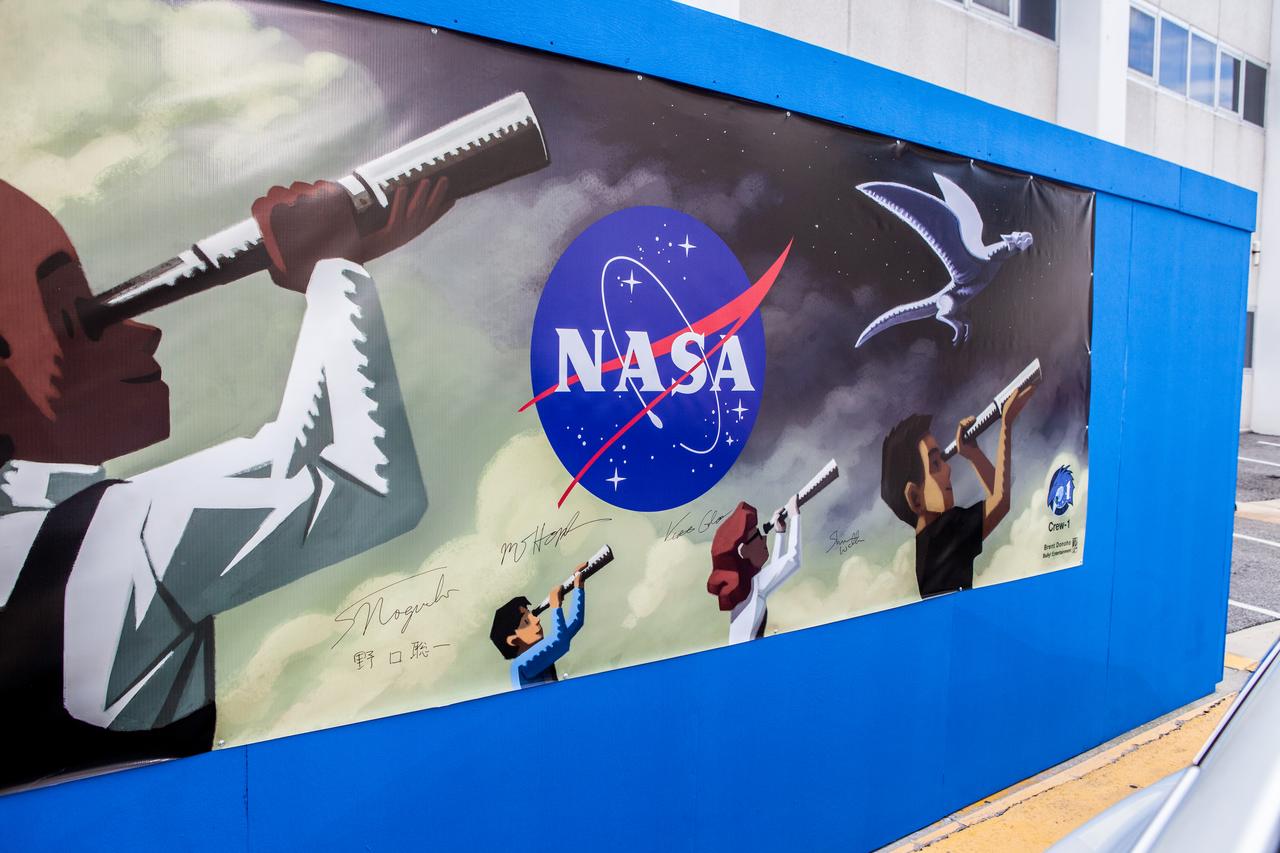
A large mural is on the wall in the hallway leading to the exit where NASA SpaceX’s Crew-1 astronauts will leave the Neil Armstrong Operations and Checkout Building at NASA’s Kennedy Space Center in Florida on Nov. 15, 2020. NASA astronauts Michael Hopkins, Victor Glover and Shannon Walker, and JAXA astronaut Soichi Noguchi, will board two Tesla vehicles for the trip to Launch Complex 39A. Crew-1 is the first regular crew mission of a U.S. commercial spacecraft with astronauts to the International Space Station as part of NASA’s Commercial Crew Program. The SpaceX Crew Dragon Resilience capsule will launch atop the company’s Falcon 9 rocket from Pad 39A to the space station for a six-month science mission.
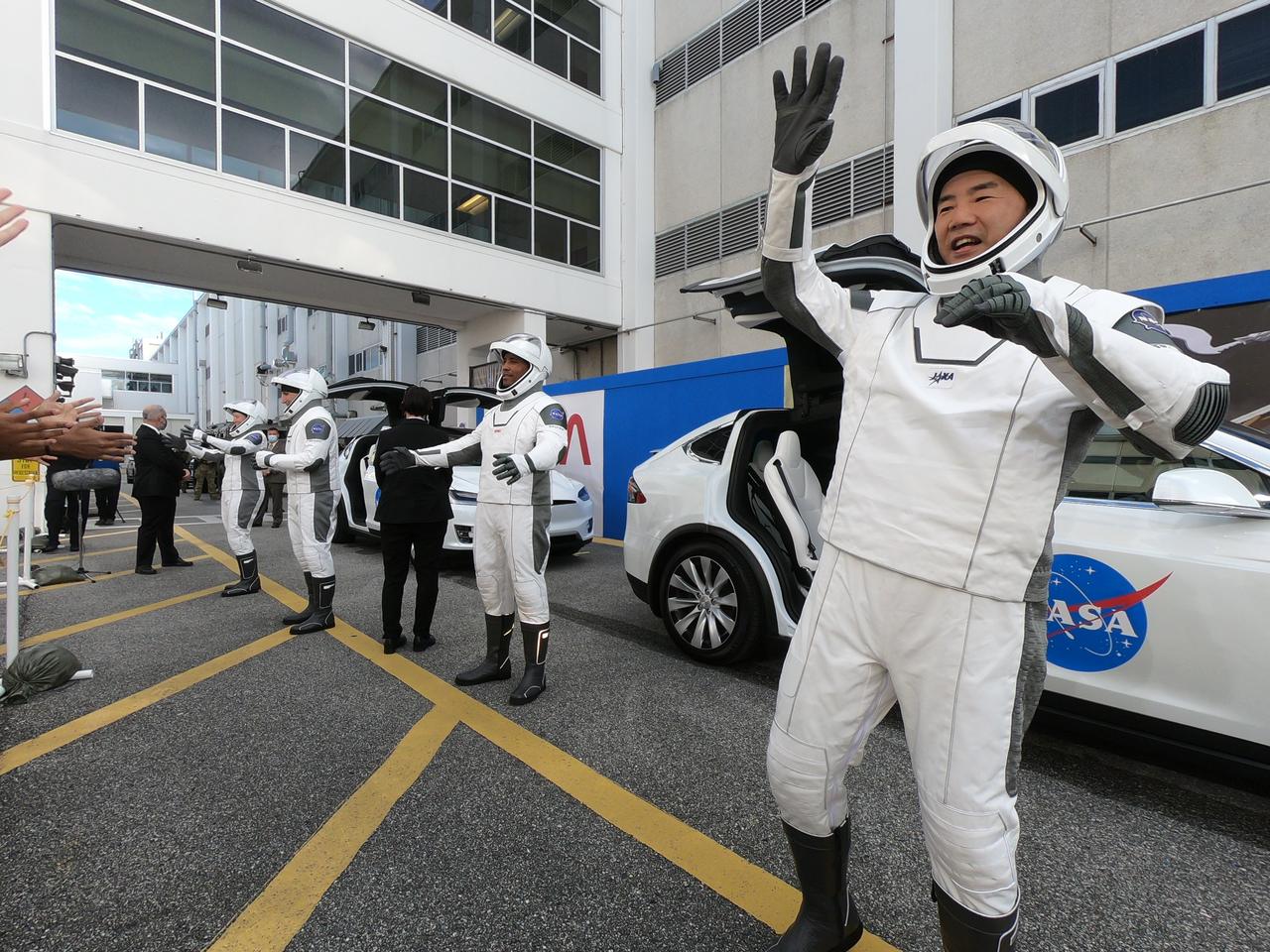
NASA SpaceX’s Crew-1 astronauts get ready to board two Tesla vehicles for the trip to Launch Complex 39A after emerging from the Neil Armstrong Operations and Checkout Building at NASA’s Kennedy Space Center in Florida on Nov. 15, 2020. In view at far right is JAXA astronaut Soichi Noguchi, mission specialist. From left are NASA astronauts Shannon Walker, mission specialist; Michael Hopkins, spacecraft commander; and Victor Glover, pilot. Crew-1 is the first regular crew mission of a U.S. commercial spacecraft with astronauts to the International Space Station as part of NASA’s Commercial Crew Program. The SpaceX Crew Dragon Resilience capsule will launch atop the company’s Falcon 9 rocket from Pad 39A to the space station for a six-month science mission.
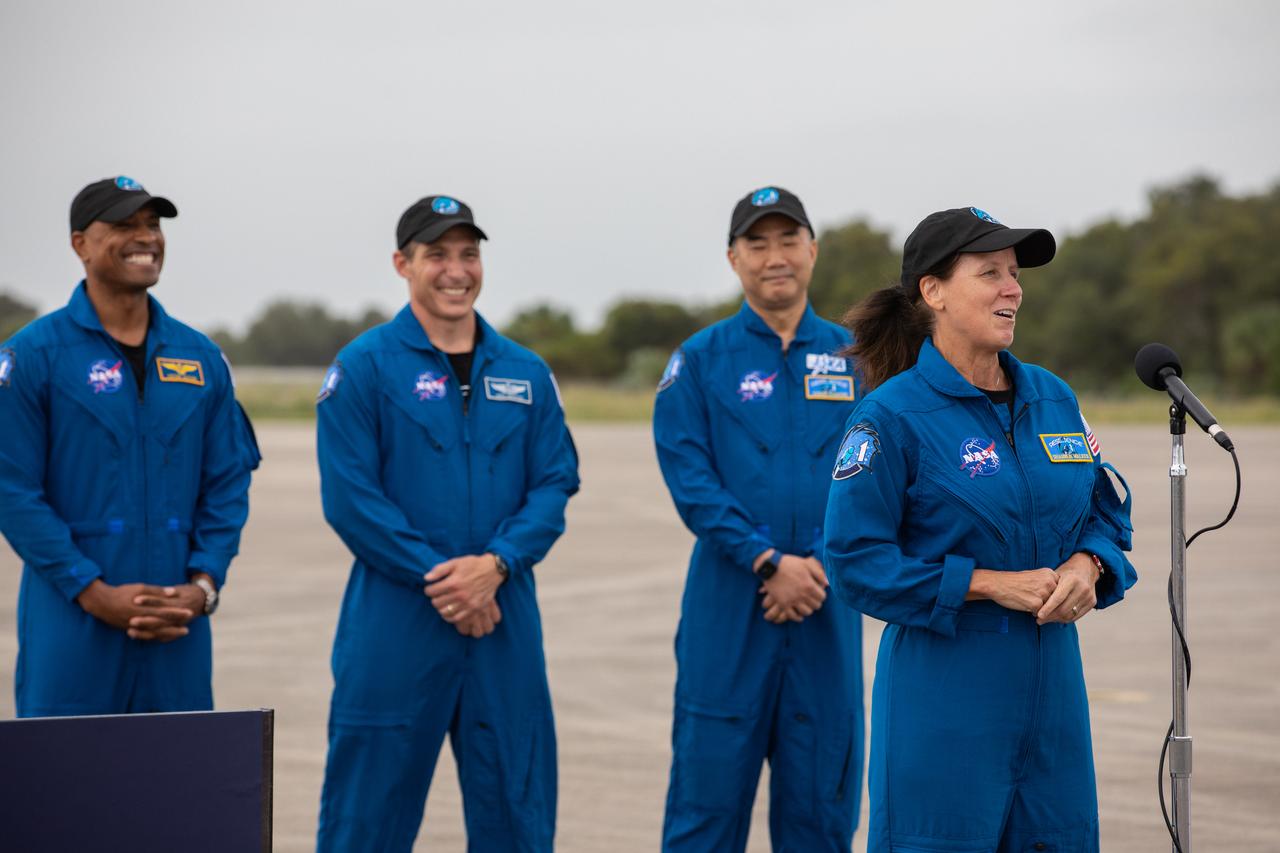
A crew arrival media event for NASA’s SpaceX Crew-1 mission is held Nov. 8, 2020, at the Launch and Landing Facility at the agency’s Kennedy Space Center in Florida. Speaking to the media is NASA astronaut Shannon Walker. Behind her are Victor Glover, pilot; NASA astronaut Michael Hopkins, spacecraft commander; and JAXA astronaut Soichi Noguchi, mission specialist. Crew-1 is the first crew rotation mission of a U.S. commercial spacecraft with astronauts to the International Space Station as part of NASA’s Commercial Crew Program. The SpaceX Crew Dragon spacecraft, named Resilience, will launch atop a Falcon 9 rocket from Kennedy’s Launch Complex 39A.
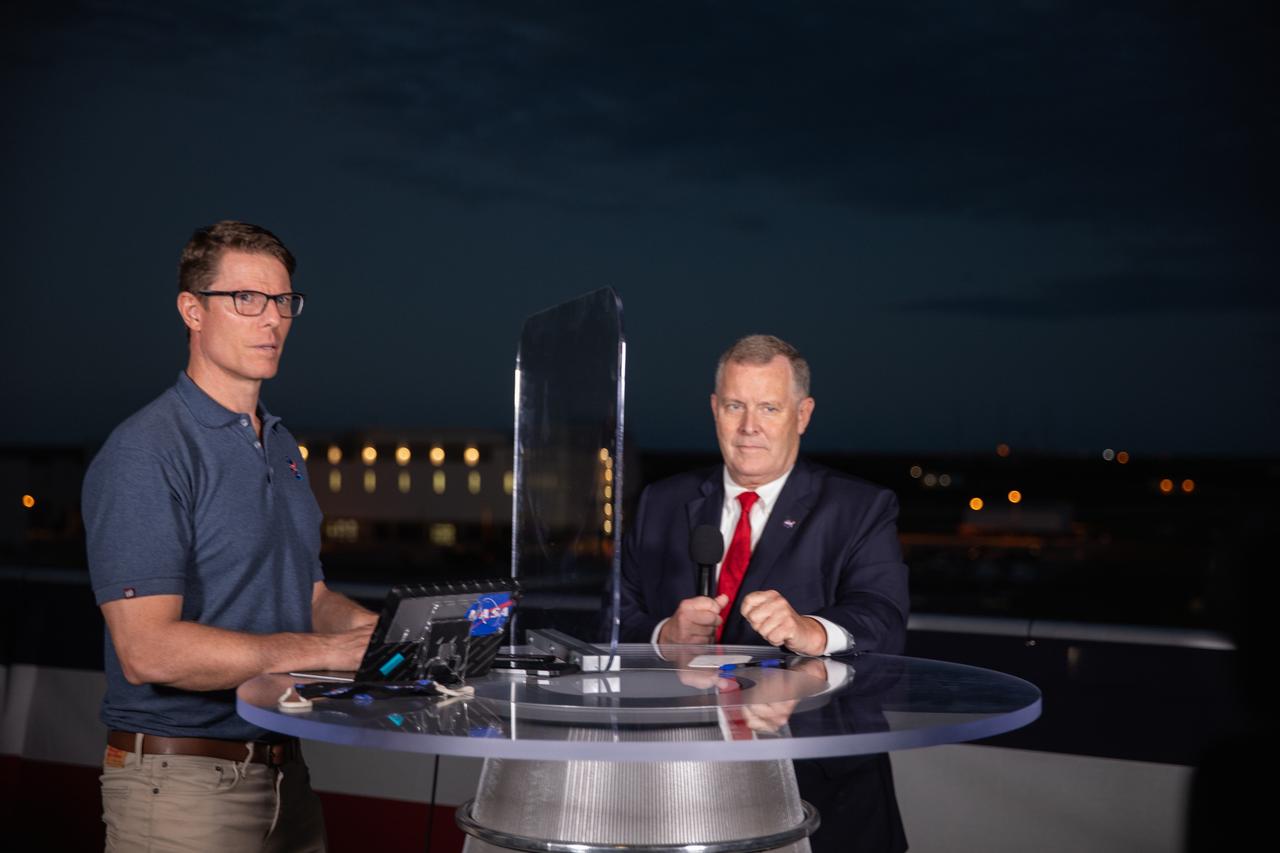
During live television coverage of NASA SpaceX’s Crew-1 launch on Nov. 15, 2020, Derrol Nail, left, NASA Communications, talks with NASA Deputy Administrator Jim Morhard on the observation deck of Operations Support Building II at Kennedy Space Center in Florida. Crew-1 is the first regular crew mission of a U.S. commercial spacecraft with astronauts to the International Space Station as part of NASA’s Commercial Crew Program. The Crew Dragon Resilience capsule will launch atop a Falcon 9 rocket from Launch Complex 39A carrying NASA astronauts Michael Hopkins, Victor Glover, Shannon Walker and Japan Aerospace Exploration Agency (JAXA) astronaut Soichi Noguchi to the space station for a six-month science mission.
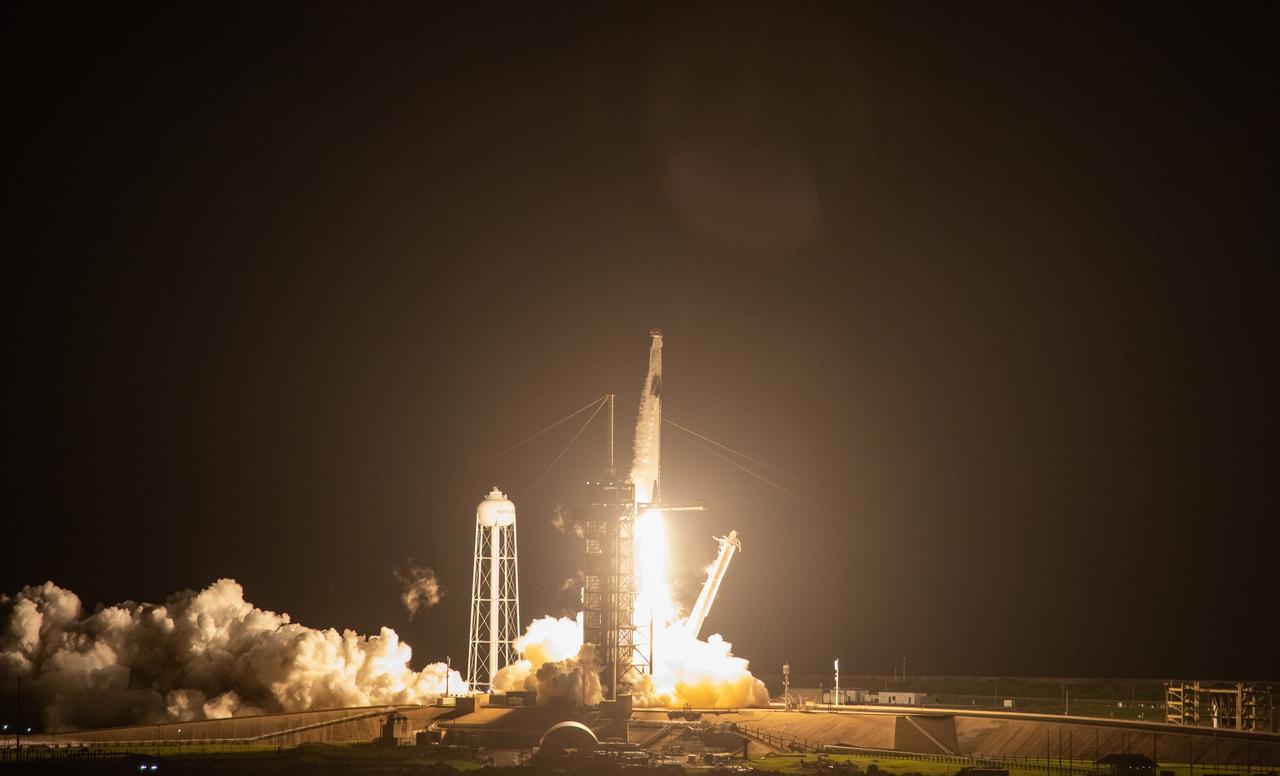
A SpaceX Falcon 9 rocket lifts off at 7:27 p.m. EST from Launch Complex 39A at NASA’s Kennedy Space Center in Florida on Nov. 15, 2020, carrying the company’s Crew Dragon Resilience capsule. Onboard the capsule are NASA’s SpaceX Crew-1 NASA astronauts, Michael Hopkins, spacecraft commander; Victor Glover, pilot; Shannon Walker, mission specialist; and Japan Aerospace Exploration Agency astronaut Soichi Noguchi, mission specialist. Crew-1 is the first regular crew mission of a U.S. commercial spacecraft with astronauts to the International Space Station as part of NASA’s Commercial Crew Program. The Crew Dragon will dock with the space station and the crew will remain on the orbiting laboratory for a six-month science mission.
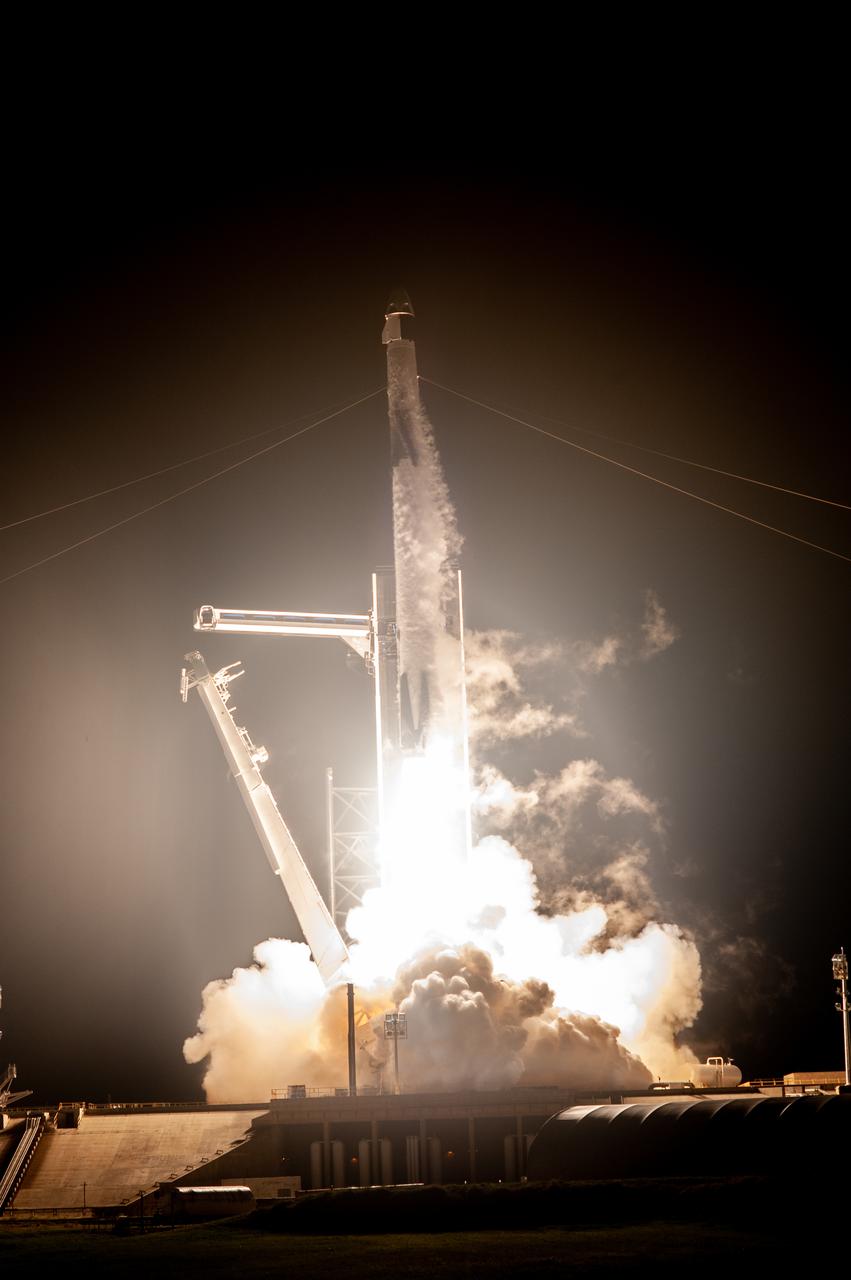
A SpaceX Falcon 9 rocket lifts off at 7:27 p.m. EST from Launch Complex 39A at NASA’s Kennedy Space Center in Florida on Nov. 15, 2020, carrying the company’s Crew Dragon Resilience capsule. Onboard the capsule are NASA’s SpaceX Crew-1 NASA astronauts, Michael Hopkins, spacecraft commander; Victor Glover, pilot; Shannon Walker, mission specialist; and Japan Aerospace Exploration Agency astronaut Soichi Noguchi, mission specialist. Crew-1 is the first regular crew mission of a U.S. commercial spacecraft with astronauts to the International Space Station as part of NASA’s Commercial Crew Program. The Crew Dragon will dock with the space station and the crew will remain on the orbiting laboratory for a six-month science mission.
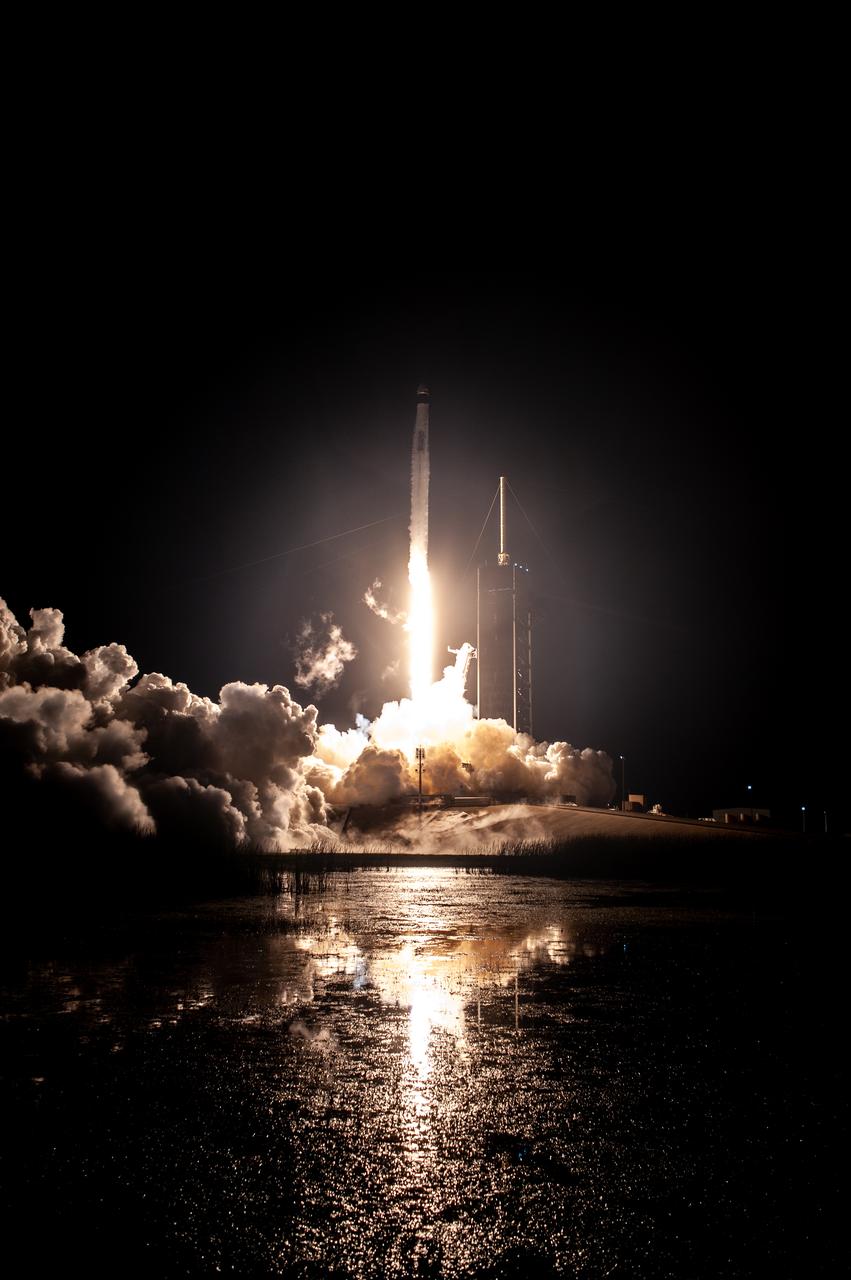
A SpaceX Falcon 9 rocket lifts off at 7:27 p.m. EST from Launch Complex 39A at NASA’s Kennedy Space Center in Florida on Nov. 15, 2020, carrying the company’s Crew Dragon Resilience capsule. Onboard the capsule are NASA’s SpaceX Crew-1 NASA astronauts, Michael Hopkins, spacecraft commander; Victor Glover, pilot; Shannon Walker, mission specialist; and Japan Aerospace Exploration Agency astronaut Soichi Noguchi, mission specialist. Crew-1 is the first regular crew mission of a U.S. commercial spacecraft with astronauts to the International Space Station as part of NASA’s Commercial Crew Program. The Crew Dragon will dock with the space station and the crew will remain on the orbiting laboratory for a six-month science mission.
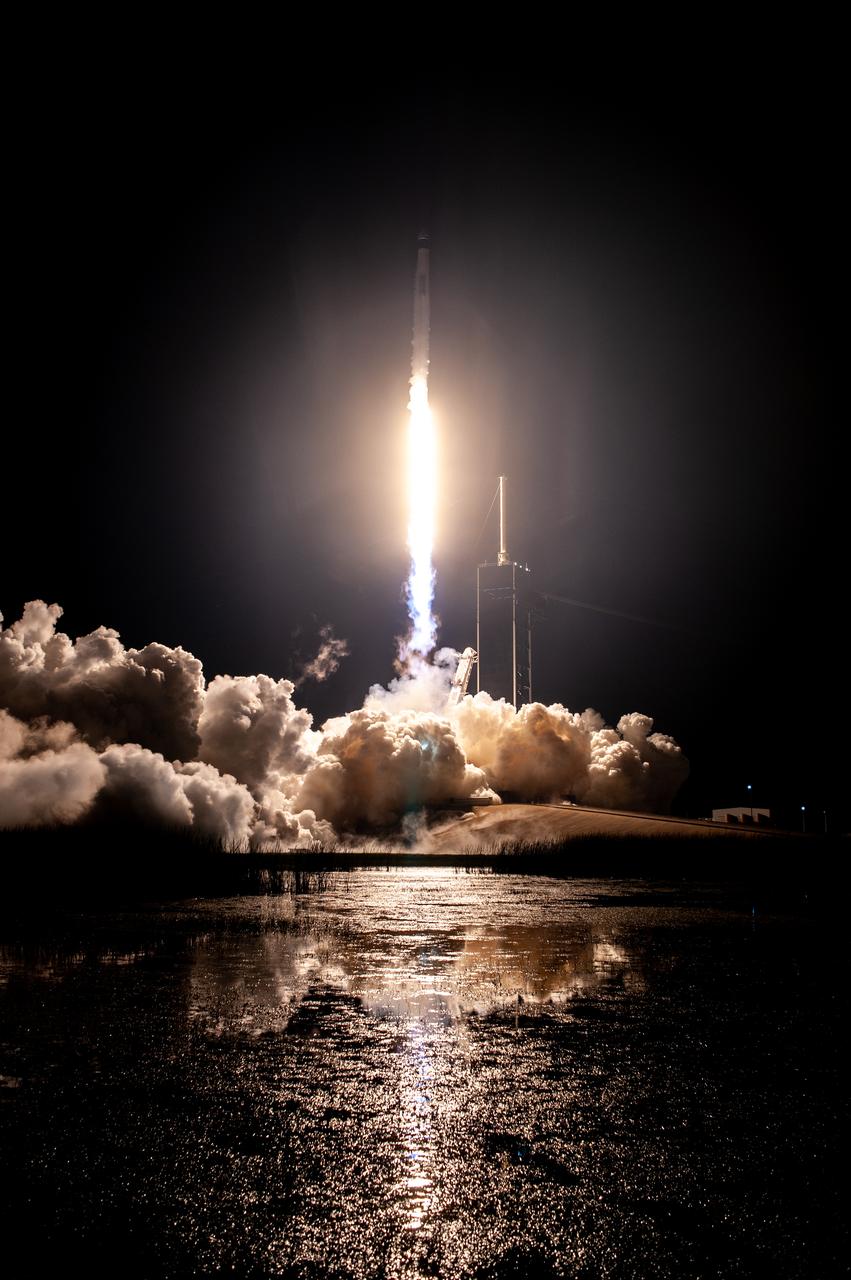
A SpaceX Falcon 9 rocket lifts off at 7:27 p.m. EST from Launch Complex 39A at NASA’s Kennedy Space Center in Florida on Nov. 15, 2020, carrying the company’s Crew Dragon Resilience capsule. Onboard the capsule are NASA’s SpaceX Crew-1 NASA astronauts, Michael Hopkins, spacecraft commander; Victor Glover, pilot; Shannon Walker, mission specialist; and Japan Aerospace Exploration Agency astronaut Soichi Noguchi, mission specialist. Crew-1 is the first regular crew mission of a U.S. commercial spacecraft with astronauts to the International Space Station as part of NASA’s Commercial Crew Program. The Crew Dragon will dock with the space station and the crew will remain on the orbiting laboratory for a six-month science mission.
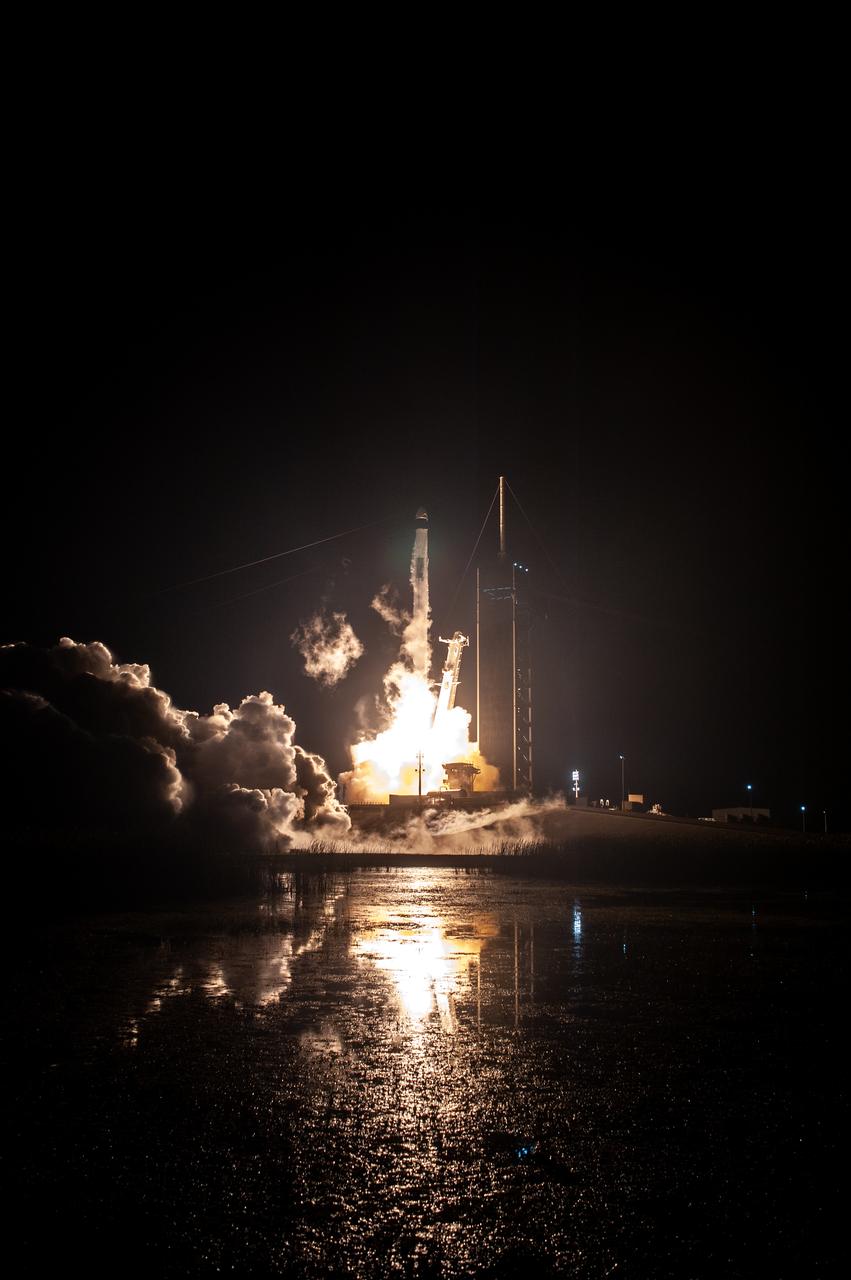
A SpaceX Falcon 9 rocket lifts off at 7:27 p.m. EST from Launch Complex 39A at NASA’s Kennedy Space Center in Florida on Nov. 15, 2020, carrying the company’s Crew Dragon Resilience capsule. Onboard the capsule are NASA’s SpaceX Crew-1 NASA astronauts, Michael Hopkins, spacecraft commander; Victor Glover, pilot; Shannon Walker, mission specialist; and Japan Aerospace Exploration Agency astronaut Soichi Noguchi, mission specialist. Crew-1 is the first regular crew mission of a U.S. commercial spacecraft with astronauts to the International Space Station as part of NASA’s Commercial Crew Program. The Crew Dragon will dock with the space station and the crew will remain on the orbiting laboratory for a six-month science mission.
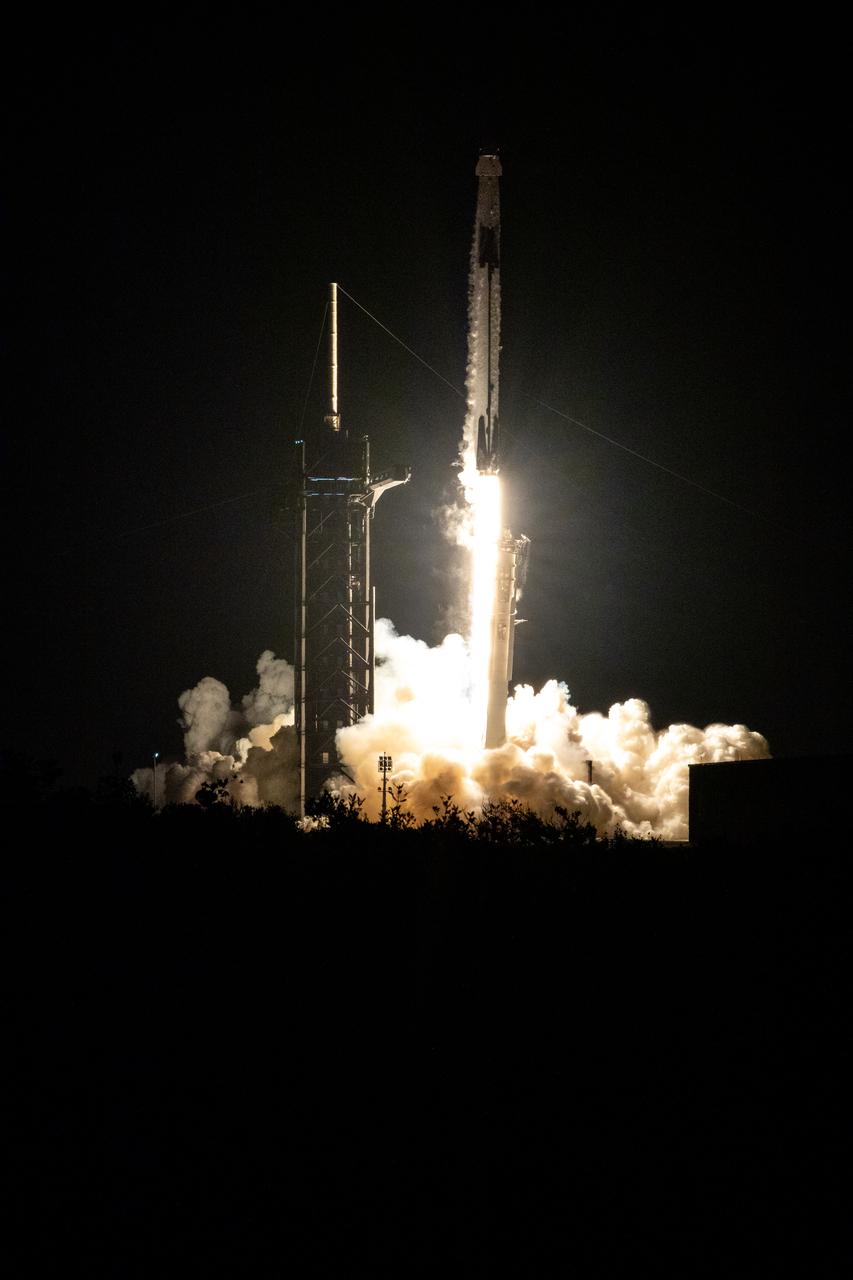
A SpaceX Falcon 9 rocket lifts off at 7:27 p.m. EST from Launch Complex 39A at NASA’s Kennedy Space Center in Florida on Nov. 15, 2020, carrying the company’s Crew Dragon Resilience capsule. Onboard the capsule are NASA’s SpaceX Crew-1 NASA astronauts, Michael Hopkins, spacecraft commander; Victor Glover, pilot; Shannon Walker, mission specialist; and Japan Aerospace Exploration Agency astronaut Soichi Noguchi, mission specialist. Crew-1 is the first regular crew mission of a U.S. commercial spacecraft with astronauts to the International Space Station as part of NASA’s Commercial Crew Program. The Crew Dragon will dock with the space station and the crew will remain on the orbiting laboratory for a six-month science mission.
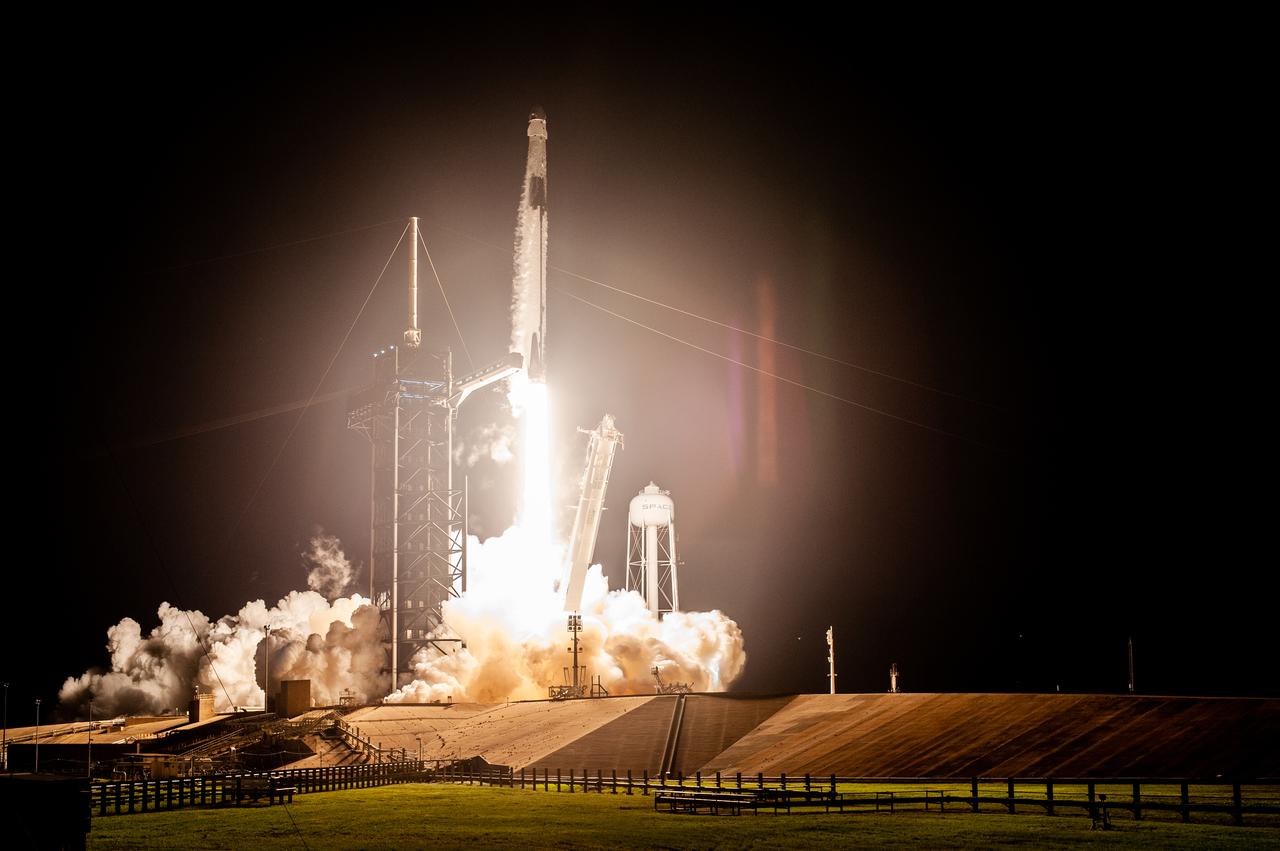
A SpaceX Falcon 9 rocket lifts off at 7:27 p.m. EST from Launch Complex 39A at NASA’s Kennedy Space Center in Florida on Nov. 15, 2020, carrying the company’s Crew Dragon Resilience capsule. Onboard the capsule are NASA’s SpaceX Crew-1 NASA astronauts, Michael Hopkins, spacecraft commander; Victor Glover, pilot; Shannon Walker, mission specialist; and Japan Aerospace Exploration Agency astronaut Soichi Noguchi, mission specialist. Crew-1 is the first regular crew mission of a U.S. commercial spacecraft with astronauts to the International Space Station as part of NASA’s Commercial Crew Program. The Crew Dragon will dock with the space station and the crew will remain on the orbiting laboratory for a six-month science mission.
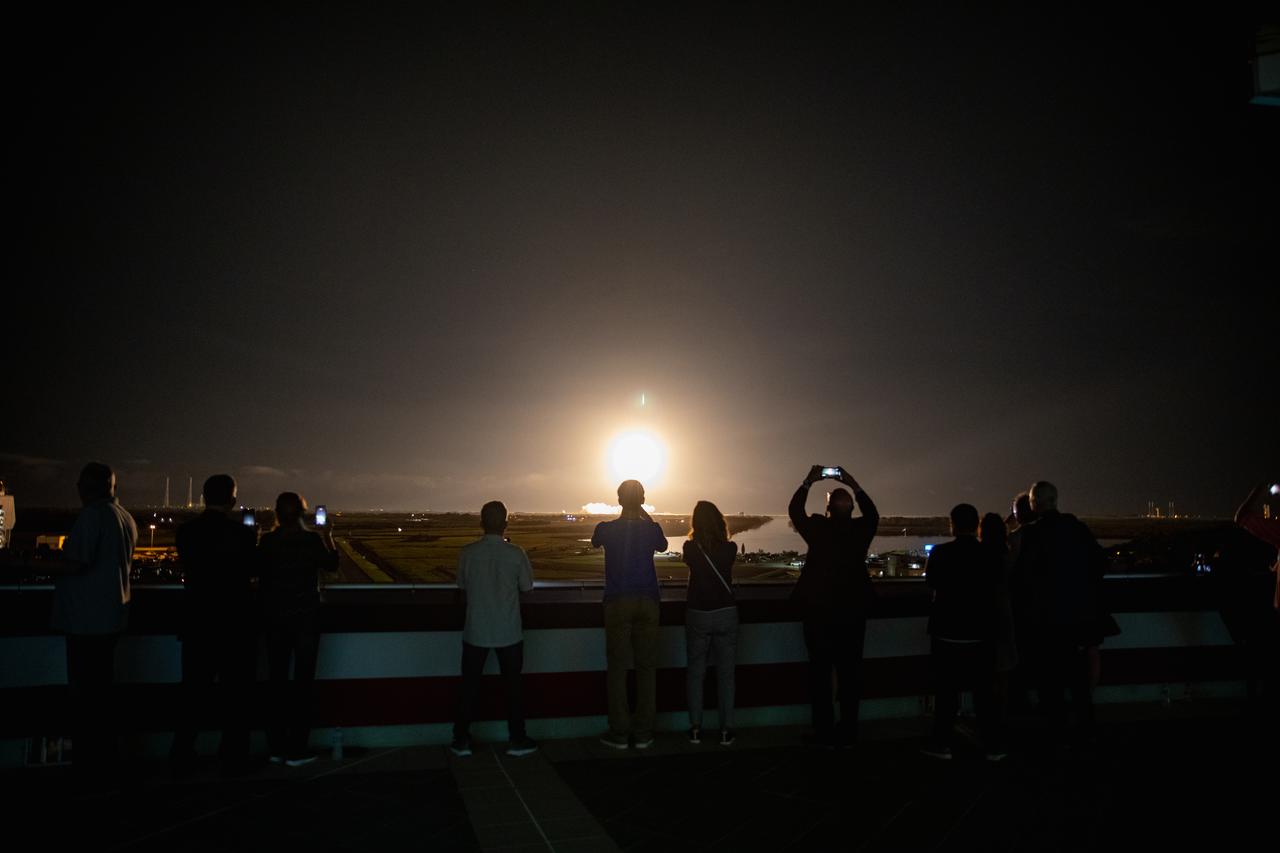
A SpaceX Falcon 9 rocket lifts off at 7:27 p.m. EST from Launch Complex 39A at NASA’s Kennedy Space Center in Florida on Nov. 15, 2020, carrying the company’s Crew Dragon Resilience capsule. Onboard the capsule are NASA’s SpaceX Crew-1 NASA astronauts, Michael Hopkins, spacecraft commander; Victor Glover, pilot; Shannon Walker, mission specialist; and Japan Aerospace Exploration Agency astronaut Soichi Noguchi, mission specialist. Crew-1 is the first regular crew mission of a U.S. commercial spacecraft with astronauts to the International Space Station as part of NASA’s Commercial Crew Program. The Crew Dragon will dock with the space station and the crew will remain on the orbiting laboratory for a six-month science mission.
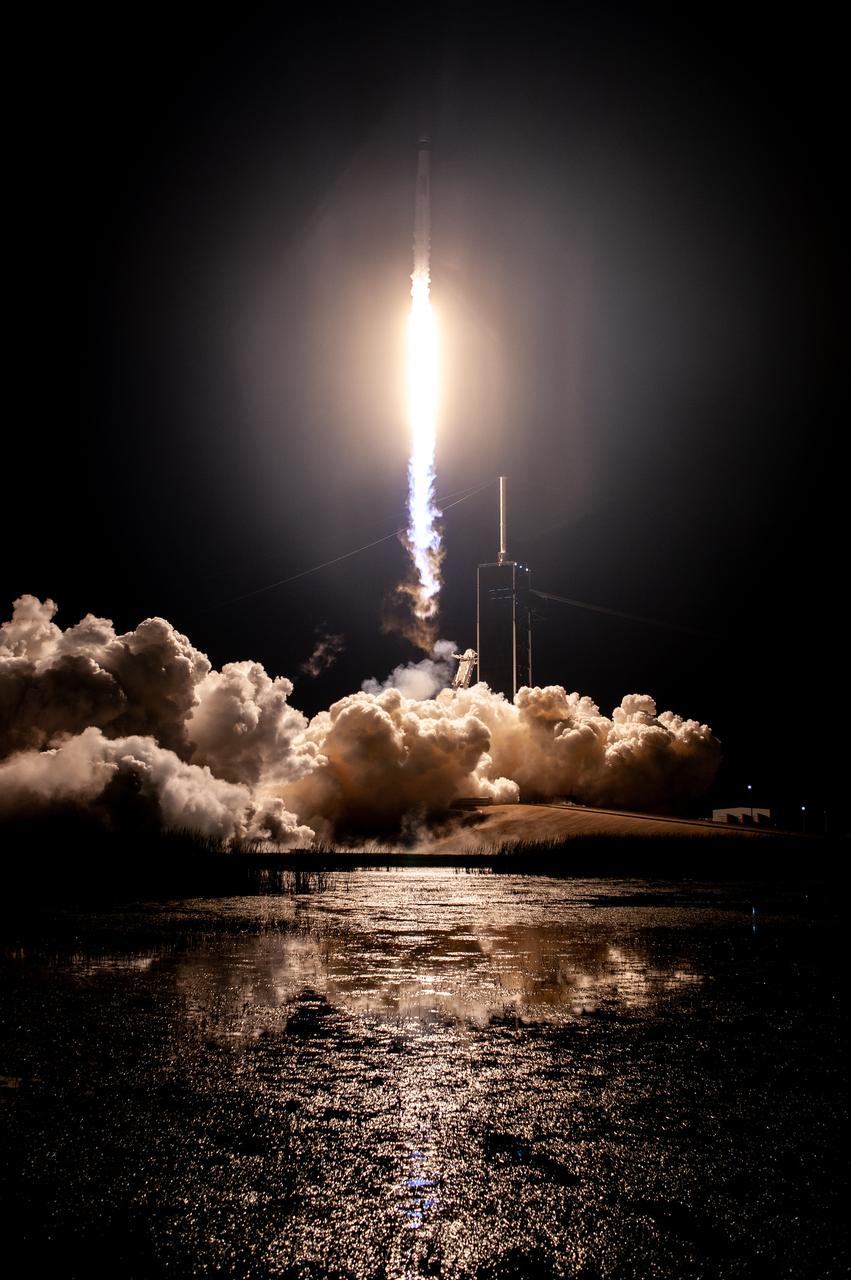
A SpaceX Falcon 9 rocket lifts off at 7:27 p.m. EST from Launch Complex 39A at NASA’s Kennedy Space Center in Florida on Nov. 15, 2020, carrying the company’s Crew Dragon Resilience capsule. Onboard the capsule are NASA’s SpaceX Crew-1 NASA astronauts, Michael Hopkins, spacecraft commander; Victor Glover, pilot; Shannon Walker, mission specialist; and Japan Aerospace Exploration Agency astronaut Soichi Noguchi, mission specialist. Crew-1 is the first regular crew mission of a U.S. commercial spacecraft with astronauts to the International Space Station as part of NASA’s Commercial Crew Program. The Crew Dragon will dock with the space station and the crew will remain on the orbiting laboratory for a six-month science mission.
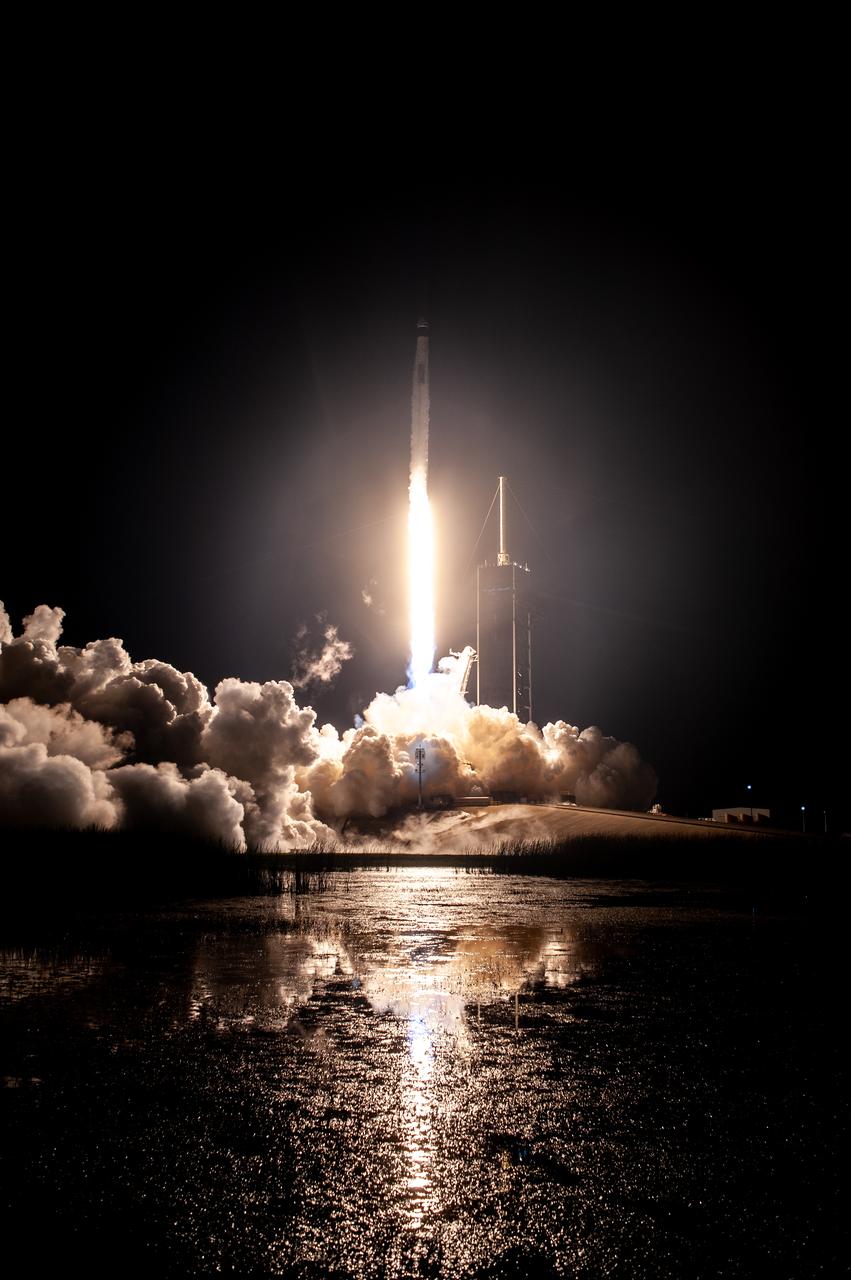
A SpaceX Falcon 9 rocket lifts off at 7:27 p.m. EST from Launch Complex 39A at NASA’s Kennedy Space Center in Florida on Nov. 15, 2020, carrying the company’s Crew Dragon Resilience capsule. Onboard the capsule are NASA’s SpaceX Crew-1 NASA astronauts, Michael Hopkins, spacecraft commander; Victor Glover, pilot; Shannon Walker, mission specialist; and Japan Aerospace Exploration Agency astronaut Soichi Noguchi, mission specialist. Crew-1 is the first regular crew mission of a U.S. commercial spacecraft with astronauts to the International Space Station as part of NASA’s Commercial Crew Program. The Crew Dragon will dock with the space station and the crew will remain on the orbiting laboratory for a six-month science mission.
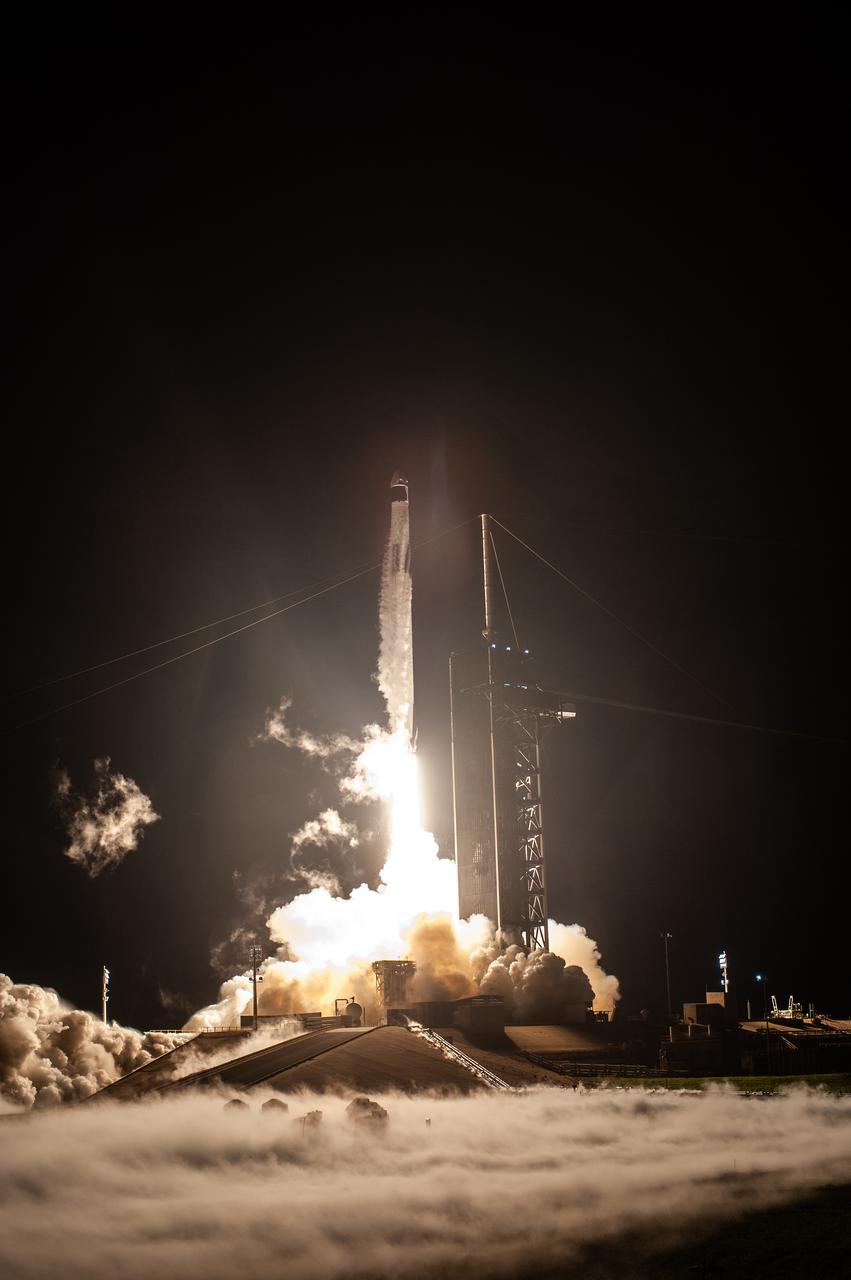
A SpaceX Falcon 9 rocket lifts off at 7:27 p.m. EST from Launch Complex 39A at NASA’s Kennedy Space Center in Florida on Nov. 15, 2020, carrying the company’s Crew Dragon Resilience capsule. Onboard the capsule are NASA’s SpaceX Crew-1 NASA astronauts, Michael Hopkins, spacecraft commander; Victor Glover, pilot; Shannon Walker, mission specialist; and Japan Aerospace Exploration Agency astronaut Soichi Noguchi, mission specialist. Crew-1 is the first regular crew mission of a U.S. commercial spacecraft with astronauts to the International Space Station as part of NASA’s Commercial Crew Program. The Crew Dragon will dock with the space station and the crew will remain on the orbiting laboratory for a six-month science mission.
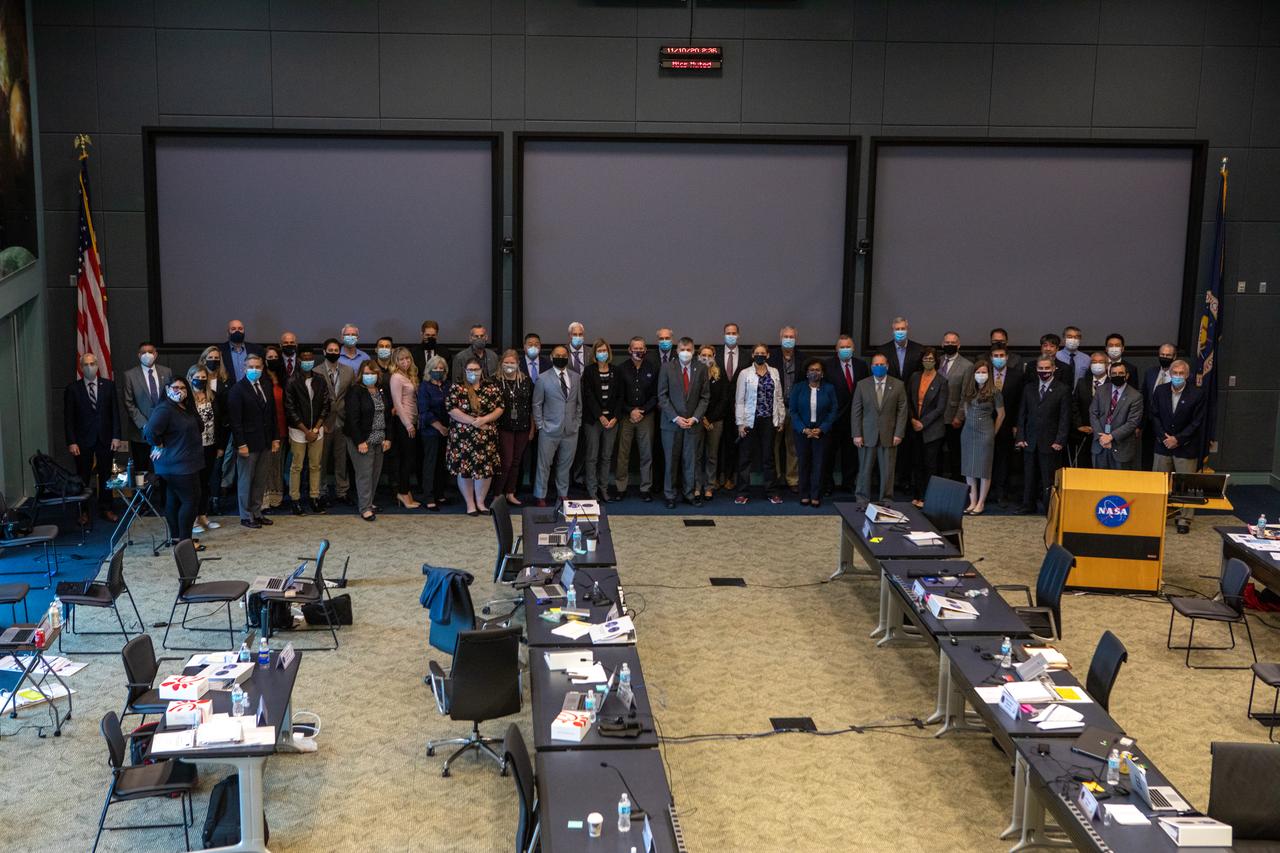
NASA and SpaceX leadership gather for a group photo on the second and final day of the Flight Readiness Review (FRR) for the agency’s SpaceX Crew-1 mission at NASA’s Kennedy Space Center in Florida on Nov. 10, 2020. The FRR focuses on the preparedness of SpaceX’s crew transportation system, the International Space Station, and its international partners to support the flight, and the certification of flight readiness. Crew-1 is the first regular crew mission of a U.S. commercial spacecraft with astronauts to the International Space Station as part of NASA’s Commercial Crew Program. The Crew Dragon Resilience capsule will launch atop a Falcon 9 rocket from Launch Complex 39A carrying NASA astronauts Michael Hopkins, Victor Glover, Shannon Walker and Japan Aerospace Exploration Agency (JAXA) astronaut Soichi Noguchi to the space station for a six-month science mission.
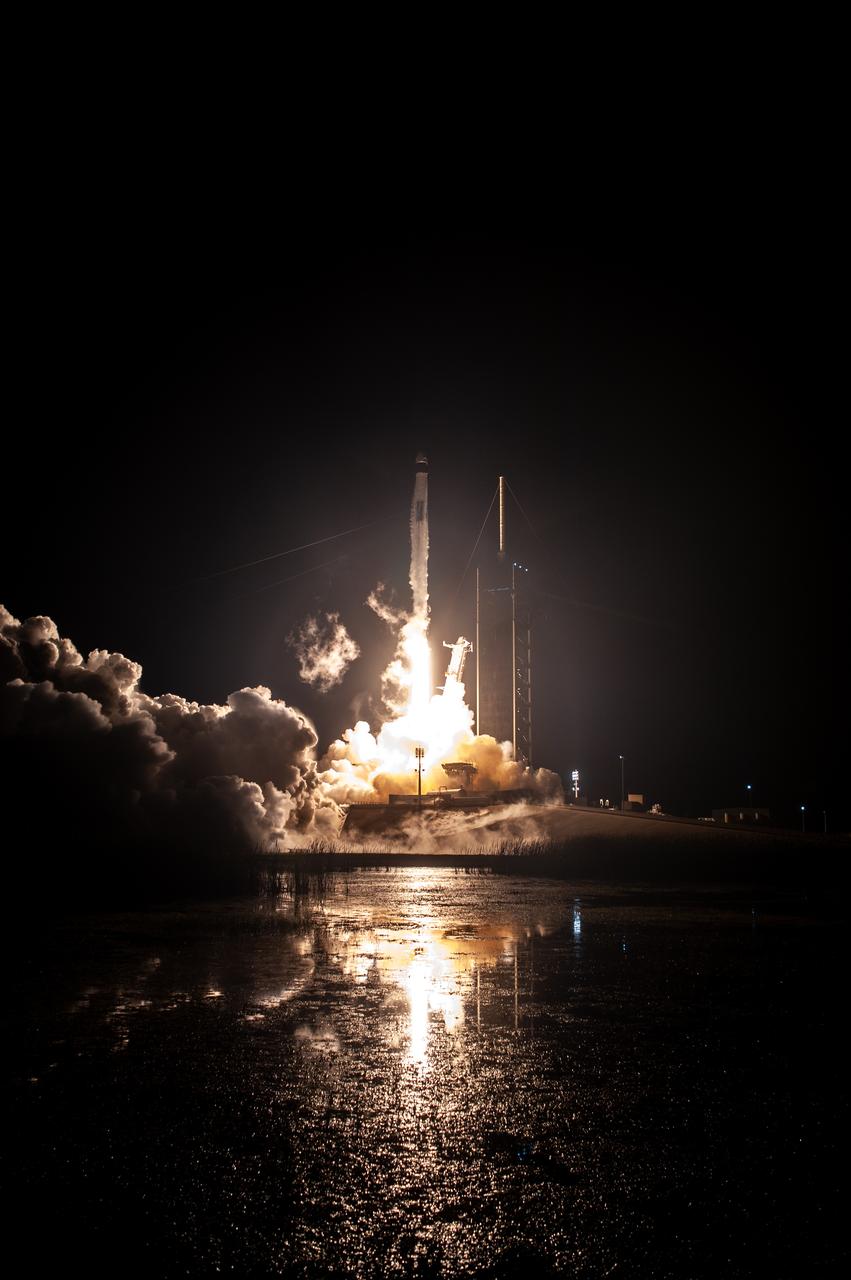
A SpaceX Falcon 9 rocket lifts off at 7:27 p.m. EST from Launch Complex 39A at NASA’s Kennedy Space Center in Florida on Nov. 15, 2020, carrying the company’s Crew Dragon Resilience capsule. Onboard the capsule are NASA’s SpaceX Crew-1 NASA astronauts, Michael Hopkins, spacecraft commander; Victor Glover, pilot; Shannon Walker, mission specialist; and Japan Aerospace Exploration Agency astronaut Soichi Noguchi, mission specialist. Crew-1 is the first regular crew mission of a U.S. commercial spacecraft with astronauts to the International Space Station as part of NASA’s Commercial Crew Program. The Crew Dragon will dock with the space station and the crew will remain on the orbiting laboratory for a six-month science mission.
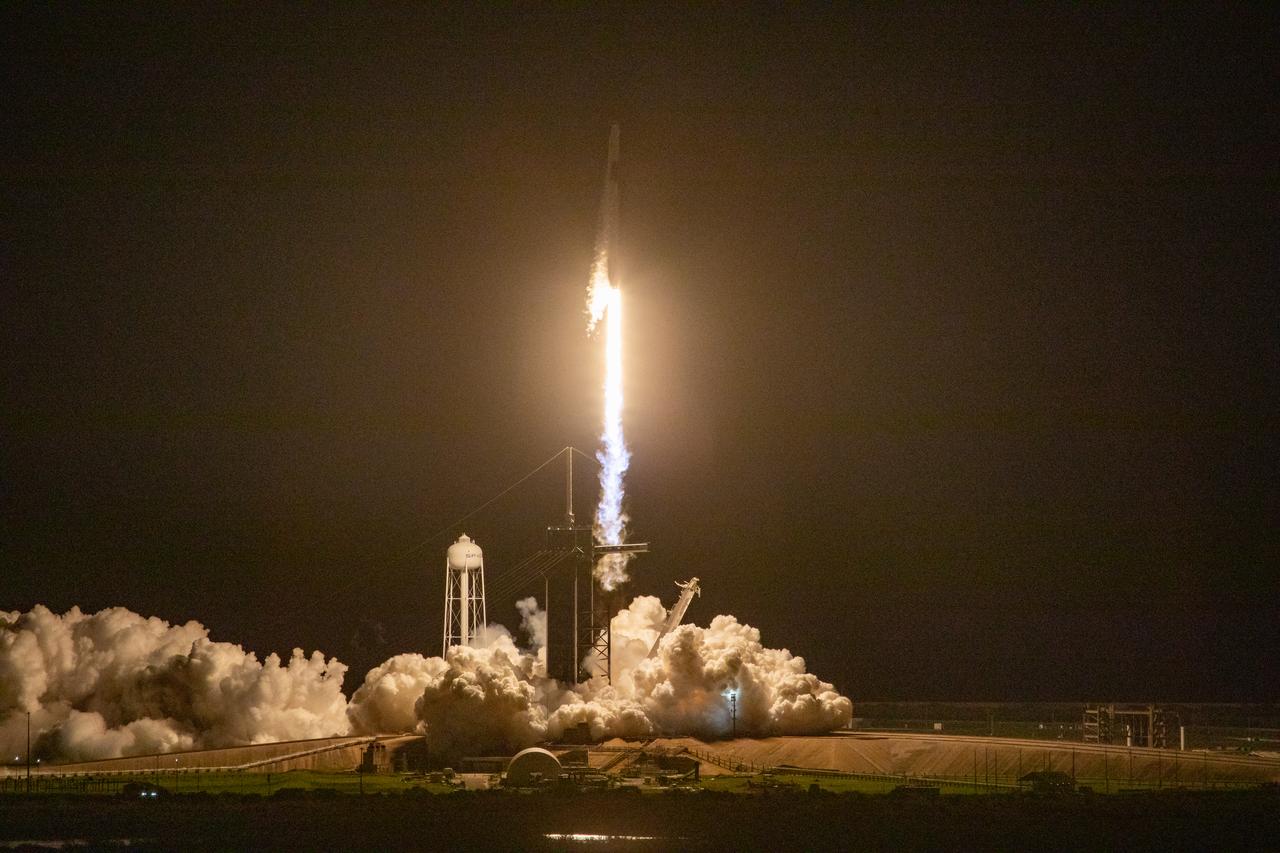
A SpaceX Falcon 9 rocket lifts off at 7:27 p.m. EST from Launch Complex 39A at NASA’s Kennedy Space Center in Florida on Nov. 15, 2020, carrying the company’s Crew Dragon Resilience capsule. Onboard the capsule are NASA’s SpaceX Crew-1 NASA astronauts, Michael Hopkins, spacecraft commander; Victor Glover, pilot; Shannon Walker, mission specialist; and Japan Aerospace Exploration Agency astronaut Soichi Noguchi, mission specialist. Crew-1 is the first regular crew mission of a U.S. commercial spacecraft with astronauts to the International Space Station as part of NASA’s Commercial Crew Program. The Crew Dragon will dock with the space station and the crew will remain on the orbiting laboratory for a six-month science mission.
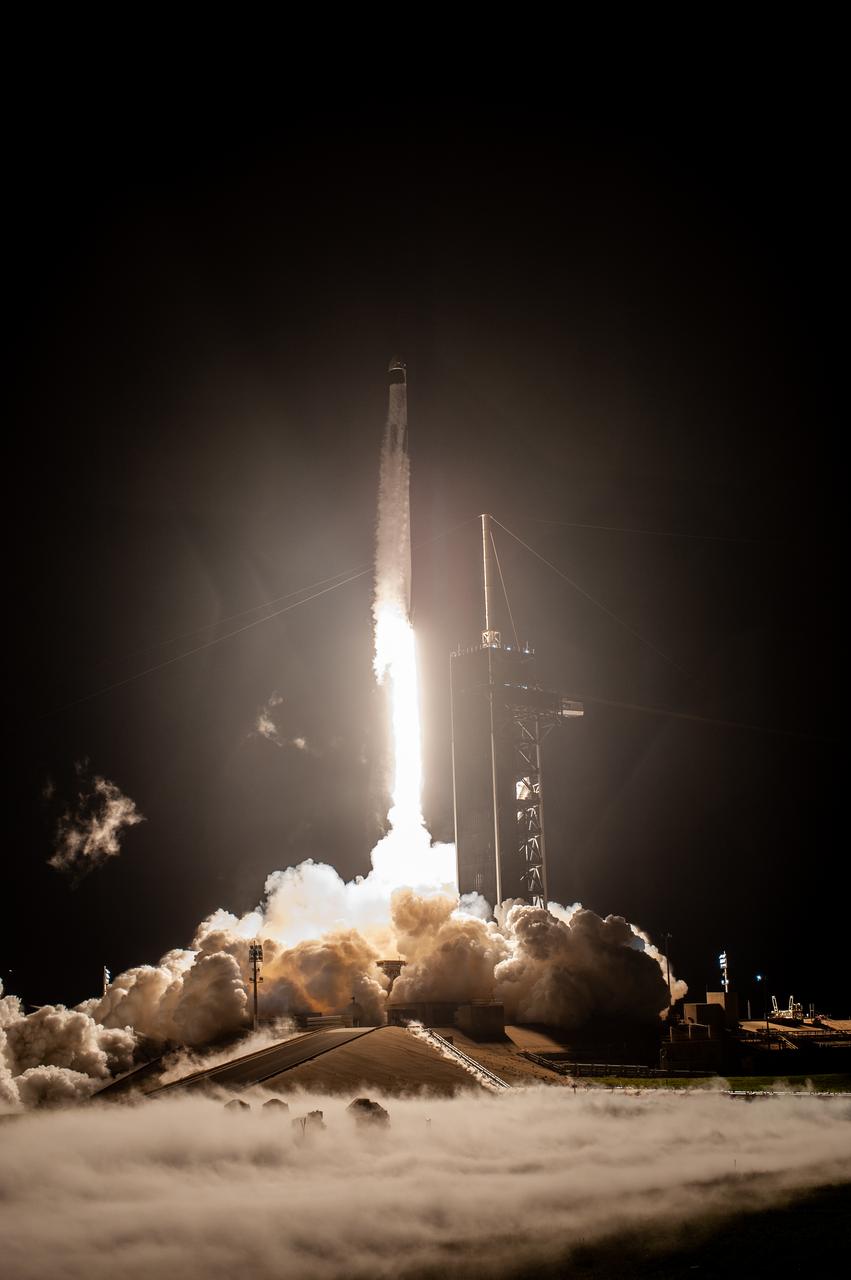
A SpaceX Falcon 9 rocket lifts off at 7:27 p.m. EST from Launch Complex 39A at NASA’s Kennedy Space Center in Florida on Nov. 15, 2020, carrying the company’s Crew Dragon Resilience capsule. Onboard the capsule are NASA’s SpaceX Crew-1 NASA astronauts, Michael Hopkins, spacecraft commander; Victor Glover, pilot; Shannon Walker, mission specialist; and Japan Aerospace Exploration Agency astronaut Soichi Noguchi, mission specialist. Crew-1 is the first regular crew mission of a U.S. commercial spacecraft with astronauts to the International Space Station as part of NASA’s Commercial Crew Program. The Crew Dragon will dock with the space station and the crew will remain on the orbiting laboratory for a six-month science mission.
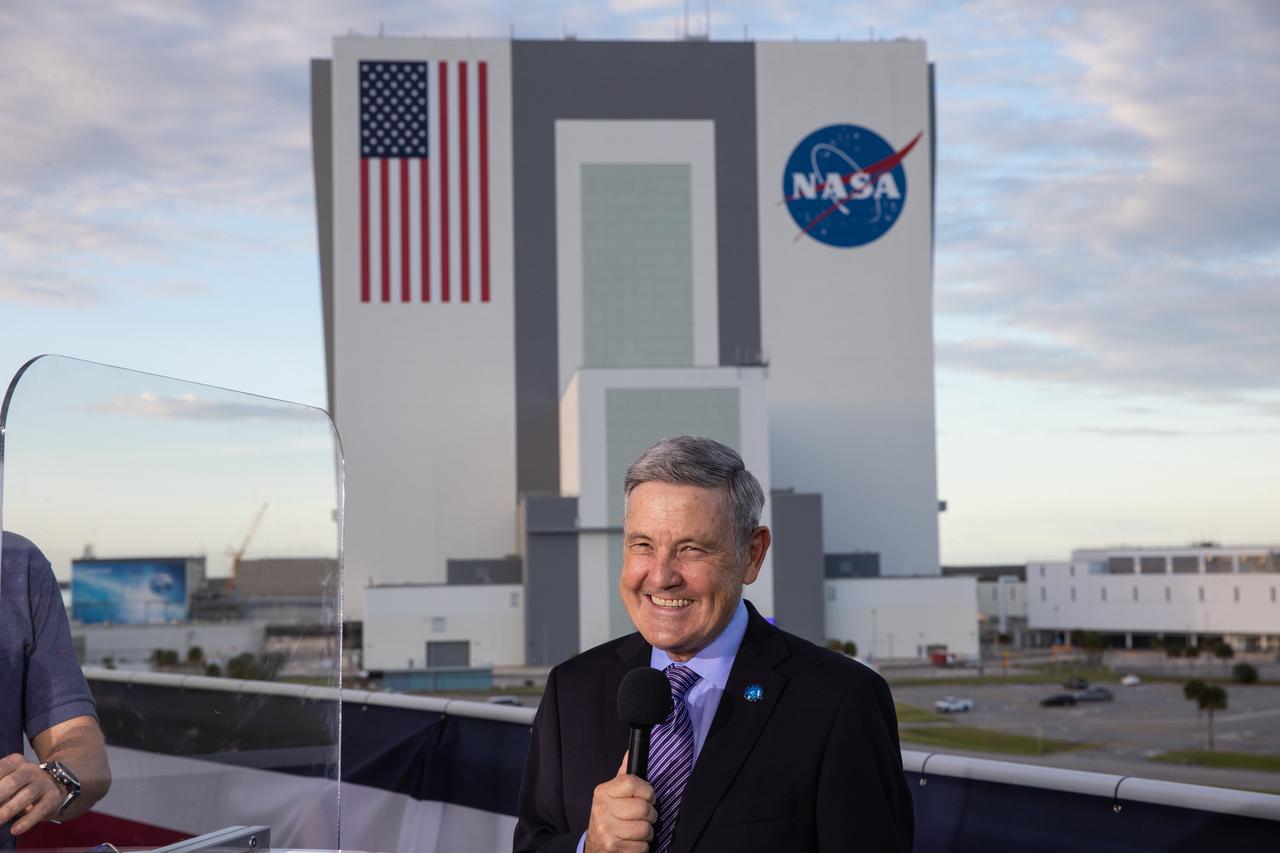
During live television coverage of NASA SpaceX’s Crew-1 launch on Nov. 15, 2020, Kennedy Space Center Director Bob Cabana discusses the Crew-1 mission on the observation deck of the center’s Operations Support Building II in Florida. Crew-1 is the first regular crew mission of a U.S. commercial spacecraft with astronauts to the International Space Station as part of NASA’s Commercial Crew Program. The Crew Dragon Resilience capsule will launch atop a Falcon 9 rocket from Launch Complex 39A carrying NASA astronauts Michael Hopkins, Victor Glover, Shannon Walker and Japan Aerospace Exploration Agency (JAXA) astronaut Soichi Noguchi to the space station for a six-month science mission.
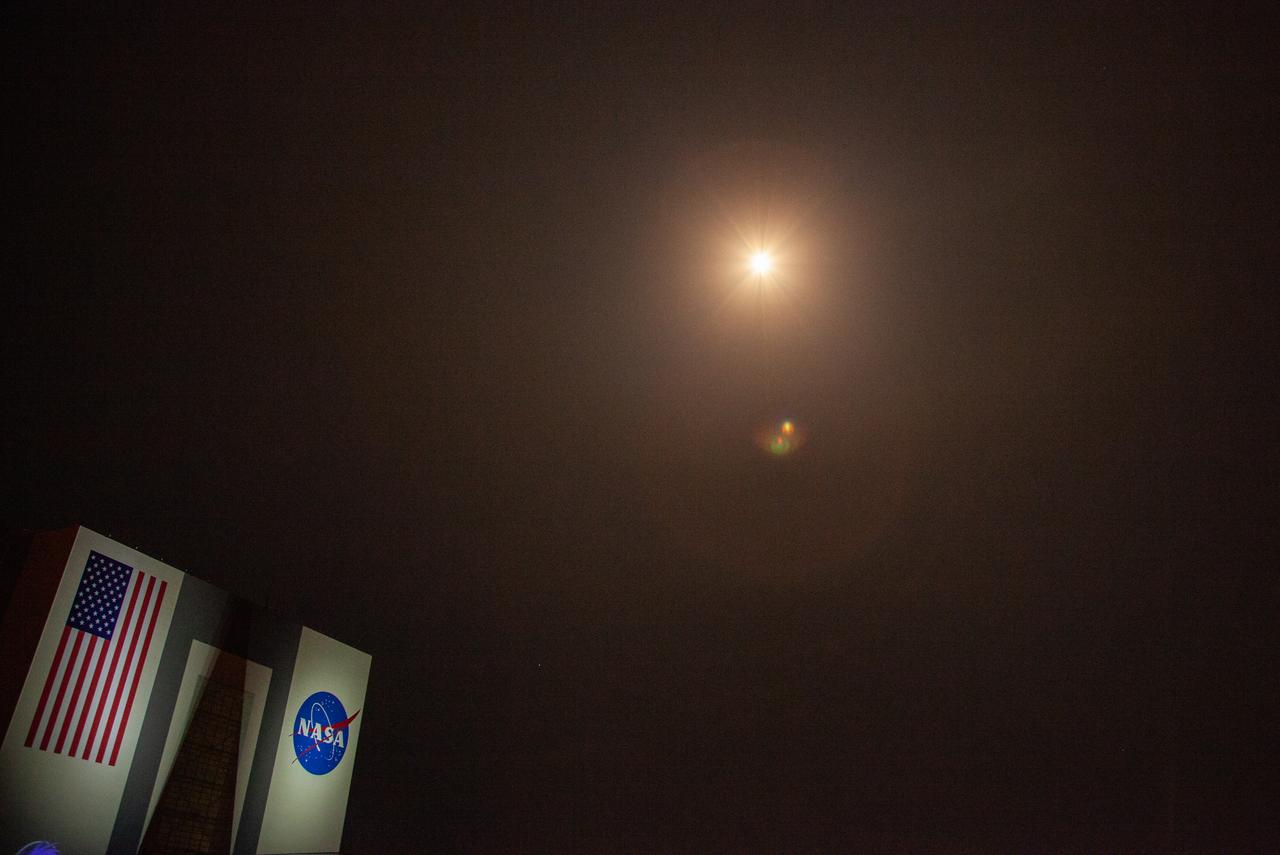
With a view of the iconic Vehicle Assembly Building at left, a SpaceX Falcon 9 rocket soars upward from Launch Complex 39A at NASA’s Kennedy Space Center in Florida on Nov. 15, 2020, carrying the company’s Crew Dragon Resilience capsule. Launch time was at 7:27 p.m. EST. Onboard the capsule are NASA’s SpaceX Crew-1 astronauts, Michael Hopkins, spacecraft commander; Victor Glover, pilot; Shannon Walker, mission specialist; and Japan Aerospace Exploration Agency astronaut Soichi Noguchi, mission specialist. Crew-1 is the first regular crew mission of a U.S. commercial spacecraft with astronauts to the International Space Station as part of NASA’s Commercial Crew Program. The Crew Dragon will dock with the space station and the crew will remain on the orbiting laboratory for a six-month science mission.
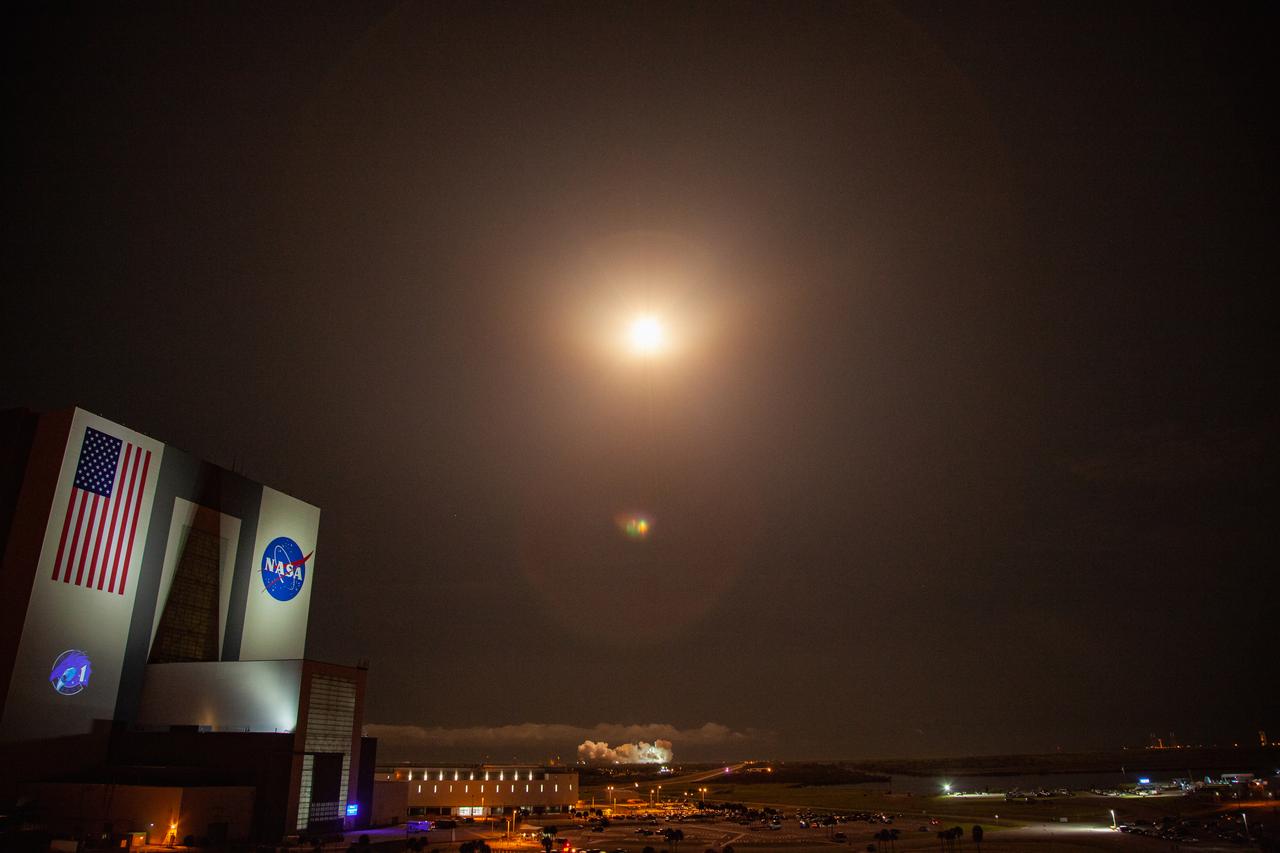
With a view of the iconic Vehicle Assembly Building at left, a SpaceX Falcon 9 rocket soars upward from Launch Complex 39A at NASA’s Kennedy Space Center in Florida on Nov. 15, 2020, carrying the company’s Crew Dragon Resilience capsule. Launch time was at 7:27 p.m. EST. Onboard the capsule are NASA’s SpaceX Crew-1 astronauts, Michael Hopkins, spacecraft commander; Victor Glover, pilot; Shannon Walker, mission specialist; and Japan Aerospace Exploration Agency astronaut Soichi Noguchi, mission specialist. Crew-1 is the first regular crew mission of a U.S. commercial spacecraft with astronauts to the International Space Station as part of NASA’s Commercial Crew Program. The Crew Dragon will dock with the space station and the crew will remain on the orbiting laboratory for a six-month science mission.
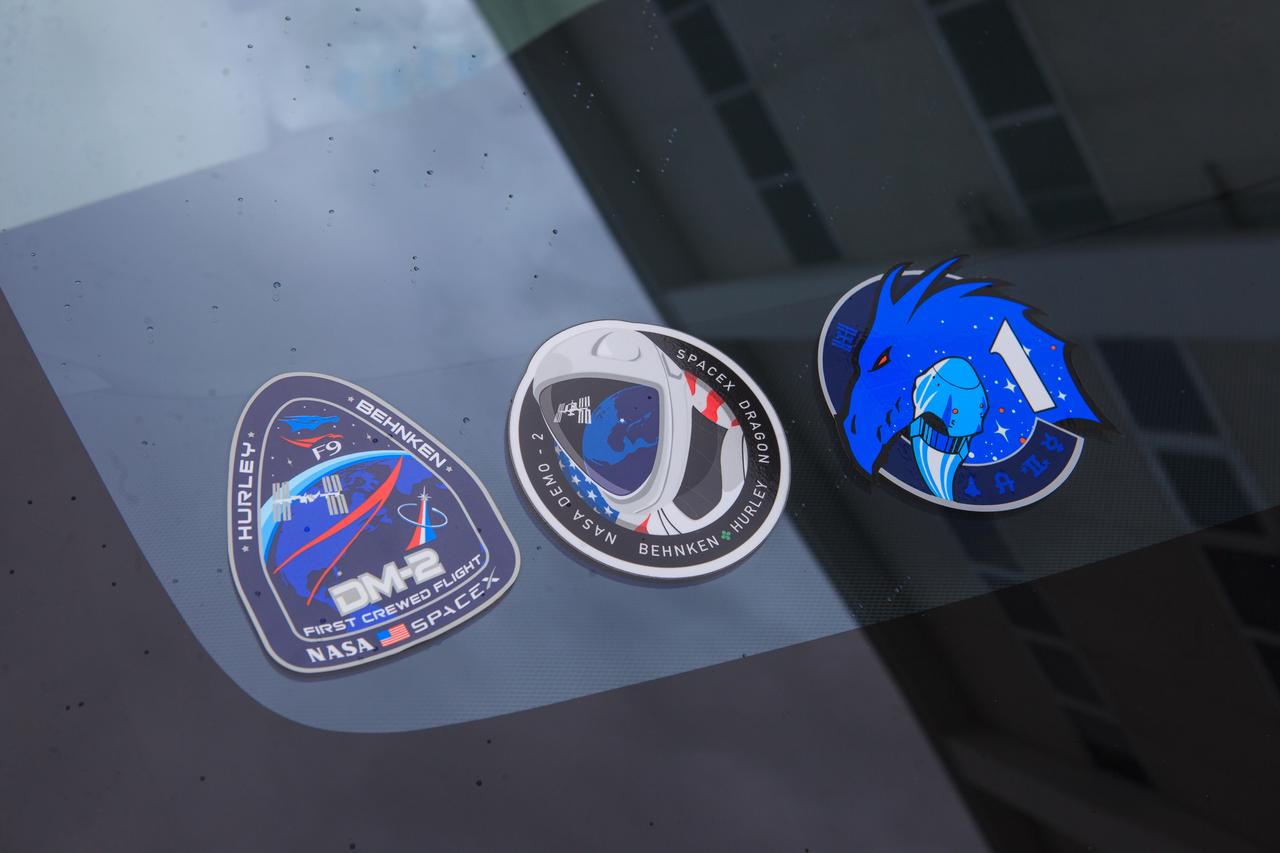
During a countdown dress rehearsal of launch day activities on Nov. 12, 2020, the mission and crew insignias for NASA’s SpaceX Crew-1 mission are in view in the windshield of a Tesla vehicle at the Neil Armstrong Operations and Checkout Building at Kennedy Space Center in Florida. Crew-1 is the first regular crew mission of a U.S. commercial spacecraft with astronauts to the International Space Station as part of NASA’s Commercial Crew Program. The SpaceX Crew Dragon Resilience capsule will launch atop the company’s Falcon 9 rocket from Launch Complex 39A carrying NASA astronauts Michael Hopkins, Victor Glover, Shannon Walker and Japan Aerospace Exploration Agency (JAXA) astronaut Soichi Noguchi to the space station for a six-month science mission.