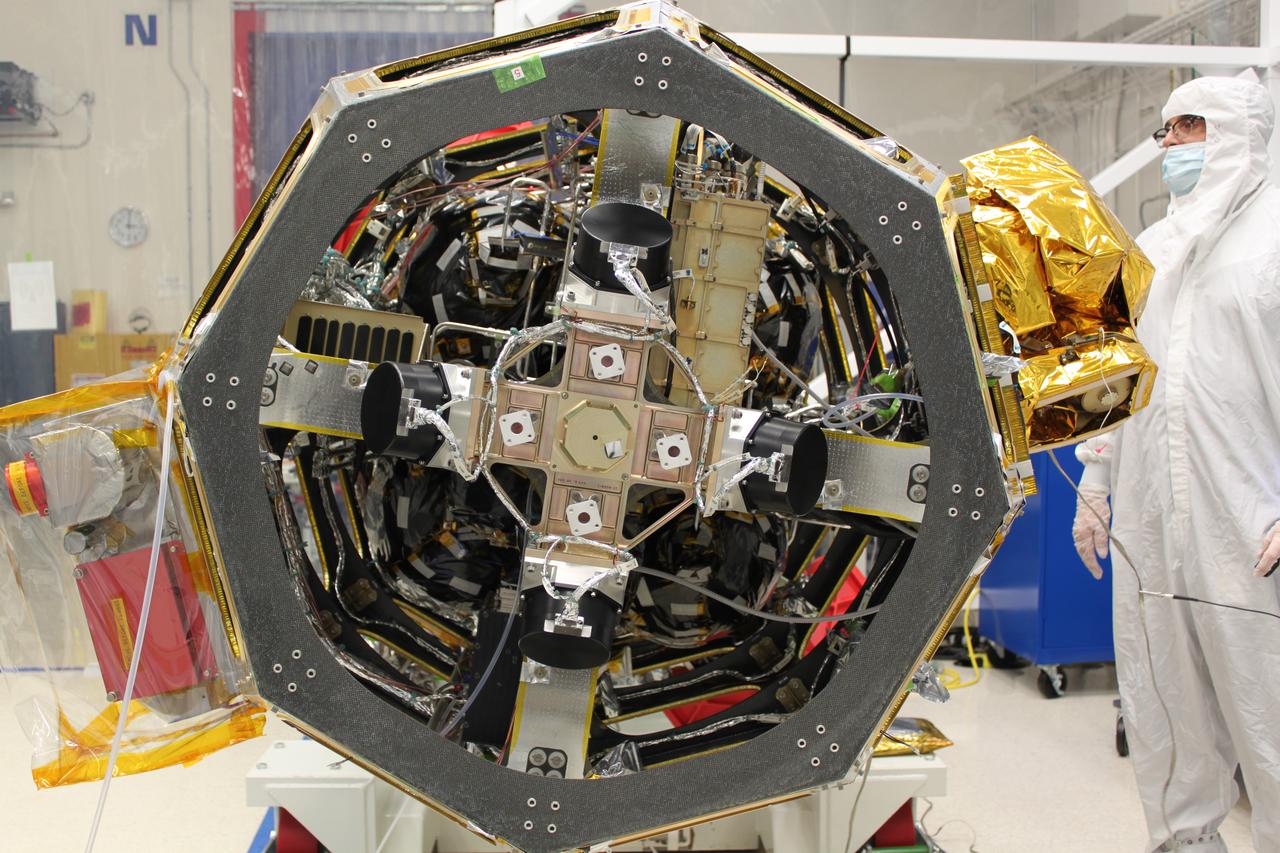
A new NASA-developed, laser-based space communication system will enable higher rates of satellite communications similar in capability to high-speed fiber optic networks on Earth. The space terminal for the Lunar Laser Communication Demonstration (LLCD), NASA's first high-data-rate laser communication system, was recently integrated onto the Lunar Atmosphere and Dust Environment Explorer (LADEE) spacecraft. LLCD will demonstrate laser communications from lunar orbit to Earth at six times the rate of the best modern-day advanced radio communication systems. Credit: NASA ----- What is LADEE? The Lunar Atmosphere and Dust Environment Explorer (LADEE) is designed to study the Moon's thin exosphere and the lunar dust environment. An "exosphere" is an atmosphere that is so thin and tenuous that molecules don't collide with each other. Studying the Moon's exosphere will help scientists understand other planetary bodies with exospheres too, like Mercury and some of Jupiter's bigger moons. The orbiter will determine the density, composition and temporal and spatial variability of the Moon's exosphere to help us understand where the species in the exosphere come from and the role of the solar wind, lunar surface and interior, and meteoric infall as sources. The mission will also examine the density and temporal and spatial variability of dust particles that may get lofted into the atmosphere. The mission also will test several new technologies, including a modular spacecraft bus that may reduce the cost of future deep space missions and demonstrate two-way high rate laser communication for the first time from the Moon. LADEE now is ready to launch when the window opens on Sept. 6, 2013. Read more: <a href="http://www.nasa.gov/ladee" rel="nofollow">www.nasa.gov/ladee</a> <b><a href="http://www.nasa.gov/audience/formedia/features/MP_Photo_Guidelines.html" rel="nofollow">NASA image use policy.</a></b> <b><a href="http://www.nasa.gov/centers/goddard/home/index.html" rel="nofollow">NASA Goddard Space Flight Center</a></b> enables NASA’s mission through four scientific endeavors: Earth Science, Heliophysics, Solar System Exploration, and Astrophysics. Goddard plays a leading role in NASA’s accomplishments by contributing compelling scientific knowledge to advance the Agency’s mission. <b>Follow us on <a href="http://twitter.com/NASA_GoddardPix" rel="nofollow">Twitter</a></b> <b>Like us on <a href="http://www.facebook.com/pages/Greenbelt-MD/NASA-Goddard/395013845897?ref=tsd" rel="nofollow">Facebook</a></b> <b>Find us on <a href="http://instagram.com/nasagoddard?vm=grid" rel="nofollow">Instagram</a></b>
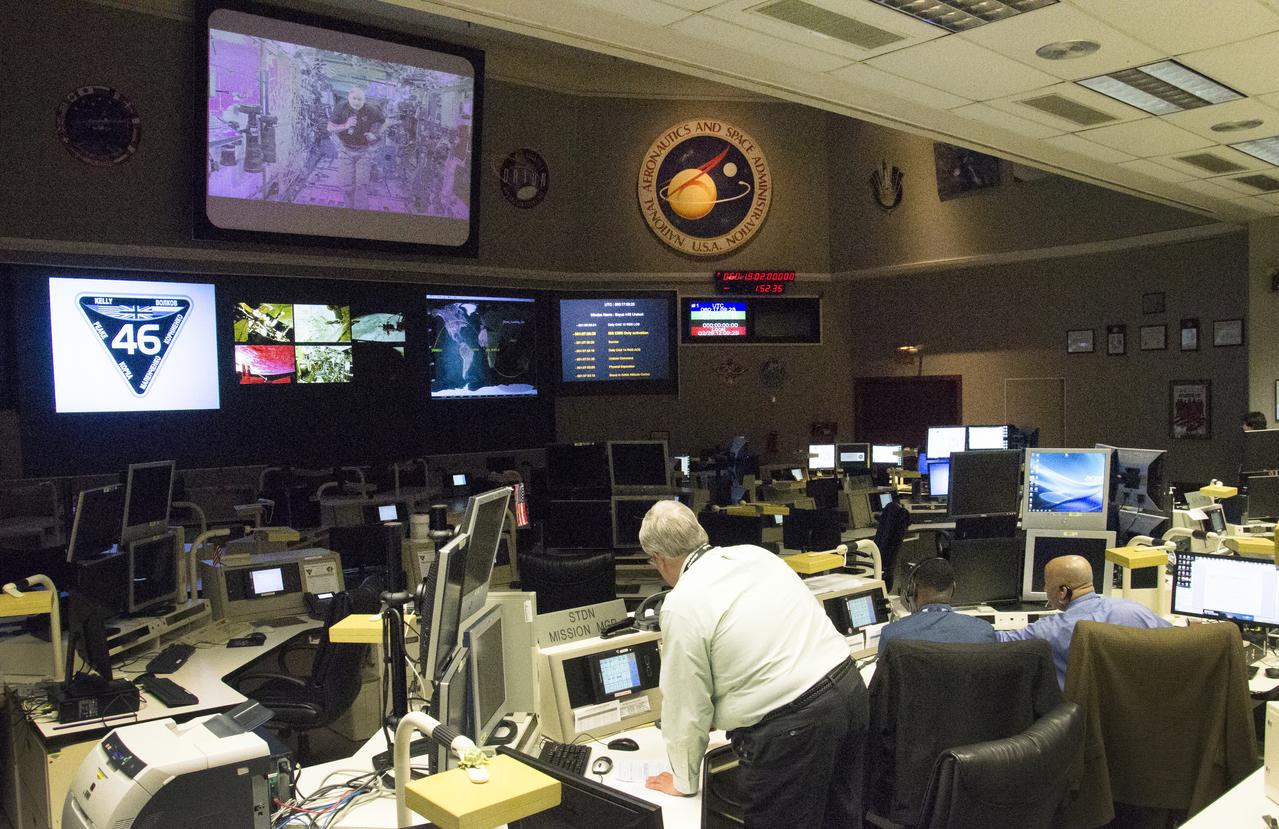
NASA's Goddard Space Flight Center in Greenbelt, Maryland, will monitor the landing of NASA Astronaut Scott Kelly and Russian Cosmonaut Mikhail Kornienko from their #YearInSpace Mission. Goddard's Networks Integration Center, pictured above, leads all coordination for space-to-ground communications support for the International Space Station and provides contingency support for the Soyuz TMA-18M 44S spacecraft, ensuring complete communications coverage through NASA's Space Network. The Soyuz 44S spacecraft will undock at 8:02 p.m. EST this evening from the International Space Station. It will land approximately three and a half hours later, at 11:25 p.m. EST in Kazakhstan. Both Kelly and Kornienko have spent 340 days aboard the International Space Station, preparing humanity for long duration missions and exploration into deep space. Read more: <a href="http://www.nasa.gov/feature/goddard/2016/ending-year-in-space-nasa-goddard-network-maintains-communications-from-space-to-ground" rel="nofollow">www.nasa.gov/feature/goddard/2016/ending-year-in-space-na...</a> Credit: NASA/Goddard/Rebecca Roth <b><a href="http://www.nasa.gov/audience/formedia/features/MP_Photo_Guidelines.html" rel="nofollow">NASA image use policy.</a></b> <b><a href="http://www.nasa.gov/centers/goddard/home/index.html" rel="nofollow">NASA Goddard Space Flight Center</a></b> enables NASA’s mission through four scientific endeavors: Earth Science, Heliophysics, Solar System Exploration, and Astrophysics. Goddard plays a leading role in NASA’s accomplishments by contributing compelling scientific knowledge to advance the Agency’s mission. <b>Follow us on <a href="http://twitter.com/NASAGoddardPix" rel="nofollow">Twitter</a></b> <b>Like us on <a href="http://www.facebook.com/pages/Greenbelt-MD/NASA-Goddard/395013845897?ref=tsd" rel="nofollow">Facebook</a></b> <b>Find us on <a href="http://instagrid.me/nasagoddard/?vm=grid" rel="nofollow">Instagram</a></b>
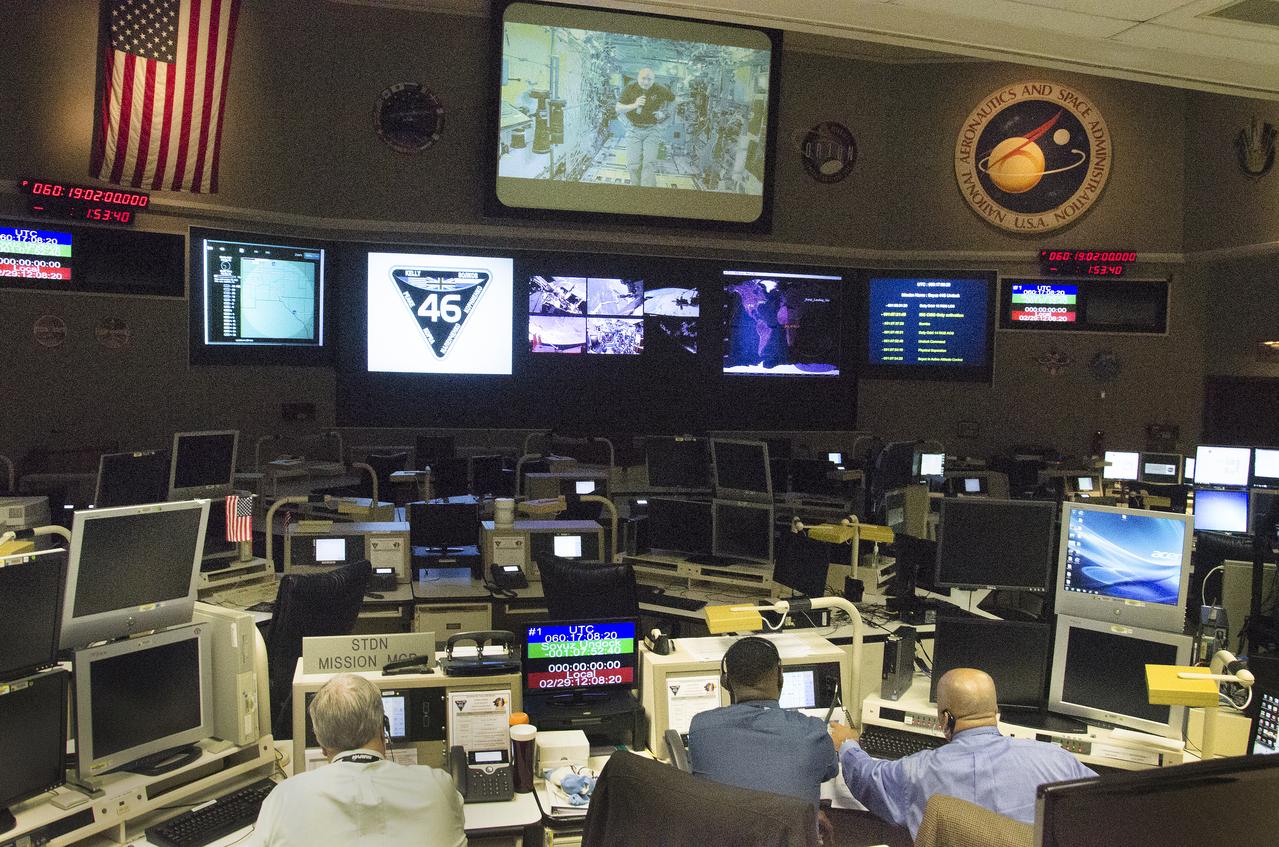
NASA's Goddard Space Flight Center in Greenbelt, Maryland, will monitor the landing of NASA Astronaut Scott Kelly and Russian Cosmonaut Mikhail Kornienko from their #YearInSpace Mission. Goddard's Networks Integration Center, pictured above, leads all coordination for space-to-ground communications support for the International Space Station and provides contingency support for the Soyuz TMA-18M 44S spacecraft, ensuring complete communications coverage through NASA's Space Network. The Soyuz 44S spacecraft will undock at 8:02 p.m. EST this evening from the International Space Station. It will land approximately three and a half hours later, at 11:25 p.m. EST in Kazakhstan. Both Kelly and Kornienko have spent 340 days aboard the International Space Station, preparing humanity for long duration missions and exploration into deep space. Read more: <a href="http://www.nasa.gov/feature/goddard/2016/ending-year-in-space-nasa-goddard-network-maintains-communications-from-space-to-ground" rel="nofollow">www.nasa.gov/feature/goddard/2016/ending-year-in-space-na...</a> Credit: NASA/Goddard/Rebecca Roth <b><a href="http://www.nasa.gov/audience/formedia/features/MP_Photo_Guidelines.html" rel="nofollow">NASA image use policy.</a></b> <b><a href="http://www.nasa.gov/centers/goddard/home/index.html" rel="nofollow">NASA Goddard Space Flight Center</a></b> enables NASA’s mission through four scientific endeavors: Earth Science, Heliophysics, Solar System Exploration, and Astrophysics. Goddard plays a leading role in NASA’s accomplishments by contributing compelling scientific knowledge to advance the Agency’s mission. <b>Follow us on <a href="http://twitter.com/NASAGoddardPix" rel="nofollow">Twitter</a></b> <b>Like us on <a href="http://www.facebook.com/pages/Greenbelt-MD/NASA-Goddard/395013845897?ref=tsd" rel="nofollow">Facebook</a></b> <b>Find us on <a href="http://instagrid.me/nasagoddard/?vm=grid" rel="nofollow">Instagram</a></b>
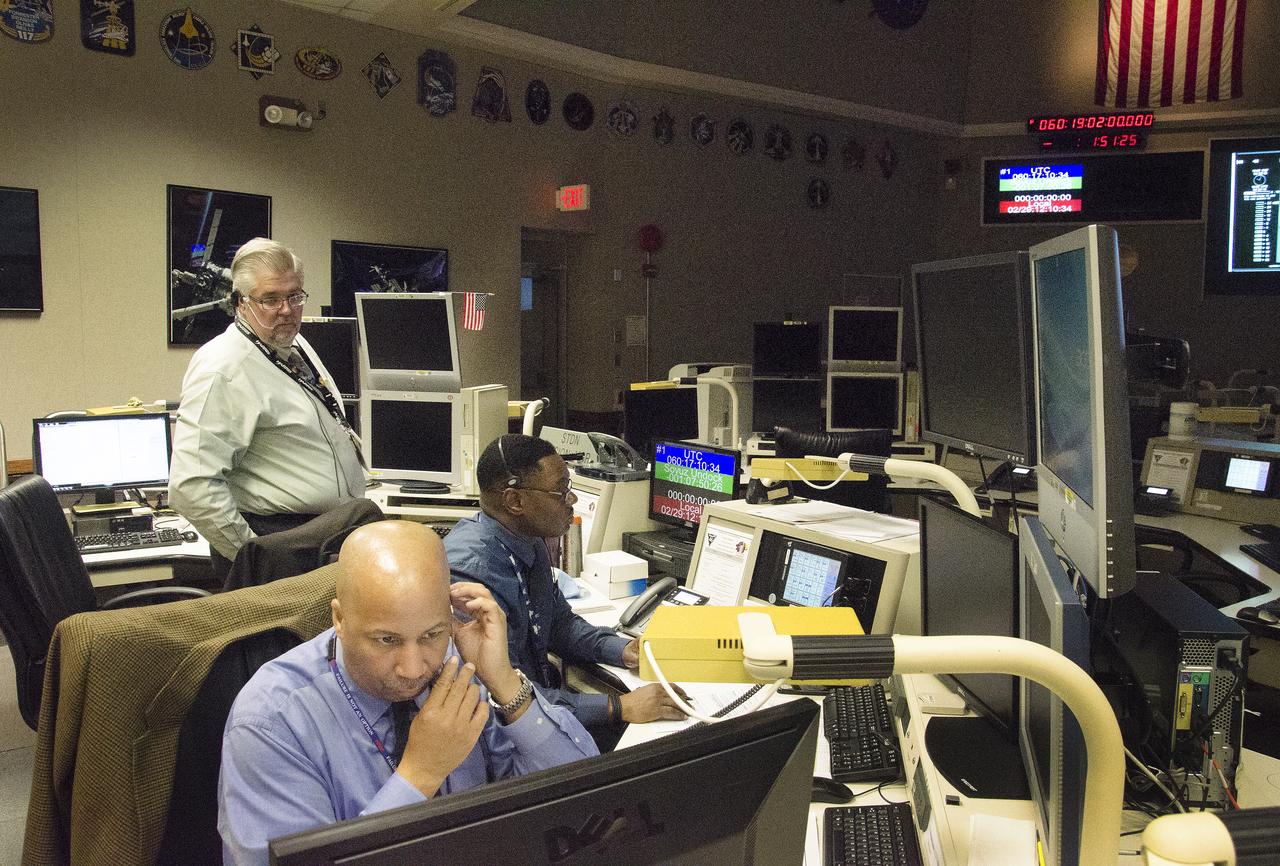
NASA's Goddard Space Flight Center in Greenbelt, Maryland, will monitor the landing of NASA Astronaut Scott Kelly and Russian Cosmonaut Mikhail Kornienko from their #YearInSpace Mission. Goddard's Networks Integration Center, pictured above, leads all coordination for space-to-ground communications support for the International Space Station and provides contingency support for the Soyuz TMA-18M 44S spacecraft, ensuring complete communications coverage through NASA's Space Network. The Soyuz 44S spacecraft will undock at 8:02 p.m. EST this evening from the International Space Station. It will land approximately three and a half hours later, at 11:25 p.m. EST in Kazakhstan. Both Kelly and Kornienko have spent 340 days aboard the International Space Station, preparing humanity for long duration missions and exploration into deep space. Read more: <a href="http://www.nasa.gov/feature/goddard/2016/ending-year-in-space-nasa-goddard-network-maintains-communications-from-space-to-ground" rel="nofollow">www.nasa.gov/feature/goddard/2016/ending-year-in-space-na...</a> Credit: NASA/Goddard/Rebecca Roth <b><a href="http://www.nasa.gov/audience/formedia/features/MP_Photo_Guidelines.html" rel="nofollow">NASA image use policy.</a></b> <b><a href="http://www.nasa.gov/centers/goddard/home/index.html" rel="nofollow">NASA Goddard Space Flight Center</a></b> enables NASA’s mission through four scientific endeavors: Earth Science, Heliophysics, Solar System Exploration, and Astrophysics. Goddard plays a leading role in NASA’s accomplishments by contributing compelling scientific knowledge to advance the Agency’s mission. <b>Follow us on <a href="http://twitter.com/NASAGoddardPix" rel="nofollow">Twitter</a></b> <b>Like us on <a href="http://www.facebook.com/pages/Greenbelt-MD/NASA-Goddard/395013845897?ref=tsd" rel="nofollow">Facebook</a></b> <b>Find us on <a href="http://instagrid.me/nasagoddard/?vm=grid" rel="nofollow">Instagram</a></b>
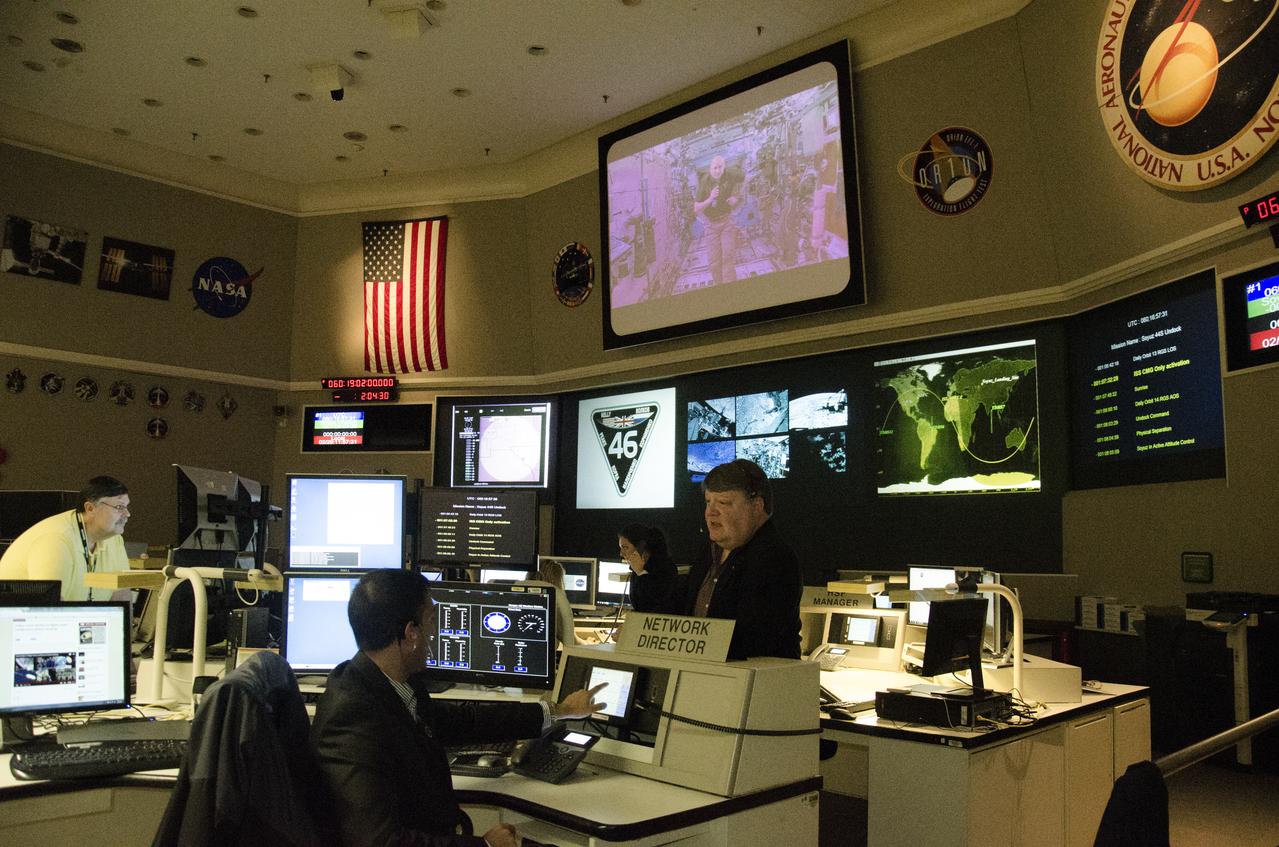
NASA's Goddard Space Flight Center in Greenbelt, Maryland, will monitor the landing of NASA Astronaut Scott Kelly and Russian Cosmonaut Mikhail Kornienko from their #YearInSpace Mission. Goddard's Networks Integration Center, pictured above, leads all coordination for space-to-ground communications support for the International Space Station and provides contingency support for the Soyuz TMA-18M 44S spacecraft, ensuring complete communications coverage through NASA's Space Network. The Soyuz 44S spacecraft will undock at 8:02 p.m. EST this evening from the International Space Station. It will land approximately three and a half hours later, at 11:25 p.m. EST in Kazakhstan. Both Kelly and Kornienko have spent 340 days aboard the International Space Station, preparing humanity for long duration missions and exploration into deep space. Read more: <a href="http://www.nasa.gov/feature/goddard/2016/ending-year-in-space-nasa-goddard-network-maintains-communications-from-space-to-ground" rel="nofollow">www.nasa.gov/feature/goddard/2016/ending-year-in-space-na...</a> Credit: NASA/Goddard/Rebecca Roth <b><a href="http://www.nasa.gov/audience/formedia/features/MP_Photo_Guidelines.html" rel="nofollow">NASA image use policy.</a></b> <b><a href="http://www.nasa.gov/centers/goddard/home/index.html" rel="nofollow">NASA Goddard Space Flight Center</a></b> enables NASA’s mission through four scientific endeavors: Earth Science, Heliophysics, Solar System Exploration, and Astrophysics. Goddard plays a leading role in NASA’s accomplishments by contributing compelling scientific knowledge to advance the Agency’s mission. <b>Follow us on <a href="http://twitter.com/NASAGoddardPix" rel="nofollow">Twitter</a></b> <b>Like us on <a href="http://www.facebook.com/pages/Greenbelt-MD/NASA-Goddard/395013845897?ref=tsd" rel="nofollow">Facebook</a></b> <b>Find us on <a href="http://instagrid.me/nasagoddard/?vm=grid" rel="nofollow">Instagram</a></b>
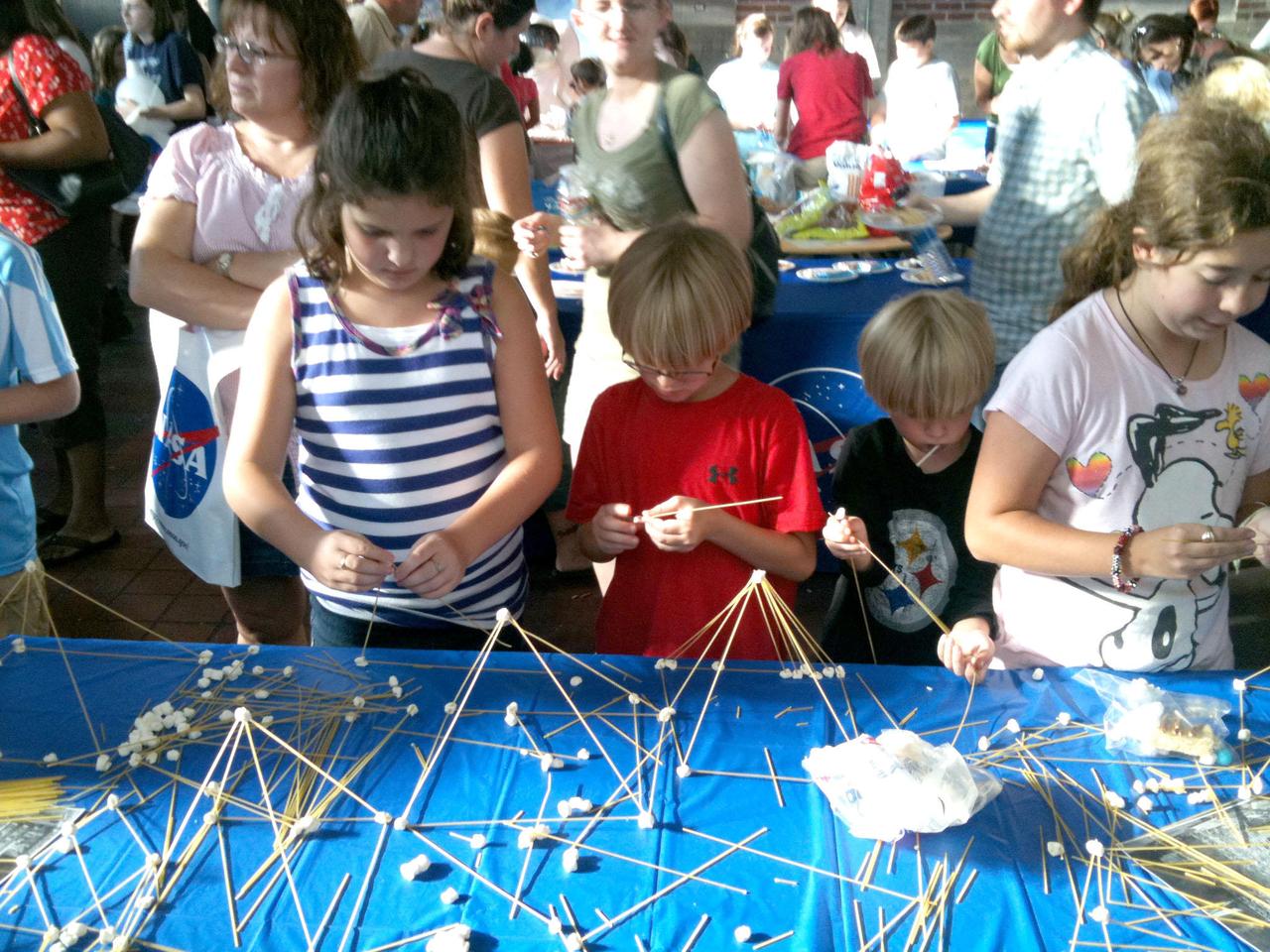
Stennis Space Center visited three Mississippi communities Sept. 11-13, offering interactive and space-related exhibits and presentations to visitors in Grenada, Oxford and Tupelo. Young visitors to the Powerhouse Community and Arts Center in Oxford enjoyed hands-on educational activities during the NASA Night event Sept. 11.
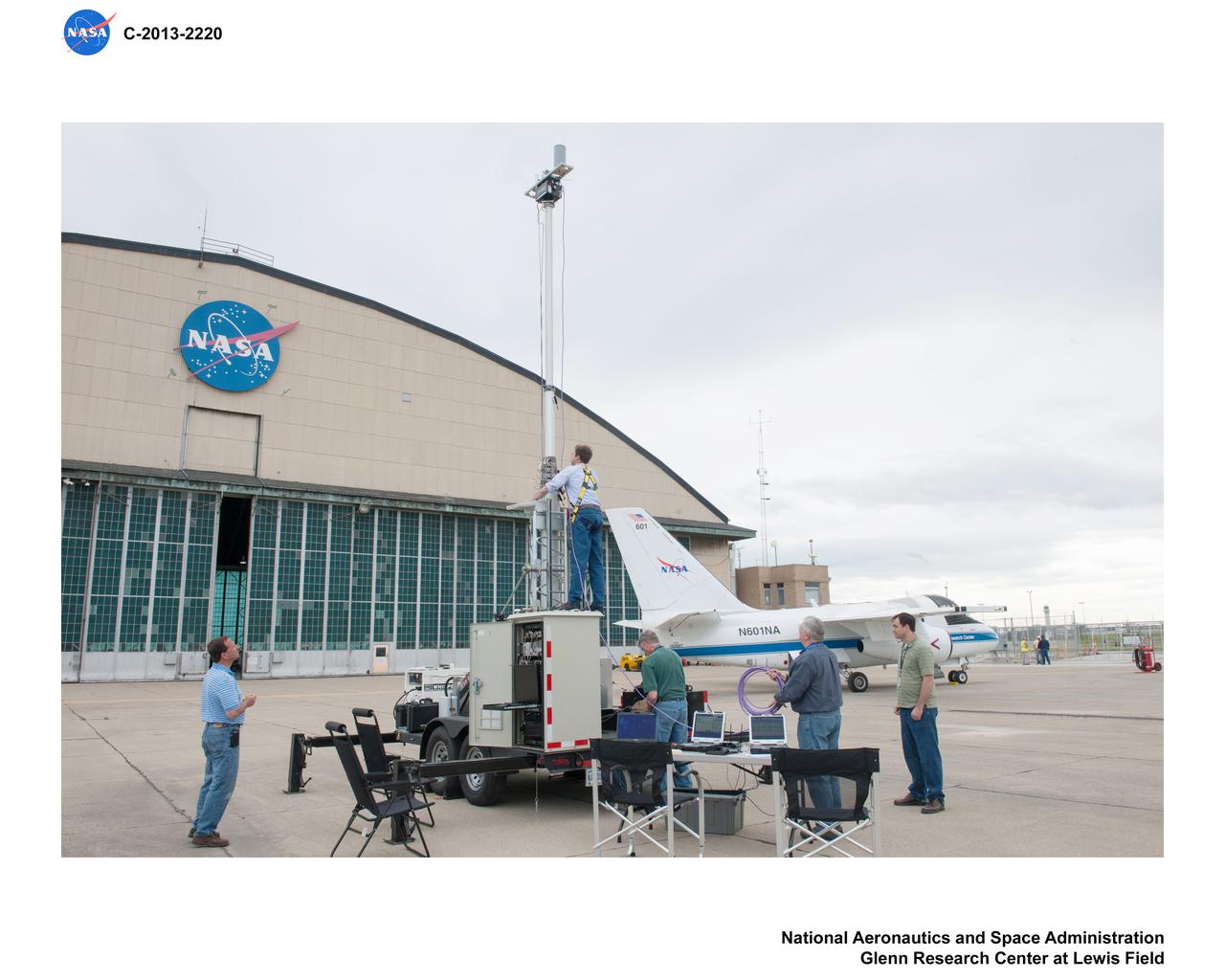
NASA, Lockheed Martin S-3B Viking Aircraft #N601NA, Unmanned Aircraft Communications Project
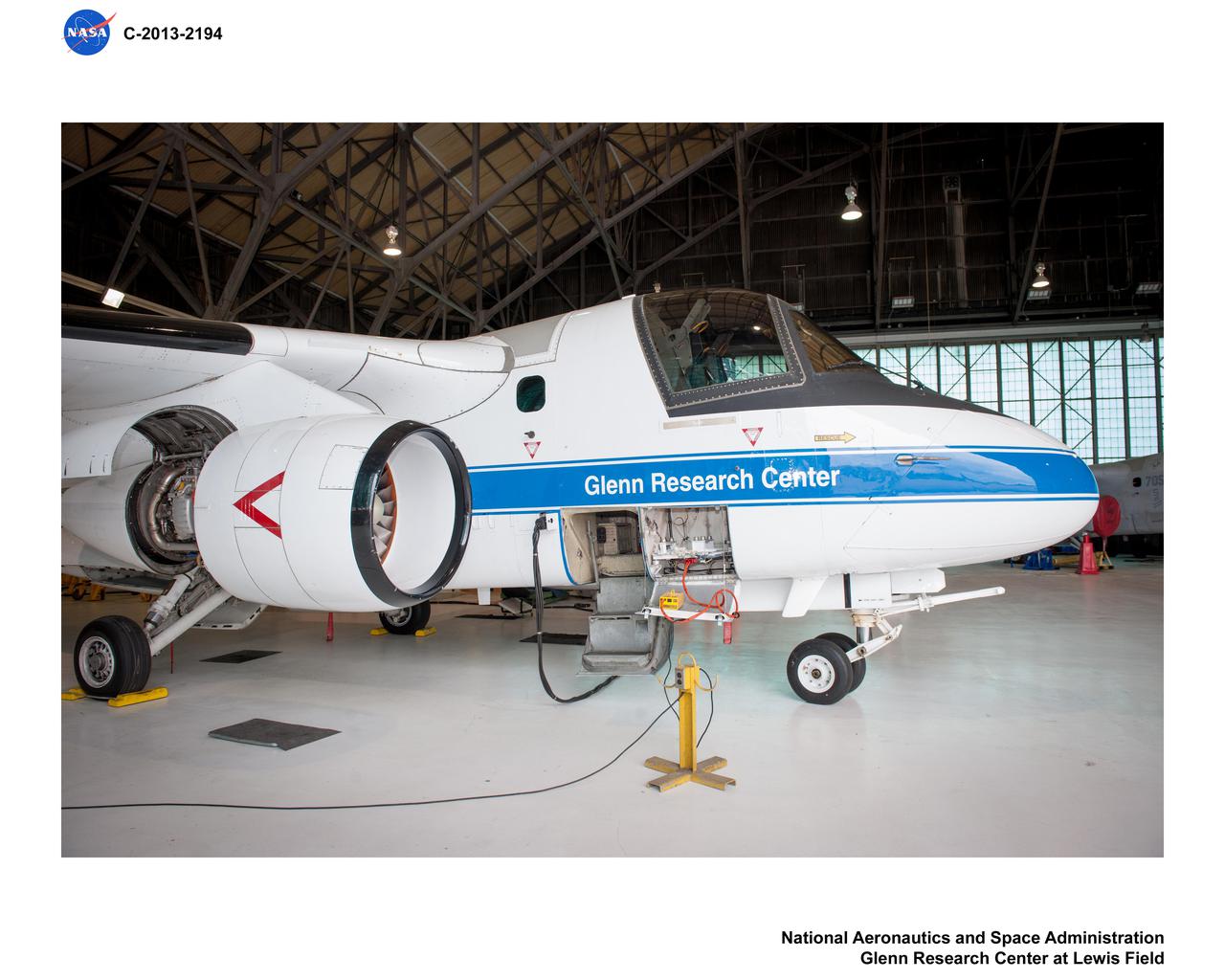
NASA, Lockheed Martin S-3B Viking Aircraft #N601NA, Unmanned Aircraft Communications Project

This image shows the Modulated X-ray Source, a key component in NASA’s first-ever demonstration of X-ray communication in space. Credits: NASA/W. Hrybyk
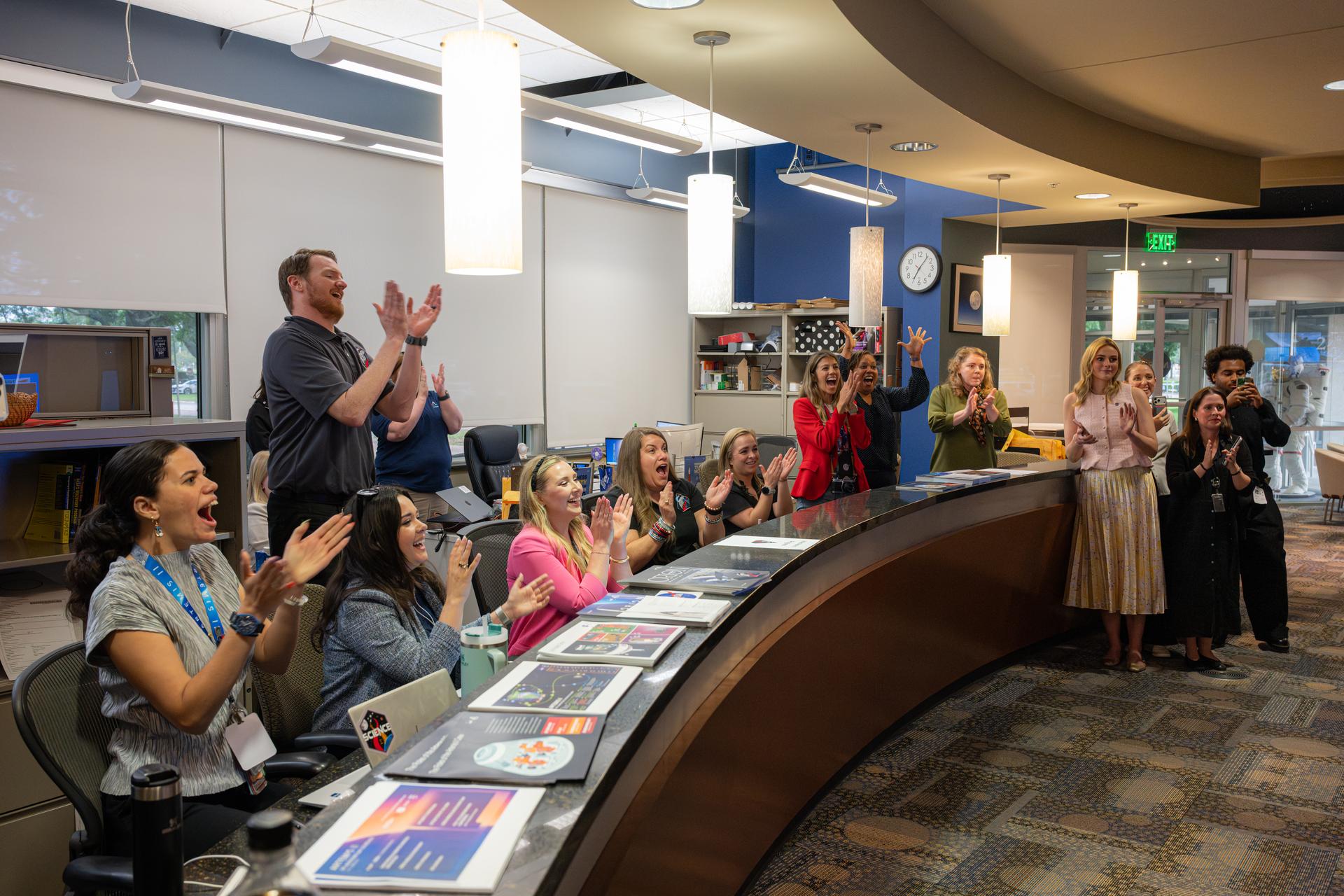
Members of NASA’s communications team react to the successful splashdown of the Orion spacecraft during the Artemis II mission, Friday, Apr. 10, 2026, at NASA’s Johnson Space Center in Houston, Texas. Photo Credit: (NASA/John Kraus)
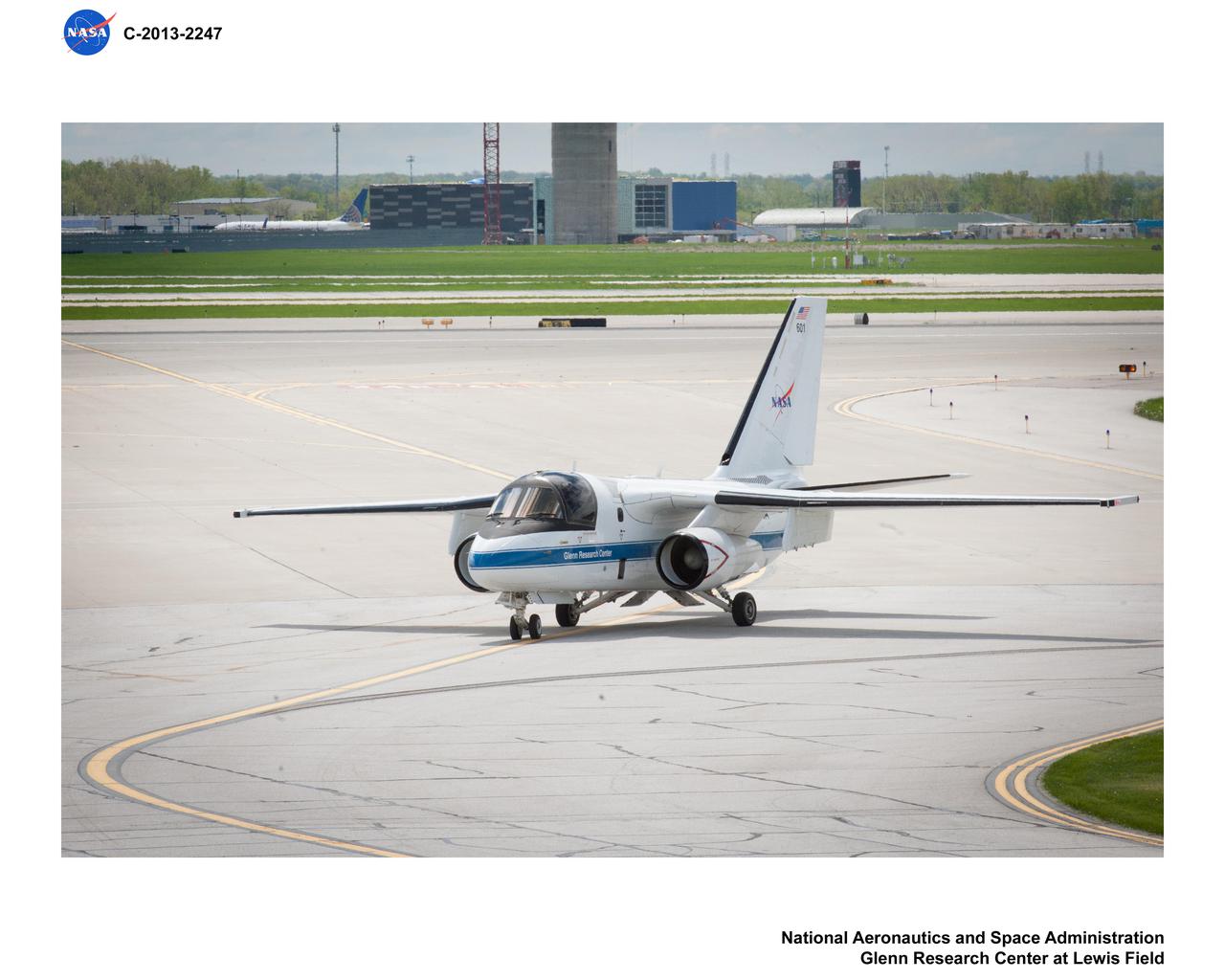
NASA, Lockheed Martin S-3B Viking Aircraft #N601NA, prepares for departure from Cleveland Hopkins Airport in support of the Unmanned Aircraft Communications Project
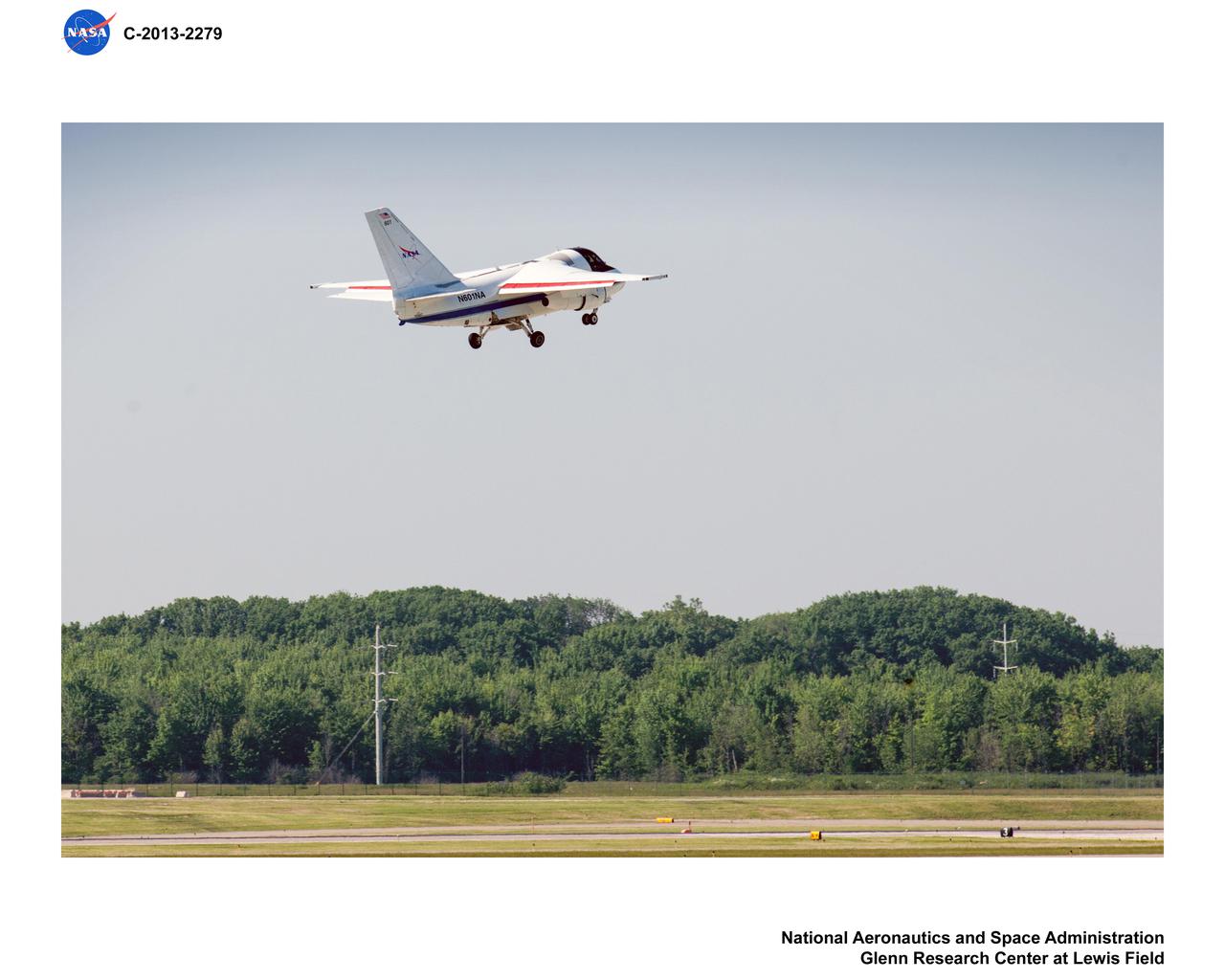
NASA, Lockheed Martin S-3B Viking Aircraft #N601NA, takes off from Cleveland Hopkins Airport, in support of the Unmanned Aircraft Communications Project
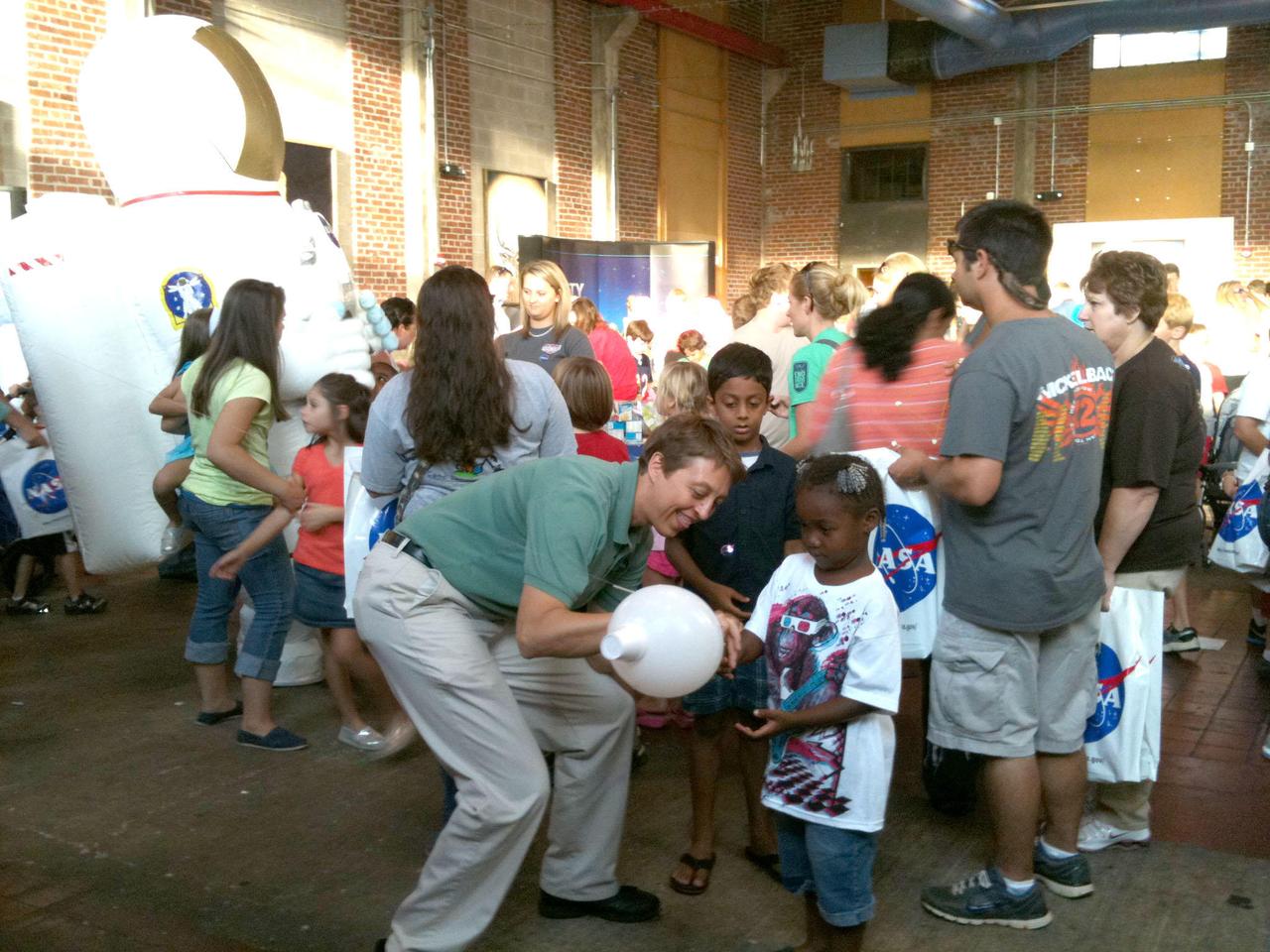
Stennis Space Center visited three Mississippi communities Sept. 11-13, offering interactive and space-related exhibits and presentations to visitors in Grenada, Oxford and Tupelo. During NASA Night activities in Oxford, NASA employee Michele Beisler helped young visitors launch her balloon rocket.
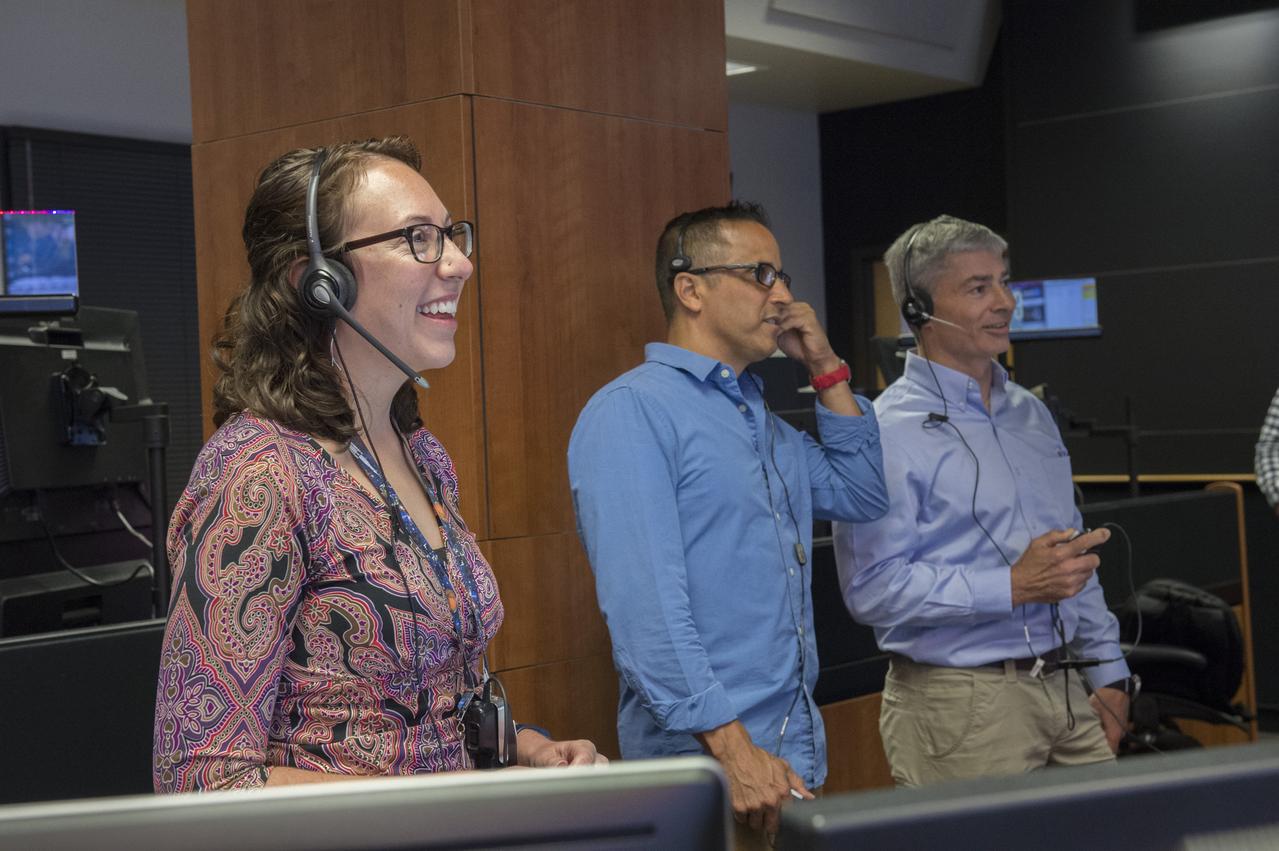
Stephanie Shelton, a payload communications manager at NASA's Marshall Space Flight Center, joins NASA astronauts Joe Acaba and Mark Vande Hei for a call to the onboard crew of the International Space Station. Vande Hei and Acaba visited Marshall April 11 for their honorary Expedition 54 plaque hanging ceremony and to provide valuable feedback of their on-orbit science investigations with the Payload Operations and Integration Center team..
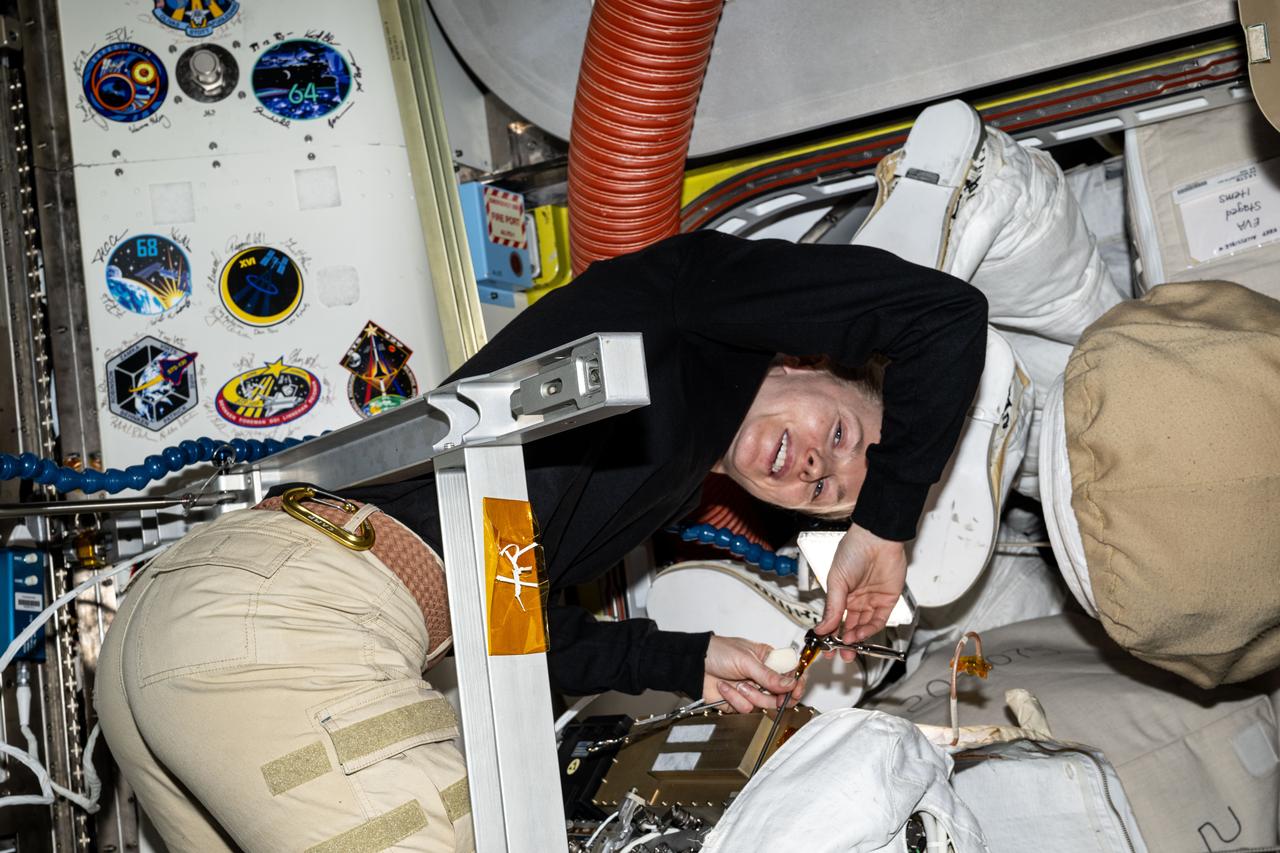
iss073e0917417 (Oct. 21, 2025) --- NASA astronaut and Expedition 73 Flight Engineer Zena Cardman performs communications maintenance swapping radios and checking their peformance on a pair of spacesuits inside the International Space Station's Quest airlock.
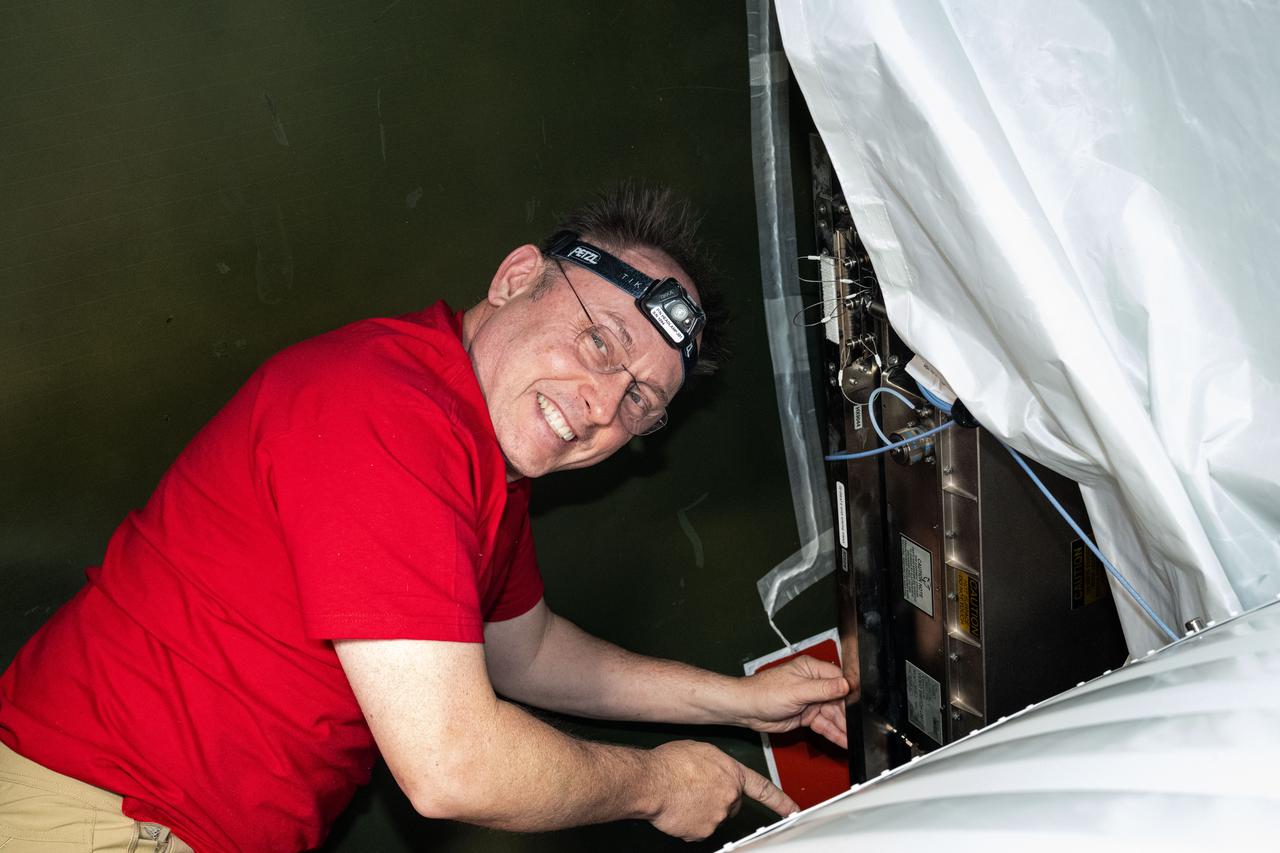
iss073e0511300 (Aug. 19, 2025) --- NASA astronaut and Expedition 73 Flight Engineer Mike Fincke is pictured during communications maintenance activities aboard the International Space Station's Destiny laboratory module.
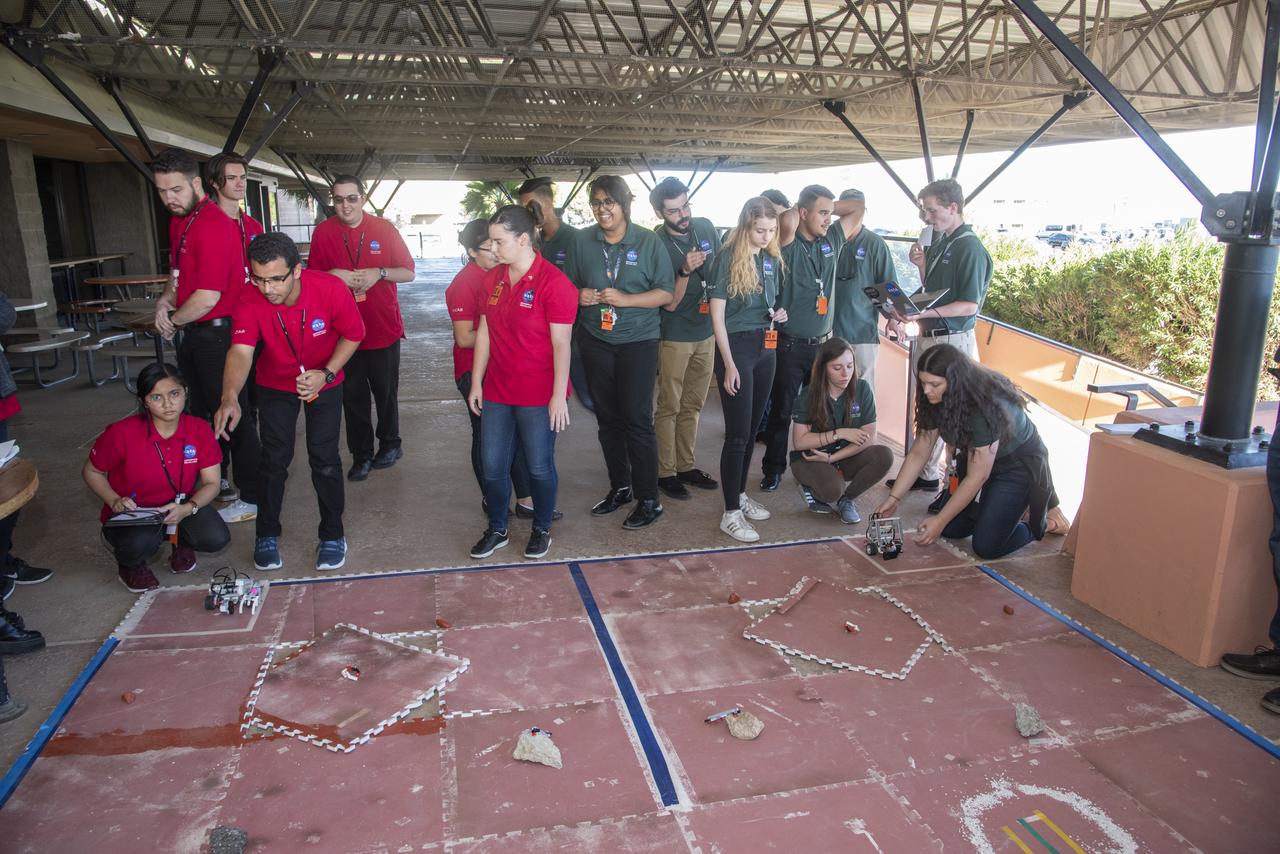
Four student teams: Blue, Gold, Green and Red built, designed and tested a LEGO robotic Martian rover prototype at NASA's Armstrong Flight Research Center. The teams competed against each other during a four-day workshop coordinated by the NASA Community College Aerospace Scholars. Each team prepared a marketing package to "sell" their design to NASA based on the performance of its Martian rover.
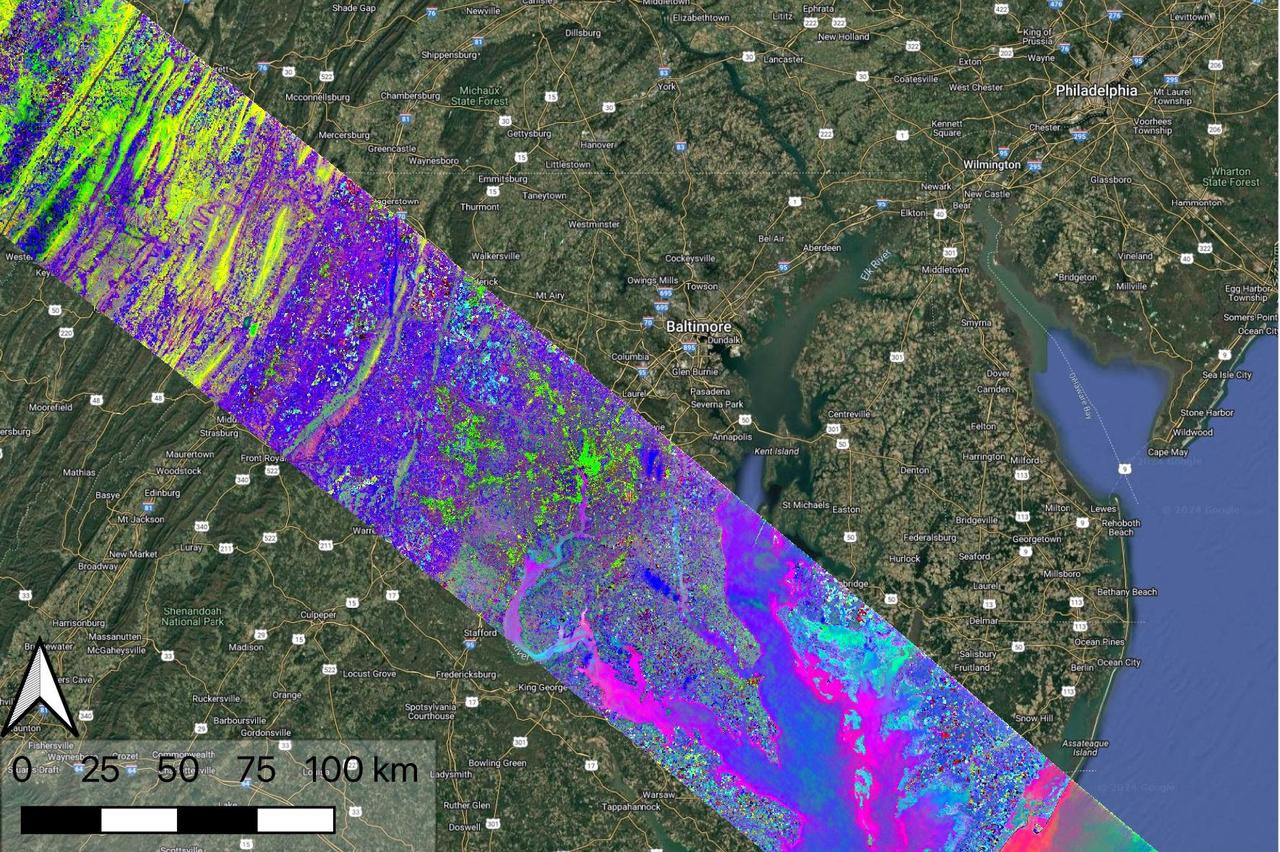
Data collected by NASA's Earth Surface Mineral Dust Source Investigation (EMIT) on April 23, 2024, indicates the location of a variety of planet communites across a swath of the mid-Atlantic United States. Overlain on a Google base map, each color represents a different type of natural biome or agricultural land. Hyperspectral data such as this is being analyzed in a range of NASA-funded research projects looking at the distribution and traits of plant communities, including agricultural crops. EMIT, installed on the International Space Station in 2022, was originally tasked with mapping minerals over Earth's desert regions to help determine the cooling and heating effects that dust can have on regional and global climate. Since early 2024 the instrument has been on an extended mission in which its data is being used in research on a diverse range of topics including agricultural practices, snow hydrology, wildflower blooming, phytoplankton and carbon dynamics in inland waters, ecosystem biodiversity, and functional traits of forests. Imaging spectrometers like EMIT detect the light reflected from Earth and then separate visible and infrared light into hundreds of wavelength bands. Scientists use patterns of reflection and absorption at different wavelengths to determine the composition of whatever the instrument is observing. EMIT is laying the groundwork for NASA's future Surface Biology and Geology-Visible Shortwave Infrared satellite mission. SBG-VSWIR will cover Earth's land and coasts more frequently than EMIT, with finer spatial resolution. https://photojournal.jpl.nasa.gov/catalog/PIA26418
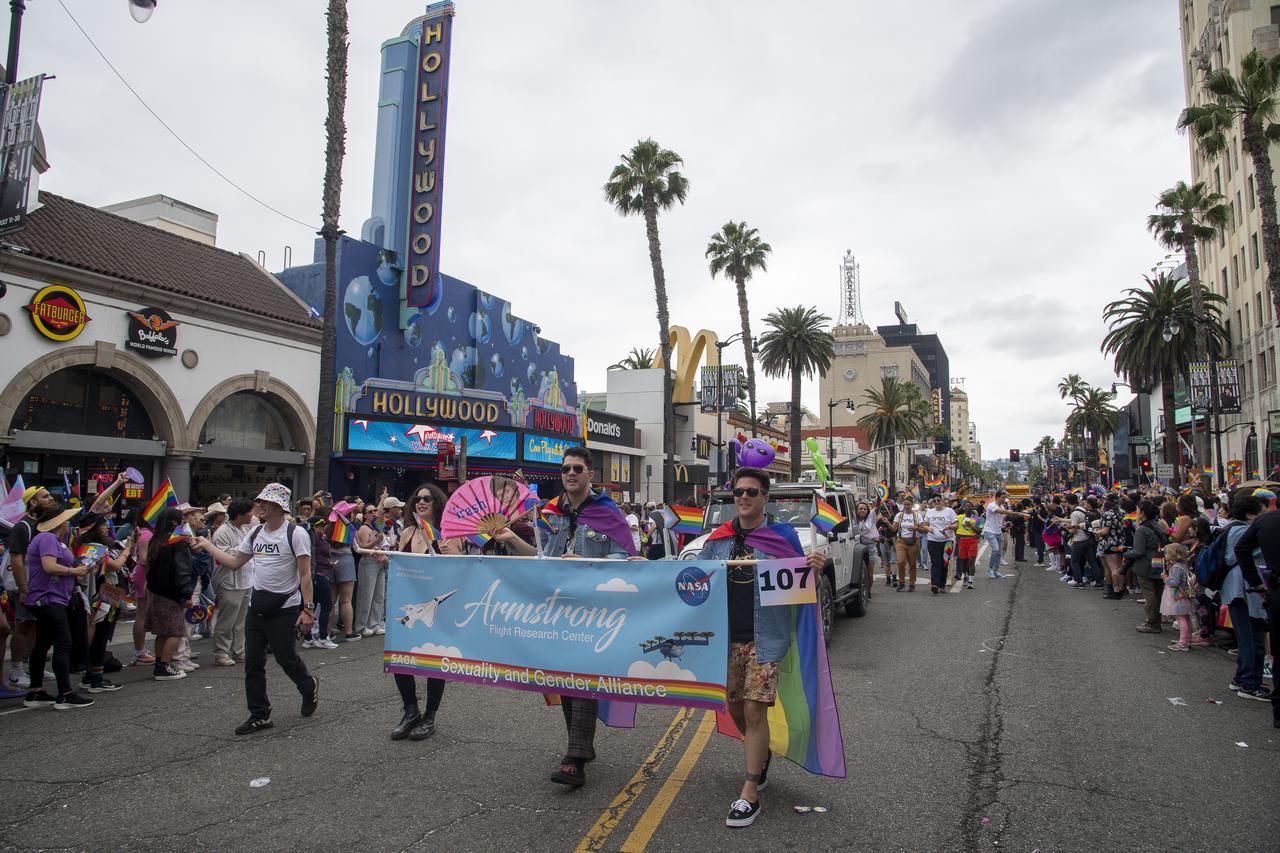
NASA’s Armstrong Flight Research Center in Edwards, California, and NASA’s Jet Propulsion Laboratory in Pasadena, California marched in the LA Pride Parade in June 2023. This was NASA Armstrong’s first time participating in the parade, and many NASA employees attended to celebrate the LGBTQIA+ community and allyship. NASA’s team included engineers, scientists, technicians, and mission support folks who enrich the organization by showing up as themselves. On Earth and at NASA, there is space for everyone.
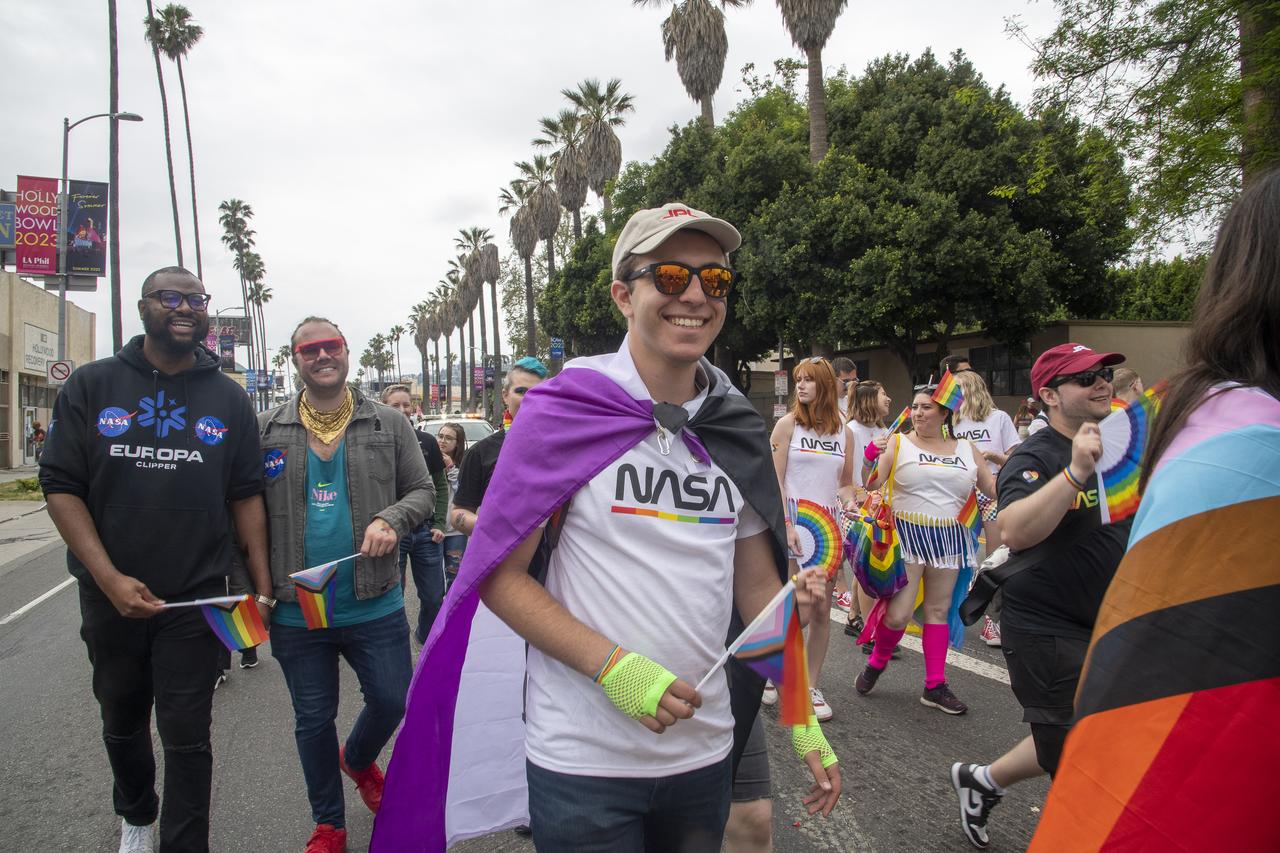
NASA’s Armstrong Flight Research Center in Edwards, California, and NASA’s Jet Propulsion Laboratory in Pasadena, California marched in the LA Pride Parade in June 2023. This was NASA Armstrong’s first time participating in the parade, and many NASA employees attended to celebrate the LGBTQIA+ community and allyship. NASA’s team included engineers, scientists, technicians, and mission support folks who enrich the organization by showing up as themselves. On Earth and at NASA, there is space for everyone.
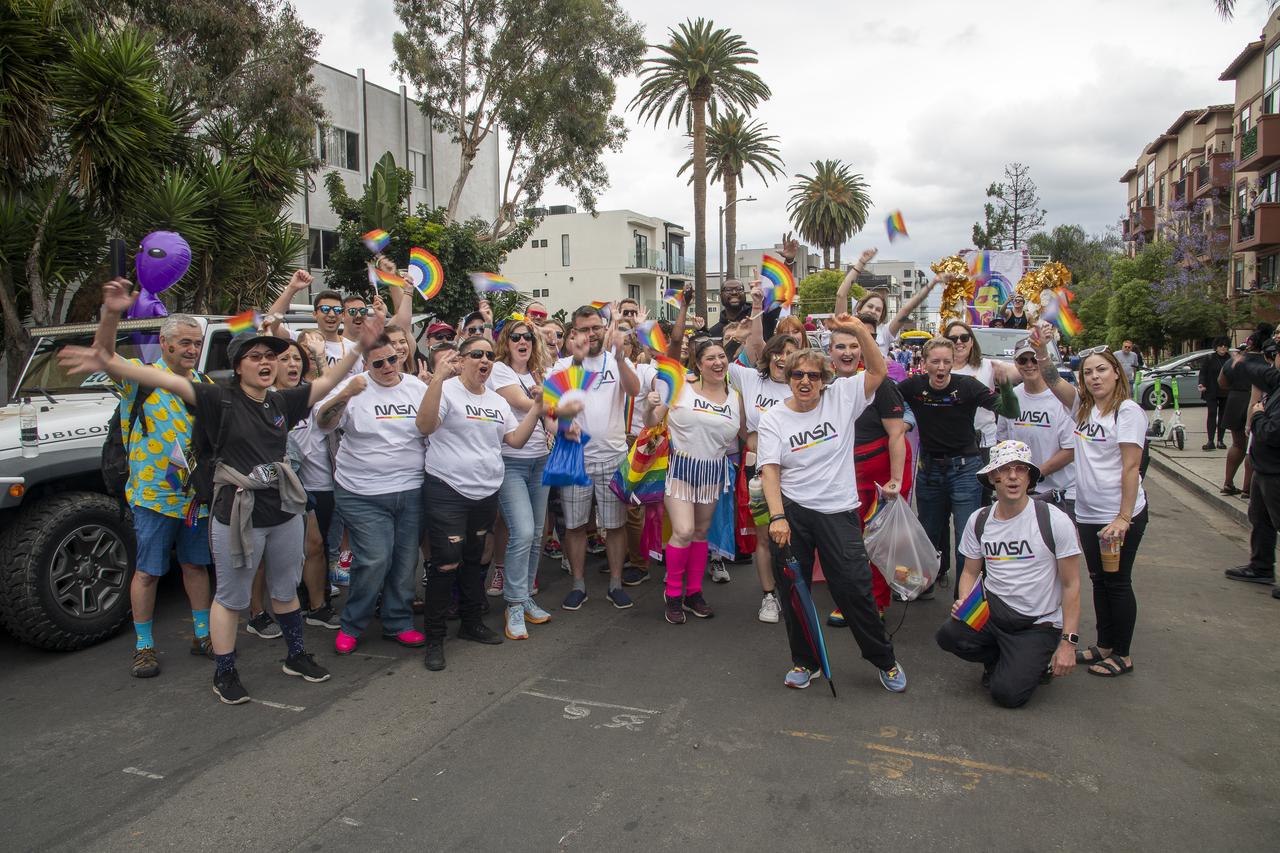
NASA’s Armstrong Flight Research Center in Edwards, California, and NASA’s Jet Propulsion Laboratory in Pasadena, California marched in the LA Pride Parade in June 2023. This was NASA Armstrong’s first time participating in the parade, and many NASA employees attended to celebrate the LGBTQIA+ community and allyship. NASA’s team included engineers, scientists, technicians, and mission support folks who enrich the organization by showing up as themselves. On Earth and at NASA, there is space for everyone.
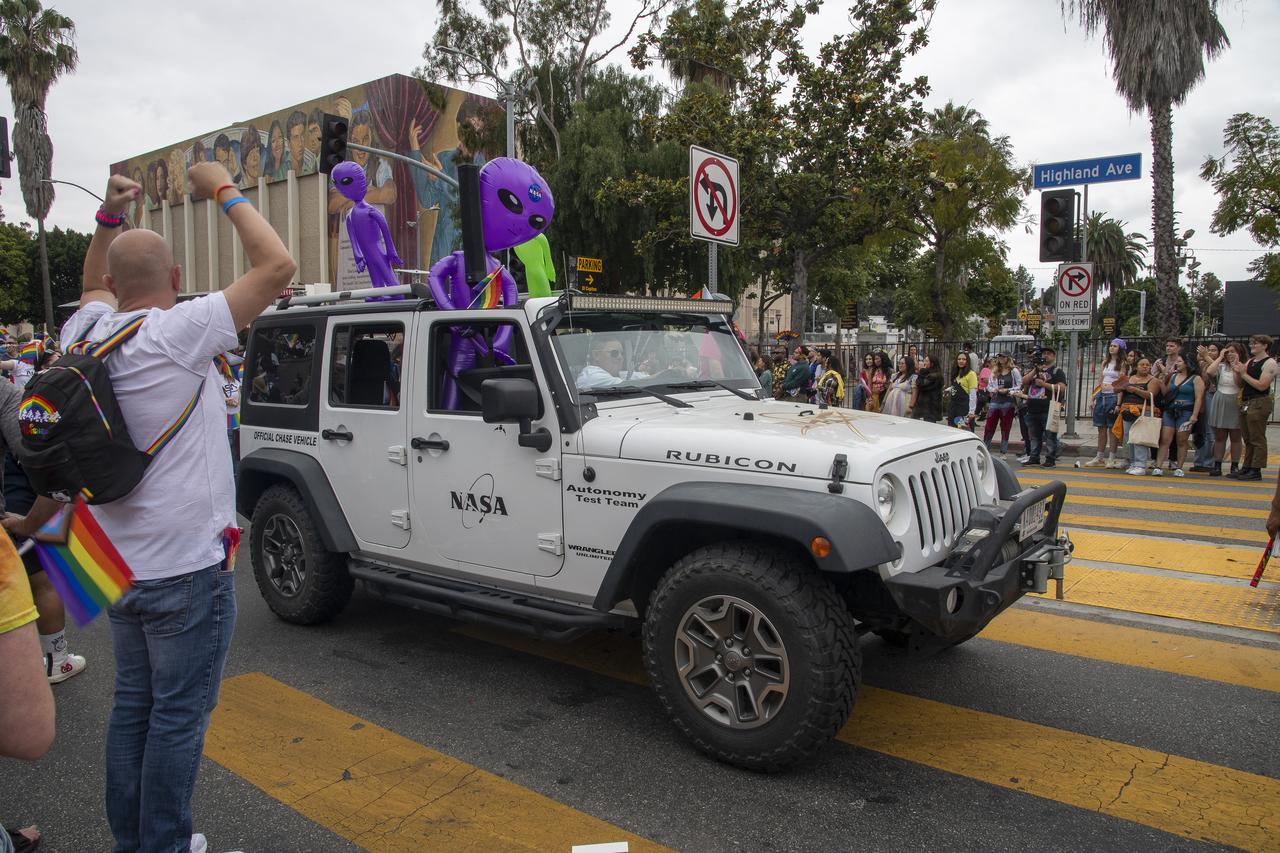
NASA’s Armstrong Flight Research Center in Edwards, California, and NASA’s Jet Propulsion Laboratory in Pasadena, California marched in the LA Pride Parade in June 2023. This was NASA Armstrong’s first time participating in the parade, and many NASA employees attended to celebrate the LGBTQIA+ community and allyship. NASA’s team included engineers, scientists, technicians, and mission support folks who enrich the organization by showing up as themselves. On Earth and at NASA, there is space for everyone.

NASA’s Armstrong Flight Research Center in Edwards, California, and NASA’s Jet Propulsion Laboratory in Pasadena, California marched in the LA Pride Parade in June 2023. This was NASA Armstrong’s first time participating in the parade, and many NASA employees attended to celebrate the LGBTQIA+ community and allyship. NASA’s team included engineers, scientists, technicians, and mission support folks who enrich the organization by showing up as themselves. On Earth and at NASA, there is space for everyone.
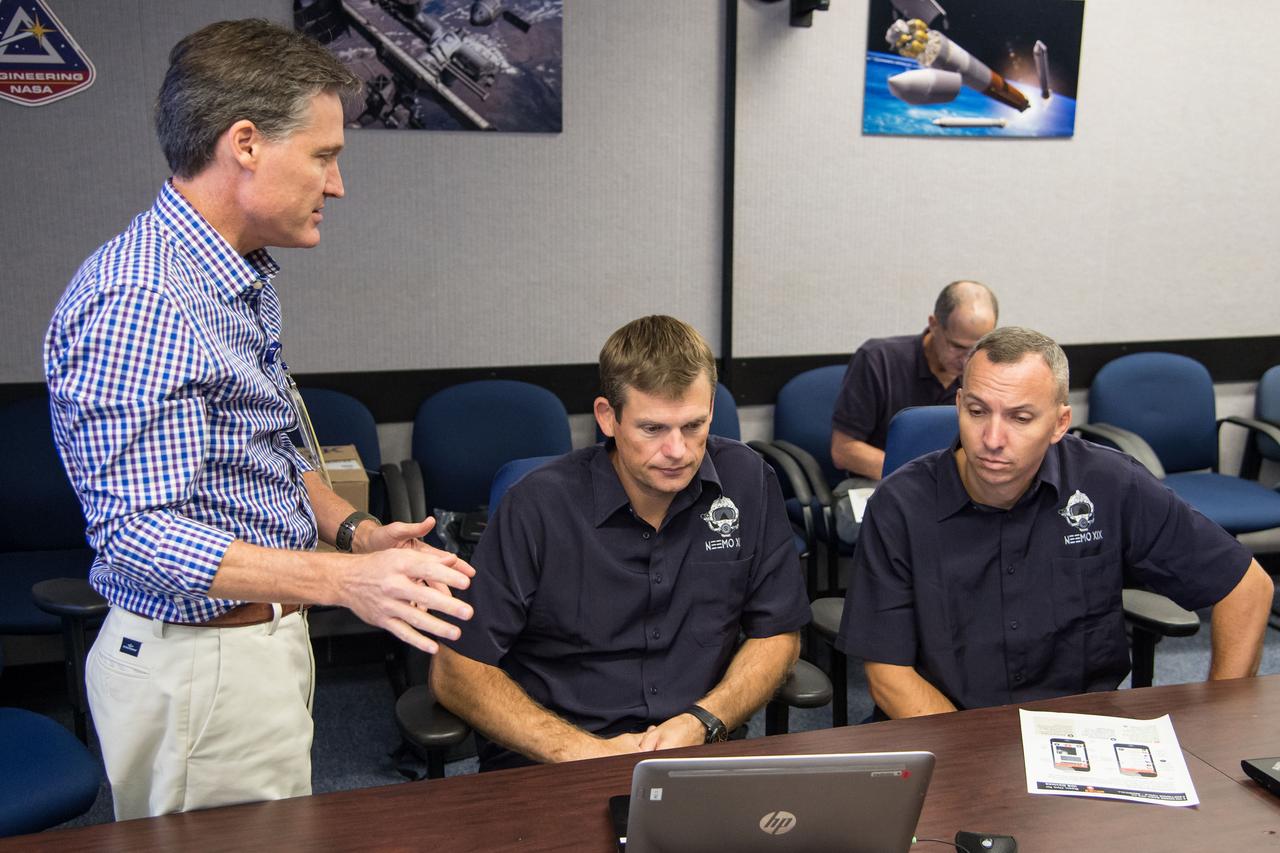
Date: 08-21-14 Location: Bldg 36, 131 Subject: ESA Astronaut Andreas Mogensen and NASA astronaut Randy Bresnik during NEEMO 19 communications training with instructors Marcum Reagan and Barbara Janoiko Photographer: James Blair
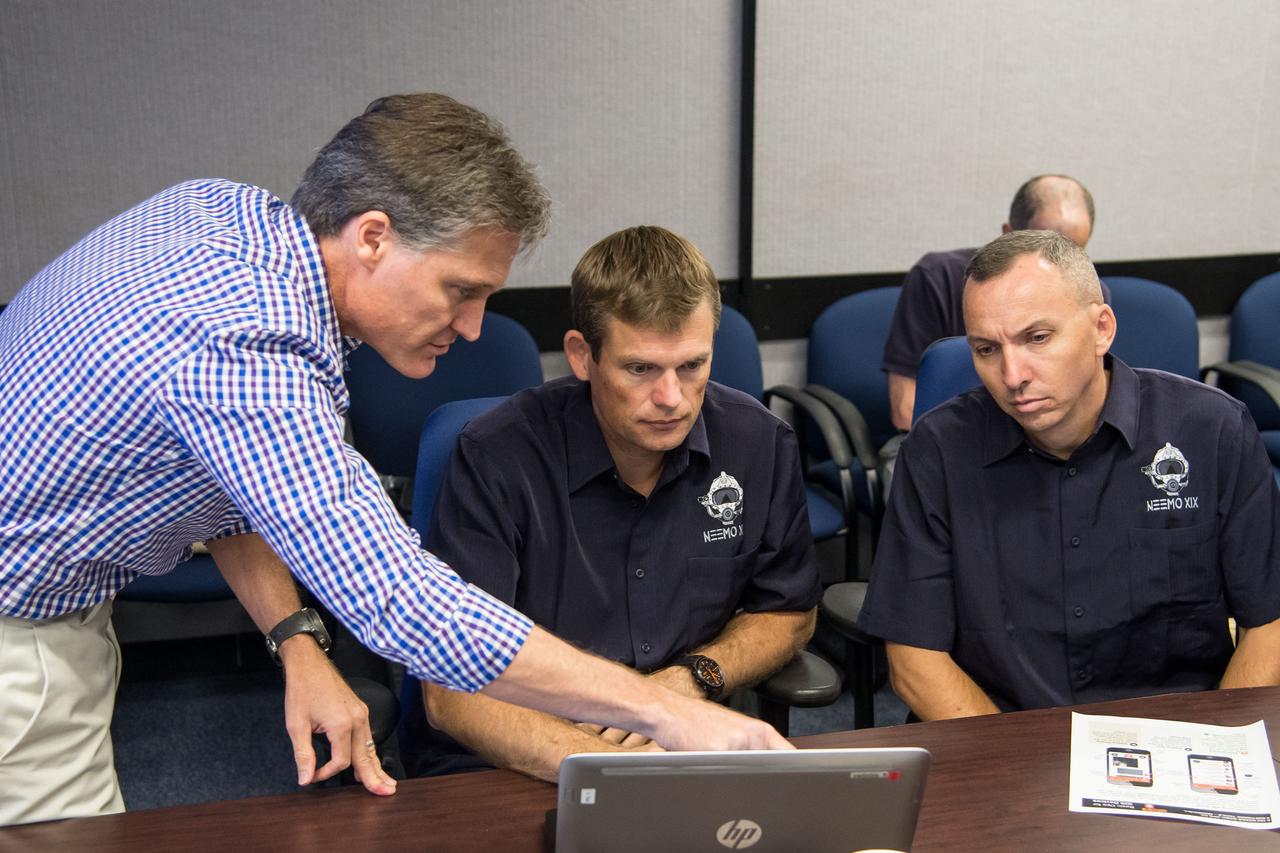
Date: 08-21-14 Location: Bldg 36, 131 Subject: ESA Astronaut Andreas Mogensen and NASA astronaut Randy Bresnik during NEEMO 19 communications training with instructors Marcum Reagan and Barbara Janoiko Photographer: James Blair
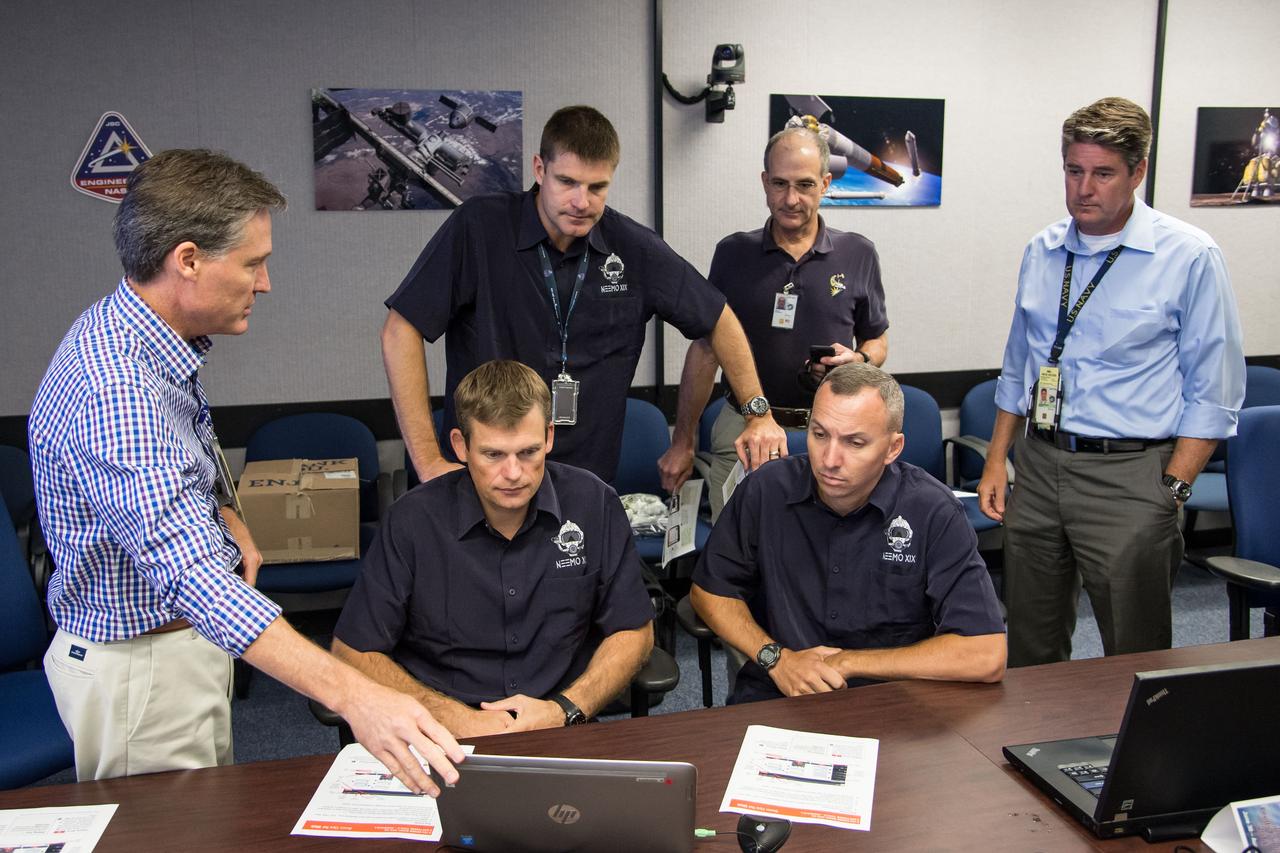
Date: 08-21-14 Location: Bldg 36, 131 Subject: ESA Astronaut Andreas Mogensen and NASA astronaut Randy Bresnik during NEEMO 19 communications training with instructors Marcum Reagan and Barbara Janoiko Photographer: James Blair
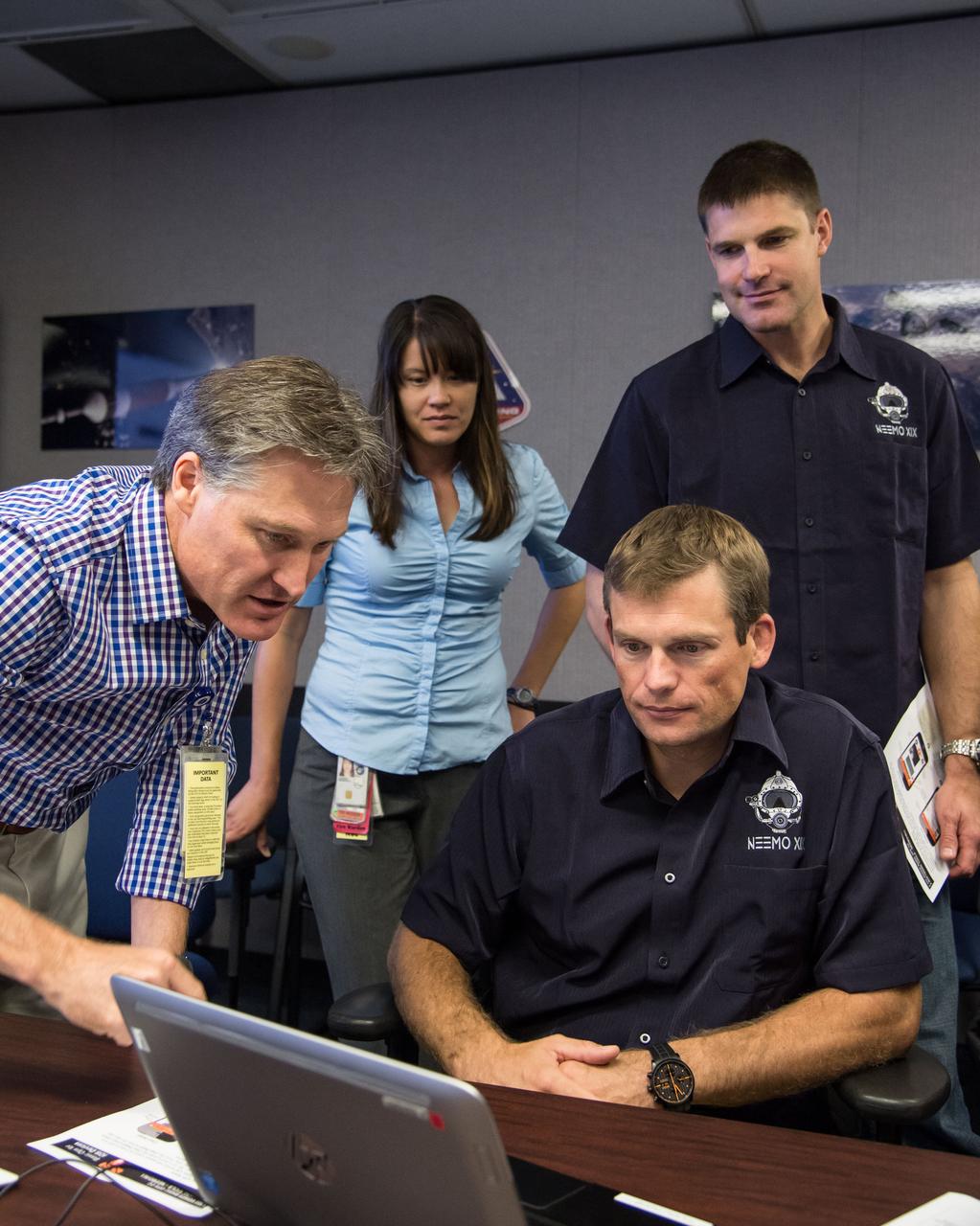
Date: 08-21-14 Location: Bldg 36, 131 Subject: ESA Astronaut Andreas Mogensen and NASA astronaut Randy Bresnik during NEEMO 19 communications training with instructors Marcum Reagan and Barbara Janoiko Photographer: James Blair
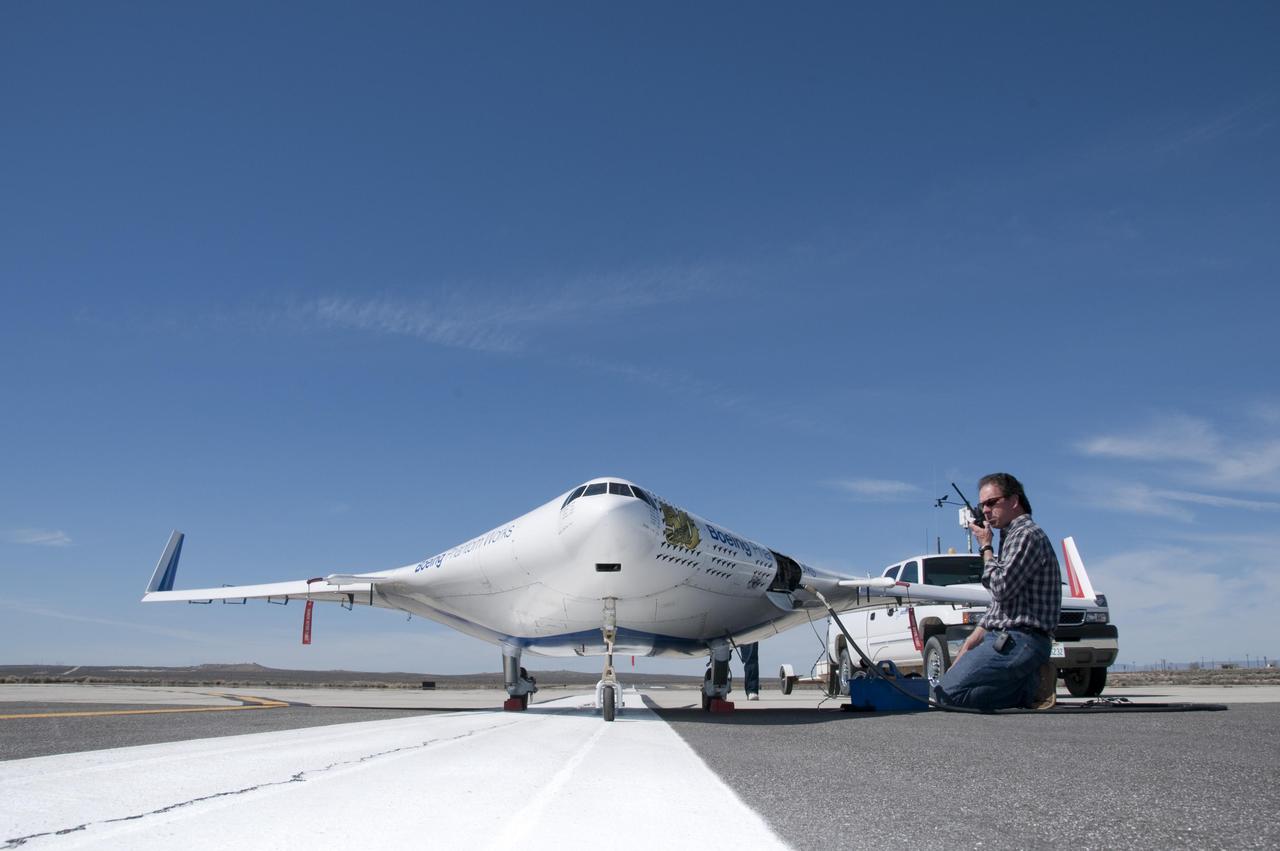
NASA engineer Gary Cosentino communicates with fellow X-48B flight team personnel in preparation for another flight.
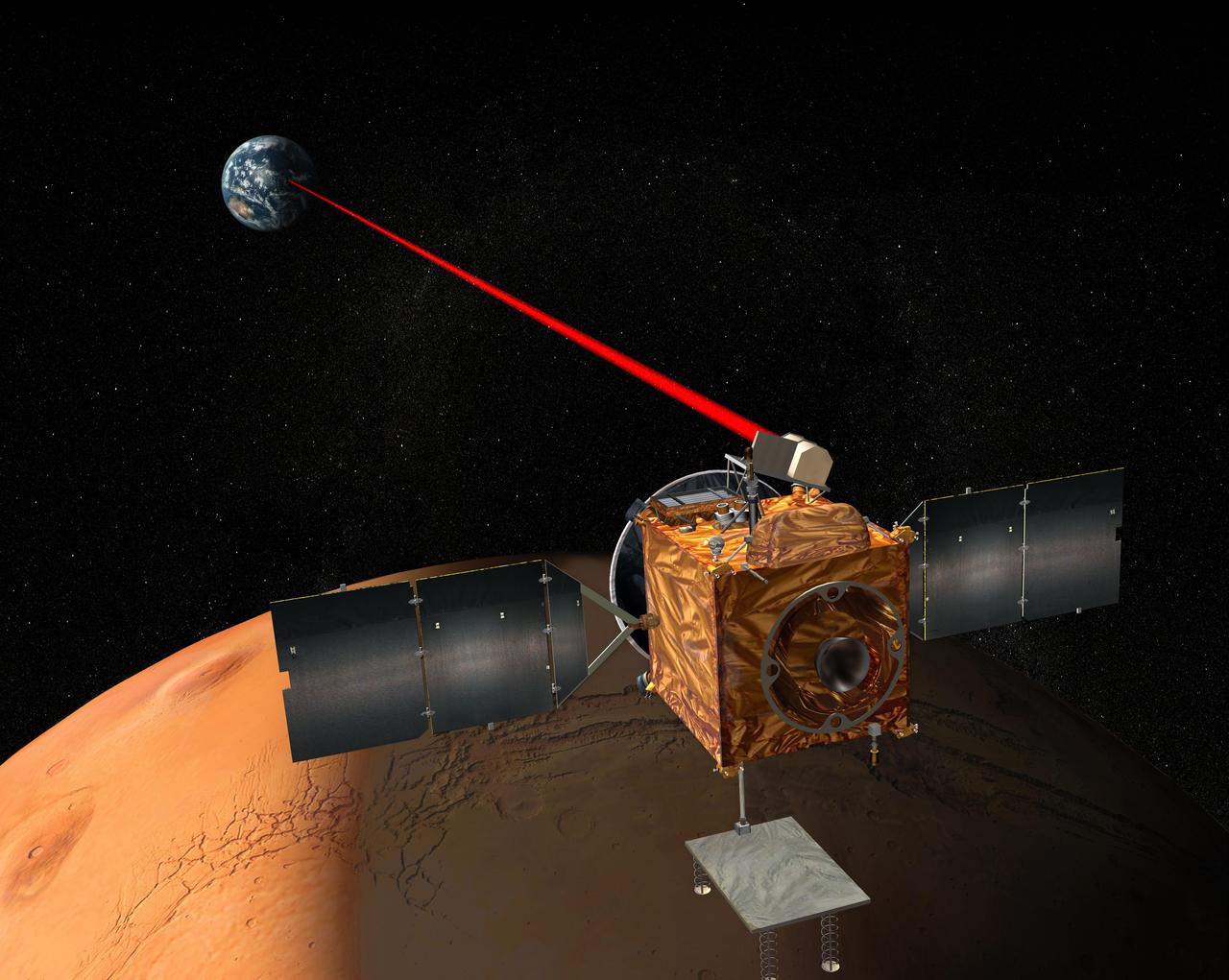
This illustration depicts a concept for operation of an optical communications system on NASA Mars Telecommunications Orbiter.
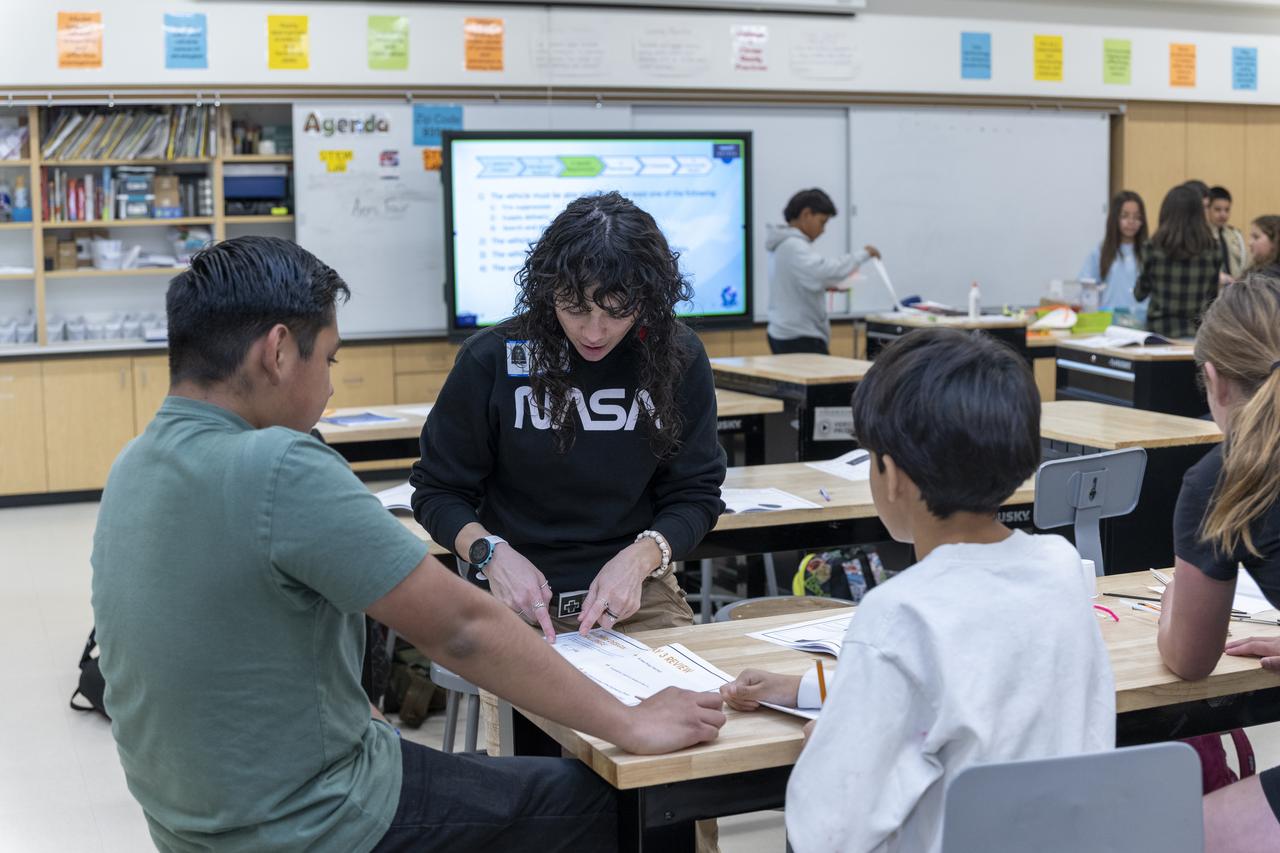
Giovanna Camacho, Pathways systems engineering intern from NASA’s Armstrong Flight Research Center in Edwards, California, teaches students about aeronautics during Aero Fair at Tropico Middle School in Rosamond, California, on April 9, 2025.
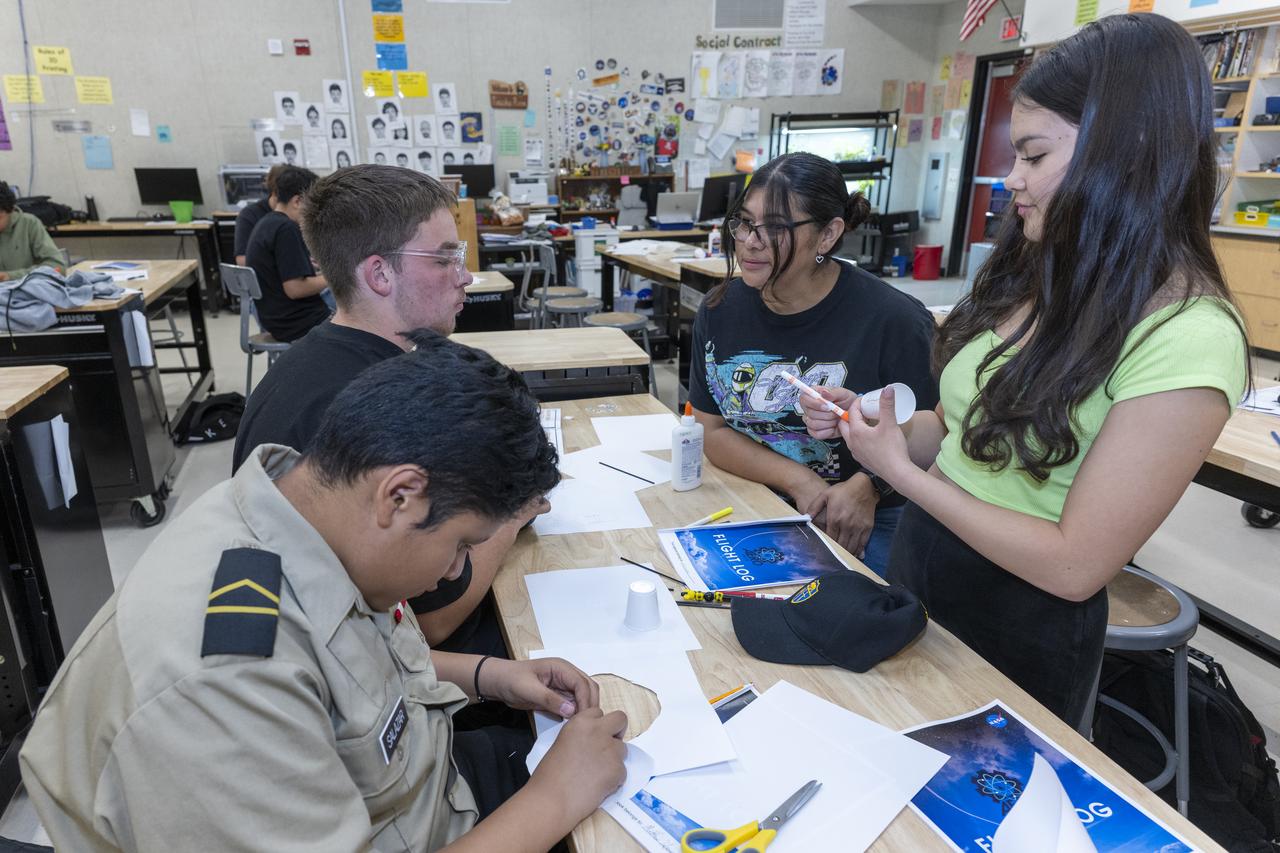
Students from Tropico Middle School in Rosamond, California, build their own paper planes as part of a project during NASA Aero Fair on April 9, 2025.
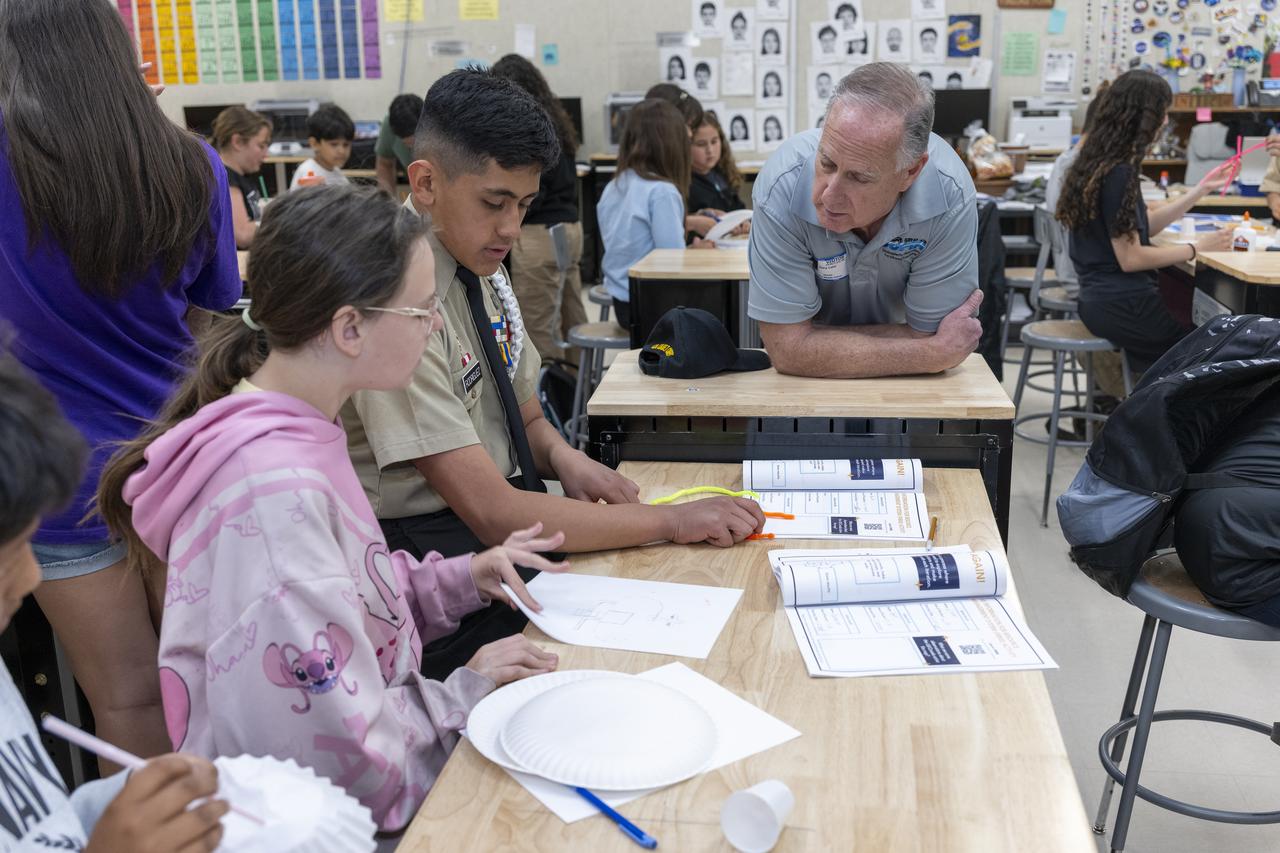
Gary Laier, center liaison for the Small Business Innovation Research/Small Business Technology Transfer (SBIR/STTR) program at NASA’s Armstrong Flight Research Center in Edwards, California, teaches students about aeronautics during Aero Fair at Tropico Middle School in Rosamond, California, on April 9, 2025.
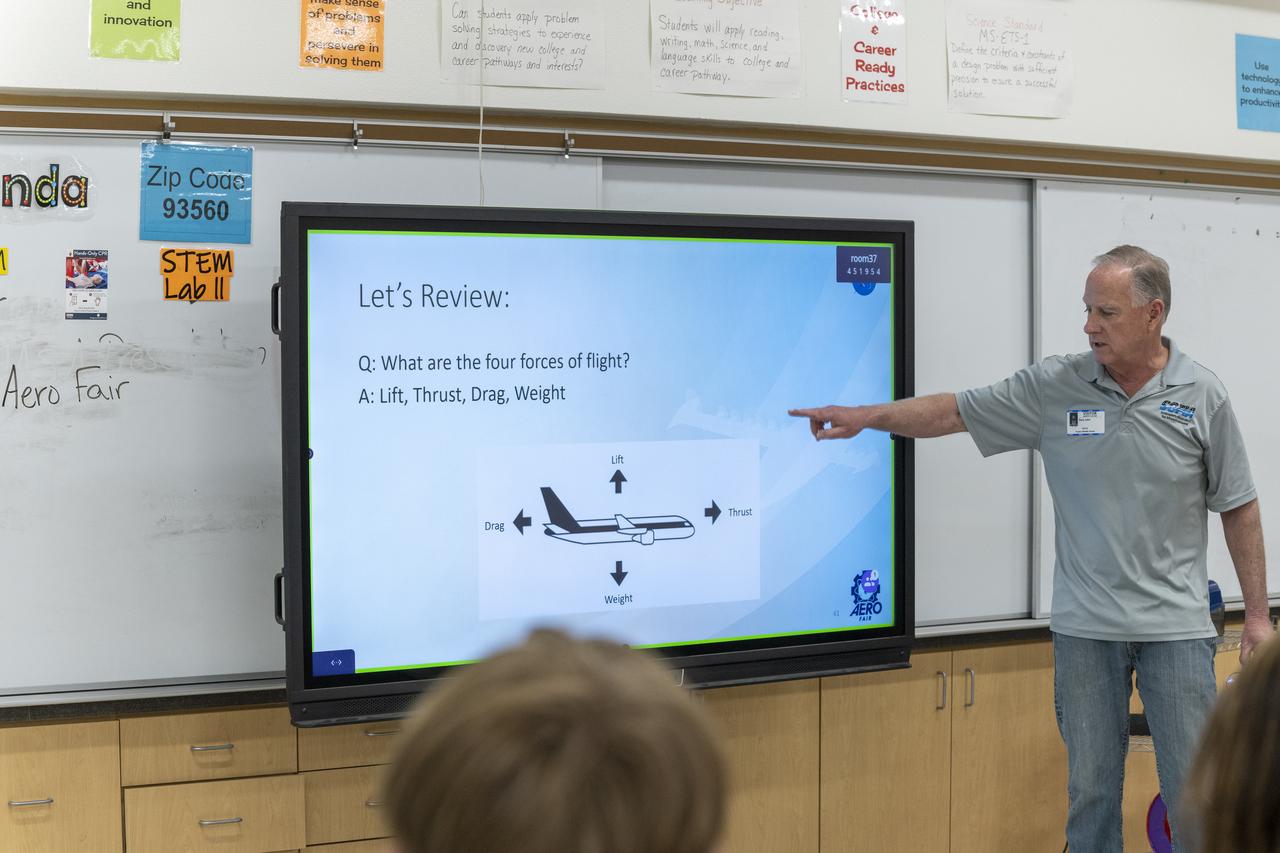
Gary Laier, center liaison for the Small Business Innovation Research/Small Business Technology Transfer (SBIR/STTR) program at NASA’s Armstrong Flight Research Center in Edwards, California, teaches students about aeronautics during Aero Fair at Tropico Middle School in Rosamond, California, on April 9, 2025.
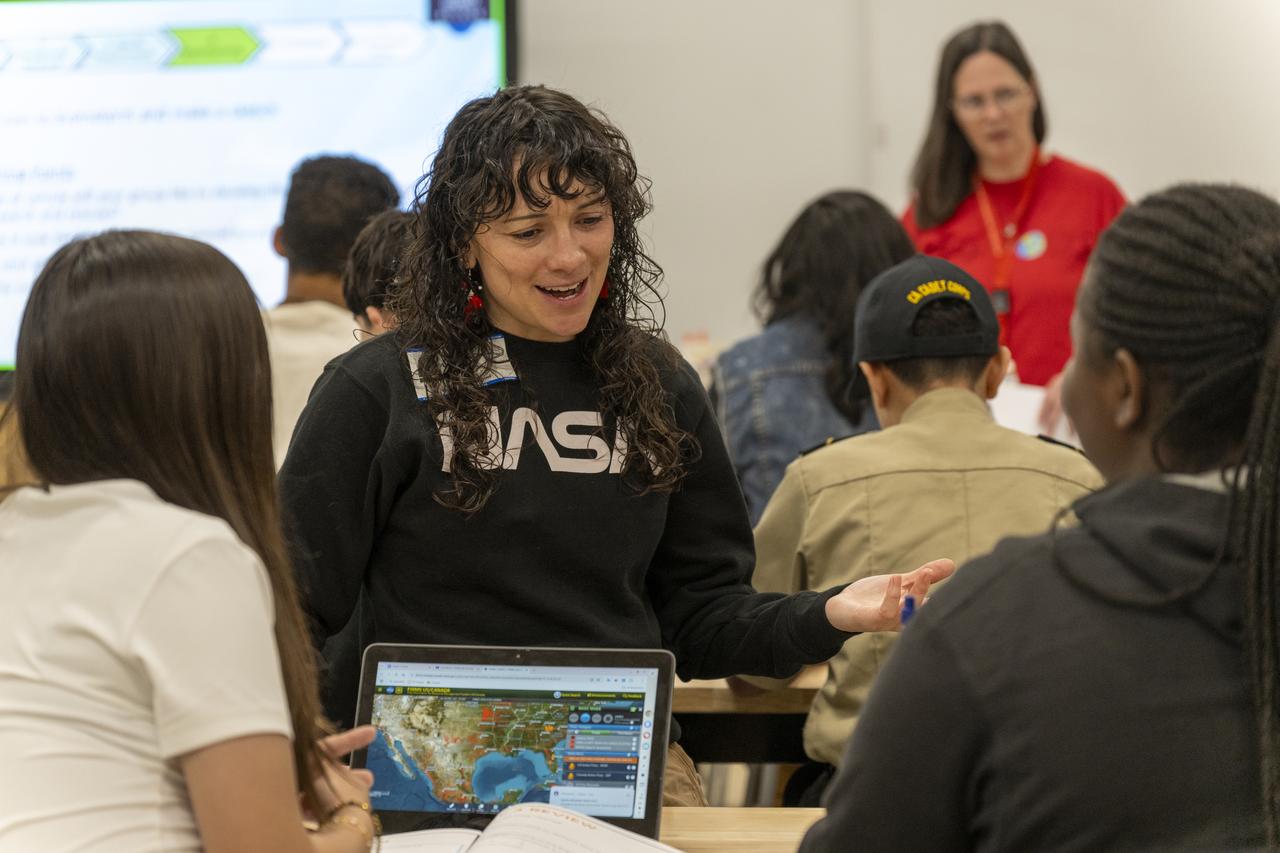
Giovanna Camacho, Pathways systems engineering intern at NASA’s Armstrong Flight Research Center in Edwards, California, teaches students about aeronautics during Aero Fair at Tropico Middle School in Rosamond, California, on April 9, 2025.
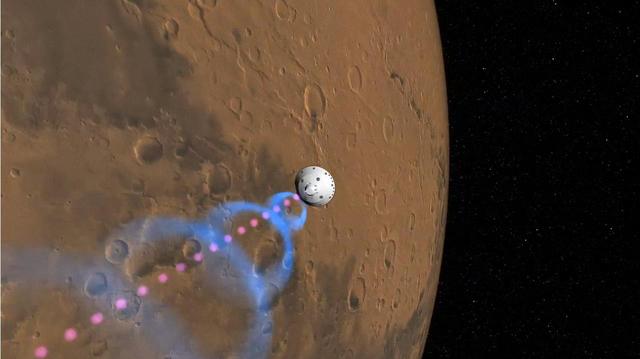
This frame from an artist animation shows how NASA Curiosity rover will communicate with Earth via two of NASA Mars orbiters, Mars Reconnaissance Orbiter and Odyssey.
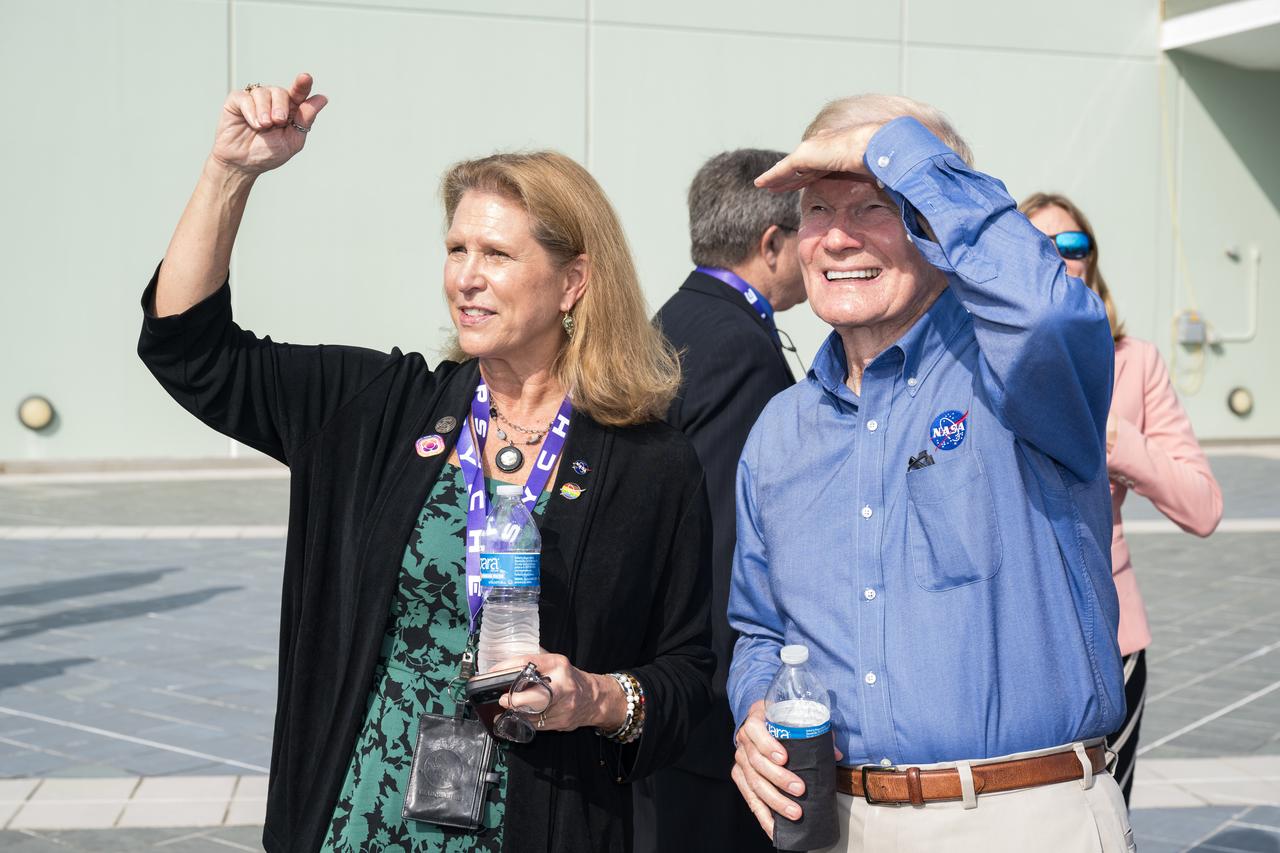
NASA Headquarters Planetary Science Division director Lori Glaze and NASA Administrator Bill Nelson watch for the return of the boosters after the launch of a SpaceX Falcon Heavy rocket with the Psyche spacecraft onboard from Launch Complex 39A, Friday, Oct. 13, 2023, at NASA’s Kennedy Space Center in Florida. NASA’s Psyche spacecraft will travel to a metal-rich asteroid by the same name orbiting the Sun between Mars and Jupiter to study it’s composition. The spacecraft also carries the agency's Deep Space Optical Communications technology demonstration, which will test laser communications beyond the Moon. Photo Credit: (NASA/Aubrey Gemignani)
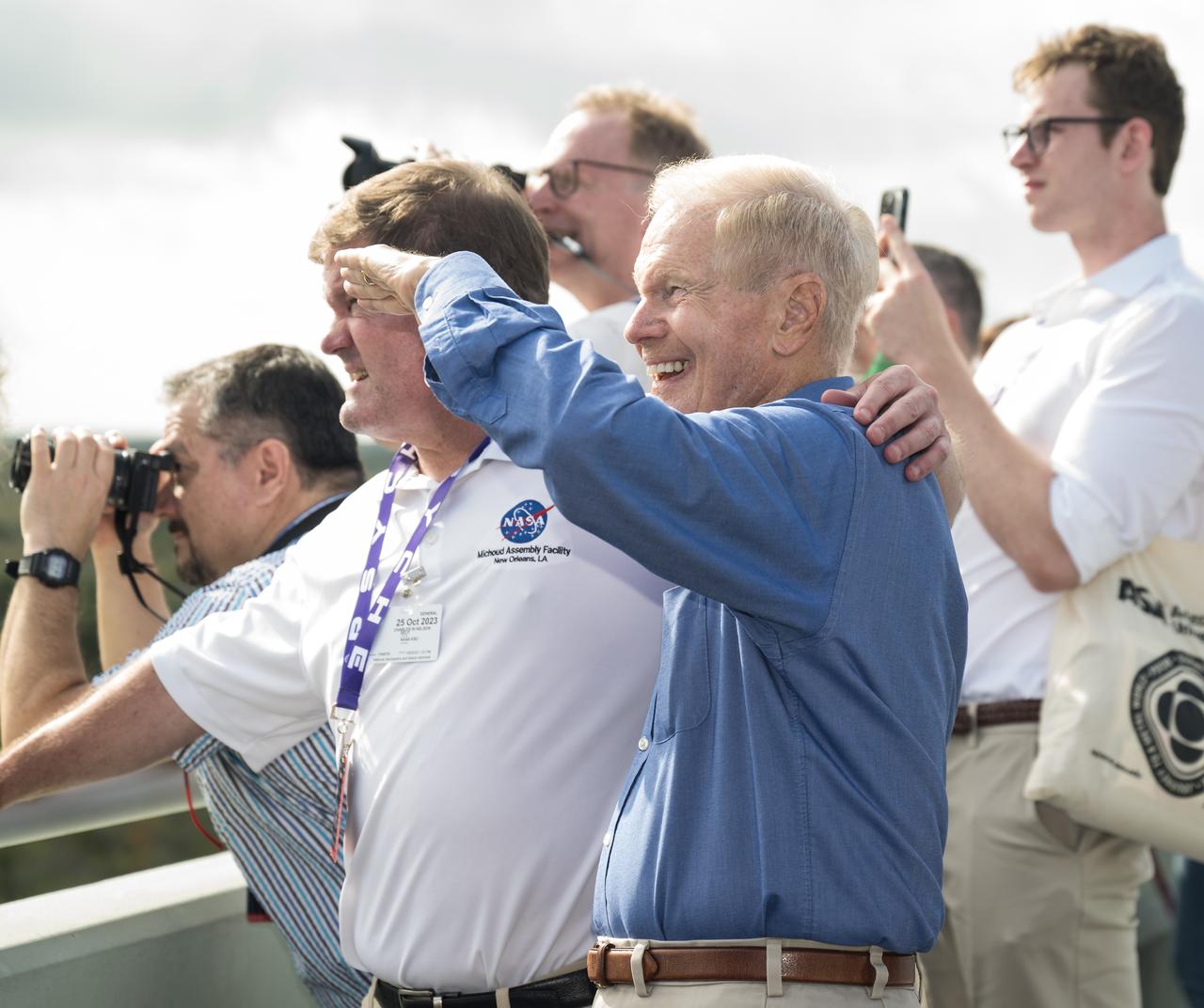
NASA Administrator Bill Nelson and his son Bill Nelson Jr. watch the launch of a SpaceX Falcon Heavy rocket with the Psyche spacecraft onboard from Launch Complex 39A, Friday, Oct. 13, 2023, at NASA’s Kennedy Space Center in Florida. NASA’s Psyche spacecraft will travel to a metal-rich asteroid by the same name orbiting the Sun between Mars and Jupiter to study it’s composition. The spacecraft also carries the agency's Deep Space Optical Communications technology demonstration, which will test laser communications beyond the Moon. Photo Credit: (NASA/Aubrey Gemignani)
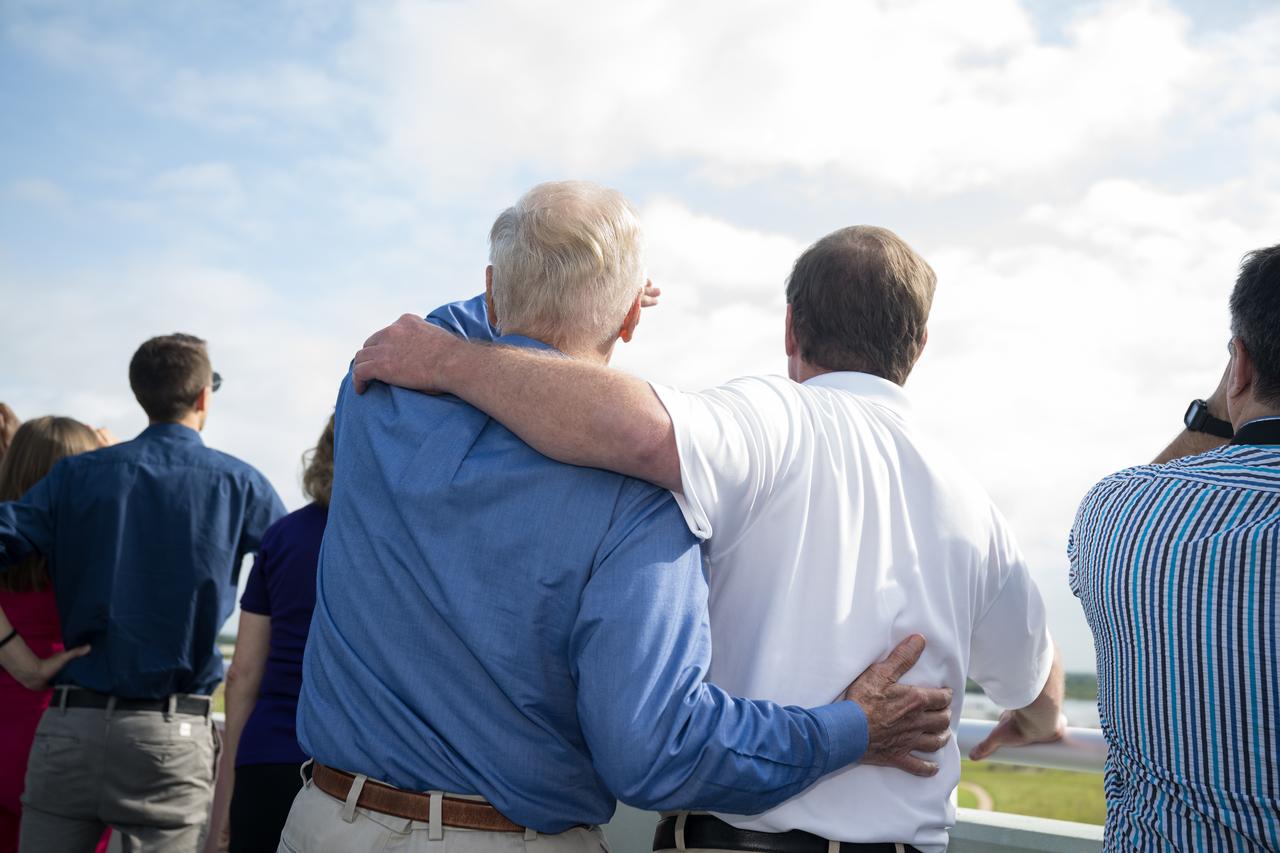
NASA Administrator Bill Nelson and his son Bill Nelson Jr. watch the launch of a SpaceX Falcon Heavy rocket with the Psyche spacecraft onboard from Launch Complex 39A, Friday, Oct. 13, 2023, at NASA’s Kennedy Space Center in Florida. NASA’s Psyche spacecraft will travel to a metal-rich asteroid by the same name orbiting the Sun between Mars and Jupiter to study it’s composition. The spacecraft also carries the agency's Deep Space Optical Communications technology demonstration, which will test laser communications beyond the Moon. Photo Credit: (NASA/Aubrey Gemignani)
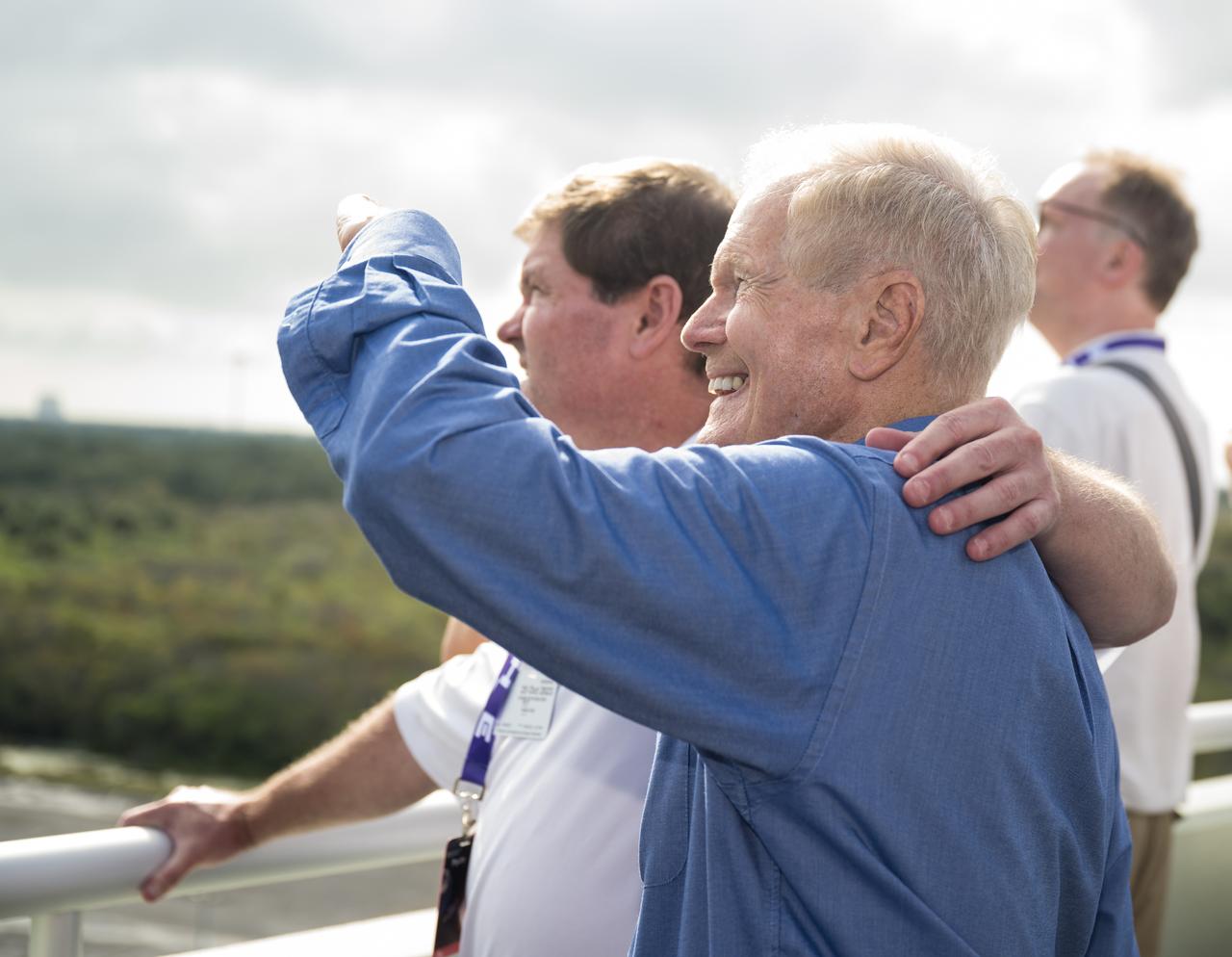
NASA Administrator Bill Nelson and his son Bill Nelson Jr. watch the launch of a SpaceX Falcon Heavy rocket with the Psyche spacecraft onboard from Launch Complex 39A, Friday, Oct. 13, 2023, at NASA’s Kennedy Space Center in Florida. NASA’s Psyche spacecraft will travel to a metal-rich asteroid by the same name orbiting the Sun between Mars and Jupiter to study it’s composition. The spacecraft also carries the agency's Deep Space Optical Communications technology demonstration, which will test laser communications beyond the Moon. Photo Credit: (NASA/Aubrey Gemignani)
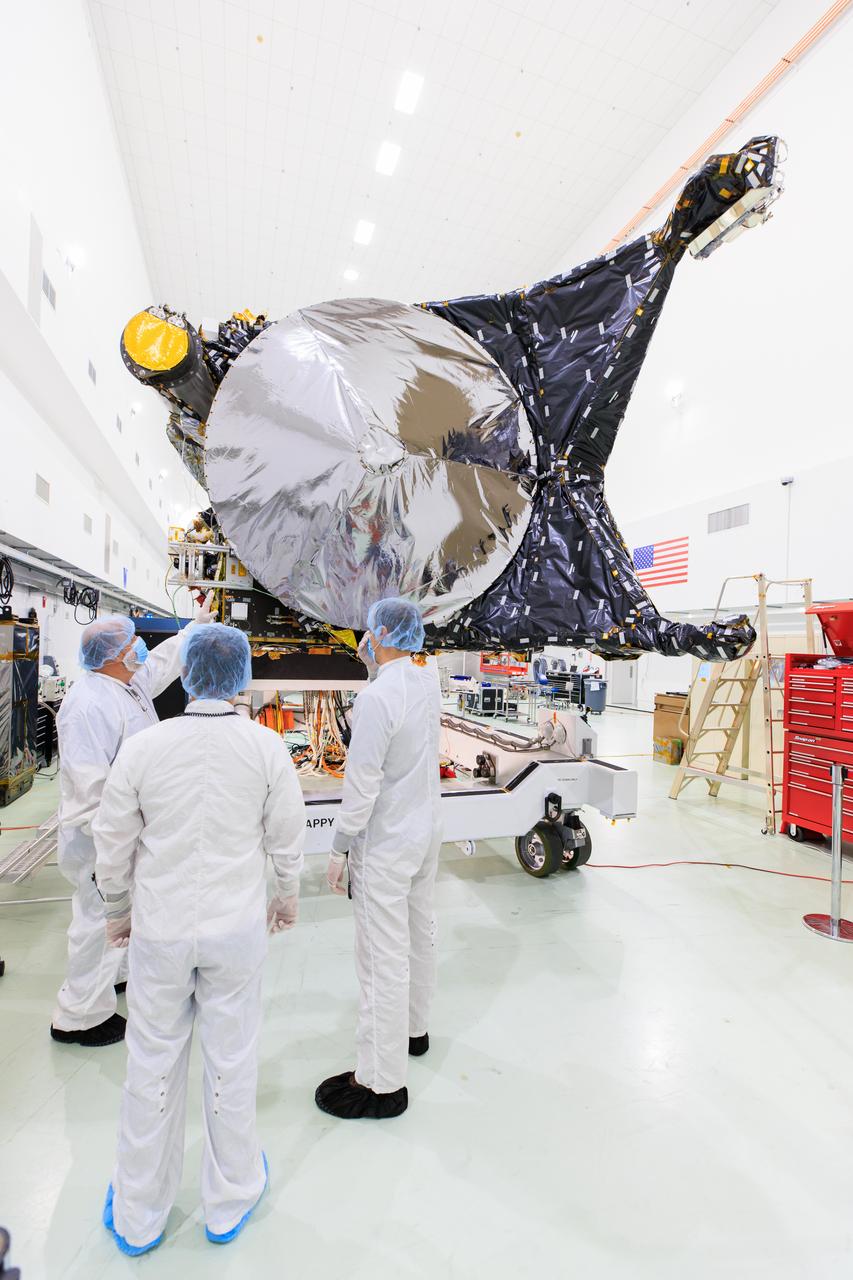
NASA's Psyche spacecraft is shown in a clean room on June 26, 2023, at Astrotech Space Operations Facility near the agency’s Kennedy Space Center in Florida. Engineers and technicians from NASA’s Jet Propulsion Laboratory in Southern California have begun final assembly, test, and launch operations on Psyche, with assembly of the spacecraft all but complete except for the installation of the solar arrays and the imagers. NASA’s Deep Space Optical Communications (DSOC) technology demonstration, testing high-data-rate laser communications, remains integrated into the spacecraft. A final suite of tests will be run on the vehicle, after which it will be fueled and then mated onto a SpaceX Falcon Heavy rocket just prior to launch, targeted for October 2023.
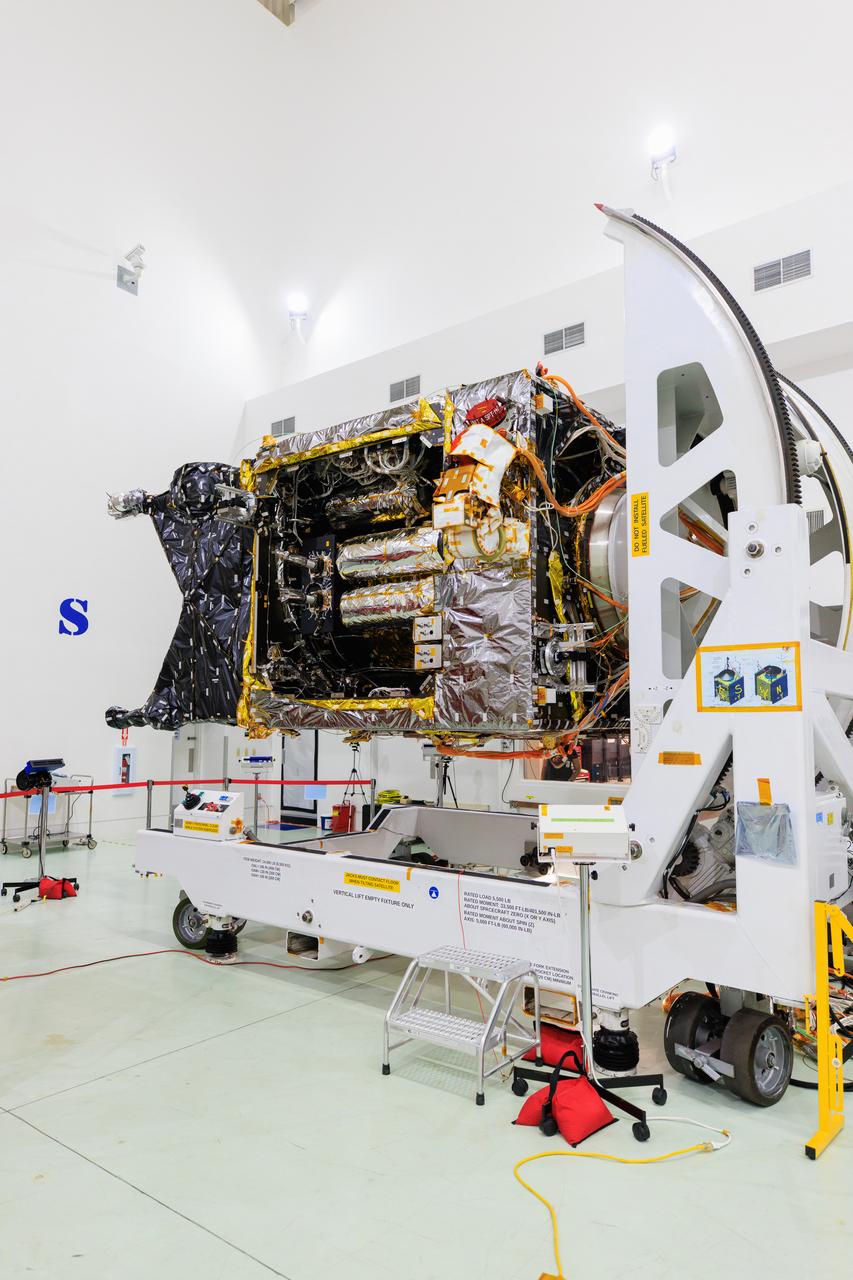
NASA's Psyche spacecraft is shown in a clean room on June 26, 2023, at Astrotech Space Operations Facility near the agency’s Kennedy Space Center in Florida. Engineers and technicians from NASA’s Jet Propulsion Laboratory in Southern California have begun final assembly, test, and launch operations on Psyche, with assembly of the spacecraft all but complete except for the installation of the solar arrays and the imagers. NASA’s Deep Space Optical Communications (DSOC) technology demonstration, testing high-data-rate laser communications, remains integrated into the spacecraft. A final suite of tests will be run on the vehicle, after which it will be fueled and then mated onto a SpaceX Falcon Heavy rocket just prior to launch, targeted for October 2023.

NASA's Psyche spacecraft is shown in a clean room on June 26, 2023, at Astrotech Space Operations Facility near the agency’s Kennedy Space Center in Florida. Engineers and technicians from NASA’s Jet Propulsion Laboratory in Southern California have begun final assembly, test, and launch operations on Psyche, with assembly of the spacecraft all but complete except for the installation of the solar arrays and the imagers. NASA’s Deep Space Optical Communications (DSOC) technology demonstration, testing high-data-rate laser communications, remains integrated into the spacecraft. A final suite of tests will be run on the vehicle, after which it will be fueled and then mated onto a SpaceX Falcon Heavy rocket just prior to launch, targeted for October 2023.
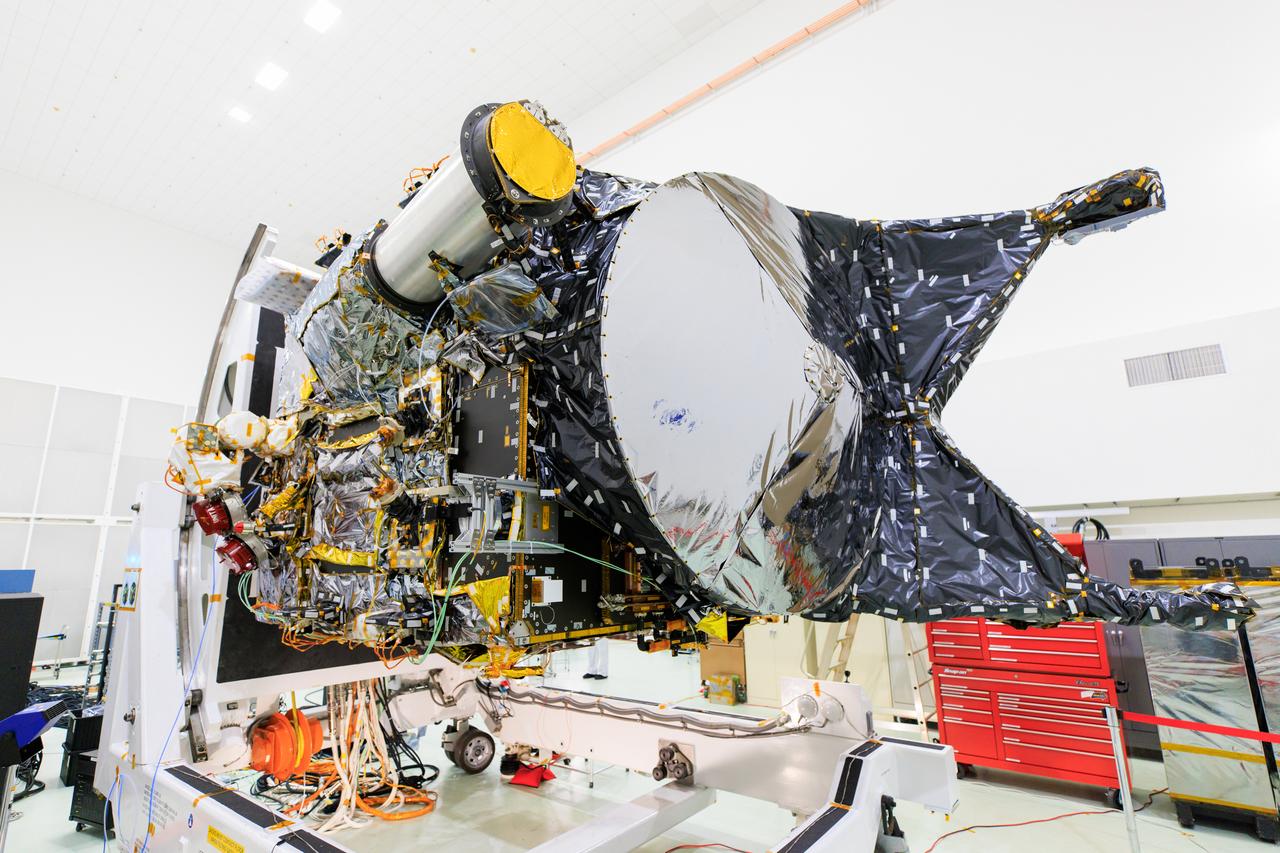
NASA's Psyche spacecraft is shown in a clean room on June 26, 2023, at Astrotech Space Operations Facility near the agency’s Kennedy Space Center in Florida. Engineers and technicians from NASA’s Jet Propulsion Laboratory in Southern California have begun final assembly, test, and launch operations on Psyche, with assembly of the spacecraft all but complete except for the installation of the solar arrays and the imagers. NASA’s Deep Space Optical Communications (DSOC) technology demonstration, testing high-data-rate laser communications, remains integrated into the spacecraft. A final suite of tests will be run on the vehicle, after which it will be fueled and then mated onto a SpaceX Falcon Heavy rocket just prior to launch, targeted for October 2023.
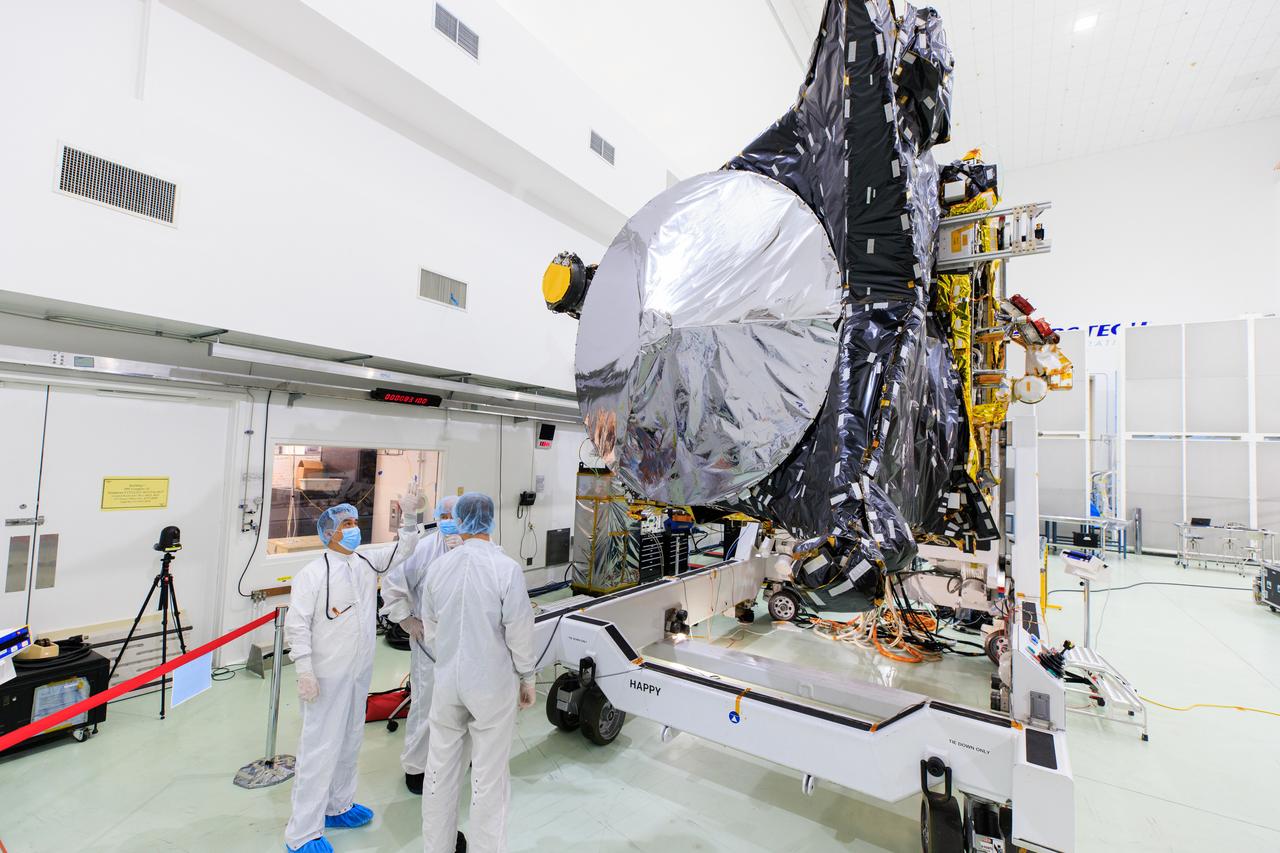
NASA's Psyche spacecraft is shown in a clean room on June 26, 2023, at Astrotech Space Operations Facility near the agency’s Kennedy Space Center in Florida. Engineers and technicians from NASA’s Jet Propulsion Laboratory in Southern California have begun final assembly, test, and launch operations on Psyche, with assembly of the spacecraft all but complete except for the installation of the solar arrays and the imagers. NASA’s Deep Space Optical Communications (DSOC) technology demonstration, testing high-data-rate laser communications, remains integrated into the spacecraft. A final suite of tests will be run on the vehicle, after which it will be fueled and then mated onto a SpaceX Falcon Heavy rocket just prior to launch, targeted for October 2023.
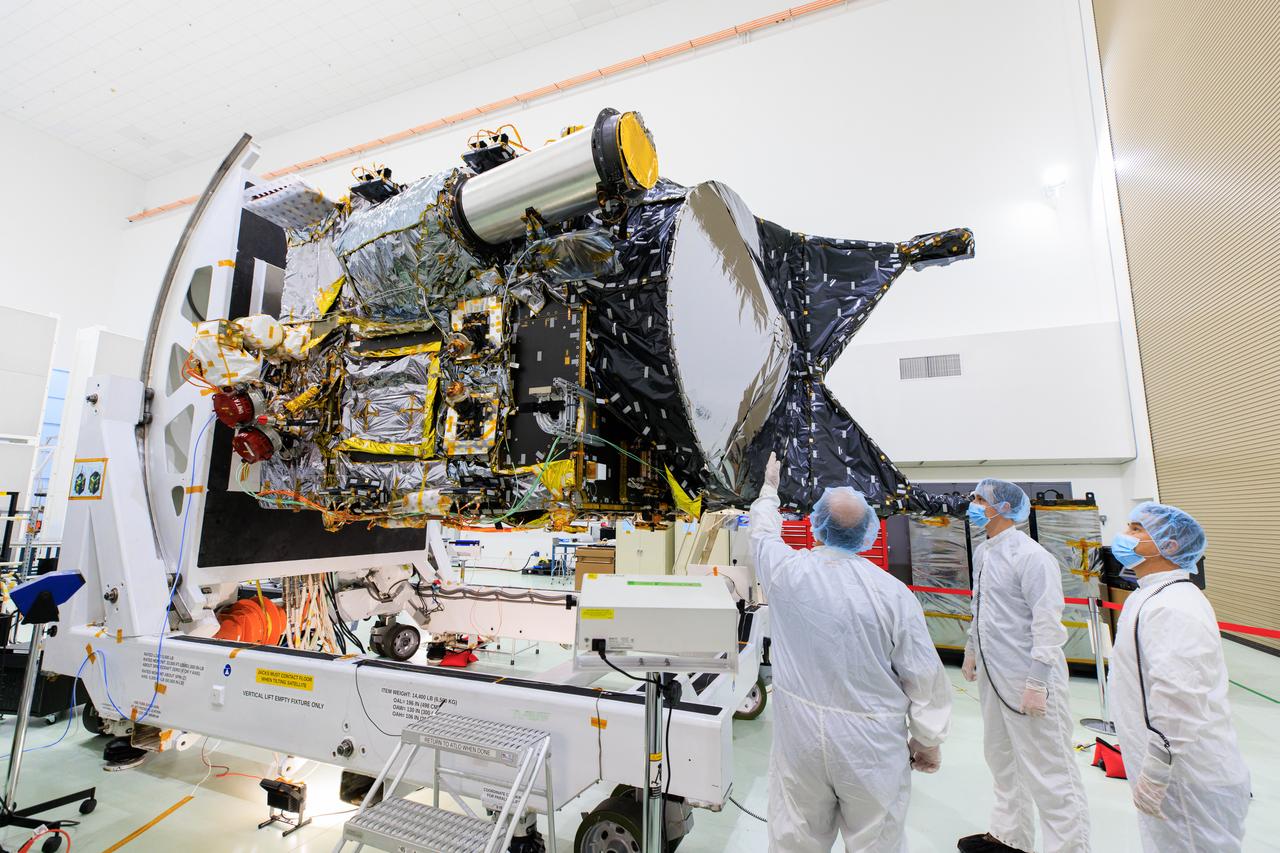
NASA's Psyche spacecraft is shown in a clean room on June 26, 2023, at Astrotech Space Operations Facility near the agency’s Kennedy Space Center in Florida. Engineers and technicians from NASA’s Jet Propulsion Laboratory in Southern California have begun final assembly, test, and launch operations on Psyche, with assembly of the spacecraft all but complete except for the installation of the solar arrays and the imagers. NASA’s Deep Space Optical Communications (DSOC) technology demonstration, testing high-data-rate laser communications, remains integrated into the spacecraft. A final suite of tests will be run on the vehicle, after which it will be fueled and then mated onto a SpaceX Falcon Heavy rocket just prior to launch, targeted for October 2023.
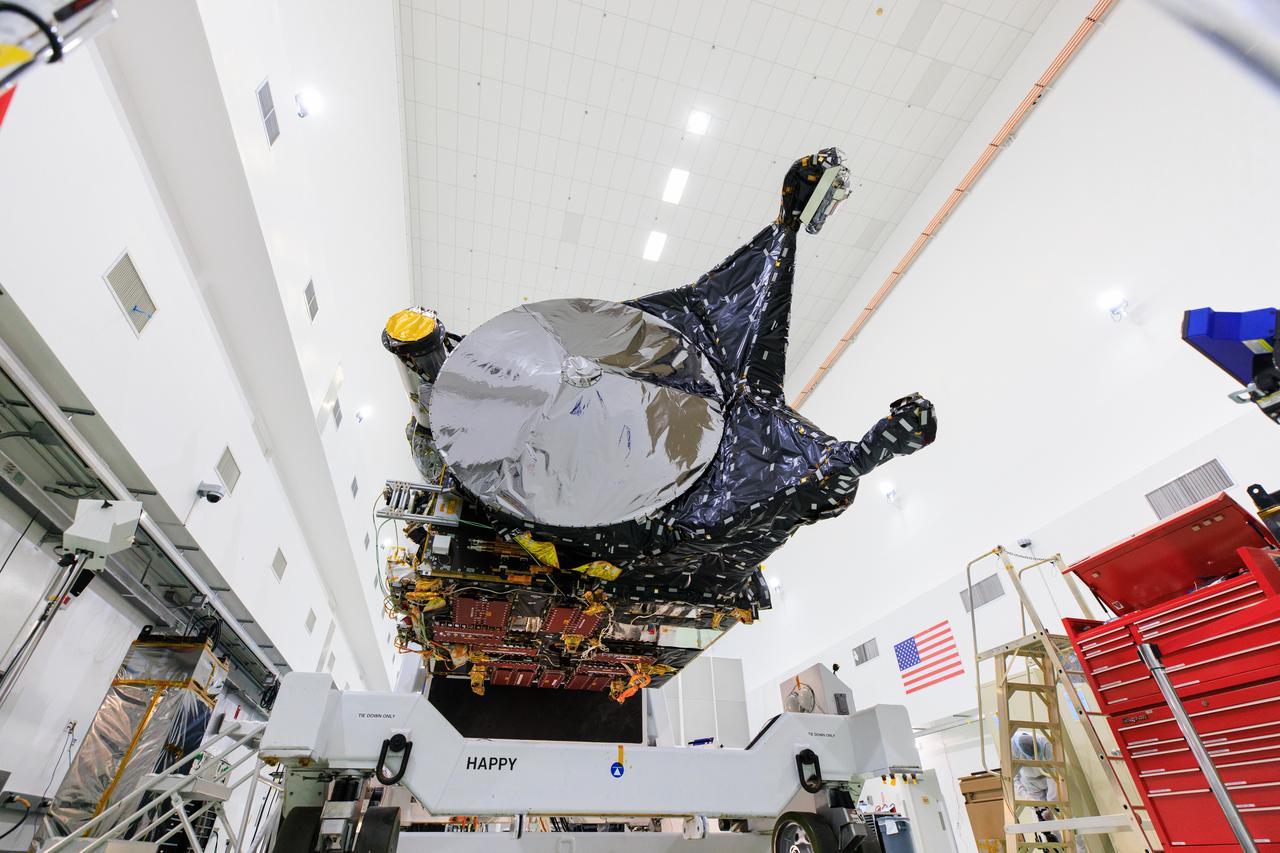
NASA's Psyche spacecraft is shown in a clean room on June 26, 2023, at Astrotech Space Operations Facility near the agency’s Kennedy Space Center in Florida. Engineers and technicians from NASA’s Jet Propulsion Laboratory in Southern California have begun final assembly, test, and launch operations on Psyche, with assembly of the spacecraft all but complete except for the installation of the solar arrays and the imagers. NASA’s Deep Space Optical Communications (DSOC) technology demonstration, testing high-data-rate laser communications, remains integrated into the spacecraft. A final suite of tests will be run on the vehicle, after which it will be fueled and then mated onto a SpaceX Falcon Heavy rocket just prior to launch, targeted for October 2023.
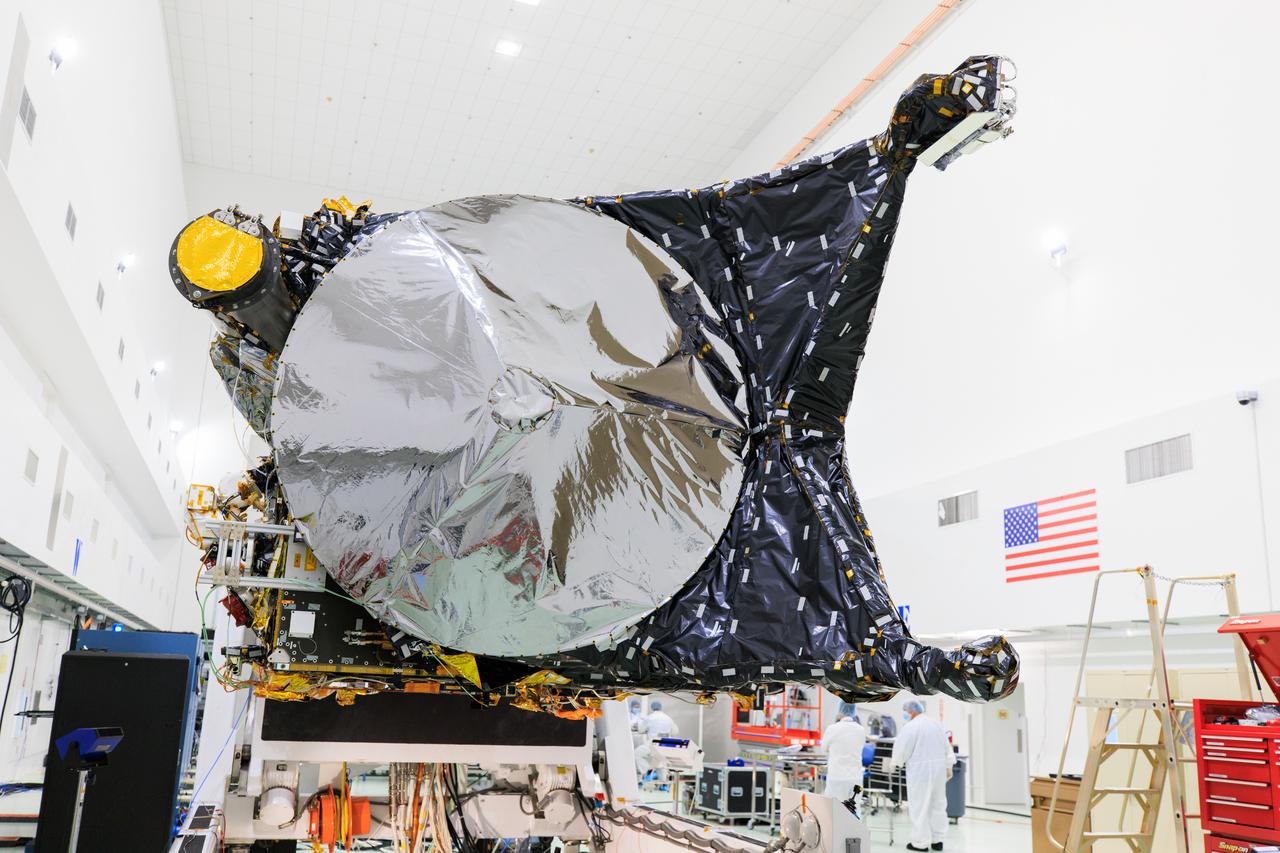
NASA's Psyche spacecraft is shown in a clean room on June 26, 2023, at Astrotech Space Operations Facility near the agency’s Kennedy Space Center in Florida. Engineers and technicians from NASA’s Jet Propulsion Laboratory in Southern California have begun final assembly, test, and launch operations on Psyche, with assembly of the spacecraft all but complete except for the installation of the solar arrays and the imagers. NASA’s Deep Space Optical Communications (DSOC) technology demonstration, testing high-data-rate laser communications, remains integrated into the spacecraft. A final suite of tests will be run on the vehicle, after which it will be fueled and then mated onto a SpaceX Falcon Heavy rocket just prior to launch, targeted for October 2023.
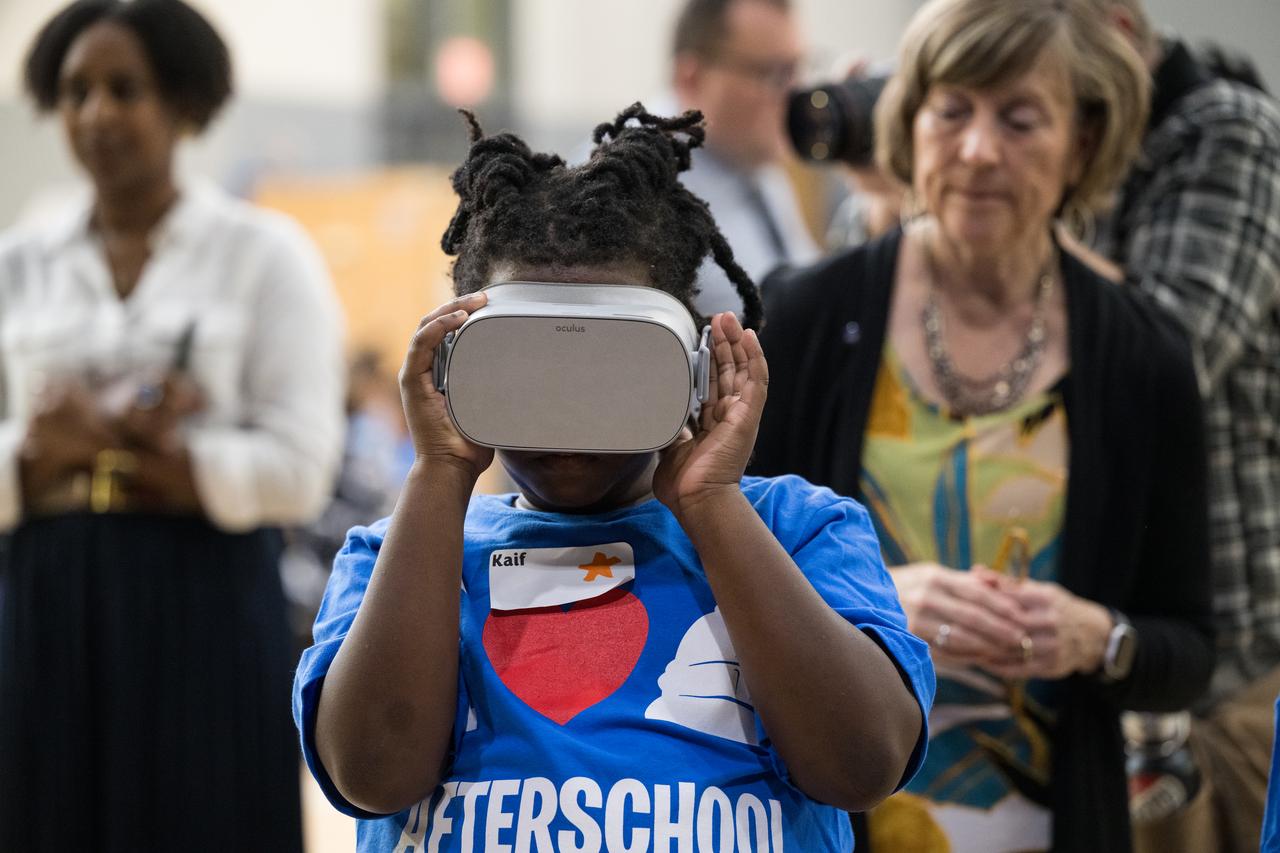
Students at Wheatley Education Campus participate in a virtual reality tour of NASA’s Neutral Buoyancy Lab during a kickoff event for the 21st Century Community Learning Centers NASA and Department of Education partnership, Monday, Sept. 23, 2024 at Wheatley Education Campus in Washington. Photo Credit: (NASA/Aubrey Gemignani)
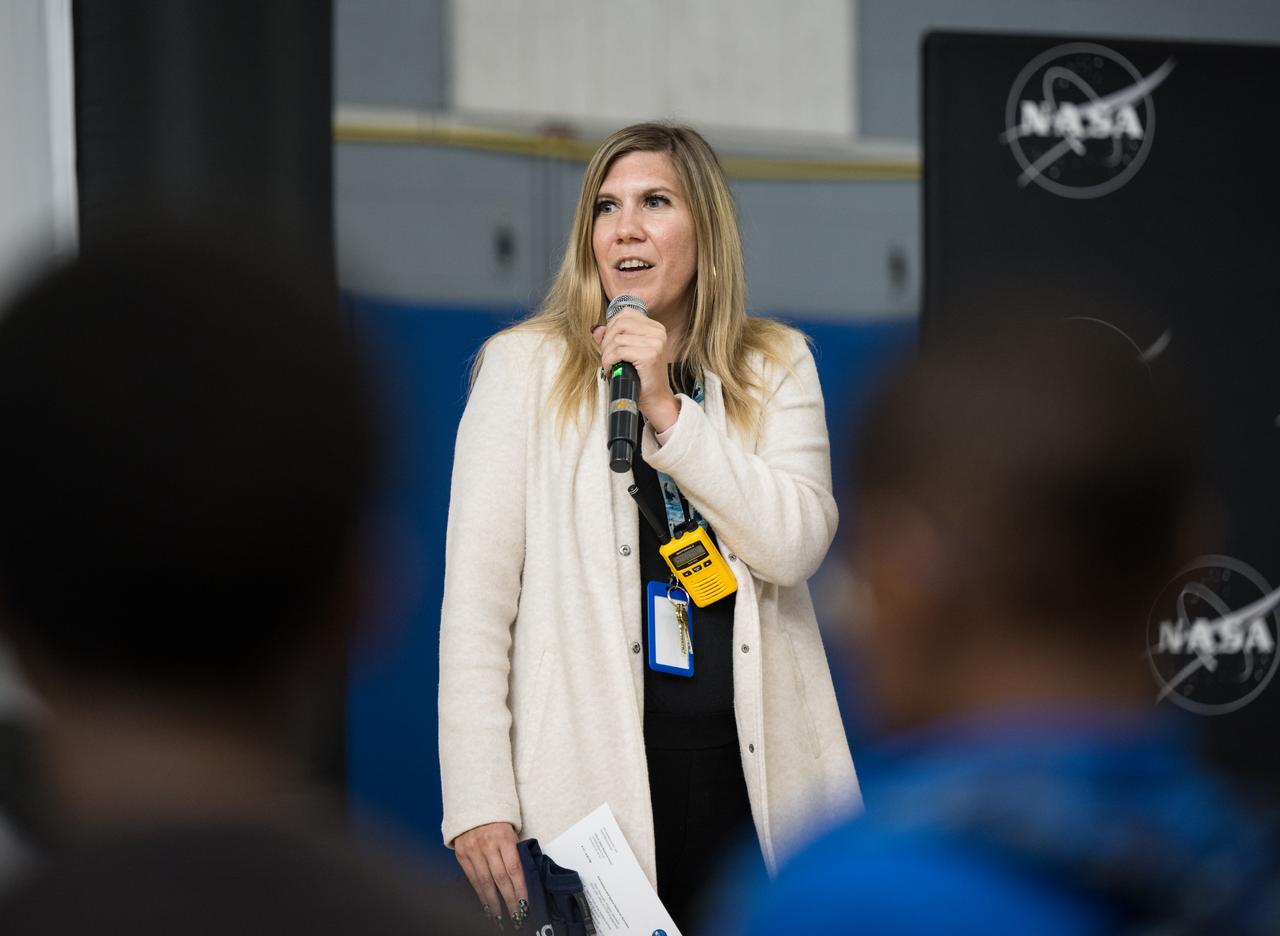
Principle of Wheatley Education Campus, Amanda Schmitt, provides remarks at a kickoff event for the 21st Century Community Learning Centers NASA and Department of Education partnership, Monday, Sept. 23, 2024 at Wheatley Education Campus in Washington. Students engaged in NASA hands-on activities and an engineering design challenge. Photo Credit: (NASA/Aubrey Gemignani)
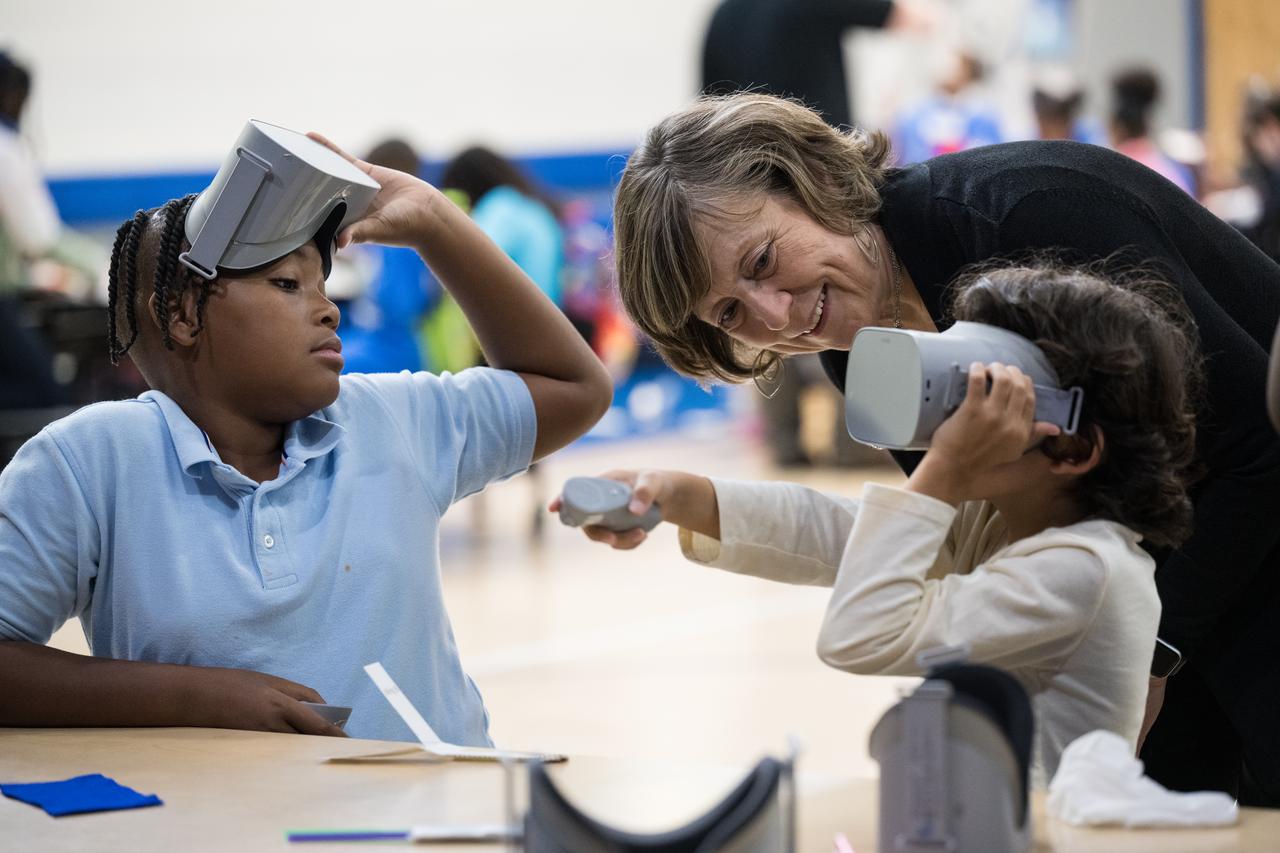
Students at Wheatley Education Campus participate in a virtual reality tour of NASA’s Neutral Buoyancy Lab during a kickoff event for the 21st Century Community Learning Centers NASA and Department of Education partnership, Monday, Sept. 23, 2024 at Wheatley Education Campus in Washington. Photo Credit: (NASA/Aubrey Gemignani)
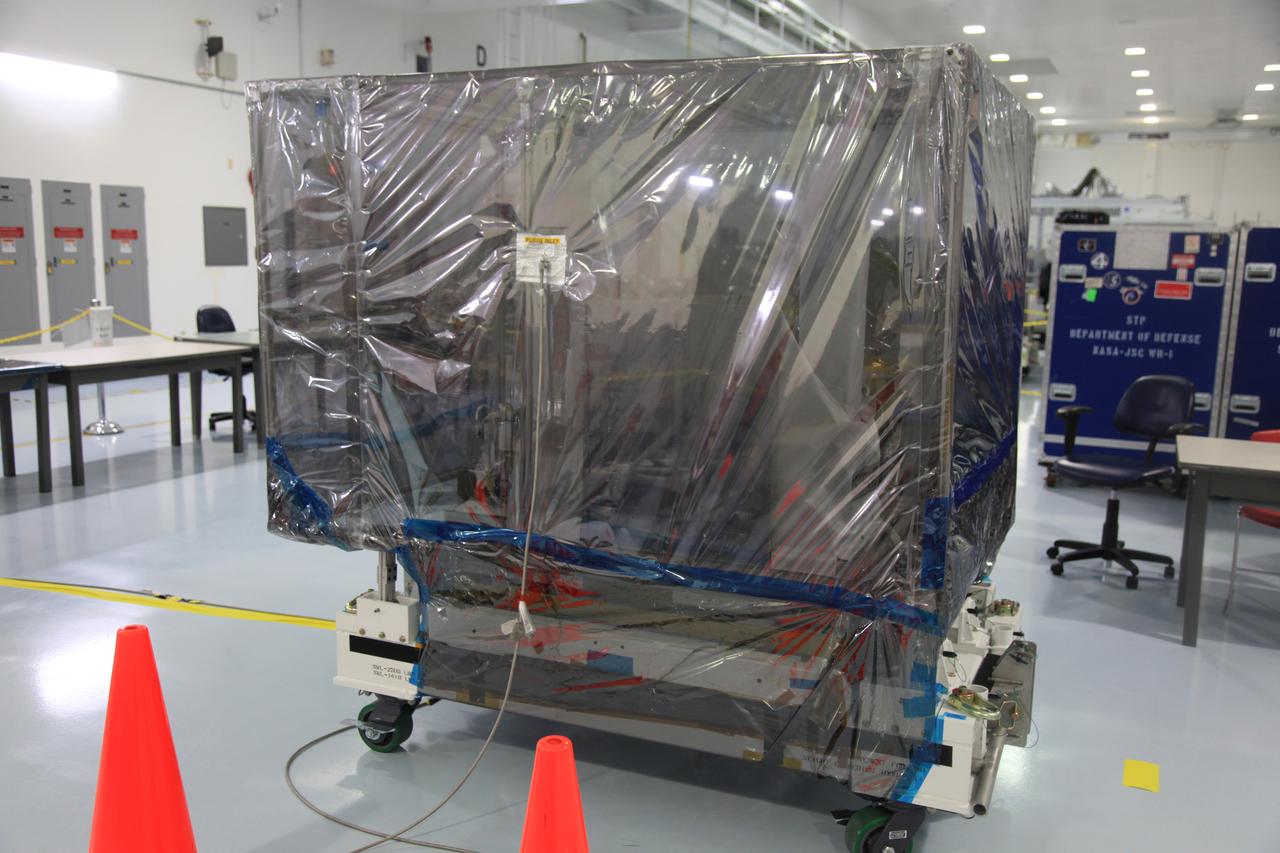
The Space Test Program-Houston 6 (STP-H6) payload is inside the Space Station Processing Facility high bay at NASA’s Kennedy Space Center in Florida on March 19, 2019. It is being prepared for its move to the SpaceX facility where it will be will be stowed in the trunk of the Dragon spacecraft for delivery to the International Space Station on SpaceX’s 17th Commercial Resupply Services mission (CRS-17) for NASA. STP-H6 is an x-ray communication investigation that will be used to perform a space-based demonstration of a new technology for generating beams of modulated x-rays. This technology may be useful for providing efficient communication to deep space probes, or communicating with hypersonic vehicles where plasma sheaths prevent traditional radio communications. CRS-17 is scheduled to launch from Space Launch Complex 40 on Cape Canaveral Air Force Station in late April.
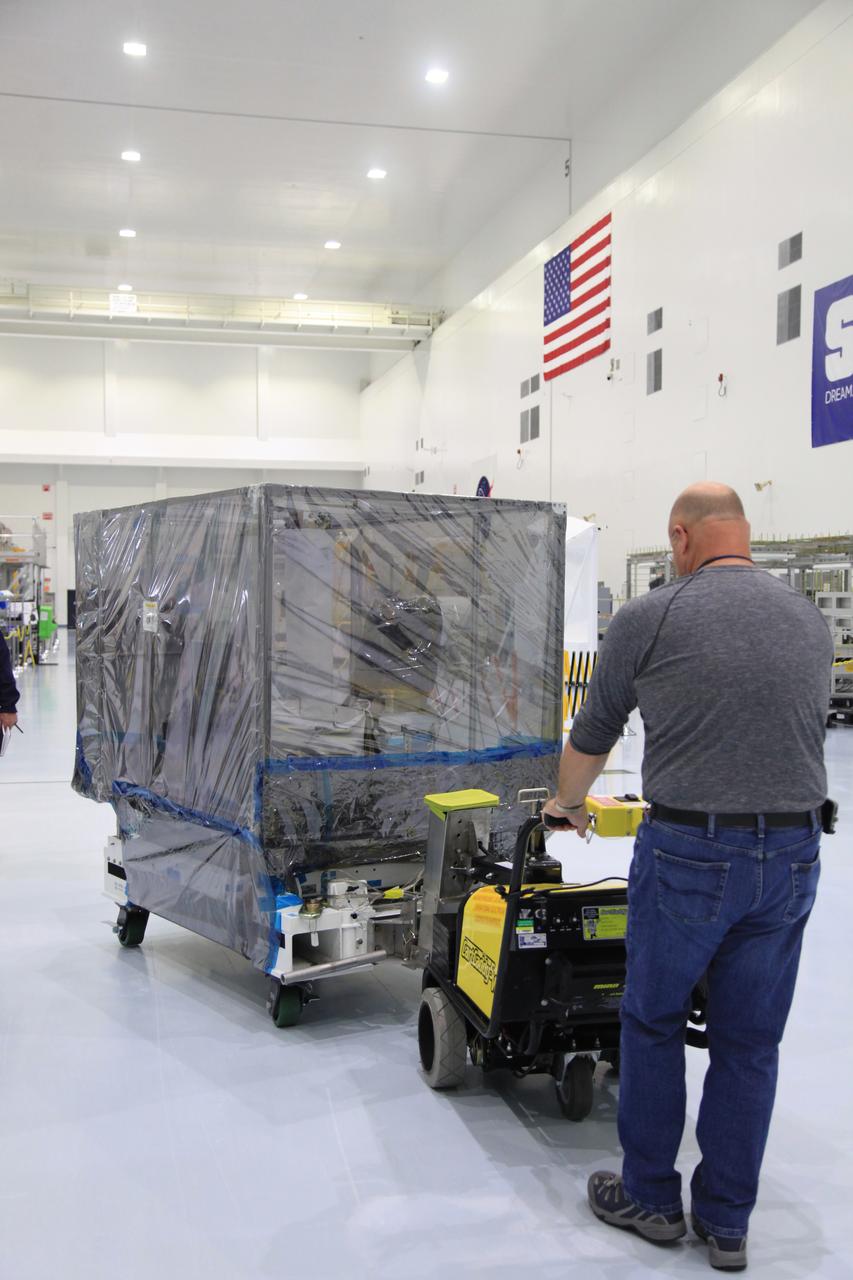
The Space Test Program-Houston 6 (STP-H6) payload is being moved out of the Space Station Processing Facility high bay at NASA’s Kennedy Space Center in Florida on March 19, 2019. The payload will be moved to the SpaceX facility where it will be stowed in the trunk of the Dragon spacecraft for delivery to the International Space Station on SpaceX’s 17th Commercial Resupply Services mission (CRS-17) for NASA. STP-H6 is an x-ray communication investigation that will be used to perform a space-based demonstration of a new technology for generating beams of modulated x-rays. This technology may be useful for providing efficient communication to deep space probes, or communicating with hypersonic vehicles where plasma sheaths prevent traditional radio communications. CRS-17 is scheduled to launch from Space Launch Complex 40 on Cape Canaveral Air Force Station in late April.
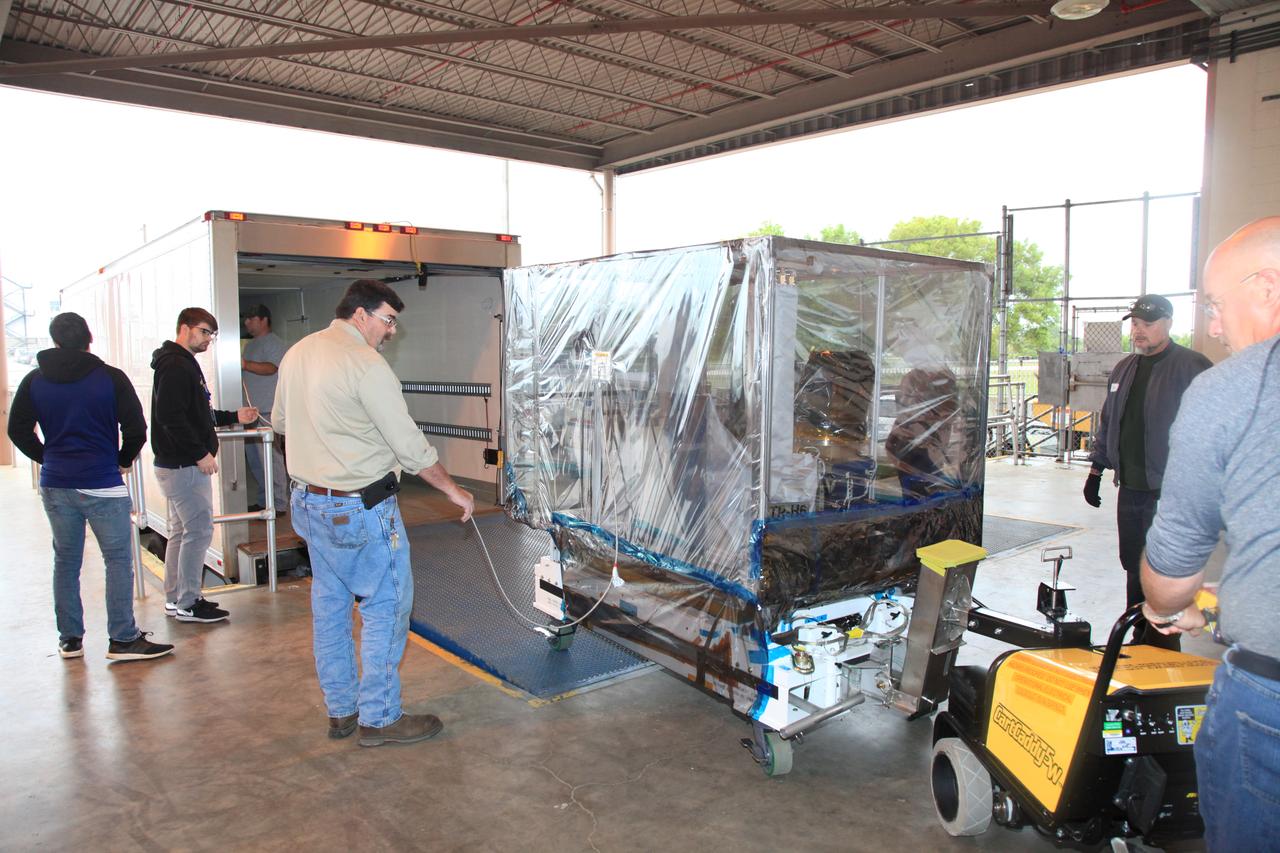
The Space Test Program-Houston 6 (STP-H6) payload is being loaded into a transport truck at the Space Station Processing Facility at NASA’s Kennedy Space Center in Florida on March 19, 2019. The payload will be moved to the SpaceX facility where it will be stowed in the trunk of the Dragon spacecraft for delivery to the International Space Station on SpaceX’s 17th Commercial Resupply Services mission (CRS-17) for NASA. STP-H6 is an x-ray communication investigation that will be used to perform a space-based demonstration of a new technology for generating beams of modulated x-rays. This technology may be useful for providing efficient communication to deep space probes, or communicating with hypersonic vehicles where plasma sheaths prevent traditional radio communications. CRS-17 is scheduled to launch from Space Launch Complex 40 on Cape Canaveral Air Force Station in late April.
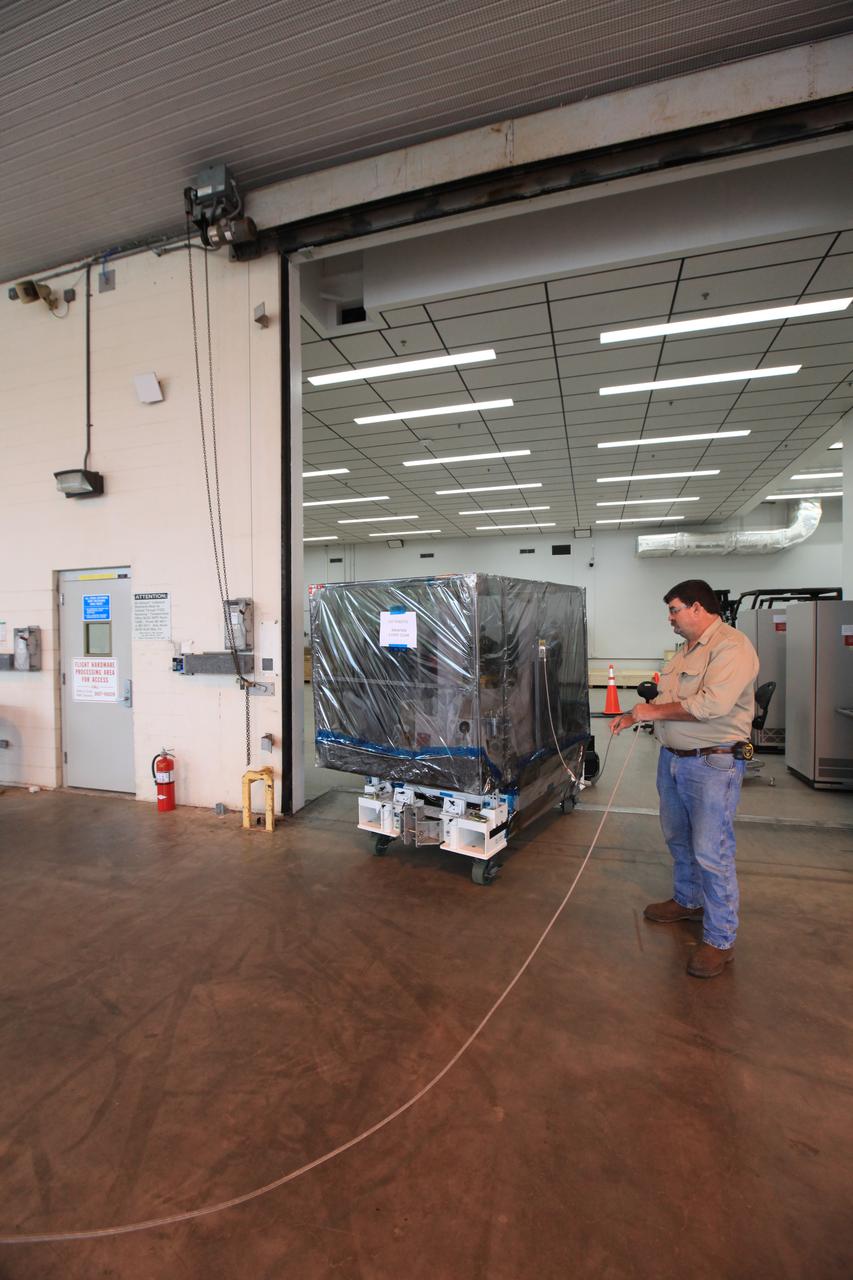
The Space Test Program-Houston 6 (STP-H6) payload is moved out of the Space Station Processing Facility at NASA’s Kennedy Space Center in Florida on March 19, 2019. The payload will be moved to the SpaceX facility where it will be stowed in the trunk of the Dragon spacecraft for delivery to the International Space Station on SpaceX’s 17th Commercial Resupply Services mission (CRS-17) for NASA. STP-H6 is an x-ray communication investigation that will be used to perform a space-based demonstration of a new technology for generating beams of modulated x-rays. This technology may be useful for providing efficient communication to deep space probes, or communicating with hypersonic vehicles where plasma sheaths prevent traditional radio communications. CRS-17 is scheduled to launch from Space Launch Complex 40 on Cape Canaveral Air Force Station in late April.
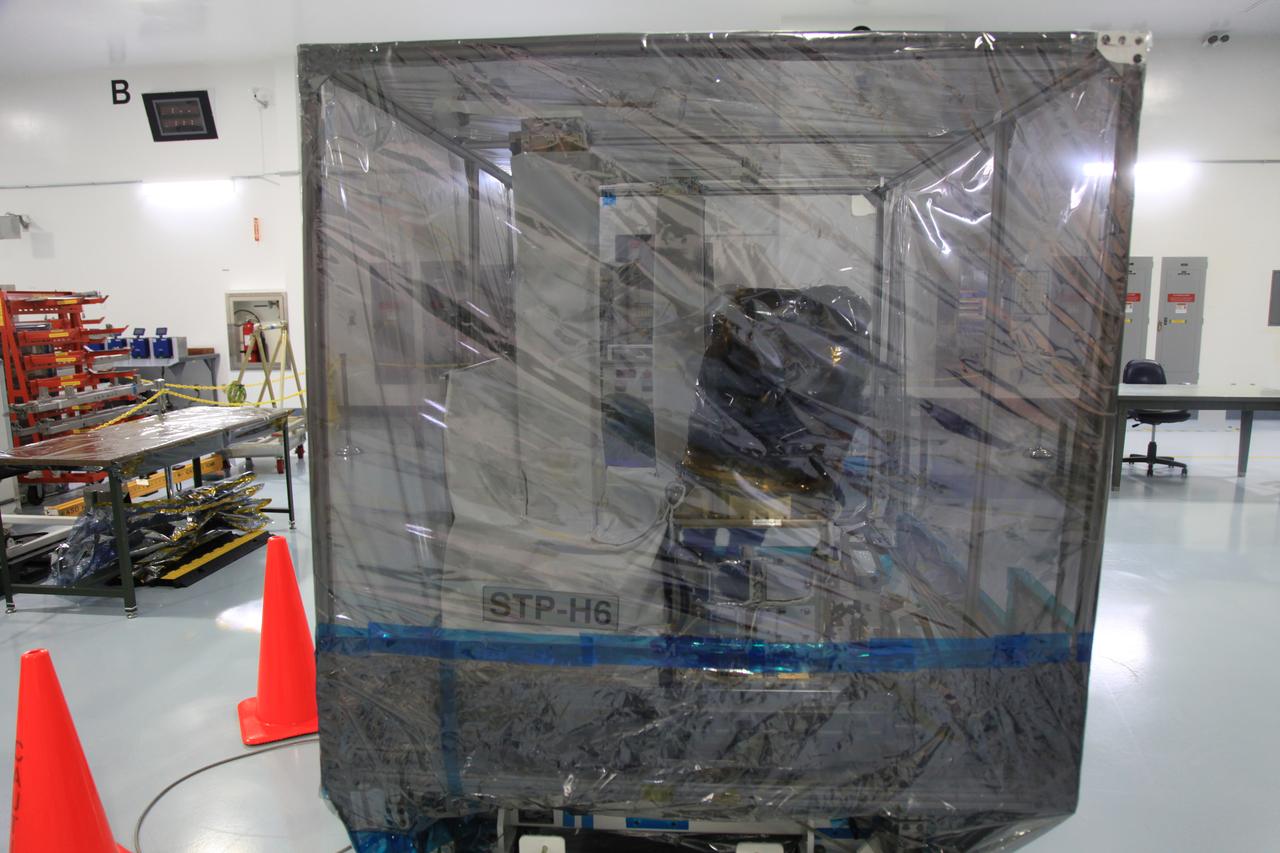
The Space Test Program-Houston 6 (STP-H6) payload is inside the Space Station Processing Facility high bay at NASA’s Kennedy Space Center in Florida on March 19, 2019. It is being prepared for its move to the SpaceX facility where it will be will be stowed in the trunk of the Dragon spacecraft for delivery to the International Space Station on SpaceX’s 17th Commercial Resupply Services mission (CRS-17) for NASA. STP-H6 is an x-ray communication investigation that will be used to perform a space-based demonstration of a new technology for generating beams of modulated x-rays. This technology may be useful for providing efficient communication to deep space probes, or communicating with hypersonic vehicles where plasma sheaths prevent traditional radio communications. CRS-17 is scheduled to launch from Space Launch Complex 40 on Cape Canaveral Air Force Station in late April.
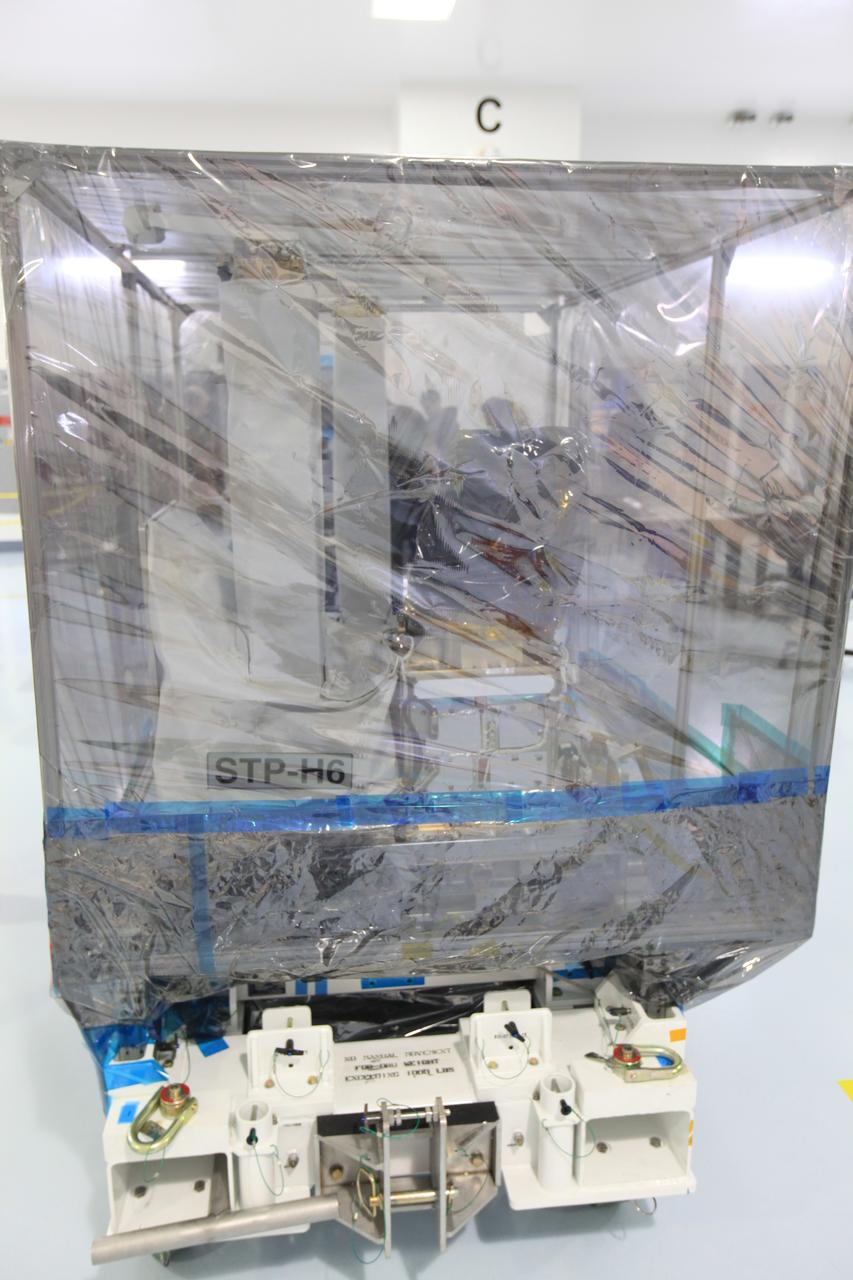
The Space Test Program-Houston 6 (STP-H6) payload is inside the Space Station Processing Facility high bay at NASA’s Kennedy Space Center in Florida on March 19, 2019. It is being prepared for its move to the SpaceX facility where it will be will be stowed in the trunk of the Dragon spacecraft for delivery to the International Space Station on SpaceX’s 17th Commercial Resupply Services mission (CRS-17) for NASA. STP-H6 is an x-ray communication investigation that will be used to perform a space-based demonstration of a new technology for generating beams of modulated x-rays. This technology may be useful for providing efficient communication to deep space probes, or communicating with hypersonic vehicles where plasma sheaths prevent traditional radio communications. CRS-17 is scheduled to launch from Space Launch Complex 40 on Cape Canaveral Air Force Station in late April.
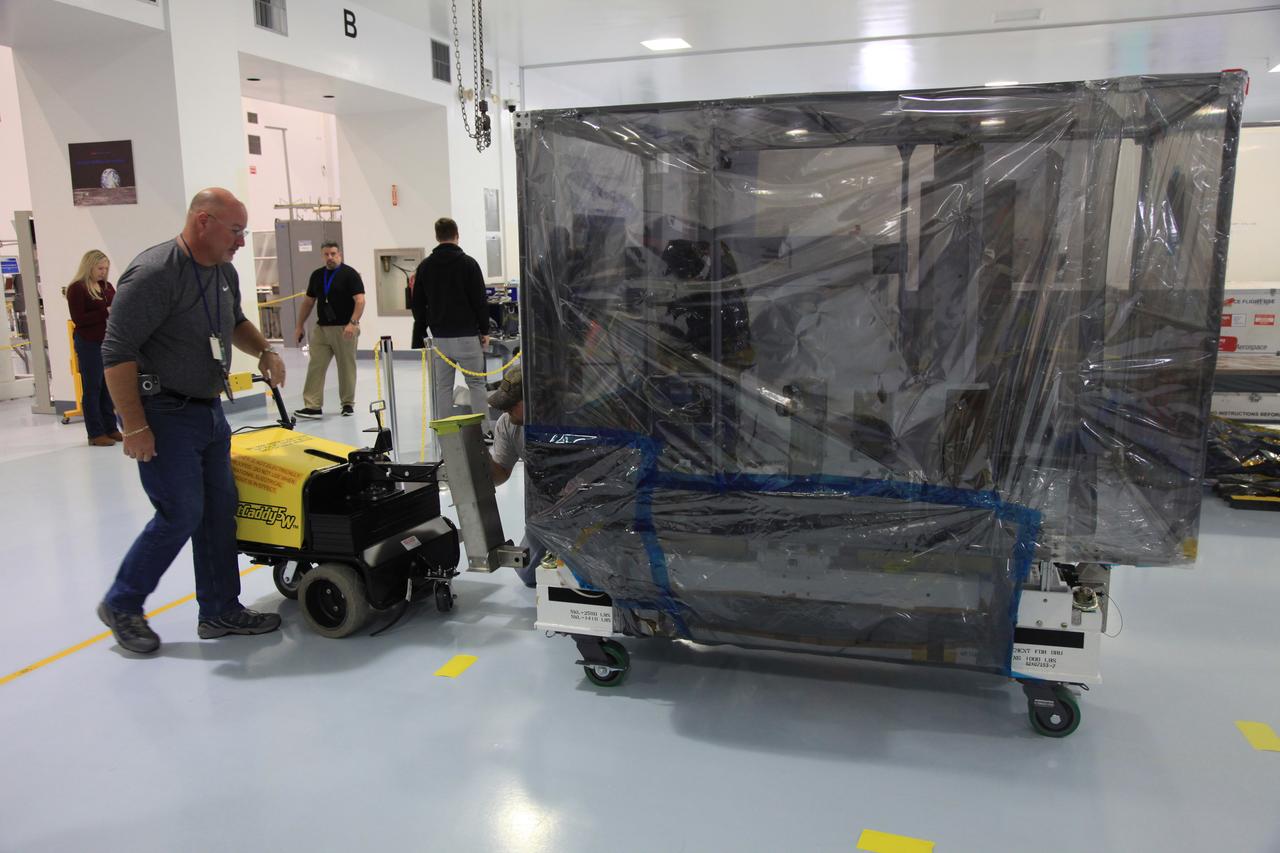
The Space Test Program-Houston 6 (STP-H6) payload is being prepared for its move from the Space Station Processing Facility high bay at NASA’s Kennedy Space Center in Florida on March 19, 2019. The payload will be moved to the SpaceX facility where it will be stowed in the trunk of the Dragon spacecraft for delivery to the International Space Station on SpaceX’s 17th Commercial Resupply Services mission (CRS-17) for NASA. STP-H6 is an x-ray communication investigation that will be used to perform a space-based demonstration of a new technology for generating beams of modulated x-rays. This technology may be useful for providing efficient communication to deep space probes, or communicating with hypersonic vehicles where plasma sheaths prevent traditional radio communications. CRS-17 is scheduled to launch from Space Launch Complex 40 on Cape Canaveral Air Force Station in late April.
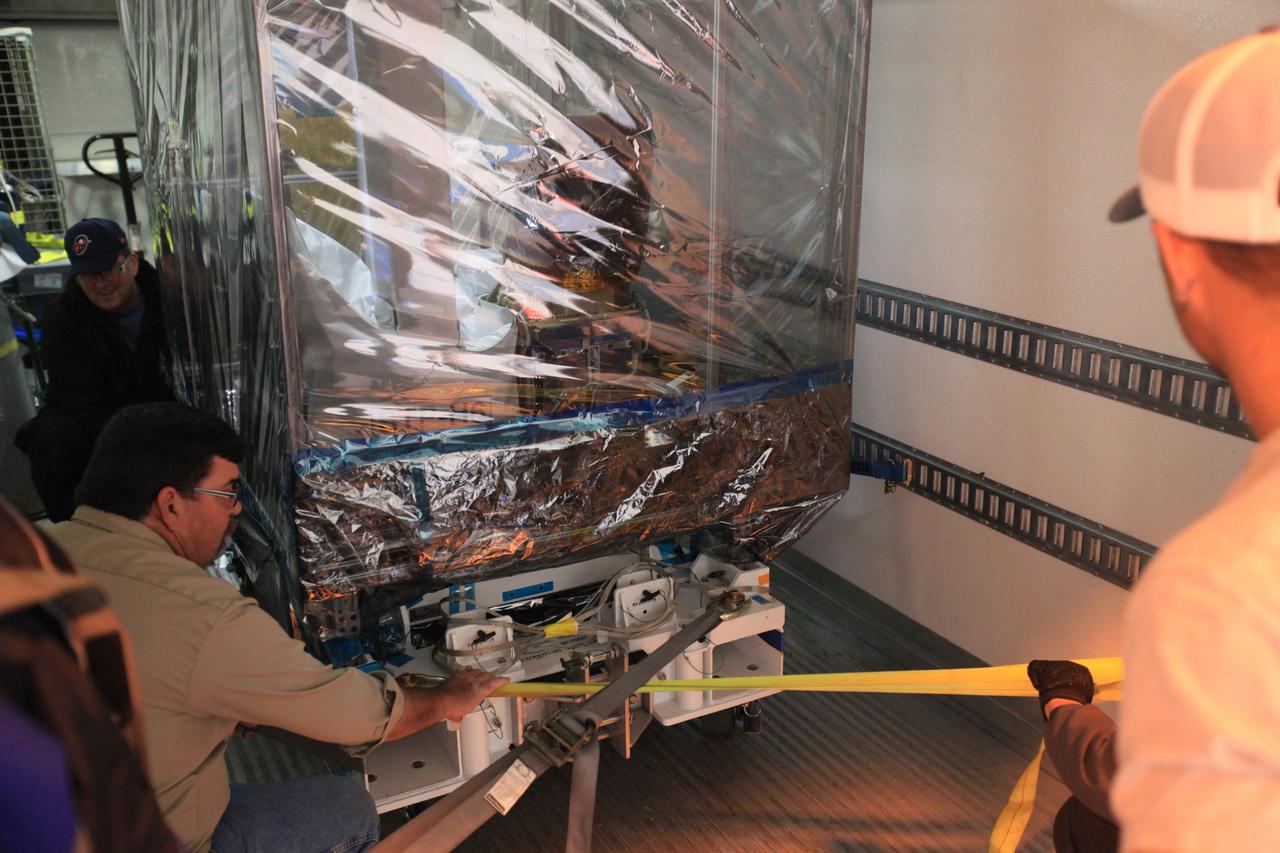
Technicians secure the Space Test Program-Houston 6 (STP-H6) inside a transport truck at the Space Station Processing Facility at NASA’s Kennedy Space Center in Florida on March 19, 2019. The payload will be moved to the SpaceX facility where it will be stowed in the trunk of the Dragon spacecraft for delivery to the International Space Station on SpaceX’s 17th Commercial Resupply Services mission (CRS-17) for NASA. STP-H6 is an x-ray communication investigation that will be used to perform a space-based demonstration of a new technology for generating beams of modulated x-rays. This technology may be useful for providing efficient communication to deep space probes, or communicating with hypersonic vehicles where plasma sheaths prevent traditional radio communications. CRS-17 is scheduled to launch from Space Launch Complex 40 on Cape Canaveral Air Force Station in late April.
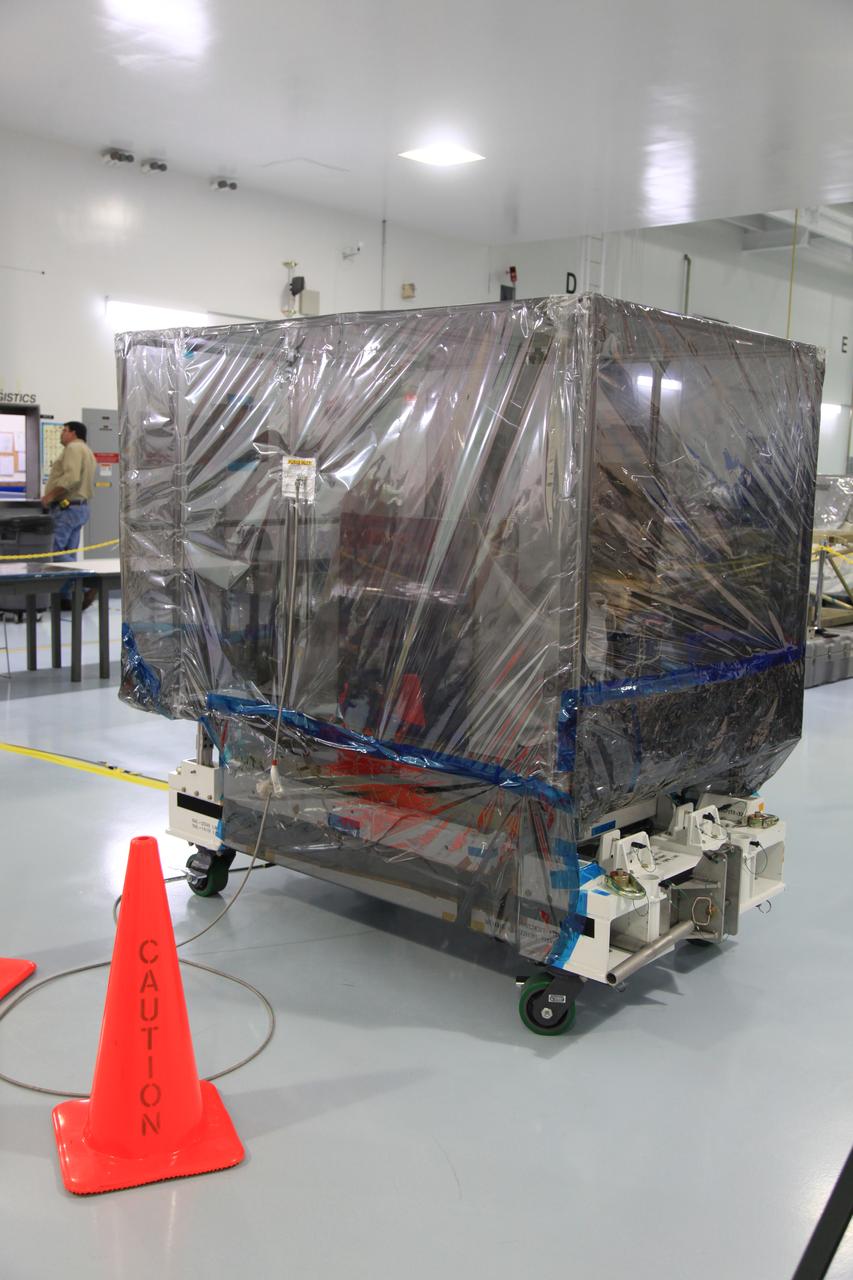
The Space Test Program-Houston 6 (STP-H6) payload is inside the Space Station Processing Facility high bay at NASA’s Kennedy Space Center in Florida on March 19, 2019. It is being prepared for its move to the SpaceX facility where it will be will be stowed in the trunk of the Dragon spacecraft for delivery to the International Space Station on SpaceX’s 17th Commercial Resupply Services mission (CRS-17) for NASA. STP-H6 is an x-ray communication investigation that will be used to perform a space-based demonstration of a new technology for generating beams of modulated x-rays. This technology may be useful for providing efficient communication to deep space probes, or communicating with hypersonic vehicles where plasma sheaths prevent traditional radio communications. CRS-17 is scheduled to launch from Space Launch Complex 40 on Cape Canaveral Air Force Station in late April.
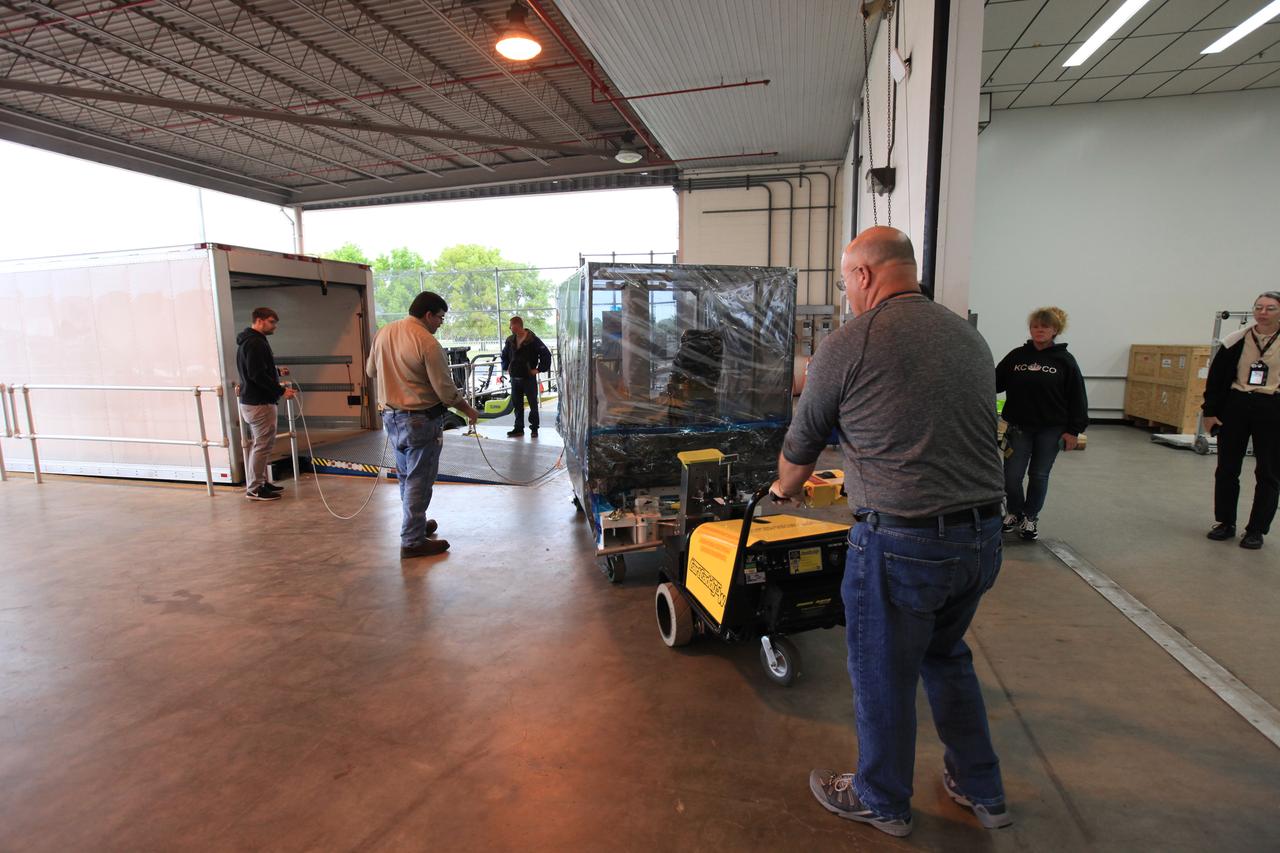
The Space Test Program-Houston 6 (STP-H6) payload is moved to a transport truck at the Space Station Processing Facility at NASA’s Kennedy Space Center in Florida on March 19, 2019. The payload will be moved to the SpaceX facility where it will be stowed in the trunk of the Dragon spacecraft for delivery to the International Space Station on SpaceX’s 17th Commercial Resupply Services mission (CRS-17) for NASA. STP-H6 is an x-ray communication investigation that will be used to perform a space-based demonstration of a new technology for generating beams of modulated x-rays. This technology may be useful for providing efficient communication to deep space probes, or communicating with hypersonic vehicles where plasma sheaths prevent traditional radio communications. CRS-17 is scheduled to launch from Space Launch Complex 40 on Cape Canaveral Air Force Station in late April.
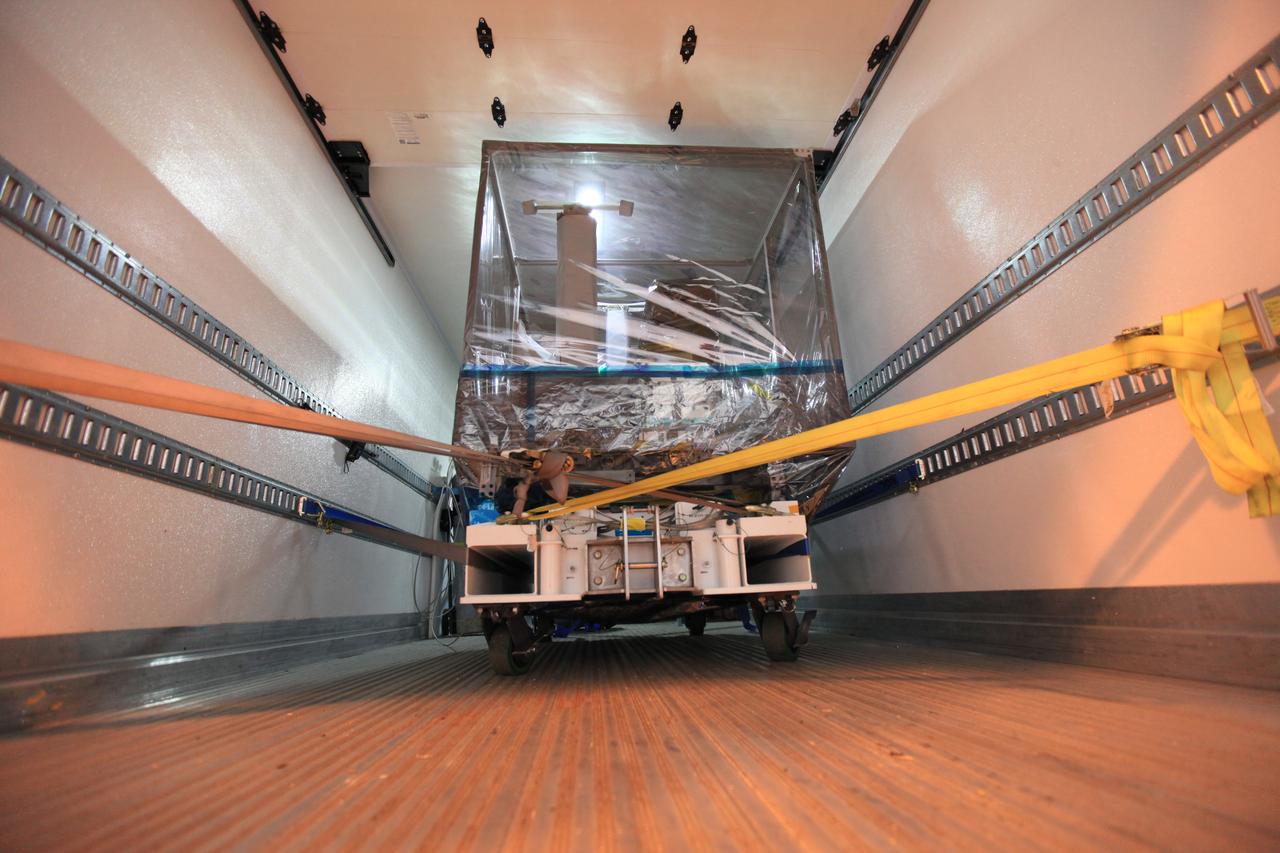
The Space Test Program-Houston 6 (STP-H6) payload is secured inside a truck at the Space Station Processing Facility at NASA’s Kennedy Space Center in Florida on March 19, 2019. The payload will be moved to the SpaceX facility where it will be stowed in the trunk of the Dragon spacecraft for delivery to the International Space Station on SpaceX’s 17th Commercial Resupply Services mission (CRS-17) for NASA. STP-H6 is an x-ray communication investigation that will be used to perform a space-based demonstration of a new technology for generating beams of modulated x-rays. This technology may be useful for providing efficient communication to deep space probes, or communicating with hypersonic vehicles where plasma sheaths prevent traditional radio communications. CRS-17 is scheduled to launch from Space Launch Complex 40 on Cape Canaveral Air Force Station in late April.
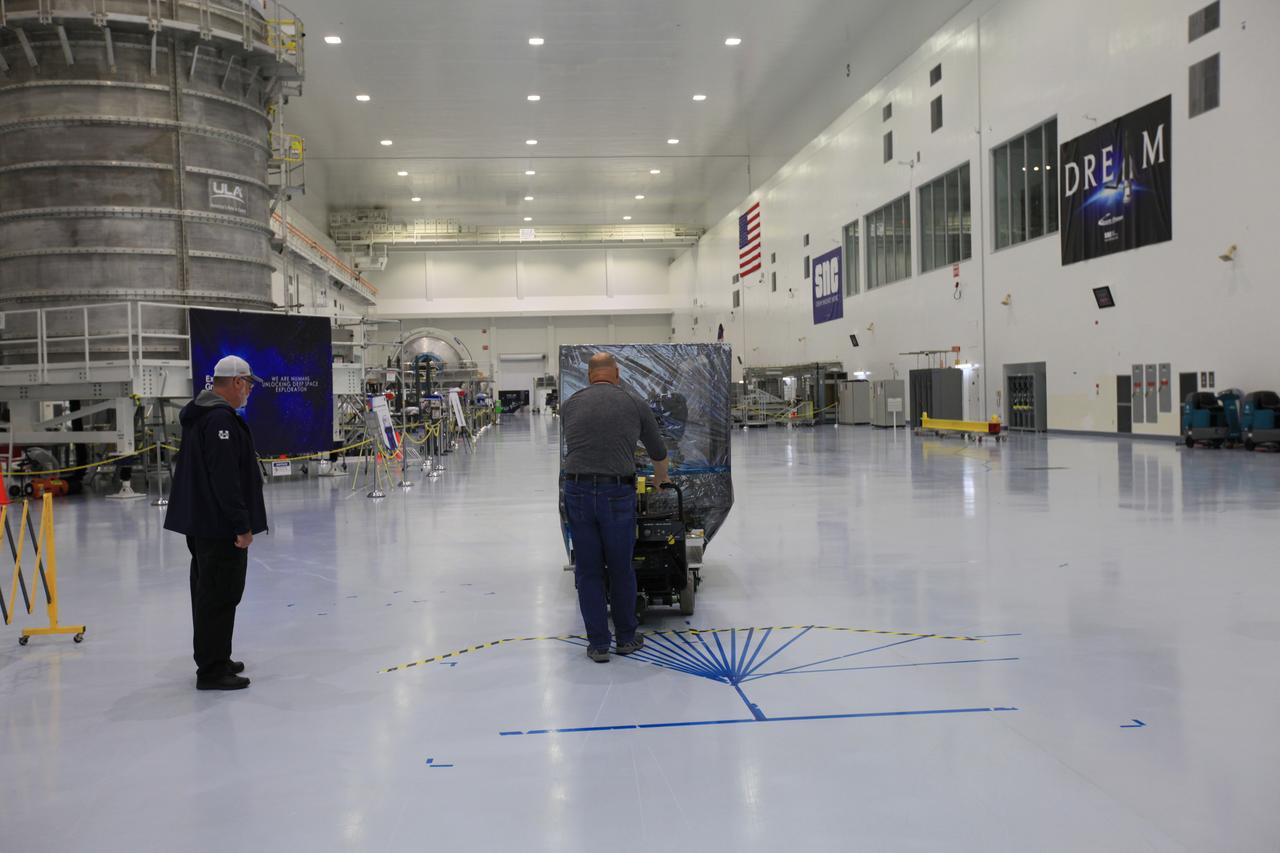
The Space Test Program-Houston 6 (STP-H6) payload is being moved out of the Space Station Processing Facility high bay at NASA’s Kennedy Space Center in Florida on March 19, 2019. The payload will be moved to the SpaceX facility where it will be stowed in the trunk of the Dragon spacecraft for delivery to the International Space Station on SpaceX’s 17th Commercial Resupply Services mission (CRS-17) for NASA. STP-H6 is an x-ray communication investigation that will be used to perform a space-based demonstration of a new technology for generating beams of modulated x-rays. This technology may be useful for providing efficient communication to deep space probes, or communicating with hypersonic vehicles where plasma sheaths prevent traditional radio communications. CRS-17 is scheduled to launch from Space Launch Complex 40 on Cape Canaveral Air Force Station in late April.
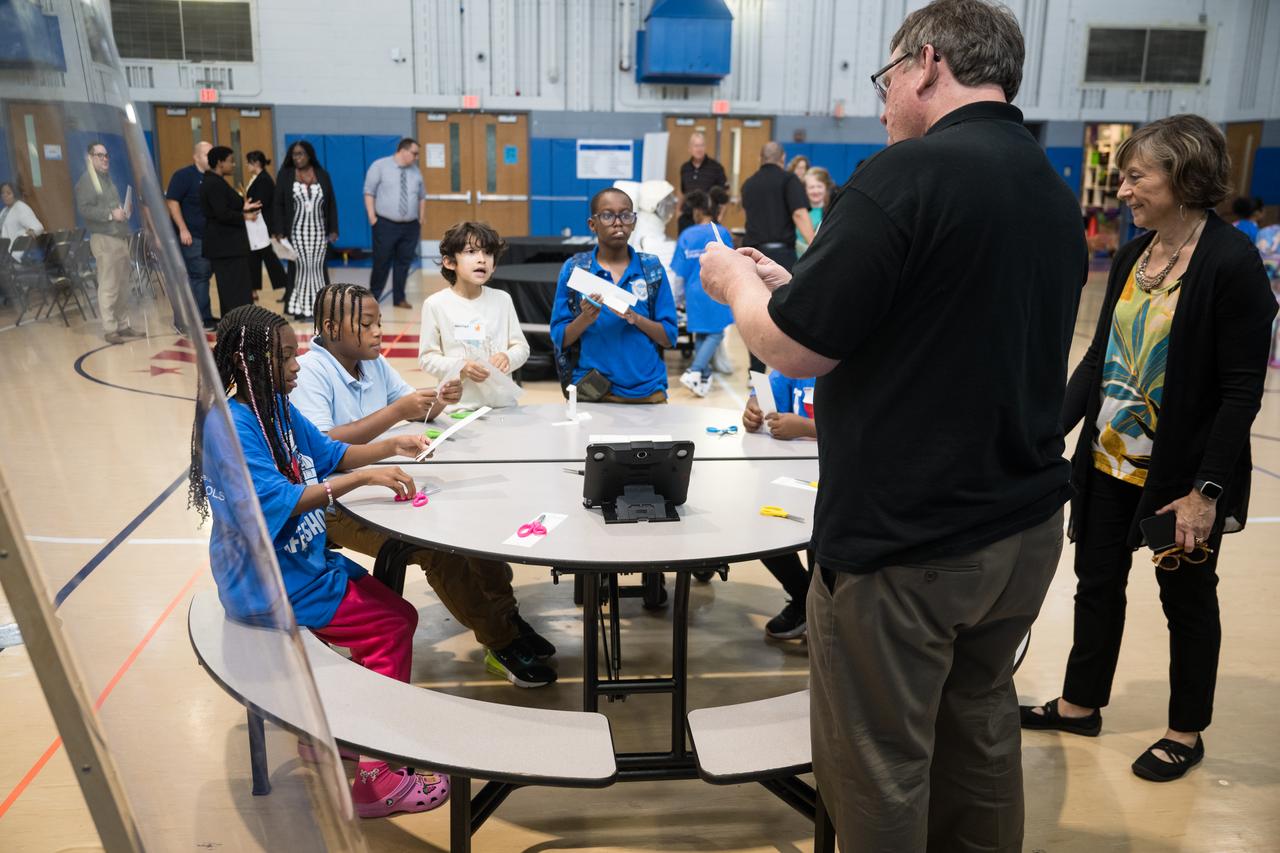
Students at Wheatley Education Campus participate in a rotor motor and wind tunnel activity during a kickoff event for the 21st Century Community Learning Centers NASA and Department of Education partnership, Monday, Sept. 23, 2024 at Wheatley Education Campus in Washington. Photo Credit: (NASA/Aubrey Gemignani)
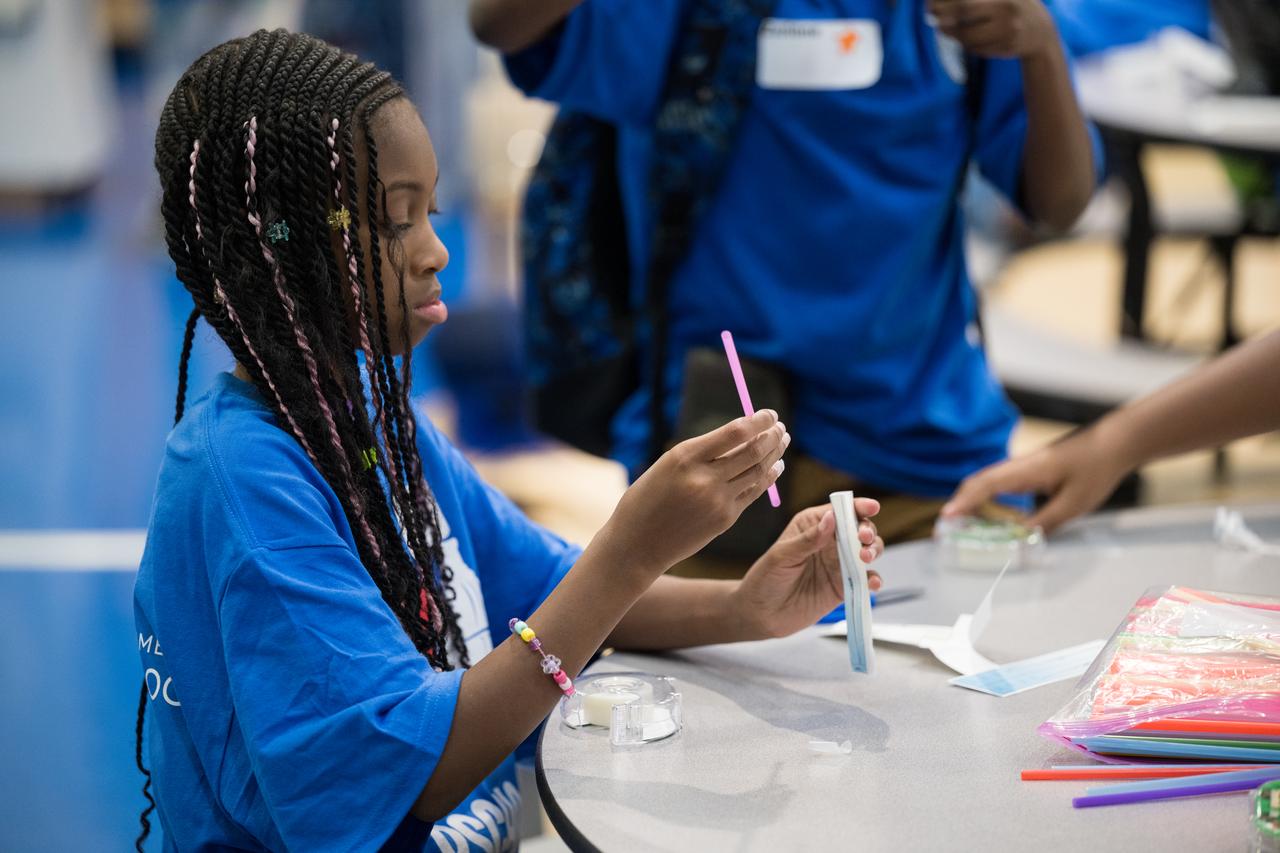
Students at Wheatley Education Campus participate in an activity to build their own rocket launcher during a kickoff event for the 21st Century Community Learning Centers NASA and Department of Education partnership, Monday, Sept. 23, 2024 at Wheatley Education Campus in Washington. Photo Credit: (NASA/Aubrey Gemignani)
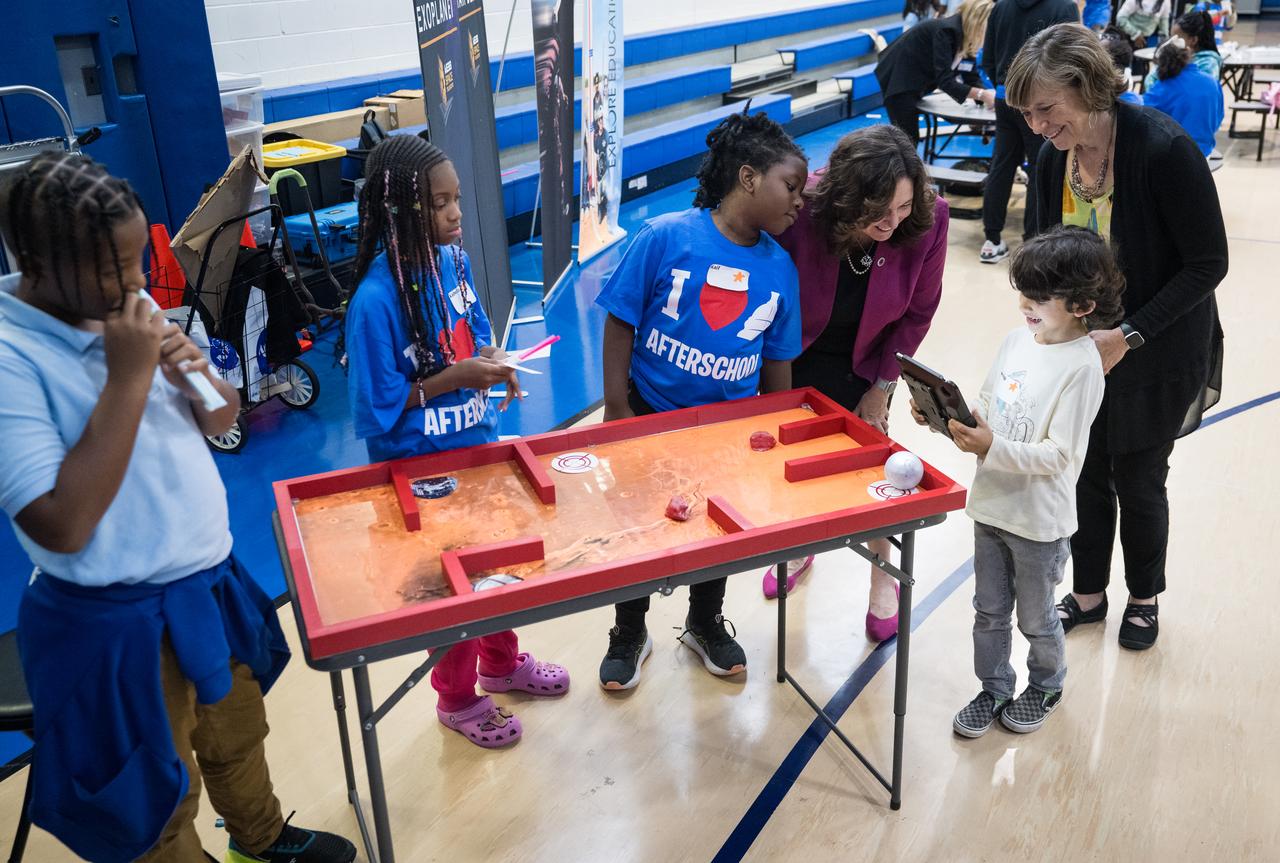
Students at Wheatley Education Campus participate in a Mars rolling rover activity with a robot, during a kickoff event for the 21st Century Community Learning Centers NASA and Department of Education partnership, Monday, Sept. 23, 2024 at Wheatley Education Campus in Washington. Photo Credit: (NASA/Aubrey Gemignani)
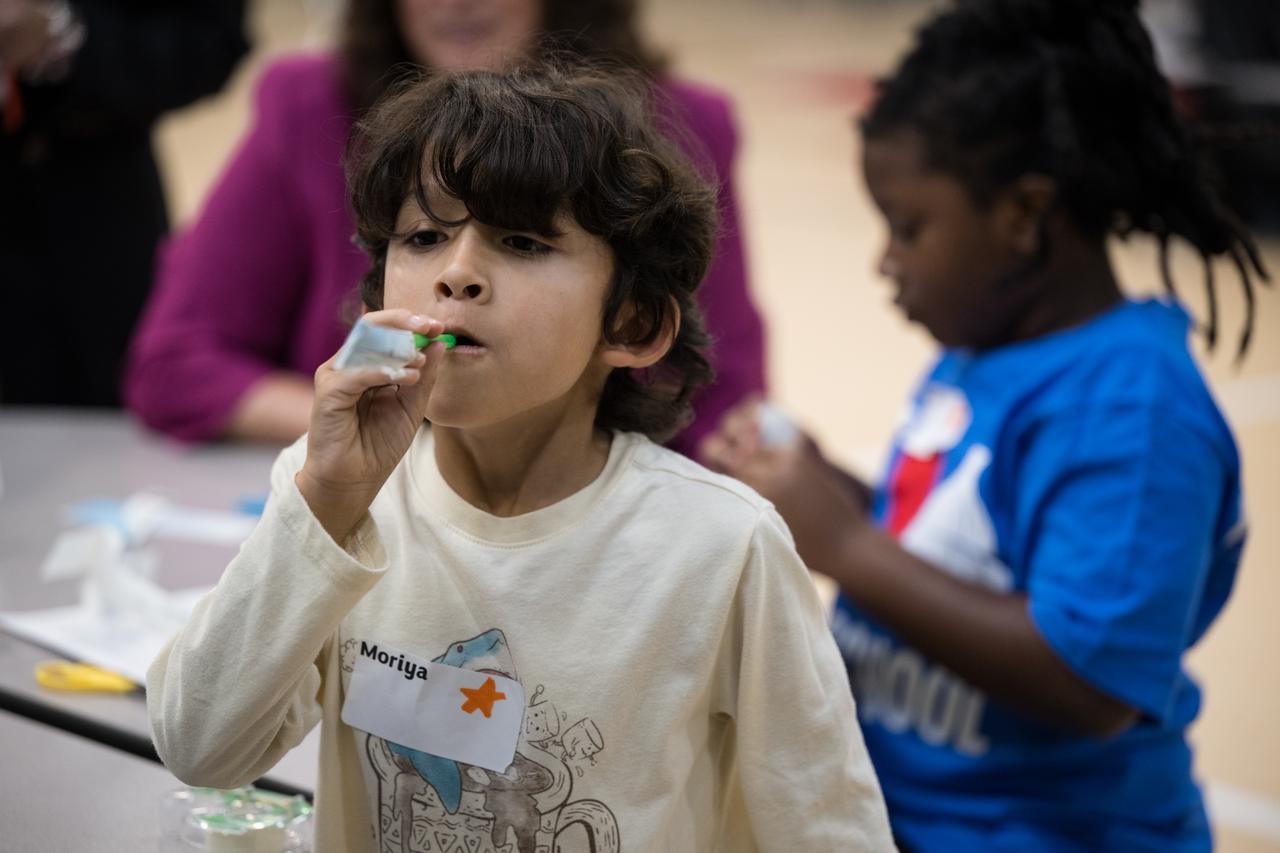
Students at Wheatley Education Campus participate in an activity to build their own rocket launcher during a kickoff event for the 21st Century Community Learning Centers NASA and Department of Education partnership, Monday, Sept. 23, 2024 at Wheatley Education Campus in Washington. Photo Credit: (NASA/Aubrey Gemignani)
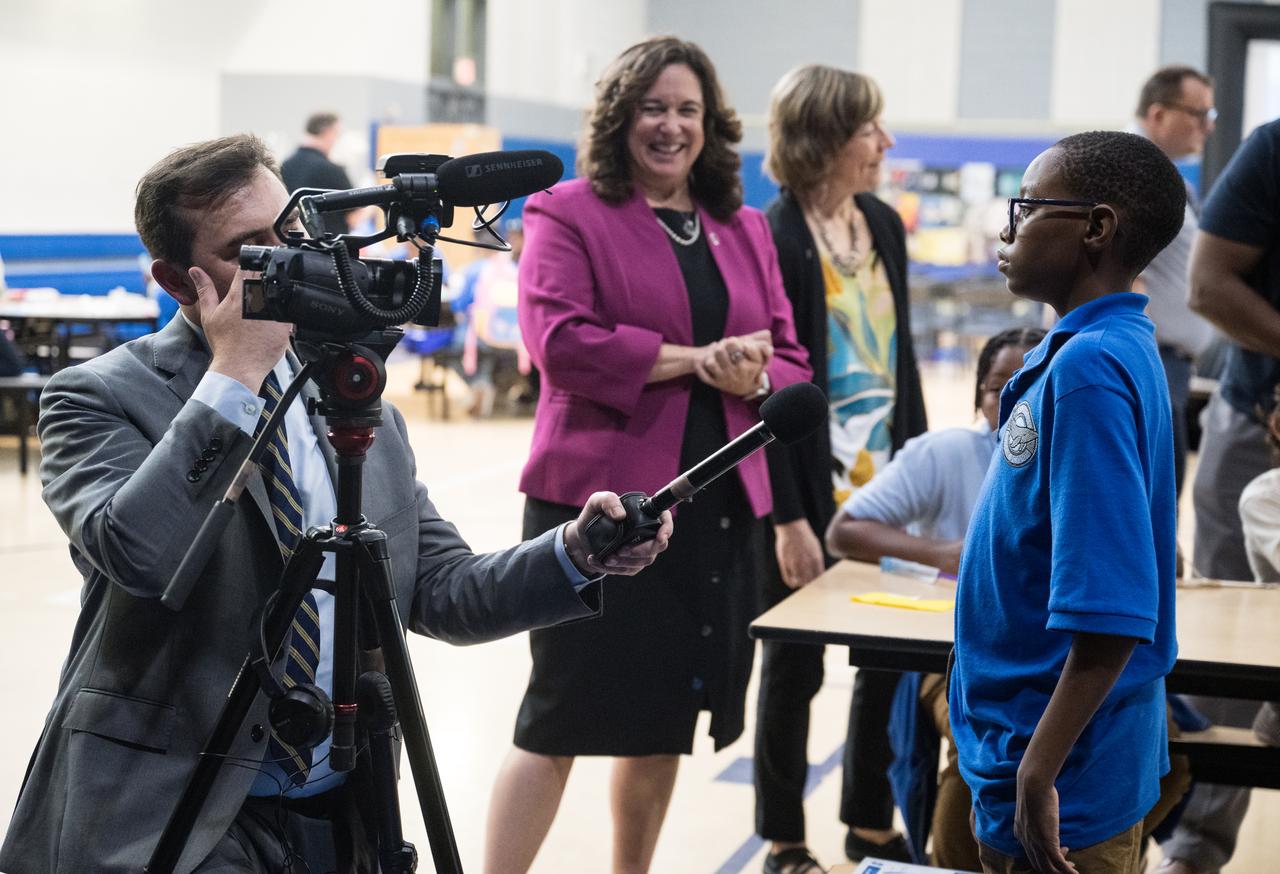
A student at Wheatley Education Campus is interviewed by media during a kickoff event for the 21st Century Community Learning Centers NASA and Department of Education partnership, Monday, Sept. 23, 2024 at Wheatley Education Campus in Washington. Photo Credit: (NASA/Aubrey Gemignani)
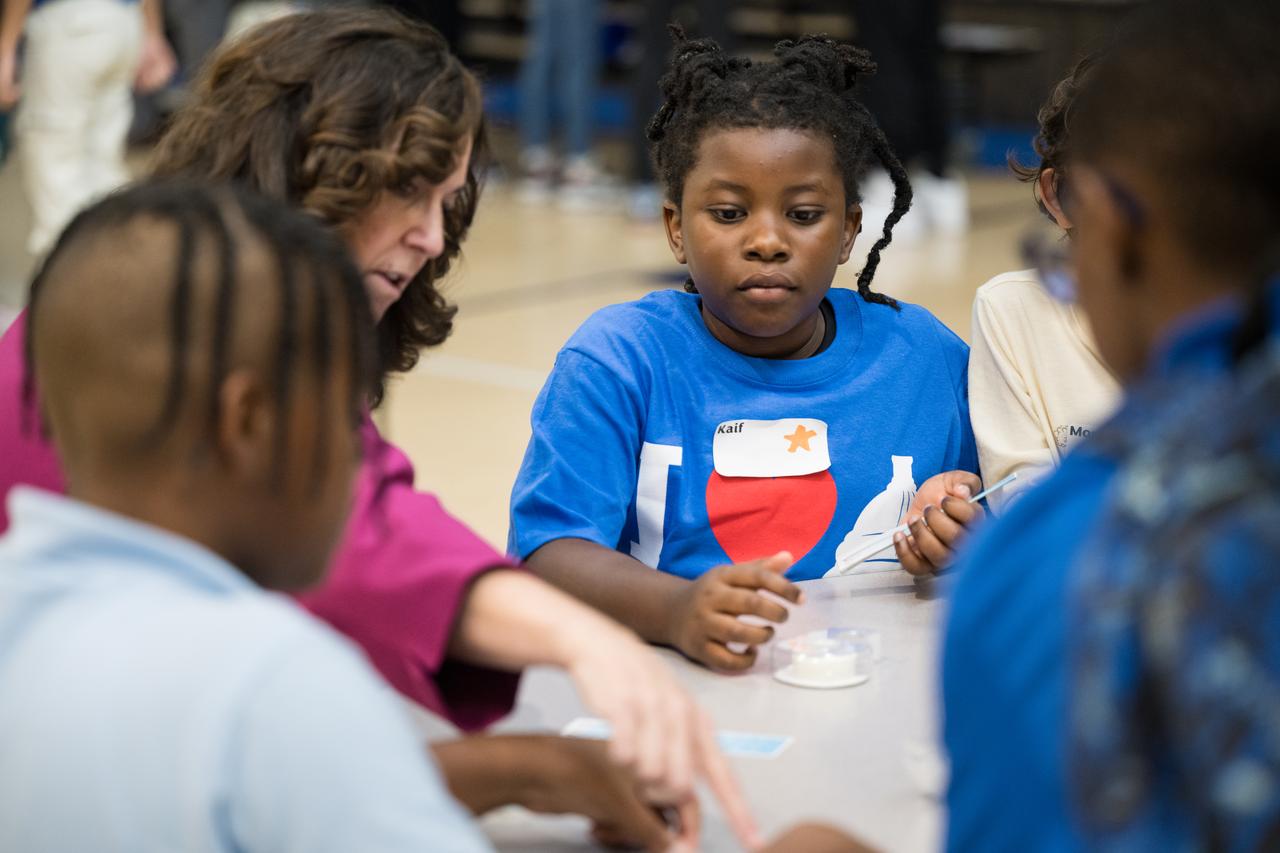
Students at Wheatley Education Campus participate in an activity to build their own rocket launcher during a kickoff event for the 21st Century Community Learning Centers NASA and Department of Education partnership, Monday, Sept. 23, 2024 at Wheatley Education Campus in Washington. Photo Credit: (NASA/Aubrey Gemignani)
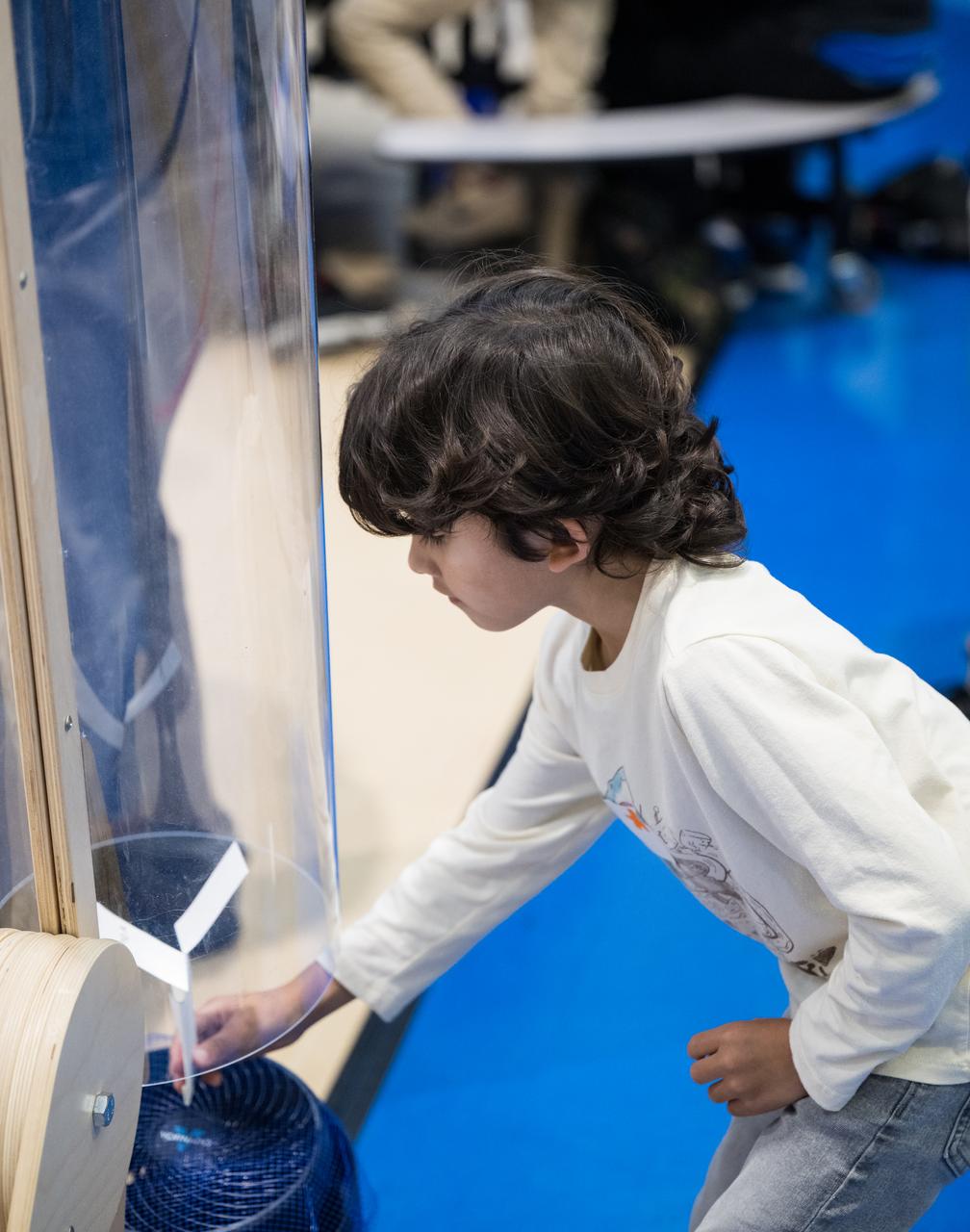
Students at Wheatley Education Campus participate in a rotor motor and wind tunnel activity during a kickoff event for the 21st Century Community Learning Centers NASA and Department of Education partnership, Monday, Sept. 23, 2024 at Wheatley Education Campus in Washington. Photo Credit: (NASA/Aubrey Gemignani)
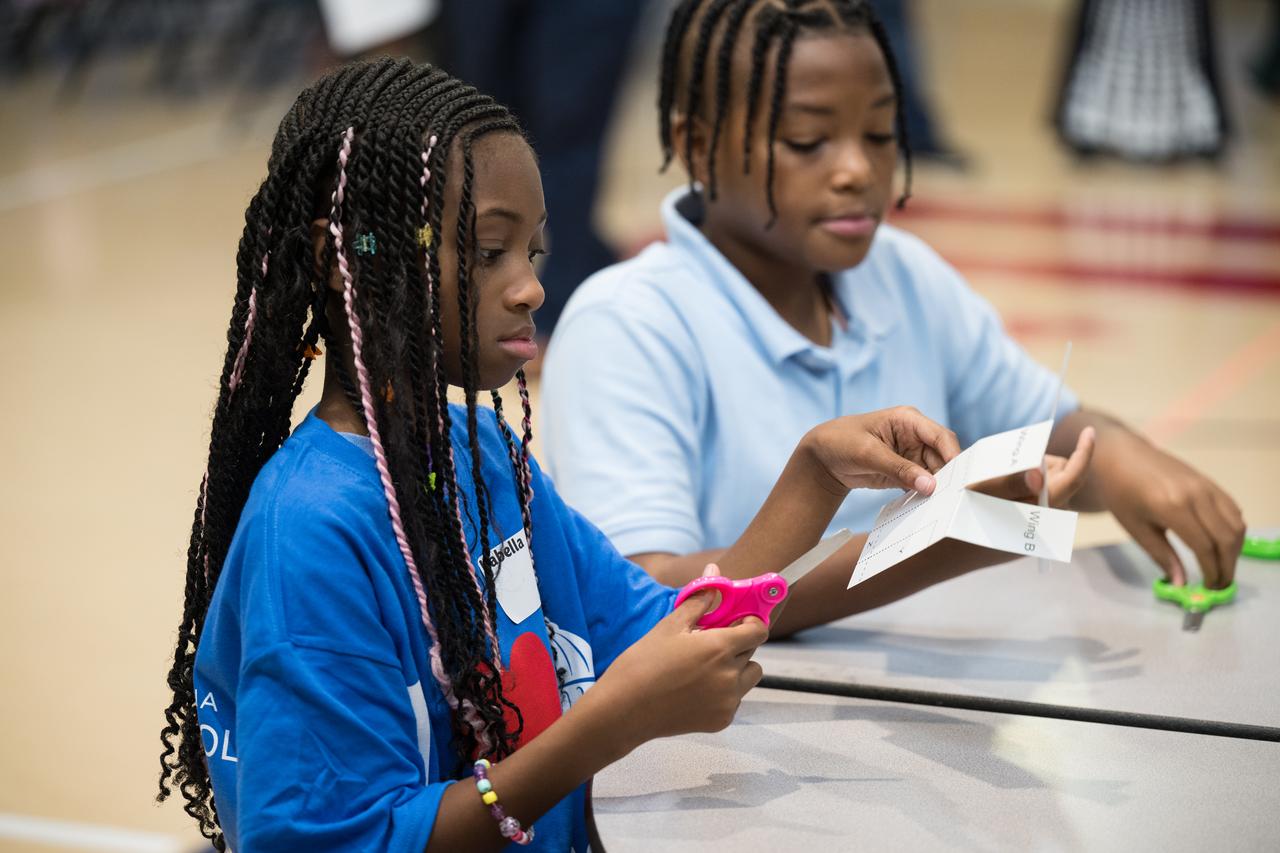
Students at Wheatley Education Campus participate in a rotor motor and wind tunnel activity during a kickoff event for the 21st Century Community Learning Centers NASA and Department of Education partnership, Monday, Sept. 23, 2024 at Wheatley Education Campus in Washington. Photo Credit: (NASA/Aubrey Gemignani)
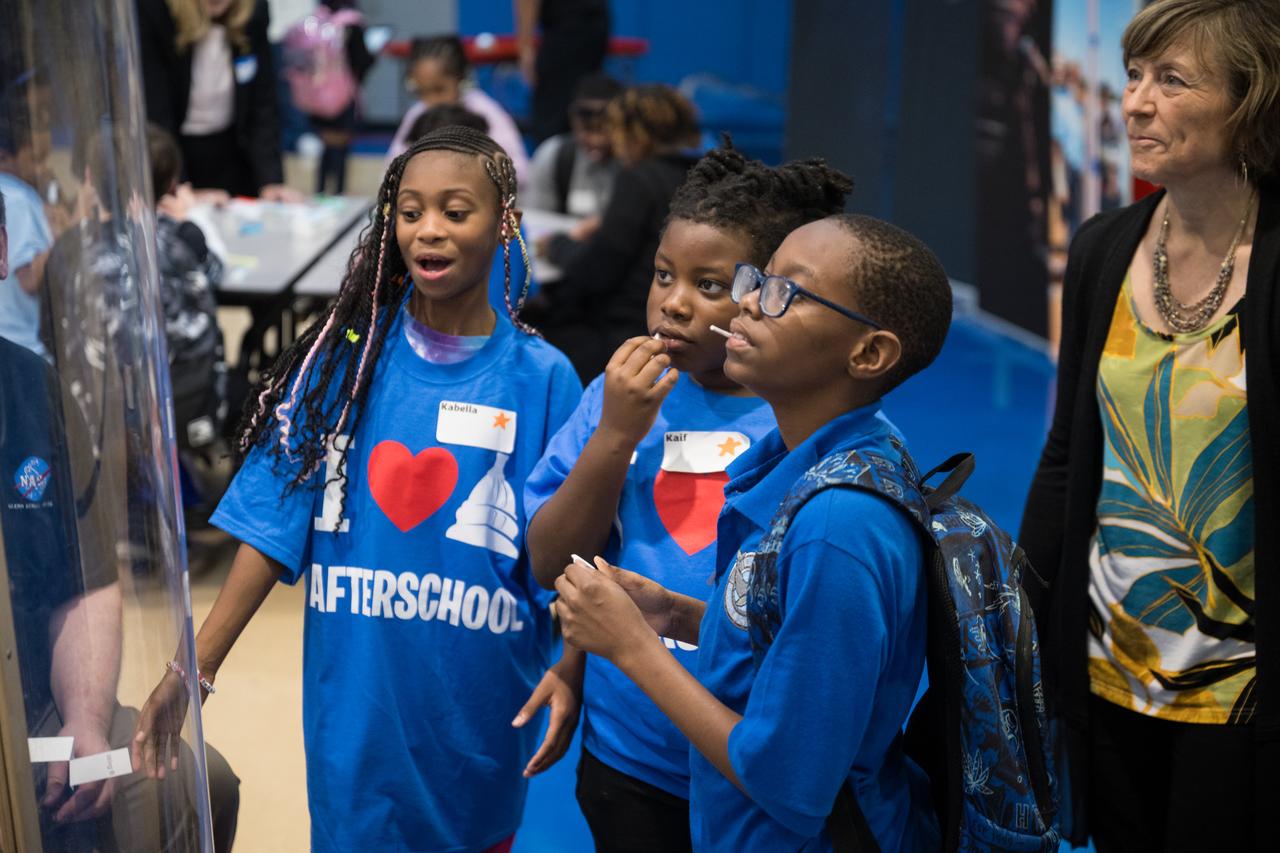
Students at Wheatley Education Campus participate in a rotor motor and wind tunnel activity during a kickoff event for the 21st Century Community Learning Centers NASA and Department of Education partnership, Monday, Sept. 23, 2024 at Wheatley Education Campus in Washington. Photo Credit: (NASA/Aubrey Gemignani)
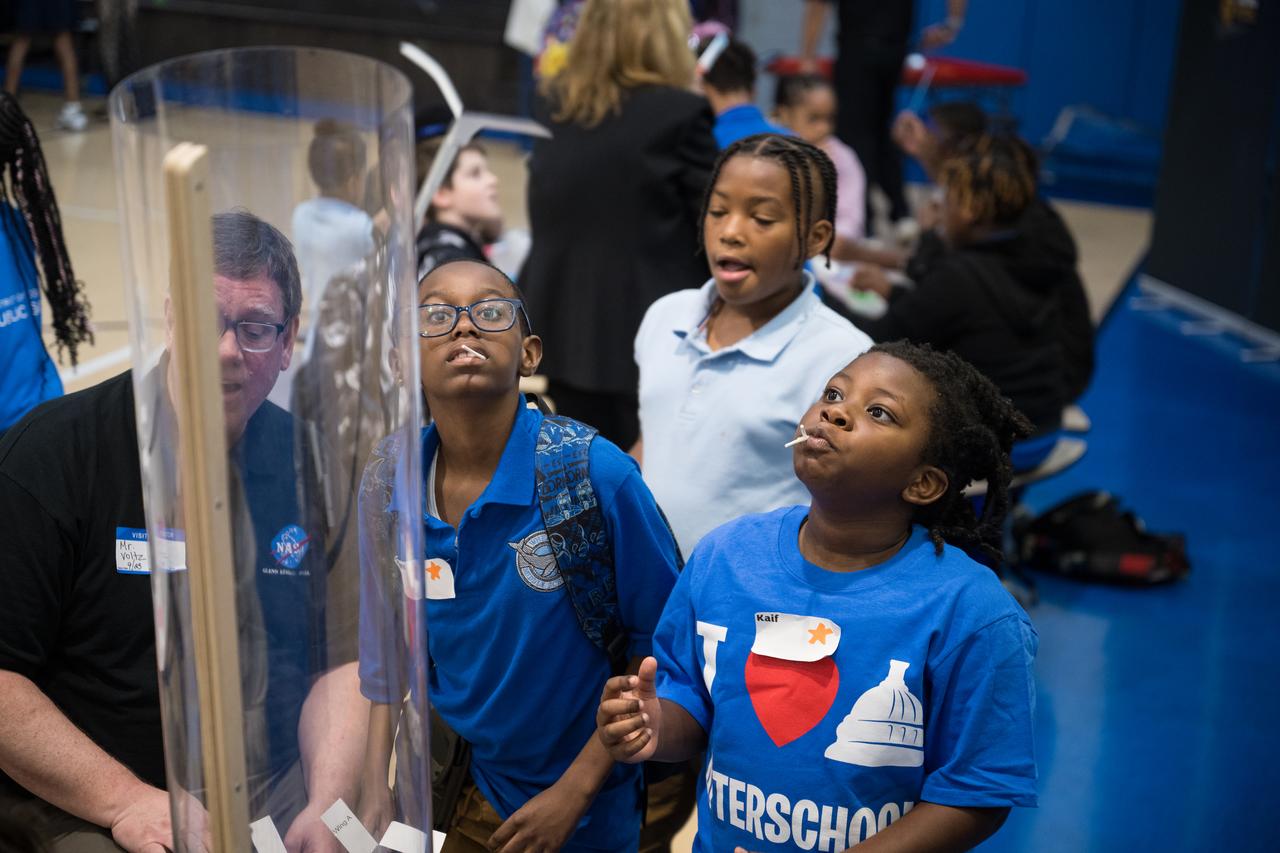
Students at Wheatley Education Campus participate in a rotor motor and wind tunnel activity during a kickoff event for the 21st Century Community Learning Centers NASA and Department of Education partnership, Monday, Sept. 23, 2024 at Wheatley Education Campus in Washington. Photo Credit: (NASA/Aubrey Gemignani)
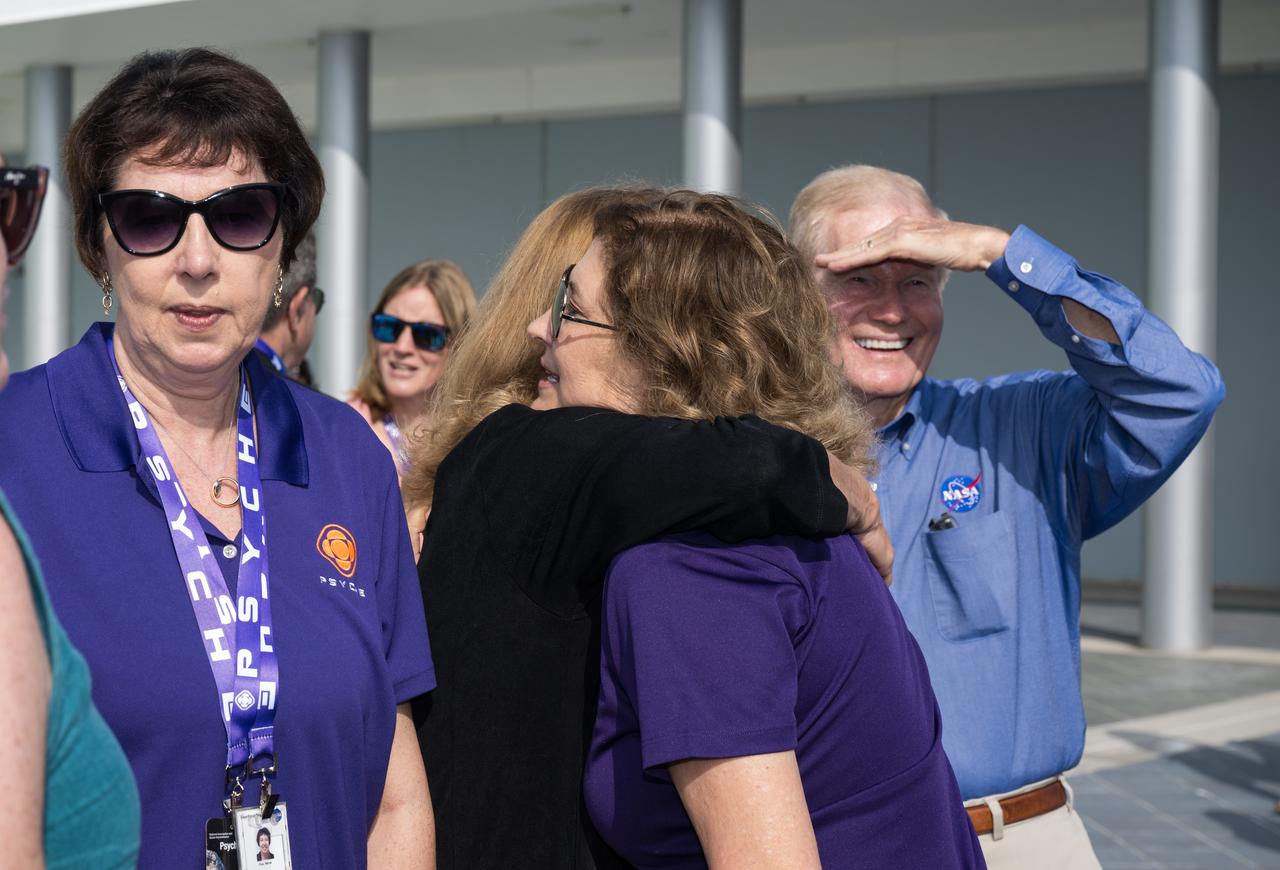
NASA Headquarters Planetary Science Division director Lori Glaze, left, hugs Jet Propulsion Laboratory director Laurie Leshin as NASA Administrator Bill Nelson, right, and Associate Administrator, NASA’s Science Mission Directorate, Nicola Fox watch for the return of the boosters after the launch of a SpaceX Falcon Heavy rocket with the Psyche spacecraft onboard from Launch Complex 39A, Friday, Oct. 13, 2023, at NASA’s Kennedy Space Center in Florida. NASA’s Psyche spacecraft will travel to a metal-rich asteroid by the same name orbiting the Sun between Mars and Jupiter to study it’s composition. The spacecraft also carries the agency's Deep Space Optical Communications technology demonstration, which will test laser communications beyond the Moon. Photo Credit: (NASA/Aubrey Gemignani)

The communication antenna is used primarily for test flights to receive downlink flight data and video from test aircraft and also to support command uplink of data to test aircraft for command and control. It is one of two such assets of the Dryden Aeronautical Test Range at NASA’s Armstrong Flight Research Center in California.
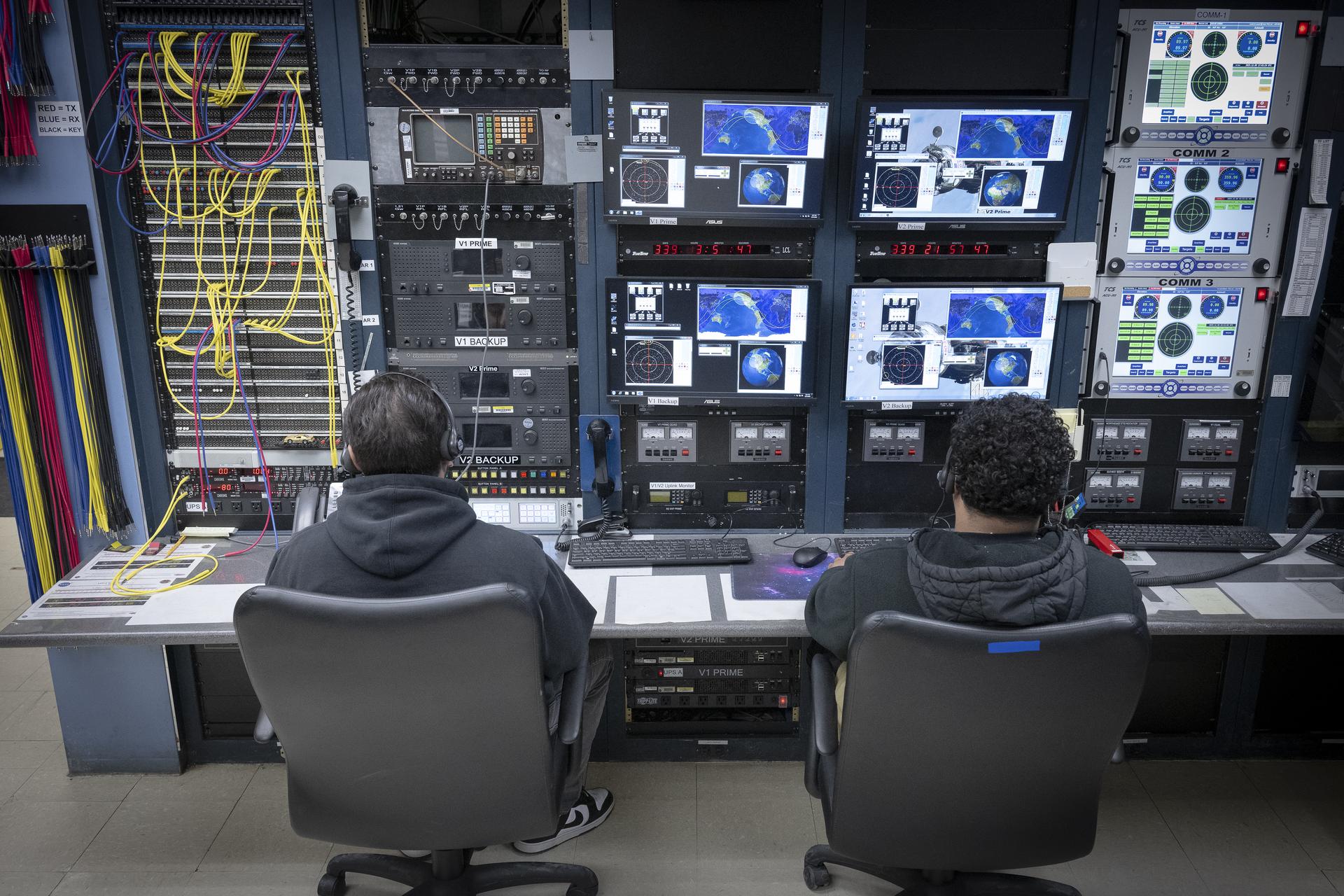
Range operators at the Dryden Aeronautical Test Range at NASA’s Armstong Flight Research Center in Edwards, California, provide voice and tracking support to the International Space Station. In this Friday, Dec. 6, 2025, photo, Alex Oganesyan, left, and Deming Ingles are shown at their workstations, where they support communications backup for space station missions.
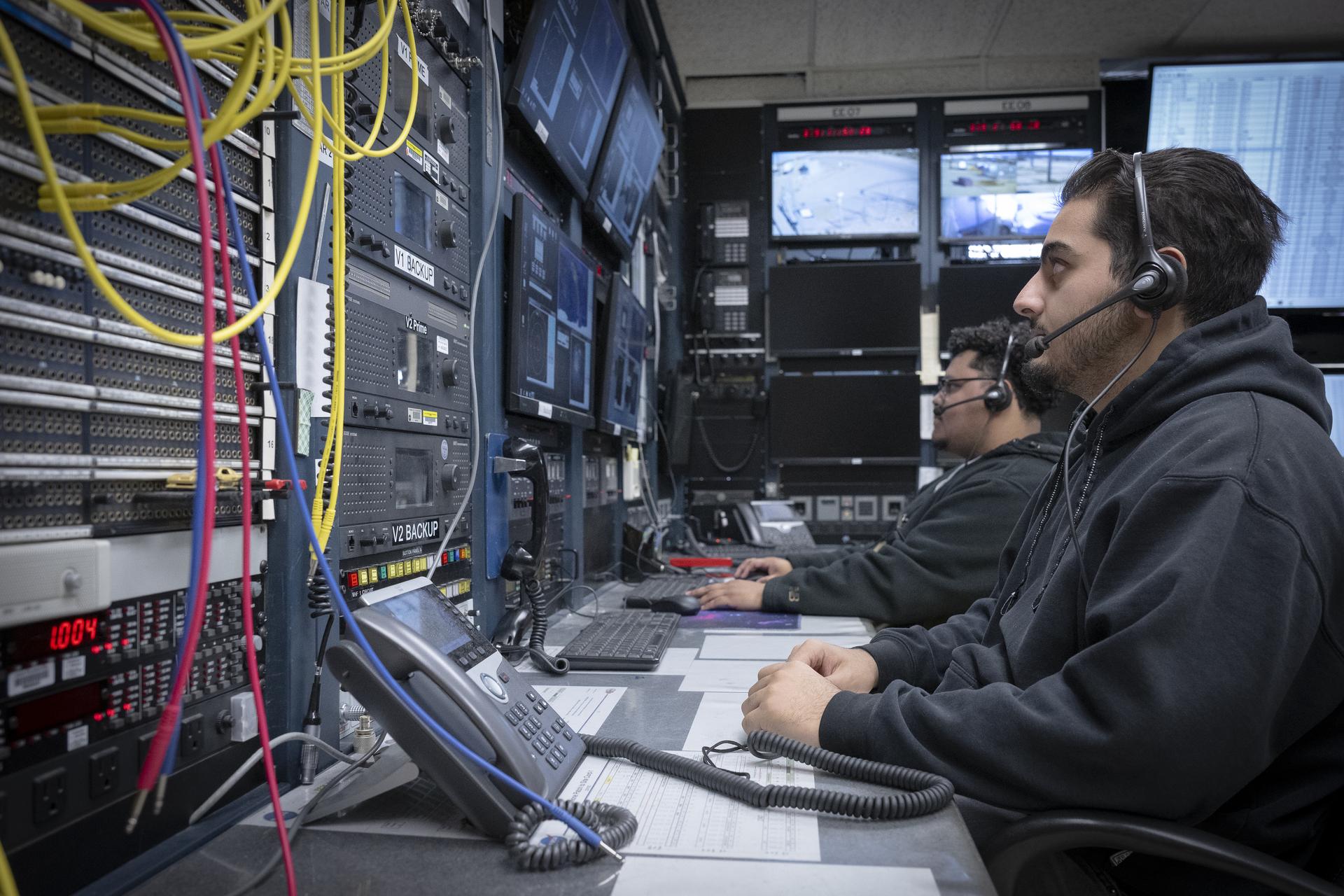
Range operators at the Dryden Aeronautical Test Range at NASA’s Armstong Flight Research Center in Edwards, California, provide voice and tracking support to the International Space Station. In this Friday, Dec. 6, 2025, photo, Alex Oganesyan, left, and Deming Ingles are shown at their workstations, where they support communications backup for space station missions.
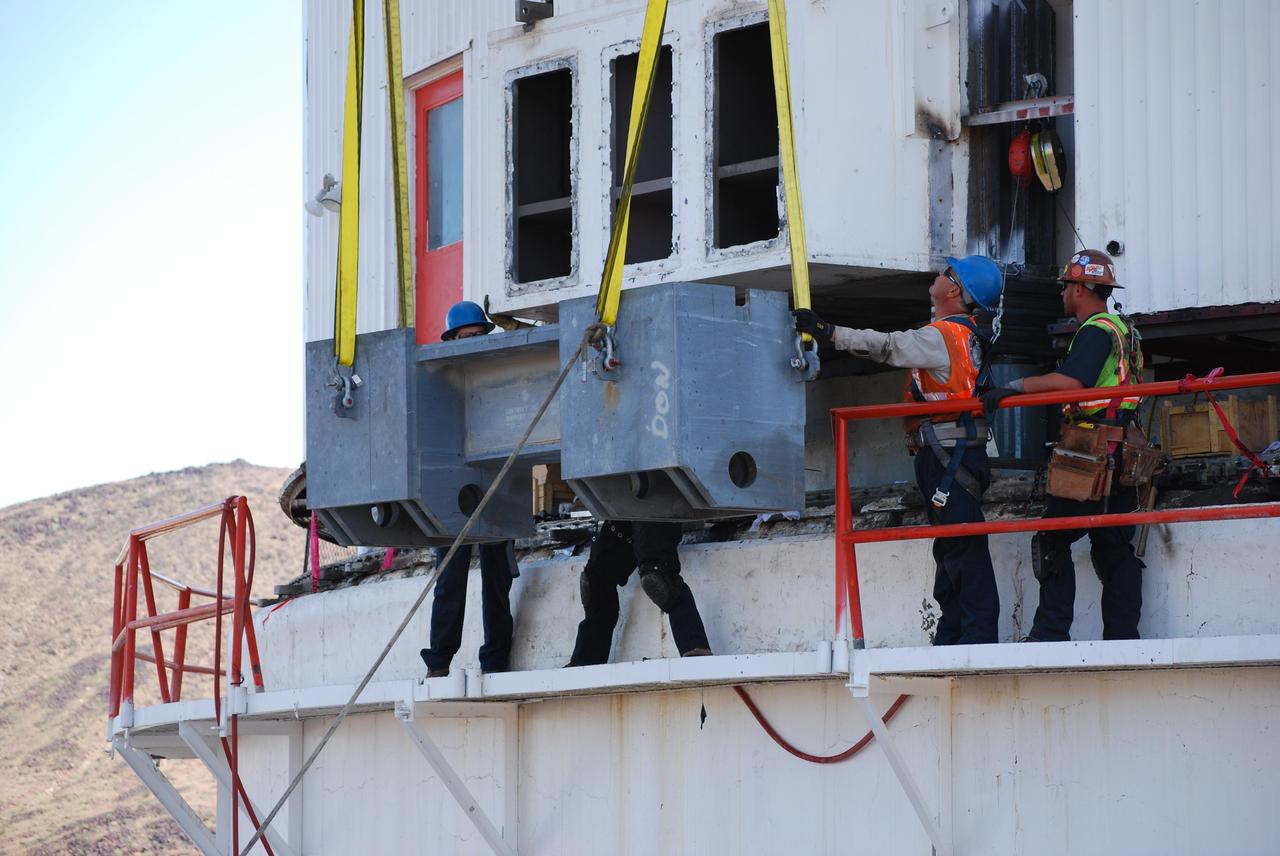
As part of a major refurbishment for the giant Mars antenna at NASA Deep Space Network Goldstone Deep Space Communications Complex, a stringer box is lowered into place.
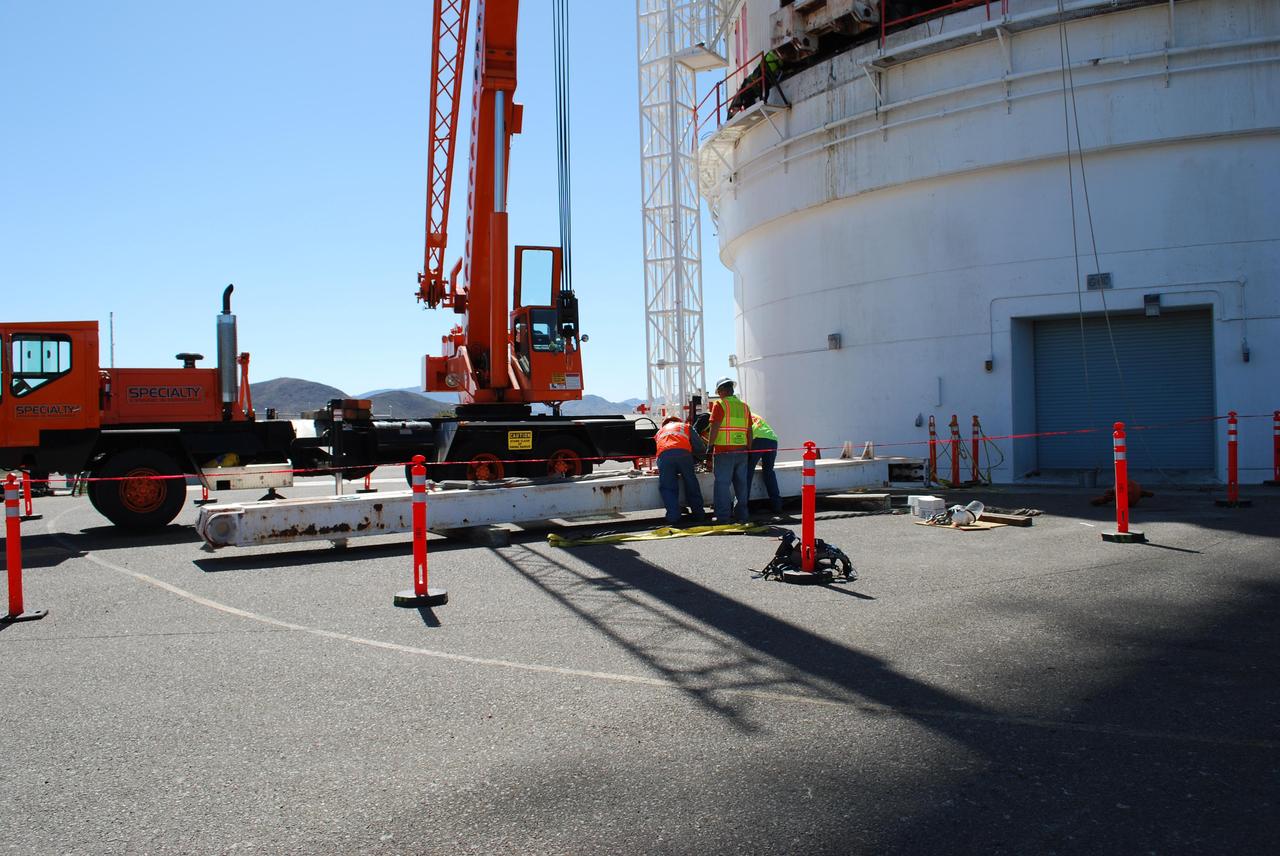
Workers at NASA Deep Space Network Goldstone Deep Space Communications Complex prepare a support leg that would help raise a portion of the giant Mars antenna.
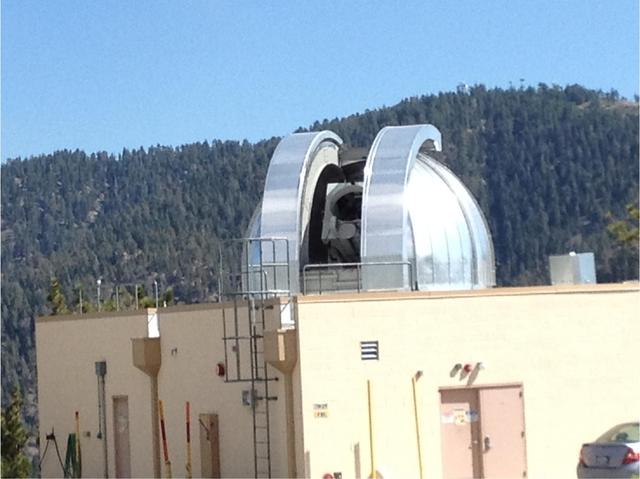
NASA Optical Communications Telescope Laboratory OCTL dome is located in Table Mountain, California. It is used in conjunction with the The Optical PAyload for Lasercomm Science OPALS.
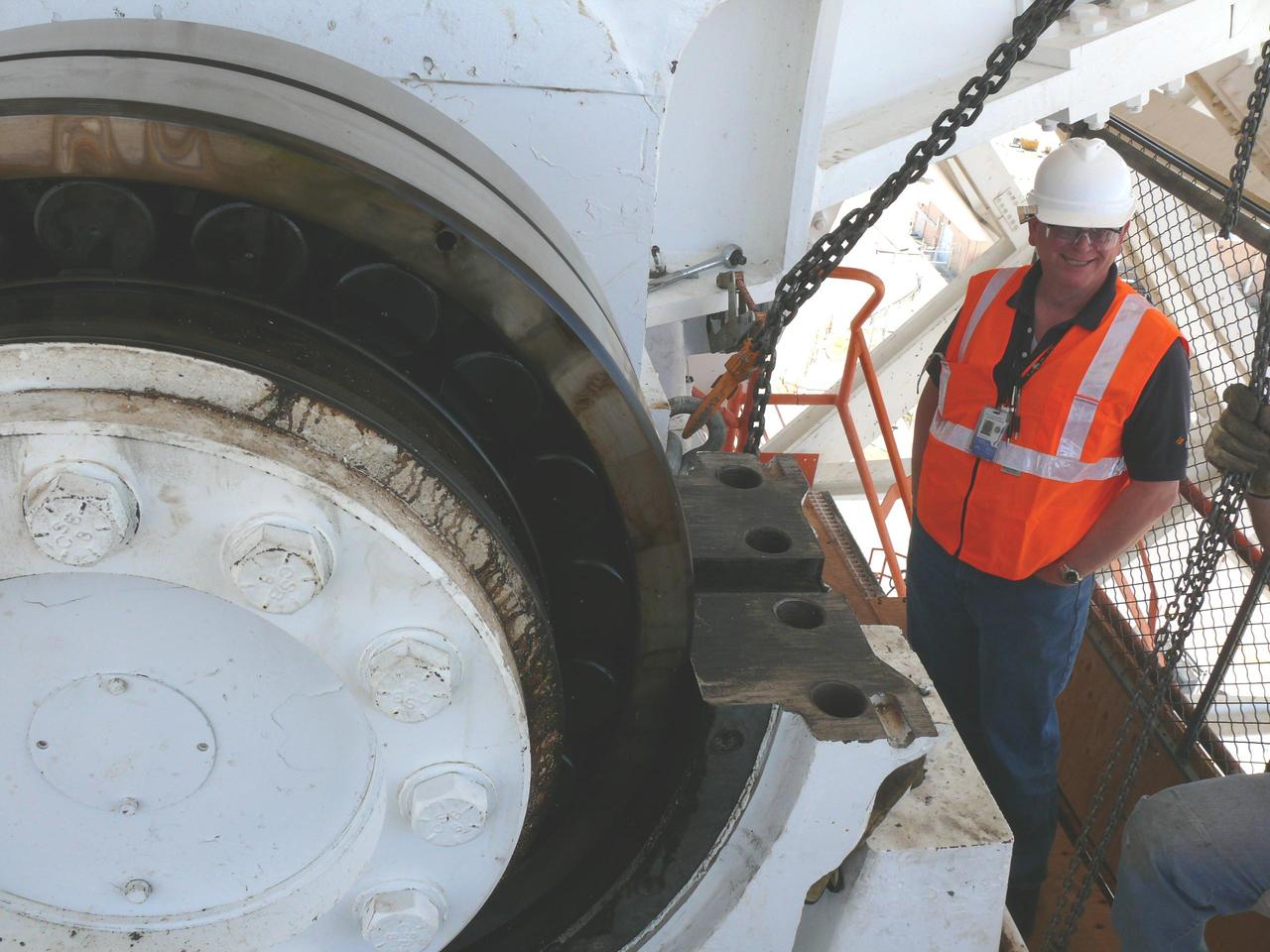
The giant Mars antenna at NASA Deep Space Network Goldstone Deep Space Communications Complex replaced four elevation bearings as part of a major refurbishment.
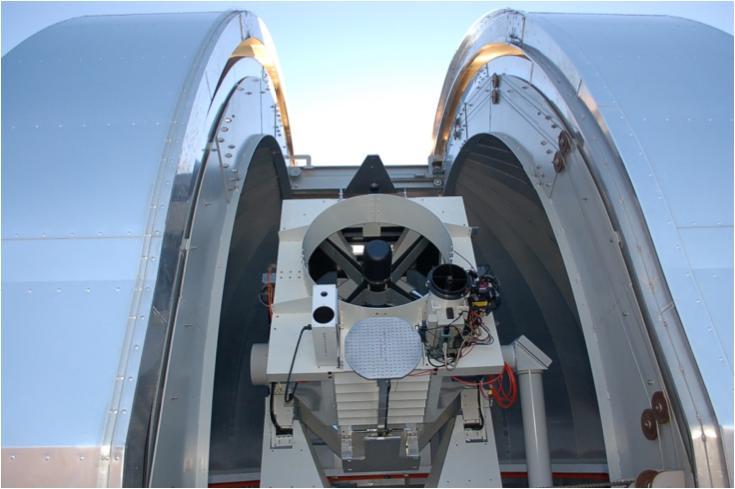
This is a 3-foot 1-meter aperture main telescope located at the NASA Jet Propulsion Laboratory Optical Communications Telescope Laboratory ground station.
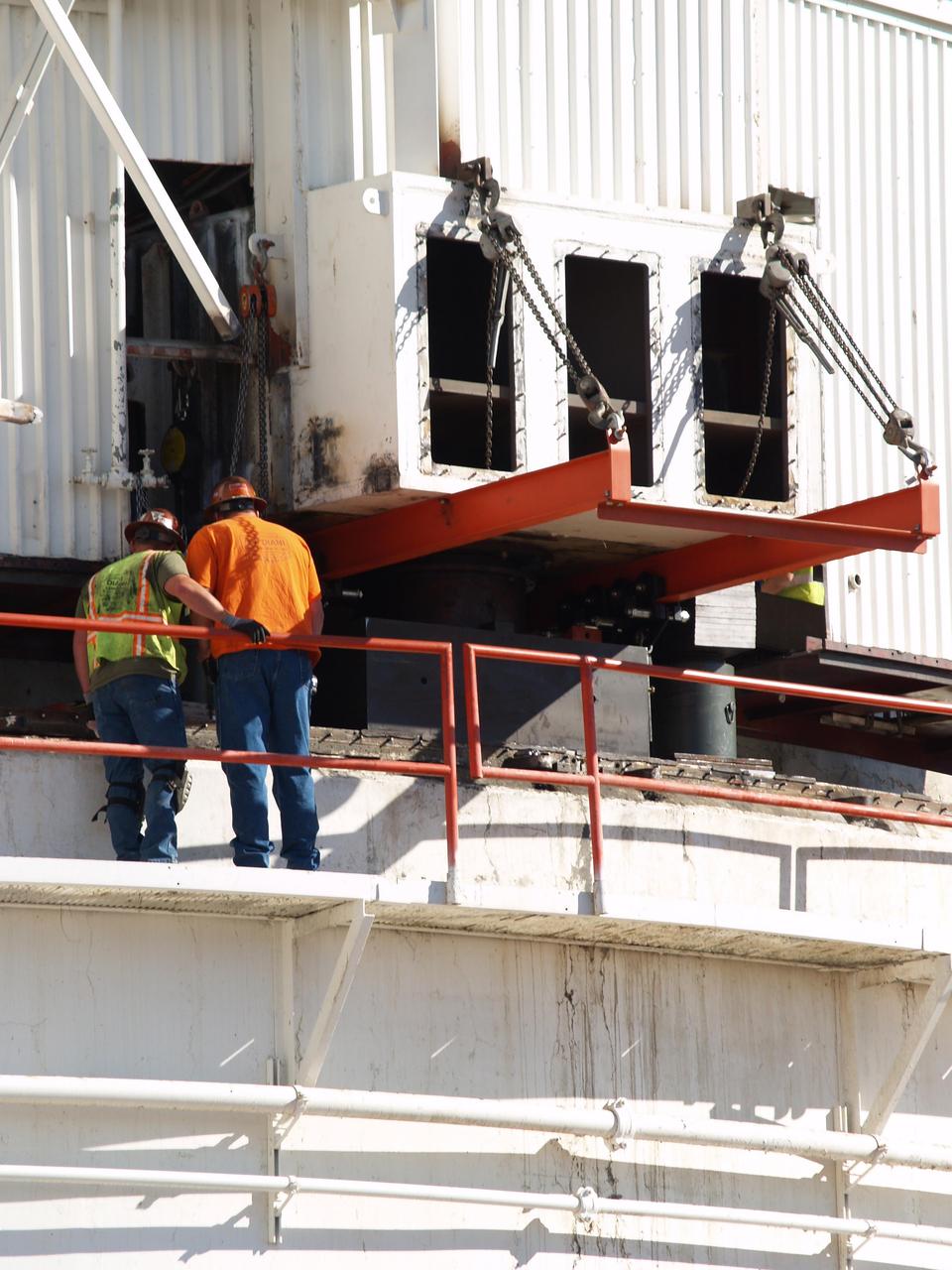
Workers at NASA Deep Space Network Goldstone Deep Space Communications Complex check on a set of jacks used to raise the upper part of the giant Mars antenna.
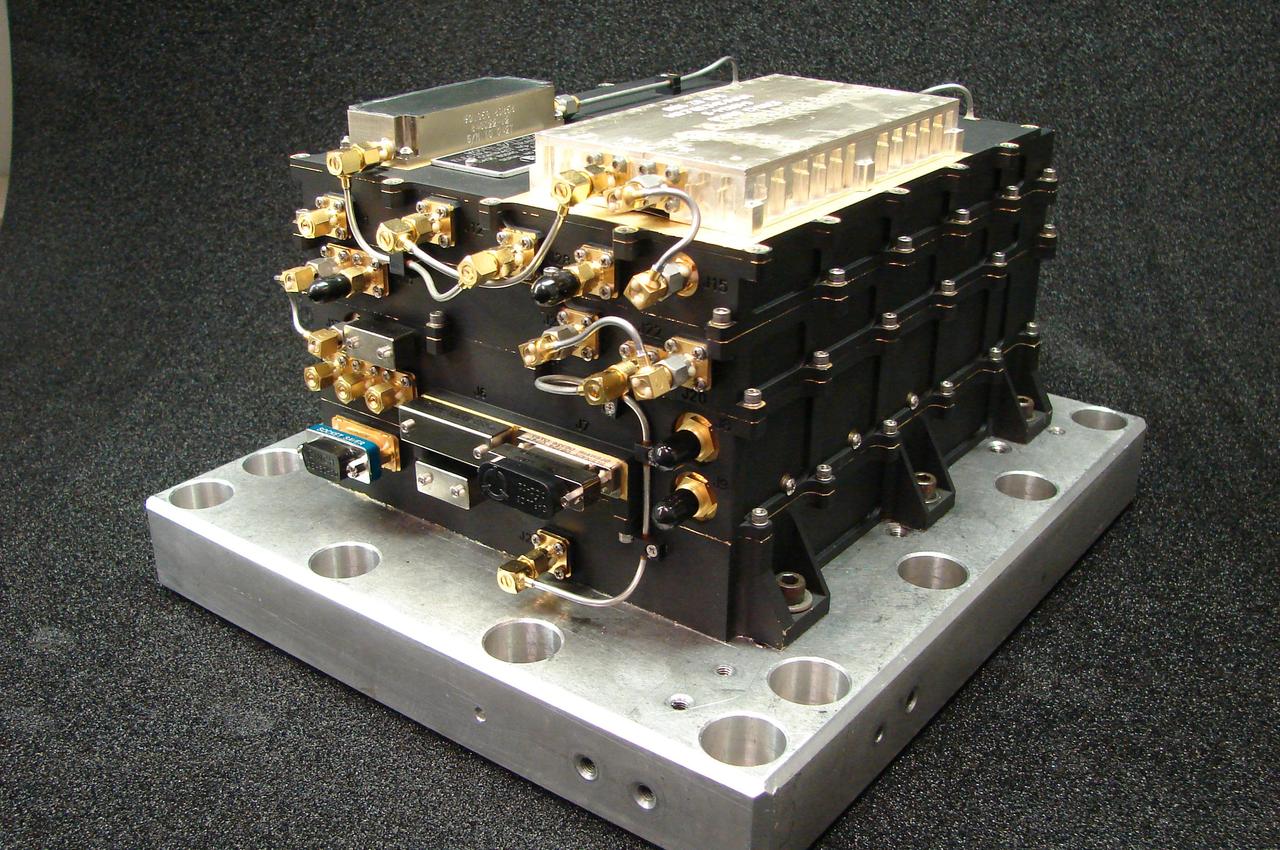
This radio hardware, the Electra UHF Transceiver on NASA MAVEN mission to Mars, is designed to provide communication relay support for robots on the surface of Mars.
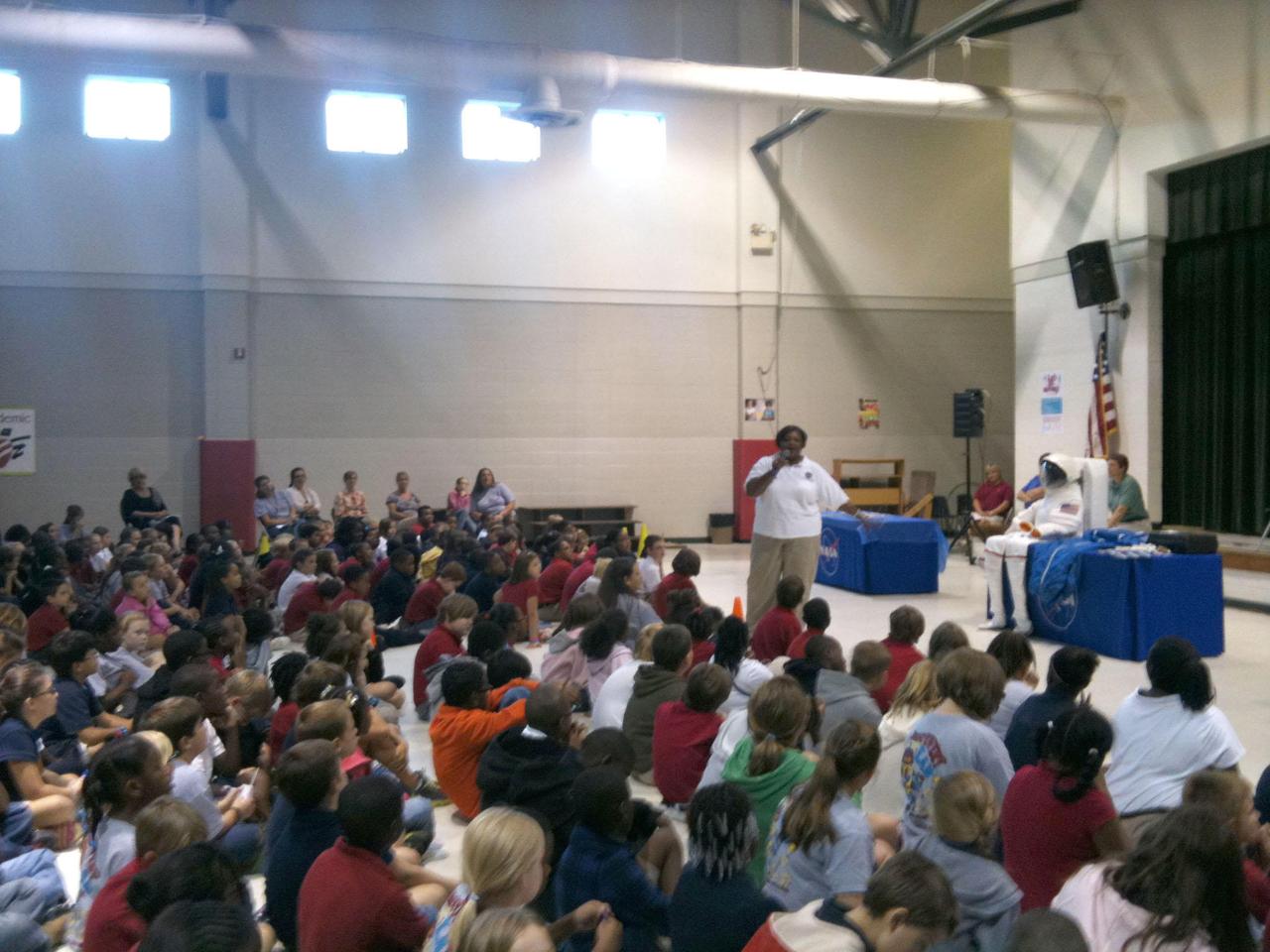
Stennis Space Center visited three Mississippi communities Sept. 11-13, offering interactive and space-related exhibits and presentations to visitors in Grenada, Oxford and Tupelo. In Grenada on Sept. 12, Stennis Office of External Affairs Manager Pam Covington spoke to a student assembly at Grenada Upper Elementary School.
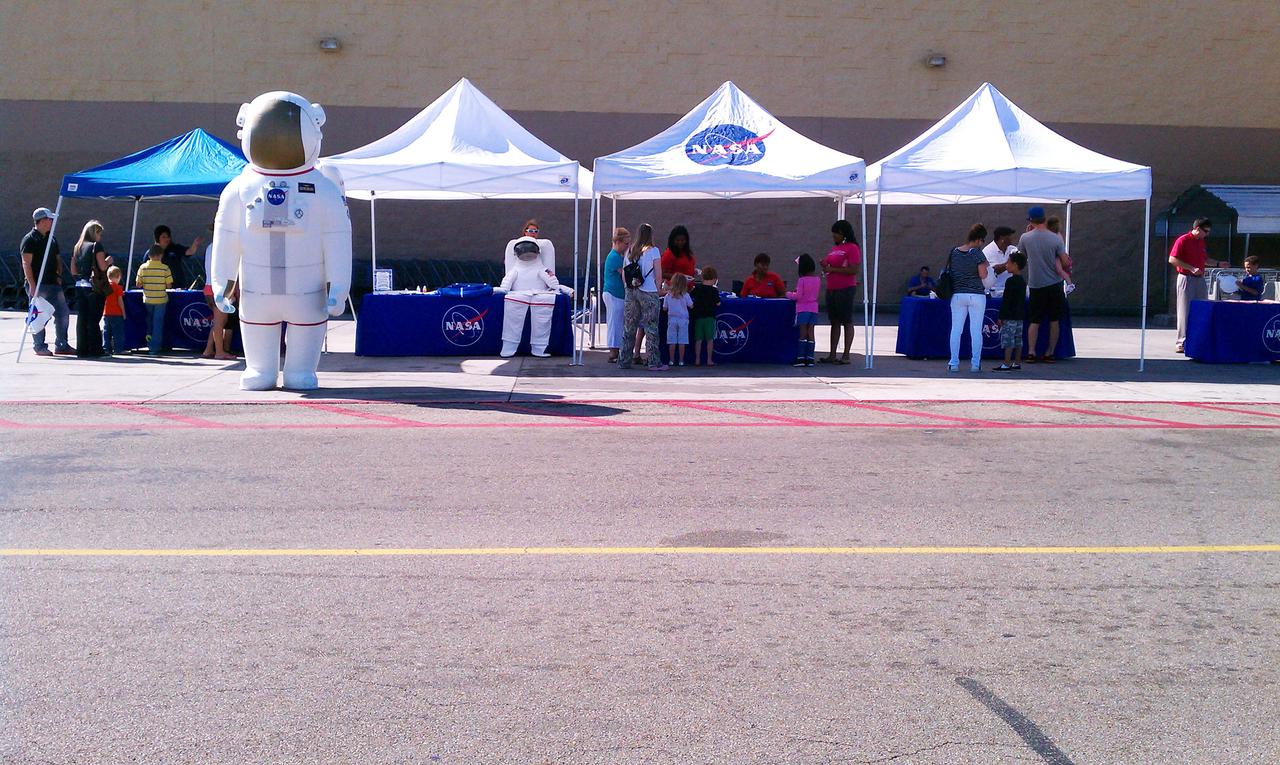
John C. Stennis Space Center hosted outreach activities at the Walmart Supercenter Store in Picayune on Nov. 3, focusing on helping area residents learn about NASA and Stennis' role in the future of space exploration. Visitors could learn about living and working in space, participate in hands-on educational activities, discover facts about the International Space Station, view images from NASA's latest rover mission to Mars and find out about rocket engine test work at Stennis Space Center.
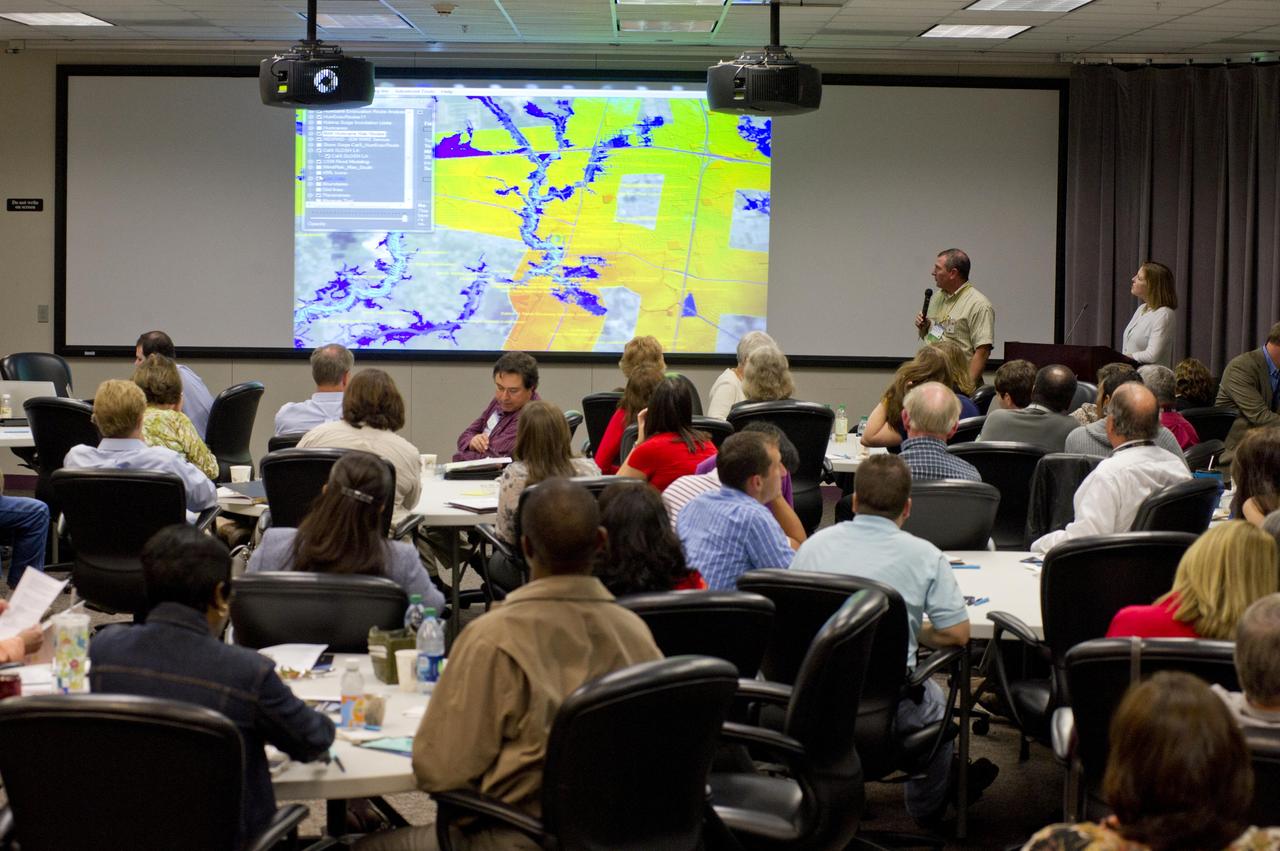
Participants in an Oct. 16-18 workshop at John C. Stennis Space Center focused on identifying current and future climate risks and developing strategies to address them. NASA Headquarters sponsored the Resilience and Adaptation to Climate Risks Workshop to understand climate change risks and adaptation strategies. The workshop was part of an effort that joins the science and operations arms of the agency in a coordinated response to climate change. NASA Headquarters is holding workshops on the subject at all NASA centers.
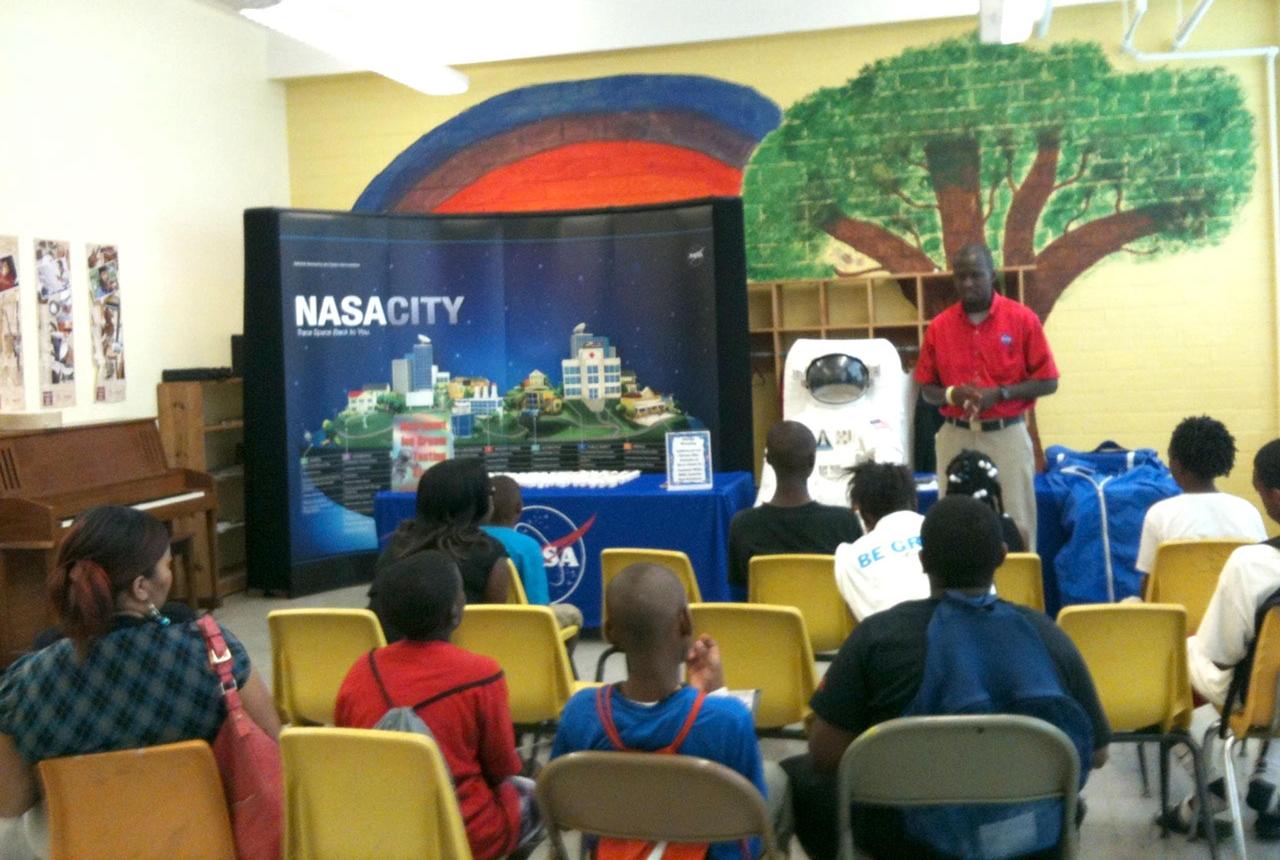
A Stennis Space Center employee talks to young people gathered for a NASA outreach activity at the Boys and Girls Club in Yazoo City, Miss., on June 5, 2012. The Stennis Office of External Affairs hosted outreach activities during a farmers' market in Canton on June 2 prior to visiting Yazoo City. In each instance, visitors were able to collect information about NASA, rocket engine testing and other work at Stennis.
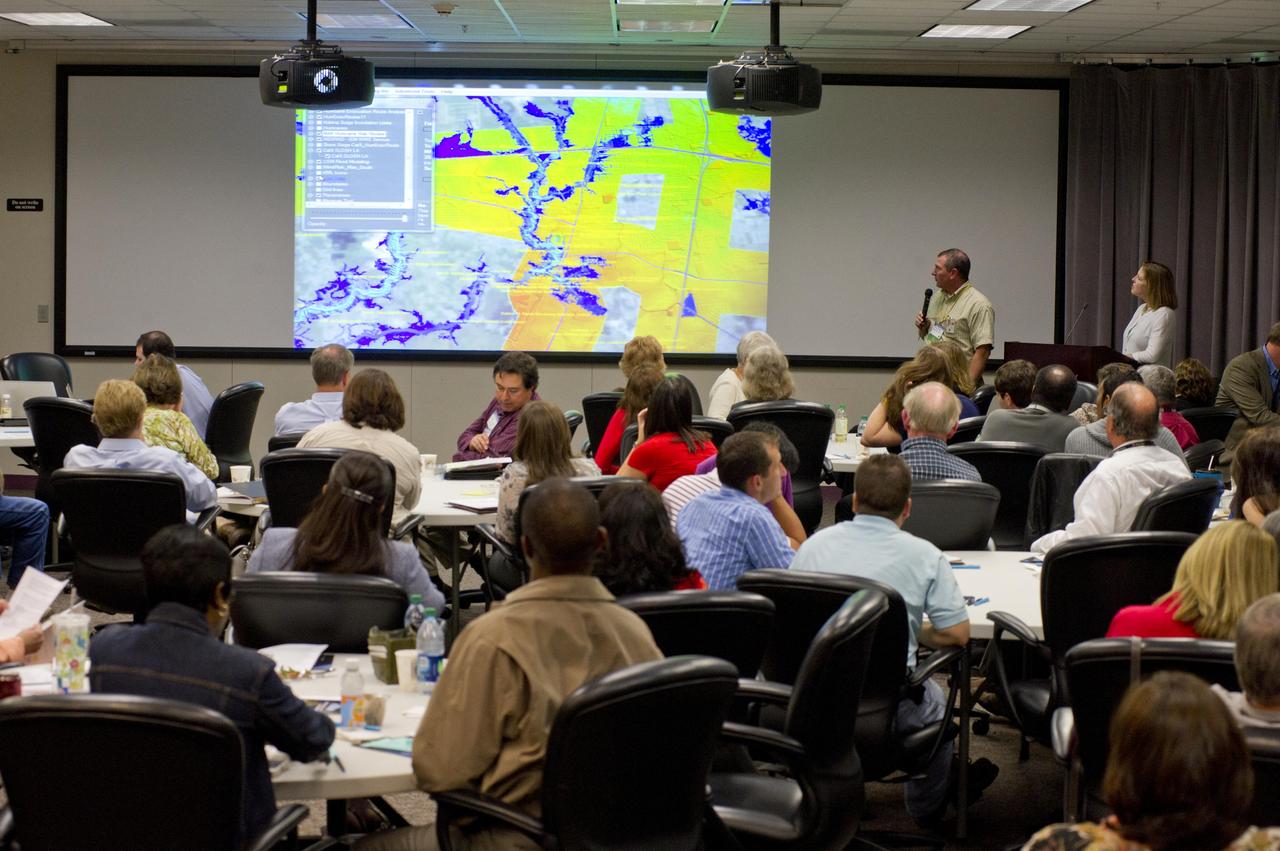
Participants in an Oct. 16-18 workshop at John C. Stennis Space Center focused on identifying current and future climate risks and developing strategies to address them. NASA Headquarters sponsored the Resilience and Adaptation to Climate Risks Workshop to understand climate change risks and adaptation strategies. The workshop was part of an effort that joins the science and operations arms of the agency in a coordinated response to climate change. NASA Headquarters is holding workshops on the subject at all NASA centers.
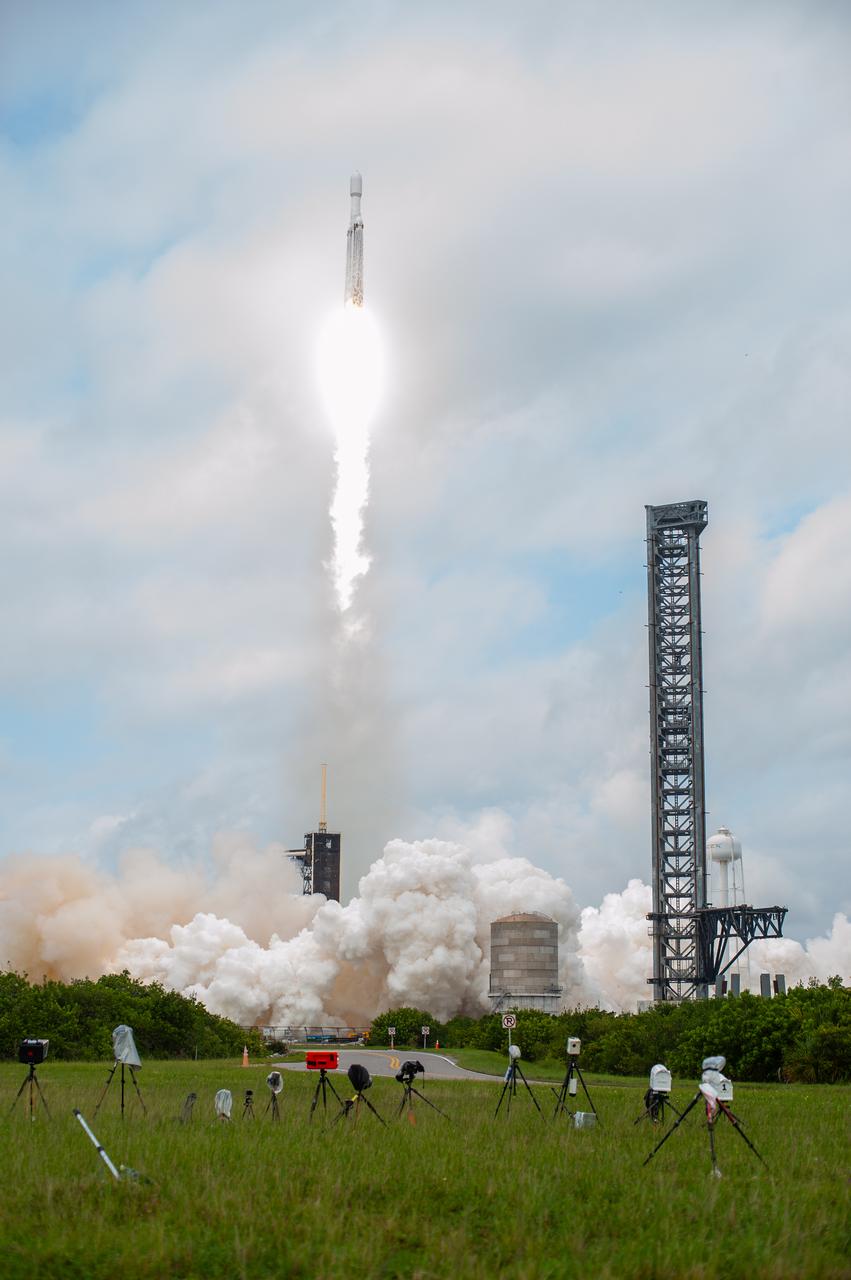
NASA’s Psyche spacecraft, atop a SpaceX Falcon Heavy rocket, soars into the sky after lifting off from Kennedy Space Center’s historic Launch Complex 39A in Florida at 10:19 a.m. EDT on Friday, Oct. 13, 2023. Psyche will travel to a metal-rich asteroid by the same name orbiting the Sun between Mars and Jupiter to study it’s composition. The spacecraft also carries the agency’s Deep Space Optical Communications technology demonstration, which will test laser communications beyond the Moon.
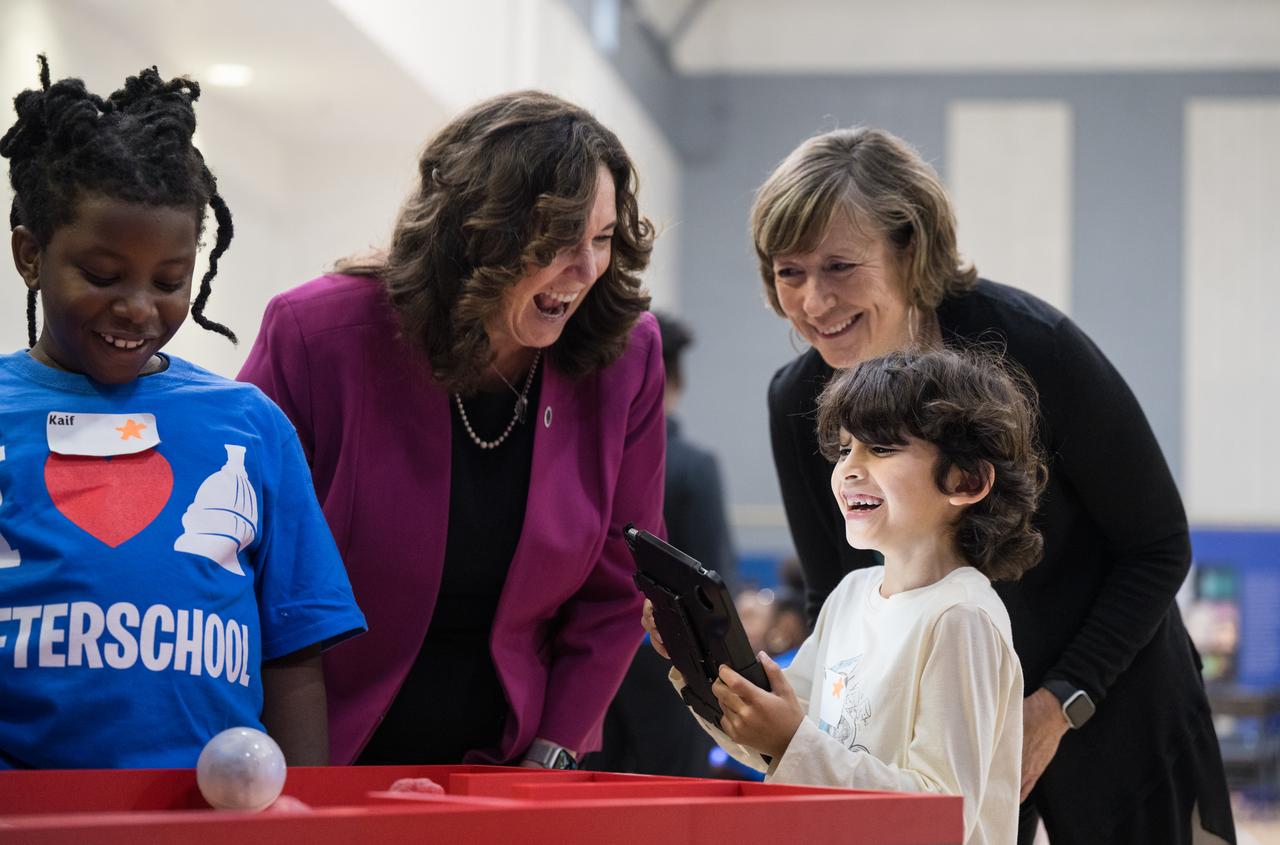
NASA Deputy Associate Administrator for NASA’s Office of STEM Engagement, Kris Brown, right, and U.S. Department of Education Deputy Secretary Cindy Marten, left, watch as a student operates a robot during a STEM event to kickoff the 21st Century Community Learning Centers NASA and U.S. Department of Education partnership, Monday, Sept. 23, 2024 at Wheatley Education Campus (EC) in Washington. Students engaged in NASA hands-on activities and an engineering design challenge. Photo Credit: (NASA/Aubrey Gemignani)

NASA Deputy Associate Administrator for NASA’s Office of STEM Engagement, Kris Brown, provides remarks at a kickoff event for the 21st Century Community Learning Centers NASA and Department of Education partnership, Monday, Sept. 23, 2024 at Wheatley Education Campus in Washington. Students engaged in NASA hands-on activities and an engineering design challenge. Photo Credit: (NASA/Aubrey Gemignani)
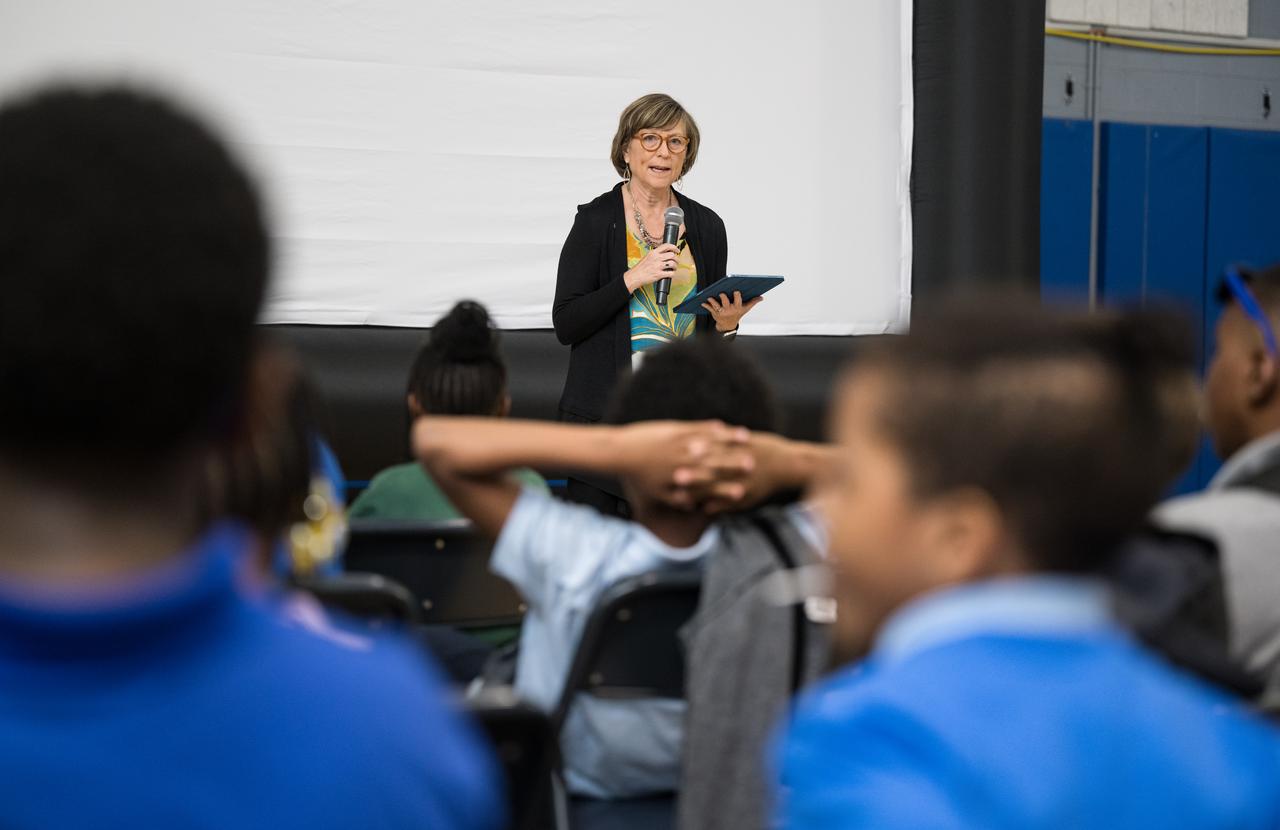
NASA Deputy Associate Administrator for NASA’s Office of STEM Engagement, Kris Brown, provides remarks at a kickoff event for the 21st Century Community Learning Centers NASA and Department of Education partnership, Monday, Sept. 23, 2024 at Wheatley Education Campus in Washington. Students engaged in NASA hands-on activities and an engineering design challenge. Photo Credit: (NASA/Aubrey Gemignani)
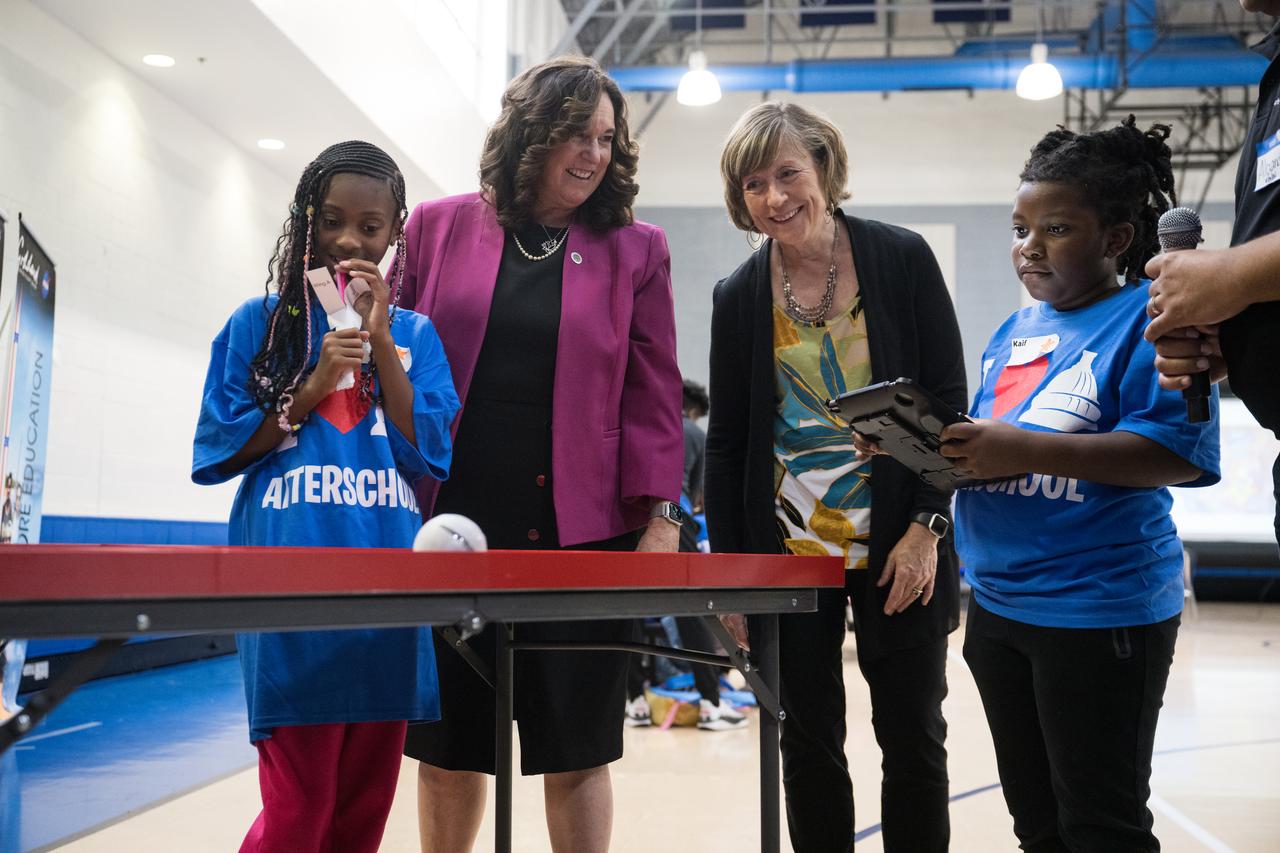
NASA Deputy Associate Administrator for NASA’s Office of STEM Engagement, Kris Brown, second from right, and U.S. Department of Education Deputy Secretary Cindy Marten, second from left, watch as a student operates a robot during a STEM event to kickoff the 21st Century Community Learning Centers NASA and U.S. Department of Education partnership, Monday, Sept. 23, 2024 at Wheatley Education Campus (EC) in Washington. Students engaged in NASA hands-on activities and an engineering design challenge. Photo Credit: (NASA/Aubrey Gemignani)
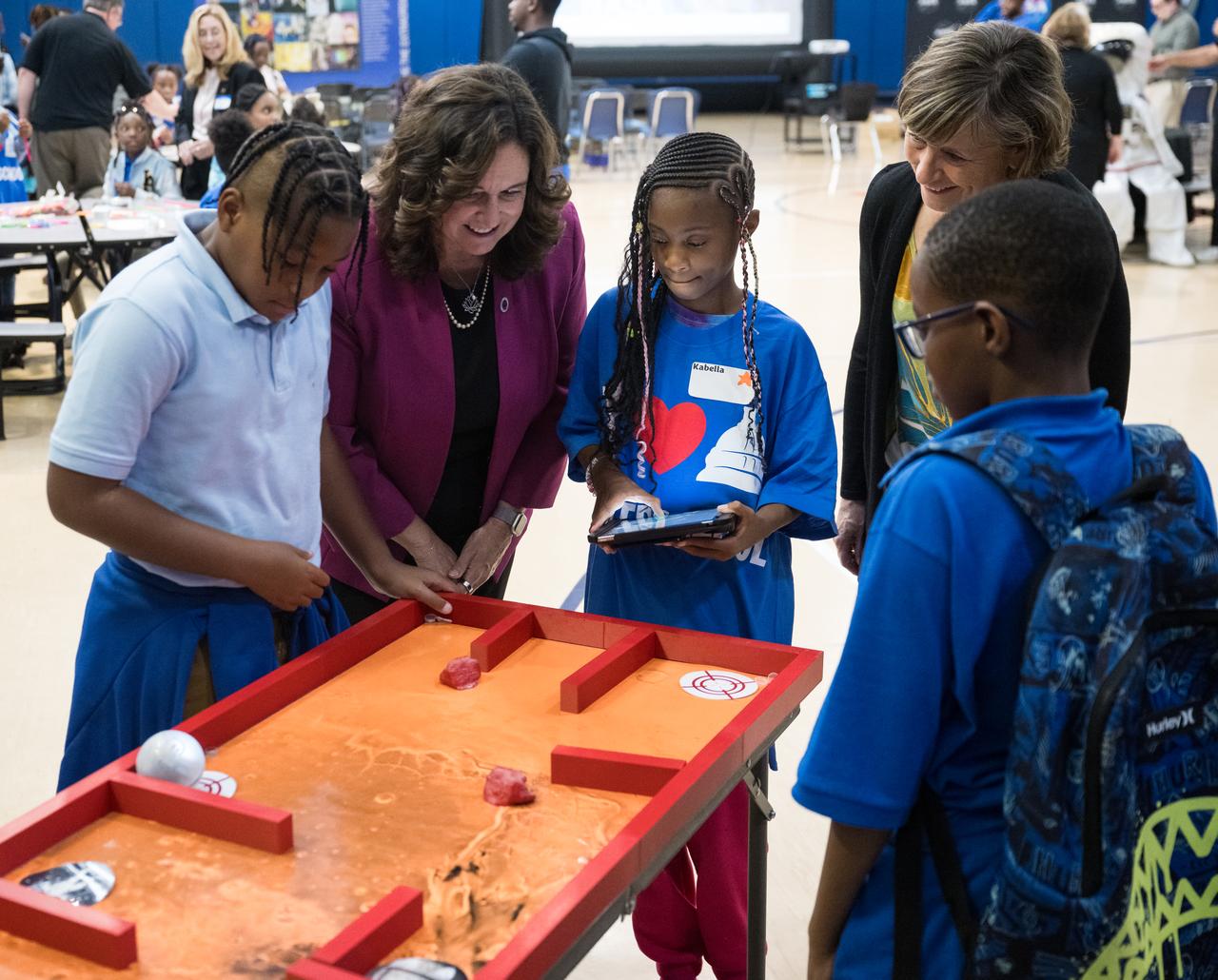
NASA Deputy Associate Administrator for NASA’s Office of STEM Engagement, Kris Brown, second from right, and U.S. Department of Education Deputy Secretary Cindy Marten, second from left, watch as a student operates a robot during a STEM event to kickoff the 21st Century Community Learning Centers NASA and U.S. Department of Education partnership, Monday, Sept. 23, 2024 at Wheatley Education Campus (EC) in Washington. Students engaged in NASA hands-on activities and an engineering design challenge. Photo Credit: (NASA/Aubrey Gemignani)
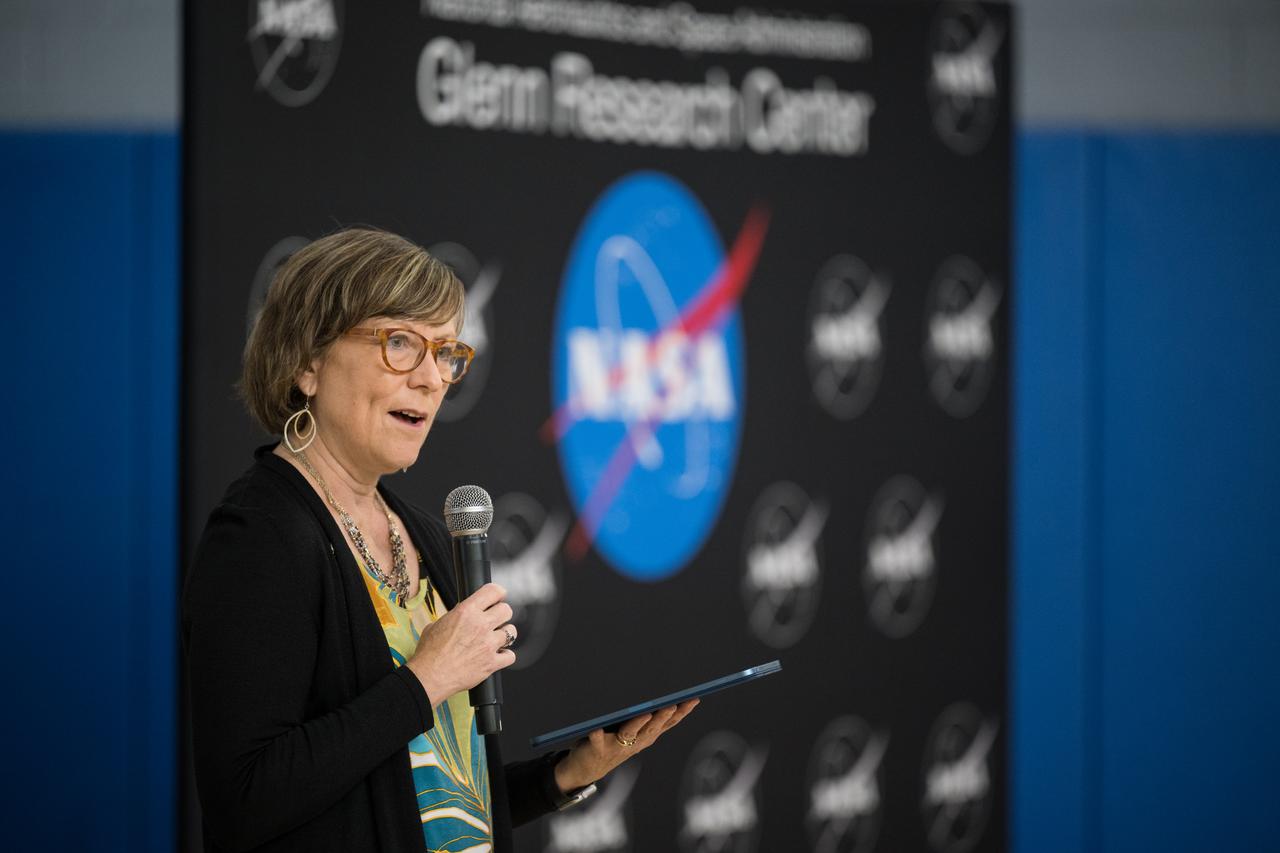
NASA Deputy Associate Administrator for NASA’s Office of STEM Engagement, Kris Brown, provides remarks at a kickoff event for the 21st Century Community Learning Centers NASA and Department of Education partnership, Monday, Sept. 23, 2024 at Wheatley Education Campus in Washington. Students engaged in NASA hands-on activities and an engineering design challenge. Photo Credit: (NASA/Aubrey Gemignani)
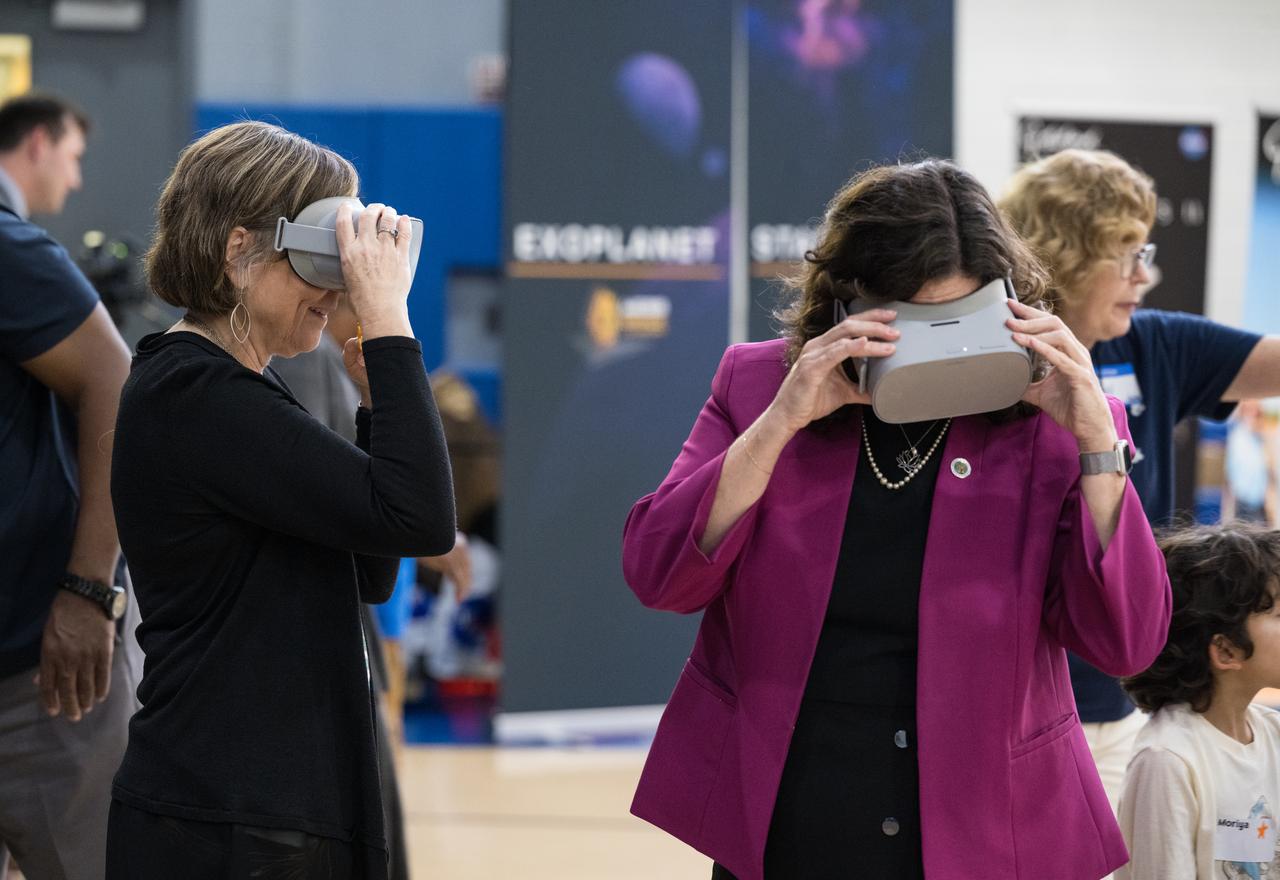
NASA Deputy Associate Administrator for NASA’s Office of STEM Engagement, Kris Brown, left, and U.S. Department of Education Deputy Secretary Cindy Marten, right, participate in a virtual reality tour of NASA’s Neutral Buoyancy Lab during a kickoff event for the 21st Century Community Learning Centers NASA and Department of Education partnership, Monday, Sept. 23, 2024 at Wheatley Education Campus in Washington. Photo Credit: (NASA/Aubrey Gemignani)
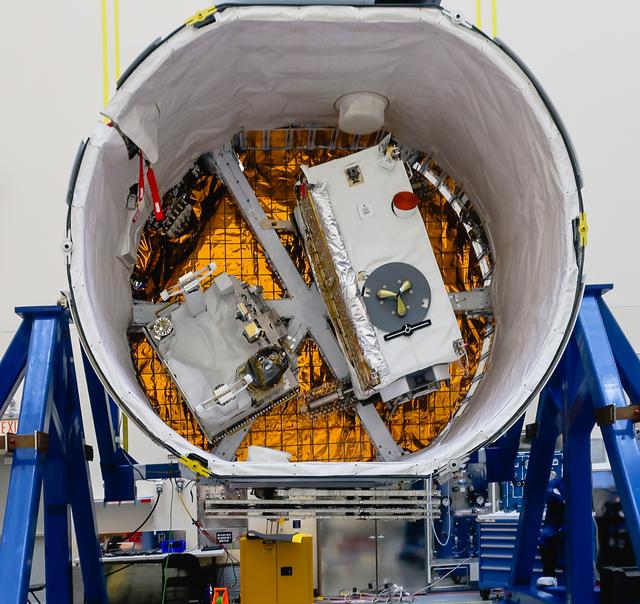
NASA’s Orbiting Carbon Observatory-3 (OCO-3) and Space Test Program-Houston 6 (STP-H6) are in view installed in the truck of SpaceX’s Dragon spacecraft inside the SpaceX facility at NASA’s Kennedy Space Center in Florida on March 23, 2019. OCO-3 and STP-H6 will be delivered to the International Space Station on SpaceX’s 17th Commercial Resupply Services mission (CRS-17) for NASA. STP-H6 is an x-ray communication investigation that will be used to perform a space-based demonstration of a new technology for generating beams of modulated x-rays. This technology may be useful for providing efficient communication to deep space probes, or communicating with hypersonic vehicles where plasma sheaths prevent traditional radio communications. OCO-3 will be robotically installed on the exterior of the space station’s Japanese Experiment Module Exposed Facility Unit, where it will measure and map carbon dioxide from space to provide further understanding of the relationship between carbon and climate. CRS-17 is scheduled to launch from Space Launch Complex 40 on Cape Canaveral Air Force Station in late April.
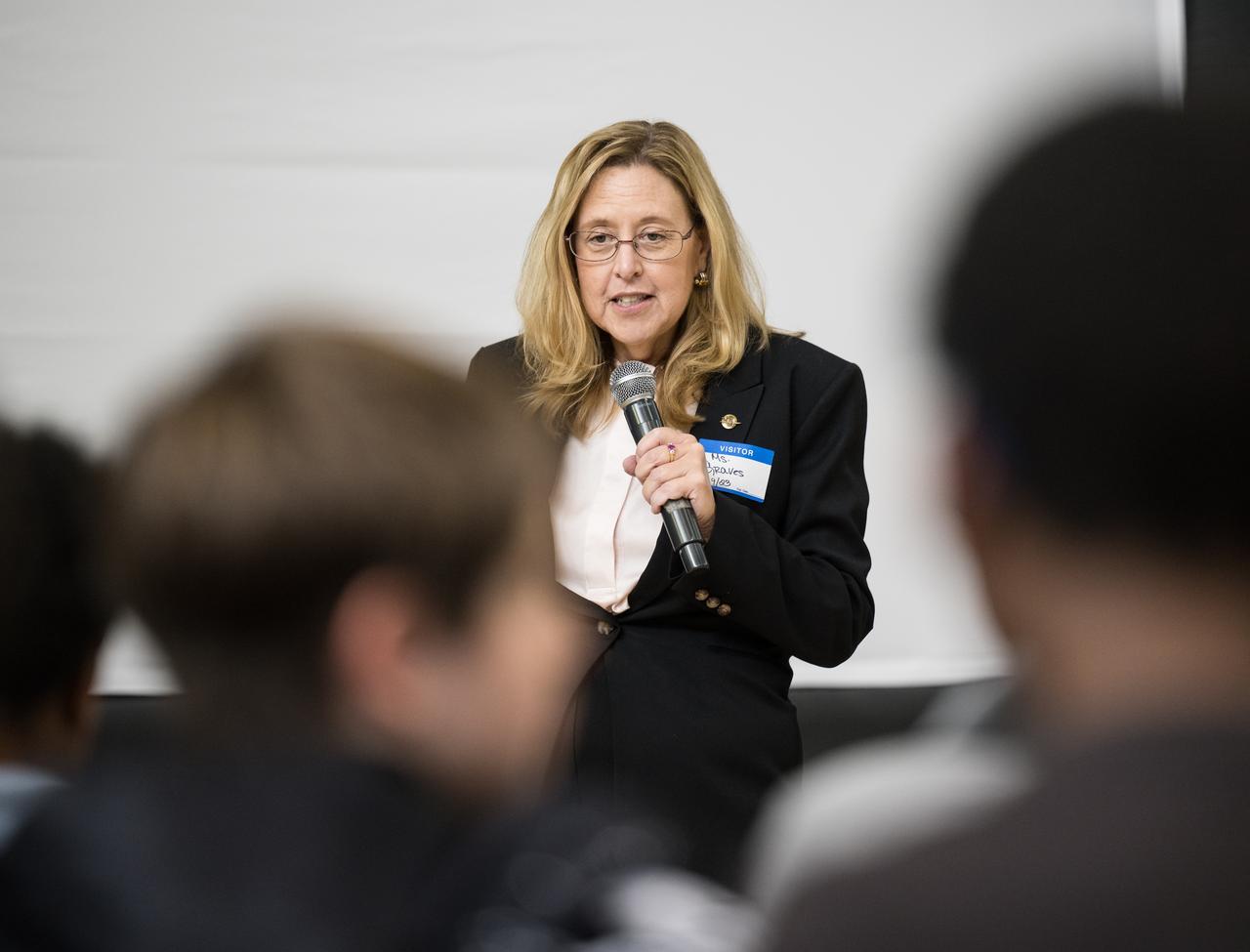
STEM Integration Manager at NASA’s Glenn Research Center (GRC) Office of STEM Engagement, Catherine Graves, provides welcome remarks at a kickoff event for the 21st Century Community Learning Centers NASA and Department of Education partnership, Monday, Sept. 23, 2024 at Wheatley Education Campus in Washington. Students engaged in NASA hands-on activities and an engineering design challenge. Photo Credit: (NASA/Aubrey Gemignani)
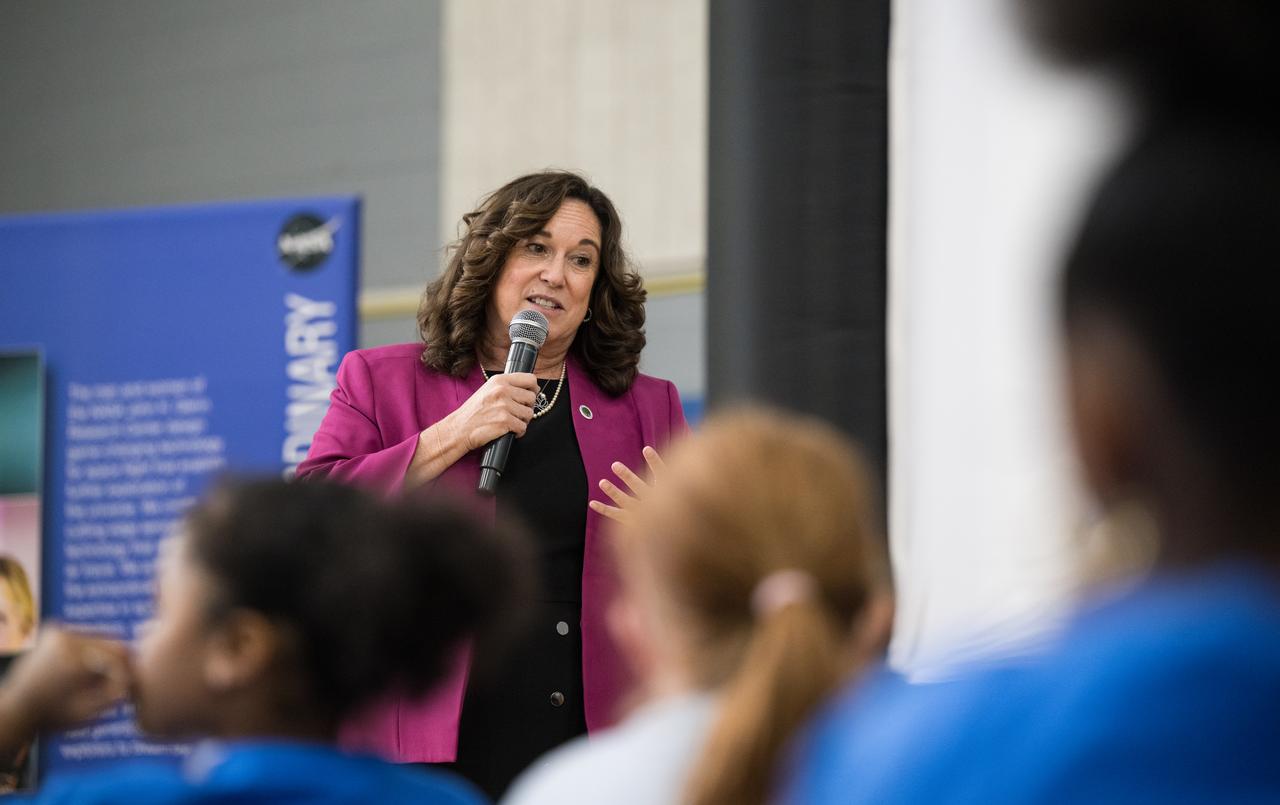
Deputy Secretary of the U.S. Department of Education, Cindy Marten, provides remarks at a kickoff event for the 21st Century Community Learning Centers NASA and Department of Education partnership, Monday, Sept. 23, 2024 at Wheatley Education Campus in Washington. Students engaged in NASA hands-on activities and an engineering design challenge. Photo Credit: (NASA/Aubrey Gemignani)
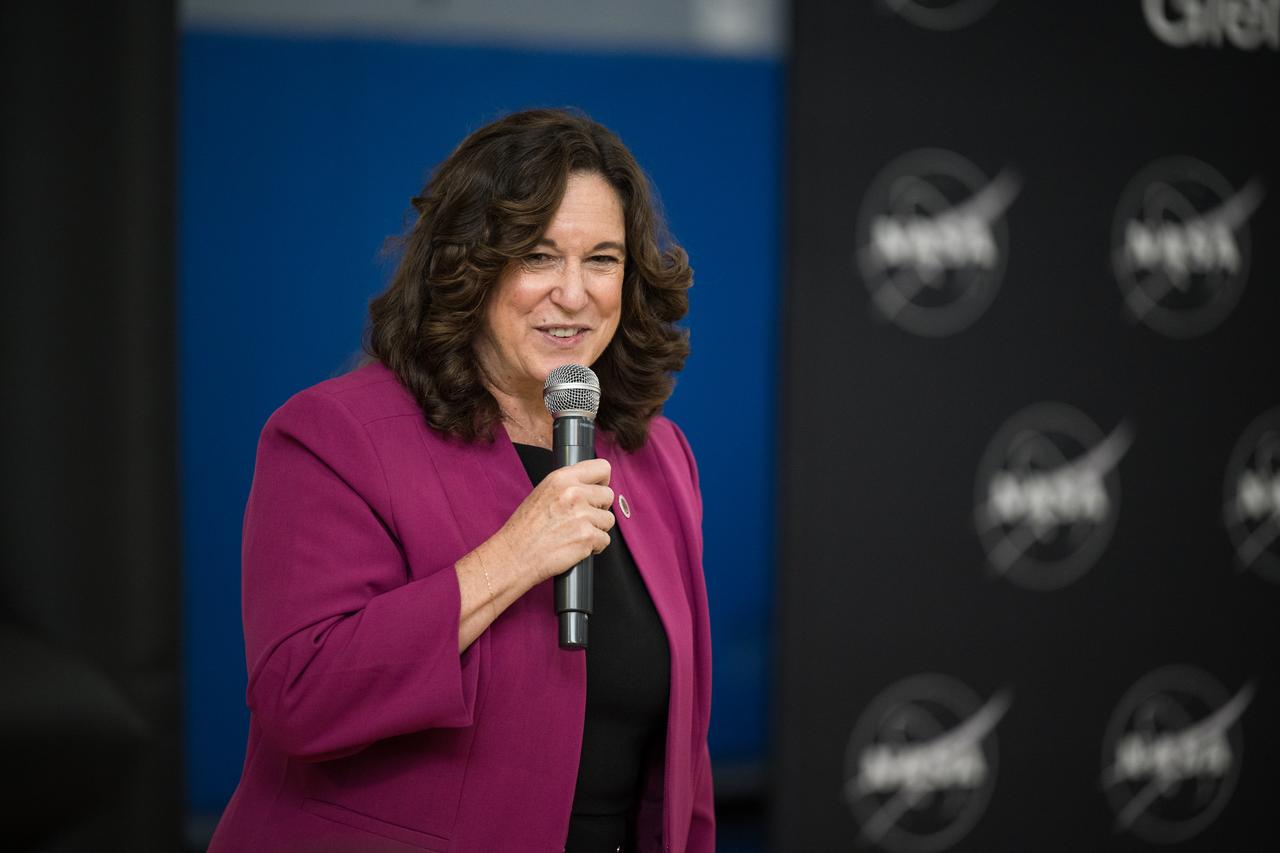
Deputy Secretary of the U.S. Department of Education, Cindy Marten, provides remarks at a kickoff event for the 21st Century Community Learning Centers NASA and Department of Education partnership, Monday, Sept. 23, 2024 at Wheatley Education Campus in Washington. Students engaged in NASA hands-on activities and an engineering design challenge. Photo Credit: (NASA/Aubrey Gemignani)