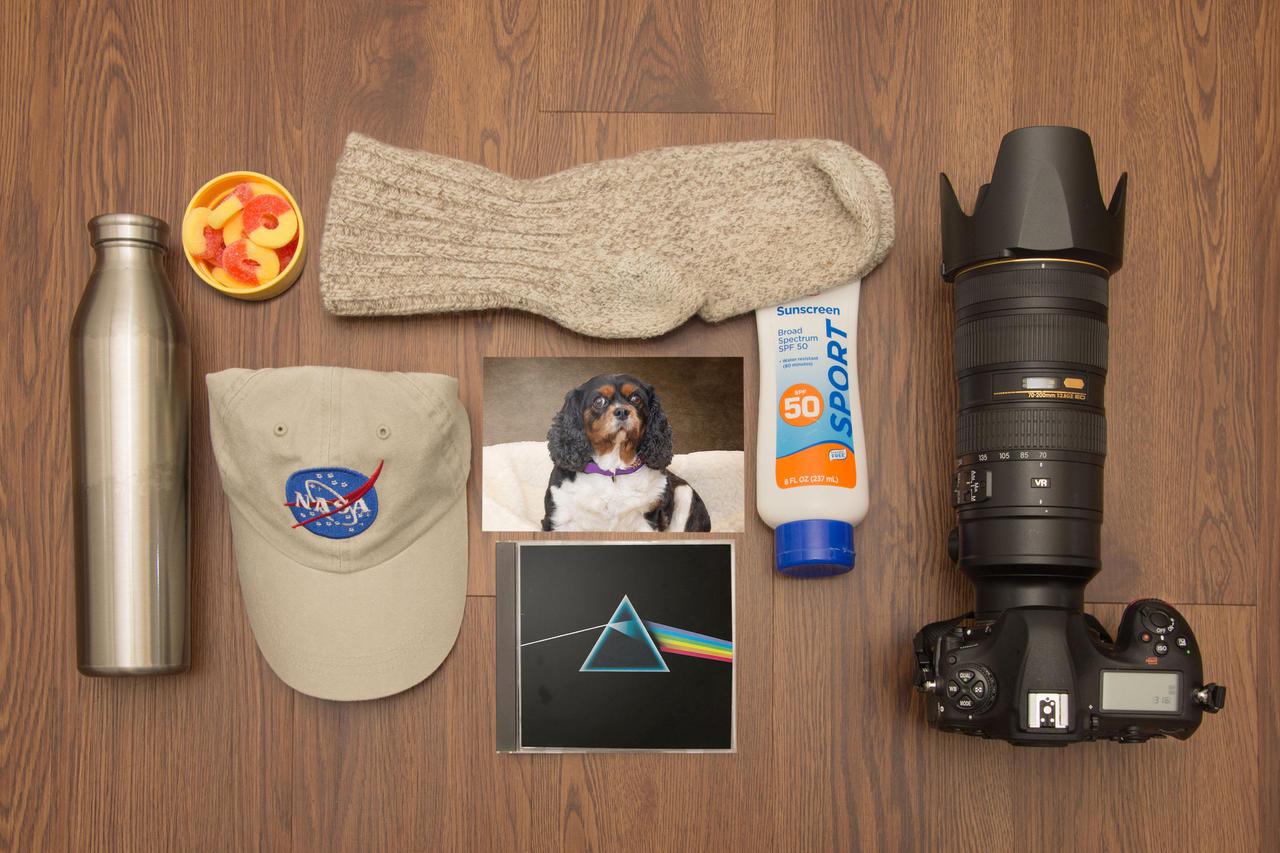
The first thing that went into my Moonkit was my camera. Some of the most iconic photographs ever taken were captured on the surface of the Moon by NASA astronauts. The camera has to go. The hat and sunscreen will be a must to protect me from the unfiltered sunlight. Warm socks? Of course, my feet are always cold. A little “Moon Music” and a photo of Holly, the best dog in the world, will pass the time during breaks. Lastly, I need to eat. Water and gummy peach rings will pack in a small corner of my pack. Marv Smith Lead Photographer, NASA Glenn Research Center
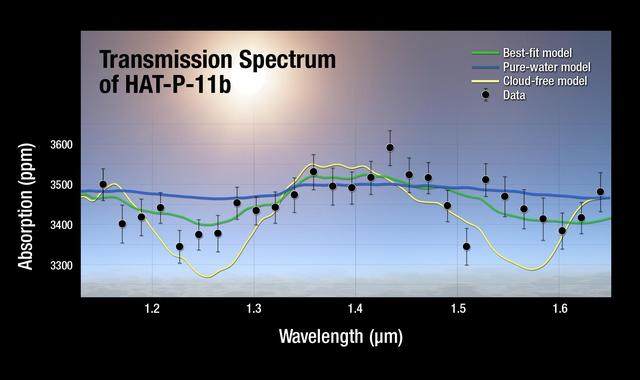
A plot of the transmission spectrum for exoplanet HAT-P-11b, with data from NASA Kepler, Hubble and Spitzer observatories combined. The results show a robust detection of water absorption in the Hubble data.

Do you see what I see in this image from NASA Mars Odyssey spacecraft? There is a mickey mouse hat sitting on the top right side of this daytime infrared image.
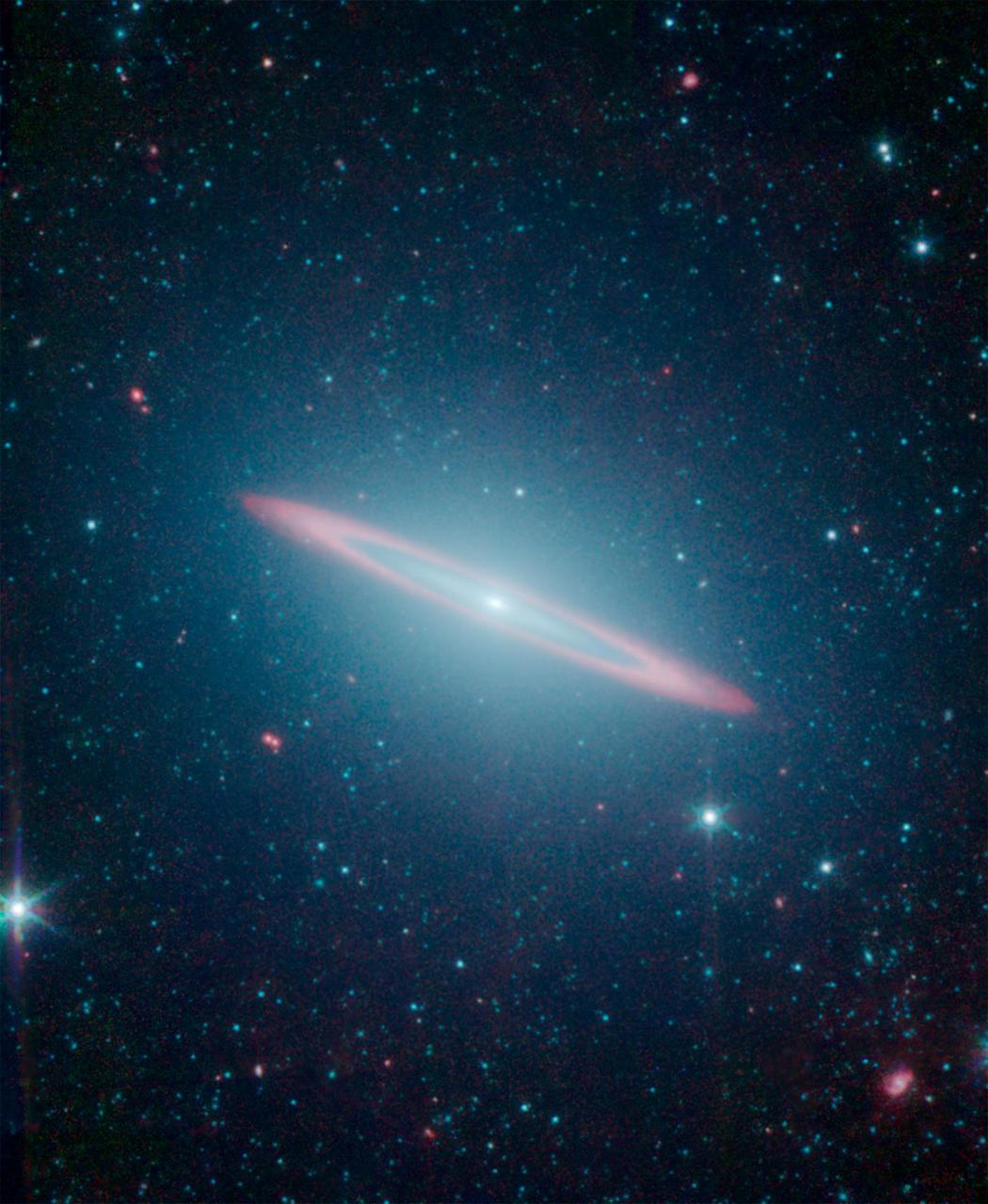
This infrared vision of NASA Spitzer Space Telescope has revealed that the Sombrero galaxy, named after its appearance in visible light to a wide-brimmed hat, is in fact two galaxies in one.
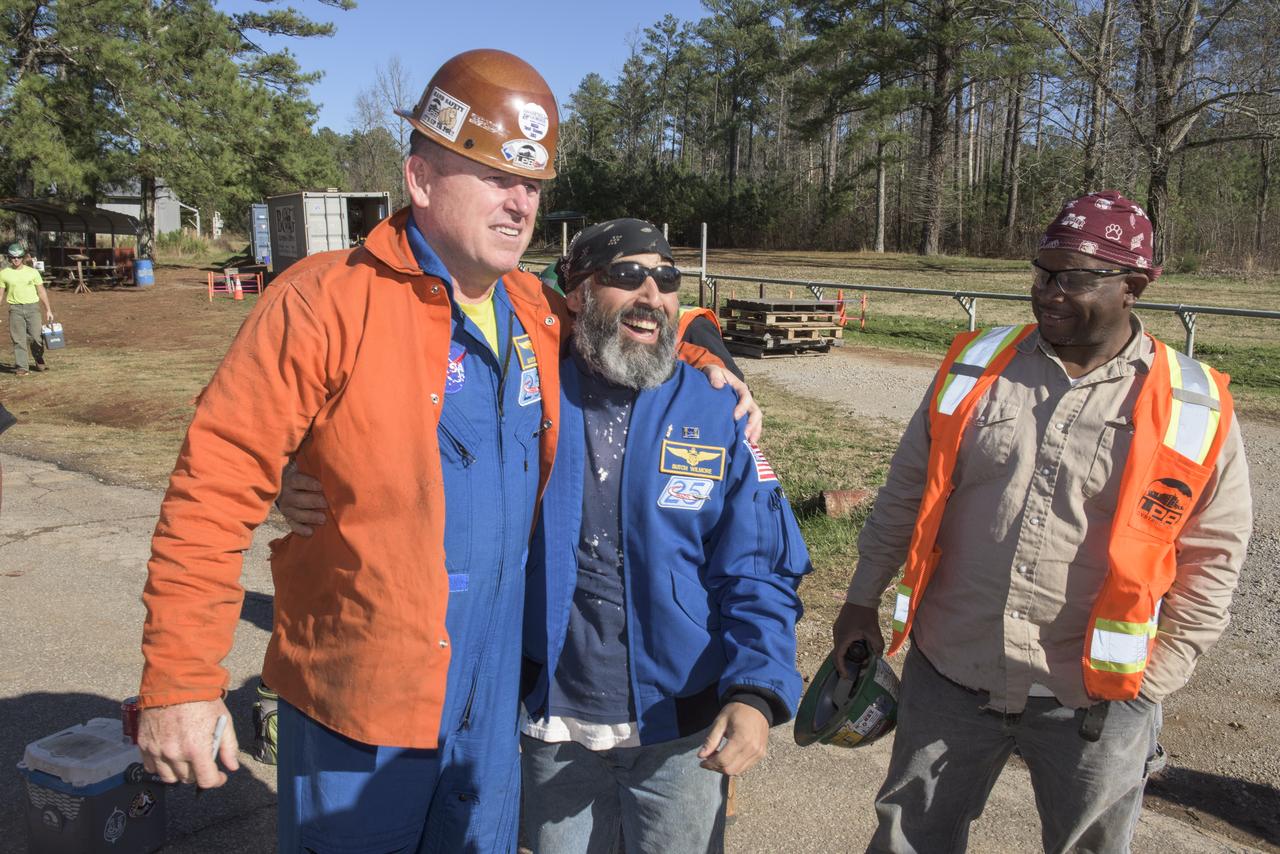
NASA astronaut Butch Wilmore exchanges jacket and hard hat with one of the construction workers building SLS test stand 4693 in the West test area of the Marshall Space Flight Center
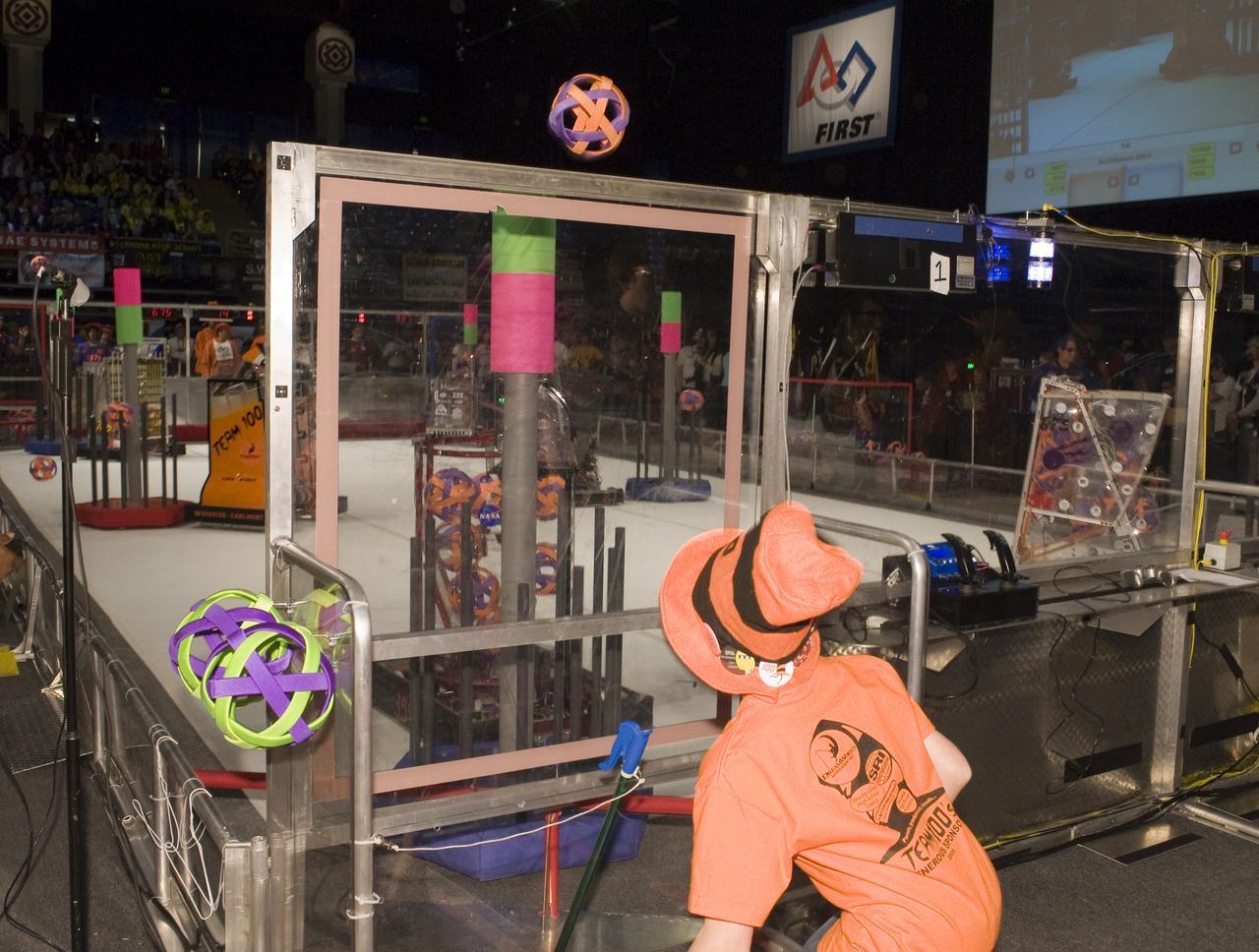
FIRST Robotics Competition 'Lunacy' hosted by NASA at San Jose State University Event Center. For Inspiration and Recognition of Science and Technology let the games begin. the Wild Hats team #100 take a sideways vies of their bot on the field
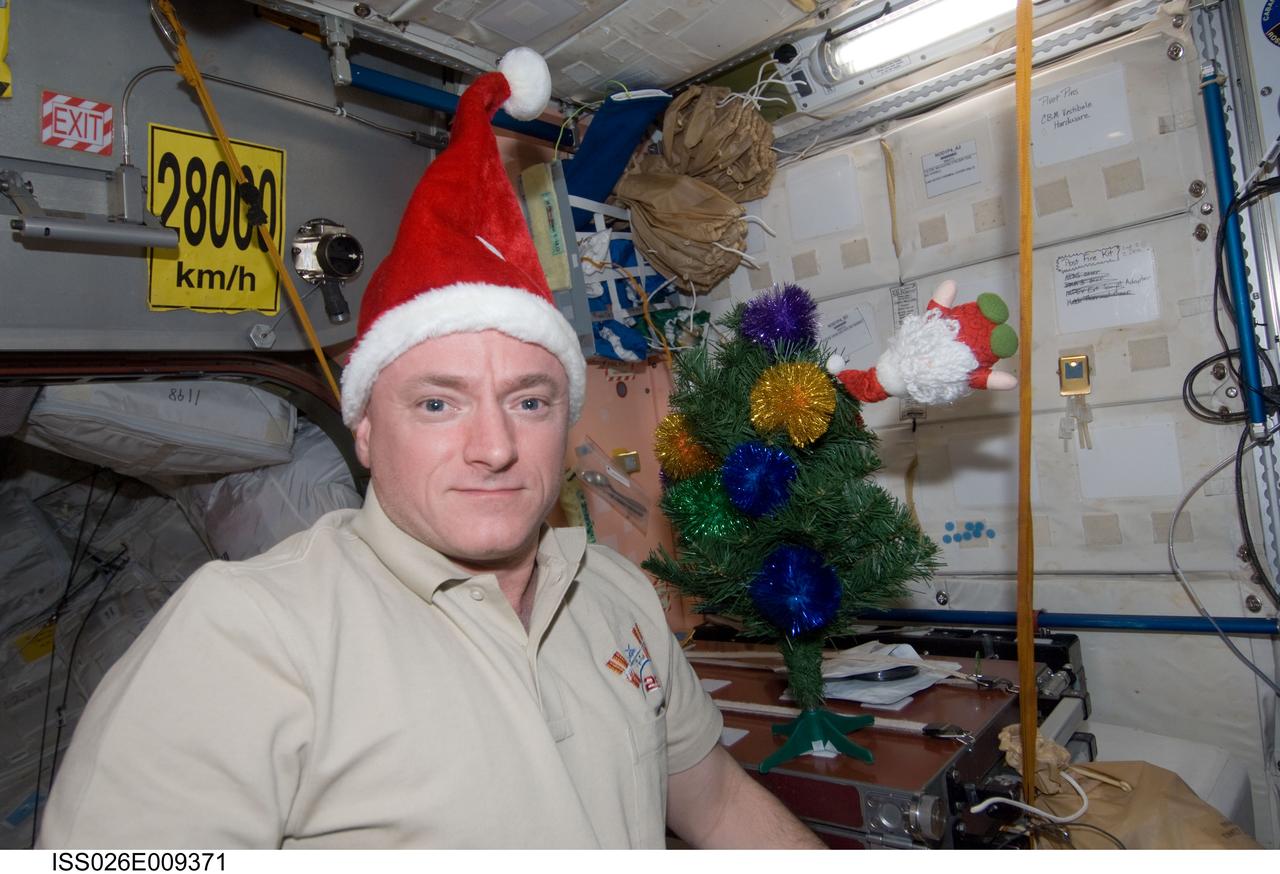
ISS026-E-009371 (12 Dec. 2010) --- Wearing a Santa Claus hat, NASA astronaut Scott Kelly, Expedition 26 commander, poses for a holiday photo near Christmas decorations in the Unity node of the International Space Station.
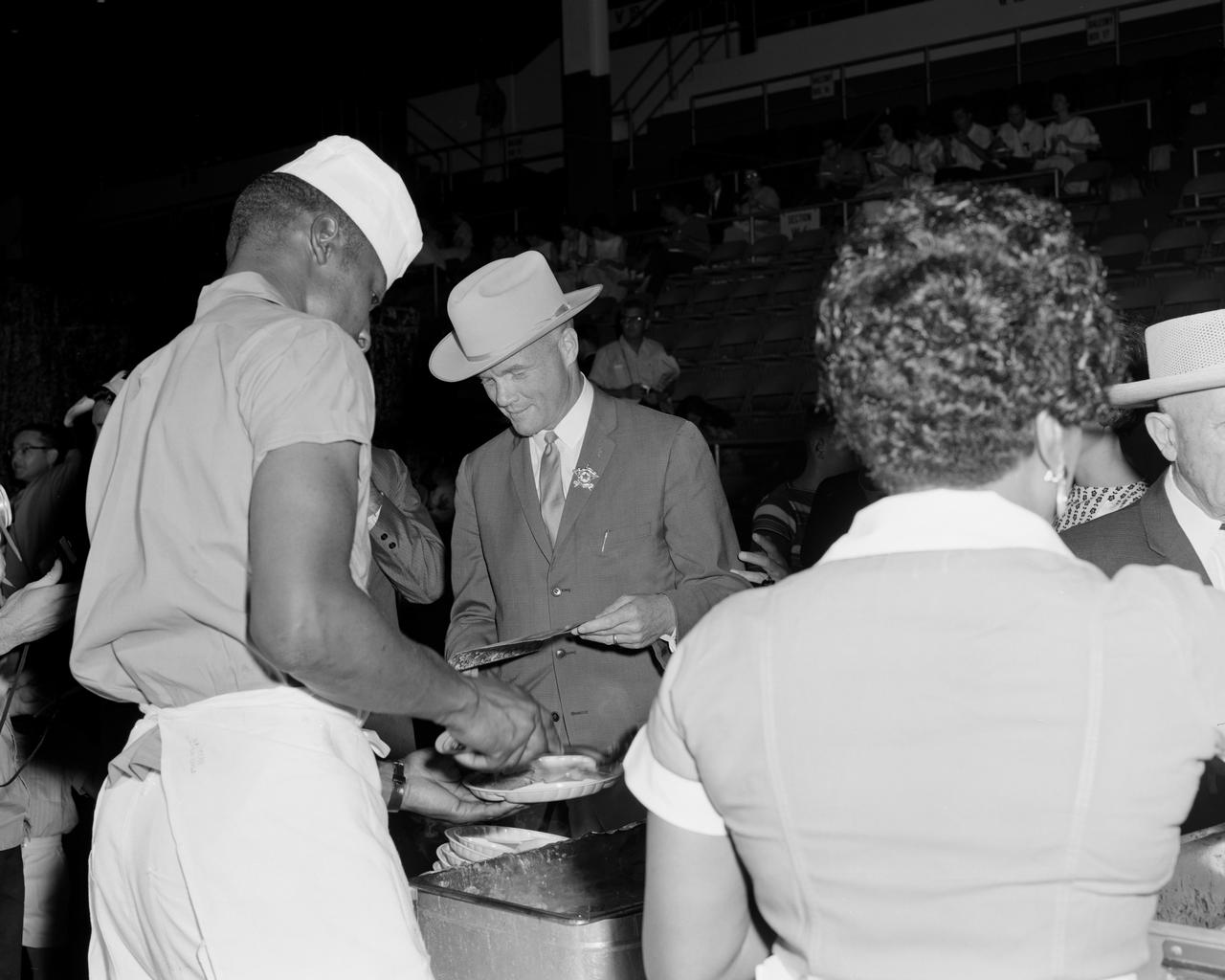
S62-03725 (4 July 1962) --- Mercury astronaut John H. Glenn Jr., wearing a new cowboy hat and a badge in the shape of a star, leafs through his program as he is served his food at the Sam Houston Coliseum. A large crowd was on hand to welcome the Mercury astronauts to Houston, Texas. Photo credit: NASA
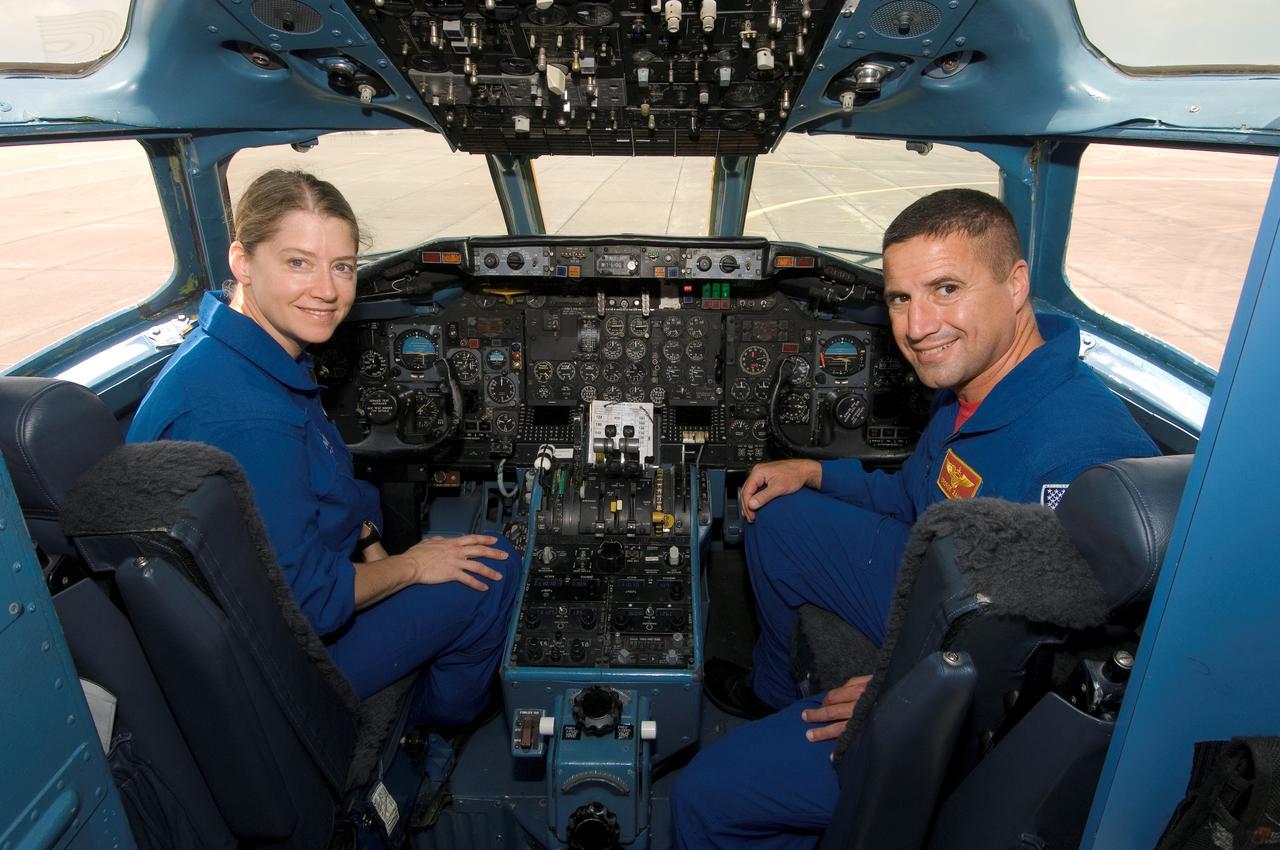
JSC2007-E-43538 (9 Aug. 2007) --- Astronauts Pamela A. Melroy, STS-120 commander, and George D. Zamka, pilot, pose for a photo in the cockpit of a NASA DC-9 aircraft during a Heavy Aircraft Training (HAT) session.
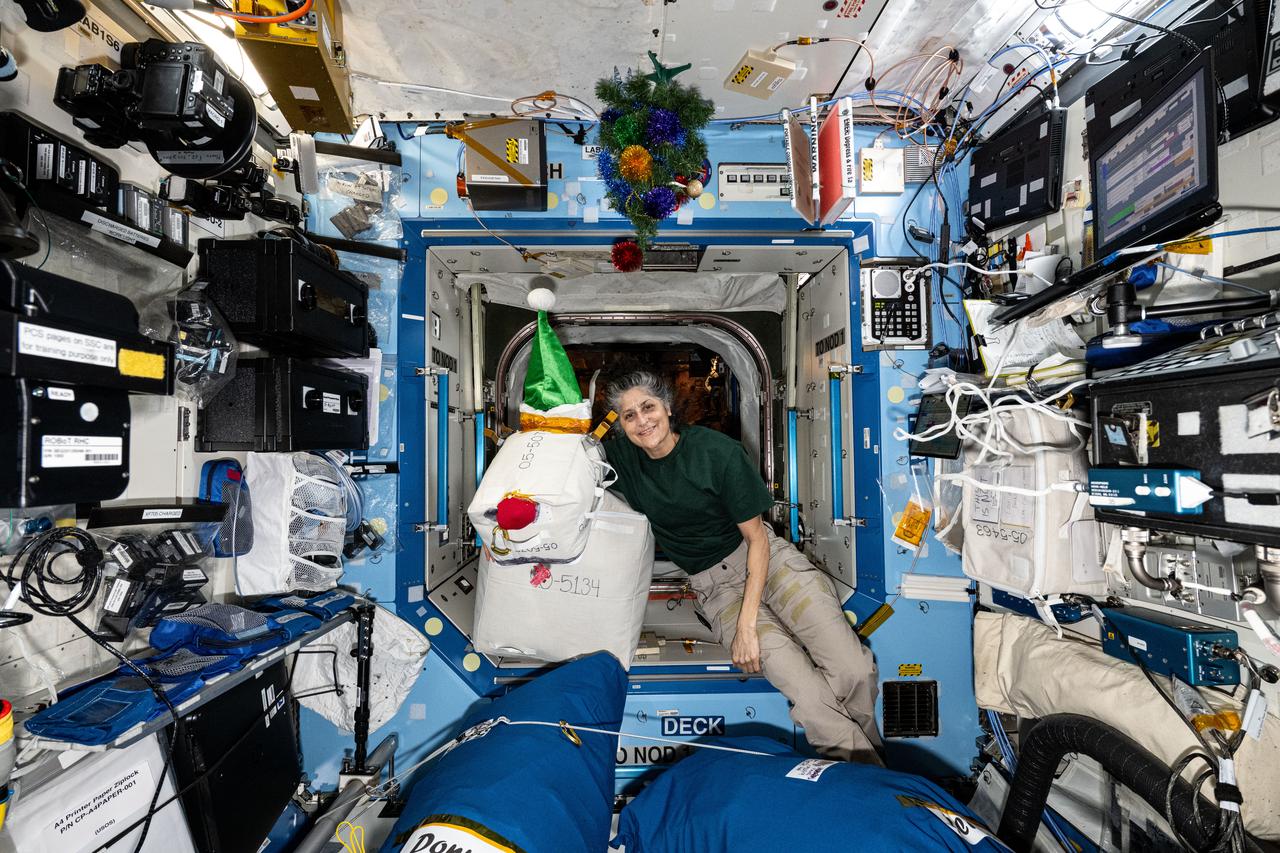
iss072e391424 (Dec. 16, 2024) --- NASA astronaut and Expedition 72 Commander Suni Williams shows off a holiday decoration of a familiar reindeer aboard the International Space Station. The decoration was crafted with excess hardware, cargo bags, and recently-delivered Santa hats.
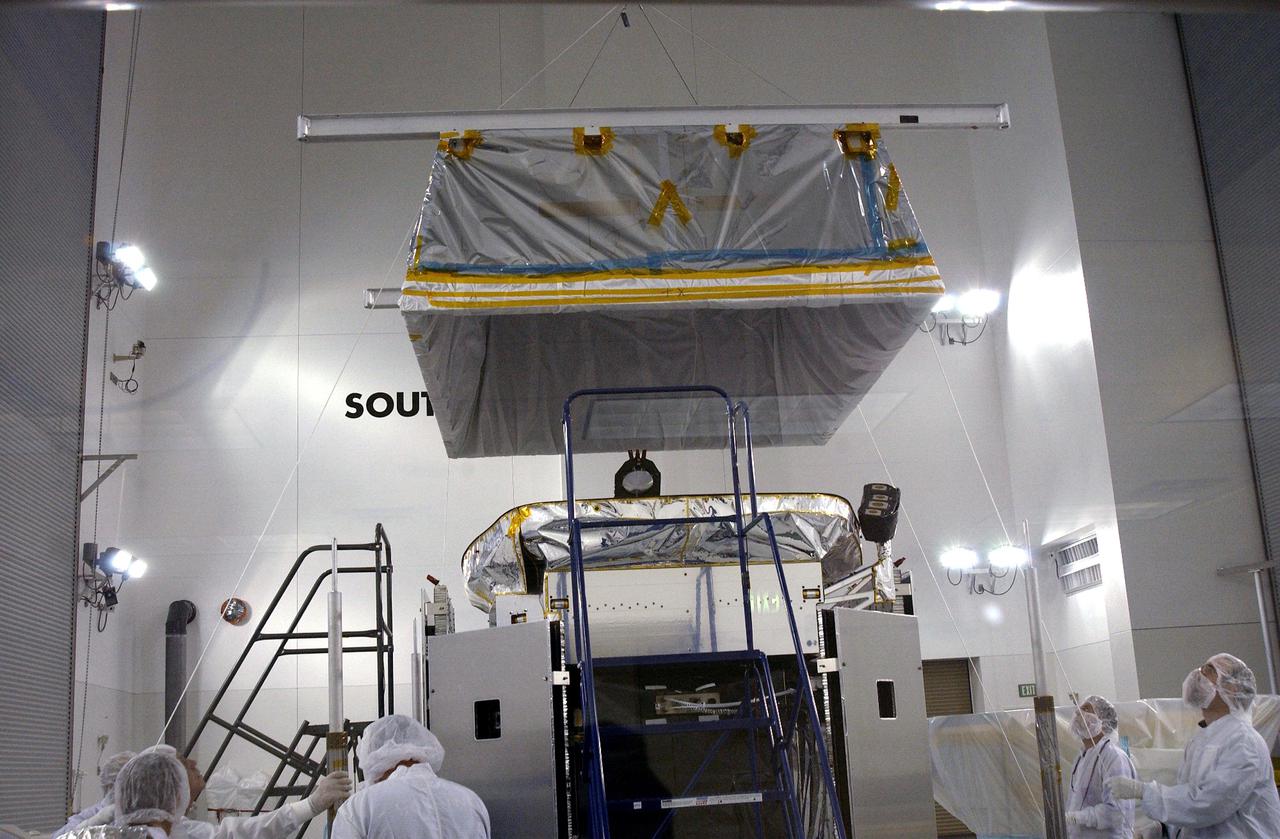
KENNEDY SPACE CENTER, FLA. - In the Astrotech Payload Processing Facility at Vandenberg Air Force Base, workers from NASA’s Jet Propulsion Laboratory in California and Ball Aerospace from Boulder, Colo., lower a 'hat' toward the CloudSat spacecraft before conducting the Cloud Profiling Radar (CPR) functional tests. The hat is used to absorb the RF radiation that is emitted by the instrument during the test. CloudSat will fly in combination with the Cloud-Aerosol Lidar and Infrared Pathfinder Satellite Observation (CALIPSO) to provide never-before-seen 3-D perspectives of how clouds and aerosols form, evolve, and affect weather and climate. CALIPSO and CloudSat will join three other satellites to enhance understanding of climate systems. The launch date for CALIPSO_ CloudSat is no earlier than Aug. 22.
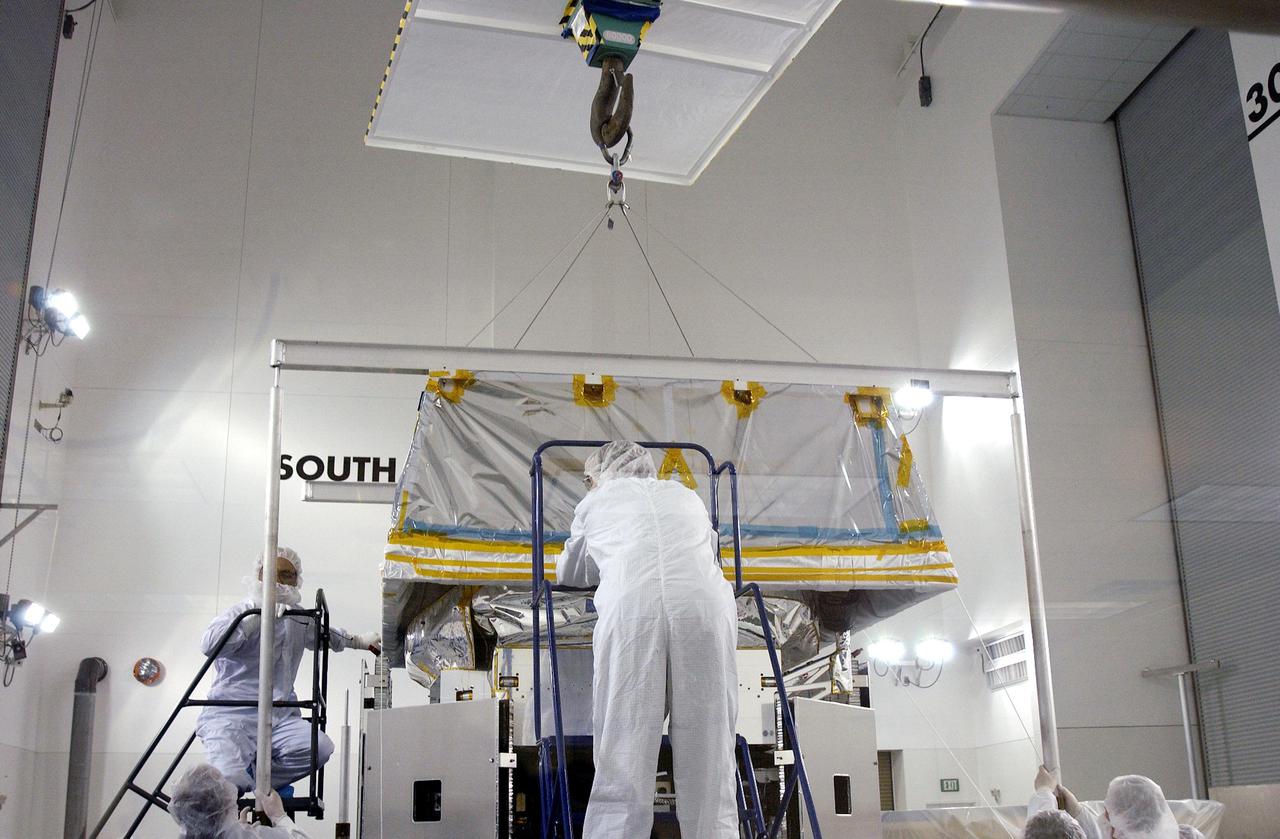
KENNEDY SPACE CENTER, FLA. - In the Astrotech Payload Processing Facility at Vandenberg Air Force Base, workers from NASA’s Jet Propulsion Laboratory in California and Ball Aerospace from Boulder, Colo., help guide a “hat” into place on the CloudSat spacecraft before conducting the Cloud Profiling Radar (CPR) functional tests. The hat is used to absorb the RF radiation that is emitted by the instrument during the test. CloudSat will fly in combination with the Cloud-Aerosol Lidar and Infrared Pathfinder Satellite Observation (CALIPSO) to provide never-before-seen 3-D perspectives of how clouds and aerosols form, evolve, and affect weather and climate. CALIPSO and CloudSat will join three other satellites to enhance understanding of climate systems. The launch date for CALIPSO_ CloudSat is no earlier than Aug. 22.
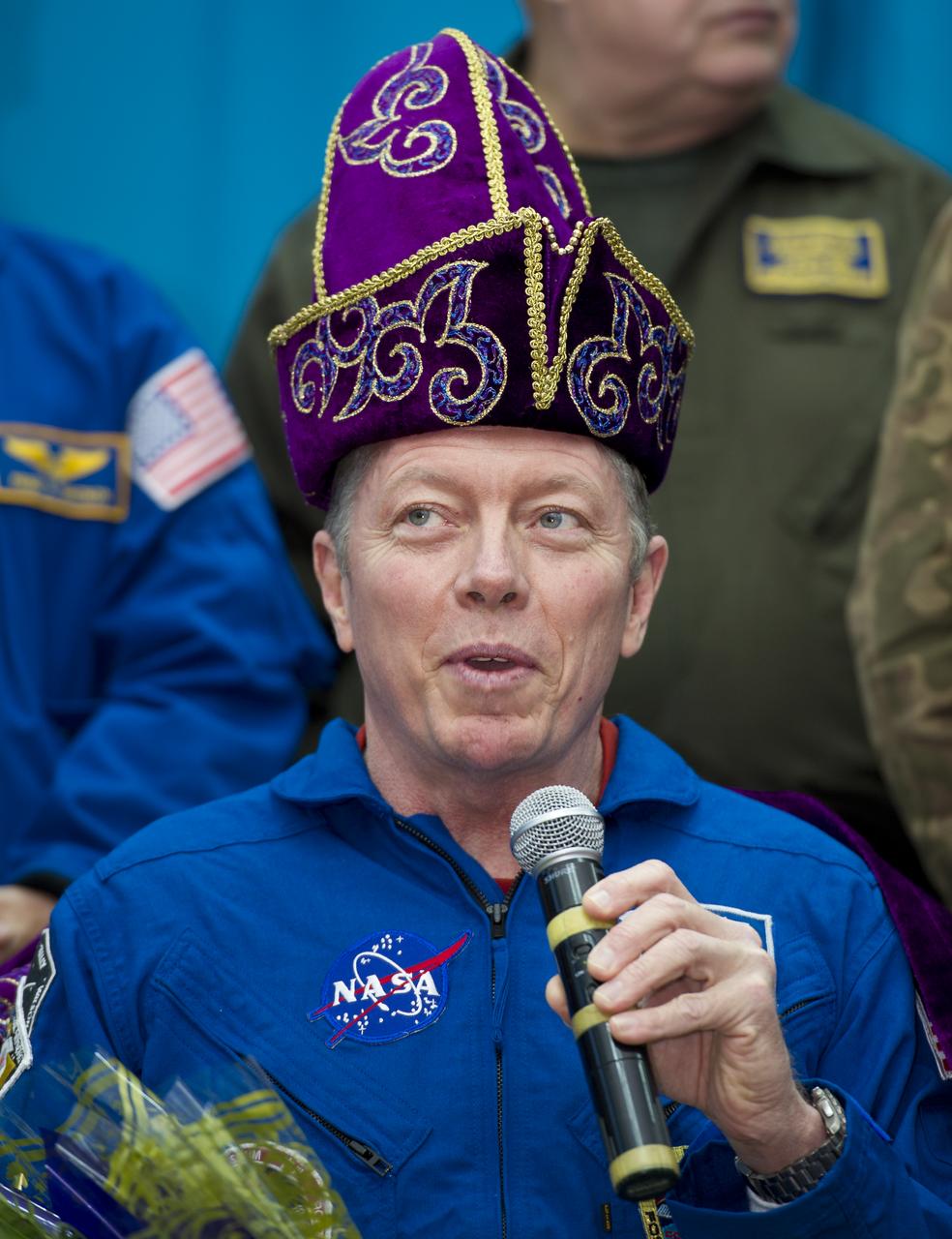
Expedition 29 Commander Mike Fossum is seen in a traditional Kazakhstan hat gifted to him during a welcome ceremony at the Kustanay Airport in Kazakhstan on Tuesday, Nov. 22, 2011. NASA Astronaut Fossum, Russian Cosmonaut Sergei Volkov and JAXA (Japan Aerospace Exploration Agency) Astronaut Satoshi Furukawa returned from more than five months onboard the International Space Station where they served as members of the Expedition 28 and 29 crews. Photo Credit: (NASA/Bill Ingalls)
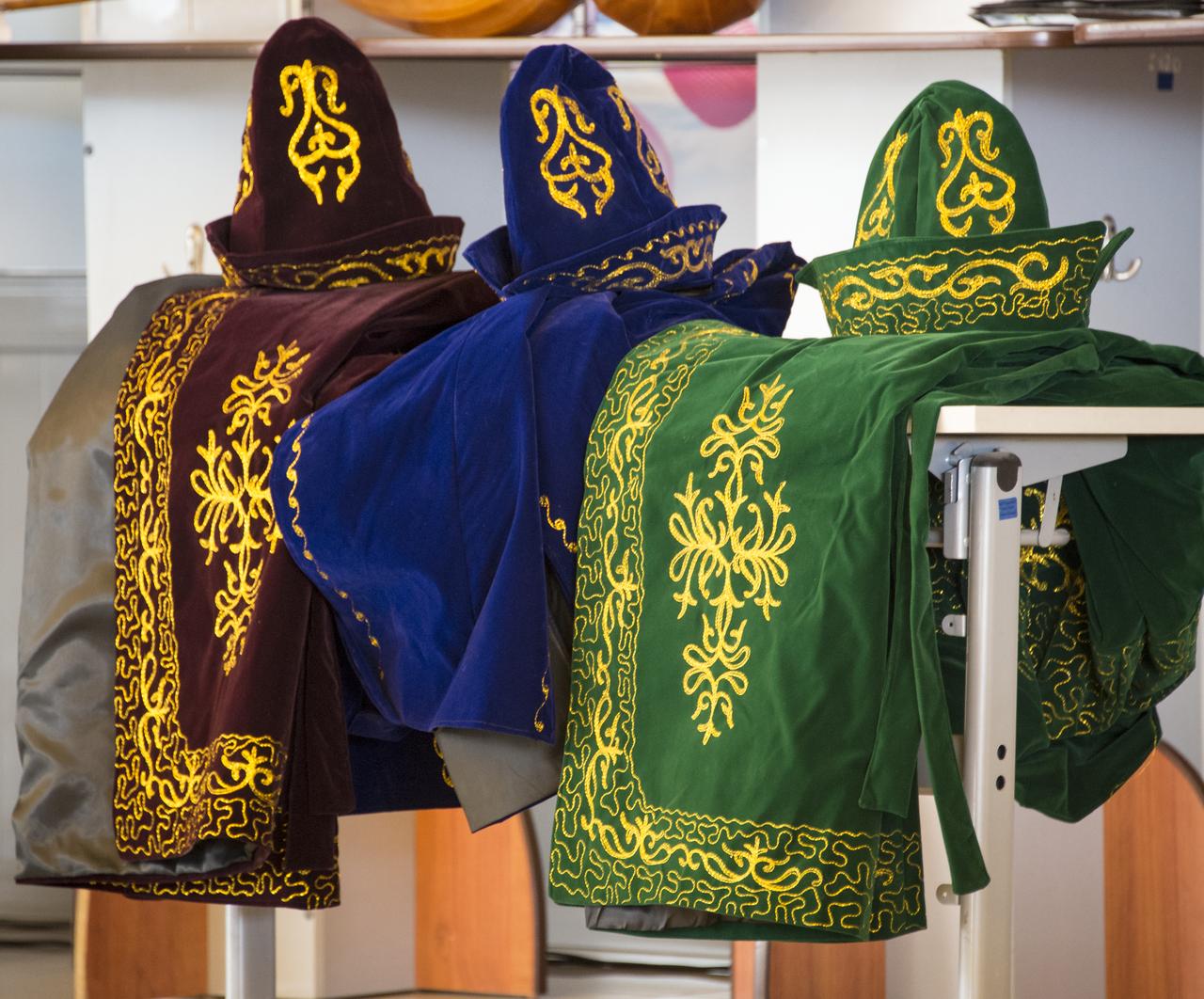
Ceremonial Kazakh hats and robes are laid out to be presented to Expedition 39 Commander Koichi Wakata of the Japan Aerospace Exploration Agency (JAXA), Soyuz Commander Mikhail Tyurin of Roscosmos, and Flight Engineer Rick Mastracchio of NASA at a welcome ceremony, Wednesday, May 14, 2014 at the Karaganda Airport in Kazakhstan. Wakata, Tyurin and Mastracchio returned to Earth after more than six months onboard the International Space Station where they served as members of the Expedition 38 and 39 crews. Photo Credit: (NASA/Bill Ingalls)
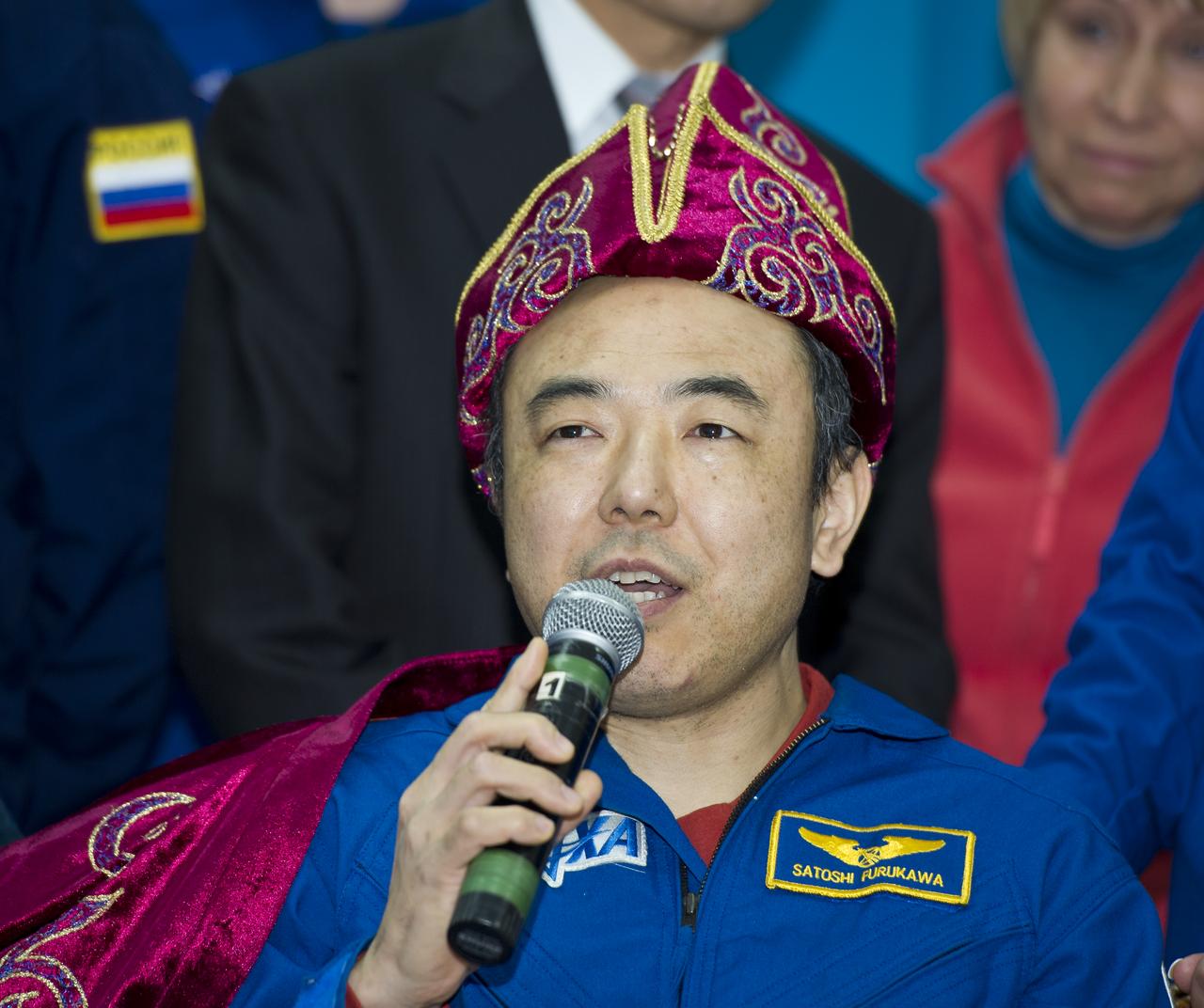
Expedition 29 Flight Engineer, JAXA (Japan Aerospace Exploration Agency) Astronaut, Satoshi Furukawa is seen in a traditional Kazakhstan hat gifted to him during a welcome ceremony at the Kustanay Airport in Kazakhstan on Tuesday, Nov. 22, 2011. NASA Astronaut Mike Fossum, Russian Cosmonaut Sergei Volkov and Furukawa returned from more than five months onboard the International Space Station where they served as members of the Expedition 28 and 29 crews. Photo Credit: (NASA/Bill Ingalls)
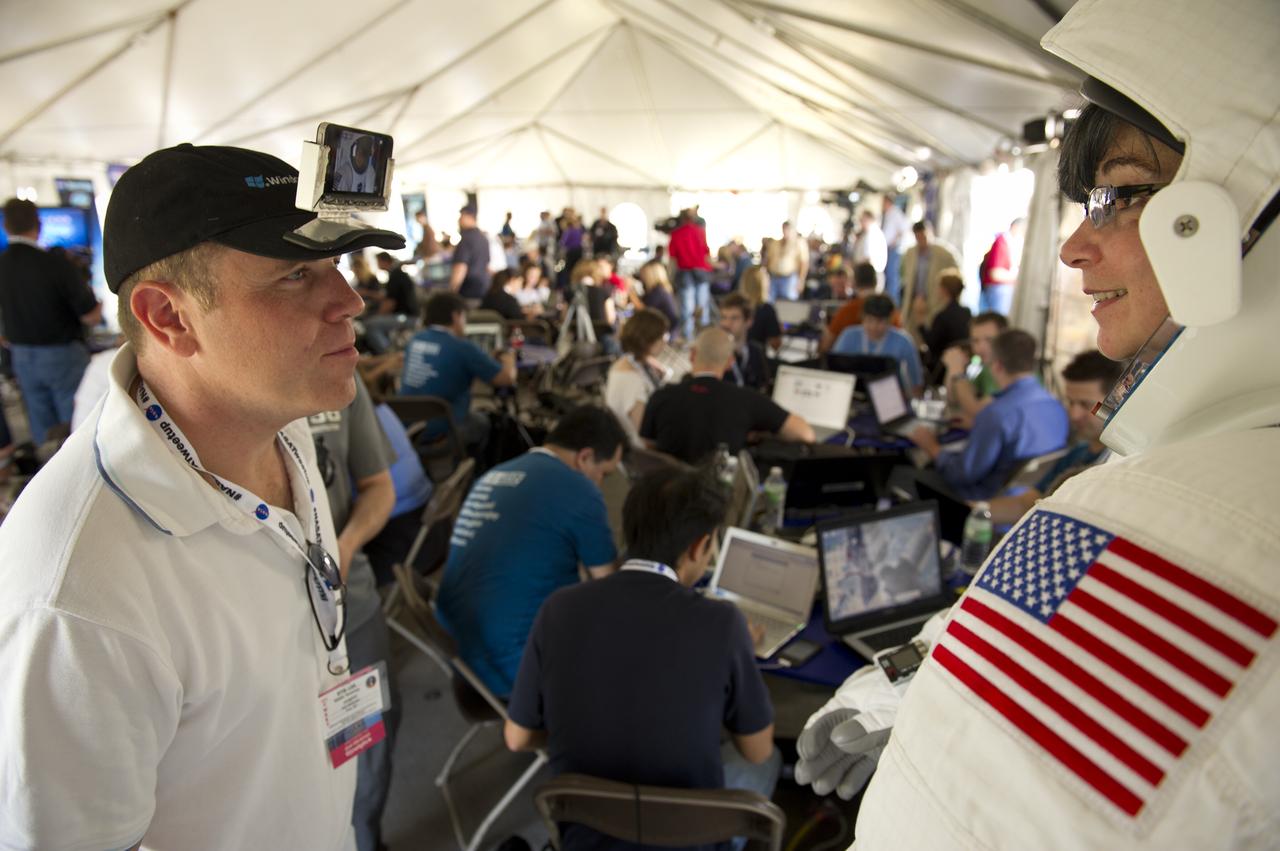
sends streaming live video via a mobile phone attached to his hat to his website of Phylise Banner, who goes by @Phylisebanner on Twitter, as she stands in an astronaut suit on display during the tweetup on Monday, Nov., 1, 2010 at the NASA Kennedy Space Center in Cape Canaveral, Fla. Photo Credit: (NASA/Bill Ingalls)

Astronaut Charles Conrad Jr., Gemini 5 Pilot, sits in the Gemini Static Article 5 Spacecraft and prepares to be lowered from the deck of the NASA Motor Vessel Retriever for Water Egress Training. The rubber "hat" on Astronaut Conrad's head is a neck dam and pulls down and fits tightly around the collar of his suit to prevent water from entering the suit.
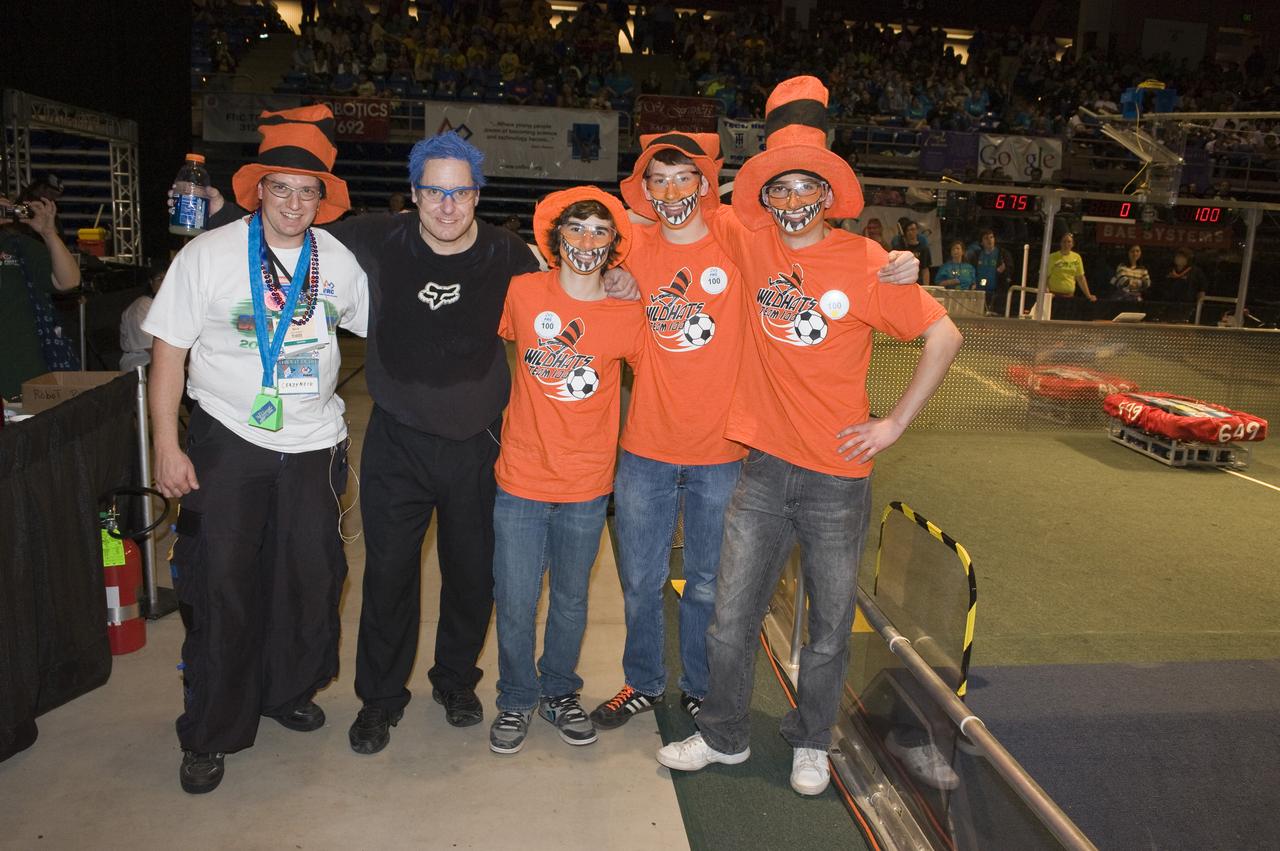
For Inspiration and Recognition of Science and Technology; FIRST Robotics Competition 2010 Silicon Valley Regional held at San Jose State University, San Jose, California The Wild Hats of Woodside H.S. & Carlmont H. S. & Sequoia H.S & Sequoia H.S. District, CA Team 100 with Mark Leon, NASA Ames Reseach Center (in trademark blue hair)
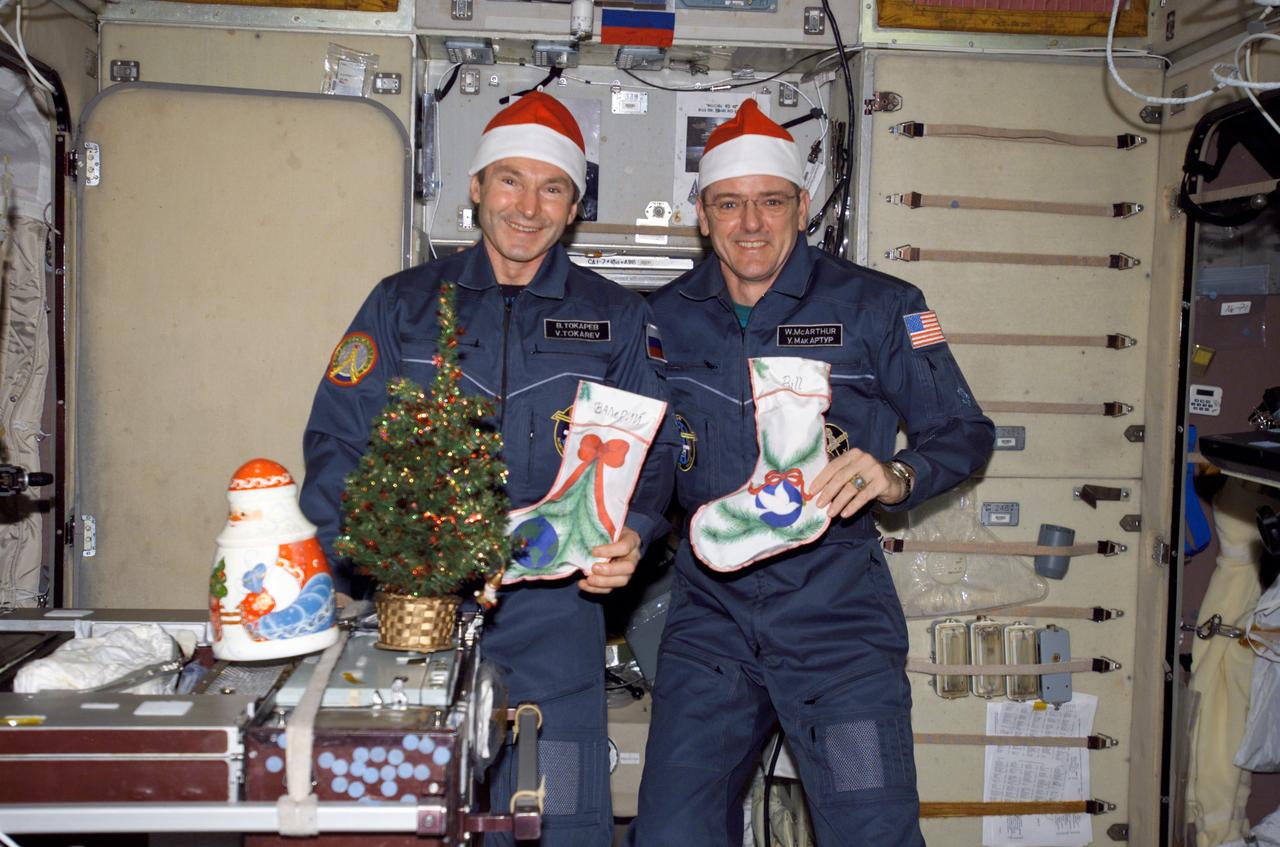
ISS012-E-14244 (28 Dec. 2005) --- Astronaut William S. (Bill) McArthur Jr. (right), Expedition 13 commander and NASA space station science officer, and cosmonaut Valery I. Tokarev, flight engineer representing Russia's Federal Space Agency, pose for a holiday photo in the Zvezda Service Module of the International Space Station. McArthur and Tokarev are holding Christmas stockings and wearing Santa Claus hats. A small Christmas tree and Santa Claus figurine sit on the gallery table in the foreground.
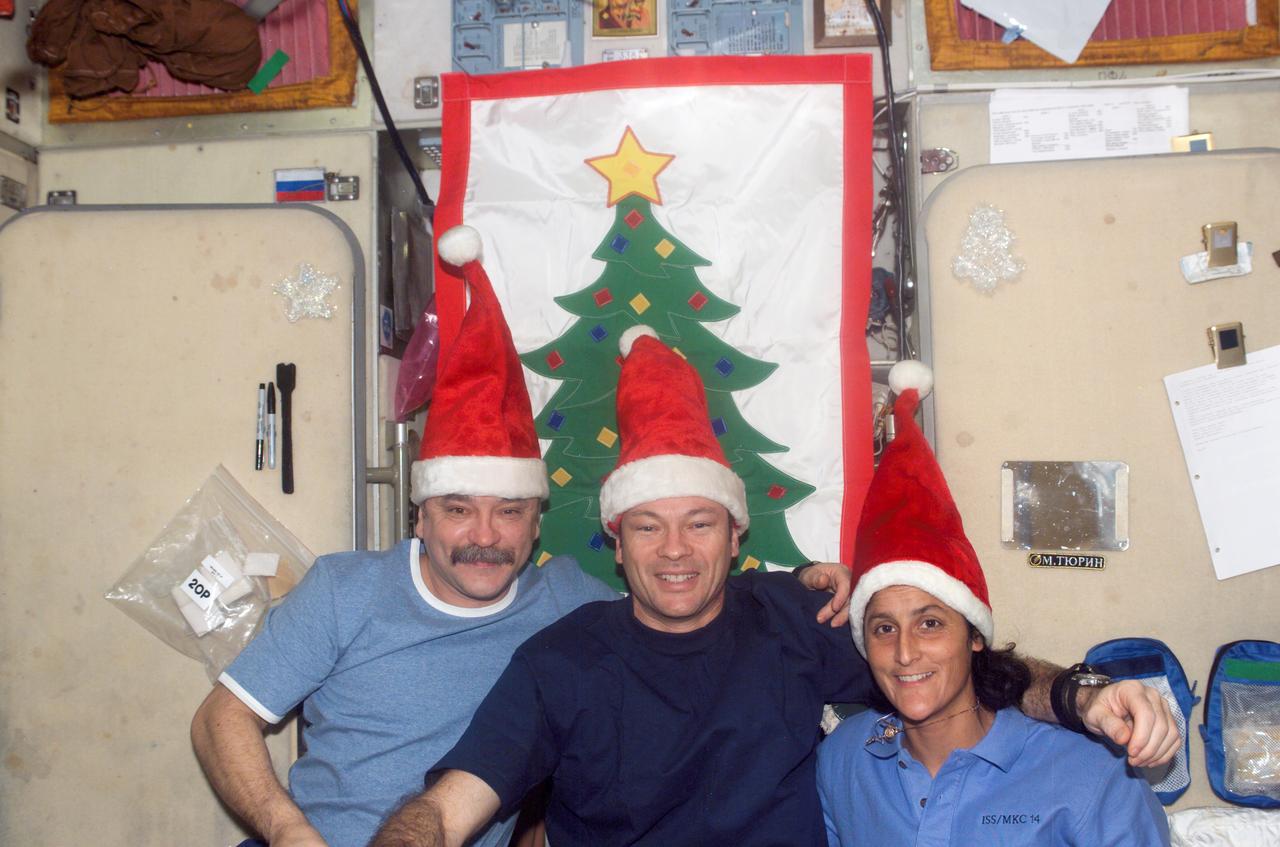
ISS014-E-10236 (24 Dec. 2006) --- Wearing Santa Claus hats, cosmonaut Mikhail Tyurin (left), Expedition 14 flight engineer representing Russia's Federal Space Agency; astronaut Michael E. Lopez-Alegria, commander and NASA space station science officer; and astronaut Sunita L. Williams, flight engineer, pose for a holiday photo in the Zvezda Service Module of the International Space Station.
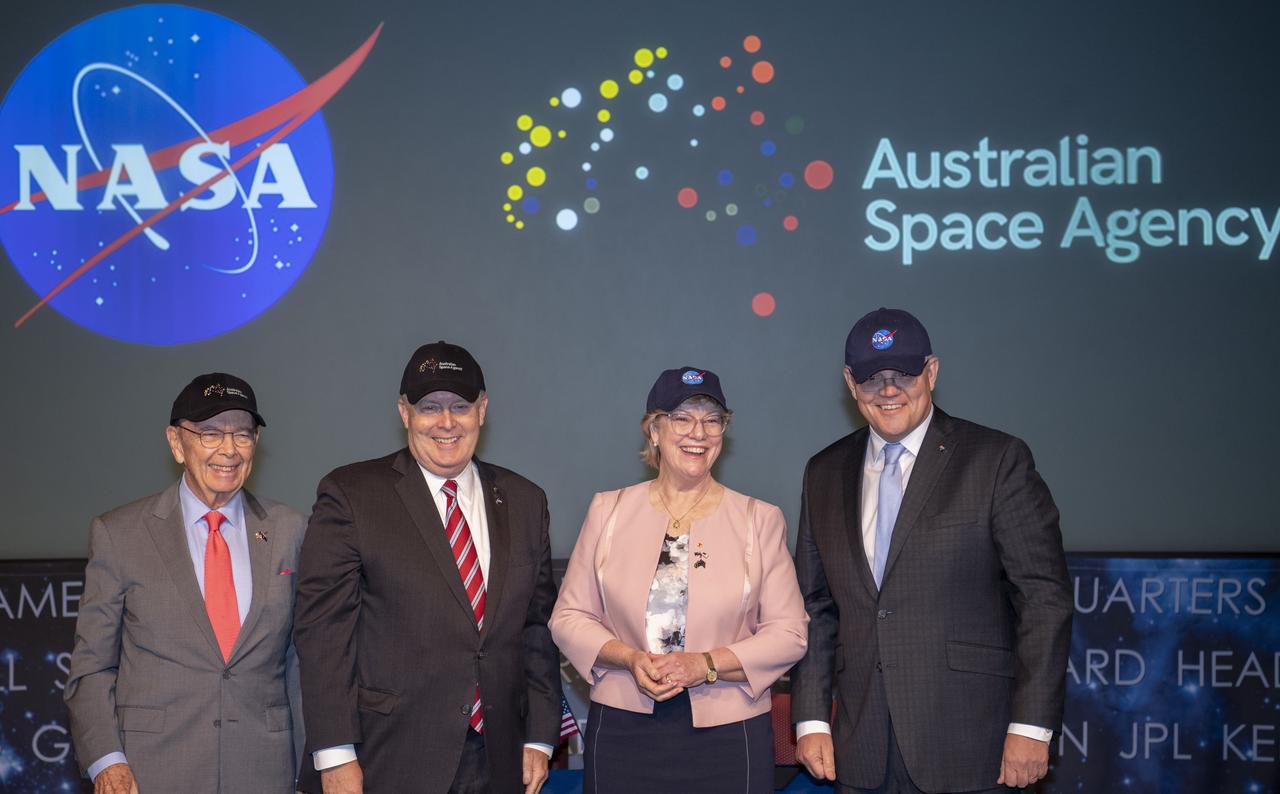
U.S. Secretary of Commerce Wilbur Ross, left, NASA Deputy Administrator Jim Morhard, second from left, Dr. Megan Clark, Head of the Australian Space Agency, second from right, and Australian Prime Minister Scott Morrison, right, pose for a picture after exchanging space agency hats following the signing of a letter of intent between NASA and the Australian Space Agency, Saturday, Sept. 21, 2019 at NASA Headquarters in Washington. NASA and the Australian Space Agency will build on over 60 years of collaboration in space exploration between the two countries and commit to expanding cooperation. Photo Credit: (NASA/Joel Kowsky)
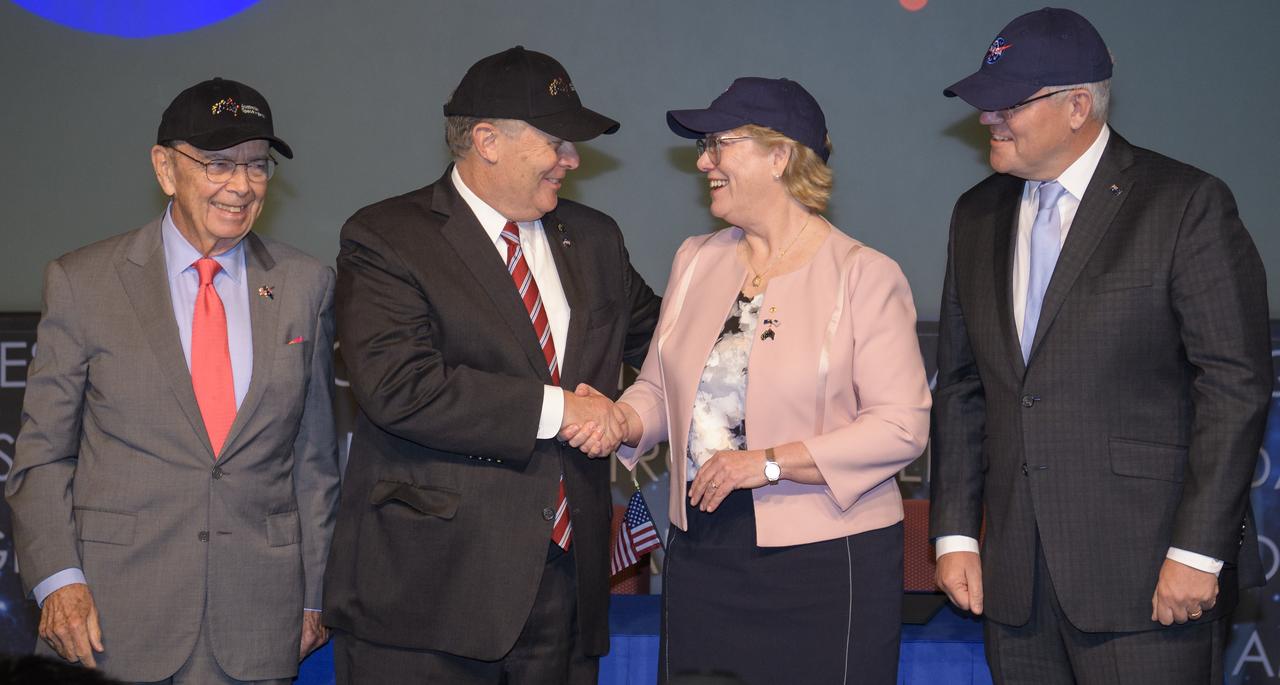
U.S. Secretary of Commerce Wilbur Ross, left, NASA Deputy Administrator Jim Morhard, second from left, Dr. Megan Clark, Head of the Australian Space Agency, second from right, and Australian Prime Minister Scott Morrison, right, pose for a picture after exchanging space agency hats following the signing of a letter of intent between NASA and the Australian Space Agency, Saturday, Sept. 21, 2019 at NASA Headquarters in Washington. NASA and the Australian Space Agency will build on over 60 years of collaboration in space exploration between the two countries and commit to expanding cooperation. Photo Credit: (NASA/Joel Kowsky)

jsc2017e040350 (April 7, 2017) --- In Baikonur, Kazakhstan, Expedition 51 backup crewmembers Sergey Ryazanskiy of the Russian Federal Space Agency (Roscosmos, center) and Randy Bresnik of NASA (right) sample local tea in a traditional Kazakh “yurt” or tent April 7 while wearing traditional Kazakh robes and hats. They are serving as backups to Fyodor Yurchikhin of Roscosmos and Jack Fischer of NASA, who will launch April 20 on the Soyuz MS-04 spacecraft from the Baikonur Cosmodrome for a four and a half month mission on the International Space Station. NASA/Victor Zelentsov
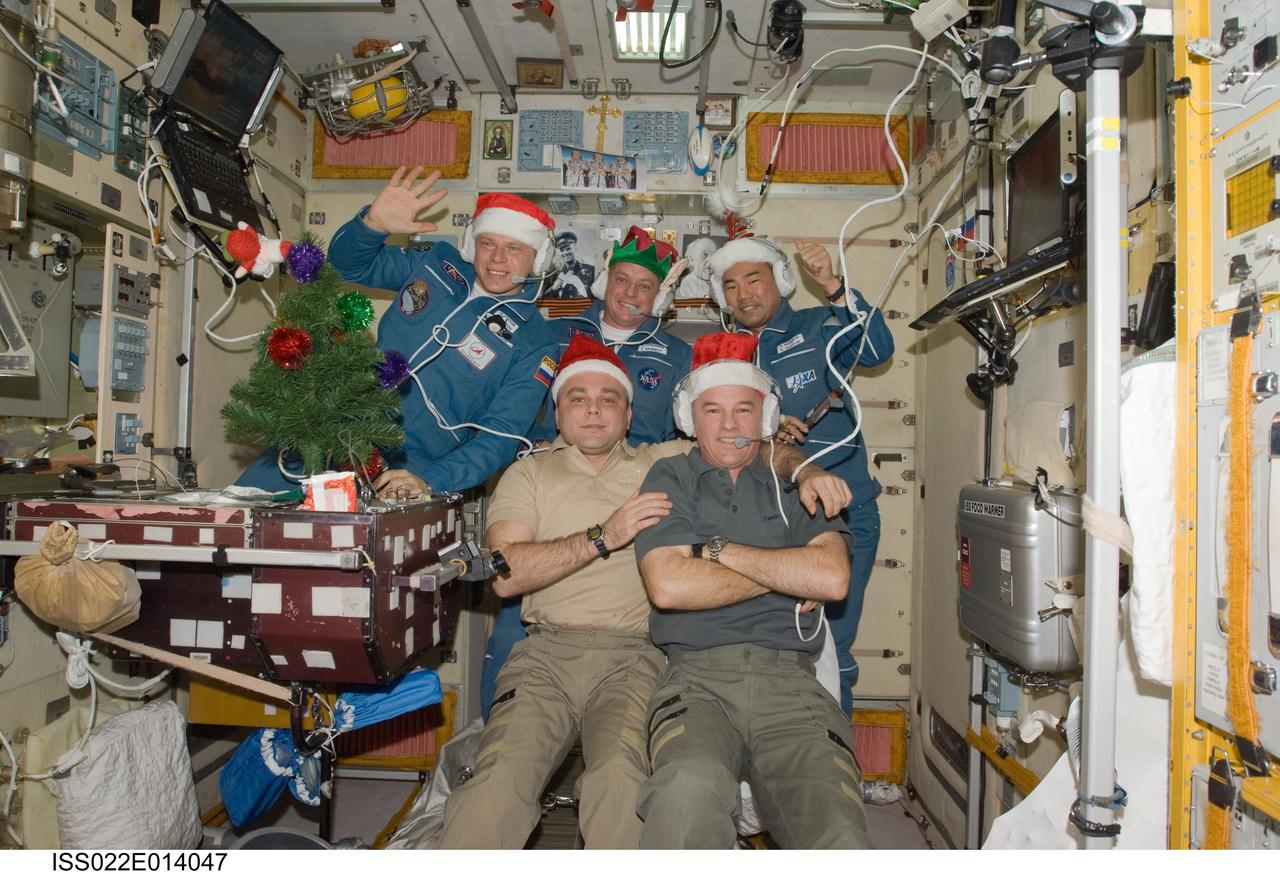
ISS022-E-014047 (22 Dec. 2009) --- Wearing festive holiday hats, the Expedition 22 crew members are pictured while speaking with officials from Russia, Japan and the United States from the Zvezda Service Module of the International Space Station. In the front row, are NASA astronaut Jeffrey Williams (right), commander; and Russian cosmonaut Maxim Suraev, flight engineer. Pictured on the back row (left to right) are Russian cosmonaut Oleg Kotov, NASA astronaut T.J. Creamer and Japan Aerospace Exploration Agency astronaut Soichi Noguchi, all flight engineers.
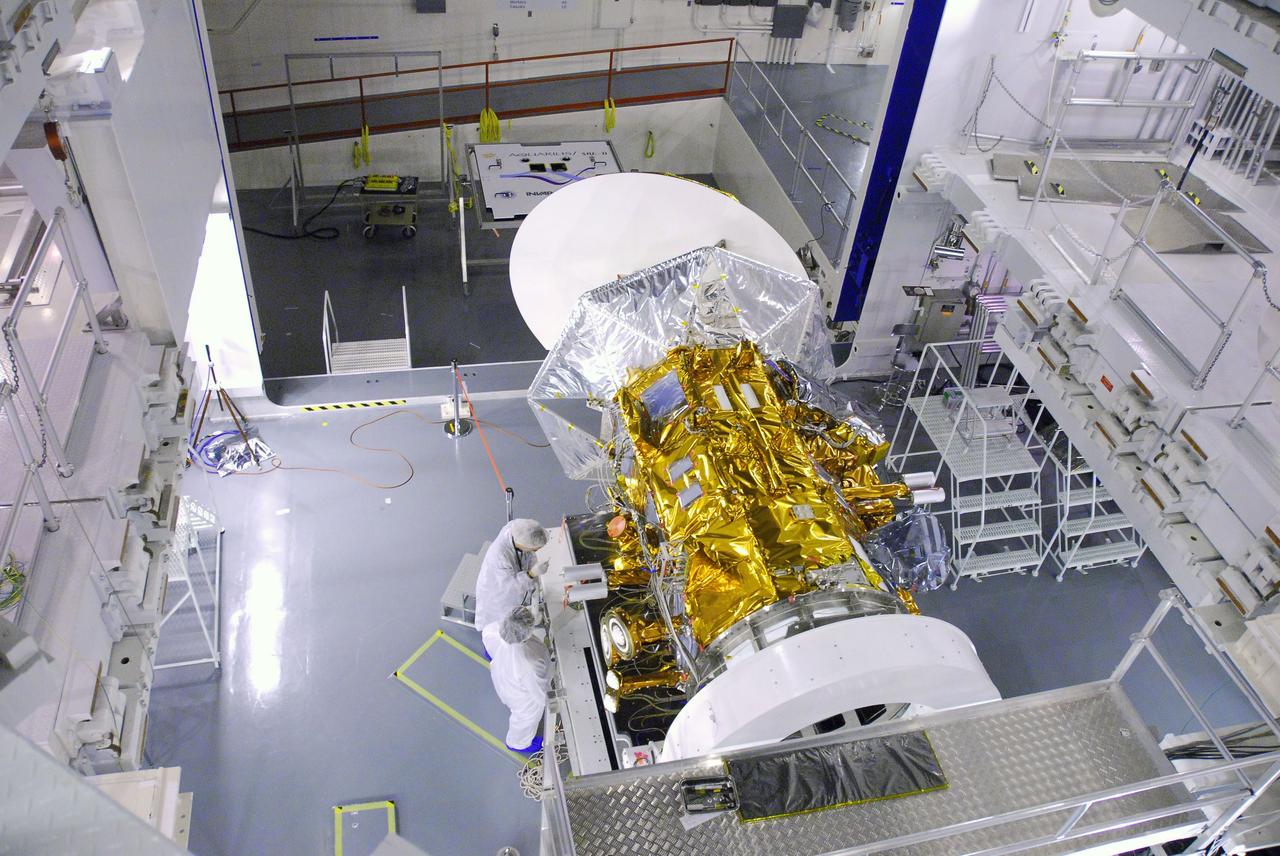
VANDENBERG AIR FORCE BASE, Calif. -- In Space Systems International's Payload Processing Facility at Vandenberg Air Force Base in California, technicians configure antenna hats in preparation for system tests on the Aquarius/SAC-D spacecraft. Following final tests, the spacecraft will be integrated to a United Launch Alliance Delta II rocket in preparation for the targeted June launch. Aquarius, the NASA-built primary instrument on the SAC-D spacecraft, will provide new insights into how variations in ocean surface salinity relate to fundamental climate processes on its three-year mission. Photo credit: NASA/VAFB
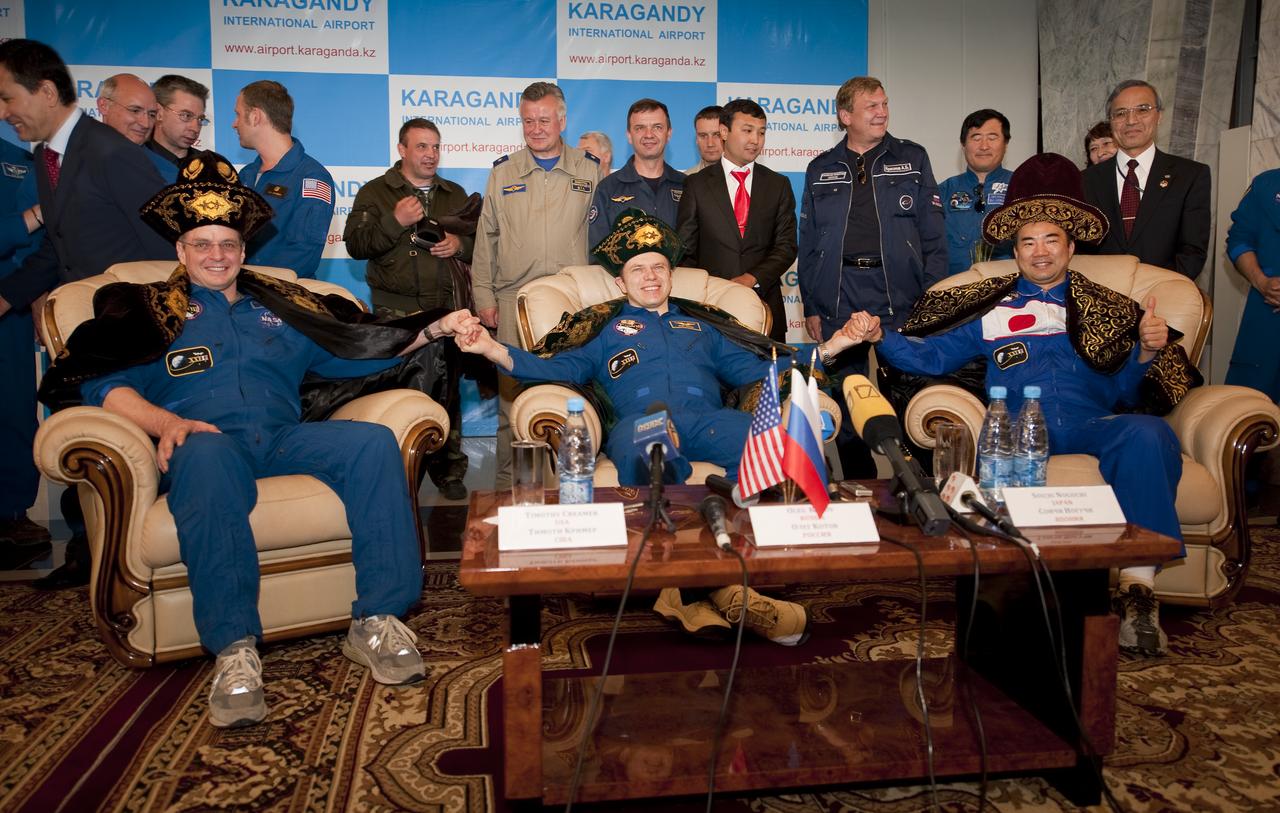
Expedition 23 Flight Engineer T.J. Creamer, left, Commander Oleg Kotov, center, and Flight Engineer Soichi Noguchi wear ceremonial Kazakhstan hats and robes presented to them during a welcome home ceremony held at the Karaganda airport in Karaganda, Kazakhstan on Wednesday, June 2, 2010. NASA Astronaut Creamer, Russian Cosmonaut Kotov and Japanese Astronaut Noguchi landed their Soyuz TMA-17 Capsule near the town of Zhezkazgan, Kazakhstan and returned from six months onboard the International Space Station where they served as members of the Expedition 22 and 23 crews. Photo Credit: (NASA/Bill Ingalls)
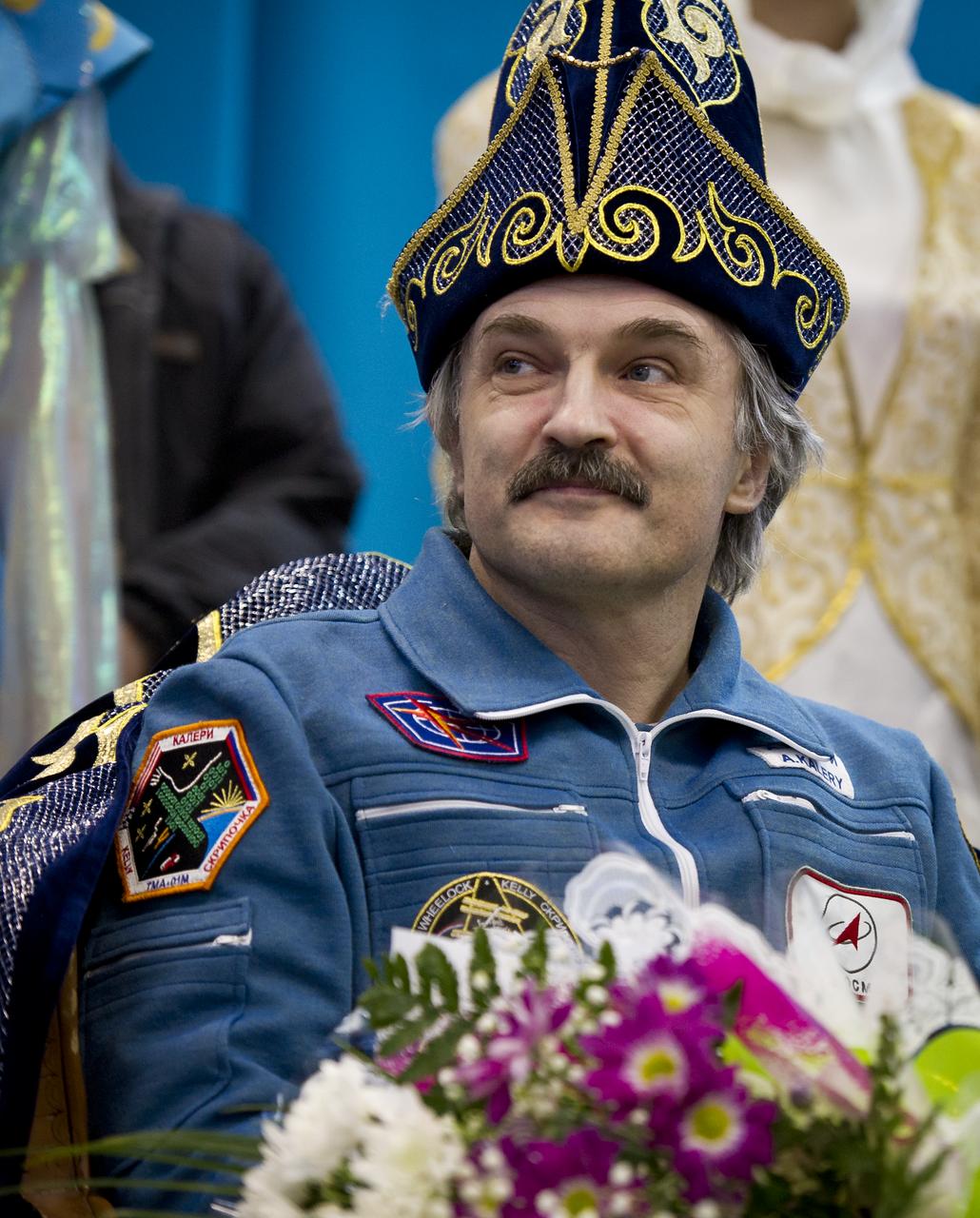
Expedition 26 Flight Engineer Alexander Kaleri listens to reporters questions while wearing a traditional Kazakh hat at the Kustanay, Kazakhstan airport on Wednesday, March 16, 2011 after he and fellow crew members Scott Kelly and Oleg Skripochka landed in their Soyuz TMA-01M capsule near the town of Arkalyk, Kazakhstan. NASA Astronaut Kelly, Russian Cosmonauts Skripochka and Kaleri are returning from almost six months onboard the International Space Station where they served as members of the Expedition 25 and 26 crews. Photo Credit: (NASA/Bill Ingalls)
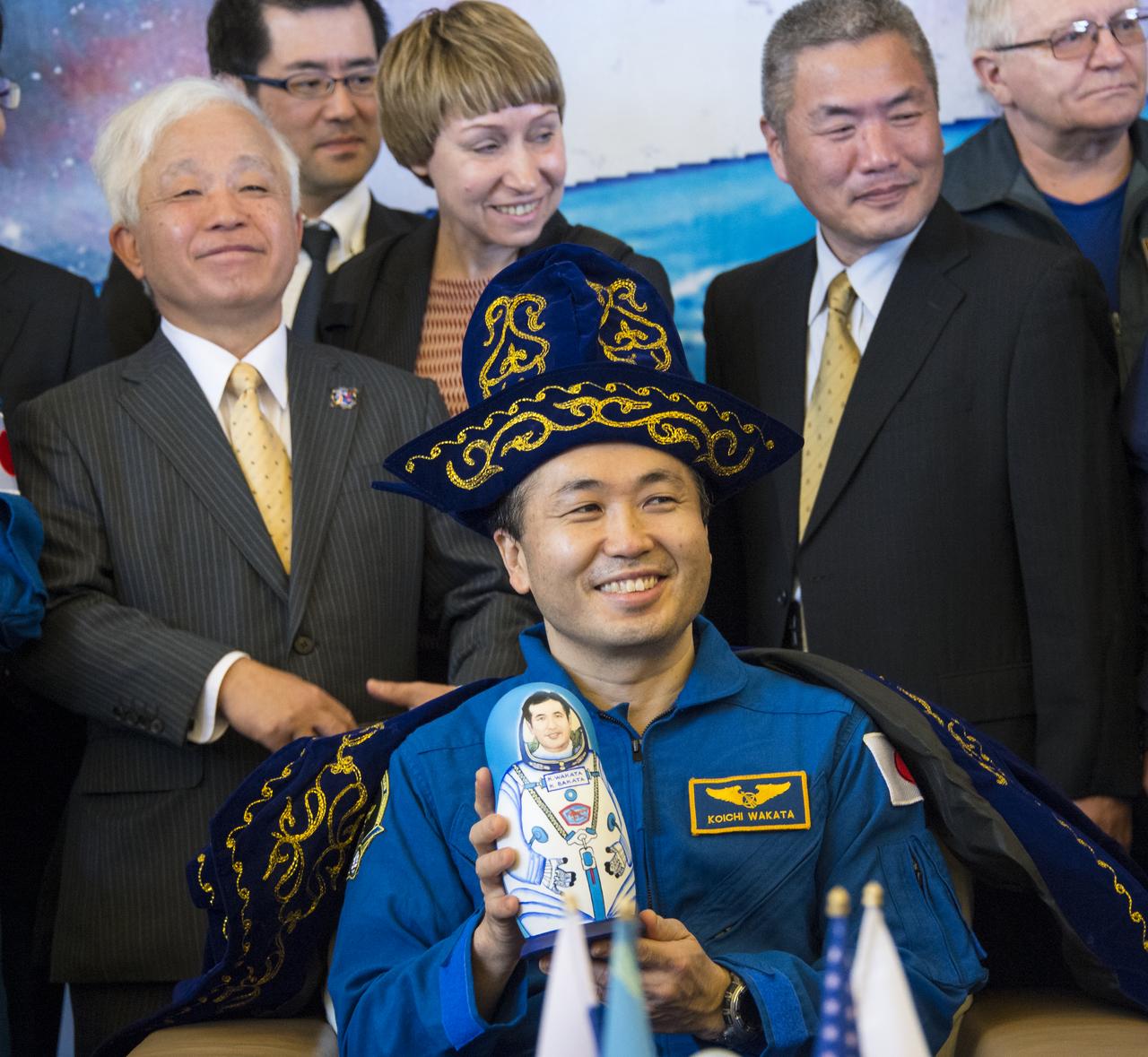
Expedition 39 Commander Koichi Wakata of the Japan Aerospace Exploration Agency (JAXA) is seen wearing a ceremonial Kazakh hat and robe and holding a matryoshka doll presented to him during a welcome home ceremony, Wednesday, May 14, 2014 at the Karaganda Airport in Kazakhstan. Wakata, Expedition 39 Soyuz Commander Mikhail Tyurin of Roscosmos, and Flight Engineer Rick Mastracchio of NASA landed in their Soyuz TMA-11M spacecraft just a few hours earlier near the town of Zhezkazgan. Wakata, Tyurin and Mastracchio returned to Earth after more than six months onboard the International Space Station where they served as members of the Expedition 38 and 39 crews. Photo Credit: (NASA/Bill Ingalls)
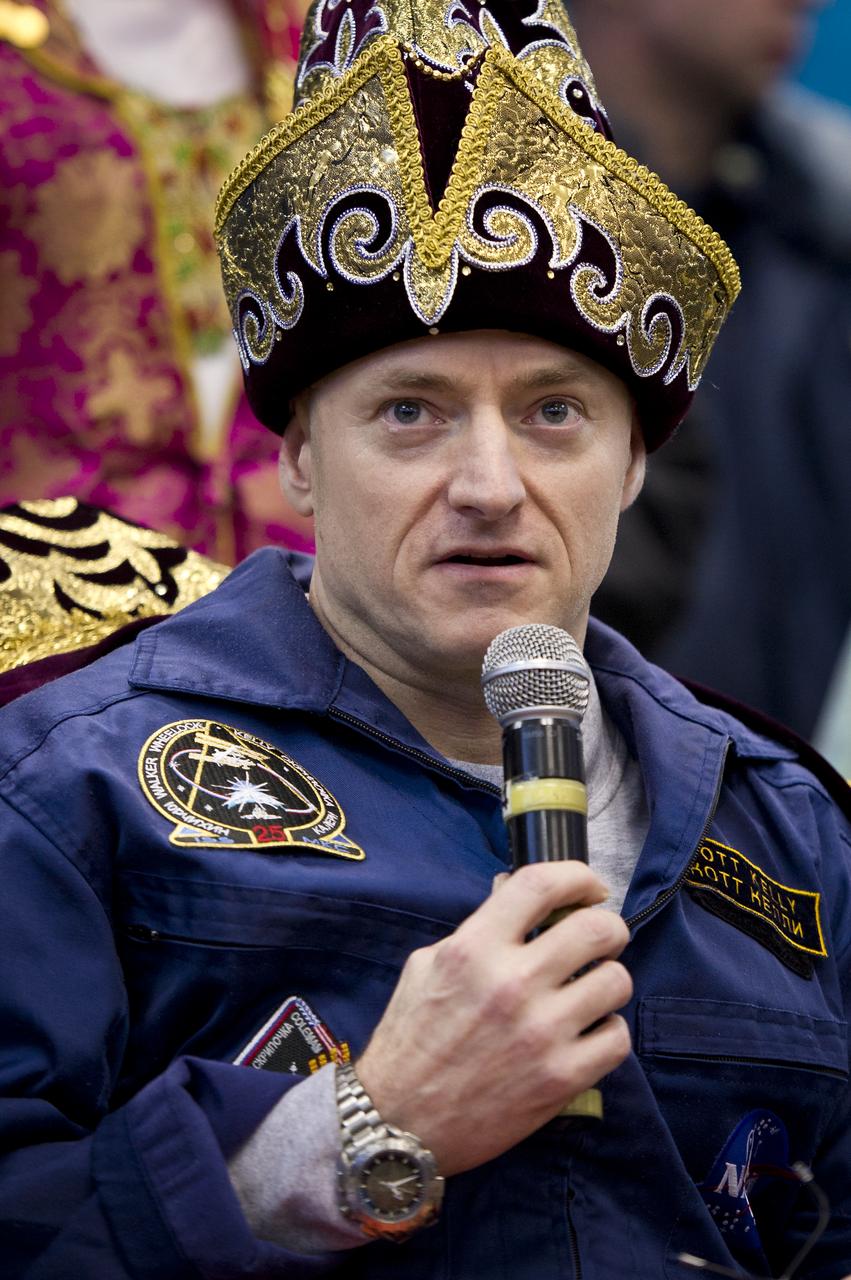
Expedition 26 Commander Scott Kelly listens to reporters questions while wearing a traditional Kazakh hat at the Kustanay, Kazakhstan airport on Wednesday, March 16, 2011 after he and fellow crew members Alexander Kaleri and Oleg Skripochka landed in their Soyuz TMA-01M capsule near the town of Arkalyk, Kazakhstan. NASA Astronaut Kelly, Russian Cosmonauts Skripochka and Kaleri are returning from almost six months onboard the International Space Station where they served as members of the Expedition 25 and 26 crews. Photo Credit: (NASA/Bill Ingalls)
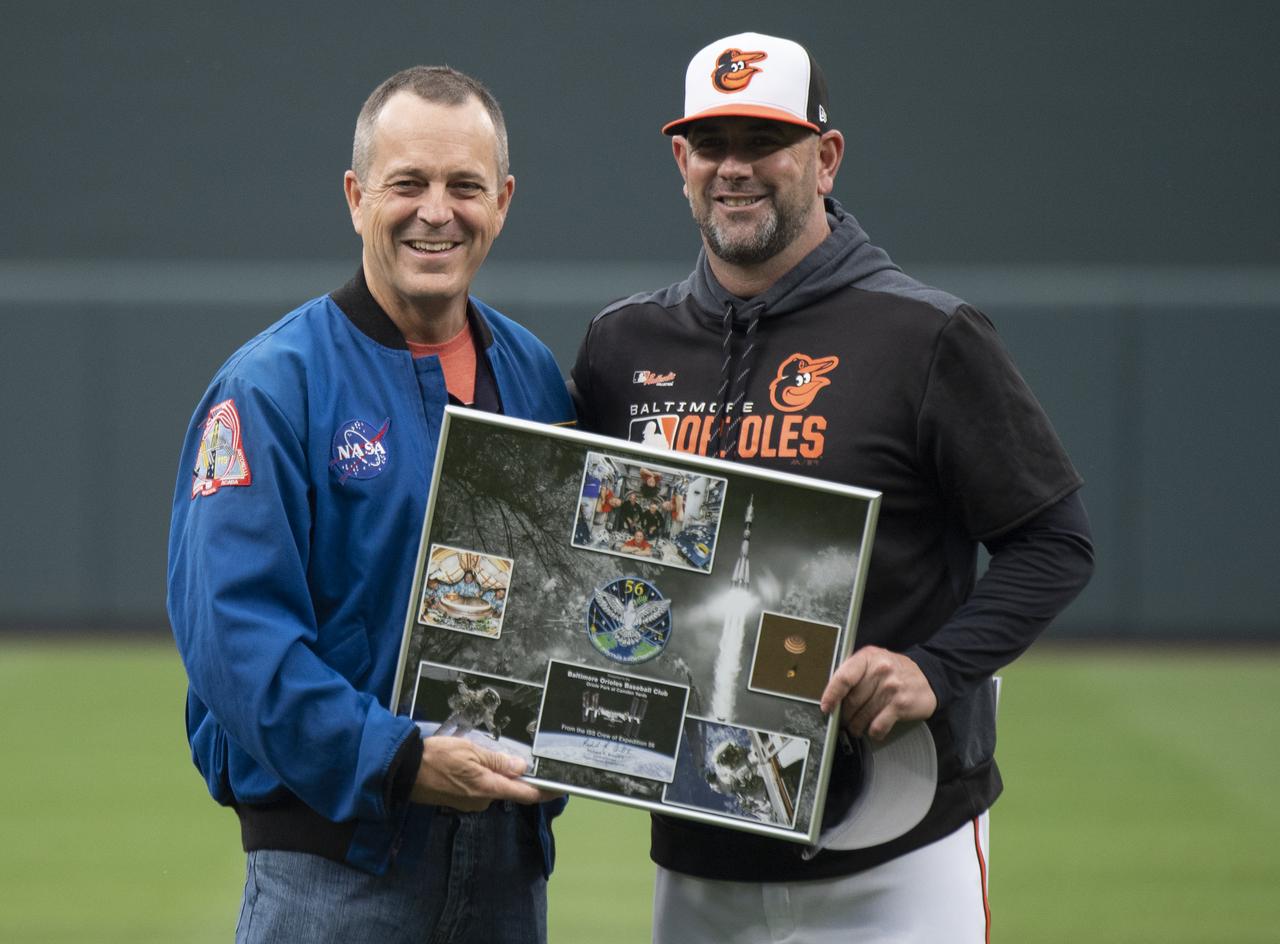
NASA astronaut and Maryland native Ricky Arnold presents a montage of images from his mission and a Baltimore Orioles hat that was flown aboard the International Space Station to Baltimore Orioles manager Brandon Hyde before the Tampa Bay Rays take on the Baltimore Orioles, Saturday, May 4, 2019 at Camden Yards in Baltimore, Md. During Arnold’s 197 days onboard the International Space Station, as part of Expeditions 55 and 56, he ventured outside the space station on three spacewalks in addition to conducting numerous experiments and educational downlink events. Photo Credit: (NASA/Joel Kowsky)
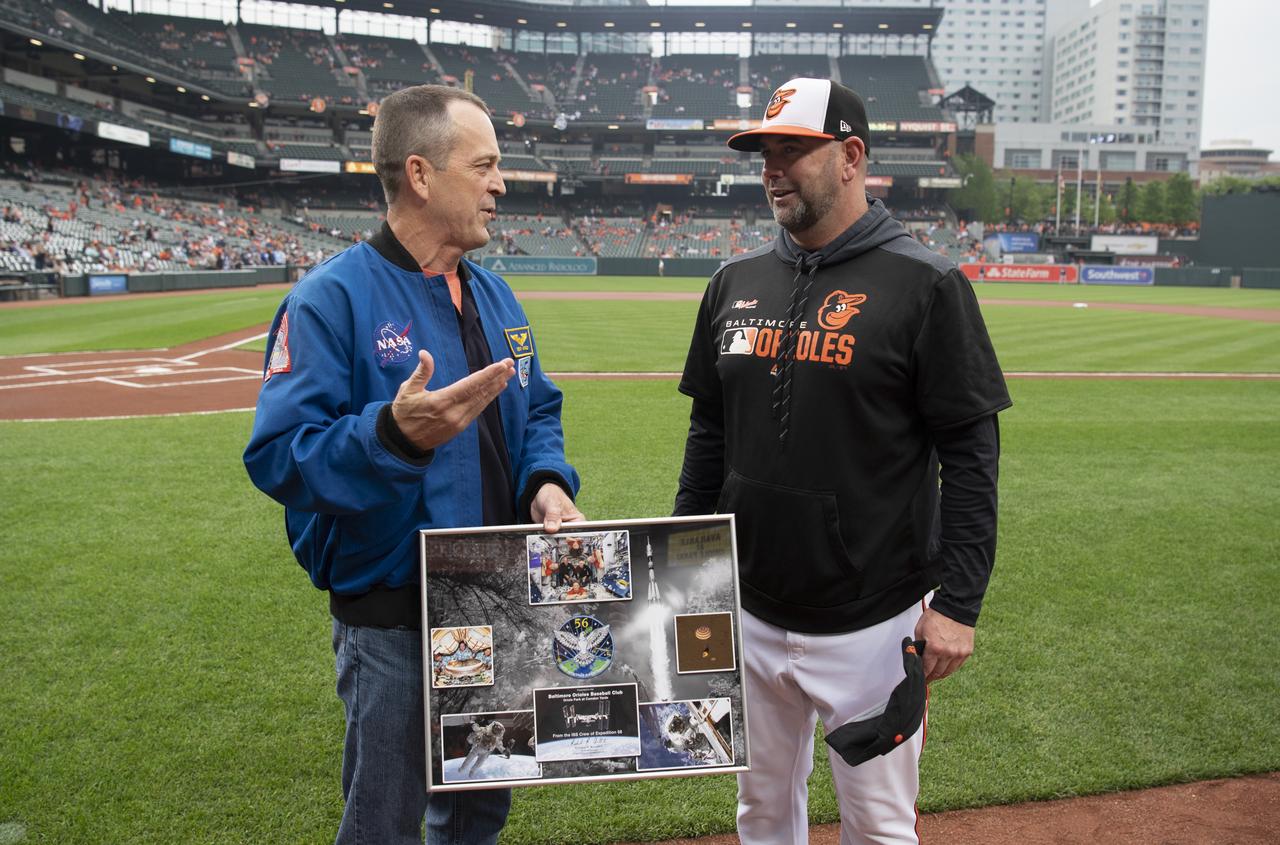
NASA astronaut and Maryland native Ricky Arnold talks with Baltimore Orioles manager Brandon Hyde after presenting a montage of images from his mission and a Baltimore Orioles hat that was flown aboard the International Space Station before the Tampa Bay Rays take on the Baltimore Orioles, Saturday, May 4, 2019 at Camden Yards in Baltimore, Md. During Arnold’s 197 days onboard the International Space Station, as part of Expeditions 55 and 56, he ventured outside the space station on three spacewalks in addition to conducting numerous experiments and educational downlink events. Photo Credit: (NASA/Joel Kowsky)
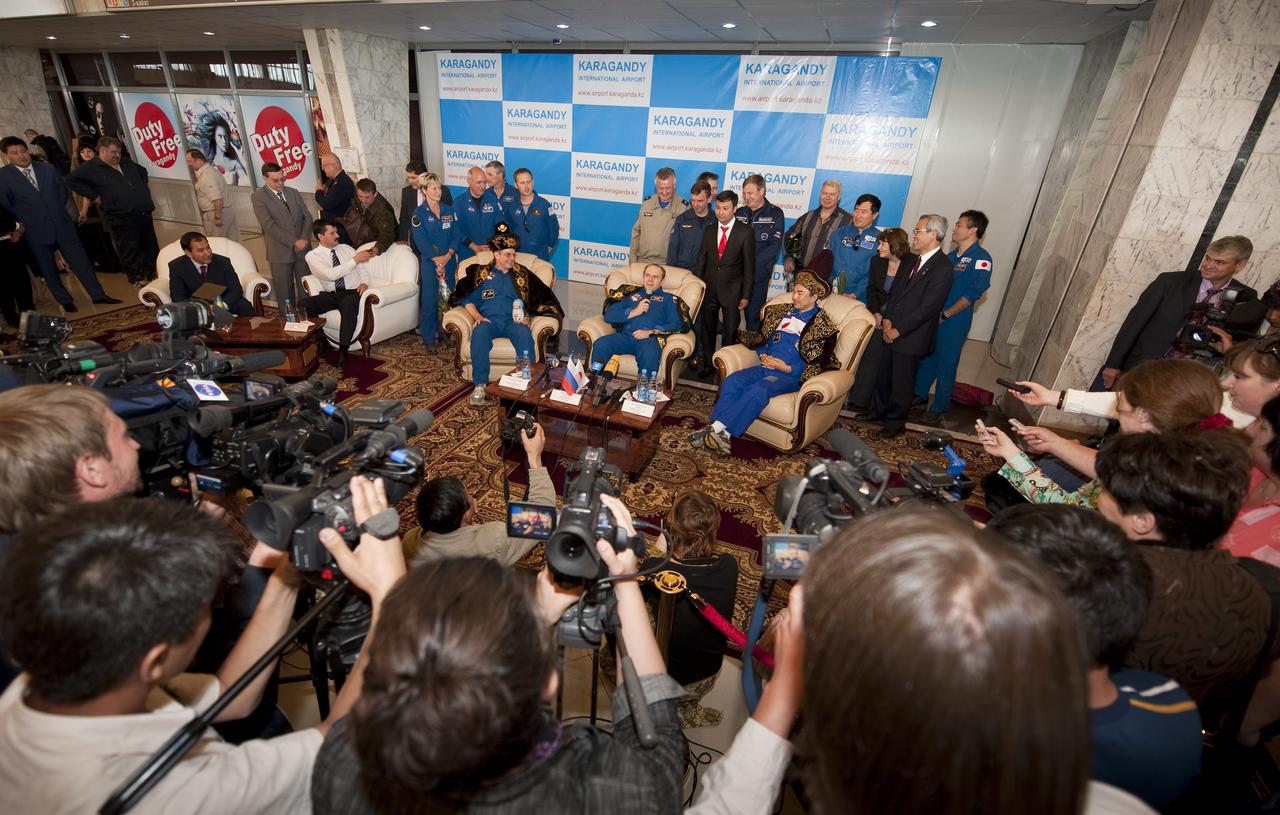
Expedition 23 Flight Engineer T.J. Creamer, left, Commander Oleg Kotov, center, and Flight Engineer Soichi Noguchi wear ceremonial Kazakhstan hats and robes presented to them during a welcome home ceremony held at the Karaganda airport in Karaganda, Kazakhstan on Wednesday, June 2, 2010. NASA Astronaut Creamer, Russian Cosmonaut Kotov and Japanese Astronaut Noguchi landed their Soyuz TMA-17 Capsule near the town of Zhezkazgan, Kazakhstan and returned from six months onboard the International Space Station where they served as members of the Expedition 22 and 23 crews. Photo Credit: (NASA/Bill Ingalls)
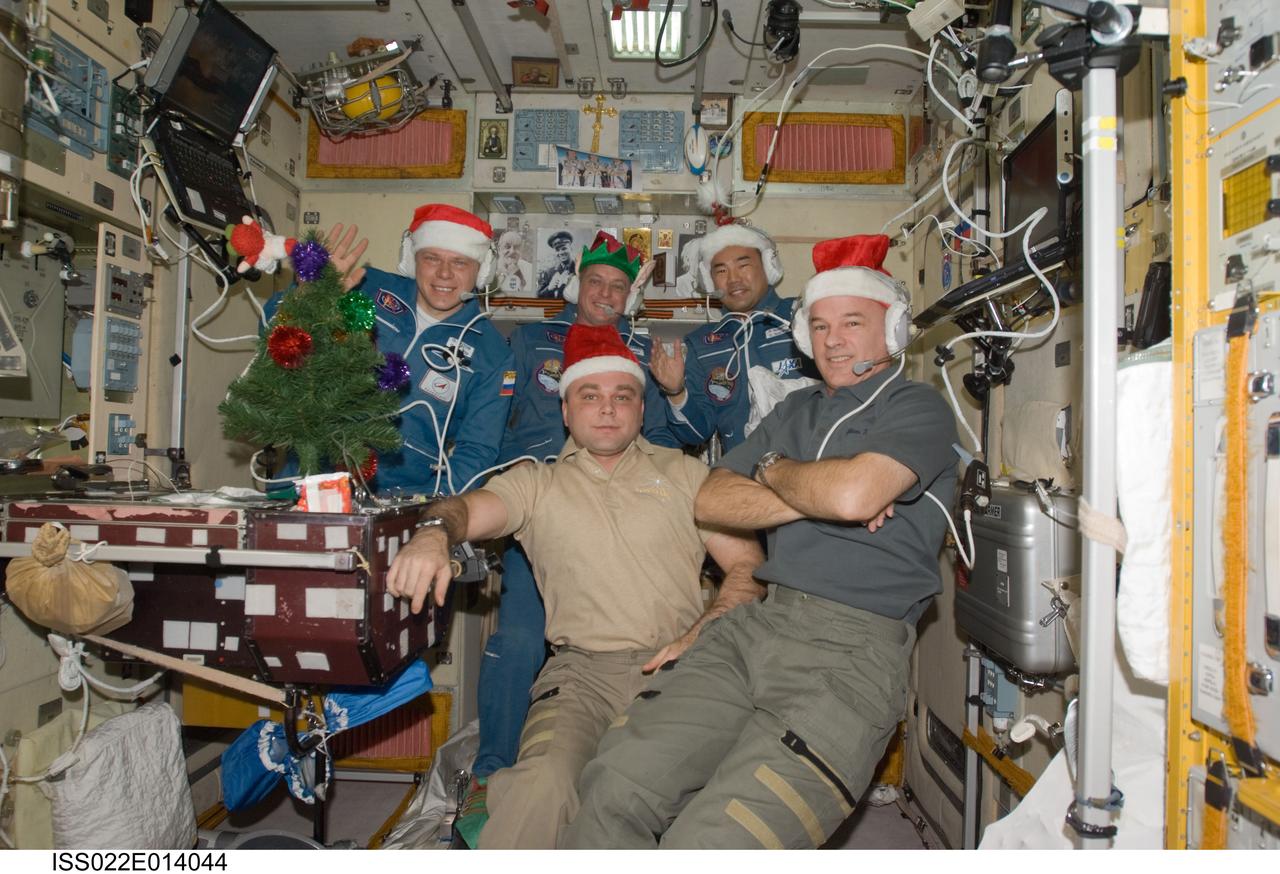
ISS022-E-014044 (22 Dec. 2009) --- Wearing festive holiday hats, the Expedition 22 crew members are pictured while speaking with officials from Russia, Japan and the United States from the Zvezda Service Module of the International Space Station. In the front row, are NASA astronaut Jeffrey Williams (right), commander; and Russian cosmonaut Maxim Suraev, flight engineer. Pictured on the back row (left to right) are Russian cosmonaut Oleg Kotov, NASA astronaut T.J. Creamer and Japan Aerospace Exploration Agency astronaut Soichi Noguchi, all flight engineers.
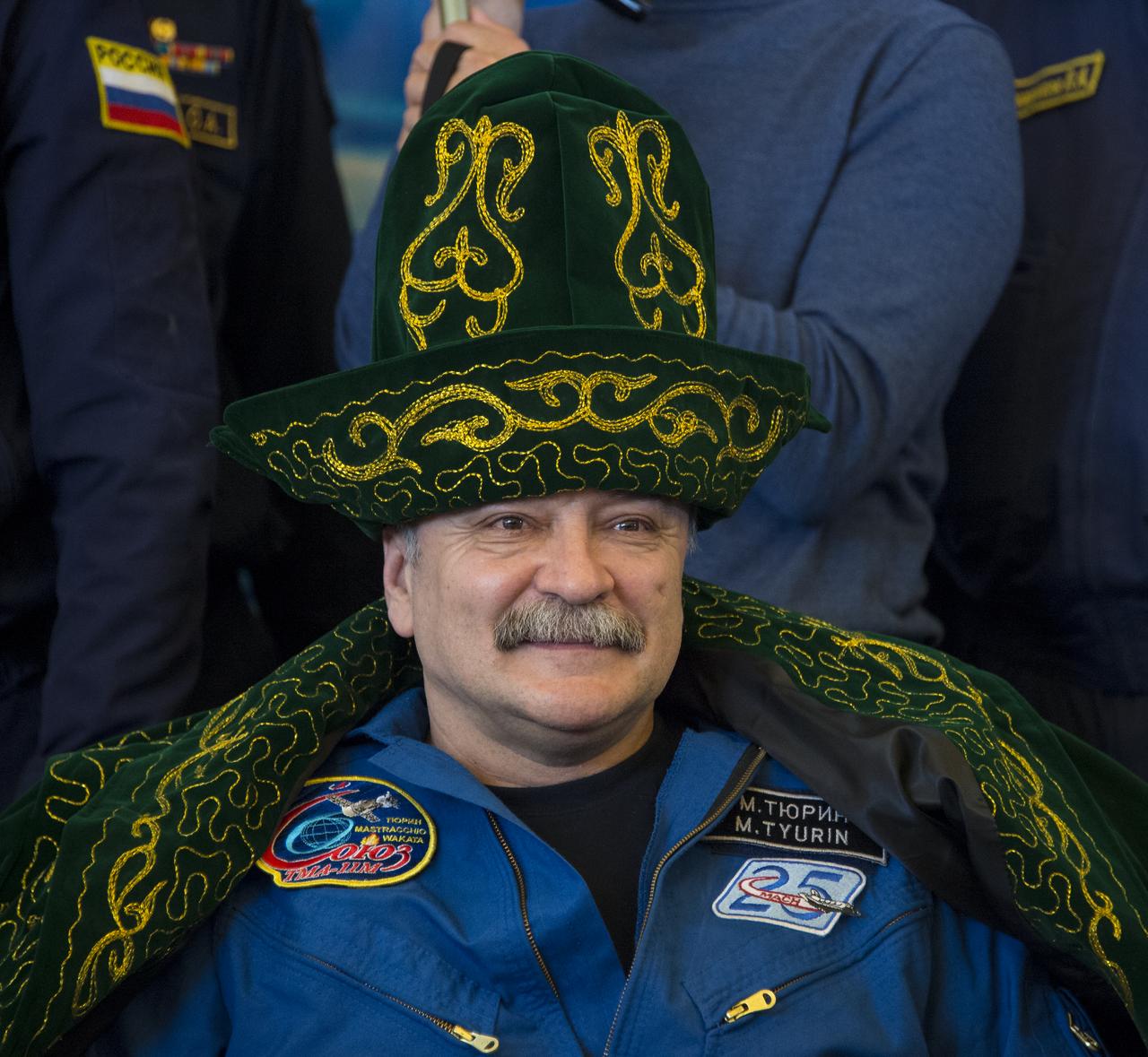
Expedition 39 Soyuz Commander Mikhail Tyurin of Roscosmos is seen wearing a ceremonial Kazakh hat and robe presented to him during a welcome home ceremony, Wednesday, May 14, 2014 at the Karaganda Airport in Kazakhstan. Tyurin, Expedition 39 Commander Koichi Wakata of the Japan Aerospace Exploration Agency (JAXA), and Flight Engineer Rick Mastracchio of NASA landed in their Soyuz TMA-11M spacecraft just a few hours earlier near the town of Zhezkazgan. Wakata, Tyurin and Mastracchio returned to Earth after more than six months onboard the International Space Station where they served as members of the Expedition 38 and 39 crews. Photo Credit: (NASA/Bill Ingalls)
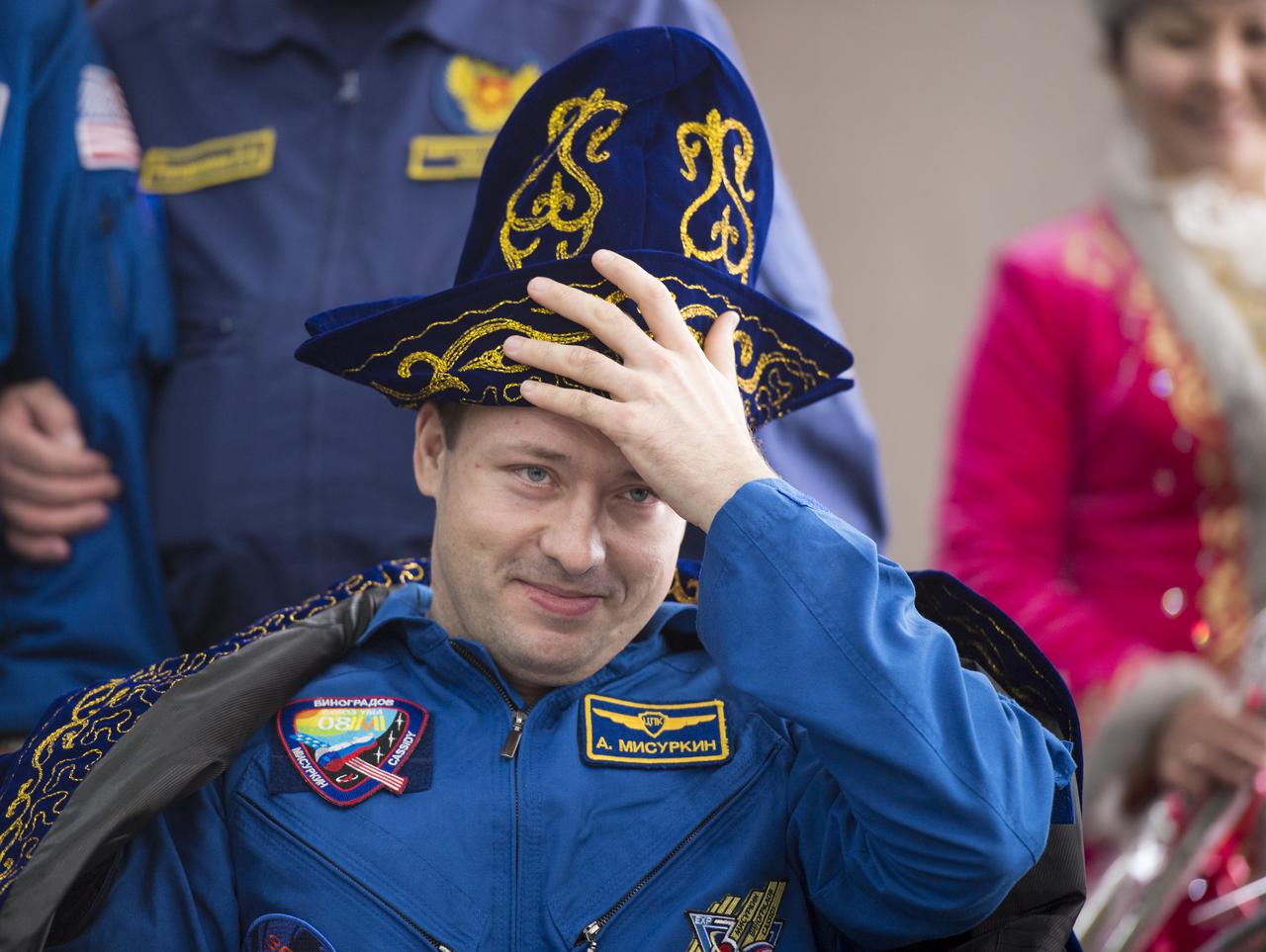
Expedition 36 Flight Engineer Alexander Misurkin of the Russian Federal Space Agency (Roscosmos) adjust a traditional Kazakh hat given to him during a ceremony at the Karaganda airport in Kazakhstan after having been flown from the Soyuz TMA-08M spacecraft landing site in a remote area near the town of Zhezkazgan, Wednesday, Sept. 11, 2013. Misurkin, Commander Pavel Vinogradov of Roscosmos, and Flight Engineer Chris Cassidy of NASA returned to Earth after five and a half months on the International Space Station. Photo Credit: (NASA/Bill Ingalls)
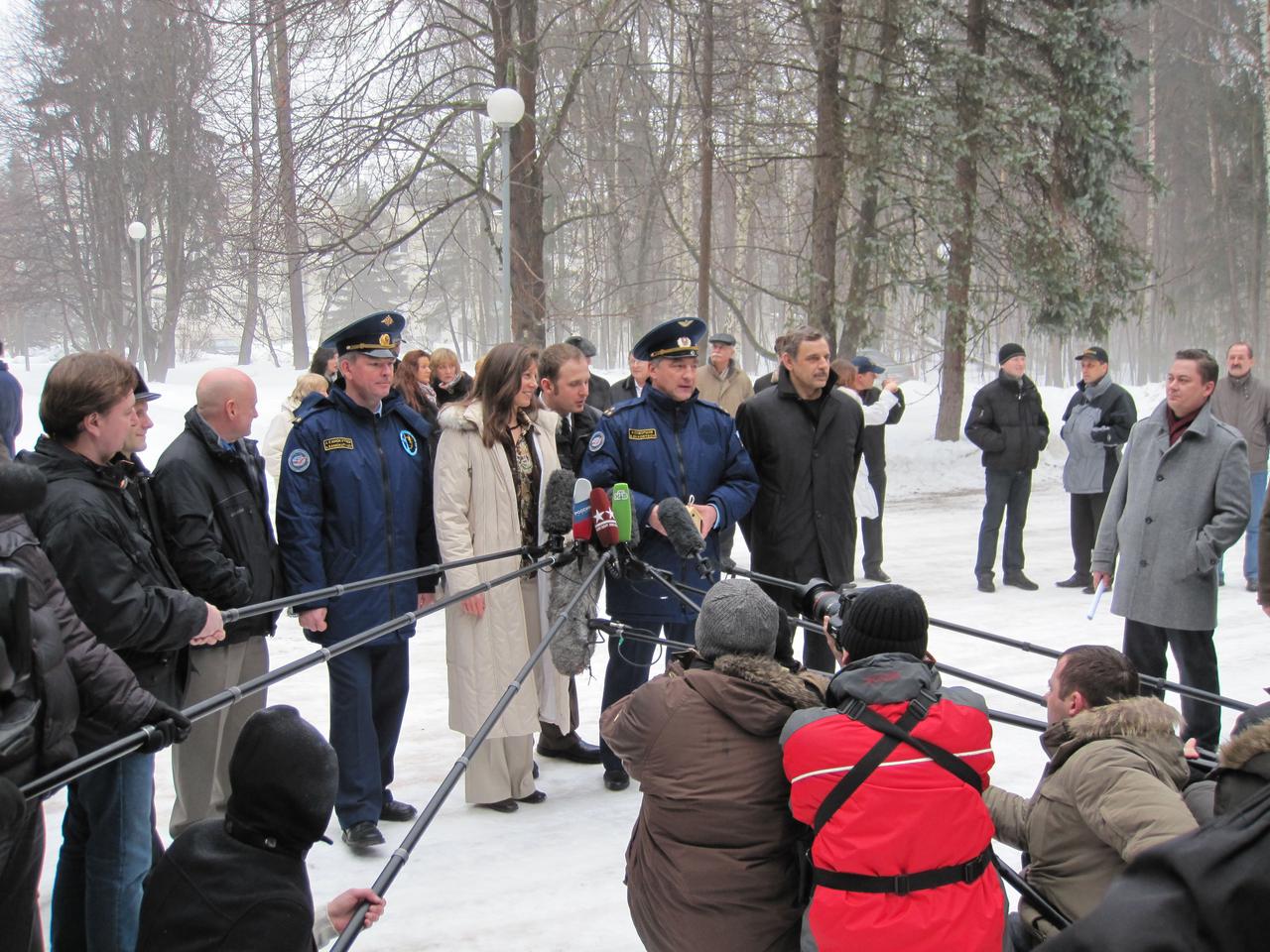
At the Gagarin Cosmonaut Training Center in Star City, Russia, Expedition 23 Flight Engineer Tracy Caldwell Dyson (c, in white coat), Soyuz Commander Alexander Skvortsov (to her left) and Flight Engineer Mikhail Kornienko (r) answer questions from reporters following a a ceremony March 21, 2010 prior to their departure for the Baikonur Cosmodrome in Kazakhstan for final training prior to their launch April 2 on the Soyuz TMA-18 spacecraft. Also attending were backup Flight Engineer Scott Kelly (without hat, third from left) and backup Soyuz Commander Alexander Samokutyayev (to Kelly’s left). Credit: NASA/Mark Bowman
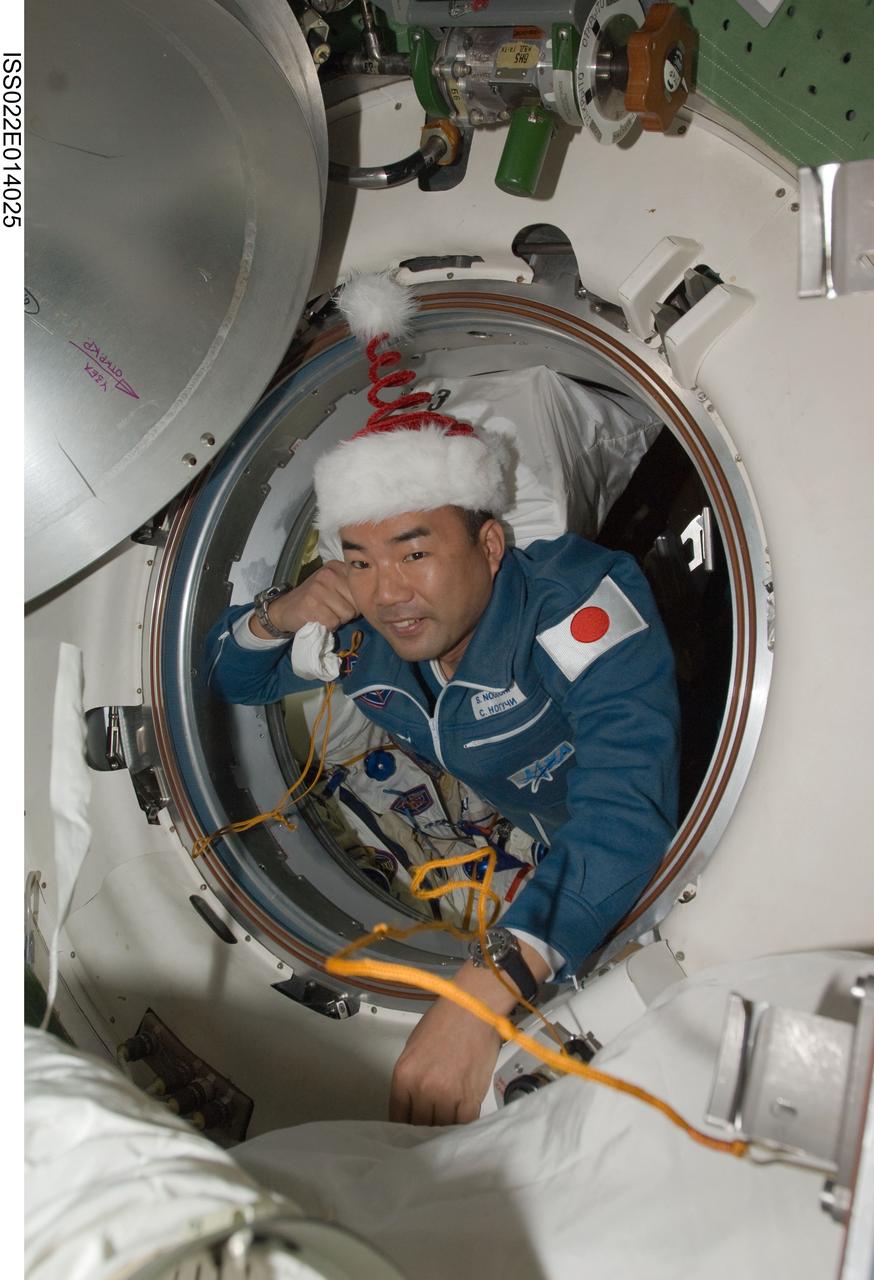
ISS022-E-014025 (22 Dec. 2009) --- Wearing a festive holiday hat, Japan Aerospace Exploration Agency astronaut Soichi Noguchi, Expedition 22 flight engineer, ingresses the International Space Station after arriving onboard a Soyuz TMA-17 with NASA astronaut T.J. Creamer (out of frame) and Russian cosmonaut Oleg Kotov (out of frame), both flight engineers. The crew members launched from the Baikonur Cosmodrome in Kazakhstan 3:52 p.m. (CST) on Dec. 20, 2009, and docked to the station at 4:48 p.m. on Dec. 22.
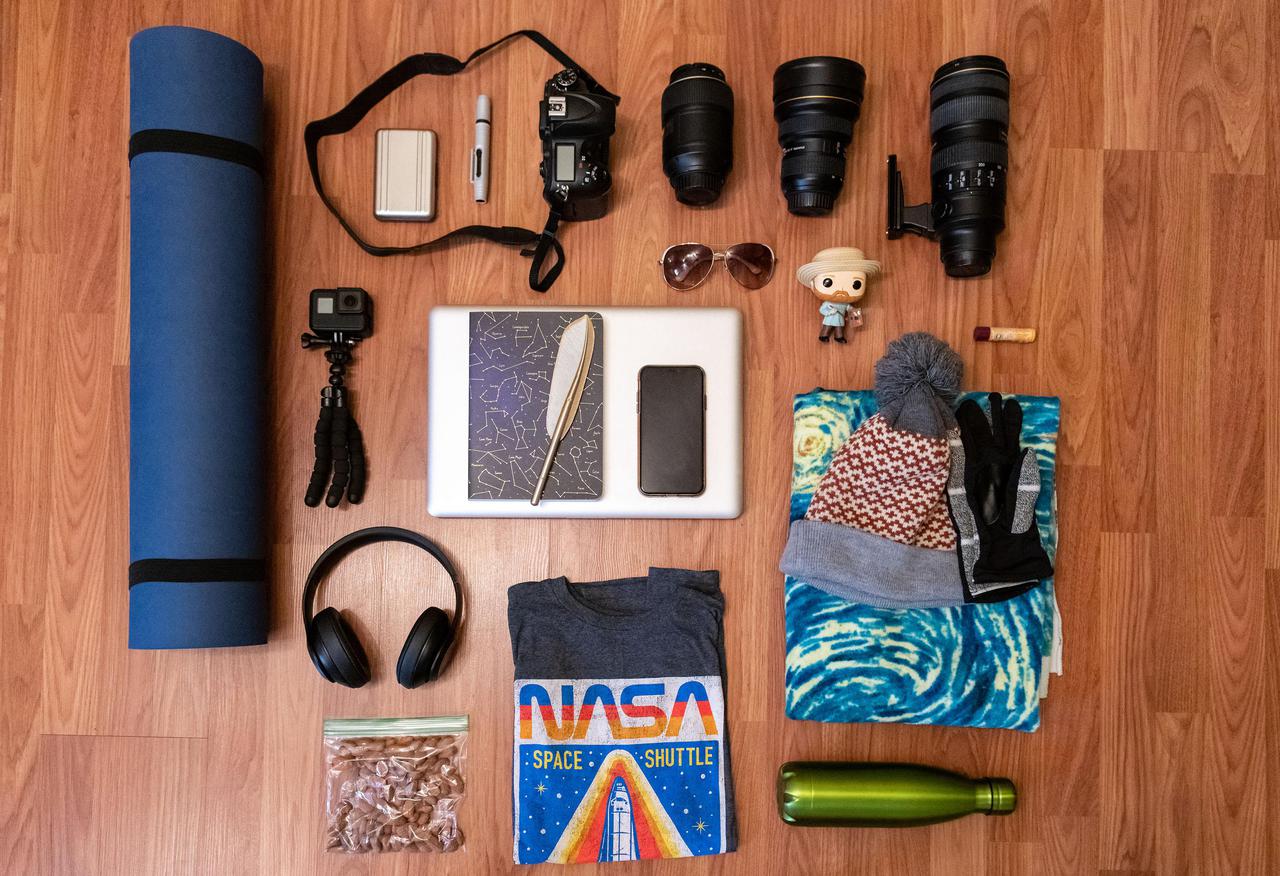
I may not always pack light, but I tried to only pack the essentials, with a couple of goodies. I get cold fairly easily hence the blanket, extra NASA shirt, hat and gloves. No trip is complete without my favorite snack of almonds, water, sunglasses, Chapstick, phone and my headphones to listen to some music. I figured I could bring my yoga mat, because who wouldn’t want to do yoga on the moon?? The most important part of this kit is my camera! I brought a couple of different lenses for a variety of options, along with a sports action camera, notebook and computer for editing. The Van Gogh doll was just for fun!
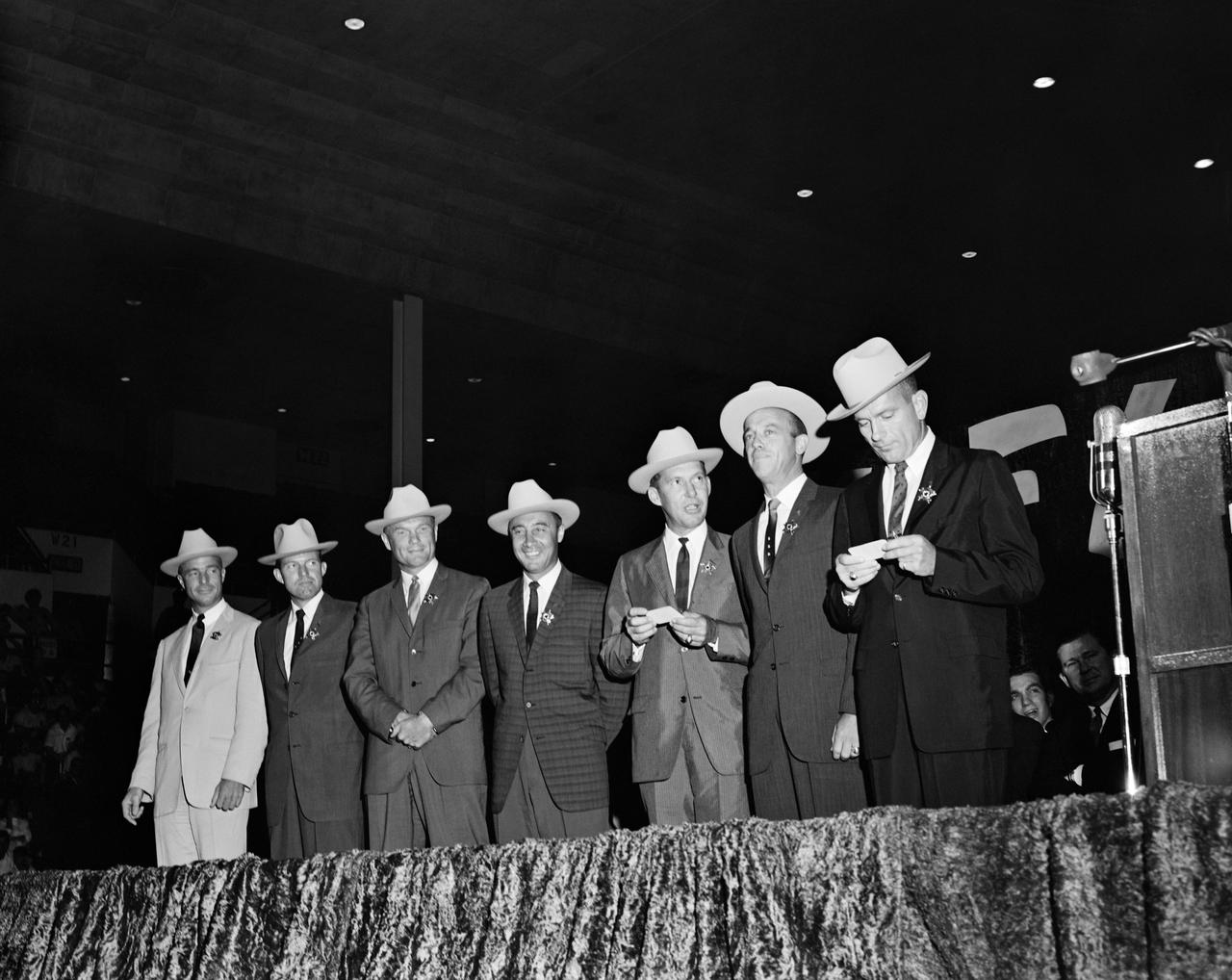
S62-03709 (4 July 1962) --- The original seven Mercury astronauts, each wearing new cowboy hats and a badge in the shape of a star, are pictured on stage at the Sam Houston Coliseum. A large crowd was on hand to welcome them to Houston, Texas. Left to right are astronauts M. Scott Carpenter, L. Gordon Cooper Jr., John H. Glenn Jr., Virgil I. Grissom, Walter M. Schirra Jr., Alan B. Shepard Jr., and Donald K. Slayton. Sen. John Tower (R.-Texas) is seen in far right background. Photo credit: NASA
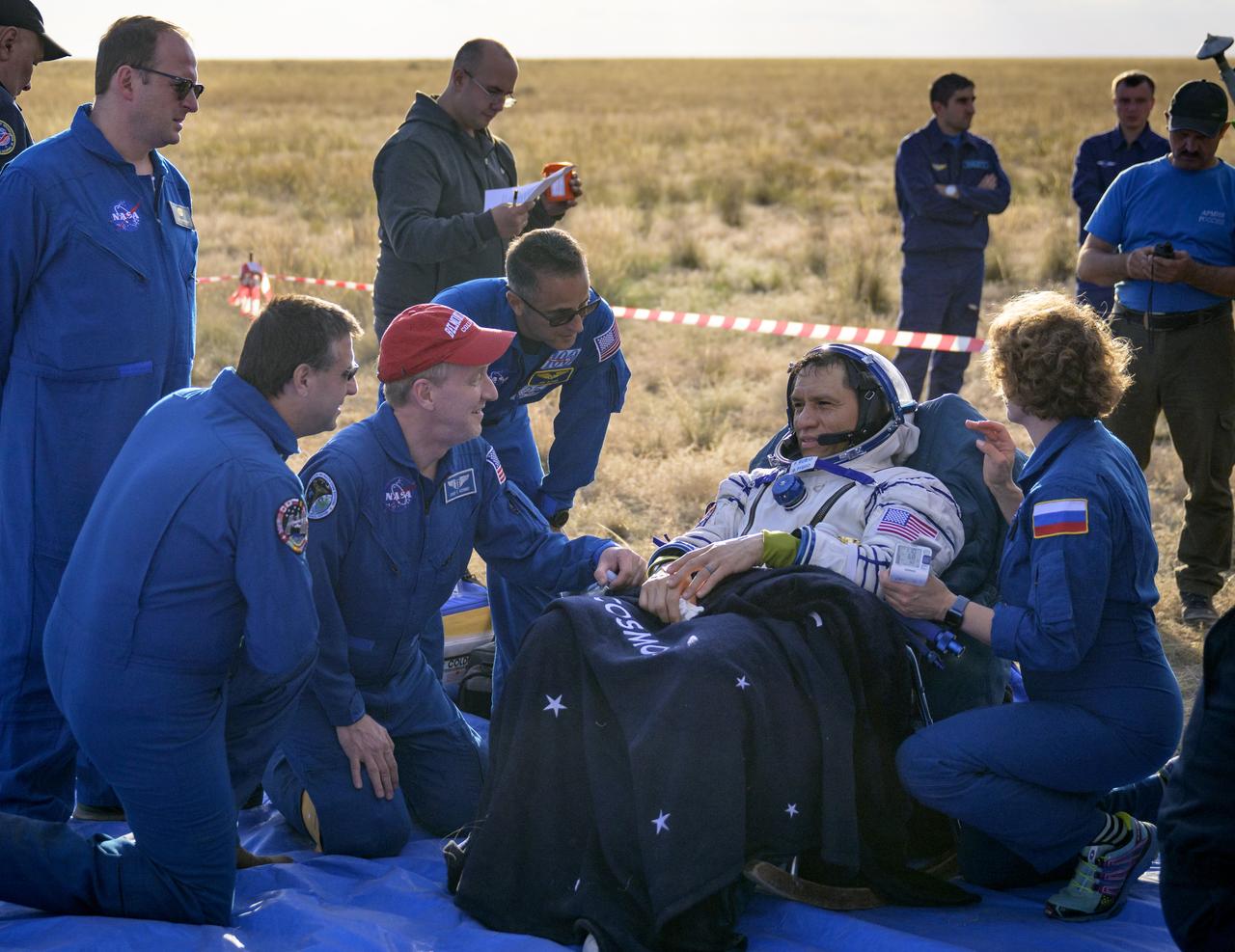
Expedition 69 NASA astronaut Frank Rubio is seen resting and talking with NASA ISS Program Manager Joel Montalbano, kneeling left, NASA Flight Surgeon Josef Schmid, red hat, and NASA Chief of the Astronaut Office Joe Acaba, outside the Soyuz MS-23 spacecraft after he landed with Roscosmos cosmonauts Sergey Prokopyev and Dmitri Petelin in a remote area near the town of Zhezkazgan, Kazakhstan on Wednesday, Sept. 27, 2023. The trio are returning to Earth after logging 371 days in space as members of Expeditions 68-69 aboard the International Space Station. For Rubio, his mission is the longest single spaceflight by a U.S. astronaut in history. Photo Credit: (NASA/Bill Ingalls)
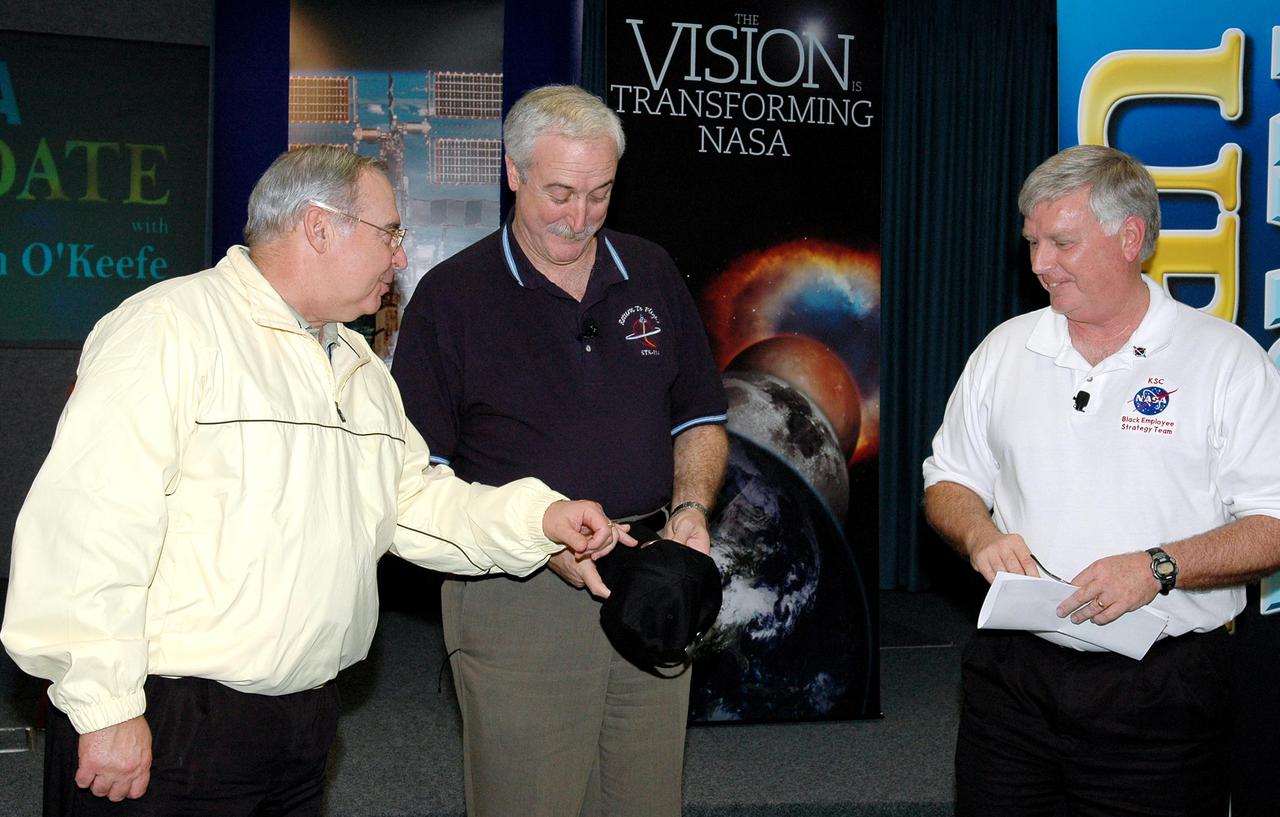
KENNEDY SPACE CENTER, FLA. - NASA Administrator Sean O’Keefe (center) is presented with a Deep Impact hat in the Press Site Auditorium following his report to employees on the state of the Agency. He is accompanied on stage by Center Director Jim Kennedy (right). The update was broadcast live via NASA Television. O'Keefe focused on the achievements of 2004 and the goals set for 2005. His remarks emphasized the milestones met in NASA's Vision for Space Exploration, including the launch of the comet-chasing Deep Impact mission and the landing of the Huygens probe on Jupiter’s moon Titan, both occurring in the past two days, and the progress made in meeting the requirements to return the Space Shuttle to flight. O’Keefe’s briefing included a dialogue with Associate Administrator of NASA’s Office of Exploration Systems Craig Steidle and Center Director Jim Kennedy, live; and Manager of the Space Station Office Bill Gerstenmaier and Director of Advanced Planning and Jet Propulsion Laboratory Charles Elachi, via satellite.
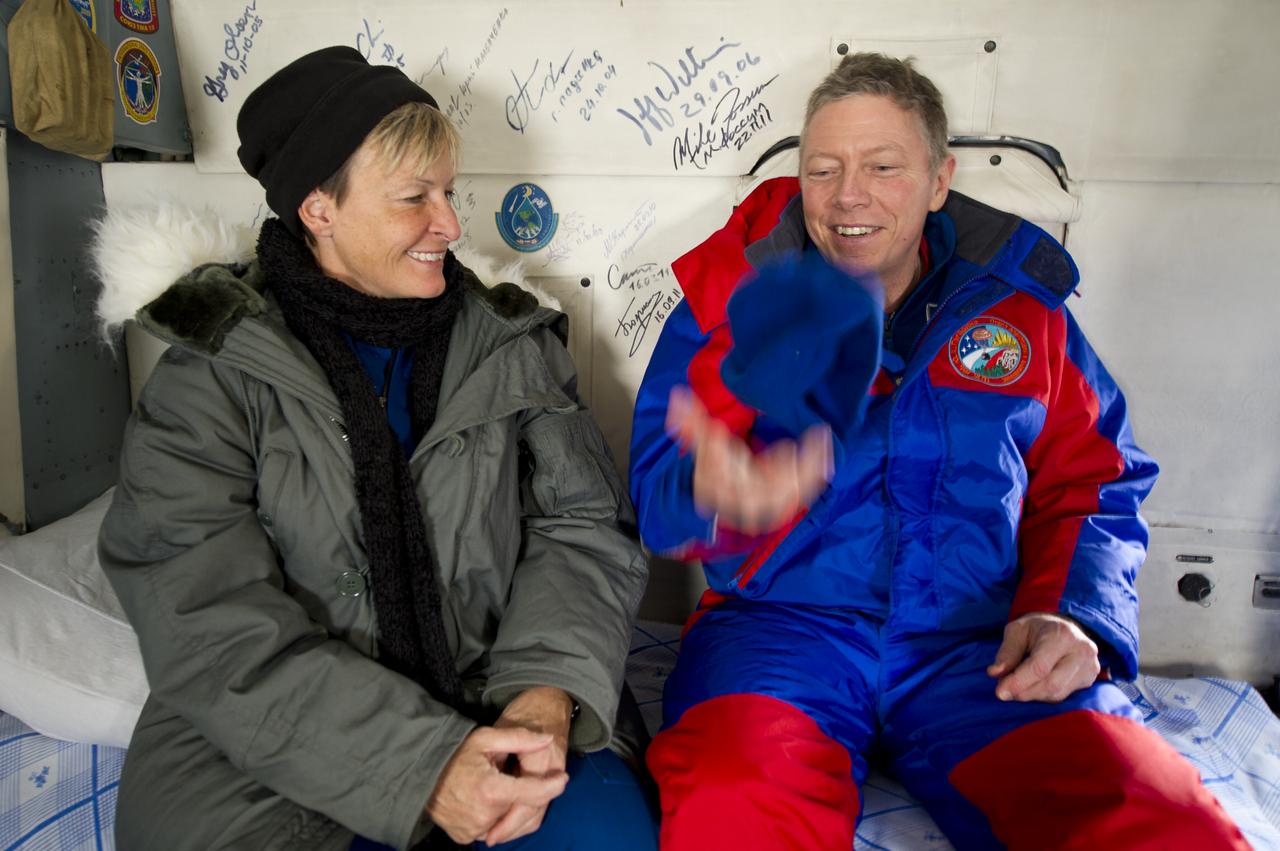
Expedition 29 Commander Mike Fossum, right, tosses his hat into the air and comments to Peggy Whitson, NASA Chief of the Astronaut Office, about how strange the effects of gravity feel as they land in a helicopter in Kustanay, Kazakhstan just a few hours after he and Expedition 29 Flight Engineers Sergei Volkov and Satoshi Furukawa landed in their Soyuz TMA-02M capsule in a remote area outside of the town of Arkalyk, Kazakhstan, on Tuesday, Nov. 22, 2011. NASA Astronaut Fossum, Russian Cosmonaut Volkov and JAXA (Japan Aerospace Exploration Agency) Astronaut Furukawa are returning from more than five months onboard the International Space Station where they served as members of the Expedition 28 and 29 crews. Photo Credit: (NASA/Bill Ingalls)
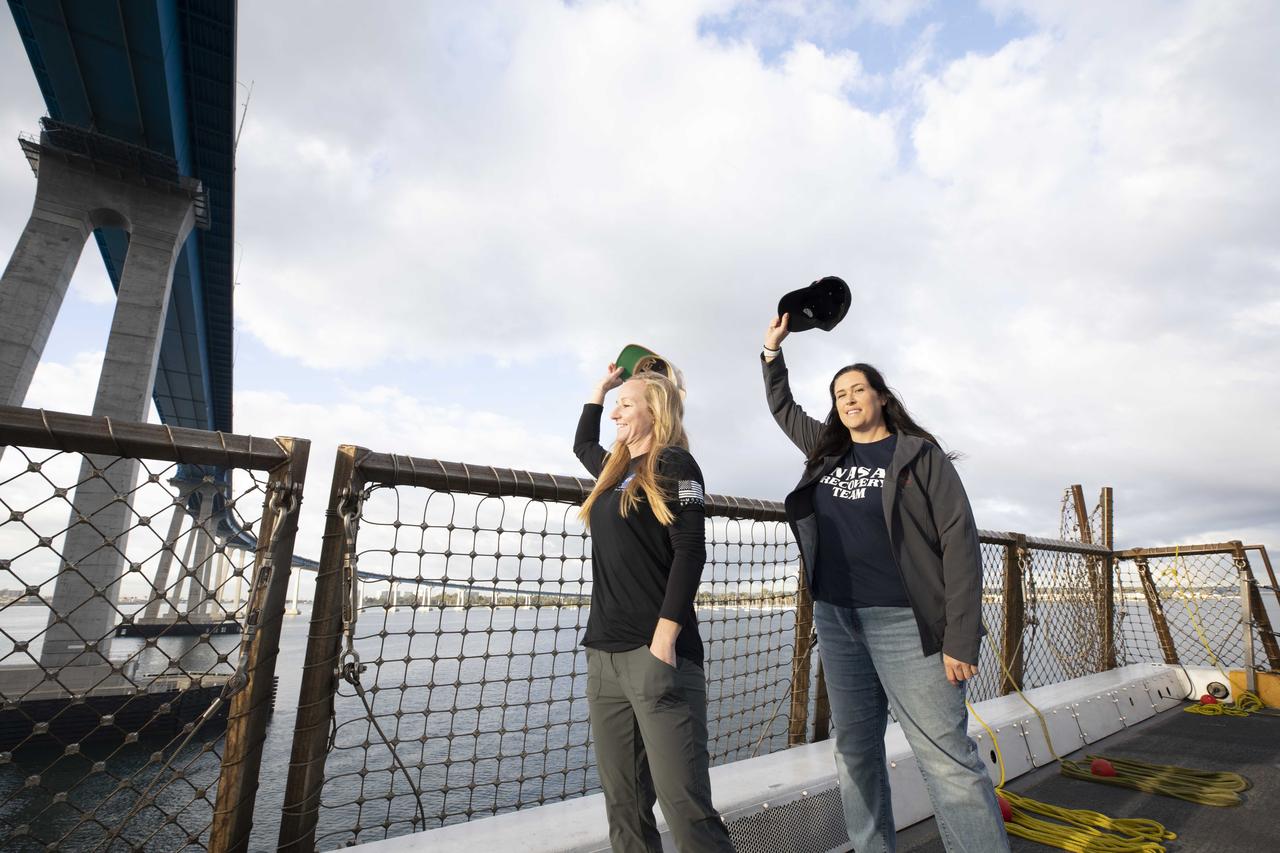
While returning to port after successfully recovering the Orion spacecraft for the Artemis I mission, NASA Artemis Recovery Director Melissa Jones, at right, and Assistant NASA Recovery Director Carla Rekucki, throw their hats in the air aboard the USS Portland as they pass under the San Diego-Coronado bridge on Dec. 13, 2022. The Artemis I Orion spacecraft is secured inside the ship’s well deck after splashing down at 12:40 p.m. EST on Dec. 11, 2022. U.S. Navy divers helped recover the Orion spacecraft. NASA, the Navy and other Department of Defense partners worked together to secure the spacecraft inside the ship’s well deck approximately five hours after Orion splashed down in the Pacific Ocean off the coast of Baja, California.
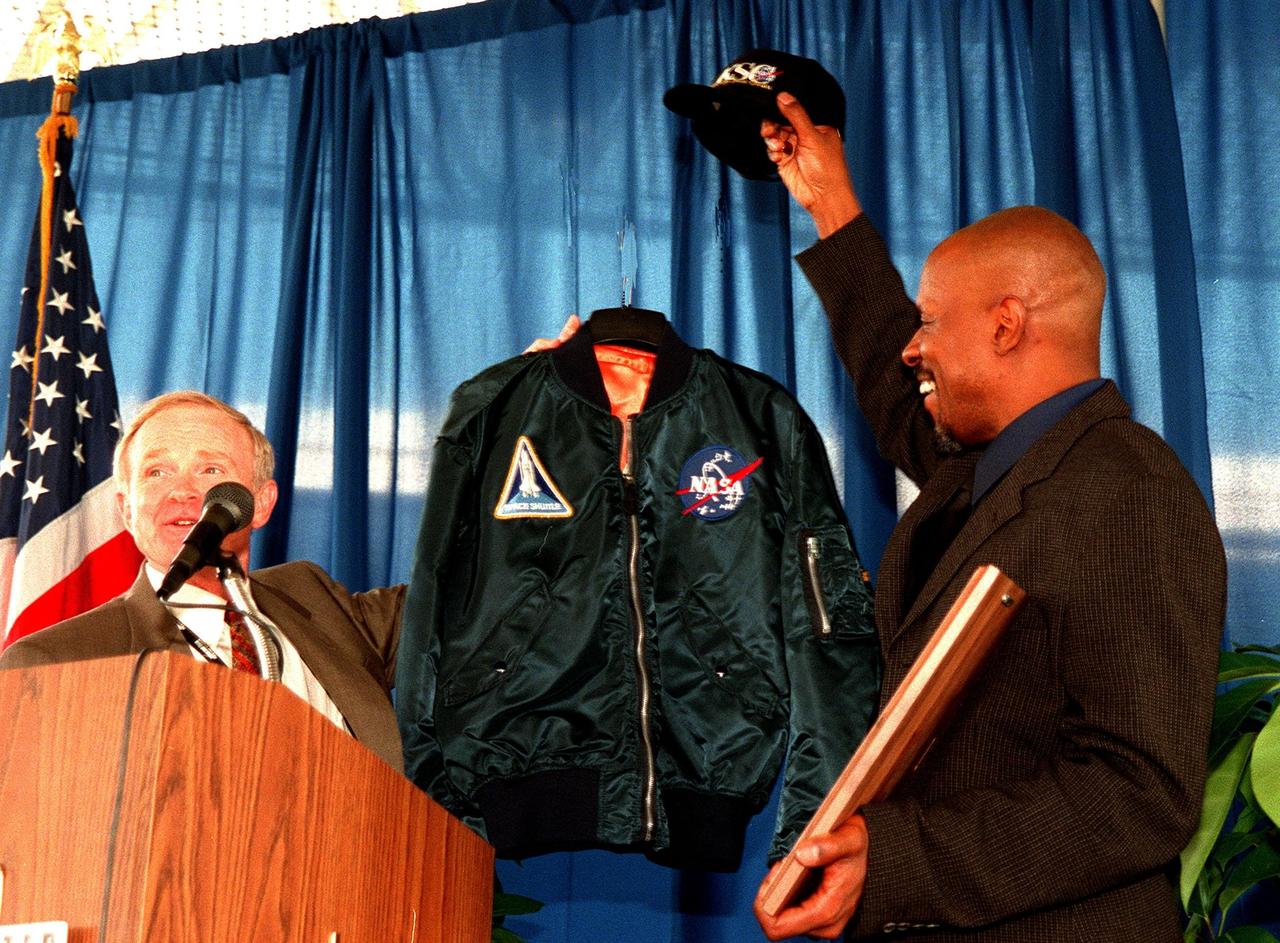
KENNEDY SPACE CENTER, FLA. -- At the grand opening of the newly expanded KSC Visitor Complex, Center Director Roy Bridges presents Deep Space Nine star Avery Brooks with a plaque, NASA jacket and hat. Brooks narrates the new film Quest for Life at the Visitor Center. Brooks was recognized for his contribution to advancing the public's understanding of NASA and the search for life elsewhere in the universe. The Complex now includes an International Space Station-themed ticket plaza, featuring a structure of overhanging solar panels and astronauts performing assembly tasks, a new foyer, films, and exhibits. The KSC Visitor Complex was inaugurated three decades ago and is now one of the top five tourist attractions in Florida. It is located on S.R. 407, east of I-95, within the Merritt Island National Wildlife Refuge
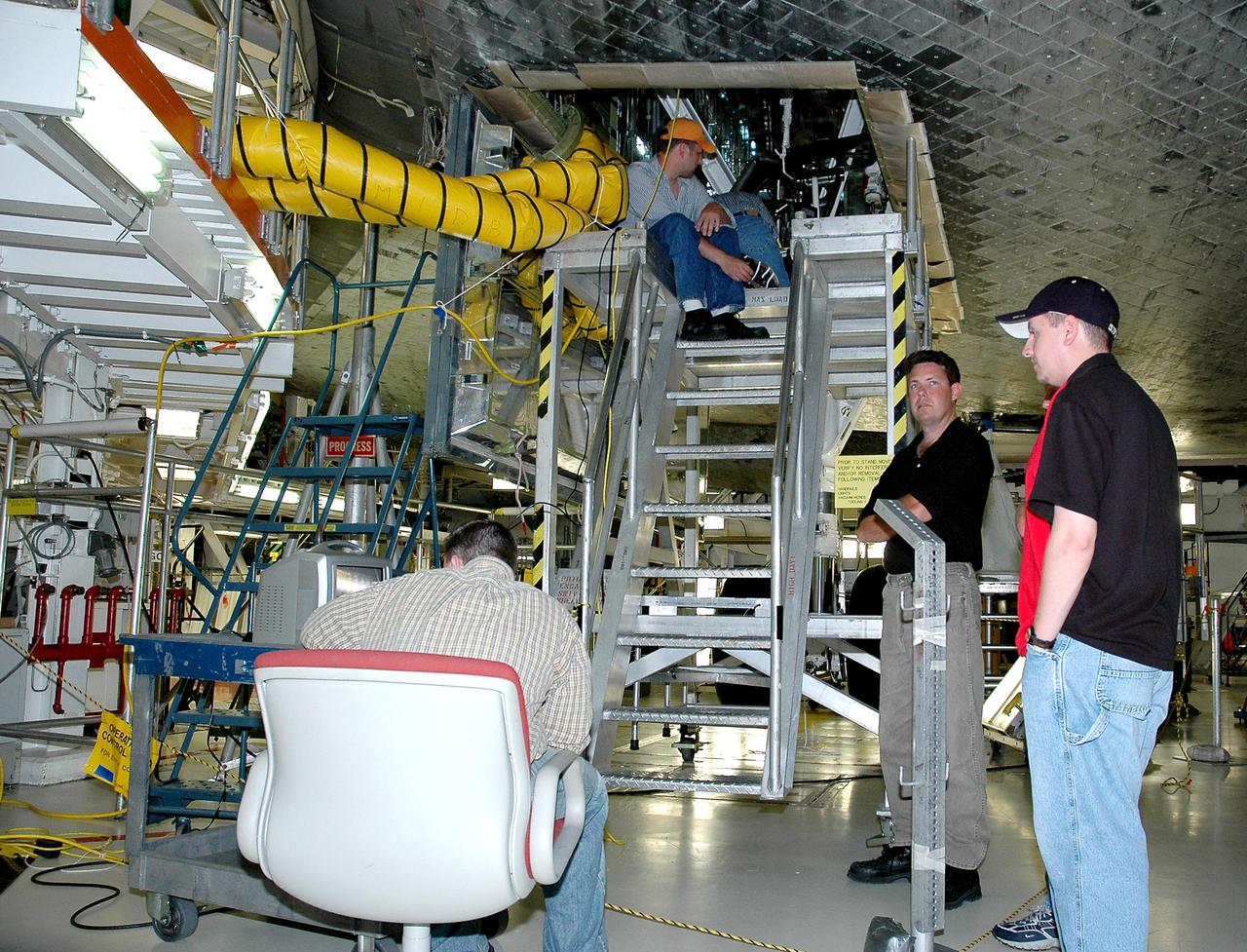
KENNEDY SPACE CENTER, FLA. - On Orbiter Atlantis in NASA’s Orbiter Processing Facility, bay 1, Charles Wassen, orbiter inspector, on steps in the open door of the main landing gear helps with boroscope inspection on the retract link assembly. At left in the chair, Dave Rumpf, materials and processing engineer, observes results on a monitor. At right are Jessie McEnulty (in hat), mechanisms engineer, and Tony Glass, orbiter inspector, a member of the micro inspection team. To lower the main landing gear, a mechanical linkage released by each gear actuates the doors to the open position. The landing gear reach the full-down and extended position with 10 seconds and are locked in the down position by spring-loaded downlock bungees Atlantis is scheduled to launch in September 2005 on the second Return to Flight mission, STS-121.
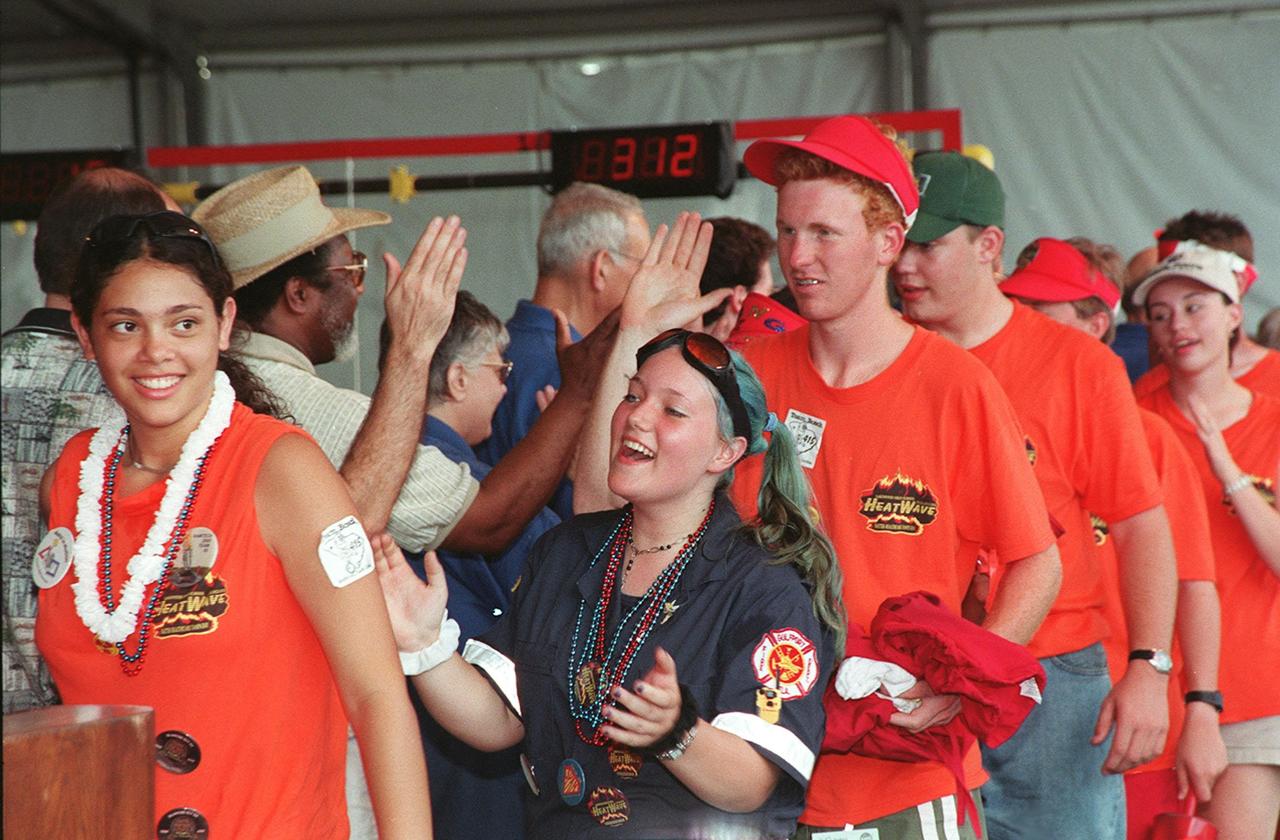
Members of the team known as Heatwave, from St. Petersburg, Fla., get "high fives" from Jim Jennings (wearing a straw hat), KSC's deputy director for Business Operations, during closing ceremonies for the FIRST (For Inspiration and Recognition of Science and Technology) Southeast Regional competition held at the KSC Visitor Complex. Heatwave came in second for the final competition, plus received awards for Number One Seed, Best Offensive round, and the DaimlerChrysler Team Spirit. Teams of high school students from all over the country tested the limits of their imagination using robots they designed, with the support of business and engineering professionals and corporate sponsors, to compete in a technological battle against other schools' robots. Of the 30 high school teams competing at the Southeast Regional event, 16 were Florida teams co-sponsored by NASA and KSC contractors. Local high schools participating are Astronaut, Bayside, Cocoa Beach, Eau Gallie, Melbourne, Melbourne Central Catholic, Palm Bay, Rockledge, Satellite, and Titusville
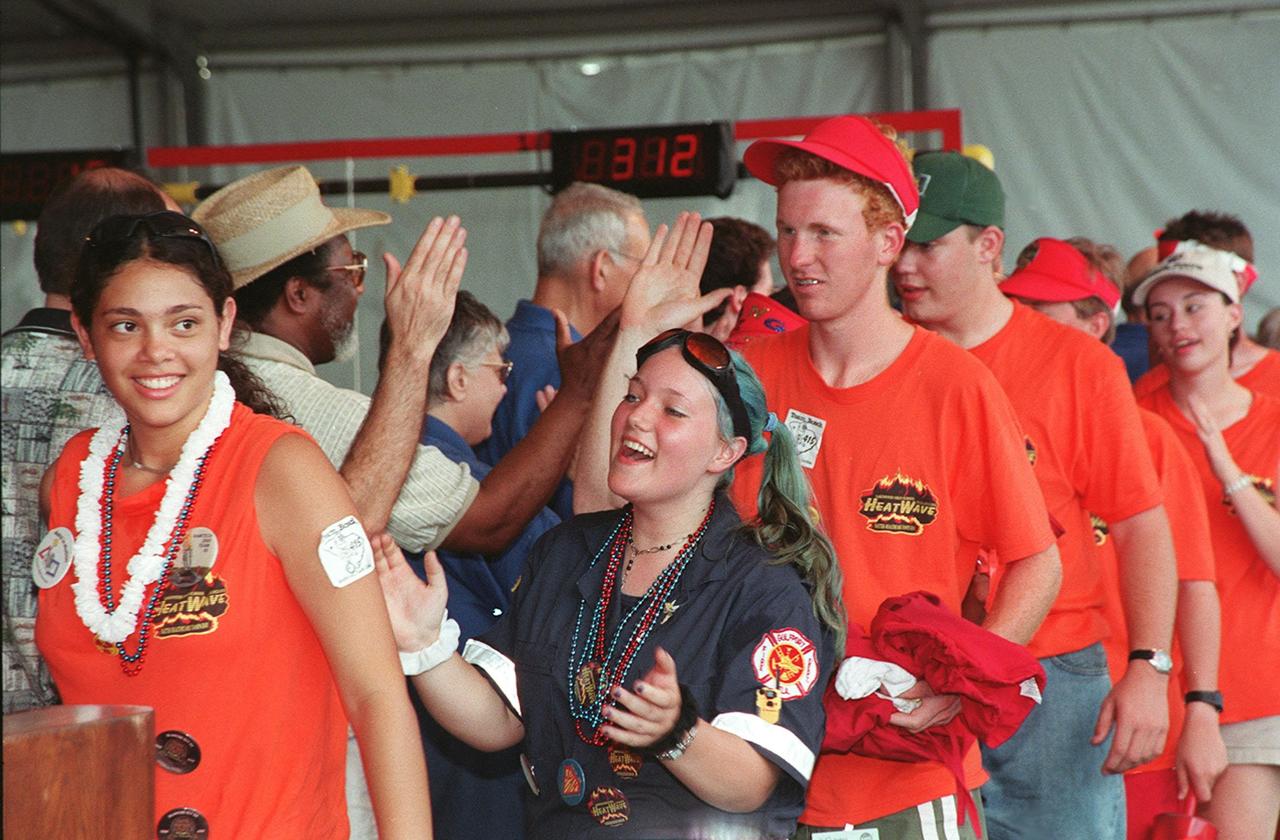
Members of the team known as Heatwave, from St. Petersburg, Fla., get "high fives" from Jim Jennings (wearing a straw hat), KSC's deputy director for Business Operations, during closing ceremonies for the FIRST (For Inspiration and Recognition of Science and Technology) Southeast Regional competition held at the KSC Visitor Complex. Heatwave came in second for the final competition, plus received awards for Number One Seed, Best Offensive round, and the DaimlerChrysler Team Spirit. Teams of high school students from all over the country tested the limits of their imagination using robots they designed, with the support of business and engineering professionals and corporate sponsors, to compete in a technological battle against other schools' robots. Of the 30 high school teams competing at the Southeast Regional event, 16 were Florida teams co-sponsored by NASA and KSC contractors. Local high schools participating are Astronaut, Bayside, Cocoa Beach, Eau Gallie, Melbourne, Melbourne Central Catholic, Palm Bay, Rockledge, Satellite, and Titusville
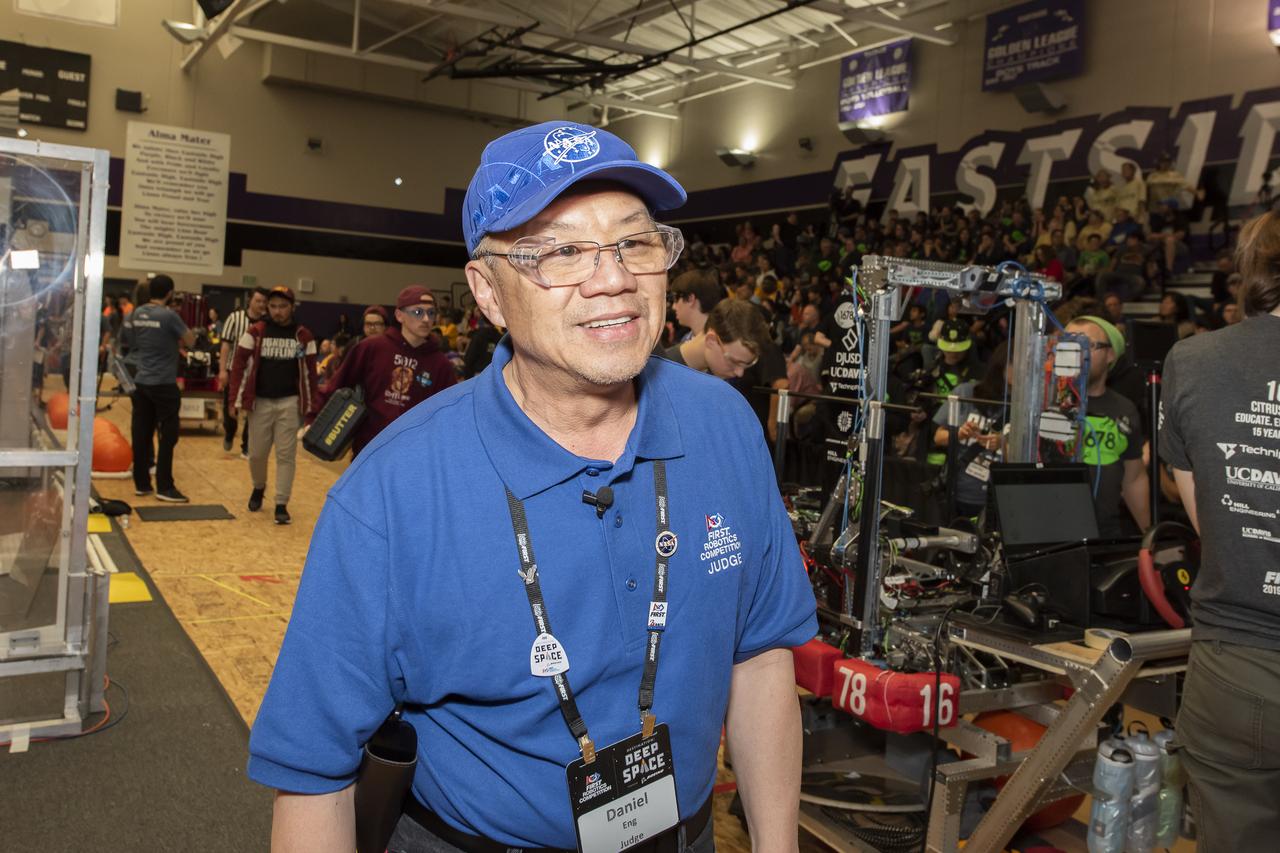
NASA Systems Engineer Daniel Eng serves his second year as a judge for the Aerospace Valley Robotics Competition at the Palmdale Aerospace Academy in Palmdale, California, in 2019.
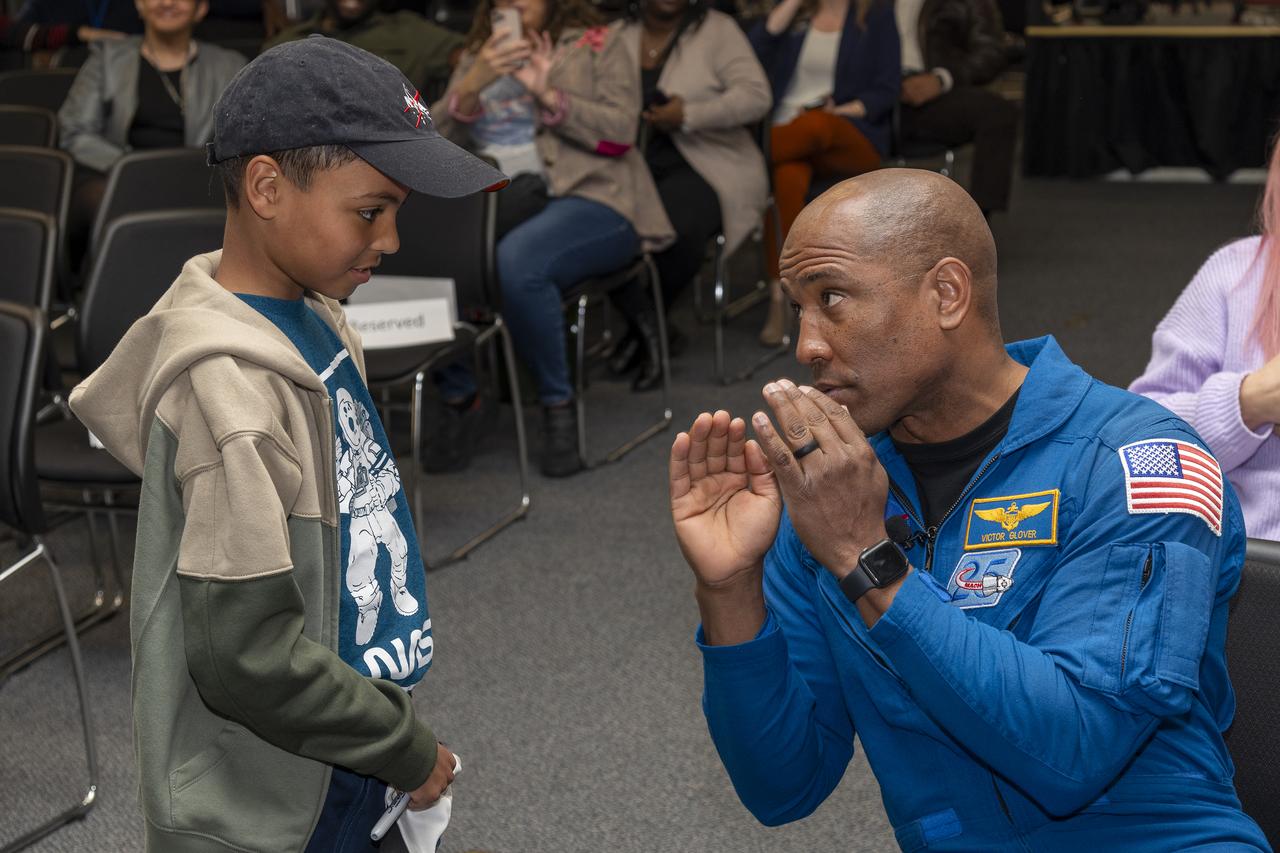
NASA Artemis II astronaut Victor Glover met with Edwards Air Force Base school-age children at a joint NASA and Air Force Black Employee Resource Group event at NASA’s Armstrong Flight Research Center in Edwards, California on Feb. 15.
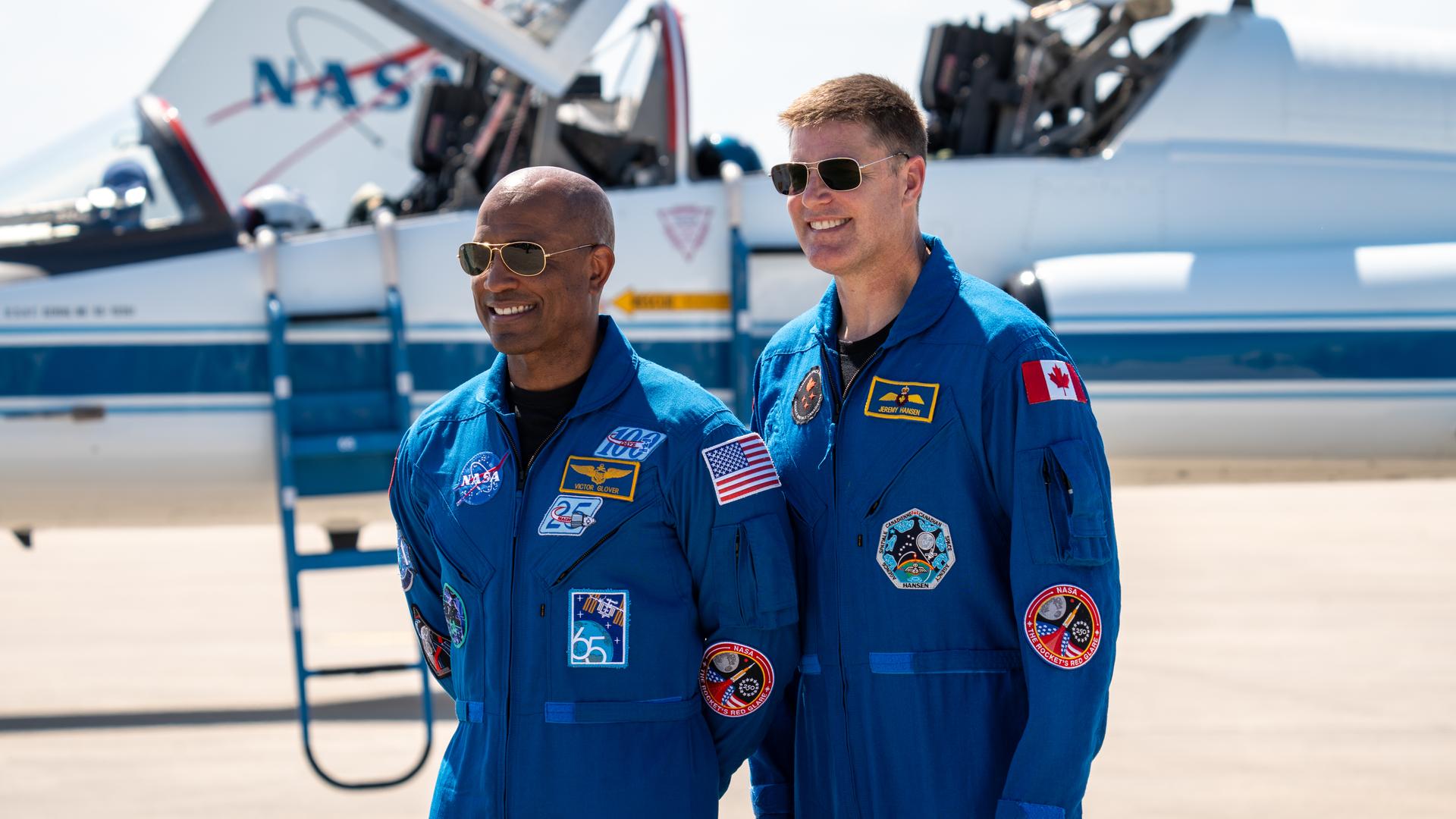
DESCRIPTION: These images show the moments shortly after the arrival of the Artemis II crew to NASA’s Kennedy Space Center on March 27, 2026 ahead of the launch. The four astronauts, Victor Glover, Reid Wiseman, Christina Koch, and Jeremy Hansen, arrived on a T38, which can be seen behind them. They took turns speaking to the crowd as they also announced the zero-gravity indicator they would be taking with them on their journey.
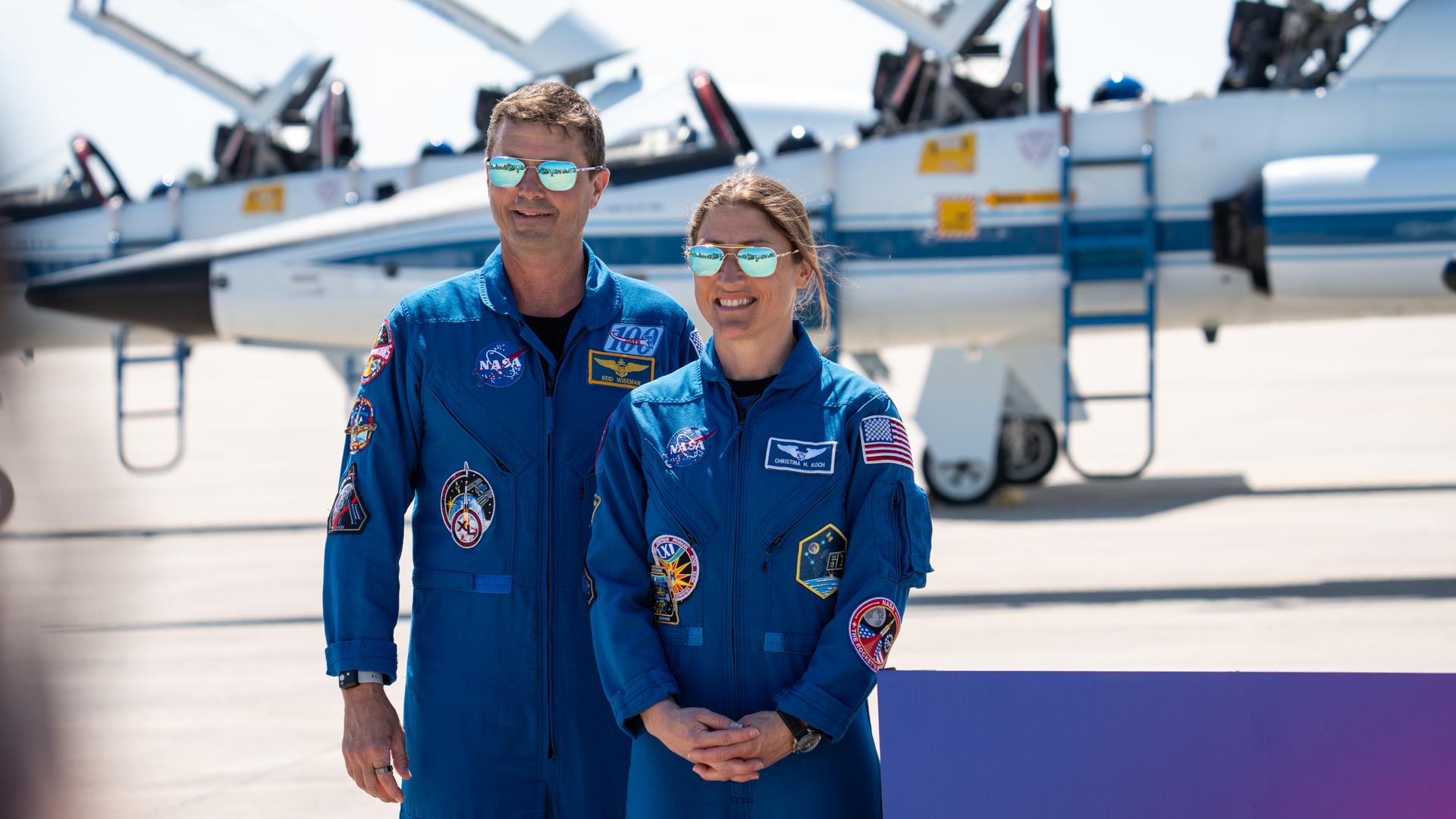
These images show the moments shortly after the arrival of the Artemis II crew to NASA’s Kennedy Space Center on March 27, 2026 ahead of the launch. The four astronauts, Victor Glover, Reid Wiseman, Christina Koch, and Jeremy Hansen, arrived on a T38, which can be seen behind them. They took turns speaking to the crowd as they also announced the zero-gravity indicator they would be taking with them on their journey.
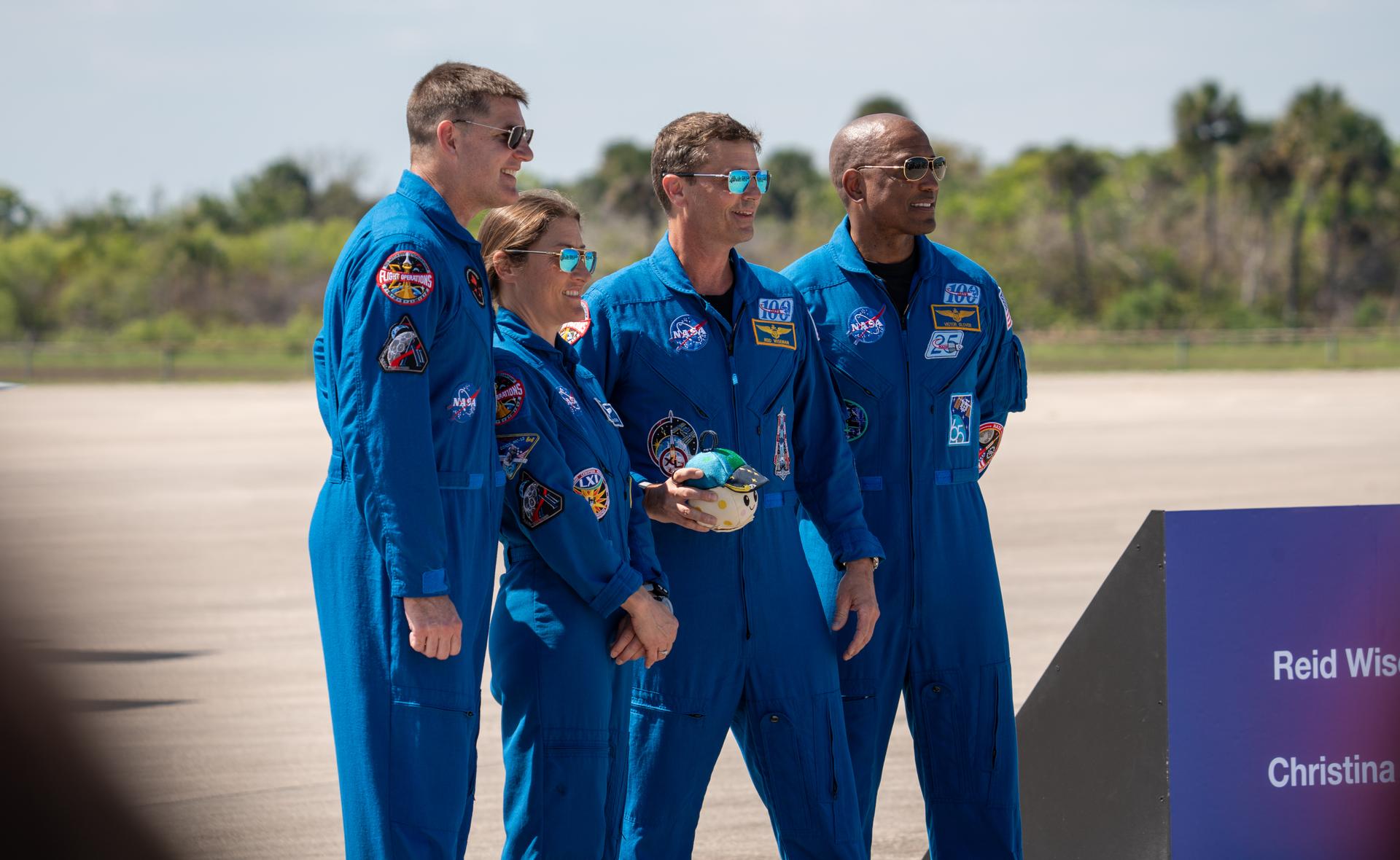
These images show the moments shortly after the arrival of the Artemis II crew to NASA’s Kennedy Space Center on March 27, 2026 ahead of the launch. The four astronauts, Victor Glover, Reid Wiseman, Christina Koch, and Jeremy Hansen, arrived on a T38, which can be seen behind them. They took turns speaking to the crowd as they also announced the zero-gravity indicator they would be taking with them on their journey.
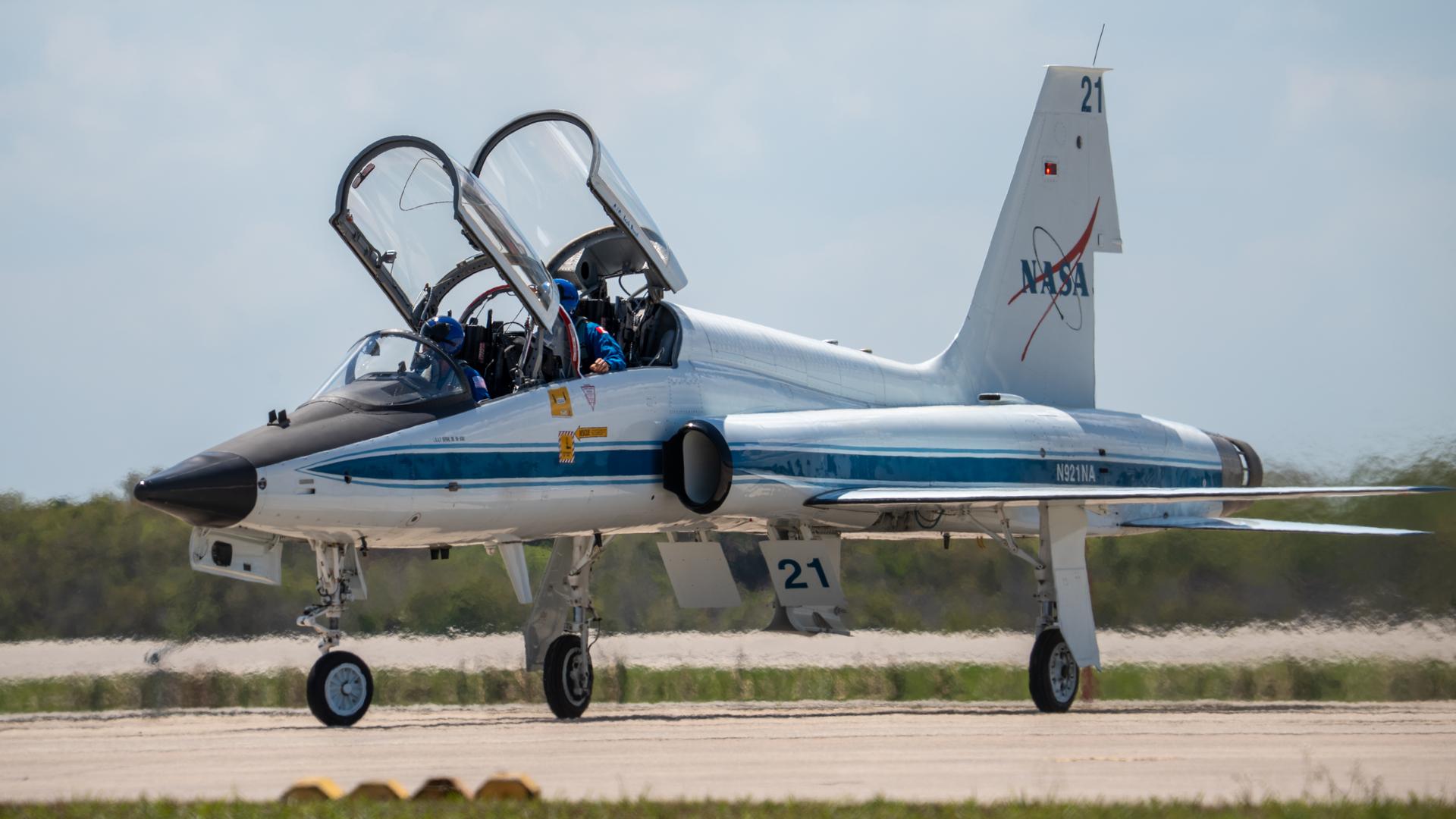
These images show the moments shortly after the arrival of the Artemis II crew to NASA’s Kennedy Space Center on March 27, 2026 ahead of the launch. The four astronauts, Victor Glover, Reid Wiseman, Christina Koch, and Jeremy Hansen, arrived on a T38, which can be seen behind them. They took turns speaking to the crowd as they also announced the zero-gravity indicator they would be taking with them on their journey.
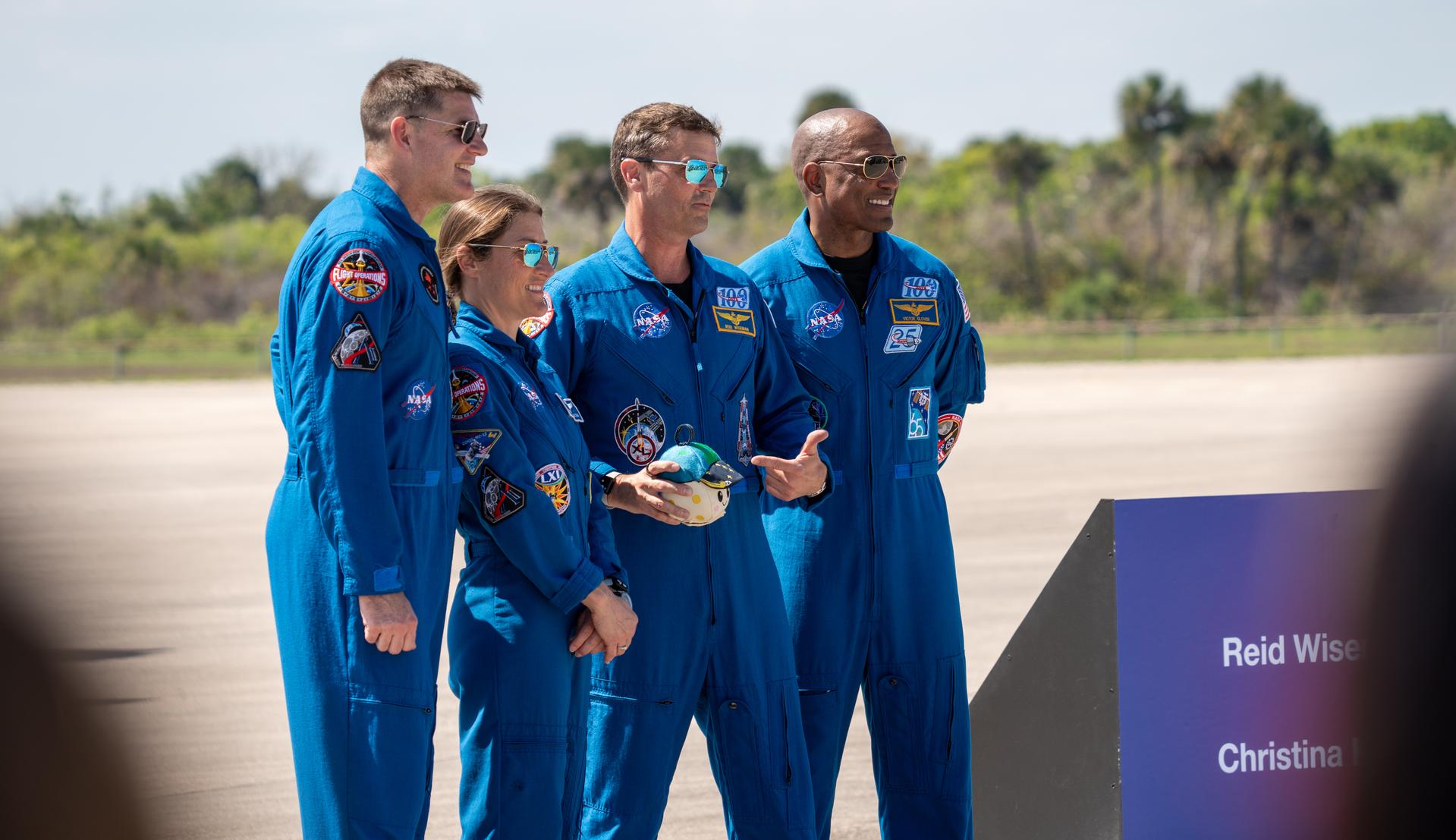
These images show the moments shortly after the arrival of the Artemis II crew to NASA’s Kennedy Space Center on March 27, 2026 ahead of the launch. The four astronauts, Victor Glover, Reid Wiseman, Christina Koch, and Jeremy Hansen, arrived on a T38, which can be seen behind them. They took turns speaking to the crowd as they also announced the zero-gravity indicator they would be taking with them on their journey.
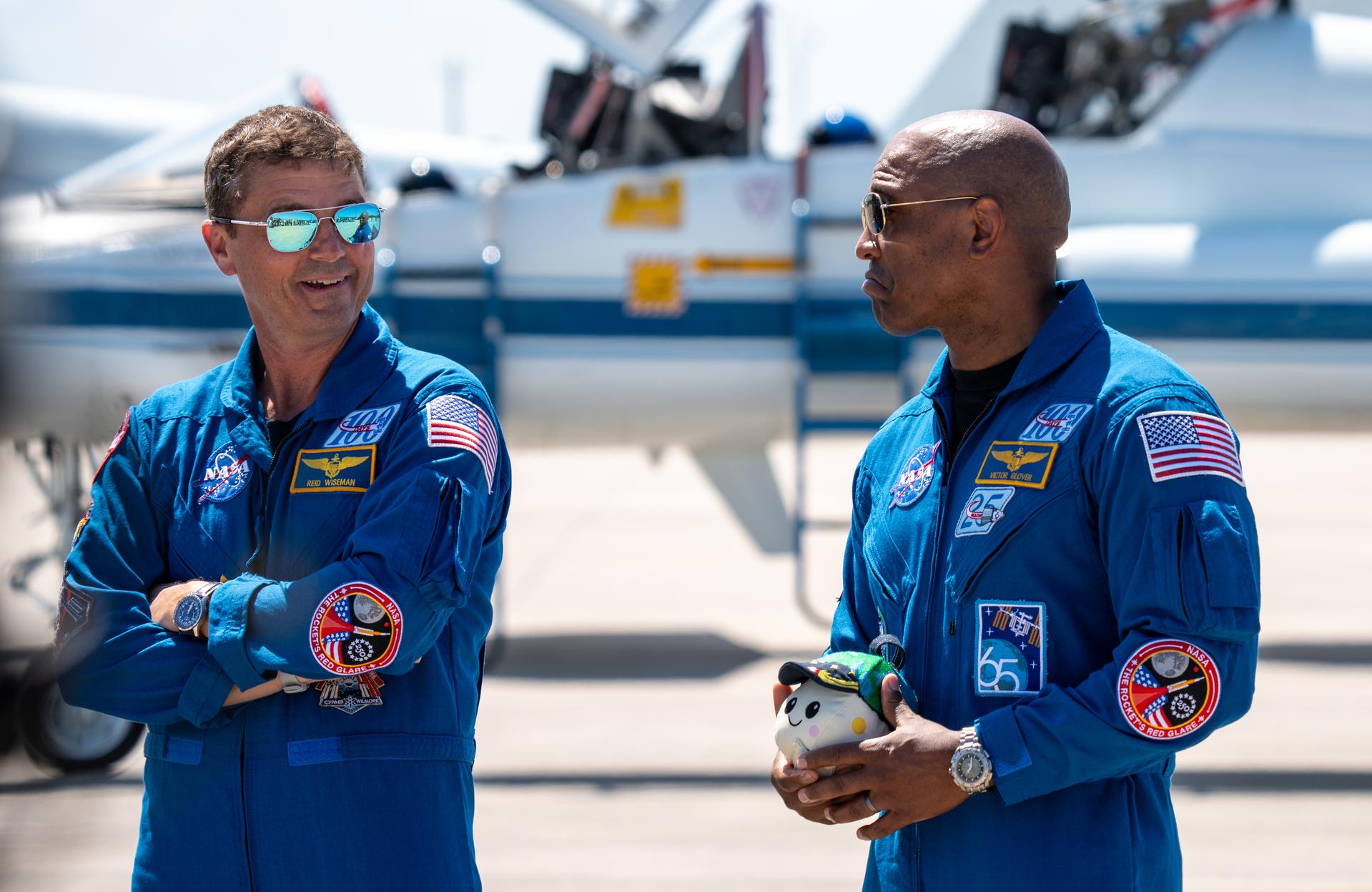
These images show the moments shortly after the arrival of the Artemis II crew to NASA’s Kennedy Space Center on March 27, 2026 ahead of the launch. The four astronauts, Victor Glover, Reid Wiseman, Christina Koch, and Jeremy Hansen, arrived on a T38, which can be seen behind them. They took turns speaking to the crowd as they also announced the zero-gravity indicator they would be taking with them on their journey.
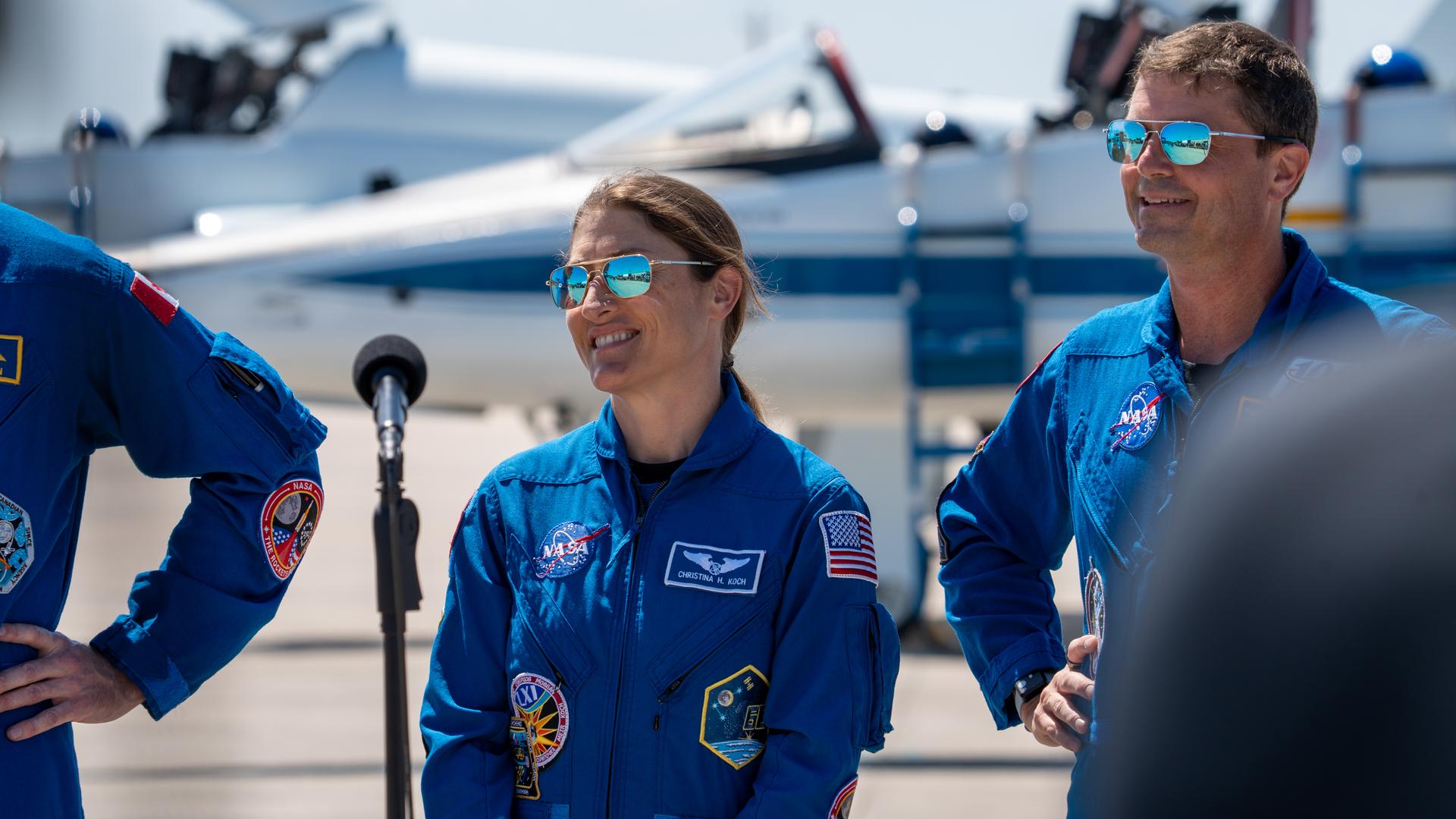
These images show the moments shortly after the arrival of the Artemis II crew to NASA’s Kennedy Space Center on March 27, 2026 ahead of the launch. The four astronauts, Victor Glover, Reid Wiseman, Christina Koch, and Jeremy Hansen, arrived on a T38, which can be seen behind them. They took turns speaking to the crowd as they also announced the zero-gravity indicator they would be taking with them on their journey.
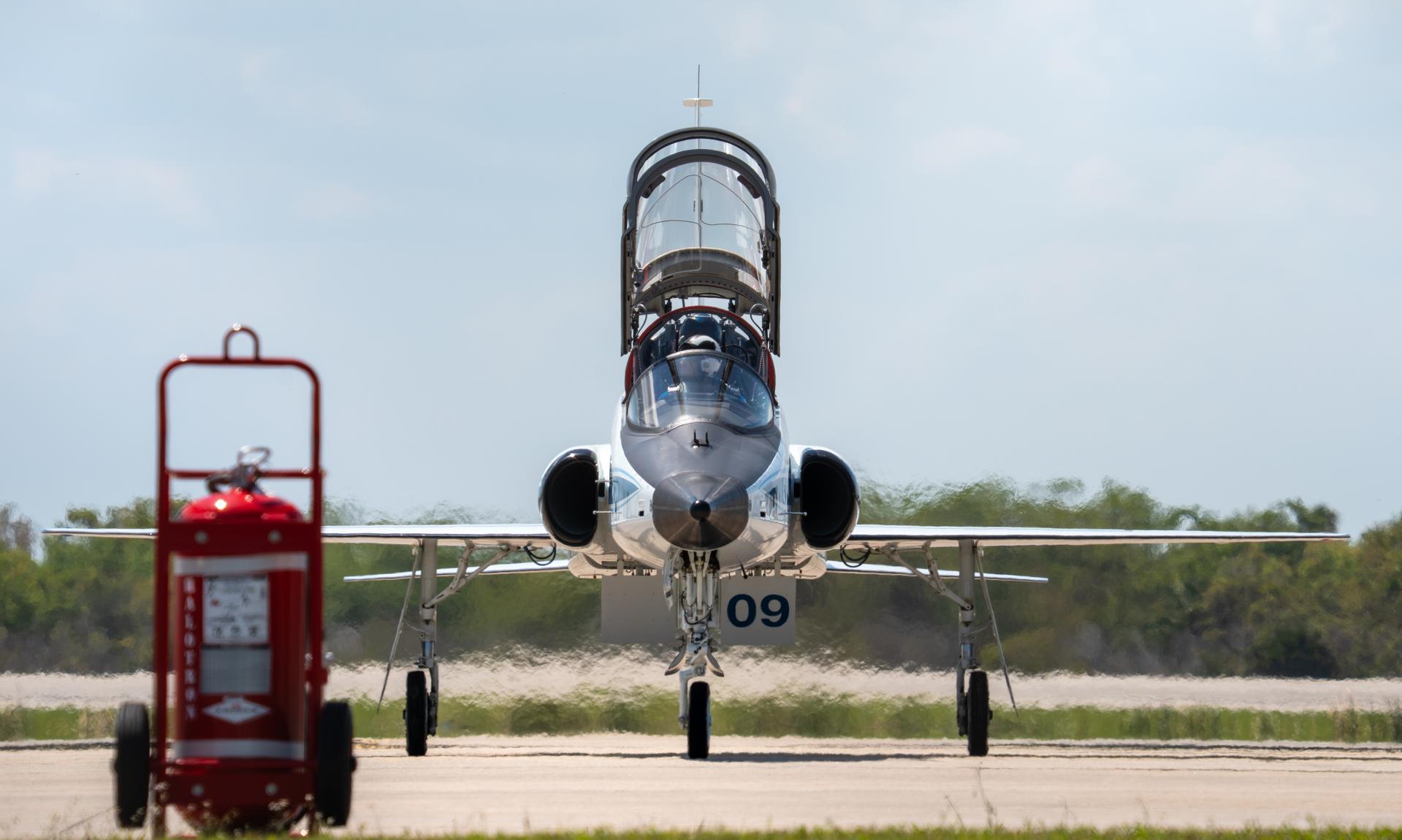
These images show the moments shortly after the arrival of the Artemis II crew to NASA’s Kennedy Space Center on March 27, 2026 ahead of the launch. The four astronauts, Victor Glover, Reid Wiseman, Christina Koch, and Jeremy Hansen, arrived on a T38, which can be seen behind them. They took turns speaking to the crowd as they also announced the zero-gravity indicator they would be taking with them on their journey.
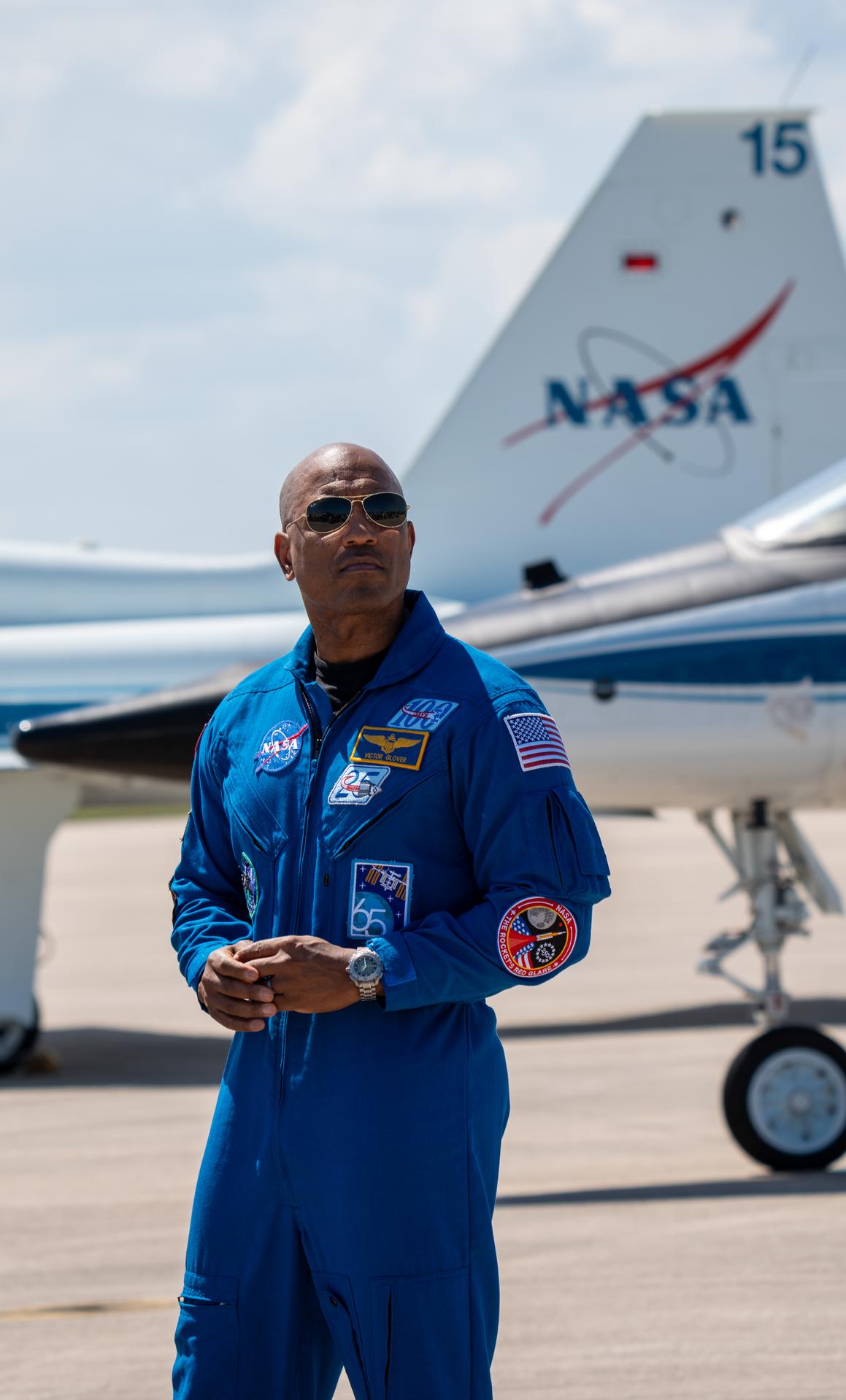
These images show the moments shortly after the arrival of the Artemis II crew to NASA’s Kennedy Space Center on March 27, 2026 ahead of the launch. The four astronauts, Victor Glover, Reid Wiseman, Christina Koch, and Jeremy Hansen, arrived on a T38, which can be seen behind them. They took turns speaking to the crowd as they also announced the zero-gravity indicator they would be taking with them on their journey.
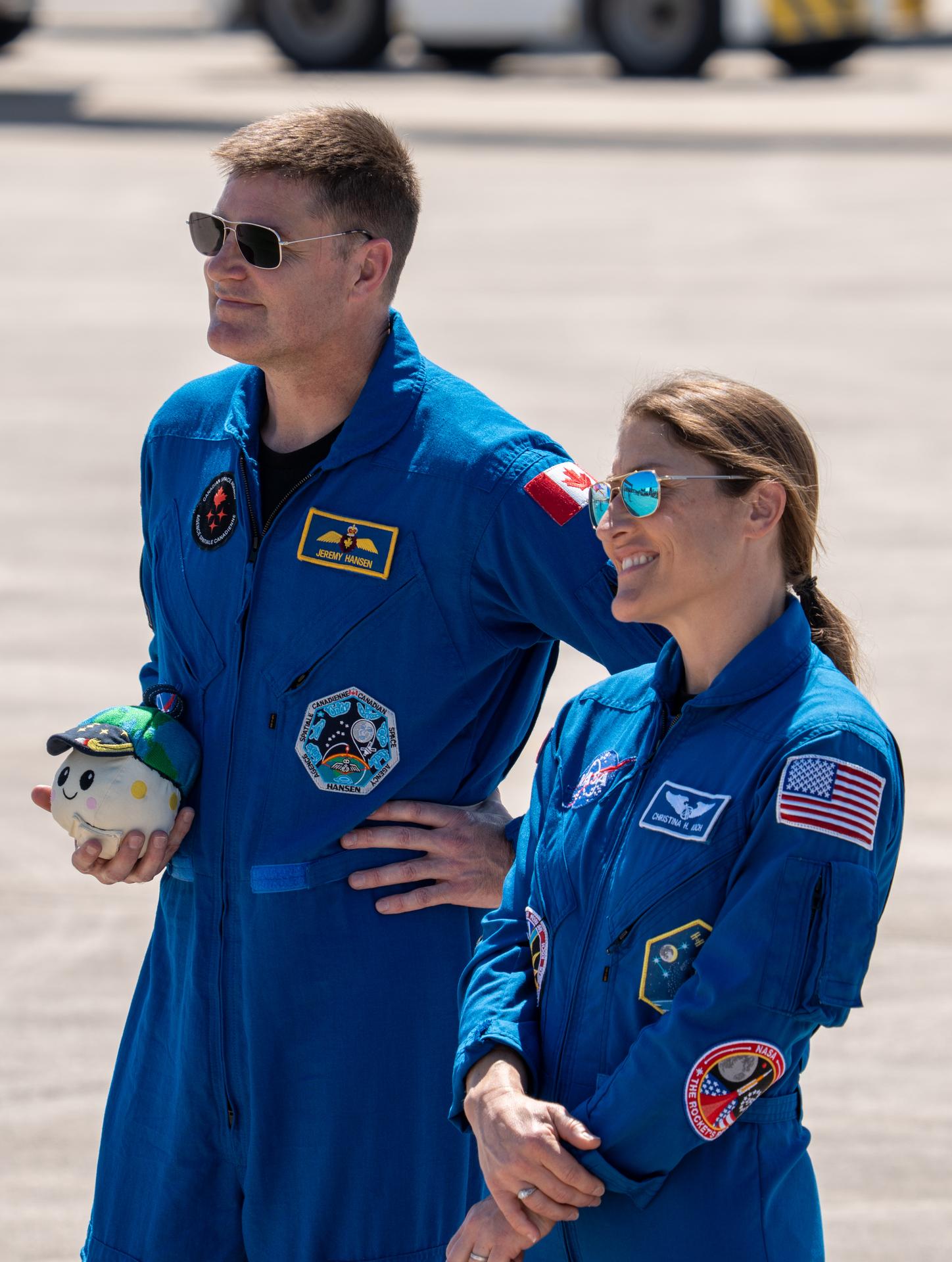
These images show the moments shortly after the arrival of the Artemis II crew to NASA’s Kennedy Space Center on March 27, 2026 ahead of the launch. The four astronauts, Victor Glover, Reid Wiseman, Christina Koch, and Jeremy Hansen, arrived on a T38, which can be seen behind them. They took turns speaking to the crowd as they also announced the zero-gravity indicator they would be taking with them on their journey.
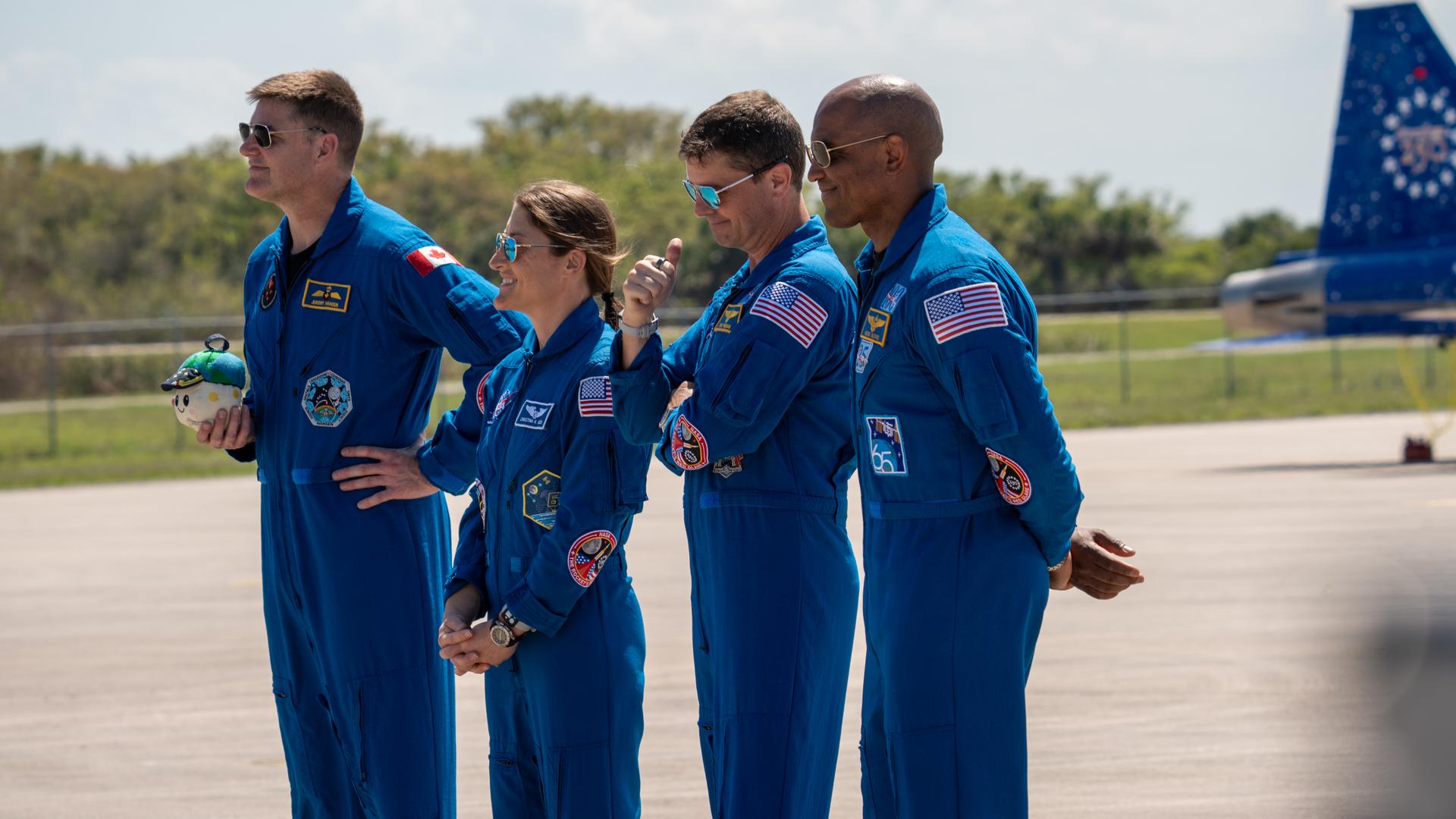
These images show the moments shortly after the arrival of the Artemis II crew to NASA’s Kennedy Space Center on March 27, 2026 ahead of the launch. The four astronauts, Victor Glover, Reid Wiseman, Christina Koch, and Jeremy Hansen, arrived on a T38, which can be seen behind them. They took turns speaking to the crowd as they also announced the zero-gravity indicator they would be taking with them on their journey.
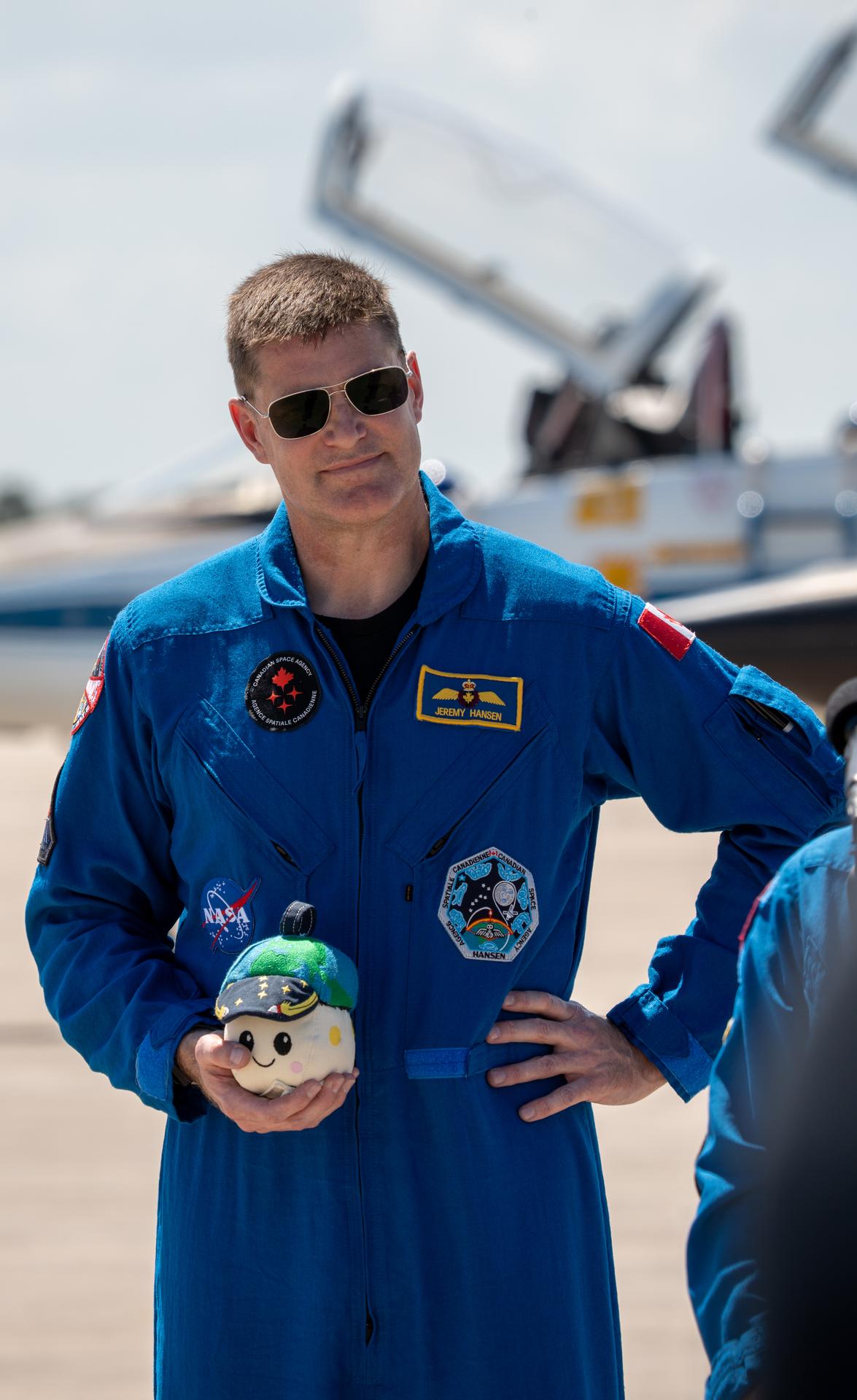
These images show the moments shortly after the arrival of the Artemis II crew to NASA’s Kennedy Space Center on March 27, 2026 ahead of the launch. The four astronauts, Victor Glover, Reid Wiseman, Christina Koch, and Jeremy Hansen, arrived on a T38, which can be seen behind them. They took turns speaking to the crowd as they also announced the zero-gravity indicator they would be taking with them on their journey.
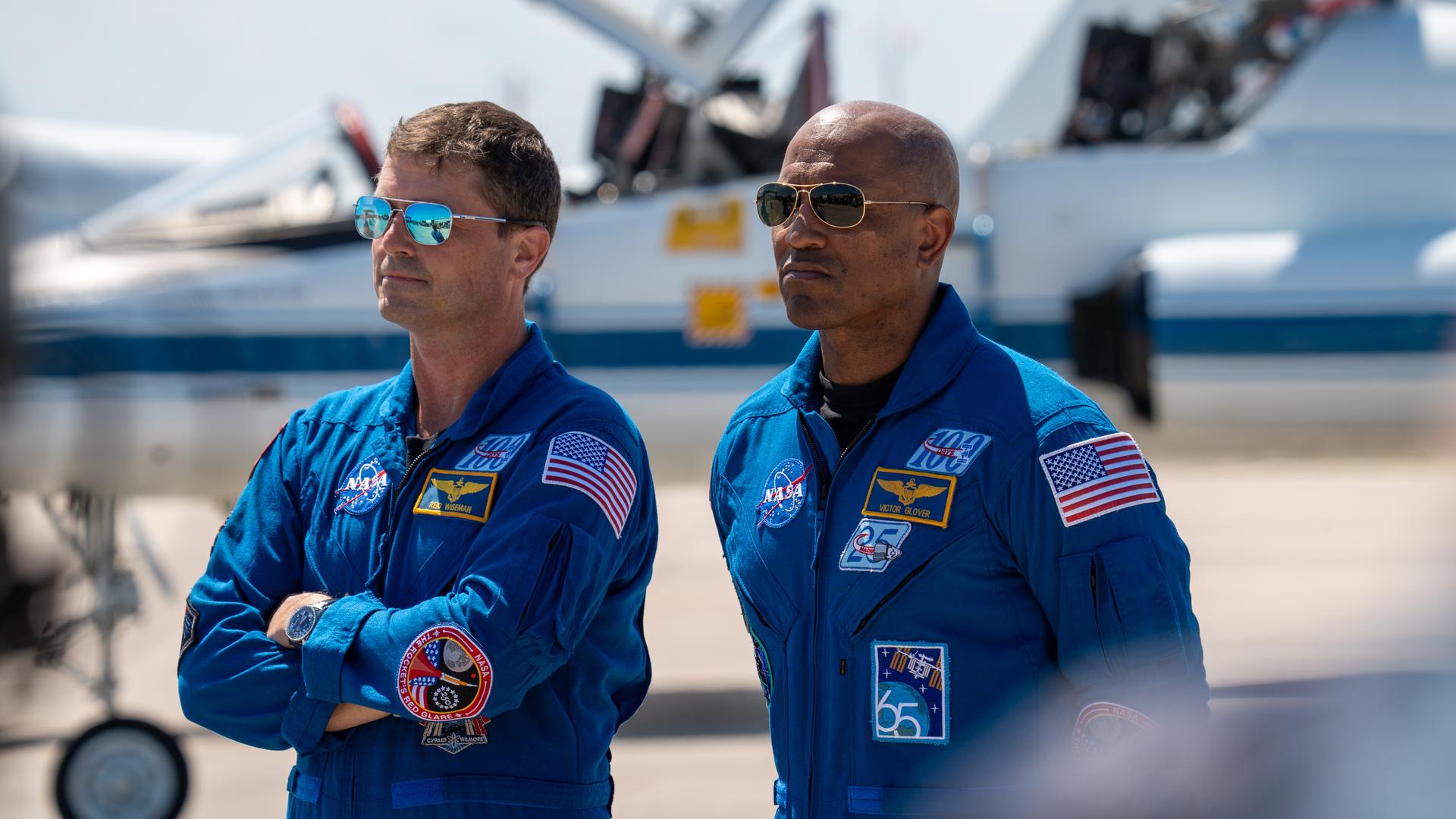
These images show the moments shortly after the arrival of the Artemis II crew to NASA’s Kennedy Space Center on March 27, 2026 ahead of the launch. The four astronauts, Victor Glover, Reid Wiseman, Christina Koch, and Jeremy Hansen, arrived on a T38, which can be seen behind them. They took turns speaking to the crowd as they also announced the zero-gravity indicator they would be taking with them on their journey.
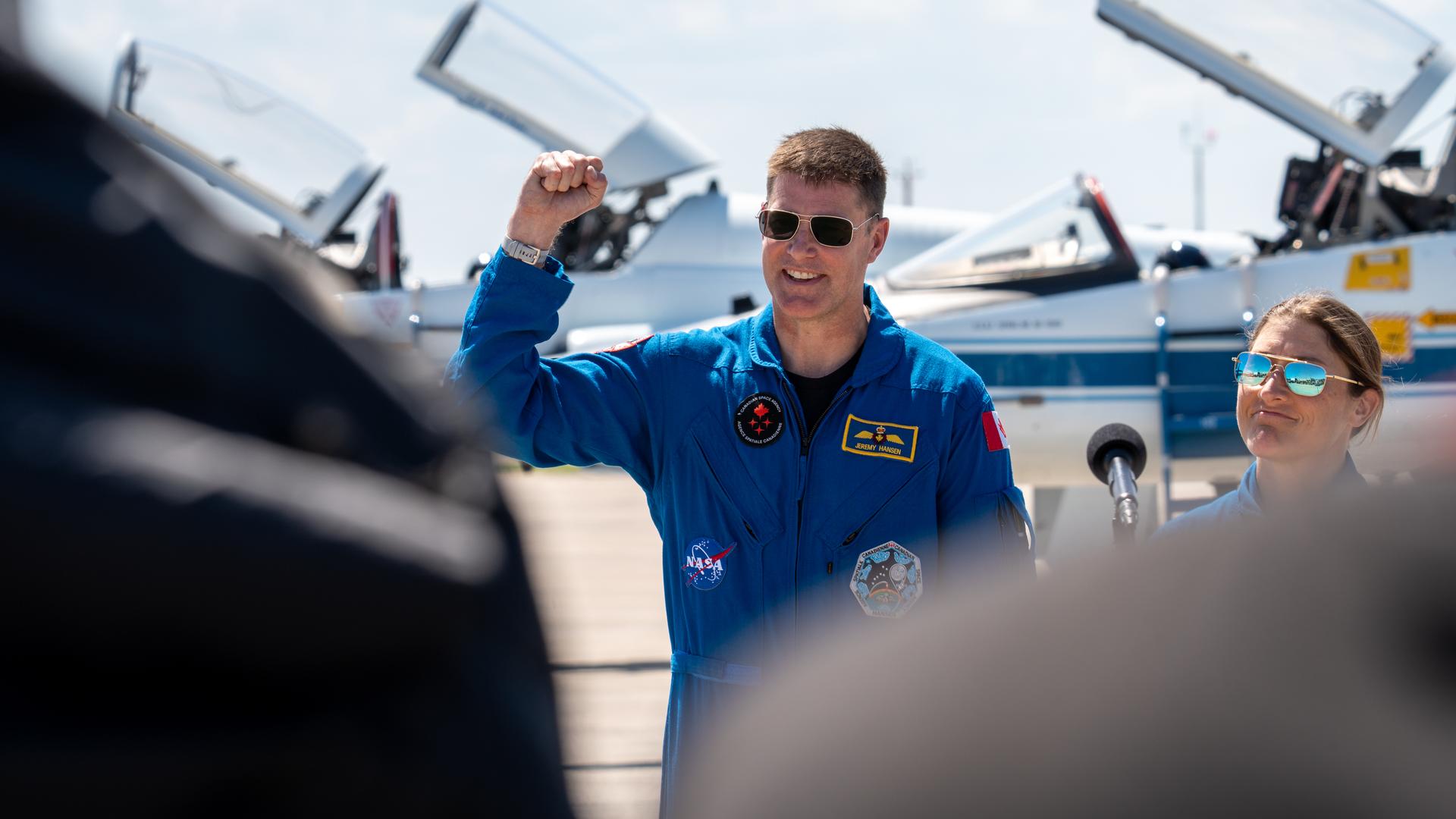
These images show the moments shortly after the arrival of the Artemis II crew to NASA’s Kennedy Space Center on March 27, 2026 ahead of the launch. The four astronauts, Victor Glover, Reid Wiseman, Christina Koch, and Jeremy Hansen, arrived on a T38, which can be seen behind them. They took turns speaking to the crowd as they also announced the zero-gravity indicator they would be taking with them on their journey.
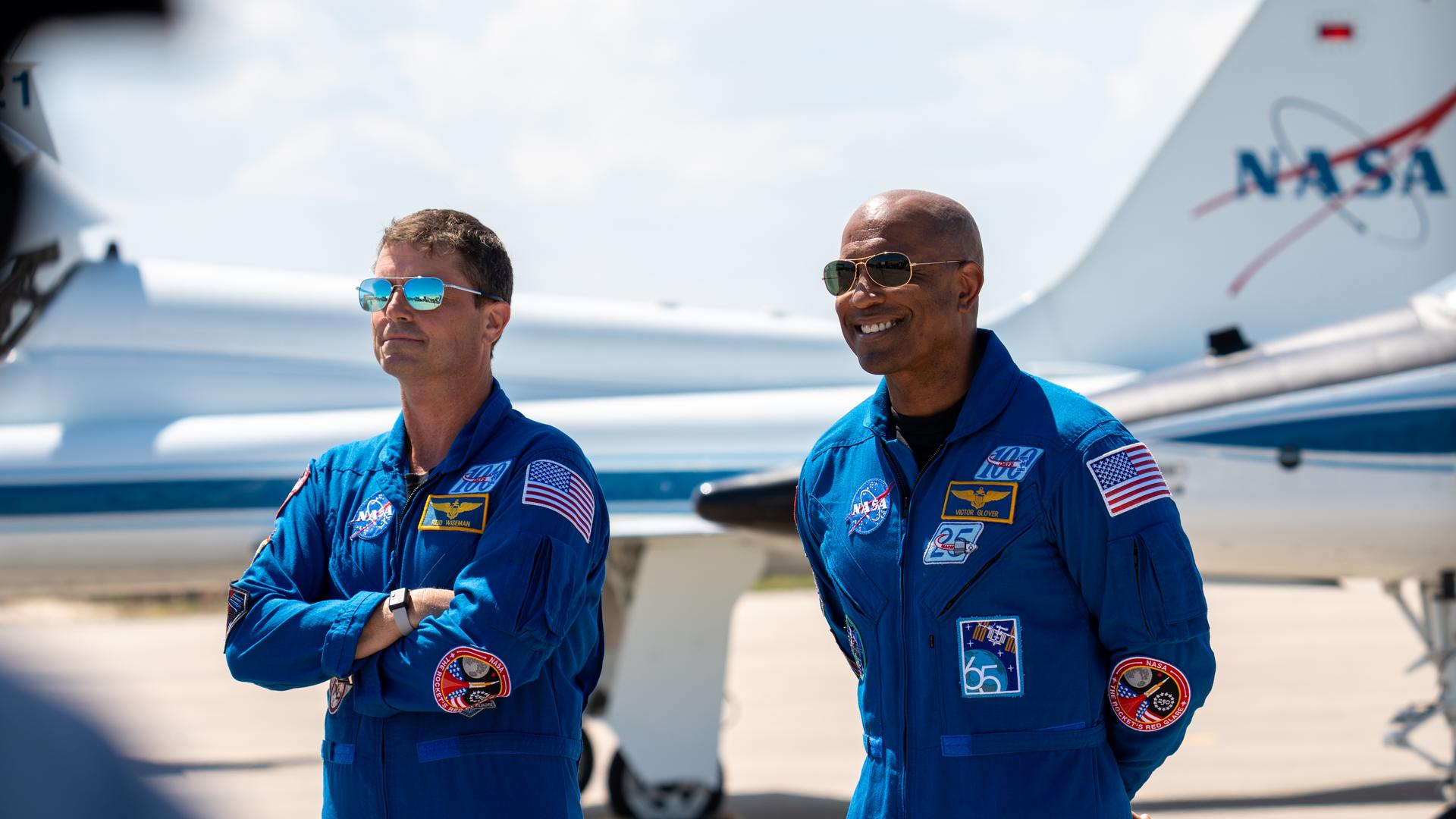
These images show the moments shortly after the arrival of the Artemis II crew to NASA’s Kennedy Space Center on March 27, 2026 ahead of the launch. The four astronauts, Victor Glover, Reid Wiseman, Christina Koch, and Jeremy Hansen, arrived on a T38, which can be seen behind them. They took turns speaking to the crowd as they also announced the zero-gravity indicator they would be taking with them on their journey.
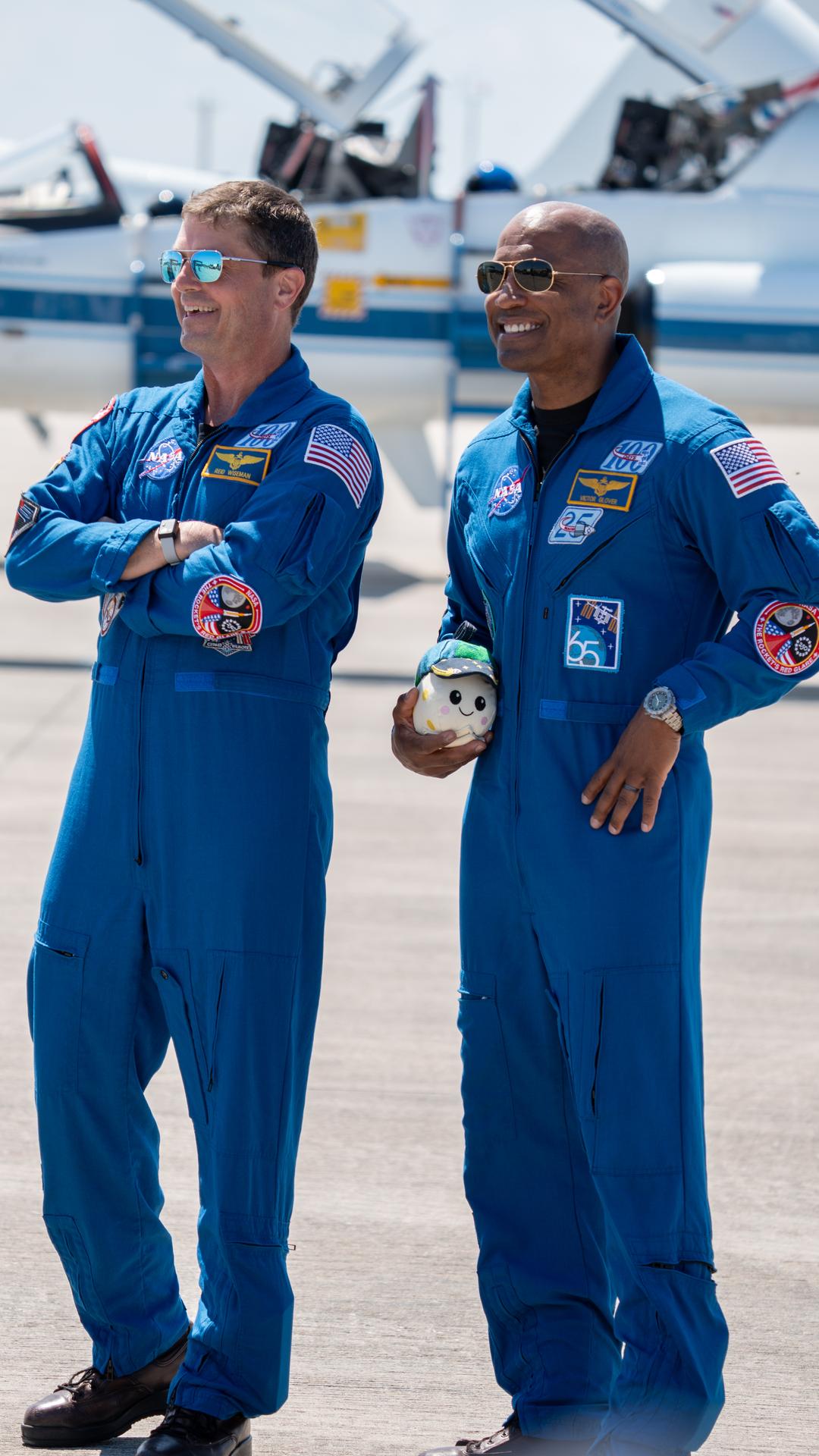
These images show the moments shortly after the arrival of the Artemis II crew to NASA’s Kennedy Space Center on March 27, 2026 ahead of the launch. The four astronauts, Victor Glover, Reid Wiseman, Christina Koch, and Jeremy Hansen, arrived on a T38, which can be seen behind them. They took turns speaking to the crowd as they also announced the zero-gravity indicator they would be taking with them on their journey.
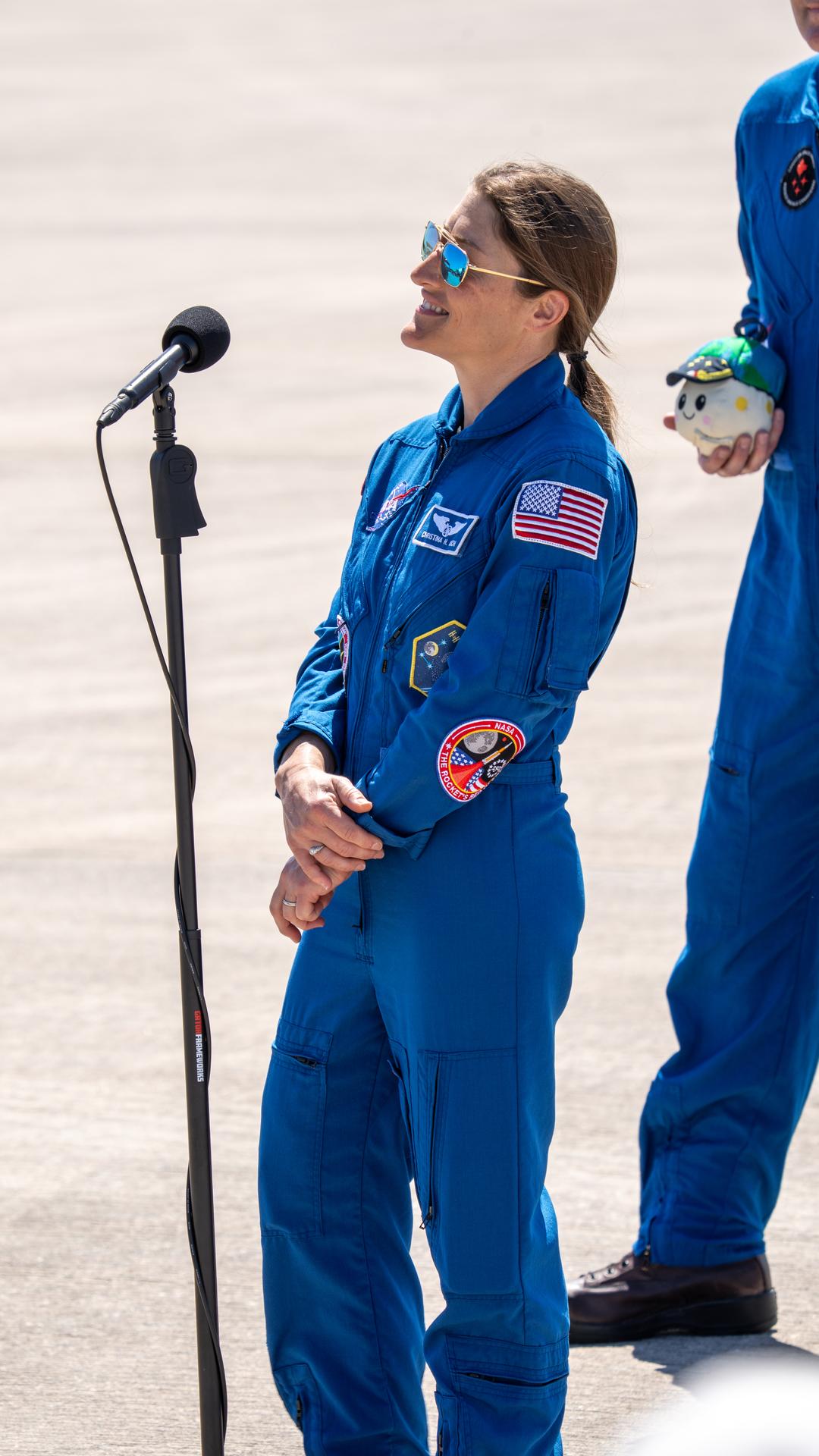
These images show the moments shortly after the arrival of the Artemis II crew to NASA’s Kennedy Space Center on March 27, 2026 ahead of the launch. The four astronauts, Victor Glover, Reid Wiseman, Christina Koch, and Jeremy Hansen, arrived on a T38, which can be seen behind them. They took turns speaking to the crowd as they also announced the zero-gravity indicator they would be taking with them on their journey.
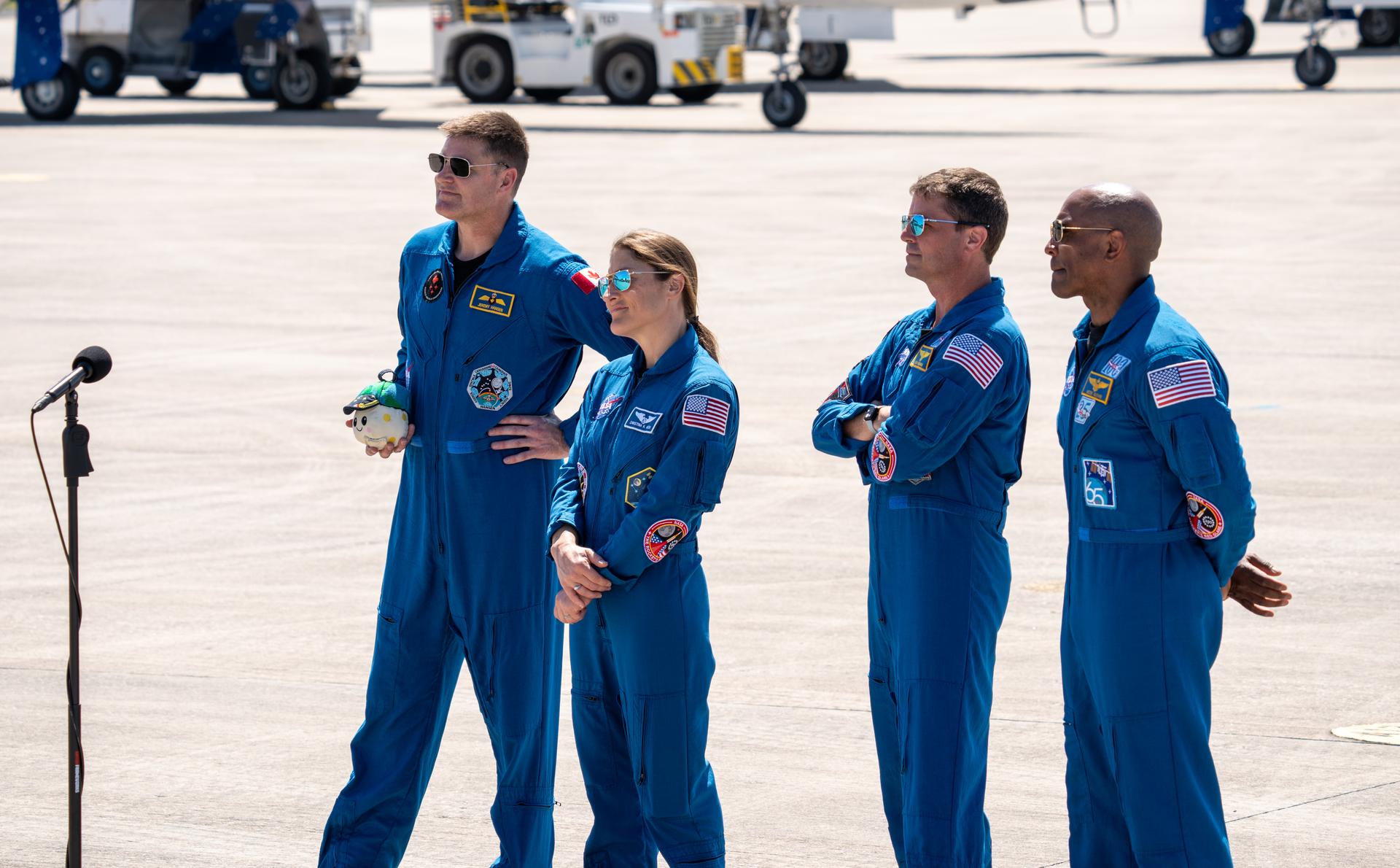
These images show the moments shortly after the arrival of the Artemis II crew to NASA’s Kennedy Space Center on March 27, 2026 ahead of the launch. The four astronauts, Victor Glover, Reid Wiseman, Christina Koch, and Jeremy Hansen, arrived on a T38, which can be seen behind them. They took turns speaking to the crowd as they also announced the zero-gravity indicator they would be taking with them on their journey.
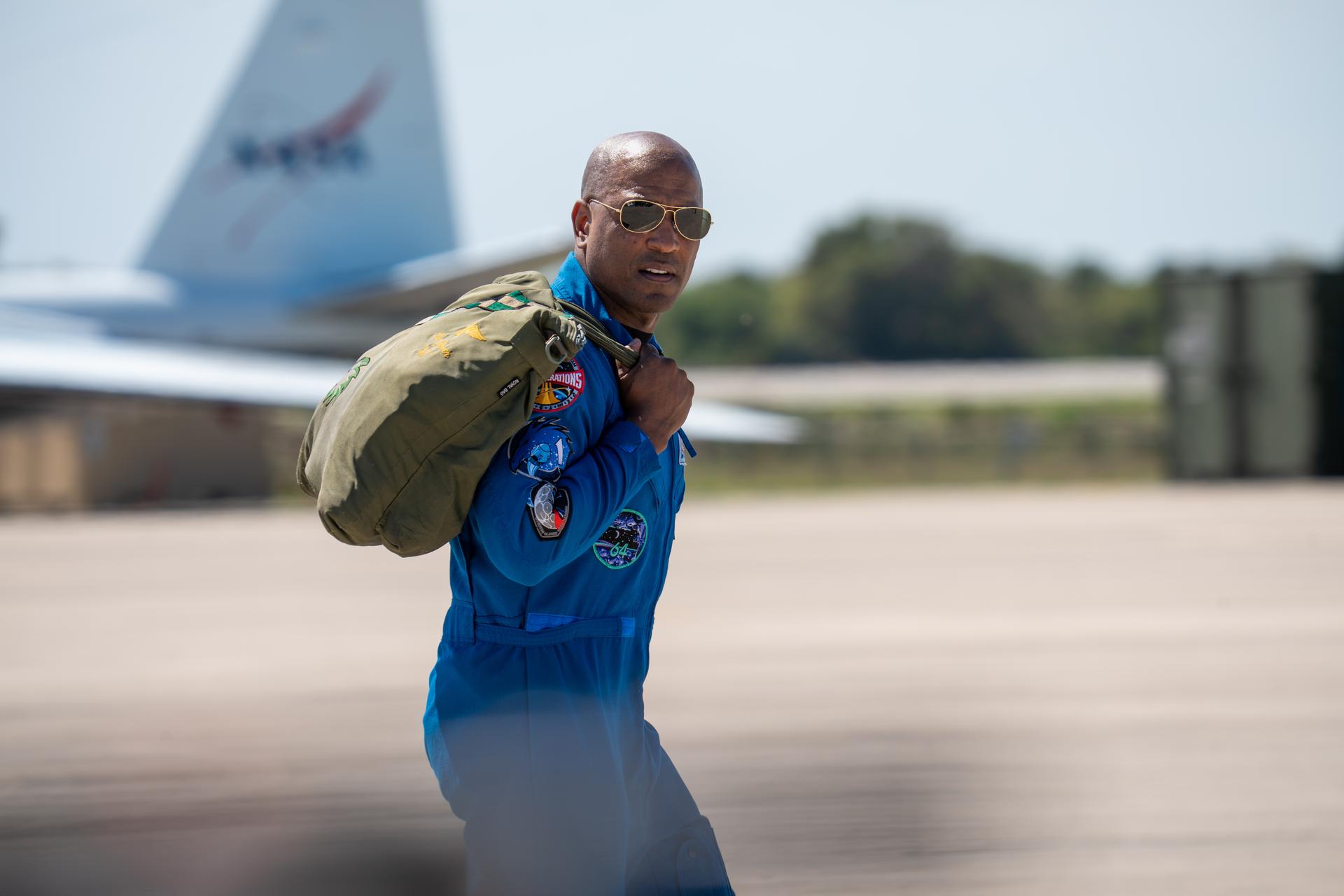
These images show the moments shortly after the arrival of the Artemis II crew to NASA’s Kennedy Space Center on March 27, 2026 ahead of the launch. The four astronauts, Victor Glover, Reid Wiseman, Christina Koch, and Jeremy Hansen, arrived on a T38, which can be seen behind them. They took turns speaking to the crowd as they also announced the zero-gravity indicator they would be taking with them on their journey.
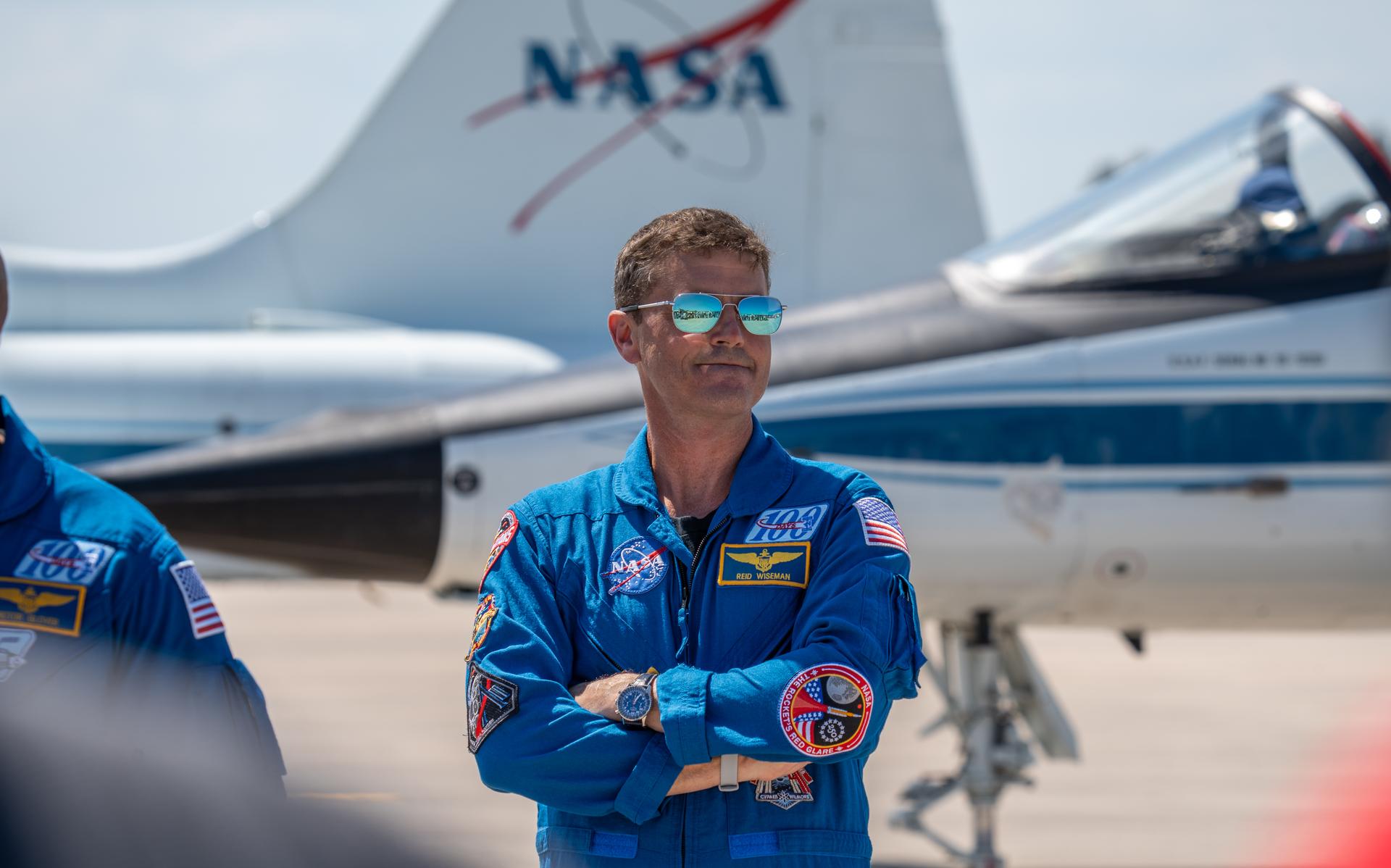
These images show the moments shortly after the arrival of the Artemis II crew to NASA’s Kennedy Space Center on March 27, 2026 ahead of the launch. The four astronauts, Victor Glover, Reid Wiseman, Christina Koch, and Jeremy Hansen, arrived on a T38, which can be seen behind them. They took turns speaking to the crowd as they also announced the zero-gravity indicator they would be taking with them on their journey.
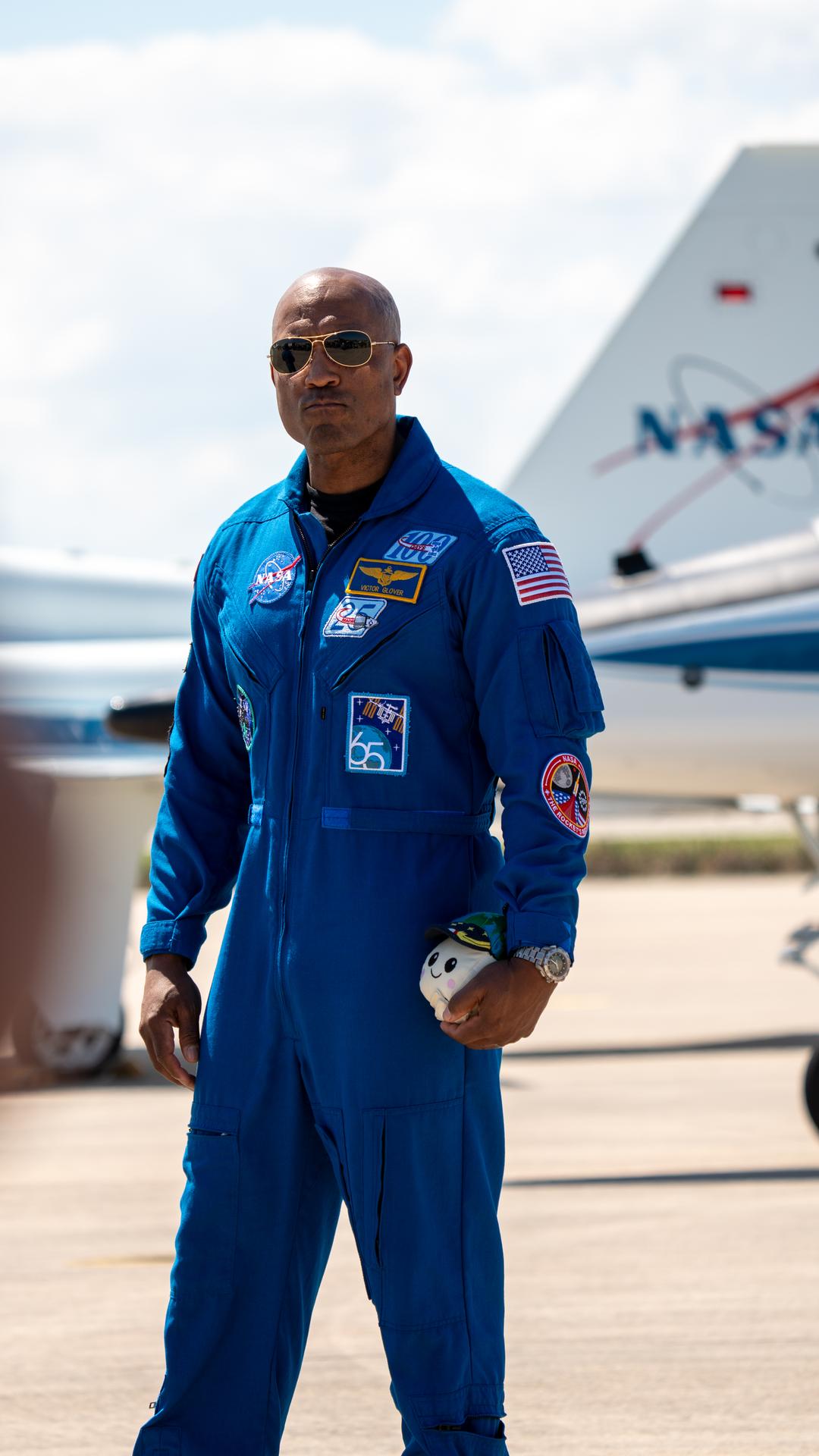
These images show the moments shortly after the arrival of the Artemis II crew to NASA’s Kennedy Space Center on March 27, 2026 ahead of the launch. The four astronauts, Victor Glover, Reid Wiseman, Christina Koch, and Jeremy Hansen, arrived on a T38, which can be seen behind them. They took turns speaking to the crowd as they also announced the zero-gravity indicator they would be taking with them on their journey.
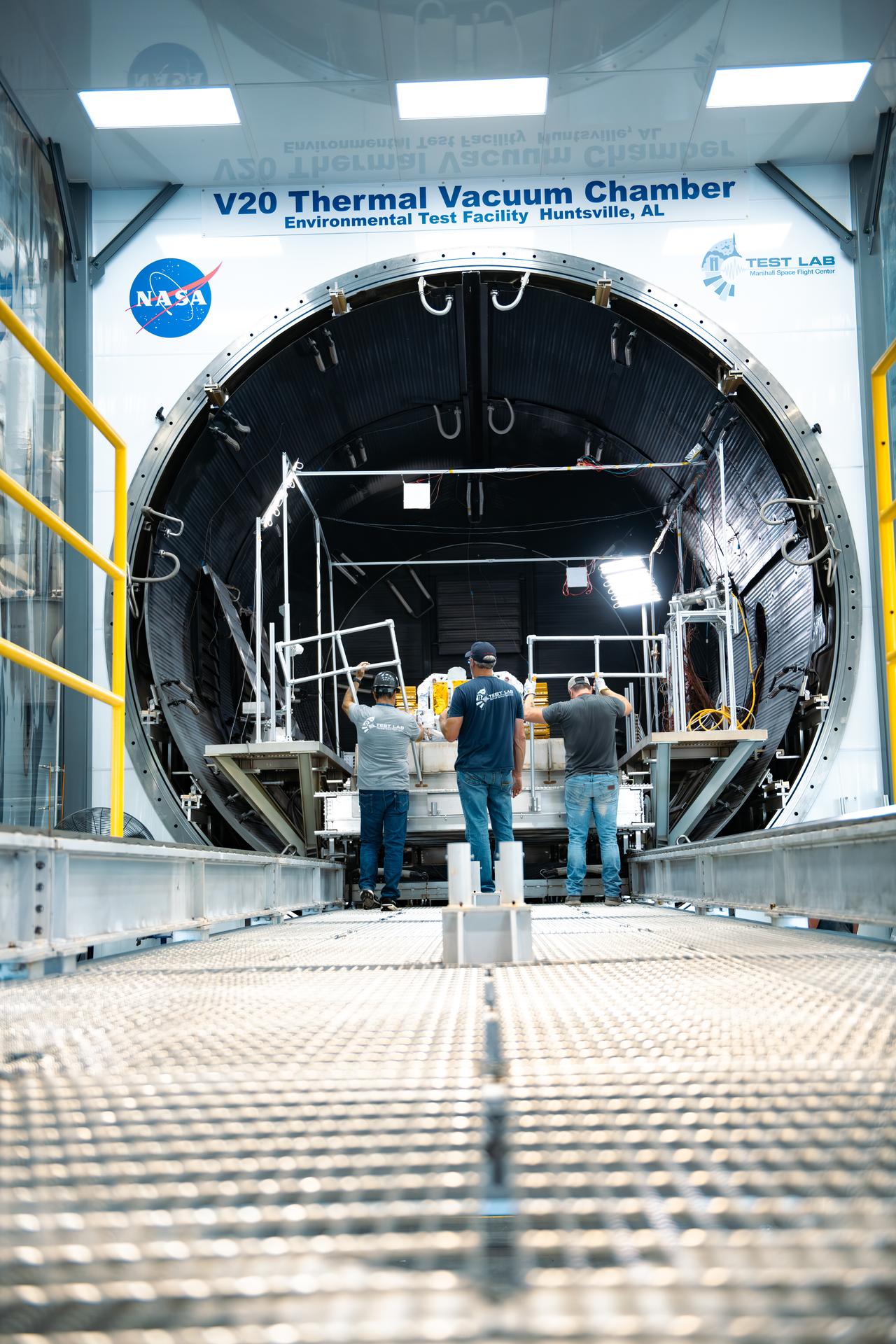
NASA Environmental Test Facility employees at the agency’s Marshall Space Flight Center in Huntsville, Alabama, work with members from the Starpath team to push the sliding platform into the thermal vacuum chamber, with the heavy rover and concrete slab in tow. The technology startup headquartered in Hawthorne, California, won second place overall at the agency’s Break the Ice Lunar Challenge’s live demonstration and finale in June 2024. This competition, one of NASA’s Centennial Challenges, tasked competitors to design, build, and demonstrate robotic technologies that could excavate and transport the icy, rocky dirt – otherwise known as regolith – found on the Moon. Starpath’s visit to NASA Marshall was part of their prize opportunity to test their upgraded lunar regolith excavation and transportation rover in the center’s 20-foot thermal vacuum chamber. For more information, contact NASA Marshall’s Office of Communications at 256-544-0034.