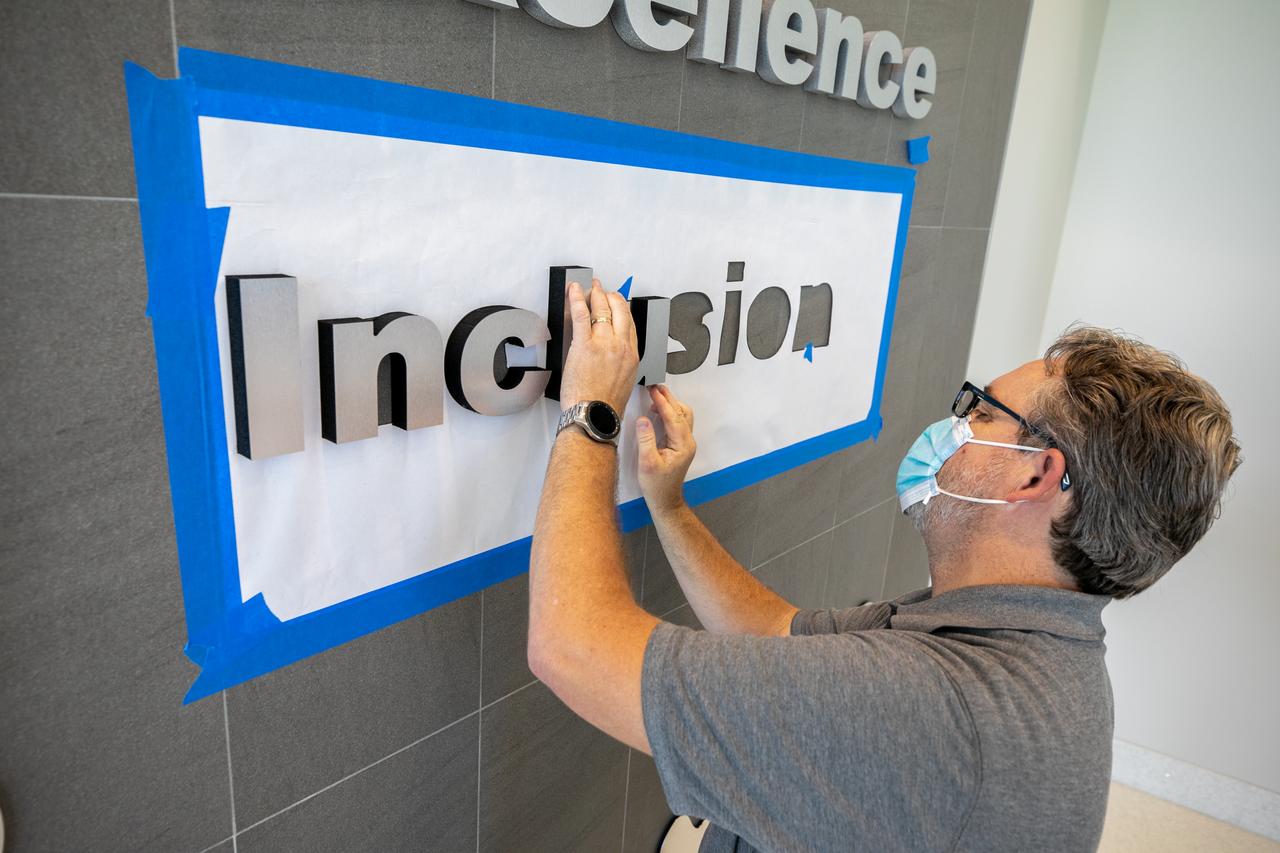
NASA’s fifth core value – inclusion – is installed in the Central Campus lobby at the agency’s Kennedy Space Center in Florida on Sept. 1, 2020. On July 23, NASA Administrator Jim Bridenstine announced the addition of this fifth core value to the existing values embraced by NASA: safety, integrity, teamwork, and excellence. In his announcement, Bridenstine stated “Incorporating inclusion as a NASA core value is an important step to ensuring this principle remains a long-term focus for our agency and becomes ingrained in the NASA family DNA.”
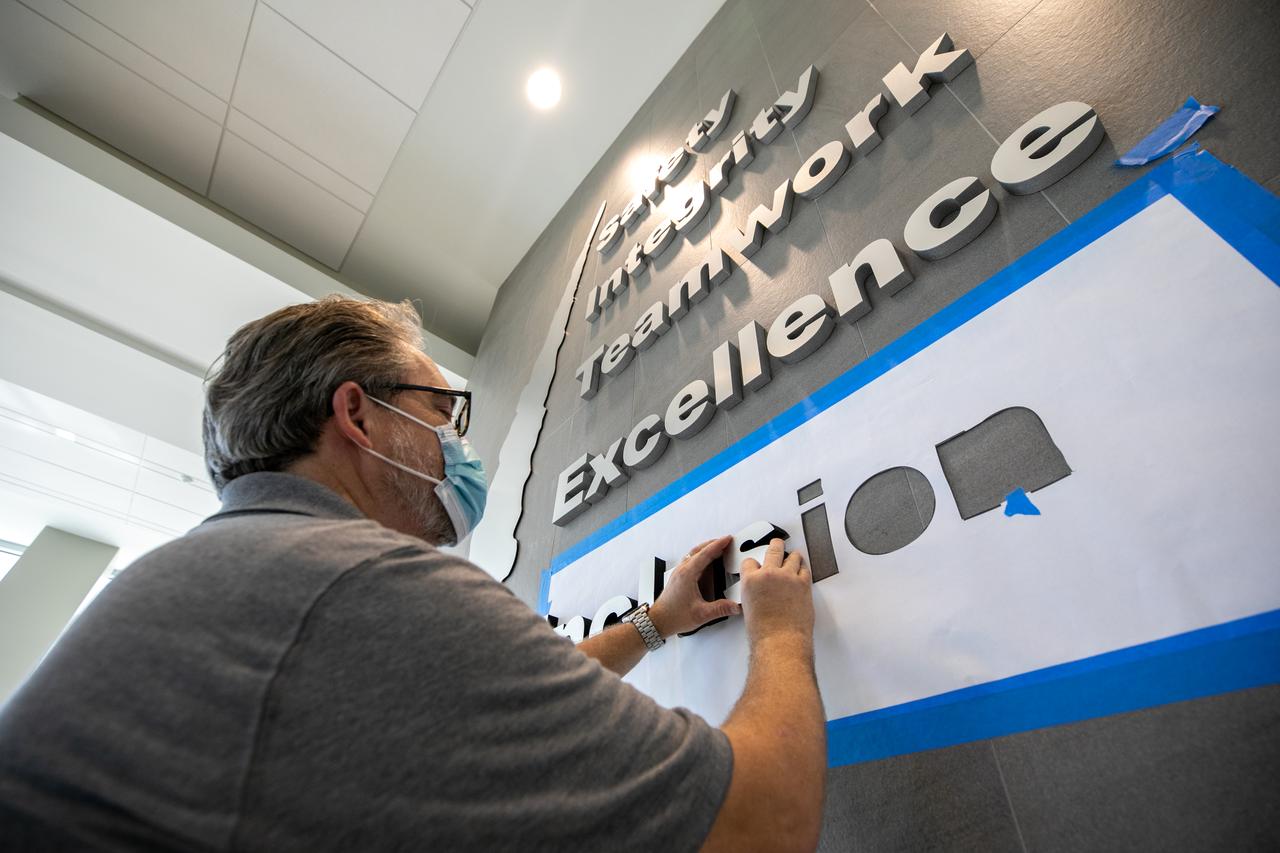
NASA’s fifth core value – inclusion – is installed in the Central Campus lobby at the agency’s Kennedy Space Center in Florida on Sept. 1, 2020. On July 23, NASA Administrator Jim Bridenstine announced the addition of this fifth core value to the existing values embraced by NASA: safety, integrity, teamwork, and excellence. In his announcement, Bridenstine stated “Incorporating inclusion as a NASA core value is an important step to ensuring this principle remains a long-term focus for our agency and becomes ingrained in the NASA family DNA.”
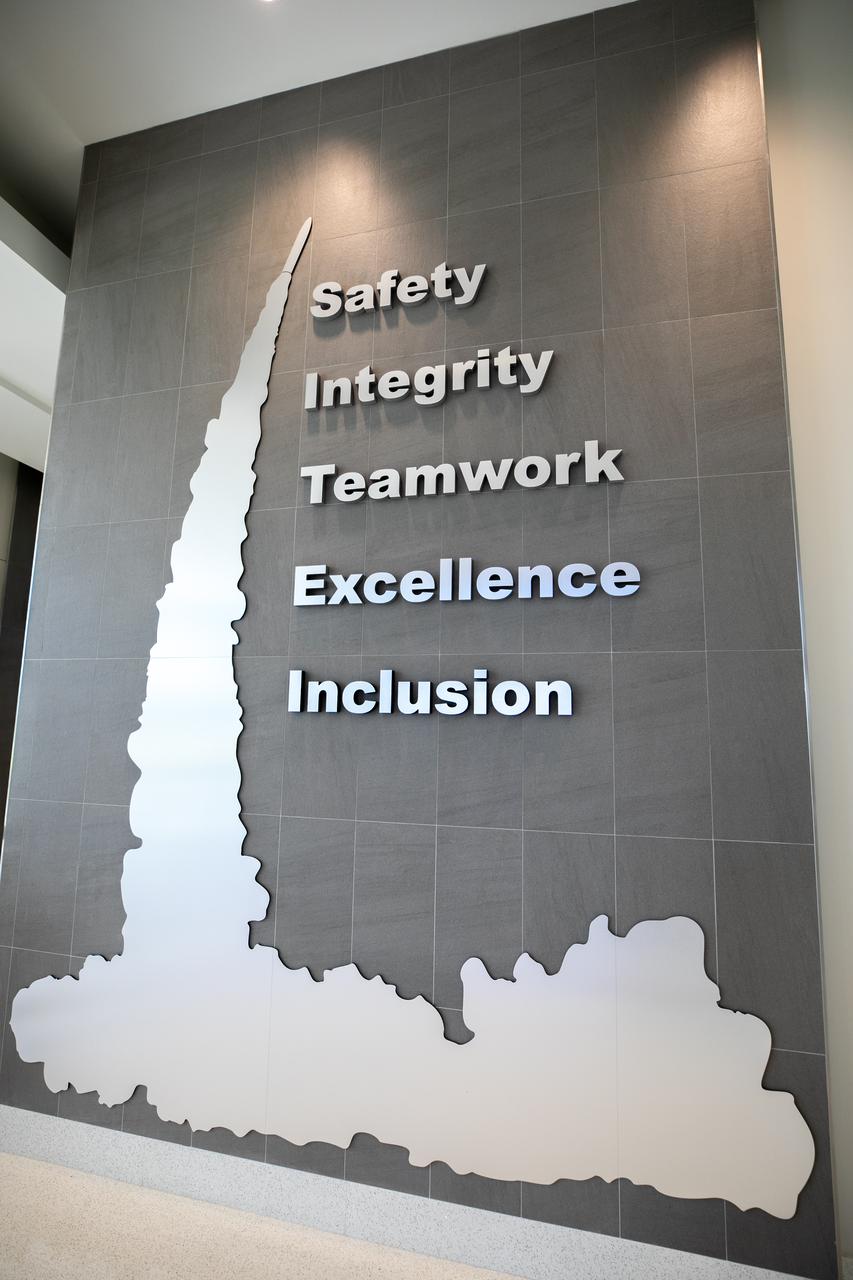
NASA’s core values are shown in the Central Campus lobby at the agency’s Kennedy Space Center in Florida following the installation of NASA’s fifth core value – inclusion – on Sept. 1, 2020. On July 23, NASA Administrator Jim Bridenstine announced the addition of this fifth core value to the existing values embraced by NASA: safety, integrity, teamwork, and excellence. In his announcement, Bridenstine stated “Incorporating inclusion as a NASA core value is an important step to ensuring this principle remains a long-term focus for our agency and becomes ingrained in the NASA family DNA.”
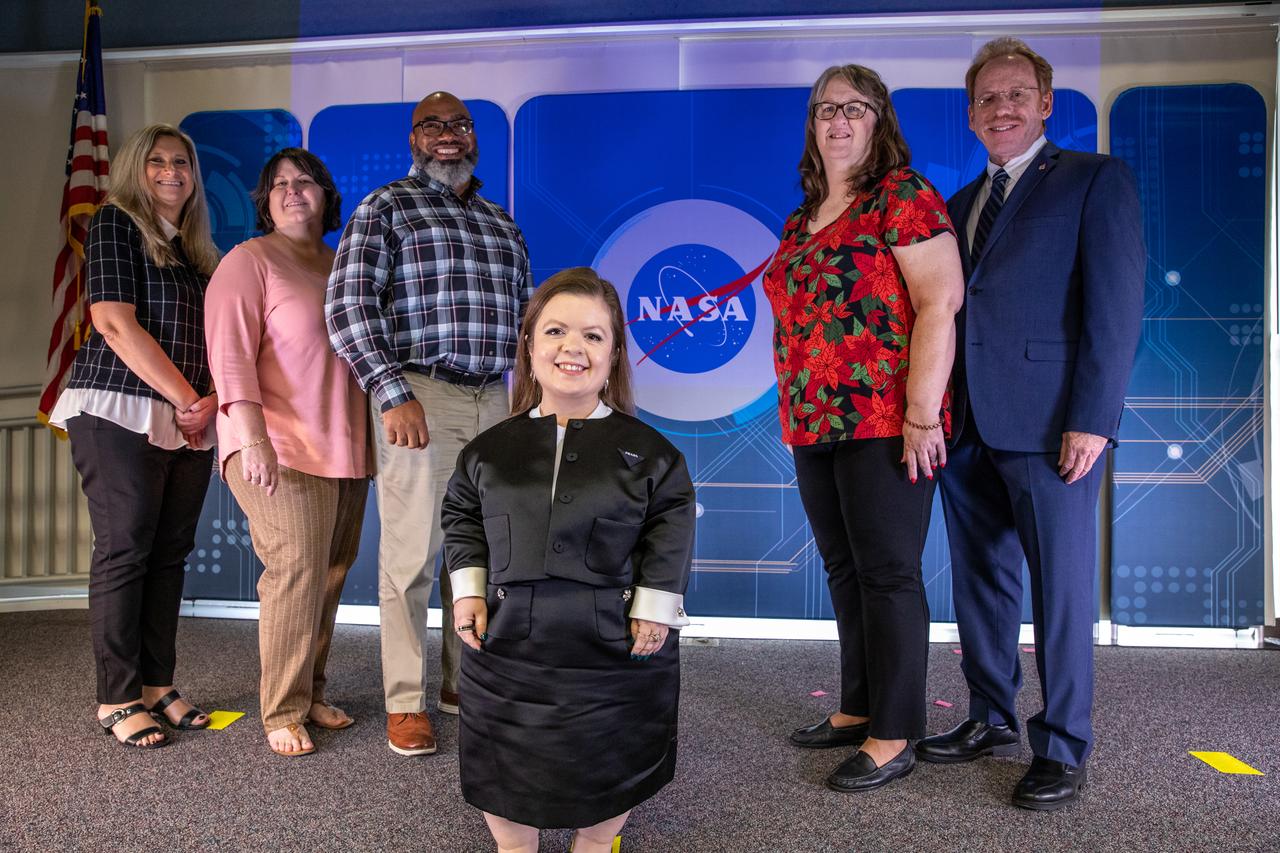
Guest speaker Sinead Burke, in front, from Ireland, gave a presentation on “Breaking the Mould – A Lesson in Equity,” to Kennedy Space Center employees on Nov. 30, 2022, and to employees at other NASA centers via live stream on YouTube. Members of the Diversity, Equity, Inclusion, and Accessibility Roundtable and the Disability Awareness Action Working Group (DAAWG), standing from left are Nicole Delvesco, Lisa Williams, Willie Gainey, Annie Williams, and Glenn Semmel. The event was sponsored by Kennedy’s DAAWG and the Spaceport Integration Directorate. Burke, who is an advocate for the inclusion of all, amplifies the voices who are often not considered.
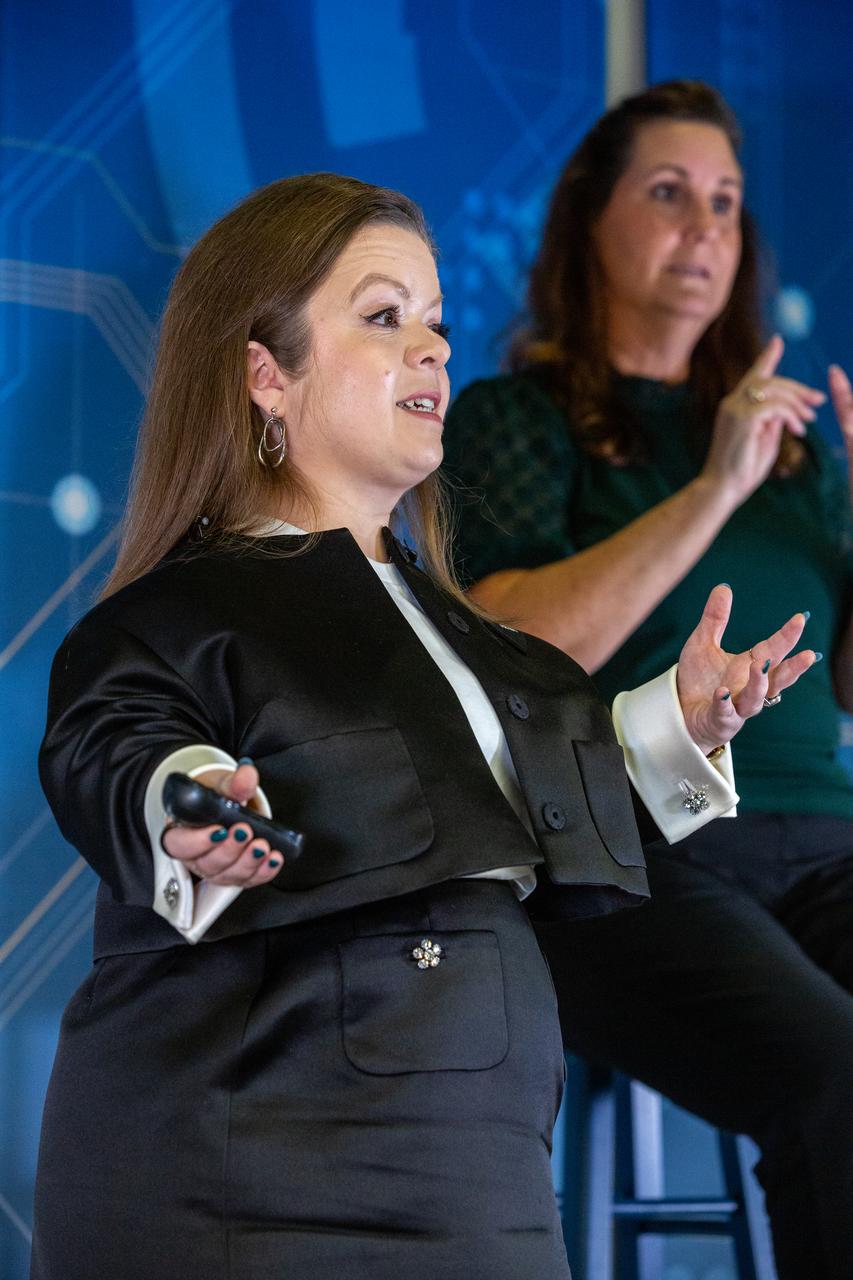
Guest speaker Sinead Burke, from Ireland, gave a presentation on “Breaking the Mould – A Lesson in Equity,” to Kennedy Space Center employees on Nov. 30, 2022, and to employees at other NASA centers via live stream on YouTube. The event was sponsored by the center’s Disability Awareness and Action Working Group (DAAWG) and the Spaceport Integration Directorate. Burke, who is an advocate for the inclusion of all, amplifies the voices who are often not considered.
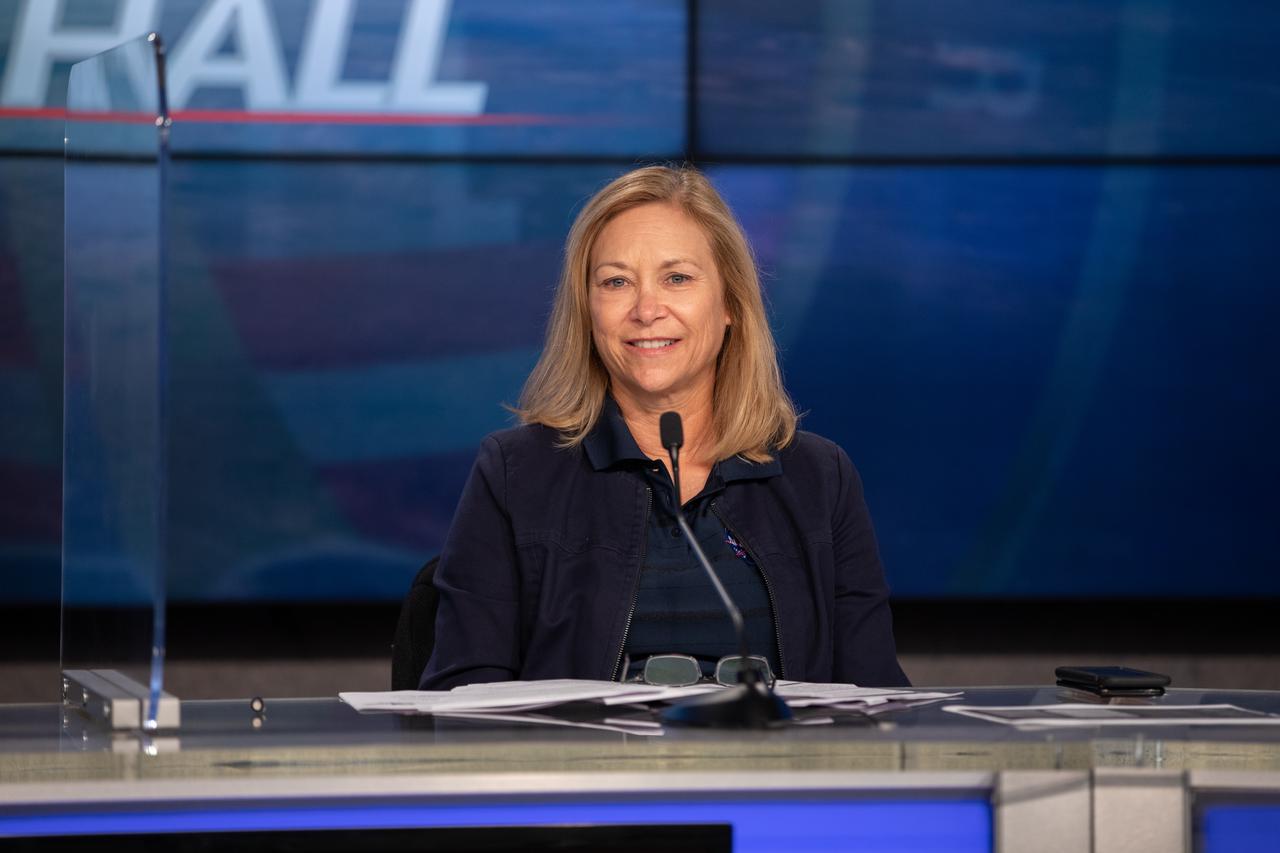
NASA Kennedy Space Center Deputy Director Janet Petro participates in a virtual town hall meeting on Aug. 20, 2020, inside the Florida spaceport’s Press Site auditorium. During the town hall, Kennedy’s senior leaders answered questions submitted by the workforce and discussed a wide range of topics, including upcoming milestones, updates on the criteria for returning to onsite work, and diversity and inclusion at the multi-user spaceport.
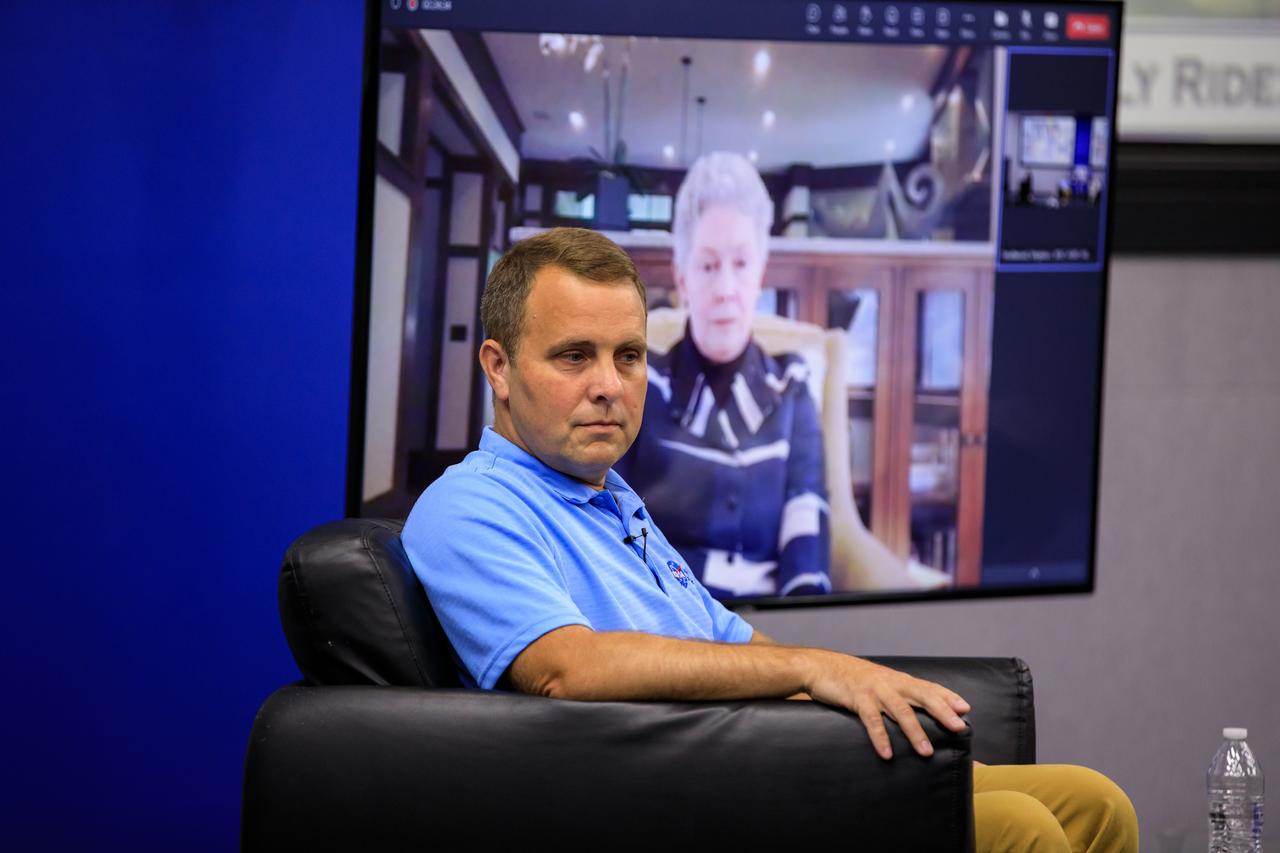
NASA Chief Historian Brian Odom moderates “The Legacy of Sally Ride: The First American Woman in Space” event at Kennedy Space Center in Florida on June 15, 2023. Forty years ago, Ride made her trailblazing flight into space. A hero to millions, Ride was a steadfast advocate for inclusion in STEM (science, technology, engineering, mathematics) – especially for girls and young women – until her death in 2012 from pancreatic cancer. Appearing on the monitor in the background is Sally Ride’s life partner of 27 years, Tam O’Shaughnessy.
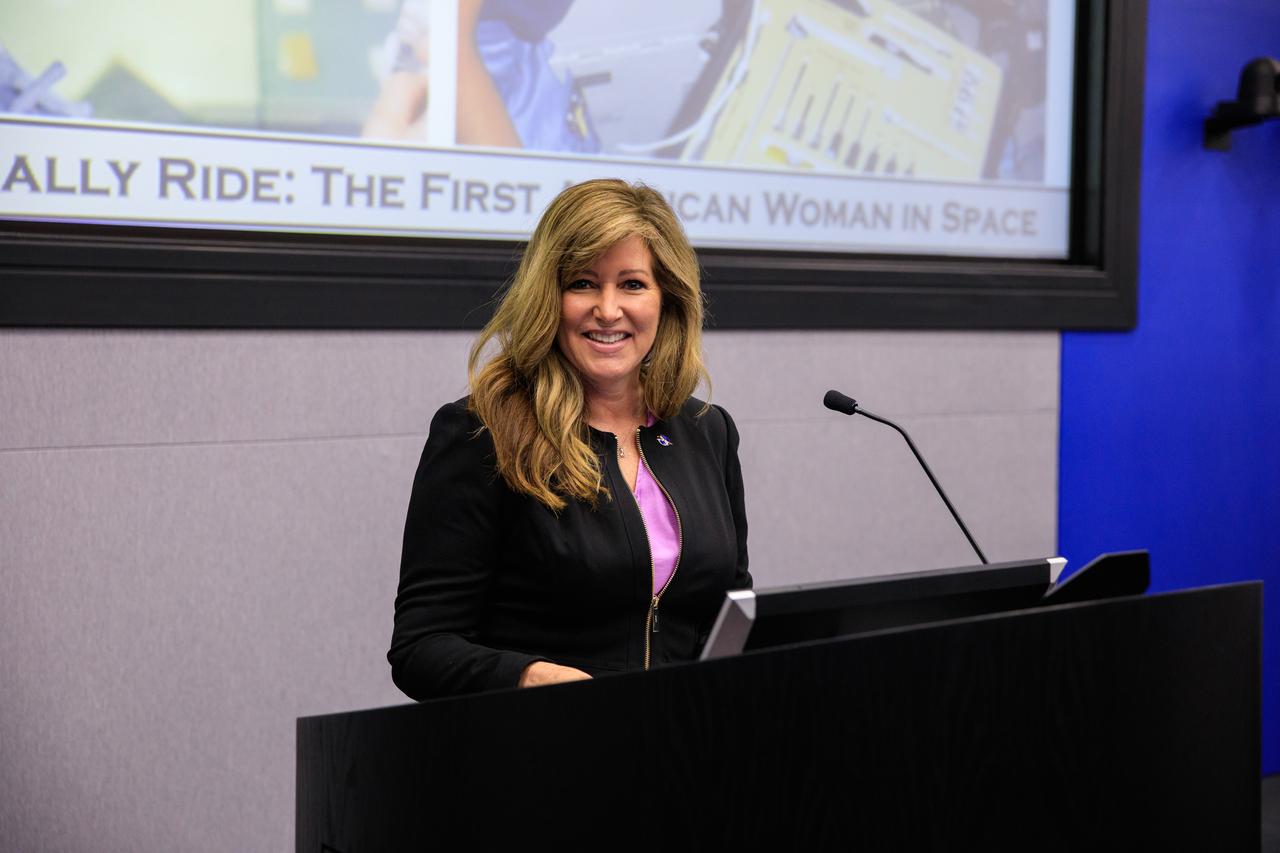
Jennifer Kunz, associate director, technical, at NASA’s Kennedy Space Center, addresses the audience at “The Legacy of Sally Ride: The First American Woman in Space” event at the Florida spaceport on June 15, 2023. Forty years ago, Ride made her trailblazing flight into space. A hero to millions, Ride was a steadfast advocate for inclusion in STEM (science, technology, engineering, mathematics) – especially for girls and young women – until her death in 2012 from pancreatic cancer.

Guest speaker Sinead Burke, from Ireland, gave a presentation on “Breaking the Mould – A Lesson in Equity,” to Kennedy Space Center employees on Nov. 30, 2022, and to employees at other NASA centers via live stream on YouTube. The event was sponsored by the center’s Disability Awareness and Action Working Group (DAAWG) and the Spaceport Integration Directorate. Burke, who is an advocate for the inclusion of all, amplifies the voices who are often not considered.
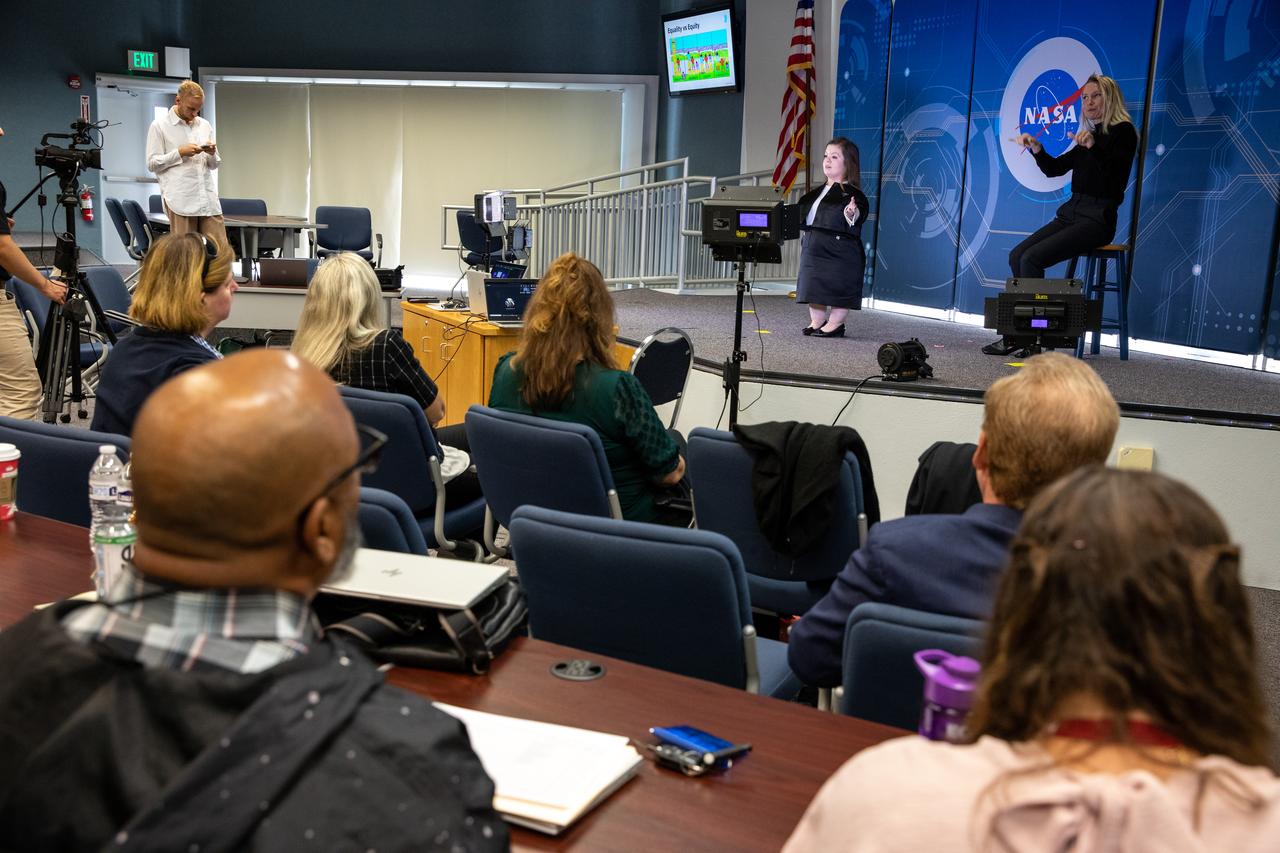
Guest speaker Sinead Burke, from Ireland, gave a presentation on “Breaking the Mould – A Lesson in Equity,” to Kennedy Space Center employees on Nov. 30, 2022, and to employees at other NASA centers via live stream on YouTube. The event was sponsored by the center’s Disability Awareness and Action Working Group (DAAWG) and the Spaceport Integration Directorate. Burke, who is an advocate for the inclusion of all, amplifies the voices who are often not considered.
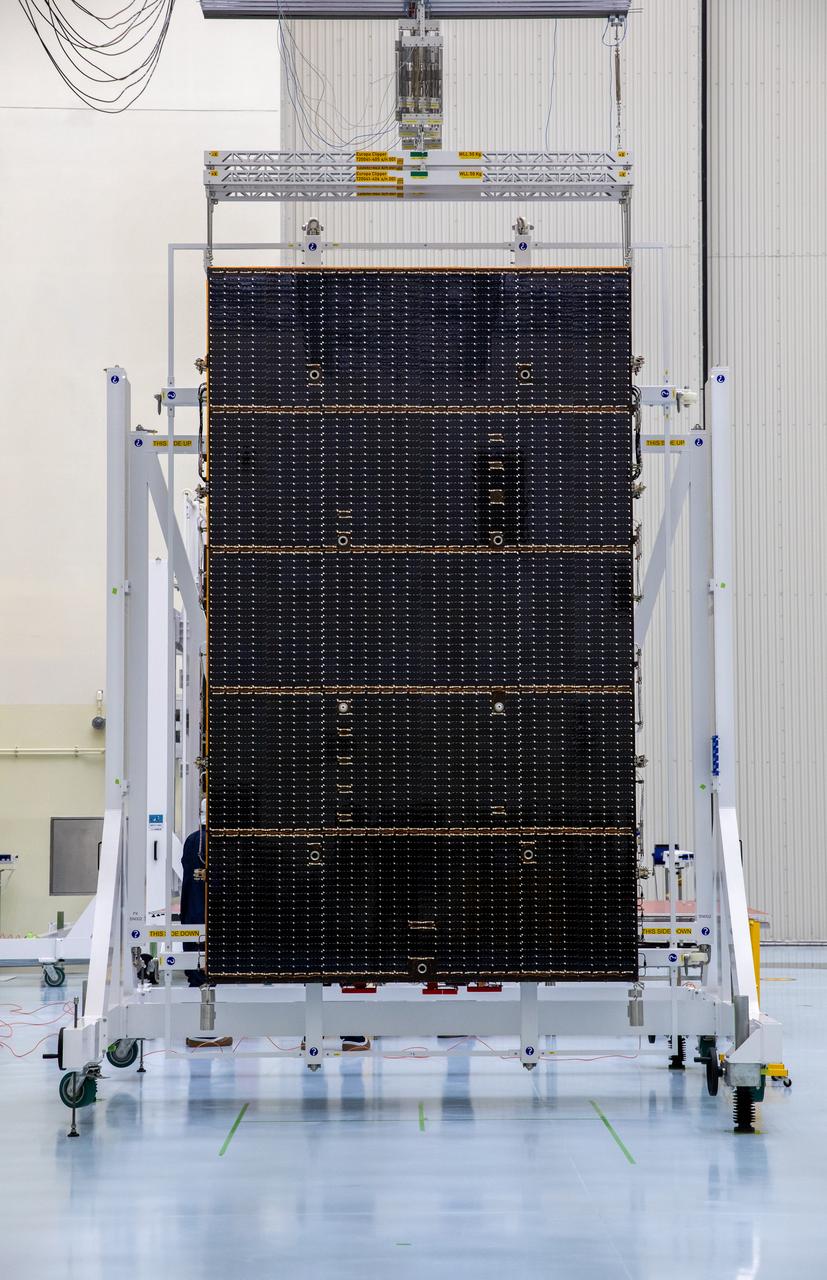
The first of two five-panel solar arrays built for NASA’s Europa Clipper stands inside the Payload Hazardous Servicing Facility at the agency’s Kennedy Space Center in Florida in preparation for inspection and cleaning as part of assembly, test, and launch operations on Wednesday, March 6, 2024. When both solar arrays are installed and deployed on Europa Clipper – the agency’s largest spacecraft ever developed for a planetary mission – the spacecraft will span a total length of more than 100 feet and weigh 7,145 pounds without the inclusion of propellants.
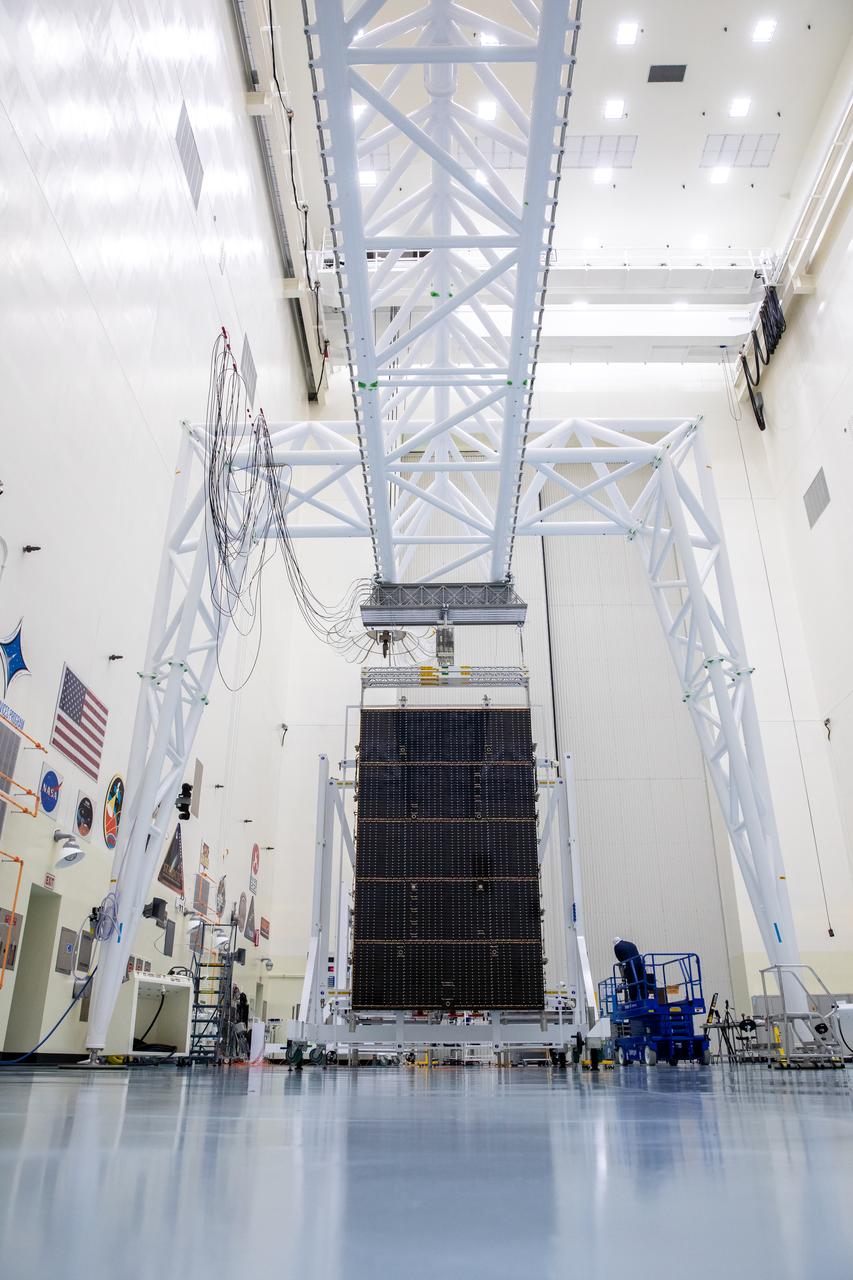
The first of two five-panel solar arrays built for NASA’s Europa Clipper stands inside the Payload Hazardous Servicing Facility at the agency’s Kennedy Space Center in Florida in preparation for inspection and cleaning as part of assembly, test, and launch operations on Wednesday, March 6, 2024. When both solar arrays are installed and deployed on Europa Clipper – the agency’s largest spacecraft ever developed for a planetary mission – the spacecraft will span a total length of more than 100 feet and weigh 7,145 pounds without the inclusion of propellants.
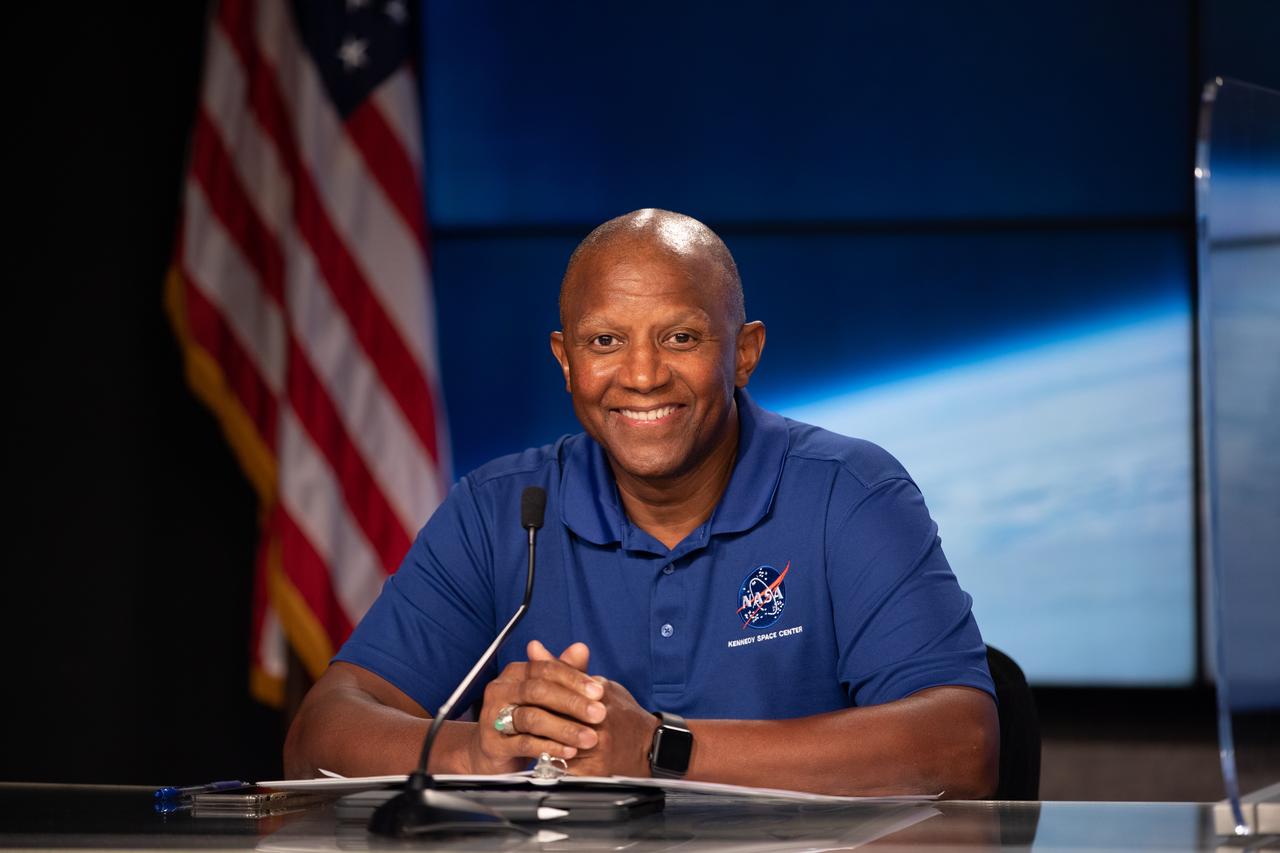
NASA Kennedy Space Center Associate Director, Technical Kelvin Manning participates in a virtual town hall meeting on Aug. 20, 2020, inside the Florida spaceport’s Press Site auditorium. During the town hall, Kennedy’s senior leaders answered questions submitted by the workforce and discussed a wide range of topics, including upcoming milestones, updates on the criteria for returning to onsite work, and diversity and inclusion at the multi-user spaceport.
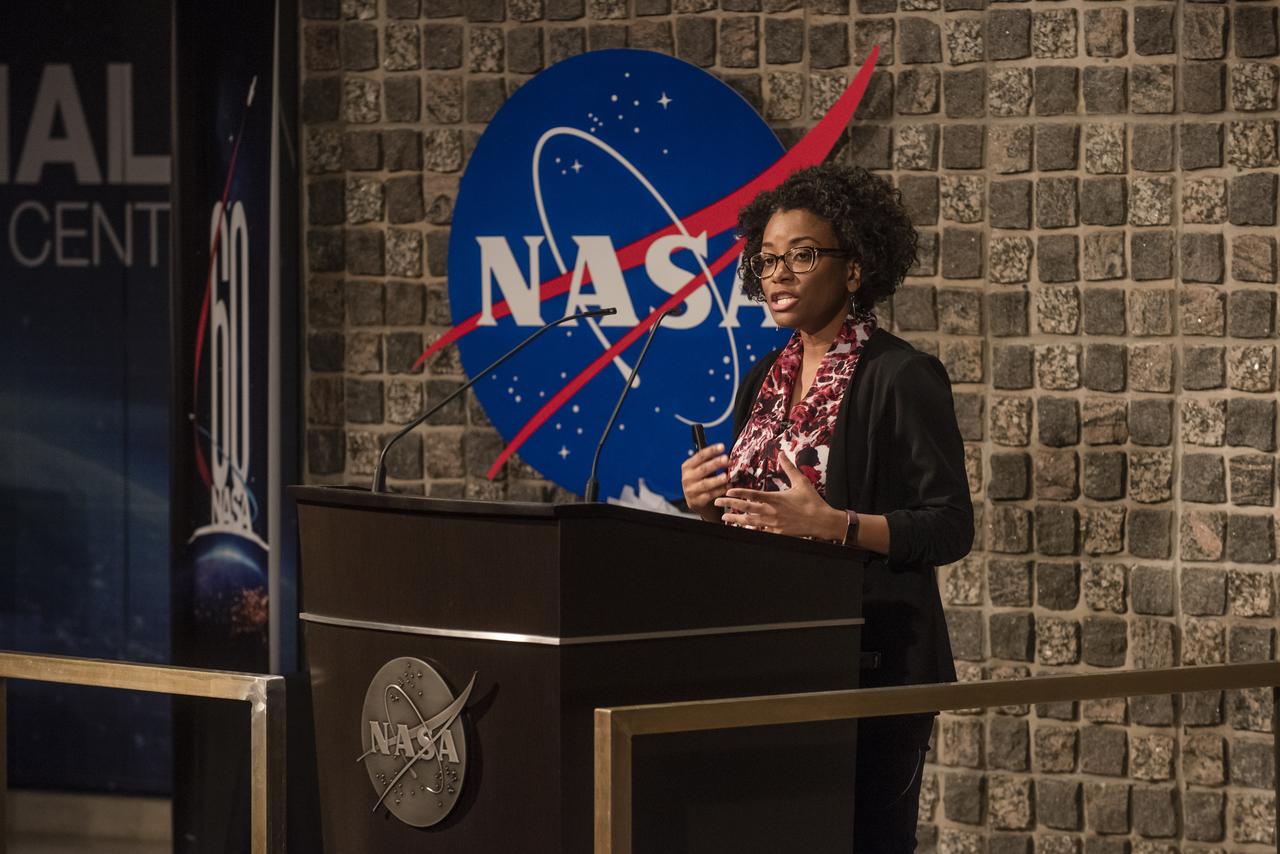
Dr. Shanique Brown, an assistant professor of industrial-organizational psychology at Wayne State University in Detroit, Michigan, delivers the Black History Month keynote address to team members at NASA's Marshall Space Flight Center Feb. 28. Participants mingled with Brown and Marshall leaders after the speech and a panel discussion on diversity and inclusion, and sampled a variety of ethnic foods. The 2019 commemoration, themed "Migrations From Here to There," was organized by Marshall's Office of Diversity and Equal Opportunity
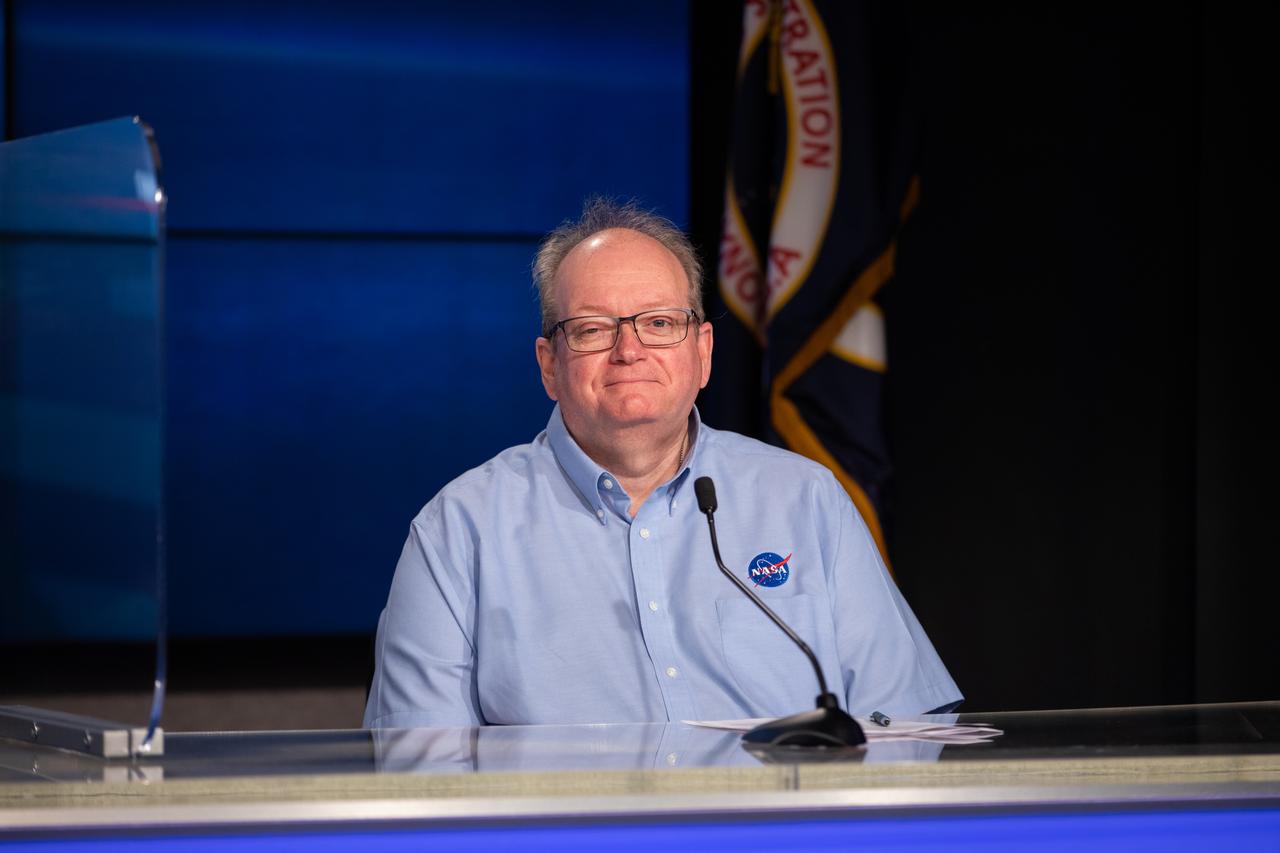
NASA Kennedy Space Center Associate Director, Management Burt Summerfield participates in a virtual town hall meeting on Aug. 20, 2020, inside the Florida spaceport’s Press Site auditorium. During the town hall, Kennedy’s senior leaders answered questions submitted by the workforce and discussed a wide range of topics, including upcoming milestones, updates on the criteria for returning to onsite work, and diversity and inclusion at the multi-user spaceport.
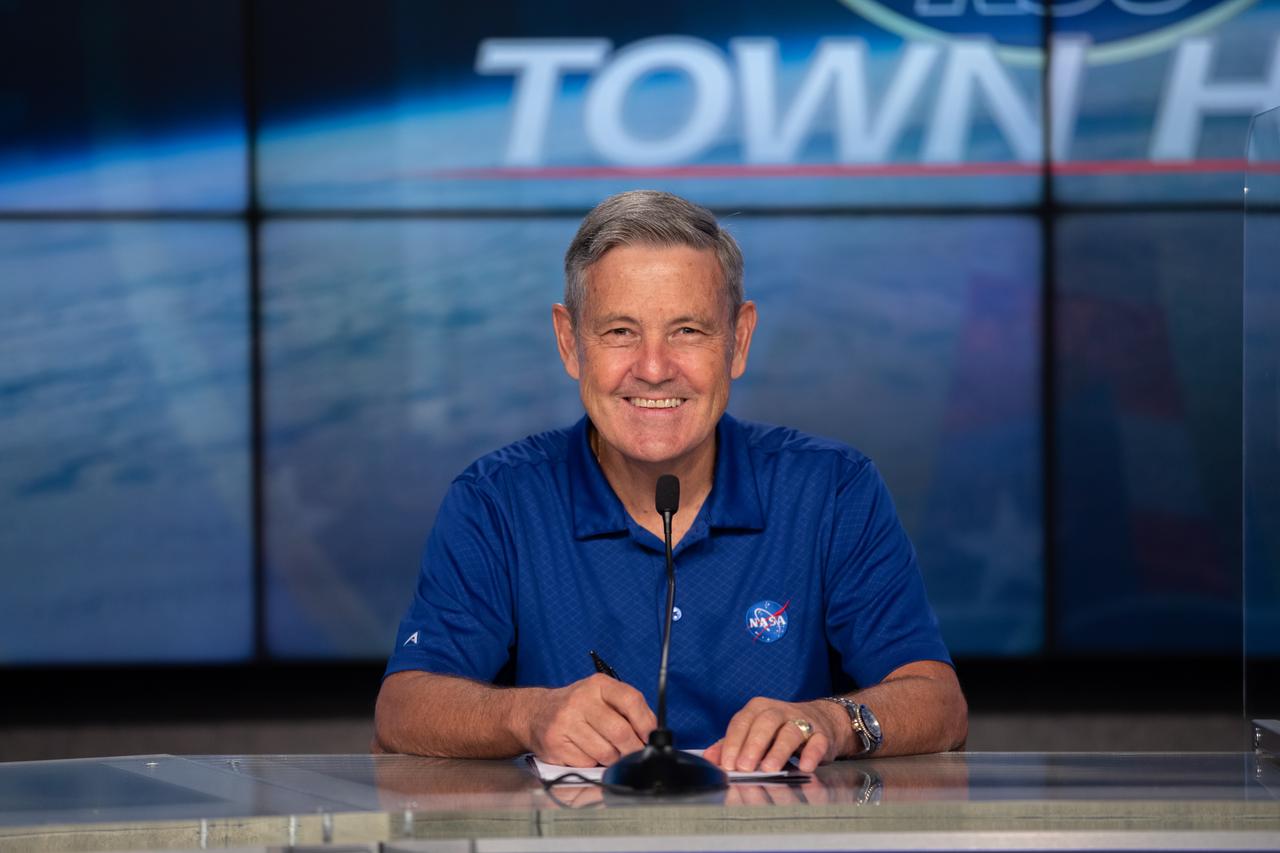
NASA Kennedy Space Center Director Bob Cabana participates in a virtual town hall meeting on Aug. 20, 2020, inside the Florida spaceport’s Press Site auditorium. During the town hall, Kennedy’s senior leaders answered questions submitted by the workforce and discussed a wide range of topics, including upcoming milestones, updates on the criteria for returning to onsite work, and diversity and inclusion at the multi-user spaceport.
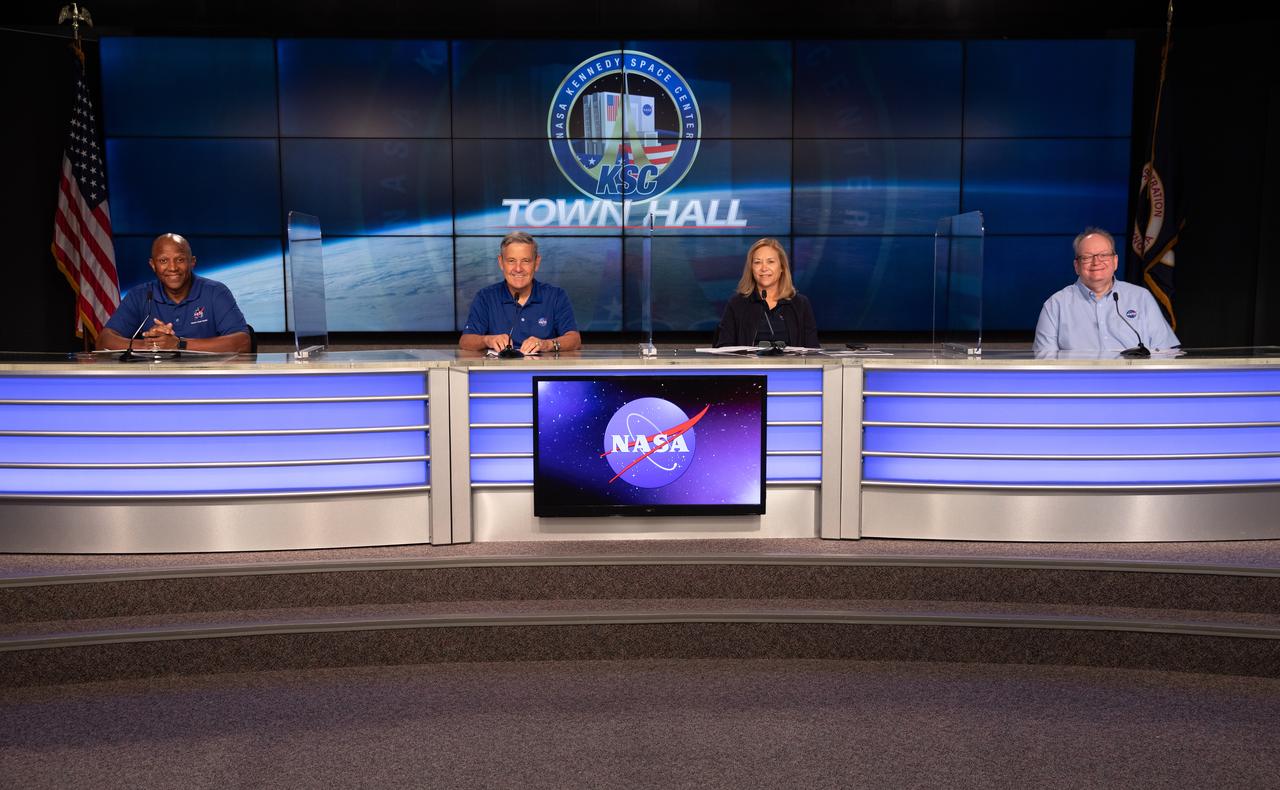
From left, NASA Kennedy Space Center Associate Director, Technical Kelvin Manning; Director Bob Cabana; Deputy Director Janet Petro; and Associate Director, Management Burt Summerfield participate in a virtual town hall meeting on Aug. 20, 2020, inside the Florida spaceport’s Press Site auditorium. During the town hall, Kennedy’s senior leaders answered questions submitted by the workforce and discussed a wide range of topics, including upcoming milestones, updates on the criteria for returning to onsite work, and diversity and inclusion at the multi-user spaceport.

Veronica Villalobos, Director, Office of Diversity and Inclusion, Office of Personnel Management, participates in a panel discussion at the Women, Innovation and Aerospace event celebrating Women's History Month at the George Washington University Jack Morton Auditorium, Thursday, March 8, 2012 in Washington. The WIA day-long event will help to foster a discussion for students and early career professionals about how to continue to encourage women to enter and succeed in the field of aerospace. Photo Credit: (NASA/Carla Cioffi)
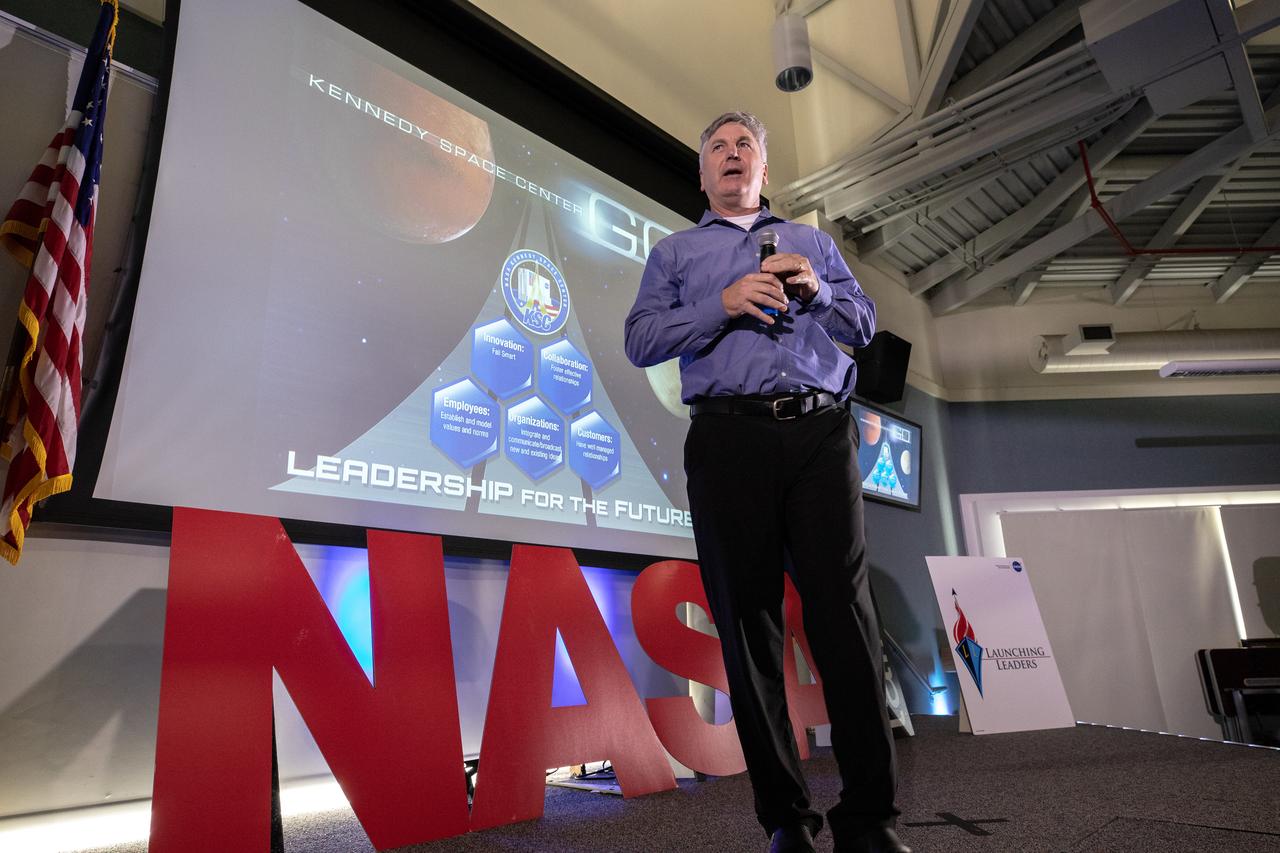
Scott Colloredo, deputy director of Engineering at NASA’s Kennedy Space Center in Florida, speaks at the fourth in a series of five TED Talk-style informational sessions on Oct. 31, 2019, in the Kennedy Learning Institute. Sponsored by Kennedy’s Launching Leaders and Leadership for the Future, NASAtalks focuses on the topic of intentional careers and aims to provide employees with tools and knowledge that can be utilized for career growth. The theme of this fourth session was employees, and additional speakers included Kennedy’s Johnny Nguyen, Tony Derbyshire and Jeremy Parsons, deputy manager of NASA’s Exploration Ground Systems, with a skill-building section on vulnerability, authentic self and diverse inclusion by Ronnie Rodriguez.
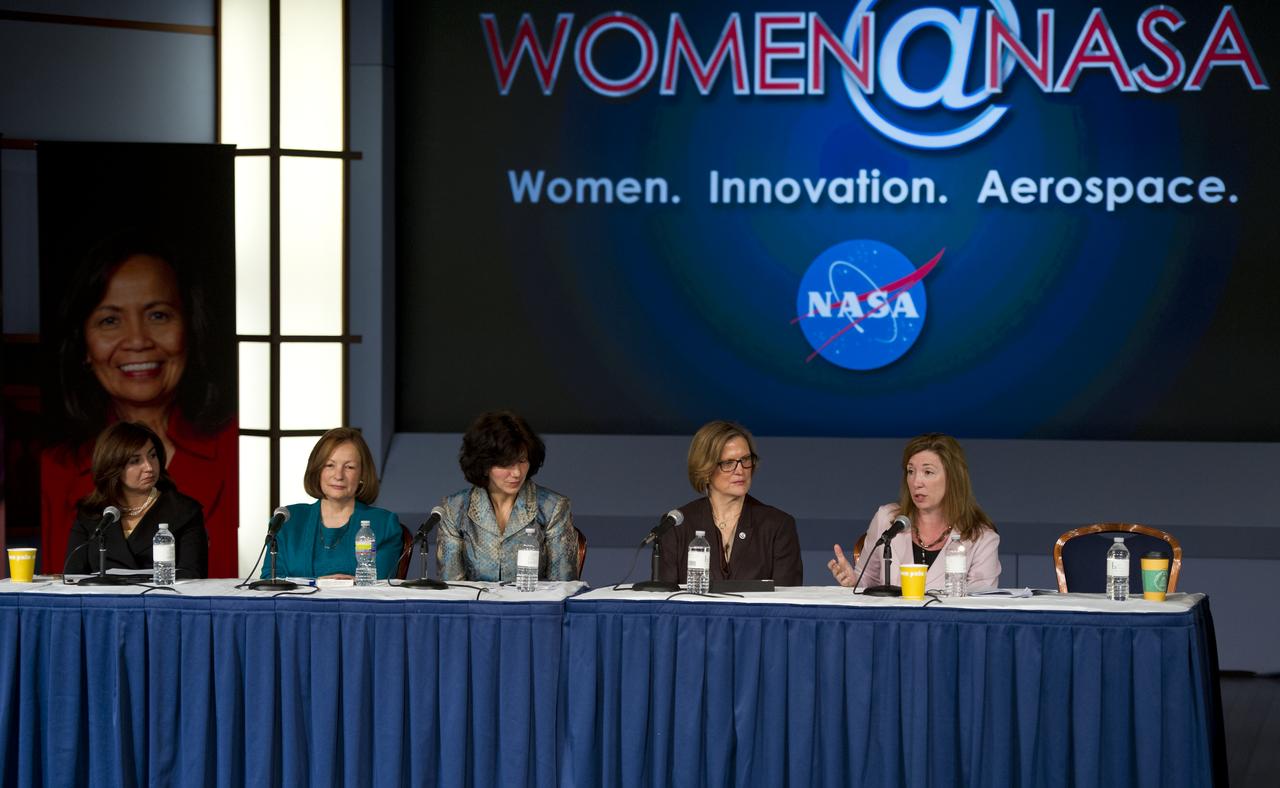
Lori Garver (far right) NASA Deputy Administrator, participates in a panel discussion at the Women, Innovation and Aerospace event celebrating Women's History Month at the George Washington University Jack Morton Auditorium, Thursday, March 8, 2012 in Washington. Garver is seen with Kathy Sullivan, NOAA Deputy Administrator; Catherine Didion, Senior Fellow, National Academy of Engineering; Marcia Smith, President, spacepolicyonline.com and Veronica Villalobos, Director, Office of Diversity and Inclusion, Office of Personnel Management (far left). The WIA day-long event will help to foster a discussion for students and early career professionals about how to continue to encourage women to enter and succeed in the field of aerospace. Photo Credit: (NASA/Carla Cioffi)
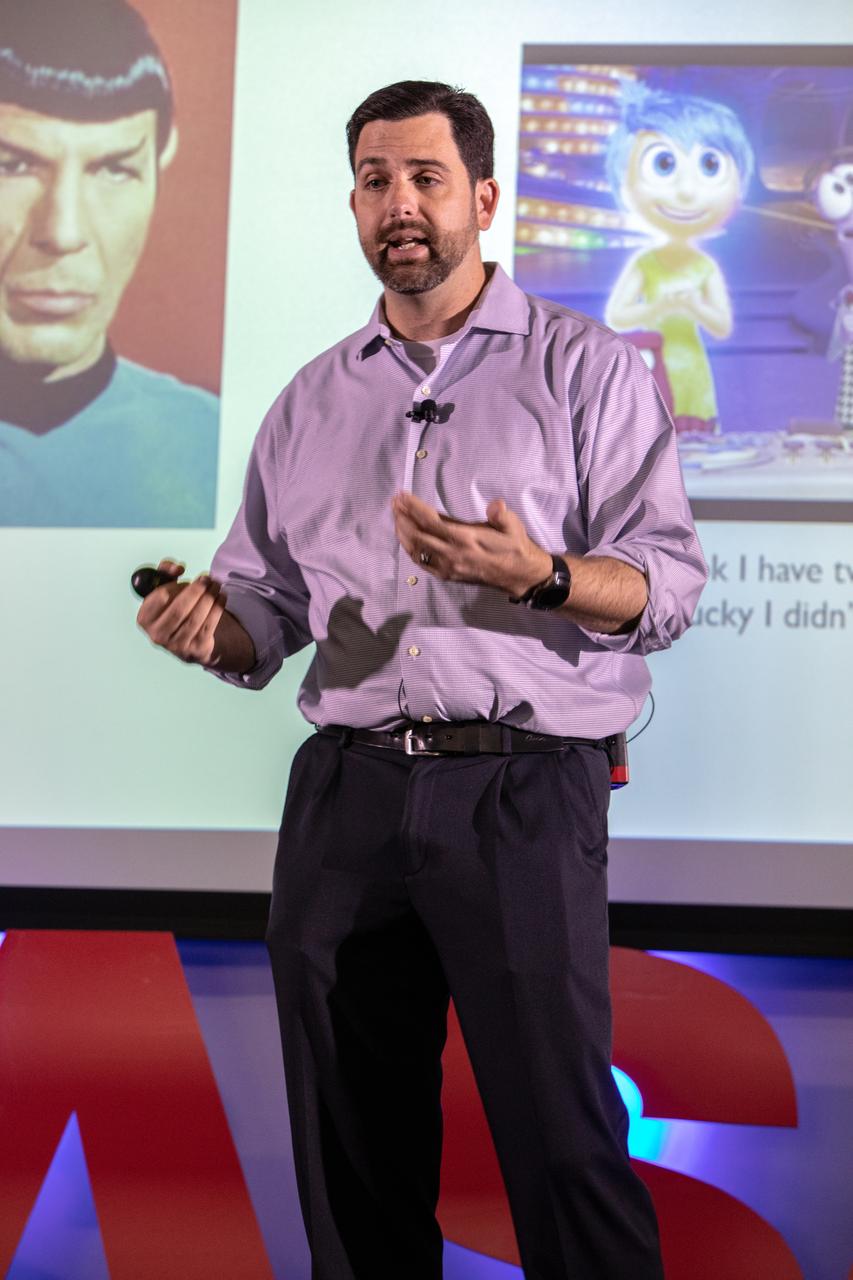
Jeremy Parsons, deputy manager of NASA’s Exploration Ground Systems at the agency’s Kennedy Space Center in Florida, speaks at the fourth in a series of five TED Talk-style informational sessions on Oct. 31, 2019, in the Kennedy Learning Institute. Sponsored by Kennedy’s Launching Leaders and Leadership for the Future, NASAtalks focuses on the topic of intentional careers and aims to provide employees with tools and knowledge that can be utilized for career growth. The theme of this fourth session was employees, and additional speakers included Kennedy’s Johnny Nguyen and Tony Derbyshire, with a skill-building section on vulnerability, authentic self and diverse inclusion by Ronnie Rodriguez.
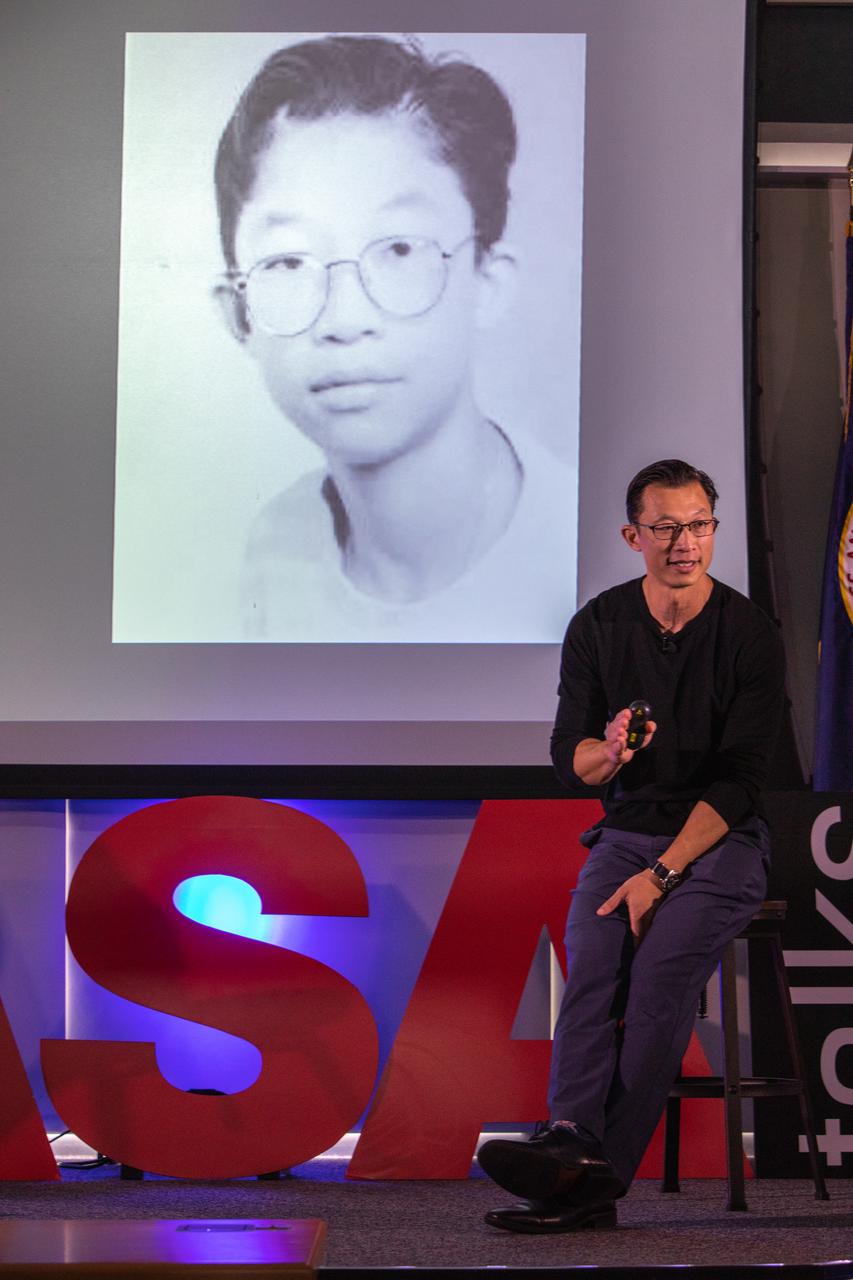
Kennedy Space Center’s Johnny Nguyen speaks at the fourth in a series of five TED Talk-style informational sessions on Oct. 31, 2019, in the Florida spaceport’s Kennedy Learning Institute. Sponsored by Kennedy’s Launching Leaders and Leadership for the Future, NASAtalks focuses on the topic of intentional careers and aims to provide employees with tools and knowledge that can be utilized for career growth. The theme of this fourth session was employees, and additional speakers included Kennedy’s Tony Derbyshire and Deputy Manager of NASA’s Exploration Ground Systems Jeremy Parsons, with a skill-building section on vulnerability, authentic self and diverse inclusion by Ronnie Rodriguez.
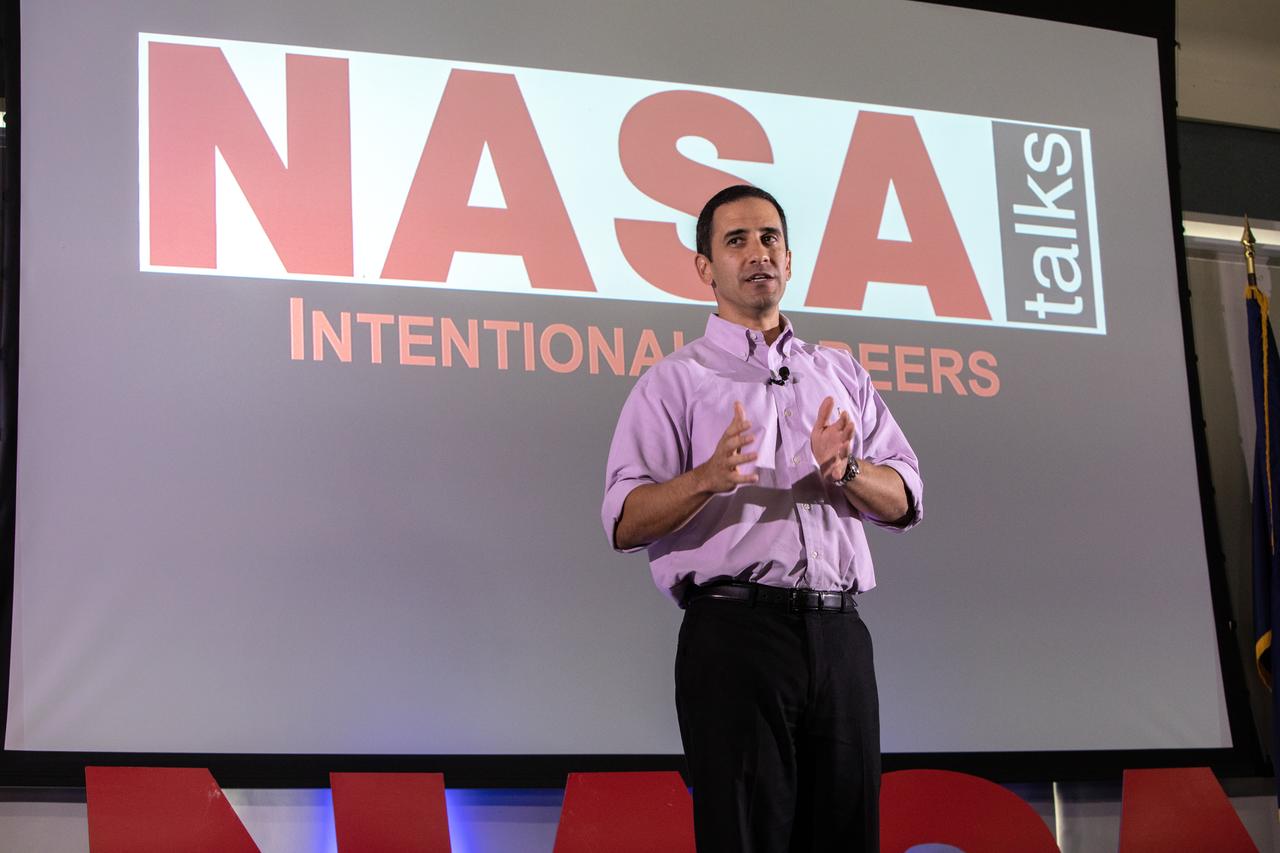
Kennedy Space Center’s Tony Derbyshire speaks at the fourth in a series of five TED Talk-style informational sessions on Oct. 31, 2019, in the Florida spaceport’s Kennedy Learning Institute. Sponsored by Kennedy’s Launching Leaders and Leadership for the Future, NASAtalks focuses on the topic of intentional careers and aims to provide employees with tools and knowledge that can be utilized for career growth. The theme of this fourth session was employees, and additional speakers included Kennedy’s Johnny Nguyen and Deputy Manager of NASA’s Exploration Ground Systems Jeremy Parsons, with a skill-building section on vulnerability, authentic self and diverse inclusion by Ronnie Rodriguez.
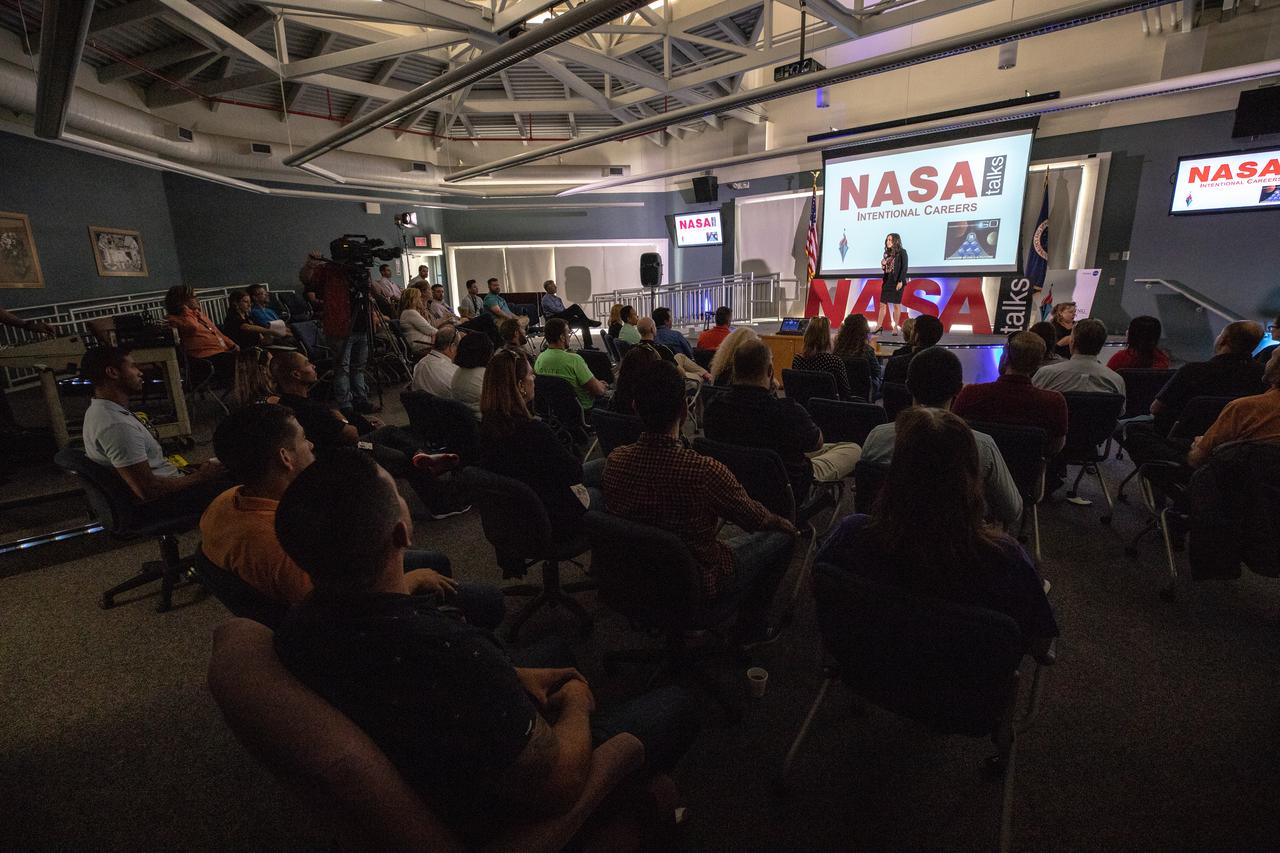
Kennedy Space Center’s Jennifer Lane addresses co-workers inside the Florida spaceport’s Kennedy Learning Institute on Oct. 31, 2019, during the fourth in a series of five TED Talk-style informational sessions. Sponsored by Kennedy’s Launching Leaders and Leadership for the Future, NASAtalks focuses on the topic of intentional careers and aims to provide employees with tools and knowledge that can be utilized for career growth. The theme of this fourth session was employees, and additional speakers included Kennedy’s Johnny Nguyen, Tony Derbyshire and Jeremy Parsons, deputy manager of NASA’s Exploration Ground Systems, with a skill-building section on vulnerability, authentic self and diverse inclusion by Ronnie Rodriguez.
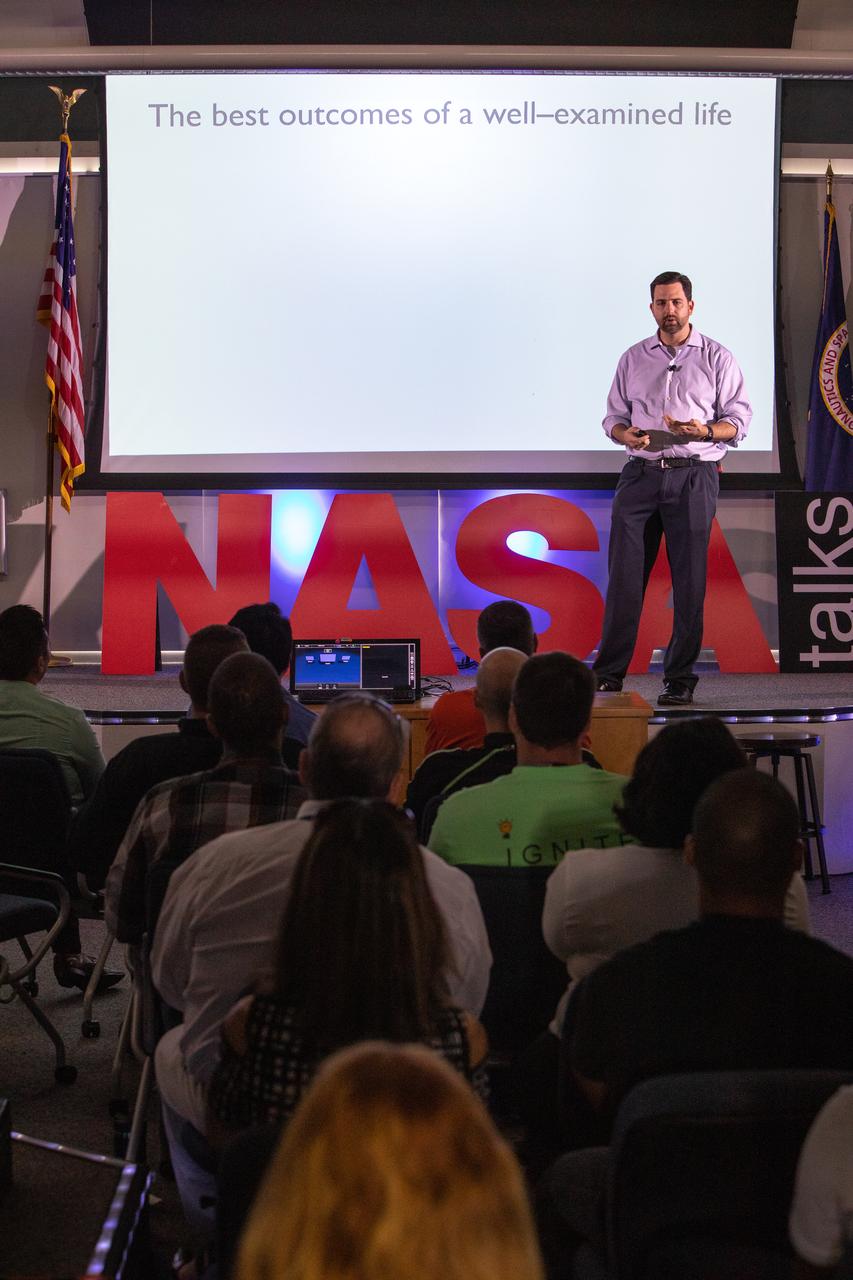
Jeremy Parsons, deputy manager of NASA’s Exploration Ground Systems at the agency’s Kennedy Space Center in Florida, speaks to Kennedy employees on Oct. 31, 2019, in the Kennedy Learning Institute during the fourth in a series of five TED Talk-style informational sessions. Sponsored by Kennedy’s Launching Leaders and Leadership for the Future, NASAtalks focuses on the topic of intentional careers and aims to provide employees with tools and knowledge that can be utilized for career growth. The theme of this fourth session was employees, and additional speakers included Kennedy’s Johnny Nguyen and Tony Derbyshire, with a skill-building section on vulnerability, authentic self and diverse inclusion by Ronnie Rodriguez.

Kennedy Space Center’s Johnny Nguyen speaks at the fourth in a series of five TED Talk-style informational sessions on Oct. 31, 2019, in the Florida spaceport’s Kennedy Learning Institute. Sponsored by Kennedy’s Launching Leaders and Leadership for the Future, NASAtalks focuses on the topic of intentional careers and aims to provide employees with tools and knowledge that can be utilized for career growth. The theme of this fourth session was employees, and additional speakers included Kennedy’s Tony Derbyshire and Deputy Manager of NASA’s Exploration Ground Systems Jeremy Parsons, with a skill-building section on vulnerability, authentic self and diverse inclusion by Ronnie Rodriguez.
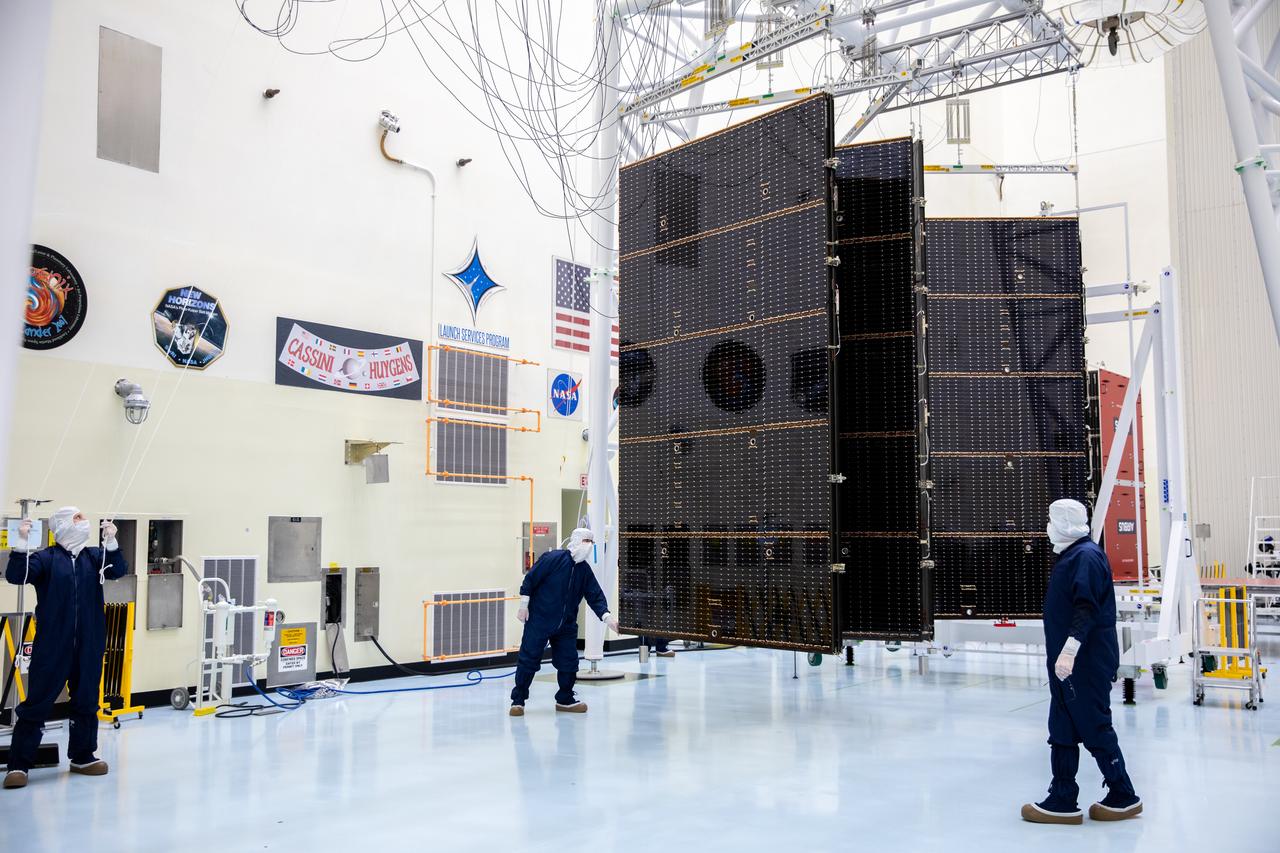
Technicians working inside the Payload Hazardous Servicing Facility at the agency’s Kennedy Space Center in Florida unfolded and fully extended the first of two five-panel solar arrays built for NASA’s Europa Clipper in preparation for inspection and cleaning as part of assembly, test, and launch operations on Wednesday, March 6, 2024. When both solar arrays are installed and deployed on Europa Clipper – the agency’s largest spacecraft ever developed for a planetary mission – the spacecraft will span a total length of more than 100 feet and weigh 7,145 pounds without the inclusion of propellants.
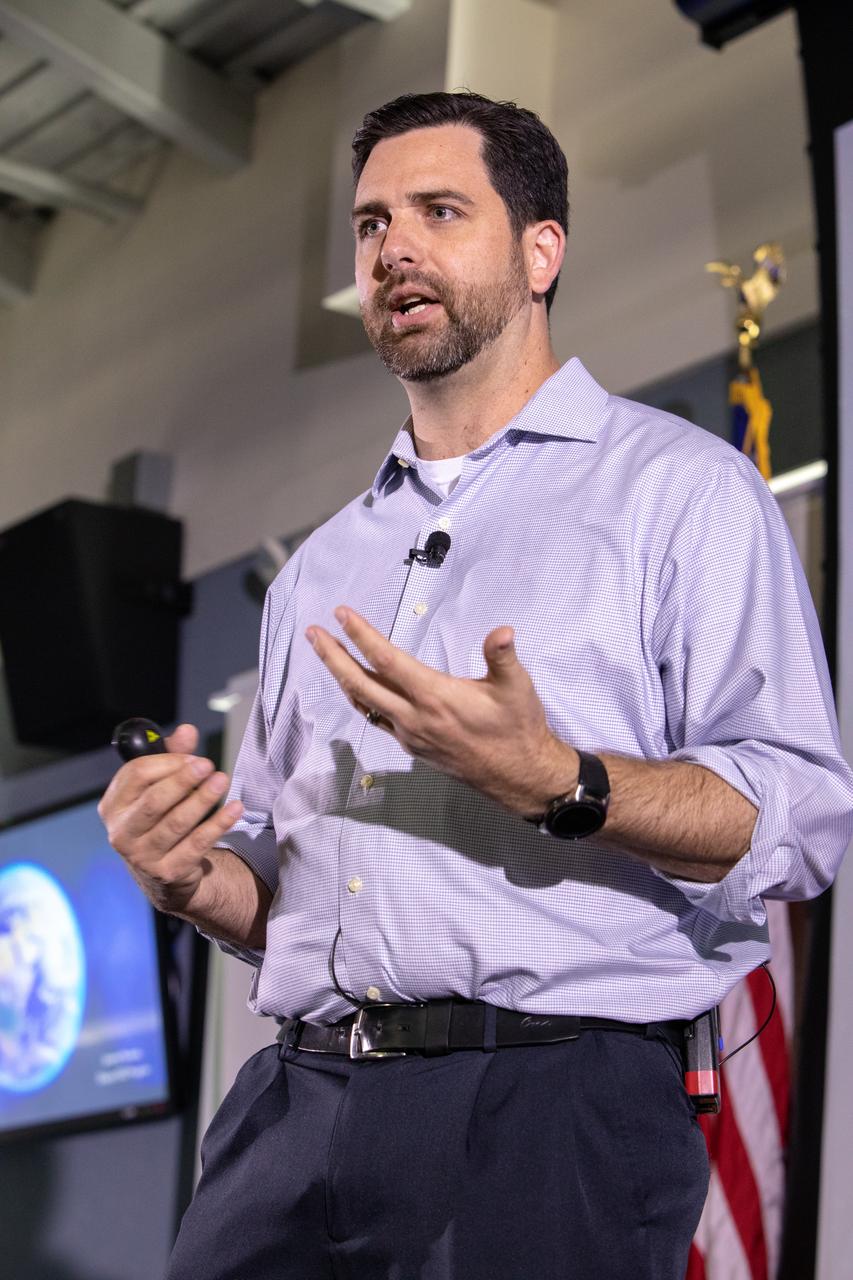
Jeremy Parsons, deputy manager of NASA’s Exploration Ground Systems at the agency’s Kennedy Space Center in Florida, speaks at the fourth in a series of five TED Talk-style informational sessions on Oct. 31, 2019, in the Kennedy Learning Institute. Sponsored by Kennedy’s Launching Leaders and Leadership for the Future, NASAtalks focuses on the topic of intentional careers and aims to provide employees with tools and knowledge that can be utilized for career growth. The theme of this fourth session was employees, and additional speakers included Kennedy’s Johnny Nguyen and Tony Derbyshire, with a skill-building section on vulnerability, authentic self and diverse inclusion by Ronnie Rodriguez.
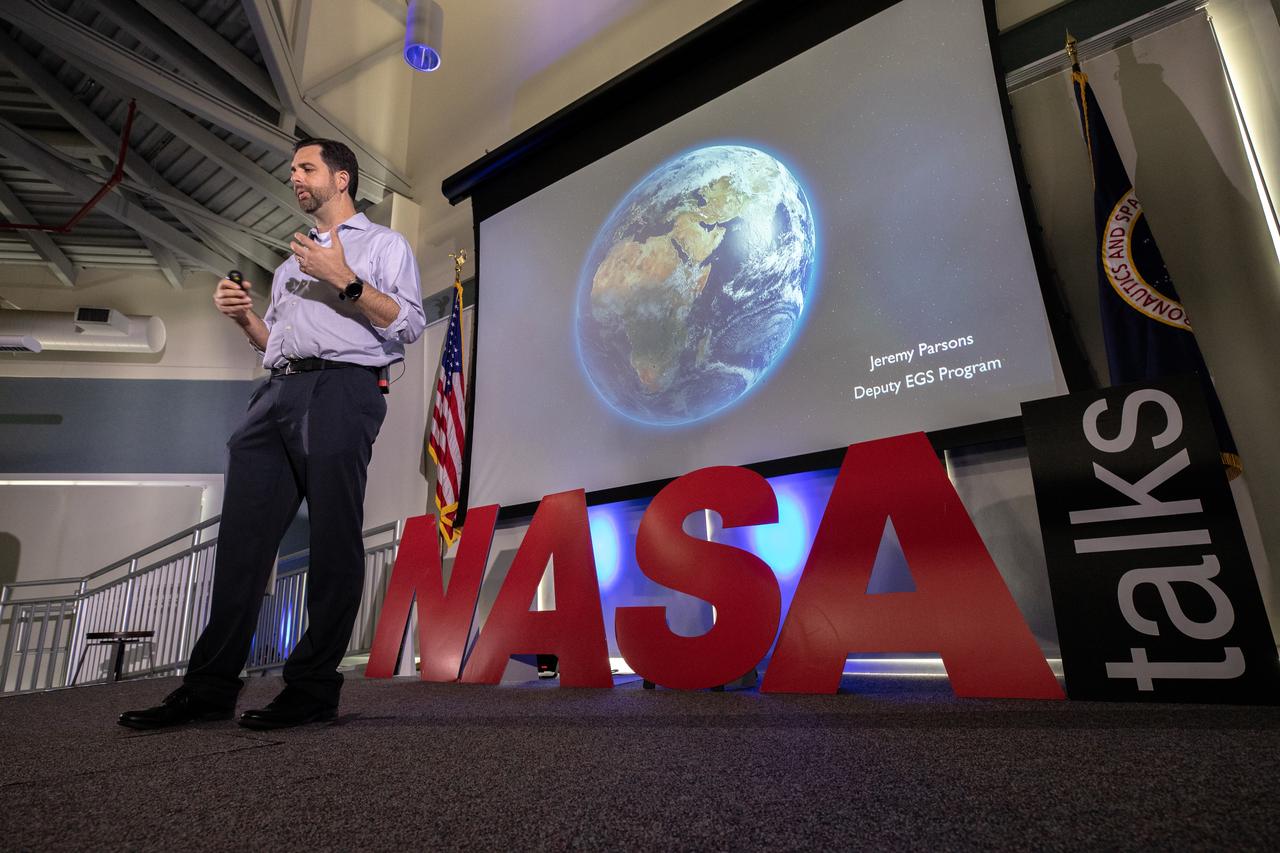
Jeremy Parsons, deputy manager of NASA’s Exploration Ground Systems at the agency’s Kennedy Space Center in Florida, speaks at the fourth in a series of five TED Talk-style informational sessions on Oct. 31, 2019, in the Kennedy Learning Institute. Sponsored by Kennedy’s Launching Leaders and Leadership for the Future, NASAtalks focuses on the topic of intentional careers and aims to provide employees with tools and knowledge that can be utilized for career growth. The theme of this fourth session was employees, and additional speakers included Kennedy’s Johnny Nguyen and Tony Derbyshire, with a skill-building section on vulnerability, authentic self and diverse inclusion by Ronnie Rodriguez.
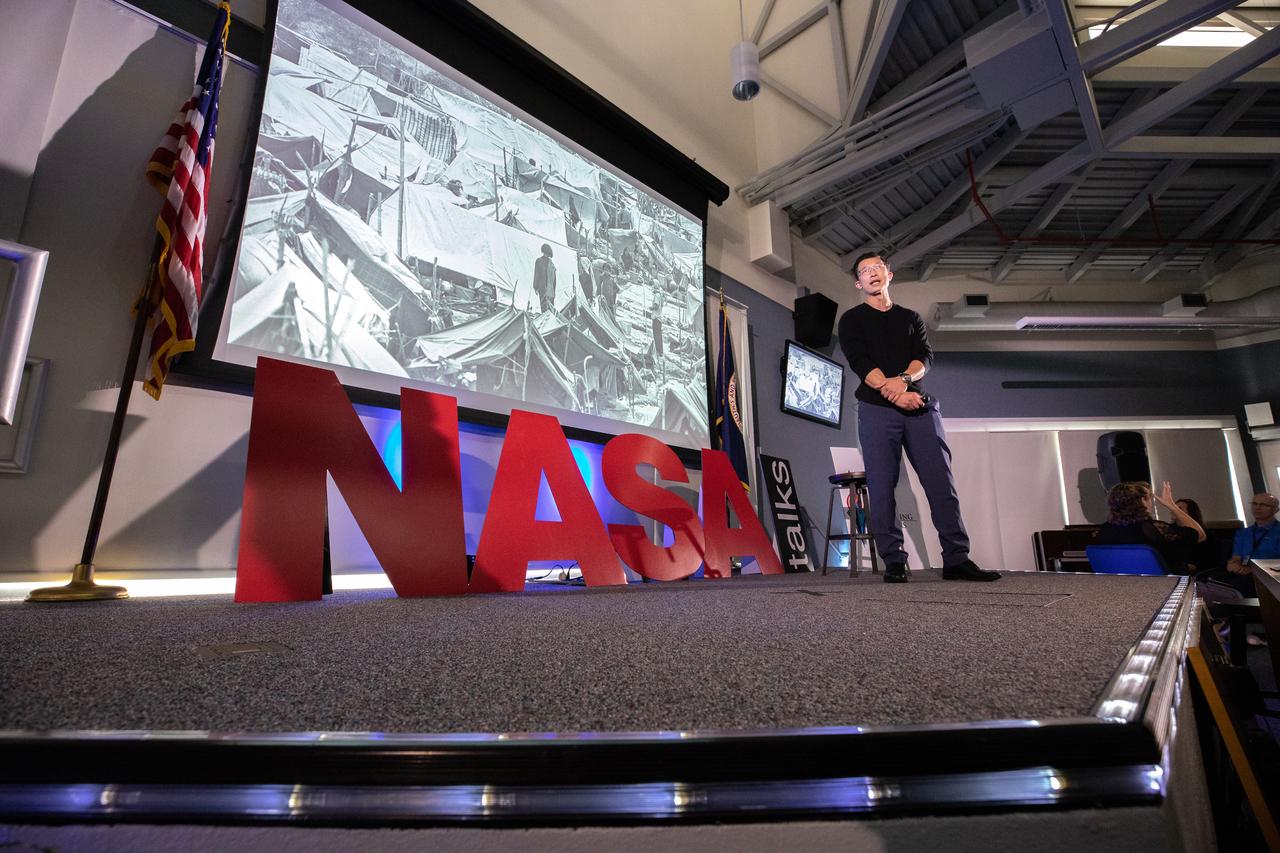
Kennedy Space Center’s Johnny Nguyen addresses co-workers inside the Florida spaceport’s Kennedy Learning Institute on Oct. 31, 2019, during the fourth in a series of five TED Talk-style informational sessions. Sponsored by Kennedy’s Launching Leaders and Leadership for the Future, NASAtalks focuses on the topic of intentional careers and aims to provide employees with tools and knowledge that can be utilized for career growth. The theme of this fourth session was employees, and additional speakers included Kennedy’s Tony Derbyshire and Deputy Manager of NASA’s Exploration Ground Systems Jeremy Parsons, with a skill-building section on vulnerability, authentic self and diverse inclusion by Ronnie Rodriguez.
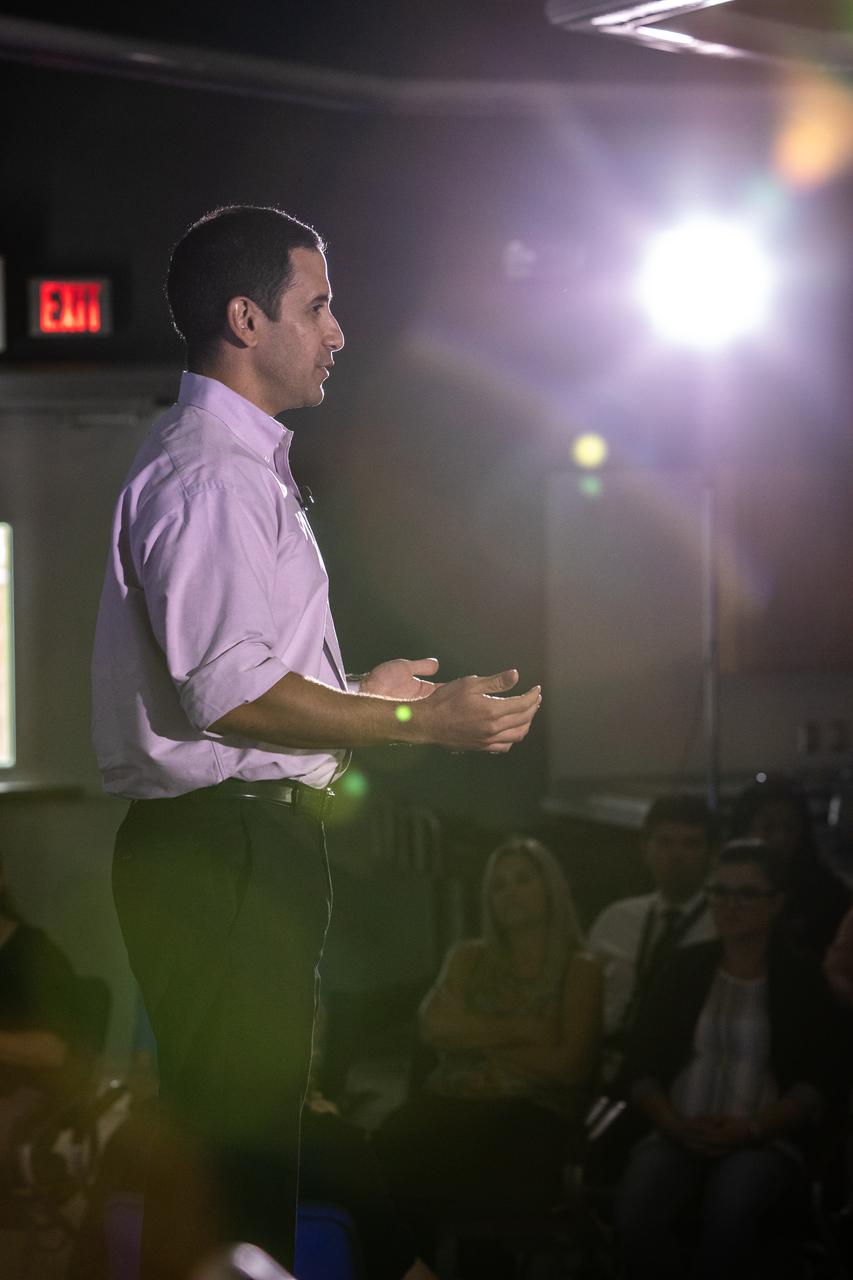
Kennedy Space Center’s Tony Derbyshire addresses co-workers inside the Florida spaceport’s Kennedy Learning Institute on Oct. 31, 2019, during the fourth in a series of five TED Talk-style informational sessions. Sponsored by Kennedy’s Launching Leaders and Leadership for the Future, NASAtalks focuses on the topic of intentional careers and aims to provide employees with tools and knowledge that can be utilized for career growth. The theme of this fourth session was employees, and additional speakers included Kennedy’s Johnny Nguyen and Deputy Manager of NASA’s Exploration Ground Systems Jeremy Parsons, with a skill-building section on vulnerability, authentic self and diverse inclusion by Ronnie Rodriguez.
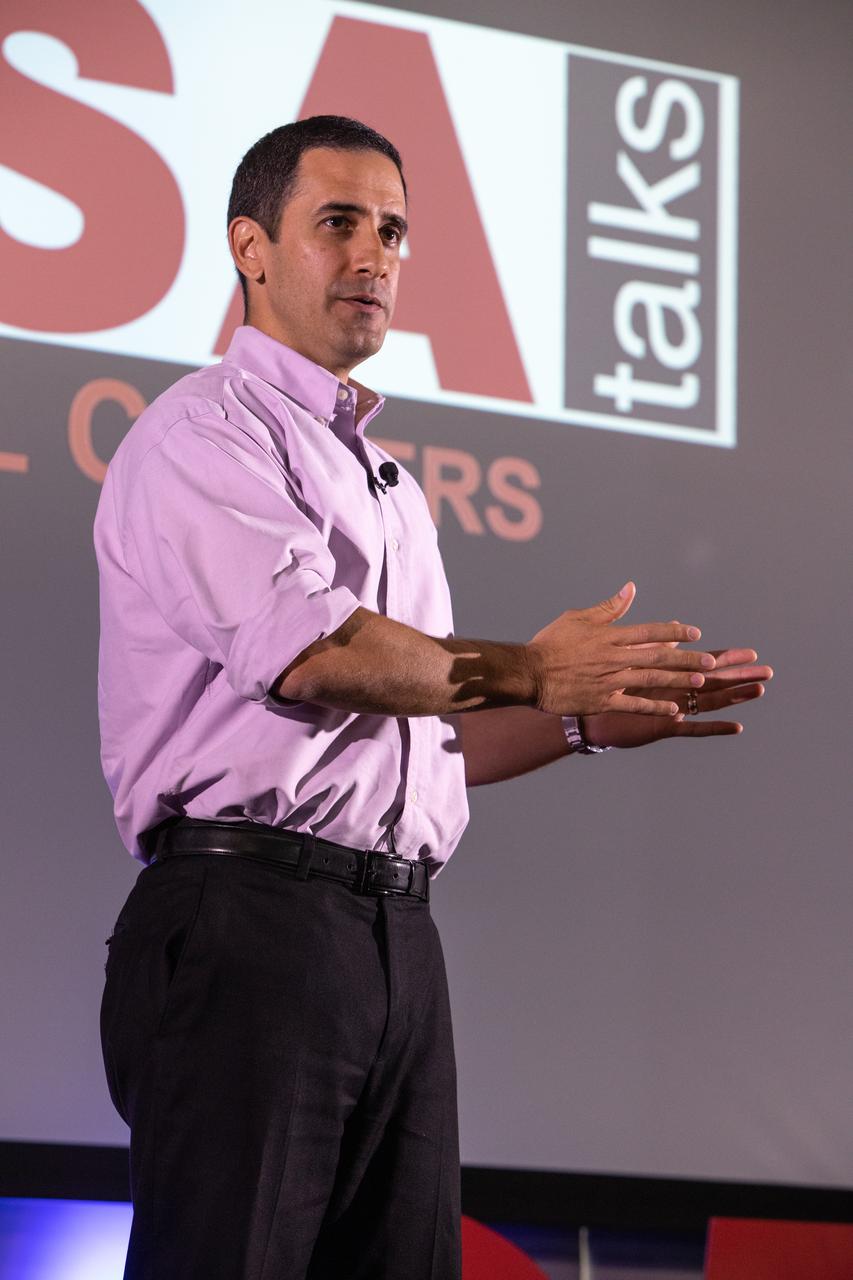
Kennedy Space Center’s Tony Derbyshire speaks at the fourth in a series of five TED Talk-style informational sessions on Oct. 31, 2019, in the Florida spaceport’s Kennedy Learning Institute. Sponsored by Kennedy’s Launching Leaders and Leadership for the Future, NASAtalks focuses on the topic of intentional careers and aims to provide employees with tools and knowledge that can be utilized for career growth. The theme of this fourth session was employees, and additional speakers included Kennedy’s Johnny Nguyen and Deputy Manager of NASA’s Exploration Ground Systems Jeremy Parsons, with a skill-building section on vulnerability, authentic self and diverse inclusion by Ronnie Rodriguez.
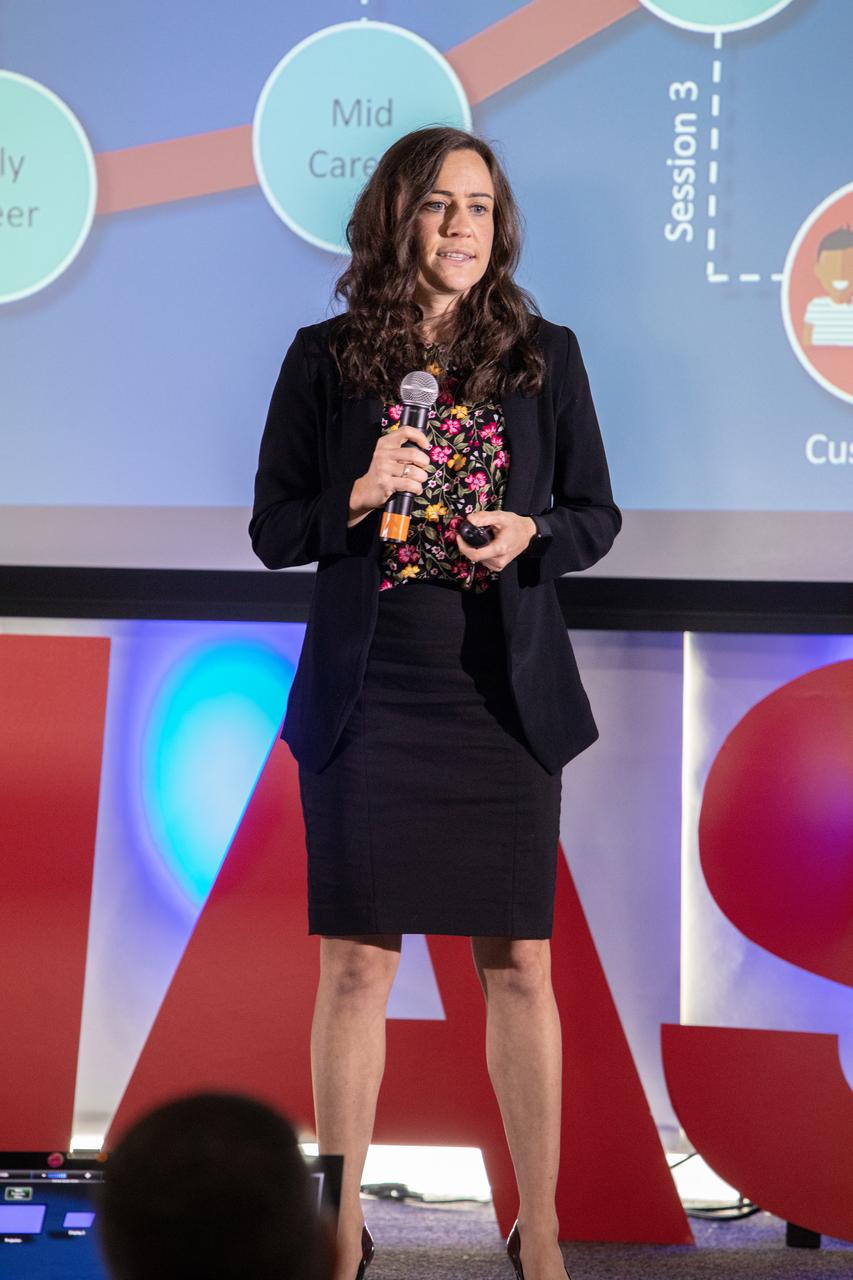
Kennedy Space Center’s Jennifer Lane participates the fourth in a series of five TED Talk-style informational sessions on Oct. 31, 2019, in the Florida spaceport’s Kennedy Learning Institute. Sponsored by Kennedy’s Launching Leaders and Leadership for the Future, NASAtalks focuses on the topic of intentional careers and aims to provide employees with tools and knowledge that can be utilized for career growth. The theme of this fourth session was employees, and additional speakers included Kennedy’s Johnny Nguyen, Tony Derbyshire and Jeremy Parsons, deputy manager of NASA’s Exploration Ground Systems, with a skill-building section on vulnerability, authentic self and diverse inclusion by Ronnie Rodriguez.
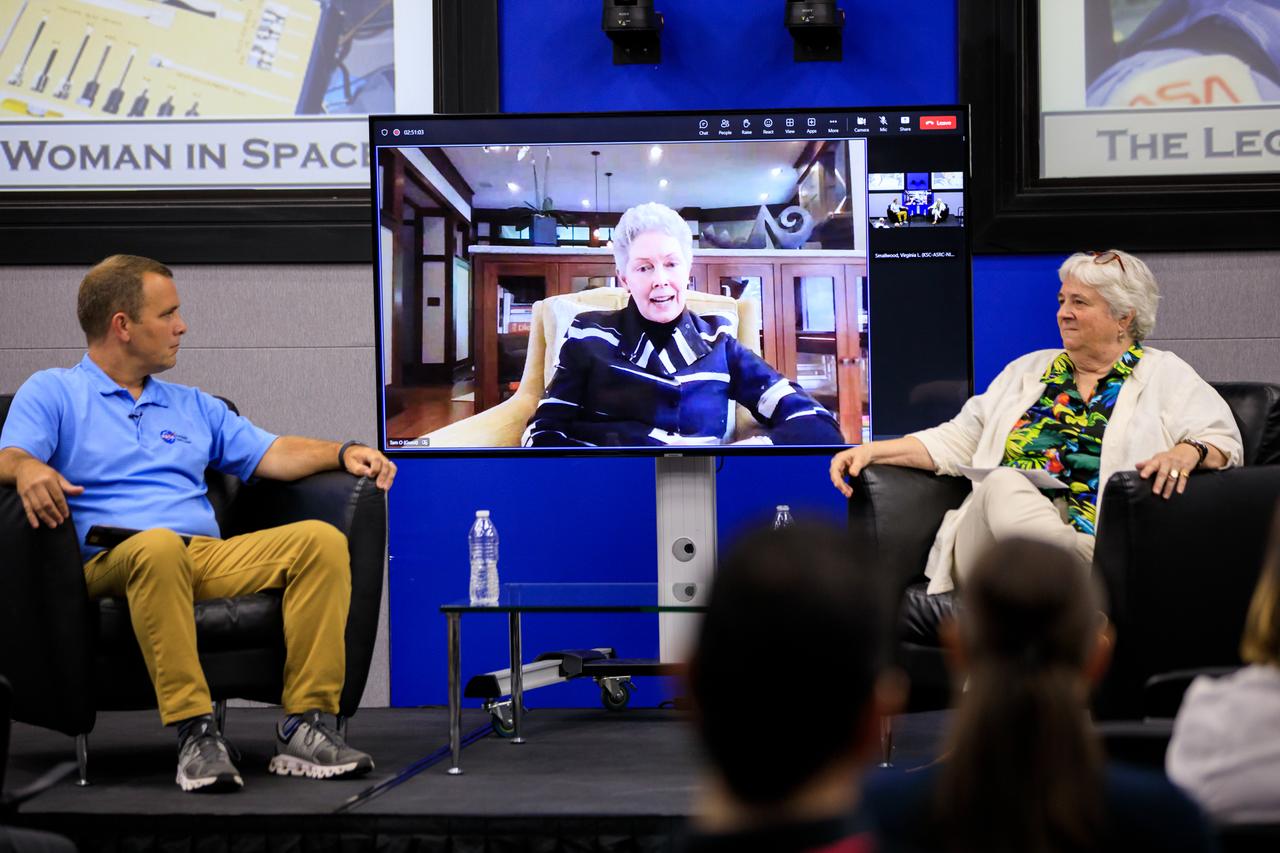
Tam O’Shaughnessy, center (on the monitor), speaks during “The Legacy of Sally Ride: The First American Woman in Space” event at Kennedy Space Center in Florida on June 15, 2023. O’Shaughnessy was Ride’s lifetime partner for 27 years, until the pioneering astronaut died in 2012 at age 61 from pancreatic cancer. NASA Chief Historian Brian Odom, left, and Bear Ride, Sally Ride’s sister, also participated in the event. Forty years ago, Ride made her trailblazing flight into space. She also was a physicist and a steadfast advocate for inclusion in STEM (science, technology, engineering, mathematics) – especially for girls and young women.

Kennedy Space Center’s Johnny Nguyen addresses co-workers inside the Florida spaceport’s Kennedy Learning Institute on Oct. 31, 2019, during the fourth in a series of five TED Talk-style informational sessions. Sponsored by Kennedy’s Launching Leaders and Leadership for the Future, NASAtalks focuses on the topic of intentional careers and aims to provide employees with tools and knowledge that can be utilized for career growth. The theme of this fourth session was employees, and additional speakers included Kennedy’s Tony Derbyshire and Deputy Manager of NASA’s Exploration Ground Systems Jeremy Parsons, with a skill-building section on vulnerability, authentic self and diverse inclusion by Ronnie Rodriguez.
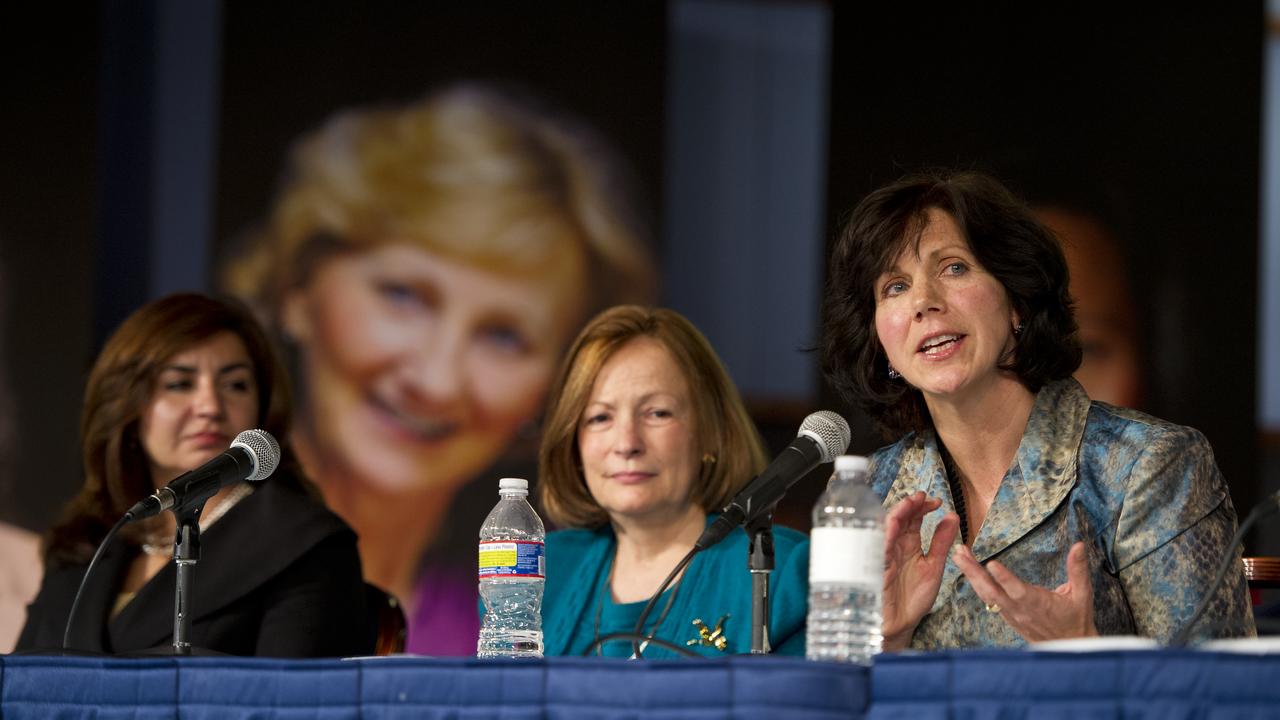
Catherine Didion, far right, Senior Fellow, National Academy of Engineering, participates in a panel discussion at the Women, Innovation and Aerospace event celebrating Women's History Month at the George Washington University Jack Morton Auditorium, Thursday, March 8, 2012 in Washington. Didion is joined by Marcia Smith, President, Space Policy Online.com, and Veronica Villalobos, Director, Office of Diversity and Inclusion, Office of Personnel Management, far left. The WIA day-long event will help to foster a discussion for students and early career professionals about how to continue to encourage women to enter and succeed in the field of aerospace. Photo Credit: (NASA/Carla Cioffi)
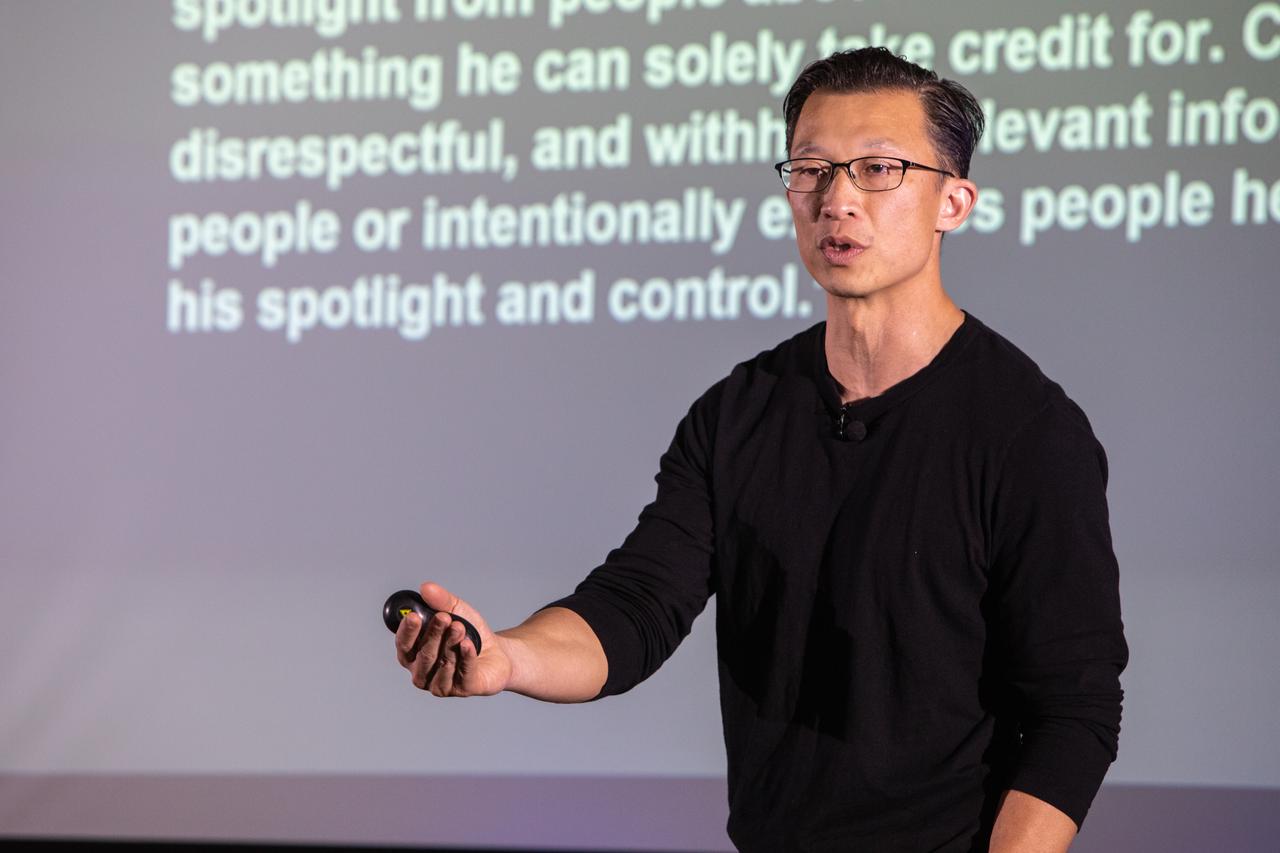
Kennedy Space Center’s Johnny Nguyen speaks at the fourth in a series of five TED Talk-style informational sessions on Oct. 31, 2019, in the Florida spaceport’s Kennedy Learning Institute. Sponsored by Kennedy’s Launching Leaders and Leadership for the Future, NASAtalks focuses on the topic of intentional careers and aims to provide employees with tools and knowledge that can be utilized for career growth. The theme of this fourth session was employees, and additional speakers included Kennedy’s Tony Derbyshire and Deputy Manager of NASA’s Exploration Ground Systems Jeremy Parsons, with a skill-building section on vulnerability, authentic self and diverse inclusion by Ronnie Rodriguez.
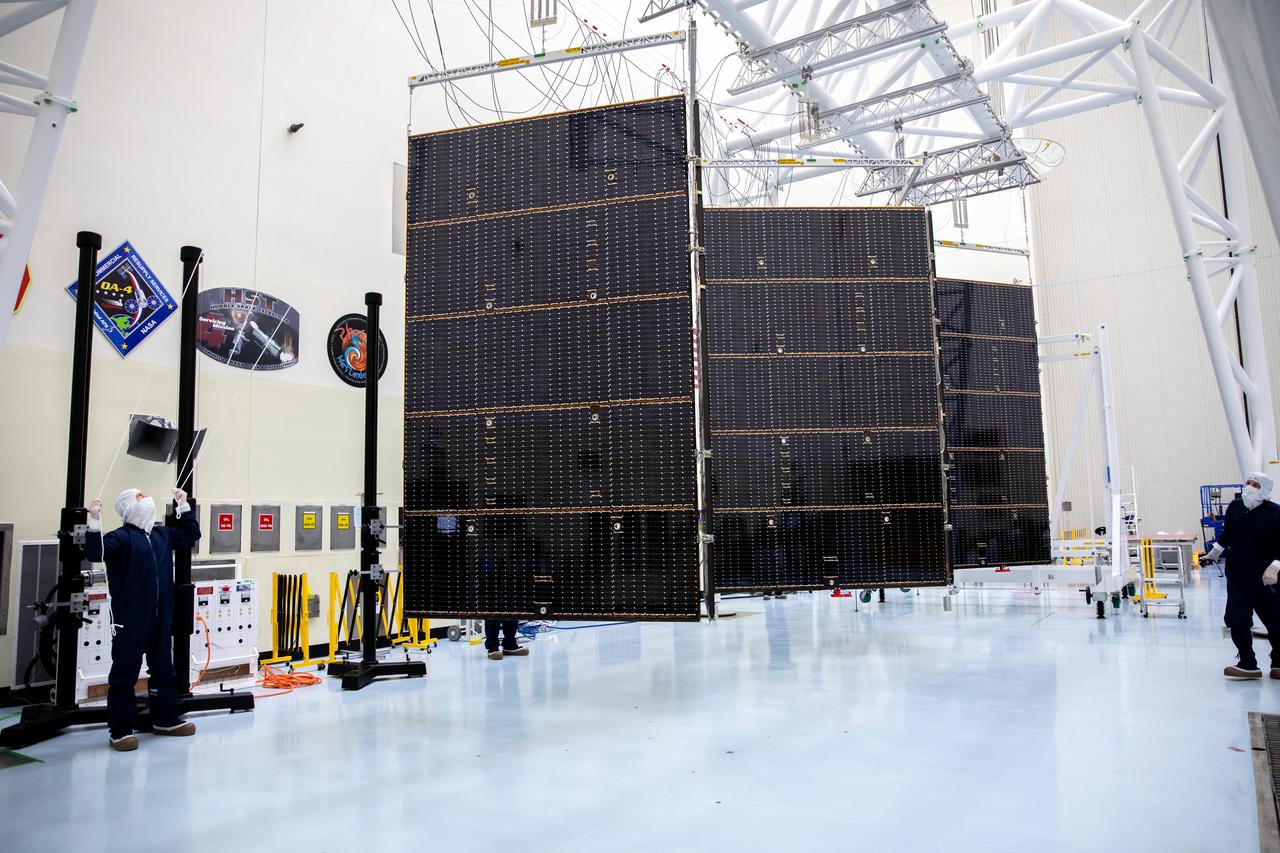
Technicians working inside the Payload Hazardous Servicing Facility at the agency’s Kennedy Space Center in Florida unfolded and fully extended the first of two five-panel solar arrays built for NASA’s Europa Clipper in preparation for inspection and cleaning as part of assembly, test, and launch operations on Wednesday, March 6, 2024. When both solar arrays are installed and deployed on Europa Clipper – the agency’s largest spacecraft ever developed for a planetary mission – the spacecraft will span a total length of more than 100 feet and weigh 7,145 pounds without the inclusion of propellants.
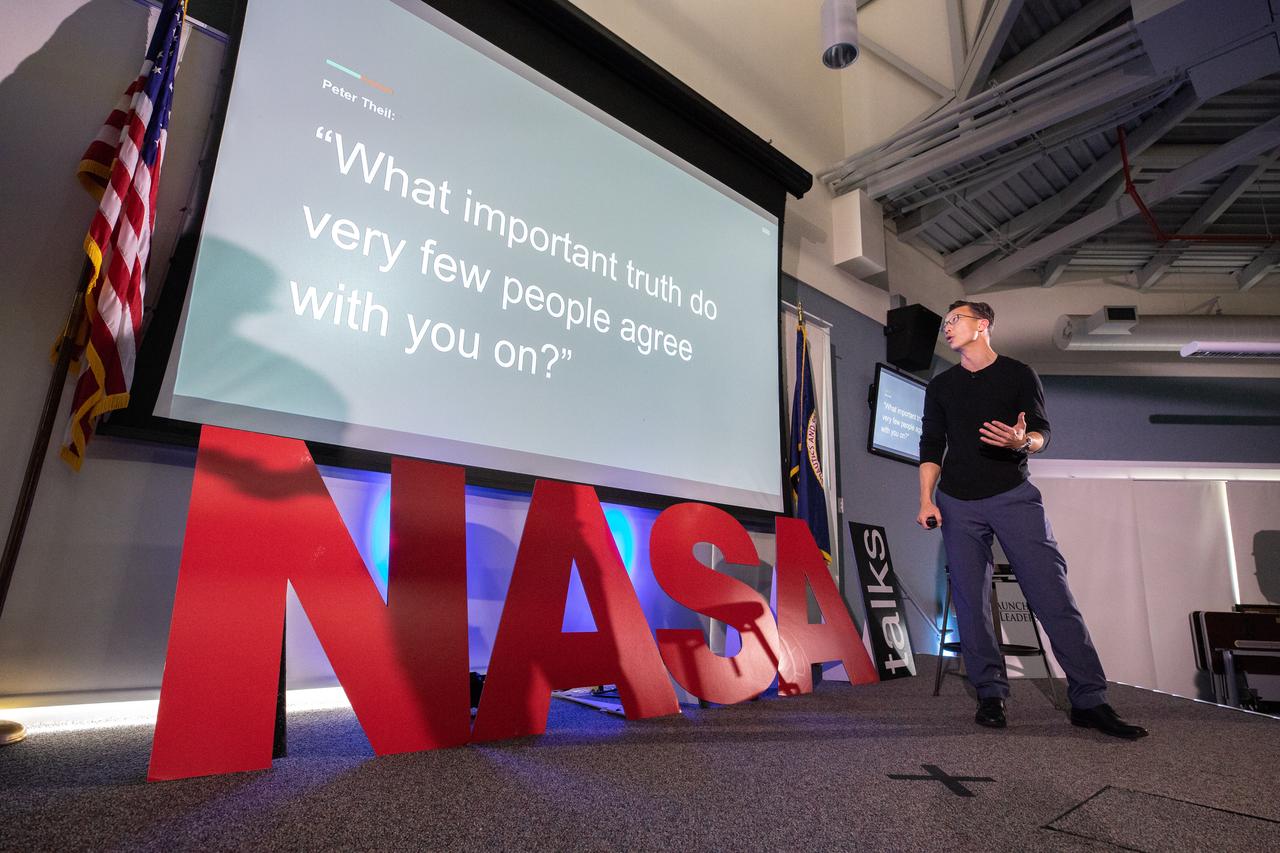
Kennedy Space Center’s Johnny Nguyen speaks at the fourth in a series of five TED Talk-style informational sessions on Oct. 31, 2019, in the Florida spaceport’s Kennedy Learning Institute. Sponsored by Kennedy’s Launching Leaders and Leadership for the Future, NASAtalks focuses on the topic of intentional careers and aims to provide employees with tools and knowledge that can be utilized for career growth. The theme of this fourth session was employees, and additional speakers included Kennedy’s Tony Derbyshire and Deputy Manager of NASA’s Exploration Ground Systems Jeremy Parsons, with a skill-building section on vulnerability, authentic self and diverse inclusion by Ronnie Rodriguez.

“I grew up in Venezuela and studied in the military high school Gran Mariscal de Ayacucho. They would frequently bring in speakers, usually professional that were doing important work. Here comes Dr. Humberto Fernandez-Moran, a Venezuelan scientist working at NASA He was speaking to us about teamwork and he told an anecdote about this janitor that was mopping the floors in one of the NASA installations, when someone asked the man what he was doing. The janitor turned around and said “I’m sending people to the Moon.” In that moment I thought, “Wow, NASA is a really inclusive place to work because they value all the contributions of the people that work for them.” When I immigrated to the United States, I didn’t start my career at NASA. I worked in various positions in the private and public sector. When I saw this position open and applied, I was reminded of that story. Later on, I worked for NASA as part of the new employee orientation team for a little over a year I would share that story with the new hires to let them know that NASA was extremely inclusive and that their work would matter. Regardless of the scope of their contribution you were part of a team working toward the same goal. When someone asks me about my job? I respond with immense pride I am part of the Office of the General Counsel – International Law Practice Group and I send astronauts into space." NASA Legal Administrative Specialist, Linda Perozo, poses for a portrait outside her home in Maryland, Wednesday, Sept. 16, 2020. Photo Credit: (NASA/Aubrey Gemignani)
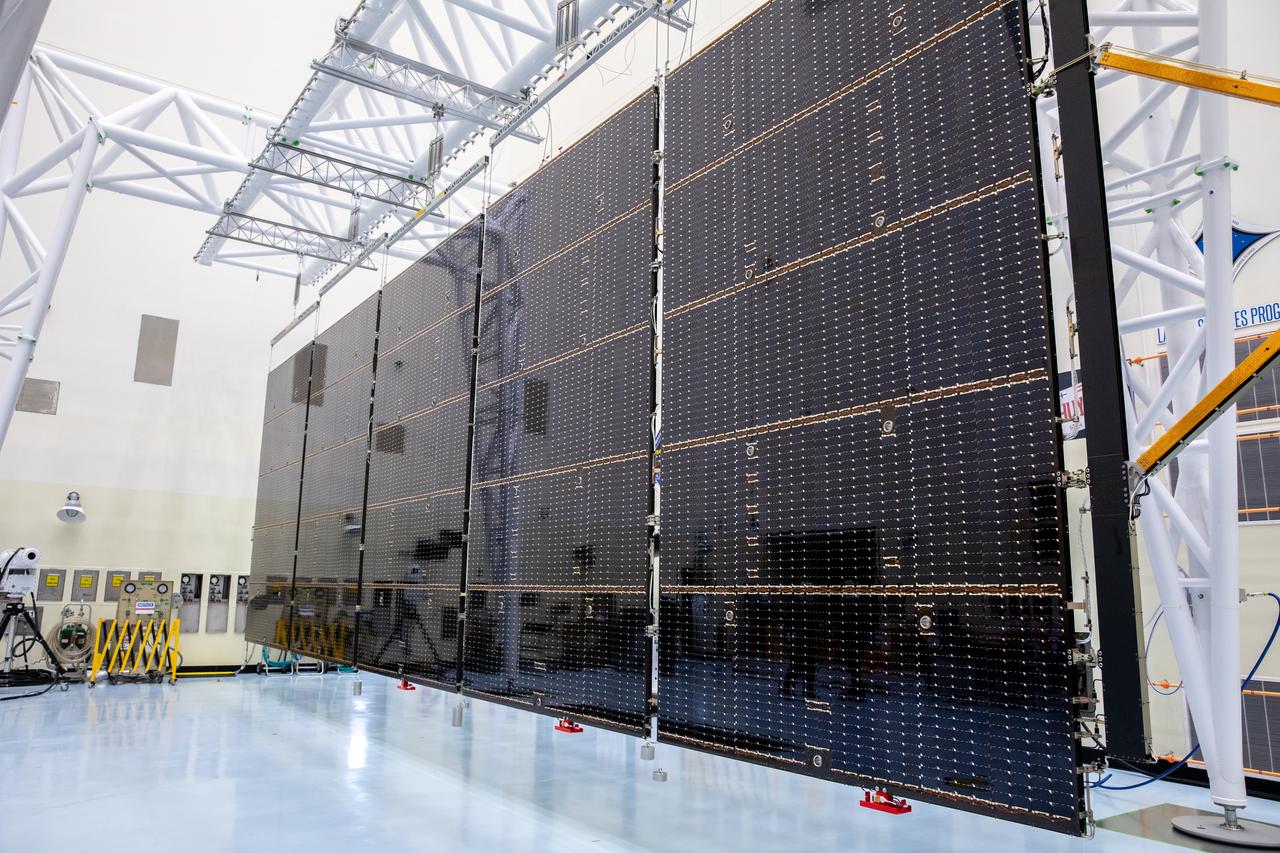
The first of two five-panel solar arrays built for NASA’s Europa Clipper is fully extended from a shipping configuration and suspended on a support system called a gravity offload fixture to begin inspection and cleaning as part of assembly, test, and launch operations inside the Payload Hazardous Servicing Facility at the agency’s Kennedy Space Center in Florida on Wednesday, March 6, 2024. Another name for the gravity offload fixture is the Transportable Large Envelope Deployment Facility (T-LEDF). When both solar arrays are installed and deployed on Europa Clipper – the agency’s largest spacecraft ever developed for a planetary mission – the spacecraft will span a total length of more than 100 feet and weigh 7,145 pounds without the inclusion of propellants.
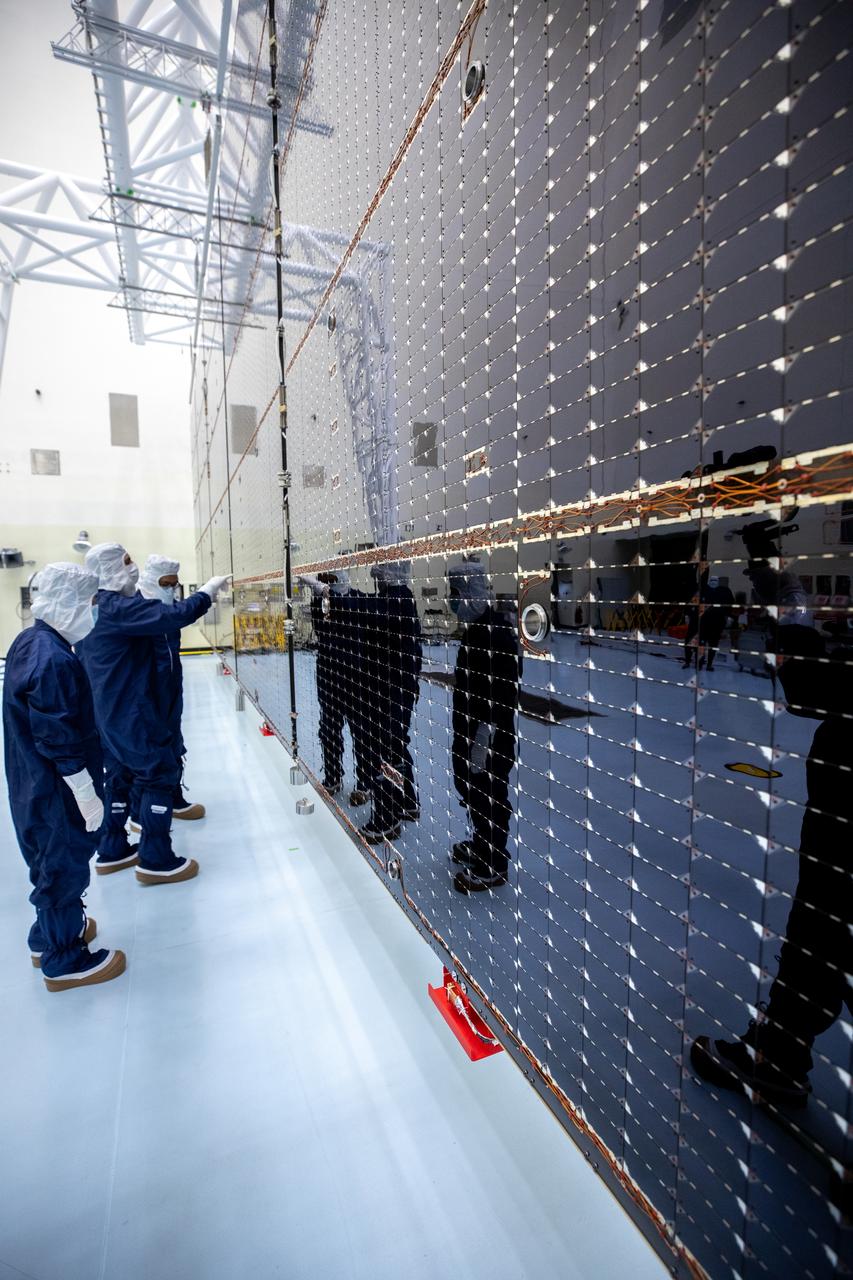
Technicians examine the first of two fully extended five-panel solar arrays built for NASA’s Europa Clipper suspended on a support system called a gravity offload fixture during inspection and cleaning as part of assembly, test, and launch operations inside the Payload Hazardous Servicing Facility at the agency’s Kennedy Space Center in Florida on Wednesday, March 6, 2024. Another name for the gravity offload fixture is the Transportable Large Envelope Deployment Facility (T-LEDF). When both solar arrays are installed and deployed on Europa Clipper – the agency’s largest spacecraft ever developed for a planetary mission – the spacecraft will span a total length of more than 100 feet and weigh 7,145 pounds without the inclusion of propellants.
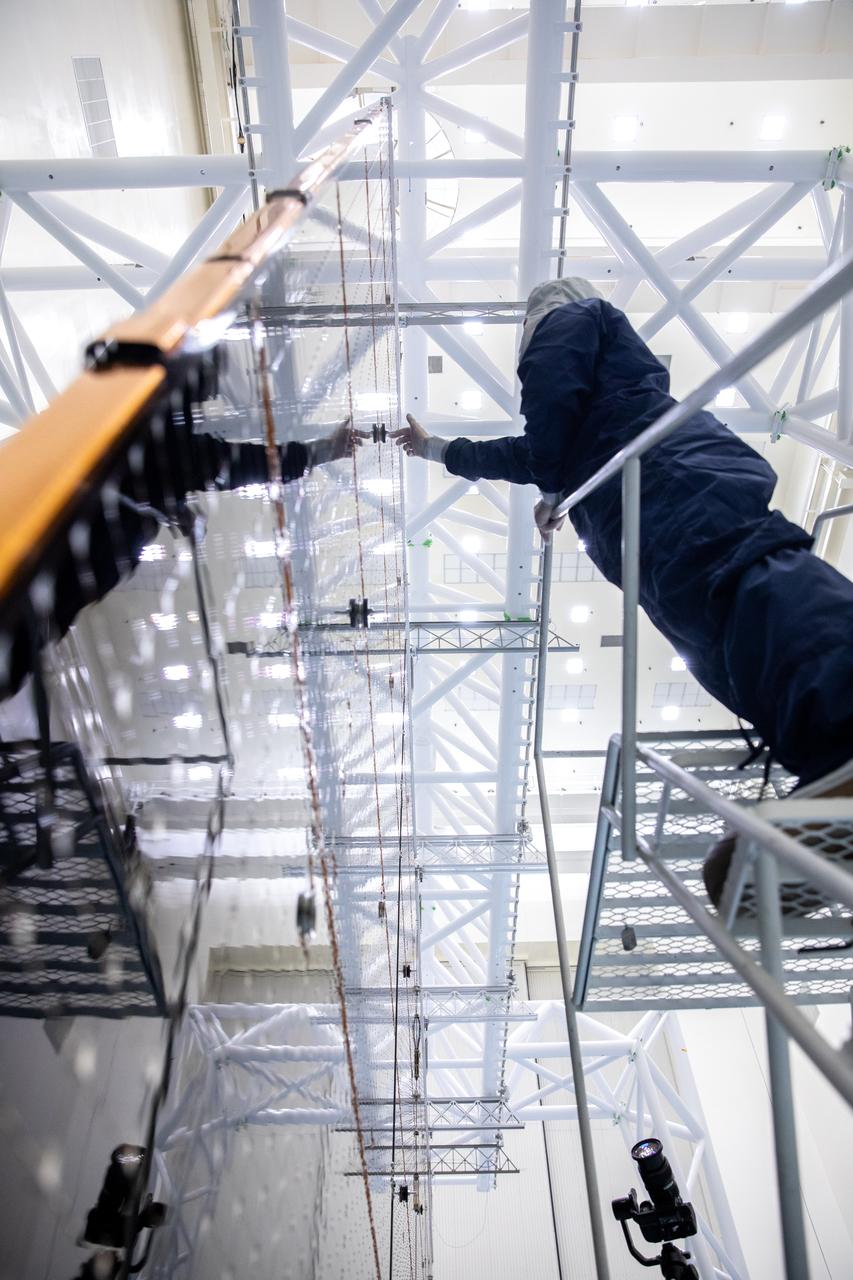
Technicians examine the first of two fully extended five-panel solar arrays built for NASA’s Europa Clipper suspended on a support system called a gravity offload fixture during inspection and cleaning as part of assembly, test, and launch operations inside the Payload Hazardous Servicing Facility at the agency’s Kennedy Space Center in Florida on Wednesday, March 6, 2024. Another name for the gravity offload fixture is the Transportable Large Envelope Deployment Facility (T-LEDF). When both solar arrays are installed and deployed on Europa Clipper – the agency’s largest spacecraft ever developed for a planetary mission – the spacecraft will span a total length of more than 100 feet and weigh 7,145 pounds without the inclusion of propellants.
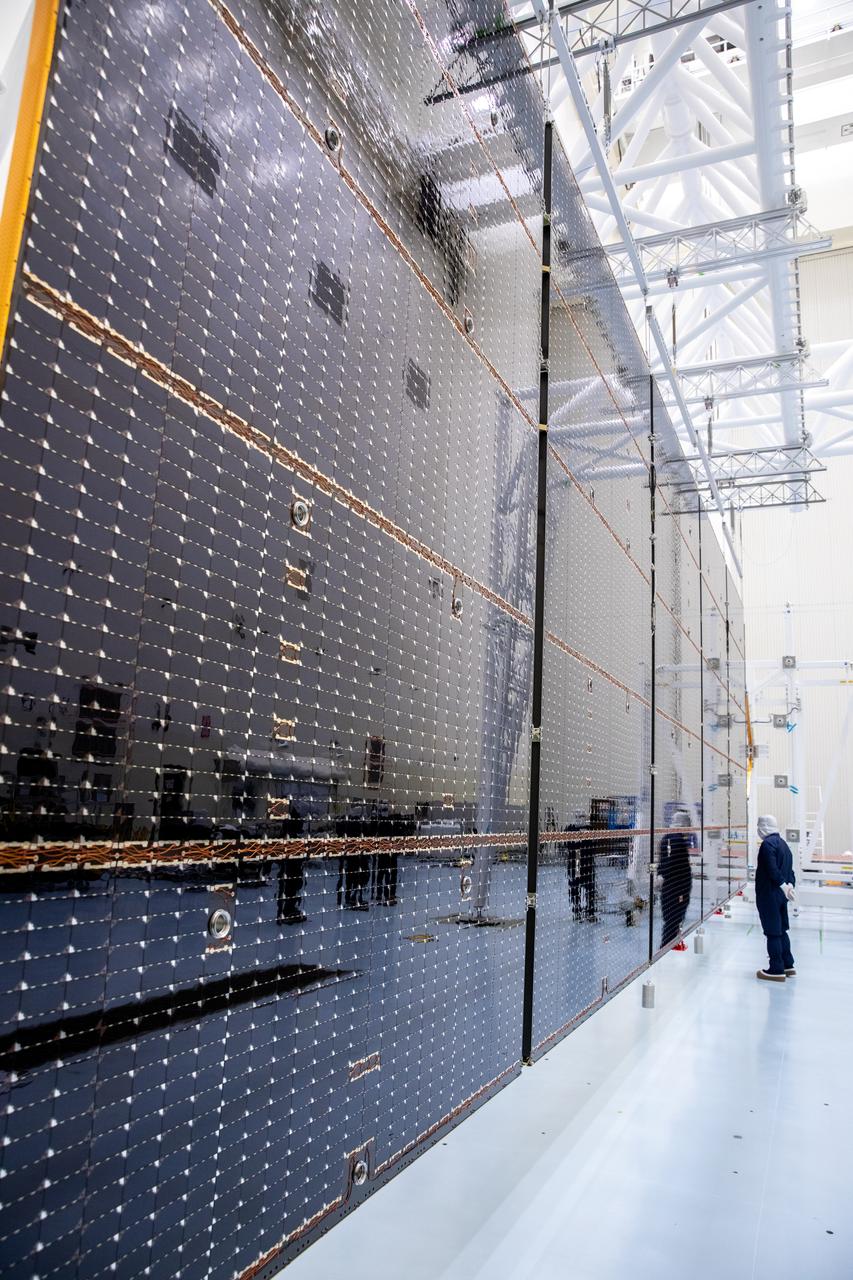
Technicians examine the first of two fully extended five-panel solar arrays built for NASA’s Europa Clipper suspended on a support system called a gravity offload fixture during inspection and cleaning as part of assembly, test, and launch operations inside the Payload Hazardous Servicing Facility at the agency’s Kennedy Space Center in Florida on Wednesday, March 6, 2024. Another name for the gravity offload fixture is the Transportable Large Envelope Deployment Facility (T-LEDF). When both solar arrays are installed and deployed on Europa Clipper – the agency’s largest spacecraft ever developed for a planetary mission – the spacecraft will span a total length of more than 100 feet and weigh 7,145 pounds without the inclusion of propellants.
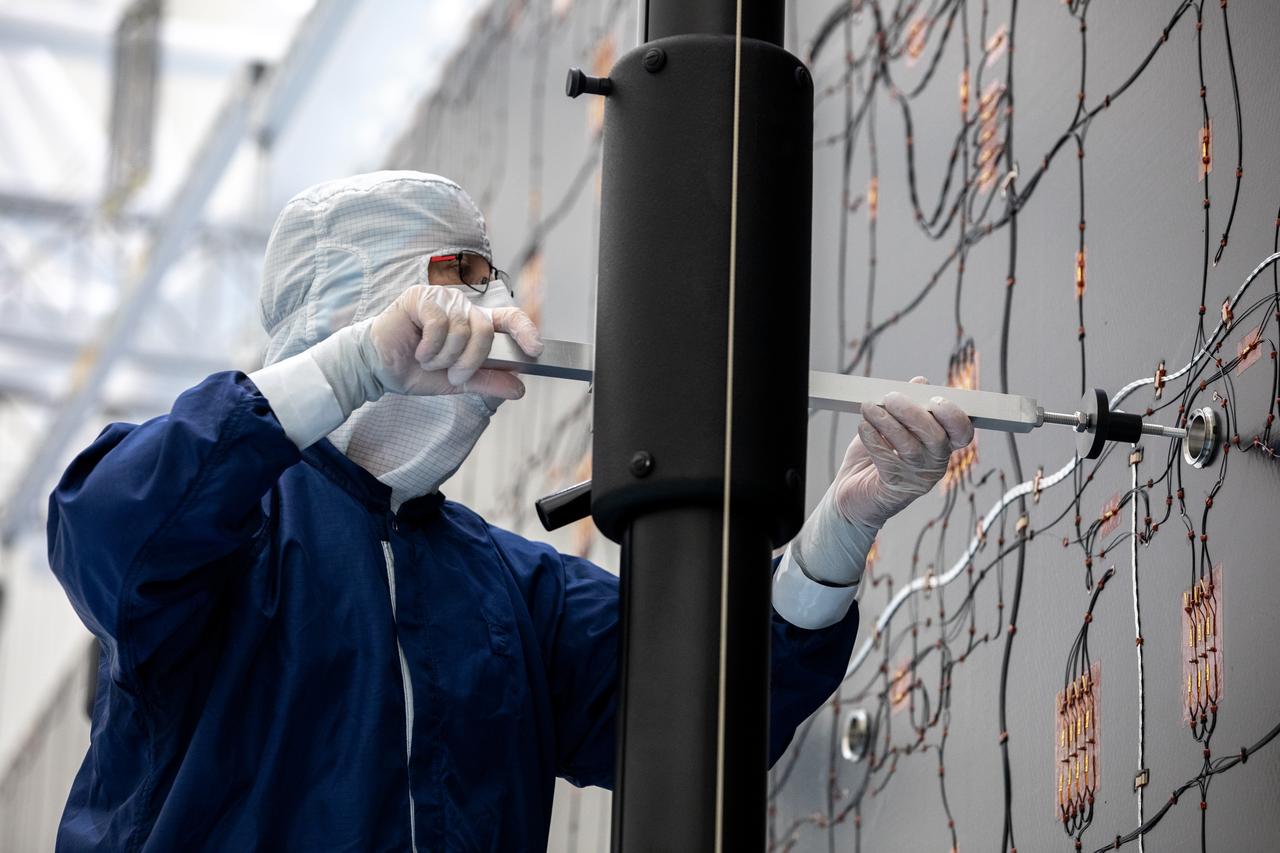
Technicians examine the first of two fully extended five-panel solar arrays built for NASA’s Europa Clipper suspended on a support system called a gravity offload fixture during inspection and cleaning as part of assembly, test, and launch operations inside the Payload Hazardous Servicing Facility at the agency’s Kennedy Space Center in Florida on Wednesday, March 6, 2024. Another name for the gravity offload fixture is the Transportable Large Envelope Deployment Facility (T-LEDF). When both solar arrays are installed and deployed on Europa Clipper – the agency’s largest spacecraft ever developed for a planetary mission – the spacecraft will span a total length of more than 100 feet and weigh 7,145 pounds without the inclusion of propellants.
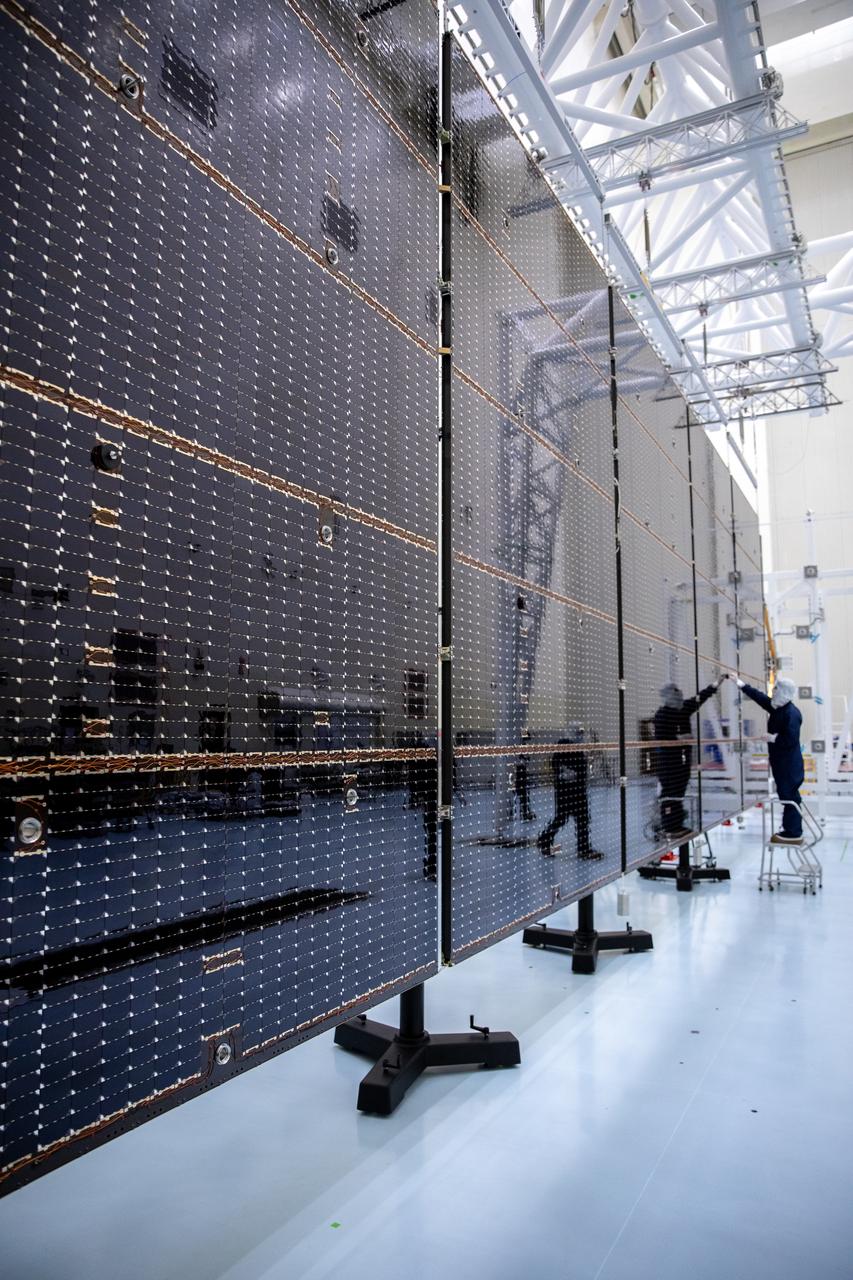
Technicians examine the first of two fully extended five-panel solar arrays built for NASA’s Europa Clipper suspended on a support system called a gravity offload fixture during inspection and cleaning as part of assembly, test, and launch operations inside the Payload Hazardous Servicing Facility at the agency’s Kennedy Space Center in Florida on Wednesday, March 6, 2024. Another name for the gravity offload fixture is the Transportable Large Envelope Deployment Facility (T-LEDF). When both solar arrays are installed and deployed on Europa Clipper – the agency’s largest spacecraft ever developed for a planetary mission – the spacecraft will span a total length of more than 100 feet and weigh 7,145 pounds without the inclusion of propellants.
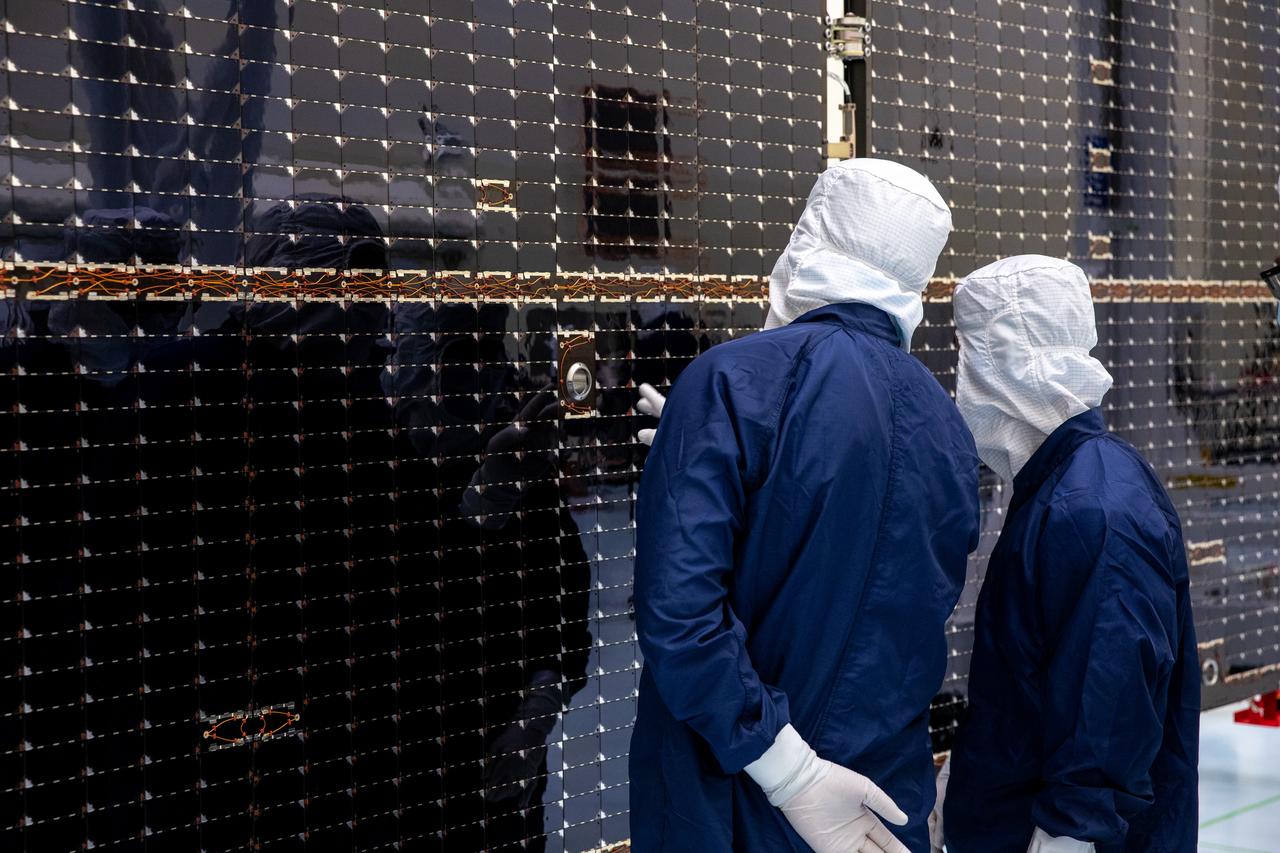
Technicians examine the first of two fully extended five-panel solar arrays built for NASA’s Europa Clipper suspended on a support system called a gravity offload fixture during inspection and cleaning as part of assembly, test, and launch operations inside the Payload Hazardous Servicing Facility at the agency’s Kennedy Space Center in Florida on Wednesday, March 6, 2024. Another name for the gravity offload fixture is the Transportable Large Envelope Deployment Facility (T-LEDF). When both solar arrays are installed and deployed on Europa Clipper – the agency’s largest spacecraft ever developed for a planetary mission – the spacecraft will span a total length of more than 100 feet and weigh 7,145 pounds without the inclusion of propellants.
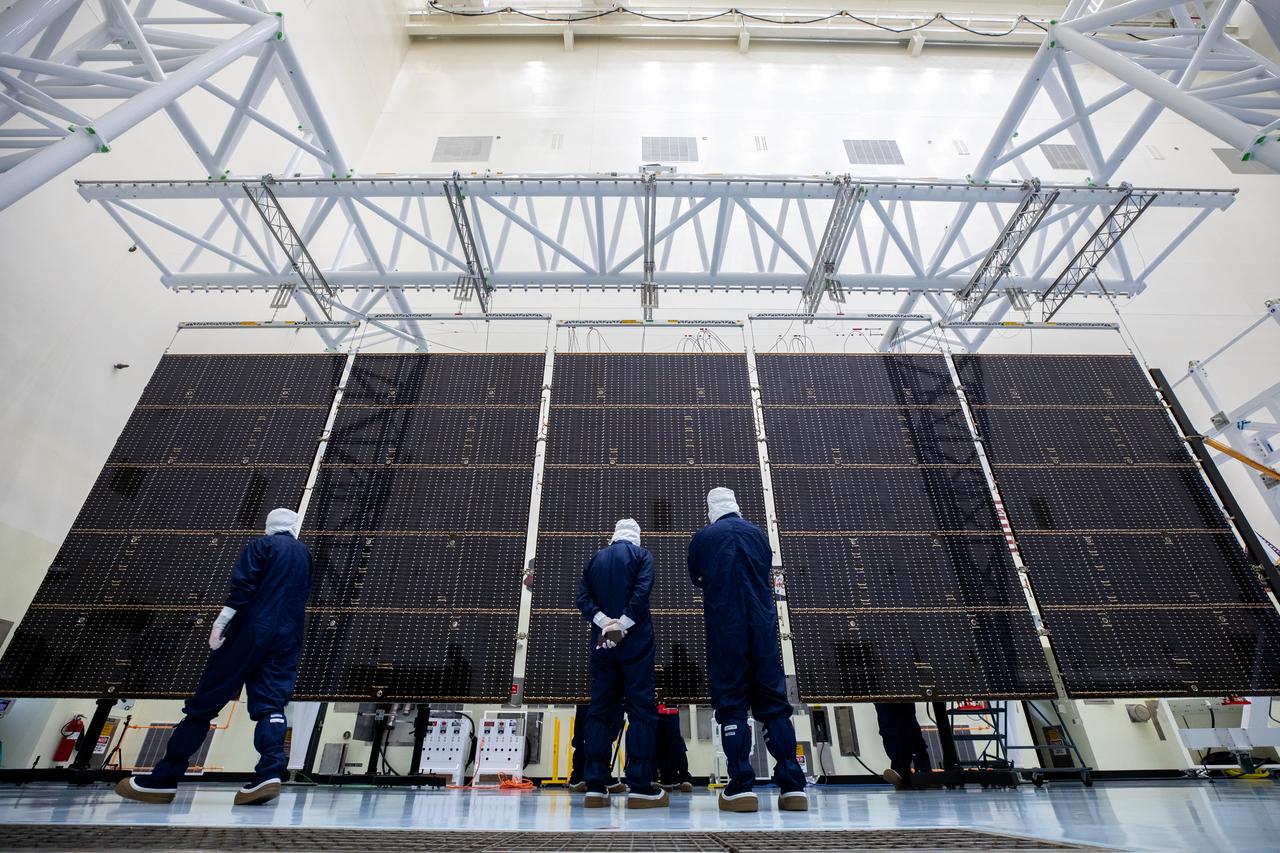
Technicians examine the first of two fully extended five-panel solar arrays built for NASA’s Europa Clipper suspended on a support system called a gravity offload fixture during inspection and cleaning as part of assembly, test, and launch operations inside the Payload Hazardous Servicing Facility at the agency’s Kennedy Space Center in Florida on Wednesday, March 6, 2024. Another name for the gravity offload fixture is the Transportable Large Envelope Deployment Facility (T-LEDF). When both solar arrays are installed and deployed on Europa Clipper – the agency’s largest spacecraft ever developed for a planetary mission – the spacecraft will span a total length of more than 100 feet and weigh 7,145 pounds without the inclusion of propellants.
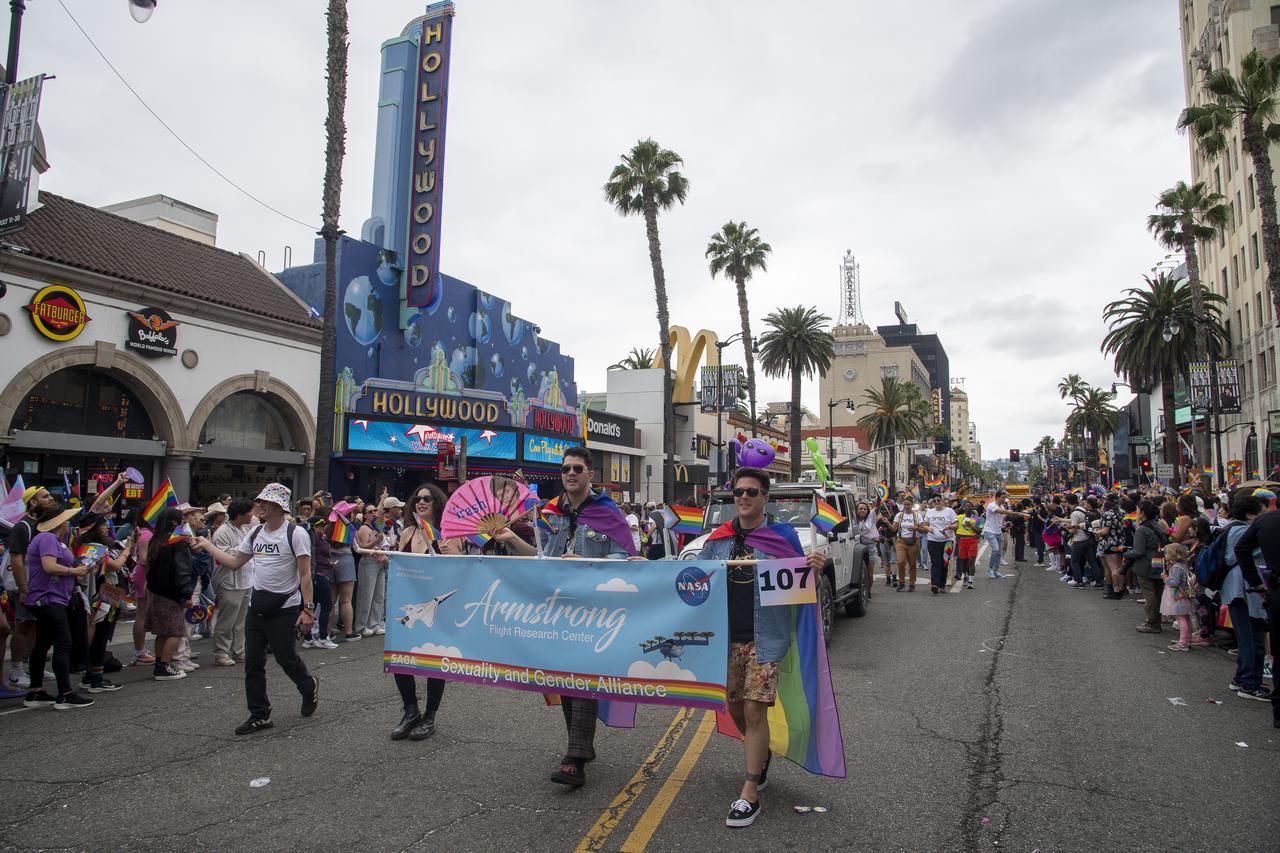
NASA’s Armstrong Flight Research Center in Edwards, California, and NASA’s Jet Propulsion Laboratory in Pasadena, California marched in the LA Pride Parade in June 2023. This was NASA Armstrong’s first time participating in the parade, and many NASA employees attended to celebrate the LGBTQIA+ community and allyship. NASA’s team included engineers, scientists, technicians, and mission support folks who enrich the organization by showing up as themselves. On Earth and at NASA, there is space for everyone.
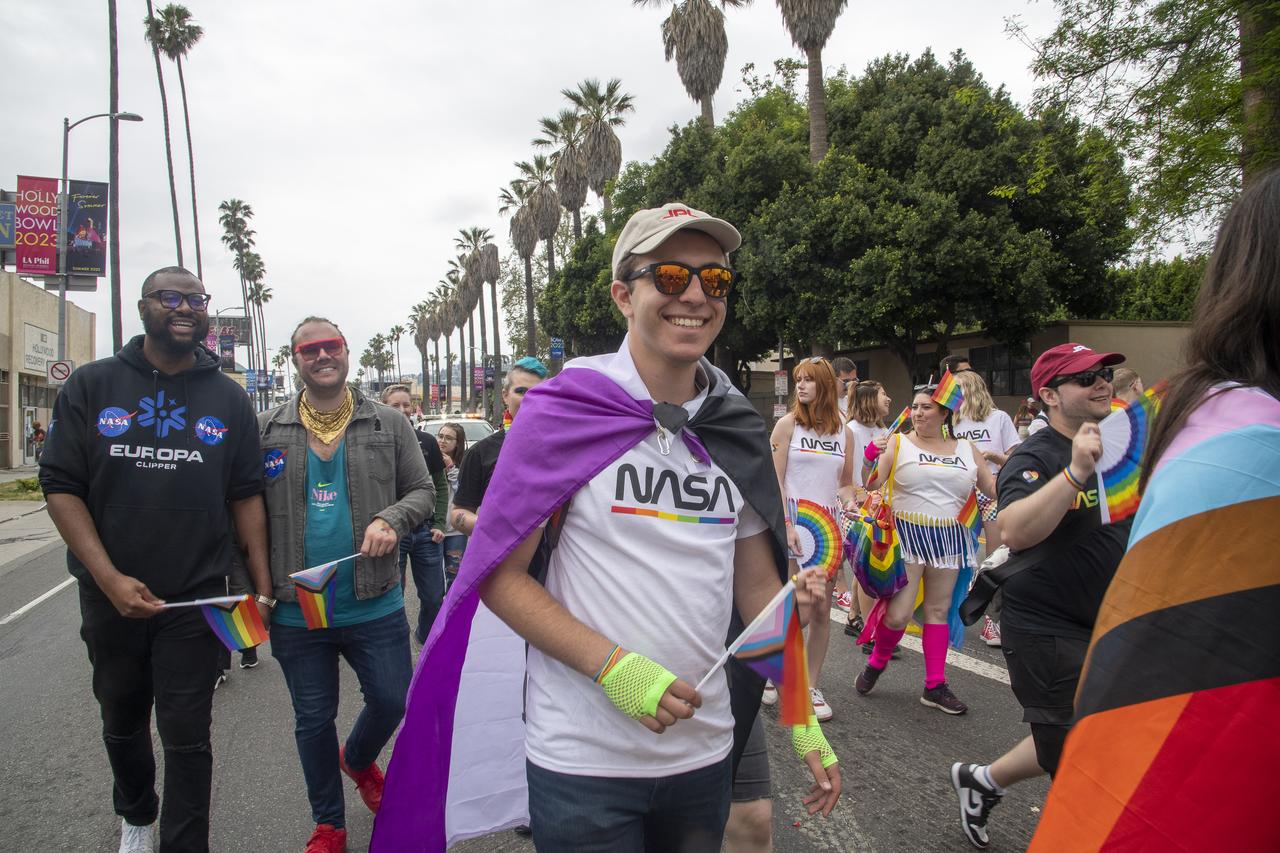
NASA’s Armstrong Flight Research Center in Edwards, California, and NASA’s Jet Propulsion Laboratory in Pasadena, California marched in the LA Pride Parade in June 2023. This was NASA Armstrong’s first time participating in the parade, and many NASA employees attended to celebrate the LGBTQIA+ community and allyship. NASA’s team included engineers, scientists, technicians, and mission support folks who enrich the organization by showing up as themselves. On Earth and at NASA, there is space for everyone.
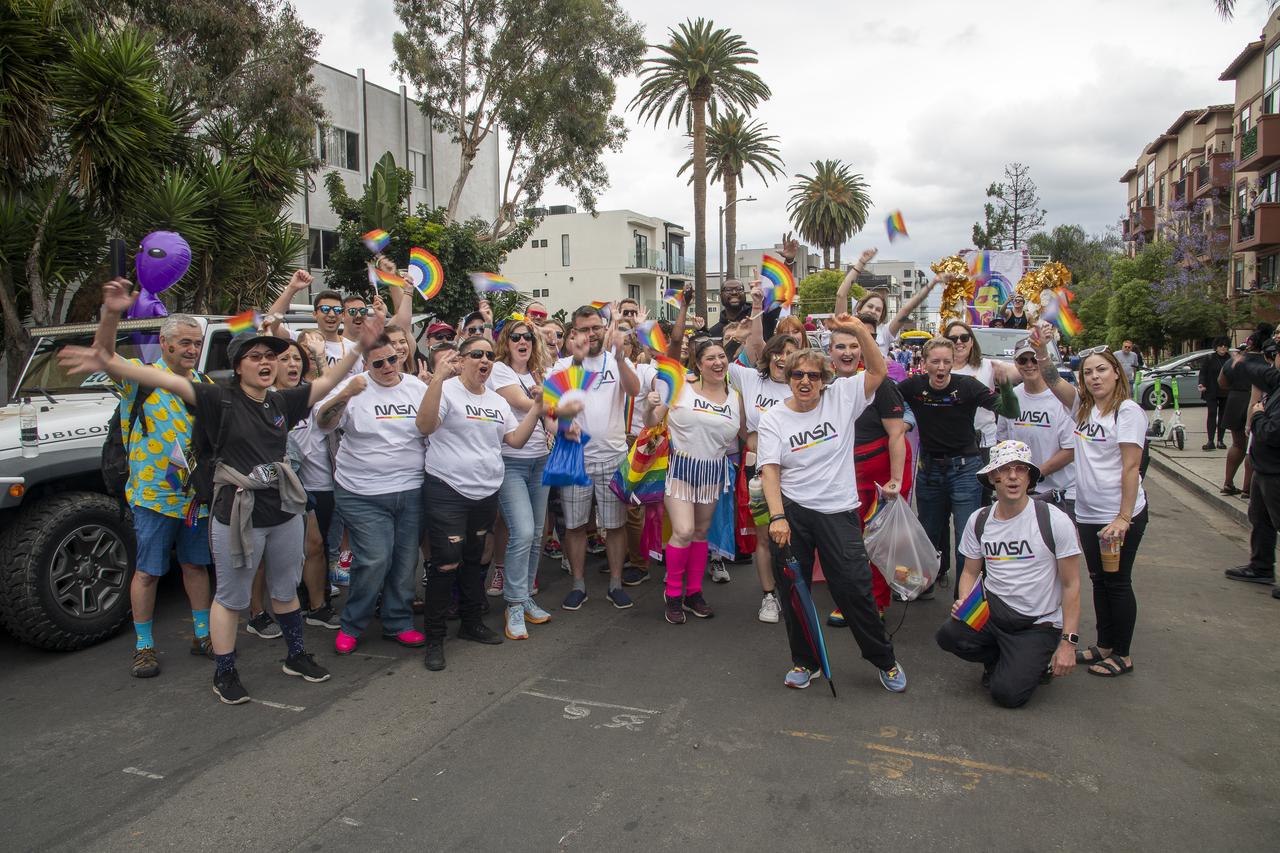
NASA’s Armstrong Flight Research Center in Edwards, California, and NASA’s Jet Propulsion Laboratory in Pasadena, California marched in the LA Pride Parade in June 2023. This was NASA Armstrong’s first time participating in the parade, and many NASA employees attended to celebrate the LGBTQIA+ community and allyship. NASA’s team included engineers, scientists, technicians, and mission support folks who enrich the organization by showing up as themselves. On Earth and at NASA, there is space for everyone.
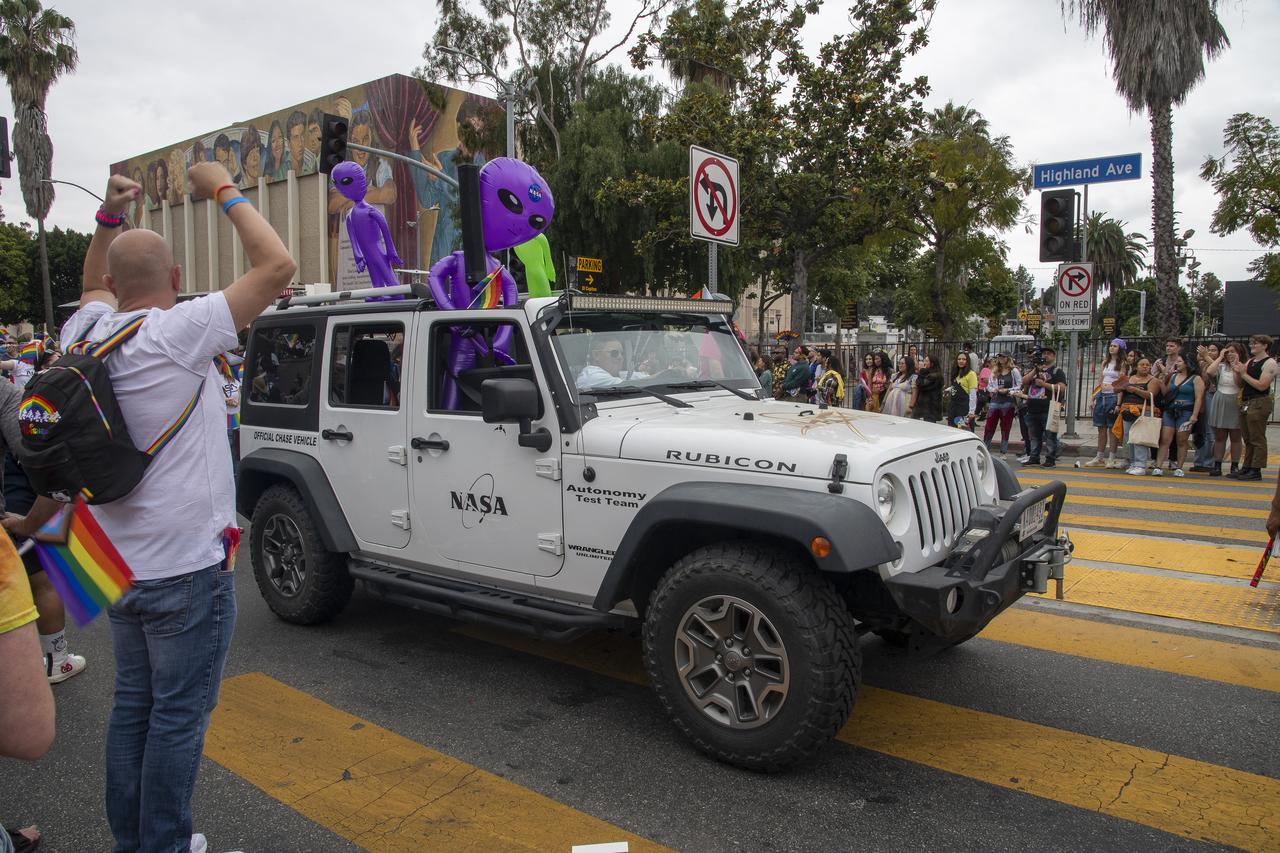
NASA’s Armstrong Flight Research Center in Edwards, California, and NASA’s Jet Propulsion Laboratory in Pasadena, California marched in the LA Pride Parade in June 2023. This was NASA Armstrong’s first time participating in the parade, and many NASA employees attended to celebrate the LGBTQIA+ community and allyship. NASA’s team included engineers, scientists, technicians, and mission support folks who enrich the organization by showing up as themselves. On Earth and at NASA, there is space for everyone.
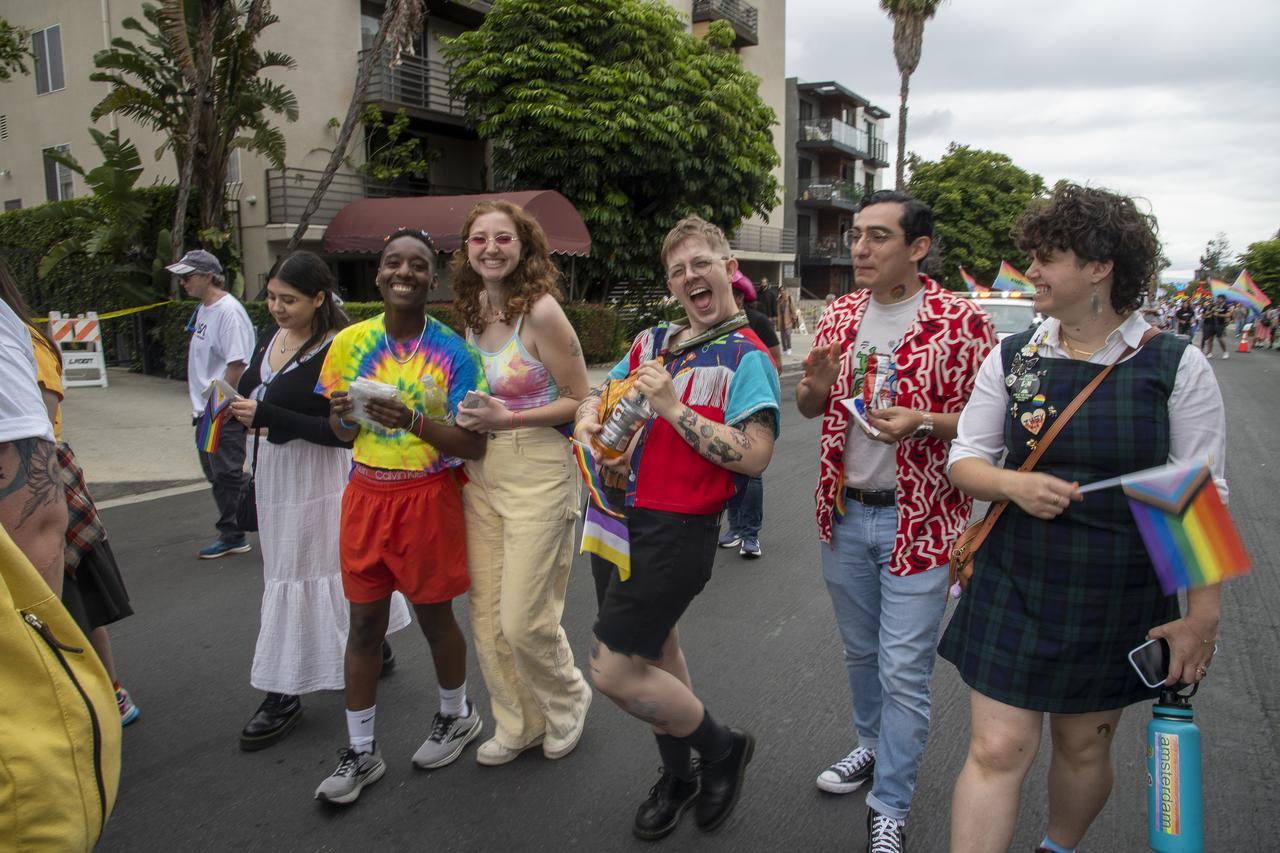
NASA’s Armstrong Flight Research Center in Edwards, California, and NASA’s Jet Propulsion Laboratory in Pasadena, California marched in the LA Pride Parade in June 2023. This was NASA Armstrong’s first time participating in the parade, and many NASA employees attended to celebrate the LGBTQIA+ community and allyship. NASA’s team included engineers, scientists, technicians, and mission support folks who enrich the organization by showing up as themselves. On Earth and at NASA, there is space for everyone.
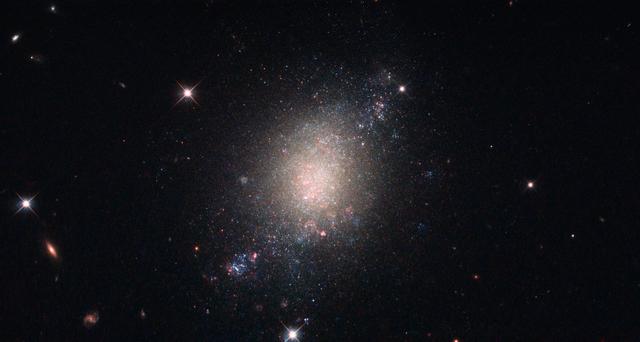
This image displays a galaxy known as ESO 486-21 (with several other background galaxies and foreground stars visible in the field as well). ESO 486-21 is a spiral galaxy — albeit with a somewhat irregular and ill-defined structure — located some 30 million light-years from Earth. The NASA/ESA (European Space Agency) Hubble Space Telescope observed this object while performing a survey — the Legacy ExtraGalactic UV Survey (LEGUS) — of 50 nearby star-forming galaxies. The LEGUS sample was selected to cover a diverse range of galactic morphologies, star formation rates, galaxy masses and more. Astronomers use such data to understand how stars form and evolve within clusters, and how these processes affect both their home galaxy and the wider universe. ESO 486-21 is an ideal candidate for inclusion in such a survey because it is known to be in the process of forming new stars, which are created when large clouds of gas and dust (seen here in pink) within the galaxy crumple inwards upon themselves. Credit: NASA/ESA <b><a href="http://www.nasa.gov/audience/formedia/features/MP_Photo_Guidelines.html" rel="nofollow">NASA image use policy.</a></b> <b><a href="http://www.nasa.gov/centers/goddard/home/index.html" rel="nofollow">NASA Goddard Space Flight Center</a></b> enables NASA’s mission through four scientific endeavors: Earth Science, Heliophysics, Solar System Exploration, and Astrophysics. Goddard plays a leading role in NASA’s accomplishments by contributing compelling scientific knowledge to advance the Agency’s mission. <b>Follow us on <a href="http://twitter.com/NASAGoddardPix" rel="nofollow">Twitter</a></b> <b>Like us on <a href="http://www.facebook.com/pages/Greenbelt-MD/NASA-Goddard/395013845897?ref=tsd" rel="nofollow">Facebook</a></b> <b>Find us on <a href="http://instagrid.me/nasagoddard/?vm=grid" rel="nofollow">Instagram</a></b>
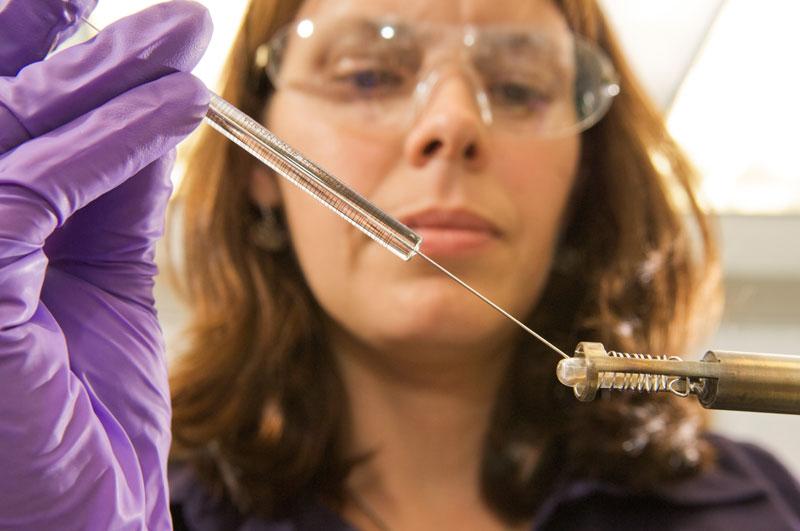
On Saturday, November 26, NASA is scheduled to launch the Mars Science Laboratory (MSL) mission featuring Curiosity, the largest and most advanced rover ever sent to the Red Planet. The Curiosity rover bristles with multiple cameras and instruments, including Goddard's Sample Analysis at Mars (SAM) instrument suite. By looking for evidence of water, carbon, and other important building blocks of life in the Martian soil and atmosphere, SAM will help discover whether Mars ever had the potential to support life. Curiosity will be delivered to Gale crater, a 96-mile-wide crater that contains a record of environmental changes in its sedimentary rock, in August 2012. ----- Goddard scientist Jennifer Eigenbrode injected a chemical into a rock sample and then heated the test tube to determine whether the sample-preparation method preserved the sample's molecular structure. Her testing proved successful, ultimately leading to the experiment's inclusion on the Sample Analysis at Mars instrument. Credit: NASA/GSFC/Chris Gunn <b><a href="http://www.nasa.gov/audience/formedia/features/MP_Photo_Guidelines.html" rel="nofollow">NASA image use policy.</a></b> <b><a href="http://www.nasa.gov/centers/goddard/home/index.html" rel="nofollow">NASA Goddard Space Flight Center</a></b> enables NASA’s mission through four scientific endeavors: Earth Science, Heliophysics, Solar System Exploration, and Astrophysics. Goddard plays a leading role in NASA’s accomplishments by contributing compelling scientific knowledge to advance the Agency’s mission. <b>Follow us on <a href="http://twitter.com/NASA_GoddardPix" rel="nofollow">Twitter</a></b> <b>Like us on <a href="http://www.facebook.com/pages/Greenbelt-MD/NASA-Goddard/395013845897?ref=tsd" rel="nofollow">Facebook</a></b> <b>Find us on <a href="http://instagrid.me/nasagoddard/?vm=grid" rel="nofollow">Instagram</a></b>

“My background and experience have been unique. I didn't grow up in space. I didn't grow up in a family of people who watched the Moon landing. I came to discover space at a much later age. That and the fact that I come from the cultural background I come from (being born and raised in Puerto Rico), has always made me question some of the assumptions about why we do what we do in space and how we go about it. “In my experience and in my career that has proven effective because people want the challenge, and they want to engage everyone and make sure that the best of the best are participating. I have found myself in settings where my point of view has been valued because I was asking some of the questions that some folks took for granted. “I think it’s also that I came at a good time when we are having these important discussions about diversity and inclusion, and people do want these different kinds of views. Space is so international now that this diversity is such an important aspect of it too. Even as an adult starting to learn about these topics, it was natural for me to be having these discussions with other colleagues from Latin America and South Africa and Australia. It’s a key feature of my own experience but also, I think, the time that we’re living right now, which is really exciting.” Laura M. Delgado López, Policy Analyst for NASA’s Science Mission Directorate, poses for a portrait on Monday, Sept. 21, 2020 in Virginia. Photo Credit: (NASA/Joel Kowsky)
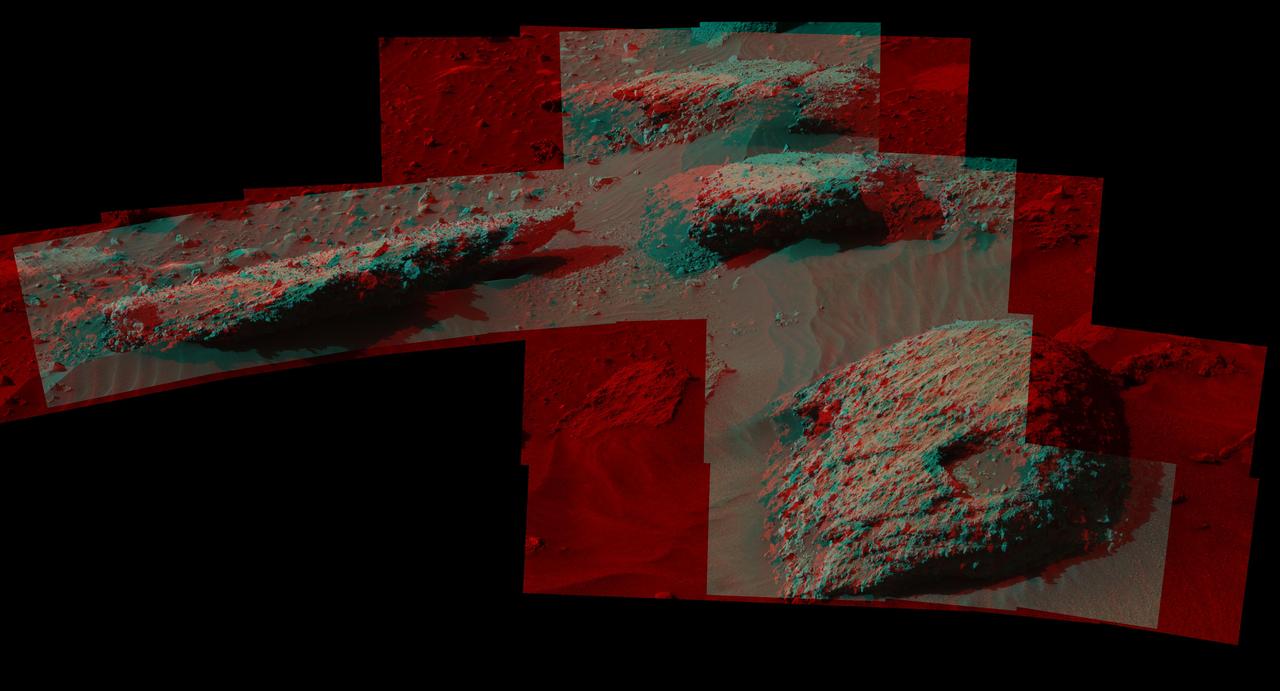
This stereo scene from the Mast Camera (Mastcam) on NASA's Curiosity Mars Rover shows boulders composed, in part, of pebble-size (0.2 to 2.6 inches, or 0.5 to 6.5 centimeters across) and larger rock fragments. The size and shape of the fragments provide clues to the origins of these boulders. This image is an anaglyph that appears three dimensional when viewed through red-blue glasses with the red lens on the left. The separate right-eye and left-eye views combined into the stereo version are Figure 1 and Figure 2. Mastcam's right-eye camera has a telephoto lens, with focal length of 100 millimeters. The left-eye camera provides a wider view, with a 34-millimeter lens. These images were taken on July 22, 2016, during the 1,408th Martian day, or sol, of Curiosity's work on Mars. For scale, the relatively flat rock at left is about 5 feet (1.5 meters) across. The rock in the foreground at right is informally named "Balombo." The group of boulders is at a site called "Bimbe." The Curiosity team chose to drive the rover to Bimbe to further understand patches of boulders first identified from orbit and seen occasionally on the rover's traverse. The boulders at Bimbe consist of multiple rock types. Some include pieces, or "clasts," of smaller, older rock cemented together, called breccias or conglomerates. The shapes of the inclusion clasts -- whether they are rounded or sharp-edged -- may indicate how far the clasts were transported, and by what processes. Breccias have more angular clasts, while conglomerates have more rounded clasts. As is clear by looking at these boulders, they contain both angular and rounded clasts, leading to some uncertainty about how they formed. Conglomerate rocks such as "Hottah" were inspected near Curiosity's landing site and interpreted as part of an ancient streambed. Breccias are generally formed by consolidation of fragments under pressure. On Mars such pressure might come from crater-forming impact, or by deep burial and exhumation. http://photojournal.jpl.nasa.gov/catalog/PIA20836