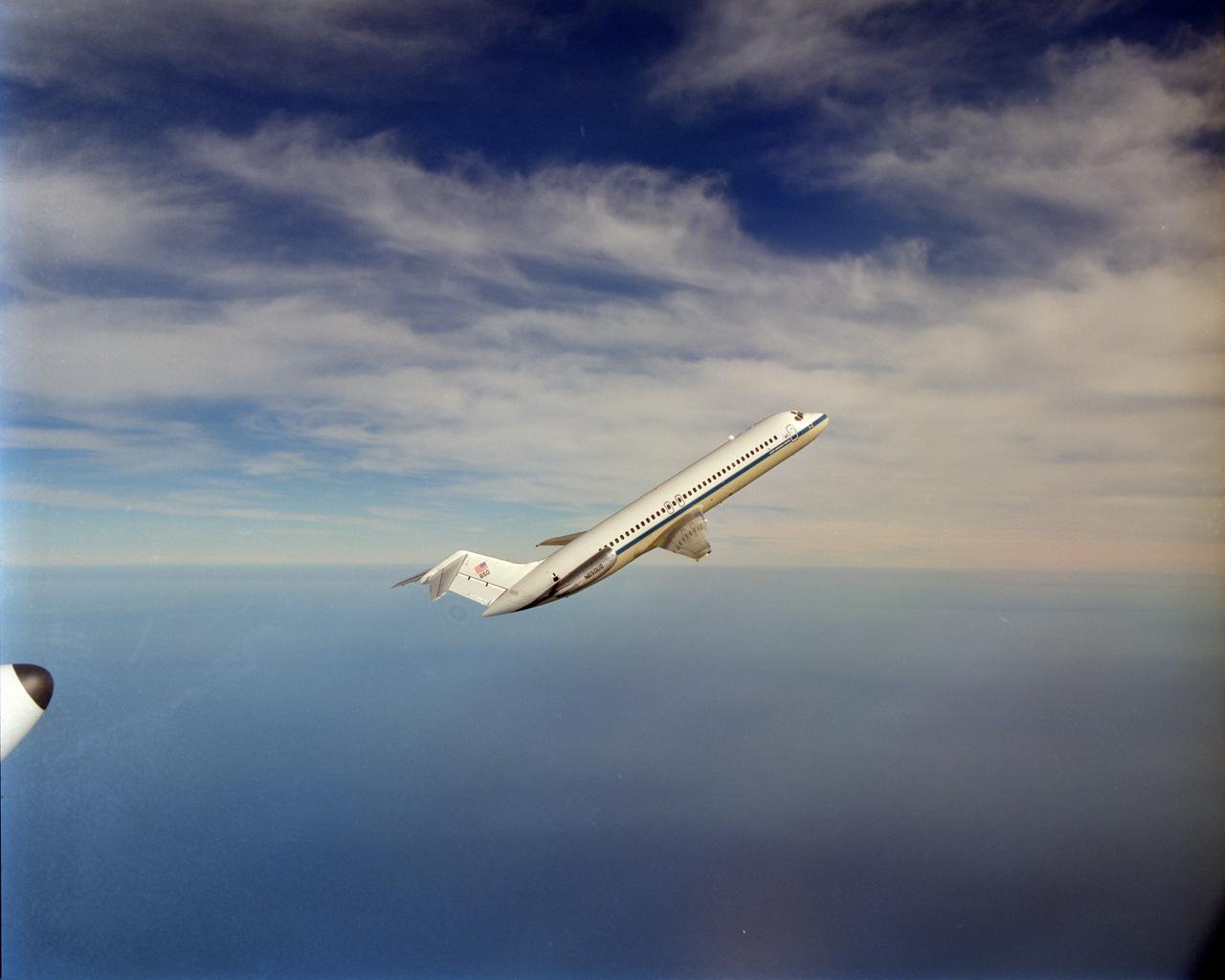
NASA aircraft DC-9 microgravity plane performs it's first test parabolas over Lake Erie. This was photographed by the NASA Glenn Lear Jet in a chase plane configuration.
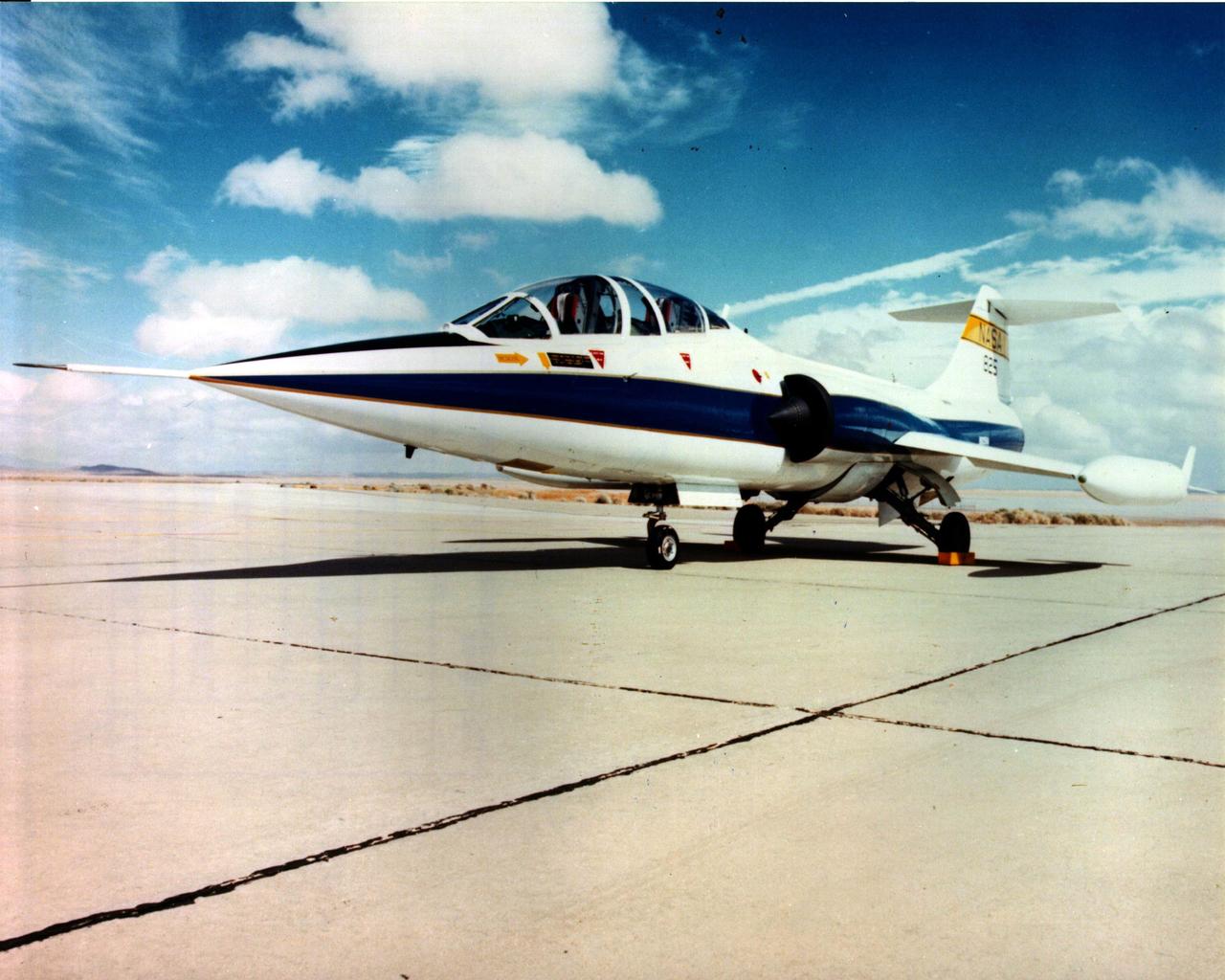
NASA F-104 Aircraft
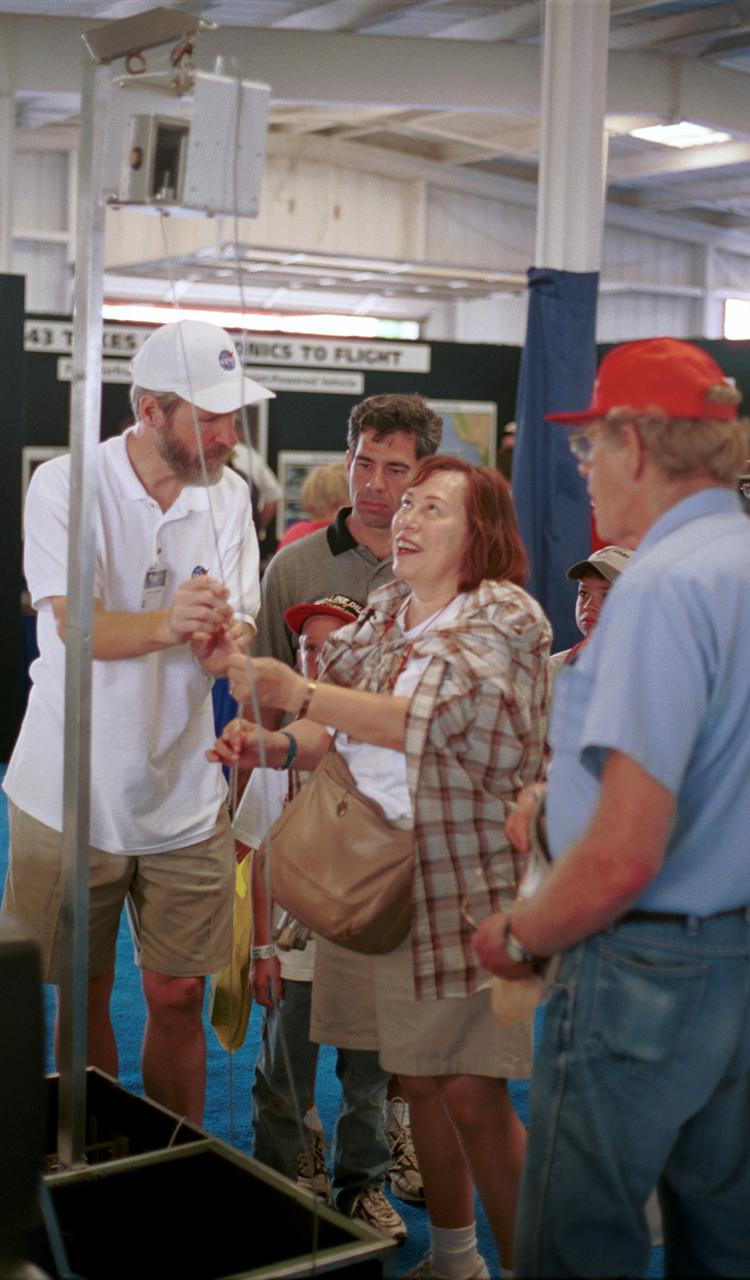
Dr. Richard DeLombard of NASA's Glenn Research Center, hands the relase line for the Microgravity Demonstrator to a visitor for her to start a short experiment showing the effects of microgravity on candle flames. Combustion physics will be a major line of investigation for NASA aboard the International Space Station (ISS). The Microgravity Demonstrator is frequently used at shows and schools to illustrate how phenomena change in microgravity. The exhibit was part of the NASA outreach activity at AirVenture 2000 sponsored by the Experimental Aircraft Association in Oshkosh, WI
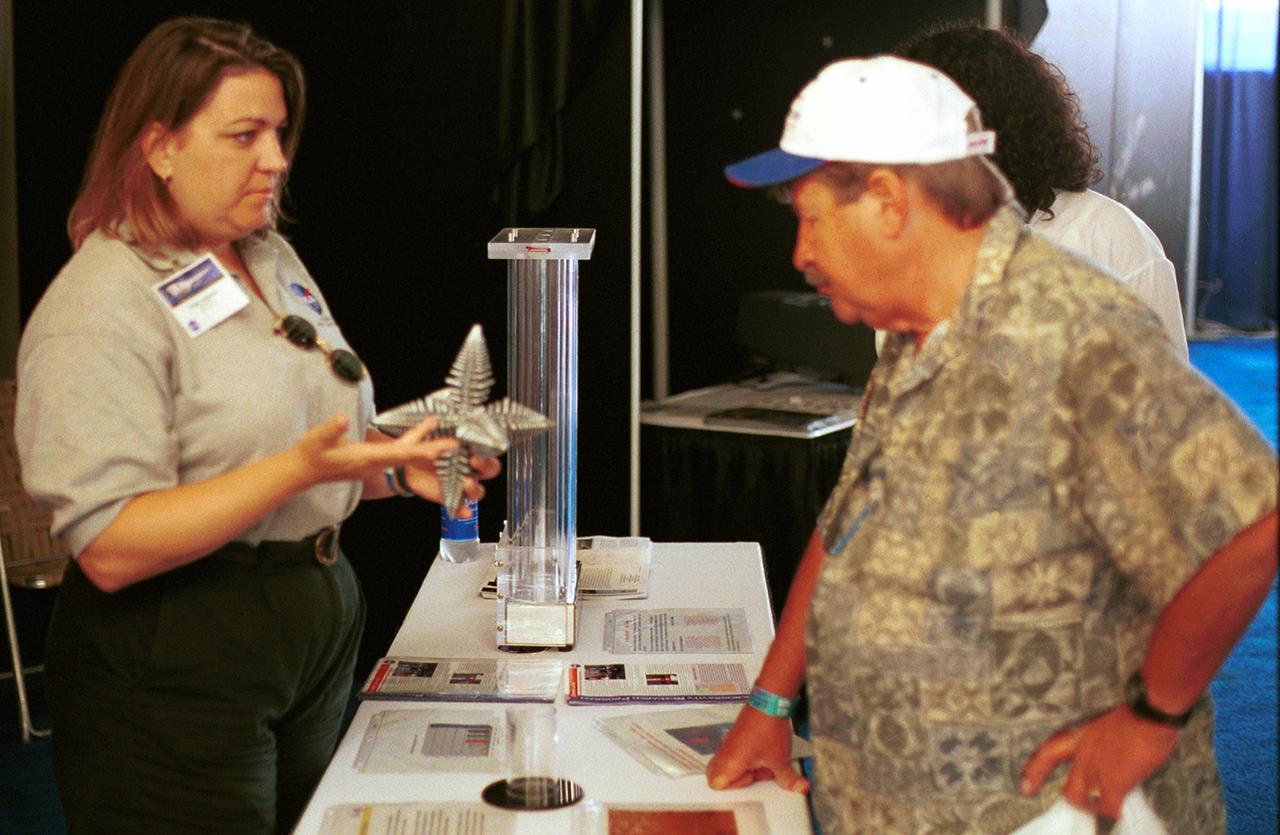
Angie Jackman, a NASA project manager in microgravity research, explains a model of a dendrite to a visitor to the NASA exhibit at AirVenture 2000 sponsored by the Experimental Aircraft Association in Oshkosh, WI. The model depicts microscopic dendrites that grow as molten metals solidify. NASA sponsored three experiments aboard the Space Shuttle that used the microgravity environment to study the formation of large (1 to 4 mm) dendrites without Earth's gravity disrupting their growth. Three advanced follow-on experiments, managed by Jackman, are being developed for the International Space Station (ISS).
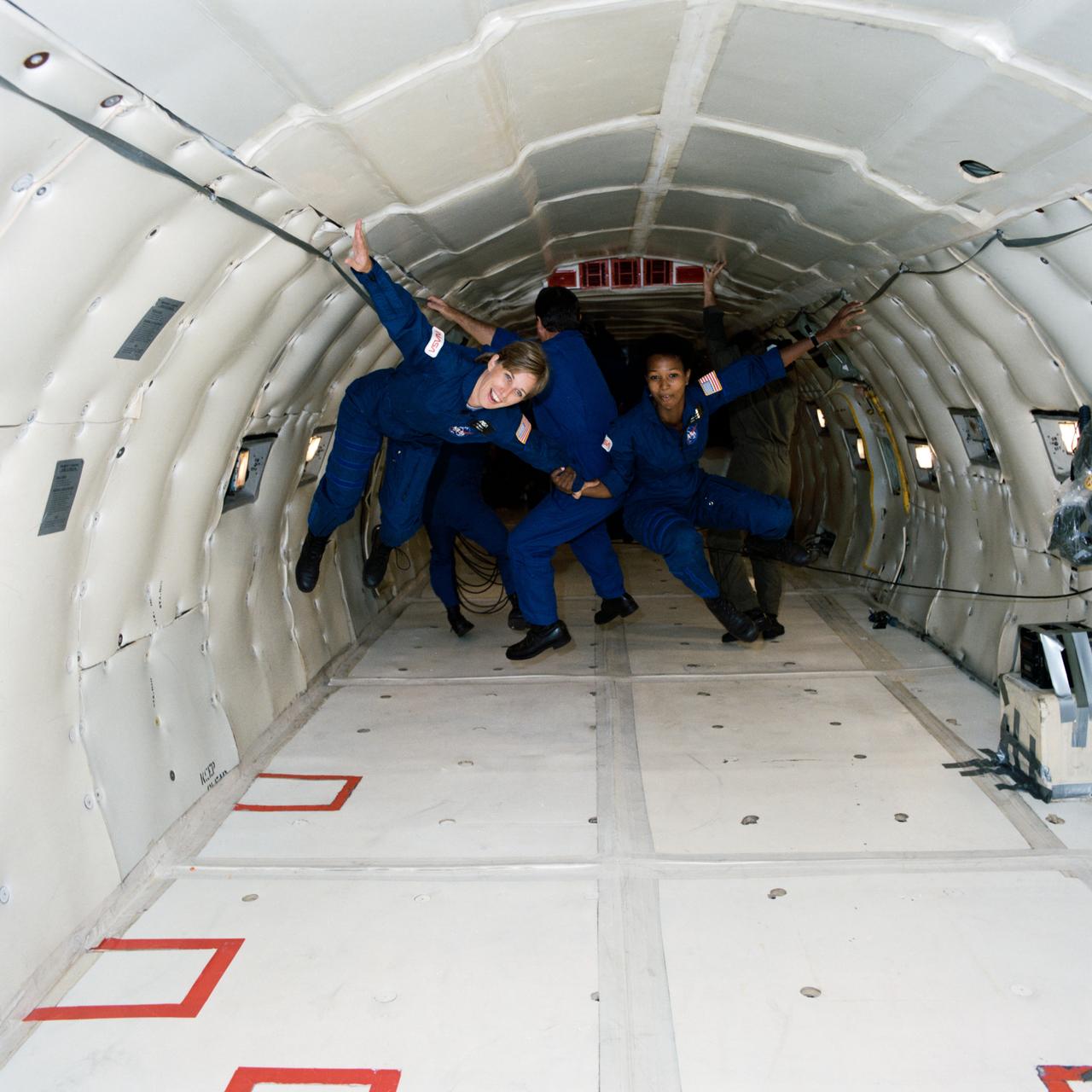
S87-44950 --- Group 12, 1987 Astronaut Class, candidates (ASCANs) N. Jan Davis (left) and Mae C. Jemison freefloat during the seconds of microgravity created aboard the KC-135 NASA 930 aircraft's parabolic flight. Davis and Jemison, two of the recently-named ASCANs, were taking a familiarization flight aboard the KC-135 "zero gravity" aircraft. Photo credit: NASA
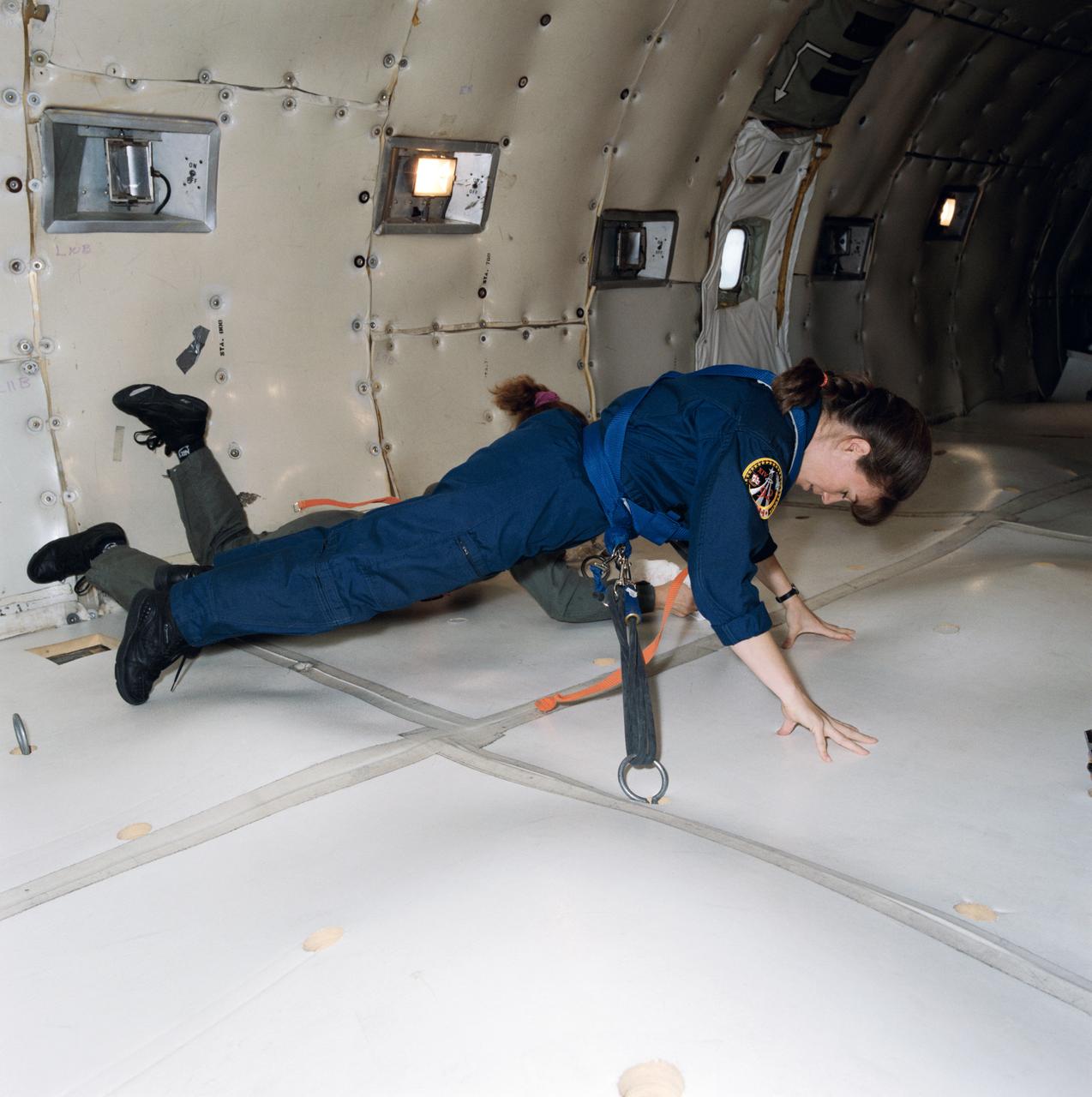
S94-35542 (June 1994) --- Astronaut Catherine G. Coleman, mission specialist, gets a preview of next year?s United States Microgravity Laboratory (USML-2) mission aboard the Space Shuttle Columbia. The weightless experience was afforded by a special parabolic pattern flown by NASA?s KC-135 ?zero gravity? aircraft.
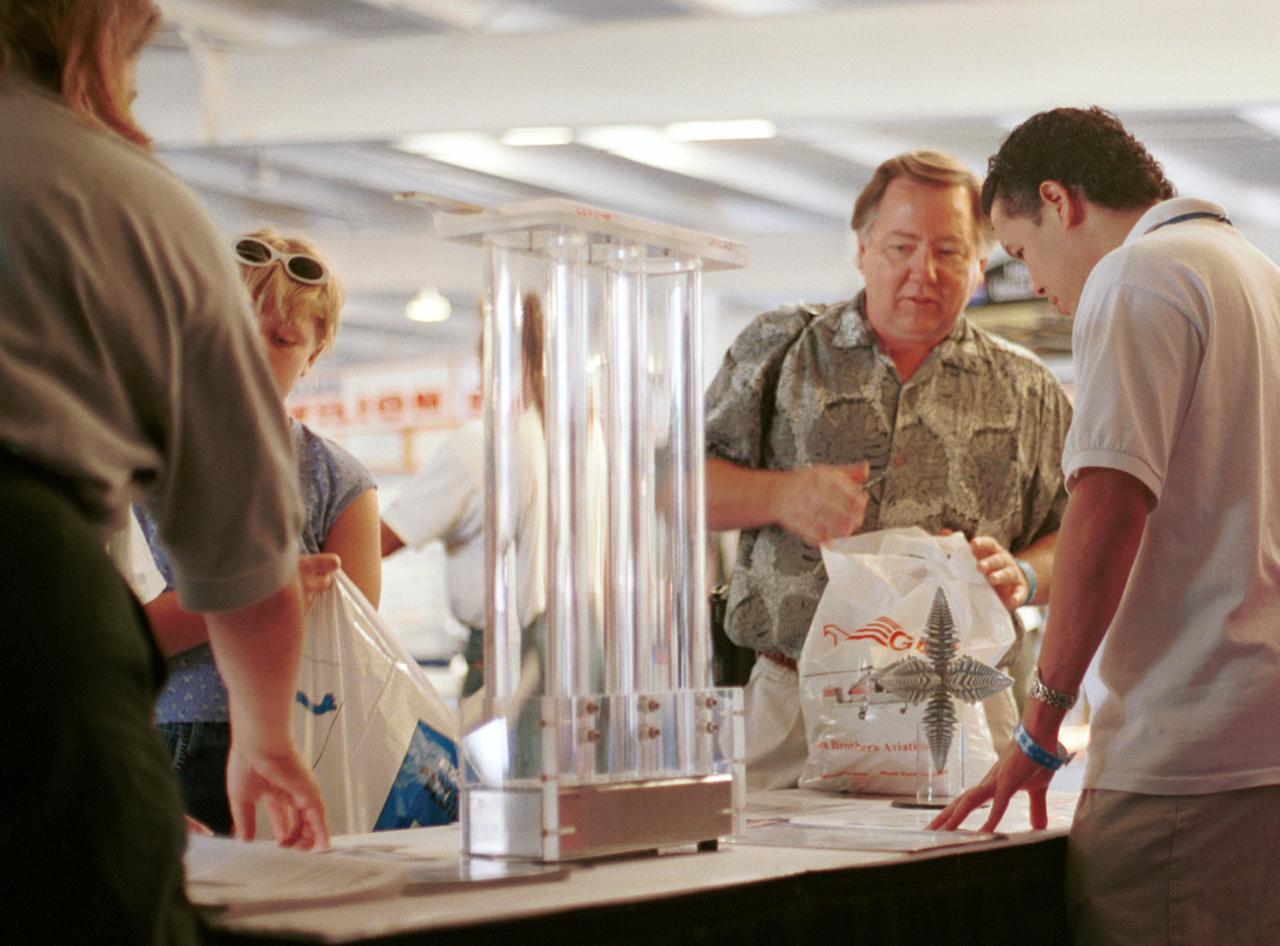
Paul Luz (right), an aerospace flight systems engineer at NASA's Marshall Space Flight Center (MSFC), takes a question from a visitor as they discuss microgravity research at AirVenture 2000. Part of the NASA exhibits included demonstrations of knowledge gained from microgravity research aboard the Space Shuttle. These include liquid metal (liquid metal demonstrator is three plastic drop tubes at center) and dendritic growth (in front of Luz), both leading to improvements in processes of Earth. The exhibit was part of the NASA outreach activity at AirVenture 2000 sponsored by the Experimental Aircraft Association in Oshkosh, WI.

The National Aeronautics and Space Administration (NASA) Lewis Research Center acquired two North American AJ-2 Savages in the early 1960s to fly microgravity-inducing parabola flight patterns. Lewis was in the midst of an extensive study to determine the behavior of liquid hydrogen in microgravity so that proper fuel systems could be designed. Jack Enders was the primary pilot for the program and future astronaut Fred Haise worked with the cameras and instrumentation in the rear of the aircraft. North American developed the AJ-2 for the Navy in the mid-1940s as a carrier-based bomber. By the 1960s the Savage was no longer considered a modern aircraft, but its performance capabilities made it appealing to the Lewis researchers. The AJ-2 ‘s power, speed, response time, structural robustness, and large interior space were applicable to the microgravity flights. The AJ-2 could also accommodate a pilot, flight engineer, and two observers. Lewis engineers installed a 100-litre liquid hydrogen dewar, cryogenic cooling system, and cameras in the bomb bay. The AJ-2 was flown on a level course over western Lake Erie then went into a 20-degree dip to generate 375 knot. At 13,000 feet the pilot pulled the nose up by 40 degrees. The speed decreased and both latitudinal and longitudinal accelerations were nullified. Upon reaching 17,000 feet, the pilot turned the aircraft into a 45-degree dive. As the speed reached 390 knots the pilot pulled the aircraft up again. Each maneuver produced approximately 27 seconds of microgravity.
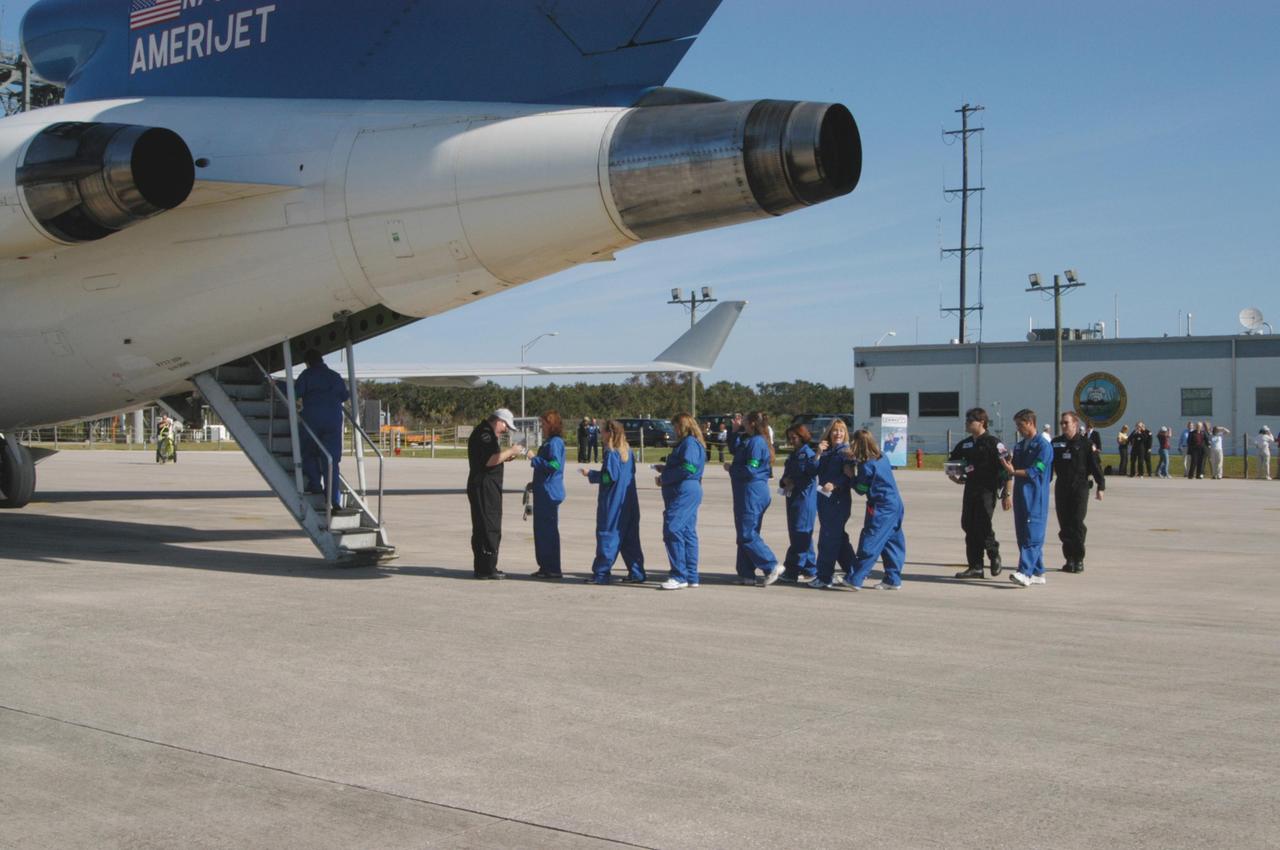
KENNEDY SPACE CENTER, FLA. - The first group of passengers to fly on the ZERO-G aircraft line up. The Boeing 727-200 aircraft is used for weightless flights by Zero Gravity Corporation, known as ZERO-G, of Fort Lauderdale, Fla. NASA and ZERO-G demonstrated Nov. 5 the expanded access to and use of the space shuttle's runway and landing facility at Kennedy Space Center for non-NASA activities. The passengers, called "Flyers," were predominantly teachers who performed simple microgravity experiments they can share with their students back in the classroom.
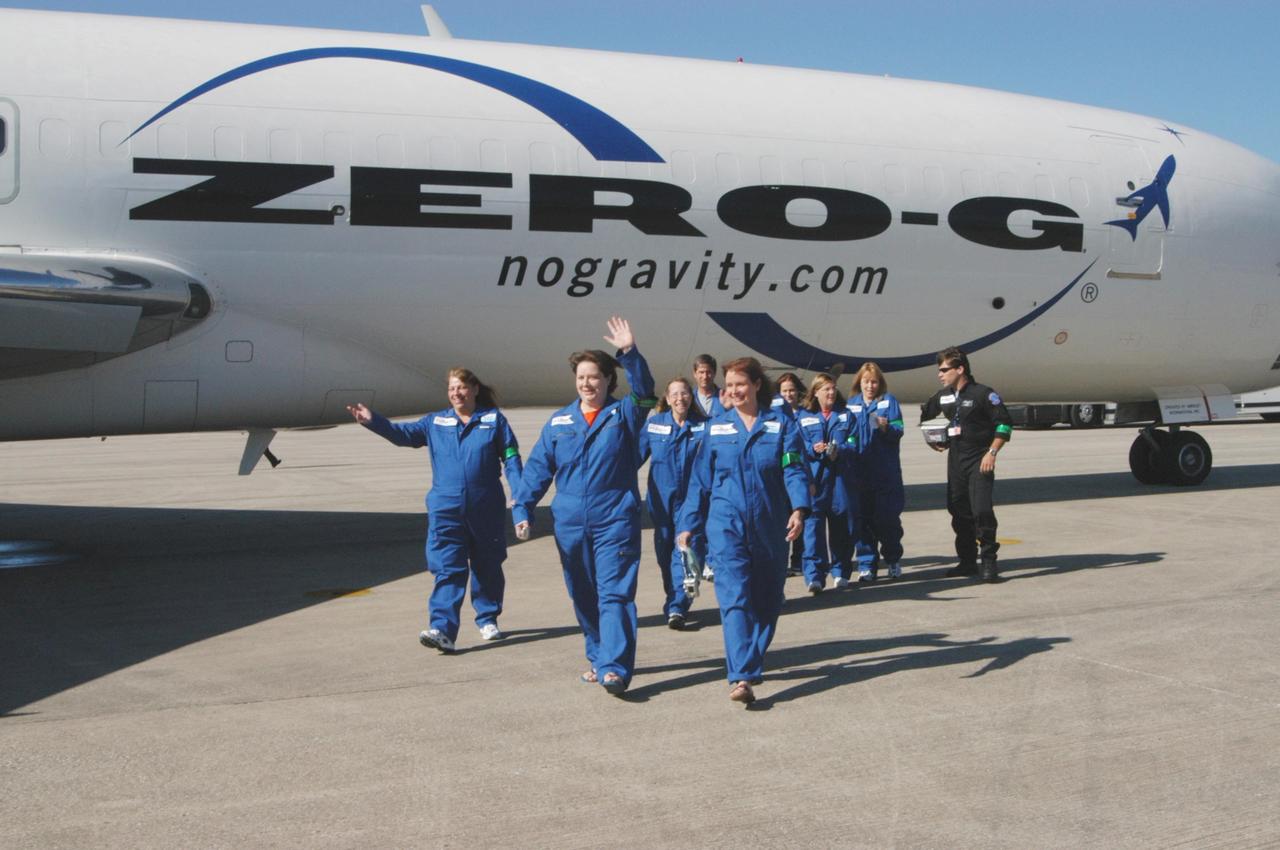
KENNEDY SPACE CENTER, FLA. - The first group of passengers to fly on the ZERO-G aircraft are eager to get started. The Boeing 727-200 aircraft is used for weightless flights by Zero Gravity Corporation, known as ZERO-G, of Fort Lauderdale, Fla. NASA and ZERO-G demonstrated Nov. 5 the expanded access to and use of the space shuttle's runway and landing facility at Kennedy Space Center for non-NASA activities. The passengers, called "Flyers," were predominantly teachers who performed simple microgravity experiments they can share with their students back in the classroom.
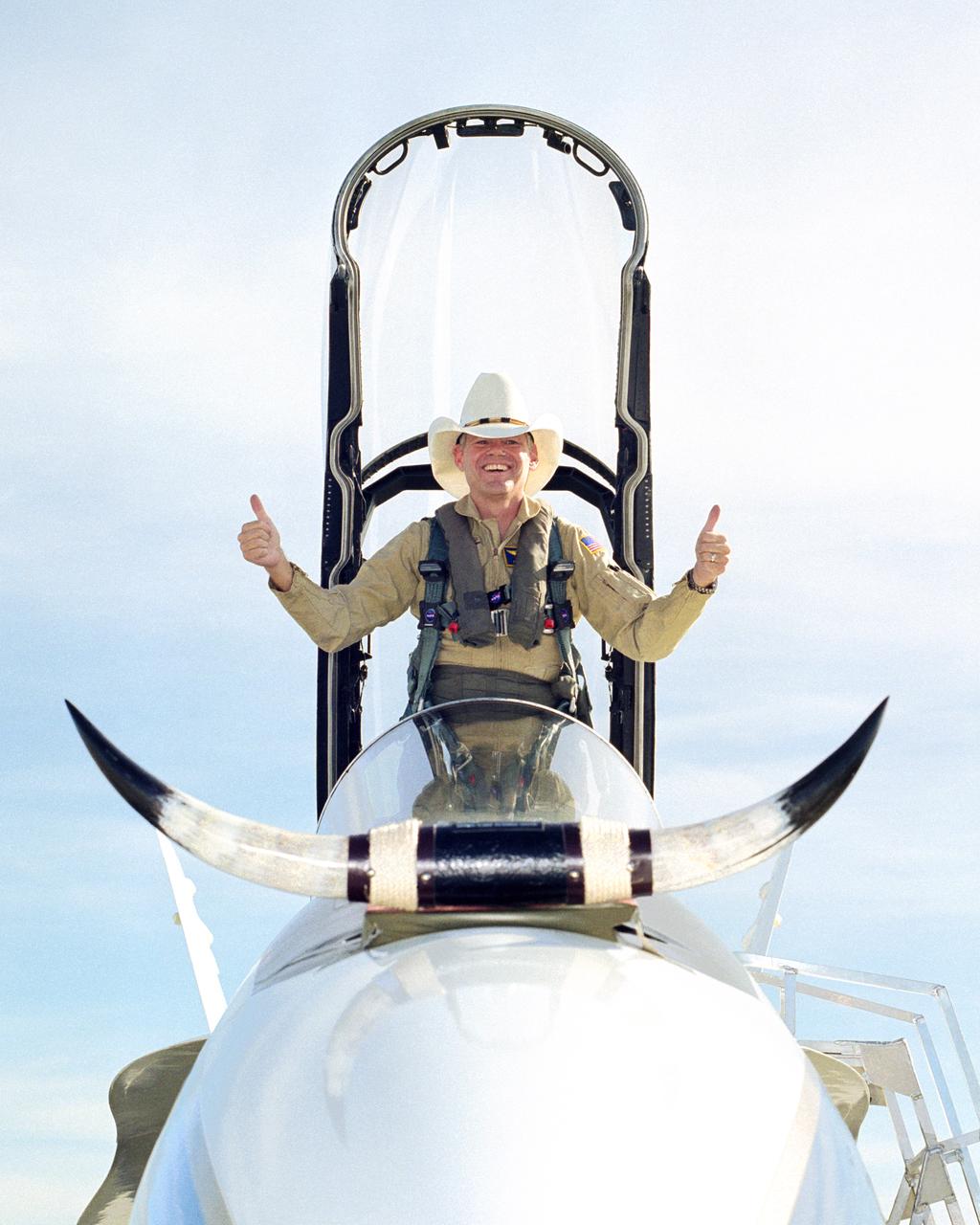
In a lighter mood, Ed Schneider gives a "thumbs-up" after his last flight at the Dryden Flight Research Center on September 19, 2000. Schneider arrived at the NASA Ames-Dryden Flight Research Facility on July 5, 1982, as a Navy Liaison Officer, becoming a NASA research pilot one year later. He has been project pilot for the F-18 High Angle-of-Attack program (HARV), the F-15 aeronautical research aircraft, the NASA B-52 launch aircraft, and the SR-71 "Blackbird" aircraft. He also participated in such programs as the F-8 Digital Fly-By-Wire, the FAA/NASA 720 Controlled Impact Demonstration, the F-14 Automatic Rudder Interconnect and Laminar Flow, and the F-104 Aeronautical Research and Microgravity projects.
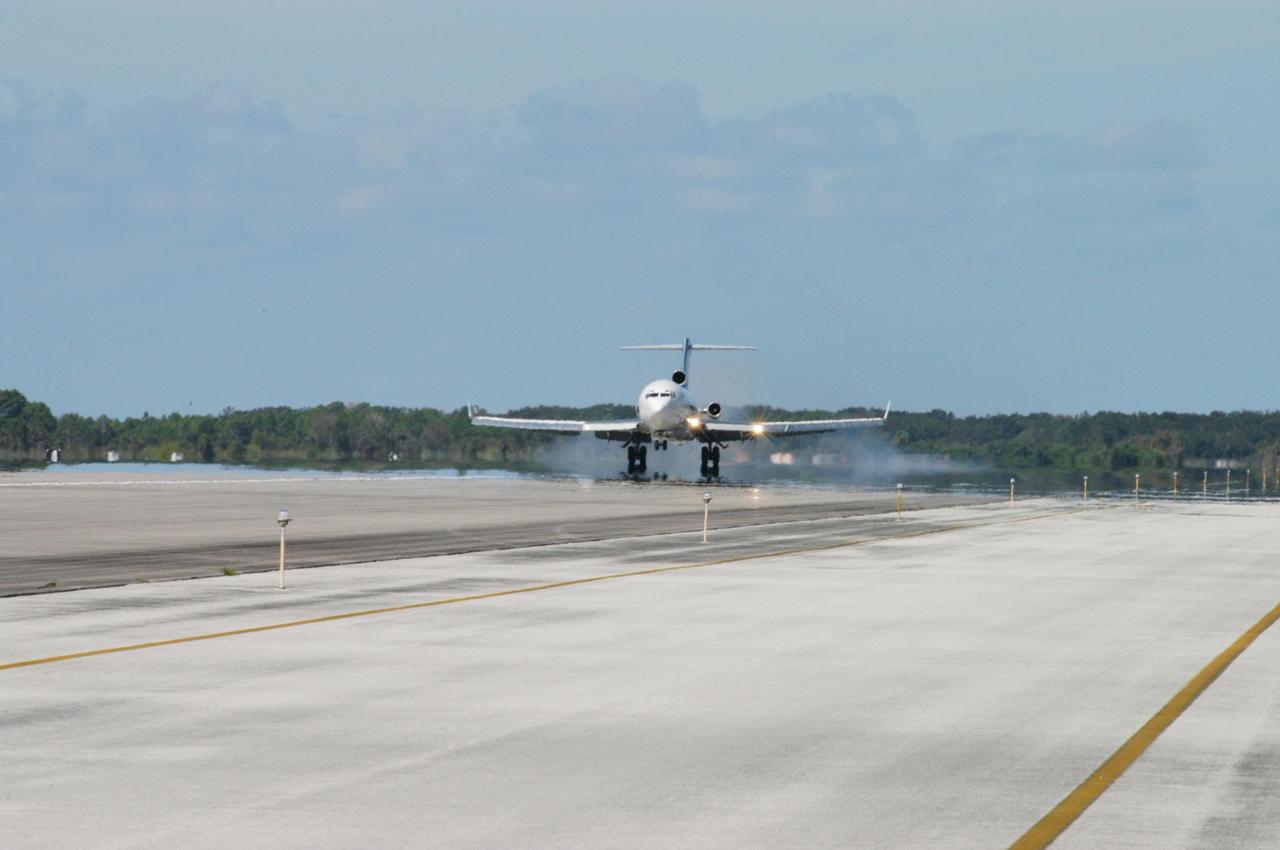
KENNEDY SPACE CENTER, FLA. - The Boeing 727-200 aircraft used for weightless flights by Zero Gravity Corporation, known as ZERO-G, of Fort Lauderdale, Fla., lands after taking a group of passengers for demonstration. NASA and ZERO-G demonstrated Nov. 5 the expanded access to and use of the space shuttle's runway and landing facility at Kennedy Space Center for non-NASA activities. This group of passengers, called "Flyers," were predominantly teachers who performed simple microgravity experiments they can share with their students back in the classroom.
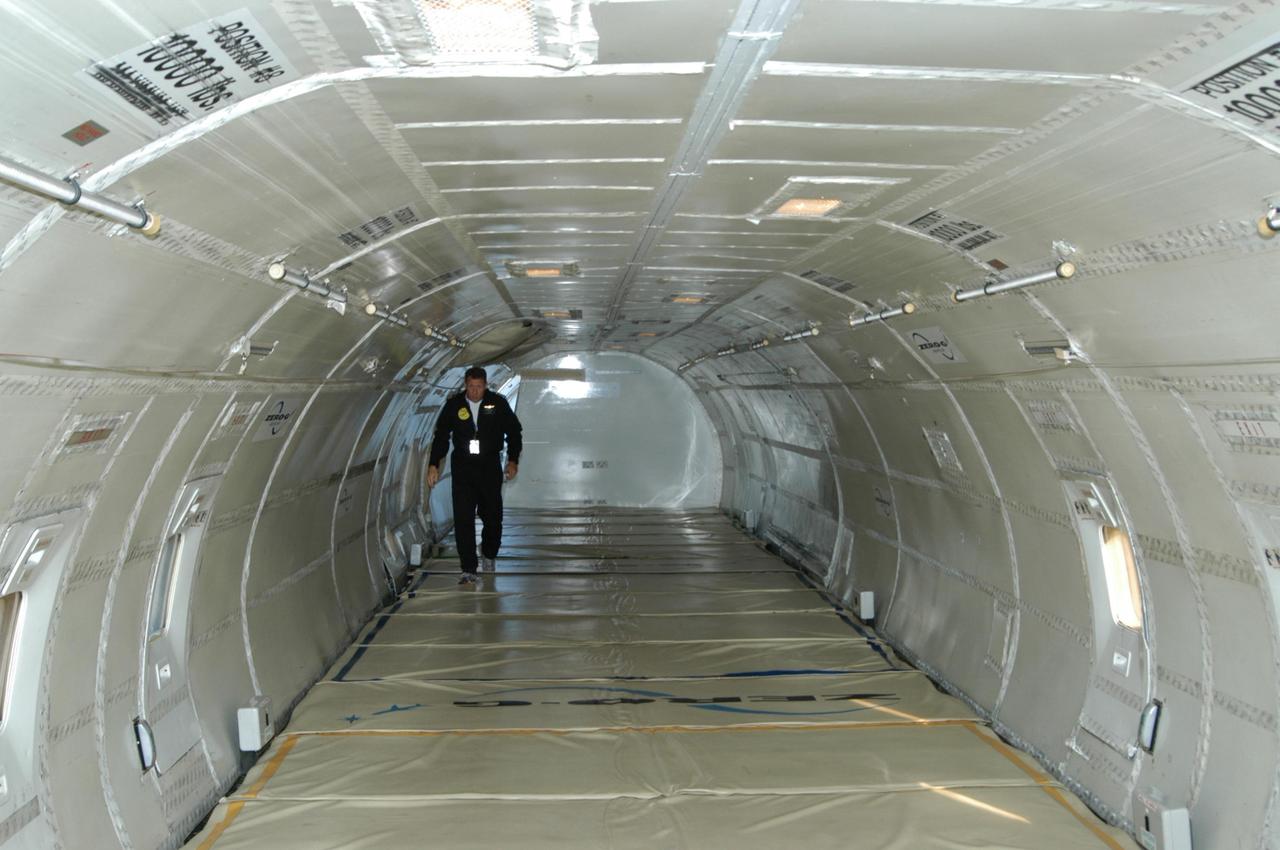
KENNEDY SPACE CENTER, FLA. - A view inside the Boeing 727-200 aircraft used for weightless flights by Zero Gravity Corporation, known as ZERO-G, of Fort Lauderdale, Fla. NASA and ZERO-G demonstrated Nov. 5 the expanded access to and use of the space shuttle's runway and landing facility at Kennedy Space Center for non-NASA activities. A group of passengers, called "Flyers," were predominantly teachers who performed simple microgravity experiments they can share with their students back in the classroom.
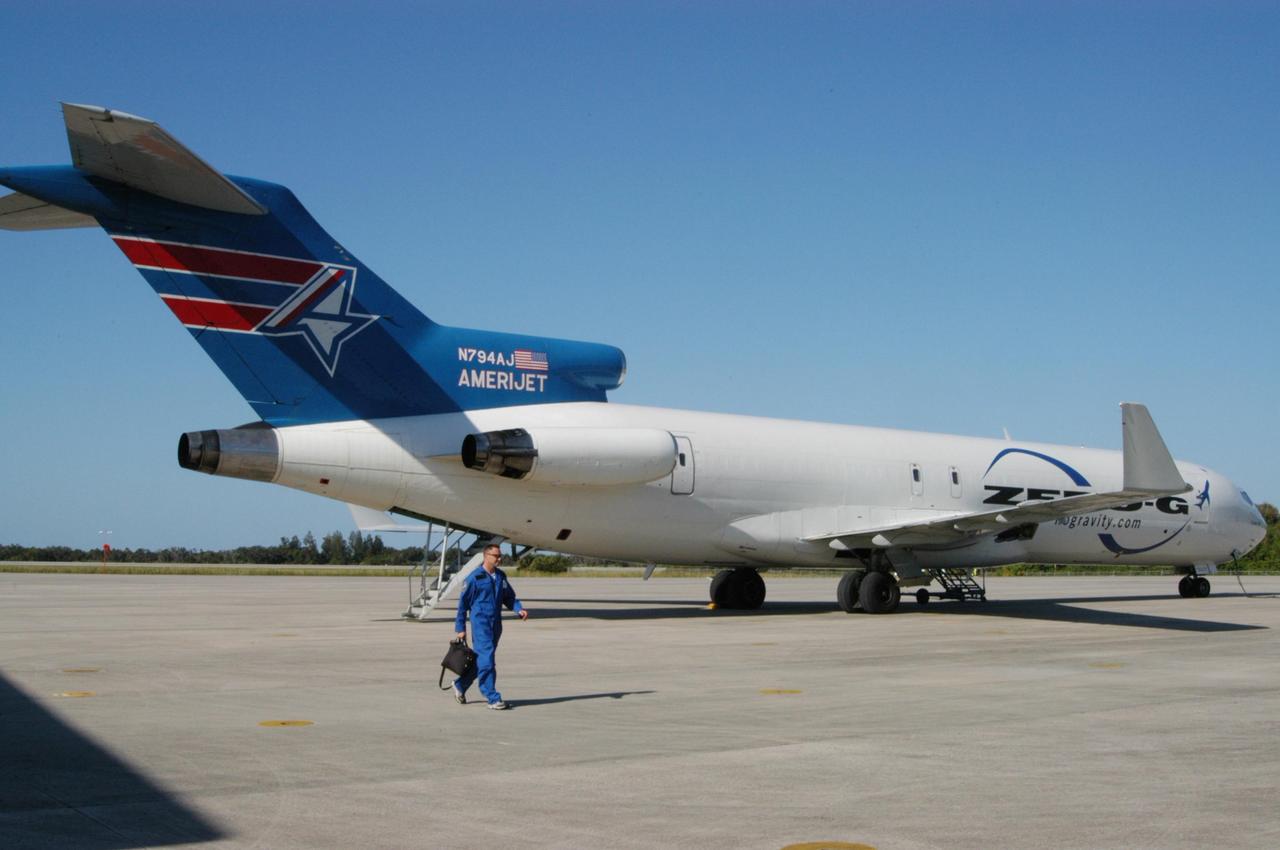
KENNEDY SPACE CENTER, FLA. - The Boeing 727-200 aircraft used for weightless flights by Zero Gravity Corporation, known as ZERO-G, of Fort Lauderdale, Fla., waits for its passengers. NASA and ZERO-G demonstrated Nov. 5 the expanded access to and use of the space shuttle's runway and landing facility at Kennedy Space Center for non-NASA activities. A group of passengers, called "Flyers," were predominantly teachers who performed simple microgravity experiments they can share with their students back in the classroom.
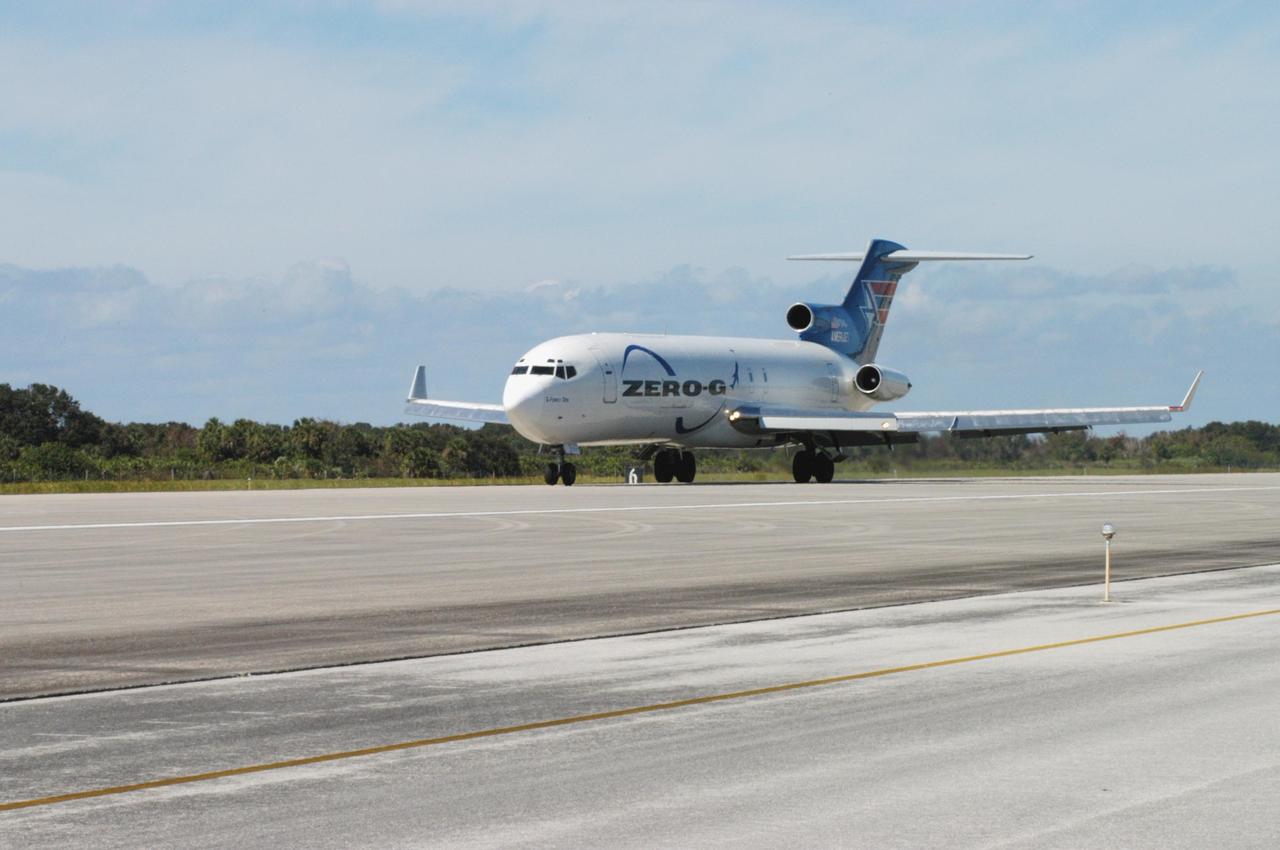
KENNEDY SPACE CENTER, FLA. - The Boeing 727-200 aircraft used for weightless flights by Zero Gravity Corporation, known as ZERO-G, of Fort Lauderdale, Fla., lands after taking a group of passengers for demonstration. NASA and ZERO-G demonstrated Nov. 5 the expanded access to and use of the space shuttle's runway and landing facility at Kennedy Space Center for non-NASA activities. This group of passengers, called "Flyers," were predominantly teachers who performed simple microgravity experiments they can share with their students back in the classroom.
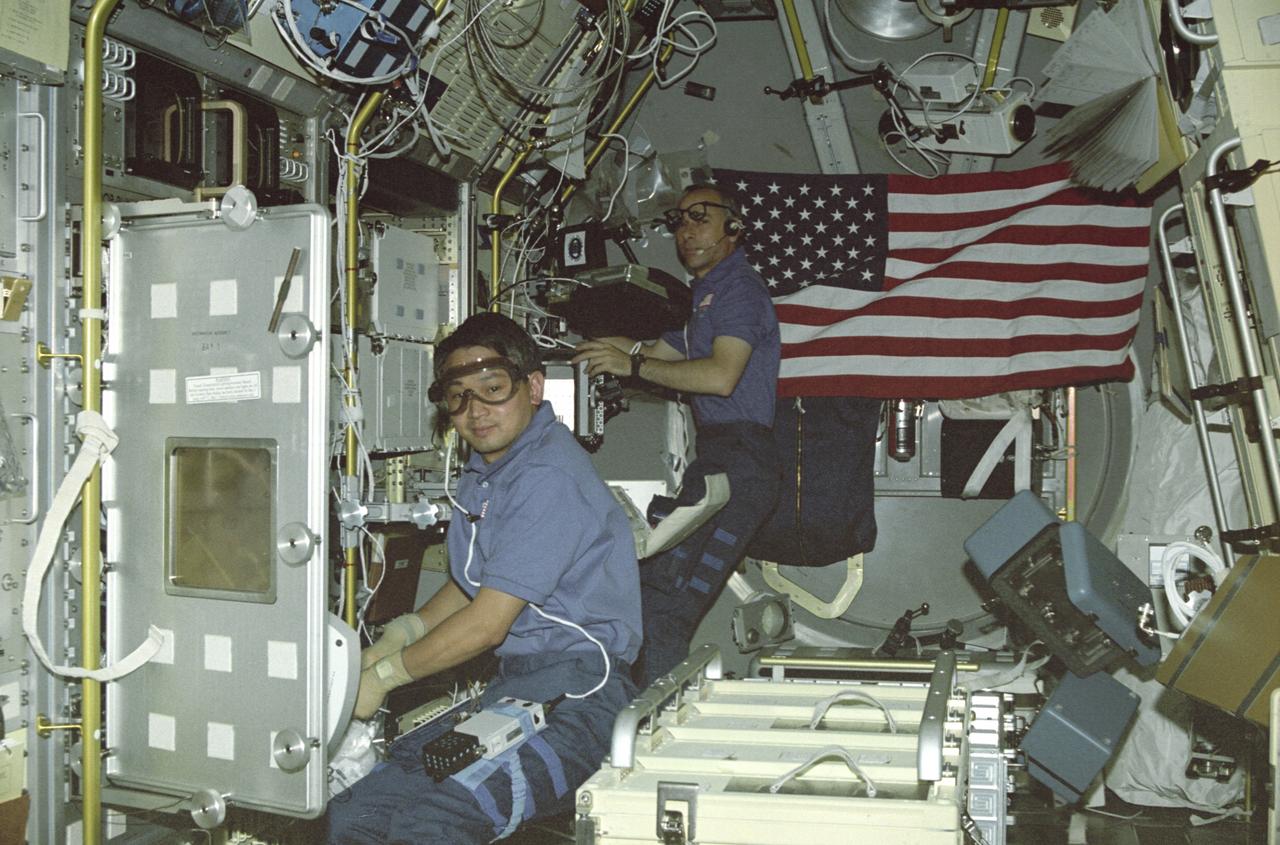
In this photograph, astronaut Eugene Trinh, a payload specialist for this mission, is working at the Drop Physics Module (DPM), and mission specialist Carl Meade is working on the experiment at the Glovebox inside the first United States Microgravity Laboratory (USML-1) Science Module. The USML-1 was one of NASA's missions dedicated to scientific investigations in a microgravity environment inside the Spacelab module. Investigations aboard the USML-1 included: materials science, fluid dynamics, biotechnology (crystal growth), and combustion science. The DPM is dedicated to the detailed study of the dynamics of fluid drops in microgravity. The Glovebox offers experimenters new capabilities and technologies in microgravity with a clean working space and minimizes contamination risks to both Spacelab and experiment samples. Payload specialists are professional scientists or engineers whose only assignment on a space flight is to carry out scientific and technological experiments. Their specific training for a space flight is usually limited to a short period of learning how to live and work in weightlessness. Mission Specialists are both professional scientists and career astronauts. Thus they are a link or bridge between the other crew members, and combine the functions of resident maintenance engineers, in-space counterparts of flight engineers in aircraft, and fully qualified scientists. The USML-1 flew aboard the STS-50 mission on June 1992, and was managed by the Marshall Space Flight Center.

A researcher fills a small container used to represent a liquid hydrogen tank in preparation for a microgravity test in the 2.2-Second Drop Tower at the National Aeronautics and Space Administration (NASA) Lewis Research Center. For over a decade, NASA Lewis endeavored to make liquid hydrogen a viable propellant. Hydrogen’s light weight and high energy made it very appealing for rocket propulsion. One of the unknowns at the time was the behavior of fluids in the microgravity of space. Rocket designers needed to know where the propellant would be inside the fuel tank in order to pump it to the engine. NASA Lewis utilized sounding rockets, research aircraft, and the 2.2 Second Drop Tower to study liquids in microgravity. The drop tower, originally built as a fuel distillation tower in 1948, descended into a steep ravine. By early 1961 the facility was converted into an eight-floor, 100-foot tower connected to a shop and laboratory space. Small glass tanks, like this one, were installed in experiment carts with cameras to film the liquid’s behavior during freefall. Thousands of drop tower tests in the early 1960s provided an increased understanding of low-gravity processes and phenomena. The tower only afforded a relatively short experiment time but was sufficient enough that the research could be expanded upon using longer duration freefalls on sounding rockets or aircraft. The results of the early experimental fluid studies verified predictions made by Lewis researchers that the total surface energy would be minimized in microgravity.
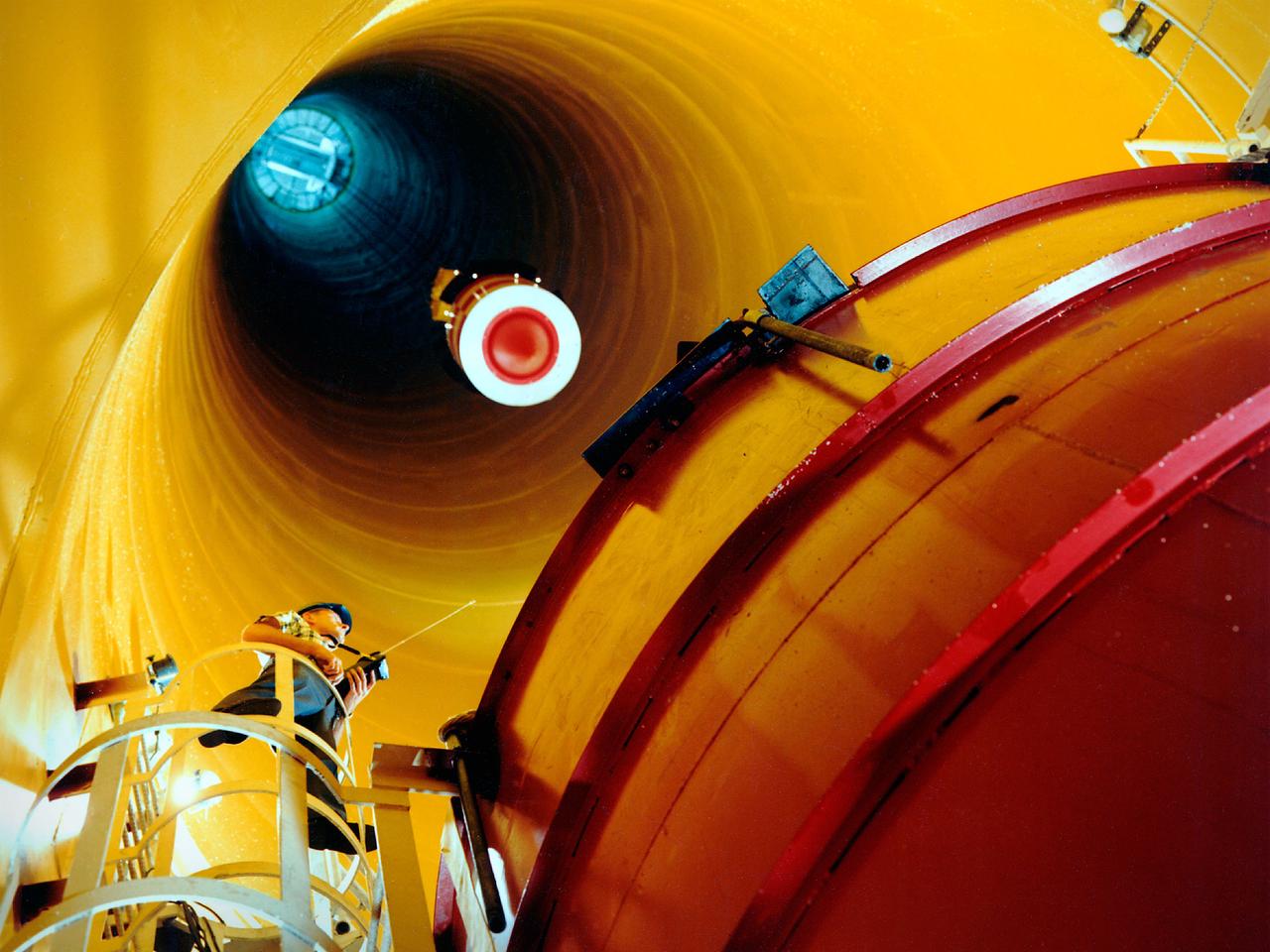
National Aeronautics and Space Administration (NASA) Lewis Research Center. Lewis researchers had been studying the behavior of liquid in microgravity for several years using ballistic rocket flights, aircraft flying series of parabolas, and in the 2.2-Second Drop Tower. It was easier to control experiments and repeat tests based on almost instantaneous test results in the Zero Gravity Research Facility than missiles or aircraft. It also more than doubled the microgravity time of the original drop tower. The experiments were enclosed in a large experiment package that was suspended inside the chamber. A vacuum was introduced to the chamber before the package was released. The test equipment allowed researchers to film and take measurements of the experiment as it was falling. The 2500‐pound package was slowed by special Styrofoam‐like pellets in a decelerator cart. An experiment, traveling 176 feet per second, was stopped in about 15 feet of deceleration material. The facility’s designers struggled to determine the correct type of deceleration pellets to use. For several years Lewis engineers tested various samples from manufacturers. The final selection was not made until the facility’s completion in May 1966, just before the facility made its public debut at the 1966 Inspection of the Center.
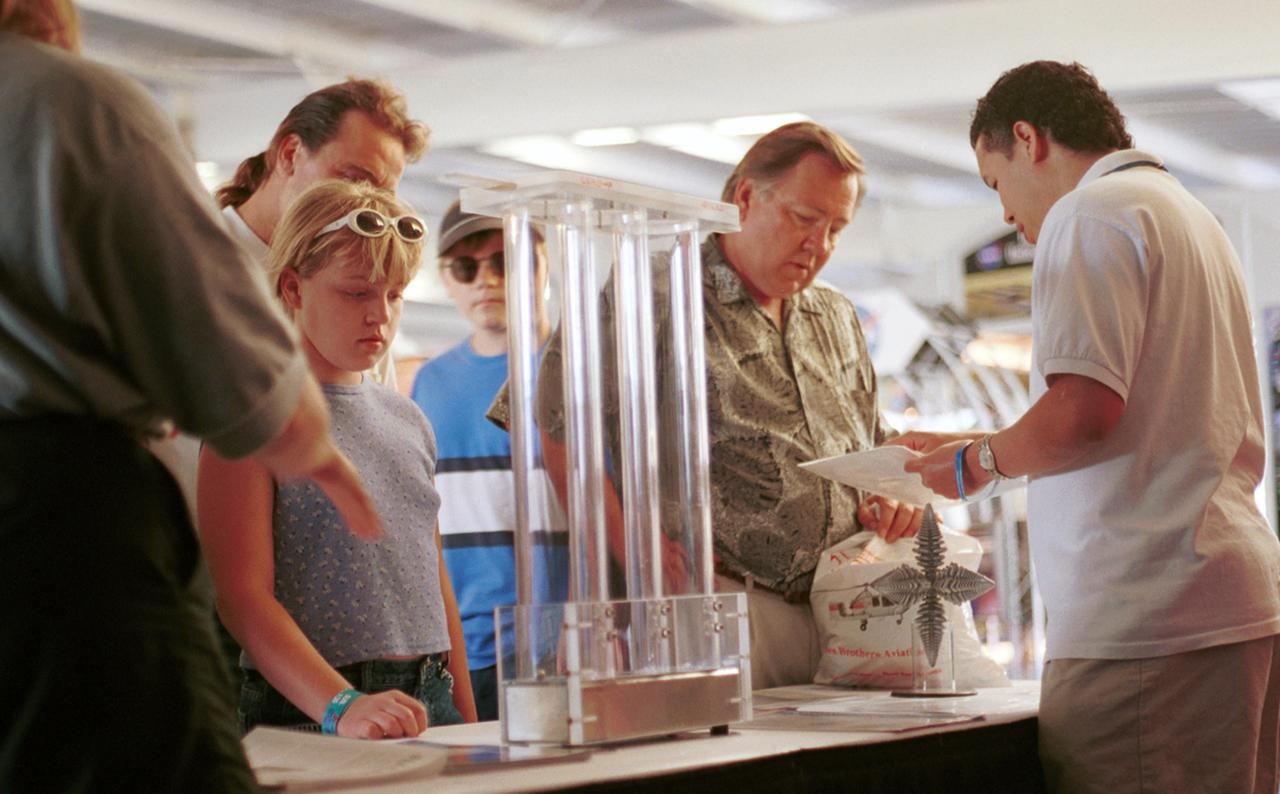
Paul Luz (right), an aerospace flight system engineer at NASA's Marshall Space Flight Center (MSFC), discusses microgravity research with a visitor at AirVenture 2000. Part of the NASA exhibits included demonstration of knowledge gained from micorgravity research aboard the Space Shuttle. These include liquid metal (Liquid metal demonstrator is three plastic drop tubes at center) and dendritic growth (in front of Luz), both leading to improvements in processes on Earth. The exhibit was part of the NASA outreach activity at AirVenture 2000 sponsored by the Experimental Aircraft Association in Oshkosh, WI.

The space shuttle Atlantis atop NASA's 747 Shuttle Carrier Aircraft (SCA) during takeoff for a return ferry flight to the Kennedy Space Center from Edwards, California. The STS-66 mission was dedicated to the third flight of the Atmospheric Laboratory for Applications and Science-3 (ATLAS-3), part of NASA's Mission to Planet Earth program. The astronauts also deployed and retrieved a free-flying satellite designed to study the middle and lower thermospheres and perform a series of experiments covering life sciences research and microgravity processing. The landing was at 7:34 a.m. (PST) 14 November 1994, after being waved off from the Kennedy Space Center, Florida, due to adverse weather.

Angie Jackman, a NASA project manager in microgravity research, demonstrates the enhanced resilience of undercooled metal alloys as compared to conventional alloys. Experiments aboard the Space Shuttle helped scientists refine their understanding of the physical properties of certain metal alloys when undercooled (i.e., kept liquid below their normal solidification temperature). This new knowledge then allowed scientists to modify a terrestrial production method so they can now make limited quantities marketed under the Liquid Metal trademark. The exhibit was a part of the NASA outreach activity at AirVenture 2000 sponsored by the Experimental Aircraft Association in Oshkosh, WI.
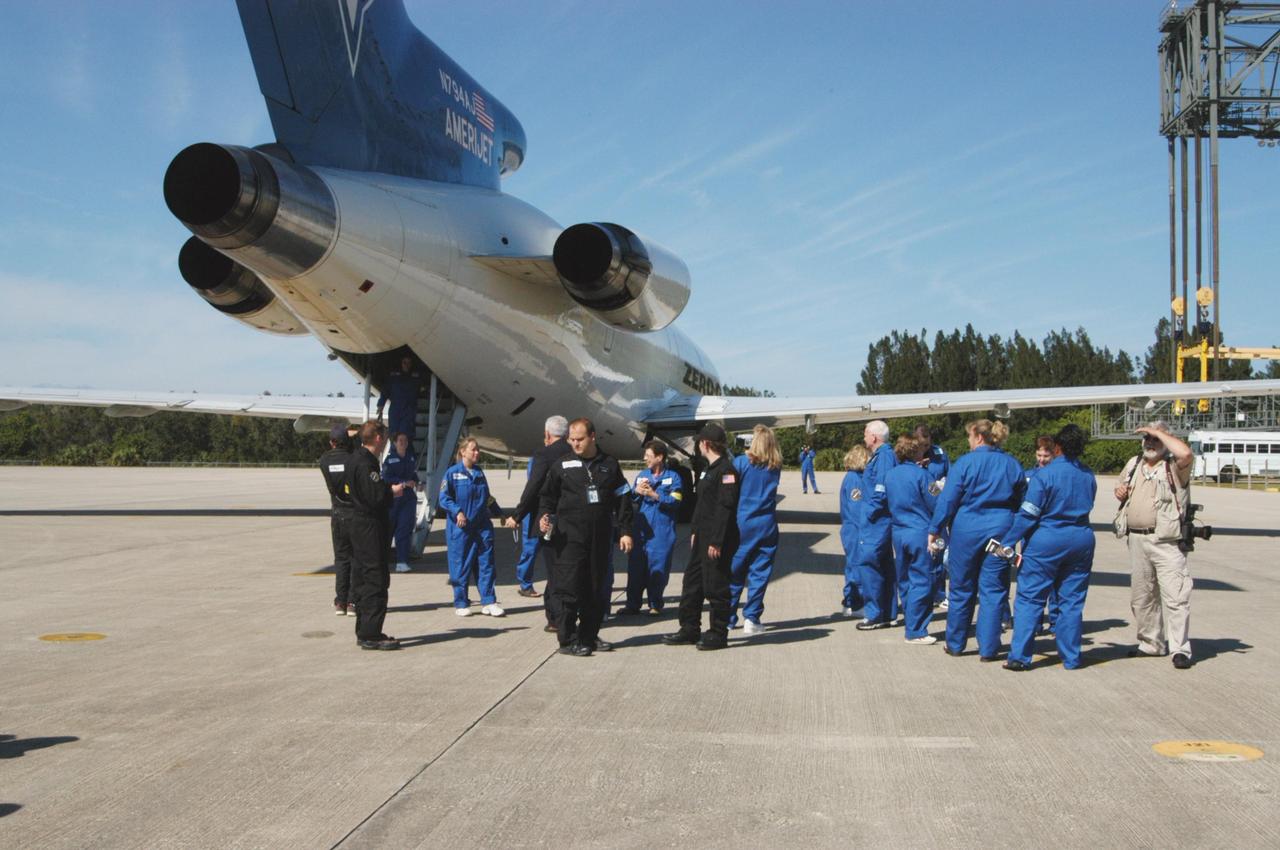
KENNEDY SPACE CENTER, FLA. - Passengers known as “Flyers” disembark at Kennedy Space Center’s shuttle landing facility from a Boeing 727-200 aircraft used for weightless flights by Zero Gravity Corporation, known as ZERO-G, of Fort Lauderdale, Fla. NASA and ZERO-G demonstrated Nov. 5 the expanded access to and use of the space shuttle's runway and landing facility at Kennedy Space Center for non-NASA activities. The “Flyers” were predominantly teachers who performed simple microgravity experiments they can share with their students back in the classroom.
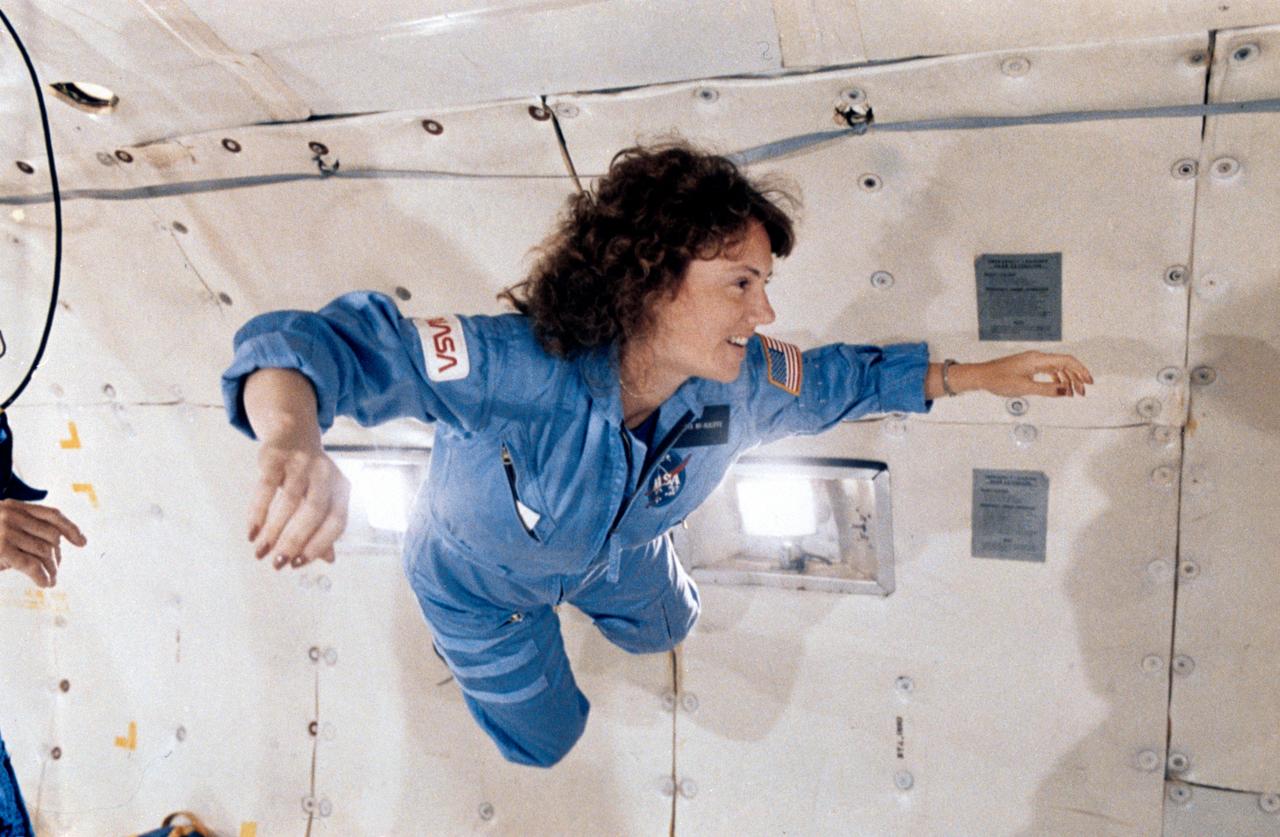
S86-25196 (January 1986) --- Sharon Christa McAuliffe, STS-51L citizen observer/payload specialist, gets a preview of microgravity during a special flight aboard NASA?s KC-135 ?zero gravity? aircraft. McAuliffe will represent the Teacher-in-Space Project aboard the space shuttle Challenger when it launches later this month. This photograph was taken by Keith Meyers of the New York Times. EDITOR?S NOTE: The STS-51L crew members lost their lives in the space shuttle Challenger accident moments after launch on Jan. 28, 1986 from the Kennedy Space Center (KSC). Photo credit: NASA
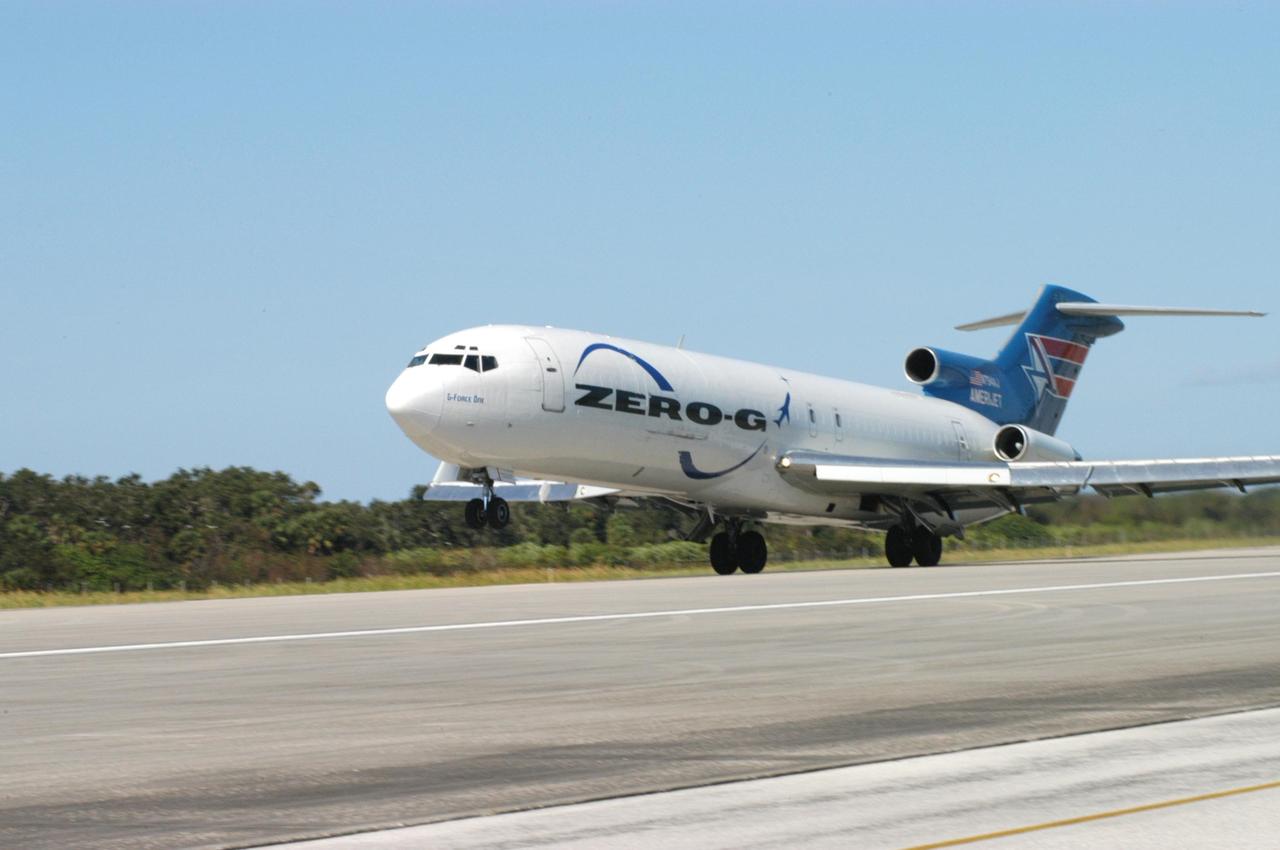
KENNEDY SPACE CENTER, FLA. - The Boeing 727-200 aircraft used for weightless flights by Zero Gravity Corporation, known as ZERO-G, of Fort Lauderdale, Fla., takes off from Kennedy Space Center’s shuttle landing facility. NASA and ZERO-G demonstrated Nov. 5 the expanded access to and use of the space shuttle's runway and landing facility at Kennedy Space Center for non-NASA activities. The group of passengers, called "Flyers," were predominantly teachers who performed simple microgravity experiments they can share with their students back in the classroom.
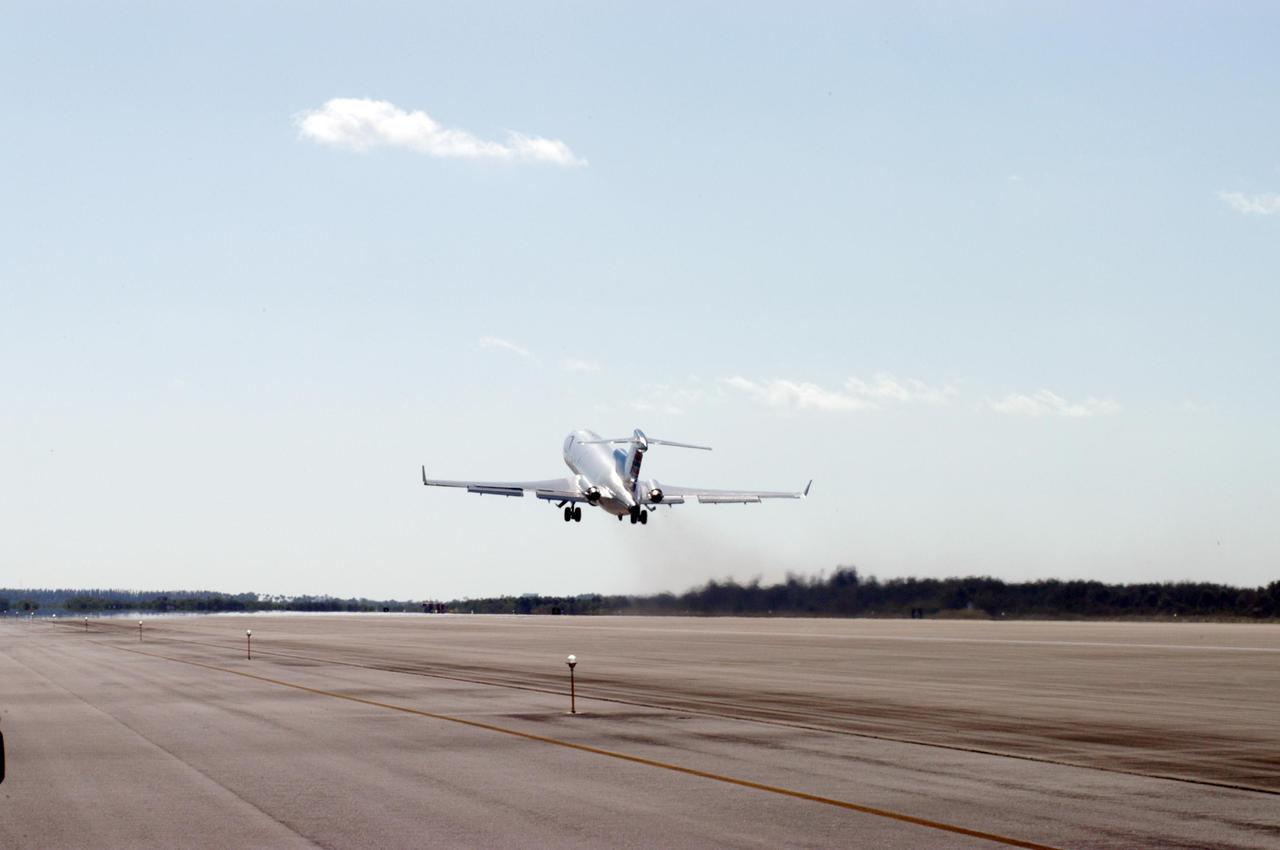
KENNEDY SPACE CENTER, FLA. - The Boeing 727-200 aircraft used for weightless flights by Zero Gravity Corporation, known as ZERO-G, of Fort Lauderdale, Fla., is airborne from Kennedy Space Center’s shuttle landing facility. NASA and ZERO-G demonstrated Nov. 5 the expanded access to and use of the space shuttle's runway and landing facility at Kennedy Space Center for non-NASA activities. The group of passengers, called "Flyers," were predominantly teachers who performed simple microgravity experiments they can share with their students back in the classroom.

KENNEDY SPACE CENTER, FLA. -- NASA's "Super Guppy" aircraft arrives in KSC air space escorted by two T-38 aircraft after leaving Marshall Space Flight Center in Huntsville, Ala. The whale-like airplane carries the U.S. Laboratory module, considered the centerpiece of the International Space Station. The module will undergo final pre-launch preparations at KSC's Space Station Processing Facility. Scheduled for launch aboard the Shuttle Endeavour on mission STS-98, the laboratory comprises three cylindrical sections with two end cones. Each end-cone contains a hatch opening for entering and exiting the lab. The lab will provide a shirtsleeve environment for research in such areas as life science, microgravity science, Earth science and space science. Designated Flight 5A, this mission is targeted for launch in early 2000
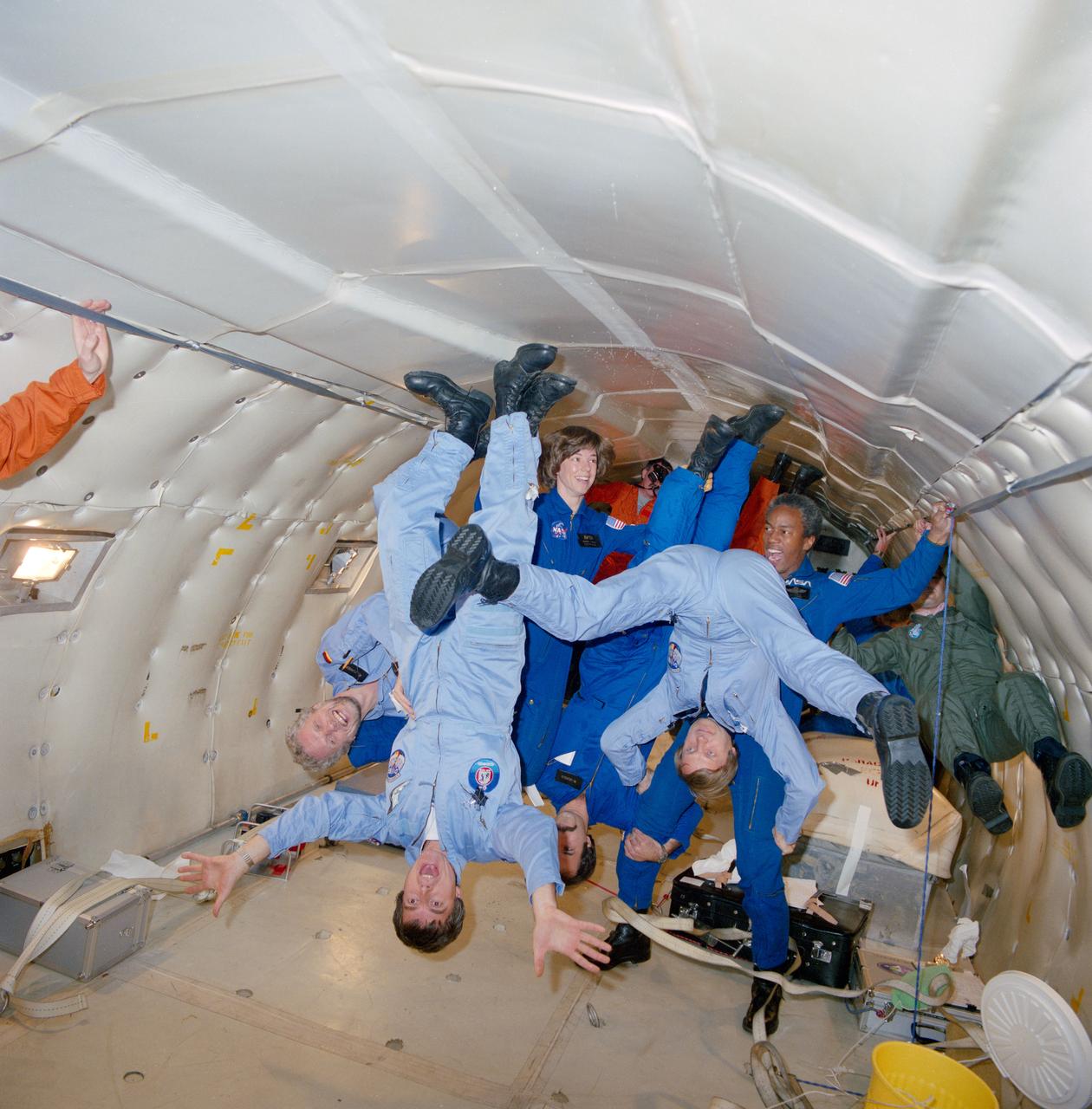
S84-47177 (17 Dec 1984) --- A recent flight in NASA's KC-135 aircraft gave the STS 61-A/Spacelab D-1 crewmembers a chance to get a preview of weightlessness. Mission specialists Bonnie J. Dunbar and Guion S. Bluford appear to be balancing several payload specialists during a few brief moments of microgravity. With heads near the floor are, left to right, Payload Specialists Reinhard Furrer, Ulf Merbold, Wubbo J. Ockels and Ernst Messerschmid. Ockels is from the Netherlands; the others, from Germany, with Merbold serving as backup.
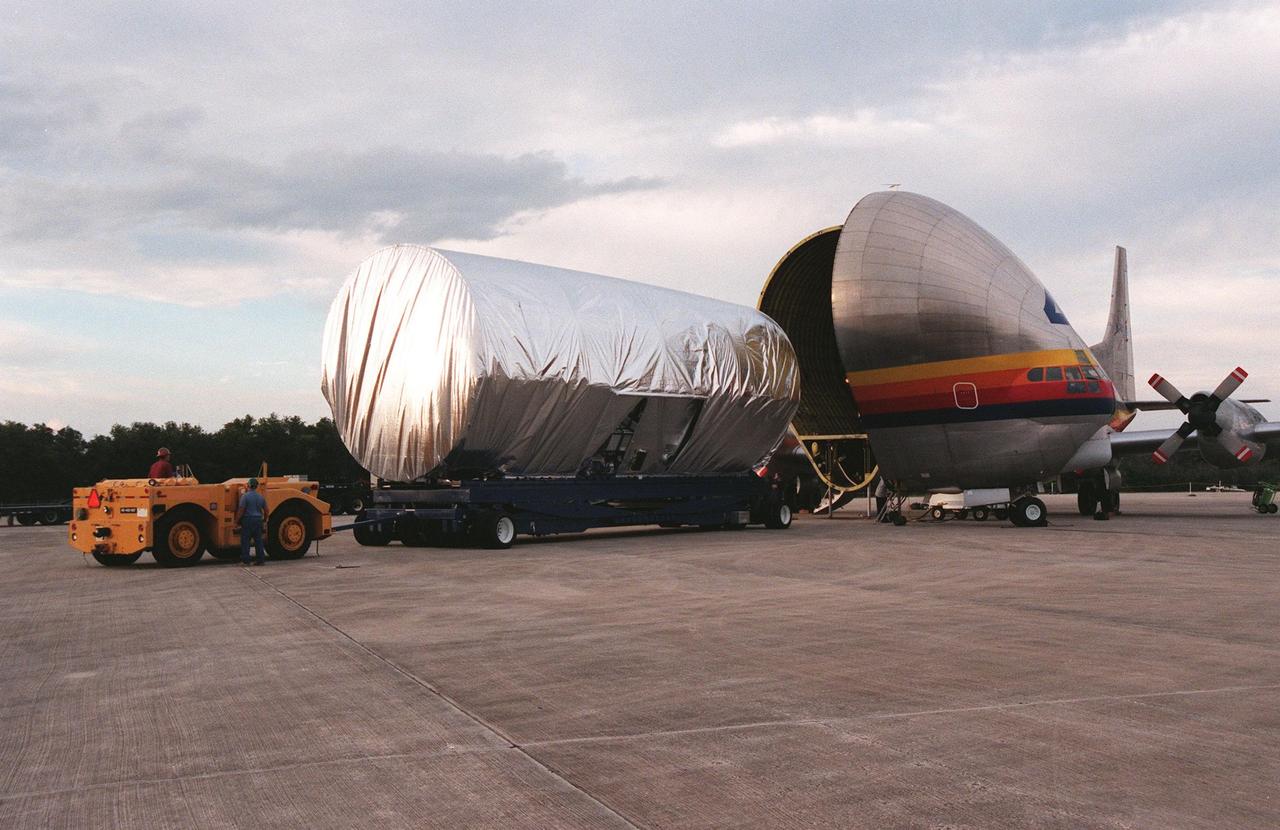
KENNEDY SPACE CENTER, FLA. -- The canister containing the U.S. laboratory module, intended for the International Space Station, sits on a flatbed trailer after being removed from NASA's "Super Guppy" aircraft that brought it from Marshall Space Flight Center, Huntsville. The lab is being transferred to the Space Station Processing Facility for pre-launch preparations. Scheduled for launch aboard the Shuttle Endeavour on mission STS-98, the laboratory comprises three cylindrical sections with two end cones. Each end-cone contains a hatch opening for entering and exiting the lab. The lab will provide a shirtsleeve environment for research in the areas of life science, microgravity science, Earth science and space science. Designated Flight 5A, this mission is targeted for launch in early 2000

KENNEDY SPACE CENTER, FLA. -- NASA's "Super Guppy" aircraft maneuvers into place at the KSC Shuttle Landing Facility to offload its cargo. The gargantuan plane carries the U.S. Laboratory module, considered the centerpiece of the International Space Station. The module will undergo final pre-launch preparations at KSC's Space Station Processing Facility. Scheduled for launch aboard the Shuttle Endeavour on mission STS-98, the laboratory comprises three cylindrical sections with two end cones. Each end-cone contains a hatch opening for entering and exiting the lab. The lab will provide a shirtsleeve environment for research in such areas as life science, microgravity science, Earth science and space science. Designated Flight 5A, this mission is targeted for launch in early 2000
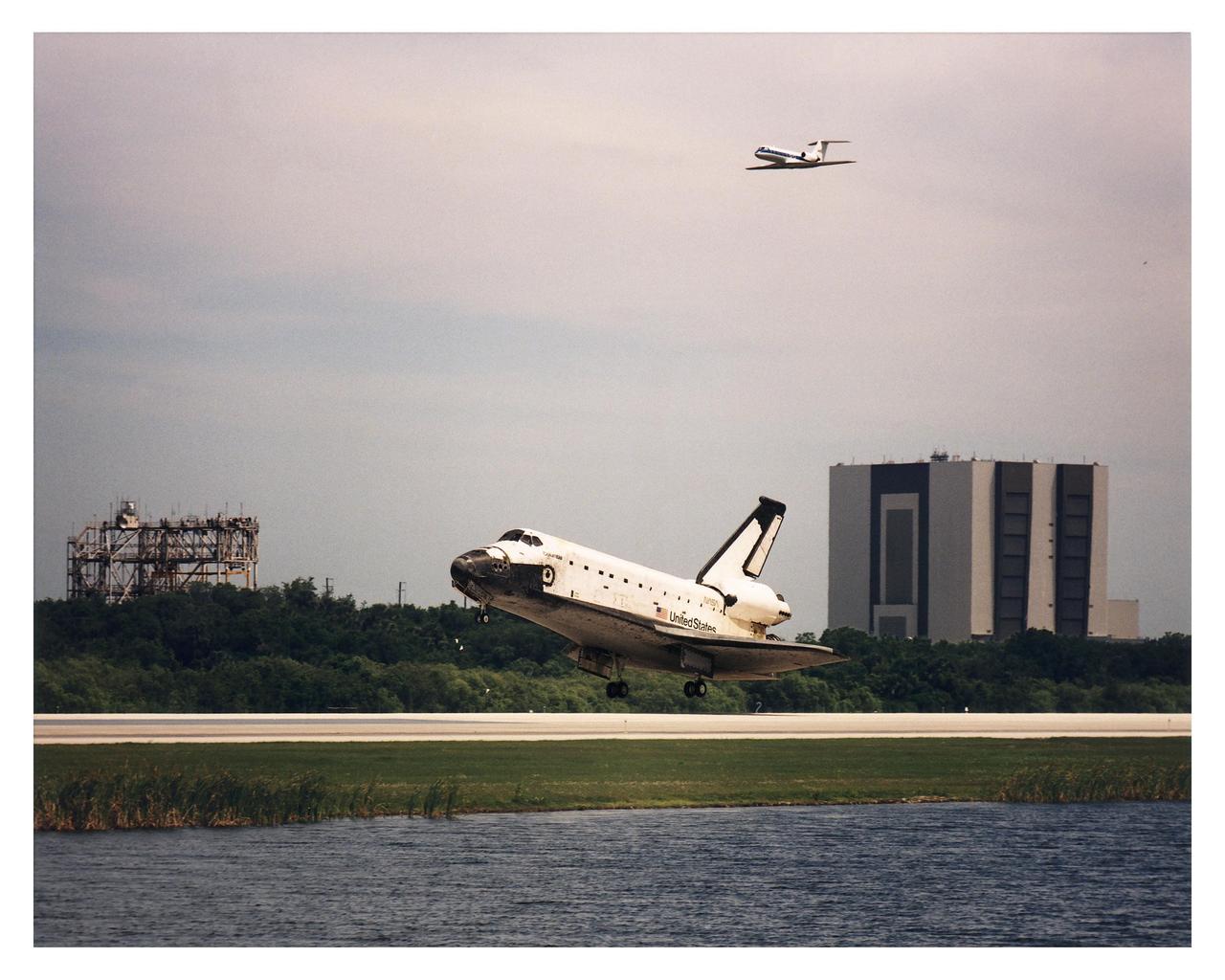
KENNEDY SPACE CENTER, FLA. -- The Space Shuttle Orbiter Columbia glides in for a touchdown on Runway 33 at KSC’s Shuttle Landing Facility that will conclude the Microgravity Science Laboratory-1 (MSL-1) mission. Columbia was scheduled to touch down at 2:33 p.m. EDT, April 8. The Vehicle Assembly Building (VAB) is to the right, while the Mate/Demate Device (MDD) is to the left. A NASA Shuttle Training Aircraft (STA) that acts as a chase plane during landings passes by overhead. With Columbia’s on-time main gear touchdown, the STS-83 mission duration will be 3 days, 23 hours, 12 minutes. The planned 16-day mission was cut short by a faulty fuel cell. This is only the third time in Shuttle program history that an orbiter was brought home early due to mechanical problems. This was also the 36th KSC landing since the program began in 1981
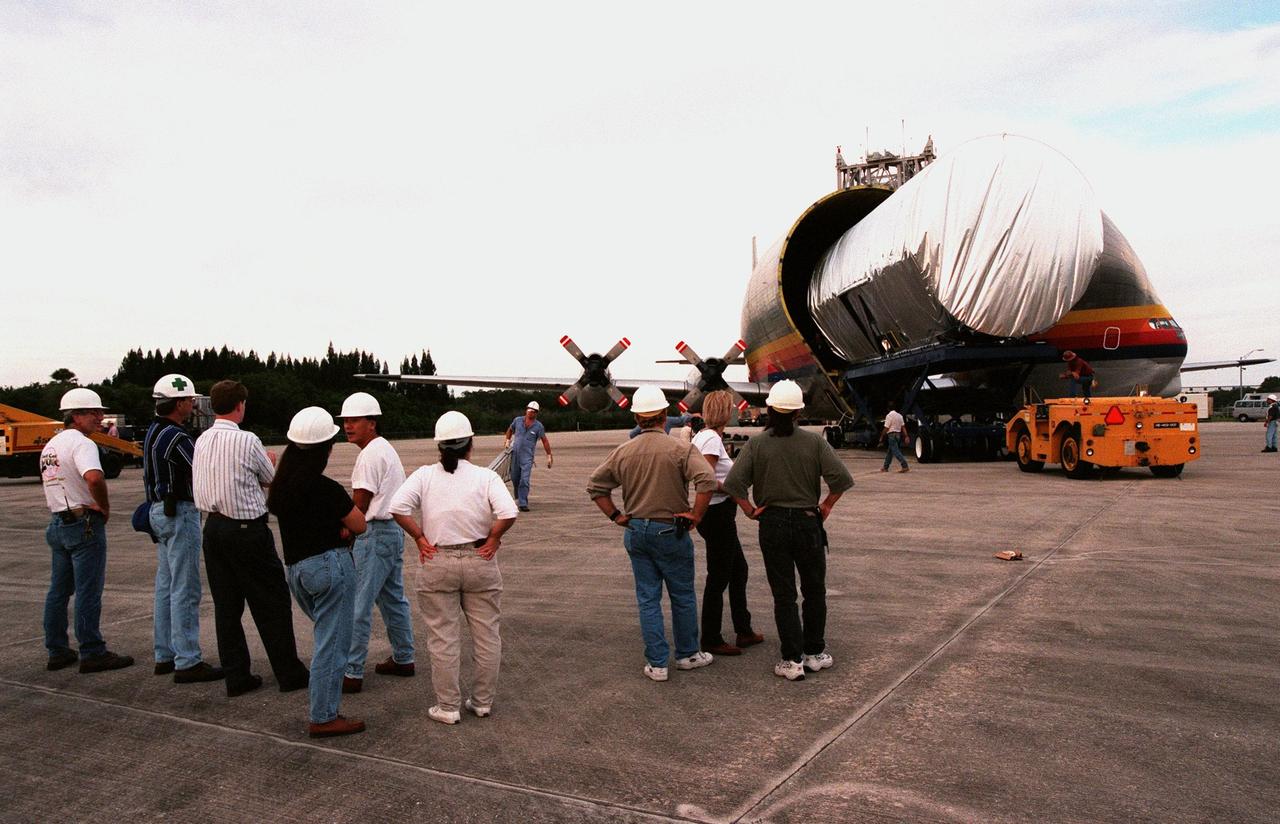
KENNEDY SPACE CENTER, FLA. -- Workers at the Shuttle Landing Facility watch as the canister carrying the U.S. laboratory module, intended for the International Space Station, is moved out of NASA's "Super Guppy" aircraft that brought it from Marshall Space Flight Center, Huntsville. The lab is being transferred to the Space Station Processing Facility for pre-launch preparations. Scheduled for launch aboard the Shuttle Endeavour on mission STS-98, the laboratory comprises three cylindrical sections with two end cones. Each end-cone contains a hatch opening for entering and exiting the lab. The lab will provide a shirtsleeve environment for research in the areas of life science, microgravity science, Earth science and space science. Designated Flight 5A, this mission is targeted for launch in early 2000

KENNEDY SPACE CENTER, FLA. -- NASA's "Super Guppy" aircraft arrives at the KSC Shuttle Landing Facility after leaving Marshall Space Flight Center in Huntsville, Ala. The gargantuan plane carries the U.S. Laboratory module, considered the centerpiece of the International Space Station. The module will undergo final pre-launch preparations at KSC's Space Station Processing Facility. Scheduled for launch aboard the Shuttle Endeavour on mission STS-98, the laboratory comprises three cylindrical sections with two end cones. Each end-cone contains a hatch opening for entering and exiting the lab. The lab will provide a shirtsleeve environment for research in such areas as life science, microgravity science, Earth science and space science. Designated Flight 5A, this mission is targeted for launch in early 2000
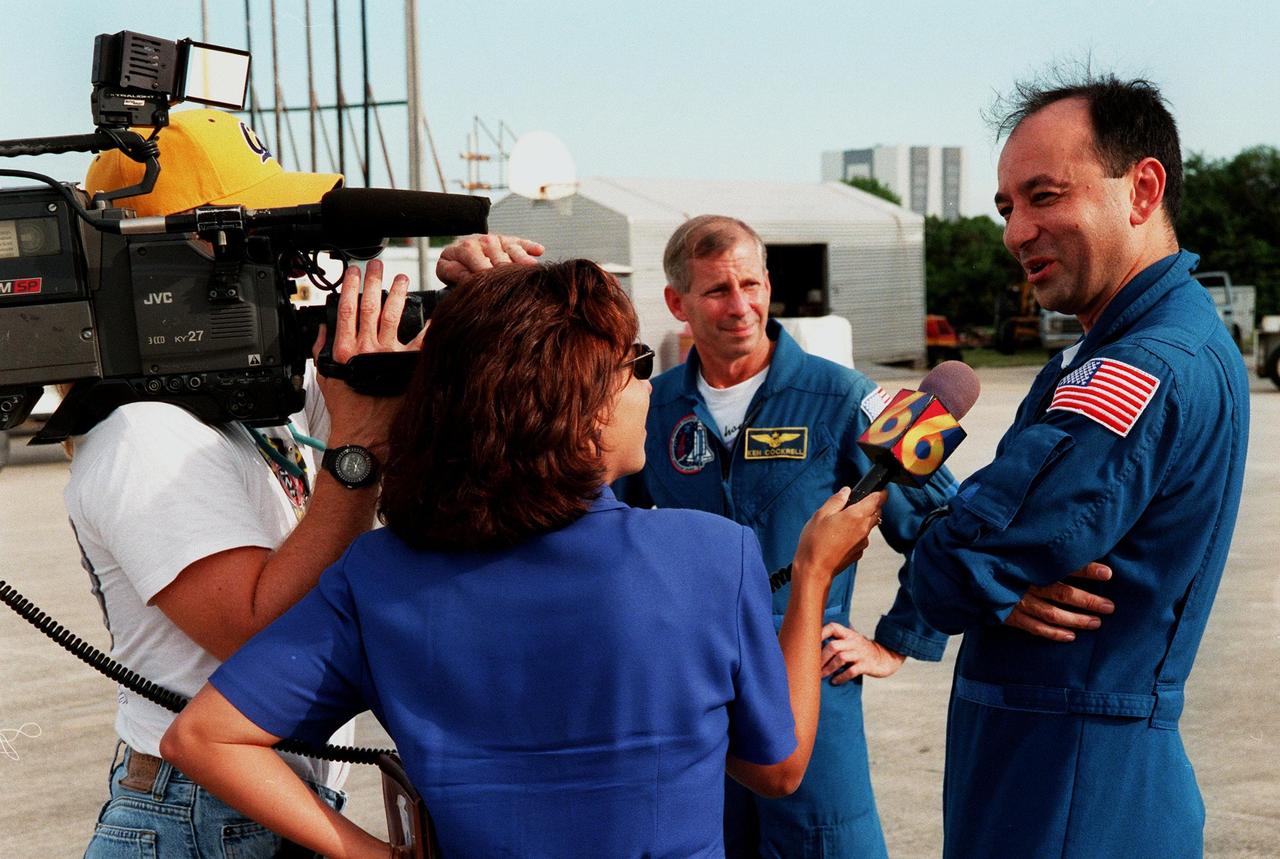
KENNEDY SPACE CENTER, FLA. -- After landing at the Shuttle Landing Facility aboard T-38 trainers, STS-98 Pilot Mark Polansky (right) and Mission Commander Ken Cockrell (center, background) are interviewed by media representatives. Polansky, Cockrell and Mission Specialist Marsha Ivins (not shown) accompanied the U.S. Laboratory module on its transport from Marshall Space Flight Center, Huntsville, to Kennedy aboard NASA's "Super Guppy" aircraft. Scheduled for launch aboard the Shuttle Endeavour on mission STS-98, the laboratory comprises three cylindrical sections with two end cones. Each end-cone contains a hatch opening for entering and exiting the lab. The lab will provide a shirtsleeve environment for research in the areas of life science, microgravity science, Earth science and space science. Designated Flight 5A, this mission is targeted for launch in early 2000
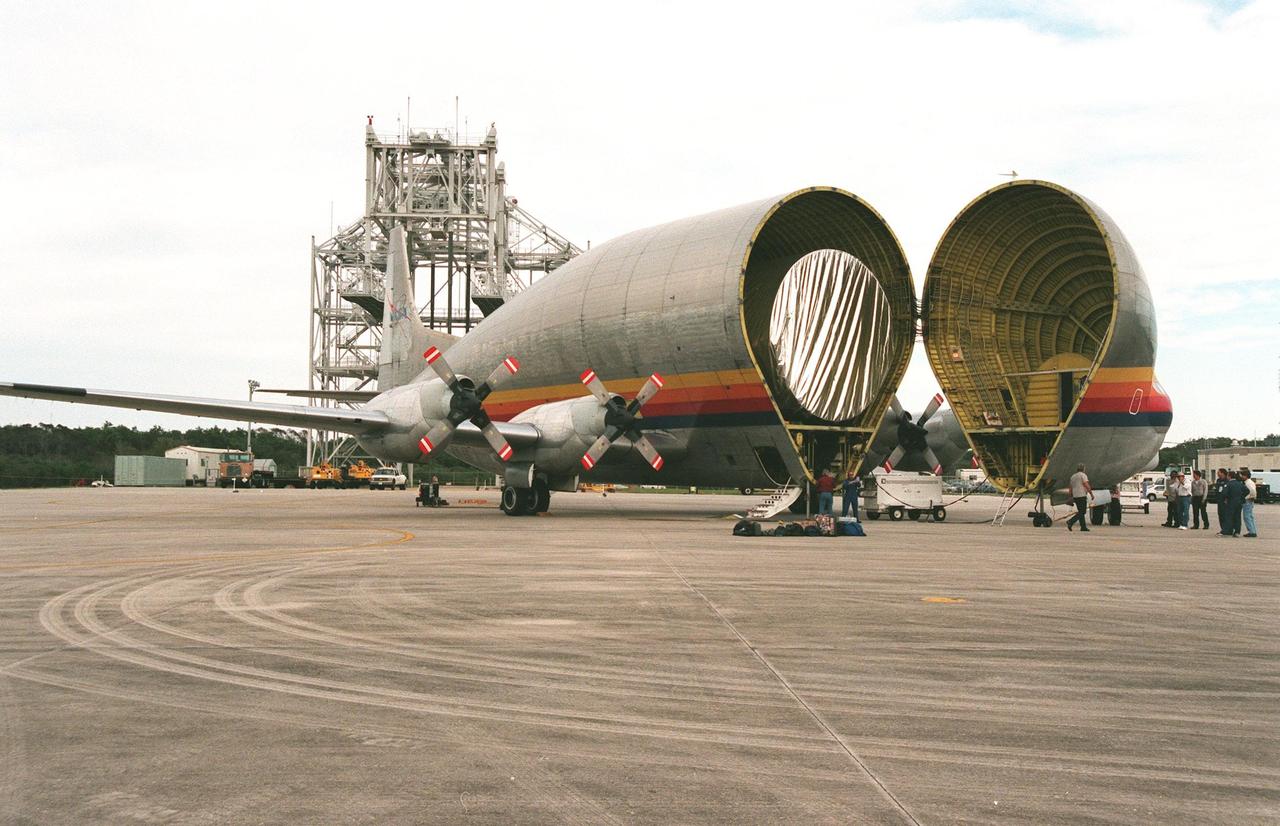
KENNEDY SPACE CENTER, FLA. -- The open front end of NASA's "Super Guppy" aircraft at the Shuttle Landing Facility reveals the U.S. laboratory module, intended for the International Space Station, that was flown from Marshall Space Flight Center, Huntsville, to Kennedy. The lab is being transferred to the Space Station Processing Facility for pre-launch preparations. Scheduled for launch aboard the Shuttle Endeavour on mission STS-98, the laboratory comprises three cylindrical sections with two end cones. Each end-cone contains a hatch opening for entering and exiting the lab. The lab will provide a shirtsleeve environment for research in the areas of life science, microgravity science, Earth science and space science. Designated Flight 5A, this mission is targeted for launch in early 2000

KENNEDY SPACE CENTER, FLA. -- NASA's "Super Guppy" aircraft rolls to a stop at the KSC Shuttle Landing Facility after leaving Marshall Space Flight Center in Huntsville, Ala. The gargantuan plane carries the U.S. Laboratory module, considered the centerpiece of the International Space Station. The module will undergo final pre-launch preparations at KSC's Space Station Processing Facility. Scheduled for launch aboard the Shuttle Endeavour on mission STS-98, the laboratory comprises three cylindrical sections with two end cones. Each end-cone contains a hatch opening for entering and exiting the lab. The lab will provide a shirtsleeve environment for research in such areas as life science, microgravity science, Earth science and space science. Designated Flight 5A, this mission is targeted for launch in early 2000
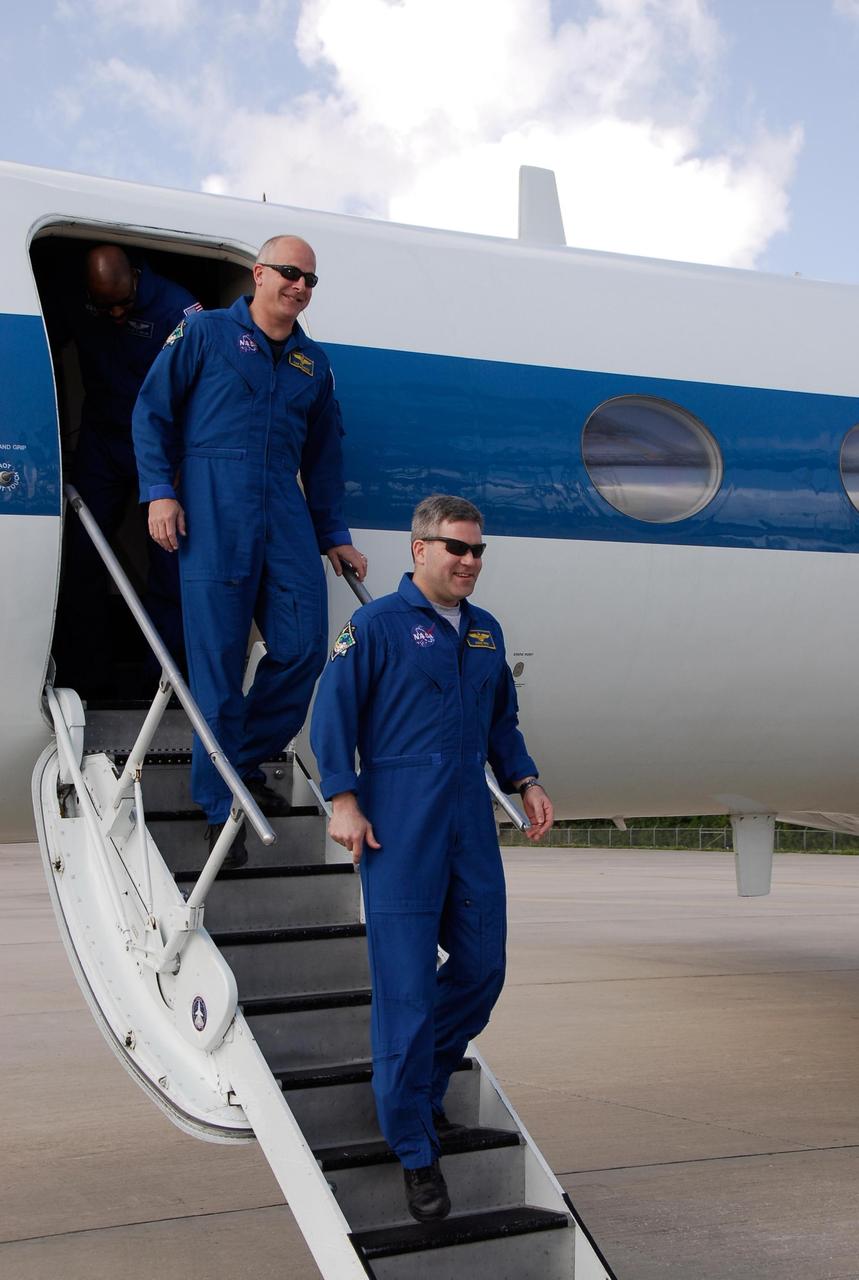
KENNEDY SPACE CENTER, FLA. -- STS-122 Commander Steve Frick (right) and Pilot Alan Poindexter arrive at NASA's Kennedy Space Center in a shuttle training aircraft jet for launch aboard space shuttle Atlantis on Feb. 7. The crew's arrival signals the imminent launch of space shuttle Atlantis' STS-122 mission, at 2:45 p.m. Feb. 7. This will be the third launch attempt for the mission. Some of the tank's ECO sensors gave failed readings during propellant tanking for launch attempts on Dec. 6 and Dec. 9, subsequently scrubbing further attempts until the cause could be found and repairs made. Atlantis will carry the Columbus module, Europe's largest contribution to the construction of the International Space Station. It will support scientific and technological research in a microgravity environment. Columbus is a multifunctional, pressurized laboratory that will be permanently attached to the Harmony module of the space station to carry out experiments in materials science, fluid physics and biosciences, as well as to perform a number of technological applications. Photo credit: NASA/Kim Shiflett
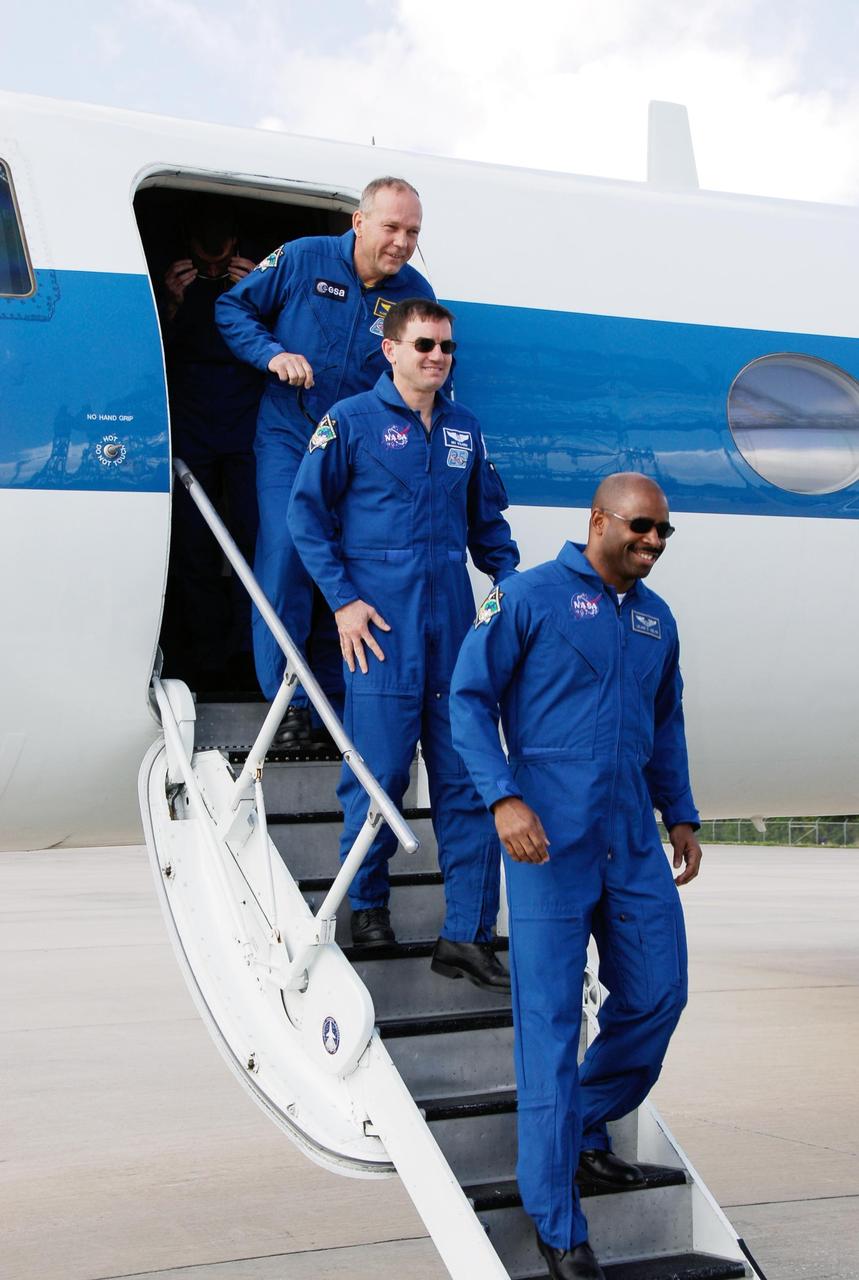
KENNEDY SPACE CENTER, FLA. -- At NASA's Kennedy Space Center, STS-122 mission specialists disembark from a shuttle training aircraft. From left are Hans Schlegel, Rex Walheim and Leland Melvin. Schlegel represents the European Space Agency. Schlegel represents the European Space Agency. The crew's arrival signals the imminent launch of space shuttle Atlantis' STS-122 mission, at 2:45 p.m. Feb. 7. This will be the third launch attempt for the mission. Some of the tank's ECO sensors gave failed readings during propellant tanking for launch attempts on Dec. 6 and Dec. 9, subsequently scrubbing further attempts until the cause could be found and repairs made. Atlantis will carry the Columbus module, Europe's largest contribution to the construction of the International Space Station. It will support scientific and technological research in a microgravity environment. Columbus is a multifunctional, pressurized laboratory that will be permanently attached to the Harmony module of the space station to carry out experiments in materials science, fluid physics and biosciences, as well as to perform a number of technological applications. Photo credit: NASA/Kim Shiflett
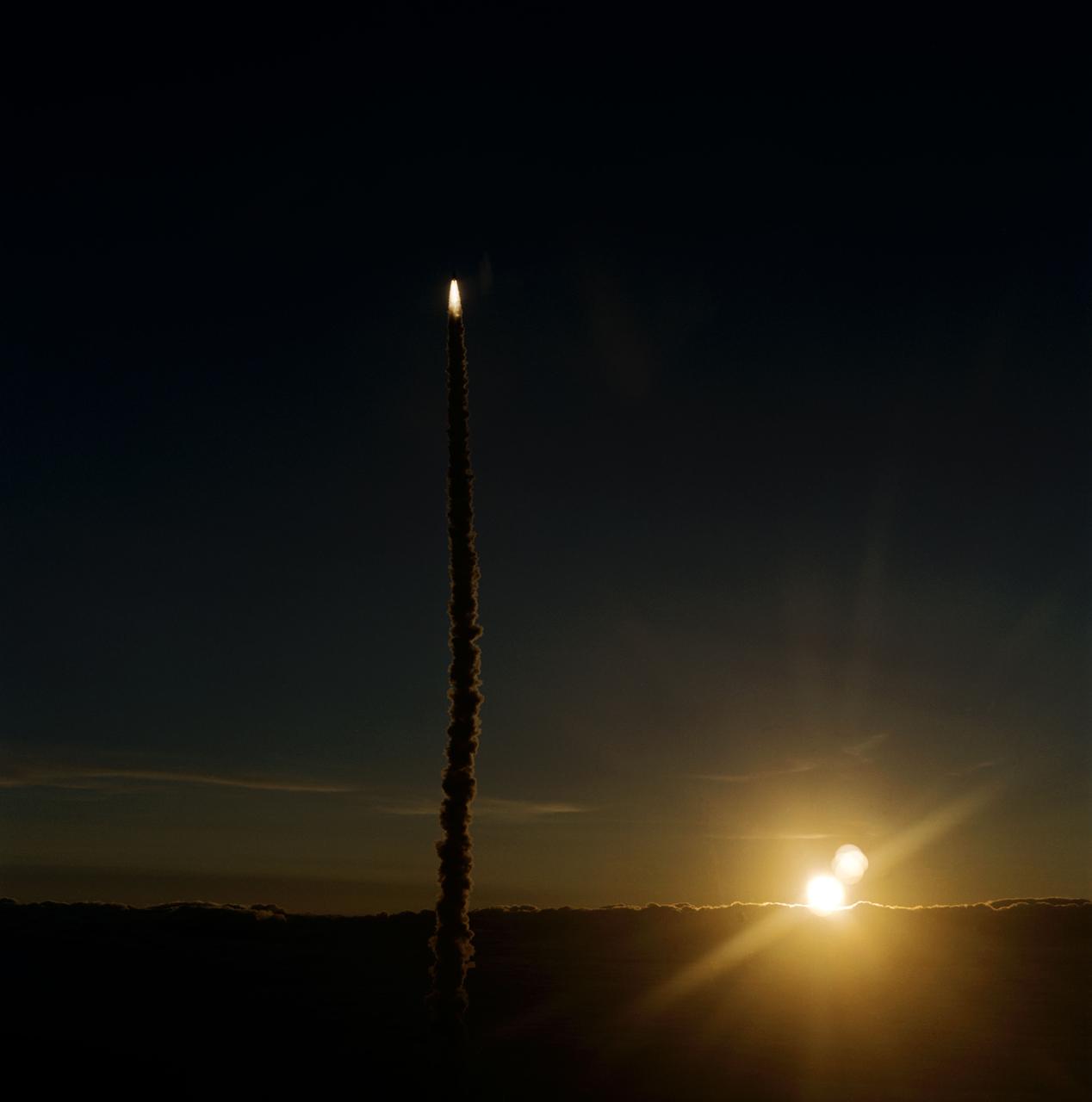
STS077-S-007 (19 May 1996) --- In this air-to-air 70mm frame, the Space Shuttle Endeavour is captured atop a trail of smoke as it carries six astronauts toward the fourth NASA Space Shuttle mission of the year. The photograph was taken from the Shuttle Training Aircraft (STA) which routinely checks the Florida environs for weather and safety factors. The launch occurred at 6:30:00 a.m. (EDT), May 19, 1996. Heading the six-member crew onboard is astronaut John H. Casper, mission commander. Other crew members are astronauts Curtis L. Brown, Jr., pilot; along with Daniel W. Bursch, Mario Runco, Jr., Andrew S. W. Thomas and Marc Garneau, all mission specialists. Garneau represents the Canadian Space Agency (CSA). During the approximately 10-day mission, the crew will perform a variety of payload activities, including microgravity research aboard the Spacehab 4 Module, deployment and retrieval of the Spartan 207 and deployment and rendezvous with the Passive Aerodynamically-Stabilized Magnetically-Damped Satellite (PAMS).