
Every day, invisible magnetic explosions are happening around Earth, on the surface of the sun and across the universe. These explosions, known as magnetic reconnection, occur when magnetic field lines cross, releasing stored magnetic energy. Such explosions are a key way that clouds of charged particles — plasmas — are accelerated throughout the universe. In Earth’s magnetosphere — the giant magnetic bubble surrounding our planet — these magnetic reconnections can fling charged particles toward Earth, triggering auroras. Read more: <a href="http://go.nasa.gov/2mnMtDm" rel="nofollow">go.nasa.gov/2mnMtDm</a> Video caption - In this simulation, a reconnection even pushes a blob of plasma toward Earth. The jet blown in the opposite direction wobbles due to the unstable conditions. Credit: NASA’s Goddard Space Flight Center/Yi-Hsin Liu/Joy Ng, producer
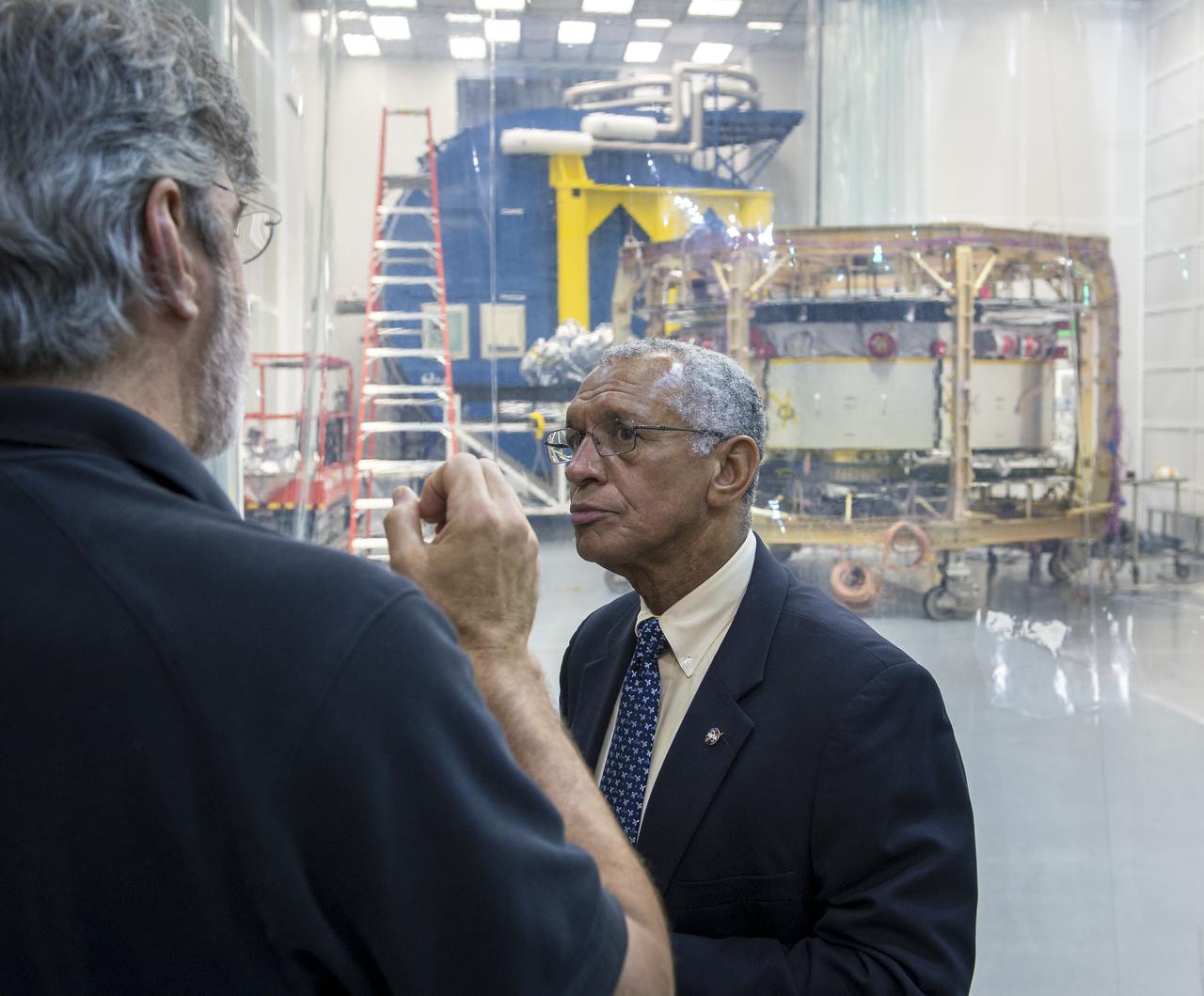
NASA Administrator Charles Bolden listens to Magnetospheric Multiscale (MMS) Mission Project Manager Craig Tooley talk about the MMS mission outside of a Naval Research Laboratory cleanroom where one of four Magnetospheric Multiscale (MMS) spacecraft is currently undergoing testing, Monday, August 4, 2014, in Washington. The Magnetospheric Multiscale, or MMS, mission will study the mystery of how magnetic fields around Earth connect and disconnect, explosively releasing energy via a process known as magnetic reconnection. The four identical spacecraft are scheduled to launch in 2015 from Cape Canaveral and will orbit around Earth in varying formations through the dynamic magnetic system surrounding our planet to provide the first three-dimensional views of the magnetic reconnection process. The goal of the STP Program is to understand the fundamental physical processes of the space environment from the sun to Earth, other planets, and the extremes of the solar system boundary. Photo Credit: (NASA/Bill Ingalls)
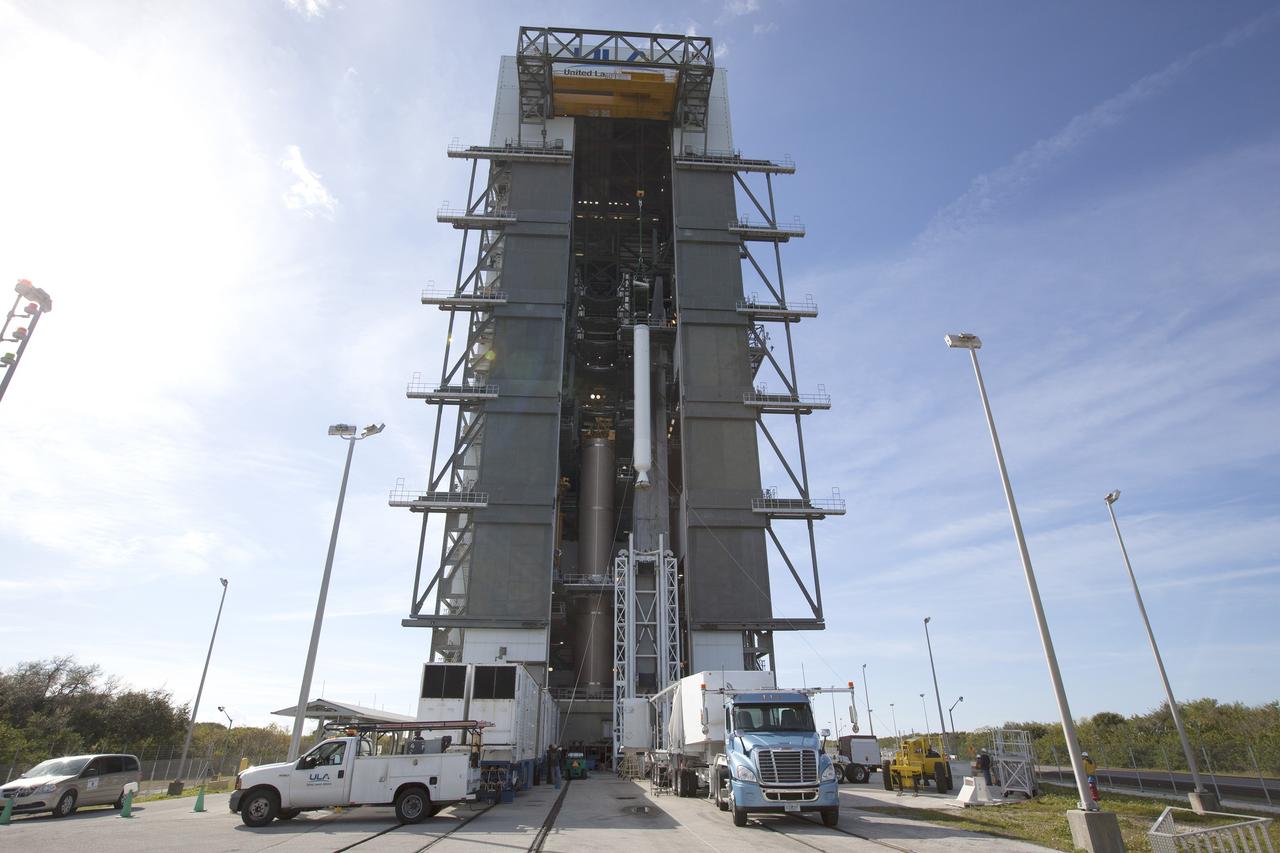
A solid rocket motor for the United Launch Alliance Atlas V rocket slated to boost NASA's Magnetospheric Multiscale mission, or MMS, is lifted at the mobile service tower at Space Launch Complex 41 on Cape Canaveral Air Force Station in Florida. Four identical MMS spacecraft will study the mystery of how magnetic fields around Earth connect and disconnect, explosively releasing energy via a process known a magnetic reconnection. Launch is set for March 12. To learn more: http://www.nasa.gov/mms. Photo credit: NASA/ Kim Shiflett
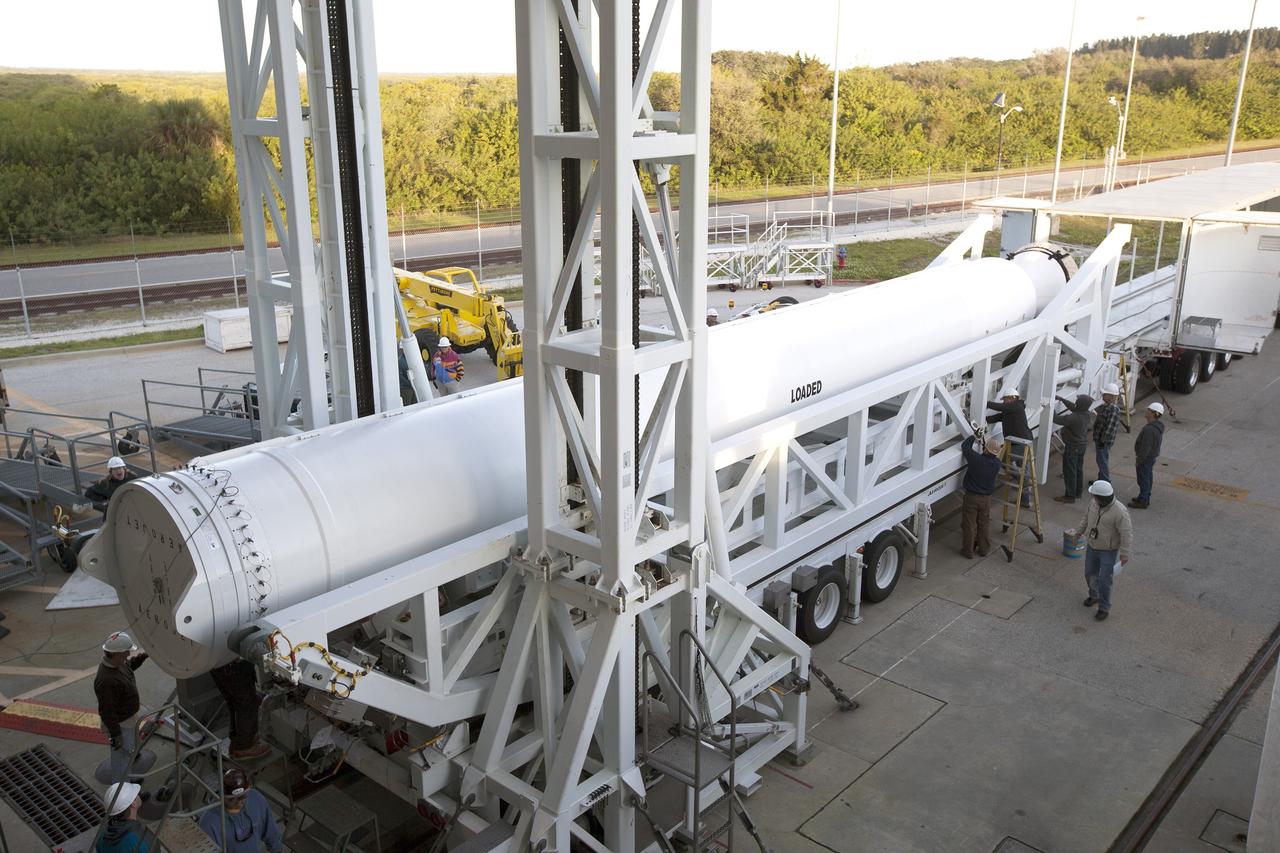
A solid rocket motor for the United Launch Alliance Atlas V rocket slated to boost NASA's Magnetospheric Multiscale mission, or MMS, arrives at the mobile service tower at Space Launch Complex 41 on Cape Canaveral Air Force Station in Florida. Four identical MMS spacecraft will study the mystery of how magnetic fields around Earth connect and disconnect, explosively releasing energy via a process known a magnetic reconnection. Launch is set for March 12. To learn more: http://www.nasa.gov/mms. Photo credit: NASA/ Kim Shiflett

A solid rocket motor for the United Launch Alliance Atlas V rocket slated to boost NASA's Magnetospheric Multiscale mission, or MMS, is lowered into position inside the mobile service tower at Space Launch Complex 41 on Cape Canaveral Air Force Station in Florida. Four identical MMS spacecraft will study the mystery of how magnetic fields around Earth connect and disconnect, explosively releasing energy via a process known a magnetic reconnection. Launch is set for March 12. To learn more: http://www.nasa.gov/mms. Photo credit: NASA/ Kim Shiflett
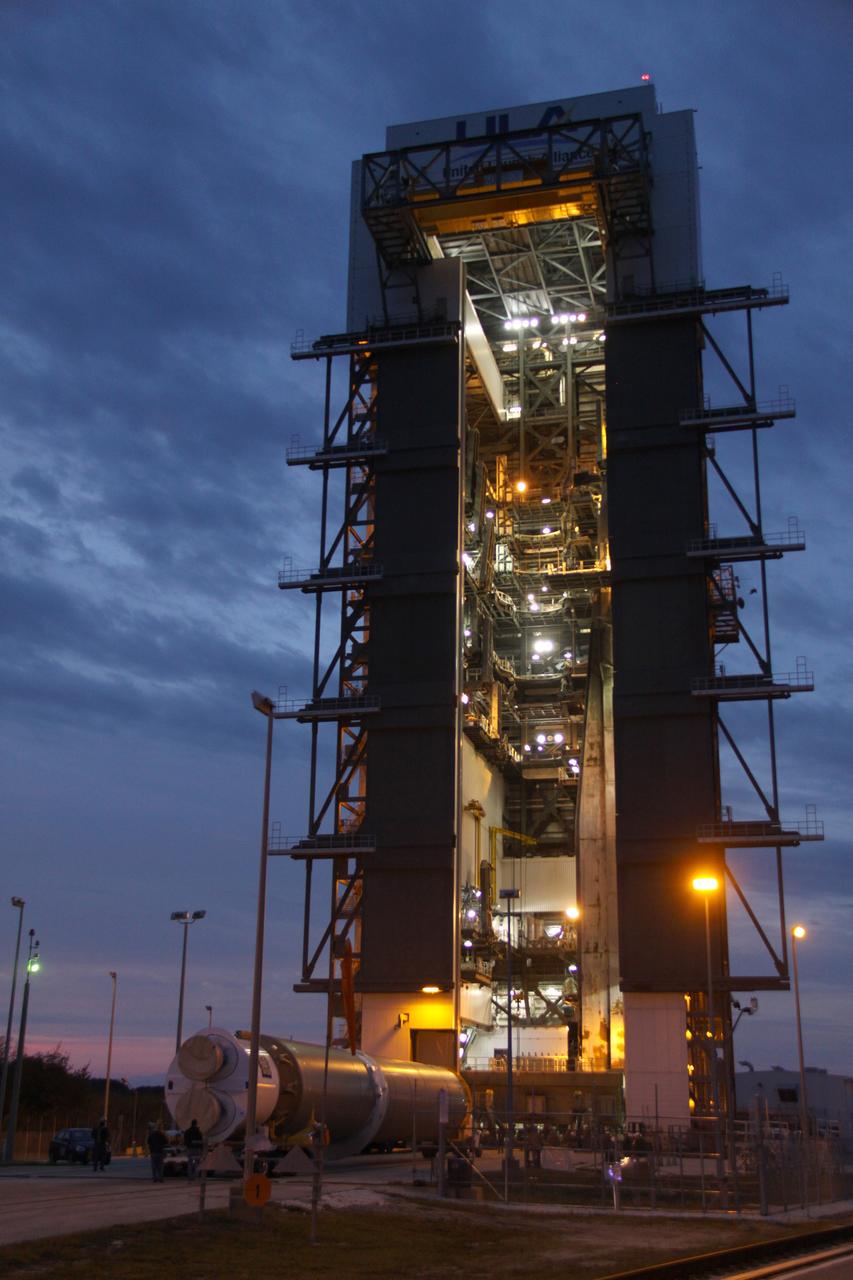
CAPE CANAVERAL, Fla. – The first stage of the United Launch Alliance Atlas V rocket for NASA's Magnetospheric Multiscale mission, or MMS, arrives at the mobile service tower at Space Launch Complex 41 on Cape Canaveral Air Force Station in Florida. MMS will study the mystery of how magnetic fields around Earth connect and disconnect, explosively releasing energy via a process known a magnetic reconnection. MMS consists of four identical spacecraft that work together to provide the first three-dimensional view of this fundamental process, which occurs throughout the universe. Launch is set for March 12. To learn more about MMS, visit http://www.nasa.gov/mms. Photo credit: NASA/Jim Grossmann

CAPE CANAVERAL, Fla. – The first stage of the United Launch Alliance Atlas V rocket for NASA's Magnetospheric Multiscale mission, or MMS, is lifted into the mobile service tower at Space Launch Complex 41 on Cape Canaveral Air Force Station in Florida. MMS will study the mystery of how magnetic fields around Earth connect and disconnect, explosively releasing energy via a process known a magnetic reconnection. MMS consists of four identical spacecraft that work together to provide the first three-dimensional view of this fundamental process, which occurs throughout the universe. Launch is set for March 12. To learn more about MMS, visit http://www.nasa.gov/mms. Photo credit: NASA/Jim Grossmann

A solid rocket motor for the United Launch Alliance Atlas V rocket slated to boost NASA's Magnetospheric Multiscale mission, or MMS, is lifted at the mobile service tower at Space Launch Complex 41 on Cape Canaveral Air Force Station in Florida. Four identical MMS spacecraft will study the mystery of how magnetic fields around Earth connect and disconnect, explosively releasing energy via a process known a magnetic reconnection. Launch is set for March 12. To learn more: http://www.nasa.gov/mms. Photo credit: NASA/ Kim Shiflett
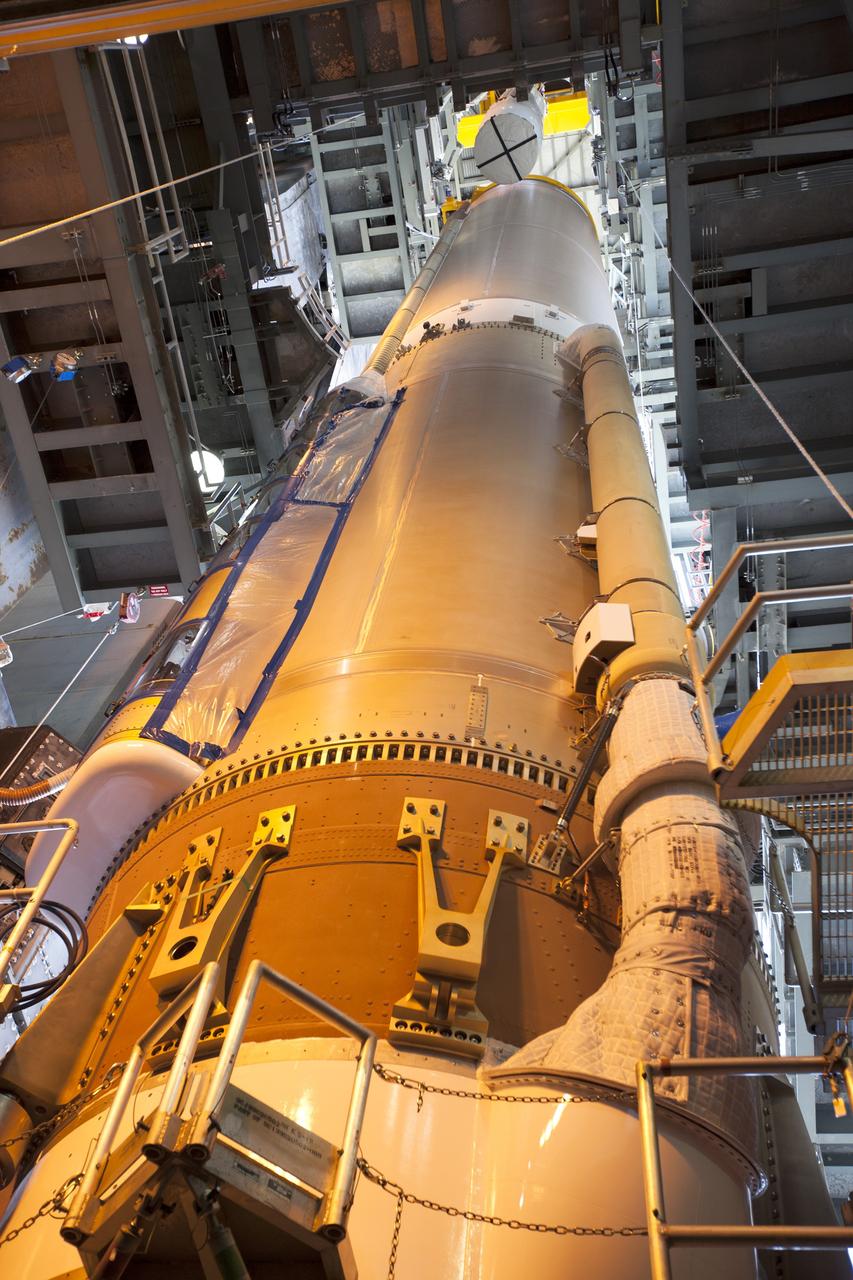
A solid rocket motor for the United Launch Alliance Atlas V rocket slated to boost NASA's Magnetospheric Multiscale mission, or MMS, is lowered into position inside the mobile service tower at Space Launch Complex 41 on Cape Canaveral Air Force Station in Florida. Four identical MMS spacecraft will study the mystery of how magnetic fields around Earth connect and disconnect, explosively releasing energy via a process known a magnetic reconnection. Launch is set for March 12. To learn more: http://www.nasa.gov/mms. Photo credit: NASA/ Kim Shiflett
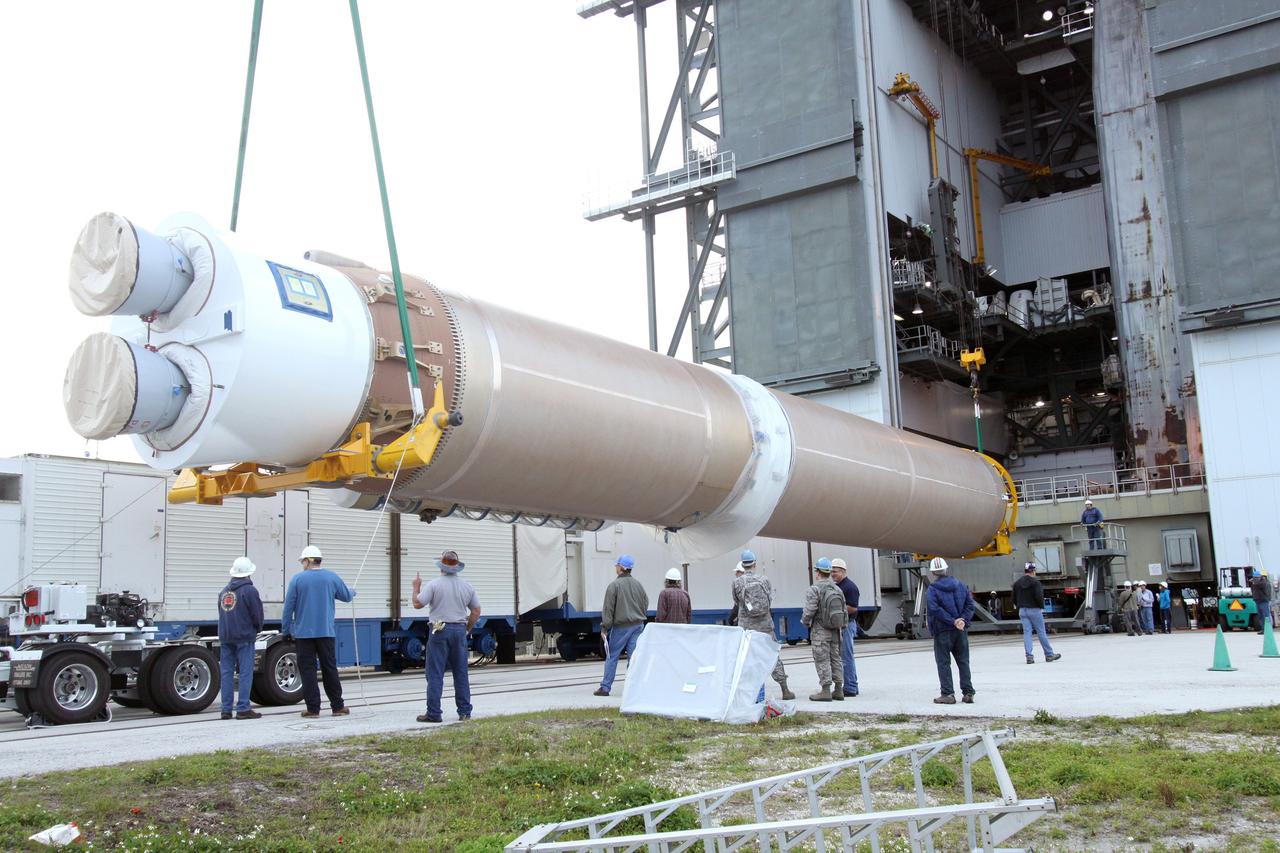
CAPE CANAVERAL, Fla. – The first stage of the United Launch Alliance Atlas V rocket for NASA's Magnetospheric Multiscale mission, or MMS, is lifted into the mobile service tower at Space Launch Complex 41 on Cape Canaveral Air Force Station in Florida. MMS will study the mystery of how magnetic fields around Earth connect and disconnect, explosively releasing energy via a process known a magnetic reconnection. MMS consists of four identical spacecraft that work together to provide the first three-dimensional view of this fundamental process, which occurs throughout the universe. Launch is set for March 12. To learn more about MMS, visit http://www.nasa.gov/mms. Photo credit: NASA/Jim Grossmann
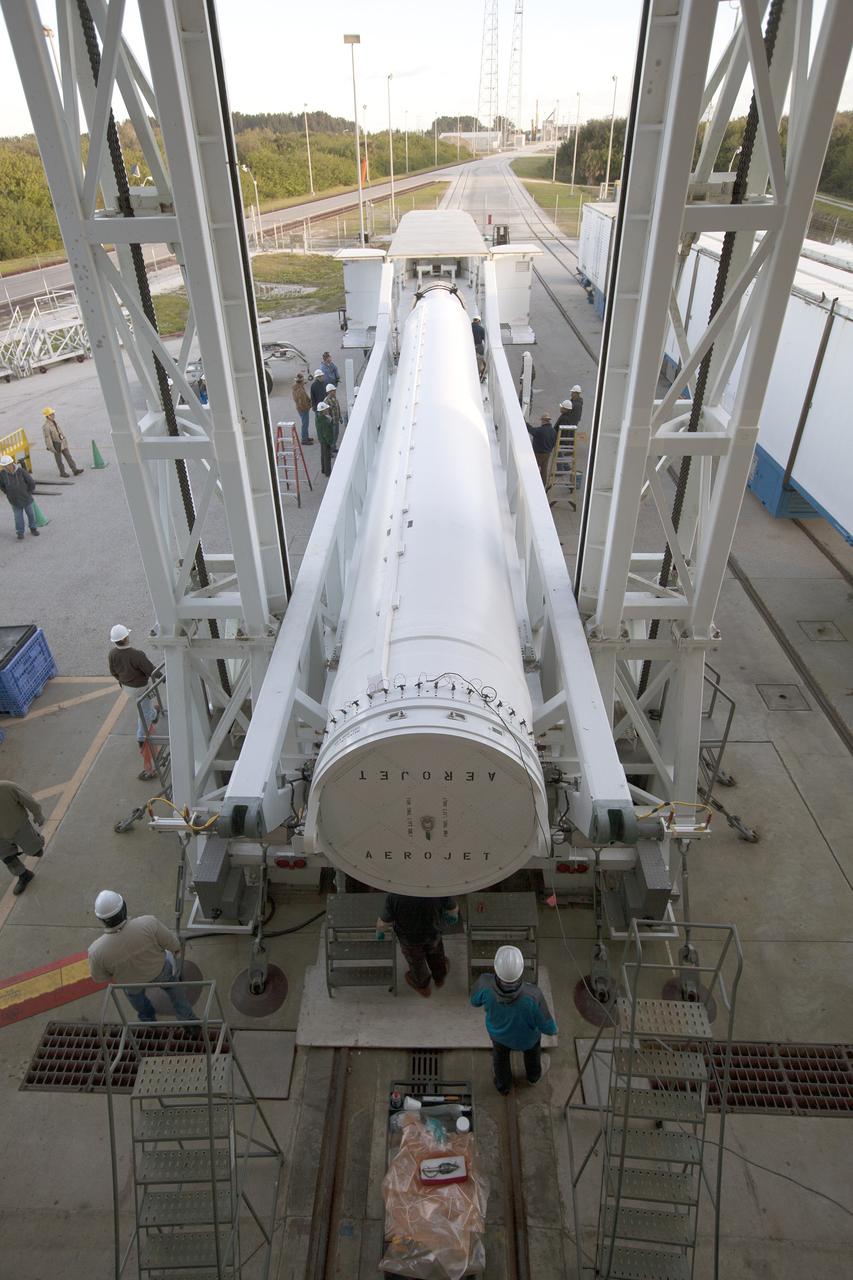
A solid rocket motor for the United Launch Alliance Atlas V rocket slated to boost NASA's Magnetospheric Multiscale mission, or MMS, arrives at the mobile service tower at Space Launch Complex 41 on Cape Canaveral Air Force Station in Florida. Four identical MMS spacecraft will study the mystery of how magnetic fields around Earth connect and disconnect, explosively releasing energy via a process known a magnetic reconnection. Launch is set for March 12. To learn more: http://www.nasa.gov/mms. Photo credit: NASA/ Kim Shiflett

A solid rocket motor for the United Launch Alliance Atlas V rocket slated to boost NASA's Magnetospheric Multiscale mission, or MMS, is lowered into position inside the mobile service tower at Space Launch Complex 41 on Cape Canaveral Air Force Station in Florida. Four identical MMS spacecraft will study the mystery of how magnetic fields around Earth connect and disconnect, explosively releasing energy via a process known a magnetic reconnection. Launch is set for March 12. To learn more: http://www.nasa.gov/mms. Photo credit: NASA/ Kim Shiflett
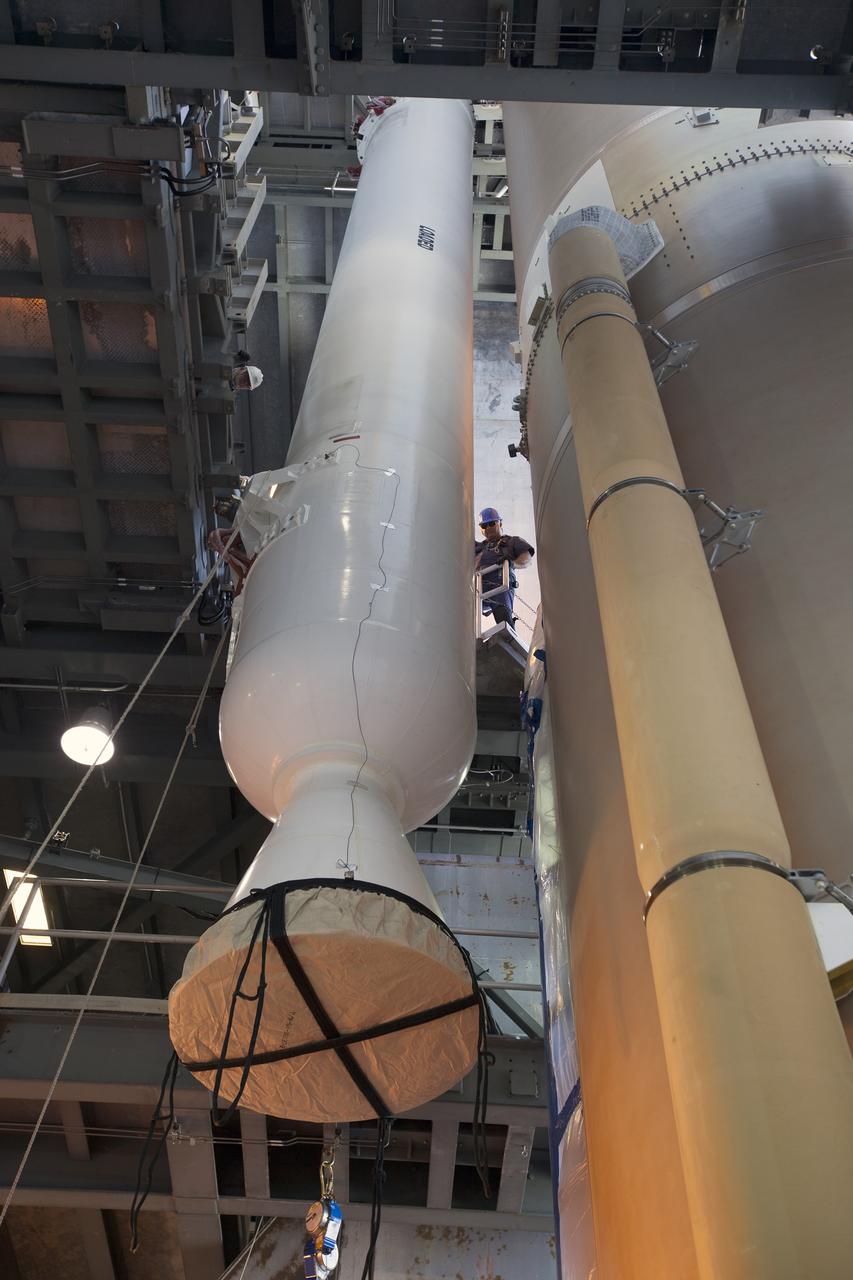
A solid rocket motor for the United Launch Alliance Atlas V rocket slated to boost NASA's Magnetospheric Multiscale mission, or MMS, is lowered into position inside the mobile service tower at Space Launch Complex 41 on Cape Canaveral Air Force Station in Florida. Four identical MMS spacecraft will study the mystery of how magnetic fields around Earth connect and disconnect, explosively releasing energy via a process known a magnetic reconnection. Launch is set for March 12. To learn more: http://www.nasa.gov/mms. Photo credit: NASA/ Kim Shiflett
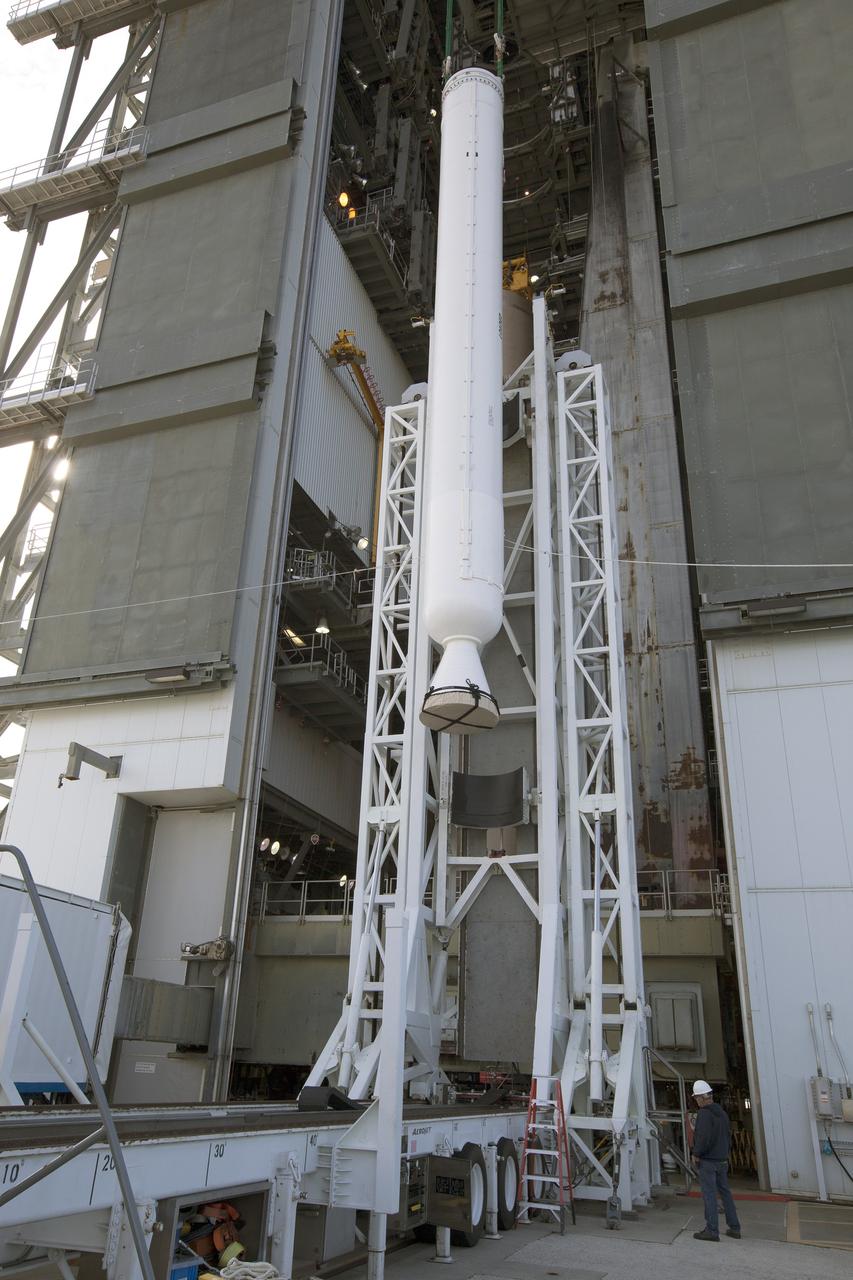
A solid rocket motor for the United Launch Alliance Atlas V rocket slated to boost NASA's Magnetospheric Multiscale mission, or MMS, is lifted at the mobile service tower at Space Launch Complex 41 on Cape Canaveral Air Force Station in Florida. Four identical MMS spacecraft will study the mystery of how magnetic fields around Earth connect and disconnect, explosively releasing energy via a process known a magnetic reconnection. Launch is set for March 12. To learn more: http://www.nasa.gov/mms. Photo credit: NASA/ Kim Shiflett
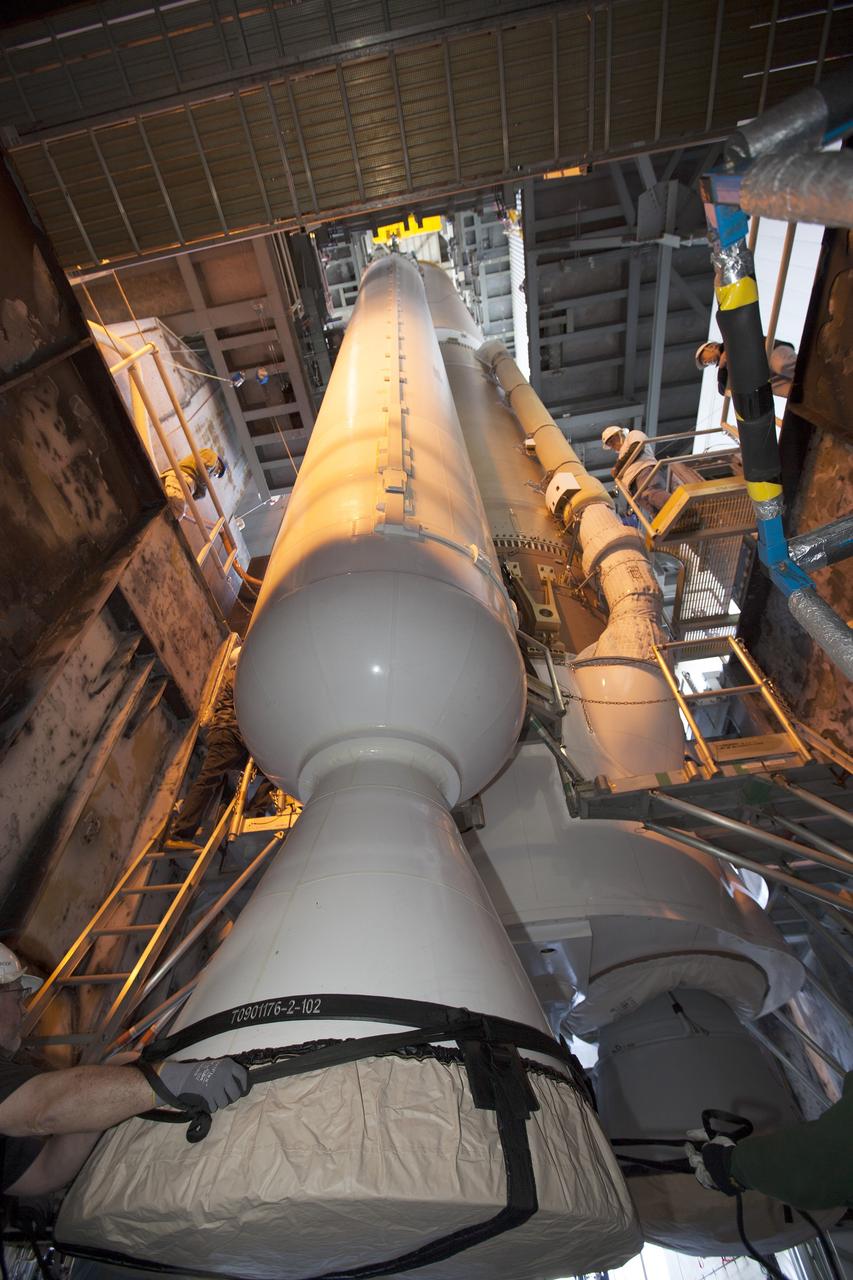
A solid rocket motor for the United Launch Alliance Atlas V rocket slated to boost NASA's Magnetospheric Multiscale mission, or MMS, is lowered into position inside the mobile service tower at Space Launch Complex 41 on Cape Canaveral Air Force Station in Florida. Four identical MMS spacecraft will study the mystery of how magnetic fields around Earth connect and disconnect, explosively releasing energy via a process known a magnetic reconnection. Launch is set for March 12. To learn more: http://www.nasa.gov/mms. Photo credit: NASA/ Kim Shiflett
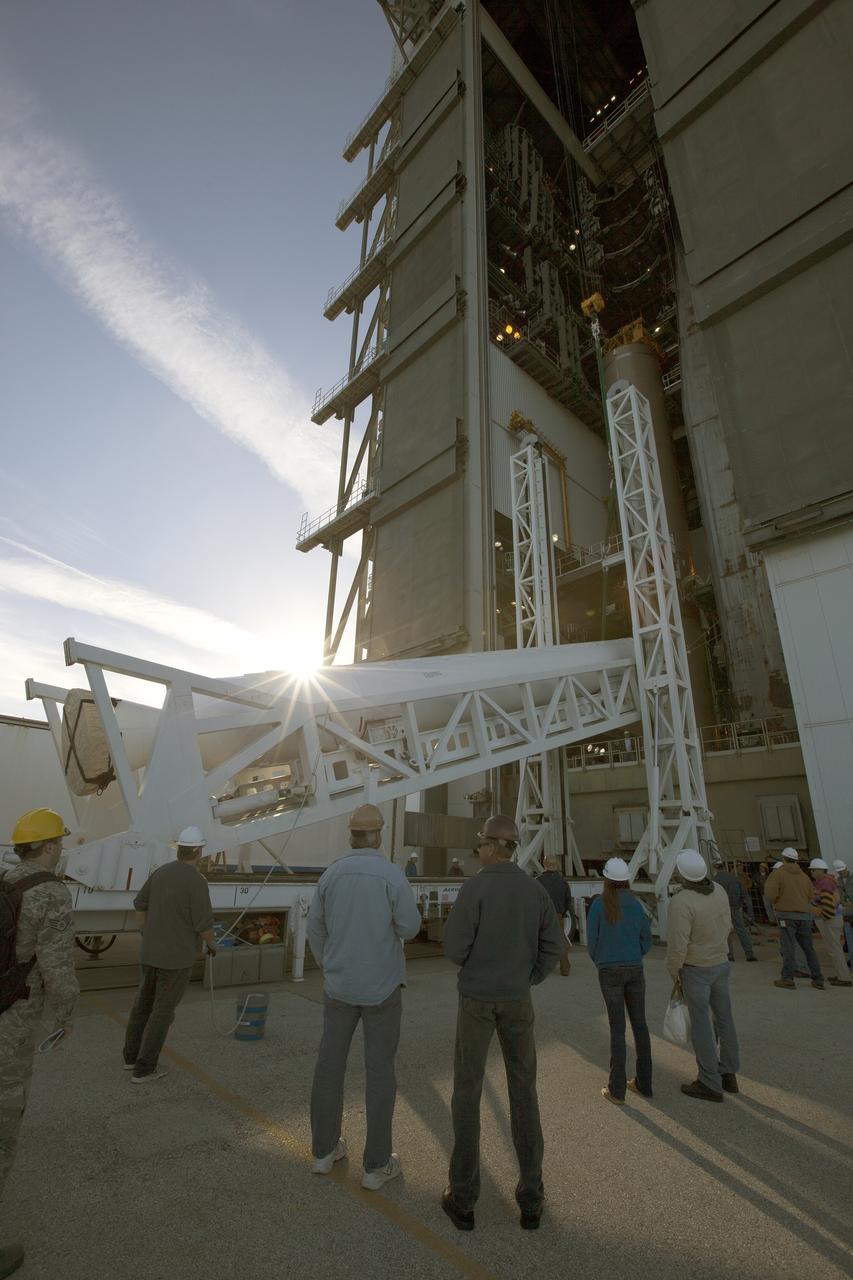
A solid rocket motor for the United Launch Alliance Atlas V rocket slated to boost NASA's Magnetospheric Multiscale mission, or MMS, is lifted at the mobile service tower at Space Launch Complex 41 on Cape Canaveral Air Force Station in Florida. Four identical MMS spacecraft will study the mystery of how magnetic fields around Earth connect and disconnect, explosively releasing energy via a process known a magnetic reconnection. Launch is set for March 12. To learn more: http://www.nasa.gov/mms. Photo credit: NASA/ Kim Shiflett
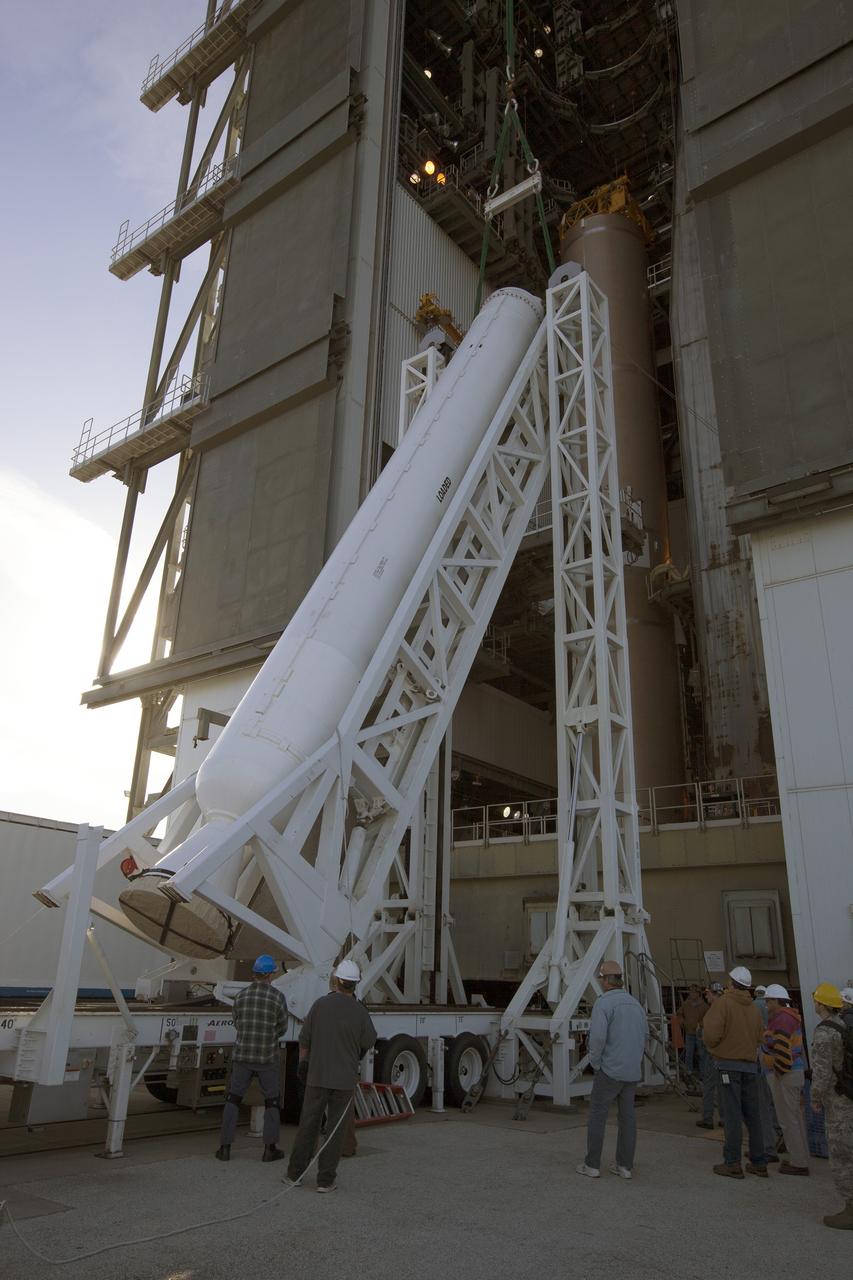
A solid rocket motor for the United Launch Alliance Atlas V rocket slated to boost NASA's Magnetospheric Multiscale mission, or MMS, is lifted at the mobile service tower at Space Launch Complex 41 on Cape Canaveral Air Force Station in Florida. Four identical MMS spacecraft will study the mystery of how magnetic fields around Earth connect and disconnect, explosively releasing energy via a process known a magnetic reconnection. Launch is set for March 12. To learn more: http://www.nasa.gov/mms. Photo credit: NASA/ Kim Shiflett
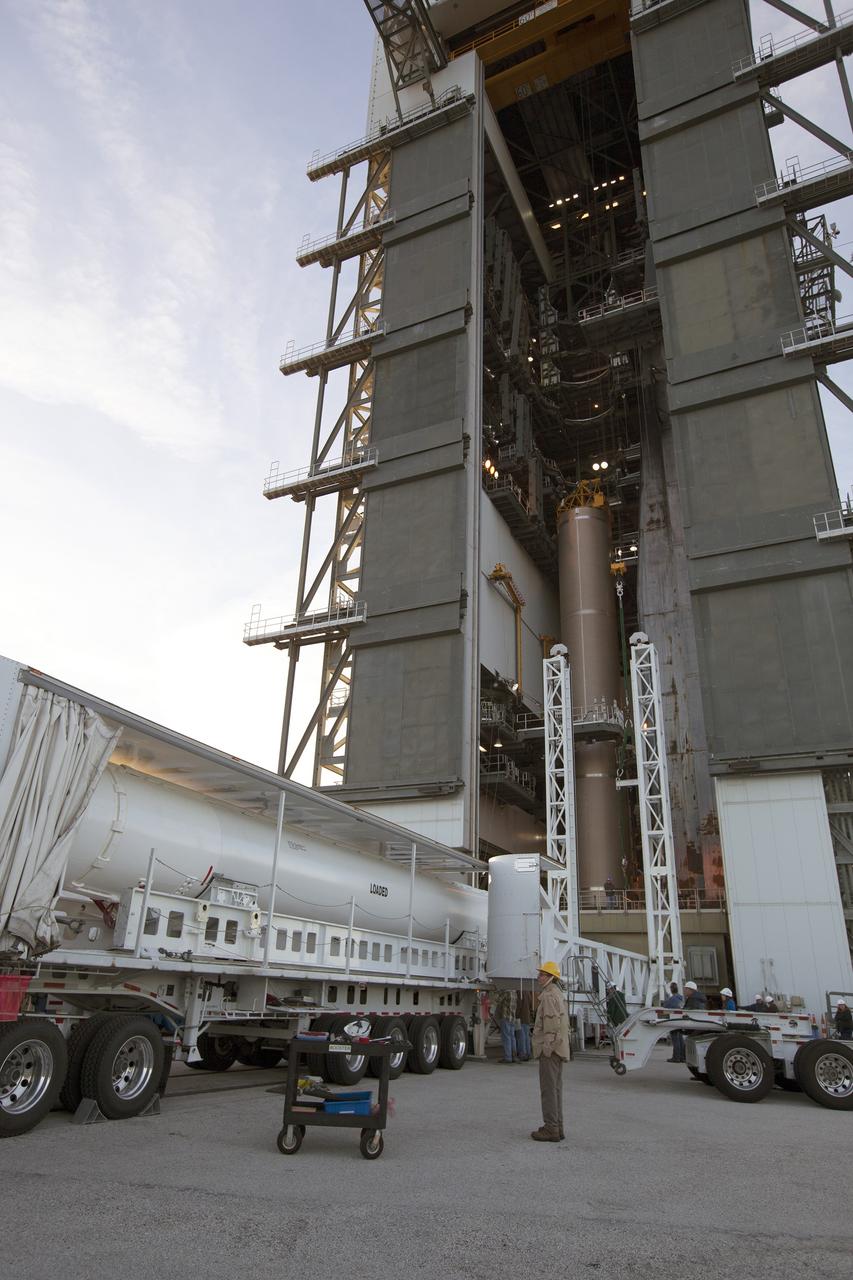
A solid rocket motor for the United Launch Alliance Atlas V rocket slated to boost NASA's Magnetospheric Multiscale mission, or MMS, arrives at the mobile service tower at Space Launch Complex 41 on Cape Canaveral Air Force Station in Florida. Four identical MMS spacecraft will study the mystery of how magnetic fields around Earth connect and disconnect, explosively releasing energy via a process known a magnetic reconnection. Launch is set for March 12. To learn more: http://www.nasa.gov/mms. Photo credit: NASA/ Kim Shiflett
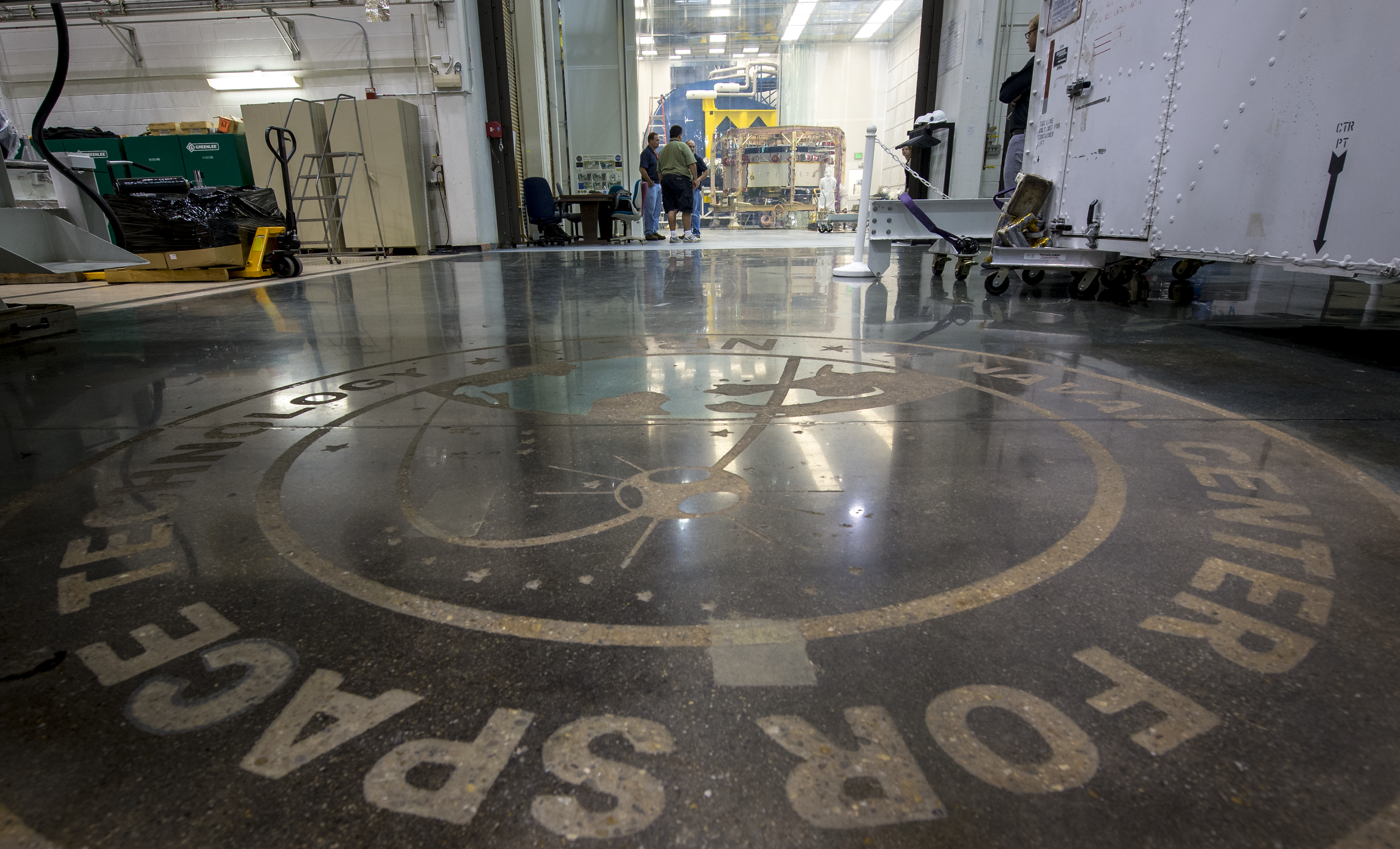
One of four Magnetospheric Multiscale (MMS) spacecraft, in the background, is seen in a cleanroom at the Naval Research Lab’s, Naval Center for Space Technology, Monday, August 4, 2014, in Washington. The Magnetospheric Multiscale, or MMS, mission will study the mystery of how magnetic fields around Earth connect and disconnect, explosively releasing energy via a process known as magnetic reconnection. The four identical spacecraft are scheduled to launch in 2015 from Cape Canaveral and will orbit around Earth in varying formations through the dynamic magnetic system surrounding our planet to provide the first three-dimensional views of the magnetic reconnection process. The goal of the STP Program is to understand the fundamental physical processes of the space environment from the sun to Earth, other planets, and the extremes of the solar system boundary. Photo Credit: (NASA/Bill Ingalls)
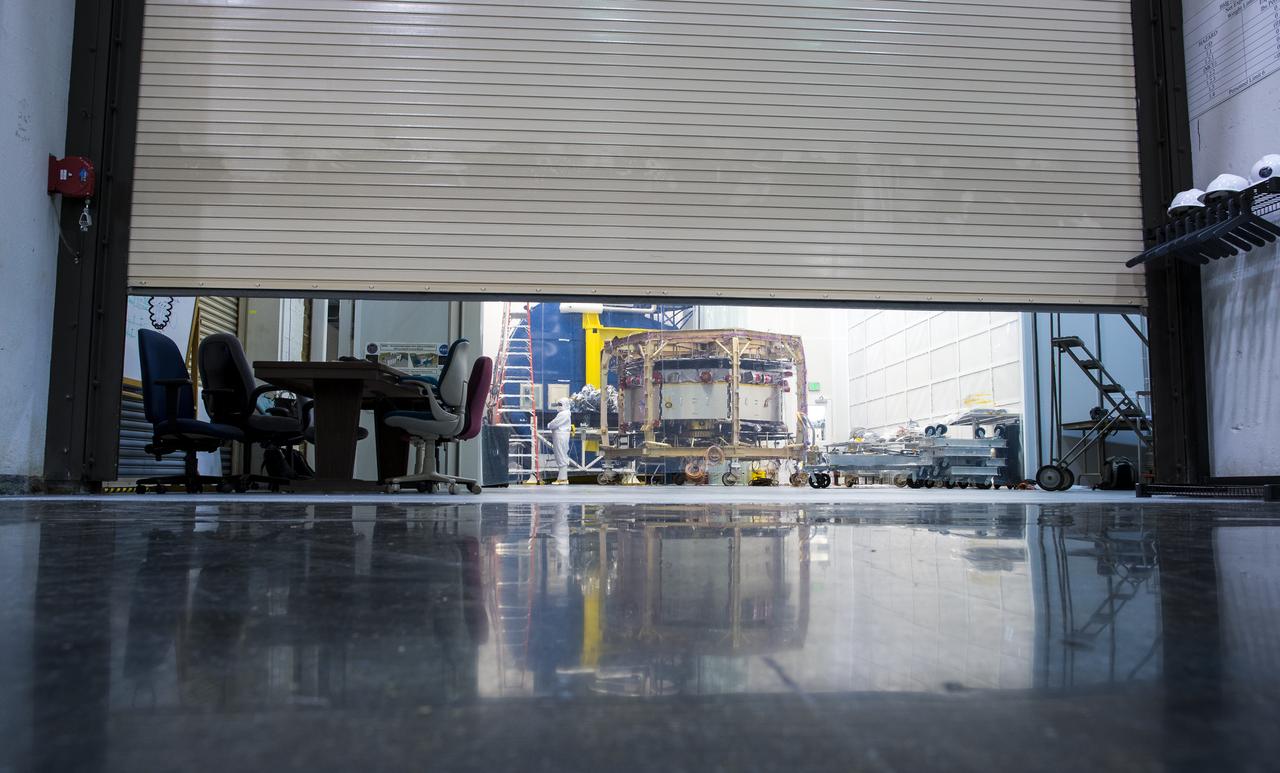
One of four Magnetospheric Multiscale (MMS) spacecraft, in the background, is seen in a cleanroom at the Naval Research Lab’s, Naval Center for Space Technology, Monday, August 4, 2014, in Washington. The Magnetospheric Multiscale, or MMS, mission will study the mystery of how magnetic fields around Earth connect and disconnect, explosively releasing energy via a process known as magnetic reconnection. The four identical spacecraft are scheduled to launch in 2015 from Cape Canaveral and will orbit around Earth in varying formations through the dynamic magnetic system surrounding our planet to provide the first three-dimensional views of the magnetic reconnection process. The goal of the STP Program is to understand the fundamental physical processes of the space environment from the sun to Earth, other planets, and the extremes of the solar system boundary. Photo Credit: (NASA/Bill Ingalls)
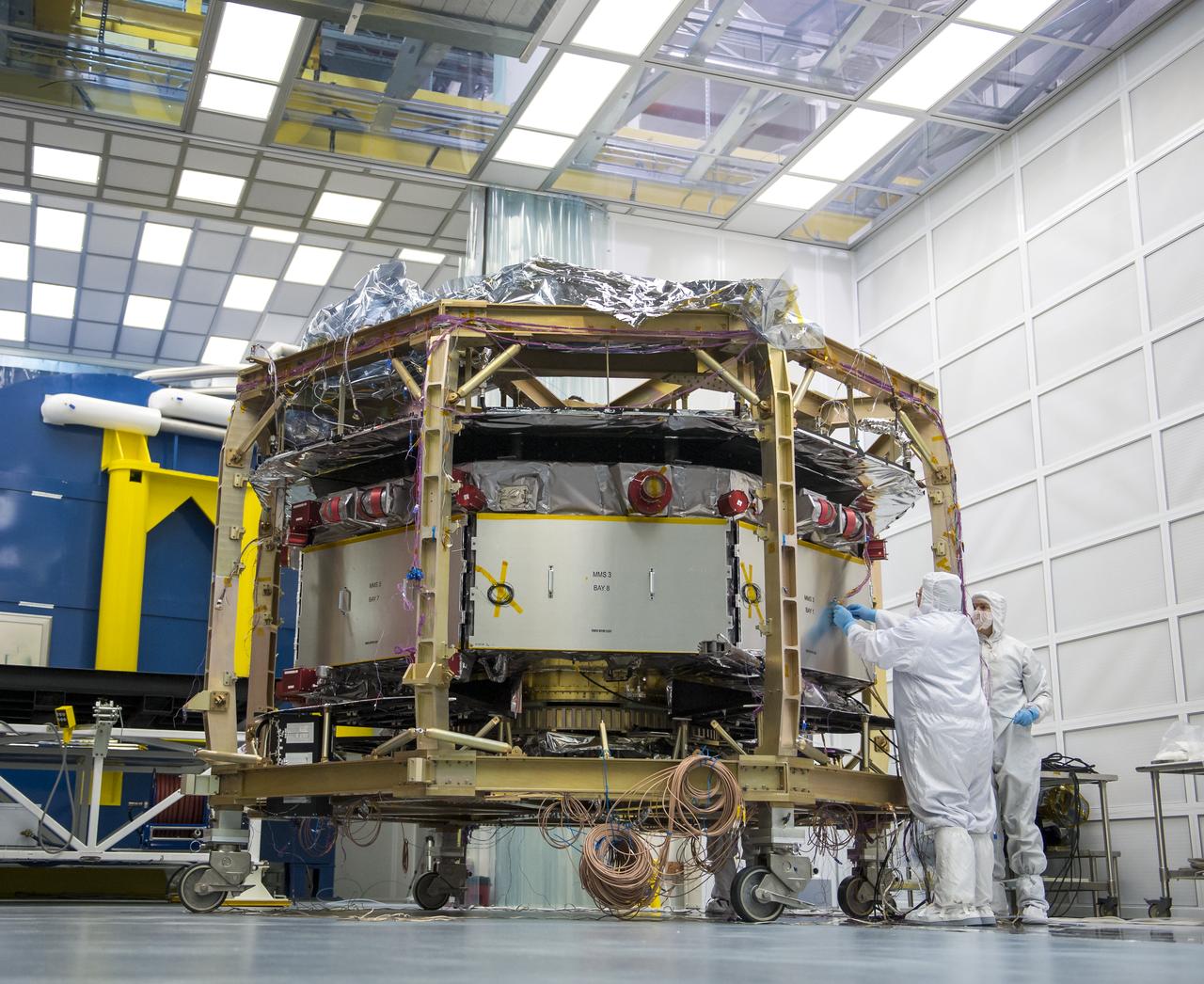
Engineers work on one of four Magnetospheric Multiscale (MMS) spacecraft in a cleanroom at the Naval Research Lab, Monday, August 4, 2014, in Washington. The Magnetospheric Multiscale, or MMS, mission will study the mystery of how magnetic fields around Earth connect and disconnect, explosively releasing energy via a process known as magnetic reconnection. The four identical spacecraft are scheduled to launch in 2015 from Cape Canaveral and will orbit around Earth in varying formations through the dynamic magnetic system surrounding our planet to provide the first three-dimensional views of the magnetic reconnection process. The goal of the STP Program is to understand the fundamental physical processes of the space environment from the sun to Earth, other planets, and the extremes of the solar system boundary. Photo Credit: (NASA/Bill Ingalls)
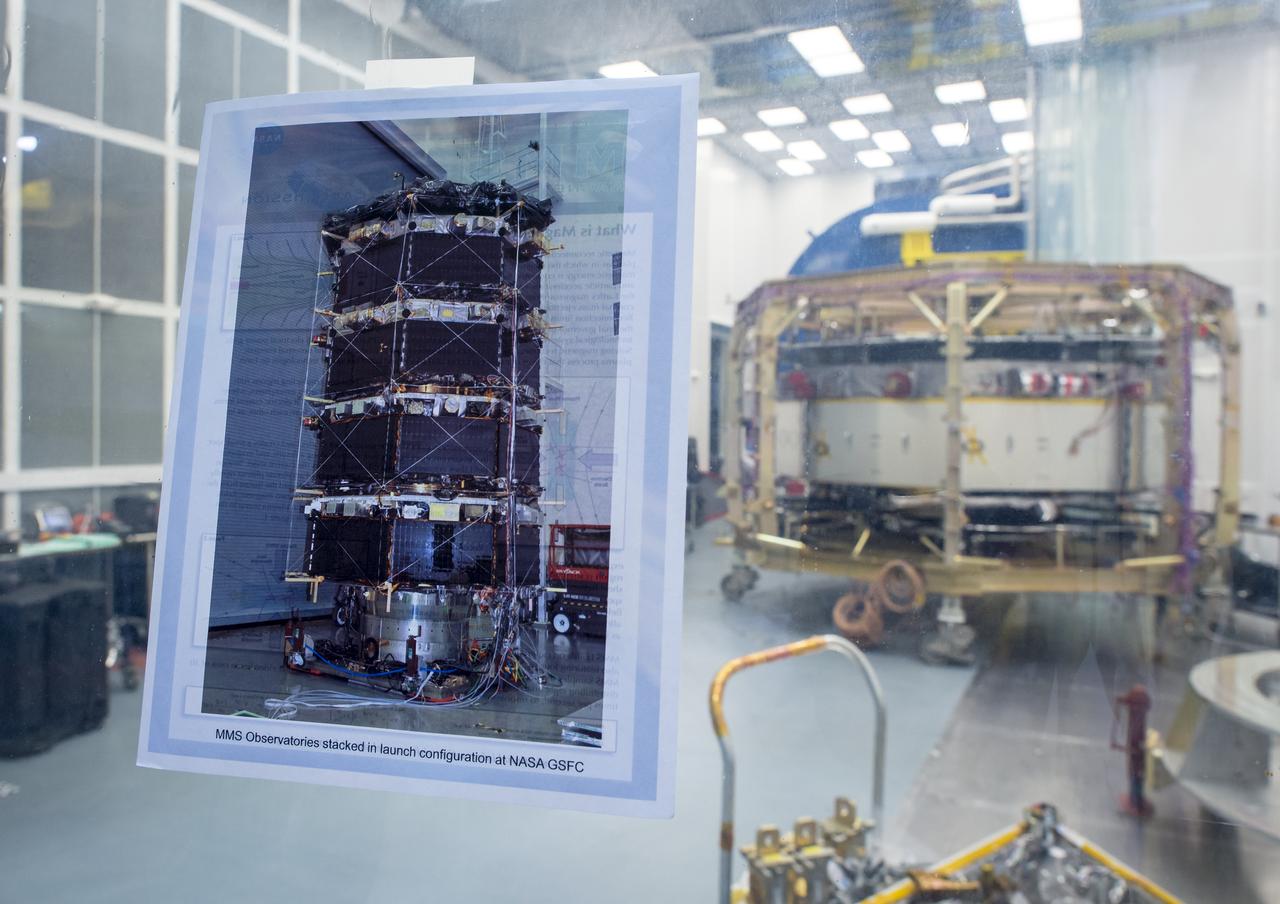
A photograph showing what all four Magnetospheric Multiscale (MMS) spacecraft look like when stacked is seen taped to the window of a Naval Research Laboratory cleanroom where one of the four spacecraft is undergoing testing, Monday, August 4, 2014, in Washington. The Magnetospheric Multiscale, or MMS, mission will study the mystery of how magnetic fields around Earth connect and disconnect, explosively releasing energy via a process known as magnetic reconnection. The four identical spacecraft are scheduled to launch in 2015 from Cape Canaveral and will orbit around Earth in varying formations through the dynamic magnetic system surrounding our planet to provide the first three-dimensional views of the magnetic reconnection process. The goal of the STP Program is to understand the fundamental physical processes of the space environment from the sun to Earth, other planets, and the extremes of the solar system boundary. Photo Credit: (NASA/Bill Ingalls)
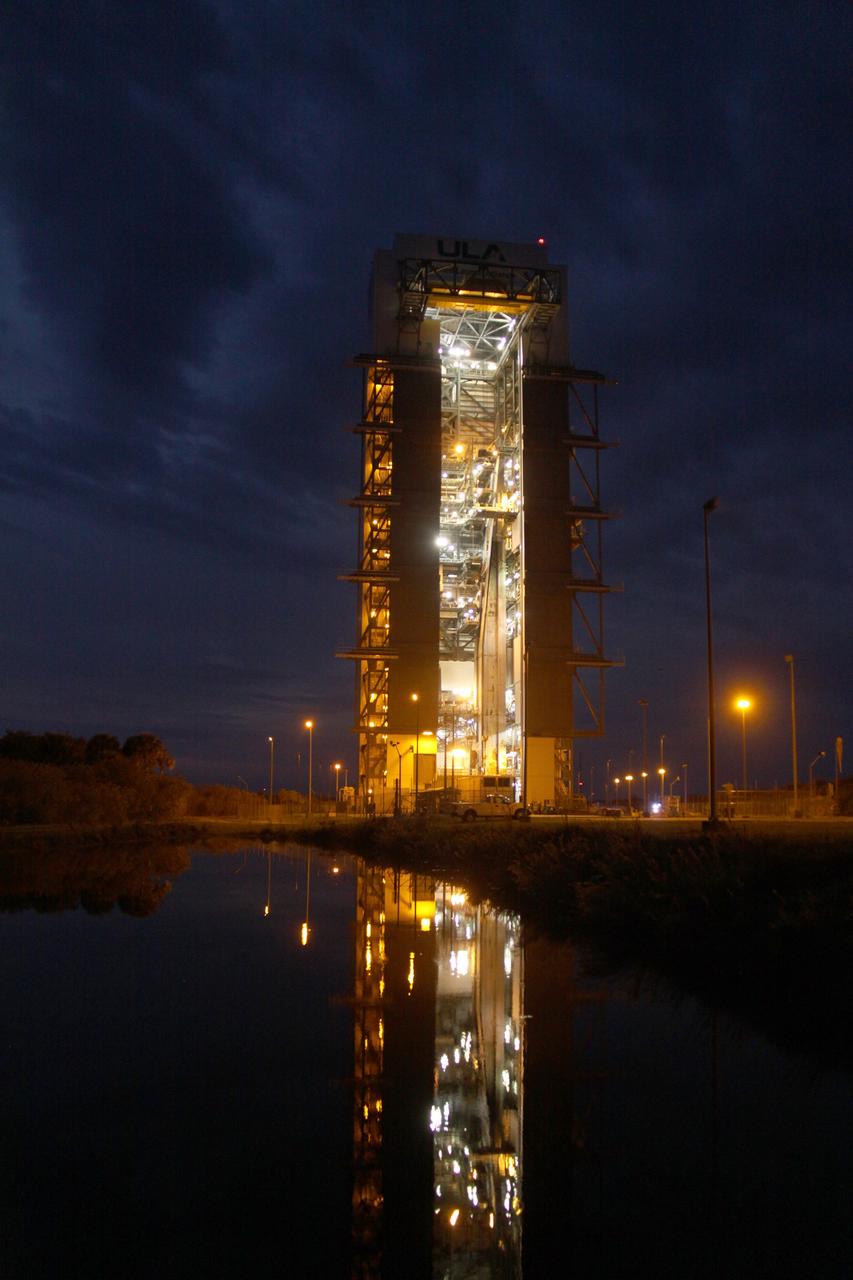
CAPE CANAVERAL, Fla. – Preparations are underway in the mobile service tower at Space Launch Complex 41 on Cape Canaveral Air Force Station in Florida for the arrival of the first stage of a United Launch Alliance Atlas V rocket from the Atlas Spaceflight Operations Center, or ASOC. The rocket will launch NASA's Magnetospheric Multiscale mission, or MMS. MMS will study the mystery of how magnetic fields around Earth connect and disconnect, explosively releasing energy via a process known a magnetic reconnection. MMS consists of four identical spacecraft that work together to provide the first three-dimensional view of this fundamental process, which occurs throughout the universe. Launch is set for March 12. To learn more about MMS, visit http://www.nasa.gov/mms. Photo credit: NASA/Jim Grossmann
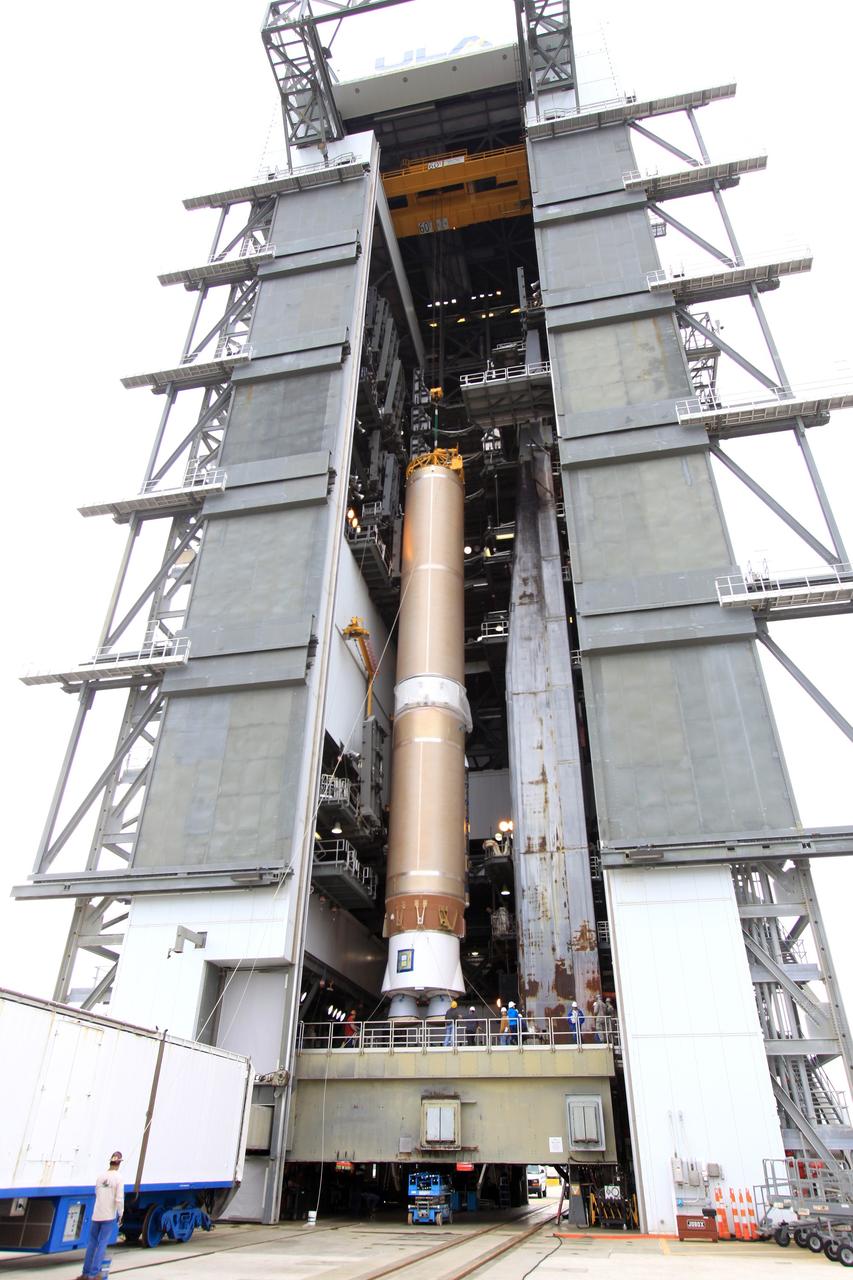
CAPE CANAVERAL, Fla. – The first stage of the United Launch Alliance Atlas V rocket for NASA's Magnetospheric Multiscale mission, or MMS, is positioned on the launch platform in the mobile service tower at Space Launch Complex 41 on Cape Canaveral Air Force Station in Florida. MMS will study the mystery of how magnetic fields around Earth connect and disconnect, explosively releasing energy via a process known a magnetic reconnection. MMS consists of four identical spacecraft that work together to provide the first three-dimensional view of this fundamental process, which occurs throughout the universe. Launch is set for March 12. To learn more about MMS, visit http://www.nasa.gov/mms. Photo credit: NASA/Jim Grossmann
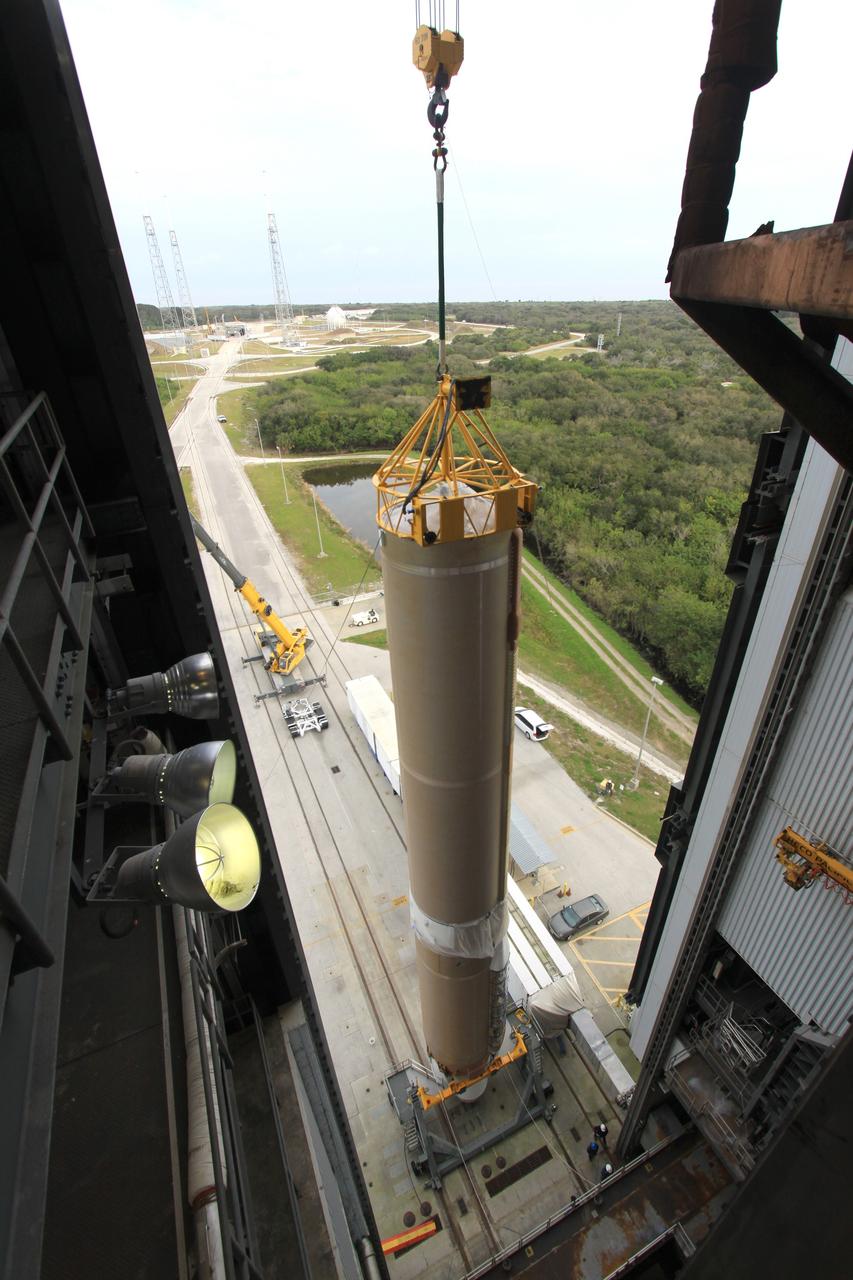
CAPE CANAVERAL, Fla. – A crane lifts the first stage of the United Launch Alliance Atlas V rocket for NASA's Magnetospheric Multiscale mission, or MMS, into the mobile service tower at Space Launch Complex 41 on Cape Canaveral Air Force Station in Florida. MMS will study the mystery of how magnetic fields around Earth connect and disconnect, explosively releasing energy via a process known a magnetic reconnection. MMS consists of four identical spacecraft that work together to provide the first three-dimensional view of this fundamental process, which occurs throughout the universe. Launch is set for March 12. To learn more about MMS, visit http://www.nasa.gov/mms. Photo credit: NASA/Jim Grossmann
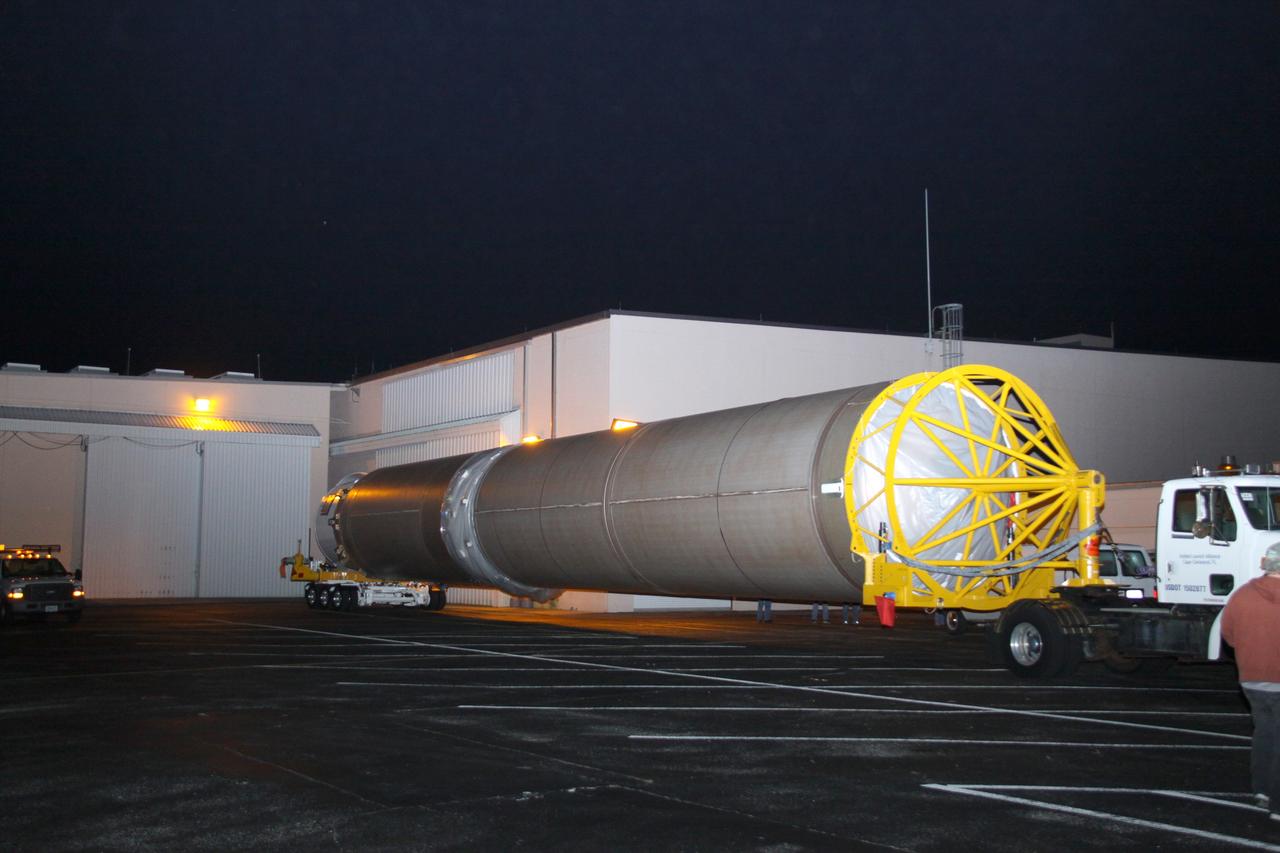
CAPE CANAVERAL, Fla. – The first stage of the United Launch Alliance Atlas V rocket for NASA's Magnetospheric Multiscale mission, or MMS, begins the short journey from the Atlas Spaceflight Operations Center, or ASOC, on Cape Canaveral Air Force Station in Florida to Space Launch Complex 41. MMS will study the mystery of how magnetic fields around Earth connect and disconnect, explosively releasing energy via a process known a magnetic reconnection. MMS consists of four identical spacecraft that work together to provide the first three-dimensional view of this fundamental process, which occurs throughout the universe. Launch is set for March 12. To learn more about MMS, visit http://www.nasa.gov/mms. Photo credit: NASA/Jim Grossmann
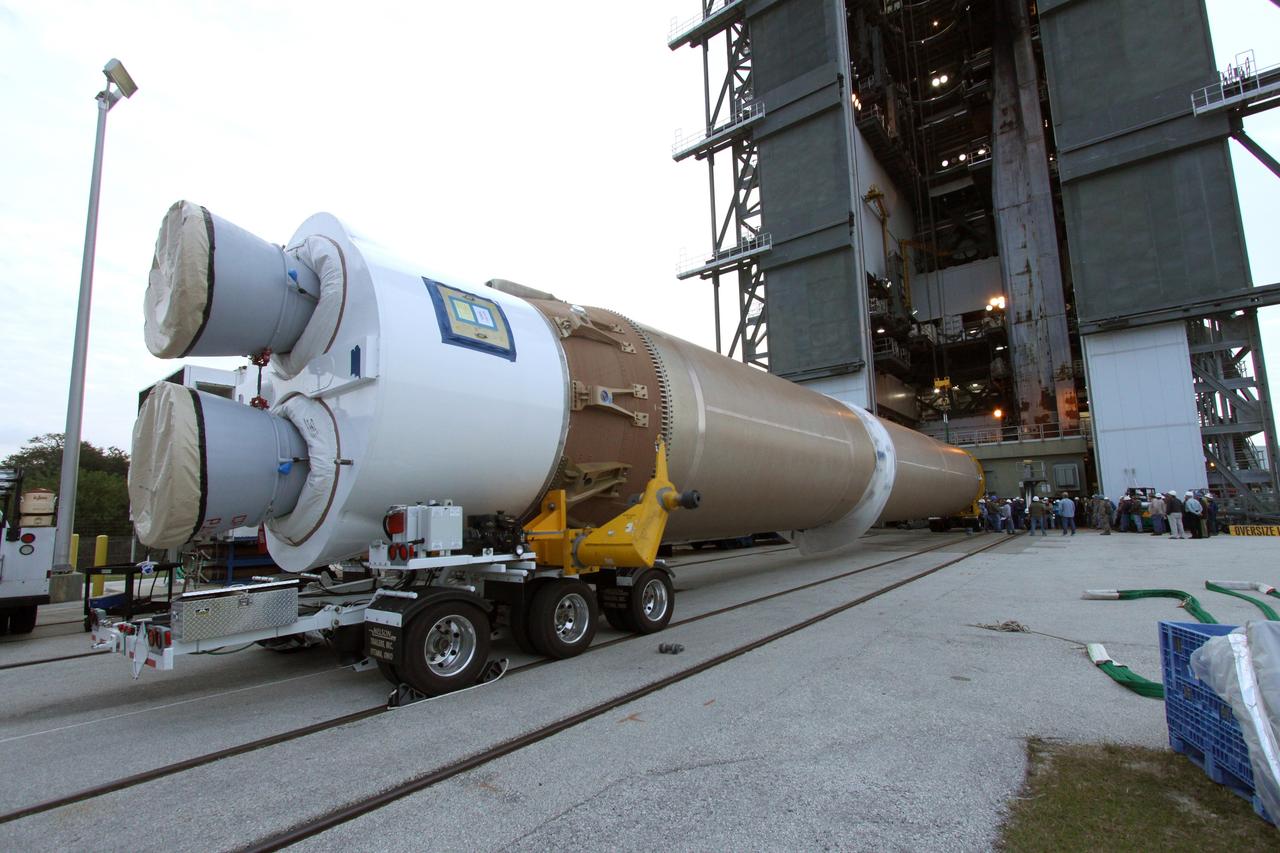
CAPE CANAVERAL, Fla. – Operations are underway at Space Launch Complex 41 on Cape Canaveral Air Force Station in Florida to lift the newly delivered first stage of a United Launch Alliance Atlas V rocket into the mobile service tower. The rocket will launch NASA's Magnetospheric Multiscale mission, or MMS. MMS will study the mystery of how magnetic fields around Earth connect and disconnect, explosively releasing energy via a process known a magnetic reconnection. MMS consists of four identical spacecraft that work together to provide the first three-dimensional view of this fundamental process, which occurs throughout the universe. Launch is set for March 12. To learn more about MMS, visit http://www.nasa.gov/mms. Photo credit: NASA/Jim Grossmann
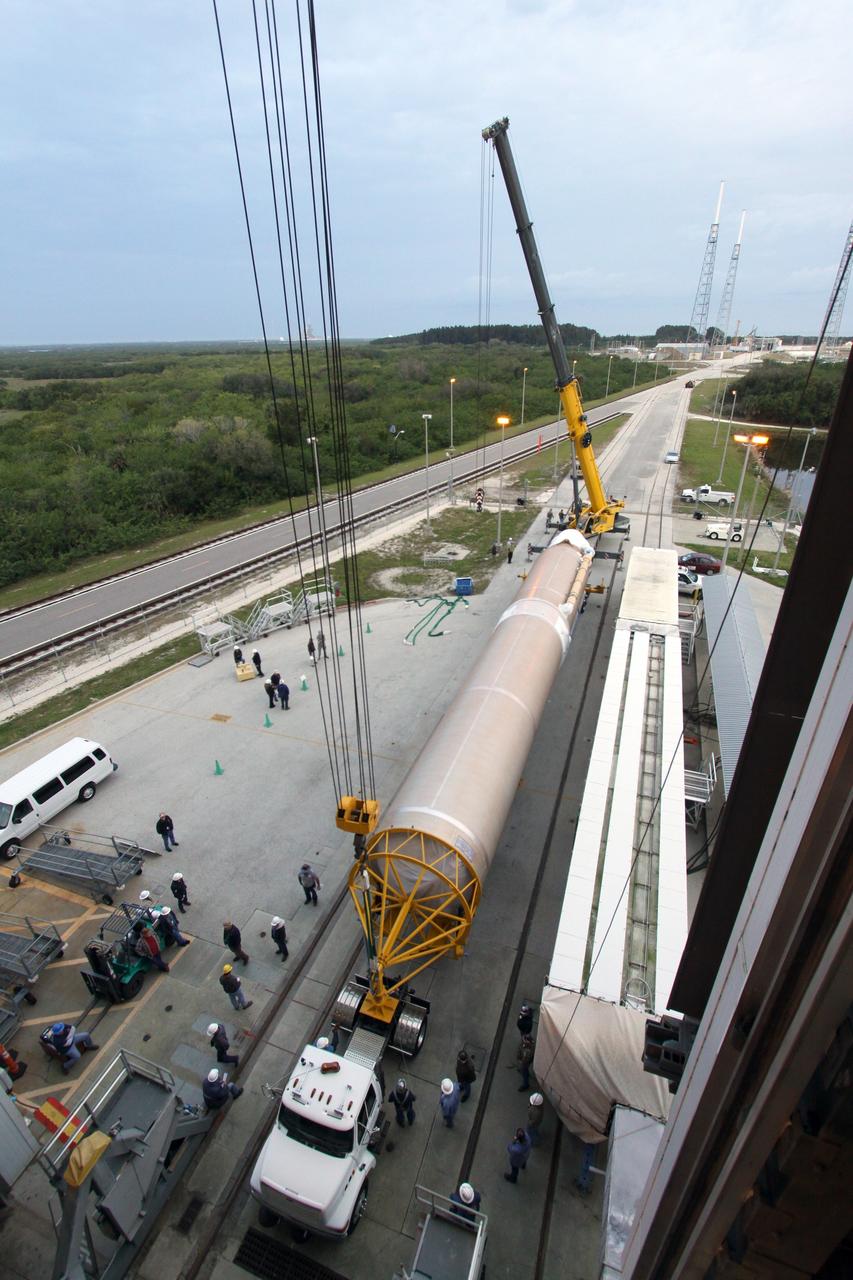
CAPE CANAVERAL, Fla. – Operations are underway at Space Launch Complex 41 on Cape Canaveral Air Force Station in Florida to lift the newly delivered first stage of a United Launch Alliance Atlas V rocket into the mobile service tower. The rocket will launch NASA's Magnetospheric Multiscale mission, or MMS. MMS will study the mystery of how magnetic fields around Earth connect and disconnect, explosively releasing energy via a process known a magnetic reconnection. MMS consists of four identical spacecraft that work together to provide the first three-dimensional view of this fundamental process, which occurs throughout the universe. Launch is set for March 12. To learn more about MMS, visit http://www.nasa.gov/mms. Photo credit: NASA/Jim Grossmann
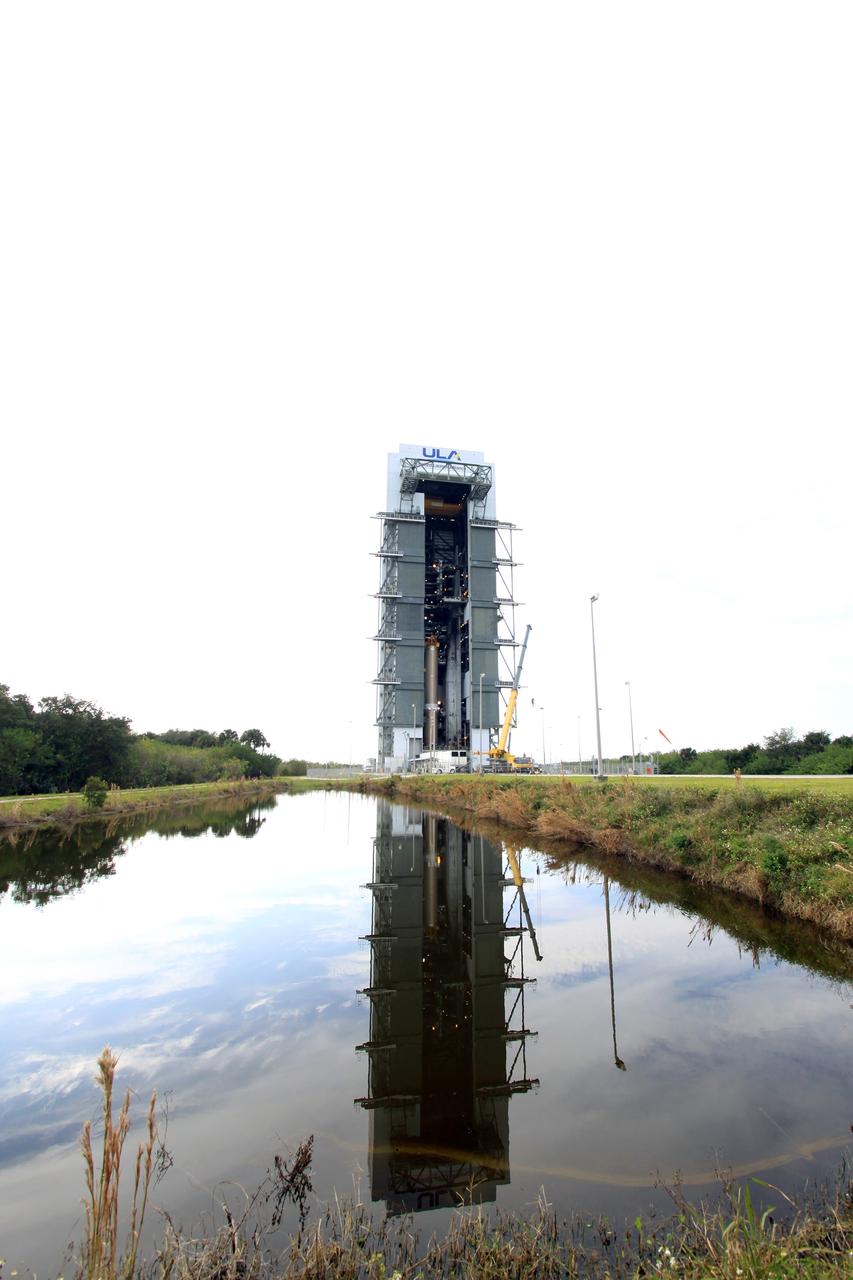
CAPE CANAVERAL, Fla. – The first stage of the United Launch Alliance Atlas V rocket for NASA's Magnetospheric Multiscale mission, or MMS, is in position on the launch platform in the mobile service tower at Space Launch Complex 41 on Cape Canaveral Air Force Station in Florida. MMS will study the mystery of how magnetic fields around Earth connect and disconnect, explosively releasing energy via a process known a magnetic reconnection. MMS consists of four identical spacecraft that work together to provide the first three-dimensional view of this fundamental process, which occurs throughout the universe. Launch is set for March 12. To learn more about MMS, visit http://www.nasa.gov/mms. Photo credit: NASA/Jim Grossmann
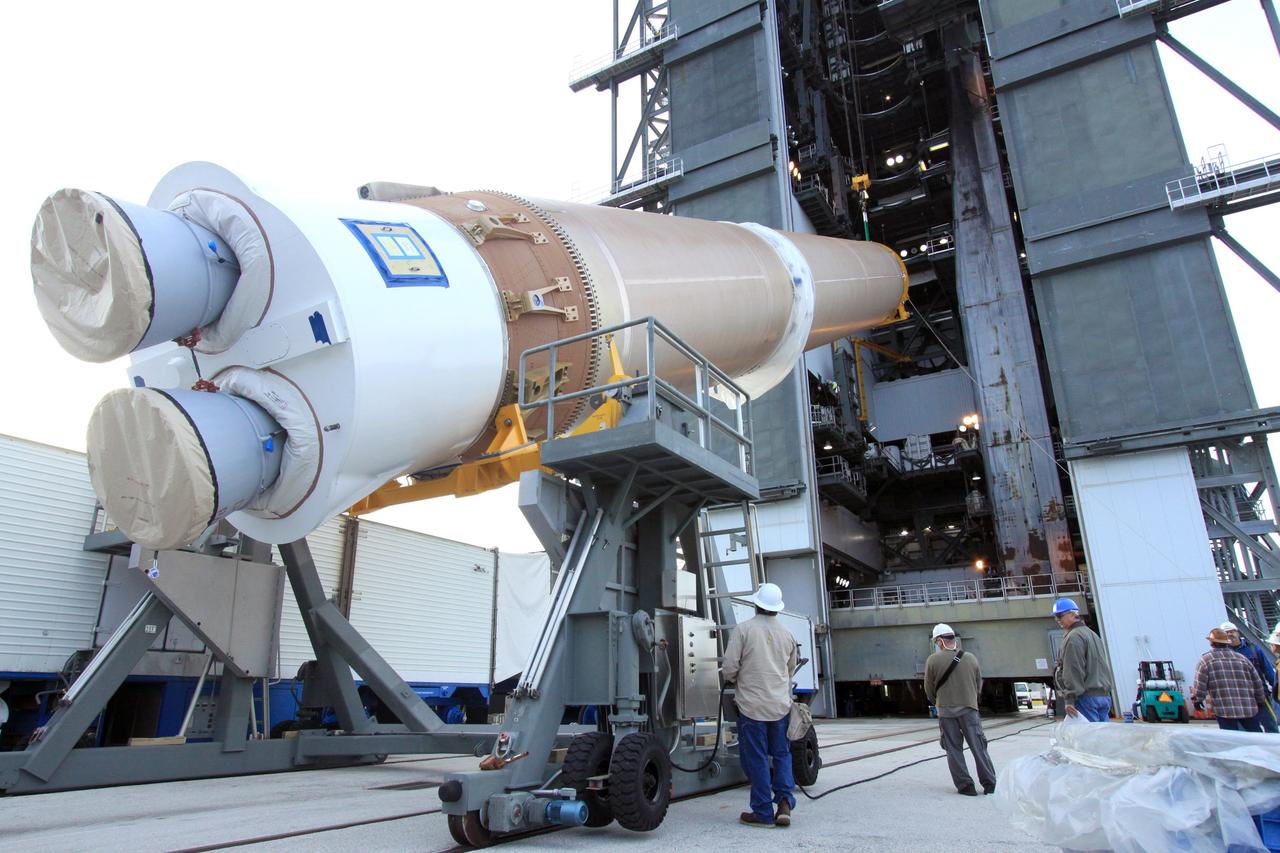
CAPE CANAVERAL, Fla. – Workers supervise the lift of the first stage of the United Launch Alliance Atlas V rocket for NASA's Magnetospheric Multiscale mission, or MMS, into the mobile service tower at Space Launch Complex 41 on Cape Canaveral Air Force Station in Florida. MMS will study the mystery of how magnetic fields around Earth connect and disconnect, explosively releasing energy via a process known a magnetic reconnection. MMS consists of four identical spacecraft that work together to provide the first three-dimensional view of this fundamental process, which occurs throughout the universe. Launch is set for March 12. To learn more about MMS, visit http://www.nasa.gov/mms. Photo credit: NASA/Jim Grossmann
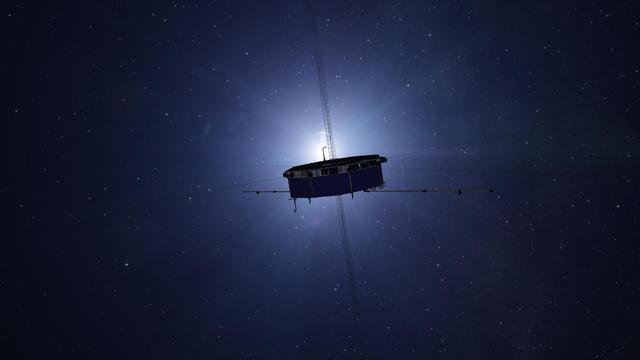
MMS Spacecraft Animation The Magnetospheric Multiscale (MMS) mission is a Solar Terrestrial Probes mission comprising four identically instrumented spacecraft that will use Earth's magnetosphere as a laboratory to study the microphysics of three fundamental plasma processes: magnetic reconnection, energetic particle acceleration, and turbulence. These processes occur in all astrophysical plasma systems but can be studied in situ only in our solar system and most efficiently only in Earth's magnetosphere, where they control the dynamics of the geospace environment and play an important role in the processes known as "space weather." Learn more about MMS at <a href="http://www.nasa.gov/mms" rel="nofollow">www.nasa.gov/mms</a> Learn more about MMS at <a href="http://www.nasa.gov/mms" rel="nofollow">www.nasa.gov/mms</a> Credit NASA/Chris Gunn The Magnetospheric Multiscale, or MMS, will study how the sun and the Earth's magnetic fields connect and disconnect, an explosive process that can accelerate particles through space to nearly the speed of light. This process is called magnetic reconnection and can occur throughout all space. <b><a href="http://www.nasa.gov/audience/formedia/features/MP_Photo_Guidelines.html" rel="nofollow">NASA image use policy.</a></b> <b><a href="http://www.nasa.gov/centers/goddard/home/index.html" rel="nofollow">NASA Goddard Space Flight Center</a></b> enables NASA’s mission through four scientific endeavors: Earth Science, Heliophysics, Solar System Exploration, and Astrophysics. Goddard plays a leading role in NASA’s accomplishments by contributing compelling scientific knowledge to advance the Agency’s mission. <b>Follow us on <a href="http://twitter.com/NASAGoddardPix" rel="nofollow">Twitter</a></b> <b>Like us on <a href="http://www.facebook.com/pages/Greenbelt-MD/NASA-Goddard/395013845897?ref=tsd" rel="nofollow">Facebook</a></b> <b>Find us on <a href="http://instagram.com/nasagoddard?vm=grid" rel="nofollow">Instagram</a></b>
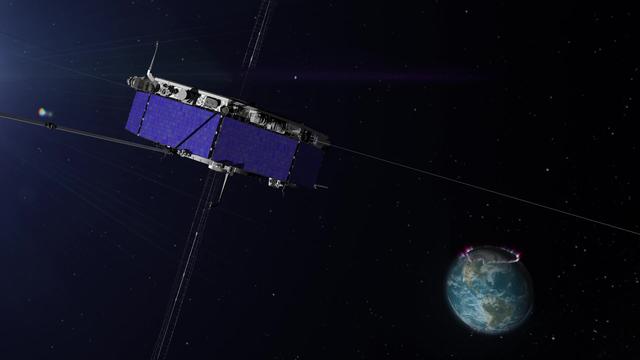
MMS Spacecraft Animation The Magnetospheric Multiscale (MMS) mission is a Solar Terrestrial Probes mission comprising four identically instrumented spacecraft that will use Earth's magnetosphere as a laboratory to study the microphysics of three fundamental plasma processes: magnetic reconnection, energetic particle acceleration, and turbulence. These processes occur in all astrophysical plasma systems but can be studied in situ only in our solar system and most efficiently only in Earth's magnetosphere, where they control the dynamics of the geospace environment and play an important role in the processes known as "space weather." Learn more about MMS at <a href="http://www.nasa.gov/mms" rel="nofollow">www.nasa.gov/mms</a> Learn more about MMS at <a href="http://www.nasa.gov/mms" rel="nofollow">www.nasa.gov/mms</a> Credit NASA/Goddard The Magnetospheric Multiscale, or MMS, will study how the sun and the Earth's magnetic fields connect and disconnect, an explosive process that can accelerate particles through space to nearly the speed of light. This process is called magnetic reconnection and can occur throughout all space. <b><a href="http://www.nasa.gov/audience/formedia/features/MP_Photo_Guidelines.html" rel="nofollow">NASA image use policy.</a></b> <b><a href="http://www.nasa.gov/centers/goddard/home/index.html" rel="nofollow">NASA Goddard Space Flight Center</a></b> enables NASA’s mission through four scientific endeavors: Earth Science, Heliophysics, Solar System Exploration, and Astrophysics. Goddard plays a leading role in NASA’s accomplishments by contributing compelling scientific knowledge to advance the Agency’s mission. <b>Follow us on <a href="http://twitter.com/NASAGoddardPix" rel="nofollow">Twitter</a></b> <b>Like us on <a href="http://www.facebook.com/pages/Greenbelt-MD/NASA-Goddard/395013845897?ref=tsd" rel="nofollow">Facebook</a></b> <b>Find us on <a href="http://instagram.com/nasagoddard?vm=grid" rel="nofollow">Instagram</a></b>
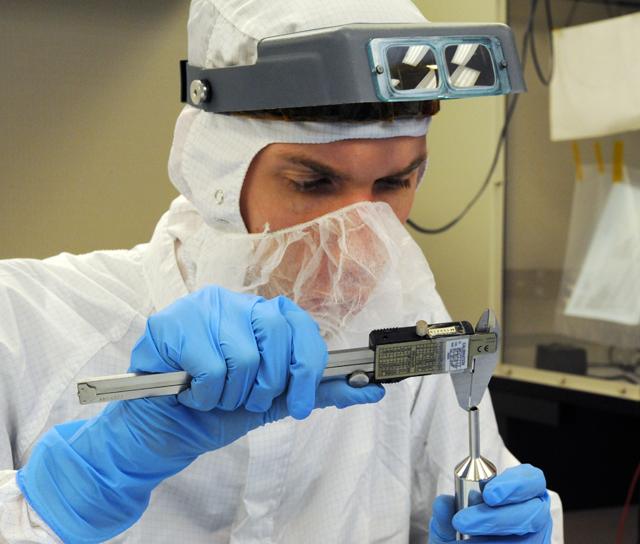
Propulsion engineer measures the flight filters during the receiving inspection. Learn more about MMS at <a href="http://www.nasa.gov/mms" rel="nofollow">www.nasa.gov/mms</a> Credit NASA/Goddard The Magnetospheric Multiscale, or MMS, will study how the sun and the Earth's magnetic fields connect and disconnect, an explosive process that can accelerate particles through space to nearly the speed of light. This process is called magnetic reconnection and can occur throughout all space. <b><a href="http://www.nasa.gov/audience/formedia/features/MP_Photo_Guidelines.html" rel="nofollow">NASA image use policy.</a></b> <b><a href="http://www.nasa.gov/centers/goddard/home/index.html" rel="nofollow">NASA Goddard Space Flight Center</a></b> enables NASA’s mission through four scientific endeavors: Earth Science, Heliophysics, Solar System Exploration, and Astrophysics. Goddard plays a leading role in NASA’s accomplishments by contributing compelling scientific knowledge to advance the Agency’s mission. <b>Follow us on <a href="http://twitter.com/NASAGoddardPix" rel="nofollow">Twitter</a></b> <b>Like us on <a href="http://www.facebook.com/pages/Greenbelt-MD/NASA-Goddard/395013845897?ref=tsd" rel="nofollow">Facebook</a></b> <b>Find us on <a href="http://instagram.com/nasagoddard?vm=grid" rel="nofollow">Instagram</a></b>
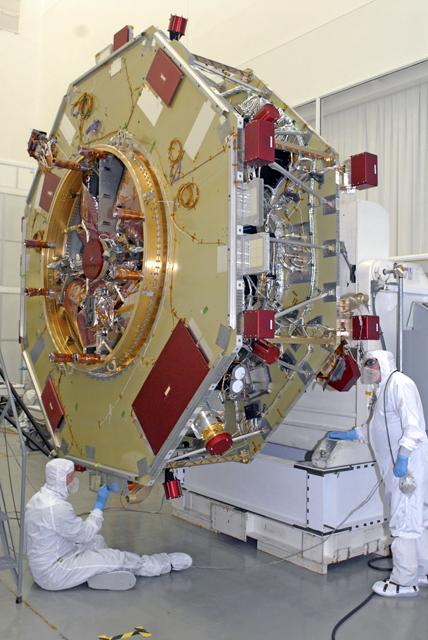
Observatory #1 is shown here on the Ransome table, tilted in a vertical position to provide better access for the engineers and technicians. Learn more about MMS at <a href="http://www.nasa.gov/mms" rel="nofollow">www.nasa.gov/mms</a> Credit NASA/Goddard The Magnetospheric Multiscale, or MMS, will study how the sun and the Earth's magnetic fields connect and disconnect, an explosive process that can accelerate particles through space to nearly the speed of light. This process is called magnetic reconnection and can occur throughout all space. <b><a href="http://www.nasa.gov/audience/formedia/features/MP_Photo_Guidelines.html" rel="nofollow">NASA image use policy.</a></b> <b><a href="http://www.nasa.gov/centers/goddard/home/index.html" rel="nofollow">NASA Goddard Space Flight Center</a></b> enables NASA’s mission through four scientific endeavors: Earth Science, Heliophysics, Solar System Exploration, and Astrophysics. Goddard plays a leading role in NASA’s accomplishments by contributing compelling scientific knowledge to advance the Agency’s mission. <b>Follow us on <a href="http://twitter.com/NASAGoddardPix" rel="nofollow">Twitter</a></b> <b>Like us on <a href="http://www.facebook.com/pages/Greenbelt-MD/NASA-Goddard/395013845897?ref=tsd" rel="nofollow">Facebook</a></b> <b>Find us on <a href="http://instagram.com/nasagoddard?vm=grid" rel="nofollow">Instagram</a></b>
MMS Four Separate – View of all four spacecraft in the MMS Cleanroom getting prepared for stacking operations. Learn more about MMS at <a href="http://www.nasa.gov/mms" rel="nofollow">www.nasa.gov/mms</a> Credit NASA/Chris Gunn The Magnetospheric Multiscale, or MMS, will study how the sun and the Earth's magnetic fields connect and disconnect, an explosive process that can accelerate particles through space to nearly the speed of light. This process is called magnetic reconnection and can occur throughout all space. <b><a href="http://www.nasa.gov/audience/formedia/features/MP_Photo_Guidelines.html" rel="nofollow">NASA image use policy.</a></b> <b><a href="http://www.nasa.gov/centers/goddard/home/index.html" rel="nofollow">NASA Goddard Space Flight Center</a></b> enables NASA’s mission through four scientific endeavors: Earth Science, Heliophysics, Solar System Exploration, and Astrophysics. Goddard plays a leading role in NASA’s accomplishments by contributing compelling scientific knowledge to advance the Agency’s mission. <b>Follow us on <a href="http://twitter.com/NASAGoddardPix" rel="nofollow">Twitter</a></b> <b>Like us on <a href="http://www.facebook.com/pages/Greenbelt-MD/NASA-Goddard/395013845897?ref=tsd" rel="nofollow">Facebook</a></b> <b>Find us on <a href="http://instagram.com/nasagoddard?vm=grid" rel="nofollow">Instagram</a></b>
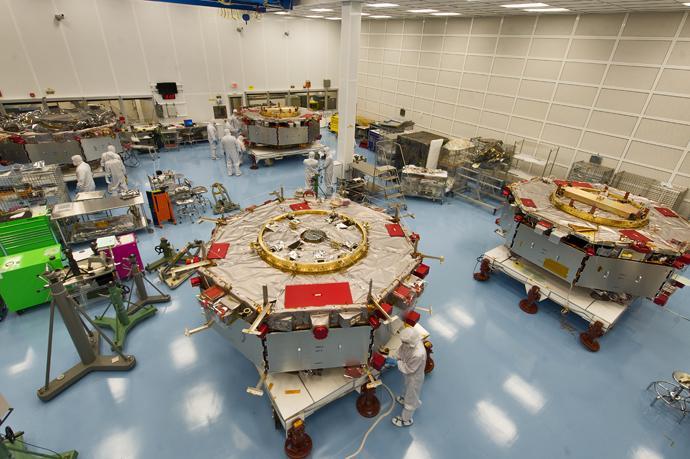
MMS Four Separate – View of all four spacecraft in the MMS Cleanroom getting prepared for stacking operations. Learn more about MMS at <a href="http://www.nasa.gov/mms" rel="nofollow">www.nasa.gov/mms</a> Credit NASA/Chris Gunn The Magnetospheric Multiscale, or MMS, will study how the sun and the Earth's magnetic fields connect and disconnect, an explosive process that can accelerate particles through space to nearly the speed of light. This process is called magnetic reconnection and can occur throughout all space. <b><a href="http://www.nasa.gov/audience/formedia/features/MP_Photo_Guidelines.html" rel="nofollow">NASA image use policy.</a></b> <b><a href="http://www.nasa.gov/centers/goddard/home/index.html" rel="nofollow">NASA Goddard Space Flight Center</a></b> enables NASA’s mission through four scientific endeavors: Earth Science, Heliophysics, Solar System Exploration, and Astrophysics. Goddard plays a leading role in NASA’s accomplishments by contributing compelling scientific knowledge to advance the Agency’s mission. <b>Follow us on <a href="http://twitter.com/NASAGoddardPix" rel="nofollow">Twitter</a></b> <b>Like us on <a href="http://www.facebook.com/pages/Greenbelt-MD/NASA-Goddard/395013845897?ref=tsd" rel="nofollow">Facebook</a></b> <b>Find us on <a href="http://instagram.com/nasagoddard?vm=grid" rel="nofollow">Instagram</a></b>
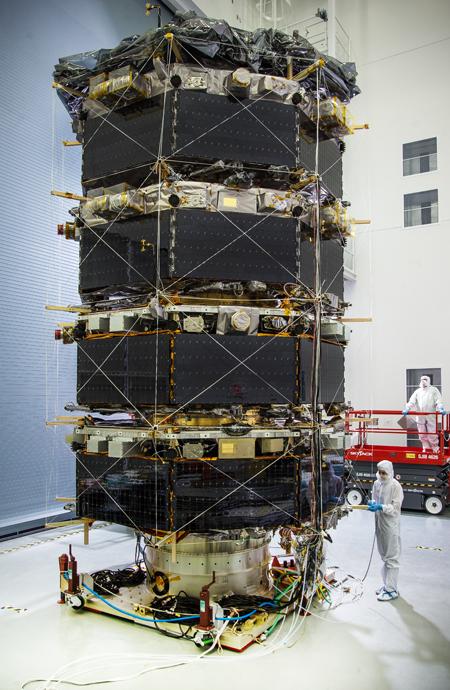
MMS Stacked – View of the fully stacked MMS prior to being bagged for vibration tests. Learn more about MMS at <a href="http://www.nasa.gov/mms" rel="nofollow">www.nasa.gov/mms</a> Credit NASA/Chris Gunn The Magnetospheric Multiscale, or MMS, will study how the sun and the Earth's magnetic fields connect and disconnect, an explosive process that can accelerate particles through space to nearly the speed of light. This process is called magnetic reconnection and can occur throughout all space. <b><a href="http://www.nasa.gov/audience/formedia/features/MP_Photo_Guidelines.html" rel="nofollow">NASA image use policy.</a></b> <b><a href="http://www.nasa.gov/centers/goddard/home/index.html" rel="nofollow">NASA Goddard Space Flight Center</a></b> enables NASA’s mission through four scientific endeavors: Earth Science, Heliophysics, Solar System Exploration, and Astrophysics. Goddard plays a leading role in NASA’s accomplishments by contributing compelling scientific knowledge to advance the Agency’s mission. <b>Follow us on <a href="http://twitter.com/NASAGoddardPix" rel="nofollow">Twitter</a></b> <b>Like us on <a href="http://www.facebook.com/pages/Greenbelt-MD/NASA-Goddard/395013845897?ref=tsd" rel="nofollow">Facebook</a></b> <b>Find us on <a href="http://instagram.com/nasagoddard?vm=grid" rel="nofollow">Instagram</a></b>
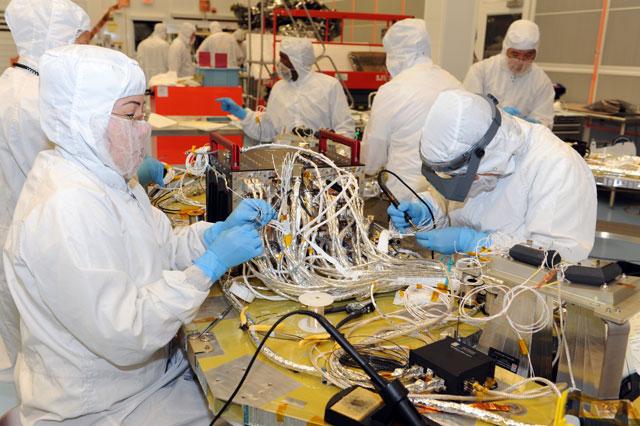
Electrical technicians work diligently to build the connector harnessing for the Command and Data Handling (C&DH) unit, (black box with two red handles) that is installed on spacecraft Deck for MMS #4. Learn more about MMS at <a href="http://www.nasa.gov/mms" rel="nofollow">www.nasa.gov/mms</a> Credit NASA/Goddard The Magnetospheric Multiscale, or MMS, will study how the sun and the Earth's magnetic fields connect and disconnect, an explosive process that can accelerate particles through space to nearly the speed of light. This process is called magnetic reconnection and can occur throughout all space. <b><a href="http://www.nasa.gov/audience/formedia/features/MP_Photo_Guidelines.html" rel="nofollow">NASA image use policy.</a></b> <b><a href="http://www.nasa.gov/centers/goddard/home/index.html" rel="nofollow">NASA Goddard Space Flight Center</a></b> enables NASA’s mission through four scientific endeavors: Earth Science, Heliophysics, Solar System Exploration, and Astrophysics. Goddard plays a leading role in NASA’s accomplishments by contributing compelling scientific knowledge to advance the Agency’s mission. <b>Follow us on <a href="http://twitter.com/NASAGoddardPix" rel="nofollow">Twitter</a></b> <b>Like us on <a href="http://www.facebook.com/pages/Greenbelt-MD/NASA-Goddard/395013845897?ref=tsd" rel="nofollow">Facebook</a></b> <b>Find us on <a href="http://instagram.com/nasagoddard?vm=grid" rel="nofollow">Instagram</a></b>