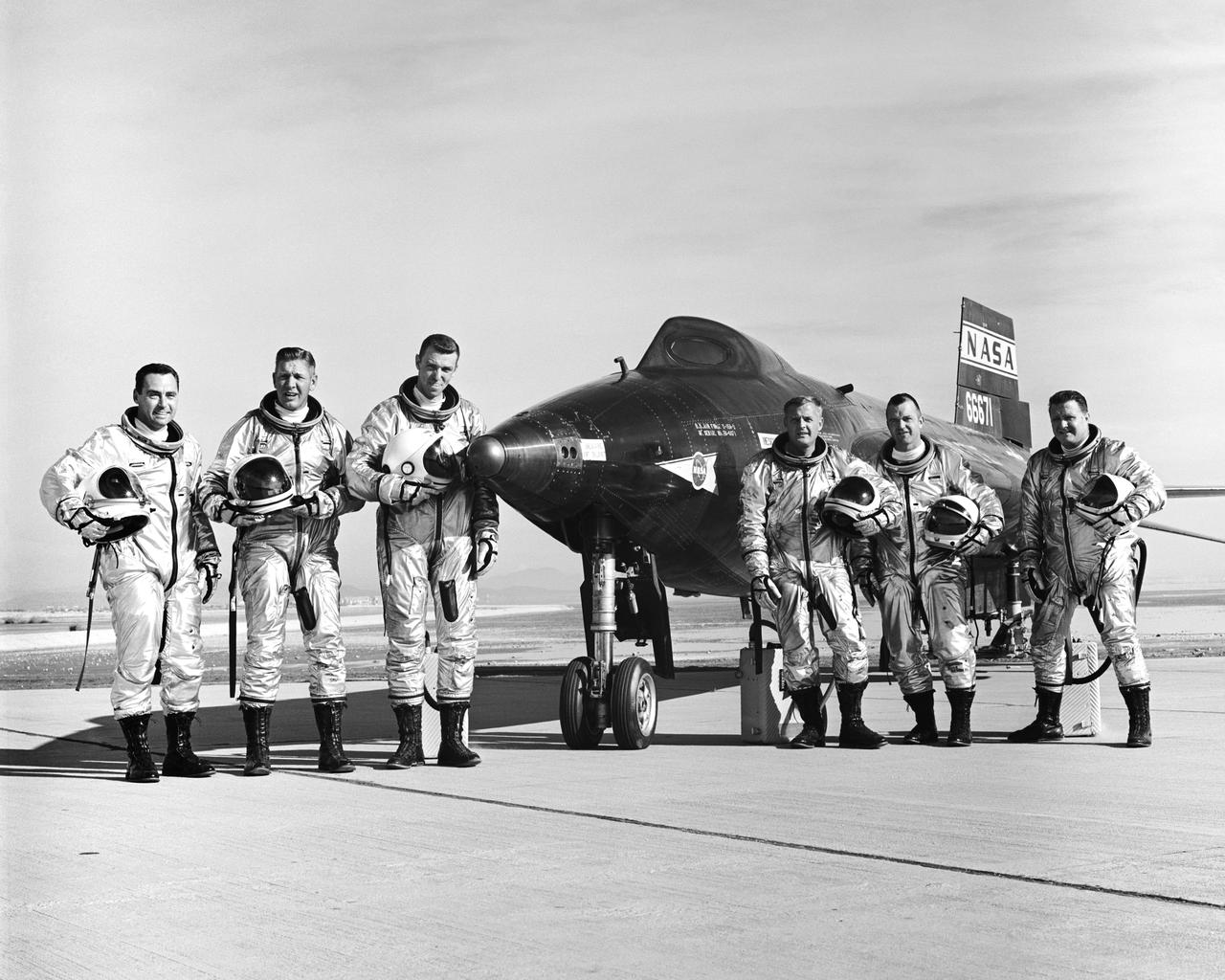
X-15 Pilots, Left to Right: Air Force pilot William J. "Pete" Knight, Air Force Major Robert A. Rushworth, Air Force Captain Joseph H. Engle, NASA pilot Milton O. Thompson, NASA pilot Bill Dana, and NASA pilot John B. "Jack" McKay.
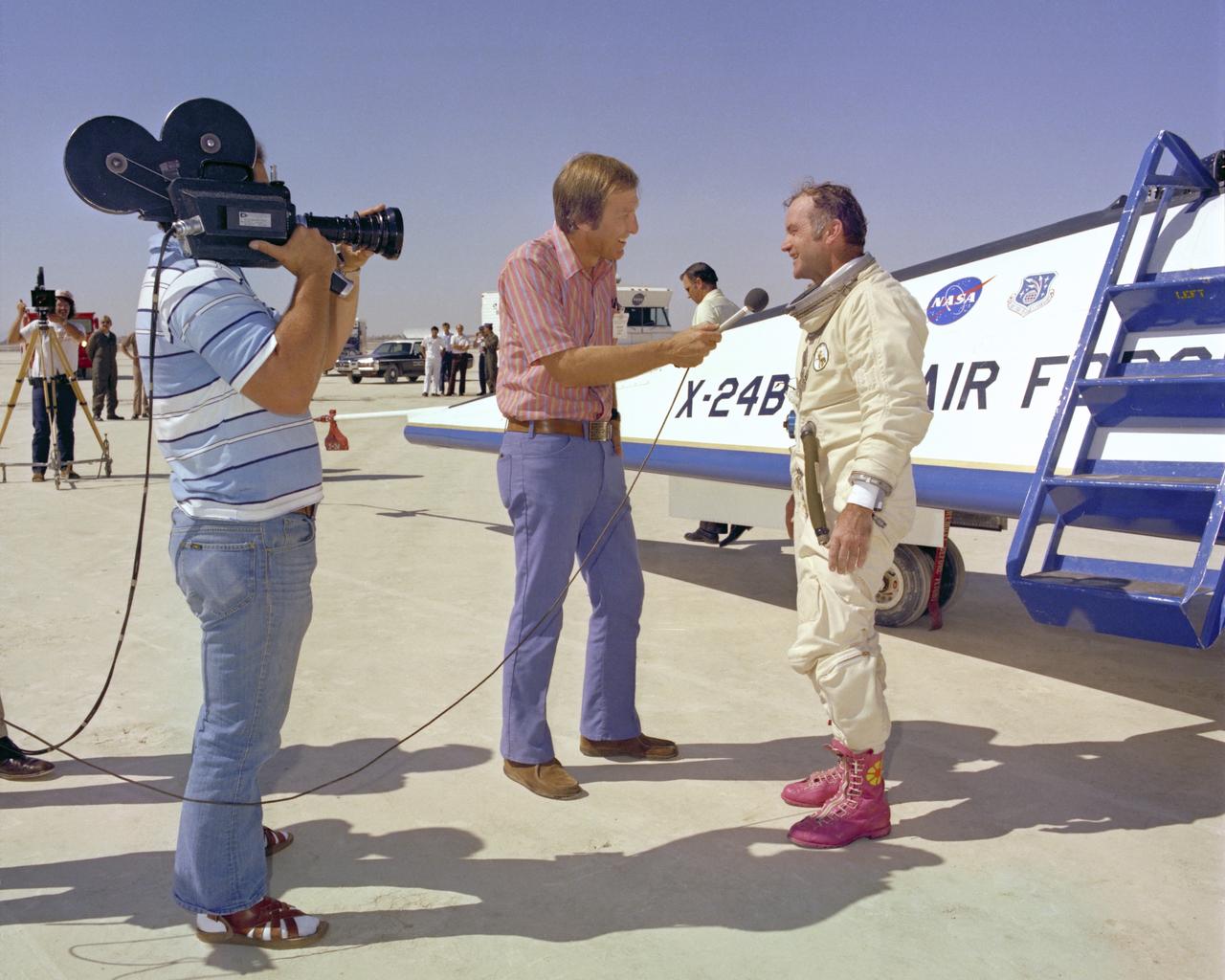
A TV reporter interviews NASA test pilot Bill Dana, wearing his infamous pink boots with yellow daisy decals, after the last powered flight of the X-24B.
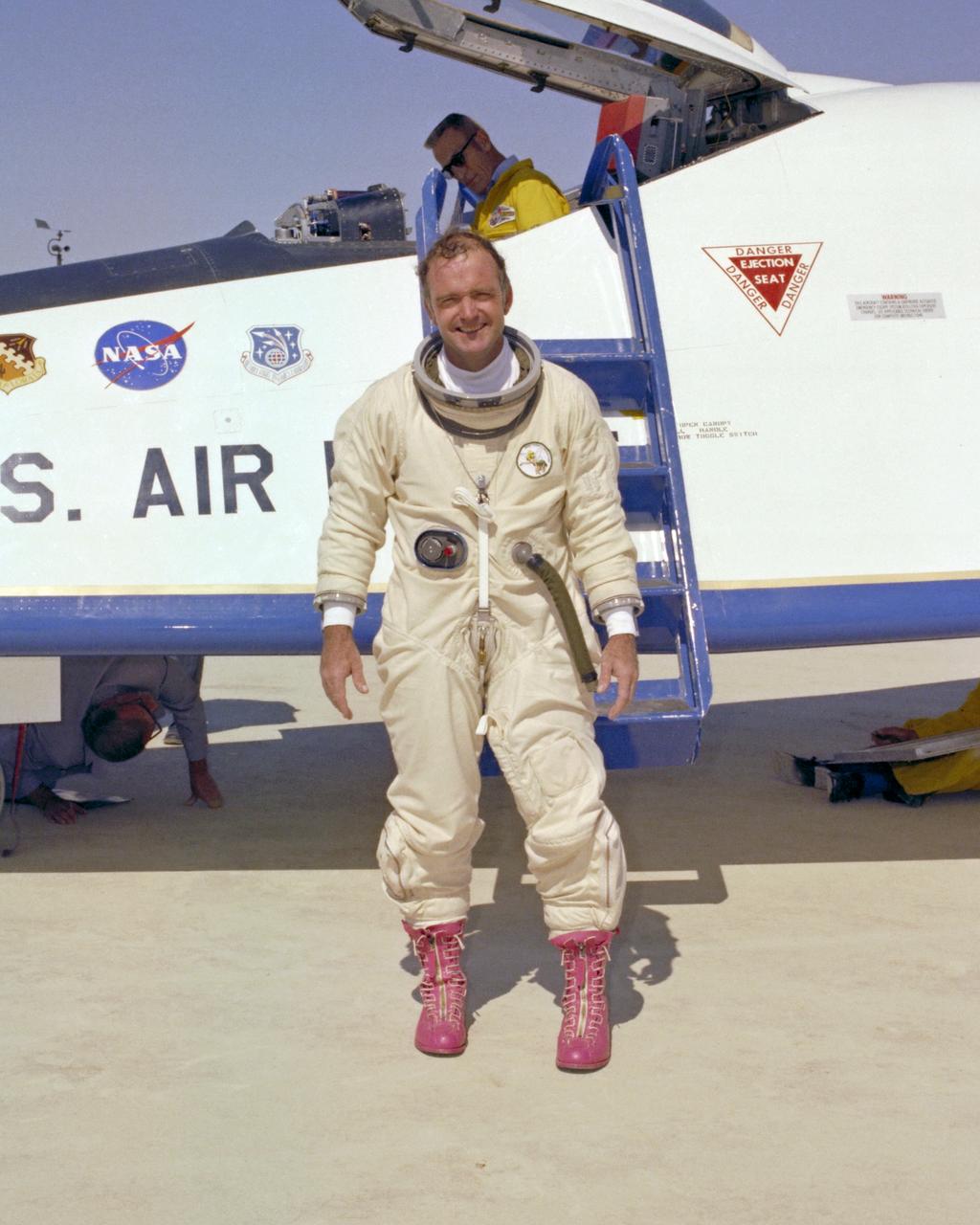
NASA test pilot Bill Dana, resplendent in pink boots and pressure suit, was all smiles following the last powered flight of the X-24B on Sept. 23, 1975.
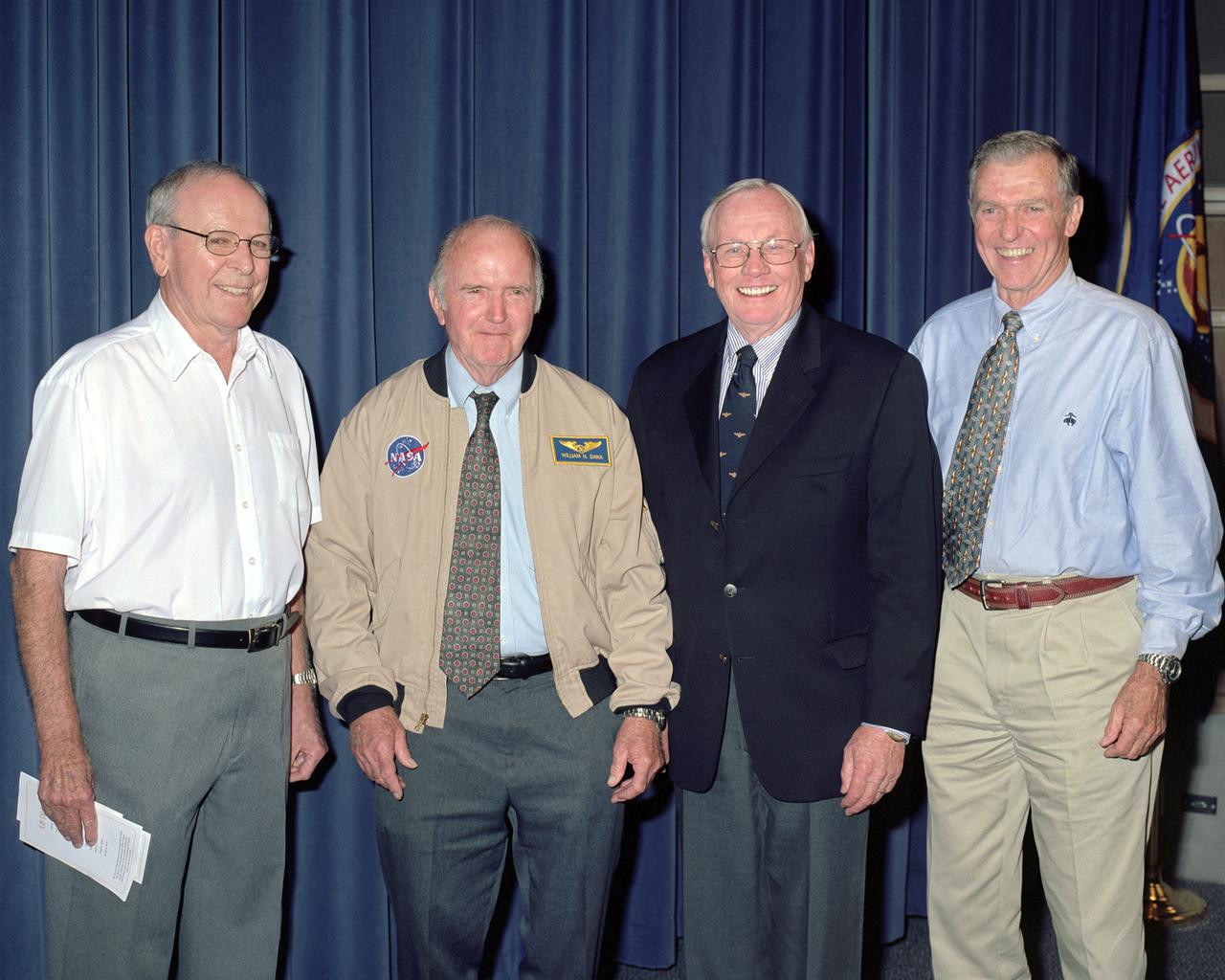
Four of the five surviving X-15 pilots were on hand when astronaut wings were presented to the three NASA pilots who flew the X-15 rocket plane into space in the 1960s, Bill Dana, Joe Walker (deceased) and Jack McKay (deceased). From left, Robert White, Dana, Neil Armstrong, Joe Engle.
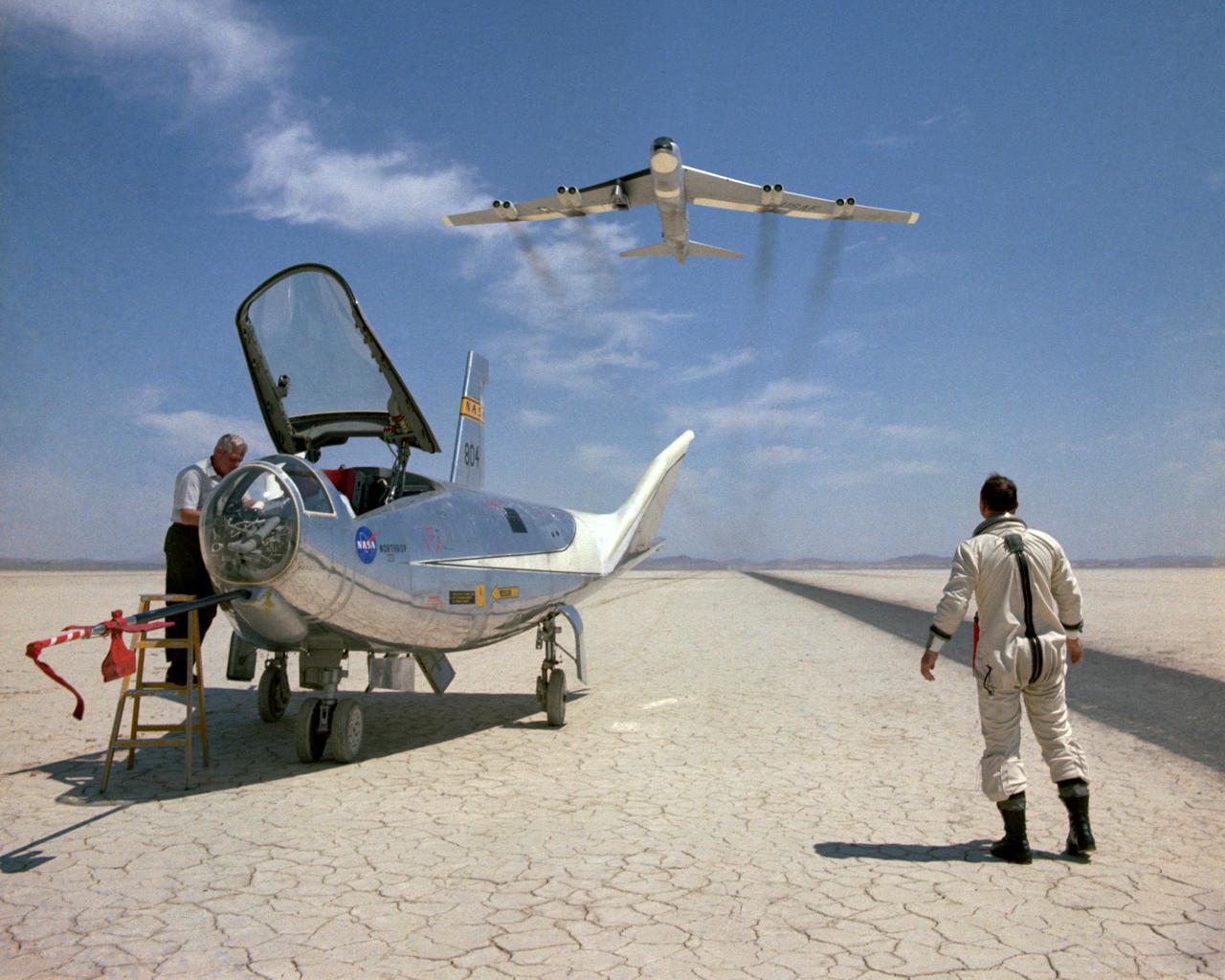
The HL-10 was one of five heavyweight lifting-body designs flown at NASA's Flight Research Center (FRC--later Dryden Flight Research Center), Edwards, California, from July 1966 to November 1975 to study and validate the concept of safely maneuvering and landing a low lift-over-drag vehicle designed for reentry from space. Northrop Corporation built the HL-10 and M2-F2, the first two of the fleet of "heavy" lifting bodies flown by the NASA Flight Research Center. The contract for construction of the HL-10 and the M2-F2 was $1.8 million. "HL" stands for horizontal landing, and "10" refers to the tenth design studied by engineers at NASA's Langley Research Center, Hampton, Va. After delivery to NASA in January 1966, the HL-10 made its first flight on Dec. 22, 1966, with research pilot Bruce Peterson in the cockpit. Although an XLR-11 rocket engine was installed in the vehicle, the first 11 drop flights from the B-52 launch aircraft were powerless glide flights to assess handling qualities, stability, and control. In the end, the HL-10 was judged to be the best handling of the three original heavy-weight lifting bodies (M2-F2/F3, HL-10, X-24A). The HL-10 was flown 37 times during the lifting body research program and logged the highest altitude and fastest speed in the Lifting Body program. On Feb. 18, 1970, Air Force test pilot Peter Hoag piloted the HL-10 to Mach 1.86 (1,228 mph). Nine days later, NASA pilot Bill Dana flew the vehicle to 90,030 feet, which became the highest altitude reached in the program. Some new and different lessons were learned through the successful flight testing of the HL-10. These lessons, when combined with information from it's sister ship, the M2-F2/F3, provided an excellent starting point for designers of future entry vehicles, including the Space Shuttle.
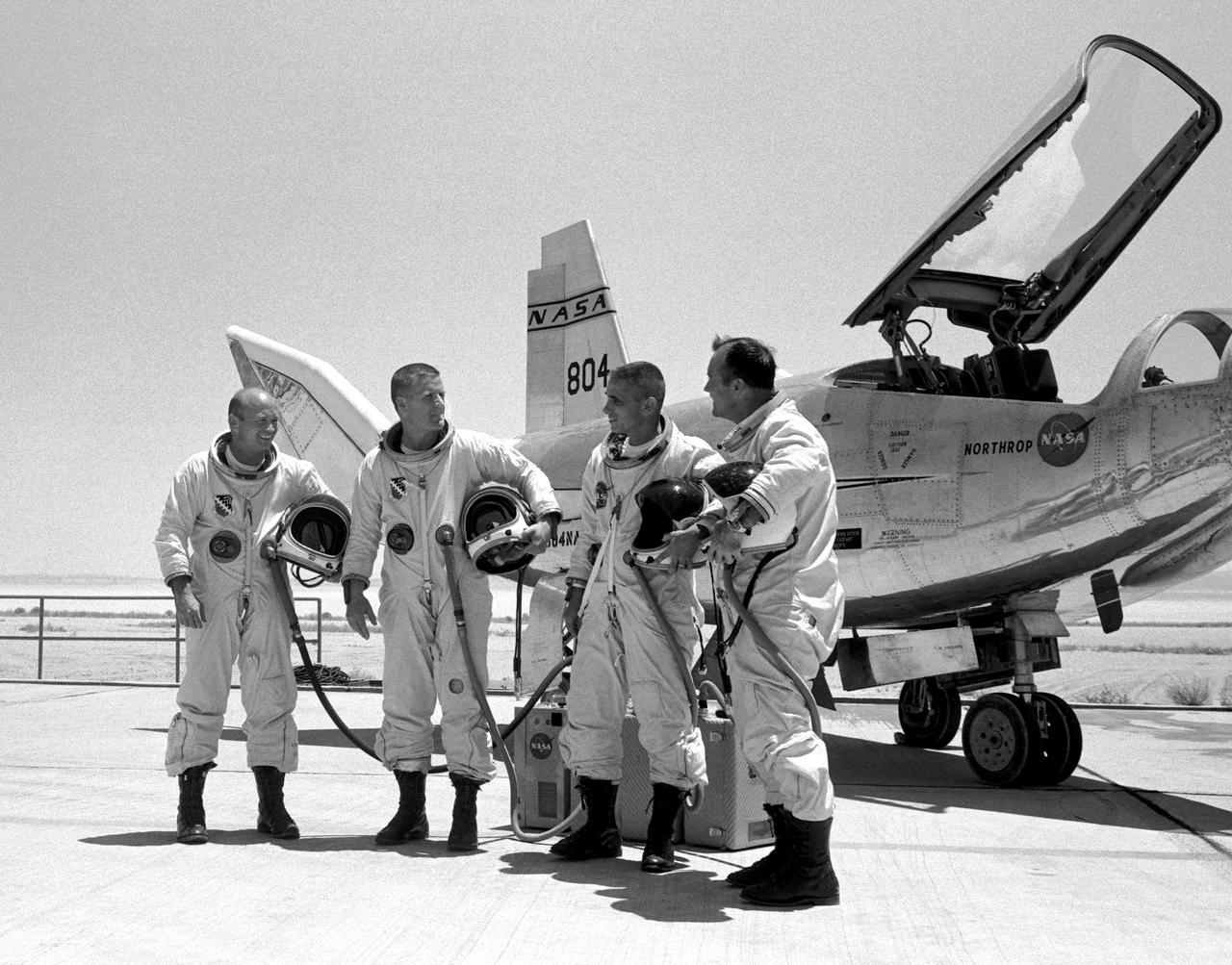
The four principal HL-10 pilots are seen here with the lifting body aircraft. They are, left to right; Air Force Major Jerauld R. Gentry, Air Force test pilot Peter Hoag, and NASA pilots John A. Manke and Bill Dana. All are wearing the pressure suits needed for flying above 50,000 feet.
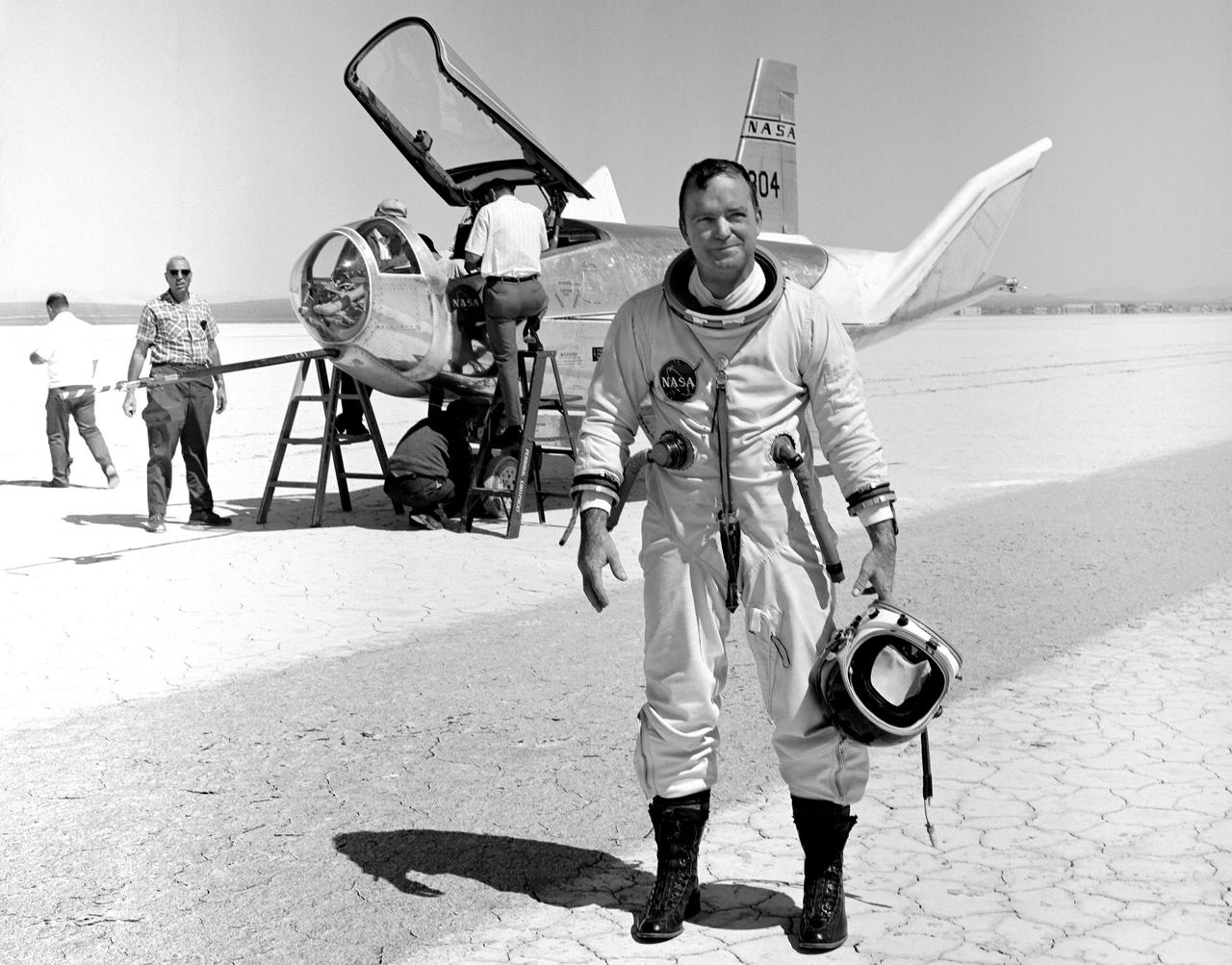
NASA research pilot Bill Dana stands in front of the HL-10 Lifting Body following his first glide flight on April 25, 1969. Dana later retired as Chief Engineer at NASA's Dryden Flight Research Center, (called the NASA Flight Research Center in 1969). Prior to his lifting body assignment, Dana flew the X-15 research airplane. He flew the rocket-powered aircraft 16 times, reaching a top speed of 3,897 miles per hour and a peak altitude of 310,000 feet (almost 59 miles high).
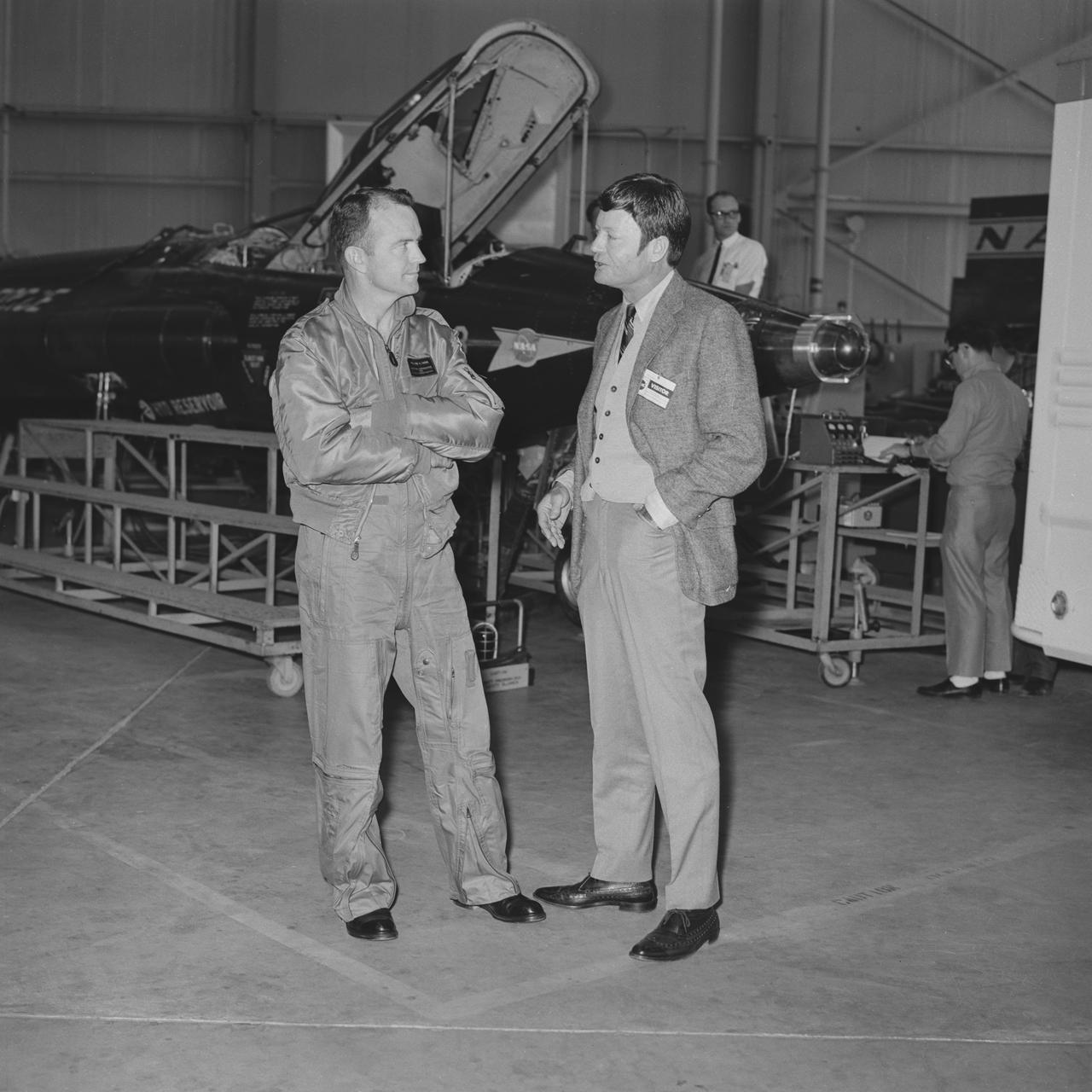
The 1960s Star Trek television series’ cast member Chief Medical Officer Leonard ‘Bones’ McCoy played by DeForest Kelley talks to Bill Dana, NASA X-15 pilot, in front of one of three X-15’s during visit to NASA Dryden Flight Research Center, now Armstrong, back in 1967.
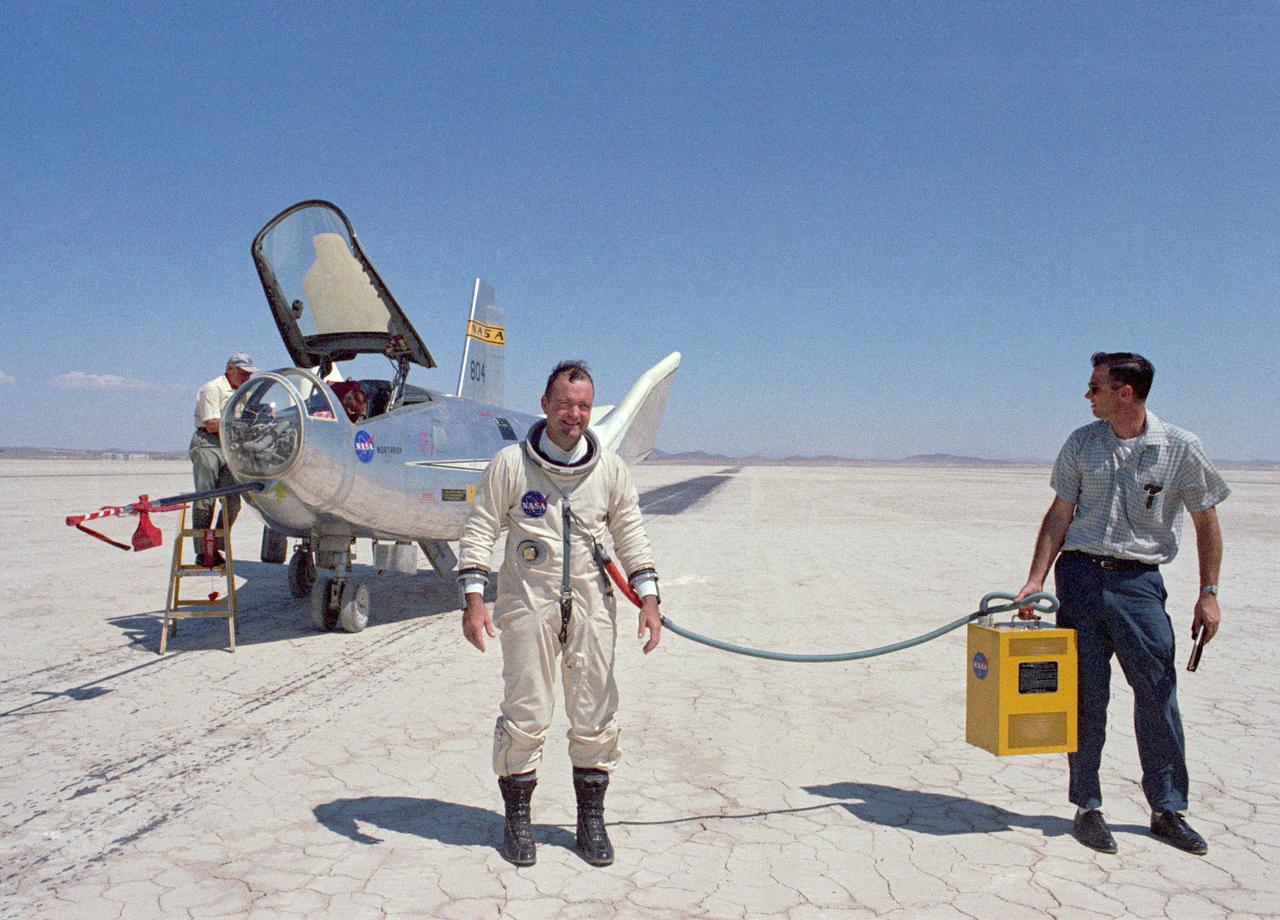
NASA research pilot Bill Dana after his fourth free flight (1 glide and 3 powered) in the HL-10. This particular flight reached a maximum speed of Mach 1.45. Dana made a total of nine HL-10 flights (1 glide and 8 powered), and his lifting body experience as a whole included several car tow and 1 air tow flights in the M2-F1; 4 glide and 15 powered flights in the M2-F3; and 2 powered flights in the X-24B. He is wearing a pressure suit for protection against the cockpit depressurizing at high altitudes. The air conditioner box held by the ground crewman provides cool air to prevent overheating.
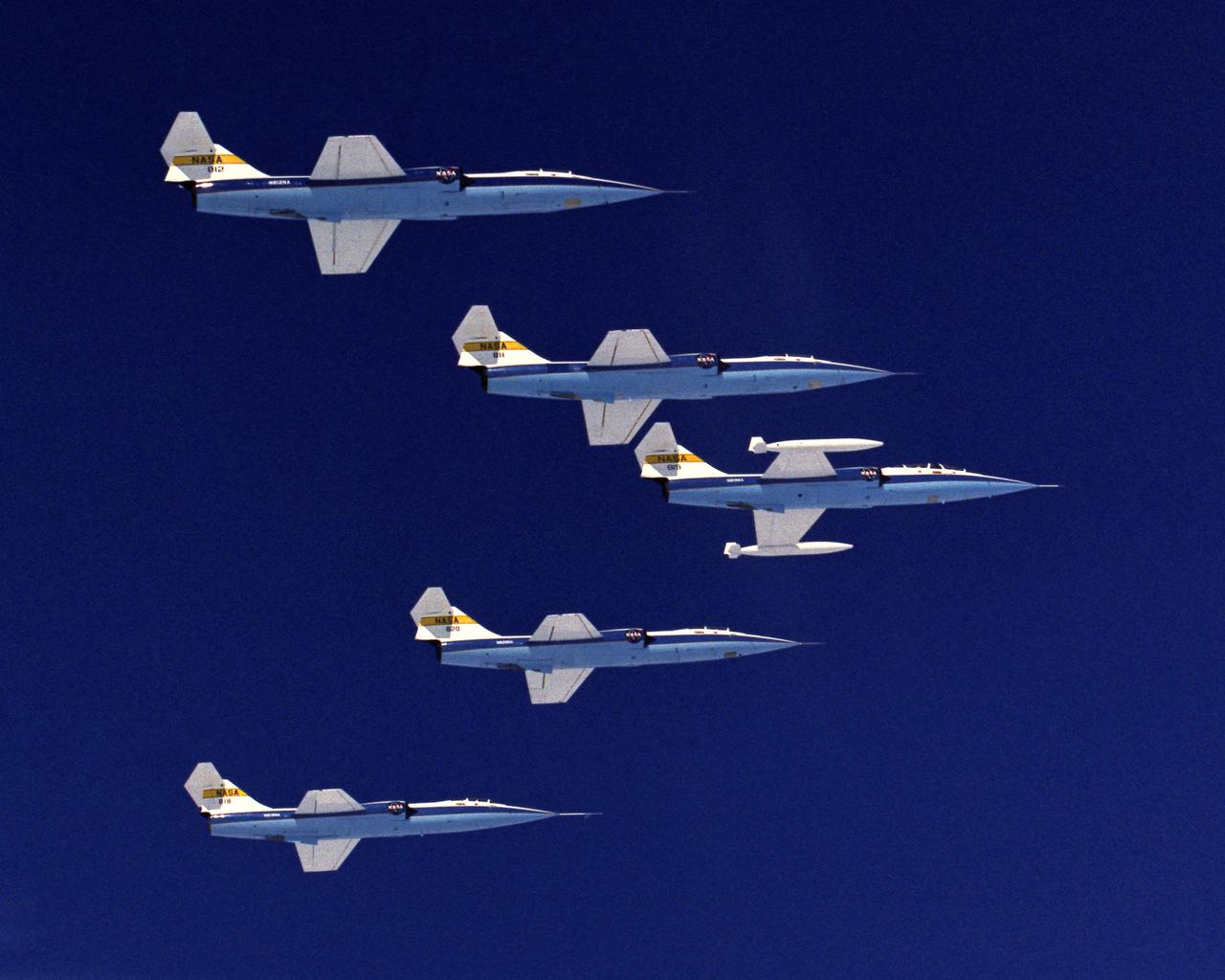
The only time the five ship fleet of F-104 Starfighters was ever airborne at the same time. Pilots were: F-104N #811-Bill Dana; F-104N #812-Tom McMurtry; F-104A #818-Einar Enevoldson; F-104A #820-Gary Krier; F-104B #819-Fitz Fulton and Ray Young. Photo taken from T-38 #821 flown by Don Mallick and photographer was Bob Rhine. 4/11/75 NASA DFRC EC76-5145
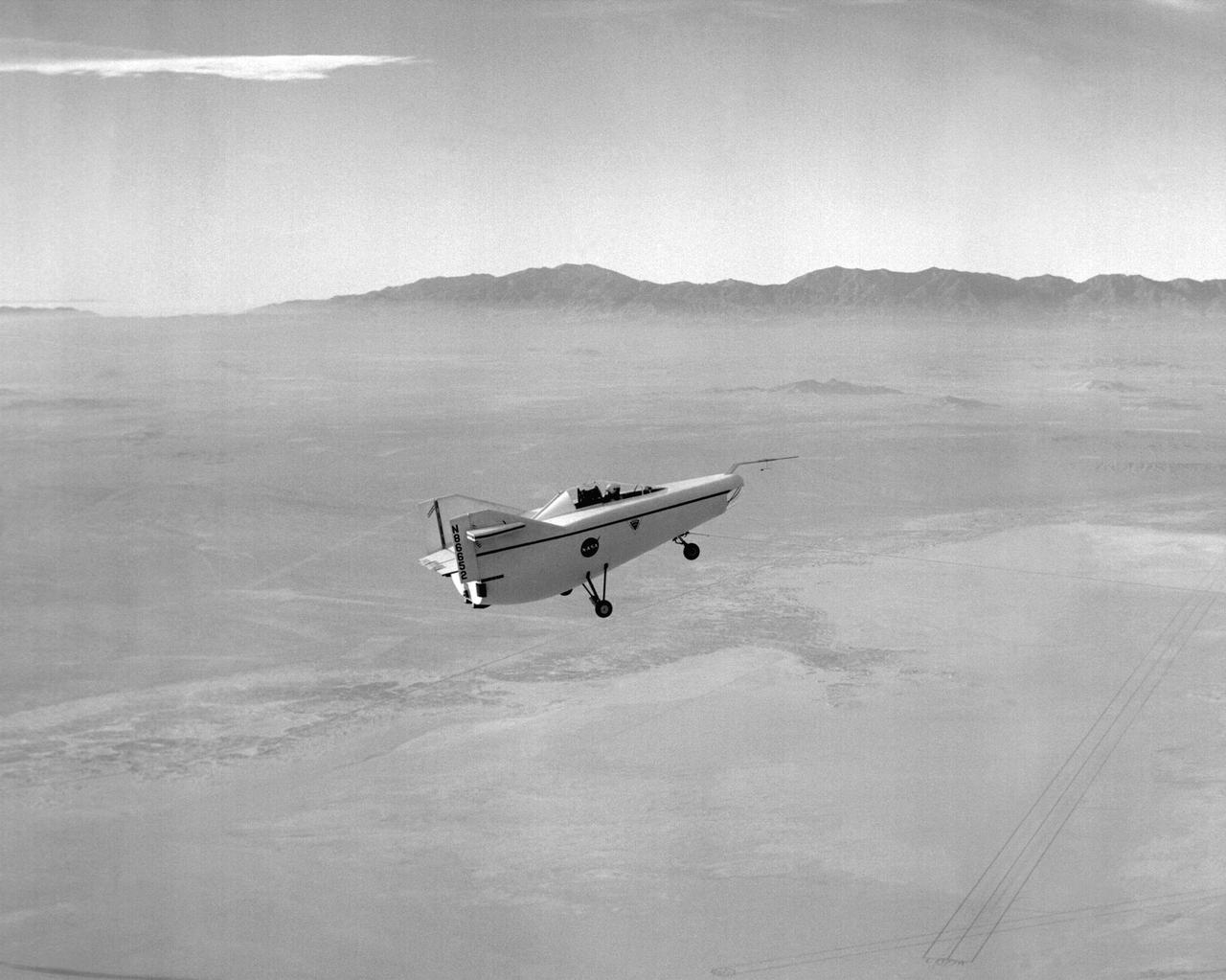
Following the first M2-F1 airtow flight on 16 August 1963, the Flight Research Center used the vehicle for both research flights and to check out new lifting-body pilots. These included Bruce Peterson, Don Mallick, Fred Haise, and Bill Dana from NASA. Air Force pilots who flew the M2-F1 included Chuck Yeager, Jerry Gentry, Joe Engle, Jim Wood, and Don Sorlie, although Wood, Haise, and Engle only flew on car tows. In the three years between the first and last flights of the M2-F1, it made about 400 car tows and 77 air tows.
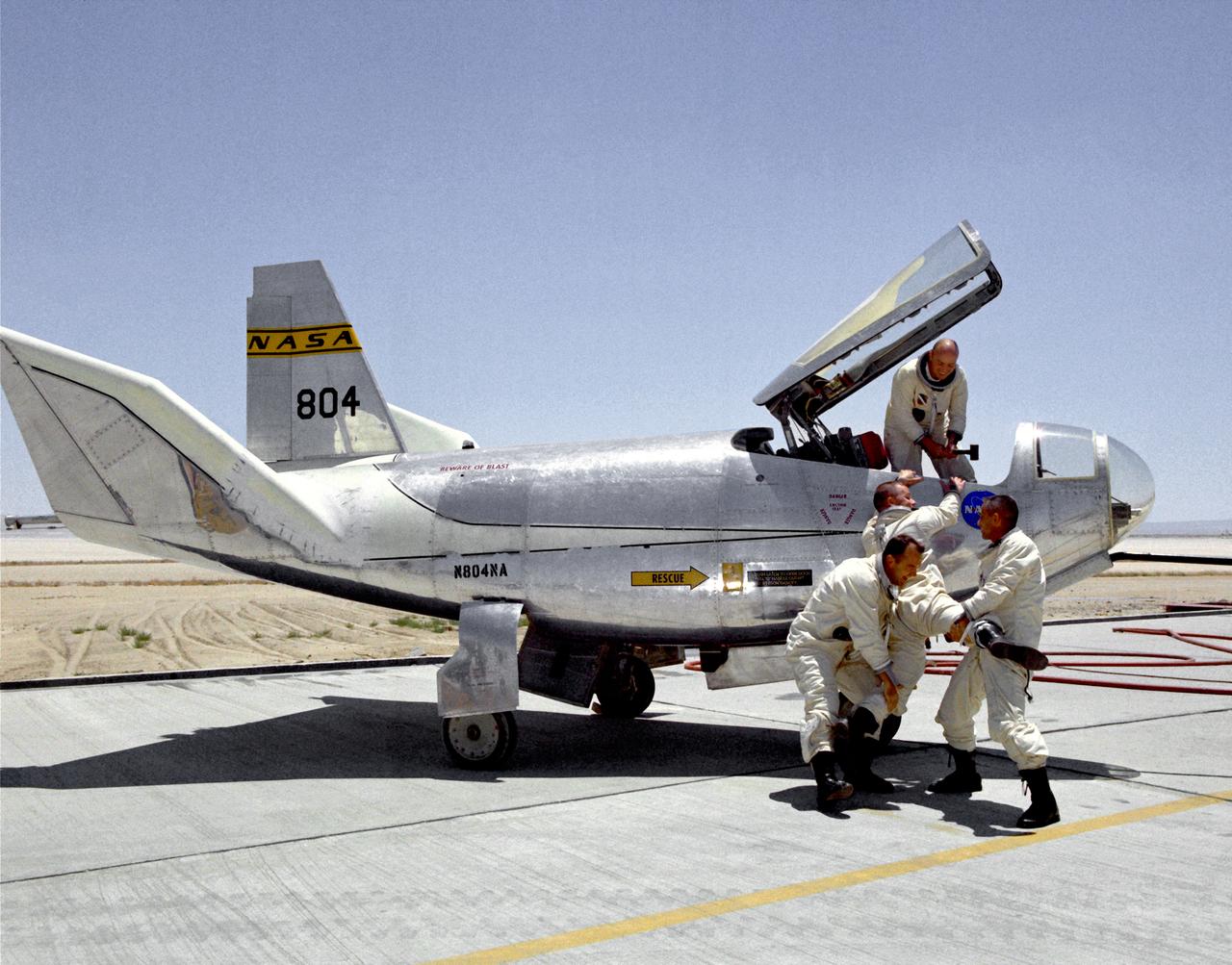
Not every moment of a test pilot's day is serious business. In a moment of levity, NASA pilots Bill Dana (left) and John A. Manke try to drag Air Force test pilot Peter Hoag away from the HL-10 lifting body while Air Force Major Jerauld R. Gentry helps from the cockpit. These four men were the principal pilots for the HL-10 program. This was not the only prank involving the HL-10 and its pilots. Once "Captain Midnight" (Gentry) and the "Midnight Skulkers" sneaked into the NASA hangar and put "U.S. Air Force" on the aircraft using stick-on letters. Later, while Gentry was making a lifting-body flight, his 1954 Ford was "borrowed" from the parking lot, painted with yellow-green zinc-chromate primer, and decorated with large stick-on flowers about one foot in diameter. After Gentry returned from the flight, he was surprised to see what had happened to his car.
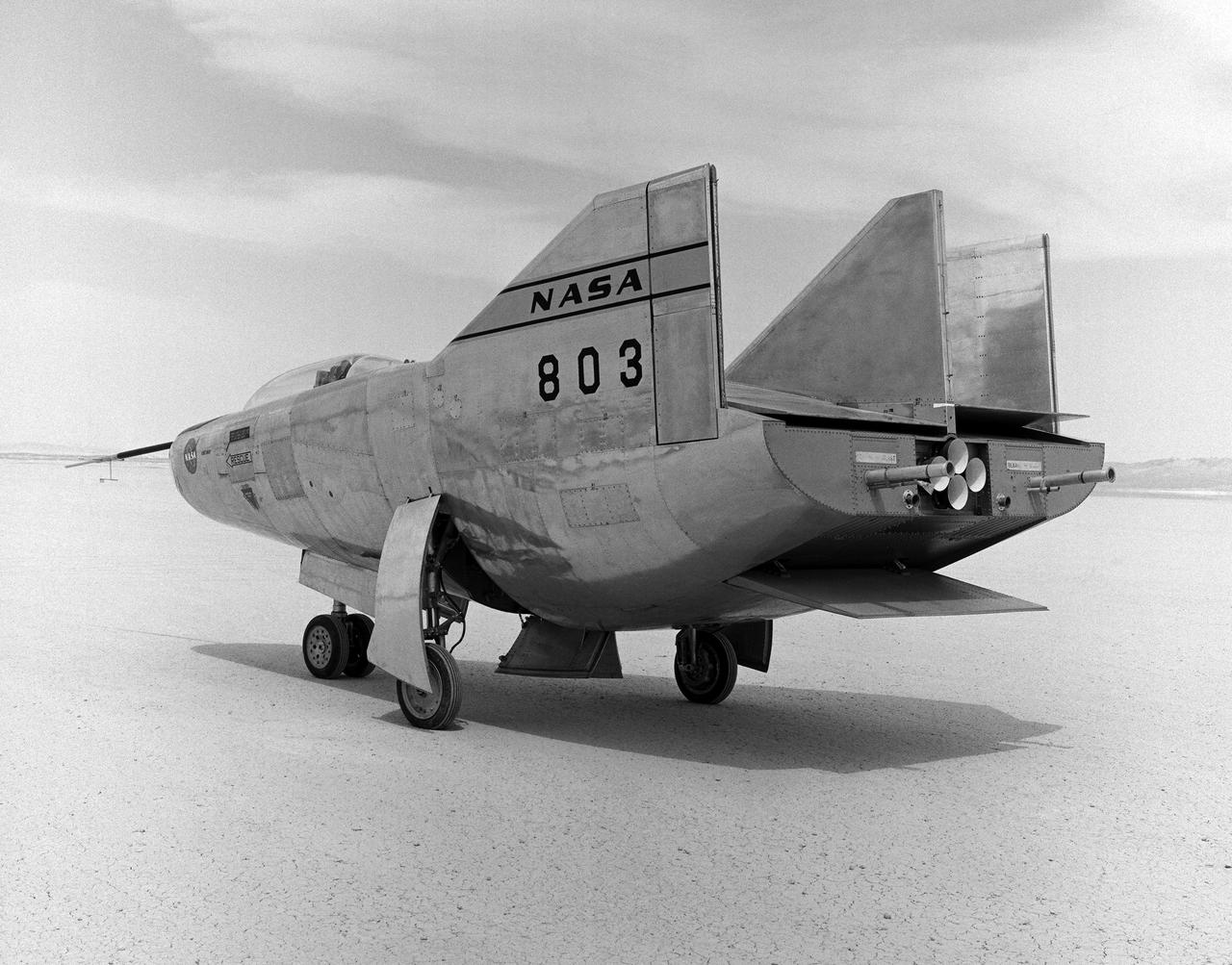
The M2-F3 Lifting Body is seen here on the lakebed next to the NASA Flight Research Center (later the Dryden Flight Research Center), Edwards, California. Redesigned and rebuilt from the M2-F2, the M2-F3 featured as its most visible change a center fin for greater stability. While the M2-F3 was still demanding to fly, the center fin eliminated the high risk of pilot induced oscillation (PIO) that was characteristic of the M2-F2.