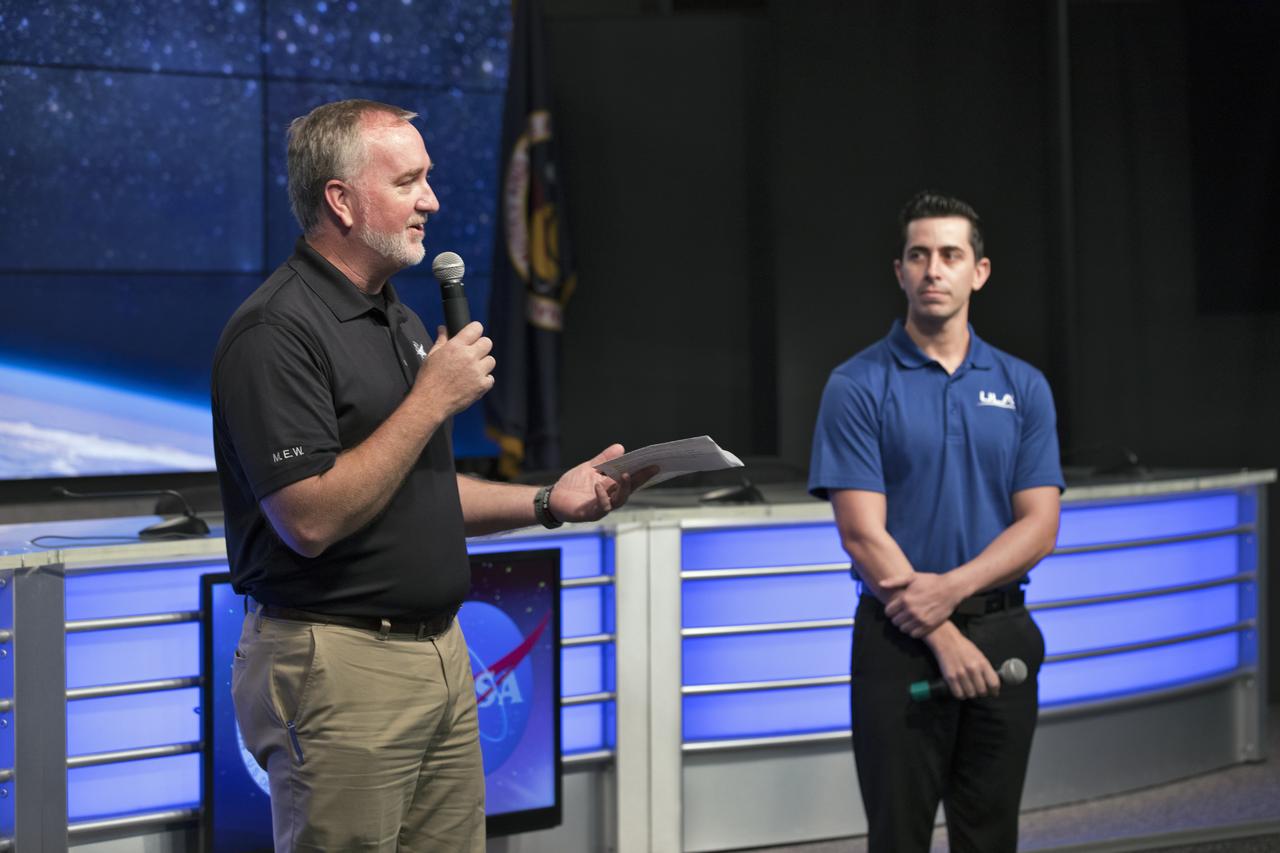
Mic Woltman, chief of the Fleet Systems Integration Branch of NASA's Launch Services Program, left, and Gabriel Rodriguez-Mena, a United Launch Alliance systems test engineer, speak to members of social media in the Kennedy Space Center’s Press Site auditorium. The briefing focused on the National Oceanic and Atmospheric Administration's, or NOAA's, Geostationary Operational Environmental Satellite, or GOES-S. The spacecraft is the second satellite in a series of next-generation NOAA weather satellites. It will launch to a geostationary position over the U.S. to provide images of storms and help predict weather forecasts, severe weather outlooks, watches, warnings, lightning conditions and longer-term forecasting. GOES-S is slated to lift off at 5:02 p.m. EST on March 1, 2018 aboard a United Launch Alliance Atlas V rocket.
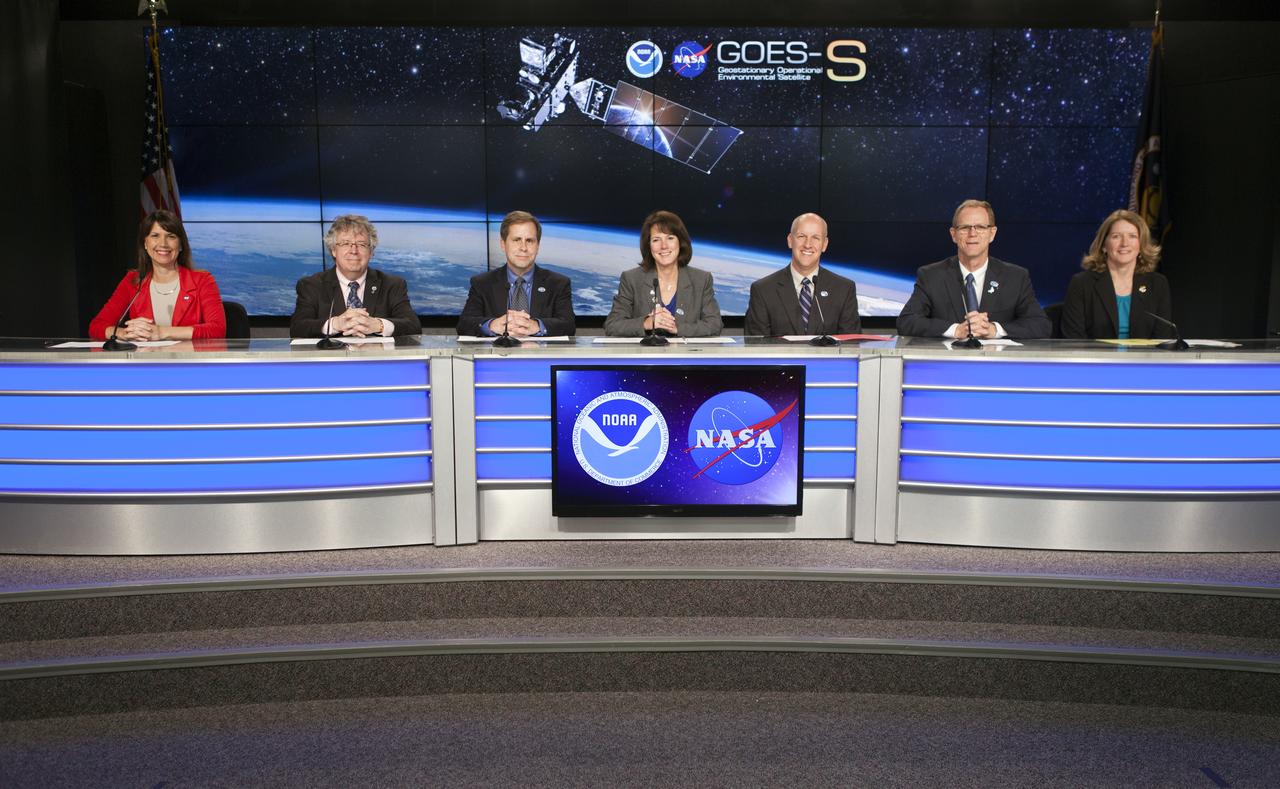
In the Kennedy Space Center's Press Site auditorium, NASA and industry leaders speak to members of the media at a prelaunch news conference about National Oceanic and Atmospheric Administration's, or NOAA's, Geostationary Operational Environmental Satellite, or GOES-S. Participants from left are: Tori McLendon of NASA Communications; Stephen Volz, director for Satellite and Information Services for NOAA; Tim Walsh, acting GOES-R System Program director for NOAA; Sandra Smalley, director of the Joint Agency Satellite Division at NASA Headquarters in Washington D.C.; Tim Dunn, NASA launch director at Kennedy; Scott Messer, manager of NASA Programs for United launch Alliance; and Kathy Winters, launch weather officer for the U.S. Air Force 45th Weather Squadron at Cape Canaveral Air Force Station. The GOES series of satellites will significantly improve the detection and observation of environmental phenomena that directly affect public safety, protection of property and the nation's economic health and prosperity. GOES-S is slated to lift off at 5:02 p.m. EST on March 1, 2018 aboard a United Launch Alliance Atlas V rocket.
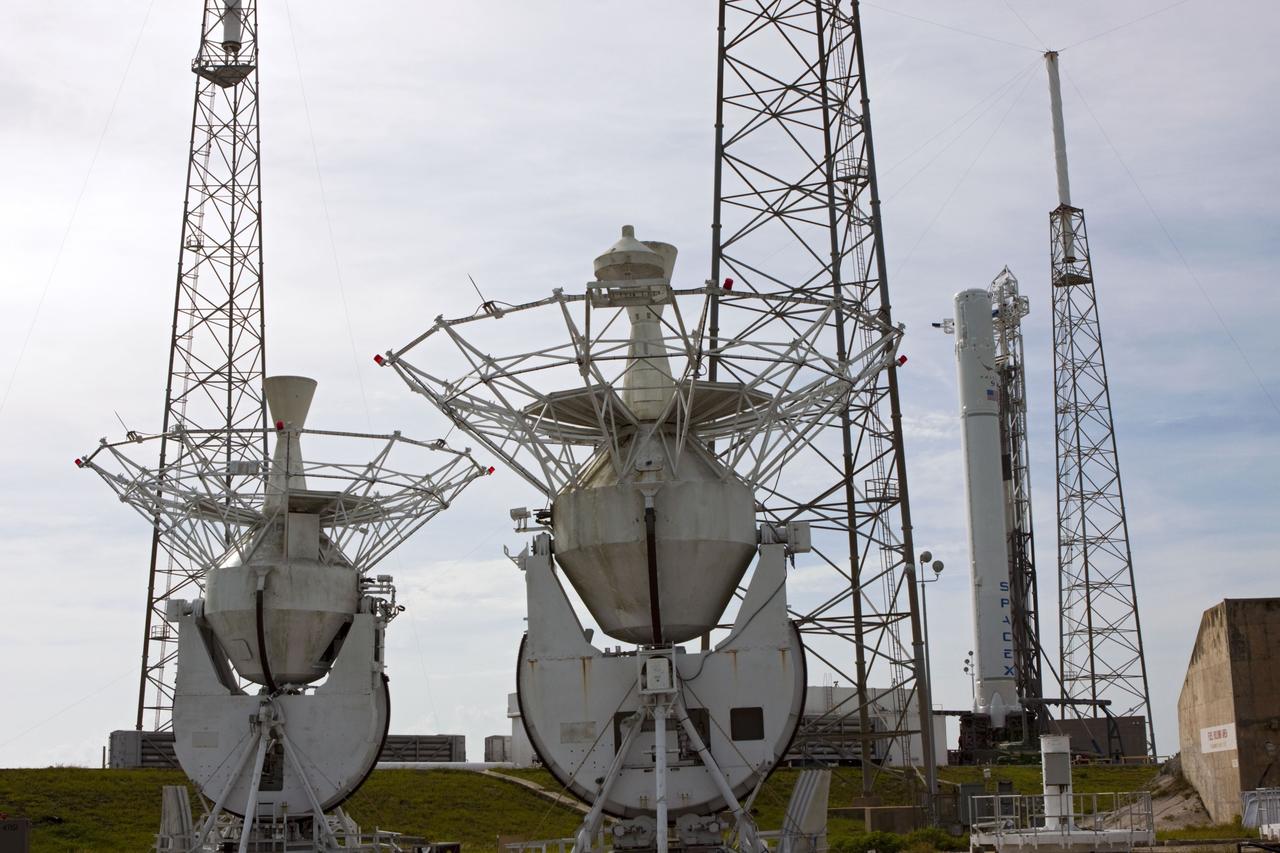
CAPE CANAVERAL, Fla. - Just prior to the wet dress rehearsal for the SpaceX Falcon 9 rocket, the frameworks of the former MILA tracking station S-band 9-meter tracking antennas are seen with the Falcon 9 rocket. These antennas were used by NASA during the Apollo and space shuttle programs. They are being re-purposed by SpaceX. The antennas will moved to another location, reassembled and refurbished for tracking during future SpaceX launches and missions. The SpaceX CRS contract with NASA provides for 12 cargo resupply missions to the station through 2015, the first of which is targeted to launch in October 2012.SpaceX became the first private company to berth a spacecraft with the space station in 2012 during its final demonstration flight under the Commercial Orbital Transportation Services, or COTS, program managed by NASA's Johnson Space Center in Houston. Photo credit: NASA/Jim Grossmann

CAPE CANAVERAL, Fla. -- At Cape Canaveral Air Force Station in Florida, the first stage of the SpaceX Falcon 9 rocket arrives at Launch Complex-40's horizontal processing hangar. Once assembled, it will be a two-stage fully integrated launch vehicle, consisting of a first stage powered by nine SpaceX-developed Merlin 1C engines, a second stage, an interstage, an unpressurized trunk and the Dragon spacecraft qualification unit. SpaceX was awarded procurement for three demonstration flights under the Commercial Orbital Transportation Services, or COTS, program managed by NASA's Johnson Space Center in Houston. A subsequent contract for Commercial Resupply Services, or CRS, was awarded in late 2008 to resupply the International Space Station. The SpaceX CRS contract provides for 12 missions to resupply the station from 2011 through 2015. Photo credit: NASA/Troy Cryder

CAPE CANAVERAL, Fla. -- At Cape Canaveral Air Force Station in Florida, the first stage of the SpaceX Falcon 9 rocket arrives at Launch Complex-40's horizontal processing hangar. Once assembled, it will be a two-stage fully integrated launch vehicle, consisting of a first stage powered by nine SpaceX-developed Merlin 1C engines, a second stage, an interstage, an unpressurized trunk and the Dragon spacecraft qualification unit. SpaceX was awarded procurement for three demonstration flights under the Commercial Orbital Transportation Services, or COTS, program managed by NASA's Johnson Space Center in Houston. A subsequent contract for Commercial Resupply Services, or CRS, was awarded in late 2008 to resupply the International Space Station. The SpaceX CRS contract provides for 12 missions to resupply the station from 2011 through 2015. Photo credit: NASA/Troy Cryder
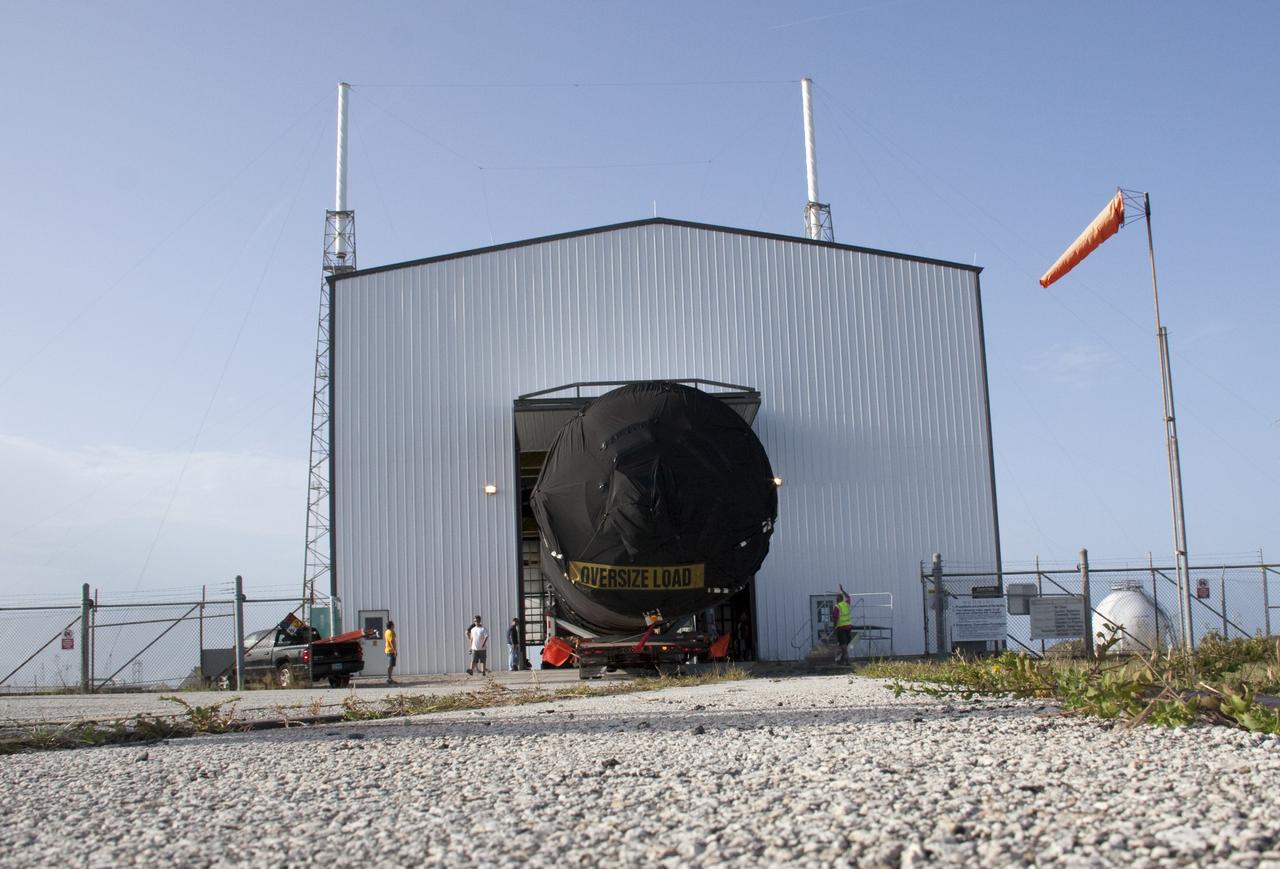
CAPE CANAVERAL, Fla. -- At Cape Canaveral Air Force Station in Florida, the first stage of the SpaceX Falcon 9 rocket arrives at Launch Complex-40's horizontal processing hangar. Once assembled, it will be a two-stage fully integrated launch vehicle, consisting of a first stage powered by nine SpaceX-developed Merlin 1C engines, a second stage, an interstage, an unpressurized trunk and the Dragon spacecraft qualification unit. SpaceX was awarded procurement for three demonstration flights under the Commercial Orbital Transportation Services, or COTS, program managed by NASA's Johnson Space Center in Houston. A subsequent contract for Commercial Resupply Services, or CRS, was awarded in late 2008 to resupply the International Space Station. The SpaceX CRS contract provides for 12 missions to resupply the station from 2011 through 2015. Photo credit: NASA/Troy Cryder
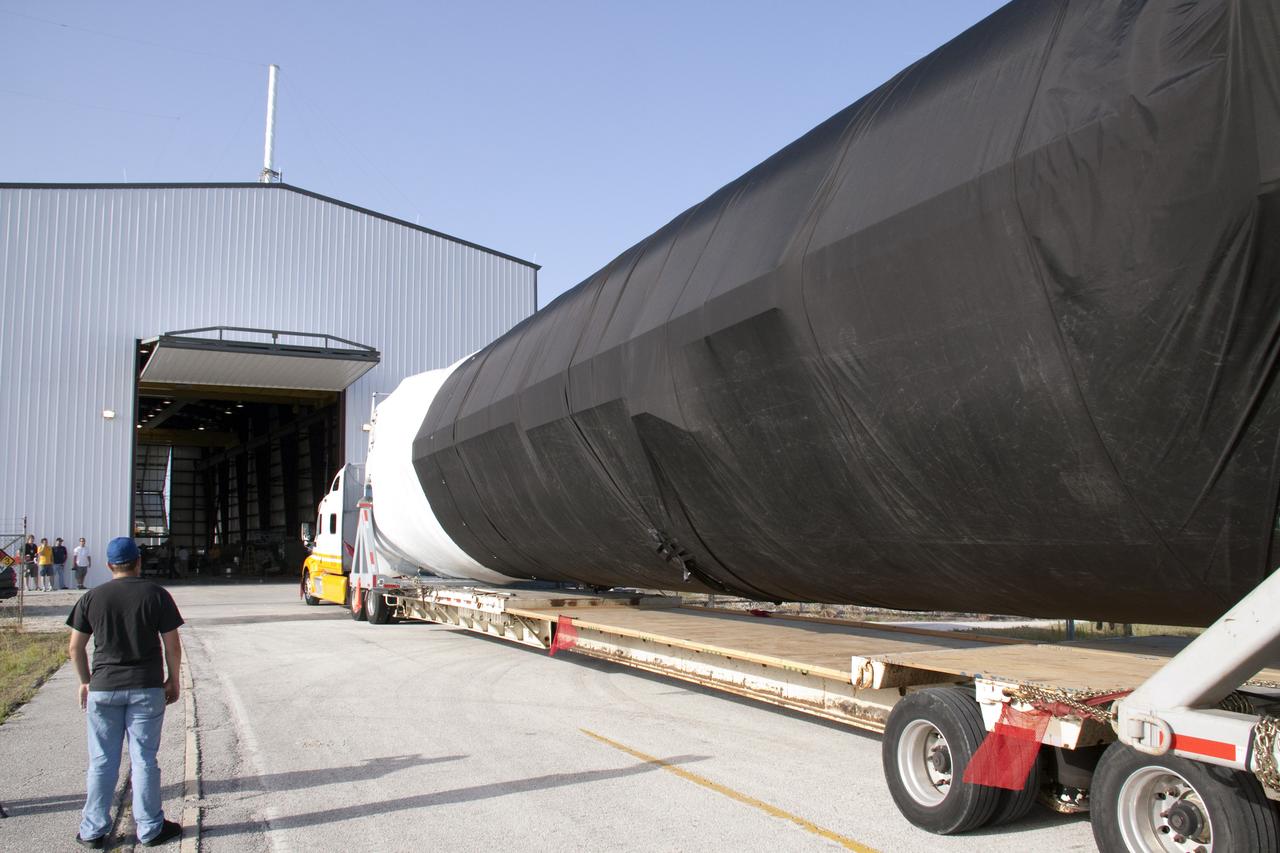
CAPE CANAVERAL, Fla. -- At Cape Canaveral Air Force Station in Florida, the first stage of the SpaceX Falcon 9 rocket arrives at Launch Complex-40's horizontal processing hangar. Once assembled, it will be a two-stage fully integrated launch vehicle, consisting of a first stage powered by nine SpaceX-developed Merlin 1C engines, a second stage, an interstage, an unpressurized trunk and the Dragon spacecraft qualification unit. SpaceX was awarded procurement for three demonstration flights under the Commercial Orbital Transportation Services, or COTS, program managed by NASA's Johnson Space Center in Houston. A subsequent contract for Commercial Resupply Services, or CRS, was awarded in late 2008 to resupply the International Space Station. The SpaceX CRS contract provides for 12 missions to resupply the station from 2011 through 2015. Photo credit: NASA/Troy Cryder
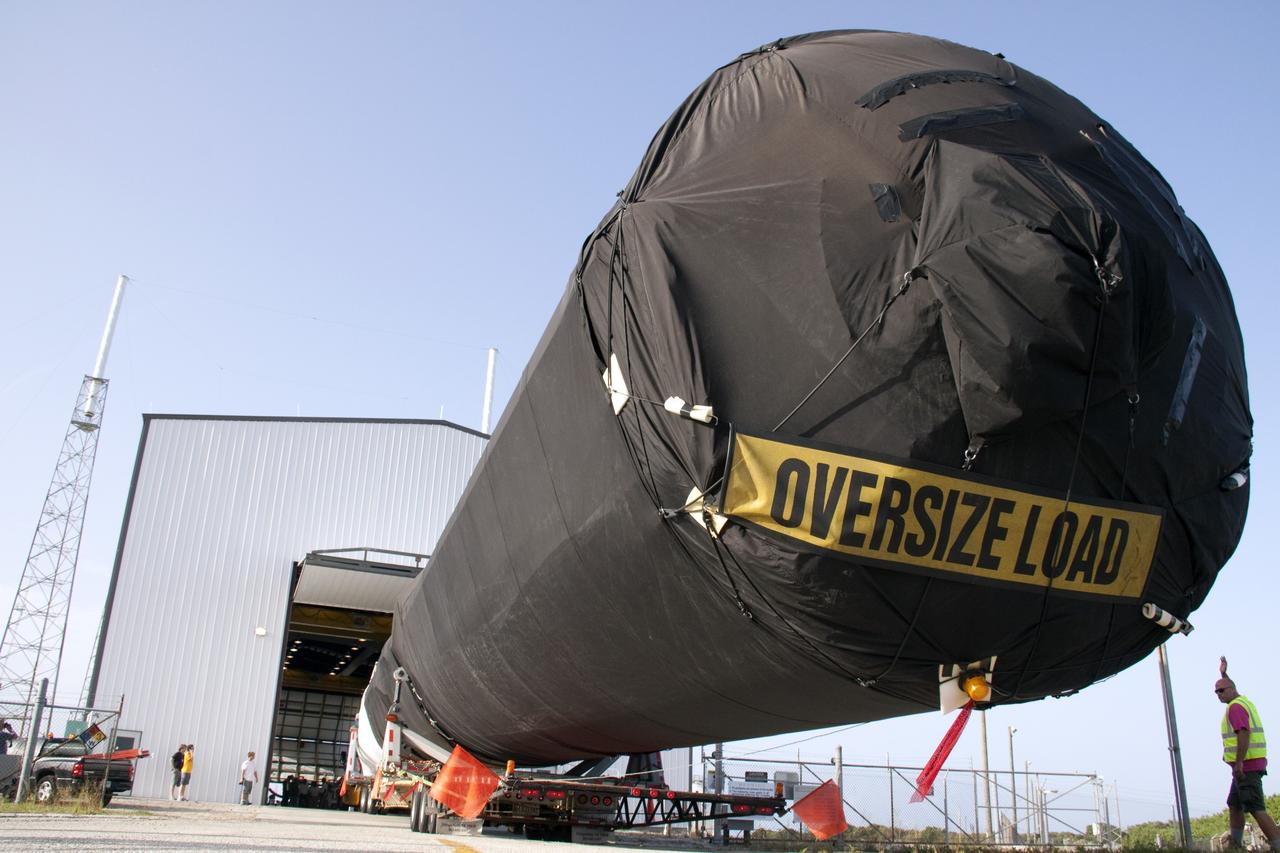
CAPE CANAVERAL, Fla. -- At Cape Canaveral Air Force Station in Florida, the first stage of the SpaceX Falcon 9 rocket arrives at Launch Complex-40's horizontal processing hangar. Once assembled, it will be a two-stage fully integrated launch vehicle, consisting of a first stage powered by nine SpaceX-developed Merlin 1C engines, a second stage, an interstage, an unpressurized trunk and the Dragon spacecraft qualification unit. SpaceX was awarded procurement for three demonstration flights under the Commercial Orbital Transportation Services, or COTS, program managed by NASA's Johnson Space Center in Houston. A subsequent contract for Commercial Resupply Services, or CRS, was awarded in late 2008 to resupply the International Space Station. The SpaceX CRS contract provides for 12 missions to resupply the station from 2011 through 2015. Photo credit: NASA/Troy Cryder
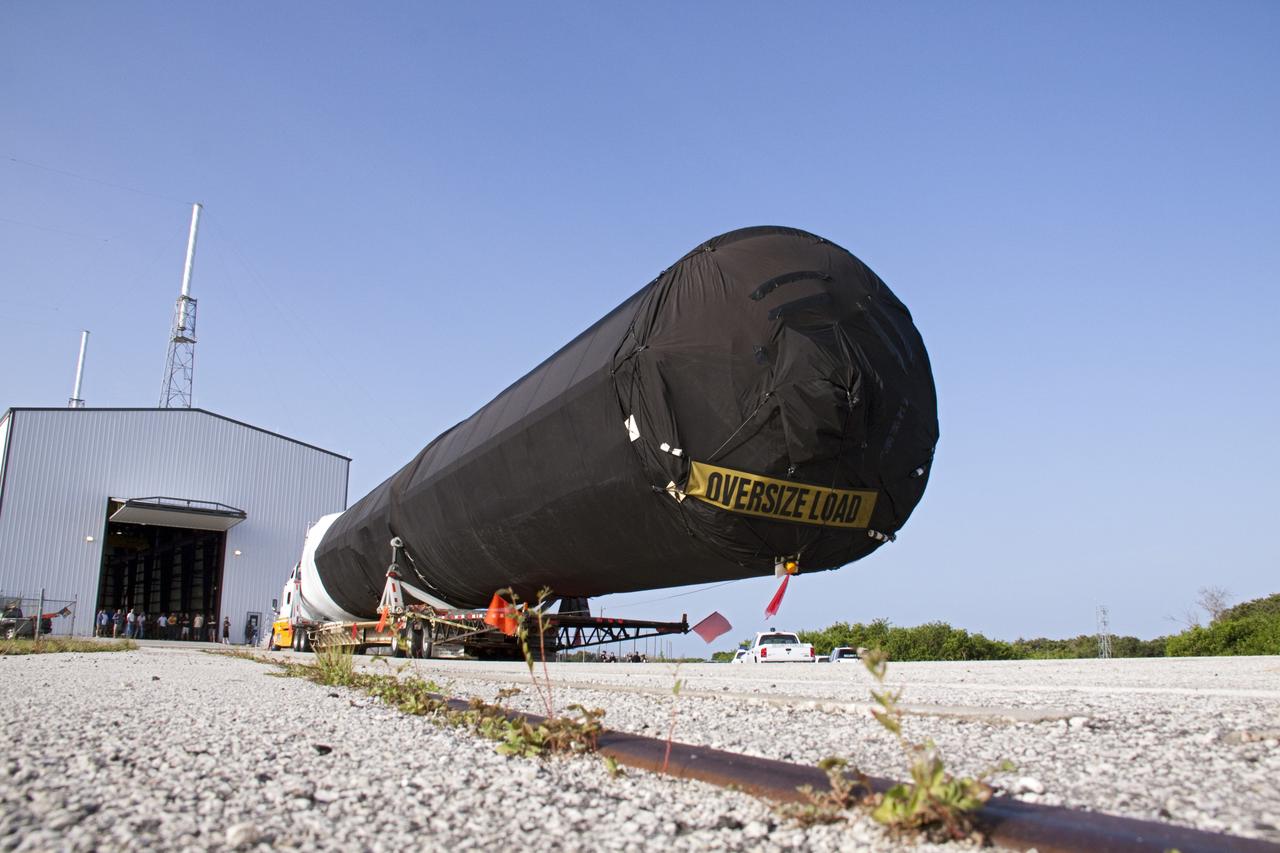
CAPE CANAVERAL, Fla. -- At Cape Canaveral Air Force Station in Florida, the first stage of the SpaceX Falcon 9 rocket arrives at Launch Complex-40's horizontal processing hangar. Once assembled, it will be a two-stage fully integrated launch vehicle, consisting of a first stage powered by nine SpaceX-developed Merlin 1C engines, a second stage, an interstage, an unpressurized trunk and the Dragon spacecraft qualification unit. SpaceX was awarded procurement for three demonstration flights under the Commercial Orbital Transportation Services, or COTS, program managed by NASA's Johnson Space Center in Houston. A subsequent contract for Commercial Resupply Services, or CRS, was awarded in late 2008 to resupply the International Space Station. The SpaceX CRS contract provides for 12 missions to resupply the station from 2011 through 2015. Photo credit: NASA/Troy Cryder
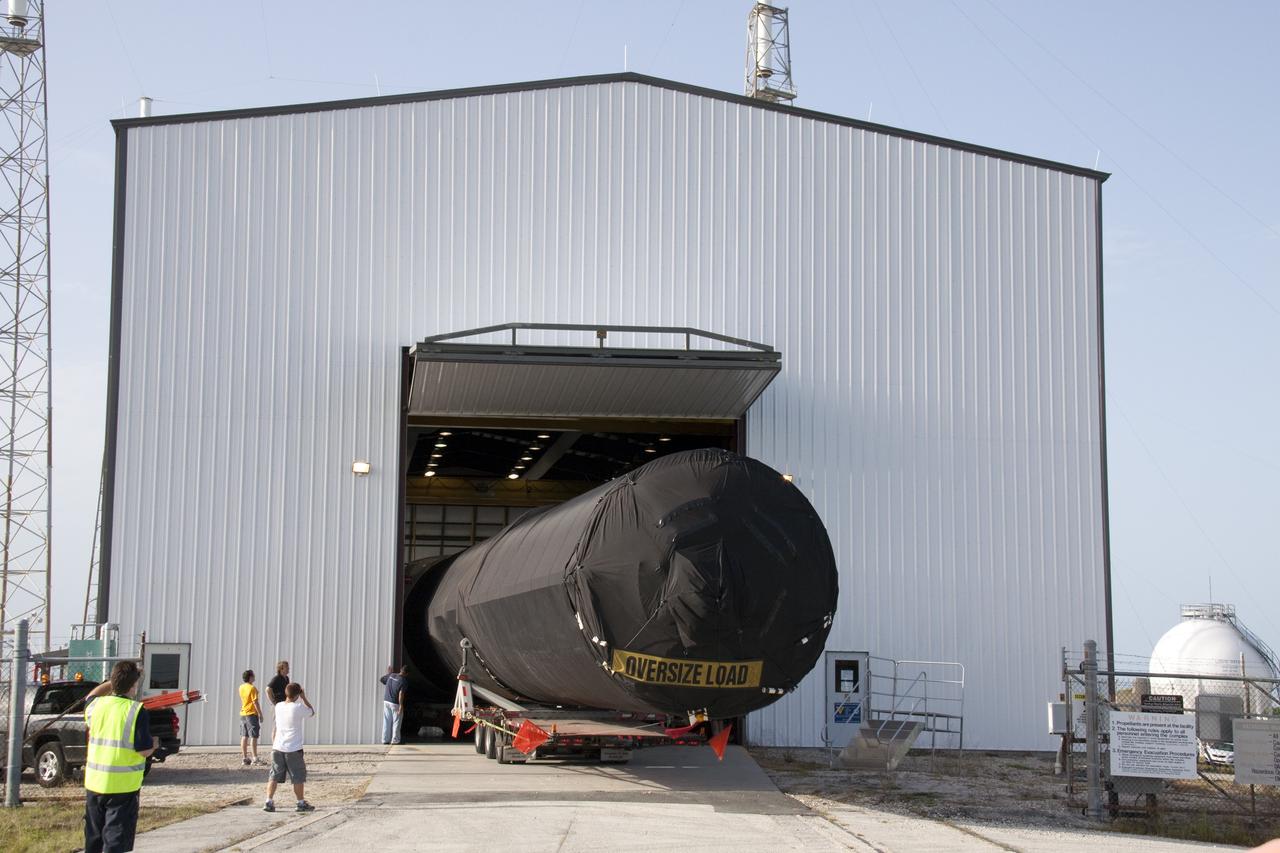
CAPE CANAVERAL, Fla. -- At Cape Canaveral Air Force Station in Florida, the first stage of the SpaceX Falcon 9 rocket arrives at Launch Complex-40's horizontal processing hangar. Once assembled, it will be a two-stage fully integrated launch vehicle, consisting of a first stage powered by nine SpaceX-developed Merlin 1C engines, a second stage, an interstage, an unpressurized trunk and the Dragon spacecraft qualification unit. SpaceX was awarded procurement for three demonstration flights under the Commercial Orbital Transportation Services, or COTS, program managed by NASA's Johnson Space Center in Houston. A subsequent contract for Commercial Resupply Services, or CRS, was awarded in late 2008 to resupply the International Space Station. The SpaceX CRS contract provides for 12 missions to resupply the station from 2011 through 2015. Photo credit: NASA/Troy Cryder
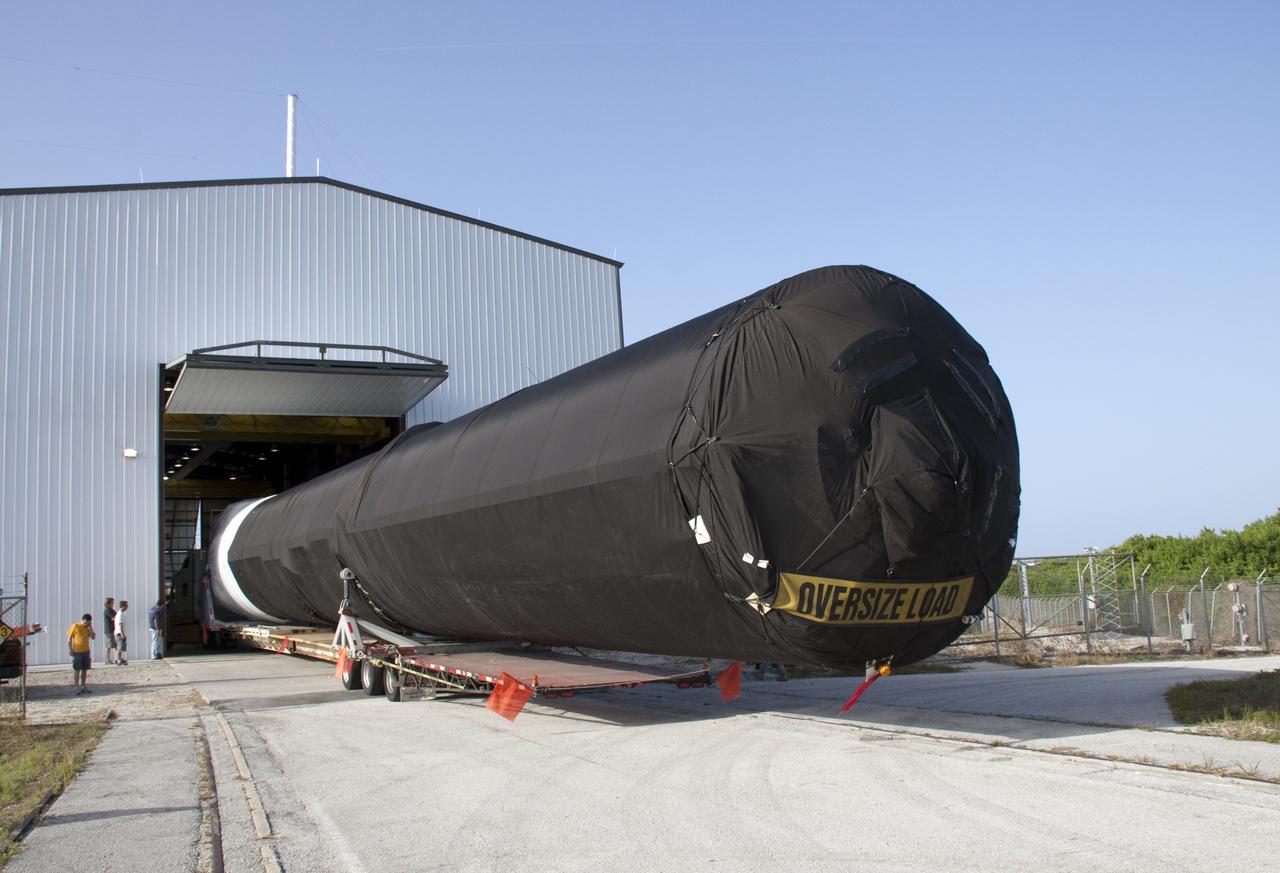
CAPE CANAVERAL, Fla. -- At Cape Canaveral Air Force Station in Florida, the first stage of the SpaceX Falcon 9 rocket arrives at Launch Complex-40's horizontal processing hangar. Once assembled, it will be a two-stage fully integrated launch vehicle, consisting of a first stage powered by nine SpaceX-developed Merlin 1C engines, a second stage, an interstage, an unpressurized trunk and the Dragon spacecraft qualification unit. SpaceX was awarded procurement for three demonstration flights under the Commercial Orbital Transportation Services, or COTS, program managed by NASA's Johnson Space Center in Houston. A subsequent contract for Commercial Resupply Services, or CRS, was awarded in late 2008 to resupply the International Space Station. The SpaceX CRS contract provides for 12 missions to resupply the station from 2011 through 2015. Photo credit: NASA/Troy Cryder
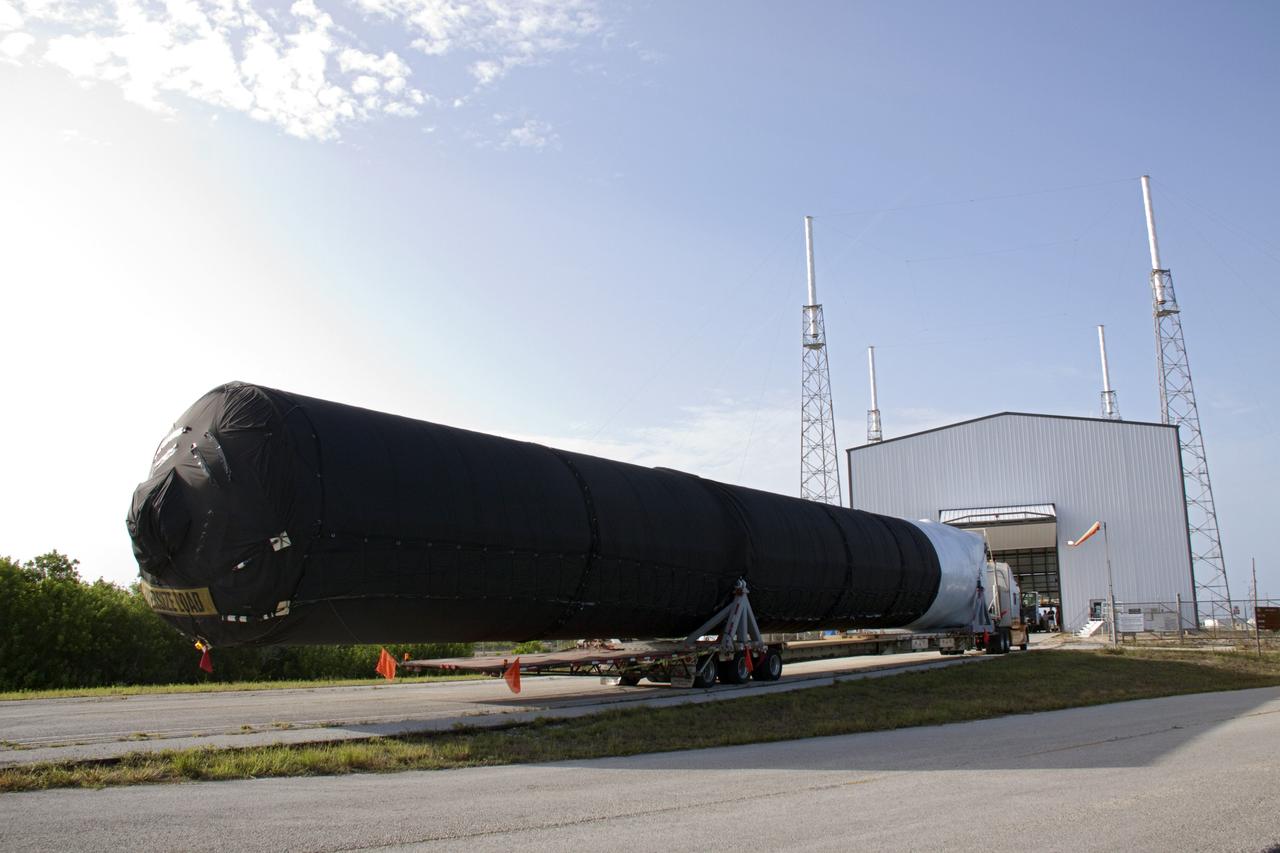
CAPE CANAVERAL, Fla. -- At Cape Canaveral Air Force Station in Florida, the first stage of the SpaceX Falcon 9 rocket arrives at Launch Complex-40's horizontal processing hangar. Once assembled, it will be a two-stage fully integrated launch vehicle, consisting of a first stage powered by nine SpaceX-developed Merlin 1C engines, a second stage, an interstage, an unpressurized trunk and the Dragon spacecraft qualification unit. SpaceX was awarded procurement for three demonstration flights under the Commercial Orbital Transportation Services, or COTS, program managed by NASA's Johnson Space Center in Houston. A subsequent contract for Commercial Resupply Services, or CRS, was awarded in late 2008 to resupply the International Space Station. The SpaceX CRS contract provides for 12 missions to resupply the station from 2011 through 2015. Photo credit: NASA/Troy Cryder
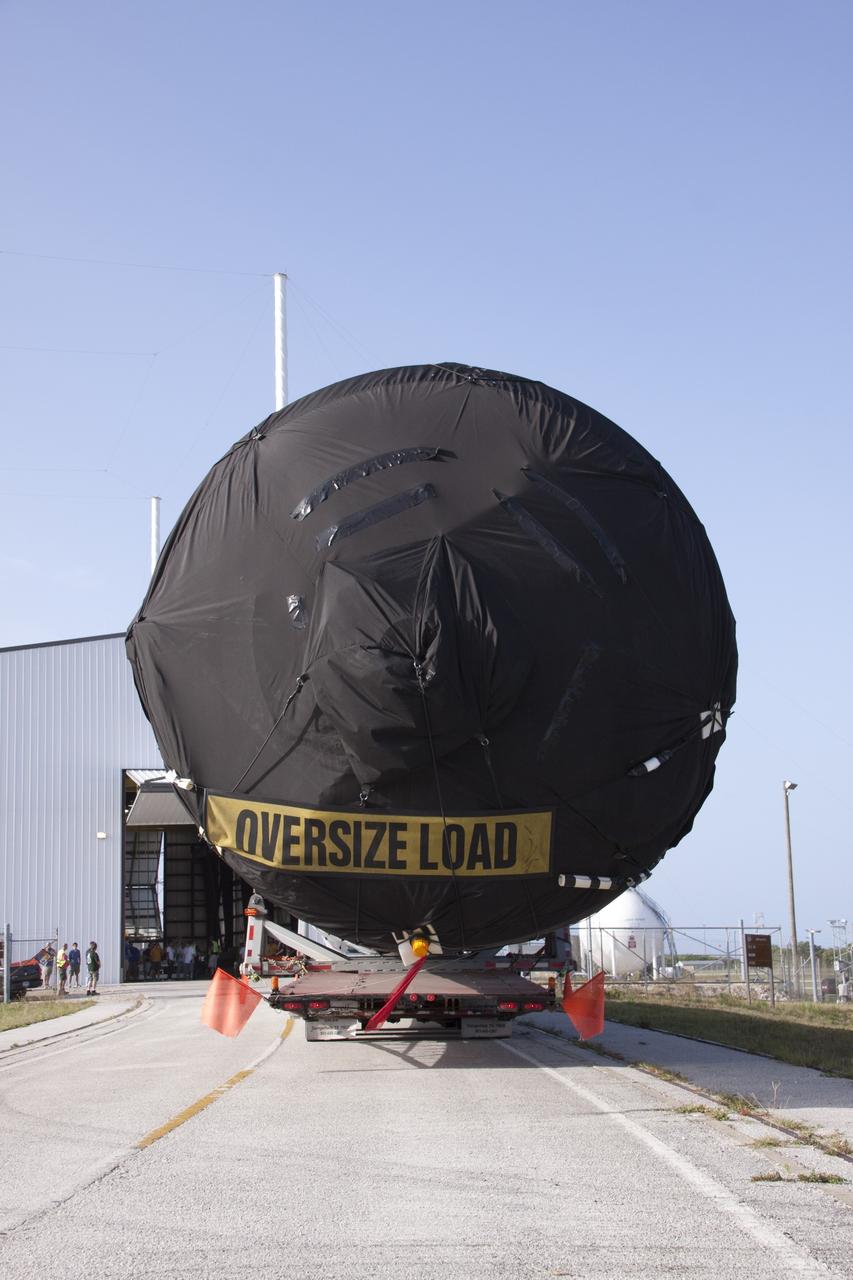
CAPE CANAVERAL, Fla. -- At Cape Canaveral Air Force Station in Florida, the first stage of the SpaceX Falcon 9 rocket arrives at Launch Complex-40's horizontal processing hangar. Once assembled, it will be a two-stage fully integrated launch vehicle, consisting of a first stage powered by nine SpaceX-developed Merlin 1C engines, a second stage, an interstage, an unpressurized trunk and the Dragon spacecraft qualification unit. SpaceX was awarded procurement for three demonstration flights under the Commercial Orbital Transportation Services, or COTS, program managed by NASA's Johnson Space Center in Houston. A subsequent contract for Commercial Resupply Services, or CRS, was awarded in late 2008 to resupply the International Space Station. The SpaceX CRS contract provides for 12 missions to resupply the station from 2011 through 2015. Photo credit: NASA/Troy Cryder
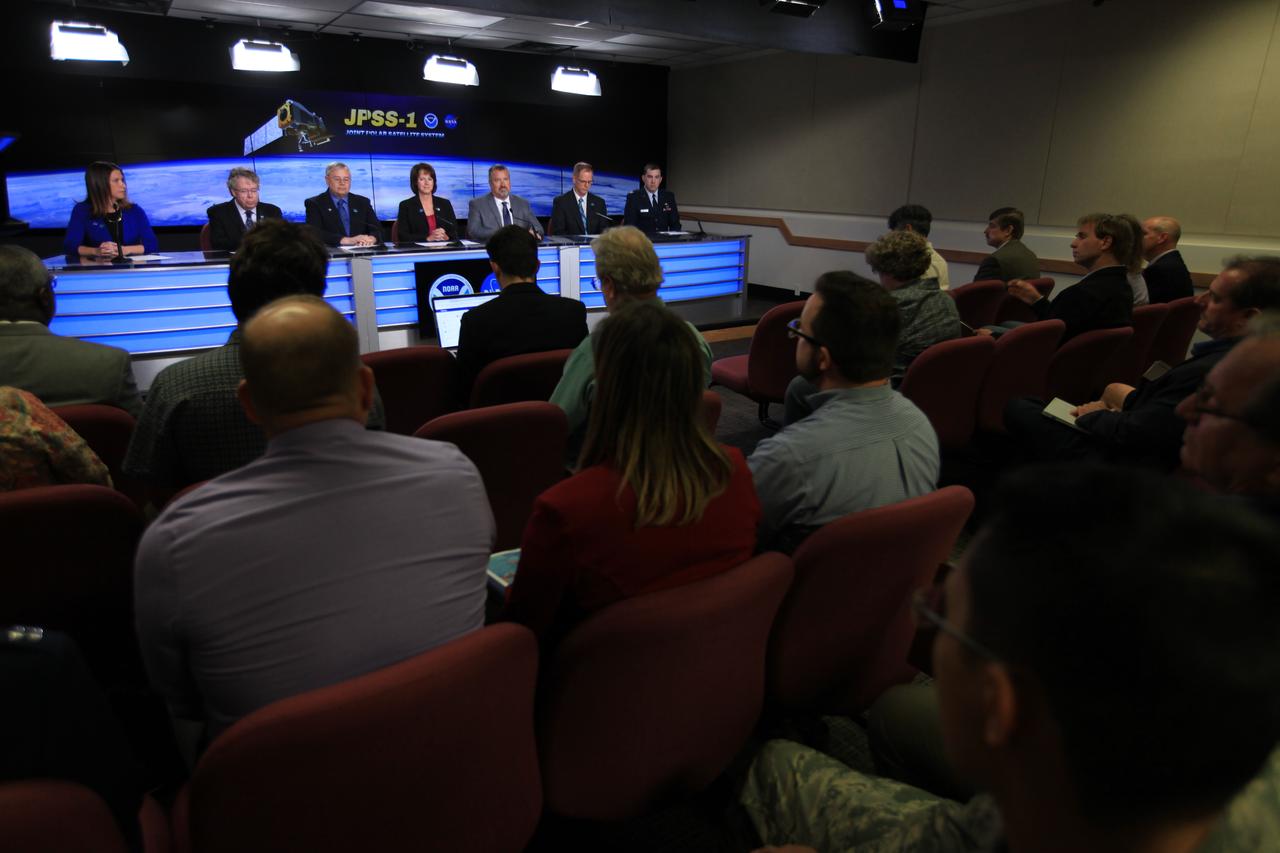
At Vandenberg Air Force Base in California, NASA and industry leaders speak to members of the media at a prelaunch news conference for the Joint Polar Satellite System-1, or JPSS-1. Participants, from left, are Tori McLendon of NASA Communications, Steve Volz, director of NOAA’s Satellite and Information Service, Greg Mandt, director of the NOAA Joint Polar Satellite System Program, Sandra Smalley, director of the Joint Agency Satellite Division at NASA Headquarters, Omar Baez, NASA launch director, Scott Messer, United Launch Alliance program manager for NASA missions, and U. S. Air Force Capt. Ross Malugani, launch weather officer at Vandenberg's 30th Space Wing. Built by Ball Aerospace and Technologies Corp. of Boulder, Colorado, JPSS is the first in a series four next-generation environmental satellites in a collaborative program between the NOAA and NASA. Liftoff atop a United Launch Alliance Delta II rocket is scheduled to take place from Vandenberg's Space Launch Complex 2 at 1:47 a.m. PST (4:47 a.m. EST), on Nov. 14, 2017.
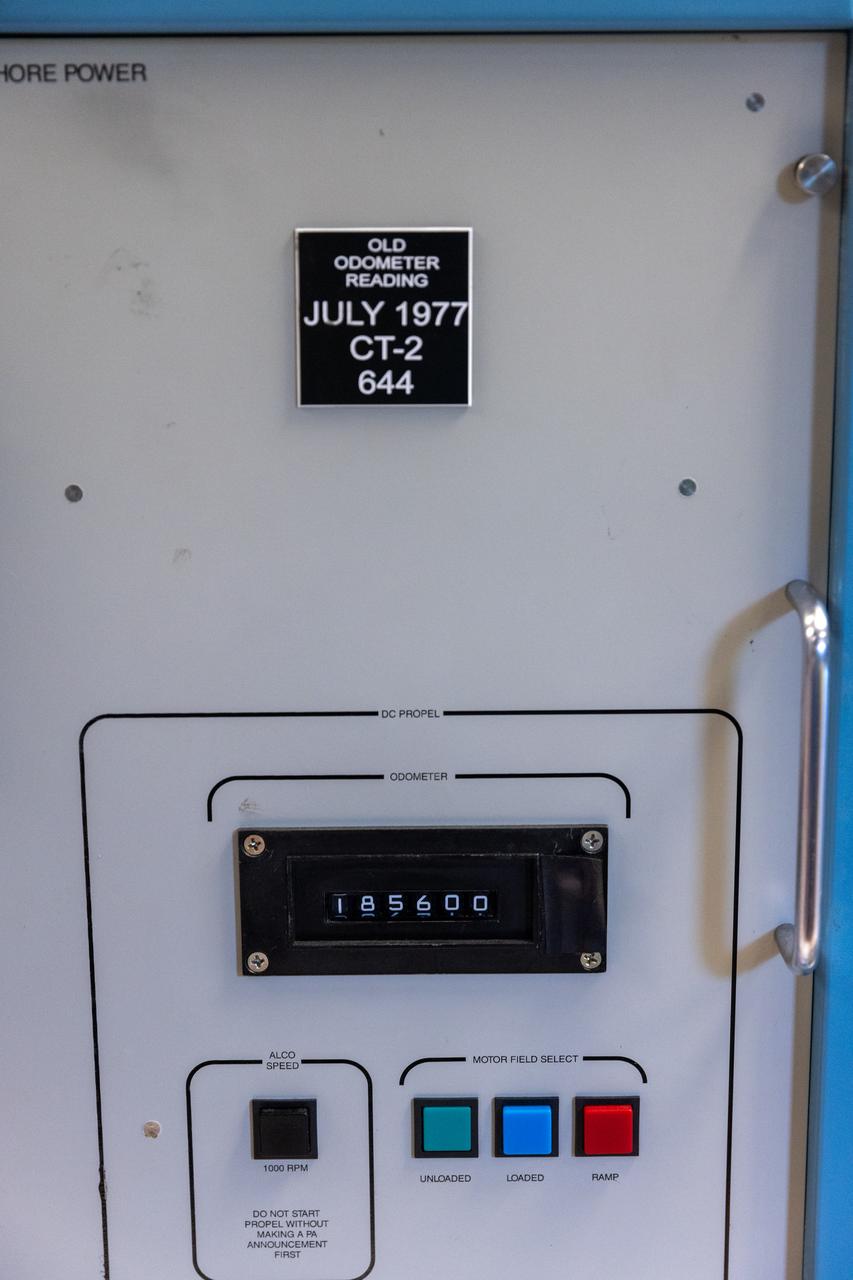
A photo of NASA’s crawler-transporter 2 odometer on Wednesday, Sept. 25, 2024, at NASA’s Kennedy Space Center in Florida, commemorates the milestone of reaching 2,500 miles traveled since its construction in 1965. Crawler-transporter 2’s original odometer ceased working in 1977 at 644 miles, so teams with NASA’s Exploration Ground Systems added the original figure to the new odometer to calculate the milestone. Built originally to transport massive Saturn V rockets during the Apollo Program, crawler-transporter 2 continued its service during the Space Shuttle Program, and currently transports the massive SLS (Space Launch System) rocket and Orion spacecraft atop the mobile launcher as part of the agency’s Artemis campaign.
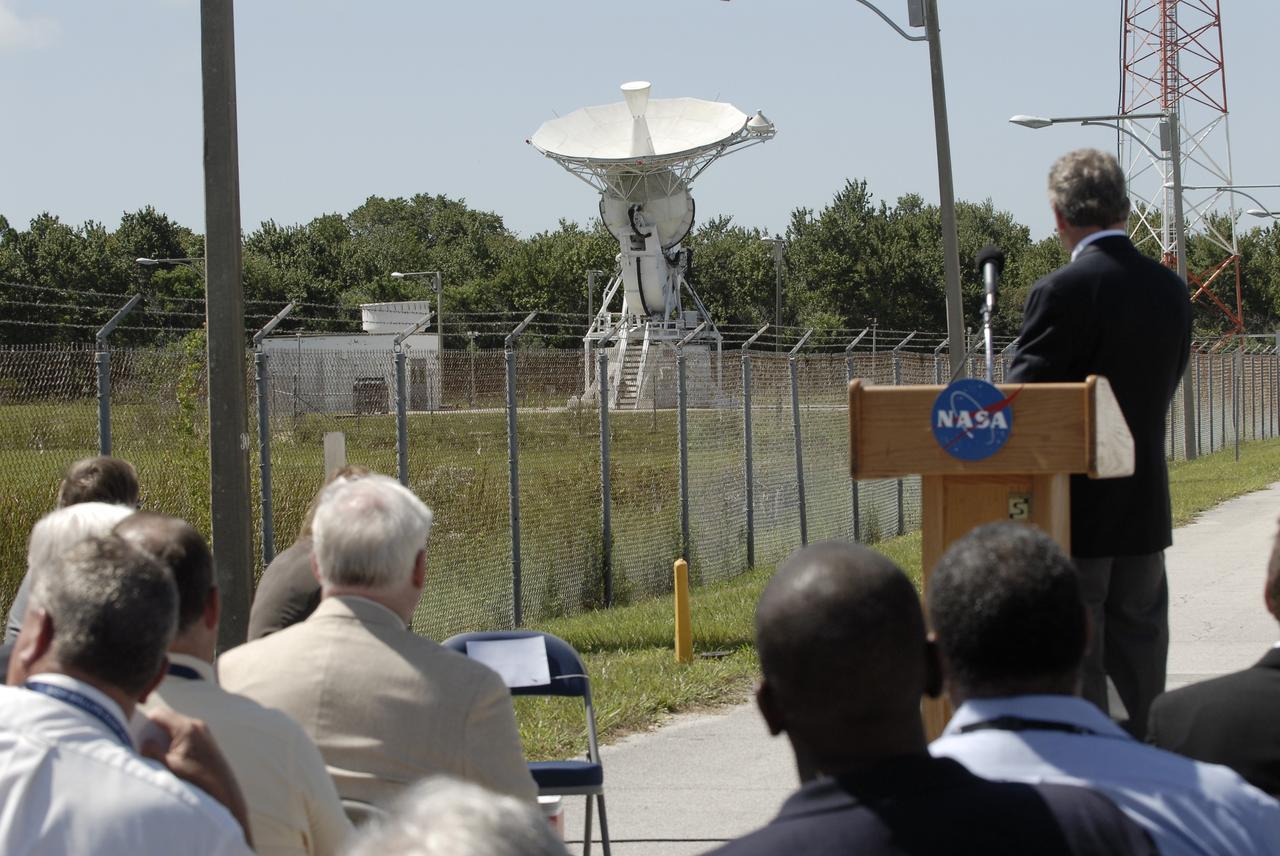
CAPE CANAVERAL, Fla. -- At the Merritt Island Launch Annex (MILA) Spaceflight Tracking and Data Network Station at NASA's Kennedy Space Center in Florida, one of two signature 30-foot steerable S-band antennas is slewed from the horizontal to the vertical position for the last time during a closing ceremony recognizing the station's 45 years of service. The antenna was pointed at Kennedy's Shuttle Landing Facility as it was for its last assignment, support of the landing of space shuttle Atlantis, concluding the STS-135 mission. STS-135 was the final mission of the Space Shuttle Program. The station was originally established by NASA's Goddard Space Flight Center as one of 17 Space Flight Tracking and Data Network stations around the world. Commissioned for the Apollo Program, the first launch it supported was the Apollo/Saturn 203 test flight from Launch Complex 37 on July 5, 1966. It also provided orbital support for low earth-orbiting scientific satellites. In recent history, the station has been used almost exclusively for space shuttle launch and landing support. Following the final launch and landing of the Space Shuttle Program in July 2011, the MILA station is officially decommissioned. For more information, visit http://www.nasa.gov/centers/kennedy/pdf/167424main_MILA-08C.pdf. Photo credit: NASA/Kim Shiflett
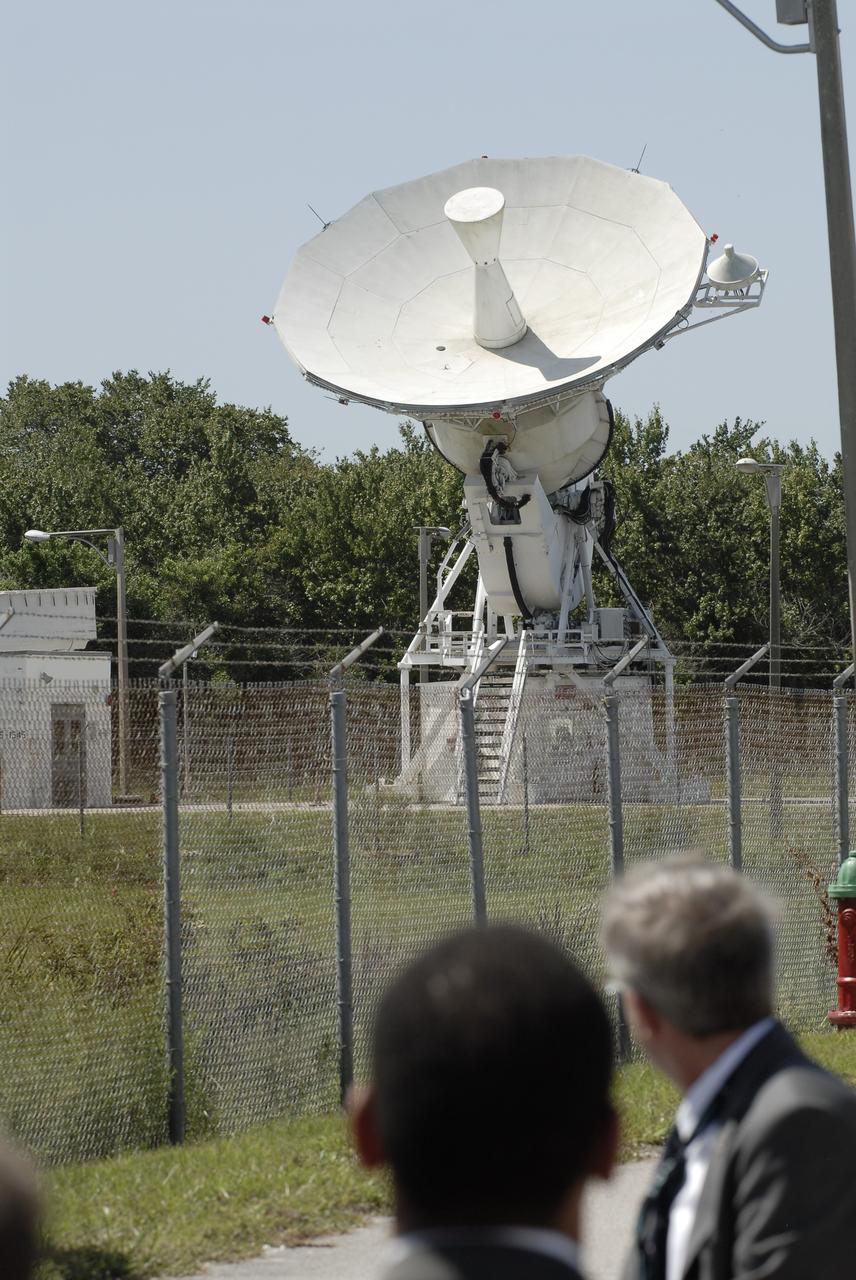
CAPE CANAVERAL, Fla. -- At the Merritt Island Launch Annex (MILA) Spaceflight Tracking and Data Network Station at NASA's Kennedy Space Center in Florida, one of two signature 30-foot steerable S-band antennas is slewed from the horizontal to the vertical position for the last time during a closing ceremony recognizing the station's 45 years of service. The antenna was pointed at Kennedy's Shuttle Landing Facility as it was for its last assignment, support of the landing of space shuttle Atlantis, concluding the STS-135 mission. STS-135 was the final mission of the Space Shuttle Program. The station was originally established by NASA's Goddard Space Flight Center as one of 17 Space Flight Tracking and Data Network stations around the world. Commissioned for the Apollo Program, the first launch it supported was the Apollo/Saturn 203 test flight from Launch Complex 37 on July 5, 1966. It also provided orbital support for low earth-orbiting scientific satellites. In recent history, the station has been used almost exclusively for space shuttle launch and landing support. Following the final launch and landing of the Space Shuttle Program in July 2011, the MILA station is officially decommissioned. For more information, visit http://www.nasa.gov/centers/kennedy/pdf/167424main_MILA-08C.pdf. Photo credit: NASA/Kim Shiflett
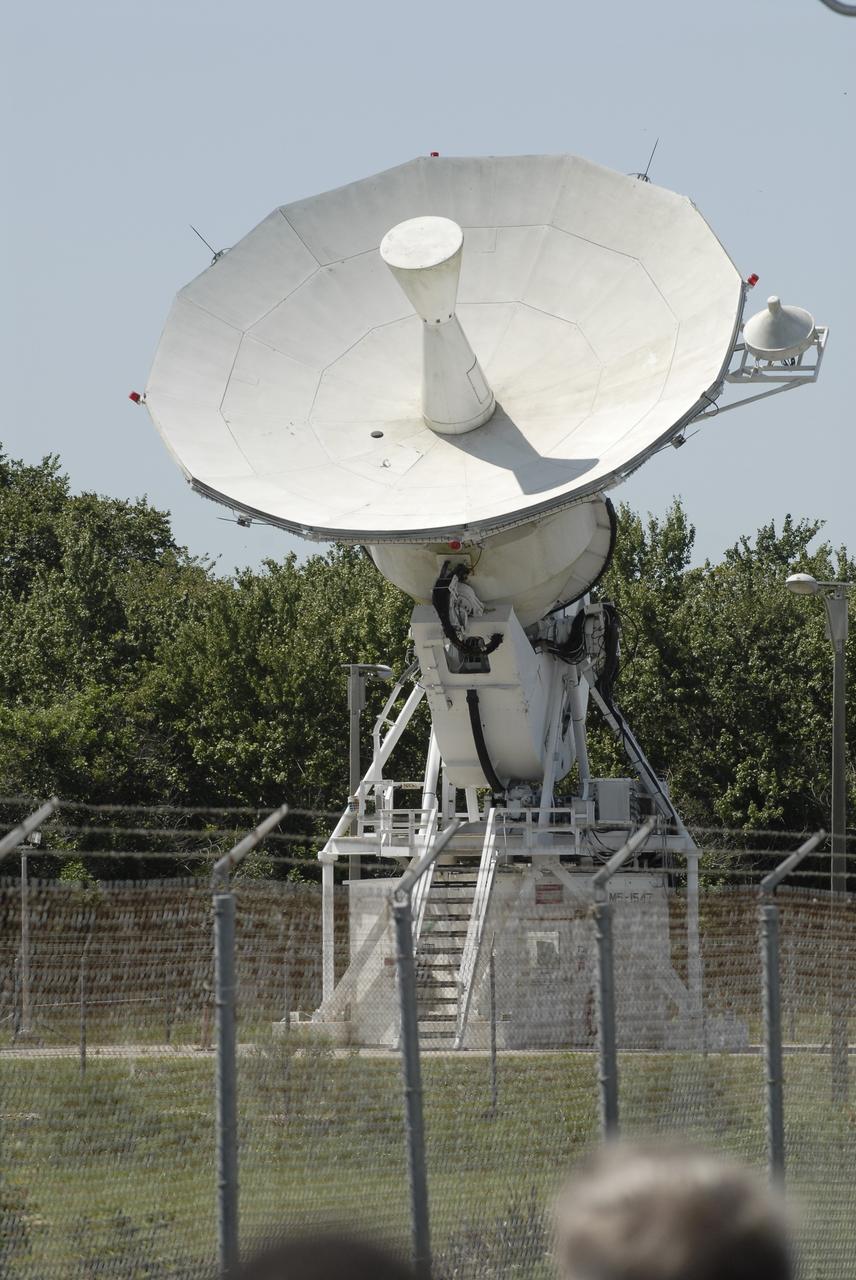
CAPE CANAVERAL, Fla. -- At the Merritt Island Launch Annex (MILA) Spaceflight Tracking and Data Network Station at NASA's Kennedy Space Center in Florida, one of two signature 30-foot steerable S-band antennas is slewed from the horizontal to the vertical position for the last time during a closing ceremony recognizing the station's 45 years of service. The antenna was pointed at Kennedy's Shuttle Landing Facility as it was for its last assignment, support of the landing of space shuttle Atlantis, concluding the STS-135 mission. STS-135 was the final mission of the Space Shuttle Program. The station was originally established by NASA's Goddard Space Flight Center as one of 17 Space Flight Tracking and Data Network stations around the world. Commissioned for the Apollo Program, the first launch it supported was the Apollo/Saturn 203 test flight from Launch Complex 37 on July 5, 1966. It also provided orbital support for low earth-orbiting scientific satellites. In recent history, the station has been used almost exclusively for space shuttle launch and landing support. Following the final launch and landing of the Space Shuttle Program in July 2011, the MILA station is officially decommissioned. For more information, visit http://www.nasa.gov/centers/kennedy/pdf/167424main_MILA-08C.pdf. Photo credit: NASA/Kim Shiflett
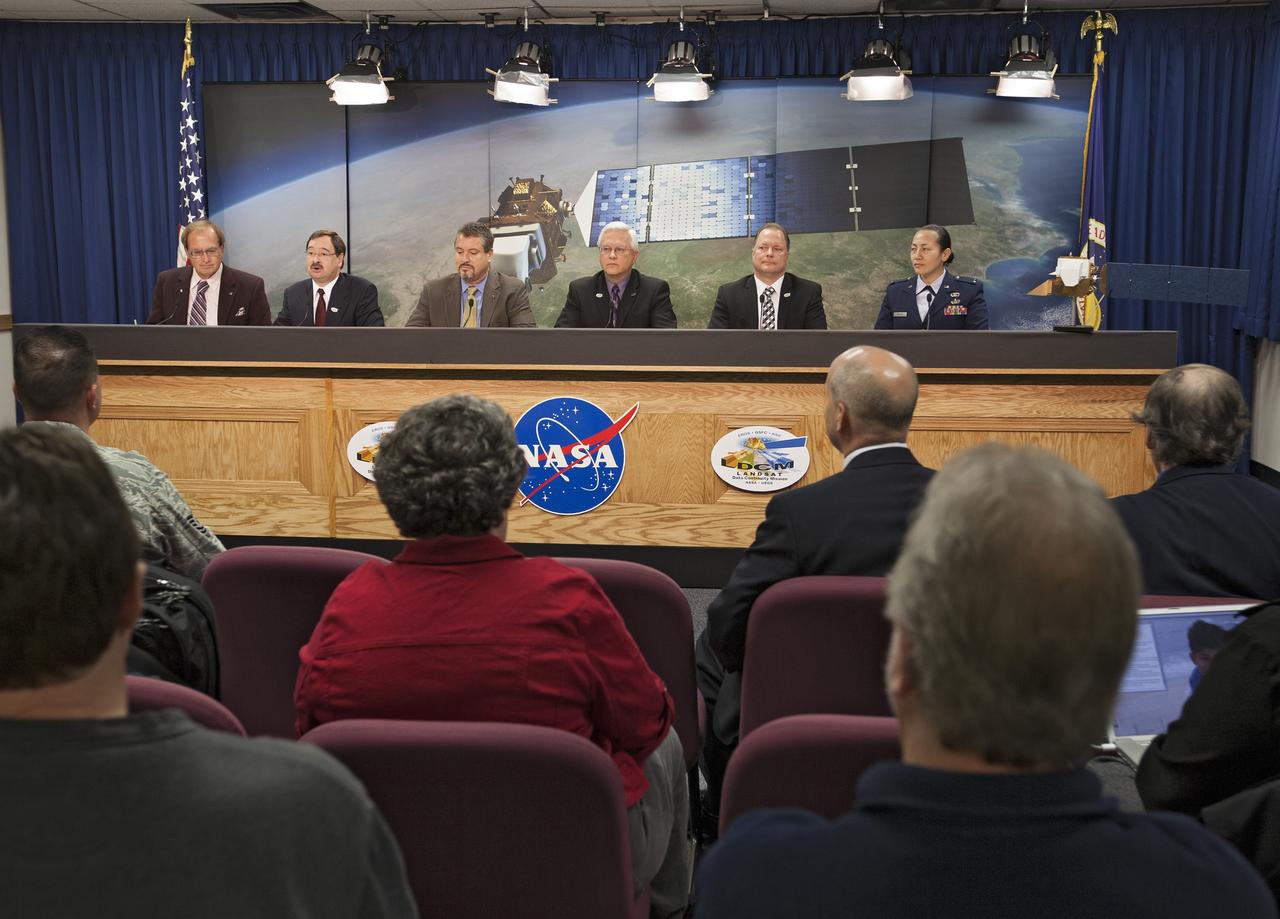
VANDENBERG AIR FORCE BASE, Calif. -- Media attend a prelaunch press conference at Vandenberg Air Force Base in California to discuss NASA's readiness to launch the Landsat Data Continuity Mission LDCM. From left are George Diller of NASA Public Affairs, LDCM program executive David Jarrett from NASA Headquarters, NASA Launch Director Omar Baez from Kennedy Space Center, United Launch Alliance Program Manager for NASA Missions Vernon Thorp, LDCM Project Manager Ken Schwer from Goddard Space Flight Center, and 1st Lt. Jennifer Kelley, launch weather officer for the 30th Operations Support Squadron at Vandenberg. Launch of LDCM aboard a United Launch Alliance Atlas V rocket from Vandenberg's Space Launch Complex-3E is planned for Feb. 11 during a 48-minute launch window that opens at 10:02 a.m. PST, or 1:02 p.m. EST. LDCM is the eighth satellite in the Landsat Program series of Earth-observing missions and will continue the program’s critical role in monitoring, understanding and managing the resources needed for human sustainment, such as food, water and forests. NASA's Goddard Space Flight Center in Greenbelt, Md., is responsible for LDCM project management. Orbital Sciences Corp. built the LDCM satellite. NASA's Launch Services Program at the Kennedy Space Center in Florida provides launch management. After launch and the initial checkout phase, the U. S. Geological Survey will take operational control of LDCM, and it will be renamed Landsat 8. Photo credit: NASA/Kim Shiflett
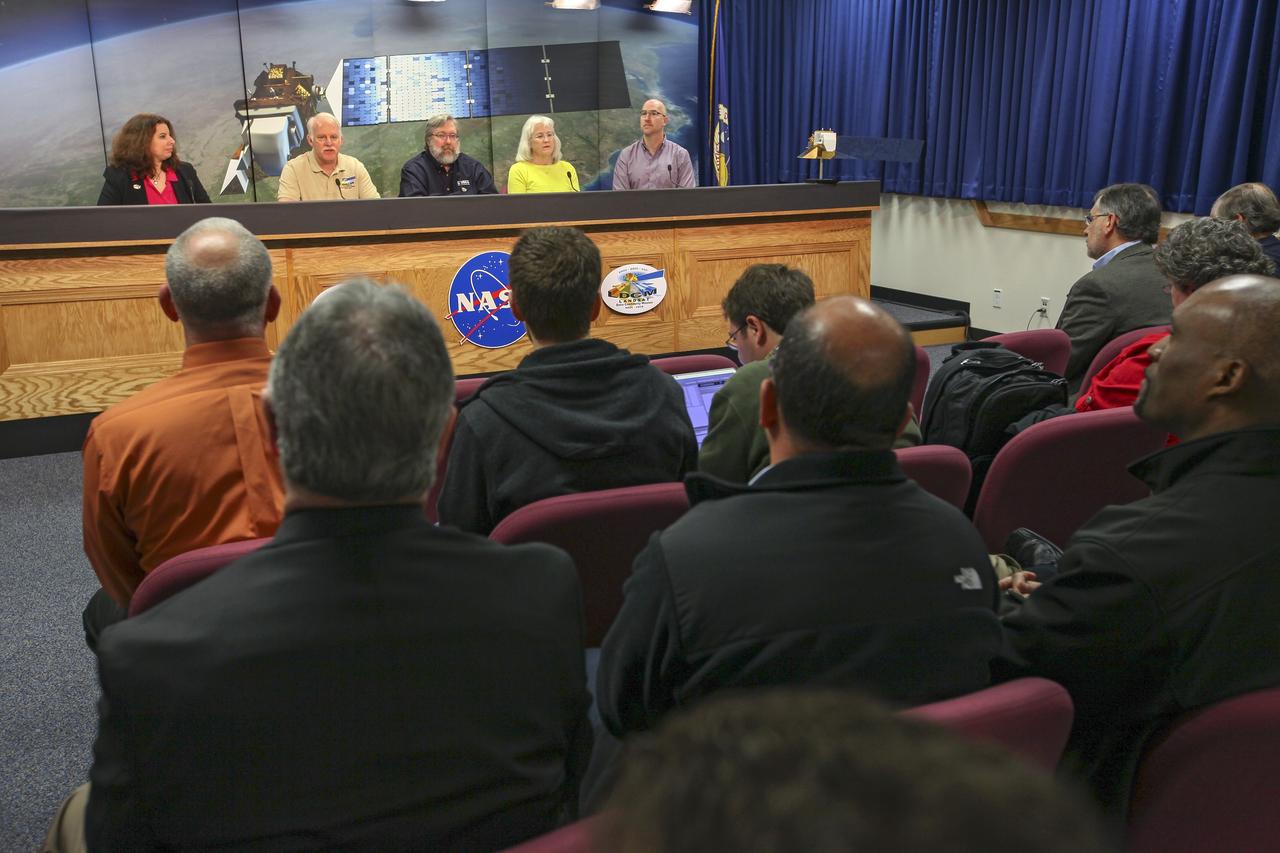
VANDENBERG AIR FORCE BASE, Calif. -- Media attend a mission science briefing at Vandenberg Air Force Base in California in preparation for the launch of the Landsat Data Continuity Mission LDCM. From left are Rani Gran of NASA Public Affairs, LDCM project scientist Dr. Jim Irons from NASA's Goddard Space Flight Center, senior scientist and co-chair of the Landsat Science Team U.S. Geological Survey Earth Resources Observation and Science EROS Center Dr. Thomas Loveland, Landsat scientist and president of Kass Green and Associates Kass Green, and senior research scientist Dr. Mike Wulder of the Landsat Science Team Canadian Forest Service, Natural Resources Canada. Launch of LDCM aboard a United Launch Alliance Atlas V rocket from Vandenberg's Space Launch Complex-3E is planned for Feb. 11 during a 48-minute launch window that opens at 10:02 a.m. PST, or 1:02 p.m. EST. LDCM is the eighth satellite in the Landsat Program series of Earth-observing missions and will continue the program’s critical role in monitoring, understanding and managing the resources needed for human sustainment, such as food, water and forests. NASA's Goddard Space Flight Center in Greenbelt, Md., is responsible for LDCM project management. Orbital Sciences Corp. built the LDCM satellite. NASA's Launch Services Program at the Kennedy Space Center in Florida provides launch management. After launch and the initial checkout phase, the U. S. Geological Survey will take operational control of LDCM, and it will be renamed Landsat 8. Photo credit: NASA/Kim Shiflett
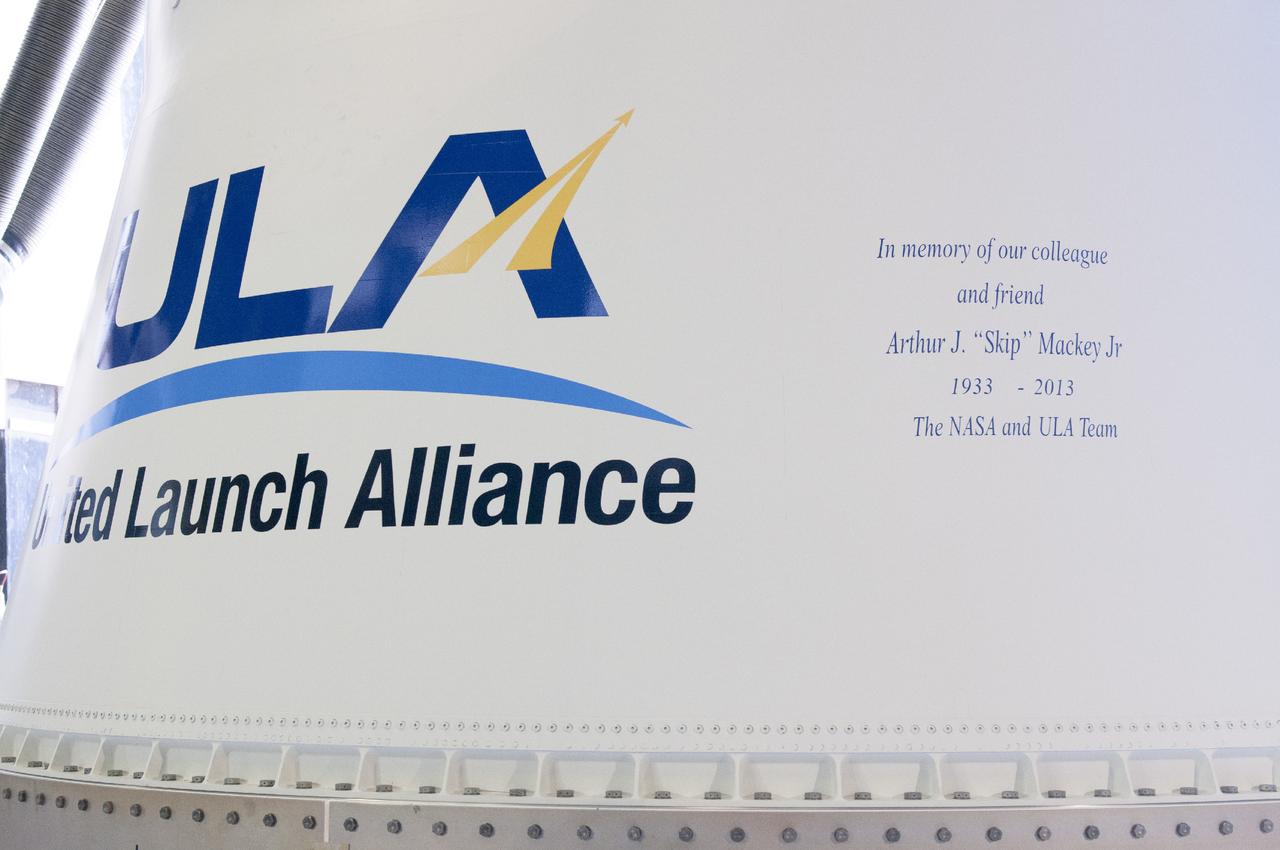
CAPE CANAVERAL, Fla. – This memorial message was added to the Atlas V rocket for NASA's Tracking and Data Relay Satellite, or TDRS-L, spacecraft being prepared for launch from Cape Canaveral Air Force Station's Launch Complex 41. Arthur J. "Skip" Mackey Jr. was the “Voice of NASA” during the 1960s, 1970s and early 1980s for flight commentary after liftoff for expendable vehicles launched from Cape Canaveral. Mackey served as branch chief for Telemetry and Communications at Hangar AE in the agency’s Expendable Launch Vehicle Program and then the Launch Services Program for 39 years. He died in Fort Lauderdale, Fla., on Nov. 19, 2013. The TDRS-L spacecraft is the second of three new satellites designed to ensure vital operational continuity for NASA by expanding the lifespan of the Tracking and Data Relay Satellite System TDRSS fleet, which consists of eight satellites in geosynchronous orbit. The spacecraft provide tracking, telemetry, command and high bandwidth data return services for numerous science and human exploration missions orbiting Earth. These include NASA's Hubble Space Telescope and the International Space Station. TDRS-L has a high-performance solar panel designed for more spacecraft power to meet the growing S-band communications requirements. TDRSS is one of NASA Space Communication and Navigation’s SCaN three networks providing space communications to NASA’s missions. For more information more about TDRS-L, visit: http://www.nasa.gov/tdrs To learn more about SCaN, visit: www.nasa.gov/scan For more on "Skip" Mackey go to: http://www.nasa.gov/content/skip-mackey-remembered-by-colleagues-as-voice-of-nasa/ Image credit: United Launch Alliance
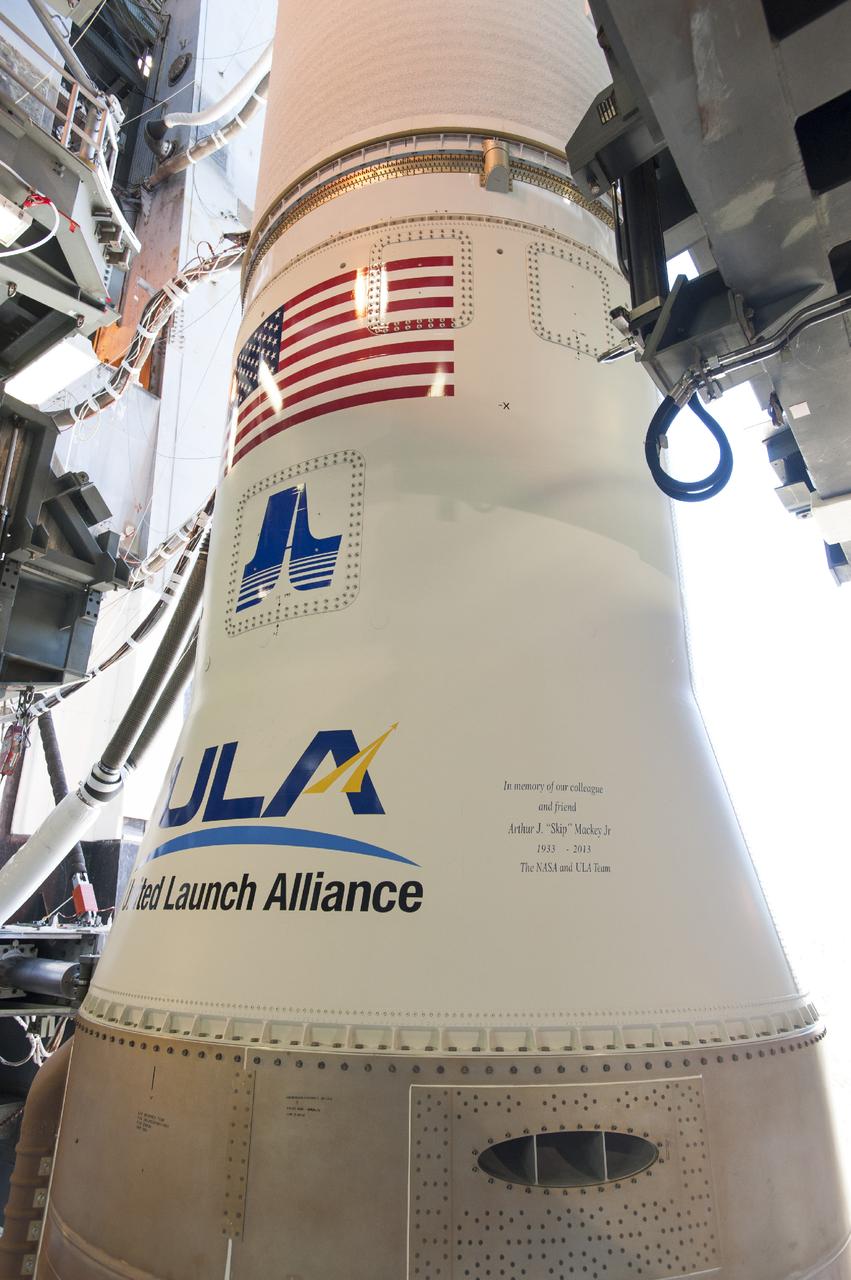
CAPE CANAVERAL, Fla. – This memorial message was added to the Atlas V rocket for NASA's Tracking and Data Relay Satellite, or TDRS-L, spacecraft being prepared for launch from Cape Canaveral Air Force Station's Launch Complex 41. Arthur J. "Skip" Mackey Jr. was the “Voice of NASA” during the 1960s, 1970s and early 1980s for flight commentary after liftoff for expendable vehicles launched from Cape Canaveral. Mackey served as branch chief for Telemetry and Communications at Hangar AE in the agency’s Expendable Launch Vehicle Program and then the Launch Services Program for 39 years. He died in Fort Lauderdale, Fla., on Nov. 19, 2013. The TDRS-L spacecraft is the second of three new satellites designed to ensure vital operational continuity for NASA by expanding the lifespan of the Tracking and Data Relay Satellite System TDRSS fleet, which consists of eight satellites in geosynchronous orbit. The spacecraft provide tracking, telemetry, command and high bandwidth data return services for numerous science and human exploration missions orbiting Earth. These include NASA's Hubble Space Telescope and the International Space Station. TDRS-L has a high-performance solar panel designed for more spacecraft power to meet the growing S-band communications requirements. TDRSS is one of NASA Space Communication and Navigation’s SCaN three networks providing space communications to NASA’s missions. For more information more about TDRS-L, visit: http://www.nasa.gov/tdrs To learn more about SCaN, visit: www.nasa.gov/scan For more on "Skip" Mackey go to: http://www.nasa.gov/content/skip-mackey-remembered-by-colleagues-as-voice-of-nasa/ Image credit: United Launch Alliance
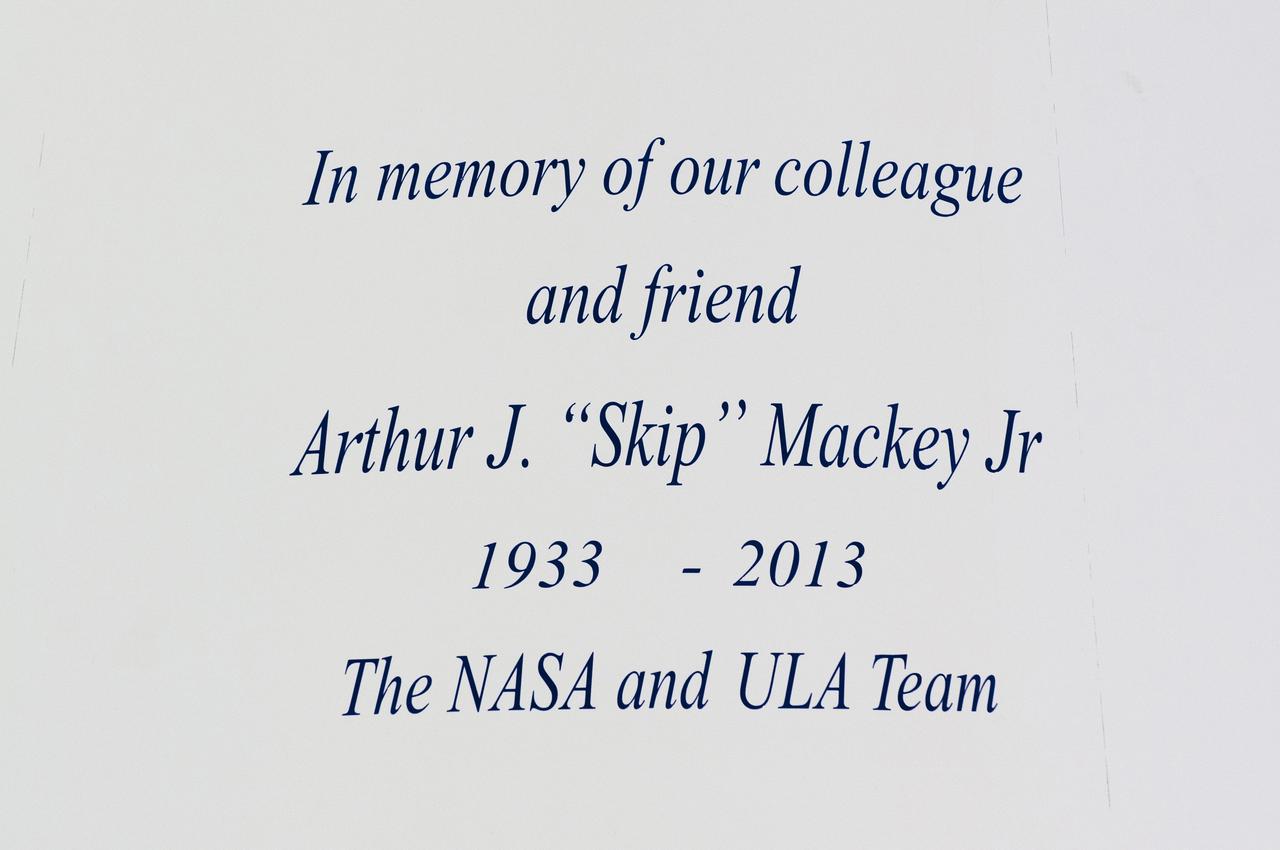
CAPE CANAVERAL, Fla. – This memorial message was added to the Atlas V rocket for NASA's Tracking and Data Relay Satellite, or TDRS-L, spacecraft being prepared for launch from Cape Canaveral Air Force Station's Launch Complex 41. Arthur J. "Skip" Mackey Jr. was the “Voice of NASA” during the 1960s, 1970s and early 1980s for flight commentary after liftoff for expendable vehicles launched from Cape Canaveral. Mackey served as branch chief for Telemetry and Communications at Hangar AE in the agency’s Expendable Launch Vehicle Program and then the Launch Services Program for 39 years. He died in Fort Lauderdale, Fla., on Nov. 19, 2013. The TDRS-L spacecraft is the second of three new satellites designed to ensure vital operational continuity for NASA by expanding the lifespan of the Tracking and Data Relay Satellite System TDRSS fleet, which consists of eight satellites in geosynchronous orbit. The spacecraft provide tracking, telemetry, command and high bandwidth data return services for numerous science and human exploration missions orbiting Earth. These include NASA's Hubble Space Telescope and the International Space Station. TDRS-L has a high-performance solar panel designed for more spacecraft power to meet the growing S-band communications requirements. TDRSS is one of NASA Space Communication and Navigation’s SCaN three networks providing space communications to NASA’s missions. For more information more about TDRS-L, visit: http://www.nasa.gov/tdrs To learn more about SCaN, visit: www.nasa.gov/scan For more on "Skip" Mackey go to: http://www.nasa.gov/content/skip-mackey-remembered-by-colleagues-as-voice-of-nasa/ Image credit: United Launch Alliance
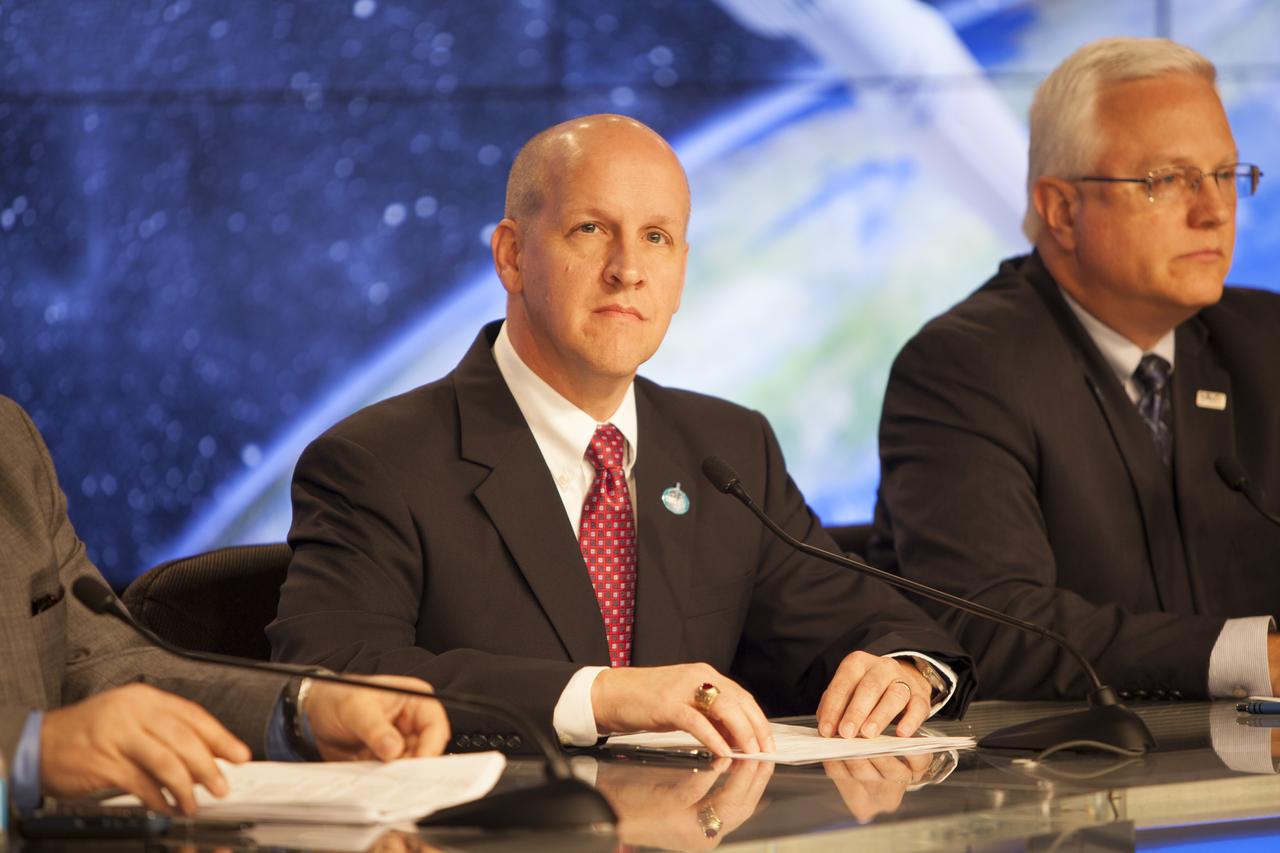
CAPE CANAVERAL, Fla. – During a news conference at NASA's Kennedy Space Center in Florida, agency and contractor officials discussed preparations for the launch of NASA's Tracking and Data Relay Satellite, or TDRS-L, spacecraft. Participants included Tim Dunn, NASA launch director at Kennedy, left, and Vernon Thorp, program manager for NASA Missions with United Launch Alliance in Denver, Colo. The TDRS-L spacecraft is the second of three new satellites designed to ensure vital operational continuity for NASA by expanding the lifespan of the Tracking and Data Relay Satellite System TDRSS fleet, which consists of eight satellites in geosynchronous orbit. The spacecraft provide tracking, telemetry, command and high bandwidth data return services for numerous science and human exploration missions orbiting Earth. These include NASA's Hubble Space Telescope and the International Space Station. TDRS-L has a high-performance solar panel designed for more spacecraft power to meet the growing S-band communications requirements. TDRSS is one of NASA Space Communication and Navigation’s SCaN three networks providing space communications to NASA’s missions. For more information more about TDRS-L, visit: http://www.nasa.gov/tdrs To learn more about SCaN, visit: www.nasa.gov/scan Photo credit: NASA/Frankie Martin
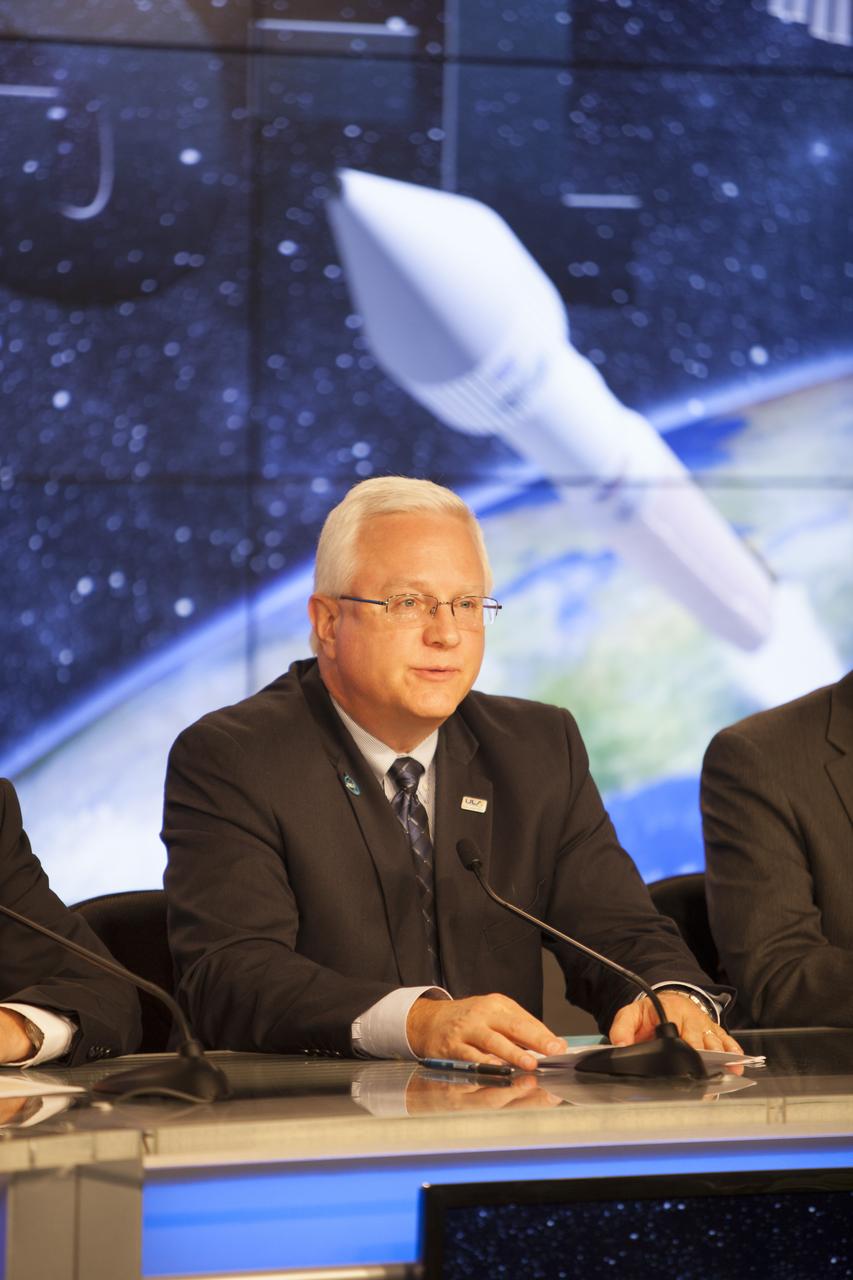
CAPE CANAVERAL, Fla. – During a news conference at NASA's Kennedy Space Center in Florida, agency and contractor officials discussed preparations for the launch of NASA's Tracking and Data Relay Satellite, or TDRS-L, spacecraft. Participants included Vernon Thorp, program manager for NASA Missions with United Launch Alliance in Denver, Colo. The TDRS-L spacecraft is the second of three new satellites designed to ensure vital operational continuity for NASA by expanding the lifespan of the Tracking and Data Relay Satellite System TDRSS fleet, which consists of eight satellites in geosynchronous orbit. The spacecraft provide tracking, telemetry, command and high bandwidth data return services for numerous science and human exploration missions orbiting Earth. These include NASA's Hubble Space Telescope and the International Space Station. TDRS-L has a high-performance solar panel designed for more spacecraft power to meet the growing S-band communications requirements. TDRSS is one of NASA Space Communication and Navigation’s SCaN three networks providing space communications to NASA’s missions. For more information more about TDRS-L, visit: http://www.nasa.gov/tdrs To learn more about SCaN, visit: www.nasa.gov/scan Photo credit: NASA/Frankie Martin
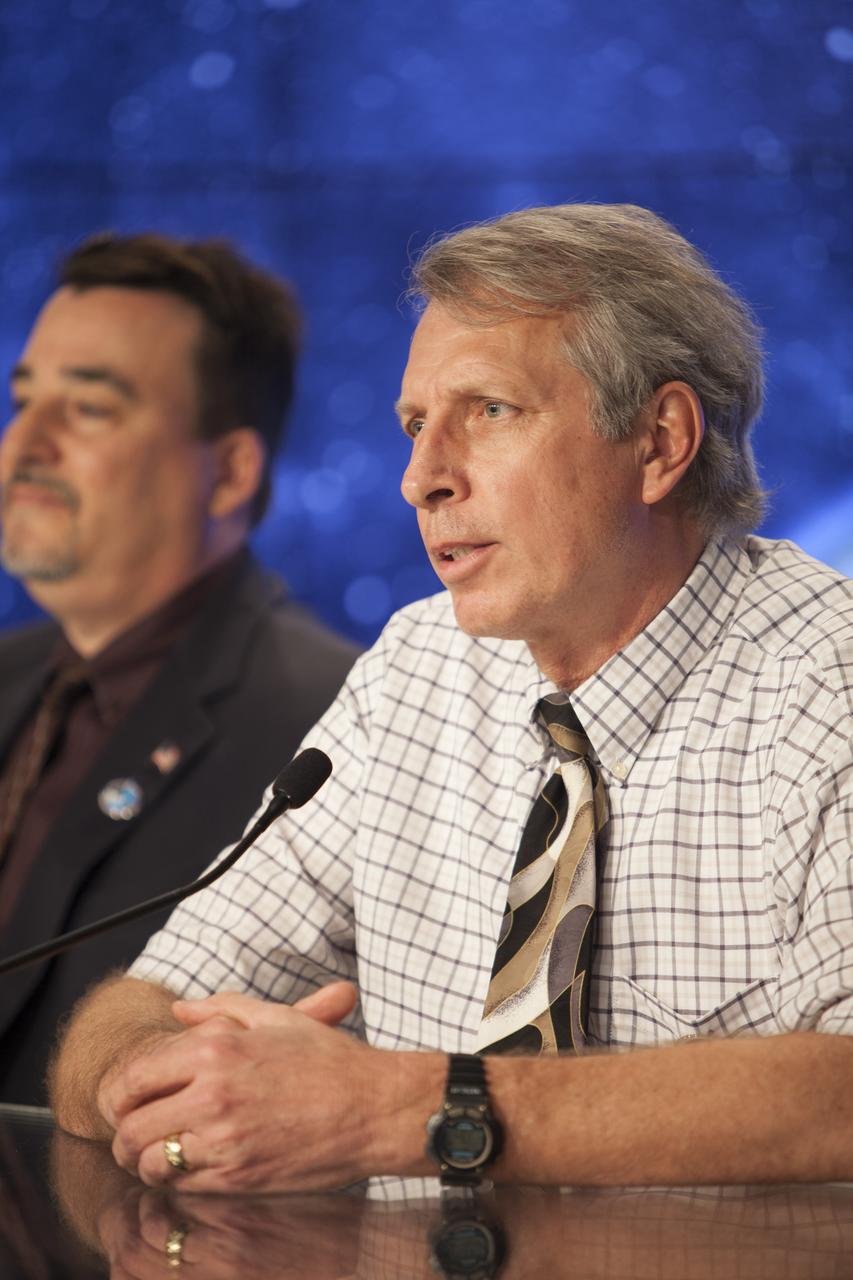
CAPE CANAVERAL, Fla. – During a news conference at NASA's Kennedy Space Center in Florida, agency and contractor officials discussed preparations for the launch of NASA's Tracking and Data Relay Satellite, or TDRS-L, spacecraft. Participants included Clay Flinn, launch weather officer for the 45th Weather Squadron at Cape Canaveral Air Force Station, Fla. Seated behind Flinn is Andy Kopito, Civil Space Programs director for Boeing Space & Intelligence Systems in El Segundo, Calif. The TDRS-L spacecraft is the second of three new satellites designed to ensure vital operational continuity for NASA by expanding the lifespan of the Tracking and Data Relay Satellite System TDRSS fleet, which consists of eight satellites in geosynchronous orbit. The spacecraft provide tracking, telemetry, command and high bandwidth data return services for numerous science and human exploration missions orbiting Earth. These include NASA's Hubble Space Telescope and the International Space Station. TDRS-L has a high-performance solar panel designed for more spacecraft power to meet the growing S-band communications requirements. TDRSS is one of NASA Space Communication and Navigation’s SCaN three networks providing space communications to NASA’s missions. For more information more about TDRS-L, visit: http://www.nasa.gov/tdrs To learn more about SCaN, visit: www.nasa.gov/scan Photo credit: NASA/Frankie Martin
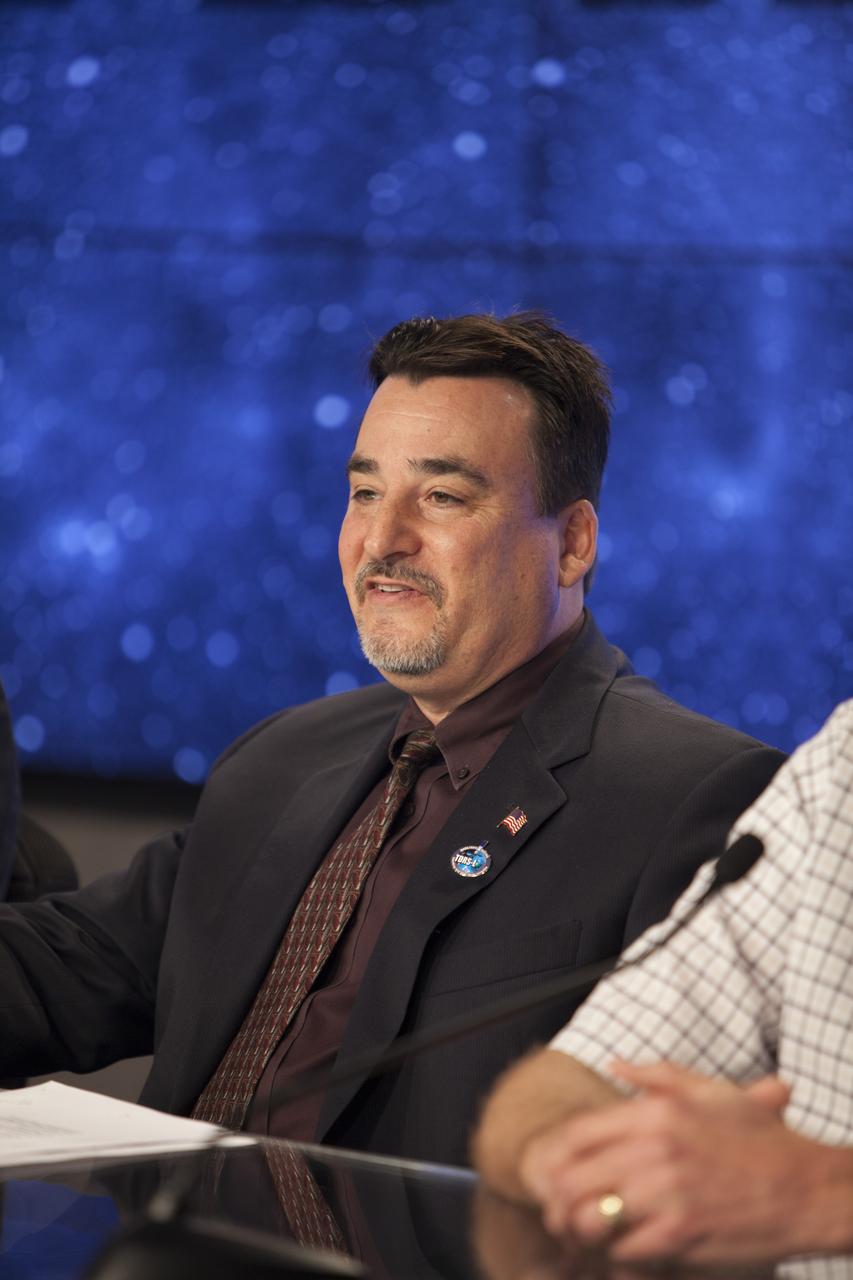
CAPE CANAVERAL, Fla. – During a news conference at NASA's Kennedy Space Center in Florida, agency and contractor officials discussed preparations for the launch of NASA's Tracking and Data Relay Satellite, or TDRS-L, spacecraft. Participants included Andy Kopito, Civil Space Programs director for Boeing Space & Intelligence Systems in El Segundo, Calif. The TDRS-L spacecraft is the second of three new satellites designed to ensure vital operational continuity for NASA by expanding the lifespan of the Tracking and Data Relay Satellite System TDRSS fleet, which consists of eight satellites in geosynchronous orbit. The spacecraft provide tracking, telemetry, command and high bandwidth data return services for numerous science and human exploration missions orbiting Earth. These include NASA's Hubble Space Telescope and the International Space Station. TDRS-L has a high-performance solar panel designed for more spacecraft power to meet the growing S-band communications requirements. TDRSS is one of NASA Space Communication and Navigation’s SCaN three networks providing space communications to NASA’s missions. For more information more about TDRS-L, visit: http://www.nasa.gov/tdrs To learn more about SCaN, visit: www.nasa.gov/scan Photo credit: NASA/Frankie Martin
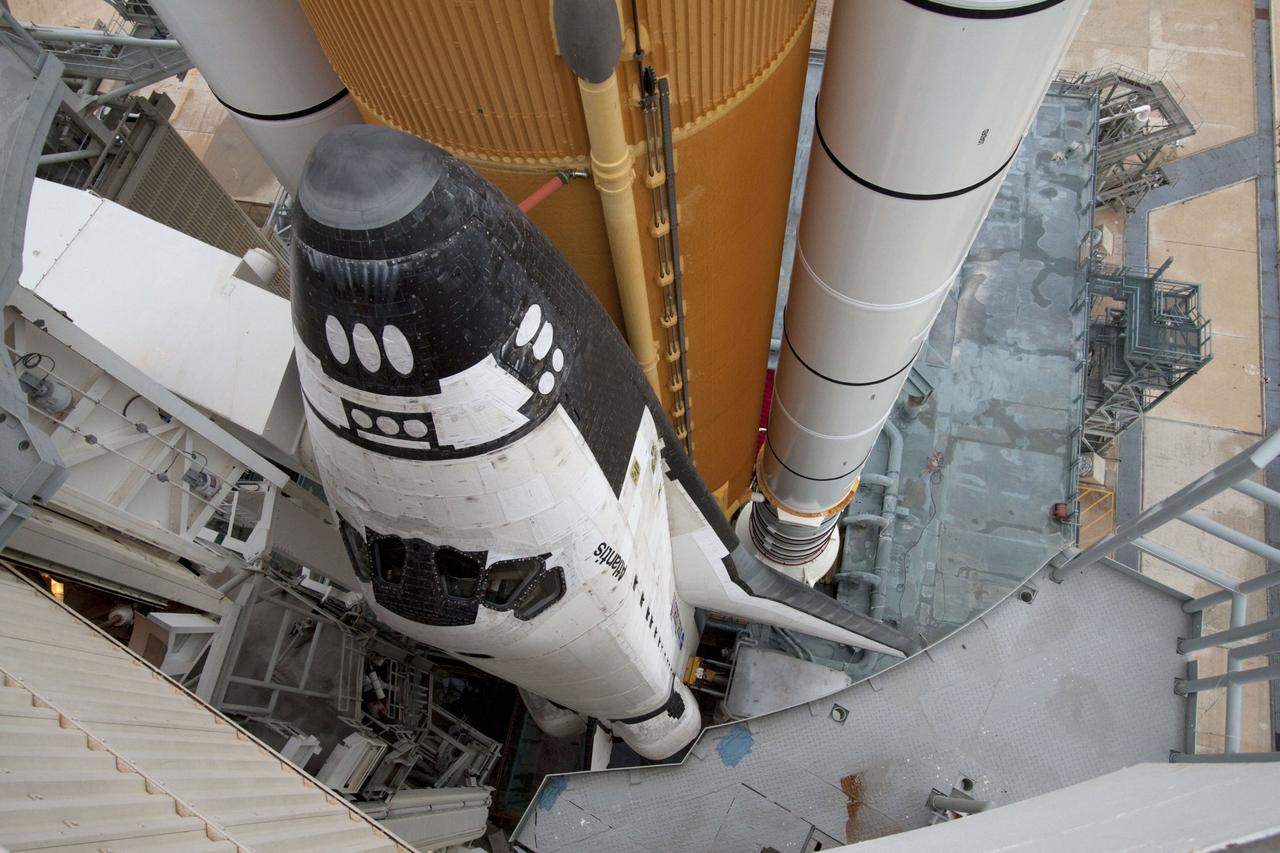
STS135-S-151 (8 July 2011) --- Space shuttle Atlantis is pictured on Launch Pad 39A at NASA's Kennedy Space Center in Florida following the move of the rotating service structure (RSS). The structure provides weather protection and access to the shuttle while it awaits liftoff on the pad. RSS "rollback" marks a major milestone in Atlantis' STS-135 mission countdown. Liftoff was at 11:29 a.m. (EDT) on July 8, 2011. Onboard are NASA astronauts Chris Ferguson, commander; Doug Hurley, pilot; Sandy Magnus and Rex Walheim, both mission specialists. STS-135 will deliver the Raffaello multi-purpose logistics module packed with supplies and spare parts for the space station. Atlantis also carries the Robotic Refueling Mission experiment that will investigate the potential for robotically refueling existing satellites in orbit. In addition, Atlantis will return with a failed ammonia pump module to help NASA better understand the failure mechanism and improve pump designs for future systems. STS-135 will be the 33rd flight of Atlantis, the 37th shuttle mission to the space station, and the 135th and final mission of NASA's Space Shuttle Program. Photo credit: NASA
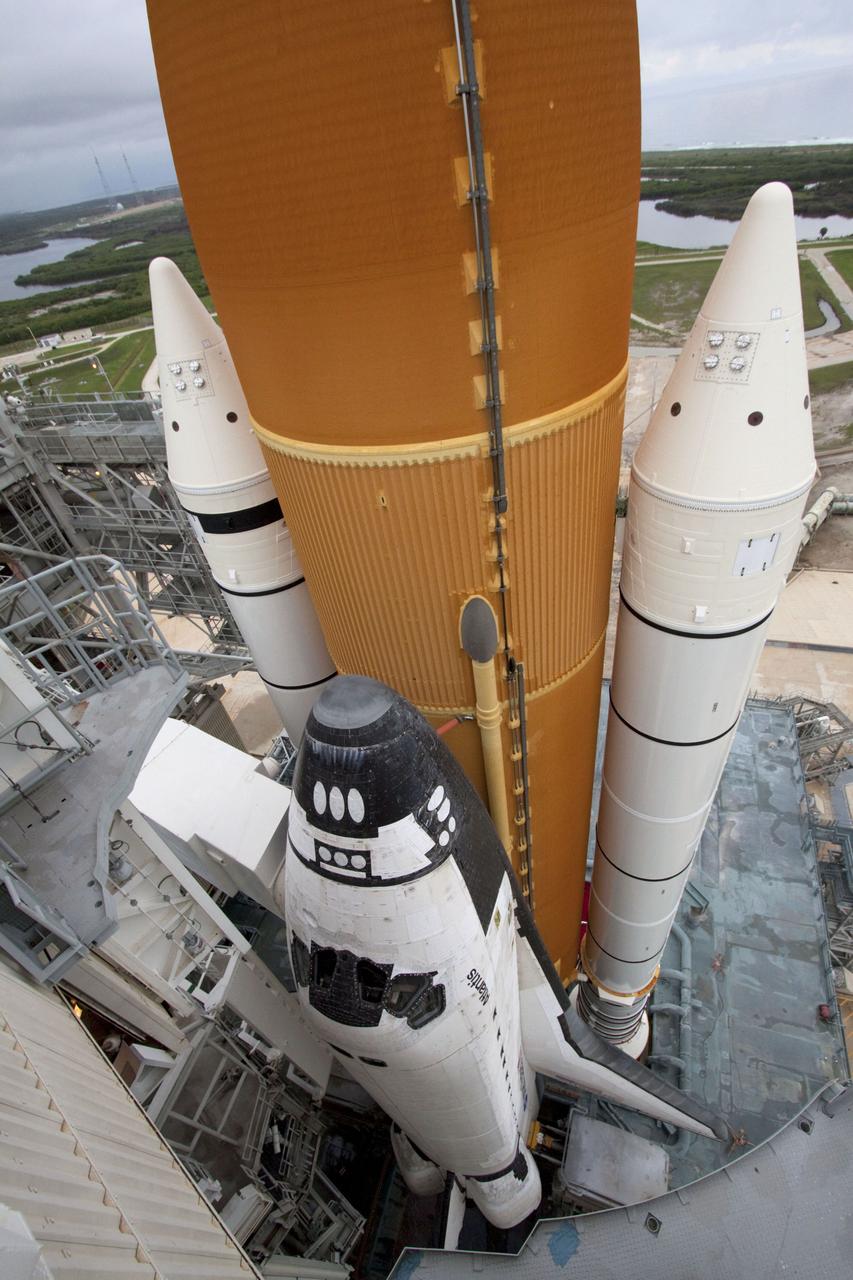
STS135-S-152 (8 July 2011) --- Space shuttle Atlantis is pictured on Launch Pad 39A at NASA's Kennedy Space Center in Florida following the move of the rotating service structure (RSS). The structure provides weather protection and access to the shuttle while it awaits liftoff on the pad. RSS "rollback" marks a major milestone in Atlantis' STS-135 mission countdown. Liftoff was at 11:29 a.m. (EDT) on July 8, 2011. Onboard are NASA astronauts Chris Ferguson, commander; Doug Hurley, pilot; Sandy Magnus and Rex Walheim, both mission specialists. STS-135 will deliver the Raffaello multi-purpose logistics module packed with supplies and spare parts for the space station. Atlantis also carries the Robotic Refueling Mission experiment that will investigate the potential for robotically refueling existing satellites in orbit. In addition, Atlantis will return with a failed ammonia pump module to help NASA better understand the failure mechanism and improve pump designs for future systems. STS-135 will be the 33rd flight of Atlantis, the 37th shuttle mission to the space station, and the 135th and final mission of NASA's Space Shuttle Program. Photo credit: NASA
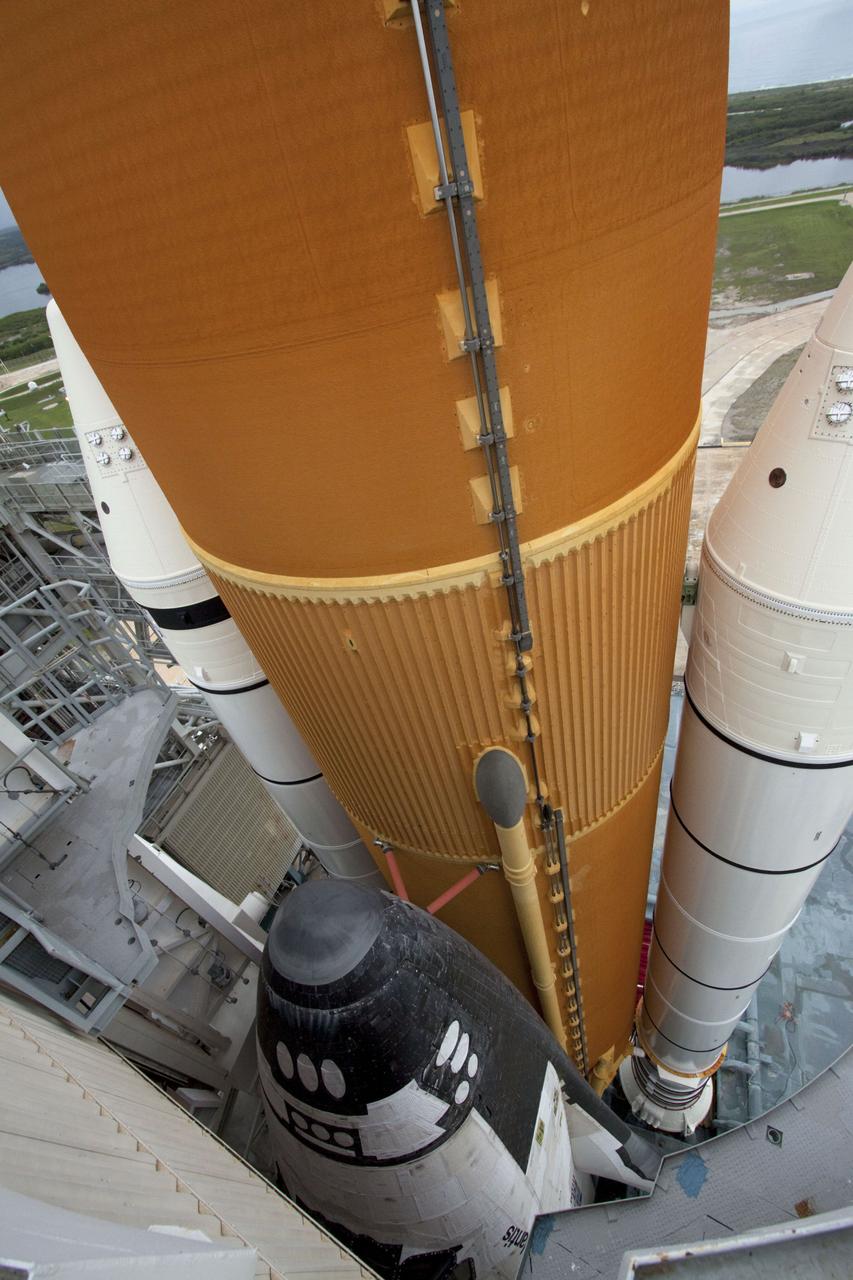
STS135-S-150 (8 July 2011) --- Space shuttle Atlantis is pictured on Launch Pad 39A at NASA's Kennedy Space Center in Florida following the move of the rotating service structure (RSS). The structure provides weather protection and access to the shuttle while it awaits liftoff on the pad. RSS "rollback" marks a major milestone in Atlantis' STS-135 mission countdown. Liftoff was at 11:29 a.m. (EDT) on July 8, 2011. Onboard are NASA astronauts Chris Ferguson, commander; Doug Hurley, pilot; Sandy Magnus and Rex Walheim, both mission specialists. STS-135 will deliver the Raffaello multi-purpose logistics module packed with supplies and spare parts for the space station. Atlantis also carries the Robotic Refueling Mission experiment that will investigate the potential for robotically refueling existing satellites in orbit. In addition, Atlantis will return with a failed ammonia pump module to help NASA better understand the failure mechanism and improve pump designs for future systems. STS-135 will be the 33rd flight of Atlantis, the 37th shuttle mission to the space station, and the 135th and final mission of NASA's Space Shuttle Program. Photo credit: NASA
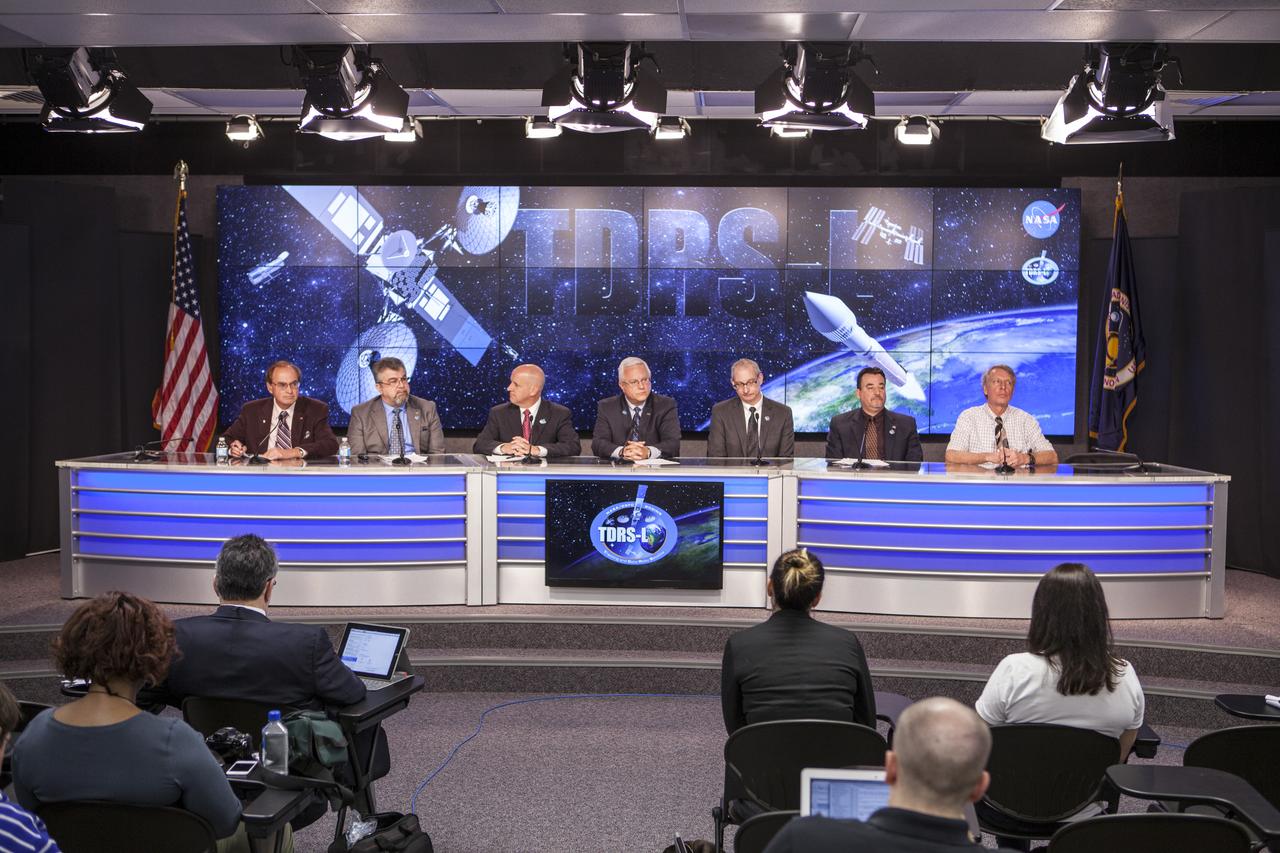
CAPE CANAVERAL, Fla. –During a news conference at NASA's Kennedy Space Center in Florida, agency and contractor officials discussed preparations for the launch of NASA's Tracking and Data Relay Satellite, or TDRS-L, spacecraft. Participating in the briefing, from the left, are George Diller of NASA Public Affairs, Badri Younes, deputy associate administrator, Space Communications and Navigation SCaN NASA Human Exploration and Operations Mission Directorate at NASA Headquarters in Washington D.C., Tim Dunn, NASA launch director at Kennedy, Vernon Thorp, program manager for NASA Missions with United Launch Alliance in Denver, Colo., Jeffrey Gramling, NASA's TDRS-L project manager at the Goddard Space Flight Center in Greenbelt, Md., Andy Kopito, Civil Space Programs director for Boeing Space & Intelligence Systems in El Segundo, Calif., and Clay Flinn, launch weather officer for the 45th Weather Squadron at Cape Canaveral Air Force Station, Fla. The TDRS-L spacecraft is the second of three new satellites designed to ensure vital operational continuity for NASA by expanding the lifespan of the Tracking and Data Relay Satellite System TDRSS fleet, which consists of eight satellites in geosynchronous orbit. The spacecraft provide tracking, telemetry, command and high bandwidth data return services for numerous science and human exploration missions orbiting Earth. These include NASA's Hubble Space Telescope and the International Space Station. TDRS-L has a high-performance solar panel designed for more spacecraft power to meet the growing S-band communications requirements. TDRSS is one of NASA Space Communication and Navigation’s SCaN three networks providing space communications to NASA’s missions. For more information more about TDRS-L, visit: http://www.nasa.gov/tdrs To learn more about SCaN, visit: www.nasa.gov/scan Photo credit: NASA/Frankie Martin
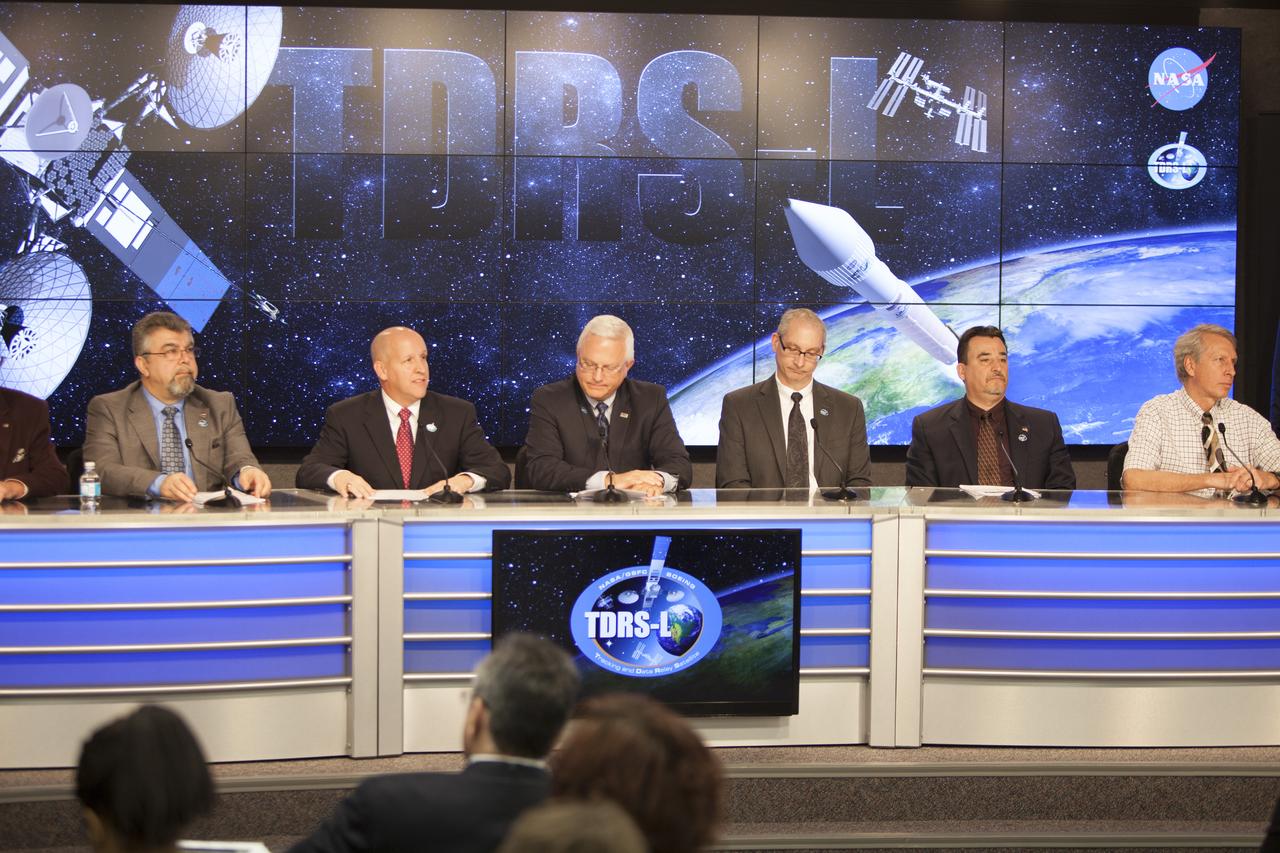
CAPE CANAVERAL, Fla. –During a news conference at NASA's Kennedy Space Center in Florida, agency and contractor officials discussed preparations for the launch of NASA's Tracking and Data Relay Satellite, or TDRS-L, spacecraft. Participating in the briefing, from the left, are Badri Younes, deputy associate administrator, Space Communications and Navigation SCaN NASA Human Exploration and Operations Mission Directorate at NASA Headquarters in Washington D.C., Tim Dunn, NASA launch director at Kennedy, Vernon Thorp, program manager for NASA Missions with United Launch Alliance in Denver, Colo., Jeffrey Gramling, NASA's TDRS-L project manager at the Goddard Space Flight Center in Greenbelt, Md., Andy Kopito, Civil Space Programs director for Boeing Space & Intelligence Systems in El Segundo, Calif., and Clay Flinn, launch weather officer for the 45th Weather Squadron at Cape Canaveral Air Force Station, Fla. The TDRS-L spacecraft is the second of three new satellites designed to ensure vital operational continuity for NASA by expanding the lifespan of the Tracking and Data Relay Satellite System TDRSS fleet, which consists of eight satellites in geosynchronous orbit. The spacecraft provide tracking, telemetry, command and high bandwidth data return services for numerous science and human exploration missions orbiting Earth. These include NASA's Hubble Space Telescope and the International Space Station. TDRS-L has a high-performance solar panel designed for more spacecraft power to meet the growing S-band communications requirements. TDRSS is one of NASA Space Communication and Navigation’s SCaN three networks providing space communications to NASA’s missions. For more information more about TDRS-L, visit: http://www.nasa.gov/tdrs To learn more about SCaN, visit: www.nasa.gov/scan Photo credit: NASA/Frankie Martin
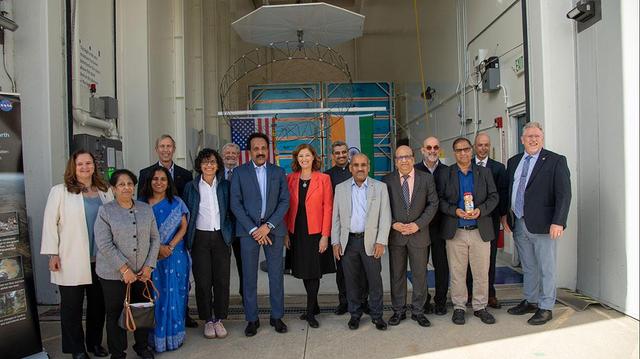
Officials from NASA, the Indian Space Research Organization (ISRO), and the Embassy of India hold a send-off ceremony for the NASA-ISRO Synthetic Aperture Radar (NISAR) science instrument payload on Feb. 3, 2023, outside a clean room at NASA's Jet Propulsion Laboratory in Southern California. The payload is scheduled to be shipped to India in March. Pictured left to right: Karen St. Germain, director, Earth Science Division, NASA; Mitra Dutta, NISAR program executive, NASA; Sripriya Ranganathan, ambassador and deputy chief of mission, Indian Embassy; Larry James, deputy director, JPL; Bhavya Lal, associate administrator for technology, policy, and strategy, NASA; Jim Graf, director, Earth Science and Technology Directorate, JPL; S. Somanath, chairman, ISRO; Laurie Leshin, director, JPL; Krunal Joshi, counselor, space and ISRO technical liaison officer, Indian Embassy; M. Sankaran, director, U R Rao Satellite Centre, ISRO; Shantanu Bhatawdekar, scientific secretary, ISRO; Paul Rosen, NISAR project scientist, JPL; CV Shrikant, NISAR project director, ISRO; Phil Barela, NISAR project manager, JPL; and Gerald Bawden, NISAR program scientist, NASA. NISAR – a joint effort between NASA and ISRO – will measure changes to Earth's land ice surfaces down to fractions of an inch. Data collected by this satellite will help researchers monitor a wide range of changes critical to life on Earth in unprecedented detail. This includes spotting warning signs of imminent volcanic eruptions, helping to monitor groundwater supplies, tracking the melt rate of ice sheets tied to sea level rise, and observing shifts in the distribution of vegetation around the world. The data will inform humanity's responses to urgent challenges posed by natural disasters and climate change, and help communities prepare for and manage hazards. There are two instruments on the satellite that will send and receive radar signals to and from Earth's surface to make the mission's measurements. An L-band synthetic aperture radar (SAR), which uses a signal wavelength of around 9 inches (24 centimeters), and an S-band SAR with a signal wavelength of nearly 5 inches (12 centimeters). Both will bounce their microwave signal off of the planet's surface and record how long it takes the signal to make one roundtrip, as well as the strength of that return signal. This enables the researchers to calculate the distance from the spacecraft to Earth's surface and thereby determine how the land or ice is changing. An antenna reflector nearly 40 feet (12 meters) in diameter, supported by a deployable boom, will focus the microwave signals sent and received by the SARs. JPL, which is managed for NASA by Caltech in Pasadena, leads the U.S. component of NISAR and is providing the mission's L-band SAR instrument. NASA is also providing the radar reflector antenna, the deployable boom, a high-rate communication subsystem for science data, GPS receivers, a solid-state recorder, and payload data subsystem. ISRO is providing the spacecraft bus, the S-band SAR, the launch vehicle, and associated launch services and satellite mission operations. https://photojournal.jpl.nasa.gov/catalog/PIA25600
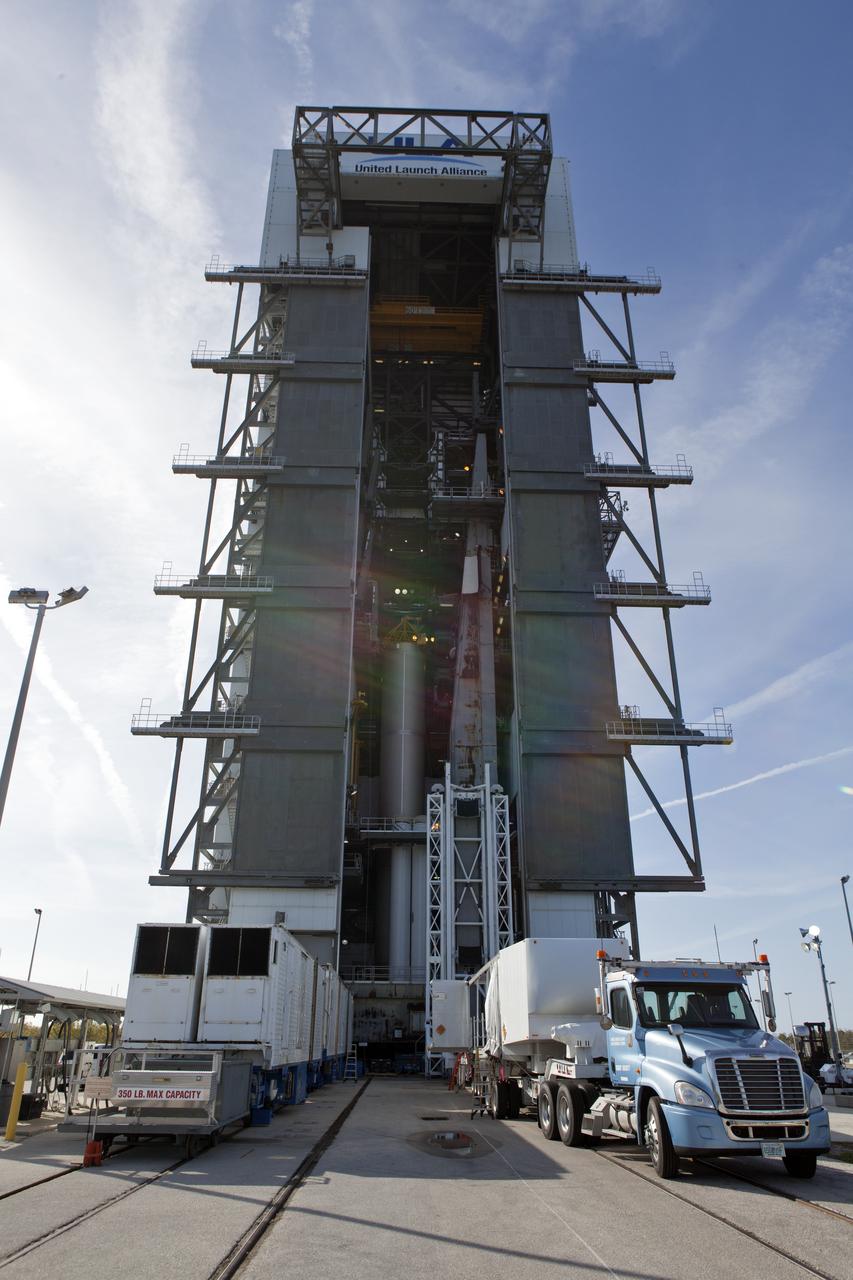
At the Vertical Integration Facility at Space Launch Complex 41 at Cape Canaveral Air Force Station in Florida, solid rocket boosters (SRBs) have been mated to a United Launch Alliance Atlas V first stage. The SRBs will be help boost NOAA's Geostationary Operational Environmental Satellite, or GOES-S, to orbit. GOES-S is the second in a series of four advanced geostationary weather satellites that will significantly improve the detection and observation of environmental phenomena that directly affect public safety, protection of property and the nation's economic health and prosperity. GOES-S is slated to launch March 1, 2018.
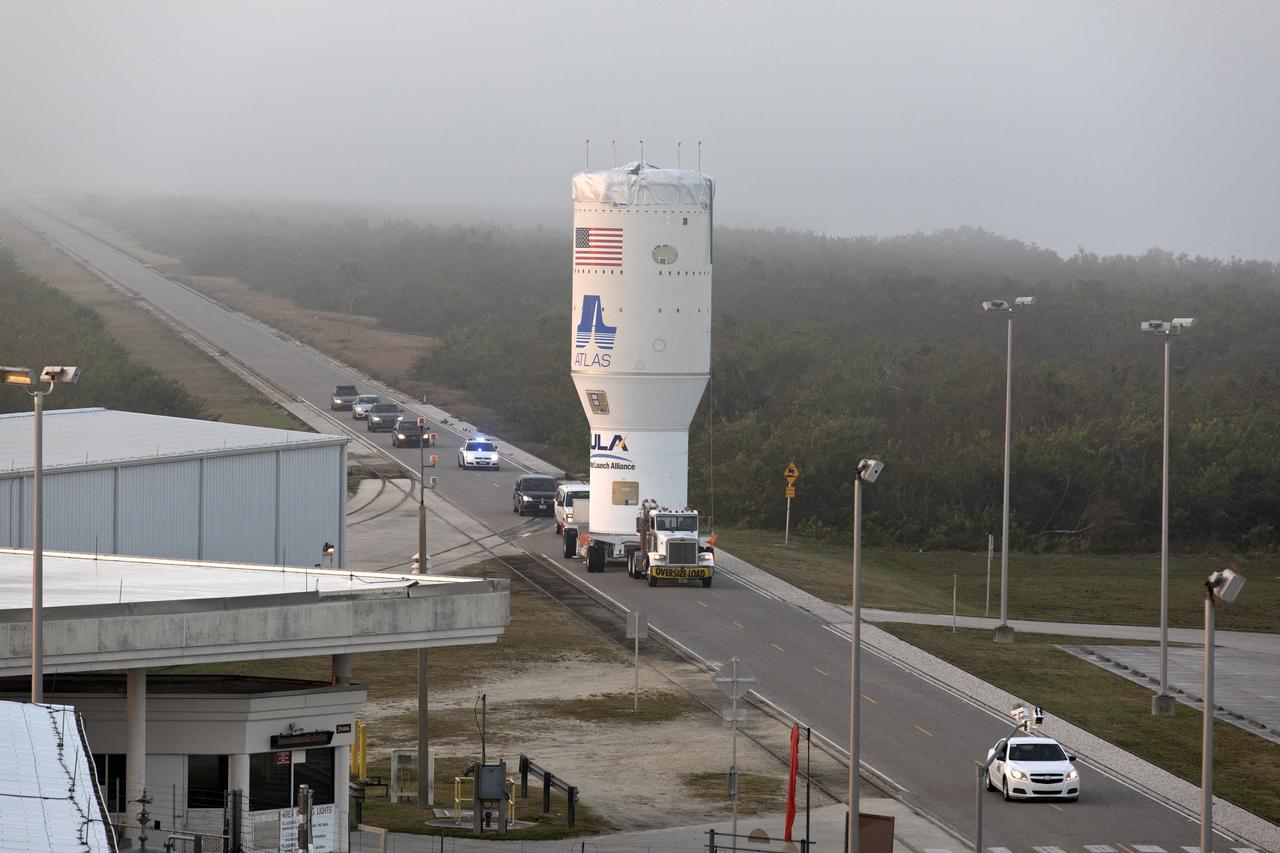
The Centaur upper stage that will help launch NOAA's Geostationary Operational Environmental Satellite-S, or GOES-S, arrives at the Vertical Integration Facility at Space Launch Complex 41 at Cape Canaveral Air Force Station in Florida. The Centaur will be mated to a United Launch Alliance Atlas V booster. GOES-S is the second in a series of four advanced geostationary weather satellites that will significantly improve the detection and observation of environmental phenomena that directly affect public safety, protection of property and the nation's economic health and prosperity. GOES-S is slated to launch March 1, 2018.
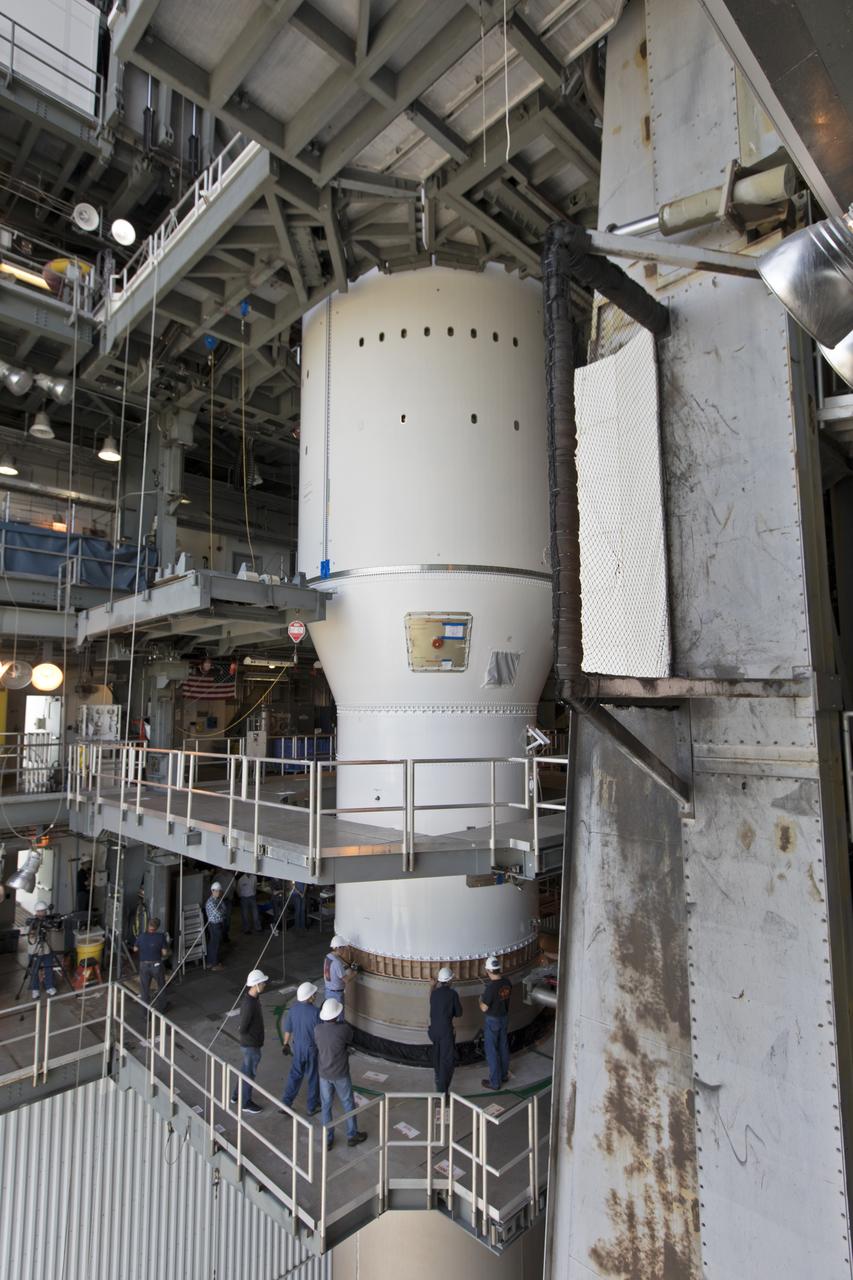
At the Vertical Integration Facility at Space Launch Complex 41 at Cape Canaveral Air Force Station in Florida, a Centaur upper stage is mated to a United Launch Alliance Atlas V rocket that will boost NOAA's Geostationary Operational Environmental Satellite-S, or GOES-S, to orbit. GOES-S is the second in a series of four advanced geostationary weather satellites that will significantly improve the detection and observation of environmental phenomena that directly affect public safety, protection of property and the nation's economic health and prosperity. GOES-S is slated to launch March 1, 2018.
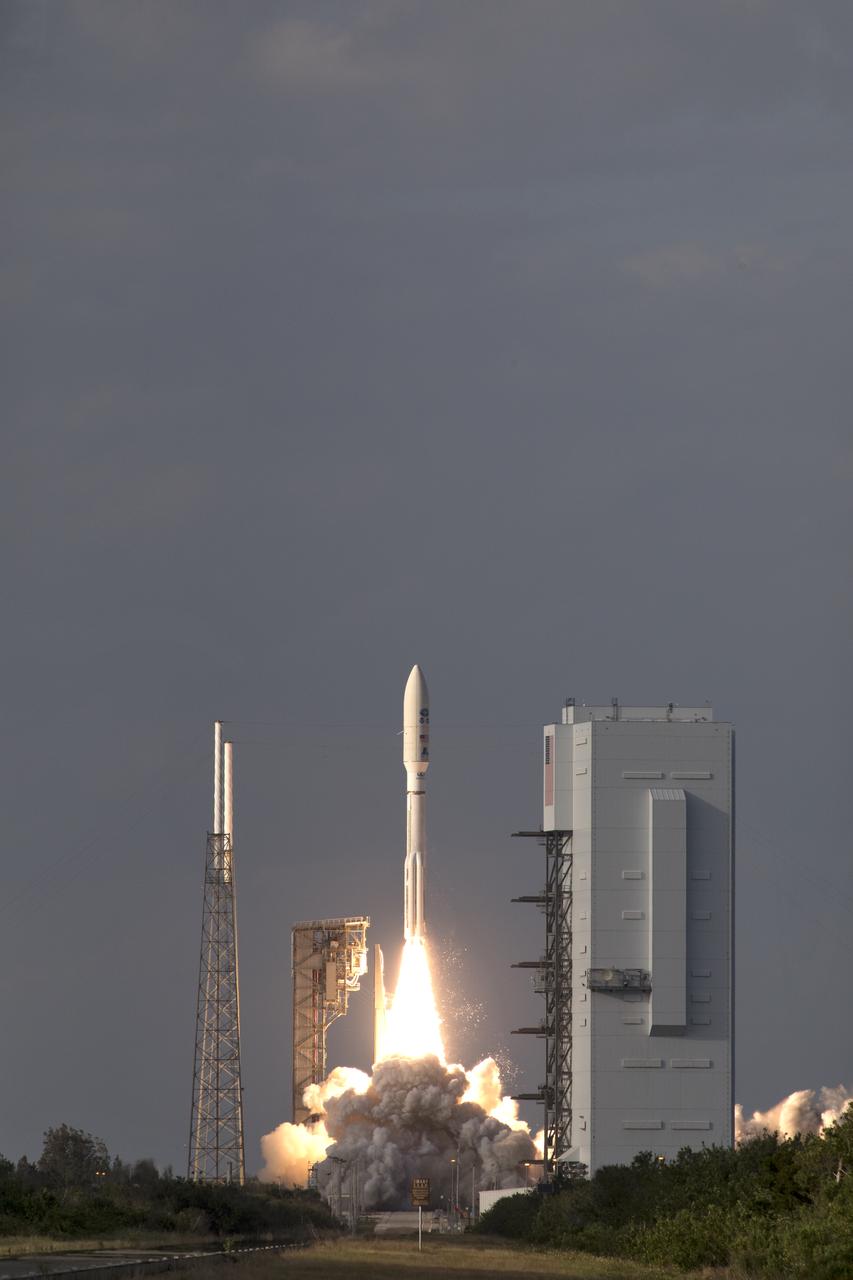
A United Launch Alliance Atlas V rocket lifts off from Space Launch Complex 41 at Cape Canaveral Air Force Station carrying the NOAA Geostationary Operational Environmental Satellite, or GOES-S. Liftoff was at 5:02 p.m. EST. GOES-S is the second satellite in a series of next-generation weather satellites. It will launch to a geostationary position over the U.S. to provide images of storms and help predict weather forecasts, severe weather outlooks, watches, warnings, lightning conditions and longer-term forecasting.
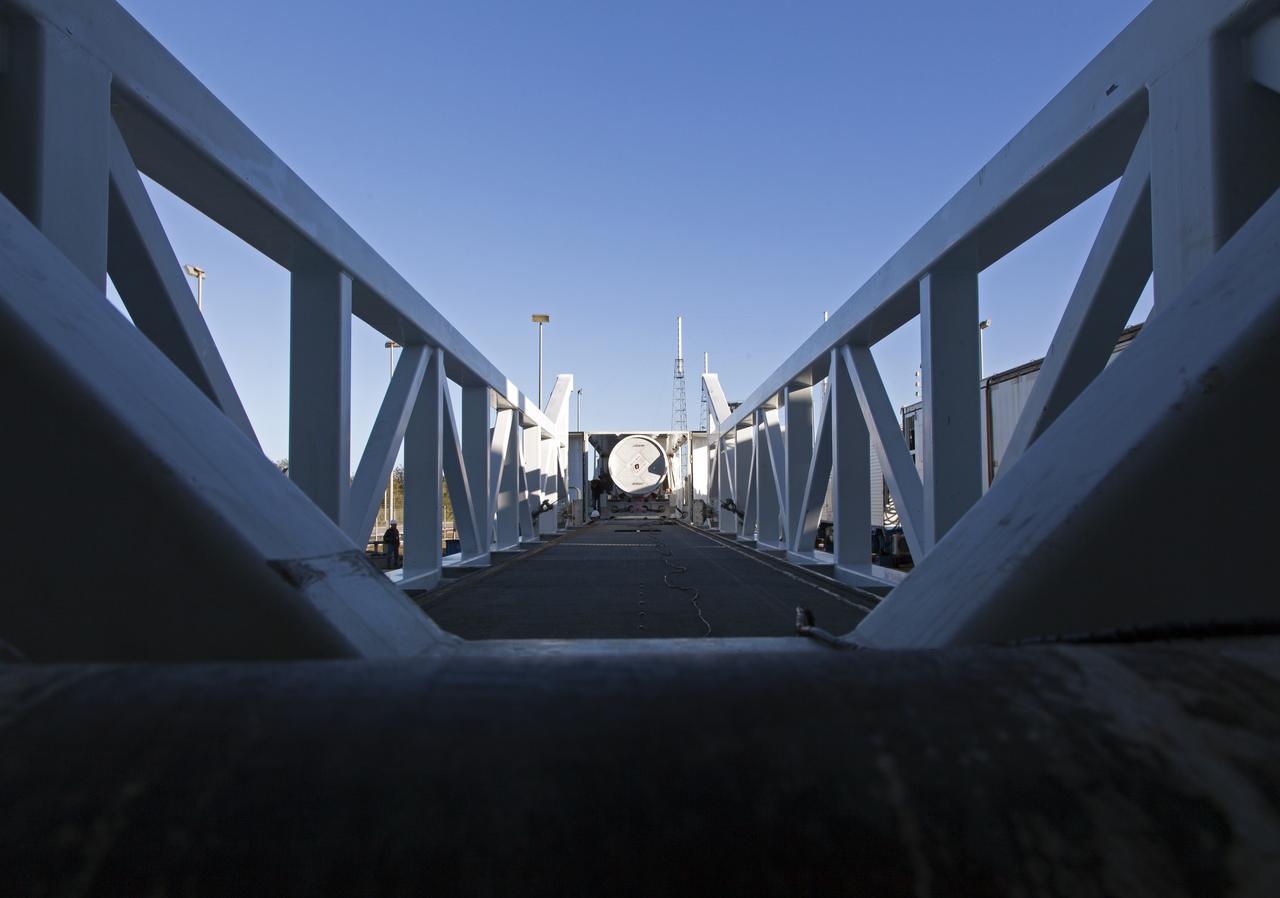
A solid rocket booster (SRB) is offloaded from a transport vehicle at the Vertical Integration Facility at Space Launch Complex 41 at Cape Canaveral Air Force Station in Florida. The SRB will be mated to a United Launch Alliance Atlas V first stage to help boost NOAA's Geostationary Operational Environmental Satellite, or GOES-S, to orbit. GOES-S is the second in a series of four advanced geostationary weather satellites that will significantly improve the detection and observation of environmental phenomena that directly affect public safety, protection of property and the nation's economic health and prosperity. GOES-S is slated to launch March 1, 2018.
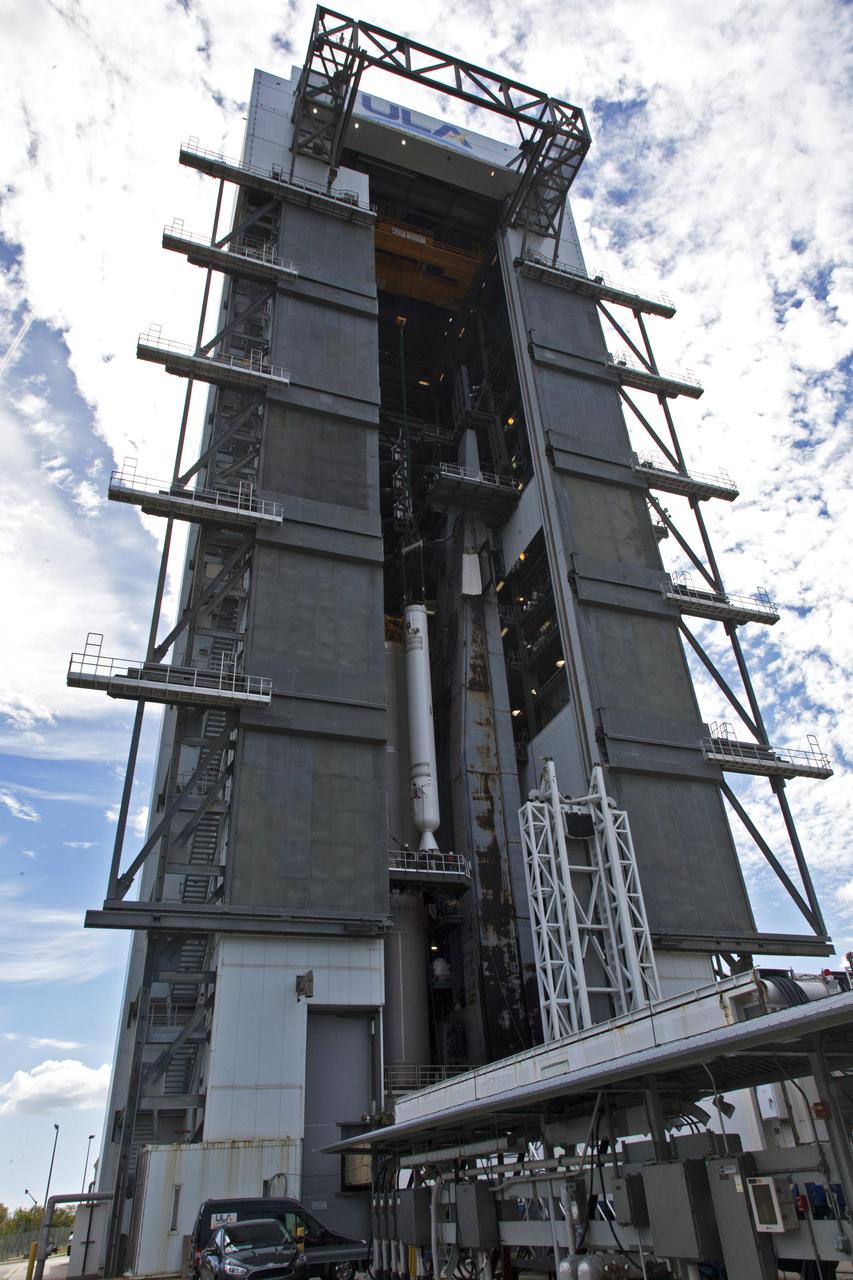
A crane lifts a solid rocket booster (SRB) for mating to a United Launch Alliance Atlas V first stage in the Vertical Integration Facility at Space Launch Complex 41 at Cape Canaveral Air Force Station in Florida. The SRB will be help boost NOAA's Geostationary Operational Environmental Satellite, or GOES-S, to orbit. GOES-S is the second in a series of four advanced geostationary weather satellites that will significantly improve the detection and observation of environmental phenomena that directly affect public safety, protection of property and the nation's economic health and prosperity. GOES-S is slated to launch March 1, 2018.
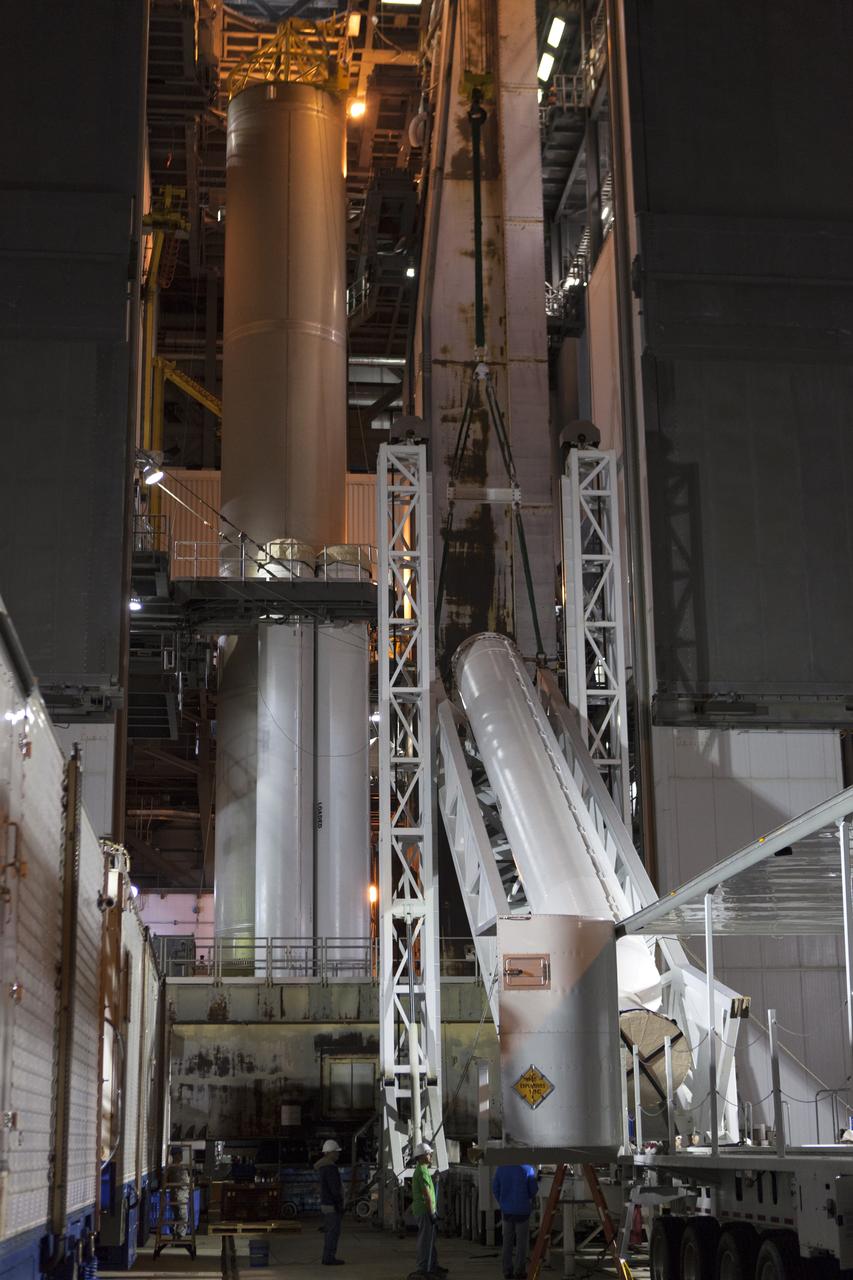
At the Vertical Integration Facility at Space Launch Complex 41 at Cape Canaveral Air Force Station in Florida, a solid rocket booster (SRB) is lifted for mating to a United Launch Alliance Atlas V first stage. The SRB will help boost NOAA's Geostationary Operational Environmental Satellite, or GOES-S, to orbit. GOES-S is the second in a series of four advanced geostationary weather satellites that will significantly improve the detection and observation of environmental phenomena that directly affect public safety, protection of property and the nation's economic health and prosperity. GOES-S is slated to launch March 1, 2018.
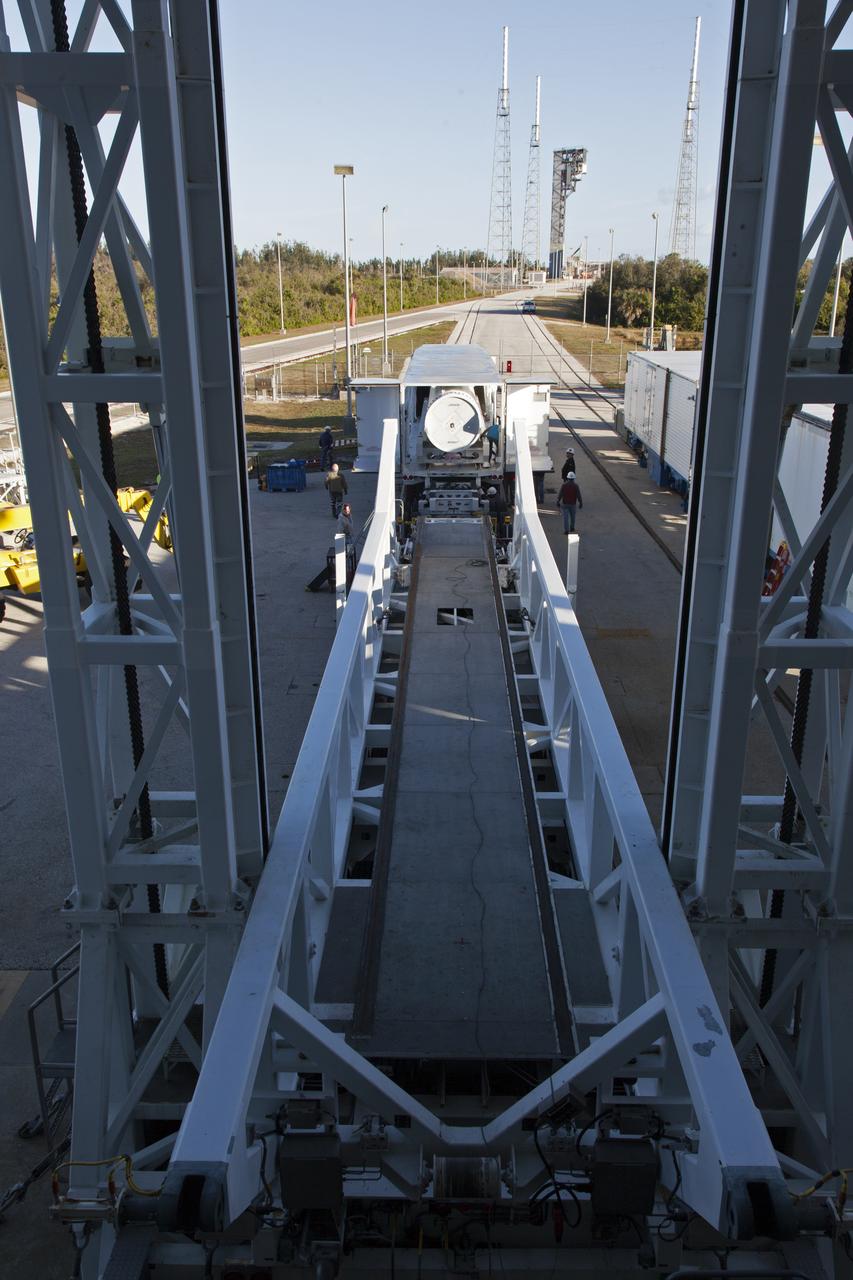
A solid rocket booster (SRB) is offloaded from a transport vehicle at the Vertical Integration Facility at Space Launch Complex 41 at Cape Canaveral Air Force Station in Florida. The SRB will be mated to a United Launch Alliance Atlas V first stage to help boost NOAA's Geostationary Operational Environmental Satellite, or GOES-S, to orbit. GOES-S is the second in a series of four advanced geostationary weather satellites that will significantly improve the detection and observation of environmental phenomena that directly affect public safety, protection of property and the nation's economic health and prosperity. GOES-S is slated to launch March 1, 2018.
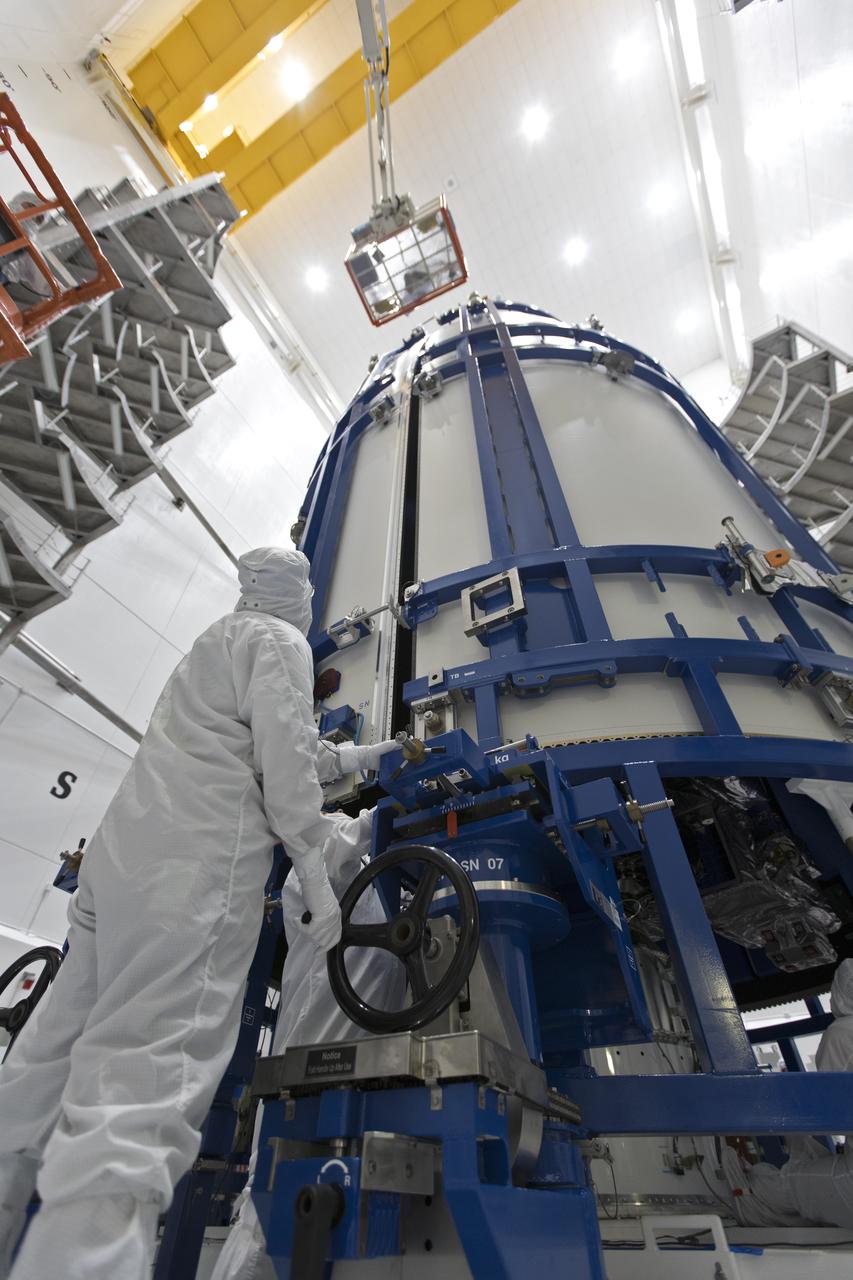
In a clean room at Astrotech Space Operations in Titusville, Florida, technicians and engineers monitor progress as NOAA's Geostationary Operational Environmental Satellite-S, or GOES-S, is encapsulated in its payload fairing. It soon will be moved to Space Launch Complex 41 at Cape Canaveral Air Force Station for mounting atop the Atlas V rocket that will boost the satellite to orbit. GOES-S is the second in a series of four advanced geostationary weather satellites that will significantly improve the detection and observation of environmental phenomena that directly affect public safety, protection of property and the nation's economic health and prosperity. GOES-S is slated to launch March 1, 2018 aboard a United Launch Alliance Atlas V rocket.

In the Kennedy Space Center's Press Site auditorium, and Kathy Winters, launch weather officer for the U.S. Air Force 45th Weather Squadron at Cape Canaveral Air Force Station, speaks to members of the media at a prelaunch news conference about National Oceanic and Atmospheric Administration's, or NOAA's, Geostationary Operational Environmental Satellite, or GOES-S. The GOES series of satellites will significantly improve the detection and observation of environmental phenomena that directly affect public safety, protection of property and the nation's economic health and prosperity. GOES-S is slated to lift off at 5:02 p.m. EST on March 1, 2018 aboard a United Launch Alliance Atlas V rocket.
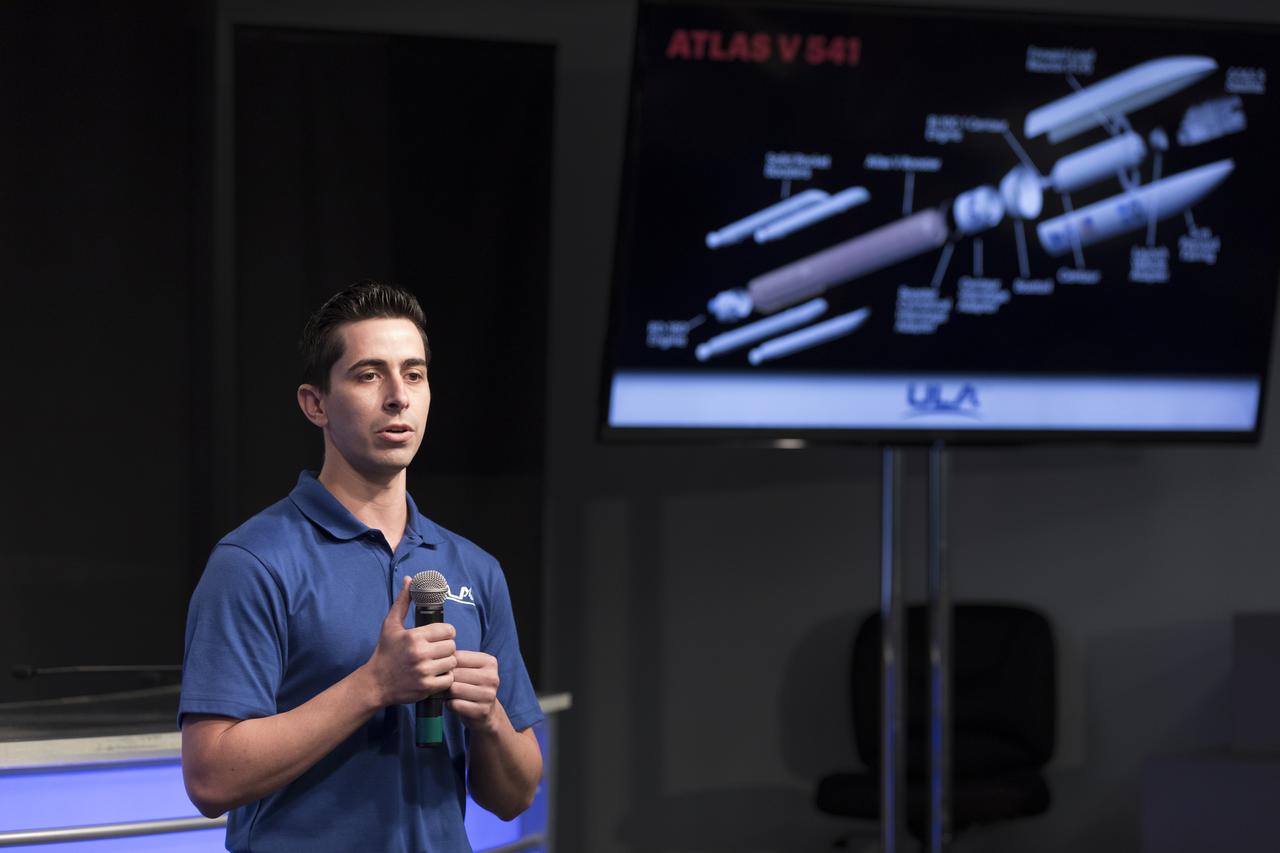
Gabriel Rodriguez-Mena, a United Launch Alliance systems test engineer, speaks to members of social media in the Kennedy Space Center’s Press Site auditorium. The briefing focused on the National Oceanic and Atmospheric Administration's, or NOAA's, Geostationary Operational Environmental Satellite, or GOES-S. The spacecraft is the second satellite in a series of next-generation NOAA weather satellites. It will launch to a geostationary position over the U.S. to provide images of storms and help predict weather forecasts, severe weather outlooks, watches, warnings, lightning conditions and longer-term forecasting. GOES-S is slated to lift off at 5:02 p.m. EST on March 1, 2018 aboard a United Launch Alliance Atlas V rocket.
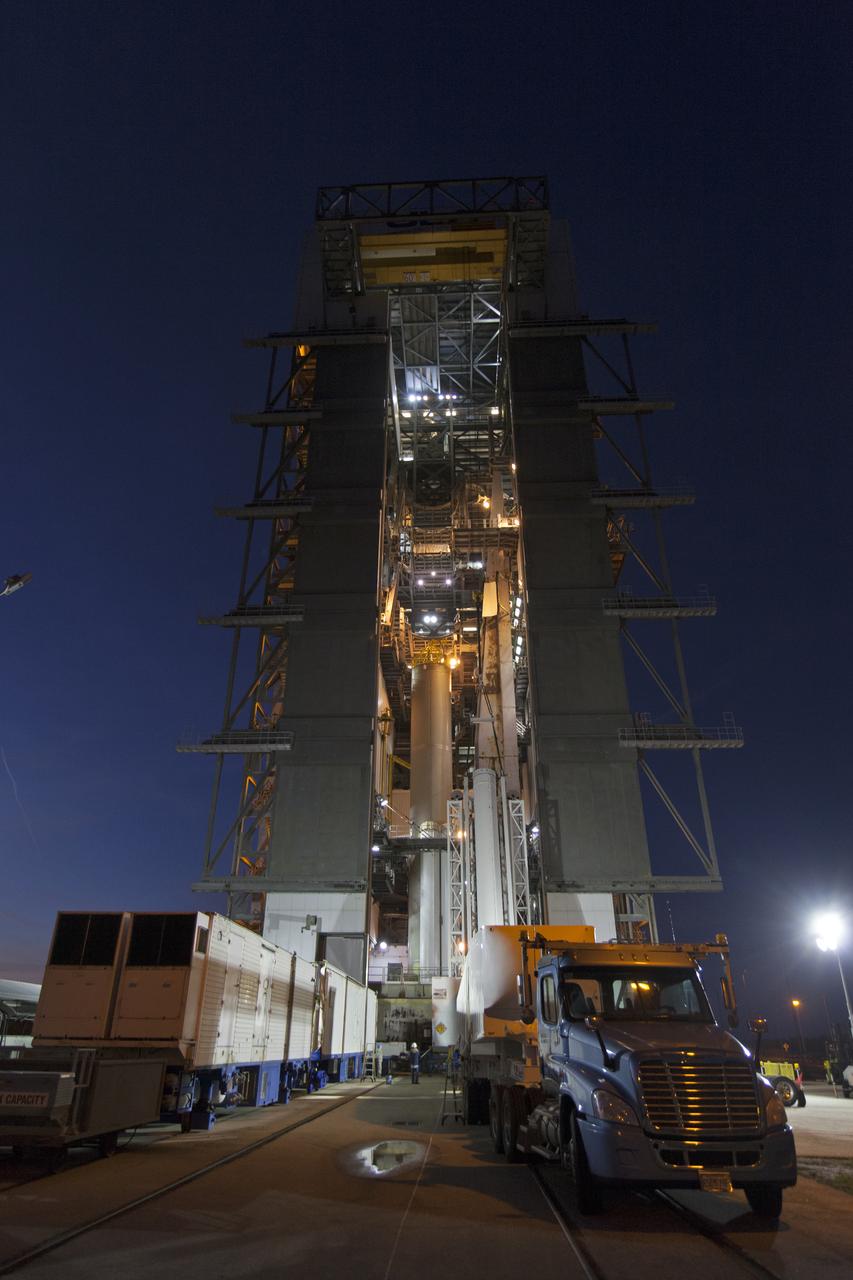
At the Vertical Integration Facility at Space Launch Complex 41 at Cape Canaveral Air Force Station in Florida, a solid rocket booster (SRB) is mated to a United Launch Alliance Atlas V first stage. The SRB will help boost NOAA's Geostationary Operational Environmental Satellite, or GOES-S, to orbit. GOES-S is the second in a series of four advanced geostationary weather satellites that will significantly improve the detection and observation of environmental phenomena that directly affect public safety, protection of property and the nation's economic health and prosperity. GOES-S is slated to launch March 1, 2018.
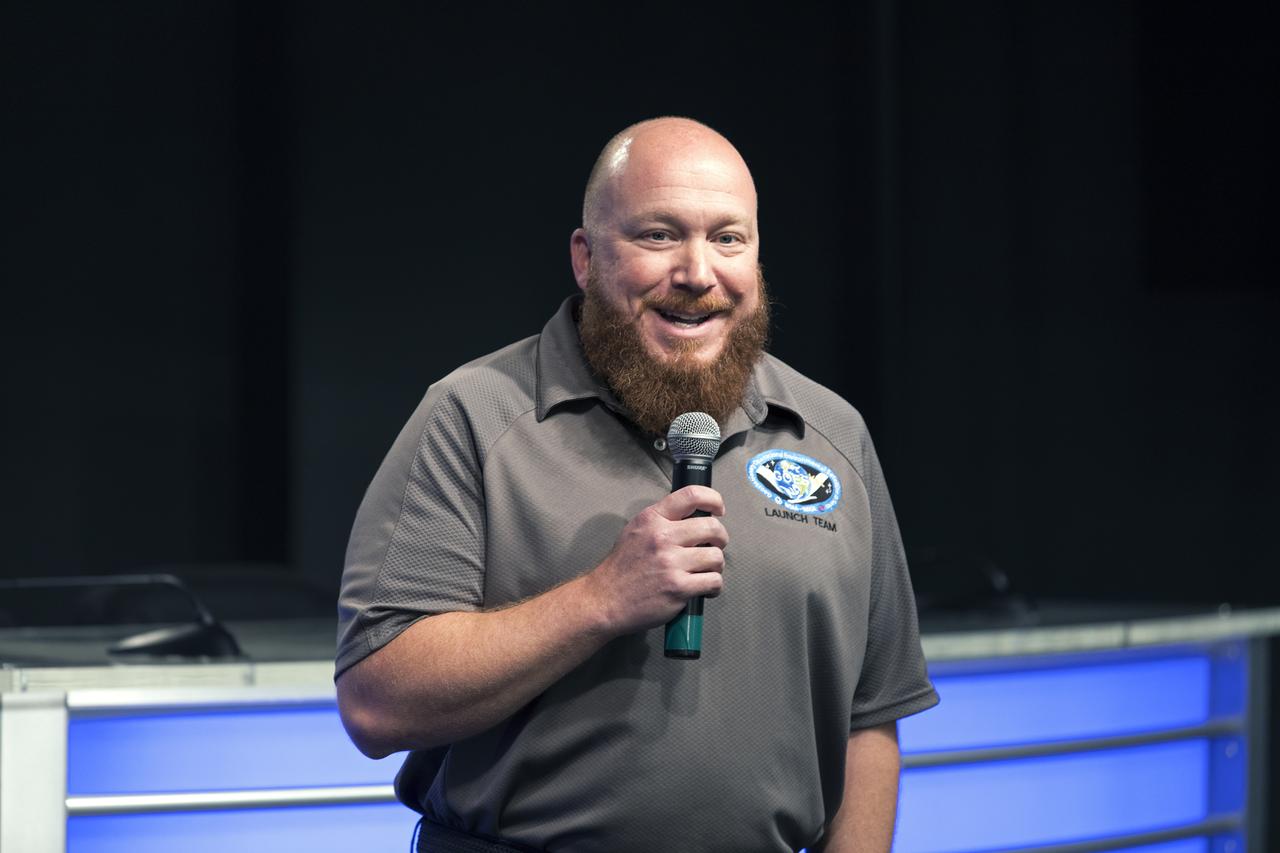
A.J. Sandora, Lockheed Martin's GOES-R Series Mechanical Operations Assembly, Test and Launch Operations (ATLO) manager, speaks to members of social media in the Kennedy Space Center’s Press Site auditorium. The briefing focused on the National Oceanic and Atmospheric Administration's, or NOAA's, Geostationary Operational Environmental Satellite, or GOES-S. Built by Lockheed Martin Space Systems of Littleton, Colorado, the spacecraft is the second satellite in a series of next-generation NOAA weather satellites. It will launch to a geostationary position over the U.S. to provide images of storms and help predict weather forecasts, severe weather outlooks, watches, warnings, lightning conditions and longer-term forecasting. GOES-S is slated to lift off at 5:02 p.m. EST on March 1, 2018 aboard a United Launch Alliance Atlas V rocket.
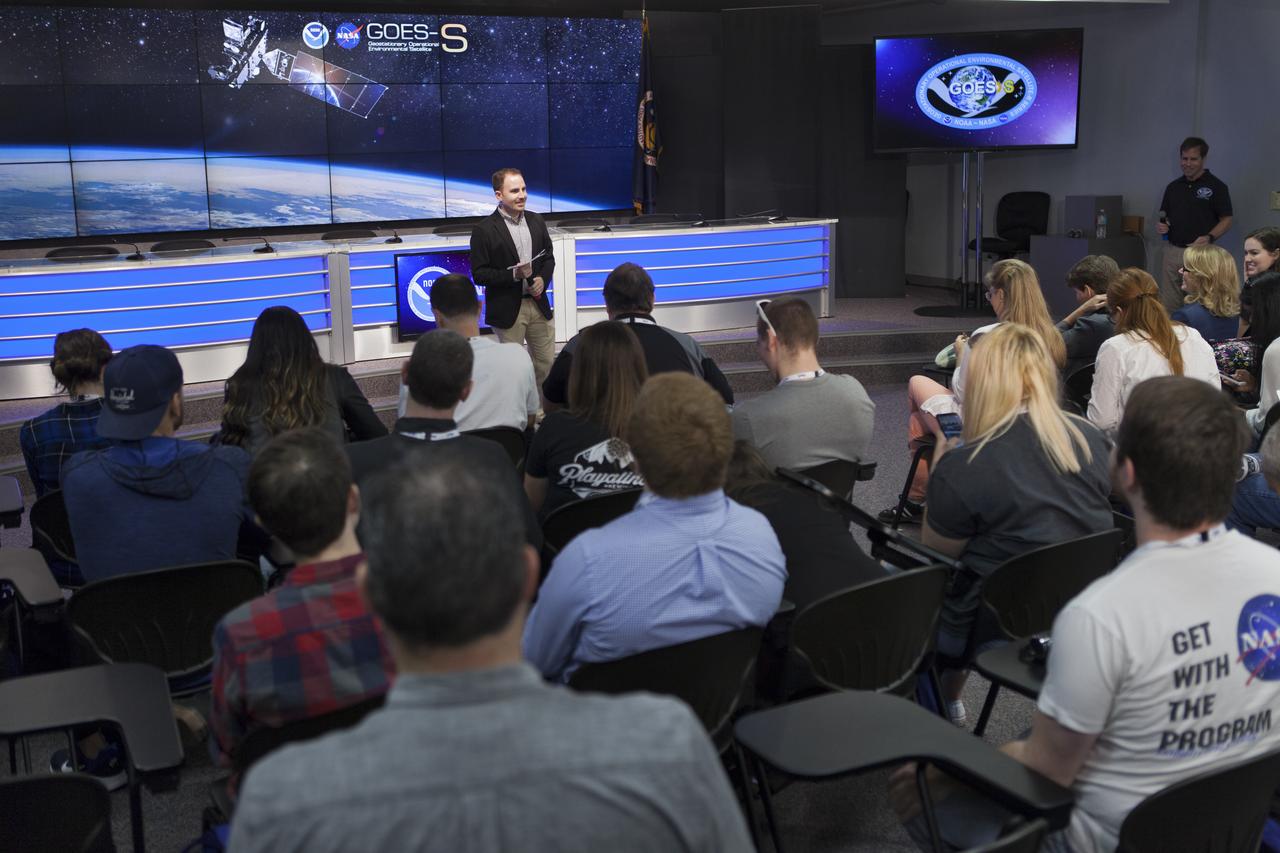
Jason Townsend, NASA's social media manager, speaks to members of social media in the Kennedy Space Center’s Press Site auditorium. The briefing focused on the National Oceanic and Atmospheric Administration's, or NOAA's, Geostationary Operational Environmental Satellite, or GOES-S. The spacecraft is the second satellite in a series of next-generation NOAA weather satellites. It will launch to a geostationary position over the U.S. to provide images of storms and help predict weather forecasts, severe weather outlooks, watches, warnings, lightning conditions and longer-term forecasting. GOES-S is slated to lift off at 5:02 p.m. EST on March 1, 2018 aboard a United Launch Alliance Atlas V rocket.
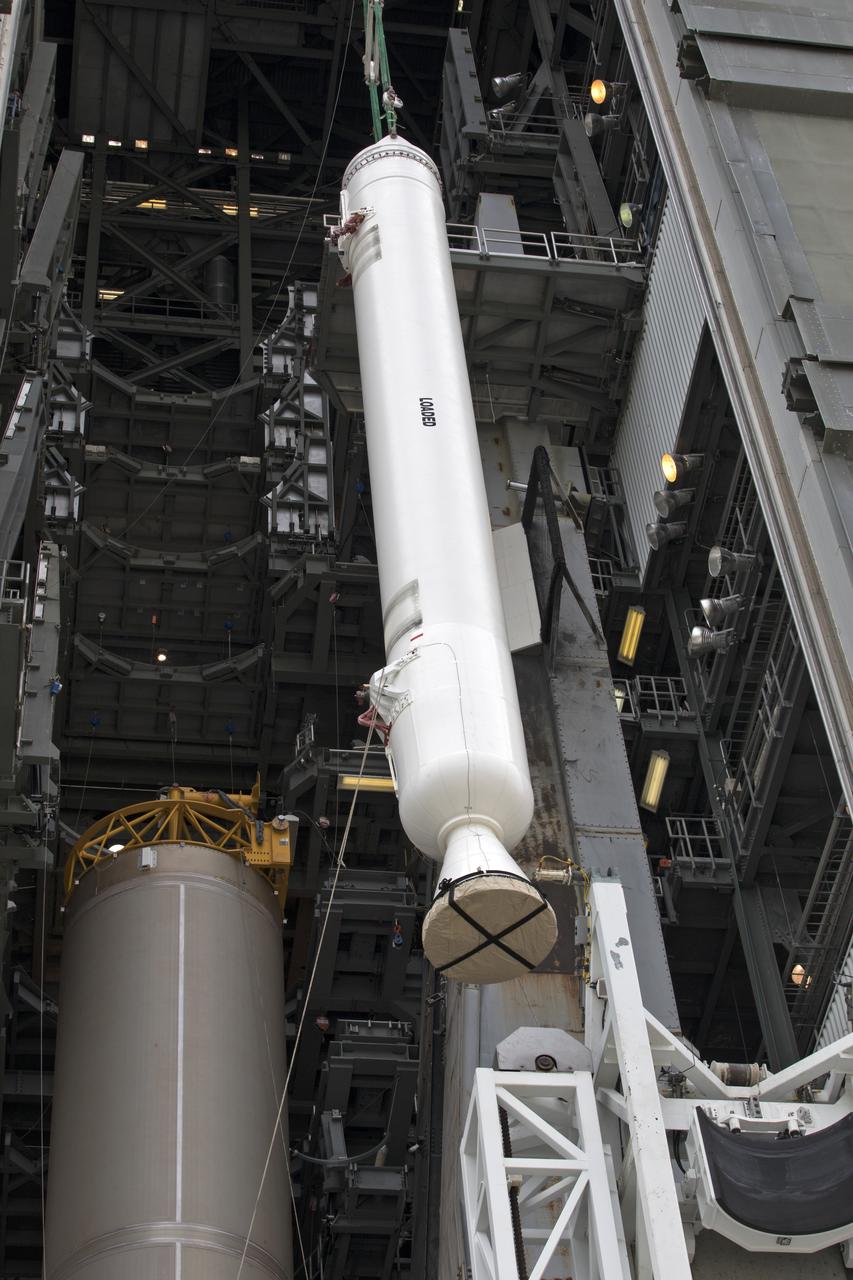
A crane lifts a solid rocket booster (SRB) for mating to a United Launch Alliance Atlas V first stage in the Vertical Integration Facility at Space Launch Complex 41 at Cape Canaveral Air Force Station in Florida. The SRB will be help boost NOAA's Geostationary Operational Environmental Satellite, or GOES-S, to orbit. GOES-S is the second in a series of four advanced geostationary weather satellites that will significantly improve the detection and observation of environmental phenomena that directly affect public safety, protection of property and the nation's economic health and prosperity. GOES-S is slated to launch March 1, 2018.
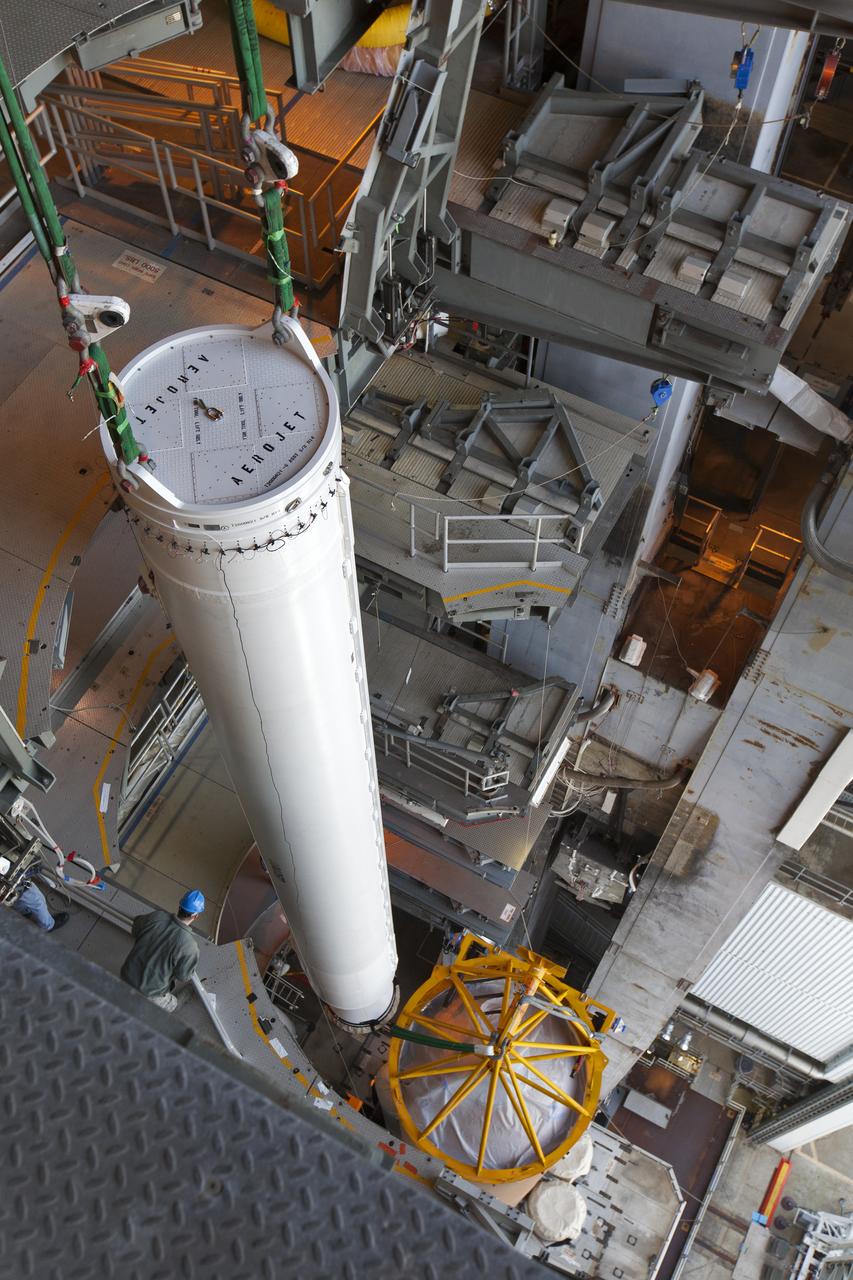
At the Vertical Integration Facility at Space Launch Complex 41 at Cape Canaveral Air Force Station in Florida, a solid rocket booster (SRB) is lifted by a crane for mating to a United Launch Alliance Atlas V first stage. The SRB will help boost NOAA's Geostationary Operational Environmental Satellite, or GOES-S, to orbit. GOES-S is the second in a series of four advanced geostationary weather satellites that will significantly improve the detection and observation of environmental phenomena that directly affect public safety, protection of property and the nation's economic health and prosperity. GOES-S is slated to launch March 1, 2018.
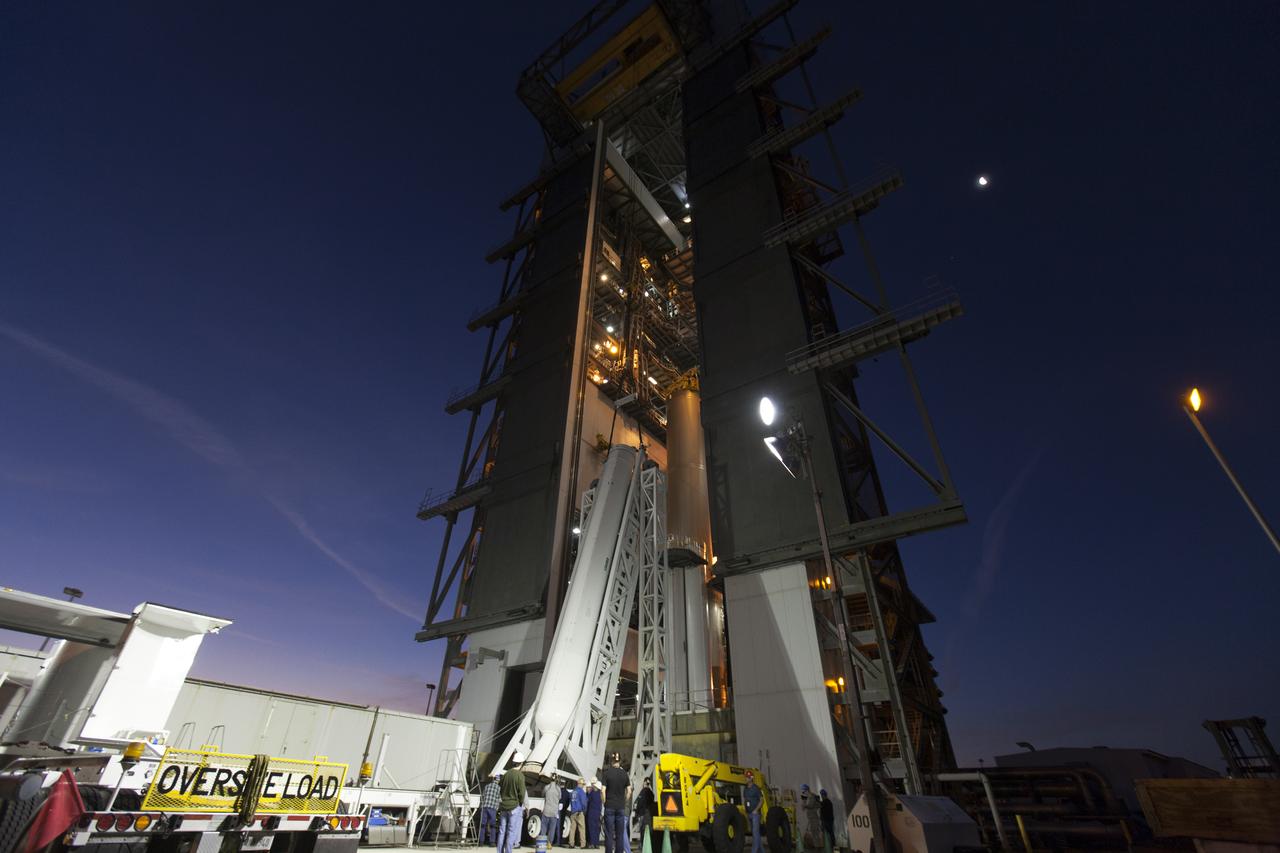
At the Vertical Integration Facility at Space Launch Complex 41 at Cape Canaveral Air Force Station in Florida, a solid rocket booster (SRB) is mated to a United Launch Alliance Atlas V first stage. The SRB will help boost NOAA's Geostationary Operational Environmental Satellite, or GOES-S, to orbit. GOES-S is the second in a series of four advanced geostationary weather satellites that will significantly improve the detection and observation of environmental phenomena that directly affect public safety, protection of property and the nation's economic health and prosperity. GOES-S is slated to launch March 1, 2018.
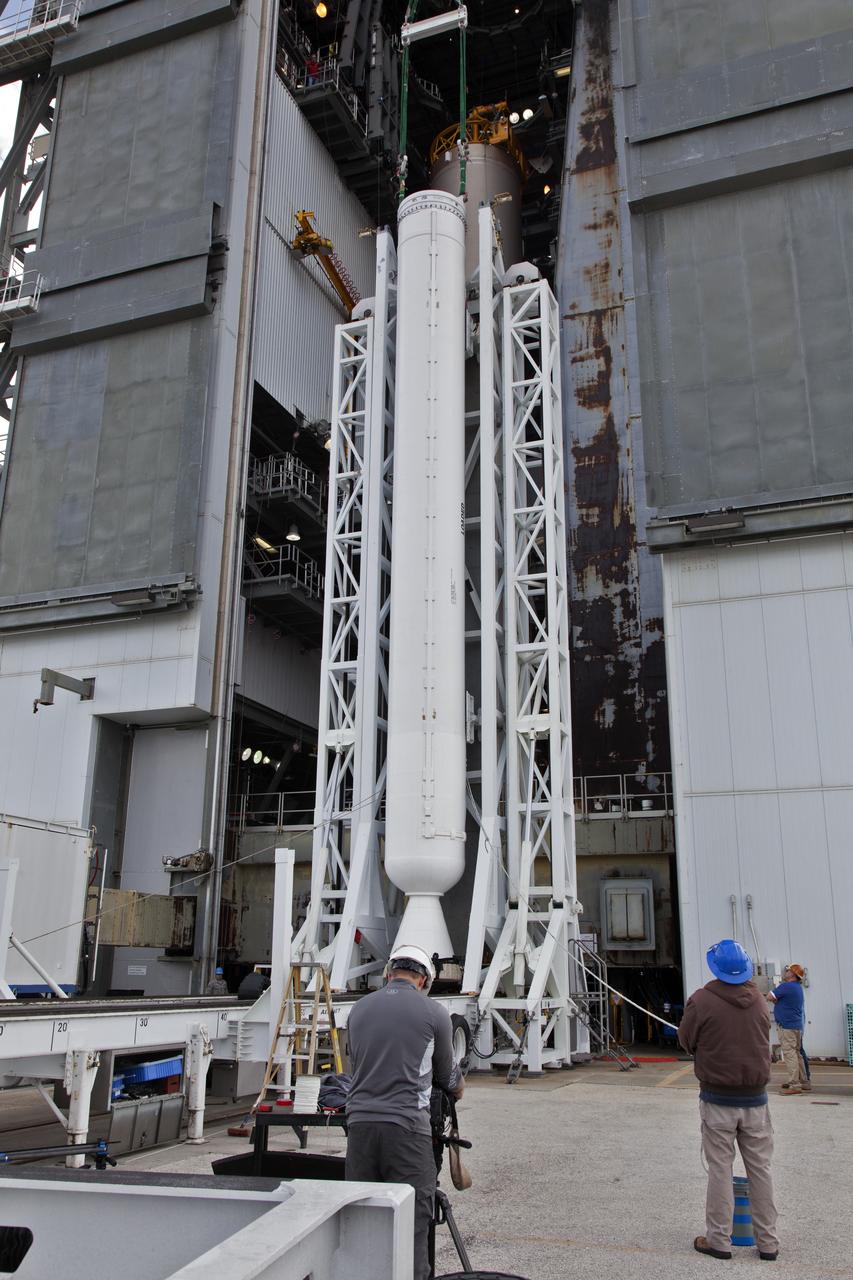
A solid rocket booster (SRB) is lifted for mating to a United Launch Alliance Atlas V first stage in the Vertical Integration Facility at Space Launch Complex 41 at Cape Canaveral Air Force Station in Florida. The SRB will be help boost NOAA's Geostationary Operational Environmental Satellite, or GOES-S, to orbit. GOES-S is the second in a series of four advanced geostationary weather satellites that will significantly improve the detection and observation of environmental phenomena that directly affect public safety, protection of property and the nation's economic health and prosperity. GOES-S is slated to launch March 1, 2018.
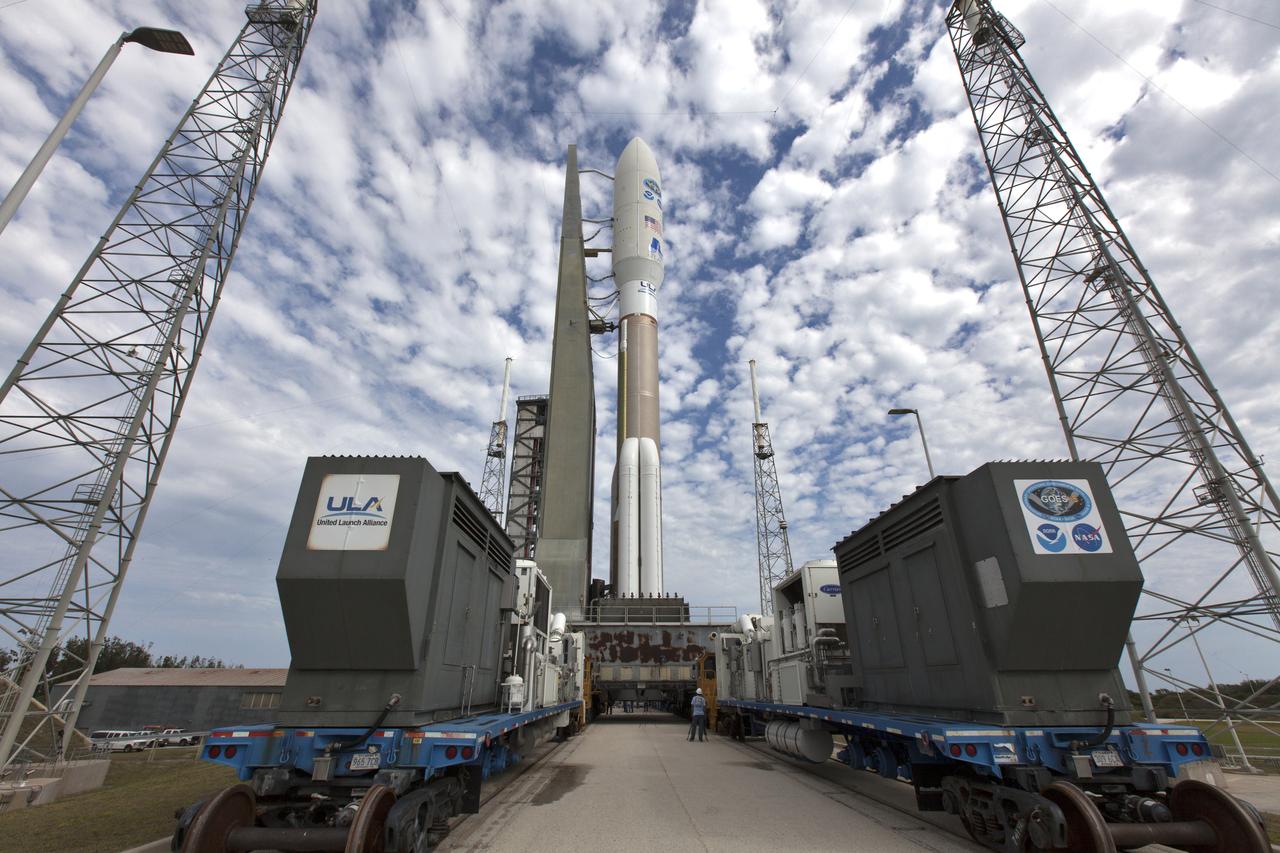
A United Launch Alliance Atlas V rocket is rolled to Space Launch Complex 41 at Cape Canaveral Air Force Station. The launch vehicle will send the National Oceanic and Atmospheric Administration's, or NOAA's, Geostationary Operational Environmental Satellite, or GOES-S, into orbit. The GOES series is designed to significantly improve the detection and observation of environmental phenomena that directly affect public safety, protection of property and the nation's economic health and prosperity. GOES-S is slated to lift off at 5:02 p.m. EST on March 1, 2018 aboard a United Launch Alliance Atlas V rocket.

A United Launch Alliance Atlas V rocket lifts off from Space Launch Complex 41 at Cape Canaveral Air Force Station carrying the NOAA Geostationary Operational Environmental Satellite, or GOES-S. Liftoff was at 5:02 p.m. EST. GOES-S is the second satellite in a series of next-generation weather satellites. It will launch to a geostationary position over the U.S. to provide images of storms and help predict weather forecasts, severe weather outlooks, watches, warnings, lightning conditions and longer-term forecasting.
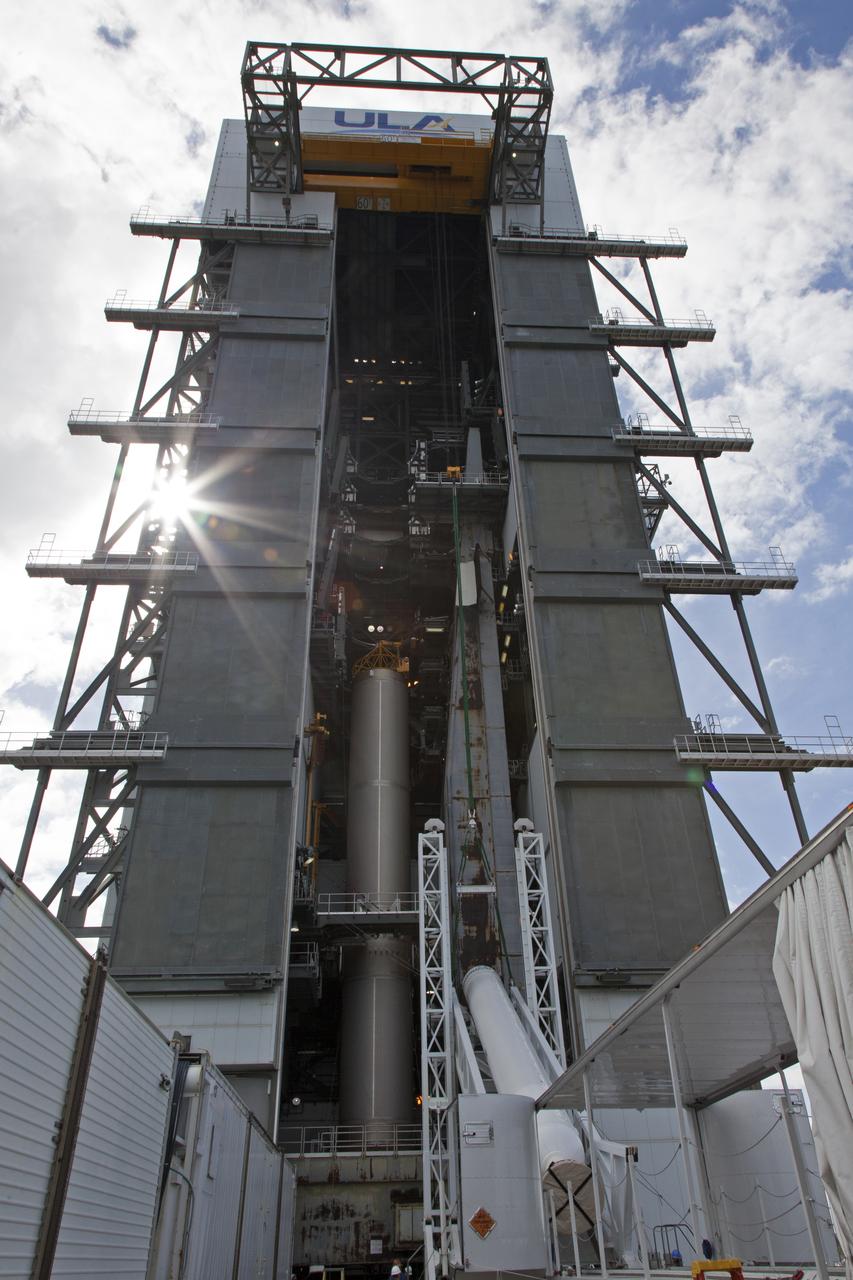
A solid rocket booster (SRB) is lifted for mating to a United Launch Alliance Atlas V first stage in the Vertical Integration Facility at Space Launch Complex 41 at Cape Canaveral Air Force Station in Florida. The SRB will be help boost NOAA's Geostationary Operational Environmental Satellite, or GOES-S, to orbit. GOES-S is the second in a series of four advanced geostationary weather satellites that will significantly improve the detection and observation of environmental phenomena that directly affect public safety, protection of property and the nation's economic health and prosperity. GOES-S is slated to launch March 1, 2018.
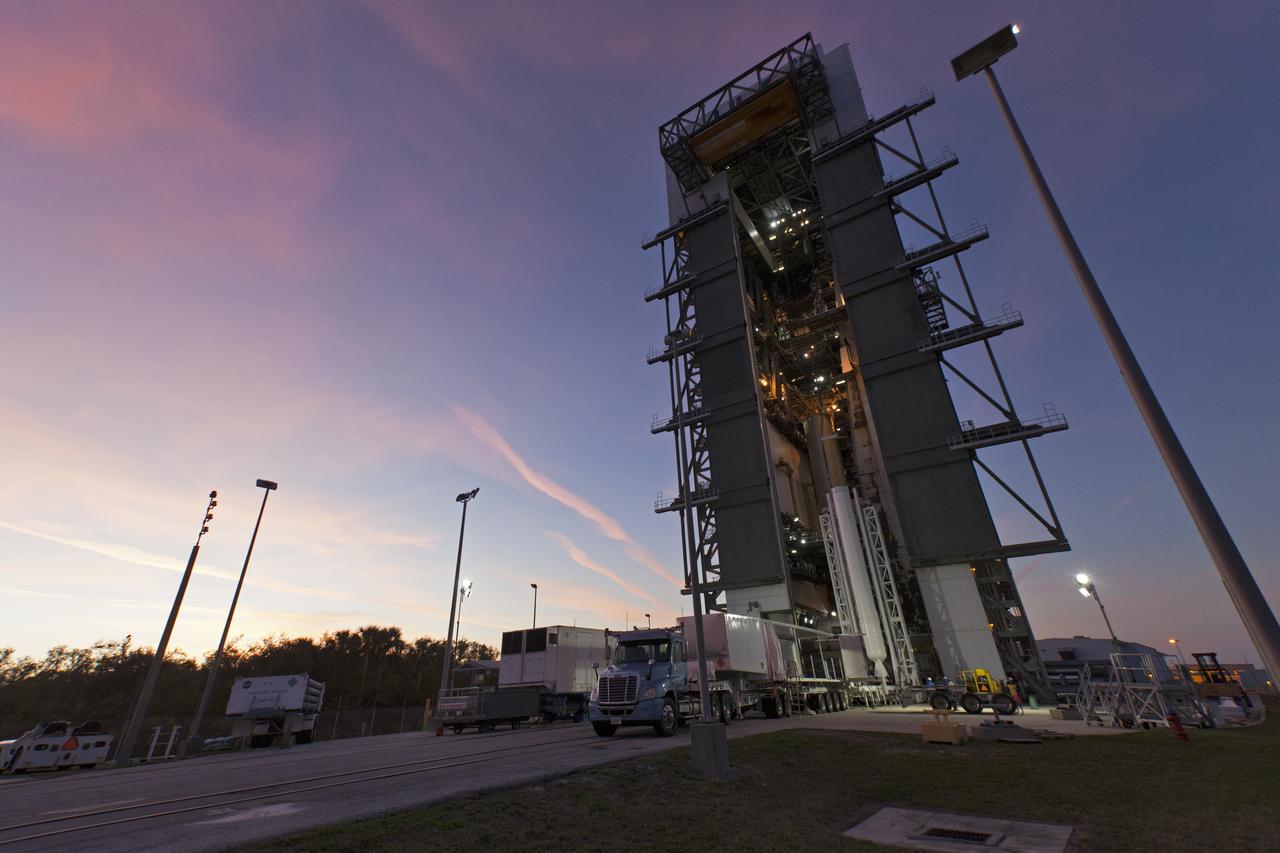
At the Vertical Integration Facility at Space Launch Complex 41 at Cape Canaveral Air Force Station in Florida, a solid rocket booster (SRB) is mated to a United Launch Alliance Atlas V first stage. The SRB will help boost NOAA's Geostationary Operational Environmental Satellite, or GOES-S, to orbit. GOES-S is the second in a series of four advanced geostationary weather satellites that will significantly improve the detection and observation of environmental phenomena that directly affect public safety, protection of property and the nation's economic health and prosperity. GOES-S is slated to launch March 1, 2018.
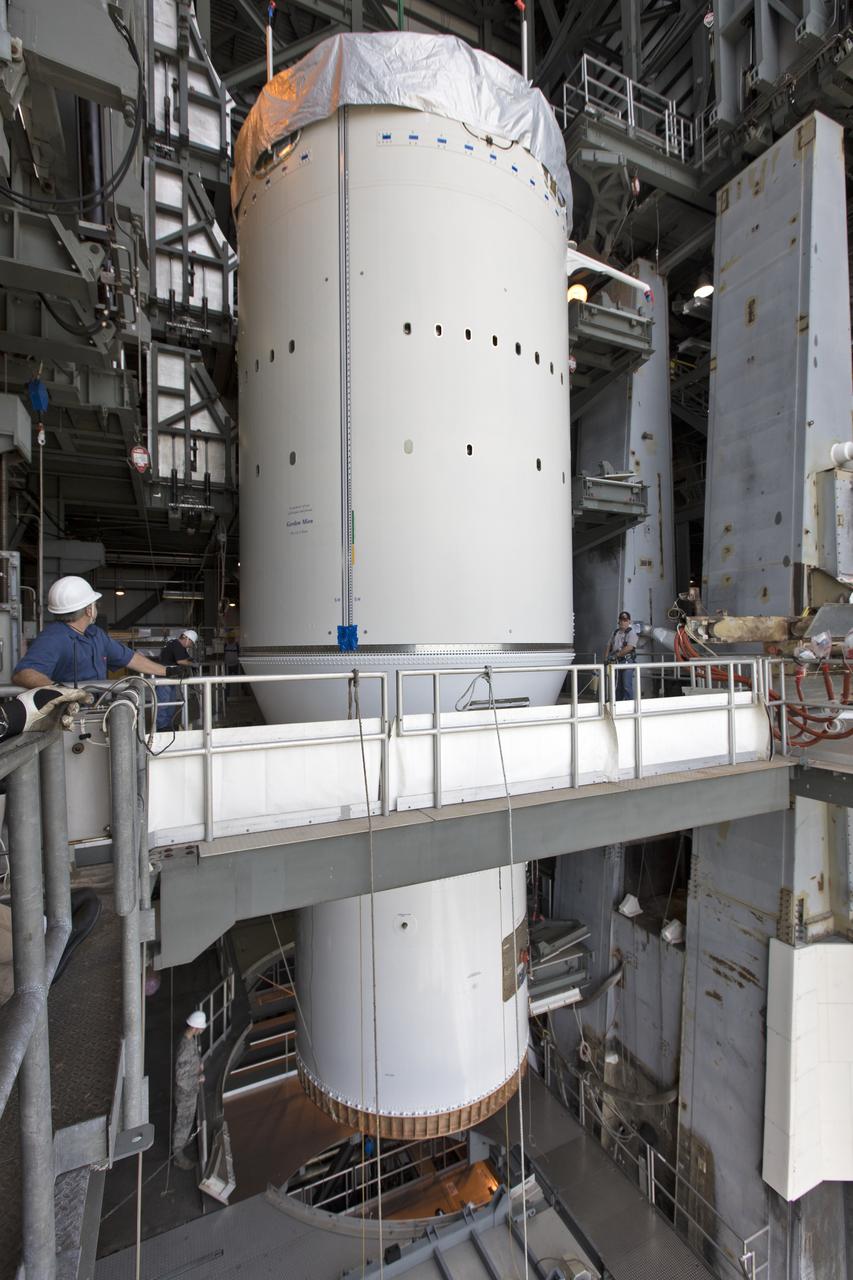
At the Vertical Integration Facility at Space Launch Complex 41 at Cape Canaveral Air Force Station in Florida, technicians and engineers monitor progress as a Centaur upper stage is mated to a United Launch Alliance Atlas V rocket that will boost NOAA's Geostationary Operational Environmental Satellite-S, or GOES-S, to orbit. GOES-S is the second in a series of four advanced geostationary weather satellites that will significantly improve the detection and observation of environmental phenomena that directly affect public safety, protection of property and the nation's economic health and prosperity. GOES-S is slated to launch March 1, 2018.
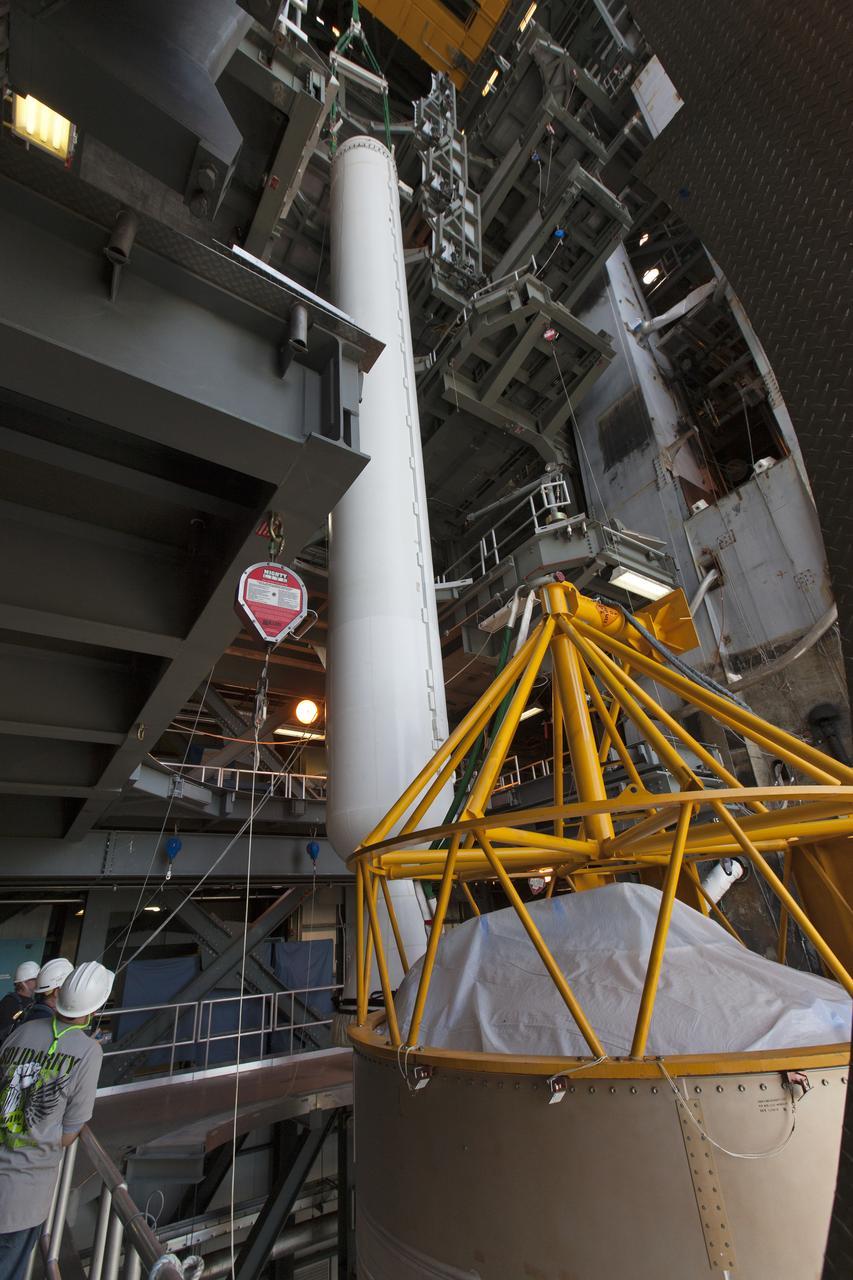
In the Vertical Integration Facility at Space Launch Complex 41 at Cape Canaveral Air Force Station in Florida, a solid rocket booster (SRB) is lifted by a crane for mating to a United Launch Alliance Atlas V first stage. The SRB will help boost NOAA's Geostationary Operational Environmental Satellite, or GOES-S, to orbit. GOES-S is the second in a series of four advanced geostationary weather satellites that will significantly improve the detection and observation of environmental phenomena that directly affect public safety, protection of property and the nation's economic health and prosperity. GOES-S is slated to launch March 1, 2018.

At the Vertical Integration Facility at Space Launch Complex 41 at Cape Canaveral Air Force Station in Florida, a solid rocket booster (SRB) is lifted by a crane for mating to a United Launch Alliance Atlas V first stage. The SRB will help boost NOAA's Geostationary Operational Environmental Satellite, or GOES-S, to orbit. GOES-S is the second in a series of four advanced geostationary weather satellites that will significantly improve the detection and observation of environmental phenomena that directly affect public safety, protection of property and the nation's economic health and prosperity. GOES-S is slated to launch March 1, 2018.
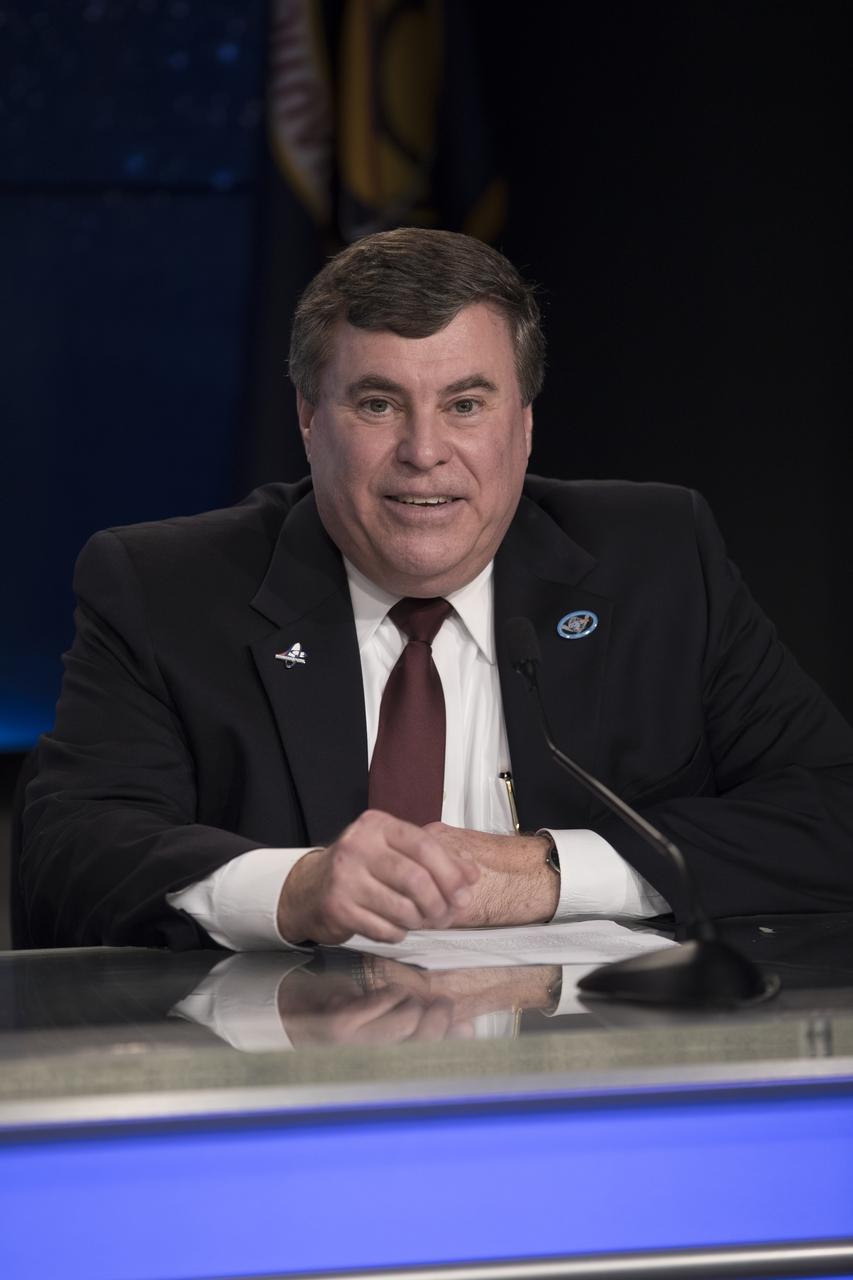
In the Kennedy Space Center's Press Site auditorium, George Morrow, deputy director of NASA's Goddard Space Flight Center in Greenbelt, Maryland, speaks to members of the media at a mission briefing on National Oceanic and Atmospheric Administration's, or NOAA's, Geostationary Operational Environmental Satellite, or GOES-S. The spacecraft is the second satellite in a series of next-generation NOAA weather satellites. It will launch to a geostationary position over the U.S. to provide images of storms and help predict weather forecasts, severe weather outlooks, watches, warnings, lightning conditions and longer-term forecasting. GOES-S is slated to lift off at 5:02 p.m. EST on March 1, 2018 aboard a United Launch Alliance Atlas V rocket.
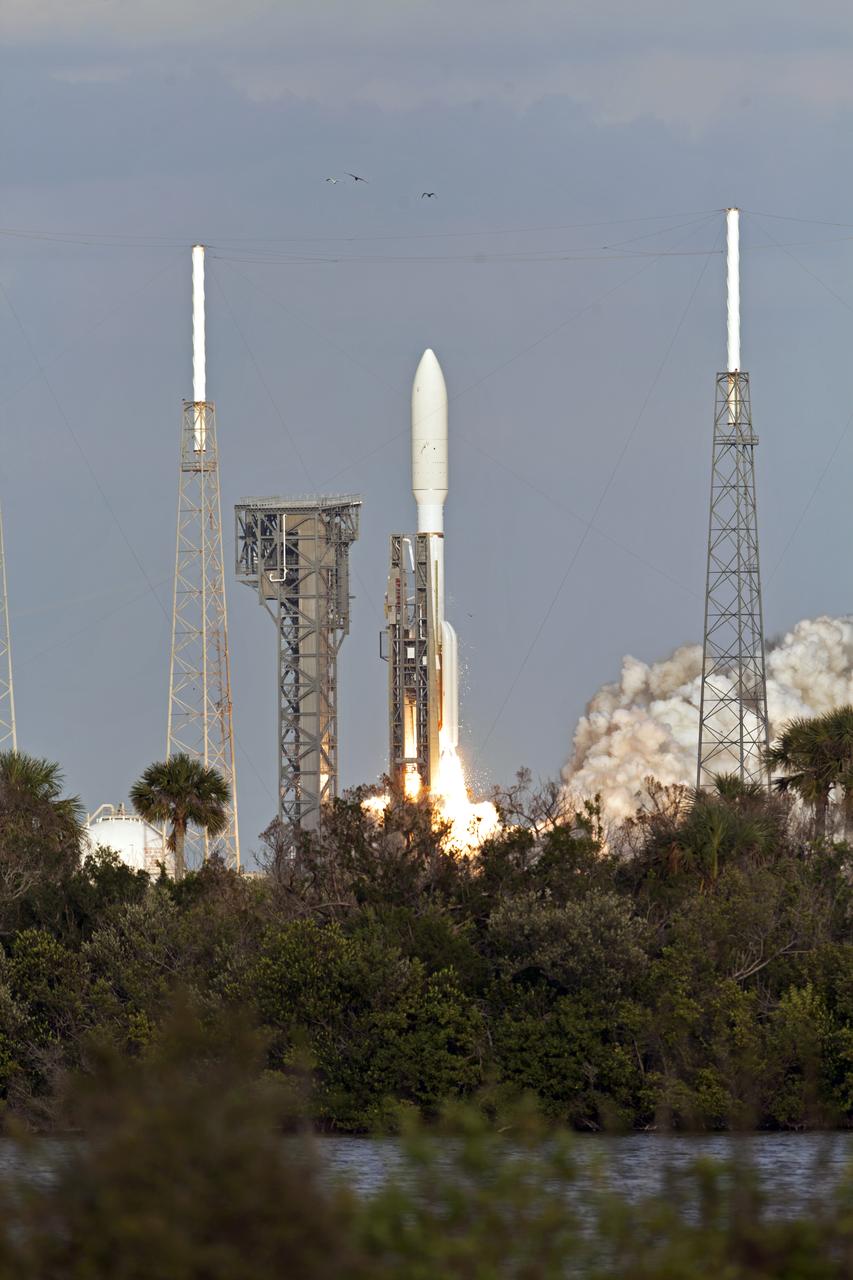
A United Launch Alliance Atlas V rocket lifts off from Space Launch Complex 41 at Cape Canaveral Air Force Station carrying the NOAA Geostationary Operational Environmental Satellite, or GOES-S. Liftoff was at 5:02 p.m. EST. GOES-S is the second satellite in a series of next-generation weather satellites. It will launch to a geostationary position over the U.S. to provide images of storms and help predict weather forecasts, severe weather outlooks, watches, warnings, lightning conditions and longer-term forecasting.
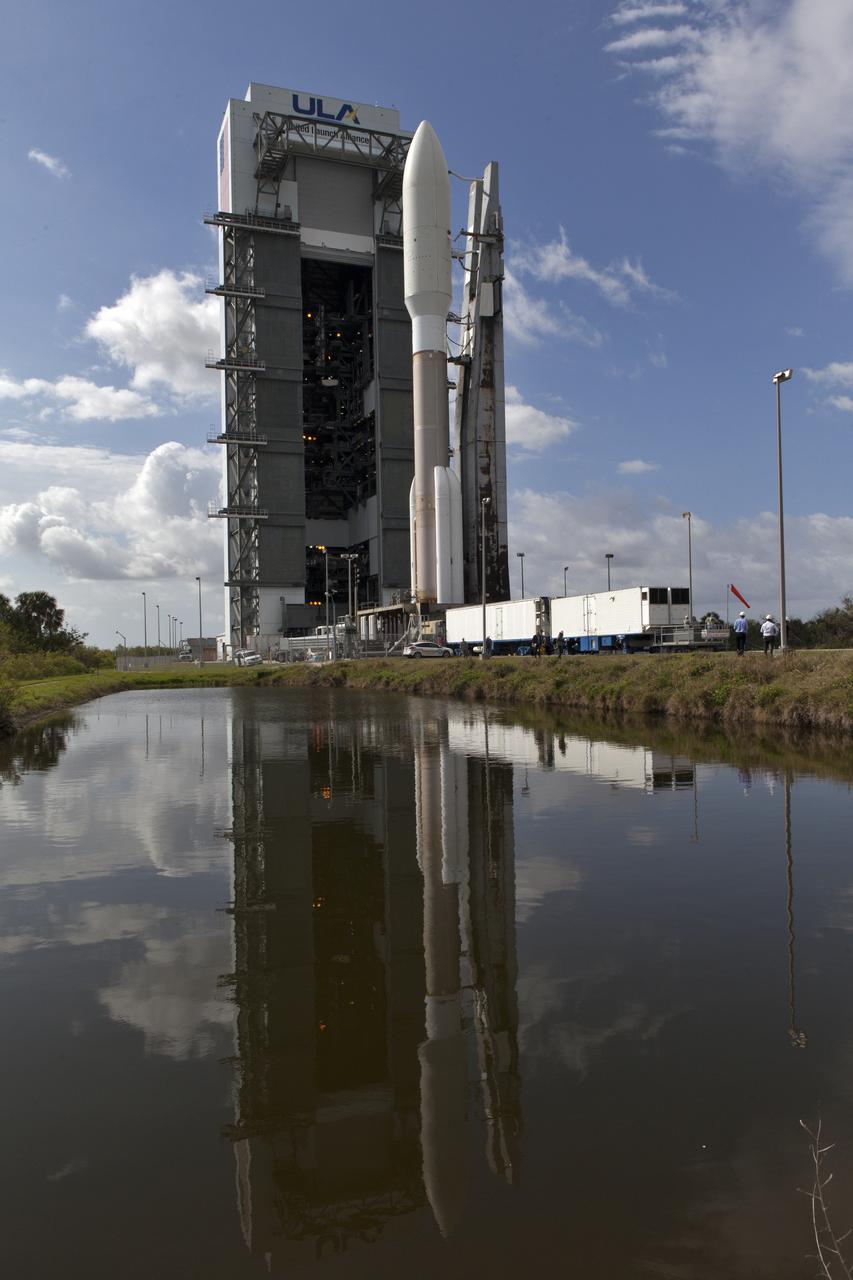
A United Launch Alliance Atlas V rocket is rolled to Space Launch Complex 41 at Cape Canaveral Air Force Station. The launch vehicle will send the National Oceanic and Atmospheric Administration's, or NOAA's, Geostationary Operational Environmental Satellite, or GOES-S, into orbit. The GOES series is designed to significantly improve the detection and observation of environmental phenomena that directly affect public safety, protection of property and the nation's economic health and prosperity. GOES-S is slated to lift off at 5:02 p.m. EST on March 1, 2018 aboard a United Launch Alliance Atlas V rocket.
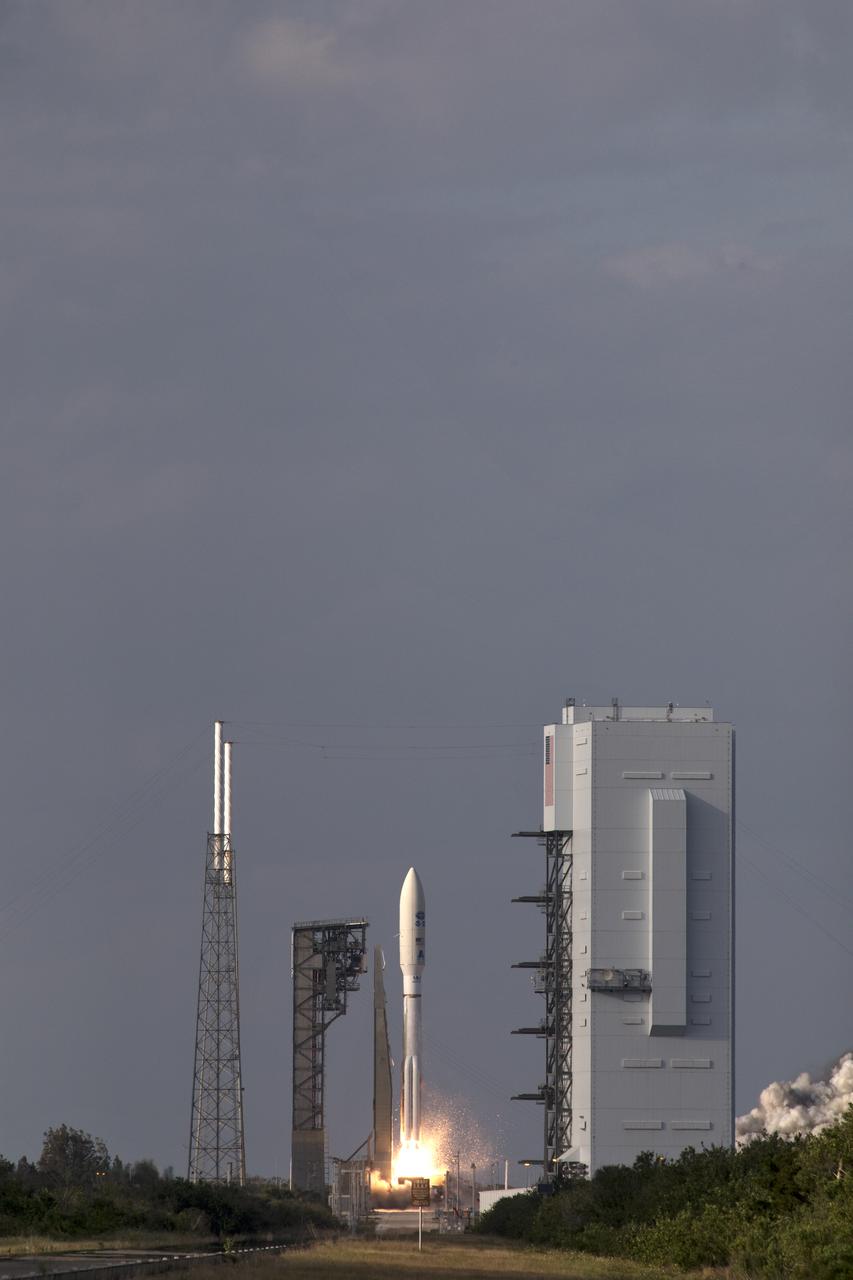
A United Launch Alliance Atlas V rocket lifts off from Space Launch Complex 41 at Cape Canaveral Air Force Station carrying the NOAA Geostationary Operational Environmental Satellite, or GOES-S. Liftoff was at 5:02 p.m. EST. GOES-S is the second satellite in a series of next-generation weather satellites. It will launch to a geostationary position over the U.S. to provide images of storms and help predict weather forecasts, severe weather outlooks, watches, warnings, lightning conditions and longer-term forecasting.
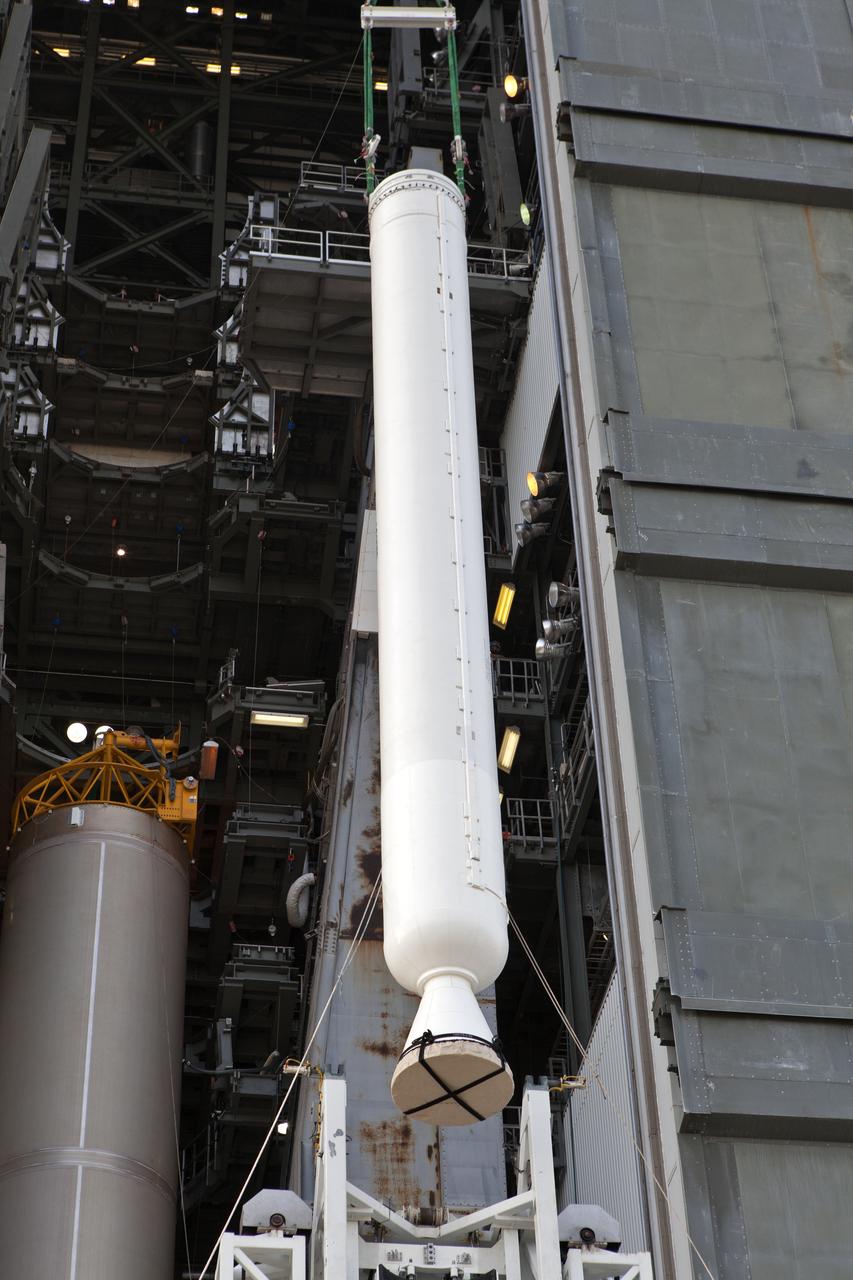
At the Vertical Integration Facility at Space Launch Complex 41 at Cape Canaveral Air Force Station in Florida, a solid rocket booster (SRB) is lifted by a crane for mating to a United Launch Alliance Atlas V first stage. The SRB will help boost NOAA's Geostationary Operational Environmental Satellite, or GOES-S, to orbit. GOES-S is the second in a series of four advanced geostationary weather satellites that will significantly improve the detection and observation of environmental phenomena that directly affect public safety, protection of property and the nation's economic health and prosperity. GOES-S is slated to launch March 1, 2018.
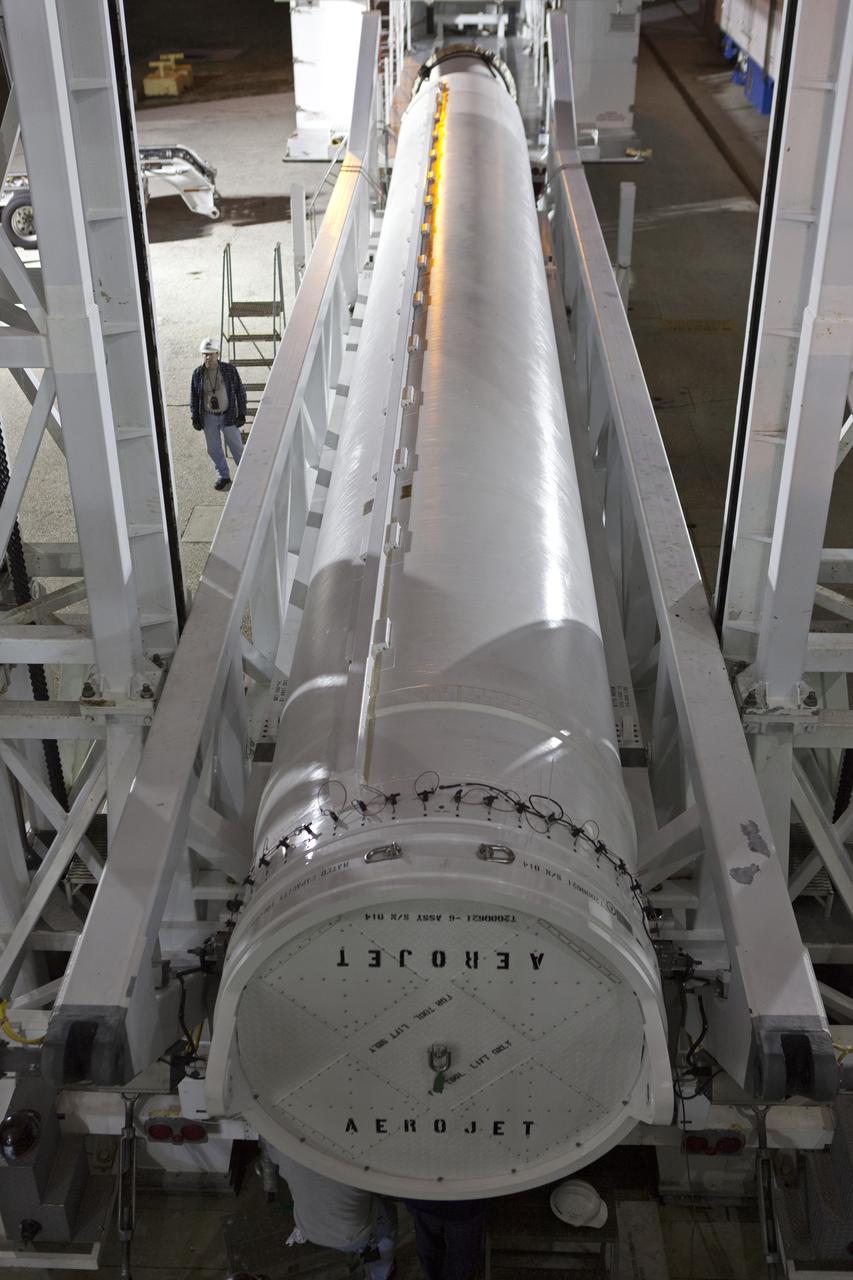
At the Vertical Integration Facility at Space Launch Complex 41 at Cape Canaveral Air Force Station in Florida, a solid rocket booster (SRB) is prepared for mating to a United Launch Alliance Atlas V first stage. The SRB will help boost NOAA's Geostationary Operational Environmental Satellite, or GOES-S, to orbit. GOES-S is the second in a series of four advanced geostationary weather satellites that will significantly improve the detection and observation of environmental phenomena that directly affect public safety, protection of property and the nation's economic health and prosperity. GOES-S is slated to launch March 1, 2018.

A United Launch Alliance Atlas V rocket exits the Vertical Integration Facility on its way to the launch pad at Space Launch Complex 41 at Cape Canaveral Air Force Station. The launch vehicle will send the National Oceanic and Atmospheric Administration's, or NOAA's, Geostationary Operational Environmental Satellite, or GOES-S, into orbit. The GOES series is designed to significantly improve the detection and observation of environmental phenomena that directly affect public safety, protection of property and the nation's economic health and prosperity. GOES-S is slated to lift off at 5:02 p.m. EST on March 1, 2018 aboard a United Launch Alliance Atlas V rocket.
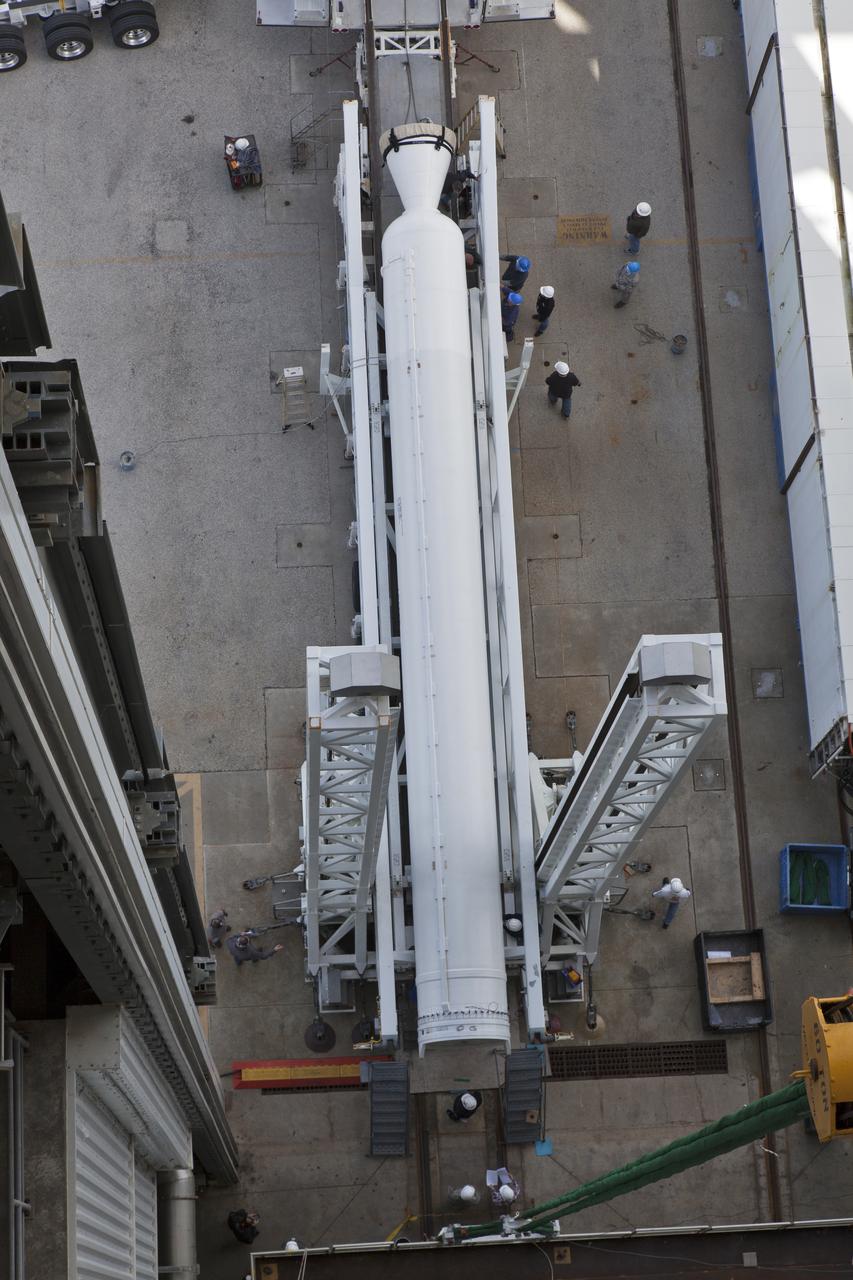
A solid rocket booster (SRB) is prepared for mating to a United Launch Alliance Atlas V first stage in the Vertical Integration Facility at Space Launch Complex 41 at Cape Canaveral Air Force Station in Florida. The SRB will be help boost NOAA's Geostationary Operational Environmental Satellite, or GOES-S, to orbit. GOES-S is the second in a series of four advanced geostationary weather satellites that will significantly improve the detection and observation of environmental phenomena that directly affect public safety, protection of property and the nation's economic health and prosperity. GOES-S is slated to launch March 1, 2018.
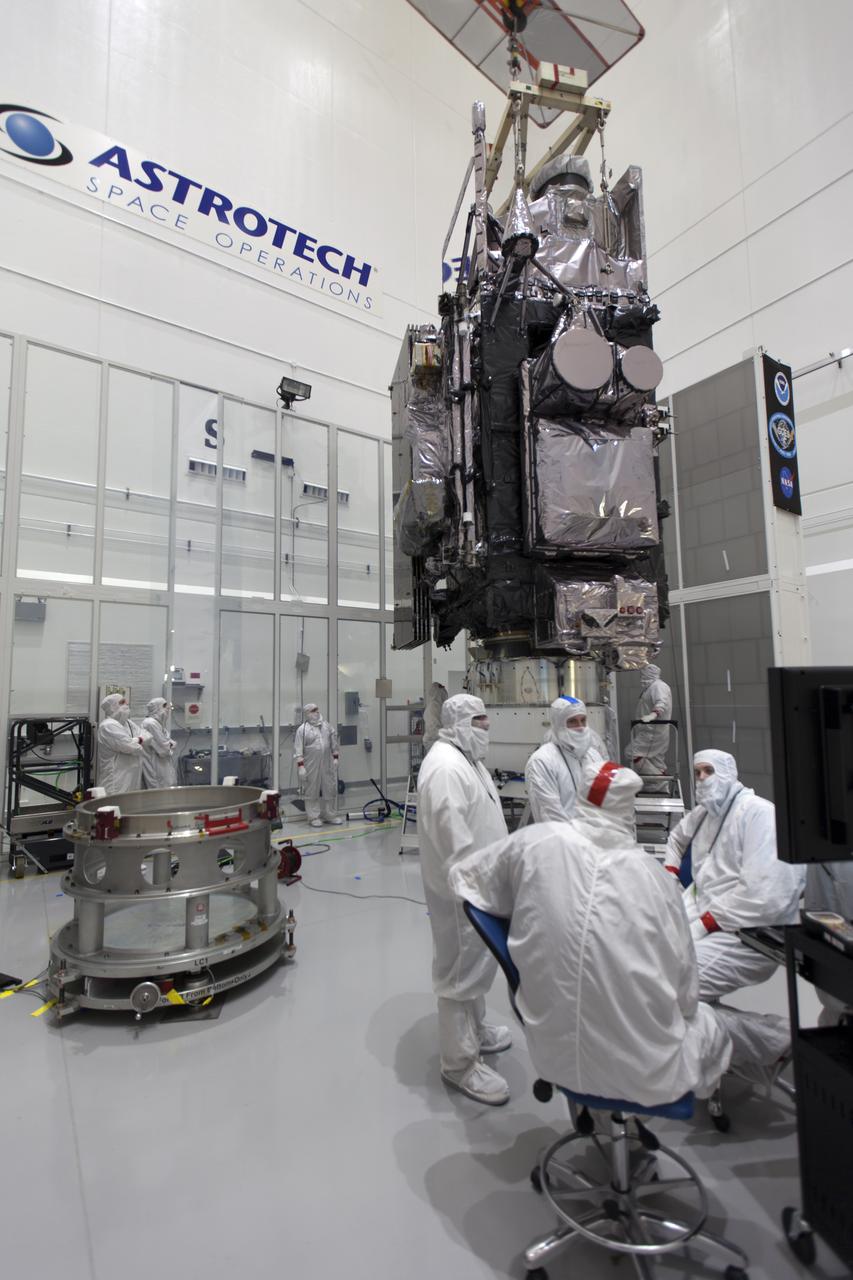
In a clean room at Astrotech Space Operations in Titusville, Florida, technicians and engineers monitor progress as NOAA's Geostationary Operational Environmental Satellite-S, or GOES-S, is mated to its payload attach fitting. It soon will be moved to Space Launch Complex 41 at Cape Canaveral Air Force Station for mounting atop the Atlas V rocket that will boost the satellite to orbit. GOES-S is the second in a series of four advanced geostationary weather satellites that will significantly improve the detection and observation of environmental phenomena that directly affect public safety, protection of property and the nation's economic health and prosperity. GOES-S is slated to launch March 1, 2018 aboard a United Launch Alliance Atlas V rocket.
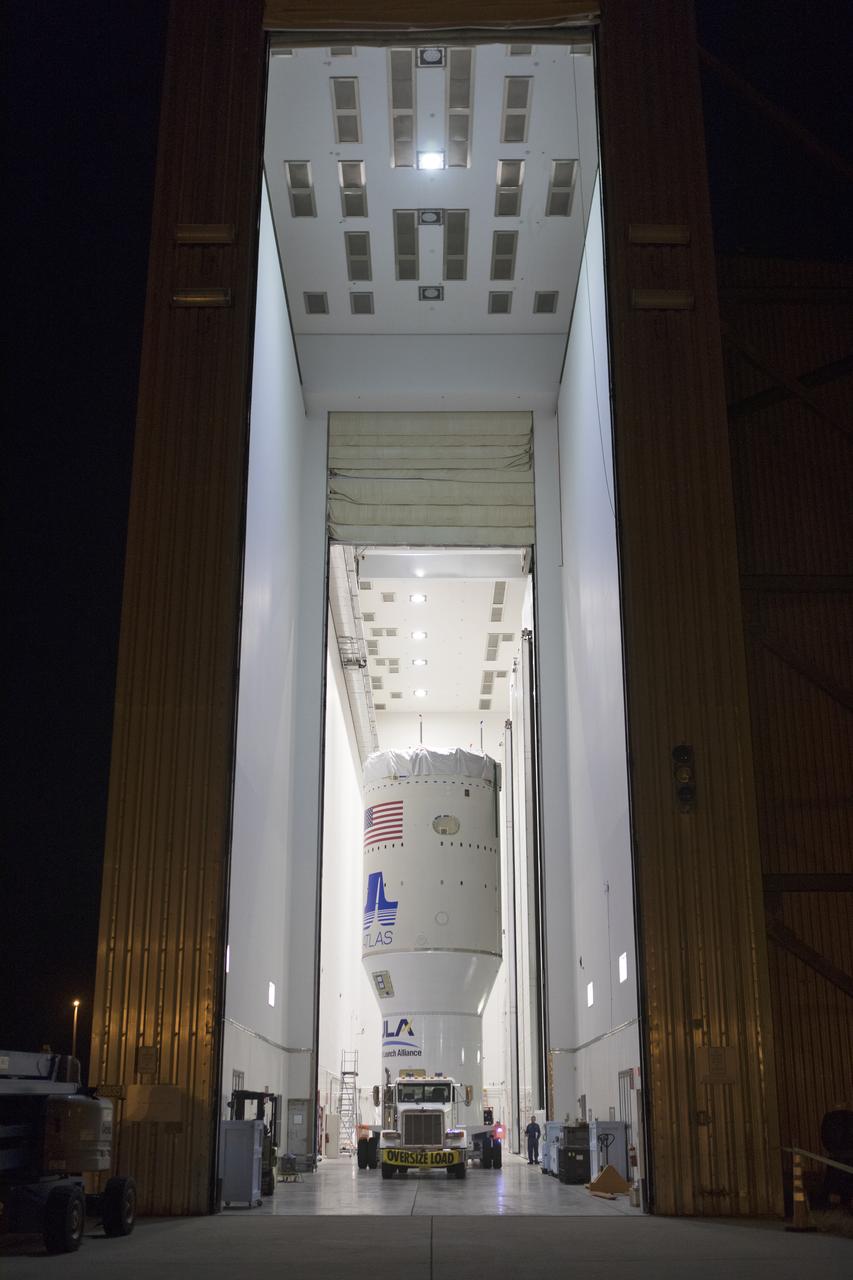
The Centaur upper stage that will help launch NOAA's Geostationary Operational Environmental Satellite-S, or GOES-S, departs the Delta Operations Center for the Vertical Integration Facility at Space Launch Complex 41 at Cape Canaveral Air Force Station in Florida. The Centaur then will be mated to a United Launch Alliance Atlas V booster. GOES-S is the second in a series of four advanced geostationary weather satellites that will significantly improve the detection and observation of environmental phenomena that directly affect public safety, protection of property and the nation's economic health and prosperity. GOES-S is slated to launch March 1, 2018.
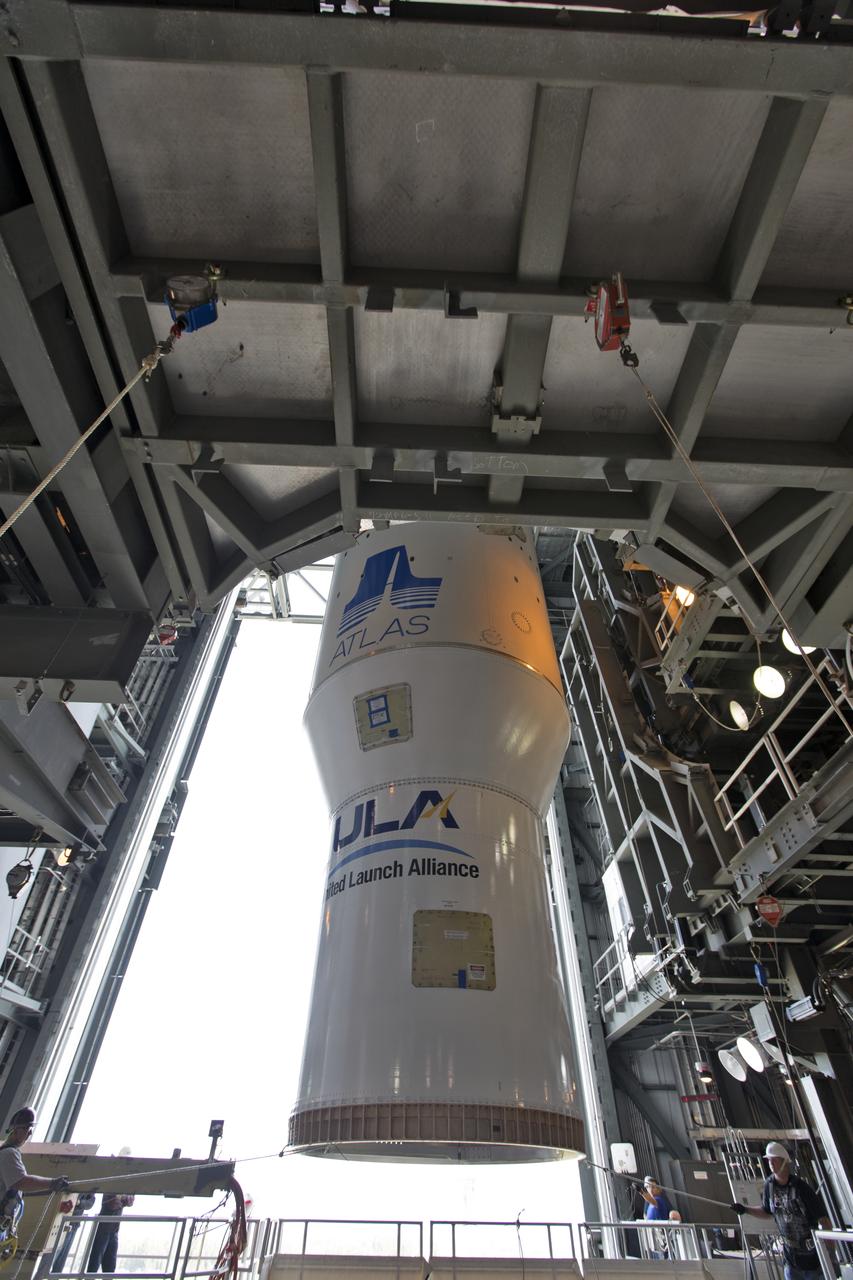
At the Vertical Integration Facility at Space Launch Complex 41 at Cape Canaveral Air Force Station in Florida, a crane lifts a Centaur upper stage for mating to a United Launch Alliance Atlas V rocket that will boost NOAA's Geostationary Operational Environmental Satellite-S, or GOES-S, to orbit. GOES-S is the second in a series of four advanced geostationary weather satellites that will significantly improve the detection and observation of environmental phenomena that directly affect public safety, protection of property and the nation's economic health and prosperity. GOES-S is slated to launch March 1, 2018.
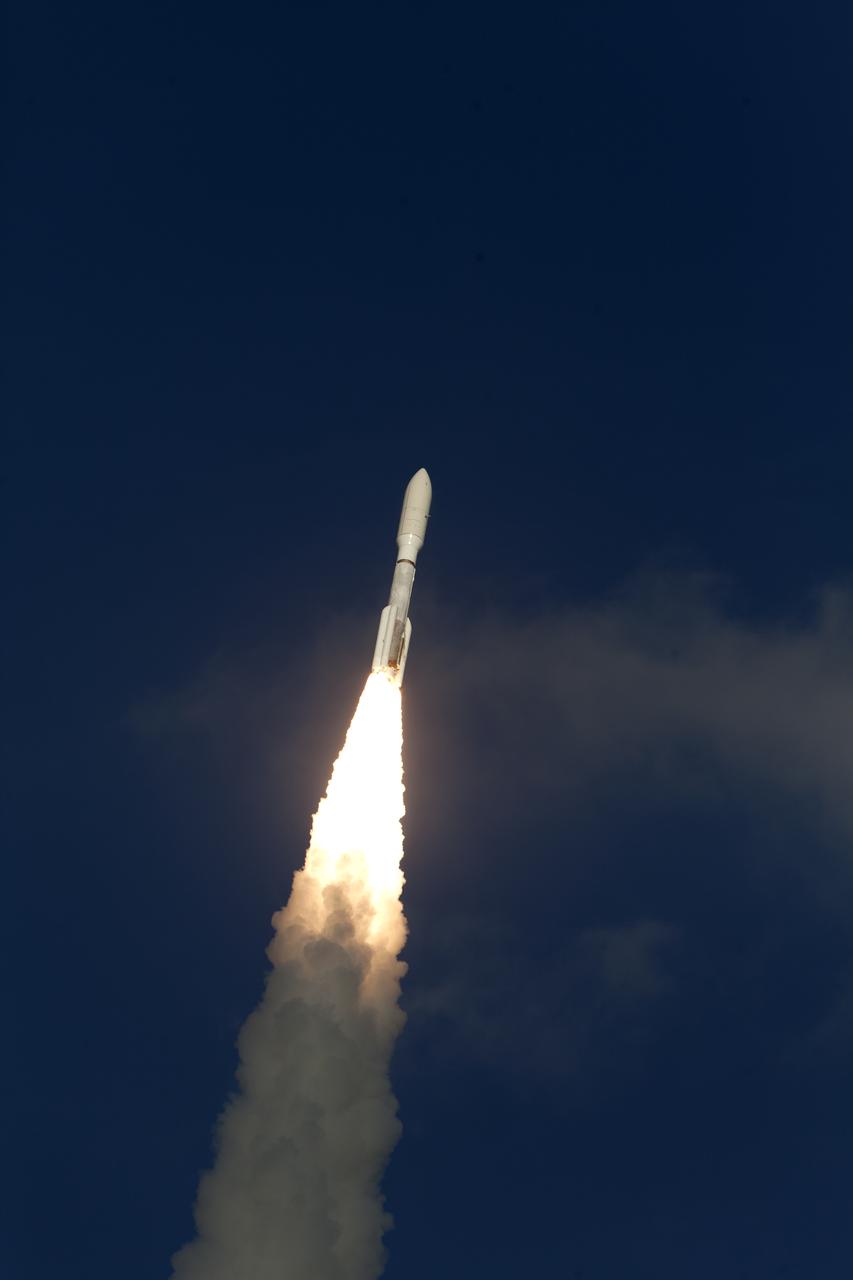
A United Launch Alliance Atlas V rocket lifts off from Space Launch Complex 41 at Cape Canaveral Air Force Station carrying the NOAA Geostationary Operational Environmental Satellite, or GOES-S. Liftoff was at 5:02 p.m. EST. GOES-S is the second satellite in a series of next-generation weather satellites. It will launch to a geostationary position over the U.S. to provide images of storms and help predict weather forecasts, severe weather outlooks, watches, warnings, lightning conditions and longer-term forecasting.
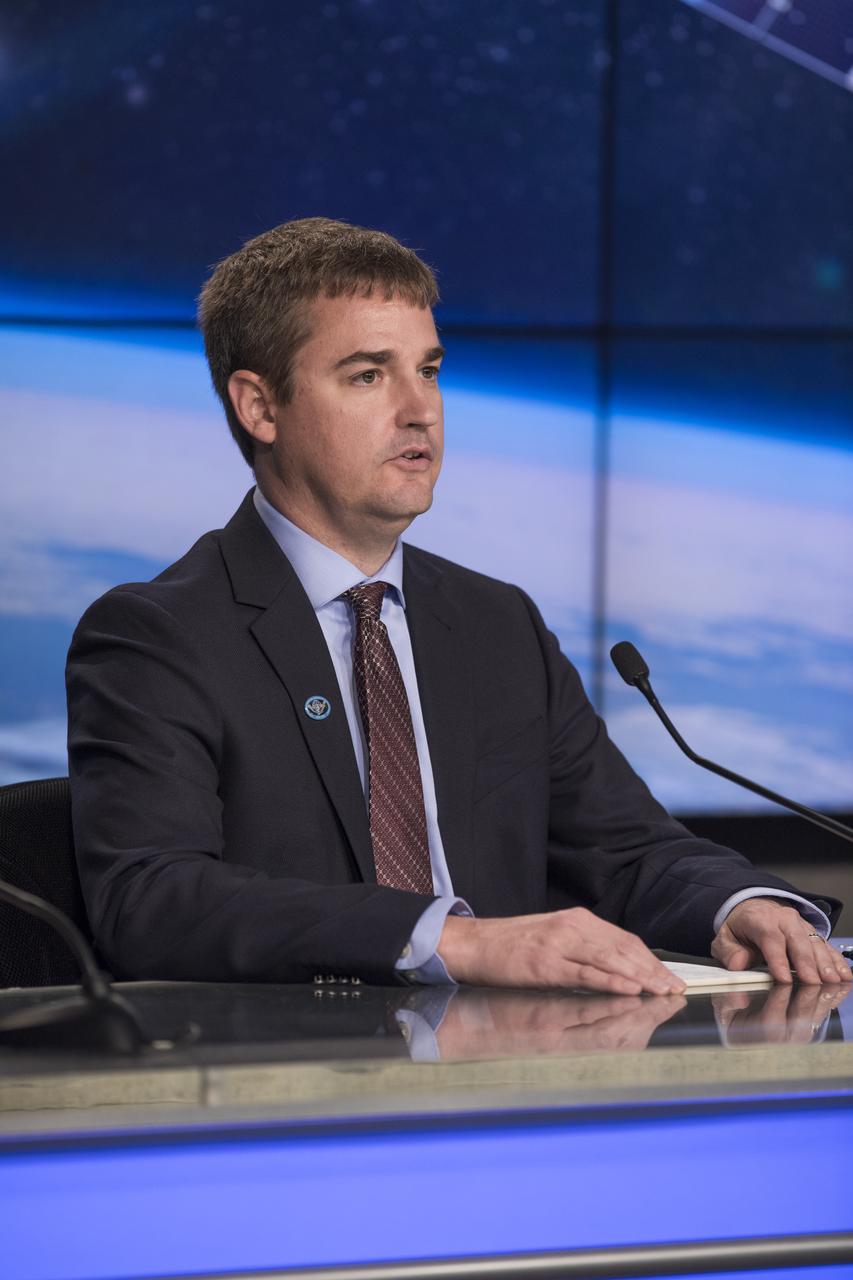
In the Kennedy Space Center's Press Site auditorium, Dan Lindsey, GOES-R senior scientific advisor for NOAA, speaks to members of the media at a mission briefing on National Oceanic and Atmospheric Administration's, or NOAA's, Geostationary Operational Environmental Satellite, or GOES-S. The spacecraft is the second satellite in a series of next-generation NOAA weather satellites. It will launch to a geostationary position over the U.S. to provide images of storms and help predict weather forecasts, severe weather outlooks, watches, warnings, lightning conditions and longer-term forecasting. GOES-S is slated to lift off at 5:02 p.m. EST on March 1, 2018 aboard a United Launch Alliance Atlas V rocket.

In the Kennedy Space Center's Press Site auditorium, Kristin Calhoun, a research scientist with NOAA's National Severe Storms Laboratory, speaks to members of the media at a mission briefing on National Oceanic and Atmospheric Administration's, or NOAA's, Geostationary Operational Environmental Satellite, or GOES-S. The spacecraft is the second satellite in a series of next-generation NOAA weather satellites. It will launch to a geostationary position over the U.S. to provide images of storms and help predict weather forecasts, severe weather outlooks, watches, warnings, lightning conditions and longer-term forecasting. GOES-S is slated to lift off at 5:02 p.m. EST on March 1, 2018 aboard a United Launch Alliance Atlas V rocket.
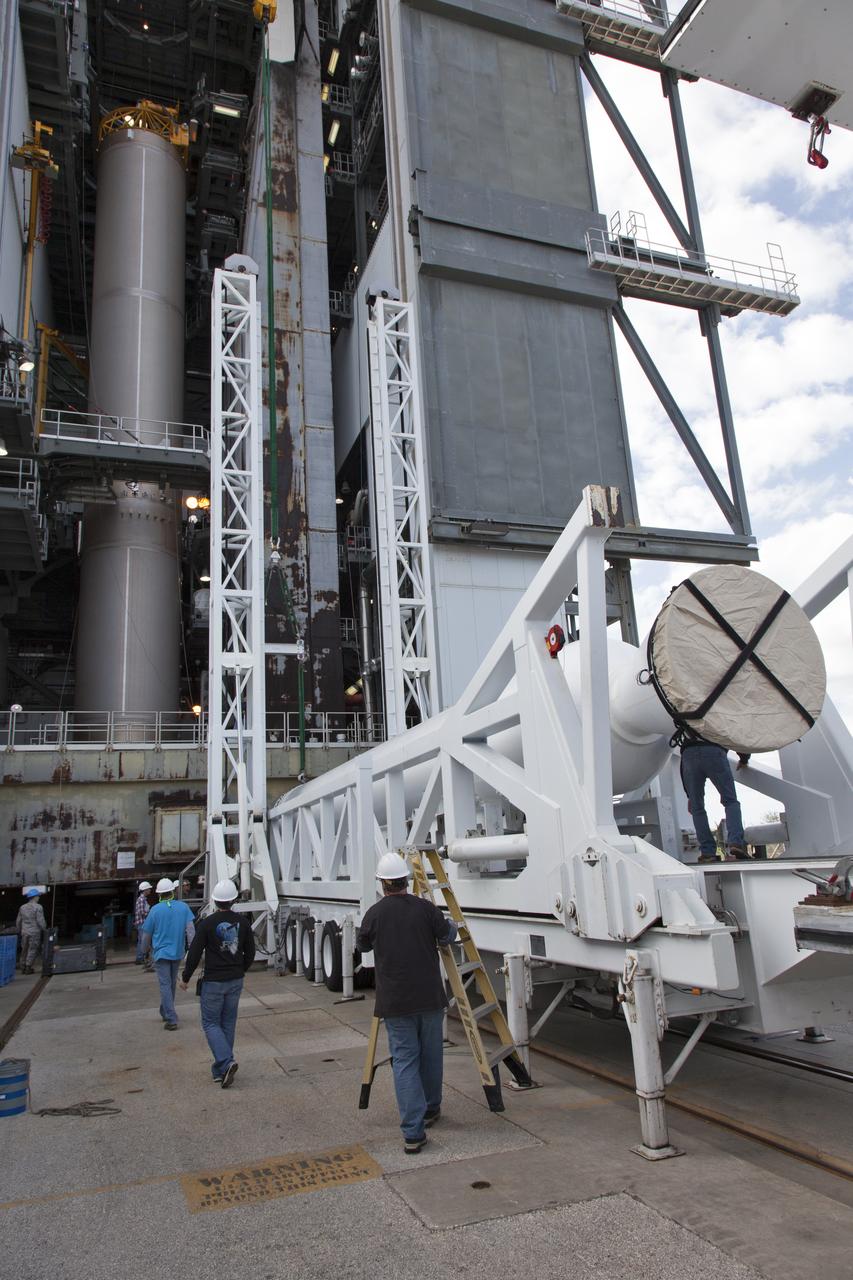
Technicians and engineers offload a solid rocket booster (SRB) that just arrived at the Vertical Integration Facility at Space Launch Complex 41 at Cape Canaveral Air Force Station in Florida. The SRB will be mated to a United Launch Alliance Atlas V first stage to help boost NOAA's Geostationary Operational Environmental Satellite, or GOES-S, to orbit. GOES-S is the second in a series of four advanced geostationary weather satellites that will significantly improve the detection and observation of environmental phenomena that directly affect public safety, protection of property and the nation's economic health and prosperity. GOES-S is slated to launch March 1, 2018.
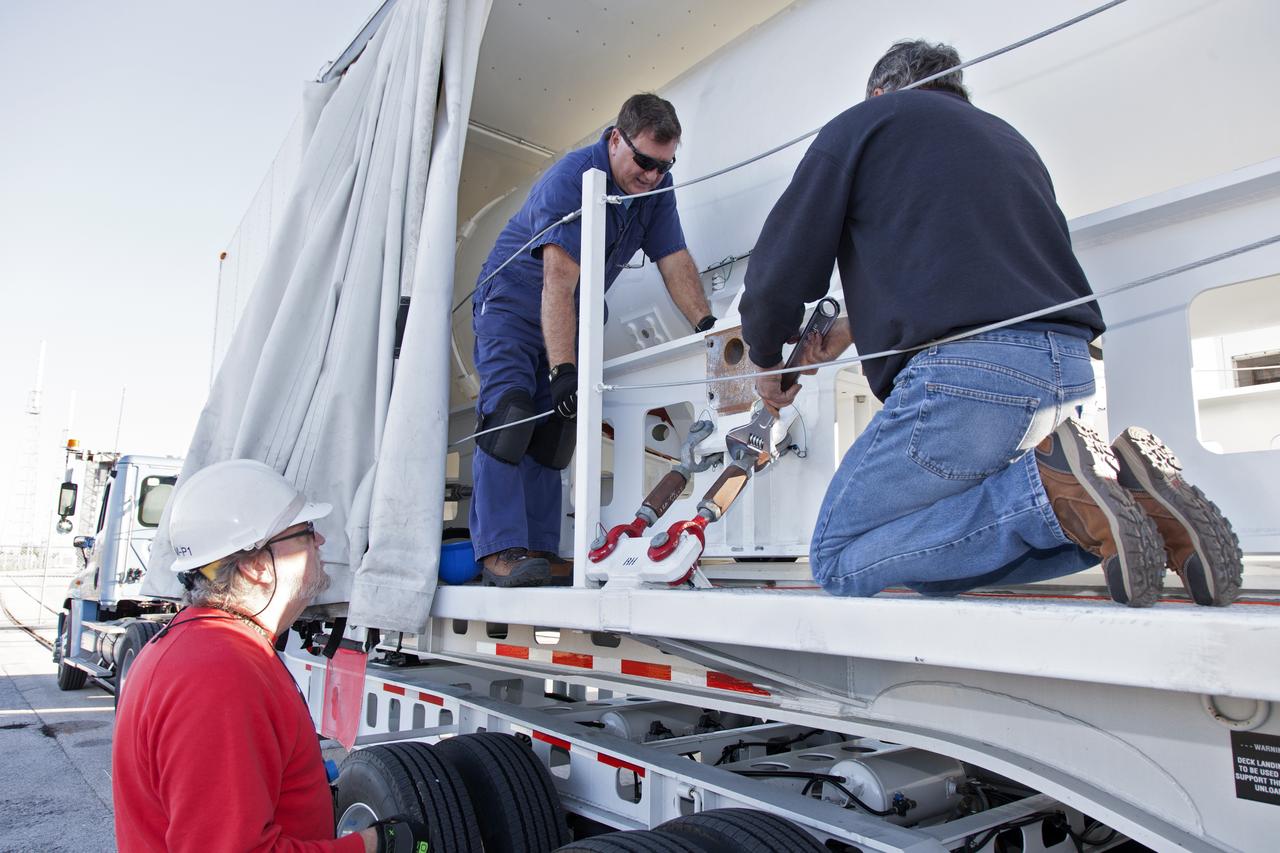
Technicians prepare to offload a solid rocket booster (SRB) that just arrived at the Vertical Integration Facility at Space Launch Complex 41 at Cape Canaveral Air Force Station in Florida. The SRB will be mated to a United Launch Alliance Atlas V first stage to help boost NOAA's Geostationary Operational Environmental Satellite, or GOES-S, to orbit. GOES-S is the second in a series of four advanced geostationary weather satellites that will significantly improve the detection and observation of environmental phenomena that directly affect public safety, protection of property and the nation's economic health and prosperity. GOES-S is slated to launch March 1, 2018.

At the Vertical Integration Facility at Space Launch Complex 41 at Cape Canaveral Air Force Station in Florida, a solid rocket booster (SRB) is lifted by a crane for mating to a United Launch Alliance Atlas V first stage. The SRB will help boost NOAA's Geostationary Operational Environmental Satellite, or GOES-S, to orbit. GOES-S is the second in a series of four advanced geostationary weather satellites that will significantly improve the detection and observation of environmental phenomena that directly affect public safety, protection of property and the nation's economic health and prosperity. GOES-S is slated to launch March 1, 2018.
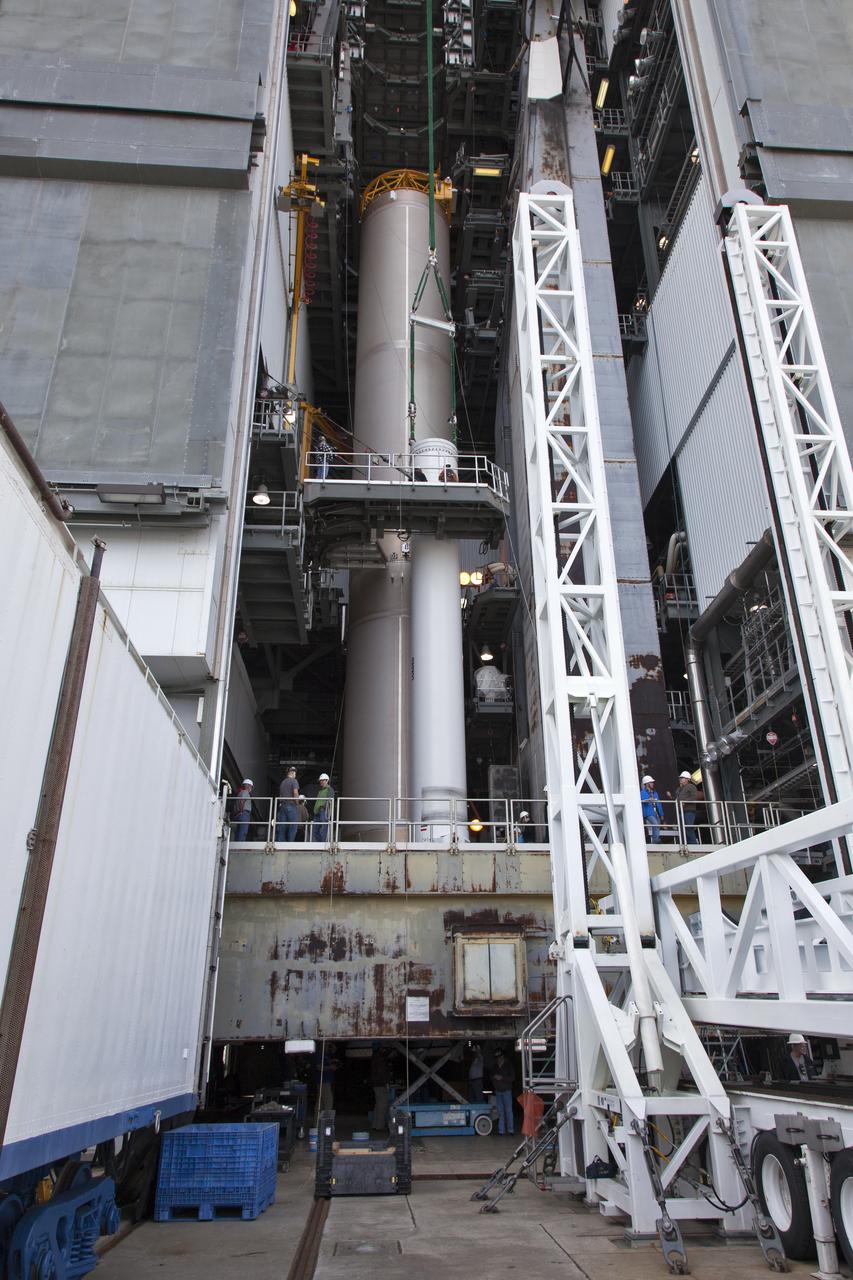
A solid rocket booster (SRB) is mated to a United Launch Alliance Atlas V first stage in the Vertical Integration Facility at Space Launch Complex 41 at Cape Canaveral Air Force Station in Florida. The SRB will be help boost NOAA's Geostationary Operational Environmental Satellite, or GOES-S, to orbit. GOES-S is the second in a series of four advanced geostationary weather satellites that will significantly improve the detection and observation of environmental phenomena that directly affect public safety, protection of property and the nation's economic health and prosperity. GOES-S is slated to launch March 1, 2018.
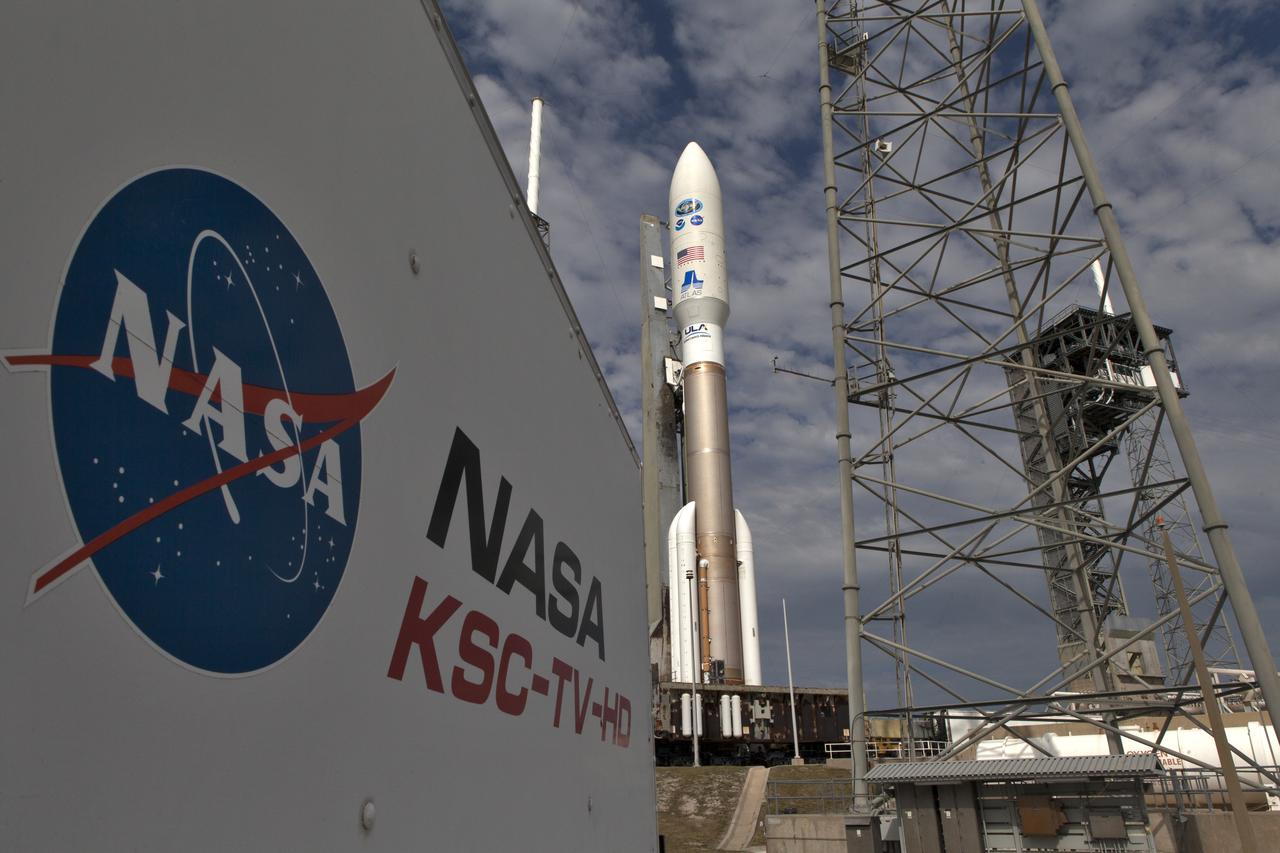
A United Launch Alliance Atlas V rocket is rolled to Space Launch Complex 41 at Cape Canaveral Air Force Station. The launch vehicle will send the National Oceanic and Atmospheric Administration's, or NOAA's, Geostationary Operational Environmental Satellite, or GOES-S, into orbit. The GOES series is designed to significantly improve the detection and observation of environmental phenomena that directly affect public safety, protection of property and the nation's economic health and prosperity. GOES-S is slated to lift off at 5:02 p.m. EST on March 1, 2018 aboard a United Launch Alliance Atlas V rocket.
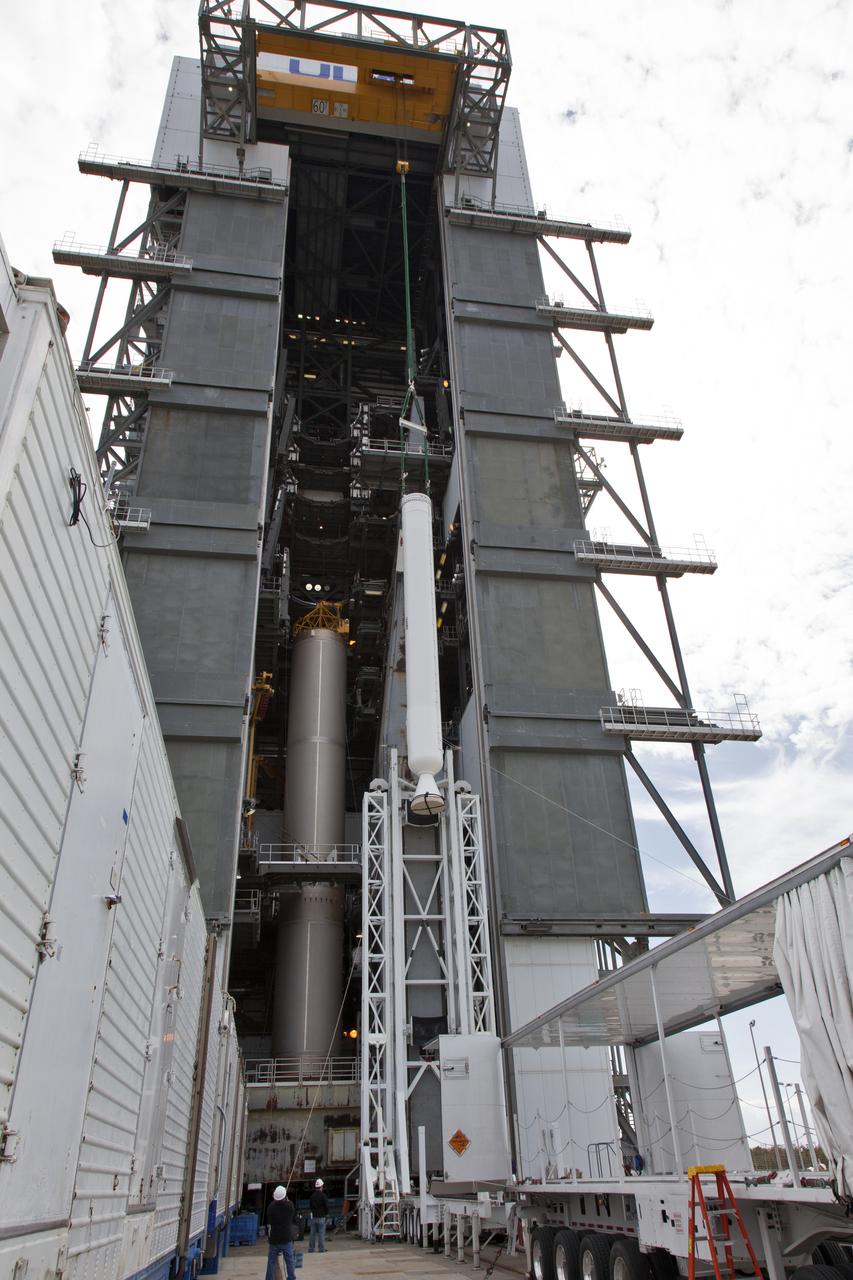
A crane lifts a solid rocket booster (SRB) for mating to a United Launch Alliance Atlas V first stage in the Vertical Integration Facility at Space Launch Complex 41 at Cape Canaveral Air Force Station in Florida. The SRB will be help boost NOAA's Geostationary Operational Environmental Satellite, or GOES-S, to orbit. GOES-S is the second in a series of four advanced geostationary weather satellites that will significantly improve the detection and observation of environmental phenomena that directly affect public safety, protection of property and the nation's economic health and prosperity. GOES-S is slated to launch March 1, 2018.
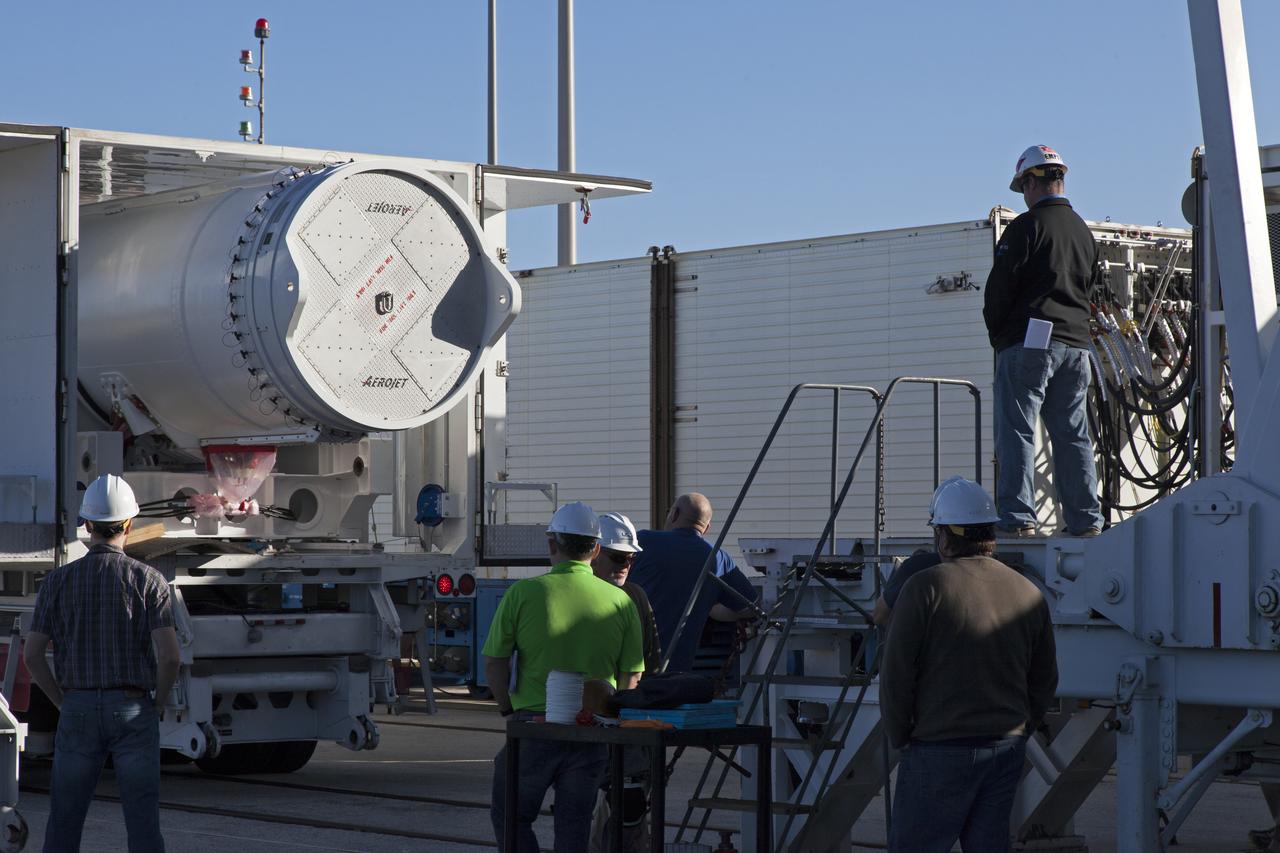
Technicians and engineers offload a solid rocket booster (SRB) that just arrived at the Vertical Integration Facility at Space Launch Complex 41 at Cape Canaveral Air Force Station in Florida. The SRB will be mated to a United Launch Alliance Atlas V first stage to help boost NOAA's Geostationary Operational Environmental Satellite, or GOES-S, to orbit. GOES-S is the second in a series of four advanced geostationary weather satellites that will significantly improve the detection and observation of environmental phenomena that directly affect public safety, protection of property and the nation's economic health and prosperity. GOES-S is slated to launch March 1, 2018.
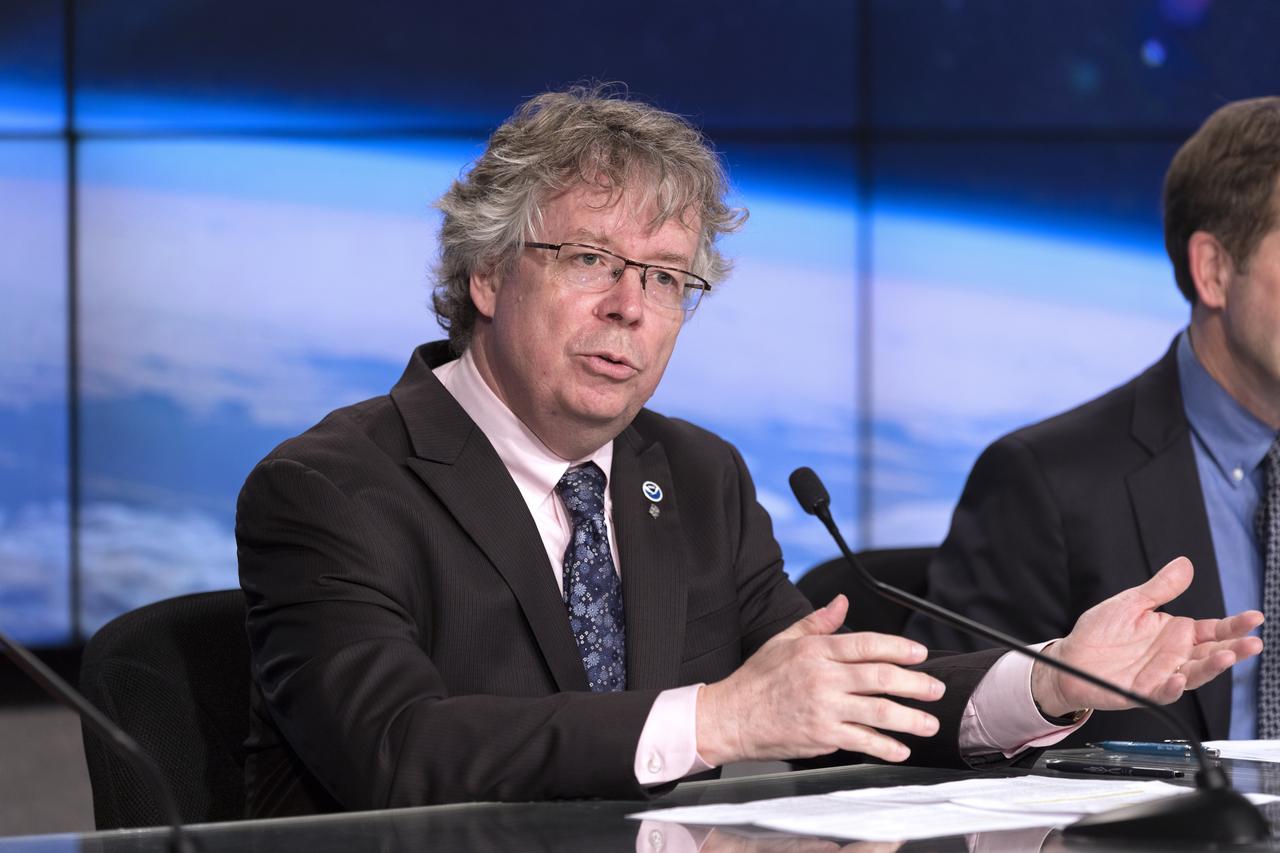
In the Kennedy Space Center's Press Site auditorium, Stephen Volz, director for Satellite and Information Services for NOAA, speaks to members of the media at a prelaunch news conference about National Oceanic and Atmospheric Administration's, or NOAA's, Geostationary Operational Environmental Satellite, or GOES-S. The GOES series of satellites will significantly improve the detection and observation of environmental phenomena that directly affect public safety, protection of property and the nation's economic health and prosperity. GOES-S is slated to lift off at 5:02 p.m. EST on March 1, 2018 aboard a United Launch Alliance Atlas V rocket.
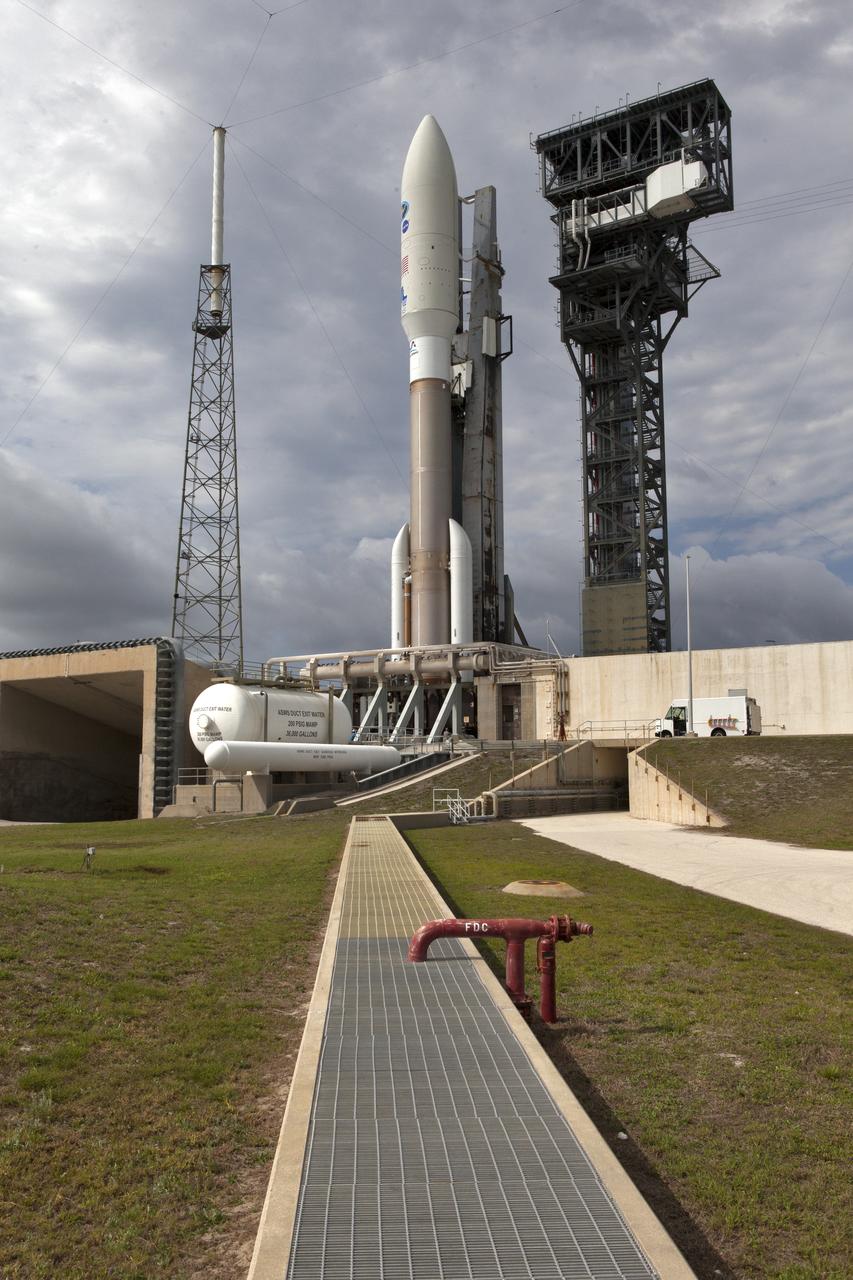
A United Launch Alliance Atlas V rocket is rolled to Space Launch Complex 41 at Cape Canaveral Air Force Station. The launch vehicle will send the National Oceanic and Atmospheric Administration's, or NOAA's, Geostationary Operational Environmental Satellite, or GOES-S, into orbit. The GOES series is designed to significantly improve the detection and observation of environmental phenomena that directly affect public safety, protection of property and the nation's economic health and prosperity. GOES-S is slated to lift off at 5:02 p.m. EST on March 1, 2018 aboard a United Launch Alliance Atlas V rocket.
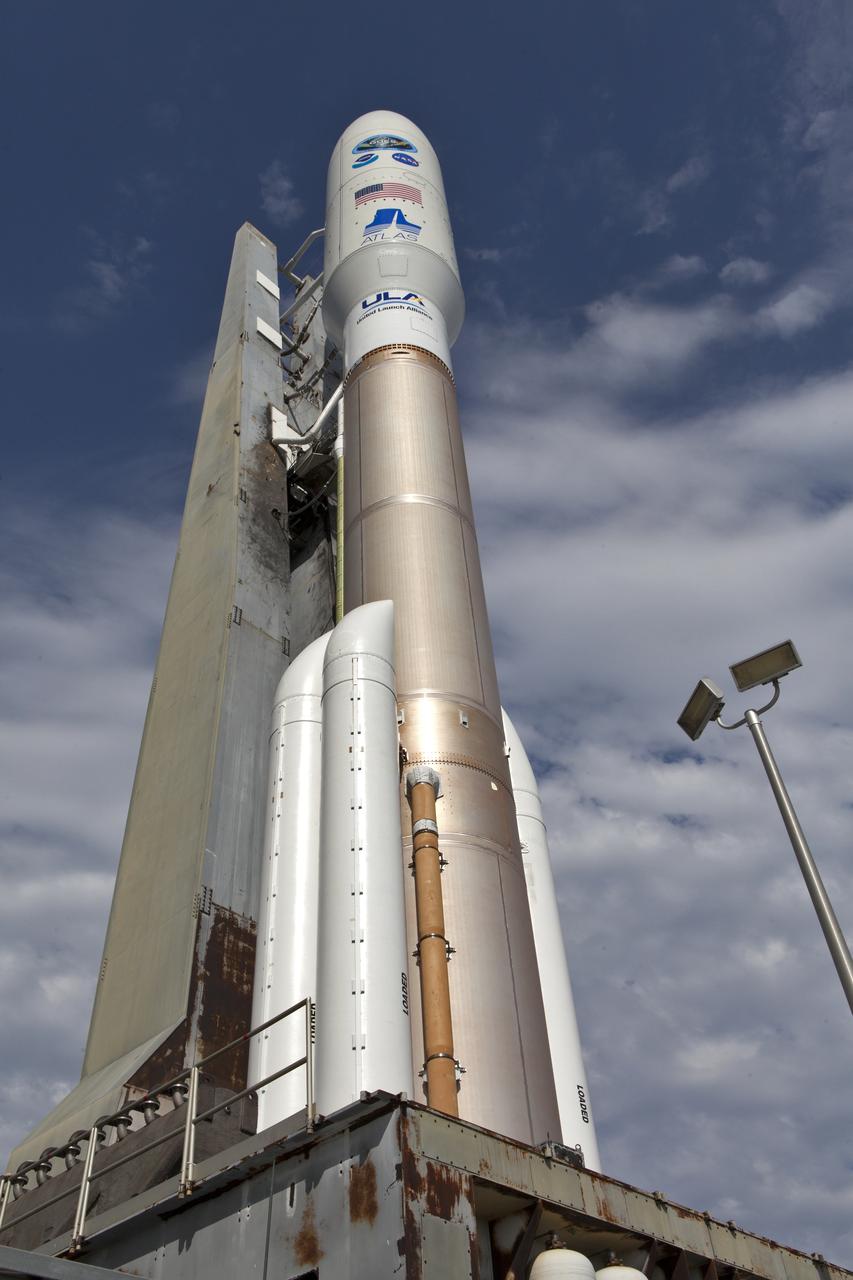
A United Launch Alliance Atlas V rocket is rolled to Space Launch Complex 41 at Cape Canaveral Air Force Station. The launch vehicle will send the National Oceanic and Atmospheric Administration's, or NOAA's, Geostationary Operational Environmental Satellite, or GOES-S, into orbit. The GOES series is designed to significantly improve the detection and observation of environmental phenomena that directly affect public safety, protection of property and the nation's economic health and prosperity. GOES-S is slated to lift off at 5:02 p.m. EST on March 1, 2018 aboard a United Launch Alliance Atlas V rocket.
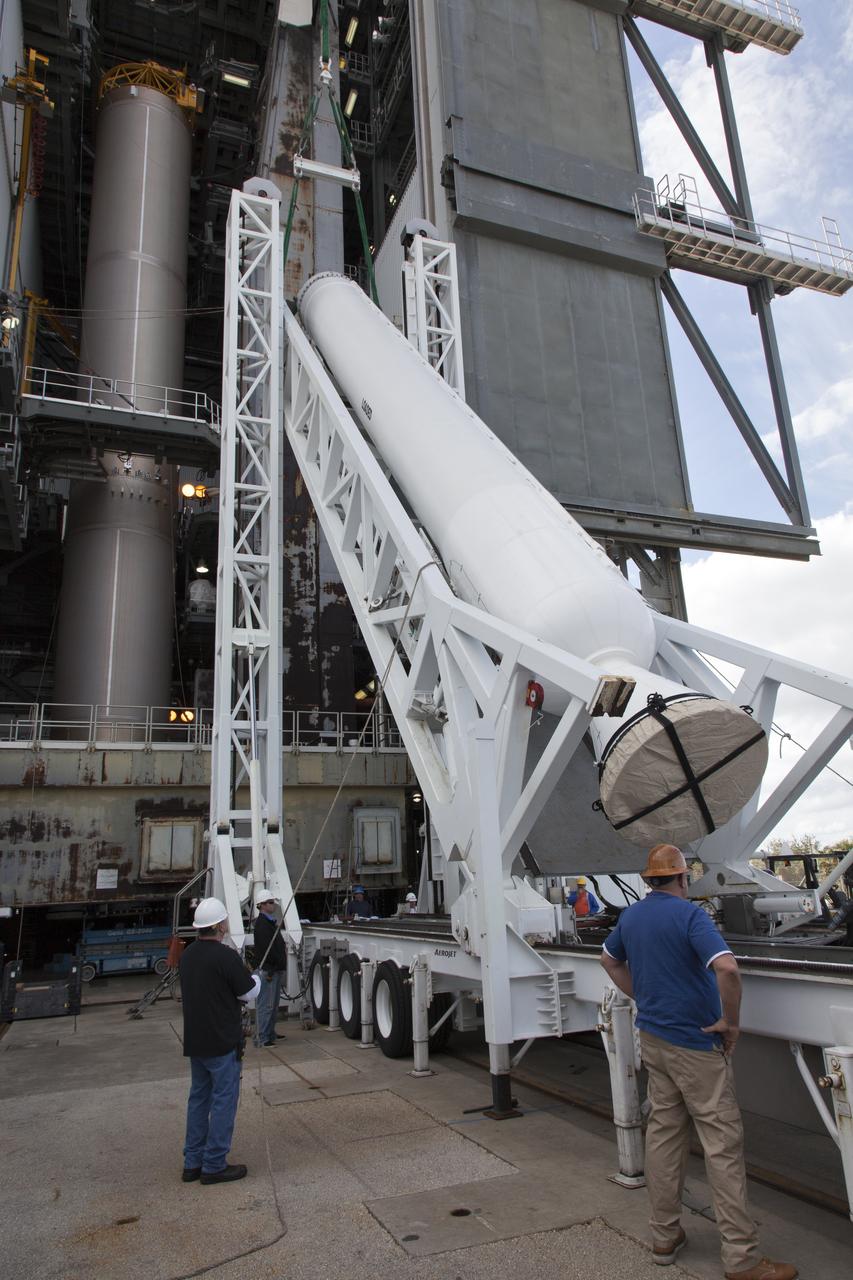
A solid rocket booster (SRB) is lifted for mating to a United Launch Alliance Atlas V first stage in the Vertical Integration Facility at Space Launch Complex 41 at Cape Canaveral Air Force Station in Florida. The SRB will be help boost NOAA's Geostationary Operational Environmental Satellite, or GOES-S, to orbit. GOES-S is the second in a series of four advanced geostationary weather satellites that will significantly improve the detection and observation of environmental phenomena that directly affect public safety, protection of property and the nation's economic health and prosperity. GOES-S is slated to launch March 1, 2018.
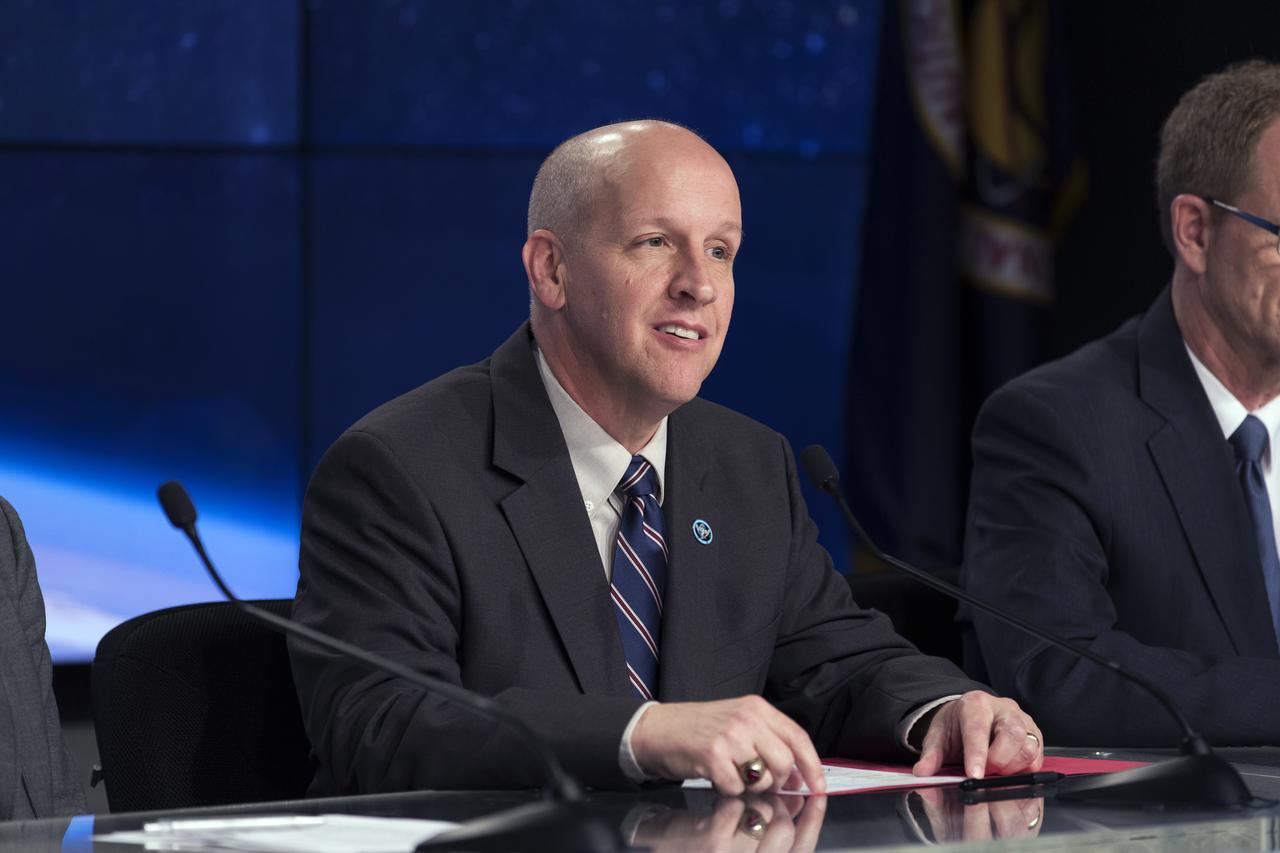
In the Kennedy Space Center's Press Site auditorium, Tim Dunn, NASA launch director at Kennedy, speaks to members of the media at a prelaunch news conference about National Oceanic and Atmospheric Administration's, or NOAA's, Geostationary Operational Environmental Satellite, or GOES-S. The GOES series of satellites will significantly improve the detection and observation of environmental phenomena that directly affect public safety, protection of property and the nation's economic health and prosperity. GOES-S is slated to lift off at 5:02 p.m. EST on March 1, 2018 aboard a United Launch Alliance Atlas V rocket.
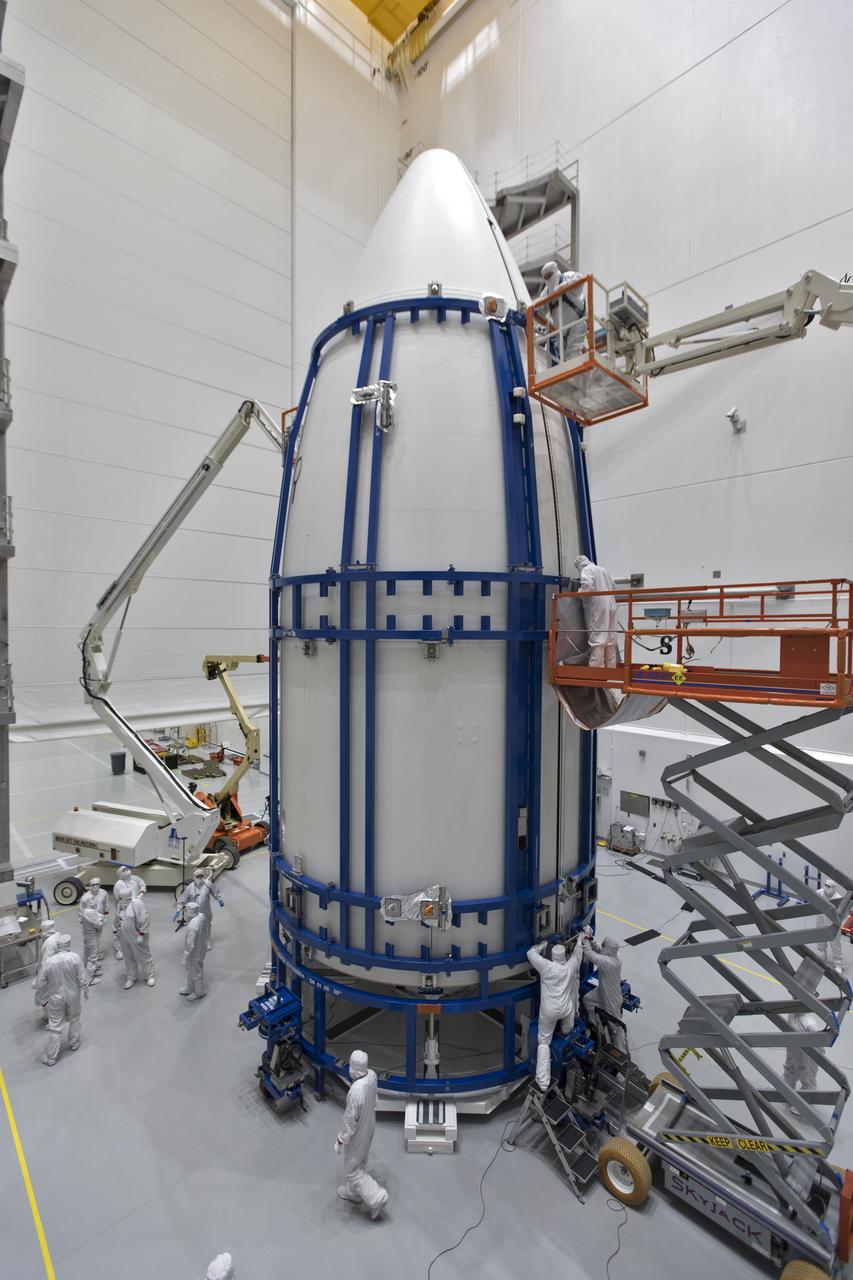
In a clean room at Astrotech Space Operations in Titusville, Florida, technicians and engineers monitor progress as NOAA's Geostationary Operational Environmental Satellite-S, or GOES-S, is encapsulated in its payload fairing. It soon will be moved to Space Launch Complex 41 at Cape Canaveral Air Force Station for mounting atop the Atlas V rocket that will boost the satellite to orbit. GOES-S is the second in a series of four advanced geostationary weather satellites that will significantly improve the detection and observation of environmental phenomena that directly affect public safety, protection of property and the nation's economic health and prosperity. GOES-S is slated to launch March 1, 2018 aboard a United Launch Alliance Atlas V rocket.
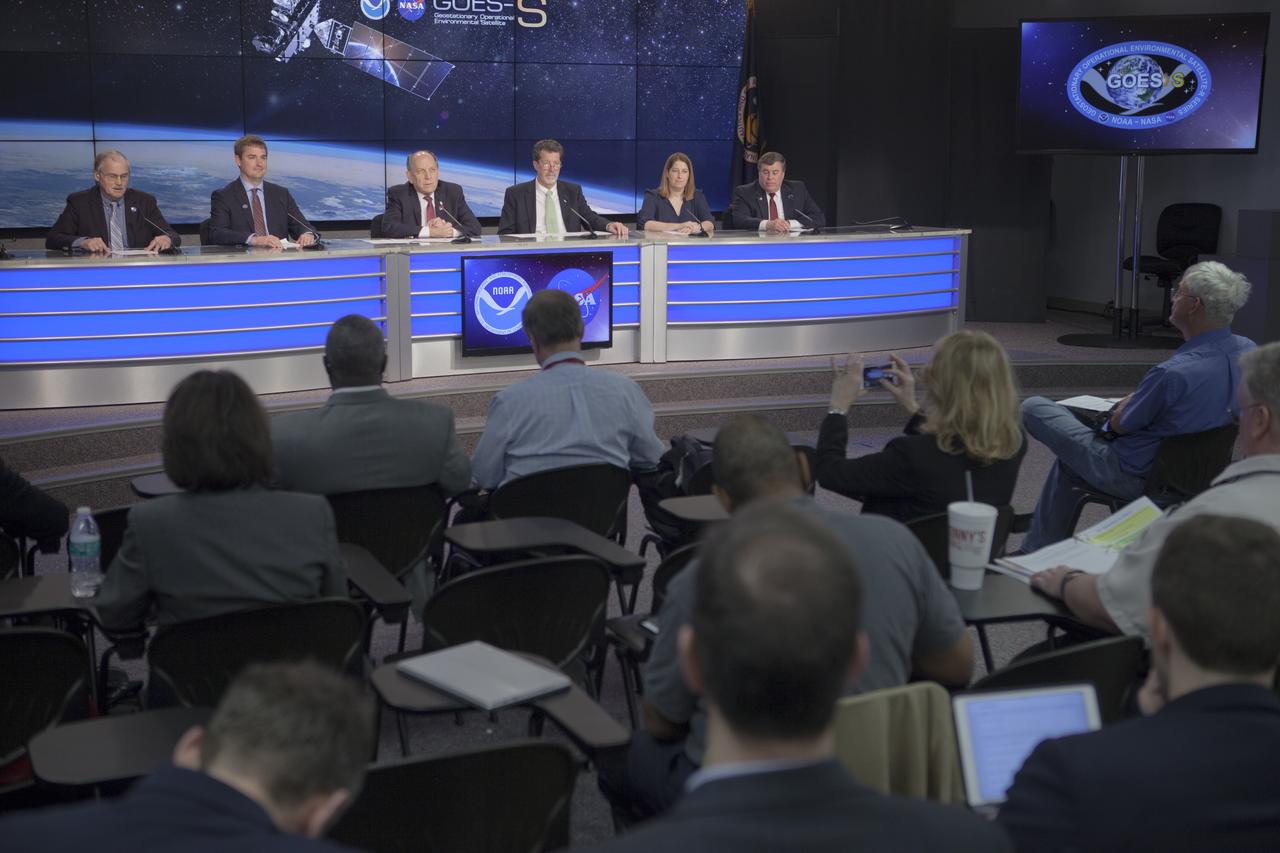
In the Kennedy Space Center's Press Site auditorium, members of the media participate in a mission briefing on National Oceanic and Atmospheric Administration's, or NOAA's, Geostationary Operational Environmental Satellite, or GOES-S. Briefing participants from left are: Steve Cole of NASA Communications; Dan Lindsey, GOES-R senior scientific advisor for NOAA; Louis Uccellini, director of the National Weather Service for NOAA; Jim Roberts, a scientist with the Earth System Research Laboratory's Office of Atmospheric Research for NOAA; Kristin Calhoun, a research scientist with NOAA's National Severe Storms Laboratory, and George Morrow, deputy director of NASA's Goddard Space Flight Center in Greenbelt, Maryland. GOES-S is the second satellite in a series of next-generation NOAA weather satellites. It will launch to a geostationary position over the U.S. to provide images of storms and help predict weather forecasts, severe weather outlooks, watches, warnings, lightning conditions and longer-term forecasting. GOES-S is slated to lift off at 5:02 p.m. EST on March 1, 2018 aboard a United Launch Alliance Atlas V rocket.

In the Kennedy Space Center's Press Site auditorium, Louis Uccellini, director of the National Weather Service for NOAA, speaks to members of the media at a mission briefing on National Oceanic and Atmospheric Administration's, or NOAA's, Geostationary Operational Environmental Satellite, or GOES-S. The spacecraft is the second satellite in a series of next-generation NOAA weather satellites. It will launch to a geostationary position over the U.S. to provide images of storms and help predict weather forecasts, severe weather outlooks, watches, warnings, lightning conditions and longer-term forecasting. GOES-S is slated to lift off at 5:02 p.m. EST on March 1, 2018 aboard a United Launch Alliance Atlas V rocket
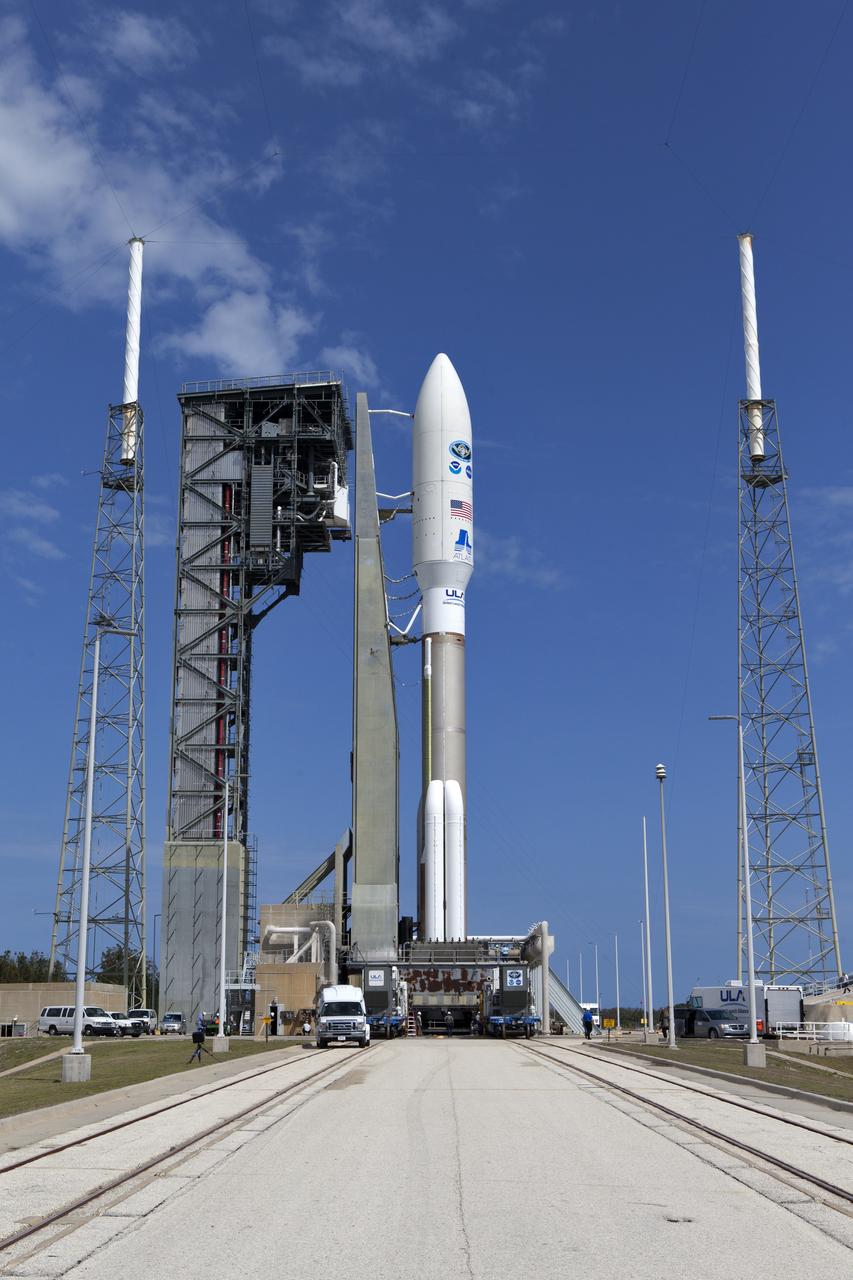
A United Launch Alliance Atlas V rocket is rolled to Space Launch Complex 41 at Cape Canaveral Air Force Station. The launch vehicle will send the National Oceanic and Atmospheric Administration's, or NOAA's, Geostationary Operational Environmental Satellite, or GOES-S, into orbit. The GOES series is designed to significantly improve the detection and observation of environmental phenomena that directly affect public safety, protection of property and the nation's economic health and prosperity. GOES-S is slated to lift off at 5:02 p.m. EST on March 1, 2018 aboard a United Launch Alliance Atlas V rocket.
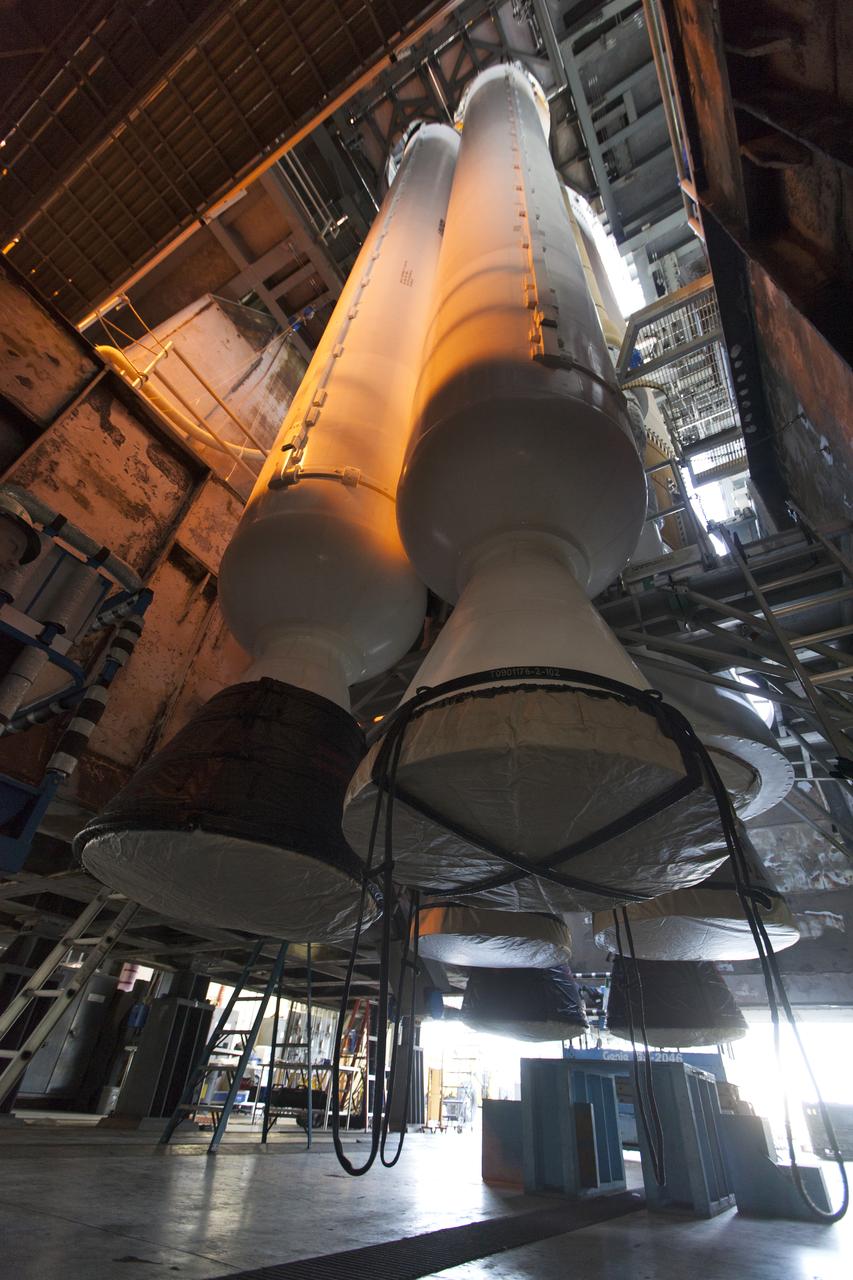
At the Vertical Integration Facility at Space Launch Complex 41 at Cape Canaveral Air Force Station in Florida, a solid rocket booster (SRB) is mated to a United Launch Alliance Atlas V first stage. The SRB will be help boost NOAA's Geostationary Operational Environmental Satellite, or GOES-S, to orbit. GOES-S is the second in a series of four advanced geostationary weather satellites that will significantly improve the detection and observation of environmental phenomena that directly affect public safety, protection of property and the nation's economic health and prosperity. GOES-S is slated to launch March 1, 2018.
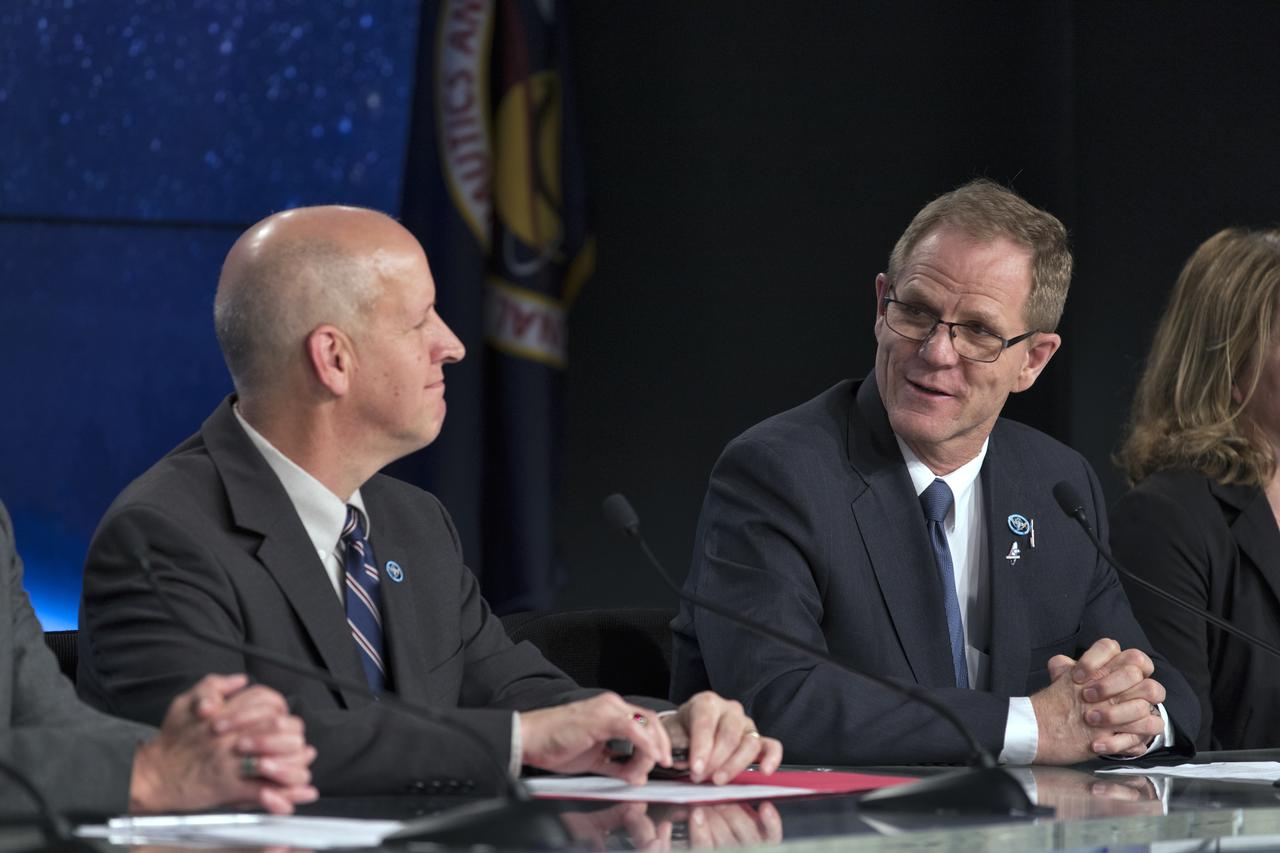
In the Kennedy Space Center's Press Site auditorium, Tim Dunn, NASA launch director at Kennedy, left, and Scott Messer, manager of NASA Programs for United launch Alliance, speak to members of the media at a prelaunch news conference about National Oceanic and Atmospheric Administration's, or NOAA's, Geostationary Operational Environmental Satellite, or GOES-S. The GOES series of satellites will significantly improve the detection and observation of environmental phenomena that directly affect public safety, protection of property and the nation's economic health and prosperity. GOES-S is slated to lift off at 5:02 p.m. EST on March 1, 2018 aboard a United Launch Alliance Atlas V rocket.
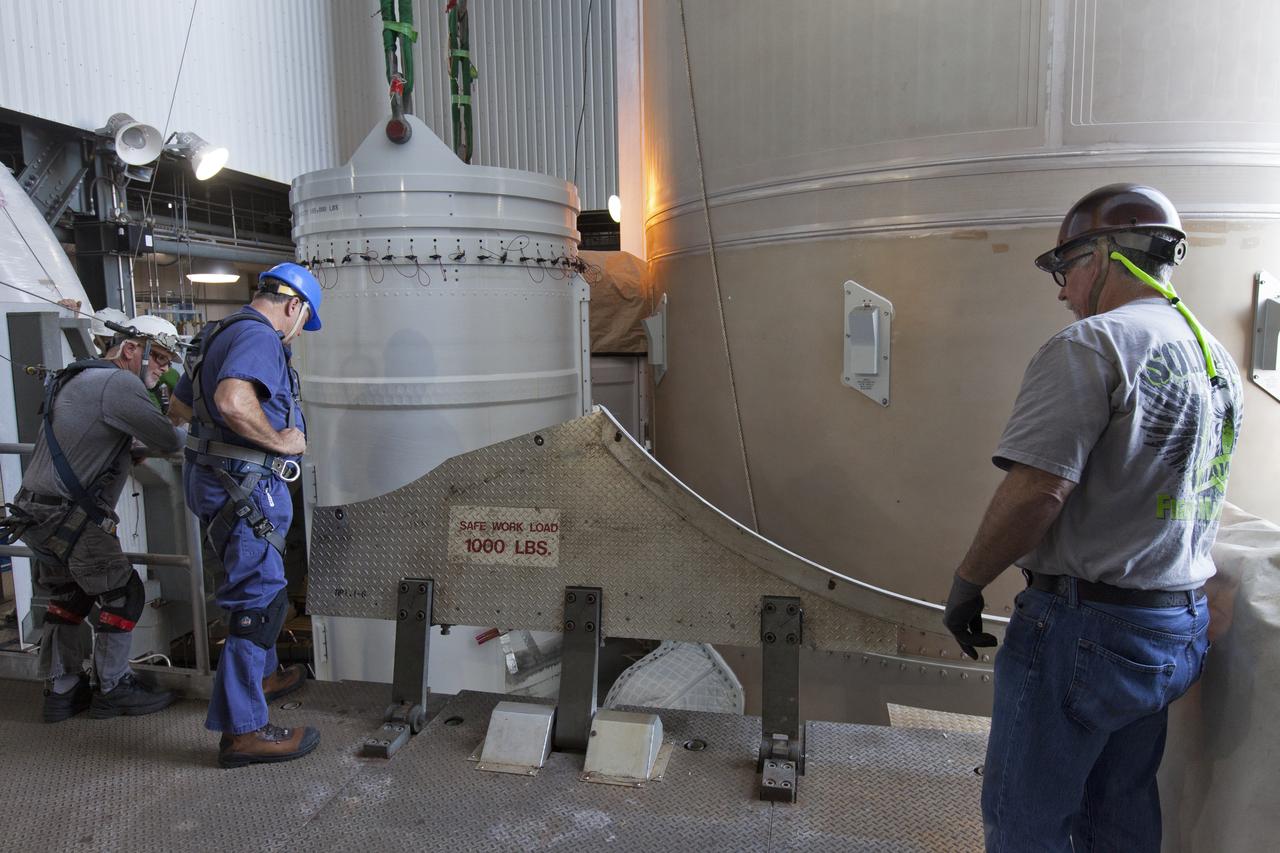
At the Vertical Integration Facility at Space Launch Complex 41 at Cape Canaveral Air Force Station in Florida, technicians support operations to mate a solid rocket booster (SRB) to a United Launch Alliance Atlas V first stage. The SRB will help boost NOAA's Geostationary Operational Environmental Satellite, or GOES-S, to orbit. GOES-S is the second in a series of four advanced geostationary weather satellites that will significantly improve the detection and observation of environmental phenomena that directly affect public safety, protection of property and the nation's economic health and prosperity. GOES-S is slated to launch March 1, 2018.
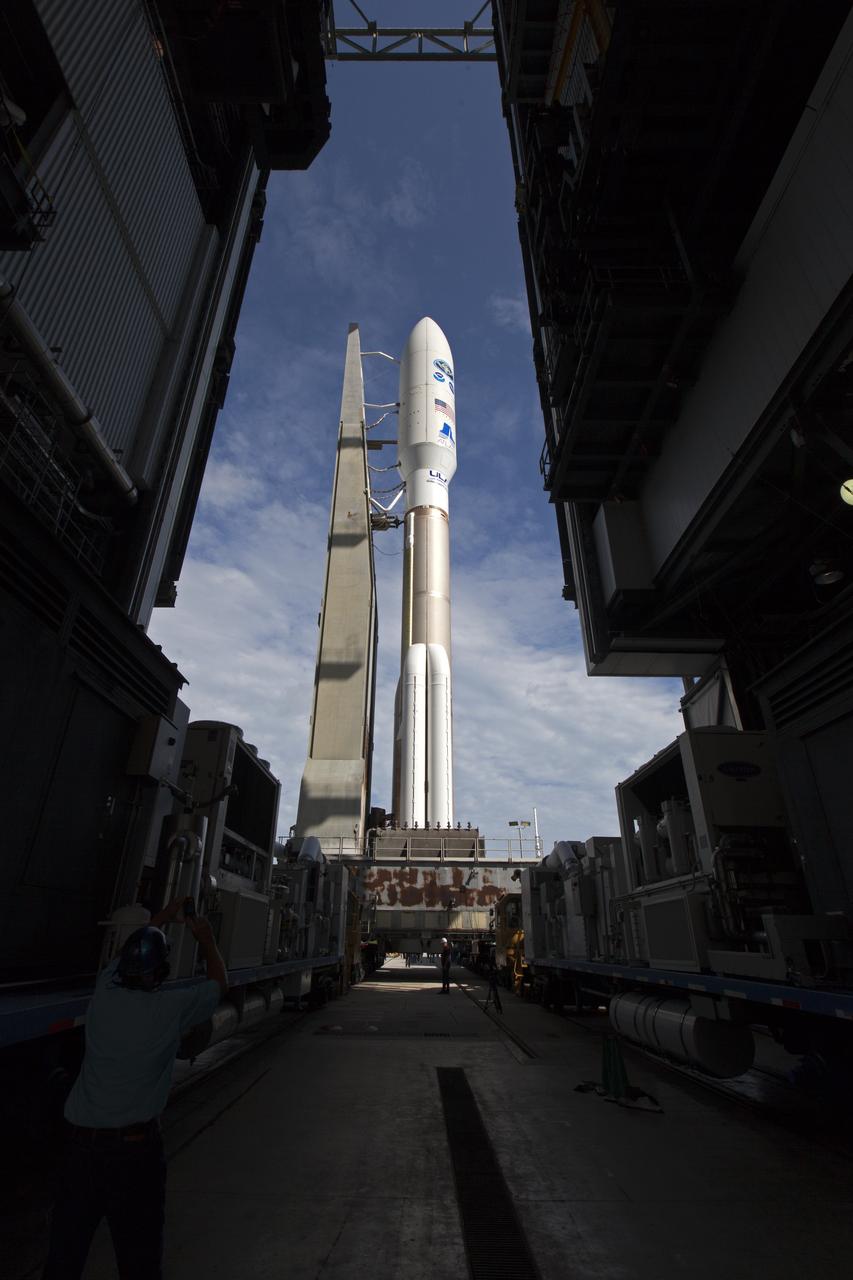
A United Launch Alliance Atlas V rocket is rolled to Space Launch Complex 41 at Cape Canaveral Air Force Station. The launch vehicle will send the National Oceanic and Atmospheric Administration's, or NOAA's, Geostationary Operational Environmental Satellite, or GOES-S, into orbit. The GOES series is designed to significantly improve the detection and observation of environmental phenomena that directly affect public safety, protection of property and the nation's economic health and prosperity. GOES-S is slated to lift off at 5:02 p.m. EST on March 1, 2018 aboard a United Launch Alliance Atlas V rocket.
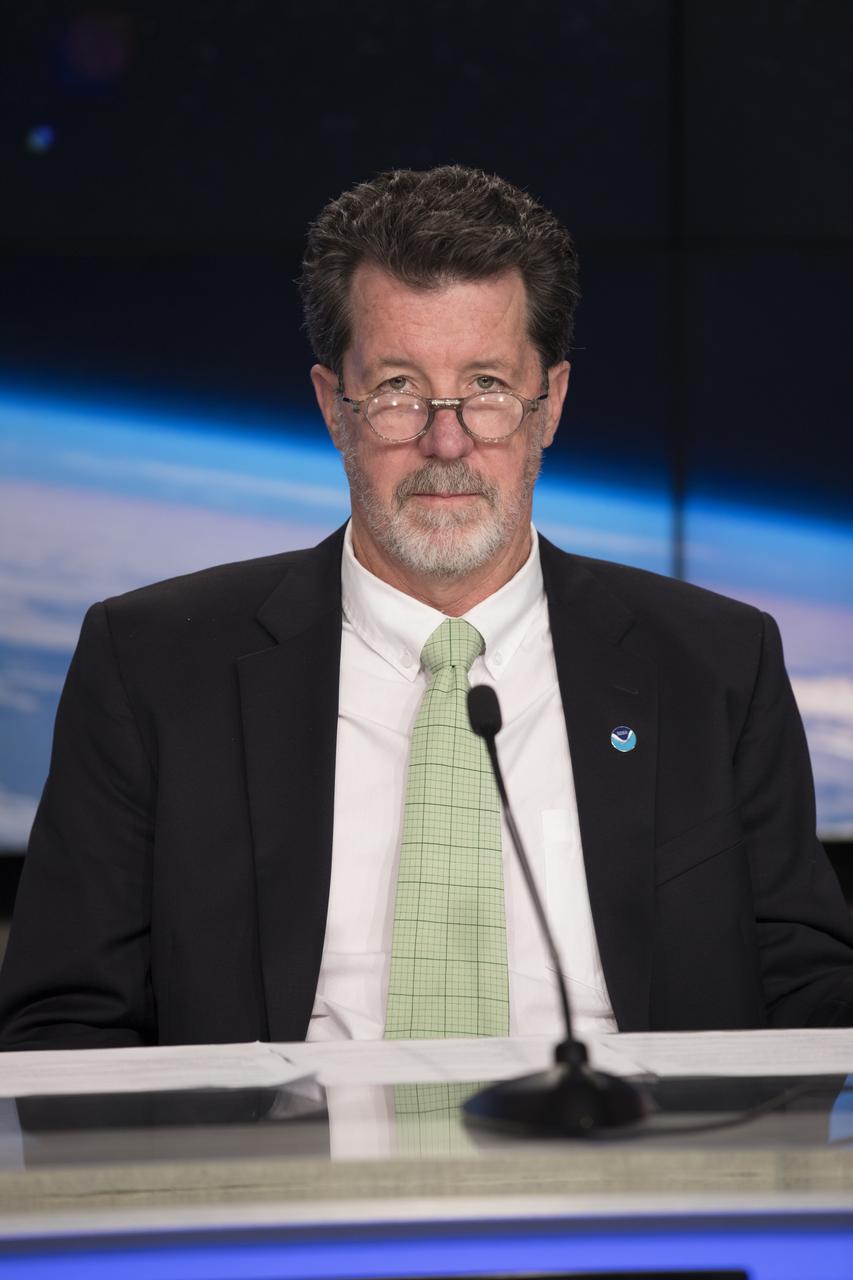
In the Kennedy Space Center's Press Site auditorium, Jim Roberts, a scientist with the Earth System Research Laboratory's Office of Atmospheric Research for NOAA, speaks to members of the media at a mission briefing on National Oceanic and Atmospheric Administration's, or NOAA's, Geostationary Operational Environmental Satellite, or GOES-S. The spacecraft is the second satellite in a series of next-generation NOAA weather satellites. It will launch to a geostationary position over the U.S. to provide images of storms and help predict weather forecasts, severe weather outlooks, watches, warnings, lightning conditions and longer-term forecasting. GOES-S is slated to lift off at 5:02 p.m. EST on March 1, 2018 aboard a United Launch Alliance Atlas V rocket.
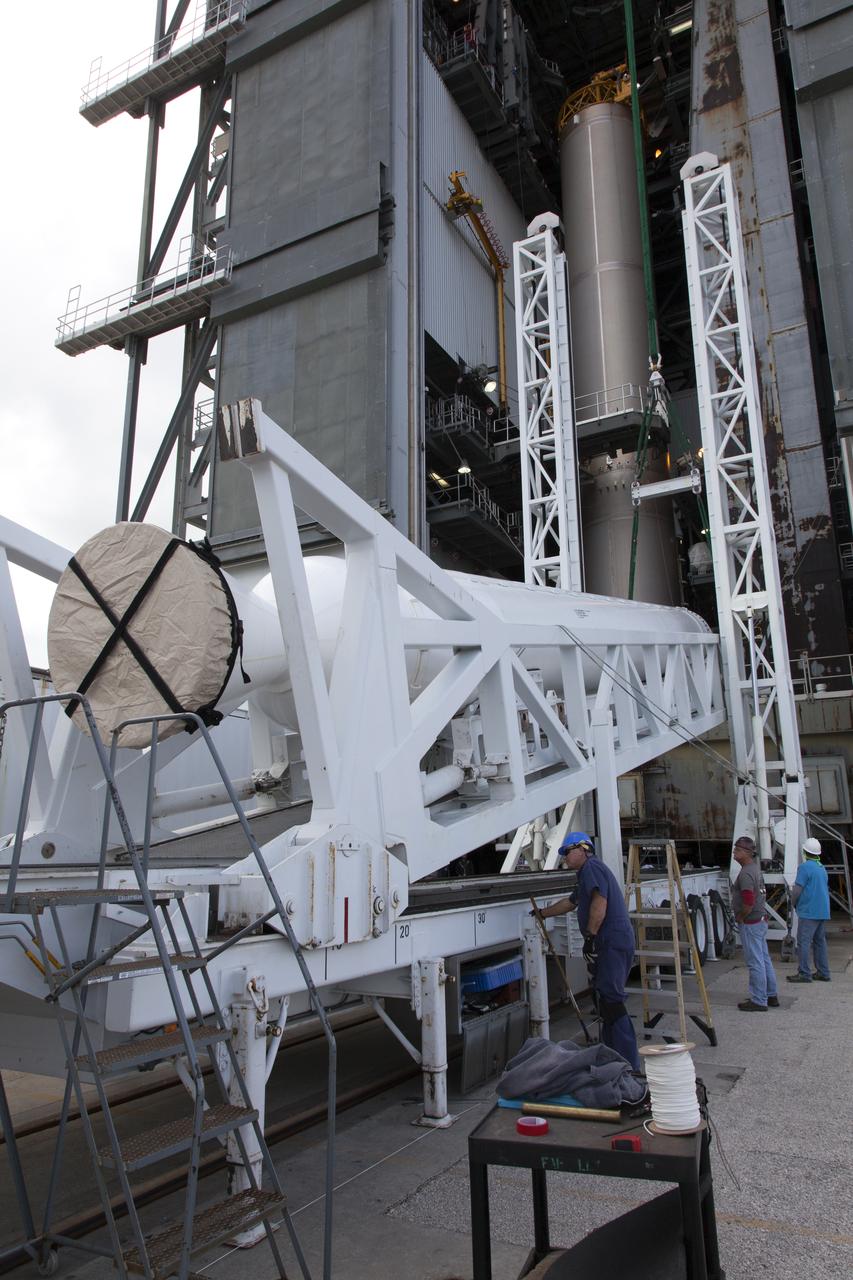
A solid rocket booster (SRB) is prepared for mating to a United Launch Alliance Atlas V first stage in the Vertical Integration Facility at Space Launch Complex 41 at Cape Canaveral Air Force Station in Florida. The SRB will be help boost NOAA's Geostationary Operational Environmental Satellite, or GOES-S, to orbit. GOES-S is the second in a series of four advanced geostationary weather satellites that will significantly improve the detection and observation of environmental phenomena that directly affect public safety, protection of property and the nation's economic health and prosperity. GOES-S is slated to launch March 1, 2018.
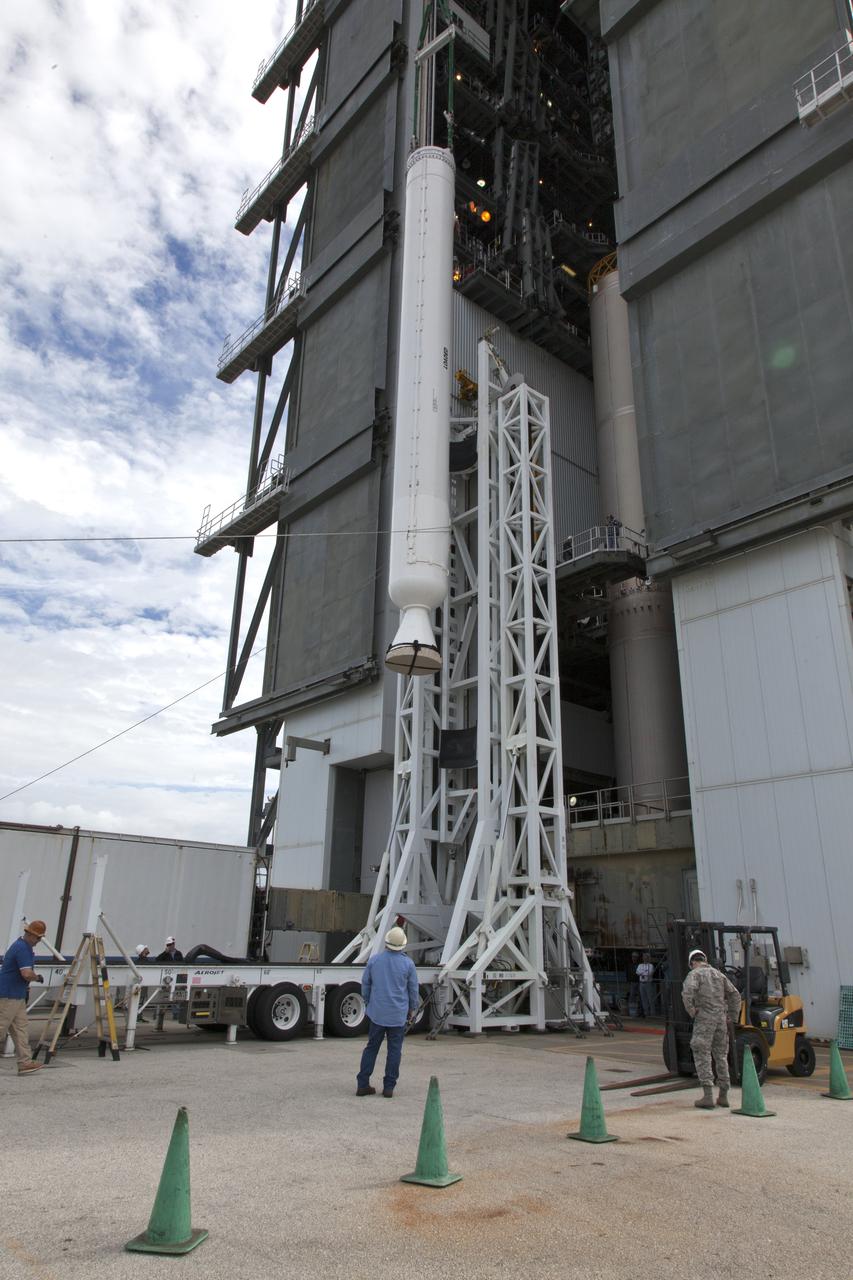
A crane lifts a solid rocket booster (SRB) for mating to a United Launch Alliance Atlas V first stage in the Vertical Integration Facility at Space Launch Complex 41 at Cape Canaveral Air Force Station in Florida. The SRB will be help boost NOAA's Geostationary Operational Environmental Satellite, or GOES-S, to orbit. GOES-S is the second in a series of four advanced geostationary weather satellites that will significantly improve the detection and observation of environmental phenomena that directly affect public safety, protection of property and the nation's economic health and prosperity. GOES-S is slated to launch March 1, 2018.
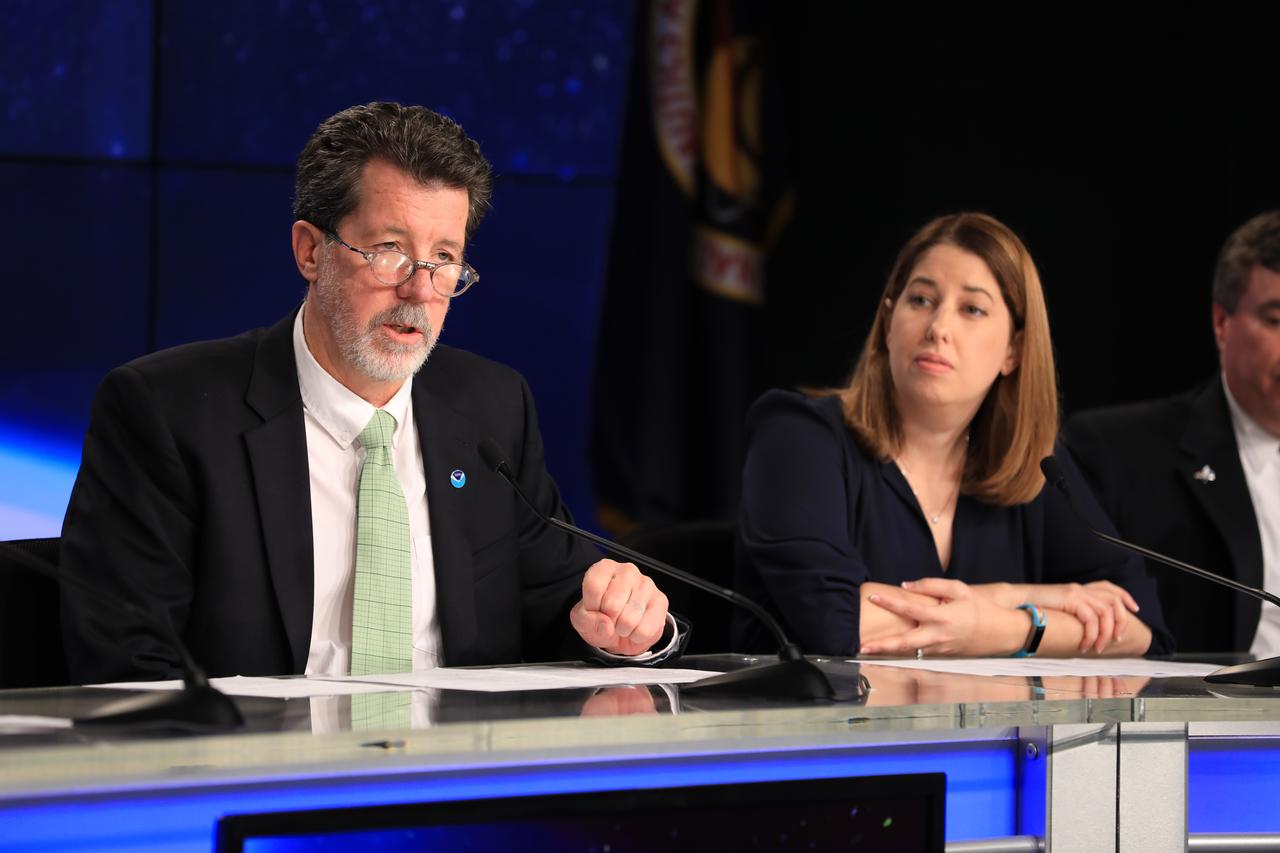
In the Kennedy Space Center's Press Site auditorium, Jim Roberts, a scientist with the Earth System Research Laboratory's Office of Atmospheric Research for NOAA, left, and Kristin Calhoun, a research scientist with NOAA's National Severe Storms Laboratory, speak to members of the media at a mission briefing on National Oceanic and Atmospheric Administration's, or NOAA's, Geostationary Operational Environmental Satellite, or GOES-S. The spacecraft is the second satellite in a series of next-generation NOAA weather satellites. It will launch to a geostationary position over the U.S. to provide images of storms and help predict weather forecasts, severe weather outlooks, watches, warnings, lightning conditions and longer-term forecasting. GOES-S is slated to lift off at 5:02 p.m. EST on March 1, 2018 aboard a United Launch Alliance Atlas V rocket.
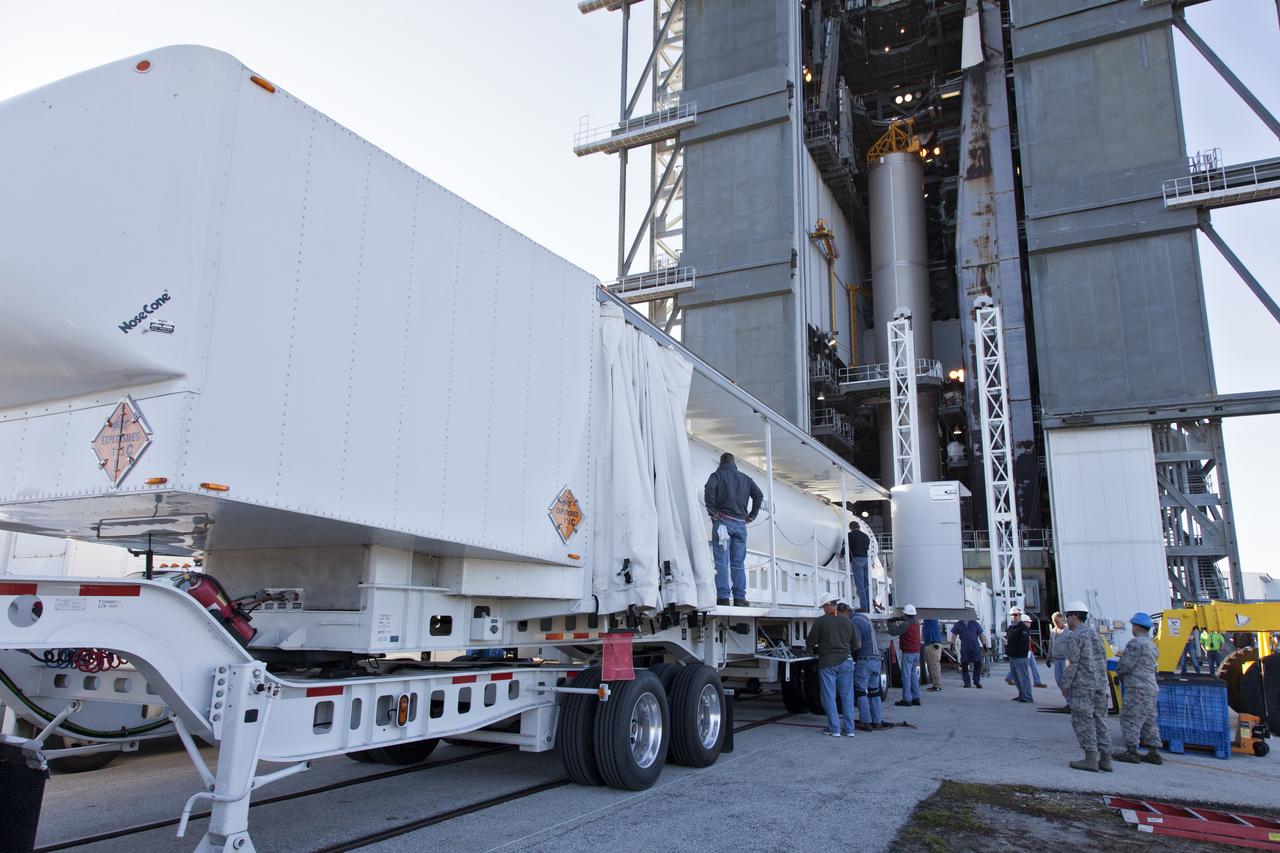
A transport vehicle carrying a solid rocket booster (SRB) arrives at the Vertical Integration Facility at Space Launch Complex 41 at Cape Canaveral Air Force Station in Florida. The SRB will be mated to a United Launch Alliance Atlas V first stage to help boost NOAA's Geostationary Operational Environmental Satellite, or GOES-S, to orbit. GOES-S is the second in a series of four advanced geostationary weather satellites that will significantly improve the detection and observation of environmental phenomena that directly affect public safety, protection of property and the nation's economic health and prosperity. GOES-S is slated to launch March 1, 2018.
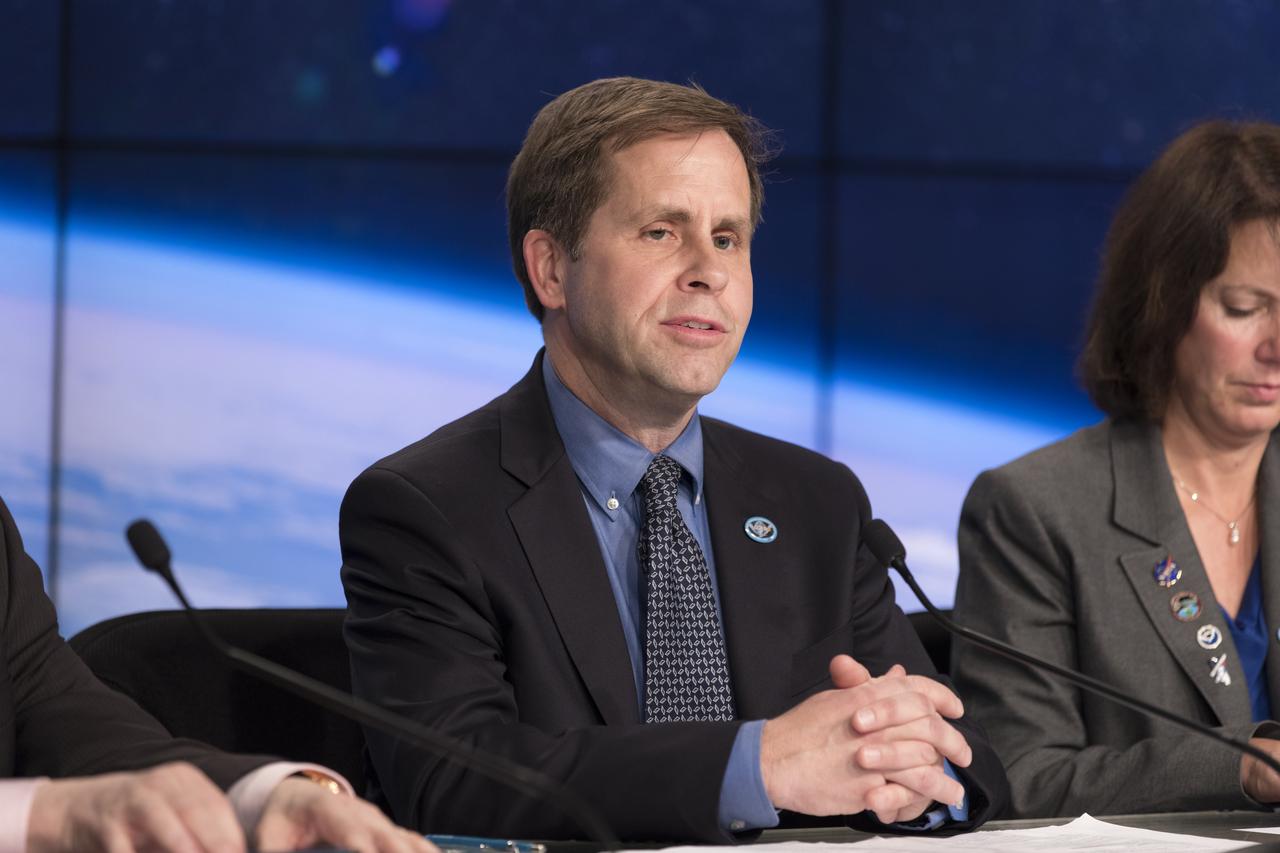
In the Kennedy Space Center's Press Site auditorium, Tim Walsh, acting GOES-R System Program director for NOAA, speaks to members of the media at a prelaunch news conference about National Oceanic and Atmospheric Administration's, or NOAA's, Geostationary Operational Environmental Satellite, or GOES-S. The GOES series of satellites will significantly improve the detection and observation of environmental phenomena that directly affect public safety, protection of property and the nation's economic health and prosperity. GOES-S is slated to lift off at 5:02 p.m. EST on March 1, 2018 aboard a United Launch Alliance Atlas V rocket.
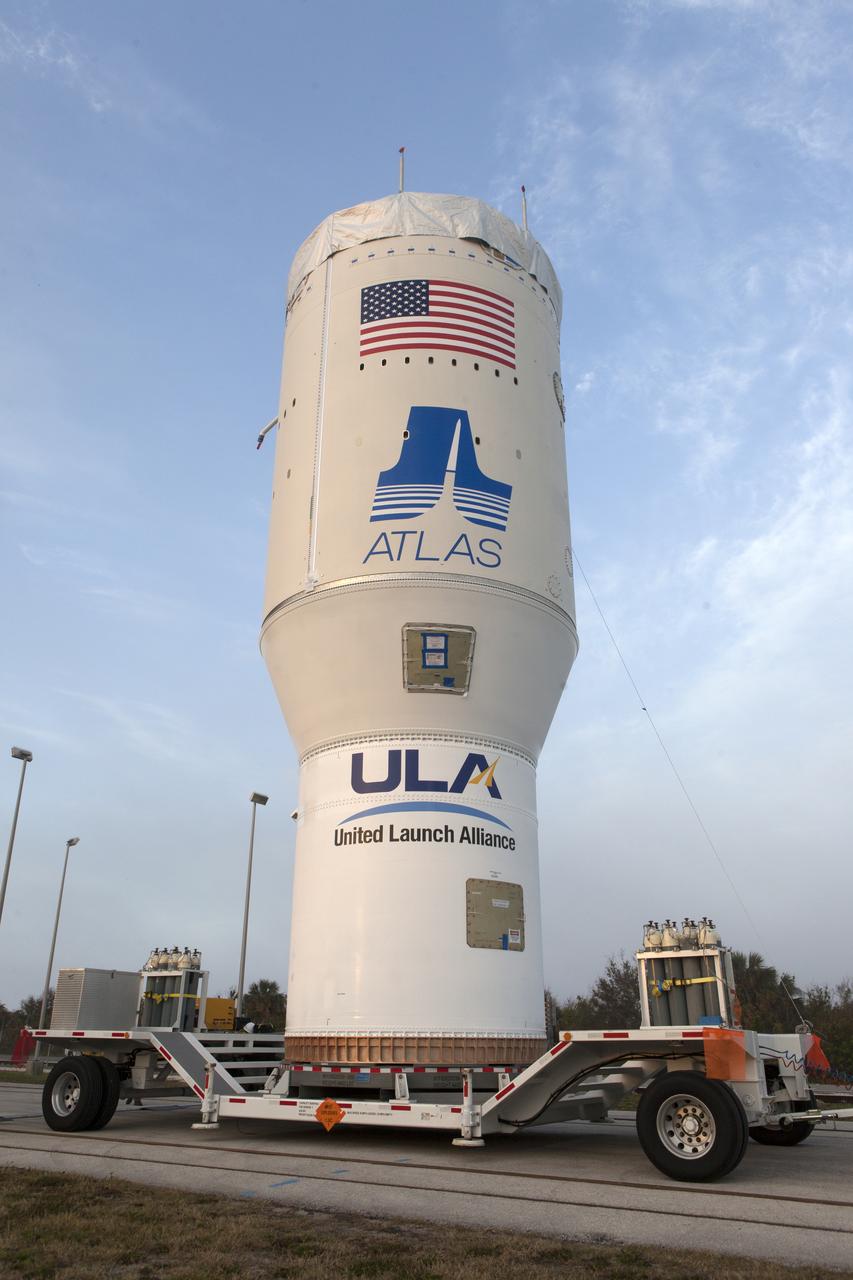
The Centaur upper stage that will help launch NOAA's Geostationary Operational Environmental Satellite-S, or GOES-S, arrives at the Vertical Integration Facility at Space Launch Complex 41 at Cape Canaveral Air Force Station in Florida. The Centaur will be mated to a United Launch Alliance Atlas V booster. GOES-S is the second in a series of four advanced geostationary weather satellites that will significantly improve the detection and observation of environmental phenomena that directly affect public safety, protection of property and the nation's economic health and prosperity. GOES-S is slated to launch March 1, 2018.
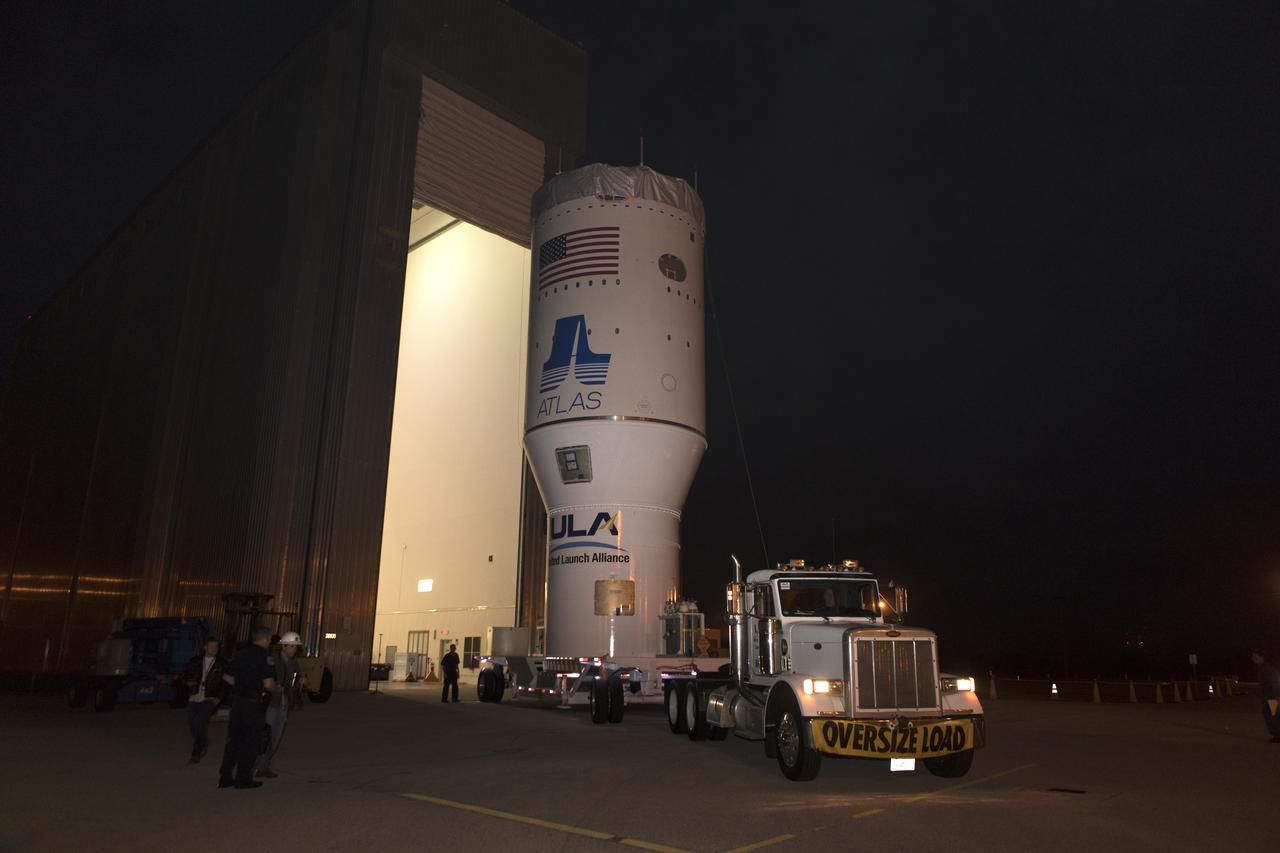
The Centaur upper stage that will help launch NOAA's Geostationary Operational Environmental Satellite-S, or GOES-S, departs the Delta Operations Center for the Vertical Integration Facility at Space Launch Complex 41 at Cape Canaveral Air Force Station in Florida. The Centaur then will be mated to a United Launch Alliance Atlas V booster. GOES-S is the second in a series of four advanced geostationary weather satellites that will significantly improve the detection and observation of environmental phenomena that directly affect public safety, protection of property and the nation's economic health and prosperity. GOES-S is slated to launch March 1, 2018.