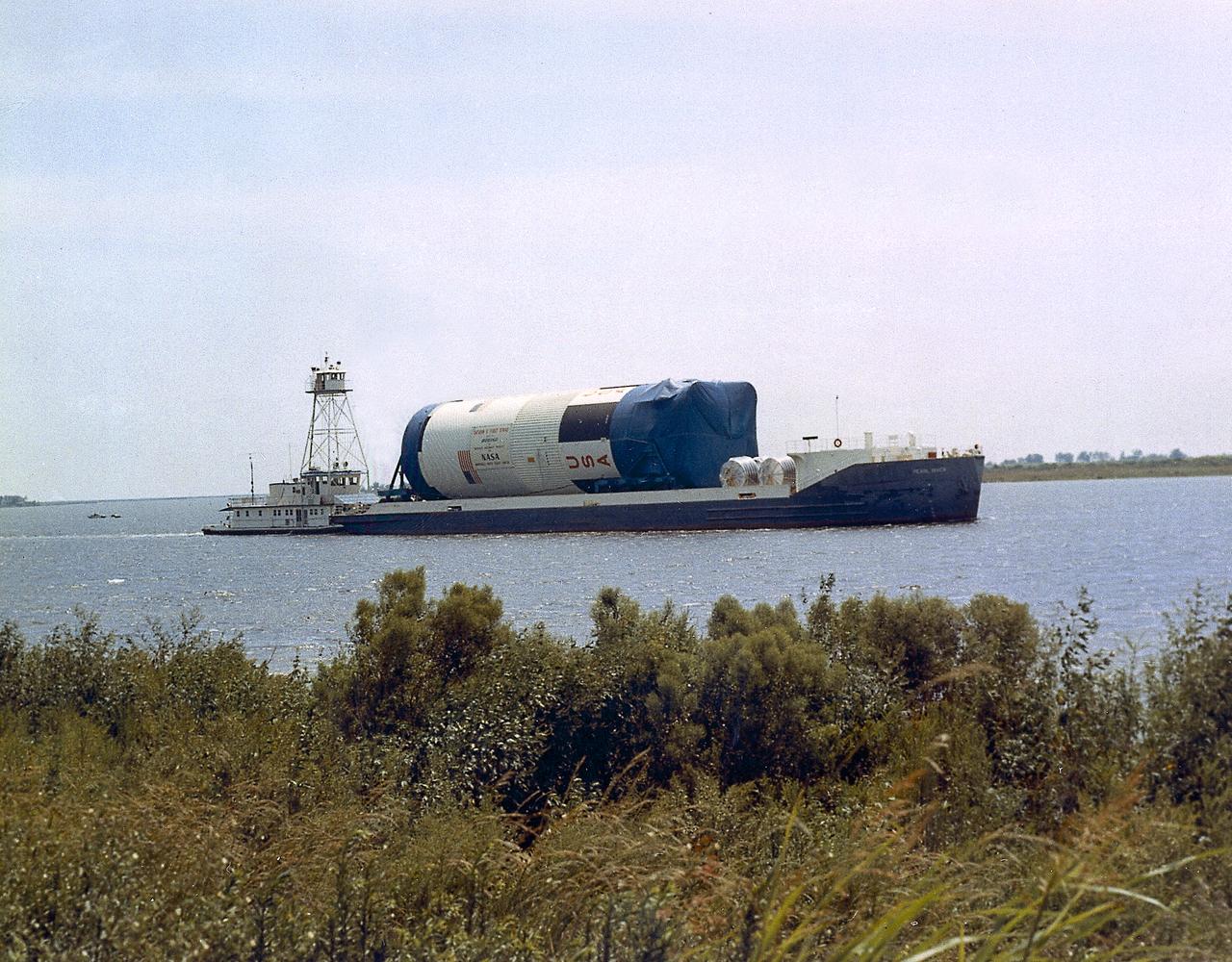
This is a view of the Saturn V S-IC (first) stage aboard the NASA barge, Pearl River, returning from the Mississippi Test Facility to the Michoud Assembly Facility.
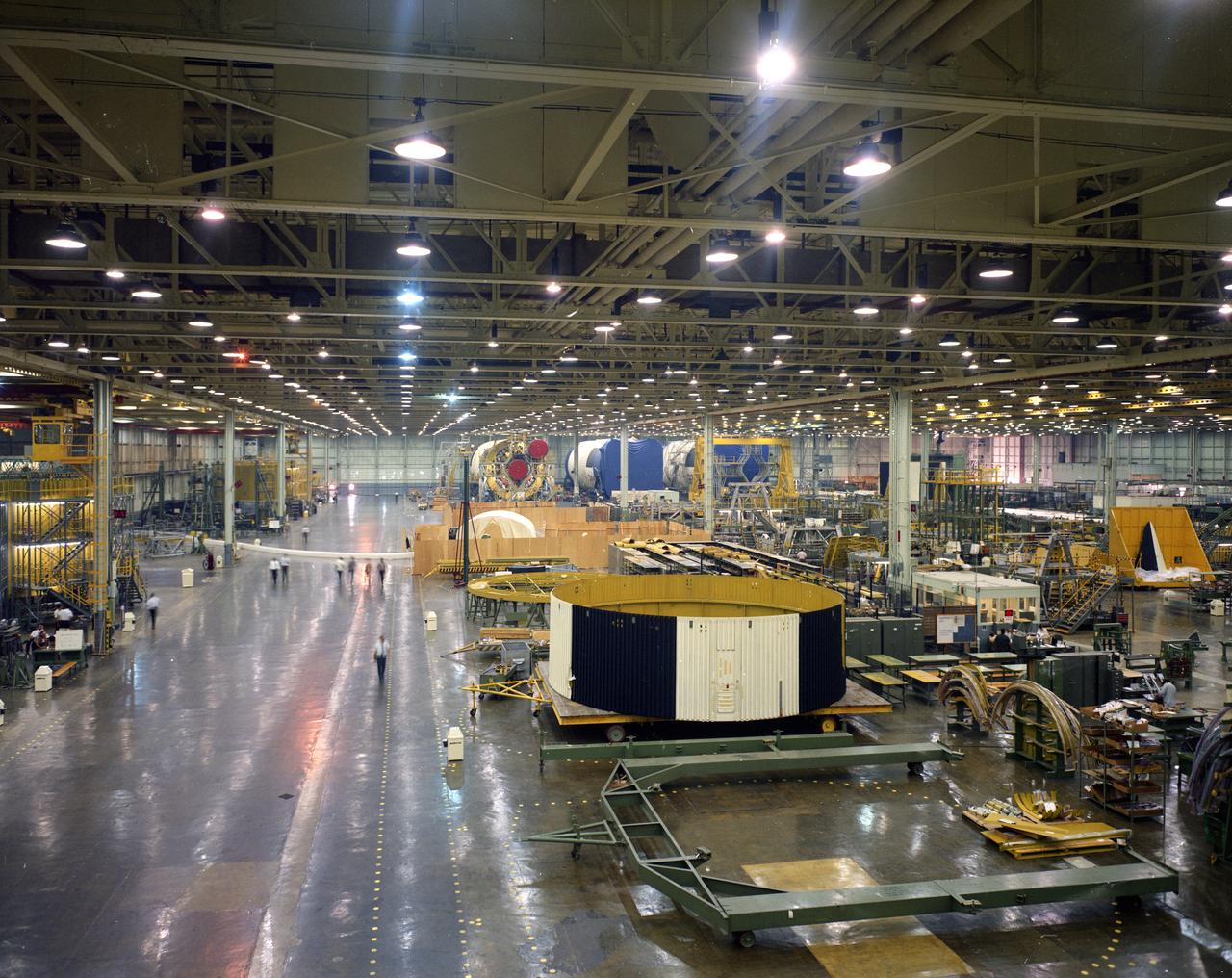
Parts of the Saturn V first stage await assembly at NASA’s Michoud Assembly Facility in October of 1967. In the far end of the image you can see S-1C stages nearing completion.
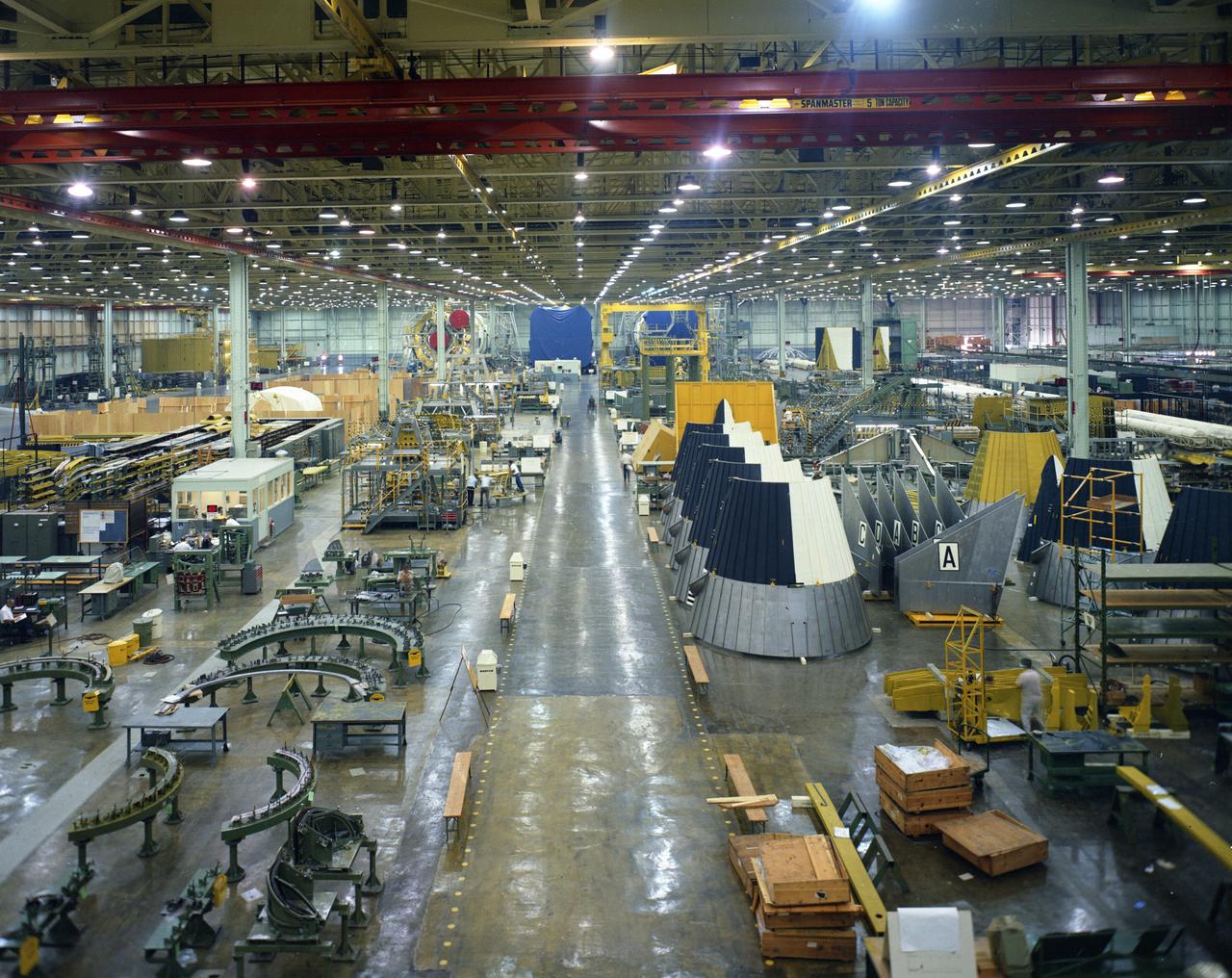
New Orleans, LA - Parts of the Saturn V first stage await assembly at NASA’s Michoud Assembly Facility in October of 1967. In the far end of the image, S-1C stages are nearing completion. Image dated 10-5-1967.
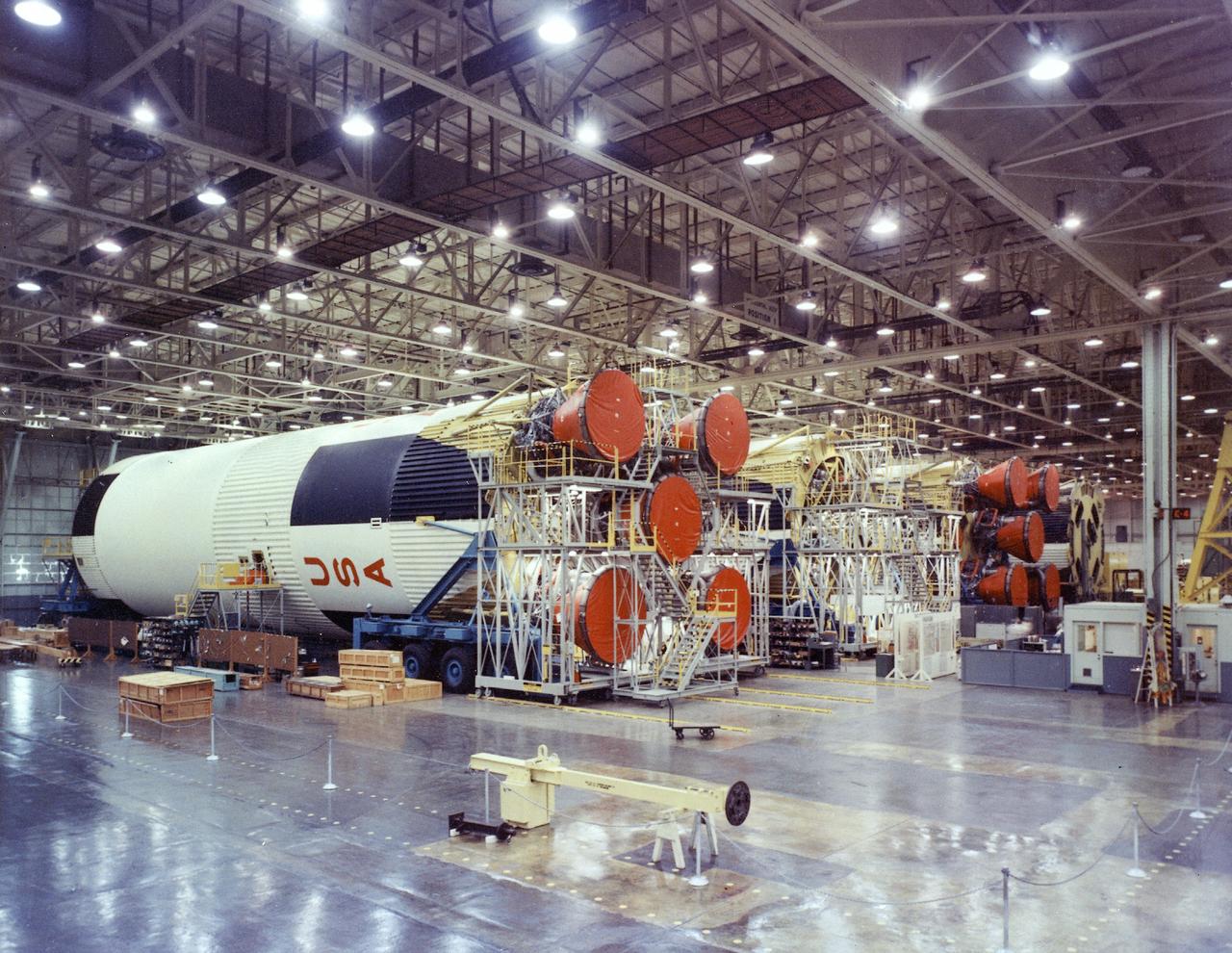
The Saturn IB and Saturn V first stages were manufactured at the Michoud Assembly Facility (MAF), located 24 kilometers (approximately 15 miles) east of downtown New Orleans, Louisiana. The basic manufacturing building boasted 43 acres under one roof. By 1964, NASA added a separate engineering and office building, vertical assembly building, and test stage building. By 1966, other changes to the site included enlarged barge facilities and other miscellaneous support buildings. The photograph shows Saturn V S-IC flight stages being assembled in the horizontal assembly area at the MAF.
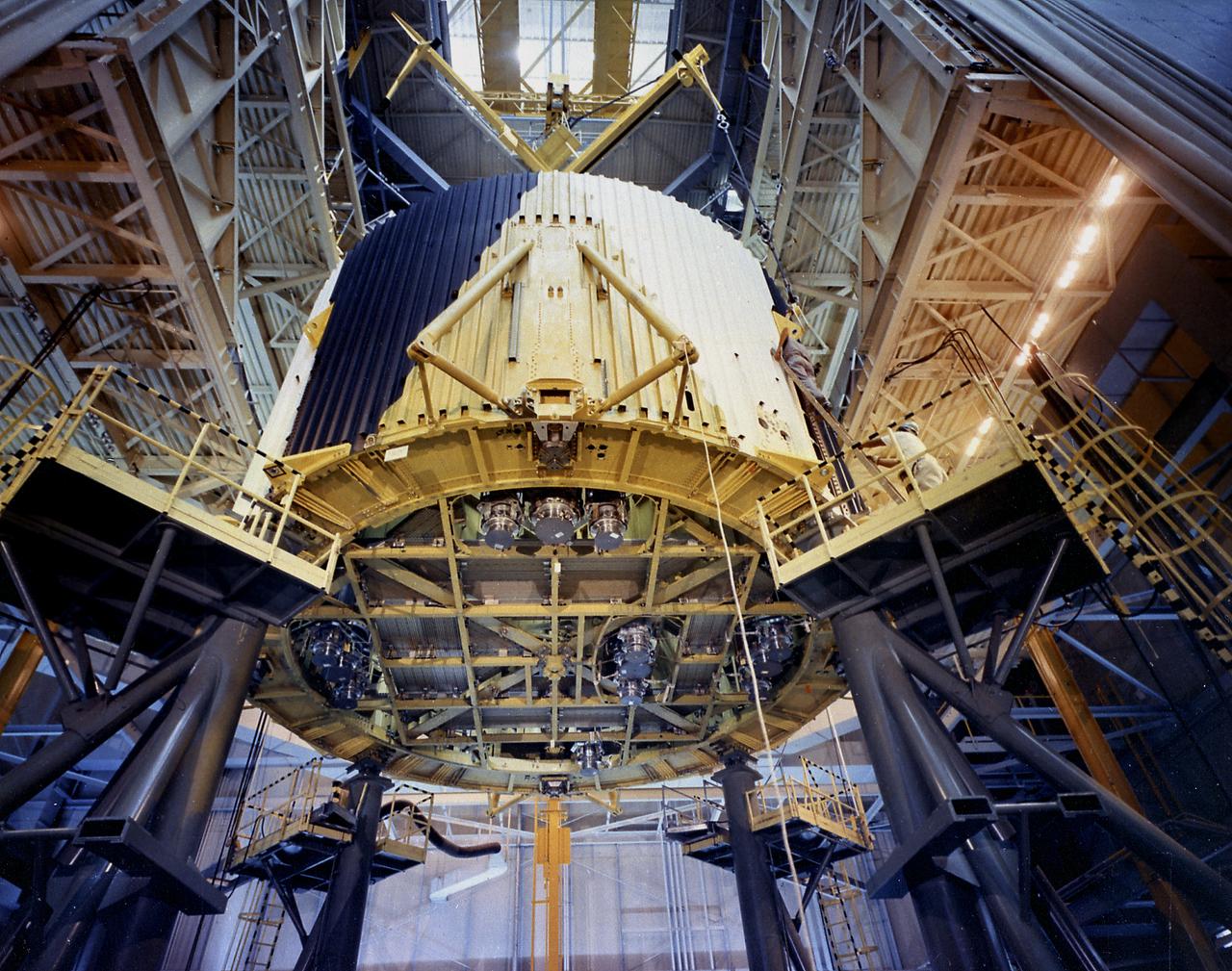
This photograph is a view of stacking the major components of the S-IC (first) stage of the Saturn V vehicle at the Boeing vertical assembly building at the Michoud Assembly Facility (MAF). The view shows the Saturn V S-IC (first) stage thrust structure being placed for the final assembly. The Saturn IB and Saturn V first stages were manufactured at the MAF located 24 kilometers (approximately 15 miles) east of downtown New Orleans, Louisiana. The prime contractors, Chrysler and Boeing, jointly occupied the MAF. The basic manufacturing building boasted 43 acres under one roof. By 1964, NASA added a separate engineering and office building, vertical assembly building, and test stage building. By 1966, other changes to the site included enlarged barge facilities and other miscellaneous support buildings.
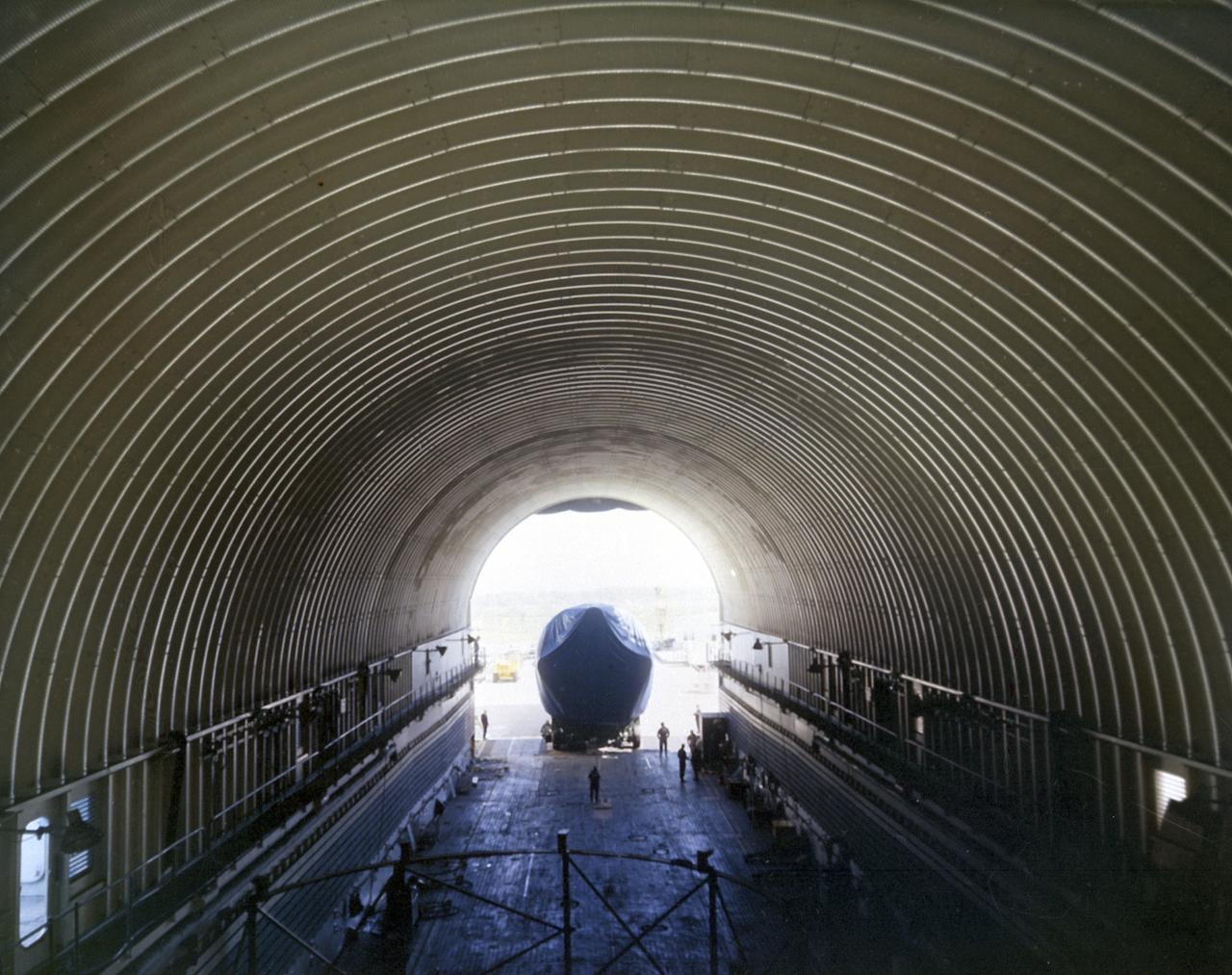
The Saturn 1B first stage (S-IB) enters the NASA barge Point Barrow, in March 1968. The Marshall Space Flight Center (MSFC) utilized a number of water transportation craft to transport the Saturn stages to-and-from the manufacturing facilities and test sites, as well as delivery to the Kennedy Space Center for launch. Developed by the Marshall Space Flight Center and built by the Chrysler Corporation at Michoud Assembly Facility (MAF), the S-IB utilized the eight H-1 engines and each produced 200,000 pounds of thrust, a combined thrust of 1,600,000 pounds.
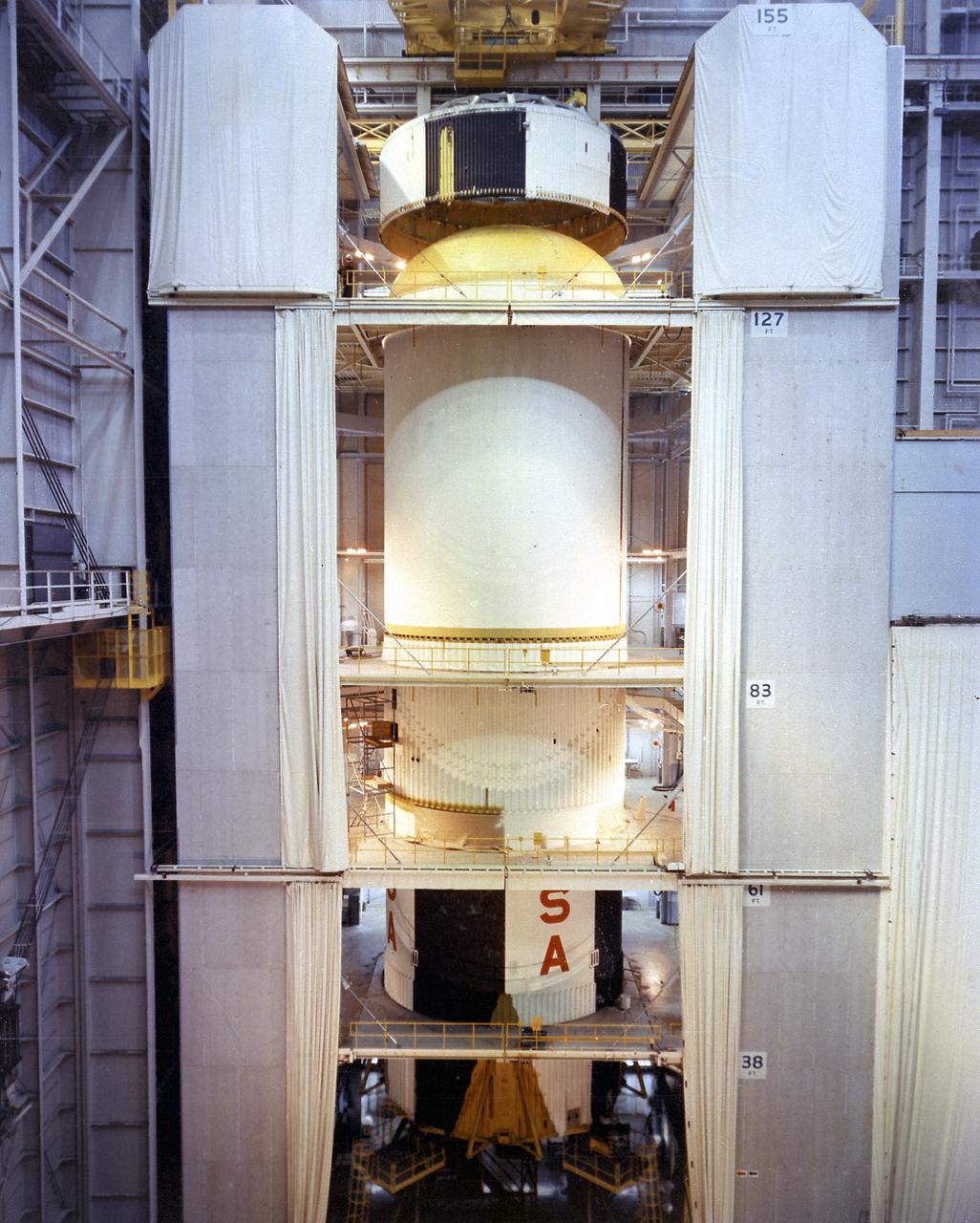
This picture is a view of stacking the major components of the S-IC (first) stage of the Saturn V vehicle at the Boeing vertical assembly building at the Michoud Assembly Facility (MAF). The view shows the S-IC forward skirt being lowered onto the liquid oxygen (LOX) tank. The Saturn IB and Saturn V first stages were manufactured at the MAF located 24 kilometers (approximately 15 miles) east of downtown New Orleans, Louisiana. The prime contractors, Chrysler and Boeing, jointly occupied the MAF. The basic manufacturing building boasted 43 acres under one roof. By 1964, NASA added a separate engineering and office building, vertical assembly building, and test stage building. By 1966, other changes to the site included enlarged barge facilities and other miscellaneous support buildings.
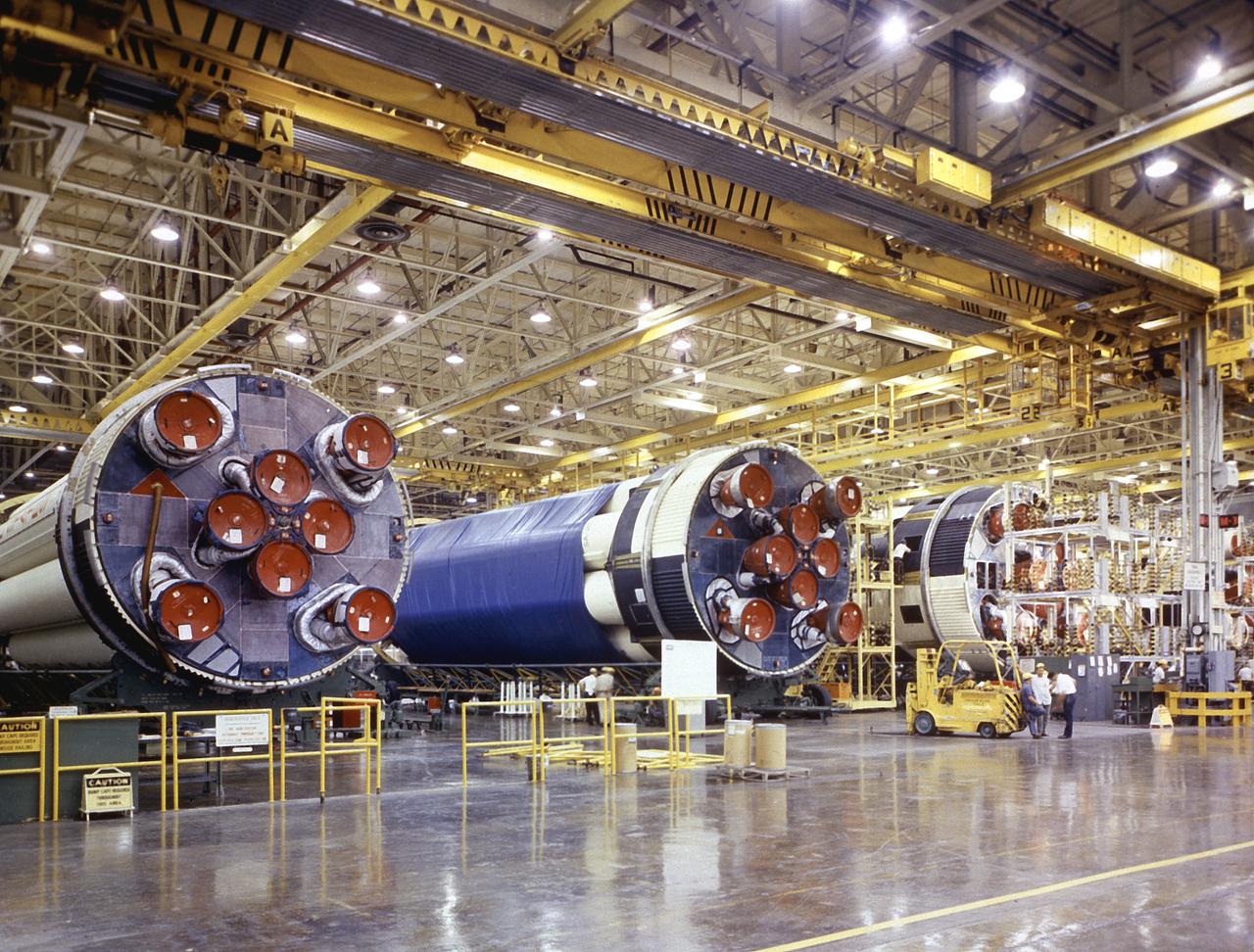
Three S-IB stages near completion at the NASA's Michoud Assembly Facility (MAF) near New Orleans, Louisiana, in November 1967. Developed by the Marshall Space Flight Center and built by the Chrysler Corporation at MAF, the 90,000-pound booster utilized eight H-1 engines and each produced 200,000 pounds of thrust for the Saturn IB launch vehicle's first stage.
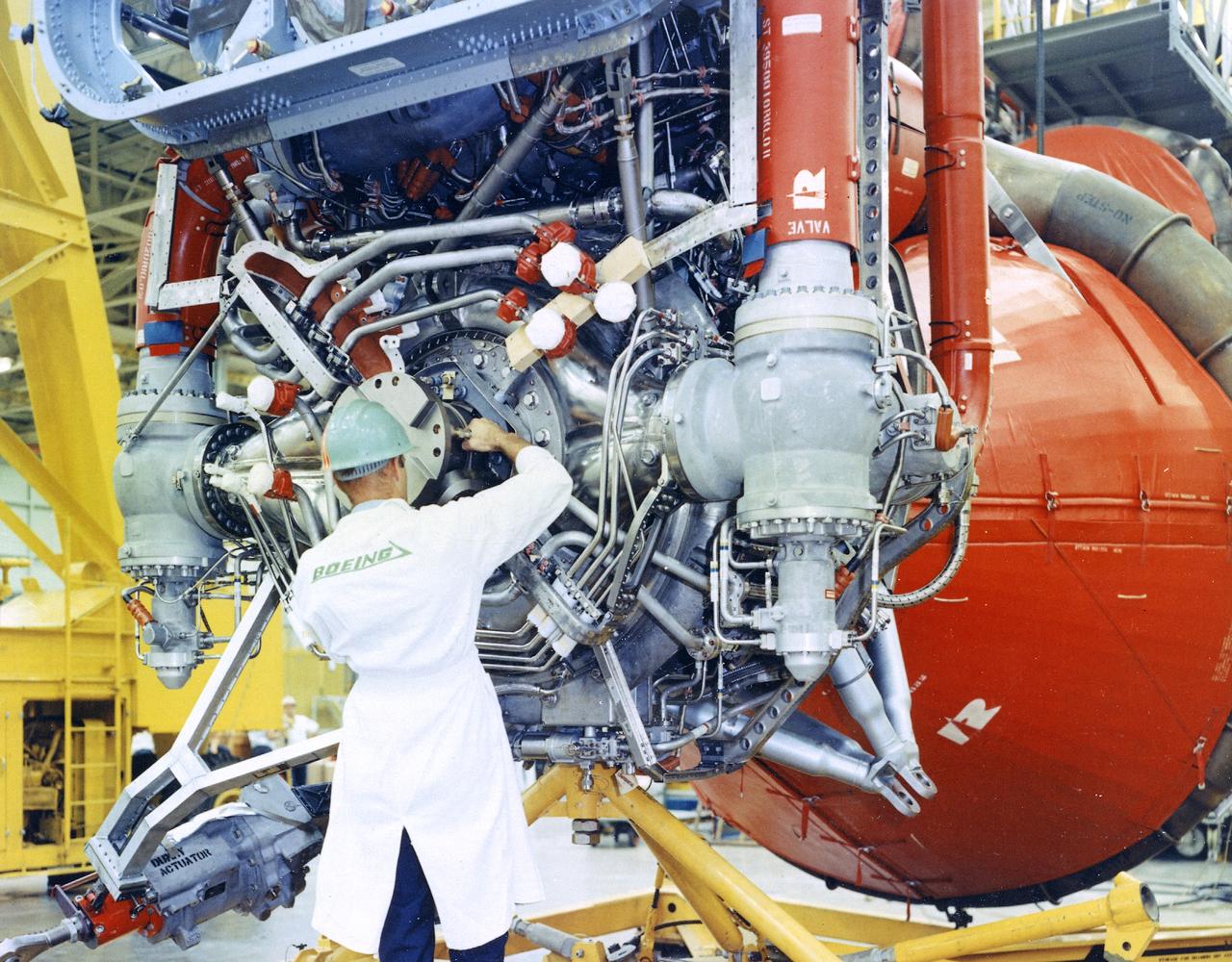
This image depicts a Boeing worker installing an F-1 engine on the Saturn V S-IC flight stage at the Michoud Assembly Facility (MAF). The Saturn IB and Saturn V first stages were manufactured at the MAF, located 24 kilometers (approximately 15 miles) east of downtown New Orleans, Louisiana. The prime contractors, Chrysler and Boeing, jointly occupied the MAF. The basic manufacturing building boasted 43 acres under one roof. By 1964, NASA added a separate engineering and office building, vertical assembly building, and test stage building.
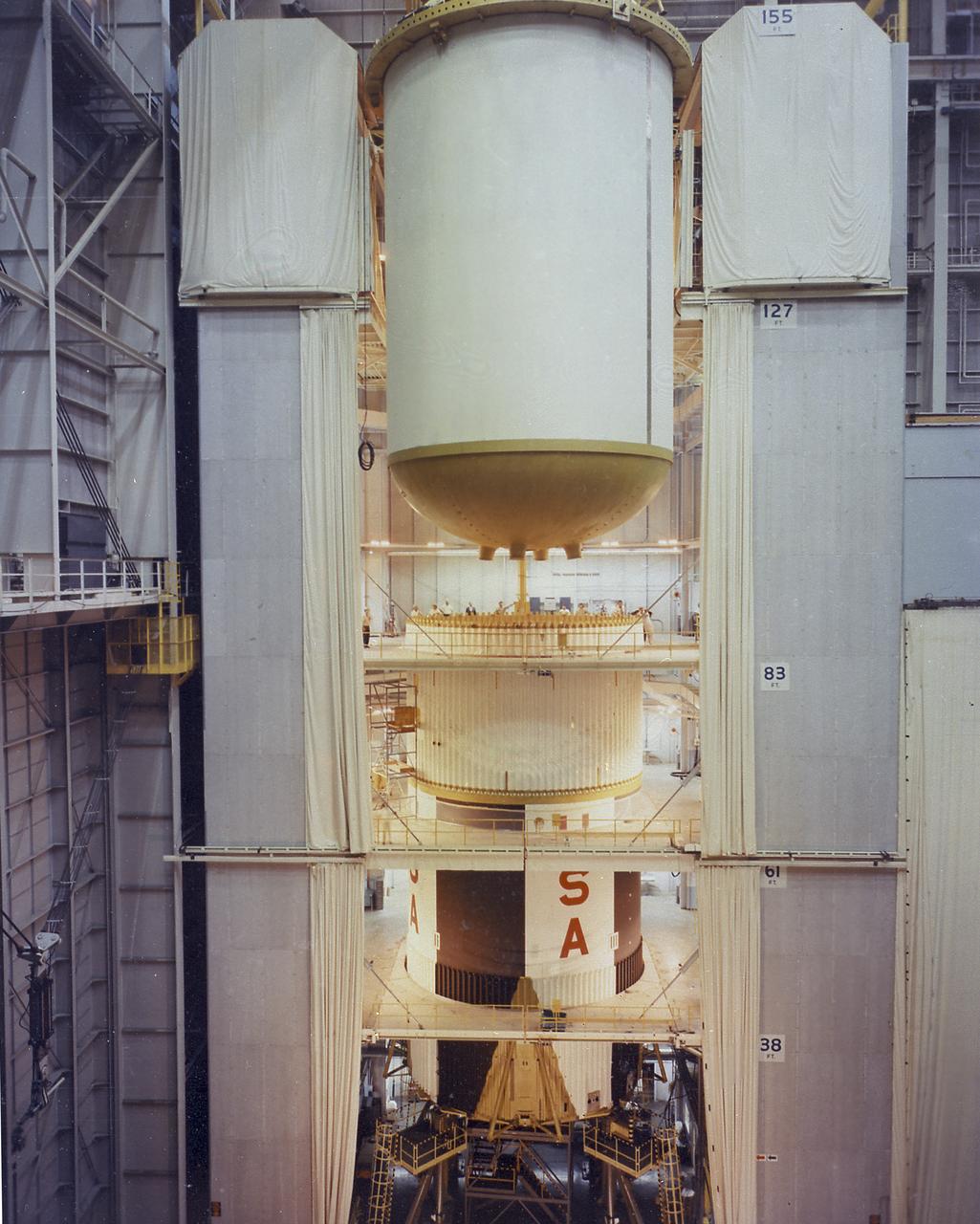
This photograph is a view of stacking the major components of the S-IC (first) stage of the Saturn V vehicle at the Boeing vertical assembly building at the Michoud Assembly Facility (MAF). The view shows placing the liquid oxygen tank on the intertank and the fuel tank assembly. The Saturn IB and Saturn V first stages were manufactured at the MAF located 24 kilometers (approximately 15 miles) east of downtown New Orleans, Louisiana. The prime contractors, Chrysler and Boeing, jointly occupied the MAF. The basic manufacturing building boasted 43 acres under one roof. By 1964, NASA added a separate engineering and office building, vertical assembly building, and test stage building. By 1966, other changes to the site included enlarged barge facilities and other miscellaneous support buildings.
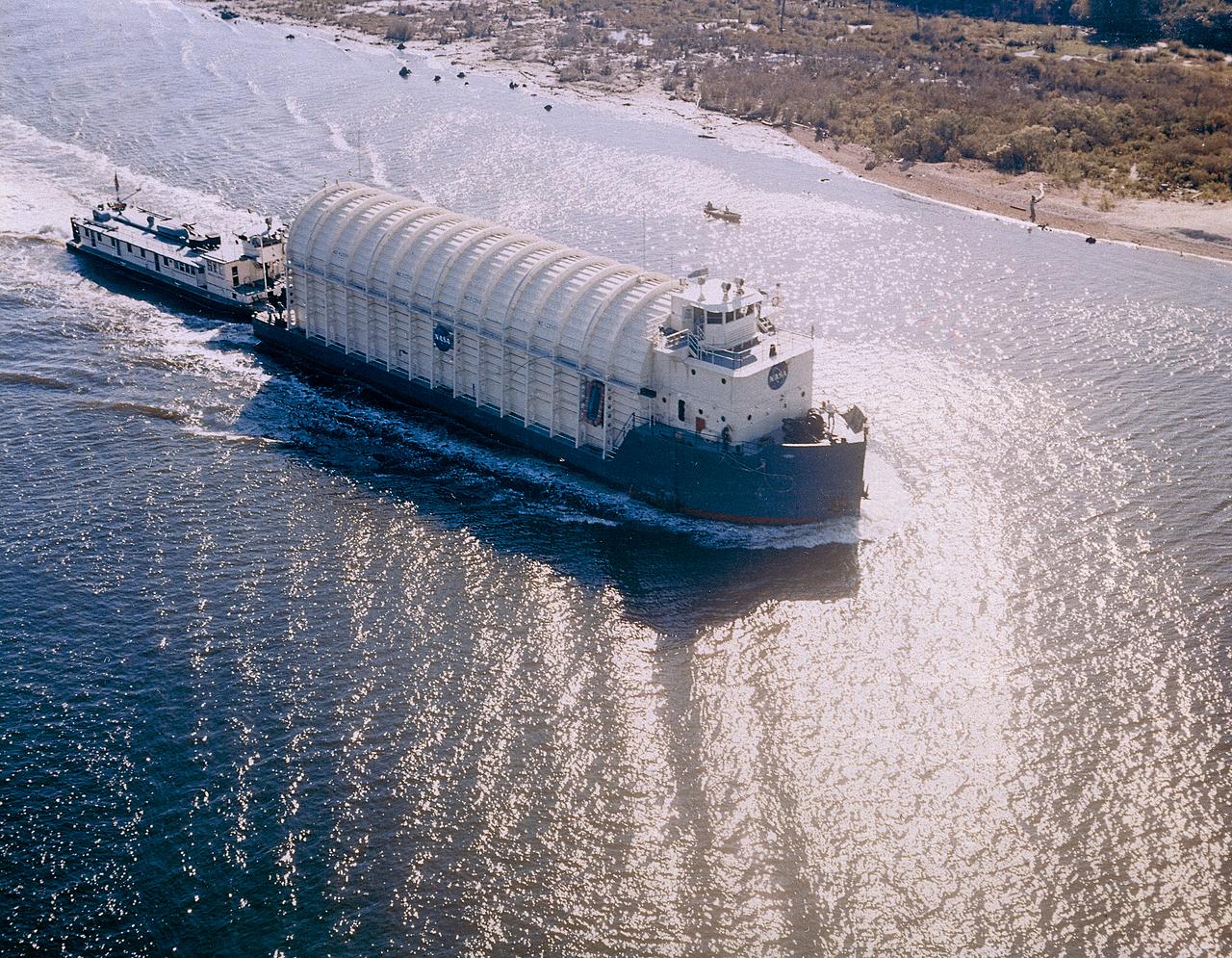
NASA used barges for transporting full-sized stages for the Saturn I, Saturn IB, and Saturn V vehicles between the Marshall Space Flight Center (MSFC), the manufacturing plant at the Michoud Assembly Facility (MAF), the Mississippi Test Facility for testing, and the Kennedy Space Center. The barges traveled from the MSFC dock to the MAF, a total of 1,086.7 miles up the Tennessee River and down the Mississippi River. The barges also transported the assembled stages of the Saturn vehicle from the MAF to the Kennedy Space Center, a total of 932.4 miles along the Gulf of Mexico and up along the Atlantic Ocean, for the final assembly and the launch. Pictured is the barge Palaemon carrying Saturn IV S-IB flight stage enroute to MSFC.
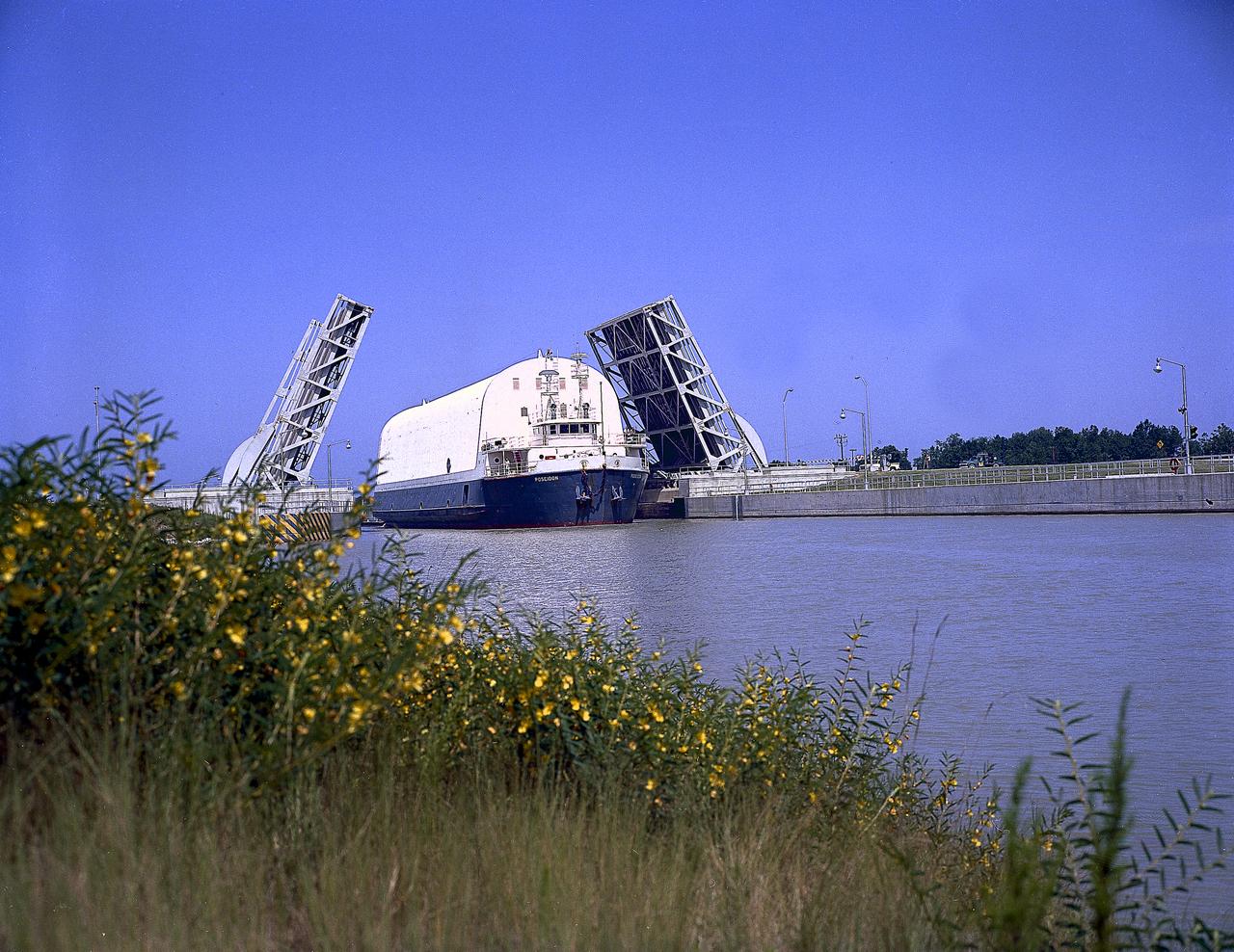
NASA used barges for transporting full-sized stages for the Saturn I, Saturn IB, and Saturn V vehicles between the Marshall Space Flight Center (MSFC), the manufacturing plant at the Michoud Assembly Facility (MAF), the Mississippi Test Facility for testing, and the Kennedy Space Center. The barges traveled from the MSFC dock to the MAF, a total of 1,086.7 miles up the Tennessee River and down the Mississippi River. The barges also transported the assembled stages of the Saturn vehicle from the MAF to the Kennedy Space Center, a total of 932.4 miles along the Gulf of Mexico and up along the Atlantic Ocean, for the final assembly and the launch. This photograph shows the barge Poseidon loaded with the Saturn V S-II (second) stage passing through a bascule bridge.
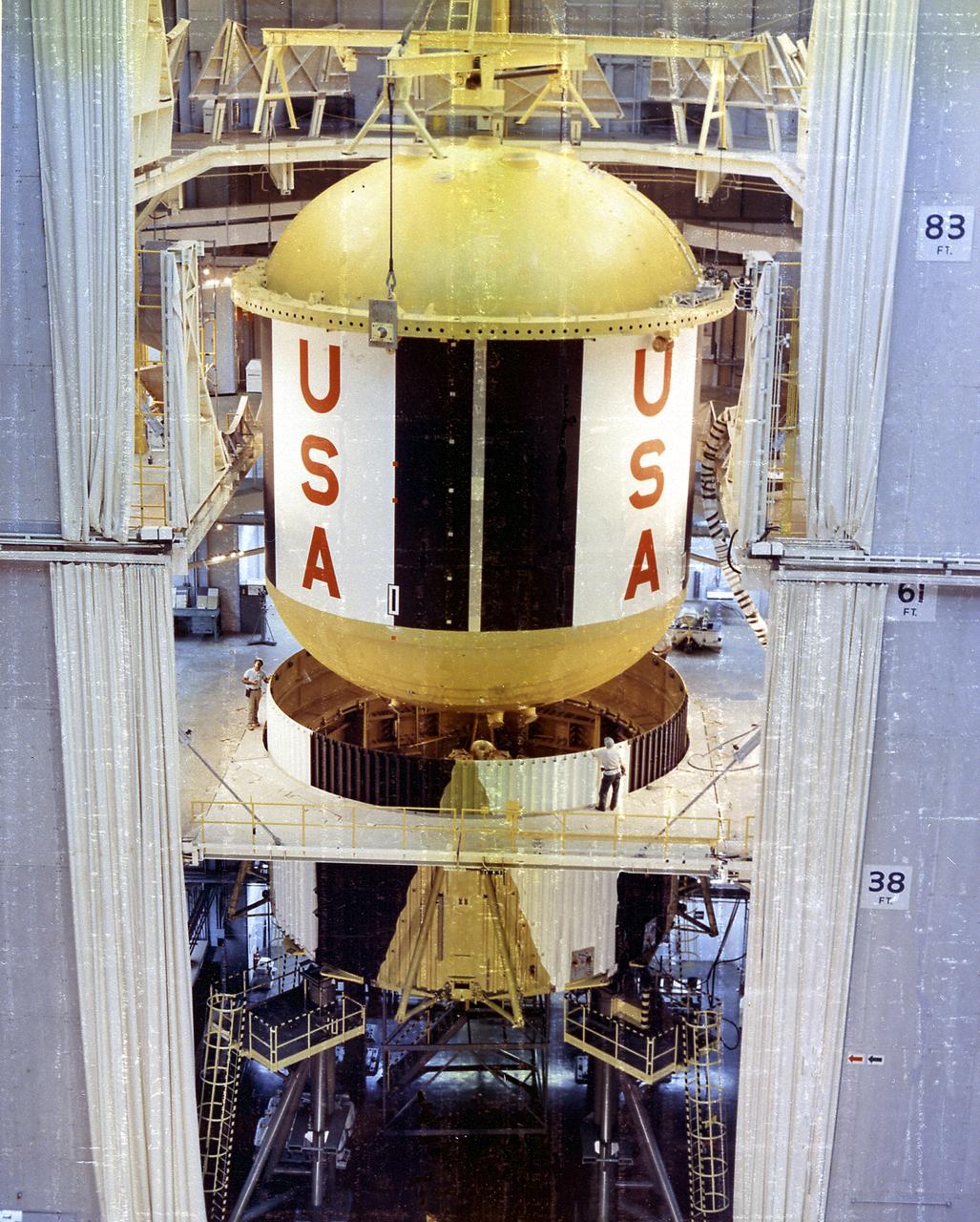
This picture is a view of stacking the major components of the S-IC (first) stage of the Saturn V vehicle at the Boeing vertical assembly building at the Michoud Assembly Facility (MAF). The view shows the fuel tank being lowered into the thrust structure. The Saturn IB and Saturn V first stages were manufactured at the MAF located 24 kilometers (approximately 15 miles) east of downtown New Orleans, Louisiana. The prime contractors, Chrysler and Boeing, jointly occupied the MAF. The basic manufacturing building boasted 43 acres under one roof. By 1964, NASA added a separate engineering and office building, vertical assembly building, and test stage building. By 1966, other changes to the site included enlarged barge facilities and other miscellaneous support buildings.
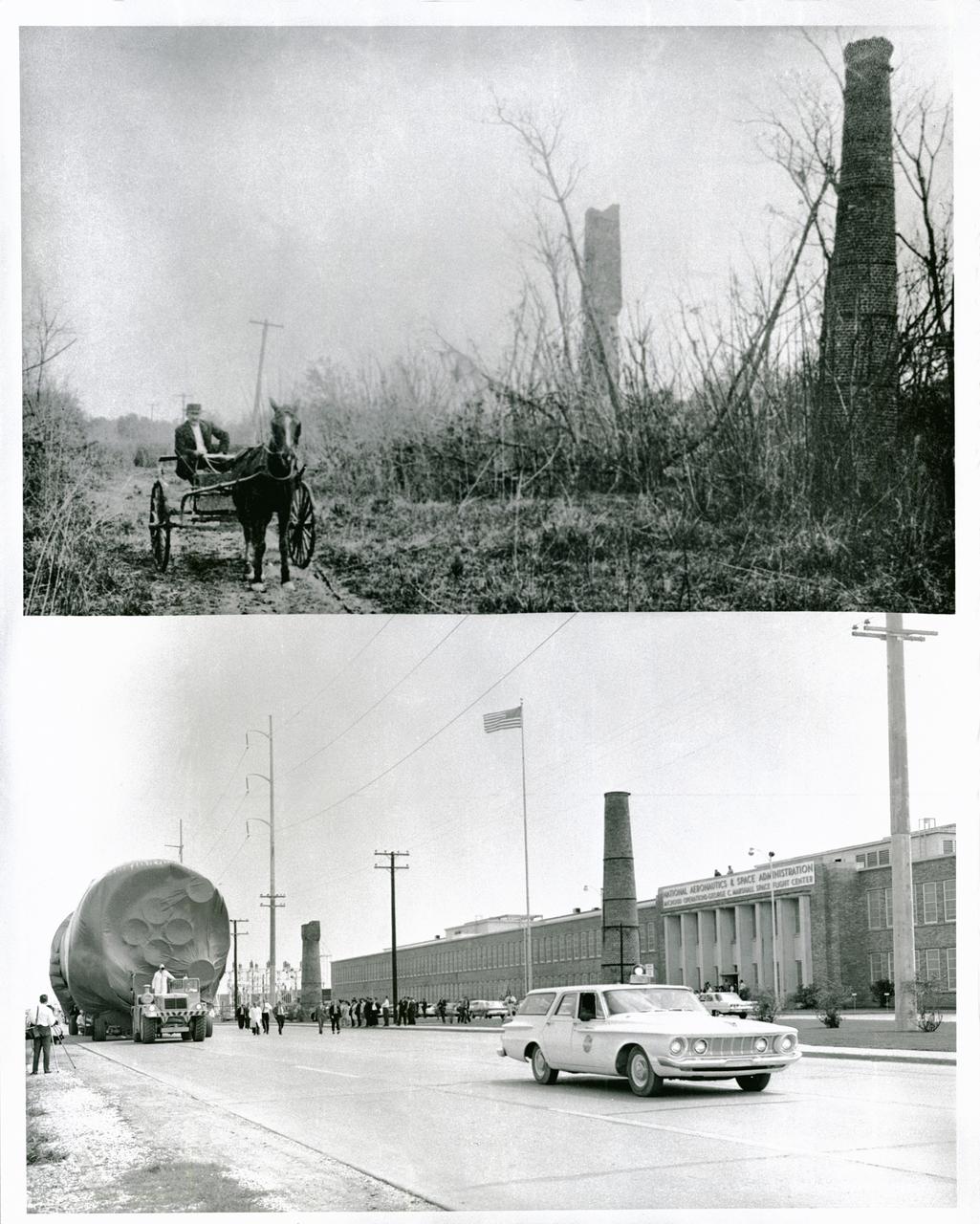
NASA's Michoud Assembly Facility, located in eastern New Orleans, Louisiana, is an 832 acre site that is a government-owned, contractor-operated component of the George C. Marshall Space Flight Center (MSFC). The facility was acquired by NASA in 1961 at the recommendation of Dr. Wernher von Braun and his rocket team in Huntsville Alabama. The cavernous plant served as the assembly facility for the Saturn launch vehicles and most recently the external tank (ET) used for the Space Shuttle Program. The facility features one of the world's biggest manufacturing plants with 43 acres under one roof and a port with deep-water access for the transportation of large space structures. When completed, space hardware is towed on a barge across the Gulf of Mexico, around Florida and up to Kennedy Space Center. The original tract of land was part of a 34,500 acre French Royal land grant to local merchant, Gilbert Antoine de St. Maxent in 1763. Later, the land was acquired by French transplant Antoine Michoud, the son of Napoleon's Administrator of Domains, who moved to the city in 1827. Michoud operated a sugar cane plantation and refinery on the site until his death in 1863. His heirs continued operating the refinery and kept the original St. Maxent estate intact into the 20th century. Two brick smokestacks from the original refinery still stand before the Michoud facility today as seen in the lower half of this photograph taken in the 1960's, while the upper half reflects the area during the time of the sugar cane plantation workers.
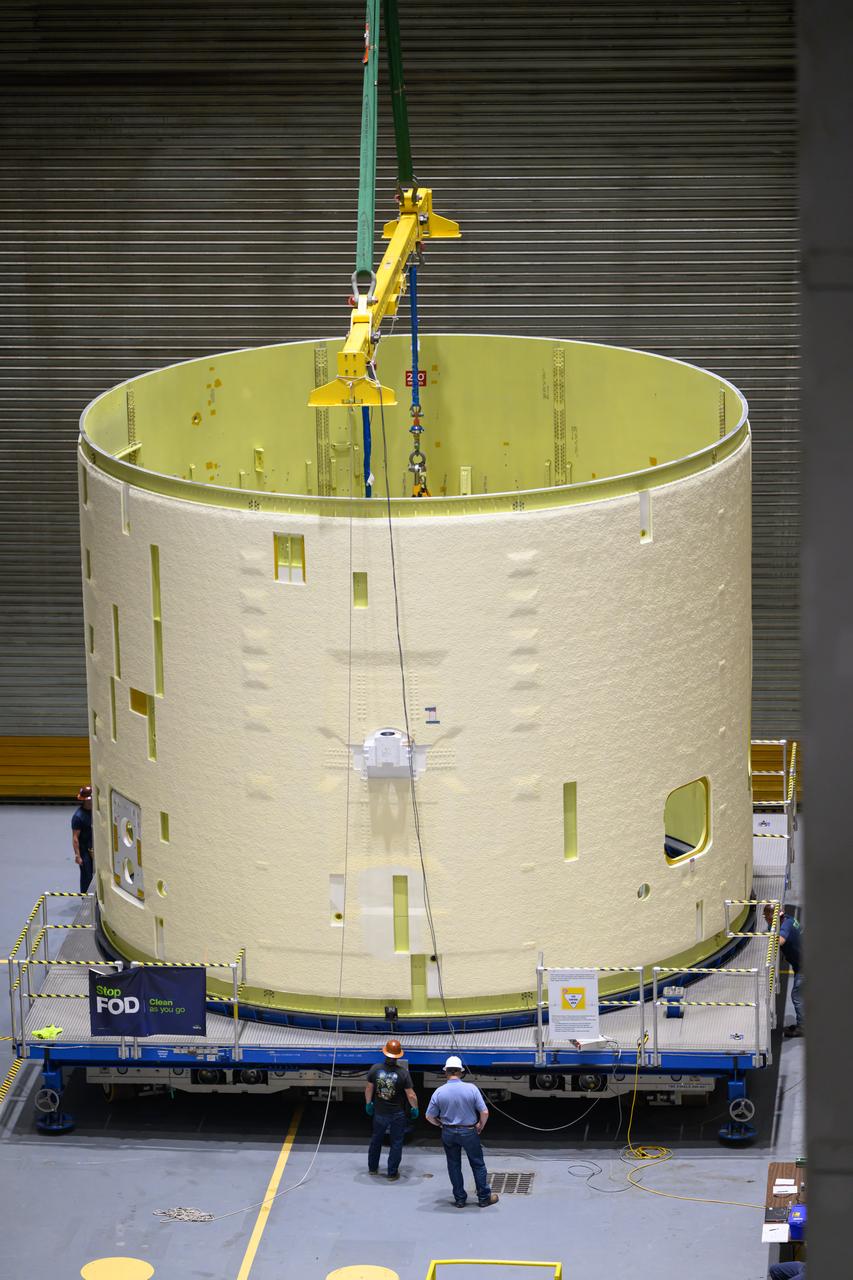
Technicians at NASA’s Michoud Assembly Facility in New Orleans lift the intertank of the SLS (Space Launch System)’s core stage for NASA’s Artemis III mission to move it to another location in the 43-acre factory for further inspection and production. The intertank is the backbone of the rocket’s core stage and is located between the mega rocket’s liquid hydrogen tank and liquid oxygen tank. In addition to joining the rocket’s two massive propellant tanks, the intertank houses avionics and electronics and serves as an attachment point for the rocket’s two solid rocket boosters positioned on either side of the core stage. The liquid hydrogen tank and liquid oxygen tank hold 733,000 gallons of super-cold propellant to power the stage’s four RS-25 engines needed for liftoff. Together, the rocket’s four RS-25 engines and two solid rocket boosters provide more than 8.8 million pounds to launch NASA’s and Artemis missions to the Moon. NASA is working to land the first woman and first person of color on the Moon under Artemis. SLS is part of NASA’s backbone for deep space exploration, along with Orion and the Gateway in orbit around the Moon. SLS is the only rocket that can send Orion, astronauts, and supplies to the Moon in a single mission.
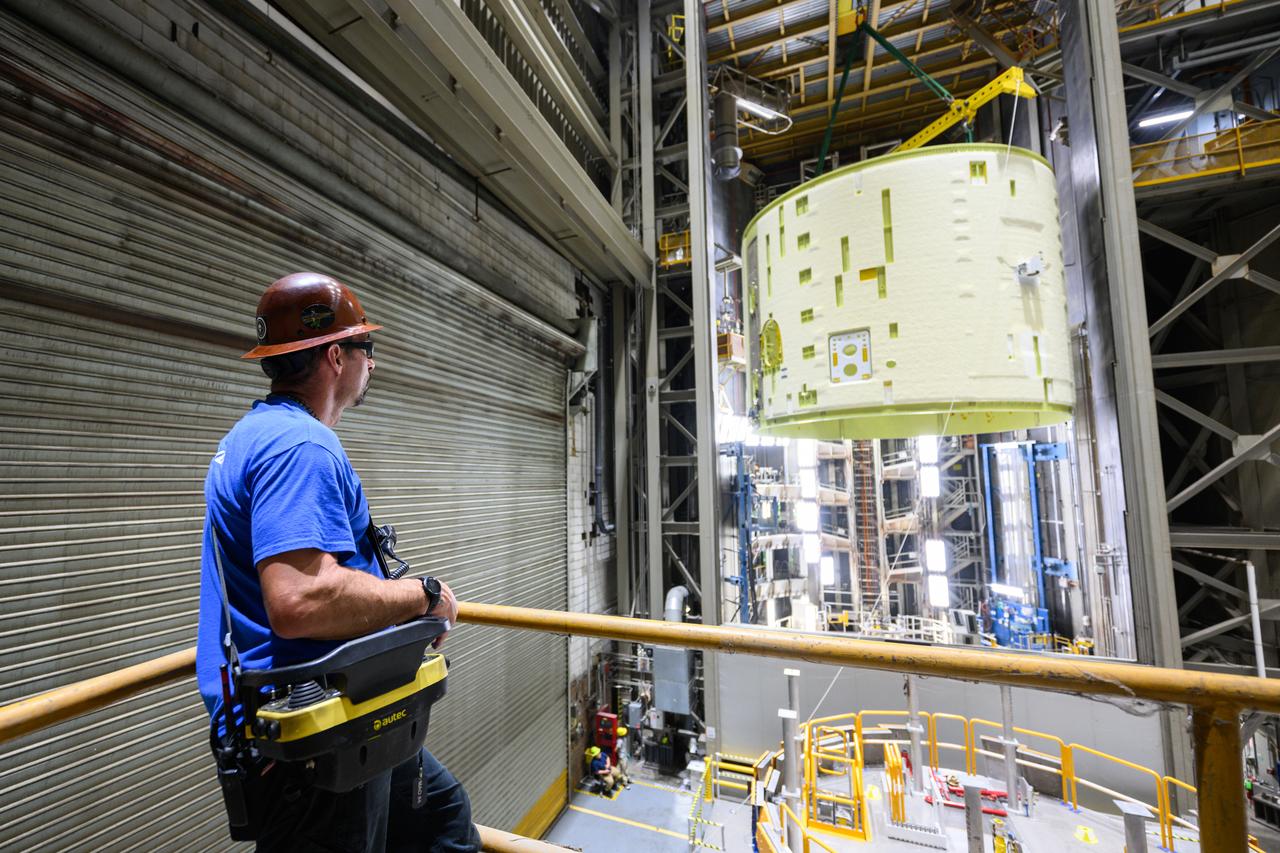
Technicians at NASA’s Michoud Assembly Facility in New Orleans lift the intertank of the SLS (Space Launch System)’s core stage for NASA’s Artemis III mission to move it to another location in the 43-acre factory for further inspection and production. The intertank is the backbone of the rocket’s core stage and is located between the mega rocket’s liquid hydrogen tank and liquid oxygen tank. In addition to joining the rocket’s two massive propellant tanks, the intertank houses avionics and electronics and serves as an attachment point for the rocket’s two solid rocket boosters positioned on either side of the core stage. The liquid hydrogen tank and liquid oxygen tank hold 733,000 gallons of super-cold propellant to power the stage’s four RS-25 engines needed for liftoff. Together, the rocket’s four RS-25 engines and two solid rocket boosters provide more than 8.8 million pounds to launch NASA’s and Artemis missions to the Moon. NASA is working to land the first woman and first person of color on the Moon under Artemis. SLS is part of NASA’s backbone for deep space exploration, along with Orion and the Gateway in orbit around the Moon. SLS is the only rocket that can send Orion, astronauts, and supplies to the Moon in a single mission.
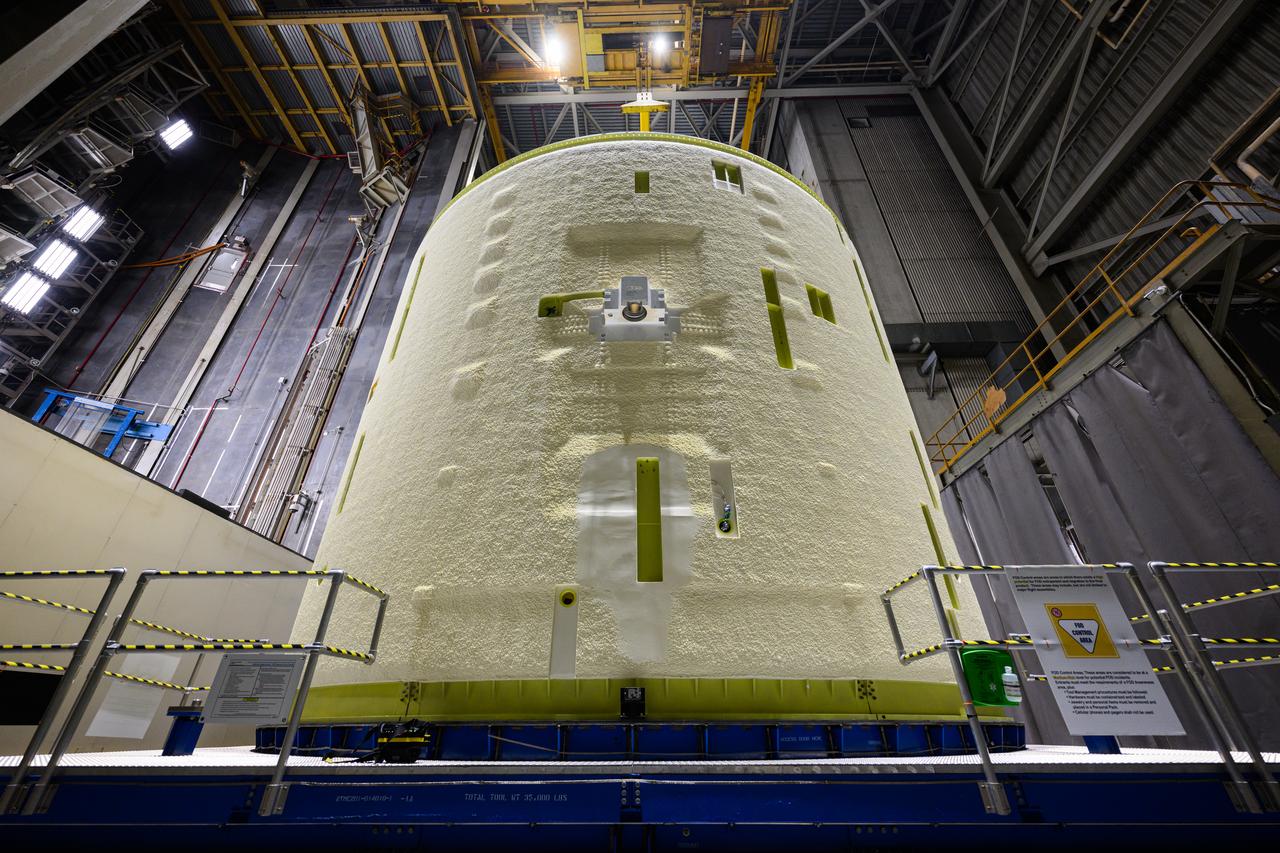
Technicians at NASA’s Michoud Assembly Facility in New Orleans lift the intertank of the SLS (Space Launch System)’s core stage for NASA’s Artemis III mission to move it to another location in the 43-acre factory for further inspection and production. The intertank is the backbone of the rocket’s core stage and is located between the mega rocket’s liquid hydrogen tank and liquid oxygen tank. In addition to joining the rocket’s two massive propellant tanks, the intertank houses avionics and electronics and serves as an attachment point for the rocket’s two solid rocket boosters positioned on either side of the core stage. The liquid hydrogen tank and liquid oxygen tank hold 733,000 gallons of super-cold propellant to power the stage’s four RS-25 engines needed for liftoff. Together, the rocket’s four RS-25 engines and two solid rocket boosters provide more than 8.8 million pounds to launch NASA’s and Artemis missions to the Moon. NASA is working to land the first woman and first person of color on the Moon under Artemis. SLS is part of NASA’s backbone for deep space exploration, along with Orion and the Gateway in orbit around the Moon. SLS is the only rocket that can send Orion, astronauts, and supplies to the Moon in a single mission.
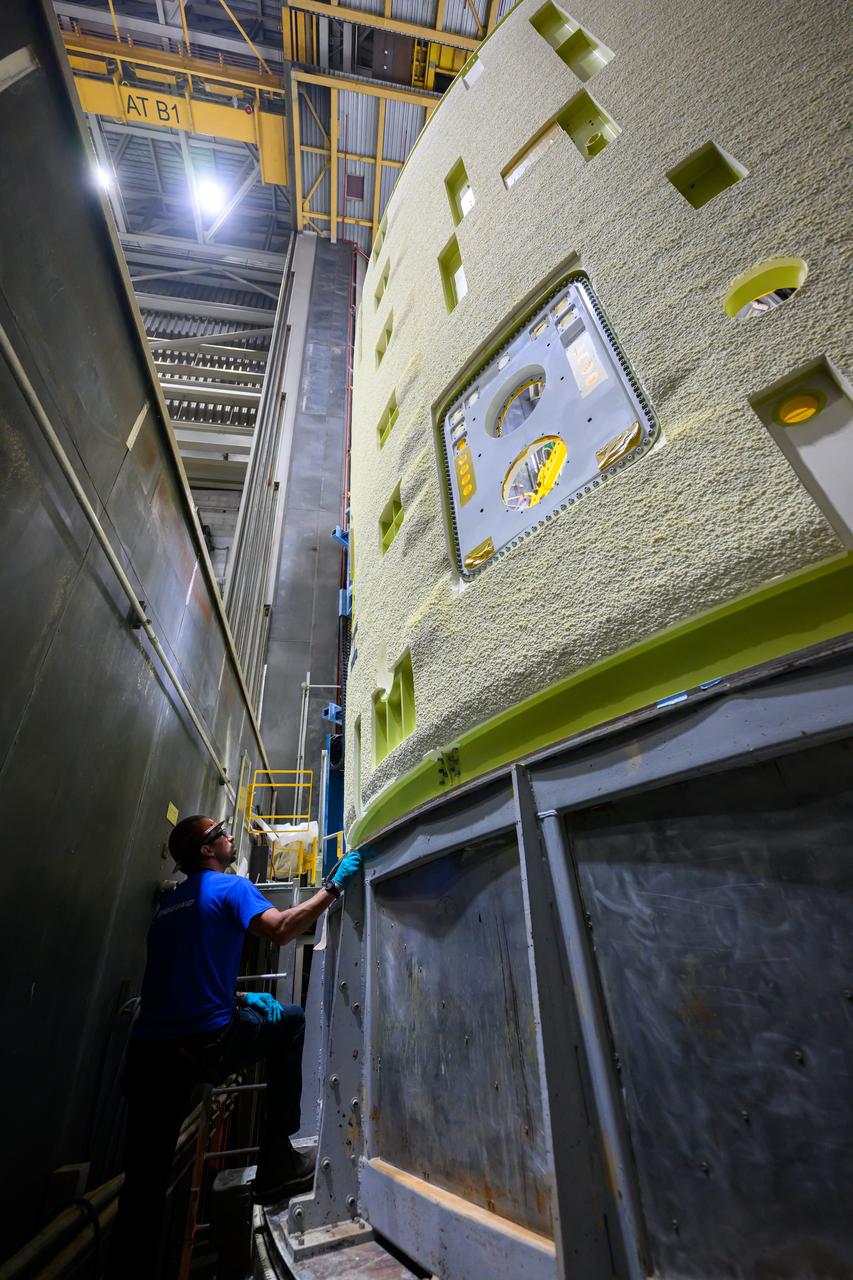
Technicians at NASA’s Michoud Assembly Facility in New Orleans lift the intertank of the SLS (Space Launch System)’s core stage for NASA’s Artemis III mission to move it to another location in the 43-acre factory for further inspection and production. The intertank is the backbone of the rocket’s core stage and is located between the mega rocket’s liquid hydrogen tank and liquid oxygen tank. In addition to joining the rocket’s two massive propellant tanks, the intertank houses avionics and electronics and serves as an attachment point for the rocket’s two solid rocket boosters positioned on either side of the core stage. The liquid hydrogen tank and liquid oxygen tank hold 733,000 gallons of super-cold propellant to power the stage’s four RS-25 engines needed for liftoff. Together, the rocket’s four RS-25 engines and two solid rocket boosters provide more than 8.8 million pounds to launch NASA’s and Artemis missions to the Moon. NASA is working to land the first woman and first person of color on the Moon under Artemis. SLS is part of NASA’s backbone for deep space exploration, along with Orion and the Gateway in orbit around the Moon. SLS is the only rocket that can send Orion, astronauts, and supplies to the Moon in a single mission.

Technicians at NASA’s Michoud Assembly Facility in New Orleans lift the intertank of the SLS (Space Launch System)’s core stage for NASA’s Artemis III mission to move it to another location in the 43-acre factory for further inspection and production. The intertank is the backbone of the rocket’s core stage and is located between the mega rocket’s liquid hydrogen tank and liquid oxygen tank. In addition to joining the rocket’s two massive propellant tanks, the intertank houses avionics and electronics and serves as an attachment point for the rocket’s two solid rocket boosters positioned on either side of the core stage. The liquid hydrogen tank and liquid oxygen tank hold 733,000 gallons of super-cold propellant to power the stage’s four RS-25 engines needed for liftoff. Together, the rocket’s four RS-25 engines and two solid rocket boosters provide more than 8.8 million pounds to launch NASA’s and Artemis missions to the Moon. NASA is working to land the first woman and first person of color on the Moon under Artemis. SLS is part of NASA’s backbone for deep space exploration, along with Orion and the Gateway in orbit around the Moon. SLS is the only rocket that can send Orion, astronauts, and supplies to the Moon in a single mission.
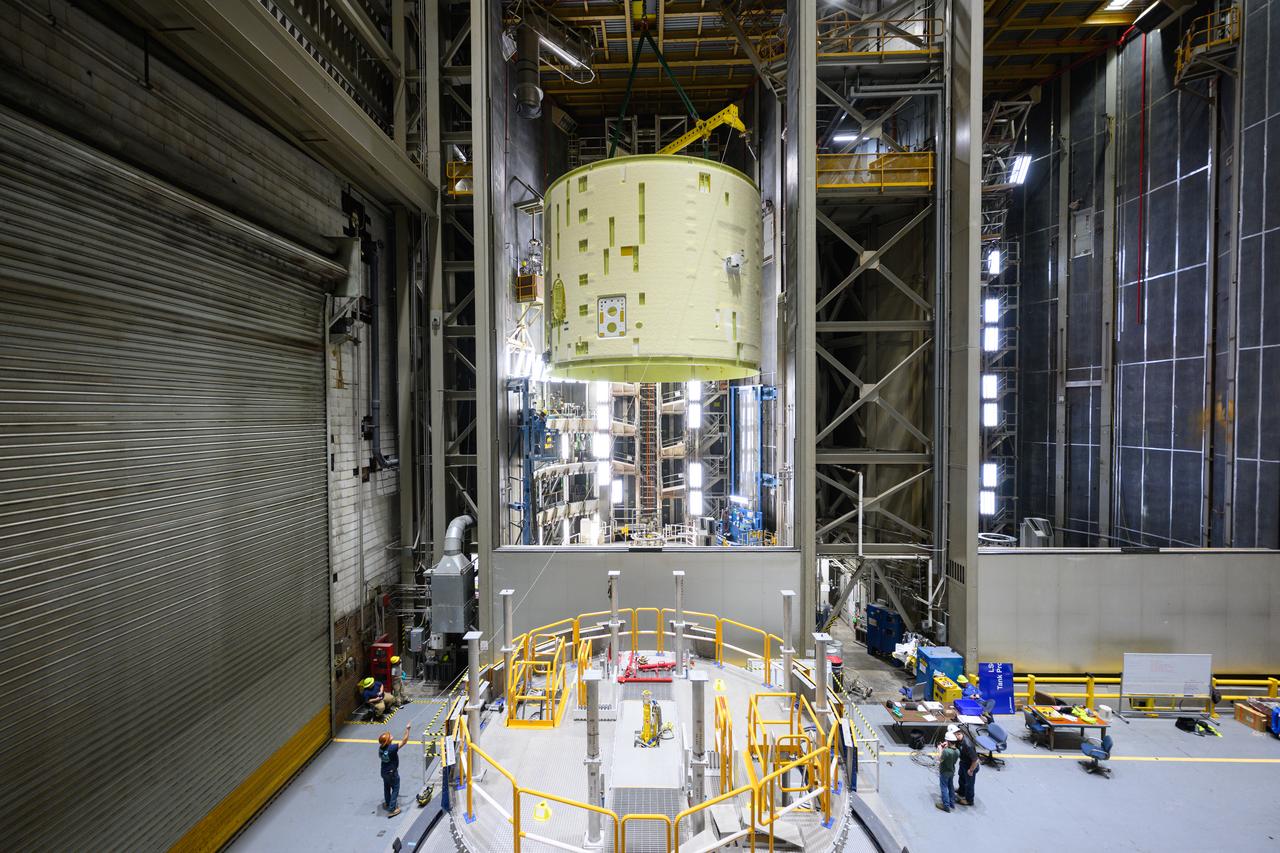
Technicians at NASA’s Michoud Assembly Facility in New Orleans lift the intertank of the SLS (Space Launch System)’s core stage for NASA’s Artemis III mission to move it to another location in the 43-acre factory for further inspection and production. The intertank is the backbone of the rocket’s core stage and is located between the mega rocket’s liquid hydrogen tank and liquid oxygen tank. In addition to joining the rocket’s two massive propellant tanks, the intertank houses avionics and electronics and serves as an attachment point for the rocket’s two solid rocket boosters positioned on either side of the core stage. The liquid hydrogen tank and liquid oxygen tank hold 733,000 gallons of super-cold propellant to power the stage’s four RS-25 engines needed for liftoff. Together, the rocket’s four RS-25 engines and two solid rocket boosters provide more than 8.8 million pounds to launch NASA’s and Artemis missions to the Moon. NASA is working to land the first woman and first person of color on the Moon under Artemis. SLS is part of NASA’s backbone for deep space exploration, along with Orion and the Gateway in orbit around the Moon. SLS is the only rocket that can send Orion, astronauts, and supplies to the Moon in a single mission.
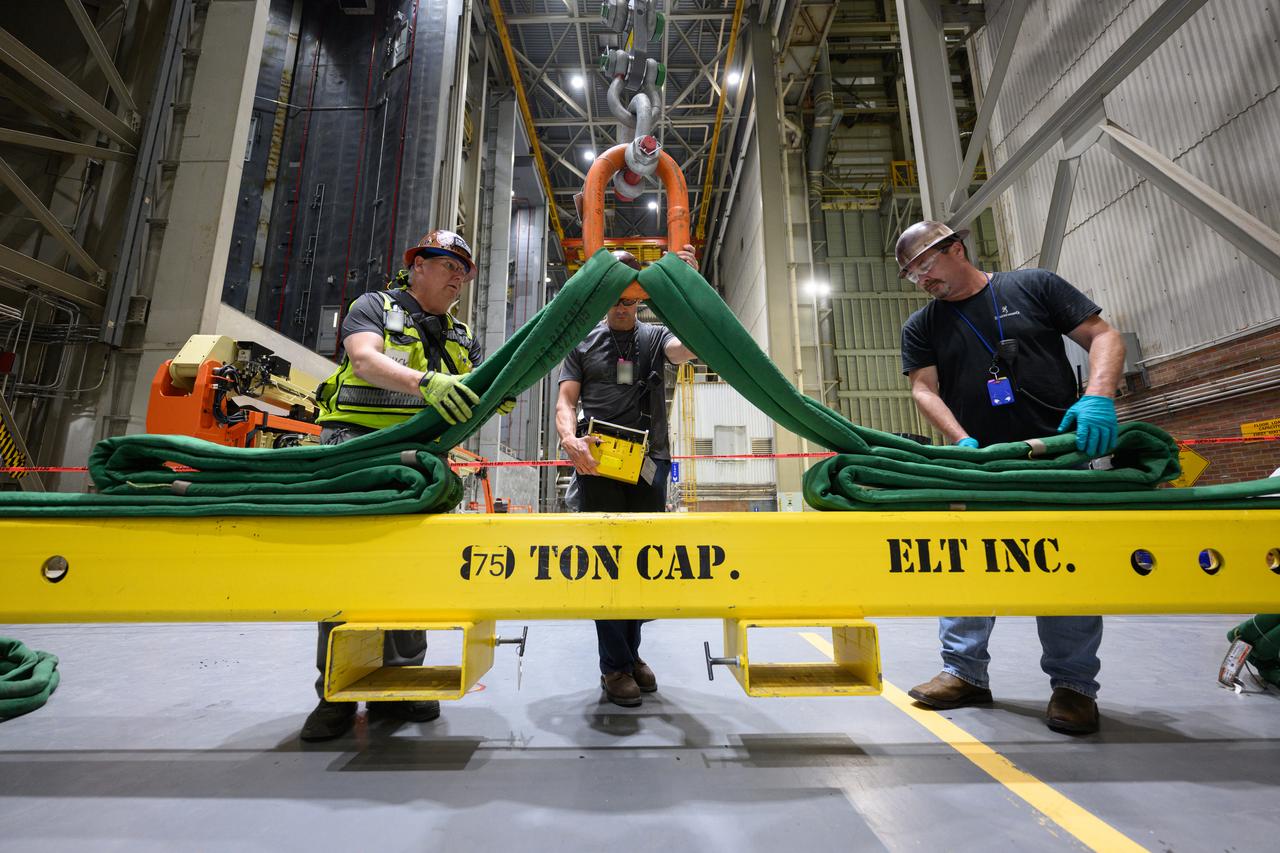
Technicians at NASA’s Michoud Assembly Facility in New Orleans lift the intertank of the SLS (Space Launch System)’s core stage for NASA’s Artemis III mission to move it to another location in the 43-acre factory for further inspection and production. The intertank is the backbone of the rocket’s core stage and is located between the mega rocket’s liquid hydrogen tank and liquid oxygen tank. In addition to joining the rocket’s two massive propellant tanks, the intertank houses avionics and electronics and serves as an attachment point for the rocket’s two solid rocket boosters positioned on either side of the core stage. The liquid hydrogen tank and liquid oxygen tank hold 733,000 gallons of super-cold propellant to power the stage’s four RS-25 engines needed for liftoff. Together, the rocket’s four RS-25 engines and two solid rocket boosters provide more than 8.8 million pounds to launch NASA’s and Artemis missions to the Moon. NASA is working to land the first woman and first person of color on the Moon under Artemis. SLS is part of NASA’s backbone for deep space exploration, along with Orion and the Gateway in orbit around the Moon. SLS is the only rocket that can send Orion, astronauts, and supplies to the Moon in a single mission.
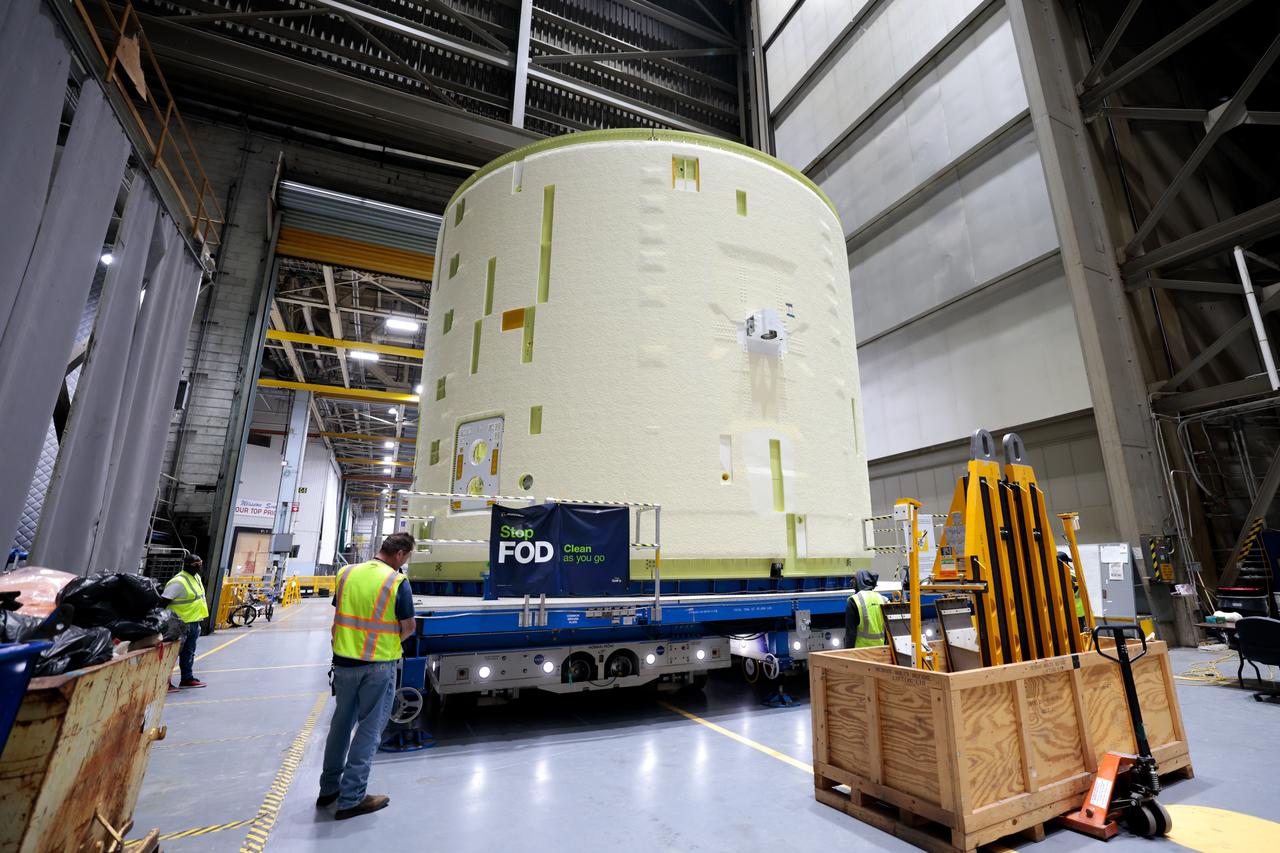
Technicians at NASA’s Michoud Assembly Facility in New Orleans lift the intertank of the SLS (Space Launch System)’s core stage for NASA’s Artemis III mission to move it to another location in the 43-acre factory for further inspection and production. The intertank is the backbone of the rocket’s core stage and is located between the mega rocket’s liquid hydrogen tank and liquid oxygen tank. In addition to joining the rocket’s two massive propellant tanks, the intertank houses avionics and electronics and serves as an attachment point for the rocket’s two solid rocket boosters positioned on either side of the core stage. The liquid hydrogen tank and liquid oxygen tank hold 733,000 gallons of super-cold propellant to power the stage’s four RS-25 engines needed for liftoff. Together, the rocket’s four RS-25 engines and two solid rocket boosters provide more than 8.8 million pounds to launch NASA’s and Artemis missions to the Moon. NASA is working to land the first woman and first person of color on the Moon under Artemis. SLS is part of NASA’s backbone for deep space exploration, along with Orion and the Gateway in orbit around the Moon. SLS is the only rocket that can send Orion, astronauts, and supplies to the Moon in a single mission.
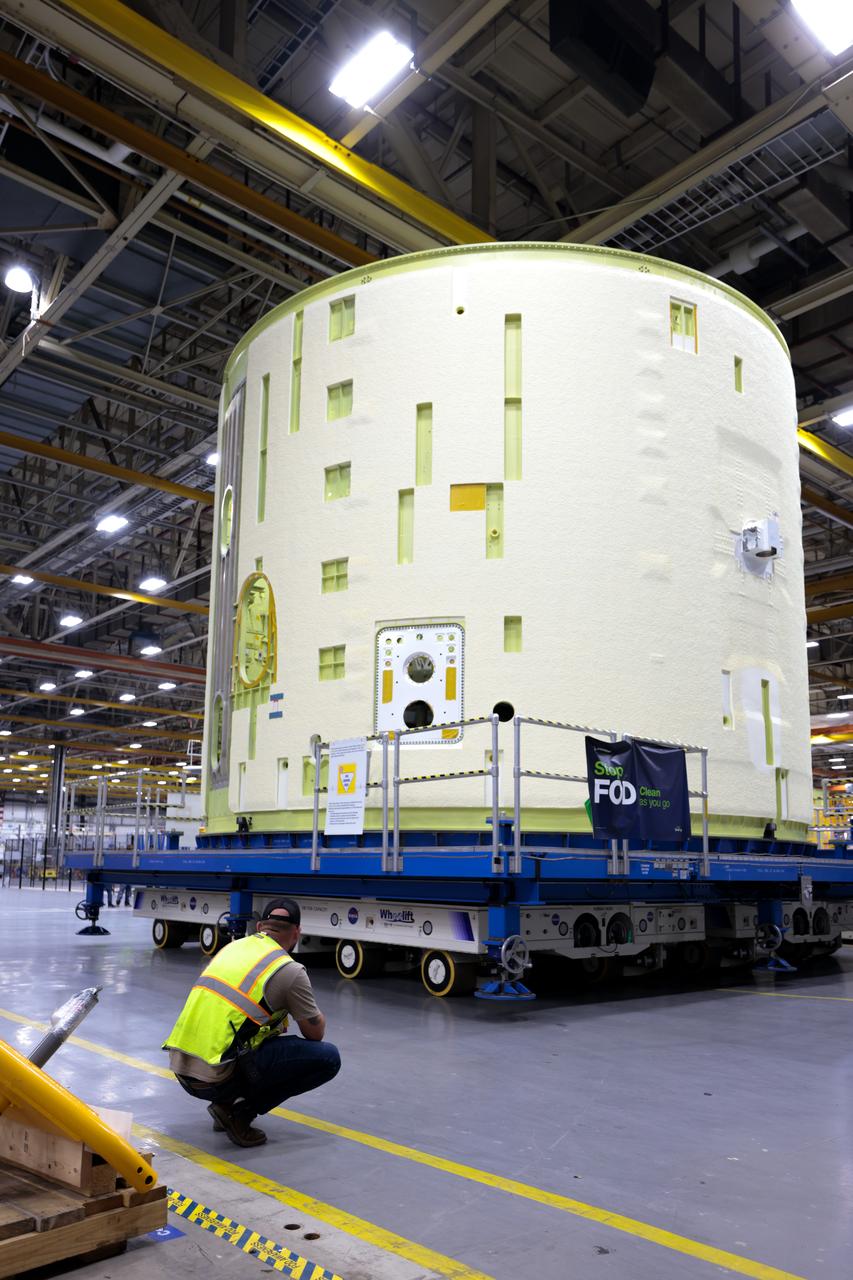
Technicians at NASA’s Michoud Assembly Facility in New Orleans lift the intertank of the SLS (Space Launch System)’s core stage for NASA’s Artemis III mission to move it to another location in the 43-acre factory for further inspection and production. The intertank is the backbone of the rocket’s core stage and is located between the mega rocket’s liquid hydrogen tank and liquid oxygen tank. In addition to joining the rocket’s two massive propellant tanks, the intertank houses avionics and electronics and serves as an attachment point for the rocket’s two solid rocket boosters positioned on either side of the core stage. The liquid hydrogen tank and liquid oxygen tank hold 733,000 gallons of super-cold propellant to power the stage’s four RS-25 engines needed for liftoff. Together, the rocket’s four RS-25 engines and two solid rocket boosters provide more than 8.8 million pounds to launch NASA’s and Artemis missions to the Moon. NASA is working to land the first woman and first person of color on the Moon under Artemis. SLS is part of NASA’s backbone for deep space exploration, along with Orion and the Gateway in orbit around the Moon. SLS is the only rocket that can send Orion, astronauts, and supplies to the Moon in a single mission.
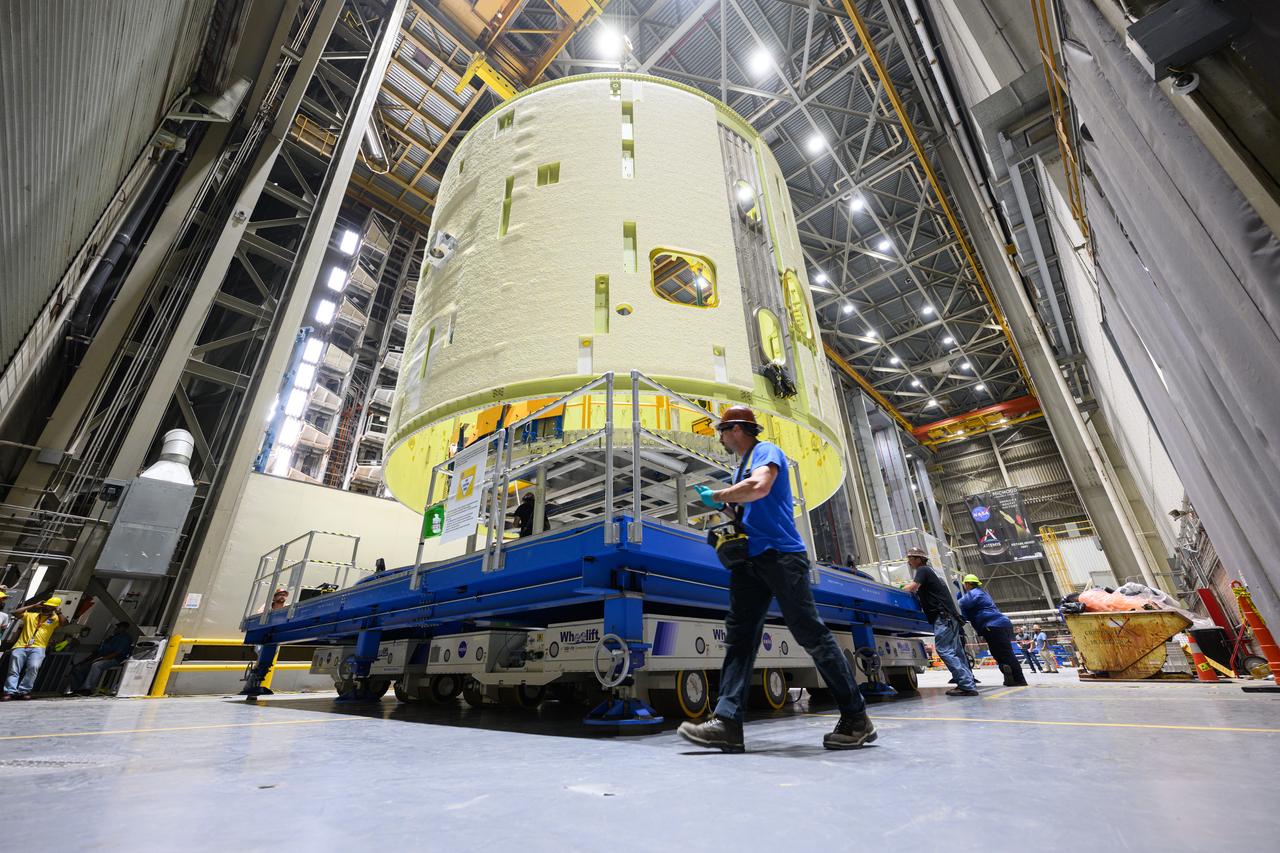
Technicians at NASA’s Michoud Assembly Facility in New Orleans lift the intertank of the SLS (Space Launch System)’s core stage for NASA’s Artemis III mission to move it to another location in the 43-acre factory for further inspection and production. The intertank is the backbone of the rocket’s core stage and is located between the mega rocket’s liquid hydrogen tank and liquid oxygen tank. In addition to joining the rocket’s two massive propellant tanks, the intertank houses avionics and electronics and serves as an attachment point for the rocket’s two solid rocket boosters positioned on either side of the core stage. The liquid hydrogen tank and liquid oxygen tank hold 733,000 gallons of super-cold propellant to power the stage’s four RS-25 engines needed for liftoff. Together, the rocket’s four RS-25 engines and two solid rocket boosters provide more than 8.8 million pounds to launch NASA’s and Artemis missions to the Moon. NASA is working to land the first woman and first person of color on the Moon under Artemis. SLS is part of NASA’s backbone for deep space exploration, along with Orion and the Gateway in orbit around the Moon. SLS is the only rocket that can send Orion, astronauts, and supplies to the Moon in a single mission.
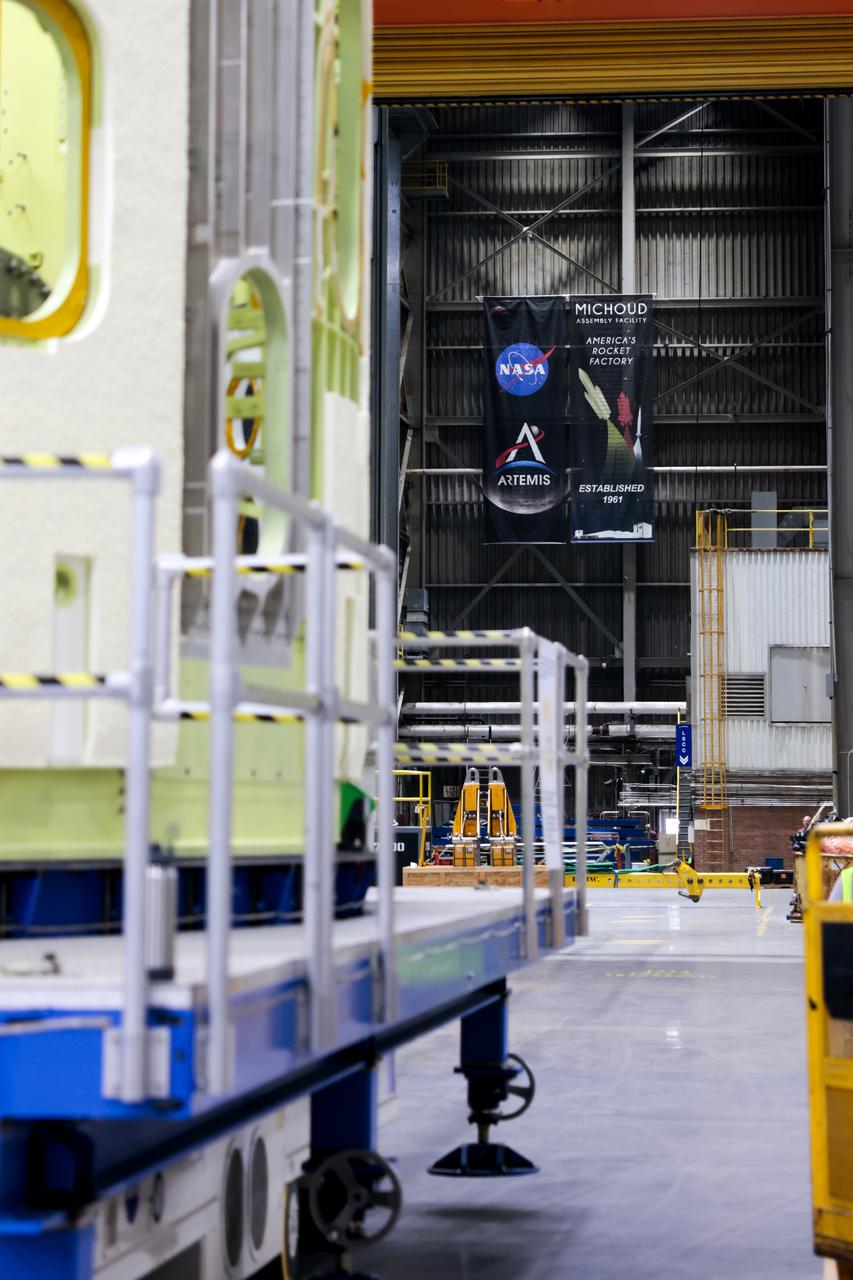
Technicians at NASA’s Michoud Assembly Facility in New Orleans lift the intertank of the SLS (Space Launch System)’s core stage for NASA’s Artemis III mission to move it to another location in the 43-acre factory for further inspection and production. The intertank is the backbone of the rocket’s core stage and is located between the mega rocket’s liquid hydrogen tank and liquid oxygen tank. In addition to joining the rocket’s two massive propellant tanks, the intertank houses avionics and electronics and serves as an attachment point for the rocket’s two solid rocket boosters positioned on either side of the core stage. The liquid hydrogen tank and liquid oxygen tank hold 733,000 gallons of super-cold propellant to power the stage’s four RS-25 engines needed for liftoff. Together, the rocket’s four RS-25 engines and two solid rocket boosters provide more than 8.8 million pounds to launch NASA’s and Artemis missions to the Moon. NASA is working to land the first woman and first person of color on the Moon under Artemis. SLS is part of NASA’s backbone for deep space exploration, along with Orion and the Gateway in orbit around the Moon. SLS is the only rocket that can send Orion, astronauts, and supplies to the Moon in a single mission.
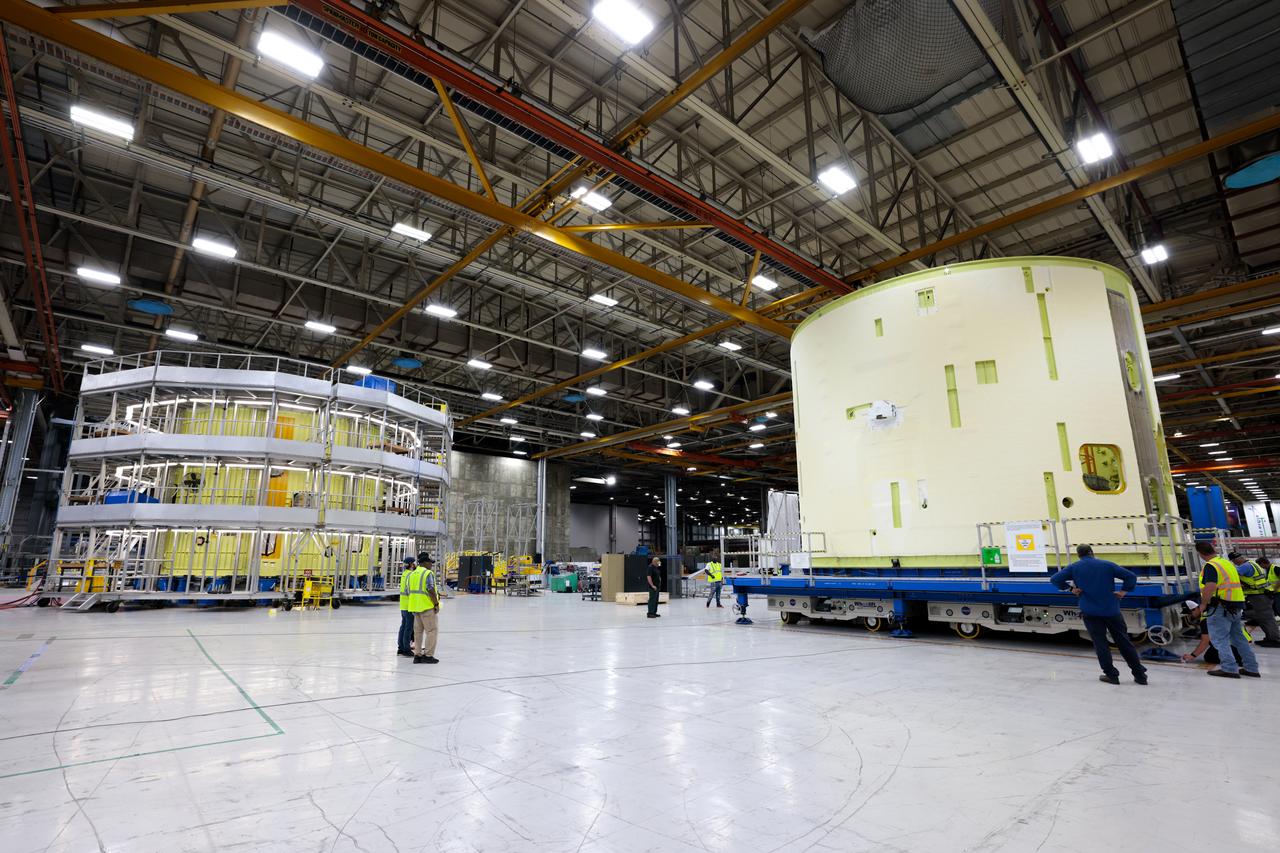
Technicians at NASA’s Michoud Assembly Facility in New Orleans lift the intertank of the SLS (Space Launch System)’s core stage for NASA’s Artemis III mission to move it to another location in the 43-acre factory for further inspection and production. The intertank is the backbone of the rocket’s core stage and is located between the mega rocket’s liquid hydrogen tank and liquid oxygen tank. In addition to joining the rocket’s two massive propellant tanks, the intertank houses avionics and electronics and serves as an attachment point for the rocket’s two solid rocket boosters positioned on either side of the core stage. The liquid hydrogen tank and liquid oxygen tank hold 733,000 gallons of super-cold propellant to power the stage’s four RS-25 engines needed for liftoff. Together, the rocket’s four RS-25 engines and two solid rocket boosters provide more than 8.8 million pounds to launch NASA’s and Artemis missions to the Moon. NASA is working to land the first woman and first person of color on the Moon under Artemis. SLS is part of NASA’s backbone for deep space exploration, along with Orion and the Gateway in orbit around the Moon. SLS is the only rocket that can send Orion, astronauts, and supplies to the Moon in a single mission.
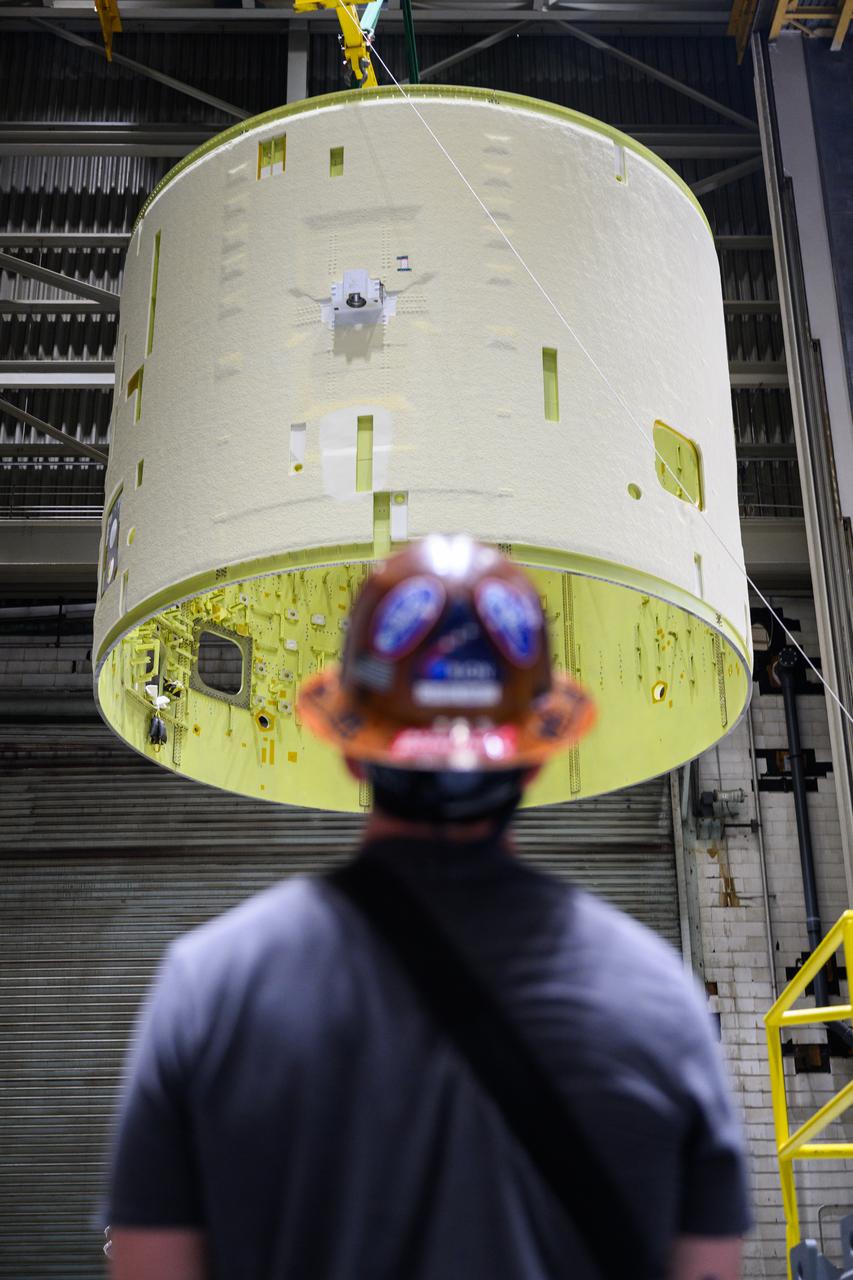
Technicians at NASA’s Michoud Assembly Facility in New Orleans lift the intertank of the SLS (Space Launch System)’s core stage for NASA’s Artemis III mission to move it to another location in the 43-acre factory for further inspection and production. The intertank is the backbone of the rocket’s core stage and is located between the mega rocket’s liquid hydrogen tank and liquid oxygen tank. In addition to joining the rocket’s two massive propellant tanks, the intertank houses avionics and electronics and serves as an attachment point for the rocket’s two solid rocket boosters positioned on either side of the core stage. The liquid hydrogen tank and liquid oxygen tank hold 733,000 gallons of super-cold propellant to power the stage’s four RS-25 engines needed for liftoff. Together, the rocket’s four RS-25 engines and two solid rocket boosters provide more than 8.8 million pounds to launch NASA’s and Artemis missions to the Moon. NASA is working to land the first woman and first person of color on the Moon under Artemis. SLS is part of NASA’s backbone for deep space exploration, along with Orion and the Gateway in orbit around the Moon. SLS is the only rocket that can send Orion, astronauts, and supplies to the Moon in a single mission.