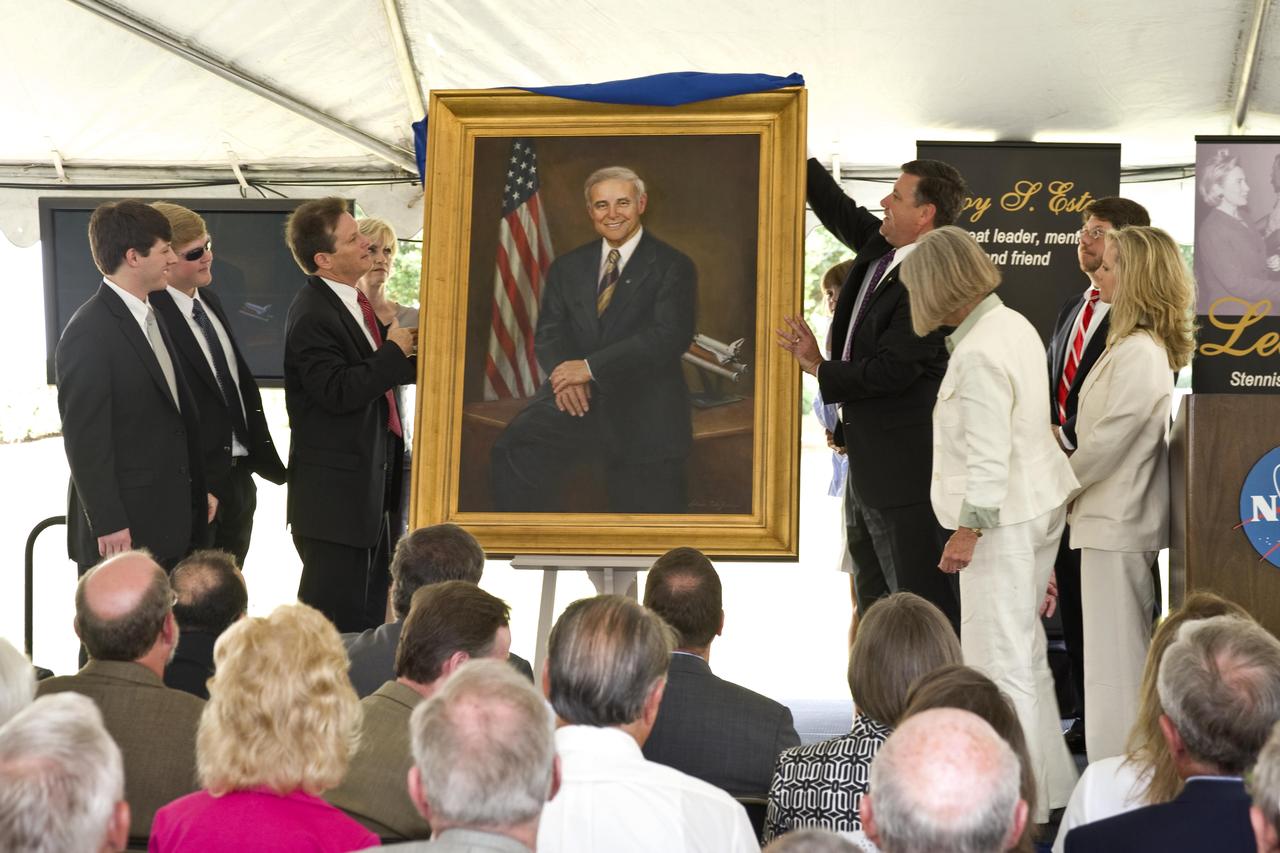
Stennis Space Center Director Patrick Scheuermann (right) and members of the Roy S. Estess family unveil a commissioned portrait of the late Stennis director during a May 2 ceremony. The portrait now hangs in the lobby of the main NASA administration at Stennis, now named the Roy S. Estess Building.
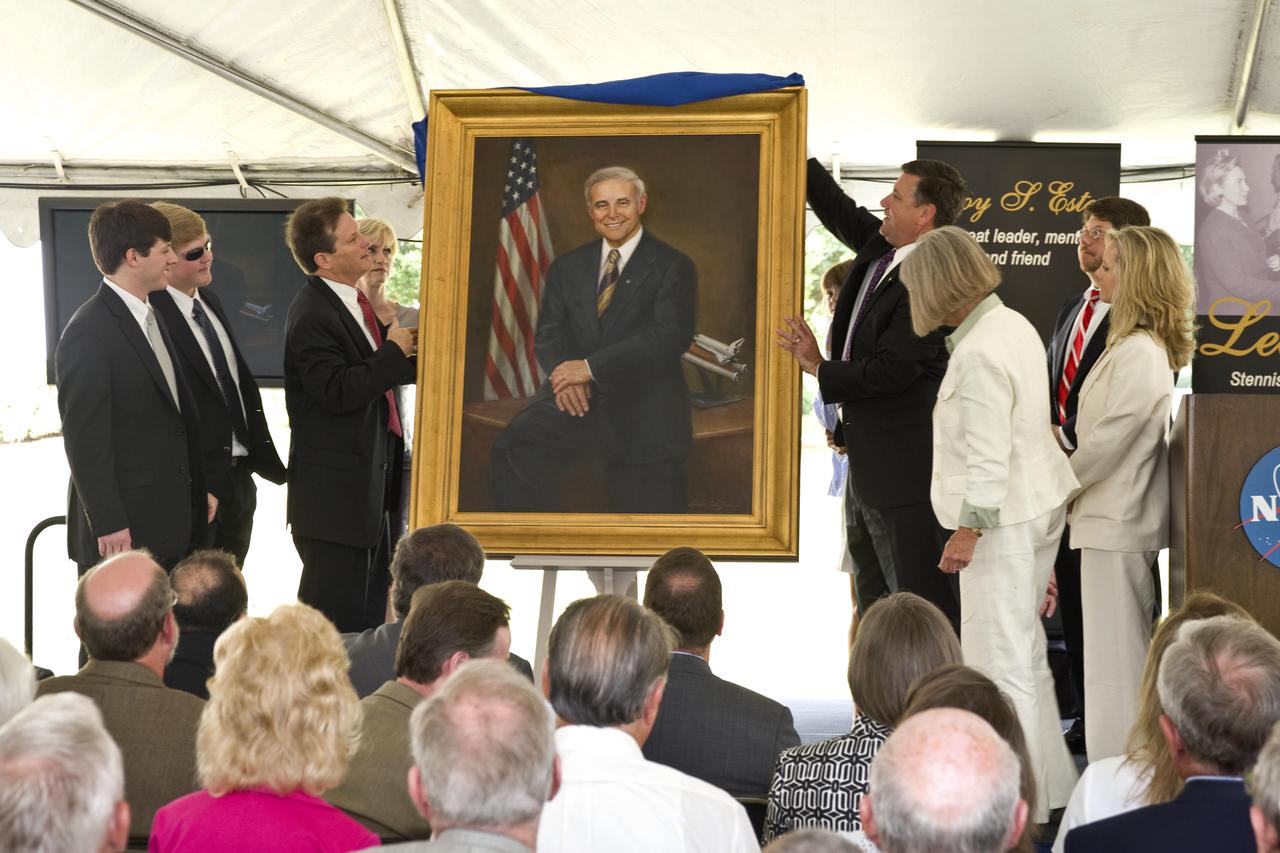
Stennis Space Center Director Patrick Scheuermann (right) and members of the Roy S. Estess family unveil a commissioned portrait of the late Stennis director during a May 2 ceremony. The portrait now hangs in the lobby of the main NASA administration at Stennis, now named the Roy S. Estess Building.

NASA Stennis employees visit booths with safety and health information in the Roy S. Estess Building during the annual Safety and Health Day at NASA’s Stennis Space Center on Sept. 26. The yearly event is a reminder to the NASA Stennis workforce about the importance of a safe work environment and provided the opportunity for a health screening.
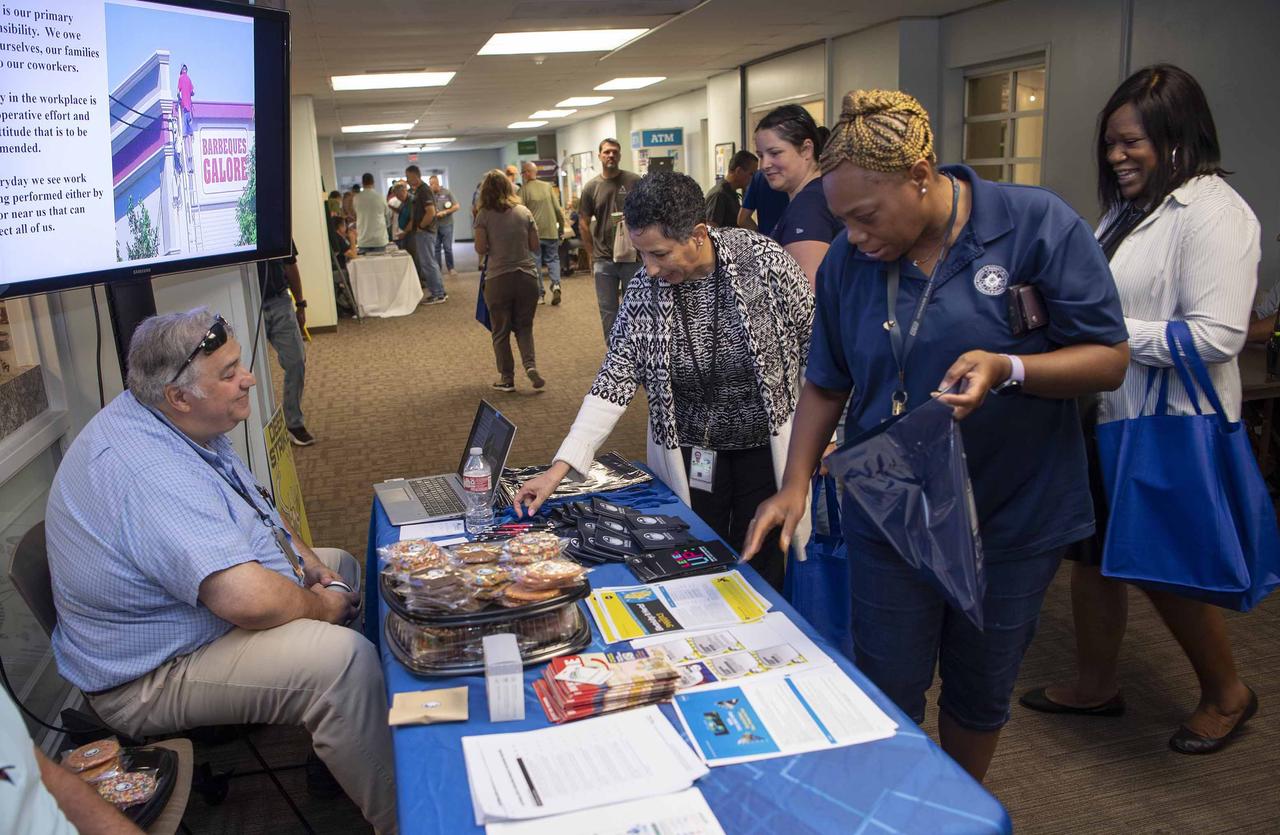
NASA Stennis employees visit booths with safety and health information in the Roy S. Estess Building during the annual Safety and Health Day at NASA’s Stennis Space Center on Sept. 26. The yearly event is a reminder to the NASA Stennis workforce about the importance of a safe work environment and provided the opportunity for a health screening.
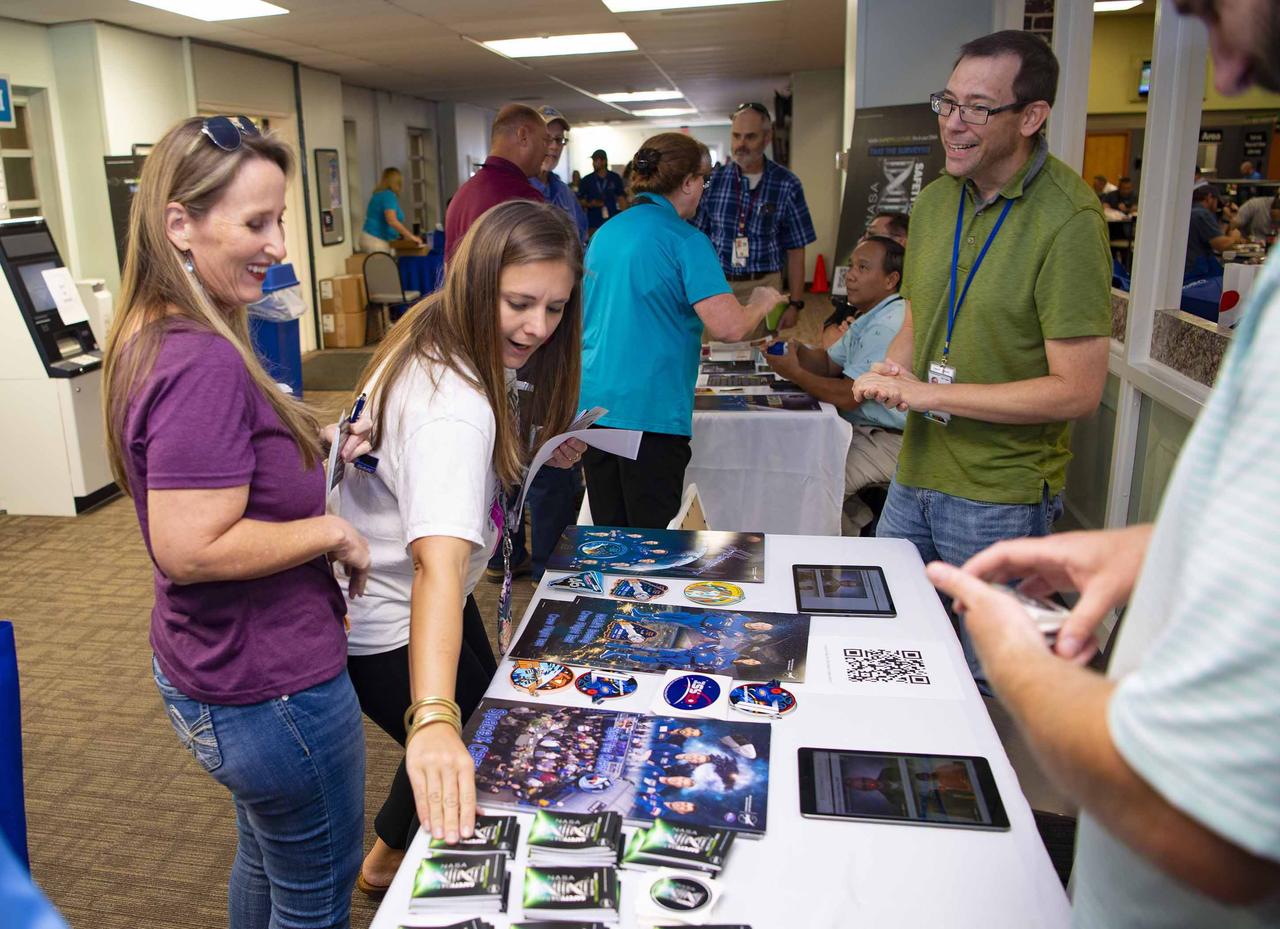
NASA Stennis employees visit booths with safety and health information in the Roy S. Estess Building during the annual Safety and Health Day at NASA’s Stennis Space Center on Sept. 26. The yearly event is a reminder to the NASA Stennis workforce about the importance of a safe work environment and provided the opportunity for a health screening.
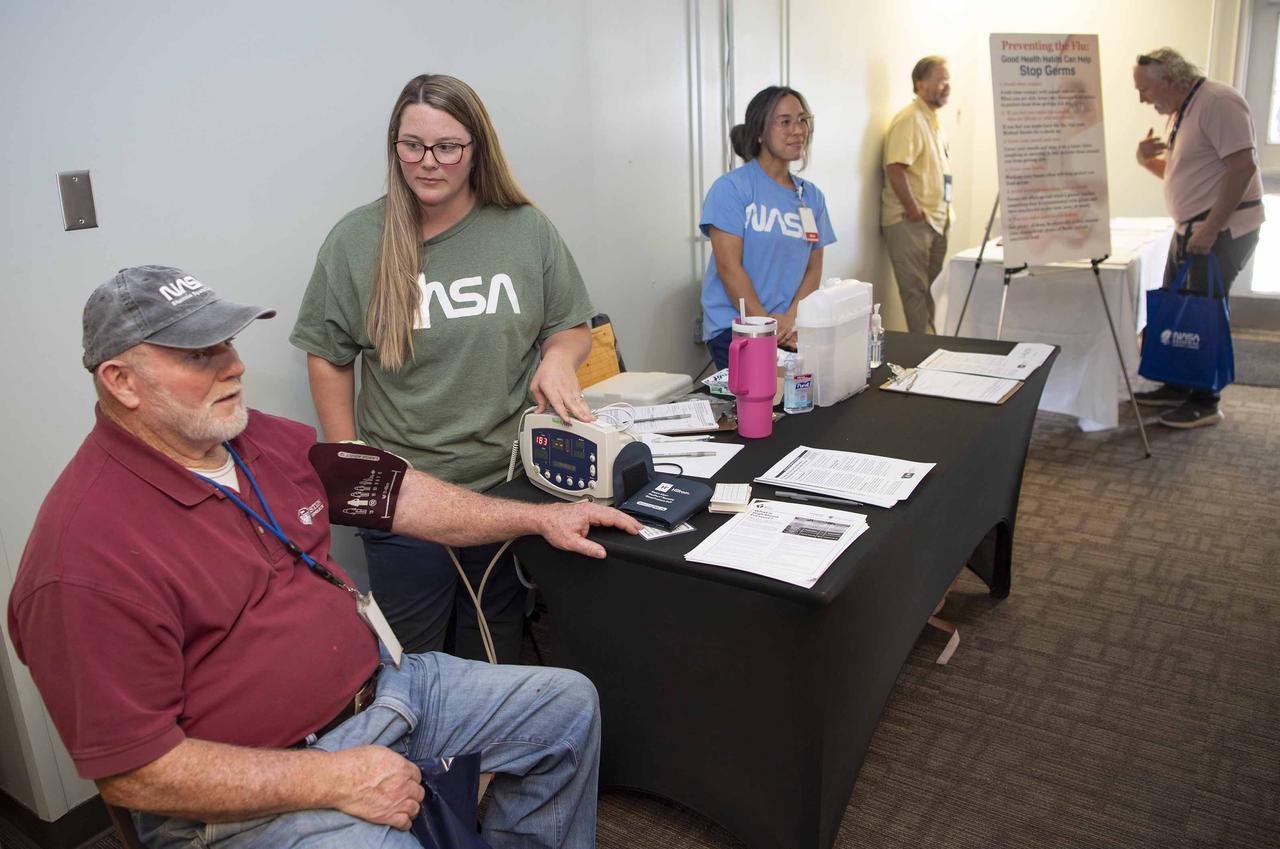
NASA Stennis employees visit booths with safety and health information in the Roy S. Estess Building during the annual Safety and Health Day at NASA’s Stennis Space Center on Sept. 26. The yearly event is a reminder to the NASA Stennis workforce about the importance of a safe work environment and provided the opportunity for a health screening.
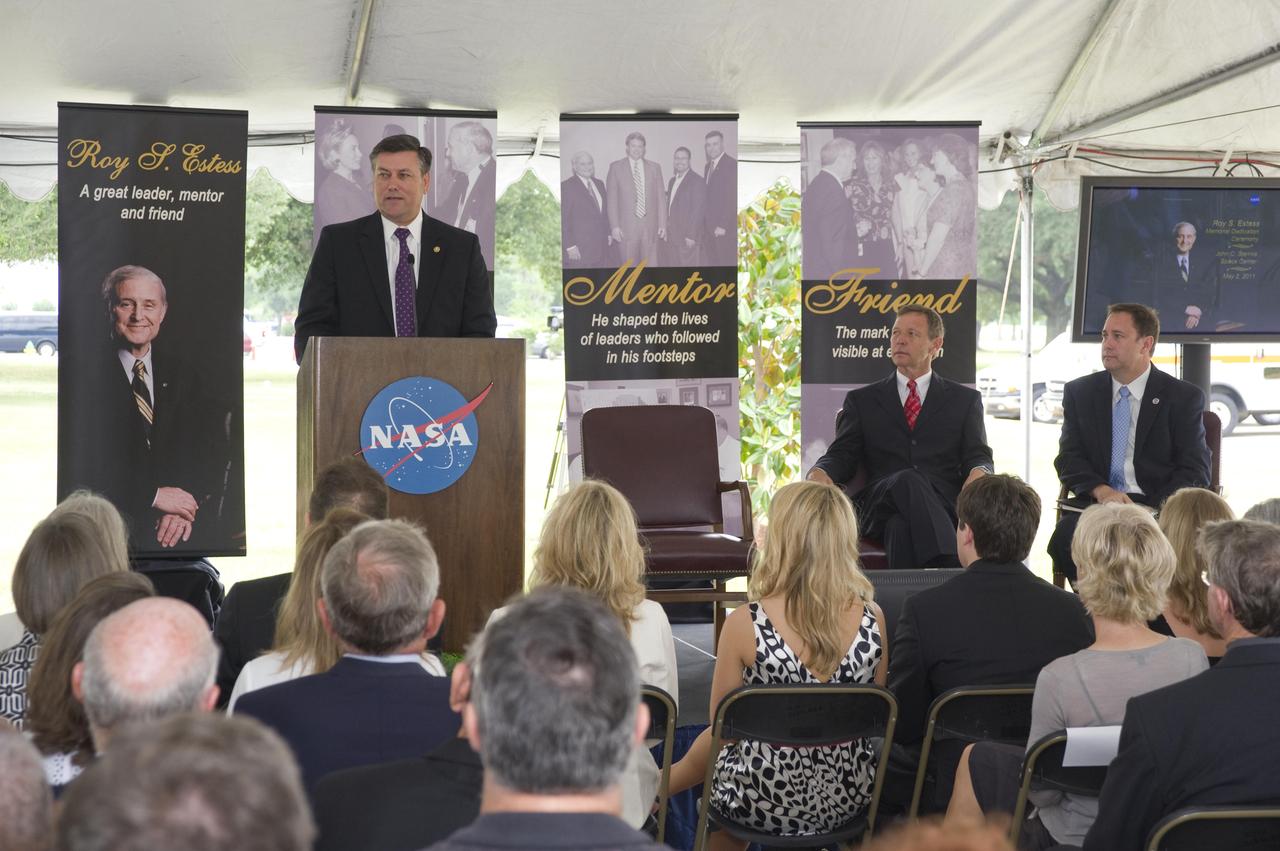
Stennis Space Center Director Patrick Scheuermann welcomes Roy S. Estess family members and guests May 2 to the ceremony dedicating and naming the main NASA administration building for the late Stennis director. Estess served as director of the rocket engine test facility from 1989 to 2002.
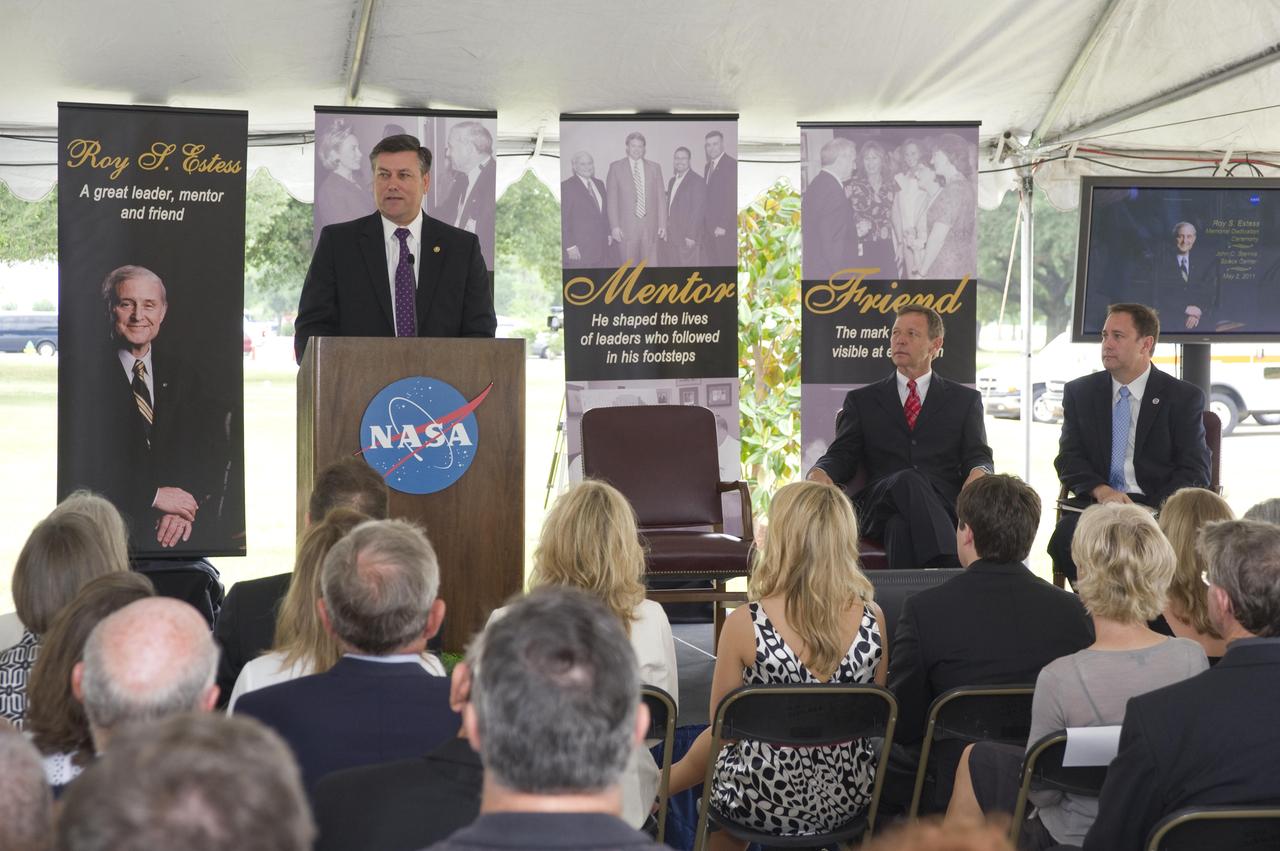
Stennis Space Center Director Patrick Scheuermann welcomes Roy S. Estess family members and guests May 2 to the ceremony dedicating and naming the main NASA administration building for the late Stennis director. Estess served as director of the rocket engine test facility from 1989 to 2002.
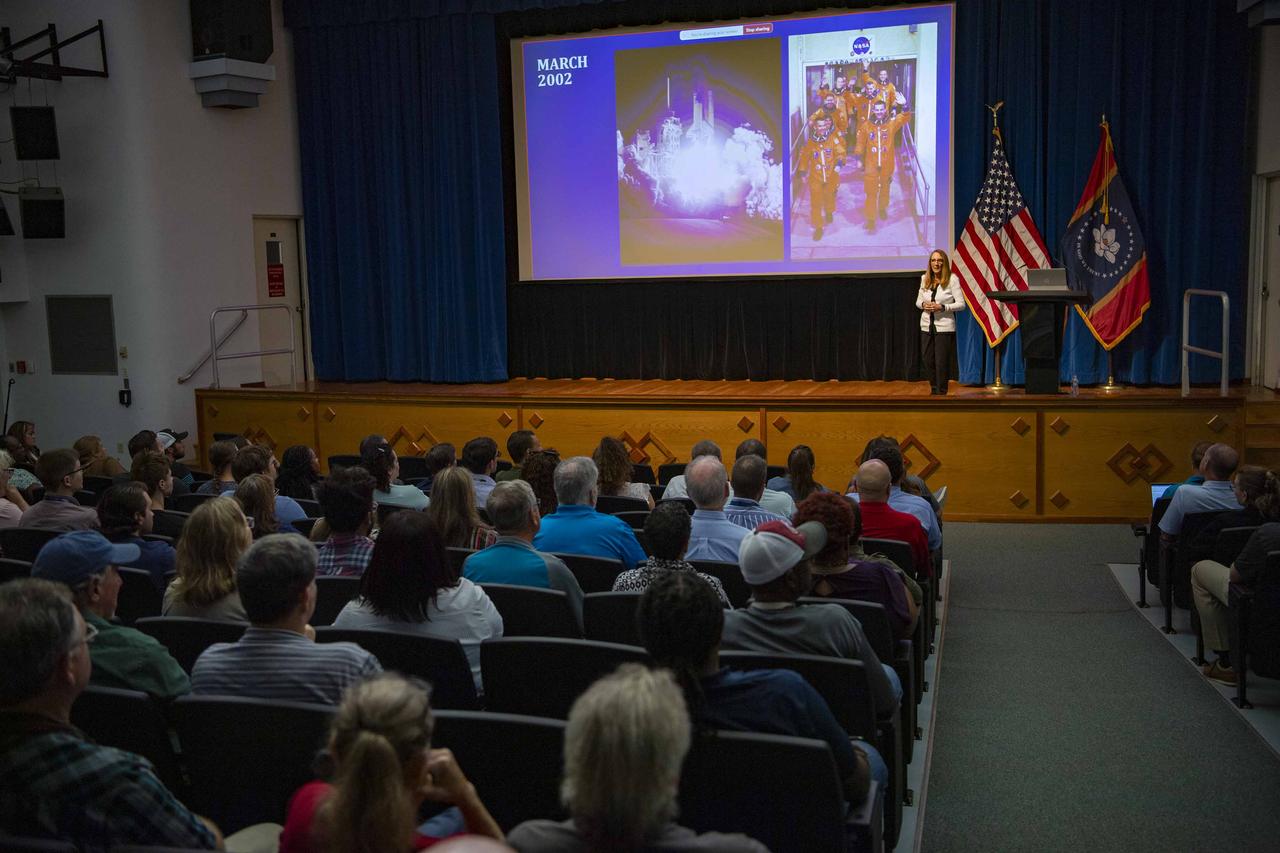
NASA’s Stennis Space Center hosts the annual Safety and Health Day event on Sept. 26. The yearly event, organized by the NASA Stennis Safety and Mission Assurance Directorate, is a reminder to the NASA Stennis workforce about the importance of a safe work environment. The event concluded with employees visiting various safety and health exhibits in the Roy S. Estess Building, which also provided an opportunity to receive health screenings.
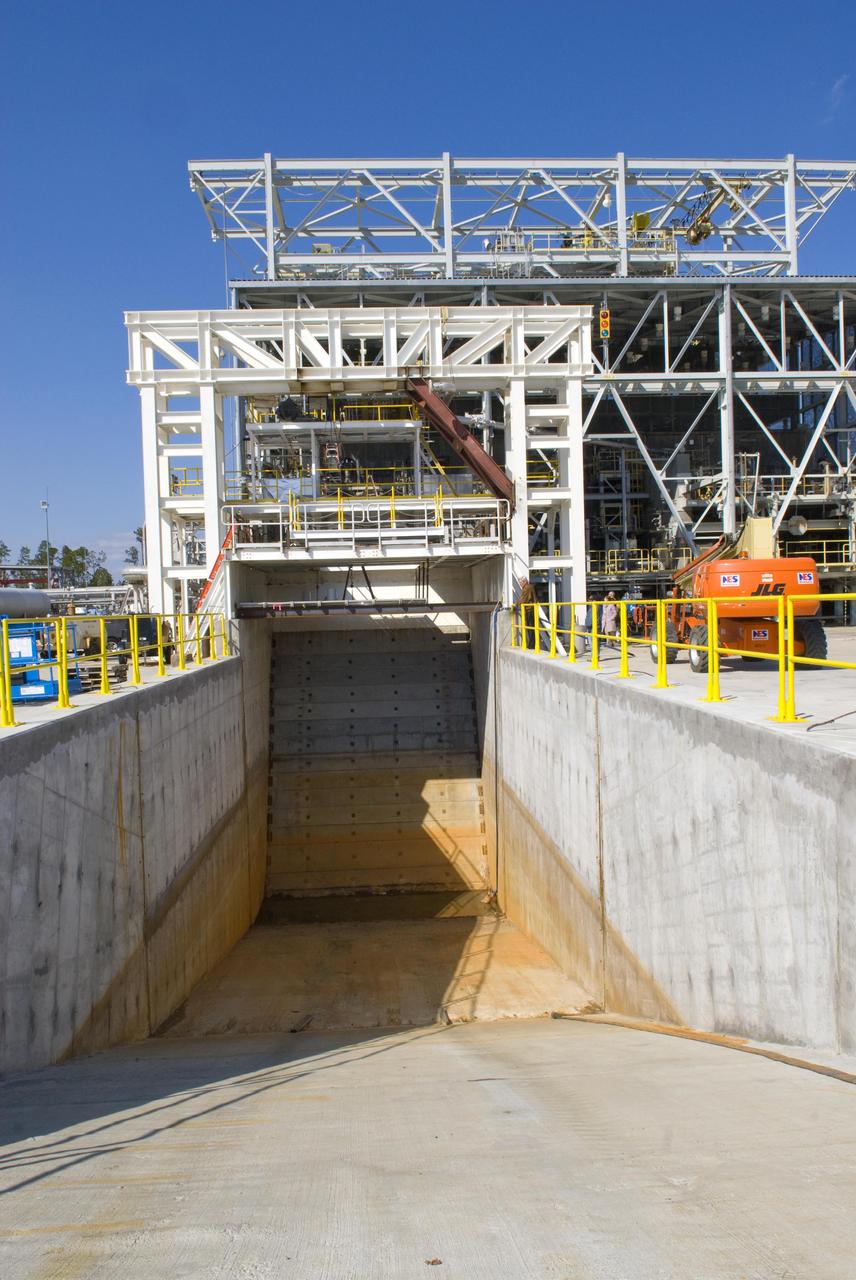
Operators at NASA's John C. Stennis Space Center are completing modifications to the E-1 Test Stand to begin testing Aerojet AJ26 rocket engines in early summer of 2010. Modifications include construction of a 27-foot-deep flame deflector trench. The AJ26 rocket engines will be used to power Orbital Sciences Corp.'s Taurus II space vehicles to provide commercial cargo transportation missions to the International Space Station for NASA. Stennis has partnered with Orbital to test all engines for the transport missions.
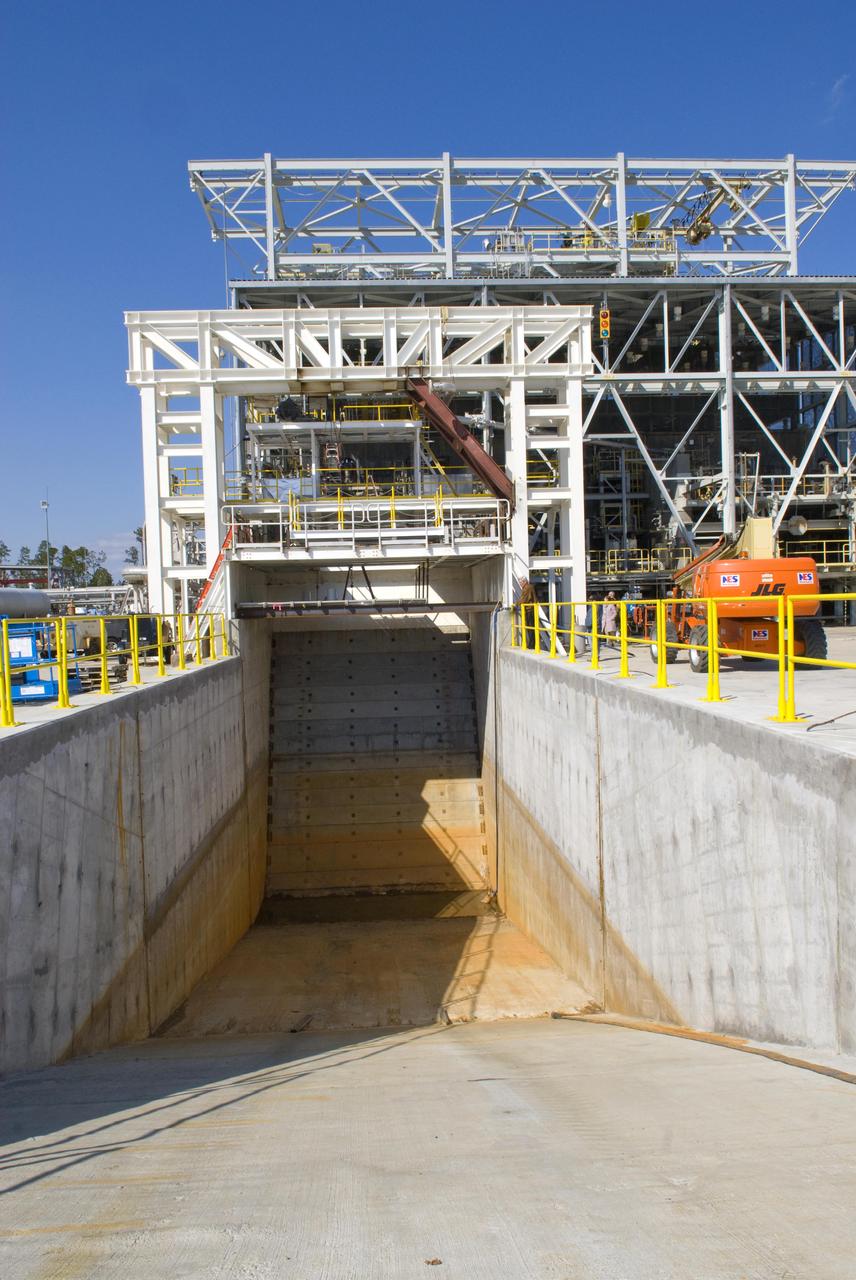
Operators at NASA's John C. Stennis Space Center are completing modifications to the E-1 Test Stand to begin testing Aerojet AJ26 rocket engines in early summer of 2010. Modifications include construction of a 27-foot-deep flame deflector trench. The AJ26 rocket engines will be used to power Orbital Sciences Corp.'s Taurus II space vehicles to provide commercial cargo transportation missions to the International Space Station for NASA. Stennis has partnered with Orbital to test all engines for the transport missions.

Stennis Space Center Director Patrick Scheuermann (right) and Naval Meteorology and Oceanography Command Chief of Staff James Pettigrew drop the first shovelfuls of dirt on a time capsule to be opened on the rocket engine test facility's 100th anniversary in 2061. The time capsule was placed in front of the Roy S. Estess Building on Oct. 25 as Stennis concluded celebrations of its 50th anniversary. NASA publicly announced plans to build the rocket engine test site Oct. 25, 1961.
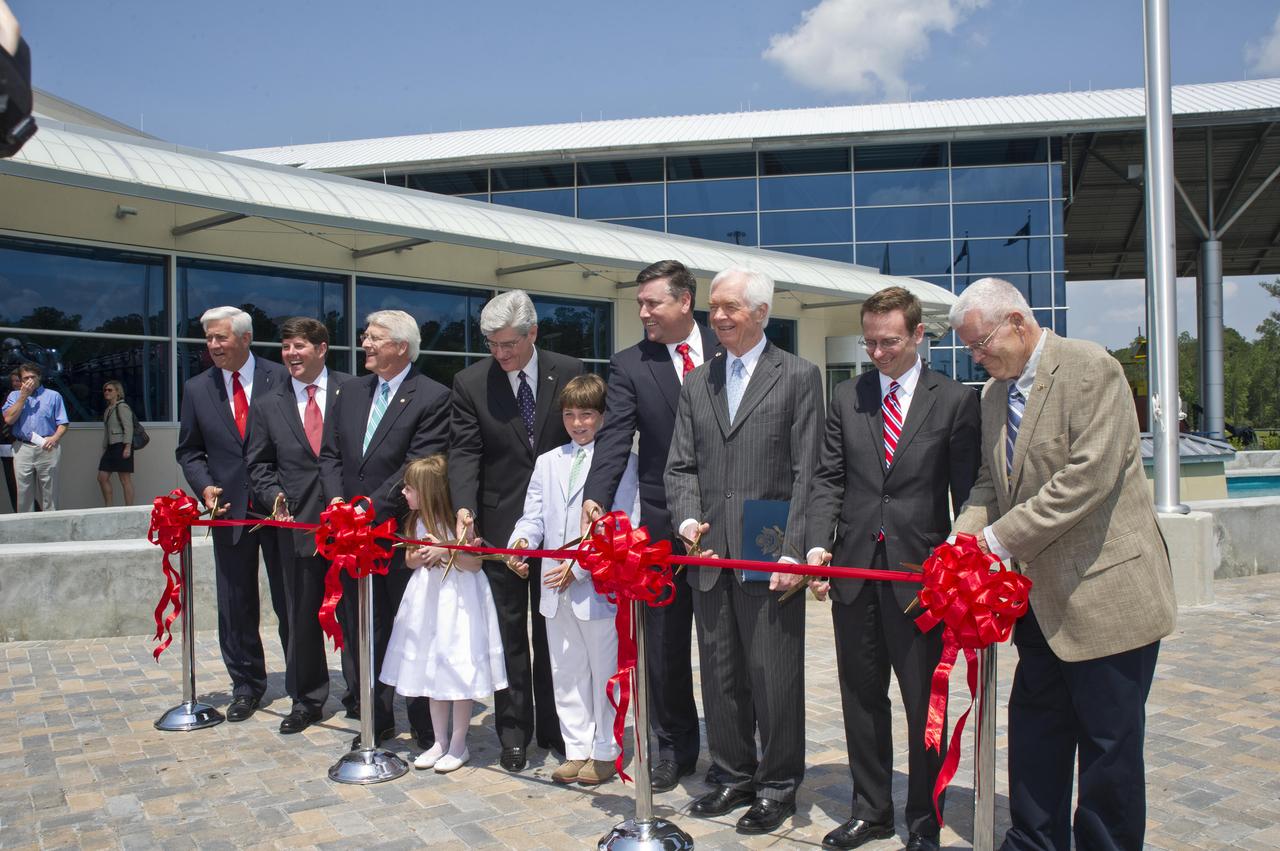
Ceremony participants prepare to cut the ribbon on the INFINITY at NASA Stennis Space Center facility April 11, 2012. Participating in the ceremony were (l to r): Gulfport Mayor and INFINITY Science Center Inc. Chairman George Schloegel; U.S. Rep. Steven Palazzo, R-Miss.; U.S. Sen. Roger Wicker, R-Miss.; Roy S. Estess granddaughter Lauren McKay; Mississippi Gov. Phil Bryant; Leo Seal Jr. grandson Leo Seal IV; Stennis Director Patrick Scheuermann; U.S. Sen. Thad Cochran, R-Miss.; NASA Chief of Staff David Radzanowski; and Apollo 13 astronaut and INFINITY Science Center Inc. Vice Chairman Fred Haise.
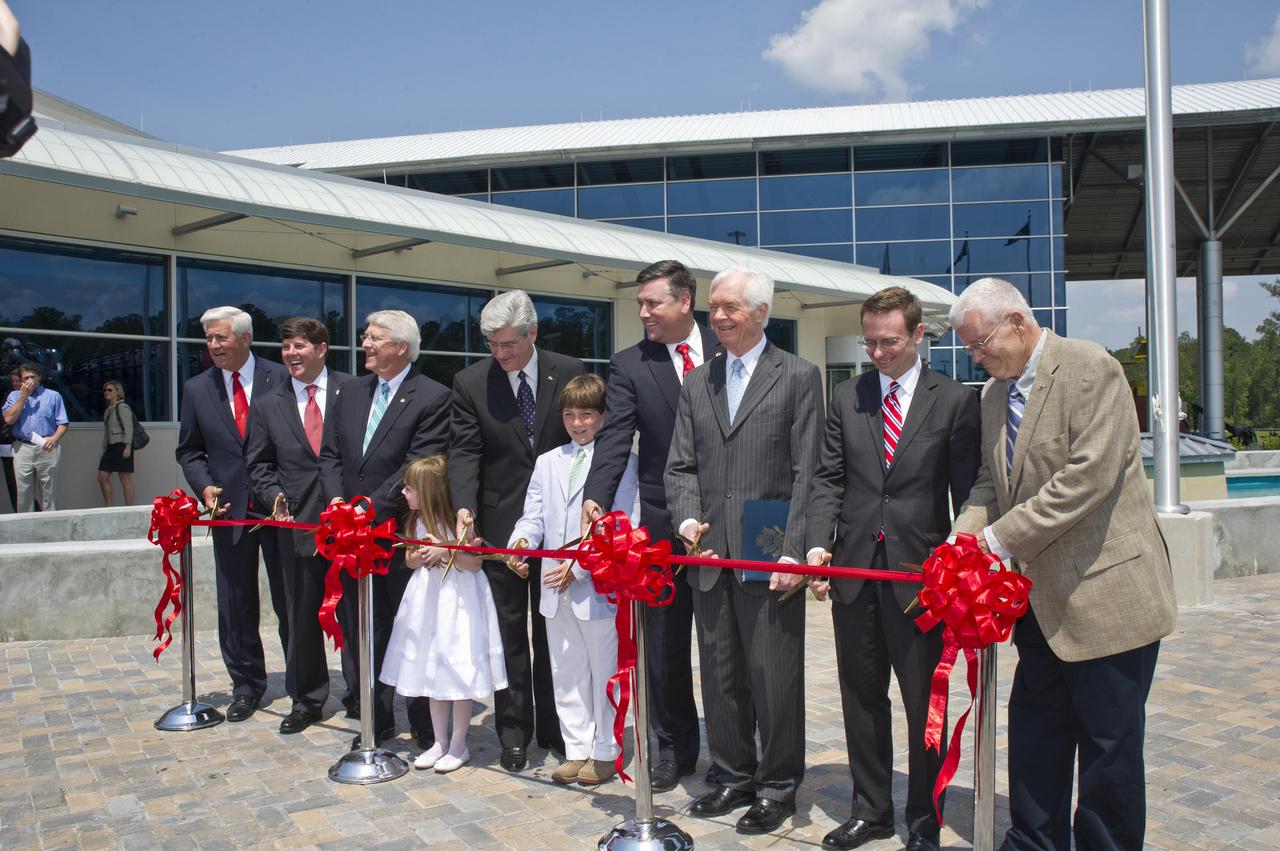
Ceremony participants prepare to cut the ribbon on the INFINITY at NASA Stennis Space Center facility April 11, 2012. Participating in the ceremony were (l to r): Gulfport Mayor and INFINITY Science Center Inc. Chairman George Schloegel; U.S. Rep. Steven Palazzo, R-Miss.; U.S. Sen. Roger Wicker, R-Miss.; Roy S. Estess granddaughter Lauren McKay; Mississippi Gov. Phil Bryant; Leo Seal Jr. grandson Leo Seal IV; Stennis Director Patrick Scheuermann; U.S. Sen. Thad Cochran, R-Miss.; NASA Chief of Staff David Radzanowski; and Apollo 13 astronaut and INFINITY Science Center Inc. Vice Chairman Fred Haise.
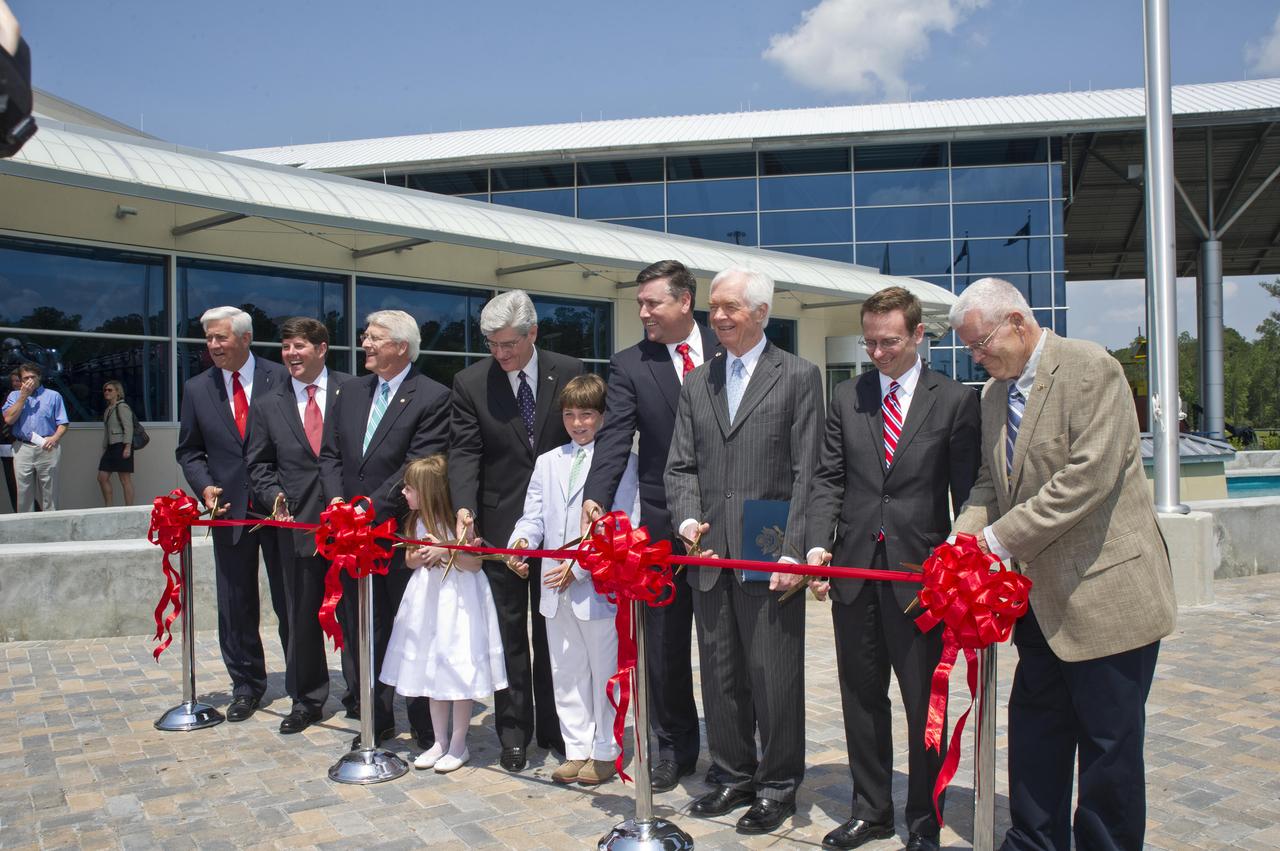
Ceremony participants prepare to cut the ribbon on the INFINITY at NASA Stennis Space Center facility April 11, 2012. Participating in the ceremony were (l to r): Gulfport Mayor and INFINITY Science Center Inc. Chairman George Schloegel; U.S. Rep. Steven Palazzo, R-Miss.; U.S. Sen. Roger Wicker, R-Miss.; Roy S. Estess granddaughter Lauren McKay; Mississippi Gov. Phil Bryant; Leo Seal Jr. grandson Leo Seal IV; Stennis Director Patrick Scheuermann; U.S. Sen. Thad Cochran, R-Miss.; NASA Chief of Staff David Radzanowski; and Apollo 13 astronaut and INFINITY Science Center Inc. Vice Chairman Fred Haise.

A space shuttle main engine test April 21, 2006, at NASA Stennis Space Center marked the 40th anniversary of the first rocket engine test at the site. The firing also marked the 25th anniversary of NASA's STS-1, the first space shuttle mission. Then called the Mississippi Test Facility, the center conducted its first test on April 23, 1966. That historic test was on an S-II (second) stage, a cluster of five J-2 engines that powered the Saturn V rockets that took America's Apollo missions to the moon.
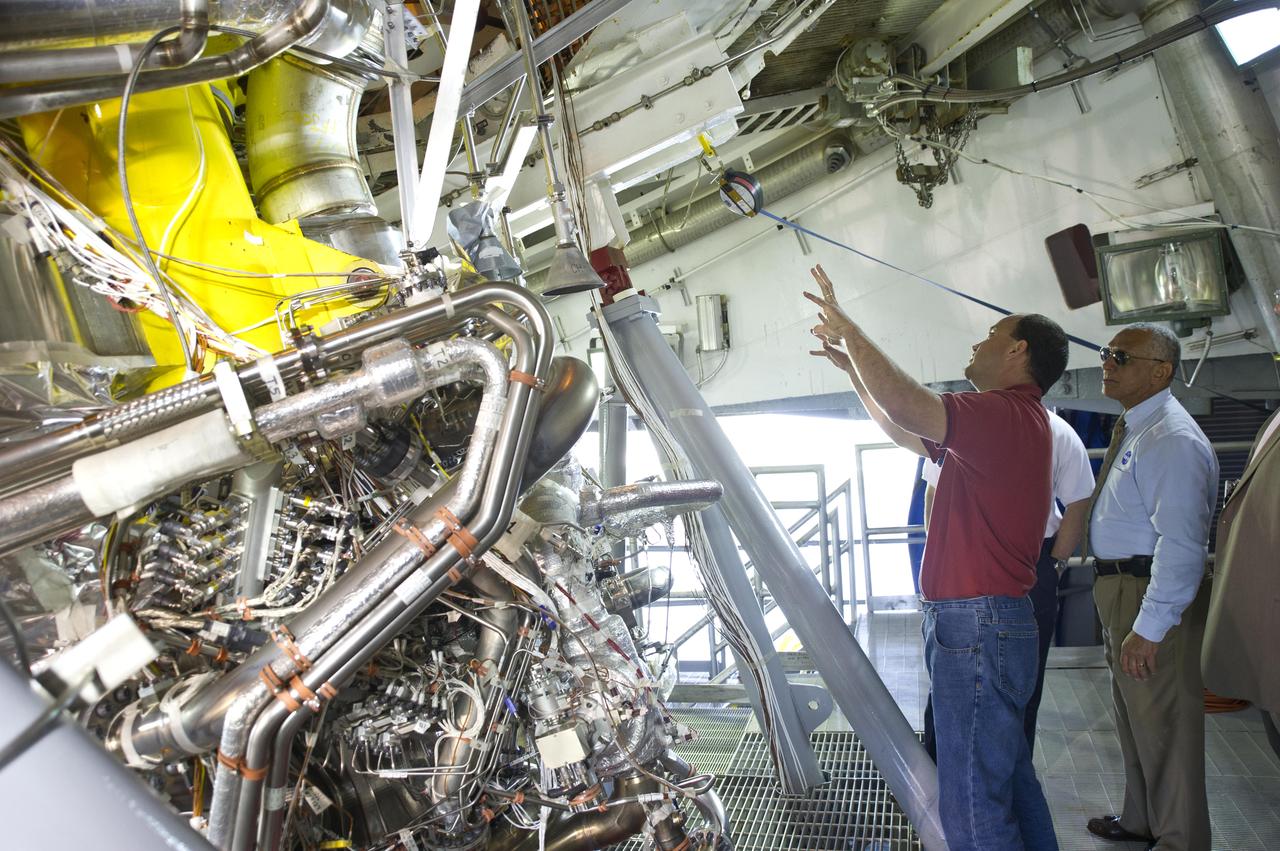
NASA Administrator Charles Bolden (r) takes an up-close look at the first development J-2X rocket engine on the A-2 Test Stand at Stennis Space Center during an April 20, 2012, visit. Pictured with Bolden is A-2 Test Stand Director Skip Roberts. The J-2X engine i s being developed for NASA by Pratt & Whitney Rocketdyne.
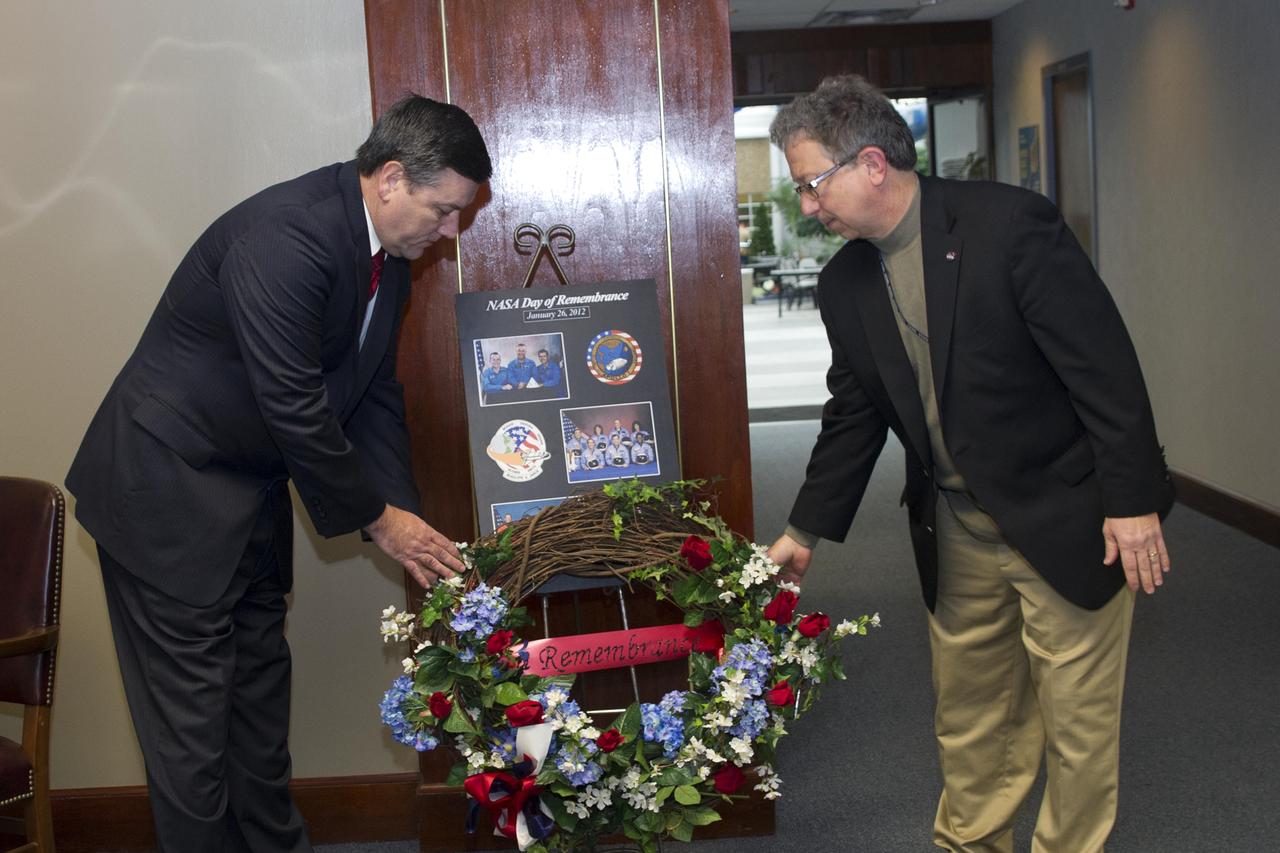
Stennis Space Center Director Patrick Scheuermann (left) and Associate Director Ken Human place a wreath in the Roy S. Estess Building on Jan. 25, 2012, in memory of the NASA family who lost their lives while furthering the cause of exploration and discovery. The wreath was placed during NASA's 2012 Day of Remembrance, which is observed each January.
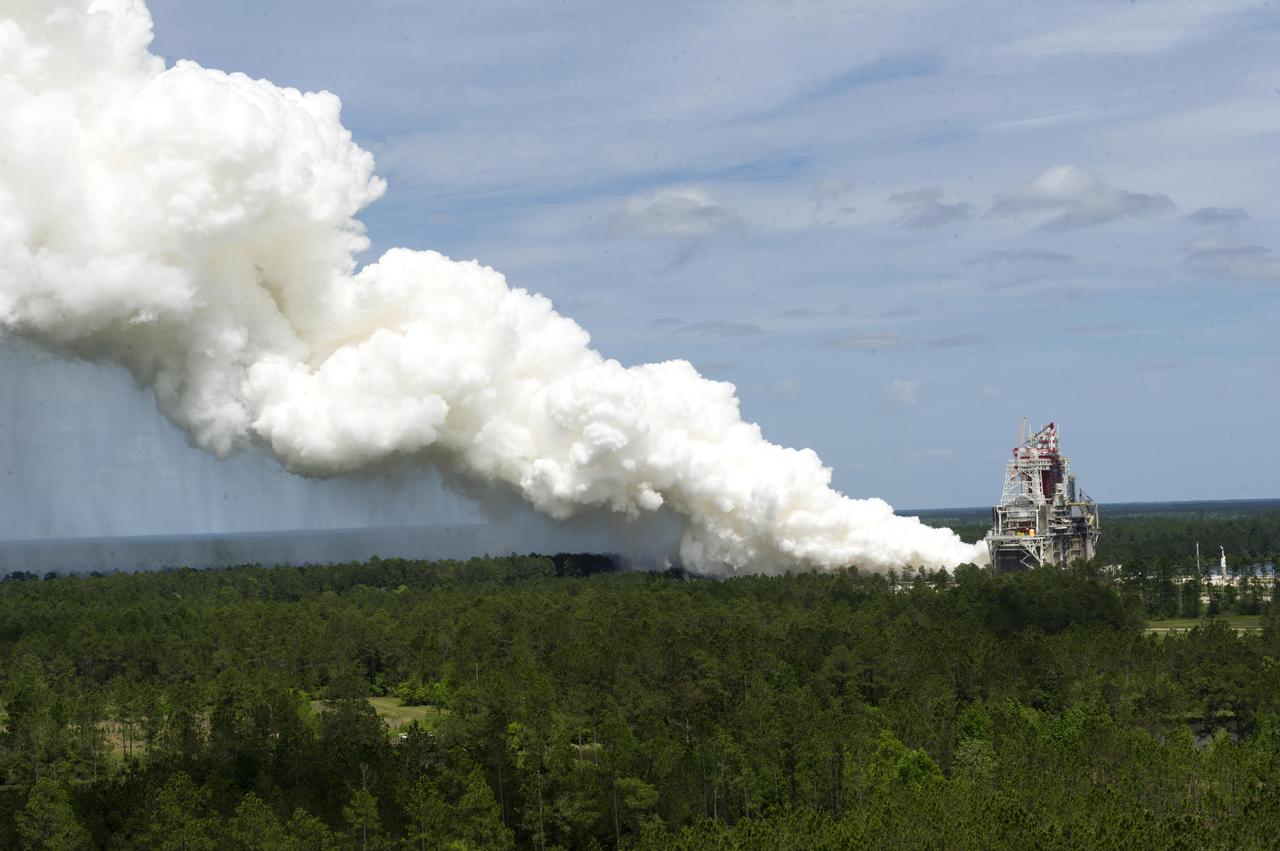
What better way to mark 50 years of rocket engine testing than with a rocket engine test? Stennis Space Center employees enjoyed a chance to view an RS-68 engine test at the B-1 Test Stand on April 19, almost 50 years to the day that the first test was conducted at the south Mississippi site in 1966. The test viewing was part of a weeklong celebration of the 50th year of rocket engine testing at Stennis. The first test at the site occurred April 23, 1966, with a 15-second firing of a Saturn V second stage prototype (S-II-C) on the A-2 Test Stand. The center subsequently tested Apollo rocket stages that carried humans to the moon and every main engine used to power 135 space shuttle missions. It currently tests engines for NASA’s new Space Launch System vehicle.
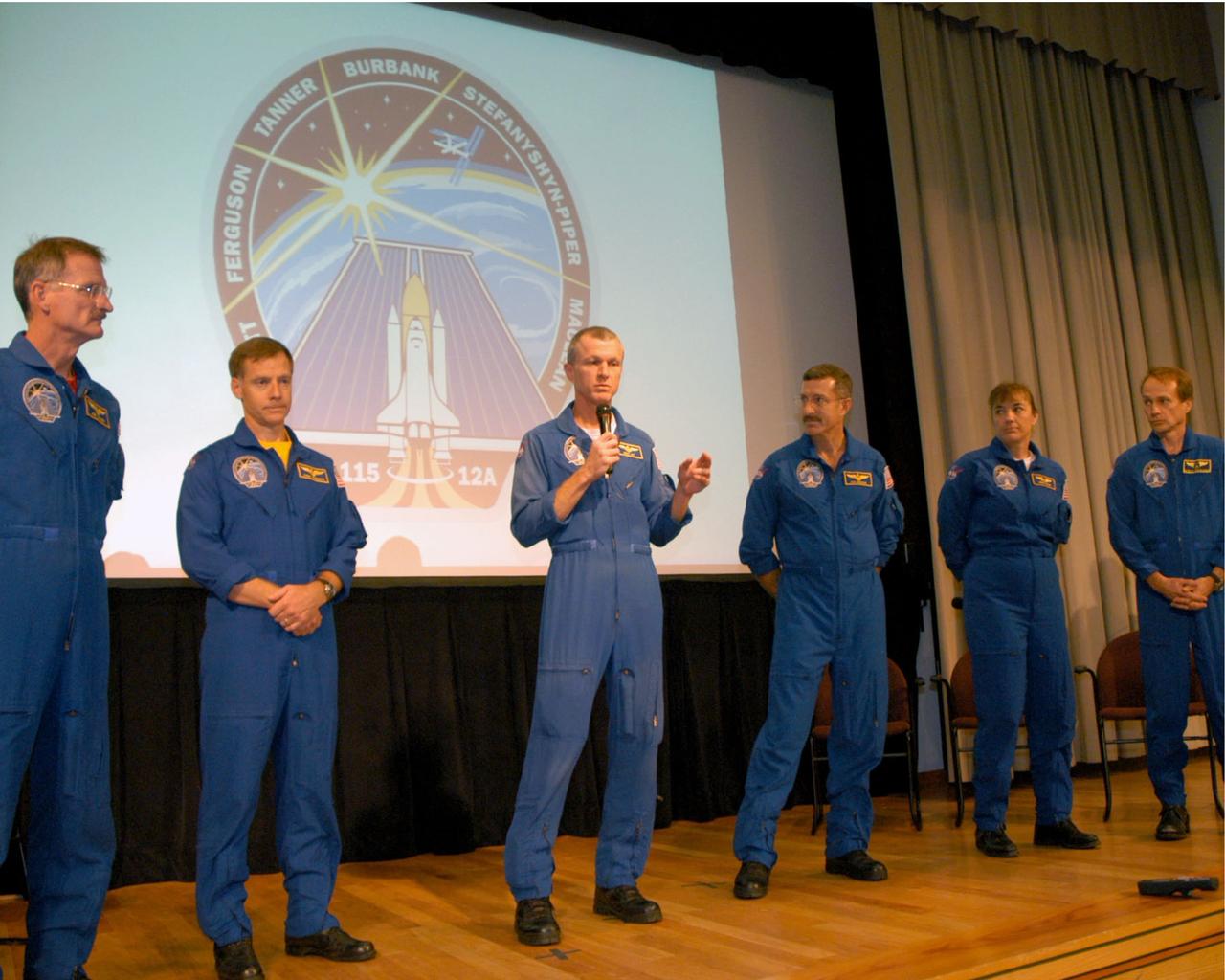
Commander Brent Jett (center) talks with employees and visitors at NASA Stennis Space Center. The astronauts of NASA's STS-115 space shuttle mission visited SSC in south Mississippi to share highlights of their 12-day mission and to thank SSC employees for the reliability of the space shuttle's main engines, which helped propel Space Shuttle Atlantis into orbit. STS-115's other crewmembers are (from left) Mission Specialists Joe Tanner, Dan Burbank, Heidemarie Stefanyshyn-Piper and Steve MacLean of the Canadian Space Agency. The mission launched Sept. 9, 2006, resuming construction of the International Space Station.
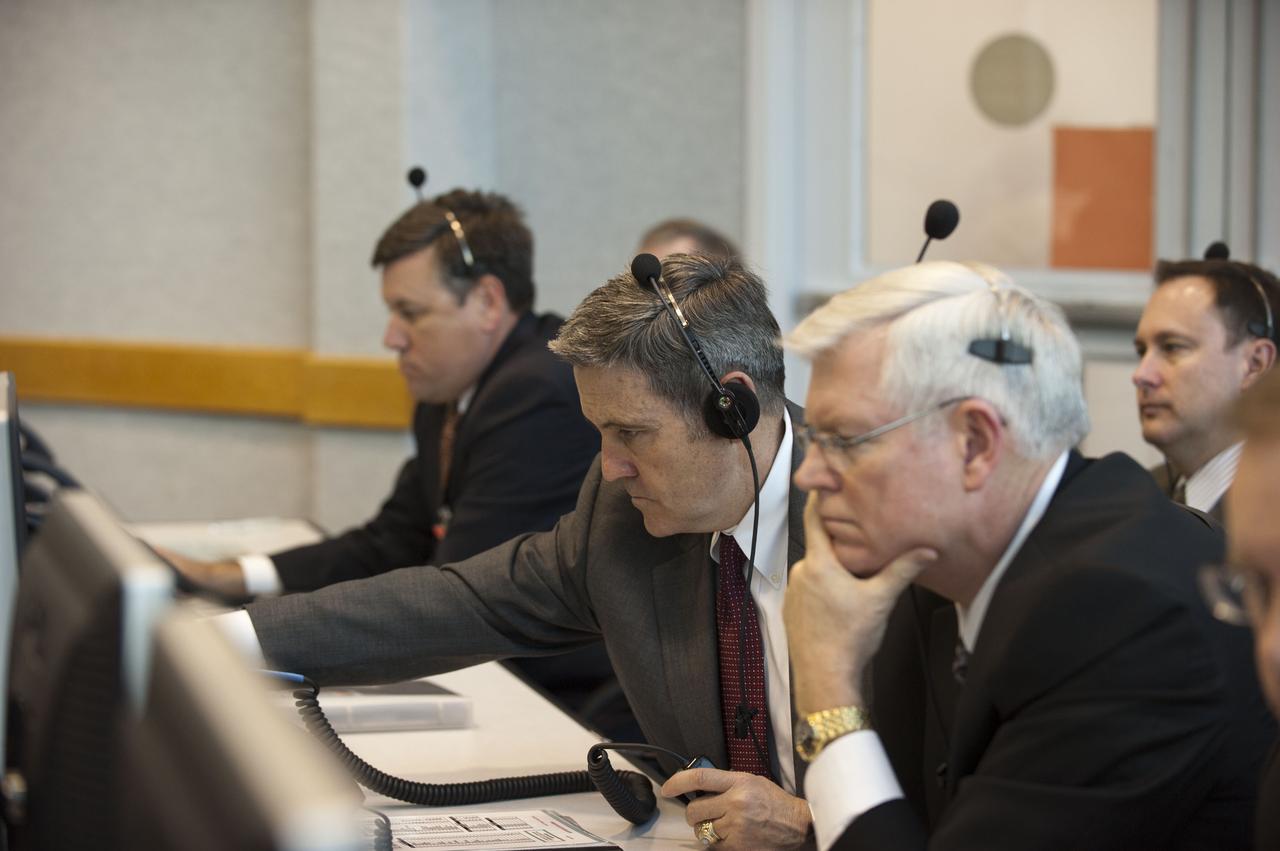
STS133-S-062 (24 Feb. 2011) --- In Firing Room 4 of the Launch Control Center at NASA's Kennedy Space Center in Florida, Stennis Center Director Patrick Scheuermann, left, Kennedy's Center Director Bob Cabana, Johnson Space Center Director Mike Coats and Marshall Center Director Robert Lightfoot (extreme right), monitor the countdown to launch of space shuttle Discovery on its STS-133 mission to the International Space Station. Discovery and its six-member crew are on a mission to deliver the Permanent Multipurpose Module, packed with supplies and critical spare parts, as well as Robonaut 2, the dexterous humanoid astronaut helper, to the orbiting outpost. Discovery is making its 39th mission and is scheduled to be retired following STS-133. This is the 133rd Space Shuttle Program mission and the 35th shuttle voyage to the space station. Photo credit: NASA or National Aeronautics and Space Administration
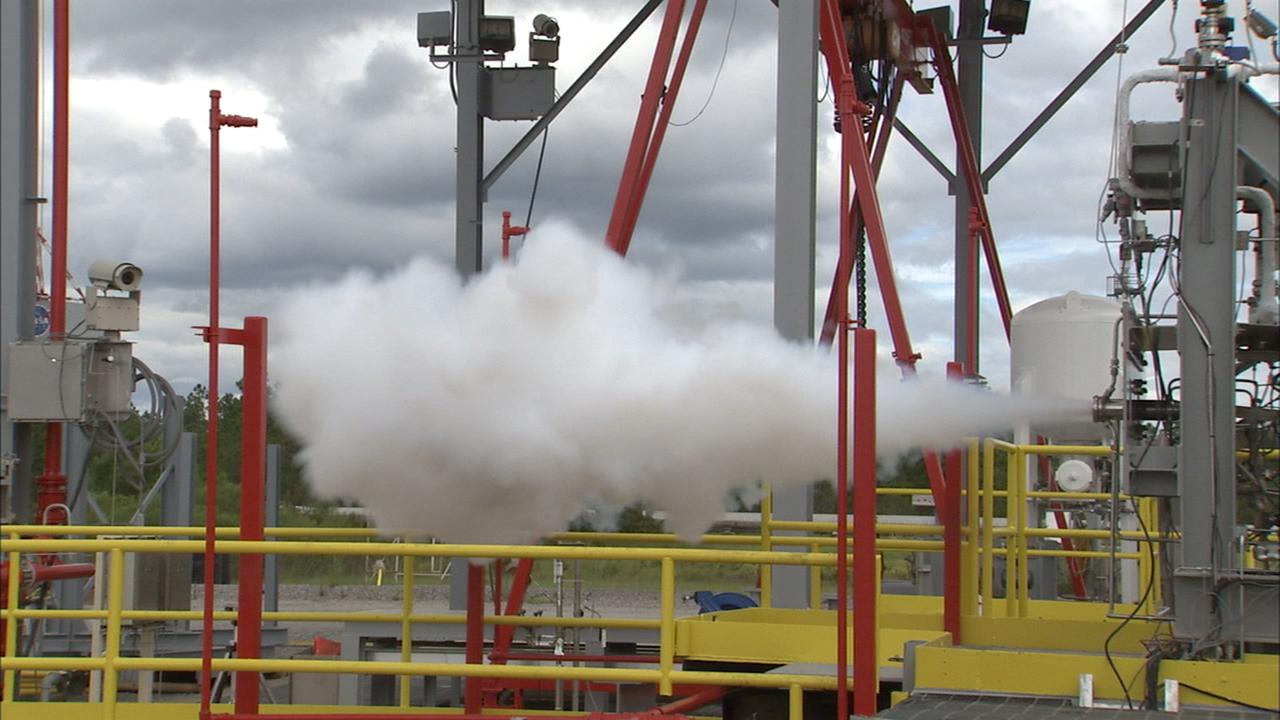
Tests begun at Stennis Space Center's E Complex Sept. 13 evaluated a liquid oxygen lead for engine start performance, part of the A-3 Test Facility Subscale Diffuser Risk Mitigation Project at SSC's E-3 Test Facility. Phase 1 of the subscale diffuser project, completed Sept. 24, was a series of 18 hot-fire tests using a 1,000-pound liquid oxygen and gaseous hydrogen thruster to verify maximum duration and repeatability for steam generation supporting the A-3 Test Stand project. The thruster is a stand-in for NASA's developing J-2X engine, to validate a 6 percent scale version of A-3's exhaust diffuser. Testing the J-2X at altitude conditions requires an enormous diffuser. Engineers will generate nearly 4,600 pounds per second of steam to reduce pressure inside A-3's test cell to simulate altitude conditions. A-3's exhaust diffuser has to be able to withstand regulated pressure, temperatures and the safe discharge of the steam produced during those tests. Before the real thing is built, engineers hope to work out any issues on the miniature version. Phase 2 testing is scheduled to begin this month.
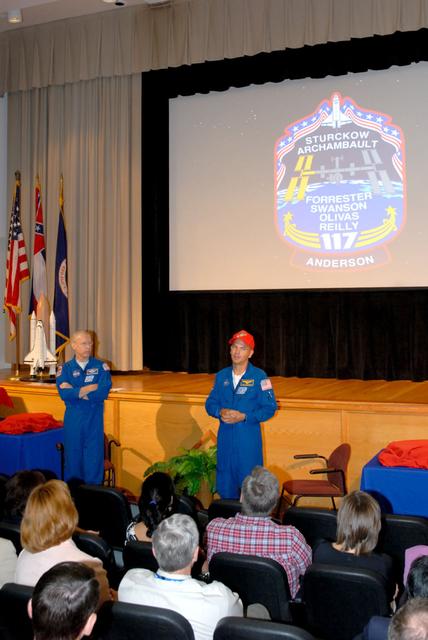
Astronauts Rick Sturckow (right) and Pat Forrester make a presentation Aug. 2 at NASA Stennis Space Center near Bay St. Louis, Miss., about their recent space shuttle mission, STS-117. Sturckow and Forrester thanked employees for the reliability and safe performance of the space shuttle's main engines, which are all tested and proved flight-worthy at SSC. The astronauts delivered a video of their mission's highlights, held a question-and-answer session, met one-on-one with employees and presented two Silver Snoopy awards during their visit. The STS-117 mission, which launched June 8, delivered a truss segment and a set of U.S. solar arrays, batteries and associated equipment to the International Space Station. Sturckow commanded the mission; Forrester was a mission specialist who performed two of STS-117's four spacewalks.