
NASA's Super Guppy cargo transport aircraft taxis in from the Plant 42 runway to NASA"s Armstrong Flight Research Center Building 703 ramp. The aircraft is being stored in the hangar during its phase maintenance check.
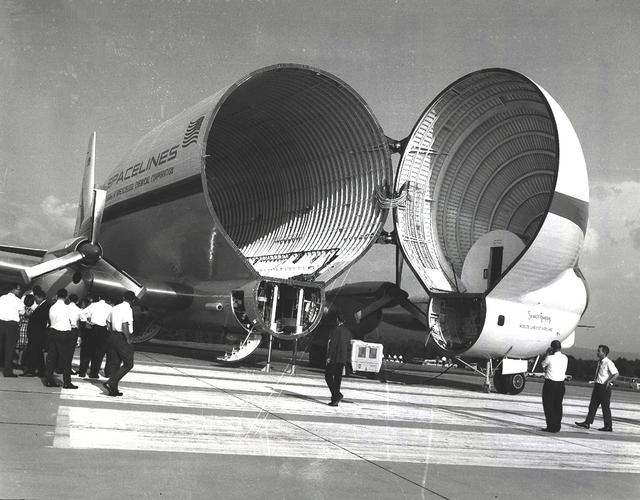
The Super Guppy is shown at the Redstone Airstrip. NASA used the aircraft to transport the S-IVB upper stage used on the Saturn IB and Saturn V launch vehicles between manufacturing facilities on the West coast, and testing and launch facilities in the Southeast. This aircraft was built by John M. Conroy of Aero Spaceliners, Incorporated, who started with the fuselages of a surplus Boeing C-97 Stratocruiser, ballooned out the upper decks enormously, and hinged the front sections so that they could be folded back 110 degrees. The Super Guppy flew smoothly at a 250-mph cruising speed, and its cargo deck provided a 25-foot clear diameter.
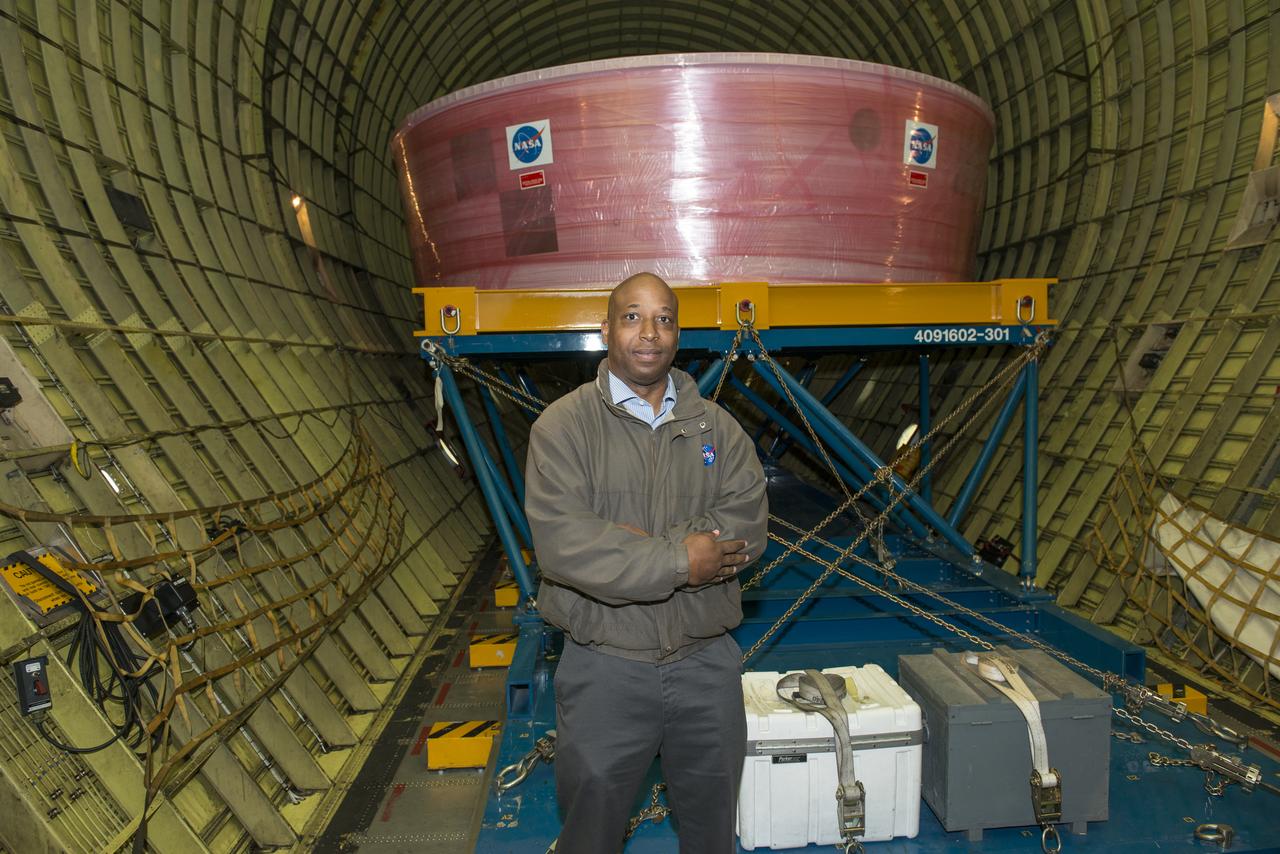
NASA's Super Guppy aircraft arrives to the U.S. Army’s Redstone Airfield in Huntsville, Alabama, April 2, to pick up flight hardware for NASA’s Space Launch System – its new, deep-space rocket that will enable astronauts to begin their journey to explore destinations far into the solar system. The Guppy will depart on Tuesday, April 3 to deliver the Orion stage adapter to NASA’s Kennedy Space Center in Florida for flight preparations. On Exploration Mission-1, the first integrated flight of the SLS and the Orion spacecraft, the adapter will connect Orion to the rocket and carry 13 CubeSats as secondary payloads. Rumaasha Maasha stands in front of the Orion stage adapter in the cargo hold of NASA's Super Guppy aircraft. The Orion stage adapter, the top of the rocket that connects the Space Lauch System to Orion, will carry 13 CubeSats as secondary payloads on Exploration Mission-1, the first integrated flight of SLS and the Orion spacecraft. Guppy transported the adapter to Kennedy Space Center April 3.
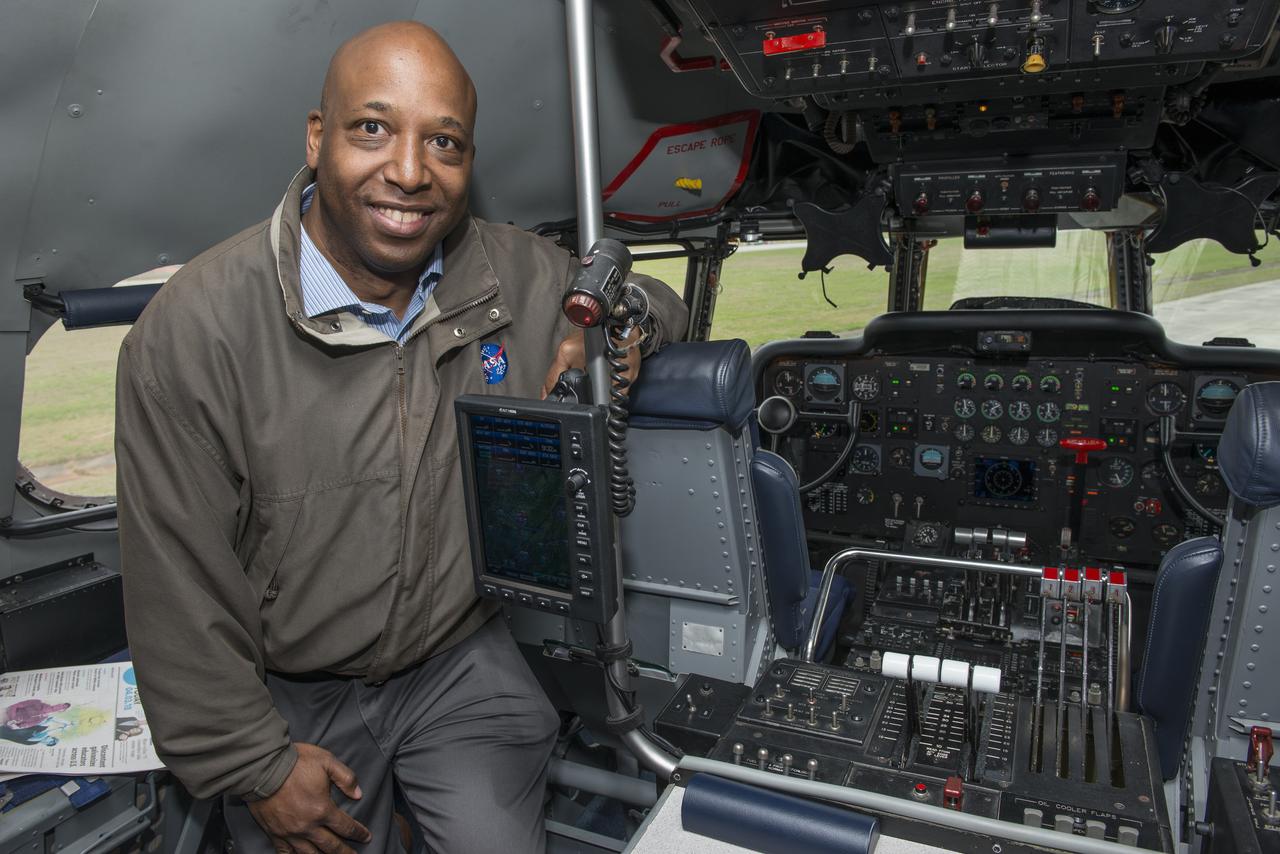
NASA's Super Guppy aircraft arrives to the U.S. Army’s Redstone Airfield in Huntsville, Alabama, April 2, to pick up flight hardware for NASA’s Space Launch System – its new, deep-space rocket that will enable astronauts to begin their journey to explore destinations far into the solar system. The Guppy will depart on Tuesday, April 3 to deliver the Orion stage adapter to NASA’s Kennedy Space Center in Florida for flight preparations. On Exploration Mission-1, the first integrated flight of the SLS and the Orion spacecraft, the adapter will connect Orion to the rocket and carry 13 CubeSats as secondary payloads. Rumaasha Maasha, an aerospace engineer in Marshall's Spacecraft & Vehicle Systems Department, tours the cockpit of NASA's Super Guppy aircraft April 3 when it landed at Marshall to pick up the Orion stage adapter for transportation to NASA's Kennedy Space Center. Maasha holds a master's degree in aerospace engineering, is a certified aviation maintenance tech and pilot and previously worked as a 747 loadmaster and airline refueler.
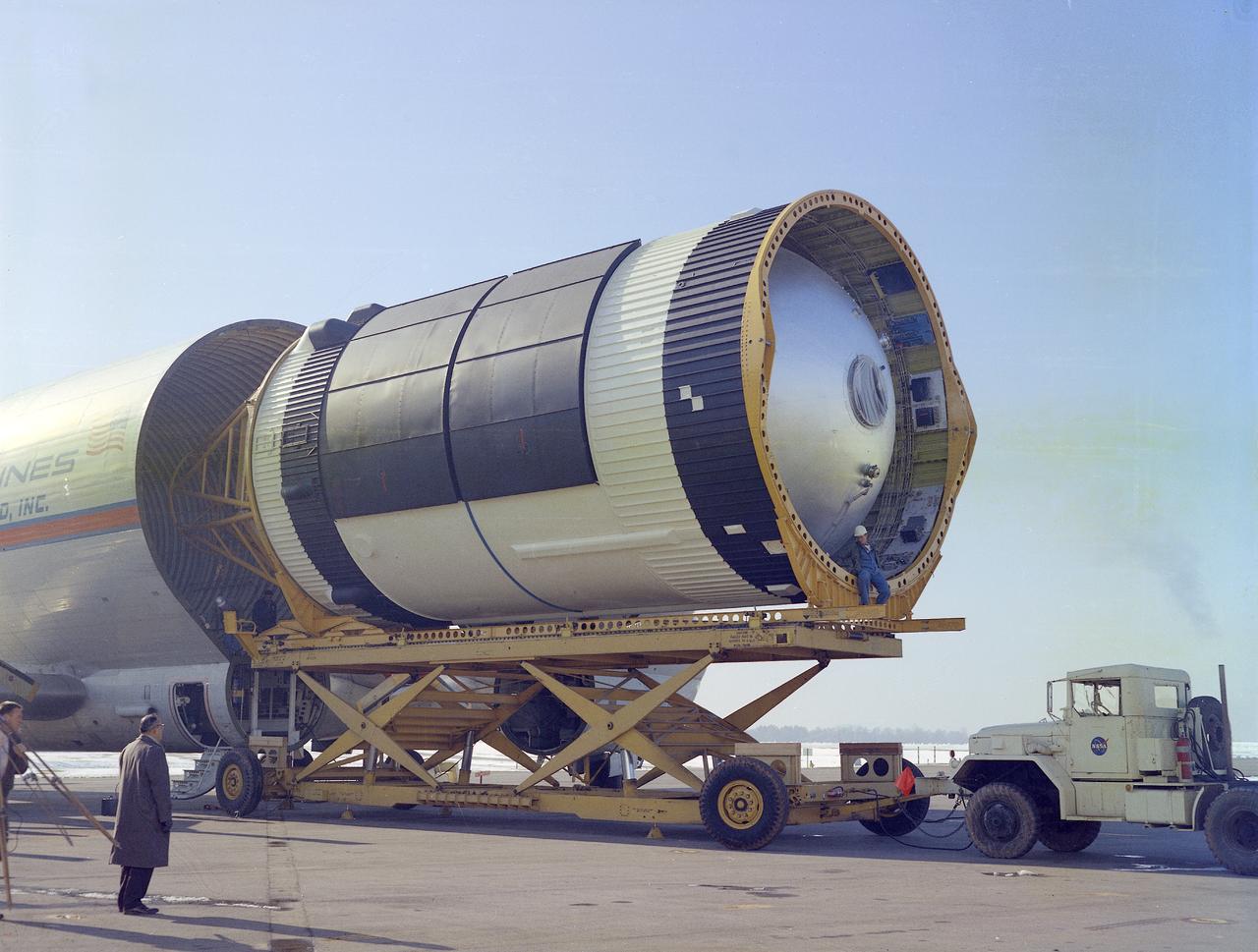
This photograph was taken at the Redstone airfield, Huntsville, Alabama, during the unloading of the Saturn V S-IVB stage that housed the Orbital Workshop (OWS) from the Super Guppy, the NASA plane that was specially built to carry oversized cargo. The OWS measured 22 feet (6.7 m) in diameter, and 48 feet (14.6 m) in length. The Saturn V S-IVB stage was modified at the McDornell Douglas facility at Huntington Beach, California, for a new role, which was to house the OWS. In addition to the test articles, engineering mockups, and flight equipment, both McDonnell Douglas and Martin Marietta built 0-G trainers, neutral buoyancy trainers, and high-fidelity mockups for the 1-G trainer to be used in the KC-135 aircraft. The Marshall Space Flight Center had program management responsibility for the development of Skylab hardware and experiments.