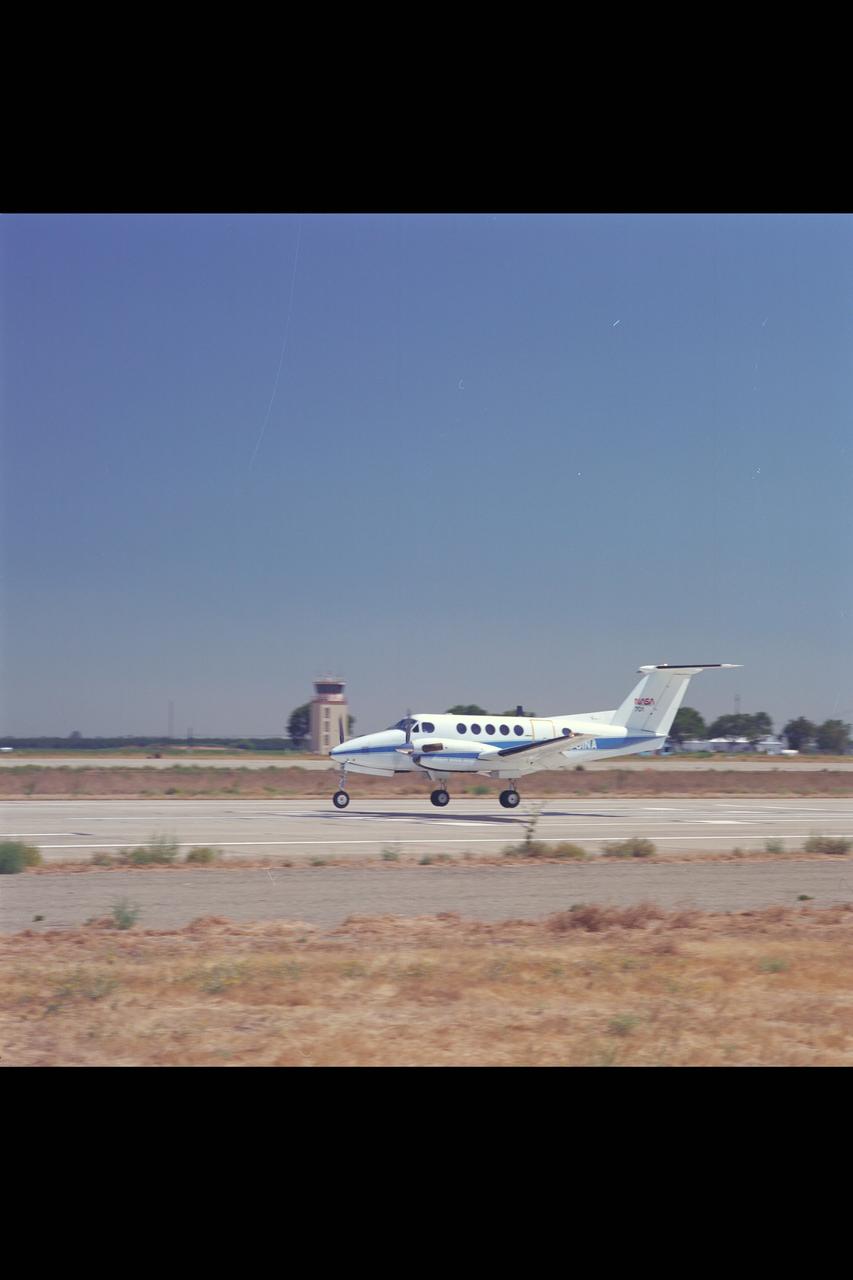
King Air (NASA-701) at Crows Landing
ARC-1969-AC93-0459-5
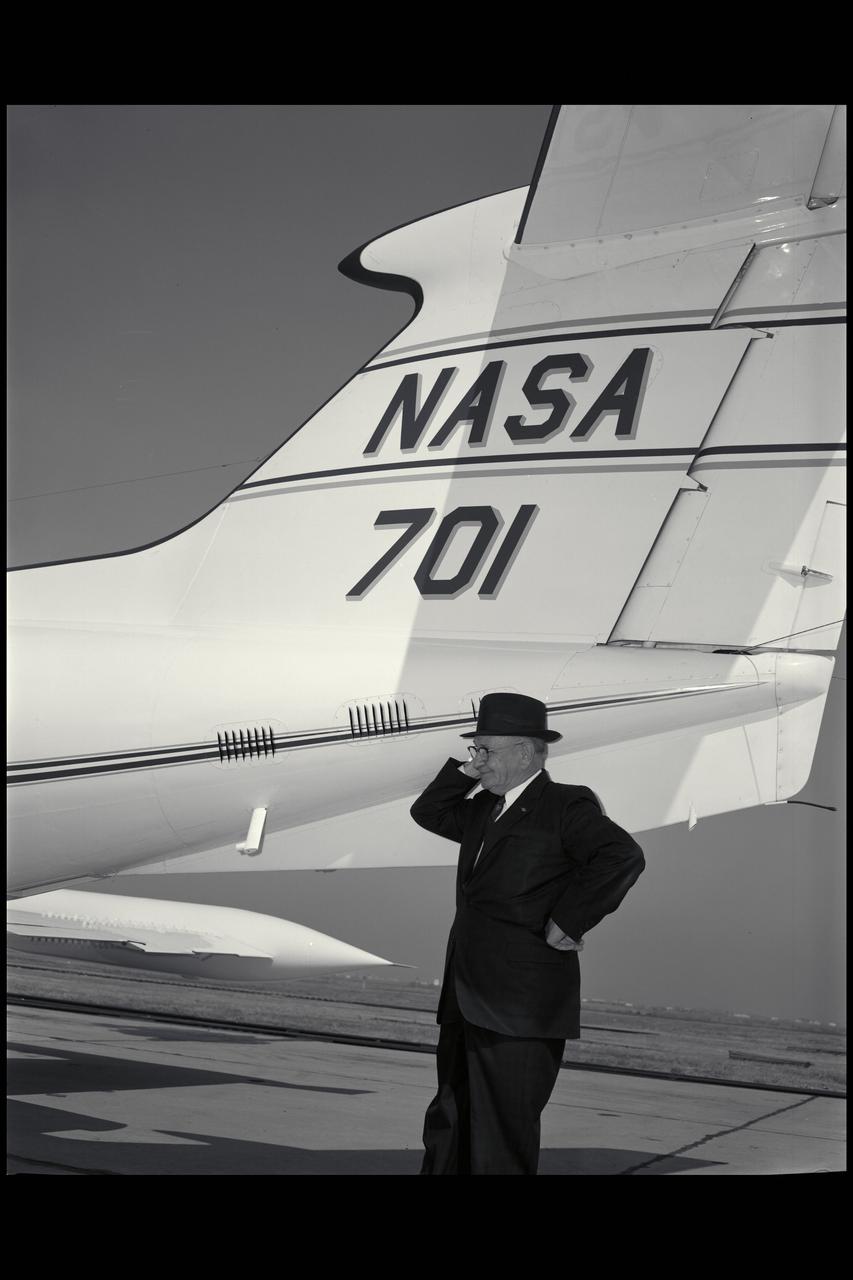
Smithy J. DeFrance (Ames Director) at tail of Ames Lear Jet (NASA-701)
ARC-1965-A-35429
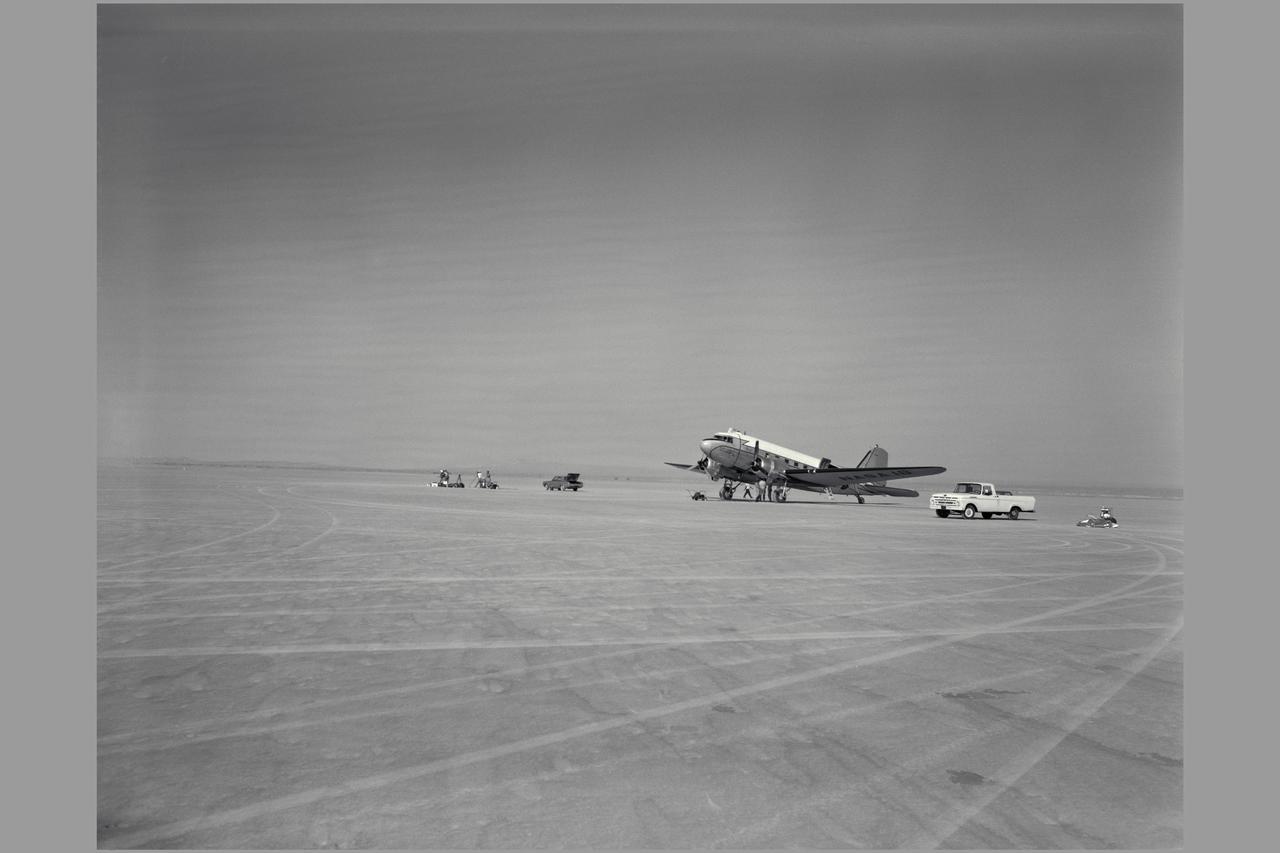
R4D-6 (Bu. No. 99827 NACA 18, NASA 701).  TAKE-OFF MONITOR TEST, EDWARDS AIR FORCE BASE.  Gunsight Tracking and Guidance and Control Displays.  Note:  Used in publication in Flight Research at Ames;  57 Years of Development and Validation of Aeronautical Technology NASA SP-1998-3300 fig 76
ARC-1969-A-33200-4
L59-7932 First University of Michigan Strongarm sounding rocket on launcher at Wallops for test, November 10, 1959. Photograph published in A New Dimension  Wallops Island Flight Test Range: The First Fifteen Years by Joseph Shortal. A NASA publication. Page 701.E5-188 Shop and Launcher Pictures
First University of Michigan Strongarm sounding rocket on launcher at Wallops for test, November 10, 1959E5-188 Shop and Launcher Pictures
L59-7932 First University of Michigan Strongarm sounding rocket on launcher at Wallops for test, November 10, 1959. Photograph published in A New Dimension  Wallops Island Flight Test Range: The First Fifteen Years by Joseph Shortal. A NASA publication. Page 701.E5-188 Shop and Launcher Pictures
First University of Michigan Strongarm sounding rocket on launcher at Wallops for test, November 10, 1959E5-188 Shop and Launcher Pictures
L59-7932 First University of Michigan Strongarm sounding rocket on launcher at Wallops for test, November 10, 1959. Photograph published in A New Dimension  Wallops Island Flight Test Range: The First Fifteen Years by Joseph Shortal. A NASA publication. Page 701.E5-188 Shop and Launcher Pictures
First University of Michigan Strongarm sounding rocket on launcher at Wallops for test, November 10, 1959E5-188 Shop and Launcher Pictures
L59-7932 First University of Michigan Strongarm sounding rocket on launcher at Wallops for test, November 10, 1959. Photograph published in A New Dimension  Wallops Island Flight Test Range: The First Fifteen Years by Joseph Shortal. A NASA publication. Page 701.E5-188 Shop and Launcher Pictures
First University of Michigan Strongarm sounding rocket on launcher at Wallops for test, November 10, 1959E5-188 Shop and Launcher Pictures
L59-7932 First University of Michigan Strongarm sounding rocket on launcher at Wallops for test, November 10, 1959. Photograph published in A New Dimension  Wallops Island Flight Test Range: The First Fifteen Years by Joseph Shortal. A NASA publication. Page 701.E5-188 Shop and Launcher Pictures
First University of Michigan Strongarm sounding rocket on launcher at Wallops for test, November 10, 1959E5-188 Shop and Launcher Pictures
L59-7932 First University of Michigan Strongarm sounding rocket on launcher at Wallops for test, November 10, 1959. Photograph published in A New Dimension  Wallops Island Flight Test Range: The First Fifteen Years by Joseph Shortal. A NASA publication. Page 701.E5-188 Shop and Launcher Pictures
First University of Michigan Strongarm sounding rocket on launcher at Wallops for test, November 10, 1959E5-188 Shop and Launcher Pictures
STS071-701-025 (29 June 1995) --- The approach for the June 29, 1995, link-up of the Russian Mir Space Station and the space shuttle Atlantis was recorded with a 70mm handheld camera from the aft flight deck of the Space Shuttle Atlantis. The Androgynous Peripheral Docking System (APDS) and the Kristall Module on Mir are at center frame. Later, five NASA astronauts and two Russian cosmonauts boarded Mir. The occasion was just two and a half weeks prior to the 20th anniversary of the Apollo-Soyuz Test Project (ASTP) docking in Earth-orbit.
Kvant-2,Kristall and Spektr modules on Mir Space Station
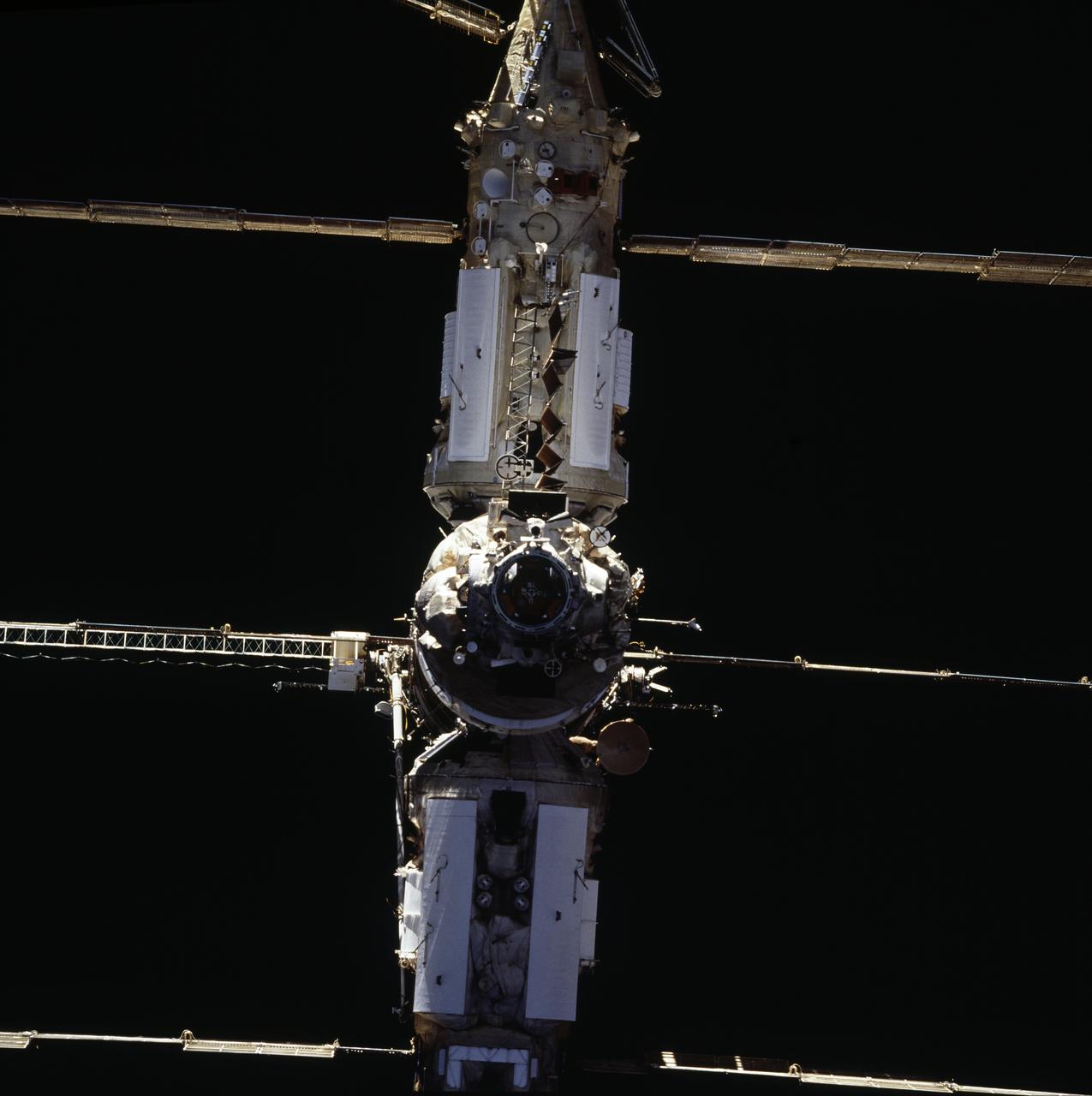
STS071-701-064 (29 June 1995) --- Russia's Kvant 2 portion of the Mir Space Station is backdropped against the darkness of space, as photographed from the approaching space shuttle Atlantis on June 29, 1995. Cosmonaut Vladimir N. Dezhurov, Mir-18 mission commander, can be seen aiming a camera through a port hole at center frame.  Norman E. Thagard, Mir-18 cosmonaut researcher, aims a camera through a smaller window. Five NASA astronauts and two cosmonauts were onboard Atlantis as it approached the Mir, which has been home for the three-member Mir-18 crew since March of this year.
Kvant 2 module of the Mir space station
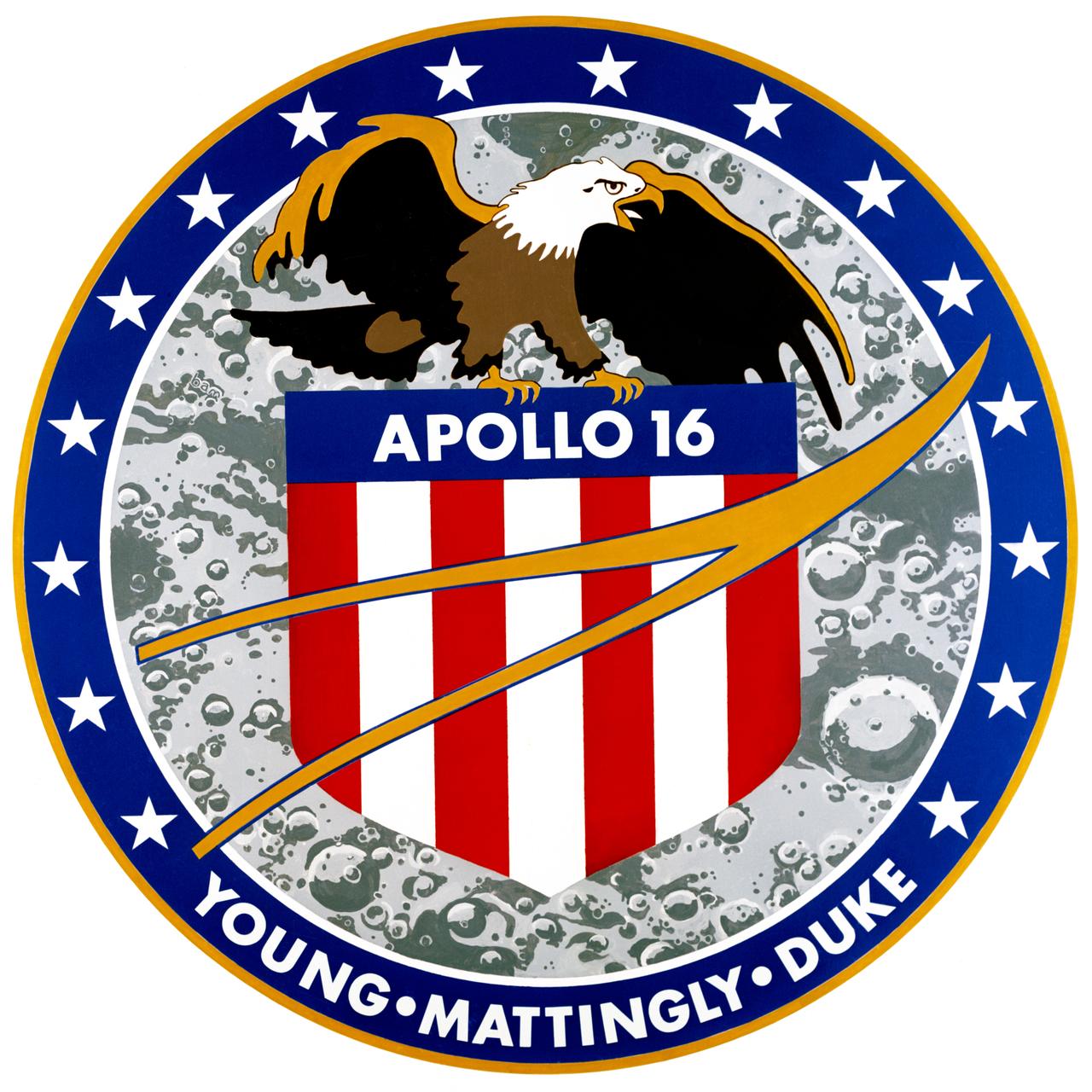
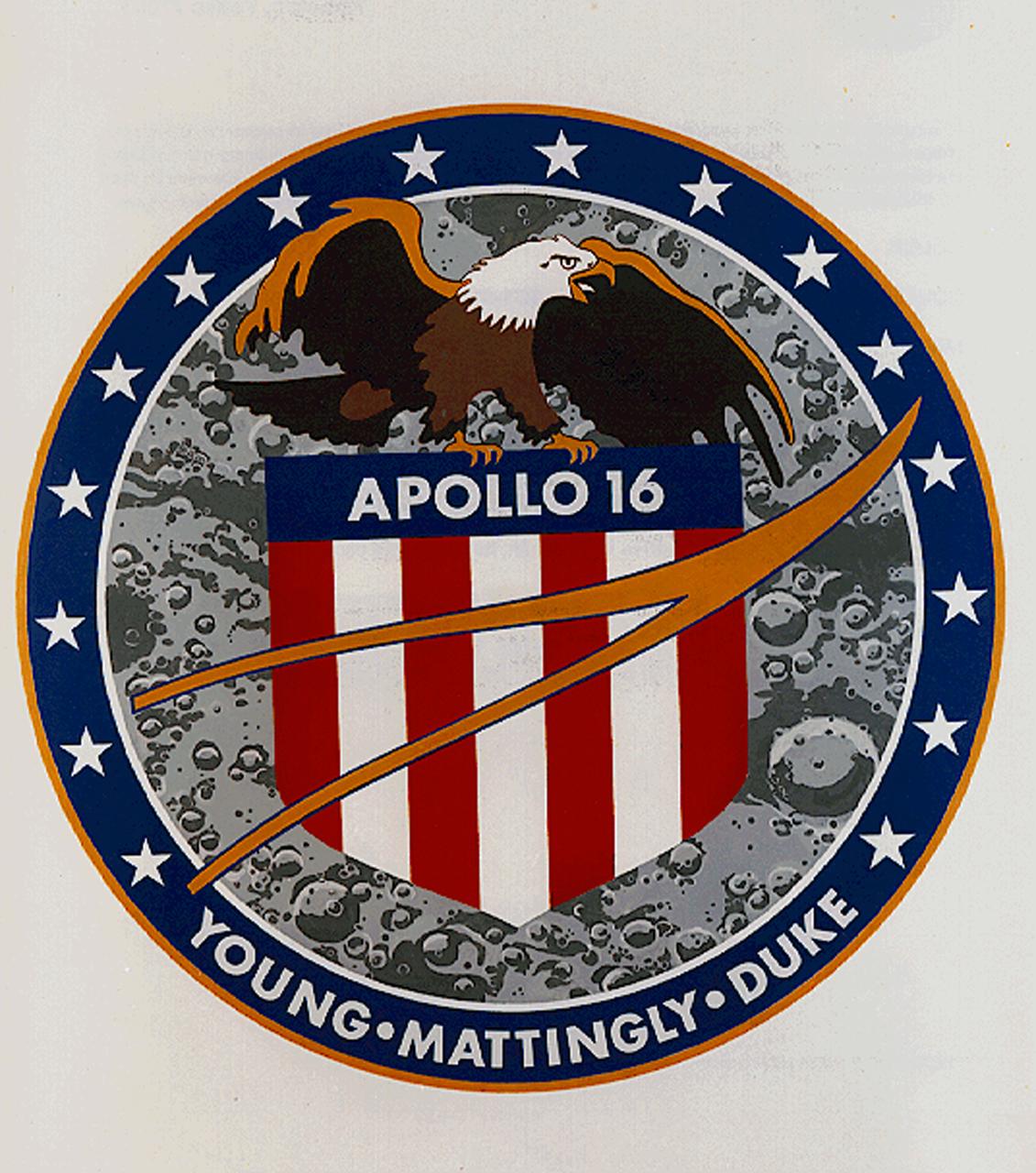
S71-56246 (November 1971) --- The Apollo 16 crew patch is dominated by an eagle perched atop a red, white and blue shield a superimposed on a lunar scene, surrounded by a blue circle of 16 stars with the crew's surnames completing the bottom are of the circle. Across the face of the shield is a gold symbol of flight outlined in blue, similar to that on the National Aeronautics and Space Administration (NASA) agency seal and insignia. The design was created by a NASA artist from ideas submitted by the three crew men: astronauts John W. Young, commander; Thomas K. Mattingly II, command module pilot; and Charles M. Duke Jr., lunar module pilot. This is the official Apollo 16 emblem, a property of the government of the United States. It has been authorized only for use by the astronauts. Its reproduction in any form other than in news, information and education media is not authorized without approval. Unauthorized use is subject to the provisions of Title 18, U.S. Code, Section 701.
Apollo 16 insignia
The Apollo 16 crew patch is dominated by an eagle perched atop a red, white, and blue shield superimposed on a lunar surface scene. Similar to that on the NASA agency shield and insignia, there is a gold symbol of flight outlined in blue across the face of the shield. The border surrounding the shield is a circle of 16 stars completed by the the crew’s surnames at the bottom. The patch was designed from ideas submitted by the Apollo 16 3-man crew: John W. Young, Mission Commander: Thomas K. Mattingly, Command Module pilot; and Charles M. Duke, Lunar Module pilot. (Note: This is the official Apollo 16 emblem, a property of the United States government. Its reproduction in any form other than in news, information, and education media is not authorized without approval. Unauthorized use is subject to the provisions of Title 18, U.S. Code, Section 701.)
Saturn Apollo Program