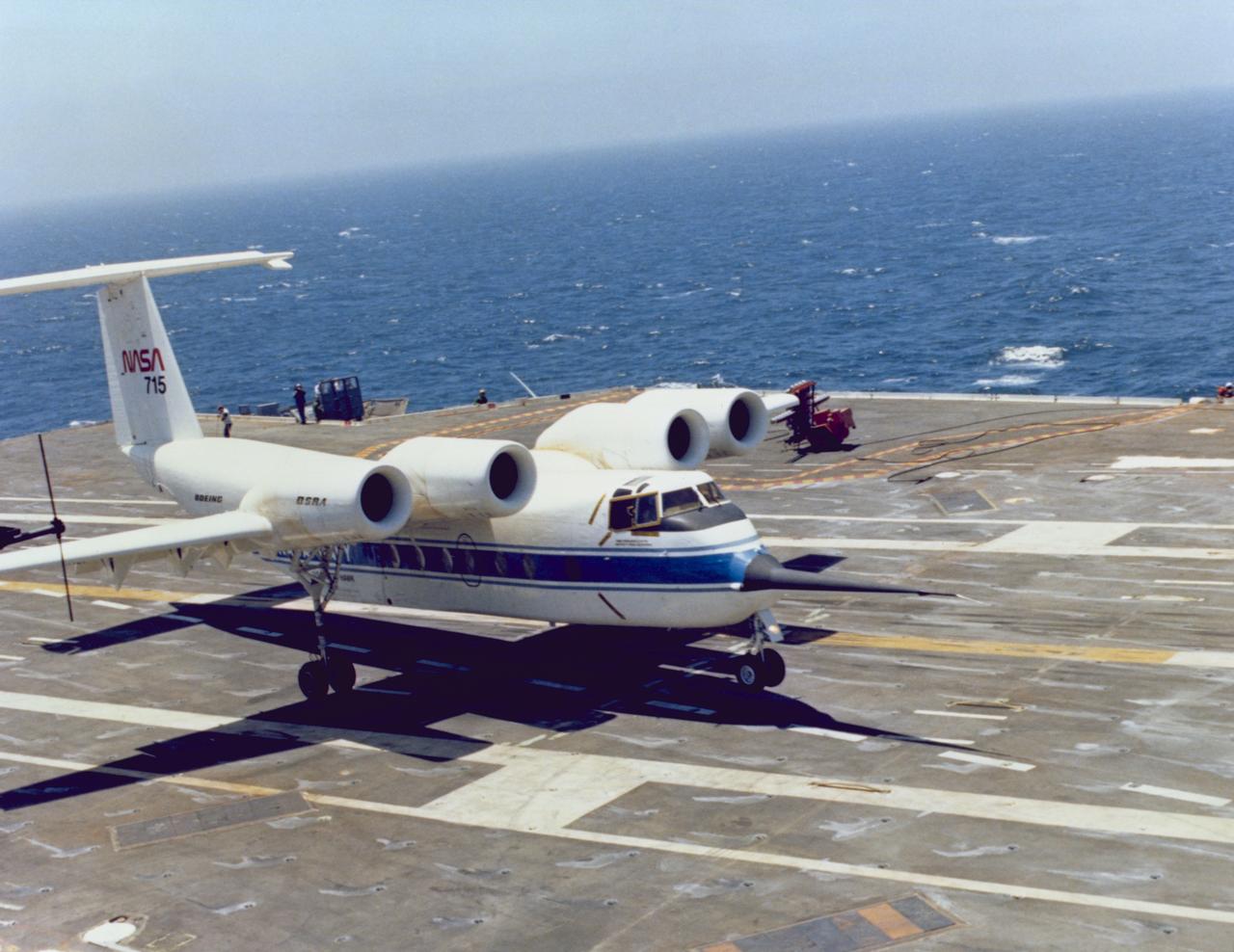
QSRA (NASA-715) takeoff and landing trials onboard the USS Kitty Hawk
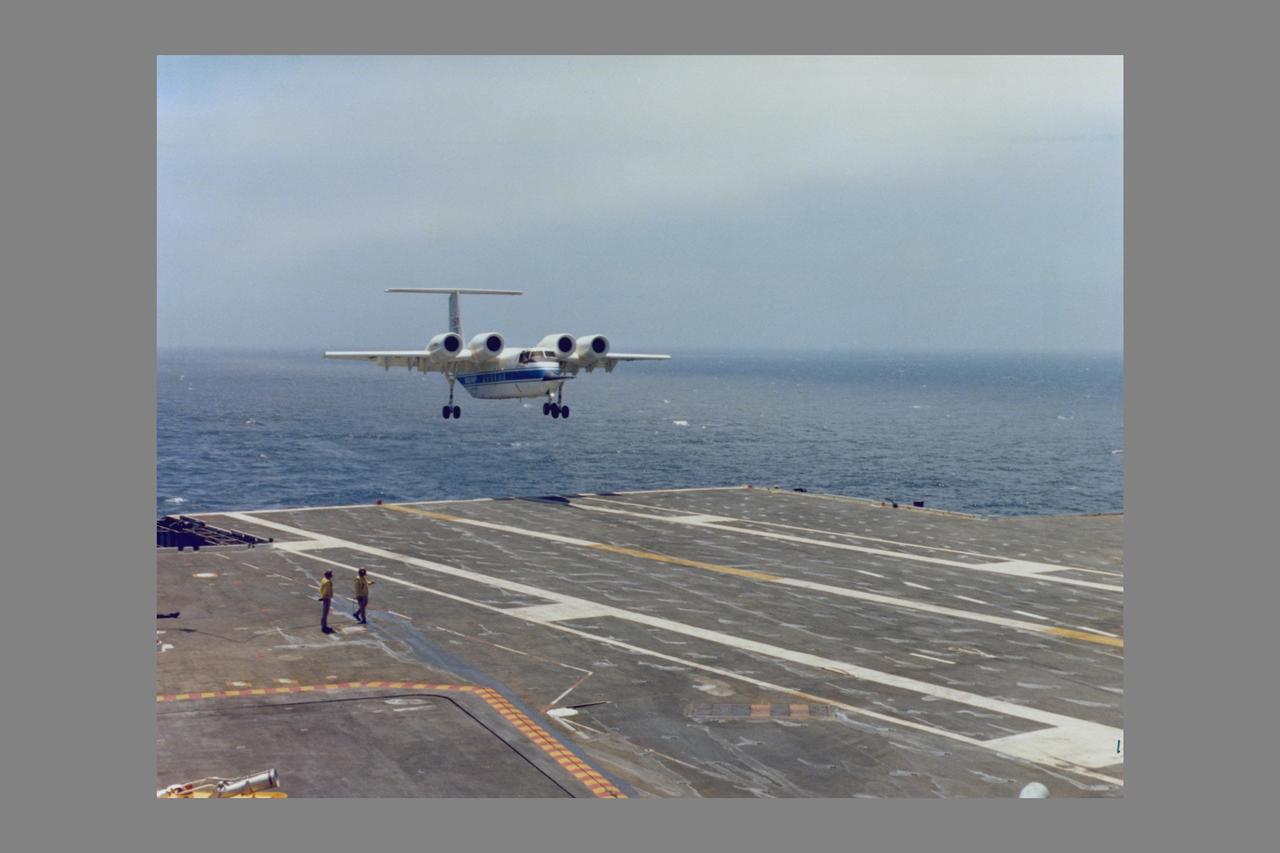
QSRA (NASA-715) takeoff and landing trials onboard the USS Kitty Hawk
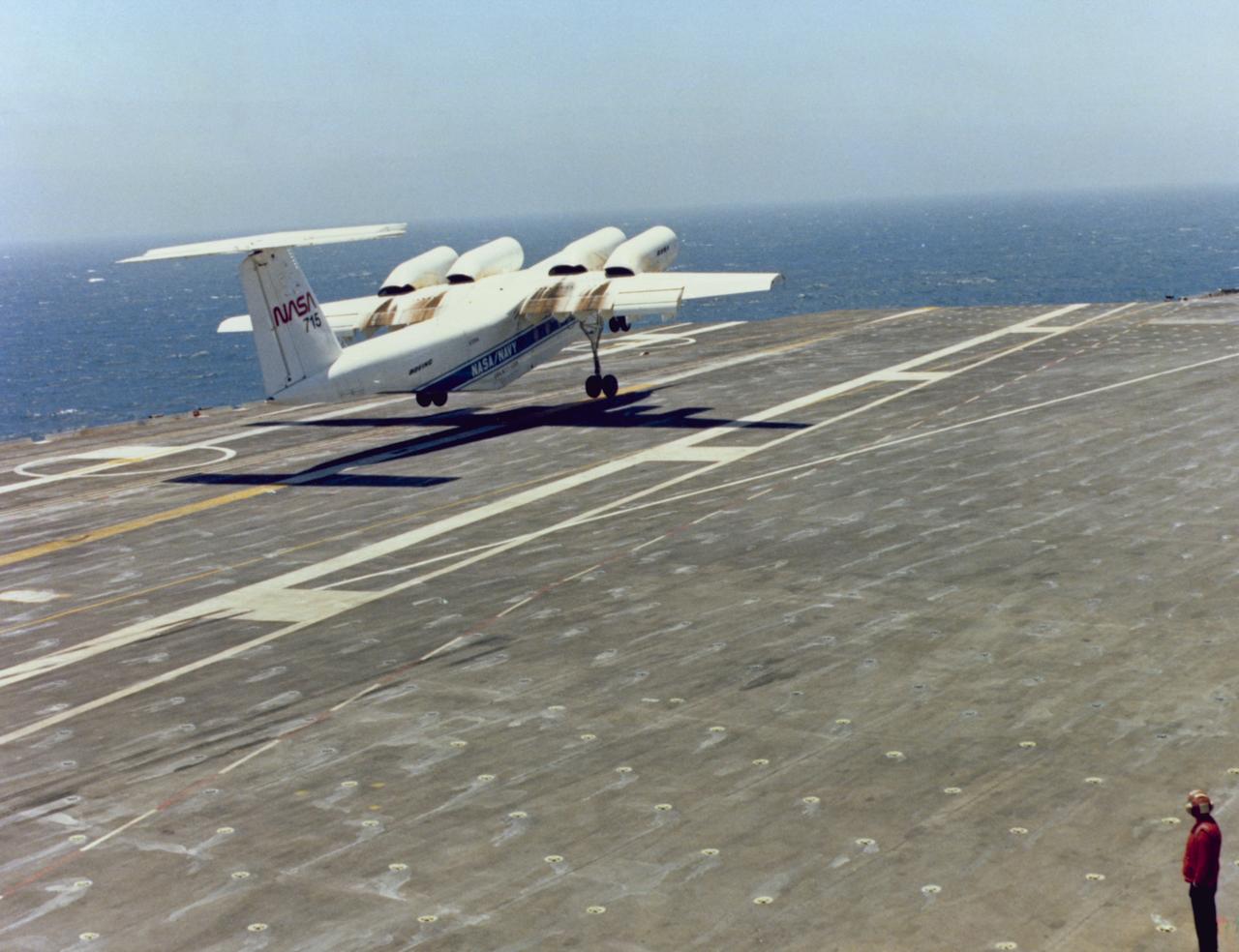
QSRA (NASA-715) takeoff and landing trials onboard the USS Kitty Hawk
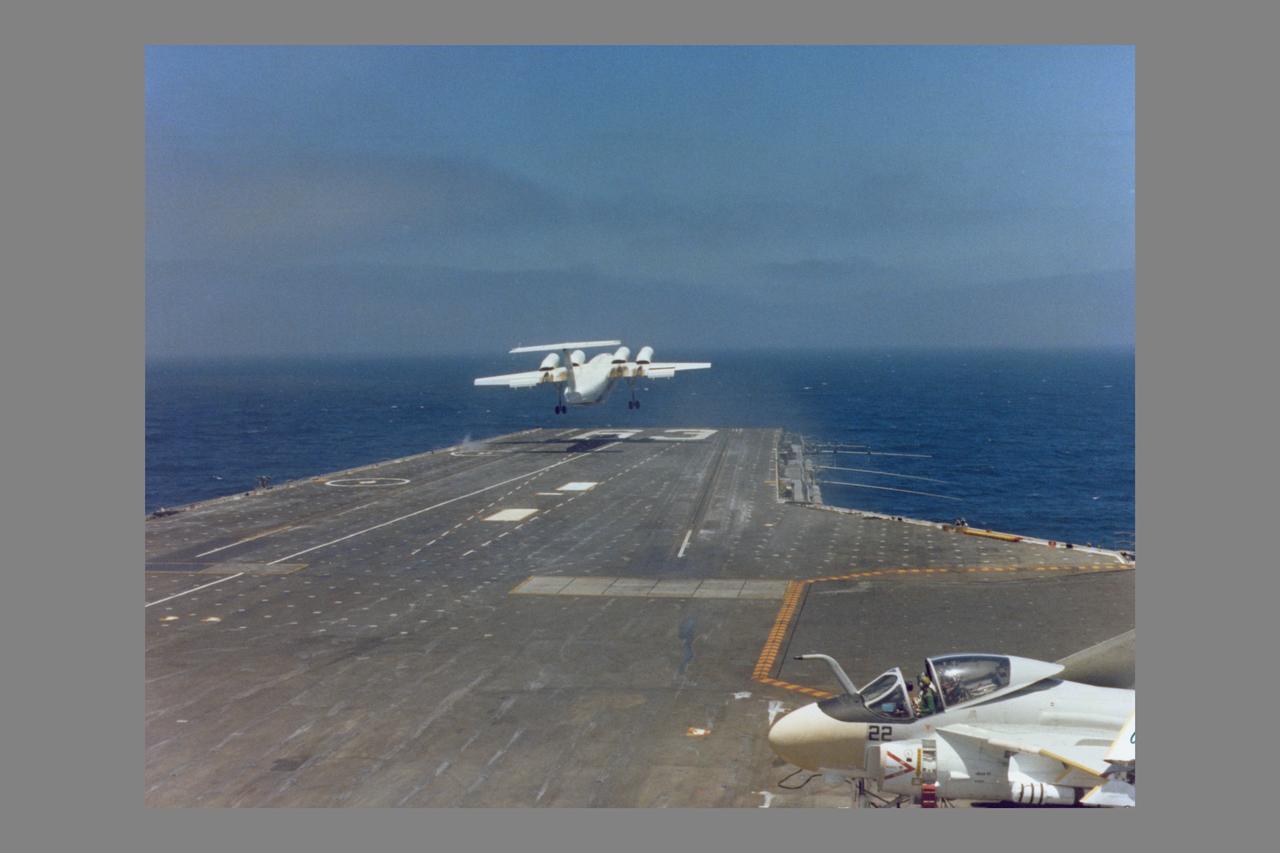
QSRA (NASA-715) takeoff and landing trials onboard the USS Kitty Hawk
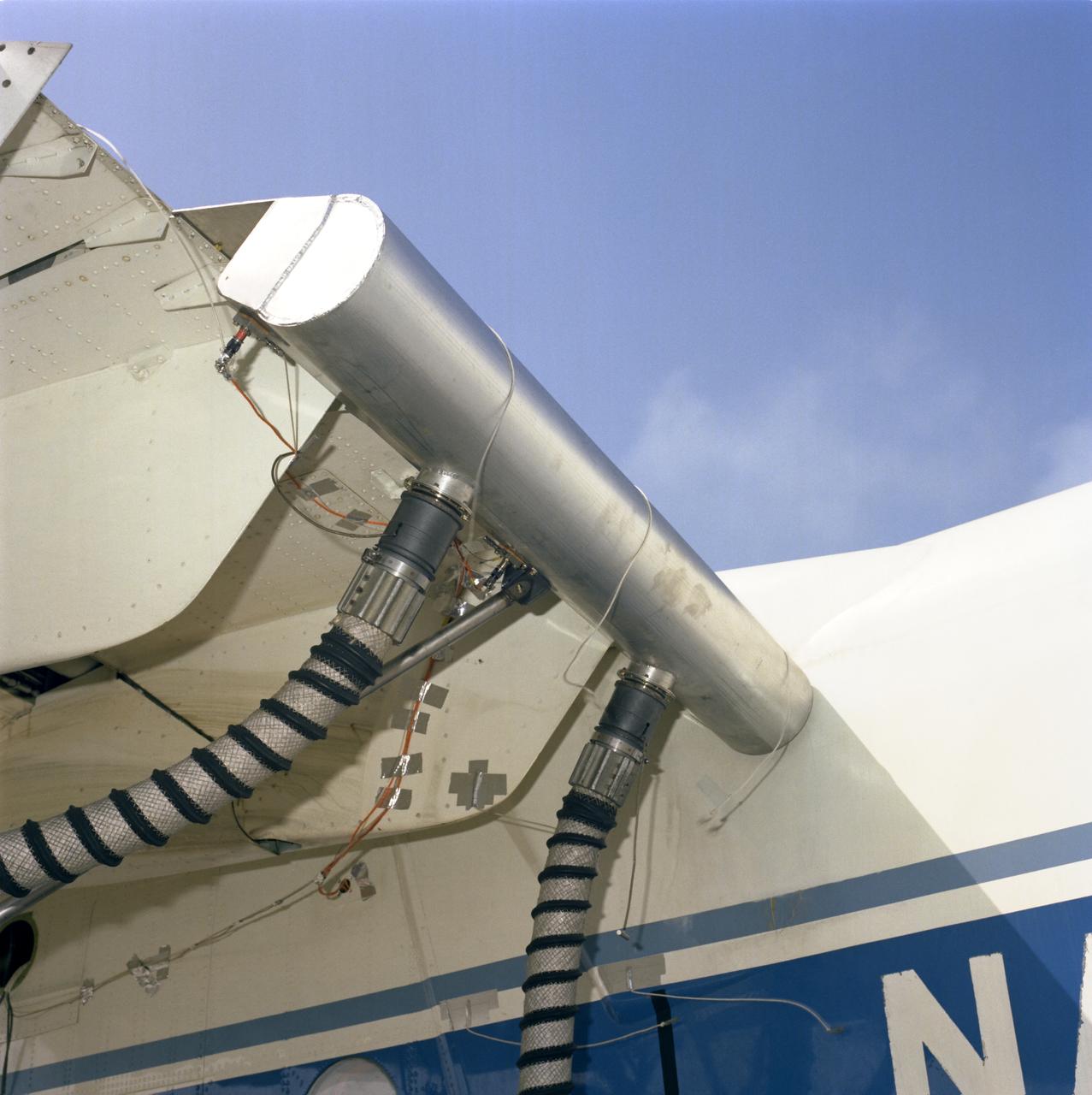
QSRA (Quite STOL Research Aircraft) NASA-715 C-8A Tufts during the CCW tests out of NASA Ames
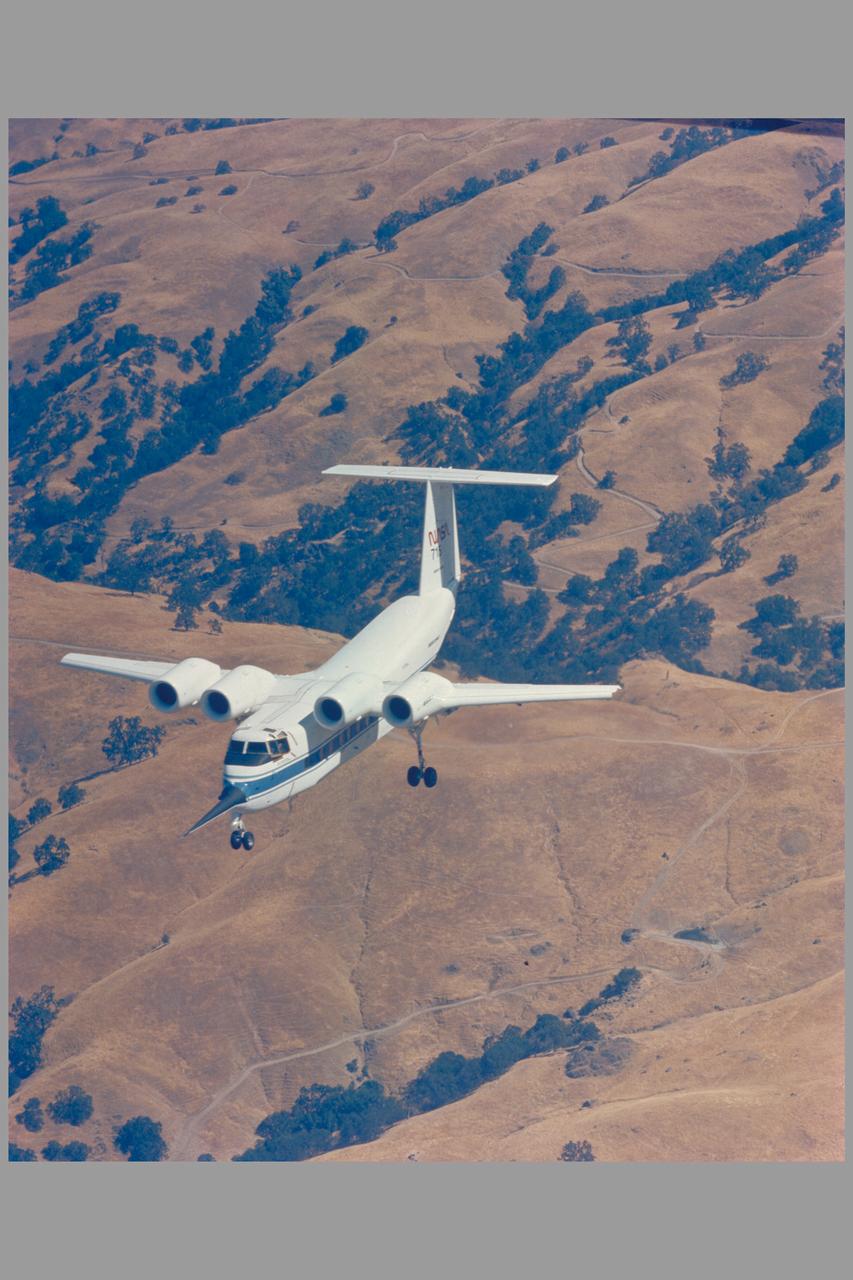
Air to air of the QSRA (NASA 715). on maiden flight to Ames from Seattle, Washington after coversion
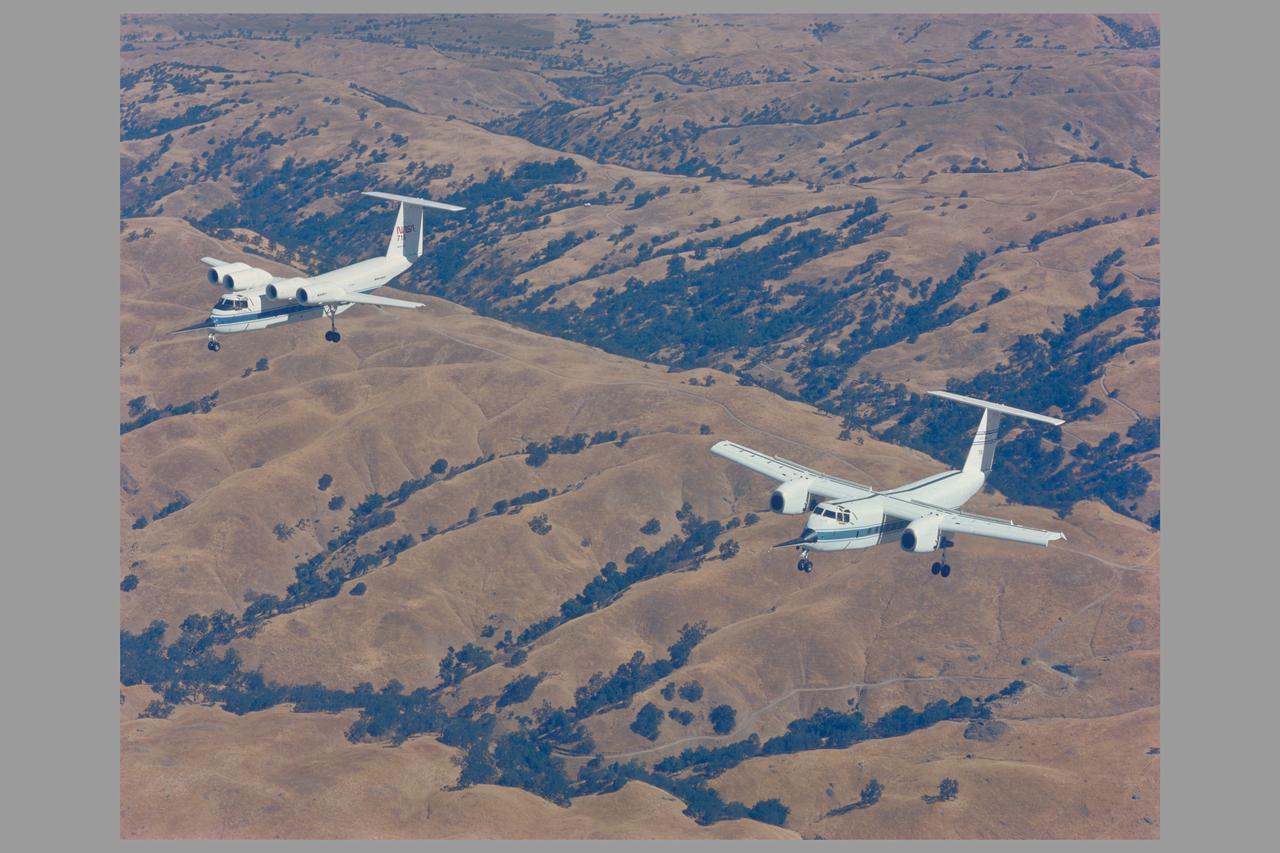
Air to air of the QSRA (NASA 715) and C-8A (NASA 716) on maiden flight to Ames from Seattle, Washington after coversion
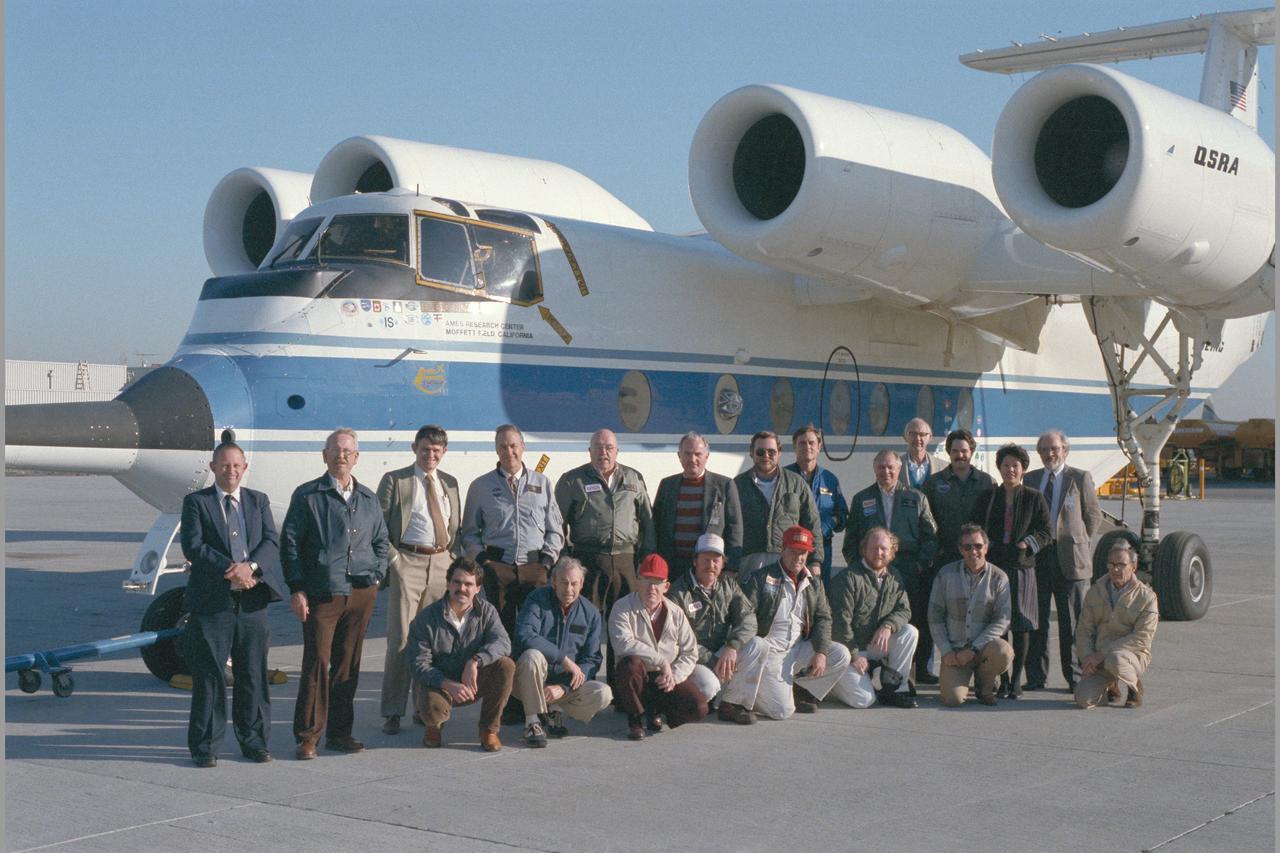
QSRA (NASA 715) 400TH FLIGHT PARTICIPANTS. L-R: front row: Jim Ahlman, Bob Innis, Del Watson, Jim Lesko, Lee Mountz, Mike Herschel, Tom Kaisersatt, Jack Stephenson, Back row: Dennis Riddle, Neis Watz, Jack Franklin, Gordon Hardy, Bob Hinds, Charlie Hynes, Richard Young, Jim Martin, Joe Eppel, John White, Bob America, Hien Tran, Bill Bjorkman. Note: Used in publication in Flight Research at Ames; 57 Years of Development and Validation of Aeronautical Technology NASA SP-1998-3300 fig. 112
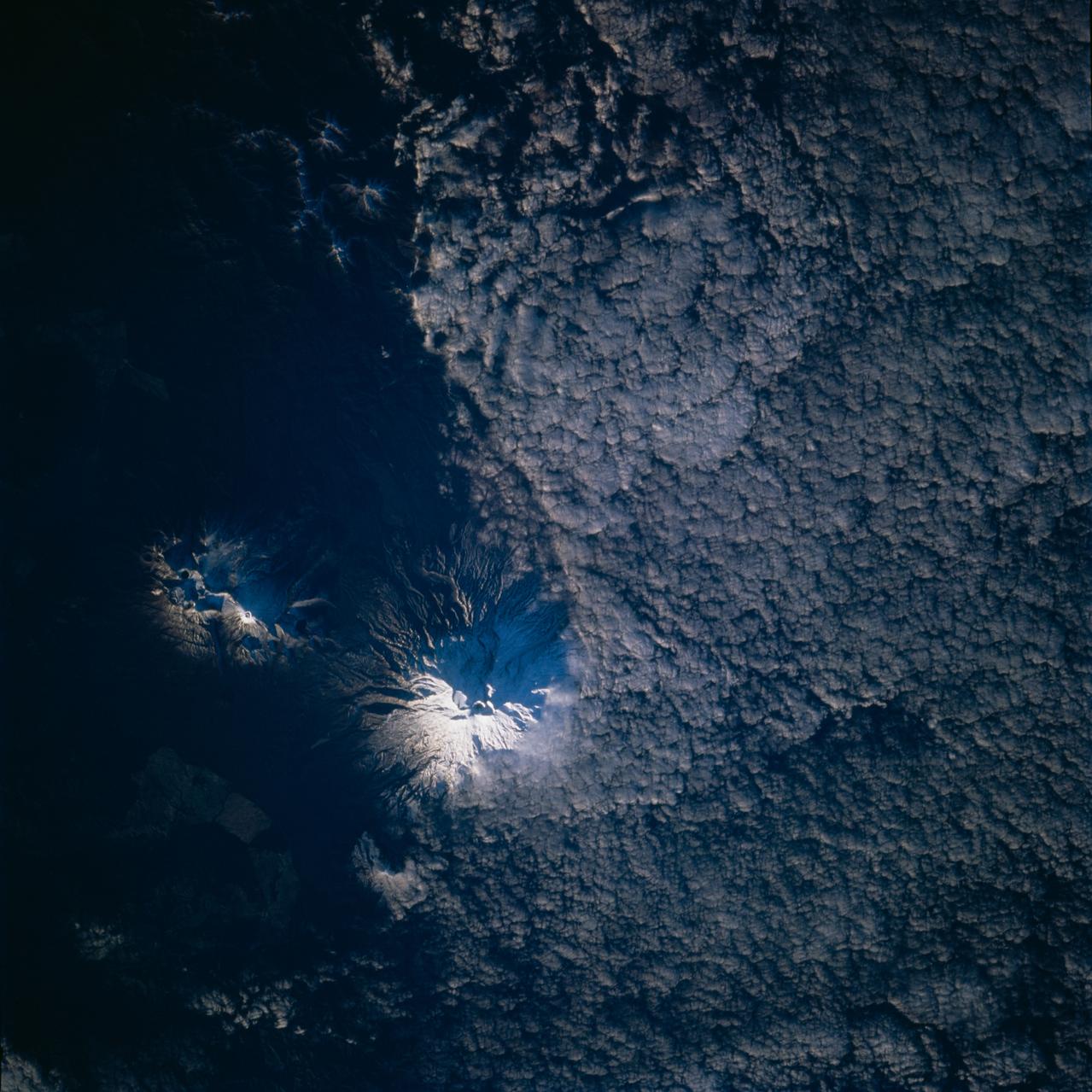
STS077-715-037 (19-29 May 1996) --- According to NASA scientists, Ruapehu, on New Zealand?s North Island, is one of the most active volcanoes in the South Pacific. Prior to the flight, crew members scheduled this site as one of their photographic targets. The volcano endured a significant eruption in late September, 1995. This view is the first image of the crater region since that eruption. Since then, numerous landslides and secondary explosions in the summit area has produced changes. In this view, recent mudflows extend from the summit region and down the mountain flank which is in the shadow. Ruapehu is also one of New Zealand?s high points - the mountain supports a glacier and permanent ice fields, and volcanic activity necessarily involves mixing hot volcanic products with snow and ice. Recent activity has produced destructive lahars (mudslides which are slurries of volcanic material with ice and water) downslope. A hazard warning to skiers is still in effect.
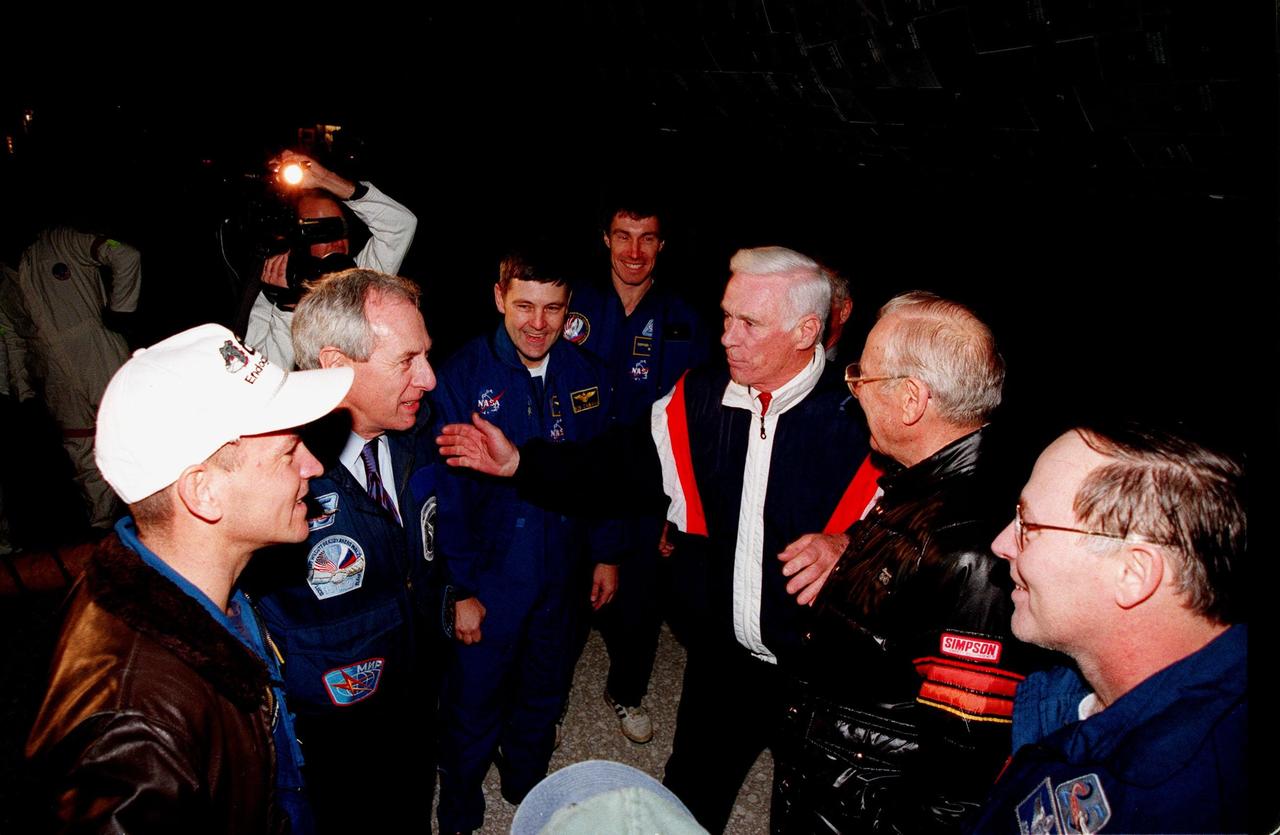
Following their touchdown on Runway 15 at 10:53:29 p.m. EST, STS-88 crew members are greeted by NASA Administrator Daniel Goldin and former astronauts Eugene A. Cernan and James A. Lovell Jr. From left are Pilot Frederick W. "Rick" Sturckow, Goldin , Commander Robert D. Cabana, Mission Specialist Sergei Konstantinovich Krikalev, Cernan, Lovell and Mission Specialist Jerry L. Ross. Cernan flew on Gemini 9, Apollo 10 and 17 and has more than 566 cumulative hours of space flight. Lovell flew on Gemini 7 and 12, Apollo 8 and 13. His cumulative hours of space flight are more than 715. On the 4.6-million-mile, nearly 12-day STS-88 mission, Endeavour carried the U.S.-built Unity connecting module to begin construction of the International Space Station. The crew successfully mated Unity with the Russian-built Zarya control module during three space walks. With this mission, Ross completed seven space walks totaling 44 hours and 9 minutes, more than any other American space walker. Newman moved into third place for U.S. space walks with a total of 28 hours and 27 minutes on four excursions
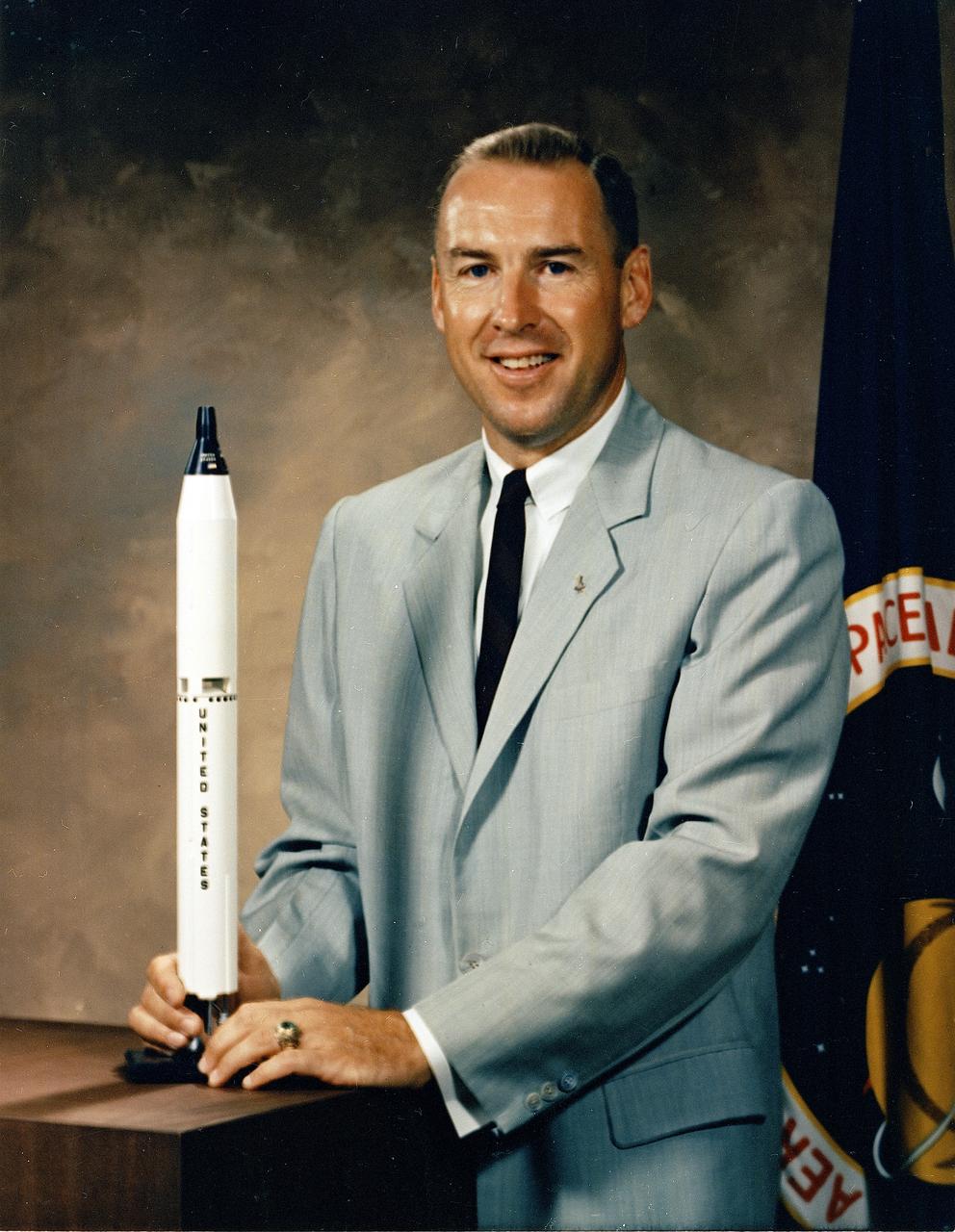
This is the official NASA portrait of astronaut James Lovell. Captain Lovell was selected as an Astronaut by NASA in September 1962. He has since served as backup pilot for the Gemini 4 flight and backup Commander for the Gemini 9 flight, as well as backup Commander to Neil Armstrong for the Apollo 11 lunar landing mission. On December 4, 1965, he and Frank Borman were launched into space on the history making Gemini 7 mission. The flight lasted 330 hours and 35 minutes and included the first rendezvous of two manned maneuverable spacecraft. The Gemini 12 mission, commanded by Lovell with Pilot Edwin Aldrin, began on November 11, 1966 for a 4-day, 59-revolution flight that brought the Gemini program to a successful close. Lovell served as Command Module Pilot and Navigator on the epic six-day journey of Apollo 8, the first manned Saturn V liftoff responsible for allowing the first humans to leave the gravitational influence of Earth. He completed his fourth mission as Spacecraft Commander of the Apollo 13 flight, April 11-17, 1970, and became the first man to journey twice to the moon. The Apollo 13 mission was cut short due to a failure of the Service Module cryogenic oxygen system. Aborting the lunar course, Lovell and fellow crewmen, John L. Swigert and Fred W. Haise, working closely with Houston ground controllers, converted their lunar module, Aquarius, into an effective lifeboat that got them safely back to Earth. Captain Lovell held the record for time in space with a total of 715 hours and 5 minutes until surpassed by the Skylab flights. On March 1, 1973, Captain Lovell retired from the Navy and the Space Program.
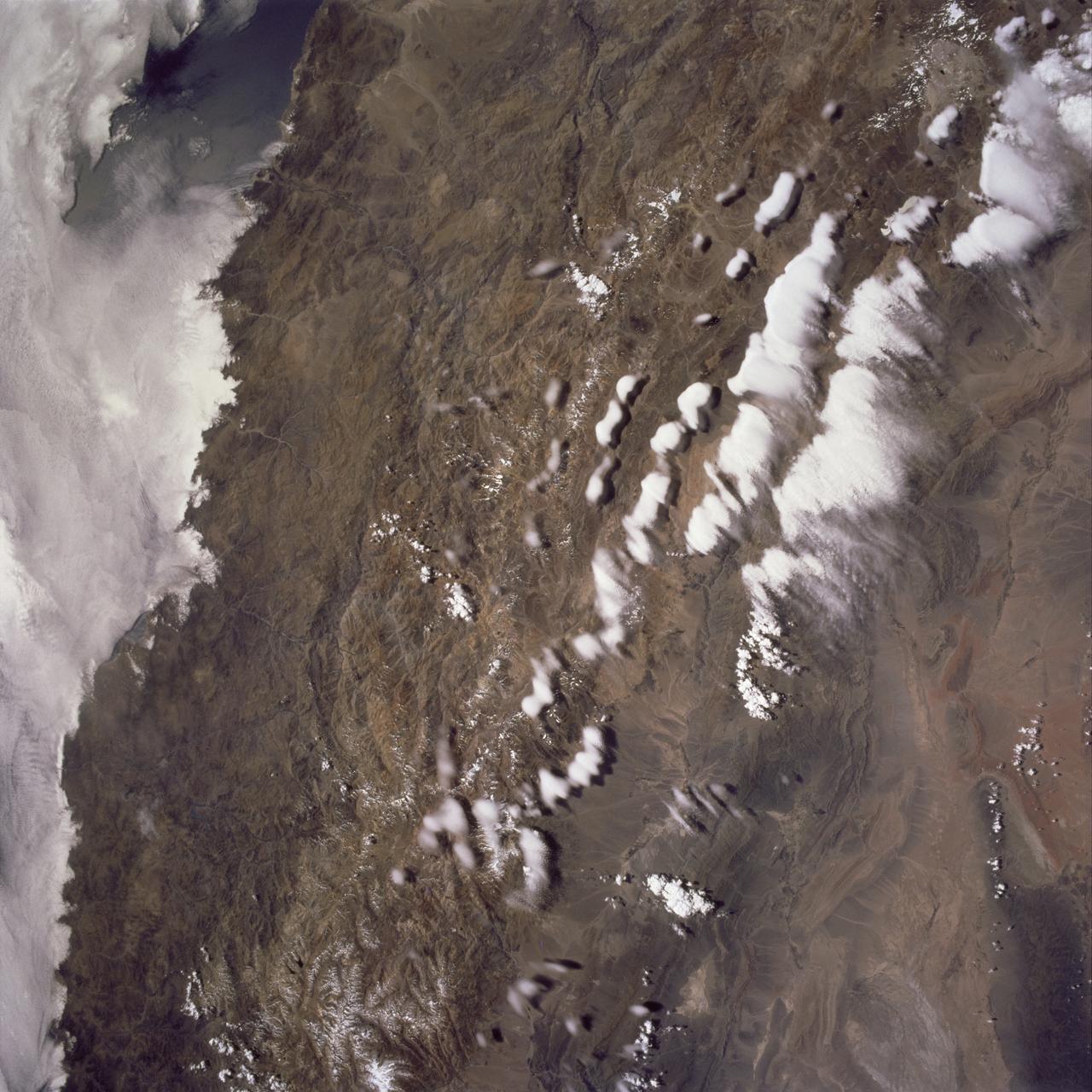
STS097-715-061 (10 December 2000) This view over the Central Andes Mountains in Argentina and Chile was taken on December 10, 2000 by one of the astronauts aboard the Earth-orbiting Space Shuttle Endeavour. Extending 5500 miles (8850 kilometers) along the western coast of South America from northern Colombia to Cape Horn in southern Chile, the Andes are the longest mountain range, above sea level, and the second highest range in the world. According to NASA scientists studying the STS-97 photo collection, this immense system came into existence nearly 70 million years ago. With numerous active volcanoes and a slow uplift, the building of the Andes Mountains continues today rising four inches (10 centimeters) per century, the scientists say. In this north-looking view, snow covers the higher peaks of the range, some of which rise to over 20000 feet (6100 meters) above sea level. Along the left or western portion of the view, clouds can be seen along coastal areas of Chile. In the bottom left quadrant of the scene, the blue waters of the Paloma Reservoir, a recreational lake, are visible. The folded Tontal Range (bottom center) and the Valle Fertil Range (upper right quadrant and partially cloud covered) of western Argentina can be seen. The rocks of these ranges, the scientists point out, are ancient compared to the younger volcanic peaks and ranges of the Andes. The city of San Juan, Argentina is visible on the eastern (right) base of the Tontal Range in the lower right quadrant of the view.