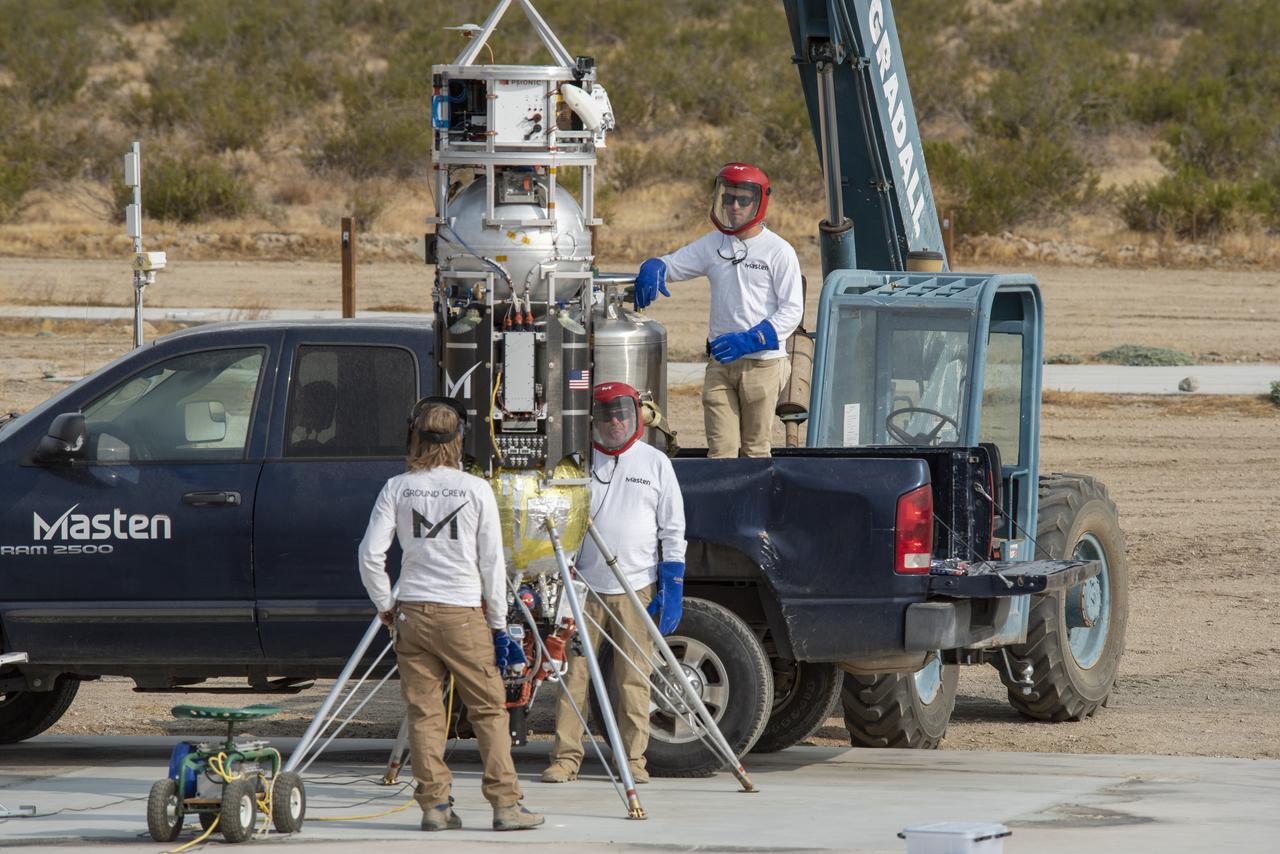
Masten Space Systems employees prepare its rocket to flight test NASA -licensed Psionic navigation doppler lidar technology that enables precision landing on celestial bodies where GPS for navigation only available on Earth is not an option.
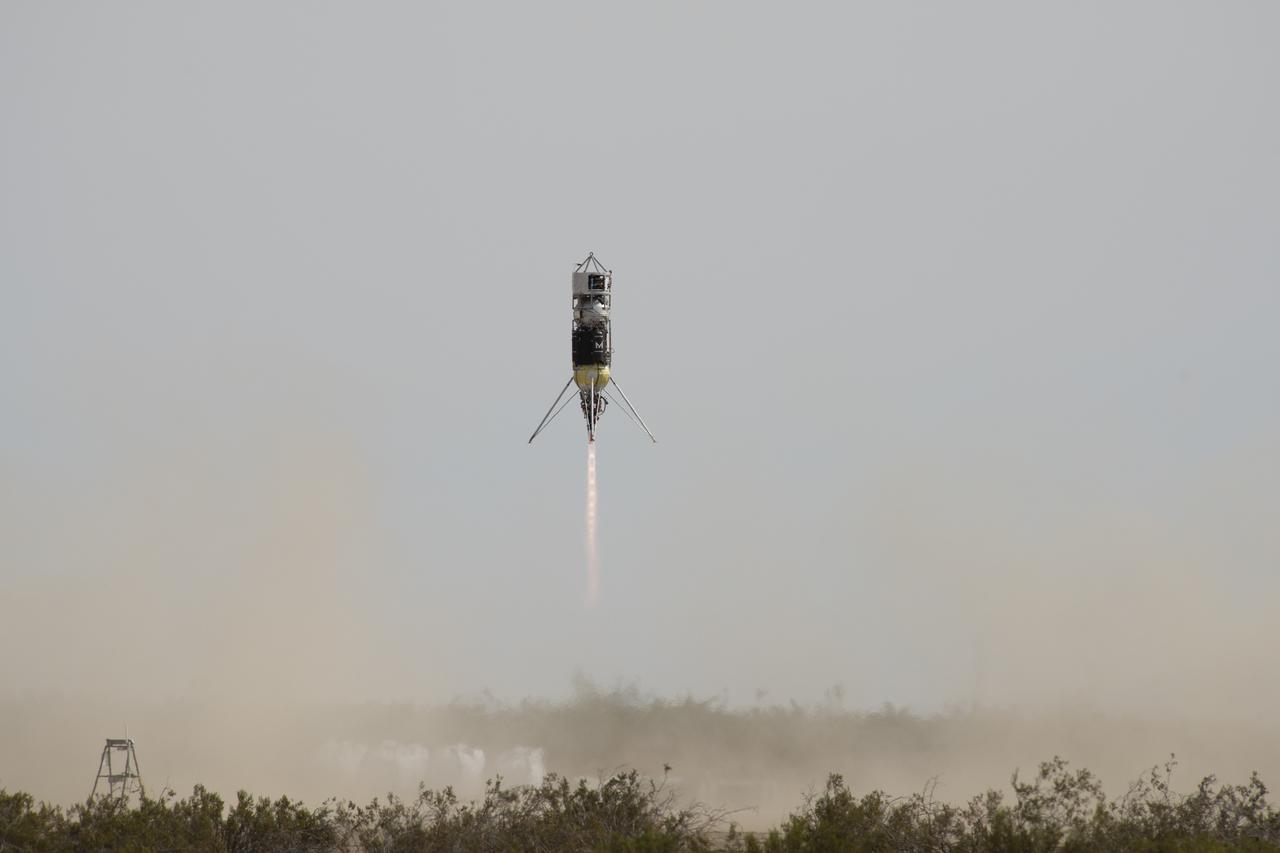
Masten Space Systems vertical takeoff vertical landing rocket launched September 10, 2020 to flight test NASA-licensed Psionic navigation doppler lidar technology that enables precision landing on celestial bodies where GPS for navigation only available on Earth is not an option.
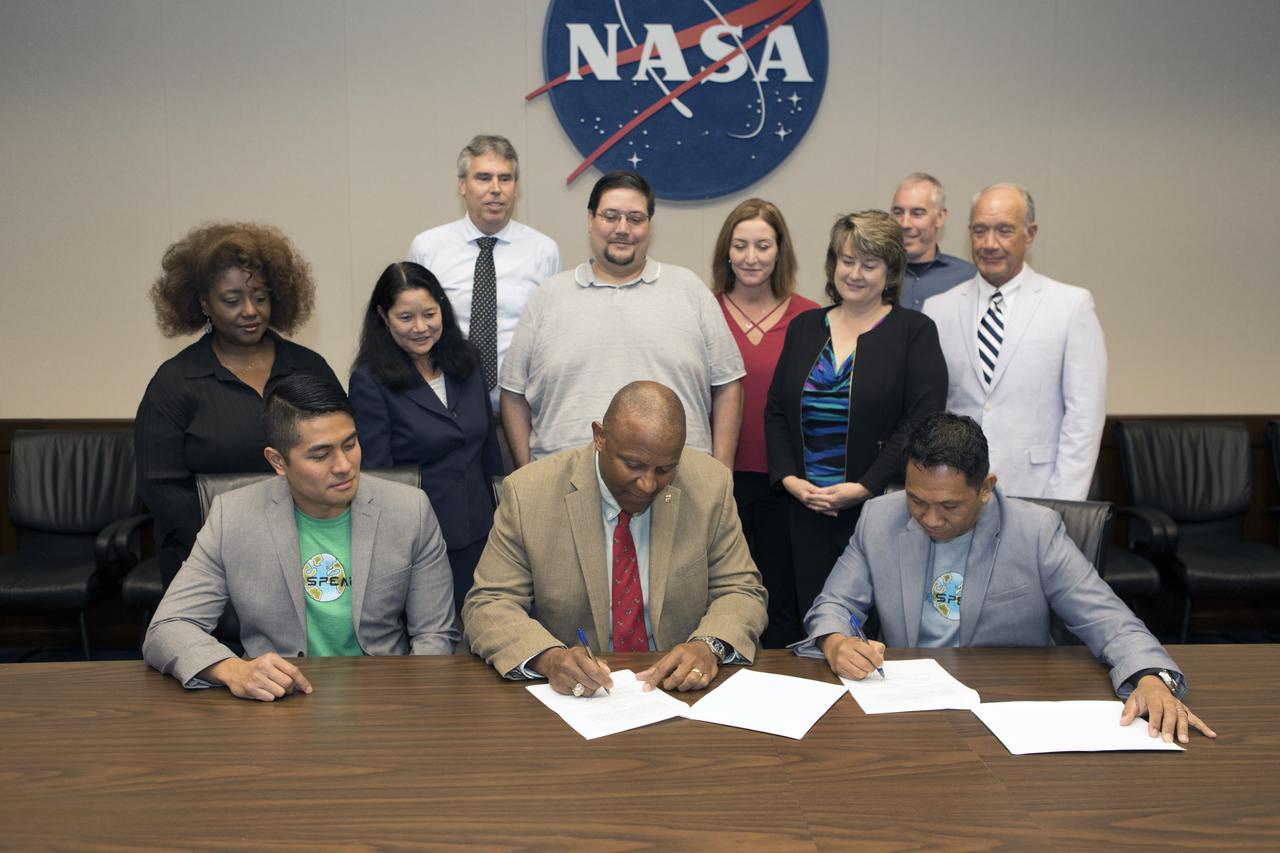
NASA Kennedy Space Center's Associate Director Kelvin Manning, center, signs a license agreement with the President and CEO of ecoSPEARS, which allows the company to commercially sell a soil remediation technology developed by a research team at Kennedy. The technology, known as Sorbent Polymer Extraction And Remediation System, is designed to capture and remove polychlorinated biphenyls (PCBs) from contaminated sediments in waterways and wetlands.

STS055-203-034 (26 April-6 May 1993) --- Astronaut Steven R. Nagel, STS-55 mission commander, has found an isolated station in the D-2 science module from which to talk to students on Earth. Like many before it, the seven member crew participated in communications with students and licensed radio operators via the Shuttle Amateur Radio Experiment (SAREX). Photo credit: NASA
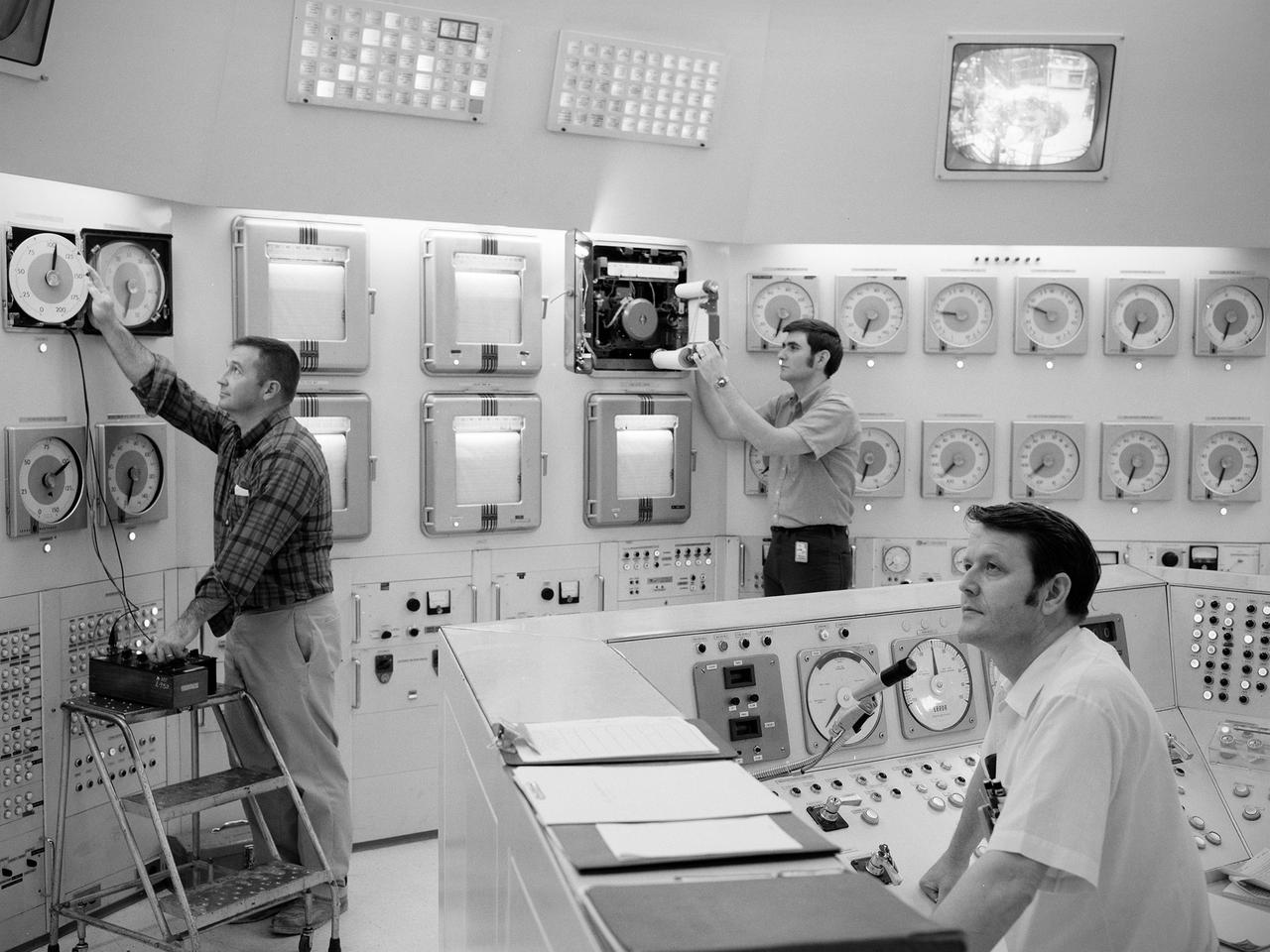
Donald Rhodes, left, and Clyde Greer, right, monitor the operation of the National Aeronautics and Space Administration’s (NASA) Plum Brook Reactor Facility from the control room. The 60-megawatt test reactor, NASA’s only reactor, was the eighth largest test reactor in the world. The facility was built by the Lewis Research Center in the late 1950s to study the effects of radiation on different materials that could be used to construct nuclear propulsion systems for aircraft or rockets. The reactor went critical for the first time in 1961. For the next two years, two operators were on duty 24 hours per day working on the fission process until the reactor reached its full-power level in 1963. Reactor Operators were responsible for monitoring and controlling the reactor systems. Once the reactor was running under normal operating conditions, the work was relatively uneventful. Normally the reactor was kept at a designated power level within certain limits. Occasionally the operators had to increase the power for a certain test. The shift supervisor and several different people would get together and discuss the change before boosting the power. All operators were required to maintain a Reactor Operator License from the Atomic Energy Commission. The license included six months of training, an eight-hour written exam, a four-hour walkaround, and testing on the reactor controls.
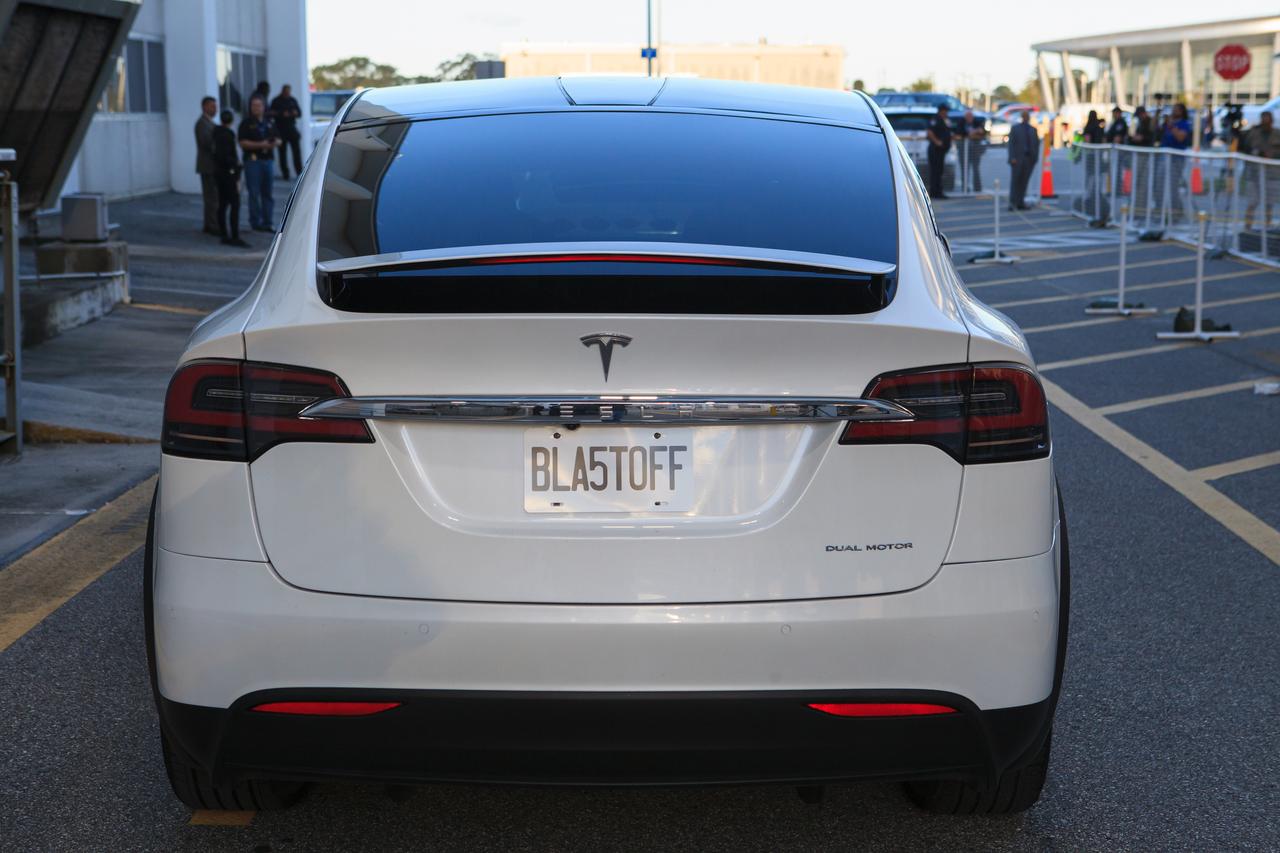
One of the Tesla Model X cars that will carry NASA’s SpaceX Crew-5 to Kennedy Space Center’s Launch Complex 39A is photographed at the Neil A. Armstrong Operations and Checkout Building on Oct. 5, 2022. The license plate tag reads “blast off.” NASA astronauts Nicole Mann, spacecraft commander, and Josh Cassada, pilot; Roscosmos cosmonaut Anna Kikina, mission specialist; and JAXA (Japan Aerospace Exploration Agency) astronaut Koichi Wakata, mission specialist, will launch to the International Space Station for a science expedition mission as part of NASA’s Commercial Crew Program. The SpaceX Falcon 9 rocket and Dragon Endurance spacecraft lifted off at noon EDT.
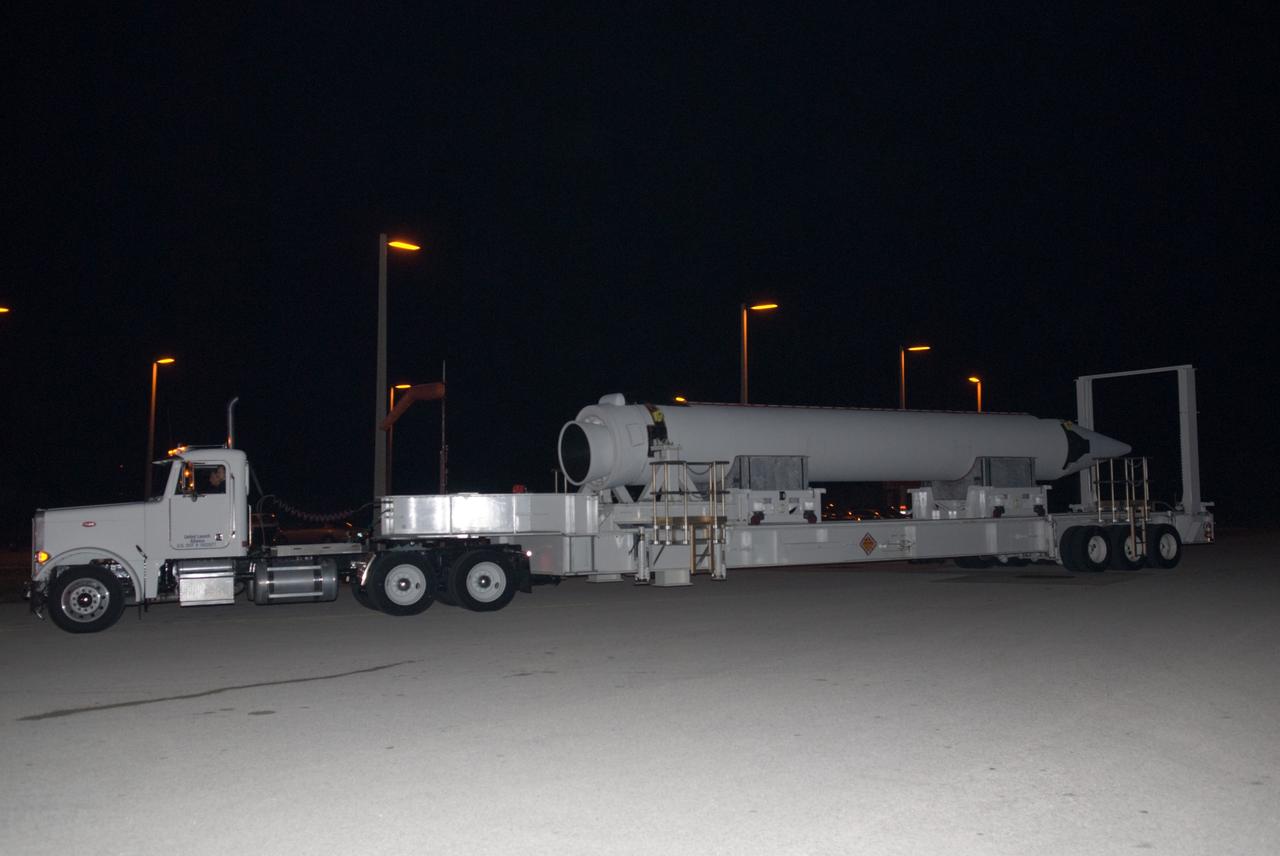
CAPE CANAVERAL, Fla. – At Launch Complex 37 on Cape Canaveral Air Force Station in Florida, the first of two solid rocket boosters for the Delta IV rocket slated to launch NASA's GOES-P meteorological satellite arrives at the pad. GOES-P is the latest Geostationary Operational Environmental Satellite developed by NASA for the National Oceanic and Atmospheric Administration, or NOAA. The Delta IV rocket will be launched by United Launch Alliance for Boeing Launch Services under an FAA commercial license. Launch is targeted for no earlier than March 1. For information on GOES-P, visit http://goespoes.gsfc.nasa.gov/goes/spacecraft/n_p_spacecraft.html. Photo credit: NASA/Kim Shiflett
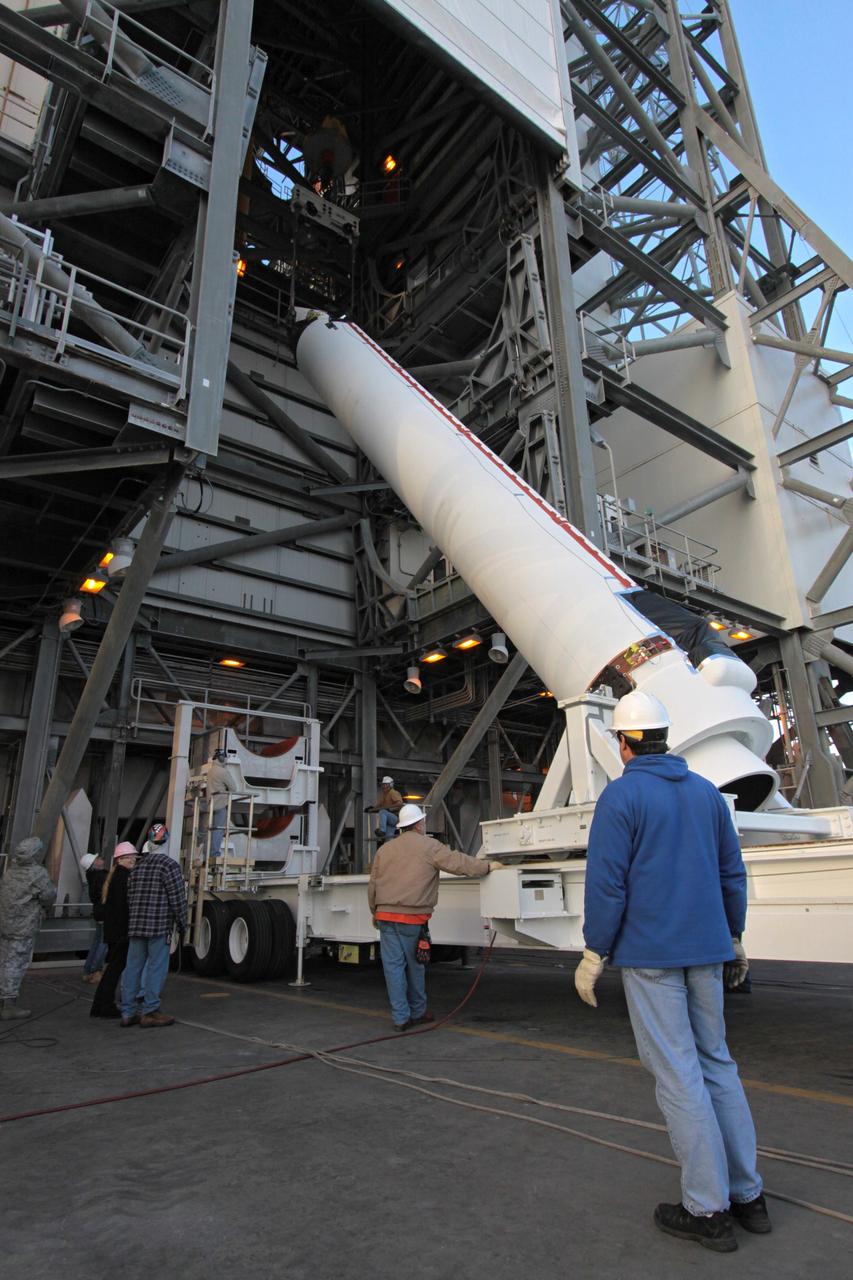
CAPE CANAVERAL, Fla. – At Launch Complex 37 on Cape Canaveral Air Force Station in Florida, workers lift a solid rocket booster for the Delta IV rocket slated to launch NASA's GOES-P meteorological satellite into a vertical position for its move into the mobile service tower. GOES-P is the latest Geostationary Operational Environmental Satellite developed by NASA for the National Oceanic and Atmospheric Administration, or NOAA. The Delta IV rocket will be launched by United Launch Alliance for Boeing Launch Services under an FAA commercial license. Launch is targeted for no earlier than March 1. For information on GOES-P, visit http://goespoes.gsfc.nasa.gov/goes/spacecraft/n_p_spacecraft.html. Photo credit: NASA/Jack Pfaller
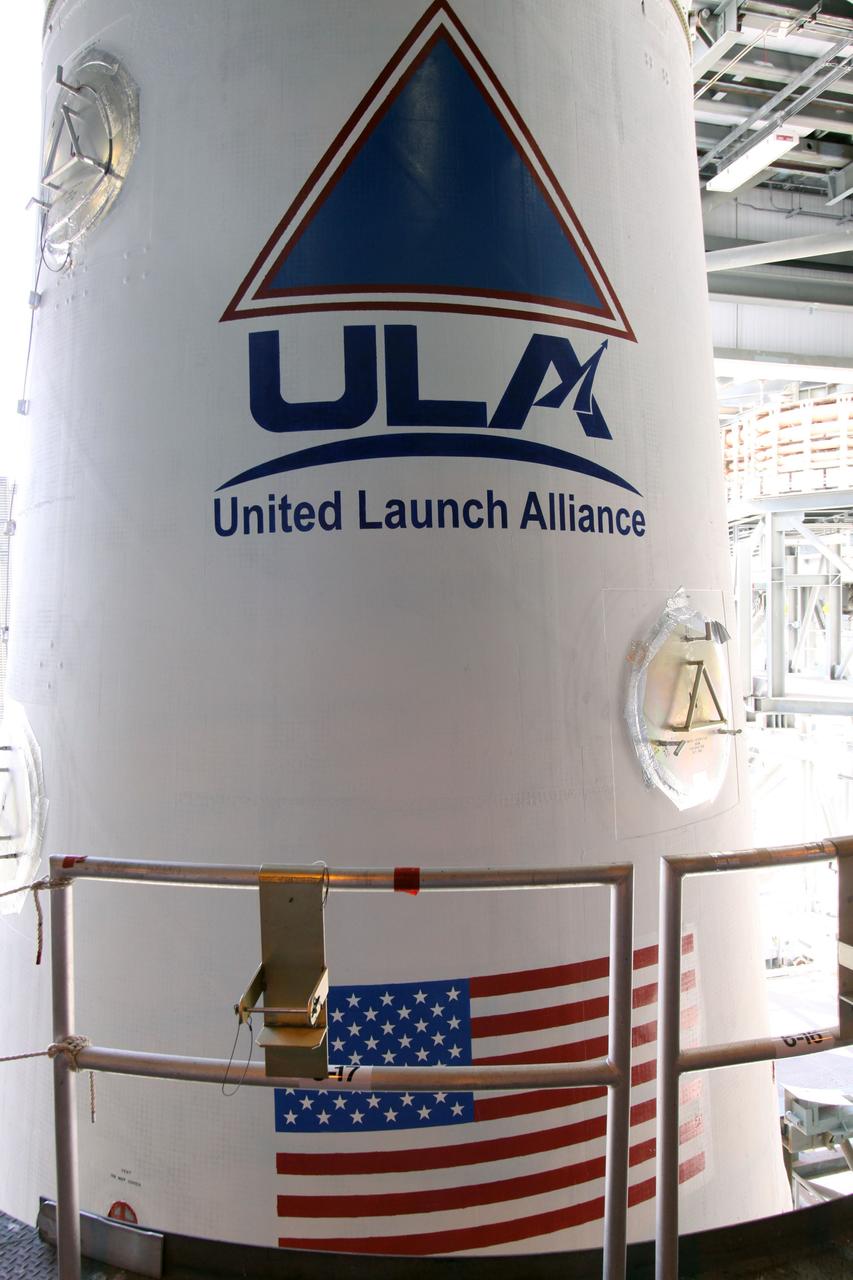
CAPE CANAVERAL, Fla. – At Launch Complex 37 on Cape Canaveral Air Force Station in Florida, operations proceed to launch NASA's GOES-P meteorological satellite aboard a United Launch Alliance Delta IV rocket. GOES-P is the latest Geostationary Operational Environmental Satellite developed by NASA for the National Oceanic and Atmospheric Administration, or NOAA. The Delta IV rocket will be launched by United Launch Alliance for Boeing Launch Services under an FAA commercial license. Launch is targeted for no earlier than March 1. For information on GOES-P, visit http://goespoes.gsfc.nasa.gov/goes/spacecraft/n_p_spacecraft.html. Photo credit: NASA/Jack Pfaller
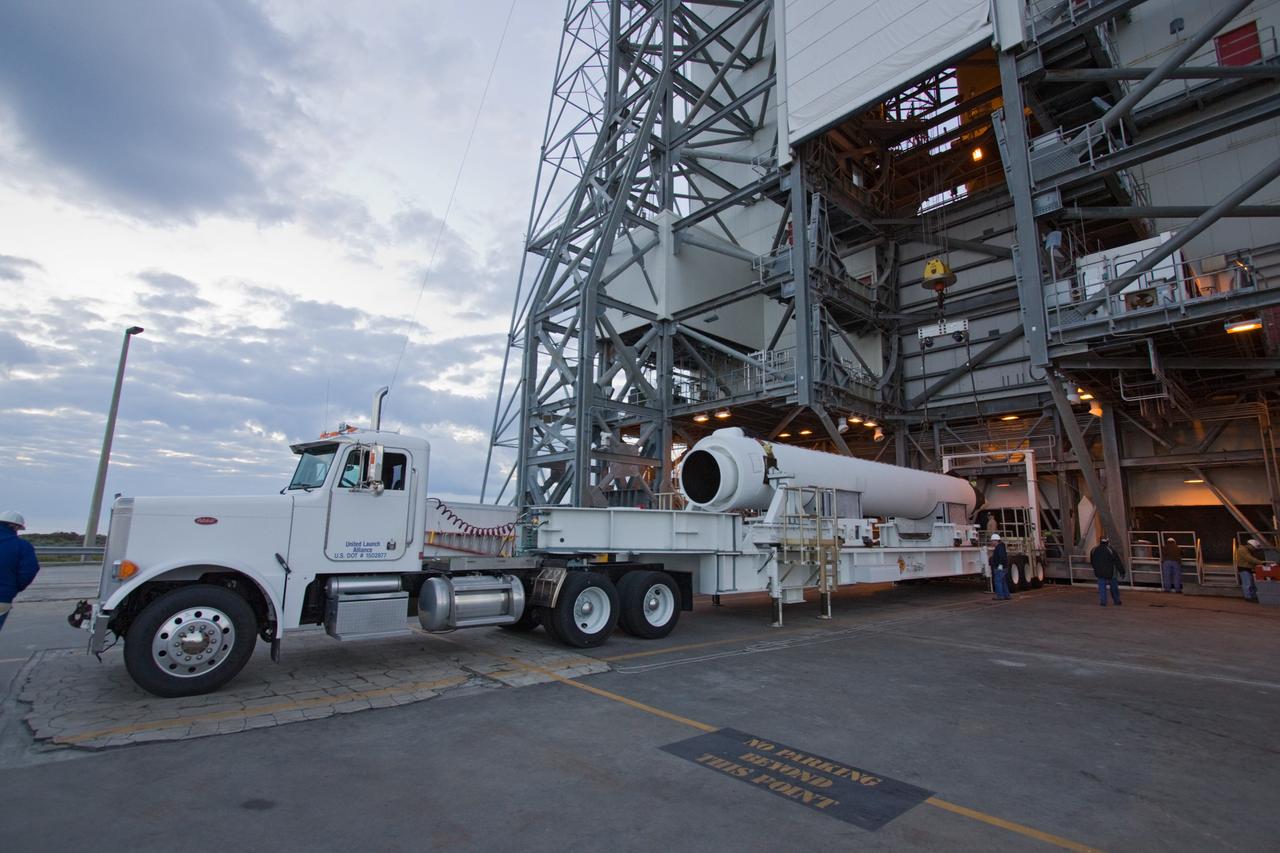
CAPE CANAVERAL, Fla. – At Launch Complex 37 on Cape Canaveral Air Force Station in Florida, a solid rocket booster for the Delta IV rocket slated to launch NASA's GOES-P meteorological satellite is delivered to the mobile service tower. GOES-P is the latest Geostationary Operational Environmental Satellite developed by NASA for the National Oceanic and Atmospheric Administration, or NOAA. The Delta IV rocket will be launched by United Launch Alliance for Boeing Launch Services under an FAA commercial license. Launch is targeted for no earlier than March 1. For information on GOES-P, visit http://goespoes.gsfc.nasa.gov/goes/spacecraft/n_p_spacecraft.html. Photo credit: NASA/Jack Pfaller
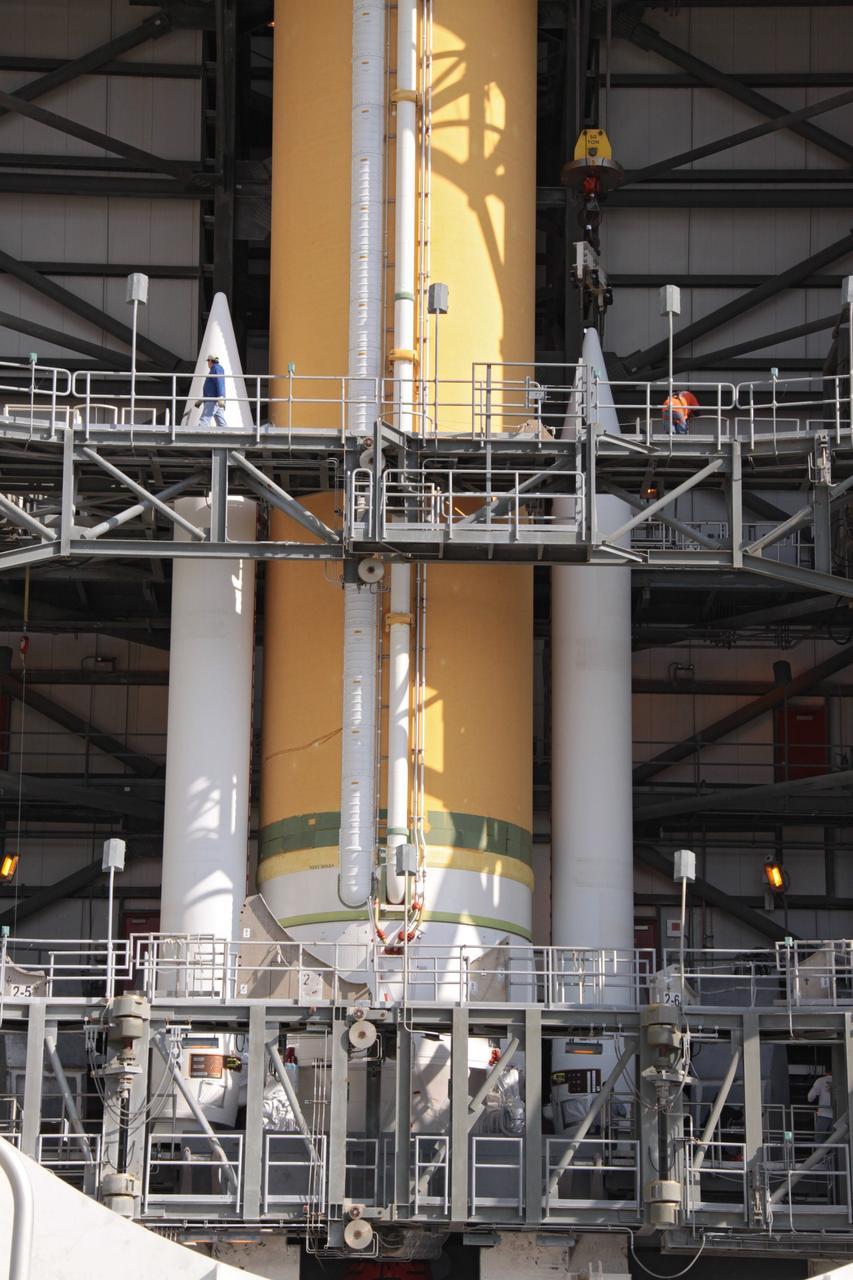
CAPE CANAVERAL, Fla. – In the mobile service tower at Launch Complex 37 on Cape Canaveral Air Force Station in Florida, the Delta IV rocket slated to launch NASA's GOES-P meteorological satellite now has two solid rocket boosters attached to the base of the rocket. GOES-P is the latest Geostationary Operational Environmental Satellite developed by NASA for the National Oceanic and Atmospheric Administration, or NOAA. The Delta IV rocket will be launched by United Launch Alliance for Boeing Launch Services under an FAA commercial license. Launch is targeted for no earlier than March 1. For information on GOES-P, visit http://goespoes.gsfc.nasa.gov/goes/spacecraft/n_p_spacecraft.html. Photo credit: NASA/Jack Pfaller
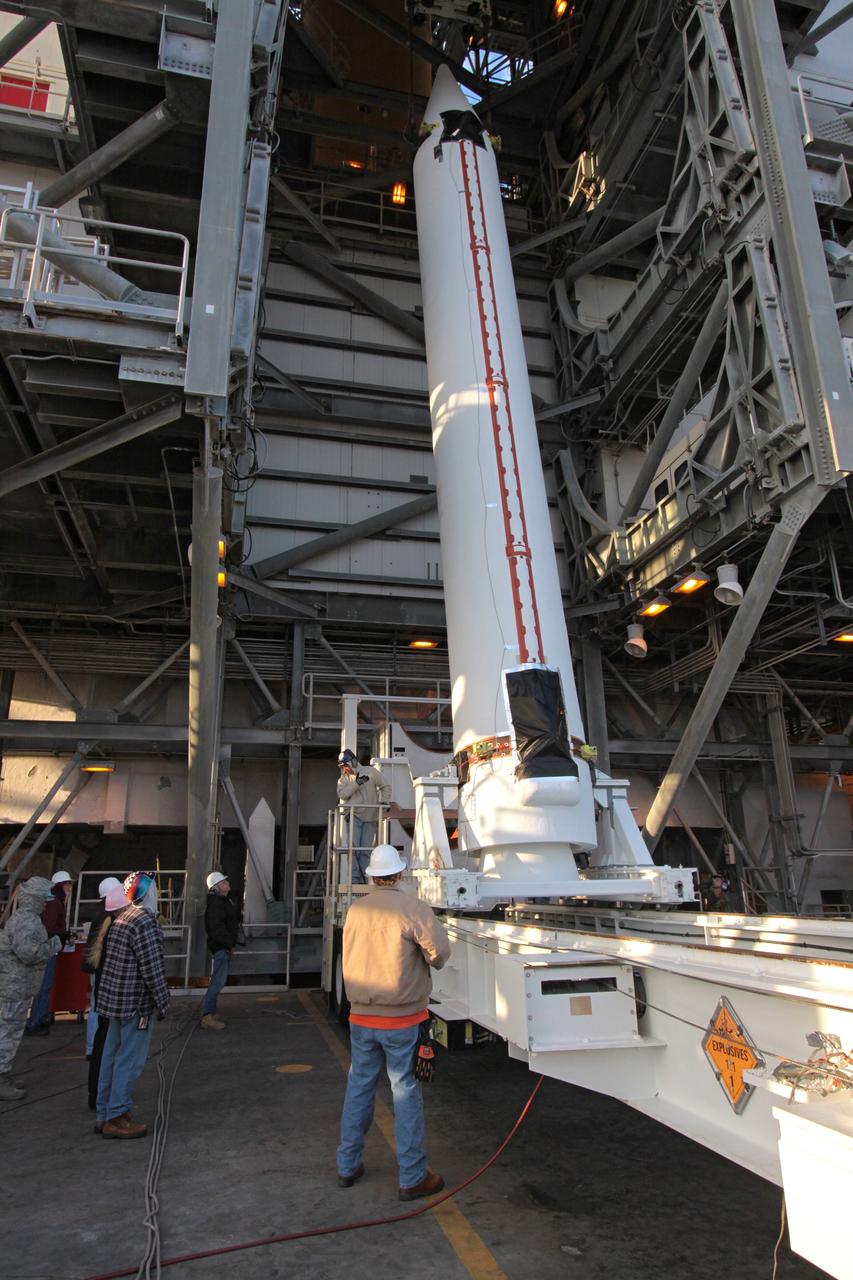
CAPE CANAVERAL, Fla. – At Launch Complex 37 on Cape Canaveral Air Force Station in Florida, a solid rocket booster for the Delta IV rocket slated to launch NASA's GOES-P meteorological satellite is nearly vertical in preparation for its move into the mobile service tower. GOES-P is the latest Geostationary Operational Environmental Satellite developed by NASA for the National Oceanic and Atmospheric Administration, or NOAA. The Delta IV rocket will be launched by United Launch Alliance for Boeing Launch Services under an FAA commercial license. Launch is targeted for no earlier than March 1. For information on GOES-P, visit http://goespoes.gsfc.nasa.gov/goes/spacecraft/n_p_spacecraft.html. Photo credit: NASA/Jack Pfaller
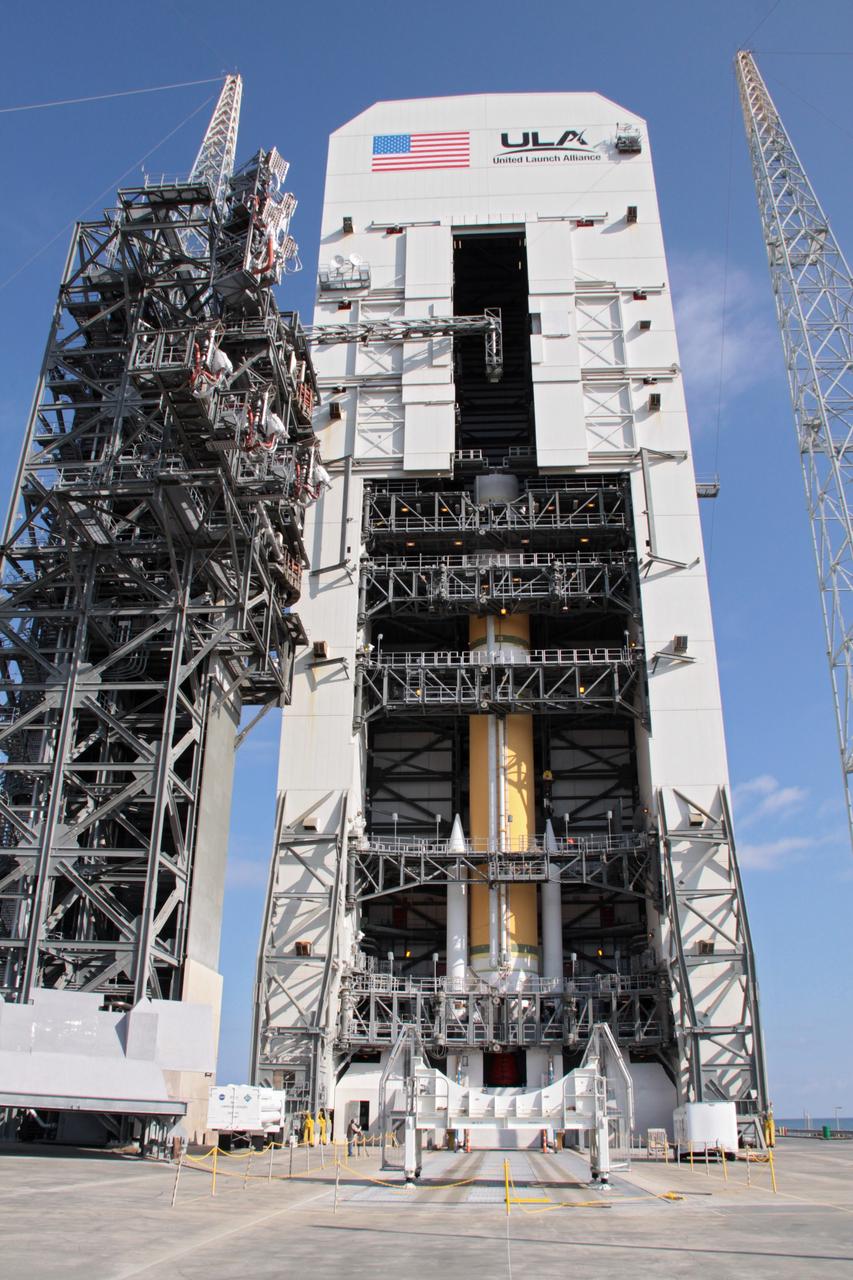
CAPE CANAVERAL, Fla. – At Launch Complex 37 on Cape Canaveral Air Force Station in Florida, steady progress is made to launch NASA's GOES-P meteorological satellite aboard a United Launch Alliance Delta IV rocket with the installation of two solid rocket boosters on the rocket completed. GOES-P is the latest Geostationary Operational Environmental Satellite developed by NASA for the National Oceanic and Atmospheric Administration, or NOAA. The Delta IV rocket will be launched by United Launch Alliance for Boeing Launch Services under an FAA commercial license. Launch is targeted for no earlier than March 1. For information on GOES-P, visit http://goespoes.gsfc.nasa.gov/goes/spacecraft/n_p_spacecraft.html. Photo credit: NASA/Jack Pfaller
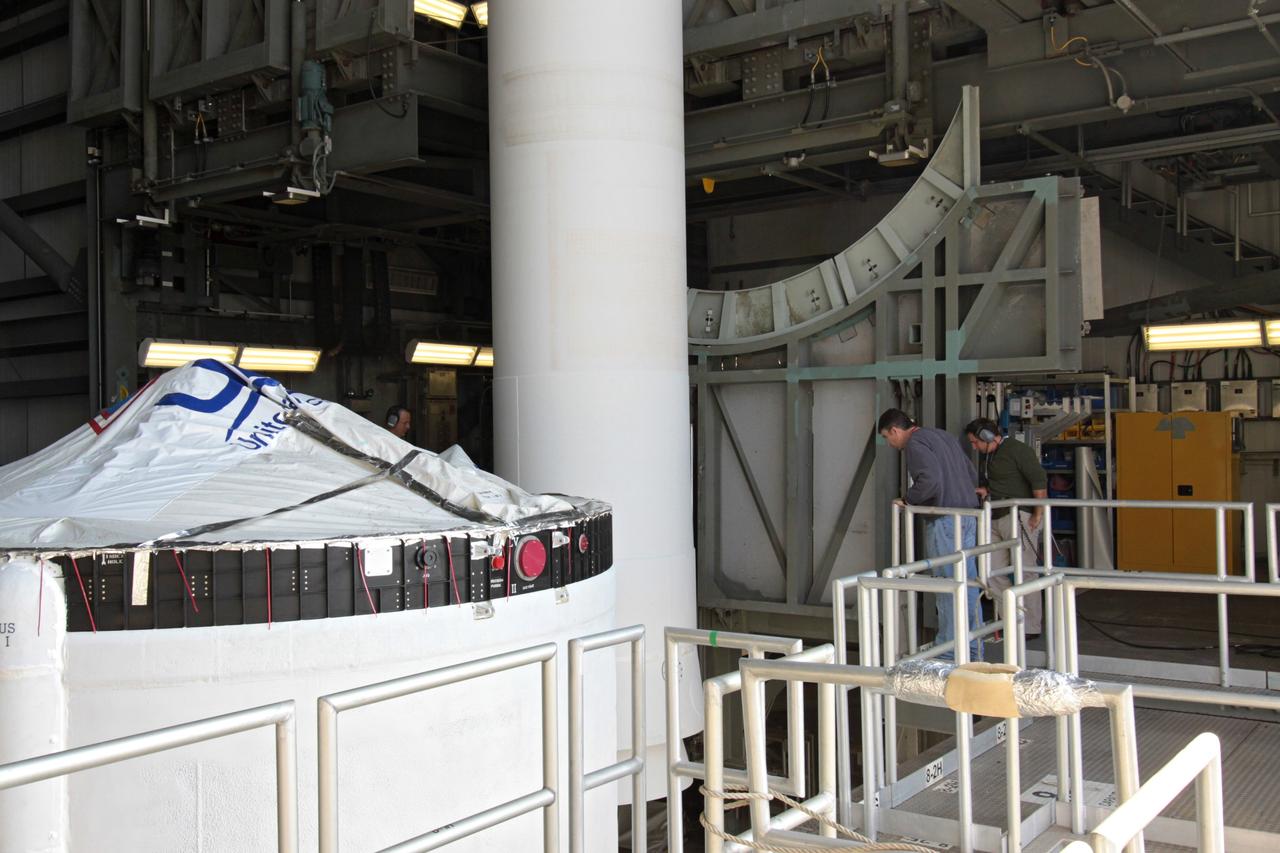
CAPE CANAVERAL, Fla. – In the mobile service tower at Launch Complex 37 on Cape Canaveral Air Force Station in Florida, workers monitor a solid rocket booster for the Delta IV rocket slated to launch NASA's GOES-P meteorological satellite as it is lowered beside the rocket. GOES-P is the latest Geostationary Operational Environmental Satellite developed by NASA for the National Oceanic and Atmospheric Administration, or NOAA. The Delta IV rocket will be launched by United Launch Alliance for Boeing Launch Services under an FAA commercial license. Launch is targeted for no earlier than March 1. For information on GOES-P, visit http://goespoes.gsfc.nasa.gov/goes/spacecraft/n_p_spacecraft.html. Photo credit: NASA/Jack Pfaller
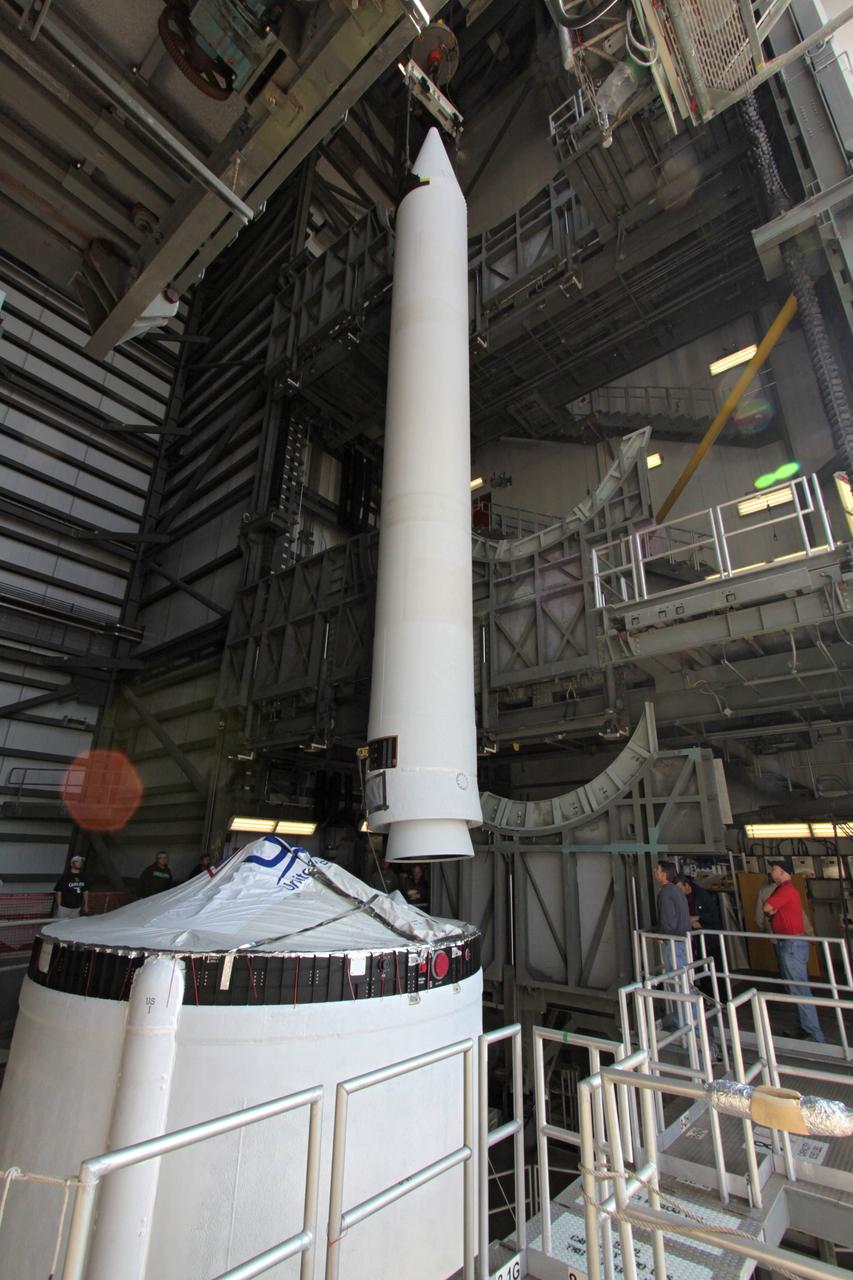
CAPE CANAVERAL, Fla. – At Launch Complex 37 on Cape Canaveral Air Force Station in Florida, a solid rocket booster for the Delta IV rocket slated to launch NASA's GOES-P meteorological satellite is lowered toward the rocket in the mobile service tower. GOES-P is the latest Geostationary Operational Environmental Satellite developed by NASA for the National Oceanic and Atmospheric Administration, or NOAA. The Delta IV rocket will be launched by United Launch Alliance for Boeing Launch Services under an FAA commercial license. Launch is targeted for no earlier than March 1. For information on GOES-P, visit http://goespoes.gsfc.nasa.gov/goes/spacecraft/n_p_spacecraft.html. Photo credit: NASA/Jack Pfaller
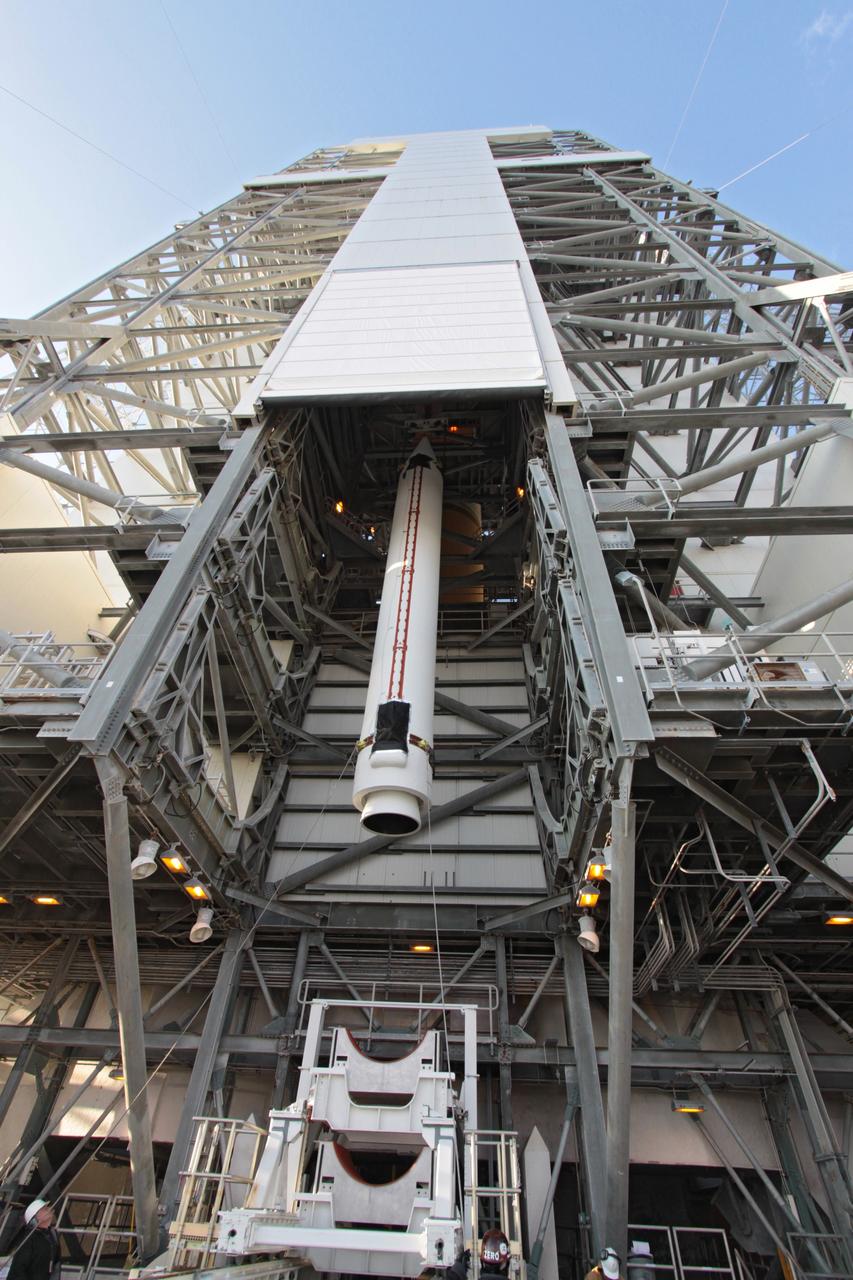
CAPE CANAVERAL, Fla. – At Launch Complex 37 on Cape Canaveral Air Force Station in Florida, a solid rocket booster for the Delta IV rocket slated to launch NASA's GOES-P meteorological satellite is lifted into the mobile service tower. GOES-P is the latest Geostationary Operational Environmental Satellite developed by NASA for the National Oceanic and Atmospheric Administration, or NOAA. The Delta IV rocket will be launched by United Launch Alliance for Boeing Launch Services under an FAA commercial license. Launch is targeted for no earlier than March 1. For information on GOES-P, visit http://goespoes.gsfc.nasa.gov/goes/spacecraft/n_p_spacecraft.html. Photo credit: NASA/Jack Pfaller
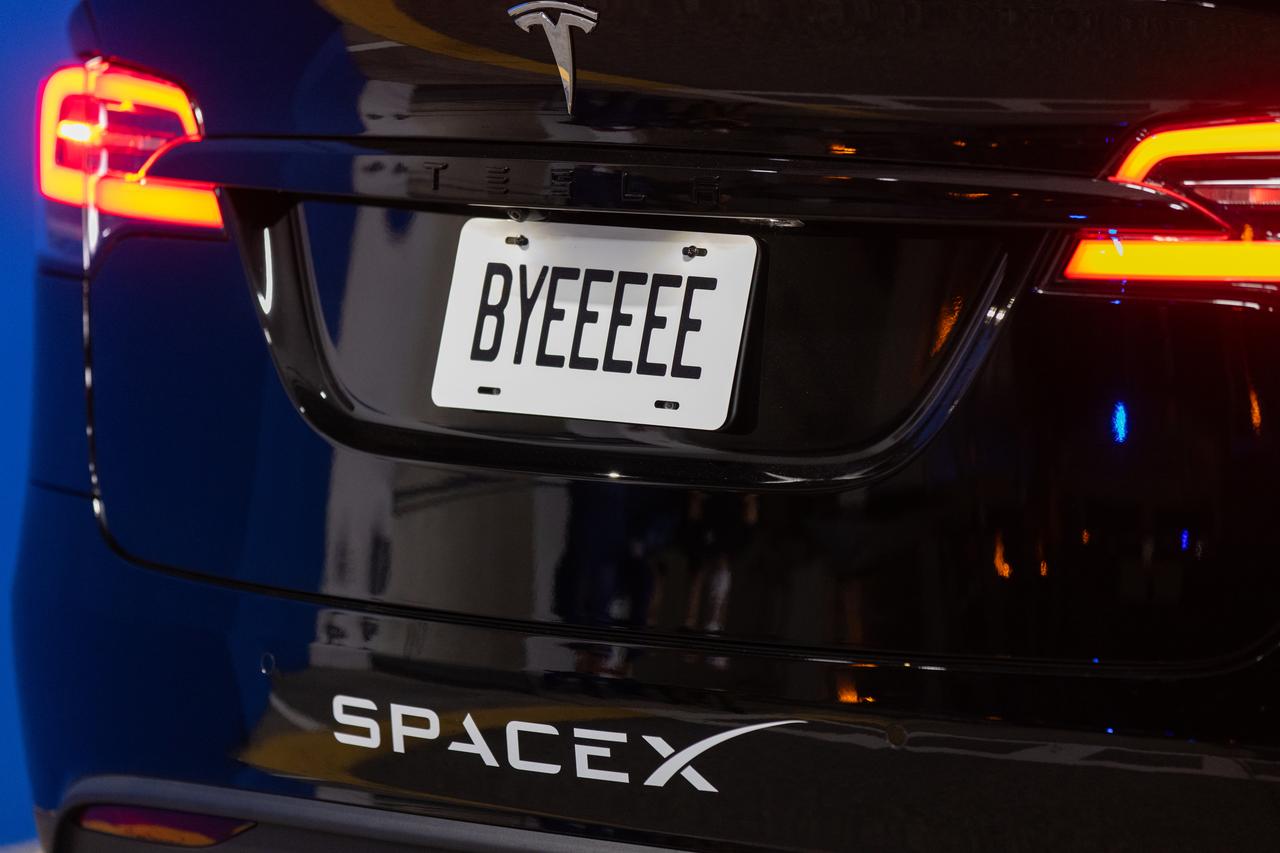
A look at the license plate on one of the customized Tesla Model X vehicles that will transport NASA’s SpaceX Crew-7 crew members to the pad at Kennedy Space Center’s Launch Complex 39A in Florida. SpaceX’s Dragon spacecraft, powered by the company’s Falcon 9 rocket, will carry the four-person crew – featuring NASA astronaut Jasmin Moghbeli, ESA (European Space Agency) astronaut Andreas Mogensen, JAXA (Japan Aerospace Exploration Agency) astronaut Satoshi Furukawa, and Roscosmos cosmonaut Konstantin Borisov – to the International Space Station as part of NASA’s Commercial Crew Program. Crew-7 is scheduled to launch at 3:27 a.m. EDT.
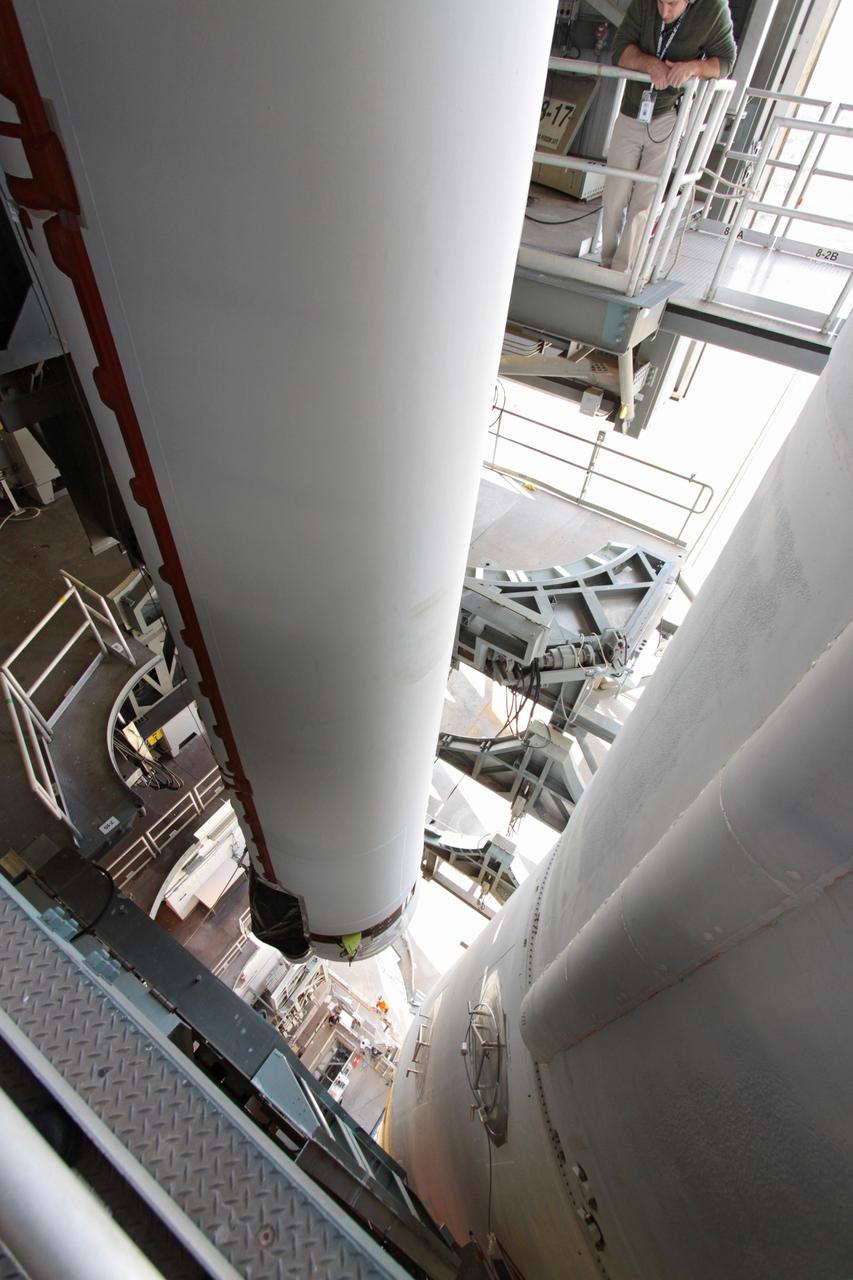
CAPE CANAVERAL, Fla. – In the mobile service tower at Launch Complex 37 on Cape Canaveral Air Force Station in Florida, a solid rocket booster for the Delta IV rocket slated to launch NASA's GOES-P meteorological satellite as it is lowered toward the base of the rocket. GOES-P is the latest Geostationary Operational Environmental Satellite developed by NASA for the National Oceanic and Atmospheric Administration, or NOAA. The Delta IV rocket will be launched by United Launch Alliance for Boeing Launch Services under an FAA commercial license. Launch is targeted for no earlier than March 1. For information on GOES-P, visit http://goespoes.gsfc.nasa.gov/goes/spacecraft/n_p_spacecraft.html. Photo credit: NASA/Jack Pfaller
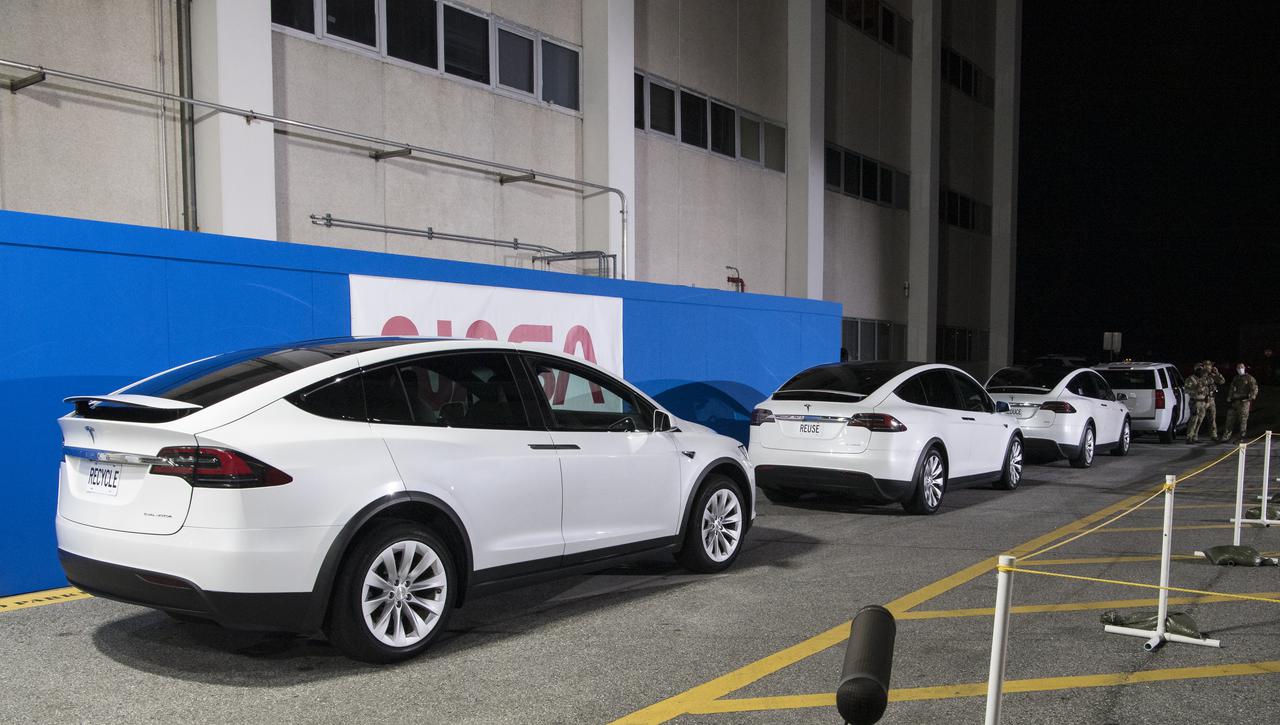
The vehicles that will carry NASA astronauts Shane Kimbrough and Megan McArthur, ESA (European Space Agency) astronaut Thomas Pesquet, and Japan Aerospace Exploration Agency (JAXA) astronaut Akihiko Hoshide, to Launch Complex 39A to board the SpaceX Crew Dragon spacecraft for the Crew-2 mission launch to the International Space Station, are seen as they prepare to depart the Neil A. Armstrong Operations and Checkout Building, Friday, April 23, 2021, at NASA’s Kennedy Space Center in Florida. The license plates read "Reduce," "Reuse," and "Recycle." Kimbrough, McArthur, Pesquet, and Hoshide launched at 5:49 a.m. EDT from Launch Complex 39A. Photo Credit: (NASA/Aubrey Gemignani)
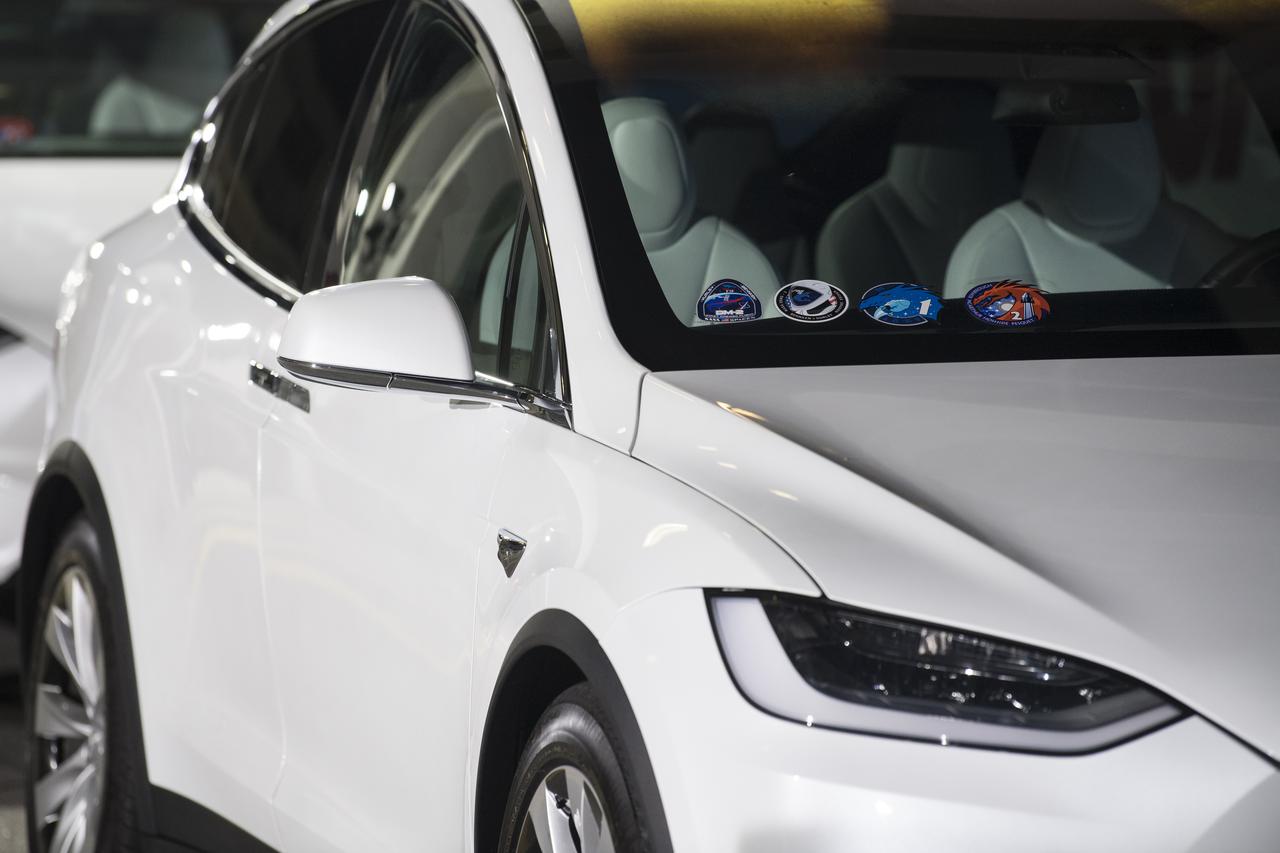
One of the vehicles that will carry NASA astronauts Shane Kimbrough and Megan McArthur, ESA (European Space Agency) astronaut Thomas Pesquet, and Japan Aerospace Exploration Agency (JAXA) astronaut Akihiko Hoshide, to Launch Complex 39A to board the SpaceX Crew Dragon spacecraft for the Crew-2 mission launch to the International Space Station, are seen as they prepare to depart the Neil A. Armstrong Operations and Checkout Building, Friday, April 23, 2021, at NASA’s Kennedy Space Center in Florida. The license plates read "Reduce," "Reuse," and "Recycle." Kimbrough, McArthur, Pesquet, and Hoshide launched at 5:49 a.m. EDT from Launch Complex 39A. Photo Credit: (NASA/Aubrey Gemignani)
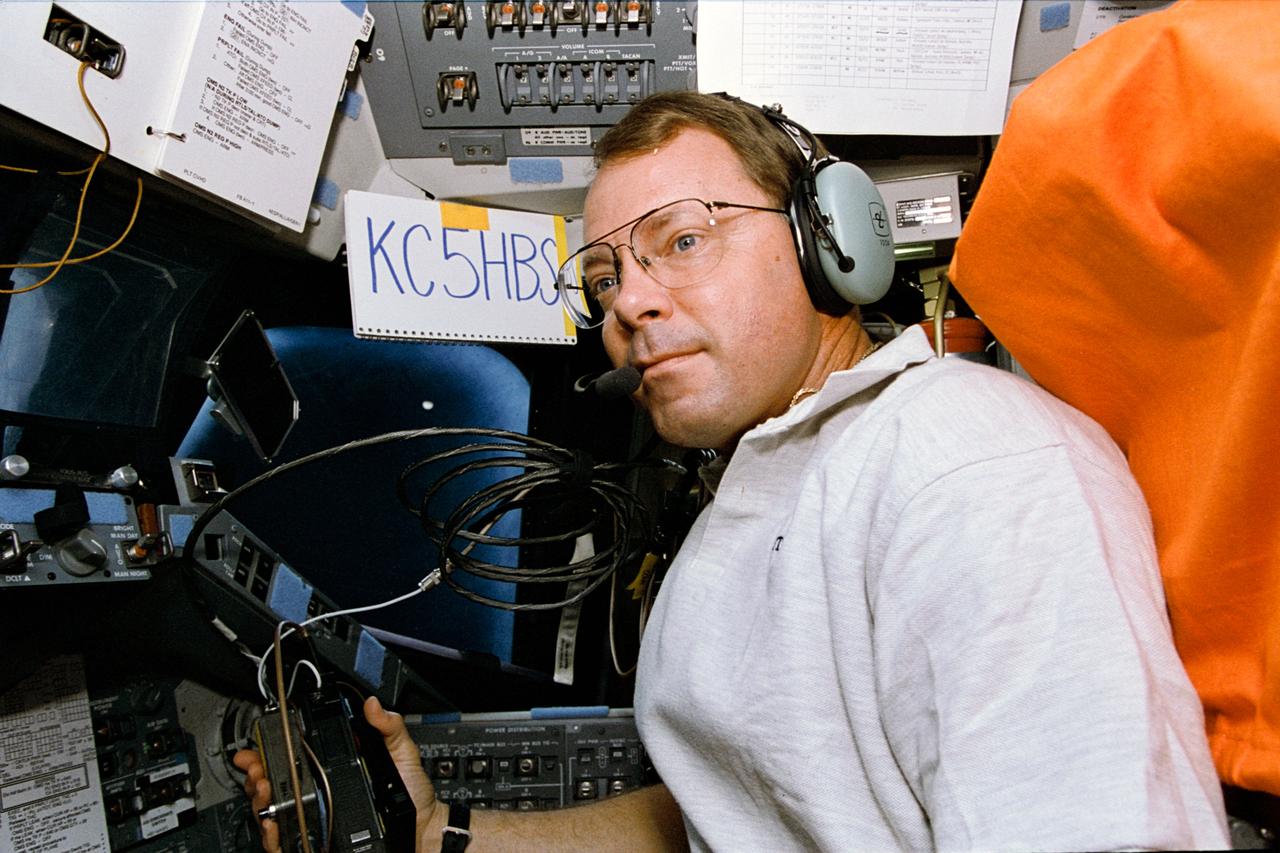
STS064-04-009 (9-20 Sept. 1994) --- Astronaut L. Blaine Hammond, STS-64 pilot, talks to students on Earth via the Shuttle Amateur Radio Experiment (SAREX) on the space shuttle Discovery's flight deck. The recently licensed "Ham" operator and several other crew members throughout the mission were connected with schools around the world with the aid of a number of amateur radio operators. Hammond joined five other NASA astronauts for almost 11 days in Earth orbit aboard Discovery. Photo credit: NASA or National Aeronautics and Space Administration
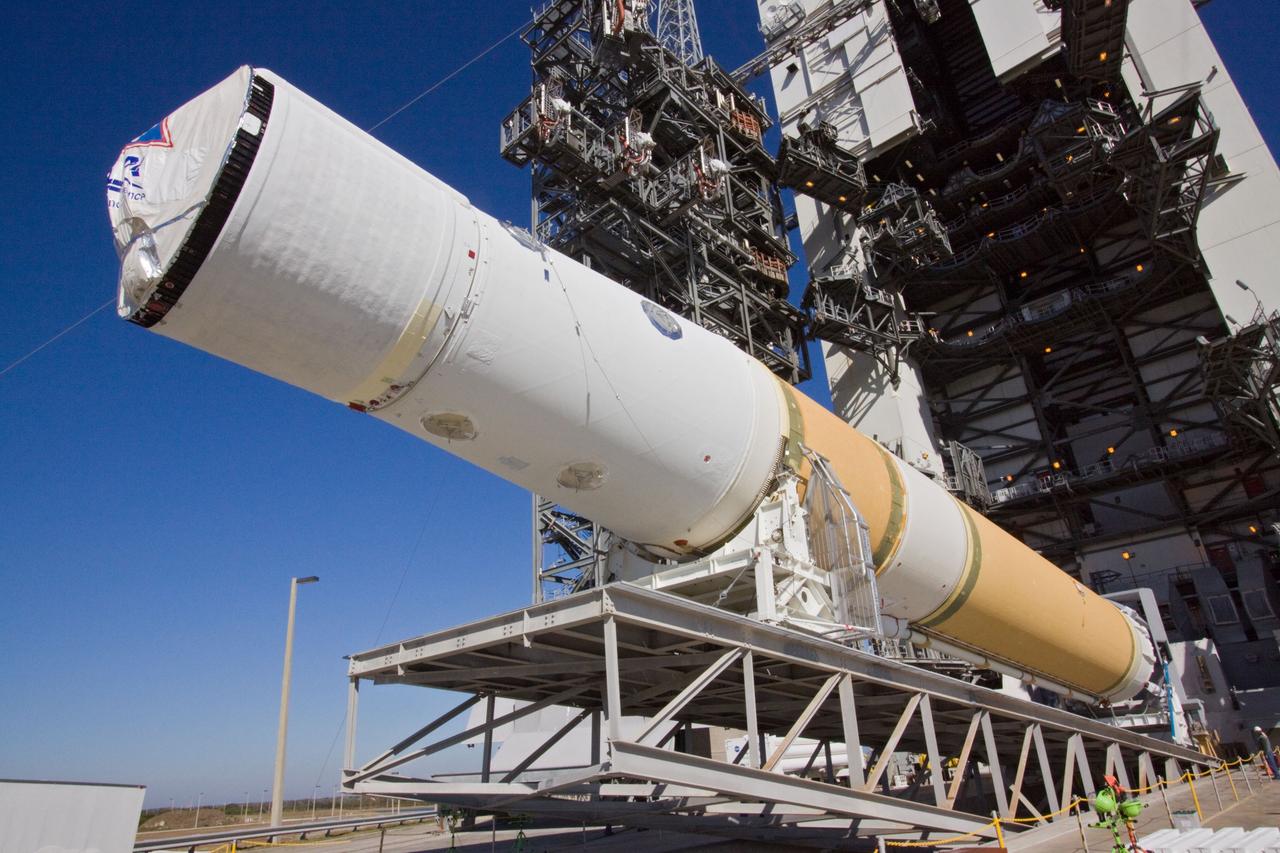
CAPE CANAVERAL, Fla. – At Launch Complex 37 on Cape Canaveral Air Force Station in Florida, the lift of the core stage of a Delta IV rocket into the mobile service tower begins. The rocket's first stage mated to its second stage comprise the core stage. The rocket is slated to launch GOES-P, the latest Geostationary Operational Environmental Satellite developed by NASA for the National Oceanic and Atmospheric Administration, or NOAA. The Delta IV rocket will be launched by United Launch Alliance for Boeing Launch Services under an FAA commercial license. Launch is targeted for no earlier than March 1. For information on GOES-P, visit http://goespoes.gsfc.nasa.gov/goes/spacecraft/n_p_spacecraft.html. Photo credit: NASA/Jack Pfaller
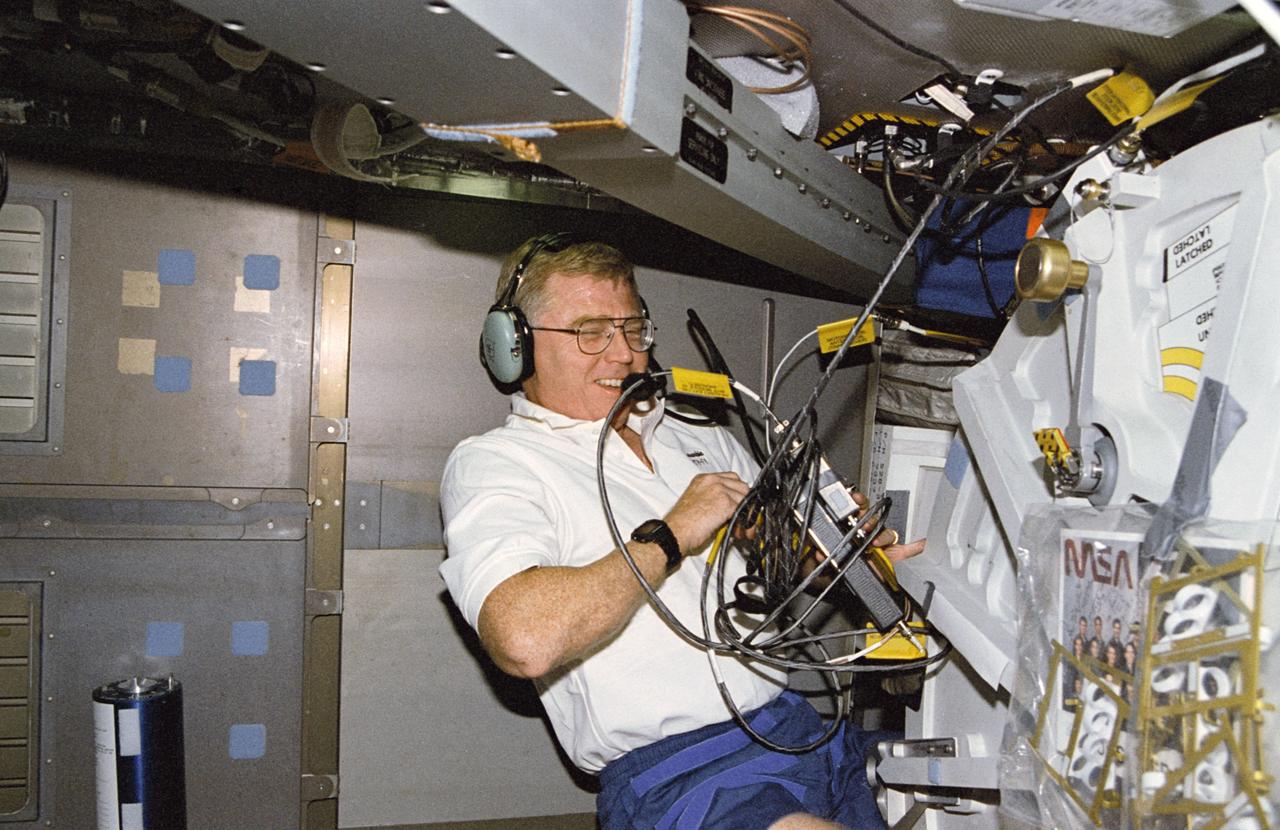
STS078-429-017 (20 June-7 July 1996) --- Aboard the middeck of the Earth-orbiting space shuttle Columbia, astronaut Charles J. Brady, mission specialist and a licensed amateur radio operator or "ham", talks to students on Earth. Some of the crew members devoted some of their off-duty time to continue a long-standing Shuttle tradition of communicating with students and other hams between their shifts of assigned duty. Brady joined four other NASA astronauts and two international payload specialists for almost 17-days of research in support of the Life and Microgravity Spacelab (LMS-1) mission.
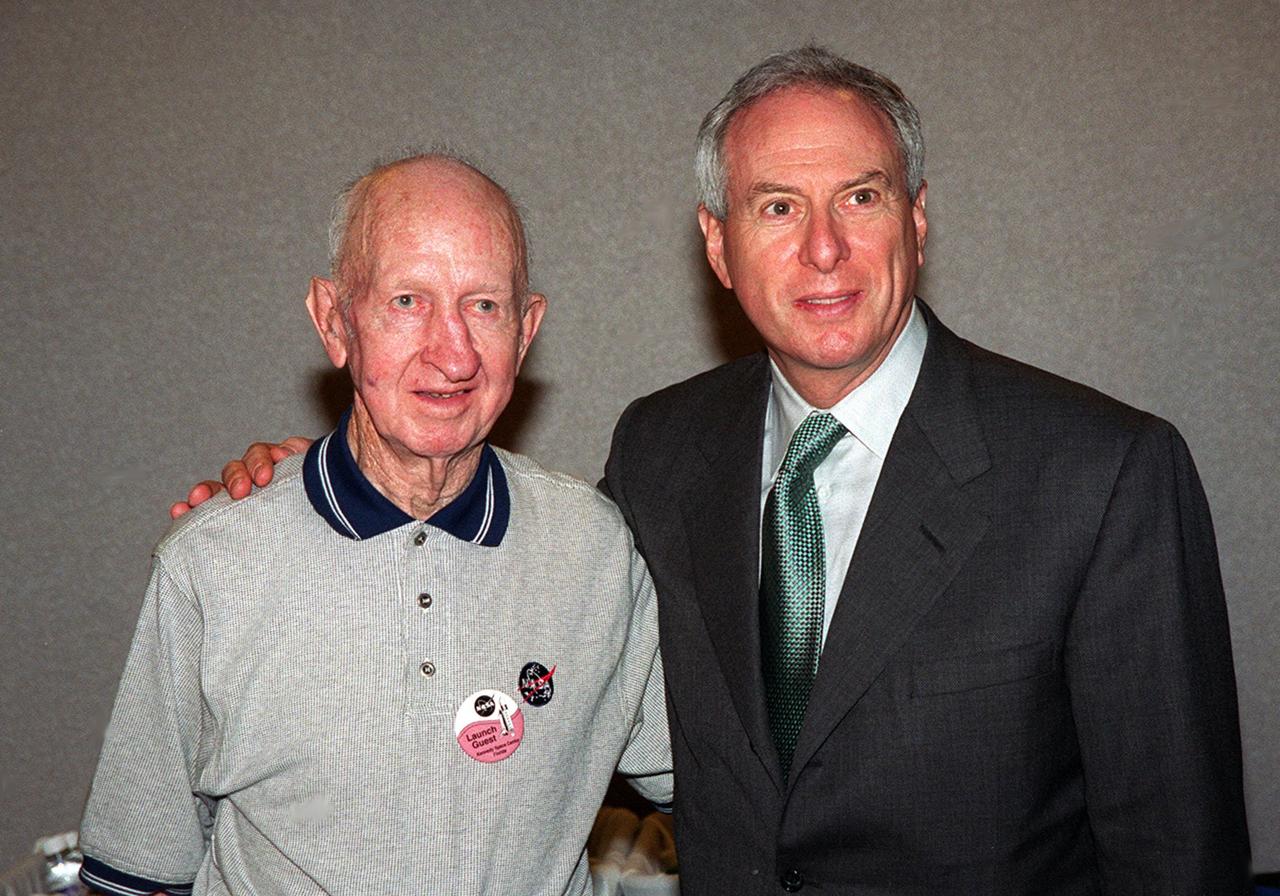
Among the VIPs attending the launch of STS-99 is Captain Ralph Charles (left), standing next to NASA Administrator Dan Goldin. Charles hopes to have his wish fulfilled of watching a Shuttle launch in person. The 100-year-old aviator has experienced nearly a century of flight history, from the Wright Brothers to the Space Program. He took flying lessons from one of the first fliers trained by Orville Wright, first repaired then built airplanes, went barnstorming, operated a charter service in the Caribbean, and worked as a test pilot for the Curtiss Wright Airplane Co. Charles is the oldest licensed pilot in the United States, and is still flying
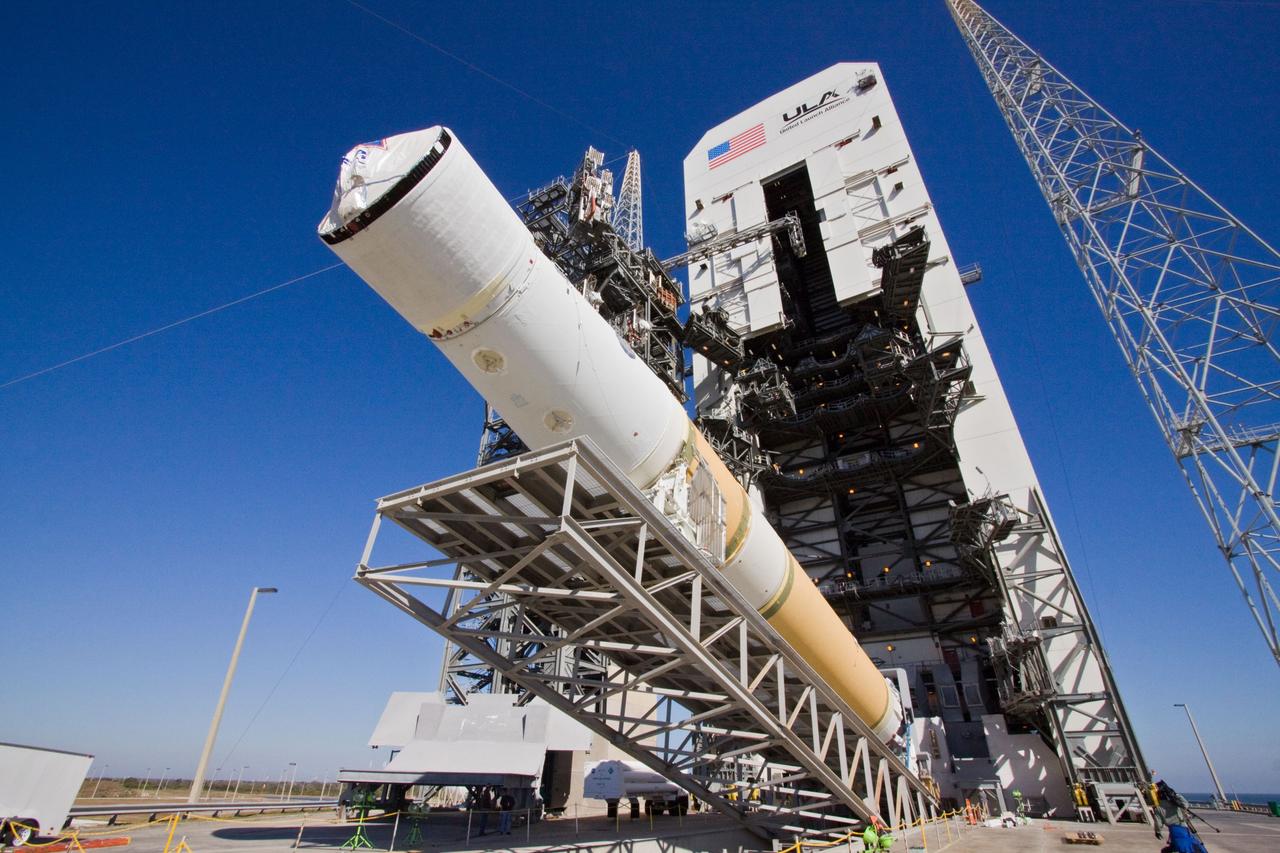
CAPE CANAVERAL, Fla. – At Launch Complex 37 on Cape Canaveral Air Force Station in Florida, the core stage of a Delta IV rocket is lifted into a vertical position for placement in the mobile service tower. The rocket's first stage mated to its second stage comprise the core stage. The rocket is slated to launch GOES-P, the latest Geostationary Operational Environmental Satellite developed by NASA for the National Oceanic and Atmospheric Administration, or NOAA. The Delta IV rocket will be launched by United Launch Alliance for Boeing Launch Services under an FAA commercial license. Launch is targeted for no earlier than March 1. For information on GOES-P, visit http://goespoes.gsfc.nasa.gov/goes/spacecraft/n_p_spacecraft.html. Photo credit: NASA/Jack Pfaller
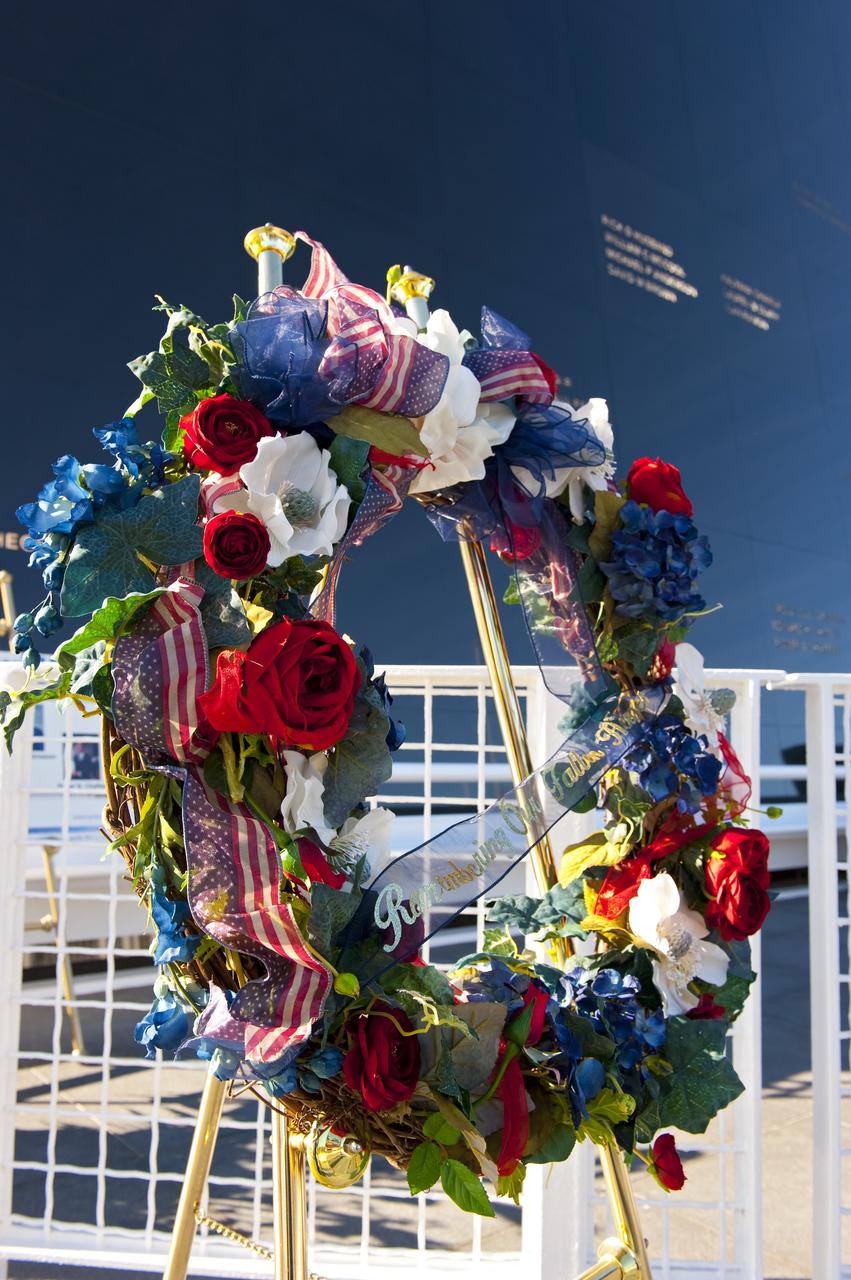
CAPE CANAVERAL, Fla. -- A wreath is displayed at the foot of the Space Mirror Memorial at the Kennedy Space Center Visitor Complex in Florida during a Day of Remembrance ceremony to honor members of the NASA family who lost their lives while furthering the cause of exploration and discovery. The memorial honors 24 United States astronauts, including the crew members of space shuttles Columbia and Challenger, Apollo 1, and those who died in training and commercial airplane accidents. The memorial is a project of the Astronauts Memorial Foundation and was paid for by Florida residents who purchased special Challenger mission automobile license plates. 2011 marks the 25th anniversary of the loss of Challenger, which broke apart over the Atlantic Ocean 73 seconds into flight on Jan. 28, 1986. Photo credit: NASA/Kim Shiflett
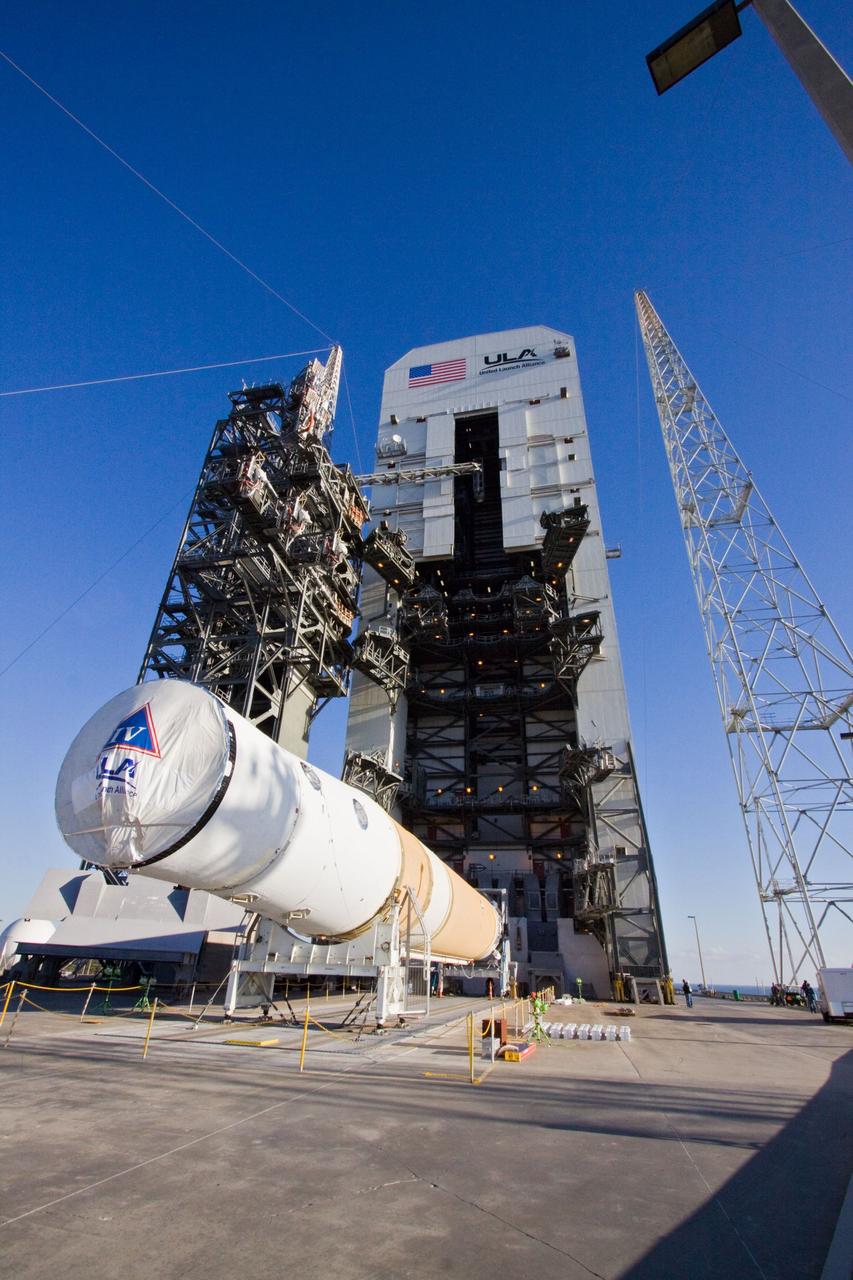
CAPE CANAVERAL, Fla. – At Launch Complex 37 on Cape Canaveral Air Force Station in Florida, preparations are under way to lift the core stage of a Delta IV rocket into the mobile service tower. The rocket's first stage mated to its second stage comprise the core stage. The rocket is slated to launch GOES-P, the latest Geostationary Operational Environmental Satellite developed by NASA for the National Oceanic and Atmospheric Administration, or NOAA. The Delta IV rocket will be launched by United Launch Alliance for Boeing Launch Services under an FAA commercial license. Launch is targeted for no earlier than March 1. For information on GOES-P, visit http://goespoes.gsfc.nasa.gov/goes/spacecraft/n_p_spacecraft.html. Photo credit: NASA/Jack Pfaller
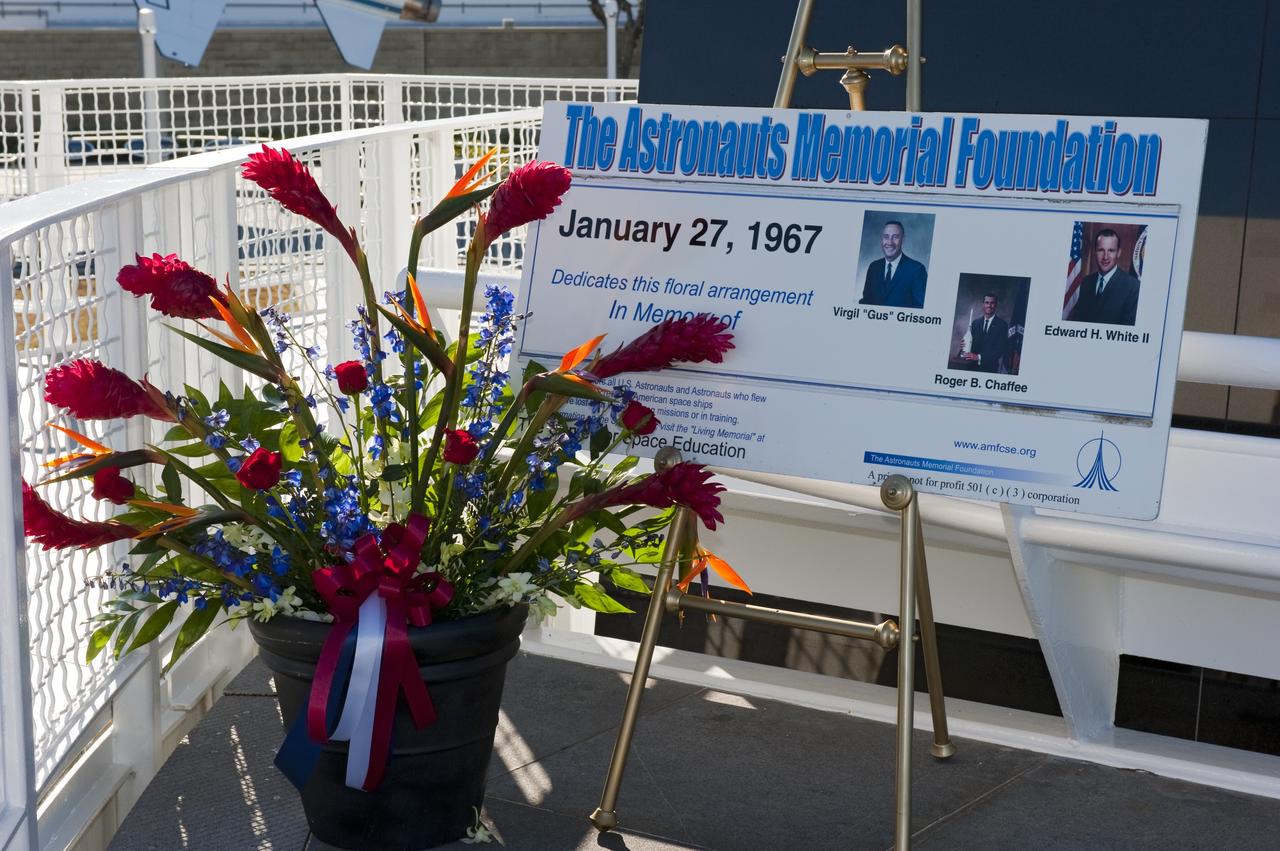
CAPE CANAVERAL, Fla. -- Flowers lay at the foot of the Space Mirror Memorial at the Kennedy Space Center Visitor Complex in Florida before a Day of Remembrance wreath laying ceremony to honor members of the NASA family who lost their lives while furthering the cause of exploration and discovery. The floral arrangement is dedicated to the Apollo 1 crew members Virgil "Gus" Grissom, Roger B. Chaffee and Edward H. White II. The memorial honors 24 United States astronauts, including the crew members of space shuttles Columbia and Challenger, Apollo 1, and those who died in training and commercial airplane accidents. The memorial is a project of the Astronauts Memorial Foundation and was paid for by Florida residents who purchased special Challenger mission automobile license plates. 2011 marks the 25th anniversary of the loss of Challenger, which broke apart over the Atlantic Ocean 73 seconds into flight on Jan. 28, 1986. Photo credit: NASA/Kim Shiflett
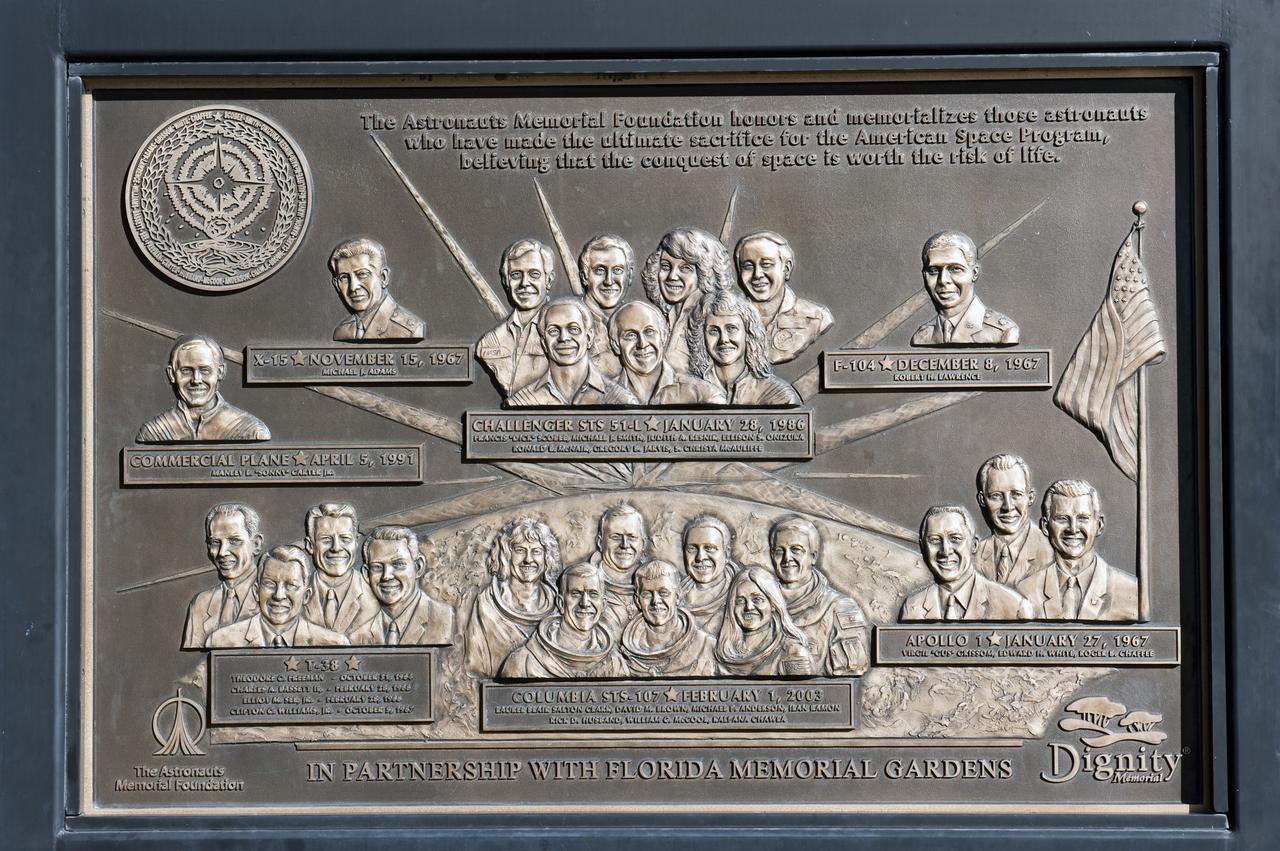
CAPE CANAVERAL, Fla. -- Pictured near the Space Mirror Memorial at the Kennedy Space Center Visitor Complex in Florida are the members of the NASA family who lost their lives while furthering the cause of exploration and discovery. The memorial honors 24 United States astronauts, including the crew members of space shuttles Columbia and Challenger, Apollo 1, and those who died in training and commercial airplane accidents. The memorial is a project of the Astronauts Memorial Foundation and was paid for by Florida residents who purchased special Challenger mission automobile license plates. 2011 marks the 25th anniversary of the loss of Challenger, which broke apart over the Atlantic Ocean 73 seconds into flight on Jan. 28, 1986. Photo credit: NASA/Kim Shiflett
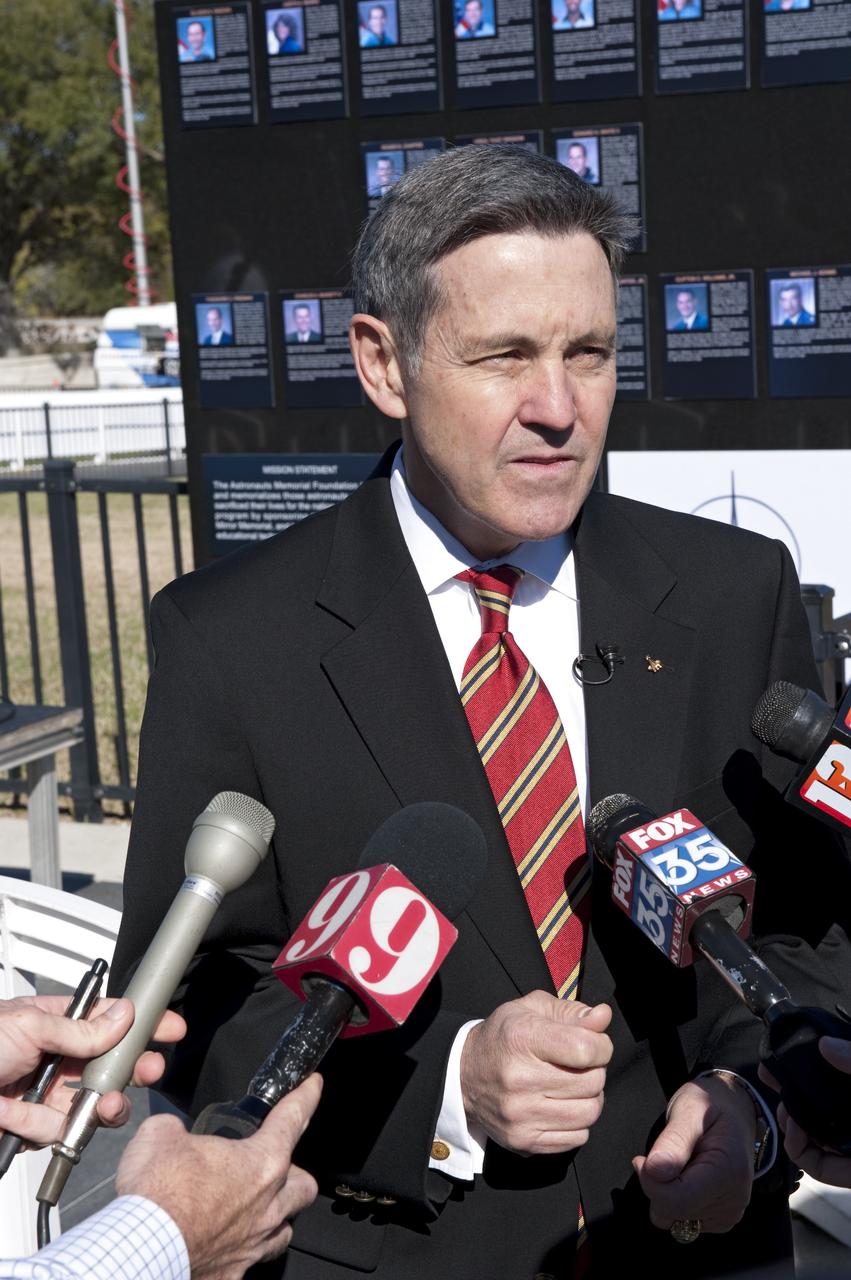
CAPE CANAVERAL, Fla. -- Kennedy Space Center Director and former astronaut Bob Cabana answers media questions during a Day of Remembrance wreath laying ceremony at the Space Mirror Memorial at the Kennedy Space Center Visitor Complex in Florida. The ceremony honors members of the NASA family who lost their lives while furthering the cause of exploration and discovery. The memorial displays the names of 24 United States astronauts, including the crew members of space shuttles Columbia and Challenger, Apollo 1, and those who died in training and commercial airplane accidents. The memorial is a project of the Astronauts Memorial Foundation and was paid for by Florida residents who purchased special Challenger mission automobile license plates. 2011 marks the 25th anniversary of the loss of Challenger, which broke apart over the Atlantic Ocean 73 seconds into flight on Jan. 28, 1986. Photo credit: NASA/Kim Shiflett
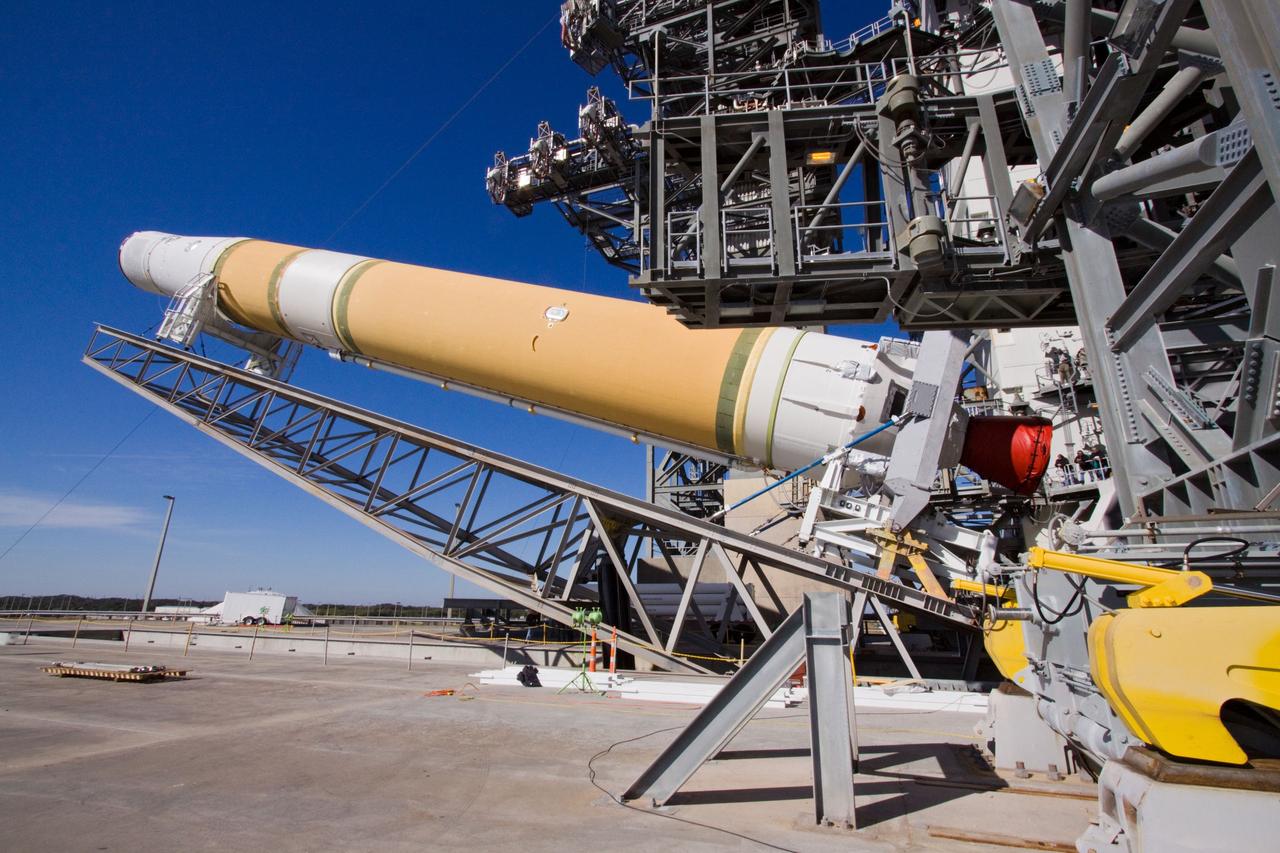
CAPE CANAVERAL, Fla. – At Launch Complex 37 on Cape Canaveral Air Force Station in Florida, the core stage of a Delta IV rocket rises to a vertical position for placement in the mobile service tower. The rocket's first stage mated to its second stage comprise the core stage. The rocket is slated to launch GOES-P, the latest Geostationary Operational Environmental Satellite developed by NASA for the National Oceanic and Atmospheric Administration, or NOAA. The Delta IV rocket will be launched by United Launch Alliance for Boeing Launch Services under an FAA commercial license. Launch is targeted for no earlier than March 1. For information on GOES-P, visit http://goespoes.gsfc.nasa.gov/goes/spacecraft/n_p_spacecraft.html. Photo credit: NASA/Jack Pfaller
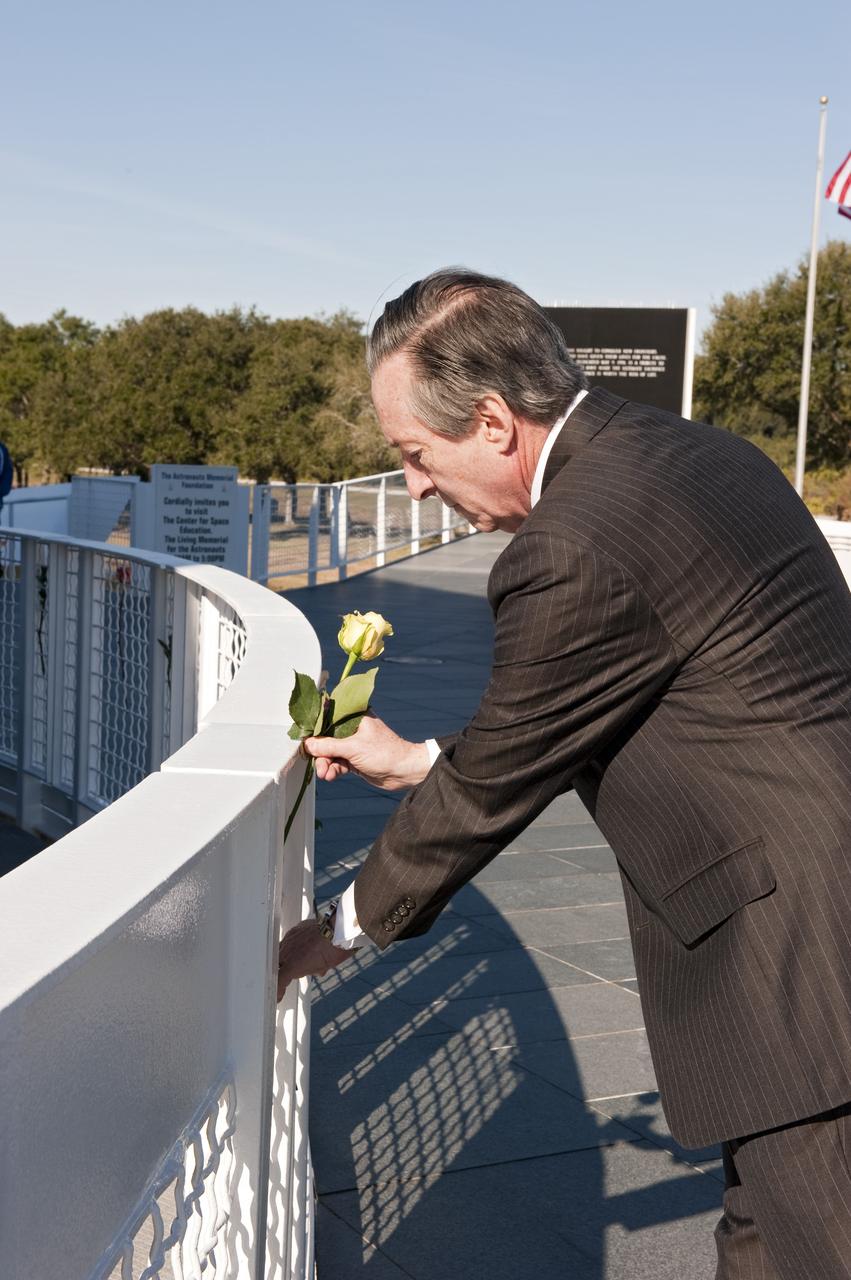
CAPE CANAVERAL, Fla. -- President and C.E.O. of The Astronauts Memorial Foundation Stephen Feldman displays a single yellow rose near the Space Mirror Memorial at the Kennedy Space Center Visitor Complex in Florida during a Day of Remembrance ceremony to honor members of the NASA family who lost their lives while furthering the cause of exploration and discovery. The memorial honors 24 United States astronauts, including the crew members of space shuttles Columbia and Challenger, Apollo 1, and those who died in training and commercial airplane accidents. The memorial is a project of the Astronauts Memorial Foundation and was paid for by Florida residents who purchased special Challenger mission automobile license plates. 2011 marks the 25th anniversary of the loss of Challenger, which broke apart over the Atlantic Ocean 73 seconds into flight on Jan. 28, 1986. Photo credit: NASA/Kim Shiflett
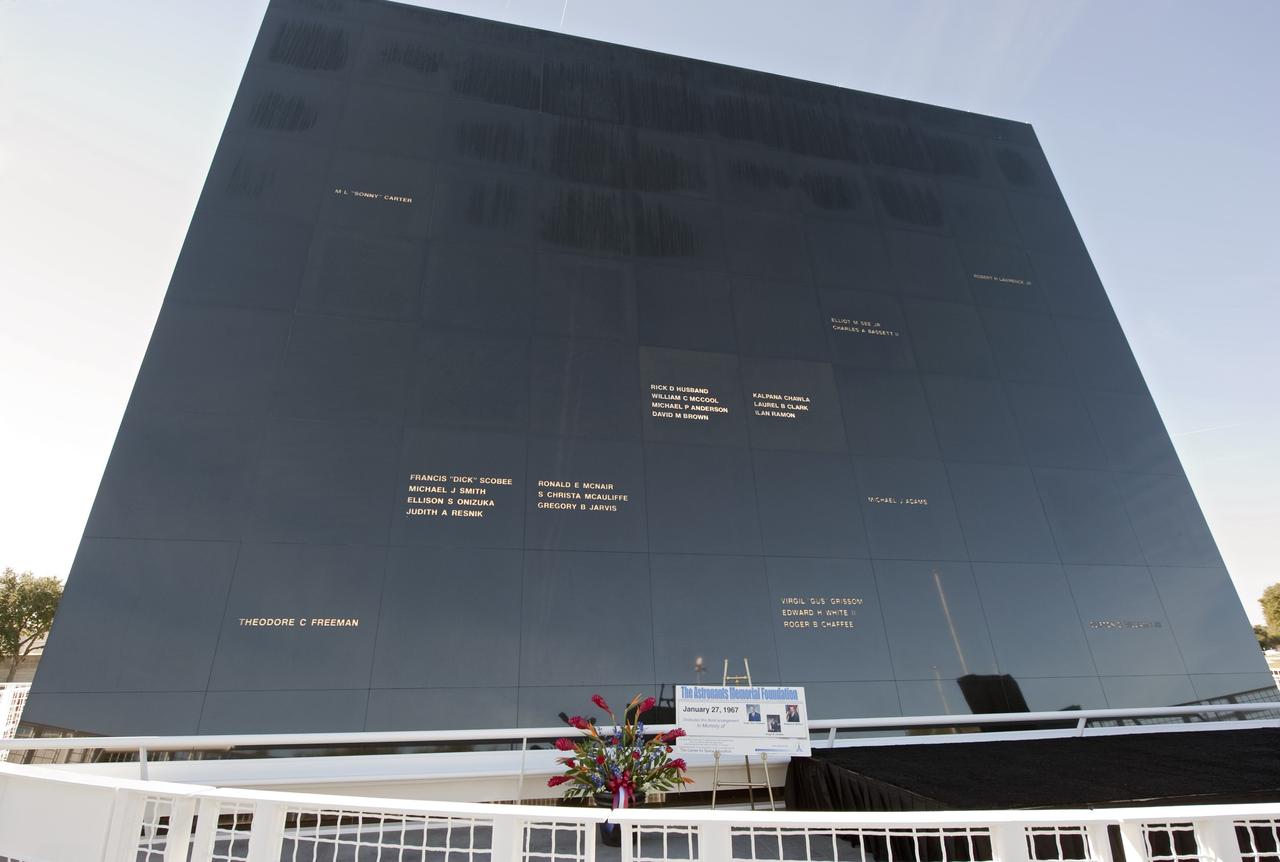
CAPE CANAVERAL, Fla. -- Flowers lay at the foot of the Space Mirror Memorial at the Kennedy Space Center Visitor Complex in Florida before a Day of Remembrance wreath laying ceremony to honor members of the NASA family who lost their lives while furthering the cause of exploration and discovery. The memorial honors 24 United States astronauts, including the crew members of space shuttles Columbia and Challenger, Apollo 1, and those who died in training and commercial airplane accidents. The memorial is a project of the Astronauts Memorial Foundation and was paid for by Florida residents who purchased special Challenger mission automobile license plates. 2011 marks the 25th anniversary of the loss of Challenger, which broke apart over the Atlantic Ocean 73 seconds into flight on Jan. 28, 1986. Photo credit: NASA/Kim Shiflett
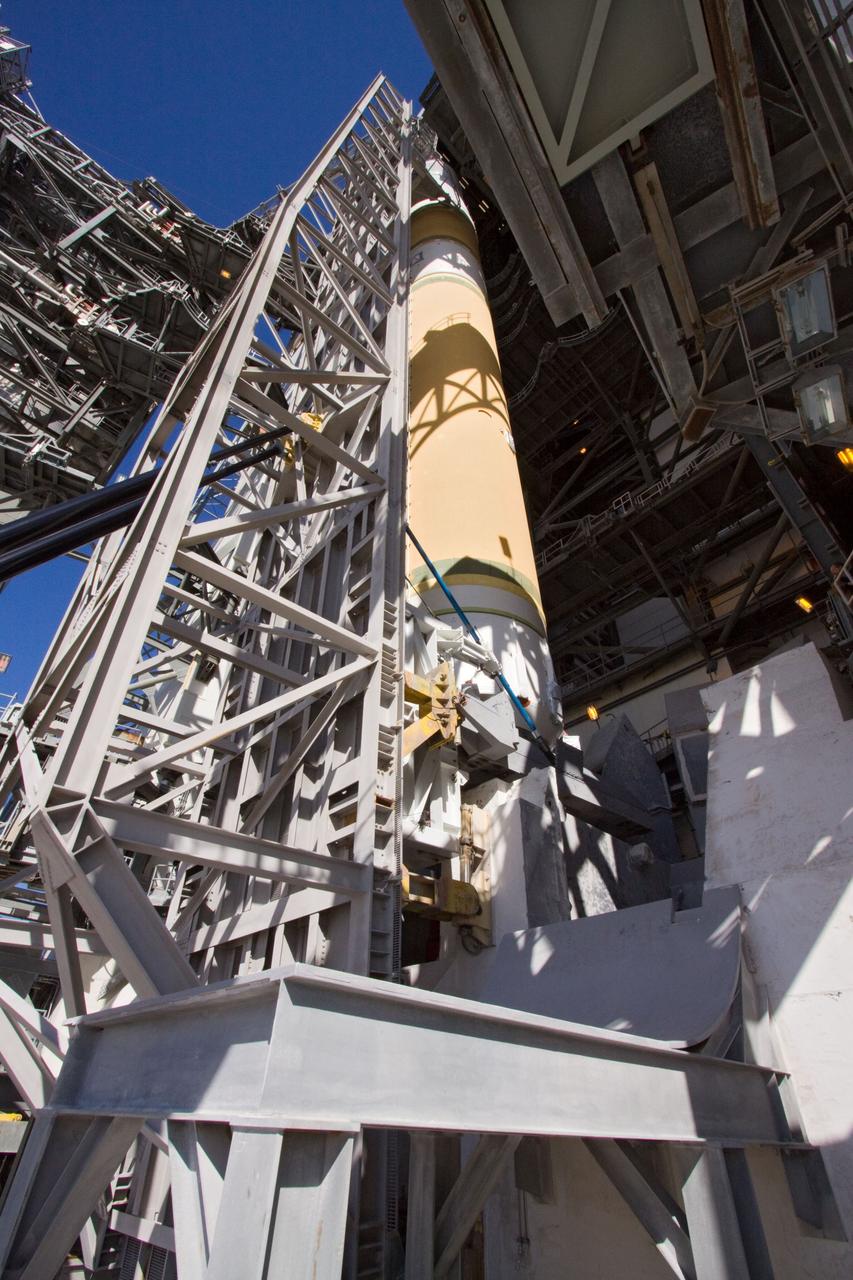
CAPE CANAVERAL, Fla. – At Launch Complex 37 on Cape Canaveral Air Force Station in Florida, the core stage of a Delta IV rocket stands in an upright position and is ready for transfer into the mobile service tower. The rocket's first stage mated to its second stage comprise the core stage. The rocket is slated to launch GOES-P, the latest Geostationary Operational Environmental Satellite developed by NASA for the National Oceanic and Atmospheric Administration, or NOAA. The Delta IV rocket will be launched by United Launch Alliance for Boeing Launch Services under an FAA commercial license. Launch is targeted for no earlier than March 1. For information on GOES-P, visit http://goespoes.gsfc.nasa.gov/goes/spacecraft/n_p_spacecraft.html. Photo credit: NASA/Jack Pfaller
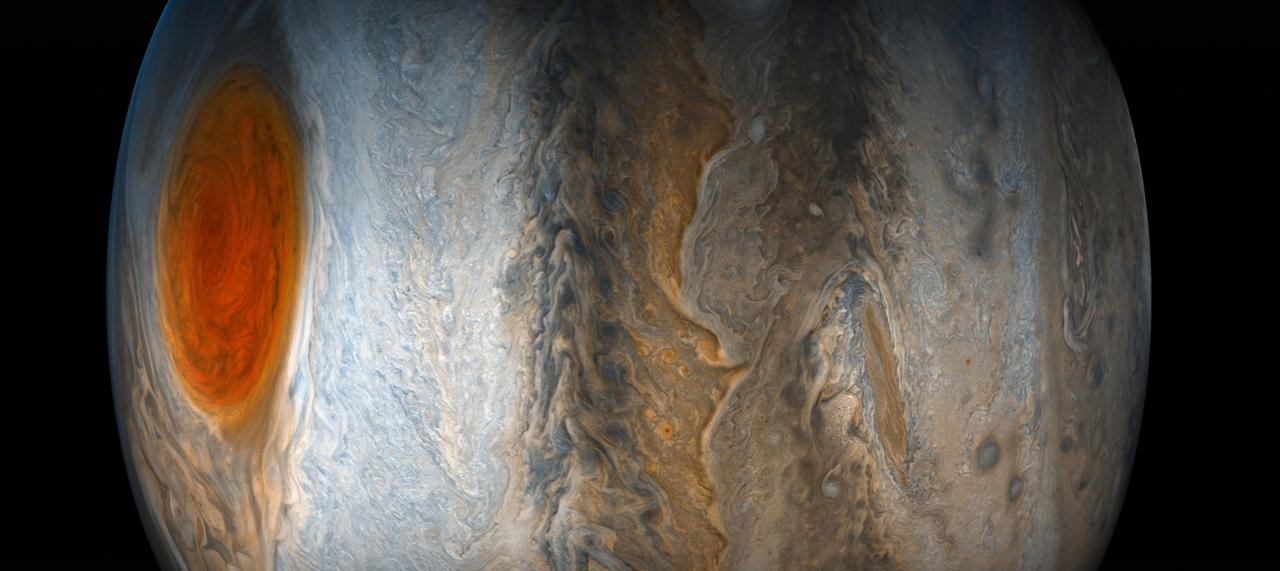
This striking Jovian vista was created by citizen scientists Gerald Eichstädt and Seán Doran using data from the JunoCam imager on NASA's Juno spacecraft. The tumultuous Great Red Spot is fading from Juno's view while the dynamic bands of the southern region of Jupiter come into focus. North is to the left of the image, and south is on the right. The image was taken on July 10, 2017 at 7:12 p.m. PDT (10:12 p.m. EDT), as the Juno spacecraft performed its seventh close flyby of Jupiter. At the time the image was taken, the spacecraft was 10,274 miles (16,535 kilometers) from the tops of the clouds of the planet at a latitude of -36.9 degrees. https://photojournal.jpl.nasa.gov/catalog/PIA21778 **Image Credit: Enhanced Image by Gerald Eichstädt and Seán Doran (CC BY-NC-SA) based on images provided courtesy of NASA/JPL-Caltech/SwRI/MSSS https://creativecommons.org/licenses/by-nc-sa/3.0/
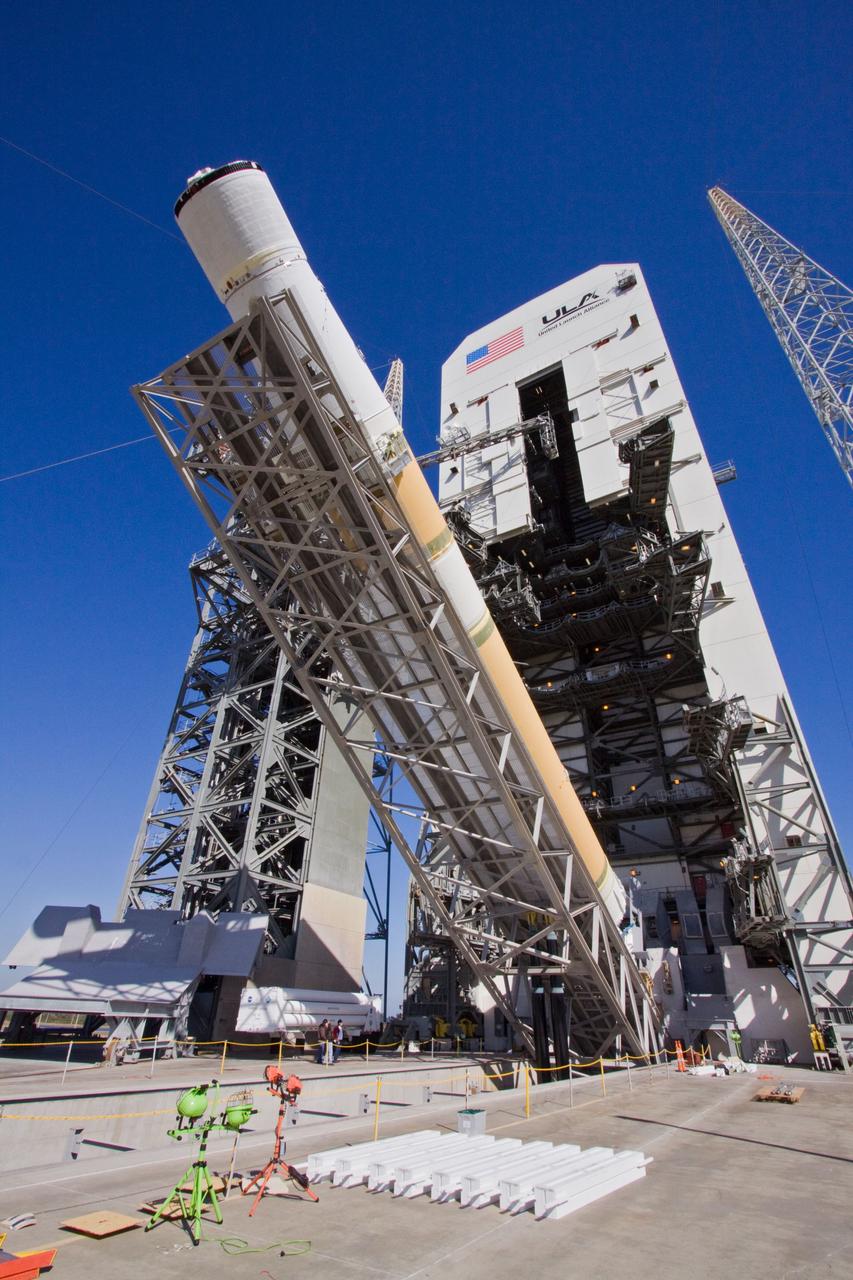
CAPE CANAVERAL, Fla. – At Launch Complex 37 on Cape Canaveral Air Force Station in Florida, the core stage of a Delta IV rocket is nearly upright as operations proceed to place it in the mobile service tower. The rocket's first stage mated to its second stage comprise the core stage. The rocket is slated to launch GOES-P, the latest Geostationary Operational Environmental Satellite developed by NASA for the National Oceanic and Atmospheric Administration, or NOAA. The Delta IV rocket will be launched by United Launch Alliance for Boeing Launch Services under an FAA commercial license. Launch is targeted for no earlier than March 1. For information on GOES-P, visit http://goespoes.gsfc.nasa.gov/goes/spacecraft/n_p_spacecraft.html. Photo credit: NASA/Jack Pfaller
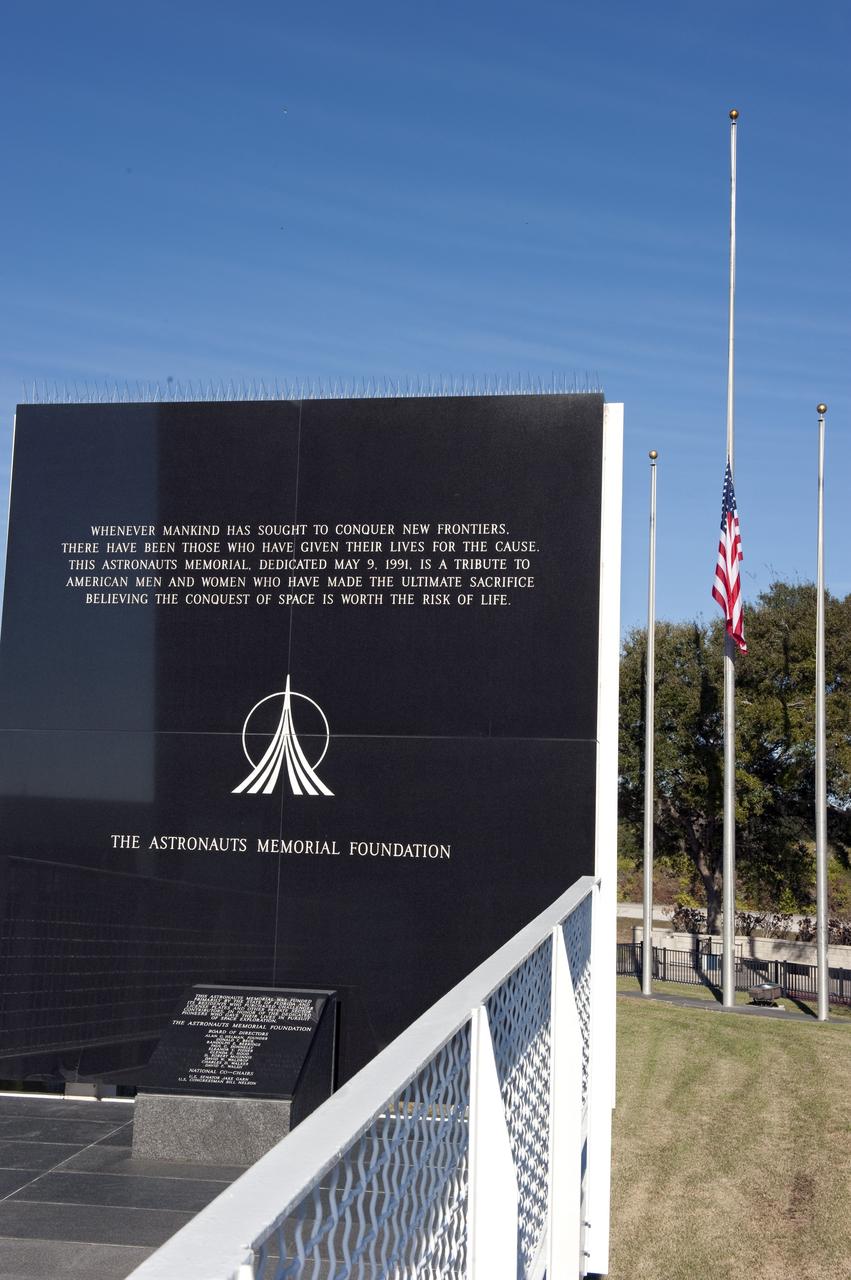
CAPE CANAVERAL, Fla. -- A flag flies at half-staff near the Space Mirror Memorial at the Kennedy Space Center Visitor Complex in Florida during a Day of Remembrance wreath laying ceremony to honor members of the NASA family who lost their lives while furthering the cause of exploration and discovery. The large mirror made of black granite was designated as a national memorial by Congress and President George Bush in 1991. It honors 24 United States astronauts, including the crew members of space shuttles Columbia and Challenger, Apollo 1, and those who died in training and commercial airplane accidents. The memorial is a project of the Astronauts Memorial Foundation and was paid for by Florida residents who purchased special Challenger mission automobile license plates. 2011 marks the 25th anniversary of the loss of Challenger, which broke apart over the Atlantic Ocean 73 seconds into flight on Jan. 28, 1986. Photo credit: NASA/Kim Shiflett
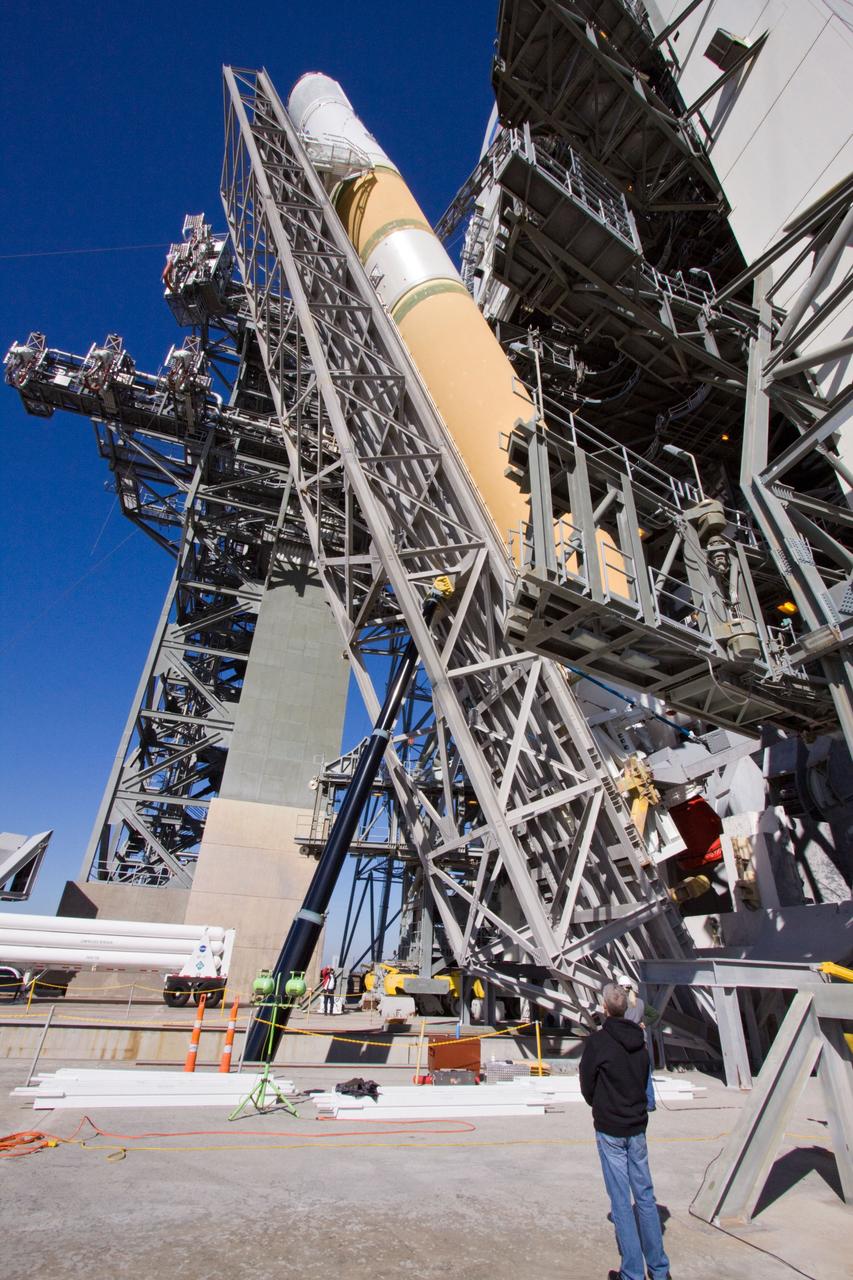
CAPE CANAVERAL, Fla. – At Launch Complex 37 on Cape Canaveral Air Force Station in Florida, a worker monitors the lift of the core stage of a Delta IV rocket into an upright position for transfer into the mobile service tower. The rocket's first stage mated to its second stage comprise the core stage. The rocket is slated to launch GOES-P, the latest Geostationary Operational Environmental Satellite developed by NASA for the National Oceanic and Atmospheric Administration, or NOAA. The Delta IV rocket will be launched by United Launch Alliance for Boeing Launch Services under an FAA commercial license. Launch is targeted for no earlier than March 1. For information on GOES-P, visit http://goespoes.gsfc.nasa.gov/goes/spacecraft/n_p_spacecraft.html. Photo credit: NASA/Jack Pfaller

Two scientists at NASA Marshall Space Flight Center, atmospheric scientist Paul Meyer (left) and solar physicist Dr. David Hathaway, have developed promising new software, called Video Image Stabilization and Registration (VISAR), that may help law enforcement agencies to catch criminals by improving the quality of video recorded at crime scenes, VISAR stabilizes camera motion in the horizontal and vertical as well as rotation and zoom effects; produces clearer images of moving objects; smoothes jagged edges; enhances still images; and reduces video noise of snow. VISAR could also have applications in medical and meteorological imaging. It could steady images of Ultrasounds which are infamous for their grainy, blurred quality. It would be especially useful for tornadoes, tracking whirling objects and helping to determine the tornado's wind speed. This image shows two scientists reviewing an enhanced video image of a license plate taken from a moving automobile.
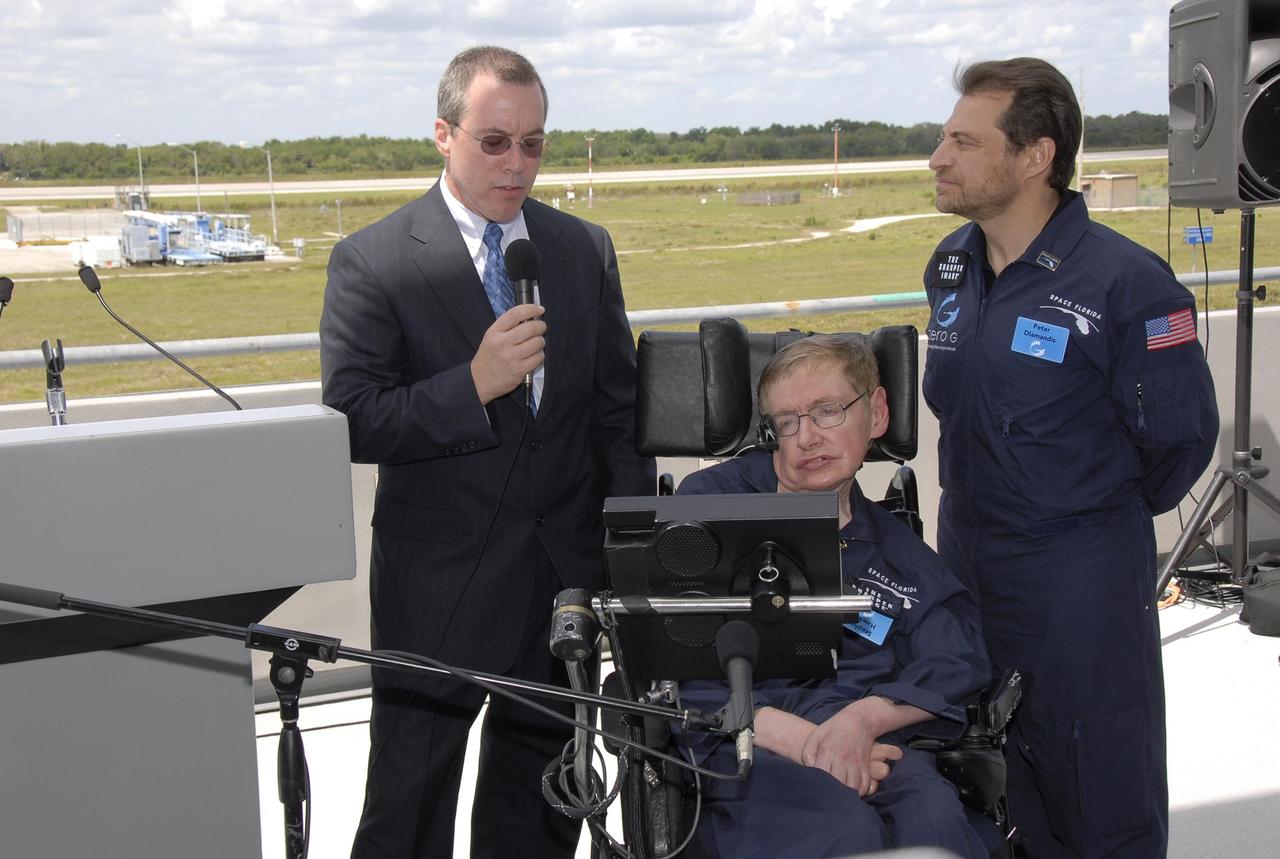
KENNEDY SPACE CENTER, FLA. -- At the Kennedy Space Center Shuttle Landing Facility, Space Florida president Steve Kohler (left) talks to the media about physicist Stephen Hawking's (in the wheelchair) first zero-gravity flight. The flight will be aboard a modified Boeing 727 aircraft owned by Zero Gravity Corp., a commercial company licensed to provide the public with weightless flight experiences. At right is Peter Diamandis, founder of the Zero Gravity Corp. Hawking developed amyotrophic lateral sclerosis disease in the 1960s, a type of motor neuron disease which would cost him the loss of almost all neuromuscular control. At the celebration of his 65th birthday on January 8 this year, Hawking announced his plans for a zero-gravity flight to prepare for a sub-orbital space flight in 2009 on Virgin Galactic's space service. Photo credit: NASA/Kim Shiflett
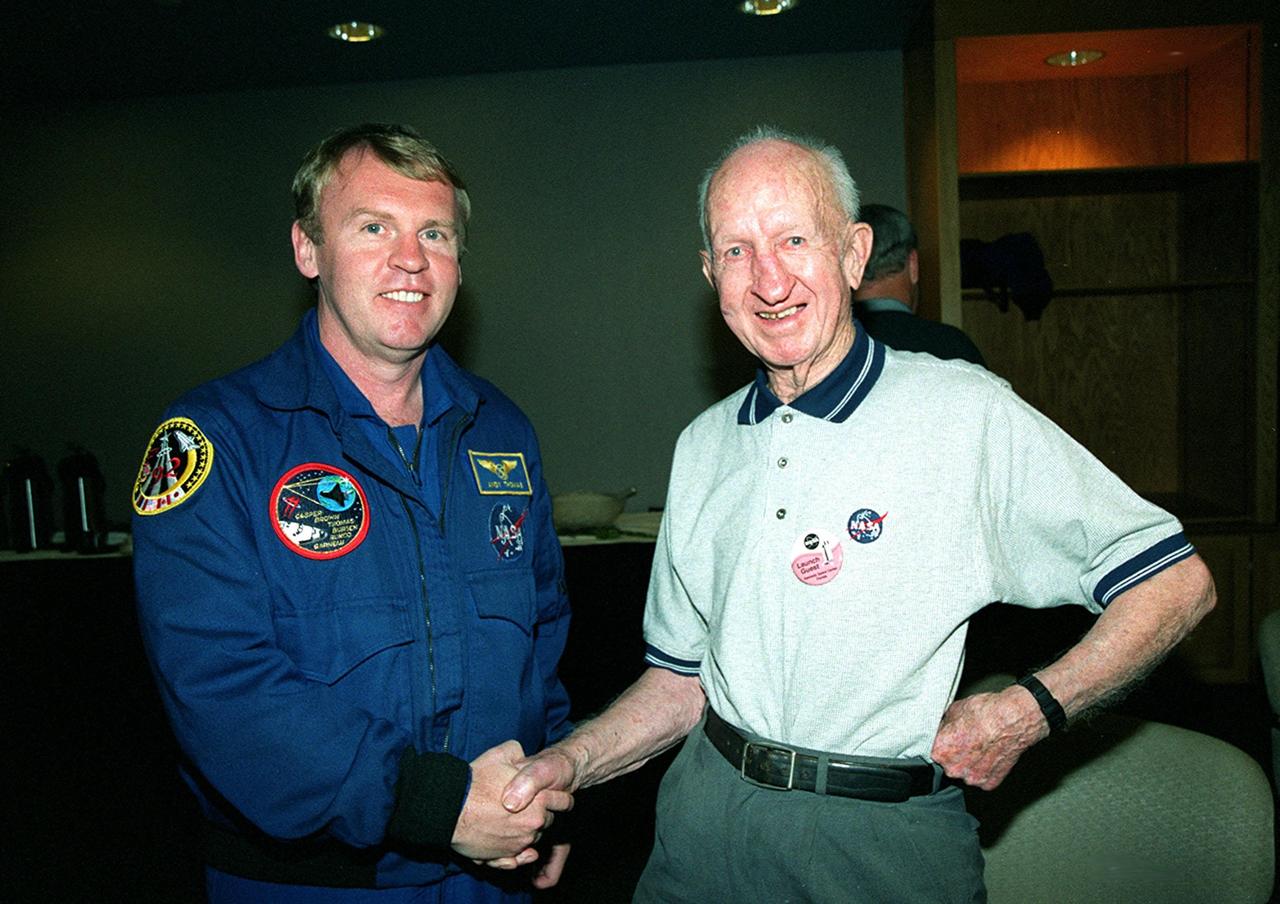
Astronaut Andy Thomas (left) greets 100-year-old Captain Ralph Charles, one of the VIPs attending the launch of STS-99. Charles also met NASA Administrator Dan Goldin. An aviator who has the distinction of being the oldest licensed pilot in the United States, Charles is still flying. He has experienced nearly a century of flight history, from the Wright Brothers to the Space Program. He took flying lessons from one of the first fliers trained by Orville Wright, first repaired then built airplanes, went barnstorming, operated a charter service in the Caribbean, and worked as a test pilot for the Curtiss Wright Airplane Co. Charles watches all the Shuttle launches from his home in Ohio and his greatest wish is to be able to watch one in person from KSC
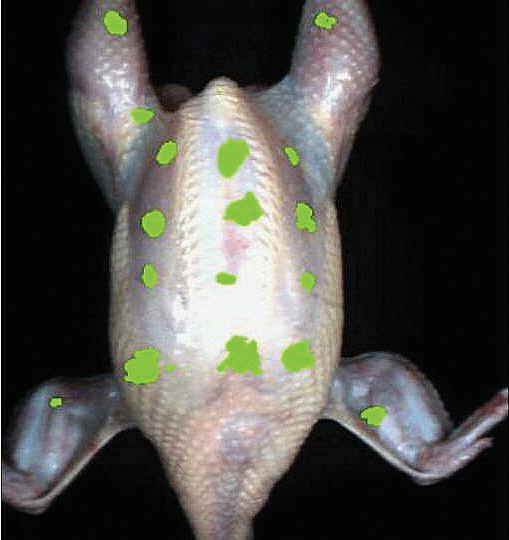
ProVision Technologies, a NASA research partnership center at Sternis Space Center in Mississippi, has developed a new hyperspectral imaging (HSI) system that is much smaller than the original large units used aboard remote sensing aircraft and satellites. The new apparatus is about the size of a breadbox. Health-related applications of HSI include scanning chickens during processing to help prevent contaminated food from getting to the table. ProVision is working with Sanderson Farms of Mississippi and the U.S. Department of Agriculture. ProVision has a record in its spectral library of the unique spectral signature of fecal contamination, so chickens can be scanned and those with a positive reading can be separated. HSI sensors can also determine the quantity of surface contamination. Research in this application is quite advanced, and ProVision is working on a licensing agreement for the technology. The potential for future use of this equipment in food processing and food safety is enormous.
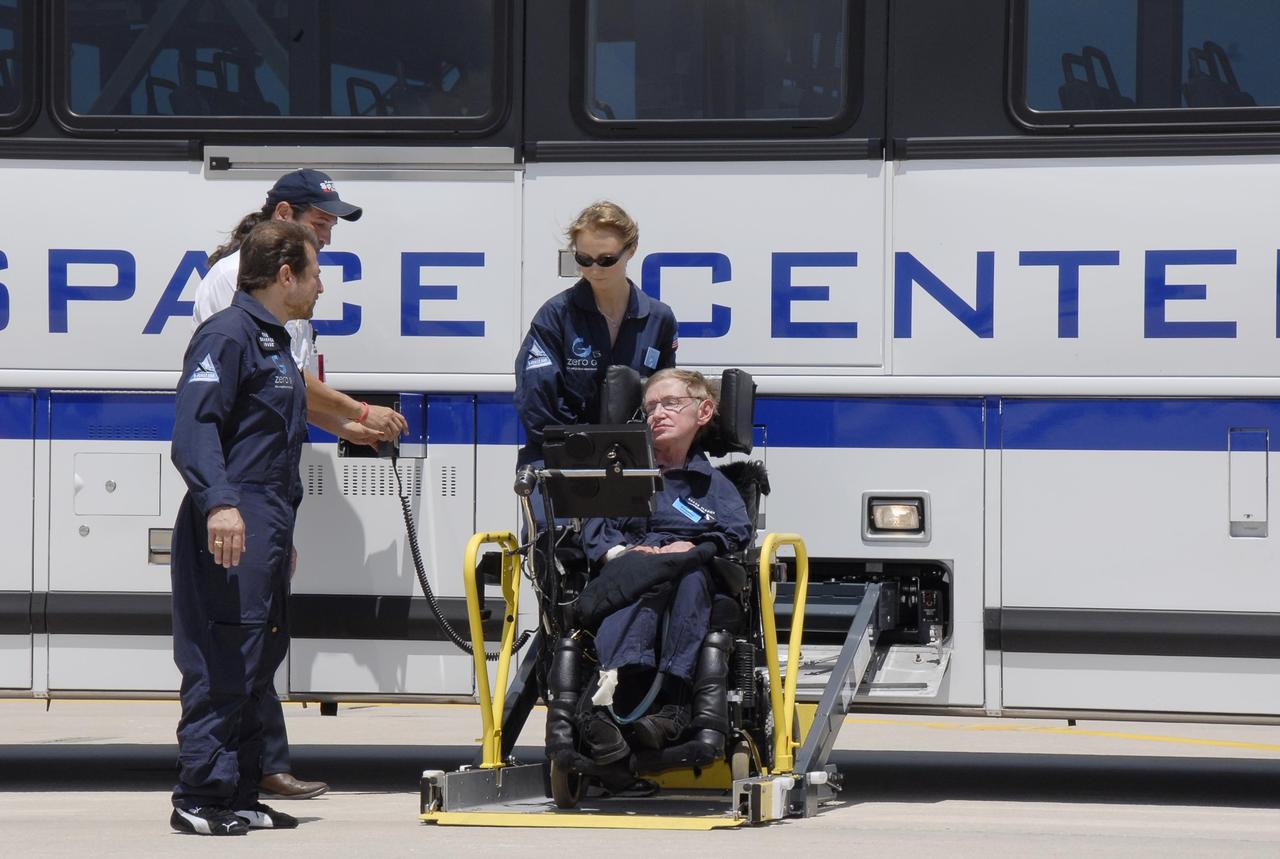
KENNEDY SPACE CENTER, FLA. -- At the Kennedy Space Center Shuttle Landing Facility, noted physicist Stephen Hawking, in the wheelchair, arrives at the runway for his first zero-gravity flight. The flight will be aboard a modified Boeing 727 aircraft owned by Zero Gravity Corp., a commercial company licensed to provide the public with weightless flight experiences. At left is Peter Diamandis, founder of the Zero Gravity Corp. Behind Hawking is Nicola O'Brien, a nurse practitioner who is Hawking's aide. Hawking developed amyotrophic lateral sclerosis disease in the 1960s, a type of motor neuron disease which would cost him the loss of almost all neuromuscular control. At the celebration of his 65th birthday on January 8 this year, Hawking announced his plans for a zero-gravity flight to prepare for a sub-orbital space flight in 2009 on Virgin Galactic's space service. Photo credit: NASA/Kim Shiflett
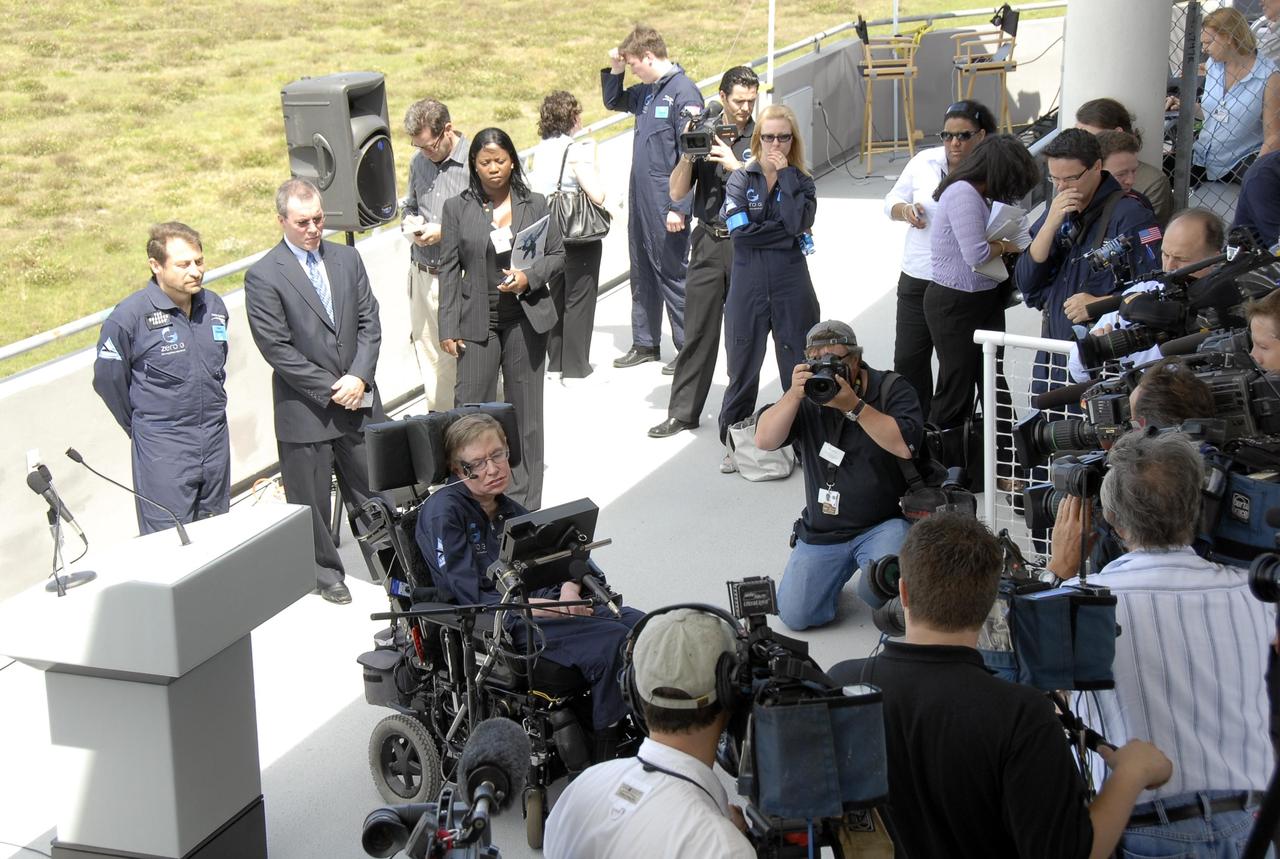
KENNEDY SPACE CENTER, FLA. -- The media surround noted wheelchair-bound physicist Stephen Hawking after his arrival at the Kennedy Space Center Shuttle Landing Facility for his first zero-gravity flight. Behind Hawking, at left, are Zero Gravity Corporation founder Peter Diamandis and Space Florida president Steve Kohler. The flight will be aboard a modified Boeing 727 aircraft owned by Zero G, a commercial company licensed to provide the public with weightless flight experiences. Hawking developed amyotrophic lateral sclerosis disease in the 1960s, a type of motor neuron disease which would cost him the loss of almost all neuromuscular control. At the celebration of his 65th birthday on January 8 this year, Hawking announced his plans for a zero-gravity flight to prepare for a sub-orbital space flight in 2009 on Virgin Galactic's space service. Photo credit: NASA/Kim Shiflett

KENNEDY SPACE CENTER, FLA. — Noted physicist Stephen Hawking greets the media after his arrival at the Kennedy Space Center Shuttle Landing Facility for his first zero-gravity flight. The flight will be aboard a modified Boeing 727 aircraft owned by Zero Gravity Corp., a commercial company licensed to provide the public with weightless flight experiences. Hawking developed amyotrophic lateral sclerosis disease in the 1960s, a type of motor neuron disease which would cost him the loss of almost all neuromuscular control. At the celebration of his 65th birthday on January 8 this year, Hawking announced his plans for a zero-gravity flight to prepare for a sub-orbital space flight in 2009 on Virgin Galactic's space service. Photo credit: NASA/Kim Shiflett
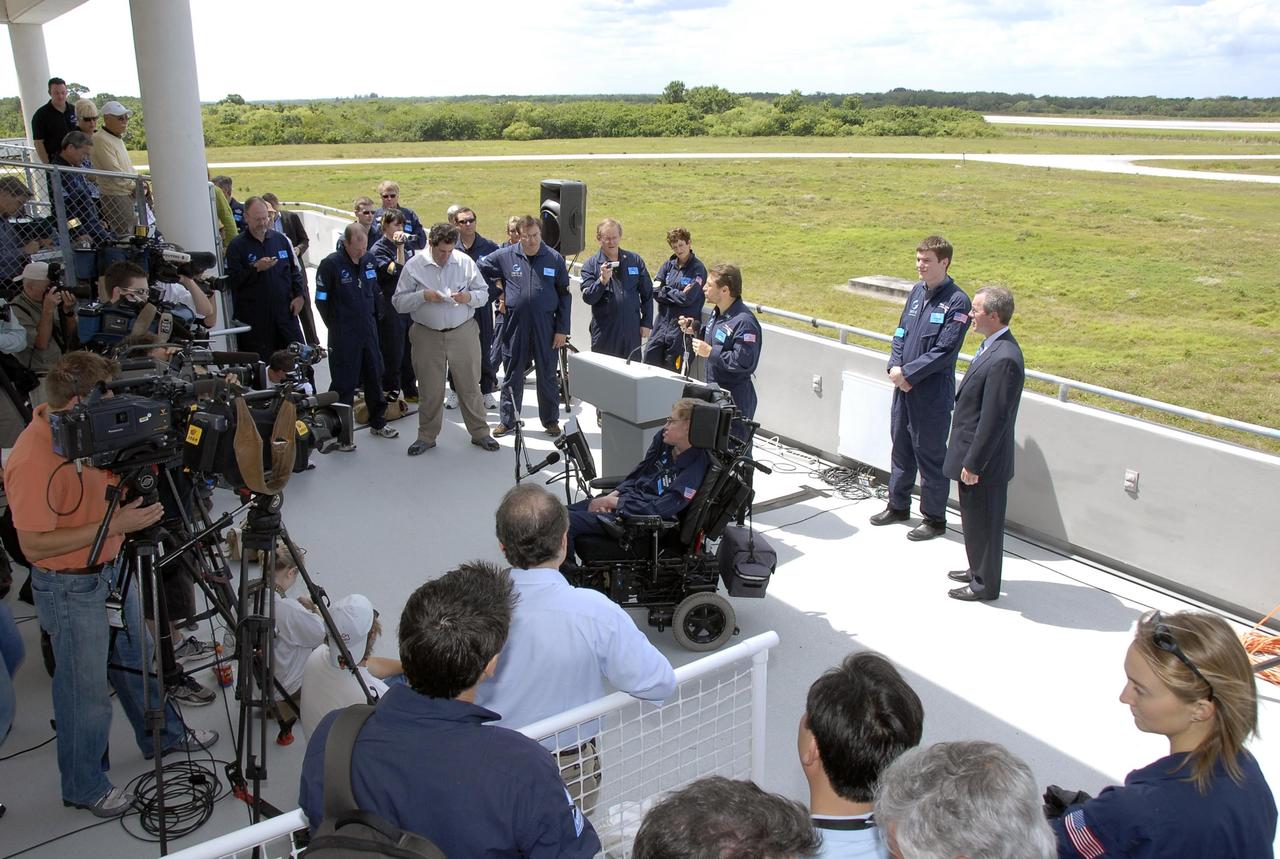
KENNEDY SPACE CENTER, FLA. -- At the Kennedy Space Center Shuttle Landing Facility, Peter Diamandis, founder of the Zero Gravity Corp., talks to the media about physicist Stephen Hawking's (in the wheelchair) first zero-gravity flight. The flight will be aboard a modified Boeing 727 aircraft owned by Zero Gravity Corp., a commercial company licensed to provide the public with weightless flight experiences. Hawking developed amyotrophic lateral sclerosis disease in the 1960s, a type of motor neuron disease which would cost him the loss of almost all neuromuscular control. At the celebration of his 65th birthday on January 8 this year, Hawking announced his plans for a zero-gravity flight to prepare for a sub-orbital space flight in 2009 on Virgin Galactic's space service. Photo credit: NASA/Kim Shiflett
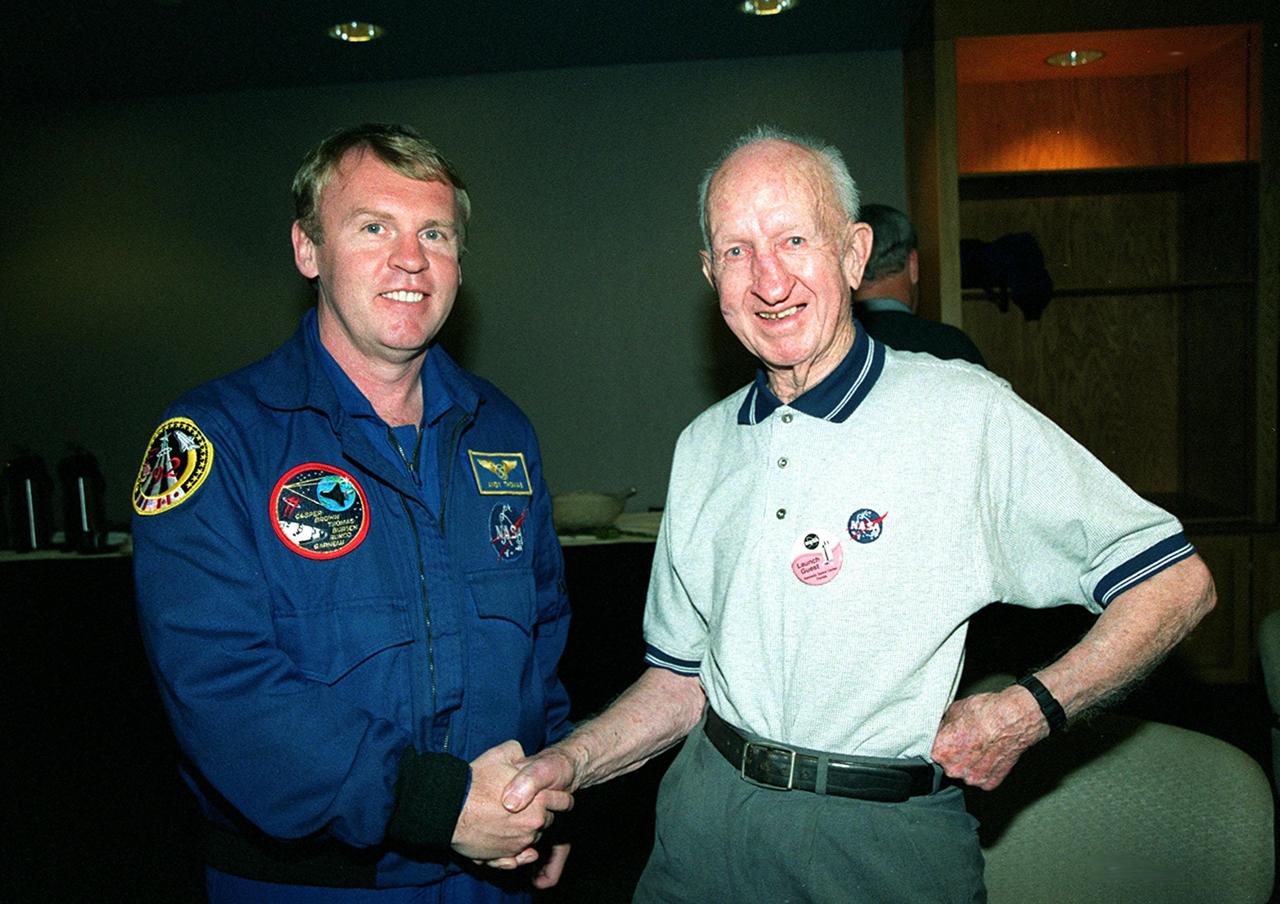
Astronaut Andy Thomas (left) greets 100-year-old Captain Ralph Charles, one of the VIPs attending the launch of STS-99. Charles also met NASA Administrator Dan Goldin. An aviator who has the distinction of being the oldest licensed pilot in the United States, Charles is still flying. He has experienced nearly a century of flight history, from the Wright Brothers to the Space Program. He took flying lessons from one of the first fliers trained by Orville Wright, first repaired then built airplanes, went barnstorming, operated a charter service in the Caribbean, and worked as a test pilot for the Curtiss Wright Airplane Co. Charles watches all the Shuttle launches from his home in Ohio and his greatest wish is to be able to watch one in person from KSC
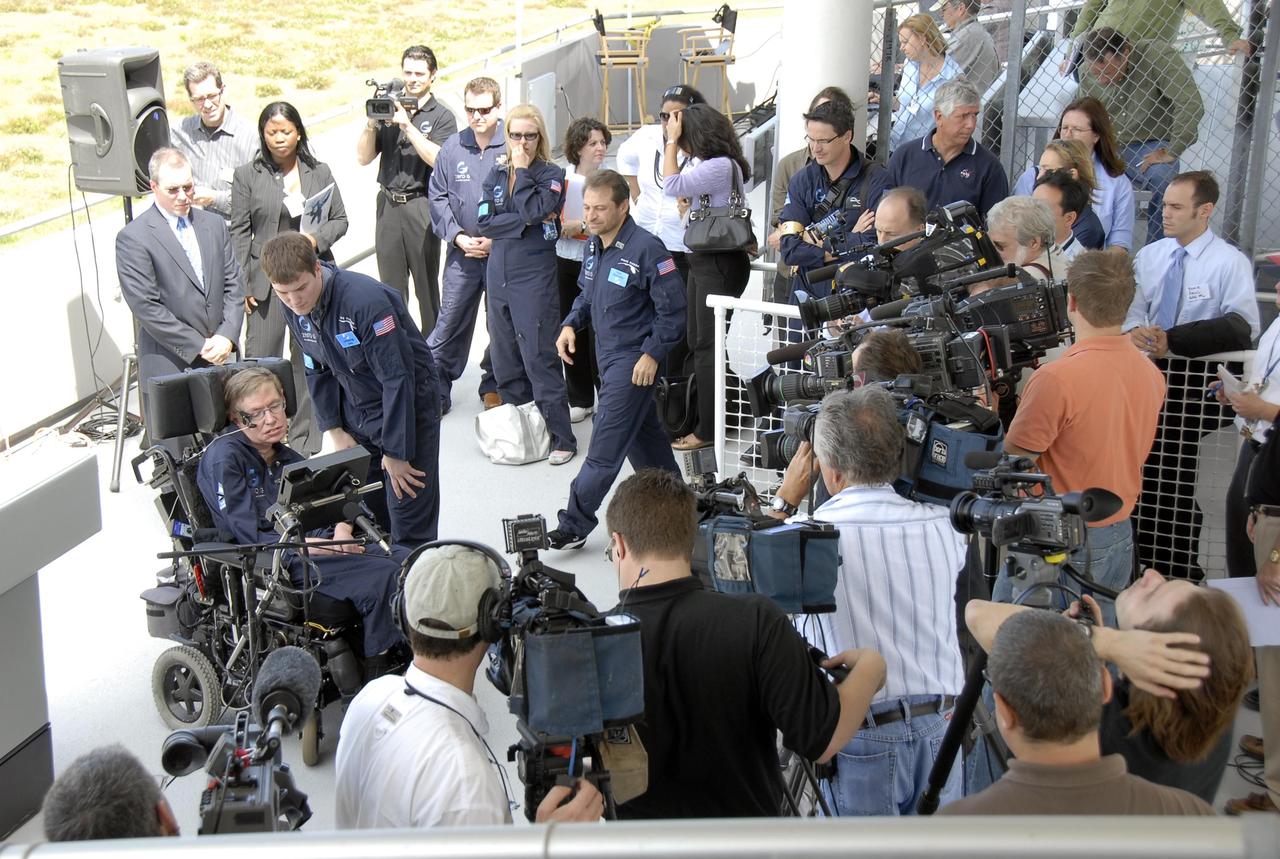
KENNEDY SPACE CENTER, FLA. -- The media surround noted wheelchair-bound physicist Stephen Hawking after his arrival at the Kennedy Space Center Shuttle Landing Facility for his first zero-gravity flight. Behind Hawking, at left, is Space Florida president Steve Kohler. In the center, striding toward Hawking, is Zero Gravity Corp. founder Peter Diamandis. The flight will be aboard a modified Boeing 727 aircraft owned by Zero Gravity, a commercial company licensed to provide the public with weightless flight experiences. Hawking developed amyotrophic lateral sclerosis disease in the 1960s, a type of motor neuron disease which would cost him the loss of almost all neuromuscular control. At the celebration of his 65th birthday on January 8 this year, Hawking announced his plans for a zero-gravity flight to prepare for a sub-orbital space flight in 2009 on Virgin Galactic's space service. Photo credit: NASA/Kim Shiflett
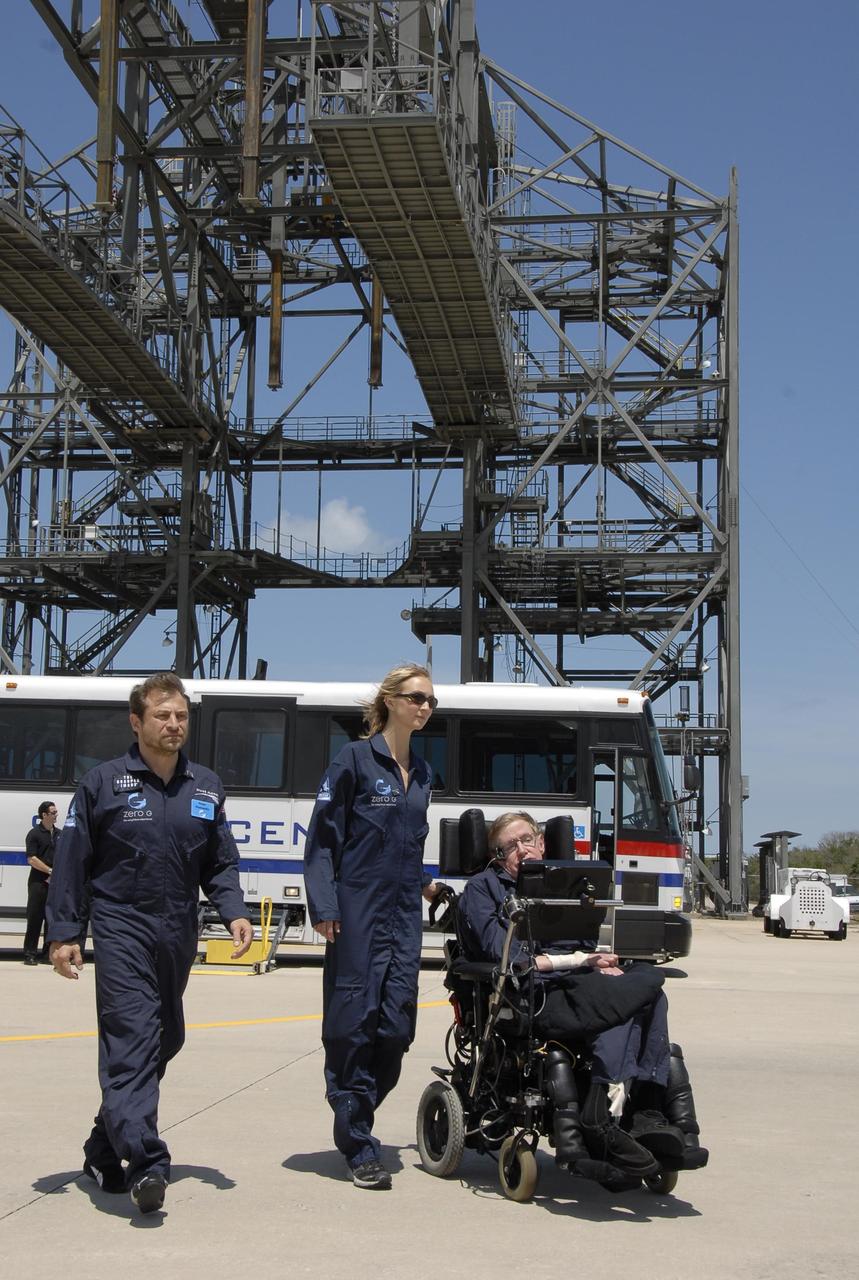
KENNEDY SPACE CENTER, FLA. -- At the Kennedy Space Center Shuttle Landing Facility, noted physicist Stephen Hawking, in the wheelchair, arrives at the runway for his first zero-gravity flight. The flight will be aboard a modified Boeing 727 aircraft owned by Zero Gravity Corp., a commercial company licensed to provide the public with weightless flight experiences. At left is Peter Diamandis, founder of the Zero Gravity Corp. At center is Nicola O'Brien, a nurse practitioner who is Hawking's aide. Hawking developed amyotrophic lateral sclerosis disease in the 1960s, a type of motor neuron disease which would cost him the loss of almost all neuromuscular control. At the celebration of his 65th birthday on January 8 this year, Hawking announced his plans for a zero-gravity flight to prepare for a sub-orbital space flight in 2009 on Virgin Galactic's space service. Photo credit: NASA/Kim Shiflett
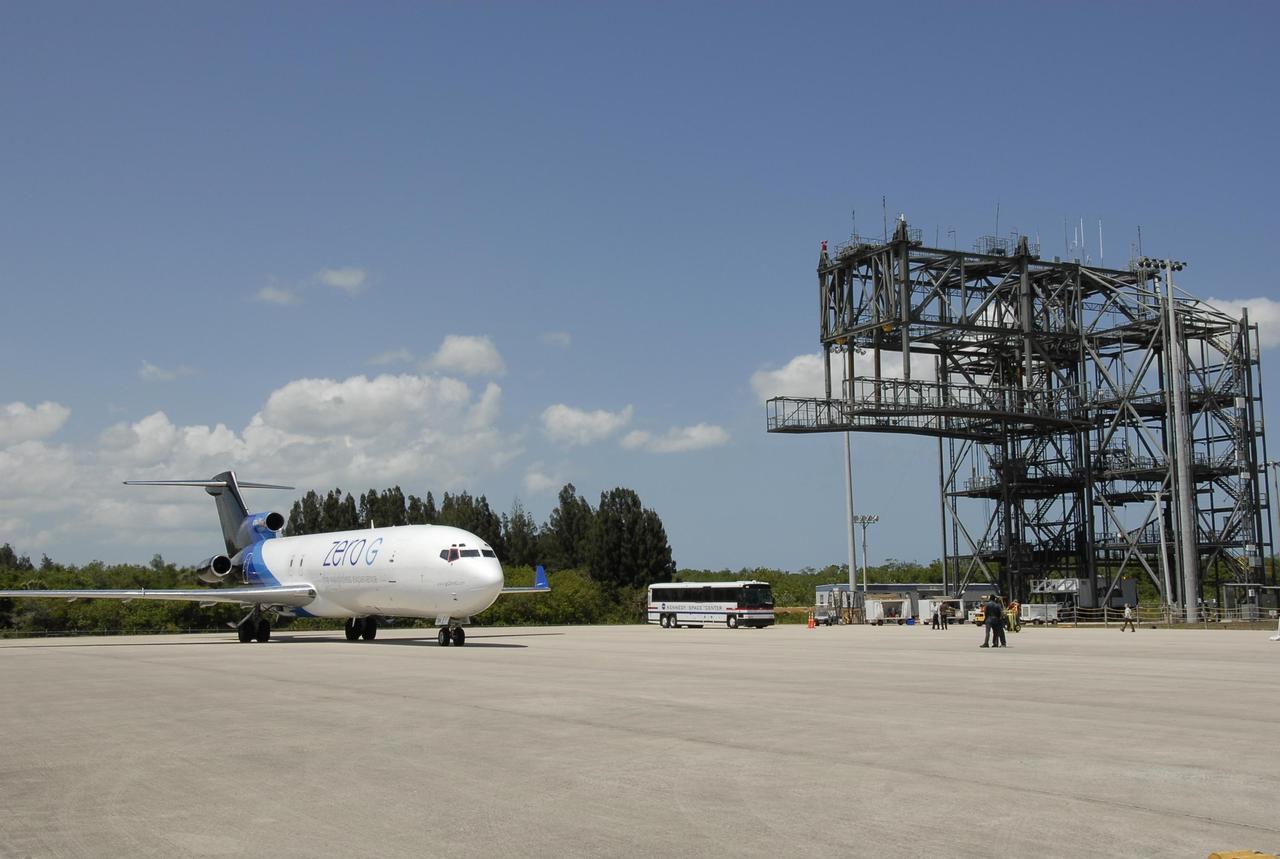
KENNEDY SPACE CENTER, FLA. -- At the Kennedy Space Center Shuttle Landing Facility, a modified Boeing 727 aircraft owned by Zero Gravity Corp. is ready to take off with its well-known passenger, physicist Stephen Hawking. Zero Gravity Corp. is a commercial company licensed to provide the public with weightless flight experiences. Hawking will be making his first zero-gravity flight. Hawking developed amyotrophic lateral sclerosis disease in the 1960s, a type of motor neuron disease which would cost him the loss of almost all neuromuscular control. At the celebration of his 65th birthday on January 8 this year, Hawking announced his plans for a zero-gravity flight to prepare for a sub-orbital space flight in 2009 on Virgin Galactic's space service. Photo credit: NASA/Kim Shiflett
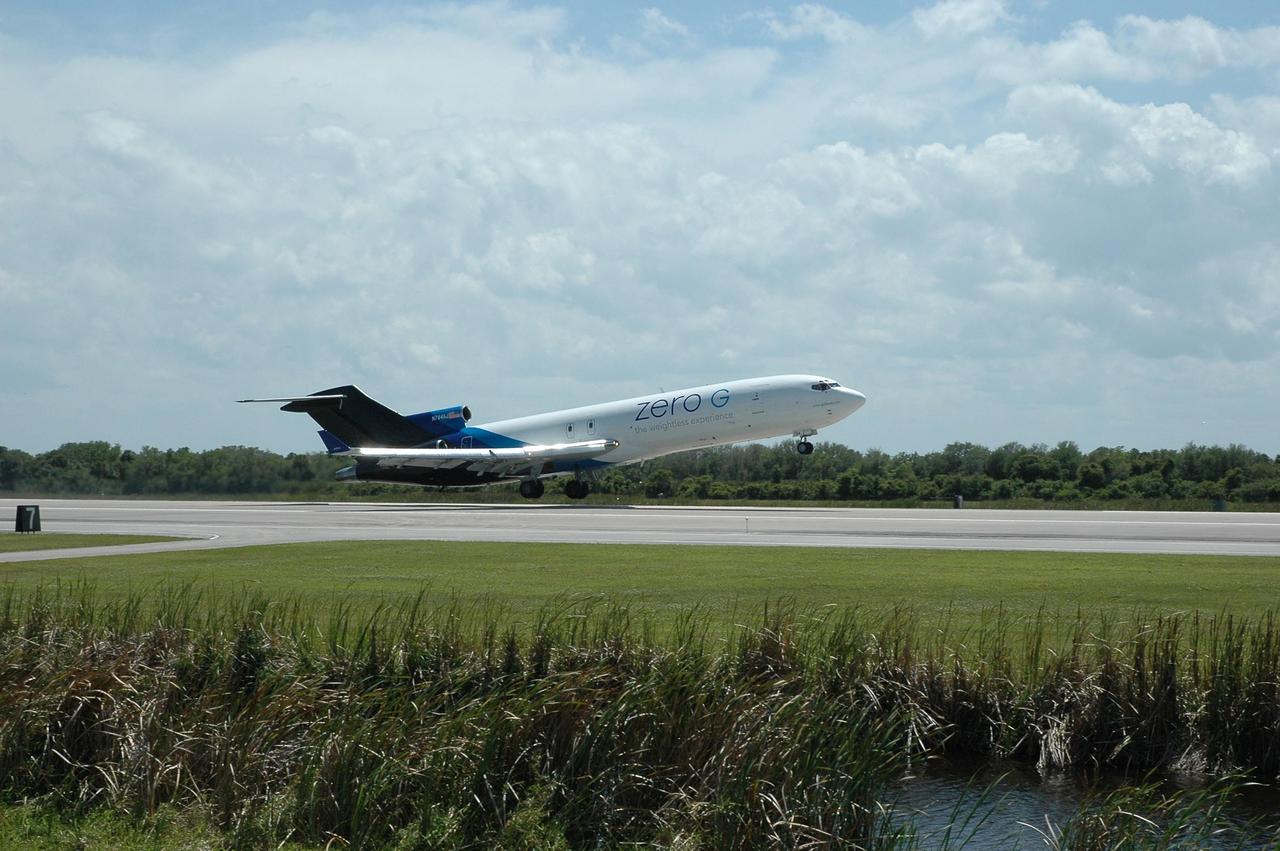
KENNEDY SPACE CENTER, FLA. -- At the Kennedy Space Center Shuttle Landing Facility, a modified Boeing 727 aircraft owned by Zero Gravity Corp. takes off with its well-known passenger, physicist Stephen Hawking. Zero Gravity Corp. is a commercial company licensed to provide the public with weightless flight experiences. Hawking will be making his first zero-gravity flight. Hawking developed amyotrophic lateral sclerosis disease in the 1960s, a type of motor neuron disease which would cost him the loss of almost all neuromuscular control. At the celebration of his 65th birthday on January 8 this year, Hawking announced his plans for a zero-gravity flight to prepare for a sub-orbital space flight in 2009 on Virgin Galactic's space service. Photo credit: NASA/Jack Pfaller
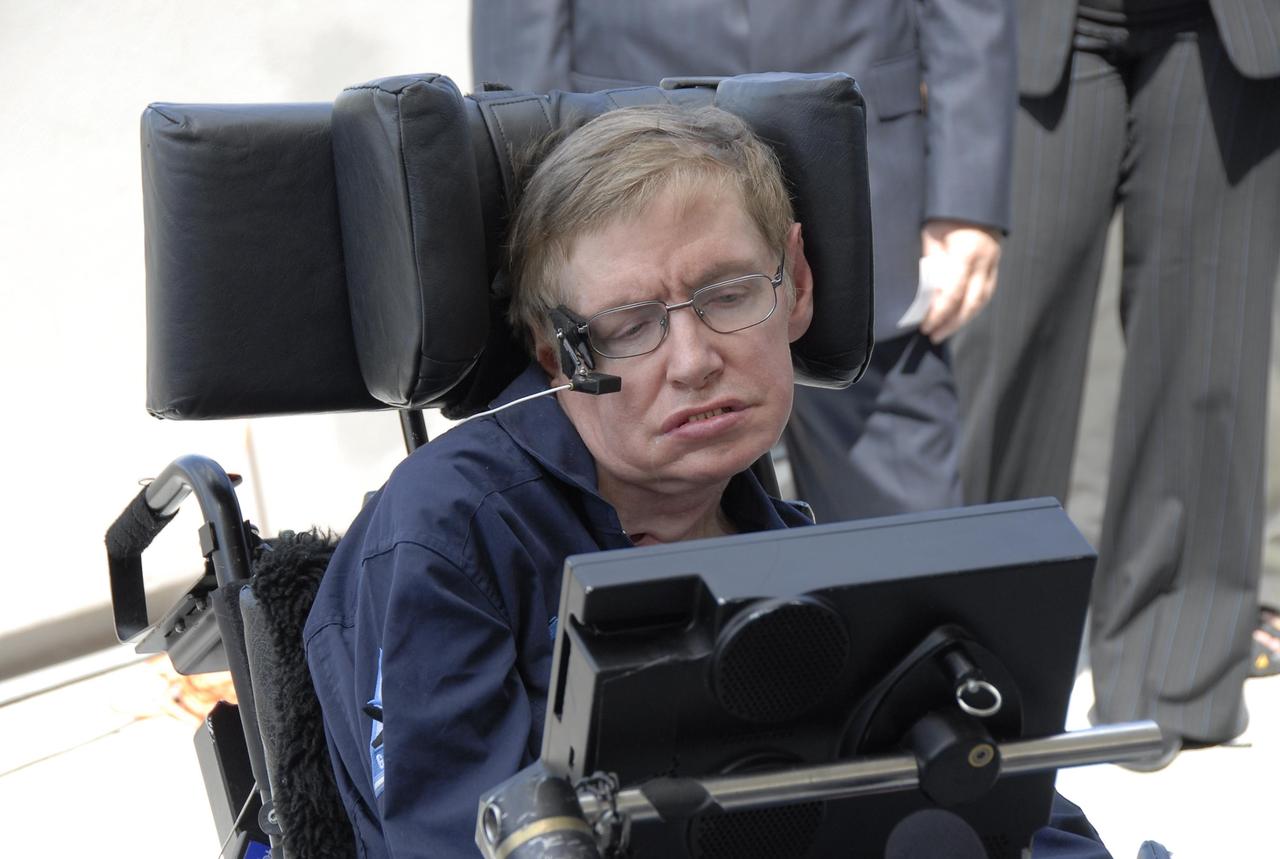
KENNEDY SPACE CENTER, FLA. -- Noted physicist Stephen Hawking arrives at the Kennedy Space Center Shuttle Landing Facility for his first zero-gravity flight. The flight will be aboard a modified Boeing 727 aircraft owned by Zero Gravity Corp., a commercial company licensed to provide the public with weightless flight experiences. Hawking developed amyotrophic lateral sclerosis disease in the 1960s, a type of motor neuron disease which would cost him the loss of almost all neuromuscular control. At the celebration of his 65th birthday on January 8 this year, Hawking announced his plans for a zero-gravity flight to prepare for a sub-orbital space flight in 2009 on Virgin Galactic's space service. Photo credit: NASA/Kim Shiflett
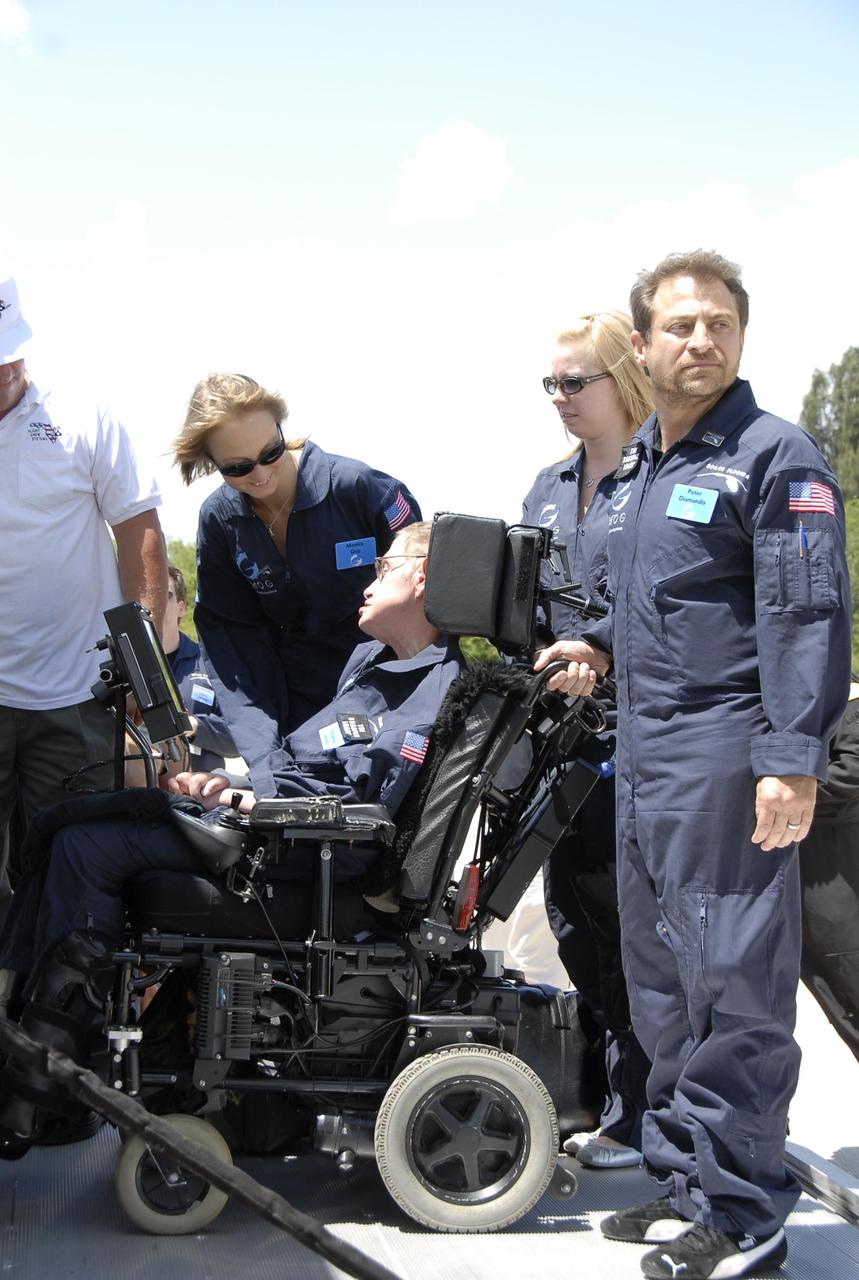
KENNEDY SPACE CENTER, FLA. -- At the Kennedy Space Center Shuttle Landing Facility, noted physicist Stephen Hawking, in the wheelchair, is ready to get onboard a modified Boeing 727 aircraft owned by Zero Gravity Corp. for his first zero-gravity flight. Zero Gravity Corp. is a commercial company licensed to provide the public with weightless flight experiences. At right is Peter Diamandis, founder of the Zero Gravity Corp. Behind Hawking is Nicola O'Brien, a nurse practitioner who is Hawking's aide. Hawking developed amyotrophic lateral sclerosis disease in the 1960s, a type of motor neuron disease which would cost him the loss of almost all neuromuscular control. At the celebration of his 65th birthday on January 8 this year, Hawking announced his plans for a zero-gravity flight to prepare for a sub-orbital space flight in 2009 on Virgin Galactic's space service. Photo credit: NASA/Kim Shiflett
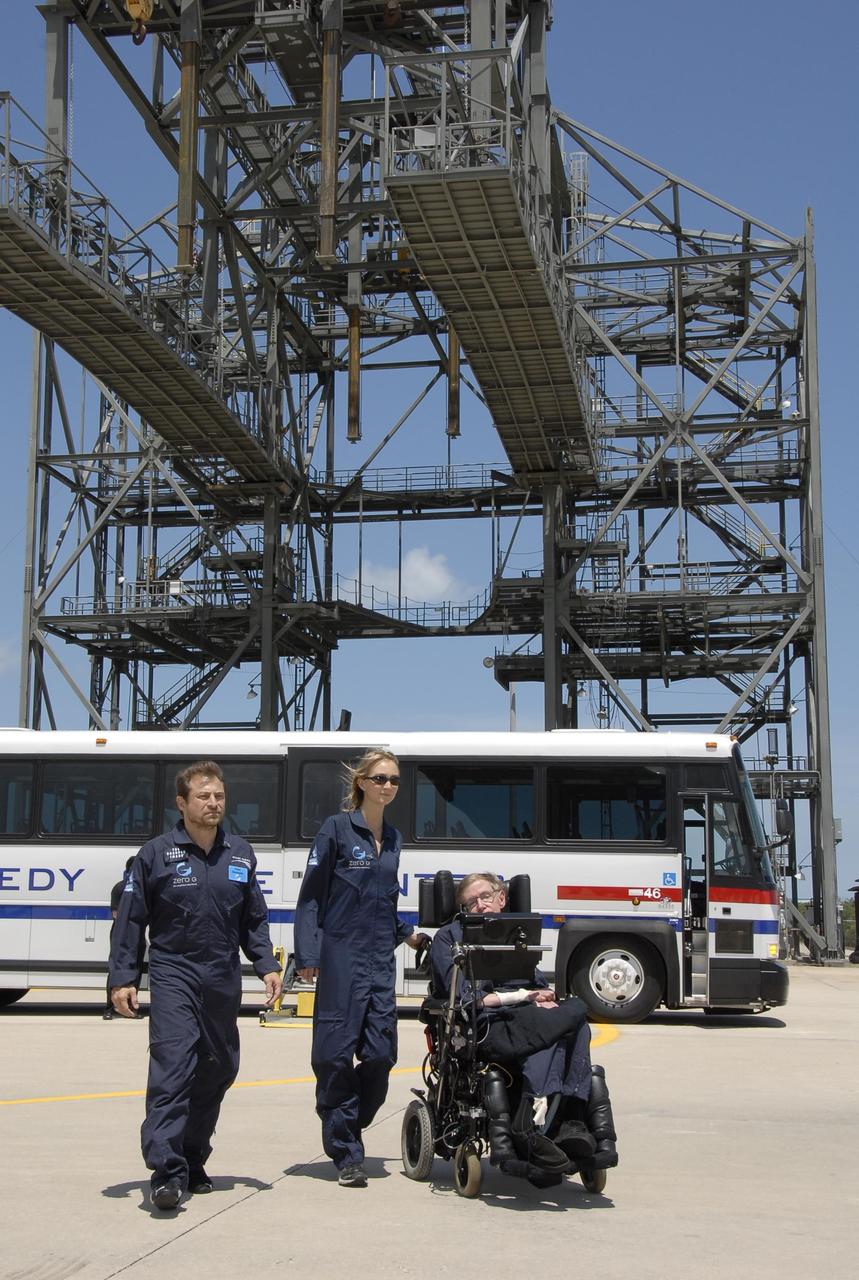
KENNEDY SPACE CENTER, FLA. -- At the Kennedy Space Center Shuttle Landing Facility, noted physicist Stephen Hawking, in the wheelchair, arrives at the runway for his first zero-gravity flight. The flight will be aboard a modified Boeing 727 aircraft owned by Zero Gravity Corp., a commercial company licensed to provide the public with weightless flight experiences. At left is Peter Diamandis, founder of the Zero Gravity Corp. At center is Nicola O'Brien, a nurse practitioner who is Hawking's aide. Hawking developed amyotrophic lateral sclerosis disease in the 1960s, a type of motor neuron disease which would cost him the loss of almost all neuromuscular control. At the celebration of his 65th birthday on January 8 this year, Hawking announced his plans for a zero-gravity flight to prepare for a sub-orbital space flight in 2009 on Virgin Galactic's space service. Photo credit: NASA/Kim Shiflett

This video highlights the many ways NASA Goddard Space Flight Center explores the universe. So crank up your speakers and let the music be your guide. "My Songs Know What You Did In The Dark (Light Em Up)" Performed by Fall Out Boy Courtesy of Island Def Jam Music Group under license from Universal Music Enterprises Download the video here: <a href="http://svs.gsfc.nasa.gov/goto?11378" rel="nofollow">svs.gsfc.nasa.gov/goto?11378</a> <b><a href="http://www.nasa.gov/audience/formedia/features/MP_Photo_Guidelines.html" rel="nofollow">NASA image use policy.</a></b> <b><a href="http://www.nasa.gov/centers/goddard/home/index.html" rel="nofollow">NASA Goddard Space Flight Center</a></b> enables NASA’s mission through four scientific endeavors: Earth Science, Heliophysics, Solar System Exploration, and Astrophysics. Goddard plays a leading role in NASA’s accomplishments by contributing compelling scientific knowledge to advance the Agency’s mission. <b>Follow us on <a href="http://twitter.com/NASAGoddardPix" rel="nofollow">Twitter</a></b> <b>Like us on <a href="http://www.facebook.com/pages/Greenbelt-MD/NASA-Goddard/395013845897?ref=tsd" rel="nofollow">Facebook</a></b> <b>Find us on <a href="http://instagram.com/nasagoddard?vm=grid" rel="nofollow">Instagram</a></b>
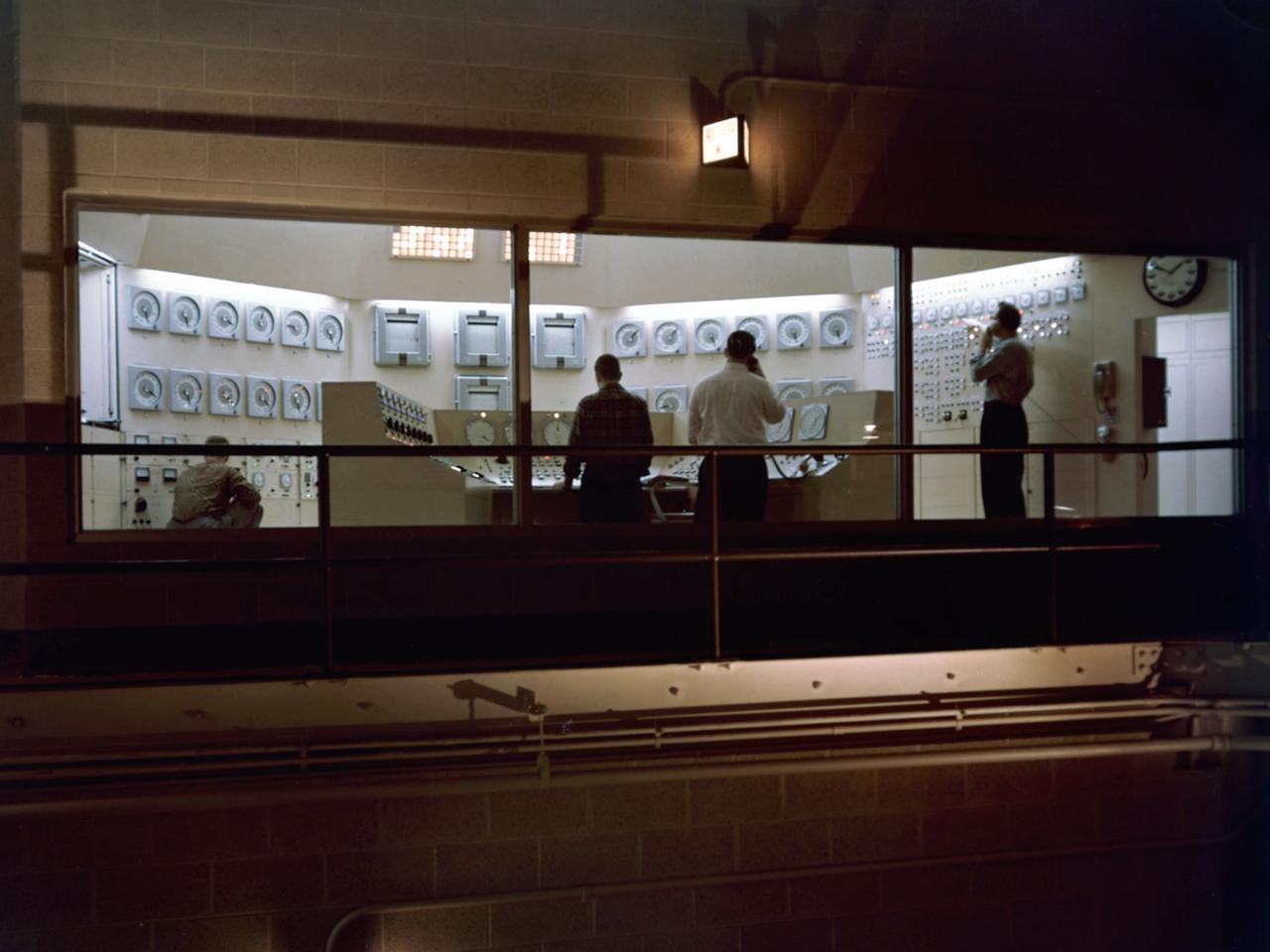
Operators test the National Aeronautics and Space Administration’s (NASA) Plum Brook Reactor Facility systems in the months leading up to its actual operation. The “Reactor On” signs are illuminated but the reactor core was not yet ready for chain reactions. Just a couple weeks after this photograph, Plum Brook Station held a media open house to unveil the 60-megawatt test reactor near Sandusky, Ohio. More than 60 members of the print media and radio and television news services met at the site to talk with community leaders and representatives from NASA and Atomic Energy Commission. The Plum Brook reactor went critical for the first time on the evening of June 14, 1961. It was not until April 1963 that the reactor reached its full potential of 60 megawatts. The reactor control room, located on the second floor of the facility, was run by licensed operators. The operators manually operated the shim rods which adjusted the chain reaction in the reactor core. The regulating rods could partially or completely shut down the reactor. The control room also housed remote area monitoring panels and other monitoring equipment that allowed operators to monitor radiation sensors located throughout the facility and to scram the reactor instantly if necessary. The color of the indicator lights corresponded with the elevation of the detectors in the various buildings. The reactor could also shut itself down automatically if the monitors detected any sudden irregularities.
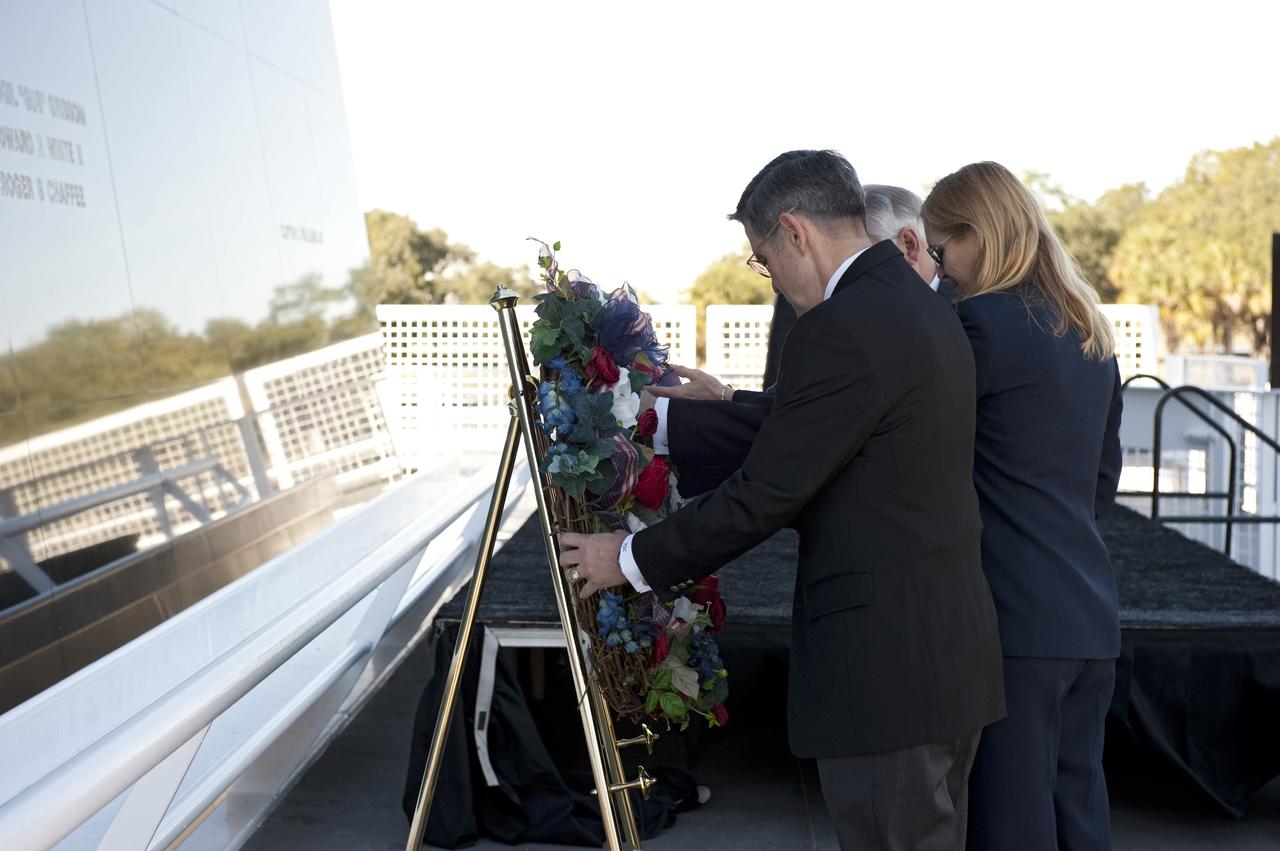
CAPE CANAVERAL, Fla. -- United Space Alliance's Associate Program Manager for Solid Rocket Boosters Roger Elliott, back, Kennedy Space Center Deputy Director Janet Petro, and Center Director and former astronaut Bob Cabana, participate in a Day of Remembrance wreath laying ceremony at the Space Mirror Memorial at the Kennedy Space Center Visitor Complex in Florida. The ceremony honors members of the NASA family who lost their lives while furthering the cause of exploration and discovery. The memorial displays the names of 24 United States astronauts, including the crew members of space shuttles Columbia and Challenger, Apollo 1, and those who died in training and commercial airplane accidents. The memorial is a project of the Astronauts Memorial Foundation and was paid for by Florida residents who purchased special Challenger mission automobile license plates. 2011 marks the 25th anniversary of the loss of Challenger, which broke apart over the Atlantic Ocean 73 seconds into flight on Jan. 28, 1986. Photo credit: NASA/Kim Shiflett
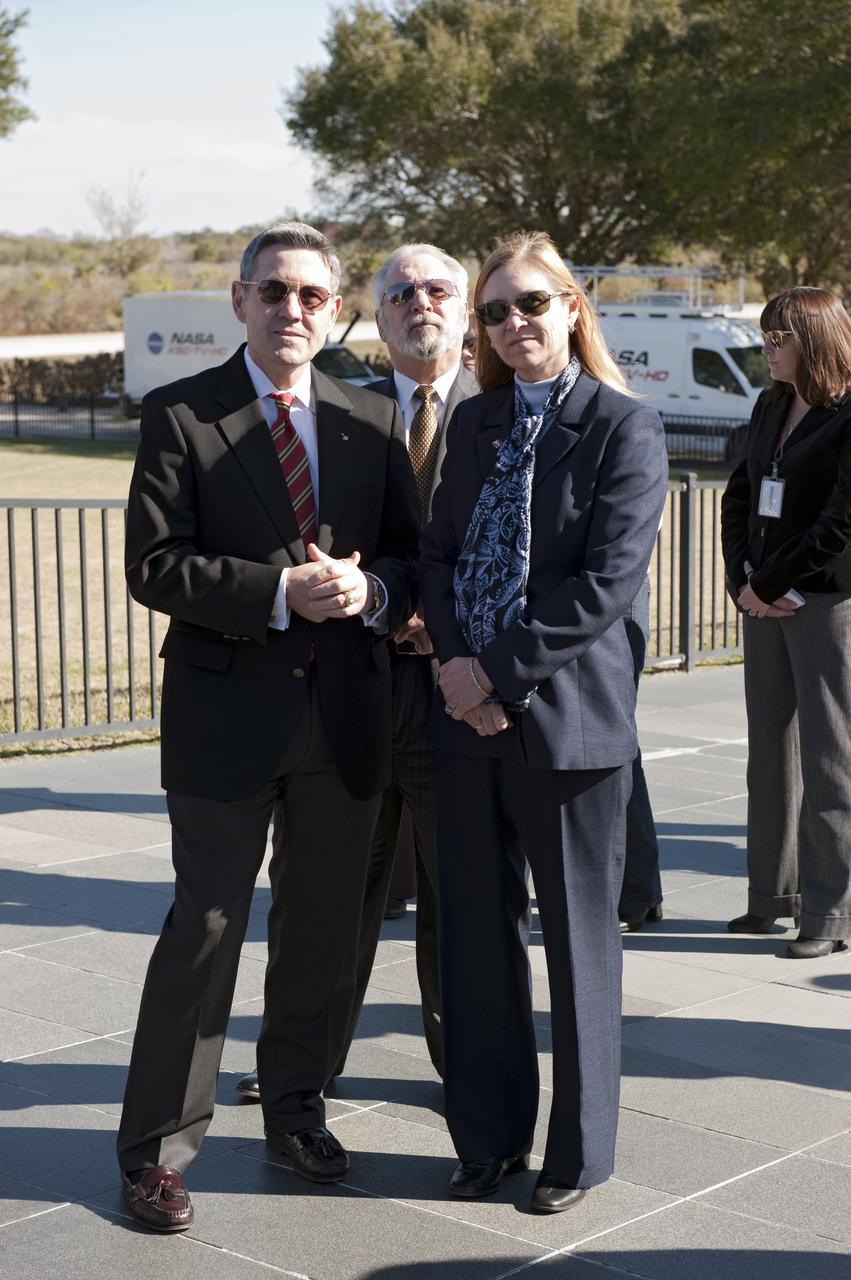
CAPE CANAVERAL, Fla. -- Kennedy Space Center Director and former astronaut Bob Cabana, left, United Space Alliance's Associate Program Manager for Solid Rocket Boosters Roger Elliott and Center Deputy Director Janet Petro participate in a Day of Remembrance wreath laying ceremony at the Space Mirror Memorial at the Kennedy Space Center Visitor Complex in Florida. The ceremony honors members of the NASA family who lost their lives while furthering the cause of exploration and discovery. The memorial displays the names of 24 United States astronauts, including the crew members of space shuttles Columbia and Challenger, Apollo 1, and those who died in training and commercial airplane accidents. The memorial is a project of the Astronauts Memorial Foundation and was paid for by Florida residents who purchased special Challenger mission automobile license plates. 2011 marks the 25th anniversary of the loss of Challenger, which broke apart over the Atlantic Ocean 73 seconds into flight on Jan. 28, 1986. Photo credit: NASA/Kim Shiflett
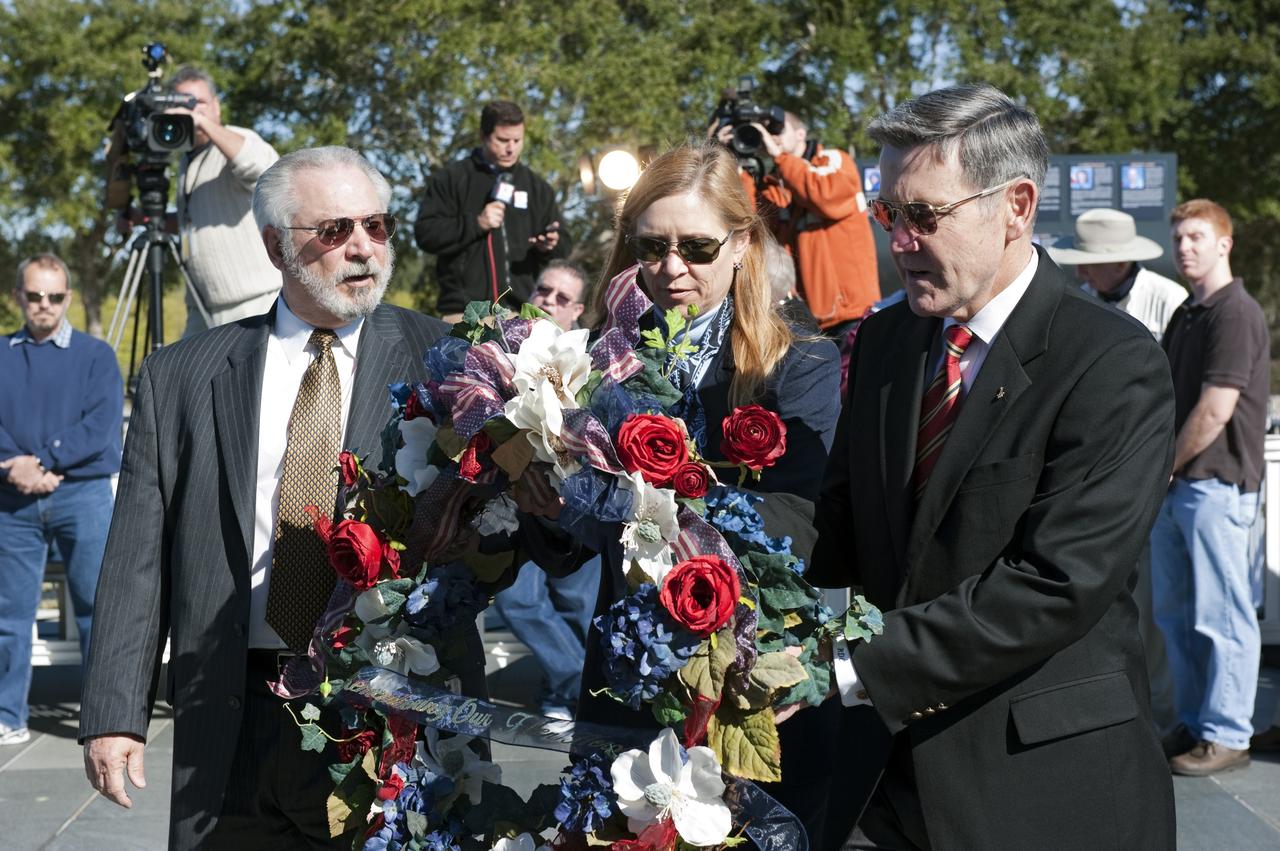
CAPE CANAVERAL, Fla. -- United Space Alliance's Associate Program Manager for Solid Rocket Boosters Roger Elliott, left, Kennedy Space Center Deputy Director Janet Petro, and Center Director and former astronaut Bob Cabana, participate in a Day of Remembrance wreath laying ceremony at the Space Mirror Memorial at the Kennedy Space Center Visitor Complex in Florida. The ceremony honors members of the NASA family who lost their lives while furthering the cause of exploration and discovery. The memorial displays the names of 24 United States astronauts, including the crew members of space shuttles Columbia and Challenger, Apollo 1, and those who died in training and commercial airplane accidents. The memorial is a project of the Astronauts Memorial Foundation and was paid for by Florida residents who purchased special Challenger mission automobile license plates. 2011 marks the 25th anniversary of the loss of Challenger, which broke apart over the Atlantic Ocean 73 seconds into flight on Jan. 28, 1986. Photo credit: NASA/Kim Shiflett
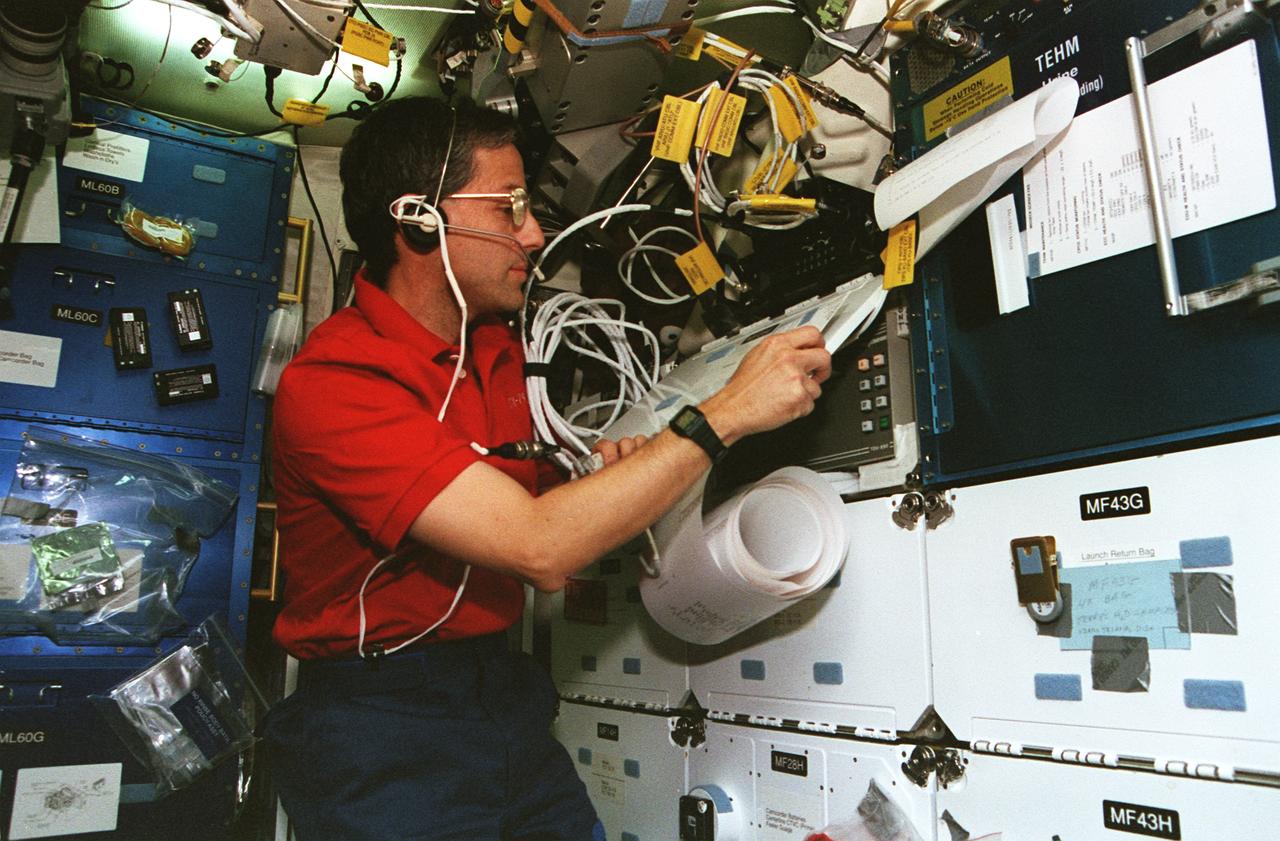
STS079-365-004 (16-26 Sept. 1996) --- During off-duty time, Jerome (Jay) Apt, a licensed amateur radio operator, talks to ground contacts via the Shuttle Amateur Radio Experiment (SAREX). The radio was also used for communications between the Space Shuttle Atlantis and Russia's Mir Space Station during docking and undocking activities. This photograph is one of fifteen 35mm frames (along with four 70mm frames) of still photography documenting the activities of NASA's STS-79 mission, which began with a September 16, 1996, liftoff from Launch Pad 39A the Kennedy Space Center (KSC) and ended with a landing at KSC on September 26, 1996. Onboard for the launch were astronauts William F. Readdy, commander; Terrence W. Wilcutt, pilot; John E. Blaha, Apt, Thomas D. Akers and Carl E. Walz, all mission specialists. On flight day 4, the crew docked with Mir. Shannon W. Lucid, who had spent six months aboard Mir, switched cosmonaut guest researcher roles with Blaha. The latter joined fellow Mir-22 crew members Valeri G. Korzun, commander, and Aleksandr Y. Kaleri, flight engineer.
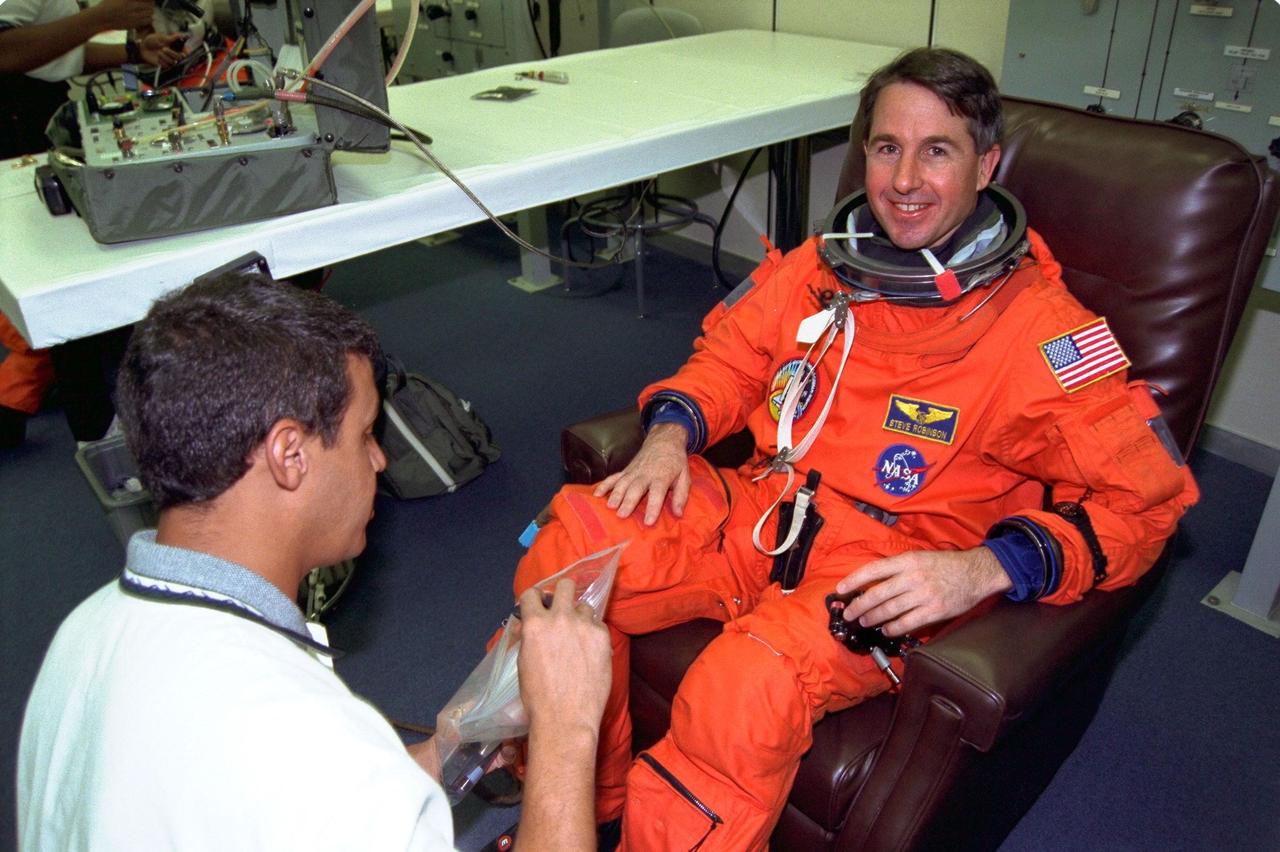
STS-85 Mission Specialist Stephen K. Robinson smiles as he is assisted with his ascent/reentry flight suit by a suit technician in the Operations and Checkout (O&C) Building. He has been a NASA employee since 1975 and has worked at Ames and Langley Research Centers. Robinson holds a doctorate in mechanical engineering and is a licensed pilot. He will assist Mission Specialist Robert L. Curbeam, Jr. with the Cryogenic Infrared Spectrometers and Telescopes for the Atmosphere-Shuttle Pallet Satellite-2 (CRISTA-SPAS-2) free-flyer and conduct Comet Hale-Bopp observations with the Southwest Ultraviolet Imaging System. Robinson will also coordinate photo and television data operations during the mission. The primary payload aboard the Space Shuttle orbiter Discovery is the CRISTA-SPAS2. Other payloads on the 11-day mission include the Manipulator Flight Demonstration (MFD), and Technology Applications and Science-1 (TAS-1) and International Extreme Ultraviolet Hitchhiker-2 (IEH-2) experiments
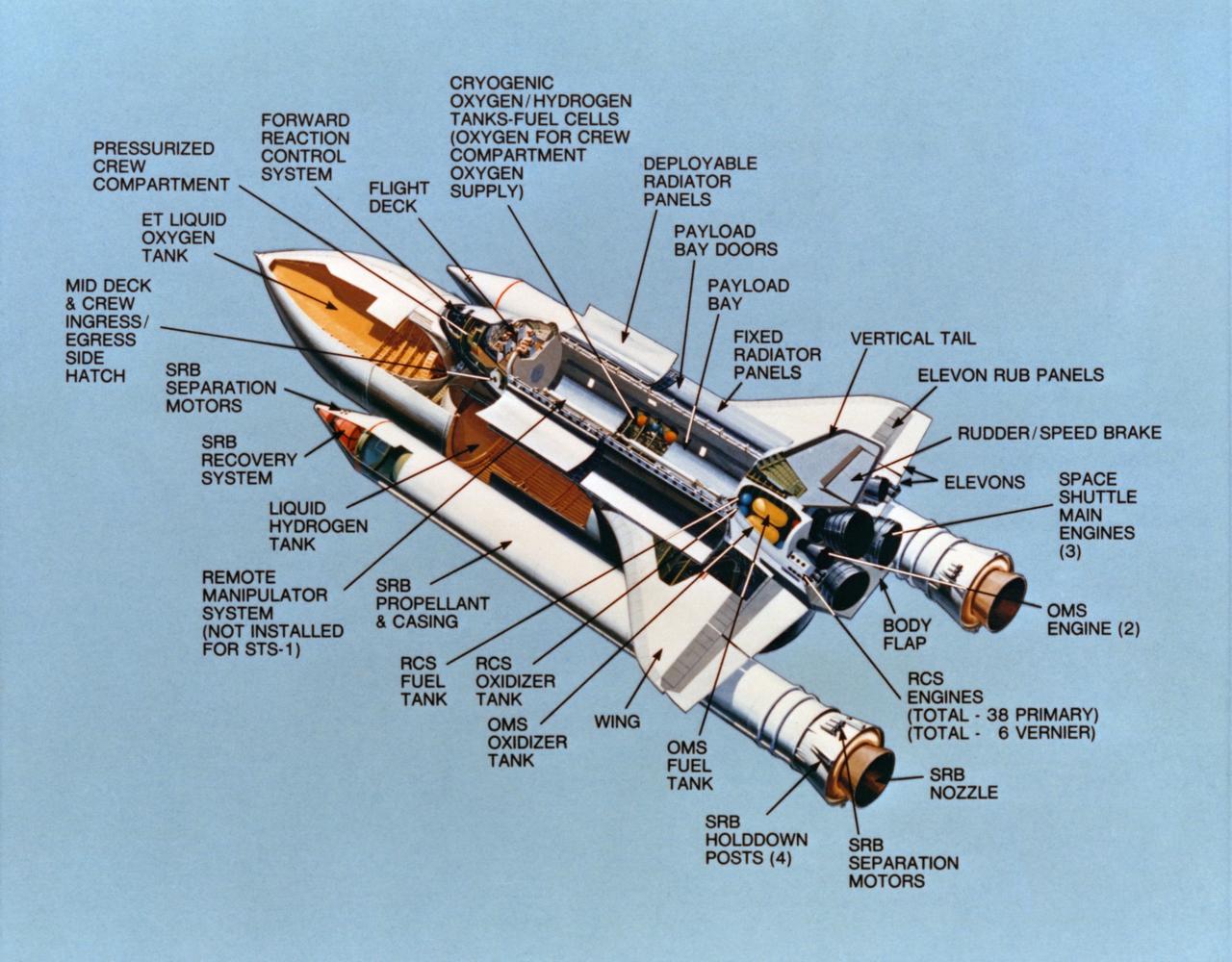
S81-30630 (February 1981) --- This "cutaway" artist's concept exercises some artistic license to reveal systems of the major components of a space shuttle vehicle. With its payload bay doors open here, the shuttle's cryogenic supply station (note cutaway) and the deployable radiator panels (visible) can be seen. In reality, the cargo bay panels would never be open while the orbiter is attached to the solid rocket boosters (SRB) and external fuel tank (ET). The thick-bodied, delta-winged aerospace craft is 37 meters long, has a span of 24 meters (120 feet by 80 feet), and weighs about 75,000 kilograms empty (165,000 lbs). Its payload bay, 18.3 meters long and 4.6 meters in diameter (60 feet by 15 feet) can deliver single or conglomerate payloads of up to 370 kilometers altitude or smaller loads up to 1110 kilometers (230 miles to 690 miles). It can bring payloads of 14,515 kilograms (32,000 lbs) back to Earth and it can carry out a variety of missions lasting seven to 30 days. Photo credit: NASA

This image depicts a vast canyon of dust and gas in the Orion Nebula from a 3-D computer model based on observations by NASA's Hubble Space Telescope and created by science visualization specialists at the Space Telescope Science Institute (STScI) in Baltimore, Md. A 3-D visualization of this model takes viewers on an amazing four-minute voyage through the 15-light-year-wide canyon. Credit: NASA, G. Bacon, L. Frattare, Z. Levay, and F. Summers (STScI/AURA) Go here to learn more about Hubble 3D: <a href="http://www.nasa.gov/topics/universe/features/hubble_imax_premiere.html" rel="nofollow">www.nasa.gov/topics/universe/features/hubble_imax_premier...</a> or <a href="http://www.imax.com/hubble/" rel="nofollow">www.imax.com/hubble/</a> Take an exhilarating ride through the Orion Nebula, a vast star-making factory 1,500 light-years away. Swoop through Orion's giant canyon of gas and dust. Fly past behemoth stars whose brilliant light illuminates and energizes the entire cloudy region. Zoom by dusty tadpole-shaped objects that are fledgling solar systems. This virtual space journey isn't the latest video game but one of several groundbreaking astronomy visualizations created by specialists at the Space Telescope Science Institute (STScI) in Baltimore, the science operations center for NASA's Hubble Space Telescope. The cinematic space odysseys are part of the new Imax film "Hubble 3D," which opens today at select Imax theaters worldwide. The 43-minute movie chronicles the 20-year life of Hubble and includes highlights from the May 2009 servicing mission to the Earth-orbiting observatory, with footage taken by the astronauts. The giant-screen film showcases some of Hubble's breathtaking iconic pictures, such as the Eagle Nebula's "Pillars of Creation," as well as stunning views taken by the newly installed Wide Field Camera 3. While Hubble pictures of celestial objects are awe-inspiring, they are flat 2-D photographs. For this film, those 2-D images have been converted into 3-D environments, giving the audience the impression they are space travelers taking a tour of Hubble's most popular targets. "A large-format movie is a truly immersive experience," says Frank Summers, an STScI astronomer and science visualization specialist who led the team that developed the movie visualizations. The team labored for nine months, working on four visualization sequences that comprise about 12 minutes of the movie. "Seeing these Hubble images in 3-D, you feel like you are flying through space and not just looking at picture postcards," Summers continued. "The spacescapes are all based on Hubble images and data, though some artistic license is necessary to produce the full depth of field needed for 3-D." The most ambitious sequence is a four-minute voyage through the Orion Nebula's gas-and-dust canyon, about 15 light-years across. During the ride, viewers will see bright and dark, gaseous clouds; thousands of stars, including a grouping of bright, hefty stars called the Trapezium; and embryonic planetary systems. The tour ends with a detailed look at a young circumstellar disk, which is much like the structure from which our solar system formed 4.5 billion years ago. Based on a Hubble image of Orion released in 2006, the visualization was a collaborative effort between science visualization specialists at STScI, including Greg Bacon, who sculpted the Orion Nebula digital model, with input from STScI astronomer Massimo Roberto; the National Center for Supercomputing Applications at the University of Illinois at Urbana-Champaign; and the Spitzer Science Center at the California Institute of Technology in Pasadena. For some of the sequences, STScI imaging specialists developed new techniques for transforming the 2-D Hubble images into 3-D. STScI image processing specialists Lisa Frattare and Zolt Levay, for example, created methods of splitting a giant gaseous pillar in the Carina Nebula into multiple layers to produce a 3-D effect, giving the structure depth. The Carina Nebula is a nursery for baby stars. Frattare painstakingly removed the thousands of stars in the image so that Levay could separate the gaseous layers on the isolated Carina pillar. Frattare then replaced the stars into both foreground and background layers to complete the 3-D model. For added effect, the same separation was done for both visible and infrared Hubble images, allowing the film to cross-fade between wavelength views in 3-D. In another sequence viewers fly into a field of 170,000 stars in the giant star cluster Omega Centauri. STScI astronomer Jay Anderson used his stellar database to create a synthetic star field in 3-D that matches recent razor-sharp Hubble photos. The film's final four-minute sequence takes viewers on a voyage from our Milky Way Galaxy past many of Hubble's best galaxy shots and deep into space. Some 15,000 galaxies from Hubble's deepest surveys stretch billions of light-years across the universe in a 3-D sequence created by STScI astronomers and visualizers. The view dissolves into a cobweb that traces the universe's large-scale structure, the backbone from which galaxies were born. In addition to creating visualizations, STScI's education group also provided guidance on the "Hubble 3D" Educator Guide, which includes standards-based lesson plans and activities about Hubble and its mission. Students will use the guide before or after seeing the movie. "The guide will enhance the movie experience for students and extend the movie into classrooms," says Bonnie Eisenhamer, STScI's Hubble Formal Education manager. The Hubble Space Telescope is a project of international cooperation between NASA and the European Space Agency (ESA) and is managed by NASA’s Goddard Space Flight Center (GSFC) in Greenbelt, Md. The Space Telescope Science Institute (STScI) conducts Hubble science operations. The institute is operated for NASA by the Association of Universities for Research in Astronomy, Inc., Washington, D.C.