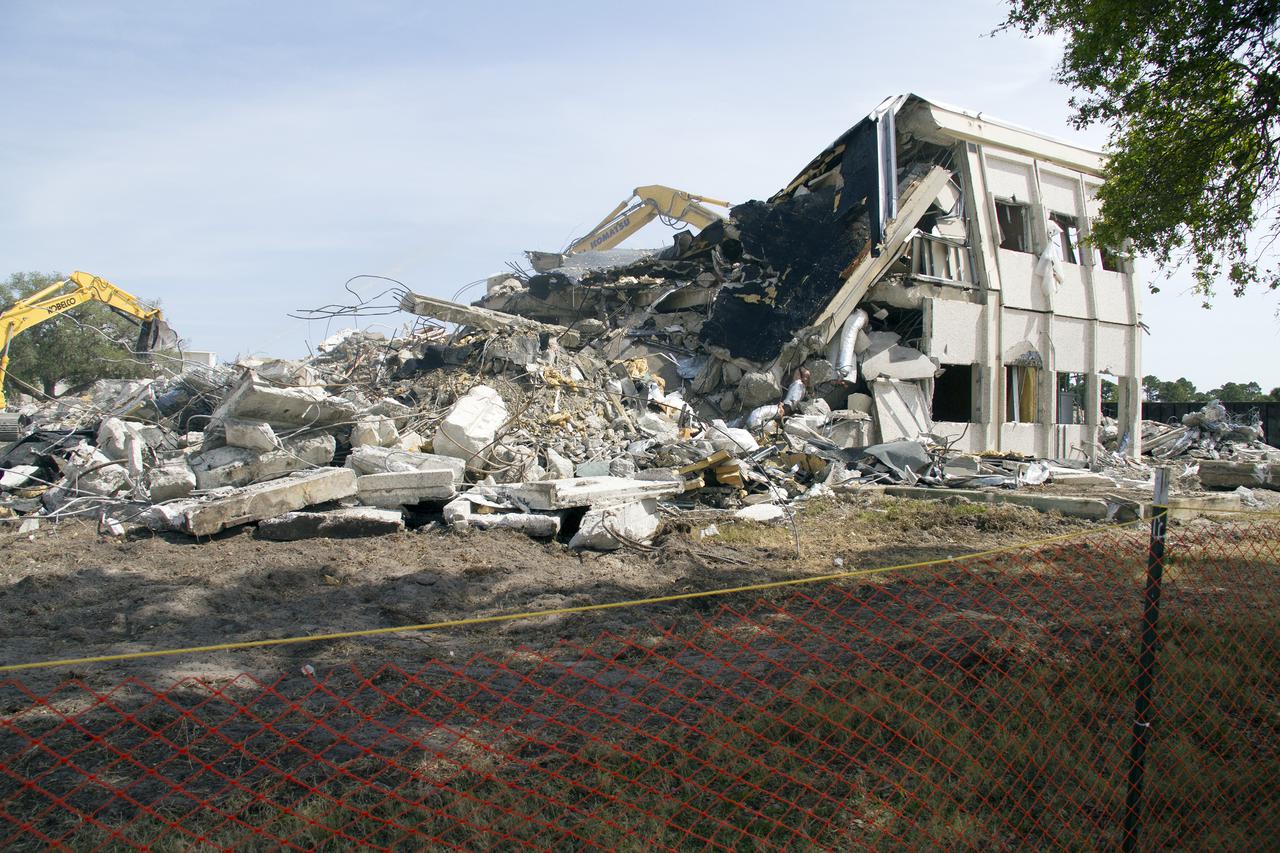
CAPE CANAVERAL, Fla. -- At NASA’s Kennedy Space Center in Florida, demolition is underway on the Base Operations Building, or BOB, in the Industrial Area. The two-story BOB was constructed in 1965 as office space for workers. Kennedy is demolishing some of the older facilities due to their age and to reduce maintenance and repair costs. Photo credit: NASA_ Cory Huston

CAPE CANAVERAL, Fla. – Theresa Overcash shows elements of a prototype of the StangSat at Kennedy Space Center to Grace Johnson. The satellite is a small cube measuring 10 inches on all sides and will be launched on a rocket that will carry it on a suborbital mission in Mojave, Calif. Photo credit: NASA_ Kim Shiflett

CAPE CANAVERAL, Fla. -- At NASA’s Kennedy Space Center in Florida, demolition is underway on the Base Operations Building, or BOB, in the Industrial Area. The two-story BOB was constructed in 1965 as office space for workers. Kennedy is demolishing some of the older facilities due to their age and to reduce maintenance and repair costs. Photo credit: NASA_ Cory Huston

CAPE CANAVERAL, Fla. -- At NASA’s Kennedy Space Center in Florida, demolition is underway on the Base Operations Building, or BOB, in the Industrial Area. Water is being sprayed in the area to control the dust created during the demolition process. The two-story BOB was constructed in 1965 as office space for workers. Kennedy is demolishing some of the older facilities due to their age and to reduce maintenance and repair costs. Photo credit: NASA_ Cory Huston
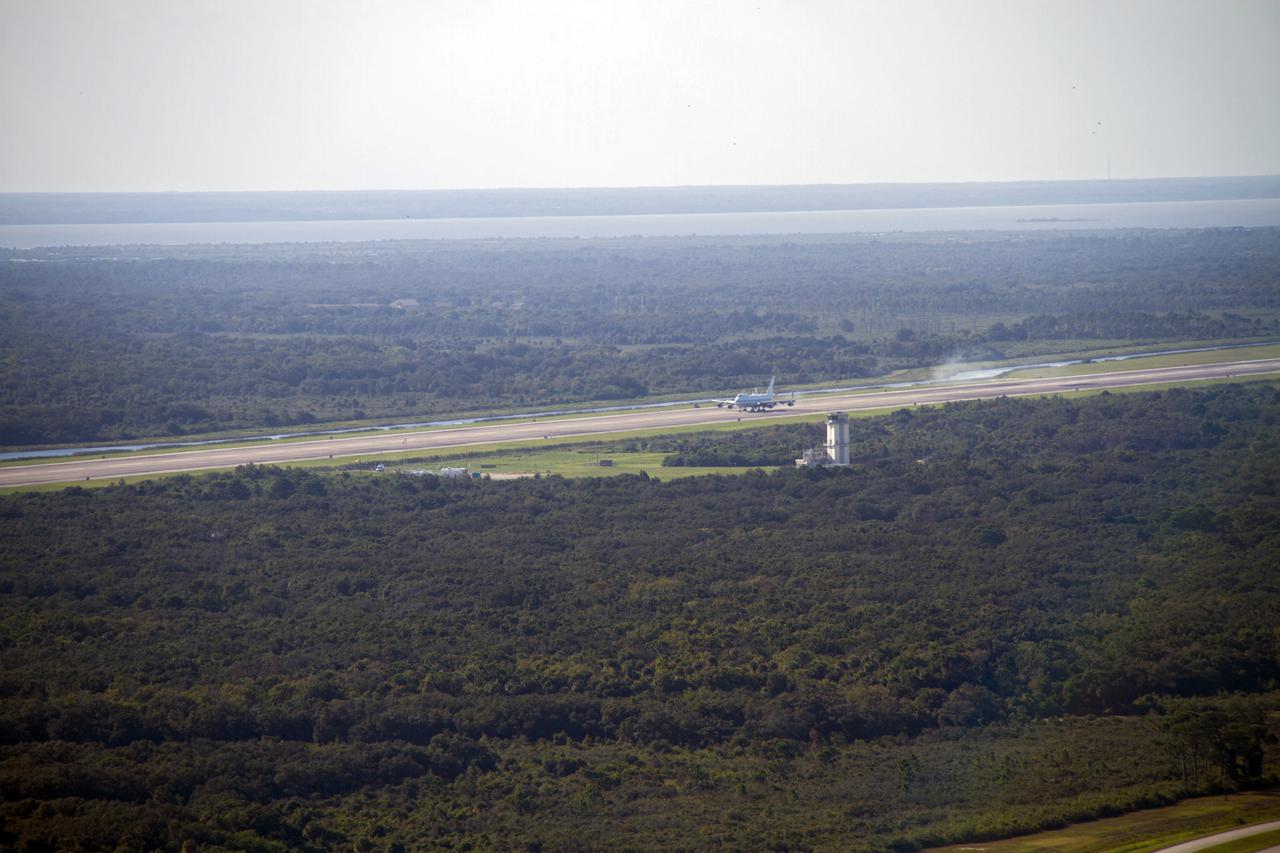
CAPE CANAVERAL, Fla. – The Shuttle Carrier Aircraft, or SCA, touches down on the runway at NASA Kennedy Space Center’s Shuttle Landing Facility in Florida. The SCA touched down at 5:05 p.m. EDT to prepare for shuttle Endeavour’s ferry flight to the Los Angeles International Airport on Sept. 17. Photo credit: NASA_ Chris Chamberland
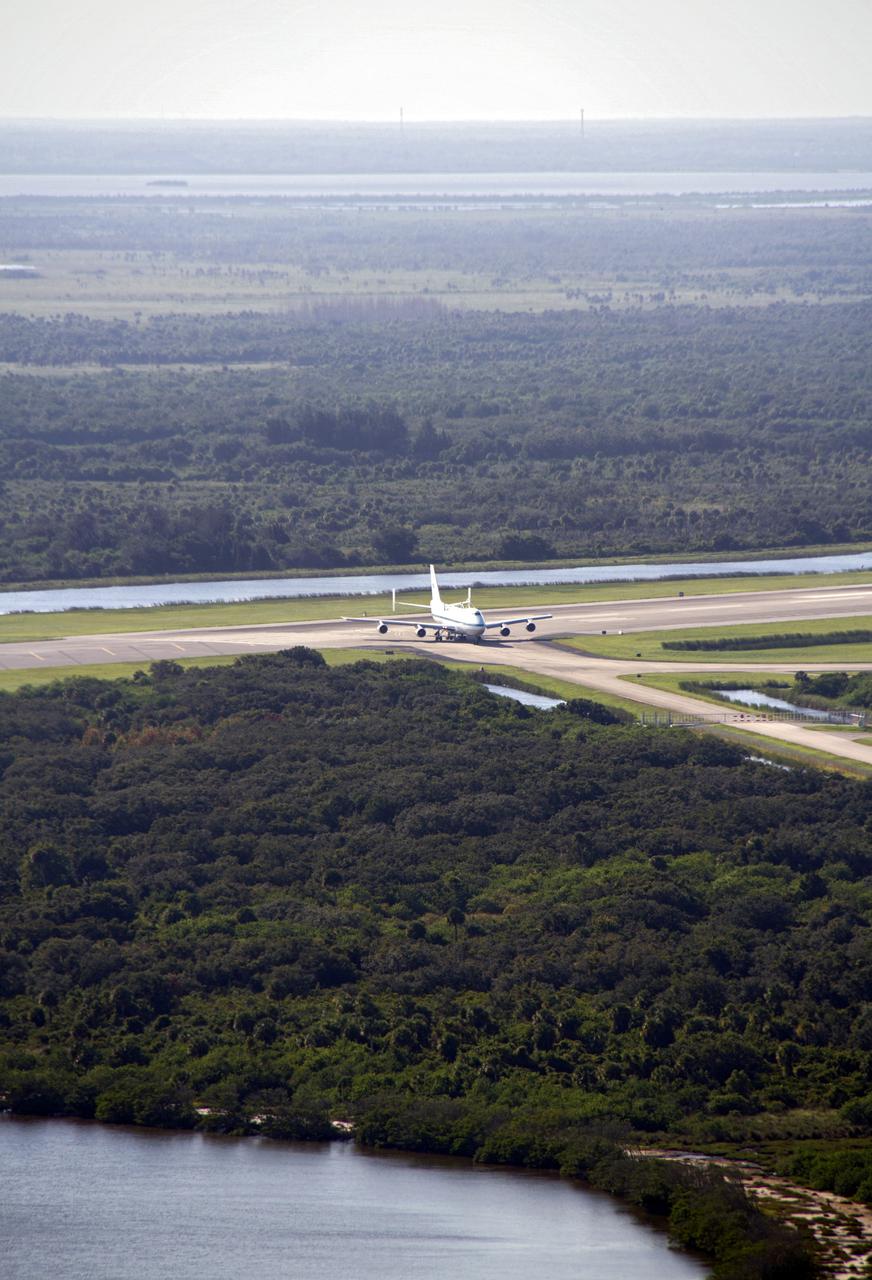
CAPE CANAVERAL, Fla. – The Shuttle Carrier Aircraft, or SCA, rolls onto the ramp area of NASA Kennedy Space Center’s Shuttle Landing Facility in Florida. The SCA touched down at 5:05 p.m. EDT to prepare for shuttle Endeavour’s ferry flight to the Los Angeles International Airport on Sept. 17. Photo credit: NASA_ Chris Chamberland
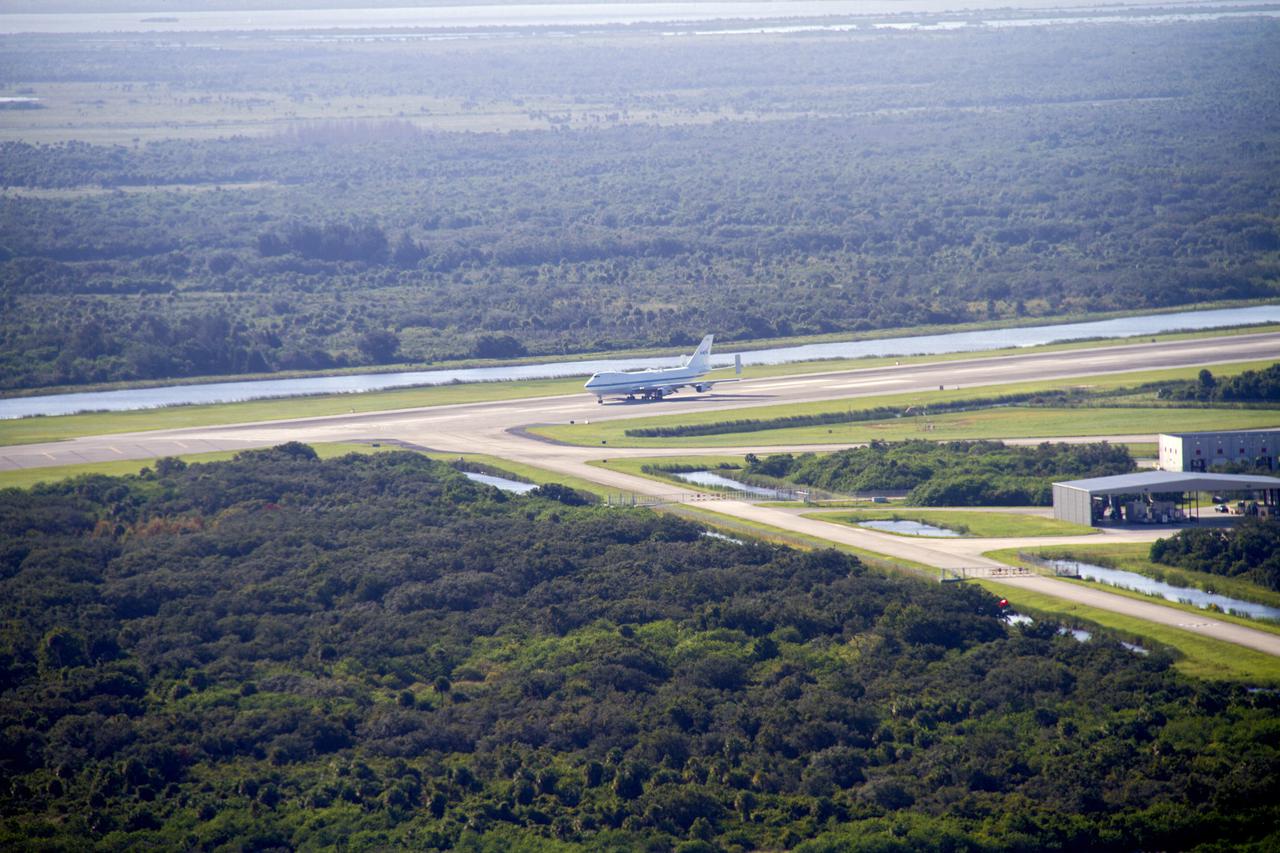
CAPE CANAVERAL, Fla. – The Shuttle Carrier Aircraft, or SCA, rolls down the runway at NASA Kennedy Space Center’s Shuttle Landing Facility in Florida. The SCA touched down at 5:05 p.m. EDT to prepare for shuttle Endeavour’s ferry flight to the Los Angeles International Airport on Sept. 17. Photo credit: NASA_ Chris Chamberland
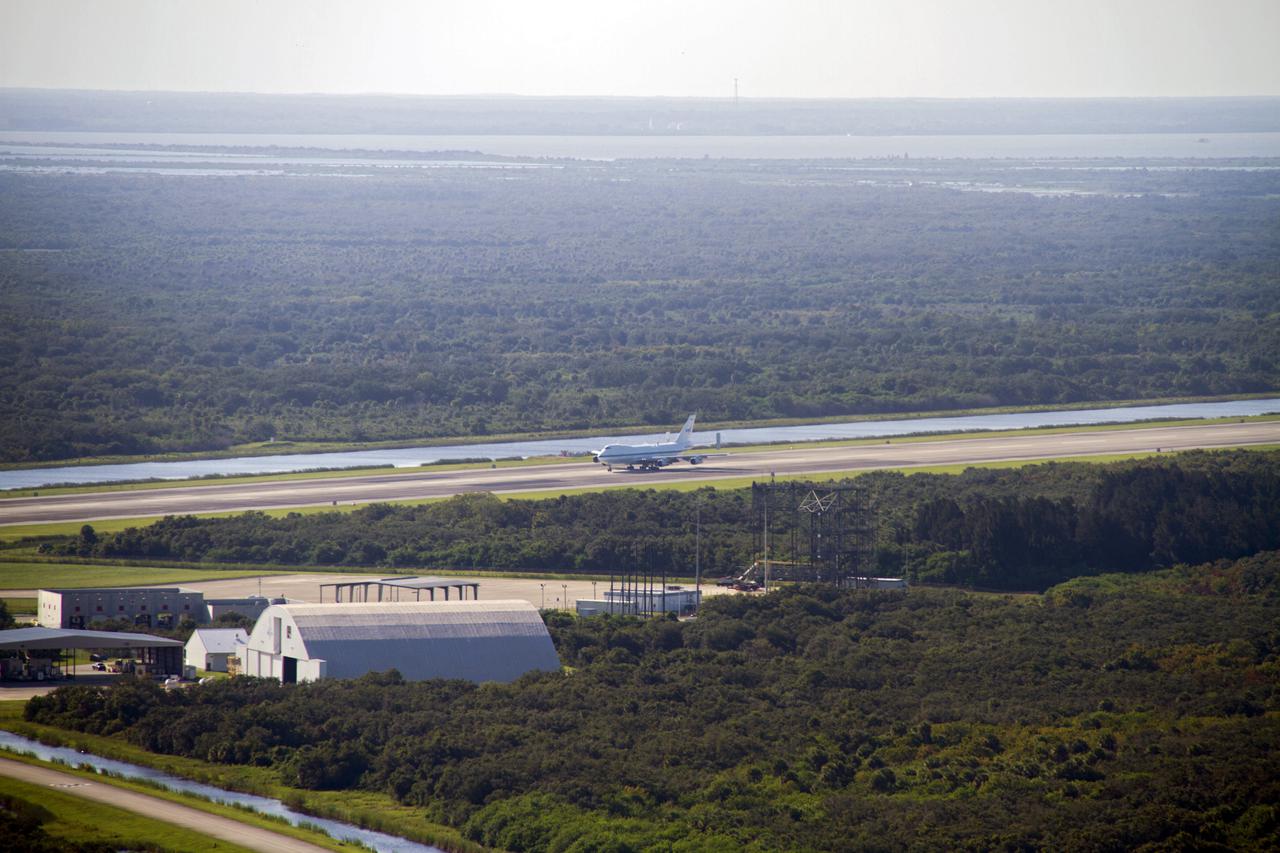
CAPE CANAVERAL, Fla. – The Shuttle Carrier Aircraft, or SCA, rolls down the runway at NASA Kennedy Space Center’s Shuttle Landing Facility in Florida. The SCA touched down at 5:05 p.m. EDT to prepare for shuttle Endeavour’s ferry flight to the Los Angeles International Airport on Sept. 17. Photo credit: NASA_ Chris Chamberland

CAPE CANAVERAL, Fla. -- At NASA’s Kennedy Space Center in Florida, demolition is underway on the Base Operations Building, or BOB, in the Industrial Area. Water is being sprayed in the area to control the dust created during the demolition process. The two-story BOB was constructed in 1965 as office space for workers. Kennedy is demolishing some of the older facilities due to their age and to reduce maintenance and repair costs. Photo credit: NASA_ Cory Huston
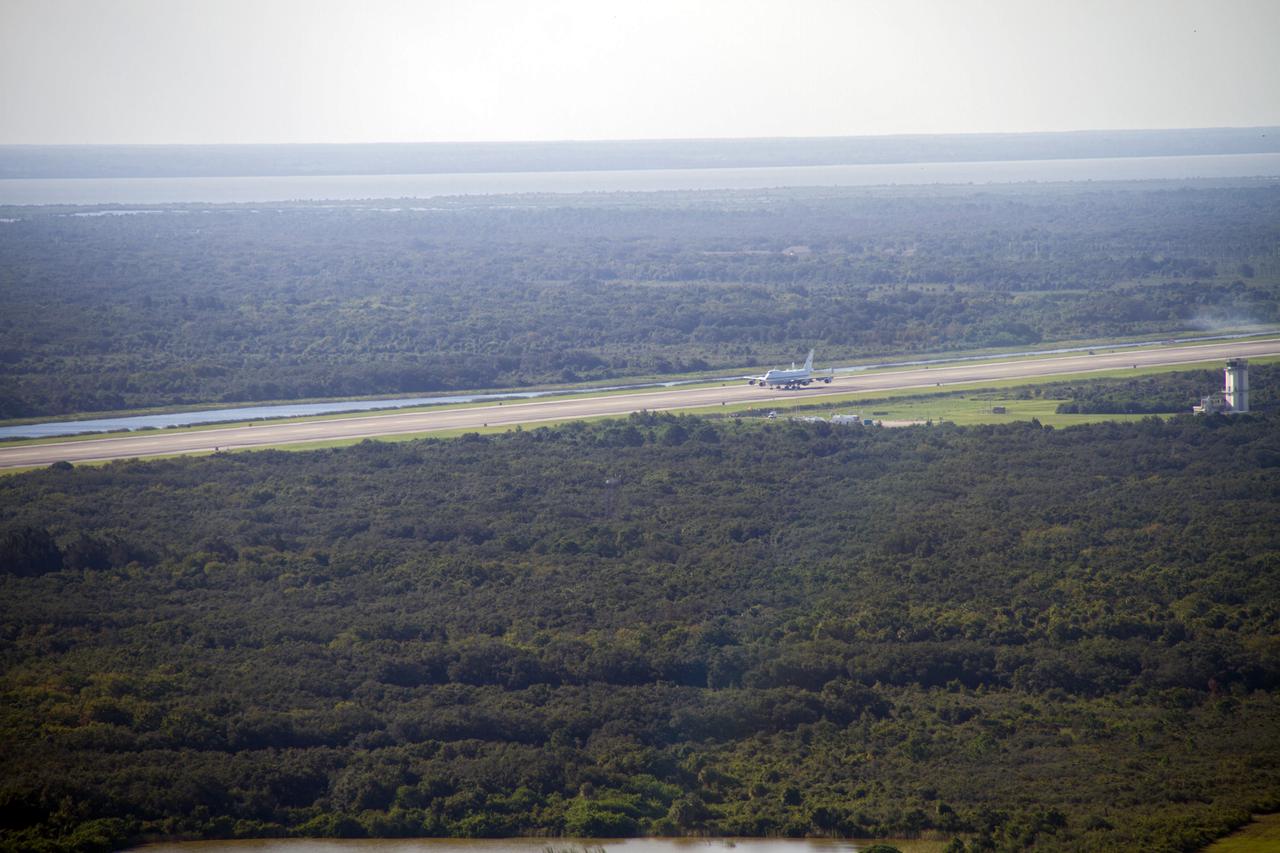
CAPE CANAVERAL, Fla. – The Shuttle Carrier Aircraft, or SCA, rolls down the runway at NASA Kennedy Space Center’s Shuttle Landing Facility in Florida. The SCA touched down at 5:05 p.m. EDT to prepare for shuttle Endeavour’s ferry flight to the Los Angeles International Airport on Sept. 17. Photo credit: NASA_ Chris Chamberland
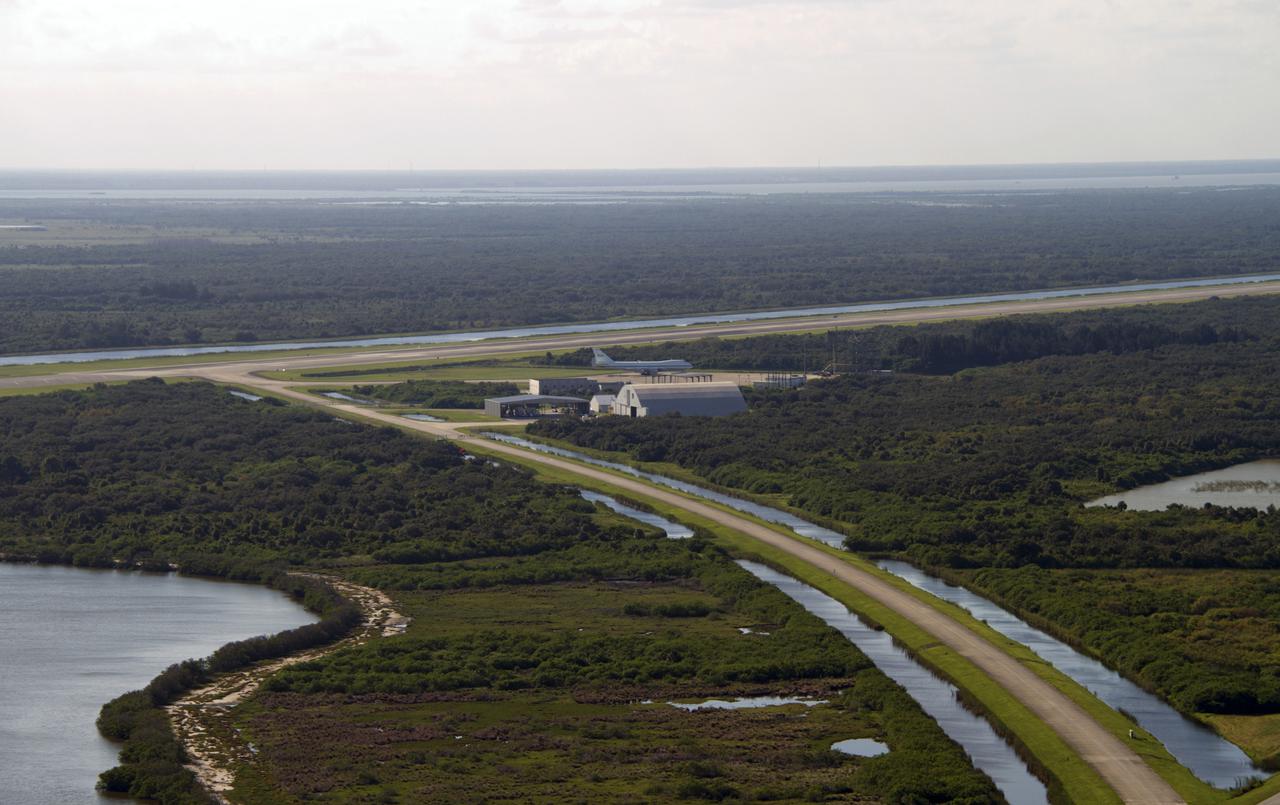
CAPE CANAVERAL, Fla. – The Shuttle Carrier Aircraft, or SCA, rolls onto the ramp area of NASA Kennedy Space Center’s Shuttle Landing Facility in Florida. The SCA touched down at 5:05 p.m. EDT to prepare for shuttle Endeavour’s ferry flight to the Los Angeles International Airport on Sept. 17. Photo credit: NASA_ Chris Chamberland
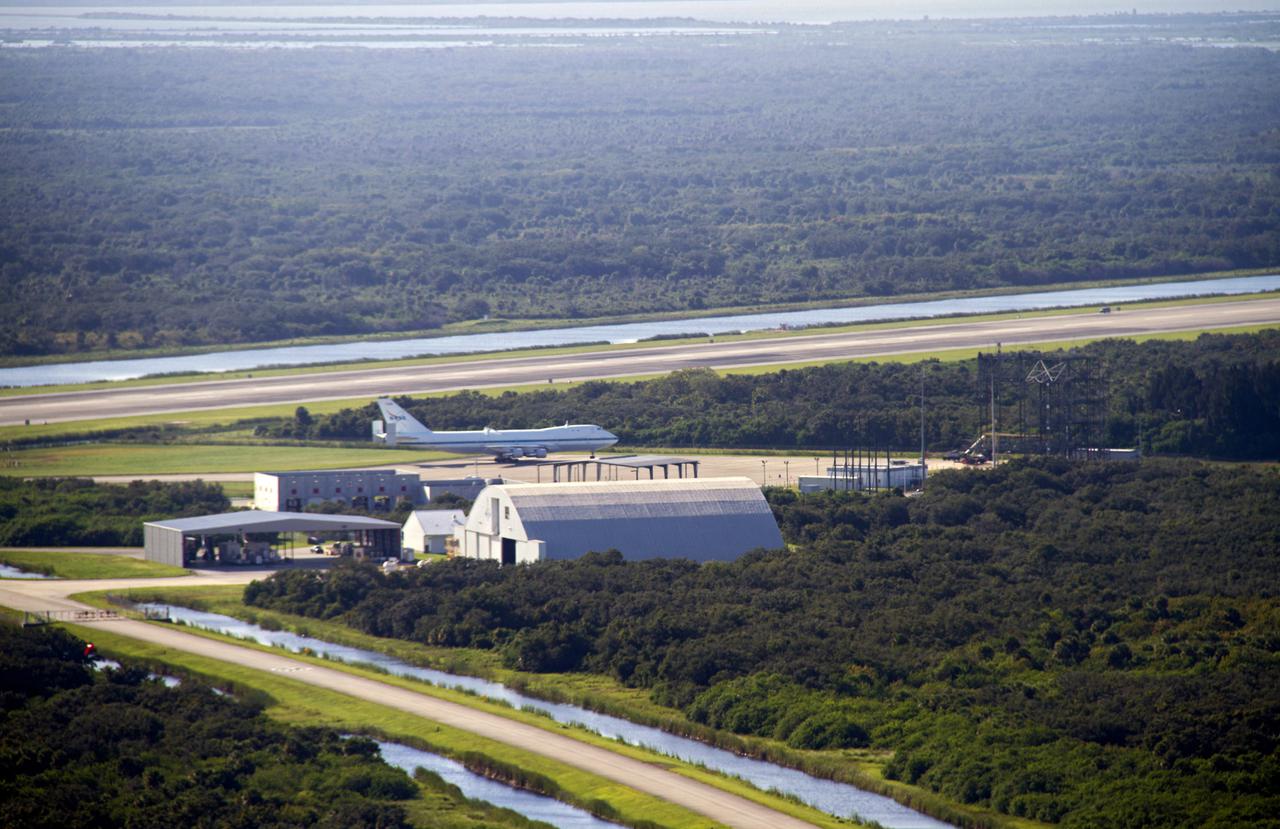
CAPE CANAVERAL, Fla. – The Shuttle Carrier Aircraft, or SCA, rolls onto the ramp area of NASA Kennedy Space Center’s Shuttle Landing Facility in Florida. The SCA touched down at 5:05 p.m. EDT to prepare for shuttle Endeavour’s ferry flight to the Los Angeles International Airport on Sept. 17. Photo credit: NASA_ Chris Chamberland
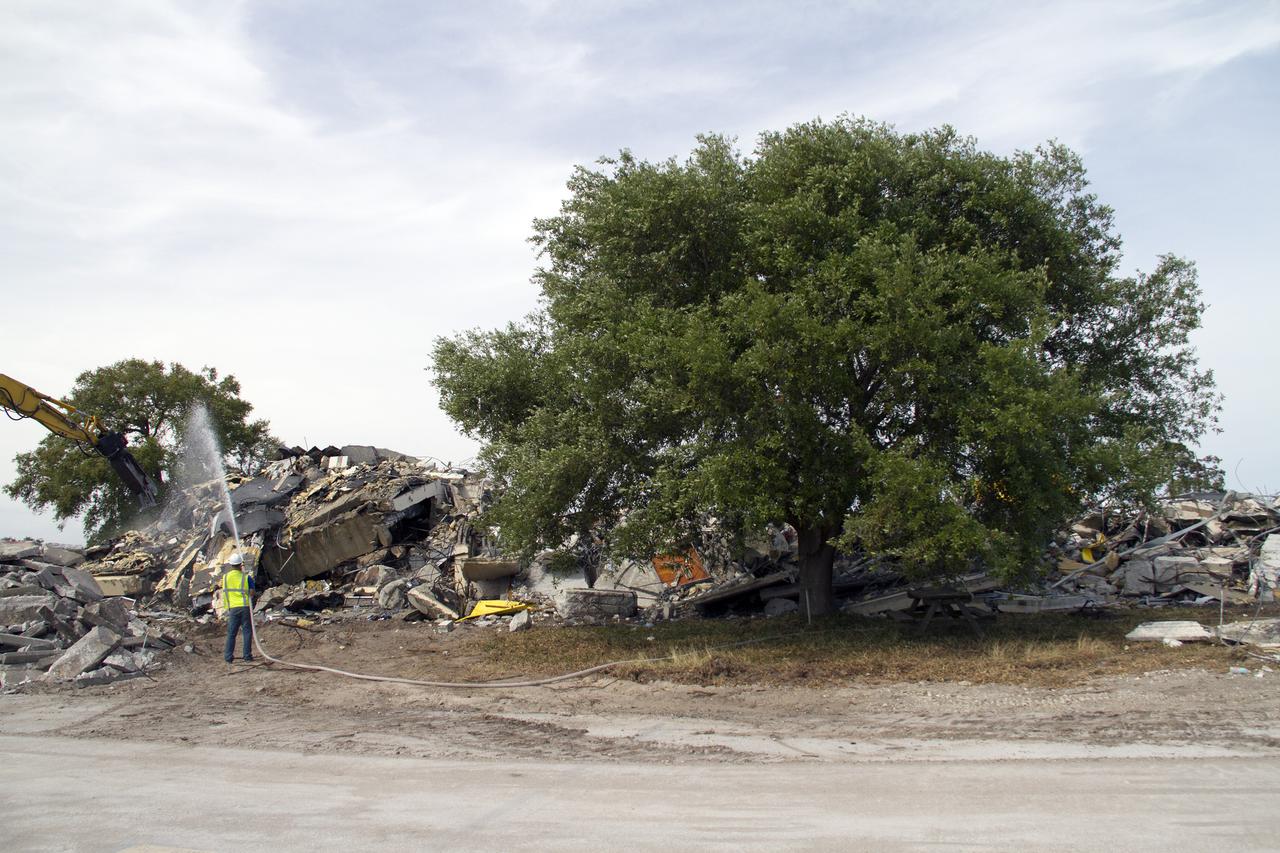
CAPE CANAVERAL, Fla. -- At NASA’s Kennedy Space Center in Florida, demolition is underway on the Base Operations Building, or BOB, in the Industrial Area. Water is being sprayed in the area to control the dust created during the demolition process. The two-story BOB was constructed in 1965 as office space for workers. Kennedy is demolishing some of the older facilities due to their age and to reduce maintenance and repair costs. Photo credit: NASA_ Cory Huston

CAPE CANAVERAL, Fla. – The Shuttle Carrier Aircraft, or SCA, rolls down the runway at NASA Kennedy Space Center’s Shuttle Landing Facility in Florida. The SCA touched down at 5:05 p.m. EDT to prepare for shuttle Endeavour’s ferry flight to the Los Angeles International Airport on Sept. 17. Photo credit: NASA_ Chris Chamberland

CAPE CANAVERAL, Fla. – The Shuttle Carrier Aircraft, or SCA, rolls onto the ramp area of NASA Kennedy Space Center’s Shuttle Landing Facility in Florida. The SCA touched down at 5:05 p.m. EDT to prepare for shuttle Endeavour’s ferry flight to the Los Angeles International Airport on Sept. 17. Photo credit: NASA_ Chris Chamberland
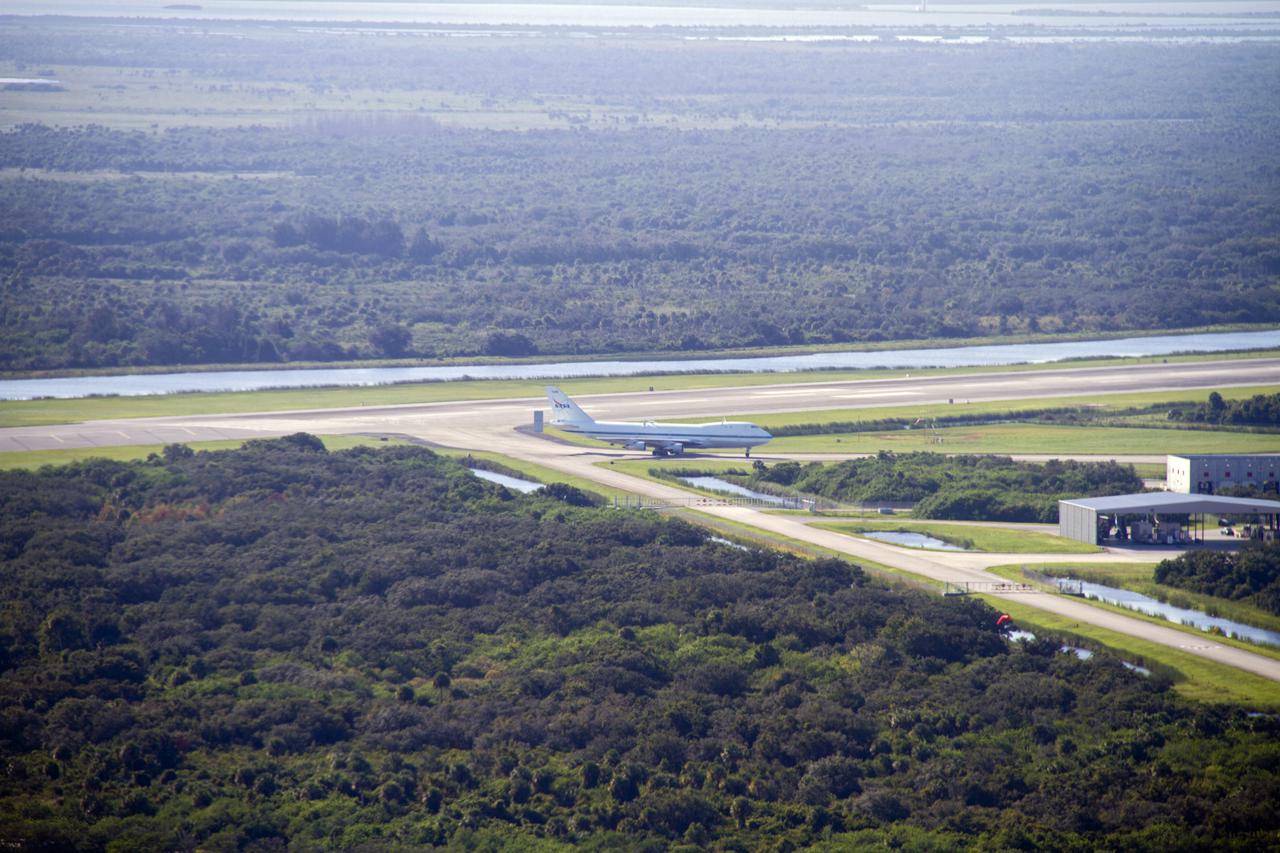
CAPE CANAVERAL, Fla. – The Shuttle Carrier Aircraft, or SCA, rolls to the ramp area of NASA Kennedy Space Center’s Shuttle Landing Facility in Florida. The SCA touched down at 5:05 p.m. EDT to prepare for shuttle Endeavour’s ferry flight to the Los Angeles International Airport on Sept. 17. Photo credit: NASA_ Chris Chamberland
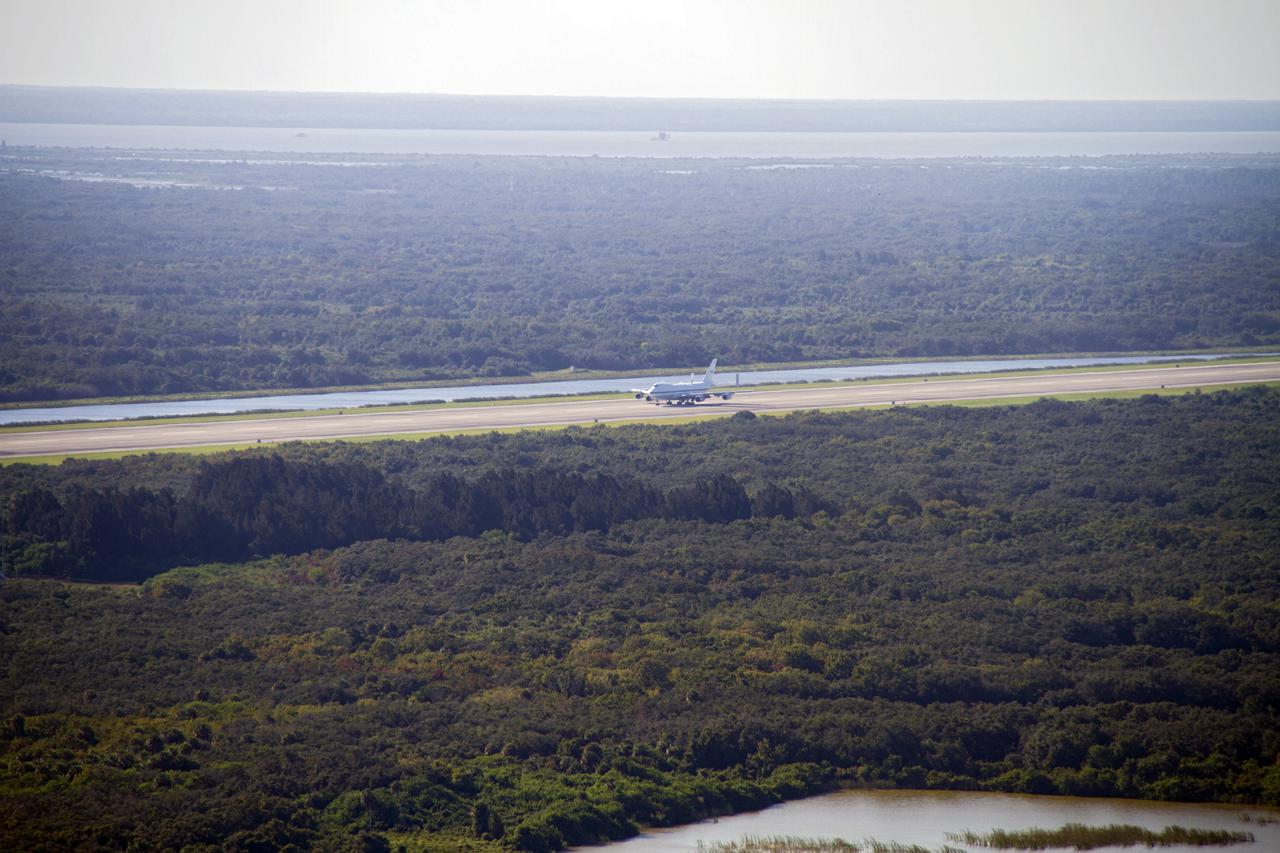
CAPE CANAVERAL, Fla. – The Shuttle Carrier Aircraft, or SCA, rolls down the runway at NASA Kennedy Space Center’s Shuttle Landing Facility in Florida. The SCA touched down at 5:05 p.m. EDT to prepare for shuttle Endeavour’s ferry flight to the Los Angeles International Airport on Sept. 17. Photo credit: NASA_ Chris Chamberland
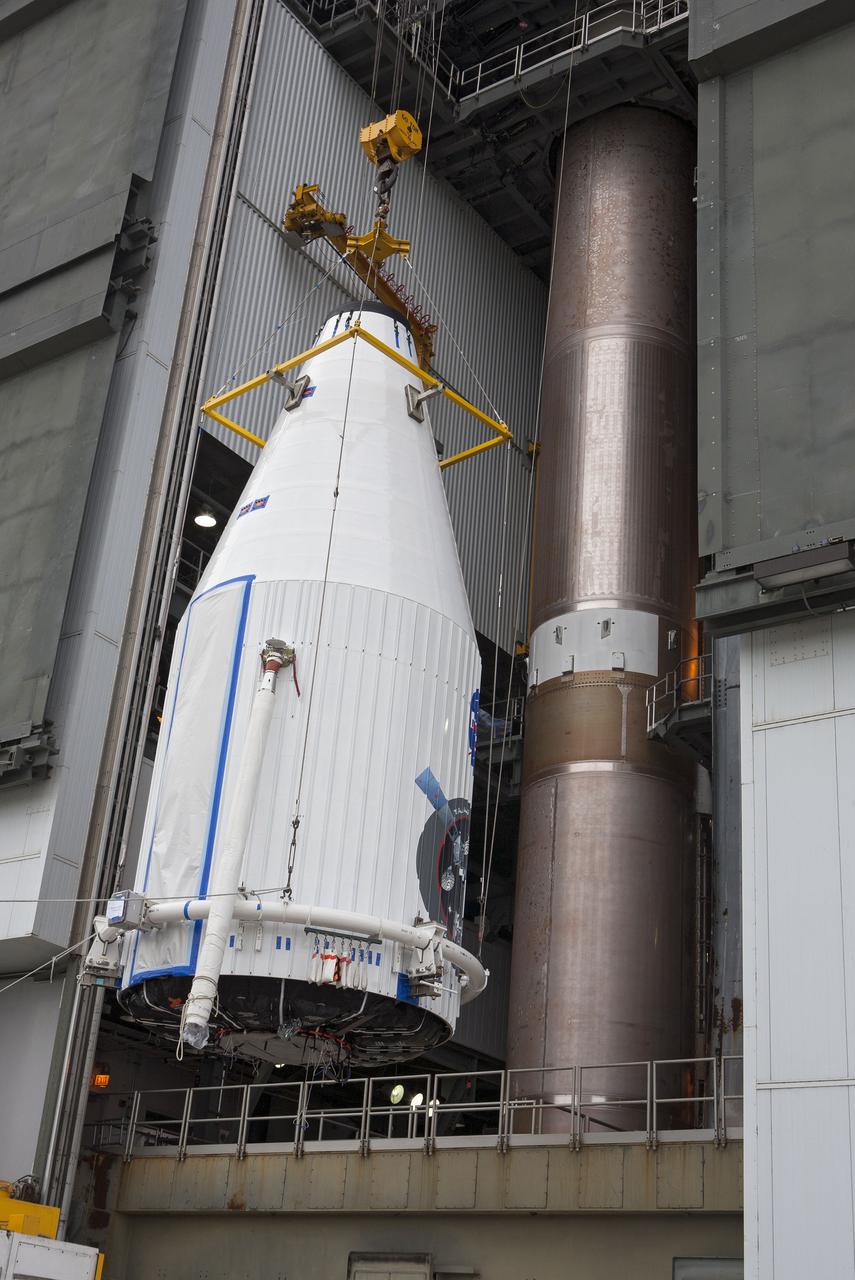
CAPE CANAVERAL, Fla. –- Enclosed in its payload fairing, NASA's Tracking and Data Relay Satellite, TDRS-K, is being lifted for placement atop a United Launch Alliance Atlas V rocket at Cape Canaveral Air Force Station's Space Launch Complex 41. Liftoff for the TDRS-K is planned for January 30, 2013. The TDRS-K spacecraft is part of the next-generation series in the Tracking and Data Relay Satellite System, a constellation of space-based communication satellites providing tracking, telemetry, command and high-bandwidth data return services. For more information, visit http:__www.nasa.gov_mission_pages_tdrs_index.html Photo credit: NASA_ Glenn Bension
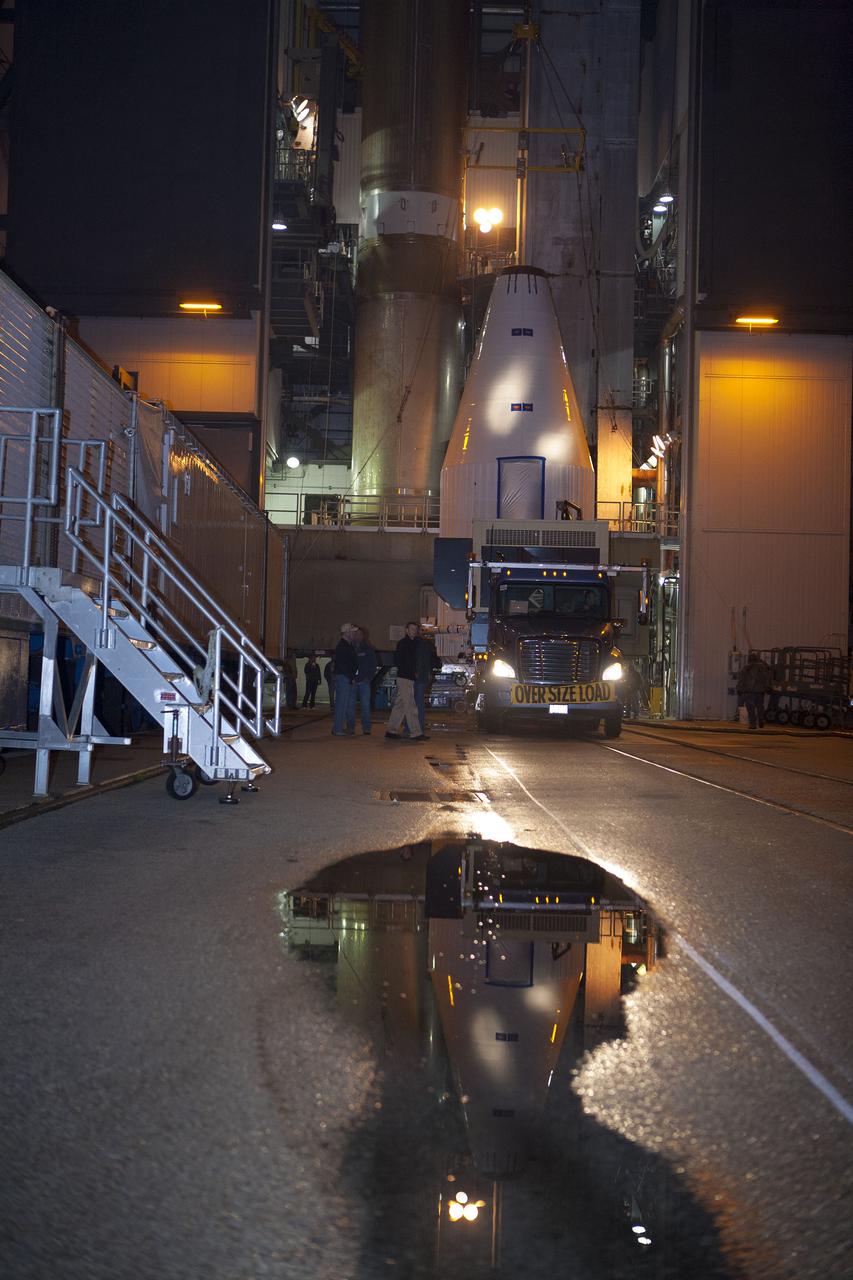
CAPE CANAVERAL, Fla. –- Enclosed in its payload fairing, NASA's Tracking and Data Relay Satellite, TDRS-K, , arrives at Cape Canaveral Air Force Station's Space Launch Complex 41. The spacecraft will now be lifted into position atop a United Launch Alliance Atlas V rocket. Liftoff for the TDRS-K is planned for January 30, 2013. The TDRS-K spacecraft is part of the next-generation series in the Tracking and Data Relay Satellite System, a constellation of space-based communication satellites providing tracking, telemetry, command and high-bandwidth data return services. For more information, visit http:__www.nasa.gov_mission_pages_tdrs_index.html Photo credit: NASA_ Glenn Bension
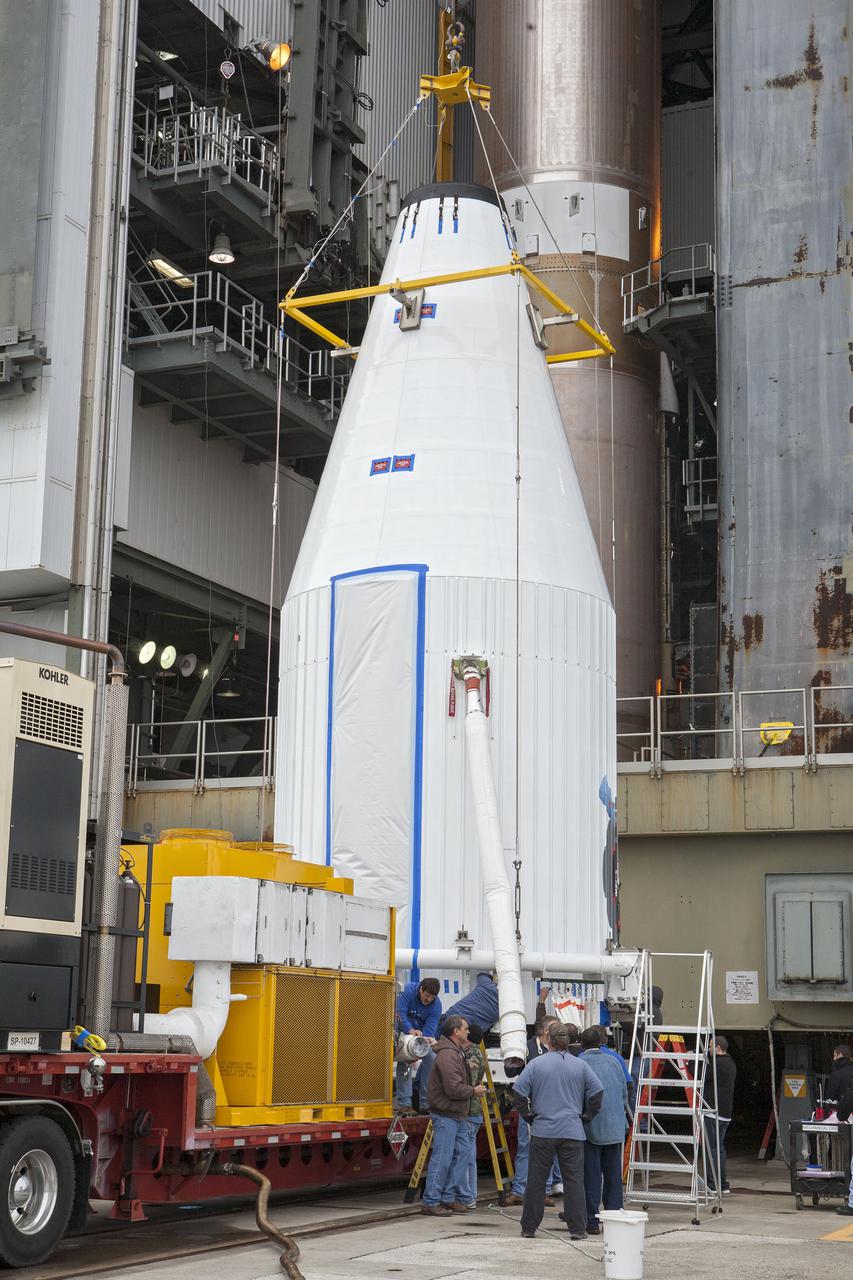
CAPE CANAVERAL, Fla. –- Enclosed in its payload fairing, NASA's Tracking and Data Relay Satellite, TDRS-K, is being prepare for the lift that will place it atop a United Launch Alliance Atlas V rocket at Cape Canaveral Air Force Station's Space Launch Complex 41. Liftoff for the TDRS-K is planned for January 30, 2013. The TDRS-K spacecraft is part of the next-generation series in the Tracking and Data Relay Satellite System, a constellation of space-based communication satellites providing tracking, telemetry, command and high-bandwidth data return services. For more information, visit http:__www.nasa.gov_mission_pages_tdrs_index.html Photo credit: NASA_ Glenn Bension
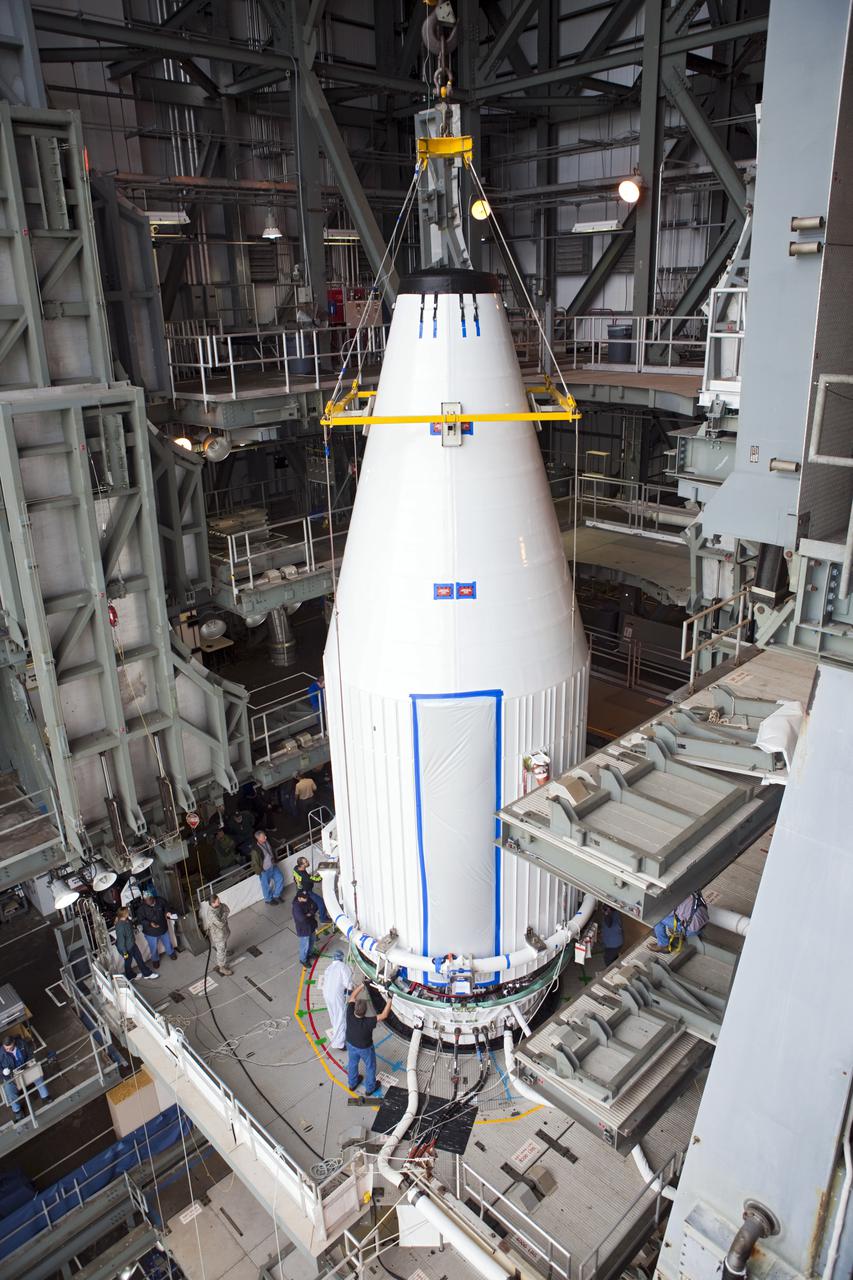
CAPE CANAVERAL, Fla. –- Technicians move NASA's Tracking and Data Relay Satellite, TDRS-K, into position for mating to a United Launch Alliance Atlas V rocket at Cape Canaveral Air Force Station's Space Launch Complex 41. Liftoff for the TDRS-K is planned for January 30, 2013. The TDRS-K spacecraft is part of the next-generation series in the Tracking and Data Relay Satellite System, a constellation of space-based communication satellites providing tracking, telemetry, command and high-bandwidth data return services. For more information, visit http:__www.nasa.gov_mission_pages_tdrs_index.html Photo credit: NASA_ Glenn Bension
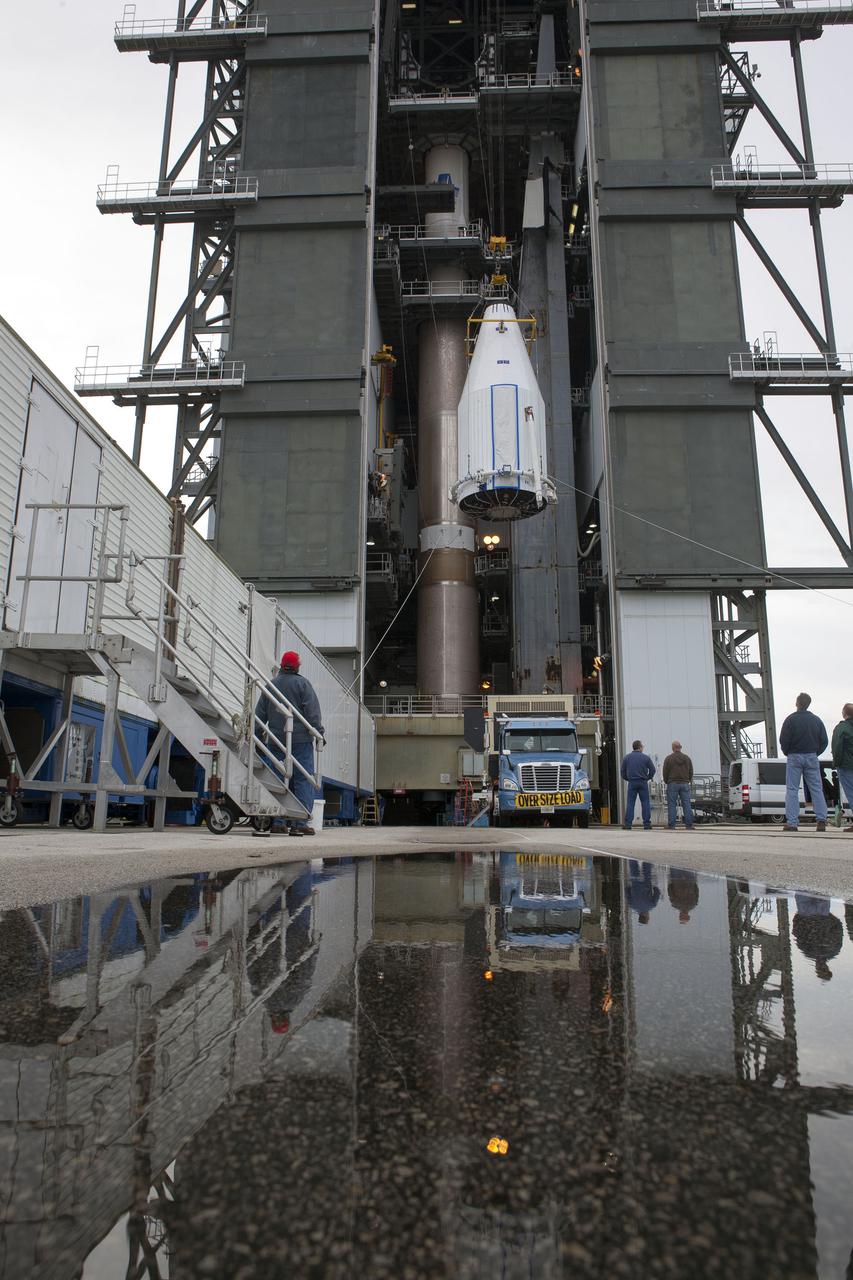
CAPE CANAVERAL, Fla. –- Enclosed in its payload fairing, NASA's Tracking and Data Relay Satellite, TDRS-K, is being lifted for placement atop a United Launch Alliance Atlas V rocket at Cape Canaveral Air Force Station's Space Launch Complex 41. Liftoff for the TDRS-K is planned for January 30, 2013. The TDRS-K spacecraft is part of the next-generation series in the Tracking and Data Relay Satellite System, a constellation of space-based communication satellites providing tracking, telemetry, command and high-bandwidth data return services. For more information, visit http:__www.nasa.gov_mission_pages_tdrs_index.html Photo credit: NASA_ Glenn Bension
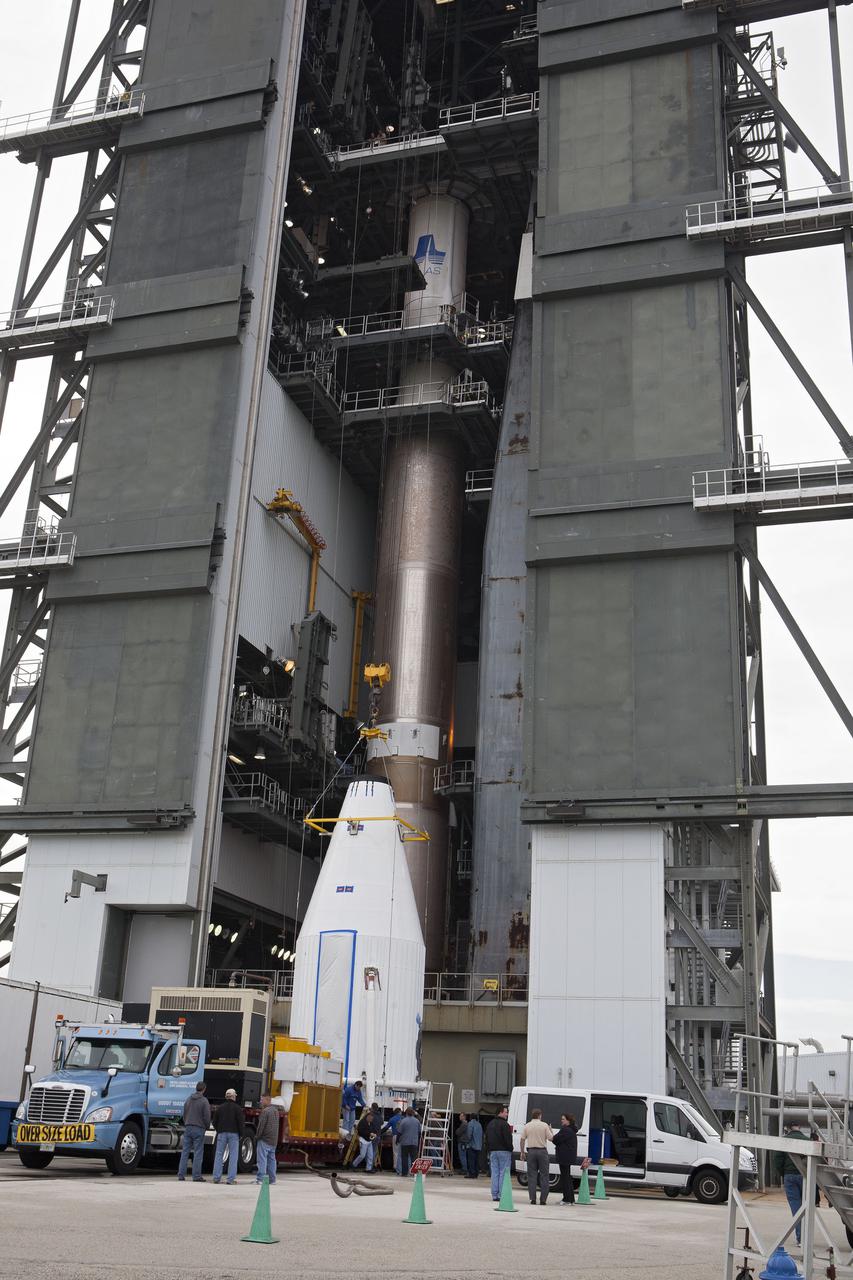
CAPE CANAVERAL, Fla. –- Enclosed in its payload fairing, NASA's Tracking and Data Relay Satellite, TDRS-K, is being prepare for the lift that will place it atop a United Launch Alliance Atlas V rocket at Cape Canaveral Air Force Station's Space Launch Complex 41. Liftoff for the TDRS-K is planned for January 30, 2013. The TDRS-K spacecraft is part of the next-generation series in the Tracking and Data Relay Satellite System, a constellation of space-based communication satellites providing tracking, telemetry, command and high-bandwidth data return services. For more information, visit http:__www.nasa.gov_mission_pages_tdrs_index.html Photo credit: NASA_ Glenn Bension
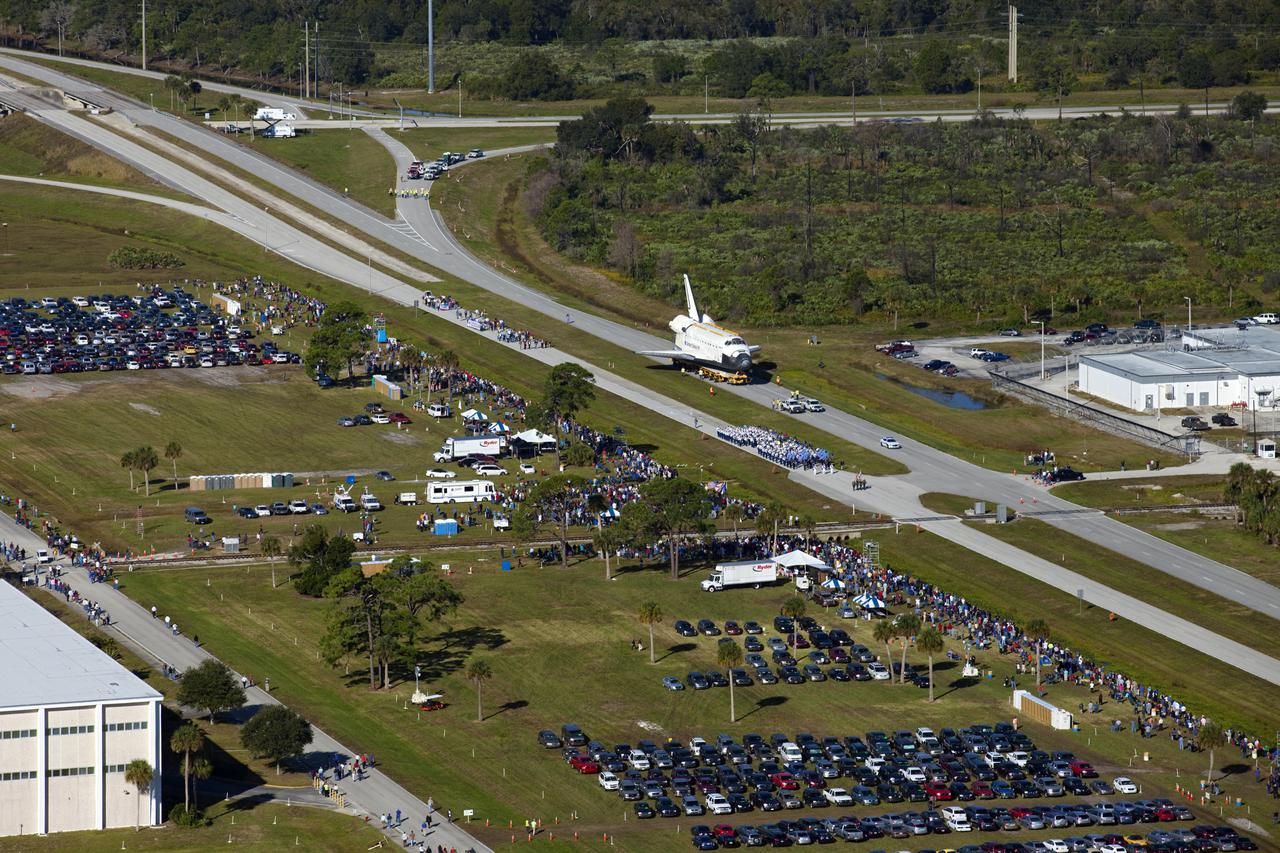
CAPE CANAVERAL, Fla. – Space shuttle Atlantis is transported along NASA Causeway at NASA's Kennedy Space Center in Florida on its 10-mile journey to the Kennedy Space Center Visitor Complex where it will be put on public display. As part of transition and retirement of the Space Shuttle Program, Atlantis is to be displayed at Kennedy's Visitor Complex beginning in the summer of 2013. Over the course of its 26-year career, Atlantis traveled 125,935,769 miles during 307 days in space over 33 missions. For more information, visit http:__www.nasa.gov_transition Photo credit: NASA_ Kim Shiflett
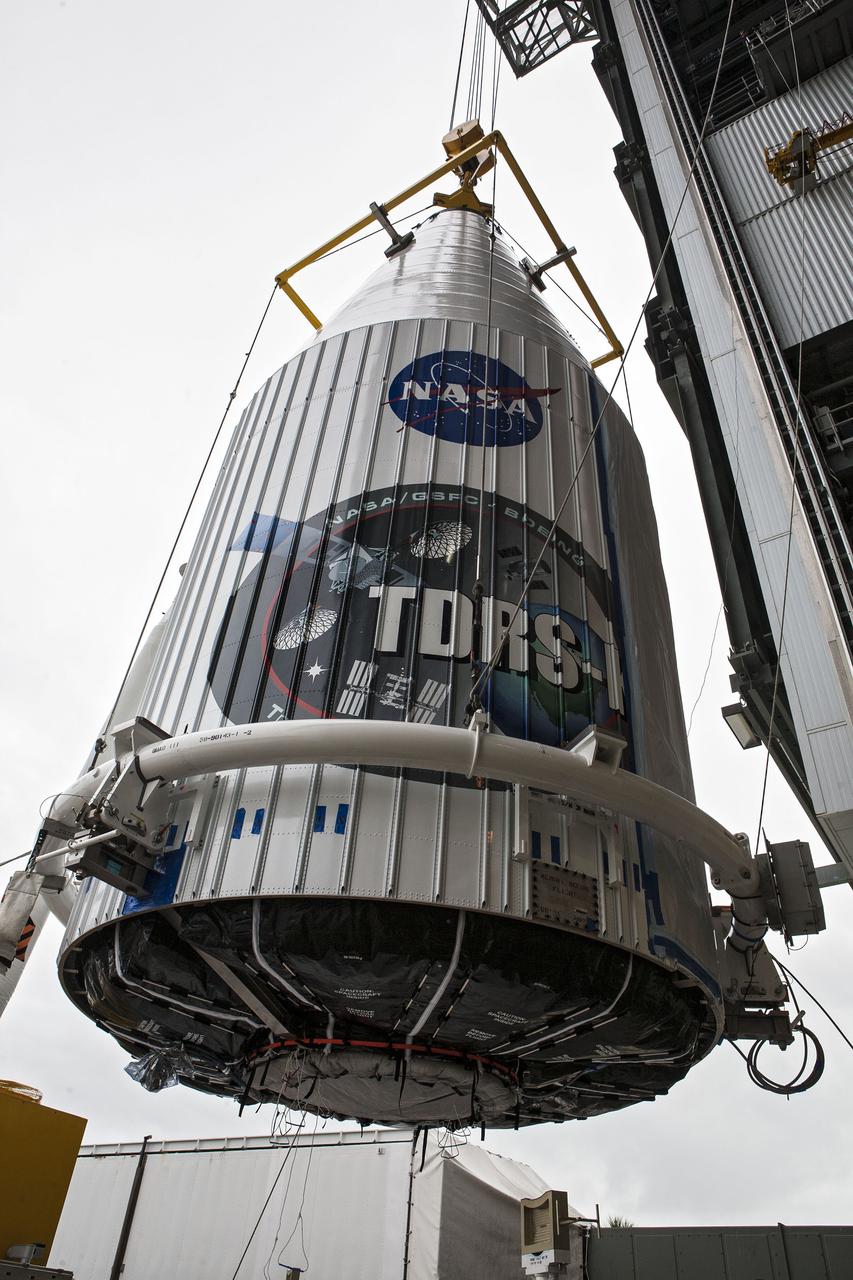
CAPE CANAVERAL, Fla. –- Enclosed in its payload fairing, NASA's Tracking and Data Relay Satellite, TDRS-K, is being lifted for placement atop a United Launch Alliance Atlas V rocket at Cape Canaveral Air Force Station's Space Launch Complex 41. Liftoff for the TDRS-K is planned for January 30, 2013. The TDRS-K spacecraft is part of the next-generation series in the Tracking and Data Relay Satellite System, a constellation of space-based communication satellites providing tracking, telemetry, command and high-bandwidth data return services. For more information, visit http:__www.nasa.gov_mission_pages_tdrs_index.html Photo credit: NASA_ Glenn Bension
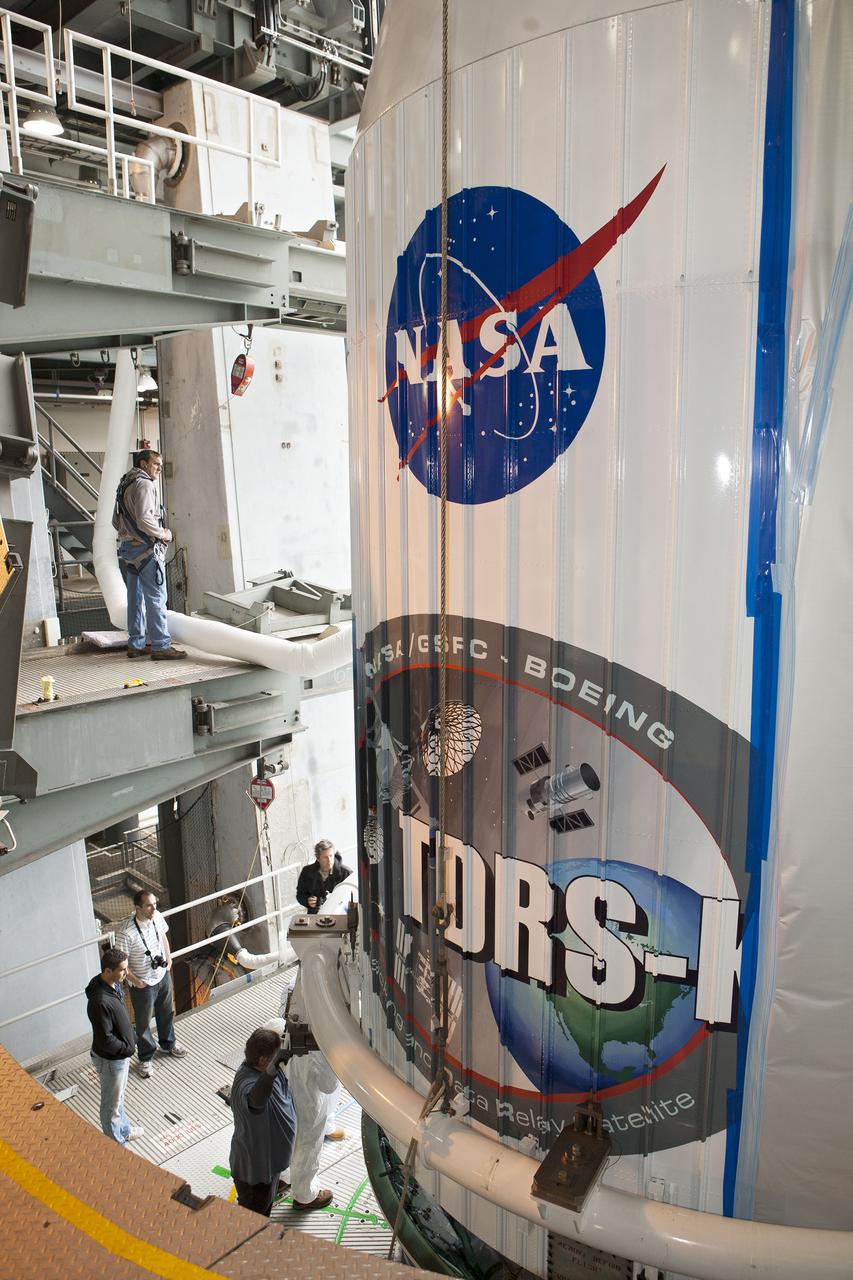
CAPE CANAVERAL, Fla. –- Technicians move NASA's Tracking and Data Relay Satellite, TDRS-K, into position for mating to a United Launch Alliance Atlas V rocket at Cape Canaveral Air Force Station's Space Launch Complex 41. Liftoff for the TDRS-K is planned for January 30, 2013. The TDRS-K spacecraft is part of the next-generation series in the Tracking and Data Relay Satellite System, a constellation of space-based communication satellites providing tracking, telemetry, command and high-bandwidth data return services. For more information, visit http:__www.nasa.gov_mission_pages_tdrs_index.html Photo credit: NASA_ Glenn Bension
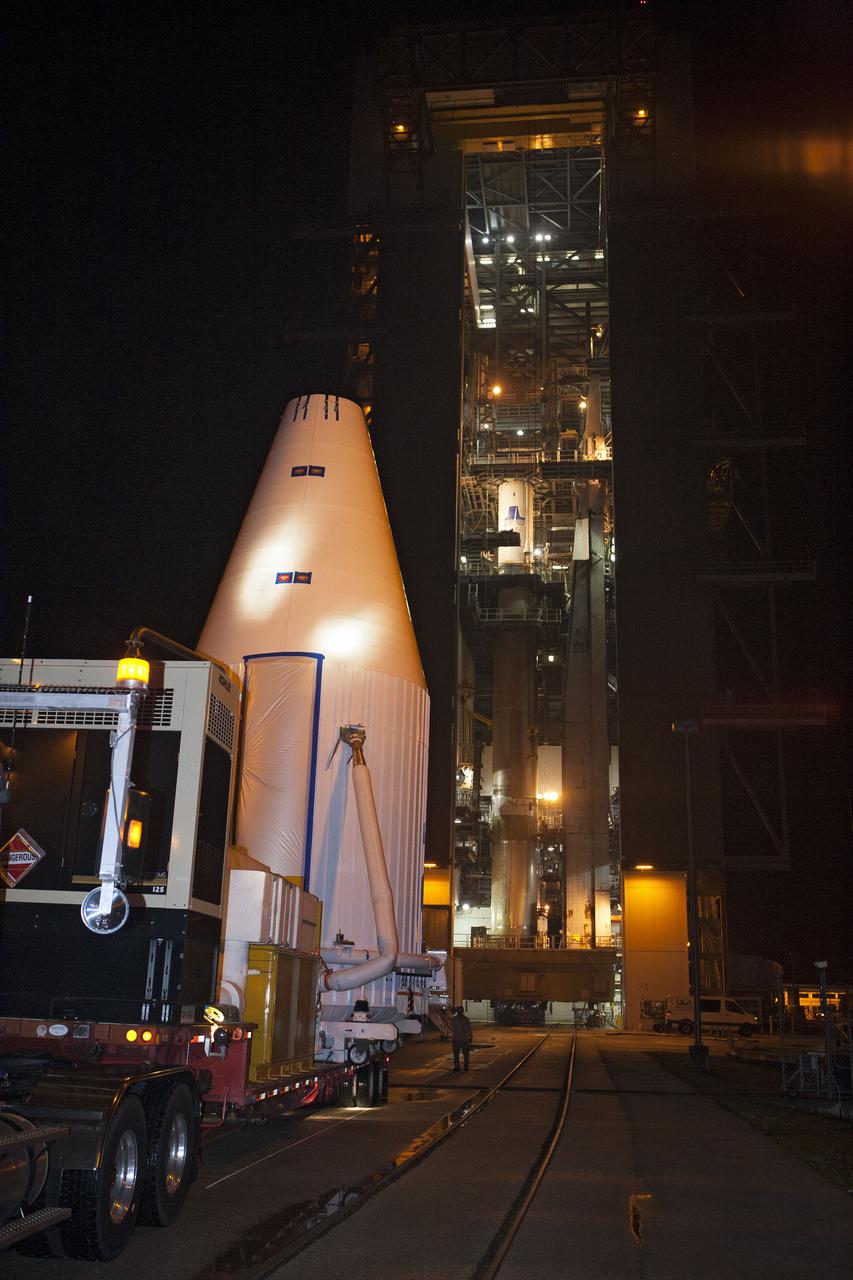
CAPE CANAVERAL, Fla. –- Enclosed in its payload fairing, NASA's Tracking and Data Relay Satellite, TDRS-K, , arrives at Cape Canaveral Air Force Station's Space Launch Complex 41. The spacecraft will now be lifted into position atop a United Launch Alliance Atlas V rocket. Liftoff for the TDRS-K is planned for January 30, 2013. The TDRS-K spacecraft is part of the next-generation series in the Tracking and Data Relay Satellite System, a constellation of space-based communication satellites providing tracking, telemetry, command and high-bandwidth data return services. For more information, visit http:__www.nasa.gov_mission_pages_tdrs_index.html Photo credit: NASA_ Glenn Bension
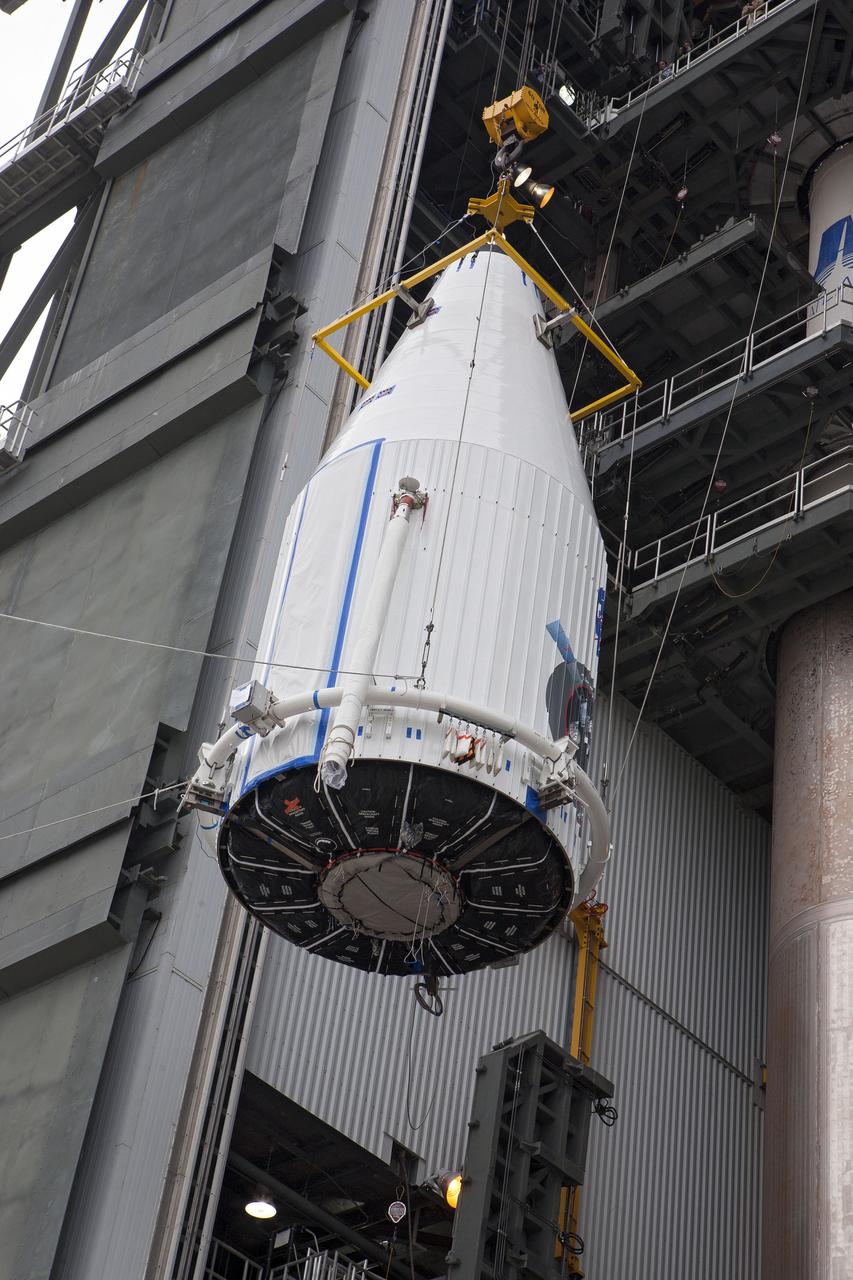
CAPE CANAVERAL, Fla. –- Enclosed in its payload fairing, NASA's Tracking and Data Relay Satellite, TDRS-K, is being lifted for placement atop a United Launch Alliance Atlas V rocket at Cape Canaveral Air Force Station's Space Launch Complex 41. Liftoff for the TDRS-K is planned for January 30, 2013. The TDRS-K spacecraft is part of the next-generation series in the Tracking and Data Relay Satellite System, a constellation of space-based communication satellites providing tracking, telemetry, command and high-bandwidth data return services. For more information, visit http:__www.nasa.gov_mission_pages_tdrs_index.html Photo credit: NASA_ Glenn Bension
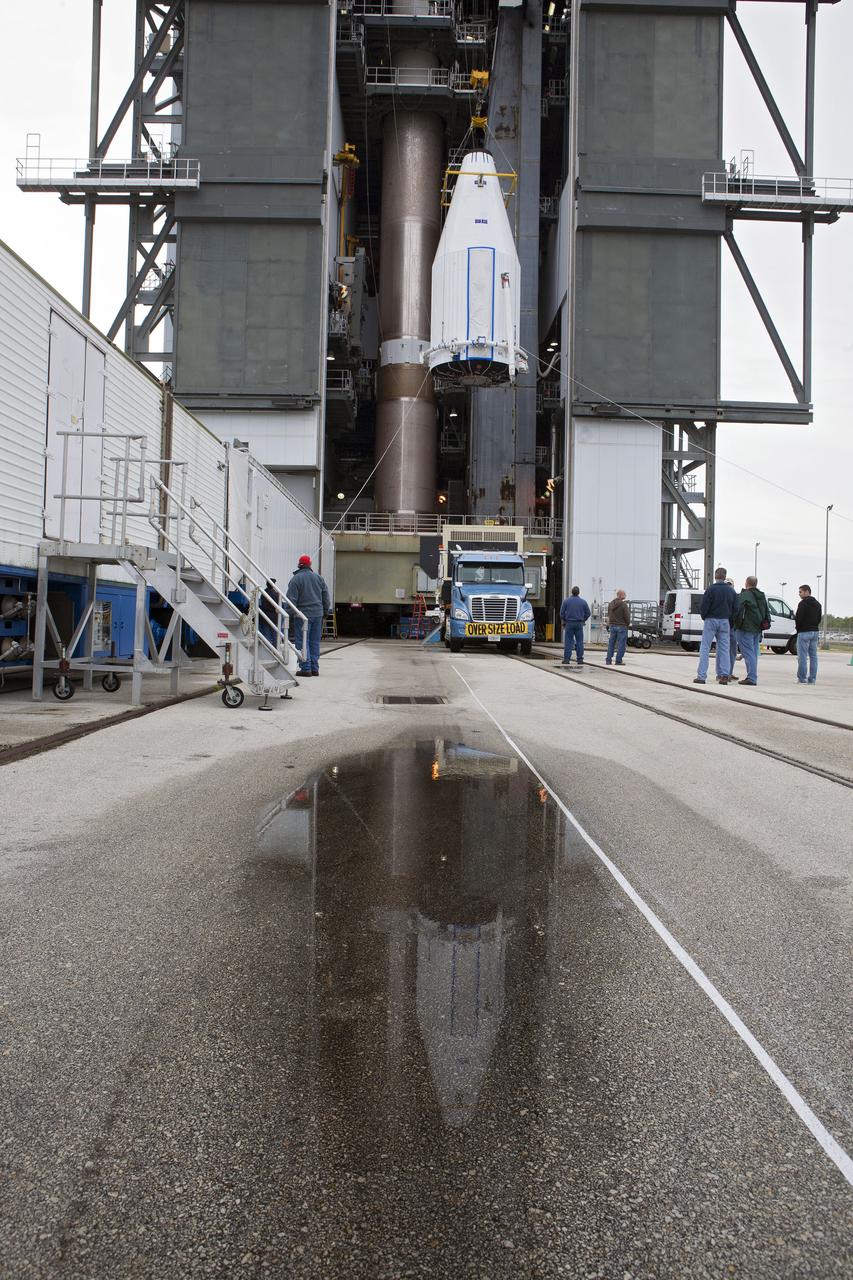
CAPE CANAVERAL, Fla. –- Enclosed in its payload fairing, NASA's Tracking and Data Relay Satellite, TDRS-K, is being lifted for placement atop a United Launch Alliance Atlas V rocket at Cape Canaveral Air Force Station's Space Launch Complex 41. Liftoff for the TDRS-K is planned for January 30, 2013. The TDRS-K spacecraft is part of the next-generation series in the Tracking and Data Relay Satellite System, a constellation of space-based communication satellites providing tracking, telemetry, command and high-bandwidth data return services. For more information, visit http:__www.nasa.gov_mission_pages_tdrs_index.html Photo credit: NASA_ Glenn Bension
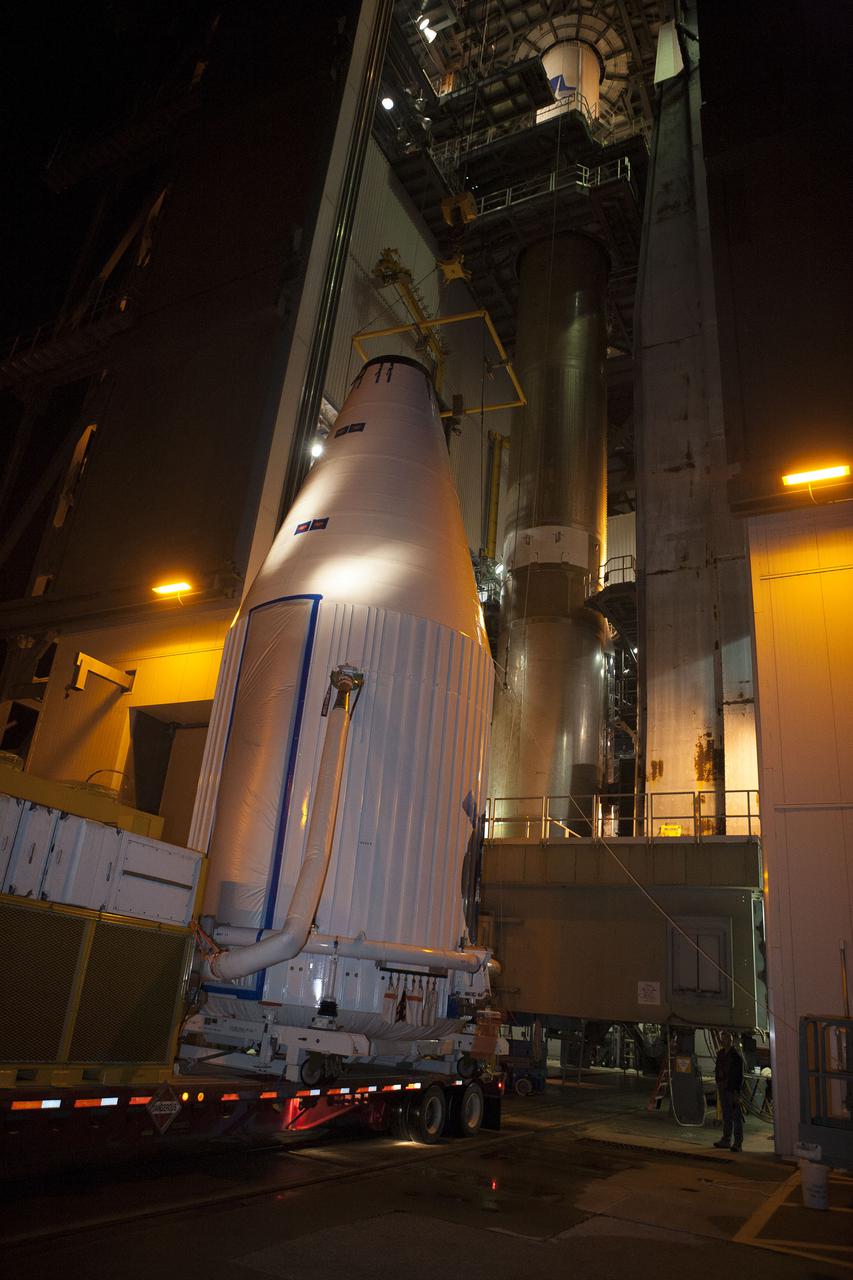
CAPE CANAVERAL, Fla. –- Enclosed in its payload fairing, NASA's Tracking and Data Relay Satellite, TDRS-K, , arrives at Cape Canaveral Air Force Station's Space Launch Complex 41. The spacecraft will now be lifted into position atop a United Launch Alliance Atlas V rocket. Liftoff for the TDRS-K is planned for January 30, 2013. The TDRS-K spacecraft is part of the next-generation series in the Tracking and Data Relay Satellite System, a constellation of space-based communication satellites providing tracking, telemetry, command and high-bandwidth data return services. For more information, visit http:__www.nasa.gov_mission_pages_tdrs_index.html Photo credit: NASA_ Glenn Bension
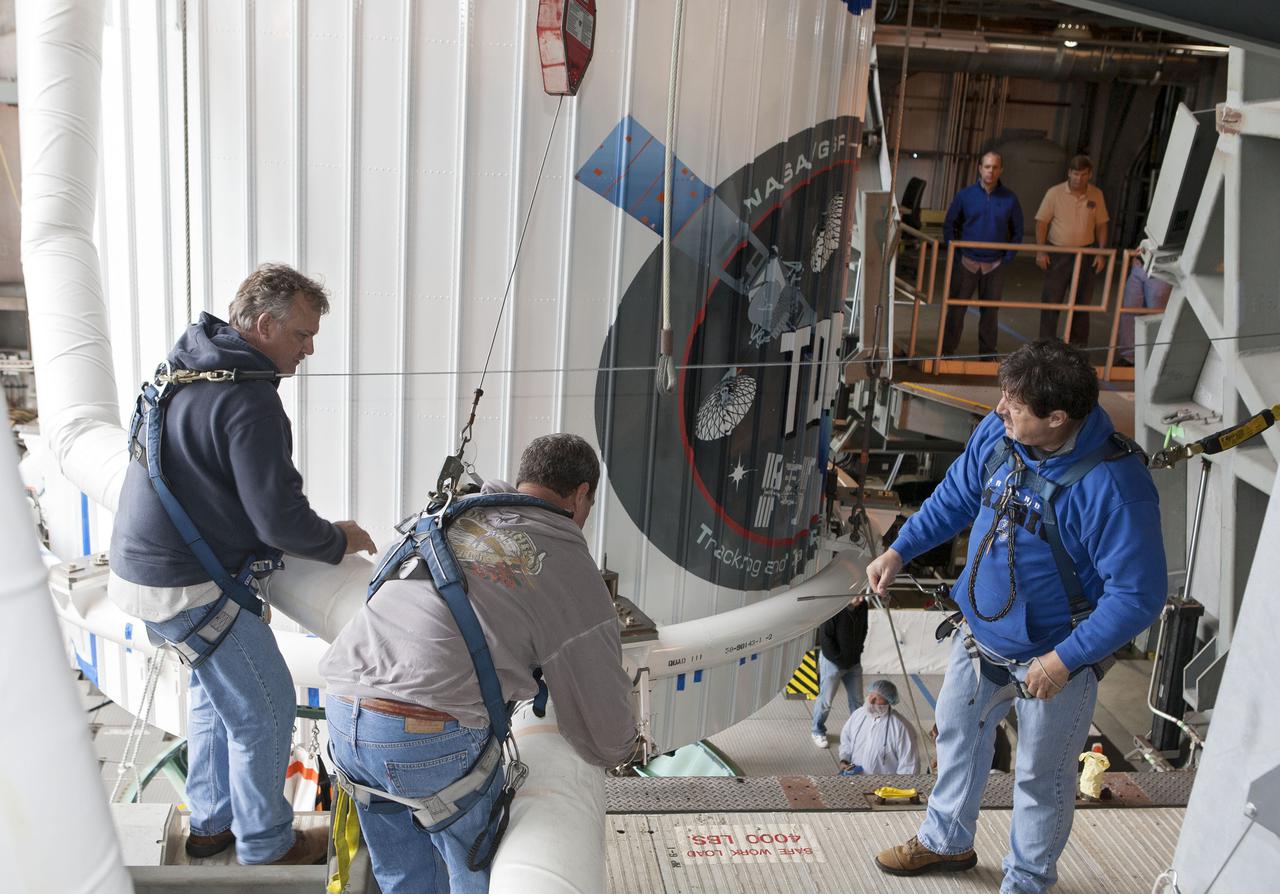
CAPE CANAVERAL, Fla. –- Technicians move NASA's Tracking and Data Relay Satellite, TDRS-K, into position for mating to a United Launch Alliance Atlas V rocket at Cape Canaveral Air Force Station's Space Launch Complex 41. Liftoff for the TDRS-K is planned for January 30, 2013. The TDRS-K spacecraft is part of the next-generation series in the Tracking and Data Relay Satellite System, a constellation of space-based communication satellites providing tracking, telemetry, command and high-bandwidth data return services. For more information, visit http:__www.nasa.gov_mission_pages_tdrs_index.html Photo credit: NASA_ Glenn Bension
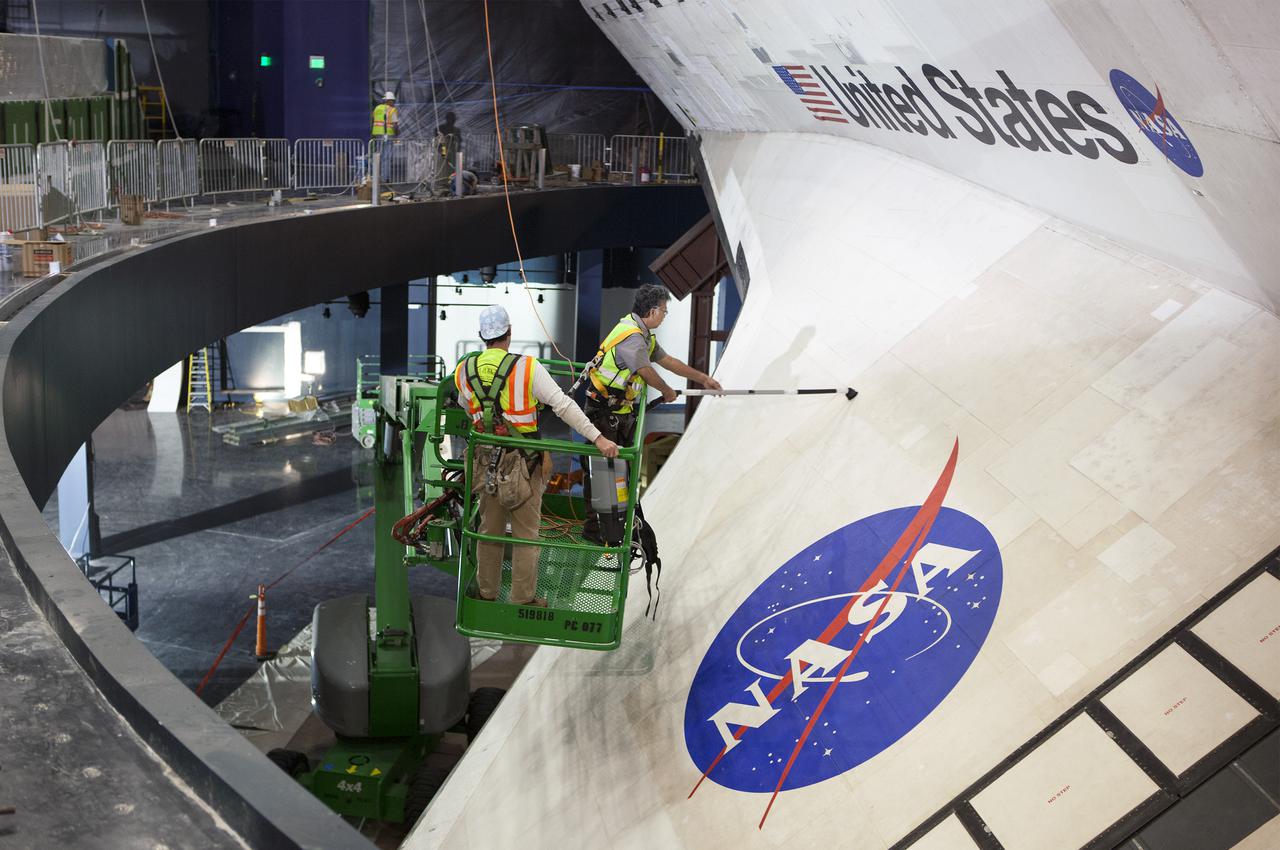
CAPE CANAVERAL, Fla. – CAPE CANAVERAL, Fla. - Construction crews clean space shuttle Atlantis following the removal of 16,000 square feet of plastic shrink-wrap that enclosed the spacecraft since November of last year to protect the artifact from dust and debris during construction of the 90,000-square-foot facility. The new $100 million 'Space Shuttle Atlantis' facility will include interactive exhibits that tell the story of the 30-year Space Shuttle Program and highlights the future of space exploration. The 'Space Shuttle Atlantis' exhibit scheduled to open June 29, 2013. Photo credit: NASA_ Dmitri Gerondidakis
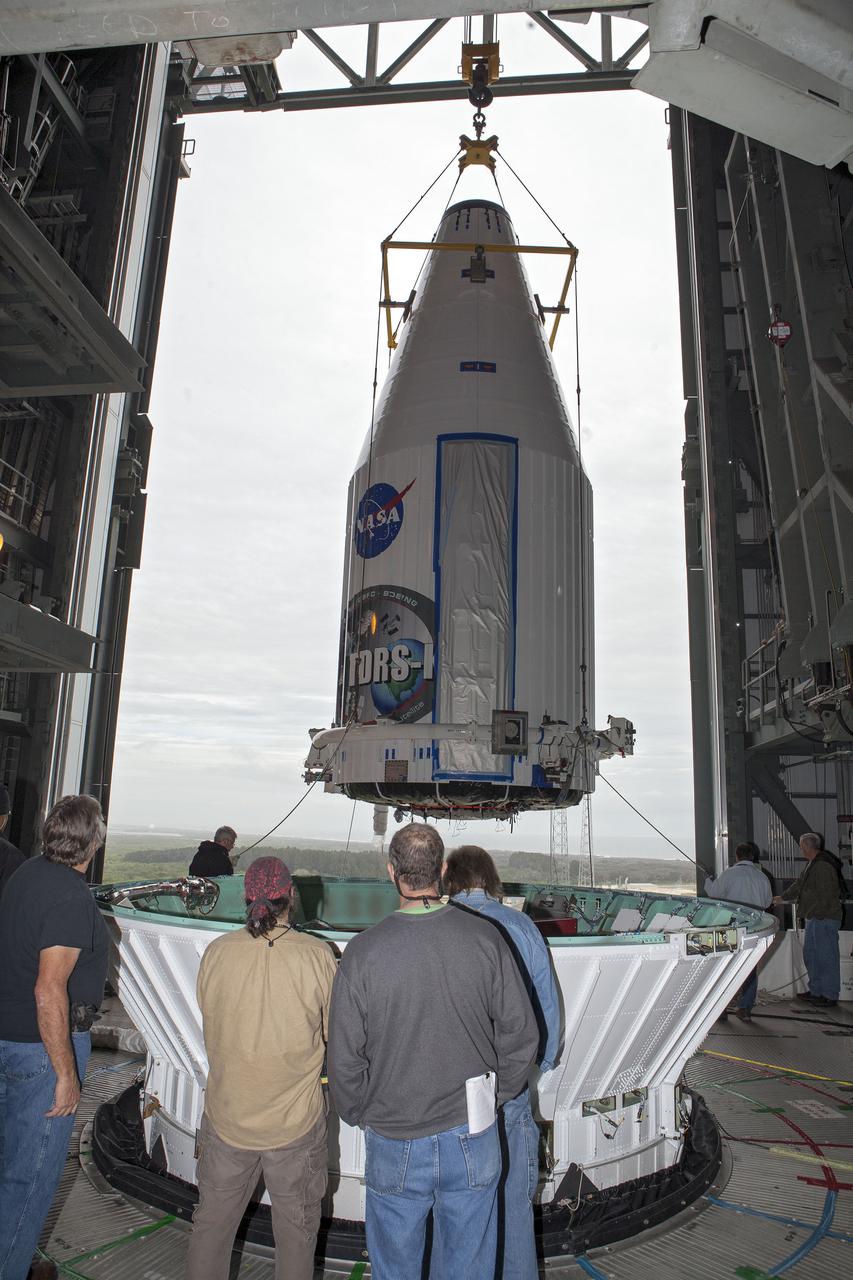
CAPE CANAVERAL, Fla. –- Technicians move NASA's Tracking and Data Relay Satellite, TDRS-K, into position for mating to a United Launch Alliance Atlas V rocket at Cape Canaveral Air Force Station's Space Launch Complex 41. Liftoff for the TDRS-K is planned for January 30, 2013. The TDRS-K spacecraft is part of the next-generation series in the Tracking and Data Relay Satellite System, a constellation of space-based communication satellites providing tracking, telemetry, command and high-bandwidth data return services. For more information, visit http:__www.nasa.gov_mission_pages_tdrs_index.html Photo credit: NASA_ Glenn Bension
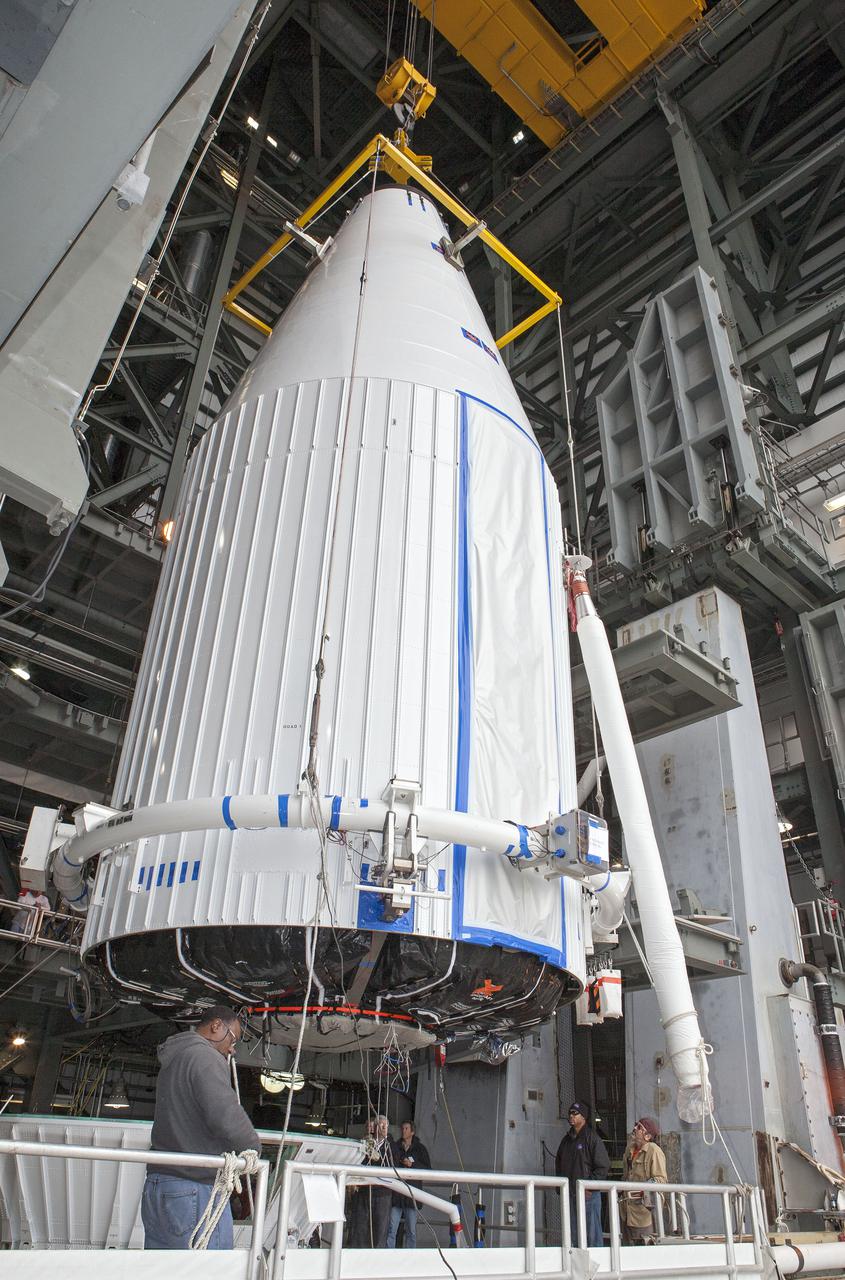
CAPE CANAVERAL, Fla. –- Technicians move NASA's Tracking and Data Relay Satellite, TDRS-K, into position for mating to a United Launch Alliance Atlas V rocket at Cape Canaveral Air Force Station's Space Launch Complex 41. Liftoff for the TDRS-K is planned for January 30, 2013. The TDRS-K spacecraft is part of the next-generation series in the Tracking and Data Relay Satellite System, a constellation of space-based communication satellites providing tracking, telemetry, command and high-bandwidth data return services. For more information, visit http:__www.nasa.gov_mission_pages_tdrs_index.html Photo credit: NASA_ Glenn Bension
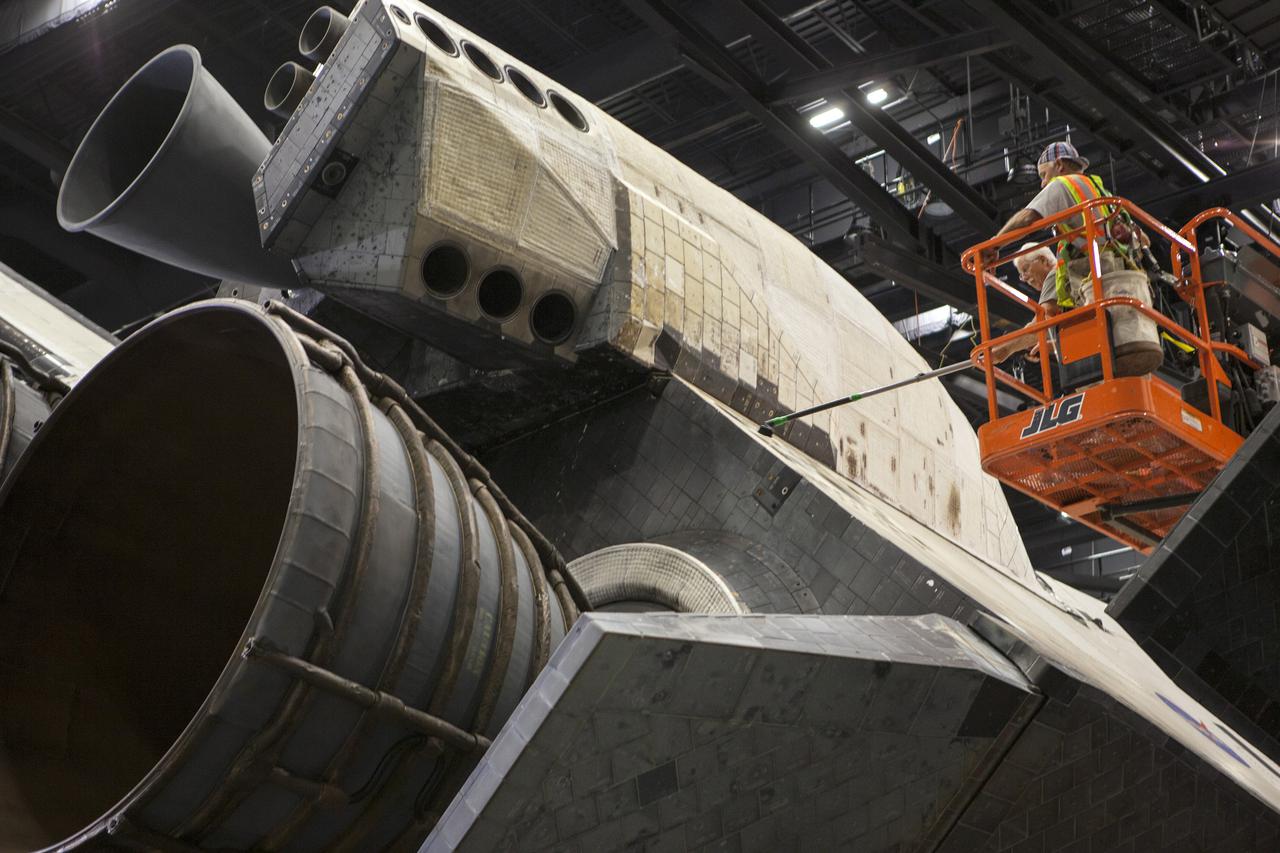
CAPE CANAVERAL, Fla. – Construction crews clean space shuttle Atlantis following the removal of 16,000 square feet of plastic shrink-wrap that enclosed the spacecraft since November of last year to protect the artifact from dust and debris during construction of the 90,000-square-foot facility. The new $100 million 'Space Shuttle Atlantis' facility will include interactive exhibits that tell the story of the 30-year Space Shuttle Program and highlights the future of space exploration. The 'Space Shuttle Atlantis' exhibit scheduled to open June 29, 2013. Photo credit: NASA_ Dmitri Gerondidakis
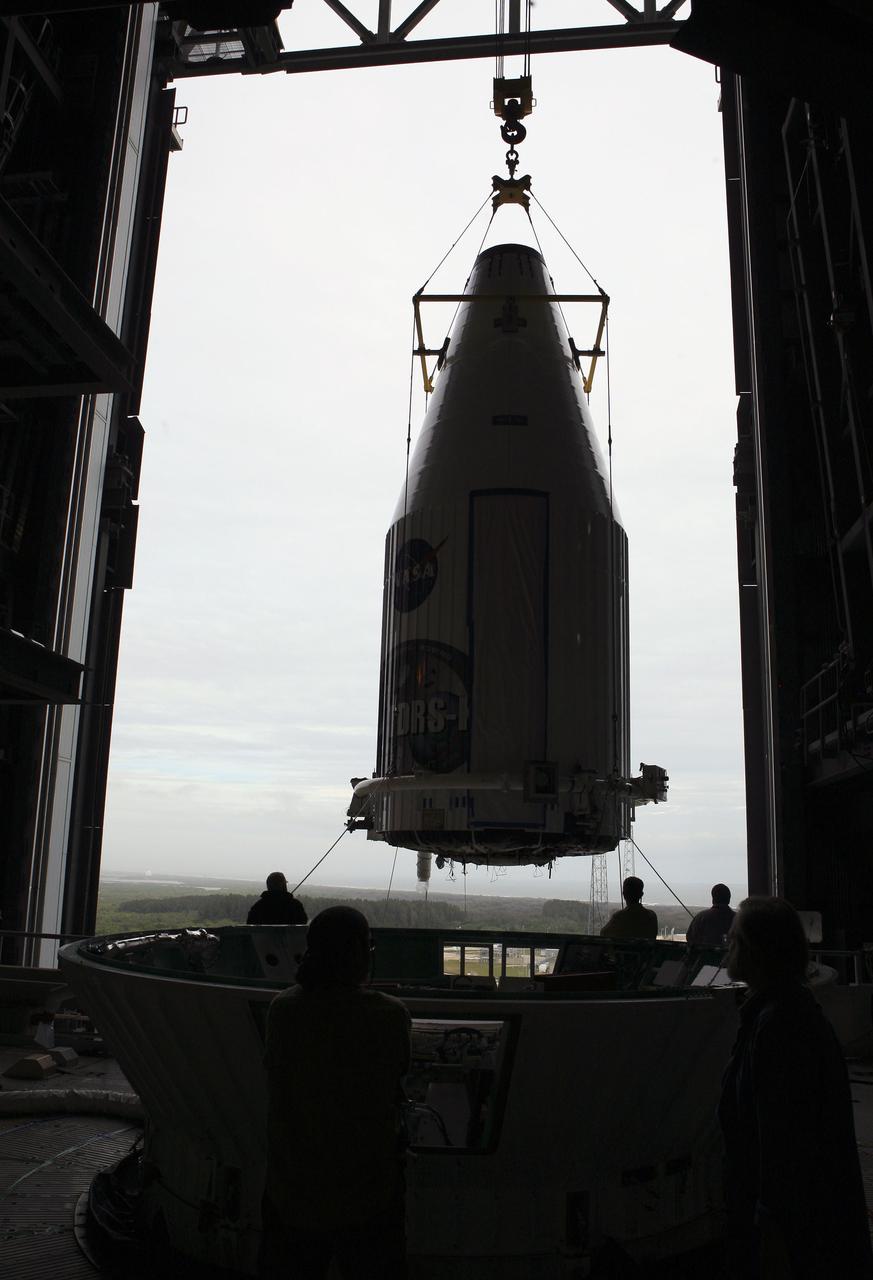
CAPE CANAVERAL, Fla. –- Enclosed in its payload fairing, NASA's Tracking and Data Relay Satellite, TDRS-K, is being moved into position for placement atop a United Launch Alliance Atlas V rocket at Cape Canaveral Air Force Station's Space Launch Complex 41. Liftoff for the TDRS-K is planned for January 30, 2013. The TDRS-K spacecraft is part of the next-generation series in the Tracking and Data Relay Satellite System, a constellation of space-based communication satellites providing tracking, telemetry, command and high-bandwidth data return services. For more information, visit http:__www.nasa.gov_mission_pages_tdrs_index.html Photo credit: NASA_ Glenn Bension
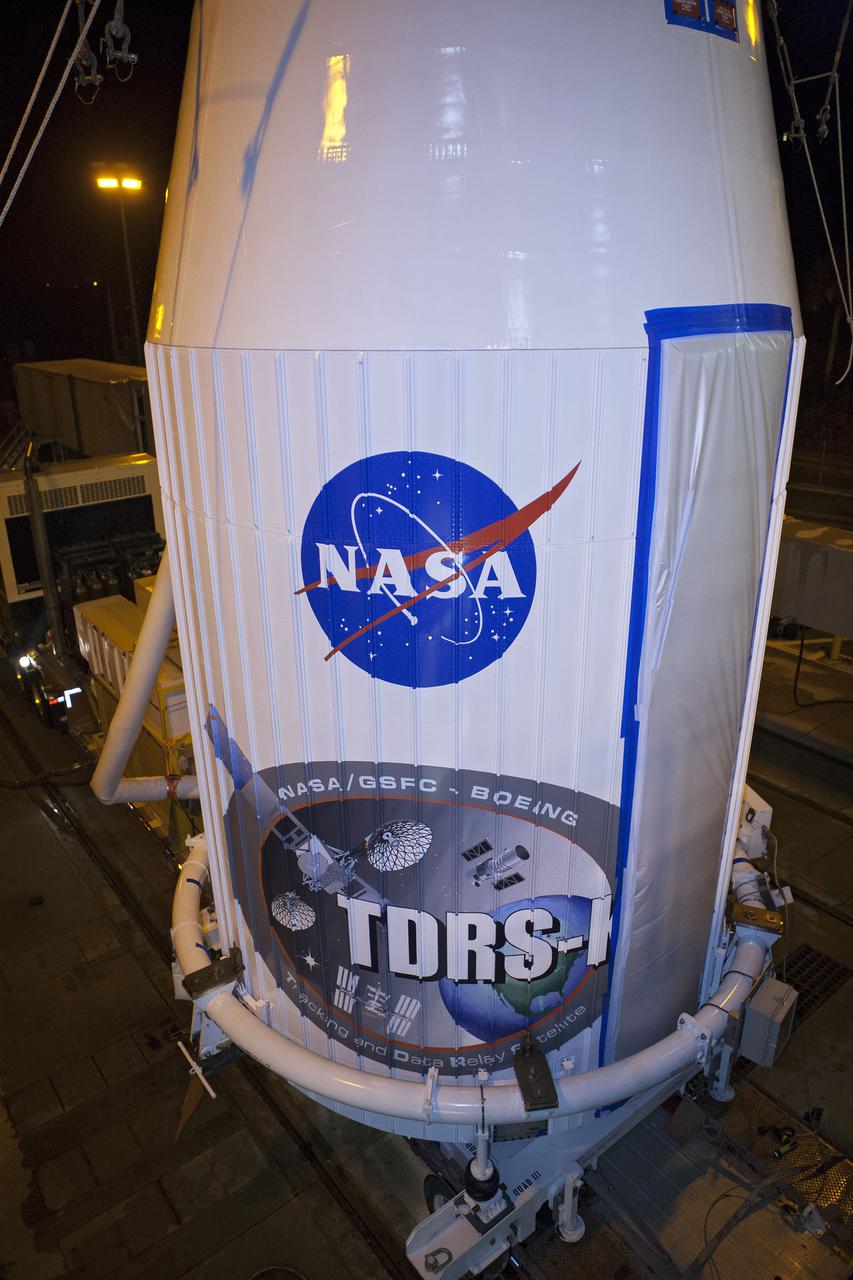
CAPE CANAVERAL, Fla. –- Enclosed in its payload fairing, NASA's Tracking and Data Relay Satellite, TDRS-K, is being prepare for the lift that will place it atop a United Launch Alliance Atlas V rocket at Cape Canaveral Air Force Station's Space Launch Complex 41. Liftoff for the TDRS-K is planned for January 30, 2013. The TDRS-K spacecraft is part of the next-generation series in the Tracking and Data Relay Satellite System, a constellation of space-based communication satellites providing tracking, telemetry, command and high-bandwidth data return services. For more information, visit http:__www.nasa.gov_mission_pages_tdrs_index.html Photo credit: NASA_ Glenn Bension
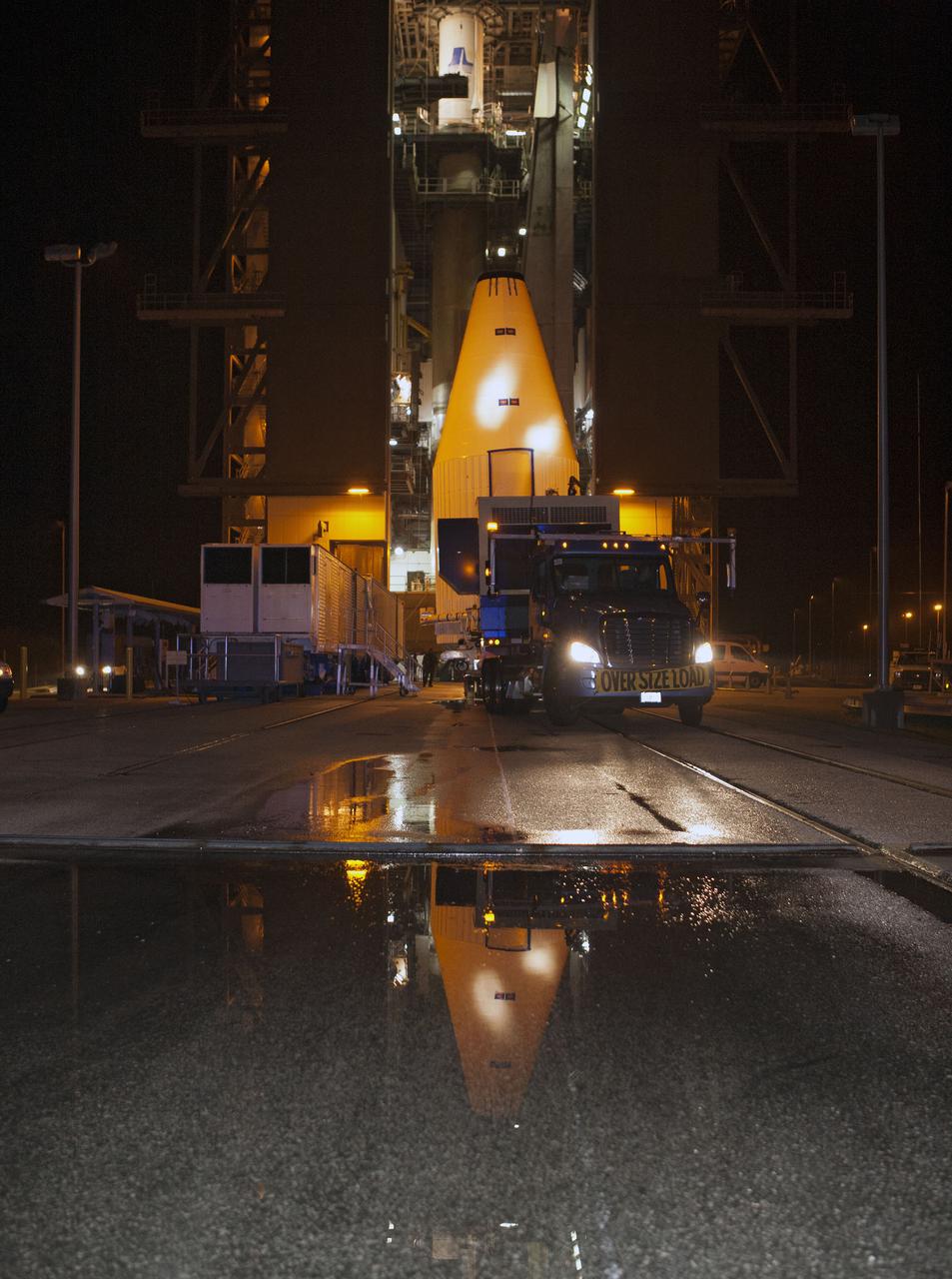
CAPE CANAVERAL, Fla. –- Enclosed in its payload fairing, NASA's Tracking and Data Relay Satellite, TDRS-K, , arrives at Cape Canaveral Air Force Station's Space Launch Complex 41. The spacecraft will now be lifted into position atop a United Launch Alliance Atlas V rocket. Liftoff for the TDRS-K is planned for January 30, 2013. The TDRS-K spacecraft is part of the next-generation series in the Tracking and Data Relay Satellite System, a constellation of space-based communication satellites providing tracking, telemetry, command and high-bandwidth data return services. For more information, visit http:__www.nasa.gov_mission_pages_tdrs_index.html Photo credit: NASA_ Glenn Bension
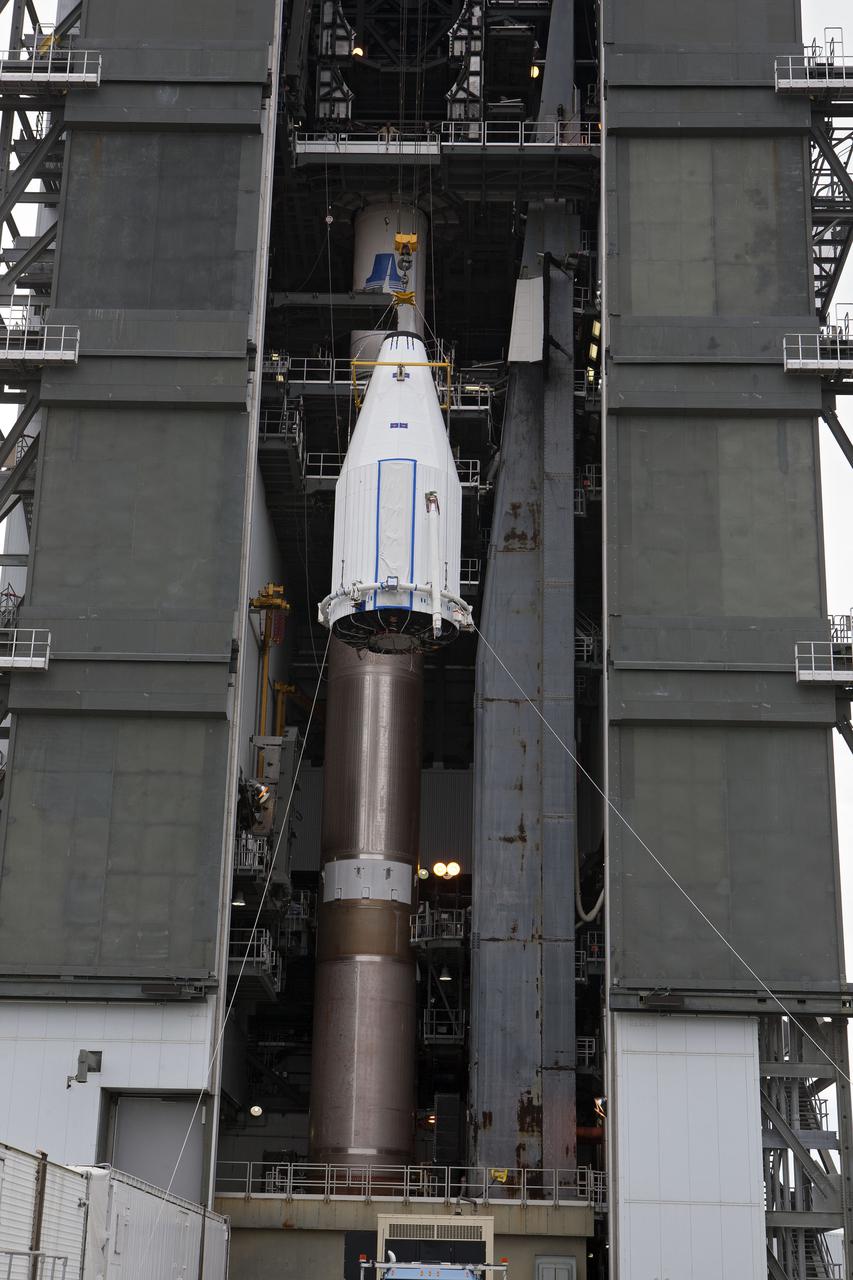
CAPE CANAVERAL, Fla. –- Enclosed in its payload fairing, NASA's Tracking and Data Relay Satellite, TDRS-K, is being lifted for placement atop a United Launch Alliance Atlas V rocket at Cape Canaveral Air Force Station's Space Launch Complex 41. Liftoff for the TDRS-K is planned for January 30, 2013. The TDRS-K spacecraft is part of the next-generation series in the Tracking and Data Relay Satellite System, a constellation of space-based communication satellites providing tracking, telemetry, command and high-bandwidth data return services. For more information, visit http:__www.nasa.gov_mission_pages_tdrs_index.html Photo credit: NASA_ Glenn Bension
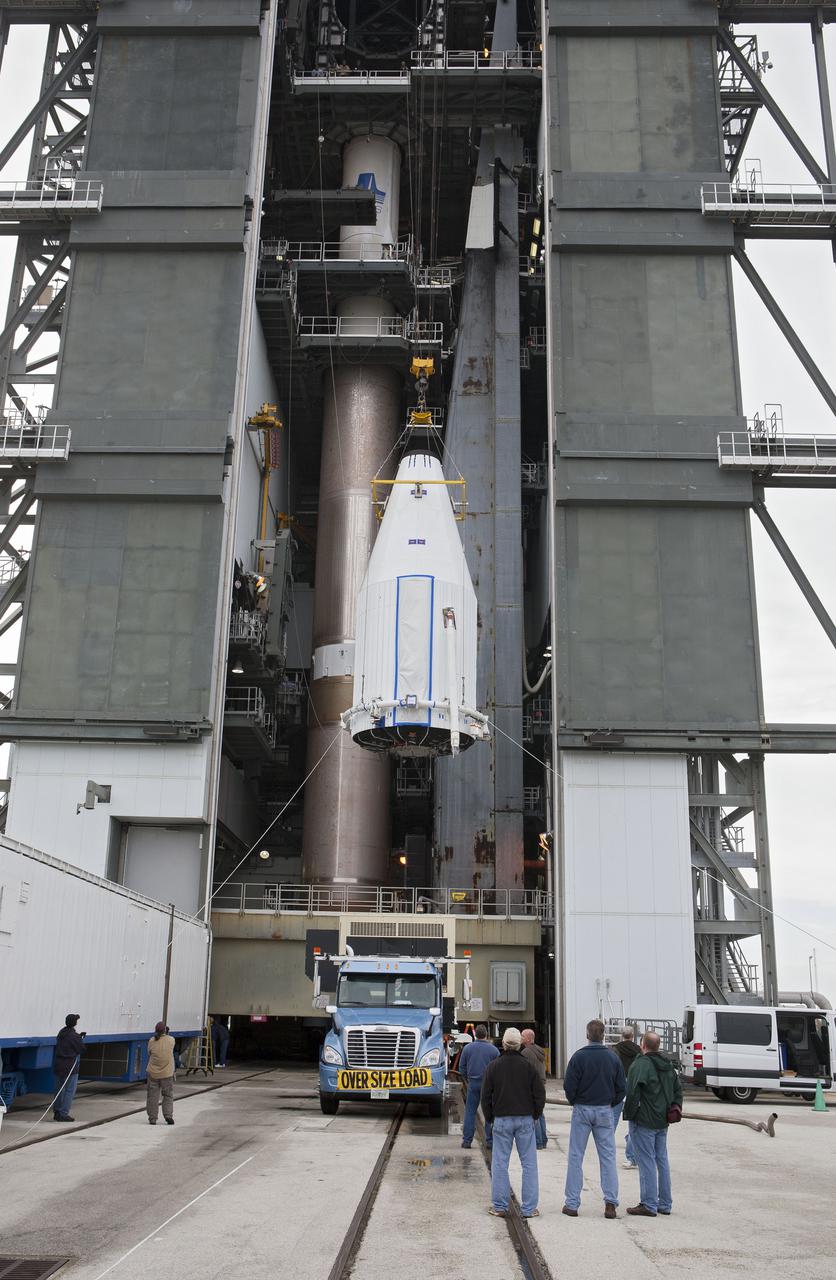
CAPE CANAVERAL, Fla. –- Enclosed in its payload fairing, NASA's Tracking and Data Relay Satellite, TDRS-K, is being lifted for placement atop a United Launch Alliance Atlas V rocket at Cape Canaveral Air Force Station's Space Launch Complex 41. Liftoff for the TDRS-K is planned for January 30, 2013. The TDRS-K spacecraft is part of the next-generation series in the Tracking and Data Relay Satellite System, a constellation of space-based communication satellites providing tracking, telemetry, command and high-bandwidth data return services. For more information, visit http:__www.nasa.gov_mission_pages_tdrs_index.html Photo credit: NASA_ Glenn Bension
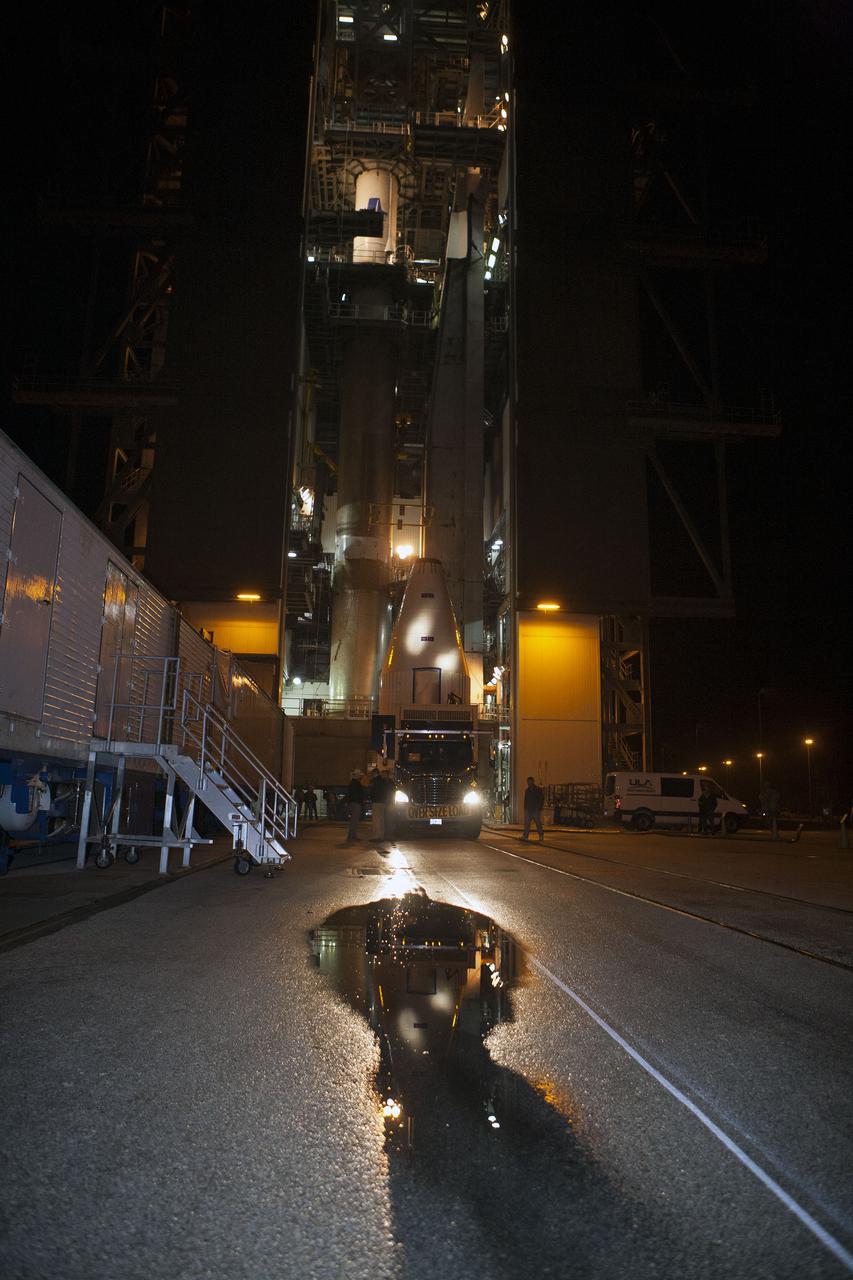
CAPE CANAVERAL, Fla. –- Enclosed in its payload fairing, NASA's Tracking and Data Relay Satellite, TDRS-K, , arrives at Cape Canaveral Air Force Station's Space Launch Complex 41. The spacecraft will now be lifted into position atop a United Launch Alliance Atlas V rocket. Liftoff for the TDRS-K is planned for January 30, 2013. The TDRS-K spacecraft is part of the next-generation series in the Tracking and Data Relay Satellite System, a constellation of space-based communication satellites providing tracking, telemetry, command and high-bandwidth data return services. For more information, visit http:__www.nasa.gov_mission_pages_tdrs_index.html Photo credit: NASA_ Glenn Bension
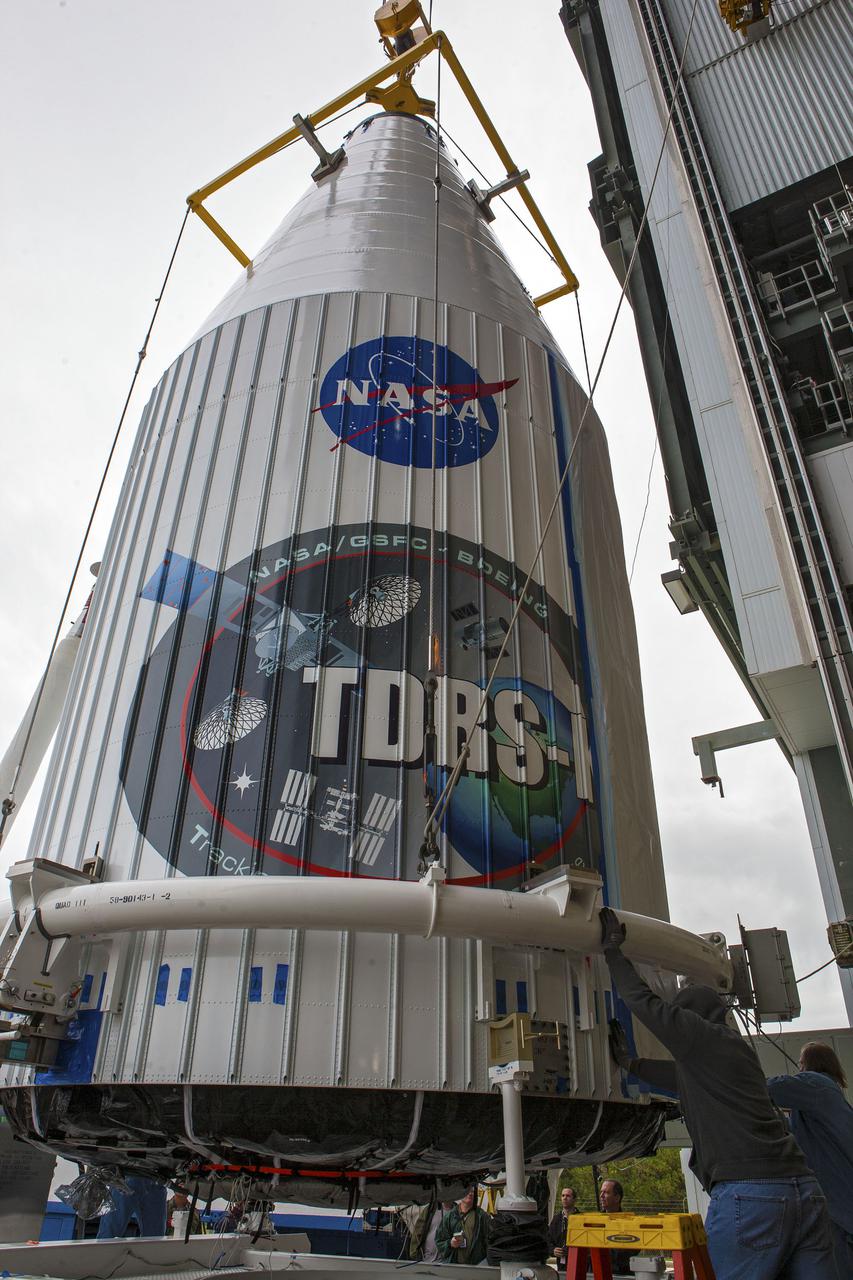
CAPE CANAVERAL, Fla. –- Enclosed in its payload fairing, NASA's Tracking and Data Relay Satellite, TDRS-K, is being prepare for the lift that will place it atop a United Launch Alliance Atlas V rocket at Cape Canaveral Air Force Station's Space Launch Complex 41. Liftoff for the TDRS-K is planned for January 30, 2013. The TDRS-K spacecraft is part of the next-generation series in the Tracking and Data Relay Satellite System, a constellation of space-based communication satellites providing tracking, telemetry, command and high-bandwidth data return services. For more information, visit http:__www.nasa.gov_mission_pages_tdrs_index.html Photo credit: NASA_ Glenn Bension
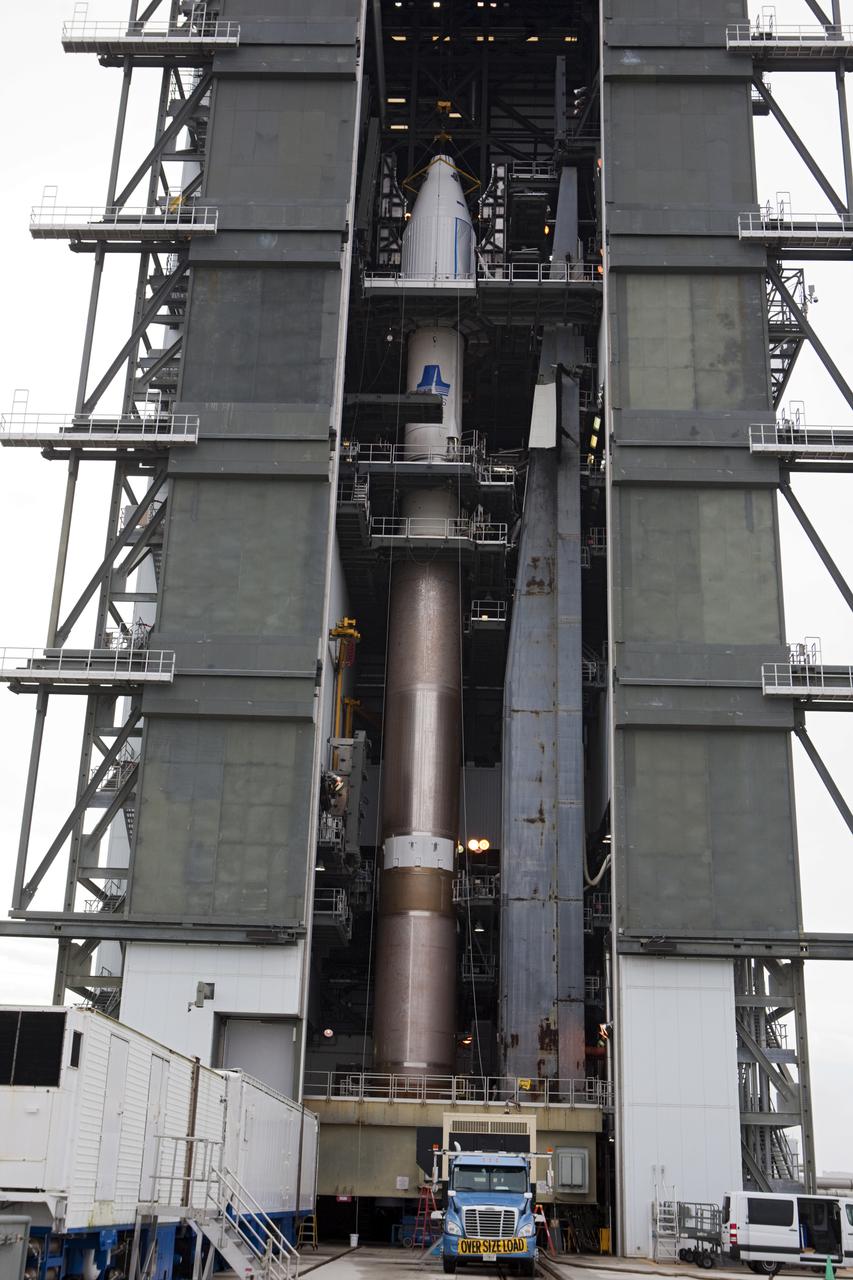
CAPE CANAVERAL, Fla. –- At Cape Canaveral Air Force Station's Space Launch Complex 41, NASA's Tracking and Data Relay Satellite, TDRS-K, has been mated atop to a United Launch Alliance Atlas V rocket. Liftoff for the TDRS-K is planned for January 30, 2013. The TDRS-K spacecraft is part of the next-generation series in the Tracking and Data Relay Satellite System, a constellation of space-based communication satellites providing tracking, telemetry, command and high-bandwidth data return services. For more information, visit http:__www.nasa.gov_mission_pages_tdrs_index.html Photo credit: NASA_ Glenn Bension
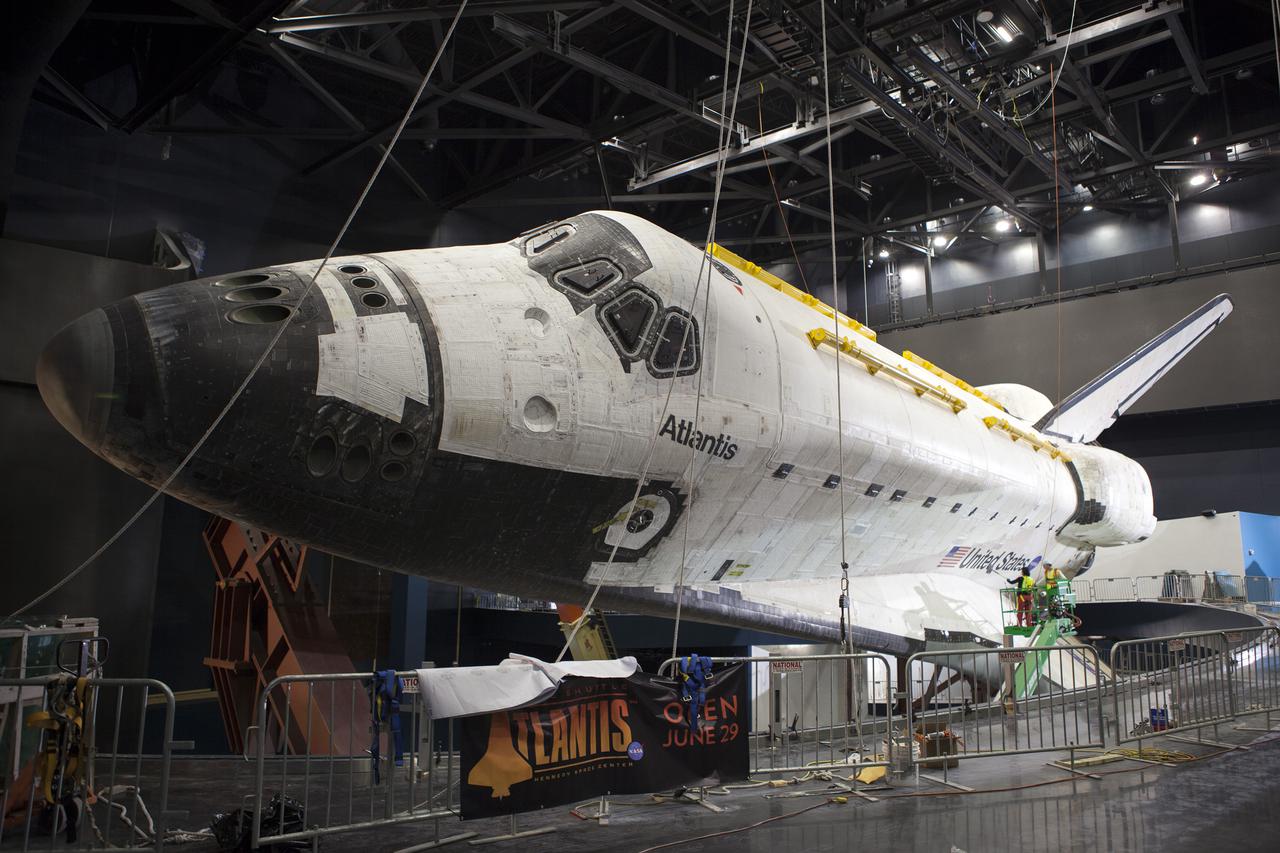
CAPE CANAVERAL, Fla. – Construction crews clean space shuttle Atlantis following the removal of 16,000 square feet of plastic shrink-wrap that enclosed the spacecraft since November of last year to protect the artifact from dust and debris during construction of the 90,000-square-foot facility. The new $100 million 'Space Shuttle Atlantis' facility will include interactive exhibits that tell the story of the 30-year Space Shuttle Program and highlights the future of space exploration. The 'Space Shuttle Atlantis' exhibit scheduled to open June 29, 2013. Photo credit: NASA_ Dmitri Gerondidakis
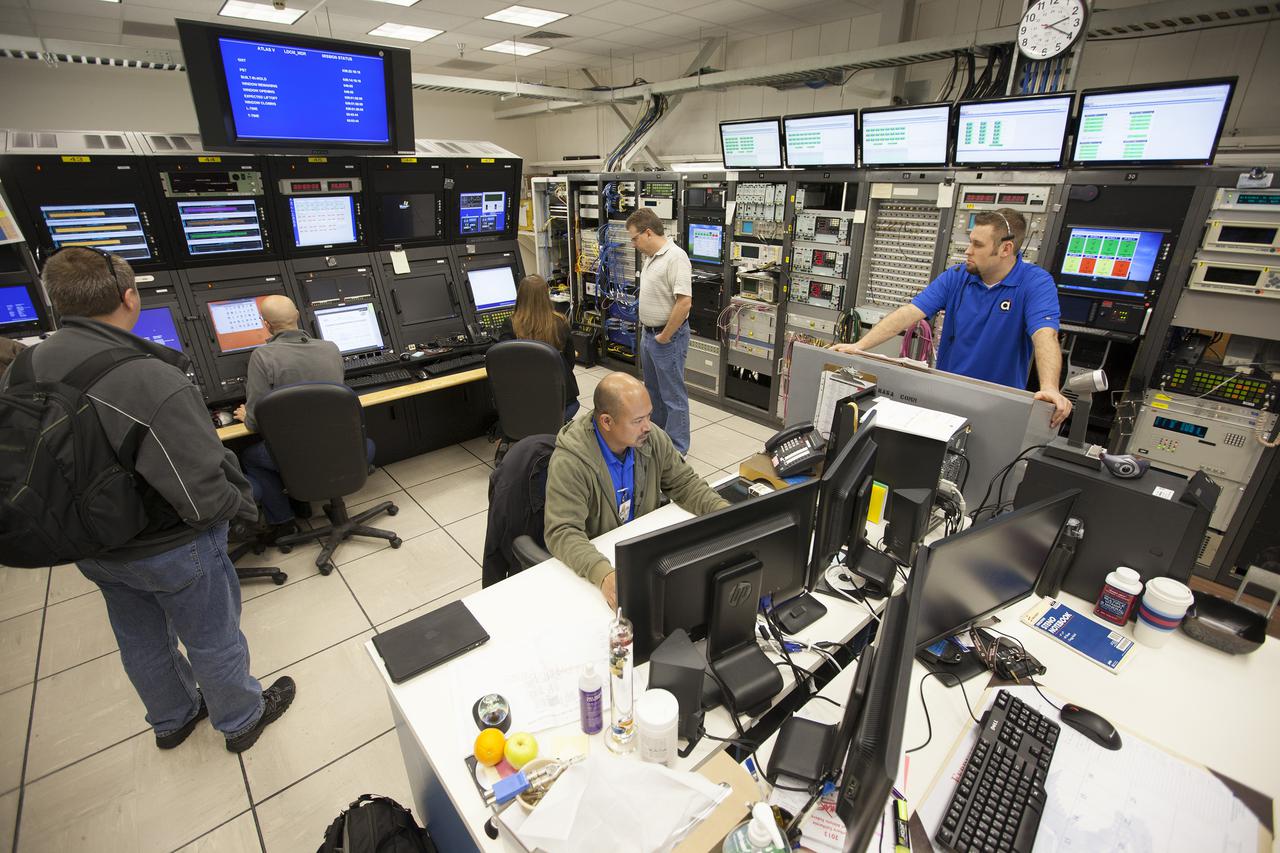
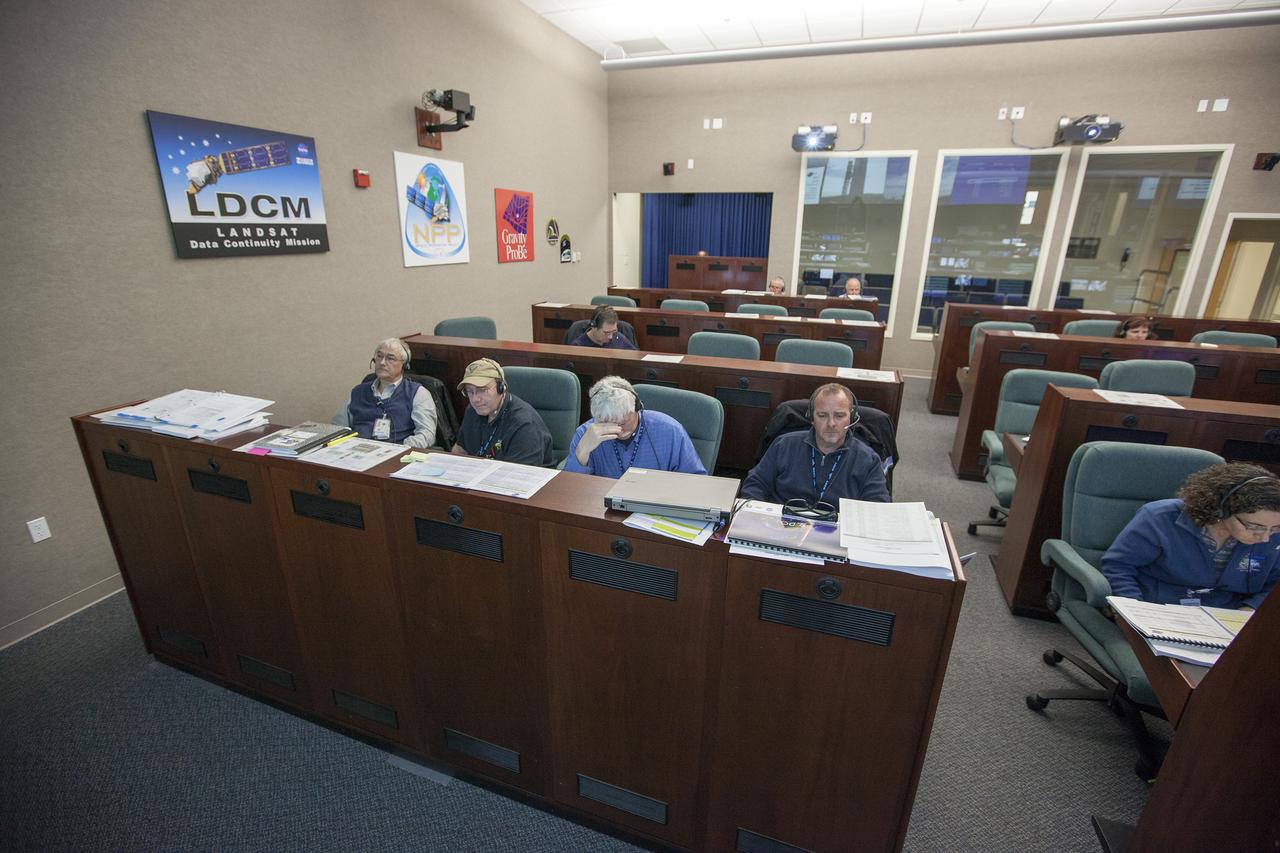
VANDENBERG AFB, Calif. -- From their positions in the telemetry laboratory at Vandenberg Air Force Base, engineers and technicians monitor the countdown for a United Launch Alliance Atlas V with the Landsat Data Continuity Mission, or LDCM, satellite prior to liftoff. The Landsat Data Continuity Mission, or LDCM, is the future of Landsat satellites. It will continue to obtain valuable data and imagery to be used in agriculture, education, business, science, and government. The Landsat Program provides repetitive acquisition of high resolution multispectral data of the Earth's surface on a global basis. The data from the Landsat spacecraft constitute the longest record of the Earth's continental surfaces as seen from space. It is a record unmatched in quality, detail, coverage, and value. Liftoff is planned for Feb. 11, 2013 aboard a United Launch Alliance Atlas V rocket. For more information, visit: http:__www.nasa.gov_mission_pages_landsat_main_index.html Photo credit: NASA_ Kim Shiflett
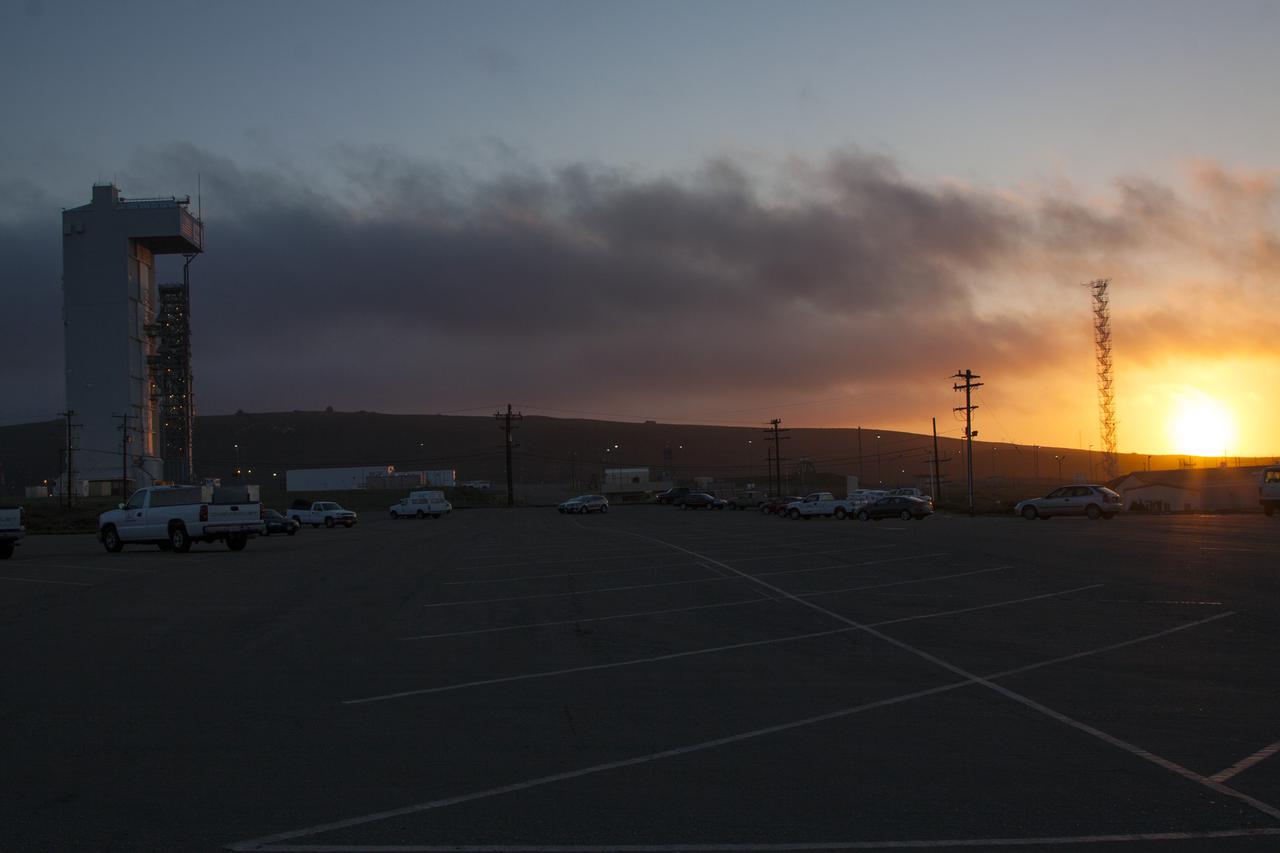
VANDENBERG AFB, Calif. -- The sun sets in the west behind Space Launch Complex 3 at Vandenberg Air Force Base where preparations continue for the launch of the Landsat Data Continuity Mission, or LDCM, satellite atop an Atlas V rocket. The Landsat Data Continuity Mission LDCM is the future of Landsat satellites. It will continue to obtain valuable data and imagery to be used in agriculture, education, business, science, and government. The Landsat Program provides repetitive acquisition of high resolution multispectral data of the Earth's surface on a global basis. The data from the Landsat spacecraft constitute the longest record of the Earth's continental surfaces as seen from space. It is a record unmatched in quality, detail, coverage, and value. Liftoff is planned for Feb. 11, 2013 aboard a United Launch Alliance Atlas V rocket. For more information, visit: http:__www.nasa.gov_mission_pages_landsat_main_index.html Photo credit: NASA_ Ben Smegelsky
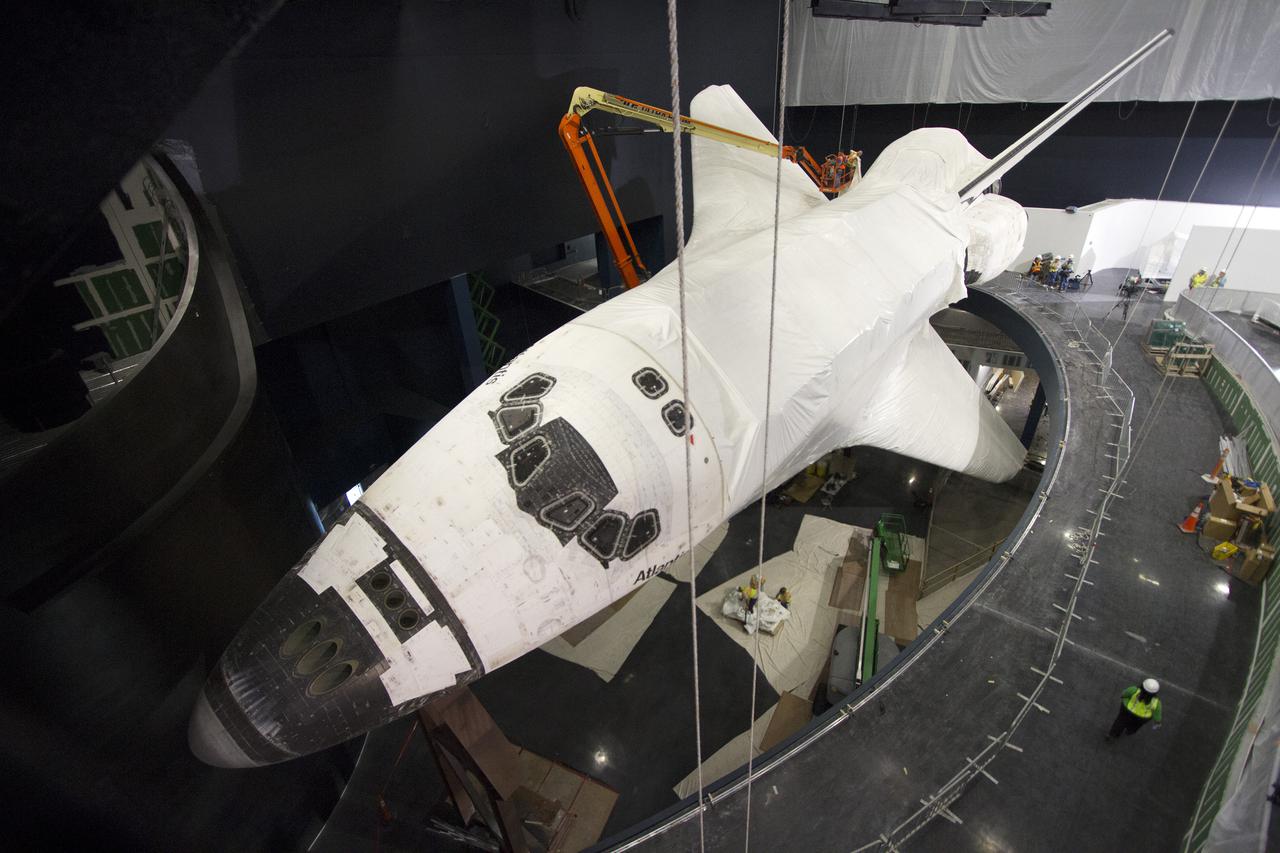
CAPE CANAVERAL, Fla. -- At the Kennedy Space Center Visitor Complex in Florida, construction crews remove 16,000 square feet of plastic shrink-wrap from the space shuttle Atlantis. The spacecraft was enclosed in the plastic shrink-wrap since November of last year to protect the artifact from dust and debris during construction of the 90,000-square-foot facility. Last November, the space shuttle Atlantis made its historic final journey to its new home, traveling 10 miles from the Kennedy Space Center's Vehicle Assembly Building to the spaceport's visitor complex. The new $100 million 'Space Shuttle Atlantis' facility will include interactive exhibits that tell the story of the 30-year Space Shuttle Program and highlights the future of space exploration. The 'Space Shuttle Atlantis' exhibit scheduled to open June 29, 2013.Photo credit: NASA_ Cory Huston
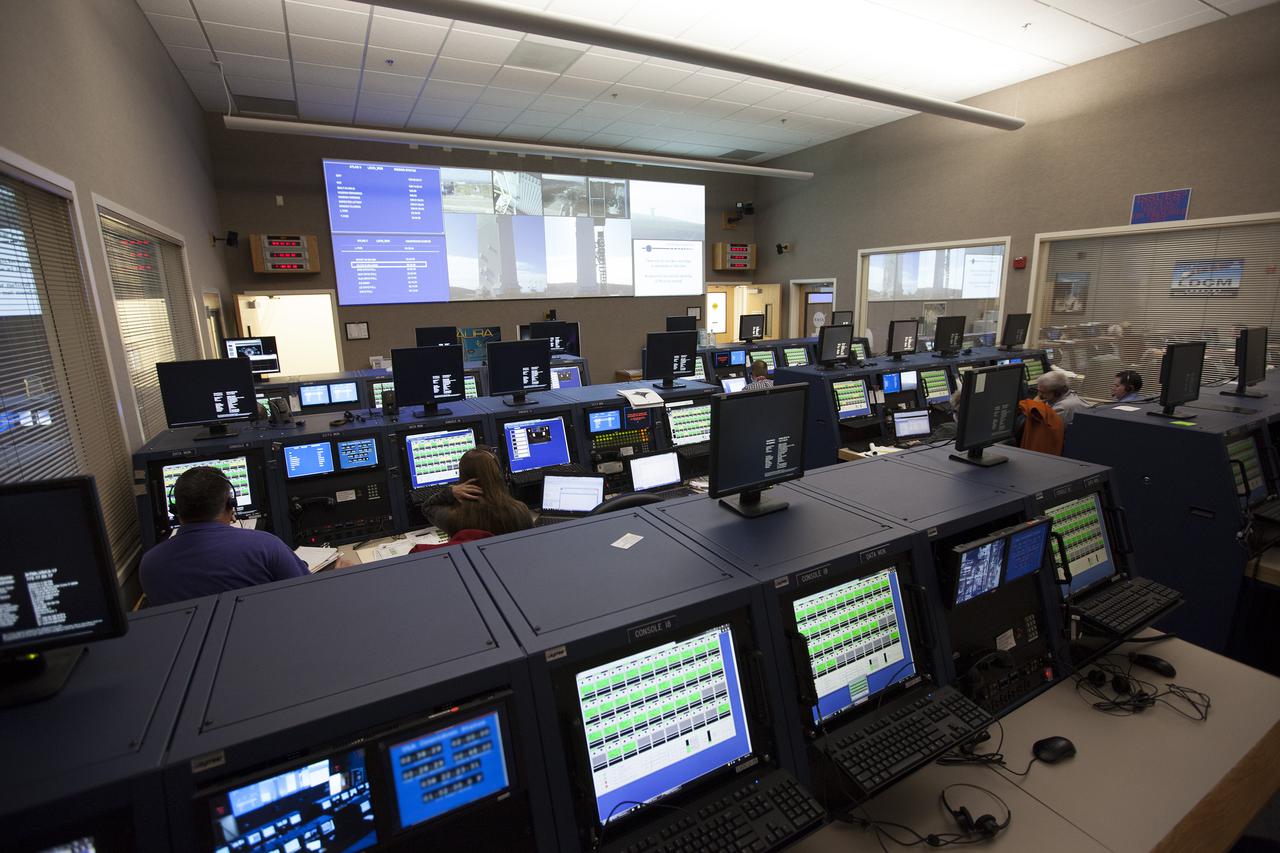
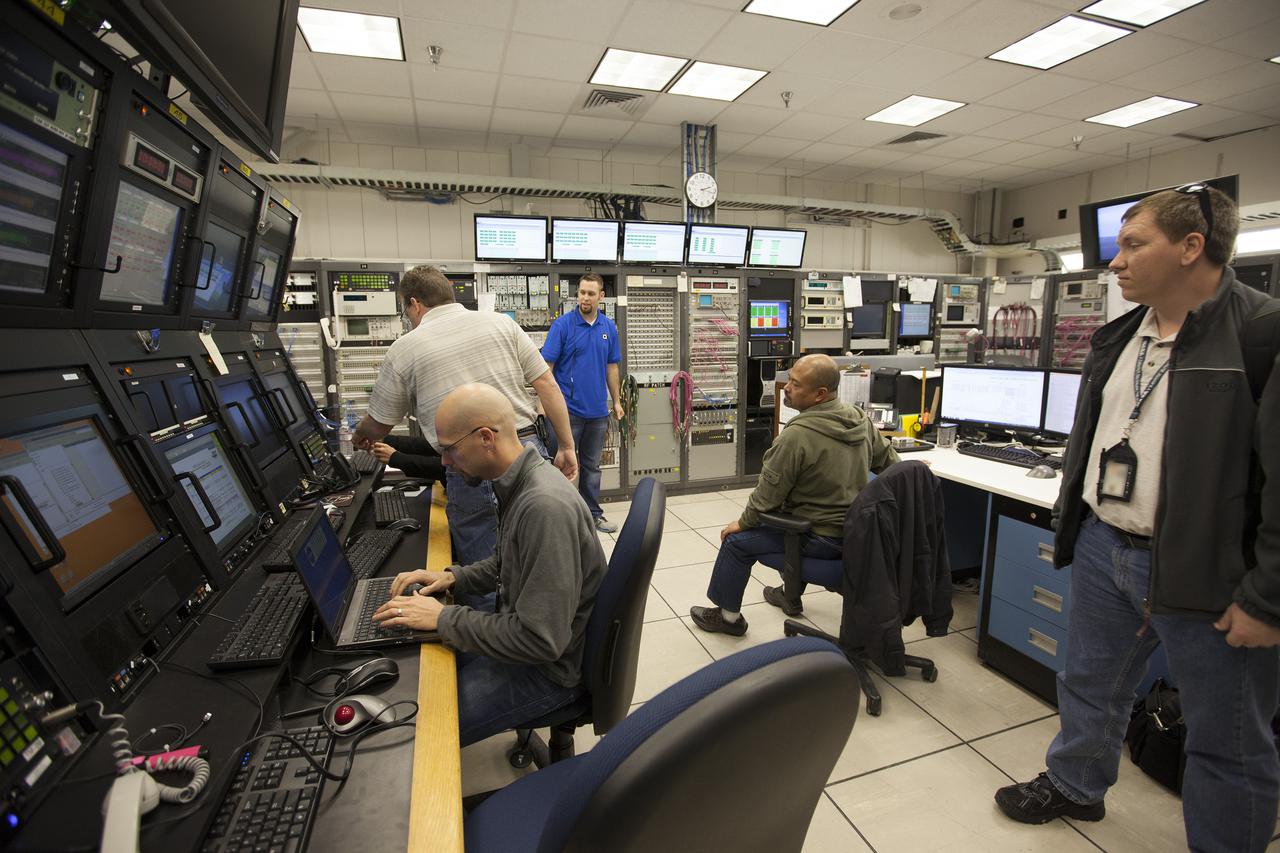
VANDENBERG AFB, Calif. -- From their consoles in the NASA Launch Vehicle Data Center at Vandenberg Air Force Base, engineers monitor the countdown for a United Launch Alliance Atlas V with the Landsat Data Continuity Mission, or LDCM, satellite prior to liftoff. The Landsat Data Continuity Mission, or LDCM, is the future of Landsat satellites. It will continue to obtain valuable data and imagery to be used in agriculture, education, business, science, and government. The Landsat Program provides repetitive acquisition of high resolution multispectral data of the Earth's surface on a global basis. The data from the Landsat spacecraft constitute the longest record of the Earth's continental surfaces as seen from space. It is a record unmatched in quality, detail, coverage, and value. Liftoff is planned for Feb. 11, 2013 aboard a United Launch Alliance Atlas V rocket. For more information, visit: http:__www.nasa.gov_mission_pages_landsat_main_index.html Photo credit: NASA_ Kim Shiflett
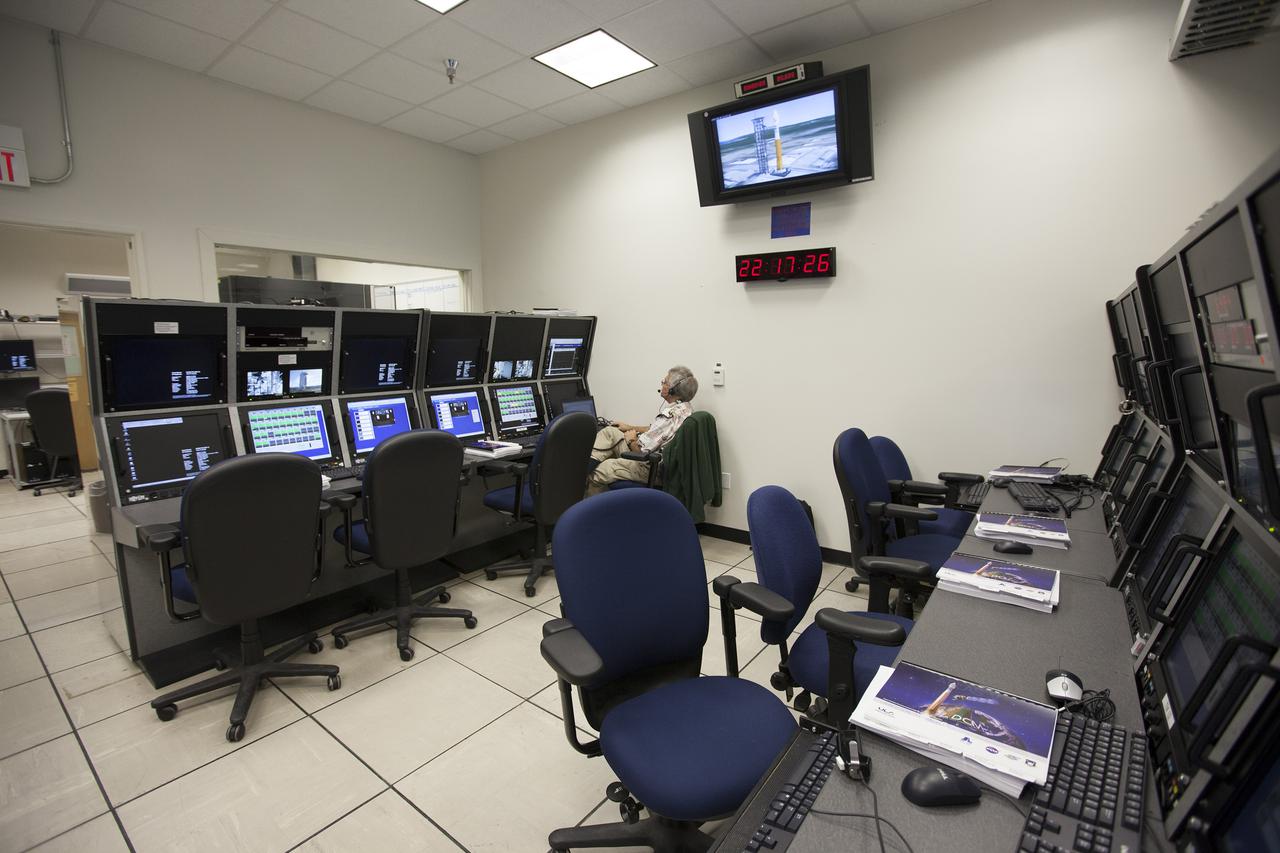
VANDENBERG AFB, Calif. -- From their positions in the telemetry laboratory at Vandenberg Air Force Base, engineers and technicians monitor the countdown for a United Launch Alliance Atlas V with the Landsat Data Continuity Mission, or LDCM, satellite prior to liftoff. The Landsat Data Continuity Mission, or LDCM, is the future of Landsat satellites. It will continue to obtain valuable data and imagery to be used in agriculture, education, business, science, and government. The Landsat Program provides repetitive acquisition of high resolution multispectral data of the Earth's surface on a global basis. The data from the Landsat spacecraft constitute the longest record of the Earth's continental surfaces as seen from space. It is a record unmatched in quality, detail, coverage, and value. Liftoff is planned for Feb. 11, 2013 aboard a United Launch Alliance Atlas V rocket. For more information, visit: http:__www.nasa.gov_mission_pages_landsat_main_index.html Photo credit: NASA_ Kim Shiflett

CAPE CANAVERAL, Fla. – U.S. Astronaut Hall of Fame member Charlie Duke is introduced at NASA’s Kennedy Space Center Visitor Complex in Florida, prior to the ceremony in which Bonnie Dunbar, Curt Brown and Eileen Collins will be inducted into the group of space pioneers. This induction is the twelfth group of space shuttle astronauts named to the AHOF, and the first time two women are inducted at the same time. The year’s inductees were selected by a committee of current Hall of Fame astronauts, former NASA officials, historians and journalists. The selection process is administered by the Astronaut Scholarship Foundation. For more on the U.S. Astronaut Hall of Fame, go to http:__www.kennedyspacecenter.com_astronaut-hall-of-fame.aspx For more on the Astronaut Scholarship Foundation, go to http:__astronautscholarship.org_ Photo credit: NASA_ Kim Shiflett
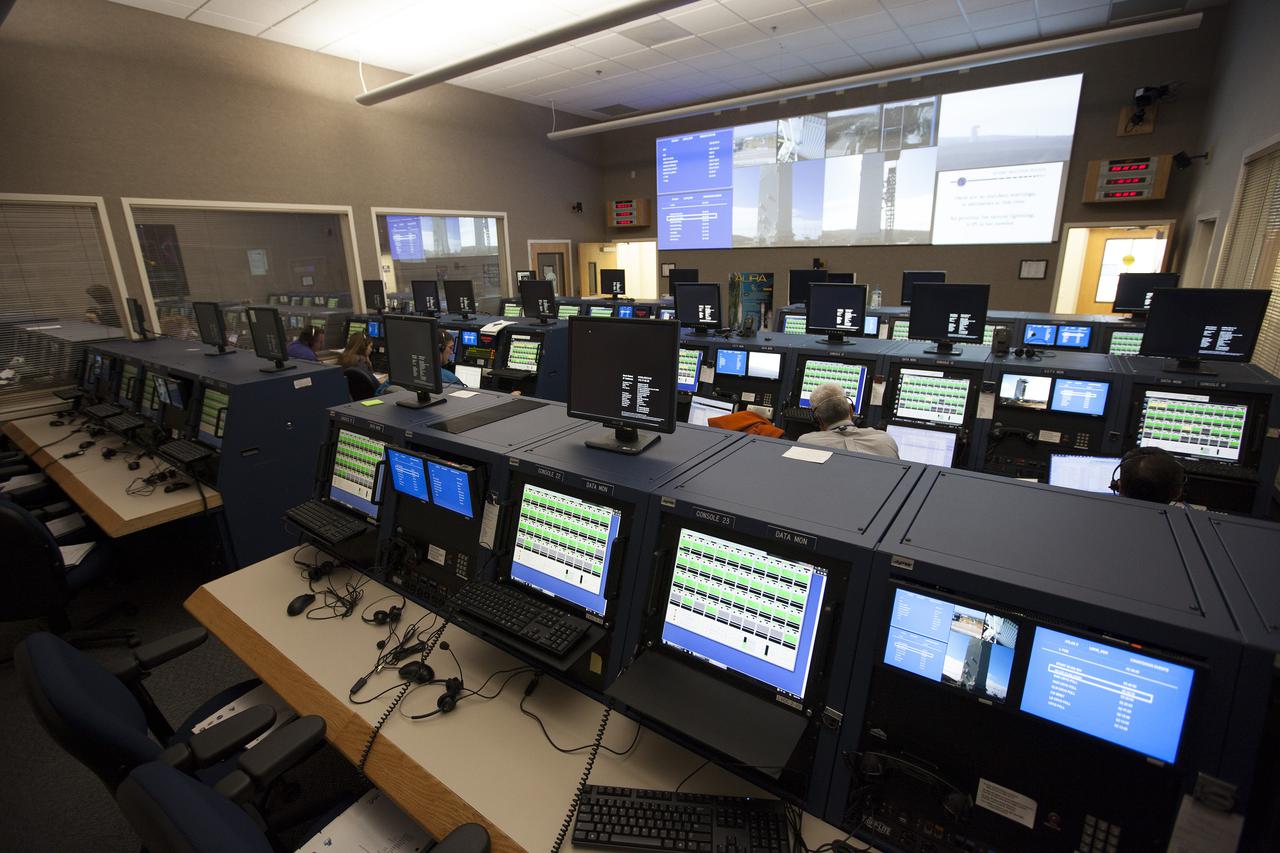
VANDENBERG AFB, Calif. -- From their consoles in the NASA Launch Vehicle Data Center at Vandenberg Air Force Base, engineers monitor the countdown for a United Launch Alliance Atlas V with the Landsat Data Continuity Mission, or LDCM, satellite prior to liftoff. The Landsat Data Continuity Mission, or LDCM, is the future of Landsat satellites. It will continue to obtain valuable data and imagery to be used in agriculture, education, business, science, and government. The Landsat Program provides repetitive acquisition of high resolution multispectral data of the Earth's surface on a global basis. The data from the Landsat spacecraft constitute the longest record of the Earth's continental surfaces as seen from space. It is a record unmatched in quality, detail, coverage, and value. Liftoff is planned for Feb. 11, 2013 aboard a United Launch Alliance Atlas V rocket. For more information, visit: http:__www.nasa.gov_mission_pages_landsat_main_index.html Photo credit: NASA_ Kim Shiflett
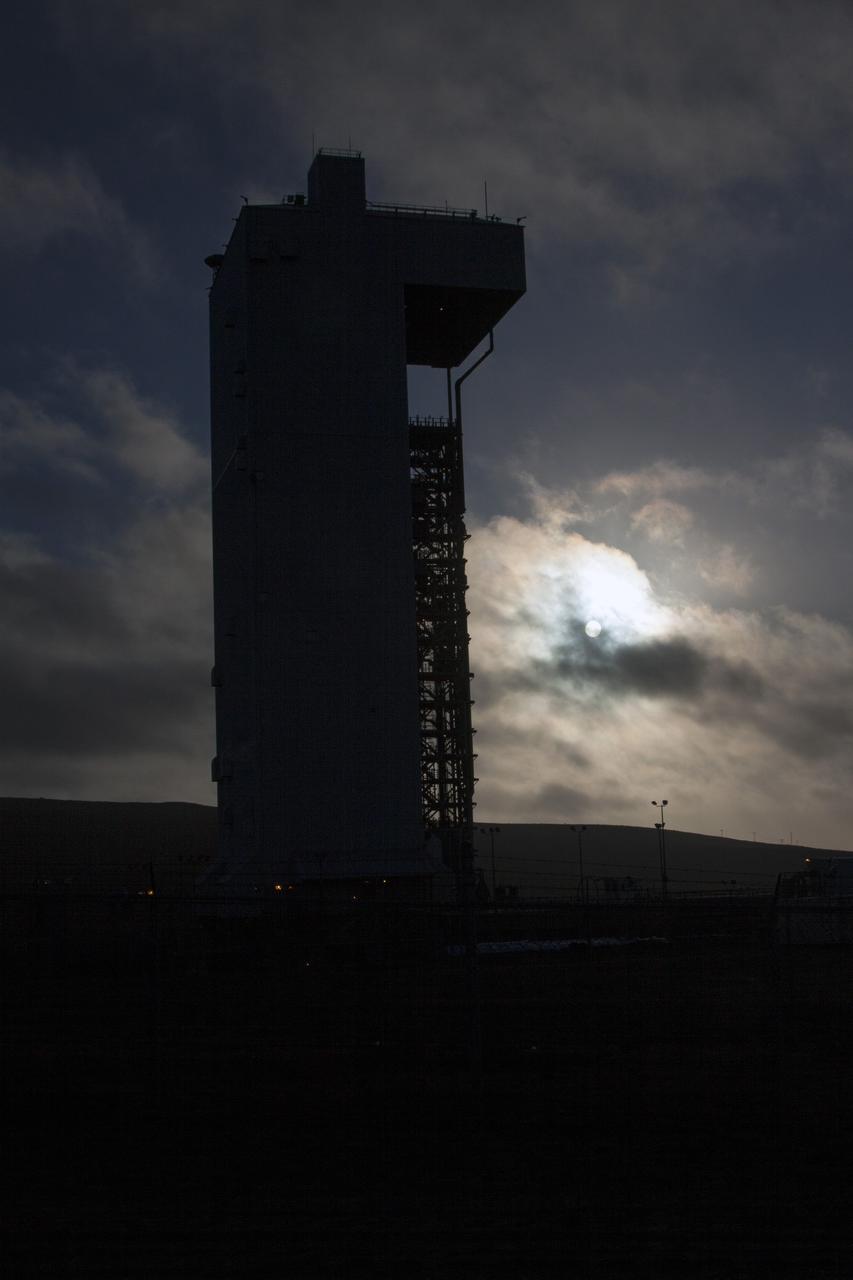
VANDENBERG AFB, Calif. -- The sun sets in the west behind Space Launch Complex 3 at Vandenberg Air Force Base where preparations continue for the launch of the Landsat Data Continuity Mission, or LDCM, satellite atop an Atlas V rocket. The Landsat Data Continuity Mission LDCM is the future of Landsat satellites. It will continue to obtain valuable data and imagery to be used in agriculture, education, business, science, and government. The Landsat Program provides repetitive acquisition of high resolution multispectral data of the Earth's surface on a global basis. The data from the Landsat spacecraft constitute the longest record of the Earth's continental surfaces as seen from space. It is a record unmatched in quality, detail, coverage, and value. Liftoff is planned for Feb. 11, 2013 aboard a United Launch Alliance Atlas V rocket. For more information, visit: http:__www.nasa.gov_mission_pages_landsat_main_index.html Photo credit: NASA_ Ben Smegelsky
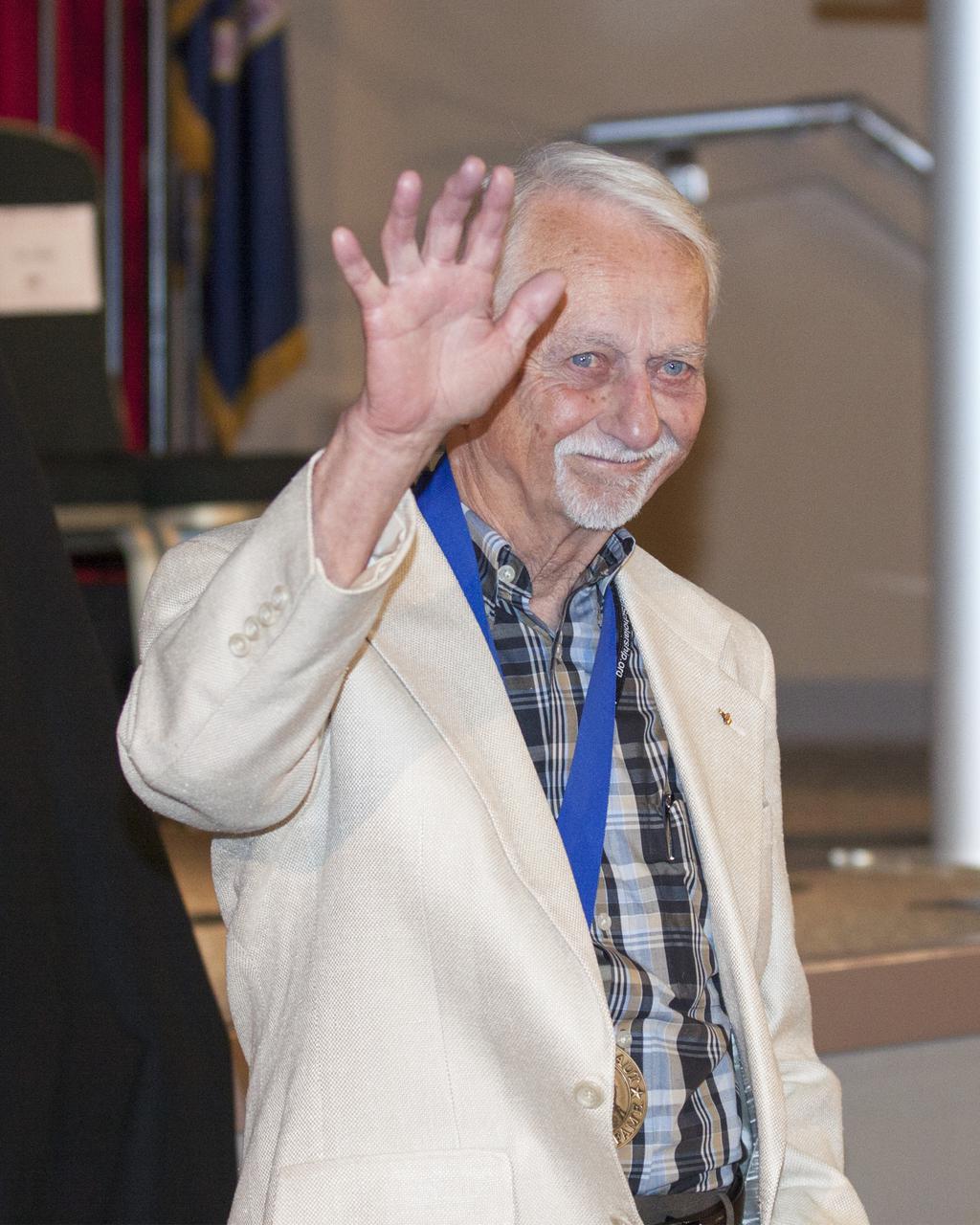
CAPE CANAVERAL, Fla. – U.S. Astronaut Hall of Fame member Owen Garriott is introduced at NASA’s Kennedy Space Center Visitor Complex in Florida, prior to the ceremony in which Bonnie Dunbar, Curt Brown and Eileen Collins will be inducted into the group of space pioneers. This induction is the twelfth group of space shuttle astronauts named to the AHOF, and the first time two women are inducted at the same time. The year’s inductees were selected by a committee of current Hall of Fame astronauts, former NASA officials, historians and journalists. The selection process is administered by the Astronaut Scholarship Foundation. For more on the U.S. Astronaut Hall of Fame, go to http:__www.kennedyspacecenter.com_astronaut-hall-of-fame.aspx For more on the Astronaut Scholarship Foundation, go to http:__astronautscholarship.org_ Photo credit: NASA_ Kim Shiflett
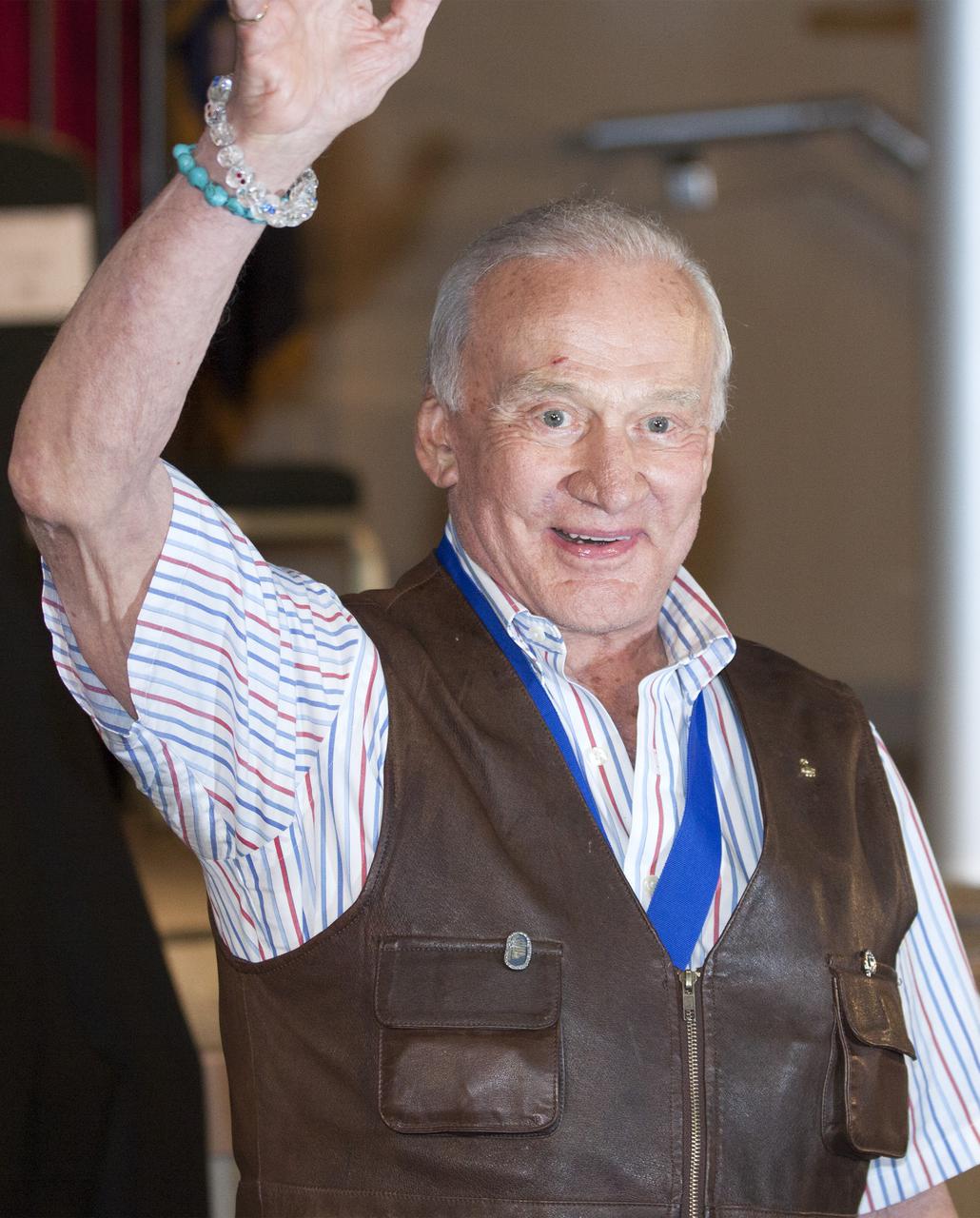
CAPE CANAVERAL, Fla. – U.S. Astronaut Hall of Fame member Buzz Aldrin is introduced at NASA’s Kennedy Space Center Visitor Complex in Florida, prior to the ceremony in which Bonnie Dunbar, Curt Brown and Eileen Collins will be inducted into the group of space pioneers. This induction is the twelfth group of space shuttle astronauts named to the AHOF, and the first time two women are inducted at the same time. The year’s inductees were selected by a committee of current Hall of Fame astronauts, former NASA officials, historians and journalists. The selection process is administered by the Astronaut Scholarship Foundation. For more on the U.S. Astronaut Hall of Fame, go to http:__www.kennedyspacecenter.com_astronaut-hall-of-fame.aspx For more on the Astronaut Scholarship Foundation, go to http:__astronautscholarship.org_ Photo credit: NASA_ Kim Shiflett
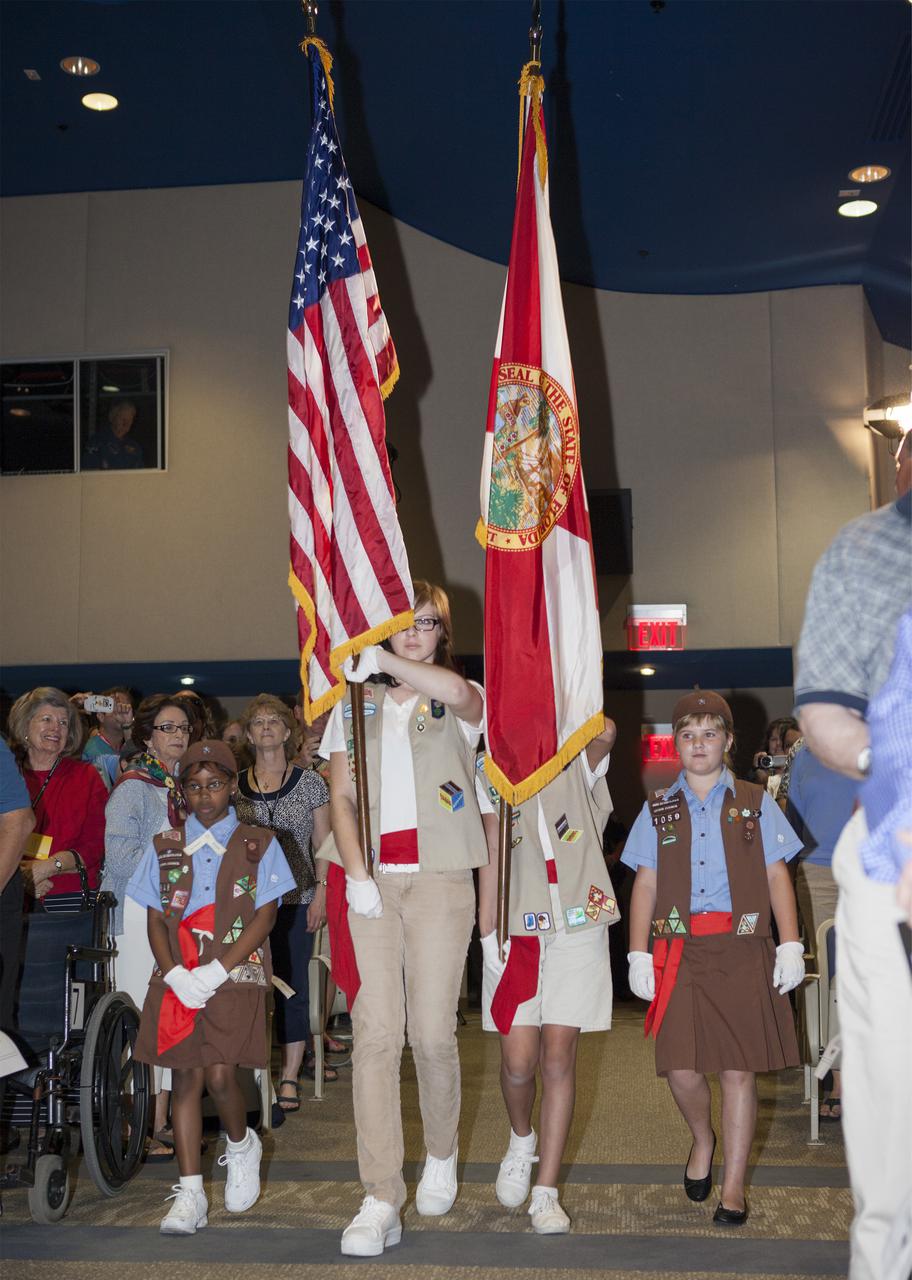
CAPE CANAVERAL, Fla. – At NASA’s Kennedy Space Center Visitor Complex in Florida, Girl Scouts from Citrus Council, representing Florida's Brevard, Orange, Seminole and Volusia Counties, presents the colors to open the U.S. Astronaut Hall of Fame 2013 induction ceremony. Space shuttle astronauts Curt Brown, Eileen Collins and Bonnie Dunbar were inducted into the U.S. Astronaut Hall of Fame. This induction is the twelfth group of space shuttle astronauts named to the AHOF, and the first time two women are inducted at the same time. The year’s inductees were selected by a committee of current Hall of Fame astronauts, former NASA officials, historians and journalists. The selection process is administered by the Astronaut Scholarship Foundation. For more on the U.S. Astronaut Hall of Fame, go to http:__www.kennedyspacecenter.com_astronaut-hall-of-fame.aspx For more on the Astronaut Scholarship Foundation, go to http:__astronautscholarship.org_ Photo credit: NASA_ Kim Shiflett

CAPE CANAVERAL, Fla. – U.S. Astronaut Hall of Fame member Richard Gordon is introduced at NASA’s Kennedy Space Center Visitor Complex in Florida, prior to the ceremony in which Bonnie Dunbar, Curt Brown and Eileen Collins will be inducted into the group of space pioneers. This induction is the twelfth group of space shuttle astronauts named to the AHOF, and the first time two women are inducted at the same time. The year’s inductees were selected by a committee of current Hall of Fame astronauts, former NASA officials, historians and journalists. The selection process is administered by the Astronaut Scholarship Foundation. For more on the U.S. Astronaut Hall of Fame, go to http:__www.kennedyspacecenter.com_astronaut-hall-of-fame.aspx For more on the Astronaut Scholarship Foundation, go to http:__astronautscholarship.org_ Photo credit: NASA_ Kim Shiflett
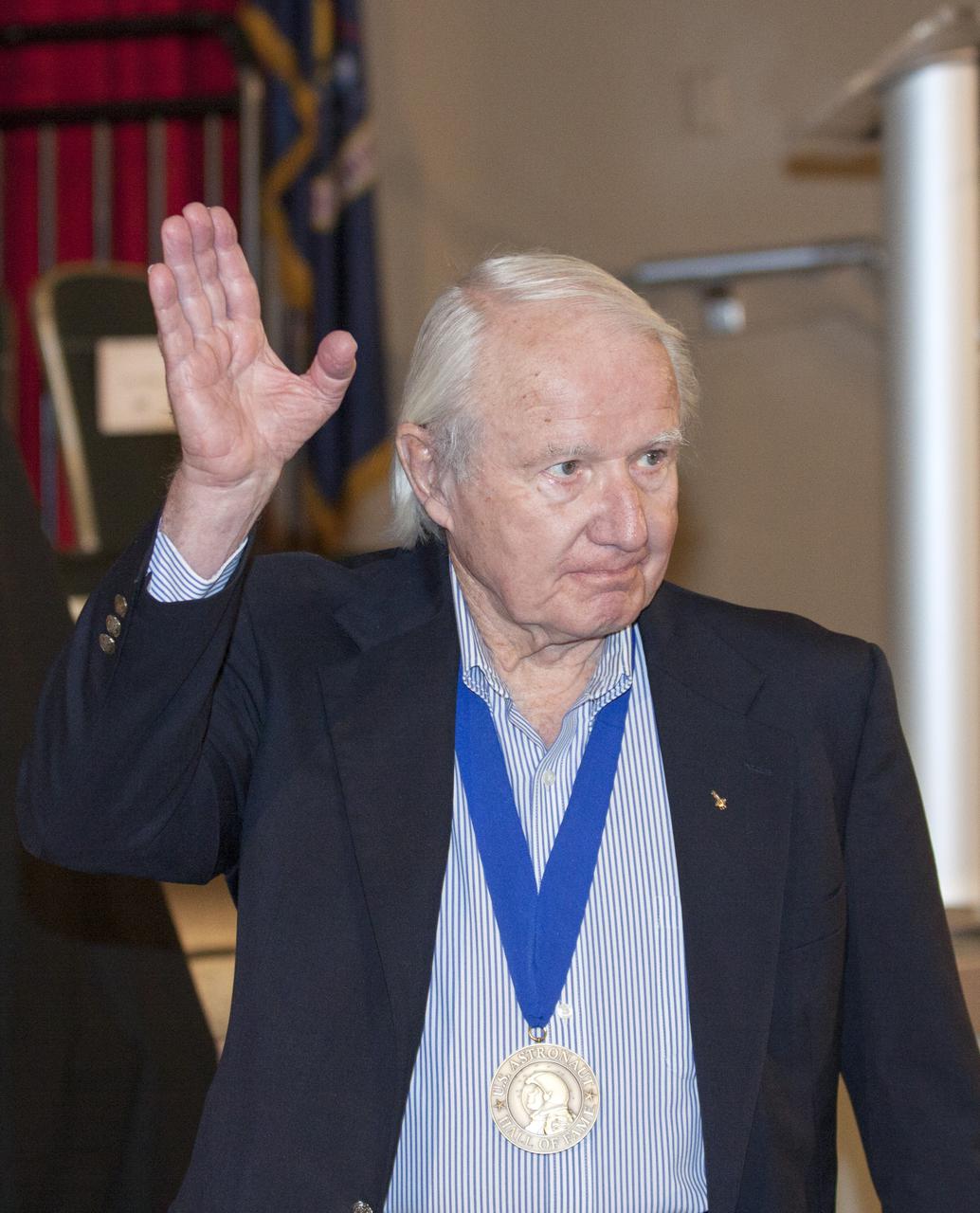
CAPE CANAVERAL, Fla. – U.S. Astronaut Hall of Fame member Vance Brand is introduced at NASA’s Kennedy Space Center Visitor Complex in Florida, prior to the ceremony in which Bonnie Dunbar, Curt Brown and Eileen Collins will be inducted into the group of space pioneers. This induction is the twelfth group of space shuttle astronauts named to the AHOF, and the first time two women are inducted at the same time. The year’s inductees were selected by a committee of current Hall of Fame astronauts, former NASA officials, historians and journalists. The selection process is administered by the Astronaut Scholarship Foundation. For more on the U.S. Astronaut Hall of Fame, go to http:__www.kennedyspacecenter.com_astronaut-hall-of-fame.aspx For more on the Astronaut Scholarship Foundation, go to http:__astronautscholarship.org_ Photo credit: NASA_ Kim Shiflett
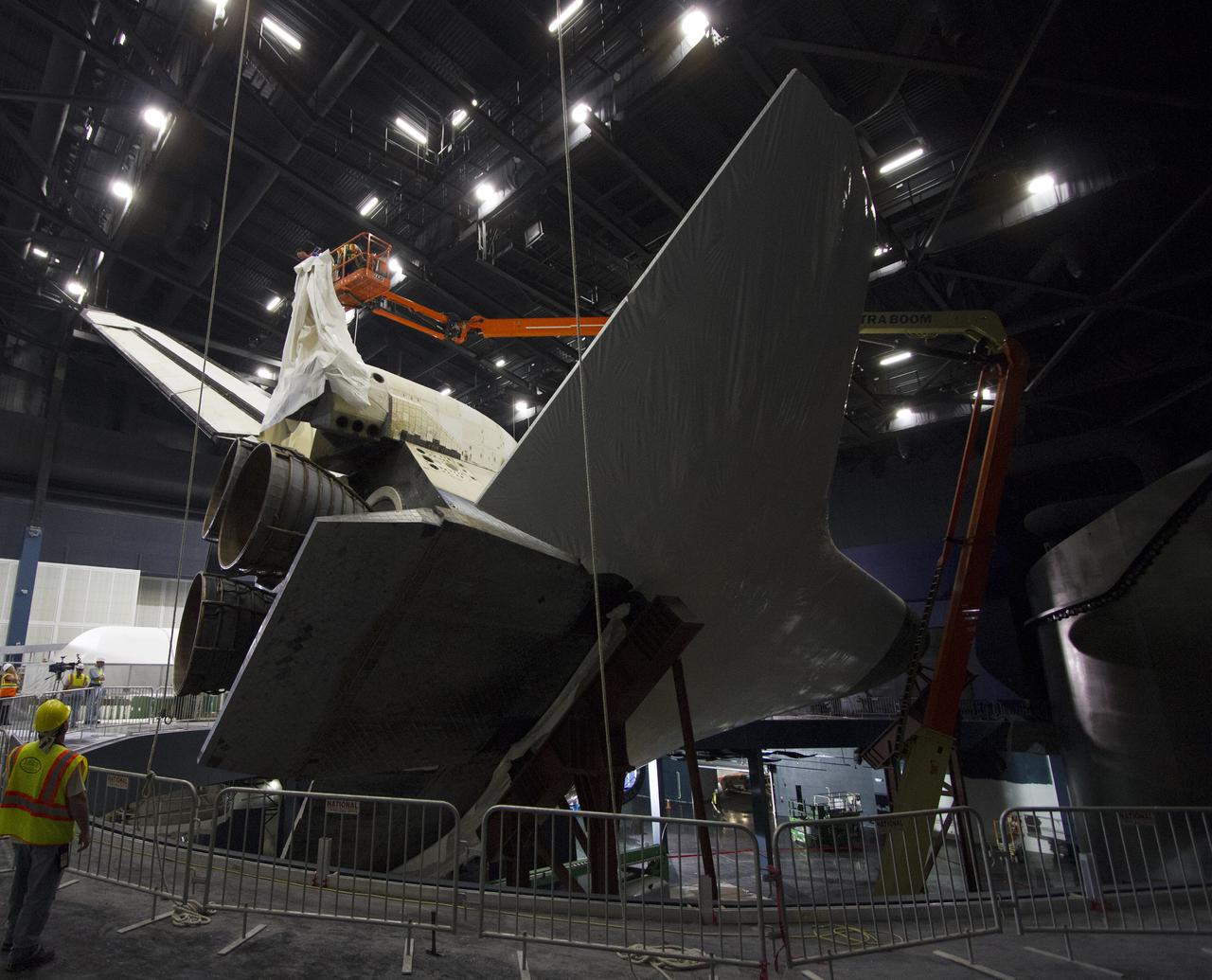
CAPE CANAVERAL, Fla. -- At the Kennedy Space Center Visitor Complex in Florida, construction crews remove 16,000 square feet of plastic shrink-wrap from the space shuttle Atlantis. The spacecraft was enclosed in the plastic shrink-wrap since November of last year to protect the artifact from dust and debris during construction of the 90,000-square-foot facility. Last November, the space shuttle Atlantis made its historic final journey to its new home, traveling 10 miles from the Kennedy Space Center's Vehicle Assembly Building to the spaceport's visitor complex. The new $100 million 'Space Shuttle Atlantis' facility will include interactive exhibits that tell the story of the 30-year Space Shuttle Program and highlights the future of space exploration. The 'Space Shuttle Atlantis' exhibit scheduled to open June 29, 2013.Photo credit: NASA_ Cory Huston
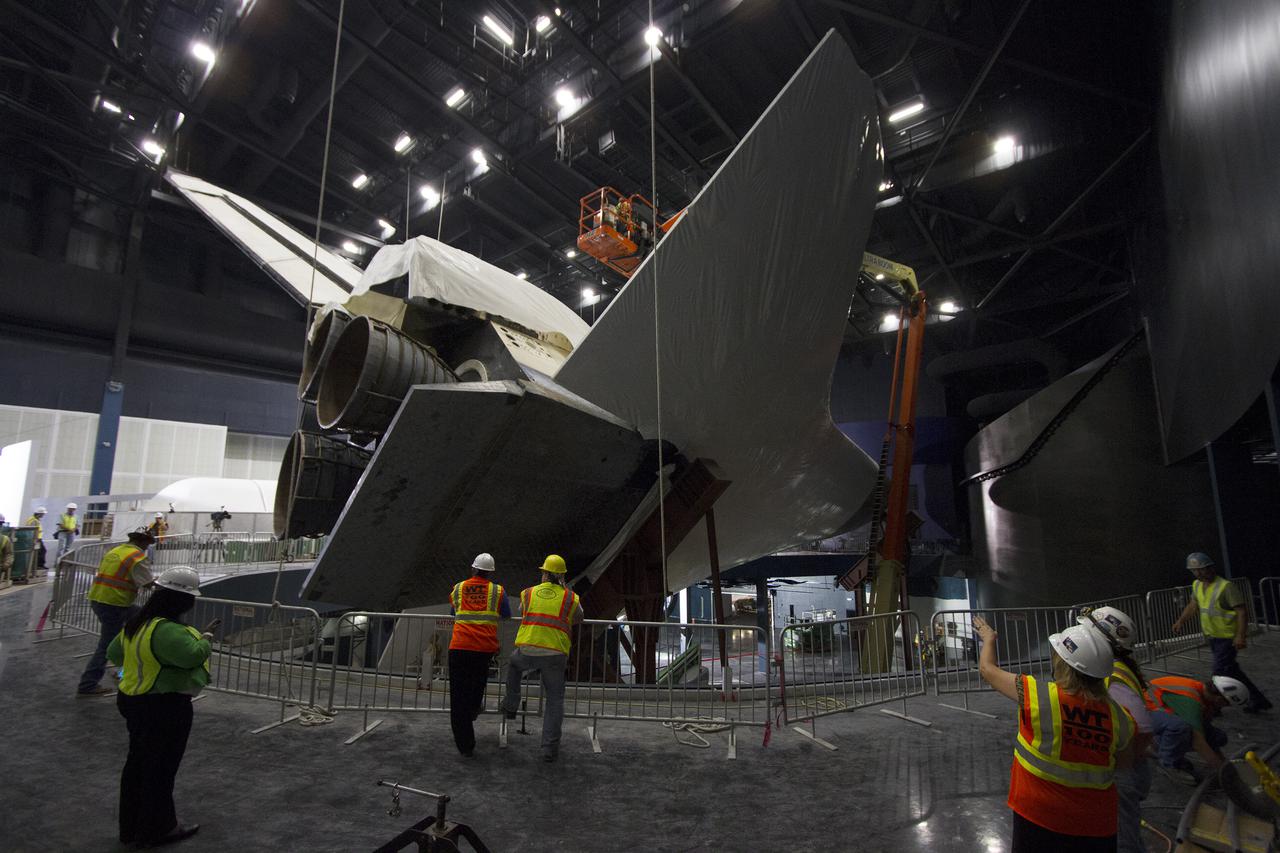
CAPE CANAVERAL, Fla. -- At the Kennedy Space Center Visitor Complex in Florida, construction crews remove 16,000 square feet of plastic shrink-wrap from the space shuttle Atlantis. The spacecraft was enclosed in the plastic shrink-wrap since November of last year to protect the artifact from dust and debris during construction of the 90,000-square-foot facility. Last November, the space shuttle Atlantis made its historic final journey to its new home, traveling 10 miles from the Kennedy Space Center's Vehicle Assembly Building to the spaceport's visitor complex. The new $100 million 'Space Shuttle Atlantis' facility will include interactive exhibits that tell the story of the 30-year Space Shuttle Program and highlights the future of space exploration. The 'Space Shuttle Atlantis' exhibit scheduled to open June 29, 2013.Photo credit: NASA_ Cory Huston
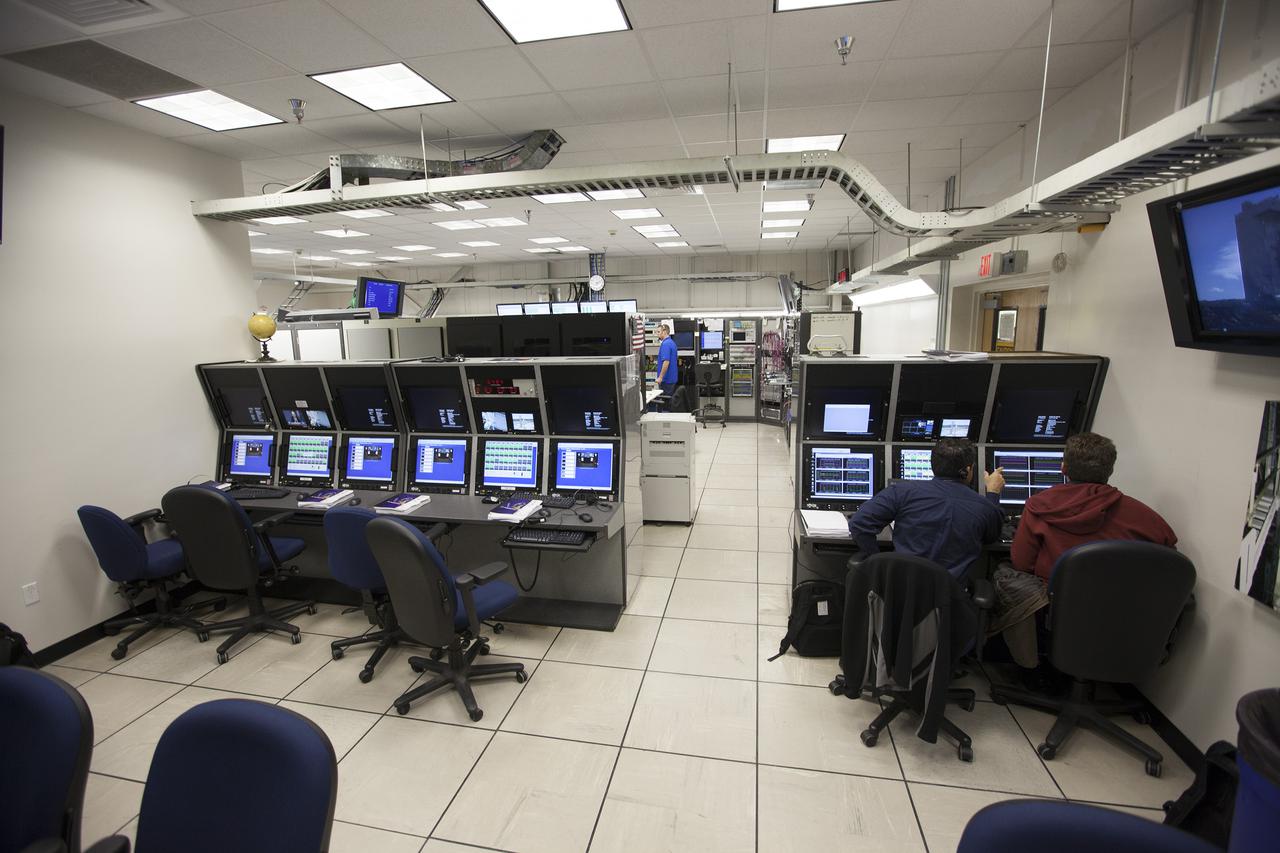
VANDENBERG AFB, Calif. -- From their positions in the telemetry laboratory at Vandenberg Air Force Base, engineers and technicians monitor the countdown for a United Launch Alliance Atlas V with the Landsat Data Continuity Mission, or LDCM, satellite prior to liftoff. The Landsat Data Continuity Mission, or LDCM, is the future of Landsat satellites. It will continue to obtain valuable data and imagery to be used in agriculture, education, business, science, and government. The Landsat Program provides repetitive acquisition of high resolution multispectral data of the Earth's surface on a global basis. The data from the Landsat spacecraft constitute the longest record of the Earth's continental surfaces as seen from space. It is a record unmatched in quality, detail, coverage, and value. Liftoff is planned for Feb. 11, 2013 aboard a United Launch Alliance Atlas V rocket. For more information, visit: http:__www.nasa.gov_mission_pages_landsat_main_index.html Photo credit: NASA_ Kim Shiflett

CAPE CANAVERAL, Fla. – U.S. Astronaut Hall of Fame member Walt Cunningham is introduced at NASA’s Kennedy Space Center Visitor Complex in Florida, prior to the ceremony in which Bonnie Dunbar, Curt Brown and Eileen Collins will be inducted into the group of space pioneers. This induction is the twelfth group of space shuttle astronauts named to the AHOF, and the first time two women are inducted at the same time. The year’s inductees were selected by a committee of current Hall of Fame astronauts, former NASA officials, historians and journalists. The selection process is administered by the Astronaut Scholarship Foundation. For more on the U.S. Astronaut Hall of Fame, go to http:__www.kennedyspacecenter.com_astronaut-hall-of-fame.aspx For more on the Astronaut Scholarship Foundation, go to http:__astronautscholarship.org_ Photo credit: NASA_ Kim Shiflett
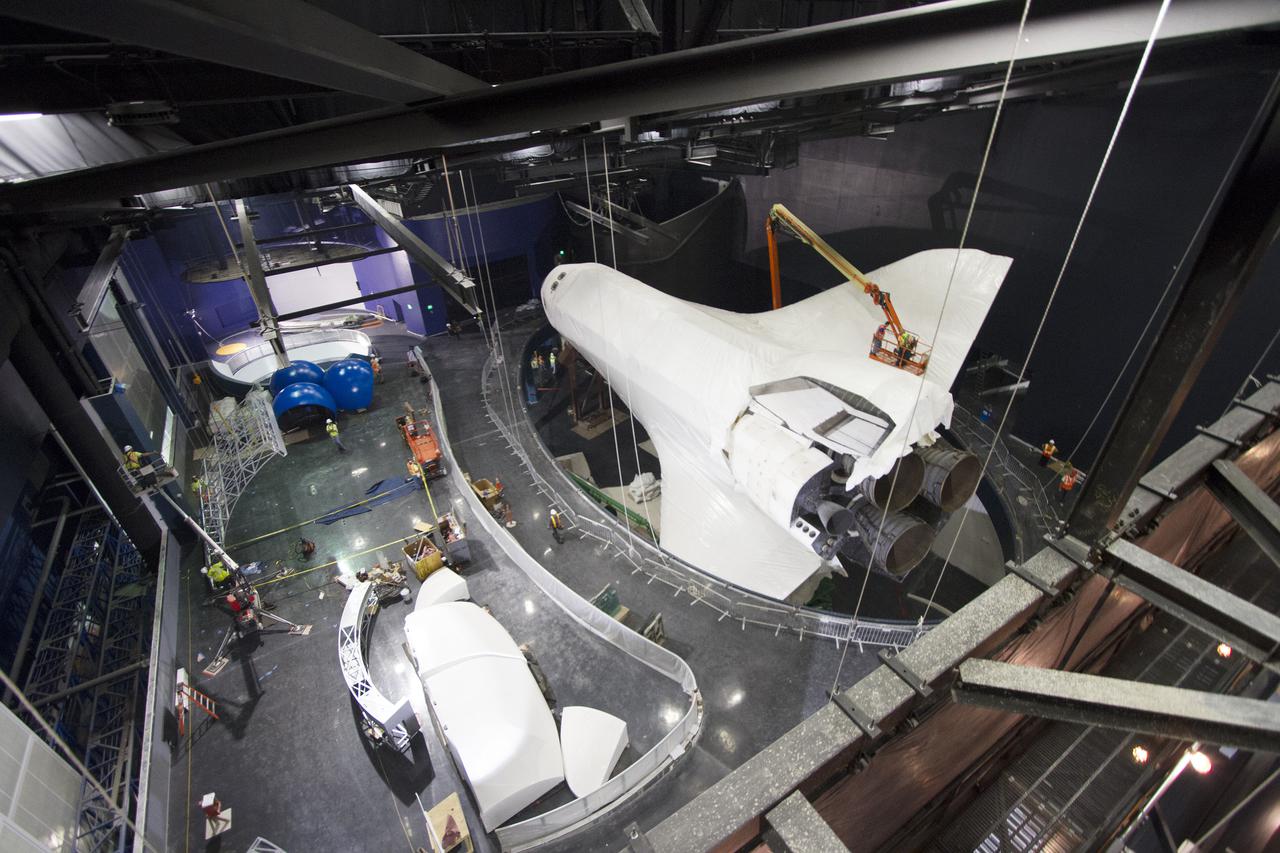
CAPE CANAVERAL, Fla. -- At the Kennedy Space Center Visitor Complex in Florida, construction crews remove 16,000 square feet of plastic shrink-wrap from the space shuttle Atlantis. The spacecraft was enclosed in the plastic shrink-wrap since November of last year to protect the artifact from dust and debris during construction of the 90,000-square-foot facility. Last November, the space shuttle Atlantis made its historic final journey to its new home, traveling 10 miles from the Kennedy Space Center's Vehicle Assembly Building to the spaceport's visitor complex. The new $100 million 'Space Shuttle Atlantis' facility will include interactive exhibits that tell the story of the 30-year Space Shuttle Program and highlights the future of space exploration. The 'Space Shuttle Atlantis' exhibit scheduled to open June 29, 2013.Photo credit: NASA_ Cory Huston

CAPE CANAVERAL, Fla. – At NASA’s Kennedy Space Center Visitor Complex in Florida, space shuttle astronauts, from the left, Bonnie Dunbar, Curt Brown and Eileen Collins stand together after being inducted into the U.S. Astronaut Hall of Fame. This induction is the twelfth group of space shuttle astronauts named to the AHOF, and the first time two women are inducted at the same time. The year’s inductees were selected by a committee of current Hall of Fame astronauts, former NASA officials, historians and journalists. The selection process is administered by the Astronaut Scholarship Foundation. For more on the U.S. Astronaut Hall of Fame, go to http:__www.kennedyspacecenter.com_astronaut-hall-of-fame.aspx For more on the Astronaut Scholarship Foundation, go to http:__astronautscholarship.org_ Photo credit: NASA_ Kim Shiflett

CAPE CANAVERAL, Fla. – At NASA’s Kennedy Space Center Visitor Complex in Florida, members of the U.S. Astronaut Hall of Fame stand together after the 2013 U.S. Astronaut Hall of Fame induction ceremony. Space shuttle astronauts Bonnie Dunbar, Curt Brown and Eileen Collins were inducted into the U.S. Astronaut Hall of Fame Class of 2013. This induction is the twelfth group of space shuttle astronauts named to the AHOF, and the first time two women are inducted at the same time. The year’s inductees were selected by a committee of current Hall of Fame astronauts, former NASA officials, historians and journalists. The selection process is administered by the Astronaut Scholarship Foundation. For more on the U.S. Astronaut Hall of Fame, go to http:__www.kennedyspacecenter.com_astronaut-hall-of-fame.aspx For more on the Astronaut Scholarship Foundation, go to http:__astronautscholarship.org_ Photo credit: NASA_ Kim Shiflett
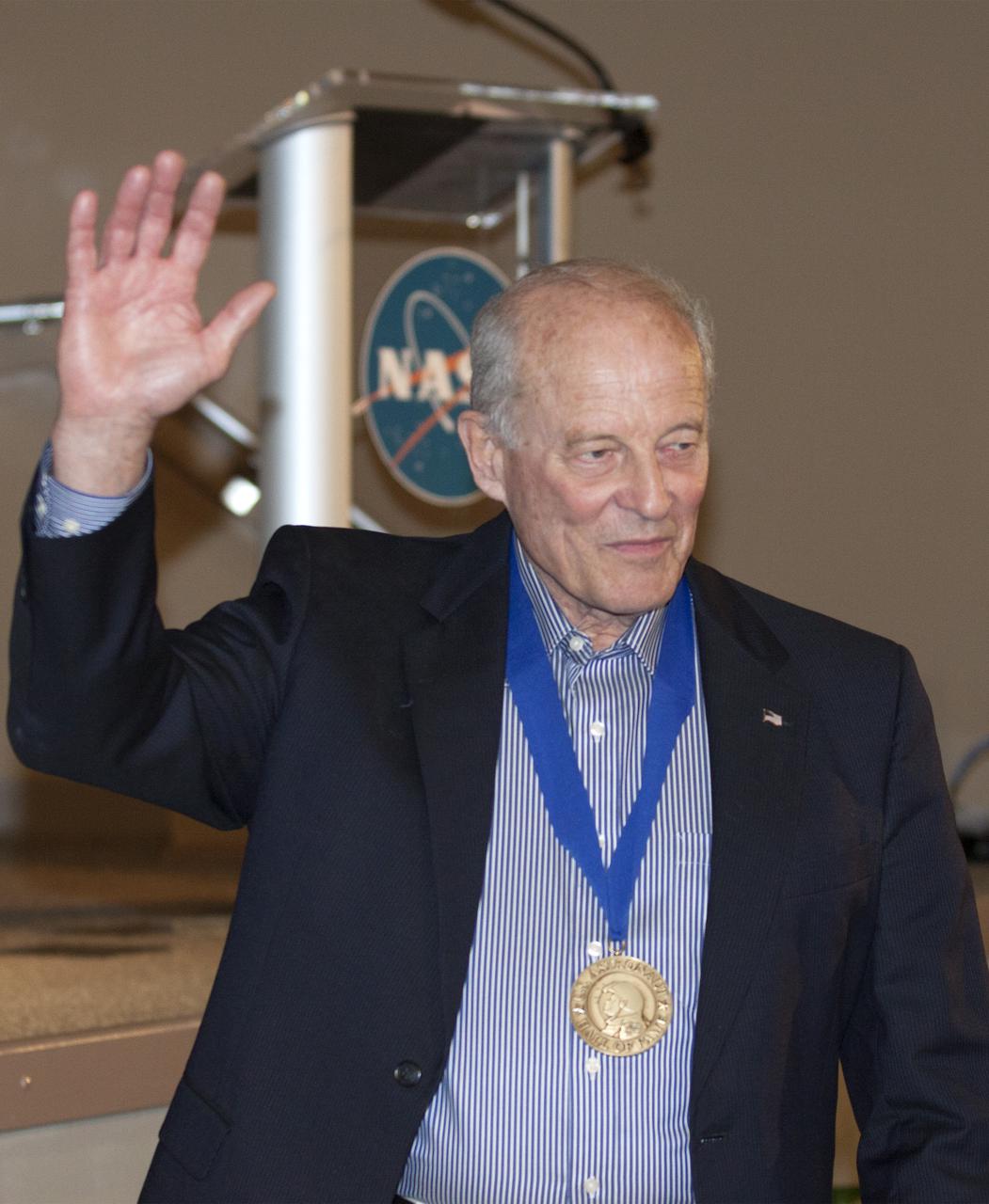
CAPE CANAVERAL, Fla. – U.S. Astronaut Hall of Fame member Jack Lousma is introduced at NASA’s Kennedy Space Center Visitor Complex in Florida, prior to the ceremony in which Bonnie Dunbar, Curt Brown and Eileen Collins will be inducted into the group of space pioneers. This induction is the twelfth group of space shuttle astronauts named to the AHOF, and the first time two women are inducted at the same time. The year’s inductees were selected by a committee of current Hall of Fame astronauts, former NASA officials, historians and journalists. The selection process is administered by the Astronaut Scholarship Foundation. For more on the U.S. Astronaut Hall of Fame, go to http:__www.kennedyspacecenter.com_astronaut-hall-of-fame.aspx For more on the Astronaut Scholarship Foundation, go to http:__astronautscholarship.org_ Photo credit: NASA_ Kim Shiflett
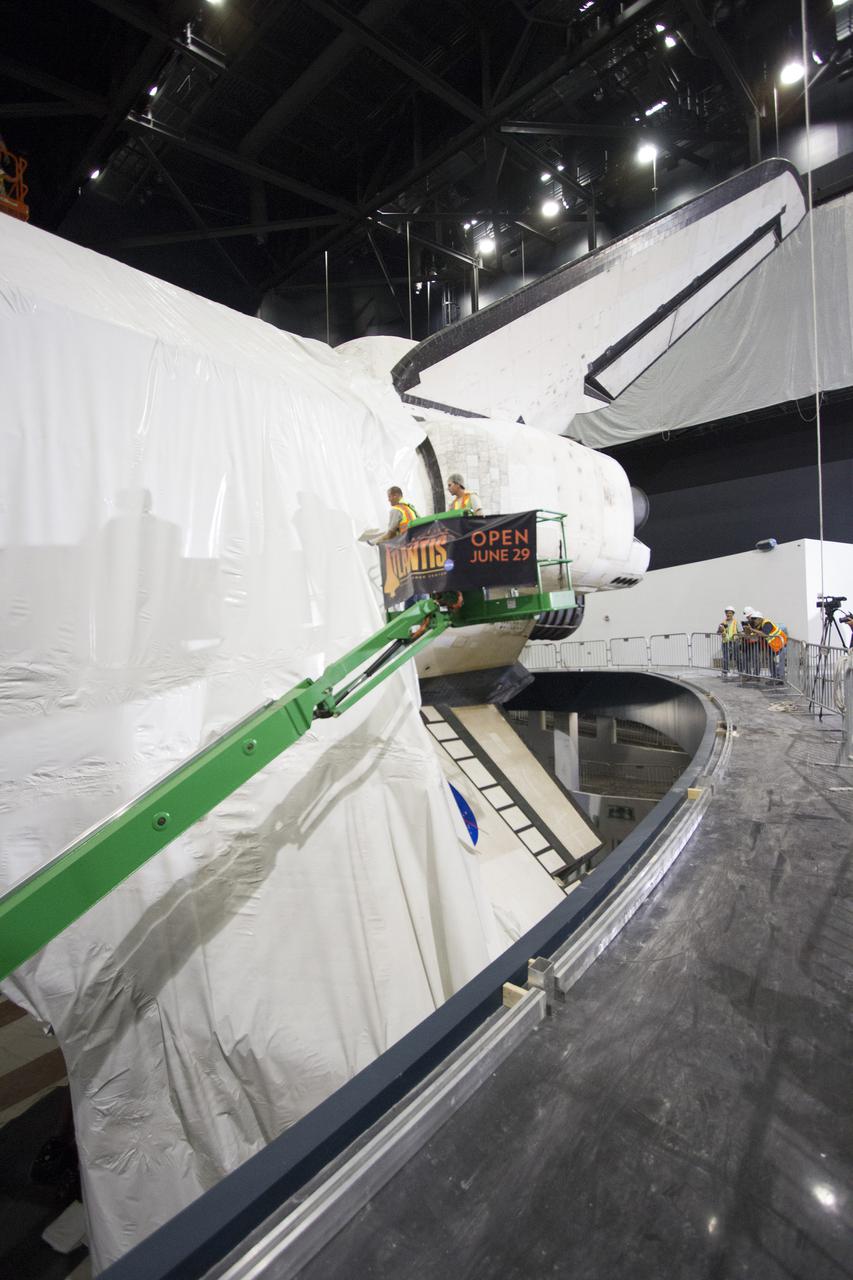
CAPE CANAVERAL, Fla. -- At the Kennedy Space Center Visitor Complex in Florida, construction crews remove 16,000 square feet of plastic shrink-wrap from the space shuttle Atlantis. The spacecraft was enclosed in the plastic shrink-wrap since November of last year to protect the artifact from dust and debris during construction of the 90,000-square-foot facility. Last November, the space shuttle Atlantis made its historic final journey to its new home, traveling 10 miles from the Kennedy Space Center's Vehicle Assembly Building to the spaceport's visitor complex. The new $100 million 'Space Shuttle Atlantis' facility will include interactive exhibits that tell the story of the 30-year Space Shuttle Program and highlights the future of space exploration. The 'Space Shuttle Atlantis' exhibit scheduled to open June 29, 2013.Photo credit: NASA_ Cory Huston
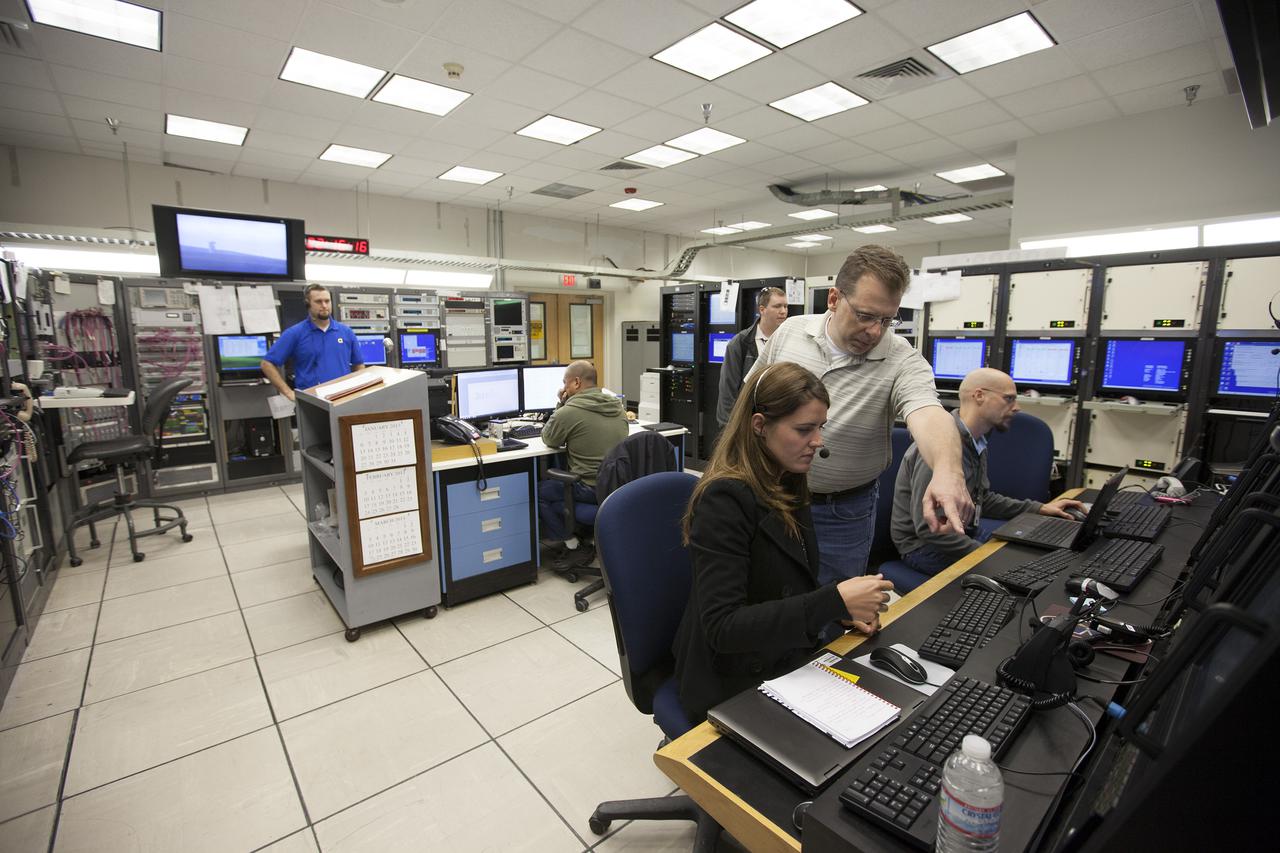
VANDENBERG AFB, Calif. -- From their positions in the telemetry laboratory at Vandenberg Air Force Base, engineers and technicians monitor the countdown for a United Launch Alliance Atlas V with the Landsat Data Continuity Mission, or LDCM, satellite prior to liftoff. The Landsat Data Continuity Mission, or LDCM, is the future of Landsat satellites. It will continue to obtain valuable data and imagery to be used in agriculture, education, business, science, and government. The Landsat Program provides repetitive acquisition of high resolution multispectral data of the Earth's surface on a global basis. The data from the Landsat spacecraft constitute the longest record of the Earth's continental surfaces as seen from space. It is a record unmatched in quality, detail, coverage, and value. Liftoff is planned for Feb. 11, 2013 aboard a United Launch Alliance Atlas V rocket. For more information, visit: http:__www.nasa.gov_mission_pages_landsat_main_index.html Photo credit: NASA_ Kim Shiflett
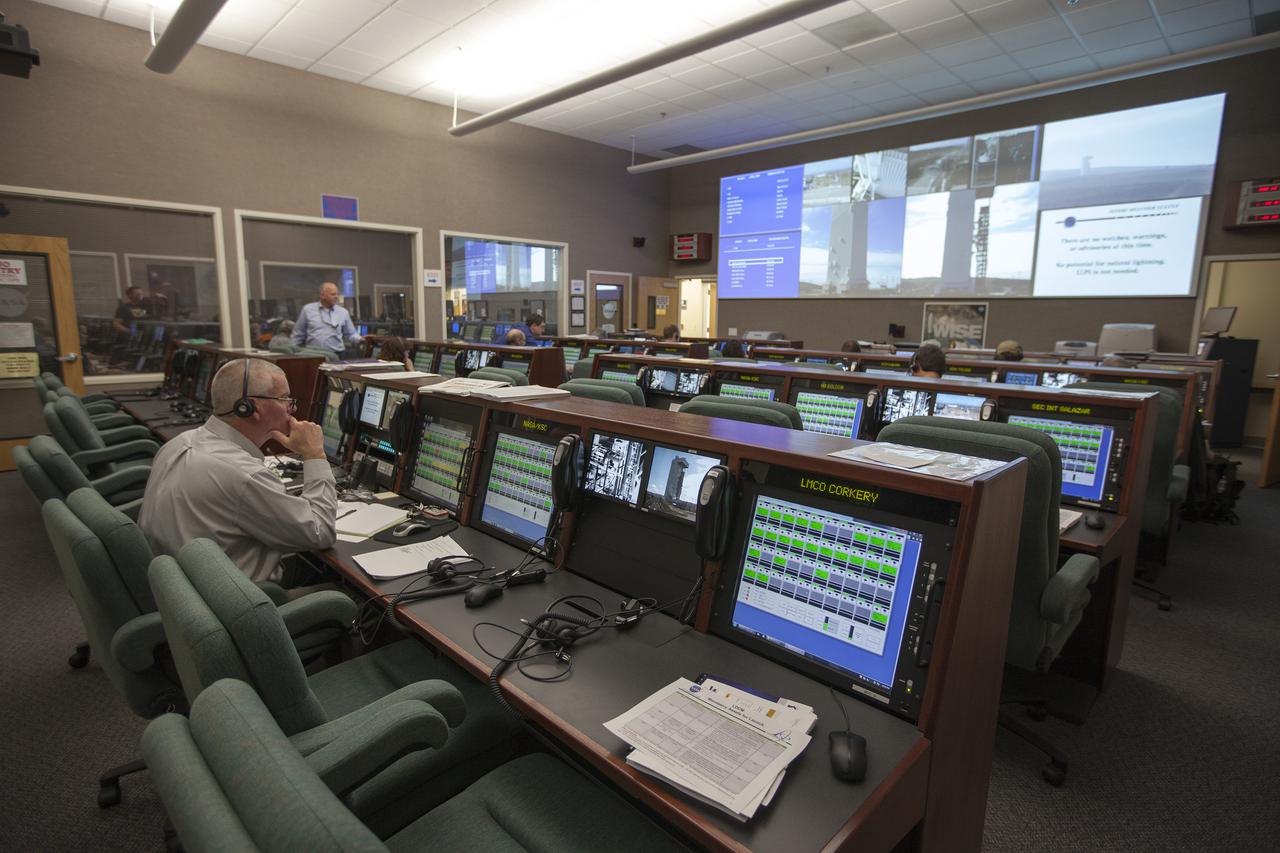
VANDENBERG AFB, Calif. -- From their consoles in the Mission Director's Center at Vandenberg Air Force Base, launch controllers monitor the countdown for a United Launch Alliance Atlas V with the Landsat Data Continuity Mission, or LDCM, satellite prior to liftoff. The Landsat Data Continuity Mission, or LDCM, is the future of Landsat satellites. It will continue to obtain valuable data and imagery to be used in agriculture, education, business, science, and government. The Landsat Program provides repetitive acquisition of high resolution multispectral data of the Earth's surface on a global basis. The data from the Landsat spacecraft constitute the longest record of the Earth's continental surfaces as seen from space. It is a record unmatched in quality, detail, coverage, and value. Liftoff is planned for Feb. 11, 2013 aboard a United Launch Alliance Atlas V rocket. For more information, visit: http:__www.nasa.gov_mission_pages_landsat_main_index.html Photo credit: NASA_ Kim Shiflett
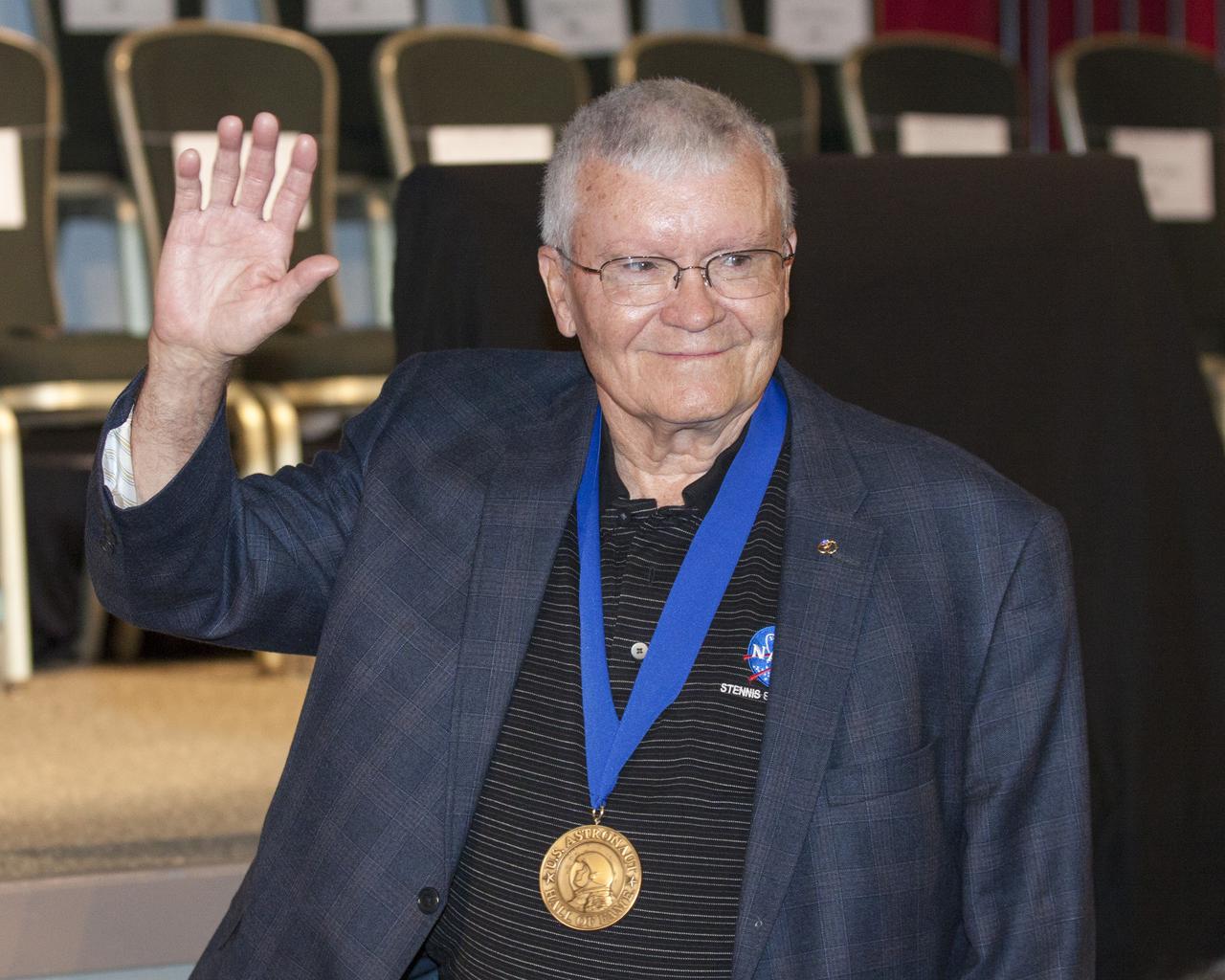
CAPE CANAVERAL, Fla. – U.S. Astronaut Hall of Fame member Fred Haise is introduced at NASA’s Kennedy Space Center Visitor Complex in Florida, prior to the ceremony in which Bonnie Dunbar, Curt Brown and Eileen Collins will be inducted into the group of space pioneers. This induction is the twelfth group of space shuttle astronauts named to the AHOF, and the first time two women are inducted at the same time. The year’s inductees were selected by a committee of current Hall of Fame astronauts, former NASA officials, historians and journalists. The selection process is administered by the Astronaut Scholarship Foundation. For more on the U.S. Astronaut Hall of Fame, go to http:__www.kennedyspacecenter.com_astronaut-hall-of-fame.aspx For more on the Astronaut Scholarship Foundation, go to http:__astronautscholarship.org_ Photo credit: NASA_ Kim Shiflett
VANDENBERG AFB, Calif. -- From their consoles in the Mission Director's Center at Vandenberg Air Force Base, launch controllers monitor the countdown for a United Launch Alliance Atlas V with the Landsat Data Continuity Mission, or LDCM, satellite prior to liftoff. The Landsat Data Continuity Mission, or LDCM, is the future of Landsat satellites. It will continue to obtain valuable data and imagery to be used in agriculture, education, business, science, and government. The Landsat Program provides repetitive acquisition of high resolution multispectral data of the Earth's surface on a global basis. The data from the Landsat spacecraft constitute the longest record of the Earth's continental surfaces as seen from space. It is a record unmatched in quality, detail, coverage, and value. Liftoff is planned for Feb. 11, 2013 aboard a United Launch Alliance Atlas V rocket. For more information, visit: http:__www.nasa.gov_mission_pages_landsat_main_index.html Photo credit: NASA_ Kim Shiflett
VANDENBERG AFB, Calif. -- From their positions in the telemetry laboratory at Vandenberg Air Force Base, engineers and technicians monitor the countdown for a United Launch Alliance Atlas V with the Landsat Data Continuity Mission, or LDCM, satellite prior to liftoff. The Landsat Data Continuity Mission, or LDCM, is the future of Landsat satellites. It will continue to obtain valuable data and imagery to be used in agriculture, education, business, science, and government. The Landsat Program provides repetitive acquisition of high resolution multispectral data of the Earth's surface on a global basis. The data from the Landsat spacecraft constitute the longest record of the Earth's continental surfaces as seen from space. It is a record unmatched in quality, detail, coverage, and value. Liftoff is planned for Feb. 11, 2013 aboard a United Launch Alliance Atlas V rocket. For more information, visit: http:__www.nasa.gov_mission_pages_landsat_main_index.html Photo credit: NASA_ Kim Shiflett
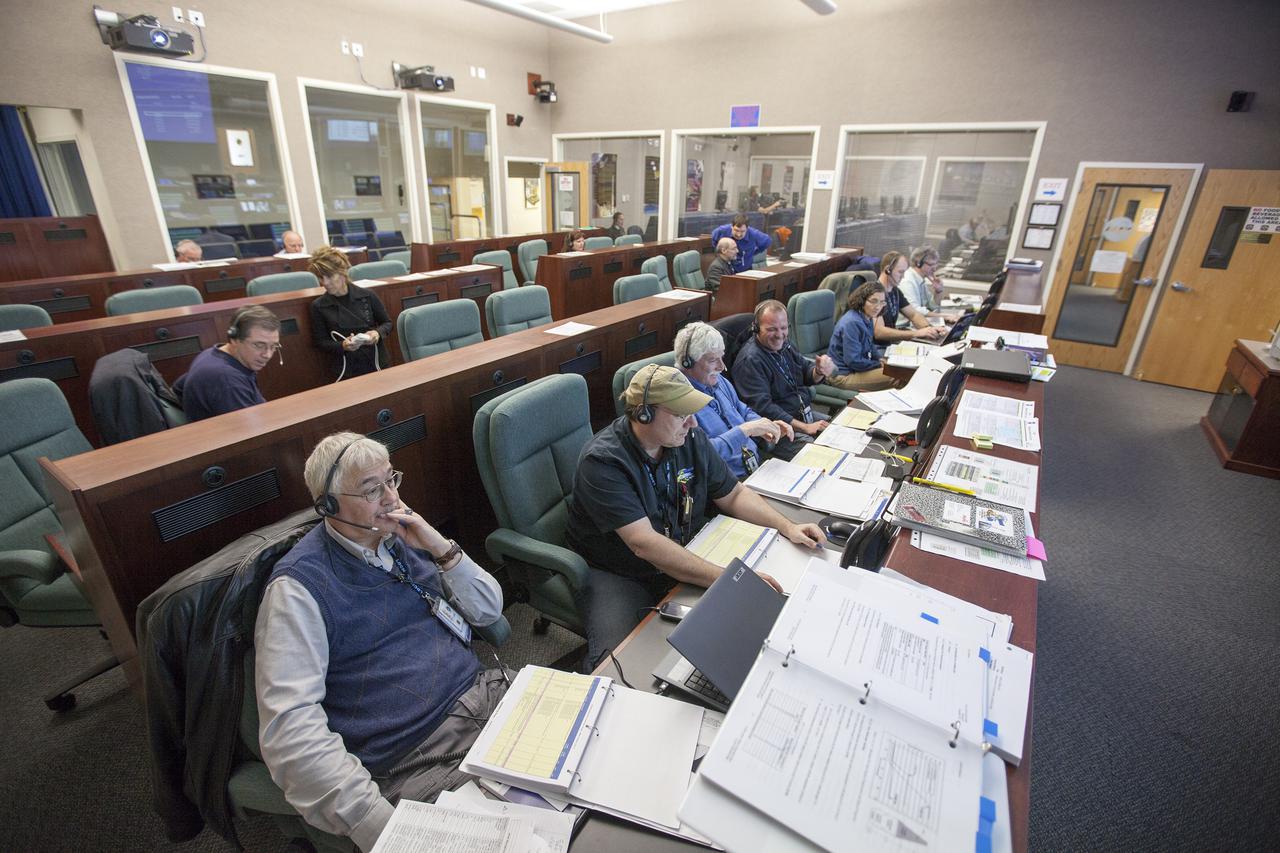
VANDENBERG AFB, Calif. -- From their consoles in the Mission Director's Center at Vandenberg Air Force Base, launch controllers monitor the countdown for a United Launch Alliance Atlas V with the Landsat Data Continuity Mission, or LDCM, satellite prior to liftoff. The Landsat Data Continuity Mission, or LDCM, is the future of Landsat satellites. It will continue to obtain valuable data and imagery to be used in agriculture, education, business, science, and government. The Landsat Program provides repetitive acquisition of high resolution multispectral data of the Earth's surface on a global basis. The data from the Landsat spacecraft constitute the longest record of the Earth's continental surfaces as seen from space. It is a record unmatched in quality, detail, coverage, and value. Liftoff is planned for Feb. 11, 2013 aboard a United Launch Alliance Atlas V rocket. For more information, visit: http:__www.nasa.gov_mission_pages_landsat_main_index.html Photo credit: NASA_ Kim Shiflett
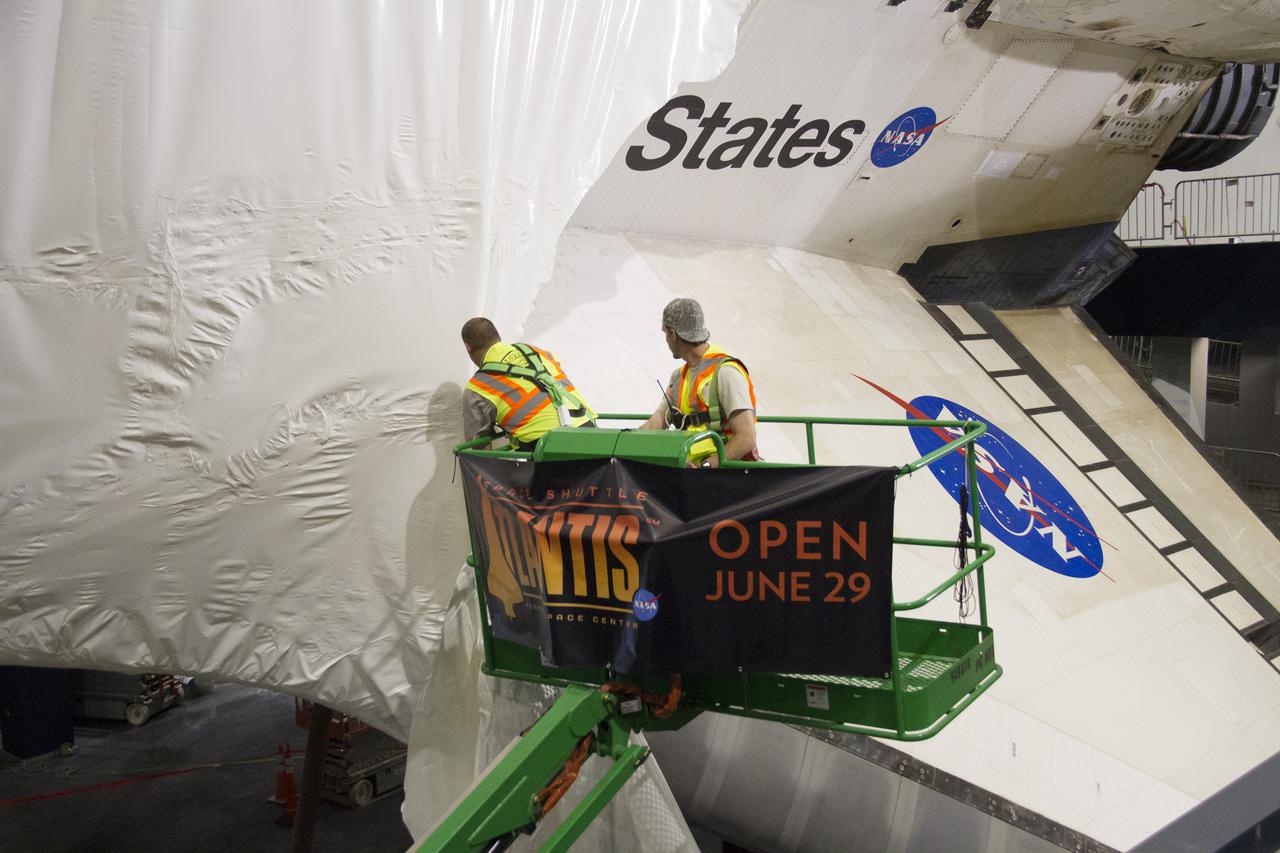
CAPE CANAVERAL, Fla. -- At the Kennedy Space Center Visitor Complex in Florida, construction crews remove 16,000 square feet of plastic shrink-wrap from the space shuttle Atlantis. The spacecraft was enclosed in the plastic shrink-wrap since November of last year to protect the artifact from dust and debris during construction of the 90,000-square-foot facility. Last November, the space shuttle Atlantis made its historic final journey to its new home, traveling 10 miles from the Kennedy Space Center's Vehicle Assembly Building to the spaceport's visitor complex. The new $100 million 'Space Shuttle Atlantis' facility will include interactive exhibits that tell the story of the 30-year Space Shuttle Program and highlights the future of space exploration. The 'Space Shuttle Atlantis' exhibit scheduled to open June 29, 2013.Photo credit: NASA_ Cory Huston
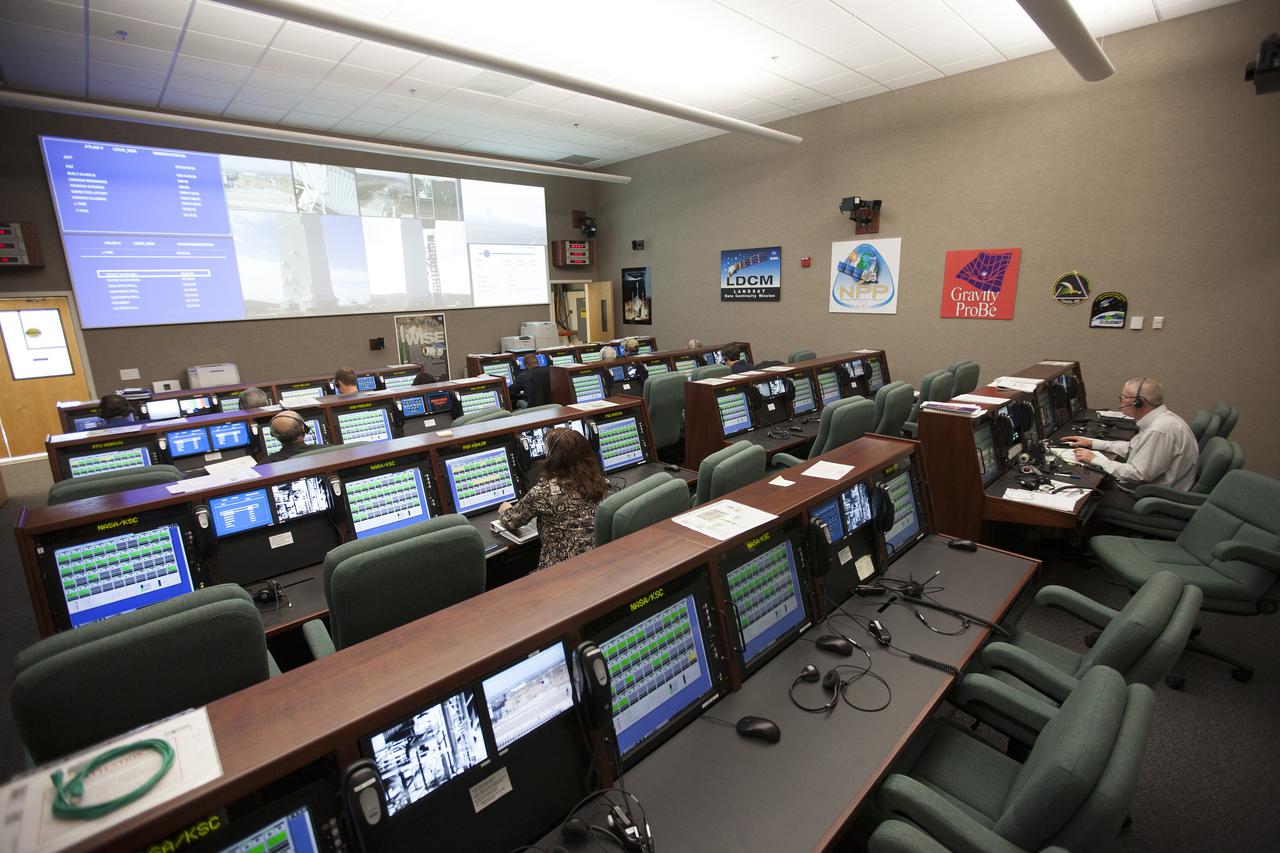
VANDENBERG AFB, Calif. -- From their consoles in the Mission Director's Center at Vandenberg Air Force Base, launch controllers monitor the countdown for a United Launch Alliance Atlas V with the Landsat Data Continuity Mission, or LDCM, satellite prior to liftoff. The Landsat Data Continuity Mission, or LDCM, is the future of Landsat satellites. It will continue to obtain valuable data and imagery to be used in agriculture, education, business, science, and government. The Landsat Program provides repetitive acquisition of high resolution multispectral data of the Earth's surface on a global basis. The data from the Landsat spacecraft constitute the longest record of the Earth's continental surfaces as seen from space. It is a record unmatched in quality, detail, coverage, and value. Liftoff is planned for Feb. 11, 2013 aboard a United Launch Alliance Atlas V rocket. For more information, visit: http:__www.nasa.gov_mission_pages_landsat_main_index.html Photo credit: NASA_ Kim Shiflett
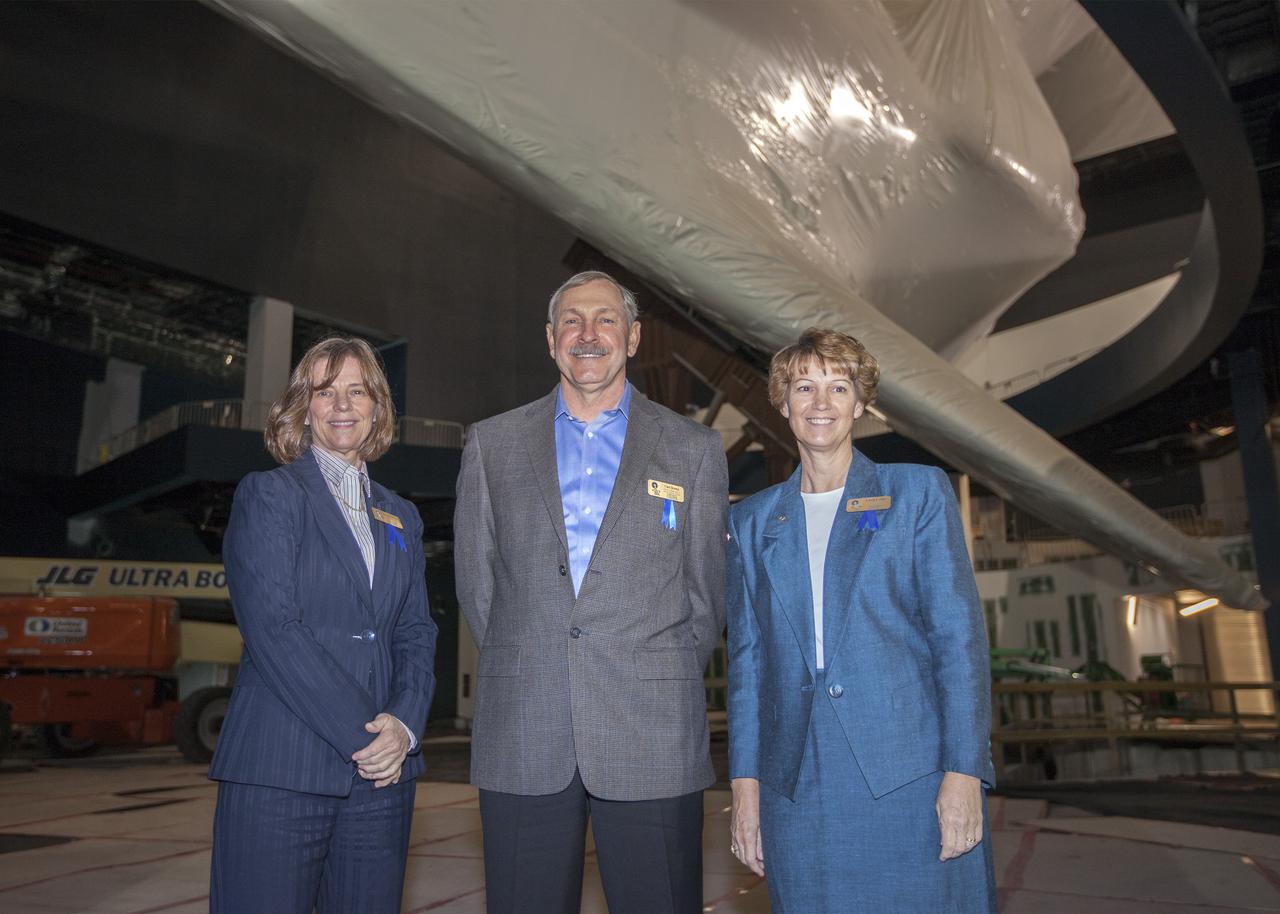
CAPE CANAVERAL, Fla. – At NASA’s Kennedy Space Center Visitor Complex in Florida, space shuttle astronauts, from the left, Bonnie Dunbar, Curt Brown and Eileen Collins stand together after being inducted into the U.S. Astronaut Hall of Fame. They are standing under the space shuttle Atlantis in the facility where it will be displayed beginning June 29. The shuttle is currently protected by plastic wrap as constitution contuse. This induction is the twelfth group of space shuttle astronauts named to the AHOF, and the first time two women are inducted at the same time. The year’s inductees were selected by a committee of current Hall of Fame astronauts, former NASA officials, historians and journalists. The selection process is administered by the Astronaut Scholarship Foundation. For more on the U.S. Astronaut Hall of Fame, go to http:__www.kennedyspacecenter.com_astronaut-hall-of-fame.aspx For more on the Astronaut Scholarship Foundation, go to http:__astronautscholarship.org_ Photo credit: NASA_ Kim Shiflett
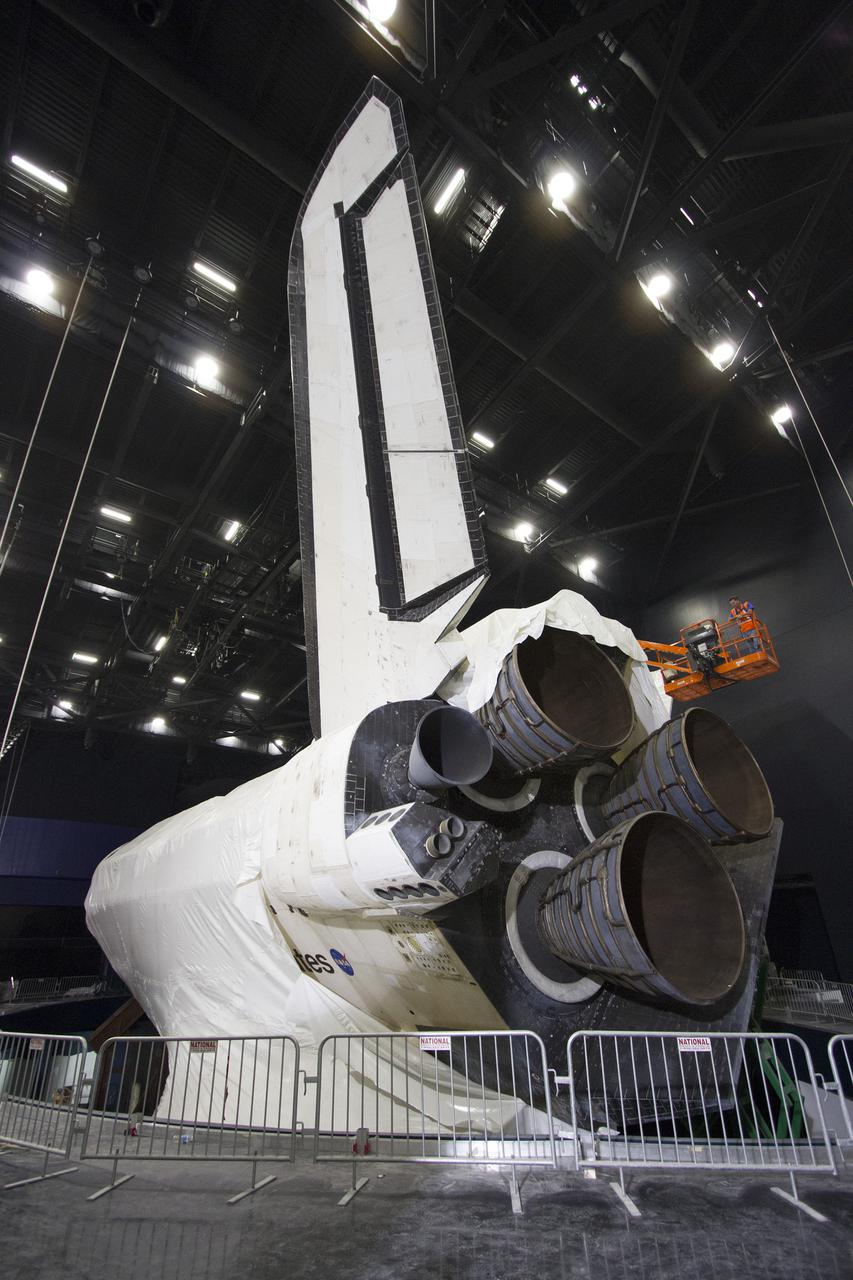
CAPE CANAVERAL, Fla. -- At the Kennedy Space Center Visitor Complex in Florida, construction crews remove 16,000 square feet of plastic shrink-wrap from the space shuttle Atlantis. The spacecraft was enclosed in the plastic shrink-wrap since November of last year to protect the artifact from dust and debris during construction of the 90,000-square-foot facility. Last November, the space shuttle Atlantis made its historic final journey to its new home, traveling 10 miles from the Kennedy Space Center's Vehicle Assembly Building to the spaceport's visitor complex. The new $100 million 'Space Shuttle Atlantis' facility will include interactive exhibits that tell the story of the 30-year Space Shuttle Program and highlights the future of space exploration. The 'Space Shuttle Atlantis' exhibit scheduled to open June 29, 2013.Photo credit: NASA_ Cory Huston
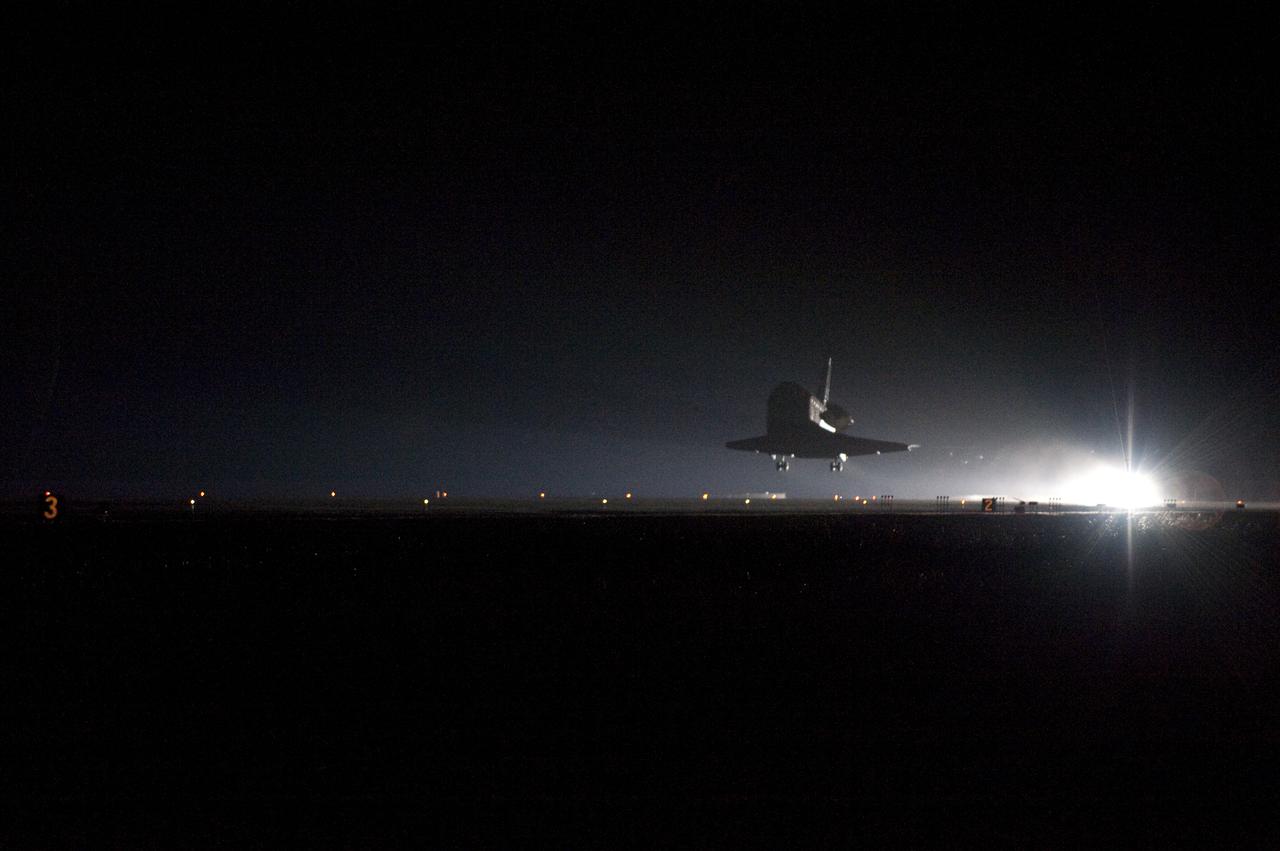
CAPE CANAVERAL, Fla. - With landing gear down, space shuttle Endeavour approaches Runway 15 at the Shuttle Landing Facility at NASA's Kennedy Space Center in Florida after 14 days in space, completing the 5.7-million-mile STS-130 mission on orbit 217. Main gear touchdown was at 10:20:31 p.m. EST followed by nose gear touchdown at 10:20:39 p.m. and wheels stop at 10:22:10 p.m. It was the 23rd night landing in shuttle history and the 17th at Kennedy. Aboard are Commander George Zamka; Pilot Terry Virts; and Mission Specialists Robert Behnken, Nicholas Patrick, Kathryn Hire and Stephen Robinson. During Endeavour's STS-130 mission, astronauts installed the Tranquility node, a module that provides additional room for crew members and many of the station's life support and environmental control systems. Attached to Tranquility is a cupola with seven windows that provide a panoramic view of Earth, celestial objects and visiting spacecraft. The module was built in Turin, Italy, by Thales Alenia Space for the European Space Agency. The orbiting laboratory is approximately 90 percent complete now in terms of mass. STS-130 was the 24th flight for Endeavour, the 32nd shuttle mission devoted to ISS assembly and maintenance, and the 130th shuttle mission to date. For information on the STS-130 mission and crew, visit http:__www.nasa.gov_mission_pages_shuttle_shuttlemissions_sts130_index.html. Photo credit: NASA_ Tom Farrar Jr.
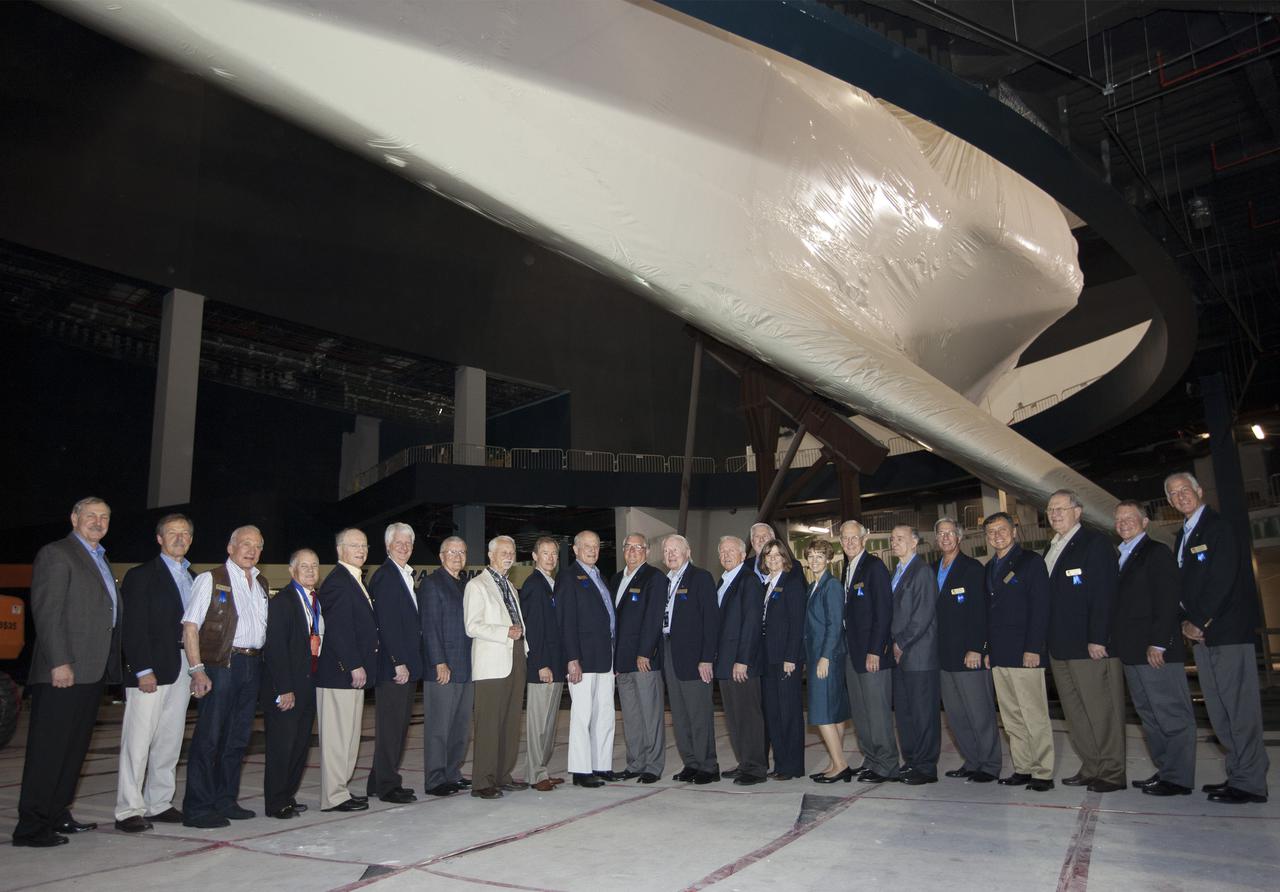
CAPE CANAVERAL, Fla. – At NASA’s Kennedy Space Center Visitor Complex in Florida, members of the U.S. Astronaut Hall of Fame are joined by Bill Moore, chief operating officer of the visitor complex pose under the space shuttle Atlantis in the facility where it will be displayed beginning June 29. The shuttle is currently protected by plastic wrap as constitution contuse. Pictured, left to right are, Curt Brown, Robert, 'Hoot' Gibson, Buzz Aldrin, Joe Allen, Rick Hauck, Steven Hawley, Fred Haise, Owen Garriott, Brewster Shaw. Jack Lousma, Dan Brandenstein, Vance Brand, Loren Shriver, Moore, Bonnie Dunbar, Eileen Collins, Charlie Duke, Walt Cunningham, John Blaha, Franklin Chang-Diaz, Karol Bobko, George 'Pinky' Nelson and Jeff Hoffmann. This induction is the twelfth group of space shuttle astronauts named to the AHOF, and the first time two women are inducted at the same time. The year’s inductees were selected by a committee of current Hall of Fame astronauts, former NASA officials, historians and journalists. The selection process is administered by the Astronaut Scholarship Foundation. For more on the U.S. Astronaut Hall of Fame, go to http:__www.kennedyspacecenter.com_astronaut-hall-of-fame.aspx For more on the Astronaut Scholarship Foundation, go to http:__astronautscholarship.org_ Photo credit: NASA_ Kim Shiflett
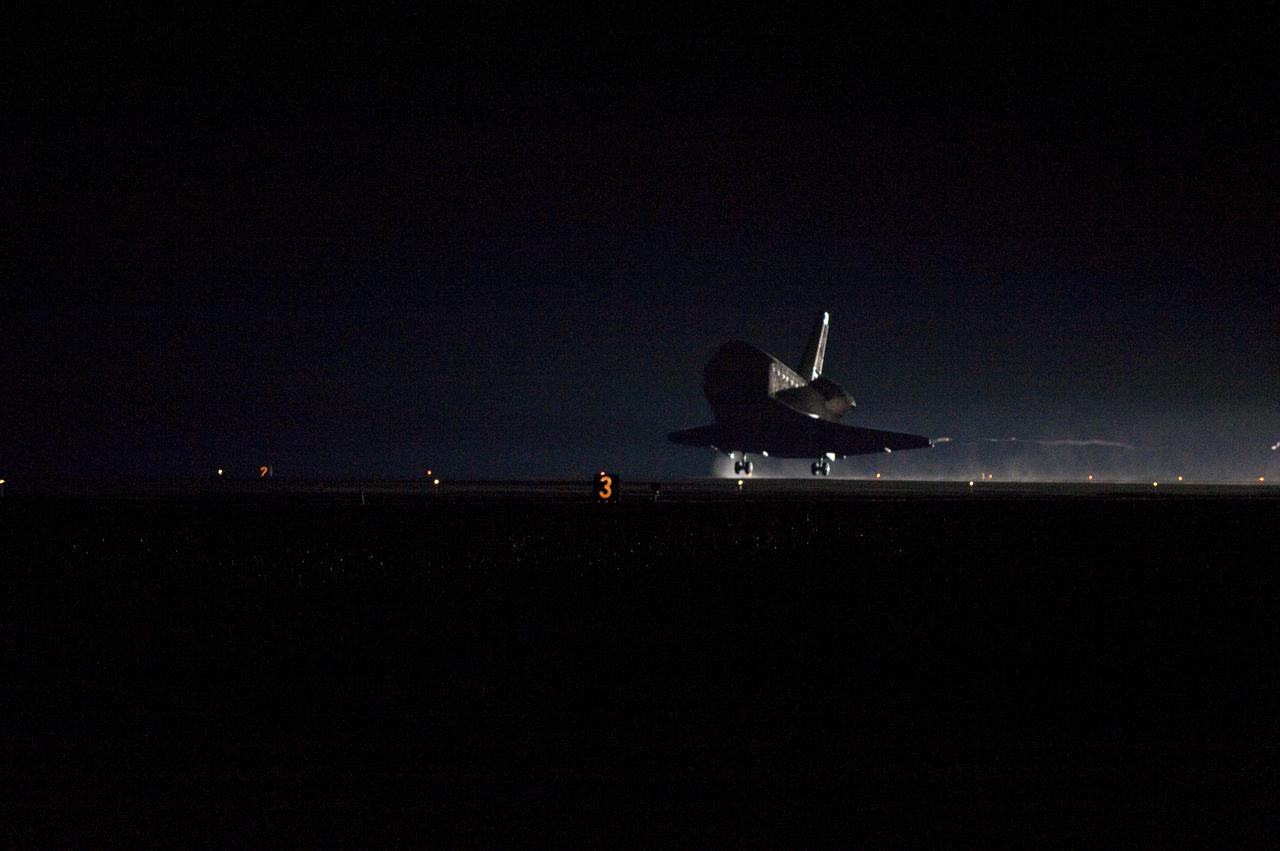
CAPE CANAVERAL, Fla. - Space shuttle Endeavour lands on Runway 15 at the Shuttle Landing Facility at NASA's Kennedy Space Center in Florida after 14 days in space, completing the 5.7-million-mile STS-130 mission to the International Space Station on orbit 217. Main gear touchdown was at 10:20:31 p.m. EST followed by nose gear touchdown at 10:20:39 p.m. and wheels stop at 10:22:10 p.m. It was the 23rd night landing in shuttle history and the 17th at Kennedy. Aboard are Commander George Zamka; Pilot Terry Virts; and Mission Specialists Robert Behnken, Nicholas Patrick, Kathryn Hire and Stephen Robinson. During Endeavour's STS-130 mission, astronauts installed the Tranquility node, a module that provides additional room for crew members and many of the station's life support and environmental control systems. Attached to Tranquility is a cupola with seven windows that provide a panoramic view of Earth, celestial objects and visiting spacecraft. The module was built in Turin, Italy, by Thales Alenia Space for the European Space Agency. The orbiting laboratory is approximately 90 percent complete now in terms of mass. STS-130 was the 24th flight for Endeavour, the 32nd shuttle mission devoted to ISS assembly and maintenance, and the 130th shuttle mission to date. For information on the STS-130 mission and crew, visit http:__www.nasa.gov_mission_pages_shuttle_shuttlemissions_sts130_index.html. Photo credit: NASA_ Tom Farrar Jr.
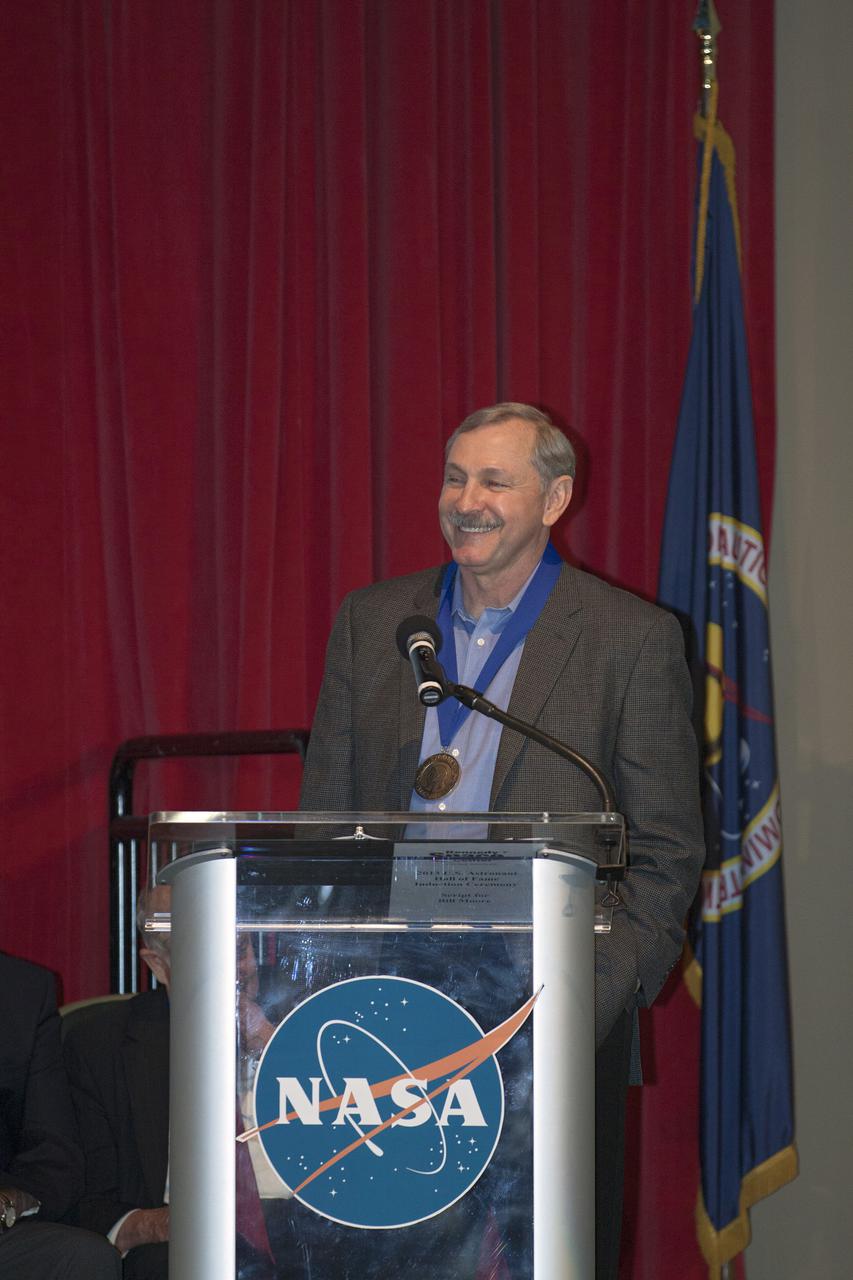
CAPE CANAVERAL, Fla. – At NASA’s Kennedy Space Center Visitor Complex in Florida, shuttle astronaut Curt Brown speaks after being inducted into the U.S. Astronaut Hall of Fame AHOF. Brown, a veteran of six spaceflights, began his career with NASA in 1987 as a pilot and has logged more than 1,383 hours in space. Brown’s missions aboard the space shuttle include STS-47, STS-66, STS-77, STS-85, STS-95 and STS-103. Shuttle astronauts Eileen Collins and Bonnie Dunbar also were inducted into the AHOF. This induction is the twelfth group of space shuttle astronauts named to the AHOF, and the first time two women are inducted at the same time. The year’s inductees were selected by a committee of current Hall of Fame astronauts, former NASA officials, historians and journalists. The selection process is administered by the Astronaut Scholarship Foundation. For more on the U.S. Astronaut Hall of Fame, go to http:__www.kennedyspacecenter.com_astronaut-hall-of-fame.aspx For more on the Astronaut Scholarship Foundation, go to http:__astronautscholarship.org_ Photo credit: NASA_ Kim Shiflett

CAPE CANAVERAL, Fla. – At NASA’s Kennedy Space Center Visitor Complex in Florida, shuttle astronauts, from the left, Bonnie Dunbar, Curt Brown and Eileen Collins listen as Collins is being introduced for induction into the U.S. Astronaut Hall of Fame AHOF. She commanded STS-114 on the Return to Flight mission following the loss of the space shuttle Columbia. Collins’ career with NASA is full of accomplishments, including becoming the first woman space shuttle pilot and the first woman commander. As a four-time spaceflight veteran, Collins logged more than 872 hours in space, and her missions include STS-63, STS-84, STS-93 and STS-114. Shuttle astronauts Curt Brown and Bonnie Dunbar also were inducted into the AHOF. This induction is the twelfth group of space shuttle astronauts named to the AHOF, and the first time two women are inducted at the same time. The year’s inductees were selected by a committee of current Hall of Fame astronauts, former NASA officials, historians and journalists. The selection process is administered by the Astronaut Scholarship Foundation. For more on the U.S. Astronaut Hall of Fame, go to http:__www.kennedyspacecenter.com_astronaut-hall-of-fame.aspx For more on the Astronaut Scholarship Foundation, go to http:__astronautscholarship.org_ Photo credit: NASA_ Kim Shiflett
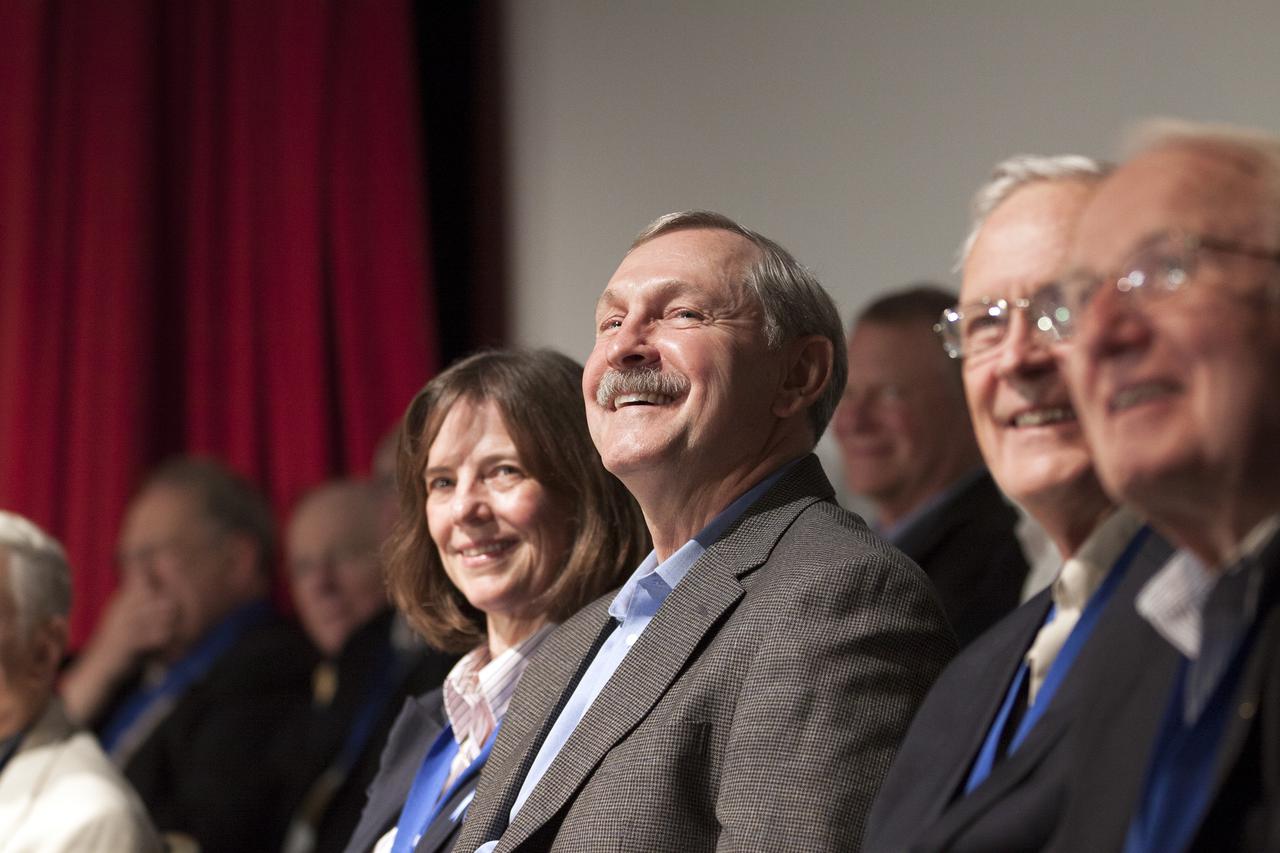
CAPE CANAVERAL, Fla. – At NASA’s Kennedy Space Center Visitor Complex in Florida, shuttle astronaut Curt Brown listens as he is being introduced for induction into the U.S. Astronaut Hall of Fame AHOF. Brown, a veteran of six spaceflights, began his career with NASA in 1987 as a pilot and has logged more than 1,383 hours in space. Brown’s missions aboard the space shuttle include STS-47, STS-66, STS-77, STS-85, STS-95 and STS-103. Shuttle astronauts Eileen Collins and Bonnie Dunbar also were inducted into the AHOF. This induction is the twelfth group of space shuttle astronauts named to the AHOF, and the first time two women are inducted at the same time. The year’s inductees were selected by a committee of current Hall of Fame astronauts, former NASA officials, historians and journalists. The selection process is administered by the Astronaut Scholarship Foundation. For more on the U.S. Astronaut Hall of Fame, go to http:__www.kennedyspacecenter.com_astronaut-hall-of-fame.aspx For more on the Astronaut Scholarship Foundation, go to http:__astronautscholarship.org_ Photo credit: NASA_ Kim Shiflett

CAPE CANAVERAL, Fla. – At NASA’s Kennedy Space Center Visitor Complex in Florida, shuttle astronauts, from the left, Bonnie Dunbar, Curt Brown and Eileen Collins listen as Collins is being introduced for induction into the U.S. Astronaut Hall of Fame AHOF. She commanded STS-114 on the Return to Flight mission following the loss of the space shuttle Columbia. Collins’ career with NASA is full of accomplishments, including becoming the first woman space shuttle pilot and the first woman commander. As a four-time spaceflight veteran, Collins logged more than 872 hours in space, and her missions include STS-63, STS-84, STS-93 and STS-114. Shuttle astronauts Curt Brown and Bonnie Dunbar also were inducted into the AHOF. This induction is the twelfth group of space shuttle astronauts named to the AHOF, and the first time two women are inducted at the same time. The year’s inductees were selected by a committee of current Hall of Fame astronauts, former NASA officials, historians and journalists. The selection process is administered by the Astronaut Scholarship Foundation. For more on the U.S. Astronaut Hall of Fame, go to http:__www.kennedyspacecenter.com_astronaut-hall-of-fame.aspx For more on the Astronaut Scholarship Foundation, go to http:__astronautscholarship.org_ Photo credit: NASA_ Kim Shiflett
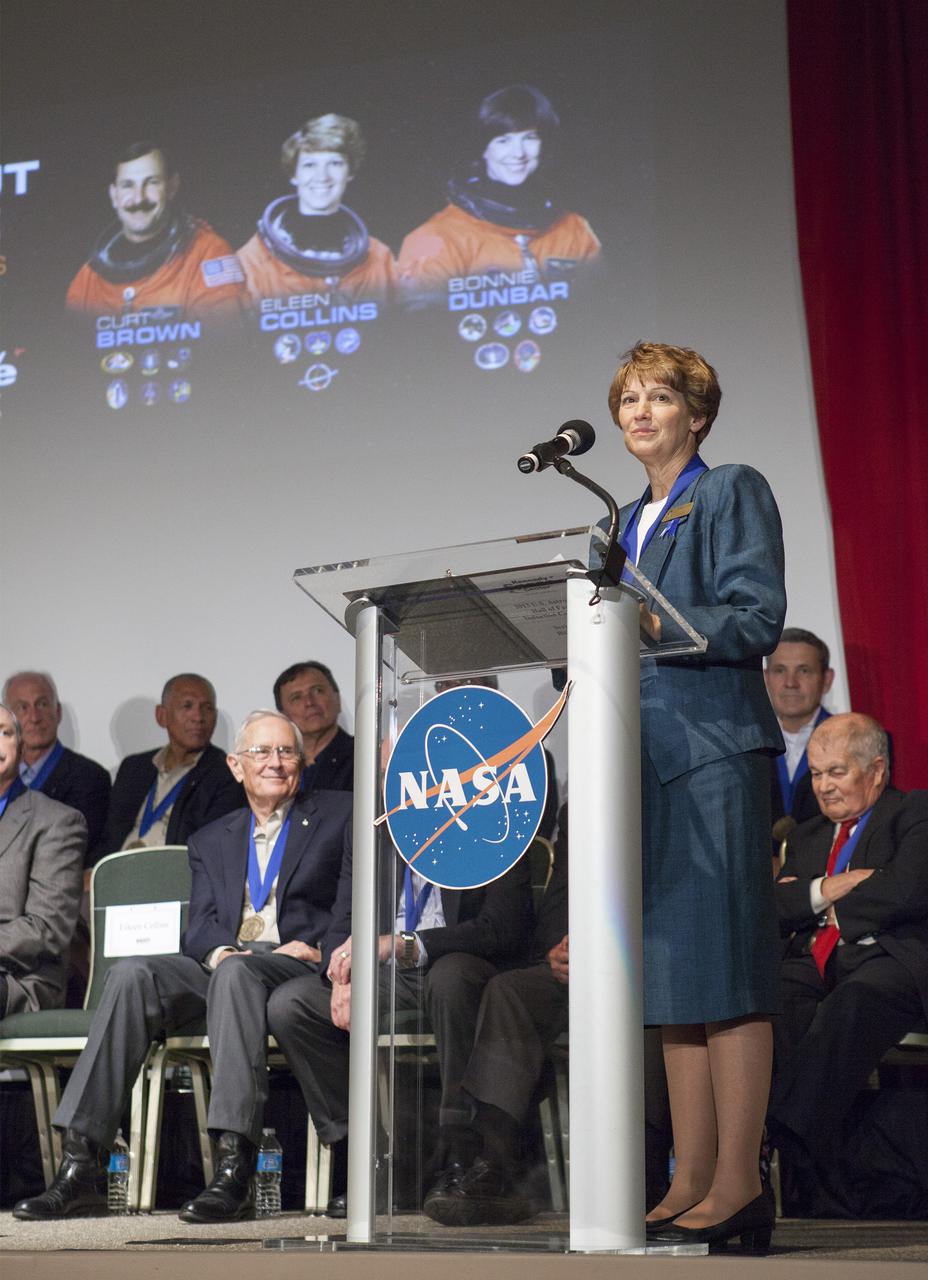
CAPE CANAVERAL, Fla. – At NASA’s Kennedy Space Center Visitor Complex in Florida, shuttle astronaut Eileen Collins speaks after being inducted into the U.S. Astronaut Hall of Fame AHOF. Revered for commanding STS-114 on the Return to Flight mission following the loss of the space shuttle Columbia, Collins’ career with NASA is full of accomplishments, including becoming the first woman space shuttle pilot and the first woman commander. As a four-time spaceflight veteran, Collins logged more than 872 hours in space, and her missions include STS-63, STS-84, STS-93 and STS-114. Shuttle astronauts Curt Brown and Bonnie Dunbar also were inducted into the AHOF. This induction is the twelfth group of space shuttle astronauts named to the AHOF, and the first time two women are inducted at the same time. The year’s inductees were selected by a committee of current Hall of Fame astronauts, former NASA officials, historians and journalists. The selection process is administered by the Astronaut Scholarship Foundation. For more on the U.S. Astronaut Hall of Fame, go to http:__www.kennedyspacecenter.com_astronaut-hall-of-fame.aspx For more on the Astronaut Scholarship Foundation, go to http:__astronautscholarship.org_ Photo credit: NASA_ Kim Shiflett
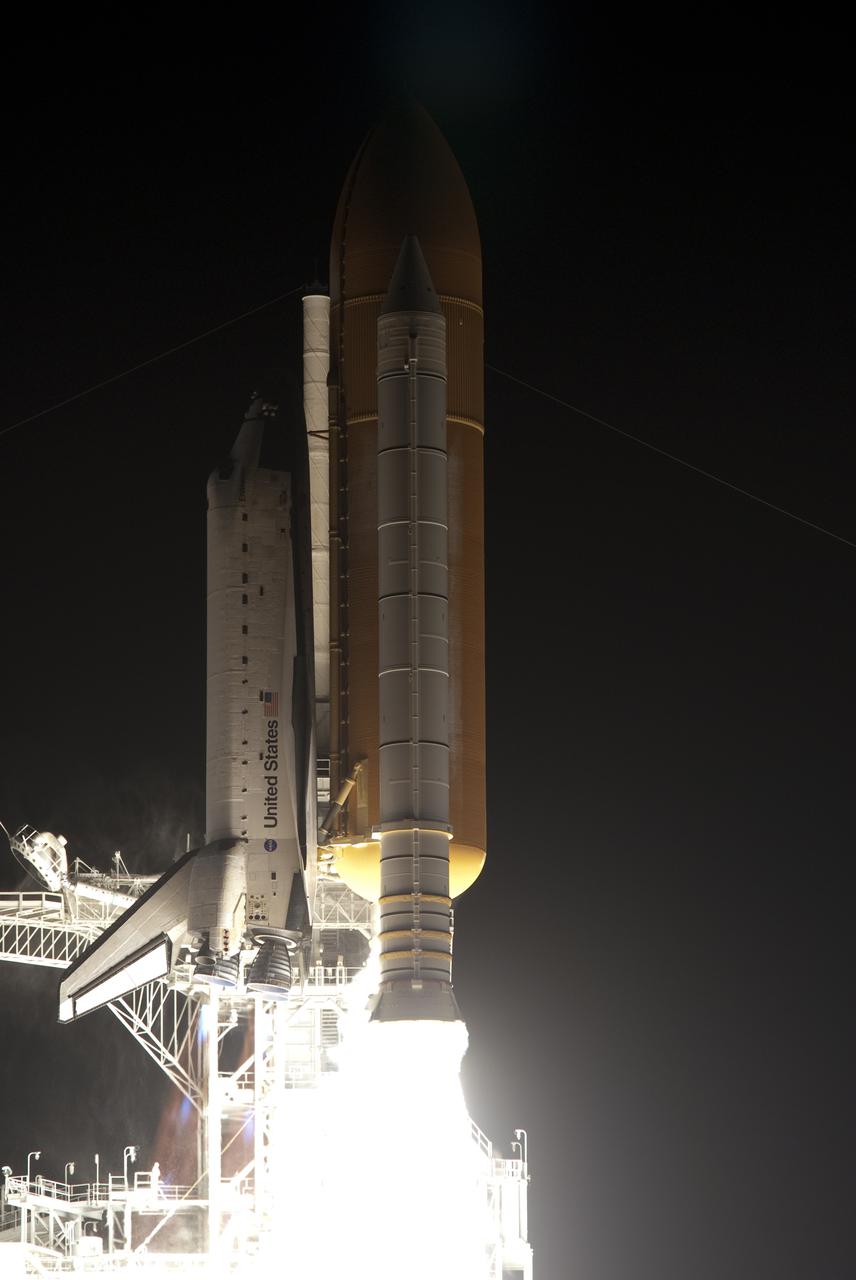
CAPE CANAVERAL, Fla. - Producing about 3 million pounds of thrust, this solid rocket booster does its part to lift space shuttle Endeavour from Launch Pad 39A at NASA's Kennedy Space Center in Florida into the night sky. Launch of the STS-130 mission to the International Space Station was at 4:14 a.m. EST. This was the second launch attempt for space shuttle Endeavour's STS-130 crew and the final scheduled space shuttle night launch. The first attempt on Feb. 7 was scrubbed due to unfavorable weather. The primary payload for the STS-130 mission to the International Space Station is the Tranquility node, a pressurized module that will provide additional room for crew members and many of the station's life support and environmental control systems. Attached to one end of Tranquility is a cupola, a unique work area with six windows on its sides and one on top. The cupola resembles a circular bay window and will provide a vastly improved view of the station's exterior. The multi-directional view will allow the crew to monitor spacewalks and docking operations, as well as provide a spectacular view of Earth and other celestial objects. The module was built in Turin, Italy, by Thales Alenia Space for the European Space Agency. For information on the STS-130 mission and crew, visit http:__www.nasa.gov_mission_pages_shuttle_shuttlemissions_sts130_index.html. Photo credit: NASA_ Michael Gayle and Rusty Backer
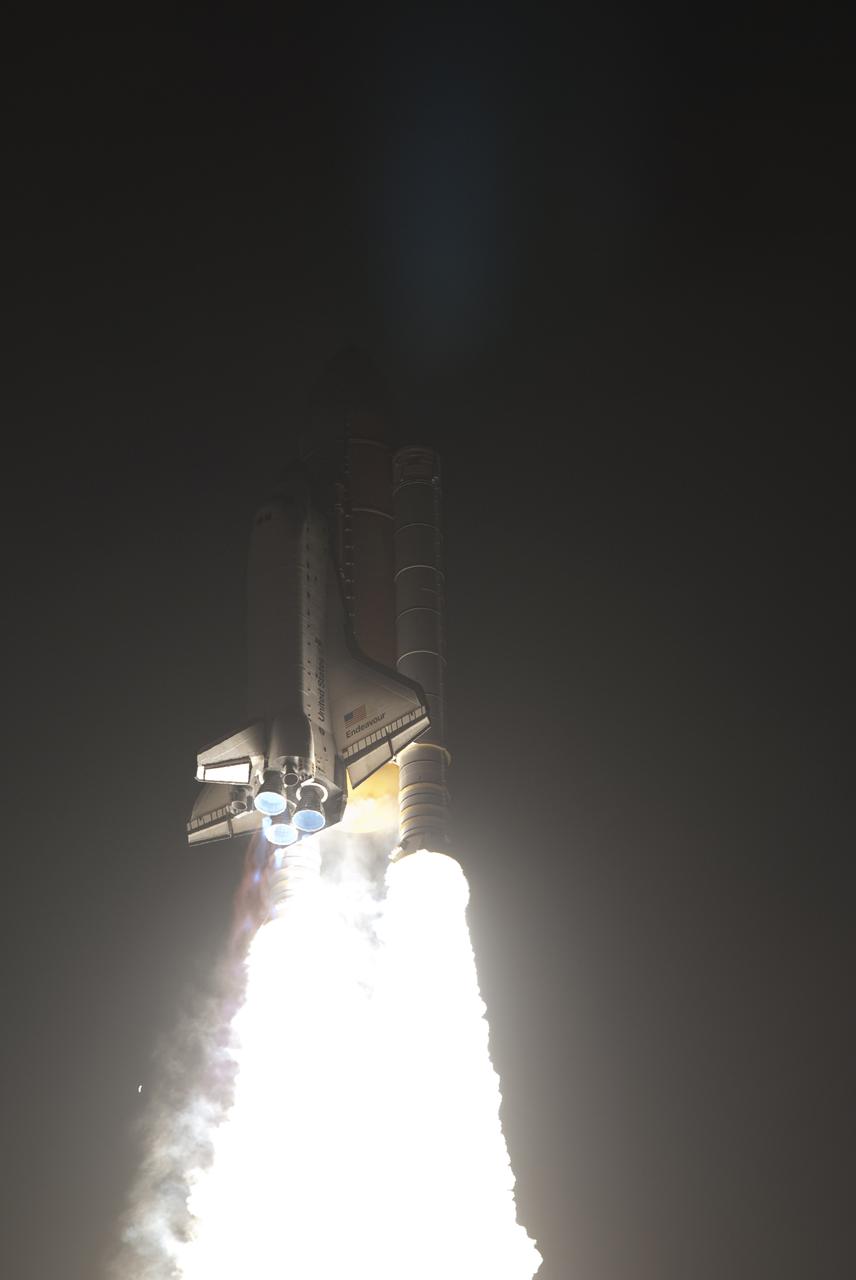
CAPE CANAVERAL, Fla. - In a blinding flash, space shuttle Endeavour races to orbit from Launch Pad 39A at NASA's Kennedy Space Center in Florida. Launch of the STS-130 mission to the International Space Station was at 4:14 a.m. EST. This was the second launch attempt for space shuttle Endeavour's STS-130 crew and the final scheduled space shuttle night launch. The first attempt on Feb. 7 was scrubbed due to unfavorable weather. The primary payload for the STS-130 mission to the International Space Station is the Tranquility node, a pressurized module that will provide additional room for crew members and many of the station's life support and environmental control systems. Attached to one end of Tranquility is a cupola, a unique work area with six windows on its sides and one on top. The cupola resembles a circular bay window and will provide a vastly improved view of the station's exterior. The multi-directional view will allow the crew to monitor spacewalks and docking operations, as well as provide a spectacular view of Earth and other celestial objects. The module was built in Turin, Italy, by Thales Alenia Space for the European Space Agency. For information on the STS-130 mission and crew, visit http:__www.nasa.gov_mission_pages_shuttle_shuttlemissions_sts130_index.html. Photo credit: NASA_ Michael Gayle and Rusty Backer

iss068e022435 (Nov. 15, 2022) --- NASA astronaut and Expedition 68 Flight Engineer Frank Rubio is pictured during a spacewalk tethered to the International Space Station's starboard truss structure. Behind Rubio, the last rays of an orbital sunset penetrate Earth's thin atmosphere as the space station flew 258 miles above the African nation of Algeria.
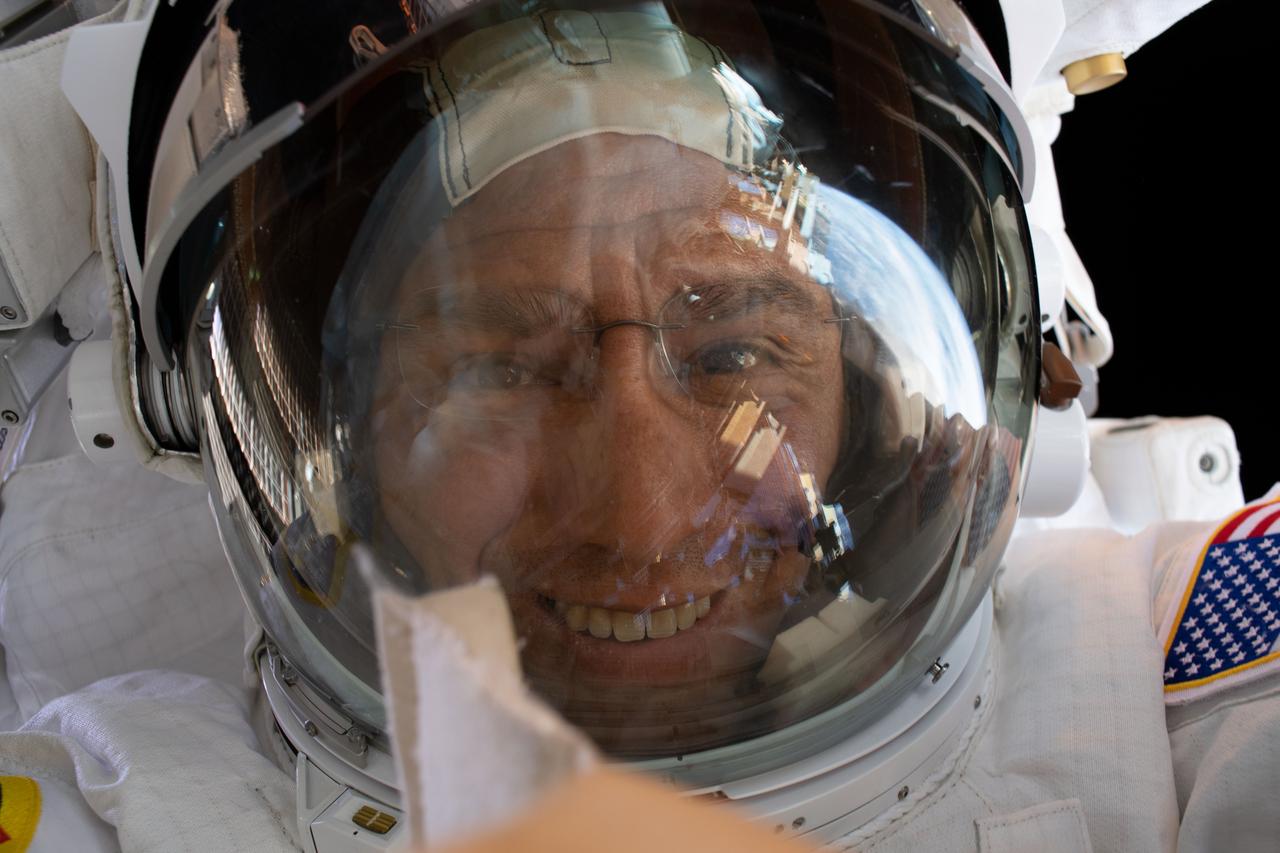
iss068e022445 (Nov. 15, 2022) --- NASA astronaut and Expedition 68 Flight Engineer Frank Rubio points his camera toward himself and takes an out-of-this-world "space-selfie" with his helmet visor's reflective shield up during a spacewalk in his Extravehicular Mobility Unit, or spacesuit.
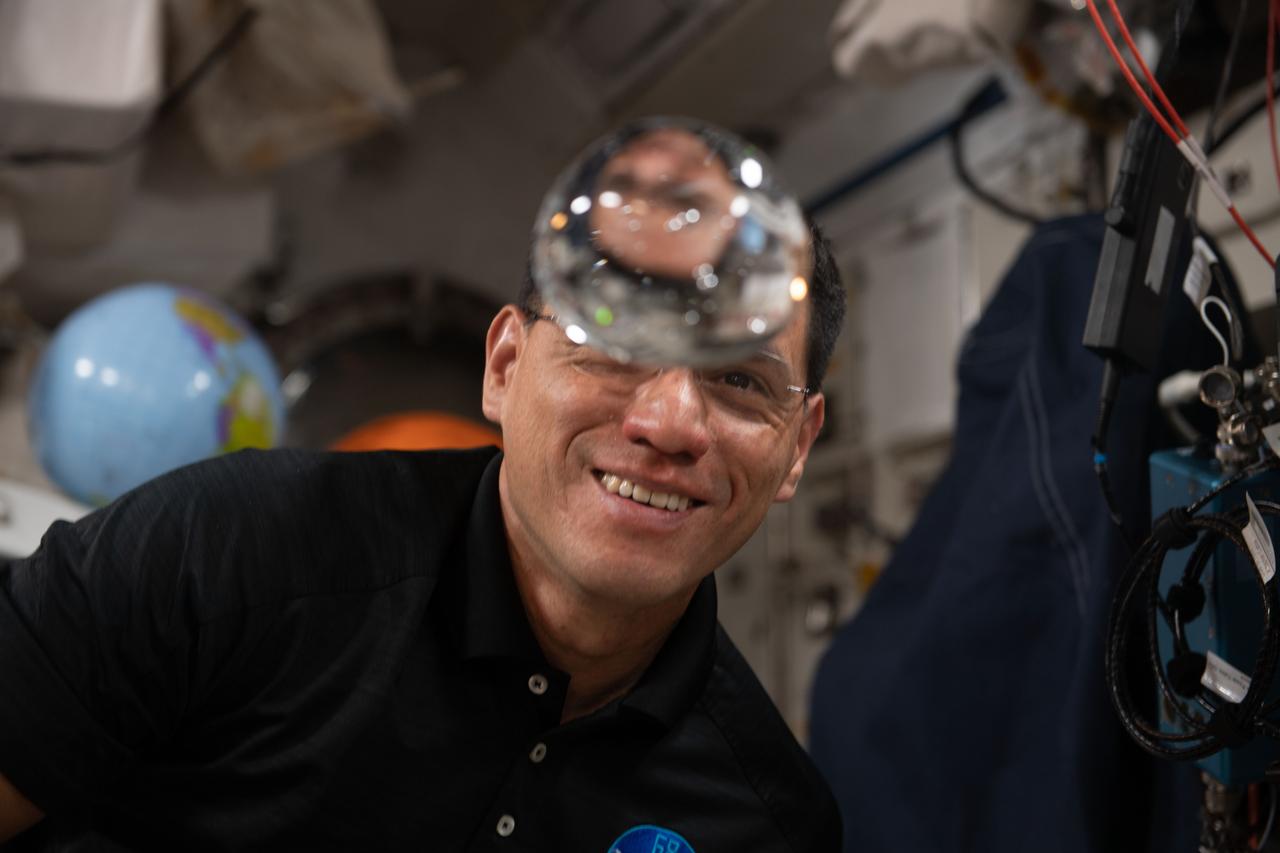
iss068e006386 (Oct. 1, 2022) --- NASA astronaut and Expedition 68 Flight Engineer Frank Rubio has fun with fluid physics as he observes the behavior of a free-flying water bubble inside the International Space Station's Kibo laboratory module.
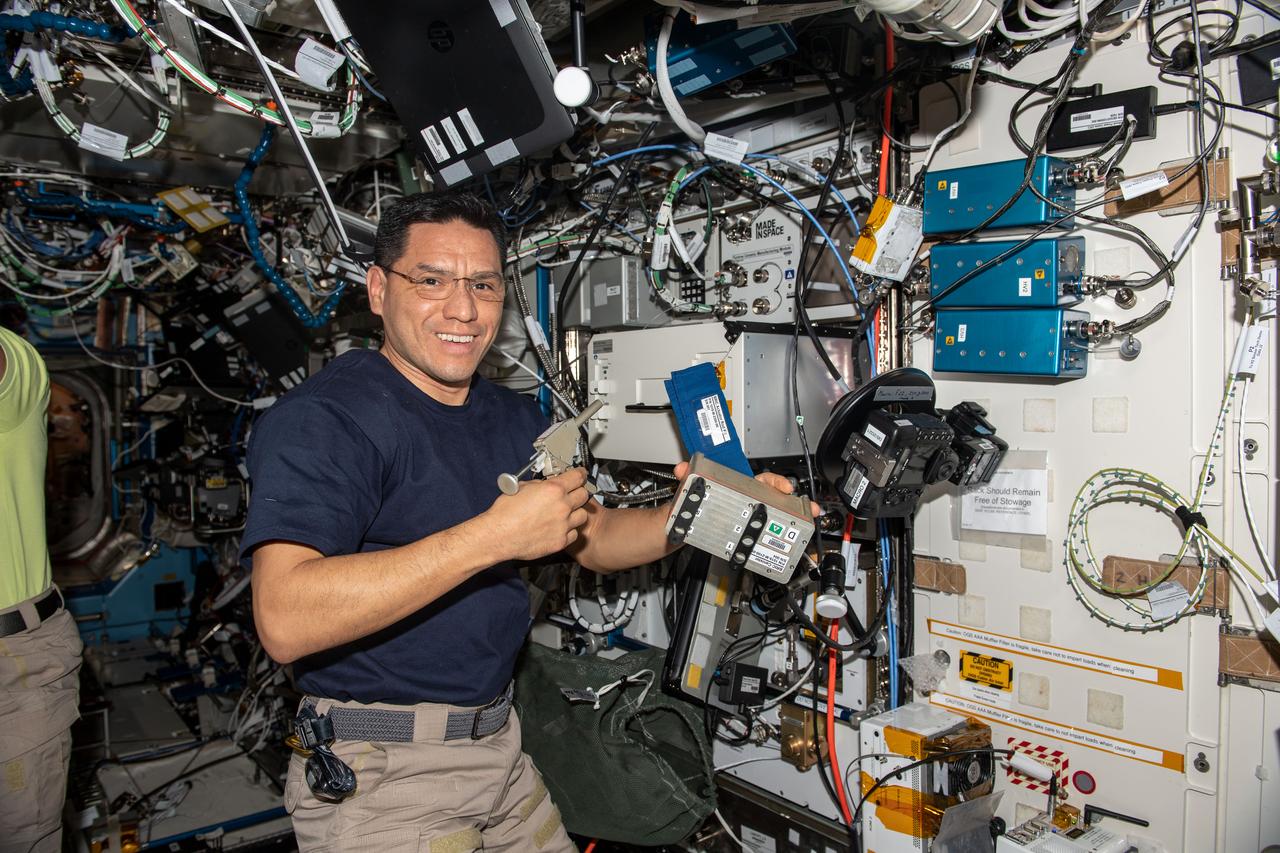
iss068e027511_alt (Dec. 6, 2022) --- NASA astronaut and Expedition 68 Flight Engineer Frank Rubio activates hardware for a space biology experiment that is studying how weightlessness affects genetic expression in microbes to understand bacterial adaptation and protect astronauts.
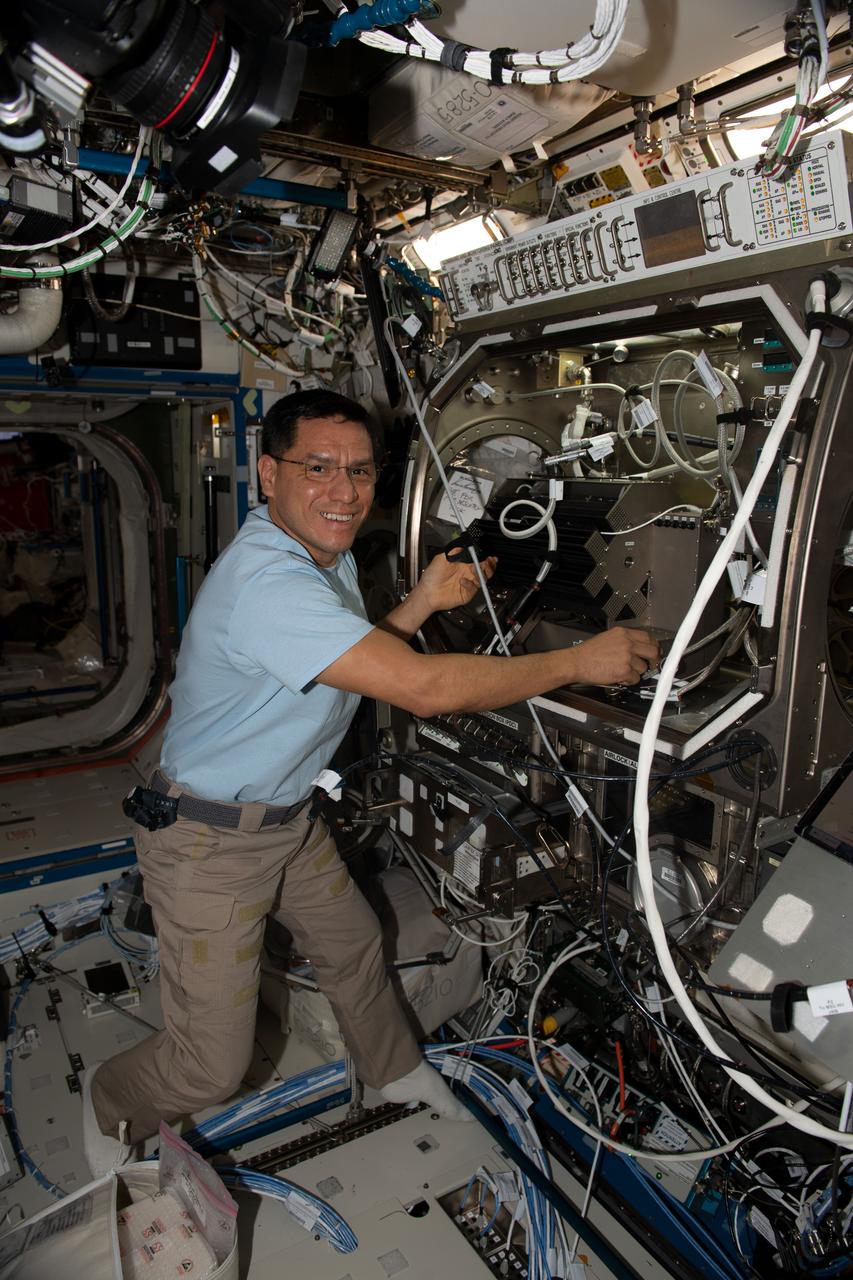
iss068e024574 (Nov. 26, 2022) --- NASA astronaut and Expedition 68 Flight Engineer Frank Rubio works in the Microgravity Science Glovebox setting up hardware for the Pore Formation and Mobility Investigation. The space physics study demonstrates a passive cooling system for electronic devices in microgravity using a micro-structured surface.

iss068e022442 (Nov. 15, 2022) --- NASA astronaut and Expedition 68 Flight Engineer Frank Rubio points his camera toward himself and takes an out-of-this-world "space-selfie" with his helmet visor's reflective shield down during a spacewalk in his Extravehicular Mobility Unit, or spacesuit.
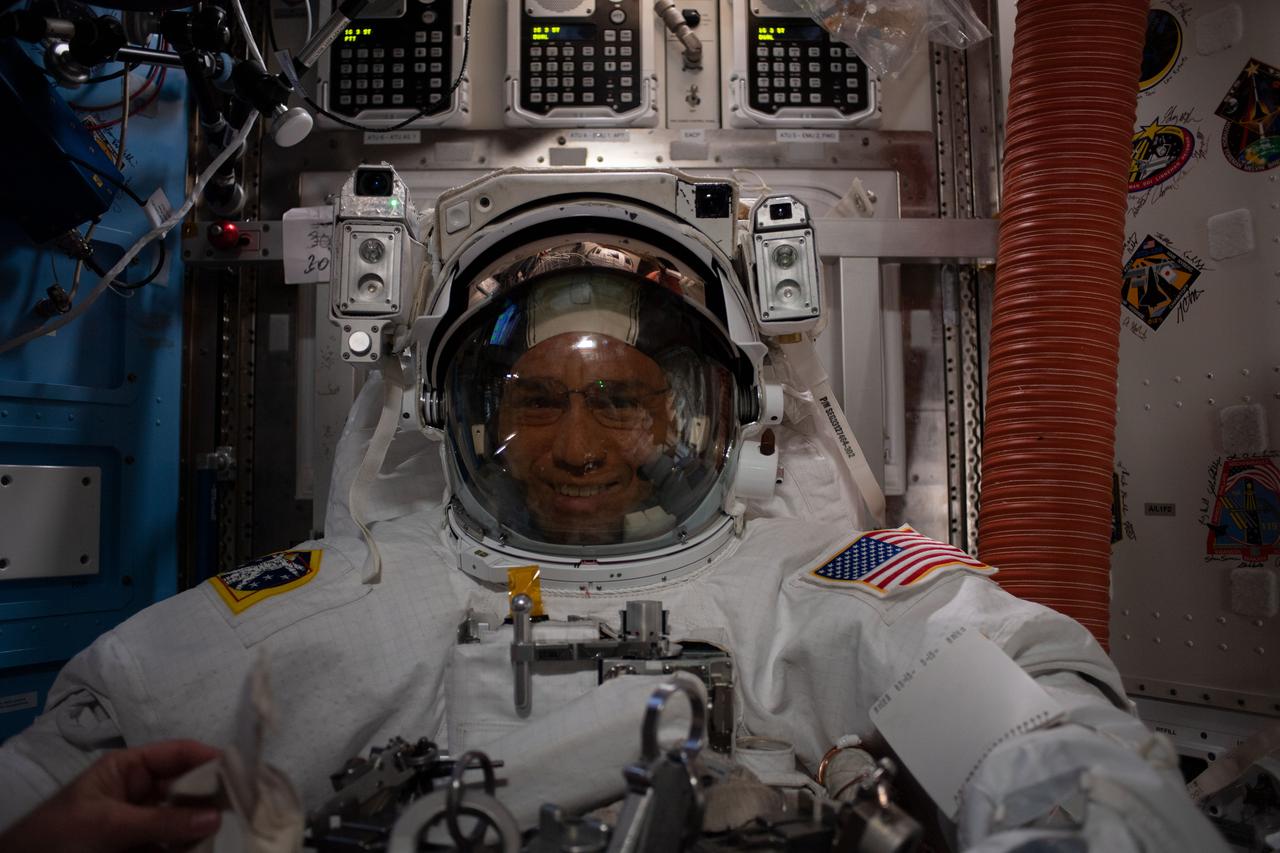
iss068e022427 (Nov. 15, 2022) --- NASA astronaut and Expedition 68 Flight Engineer Frank Rubio is pictured suited up in his Extravehicular Mobility Unity (EMU), or spacesuit, in the International Space Station's Quest airlock. He and fellow NASA astronaut Josh Cassada (out of frame) conducted a seven-hour and 11-minute a spacewalk to ready the orbiting lab's starboard truss structure for future rollout solar array installation work. Credit: Josh Cassada/NASA
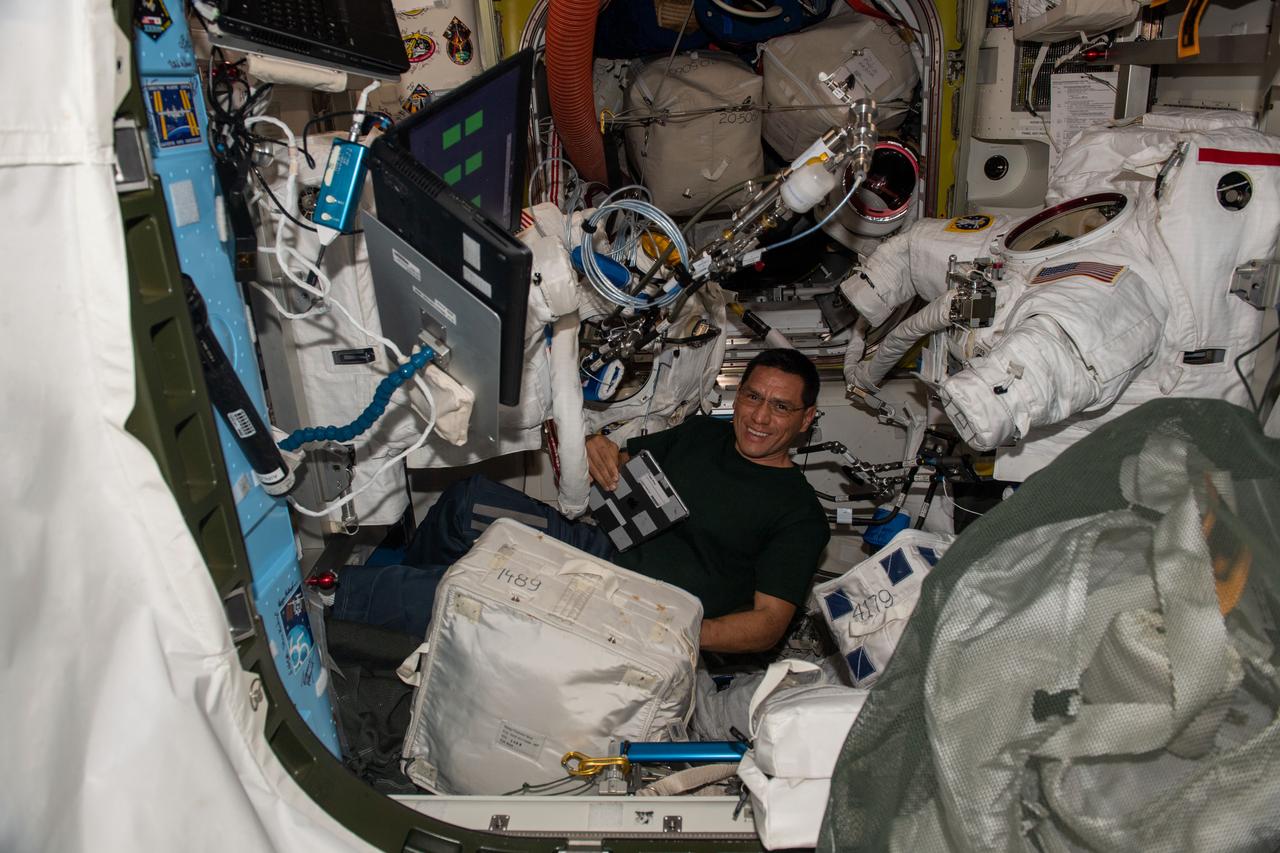
iss068e020555 (Nov. 2, 2022) --- NASA astronaut and Expedition 68 Flight Engineer Frank Rubio scrubs cooling loops inside Extravehicular Mobility Units (EMUs), or spacesuits, inside the International Space Station's Quest airlock.

iss068e017867 (Oct. 1, 2022) --- NASA astronaut and Expedition 68 Flight Engineer Frank Rubio is pictured inside the cupola, the International Space Station's "window to the world," as the orbiting lab flew 263 miles above southeastern England. Credit: NASA/Frank Rubio
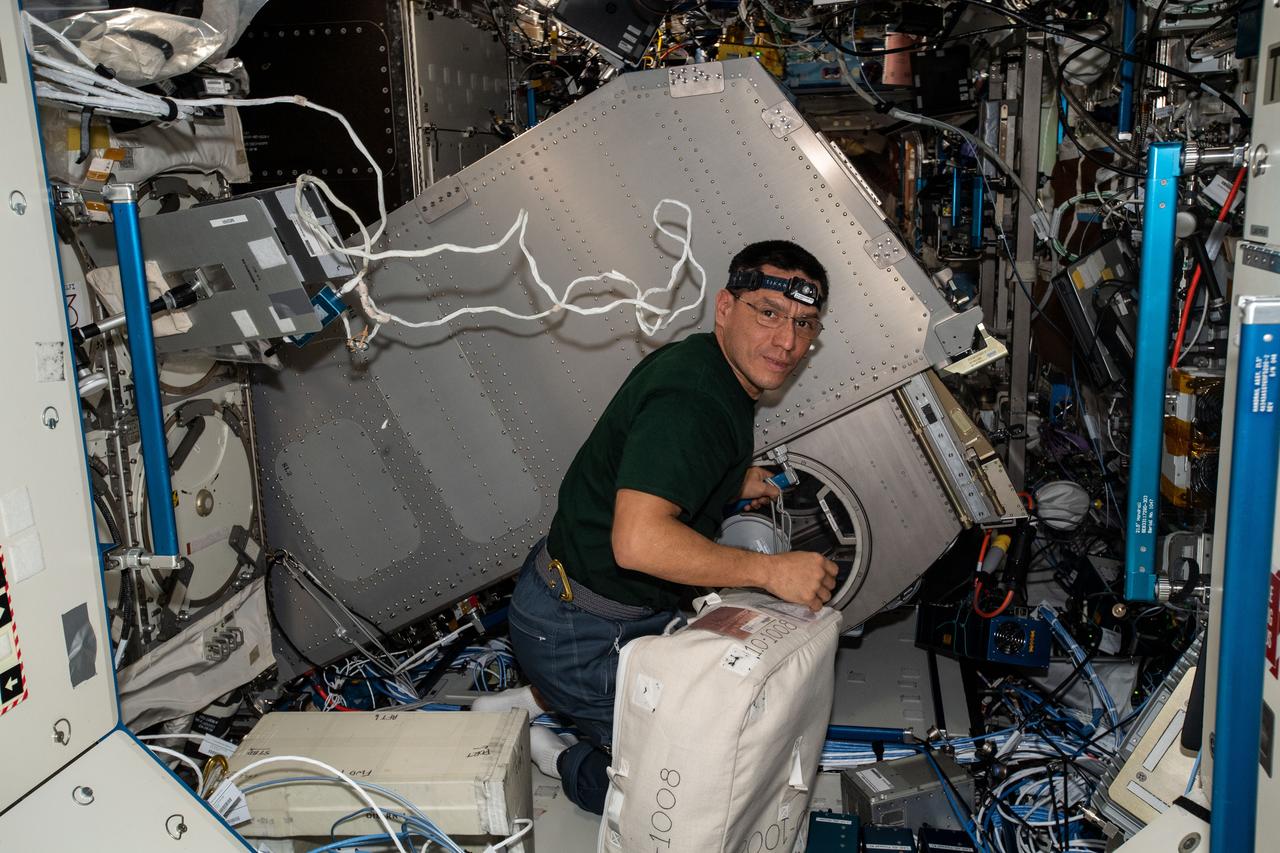
iss068e020375 (Nov. 1, 2022) --- NASA astronaut and Expedition 68 Flight Engineer Frank Rubio cleans fans. filters, and components inside the Microgravity Science Glovebox (MSG) after rotating it down from its rack slot in the U.S. Destiny laboratory module. The MSG hosts numerous space science experiments from physics to biology aboard the International Space Station. Credit: Josh Cassada/NASA
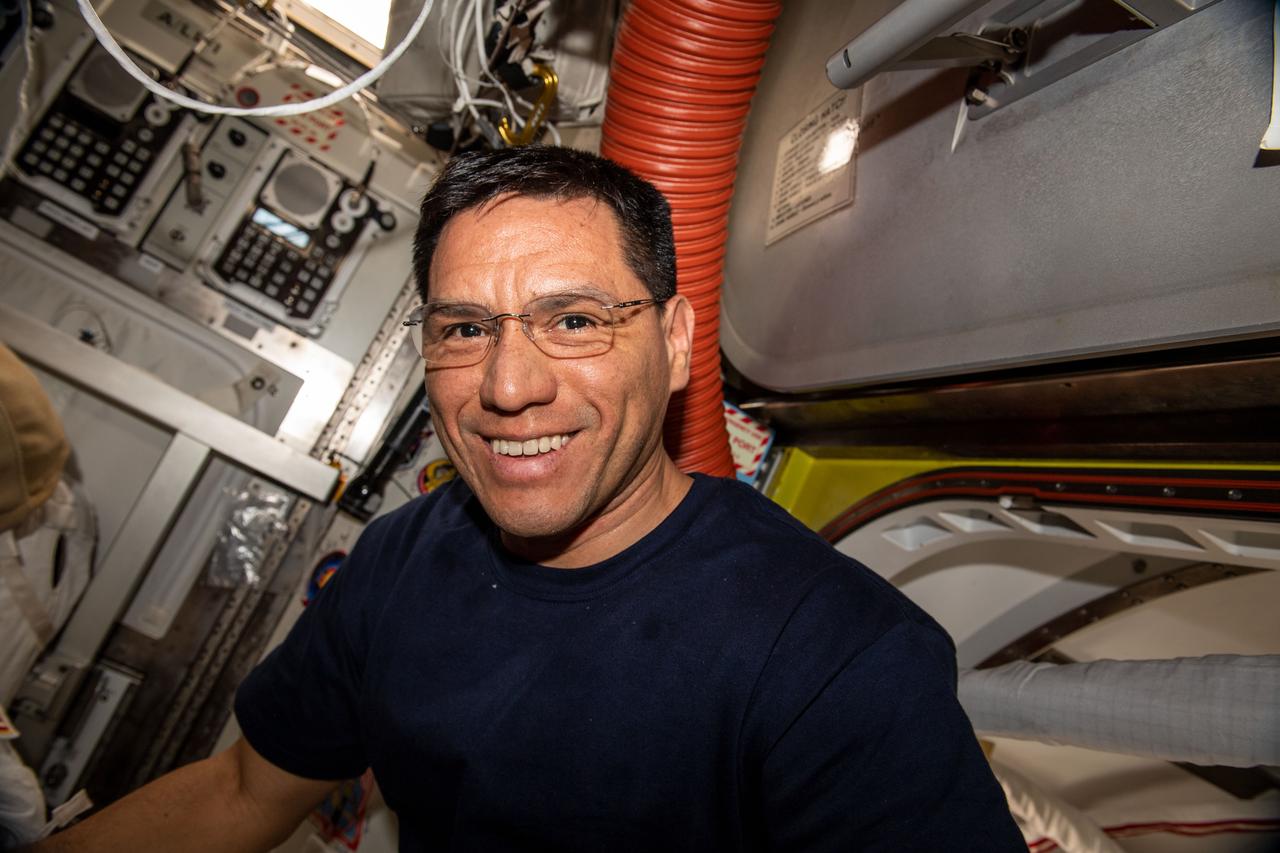
iss068e026012 (Dec. 2, 2022) --- NASA astronaut and Expedition 68 Flight Engineer Frank Rubio is pictured working inside the International Space Station's Quest airlock.

iss068e020504 (Nov. 3, 2022) --- NASA astronaut and Expedition 68 Flight Engineer Frank Rubio is pictured inside the International Space Station's U.S. Destiny laboratory module.
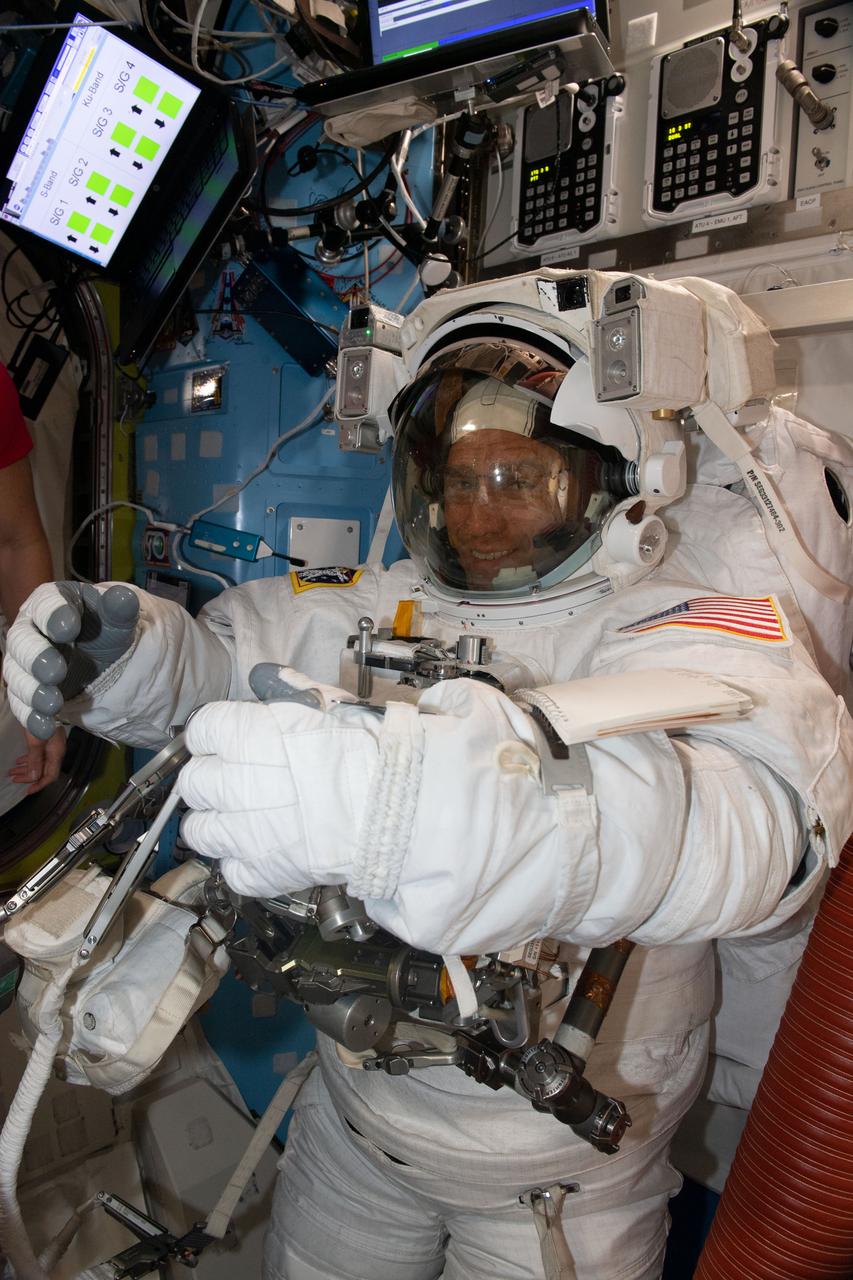
iss068e022317 (Nov. 15, 2022) --- NASA astronaut and Expedition 68 Flight Engineer Frank Rubio is pictured suited up inside his Extravehicular Mobility Unit (EMU), or spacesuit, before beginning a seven-hour and 11-minute a spacewalk to ready the orbiting lab's starboard truss structure for future rollout solar array installation work. Credit: Koichi Wakata/Japan Aerospace Exploration Agency (JAXA)
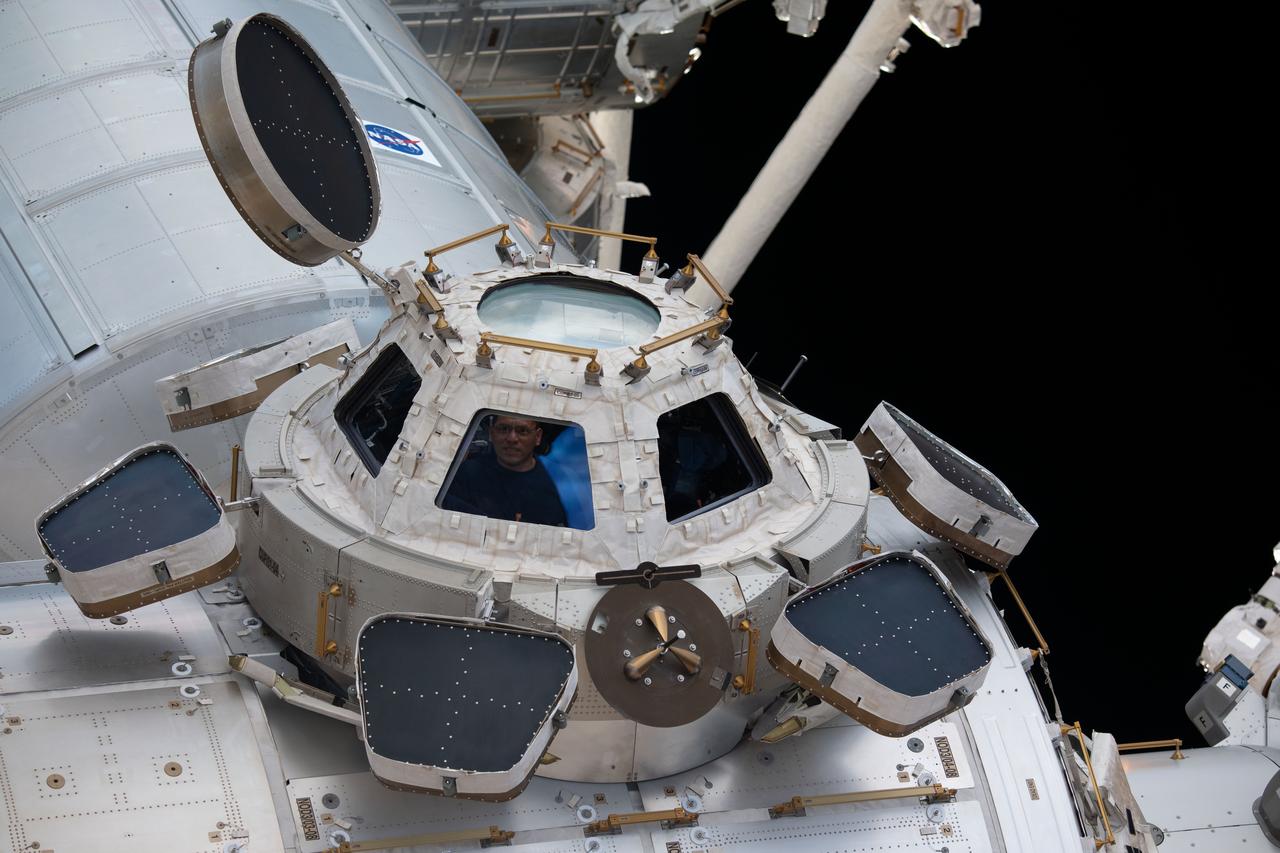
iss068e036064 (Jan. 2, 2023) --- NASA astronaut and Expedition 68 Flight Engineer Frank Rubio peers through one of the seven windows in the cupola, the International Space Station's "window to the world."