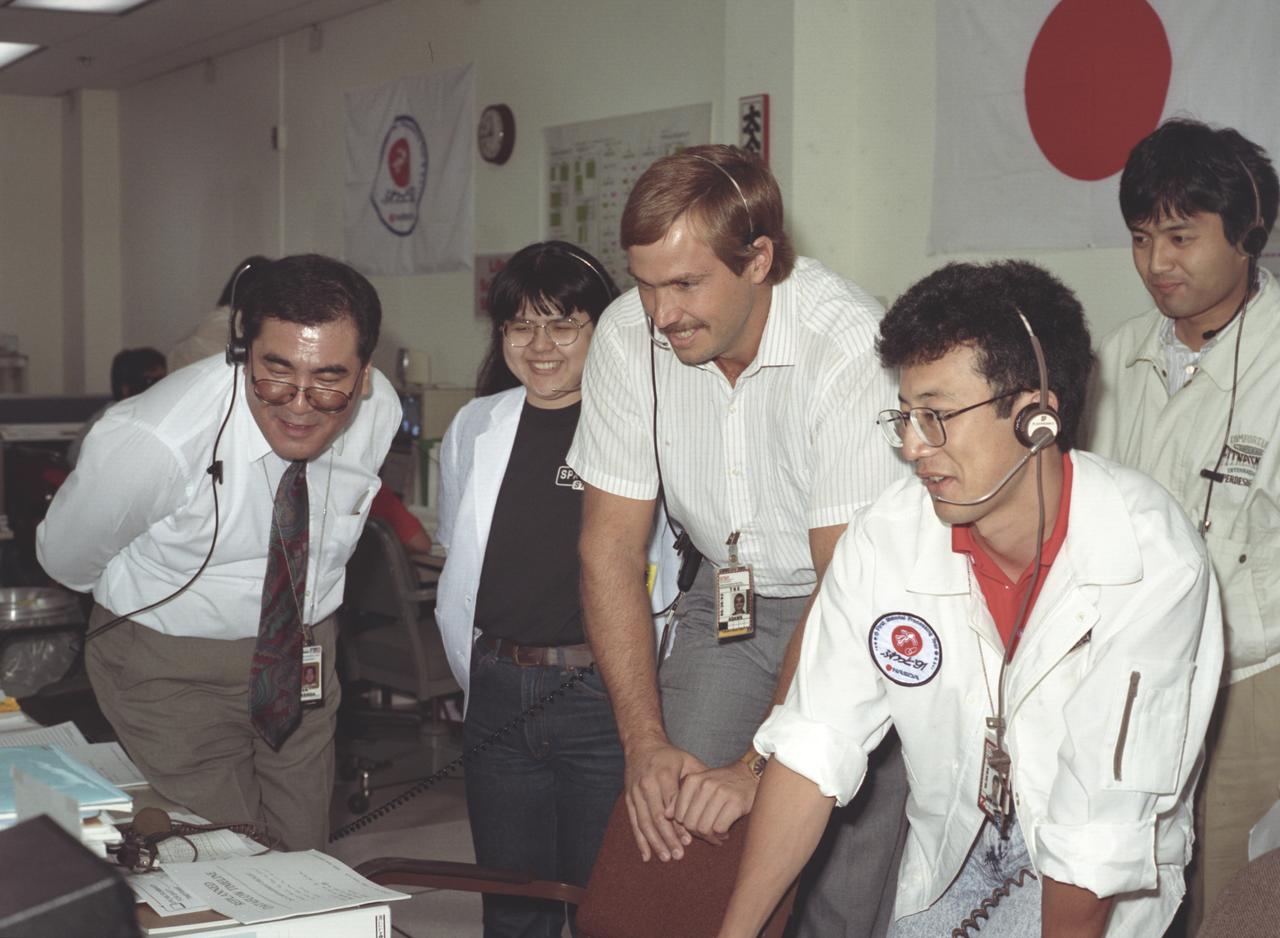
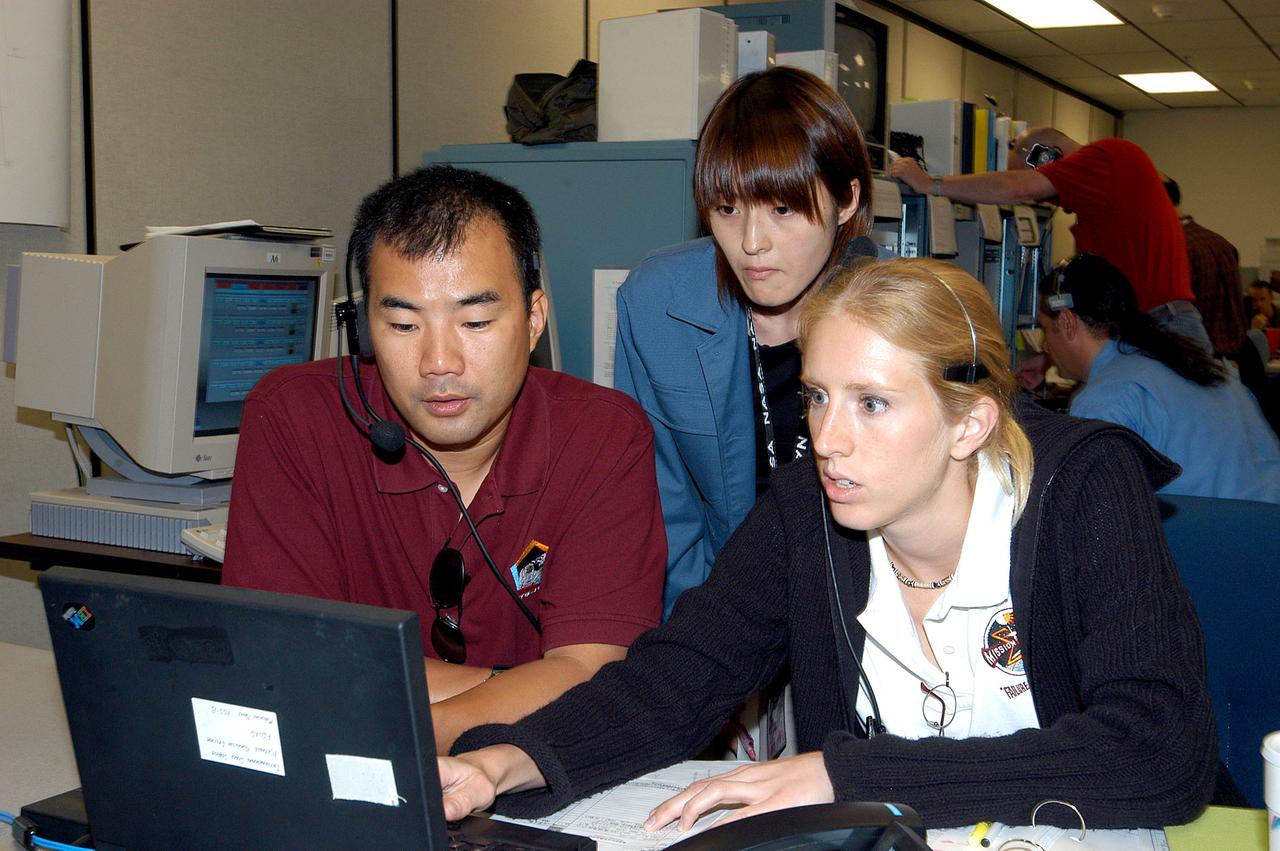
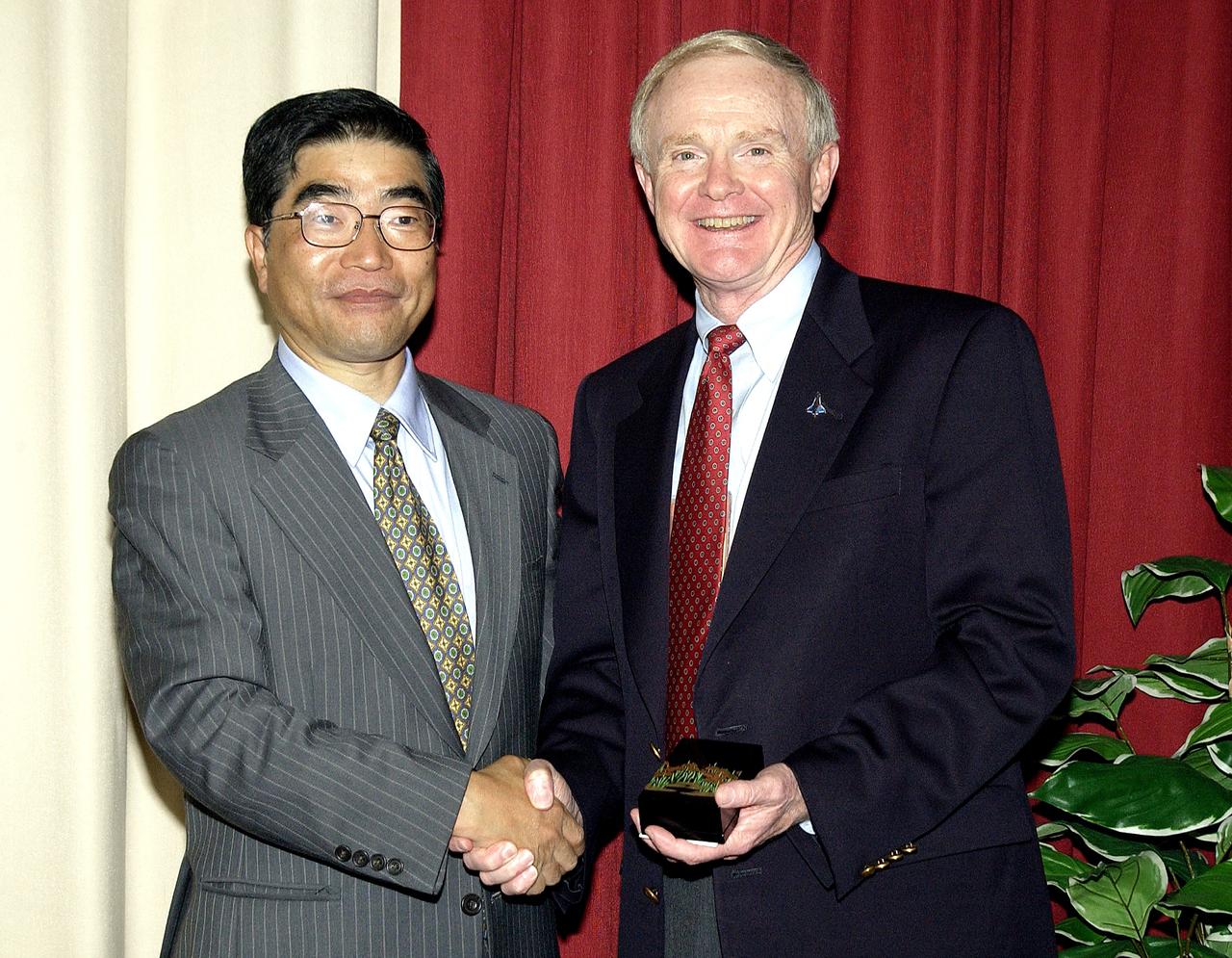
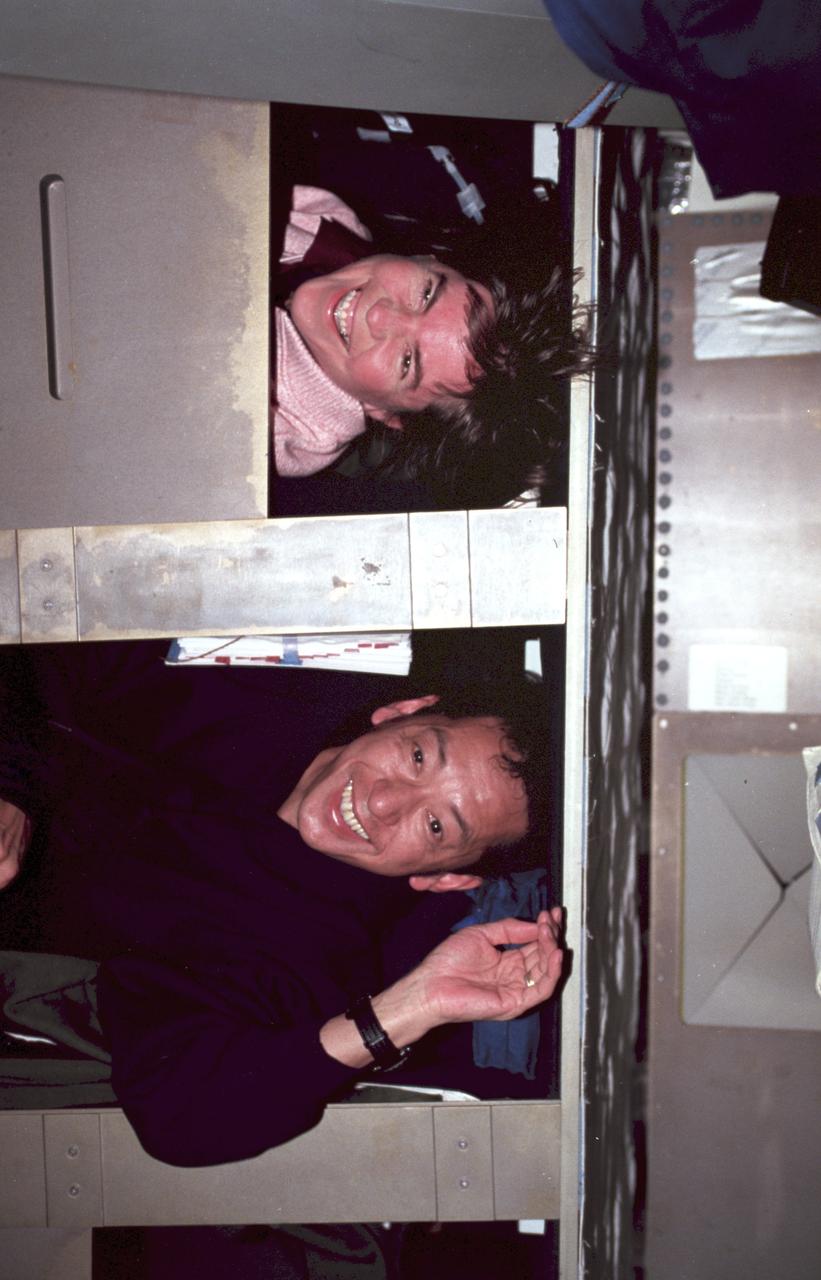
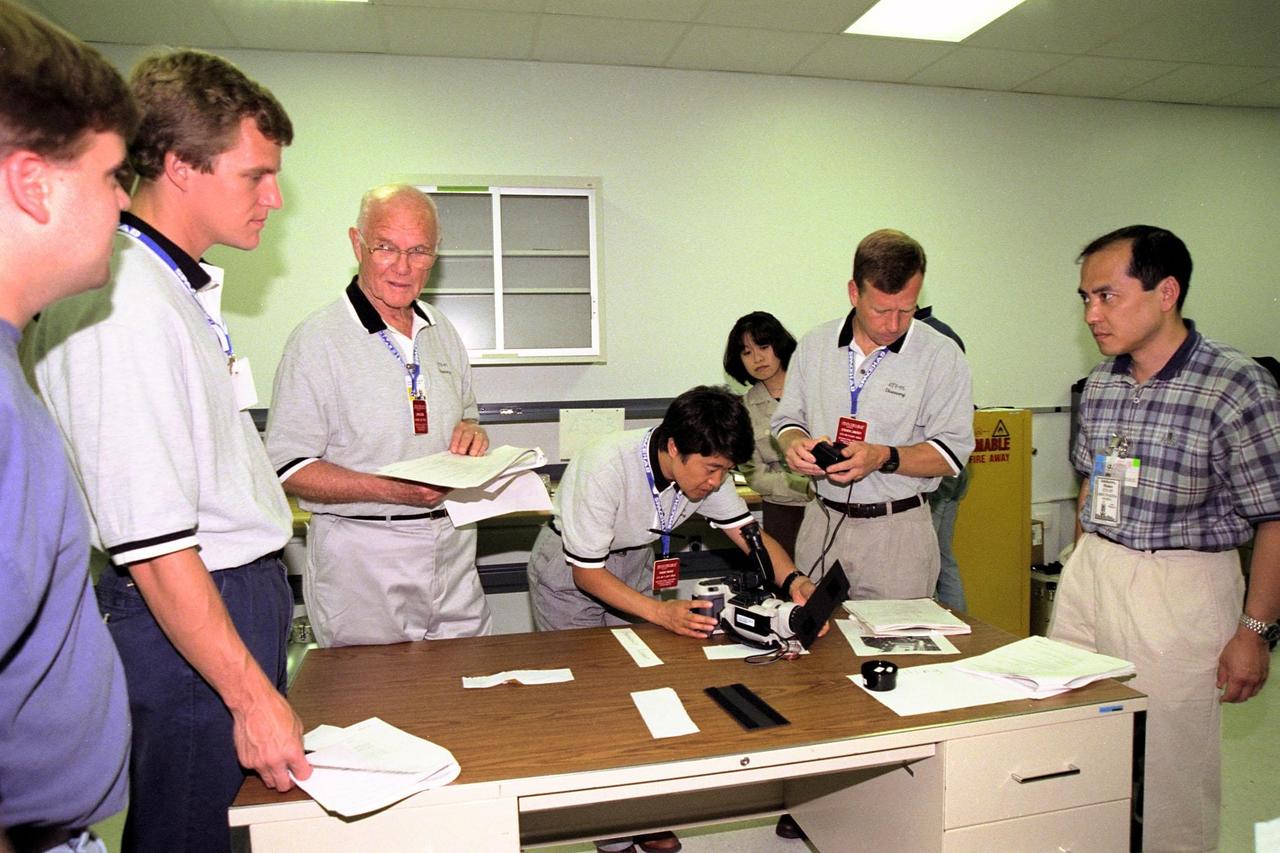
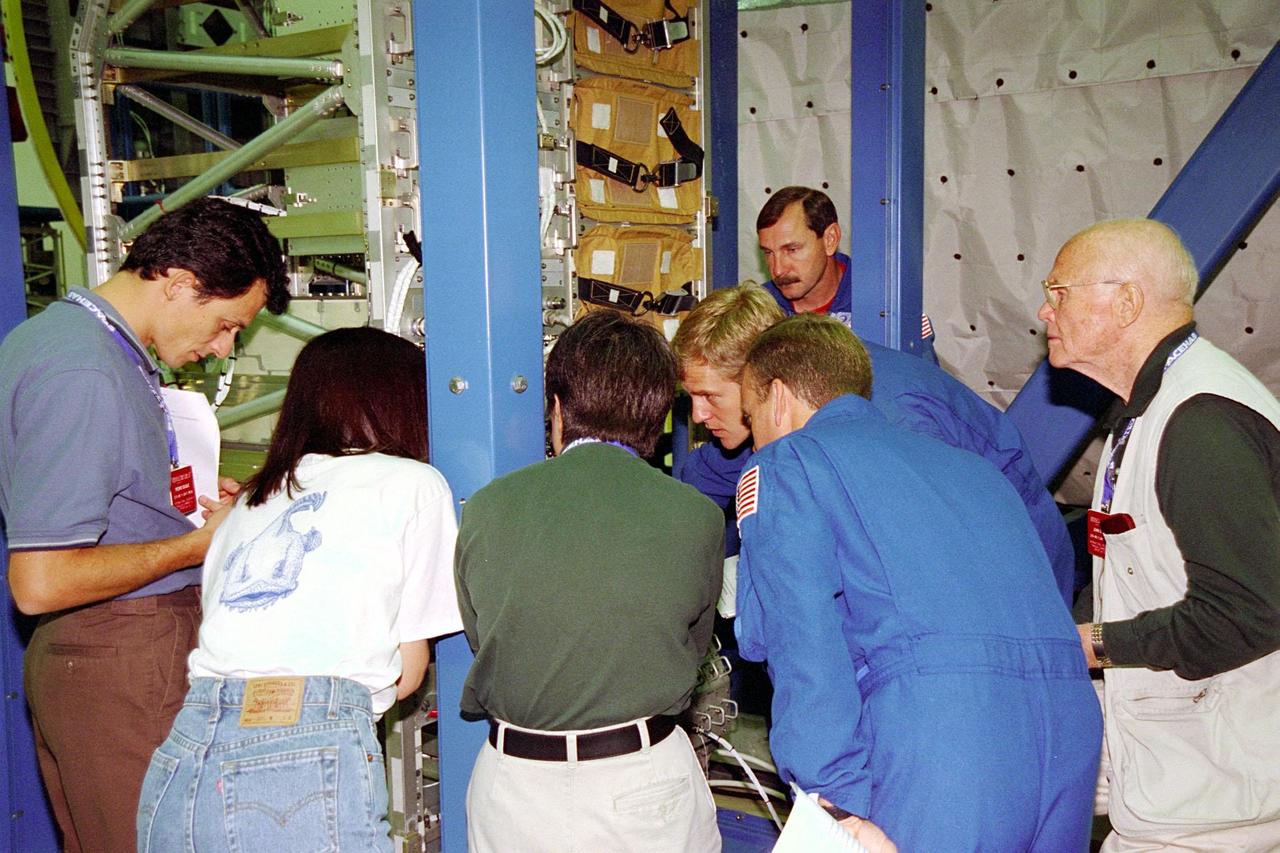
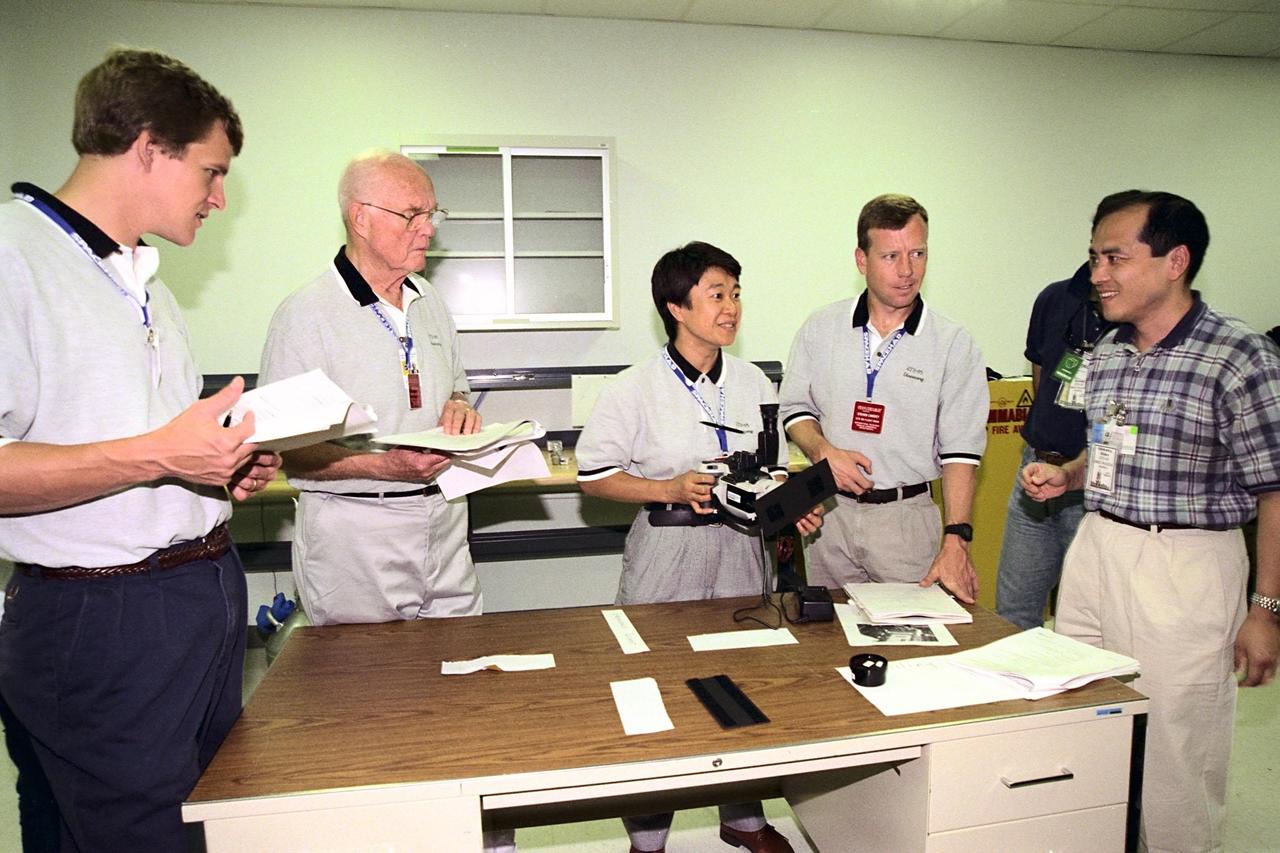
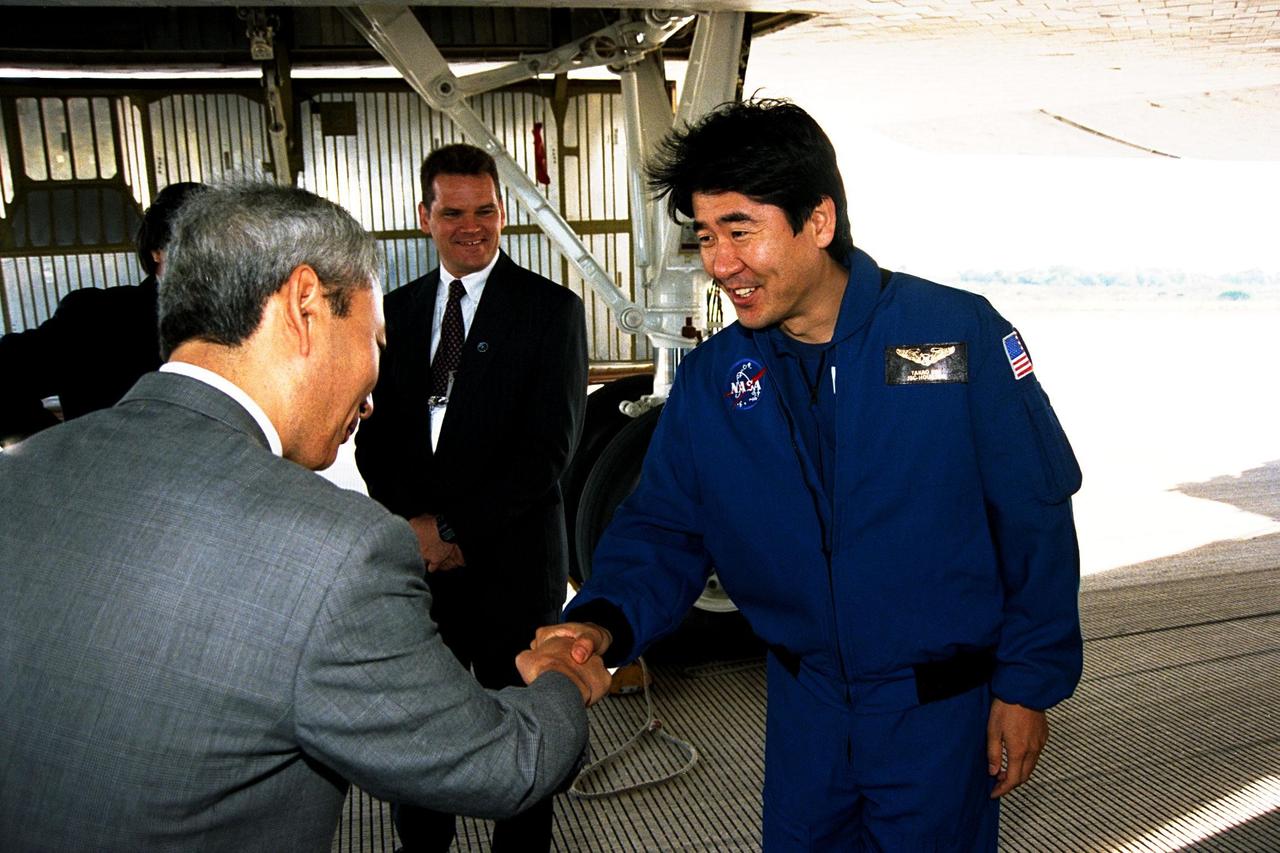
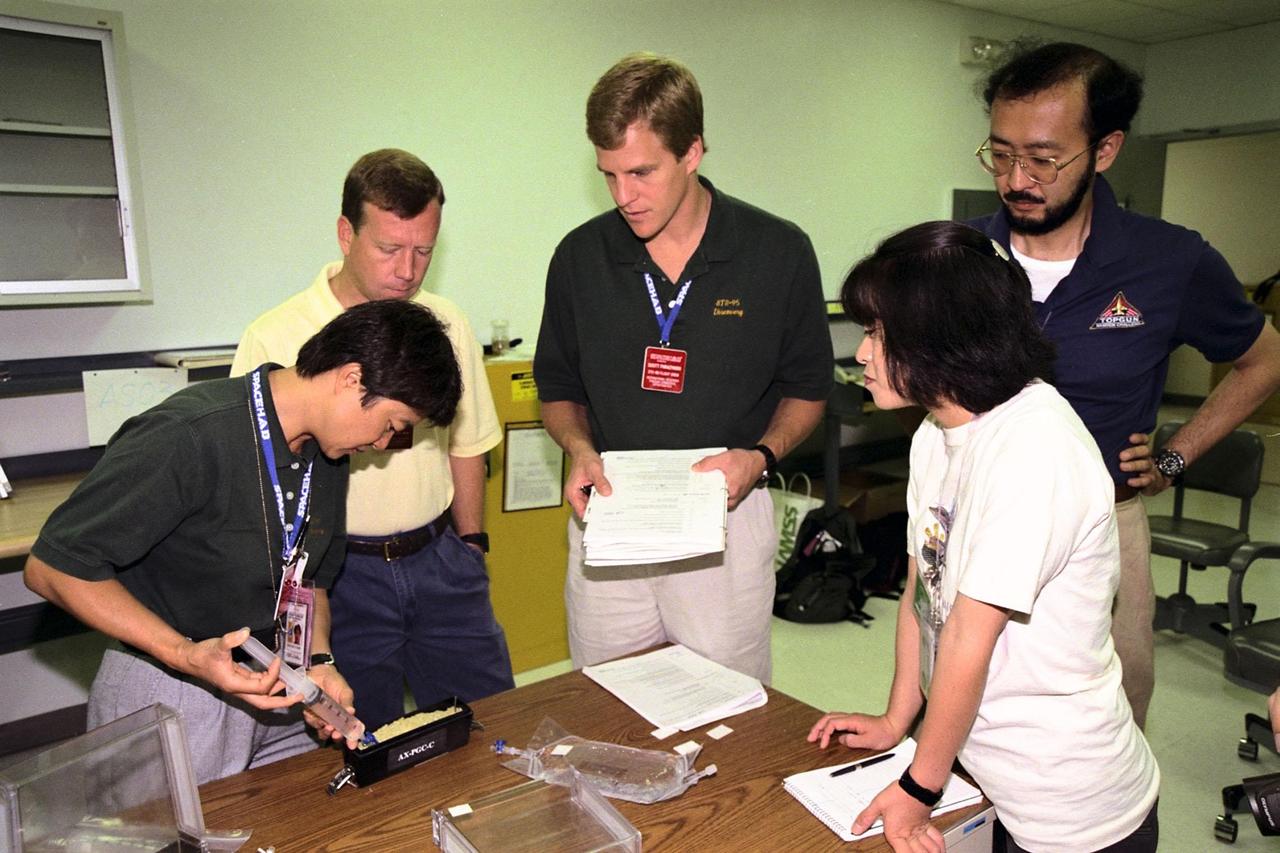
The science laboratory, Spacelab-J (SL-J), flown aboard the STS-47 flight was a joint venture between NASA and the National Space Development Agency of Japan (NASDA) utilizing a manned Spacelab module. The mission conducted 24 materials science and 20 life science experiments, of which 35 were sponsored by NASDA, 7 by NASA, and two collaborative efforts. Materials science investigations covered such fields as biotechnology, electronic materials, fluid dynamics and transport phenomena, glasses and ceramics, metals and alloys, and acceleration measurements. Life sciences included experiments on human health, cell separation and biology, developmental biology, animal and human physiology and behavior, space radiation, and biological rhythms. Test subjects included the crew, Japanese koi fish (carp), cultured animal and plant cells, chicken embryos, fruit flies, fungi and plant seeds, and frogs and frog eggs. From the Huntsville Operations Support Center (HOSC) Spacelab Payload Operations Control Center (SL POCC), NASDA President, Mr. Yamano, speaks to Payload Specialist Mamoru Mohri, a Japanese crew member aboard the STS-47 Spacelab J mission.
Around Marshall
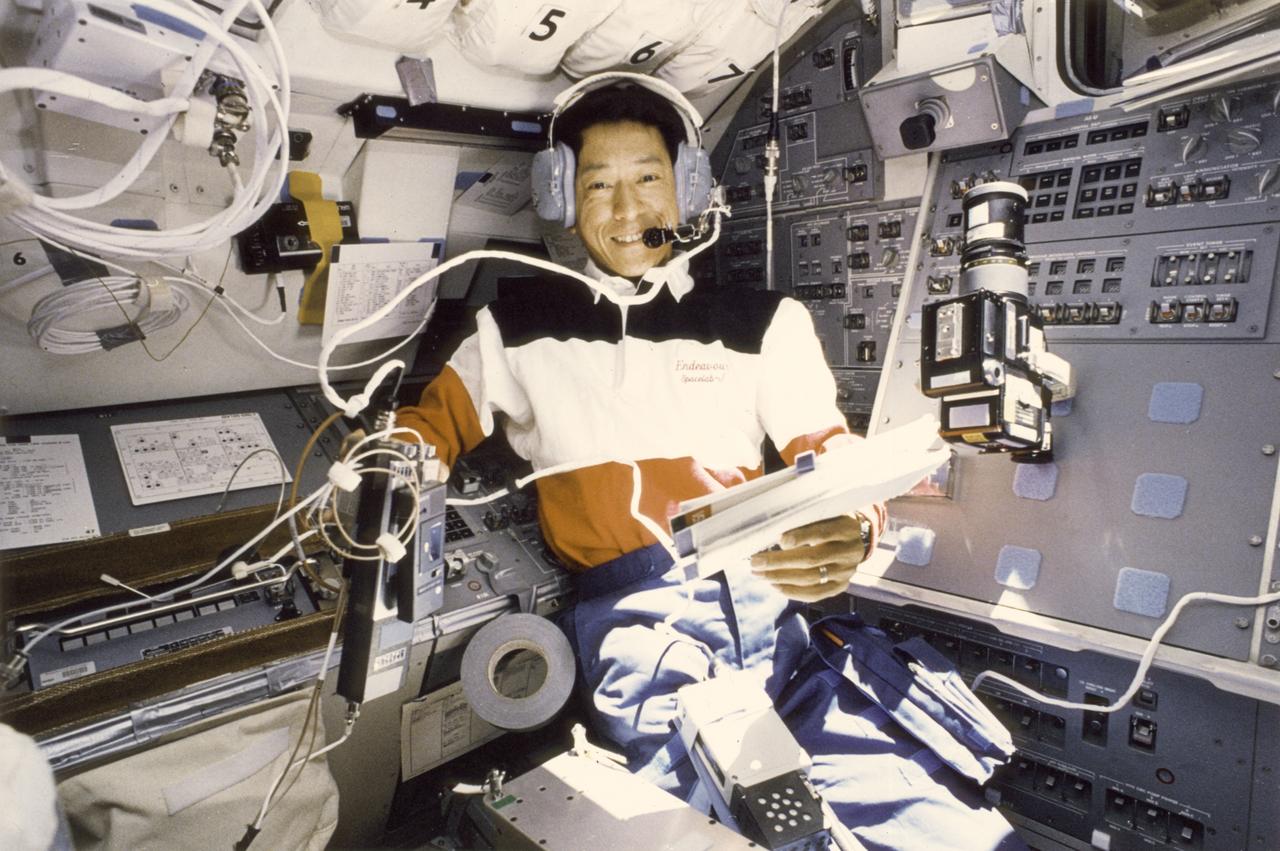
Japanese astronaut, Mamoru Mohri, talks to Japanese students from the aft flight deck of the Space Shuttle Orbiter Endeavour during the Spacelab-J (SL-J) mission. The SL-J mission was a joint venture between NASA and the National Space Development Agency of Japan (NASDA) utilizing a marned Spacelab module. The mission conducted 24 materials science and 20 life science experiments, of which 35 were sponsored by NASDA, 7 by NASA, and two collaborative efforts. Materials science investigations covered such fields as biotechnology, electronic materials, fluid dynamics and transport phenomena, glasses and ceramics, metals and alloys, and acceleration measurements. Life sciences included experiments on human health, cell separation and biology, developmental biology, animal and human physiology and behavior, space radiation, and biological rhythms. Test subjects included the crew, Japanese koi fish (carp), cultured animal and plant cells, chicken embryos, fruit flies, fungi and plant seeds, and frogs and frog eggs. Spacelab-J was launched aboard the Space Shuttle Orbiter Endeavour on September 12, 1992.
Spacelab
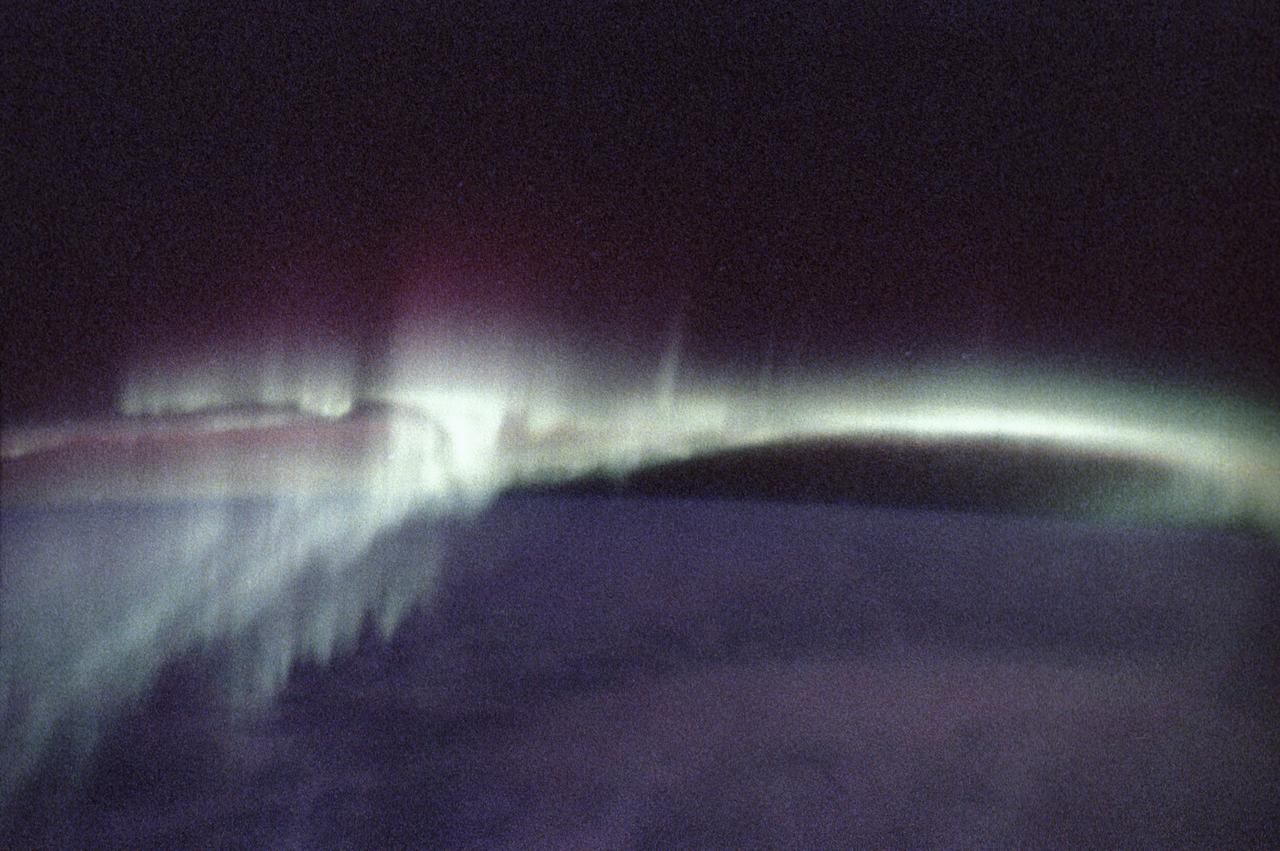
This photograph of aurora borealis, northern aurora, was taken during the Spacelab-J (SL-J) mission (STS-47). People who live in the northernmost areas like Alaska or work in the southernmost regions like Antarctica often see colorful lights produced by Earth's natural electromagnetic generator; these shimmering expanses of light are auroras, commonly called the northern and southern lights. Charged particles from the magnetosphere follow magnetic fields and are accelerated toward Earth at the magnetic poles where they strike molecules in the upper atmosphere, staining the sky with the red and green lights of oxygen and hydrogen, and the purples and pinks of nitrogen. The altitude and inclination of the Spacelab will give scientists unique views of auroras, which occur at altitudes ranging from about 90 to 300 kilometers (56 to 186 miles). Most views of the auroras have been from the ground where only limited parts can be seen. These Spacelab views will give scientists information on their complex structure and chemical composition. The Spacelab-J was a joint mission of NASA and the National Space Development Agency of Japan (NASDA) utilizing a marned Spacelab module. The mission conducted microgravity investigations in materials and life sciences. The SL-J was launched aboard the Space Shuttle Orbiter Endeavour (STS-47) on September 12, 1992.
Space Science
This photograph of aurora borealis, northern aurora, was taken during the Spacelab-J (SL-J) mission (STS-47). People who live in the northernmost areas like Alaska or work in the southernmost regions like Antarctica often see colorful lights produced by Earth's natural electromagnetic generator; these shimmering expanses of light are auroras, commonly called the northern and southern lights. Charged particles from the magnetosphere follow magnetic fields and are accelerated toward Earth at the magnetic poles where they strike molecules in the upper atmosphere, staining the sky with the red and green lights of oxygen and hydrogen, and the purples and pinks of nitrogen. The altitude and inclination of the Spacelab will give scientists unique views of auroras, which occur at altitudes ranging from about 90 to 300 kilometers (56 to 186 miles). Most views of the auroras have been from the ground where only limited parts can be seen. These Skylab views will give scientists information on their complex structure and chemical composition. The Spacelab-J was a joint mission of NASA and the National Space Development Agency of Japan (NASDA) utilizing a marned Spacelab module. The mission conducted microgravity investigations in materials and life sciences. The SL-J was launched aboard the Space Shuttle Orbiter Endeavour (STS-47) on September 12, 1992.
Space Science
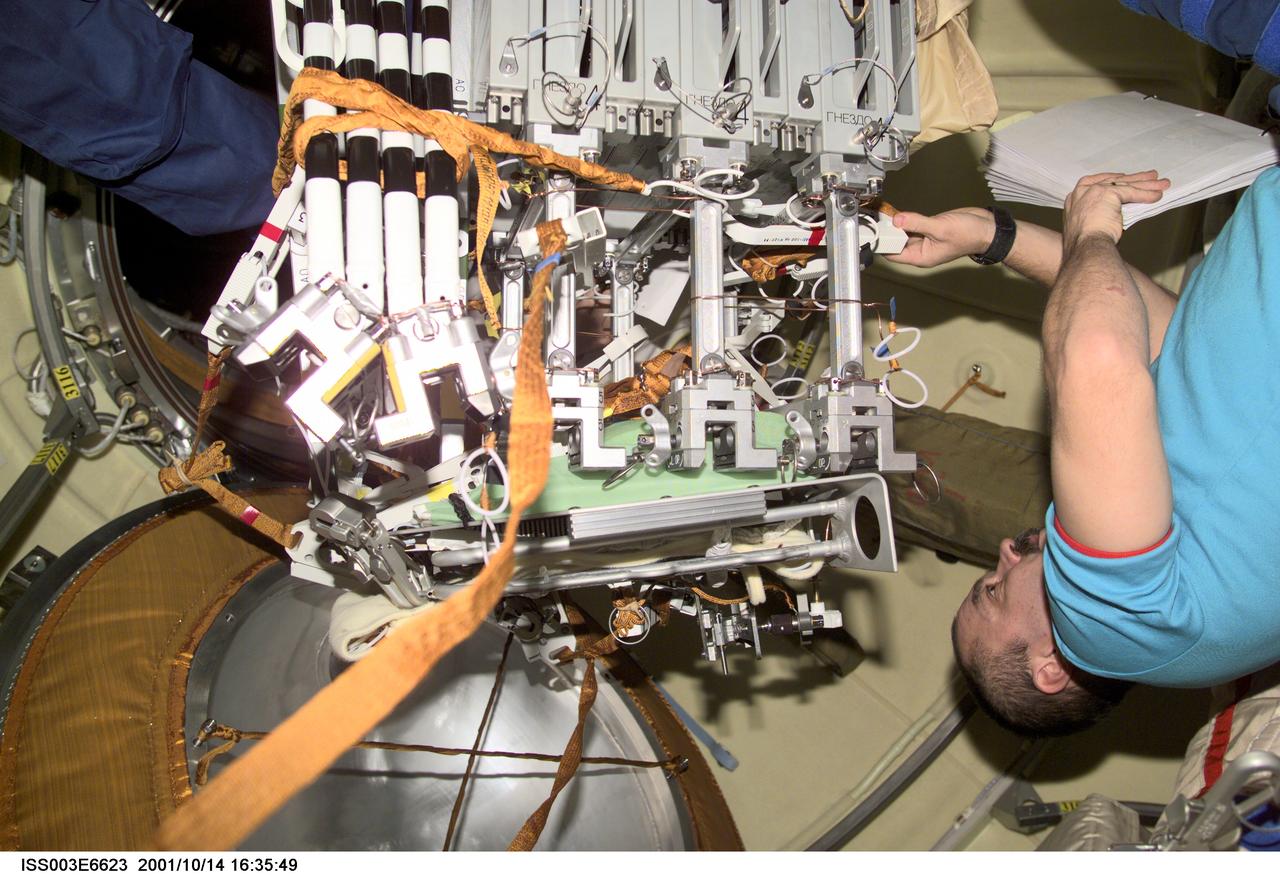
ISS003-E-6623 (14 October 2001) --- Cosmonaut Mikhail Tyurin, Expedition Three flight engineer representing Rosaviakosmos, works with hardware for the Micro-Particles Capturer (MPAC) and Space Environment Exposure Device (SEED) experiment and fixture mechanism in the Zvezda Service Module on the International Space Station (ISS). MPAC and SEED were developed by Japan’s National Space Development Agency (NASDA), and Russia developed the Fixture Mechanism. This image was taken with a digital still camera.
Tyurin readies the NASDA exposure experiment cases for their EVA
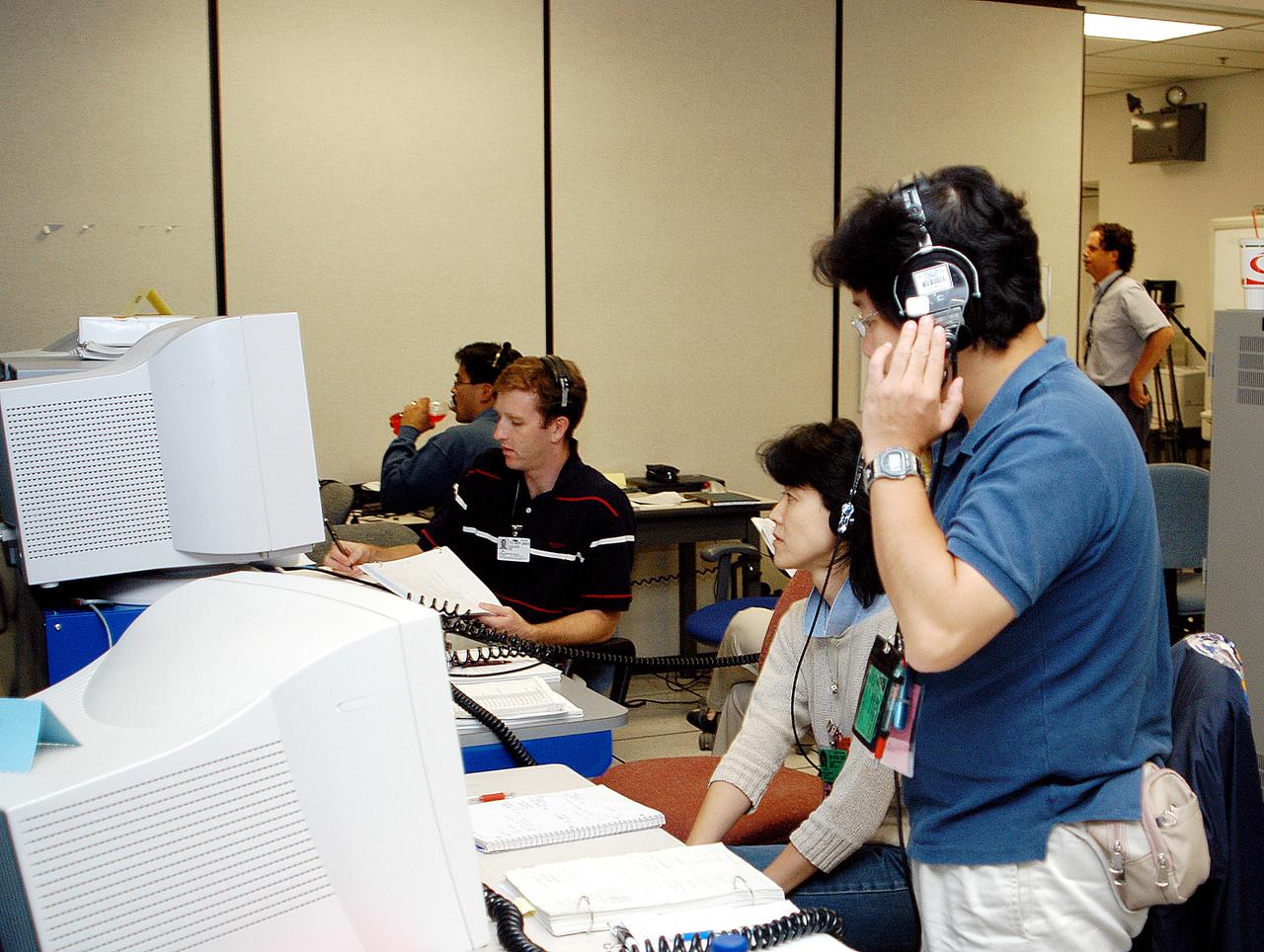
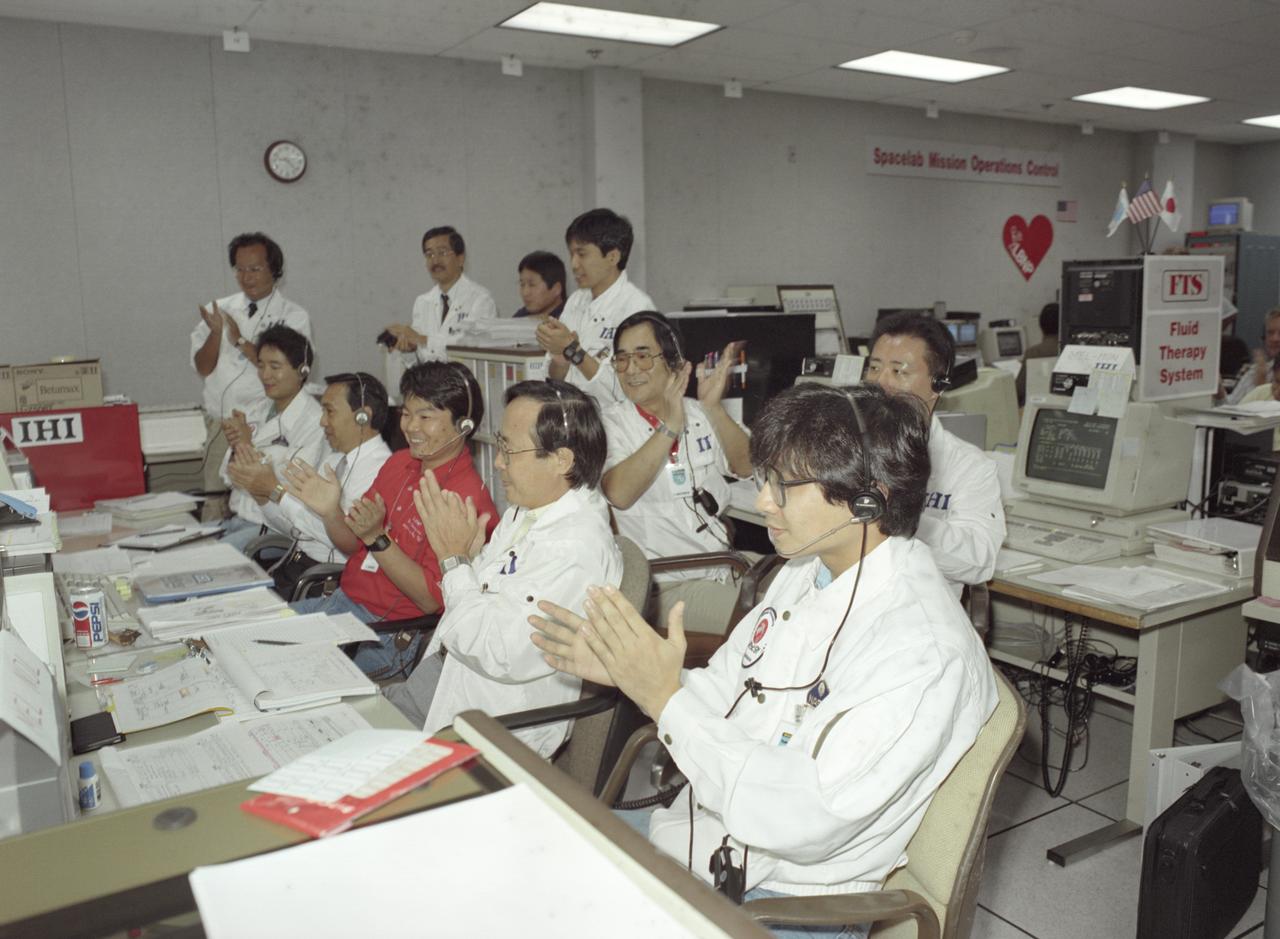
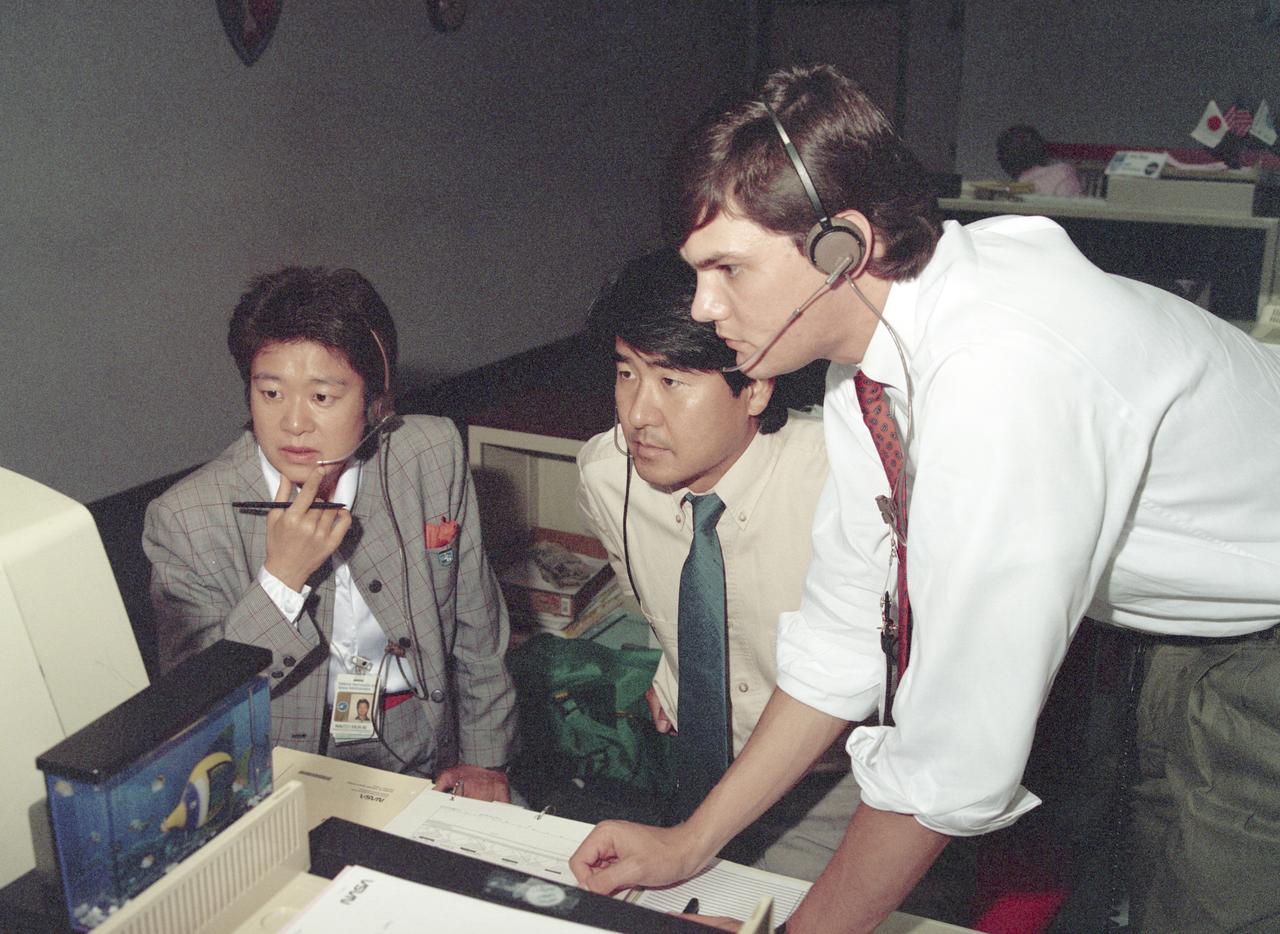
The science laboratory, Spacelab-J (SL-J), flown aboard the STS-47 flight was a joint venture between NASA and the National Space Development Agency of Japan (NASDA) utilizing a manned Spacelab module. The mission conducted 24 materials science and 20 life science experiments, of which 35 were sponsored by NASDA, 7 by NASA, and two collaborative efforts. Materials science investigations covered such fields as biotechnology, electronic materials, fluid dynamics and transport phenomena, glasses and ceramics, metals and alloys, and acceleration measurements. Life sciences included experiments on human health, cell separation and biology, developmental biology, animal and human physiology and behavior, space radiation, and biological rhythms. Test subjects included the crew, Japanese koi fish (carp), cultured animal and plant cells, chicken embryos, fruit flies, fungi and plant seeds, and frogs and frog eggs. Featured together in joint ground activities during the SL-J mission are NASA/NASDA personnel at the Huntsville Operations Support Center (HOSC) Spacelab Payload Operations Control Center (SL POCC) at Marshall Space Flight Center (MSFC).
Around Marshall
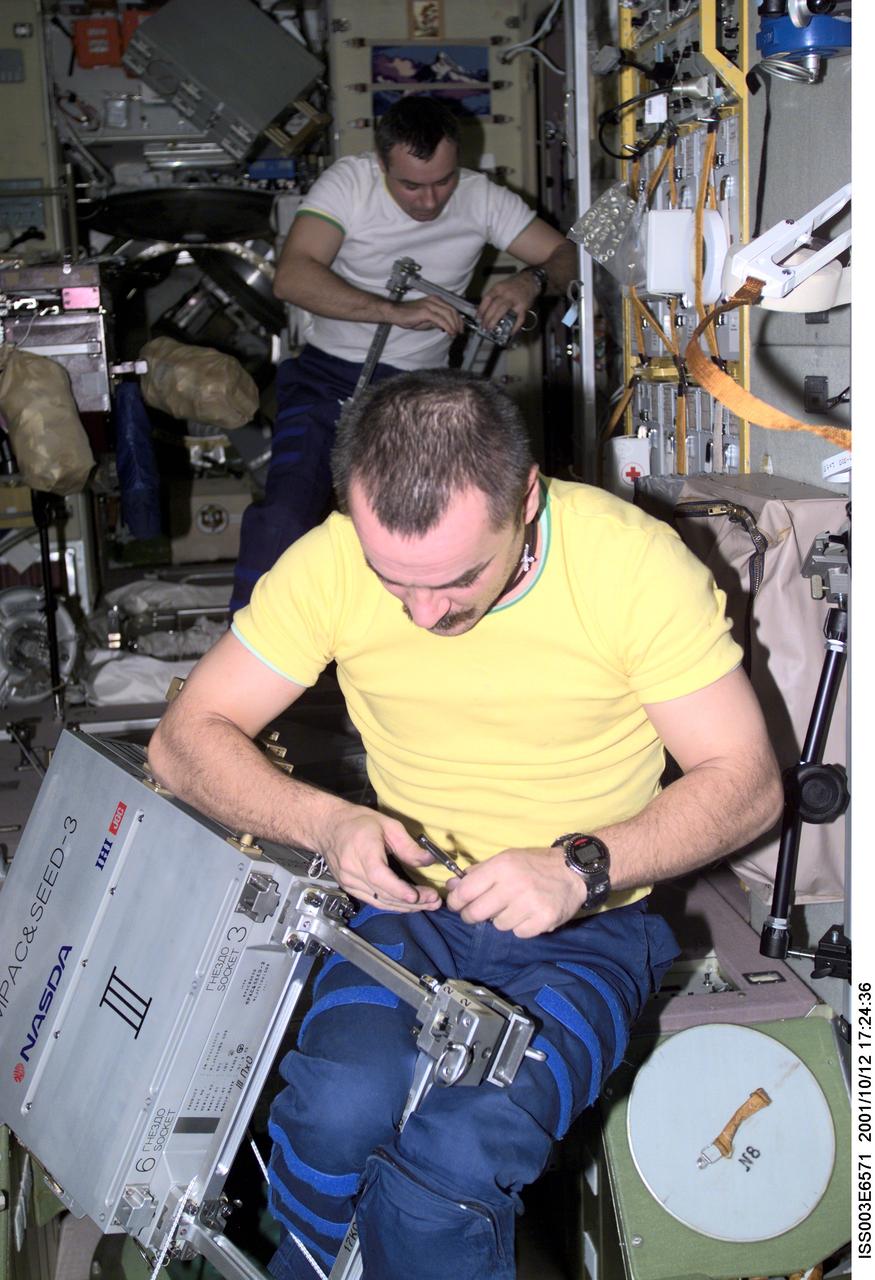
ISS003-E-6571 (12 October 2001) --- Cosmonauts Mikhail Tyurin (foreground) and Vladimir N. Dezhurov, both Expedition Three flight engineers, work with Japan’s National Space Development Agency (NASDA) hardware for the Micro-Particles Capturer (MPAC) and Space Environment Exposure Device (SEED) experiment in the Zvezda Service Module on the International Space Station (ISS). Tyurin and Dezhurov represent Rosaviakosmos. This image was taken with a digital still camera.
Tyurin and Dezhurov assemble NASDA exposure experiment cases during Expedition Three
ISS003-E-6547 (10 October 2001) --- Cosmonaut Mikhail Tyurin, Expedition Three flight engineer representing Rosaviakosmos, works with Japan’s National Space Development Agency (NASDA) hardware for the Micro-Particles Capturer (MPAC) and Space Environment Exposure Device (SEED) experiment in the Zvezda Service Module on the International Space Station (ISS). This image was taken with a digital still camera.
Tyurin handles a NASDA exposure experiment case in Zvezda during Expedition Three
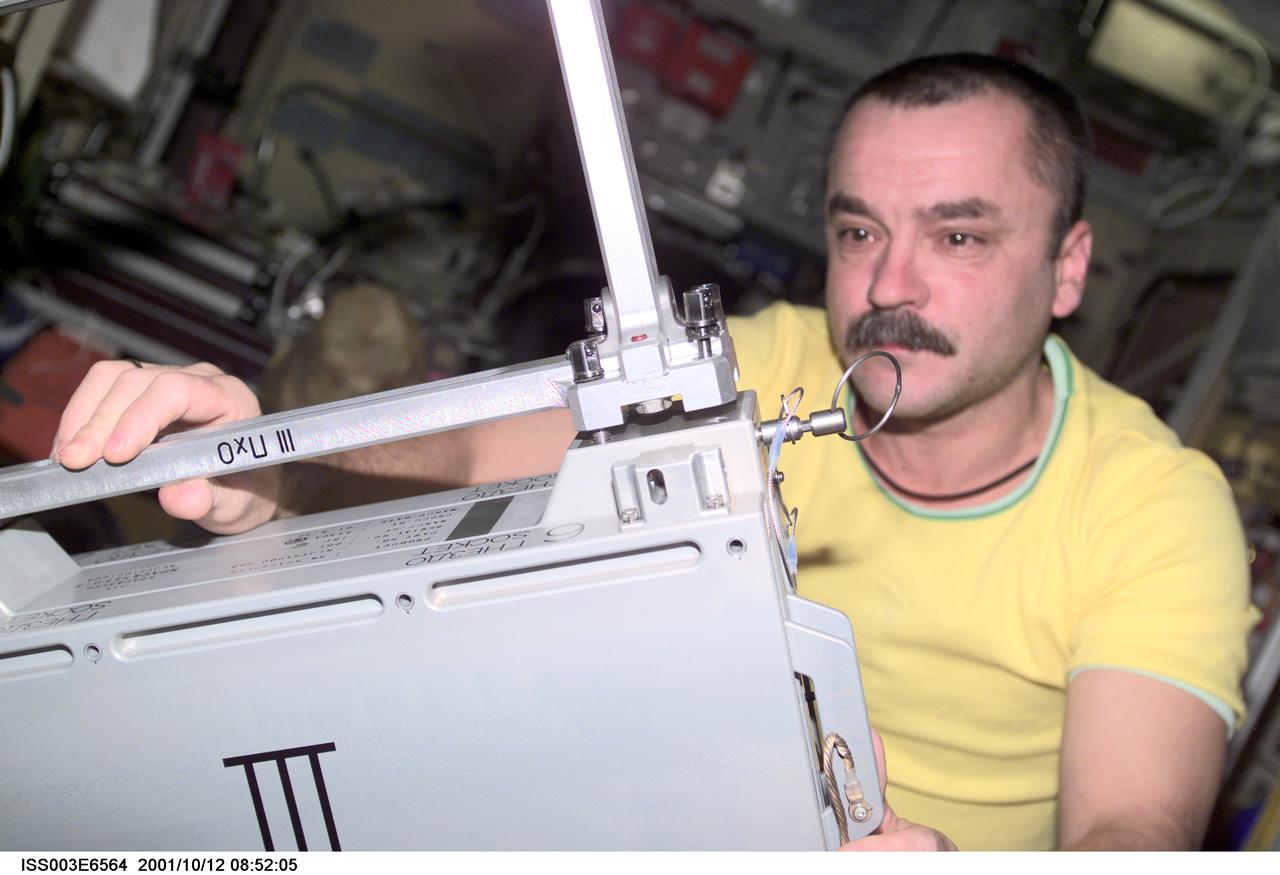
ISS003-E-6564 (12 October 2001) --- Cosmonaut Mikhail Tyurin, Expedition Three flight engineer representing Rosaviakosmos, works with Japan’s National Space Development Agency (NASDA) hardware for the Micro-Particles Capturer (MPAC) and Space Environment Exposure Device (SEED) experiment in the Zvezda Service Module on the International Space Station (ISS). This image was taken with a digital still camera.
Tyurin assembles a NASDA exposure experiment case in Zvezda during Expedition Three
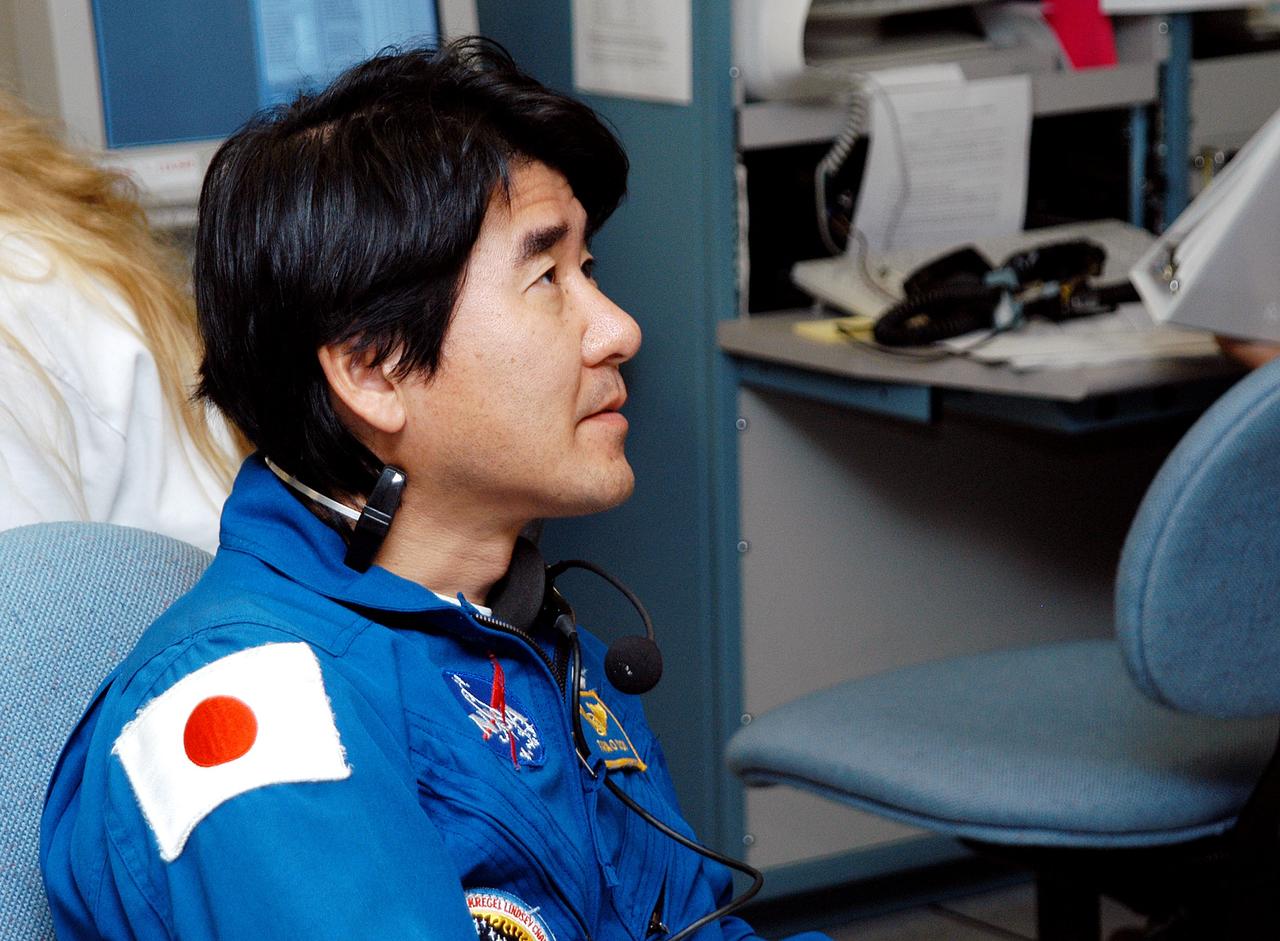
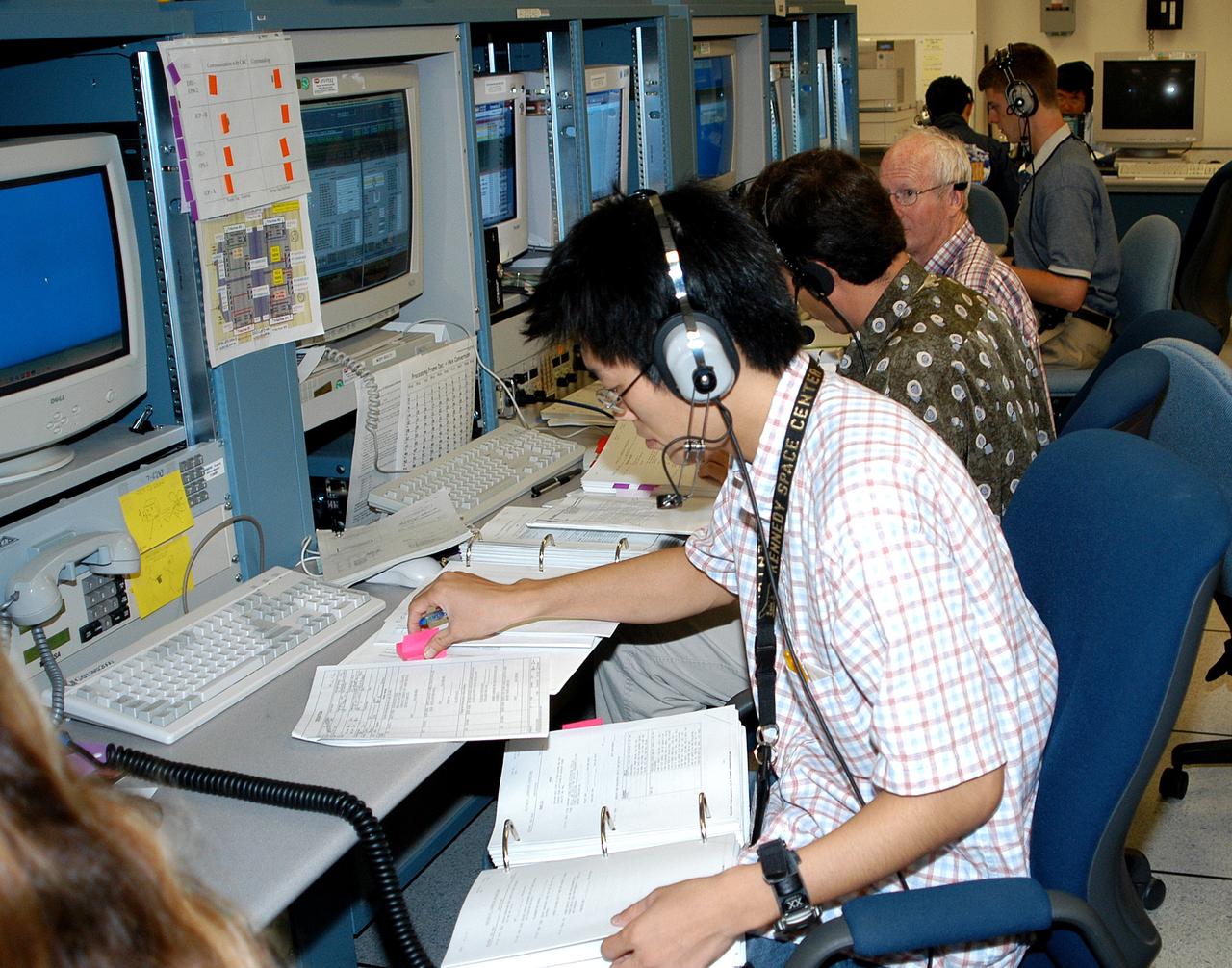
KENNEDY SPACE CENTER, FLA. -  Takao Doi, an astronaut with the National Space Development Agency of Japan (NASDA), watches the sensors  during a Multi-Equipment Interface Test (MEIT) on the Japanese Experiment Module (JEM).  NASDA  developed the laboratory at the Tsukuba Space Center near Tokyo. It is the first element, named "Kibo" (Hope), to be delivered to KSC. The JEM is Japan's primary contribution to the Station. It will enhance the unique research capabilities of the orbiting complex by providing an additional environment for astronauts to conduct science experiments.
KENNEDY SPACE CENTER, FLA. - Takao Doi, an astronaut with the National Space Development Agency of Japan (NASDA), watches the sensors during a Multi-Equipment Interface Test (MEIT) on the Japanese Experiment Module (JEM). NASDA developed the laboratory at the Tsukuba Space Center near Tokyo. It is the first element, named "Kibo" (Hope), to be delivered to KSC. The JEM is Japan's primary contribution to the Station. It will enhance the unique research capabilities of the orbiting complex by providing an additional environment for astronauts to conduct science experiments.
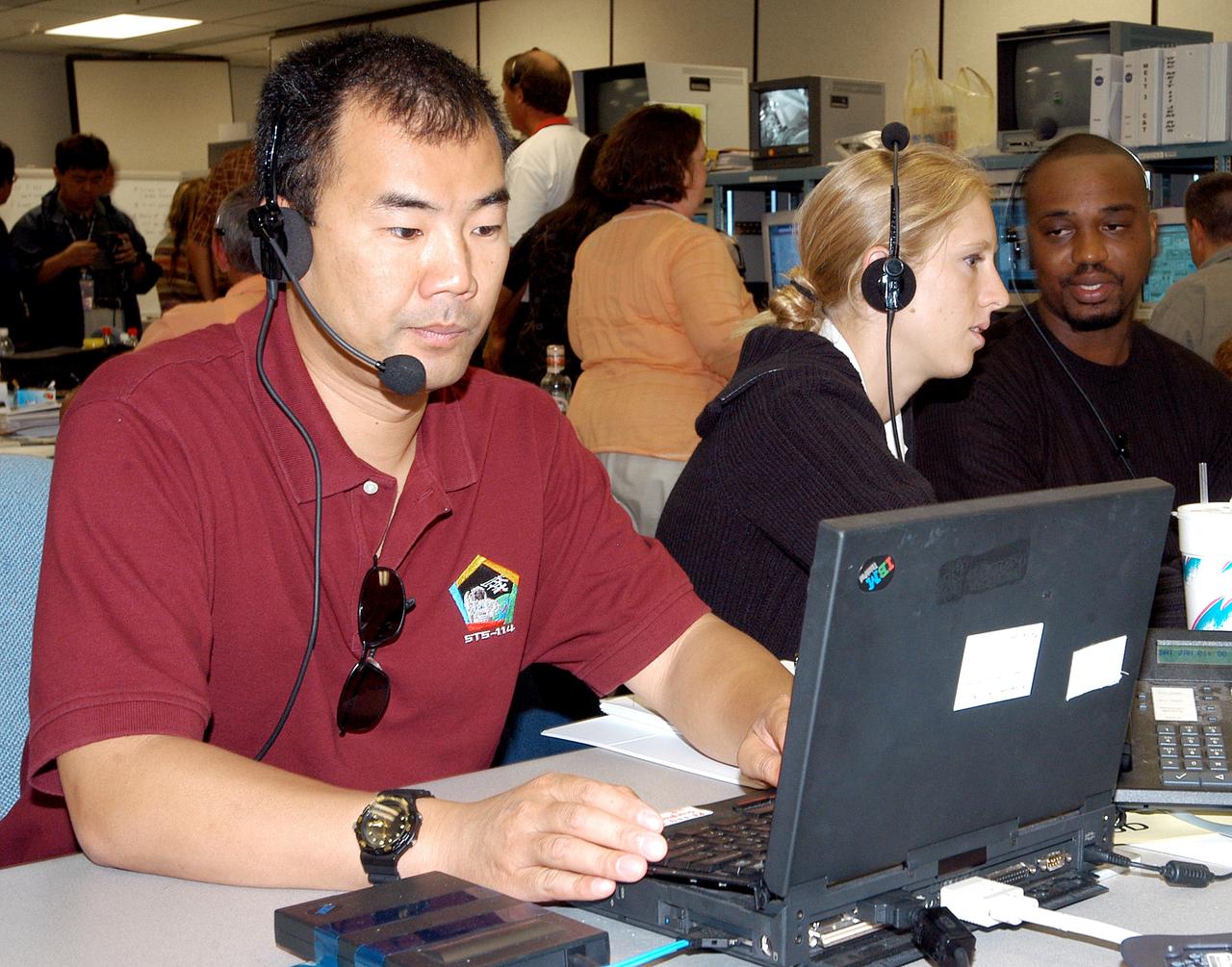
KENNEDY SPACE CENTER, FLA. -  Astronaut Soichi Noguchi (left), with the National Space Development Agency of Japan (NASDA), works at a console during a Multi-Element Integrated Test (MEIT) of the U.S. Node 2 and the Japanese Experiment Module (JEM) in the Space Station Processing Facility.  The JEM, developed by NASDA, is Japan's primary contribution to the Station. It will enhance the unique research capabilities of the orbiting complex by providing an additional environment for astronauts to conduct science experiments. Noguchi is assigned to mission STS-114 as a mission specialist.  Node 2 provides attach locations for the Japanese laboratory, as well as European laboratory, the Centrifuge Accommodation Module and, eventually, Multipurpose Logistics Modules.  Installation of the module will complete the U.S. Core of the ISS.
KENNEDY SPACE CENTER, FLA. - Astronaut Soichi Noguchi (left), with the National Space Development Agency of Japan (NASDA), works at a console during a Multi-Element Integrated Test (MEIT) of the U.S. Node 2 and the Japanese Experiment Module (JEM) in the Space Station Processing Facility. The JEM, developed by NASDA, is Japan's primary contribution to the Station. It will enhance the unique research capabilities of the orbiting complex by providing an additional environment for astronauts to conduct science experiments. Noguchi is assigned to mission STS-114 as a mission specialist. Node 2 provides attach locations for the Japanese laboratory, as well as European laboratory, the Centrifuge Accommodation Module and, eventually, Multipurpose Logistics Modules. Installation of the module will complete the U.S. Core of the ISS.
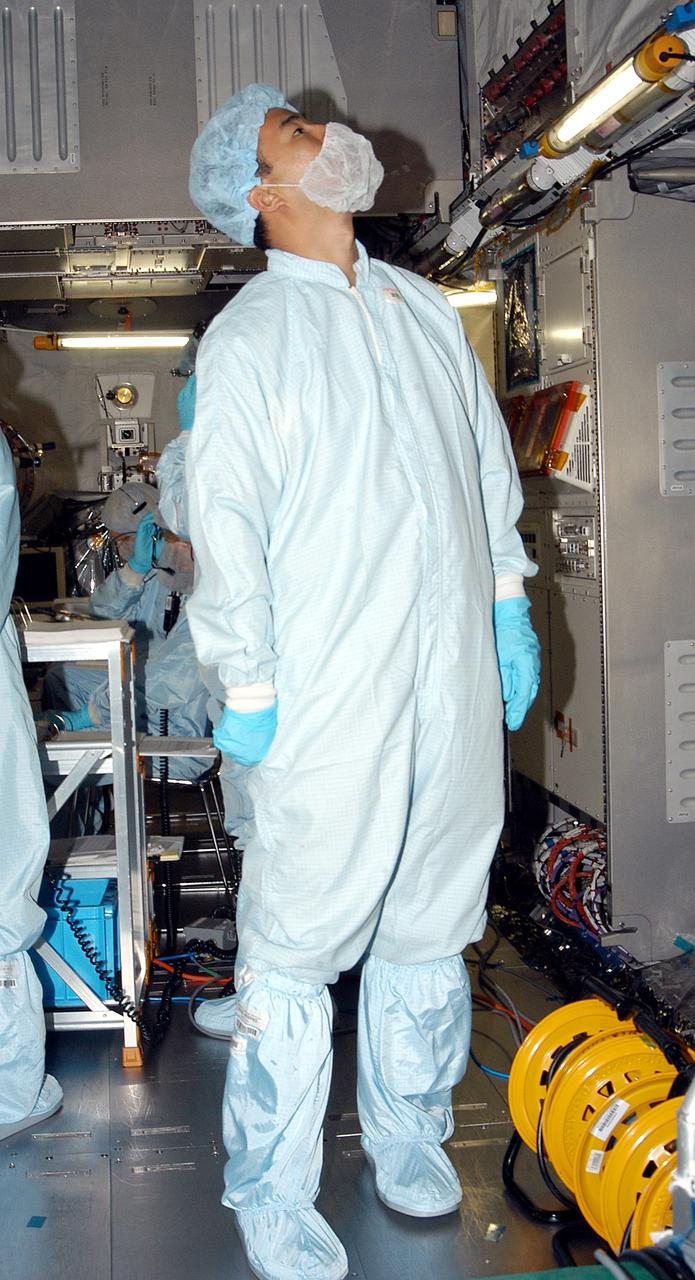
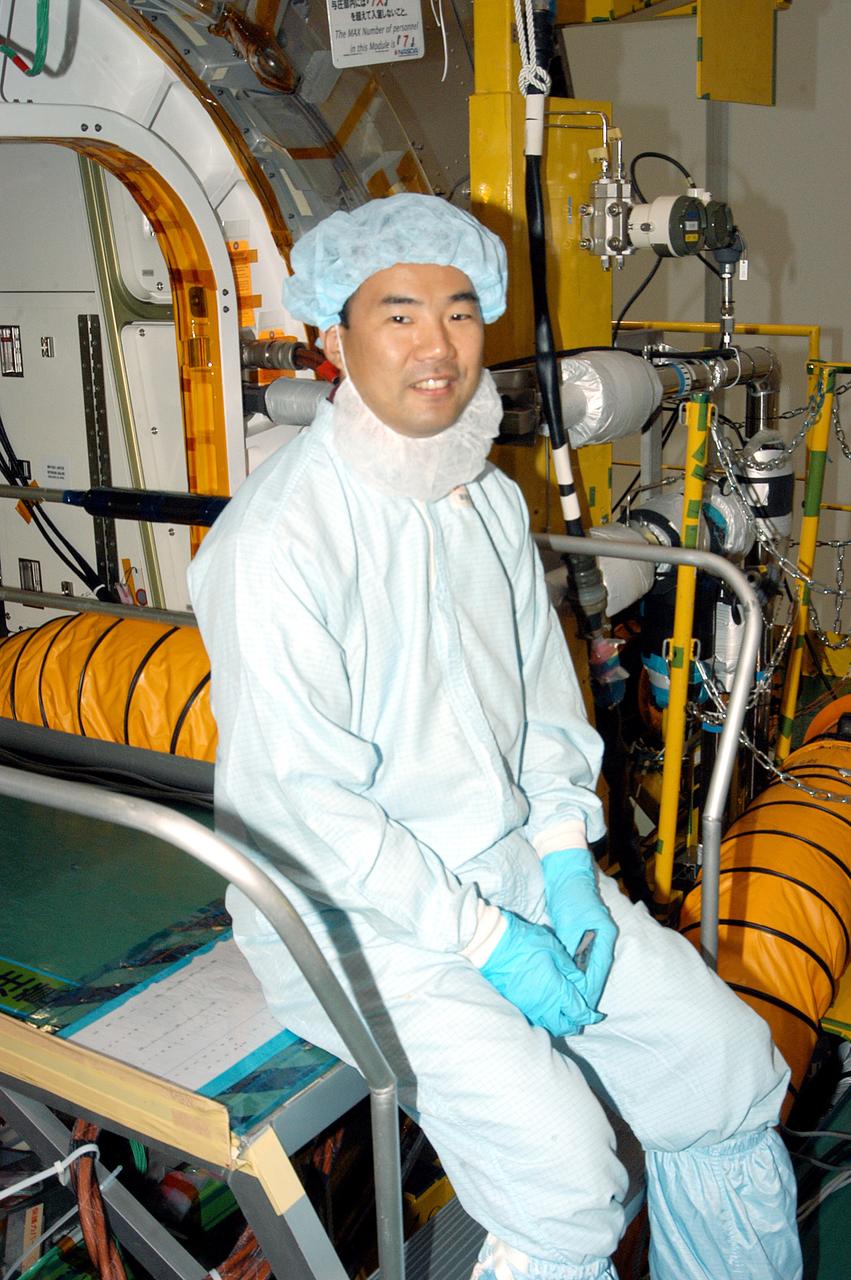
KENNEDY SPACE CENTER, FLA. -  In the Space Station Processing Facility, astronaut Soichi Noguchi (right), with the National Space Development Agency of Japan (NASDA), stands inside the Japanese Experiment Module (JEM) that is undergoing a Multi-Element Integrated Test (MEIT) with the U.S. Node 2.  The JEM, developed by NASDA, is Japan's primary contribution to the Station. It will enhance the unique research capabilities of the orbiting complex by providing an additional environment for astronauts to conduct science experiments. Noguchi is assigned to mission STS-114 as a mission specialist.  Node 2 provides attach locations for the Japanese laboratory, as well as European laboratory, the Centrifuge Accommodation Module and, eventually, Multipurpose Logistics Modules.  Installation of the module will complete the U.S. Core of the ISS.
KENNEDY SPACE CENTER, FLA. - In the Space Station Processing Facility, astronaut Soichi Noguchi (right), with the National Space Development Agency of Japan (NASDA), stands inside the Japanese Experiment Module (JEM) that is undergoing a Multi-Element Integrated Test (MEIT) with the U.S. Node 2. The JEM, developed by NASDA, is Japan's primary contribution to the Station. It will enhance the unique research capabilities of the orbiting complex by providing an additional environment for astronauts to conduct science experiments. Noguchi is assigned to mission STS-114 as a mission specialist. Node 2 provides attach locations for the Japanese laboratory, as well as European laboratory, the Centrifuge Accommodation Module and, eventually, Multipurpose Logistics Modules. Installation of the module will complete the U.S. Core of the ISS.
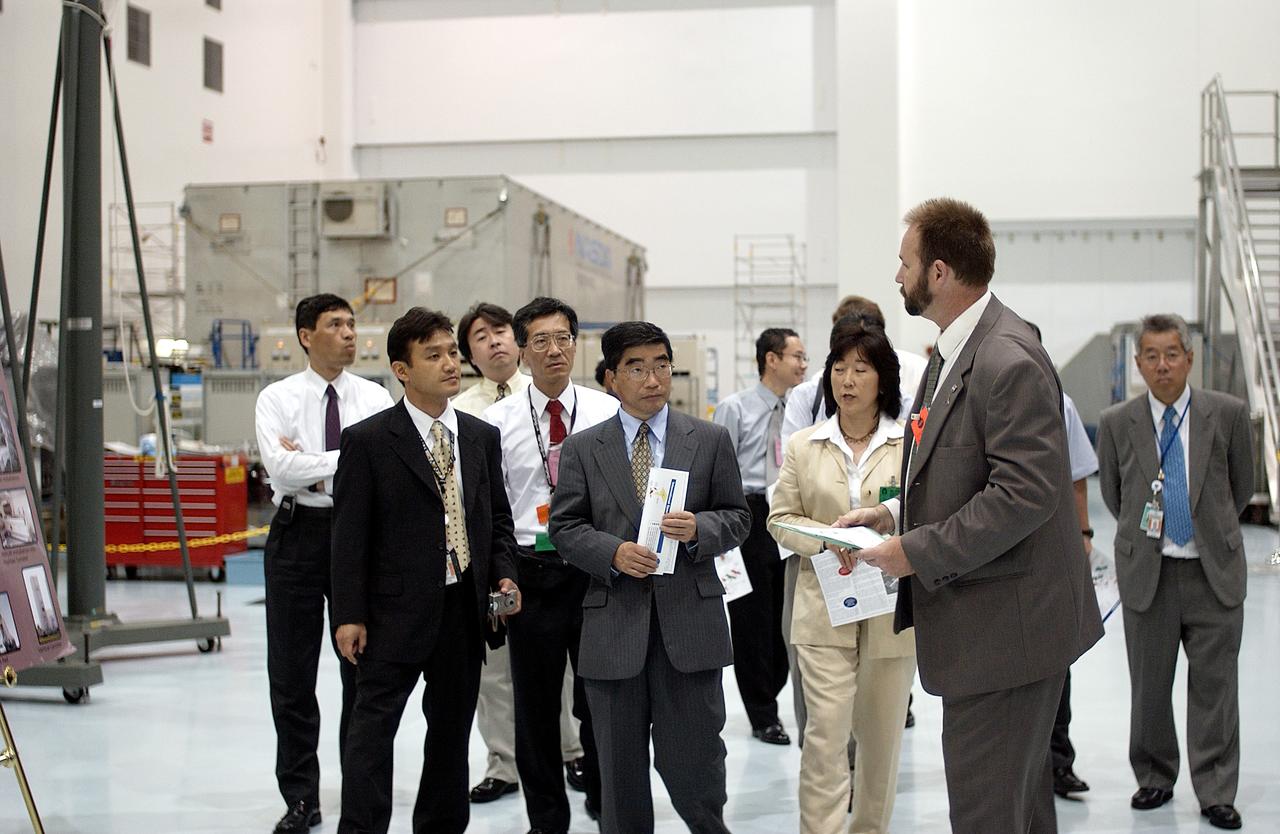
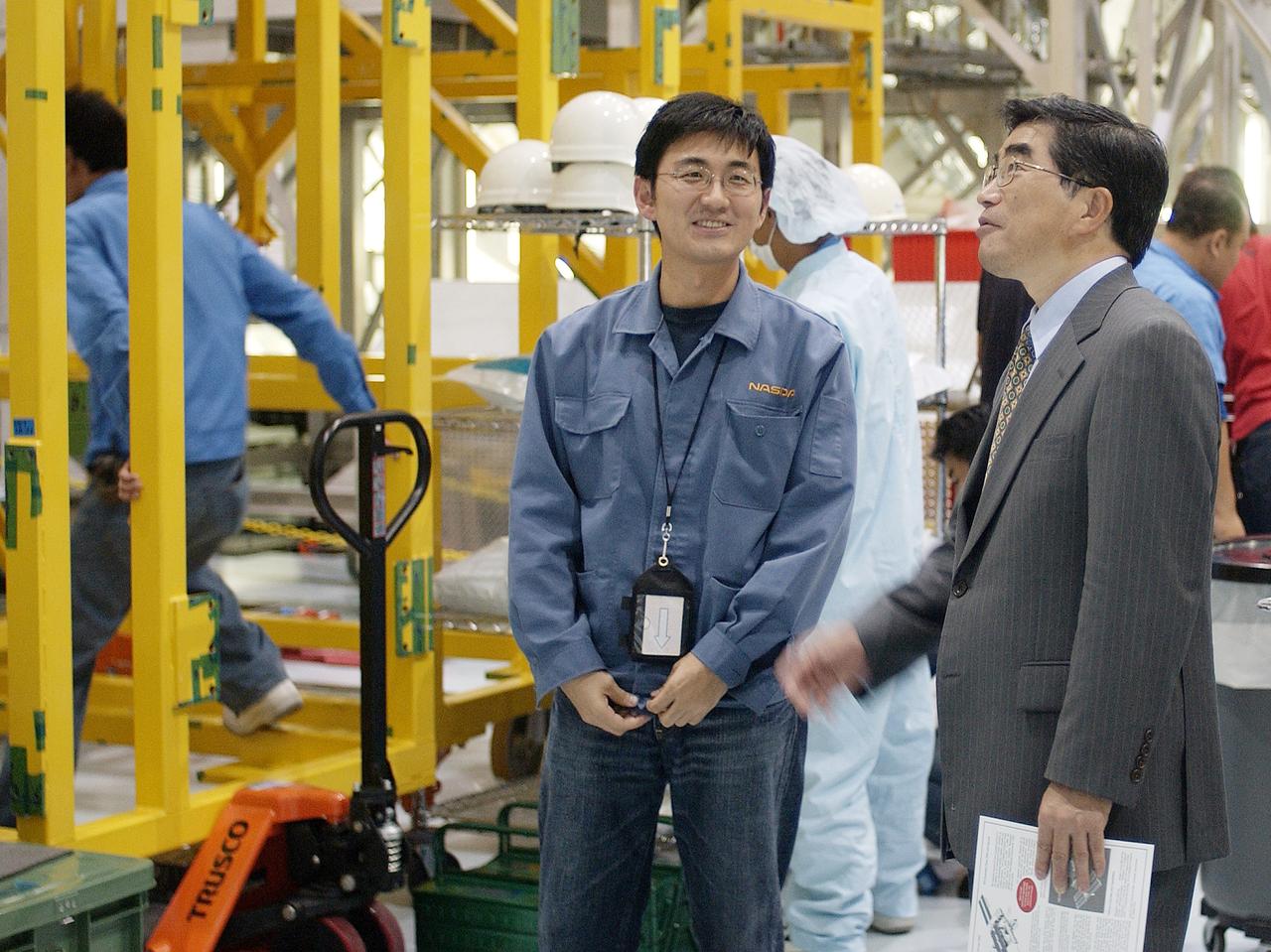
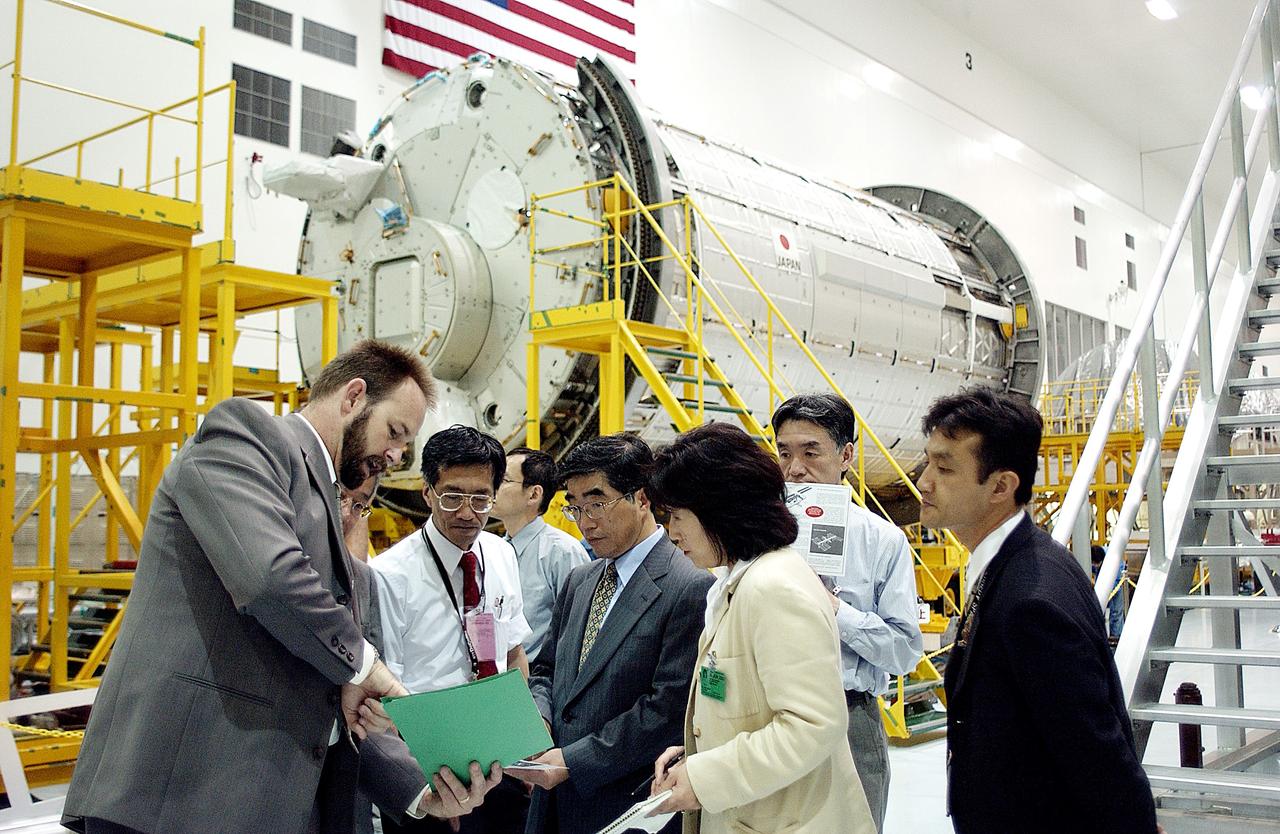
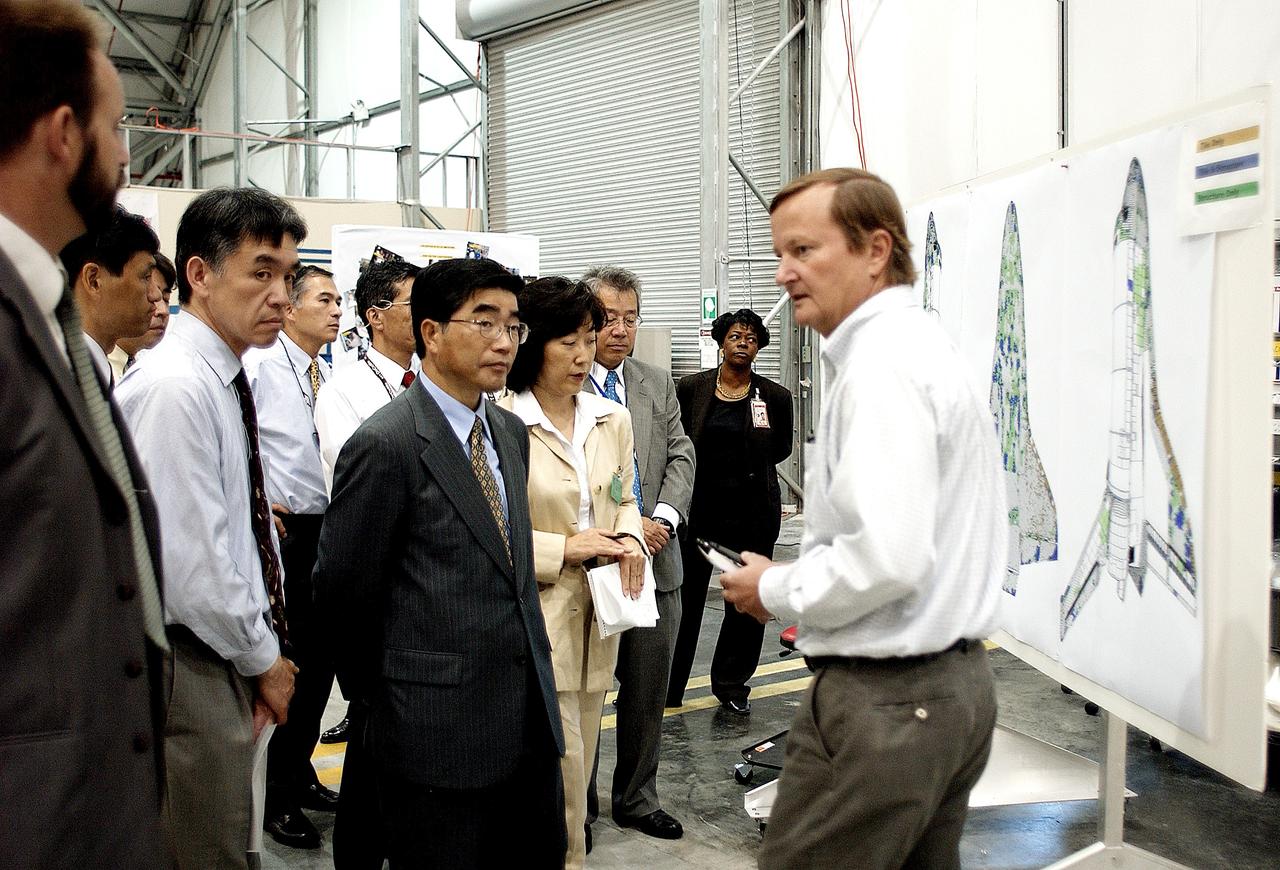
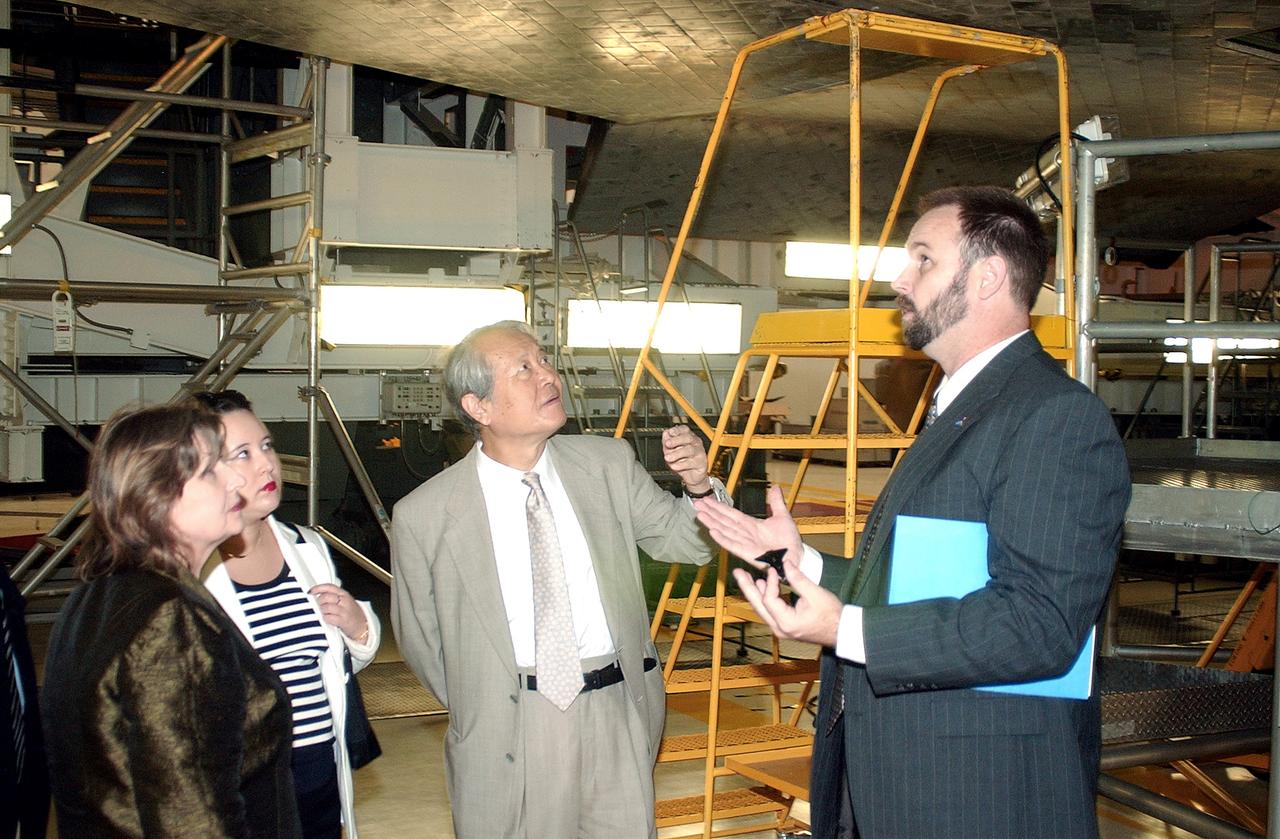
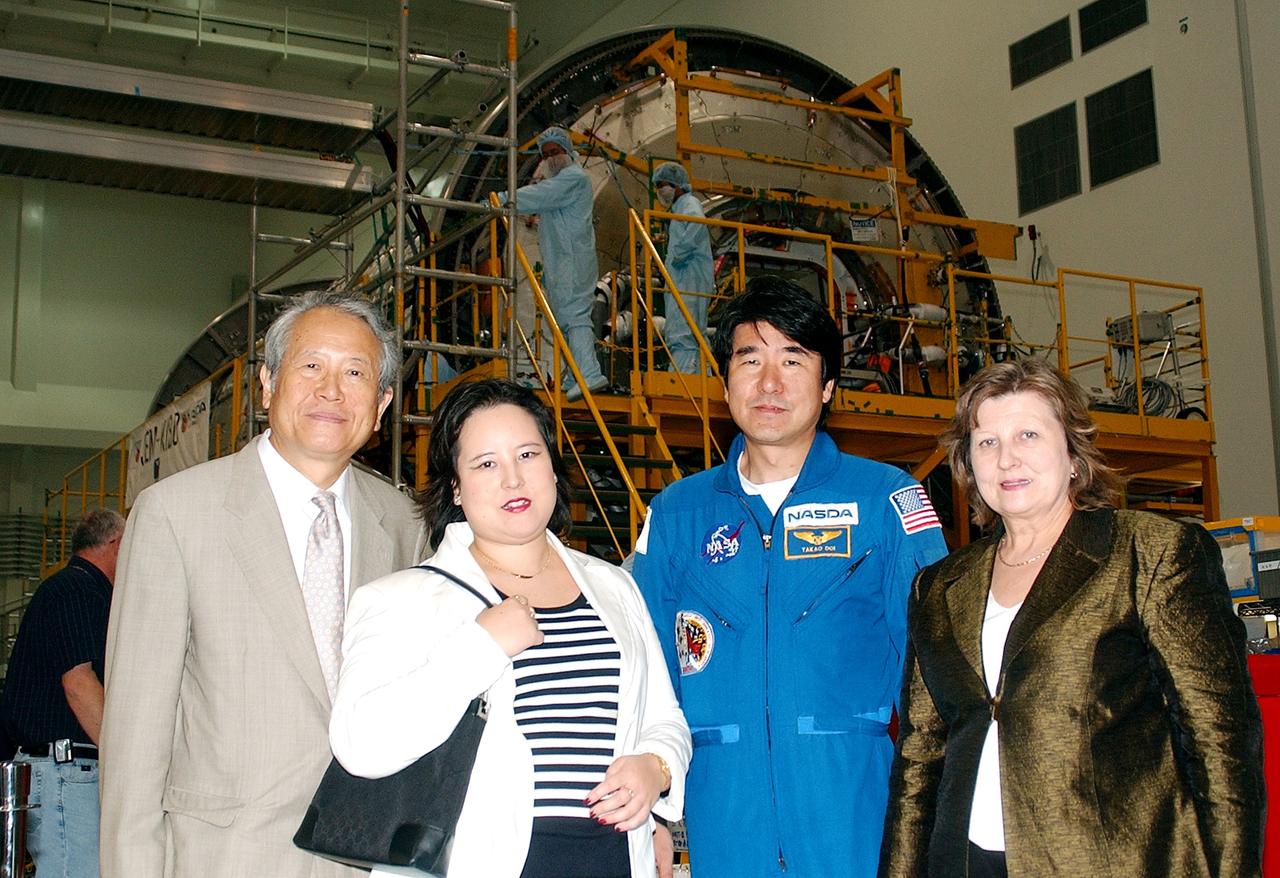
KENNEDY SPACE CENTER, FLA. -  In the Space Station Processing Facility, Executive Director of NASDA Koji Yamamoto (center) gets information about the facility while on a tour of KSC.  Behind the group is the Japanese Experiment Module (JEM)/pressurized module.  Mr. Yamamoto is at KSC for a welcome ceremony involving the arrival of JEM.
KENNEDY SPACE CENTER, FLA. - In the Space Station Processing Facility, Executive Director of NASDA Koji Yamamoto (center) gets information about the facility while on a tour of KSC. Behind the group is the Japanese Experiment Module (JEM)/pressurized module. Mr. Yamamoto is at KSC for a welcome ceremony involving the arrival of JEM.
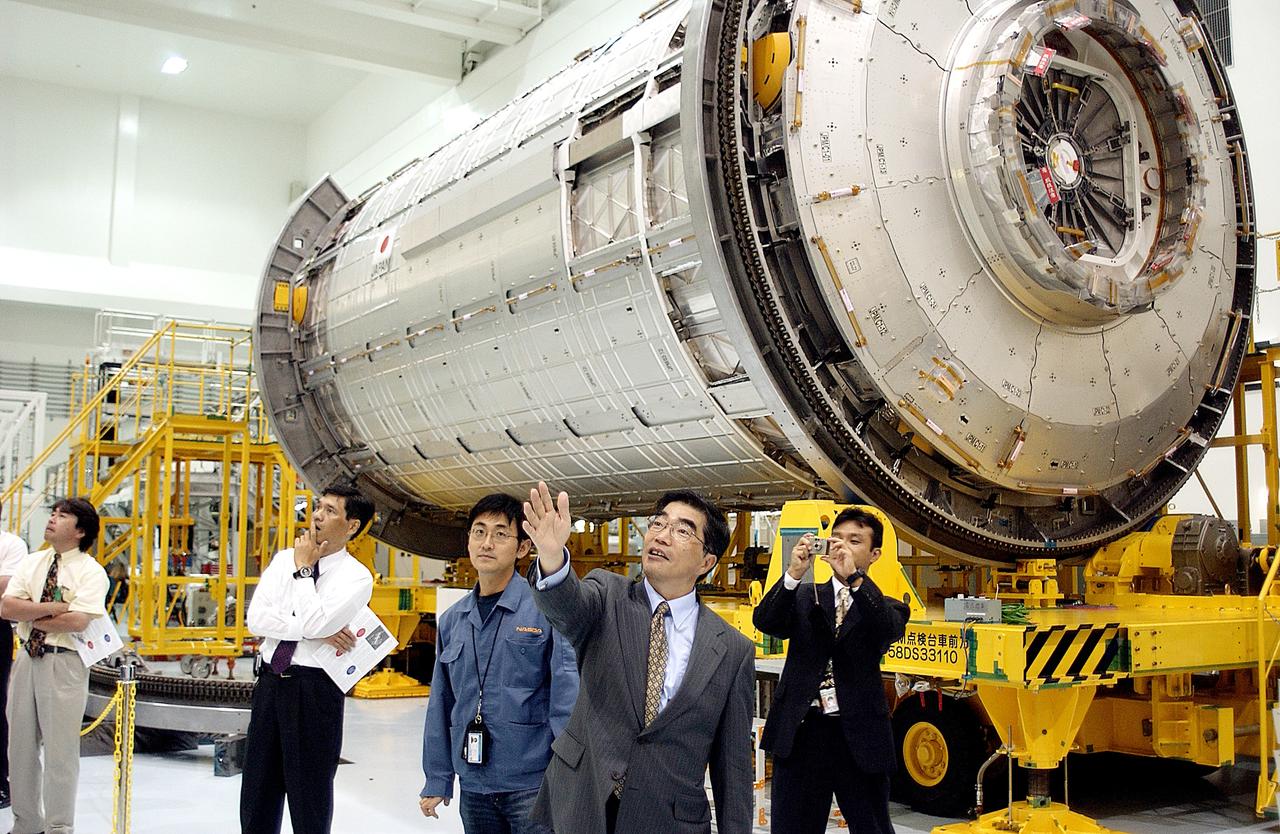
KENNEDY SPACE CENTER, FLA. -  In the Space Station Processing Facility, Executive Director of NASDA Koji Yamamoto points to other Space Station elements.  Behind him is the Japanese Experiment Module (JEM)/pressurized module.  Mr. Yamamoto is at KSC for a welcome ceremony involving the arrival of JEM.
KENNEDY SPACE CENTER, FLA. - In the Space Station Processing Facility, Executive Director of NASDA Koji Yamamoto points to other Space Station elements. Behind him is the Japanese Experiment Module (JEM)/pressurized module. Mr. Yamamoto is at KSC for a welcome ceremony involving the arrival of JEM.
KENNEDY SPACE CENTER, FLA. -  In the Space Station Processing Facility, Executive Director of NASDA Koji Yamamoto (center) joins others for a tour.  Mr. Yamamoto is at KSC for a welcome ceremony involving the arrival of the newest Space Station module, the Japanese Experiment Module/pressurized module.
KENNEDY SPACE CENTER, FLA. - In the Space Station Processing Facility, Executive Director of NASDA Koji Yamamoto (center) joins others for a tour. Mr. Yamamoto is at KSC for a welcome ceremony involving the arrival of the newest Space Station module, the Japanese Experiment Module/pressurized module.
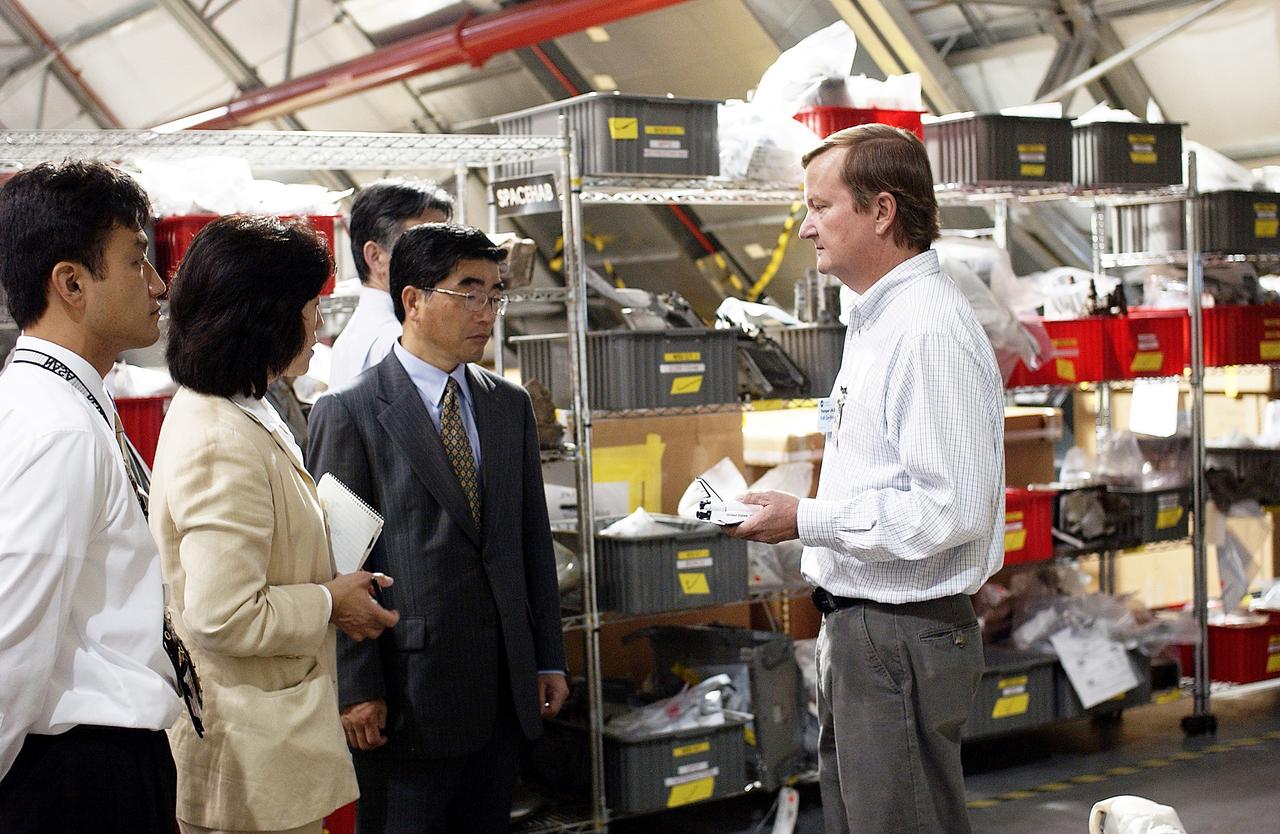
KENNEDY SPACE CENTER, FLA. -  Shuttle Launch Director Mike Leinbach (left) accompanies Executive Director of NASDA Koji Yamamoto (third from left) and others visiting the Columbia Debris Hangar.  Mr. Yamamoto is at KSC for a welcome ceremony involving the arrival of the newest Space Station module, the Japanese Experiment Module/pressurized module.
KENNEDY SPACE CENTER, FLA. - Shuttle Launch Director Mike Leinbach (left) accompanies Executive Director of NASDA Koji Yamamoto (third from left) and others visiting the Columbia Debris Hangar. Mr. Yamamoto is at KSC for a welcome ceremony involving the arrival of the newest Space Station module, the Japanese Experiment Module/pressurized module.
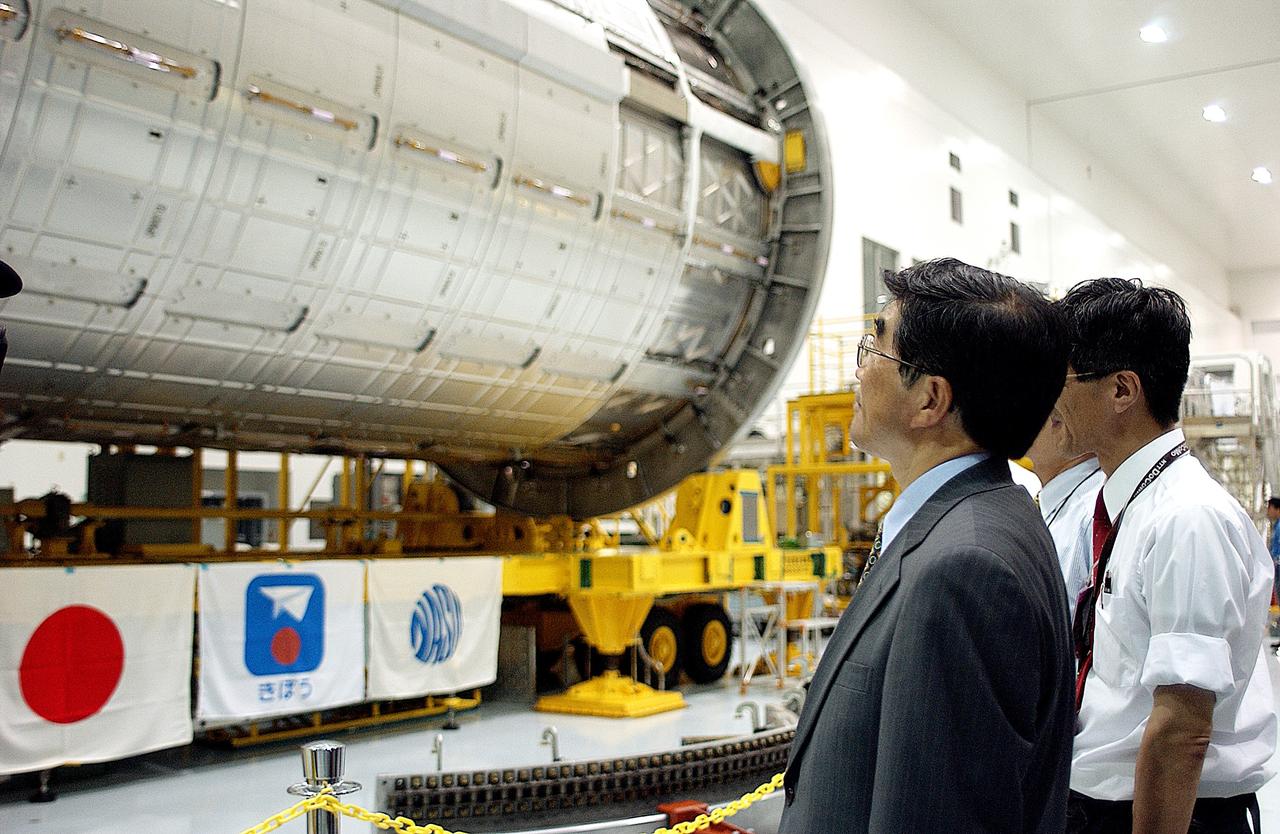
KENNEDY SPACE CENTER, FLA. -  In the Space Station Processing Facility, Executive Director of NASDA Koji Yamamoto (left) looks at the newly arrived Japanese Experiment Module (JEM)/pressurized module.  Mr. Yamamoto is at KSC for a welcome ceremony involving the arrival of JEM.
KENNEDY SPACE CENTER, FLA. - In the Space Station Processing Facility, Executive Director of NASDA Koji Yamamoto (left) looks at the newly arrived Japanese Experiment Module (JEM)/pressurized module. Mr. Yamamoto is at KSC for a welcome ceremony involving the arrival of JEM.
KENNEDY SPACE CENTER, FLA. -  In the Space Station Processing Facility, Executive Director of NASDA Koji Yamamoto (center) joins others for a tour.  Mr. Yamamoto is at KSC for a welcome ceremony involving the arrival of the newest Space Station module, the Japanese Experiment Module/pressurized module.
KENNEDY SPACE CENTER, FLA. - In the Space Station Processing Facility, Executive Director of NASDA Koji Yamamoto (center) joins others for a tour. Mr. Yamamoto is at KSC for a welcome ceremony involving the arrival of the newest Space Station module, the Japanese Experiment Module/pressurized module.
KENNEDY SPACE CENTER, FLA. -  In the Space Station Processing Facility, Executive Director of NASDA Koji Yamamoto (right) looks at the newly arrived Japanese Experiment Module (JEM)/pressurized module.  Mr. Yamamoto is at KSC for a welcome ceremony involving the arrival of JEM.
KENNEDY SPACE CENTER, FLA. - In the Space Station Processing Facility, Executive Director of NASDA Koji Yamamoto (right) looks at the newly arrived Japanese Experiment Module (JEM)/pressurized module. Mr. Yamamoto is at KSC for a welcome ceremony involving the arrival of JEM.
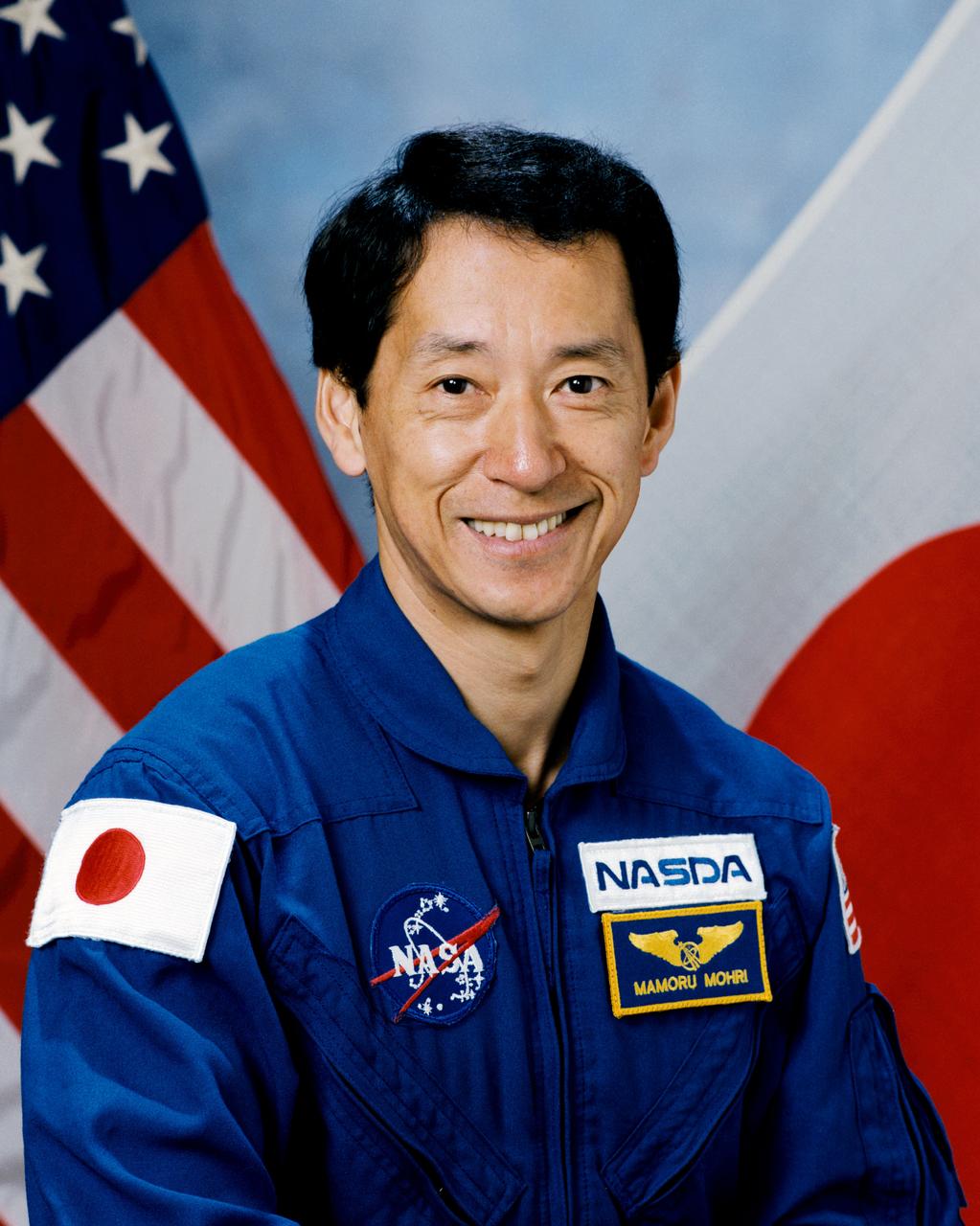
S97-05508 (13 Sept. 1996) --- Astronaut Mamoru Mohri, payload specialist, representing   National Space Development Agency (NASDA).
Hypervelocity Impact (HVI) testing performed on EMU materials
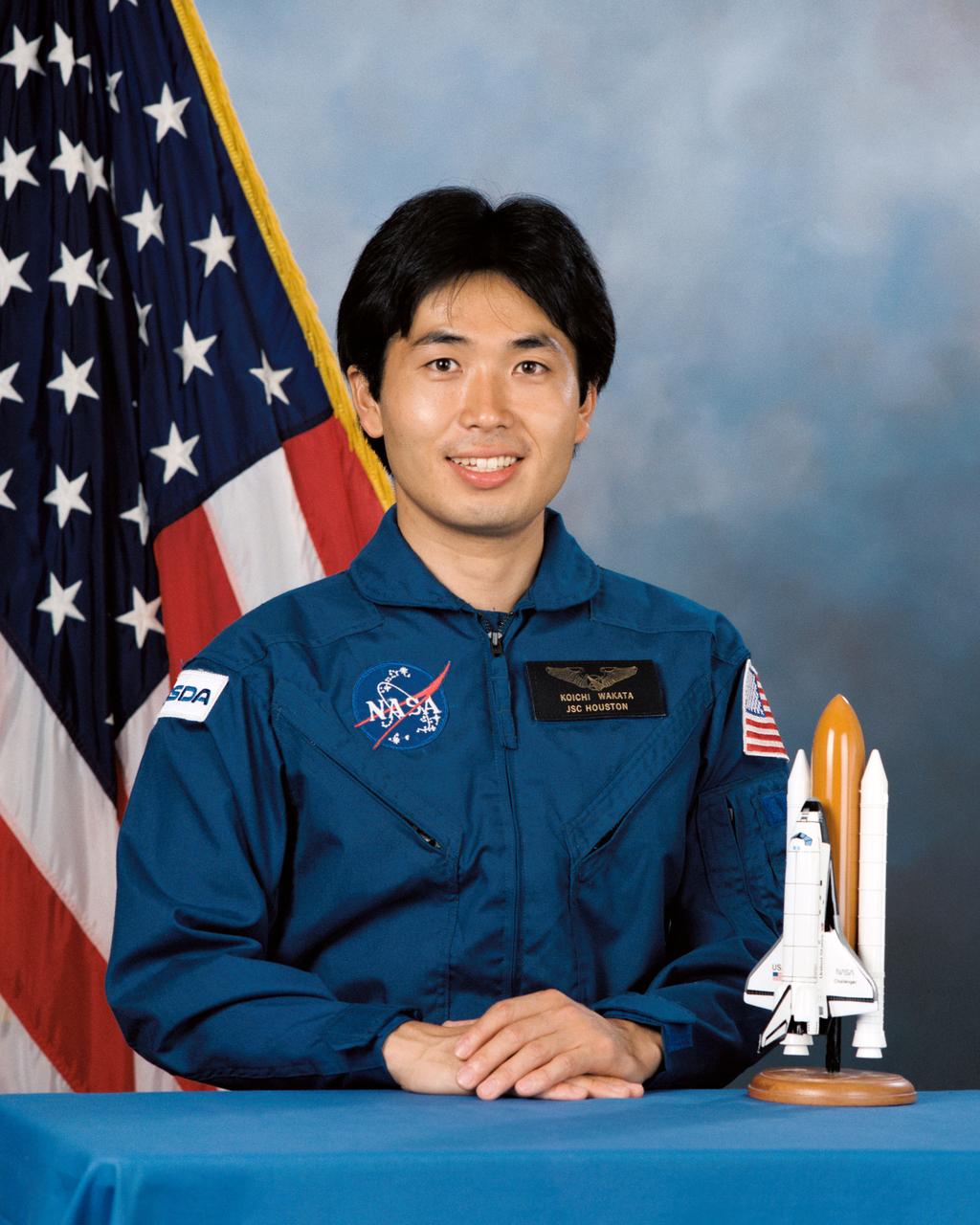
S92-44960 (9 Sept. 1992) --- Astronaut Koichi Wakata, mission specialist representing the National Space Development Agency (NASDA), Japan.
Official Portrait of Astronaut Candidate (ASCAN) Koichi Wakata in
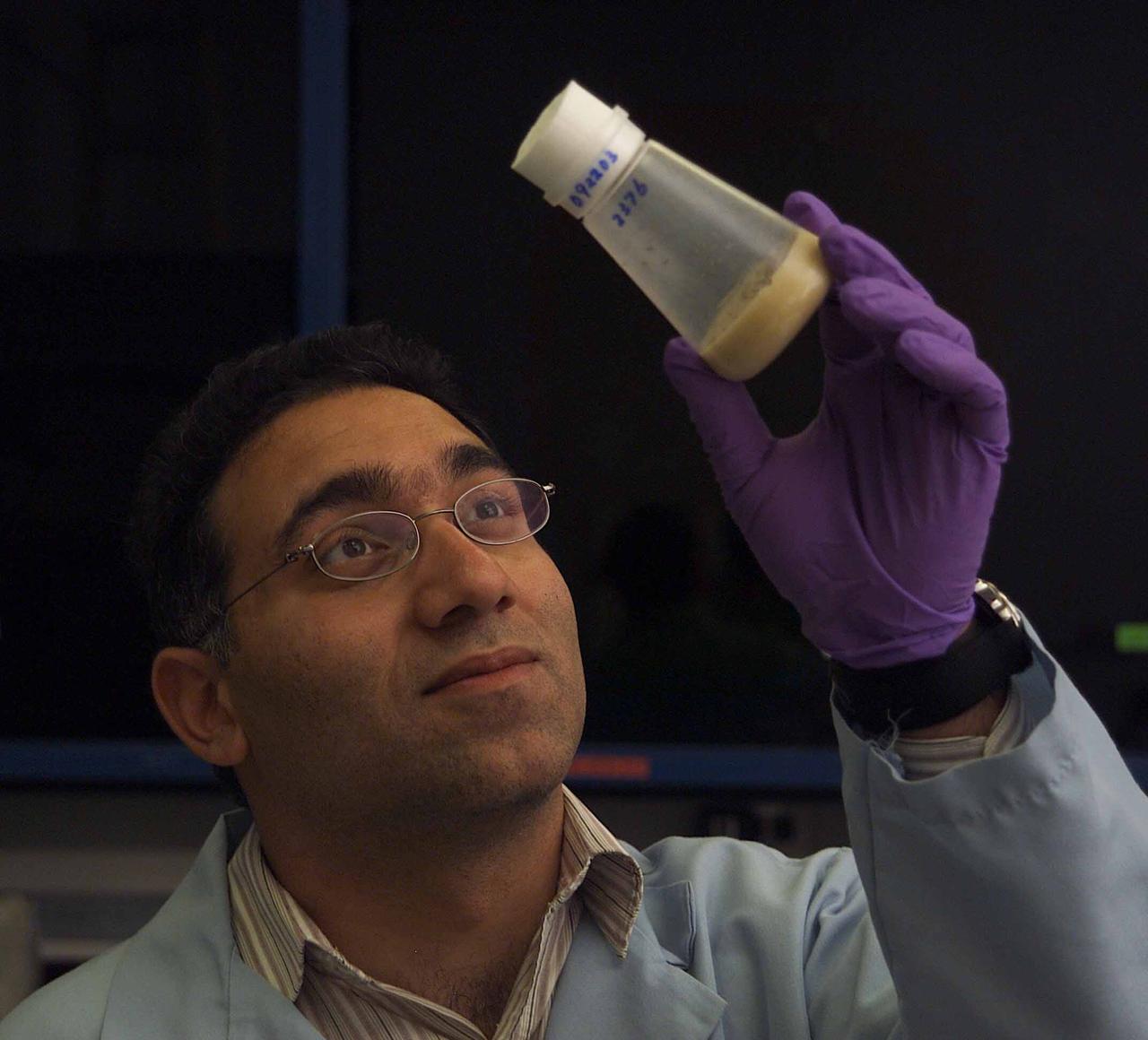
SSBRP Incubator/Small Payloads Development (N-261 Lab 1) speciems, with Jacob Cohen in his lab  (ref: NASDA Glovebox)
ARC-2003-ACD03-0174-032
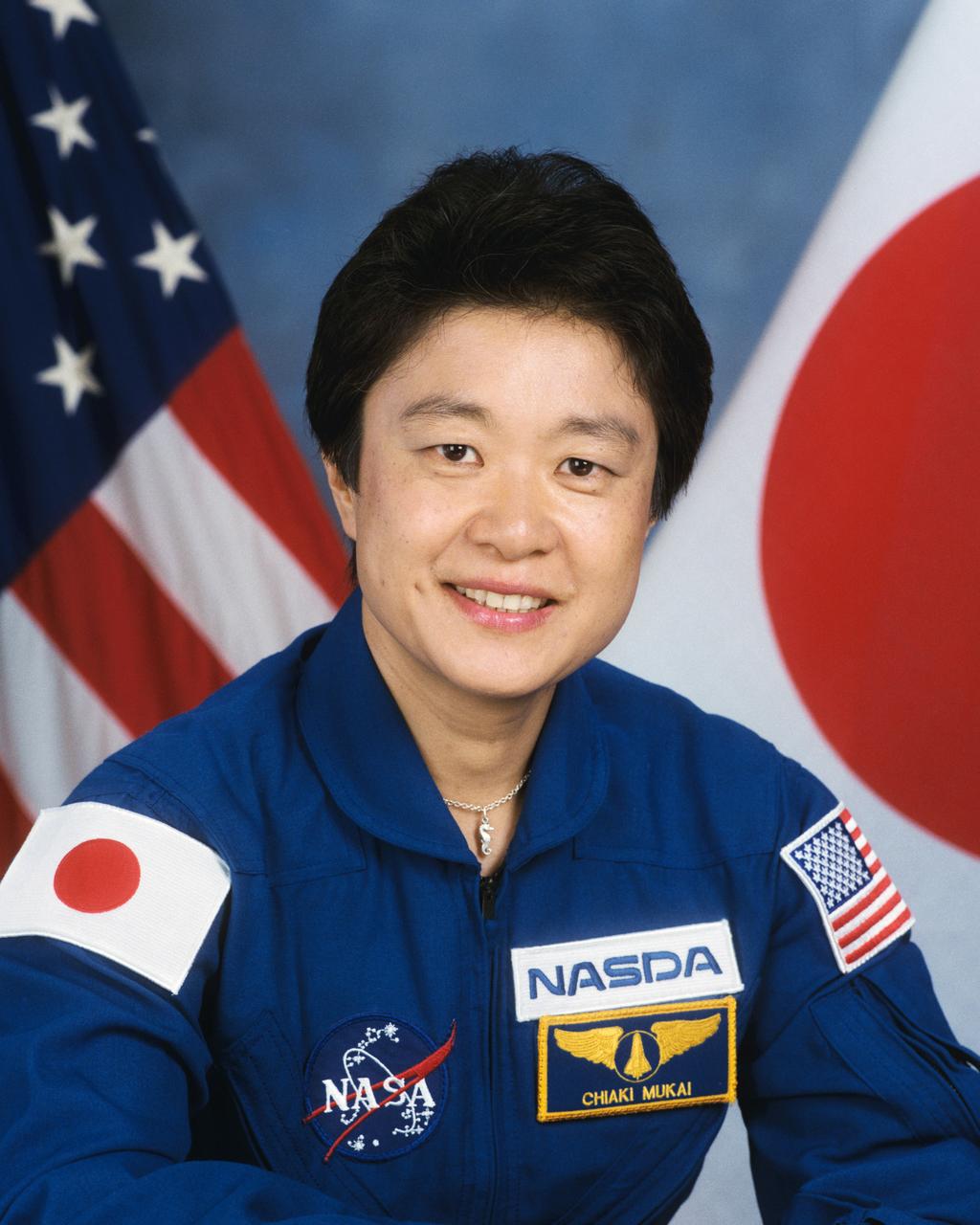
S97-00568 (2 Oct. 1996) --- Astronaut Chiaki Naito-Mukai, payload specialist, representing the National Space Development Agency (NASDA).
Official NASA Portrait of STS-90 Payload Specialist Chiaki Mukai
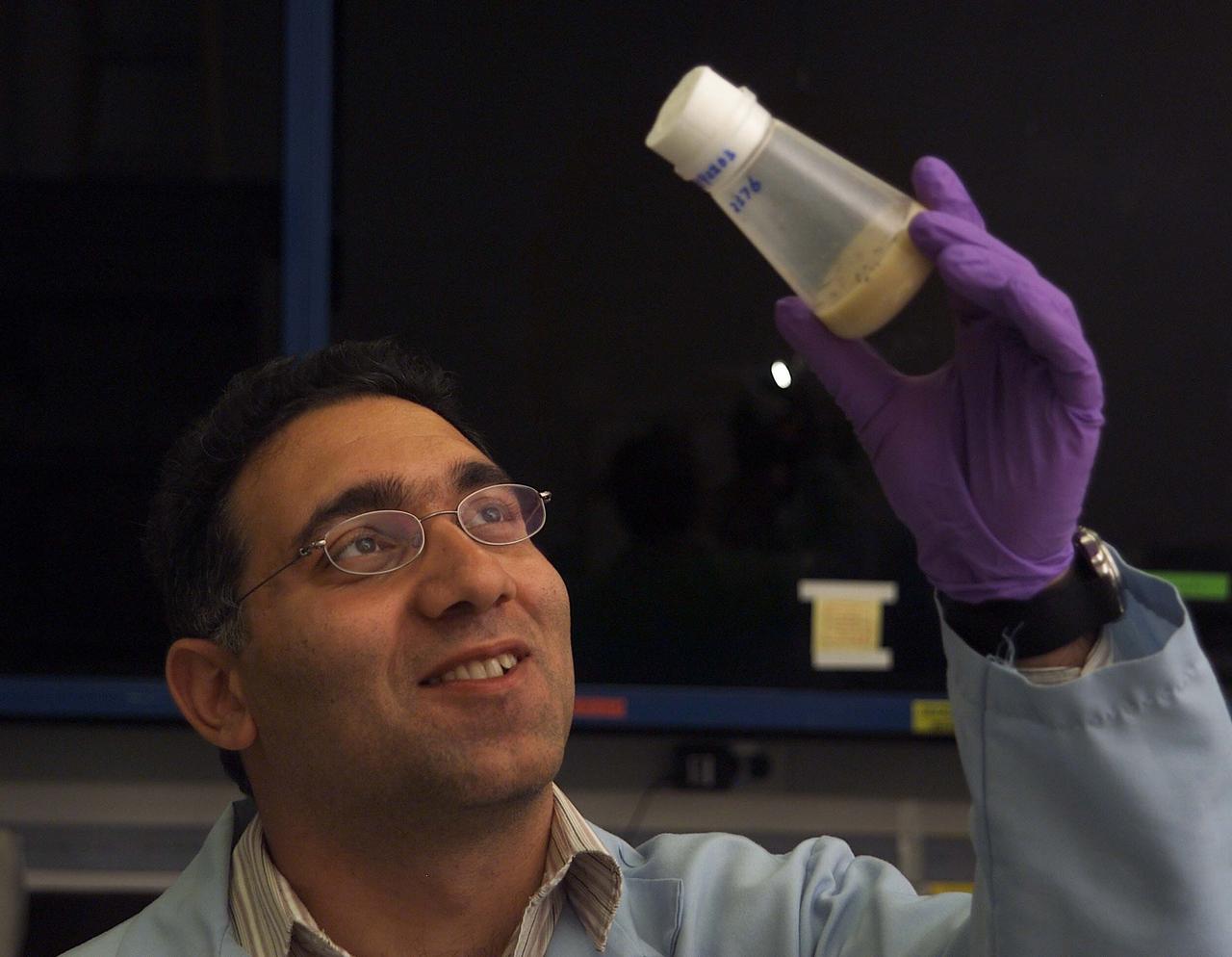
SSBRP Incubator/Small Payloads Development (N-261 Lab 1) speciems, with Jacob Cohen in his lab  (ref: NASDA Glovebox)
ARC-2003-ACD03-0174-033
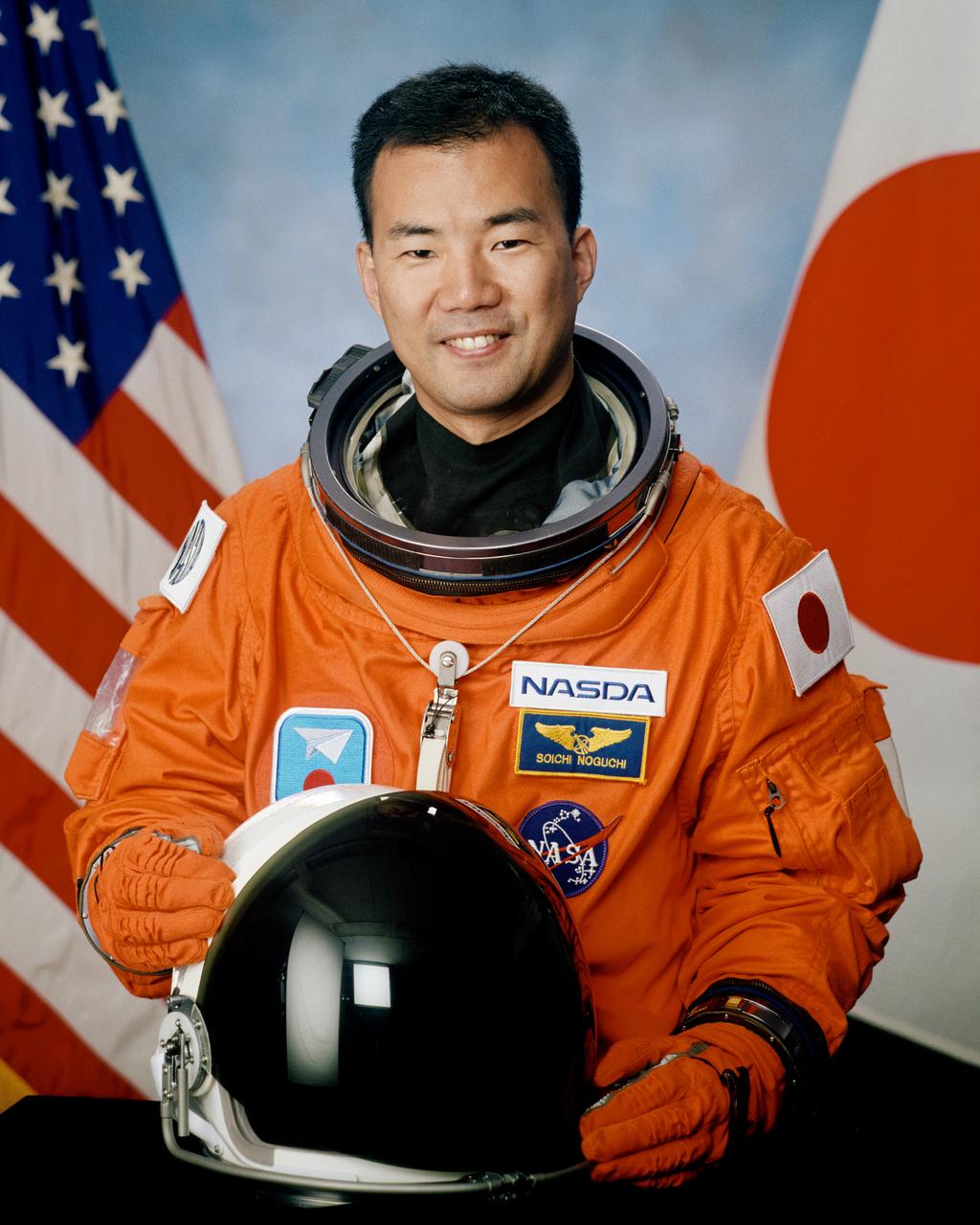
JSC2001-01619 (4 June 2001) --- Astronaut Soichi Noguchi, mission specialist, representing Japan’s National Space Development Agency (NASDA)
Official photo for Soguchi Noguchi
KENNEDY SPACE CENTER, FLA. -   Astronaut Soichi Noguchi, with the National Space Development Agency of Japan (NASDA), works at a console during a Multi-Element Integrated Test (MEIT) of the U.S. Node 2 and the Japanese Experiment Module (JEM).  Noguchi is assigned to mission STS-114 as a mission specialist.   Node 2 attaches to the end of the U.S. Lab on the ISS and provides attach locations for the Japanese laboratory, European laboratory, the Centrifuge Accommodation Module and, eventually, Multipurpose Logistics Modules. It will provide the primary docking location for the Shuttle when a pressurized mating adapter is attached to Node 2.  Installation of the module will complete the U.S. Core of the ISS.   The JEM, developed by NASDA,  is Japan's primary contribution to the Station. It will enhance the unique research capabilities of the orbiting complex by providing an additional environment for astronauts to conduct science experiments.
KENNEDY SPACE CENTER, FLA. - Astronaut Soichi Noguchi, with the National Space Development Agency of Japan (NASDA), works at a console during a Multi-Element Integrated Test (MEIT) of the U.S. Node 2 and the Japanese Experiment Module (JEM). Noguchi is assigned to mission STS-114 as a mission specialist. Node 2 attaches to the end of the U.S. Lab on the ISS and provides attach locations for the Japanese laboratory, European laboratory, the Centrifuge Accommodation Module and, eventually, Multipurpose Logistics Modules. It will provide the primary docking location for the Shuttle when a pressurized mating adapter is attached to Node 2. Installation of the module will complete the U.S. Core of the ISS. The JEM, developed by NASDA, is Japan's primary contribution to the Station. It will enhance the unique research capabilities of the orbiting complex by providing an additional environment for astronauts to conduct science experiments.
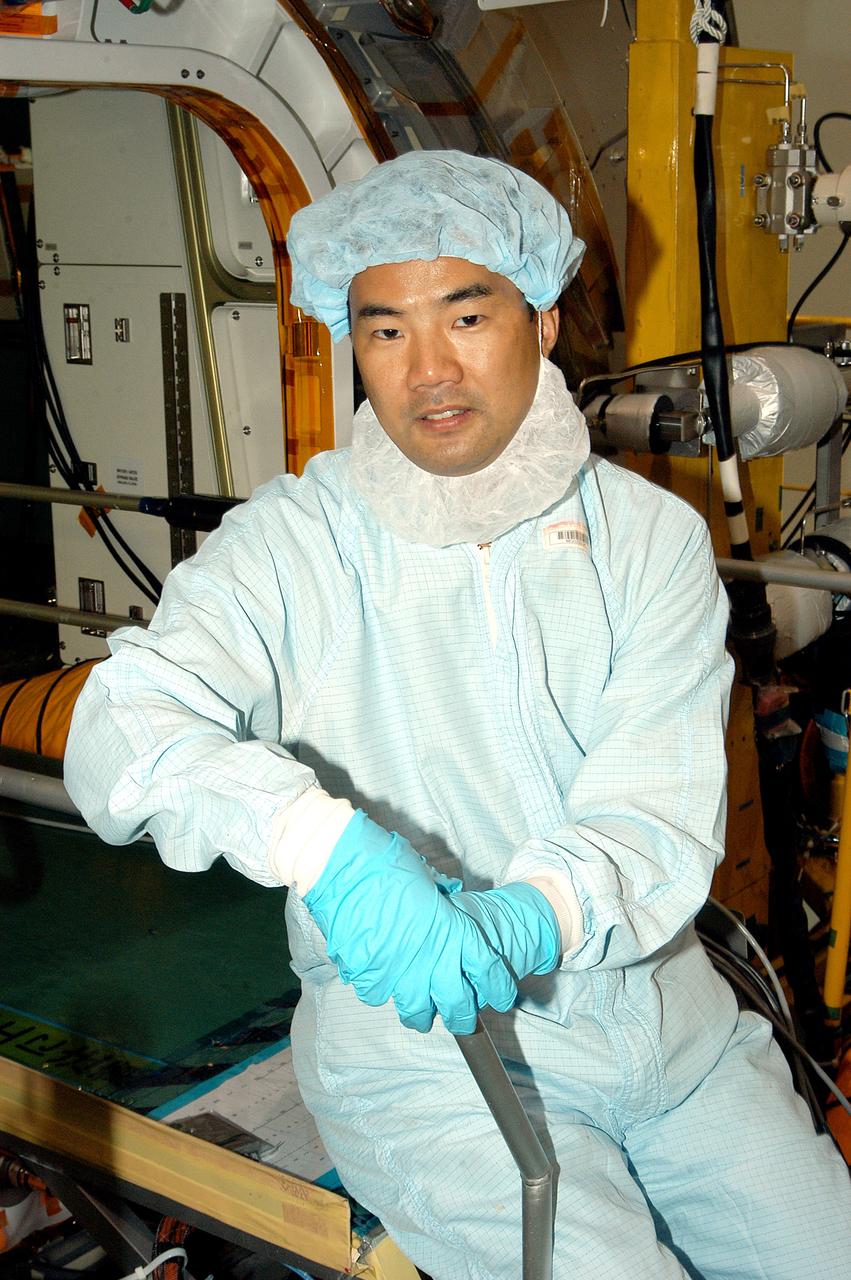
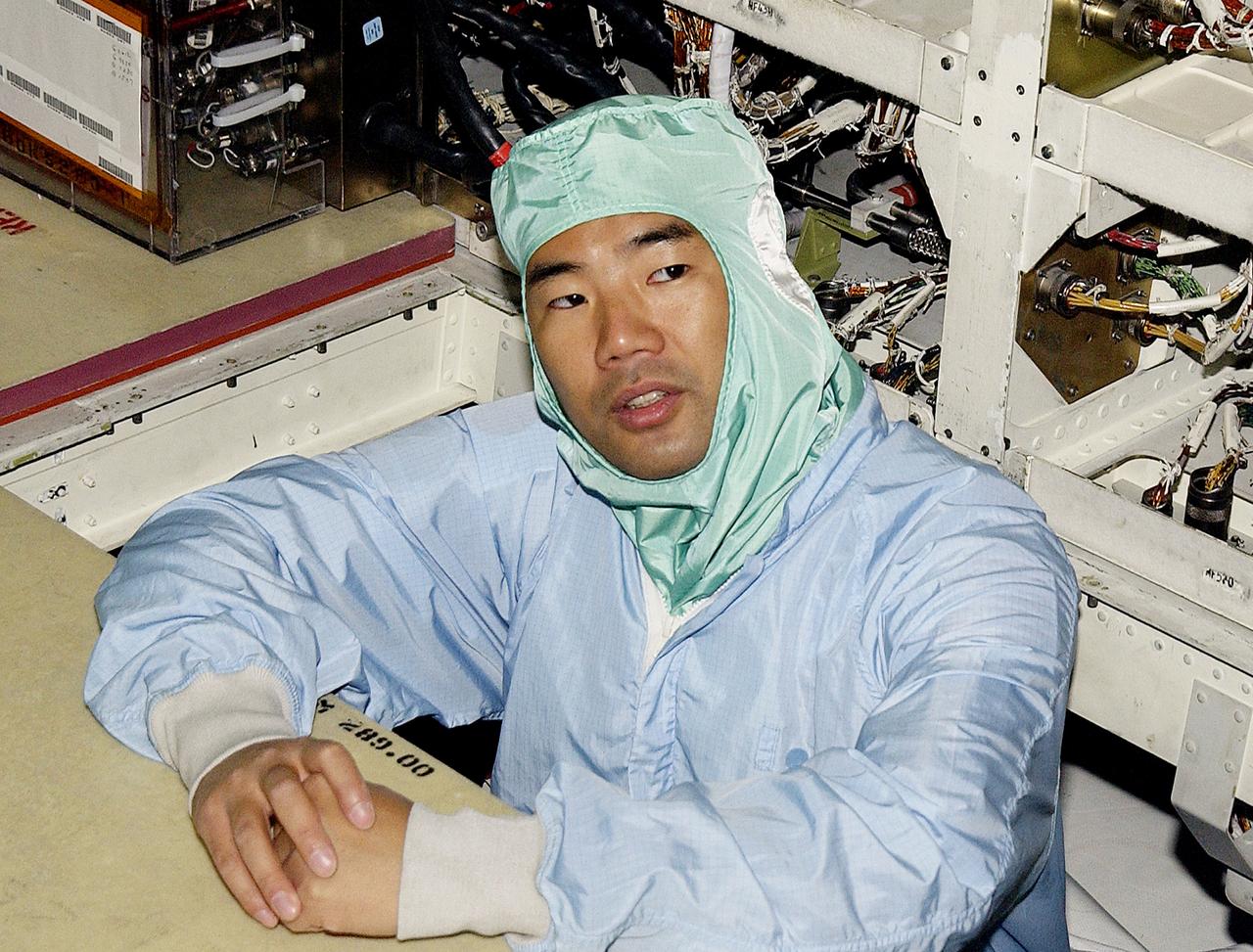
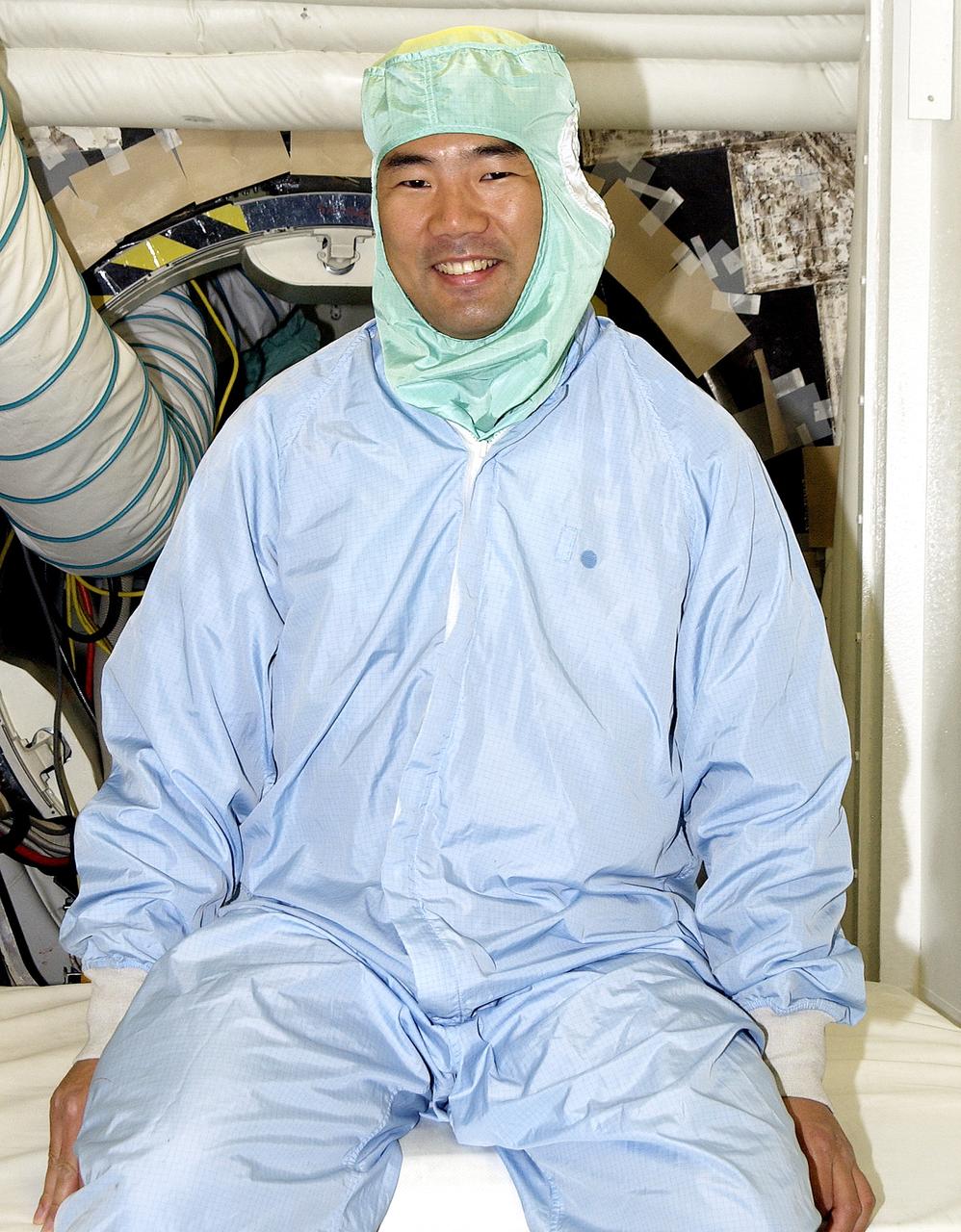
KENNEDY SPACE CENTER, FLA. -  Astronaut Soichi Noguchi, with the National Space Development Agency of Japan (NASDA), rests inside the Japanese Experiment Module (JEM), undergoing a Multi-Element Integrated Test (MEIT)  in the Space Station Processing Facility.  Noguchi is assigned to mission STS-114 as a mission specialist.   Node 2 attaches to the end of the U.S. Lab on the ISS and provides attach locations for the Japanese laboratory, European laboratory, the Centrifuge Accommodation Module and, eventually, Multipurpose Logistics Modules. It will provide the primary docking location for the Shuttle when a pressurized mating adapter is attached to Node 2.  Installation of the module will complete the U.S. Core of the ISS.   The JEM, developed by NASDA,  is Japan's primary contribution to the Station. It will enhance the unique research capabilities of the orbiting complex by providing an additional environment for astronauts to conduct science experiments.
KENNEDY SPACE CENTER, FLA. - Astronaut Soichi Noguchi, with the National Space Development Agency of Japan (NASDA), rests inside the Japanese Experiment Module (JEM), undergoing a Multi-Element Integrated Test (MEIT) in the Space Station Processing Facility. Noguchi is assigned to mission STS-114 as a mission specialist. Node 2 attaches to the end of the U.S. Lab on the ISS and provides attach locations for the Japanese laboratory, European laboratory, the Centrifuge Accommodation Module and, eventually, Multipurpose Logistics Modules. It will provide the primary docking location for the Shuttle when a pressurized mating adapter is attached to Node 2. Installation of the module will complete the U.S. Core of the ISS. The JEM, developed by NASDA, is Japan's primary contribution to the Station. It will enhance the unique research capabilities of the orbiting complex by providing an additional environment for astronauts to conduct science experiments.
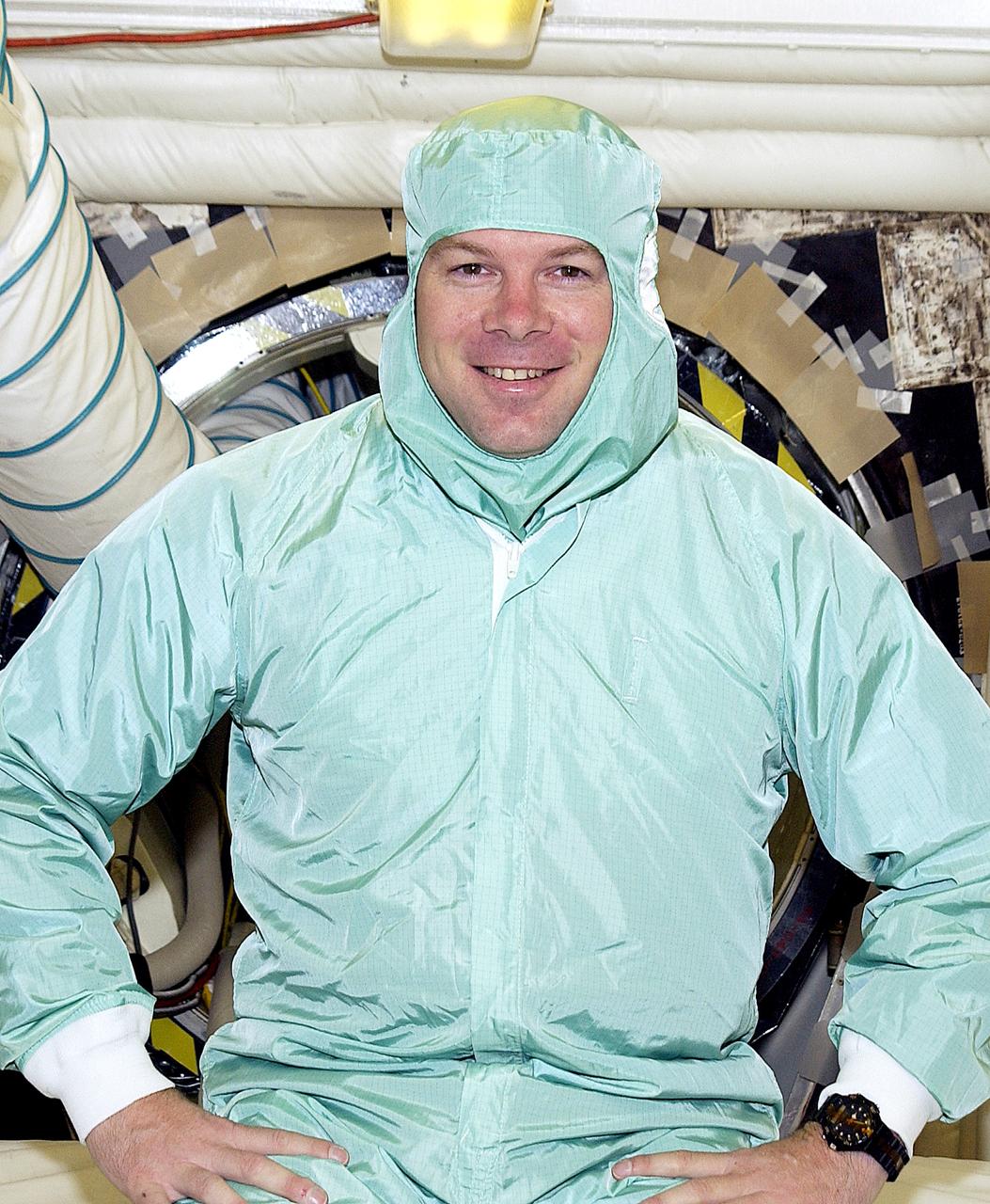
KENNEDY SPACE CENTER, FLA. -   Astronaut Soichi Noguchi, with the National Space Development Agency of Japan (NASDA), is inside the Japanese Experiment Module (JEM), undergoing a Multi-Element Integrated Test (MEIT)  in the Space Station Processing Facility.  Noguchi is assigned to mission STS-114 as a mission specialist.   Node 2 attaches to the end of the U.S. Lab on the ISS and provides attach locations for the Japanese laboratory, European laboratory, the Centrifuge Accommodation Module and, eventually, Multipurpose Logistics Modules. It will provide the primary docking location for the Shuttle when a pressurized mating adapter is attached to Node 2.  Installation of the module will complete the U.S. Core of the ISS.   The JEM, developed by NASDA,  is Japan's primary contribution to the Station. It will enhance the unique research capabilities of the orbiting complex by providing an additional environment for astronauts to conduct science experiments.
KENNEDY SPACE CENTER, FLA. - Astronaut Soichi Noguchi, with the National Space Development Agency of Japan (NASDA), is inside the Japanese Experiment Module (JEM), undergoing a Multi-Element Integrated Test (MEIT) in the Space Station Processing Facility. Noguchi is assigned to mission STS-114 as a mission specialist. Node 2 attaches to the end of the U.S. Lab on the ISS and provides attach locations for the Japanese laboratory, European laboratory, the Centrifuge Accommodation Module and, eventually, Multipurpose Logistics Modules. It will provide the primary docking location for the Shuttle when a pressurized mating adapter is attached to Node 2. Installation of the module will complete the U.S. Core of the ISS. The JEM, developed by NASDA, is Japan's primary contribution to the Station. It will enhance the unique research capabilities of the orbiting complex by providing an additional environment for astronauts to conduct science experiments.
KENNEDY SPACE CENTER, FLA. -  Astronaut Soichi Noguchi (left), with the National Space Development Agency of Japan (NASDA), points to data on the console during a Multi-Element Integrated Test (MEIT) of the U.S. Node 2 and the Japanese Experiment Module (JEM) in the Space Station Processing Facility.  The JEM, developed by NASDA, is Japan's primary contribution to the Station. It will enhance the unique research capabilities of the orbiting complex by providing an additional environment for astronauts to conduct science experiments. Noguchi is assigned to mission STS-114 as a mission specialist.  Node 2 provides attach locations for the Japanese laboratory, as well as European laboratory, the Centrifuge Accommodation Module and, eventually, Multipurpose Logistics Modules.  Installation of the module will complete the U.S. Core of the ISS.
KENNEDY SPACE CENTER, FLA. - Astronaut Soichi Noguchi (left), with the National Space Development Agency of Japan (NASDA), points to data on the console during a Multi-Element Integrated Test (MEIT) of the U.S. Node 2 and the Japanese Experiment Module (JEM) in the Space Station Processing Facility. The JEM, developed by NASDA, is Japan's primary contribution to the Station. It will enhance the unique research capabilities of the orbiting complex by providing an additional environment for astronauts to conduct science experiments. Noguchi is assigned to mission STS-114 as a mission specialist. Node 2 provides attach locations for the Japanese laboratory, as well as European laboratory, the Centrifuge Accommodation Module and, eventually, Multipurpose Logistics Modules. Installation of the module will complete the U.S. Core of the ISS.
KENNEDY SPACE CENTER, FLA. -  Astronaut Soichi Noguchi (left), with the National Space Development Agency of Japan (NASDA), points to data on the console during a Multi-Element Integrated Test (MEIT) of the U.S. Node 2 and the Japanese Experiment Module (JEM) in the Space Station Processing Facility.  The JEM, developed by NASDA, is Japan's primary contribution to the Station. It will enhance the unique research capabilities of the orbiting complex by providing an additional environment for astronauts to conduct science experiments. Noguchi is assigned to mission STS-114 as a mission specialist.  Node 2 provides attach locations for the Japanese laboratory, as well as European laboratory, the Centrifuge Accommodation Module and, eventually, Multipurpose Logistics Modules.  Installation of the module will complete the U.S. Core of the ISS.
KENNEDY SPACE CENTER, FLA. - Astronaut Soichi Noguchi (left), with the National Space Development Agency of Japan (NASDA), points to data on the console during a Multi-Element Integrated Test (MEIT) of the U.S. Node 2 and the Japanese Experiment Module (JEM) in the Space Station Processing Facility. The JEM, developed by NASDA, is Japan's primary contribution to the Station. It will enhance the unique research capabilities of the orbiting complex by providing an additional environment for astronauts to conduct science experiments. Noguchi is assigned to mission STS-114 as a mission specialist. Node 2 provides attach locations for the Japanese laboratory, as well as European laboratory, the Centrifuge Accommodation Module and, eventually, Multipurpose Logistics Modules. Installation of the module will complete the U.S. Core of the ISS.
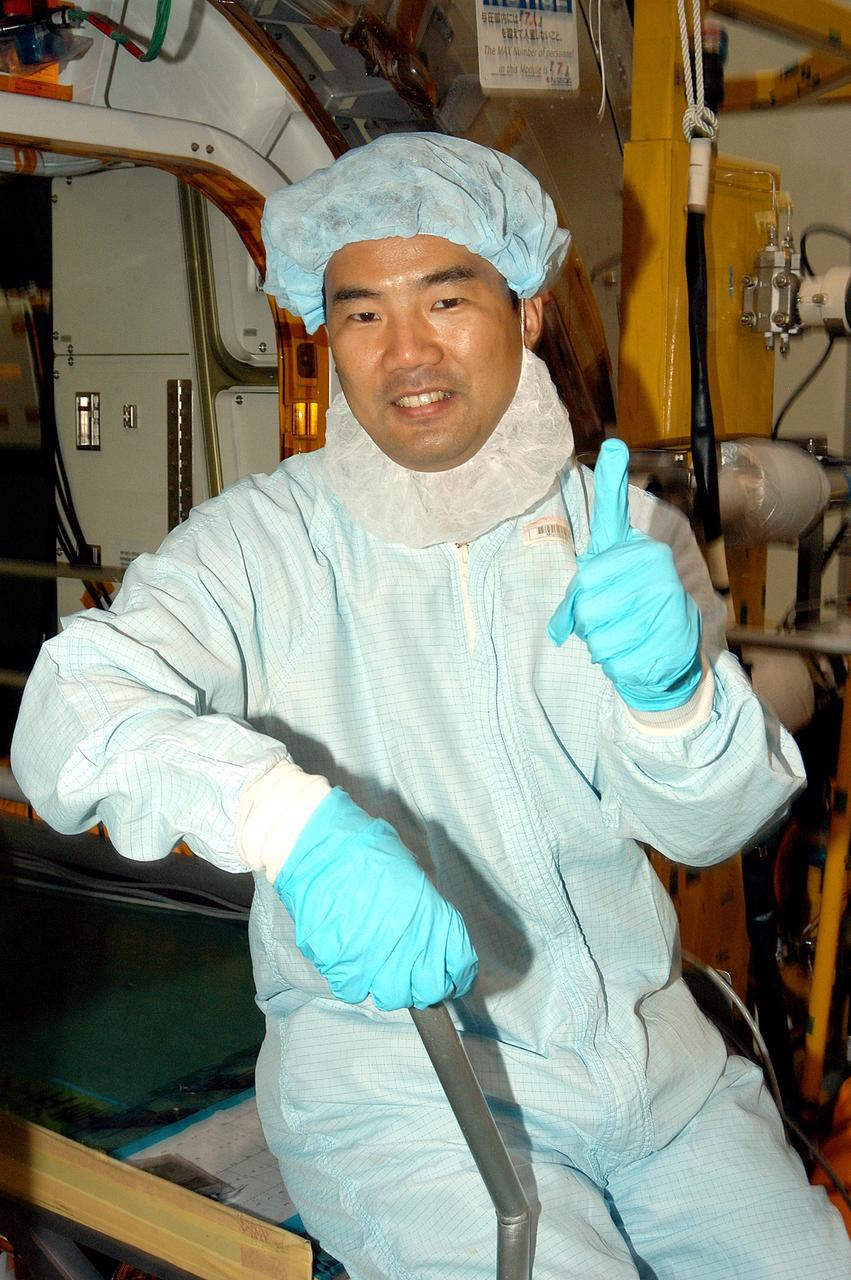
KENNEDY SPACE CENTER, FLA. -  Astronaut Soichi Noguchi, with the National Space Development Agency of Japan (NASDA), signals success during a Multi-Element Integrated Test (MEIT ) of the Japanese Experiment Module (JEM) in the Space Station Processing Facility.  Noguchi is assigned to mission STS-114 as a mission specialist.   Node 2 attaches to the end of the U.S. Lab on the ISS and provides attach locations for the Japanese laboratory, European laboratory, the Centrifuge Accommodation Module and, eventually, Multipurpose Logistics Modules. It will provide the primary docking location for the Shuttle when a pressurized mating adapter is attached to Node 2.  Installation of the module will complete the U.S. Core of the ISS.   The JEM, developed by NASDA,  is Japan's primary contribution to the Station. It will enhance the unique research capabilities of the orbiting complex by providing an additional environment for astronauts to conduct science experiments.
KENNEDY SPACE CENTER, FLA. - Astronaut Soichi Noguchi, with the National Space Development Agency of Japan (NASDA), signals success during a Multi-Element Integrated Test (MEIT ) of the Japanese Experiment Module (JEM) in the Space Station Processing Facility. Noguchi is assigned to mission STS-114 as a mission specialist. Node 2 attaches to the end of the U.S. Lab on the ISS and provides attach locations for the Japanese laboratory, European laboratory, the Centrifuge Accommodation Module and, eventually, Multipurpose Logistics Modules. It will provide the primary docking location for the Shuttle when a pressurized mating adapter is attached to Node 2. Installation of the module will complete the U.S. Core of the ISS. The JEM, developed by NASDA, is Japan's primary contribution to the Station. It will enhance the unique research capabilities of the orbiting complex by providing an additional environment for astronauts to conduct science experiments.
KENNEDY SPACE CENTER, FLA. -   Astronaut Soichi Noguchi (right), with the National Space Development Agency of Japan (NASDA), is inside the Japanese Experiment Module (JEM), undergoing a Multi-Element Integrated Test (MEIT)  in the Space Station Processing Facility.  Noguchi is assigned to mission STS-114 as a mission specialist.   Node 2 attaches to the end of the U.S. Lab on the ISS and provides attach locations for the Japanese laboratory, European laboratory, the Centrifuge Accommodation Module and, eventually, Multipurpose Logistics Modules. It will provide the primary docking location for the Shuttle when a pressurized mating adapter is attached to Node 2.  Installation of the module will complete the U.S. Core of the ISS.   The JEM, developed by NASDA,  is Japan's primary contribution to the Station. It will enhance the unique research capabilities of the orbiting complex by providing an additional environment for astronauts to conduct science experiments.
KENNEDY SPACE CENTER, FLA. - Astronaut Soichi Noguchi (right), with the National Space Development Agency of Japan (NASDA), is inside the Japanese Experiment Module (JEM), undergoing a Multi-Element Integrated Test (MEIT) in the Space Station Processing Facility. Noguchi is assigned to mission STS-114 as a mission specialist. Node 2 attaches to the end of the U.S. Lab on the ISS and provides attach locations for the Japanese laboratory, European laboratory, the Centrifuge Accommodation Module and, eventually, Multipurpose Logistics Modules. It will provide the primary docking location for the Shuttle when a pressurized mating adapter is attached to Node 2. Installation of the module will complete the U.S. Core of the ISS. The JEM, developed by NASDA, is Japan's primary contribution to the Station. It will enhance the unique research capabilities of the orbiting complex by providing an additional environment for astronauts to conduct science experiments.
KENNEDY SPACE CENTER, FLA. -  Astronaut Soichi Noguchi, with the National Space Development Agency of Japan (NASDA), rests inside the Japanese Experiment Module (JEM), undergoing a Multi-Element Integrated Test (MEIT)  in the Space Station Processing Facility.  Noguchi is assigned to mission STS-114 as a mission specialist.   Node 2 attaches to the end of the U.S. Lab on the ISS and provides attach locations for the Japanese laboratory, European laboratory, the Centrifuge Accommodation Module and, eventually, Multipurpose Logistics Modules. It will provide the primary docking location for the Shuttle when a pressurized mating adapter is attached to Node 2.  Installation of the module will complete the U.S. Core of the ISS.   The JEM, developed by NASDA,  is Japan's primary contribution to the Station. It will enhance the unique research capabilities of the orbiting complex by providing an additional environment for astronauts to conduct science experiments.
KENNEDY SPACE CENTER, FLA. - Astronaut Soichi Noguchi, with the National Space Development Agency of Japan (NASDA), rests inside the Japanese Experiment Module (JEM), undergoing a Multi-Element Integrated Test (MEIT) in the Space Station Processing Facility. Noguchi is assigned to mission STS-114 as a mission specialist. Node 2 attaches to the end of the U.S. Lab on the ISS and provides attach locations for the Japanese laboratory, European laboratory, the Centrifuge Accommodation Module and, eventually, Multipurpose Logistics Modules. It will provide the primary docking location for the Shuttle when a pressurized mating adapter is attached to Node 2. Installation of the module will complete the U.S. Core of the ISS. The JEM, developed by NASDA, is Japan's primary contribution to the Station. It will enhance the unique research capabilities of the orbiting complex by providing an additional environment for astronauts to conduct science experiments.
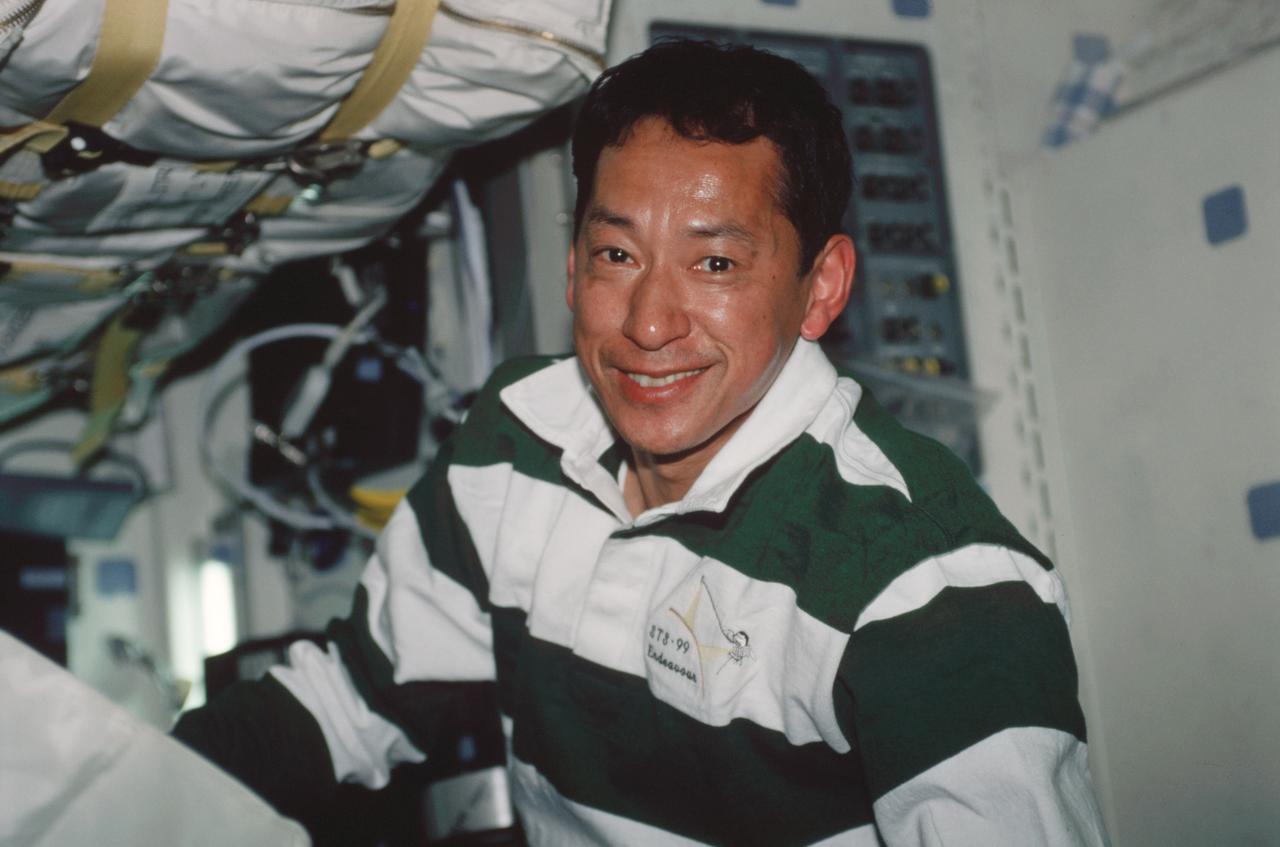
S99-E-5478 (16 February 2000) --- Astronaut Mamoru Mohri totes a notebook  on Endeavour's mid deck.  The mission specialist represents Japan's National Space Development Agency (NASDA).
STS-99 MS Mohri works on OV-105's middeck
STS099-303-019 (11-22 February 2000) ---  Astronaut Mamoru Mohri, mission specialist, supports SRTM's Blue Team on  Endeavour's middeck. He is with Japan's National Space Development Agency (NASDA).
STS-99 MS Mohri poses for a photo on OV-105's middeck
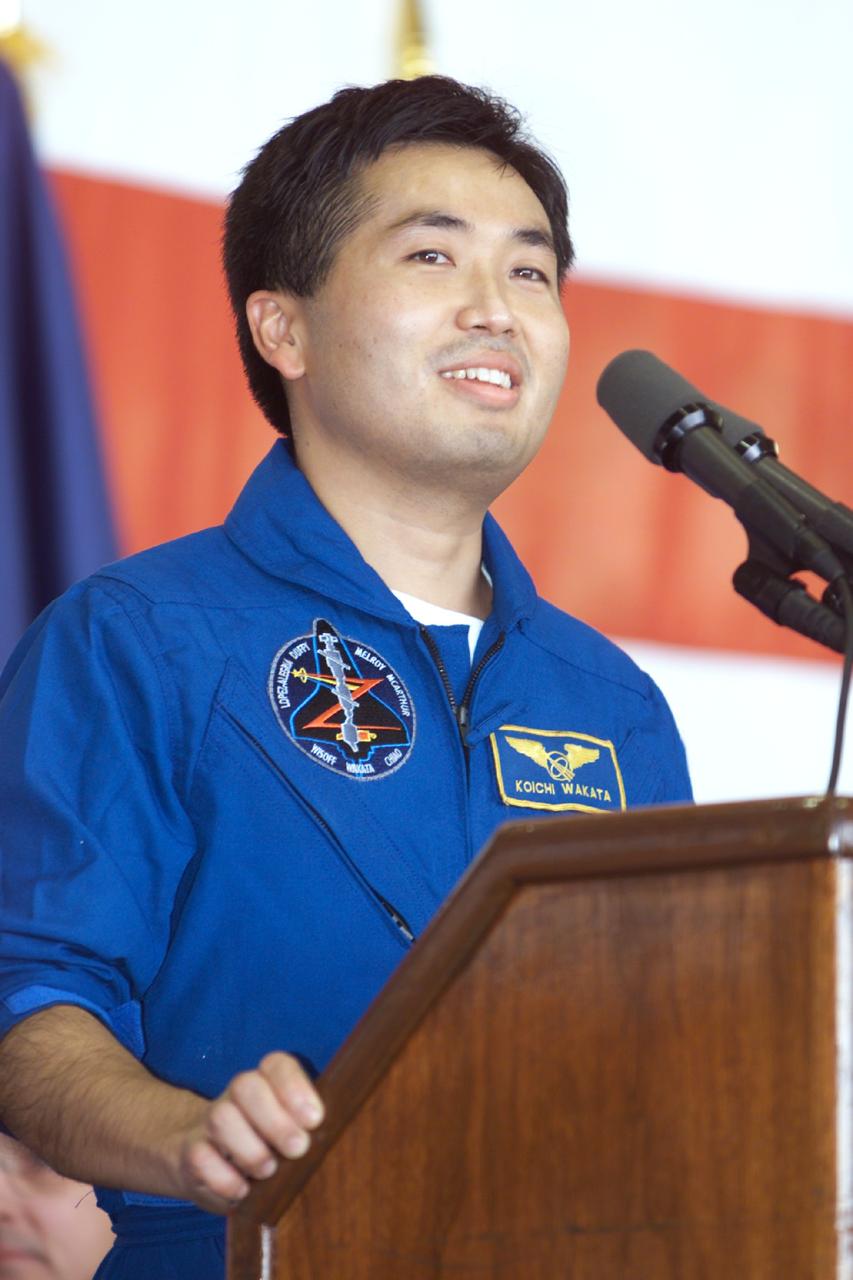
JSC2000-E-27058 (27 October 2000) ---  Astronaut Koichi Wakata, mission specialist, addresses crowd at Ellington Field during crew return ceremonies. Wakata represents Japan's National Space Development Agency (NASDA).
STS-92 crew return to Ellington Field
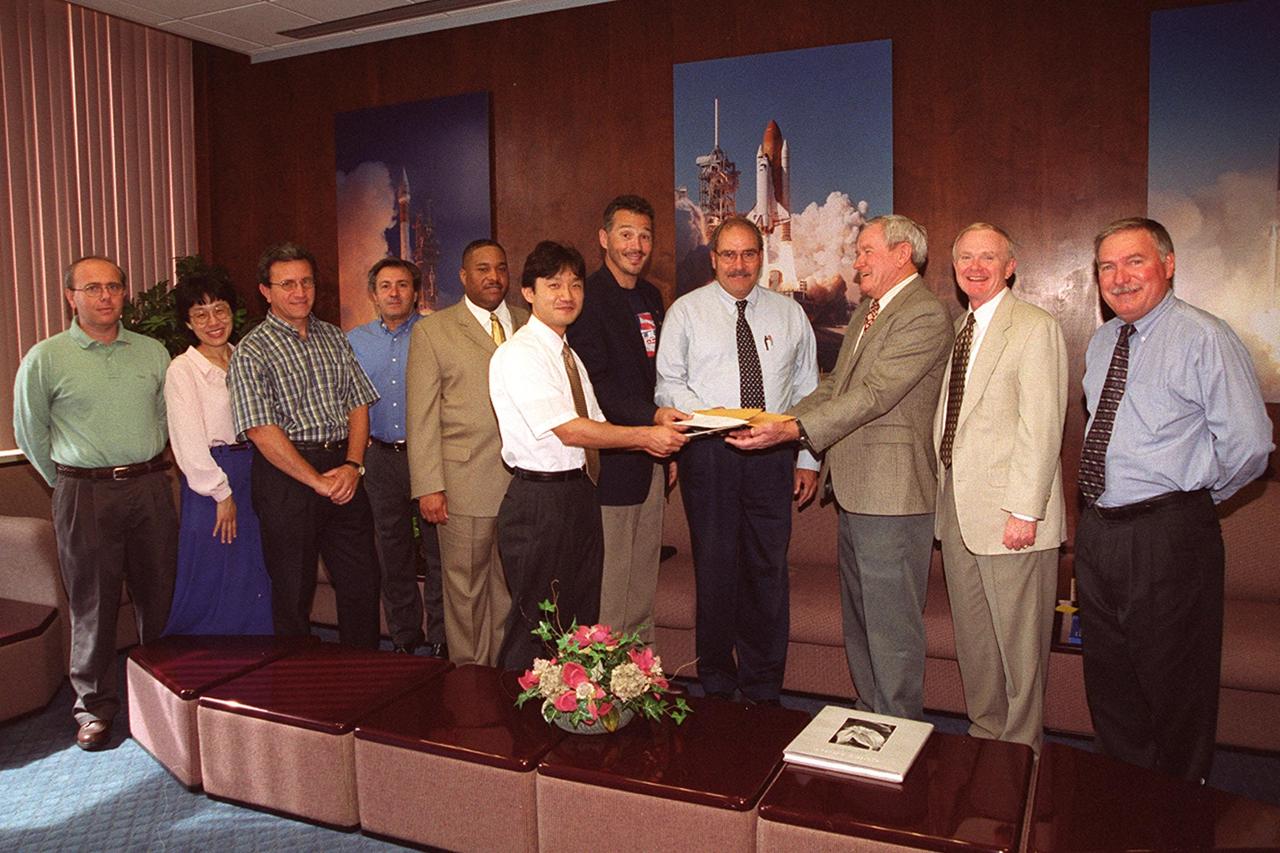
KENNEDY SPACE CENTER, Fla. --  In a special presentation, ISS International Partners donate funds to the Combined Federal Campaign and United Way at KSC to benefit the Sept. 11 recovery efforts.  From left are Francesco Santoro of Alenia (Italian Space Agency contractor), Minako Holdrum of the Natinal Space Development Agency of Japan (NASDA), Michele Tripoli and Guiseppe Mancuso of Alenia, Todd Arnold, NASA KSC, Shimpei Takahashi of NASDA, Steve Mozes of the Canadian Space Agency, Agostino Verghini of the Italian Space Agency, Frank Ramsey of United Way/CFC, Center Director Roy D. Bridges Jr. and Director of International Space Station/Payload Processing Tip Talone
KSC-01PP1701
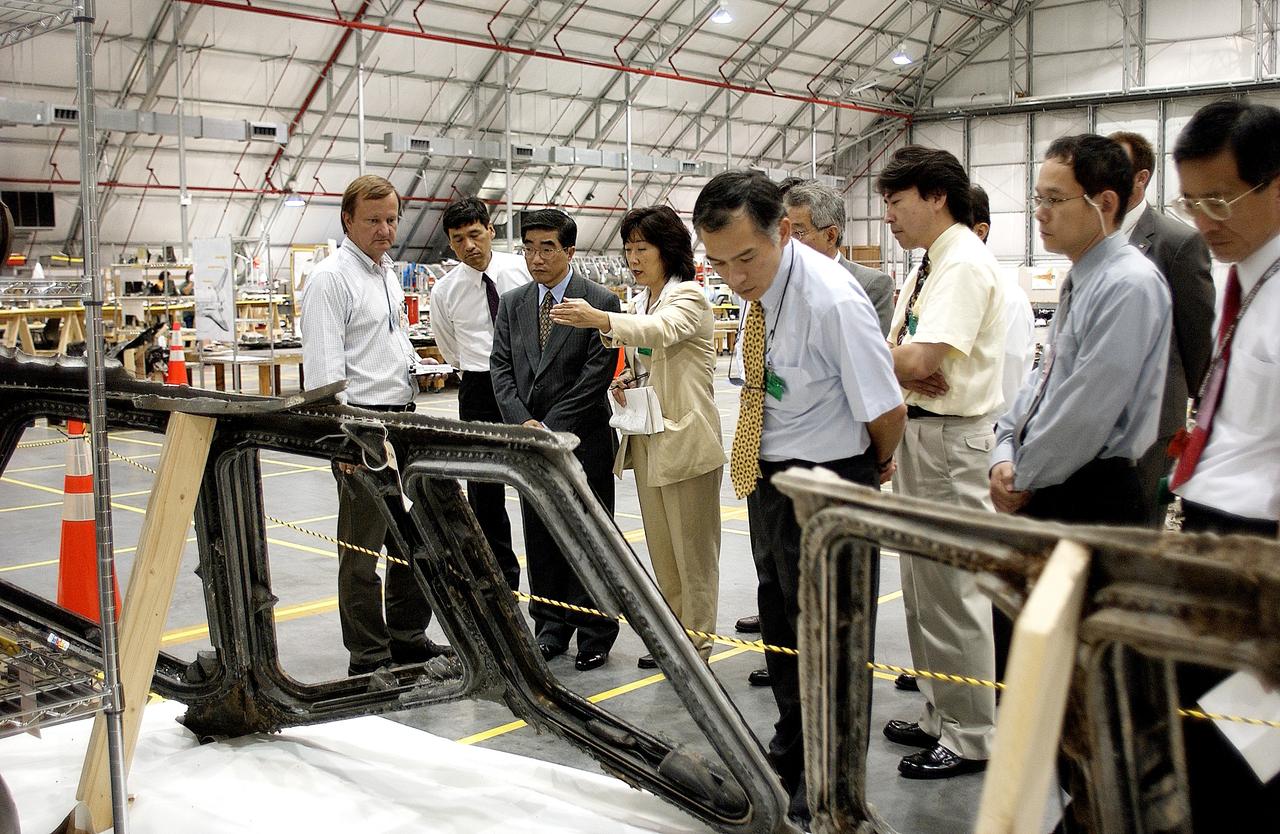
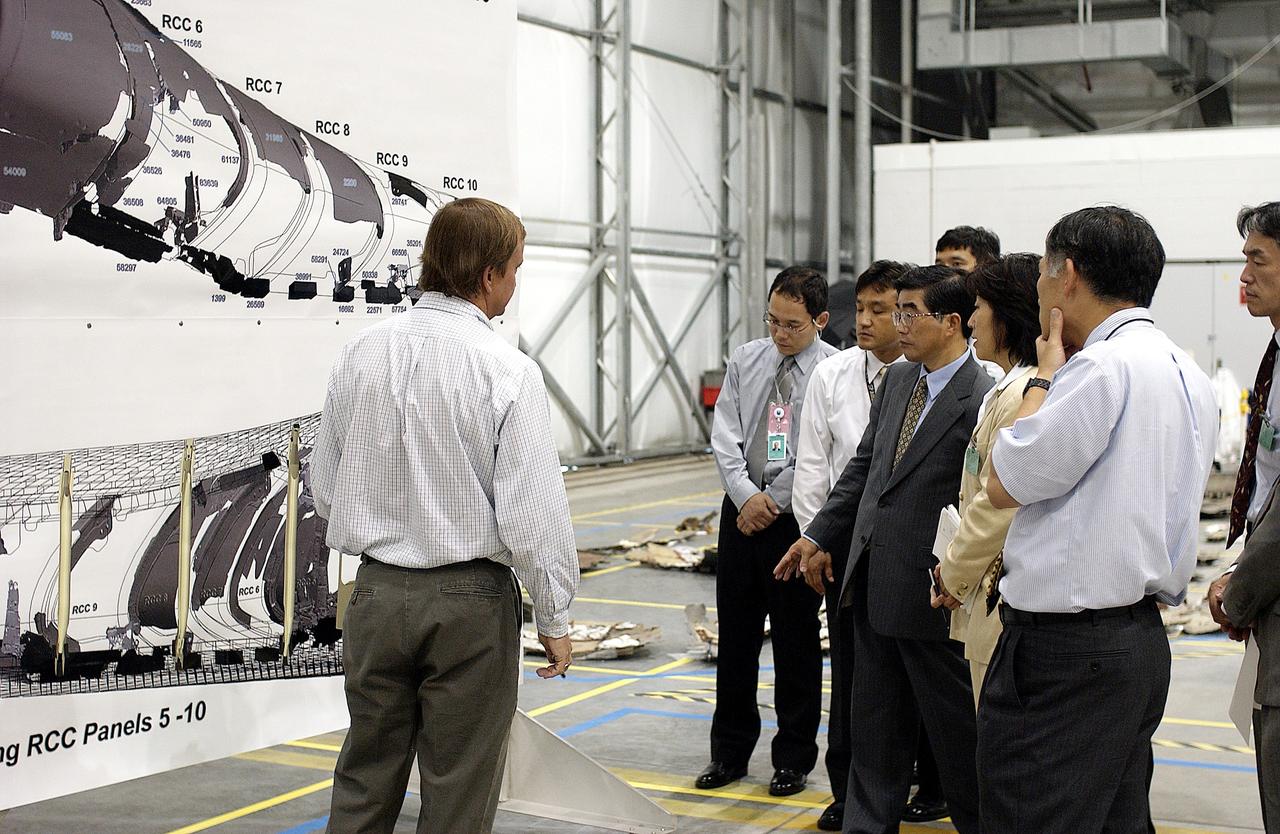
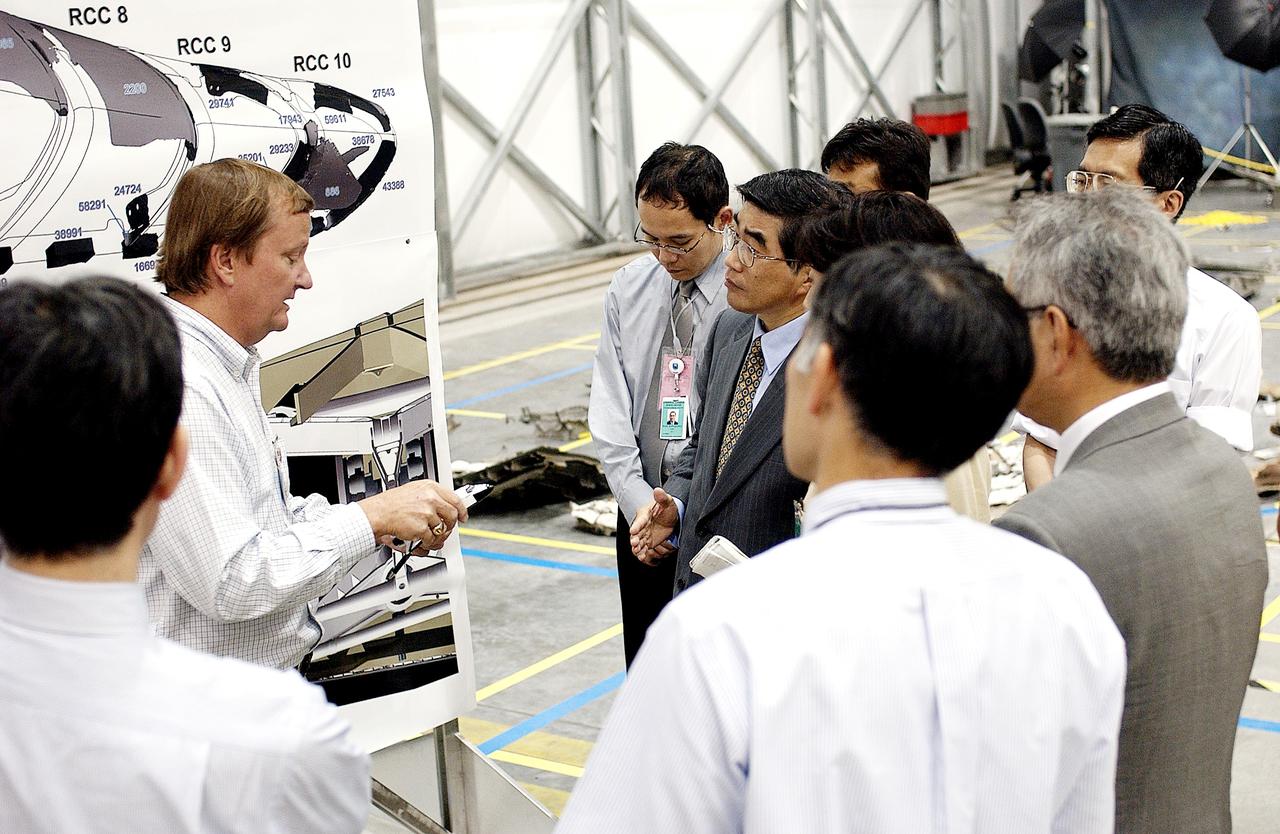
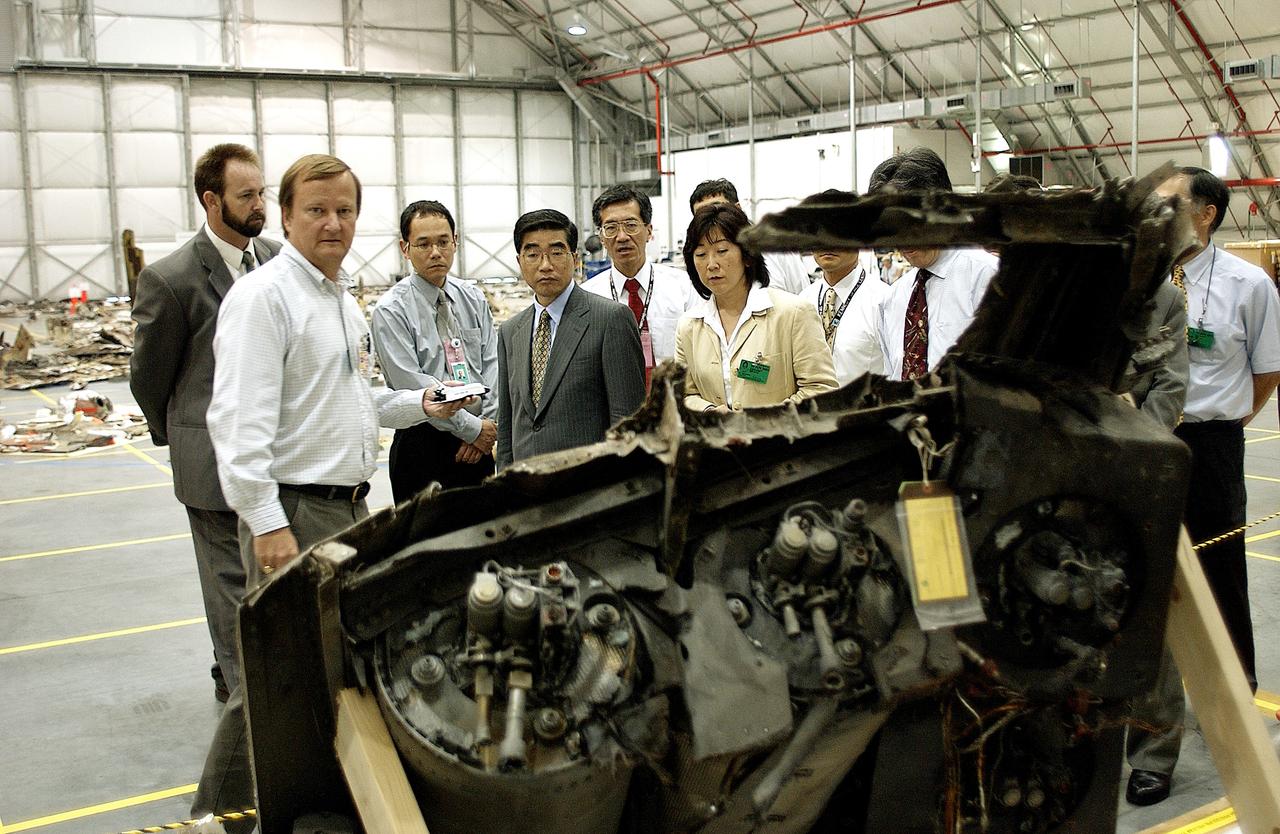
KENNEDY SPACE CENTER, FLA. -  Shuttle Launch Director Mike Leinbach (second from left) explains recovery and reconstruction efforts of Columbia to the Executive Director of NASDA Koji Yamamoto (fourth from left) and others visiting the Columbia Debris Hangar.   Mr. Yamamoto is at KSC for a welcome ceremony involving the arrival of the newest Space Station module, the Japanese Experiment Module/pressurized module.
KENNEDY SPACE CENTER, FLA. - Shuttle Launch Director Mike Leinbach (second from left) explains recovery and reconstruction efforts of Columbia to the Executive Director of NASDA Koji Yamamoto (fourth from left) and others visiting the Columbia Debris Hangar. Mr. Yamamoto is at KSC for a welcome ceremony involving the arrival of the newest Space Station module, the Japanese Experiment Module/pressurized module.
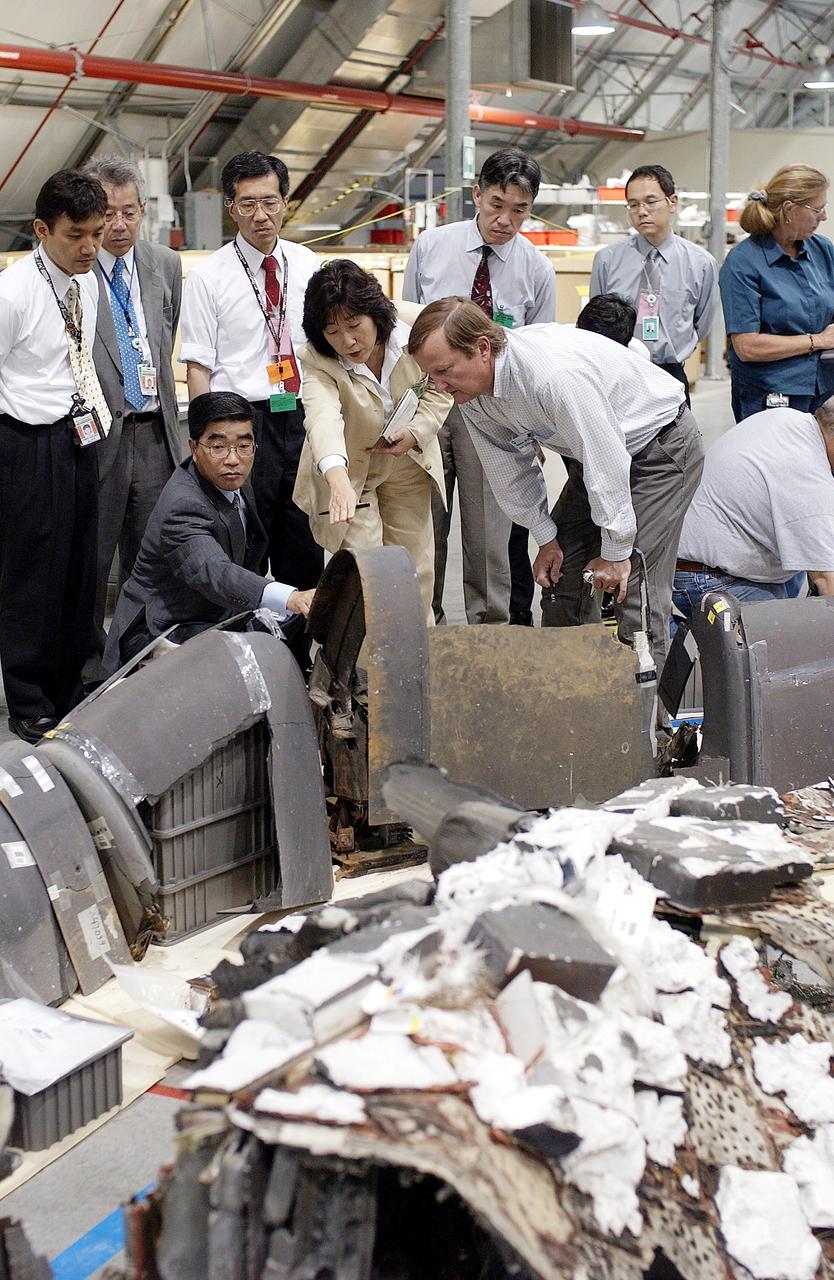
KENNEDY SPACE CENTER, FLA. -  On a KSC visit, Executive Director of NASDA Koji Yamamoto (kneeling, left) reaches out to a piece of Columbia debris in the Columbia Debris Hangar.  At right is Shuttle Launch Director Mike Leinbach, who is explaining recovery and reconstruction efforts.  Mr. Yamamoto is at KSC for a welcome ceremony involving the arrival of the newest Space Station module, the Japanese Experiment Module/pressurized module.
KENNEDY SPACE CENTER, FLA. - On a KSC visit, Executive Director of NASDA Koji Yamamoto (kneeling, left) reaches out to a piece of Columbia debris in the Columbia Debris Hangar. At right is Shuttle Launch Director Mike Leinbach, who is explaining recovery and reconstruction efforts. Mr. Yamamoto is at KSC for a welcome ceremony involving the arrival of the newest Space Station module, the Japanese Experiment Module/pressurized module.
KENNEDY SPACE CENTER, FLA. -  Shuttle Launch Director Mike Leinbach (right) explains recovery and reconstruction efforts of Columbia to the Executive Director of NASDA Koji Yamamoto (center, foreground) and others visiting the Columbia Debris Hangar.   Mr. Yamamoto is at KSC for a welcome ceremony involving the arrival of the newest Space Station module, the Japanese Experiment Module/pressurized module.
KENNEDY SPACE CENTER, FLA. - Shuttle Launch Director Mike Leinbach (right) explains recovery and reconstruction efforts of Columbia to the Executive Director of NASDA Koji Yamamoto (center, foreground) and others visiting the Columbia Debris Hangar. Mr. Yamamoto is at KSC for a welcome ceremony involving the arrival of the newest Space Station module, the Japanese Experiment Module/pressurized module.
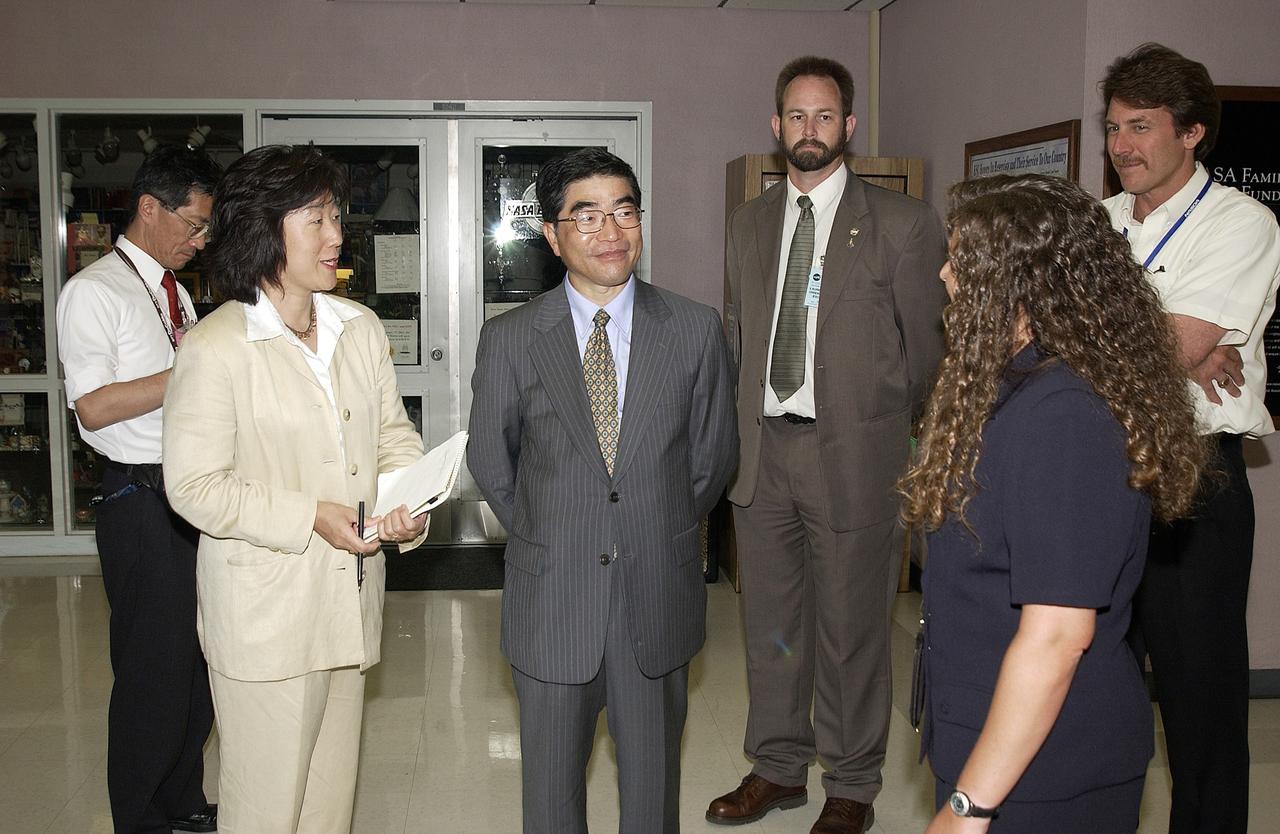
KENNEDY SPACE CENTER, FLA. -  Executive Director of NASDA Koji Yamamoto (left) is welcomed to KSC by Center Director Roy Bridges Jr. (right).  Mr. Yamamoto is at KSC for a welcome ceremony involving the arrival of the newest Space Station module, the Japanese Experiment Module/pressurized module.  His visit includes a tour of the Columbia Debris Hangar.
KENNEDY SPACE CENTER, FLA. - Executive Director of NASDA Koji Yamamoto (left) is welcomed to KSC by Center Director Roy Bridges Jr. (right). Mr. Yamamoto is at KSC for a welcome ceremony involving the arrival of the newest Space Station module, the Japanese Experiment Module/pressurized module. His visit includes a tour of the Columbia Debris Hangar.
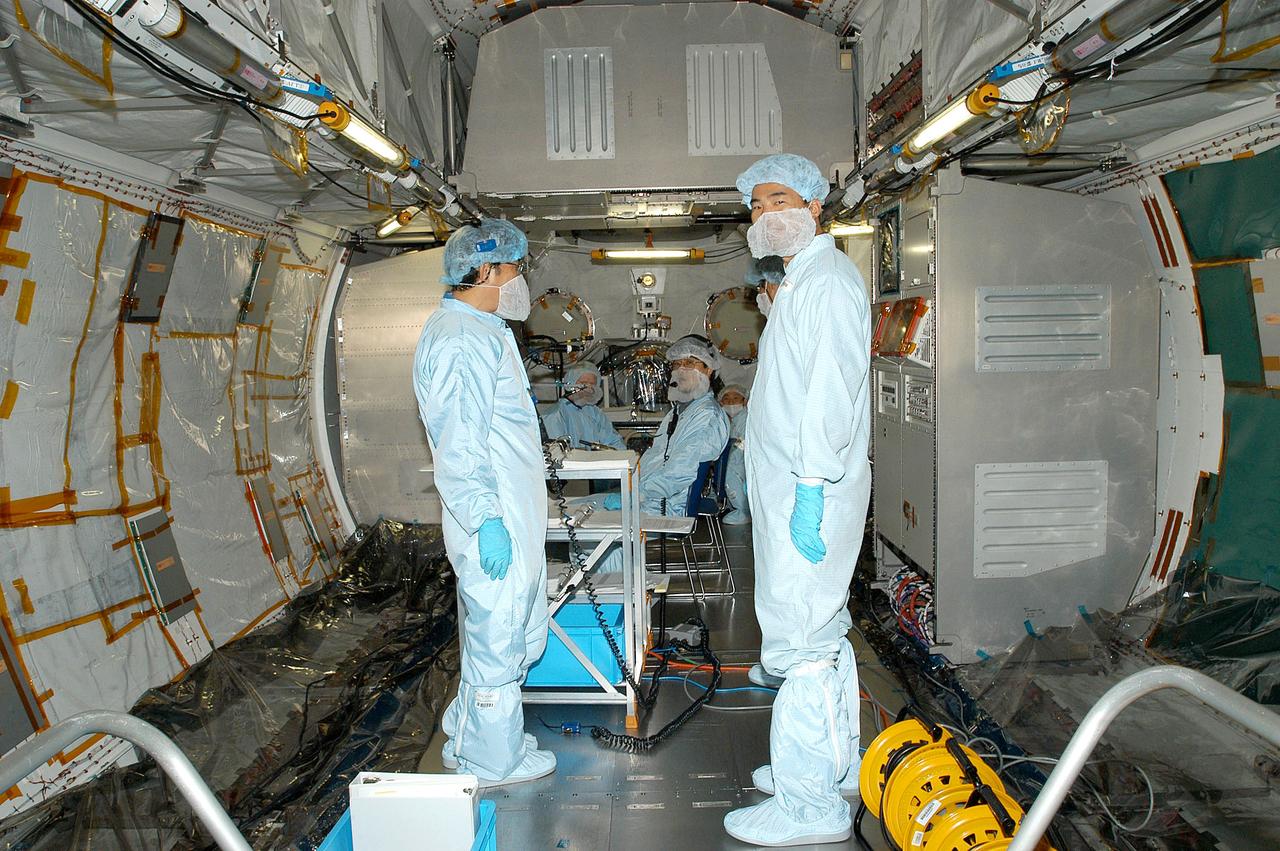
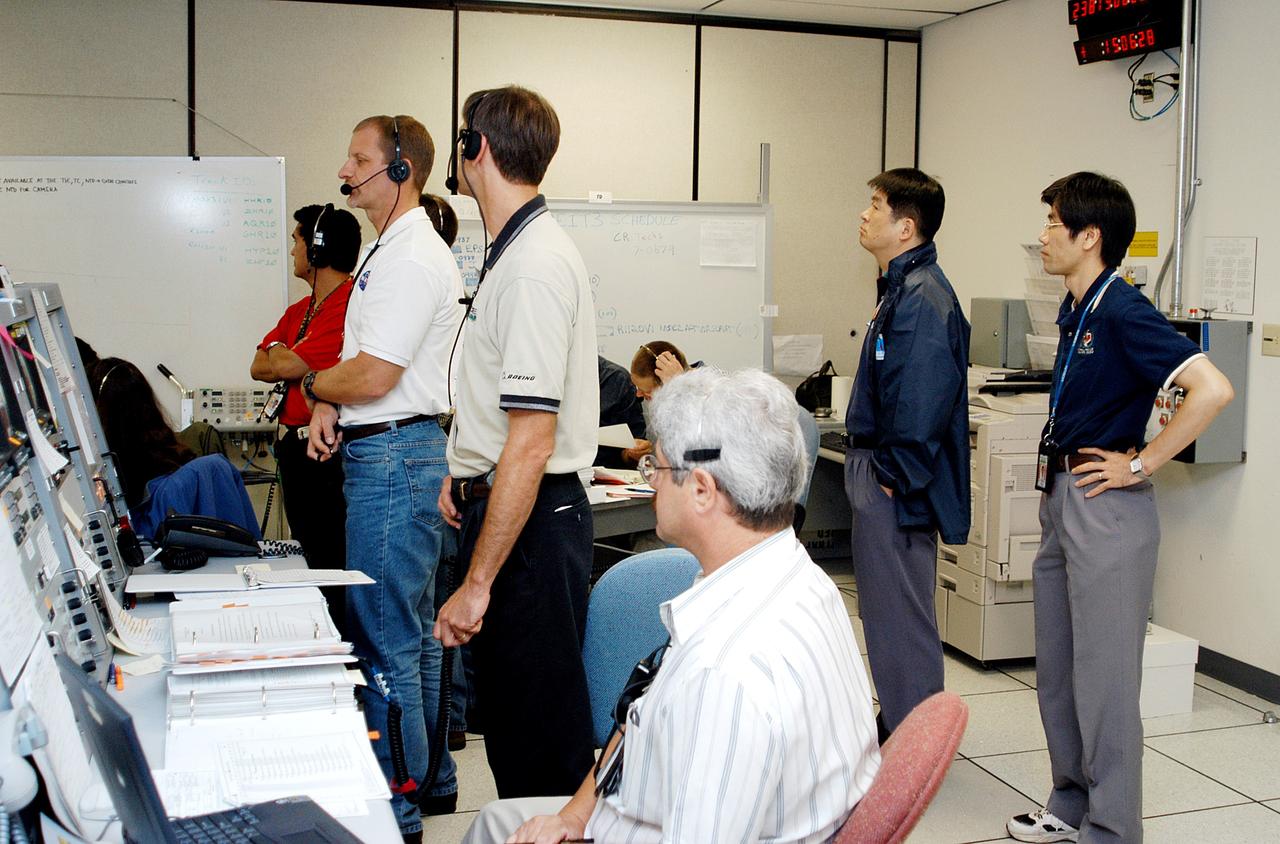
KENNEDY SPACE CENTER, FLA. -  In the Space Station Processing Facility, personnel observe sensors during a Multi-Equipment Interface Test (MEIT) on the Japanese Experiment Module (JEM).  The National Space Development Agency of Japan (NASDA) developed the laboratory at the Tsukuba Space Center near Tokyo. It is the first element, named "Kibo" (Hope), to be delivered to KSC. The JEM is Japan's primary contribution to the Station. It will enhance the unique research capabilities of the orbiting complex by providing an additional environment for astronauts to conduct science experiments.
KENNEDY SPACE CENTER, FLA. - In the Space Station Processing Facility, personnel observe sensors during a Multi-Equipment Interface Test (MEIT) on the Japanese Experiment Module (JEM). The National Space Development Agency of Japan (NASDA) developed the laboratory at the Tsukuba Space Center near Tokyo. It is the first element, named "Kibo" (Hope), to be delivered to KSC. The JEM is Japan's primary contribution to the Station. It will enhance the unique research capabilities of the orbiting complex by providing an additional environment for astronauts to conduct science experiments.
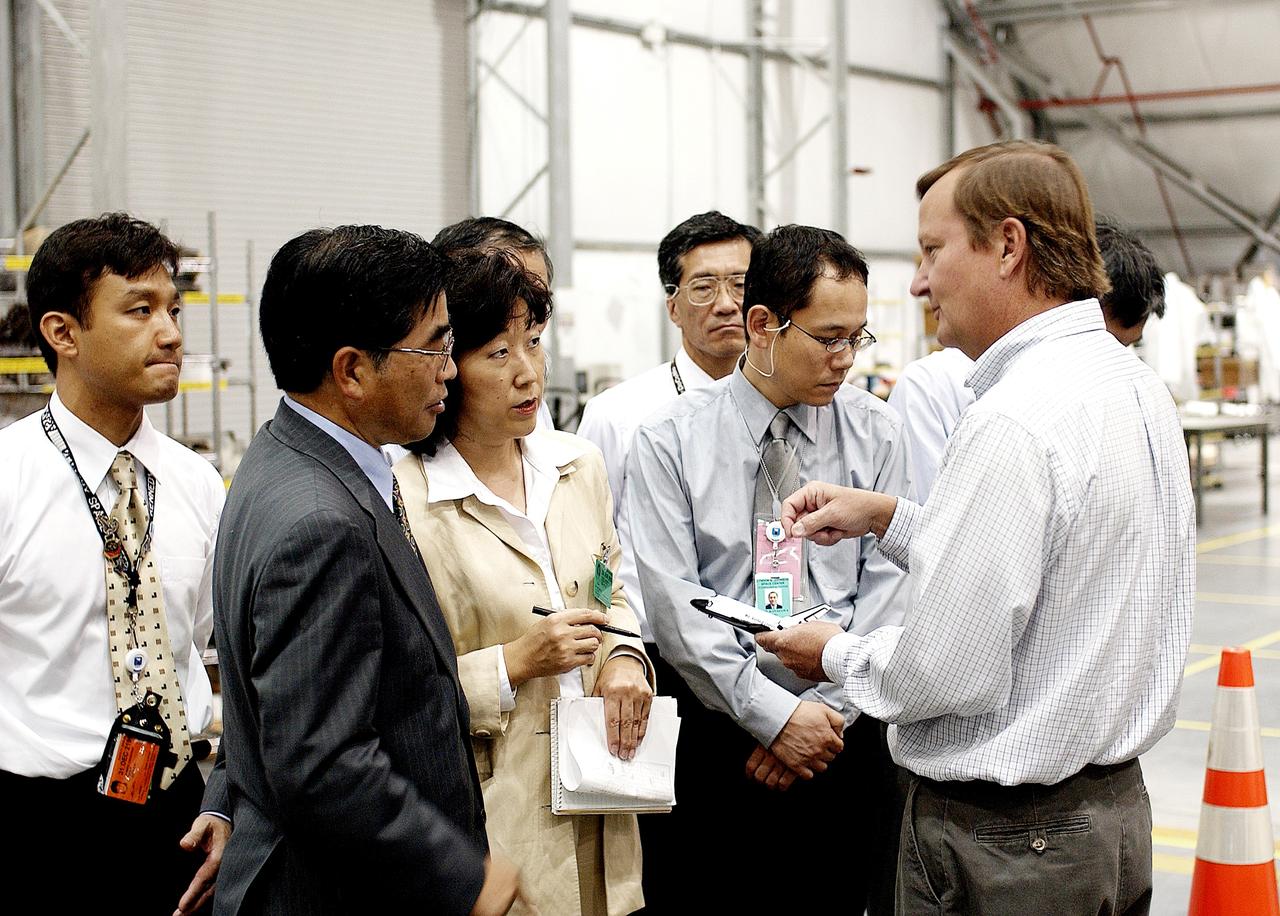
KENNEDY SPACE CENTER, FLA. -    Shuttle Launch Director Mike Leinbach (left) explains recovery and reconstruction efforts of Columbia to the Executive Director of NASDA Koji Yamamoto (second from left) and others visiting the Columbia Debris Hangar.   Mr. Yamamoto is at KSC for a welcome ceremony involving the arrival of the newest Space Station module, the Japanese Experiment Module/pressurized module.
KENNEDY SPACE CENTER, FLA. - Shuttle Launch Director Mike Leinbach (left) explains recovery and reconstruction efforts of Columbia to the Executive Director of NASDA Koji Yamamoto (second from left) and others visiting the Columbia Debris Hangar. Mr. Yamamoto is at KSC for a welcome ceremony involving the arrival of the newest Space Station module, the Japanese Experiment Module/pressurized module.
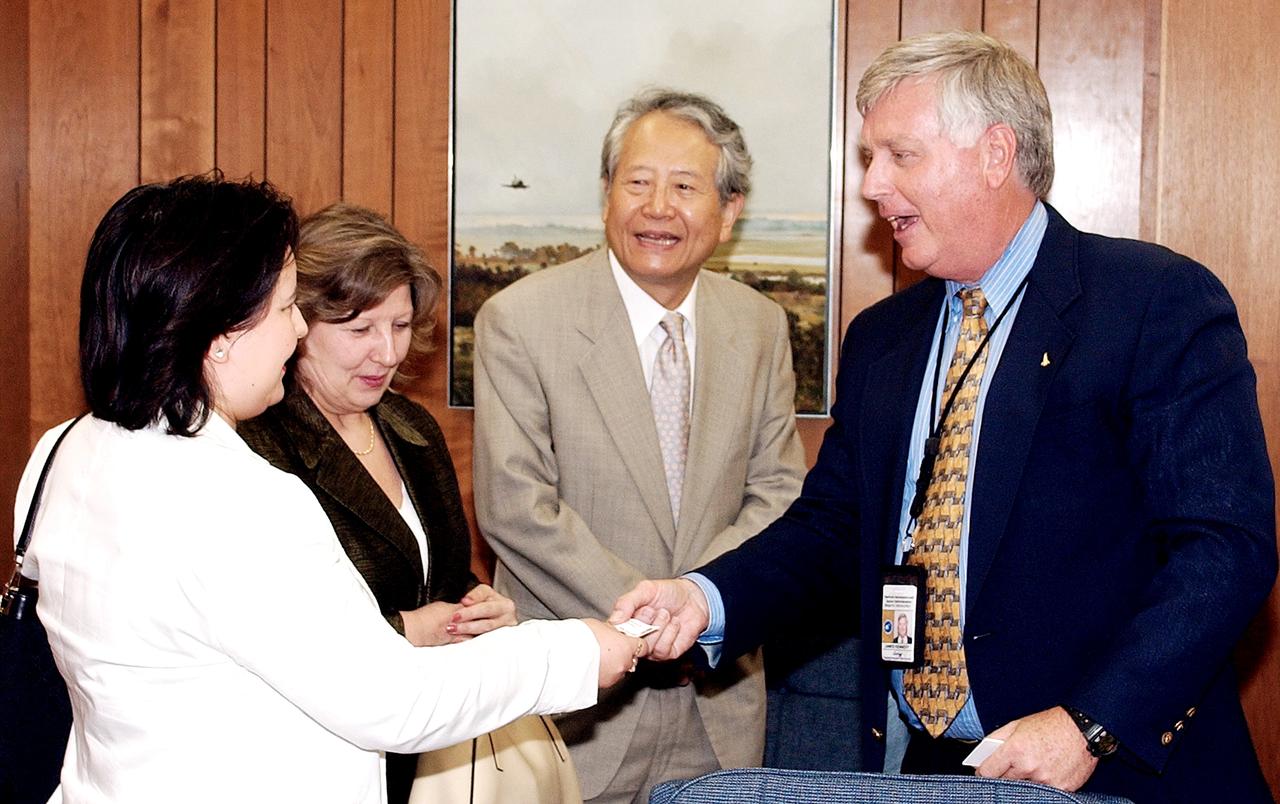
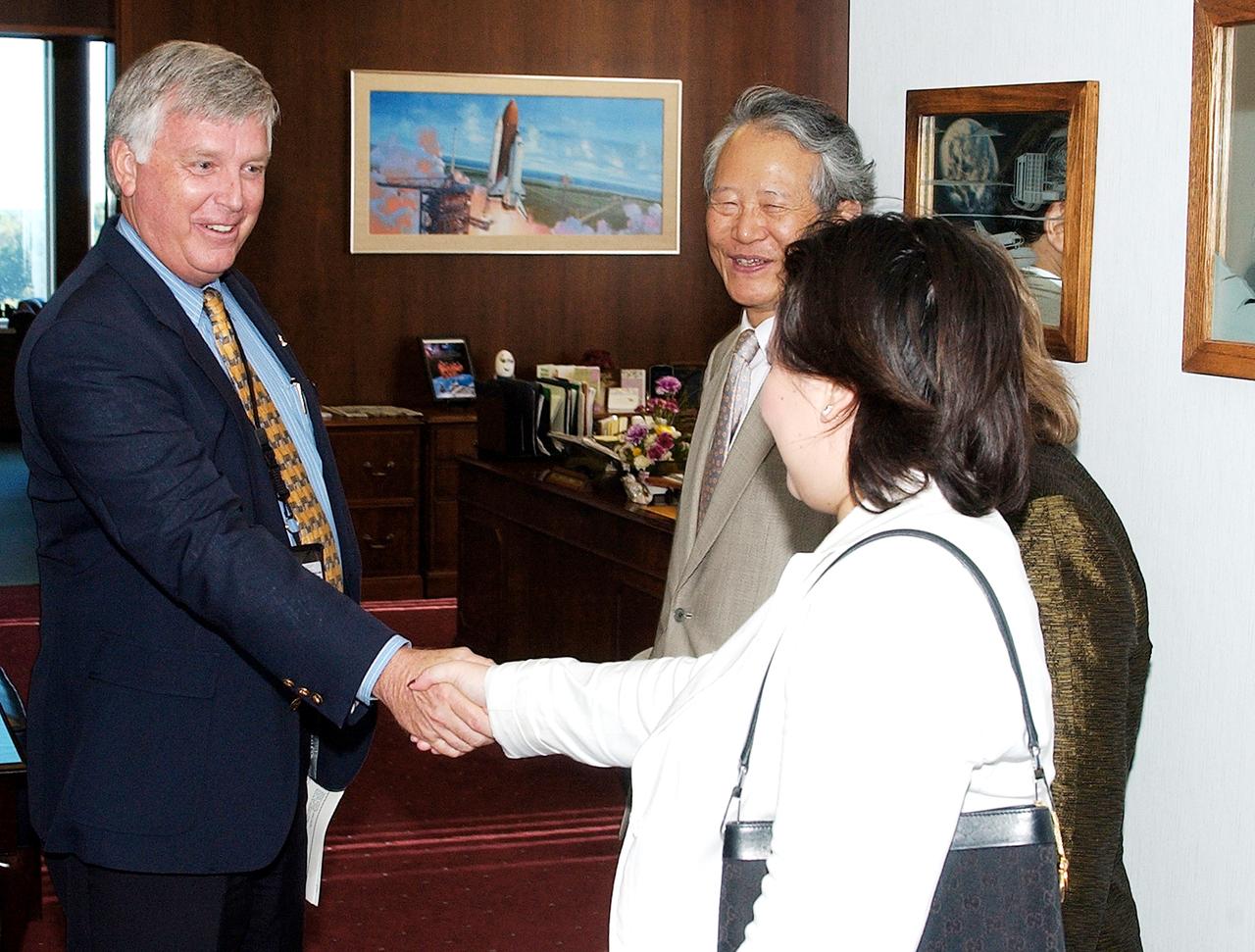
KENNEDY SPACE CENTER, FLA. - KSC Director James W. Kennedy receives Consul General of Japan Ko Kodaira and his family in his office in Headquarters Building during their visit to Kennedy Space Center (KSC).  From left are Kennedy, Kodaira, his wife Marie (partially hidden), and his daughter Reiko. Kodaira is touring the facilities at KSC at the invitation of the local office of the National Space Development Agency of Japan (NASDA) to acquaint him with KSC's unique processing capabilities.
KENNEDY SPACE CENTER, FLA. - KSC Director James W. Kennedy receives Consul General of Japan Ko Kodaira and his family in his office in Headquarters Building during their visit to Kennedy Space Center (KSC). From left are Kennedy, Kodaira, his wife Marie (partially hidden), and his daughter Reiko. Kodaira is touring the facilities at KSC at the invitation of the local office of the National Space Development Agency of Japan (NASDA) to acquaint him with KSC's unique processing capabilities.
KENNEDY SPACE CENTER, FLA. - The Japanese Experiment Module (JEM), named Kibo (Hope), is undergoing a Multi-Element Integrated Test (MEIT) in the Space Station Processing Facility.  Developed by the National Space Development Agency of Japan (NASDA), the JEM is Japan's primary contribution to the Station. It will enhance the unique research capabilities of the orbiting complex by providing an additional environment for astronauts to conduct science experiments.
KENNEDY SPACE CENTER, FLA. - The Japanese Experiment Module (JEM), named Kibo (Hope), is undergoing a Multi-Element Integrated Test (MEIT) in the Space Station Processing Facility. Developed by the National Space Development Agency of Japan (NASDA), the JEM is Japan's primary contribution to the Station. It will enhance the unique research capabilities of the orbiting complex by providing an additional environment for astronauts to conduct science experiments.
KENNEDY SPACE CENTER, FLA. -  Shuttle Launch Director Mike Leinbach (right) explains recovery and reconstruction efforts of Columbia to the Executive Director of NASDA Koji Yamamoto (third from left) and others visiting the Columbia Debris Hangar.   Mr. Yamamoto is at KSC for a welcome ceremony involving the arrival of the newest Space Station module, the Japanese Experiment Module/pressurized module.
KENNEDY SPACE CENTER, FLA. - Shuttle Launch Director Mike Leinbach (right) explains recovery and reconstruction efforts of Columbia to the Executive Director of NASDA Koji Yamamoto (third from left) and others visiting the Columbia Debris Hangar. Mr. Yamamoto is at KSC for a welcome ceremony involving the arrival of the newest Space Station module, the Japanese Experiment Module/pressurized module.
KENNEDY SPACE CENTER, FLA. - KSC Director James W. Kennedy receives Consul General of Japan Ko Kodaira and his family in his office in Headquarters Building during their visit to Kennedy Space Center (KSC). From left are Kodaira's daughter Reiko, his wife Marie, Kodaira, and Kennedy. Kodaira is touring the facilities at KSC at the invitation of the local office of the National Space Development Agency of Japan (NASDA) to acquaint him with KSC's unique processing capabilities.
KENNEDY SPACE CENTER, FLA. -  Executive Director of NASDA Koji Yamamoto (left) is welcomed to KSC by Center Director Roy Bridges Jr. (right).  On the table between them is the logo of the new Japan Aerospace Exploration Agency, a merger of three Japanese aeronautical and space agencies effective Oct.1, 2003.  Mr. Yamamoto is at KSC for a welcome ceremony involving the arrival of the newest Space Station module, the Japanese Experiment Module/pressurized module.  His visit includes a tour of the Columbia Debris Hangar.
KENNEDY SPACE CENTER, FLA. - Executive Director of NASDA Koji Yamamoto (left) is welcomed to KSC by Center Director Roy Bridges Jr. (right). On the table between them is the logo of the new Japan Aerospace Exploration Agency, a merger of three Japanese aeronautical and space agencies effective Oct.1, 2003. Mr. Yamamoto is at KSC for a welcome ceremony involving the arrival of the newest Space Station module, the Japanese Experiment Module/pressurized module. His visit includes a tour of the Columbia Debris Hangar.
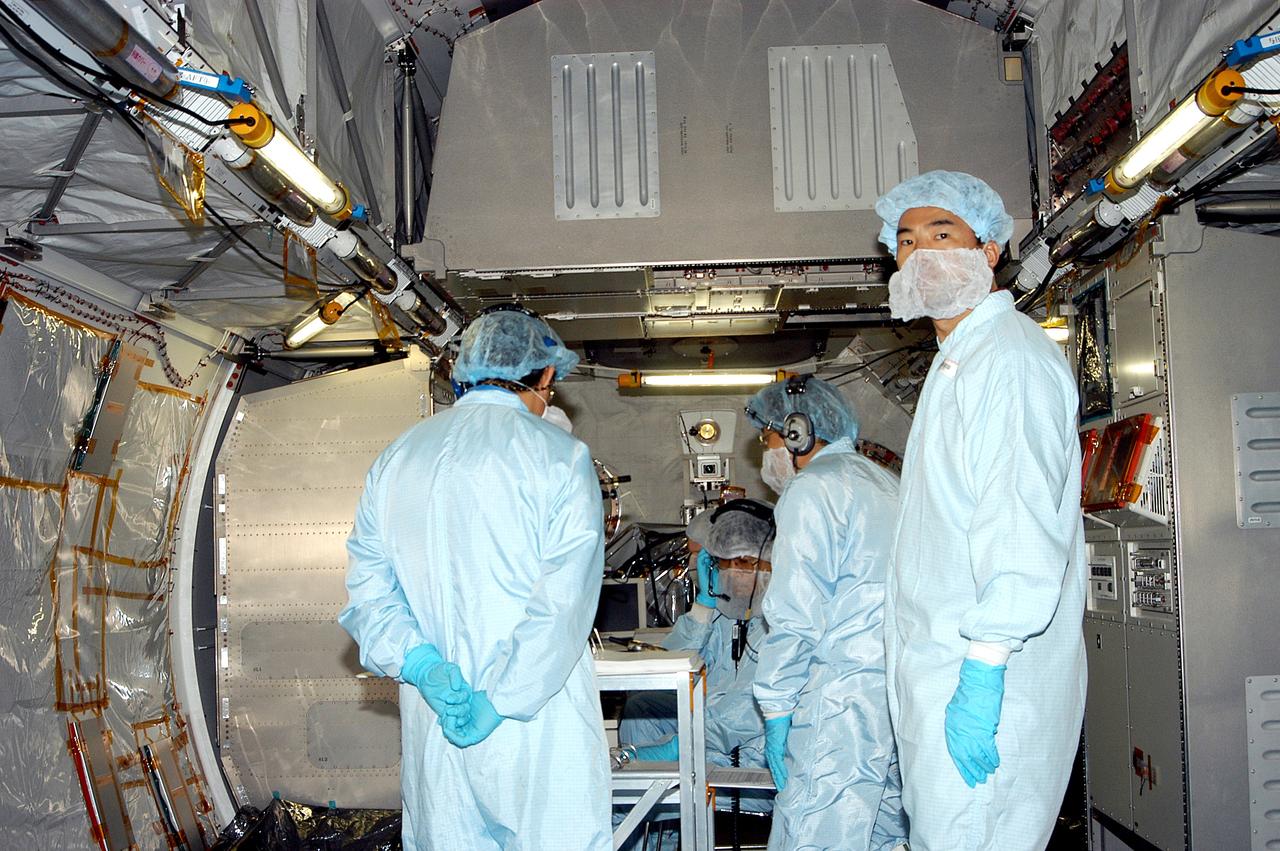
KENNEDY SPACE CENTER, FLA. - In the Space Station Processing Facility, Japanaese astronauts and personnel observe sensors during a Multi-Equipment Interface Test (MEIT) on the Japanese Experiment Module (JEM).  The National Space Development Agency of Japan (NASDA) developed the laboratory at the Tsukuba Space Center near Tokyo. It is the first element, named "Kibo" (Hope), to be delivered to KSC. The JEM is Japan's primary contribution to the Station. It will enhance the unique research capabilities of the orbiting complex by providing an additional environment for astronauts to conduct science experiments.
KENNEDY SPACE CENTER, FLA. - In the Space Station Processing Facility, Japanaese astronauts and personnel observe sensors during a Multi-Equipment Interface Test (MEIT) on the Japanese Experiment Module (JEM). The National Space Development Agency of Japan (NASDA) developed the laboratory at the Tsukuba Space Center near Tokyo. It is the first element, named "Kibo" (Hope), to be delivered to KSC. The JEM is Japan's primary contribution to the Station. It will enhance the unique research capabilities of the orbiting complex by providing an additional environment for astronauts to conduct science experiments.
KENNEDY SPACE CENTER, FLA. -   Shuttle Launch Director Mike Leinbach (right) explains recovery and reconstruction efforts of Columbia to the Executive Director of NASDA Koji Yamamoto (second from left) and others visiting the Columbia Debris Hangar.   Mr. Yamamoto is at KSC for a welcome ceremony involving the arrival of the newest Space Station module, the Japanese Experiment Module/pressurized module.
KENNEDY SPACE CENTER, FLA. - Shuttle Launch Director Mike Leinbach (right) explains recovery and reconstruction efforts of Columbia to the Executive Director of NASDA Koji Yamamoto (second from left) and others visiting the Columbia Debris Hangar. Mr. Yamamoto is at KSC for a welcome ceremony involving the arrival of the newest Space Station module, the Japanese Experiment Module/pressurized module.
KENNEDY SPACE CENTER, FLA. -  Shuttle Launch Director Mike Leinbach (second from left) accompanies Executive Director of NASDA Koji Yamamoto (fourth from left) and others visiting the Columbia Debris Hangar.  Mr. Yamamoto is at KSC for a welcome ceremony involving the arrival of the newest Space Station module, the Japanese Experiment Module/pressurized module.
KENNEDY SPACE CENTER, FLA. - Shuttle Launch Director Mike Leinbach (second from left) accompanies Executive Director of NASDA Koji Yamamoto (fourth from left) and others visiting the Columbia Debris Hangar. Mr. Yamamoto is at KSC for a welcome ceremony involving the arrival of the newest Space Station module, the Japanese Experiment Module/pressurized module.
KENNEDY SPACE CENTER, FLA. -  Japanese astronauts and other personnel in the Space Station Processing Facility observe sensors during a Multi-Equipment Interface Test (MEIT) on the Japanese Experiment Module (JEM).  The National Space Development Agency of Japan (NASDA) developed the laboratory at the Tsukuba Space Center near Tokyo. It is the first element, named "Kibo" (Hope), to be delivered to KSC. The JEM is Japan's primary contribution to the Station. It will enhance the unique research capabilities of the orbiting complex by providing an additional environment for astronauts to conduct science experiments.
KENNEDY SPACE CENTER, FLA. - Japanese astronauts and other personnel in the Space Station Processing Facility observe sensors during a Multi-Equipment Interface Test (MEIT) on the Japanese Experiment Module (JEM). The National Space Development Agency of Japan (NASDA) developed the laboratory at the Tsukuba Space Center near Tokyo. It is the first element, named "Kibo" (Hope), to be delivered to KSC. The JEM is Japan's primary contribution to the Station. It will enhance the unique research capabilities of the orbiting complex by providing an additional environment for astronauts to conduct science experiments.
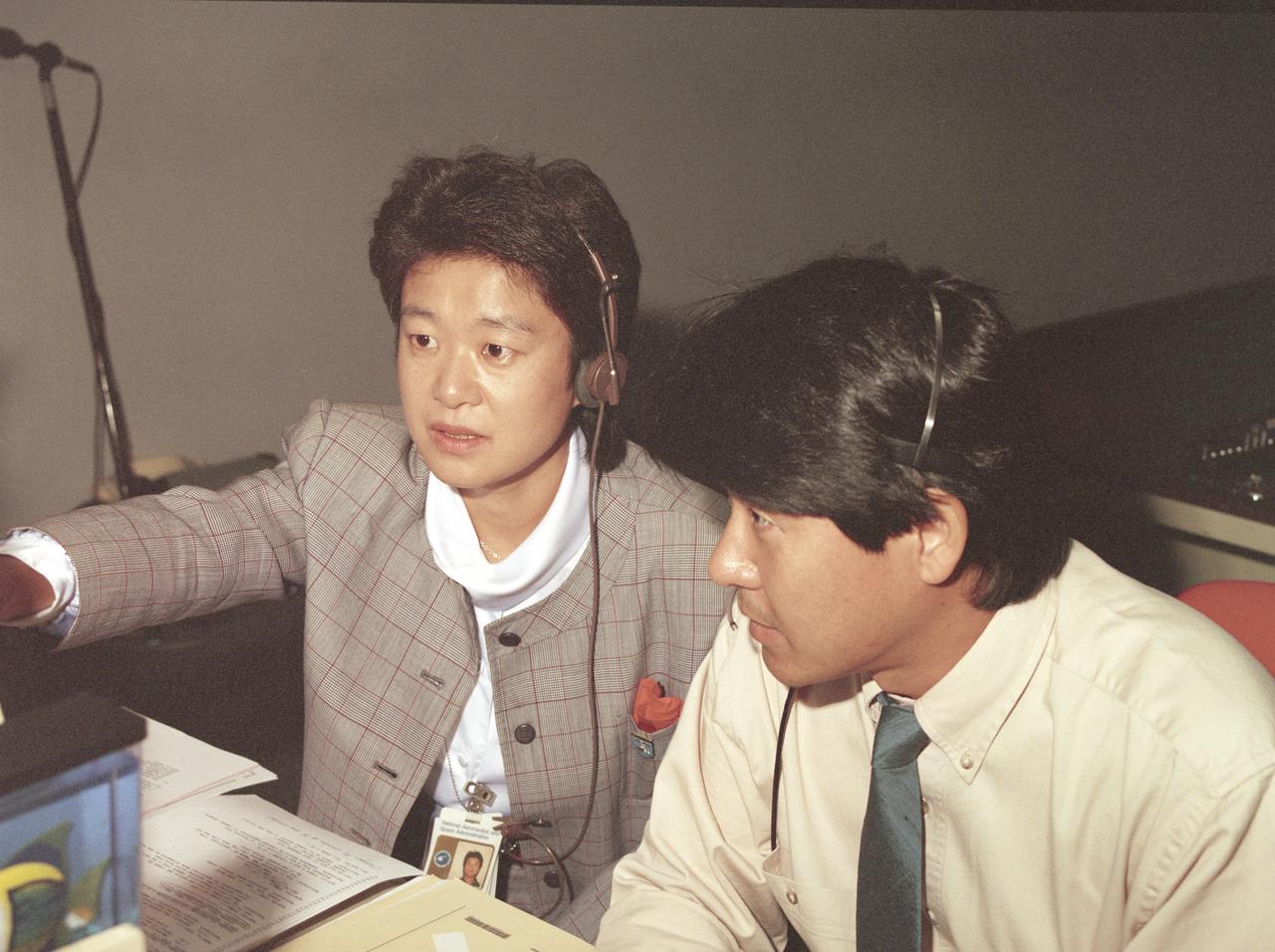
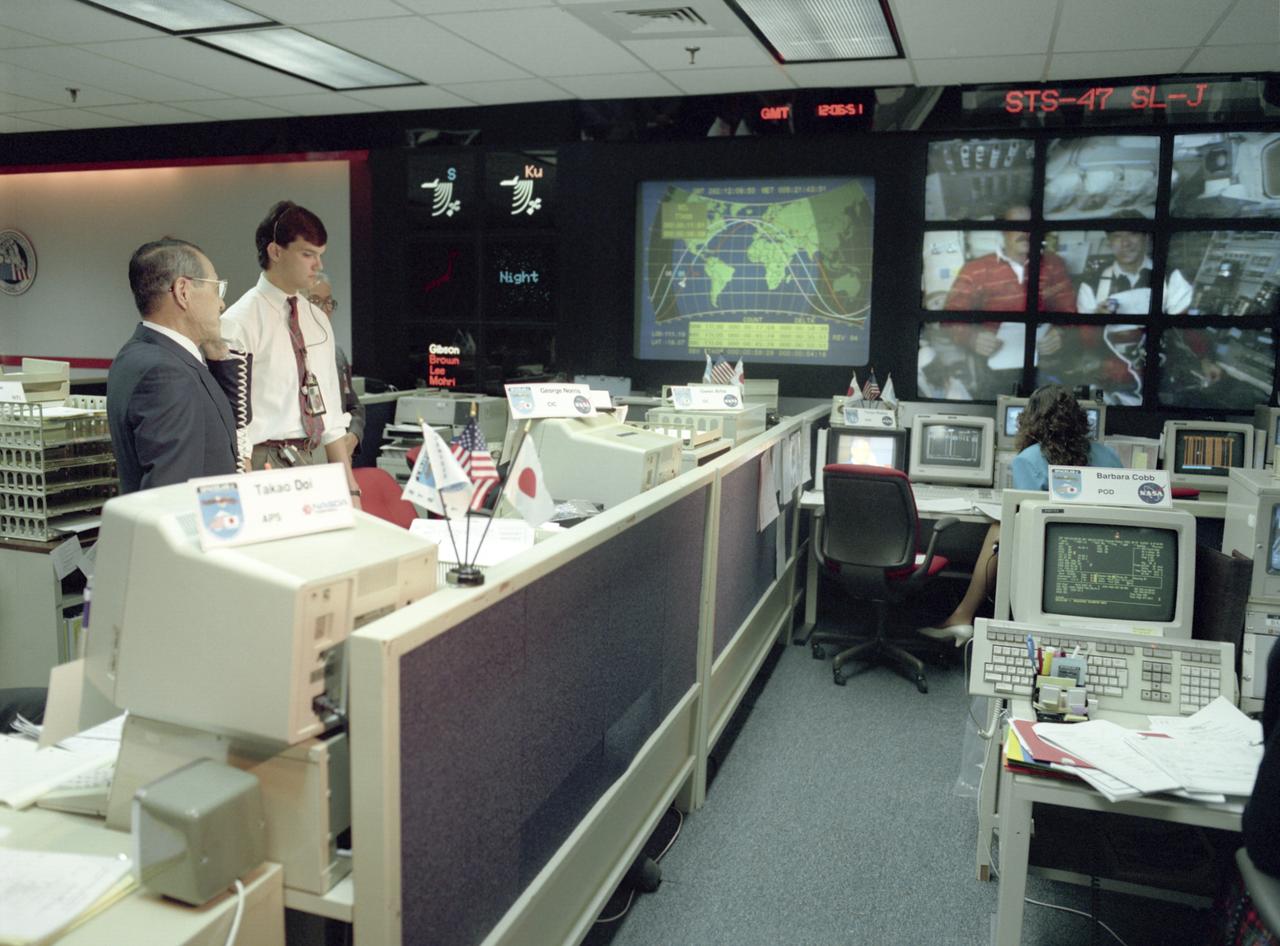
The science laboratory, Spacelab-J (SL-J), flown aboard the STS-47 flight was a joint venture between NASA and the National Space Development Agency of Japan (NASDA) utilizing a manned Spacelab module. The mission conducted 24 materials science and 20 life science experiments, of which 35 were sponsored by NASDA, 7 by NASA, and two collaborative efforts. Materials science investigations covered such fields as biotechnology, electronic materials, fluid dynamics and transport phenomena, glasses and ceramics, metals and alloys, and acceleration measurements. Life sciences included experiments on human health, cell separation and biology, developmental biology, animal and human physiology and behavior, space radiation, and biological rhythms. Test subjects included the crew, Japanese koi fish (carp), cultured animal and plant cells, chicken embryos, fruit flies, fungi and plant seeds, and frogs and frog eggs. Pictured in the Huntsville Operations Support Center (HOSC) Spacelab Payload Operations Control Center (SL POCC) of Marshall Space Flight Center (MSFC) are NASDA alternate payload specialists Dr. Doi and Dr. Mukai.
Around Marshall
The science laboratory, Spacelab-J (SL-J), flown aboard the STS-47 flight was a joint venture between NASA and the National Space Development Agency of Japan (NASDA) utilizing a manned Spacelab module. The mission conducted 24 materials science and 20 life science experiments, of which 35 were sponsored by NASDA, 7 by NASA, and two collaborative efforts. Materials science investigations covered such fields as biotechnology, electronic materials, fluid dynamics and transport phenomena, glasses and ceramics, metals and alloys, and acceleration measurements. Life sciences included experiments on human health, cell separation and biology, developmental biology, animal and human physiology and behavior, space radiation, and biological rhythms. Test subjects included the crew, Japanese koi fish (carp), cultured animal and plant cells, chicken embryos, fruit flies, fungi and plant seeds, and frogs and frog eggs. Pictured along with George Norris in the Huntsville Operations Support Center (HOSC) Spacelab Payload Operations Control Center (SL POCC) at Marshall Space Flight Center (MSFC) are NASDA alternate payload specialists Dr. Doi and Dr. Mukai.
Around Marshall
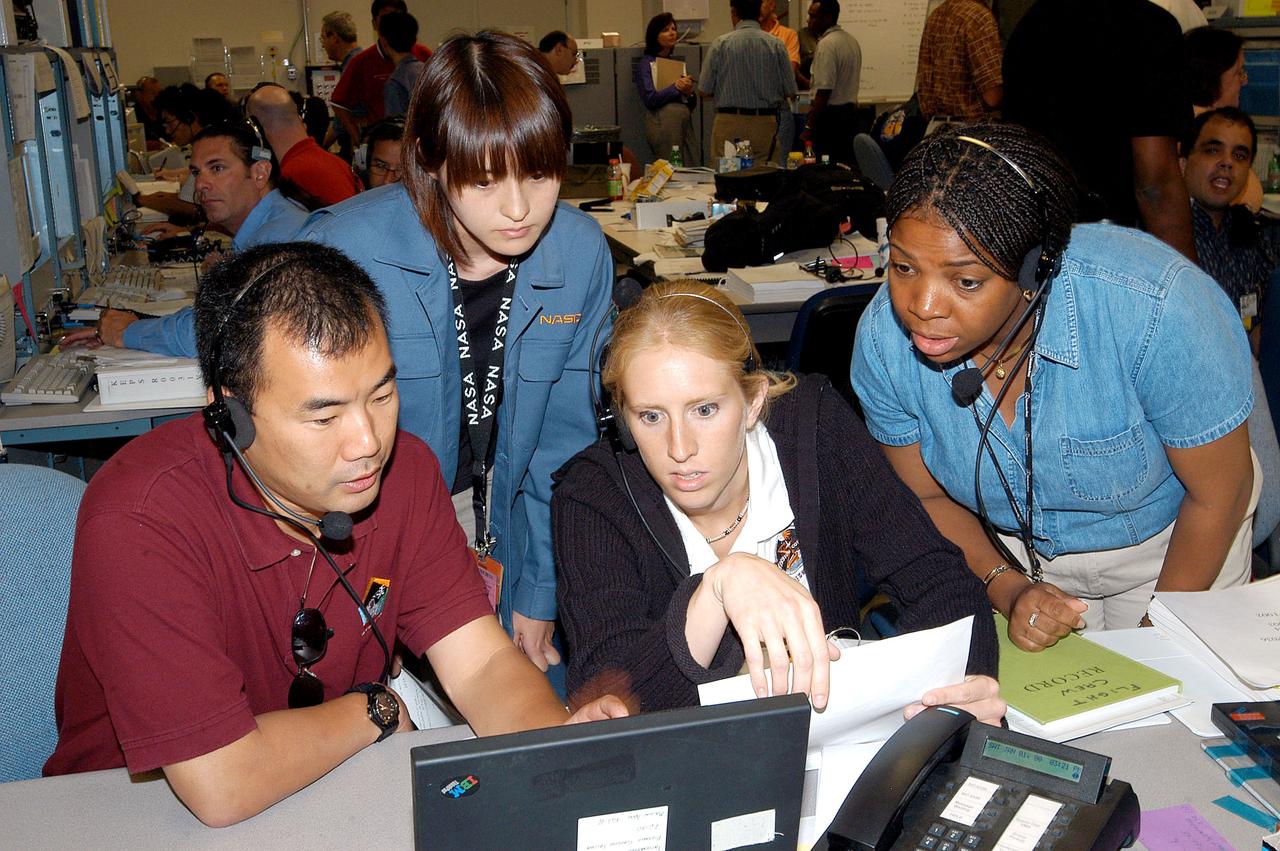
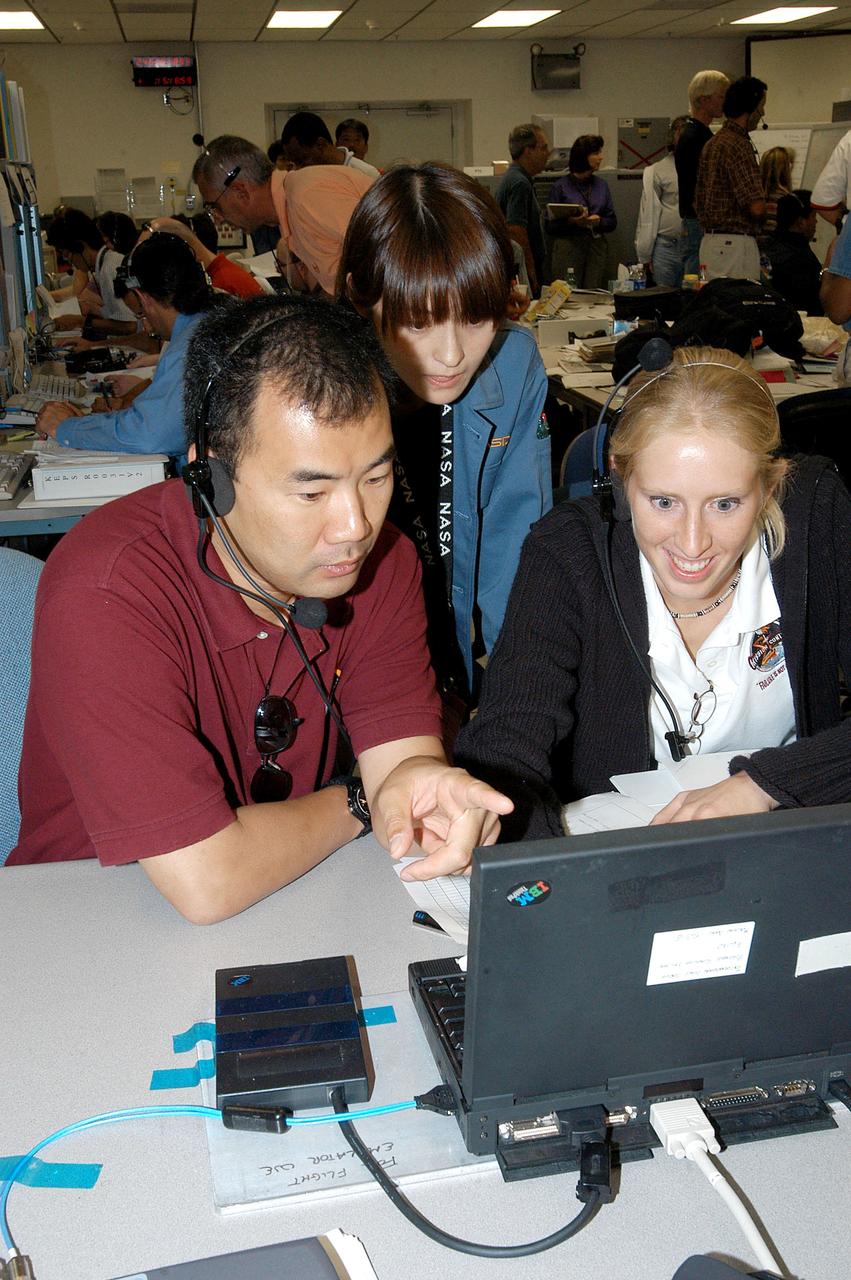
The science laboratory, Spacelab-J (SL-J), flown aboard the STS-47 flight was a joint venture between NASA and the National Space Development Agency of Japan (NASDA) utilizing a manned Spacelab module. The mission conducted 24 materials science and 20 life science experiments, of which 35 were sponsored by NASDA, 7 by NASA, and two collaborative efforts. Materials science investigations covered such fields as biotechnology, electronic materials, fluid dynamics and transport phenomena, glasses and ceramics, metals and alloys, and acceleration measurements. Life sciences included experiments on human health, cell separation and biology, developmental biology, animal and human physiology and behavior, space radiation, and biological rhythms. Test subjects included the crew, Japanese koi fish (carp), cultured animal and plant cells, chicken embryos, fruit flies, fungi and plant seeds, and frogs and frog eggs. Featured together in the Science Operation Area (SOA) are payload specialists’ first Materials Processing Test during NASA/NASDA joint ground activities at the Huntsville Operations Support Center (HOSC) Spacelab Payload Operations Control Center (SL POCC) at Marshall Space Flight Center (MSFC).
Around Marshall
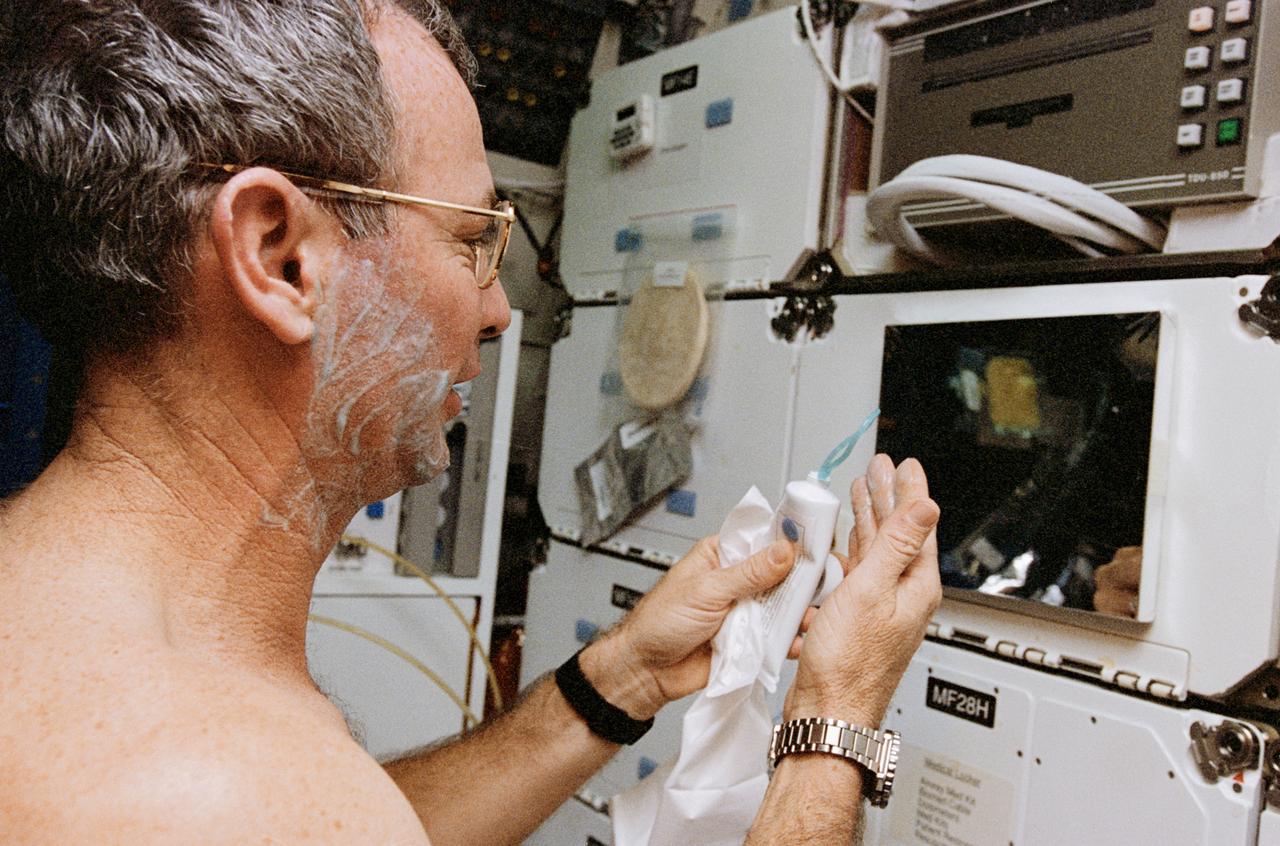
STS072-331-016 (11-20 Jan. 1996) --- On the Space Shuttle Endeavour’s middeck, astronaut Brian Duffy, mission commander, shaves. Duffy was joined on the week and a half long mission by four United States astronauts and a mission specialist representing Japan’s National Space Development Agency (NASDA).
Astronaut Brian Duffy shaves in the middeck
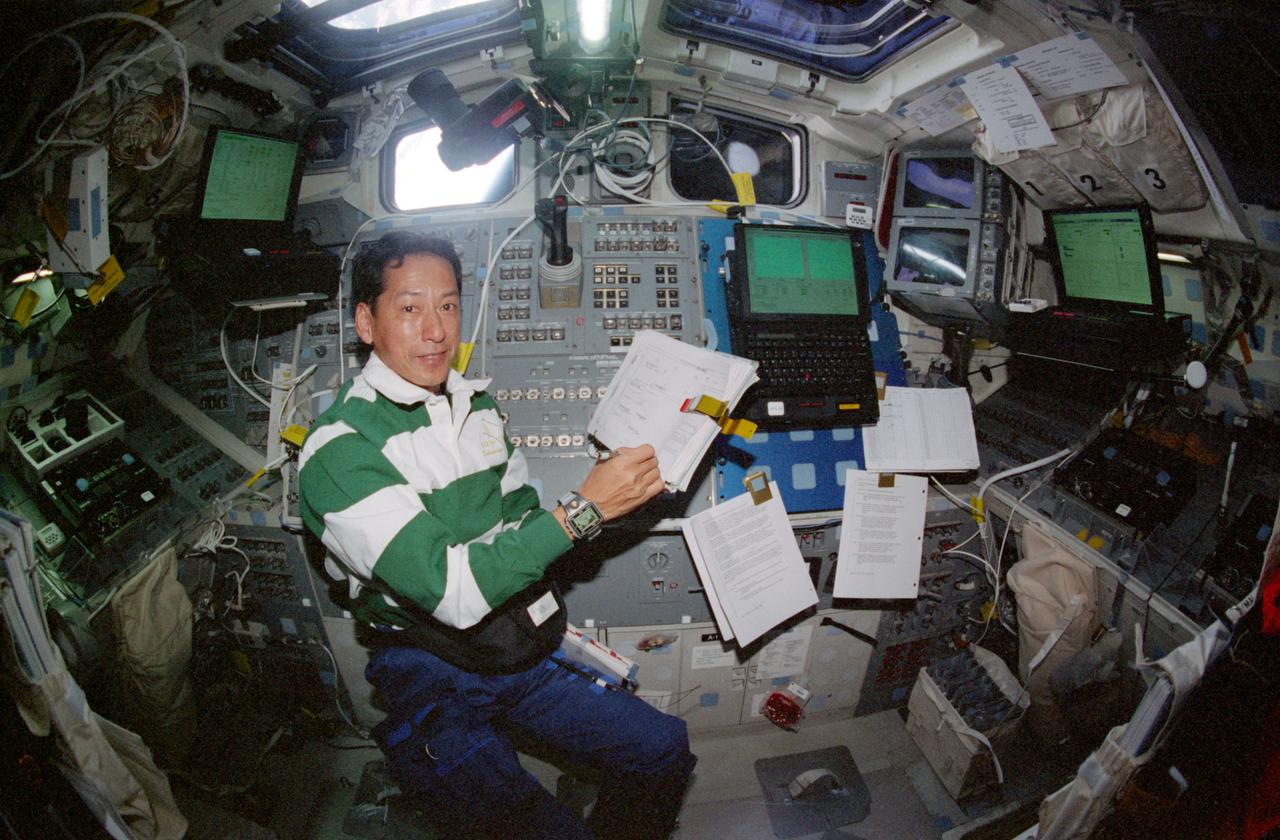
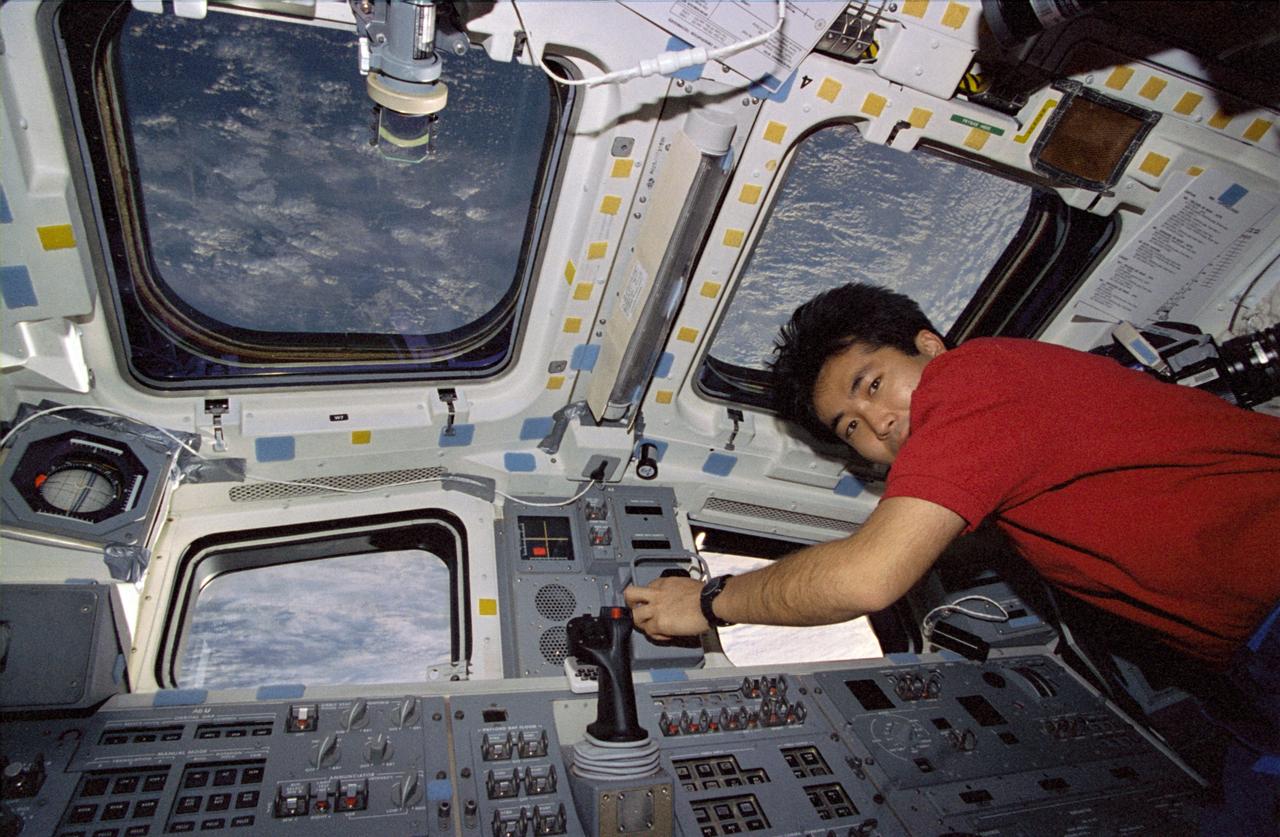
STS072-321-002 (11-20 Jan. 1996) --- Astronaut Koichi Wakata operates the Remote Manipulator System (RMS) on the aft flight deck of the Earth-orbiting Space Shuttle Endeavour.  Representing Japan’s National Space Development Agency (NASDA), Wakata joined five other astronauts for a week and a half of activity aboard Endeavour.
Mission Specialist Koichi Wakata activities in the flight deck and middeck
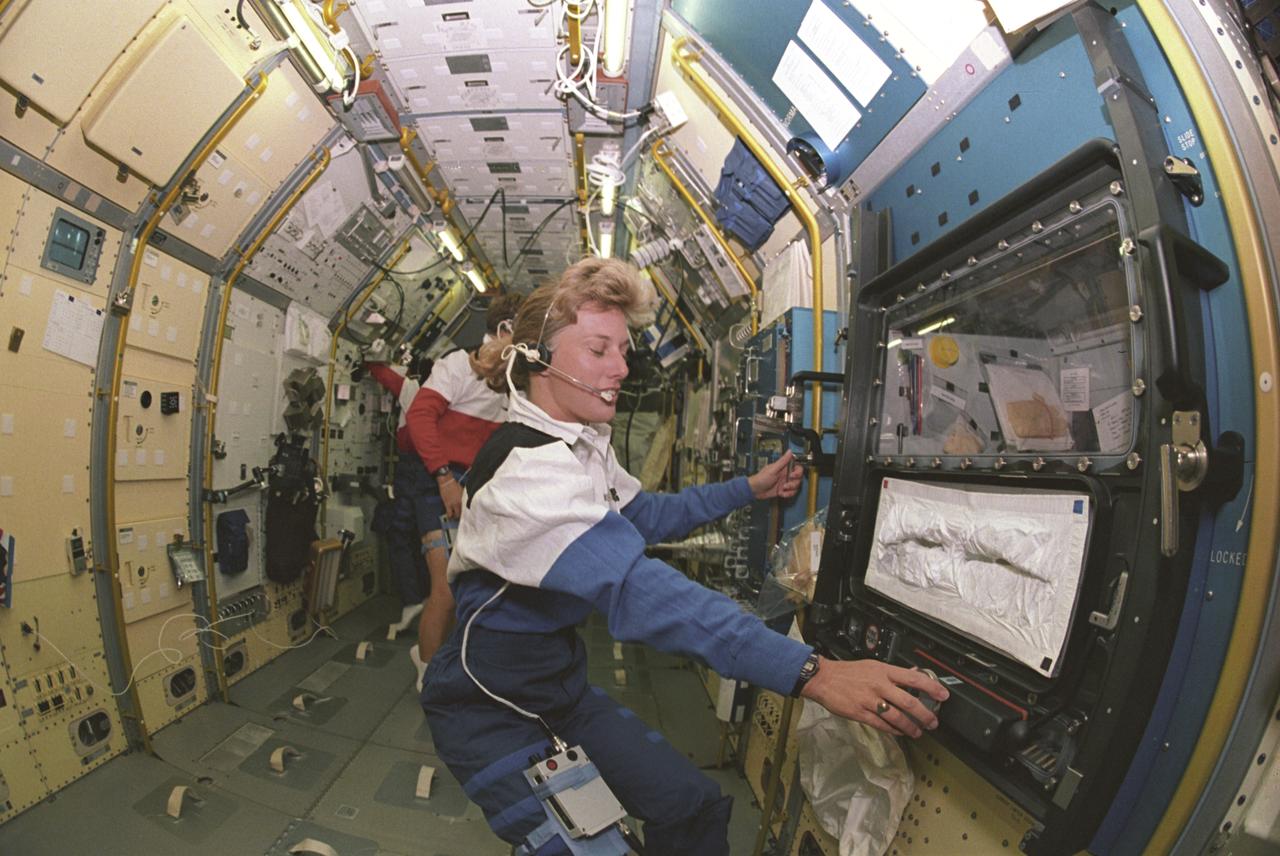
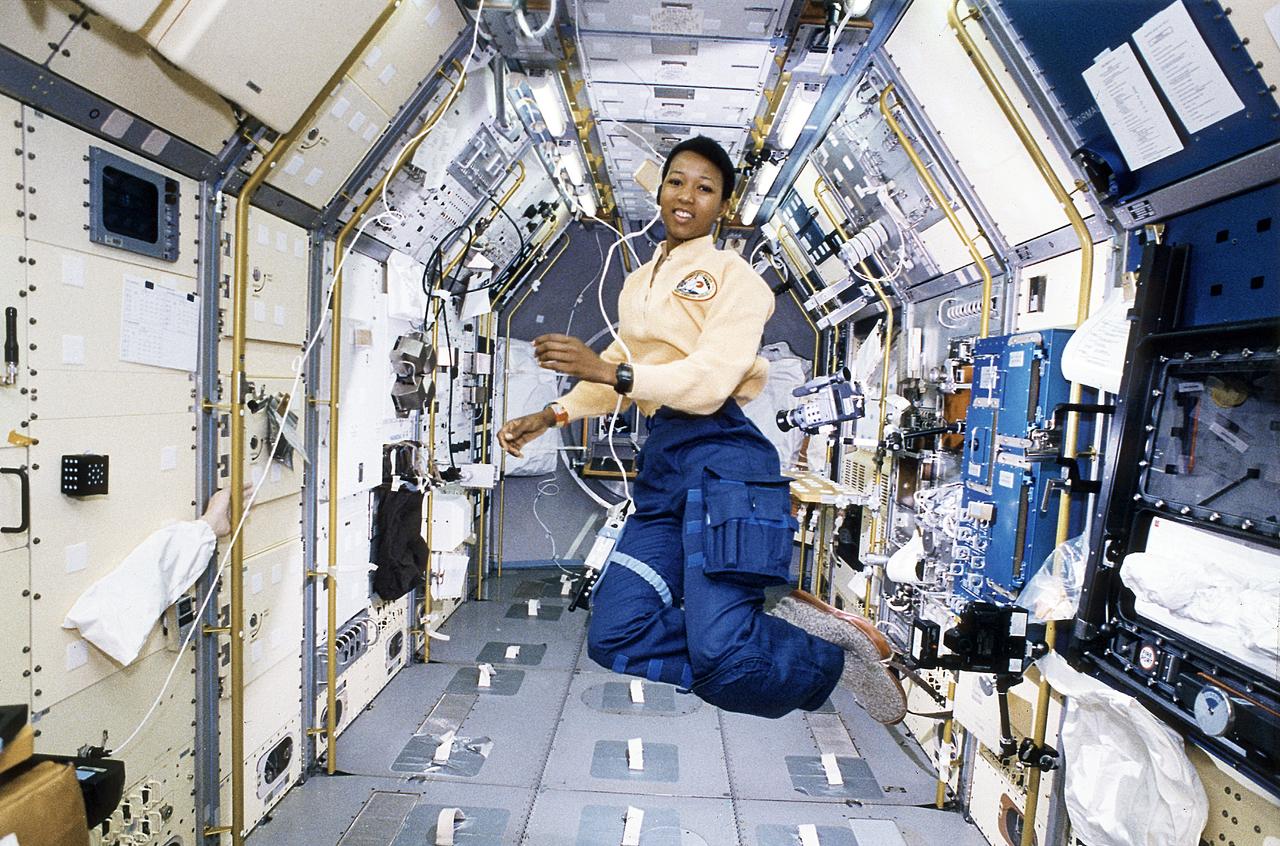
Space Shuttle Endeavour (STS-47) onboard photo of Astronaut Mae Jemison working in Spacelab-J module. Spacelab-J is a combined National Space Development Agency of Japan (NASDA) and NASA mission. The objectives included life sciences, microgravity and technology research.
Microgravity
STS099-330-036 (11-22 February 2000) ---Astronaut Mamoru Mohri, mission specialist, on the aft flight deck of the Space Shuttle Endeavour, checks a data checklist for the STS-99 mission. Mohri represents Japan’s National Space Development Agency (NASDA).
STS-99 MS Mohri works on OV-105's flight deck
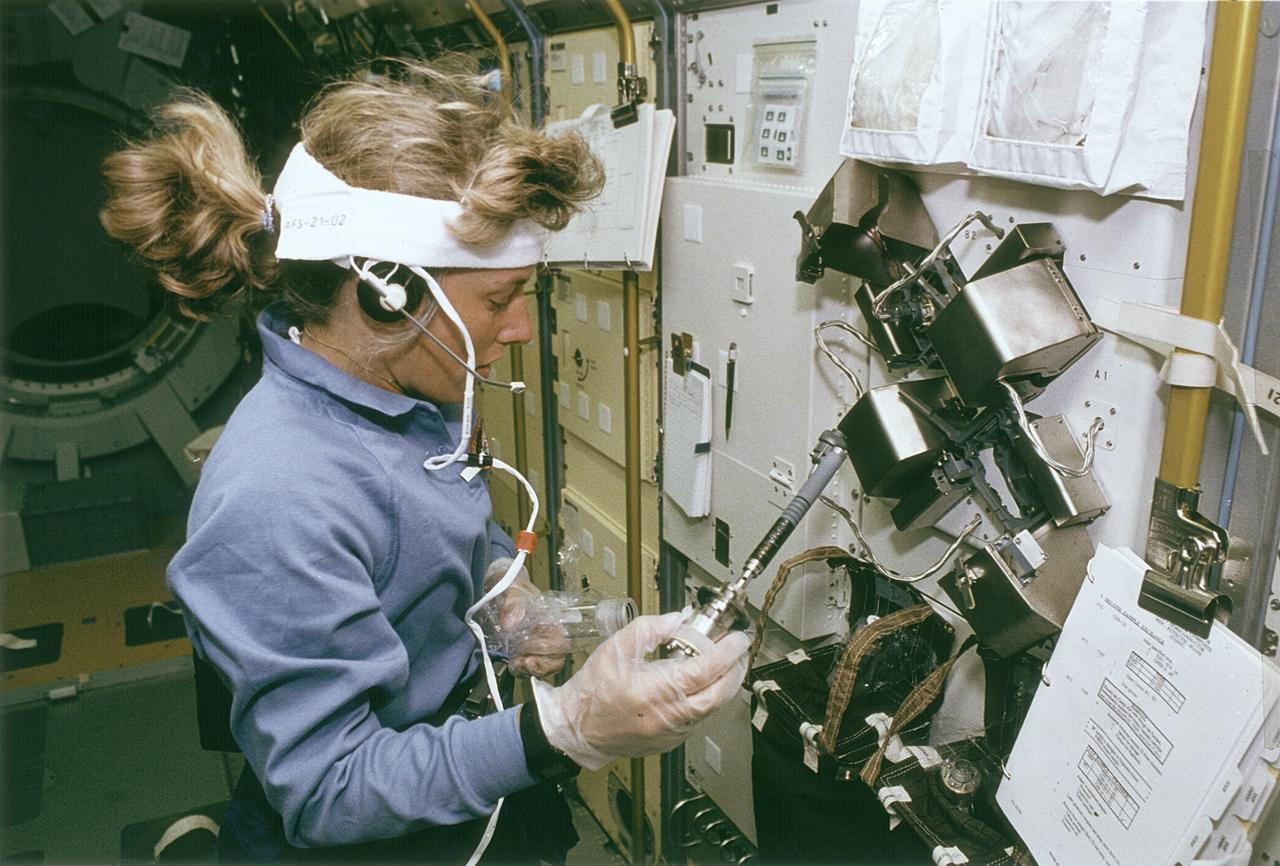
Space Shuttle Endeavour (STS-47) onboard photo of Astronaut N. Jan Davis at work at the Continuous Heating Furnace (CHF) in the Spacelab-J Science Module. Spacelab-J is a combined National Space Development Agency of Japan (NASDA) and NASA mission. The objectives included life sciences, microgravity and technology research.
Microgravity
JSC2002-02040 (13 November 2002) --- Astronauts Soichi Noguchi (left) and Stephen K. Robinson, both STS-114 mission specialists, await a training session in the Space Vehicle Mockup Facility at the Johnson Space Center (JSC). Noguchi represents Japan’s National Space Development Agency (NASDA).
Photographic coverage of STS-114 and Expedition 7 Emergency Egress Training at CCT- II
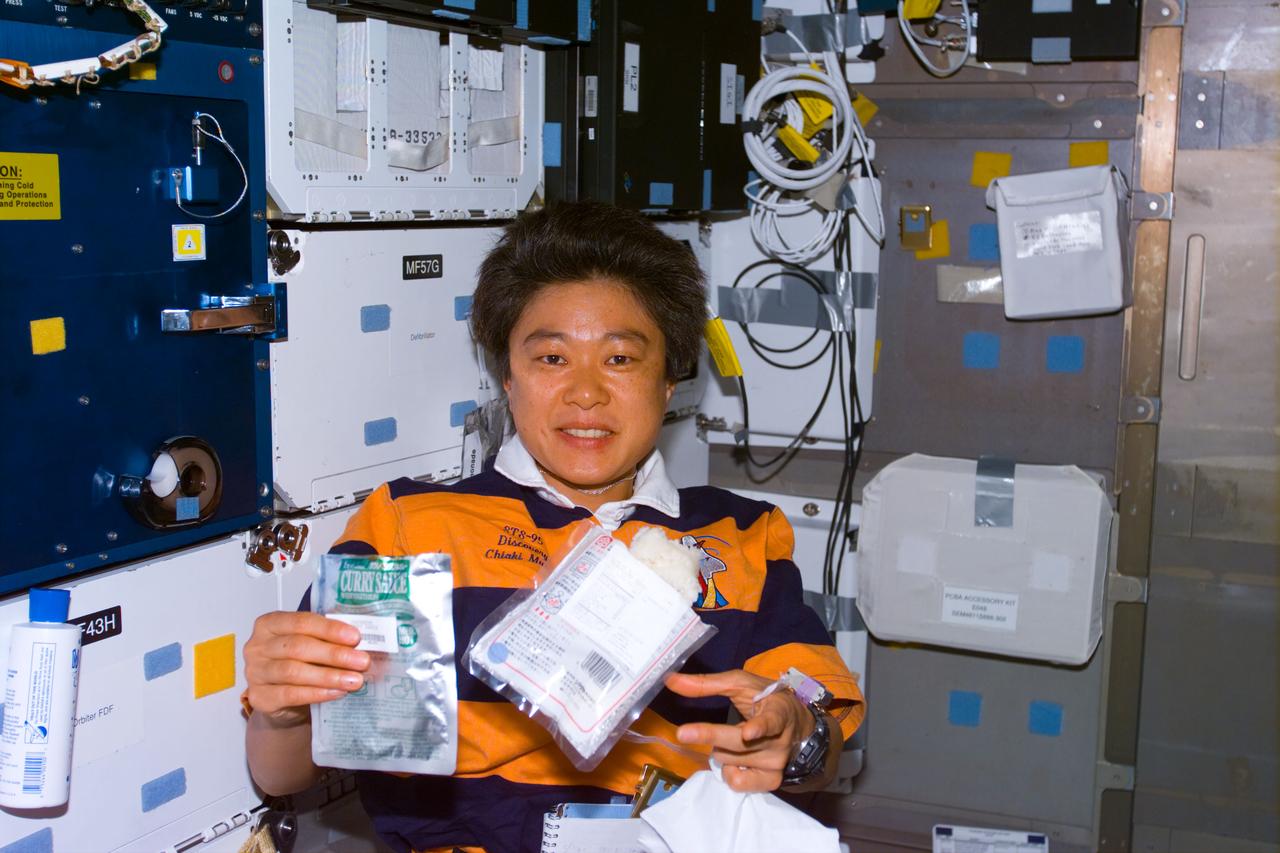
STS095-E-5211 (4 Nov. 1998) --- STS-95 payload specialist Chiaki Mukai, representing Japan's National Space Development Agency (NASDA), with paraphernalia supporting her agenda of experiments onboard Discovery.  The photo was taken with an electronic still camera (ESC) at  01:17:27 GMT, Nov. 4.
Mukai on middeck with food packets
Space Shuttle Endeavour (STS-47) onboard photo of Astronaut Jan Davis inside the Spacelab-J module. Spacelab-J is a combined National Space Development Agency of Japan (NASDA) and NASA mission. The objectives included life sciences, microgravity and technology research.
Microgravity
STS099-308-019 (11-22 February 2000) ---Astronauts Janice E. Voss and Mamoru Mohri, both members of the Blue Team portion of 24-hour SRTM support, prepare for their sleep shift on the middeck of the Earth-orbiting Space Shuttle Endeavour. Mohri represents Japan?s National Space Development Agency (NASDA).
STS-99 MS Voss and MS Mohri pose in sleep stations on OV-105's middeck
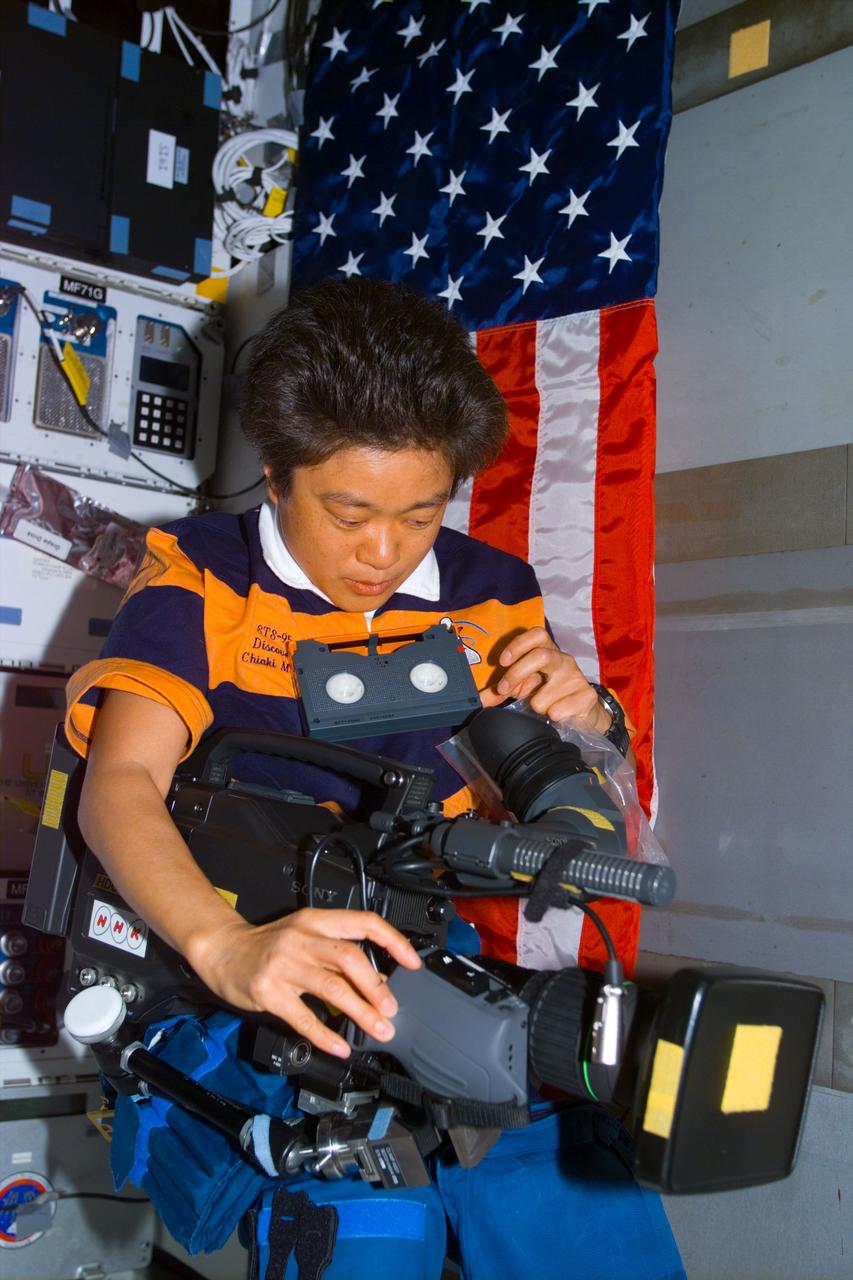
STS095-E-5229 (4 Nov. 1998)--- STS-95 payload specialist Chiaki Mukai, representing Japan's National Space Development Agency (NASDA), changes out cassette on camera. The scene was recorded with an electronic still camera (ESC) at 03:09:07 GMT, Nov. 4.
Mukai with NHK HDTV camera in the Spacehab
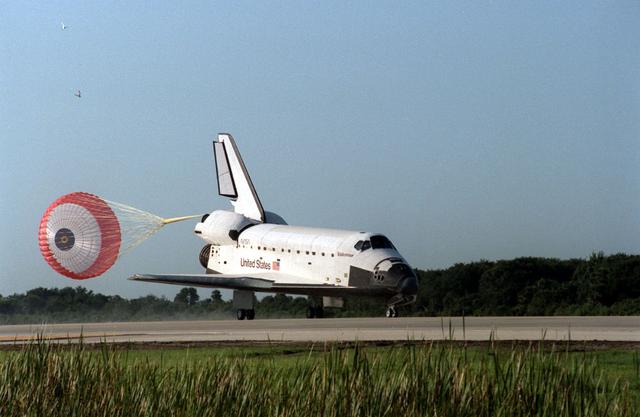
After completion of a seven-day flight mission, the Space Shuttle Orbiter Endeavour (STS-47) landed at Kennedy Space Center's (KSC) Shuttle Landing Facility. Spacelab-J, a joint research venture between NASA and NASDA (National Space Development Agency of Japan) completed a successful mission.
Space Shuttle Project
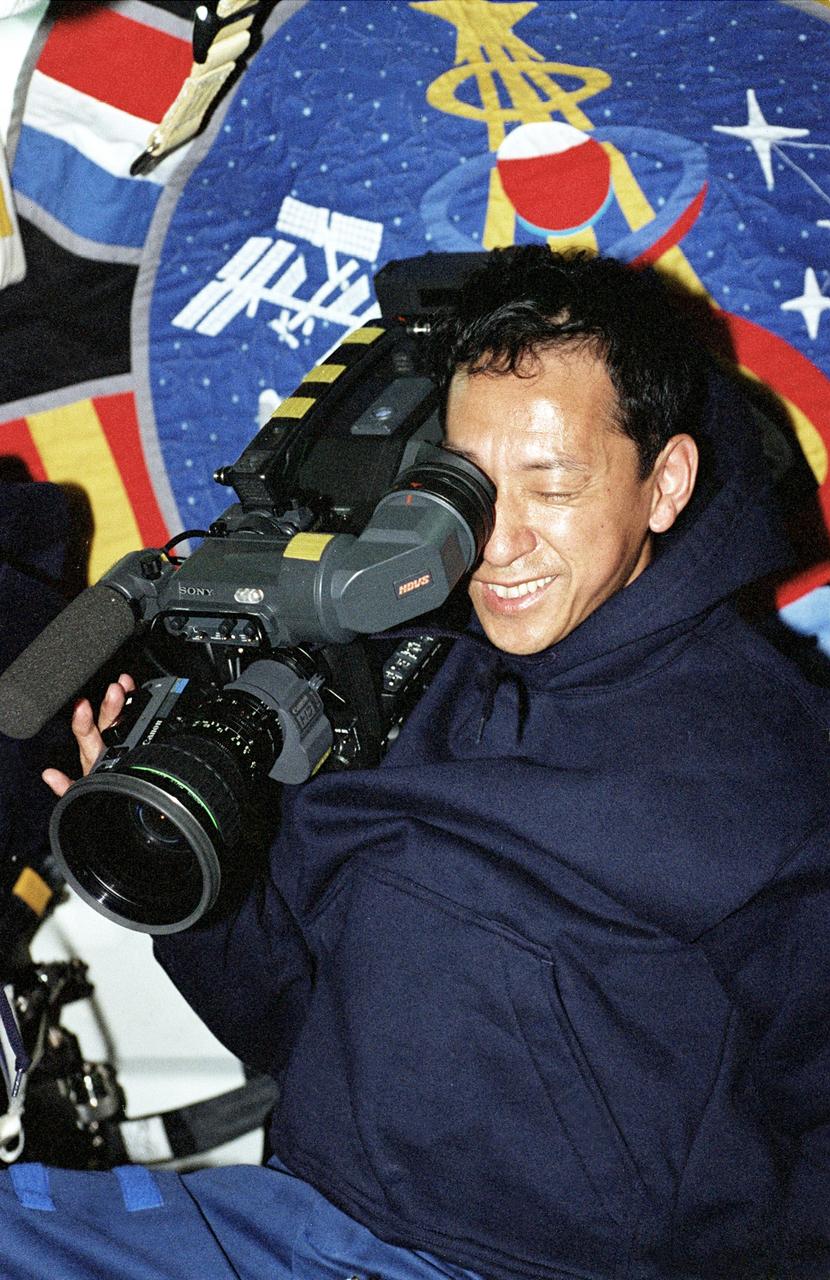
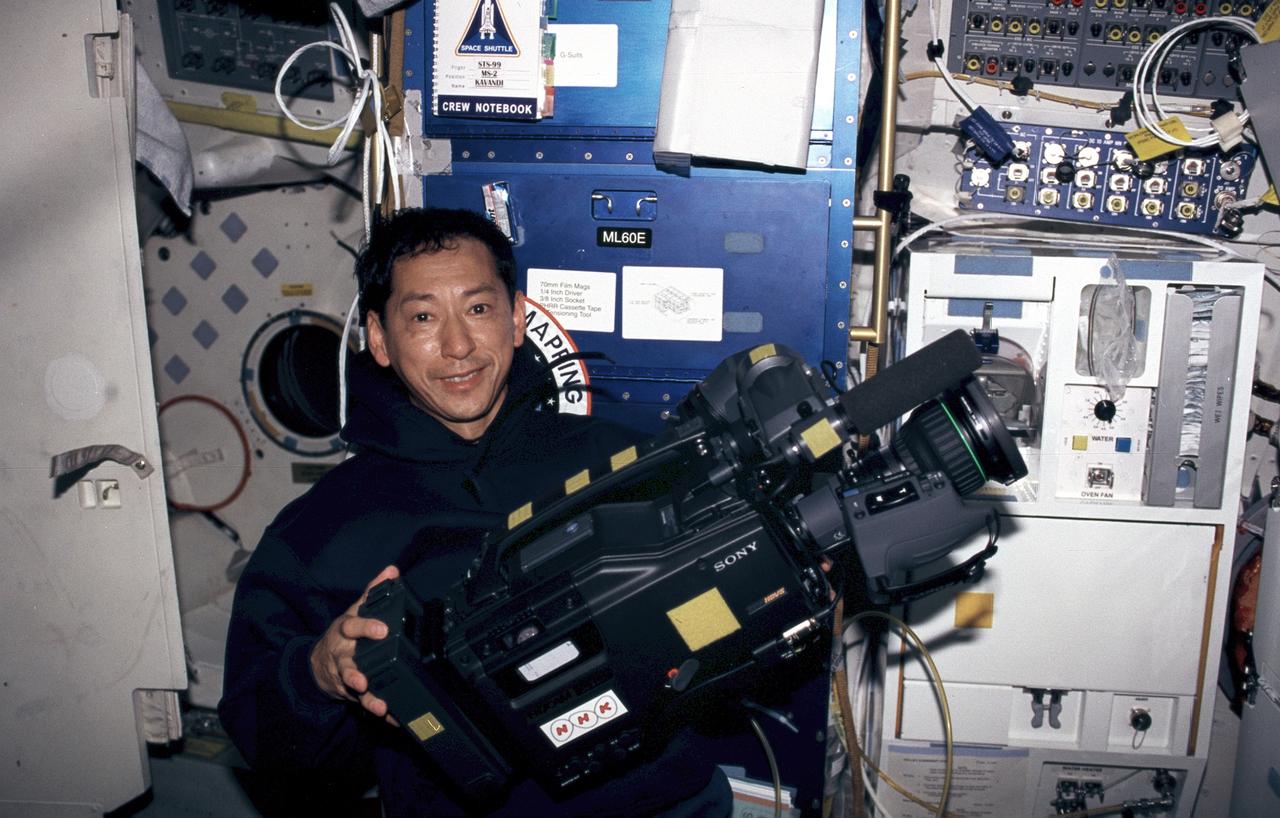
STS099-308-034 (11-22 February 2000) ---  Astronaut Mamoru Mohri, mission specialist, is about to use the High Definition Television (HDTV) camera on Endeavour's middeck. The National Space Development Agency's (NASDA) astronaut supported the Blue Team during the SRTM flight.  Endeavour's galley can be seen in the background.
STS-99 MS Mohri poses with an HD camera on OV-105's middeck
STS099-313-010 (11-22 February 2000) ---  Astronaut Mamoru Mohri, mission specialist, uses the High Definition Television (HDTV) camera on Endeavour's  mid deck. The National Space Development Agency's (NASDA) astronaut supported the Blue Team during the SRTM flight.
STS-99 MS Mohri operates the HD camera on OV-105's middeck
STS-95 crew members gather around the Vestibular Function Experiment Unit (VFEU) which includes marine fish called toadfish. In foreground, from left, are Mission Specialist Pedro Duque of the European Space Agency (ESA), a technician from the National Space Development Agency of Japan (NASDA), Payload Specialist Chiaki Mukai of NASDA, Pilot Steven W. Lindsey, and Payload Specialist John H. Glenn Jr., who also is a senator from Ohio. At center, facing the camera, are Mission Specialist Scott E. Parazynski and Commander Curtis L. Brown Jr., in back. STS-95 will feature a variety of research payloads, including the Spartan solar-observing deployable spacecraft, the Hubble Space Telescope Orbital Systems Platform, the International Extreme Ultraviolet Hitchhiker, and experiments on space flight and the aging process. STS-95 is targeted for an Oct. 29 launch aboard the Space Shuttle Discovery
KSC-98pc863
STS-95 crew members (from left) Mission Specialists Scott E. Parazynski, Payload Specialist John H. Glenn Jr., Payload Specialist Chiaki Mukai, representing the National Space Development Agency of Japan (NASDA), and Pilot Steven W. Lindsey look over equipment that Hideo Ishikawa of NASDA has presented at SPACEHAB Payload Processing Facility, Cape Canaveral, Fla. The STS-95 crew is at KSC to look at the SPACEHAB module and the equipment that will fly with them on the Space Shuttle Discovery, scheduled to launch Oct. 29, 1998. The mission includes research payloads such as the Spartan solar-observing deployable spacecraft, the Hubble Space Telescope Orbital Systems Test Platform, the International Extreme Ultraviolet Hitchhiker, as well as the SPACEHAB single module with experiments on space flight and the aging process
KSC-98pc832
STS-87 Mission Specialist Takao Doi, Ph.D., of the National Space Development Agency (NASDA) of Japan greets a NASDA official shortly after the orbiter Columbia returned to KSC, touching down on Runway 33 at KSC's Shuttle Landing Facility. STS-87 concluded its mission with a main gear touchdown at 7:20:04 a.m. EST Dec. 5, drawing the 15-day, 16-hour and 34-minute-long mission of 6.5 million miles to a close. Also onboard the orbiter were Commander Kevin Kregel; Pilot Steven Lindsey; Mission Specialists Winston Scott and Kalpana Chawla, Ph.D.; and Payload Specialist Leonid Kadenyuk of the National Space Agency of Ukraine. During the 88th Space Shuttle mission, the crew performed experiments on the United States Microgravity Payload-4 and pollinated plants as part of the Collaborative Ukrainian Experiment. This was the 12th landing for Columbia at KSC and the 41st KSC landing in the history of the Space Shuttle program
KSC-97PC1747
STS-95 Payload Specialist Chiaki Mukai, at far left, of the National Space Development Agency of Japan (NASDA) works on the Biological Research in Canisters (BRIC) experiment which will fly on the scheduled nine-day mission. Watching her, starting with second from left, are STS-95 Pilot Steven W. Lindsey, Mission Specialist Scott E. Parazynski, and NASDA representatives Sachiko Aizawa and Shigeki Kamigaichi. STS-95 will feature a variety of research payloads, including the Spartan solar-observing deployable spacecraft, the Hubble Space Telescope Orbital Systems Platform, the International Extreme Ultraviolet Hitchhiker, and experiments on space flight and the aging process. STS-95 is targeted for an Oct. 29 launch aboard the Space Shuttle Discovery
KSC-98pc850
STS-95 crew members (from left) Mission Specialist Scott E. Parazynski, Payload Specialist John H. Glenn Jr., Payload Specialist Chiaki Mukai (with camera) representing the National Space Development Agency of Japan (NASDA), and Pilot Steven Lindsey listen to Hideo Ishikawa of NASDA, who explains some of the flight equipment at SPACEHAB Payload Processing Facility, Cape Canaveral, Fla. The STS-95 crew is at KSC to look at the SPACEHAB module and the equipment that will fly with them on the Space Shuttle Discovery, scheduled to launch Oct. 29, 1998. The mission includes research payloads such as the Spartan solar-observing deployable spacecraft, the Hubble Space Telescope Orbital Systems Test Platform, the International Extreme Ultraviolet Hitchhiker, as well as the SPACEHAB single module with experiments on space flight and the aging process
KSC-98pc831
KENNEDY SPACE CENTER, FLA.  -     Japanese girls from Urawa Daiichi Girls High School, Urawa, Japan, carry a floral tribute to the crew of Columbia to place at the STS-107 memorial stone at the Spacehab facility, Cape Canaveral, Fla.   The group was  awarded the trip to Florida when their experiments were chosen to fly on mission STS-107.  The group was also meeting with American students from Melbourne and Jacksonville, Fla.   The National Space Development  Agency of Japan (NASDA) and the KSC International Space Station and Payloads Processing Directorate worked with the NASA KSC Education Programs and University Research Division to coordinate the students’ visit.
KENNEDY SPACE CENTER, FLA. - Japanese girls from Urawa Daiichi Girls High School, Urawa, Japan, carry a floral tribute to the crew of Columbia to place at the STS-107 memorial stone at the Spacehab facility, Cape Canaveral, Fla. The group was awarded the trip to Florida when their experiments were chosen to fly on mission STS-107. The group was also meeting with American students from Melbourne and Jacksonville, Fla. The National Space Development Agency of Japan (NASDA) and the KSC International Space Station and Payloads Processing Directorate worked with the NASA KSC Education Programs and University Research Division to coordinate the students’ visit.
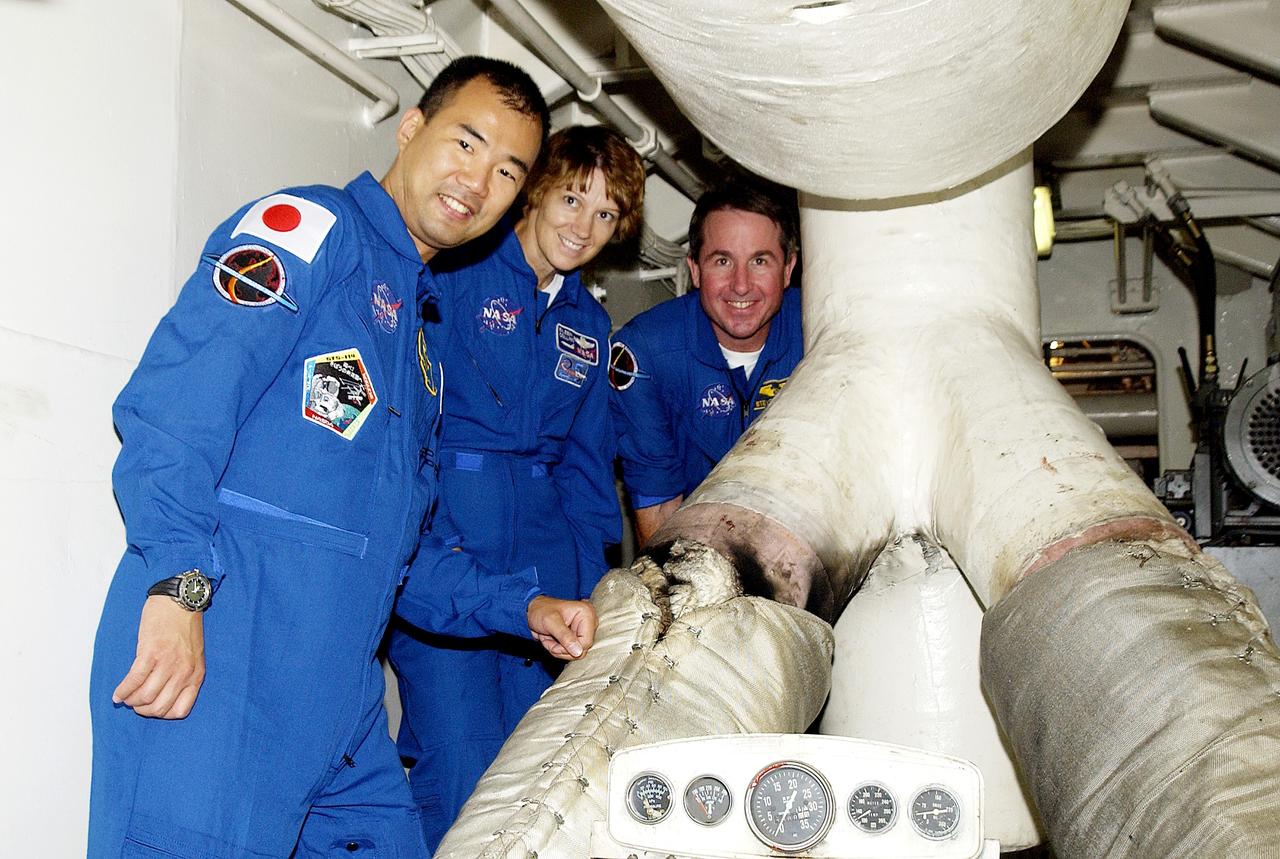
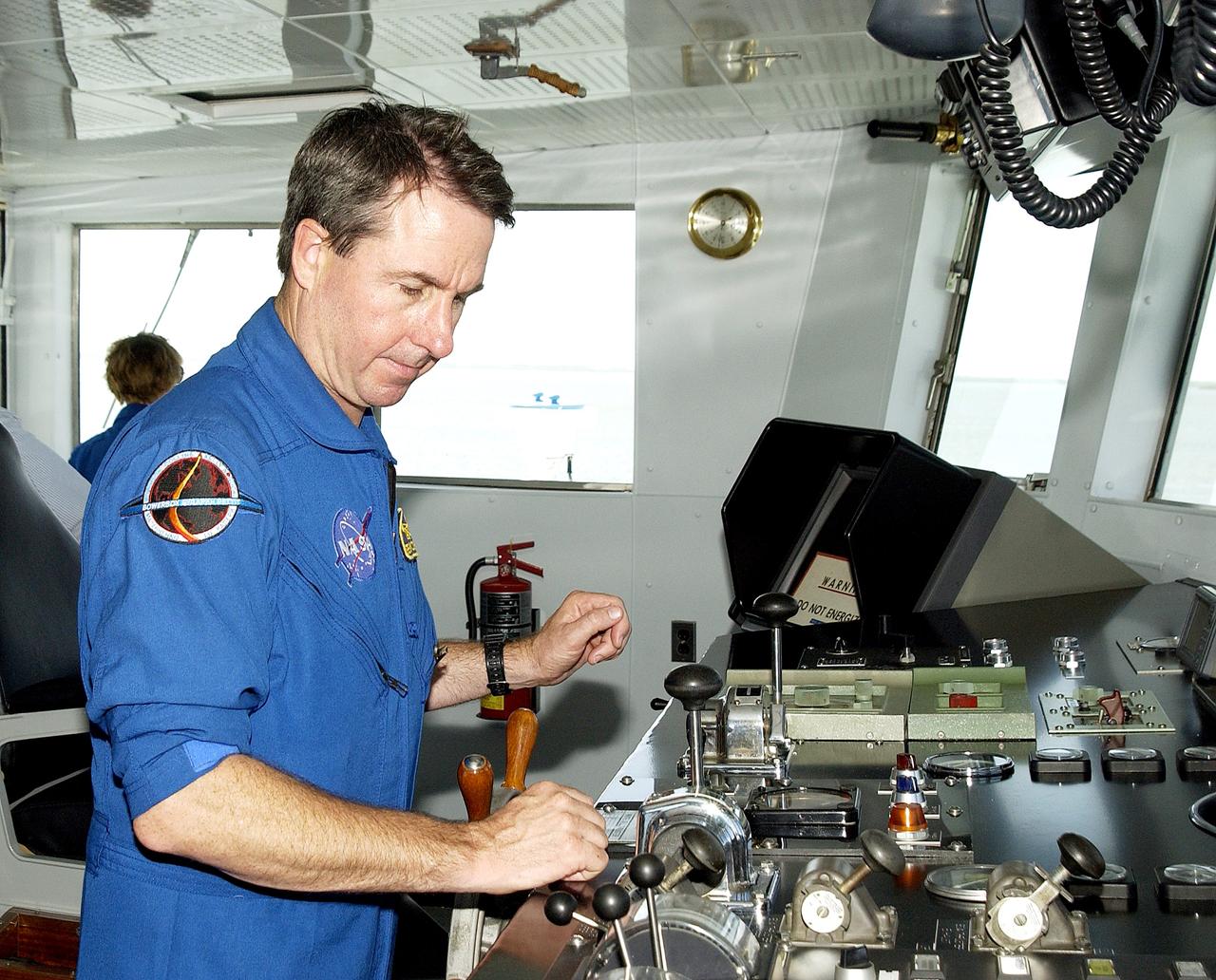
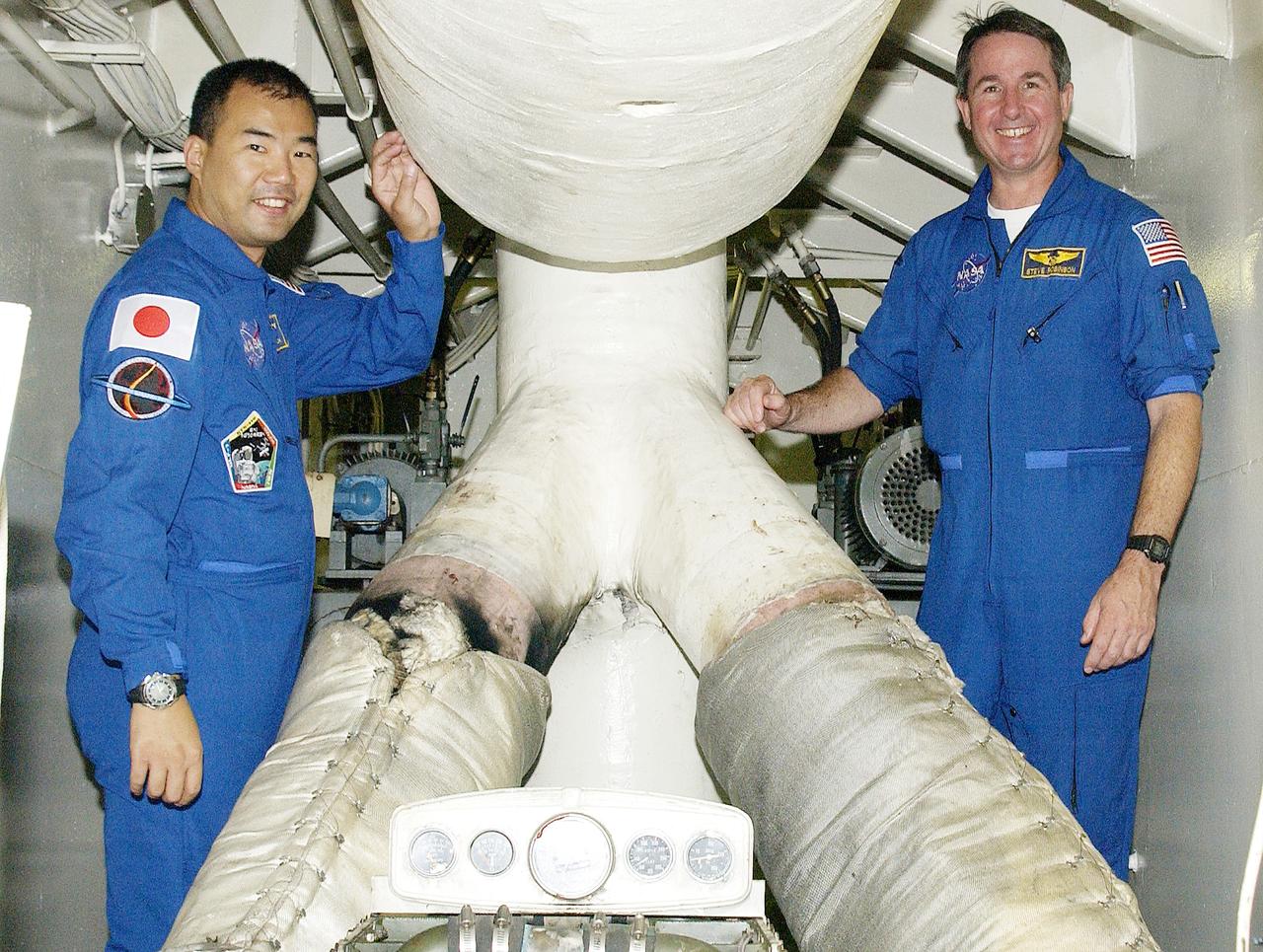
KENNEDY SPACE CENTER, FLA. -  STS-114  Mission Specialists Soichi Noguchi and Stephen Robinson visit the engine room of the Liberty Star, one of two SRB Retrieval Ships.  Noguchi is with the Japanese space agency NASDA. Other crew members on the tour are Commander Eileen Collins and Pilot James Kelly.  On their mission, the crew will carry the MultiPurpose Logistics Module (MPLM) Raffaello and External Stowage Platform 2 to the International Space Station.  The MPLM will contain supplies and equipment.  Another goal of the mission is to remove and replace a Control Moment Gyro.  Launch date for mission STS-114 is under review.
KENNEDY SPACE CENTER, FLA. - STS-114 Mission Specialists Soichi Noguchi and Stephen Robinson visit the engine room of the Liberty Star, one of two SRB Retrieval Ships. Noguchi is with the Japanese space agency NASDA. Other crew members on the tour are Commander Eileen Collins and Pilot James Kelly. On their mission, the crew will carry the MultiPurpose Logistics Module (MPLM) Raffaello and External Stowage Platform 2 to the International Space Station. The MPLM will contain supplies and equipment. Another goal of the mission is to remove and replace a Control Moment Gyro. Launch date for mission STS-114 is under review.
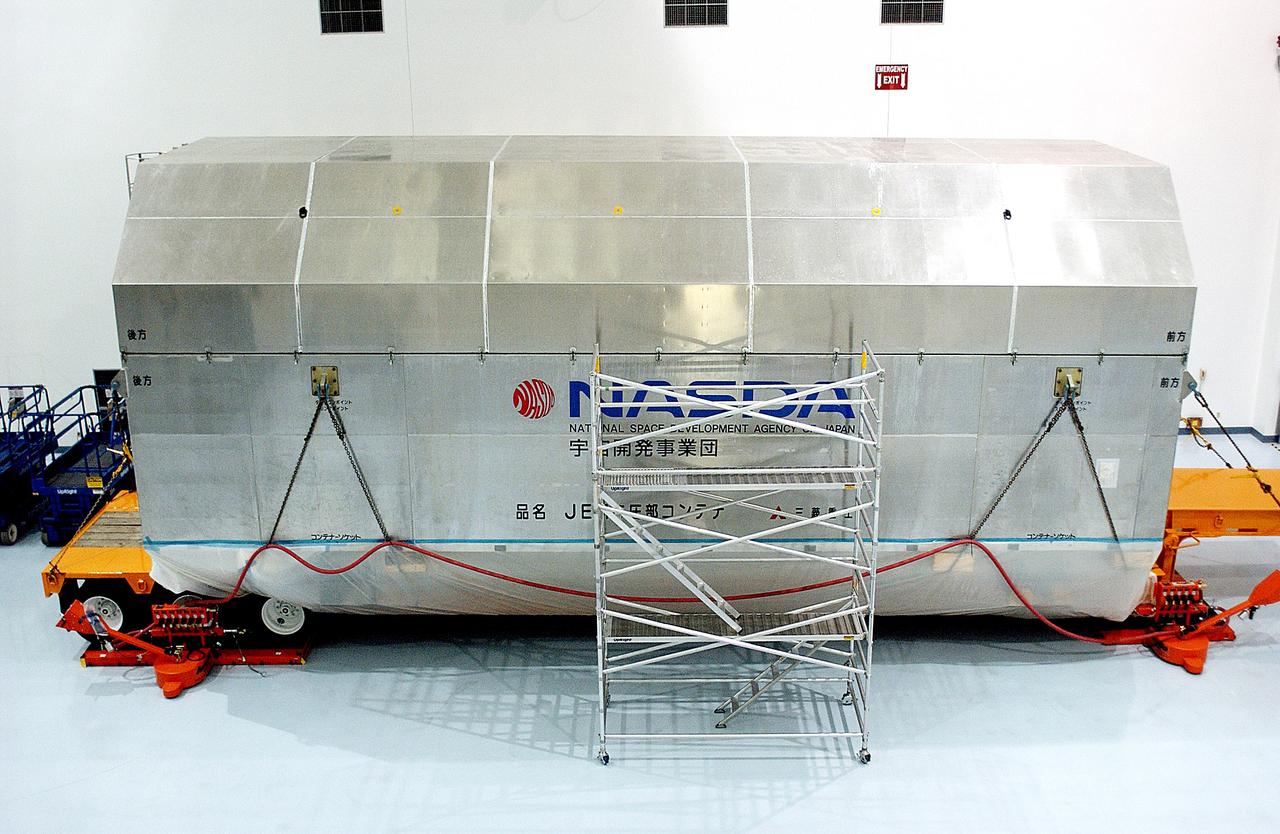
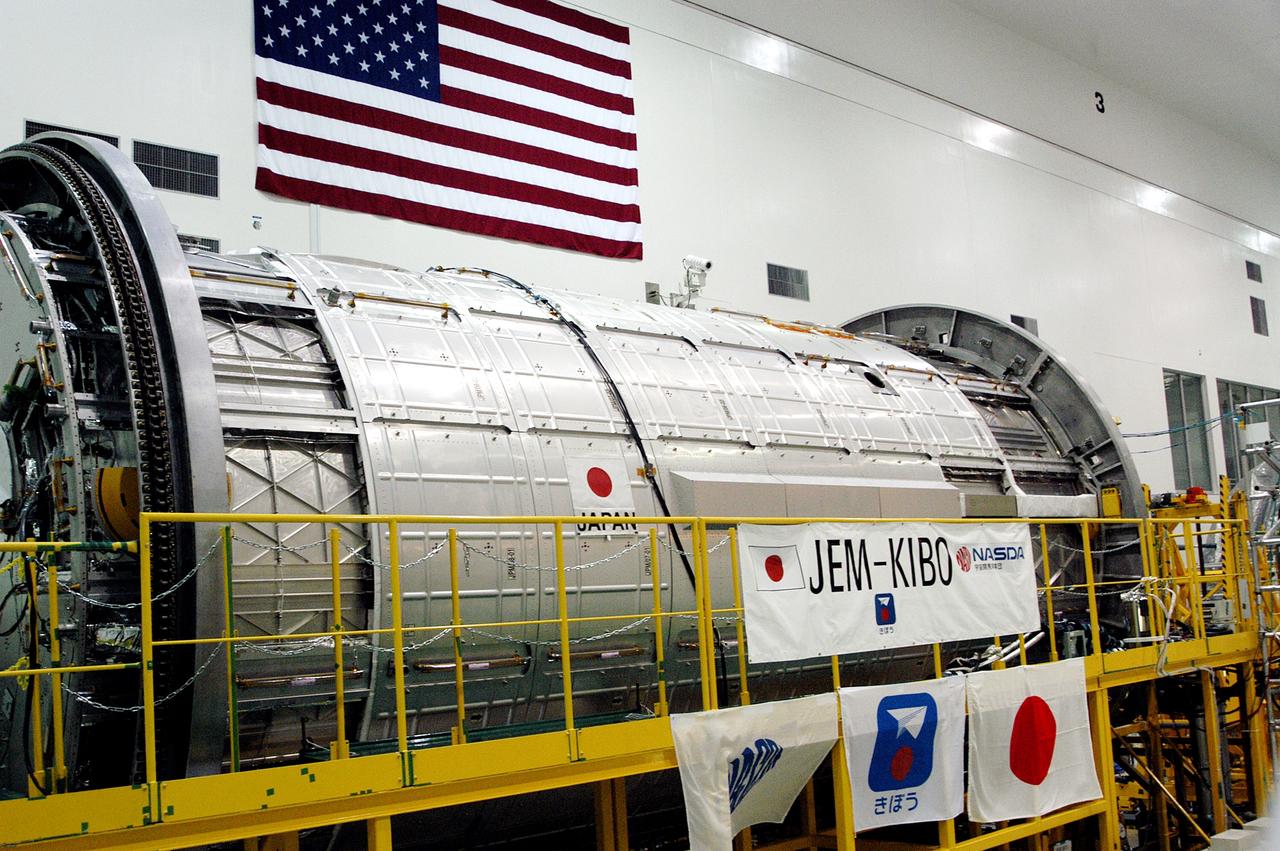
KENNEDY SPACE CENTER, FLA. - The container with the Japanese Experiment Module (JEM)’s pressurized module is inside the Space Station Processing Facility.  The National Space Development Agency of Japan (NASDA) developed the laboratory at the Tsukuba Space Center near Tokyo. The Pressurized Module is the first element of the JEM, named "Kibo" (Hope), to be delivered to KSC. The JEM is Japan's primary contribution to the Station. It will enhance the unique research capabilities of the orbiting complex by providing an additional environment for astronauts to conduct science experiments.  The JEM also includes an exposed facility (platform) for space environment experiments, a robotic manipulator system, and two logistics modules. The various JEM components will be  assembled in space over the course of three Shuttle missions.
KENNEDY SPACE CENTER, FLA. - The container with the Japanese Experiment Module (JEM)’s pressurized module is inside the Space Station Processing Facility. The National Space Development Agency of Japan (NASDA) developed the laboratory at the Tsukuba Space Center near Tokyo. The Pressurized Module is the first element of the JEM, named "Kibo" (Hope), to be delivered to KSC. The JEM is Japan's primary contribution to the Station. It will enhance the unique research capabilities of the orbiting complex by providing an additional environment for astronauts to conduct science experiments. The JEM also includes an exposed facility (platform) for space environment experiments, a robotic manipulator system, and two logistics modules. The various JEM components will be assembled in space over the course of three Shuttle missions.
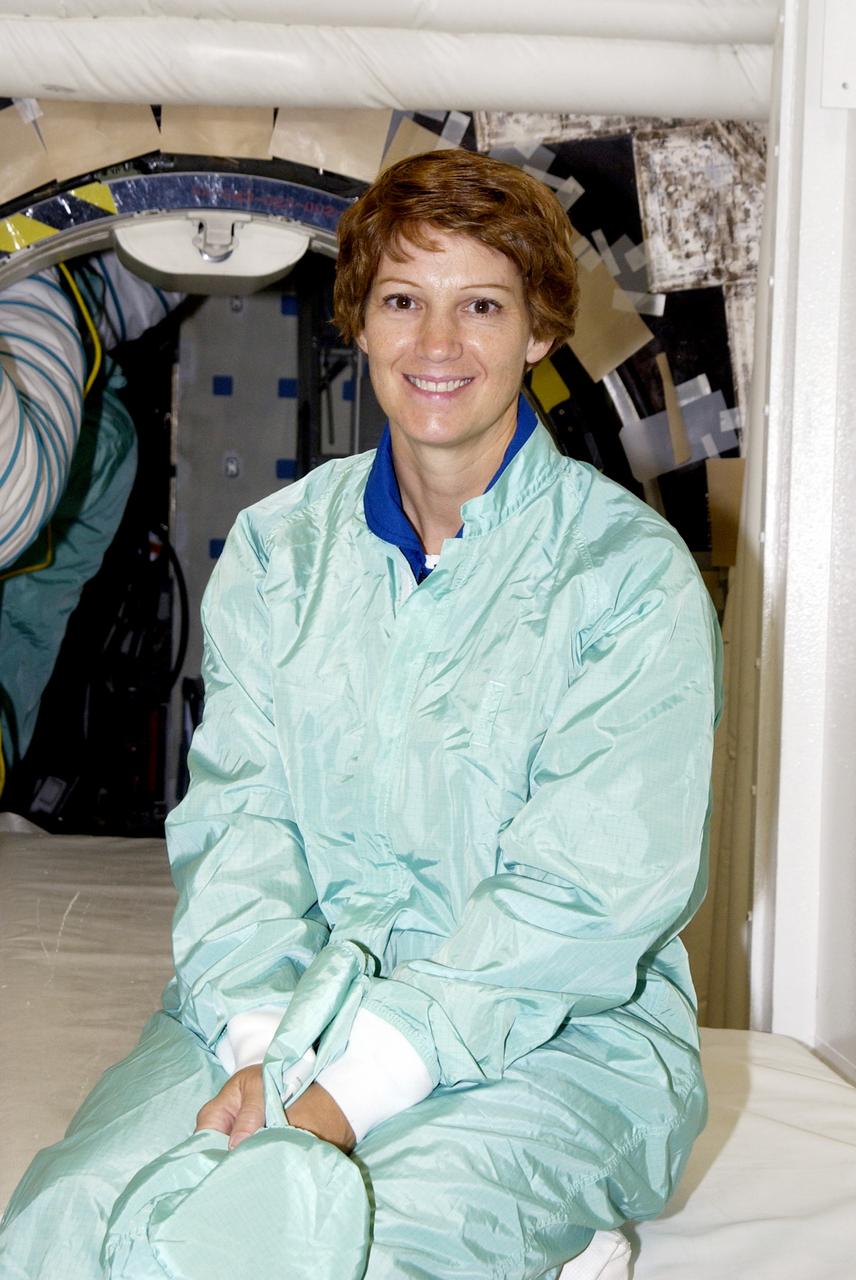
KENNEDY SPACE CENTER, FLA.  -    Japanese girls from Urawa Daiichi Girls High School, Urawa, Japan, carry a floral tribute to the crew of Columbia to place at the STS-107 memorial stone at the Spacehab facility, Cape Canaveral, Fla.   The group was  awarded the trip to Florida when their experiments were chosen to fly on mission STS-107.  The group was also meeting with American students from Melbourne and Jacksonville, Fla.   The National Space Development  Agency of Japan (NASDA) and the KSC International Space Station and Payloads Processing Directorate worked with the NASA KSC Education Programs and University Research Division to coordinate the students’ visit.
KENNEDY SPACE CENTER, FLA. - Japanese girls from Urawa Daiichi Girls High School, Urawa, Japan, carry a floral tribute to the crew of Columbia to place at the STS-107 memorial stone at the Spacehab facility, Cape Canaveral, Fla. The group was awarded the trip to Florida when their experiments were chosen to fly on mission STS-107. The group was also meeting with American students from Melbourne and Jacksonville, Fla. The National Space Development Agency of Japan (NASDA) and the KSC International Space Station and Payloads Processing Directorate worked with the NASA KSC Education Programs and University Research Division to coordinate the students’ visit.
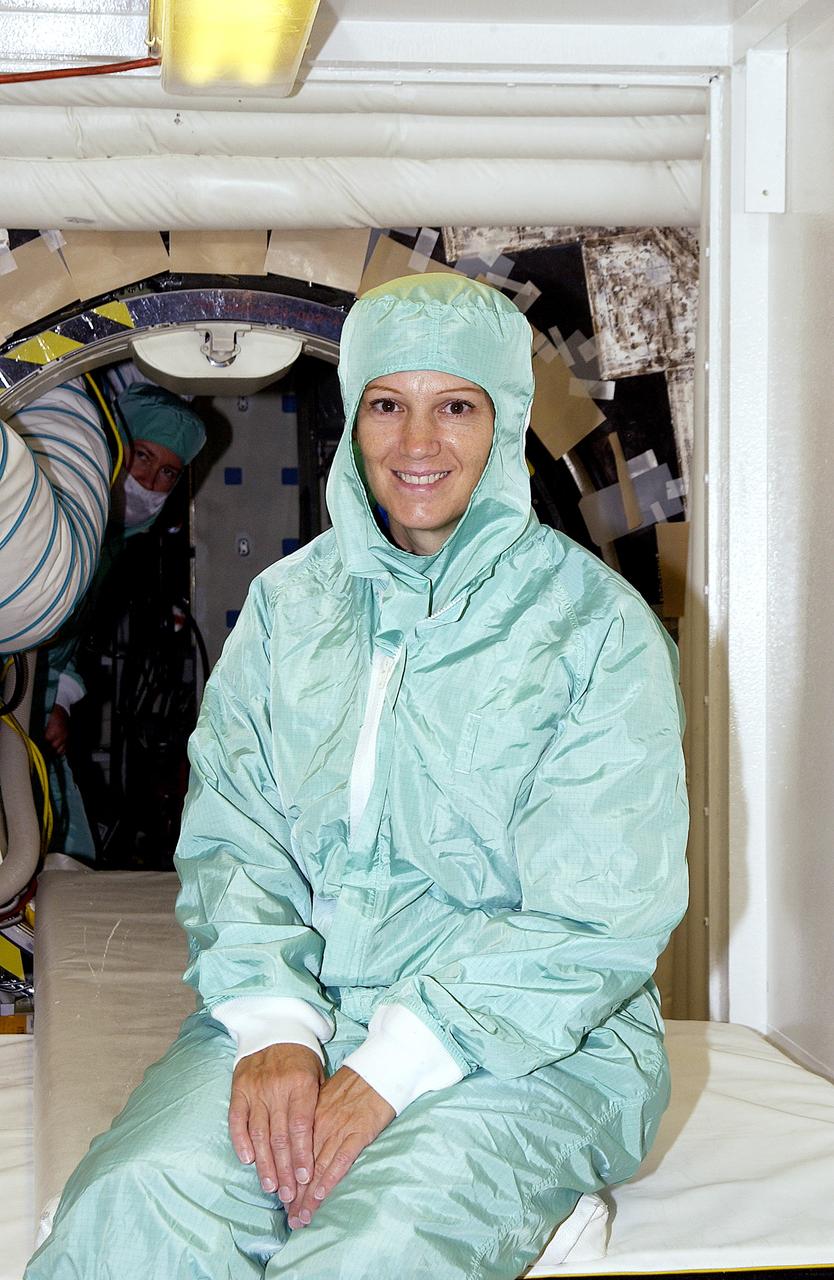
KENNEDY SPACE CENTER, FLA. -  STS-114 Pilot James Kelly sits in the entry hatch to orbiter Atlantis.  He and other crew members - Commander Eileen Collins and  Mission Specialists Soichi Noguchi and Stephen Robinson -  are at KSC for equipment familiarization. Noguchi is with the Japanese space agency NASDA. Mission STS-114 will carry the MultiPurpose Logistics Module (MPLM) Raffaello and External Stowage Platform 2 to the International Space Station.  The MPLM will contain supplies and equipment.  Another goal of the mission is to remove and replace a Control Moment Gyro.  Launch date for mission STS-114 is under review.
KENNEDY SPACE CENTER, FLA. - STS-114 Pilot James Kelly sits in the entry hatch to orbiter Atlantis. He and other crew members - Commander Eileen Collins and Mission Specialists Soichi Noguchi and Stephen Robinson - are at KSC for equipment familiarization. Noguchi is with the Japanese space agency NASDA. Mission STS-114 will carry the MultiPurpose Logistics Module (MPLM) Raffaello and External Stowage Platform 2 to the International Space Station. The MPLM will contain supplies and equipment. Another goal of the mission is to remove and replace a Control Moment Gyro. Launch date for mission STS-114 is under review.
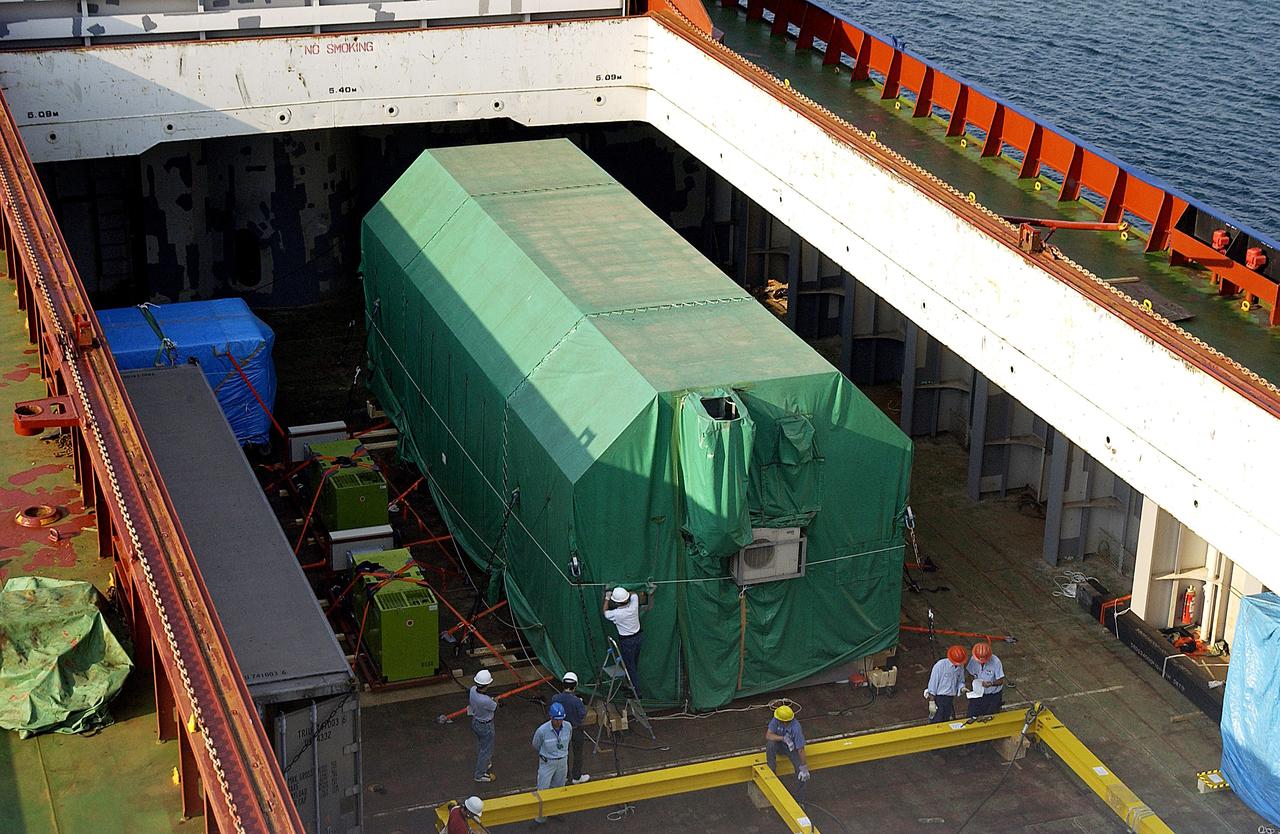
KENNEDY SPACE CENTER, FLA. - The JEM Pressurized Module is seen in the hold of the ship that carried it from Japan.  The National Space Development Agency of Japan (NASDA) built the laboratory at the Tsukuba Space Center near Tokyo.  The Pressurized Module is the first element of the JEM, Japan’s primary contribution to the space station, to be delivered to KSC. It will enhance the unique research capabilities of the orbiting complex by providing an additional shirt-sleeve environment for astronauts to conduct science experiments. The JEM also includes two logistics modules, an exposed pallet for space environment experiments and a robotic manipulator system that are still under construction in Japan. The various JEM components will be assembled in space over the course of three space shuttle missions.
KENNEDY SPACE CENTER, FLA. - The JEM Pressurized Module is seen in the hold of the ship that carried it from Japan. The National Space Development Agency of Japan (NASDA) built the laboratory at the Tsukuba Space Center near Tokyo. The Pressurized Module is the first element of the JEM, Japan’s primary contribution to the space station, to be delivered to KSC. It will enhance the unique research capabilities of the orbiting complex by providing an additional shirt-sleeve environment for astronauts to conduct science experiments. The JEM also includes two logistics modules, an exposed pallet for space environment experiments and a robotic manipulator system that are still under construction in Japan. The various JEM components will be assembled in space over the course of three space shuttle missions.
KENNEDY SPACE CENTER, FLA. -    Members of the STS-114 crew take a look at the Japanese Experiment Module (JEM) pressure module in the Space Station Processing Facility.  A research laboratory, the pressurized module is the first element of the JEM, named "Kibo" (Hope), to be delivered to KSC.   The National Space Development Agency of Japan (NASDA) developed the laboratory at the Tsukuba Space Center near Tokyo and is Japan's primary contribution to the Station. The JEM also includes an exposed facility (platform) for space environment experiments, a robotic manipulator system, and two logistics modules. The various JEM components will be  assembled in space over the course of three Shuttle missions.
KENNEDY SPACE CENTER, FLA. - Members of the STS-114 crew take a look at the Japanese Experiment Module (JEM) pressure module in the Space Station Processing Facility. A research laboratory, the pressurized module is the first element of the JEM, named "Kibo" (Hope), to be delivered to KSC. The National Space Development Agency of Japan (NASDA) developed the laboratory at the Tsukuba Space Center near Tokyo and is Japan's primary contribution to the Station. The JEM also includes an exposed facility (platform) for space environment experiments, a robotic manipulator system, and two logistics modules. The various JEM components will be assembled in space over the course of three Shuttle missions.
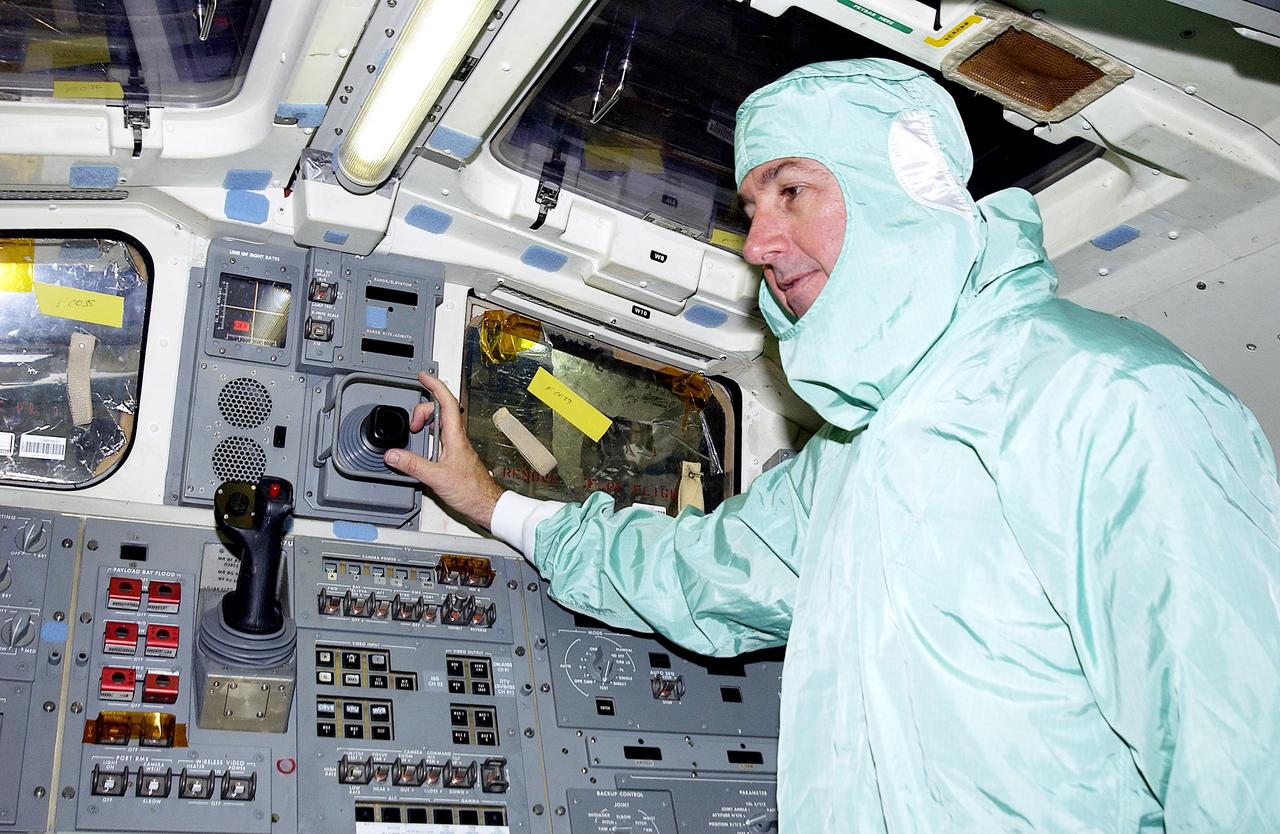
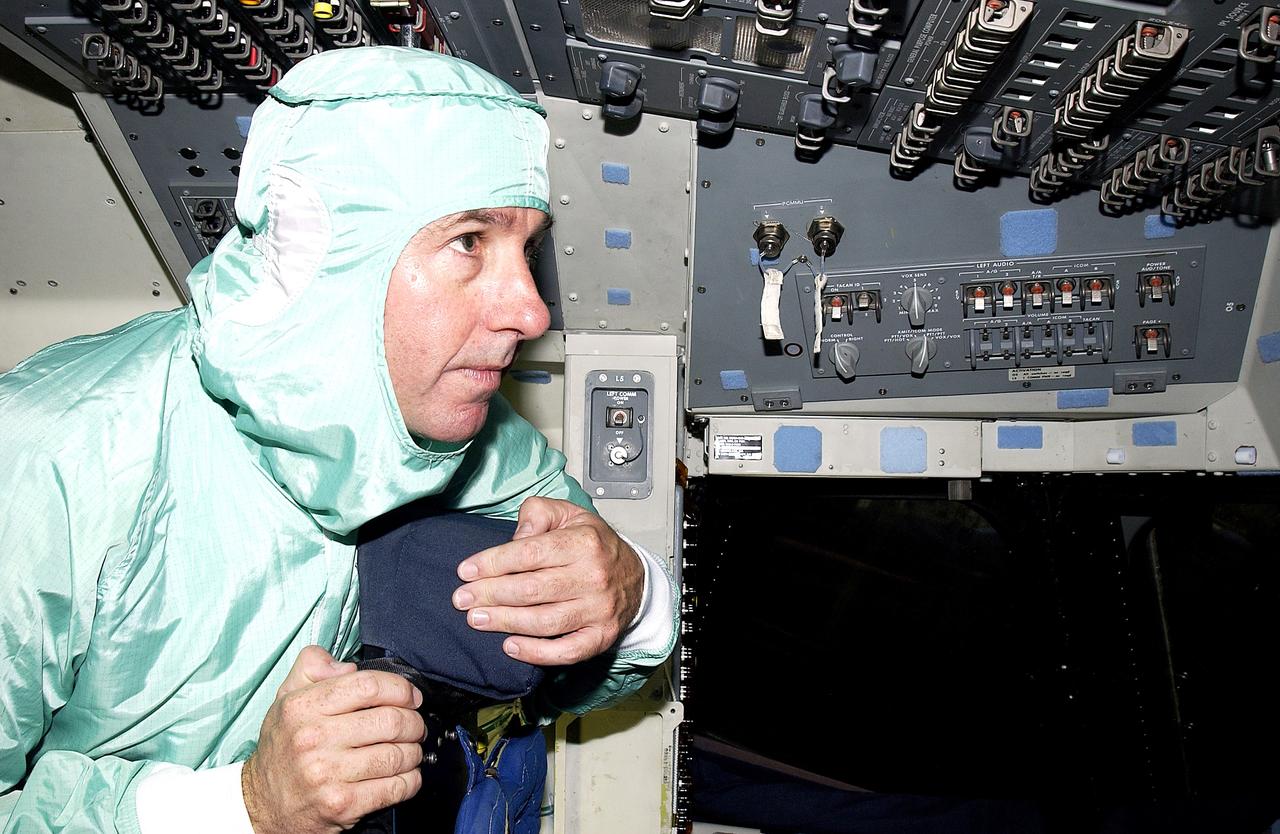
KENNEDY SPACE CENTER, FLA. -   STS-114 Mission Specialist Stephen Robinson looks at equipment in the flight deck of orbiter Atlantis.  He and other crew members -  Commander Eileen Collins, Pilot James Kelly and Mission Specialist Soichi Noguchi - are at KSC for equipment familiarization.  Noguchi is with the Japanese space agency NASDA.  Mission STS-114 will carry the MultiPurpose Logistics Module (MPLM) Raffaello and External Stowage Platform 2 to the International Space Station.  The MPLM will contain supplies and equipment.  Another goal of the mission is to remove and replace a Control Moment Gyro.  Launch date for mission STS-114 is under review.
KENNEDY SPACE CENTER, FLA. - STS-114 Mission Specialist Stephen Robinson looks at equipment in the flight deck of orbiter Atlantis. He and other crew members - Commander Eileen Collins, Pilot James Kelly and Mission Specialist Soichi Noguchi - are at KSC for equipment familiarization. Noguchi is with the Japanese space agency NASDA. Mission STS-114 will carry the MultiPurpose Logistics Module (MPLM) Raffaello and External Stowage Platform 2 to the International Space Station. The MPLM will contain supplies and equipment. Another goal of the mission is to remove and replace a Control Moment Gyro. Launch date for mission STS-114 is under review.
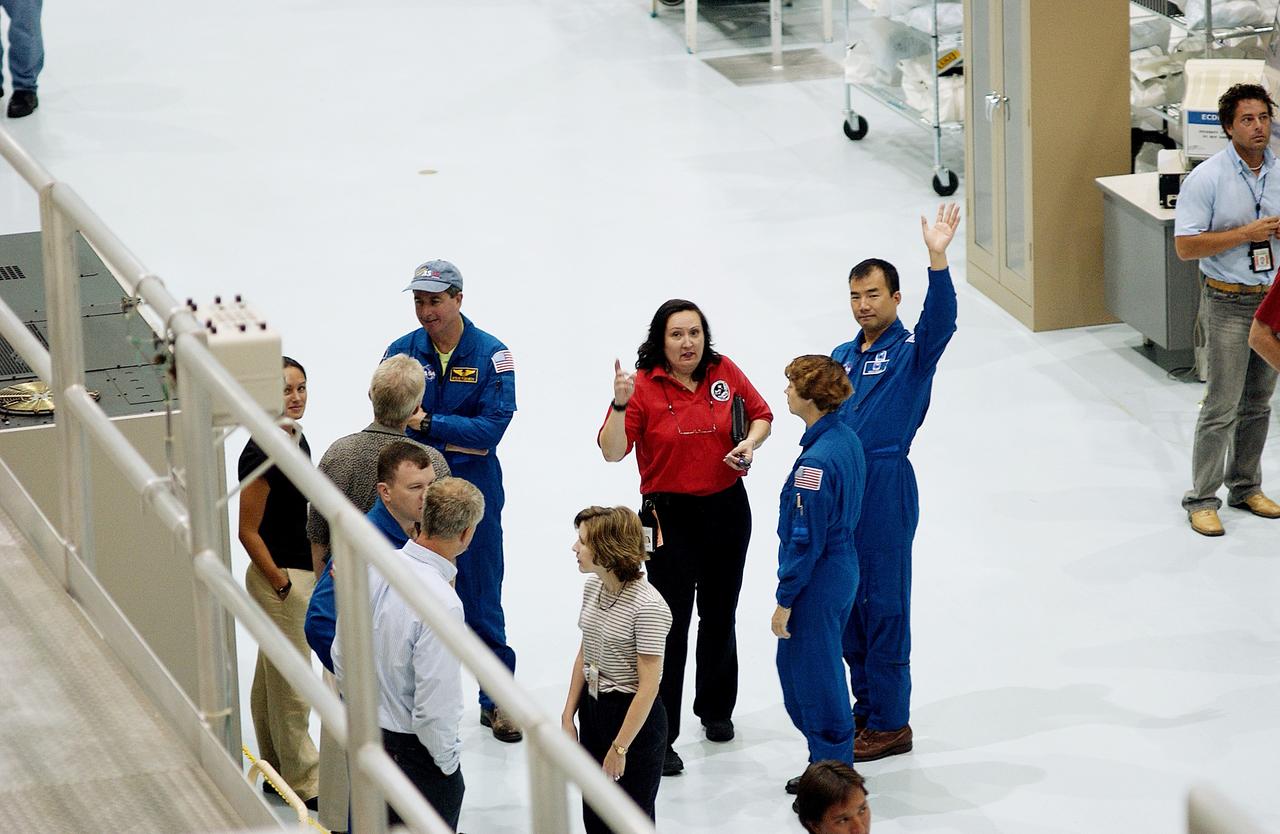
KENNEDY SPACE CENTER, FLA. - NASA Manager Steve Cain explains aspects of Space Shuttle processing to Consul General of Japan Ko Kodaira and his family in the Orbiter Processing Facility during their visit to Kennedy Space Center (KSC). From left are Kodaira's wife Marie, his daughter Reiko, Kodaira, and Cain, Senior Future International Space Station Element Manager. Kodaira is touring the facilities at KSC at the invitation of the local office of the National Space Development Agency of Japan (NASDA) to acquaint him with KSC's unique processing capabilities.
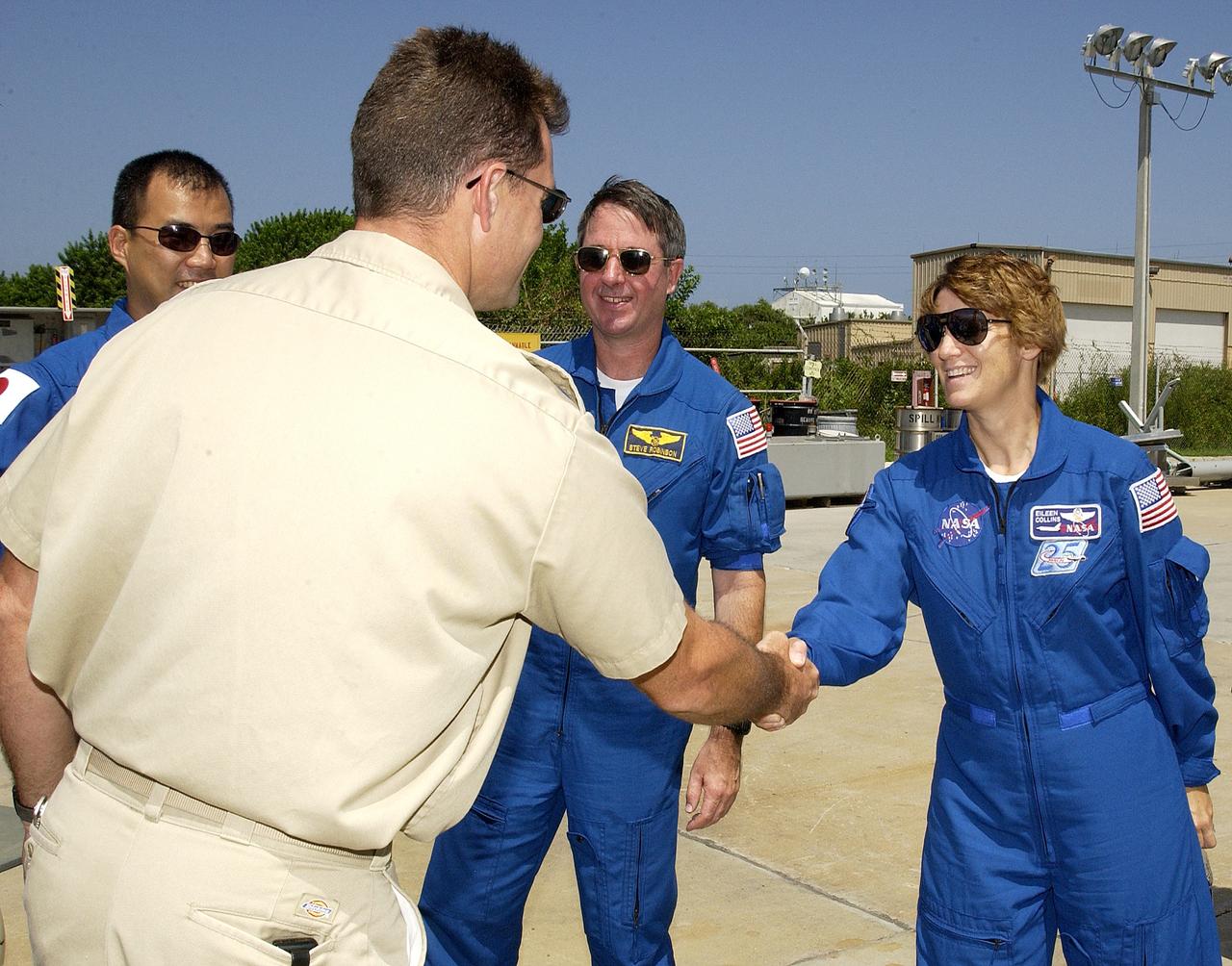
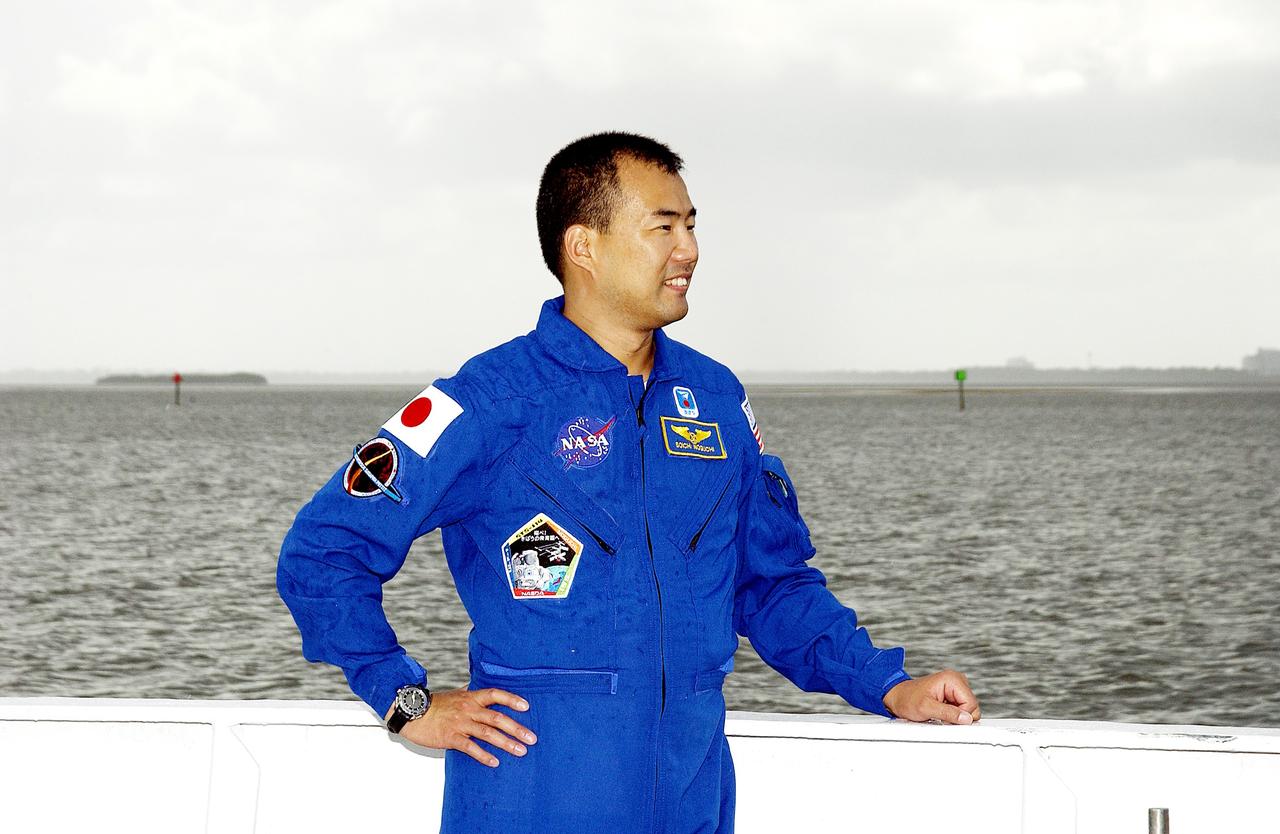
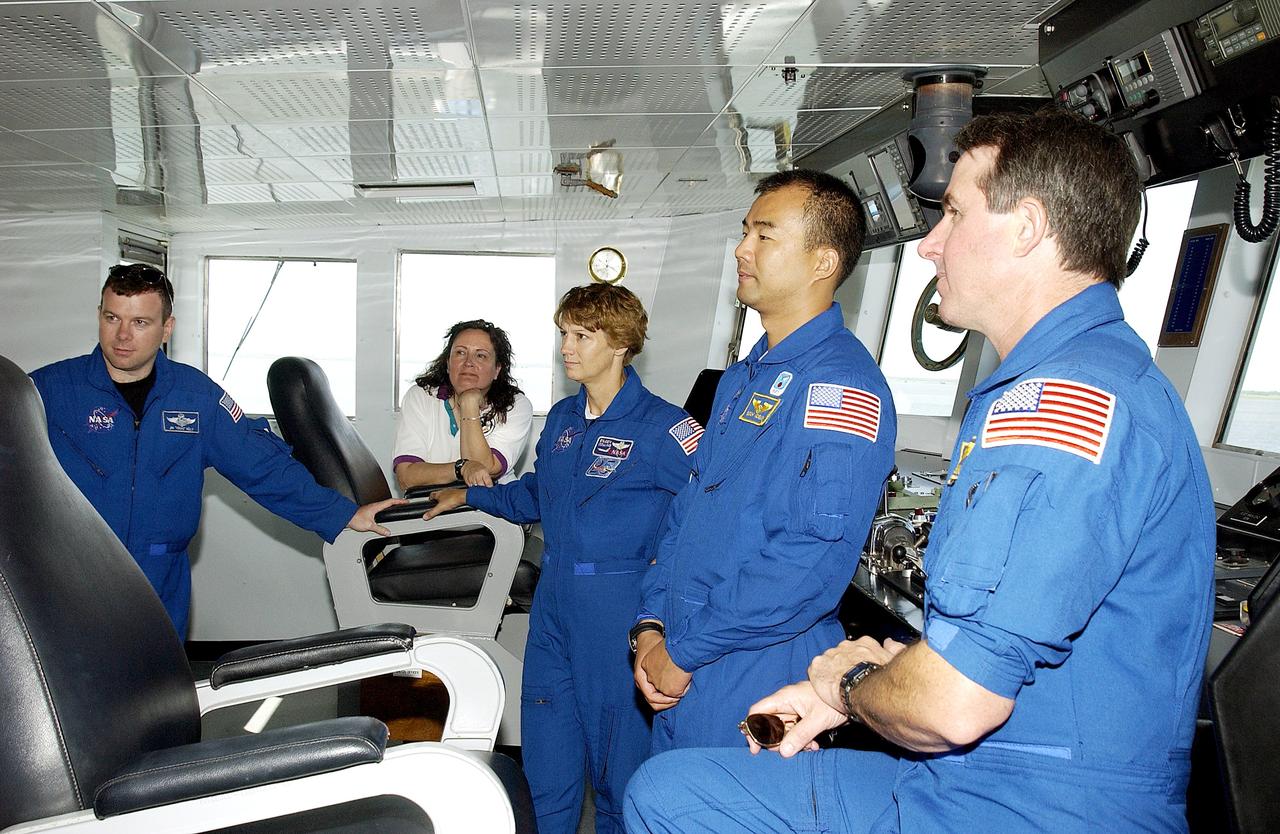
KENNEDY SPACE CENTER, FLA. -  Members of the STS-114 crew are welcomed to the Liberty Star, one of two SRB Retrieval Ships, by Captain Bren Wade (back to camera).  Crew members, from left, are Mission Specialist Soichi Noguchi, Mission Specialist Stephen Robinson and Commander Eileen Collins. Noguchi is with the Japanese space agency NASDA. Not pictured is Pilot James Kelly.  On their mission, the crew will carry the MultiPurpose Logistics Module (MPLM) Raffaello and External Stowage Platform 2 to the International Space Station.  The MPLM will contain supplies and equipment.  Another goal of the mission is to remove and replace a Control Moment Gyro.  Launch date for mission STS-114 is under review.
KENNEDY SPACE CENTER, FLA. - Members of the STS-114 crew are welcomed to the Liberty Star, one of two SRB Retrieval Ships, by Captain Bren Wade (back to camera). Crew members, from left, are Mission Specialist Soichi Noguchi, Mission Specialist Stephen Robinson and Commander Eileen Collins. Noguchi is with the Japanese space agency NASDA. Not pictured is Pilot James Kelly. On their mission, the crew will carry the MultiPurpose Logistics Module (MPLM) Raffaello and External Stowage Platform 2 to the International Space Station. The MPLM will contain supplies and equipment. Another goal of the mission is to remove and replace a Control Moment Gyro. Launch date for mission STS-114 is under review.
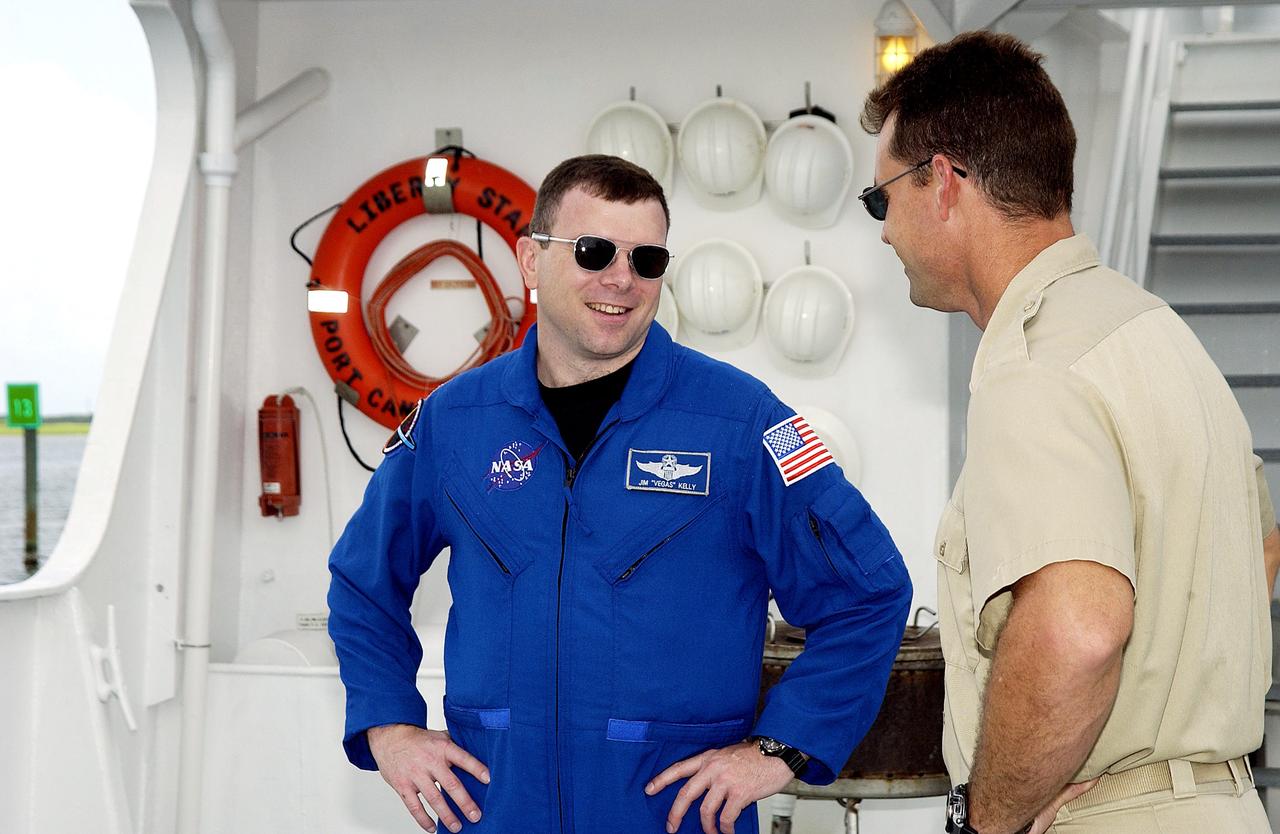
KENNEDY SPACE CENTER, FLA. -  STS-114 Pilot James Kelly talks with Bren Wade, captain of the Liberty Star, one of the SRB Retrieval Ships docked at Hangar AF on the Banana River.  Kelly and other crew members Commander Eileen Collins and Mission Specialists  Soichi Noguchi and Stephen Robinson toured the ships.  Noguchi is with the Japanese space agency NASDA.  Mission STS-114 will carry the MultiPurpose Logistics Module (MPLM) Raffaello and External Stowage Platform 2 to the International Space Station.  The MPLM will contain supplies and equipment.  Another goal of the mission is to remove and replace a Control Moment Gyro.  Launch date for mission STS-114 is under review.
KENNEDY SPACE CENTER, FLA. - STS-114 Pilot James Kelly talks with Bren Wade, captain of the Liberty Star, one of the SRB Retrieval Ships docked at Hangar AF on the Banana River. Kelly and other crew members Commander Eileen Collins and Mission Specialists Soichi Noguchi and Stephen Robinson toured the ships. Noguchi is with the Japanese space agency NASDA. Mission STS-114 will carry the MultiPurpose Logistics Module (MPLM) Raffaello and External Stowage Platform 2 to the International Space Station. The MPLM will contain supplies and equipment. Another goal of the mission is to remove and replace a Control Moment Gyro. Launch date for mission STS-114 is under review.
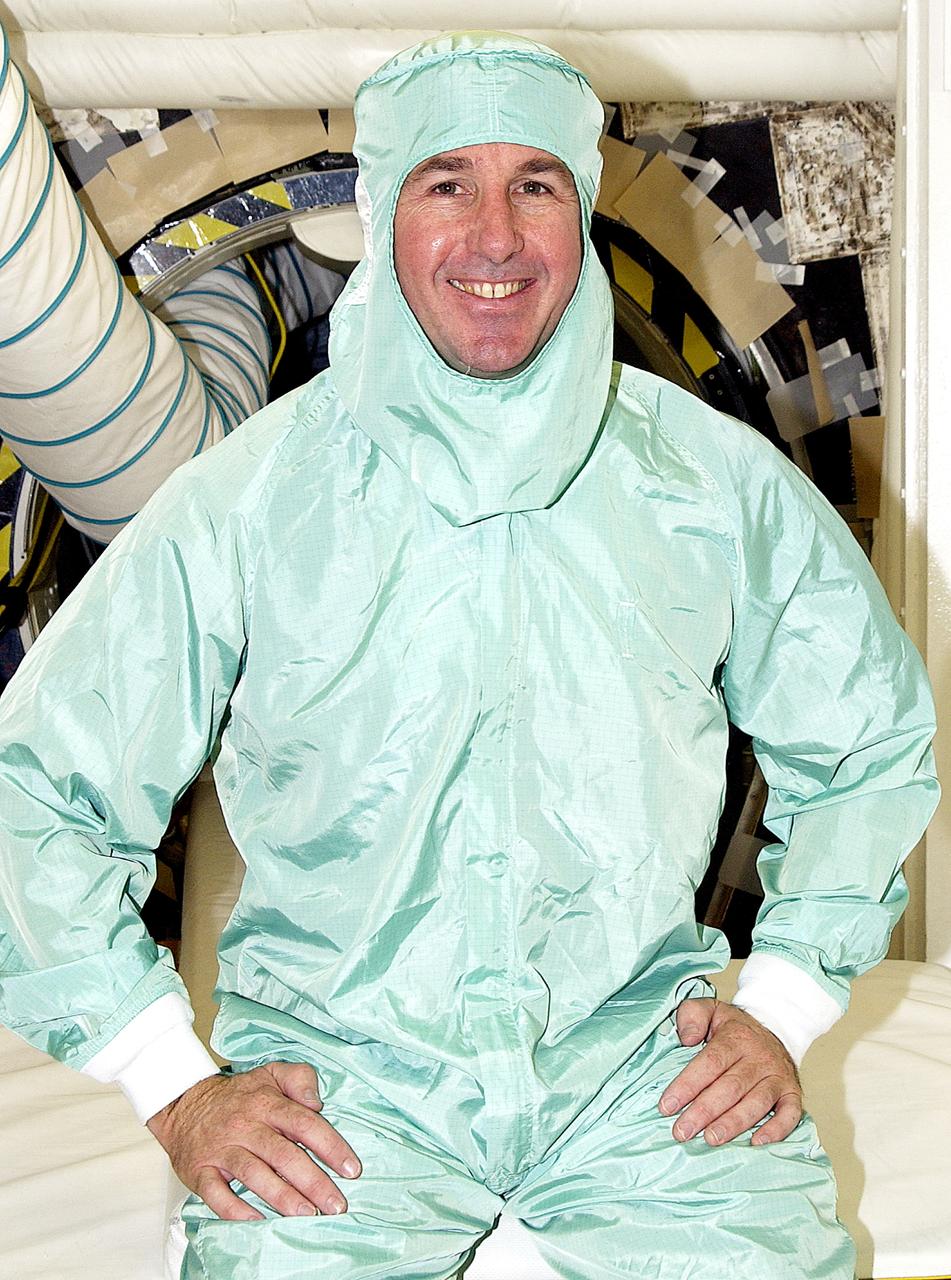
KENNEDY SPACE CENTER, FLA. -  STS-114 Mission Specialist Stephen Robinson sits in the entry hatch to orbiter Atlantis.  He and other crew members - Commander Eileen Collins, Pilot James Kelly and  Mission Specialist Soichi Noguchi - are at KSC for equipment familiarization. Noguchi is with the Japanese space agency NASDA. Mission STS-114 will carry the MultiPurpose Logistics Module (MPLM) Raffaello and External Stowage Platform 2 to the International Space Station.  The MPLM will contain supplies and equipment.  Another goal of the mission is to remove and replace a Control Moment Gyro.  Launch date for mission STS-114 is under review.
KENNEDY SPACE CENTER, FLA. - STS-114 Mission Specialist Stephen Robinson sits in the entry hatch to orbiter Atlantis. He and other crew members - Commander Eileen Collins, Pilot James Kelly and Mission Specialist Soichi Noguchi - are at KSC for equipment familiarization. Noguchi is with the Japanese space agency NASDA. Mission STS-114 will carry the MultiPurpose Logistics Module (MPLM) Raffaello and External Stowage Platform 2 to the International Space Station. The MPLM will contain supplies and equipment. Another goal of the mission is to remove and replace a Control Moment Gyro. Launch date for mission STS-114 is under review.
KENNEDY SPACE CENTER, FLA. -  STS-114 Commander Eileen Collins sits in the entry hatch to orbiter Atlantis.  She and other crew members - Pilot James Kelly and  Mission Specialists Soichi Noguchi and Stephen Robinson -  are at KSC for equipment familiarization. Noguchi is with the Japanese space agency NASDA. Mission STS-114 will carry the MultiPurpose Logistics Module (MPLM) Raffaello and External Stowage Platform 2 to the International Space Station.  The MPLM will contain supplies and equipment.  Another goal of the mission is to remove and replace a Control Moment Gyro.  Launch date for mission STS-114 is under review.
KENNEDY SPACE CENTER, FLA. - STS-114 Commander Eileen Collins sits in the entry hatch to orbiter Atlantis. She and other crew members - Pilot James Kelly and Mission Specialists Soichi Noguchi and Stephen Robinson - are at KSC for equipment familiarization. Noguchi is with the Japanese space agency NASDA. Mission STS-114 will carry the MultiPurpose Logistics Module (MPLM) Raffaello and External Stowage Platform 2 to the International Space Station. The MPLM will contain supplies and equipment. Another goal of the mission is to remove and replace a Control Moment Gyro. Launch date for mission STS-114 is under review.
KENNEDY SPACE CENTER, FLA. -   STS-114 Mission Specialist Stephen Robinson checks equipment in the flight deck of orbiter Atlantis.  He and other crew members -  Commander Eileen Collins, Pilot James Kelly and Mission Specialist Soichi Noguchi - are at KSC for equipment familiarization.  Noguchi is with the Japanese space agency NASDA.  Mission STS-114 will carry the MultiPurpose Logistics Module (MPLM) Raffaello and External Stowage Platform 2 to the International Space Station.  The MPLM will contain supplies and equipment.  Another goal of the mission is to remove and replace a Control Moment Gyro.  Launch date for mission STS-114 is under review.
KENNEDY SPACE CENTER, FLA. - STS-114 Mission Specialist Stephen Robinson checks equipment in the flight deck of orbiter Atlantis. He and other crew members - Commander Eileen Collins, Pilot James Kelly and Mission Specialist Soichi Noguchi - are at KSC for equipment familiarization. Noguchi is with the Japanese space agency NASDA. Mission STS-114 will carry the MultiPurpose Logistics Module (MPLM) Raffaello and External Stowage Platform 2 to the International Space Station. The MPLM will contain supplies and equipment. Another goal of the mission is to remove and replace a Control Moment Gyro. Launch date for mission STS-114 is under review.
KENNEDY SPACE CENTER, FLA. -   STS-114 Mission Specialist Soichi Noguchi checks the midbody of orbiter Atlantis.  He and other crew members -  Commander Eileen Collins, Pilot James Kelly and Mission Specialist Stephen Robinson - are at KSC for equipment familiarization.  Noguchi is with the Japanese space agency NASDA.  Mission STS-114 will carry the MultiPurpose Logistics Module (MPLM) Raffaello and External Stowage Platform 2 to the International Space Station.  The MPLM will contain supplies and equipment.  Another goal of the mission is to remove and replace a Control Moment Gyro.  Launch date for mission STS-114 is under review.
KENNEDY SPACE CENTER, FLA. - STS-114 Mission Specialist Soichi Noguchi checks the midbody of orbiter Atlantis. He and other crew members - Commander Eileen Collins, Pilot James Kelly and Mission Specialist Stephen Robinson - are at KSC for equipment familiarization. Noguchi is with the Japanese space agency NASDA. Mission STS-114 will carry the MultiPurpose Logistics Module (MPLM) Raffaello and External Stowage Platform 2 to the International Space Station. The MPLM will contain supplies and equipment. Another goal of the mission is to remove and replace a Control Moment Gyro. Launch date for mission STS-114 is under review.
KENNEDY SPACE CENTER, FLA. -   Captain Bren Wade of the Liberty Star, one of two SRB Retrieval Ships, talks to STS-114 crew members about the engines.  Seen at left are Pilot James Kelly and Mission Specialist Soichi Noguchi, who is with the Japanese space agency NASDA..   On their mission, the crew  - which includes Commander Eileen Collins and Mission Specialist Stephen Robinson - will carry the MultiPurpose Logistics Module (MPLM) Raffaello and External Stowage Platform 2 to the International Space Station.  The MPLM will contain supplies and equipment.  Another goal of the mission is to remove and replace a Control Moment Gyro.  Launch date for mission STS-114 is under review.
KENNEDY SPACE CENTER, FLA. - Captain Bren Wade of the Liberty Star, one of two SRB Retrieval Ships, talks to STS-114 crew members about the engines. Seen at left are Pilot James Kelly and Mission Specialist Soichi Noguchi, who is with the Japanese space agency NASDA.. On their mission, the crew - which includes Commander Eileen Collins and Mission Specialist Stephen Robinson - will carry the MultiPurpose Logistics Module (MPLM) Raffaello and External Stowage Platform 2 to the International Space Station. The MPLM will contain supplies and equipment. Another goal of the mission is to remove and replace a Control Moment Gyro. Launch date for mission STS-114 is under review.
KENNEDY SPACE CENTER, FLA. -   The STS-114 crew poses on deck with the captain of the Liberty Star, one of the SRB Retrieval Ships docked at Hangar AF on the Banana River.   From left are Pilot James Kelly, Mission Specialist Soichi Noguchi, Capt. Bren Wade, Commander Eileen Collins and Mission Specialist Stephen Robinson.  Noguchi is with the Japanese space agency NASDA.  Mission STS-114 will carry the MultiPurpose Logistics Module (MPLM) Raffaello and External Stowage Platform 2 to the International Space Station.  The MPLM will contain supplies and equipment.  Another goal of the mission is to remove and replace a Control Moment Gyro.  Launch date for mission STS-114 is under review.
KENNEDY SPACE CENTER, FLA. - The STS-114 crew poses on deck with the captain of the Liberty Star, one of the SRB Retrieval Ships docked at Hangar AF on the Banana River. From left are Pilot James Kelly, Mission Specialist Soichi Noguchi, Capt. Bren Wade, Commander Eileen Collins and Mission Specialist Stephen Robinson. Noguchi is with the Japanese space agency NASDA. Mission STS-114 will carry the MultiPurpose Logistics Module (MPLM) Raffaello and External Stowage Platform 2 to the International Space Station. The MPLM will contain supplies and equipment. Another goal of the mission is to remove and replace a Control Moment Gyro. Launch date for mission STS-114 is under review.
KENNEDY SPACE CENTER, FLA. -  Sitting in the entry hatch to orbiter Atlantis is STS-114 Mission Specialist Soichi Noguchi, who is with the Japanese space agency NASDA. He and other crew members - Commander Eileen Collins, Pilot James Kelly and Mission Specialist Stephen Robinson - are at KSC for equipment familiarization. Mission STS-114 will carry the MultiPurpose Logistics Module (MPLM) Raffaello and External Stowage Platform 2 to the International Space Station.  The MPLM will contain supplies and equipment.  Another goal of the mission is to remove and replace a Control Moment Gyro.  Launch date for mission STS-114 is under review.
KENNEDY SPACE CENTER, FLA. - Sitting in the entry hatch to orbiter Atlantis is STS-114 Mission Specialist Soichi Noguchi, who is with the Japanese space agency NASDA. He and other crew members - Commander Eileen Collins, Pilot James Kelly and Mission Specialist Stephen Robinson - are at KSC for equipment familiarization. Mission STS-114 will carry the MultiPurpose Logistics Module (MPLM) Raffaello and External Stowage Platform 2 to the International Space Station. The MPLM will contain supplies and equipment. Another goal of the mission is to remove and replace a Control Moment Gyro. Launch date for mission STS-114 is under review.
KENNEDY SPACE CENTER, FLA. -  The STS-114 crew visit the bridge of the Liberty Star, one of two SRB Retrieval Ships.  From left are Pilot James Kelly, Louise Kleba (with the Vehicle Integration Test Team (VITT) office), Commander Eileen Collins and Mission Specialists Soichi Noguchi and Stephen Robinson. Noguchi is with the Japanese space agency NASDA. On their mission, the crew will carry the MultiPurpose Logistics Module (MPLM) Raffaello and External Stowage Platform 2 to the International Space Station.  The MPLM will contain supplies and equipment.  Another goal of the mission is to remove and replace a Control Moment Gyro.  Launch date for mission STS-114 is under review.
KENNEDY SPACE CENTER, FLA. - The STS-114 crew visit the bridge of the Liberty Star, one of two SRB Retrieval Ships. From left are Pilot James Kelly, Louise Kleba (with the Vehicle Integration Test Team (VITT) office), Commander Eileen Collins and Mission Specialists Soichi Noguchi and Stephen Robinson. Noguchi is with the Japanese space agency NASDA. On their mission, the crew will carry the MultiPurpose Logistics Module (MPLM) Raffaello and External Stowage Platform 2 to the International Space Station. The MPLM will contain supplies and equipment. Another goal of the mission is to remove and replace a Control Moment Gyro. Launch date for mission STS-114 is under review.
KENNEDY SPACE CENTER, FLA. -  STS-114 Commander Eileen Collins sits in the entry hatch to orbiter Atlantis.  She and other crew members - Pilot James Kelly and  Mission Specialists Soichi Noguchi and Stephen Robinson -  are at KSC for equipment familiarization. Noguchi is with the Japanese space agency NASDA. Mission STS-114 will carry the MultiPurpose Logistics Module (MPLM) Raffaello and External Stowage Platform 2 to the International Space Station.  The MPLM will contain supplies and equipment.  Another goal of the mission is to remove and replace a Control Moment Gyro.  Launch date for mission STS-114 is under review.
KENNEDY SPACE CENTER, FLA. - STS-114 Commander Eileen Collins sits in the entry hatch to orbiter Atlantis. She and other crew members - Pilot James Kelly and Mission Specialists Soichi Noguchi and Stephen Robinson - are at KSC for equipment familiarization. Noguchi is with the Japanese space agency NASDA. Mission STS-114 will carry the MultiPurpose Logistics Module (MPLM) Raffaello and External Stowage Platform 2 to the International Space Station. The MPLM will contain supplies and equipment. Another goal of the mission is to remove and replace a Control Moment Gyro. Launch date for mission STS-114 is under review.
KENNEDY SPACE CENTER, FLA.  -   Japanese girls from Urawa Daiichi Girls High School, Urawa, Japan, pose for a group photo on their visit to the Spacehab facility in Cape Canaveral, Fla.  They were awarded the trip when their experiments were chosen to fly on mission STS-107.  The group was also meeting with American students from Melbourne and Jacksonville, Fla.  The girls planned a floral tribute at the STS-107 memorial stone at the facility.  The National Space Development  Agency of Japan (NASDA) and the KSC International Space Station and Payloads Processing Directorate worked with the NASA KSC Education Programs and University Research Division to coordinate the students’ visit.
KENNEDY SPACE CENTER, FLA. - Japanese girls from Urawa Daiichi Girls High School, Urawa, Japan, pose for a group photo on their visit to the Spacehab facility in Cape Canaveral, Fla. They were awarded the trip when their experiments were chosen to fly on mission STS-107. The group was also meeting with American students from Melbourne and Jacksonville, Fla. The girls planned a floral tribute at the STS-107 memorial stone at the facility. The National Space Development Agency of Japan (NASDA) and the KSC International Space Station and Payloads Processing Directorate worked with the NASA KSC Education Programs and University Research Division to coordinate the students’ visit.
KENNEDY SPACE CENTER, FLA. -   Japanese girls from Urawa Daiichi Girls High School, Urawa, Japan, pose for a group photo during a visit to the Space Station Processing Facility. They were awarded the trip to Kennedy Space Center when their experiments were chosen to fly on mission STS-107. The girls are accompanied by American students from Melbourne and Jacksonville, Fla.  The National Space Development Agency of Japan (NASDA) and the KSC International Space Station/Payload Processing Directorate worked with the NASA KSC Education Programs and University Research Division to coordinate the students’ visit.
KENNEDY SPACE CENTER, FLA. - Japanese girls from Urawa Daiichi Girls High School, Urawa, Japan, pose for a group photo during a visit to the Space Station Processing Facility. They were awarded the trip to Kennedy Space Center when their experiments were chosen to fly on mission STS-107. The girls are accompanied by American students from Melbourne and Jacksonville, Fla. The National Space Development Agency of Japan (NASDA) and the KSC International Space Station/Payload Processing Directorate worked with the NASA KSC Education Programs and University Research Division to coordinate the students’ visit.
KENNEDY SPACE CENTER, FLA. - From left, the Consul General of Japan Ko Kodaira, his daughter Reiko, astronaut Dr. Takao Doi, and Kodaira's wife Marie pause for a photograph in the Space Station Processing Facility during their visit to Kennedy Space Center (KSC). Doi represented Japan on Space Shuttle mission STS-87, the fourth U.S Microgravity Payload flight.  Kodaira is touring the facilities at KSC at the invitation of the local office of the National Space Development Agency of Japan (NASDA) to acquaint him with KSC's unique processing capabilities.
KENNEDY SPACE CENTER, FLA. - From left, the Consul General of Japan Ko Kodaira, his daughter Reiko, astronaut Dr. Takao Doi, and Kodaira's wife Marie pause for a photograph in the Space Station Processing Facility during their visit to Kennedy Space Center (KSC). Doi represented Japan on Space Shuttle mission STS-87, the fourth U.S Microgravity Payload flight. Kodaira is touring the facilities at KSC at the invitation of the local office of the National Space Development Agency of Japan (NASDA) to acquaint him with KSC's unique processing capabilities.
KENNEDY SPACE CENTER, FLA. -  STS-114 Mission Specialist Soichi Noguchi, who is with the Japanese space agency NASDA, poses on the deck of one of the SRB Retrieval Ships docked at Hangar AF on the Banana River.  He and other crew members Commander Eileen Collins, Pilot James Kelly and Mission Specialist Stephen Robinson toured the ships.  Mission STS-114 will carry the MultiPurpose Logistics Module (MPLM) Raffaello and External Stowage Platform 2 to the International Space Station.  The MPLM will contain supplies and equipment.  Another goal of the mission is to remove and replace a Control Moment Gyro.  Launch date for mission STS-114 is under review.
KENNEDY SPACE CENTER, FLA. - STS-114 Mission Specialist Soichi Noguchi, who is with the Japanese space agency NASDA, poses on the deck of one of the SRB Retrieval Ships docked at Hangar AF on the Banana River. He and other crew members Commander Eileen Collins, Pilot James Kelly and Mission Specialist Stephen Robinson toured the ships. Mission STS-114 will carry the MultiPurpose Logistics Module (MPLM) Raffaello and External Stowage Platform 2 to the International Space Station. The MPLM will contain supplies and equipment. Another goal of the mission is to remove and replace a Control Moment Gyro. Launch date for mission STS-114 is under review.
KENNEDY SPACE CENTER, FLA. -   In the midbody of orbiter Atlantis, STS-114 crew members look over equipment under the eyes of a technician.  At left are Pilot James Kelly and Mission Specialist Soichi Noguchi.  They and Commander Eileen Collins and Mission Specialist Stephen Robinson are at KSC for equipment familiarization.  Noguchi is with the Japanese space agency NASDA.  Mission STS-114 will carry the MultiPurpose Logistics Module (MPLM) Raffaello and External Stowage Platform 2 to the International Space Station.  The MPLM will contain supplies and equipment.  Another goal of the mission is to remove and replace a Control Moment Gyro.  Launch date for mission STS-114 is under review.
KENNEDY SPACE CENTER, FLA. - In the midbody of orbiter Atlantis, STS-114 crew members look over equipment under the eyes of a technician. At left are Pilot James Kelly and Mission Specialist Soichi Noguchi. They and Commander Eileen Collins and Mission Specialist Stephen Robinson are at KSC for equipment familiarization. Noguchi is with the Japanese space agency NASDA. Mission STS-114 will carry the MultiPurpose Logistics Module (MPLM) Raffaello and External Stowage Platform 2 to the International Space Station. The MPLM will contain supplies and equipment. Another goal of the mission is to remove and replace a Control Moment Gyro. Launch date for mission STS-114 is under review.
KENNEDY SPACE CENTER, FLA.  -   Japanese girls from Urawa Daiichi Girls High School, Urawa, Japan, carry a floral tribute to the crew of Columbia to place at the STS-107 memorial stone at the Spacehab facility, Cape Canaveral, Fla.   The group was  awarded the trip to Florida when their experiments were chosen to fly on mission STS-107.  The group was also meeting with American students from Melbourne and Jacksonville, Fla.   The National Space Development  Agency of Japan (NASDA) and the KSC International Space Station and Payloads Processing Directorate worked with the NASA KSC Education Programs and University Research Division to coordinate the students’ visit.
KENNEDY SPACE CENTER, FLA. - Japanese girls from Urawa Daiichi Girls High School, Urawa, Japan, carry a floral tribute to the crew of Columbia to place at the STS-107 memorial stone at the Spacehab facility, Cape Canaveral, Fla. The group was awarded the trip to Florida when their experiments were chosen to fly on mission STS-107. The group was also meeting with American students from Melbourne and Jacksonville, Fla. The National Space Development Agency of Japan (NASDA) and the KSC International Space Station and Payloads Processing Directorate worked with the NASA KSC Education Programs and University Research Division to coordinate the students’ visit.
KENNEDY SPACE CENTER, FLA. -  On a tour of the Liberty Star, one of two SRB Retrieval Ships, STS-114 Mission Specialist Stephen Robinson looks over controls.  Other crew members are Mission Specialist Soichi Noguchi, Commander Eileen Collins and Pilot James Kelly.   Noguchi is with the Japanese space agency NASDA.  On their mission, the crew will carry the MultiPurpose Logistics Module (MPLM) Raffaello and External Stowage Platform 2 to the International Space Station.  The MPLM will contain supplies and equipment.  Another goal of the mission is to remove and replace a Control Moment Gyro.  Launch date for mission STS-114 is under review.
KENNEDY SPACE CENTER, FLA. - On a tour of the Liberty Star, one of two SRB Retrieval Ships, STS-114 Mission Specialist Stephen Robinson looks over controls. Other crew members are Mission Specialist Soichi Noguchi, Commander Eileen Collins and Pilot James Kelly. Noguchi is with the Japanese space agency NASDA. On their mission, the crew will carry the MultiPurpose Logistics Module (MPLM) Raffaello and External Stowage Platform 2 to the International Space Station. The MPLM will contain supplies and equipment. Another goal of the mission is to remove and replace a Control Moment Gyro. Launch date for mission STS-114 is under review.